Category: Implementation

Commerce of the Seas – Book Review: ‘Sea Power’

Go Lean Commentary 

70% of the earth is covered by water
70% of the human body is made up by water

CU Blog - Lessons from China - South China Seas - Exclusive Economic Zone - Photo 3It seems that water is pretty important in managing the affairs of people and their community.

The quest of the movement behind the book Go Lean… Caribbean is to confederate, collaborate and convene the 30 member-states of the Caribbean region into a Single Market; this would include the territorial homelands and aligning seas. How, where, when ‘Sea Power’ is managed becomes a major consideration in this quest. A lesson we have learned from Economic History is that a people who wield ‘Sea Power’ can control the economic prospects of its people.

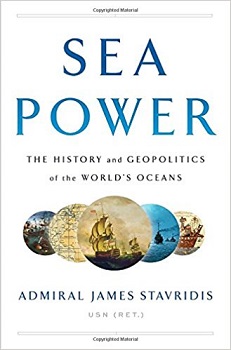
We learn this lesson even more succinctly now, thanks to the new book by Admiral James Stavridis entitled: Sea Power: The History and Geopolitics of the World’s Oceans. See a summary-review of the book here and listen to an AUDIO-Podcast interview with the Author:
 Sea Power - Photo 1

Book Review for Book: Sea Power: The History and Geopolitics of the World’s Oceans By: Admiral James Stavridis

From one of the most admired admirals of his generation – and the only admiral to serve as Supreme Allied Commander at NATO – comes a remarkable voyage through all of the world’s most important bodies of water, providing the story of naval power as a driver of human history and a crucial element in our current geopolitical path. 

From the time of the Greeks and the Persians clashing in the Mediterranean, sea power has determined world power.  To an extent that is often underappreciated, it still does. No one understands this better than Admiral Jim Stavridis. In Sea Power, Admiral Stavridis takes us with him on a tour of the world’s oceans from the admiral’s chair, showing us how the geography of the oceans has shaped the destiny of nations, and how naval power has in a real sense made the world we live in today, and will shape the world we live in tomorrow.

Not least, Sea Power is marvelous naval history, giving us fresh insight into great naval engagements from the battles of Salamis and Lepanto through to Trafalgar, the Battle of the Atlantic, and submarine conflicts of the Cold War. It is also a keen-eyed reckoning with the likely sites of our next major naval conflicts, particularly the Arctic Ocean, Eastern Mediterranean, and the South China Sea. Finally, Sea Power steps back to take a holistic view of the plagues to our oceans that are best seen that way, from piracy to pollution.

When most of us look at a globe, we focus on the shape of the of the seven continents. Admiral Stavridis sees the shapes of the seven seas.  After reading Sea Power, you will too. Not since Alfred Thayer Mahan’s legendary The Influence of Sea Power upon History have we had such a powerful reckoning with this vital subject.

Sea Power makes a great Father’s Day gift!

Source: Amazon Online Bookstore-Portal; retrieved June 9, 2017 from: https://www.amazon.com/Sea-Power-History-Geopolitics-Worlds/dp/073522059X/

———–

Appendix AUDIO-Podcast – Stavridis’ Book ‘Sea Power’ Explains Why Oceans Matter In Global Politics – http://www.npr.org/2017/06/06/531701056/stavridis-book-sea-power-explains-why-oceans-matter-in-global-politics

Published June 6, 2017 – NPR’s Morning Edition’s Steve Inskeep talks to retired Admiral James Stavridis, former supreme allied commander for NATO, about his new book: Sea Power: The History and Geopolitics of the World’s Oceans.

Listen to an extended NPR Podcast here: http://www.npr.org/podcasts/510053/on-point-with-tom-ashbrook

The theme of this new book aligns with the book Go Lean…Caribbean in explaining the significance of ‘Sea Power’ in any plan to elevate the Caribbean region’s societal engines. This commentary is 2 of 4 in a series considering the Lessons in Economic History related to “Commerce of the Seas”, the good, bad and ugly (think Crony-Capitalism) strategies and practices around the maritime eco-system in the United States … and other countries. The full series is as follows:

  1. Commerce of the Seas – Stupidity of the Jones Act
  2. Commerce of the Seas – Book Review: ‘Sea Power’
  3. Commerce of the Seas – Shipbuilding Model of Ingalls
  4. Commerce of the Seas – Lessons from Alang (India)

The previous commentary in this series relates how “Commerce” refers to the economic interest of the 30 member-states in the Caribbean region. Admiral Stavridis book has a heavy focus on naval military power; he posits that a strong Navy paves the way for and protects the continuation of maritime commerce. From the book Sea Power and the Go Lean book we see this consistent Lesson in Economic History:

Around the world, countries that have access to control of the “Sea” have a distinct advantage economically versus countries that are land-locked; i.e. England versus Austria.
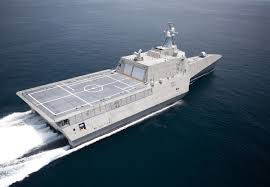
CU Blog - America's Navy - 100 Percent - Model for Caribbean - Photo 4As stated previously, the United States have wielded its ‘Sea Power’ to promote profit for its maritime industrial stakeholders at the expense of the residents of off-shore territories, like Puerto Rico and the US Virgin Islands in the Caribbean.

There is therefore a need to reboot, reform and transform the Caribbean region’s stewardship of the Seas. This is the purpose of the book Go Lean … Caribbean, to help empower and elevate the societal engines of the 30 member-states of the Caribbean region and their waterscapes. The Go Lean book serves as a roadmap for the introduction and implementation of the Caribbean Union Trade Federation (CU). This would be the inter-governmental entity for a regional Single Market that covers the land territories of the 30 member-states, and their aligning seas; (including the 1,063,000 square miles of the Caribbean Sea in an Exclusive Economic Zone). The Go Lean/CU roadmap features this prime directive, as defined by these 3 statements:

  • Optimization of the economic engines to grow the regional economy to $800 Billion & create 2.2 million new jobs.
  • Establishment of a security apparatus to protect public safety and ensure the economic engines of the region, including the seas.
  • Improvement of Caribbean governance to support these engines in local governments and in the Exclusive Economic Zone, including a separation-of-powers between the member-states and CU federal agencies.

This Go Lean roadmap envisioned a wide-ranging, fully-encompassing treaty for all Caribbean member-states to deputize a technocratic agency to better administer the affairs (economic, security and governance) of the waterscapes in the region. It was recognized that this quest was “out-of-scope” and too big for any one Caribbean member-state alone, but rather, acknowledging their regional interdependence, these stakeholders would be able to engage a new inter-governmental administration for better regional stewardship. This, regionalism, was the original intent of the Go Lean book, which commenced with a Declaration of Interdependence, pronouncing the need for regional coordination and integration so as to reform and transform Caribbean society. See a sample of relevant stanzas here (Page 11 – 12) as related to the Caribbean ‘Sea Power’:

v. Whereas the natural formation of our landmass and coastlines entail a large portion of waterscapes, the reality of management of our interior calls for extended oversight of the waterways between the islands. The internationally accepted 12-mile limits for national borders must be extended by International Tribunals to encompass the areas in between islands. The individual states must maintain their 12-mile borders while the sovereignty of this expanded area, the Exclusive Economic Zone, must be vested in the accedence of this Federation.

vi. Whereas the finite nature of the landmass of our lands limits the populations and markets of commerce, by extending the bonds of brotherhood to our geographic neighbors allows for extended opportunities and better execution of the kinetics of our economies through trade. This regional focus must foster and promote diverse economic stimuli.

x. Whereas we are surrounded and allied to nations of larger proportions in land mass, populations, and treasuries, elements in their societies may have ill-intent in their pursuits, at the expense of the safety and security of our citizens. We must therefore appoint “new guards” to ensure our public safety and threats against our society, both domestic and foreign. The Federation must employ the latest advances and best practices … to assuage continuous threats against public safety. …

xi. Whereas all men are entitled to the benefits of good governance in a free society, “new guards” must be enacted to dissuade the emergence of incompetence, corruption, nepotism and cronyism at the peril of the people’s best interest. The Federation must guarantee the executions of a social contract between government and the governed.

xvi. Whereas security of our homeland is inextricably linked to prosperity of the homeland, the economic and security interest of the region needs to be aligned under the same governance. Since economic crimes, including piracy and other forms of terrorism, can imperil the functioning of the wheels of commerce for all the citizenry, the accedence of this Federation must equip the security apparatus with the tools and techniques for predictive and proactive interdictions.

The foregoing book, Sea Power, aligns with the Go Lean book references to strategies, tactics and implementations for the Exclusive Economic Zone (EEZ). The Go Lean book provides 370-pages of turn-by-turn directions on “how” this EEZ can impact and benefit Caribbean society. Consider the Chapter excerpts and headlines from this sample on Page 104:

The Bottom Line on the United Nations Convention on the Law of the Sea (UNCLOS)
The UNCLOS is the international agreement that resulted from the third United Nations Conference on the Law of the Sea which took place between 1973 and 1982. This Convention defines the rights and responsibilities of nations in their use of the world’s oceans, establishing guidelines for businesses, the environment, and the management of marine natural resources. As of October 2012, 164 countries and the European Union have joined in the Convention. The convention introduced a number of provisions. The most significant issues covered were setting limits, navigation, archipelagic status and transit regimes, exclusive economic zones (EEZs), continental shelf jurisdiction, deep seabed mining, the exploitation regime, protection of the marine environment, scientific research, and settlement of disputes. EEZs extend from the edge of the territorial sea out to 200 nautical miles (230 miles) from the 12-mile baseline. Within this area, the coastal nation has sole exploitation rights over all natural resources, including the continental shelf. EEZs were introduced to halt the increasingly heated clashes over fishing rights, although oil was also becoming important. The success of an offshore oil platform in the Gulf of Mexico in 1947 was soon repeated elsewhere in the world, and by 1970 it was technically feasible to operate in waters 4000 meters deep. Foreign nations still have freedoms of navigation and over-flights for the EEZ, subject to the regulation of the coastal states. Foreign states may also lay submarine pipes and cables.

CU independent UNCLOS member-states include: Antigua, Jamaica, Suriname, Dominican Republic, Guyana, Barbados, Saint Vincent, Saint Kitts, Trinidad, Grenada, Saint Lucia, Cuba, Bahamas & Belize.

 10 Start-up Benefits from the EEZ

1

Lean-in for Caribbean Integration
The CU treaty unifies the Caribbean region into one single market of 42 million people across 30 member-states, thereby empowering the economic engines in and on behalf of the region. Integral to CU roadmap, is the territory between the island states. The CU will petition the United Nations for rights under the UN Convention on the Law of the Sea for acquisition of an Exclusive Economic Zone (EEZ). This will facilitate both economic empowerment (including Fisheries management) and security assurances for the region. (This effort was started by the Association of Caribbean States).

2

Funding by Selling Exploration Rights

3

Off-shore Wind Turbines

4

Pipelines

5

Extractions – Economic & Security

6

Security – Anti-Piracy
The CU has the mission to defend the homeland against enemies: foreign, domestic, and in the Exclusive Economic Zone of the Caribbean Seas. There is still a threat of piracy in modern times, and these “bad actors” hide behind jurisdictional confusions of one territorial waters after another. But the CU, with its regional oversight, can be more effective in bringing these ones to justice. Piracy is a form of terrorism, and cruise ships (smaller vessels catering to a High Net Worth – One Percent – market) and leisure crafts can be vulnerable to these threats.

7

Security – Interdictions
There is the need to be on alert for seaborne drug smuggling activities, as these can have corrupting influences on the local community. This would be the direct responsibilities of the CU Naval Operations for the jurisdiction of the EEZ. Today the US Coast Guard conducts patrols in the Caribbean Seas with impunity. There is no plan in the CU roadmap to curtail any of this activity; instead the CU will better coordinate their routes and maneuvers with CU Naval Operations.

8

Security – Search & Rescue

9

Security Monitoring
The CU will embrace many cutting-edge technological options to “keep eyes” on the Caribbean Seas. This includes satellite (visual & GPS), drones (unmanned airborne vehicles & dirigibles or blimps. Boaters will be incentivized tocooperate and install location beacons.

10

Security – Defense Pact (Naval Maneuvers)
The US, France, Netherlands, UK and some European trading partners have declared a “War Against Terrorism”; those battles will surely come to Caribbean shores. The CU therefore invites the Navies of allied nations to train, visit and conduct operations in our Caribbean waters, especially in the EEZ.

The issue of managing marine resources for commerce and security in the Caribbean has been a frequent subject for previous blog-commentaries; consider this list of sample entries:

https://goleancaribbean.com/blog/?p=11544 Forging Change in the Cruise Industry with Collective Bargaining
https://goleancaribbean.com/blog/?p=10566 Funding the Caribbean Security Pact
https://goleancaribbean.com/blog/?p=8819 Lessons from China – South China Seas: Exclusive Economic Zones
https://goleancaribbean.com/blog/?p=5210 Cruise Ship Commerce – Getting Ready for Change
https://goleancaribbean.com/blog/?p=3594 Better Fisheries Management for Queen Conch
https://goleancaribbean.com/blog/?p=1965 America’s Navy – 100 Percent – Model for Caribbean
https://goleancaribbean.com/blog/?p=673 Ghost ships – Autonomous cargo vessels without a crew
https://goleancaribbean.com/blog/?p=273 10 Things We Want from the US – # 4: Pax Americana

All Caribbean members are islands or coastal territories. The subject of ‘Sea Power’ and security of the waterscapes matters to us. Rather than 70 percent, we have to be concerned with 100 percent of the issues, challenges and opportunities.

There is a need to reform our maritime eco-system, for commerce and security. ‘Sea Power’ determines world power, so there is also a need to have a “seat at the table” among the big nations and sea-faring empires. As one small island alone, there is no chance for that consideration; but as a Single Market entity of 42 million people and 30 separate countries (and territories), the Caribbean can now have a Voice … and a Vote (in international forums) so as to shape the destiny of our homeland … and maybe even the whole world of commerce & security.

We hereby urge all Caribbean stakeholders – governments and citizens – to lean-in to this Go Lean roadmap to better wield our ‘Sea Power’, so that our region can be a better homeland (and waterscapes) to live, work and play. 🙂

Download the free e-book of Go Lean … Caribbean – now!

Sign the petition to lean-in for this roadmap for the Caribbean Union Trade Federation. 
Share this post:
, , , , , ,

Rio Olympics – Athens Olympics: Same Strategy; Same Failure

Go Lean Commentary

It’s simple: learn from mistakes or you repeat them.

This applies to other people’s mistakes as well.

There is the funny anecdote of an insane asylum located in the inner boroughs in some unidentified city. The inmates forced a hole in a border fence and one day they shouted out “Four, four, four …”. A stranger walked by, heard the shouts and peeked in the hole. An inmate poked him in the eye, then shouted “Five, five, five …”.

Mistake made, no lesson learned!

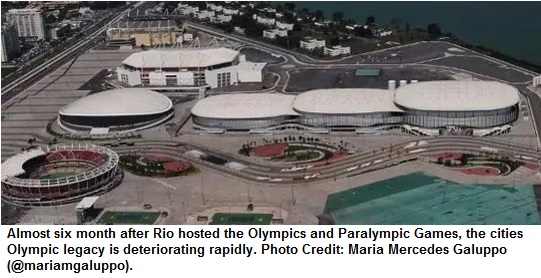
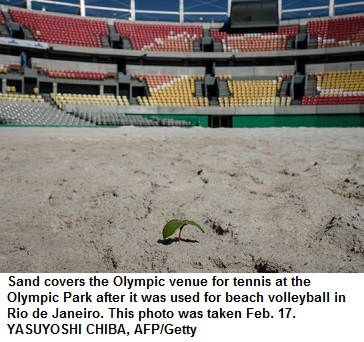
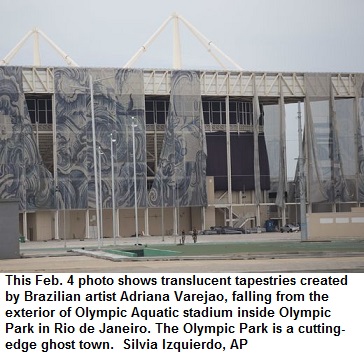
Unfortunately, this is the reality for many countries, in particular “poorer” countries that have hosted the Olympics. There was the clearly documented mistake – “bad” experience – of Athens-Greece hosting the 2004 Olympics. They built many permanent stadiums that were never used again – “white elephants” – they cost a lot of money to build and a lot to maintain. Fast forward to the 2016 Rio De Janeiro-Brazil Olympics and we see the Same Strategy; Same Failure – “the stranger unwisely peeks in the same hole and gets poked in the eye”.

CU Blog - Rio Olympics - Same Strategy; Same Failure - Photo 1

CU Blog - Rio Olympics - Same Strategy; Same Failure - Photo 3

CU Blog - Rio Olympics - Same Strategy; Same Failure - Photo 5

CU Blog - Rio Olympics - Same Strategy; Same Failure - Photo 4

CU Blog - Rio Olympics - Same Strategy; Same Failure - Photo 2

The Rio De Janeiro-Brazil city, state and federal governments ignored the sage advice and built permanent stadia (plural of stadium) and venues for the 2016 Olympic Games and now are suffering the same “black eye”. See the details of this Same Strategy; Same Failure phenomena in the article and VIDEO here:

Title: Scathing report on 2016 Rio Olympics: venues ‘White Elephants’
RIO DE JANEIRO (AP) — A federal prosecutor looking into last year’s Rio de Janeiro Olympics says that many of the venues “are white elephants” that were built with “no planning.”

The scathing report offered Monday at a public hearing confirms what was reported several months after the games ended. Many of the venues are empty, boarded up, and have no tenants or income with the maintenance costs dumped on the federal government.

“There was no planning,” federal prosecutor Leandro Mitidieri told the public hearing on the Olympics. “There was no planning when they put out the bid to host the Games. No planning.

“They are white elephants today,” Mitidieri added. “What we are trying to look at here is to how to turn this into something usable.”

Rio de Janeiro spend about $12 billion to organize the games, which were plagued by cost-cutting, poor attendance, and reports of bribes and corruption linked to the building of some Olympic-related facilities.

The Olympic Park in suburban Barra da Tijuca, which was the largest cluster of venues, is an expanse of empty arenas with clutter still remaining from the games. The second largest cluster, in the northern area of Deodoro, is closed despite plans to open it as a public park with swimming facilities for the mostly poor who live in the area.

Patricia Amorim, the undersecretary for sports in the city of Rio, said highly publicized plans were on hold to dismantle one arena and turn the remains into four schools. The arena was the venue for handball.

“It will be dismantled,” she said. “We are just waiting to know whether we will actually have resources to build these schools on other sites, or whether we will dismantle it and wait for the resources to come. Our schools need to be reformed and that’s our priority, not new schools.”

Nine months after the Rio Olympics ended, the local organizing committee still owes creditors about $30 million, and 137 medals awarded during the games are rusting and need to be repaired.

Former Rio de Janeiro Mayor Eduardo Paes, the moving force with the International Olympic Committee behind organizing last year’s Olympics, is being investigated for allegedly accepting at least 15 million reals ($5 million) in payments to facilitate construction projects tied to the games.

He denies any wrongdoing.

Organizing committee spokesman Mario Andrada said more than 100 medals awarded at the Olympics showed signs of rusting. He said many were bronze medals, and said many of the tarnished medals had been awarded to Americans.

“Most of the problems were due to handling, poor handling,” Andrada said. “Either they fell on the floor or they were touching each other so, it was a problem of handling. Whatever was the problem with the poor handling, it took the gloss off the medal and then you see rusting.”

He said the medals would be repaired at Brazil’s mint, called the Casa da Moeda.

He said more than 2,000 medals were awarded at the Olympics and said “several other games had problems with medals.”

Source: USA Today Daily Newspaper. Posted May 22, 2017; retrieved May 24, 2017 from: https://www.usatoday.com/story/sports/olympics/2017/05/22/scathing-report-on-rio-olympics-venues-white-elephants/102041926/

—————–

VIDEO – Rio 2016 Olympic Venues Just 6 Months After The Olympics – https://youtu.be/Jh-s2rb1Ka0

Published on Feb 13, 2017 – Summer is over for Brazil’s ‘marvelous city’. In a series of eerie and depressing new photos released last week, the 2016 Summer Olympic venues in Rio de Janeiro are seen filthy and deserted just 6 months after the end of the games, including the legendary Maracana Stadium. In a city that hoped desperately to be lifted out of poverty and debt by making back the money they spent, these are the ruins of a shattered dream.

Rio 2016 was boiled in scandal before it had even began, including a Zika virus outbreak, reports of doping by Russian athletes, and the impeachment of president Dilma Rousseff due to corruption. The second largest city in Brazil is millions of dollars in debt with international creditors, and now also owes over 900 thousand dollars to a local energy company.

Murky pools, worn terrain, and vandalism can be found all over the Olympic park. Seats have been torn from the once-iconic arena. The future of these shockingly neglected buildings remains uncertain, but they’re unlikely to be a high priority among Rio’s long list of coming challenges.

Temporary stadium over permanent stadium – this is a familiar advocacy for the publishers of the book Go Lean…Caribbean. These points are gleaned from this previous blog-commentary from June 5, 2014:

Learn from Greece – Why build expensive permanent stadiums for temporary (sports/cultural) events, when there is such an effective art and science with temporary stadiums?! This important lesson was ignored in Brazil for the FIFA World Cup 2014.

The subsequent article and [embedded] VIDEO (from the cable channel HBO’s documentary Real Sports) describes the folly for expensive permanent stadiums for short-term events; especially while the art and science of temporary stadiums is so effective.


The foregoing article discourages investment in permanent venues unless there is a solid long-term business plan. The Go Lean roadmap concurs – Greece did not recover from the flawed Olympic build-out for facilities that were never used again after the 2004 Games. On the other hand, here is the encouragement and recommendation to develop fairgrounds and deploy temporary stadia, arenas and theaters. Imagine a golf tournament; no one would expect bleachers and grandstands at the putting greens to be permanent structures. No, there is a place for temporary structures in the world of sports.

The book Go Lean…Caribbean – available to download for free – serves as a roadmap for the introduction and implementation of the technocratic Caribbean Union Trade Federation (CU), for the elevation of Caribbean society – for all the 30 member-states in the region. The roadmap asserts that there could be many economic and societal benefits by harnessing the potential from the world of sports.  While sports are not the roadmap’s primary purpose, related pursuits are recognized as important strategies. A mission of the Go Lean roadmap is quoted as “forge industries and economic drivers around the individual and group activities of sports and culture” (Page 81). But make no mistake, there is NO recomendation for the Caribbean to host the Olympics … ever.

Overall, this CU/Go Lean roadmap describes these 3 prime directives:

  • Optimization of the economic engines in order to grow the regional economy to $800 Billion and create 2.2 million new jobs; 21,000 direct jobs at sports enterprises, venues and fairgrounds throughout the region.
  • Establishment of a security apparatus to ensure public safety and protect the resultant economic engines.
  • Improvement of Caribbean governance to support these engines, including a separation-of-powers between the member-states and CU federal agencies.

The book stresses that reforming and transforming the Caribbean societal engines – including the sports eco-systems – must be a regional pursuit. This was an early motivation for the roadmap, as pronounced in the opening Declaration of Interdependence (Pages 12 – 13):

xi. Whereas all men are entitled to the benefits of good governance in a free society, “new guards” must be enacted to dissuade the emergence of incompetence, corruption, nepotism and cronyism at the peril of the people’s best interest. The Federation must guarantee the executions of a social contract between government and the governed.

xxi. Whereas the preparation of our labor force can foster opportunities and dictate economic progress for current and future generations, the Federation must ensure that educational and job training opportunities are fully optimized for all residents of all member-states, with no partiality towards any gender or ethnic group. The Federation must recognize and facilitate excellence in many different fields of endeavor, including sciences, languages, arts, music and sports. This responsibility should be executed without incurring the risks of further human flight, as has been the past history.

xxii. Whereas sports have been a source of great pride for the Caribbean region, the economic returns from these ventures have not been evenly distributed as in other societies. The Federation must therefore facilitate the eco-systems and vertical industries of sports as a business, recreation, national pastime and even sports tourism – modeling the Olympics.

The Go Lean book avoids the Same Strategy; Same Failure pitfall; it provides 370-pages of turn-by-turn instructions on “how” to adopt new community ethos, plus the strategies, tactics, implementations and advocacies to execute so as to reboot, reform and transform the societal engines of Caribbean society, including the full opportunities in the world of sports.

There are a number of sports – Tennis, Auto Racing, Beach Volleyball, and Soccer/Football (i.e. 2006 FIFA World Cup in Germany) – which fully explore temporary bleachers/grandstands. This is the wise course; the art-and-sciences of temporary structures is a best-practice.

Why would anyone consider expensive permanent stadia when temporary stadia is better? This would be stupid! But alas, a previous Go Lean commentary has posited that Stupidity persists when “someone is getting paid”. This is the lesson learned from Rio … and Athens.

Now is the time for all of the Caribbean – governing institutions and the people (athletes and fans) – to abide by best-practices and lean-in for this Go Lean roadmap for the Caribbean Union Trade Federation; Same Strategy; Same Failure no more! Now is the time to make our homeland a better place to live, work and play. 🙂

Download the free e-Book of Go Lean … Caribbean – now!

Sign the petition to lean-in for this roadmap for the Caribbean Union Trade Federation.
 

Share this post:
, , ,
[Top]

Want Better Security? ’Must Love Dogs’

Go Lean Commentary

So you want to secure your homeland against terror and other threats? Here’s a key requirement:

‘Must Love Dogs’

This is so true; man’s best friend can also be our best partner for mitigating threats of terroristic acts in public places. This is common sense … now that we have seen how devious the terrorists can be, exploiting soft targets right outside any hard target zones.

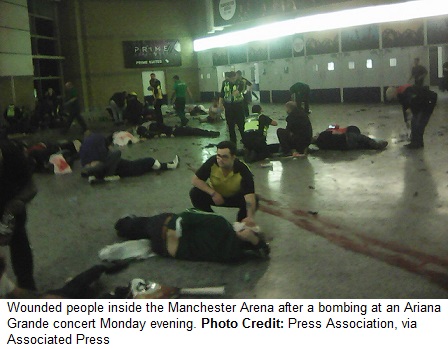
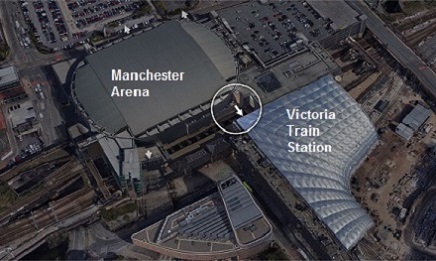
This is a fresh concern as there was a terrorist attack at the Manchester Arena in Manchester, England last night (May 22, 2017). The attacker was an ISIS-backed suicide bomber who positioned himself among the exiting concert-goers for a show at the Arena. (The artist is American teen pop-sensation Ariana Grande, a fan-favorite among teenage girls and boys). He detonated his “Improvised Explosive Device” (IED) right outside the security zone while people were exiting to leave. So far, the death toll is 22, with 59 injuries. See full details on the story, aftermath and investigation here:

ISIS Claims Responsibility for Manchester Concert Attack; 22 Dead

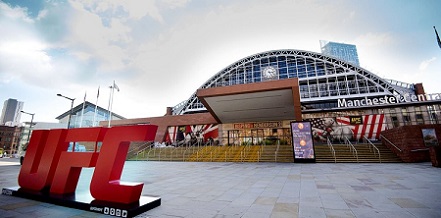
Manchester Arena – Situation Normal
CU Blog - 'Must Love Dogs' - Photo 4

CU Blog - 'Must Love Dogs' - Photo 3

CU Blog - 'Must Love Dogs' - Photo 2

Manchester Arena – Monday Night May 22, 2017

CU Blog - 'Must Love Dogs' - Photo 1

CU Blog - 'Must Love Dogs' - Photo 5

Expect more revelations of the motives and bitter consequences of this attack against “innocence”.

This is a matter of serious concern for planners of a new Caribbean. This is Terrorism 101; this is affecting the whole world and our world. Though this attack was far away from the Caribbean islands, it was not far away from Caribbean people, as related in a previous blog-commentary from the promoters of the book Go Lean…Caribbean, there is a large Caribbean Diaspora in Manchester.

The book Go Lean…Caribbean – available to download for free – serves as a roadmap for the introduction and implementation of the technocratic Caribbean Union Trade Federation (CU), for the elevation of Caribbean society – for all member-states. The book asserts that the needed security apparatus to better defend against the modern threats of terrorism is too much for any one Caribbean member-state alone. There must be a regional integrated and confederated solution. This CU/Go Lean roadmap has these 3 prime directives:

  • Optimization of the economic engines in order to grow the regional economy and create new jobs.
  • Establishment of a security apparatus to ensure public safety and protect the resultant economic engines.
  • Improve Caribbean governance to support these engines, including a separation-of-powers between the member-states and CU federal agencies.

The book stresses that reforming and transforming the Caribbean societal engines must be a regional pursuit. This was an early motivation for the roadmap, as pronounced in the opening Declaration of Interdependence (Pages 12 – 13):

x. Whereas we are surrounded and allied to nations of larger proportions in land mass, populations, and treasuries, elements in their societies may have ill-intent in their pursuits, at the expense of the safety and security of our citizens. We must therefore appoint “new guards” to ensure our public safety and threats against our society, both domestic and foreign. The Federation must employ the latest advances and best practices of criminology and penology to assuage continuous threats against public safety. …

xi. Whereas all men are entitled to the benefits of good governance in a free society, “new guards” must be enacted to dissuade the emergence of incompetence, corruption, nepotism and cronyism at the peril of the people’s best interest. The Federation must guarantee the executions of a social contract between government and the governed.

xvi. Whereas security of our homeland is inextricably linked to prosperity of the homeland, the economic and security interest of the region needs to be aligned under the same governance. Since economic crimes … can imperil the functioning of the wheels of commerce for all the citizenry, the accedence of this Federation must equip the security apparatus with the tools and techniques for predictive and proactive interdictions.

Is there anything more that could have been done to prevent this Manchester Terrorist Attack? Let the post-trauma analysis begin! For one, the planners of the new Caribbean security apparatus have always presented this ingredient to the recipe for security success:

Must love dogs!

- Photo 6

In a previous blog-commentary, it was related how specially-trained canines can help to better secure the Caribbean homeland. Consider this quotation:

The subject of animals and animal companionship is also pivotal in the roadmap for elevating Caribbean society, especially for the security engines. The Go Lean book posits (Page 185) that better command of Animal Husbandry can facilitate better security around the region’s economic engines. Dogs feel a lot less intrusive and less intimidating than formal security screening, or personnel patrolling with AK47 automatic rifles.  Imagine a beautiful Caribbean beach scene with a plain clothes “officer” walking along with specialty dogs, or more exactly:

  • Drug Sniffing Dogs
  • Bomb Sniffing Dogs
  • Service/Therapy Dogs

This is one implementation that could have been deployed to mitigate the terrorism threat in Manchester … and everyday here in the Caribbean. Yes, this is in hindsight; this is “Monday Morning Quarterbacking“. This is not fair to the 22 lives lost in Manchester, but this is most importantly a pledge, not to let those lives die in vain. Let’s apply the lessons-learned.

This implementation with service dogs is just one “how”. The Go Lean book provides 370-pages of turn-by-turn instructions on “how” to adopt new community ethos, plus the strategies, tactics, implementations and advocacies to execute so as to better ensure homeland security in the Caribbean region.

Consider this one chapter (and Case Study) … where the Go Lean book fully detailed the advocacy of Animal Husbandry; see  these headlines from Page 185:

Case Study: Trikos K9 Warriors
When the bombs went off at the Boston Marathon [in April 2013], highly trained dogs were rushed to the scene to search for more explosives. Boston Police have said dogs swept the streets in the morning and a second time just an hour before the first marathoners crossed the finish line. It’s considered likely that the bombers planted their devices well after the dogs finished sweeping the area. Since 9/11, dogs have been used more than ever because nothing has proven more effective against hidden bombs than the nose of a working dog. The best of them serve with U.S. Special Operations, so much of what they do is classified, but by looking at the trainers, Trikos K9 Warriors (www.trikos.com) – on a 20-acre ranch in rural Cooper, Texas – one gets a rare glimpse inside the secretive world of these elite dogs. Most of them are from one breed, Belgian Malinois.
Dogs and their handlers work as a team, train as a team, and they go through so much together their bond is as strong as a band of brothers. In Afghanistan, they led their units and protected them in battlefields littered with hidden bombs. Per former Navy SEAL and Trikos Founder Mike Ritland: “same thing that they do for [the troops] overseas, detect explosives, they can do on American streets; plus they can run faster than 30 miles an hour so they can help take down suspects”.
See Appendix below for VIDEO from CBS News Magazine “60 Minutes”.


10 Ways to Improve Animal Husbandry

1 Lean-in for Caribbean Integration
The CU treaty allows for the unification of the region into one market, thereby impaneling a federal layer for oversight of the economy and security of the 30 member-states and 42 million people. One CU mission is to facilitate better security around the region’s economic engines. Another mission is to make the Caribbean a better place to live, work and play. In considering the needs of the 42-million population, there must be some consideration for their animals. Beyond the CU overseeing food-supply regulations and spearheading the security benefits of employing specially trained service animals, the CU will spur philanthropy for more animal husbandry efforts, such as foundations advocating Spay/Neuter goals for dogs/cats. Lastly, the CU will coalesce with local authorities to ensure “dog parks” in urban/suburban areas.
2 Plantations for Bomb Sniffing Dogs
The CU assumes the responsibility to assuage systemic risks and economic crimes. This includes marshaling defensive support for events/festivals, against terrorism and cross border gangs. The US model of Trikos K9 Warriors will be adopted with Belgian Malinois dogs, to breed them on plantations and train them to detect and interdict explosives.
3 Cadaver Dogs / Drug Sniffing Dogs / Drug Sniffing Pigs
The CU will install plantations for dogs and pigs (Vietnamese Potbellies are especially acute) to train them to detect drugs/contraband and cadavers. The CU will maintain animals on-the-ready for acquisition by local and federal police.
4 Police K9 Units
Each member-state may currently have a platoon of K9 police dogs, but their average service life is less than 10 years. So there is always a constant need for service animals. These needs will henceforth be fulfilled locally within the region.
5 Horses for Mounted Police
Many polices forces have a Mounted Police Squad. These are especially critical for patrols at events and crowded locales. The CU will facilitate the acquisition and training of horses for the region’s Mounted Police units. These breeding and training plantations are ideal for rural area development, thus spurning an economic benefit.
6 Water Focus – Seals and Dolphins
Service animals are not only the land variety. There are aquatic mammals as well: seals and dolphins. These species are excellent for securing maritime and naval operations – the CU are all islands and coastal states. The best practice is to mount mobile cameras on these mammals and have them patrol a specified grid. The economies of scale of the CU will allow for the deployment of these creative solutions while any one member-state alone cannot justify the investment.
These deployments should not be secretive, but rather exposed to local/foreign media for image promotion.
7 Service Dogs for the Blind / Disabled – Domestic and Tourists
8 Comfort Animals for Therapies and Treatment
9 Bio-Medical Farms (Pigs, Baboons)
10 Agricultural Considerations – Animals for Foods

The Go Lean movement (book and preceding blog-commentaries) relate that security is not automatic, innate nor natural – Freedom is not Free. There is heavy-lifting involved in protecting the homeland for Caribbean stakeholders: residents and visitors. This point was detailed in these previous blog-commentaries:

https://goleancaribbean.com/blog/?p=11332 Boston Bombing Anniversary – Learning Lessons
https://goleancaribbean.com/blog/?p=10959 See Something, Say Something … Do Something
https://goleancaribbean.com/blog/?p=10566 Funding the Caribbean Security Pact
https://goleancaribbean.com/blog/?p=10222 Waging a Successful War on Terrorism
https://goleancaribbean.com/blog/?p=9072 Securing the Homeland – On the Ground
https://goleancaribbean.com/blog/?p=6103 Sum of All Fears – ‘On Guard’ Against Deadly Threats
https://goleancaribbean.com/blog/?p=5307 8th Violent Crime Warning to Bahamas Tourists
https://goleancaribbean.com/blog/?p=5002 Managing a ‘Clear and Present Danger’
https://goleancaribbean.com/blog/?p=1965 America’s Navy – 100 Percent – Model for Caribbean Regional Security
https://goleancaribbean.com/blog/?p=1832 American Drug-arrested inmates to be deported – Look-out Caribbean
https://goleancaribbean.com/blog/?p=1554 Status of Forces Agreement for Regional Security Pact
https://goleancaribbean.com/blog/?p=1487 Here come the Drones … and the Concerns
https://goleancaribbean.com/blog/?p=392 Jamaica received World Bank funds to help in crime fight

The quest of the Go Lean roadmap is to make the Caribbean homeland, a better place to live, work and play. This means measurable reduction (mitigating and remediation) of crime, interpersonal violence and systemic threats in the region. The Go Lean book presents a regional solution to remediate and mitigate crime and terrorism in the Caribbean, featuring details of strategies, tactics and implementations designed based on best-practices from around the world. The book’s vision is quite simple:

If we fail to plan, then we plan to fail.

The premise in the Go Lean book is that “bad actors” will always emerge, from internal and external origins. We must be prepared and on-guard to defend our homeland against all threats, foreign and domestic, including terrorism and interpersonal violence. Plus, we must accomplish this goal with maximum transparency, accountability, and commitment to due-process and the rule-of-law. Thusly, there is a place for many tools and techniques, think: closed-circuit TV (CCTV), dashboard and body cameras.

The title on this commentary – ‘Must Love Dogs’ – puns the title of the 2005 Movie of the same name. That movie was not about Terrorism nor about dogs. (It was about a couple who met through an internet dating site that matched their dog-loving profiles).

See a review of the movie here: http://www.rogerebert.com/reviews/must-love-dogs-2005.
CU Blog - 'Must Love Dogs' - Photo 0

Yes, we can – with our “love for dogs” – make our homeland a better-safer place to live, work and play. 🙂

Download the free e-Book of Go Lean … Caribbean – now!

Sign the petition to lean-in for this roadmap for the Caribbean Union Trade Federation.
—————

Appendix VIDEO – Sniffing Out Bombs: America’s most elite dogs – https://youtu.be/FsnPAQ137fY

Published on Apr 21, 2013 – Lara Logan gets a rare look into the secretive world of working dogs — some of whose capabilities are military secrets — and their handlers.

Share this post:
, , , ,
[Top]

Righting a Wrong: Puerto Rico’s Bankruptcy

Go Lean Commentary

How do you measure success … or failure?

In school, there is a simple measurement: there is the perfect “A”; everything else – B, C and D – was less desirable. But the actual grade “F” means you fail.

How can we measure success and failure for our community’s societal engines: economics, security and governance? There are so many approaches, but just like in school, there is a definitive “F” grade, a Failed-State status. In the case of a municipal entity, there is no doubt that a Bankruptcy filing is an “F”, a failure!

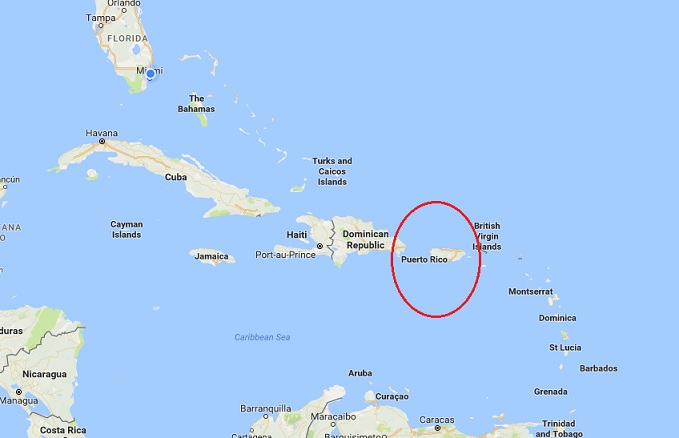
This is Puerto Rico today.

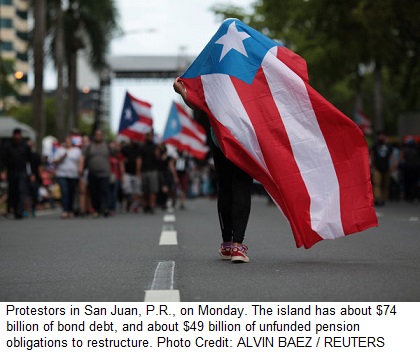
CU Blog - Righting a Wrong - Puerto Rico Bankruptcy - Photo 0

Their Governor, Ricky Rossellójust announced (May 3, 2017) that the US territory will invoke the bankruptcy-like powers that were extended to them by Congress last year. This was designed to bring an end to their intractable crisis, despite the assurances that they had given to investors that bankruptcy-style “haircuts” could not be considered. There are so many issues afoot with this move:

Can other American states/territories push lawmakers (Congress) for this same legal recourse – Chapter III of the Bankruptcy Code, the Promesa Provision – that has been ceded to Puerto Rico if they are ever at the end of their financial ropes?

(Chapter 9 Bankruptcies are allowed for municipalities, but not state governments).

This is a slippery slope!

“If Puerto Rico can achieve this level of debt relief through Promesa as the initial plan suggested, it will only make sense for Virgin Islands to attempt the same” – Wall Street Analyst

This commentary is 2 of 4 in a series considering how to “Right a Wrong”. Surely, reneging on a pledge to repay debts is a “Wrong”. This type of move could affect every other community seeking to raise funds on the capital markets (bonds). So there are lessons that we need to glean from the “Righting of these Wrongs”. The full series is as follows:

  1. Righting a Wrong: 2008 Housing Crisis
  2. Righting a Wrong: Puerto Rico’s Bankruptcy
  3. Righting a Wrong: Volkswagen Emissions Crisis
  4. Righting a Wrong: Takata Air-Bags

As related in the first submission in this series, these “Wrongs” relate to bad actions and inaction by different actors. The image and reputations of stakeholders “take a hit” while these issues are fresh. This is definitely the case for Puerto Rico right now. “Righting the Wrong” can override the bad image and the “comeback” or recovery could be the lasting legacy.

The book Go Lean…Caribbean addressed Puerto Rico from the beginning; starting with the opening assessment of the State of the Caribbean region. The book identified Puerto Rico on Page 18 as:

The Greece of the Caribbean
Puerto Rico’s population is declining. Faced with a deteriorating economy, increased poverty and a swelling crime rate, many citizens are fleeing the island for the U.S. mainland. …

Puerto Rico has been through austerity and made tough decisions: It has cut government jobs, privatized a couple of highways, and is in the process of privatizing the international airport. But unlike the case of Greece, the economic mess is on America’s hands. For U.S. citizens on the mainland who have a 401(k) account or pension for retirement, it’s possible that they have money invested in Puerto Rican bonds, which are now no longer worth much. So citizens in the states could feel the pain if Puerto Rico’s economy collapses.

This book was published in November 2013, projecting verbiage like “if Puerto Rico’s economy collapses”. According to the latest developments and this news article here (and VIDEO), that collapse is now a reality:

Title: Puerto Rico Declares a Form of Bankruptcy
By: Mary Williams Walsh

CU Blog - Righting a Wrong - Puerto Rico Bankruptcy - Photo 1

With its creditors at its heels and its coffers depleted, Puerto Rico sought what is essentially bankruptcy relief in federal court on Wednesday, the first time in history that an American state or territory had taken the extraordinary measure.

The action sent Puerto Rico, whose approximately $123 billion in debt and pension obligations far exceeds the $18 billion bankruptcy filed by Detroit in 2013, to uncharted ground.

While the court proceedings could eventually make the island solvent for the first time in decades, the more immediate repercussions will likely be grim: Government workers will forgo pension money, public health and infrastructure projects will go wanting, and the “brain drain” the island has been suffering as professionals move to the mainland could intensify.

Puerto Rico is “unable to provide its citizens effective services” because of the crushing weight of its debt, according to a filing on Wednesday by the federal board that has supervised the island’s financial affairs since last year.

The total includes about $74 billion in bond debt and $49 million in unfunded pension obligations.

While many of Puerto Rico’s circumstances are unique, its case is also a warning sign for many American states and municipalities — such as Illinois and Philadelphia — that are facing some of the same strains, including rising pension costs, crumbling infrastructure, departing taxpayers and credit downgrades that make it more expensive to raise money. Historically, Puerto Rico was barred from declaring bankruptcy. In the end, however, financial reality trumped the statutes, and Congress enacted a law last year allowing bankruptcy-like proceedings.

Puerto Rico has been in a painful recession since 2006, and previous governments dug it deeper into debt by borrowing to pay operating expenses, year after year. For the last two years, officials have been seeking assistance from Washington, testifying before stern congressional committees and even making fast-track oral arguments before the United States Supreme Court.

At the same time, Puerto Rico’s efforts to coax its creditors to agree to concessions have gone nowhere. Now the coming court proceedings will give Puerto Rico extraordinary powers to impose losses on holdout creditors unilaterally.

The island’s many creditors — whose lawsuits filed against Puerto Rico on Tuesday prompted the island’s request for court relief on Wednesday — are likely to receive far less of their money back than they want. Their predicament may turn out to be a cautionary tale for bond holders of other troubled states and cities. Puerto Rico’s case could show public workers and retirees that seemingly inviolate pension systems can be changed, too.

The next step is for the Supreme Court — specifically, Chief Justice John G. Roberts Jr. — to designate a bankruptcy judge to handle the case.

The island’s lawyers may view some bankruptcy courts as more likely to be favorable to them than others. Some creditors fear Puerto Rico will seek to have the case handled in the Southern District of New York.

Puerto Rico’s governor, Ricardo Rosselló, issued a statement Wednesday aiming to offer some reassurance, even as he sought the federal court’s protection. “We remain committed to holding good-faith negotiations to reach agreements with our creditors,” he said, adding that he hoped the court proceedings would “accelerate the process.” He appeared to be referring to the extraordinary power Puerto Rico will now have in court to unilaterally impose big losses on creditors.

Some of those creditors are furious.

“The Commonwealth’s proposal is not a credible starting point for negotiations,” Andrew Rosenberg of Paul, Weiss, Rifkind, Wharton and Garrison, an adviser to the Ad Hoc Group of Puerto Rico General Obligation Bondholders, said in a statement. He said that moving the proceedings to bankruptcy court would put the situation in “free-fall.”

The creditors got a shock this year when Mr. Rosselló issued a five-year fiscal plan that allowed only about $800 million a year to pay principal and interest on Puerto Rico’s bond debt, far less than the roughly $3.5 billion a year it would cost to make those payments on time. The prospect of losses on that scale prompted some creditors to argue that most of the $800 million was rightfully theirs.

“That things are starting out in such a highly adversarial way strongly suggests this will be a long and contentious journey for Puerto Rico,” said Matt Fabian, a partner at Municipal Market Analytics who closely tracks activity in the municipal bond market.

Puerto Rico’s case will be the first ever heard under a federal law for insolvent territories, called Promesa, which was enacted last summer; the Obama administration had warned that a “humanitarian crisis” would ensue if Puerto Rico were not given extraordinary powers to abrogate debt. There is no existing body of court precedent for Promesa, but the island’s creditors — who range from hedge fund managers to mom-and-pop investors — are bracing for a titanic battle.

Despite the depth of the island’s troubles, many Republicans in Congress have opposed debt relief, saying that the island has long received big federal subsidies for its health system, public housing and other works. They said Puerto Rico should explain what it had done with that money before it got any more help.

Last week President Trump suddenly added fuel to those fires, saying on Twitter that there should be no “bailout” for Puerto Rico.

On the island, Washington is not seen as a helper but as an unsympathetic colonial overlord. The step toward bankruptcy-like proceedings, under a federal judge, intensified complaints that Puerto Rico has lost all control of its own future.

But at the same time, some Puerto Ricans say quietly that if the court proceedings really do allow their government to cancel debt, their island may finally get the fresh start it needs.

The coming court proceedings will not be formally called a bankruptcy, since Puerto Rico remains legally barred from using Chapter 9, the bankruptcy route normally taken by insolvent local governments. Instead, Mr. Rosselló petitioned for relief under Title III of the Promesa law, which contains certain Chapter 9 bankruptcy provisions but also recognizes that, unlike the cities and counties that use Chapter 9, Puerto Rico is not part of any state and must in some ways be treated as a sovereign.

Bankruptcy lawyers and public finance experts are watching Puerto Rico’s case closely, to see if it shows a path that financially distressed states like Illinois might also one day take. States, like United States territories, currently cannot declare bankruptcy.

The only creditors who reached an agreement with Puerto Rico were the holders of a class of bonds, about $9 billion worth, that were sold to raise money for the island’s public power utility. Those creditors gave concessions that the governor pointed to Wednesday as a good example for other creditors to follow.

The governor’s fiscal plan also calls for shifting all current government workers from pensions into 401(k)-style retirement plans. Current retirees will continue to receive their traditional monthly pensions, but the amounts are to be reduced by about 10 percent on average.

The governor’s hand was forced by the expiration on Monday, at midnight, of a court stay that had been keeping Puerto Rico’s creditors from suing. On Tuesday, as soon as the stay expired, bondholder groups and at least one bond insurer sued. Wednesday’s actions by the governor and the federal supervisory board effectively blocked the lawsuits from proceeding.
Source: Posted May 3, 2017; retrieved May 4, 2017 from: https://mobile.nytimes.com/2017/05/03/business/dealbook/puerto-rico-debt.html

————-

VIDEOMiller Buckfire MD Says Title III Will Help Puerto Ricohttps://www.bloomberg.com/news/videos/2017-05-04/miller-buckfire-md-title-iii-will-help-puerto-rico-video


Published on May 3, 2017 – Puerto Rico made the decision to use a U.S. court to escape from its debts. This casts a few ripples in the state and local bond market. But this action — once inconceivable for a territory that didn’t have authority to file for bankruptcy — sets a precedent that could resonate with struggling states in the decades ahead. See the full article here: https://www.bloomberg.com/news/articles/2017-05-04/puerto-rico-collapse-shows-debts-seen-as-iron-clad-may-not-be-so

What will Puerto Rico do now?

The recommendation of the movement behind the Go Lean book is to pay the debt … eventually. (Though bankruptcy filings usually involve “haircuts” where creditors will get “pennies on the dollar”).

CU Blog - Righting a Wrong - Puerto Rico Bankruptcy - Photo 2

This is the purpose of the book Go Lean…Caribbean, to help reform and transform the societal engines in the 30 member-states of the Caribbean region. The book serves as a roadmap for the introduction and implementation of the Caribbean Union Trade Federation (CU) and the Caribbean Central Bank (CCB). The Go Lean/CU/CCB roadmap applies best-practices for community empowerment and features these 3 prime directives, proclaimed as follows:

  • Optimization of the economic engines to grow the regional economy to $800 Billion & create 2.2 million new jobs.
  • Establishment of a security apparatus to protect public safety and ensure the economic engines of the region.
  • Improvement of Caribbean governance to support these engines.

Had the CU/CCB been in force now, we would not look to Washington for answers!

The Go Lean movement asserts that Caribbean communities need to resolve their challenges together. One Go Lean mission describes the process of consolidating legacy debt and refinancing them to ease the burden on local governmental finances. Imagine a personal household that just incurred a BIG BILL for repair – think a new roof. The best strategy is to refinance and add it to the 30-year mortgage, therefore only enduring “bite-size” payments for now. The book relates this:

10 Ways to Better Manage Debt  – Page 114

1 Lean-in for the Caribbean Single Market, Caribbean Dollar & Caribbean Central Bank.
This treaty allows for the unification of the region into one market, thereby creating a single economy of 30 member-states, 42 million people and a GDP of over $800 Billion, according to 2010 figures. The CU will reboot the economic engines of the region with investments in infra-structure and business inducements.Many times these projects require up-front capital but the returns will be garnered slowly over time. These projects therefore require debt, from the capital or lending markets. The issue of debt not only concerns governments, but individuals as well. The CU will impact this dynamic by mastering credit ratings and offering to buy back foreign debt for local C$ financing and CCB controls. This tactic lets the CCB function as a local IMF, fostering a new regime for the economy.
2 M1 & The Interest Economy
The CU seeks to consolidate the currency of each member-state around the Caribbean Dollar (C$); then by inducing more electronic transactions as opposed to paper currency, there will be more lendable funds in the money supply (M1). Plus having viable capital markets will allow governments, institutions and businesses to get the capital they need, and investors/lenders can garner interest income for the use of their funds. Most Pension funds depend on this model.
3 Public Financing
Every independent country in the Caribbean is a member of the IMF, only the OverseasTerritories are not engaged in this arrangement. Why not? Their host countries (US, UK, France and the Netherlands) provide the capital access that the island territories need. The CU quest is to shift this dependency to a Caribbean source, not European or American.
4 Bonds & Add-on’s (Warrants)
Rather than international loans, the CU strategizes bond issues in C$ capital markets for government financing. There are a number of ways to make bonds more attractive to investors, like adding warrants as “sweeteners” (premiums on sale price, leverage, expirations and exercise restrictions). Warrants are often detachable and tradable in markets.
5 CU Federal Bankruptcies
6 Credit Reporting – Sharpening the Tool
7 Retail Credit Reboot and New Engines
8 Student Loans Sensible Dynamics
9 Mortgage Loan Sensible Dynamics
10 Crowd Sourcing – Community Capital Sharing Mitigates Debt

The points of effective, technocratic stewardship of Public Debt have been elaborated upon in previous blog/commentaries. Consider this sample:

https://goleancaribbean.com/blog/?p=7989 Transformations: Money Matters – ‘Getting over’ with ‘free money’
https://goleancaribbean.com/blog/?p=7601 Beware of Vulture Capitalists
https://goleancaribbean.com/blog/?p=7268 Detroit’s ‘debt reality’ giving schools their ‘Worst Shot’
https://goleancaribbean.com/blog/?p=7235 Flint, Michigan – A Cautionary Tale for bad debt management
https://goleancaribbean.com/blog/?p=6563 Lessons from Iceland – Model of Recovery
https://goleancaribbean.com/blog/?p=5818 Greece: From Bad to Worse
https://goleancaribbean.com/blog/?p=5759 Pressed by Debt Crisis, Doctors Leave Greece in Droves
https://goleancaribbean.com/blog/?p=3582 For Canadian Banks: Caribbean is a ‘Bad Bet’
https://goleancaribbean.com/blog/?p=3311 Detroit’s Municipal Bankruptcy – Lessons Learned

Overall, the Go Lean book stresses the community ethos, strategies, tactics, implementations and advocacies to reform and transform the economic, security and governing engines of Caribbean society. This effort will be technocratic! It will make “sure all ends meet”. We must properly administer the finances of our communities. This vision was anticipated from the beginning of the Go Lean book, opening with these pronouncements in the Declaration of Interdependence (Page 12):

xi. Whereas all men are entitled to the benefits of good governance in a free society, “new guards” must be enacted to dissuade the emergence of incompetence, corruption, nepotism and cronyism at the peril of the people’s best interest.  The Federation must guarantee the executions of a social contract between government and the governed.

xii. Whereas the legacy in recent times in individual states may be that of ineffectual governance with no redress to higher authority, the accedence of this Federation will ensure accountability and escalation of the human and civil rights of the people for good governance, justice assurances, due process and the rule of law. As such, any threats of a “failed state” status for any member state must enact emergency measures on behalf of the Federation to protect the human, civil and property rights of the citizens, residents, allies, trading partners, and visitors of the affected member state and the Federation as a whole.

xiv. Whereas government services cannot be delivered without the appropriate funding mechanisms, “new guards” must be incorporated to assess, accrue, calculate and collect revenues, fees and other income sources for the Federation and member-states. The Federation can spur government revenues directly through cross-border services and indirectly by fostering industries and economic activities not possible without this Union.

xix. Whereas our legacy in recent times is one of societal abandonment, it is imperative that incentives and encouragement be put in place to first dissuade the human flight, and then entice and welcome the return of our Diaspora back to our shores. This repatriation should be effected with the appropriate guards so as not to imperil the lives and securities of the repatriated citizens or the communities they inhabit. The right of repatriation is to be extended to any natural born citizens despite any previous naturalization to foreign sovereignties.

xxiv. Whereas a free market economy can be induced and spurred for continuous progress, the Federation must install the controls to better manage aspects of the economy: jobs, inflation, savings rate, investments and other economic principles. Thereby attracting direct foreign investment because of the stability and vibrancy of our economy.

xxv. Whereas the legacy of international democracies had been imperiled due to a global financial crisis, the structure of the Federation must allow for financial stability and assurance of the Federation’s institutions. To mandate the economic vibrancy of the region, monetary and fiscal controls and policies must be incorporated as proactive and reactive measures. These measures must address threats against the financial integrity of the Federation and of the member-states.

Yes, the purpose of this commentary is to project the better plan for reforming and transforming Caribbean municipal financing. But it is also about reforming and transforming Puerto Rico. An agenda for Puerto Rico has always been a priority for the Go Lean roadmap. This island is just sitting there in the middle of the Caribbean region. No effort to reboot the Caribbean neighborhood could reasonably ignore this island.

“But they are an American Territory, a subset of the richest, most powerful nation on the planet”.

And yet … they are a Failed-State!

In a previous blog-commentary from the Go Lean movement, it was declared that “Puerto Rico needs the strategies, tactics, implementations and advocacies of the CU. [And] the CU needs Puerto Rico!” This is true now more than ever!

Now is the time for all stakeholders – state and municipal governments and their citizens – in the Caribbean to lean-in for the empowerments described here-in and in the book Go Lean … Caribbean. We must do better with public finance than our predecessors. They tried to “go for it alone” – this is why Puerto Rico always failed – let try this different approach of “going for it together”. This is guaranteed to make Puerto Rico and all of the Caribbean a better place to live, work and play. 🙂

Download the free e-Book of Go Lean … Caribbean – now!

Sign the petition to lean-in for the roadmap for the Caribbean Union Trade Federation.

Share this post:
, , , ,
[Top]

Building Better Cities

Go Lean Commentary

Truth be told, it is hard to fix (reform) the broken processes of a whole country.

It is easier to fix a broken family; and easier to fix/reform just a broken neighborhood.

So a formula for success would be to reform broken neighborhoods (and broken families) one after another, and just like that, the country is transformed.

CU Blog - Building Better Cities - Photo 3

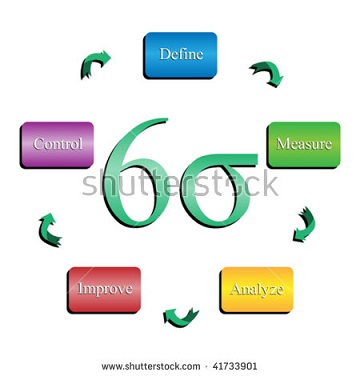
This “bottoms-up” approach is also the premise of the Six Sigma Quality Management concept (see Appendix below):

Do not try to perform 1 million perfect iterations; rather try to perform 1 iteration perfectly; then repeat it 1,000,000 times.

The book Go Lean…Caribbean presents the quest to elevate the 30 member-states in the Caribbean region. It does not limit the focus to the state governments; it drills down to a subset level: the cities. The book asserts that reforming and transforming cities would be integral to reforming and transforming entire countries.

Fix the cities; fix the world!

This is the theme of these many source materials. Consider the AUDIO Podcast, VIDEO and magazine column/article here:

AUDIO Podcast – Building Better Cities – http://www.npr.org/programs/ted-radio-hour/462178064/building-better-cities?showDate=2017-03-31


Posted March 31, 2017 – Cities are among our greatest experiments in human co-habitation. Do they also hold the answers to some of our biggest problems? This hour, TED speakers explore how cities can change the world. Listen to the full hour here: http://www.npr.org/programs/ted-radio-hour/462178064/building-better-cities?showDate=2017-03-31

———-

VIDEO – Atlanta’s Kasim Reed: How Are Mayors Better Poised to ‘Get Things Done’?https://youtu.be/semT61CCNEE


Published on Oct 20, 2014 – “Cities are where hope meets the streets,” says Kasim Reed, mayor and son of Atlanta. In this powerful talk, he argues that transformation is really possible at the municipal level. Reforming the city he loves was not just a matter of tough financial calls, but of really listening to the wisdom within the community.

See more: tedcity2.org

  • Category: Nonprofits & Activism
  • License:   Standard YouTube License

———-

Title: The Issues That Drive America’s Mayors
Sub-Title: Whether they’re Democrats or Republicans, a new survey shows that poverty and wealth inequality are what concern them most.
By: Bob Annibale, Mick Cornett

CU Blog - Building Better Cities - Photo 1

Before he died in 2014, Thomas Menino, a visionary urban leader who served as mayor of Boston for more than two decades, declared that we are living in “the era of the city.” This has never been truer than it is today.

As the world continues to urbanize at an unprecedented rate, cities and their surrounding areas wield more power than ever. Currently over half of the world’s population lives in cities, and that is expected to grow to 70 percent by 2050. In the United States, 82 percent of Americans live in metropolitan areas, an increase of 12 percent just since 2000.

Cities are rich with diversity and serve as vital hubs of innovation, culture and commerce. The world’s top 10 cities by GDP, five of which are in the United States, have economies rivaling all but the 10 most prosperous countries. But while the populations, capital and political power of many cities is enormous, so are the scale and complexity of their challenges — making insight into their leadership important.

Motivated by the belief that “the era of the city” is upon us, Boston University’s Initiative on Cities, with support from Citi, recently published the findings of its 2016 Menino Survey of Mayors to understand the important challenges facing these cities’ leaders. Named for the great Boston mayor, the survey gathered the perspectives of more than 100 sitting mayors from 41 states on contemporary issues through a series of one-on-one interviews conducted last summer.

The survey’s findings reveal that despite remarkable societal advancements in urban centers, new and more complex problems are cropping up or increasing in severity. The environment, infrastructure, public services and household financial security are presenting challenges at a level that cities have never experienced before.

Not surprisingly, the survey found that two of the central issues in the 2016 presidential campaign – wealth inequality and the shrinking middle class — were also of deep concern to mayors of cities throughout the country. Nearly half of those surveyed ranked poverty as their most pressing economic concern. In fact, 48 percent of mayors feel that those living in or near poverty are the most excluded group in their cities; when asked which constituency they need to do more to help, nearly a quarter named poor residents.

What is slightly more surprising is the level of agreement on the top issues regardless of mayors’ party affiliation or city size. Mayors from cities big and small are highly attuned to the plight of their most vulnerable residents, and even in this polarized political climate the focus on poverty is shared by both Democratic and Republican mayors. That’s also true of the benefits of diversity. While issues of economic inclusion and diversity illuminated deep divisions among the presidential candidates, the country’s mayors were united in the goal of building more inclusive cities that are welcoming to all.

The Menino Survey provides a window into how our nation’s mayors think, act and perceive their world. By gathering and synthesizing the priorities and challenges of our cities from the perspective of their leaders, the survey offers a roadmap of opportunities for civic innovation.

It also provides stakeholders in the nonprofit and private sectors with valuable insights that can inform the development of new programs, policies and partnerships, such as universal youth savings accounts in San Franciscocommunity land trusts in Washington, D.C., or a small-business support program for public-housing residents in New York City.

These types of innovations, often forged through public-private partnerships, enable us to tackle complex urban challenges such as poverty and economic insecurity and build more inclusive cities — ones where residents can fulfill their potential and contribute to thriving urban economies.

About the Authors: 

  • Bob Annibale – Leader of CitiGroup’s partnerships with global, national and local organizations to support inclusive finance and community development
  • Mick Cornett – Mayor of Oklahoma City and president of the U.S. Conference of Mayors

Related: 

It is important to glean these main points from the foregoing source media/articles:

  • This is “the era of the city”.
  • Cities are where hope meets the streets.
  • Currently, over half of the world’s population lives in cities, and that is expected to grow to 70 percent by 2050. In the United States, 82 percent of Americans live in metropolitan areas, an increase of 12 percent just since 2000.
  • Cities are rich with diversity and serve as vital hubs of innovation, culture and commerce. The world’s top 10 cities by GDP, five of which are in the United States, have economies rivaling all but the 10 most prosperous countries.

Reform the cities; reform the country!

The Go Lean book studies the good, bad and ugly lessons from a number of cities (New York City; Omaha, Nebraska; Detroit, Michigan; Los Angeles City-County, California); the book then proceeds to detail strategies, tactics and implementation to fix one particular Caribbean city (Freeport, Bahamas).

The Go Lean book presents a plan to grow the regional economy and create jobs. The Go Lean book asserts that this effort is too big a task for just one Caribbean member-state or city alone; all the 30 member-states and their cities must convene, confederate and collaborate in order to effect change. As such, the Go Lean book serves as a roadmap for the introduction and implementation of the technocratic Caribbean Union Trade Federation (CU), for the elevation of Caribbean society – for all member-states, and all cities. This CU/Go Lean roadmap has these 3 prime directives:

  • Optimization of the economic engines in order to grow the regional economy to $800 Billion and create 2.2 million new jobs. Caribbean cities need jobs and entrepreneurial opportunities. This roadmap calls for mini-cities, referred to as Self-Governing Entities, as a solution to optimize industrial policy. See a model/example here.
    CU Blog - Disney World - Role Model for a Self Governing Entity - Photo 1
  • Establishment of a security apparatus to ensure public safety and protect the resultant economic engines. The origins of cities were for protective walls around the city perimeters.
    CU Blog - Building Better Cities - Photo 2
  • Improve Caribbean governance to support these engines, including a separation-of-powers between the member-states and CU federal agencies. See a model/example here.
    CU Blog - Two Pies - Economic Plan for a New Caribbean - Photo 3

A mission of the Go Lean roadmap is to reboot urban communities – defining a concerted effort in a concentrated area – with empowerments like:

  • Transportation – “Out of the box” thinking to transport people to places; i.e. Streetcars.
  • Mixed-use Developments – Optimize communities with one building for retail, office and residences.
  • Healthcare … on controlled campuses – Facilitating hands-off administration for advanced medical R&D.
  • Improving Local Government – Connecting citizens online for more and more electronic delivery.
  • Public Works – Infrastructure projects elevate cities … economically.
  • Libraries – These are for more than just reading books in this New Economy.
  • Events/Festivals – Culture, community pride and revenues cannot be ignored.
  • Main Street – Local Downtowns can be tranformed for the Greater Good.
  • Sports – These Big Business activities can impact more than just the fans and players.

The book stresses that reforming and transforming Caribbean urban communities must be a regional pursuit. This was an early motivation for the roadmap, as pronounced in the opening Declaration of Interdependence (Pages 11 – 14):

vi. Whereas the finite nature of the landmass of our lands limits the populations and markets of commerce, by extending the bonds of brotherhood to our geographic neighbors allows for extended opportunities and better execution of the kinetics of our economies through trade. This regional focus must foster and promote diverse economic stimuli.

vii. Whereas our landmass is finite and therefore limited as to population growth potential, it is imperative that prudent growth management be practiced so as to protect our legacy and still foster future opportunities for the hopes and fulfillment of a prosperous future for our children.

viii. Whereas the population size is too small to foster good negotiations for products and commodities from international vendors, the Federation must allow the unification of the region as one purchasing agent, thereby garnering better terms and discounts.

xi.  Whereas all men are entitled to the benefits of good governance in a free society, “new guards” must be enacted to dissuade the emergence of incompetence, corruption, nepotism and cronyism at the peril of the people’s best interest. The Federation must guarantee the executions of a social contract between government and the governed.

xvi. Whereas security of our homeland is inextricably linked to prosperity of the homeland, the economic and security interest of the region needs to be aligned under the same governance. Since economic crimes … can imperil the functioning of the wheels of commerce for all the citizenry, the accedence of this Federation must equip the security apparatus with the tools and techniques for predictive and proactive interdictions.

xxvi. Whereas the Caribbean region must have new jobs to empower the engines of the economy and create the income sources for prosperity, and encourage the next generation to forge their dreams right at home, the Federation must therefore foster the development of new industries, like that of ship-building, automobile manufacturing, prefabricated housing, frozen foods, pipelines, call centers, and the prison industrial complex. In addition, the Federation must invigorate the enterprises related to existing industries like tourism… – impacting the region with more jobs.

This commentary previously related details of city life – elevating society at the urban level – that can be applied directly in the Caribbean. Here is a sample of previous blogs:

https://goleancaribbean.com/blog/?p=11244 ‘To Live and Die in L.A.’ … City/County …
https://goleancaribbean.com/blog/?p=4587 Burlington, Vermont: First city to be powered 100% by renewables
https://goleancaribbean.com/blog/?p=3641 ‘We Built This City …’
https://goleancaribbean.com/blog/?p=3326 M-1 Rail: Alternative Motion in the MotorCity
https://goleancaribbean.com/blog/?p=1918 Philadelphia Freedom – We can Look, Listen and Learn
https://goleancaribbean.com/blog/?p=1596 Book Review: ‘Prosper Where You Are Planted’

The Go Lean book and these accompanying blogs posit that the economic failures in the Caribbean in general and in cities in particular are the direct result of the lack of diversity in industrial development, and the subsequent societal abandonment. The region depends too heavily on one industry: tourism.

The roadmap asserts that this strategy is flawed; that while prudence dictates that the Caribbean nations expand and optimize their tourism products, the Caribbean must also look for other opportunities for economic expansion. Cities can be laboratories in urban civilization, but the requisite investment of the resources (time, talent, treasuries) for this goal may be too big for any one city alone. So rather, this roadmap shifts the responsibility to a region-wide, professionally-managed, deputized technocracy that will result in greater production and greater accountability. The end result of these “urban laboratories” will facilitate economic diversity and job creation.

This is the charge of the Go Lean…Caribbean roadmap, to do the heavy-lifting, to implement the organization dynamics to impact Caribbean society here and now. The following are the community ethos, strategies, tactics and operational advocacies to effectuate this goal:

Community Ethos – People Respond to Incentives Page 21
Community Ethos – Economic Systems Influences Choices & Incentives Page 21
Community Ethos – Job Multiplier Page 22
Community Ethos – Lean Operations Page 24
Community Ethos – Ways to Impact the Greater Good Page 37
Strategy – Vision – Make the Caribbean the Best Address on Planet Page 45
Strategy – Mission – Protect our residents, visitors and repatriates Page 45
Strategy – Mission – Fix the broken systems of governance Page 46
Tactical – Separation of Powers – Union versus Member-States Page 71
Implementation – Implement Self-Governing Engines Page 105
Implementation – Ways to Deliver Page 109
Implementation – Ways to Re-boot Freeport – Sample City Page 114
Implementation – Ways to Promote Independence – Autonomous Cities Page 120
Planning – 10 Big Ideas for the Caribbean Page 127
Planning – Ways to Make the Caribbean Better Page 131
Planning – Lessons from New York City Page 137
Planning – Lessons from Omaha Page 138
Planning – Lessons from Detroit Page 140
Advocacy – Ways to Grow the Economy Page 151
Advocacy – Ways to Create Jobs Page 152
Advocacy – Ways to Improve Local Governance Page 169
Advocacy – Ways to Enhance Tourism Page 190
Advocacy – Ways to Market Southern California – Learning from L.A. City Page 194
Advocacy – Ways to Impact Main Street Page 201
Advocacy – Ways to Improve Urban Living Page 234

This Go Lean book accepts that the current State of the Cities does not have to be a permanent disposition. Under the Go Lean roadmap, cities can do better; all of the Caribbean can do better. This roadmap is a 5-year plan to effect change, to make our homeland a better place to live, work and play.

Now is the time to build better Caribbean cities; the people and governing institutions are urged to lean-in to this Go Lean … Caribbean roadmap. 🙂

Sign the petition to lean-in for this roadmap for the Caribbean Union Trade Federation.
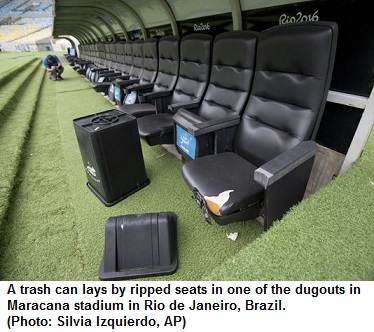
Download the free e-book of Go Lean … Caribbean – now!

————-

Appendix – The Bottom Line on Six Sigma

CU Blog - Building Better Cities - Photo 4

Six Sigma is a set of tools and strategies for process improvement originally developed by Motorola in 1985, but popularized in 1995 by General Electric’s Jack Welch as his central business strategy. Today it is used in different sectors of industry. Six Sigma seeks to improve the quality of process outputs by identifying and removing the causes of defects (errors). It uses a set of quality management methods, including statistical methods, and creates a special infrastructure of people within the organization (Champions, Black Belts, Green Belts, Orange Belts, etc.) who are experts in these very complex methods.

With Six Sigma the maturity of a manufacturing process can be described by a sigma rating indicating its yield or the percentage of defect-free products it creates. A six sigma process is one in which 99.9999998% of products manufactured are statistically expected to be free of defects (3.4 defects per million). According to Wikipedia, Six Sigma projects follow a methodology, aimed at improving existing business processes, composed of five phases, bearing the acronyms DMAIC:

  • Define the problem, the voice of the customer, and the project goals, specifically.
  • Measure key aspects of the current process and collect relevant data.
  • Analyze the data to investigate and verify cause-and-effect relationships. Determine what the relationships are, and attempt to ensure that all factors have been considered. Seek out root cause of the defect under investigation.
  • Improve or optimize the current process based upon data analysis.
  • Control the future state process to ensure that any deviations from target are corrected before they result in defects.

Source: Go Lean … Caribbean (Page 147)

Share this post:
, , , ,
[Top]

Retail Apocalypse – Preparing for the Inevitable

Go Lean Commentary

Remember the dream … of 7 Fat Cows and 7 Skinny Cows?

The articulation of the dream was that the 7 Fat Cows represented 7 prosperous years while the 7 Skinny Cows represented 7 years of famine with poverty and distress. – The Bible; Genesis Chapter 41.
CU Blog - Retail Apocalypse - Preparing for the Inevitable - Photo 0

In that Bible drama of Joseph in ancient Egypt, those circumstances were more than just in a dream; it was a prophecy of prosperity and famine. It came true!

Joseph was able to use the foresight to prepare that kingdom for adversity, after first exploiting the opportunities.

Here it comes again.

There is feast and famine “in the cards” as related to the retail eco-system. On one end of the spectrum , there will be prosperity for electronic commerce stakeholders, but on the other end, for brick-and-mortar establishments, there will be a Retail Apocalypse.

Will be? Actually, the threat has already manifested!

This is the assertion in this news article by the financial-economic magazine Business Insider:

CU Blog - Retail Apocalypse - Preparing for the Inevitable - Photo 1

Title: The retail apocalypse has officially descended on America
By: Hayley Peterson

Thousands of mall-based stores are shutting down in what’s fast becoming one of the biggest waves of retail closures in decades.

More than 3,500 stores are expected to close in the next couple of months.

Department stores like JCPenney, Macy’s, Sears, and Kmart are among the companies shutting down stores, along with middle-of-the-mall chains like Crocs, BCBG, Abercrombie & Fitch, and Guess.

CU Blog - Retail Apocalypse - Preparing for the Inevitable - Photo 2

Some retailers are exiting the brick-and-mortar business altogether and trying to shift to an all-online model.

For example, Bebe is closing all its stores — about 170 — to focus on increasing its online sales, according to a Bloomberg report.

Some are going out of business altogether, like The Limited which recently shut down all 250 of its stores.

Others, such as Sears and JCPenney, are aggressively paring down their store counts to unload unprofitable locations and try to stanch losses.

CU Blog - Retail Apocalypse - Preparing for the Inevitable - Photo 3Sears is shutting down about 10% of its Sears and Kmart locations, or 150 stores, and JCPenney is shutting down about 14% of its locations, or 138 stores.

According to many analysts, the retail apocalypse has been a long time coming in the US, where stores per capita far outnumber that of any other country.

The US has 23.5 square feet of retail space per person, compared with 16.4 square feet in Canada and 11.1 square feet in Australia, the next two countries with the most retail space per capita, according to a Morningstar Credit Ratings report from October.

Visits to shopping malls have been declining for years with the rise of e-commerce and titanic shifts in how shoppers spend their money. Visits declined by 50% between 2010 and 2013, according to the real-estate research firm Cushman & Wakefield.

And people are now devoting bigger shares of their wallets to restaurants, travel, and technology than ever before, while spending less on apparel and accessories.

As stores close, many shopping malls will be forced to shut down as well.

When an anchor store like Sears or Macy’s closes, it often triggers a downward spiral in performance for shopping malls.

Not only do the malls lose the income and shopper traffic from that store’s business, but the closure often triggers “co-tenancy clauses” that allow the other mall tenants to terminate their leases or renegotiate the terms, typically with a period of lower rents, until another retailer moves into the anchor space.

To reduce losses, malls must quickly find a replacement tenant for the massive retail space that the anchor store occupied, which is difficult — especially in malls that are already financially strapped — when major department stores are reducing their retail footprints.

That can have grave consequences for shopping malls, especially in markets where it’s harder to transform vacant mall space into non-retail space like apartments, according to analysts.

The nation’s worst-performing malls — those classified in the industry as C- and D-rated — will be hit the hardest by the store closures.

The real-estate research firm Green Street Advisors estimates that about 30% of all malls fall under those classifications. That means that nearly a third of shopping malls are at risk of dying off as a result of store closures.
Source: Business Insider e-Zine. Posted 03/21/2017; retrieved 04/17/2017 from: http://www.businessinsider.com/the-retail-apocalypse-has-officially-descended-on-america-2017-3

CU Blog - Retail Apocalypse - Preparing for the Inevitable - Photo 4

Related:

1. Monday Market Mayhem – The Retail Apocalypse – Look out Wall Street

2. Dollar General is defying the retail apocalypse and opening 1,000 stores

See the related AUDIO Podcast below here:

———–

AUDIO Podcast – Wal-Mart battles Amazon with discounts for online ordering and store pickup – https://www.marketplace.org/2017/04/14/business/its-battle-amazon-walmart-offers-discounts-ordering-online-and-picking-store

Published April 14, 2017 – Big Box giant Wal-Mart battling e-Commerce giant Amazon for New Economy fulfillment.

As noted in the foregoing, the Retail Apocalypse is affecting the news in the United States. It’s only the news today, tomorrow will be jobs, the next day the finance apparatus holding the debt (mortgages and security instruments on Wall Street) for the many shopping malls and then soon, the rest of the economy will be impacted.

This is so familiar. Remember the housing-real estate bubble in 2003 to 2010. This previous blog-commentary identified the following 5 steps of a bubble:

1.   Displacement

2.   Boom

3.   Euphoria

4.   Profit Taking

5.   Panic

Here we go again! Sounds like a crisis is imminent.

The book Go Lean…Caribbean serves as a roadmap for the introduction and implementation of the technocratic Caribbean Union Trade Federation (CU) and Caribbean Central Bank (CCB); it declares that a crisis is a terrible thing to waste – quoting famed American Economist Paul Romer. Though the impending crisis is slated for the US, the actuality of economic contagions mean that the Caribbean member-states will be affected as well.

Where do the tourists come from that drive the Caribbean region’s primary economic driver?

The question is rhetorical; the answer is obvious!

The Go Lean book seeks to prepare the Caribbean region for the change dynamics impacting the world. The “Agents of Change” at play in the foregoing news source are as follows:

  • Technology
  • Globalization

The underlying issue with the Retail Apocalypse is not the demand for retail products, it is the supply. Consumers are still demanding and consuming fashion and commodities, just not at shopping malls; e-Commerce is “all the rage”.

Consider the experience of this commentator:

I went to buy 3 pairs of slacks.

I was only able to find one – with the brand, make, size and color – at a Big Box retail store. So then I went home and matched the brand, model, size with the e-Commerce merchant Amazon.com and acquired the same pants in 2 divergent colors that the Big Box retailer did not have in inventory. 3 days later, the whole shopping expedition was over; I acquired 3 pairs of slacks, primarily from the online merchant and delivered by the shipping company United Parcel Service (UPS).

The quest of the Go Lean/CU roadmap is to elevate the Caribbean’s societal engines – not the US – starting first with economics (jobs, commercial developments and entrepreneurial opportunities). In fact, the following 3 statements are identified as the prime directives of the CU:

  • Optimization of the economic engines in order to grow the regional economy to $800 Billion & create 2.2 million new jobs.
  • Establishment of a security apparatus to protect the resultant economic engines.
  • Improve Caribbean governance – as e-Commerce alters sales & border taxes – to support these engines.

The changes taking place in the US with the Retail Apocalypse will eventually traverse the Caribbean member-states as well. This is the parallel with the opening Bible Drama. A crisis is coming and we have the opportunity to exploit the prosperous years and prepare for the famine. The Caribbean region – all 30 member-states – needs to better exploit e-Commerce. There are so missing ingredients, fully detailed in the Go Lean book; see  this sample advocacy on Page 198:

10 Ways to Foster e-Commerce

1 Leverage the full population – 42 million people in all 30 member-states to deploy the CU and the CCB.
2 Regional Currency (Caribbean Dollar or C$)
3 Card Culture
The CU will seek to foster the eco-system for e-payments beyond government activity. To assimilate this change, a card culture, on Main Street, will entail utilizing debit/credit cards, benefits pay cards, and even smart cards on cruise ships.
The CU will collectively bargain with the cruise lines to deploy C$ electronic “purses” to facilitate port-side and onboard retail commerce. All of these changes will garner a better monetary multiplier on the CU economy, by expanding M1.
4 CU Social Media
The CU web portal www.myCaribbean.gov will grant free access, email, IM, and profile pages for CU stakeholders, even normalizing communications thru social media sites. This will facilitate internet commerce activities in the region, as the CU will have hot data on profiles, habits and previous activities, thereby creating opportunities for measured marketing.
5 A Market for the Downloads of Intellectual Properties
6 Remittance Methods (Card & Email)
7 Mobile Apps – Hi-Density Wi-Fi
8 Regional Postal Services – CPU
The CU will assume the responsibility for mail services in the region; (all member-state postal employees will become federal civil servants). The embrace of the Caribbean Postal Union allows for parcel mail to be optimally shipped and delivered throughout the region, with Customs considerations in place. The CPU will therefore ensure the fulfillment side of e-commerce, even allowing for computer applications for printing electronic stamps/barcodes for value savings.
9 Turnpike Logistics
10 Customs and Import Optimizations

The missing ingredients for this new marketplace – electronic commerce – are not just banking-related, the full eco-system must be enabled: electronic (technology), commerce (trade) and fulfillment (logistics). The implementation of these provisions will constitute a New Day for the region. Overall, the Go Lean book stresses the community ethos, strategies, tactics, implementations and advocacies to reboot, reform and transform the economic engines of Caribbean society, so as to benefit from changes coming due to the Retail Apocalypse, this New Day.

Though not directly mentioned in the Go Lean book, this Retail Apocalypse is planned for in the roadmap. A comprehensive view of  the technocratic stewardship for the region’s economic engines, including the banking eco-system, is presented early in the book with these opening pronouncements in the Declaration of Interdependence (Page 13 and 14):

xxiv. Whereas a free market economy can be induced and spurred for continuous progress, the Federation must install the controls to better manage aspects of the economy: jobs, inflation, savings rate, investments and other economic principles. Thereby attracting direct foreign investment because of the stability and vibrancy of our economy.

xxvii. Whereas the region has endured a spectator status during the Industrial Revolution, we cannot stand on the sidelines of this new economy, the Information Revolution. Rather, the Federation must embrace all the tenets of Internet Communications Technology (ICT) to serve as an equalizing element in competition with the rest of the world. The Federation must bridge the digital divide and promote the community ethos that research/development is valuable and must be promoted and incentivized for adoption.

The points of effective, technocratic banking and retail stewardship were further elaborated upon in previous blog/commentaries. Consider this sample:

https://goleancaribbean.com/blog/?p=11184 Big Bank investing $Billion on ‘Fintech’ for e-Commerce positioning
https://goleancaribbean.com/blog/?p=8823 Lessons from China – WeChat: Model for Caribbean Social Media
https://goleancaribbean.com/blog/?p=8704 Lesson from MetroCard
https://goleancaribbean.com/blog/?p=7991 Transformations: Caribbean Postal Union – Delivering the Future
https://goleancaribbean.com/blog/?p=7034 The Future of Money
https://goleancaribbean.com/blog/?p=6635 New Security Chip in Credit Cards Unveiled
https://goleancaribbean.com/blog/?p=5668 Move over Mastercard/Visa – Time for Local Banking Cards
https://goleancaribbean.com/blog/?p=4425 Cash, Credit or iPhone …
https://goleancaribbean.com/blog/?p=3889 Royal Bank of Canada’s EZPay – Ready for Change
https://goleancaribbean.com/blog/?p=3881 The Need for Regional Cooperation for Cyber-Security & e-Security
https://goleancaribbean.com/blog/?p=3858 Model of Central Banking Technocracy: ECB 1 trillion Euro stimulus
https://goleancaribbean.com/blog/?p=2488 Model of an E-Commerce Fulfillment Company: Alibaba
https://goleancaribbean.com/blog/?p=1416 Model of an E-Commerce Fulfillment Company: Amazon
https://goleancaribbean.com/blog/?p=1350 PayPal’s model to pay for e-Commerce
https://goleancaribbean.com/blog/?p=906 Bitcoin model to pay for e-Commerce
https://goleancaribbean.com/blog/?p=528 Facebook to pay for e-Commerce

Warning to all retail stakeholders – buyers, sellers and governments: Change is coming!

This is a familiar stance – preparing for the inevitable – for the Go Lean movement; there have been previous warnings of disruptive changes; see this sample here:

https://goleancaribbean.com/blog/?p=7847 To the Personal Computer industry: Cloud Computing, Smartphones and Tablets are making actual laptop and desktop computers inconsequential.
https://goleancaribbean.com/blog/?p=6151 To the regional government’s Revenue Officials: 3-D Printing is coming and will change fabrication to local rather than import. This will disrupt border taxes revenue expectations.
https://goleancaribbean.com/blog/?p=6016 To the Infrastructure Planners: Climate Change is making Caribbean summers hot-hot-hot and northern winters milder; there must be cooperative refrigeration to provide relief, otherwise people will leave for northern destinations.
https://goleancaribbean.com/blog/?p=5784 To Jamaica’s Public Safety Officials: Human Rights protections must be extended to people who identify as LGBT. Whether you agree or not, the international community will force you to respect their rights for life, liberty and the pursuit of happiness.
https://goleancaribbean.com/blog/?p=5210 To the Cruise Line industry: The Caribbean region’s collective bargaining will extract greater benefits and protections for port city commerce.
https://goleancaribbean.com/blog/?p=5155 To the Caribbean Power Grip: Home-based batteries will allow for successful deployments of solar/wind power generation and require less power from the grid.
https://goleancaribbean.com/blog/?p=4767 To the regional government’s Revenue Officials: Under the WTO regime, customs duties must eventually be eliminated; same too with conditional property taxes. VAT or Sales Taxes are OK.

As for the Retail Apocalypse, now is the time for all stakeholders of Caribbean banking, retail and governments to lean-in for the empowerments for e-Commerce described here-in and in the book Go Lean … Caribbean. This is where the marketplace is going, not just tomorrow, but already here today. We can do this; we can elevate our communities and our retail eco-systems. We can be a better place to live, work and play. 🙂

Download the free e-book of Go Lean … Caribbean – now!

Sign the petition to lean-in for the roadmap for the Caribbean Union Trade Federation.


Share this post:
, , , , ,
[Top]

Logical Addresses – ‘Life or Death’ Consequences

Go Lean Commentary

CU Blog - Logical Addresses - Life or Death - Photo 5There is the need to reform and transform the Caribbean, with strategies and tactics for modernization of street addresses.

Why is this subject important?

It could mean Life-or-Death.

It is that serious!

Question to a Caribbean man: So where do you live?

Answer: Go down the main street and turn at the corner of the Catholic Church, go two side corners past the mango tree, turn left by the pink house; go down two more houses pass Auntie Mae’s yard, and my house is facing hers.

This is no joke; this is our sad reality. Imagine if the inquirer in this case is an Ambulance Dispatcher. They must send paramedics urgently or a sufferer can die; (think heart attack, stroke, poisoning episode, etc.). Yet still, this above address standard is the Caribbean norm.

We can – and must – do better.

Verily the book Go Lean…Caribbean details a mission to re-organize the addressing scheme in the region for all 30 Caribbean member states. This book serves as a roadmap for the introduction and implementation of the technocratic Caribbean Union Trade Federation (CU); this includes a subset institution, the Caribbean Postal Union (CPU). The end result, according to the book Page 78:

The CPU will collaborate with member-states in remapping all residential and commercial addresses for unique house numbers and street names.

There are a lot of advantages for an optimized postal eco-system, none more vital than Life-or-Death. The resultant address from the CU/CPU effort will allow emergency operations to have a consistently logical-sequential-directional address. Yes, this is the standard for North American 911 Emergency operations with their Enhanced 911 (E911) system, which provides both caller location and identification; see the reference here:

Location determination depends upon the Automatic Location Information (ALI) database which is maintained on behalf of local governments by contracted private third parties generally the Incumbent Local Exchange Carrier (ILEC).
… 
A 911 address contains a uniform number, the street name, direction (if applicable), and the city. The address number is assigned usually by the grid of the existing community. Each county usually has their own policy on how the addressing is done, but for the most part National Emergency Number Association (NENA) guidelines are followed. These guidelines are expressed by the Master Street Address Guide (MSAG). The exact 911 addresses and associated phone numbers are put into the ALI database. – Wikipedia.

CU Blog - Logical Addresses - Life or Death - Photo 0This effort was just recently completed in the Caribbean territory of the United States Virgin Islands; see the Information Sheet on the relevant webpage – published beforehand … circa 2012 – in the Appendix below. This reference depicts the effort for the USVI, the last of the continental American States & Territories to comply. From a Caribbean perspective, this project is now complete for Puerto Rico and the USVI – see the complete Postal Addressing Standard for PR & USVI here. We now need to model it in the rest of the Caribbean, as part of the CPU initiative. But Postal is not our primary motivation; the quest to mitigate Life-or-Death emergencies is a BIGGER concern.

With this empowerment in place, the opening dialogue would go differently; consider this now:

Question to a Caribbean man: We have your address at 5407 Guava Berry Drive. Is there anything blocking access for the ambulance?

Answer: No. Please hurry.

Postal mail efficiency is secondary in this discussion; it is only “gravy”.

With optimized addresses, the CPU will be able to deliver logistical solutions for Caribbean modern commerce. This implementation can transform Caribbean society for the people and institutions.

The Go Lean book details the quest to transform the Caribbean; it features a 370-page how-to guide, a roadmap for elevating the region’s societal engines of economics, security and governance. It leads with economic issues, not administrative ones! But there must be logistical solutions – infrastructure – before many of the economic empowerments can manifest, such as electronic commerce. The book details a www.myCaribbean.gov Marketplace.

The opening dialogue would go differently now:

Question to a Caribbean man: What is your address for your package delivery?

Answer: I’m at 5407 Guava Berry Drive.

The Go Lean/CU/CPU plan calls for the regional consolidation of the postal operations on Day One/Step One of the roadmap, during the Assembly phase. In order to enjoy the infrastructural benefits of the CPU plan, there must be some heavy-lifting in regional governance: the political transformation of member-states vesting their authority to a deputized CU federal agency. This vision is defined early in the Go Lean book (Page 12) in these pronouncements in the Declaration of Interdependence:

xi.  Whereas all men are entitled to the benefits of good governance in a free society, “new guards” must be enacted to dissuade the emergence of incompetence, corruption, nepotism and cronyism at the peril of the people’s best interest. The Federation must guarantee the executions of a social contract between government and the governed.

xii. Whereas the legacy in recent times in individual states may be that of ineffectual governance with no redress to higher authority, the accedence of this Federation will ensure accountability and escalation of the human and civil rights of the people for good governance, justice assurances, due process and the rule of law. As such, any threats of a “failed state” status for any member state must enact emergency measures on behalf of the Federation to protect the human, civil and property rights of the citizens, residents, allies, trading partners, and visitors of the affected member state and the Federation as a whole.

xv. Whereas the business of the Federation and the commercial interest in the region cannot prosper without an efficient facilitation of postal services, the Caribbean Union must allow for the integration of the existing mail operations of the governments of the member-states into a consolidated Caribbean Postal Union, allowing for the adoption of best practices and technical advances to deliver foreign/domestic mail in the region.

The Go Lean book details the series of community ethos, strategies, tactics, implementations and advocacies to foster the best practices in infrastructure so as to usher in the delivery of the CPU in the region. Consider this sample:

Tactical – How to Grow the Economy to $800 Billion – Trade and Globalization Page 70
Tactical – Separation of Powers – Postal Services Page 78
Tactical – Separation of Powers – Interstate Commerce Administration Page 79
Implementation – Year 1 / Assemble Phase – Establish CPU Page 96
Implementation – Anecdote – Mail Services – USPS Dilemma Page 99
Implementation – Ways to Optimize Mail Service & myCaribbean.gov Marketplace Page 108
Implementation – Ways to Deliver Page 109
Advocacy – Ways to Improve Emergency Management Page 196
Advocacy – Ways to Impact Urban Living Page 234

Issues related to the CPU business model have previously been detailed in these Go Lean blog-commentaries, listed here:

https://goleancaribbean.com/blog/?p=9839 CPU Model – Alibaba stretches the globe with 4 new Data Centers
https://goleancaribbean.com/blog/?p=7991 Transformations: Caribbean Postal Union – Delivering the Future
https://goleancaribbean.com/blog/?p=3187 Robots help Amazon tackle Cyber Monday
https://goleancaribbean.com/blog/?p=2488 CPU Model – Alibaba Comes to America
https://goleancaribbean.com/blog/?p=1416 CPU Model – Amazon’s new FIRE Smartphone

The need for address standardization is indisputable; there are so many benefits, none greater than Life-or-Death scenarios in emergency situations. The motivation of the Go Lean book is economic empowerment; yet still so many mitigations are presented to optimize the “art and science of Emergency Management”. In a previous blog-commentary, the full details of the 911 Emergency Telephone Number system were examined; consider these quoted excerpts:

The Go Lean book embarks on the strategy to consolidate the Emergency Management (preparation and response) for the entire Caribbean region. Therefore the issue of Emergency Telephone Numbers is of serious concern; sometimes it’s a life-or-death matter.

… everyone expects to pick up a phone and dial a 3-digit code – like 911 – and within short order be able to talk with an Emergency Management First-Responder for Police, Ambulance and Fire incidences. …

The Go Lean book posits that communication technologies must be regulated at the regional level for the Greater Good of the Caribbean. There are too many instances with overlapping spectrum from one member-state to another. Citizens should not need to worry about border considerations during emergency incidences. …

The region needs this delivery; it makes the Caribbean a better place for emergencies.

Issues related to regional coordination of Emergency Management have been detailed in these previous Go Lean blog-commentaries:

https://goleancaribbean.com/blog/?p=9334 Hurricane Categories – The Science
https://goleancaribbean.com/blog/?p=7896 The Logistics of Disaster Relief
https://goleancaribbean.com/blog/?p=7449 ‘Crap Happens’ – So What Now?
https://goleancaribbean.com/blog/?p=5002 Managing a ‘Clear and Present Danger’
https://goleancaribbean.com/blog/?p=4308 911 – Emergency Response: System in Crisis

Now is the time for all of the Caribbean, the people and governing institutions (like Postal Operations), to lean-in for the empowerments in the book Go Lean … Caribbean. The CU/CPU will deploy the logistical efficiencies and innovative products-services to impact its prime directives; identified with the following 3 statements:

  • Optimization of the economic engines in order to grow the regional economy to $800 Billion & create 2.2 million new jobs.
  • Establishment of a security apparatus to ensure public safety and protect the resultant economic engines.
  • Improve Caribbean governance to support these engines, including the consolidation of the state-ran postal operations.

(A quick note on jobs: a previous blog-commentary identified that the Uber-Everything business model can emerge in the Caribbean region once there is address standardization).

The VIDEO here demonstrates how the E911 program works in North America; this is a model for the whole of the Caribbean region:

VIDEO – How E9-1-1 Works – https://youtu.be/MZwBZYyOybI

Uploaded on Dec 14, 2010 – Avaya Emergency Services Product Manager Mark Fletcher, explains how E911 calls and location information in PBX systems gets to the 911 dispatcher at the PSAP. Learn more at http://www.avaya.com.

This CU/CPU roadmap is an important plan for streamlining the addresses in the region. But this is not just a plan for delivering the mail; it is more important than that; it can deliver Life-or-Death solutions. This is our plan for delivering a new Caribbean: a better place to live, work and play. 🙂

Download the book Go Lean … Caribbean – now!

Sign the petition to lean-in for the roadmap for the Caribbean Union Trade Federation.
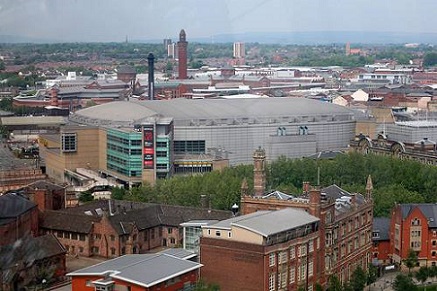
———-

Appendix – USVI Street Addressing Initiative

What is the Street Addressing Initiative? Who is involved? The Street Addressing Initiative (SAI) is a project spearheaded by the Office of the Lieutenant Governor, and involving many agencies and departments of the Virgin Islands Government, including the Tax Assessor, GIS, Public Works, Planning and Natural Resources, WAPA, Historic Preservation, VITEMA (Emergency Management/E-911), Police, Health, viNGN and others. In addition, Innovative and other private companies are assisting the Government with the Project. The Government has partnered with the University of the Virgin Islands – Eastern Caribbean Center, Applied Geographics (AppGeo) and Spatial Focus, Inc. to develop the addressing system, and to conduct a pilot study that will test methods for assigning address numbers throughout the Territory.

The SAI will ultimately create a street address for every home, business, and other building within the U.S.V.I. At present, the pilot project is underway to test the addressing system and street naming processes. Small areas on each of the 3 major islands (STT, STX, STJ) are  included in this pilot program.

I like my current address. Why do I need a new address? Current addresses are based on Estate Names and Plot numbers. These numbers were not assigned in an orderly manner, and have resulted in a confusing pattern of numbering that makes finding an individual house or business difficult. Addresses work because they are arranged in logical, sequential patterns, with well-identified street names, and posted numbers. The SAI will provide a new address number that will conform to a logical and well documented system of numbering. This type of addressing will provide broad benefits such as improved E-911, efficiency for utility service providers and delivery companies like UPS and Fedex. In general, logical addressing helps ensure that others can find you more quickly in an emergency and/or to deliver services or goods.

Why is my new address number so high?  Why is my new address so different than my plot number? Your new street address is based on a numbering system developed for the U.S. Virgin Islands.  Each island has two numbering systems.  For St. Croix, these are centered on the towns of Frederiksted and Christiansted.  For St. Thomas, these are centered at Government House in Charlotte Amalie, and at Red Hook.  For St. John, they are centered in CruzBay and CoralBay.  Lower numbers are used in the towns, and increase as you travel further from these centers.  Your new number reflects the relative distance from these starting points.

Plot numbers were created when the land in your Estate was subdivided into lots, or when the original lots were re-subdivided.  The numbering does not necessarily follow the street pattern, or maintain a logical sequence.  This makes it difficult for emergency responders, service providers, and others to find your home or place of business.  These numbers are not useful as addresses.  They are, however, useful as property identifiers, and will be maintained for that purpose.

I thought that I lived on a different street than I have been assigned. Why do I have to  change my street name? To the greatest extent possible, where streets have existing, official names that have been in use, the SAI will use those names. However, many streets were never officially named when they were created, and the SAI will be working with neighborhood groups and Homeowners’ Associations to designate names for these streets. In a small number of cases, where there are duplicate names, the SAI will need to change one of the names. The Addressing Team will try to minimize the disruption caused by these street name changes.

Now that I have been assigned a new address, what are the next steps? The first, most important step is to post your new address on the front of your house or business in a location that is visible from the street (see next question below). The project team will be communicating your new number and street name to WAPA, Innovative, and VITEMA/E-911 and to the US Postal Service, and other governmental agencies so that these agencies know what your new address is.

Are there any guidelines for putting my new number on my house or business? Numbers should be at least 4” tall, and should be in a contrasting color from the background color of your house. For example, if your house is a light color or white, please use black, dark blue, brown or dark green numbers. If your house is a dark color, please use white, or light colored numbers. Please be certain that your number is completely visible from the street. If your home or building is not visible from the street, the number can be placed on a sign located at the driveway leading to your home or building. Again, the numbers should be a contrasting color to the sign’s background.  The examples below show good posted address numbers.  Remember that your number must be visible from the street.  If your home or business is not visible from the street, you should use a free-standing sign on a post at least 30 inches in height.  Numbers should be on both sides of the sign.

Post Style:

CU Blog - Logical Addresses - Life or Death - Photo 1

House Styles:

CU Blog - Logical Addresses - Life or Death - Photo 2

CU Blog - Logical Addresses - Life or Death - Photo 3

CU Blog - Logical Addresses - Life or Death - Photo 4

What date is my street address effective? New addresses are effective as of July 1, 2013.  There will be a public announcement through radio, television and other media to let you know that you should begin using your new number and street name.  You may post your new number as soon as it has been assigned.

Can I still use my old address? Many people will continue to use their old address for historic reasons. However, for purposes of US Mail, E-911, and utility services, you are strongly encouraged to use your new SAI address. The existing number is most likely your lot number for tax purposes, and will be retained by the Tax Assessor to identify your property parcel for tax assessment and billing.

When will I see a street sign on my street? The SAI is working with the Government and Department of Public Works to develop a street signage program.

What is my COMPLETE ADDRESS? What is my ZIP Code? What should I write on letters? Your complete address includes your address number, street name, Estate name, plus the Island and ZIP Code. If you currently have a ZIP Code, please keep using it. We will be working  with the U.S. Postal Service to identify areas which may need new or additional ZIP Codes.

Example of a complete address:

5407 Guava Berry Drive, Mon Bijou
St. Croix, USVI, 00850

Is my plot number still the same? Yes, there is NO change to your plot number.

I was assigned a provisional road name. What should I do to be assigned a permanent, official road name? In some cases, where a neighborhood has unnamed streets, the SAI will be using a provisional street name. These names will include the name of the Estate and a number to identify the specific “unnamed” road in the Estate. For example, “Contant Provisional Road 10”. The SAI is asking the property owners along each of the streets to suggest a name for the street, and submit it to the SAI for confirmation and approval. If your property is on one of these streets, you will find further information about this process in the addressing packet left on your property.

For further information on the street naming process, please visit the top of the page.

Alternatively, contact the Street Addressing Initiative by telephone or mail at the addresses on your door hanger.

Will my new address affect my utility service? Will my electricity and phone provider use my new address? Will there be loss of service? Your utility services, phone services, etc. will not be affected. The SAI is providing each of the utilities with a listing of all existing and new addresses, so that they may update their records. This does not require any action on your part. Once updated, the providers will use your new address as a service address. If you use a P.O. Box or other mailing address, these will not be changed.

When will the rest of the islands get new addresses? The current pilot project is expected to be finished in July, 2013. The U.S.V.I. Government is currently seeking funding for addressing for the remainder of the Territory as well as for street signage. The Government is hopeful that the remaining areas of the Territory can be addressed within the next 2-4 years.

Source: Retrieved March 7, 2017 from: http://ltg.gov.vi/street-addressing-initiative.html

See related articles:


Share this post:
, , ,
[Top]

‘Culture Eats Strategy For Breakfast’

Go Lean Commentary

Congratulations to the New England Patriots of the National Football League. They won SuperBowl LI on Sunday February 5, 2017 – beating the Atlanta Falcons 34 to 28 in a dramatic comeback – in which they overcame a 28 to 3 deficit. Their victory proved the validity of the business axiom:

Culture eats strategy for breakfast, lunch and dinner.

CU Blog - 'Culture Eats Strategy For Breakfast' - Photo 2This phrase was articulated by distinguished management consultant Peter Drucker and made famous by Mark Fields, a former President of Ford Motor Corporation. This corporate best-practice – good for nation-building as well – is that this axiom is more than just theory, it is an absolute reality! Any company, or community for that matter, disconnecting the two (culture and strategy) are putting their success at risk.

This expression made a leapfrog to NFL football in 2014 when the Head Coach of another team, Philadelphia Eagles, referred to the concept in a passing comment. See the full origin story in this link:

How ‘Culture Beats Scheme’ Became Eagles’ Motto

The New England Patriots SuperBowl win is proof-positive of the culture-first ethos. Talent abounds in the league; all 32 teams have the same opportunities and yet, none can boast the Patriots’ history of success. Why? This team has focused heavy on its culture … and has the success to show for it:

The Patriots have appeared in the Super Bowl nine times in franchise history, the most of any team, seven of them since the arrival of head coach Bill Belichick and quarterback Tom Brady in 2000. The Patriots have since become one of the most successful teams in NFL history, winning 14 AFC East titles in 16 seasons since 2001, without a losing season in that period. The franchise has since set numerous notable records, including most wins in a ten-year period (126, in 2003–2012), an undefeated 16-game regular season in 2007, the longest winning streak consisting of regular season and playoff games in NFL history (a 21-game streak from October 2003 to October 2004), and the most consecutive division titles won by a team in NFL history (won eight straight division titles from 2009 to 2016). The team owns the record for most Super Bowls reached (seven) and won (five) by a head coach-quarterback tandem, as well as being the first tandem to win the Super Bowl 13 years after the first. – Source: Wikipedia.
CU Blog - Culture Eats Strategy For Breakfast - Photo 1

The purpose of this commentary is the focus on culture. This definition of culture refers to community ethos; this is defined in the book Go Lean … Caribbean as …

… the fundamental character or spirit of a culture [group or community], the underlying sentiment that informs the beliefs, customs, or practices of a group or society; the dominant assumptions of a people or period.

Culture allows “you” to overcome obstacles; endure the heavy-lifting of a turn-around; invest in future success based on promising talents; stay the course of a roadmap, rather than “giving up” and fleeing for the appearance of greener pastures elsewhere. Culture dictates devoting “blood, sweat and tears” to a community cause, to give a full measure of devotion. We can learn so much by examining organizations and communities of great accomplishments. The New England Patriots is one such model. See VIDEO here describing the culture of the New England Patriots:

VIDEO – Chris Long of New England Patriots on Team, Winning, Unselfish Culture – https://youtu.be/ne-YkmXMN4M

Published on Jan 3, 2017 – Chris Long discusses the New England Patriot’s TEAM Culture, Winning Attitude, & Unselfishness on the NFL Network’s Game Day Prime with former NFL Head Coach Steve Mariucci on 1/1/17.

The Go Lean book relates that there are good ethos and bad ethos – the good ethos can be considered “culture” while the bad ethos may be deemed “defects”. The Caribbean member-states are not known as great societies, despite having the greatest “address on the planet” in terms of terrain, fauna/flora, hospitality, festivities, food, rum and cigars; this is due to our deficient community ethos, our organizational culture. There are role models for us to consider:

“Culture eats strategy for breakfast,” is a famous quotation attributed to the late business management guru Peter Drucker, and I can’t think of a better example that proves this than Enterprise Rent-A-Car’s acquisition of National Car Rental and Alamo.

They have been recognized numerous times for their customer service by J.D. Power. Business Week recognized them as one of the top 25 customer service brands in the world. In addition to running a wildly successful business, they obviously know how to take care of their customers, which means their customers want to come back.

All that is impressive, but not nearly as impressive as how they proved these top customer service awards weren’t a fluke. All of the awards and accolades they continue to receive don’t happen by accident. They aren’t just lucky. Everything Enterprise does is very purposeful. It is their culture. – Forbes Magazine Columnist Shep Hyken’s Profile Story.

One mission of the Go Lean book is to foster good community ethos – good culture – for the Caribbean region. We have great talent in our region and yet still we do not win; our people “take their talents to South Beach / South New York / South Toronto / South London, etc.”. What is missing here? Culture.

The Caribbean has a lot of people who have excelled on the world stage in their chosen professions, only because they fled their Caribbean homes seeking better opportunities abroad. Consider:

The Go Lean book serves as a roadmap for the introduction and implementation of the Caribbean Union Trade Federation (CU) to elevate Caribbean society and culture. The CU has 3 prime directives:

  • Optimization of the economic engines in order to grow the regional economy to $800 Billion and create 2.2 million new jobs.
  • Establishment of a security apparatus to protect the resultant economic engines.
  • Improve Caribbean governance to support these engines.

From the outset of the book, in the opening Declaration of Interdependence, the Go Lean roadmap posits that a target for the CU’s empowerments should be the Caribbean youth. This is the best way to foster a new culture, focus on the next generation. Then the remainder of society will assimilate … the new values within a short time. See the focus on youth in the opening pages of the book (Page 3), with this sample quotation:

Our youth, the next generation, may not be inspired to participate in the future workings of their country; they may measure success only by their exodus from their Caribbean homeland.

Thusly, the Go Lean/CU roadmap dictates how to reach, engage, and solicit the youth market to foster the new required attitudes. These other pronouncements in the opening Declaration of Interdependence, bear a direct reference to this quest for changing culture; consider these on Pages 11 & 13:

xix. Whereas our legacy in recent times is one of societal abandonment, it is imperative that incentives and encouragement be put in place to first dissuade the human flight, and then entice and welcome the return of our Diaspora back to our shores…

xxi.  Whereas the preparation of our labor force can foster opportunities and dictate economic progress for current and future generations, the Federation must ensure that educational and job training opportunities are fully optimized for all residents of all member-states, with no partiality towards any gender or ethnic group. The Federation must recognize and facilitate excellence in many different fields of endeavor, including sciences, languages, arts, music and sports. This responsibility should be executed without incurring the risks of further human flight, as has been the past history.

The book provides some turn-by-turn instructions for soliciting the different generation groups (Baby Boomers, Generation X and the current Millennials) who are at the frontline of the current Caribbean battles, that of societal abandonment, of which the region is sorely losing; (see this portrayed in a previous blog-commentary). The Go Lean book asserts new community ethos, strategies, tactics, implementation and advocacies. The following list from the book applies:

Community Ethos – Economic Principle – Economic Systems Influence Choices & Incentives Page 21
Community Ethos – Economic Principle – Voluntary Trade Creates Wealth Page 21
Community Ethos – Economic Systems Influence Choices & Incentives Page 21
Community Ethos – People Respond to Incentives Page 21
Community Ethos – Consequences of Choices Lie in the Future Page 21
Community Ethos – Ways to Help Entrepreneurship Page 28
Community Ethos – Ways to Impact Turn-Around Page 33
Community Ethos – Ways to Manage Reconciliations Page 34
Community Ethos – Ways to Promote Happiness Page 36
Community Ethos – Ways to Impact the Greater Good Page 37
Community Ethos – Lean Operations Page 24
Community Ethos – Cooperatives Page 25
Community Ethos – Ways to Impact the Future Page 26
Community Ethos – Impact the Greater Good Page 37
Strategy – Strategy – Keep Young People At Home in the Region Page 51
Strategy – Agents of Change – Technology Page 57
Strategy – Agents of Change – Globalization Page 57
Tactical – Fostering a Technocracy Page 64
Tactical – Separation of Powers – Postal Union Page 78
Anecdote – Turning Around the CARICOM governance Page 92
Anecdote – “Lean” in Government Page 93
Implementation – Ways to Pay for Change Page 101
Implementation – Ways to Deliver Page 109
Implementation – Ways to Impact Social Media Page 111
Implementation – Reasons to Repatriate Page 118
Advocacy – Ways to Improve Governance Page 168
Advocacy – Ways to Better Manage the Social Contract Page 170
Advocacy – Ways to Impact Events Page 191
Advocacy – Ways to Promote Fairgrounds Page 192
Advocacy – Ways to Foster e-Commerce Page 198
Advocacy – Ways to Impact the Diaspora Page 217
Advocacy – Ways to Impact Youth Page 227
Advocacy – Ways to Impact Sports Page 229
Advocacy – Ways to Impact Urban Living – Sports Leagues Page 234

The Go Lean book is a great guidebook for developing agile institutions – a recipe for the CU technocracy.

The Caribbean can succeed in our efforts to improve our community ethos. Consider this sample of previous blog-commentaries that delve into aspects of forging a better “culture” in Caribbean communities:

https://goleancaribbean.com/blog/?p=10220 Waging a Successful War on the BAD ethos of Rent-seeking
https://goleancaribbean.com/blog/?p=10218 Waging a Successful War on the BAD ethos of Stupidity
https://goleancaribbean.com/blog/?p=10216 Waging a Successful War on the BAD ethos of Orthodoxy
https://goleancaribbean.com/blog/?p=9595 Vision and Values for a ‘New’ Caribbean
https://goleancaribbean.com/blog/?p=9428 Forging Change: Herd Mentality
https://goleancaribbean.com/blog/?p=8186 Respect for Minorities: ‘All for One’
https://goleancaribbean.com/blog/?p=7646 Going from ‘Good to Great’
https://goleancaribbean.com/blog/?p=7628 ‘A Change Is Gonna Come’
https://goleancaribbean.com/blog/?p=5695 Repenting, Forgiving and Reconciling the Past
https://goleancaribbean.com/blog/?p=3915 ‘Change the way you see the world; you change the world you see’
https://goleancaribbean.com/blog/?p=3780 Forging an Ethos of ‘Blood, Sweat and Tears’
https://goleancaribbean.com/blog/?p=623 ‘Only at the precipice, do they change’

The vision for a new Caribbean is one that has a culture that could “eat strategy – scheme or talent – for breakfast”.

While the focus of this commentary is on culture, a lot can be said for the Sports eco-system as well. The Go Lean/CU roadmap is NOT a sports promotion plan but it does present the important role for sports in the vision to make the Caribbean a better place to live, work and play. As an expression of this vision, the Go Lean book states (Page 81):

“… a mission of the CU is to forge industries and economic drivers around the individual and group activities of sports and culture”.

Now is the time for all of the Caribbean, the people and governing institutions, to lean-in for the empowerments described in the book Go Lean … Caribbean. The benefits are too alluring: dawn of a new economy and new opportunities to preserve Caribbean culture for future generations. 🙂

Download the book Go Lean … Caribbean – now!


Share this post:
,
[Top]

Waging a Successful War on ‘Terrorism’

Go Lean Commentary

“The first casualty when war comes is truth” – US Senator Hiram Warren Johnson (1918).

In the United States, the War on ‘Terrorism’ was declared after the World Trade Center Attacks in September 2001. The war is still waging … some 16 years later. This is the third Commander-in-Chief (President) to lead the American effort; (George W. Bush, Barack Obama and Donald Trump). Now, the lines are starting to blur in terms of who are the enemies and who are the allies.

During the first week of the new Trump administration, the new President issued an Executive Order – fulfilling a campaign promise – banning all immigrants from certain Muslim-majority countries. This is purportedly in conjunction with the ongoing War on ‘Terror’. The problem is that the cited countries have not been the source of the terrorist activities that have attacked the US. The targeting seem arbitrary. We must consider the truth; see the news article and photo/map of this story here:

Title: These Countries with Business Links to Trump Aren’t Part of His Immigration Ban
By: Joseph Hincks

CU Blog - War on 'Terrorism' - Photo 1

A little over a year ago, then-Republican presidential candidate Donald Trump called for a “total and complete shutdown of Muslims entering the United States,” until the country’s leadership could “figure out what is going on.”

Along the campaign trail, he modified this blanket ban to a suspension of “immigration from terror-prone regions, where vetting cannot safely occur,” which he promised to enact during his first 100 days in office.

And now, a week into Trump’s presidency, he has tried to make good on that promise—or, at least, partly so. A draft proposal of an executive order obtained by Bloomberg News reportedly shows that Trump is poised to suspend all entry to the U.S. from seven Muslim-majority countries.

Notably missing from the blacklist, however, are several Muslim-majority countries where Trump has business dealings, according to Bloomberg.

The news organization has put together a map of the proposed suspensions, with the Muslim-majority countries where Trump has business interests—Egypt, Saudi Arabia, Turkey, and Azerbaijan—rendered in yellow.

While Muslim-majority countries such as Oman, Qatar, Kuwait, and others are not included on the list, the omission of Turkey and Egypt may be argued as being seen at odds with Trump’s definition. Both Turkey and Egypt endured high-profile terror attacks in 2016.

The President has positions in two companies that may be related to business in Egypt, and has previously praised the country’s autocratic leader, Abdel Fattah al-Sisi. In Turkey, Trump has a licensing deal to use his name on two luxury towers in Istanbul.

Source: Fortune Magazine Online Site; posted January 27, 2017; retrieved January 29, 2017 from: http://fortune.com/2017/01/27/donald-trump-muslim-immigration-ban-conflict/

Such a bold move – based on mis-truths – elicits response, feedback and uproar from opposition and pundits alike. In one such salvo on Saturday January 28th, a Security Analyst (with TV News Network MSNBC), Malcolm Nance, identified that terrorists are sourced in many countries around the world, not just the banned 7 and including places like the Caribbean.

Wait, what?!?! Such a scandalous accusation!

This brings to mind a previous blog-commentary by the promoters of the book Go Lean … Caribbean, describing the reality of the terrorism-threat in the Caribbean:

ISIS reaches the Caribbean Region

The Caribbean member-states are all atwitter about such associations. The region’s governments asserts that they are partners in the ‘War on Terror’ and not accessories to any Bad Actors. Consider the formal response from the Bahamas in the Appendix A below.

But truth be told, the US – and other advanced democracy countries – are very alarmed with their Caribbean partners; we have so many societal defects that exacerbate the global attempts to mitigate terrorism. Consider this list of security-based societal defects:

1.  Indiscriminant Citizenship By Investment Program – see the CBS 60 Minutes story about Passports for Sale even to Terror Suspects featured in this previous blog. Can terrorists hide their identity with a passport from a Caribbean member-state? Can we do better going forward?CU Blog - War on Rent - Photo 3
CU Blog - War on 'Terrorism' - Photo 22.  US PATRIOT Act – Managing ‘the Need and the Greed’ with this law. The measure allowed US authorities to have purview on foreign bank accounts in cooperative countries. This is where the Caribbean member-states were given the opportunity to demonstrate that they were willing to mitigate terrorism. Cooperation with these measures – see Appendix B below – jeopardized the Offshore Banking industry in the region. Can terrorists use our “banking in the shadows” to facilitate their malice? The historicity of the Offshore Banking Regulatory changes were detailed in the Go Lean book (Pages 321 – 326). Consider this sample from Page 321:

“In 2001 the development of standards in the fight against terrorism financing was added to the mission of the FATF [(Financial Action Task Force … on Money Laundering)]. In October 2001 the FATF issued the Eight Special Recommendations to deal with the issue of terrorism financing. The continued evolution of money laundering techniques led the FATF to revise the FATF standards comprehensively in June 2003. In October 2004 the FATF published a Ninth Special Recommendations, further strengthening the agreed international standards for combating money laundering and terrorism financing”.

3.  Aversion to Digital Dragnets – The cutting edge technologies to capture meta-data or actual cell phone contents have been frowned on in the Caribbean; in a 2011 WikiLeaks dissemination, whistleblower Edward Snowden revealed that the Bahamas cooperates with US official and records all cell phone calls. This disclosure was assailed as an Abuse of Power. But we must admit, this is an abuse of American power on the Caribbean homeland. Issues abound that need to be addressed and settled. The societal defect is that we are expecting others (the US in this case) to take the lead for our own security. Can we better prepare our own security apparatus for our own security needs? See VIDEO here relating the Privacy Concerns of dragnets.
VIDEO – USA Today: Digital Dragnet – Police Scoop Up Cell Phone Data – https://www.occupycorporatism.com/digital-dragnet-dhs-police-stingray-trackers/

Posted December 9, 2013 – Systems like the “Stingray” allow law enforcement entities to “tap into cellphone data in real time . . . capturing information about thousands of cellphone users at a time, whether they are targets of an investigation or not”.
4.  Monitoring for threats (Weapons of Mass Destruction) – like Nuclear weapons. In the Caribbean, the “Sum of our Greatest Fear” is a terrorist detonating a dirty (nuclear) bomb in an unsecured island community. This is not just something we can complain about, no, we must prepare. There is an international accord that affords a solution, through the US. This is addressed in the discussion of the NEST program (Nuclear Emergency Support Team) in Appendix C below. We can facilitate our own arrangement, with US cooperation. We can mount sensors and monitoring equipment; we can grant access and enable the NEST inspectors in our domain.
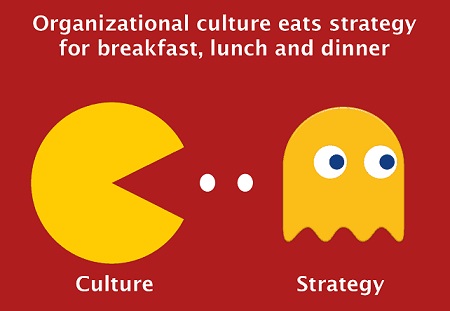
CU Blog - War on 'Terrorism' - Photo 3

How we receive, perceive and retrieve security mitigations indicates the impact of our societal defects. Without firing one shot, the Caribbean is able to help or hurt the War Against ‘Terrorism’ with our societal defects. This is commentary 4 of 4 from the movement behind the Go Lean book on the subject of Caribbean societal defects. So how do we move our communities from the deficient-defective status quo to our targeted destination: “a better (safer) place to live, work and play”? By waging war on our defects. All of these commentaries detail that effort, for the following defects:

  1. Waging a Successful War on Orthodoxy
  2. Waging a Successful War on Stupidity
  3. Waging a Successful War on Rent
  4. Waging a Successful War on ‘Terrorism’

These commentaries draw reference to the Go Lean book, as it details the quest to reform and transform the Caribbean; it features a how-to guide and roadmap for elevating the region’s societal engines for (1.) economics, (2.) security and (3.) governance. Strategies, tactics and implementations for the War Against Terrorism have relevance for all these three spheres of society.

The book Go Lean … Caribbean serves as a roadmap for the introduction and implementation of the Caribbean Union Trade Federation (CU) to elevate the region’s societal engines of economics, security and governance. With a brand name like Trade Federation, obviously the primary focus is on economics, but the book asserts (Page 23) that peace, security and public safety must be tantamount to economic prosperity; that bad things will happen to good people and so the community needs to be prepared to contend with the risks that can imperil the homeland. The Go Lean book therefore serves as a roadmap for full Caribbean integration, with the motivation for Greater Good. In all, the Go Lean roadmap has these 3 prime directives:

  • Optimization of the economic engines in order to grow the regional economy and create new jobs.
  • Establishment of a homeland security apparatus to ensure public safety and to protect the resultant economic engines of the Caribbean region.
  • Improvement of Caribbean governance to support these engines.

The priority on homeland security was pronounced early in the Go Lean book with the opening Declaration of Interdependence (Page 12) that claims:

x. Whereas we are surrounded and allied to nations of larger proportions in land mass, populations, and treasuries, elements in their societies may have ill-intent in their pursuits, at the expense of the safety and security of our citizens. We must therefore appoint “new guards” to ensure our public safety and threats against our society, both domestic and foreign. The Federation must employ the latest advances and best practices … to assuage continuous threats against public safety.

xi. Whereas all men are entitled to the benefits of good governance in a free society, “new guards” must be enacted to dissuade the emergence of incompetence, corruption, nepotism and cronyism at the peril of the people’s best interest. The Federation must guarantee the executions of a social contract between government and the governed.

xii. Whereas the legacy in recent times in individual states may be that of ineffectual governance with no redress to higher authority, the accedence of this Federation will ensure accountability and escalation of the human and civil rights of the people for good governance, justice assurances, due process and the rule of law. As such, any threats of a “failed state” status for any member state must enact emergency measures on behalf of the Federation to protect the human, civil and property rights of the citizens, residents, allies, trading partners, and visitors of the affected member state and the Federation as a whole.

xvi. Whereas security of our homeland is inextricably linked to prosperity of the homeland, the economic and security interest of the region needs to be aligned under the same governance. Since economic crimes, including … forms of terrorism, can imperil the functioning of the wheels of commerce for all the citizenry, the accedence of this Federation must equip the security apparatus with the tools and techniques for predictive and proactive interdictions.

The Caribbean appointing these “new guards” will include many strategies, tactics and implementations considered “best-practices” in the War Against Terror.

The CU would be established by the sovereign powers of the 30 Caribbean member-states to empower the region with economic, security and governing tools and techniques. This includes a Security / Defense Pact (Armed Forces) with a fully-empowered Naval Force and Expeditionary Marine (ground) Forces. The Security Pact is about action, not attitude; but the right societal attitude (weeding out societal defects) is important, critical even.

Societal defects are destructive and self-defeating for the interior of our communities. But in the case of security gaps, far-away communities can be imperiled as well. The War on Terrorism is fought by many stakeholders on many different ‘battlefields’.  Consider airport screening; once every passenger has been screened for weapons and explosives, the plane is considered “sanitized” and can then enter any airspace with a presumed label of “safe-and-secured”. Poor security executions in the Caribbean can therefore impact the public safety of far-away places. So our defects can result in bad cause-and-effect for other (innocent) people.

This is the attitude – community ethos – that we must adopt, that our battles in the War Against Terror can help/hurt the rest of the world. “Community Ethos” is defined here as:

“… the fundamental character or spirit of a culture; the underlying sentiment that informs the beliefs, customs, or practices of a group or society; dominant assumptions of a people or period practices of a group or society; dominant assumptions of a people or period”.

The Go Lean book details the series of community ethos, strategies, tactics, implementations and advocacies to wage a successful ‘War on Terrorism’; this includes proactive and reactive public safety/security measures in the Caribbean region:

Community Ethos – Economic Systems Influence Individual Choices Page 21
Community Ethos – Consequences of Choices Lie in Future Page 21
Community Ethos – Privacy –vs- Public Protection Page 23
Community Ethos – Intelligence Gathering Page 23
Community Ethos – Whistleblower Protection Page 23
Community Ethos – “Crap” Happens Page 23
Community Ethos – Cooperatives Page 25
Community Ethos – Ways to Manage Reconciliations Page 34
Community Ethos – Ways to Improve Sharing Page 35
Community Ethos – Ways to Promote Happiness Page 36
Community Ethos – Ways to Impact the Greater Good Page 37
Strategy – Vision – Confederating a non-sovereign permanent union Page 45
Tactical – Fostering a Technocracy Page 64
Tactical – Separation of Powers – Coast Guard & Naval Authorities Page 75
Tactical – Separation of Powers – Ground Militia Forces Page 75
Tactical – Separation of Powers – Emergency Management Agency Page 76
Tactical – Separation of Powers – CariPol: Marshals & Investigations Page 75
Implementation – Ways to Pay for Change Page 101
Implementation – Start-up Foreign Policy Initiatives Page 102
Implementation – Start-up Security Initiatives Page 103
Implementation – Ways to Foster International Aid Page 115
Planning – 10 Big Ideas – #3: Consolidated Homeland Security Pact Page 130
Planning – Ways to Make the Caribbean Better Page 131
Planning – Ways to Improve Failed-State Indices – Escalation Role Page 134
Planning – Lessons from the American West – Needed Law & Order Page 142
Planning – Lessons from Egypt – Law & Order for Tourism Page 143
Advocacy – Ways to Grow the Economy – Quick Disaster Recovery Page 151
Advocacy – Ways to Improve Governance Page 168
Advocacy – Ways to Better Manage the Social Contract Page 170
Advocacy – Ways to Impact Justice – Policing/Supporting the Police Page 177
Advocacy – Ways to Reduce Crime – Regional Security Intelligence Page 178
Advocacy – Ways to Improve Homeland Security Page 180
Advocacy – Ways to Mitigate Terrorism Page 181
Advocacy – Ways to Improve Intelligence Gathering & Analysis Page 182
Advocacy – Reforms for Banking Regulations – Offshore Banking Reforms Page 199
Advocacy – Ways to Impact Wall Street – Downplay Lawless Impressions Page 200
Advocacy – Ways to Impact Main Street Page 201
Advocacy – Ways to Protect Human Rights – Watchful World Page 220
Appendix ZD – Offshore Tax & Financial Services Industry Developments Page 321
Appendix ZE – Offshore Tax & Financial Services Industry – Bahamas Example Page 322

Other subjects related to security and governing empowerments for the region’s defense have been blogged in other Go Lean…Caribbean commentaries, as sampled here:

https://goleancaribbean.com/blog/?p=9974 Lessons Learned from Pearl Harbor
https://goleancaribbean.com/blog/?p=9072 Securing the Homeland – On the Ground
https://goleancaribbean.com/blog/?p=9070 Securing the Homeland – From the Seas
https://goleancaribbean.com/blog/?p=9068 Securing the Homeland – From the Air
https://goleancaribbean.com/blog/?p=7119 Security Role Model for the Caribbean: African Standby Force
https://goleancaribbean.com/blog/?p=6720 A Lesson in History – During the Civil War: Fighting for Our Own Cause
https://goleancaribbean.com/blog/?p=6103 Sum of All Fears – ‘On Guard’ Against Deadly Threats
https://goleancaribbean.com/blog/?p=5183 A Lesson in History – Cinco De Mayo and Mexico’s Security Lapses
https://goleancaribbean.com/blog/?p=5002 Managing a ‘Clear and Present Danger’
https://goleancaribbean.com/blog/?p=4809 Americans arrest 2 would-be terrorists – a Clear and Present Danger
https://goleancaribbean.com/blog/?p=4360 Dreading the ‘Caribbean  Basin Security Initiative’
https://goleancaribbean.com/blog/?p=3881 Intelligence Agencies to Up Cyber Security Cooperation
https://goleancaribbean.com/blog/?p=1965 America’s Navy – 100 Percent – Model for Caribbean
https://goleancaribbean.com/blog/?p=1554 Status of Forces Agreement = Security Pact
https://goleancaribbean.com/blog/?p=1076 Trinidad Muslims travel to Venezuela for Jihadist training
https://goleancaribbean.com/blog/?p=809 Muslim officials condemn abductions of Nigerian girls
https://goleancaribbean.com/blog/?p=535 Remembering and learning from Boston
https://goleancaribbean.com/blog/?p=273 10 Things We Want from the US – #4: Pax Americana

An effort to provide better security solutions in the Caribbean should be welcomed here.

The new Caribbean must foster good security habits … and ‘War against Bad Ones’ – societal defects. This is how to secure our homeland: monitor for threats, gather intelligence, investigate incidences, police communities, arm a defense apparatus and prepare for the worst.

This level of response is new … for our region; we normally sit back and let someone else do the heavy-lifting for security. But it is time now to grow up and secure our own communities and our economic engines.

All Caribbean stakeholders are therefore urged to lean-in to this roadmap, to this conceivable, believable and achievable plan to make the Caribbean a better place to live, work and play. 🙂

Download the book Go Lean … Caribbean – now!

———–

Appendix A – Statement By The Bahamas Ministry of Foreign Affairs

On Reported ‘Terrorism Threat From The Bahamas’

28 January 2017

For Immediate Release

Today on MSNBC Cable News, on a show hosted by Joy-Ann Reid, a guest Malcolm Nance, a reported expert in security and terrorism, made the following statement:

” We [ the United States] have not banned terrorists from Brazil. ISIS has dozens of members from Brazil or Trinidad or The Bahamas who have more terrorists members than any of those other countries.”

In today’s atmosphere, the video clip is being spread around at a clipped pace.

Upon hearing the report, the Minister of Foreign Affairs Fred Mitchell spoke with the Prime Minister, the National Security Minister, the Head of SIB in the Royal Bahamas Police Force. all of whom are responsible for the country’s national security and they have no knowledge of any such terrorists or group of terrorists or any individual terrorist that is related to ISIS or any other terrorist organization in The Bahamas.

In speaking with ZNS TV news this evening, the Minister said the report is rubbish.

He indicated that the U S Mission in the United States has been asked to reach out to US counterparts, to MSNBC and the Mr. Nance himself to find out what the source of the allegation is. The Mission has been asked to ask for a retraction forthwith.

Source: Retrieved January 29, 2017 from: http://www.thebahamasweekly.com/publish/bis-news-updates/Bahamas_Gov_t_responds_to_MSNBC_regarding_reported_terrorism_threat_from_The_Bahamas52287.shtml

———–

Appendix B – USA Patriot Act

The USA PATRIOT Act is an Act of Congress that was signed into law by President George W. Bush on October 26, 2001.[1] With its ten-letter abbreviation (USA PATRIOT) expanded, the full title is “Uniting and Strengthening America by Providing Appropriate Tools Required to Intercept and Obstruct Terrorism Act of 2001”.[2]

On May 26, 2011, President Barack Obama signed the PATRIOT Sunsets Extension Act of 2011, a four-year extension of three key provisions in the USA PATRIOT Act:[3] roving wiretapssearches of business records, and conducting surveillance of “lone wolves”—individuals suspected of terrorist-related activities not linked to terrorist groups.[4]

Following a lack of Congressional approval, parts of the Patriot Act expired on June 1, 2015.[5] With the passage of the USA Freedom Act on June 2, 2015, the expired parts were restored and renewed through 2019.[6] However, Section 215 of the law was amended to stop the National Security Agency (NSA) from continuing its mass phone data collection program.[6] Instead, phone companies will retain the data and the NSA can obtain information about targeted individuals with permission from a federal court.[6]

From broad concern felt among Americans from both the September 11 attacks and the 2001 anthrax attacks, Congress rushed to pass legislation to strengthen security controls.

Acts amended Electronic Communications Privacy Act
Computer Fraud and Abuse Act
Foreign Intelligence Surveillance Act
Family Educational Rights and Privacy Act
Money Laundering Control Act
Bank Secrecy Act
Right to Financial Privacy Act
Fair Credit Reporting Act
Immigration and Nationality Act of 1952
Victims of Crime Act of 1984
Telemarketing and Consumer Fraud and Abuse Prevention Act

Title III: Anti-money-laundering to prevent terrorism

Title III of the Act, titled “International Money Laundering Abatement and Financial Anti-Terrorism Act of 2001,” is intended to facilitate the prevention, detection and prosecution of international money laundering and the financing of terrorism. It primarily amends portions of the Money Laundering Control Act of 1986 (MLCA) and the Bank Secrecy Act of 1970 (BSA). It was divided into three subtitles, with the first dealing primarily with strengthening banking rules against money laundering, especially on the international stage. The second attempts to improve communication between law enforcement agencies and financial institutions, as well as expanding record keeping and reporting requirements. The third subtitle deals with currency smuggling and counterfeiting, including quadrupling the maximum penalty for counterfeiting foreign currency.

Restrictions were placed on accounts and foreign banks. It prohibited shell banks that are not an affiliate of a bank that has a physical presence in the U.S. or that are not subject to supervision by a banking authority in a non-U.S. country. It also prohibits or restricts the use of certain accounts held at financial institutions.[47] Financial institutions must now undertake steps to identify the owners of any privately owned bank outside the U.S. who have a correspondent account with them, along with the interests of each of the owners in the bank. It is expected that additional scrutiny will be applied by the U.S. institution to such banks to make sure they are not engaging in money laundering. Banks must identify all the nominal and beneficial owners of any private bank account opened and maintained in the U.S. by non-U.S. citizens. There is also an expectation that they must undertake enhanced scrutiny of the account if it is owned by, or is being maintained on behalf of, any senior political figure where there is reasonable suspicion of corruption.[48]Any deposits made from within the U.S. into foreign banks are now deemed to have been deposited into any interbank account the foreign bank may have in the U.S. Thus any restraining order, seizure warrant or arrest warrant may be made against the funds in the interbank account held at a U.S. financial institution, up to the amount deposited in the account at the foreign bank.[49]

Source: Retrieved January 29, 2017 from: https://en.wikipedia.org/wiki/Patriot_Act

———–

Appendix C – Nuclear Emergency Support Team

The Nuclear Emergency Support Team (NEST) (formerly known as the Nuclear Emergency Search Team) is a team of scientists, technicians, and engineers operating under the United States Department of Energy‘s National Nuclear Security Administration (NNSA). Their task is to be “prepared to respond immediately to any type of radiological accident or incident anywhere in the world”.[1]

History

Concerns over scenarios involving nuclear accidents or incidents on American soil are not recent. As early as the 1960s, officials were concerned that a nuclear weapon might be smuggled into the country, or that an airplane carrying a nuclear weapon might crash and contaminate surrounding areas.[2] In late 1974, President Gerald Ford was warned that the FBI received a communication from an extortionist wanting $200,000 (equivalent to $971,000 in 2016) after claiming that a nuclear weapon had been placed somewhere in Boston. A team of experts rushed in from the United States Atomic Energy Commission but their radiation detection gear arrived at a different airport. Federal officials then rented a fleet of vans to carry concealed radiation detectors around the city but forgot to bring the tools they needed to install the equipment. The incident was later found to be a hoax. However, the government’s response made clear the need for an agency capable of effectively responding to such threats in the future. Later that year, President Ford created the Nuclear Emergency Search Team (NEST), which under the Atomic Energy Act is tasked with investigating the “illegal use of nuclear materials within the United States, including terrorist threats involving the use of special nuclear materials”.[1]

One of its first responses was in Spokane, Washington on November 23, 1976. An unknown group called the “Days of Omega” had mailed an extortion threat claiming they would explode radioactive containers of water all over the city unless paid $500,000 (equivalent to $2,104,000 in 2016). Presumably, the radioactive containers had been stolen from the Hanford Site, less than 150 miles (240 km) to the southwest. Immediately, NEST flew in a support aircraft from Las Vegas and began searching for non-natural radiation, but found nothing. No one ever responded, despite the elaborate instructions given, or made any attempt to claim the (fake) money, which was kept under surveillance. Within days, the incident was deemed a hoax, though the case was never solved. To avoid panic, the public was not notified until a few years later.[3][4]

Today

According to the Bulletin of the Atomic Scientists, NEST has the ability to deploy as many as 600 people to the scene of a radiological incident, though deployments do not usually exceed 45 people.[5] NEST has a variety of equipment (weighing up to 150 tons) and has the support of a small fleet of aircraft which includes four helicopters and three airplanes, all outfitted with detection equipment.

When an airborne response to an incident is underway, the Federal Aviation Administration grants NEST flights a higher control priority within the United States National Airspace System, designated with the callsign “FLYNET”.

Since 1975, NEST has been warned of 125 nuclear terror threats and has responded to 30. All have been false alarms.

Source: Retrieved January 29, 2017 from: https://en.wikipedia.org/wiki/Nuclear_Emergency_Support_Team


Share this post:
, , ,
[Top]

Waging a Successful War on Rent

Go Lean Commentary

‘Rent’ is a 4-letter word …

… in the field of Economics.

This is not referring to the positive action of paying for the monthly expense for a house or an apartment, but rather the bad practice of extracting uncompensated value from others without making any contribution – getting something for nothing.

With such a simple definition, the assumption would be that ‘rent’ is unwelcomed and marginalized in society. And yet, for the Caribbean, this bad practice proliferates.

“Say it ain’t so…”

Unfortunately, there is plenty “rent-seeking” in the Caribbean. If we want to reform and transform our society – we do – there is a need to “Wage War” against this bad practice of rent-seeking.

CU Blog - War on Rent - Photo 1

The movement behind the book Go Lean … Caribbean describes rent-seeking as a societal defect … in the Caribbean, and most other societies. It is destructive and self-defeating. In a previous blog-commentary, this defective practice was fully dissected, detailed and dismissed as behavior we want to weed out of Caribbean society.

How?

First we start by recognizing that there is a problem:

“There is rent-seeking in our communities”.

Now we can arm ourselves for battle in this War Against Rent. This is an important first step in reforming and transforming our regional society. This is commentary 3 of 4 from the movement behind the Go Lean book on the subject of Caribbean societal defects. So how do we move our communities from the deficient-defective status quo to our targeted destination: “a better place to live, work and play”? By waging war on our defects. All of these commentaries detail that effort, for the following defects:

  1. Waging a Successful War on Orthodoxy
  2. Waging a Successful War on Stupidity
  3. Waging a Successful War on Rent
  4. Waging a Successful War on ‘Terrorism’

These commentaries draw reference to the Go Lean book, as it details the quest to transform the Caribbean; it features a how-to guide and roadmap for elevating the region’s societal engines for economics, security and governance. Rent-seeking can, and have, penetrated all these three spheres of society.

In the previous commentary on ‘Stupidity’, it was established that when stupid policies-practices persist in a society, it is usually because “someone is profiting” in the shadows. Rent-seeking on the other hand, tends to be “out in the open”, i.e. guaranteed gratuities at a restaurant/bar. Both stupidity and rent-seeking are therefore tied to Crony-Capitalism: the abuse of public funds for private gain.

Consider these details of rent-seeking in the economics, security and governing societal engines:

Economics
Gratuity              . 18 percent guaranteed
Sharing Economy AirBnB and Uber examples
Security
Bribery/Graff   . An obvious crime
Traffic Cameras Electronic surveillance used to auto-generate traffic tickets
Governance
Citizenship For Sale $100,000 fees for … doing nothing – See VIDEO in the Appendix.
Disclosures           . Follow the money‘; many politicians enter public service with modest incomes, but become wealthy while in office, despite only moderate government paychecks.
Fuel Taxes             . Dissuade Green Alternatives and e-Cars. “Invention, the Mother of Necessity” is discouraged because the government wants it’s guaranteed revenues.

The movement behind the Go Lean book seeks to reform and transform the economic engines of the Caribbean by being technocratic in applying best practices from the field of Economics. Rent-seeking is distinguished in economic theory from profit-seeking, in which entities seek to extract value by engaging in mutually beneficial transactions.[6] Profit-seeking in this sense is the creation of wealth, while rent-seeking is the use of social institutions such as the power of government to redistribute wealth among different groups without creating new wealth.[7] For the Caribbean elevation quest, we see the defects; we see the destructive rent-seeking practices; and we now know how to supplant them. This intent is declared at the outset of the book with this Declaration of Interdependence (Page 10) for the region to work in unison to remediate the broken systems of commerce:

Preamble: As the colonial history of our region was initiated to create economic expansion opportunities for our previous imperial masters, the structures of government instituted in their wake have not fostered the best systems for prosperity of the indigenous people. Despite this past, we thrust our energies only to the future, in adapting the best practices and successes of the societies of these previous imperial masters and recognizing the positive spirit of their intent and vow to learn from their past accomplishments and mistakes so as to optimize the opportunities for our own citizenry to create a more perfect bond of union.

So how exactly do we supplant rent-seeking practices in the Caribbean? Foster best practices for economics and governance.

There is an implied Social Contract in every expression of governance everywhere, where “citizens surrender some of their freedoms and submit to the authority of the State in exchange for protection of remaining rights” (Page 170). In modern societies, there is a role for governments and a role for commercial entities. This was the assertion of the father of modern economists, Adam Smith, that the “division of functions” between governments and commerce should be carefully regulated to keep free enterprise operating “freely”; governments should limit their deliveries in commerce. The Go Lean book relates this (Page 67) as follows:

CU Blog - War on Rent - Photo 2Adam Smith, the 18th century Scottish political economics pioneer, is best known for his classic work: An Inquiry into the Nature and Causes of the Wealth of Nations (1776), usually abbreviated as The Wealth of Nations. This book is considered the first modern work of economics, and he is thusly cited as the “father of modern economics”, even today, and among the most influential thinkers in the field of economics. Through reflection over the economics at the beginning of the Industrial Revolution the [Wealth of Nations] book touches upon broad topics as the division of labor, productivity and free markets.

Smith attacked most forms of government interference in the economic process, including tariffs, arguing that these create inefficiency and high prices in the long run. It is believed that this theory, laissez-faire economic philosophy, influenced government legislation in later years.

Smith advocated a government that was active in sectors other than the economy. He advocated public education for poor adults, a judiciary, and a standing army—institutional systems not directly profitable for private industries.

So according to a scholar in economics from 240 years ago, the cause of Caribbean rent-seeking is governmental interference and the solution is a governmental “pull back”.

This is how to wage war against ‘rent’.

Look back at the foregoing list of Caribbean rent-seeking activities; and consider here how we can mitigate:

  • How much tips/gratuity should waiters/waitresses receive when they serve tables? The experience is that they always receive more that government-mandated 18% when the service is good. The incentive to provide good service is lost when the gratuity is guaranteed by government policy.
  • In other markets, the “Sharing Economy” has spurred the economy in creative ways: 1. AirBnB has created opportunities for festivals to absorb bigger crowds than hotel capacity; 2. the presence of Uber has forced taxicabs to become more efficient with smartphone apps and have created prospects for any restaurant to now offer delivery.
  • Fuel tax dependency in the Caribbean keeps electricity costs high; the average is US$0.35/kWh, one of the highest in the world. Green Energy alternatives have been avoided, even discouraged, despite an abundance of sun and wind resources; with these mitigations, the cost for electricity can be lowered to US$0.088/kWh.
  • Traffic Light Cameras will be a new deployment in the region. When these are implemented, they must be regulated at the government level. The government should never be the service provider but rather the escalation authority. It would be rent-seeking to just sit back and collect traffic fines … uncontested. Everything at a traffic light is not always “black-and-white or red-and-green”; there are scenarios with breakdowns and pedestrians that must be accounted with allowances.
  • Passports For Sale – This is indefensible; to tarnish the Caribbean Image for “30 Pieces of Silver”, sorry, make that $100,000. See VIDEO in the Appendix below.
  • CU Blog - War on Rent - Photo 3

The Go Lean book serves as a roadmap for the introduction and implementation of the Caribbean Union Trade Federation (CU). The CU is designed to be a technocratic intergovernmental entity that shepherds the Caribbean region. The goal is to reboot and optimize the region’s economic, security and governing engines. Optimization would entail weeding out any rent-seeking practice.

As previously detailed:

“Rent-seeking can prove costly to economic growth; high rent-seeking activity makes more rent-seeking attractive because of the natural and growing returns that one sees as a result of rent-seeking. Thus organizations value rent-seeking over productivity. In this case there are very high levels of rent-seeking with very low levels of output. Rent-seeking may grow at the cost of economic growth because rent-seeking by the state can easily hurt innovation. Ultimately, public rent-seeking hurts the economy the most because innovation drives economic growth.”[19]

“Government agents may initiate rent-seeking – such agents soliciting bribes or other favors from the individuals or firms that stand to gain from having special economic privileges, which opens up the possibility of exploitation of the consumer.[20] It has been shown that rent-seeking by a bureaucracy can push up the cost of production of public goods.[21] It has also been shown that rent-seeking by tax officials may cause loss in revenue to the public [treasury].”[8]

The Go Lean/CU roadmap employs some counter-tactics; consider the “Separation-of-Powers between CU federal agencies and Caribbean member-state governments”; so the limitations of national laws in a member-state would not override the CU. The CU‘s technocratic practices would directly apply to the installation of Exclusive Economic Zones (EEZ) and Self-Governing Entities (SGE); these operate in controlled bordered territories like campuses, industrial parks, research labs and industrial plants. Lastly, there is the power of “peer pressure” to reform the member-states. When progress is made by one Caribbean state, this would incline the others to follow suit. In total, the Go Lean/CU roadmap will employ strategies, tactics and implementations to impact its prime directives; identified with the following 3 statements:

  • Optimization of the economic engines in order to grow the regional economy to $800 Billion & create 2.2 million new jobs.
  • Establishment of a security apparatus to ensure public safety assurances and protect the region’s economic engines.
  • Improvement of Caribbean governance to support these engines.

The Go Lean roadmap seeks to “Wage War against Rent” by optimizing the entire Caribbean economic eco-system with the adoption of best practices for commerce and governance. This vision is defined early in the book (Page 12) in the following pronouncements in the Declaration of Interdependence:

xi. Whereas all men are entitled to the benefits of good governance in a free society, “new guards” must be enacted to dissuade the emergence of incompetence, corruption, nepotism and cronyism at the peril of the people’s best interest. The Federation must guarantee the executions of a social contract between government and the governed.

xii. Whereas the legacy in recent times in individual states may be that of ineffectual governance with no redress to higher authority, the accedence of this Federation will ensure accountability and escalation of the human and civil rights of the people for good governance, justice assurances, due process and the rule of law. As such, any threats of a “failed state” status for any member state must enact emergency measures on behalf of the Federation to protect the human, civil and property rights of the citizens, residents, allies, trading partners, and visitors of the affected member state and the Federation as a whole.

In order to make the Caribbean a better place to live, work and play the people of the region must change their attitudes about elements of their society – elements that are in place and elements missing. This is referred to as “Community Ethos”, defined as:

“the fundamental character or spirit of a culture; the underlying sentiment that informs the beliefs, customs, or practices of a group or society; dominant assumptions of a people or period practices of a group or society; dominant assumptions of a people or period”.

Rent-seeking is one of the negative community ethos – societal defects – that must be weeded out of the Caribbean. This ethos stems from an attitude of entitlement; to get something … for almost nothing. The Caribbean was colonized originally with this type of community ethos; a previous blog/commentary related this:

Most of the property and indigenous wealth of the Caribbean region is concentrated amongst the rich, powerful and yet small elite; an oligarchy. Many times these families received their property, corporate rights and/or monopolies by Royal Charter from the European monarchs of ancient times. These charters thus lingered in legacy from one generation to another … until …

The Go Lean book presents a roadmap on how to optimize the economic engines without continuing rent-seeking practices. The book stresses key community ethos, strategies, tactics, implementations and advocacies necessary to transform and turn-around the eco-systems of Caribbean society. These points are detailed in the book as follows:

Community Ethos – Deferred Gratification Page 21
Community Ethos – Return on Investments Page 24
Community Ethos – Ways to Impact the Future Page 26
Community Ethos – Ways to Impact the Greater Good Page 37
Strategy – Vision – Confederate all 30 member-states/ 4 languages into a Single Market Page 45
Tactical – Separation-of-Powers – CU Federal Government versus Member-State Governance Page 71
Implementation – Ways to Pay for Change – Award exploratory rights in exclusive territories Page 101
Implementation – Start-up Benefits from the Exclusive Economic Zone (EEZ) Page 104
Planning – 10 Big Ideas – #3: Proactive Anti-crime Measures Page 127
Planning – Ways to Improve Trade Page 128
Advocacy – Ways to Grow the Economy – Protect Property Rights Page 151
Advocacy – Ways to Create Jobs Page 152
Advocacy – Ways to Improve Governance Page 168
Advocacy – Ways to Better Manage the Social Contract Page 170
Advocacy – Ways to Impact Main Street Page 201

In considering this economic history, the CU/Go Lean roadmap distinguishes rent-seeking from profit-seeking:

  • Profit is Good!
  • Rent is Bad!

The new Caribbean must foster good economic habits … and abandon bad ones. This is how to grow the economy: create jobs; create businesses; retain people; foster new opportunities, learn from past mistakes and accomplishments.

This is new …

All Caribbean stakeholders are urged to lean-in to this roadmap/plan for change … and empowerment. This plan is conceivable, believable and achievable. 🙂

Download the book Go Lean … Caribbean – now!

———–

Appendix VIDEO – CBS 60 Minutes: Passports For Sale – http://www.cbsnews.com/videos/passports-for-sale/

Posted January 1, 2017 – Steve Kroft reports on how cash-starved countries [in the Caribbean] offer citizenship for a price, creating ways to ease travel for foreigners, including those running from the law.

Share this post:
, ,
[Top]