Category: Economics

Welcoming the Dreaded ‘Plutocracy’

Go Lean Commentary

 Plutocracy 2

It is not nice to be called a plutocracy, it’s almost considered a derogatory term – see Appendix below. It simply refers to the undue influence that a super-rich minority group can have on a nation.

The dread of plutocracies is not new, societies have contended with them since the dawn of civilization (Ancient Greece and Rome). Many countries in the Caribbean had de facto plutocracies during their colonial years (Montserrat, Belize and the Bahamas’s Bay Street Boys come to mind), just as a natural off-shoot from a mono-industrial economy (sugar, coffee, tobacco planters). Considering existing plutocracies today, like the City of London and Wall Street, we see that an appropriate strategy can allow a society to “bottle the plutocratic concept” and use it for good.

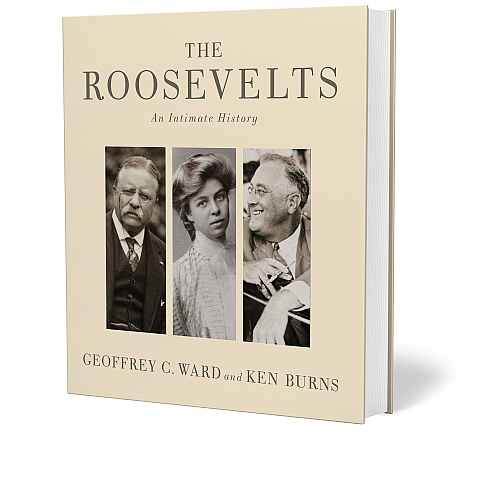
There is currency to this discussion. Award winning documentary film-maker Ken Burns is debuting his new production on The Roosevelts on PBS in the United States, starting tonight (Sunday September 14, 2014). When we consider the lives and advocacies of Theodore, Franklin and Eleanor Roosevelt, we see that there was a consistent urging to take on big business/special interest (plutocratic endeavors) to benefit the working-class man/woman of America. The following is the synopsis of the documentary:

Plutocracy 1The Roosevelts: An Intimate History chronicles the lives of Theodore, Franklin and Eleanor Roosevelt, three members of the most prominent and influential family in American politics. It is the first time in a major documentary television series that their individual stories have been interwoven into a single narrative.  This seven-part, fourteen hour film follows the Roosevelts for more than a century, from Theodore’s birth in 1858 to Eleanor’s death in 1962. Over the course of those years, Theodore would become the 26th President of the United States and his beloved niece, Eleanor, would marry his fifth cousin, Franklin, who became the 32nd President of the United States. Together, these three individuals not only redefined the relationship Americans had with their government and with each other, but also redefined the role of the United States within the wider world. The series encompasses the history the Roosevelts helped to shape: the creation of National Parks, the digging of the Panama Canal, the passage of innovative New Deal programs, the defeat of Hitler, and the postwar struggles for civil rights at home and human rights abroad. It is also an intimate human story about love, betrayal, family loyalty, personal courage and the conquest of fear.

A film by Ken Burns. Written by Geoffrey C. Ward. Produced by Paul Barnes, Pam Tubridy Baucom and Ken Burns.

The Roosevelts airs for a week starting September 14, 2014.
http://www.pbs.org/kenburns/films/the-roosevelts

The idea of “bottling” plutocratic institutions for the Greater Good is a “big idea” in the book Go Lean…Caribbean. How exactly is this envisioned? The answer provided in the book is that of Self-Governing Entities (SGE).

The Go Lean book delves into this approach of inviting the super-rich to establish industrial parks, corporate campuses and research parks in bordered territories in the Caribbean. These entities would be governed solely by the technocratic Caribbean Union Trade Federation (CU). The Go Lean book serves as a roadmap for the introduction and implementation of the CU and SGE’s.

The approach of the Go Lean roadmap is not to punish the super-rich for their success nor cower to any special interests group at the expense of the greater population.

Too bad this approach has not been employed in the US.

Many previous Go Lean blog/commentaries stressed the changes on American society (and by extension, other communities including the Caribbean) due to plutocratic abuses of corporations, super-rich individuals/institutions and special-interest groups, especially since 2008. The following sample applies:

https://goleancaribbean.com/blog/?p=2259 The Criminalization of American Business
https://goleancaribbean.com/blog/?p=2183 A Textbook Case of Price-gouging
https://goleancaribbean.com/blog/?p=2126 Where the Jobs Are – Computers Reshaping Global Job Market
https://goleancaribbean.com/blog/?p=1869 Senate bill targets companies that move overseas
https://goleancaribbean.com/blog/?p=926 Conservative heavyweights have solar industry in their sights
https://goleancaribbean.com/blog/?p=789 America’s War on the Caribbean
https://goleancaribbean.com/blog/?p=782 Open the Time Capsule: The Great Recession of 2008
https://goleancaribbean.com/blog/?p=546 Book Review: ‘The Divide’ – American Injustice in the Age of the Wealth Gap
https://goleancaribbean.com/blog/?p=273 10 Things We Want from the US and 10 Things We Don’t Want from the US: American Capital – Yes; Quantitative Easing – No.
https://goleancaribbean.com/blog/?p=242 The Erosion of the Middle Class

The charter of the CU, on the other hand, is to pursue the Greater Good for all of the Caribbean, to make the region a better place to live, work and play. This Go Lean roadmap aligns this charter with the following 3 prime directives:

  • Optimization of the economic engines in order to grow the regional economy to $800 Billion & create 2.2 million new jobs.
  • Establishment of a security apparatus to protect the resultant economic engines.
  • Improve Caribbean governance to support these engines.

The book describes the CU as a technocratic administration with 144 different missions to elevate the Caribbean homeland. The underlying goal to regulate the regional economy, and solicit (super-rich) investors, is stated early in the book with this pronouncement in the opening Declaration of Interdependence (Page 13):

xxiv. Whereas a free market economy can be induced and spurred for continuous progress, the Federation must install the controls to better manage aspects of the economy: jobs, inflation, savings rate, investments and other economic principles. Thereby attracting direct foreign investment because of the stability and vibrancy of our economy.

The Go Lean…Caribbean book challenges the reader, and the Caribbean as a whole, to create a structure that would be inviting to the super-rich and their resources. The SGE concept is a creative approach for that goal, but it is not so revolutionary – similar concepts already exists. Some examples of SGE-like structures are the city-states of Hong Kong, Liechtenstein (Europe), Vatican City (Italy), Panama City Zone (during the 20th Century, alluded to in the foregoing documentary synopsis) and many Free Trade Zones operating throughout the world.

The Go Lean/CU roadmap constitutes change for the Caribbean. The goal is to structure SGE’s at the federal level only, so as to incentivize the super-rich to consider this region. The plan calls for a Special Liaison Group within the CU Department of State just for the One Percent. Already this population enjoys the Caribbean for play, the plan now is to invite them to live and work in the region as well.

The Go Lean roadmap highlights the required community ethos, plus the execution of strategies, tactics, implementation and advocacies to construct the climate for the promotion of “plutocracies in a bottle”. The following is a sample of these specific details from the book:

Community Ethos – Economic Principles – People Respond to Incentives in Predictable Ways Page 21
Community Ethos – Economic Principles – Economic Systems Influence Individual Choices Page 21
Community Ethos – Economic Principles – Voluntary Trade Creates Wealth Page 21
Community Ethos – Economic Principles – Job Multipliers Page 22
Community Ethos – Security Principles – Privacy versus Public Protection Page 23
Community Ethos – Security Principles – Whistleblower Protection Page 23
Community Ethos – Security Principles – “Crap” Happens Page 23
Community Ethos – Governing Principles – Minority Equalization Page 24
Community Ethos – Governing Principles   – Lean Operations Page 24
Community Ethos – Governing Principles – Return on Investments Page 24
Community Ethos – Ways to Foster Genius Page 27
Community Ethos – Ways to Help Entrepreneurship Page 28
Community Ethos – Ways to Impact Research & Development Page 30
Community Ethos – Ways to Improve Negotiations Page 32
Community Ethos – Ways to Impact the Greater Good Page 37
Strategy – Vision – Confederation   of the 30 Caribbean Member-States into a   Single Market Page 45
Strategy – Mission – Invite empowering immigrants to help us move our society and economy Page 46
Strategy – Mission – Customers (Subjects/Citizens) – Foreign Direct Investors Page 48
Tactical – Confederating a Permanent Union Page 63
Tactical – Fostering a Technocracy Page 64
Tactical – How to Grow the Economy to $800 Billion – US Example of Economic Bubbles Page 69
Tactical –  Separation of Powers: – State Department – Special Interest Group Page 80
Tactical –  Separation of Powers: – State Department – Self Governing Entities Page 80
Implementation – Assemble Existing Regional Organizations into CU Page 96
Implementation – Ways to Pay for Change – SGE Licenses Page 101
Implementation – Steps to Implement Self-Governing Entities Page 105
Implementation – Ways to Deliver Page 109
Implementation – Trade Mission Objectives Page 117
Planning – 10 Big Ideas for the Caribbean Region – Self Governing Entities Page 127
Planning – Ways to Improve Trade – Trade Missions Page 131
Planning – Lessons Learned from 2008 Page 136
Advocacy – Ways to Grow the Economy Page 151
Advocacy – Ways to Create Jobs Page 152
Advocacy – Ways to Foster Empowering Immigration – SGE Labor Rules Page 174
Advocacy – Ways to Market Southern California Page 194
Advocacy – Ways to Impact Wall Street Page 200
Advocacy – Ways to Help the Middle Class Page 223
Advocacy – Ways to Impact the One Percent Page 224
Appendix – Job Multipliers Page 259
Appendix – List of One Percent Billionaires and Giving Pledge Signatories Page 292

Allowing a super-rich minority to wield unchecked influence could be destructive to a society – the rich would get richer while the poor gets poorer. But the structure of SGE’s would allow the participation of the super-rich class in a manner that would not foster conflict with democratic principles – of the people, by the people, for the people.

Imagine a parade of workers entering an industrial park in the morning, then returning to their individual communities in the evening. This is the exact model of the City of London, described in the Appendix below. This model creates direct jobs on the SGE campuses/parks and a multiplier-effect for indirect jobs in the neighboring communities.

“Keep your friends close and your enemies closer” – Old adage.

While the Go Lean book details these specifics, it also stands “on guard” as a Sentinel against possible abuses and threats to the economic/financial eco-systems. There it is: “plutocracy in a bottle”.

“Tame the market’s excesses” – Theodore Roosevelt.

According to the referenced documentary, the Presidency of Theodore Roosevelt made great gains in curtailing the market excesses of that day; (there was a Depression in the 1870’s and Recession in the 1890’s). The oil industry and railroads were dominated by a small number of individuals. This Roosevelt Administration presided over a divestiture of Standard Oil and the railroad barons.

In addition, the Presidency of Franklin Roosevelt also made great gains in curtailing the market excesses of Wall Street and the Big Banks, the dysfunctional source of the Great Depression (1929 – 1933). The New Deal initiatives balanced the scales of justice for rich versus poor Americans.

Is the US a plutocracy today? Not technically, but the trending has been leaning in that direction, especially with the downward pressures on the middle classes.

The purpose of this commentary is not to assess and fix the challenges of an America plutocracy trend, but rather to identify, qualify and propose arrangements for Direct Foreign Investments in the Caribbean without creating the dreaded plutocracy. The Go Lean book declares that the Caribbean can “count on the greedy to be greedy”, (Page 26).

Opportunities will abound in this new Caribbean … for the rich, the poor, and the middle classes. Everyone is urged to lean-in to this regional empowerment roadmap, to “go lean“. Everyone can contribute to make the Caribbean a better place to live, work and play. 🙂

Download the book Go Lean … Caribbean – now!

———————–

Appendix – Plutocracy Definition and Relevance

Retrieved from Wikipedia Online Encyclopedia; 09/14/2014: http://en.wikipedia.org/wiki/Plutocracy

Plutocracy defines a society or a system ruled and dominated by the small minority of the wealthiest citizens. The first known use of the term was in 1652.[1] Unlike systems such as democracy, capitalism, socialism or anarchism, plutocracy is not rooted in an established political philosophy. The concept of plutocracy may be advocated by the wealthy classes of a society in an indirect or surreptitious fashion, though the term itself is almost always used in a pejorative sense.[2]

The term plutocracy is generally used as a pejorative to describe or warn against an undesirable condition.[3][4] Throughout history, political thinkers such as Winston Churchill, 19th-century French sociologist and historian Alexis de Tocqueville, 19th-century Spanish monarchist Juan Donoso Cortés and today Noam Chomsky have condemned plutocrats for ignoring their social responsibilities, using their power to serve their own purposes and thereby increasing poverty and nurturing class conflict, corrupting societies with greed and hedonism.[5][6]

Examples

Examples of plutocracies include the Roman Empire, some city-states in Ancient Greece, the civilization of Carthage, the Italian city-states/merchant republics of Venice, Florence, Genoa, and pre-World War II Empire of Japan (the Zaibatsu).

One modern, formal example of what some critics have described as a plutocracy is the City of London.[7] The City (not the whole of modern London but the area of the ancient city, about 1 sq mile or 2.5 km2, which now mainly comprises the financial district) has a unique electoral system for its local administration. More than two-thirds of voters are not residents, but rather representatives of businesses and other bodies that occupy premises in the City, with votes distributed according to their numbers of employees. The principal justification for this arrangement is that most of the services provided by the Corporation are used by the businesses in the City. In fact about 450,000 non-residents constitute the city’s day-time population, far outnumbering the City’s 7,000 residents.[8]

Modern politics

Historically, wealthy individuals and organizations have exerted influence over the political arena. In the modern era, many democratic republics permit fundraising for politicians who frequently rely on such income for advertising their candidacy to the voting public.

Whether through individuals, corporations or advocacy groups, such donations are often believed to engender a cronyist or patronage system by which major contributors are rewarded on a quid pro quo basis. While campaign donations need not directly affect the legislative decisions of elected representatives, the natural expectation of donors is that their needs will be served by the person to whom they donated. If not, it is in their self-interest to fund a different candidate or political organization.

While quid pro quo agreements are generally illegal in most democracies, they are difficult to prove, short of a well-documented paper trail. A core basis of democracy, being a politician’s ability to freely advocate policies which benefit his or her constituents, also makes it difficult to prove that doing so might be a crime. Even the granting of appointed positions to a well-documented contributor may not transgress the law, particularly if the appointee appears to be suitably qualified for the post. Some systems even specifically provide for such patronage.

United States

Some modern historians, politicians and economists state that the United States was effectively plutocratic for at least part of the Gilded Age and Progressive Era periods between the end of the Civil War until the beginning of the Great Depression.[9][10][11][12][13][14] President Theodore Roosevelt became known as the “trust-buster” for his aggressive use of United States antitrust law, through which he managed to break up such major combinations as the largest railroad and Standard Oil, the largest oil company.[15]According to historian David Burton, “When it came to domestic political concerns, TR’s Bete Noire was the plutocracy.[16] In his autobiographical account of taking on monopolistic corporations as president, TR recounted:

’’ …we had come to the stage where for our people what was needed was a real democracy; and of all forms of tyranny the least attractive and the most vulgar is the tyranny of mere wealth, the tyranny of a plutocracy.’’[17]

The Sherman Antitrust Act had been enacted in 1890, with large industries reaching monopolistic or near-monopolistic levels of market concentration and financial capital increasingly integrating corporations, a handful of very wealthy heads of large corporations began to exert increasing influence over industry, public opinion and politics after the Civil War. Money, according to contemporary progressive and journalist Walter Weyl, was “the mortar of this edifice”, with ideological differences among politicians fading and the political realm becoming “a mere branch in a still larger, integrated business. The state, which through the party formally sold favors to the large corporations, became one of their departments.”[18]

In his book The Conscience of a Liberal, in a section entitled The Politics of Plutocracy, economist Paul Krugman says plutocracy took hold because of three factors: at that time, the poorest quarter of American residents (African-Americans and non-naturalized immigrants) were ineligible to vote, the wealthy funded the campaigns of politicians they preferred, and vote buying was “feasible, easy and widespread”, as were other forms of electoral fraud such as ballot-box stuffing and intimidation of the other party’s voters.[19]

Post World War II

In modern times, the term is sometimes used pejoratively to refer to societies rooted in state-corporate capitalism or which prioritize the accumulation of wealth over other interests. According to Kevin Phillips, author and political strategist to U.S. President Richard Nixon, the United States is a plutocracy in which there is a “fusion of money and government.”[20]

Chrystia Freeland, author of Plutocrats: The Rise of the New Global Super-Rich and the Fall of Everyone Else,[21] says that the present trend towards plutocracy occurs – and is self-justified – because the rich feel “[their] own personal self-interest is in the interests of everybody else.”[22][23]

Some researchers have said the US may be drifting towards a form of oligarchy, as individual citizens have less impact than economic elites and organized interest groups upon public policy.[24] A study conducted by political scientists Martin Gilens (Princeton University) and Benjamin Page (Northwestern University), which was released in April 2014,[25] stated that their “analyses suggest that majorities of the American public actually have little influence over the policies our government adopts.” that Gilens and Page do not characterize the US as an “oligarchy” or “plutocracy” per se; however, they do apply the concept of “civil oligarchy” as used by Jeffrey A. Winters[26] with respect to the US.

Most recently, Jeffrey Winters has posited a comparative theory of “Oligarchy,” in which the wealthiest citizens – even in a “civil oligarchy” like the United   States – dominate policy concerning crucial issues of wealth- and income-protection.[27]

On August 13, 2014, on Al Jazeera, in response to questions related to US responses to the Israeli/Gaza situation, professor Noam Chomsky of MIT effectively repeated the quote on American public influence over policies. When questioned further, he suggested that significant amounts of research indicated that the US was in effect a plutocracy.

As a propaganda term

In the political jargon and propaganda of Fascist Italy, Nazi Germany and the Communist International, western democratic states were referred to as plutocracies, with the implication being that a small number of extremely wealthy individuals were controlling the countries and holding them to ransom.[28][29] Plutocracy replaced democracy and capitalism as the principal fascist term for the United States and Great Britain during the Second World War.[29] For the Nazis, the term was often a code word for “the Jews”.[29]

Cited References

  1. “Plutocracy”. Merriam Webster. Retrieved 13 October 2012.
  2. “The study of attitudes is reasonably easy […] it’s concluded that for roughly 70% of the population – the lower 70% on the wealth/income scale – they have no influence on policy whatsoever. They’re effectively disenfranchised. As you move up the wealth/income ladder, you get a little bit more influence on policy. When you get to the top, which is maybe a tenth of one percent, people essentially get what they want, i.e. they determine the policy. So the proper term for that is not democracy; it’s plutocracy.” Extract from the transcript of a speech delivered by Noam Chomsky in Bonn, Germany, at DW Global Media Forum, 15 August 2013.
  3. Fiske, Edward B.; Mallison, Jane; Hatcher, David (2009). Fiske 250 words every high school freshman needs to know. Naperville, Ill.: Sourcebooks. p. 250. ISBN 1402218400.
  4. Coates, ed. by Colin M. (2006). Majesty in Canada: essays on the role of royalty. Toronto: Dundurn. p. 119. ISBN 1550025864.
  5. Conservative thinkers: from John Adams to Winston Churchill. New Brunswick, New Jersey: Transaction Publishers. 2006. pp. 19–68. ISBN 1412805260.
  6. Toupin, Alexis de Tocqueville; edited by Roger Boesche; translated by James; Boesche, Roger (1985). Selected letters on politics and society. Berkeley: University of California Press. pp. 197–198. ISBN 0520057511.
  7. The medieval, unaccountable Corporation of London is ripe for protest, The Guardian, retrieved 01/11/2011 from: http://www.guardian.co.uk/commentisfree/2011/oct/31/corporation-london-city-medieval.
  8. René Lavanchy (12 February 2009). “Labour runs in City of London poll against ‘get-rich’ bankers”. Tribune. Retrieved 14 February 2009 from: http://www.tribunemagazine.org/2009/02/labour-runs-in-city-of-london-poll-against-‘get-rich’-bankers/.
  9. Pettigrew, Richard Franklin (2010). Triumphant Plutocracy: The Story of American Public Life from 1870 to 1920. Nabu Press. ISBN 1146542747.
  10. Calvin Reed, John (1903). The New Plutocracy. Kessinger Publishing, LLC (2010 reprint). ISBN 1120909155.
  11. Brinkmeyer, Robert H. (2009). The fourth ghost: white Southern writers and European fascism, 1930-1950. Baton Rouge: Louisiana State University Press. p. 331. ISBN 0807133833.
  12. Allitt, Patrick (2009). The conservatives: ideas and personalities throughout American history. New Haven: Yale University Press. p. 143. ISBN 0300118945.
  13. Ryan, foreword by Vincent P. De Santis; edited by Leonard Schlup, James G. (2003). Historical dictionary of the Gilded Age. Armonk, N.Y.: M.E. Sharpe. p. 145. ISBN 0765603314.
  14. Conservative thinkers: from John Adams to Winston Churchill. New Brunswick, New Jersey: Transaction Publishers. 2006. p. 103. ISBN 1412805260.
  15. Schweikart, Larry (2009). American Entrepreneur: The Fascinating Stories of the People Who Defined Business in the United   States. AMACOM Div American Mgmt Assn.
  16. David Henry Burton: Theodore Rooselvelt, American Politician, An Assessment, Fairleigh Dickinson Univ Press, 1997
  17. Theodore Roosevelt: Theodore Roosevelt: an autobiography. New York, Macmillan, 1913
  18. Bowman, Scott R. (1996). The modern corporation and American political thought: law, power, and ideology. University Park, Pa.: Pennsylvania State University Press. pp. 92–103. ISBN 0271014733.
  19. Krugman, Paul (2009). The conscience of a liberal ([Pbk. ed.] ed.). New York: Norton. pp. 21–26. ISBN 0393333132.
  20. Transcript. Bill Moyers Interviews Kevin Phillips. NOW with Bill Moyers 4.09.04 | PBS. Retrieved from http://www.pbs.org/now/transcript/transcript_phillips.html.
  21. Freeland, Chrystia (2012). Plutocrats: the rise of the new global super-rich and the fall of everyone else. New York: Penguin. ISBN 9781594204098. OCLC 780480424.
  22. National Public Radio (October 15, 2012) “A Startling Gap Between Us And Them In ‘Plutocrats'”. Retrieved from: http://www.npr.org/2012/10/15/162799512/a-startling-gap-between-us-and-them-in-plutocrats
  23. See also the Chrystia Freeland interview for the Moyers Book Club (October12, 2012) Moyers & Company Full Show: Plutocracy Rising. Retrieved from: http://billmoyers.com/episode/full-show-plutocracy-rising/
  24. Piketty, Thomas (2014). Capital in the Twenty-First Century. Belknap Press. ISBN 067443000X p. 514: “the risk of a drift towards oligarchy is real and gives little reason for optimism about where the United States is headed.”
  25. Gilens & Page (2014) Testing Theories of American Politics: Elites, Interest Groups, and Average Citizens, Perspectives on Politics,PrincetonUniversity. Retrieved 18 April 2014.
  26. Winters, Jeffrey A. “Oligarchy” CambridgeUniversity Press, 2011, p. 208-254
  27. Gilens & Page (2014) p. 6
  28. http://www.marxists.org/history/etol/newspape/fi/vol02/no02/editors2.htm
  29. Blamires, Cyprian; Jackson, Paul (2006). World fascism: a historical encyclopedia, Vol. 1. ABC-CLIO. p. 522. ISBN 978-1-57607-940-9.

 

Share this post:
, , ,

‘Raul Castro reforms not enough’, Cuba’s bishops say

Go Lean Commentary

s bishops say - Photo 1

“Too little, too late.”

This seems to be the verdict of the observers in the foregoing news article on the subject of Cuba’s societal reforms. As a summary, Raul Castro serves as the President of Cuba, succeeding his brother, Fidel. The old economic models instituted by Fidel no longer work – the world has changed – so Raul has applied some reforms to alleviate the Failed-State status.

It is easy to criticize Cuba from afar, from outside looking in, so instead this commentary features the criticism from within, from stakeholders with some leadership, albeit religious, among the Cuban people. The below article highlights the assessment of the Roman Catholic Bishops serving the country:

HAVANA (AFP) —Cuba’s Roman Catholic bishops pressed the Americas’ only Communist government to deepen economic reforms and hinted at a desire for political opening in a document obtained by AFP Wednesday.

In a country with a centrally planned economy where opposition political parties remain outlawed, the Church is the only sizeable non-state actor that has an ongoing dialogue with President Raul Castro’s government.

And in its Pastoral Plan for 2014-2020, the first such document since Argentine-born Pope Francis’s papacy began last year, the bishops were blunt.

The government’s limited “economic reforms have not jump-started the economy in such a way that all Cuba’s people can feel,” the document reads in part.

During the more than five decades that the Communist government has been in power, health care, education and sports “experienced major progress” but are now “stagnant and in some cases in decline,” the document said, referring to what the government sees as its key achievements.

Castro — who replaced his brother, longtime president Fidel Castro who stepped aside in 2006 for health reasons — has ruled out the idea of any political opening.

And on the economic front, he has refused to embrace market economics as China or Vietnam have.

Instead, the former military chief has cut the government payroll and allowed more categories of self-employment.

But the cash-strapped economy depends heavily on Venezuela’s economic aid, and has no access to international loans. Most Cubans earn the equivalent of $20 a month.

“Despite the changes there have been,” the bishops said, “we sense that many citizens urgently want deeper and more appropriate reforms implemented to solve pressing problems generated by their being overwhelmed, plagued by uncertainly and worn out.”

While not aggressive, the document is more frank than some in the past which came as bishops were planning visits to Cuba by former and more conservative popes John Paul II in 1998 and Benedict XVI in 2012.

The new document broached the issue of political opening saying that many Cubans want their state to be “less bureaucratic and more participatory.”

Some “others who do not accept that way of thinking… are confusing the meaning of nationhood with an ideology, or with a party,” the document said.

“Dialogue among the various groups that make up our society is the only path toward achieving and maintaining social transformations that happen in Cuba,” the bishops said.

While Cubans’ everyday concerns have begun to emerge in the island’s state-run media and many political prisoners have been freed, new dissident arrests and violent attacks against them “continue to be worrisome and not constructive,” they added.

The bishops also reiterated longstanding opposition to the US trade embargo against Cuba in place for more than four decades.
Yahoo Online News Source (Posted and retrieved 09-11-2014) –
http://news.yahoo.com/raul-castro-reforms-not-enough-cubas-bishops-222531446.html

The issue of Cuba is very important from a macro Caribbean perspective. Theirs is a big island in the middle of the region and they possess a large population, the biggest in the Caribbean, 11,236,444 people as of 2010. Any plan to empower the Caribbean cannot be credible if it ignores Cuba. But there is the reality of the US Trade Embargo against Cuba. The US will not negotiate, bargain or trade with this country. So any viable plan must therefore emerge independent of the United States.

Here is that plan: the book Go Lean…Caribbean declares an interdependence with Cuba. The book serves as a roadmap for the introduction and implementation of the technocratic  Caribbean Union Trade Federation (CU). This is a super-national federal government to administer and optimize the economic/security/ governing engines of the region’s 30 member-states – including Cuba.

At the outset, the Go Lean roadmap recognizes the value of significance of Cuban reconciliation into any Caribbean integration with this statement in the Declaration of Interdependence (Page 12):

xiii. Whereas the legacy of dissensions in many member-states (for example: Haiti and Cuba) will require a concerted effort to integrate the exile community’s repatriation, the Federation must arrange for Reconciliation Commissions to satiate a demand for justice.

The foregoing article recognized the fact that Raul Castro implemented economic, security, and governing reforms, to a failed consequence. This was inevitable! Go Lean takes a different approach. The book posits that the problems of Cuba, or the entire Caribbean for that matter, are too big for any one member-state to address alone, that there must be a regional solution, one agnostic of the colonial, language or political differences of the individual countries.

This is a tall-order; this is heavy-lifting.

The book maintains that confederating with Cuba is a “Big Idea” for the Caribbean. It therefore provides the turn-by-turn directions for elevating Cuban society and reconciling the 55 year-old rift in US-Cuban relations.

The premise of this roadmap is that Cuban President Raul Castro has announced that he will retire in 2017. We welcome a post-Castro Cuba.

This commentary is not the first to focus on Cuba. Previous blogs featured many subjects of Cuba’s eventual integration into the Caribbean brotherhood. See these points in the sample here:

https://goleancaribbean.com/blog/?p=1847 Cuban Cigars – Declared “Among the best in the world”
https://goleancaribbean.com/blog/?p=1609 Cuba mulls economy in Parliament session
https://goleancaribbean.com/blog/?p=789 America’s War on the Caribbean
https://goleancaribbean.com/blog/?p=554 Cuban cancer medication registered in 28 countries
https://goleancaribbean.com/blog/?p=436 Cuba Approves New “Law on Foreign Investment”

The book Go Lean … Caribbean purports that anyone named “Castro” administering Cuba would be a guaranteed deterrent for international cooperation; especially so in American circles, and even more abhorrent in the Miami Cuban Exile community. But 2017 is not far away. Go Lean is the planning, with the community ethos, strategies, tactics, implementations and advocacies to finally reform Cuba, and include “her” in the Caribbean brotherhood. See book samples here:

Community Ethos – Deferred Gratification Page 21
Community Ethos – Economic Systems Influence Individual Choices & Incentives Page 21
Community Ethos – Voluntary Trade Creates Wealth Page 21
Community Ethos – Lean Operations Page 24
Community Ethos – Return on Investments Page 24
Community Ethos – Cooperatives Page 25
Community Ethos – Non-Government Organizations (NGOs) Page 25
Community Ethos – Ways to Manage Reconciliations Page 34
Community Ethos – Ways to Impact the Greater Good Page 37
Strategic – Vision – Integrating Region in to a Single Market Page 45
Strategic – Core Competence – Specialty Agriculture Page 58
Tactical – Fostering a Technocracy Page 64
Tactical – Separation of Powers – Office of Trade Negotiations Page 80
Tactical – Separation of Powers – Federal Courts – Truth & Reconciliation Commissions Page 90
Implementation – Assemble & Create Super-Regional Organs to represent all Caribbean Page 96
Implementation – Ways to Pay for Change Page 101
Implementation – Foreign Policy Initiatives at Start-up Page 102
Implementation – Ways to Deliver Page 109
Implementation – Ways to Benefit from Globalization Page 119
Planning – 10 Big Ideas – Cuba Page 127
Planning – Ways to Improve Failed-State Indices Page 134
Planning – Lessons Learned from the Bible Page 143
Advocacy – Ways to Grow the Economy Page 151
Advocacy – Ways to Ways to Improve Governance in the Caribbean Region Page 168
Advocacy – Ways to Impact the Diaspora Page 217
Advocacy – Ways to Impact Foundations Page 219
Advocacy – Ways to Re-boot Cuba Page 236

The foregoing article addresses reform in Cuba from the point-of-view of religious leaders, the Roman Catholic Church. This is welcomed! While Go Lean is a roadmap for economic empowerment, it does highlight the wisdom gleaned from a study of the Bible. But, the CU declares a religious-neutral stance and invites participation from many aspects of society, including religious groups, civic agencies, social charities, foundations and other non-governmental organizations.

The roadmap is especially inviting to the Caribbean Diaspora; it presents a plan for the contribution of their time, talents and treasuries in the elevation of the entire region.

There will be the need for reconciliation of this Diaspora class, especially in Cuba. We invite that now!

This is a new day, it’s time now for change in Cuba and throughout the rest of the region. It is time to make the Caribbean a better place to live, work and play.

Cuba será libre!

Download the book Go Lean … Caribbean – now!

Share this post:
, , ,
[Top]

The Criminalization of American Business

Go Lean Commentary

Criminal Business

“Don’t throw out the baby with the bath water” – Old Adage

This old adage never encouraged infant abuse, but rather it illustrated the point that sometimes the whole eco-system can be preserved despite the extraction of bad actors.

After some decades of applying this strategy in the US Justice System, as regards to Big Business, it is the conclusion of this commentary that “No, this is wrong!”

In the words of Forrest Gump “stupid is as stupid does”.

The foregoing article/VIDEO looks at the trend of this double standard of the US Justice System as it applies to criminology of American business. The stakeholders in the Justice Department and the Securities & Exchange Commission (SEC) seems to have forgotten that we have seen this all before, just recently as the cause of the Great Recession, where the global economy was brought to the precipice (2008) due to defective oversight with American home mortgage financing and servicing. Now, the foregoing VIDEO alludes that the regulators and prosecutors have promoted  a “leaving the fox in the hen house” scenario under the guise of not curtailing industrial growth.

Subtitle: Companies must be punished when they do wrong, but the legal system has become an extortion racket


Who runs the world’s most lucrative shakedown operation? The Sicilian mafia? The People’s Liberation Army in China? The kleptocracy in the Kremlin? If you are a big business, all these are less grasping than America’s regulatory system. The formula is simple: find a large company that may (or may not) have done something wrong; threaten its managers with commercial ruin, preferably with criminal charges; force them to use their shareholders’ money to pay an enormous fine to drop the charges in a secret settlement (so nobody can check the details). Then repeat with another large company.

The amounts are mind-boggling. So far this year, Bank of America, JPMorgan Chase, Citigroup, Goldman Sachs and other banks have coughed up close to $50 billion for supposedly misleading investors in mortgage-backed bonds. BNP Paribas is paying $9 billion over breaches of American sanctions against Sudan and Iran. Credit Suisse, UBS, Barclays and others have settled for billions more, over various accusations. And that is just the financial institutions. Add BP’s $13 billion in settlements since the Deepwater Horizon oil spill, Toyota’s $1.2 billion settlement over alleged faults in some cars, and many more.

In many cases, the companies deserved some form of punishment: BNP Paribas disgustingly abetted genocide, American banks fleeced customers with toxic investments and BP despoiled the Gulf of Mexico. But justice should not be based on extortion behind closed doors. The increasing criminalisation of corporate behaviour in America is bad for the rule of law and for capitalism [a].

No soul, no body? No problem

Until just over a century ago, the idea that a company could be a criminal was alien to American law. The prevailing assumption was, as Edward Thurlow, an 18th-century Lord Chancellor of England, had put it, that corporations had neither bodies to be punished nor souls to be condemned, and thus were incapable of being “guilty”. But a case against a railway in 1909, for disobeying price controls, established the principle that companies were responsible for their employees’ actions, and America now has several hundred thousand rules that carry some form of criminal penalty. Meanwhile, ever since the 1960s, civil “class-action suits” have taught managers the wisdom of seeking rapid, discreet settlements to avoid long, expensive and embarrassing trials.

The drawbacks of America’s civil tort system are well known. What is new is the way that regulators and prosecutors are in effect conducting closed-door trials. For all the talk of public-spiritedness, the agencies that pocket the fines have become profit centres: Rhode Island’s bureaucrats have been on a spending spree courtesy of a $500m payout by Google, while New York’s governor and attorney-general have squabbled over a $613m settlement from JPMorgan. And their power far exceeds that of trial lawyers. Not only are regulators in effect judge and jury as well as plaintiff in the cases they bring; they can also use the threat of the criminal law.

Financial firms rarely survive being indicted on criminal charges. Few want to go the way of Drexel Burnham Lambert or E.F. Hutton. For their managers, the threat of personal criminal charges is career-ending ruin. Unsurprisingly, it is easier to empty their shareholders’ wallets. To anyone who asks, “Surely these big firms wouldn’t pay out if they knew they were innocent?”, the answer is: oddly enough, they might.

Perhaps the most destructive part of it all is the secrecy and opacity. The public never finds out the full facts of the case, nor discovers which specific people—with souls and bodies—were to blame. Since the cases never go to court, precedent is not established, so it is unclear what exactly is illegal. That enables future shakedowns, but hurts the rule of law and imposes enormous costs. Nor is it clear how the regulatory booty is being carved up. Andrew Cuomo, the governor of New York, who is up for re-election, reportedly intervened to increase the state coffers’ share of BNP’s settlement by $1 billion, threatening to wield his powers to withdraw the French bank’s licence to operate on Wall Street. Why a state government should get any share at all of a French firm’s fine for defying the federal government’s foreign policy is not clear.

I’ll see you in court—in another life

The best thing would be for at least some of these cases to go to proper trial: then a few of the facts would spill out. That is hardly in the interests of the regulators or their managerial prey, but shareholders at least should push for that. Two senators, Elizabeth Warren and Tom Coburn, have put forward a bill to make the terms of such settlements public, which would be a start. Prosecutors and regulators should also be required to publish the reasons why, given the gravity of their initial accusations, they did not take the matter all the way to court.

In the longer term, two changes are needed to the legal system. The first is a much clearer division between the civil and criminal law when it comes to companies. Most cases of corporate malfeasance are to do with money and belong in civil courts. If in the course of those cases it emerges that individual managers have broken the criminal law, they can be charged.

The second is a severe pruning of the legal system. When America was founded, there were only three specified federal crimes—treason, counterfeiting and piracy. Now there are too many to count. In the most recent estimate, in the early 1990s, a law professor reckoned there were perhaps 300,000 regulatory statutes carrying criminal penalties—a number that can only have grown since then. For financial firms especially, there are now so many laws, and they are so complex (witness the thousands of pages of new rules resulting from the Dodd-Frank reforms), that enforcing them is becoming discretionary.

This undermines the predictability and clarity that serve as the foundations for the rule of law, and risks the prospect of a selective—and potentially corrupt—system of justice in which everybody is guilty of something and punishment is determined by political deals . America can hardly tut-tut at the way China’s justice system applies the law to companies in such an arbitrary manner when at times it seems almost as bad itself.
The Economist Magazine (Posted 08-30-2014; retrieved 09-04-2014) –
http://www.economist.com/news/leaders/21614138-companies-must-be-punished-when-they-do-wrong-legal-system-has-become-extortion?fsrc=nlw|hig|28-08-2014|53552127899249e1cc9ea210|NA

The issue in this foregoing article/VIDEO is another reflection of American Crony Capitalism – where public policy is set to benefit private parties. Consider:

Big Oil While lobbying for continuous tax subsidies, the industry have colluded to artificially keep prices high and garner rocket profits ($38+ Billion every quarter).
Big Box Retail chains impoverish small merchants on Main Street with Antitrust-like tactics, thusly impacting community jobs.
Big Pharma Chemo-therapy cost $20,000+/month; and the War against Cancer is imperiled due to industry profit insistence.
Big Tobacco Cigarettes are not natural tobacco but rather latent with chemicals to spruce addiction.
Big Agra Agribusiness concerns bully family farmers and crowd out the market; plus fight common sense food labeling efforts.
Big Data Brokers for internet and demographic data clearly have no regards to privacy confines
Big Media Hollywood insists on big tax breaks/ subsidies   for on-location shooting; cable companies conspire to keep rates high; textbook publishers practice price gouging.
Big Banks Wall Street’s damage to the housing and student loan markets are incontrovertible.

The book Go Lean…Caribbean asserts that the Caribbean region must not allow the US to take the lead for our own nation-building, that American capitalistic interest tends to hijack policies intended for the Greater Good. This assessment is logical considering that despite the reality of the 2008 Great Recession and the Wall Street complexity, no one has gone to jail, even now 6 years later! The “land of the free and home of the brave” is now too coward to prosecute Wall Street for “lying, cheating and stealing”, despite the millions of victims and $11 Trillion in economic setbacks.

According to the foregoing article/VIDEO, the Justice Department strategizes settlements, rather than convictions. This is American neo-Justice 2014, where the government is in cahoots with Big Business, maintaining a dual standard of justice for corporate criminals versus ordinary felons. The foregoing article posits that the practices of the US Federal Justice Department is representative of a lucrative shakedown operation, actions akin to organized crime and racketeering.

No wonder critics and advocates point to American Justice as divided: one standard for the rich and one for the poor.

The Go Lean book, and accompanying blog commentaries, go even deeper and hypothesize that beyond justice, the American economic models are dysfunctional for the Caribbean perspective. The American wheels of commerce stages the Caribbean in a “parasite” role; imperiling regional industrialization even further. This is due to globalization, in which the US is one of the biggest proponents; this policy trumpets free trade and assessing opportunity costs (through comparative analysis). Under this model the exporter benefits while the importer suffers; trade surpluses – good; trade deficits – bad. The US foreign policy for the Caribbean is to incentivize consumption of American imports, and to ensure that no other European powers exert undo influence in the region – Monroe Doctrine and Pax Americana (Page 180).

The disposition of a “parasite” is not the only choice, for despite American pressure, countries like Japan and South Korea have trade surpluses with the US. They are protégés, not parasites, and thusly provide a model for the Caribbean to emulate.

This broken system in America does not have to be modeled in the Caribbean. Change has now come. The driver of this change is technology and globalization. The Go Lean book posits that the governmental administrations must be open to full disclosure and accountability. The ubiquity of the internet has allowed whistleblowers to expose “shady” practices to the general public; think WikiLeaks.

This book Go Lean… Caribbean, serves as a roadmap for the introduction and implementation of the technocratic Caribbean Union Trade Federation (CU), which represents change for the region. The CU/Go Lean roadmap has 3 prime directives:

  • Optimization of the economic engines in order to grow the regional economy.
  • Establishment of a security apparatus to protect the resultant economic engines against “bad actors”.
  • Improve Caribbean governance to support these engines.

The Go Lean roadmap provides turn-by-turn directions on how to forge this change in the region for a reboot of these Caribbean societal systems, including justice institutions. This roadmap is thusly viewed as more than just a planning tool, pronouncing this point early in the Declaration of Interdependence (Page 13) with these statements:

xvi.    Whereas security of our homeland is inextricably linked to prosperity of the homeland, the economic and security interest of the region needs to be aligned under the same governance. Since economic crimes…can imperil the functioning of the wheels of commerce for all the citizenry, the accedence of this Federation must equip the security apparatus with the tools and techniques for predictive and proactive interdictions.

xxiv.  Whereas a free market economy can be induced and spurred for continuous progress, the Federation must install the controls to better manage aspects of the economy: jobs, inflation, savings rate, investments and other economic principles. Thereby attracting direct foreign investment because of the stability and vibrancy of our economy.

xxv.   Whereas the legacy of international democracies had been imperiled due to a global financial crisis, the structure of the Federation must allow for financial stability and assurance of the Federation’s institutions. To mandate the economic vibrancy of the region, monetary and fiscal controls and policies must be incorporated as proactive and reactive measures. These measures must address threats against the financial integrity of the Federation and of the member-states.

The Go Lean book purports that the Caribbean can – and must – do better. The vision of the CU is a confederation of the 30 member-states of the Caribbean to do the heavy-lifting of optimizing economic-security-governing engines. The Go Lean book details the policies and other community ethos to adopt, plus the executions of the following strategies, tactics, implementations and advocacies to elevate Caribbean society, and still mandate “justice for all”:

Community Ethos – Deferred Gratification Page 21
Community Ethos – Consequences of Choices Lie in the Future Page 21
Community Ethos – Privacy versus Public   Protection Page 23
Community Ethos – Whistleblower Protection Page 23
Community Ethos – Witness Security & Protection Page 23
Community Ethos – Anti-Bullying and Mitigation Page 23
Community Ethos – Intelligence Gathering Page 23
Community Ethos – Lean Operations Page 24
Community Ethos – Ways to Manage Reconciliations Page 34
Community Ethos – Ways to Impact the Greater Good Page 37
Strategy – Agents of Change – Technology Page 57
Strategy – Agents of Change – Globalization Page 57
Tactical – Separation of Powers – Homeland Security Page 75
Tactical – Separation of Powers – Justice Department Page 77
Implementation – Security Initiatives at Start-up Page 103
Implementation – Ways to Benefit from Globalization Page 119
Planning – Ways to Improve Failed-State Indices Page 134
Planning – Lessons Learned from 2008 Page 136
Advocacy – Ways to Grow the Economy Page 151
Advocacy – Ways to Create Jobs Page 152
Advocacy – Ways to Impact Student Loans Page 160
Advocacy – Ways to Improve Housing Page 161
Advocacy – Ways to Improve Governance Page 169
Advocacy – Ways to Better Manage the Social Contract Page 171
Advocacy – Ways to Impact Justice Page 177
Advocacy – Ways to Improve Homeland Security Page 180
Advocacy – Ways to Improve Intelligence Gathering & Analysis Page 182
Advocacy – Ways to Impact Main Street Page 201
Advocacy – Ways to Ways to Protect Human Rights Page 220
Appendix – Credit Ratings Agencies in 2008 Page 276
Appendix – New Student Loan Scandal – Rolling Stone Magazine Page 286

The foregoing article/VIDEO relates to topics that are of serious concern for Caribbean planners. While the US is the world’s largest Single Market economy, we want to only model some of the American example. We would rather foster a business climate to benefit the Greater Good, not just some special interest group.

The world is not fooled! “Tamarind, Sour Sap and Green Dilly, you mussee think we silly” – Bahamian Folk Song

There are many Go Lean blog commentaries that have echoed this point, addressing the subject of the Caribbean avoiding American consequences. See sample here:

https://goleancaribbean.com/blog/?p=2183 A Textbook Case of Industry Price-gouging
https://goleancaribbean.com/blog/?p=2126 Where the Jobs Are – Computers Reshaping Global Job Market
https://goleancaribbean.com/blog/?p=2003 Where the Jobs Are – One Scenario
https://goleancaribbean.com/blog/?p=1433 Caribbean loses more than 70 percent of tertiary educated to brain drain
https://goleancaribbean.com/blog/?p=1309 5 Steps to a Bubble
https://goleancaribbean.com/blog/?p=1256 Traditional 4-year Colleges – Terrible Investment for Region and Jobs
https://goleancaribbean.com/blog/?p=1143 Health-care fraud in America; Criminals take $272 billion a year
https://goleancaribbean.com/blog/?p=1092 Aereo Founder on the future of TV – Fight Against Big Media
https://goleancaribbean.com/blog/?p=798 Lessons Learned from the American Airlines merger
https://goleancaribbean.com/blog/?p=789 America’s War on the Caribbean
https://goleancaribbean.com/blog/?p=782 Open the Time Capsule: The Great Recession of 2008
https://goleancaribbean.com/blog/?p=709 Student debt holds back many would-be home buyers
https://goleancaribbean.com/blog/?p=658 Indian Reservation Advocates Push for Junk-Food Tax
https://goleancaribbean.com/blog/?p=623 Book Review: “The Divide – American Injustice in the Age of the Wealth Gap”
https://goleancaribbean.com/blog/?p=378 Fed Releases Transcripts from 2008   Meetings to Save Big Banks
https://goleancaribbean.com/blog/?p=353 Book Review: ‘Wrong – Nine Economic Policy Disasters and What We Can Learn…’
https://goleancaribbean.com/blog/?p=273 10 Things We Don’t Want from the US – American Self-Interest Policies

The book Go Lean…Caribbean posits that many problems of the region are too big for any one member-state to solve alone, that there is the need for the technocracy of the Caribbean Union Trade Federation. The purpose of this Go Lean/CU roadmap is to make the Caribbean homeland, a better place to live, work, learn and play. This effort is more than academic, this involves many practical mitigations and heavy-lifting. While this charter is not easy, it is worth all effort.

In the Caribbean we need jobs; we need entrepreneurship; we need the business climate to grow the economy; we need to be able to compete with the rest of the world. We therefore need a level playing field. Go Lean is a different approach, especially from the foregoing American experiences. The roadmap posits that to succeed in the global marketplace, the Caribbean region must not only consume but rather also create, produce, and export/distribute domestics products (including intellectual property) and services to the rest of the world.

Optimized justice systems are not optional, as the Go Lean roadmap posits that “bad actors” will surely emerge to exploit the new Caribbean economic engines. The CU institutions must surely anticipate these scenarios and respond proactively and reactively. The charter is to marshal and prosecute all economic crimes at the federal (CU) level. There can be no “divide”, no compromise on right-and-wrong.

No justice, no peace!

Now is the time for all of the Caribbean, the people and governing institutions, to lean-in for the changes described in the book Go Lean … Caribbean.

Download the book Go Lean…Caribbean now!

——————-

Cited Reference:

a. “A mammoth guilt trip – Corporate America is finding it ever harder to stay on the right side of the law”. The Economist Magazine; posted August 30, 2014; retrieved September 4, 2014 from: http://www.economist.com/news/briefing/21614101-corporate-america-finding-it-ever-harder-stay-right-side-law-mammoth-guilt


Share this post:
,
[Top]

Climate Change May Affect Food Supply Within a Decade

Go Lean Commentary

Don’t say you haven’t been warned! The apocalyptic effects of Climate Change may not be so far off, maybe even within the next decade. So says the foregoing article. For those of us on the front line, the Caribbean region, this is our warning siren for us to take immediate actions to “save life and limb”:

Title: Think Climate Change Is a Problem for the Future? Our Food System May Feel the Heat in a Decade
By: Steve Holt

CU Blog - Climate Change May Affect Food Within a Decade - Photo 2The new sci-fi thriller The Collapse of Western Civilization: A View From the Future depicts a world ravaged by climate change. Decades of ignoring signs of global warming have led “to soaring temperatures, rising sea levels, widespread drought,” and the collapse of the West Antarctic ice sheet, a catastrophic global disaster. It’s a terrifying fiction to consider—but one that, even in science fiction, seems far, far off. Collapse takes place in 2393, after all. Similarly, voters and politicians alike are prone to taking a far-off view when talking about climate change—it’s easy for some of us to procrastinate on acting because we believe any effects are 50 or more years away. The incremental changes happen so slowly, it seems: an extra powerful storm here or an inch of ice melt there.

But what if we felt the impact of our collective actions (and inactions) relating to climate change a lot sooner—like, by 2024?

Well, that far-off sci-fi tomorrow may indeed be here before we know it. Recently, a leading climate change observer made the scary prediction that climate change could disrupt the global food supply, endangering billions of humans, within the next decade.

“The challenges from waste to warming, spurred on by a growing population with a rising middle-class hunger for meat, are leading us down a dangerous path,” Rachel Kyte, World Bank Group vice president and special envoy for climate change, recently told the Crawford Fund 2014 annual conference in Canberra, Australia, according to the Sydney Morning Herald. “Unless we chart a new course, we will find ourselves staring volatility and disruption in the food system in the face, not in 2050, not in 2040, but potentially within the next decade.”

While we’re already talking about how climate change could take away our coffee [a] and our chocolate, there’s far more to this problem than higher prices for lattes and candy bars. Yields on staple crops could drop significantly, and meat prices are already on the rise thanks to the prolonged drought in the West. And our failure to stem the tide of human environmental destruction, experts say, will hit Americans hard in the pocketbook. Food shoppers here in the United States should expect a climate-induced rise in food prices as a result of more extreme weather events; crop failures due to weather warming that influences pests, diseases, and weeds; and related effects on fisheries and livestock. But while we’ll all feel the pain at the checkout, food price increases will disproportionately impact the nearly 15 percent of U.S. households that are food insecure [b], says Dr. Linda Berlin, director of the Center for Sustainable Agriculture at the University of Vermont.

“Americans who will be most negatively affected by these changes are those with the least disposable income, i.e., little ability to absorb the extra costs,” she says.

Kyte—who oversees work on climate change adaptation and mitigation and climate finance taking place across World Bank Group institutions—pointed to a number of factors that are exacerbating the oncoming food crisis, including a rising demand for meat worldwide, land clearing and increased greenhouse gas emissions from livestock, and threats to low-lying areas from rising sea levels. Air temperatures could increase 2 degrees by the mid-2030s, she says, which could cut cereal yields by 20 percent worldwide and 50 percent in Africa.

Kyte’s analysis coincides with the draft of an upcoming United Nations report [c], released in August, in which the international panel of scientists expresses 95 to 100 percent certainty that human activity is the primary cause of global warming. Additionally, according to the report, greenhouse gas emissions are increasing, despite far-reaching political efforts to reduce them. Between 2000 and 2010, emissions grew at 2.2 percent annually, up from growth of 1.3 percent yearly between 1970 and 2000.

Food shortages have led to riots in other countries, and that kind of hunger-related violence is always cast as an “over-there” sort of problem. But that’s partly because of our “giant safety net program—SNAP (food stamps)—which most countries don’t have,” as Stanford professor Rosamond Naylor told several hundred scientists and California Gov. Jerry Brown last December [d].

With $8.6 billion cut from the program in the 2014 farm bill [e], that safety net isn’t faring all that well.
—————————————————-
Cited References:
a. http://www.takepart.com/article/2014/05/19/federal-cash-coffee-rust
b. http://www.ers.usda.gov/publications/err-economic-research-report/err155.aspx#.VADQkmRdWa4 c.http://www.nytimes.com/2013/08/20/science/earth/extremely-likely-that-human-activity-is-driving-climate-change-panel-finds.html?pagewanted=all&_r=0
d. http://woods.stanford.edu/news-events/news/climate-change-threatens-food-security-stanford-professor-warns
e. http://www.takepart.com/article/2014/02/05/2014-farm-bill

Yahoo News / Takepart.com e-Zine (Posted 09-02-2014) –
http://news.yahoo.com/think-climate-change-problem-future-food-system-may-000721066.html;_ylt=AwrBEiTNFApULVYAgIbQtDMD

The foregoing article is asserting that Climate Change may not just be our grandchildren’s problem alone; it is an issue for us, and even our parents. The risks and threats associated with this agent-of-change must therefore be mitigated now! The book Go Lean…Caribbean identifies this impending crisis and then declares that “a crisis is a terrible thing to waste”, calling for the establishment of a regional sentinel to monitor, mitigate and manage the effects of Climate Change on the region’s economic, security and governing engines. According to the foregoing article, which considers near-term projections on the world’s food supply systems, this will be a global crisis; the rest of the world will have to contend with these same issues.

This Go Lean book serves as a roadmap for the introduction and implementation of the technocratic Caribbean Union Trade Federation (CU). The prime directives of this agency are described as:

  • Optimize the economic engines of the Caribbean to elevate the regional economy to grow to $800 Billion and create 2.2 million new jobs.
  • Establish a security apparatus to protect the resultant economic engines.
  • Improve Caribbean governance to support these engines.

The Go Lean roadmap calls for the establishment of an Emergency Management agency (subset of the CU’s Homeland Security Department) so as to adopt the professional arts and sciences of Public Safety & Emergency Management. The emergencies within this scope will include natural disasters like hurricanes, flooding, forest fires, and droughts, all which can affect the food supply systems, even fisheries. The Caribbean Emergency Management Agency would therefore need to coordinate and plan with other CU Departments and member-state agencies in a proactive manner to anticipate the needs of the Caribbean region; this will include the CU Departments of Health (Food & Nutrition Administrations), Agriculture & Fisheries.

A lot is at stake with this consideration – life and death – our ability to feed our populations.

CU Blog - Climate Change May Affect Food Within a Decade - Photo 1Not everyone accepts these precepts – vocal deniers of Climate Change abound! But, recent natural disasters have devastated the region and do not allow us the luxury of dissent in our planning. We can see, hear, touch, taste and feel the effects of Climate Change now in our region. It is an Inconvenient Truth.

The Go Lean book reports that Climate Change is wreaking havoc on Caribbean life now; (the Bahamas 2nd city, Freeport, never fully recovered from Category 4 Hurricane Wilma in 2004, even now). Today, this foregoing news article identifies even more serious risks, this time for the world’s food supply. Due to globalization and the status as Small Island Developing States, today’s story becomes an alarming issue for the Caribbean as our region disproportionally depends on imports for our food supply. These agents-of-change (Climate Change & Globalization) were pronounced early in the book in the Declaration of Interdependence (Page 11 & 14), with these statements:

i.     Whereas the earth’s climate has undeniably changed resulting in more severe tropical weather storms, it is necessary to prepare to insure the safety and security of life, property and systems of commerce in our geographical region. As nature recognizes no borders in the target of its destruction, we also must set aside border considerations in the preparation and response to these weather challenges.

xxx. Whereas the effects of globalization can be felt in every aspect of Caribbean life, from the acquisition of food and clothing, to the ubiquity of ICT, the region cannot only consume, it is imperative that our lands also produce and add to the international community, even if doing so requires some sacrifice and subsidy.

To counteract the changes in nature, the Go Lean book advocates the immediate confederation of the 30 member-states into a Trade Federation with the tools/techniques to bring immediate change to the region to benefit one and all member-states. This includes the monitoring of the dynamics of Climate Change. While the region’s total population is only 42 million, compared to the whole world’s 6 Billion, we can still have an impact. We must still feed ourselves; we can show the world how best to accomplish this as Small Island Developing States. As the world seeks answers, they will have our technocratic example to glean from.

We cannot not expect anyone but ourselves to take the lead for our solutions. Other countries, like the US, have Climate Change deniers-and-detractors in the highest levels of government – this is not a model for us to emulate. Previous Go Lean blogs have cited this trend, as cited in the following sample:

https://goleancaribbean.com/blog/?p=2119 Cooling Effect – Oceans and the Climate
https://goleancaribbean.com/blog/?p=1883 Climate Change May Bring More Kidney Stones
https://goleancaribbean.com/blog/?p=1817 Caribbean grapples with intense new cycles of flooding & drought
https://goleancaribbean.com/blog/?p=926 Conservative heavyweights have solar industry in their sights
https://goleancaribbean.com/blog/?p=915 Go ‘Green’ … Caribbean

The Caribbean does not have the luxury of a laissez-faire attitude – No Problem Mon – towards Climate Change as we are on the frontline of these dilemmas. Instead the Go Lean book declares that we must adopt a community ethos, the appropriate attitude/spirit, to forge change in our region; then details the executions of the following strategies, tactics, implementations and advocacies to better impact the region’s preparation for food resources, especially considering the consequences from Climate Change:

Community Ethos – Deferred Gratification Page 21
Community Ethos – Economic Systems Influence Individual Choices / Incentives Page 21
Community Ethos – The Consequences of Choices Lie in the Future Page 21
Community Ethos – Intelligence Gathering Page 23
Community Ethos – “Crap” Happens Page 23
Community Ethos – Lean Operations Page 24
Community Ethos – Cooperatives Page 24
Community Ethos – Non-Government Organizations Page 25
Community Ethos – Ways to Impact the Future Page 26
Community Ethos – Ways to Improve Sharing Page 35
Community Ethos – Impact the Greater Good Page 37
Strategy – Vision – Confederating 30 Member-States into a Single Market Page 45
Strategy – Vision – Foster Local Economic Engines Food, Clothing &   Shelter Page 45
Strategy – Mission – Prepare   for Natural Disasters Page 45
Strategy – Mission – Exploit   the Benefits and Opportunities of Globalization Page 46
Strategy – Agents of Change – Climate Change Page 57
Strategy – Agents of Change – Globalization Page 57
Tactical – Confederating a Permanent Union Page 63
Tactical – Fostering a Technocracy Page 64
Separation of Powers – Emergency Management Page 76
Separation of Powers – Meteorological & Geological Service Page 79
Separation of Powers – Food & Nutritional Administration Page 87
Separation of Powers – Agriculture and Fisheries Department Page 88
Implementation – Ways to Pay for Change Page 101
Implementation – Security Initiatives at Start-up – Unified Command & Control Page 103
Implementation – Ways to Deliver Page 109
Implementation – Ways to Foster International Aid Page 115
Implementation – Ways to Benefit from Globalization Page 119
Planning – Ways to Make the Caribbean Better Page 131
Advocacy – Ways to Grow the Economy Page 151
Advocacy – Ways to Better Manage Food Page 162
Advocacy – Ways to Improve Governance Page 168
Advocacy – Ways to Better Manage the Social Contract Page 170
Advocacy – Ways to Foster Cooperatives Page 176
Advocacy – Ways to Improve for Natural Disasters Page 184
Advocacy – Ways to Improve Emergency Management Page 196
Advocacy – Ways to Improve Fisheries Page 210
Appendix – History of Puerto Rican Migration to US & Effects of Hurricanes Page 303
Appendix – US Virgin Islands Economic Timeline with Hurricane Impacts Page 305

The foregoing news article discusses the threats of Climate Change on the world’s food supply…soon, within the next decade. We have no time to relax, no time to debate, we must get ready now.

Remember the Bible drama of Joseph interpreting Pharaoh’s dreams as warning of an impending great famine. The shrewd course of action for Joseph and Pharaoh was to plan/prepare the food supplies for the forthcoming lean years – Genesis Chapter 40 – 41.

From the Caribbean perspective, our only observation on this drama can be: Ditto!

Change has come to our region; more devastating change is imminent. There is the need for a permanent union – a sentinel – to provide efficient stewardship for Caribbean economy, security and governing engines. The Go Lean…Caribbean posits that the problems of this region are too big for just any one member-state to tackle, but rather this multi-state technocratic administration may be our best solution.

The people and institutions of the region are hereby urged to lean-in to this Go Lean roadmap, to embrace the mitigations for the impending world changes. Let’s make the Caribbean better; a better place to live-work-play today and even more so tomorrow.

Download the book Go Lean … Caribbean – now!

Share this post:
, ,
[Top]

A Textbook Case of Price-gouging

Go Lean Commentary

Its déjà-vu all over again.

Didn’t we see this before? Yes, just recently as the cause of the Great Recession, where the global economy was brought to the precipice (2008) due to a defective eco-system with American home mortgage financing and servicing. Now, the foregoing VIDEO alludes to a similar “fox in charge of the hen house” scenario – this time with college education textbooks.

Why university books in America are so expensive? (Click ad-supported VIDEO here)

The Economist Magazine (Posted 08-20-2014) –
http://www.economist.com/blogs/graphicdetail/2014/08/daily-chart-11

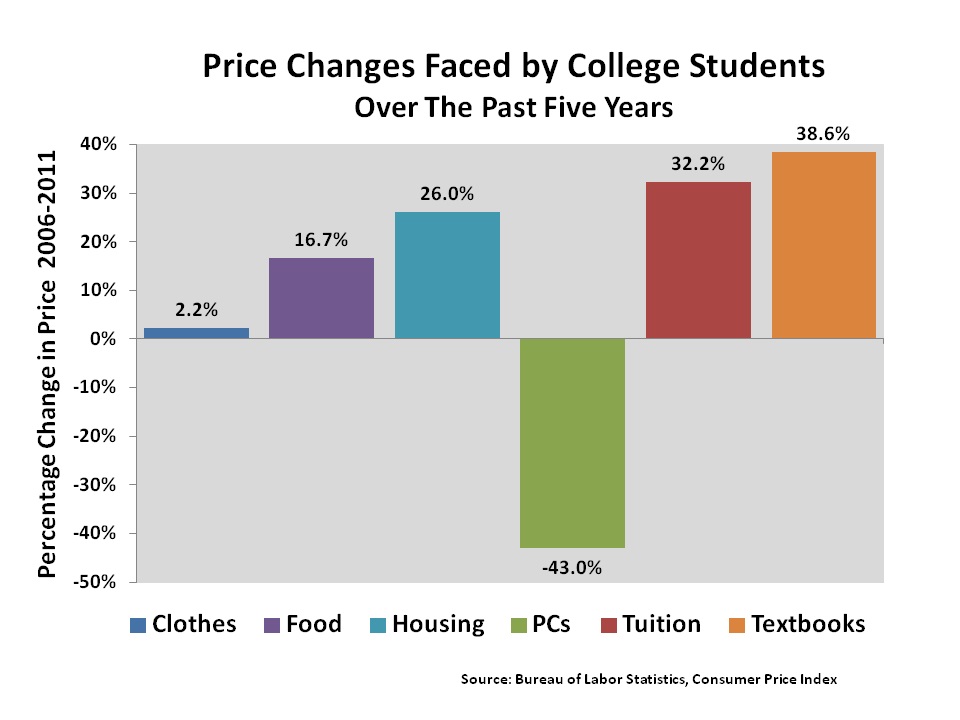
Textbook Price 1The issue in this VIDEO reflects American Capitalism 101 – not free market economics – where public policy is set to benefit private parties. (This is defined by some as Crony Capitalism). Since many college expenses are subsidized by governments (federal and state) by means of grants or low-interest, deferred student loans, the marketplace knows that governmental entities will pay…unconditionally, so of course prices go up … and up.

The book Go Lean…Caribbean asserts that the Caribbean region must not allow the US to take the lead for our own nation-building, that American capitalistic interest tends to highjack policies intended for the Greater Good.

This assessment applies to the mortgage bubble/crisis of the 2000’s, foreign policy in the Latin America and now to college education textbooks. When will we learn?

The Go Lean book, and accompanying blog commentaries, go even deeper and hypothesize that the traditional American college educated career paths has led to disastrous policies for the Caribbean in whole, and for each specific country in particular. This is a conclusion based on a macro focus, not the micro.

From a micro perspective, college education is great for the individual, enabling them to increase their earning potential in society – every additional year of schooling increases their earnings by about 10%. But on the macro, the Caribbean assimilation of an American college education strategy has been one disaster after another – an incontrovertible brain drain, capital flight of unpaid student loans and illegal immigration.

Now we are learning from this VIDEO, that the American Textbook Publishing schema is designed to take even more of the treasuries from the parents of Caribbean students that are paying tuition, plus room-and-board.

This broken system in America does not have to be tolerated in the Caribbean, anymore. Change has now come. The driver of this change is technology and globalization. The Go Lean book posits that the governmental administrations and educational institutions of the region should invest in alternative higher education options and as much technological educational advances (e-Learning) as possible, for its citizens.

This book Go Lean… Caribbean, serves as a roadmap for the introduction and implementation of the Caribbean Union Trade Federation (CU), which represents change for the region. The CU/Go Lean roadmap has 3 prime directives:

  • Optimization of the economic engines in order to grow the regional economy.
  • Establishment of a security apparatus to protect the resultant economic engines.
  • Improve Caribbean governance to support these engines.

The Go Lean roadmap provides turn-by-turn directions on how to forge this change in the region for a reboot of the Caribbean tertiary education systems, economy, governance and Caribbean society as a whole. This roadmap is presented as a planning tool, pronouncing this point early in the Declaration of Interdependence (Page 12 & 14) with these statements:

xix.      Whereas our legacy in recent times is one of societal abandonment, it is imperative that incentives and encouragement be put in place to first dissuade the human flight, and then entice and welcome the return of our Diaspora back to our shores

xxi.      Whereas the preparation of our labor force can foster opportunities and dictate economic progress for current and future generations, the Federation must ensure that educational and job training opportunities are fully optimized for all residents of all member-states, with no partiality towards any gender or ethnic group. The Federation must recognize and facilitate excellence in many different fields of endeavor, including sciences, languages, arts, music and sports. This responsibility should be executed without incurring the risks of further human flight, as has been the past history.

xxvii.      Whereas the region has endured a spectator status during the Industrial Revolution, we cannot stand on the sidelines of this new economy, the Information Revolution. Rather, the Federation must embrace all the tenets of Internet Communications Technology (ICT) to serve as an equalizing element in competition with the rest of the world. The Federation must bridge the digital divide and promote the community ethos that research/development is valuable and must be promoted and incentivized for adoption.

The Go Lean book posits that even though education is a vital ingredient for Caribbean economic empowerment, there has been a lot of flawed decision-making in the past, both individually and community-wise. The vision of the CU is a confederation of the 30 member-states of the Caribbean to do the heavy-lifting of optimizing educational policies. The Go Lean book details those policies; and other ethos to adopt, plus the executions of the following strategies, tactics, implementations and advocacies to impact the tertiary education in the region:

Community Ethos – Deferred Gratification Page 21
Community Ethos – People Respond to Incentives Page 21
Community Ethos – Job Multiplier Page 22
Community Ethos – Lean Operations Page 24
Community Ethos – Return on Investments (ROI) Page 24
Community Ethos – Ways to Impact the Future Page 26
Community Ethos – Ways to Foster Genius Page 27
Community Ethos – Ways to Promote Intellectual Property Page 29
Community Ethos – Ways to Close the Digital Divide Page 31
Community Ethos – Ways to Improve Sharing – Purchasing Cooperatives Page 35
Community Ethos – Ways to Impact the Greater Good Page 37
Strategy – Agents of Change – Technology Page 57
Strategy – Agents of Change – Globalization Page 57
Tactical – Separation of Powers – Education Department Page 85
Tactical – Separation of Powers – Labor Department – On Job Training Page 89
Implementation – Ways to Pay for Change Page 101
Implementation – Ways to Benefit from Globalization Page 119
Planning – Lessons Learned from 2008 Page 136
Advocacy – Ways to Grow the Economy Page 151
Advocacy – Ways to Create Jobs Page 152
Advocacy – Ways to Improve Education Page 159
Advocacy – Ways to Impact Student Loans Page 160
Advocacy – Ways to Improve Governance Page 169
Advocacy – Ways to Foster Cooperatives Page 176
Advocacy – Ways to Improve Libraries Page 187
Appendix – Education and Economic Growth Page 258
Appendix – Measuring Education Page 266
Appendix – New Student Loan Scandal – Rolling Stone Magazine Page 286

The foregoing video relates to topics that are of serious concern for Caribbean planners. While the US is the world’s largest Single Market economy, we want to only model some of the American example. We want to foster an education agenda that propels the Caribbean’s best interest, not some American special interest group. There are many Go Lean blog commentaries that have echoed this point, addressing the subject of Caribbean education decision-making and ramifications. See sample here:

https://goleancaribbean.com/blog/?p=2126 Where the Jobs Are – Computers Reshaping   Global Job Market
https://goleancaribbean.com/blog/?p=1698 STEM Jobs Are Filling Slowly
https://goleancaribbean.com/blog/?p=1596 Book Review: ‘Prosper Where You Are   Planted’
https://goleancaribbean.com/blog/?p=1470 College of the Bahamas Master Plan 2025 – Reach   for the Lamp-Post
https://goleancaribbean.com/blog/?p=1433 Caribbean   loses more than 70 percent of tertiary educated to brain drain
https://goleancaribbean.com/blog/?p=1256 Traditional 4-year Colleges – Terrible   Investment for Region and Jobs
https://goleancaribbean.com/blog/?p=459 CXC and UK   textbook publisher hosting CCSLC workshops in Barbados
https://goleancaribbean.com/blog/?p=398 Self-employment on the rise in the Caribbean
https://goleancaribbean.com/blog/?p=273 10 Things We Don’t Want from the US – American   Self-Interest Policies

The book Go Lean…Caribbean posits that many problems of the region are too big for any one member-state to solve alone, that there is the need for the technocracy of the Caribbean Union Trade Federation. The purpose of this Go Lean/CU roadmap is to make the Caribbean homeland, a better place to live, work, learn and play. This effort is more than academic, this involves some alleviation of the pain and suffering back in the homeland.

We need jobs, and we need an educated labor-force to facilitate the demands of a competitive world. The roadmap posits that to succeed in the global marketplace, the Caribbean region must not only consume but rather also create, produce, and distribute intellectual property. So subjects like prices of textbooks and e-books are germane for our consideration, (see Appendix below). Plus with tactics like Group Purchasing (GPO), there are effective ways to minimize the associated costs of educating the general population, and specific learning needs.

Textbook Price 2

There is the need for specific skills training – we need more STEM enthusiasts (Science, Technology, Engineering, Math). So the issue, as expressed in the foregoing video, and the remediation as expressed in Go Lean…Caribbean is an important reflection of technocratic problem solving being advocated for the CU.

Now is the time for all of the Caribbean, the people and governing institutions, to lean-in for the changes described in the book Go Lean … Caribbean.

Download the book Go Lean…Caribbean now!

—————————————————————————————————————-

APPENDIX

High Textbook Prices Anecdote #1: (http://www.timesheraldonline.com/news/ci_25464834/throwing-book-at-high-costs-college-textbooks)

Former Napa College student Jena Goodman of Vallejo said student higher education leaders from across California are working to find ways to lighten the financial load of buying textbooks.

“For me, I’ve spent up to $150 for a textbook and as much as $500 to $600 per semester on books,” said Goodman.

High Textbook Prices Anecdote #2: (http://www.theatlantic.com/business/archive/2013/01/why-are-college-textbooks-so-absurdly-expensive/266801/)

According to the National Association of College Stores, the average college student reports paying about $655 for textbooks and supplies annually, down a bit from $702 four years ago. The NACS credits that fall to its efforts to promote used books along with programs that let students rent rather than buy their texts.

Proposed Solution: (http://www.vox.com/2014/8/25/6058017/why-are-college-textbooks-so-expensive)

One [option] is to treat college textbooks more like high school textbooks — a college would purchase the textbooks, then rent them out to students for a fee. That spreads out the cost of materials over multiple years and for multiple students, and makes textbooks cheaper. But to be effective, it also has to work in bulk, which means faculty have to agree on texts to use for their classes.

Another alternative is open educational resources, which are open-source materials available for free that can take the place of textbooks. Peter Thorsness, a University of Wyoming professor [and a father of a first time college student], said upper-level science classes are now more likely to use such materials from the National Institutes of Health. And some researchers think that open educational resources and other online materials are poised to disrupt the textbook market.

Share this post:
, ,
[Top]

Sports Role Model – Turn On the SEC Network

Go Lean Commentary

There is a new religion in the South (United States). It is SEC football. For many in the South, football is life, “everything else is details”. Now, (starting August 28) the SEC adherents can worship 7-24-365 on the SEC Network cable channel. This is a melding of sports, television, southern culture and economics – this is big business – and a religious-like devotion.

The SEC (South East Conference) is the Number 1 (American) football conference in the National Collegiate Athletic Association (NCAA). Their revenues, attendance, championships, NFL draft picks and TV ratings are the best-of-the-best of all other conferences. This last subject is the focus of this commentary: TV ratings and broadcast rights.

Title: Turn On the SEC
By: Jon Saraceno

CU Blog - Sports Role Model - Turn On the SEC - Photo 1In a melding of two powerful sports brands, cable-television behemoth ESPN and the football-crazed Southeastern Conference have joined forces to form the SEC Network, debuting August 14. ESPN Radio host Paul Finebaum, a veteran observer of all things SEC, believes ­audience response will be rabid. That view seems particularly valid given that college football is the unquestioned autumnal king of the South.

“SEC fans are an interesting bunch,” Finebaum observes. “They don’t like being subjected to other leagues [that have TV networks], like the Big Ten or the Pac-12. Now they can say, ‘Nothing else exists but us — the rest of the world can vaporize, for all we care.’ It is as irritating to non-SEC fans as it is pleasing to a son of the South.”

CU Blog - Sports Role Model - Turn On the SEC - Photo 3Finebaum understands the parochialism. The Memphis, Tenn., native worked for three decades in Birmingham, Ala., before relocating to Charlotte, N.C., as the SEC Network’s first on-air hire when ESPN announced the formation of the network last year. The network launches with a well-timed countdown to the start of the 2014 football season. Blastoff is Aug. 28, when Texas A&M travels to South Carolina. Brent Musburger, one of several marquee on-air hires, will call the game. But the SEC Network’s most popular personality might be former Florida Gators quarterback Tim Tebow.

Programming for the 24/7 multiplatform channel will be highlighted by 45 SEC football games. The network also will showcase men’s basketball (an estimated 100 games), women’s basketball (60 games) and baseball (75 games), along with select coverage from the league’s 21 sports. In all, more than 1,000 events will be aired across the network’s digital platform.

Following ESPN’s time-tested formula of bracketing programming and analysis around live events, the SEC Network will televise studio shows and live-event days such as spring football games and national signing day for college-football recruits.

Beyond content, the marriage between ESPN and the conference should be a match made in financial heaven. Disney-owned ESPN expects to reap untold hundreds of millions in advertising revenue during the 20-year deal. Increased exposure and lucrative media rights bode well for all 14 SEC schools.
American Way August 2014 – American Airlines Inflight Magazine –
http://hub.aa.com/en/aw/turn-on-the-sec

CU Blog - Sports Role Model - Turn On the SEC - Photo 2

The Caribbean does not currently have an eco-system for intercollegiate athletics. The book Go Lean…Caribbean, and aligning blog commentaries, asserts that the region can be a better place to live, work and play; that the economy can be grown methodically by embracing progressive strategies in sports at all levels: professional, amateur and intercollegiate.

While the Caribbean may not have the sports business eco-system, we do have the underlying assets: the athletes. The Caribbean supply the world, including the NCAA, with the best-of-the-best in the sports genres of basketball, track-and-field, soccer-FIFA-football and other endeavors. The Go Lean book recognizes and fosters the genius qualifiers of many Caribbean athletes.

The goal now is foster the local eco-system in the homeland so that  those with talent would not have to flee the region to garner the business returns on their athletic investments.

The Go Lean book serves as a roadmap for the introduction and implementation of the Caribbean Union Trade Federation (CU), a technocratic federal government to administer and optimize the economic/security/ governing engines of the region’s 30 member-states. At the outset, the roadmap recognizes the value of sports in the roadmap with these statements in the Declaration of Interdependence (Page 13 & 14):

xxvi. Whereas the preparation of our labor force can foster opportunities and dictate economic progress for current and future generations, the Federation must ensure that educational and job training opportunities are fully optimized for all residents of all member-states, with no partiality towards any gender or ethnic group. The Federation must recognize and facilitate excellence in many different fields of endeavor, including sciences, languages, arts, music and sports. This responsibility should be executed without incurring the risks of further human flight, as has been the past history.

xxxi. Whereas sports have been a source of great pride for the Caribbean region, the economic returns from these ventures have not been evenly distributed as in other societies. The Federation must therefore facilitate the eco-systems and vertical industries of sports as a business, recreation, national pastime and even sports tourism – modeling the Olympics.

The Go Lean roadmap calls for the market organizations to better garner the economic benefits of sports. One of the biggest contribution the CU will make is the facilitation of sports venues: arenas and stadia. Sports can be big business! But even when money is not involved, other benefits abound: educational scholarships, image, national pride, and something more, something non-tangible yet of utmost importance for the Go Lean roadmap: less societal abandonment. A mission of the CU is to reduce the brain drain and incentivize repatriation of the Diaspora.

Another area of the Go Lean economic empowerment roadmap that relates to the foregoing article is the strategy is to create a Single (Media) Market to leverage the value of broadcast rights for the region, the resultant consolidated market would cover 30 member-states, 4 languages and 42 million people. The successful execution of this strategy will elevate the art, science and genius of sport enterprises in the region. Now is the time for all of the Caribbean to lean-in to the following community ethos, strategies, tactics, implementations and advocacies detailed in the book Go Lean … Caribbean to re-boot the delivery of the regional solutions to elevate the Caribbean region through sports:

Community Ethos – People Respond to Incentives in Predictable Ways Page 21
Community Ethos – Return on Investments Page 24
Community Ethos – Ways to Foster Genius Page 27
Community Ethos – Ways to Improve Negotiations Page 32
Community Ethos – Ways to Promote Happiness Page 36
Strategic – Vision – Consolidating the Region in to a Single Market Page 45
Strategic – Staffing – Sporting Events at Fairgrounds Page 55
Tactical – Fostering a Technocracy Page 64
Tactical – Separation of Powers – Sports & Culture Administration Page 81
Tactical – Separation of Powers – Fairgrounds Administration Page 83
Implementation – Steps to Implement Self-Governing Entities (Fairgrounds) Page 105
Implementation – Ways to Deliver Page 109
Planning – Ways to Make the Caribbean Better Page 131
Advocacy – Ways to Grow the Economy Page 151
Advocacy – Ways to Create Jobs Page 152
Advocacy – Ways to Improve Education – Reduce Brain Drain Page 159
Advocacy – Ways to Improve Local Government – Parks & Recreation Page 169
Advocacy – Ways to Impact Events Page 191
Advocacy – Ways to Promote Fairgrounds Page 192
Advocacy – Ways to Foster Technology Expositions Page 197
Advocacy – Ways to Impact Youth Page 227
Advocacy – Ways to Improve Sports Page 229
Advocacy – Ways to Impact Urban Living – Sports Leagues Page 234

The Caribbean is the best-of-the-best address on the planet, but there are certain missing features, such as intercollegiate athletics… and jobs. The foregoing article aligns with this Go Lean…Caribbean roadmap to fill these voids. This effort is bigger than sports; this is about Caribbean life; we must elevate our own society. The CU is the vehicle for this goal, this is detailed by the following 3 prime directives:

  • Optimization of the economic engines in order to grow the regional economy to $800 Billion & create 2.2 million new jobs.
  • Establishment of a security apparatus to protect the resultant economic engines.
  • Improve Caribbean governance to support these engines.

The Go Lean roadmap anticipates 21,000 direct jobs at fairgrounds and sport venues throughout the region; plus 40,000 new jobs by re-optimizing the region’s educational engines, including colleges & universities.

Now is the time for all of the Caribbean, the people and governing institutions, to lean-in for the empowerments of the Caribbean Union Trade Federation. Now is the time to make this region a better place to live, work and play.

Download the book Go Lean…Caribbean now!

APPENDIX – SEC Conference Schools/Teams

CU Blog - Sports Role Model - Turn On the SEC - Photo 4

Share this post:
, , , , ,
[Top]

Recessions and Public Health

Go Lean Commentary

A man needs three things to be happy: something to do, someone to love and something to hope for – declares the book Go Lean… Caribbean (Page 36).

CU Blog - Recessions and Public Health - Photo 1In this vein, there is a whole field of study referred to as Public Health Economics, a subset of Econometrics. One champion of this field is the European Public Health Association or EUPHA; this is an international, multidisciplinary, scientific organization, bringing together around 14,000 public health experts for professional exchange and collaboration throughout Europe. They encourage a multidisciplinary approach to public health. Imagine a group studying the link between a failing economy and increased medical ailments.

While the logical connection of economy-stress-illness may be common sense, the quantification of actual ailments is a science… and art.

The book Go Lean … Caribbean is not a book of science, but gleans from scientific concepts in communicating the plan to elevate Caribbean society. The book focus on economics, and relates that the resultant societal engines can be seriously impacted by public safety/health threats. The book thusly serves as a roadmap for the introduction and implementation of a regional sentinel for public health, the technocratic Caribbean Union Trade Federation (CU). The complete prime directives are described as:

  • Optimize the economic engines of the Caribbean to elevate the regional economy.
  • Establish a security apparatus to protect the resultant economic engines.
  • Improve Caribbean governance to support these engines.

The Go Lean roadmap immediately calls for the establishment of a federal Health Department, with a charter to manage the health care and medical dimensions of the Caribbean, in conjunction with, and on behalf of the member-states. This charter will include mental health in its focus, just as serious as any other areas (cancer, trauma, virus, immunizations). This direct correlation of physical and mental health issues with the economy, in this foregoing article, thusly depicts the need for this charter:

Subtitle: The impact of downturns on physical and mental health

Exam results capture pupils’ achievements but not their enjoyment of learning. Life expectancy does not say anything about quality of life. Similarly, statistics on unemployment rates and wage levels do not tell the full story of recessions. Social scientists are increasingly interested in the effects of downturns on public health.

These effects are unclear. There is some evidence that physical health may actually improve in downturns. One paper by Christopher Ruhm[a], now of the University of Virginia, looking at American data from 1972 to 1991, suggests that a one-percentage-point increase in unemployment reduced mortality by 4.6 deaths per 100,000 people. “With shorter working hours, people spend more time at home with their families and may be less stressed from overwork,” suggests Stephen Bezruchka of the University of Washington.

But there is also evidence that big economic crises are correlated with a deterioration in health. The Depression of the 1930s was associated with increases in malnutrition because people had less money to spend on food. In 1928, 14% of adults over 20 in Philadelphia were deemed to be suffering from malnutrition. By 1932 the figure had risen to 26%.

Social scientists are now scouring public-health data for clues about the impact of the recent crisis. A National Bureau of Economic Research paper [b] found that in America there has been a 4.8% increase in the likelihood of self-reported poor health for every one-percentage-point drop in state employment rates.

Some diseases have become more prevalent. In Greece incidence of HIV has risen, with a 50% increase in new infections in 2011 compared with 2010. The jump has been concentrated among injecting drug-users, and has been linked to large cuts to health services. Needle-exchange projects have been pared back, making transmission more likely.

CU Blog - Recessions and Public Health - Photo 2Mental health does appear to suffer during downturns. Mr Ruhm’s work found that suicide rates rose with unemployment. The East Asian crisis of the late 1990s was marked by a spate of suicides: in Hong Kong, Japan and South Korea the crisis was responsible for 10,400 more suicides in 1998 than might normally have been expected. Research on Spain indicates that in the current crisis the suicide rate has increased by 8%. The rise is concentrated among people who are most likely to have lost their job.

Working out how health is affected by recessions is made harder by time lags. Job insecurity may lead people to the bottle, which will have repercussions later. A recent paper co-authored by Paul Frijters at the University of Queensland[c] found that the latest recessionary period was associated with an almost 20% increase in alcoholism-related Google searches in America. Higher alcohol abuse today will worsen health outcomes over time.

Obesity is another slow-burning health problem. Higher unemployment leads to lower incomes, which can make it more difficult for people to eat well. Research from the University of Nebraska finds that “financial stress”—not being able to pay for essentials such as food or rent—is a strong predictor of obesity. In Australia the risk of being obese in 2010 was 20% higher among individuals who experienced financial stress in 2008 and 2009 than among those who did not experience it in either year. Policymakers should keep an eye on this growing body of research for guidance on how to marshal health-care resources when economies fall ill.

Sources

The effect of the late 2000s financial crisis on suicides in Spain: an interrupted time-series analysis“, by J. A. L. Bernal, A. Gasparrini, C.M. Artundo and M. McKee, The European Journal of Public Health, 2013

More Than 10,000 Suicides Tied To Economic Crisis, Study Says“, by Melanie Haiken, Forbes Magazine, quoting study published in June (2014) in the British Journal of Psychiatry.

Was the economic crisis 1997–1998 responsible for rising suicide rates in East/Southeast Asia? A time–trend analysis for Japan, Hong Kong, South Korea, Taiwan, Singapore and Thailand“, by S.S. Chang, D. Gunnell, J.A. Sterne, T.H. Lu and A.T. Cheng, Social science & medicine, 2009

Decomposing the Relationship between Macroeconomic Conditions and Fatal Car Crashes during the Great Recession: Alcohol-and Non-Alcohol-Related Accidents“, by C. Cotti and N. Tefft, The BE Journal of Economic Analysis & Policy, 2011

Exploring the relationship between macroeconomic conditions and problem drinking as captured by Google searches in the US“, by P. Frijters, D.W. Johnston, G. Lordan and M.A. Shields, Social science & medicine, 2013

Financial crisis and austerity measures in Greece: Their impact on health promotion policies and public health care“, by A.A. Ifanti, A.A. Argyriou, F.H. Kalofonou and H.P. Kalofonos, Health Policy, 2013

Is Malnutrition Increasing?“, by E. Jacobs, American Journal of Public Health and the Nation’s Health, 1933

HIV-1 outbreak among injecting drug users in Greece, 2011: a preliminary report“, by D. Paraskevis, G. Nikolopoulos, C. Tsiara, D. Paraskeva, A. Antoniadou, M. Lazanas, P. Gargalianos, M Psychogiou, M. Malliori, J. Kremastinou and A Hatzakis, Euro Surveill, 2011

Are recessions good for your health?“, by C.J. Ruhm, The Quarterly Journal of Economics, 2000

Prolonged financial stress predicts subsequent obesity: Results from a prospective study of an Australian national sample“, by M. Siahpush, T.T.K. Huang, A. Sikora, M. Tibbits, R.A. Shaikh, G.K. Singh, Obesity, 2013

Health and Health Behaviors during the Worst of Times: Evidence from the Great Recession“, by E. Tekin, C. McClellan and K.J. Minyard, National Bureau of Economic Research, 2013

Appendix – Cited References:
a. Retrieved August 21, 2014 from: http://libres.uncg.edu/ir/uncg/f/C_Ruhm_Are_2000.pdf
b. Retrieved August 21, 2014 from: http://www.nber.org/papers/w19234
c. Retrieved August 21, 2014 from: http://www.york.ac.uk/media/economics/13_02.pdf

The Economist Magazine (Posted 08-24-2013; retrieved 08-21-2014) –
http://www.economist.com/news/finance-and-economics/21584020-impact-downturns-physical-and-mental-health-body-research

Consider these crises:

  • Suicides
  • Alcoholism
  • Drug Abuse (Prescription & Illegal Street Varieties)
  • Rage

No one wants to live in a society where these mental health crises remain unmitigated. But the foregoing article relates that increases in many physical ailments (HIV, malnutrition, obesity, etc) also constitute a crisis. The book declares that “a crisis is a terrible thing to waste”, so the required mitigations start with this Go Lean roadmap.

A lot is at stake – from a declining quality of life all the way to early death.

The Go Lean roadmap immediately calls for the coordination of the region’s healthcare needs. This point is declared early in the Go Lean book, commencing with this opening pronouncement in the Declaration of Interdependence (Page 12), as follows:

ix.  Whereas the realities of healthcare … cannot be ignored and cannot be afforded without some advanced mitigation, the Federation must arrange for health plans to consolidate premiums of both healthy and sickly people across the wider base of the entire Caribbean population. The mitigation should extend further to disease management, wellness, obesity and smoking cessation programs.

There is no doubt that the Great Recession devastated Caribbean economies, but what were the affects on the region’s physical and mental health? If we want to minimize the “push-and-pull” factors that lead people to emigrate, we must answer this question very thoughtfully, then be prepared for the next crisis. This point was also anticipated in a further pronouncement in the Declaration of Interdependence (Page 13), as follows:

xxv.   Whereas the legacy of international democracies had been imperiled due to a global financial crisis, the structure of the Federation must allow for financial stability and assurance of the Federation’s institutions. To mandate the economic vibrancy of the region, monetary and fiscal controls and policies must be incorporated as proactive and reactive measures. These measures must address threats against the financial integrity of the Federation and of the member-states.

Go Lean … Caribbean therefore constitutes a change for the Caribbean. This is a roadmap to consolidate 30 member-states of 4 different languages and 5 colonial legacies (American, British, Dutch, French, Spanish) into a Trade Federation with the tools/techniques to bring immediate change to the region to benefit one and all member-states. This includes the monitoring/tracking/studying the physical and mental health trends. This empowered CU agency will liaison with non-governmental organizations (NGOs) and agencies like EUPHA, plus other foreign entities with the similar scope, like the US’s Center for Disease Control (CDC) and the World Health Organization (WHO).

The book details that there must first be adoption of such a community ethos, the appropriate attitude/spirit to forge change in the region. Go Lean details this and other ethos; plus the executions of the following strategies, tactics, implementations and advocacies to impact the region’s public health:

Community Ethos – Deferred Gratification Page 21
Community Ethos – Economics Influence Choices Page 21
Community Ethos – Privacy versus Public Protection Page 23
Community Ethos – “Crap” Happens Page 23
Community Ethos – Lean Operations Page 24
Community Ethos – Cooperatives Page 24
Community Ethos – Non-Government Organizations Page 25
Community Ethos – Ways to Improve Sharing Page 35
Community Ethos – Ways to Promote Happiness Page 36
Community Ethos – Impact the Greater Good Page 37
Strategy – Vision – Confederate 30 Member-States Page 45
Strategy – Mission – Reform   our Health Care Response Page 47
Strategy – Agents of Change – Aging Diaspora Page 57
Tactical – Fostering a Technocracy Page 64
Separation of Powers – Department of Health Page 86
Implementation – Ways to Deliver Page 109
Planning – Ways to Model the EU Page 130
Planning – Ways to Make the Caribbean Better Page 131
Planning – Ways to Measure Progress Page 148
Advocacy – Ways to Grow the Economy Page 151
Advocacy – Ways to Improve Healthcare Page 156
Advocacy – Ways to Impact Cancer Page 157
Advocacy – Ways to Better Manage the Social Contract Page 170
Advocacy – Ways to Foster Cooperatives Page 176
Advocacy – Ways to Improve Emergency Management Page 196
Appendix – Disease Management – Healthways Model Page 300
Appendix – Trauma Center Definitions Page 336

The foregoing news article links economic downturns to physical and mental health ailments – there is no denying. There is need for a permanent union to provide efficient stewardship for the Caribbean economy, security and governing engines – plus serve as a Health and Medical Sentinel.

Who will be that Sentinel? The Caribbean Union Trade Federation hereby submits for this job. The region’s stakeholders (people and institutions) are hereby urged to lean-in to this Go Lean roadmap, to make the Caribbean a better place to live, work, heal and play.

Share this post:
, , ,
[Top]

MetroCard – Model for the Caribbean Dollar

Go Lean Commentary

CU Blog - MetroCard - Model for CCB - Photo 1The MetroCard, the New York City Metropolitan Transportation Authority’s (MTA) payment system is the subject of the referenced source appendix below. But this subject is about more than just simple bus/subway tokens, instead this subject refers to a whole eco-system that constitutes an electronic payment scheme. This system generates $4 billion (2012) and services the transit needs of 15.1 million people. The MTA drives the NYC regional economy, the largest in the US, facilitating the connection for many to traverse from home to work; then after work, the MTA network enables the NYC metropolitan area (New York, New Jersey, and Connecticut) to get to a host of leisure activities: music, theater, cultural events, sports, and shopping. MetroCard is therefore a de facto currency for this region to live, work and play.

MetroCard is a digital currency and not “hard money”, so there are not paper stock or coinage issues to be managed with this approach. (MetroCard replaced the previous ubiquitous tokens in 2003). This attribute relates to the effort to re-boot and optimize the Caribbean regional economy and society. The book Go Lean…Caribbean points to NYC as a model and source of many lessons that the Caribbean can learn and apply, especially related to the adoption of the regional currency, the Caribbean Dollar (C$).

The book Go Lean…Caribbean serves as a roadmap for the introduction and implementation of the Caribbean Union Trade Federation (CU) and the Caribbean Central Bank (CCB). This Go Lean roadmap has 3 prime directives:

  • Optimization of the economic engines in order to grow the regional economy to $800 Billion & create 2.2 million new jobs.
  • Establishment of a security apparatus to protect the resultant economic engines.
  • Improve Caribbean governance to support these engines.

The Caribbean Central Bank has the role of heavy-lifting in the facilitation of the electronic payments modes of the Caribbean Dollar. While the traditional central banking role of currency/coinage distribution do not come into play, with the e-Payment schemes, there are still many responsibilities and benefits for central bank command-and-control. This refers to the subject of M1 monetary supply. M1 refers to the measurement of the total of currency/money in circulation (M0) plus overnight bank deposits (like demand deposits, travelers’ checks & other checkable deposits). So when digit currencies, as MetroCard, are factored in, there is no M0, but an increase in M1. As M1 values increase, there is a dynamic in the regional banking system that creates money “from thin-air”; this is referred to as the money multiplier. The more M1 money in the system, the more liquidity for investment and development opportunities.

The Caribbean needs this increase in development capital/liquidity.

This subject of electronic payment systems has been previously covered in Go Lean blogs, highlighted here in the following samples:

https://goleancaribbean.com/blog/?p=1350 PayPal expands payment services to 10 markets
https://goleancaribbean.com/blog/?p=906 Bitcoin needs regulatory framework to change ‘risky’ image
https://goleancaribbean.com/blog/?p=528 Facebook plans to provide mobile payment services
https://goleancaribbean.com/blog/?p=360 How to Create Money from Thin Air

This Go Lean/CU/CCB roadmap looks to employ electronic payments / virtual money schemes to impact the growth of the regional economy. There are two CU schemes that relate to this MetroCard structure:

  • Cruise Passenger Smartcards – The Go Lean roadmap posits that the cruise industry needs the Caribbean more than the Caribbean needs the industry. But the cruise lines have embedded rules/regulations designed to maximize their revenues at the expense of the port-side establishments. The CU solution is to deploy a scheme for smartcards that function on the ships and at the port cities (Page 193).
  • e-Commerce Facilitation – The Go Lean roadmap defines that the Caribbean Dollar (C$) will be mostly cashless, an accounting currency. So the Caribbean Central Bank (CCB) will settle all C$ electronic transactions (MasterCard-Visa style or ACH style) and charge interchange/clearance fees (Page 198). This scheme allows for the emergence of full-throttle e-Commerce activities.

Overall, stewardship of the single market economy and single regional currency was envisioned and pronounced early in the Go Lean roadmap with this Verse XXIV (Page 13) of the Declaration of Interdependence, with these words:

Whereas a free market economy can be induced and spurred for continuous progress, the Federation must install the controls to better manage aspects of the economy: jobs, inflation, savings rate, investments and other economic principles…

New York City is a great model for this Caribbean empowerment effort to look, listen, and learn. The same as tourism is the primary economic driver in the Caribbean (80 million visitors), NYC also plays host to 25 million visitors annually. Many NYC tourists ride the MTA public transportation modes and have to acquire a MetroCard – many times, they leave unspent balances  to just sit there. What becomes of those monies? See this news article here:

Unspent MetroCard Money Means Millions for M.T.A.

(http://www.nyctransitforums.com/forums/topic/43954-unspent-metrocard-money-means-millions-for-mta/)

Think of it as New York’s biggest sock drawer, except that instead of nickels, dimes and quarters, what is squirreled away in its dark recesses are millions of lapsed yellow-and-blue MetroCards with digital loose change still dangling from their magnetic strips.

In the decade ending in 2010, nearly $500 million worth of unspent balances on expired bus and subway MetroCards accumulated, and that money can no longer be redeemed.

Cards that are bought, never used but still valid are counted for bookkeeping purposes as a liability, because they might eventually be used. Outdated cards with pending balances become an asset after they expire, about two years from the date of sale. The balances are listed as revenue under the category of “fare media liability.”

Tens of millions of dollars a year may not seem like much out of $4 billion in annual MetroCard revenue for New York City Transit, but there is no stream of cash that the agency scoffs at.

Kevin Ortiz, a spokesman for the Metropolitan Transportation Authority, which includes the transit agency, said: “Expired card value does benefit the M.T.A. It gets counted as fare box revenue.”

The peak year for replenishing New York City Transit’s fare media liability account was 2012, when $95 million was credited. That followed a surge in purchases in 2010, before a fare increase. Those cards, many presumably with outstanding balances, have expired.

Considering the governance for the MetroCard, the MTA has been described with some adjectives of efficiency and effectiveness. Their website described their charter as follows:

While nearly 85 percent of the nation’s workers need automobiles to get to their jobs, four of every five rush-hour commuters to New York City’s central business districts avoid traffic congestion by taking transit service – most of it operated by the MTA. MTA customers travel on America’s largest bus fleet and on more subway and rail cars than all the rest of the country’s subways and commuter railroads combined.

This mobility helps ensure New York’s place as a world center of finance, commerce, culture, and entertainment, and New York ranks near the top among the nation’s best cities for business, Fortune magazine has written, because it has “what every city desires. A workable mass transit system.”

MTA mass transit helps New Yorkers avoid about 17 million metric tons of pollutants while emitting only 2 million metric tons, making it perhaps the single biggest source of greenhouse gas (GHG) avoidance in the United   States. The people living in our service area lead carbon-efficient lives, making New   York the most carbon-efficient state in the nation.

Over the past two decades, the MTA has committed some $72 billion to restore and improve the network so that today it runs at unprecedented levels of efficiency. Our employees at all of our agencies work diligently to maintain high service and safety standards.

(Source: Retrieved August 19, 2014 from: http://web.mta.info//mta/network.htm)

The governance for the MetroCard may be in good hands, a technocratic reflection. Creating a technocratic CU/CCB governance is “Step One, Day One” in the Go Lean roadmap. Implementing this allows for rock-solid monetary integrity for local financial systems, providing the foundation so the regional society can be elevated, economically and governmentally. In this vein, we examine specific lessons & applications in consideration of the MetroCard business model in the Appendix below:

MetroCard Facts Go Lean book considerations/reflections (actual Page Numbers)
MetroCard History Roadmap with Project Delivery Obligations (Page 109); Fostering a Technocracy (Page 64)
Multiple Jurisdictions Confederation of 30 Member-States (Page 45); Fostering Interstate Commerce (Page 129)
Pricing/Cost Increases Unified Command & Control on Inflation (Page 153)
Technology Foster Technology (Page 197); e-Commerce (Page 198); Bridging Digital Divide (Page 31)
Transfers People respond to economic incentives (Page 21)
Card type consideration –   Pay-Per-Ride cards Improve M1 by encouraging stored balances (Page 198)
Card type consideration – Student cards Facilitation Education (Page 159) and Transportation (Page 205)
Card type consideration –   Disabled/Senior Citizens Improve Elder-Care (Page 225) and Impact Persons with Disabilities (Page 228)
Purchase Options – Subway Station   Booths Manage Federal Civil Servants (Page 173)
Purchase Options – Vending   Machines Foster Technology (Page 197); e-Commerce (Page 198); Bridging Digital Divide (Page 31)
Purchase Options – Neighborhood   Merchants Help Entrepreneurship (Page 28); Impact Main Street (Page 201);
Future Impact the Future (Page 26)
Bad Actors: Fraud/Scams Bad Actors Emerge – Reduce Crime (Page 178); Impact the Greater Good (Page 37)

The Go Lean book details additional community ethos, strategies, tactics, implementations and advocacies to foster electronic payment systems, and the unified command & control necessary for its success:

Community Ethos – Money Multiplier Principle Page 22
Community Ethos – Lean Operations Page 24
Community Ethos – Cooperatives Page 25
Tactical – Separation of Powers – Central Banking Page 73
Implementation – Assemble Central Bank Cooperative Page 96
Planning – Lessons Learned from New York City Page 137
Anecdote – Caribbean Currencies Page 149
Advocacy – Ways to Mitigate Black Markets Page 165
Advocacy – Ways to Impact Public Works Page 175
Advocacy – Ways to Foster Cooperatives Page 176
Advocacy – Reforms for Banking Regulations Page 199
Advocacy – Ways to Impact Urban Living Page 234
Appendix – New York City Economy Details Page 277

Now is the time for all of the Caribbean, the people and governing institutions, to lean-in for the empowerments described in the book Go Lean … Caribbean. We can all benefit by studying and modeling the successes of New York City!

Any visitor to the city quickly realizes how unique this jurisdiction is compared to other urban areas in the US, or the world for that matter. Millions of people (31,483,000 according to 2010 census) live in a limited congested area that is the Greater Tri-State area, yet there is a recognizable level of efficiency – some technocratic deliveries. For example, NYC does not have the proliferation of yellow school buses that dot the landscape of most American communities. Most students in the city rely on the MTA, funded by their MetroCard, to get back and forth for school. So in effect, MetroCard services the full community needs to live, work, learn and play.

MetroCard is truly a model for the Caribbean … Dollar.

Download the book Go Lean … Caribbean – now!

————————————————————————-

Appendix – Reference Source:

MetroCard – New   York Metropolitan Transportation Authority’s Payment System

The MetroCard is the payment method for the New York City Subway rapid transit system; New York City Transit buses, including routes operated by Atlantic Express under contract to the Metropolitan Transportation Authority (MTA); MTA Bus, and Nassau Inter-County Express systems; the PATH subway system (an entity of the Port Authority of New York & New Jersey); the Roosevelt Island Tram; AirTrain JFK; and Westchester County’s Bee-Line Bus System.

The MetroCard is a thin, plastic card on which the customer electronically loads fares. It was introduced to enhance the technology of the transit system and eliminate the burden of carrying and collecting tokens. The MTA discontinued the use of tokens in the subway on May 3, 2003, and on buses on December 31, 2003. The MetroCard is managed by a division of the MTA known as MetroCard Operations and manufactured by Cubic Transportation Systems, Inc.

History

01Jun1993 MTA distributes 3,000 MetroCards in the first major test of the technology for the entire subway system and the entire bus system.
06Jan1994 MetroCard live testing with compatible turnstiles at select lines and stations.
15May1997 The last MetroCard turnstiles were installed by this date, and the entire bus and subway system accepted MetroCards
04Jul1997 First free transfers available between bus and subway at any location with MetroCard.
01Jan1998 Bonus free rides (10% of the purchase amount) were given for purchases of $15 or more.
04Jul1998 Unlimited Ride MetroCards introduced, at $17 for 7 days, $63 for 30 days, Express Bus Plus for $120.
01Jan1999 1-Day Fun Pass was introduced: unlimited use for one day for $4.
25Jan1999 The first MetroCard Vending Machines installed.
13Apr2003 Tokens/coins no longer sold.
04May2003 Tokens only accepted as a $1.50 credit towards the $2 MetroCard ride.
02Mar2008 A new 14-day unlimited-ride was introduced for $47
30Dec2010 1-Day Fun Pass and the 14-Day Unlimited Ride MetroCards discontinued.
20Feb2013 Cards can now be refilled with both time and value.
03Mar2013 A $1 fee is imposed on new card purchases in-system

Pricing/Cost increases – since the complete cut-over in 2003

Date

Daily

Weekly

Monthly

04May2003

$2

$21

$70

27Feb2005

$2

$24

$76

02Mar2008

$2

$25

$81

28Jun2009

$2.25

$27

$89

30Dec2010

$2.25

$29

$104

19Dec2012

$2.50

$30

$104

Technology

During a swipe, the MetroCard is read, re-written to, then check-read to verify correct encoding.

Each MetroCard stored value card is assigned a unique, permanent ten-digit serial number when it is manufactured. The value is stored magnetically on the card itself, while the card’s transaction history is held centrally in the Automated Fare Collection (AFC) Database.

When a card is purchased and fares are loaded onto it, the MetroCard Vending Machine or station agent’s computer stores the amount of the purchase onto the card and updates the database, identifying the card by its serial number. Whenever the card is swiped at a turnstile, the value of the card is read, the new value is written, the customer is let through, and then the central database is updated with the new transaction as soon as possible. Cards are not validated in real time against the database when swiped to pay the fare. The AFC Database is necessary to maintain transaction records to track a card if needed. It has actually been used to acquit criminal suspects by placing them away from the scene of a crime. The database also stores a list of MetroCards that have been invalidated for various reasons (such as lost or stolen student or unlimited monthly cards), and it distributes the list to turnstiles in order to deny access to a revoked card.

MetroCard keeps track of the number of swipes at a location in order to allow those same number of people to transfer at a subsequent location, if applicable. The MetroCard system was designed to ensure backward compatibility, which allowed a smooth transition from the old (blue) format to the (gold) format.

Cubic later on used the proprietary MetroCard platform to create the Chicago Card, which is physically identical to the MetroCard except for the labeling.

Transfers

MetroCards allows for transfers (within two hours of initial entry) among the many transportation modes – incentivizing a preferred behavior. (Pricing rules are built into the system for upgrades like Express Buses, PATH, and JFK Airport AirTrain).

One free transfer from:

  • subway to local bus
  • bus to subway
  • bus to local bus
  • express bus to express bus
  • bus or subway to Staten Island Railway
  • subway to subway

Card type – consideration – Pay-Per-Ride MetroCards

  • $5 – $80 initial value in any increment (though vending machines only  sell values in multiples of 5 cents).
  • Card purchases or refills equal to or greater than $5 receive a 5% bonus (ex. $50 buys 21 rides).
  • Cards can be refilled up to $80 in one transaction and up to a total value of $100.
  • Though cards expire, the balance may be transferred to a new cards.

Card type – consideration – Student MetroCards: NYC does not have the propensity of yellow school business as other communities, therefore a partnership is forged between school districts and MTA.

  • MetroCards are issued to some New York City public and private school students allowing discounted access to the NYC Transit buses and trains, depending on the distance traveled between their school and their home. The card program is managed by the NYC-DOE Office of Pupil Transportation.
  • In Nassau County, Student MetroCards are issued by individual schools which have pre-paid for the cards.

Card type – consideration – Disabled/Senior Citizen Reduced-Fare MetroCards

  • Given to senior citizens and the disabled as a combination photo ID and MetroCard.
  • Allows half-fare within the MTA system. (Express Bus during off-peak hours only)
  • Half fare is also available on the 7-day and 30-day Unlimited MetroCards.
  • Card back is color-coded to match gender of card holder.
  • Card face is marked as “Photo ID Pass”

Purchase options

All new MetroCard purchases are charged a $1 fee, except reduced fare customers and those exchanging damaged / expired cards.

Subway Station Booths

Booths are located in all subway stations and are staffed by station agents. Every type of MetroCard can be purchased at a booth with the exception of the SingleRide ticket, and MetroCards specific to other transit systems (PATH, JFK Airtrain). All transactions must be in cash.

MetroCard Vending Machines

CU Blog - MetroCard - Model for CCB - Photo 2MetroCard Vending Machines (MVMs) are machines located in all subway stations and transit centers. They debuted on January 25, 1999 and are now found in two models. Standard MVMs are large vending machines that accept cash, credit cards, and debit cards and are in every subway station. Cash transactions are required for purchases of less than $1, and they can return up to $8 in coin change. There are also smaller versions of these machines that only accept credit and ATM/debit cards. Both machines allow a customer to purchase any type of MetroCard through a touch screen. The MVM can also refill to previously issued cards. PATH fare vending machines can also dispense MetroCards.

The machines are compliant with the Americans with Disabilities Act of 1990 through use of braille and a headset jack.

Neighborhood MetroCard Merchants

MetroCards can be sold by retail merchants not affiliated with MTA. Vendors can apply to sell MTA fare media at their businesses. Only presealed, prevalued cards are available, and no fee is charged.

Future

In 2006 the MTA and Port Authority of NY/NJ announced plans to replace the magnetic strip with smart cards.

On July 1, 2006, MTA launched a six-month pilot program to test the new “contact-less” smart card fare collection system, initially ending on December 31, 2006 but extended until May 31, 2007. This program was tested at all stations on the IRT Lexington Avenue Line and at four stations in the Bronx, Brooklyn and Queens. The testing system utilized Citibank MasterCard’s PayPass keytags. This smart card system is intended to ease congestion near the fare control area by reducing time spent at paying for fare. MTA and other transportation authorities in the region say they will eventually implement system-wide.

Beginning October 7, 2012, MetroCard vending machines scattered throughout Manhattan dispensed something other than the classic blue and gold MetroCard. The MTA has begun to sell advertisement space on the front and back of the card to raise additional revenue. The 2012 ad appearing on the cards was purchased by The Gap [retail stores] and reads: “Be Bright NYC” with multicolored letters on a navy blue background. It encourages New Yorkers to visit Gap’s newly remodeled flagship store at 34th   Street and Broadway starting October 10, 2012. Customers who present the MetroCard at any Gap store were entitled to a 20% discount on merchandise purchases through November 18, 2012. The MTA has been running advertisements on the back of MetroCards since its inception, earning advertiser fees along with expired card value (accruing when purchased fares wind up not being used on a card deemed a collectible by fans). Deals were arranged as early as 1997. However, this Gap deal is the first time the front of the cards have changed in over 10 years. Approximately 10% of the MetroCards sold throughout the system in a typical month will carry the Gap advertising. Future MetroCard advertising campaigns will include the word “MetroCard” on the back of the card, flush right in the white space above the zone available for advertising.

Bad Actors: Fraud and Scams

The MetroCard system is susceptible to various types of frauds, perpetrated by con artists. Usually these frauds involve the con artist preventing or dissuading the commuter from using his or her own MetroCard, and then charging the commuter for entry to the system (entry is gained by a method that costs the con artist nothing).

Also, MetroCard Vending Machines are programmed to disable the bill or coin acceptor after a series of rejected bills or coins, which can result in a row of MVMs all saying “No Bills” or “No Coins”.

If a con artist is not using a stolen or broken card, he or she can use an array of unlimited cards. Multiple cards are needed because of the 18-minute delay between each swipe at the same station. Using unlimited cards, a con artist is able to sell rides for $1 instead of $2.

A report from New York State Senator Martin J. Golden claims this scam is costing the MTA $260,000 a year, and some con artists are making up to $800 a day executing it. All aspects of this scam have been recently prohibited by MTA policy and a New York State law.

CU Blog - MetroCard - Model for CCB - Photo 3The introduction of MetroCards did eliminate one class of criminals. When the NYC subway still used tokens, token suckers would steal tokens by jamming turnstile coin slots, waiting for unsuspecting passengers to deposit tokens (only to discover that the turnstile did not work), then returning to suck out the token. The retirement of tokens in 2003 put the token suckers out of commission.

The MetroCard does have a magnetic stripe, but both the track offsets and the encoding differ from standard Magstripe cards. It is a proprietary format developed by the contractor Cubic. Off-the-shelf reader/writers for the standard cards are useless, and even hypothetically could work only with both physical and software modification. Some have had partial success decoding it using audio tape recorder heads, laptop sound cards, and custom Linux software.
Source: Wikipedia Online – encyclopedic source; retrieved 08/18/2014 from: http://en.wikipedia.org/wiki/MetroCard_(New_York_City)

Share this post:
, , ,
[Top]

Caribbean Jobs – Attitudes & Images of the Diaspora

Go Lean Commentary

“Make fun of our work ethic. I dare you. I double dare you.”

The experience of new Caribbean Diaspora members is that their work ethic is appreciated by employers. So if an employer has a tie in decision-making to fill a job with Caribbean candidate or an African American candidate, the Caribbean prospects wins out. [a]

CU Blog - Caribbean Jobs - Attitudes - Images of the Diaspora - Photo 1The foregoing VIDEO/TV show from the 1990’s was a production by African Americans (Wayans brothers of Keenen, Damon, Kim, Shawn and others) for an African American audience. They laughed at Caribbean immigrants in Urban America. This is a population that have no basis to berate others. They have suffered since the 2008 Great Recession with a 21% unemployment rate [b]; even worse among Black youth where the unemployment rate is 49% [c].

This following video harmonizes with the book Go Lean…Caribbean which posits that Caribbean image should be monitored and guarded against defamation and disparaging stereotypes. While the VIDEO/TV show was produced in 1990, this Go Lean effort is recent, composed November 2013. The negative image aside, the following VIDEO is funny:

The sketch comedy television show In Living Color debuted on FOX-TV in September 1990. This skit emerged in Season 1 Episode 7 depicting a hardworking West Indian family (Father, Mother, Son and Daughter) all with multiple jobs.


The underlying issue in this consideration is jobs.  There is the need for more jobs – in the US urban communities and in the Caribbean. But there are more issues in consideration of this book. A compelling mission of the Go Lean book is to lower the “push and pull” factors that lead many to abandon the Caribbean homeland for American shores. The book posits that the region must create jobs so that its citizens do not have to leave to become aliens in a foreign land, to be ridiculed for their accents, hairstyles (dreadlocks) and work ethic. This goal is detailed in the Go Lean book as it serves as a roadmap for the introduction and implementation of the technocratic Caribbean Union Trade Federation (CU). So the CU would be set to optimize Caribbean society, starting with economic empowerment. In fact, the Go Lean roadmap has 3 prime directives:

  • Optimization of the economic engines in order to grow the regional economy to $800 Billion & create 2.2 million new jobs.
  • Establishment of a security apparatus to protect the resultant economic engines.
  • Improve Caribbean governance to support these engines.

The Go Lean roadmap calls for many changes and empowerments. One such example is the infrastructure of Self-Governing Entities (SGE), to allow for industrial developments in a controlled environment. There is so much that can be accomplished with the right climate, entrepreneurial spirit, access to capital and willing work force.

There are so many other defects of Caribbean life that need to be addressed. We do not want to be the “laughing stock” of the developed world. We want to be recognized as protégés, not parasites! This point is pronounced early in the book with the Declaration of Interdependence (Page 12) with many statements that demonstrate the need to remediate Caribbean communities and enhance the Caribbean world-wide image:

xix.      Whereas our legacy in recent times is one of societal abandonment, it is imperative that incentives and encouragement be put in place to first dissuade the human flight, and then entice and welcome the return of our Diaspora back to our shores. This repatriation should be effected with the appropriate guards so as not to imperil the lives and securities of the repatriated citizens or the communities they inhabit. The right of repatriation is to be extended to any natural born citizens despite any previous naturalization to foreign sovereignties.

xx.      Whereas the results of our decades of migration created a vibrant Diaspora in foreign lands, the Federation must organize interactions with this population into structured markets. Thus allowing foreign consumption of domestic products, services and media, which is a positive trade impact. These economic activities must not be exploited by others’ profiteering but rather harnessed by Federation resources for efficient repatriations.

xxi.      Whereas the preparation of our labor force can foster opportunities and dictate economic progress for current and future generations, the Federation must ensure that educational and job training opportunities are fully optimized for all residents of all member-states, with no partiality towards any gender or ethnic group. The Federation must recognize and facilitate excellence in many different fields of endeavor, including sciences, languages, arts, music and sports. This responsibility should be executed without incurring the risks of further human flight, as has been the past history.

xxiv.      Whereas a free market economy can be induced and spurred for continuous progress, the Federation must install the controls to better manage aspects of the economy: jobs, inflation, savings rate, investments and other economic principles. Thereby attracting direct foreign investment because of the stability and vibrancy of our economy.

xxv.      Whereas the legacy of international democracies had been imperiled due to a global financial crisis, the structure of the Federation must allow for financial stability and assurance of the Federation’s institutions. To mandate the economic vibrancy of the region, monetary and fiscal controls and policies must be incorporated as proactive and reactive measures. These measures must address threats against the financial integrity of the Federation and of the member-states.

xxvi.      Whereas the Caribbean region must have new jobs to empower the engines of the economy and create the income sources for prosperity, and encourage the next generation to forge their dreams right at home, the Federation must therefore foster the development of new industries, like that of ship-building, automobile manufacturing, pre-fabricated housing, frozen foods, pipelines, call centers, and the prison industrial complex. In addition, the Federation must invigorate the enterprises related to existing industries like tourism, fisheries and lotteries – impacting the region with more jobs.

CU Blog - Caribbean Jobs - Attitudes - Images of the Diaspora - Photo 2It is the strong urging of every Caribbean empowerment plan to minimize the size of the Diaspora. We would prefer to keep our people and our educated work force “home” in the homeland. But it is what it is. Wishing alone will not accomplish this goal – there must be real solutions. This is the purpose of the Go Lean…Caribbean roadmap: to compose, communicate and compel solutions back in the Caribbean homeland. How, what, when? The Go Lean book also details a series of community ethos, strategies, tactics, implementations and advocacies to impact the region, member-states, cities and communities economic prospects:

Community Ethos – Deferred Gratification Page 21
Community Ethos – Economic Principle – Economic Systems Influence Choices & Incentives Page 21
Community Ethos – Economic Principle – Voluntary Trade Creates Wealth Page 21
Community Ethos – Job Multiplier Page 22
Community Ethos – Lean Operations Page 24
Community Ethos – Ways to Impact the Future Page 26
Community Ethos – Ways to Foster Genius Page 27
Community Ethos – Ways to Help Entrepreneurship Page 28
Community Ethos – Ways to Impact Research & Development Page 30
Community Ethos – Ways to Promote Happiness Page 36
Community Ethos – Ways to Impact the Greater Good Page 37
Strategy – Mission – Facilitate Job-Creating Industries Page 46
Tactical – Fostering a Technocracy Page 64
Tactical – Tactics to Forge an $800 Billion Economy – High Multiplier Industries Page 70
Tactical – Separation of Powers – Self-Governing Entities Page 80
Implementation – Ways to Pay for Change Page 101
Implementation – Steps to Implement Self-Governing Entities Page 105
Implementation – Ways to Deliver Page 109
Implementation – Reasons to Repatriate to the Caribbean Page 118
Planning – Ways to Make the Caribbean Better Page 131
Planning – Ways to Better Manage Caribbean Image Page 133
Advocacy – Ways to Grow the Economy Page 151
Advocacy – Ways to Create Jobs Page 152
Advocacy – Ways to Improve Emergency Management Processes and Systems Page 196
Advocacy – Ways to Foster Technology Page 197
Advocacy – Ways to Impact Hollywood Page 203
Advocacy – Ways to Impact the Diaspora Page 217
Appendix – Job Multipliers Page 259

With some measure of success, we should be able to reduce the size of the Diaspora, repatriating many to return to the homeland. Even more so, we should reduce the “push and pull” factors that lead many to abandon the region in the first place. We want North America (and Europe) laughing with us, not at us!

Other subjects related to job empowerments (and job losses) for the region have been blogged in other Go Lean…Caribbean commentary, as sampled here:

https://goleancaribbean.com/blog/?p=2003 Where the Jobs Are – One Scenario for Creating Caribbean Jobs
https://goleancaribbean.com/blog/?p=1698 STEM Jobs Are Filling Slowly
https://goleancaribbean.com/blog/?p=1683 British public sector workers (Afro-Caribbeans) strike over ‘poverty pay’
https://goleancaribbean.com/blog/?p=1596 Book Review: ‘Prosper Where You Are Planted’
https://goleancaribbean.com/blog/?p=1433 Caribbean loses more than 70 percent of tertiary educated to brain drain
https://goleancaribbean.com/blog/?p=1256 Traditional 4-year Colleges – Terrible Investment for Region and Jobs
http://goleancaribbean.com/blog/?p=857   Caribbean Image: Dreadlocks
https://goleancaribbean.com/blog/?p=398 Self-employment on the rise in the Caribbean
https://goleancaribbean.com/blog/?p=273 10 Things We Don’t Want from the US – Discrimination of New Immigrations

CU Blog - Caribbean Jobs - Attitudes - Images of the Diaspora - Photo 3The purpose of this roadmap is to make the Caribbean homeland, a better place to live, work and play. Comedy falls under the “Play” category. With all the emphasis on jobs, work ethic, image and opportunities, there is room for fun too, or better stated: funny. This dialogue from the skit in the foregoing VIDEO is just plain funny:

Father: “What happened to that boy you were dating with those 100 jobs?”
Daughter: “Him dead now”
Father/Mother: “What?! That means there are 100 jobs open”.
Father: “Where’s my newspaper?”

If only we were not the “butt” of the joke!

Download the free e-Book of Go Lean … Caribbean – now!

—————————————————————————

Appendix – Cited References

a. Posted September 26, 2012; retrieved August 17, 2014 from:
http://m.ibtimes.com/caribbean-americans-invisible-minority-seeking-identity-affirmation-795709

b. Posted August 6, 2013; retrieved August 17, 2014 from: http://newsone.com/2662081/black-unemployment-rate-2/

c. Posted November 2013; retrieved August 17, 2014 from: http://www.laprogressive.com/african-american-teen-unemployment/


Share this post:
, , , ,
[Top]

The Crisis in Black Homeownership

Go Lean Commentary:

The United States of America has been the best economic manifestation in the history of mankind, (as declared in the book Go Lean…Caribbean Page 67), yet the experience has not been the same for all of its citizens. This definitely applies to the “black and brown” populations. The Caribbean Diaspora fits this classification and their experience fits 100% to the events related in the below news article.


The US is the “land of the free and the home of the brave”, but some restrictions apply. This reality is not new, as racial disparities have long existed in the history of America. But after a major social revolution in the 1960’s, positive change came to American minorities, following by decades of progress.

Then 2008 happened …

That year saw the crisis of the Great Recession where American society lost $11 Trillion in net worth; then later regained $13.5 Trillion; (Go Lean book Page 69). According to the foregoing article, the Great Recession losses were not evenly distributed; nor was the subsequent recovery – those who lost the net worth (Middle Class) were not the ones who recovered (One Percent).

How the recession turned owners into renters and obliterated Black American wealth.

By: Jamelle Bouie

CU Blog - The Crisis in Black Homeownership - PhotoIn 2005, three years before the Great Recession, the median black household had a net worth of $12,124. Yes, this was far behind the median white household—which had a net worth of $134,992—but it was a huge improvement from previous decades, in which housing discrimination made wealth accumulation difficult (if not impossible) for the large majority of African-American families.

By the official end of the recession in 2009, median household net worth for blacks had fallen to $5,677—a generation’s worth of hard work and progress wiped out. (The number for whites, by comparison, was $113,149.) Overall, from 2007 to 2010, wealth for blacks declined by an average of 31 percent, home equity by an average of 28 percent, and retirement savings by an average of 35 percent. By contrast, whites lost 11 percent in wealth, lost 24 percent in home equity, and gained 9 percent in retirement savings. According to a 2013 report [a] by researchers at BrandeisUniversity, “half the collective wealth of African-American families was stripped away during the Great Recession.”

It was a startling retrenchment, creating the largest wealth, income, and employment gaps since the 1990s. And, if a new study [b] from researchers at CornellUniversity and RiceUniversity is any indication, these gaps are deep, persistent, and difficult to eradicate.

In the study, called “Emerging Forms of Racial Inequality in Homeownership Exit, 1968–2009,” sociologist Gregory Sharp and demographer Matthew Hall examine the relationship between race and risk in homeownership. Simply put, African-Americans are much more likely than whites to switch from owning homes to renting them.

“The 1968 passage of the Fair Housing Act outlawed housing market discrimination based on race,” explained Sharp in a press release. “African-American homeowners who purchased their homes in the late 1960s or 1970s were no more or less likely to become renters than were white owners. However, emerging racial disparities over the next three decades resulted in black owners who bought their homes in the 2000s being 50 percent more likely to lose their homeowner status than similar white owners.”

This wasn’t a matter of personal irresponsibility. Even after adjusting for socio-economic characteristics, debt loads, education, and life-cycle traits like divorce or job loss, blacks were more likely to lose their homes than whites.

If you’re familiar with American history and housing policy, this shouldn’t come as a surprise. The explicit housing discrimination of the mid-20th century has left a mark—arguably a scar—on the landscape of American homeownership. The combination of red-lining, block-busting, racial covenants, and other discriminatory measures means that, even now, a majority of blacks live in neighborhoods with relatively poor access to capital and mortgage loans. What’s more, this systematic discrimination has left many black households unable to afford down payments or other housing costs, even if loans are available.

And in the event that black households are able to save and afford a home, they aren’t as financially secure as their white counterparts. To wit, middle-class African-Americans are more likely to belong to the lower middle class of civil servants and government workers—professions that, in the last five years, have been slashed as a consequence of mass public-sector downsizing [c]. All else being equal, a black schoolteacher who loses her job to budget cuts is less likely to have savings—and thus a safety net—than her white counterpart.

But this isn’t just a story of legacies and effects. In addition to showing the consequences of past discrimination, Sharp and Hall argue that African-Americans have been victimized by a new system of market exploitation. Banks like Wells Fargo steered [d] blacks and other minorities into the worst subprime loans, giving them less favorable terms than whites and foreclosing on countless homes. In a 2012 lawsuit [e], the ACLU and National Consumer Law Center alleged that the now-defunct New Century Financial, working with Morgan Stanley, pushed thousands of black borrowers into the riskiest loans, leaving many in financial ruin. As early as 2005, the Wall Street Journal reported [f] that blacks were twice as likely to receive subprime loans. And in a New York University study published last year [g], researchers found that black and Hispanic families making more than $200,000 a year were more likely to receive subprime loans than white families making less than $30,000.

Together, all of this means that—according to Sharp and Hall—African-Americans are 45 percent more likely than whites to lose their homes. That means they’re more likely to lose their accumulated wealth and to slide down the income ladder, and less likely to pass the advantages of status and mobility to their children.

Apropos of that observation, recent data from the Bureau of Labor Statistics [h] shows an incredible level of youth unemployment for blacks and Latinos. More than 21 percent of African-Americans aged 16 to 24 are out of work, compared with a national average of 14.2 percent. For black teenagers in particular, joblessness soars to nearly 40 percent. It’s a catastrophe with serious economic consequences. The Center for American Progress estimates [i] that the young adults who experienced long-term unemployment during the worst of the recession will lose more than $20 billion in earnings over the next 10 years. And given the slow recovery, odds are good they’ll never recover those lost earnings.

It’s tempting to treat these as subsets of broader problems: poor assistance to homeowners and too much austerity. But they’re not. Even during the boom economy of the 1990s, black employment lagged behind the national average. And the racial wealth gap is a persistent fact of American life.

Likewise, the challenges of black homeownership are a function of discriminatory housing policy [j], as are a whole host of other problems, from mass incarceration and overly punitive policing to poor air quality [k] and food access. These challenges are heavily location-dependent, which is another way to say they are heavily racialized and most prevalent in the segregated, working-class or low-income communities that characterize life for most African-Americans [l], even those with middle-class incomes.

For reasons both political and ideological, it’s nearly verboten in mainstream conversation to argue that racialized problems require race-conscious solutions. Knowing what we know about the demographics of foreclosures, for example, we should ensure any program to help underwater homeowners includes a specific measure to assist black victims of predatory lending, who may need additional help to get on sure footing.

For more than anyone else, this is a message for liberals and progressives, who—for all of their racial sensitivity—are still reluctant to tackle the economic dimensions of racism, even as they represent the vast majority of nonwhite voters and draw critical support from African-American constituencies. It’s how Elizabeth Warren could give “11 Commandments for Progressives” [m] —and receive huge applause—without mentioning the deep problems of racial inequality. One of her commandments is “that no one should work full-time and still live in poverty, and that means raising the minimum wage.” But solving this problem for African-Americans and Latinos—who tend to live in areas that are segregated from job opportunities—is very different than solving it for whites.

While conservatives and Republicans can play a role here, it’s Democrats who are committed to reducing income inequality and bringing balance to our lopsided economic system. Success on those fronts requires a return to race-conscious policymaking, from programs to increase the geographic mobility of low-income workers—relocation grants for individuals or transportation grants for communities with a spatial mismatch between jobs and housing—to public works programs aimed at low-income minority communities, to race-based affirmative action as a way to boost a flagging black middle class.

There’s little in American life that escapes the still-powerful pull of past and present racism, and effective policymaking—to say nothing of effective problem-solving—requires a response to that racism. Otherwise, we entrench the same disparities for a new generation.

——–

Jamelle Bouie is a Slate staff writer covering politics, policy, and race.
The Slate – Daily Magazine for the Web – Posted 07-24-2014; retrieved 08-04-2014
http://www.slate.com/articles/news_and_politics/politics/2014/07/black_homeownership_how_the_recession_turned_owners_into_renters_and_obliterated.html

The points of this foregoing article aligns with the Go Lean book and the collection of blogs/commentaries. The book posits that the crisis persists for the Caribbean and their Diaspora in North America and Europe. What’s more, this movement asserts that this crisis, any crisis, is a terrible thing to waste.

800px-Statue_of_Liberty,_NYThe Caribbean Diaspora have fled their Caribbean homelands over past decades in search of better economic opportunities. It is now the conclusion that many of these “lands of refuge” are rigged in favor of certain ethnic groups; those groups do not include the “black and brown” of the Caribbean. This commentary has relayed, repeatedly, that this Caribbean-bred demographic can do better at home … in the Caribbean. The following are related previous posts:

Unfortunately for the Caribbean, this societal abandonment has continued. Analysis by the Inter-American Development Bank asserts that the Caribbean continues to endure a brain drain of 70% among the college educated population; (https://goleancaribbean.com/blog/?p=1433).

This blog entry depicted how the Caribbean Diaspora that fled to Great Britain has not fared well; (https://goleancaribbean.com/blog/?p=1683)

In addition to economics, there is the concern for security and justice. This blog entry (https://goleancaribbean.com/blog/?p=546) related the dual standards of justice in the US, where all men are treated as equals (wink-wink), just some are more equal than others.

Yes, as the old adage relates: “the grass is not greener on the other side”. See this VIDEO here (Part 1 of 2):

(Click on first continuation video for Part 2 of 2 or click here: https://www.youtube.com/watch?v=gOS3BBmUxvs)

The assertion of the book Go Lean…Caribbean is that once the proposed empowerments are put in place, the Caribbean Diaspora should consider repatriating to their ancestral homelands.

Social Scientists maintain that when animals/mammals are confronted with threats, they have to choose between (stand and) fight or flight. For 50 years, the Caribbean citizens have defaulted to flight. Change has now come to the Caribbean. The book Go Lean…Caribbean serving as a roadmap for the introduction and implementation of the technocratic Caribbean Union Trade Federation (CU), hereby presents “stand and fight” options. This roadmap will spearhead the elevation of Caribbean society. The prime directives of the CU are presented as the following 3 statements:

  • Optimization of the economic engines in order to grow the regional economy & create 2.2 million new jobs at home.
  • Establishment of a security apparatus to protect the resultant economic engines.
  • Improve Caribbean governance to support these engines.

The book posits that the improved conditions projected over the 5 years of the roadmap will neutralize the impetus for Caribbean citizens to flee, identified as “push and pull” factors. This point is stressed early in the book (Page 13) in the following pronouncements in the Declaration of Interdependence:

xix.      Whereas our legacy in recent times is one of societal abandonment, it is imperative that incentives and encouragement be put in place to first dissuade the human flight, and then entice and welcome the return of our Diaspora back to our shores. This repatriation should be effected with the appropriate guards so as not to imperil the lives and securities of the repatriated citizens or the communities they inhabit. The right of repatriation is to be extended to any natural born citizens despite any previous naturalization to foreign sovereignties.

xx.   Whereas the results of our decades of migration created a vibrant Diaspora in foreign lands, the Federation must organize interactions with this population into structured markets. Thus allowing foreign consumption of domestic products, services and media, which is a positive trade impact. These economic activities must not be exploited by others’ profiteering but rather harnessed by Federation resources for efficient repatriations.

This foregoing article highlights the new realities ushered into the world as a result of the events of the Year 2008. The Go Lean book focuses heavy on this subject, even identifying this as a motivation in the same Declaration of Interdependence early in the book (Page 13):

xxv.   Whereas the legacy of international democracies had been imperiled due to a global financial crisis, the structure of the Federation must allow for financial stability and assurance of the Federation’s institutions. To mandate the economic vibrancy of the region, monetary and fiscal controls and policies must be incorporated as proactive and reactive measures. These measures must address threats against the financial integrity of the Federation and of the member-states.

The Go Lean roadmap proposes a community ethos in which economic principles are recognized as playing a crucial role in the chain-of-events that led to fight-or-flight decisions for Caribbean Diaspora. (These principles were always the reality, just not professionally managed as such). These principles are identified and qualified (Page 21) as follows:

1. People Choose
2. All Choices Involve Costs
3. People Respond to Incentives in Predictable Ways
4. Economic Systems Influence Individual Choices and Incentives
5. Voluntary Trade Creates Wealth
6. The Consequences of Choices Lie in the Future

These principles cannot be glossed over or handled lightly; this is why the Go Lean book contains 370 pages of finite details for managing economic change in the region. In addition to the assessments of the region’s standings, the book contains the following sample of community ethos, strategies, tactics, implementations and advocacies to impact the Caribbean homeland:

Community Ethos – Job Multiplier Page 22
Community Ethos – Lean Operations Page 24
Community Ethos – Return on Investments Page 24
Community Ethos – Ways to Impact the Future Page 26
Strategy – Competition – Remain Home –vs- Emigrate Page 49
Strategy – Agents of Change – Aging Diaspora Page 57
Tactical – Growing the Caribbean Economy to $800 Billion Page 67
Tactical – Separation of Powers – Versus Member-States Governments Page 71
Implementation – Year 1 / Assemble Phase Page 96
Implementation – Ways to Deliver Page 109
Implementation – Ways to Better Manage Debt Page 114
Implementation – Trade Mission Objectives Page 116
Implementation – Reasons to Repatriate Page 118
Anecdote – Experiences of a Repatriated Resident Page 126
Planning – 10 Big Ideas for the Caribbean Region Page 127
Planning – Lessons Learned from 2008 Page 136
Advocacy – Ways to Grow the Economy Page 151
Advocacy – Ways to Create Jobs Page 152
Advocacy – Ways to Improve Credit Ratings Page 155
Advocacy – Ways to Improve Housing Page 161
Advocacy – Ways to Impact Wall Street Page 200
Anecdote – Experiences of Diaspora Member Living Abroad Page 216
Advocacy – Ways to Impact the Diaspora Page 217
Advocacy – Ways to Help the Middle Class Page 223
Appendix – Caribbean Emigration Statistics Page 269
Appendix – Credit Ratings Agencies Role in 2008 Page 276

The Go Lean roadmap has simple motives: fix the problems in the homeland to make the Caribbean a better place to live, work and play. We want to keep Caribbean citizens in the Caribbean. There should be no need to go abroad and try to foster an existence in a foreign land. There is heavy-lifting wherever a person resides. Let’s do the “lifting” here, where at least we are at home and we are treated equitably.

Too many people left, yet have too little to show for it. Now is the time for all of the Diaspora (those in the US, and other countries) to lean-in for the empowerments described in the book Go Lean … Caribbean. We understand your pain, we have been impacted too. (The publishers of the book were entrenched in the Wall Street culture in 2008). This Big Idea now is to use the same energy and innovation to create solutions for Main Street – but not Main Street USA, rather Main Street Caribbean.

This is a dramatic change for the Caribbean, one that is overdue, an invitation to build an elevated society in the Caribbean that many had fled to find elsewhere, yet failed. We can make the Caribbean a better place to live, work and play. We can succeed here.

Download the book Go Lean … Caribbean – now!

———————————————————————————————–

Appendices:

a. Retrieved from https://www.evernote.com/shard/s4/sh/2f378f98-d21b-4f5b-89d4-c3a47419b0ad/479f14e61917697b135246e01d20f85f

b. Retrieved from http://news.rice.edu/2014/07/22/african-american-homeownership-increasingly-less-stable-and-more-risky-2/

c. Retrieved from http://www.epi.org/publication/public-sector-job-losses-unprecedented-drag/

d. Retrieved from http://articles.baltimoresun.com/2012-07-12/news/bs-md-ci-wells-fargo-20120712_1_mike-heid-wells-fargo-home-mortgage-subprime-mortgages

e. Retrieved from http://www.citylab.com/housing/2012/10/did-big-banks-subprime-mortgage-crisis-violate-civil-rights-law/3598/

f. Retrieved from http://online.wsj.com/news/articles/SB111318092881303093

g. Retrieved from http://www.citylab.com/housing/2013/08/blacks-really-were-targeted-bogus-loans-during-housing-boom/6559/

h. Retrieved from http://www.npr.org/blogs/codeswitch/2014/07/21/329864863/the-youth-unemployment-crisis-hits-african-americans-hardest

i. Retrieved from http://www.americanprogress.org/issues/labor/report/2013/04/05/59428/the-high-cost-of-youth-unemployment/

j. Retrieved from http://www.thedailybeast.com/articles/2014/03/13/how-we-built-the-ghettos.html

k. Retrieved from http://grist.org/climate-energy/before-repairing-the-climate-well-have-to-repair-the-impacts-of-racism/

l. Retrieved from http://www.slate.com/articles/news_and_politics/politics/2014/04/desean_jackson_richard_sherman_and_ black_american_economic_mobility_why.html

m. Retrieved from http://www.vox.com/2014/7/21/5918063/elizabeth-warrens-11-commandments-for-progressives-show-democrats


Share this post:
, , , , , ,
[Top]