Category: Government

Women Get Ready for New Lean-In Campaign

Go Lean Commentary

CU Blog - Women Get Ready for New Lean-In Campaign - Photo 5The last 12 months (June 2015 to June 2016) is turning out to be a topsy-turvy year for women. On the one hand, the US has the first ever woman Presidential Candidate from a major party – Democrat Hillary Clinton. On the other hand, the Caribbean lost (in election defeat) it’s two women Heads of State (Jamaican – Portia Simpson-Miller; Trinidad – Kamla Persad-Bissessar). Canada has chimed into this discussion as well, with their new Prime Minister, Justin Trudeau, appointing women to half of the roles in his Cabinet.

That’s the government arena; in the business arena, there has been a good number of promotions for women CEO’s for Fortune 500 companies during this past year, bringing the total now to 22. See list here:

CEO Company 2015 Fortune 500 ranking
Mary Barra General Motors 6
Meg Whitman[3] Hewlett-Packard 19
Virginia Rometty[4] IBM 24
Indra K. Nooyi[5] PepsiCo, Inc. 44
Marillyn Hewson[6] Lockheed Martin 64
Safra A. Catz[7] Oracle 81
Irene B. Rosenfeld[8] Mondelēz International 91
Phebe Novakovic General Dynamics 100
Carol Meyrowitz The TJX Companies, Inc. 103
Lynn Good[9] Duke Energy 116
Ursula M. Burns[10] Xerox Corporation 143
Deanna M. Mulligan Guardian Life Insurance Company of America 254
Barbara Rentler Ross Stores 269
Debra L. Reed Sempra Energy 270
Kimberly Lubel CST Brands 277
Sheri S. McCoy[11] Avon Products Inc. 322
Susan M. Cameron Reynolds American 337
Denise M. Morrison[12] Campbell Soup 342
Kathleen Mazzarella Graybar Electric 445
Ilene Gordon Ingredion 462
Lisa Su[13] Advanced Micro Devices 473
Jacqueline C. Hinman CH2M Hill 480

Source: Retrieved June 23, 2016 from: https://en.wikipedia.org/wiki/List_of_women_CEOs_of_Fortune_500_companies

With women amounting to 50 percent of the population, 22 of 500 (4.4%) must only be a start. So how to propel forward? One person who have purported a strategy is Facebook’s Chief Operating Officer, author and advocate Sheryl Sandberg. She published her groundbreaking book Lean In: Women, Work, and the Will to Lead. This book inspired the composition of another book, Go Lean … Caribbean, to help the women … and men of the Caribbean by elevating their societal engines (economics, security and governance) of the region. The Go Lean book quotes this review of the Lean In book with these words on Page 5:

Thirty years after women became 50 percent of the college graduates in the United States, men still hold the vast majority of leadership positions in government and industry. This means that women’s voices are still not heard equally in the decisions that most affect our lives. In Lean In, Sheryl Sandberg examines why women’s progress in achieving leadership roles has stalled, explains the root causes, and offers compelling, commonsense solutions that can empower women to achieve their full potential.

Sandberg is the chief operating officer of Facebook and is ranked on Fortune’s list of the 50 Most Powerful Women in Business and as one of Time’s 100 Most Influential People in the World.

Since the release of Ms. Sandberg’s book in 2013, she has since invited other impactful women to join her advocacy. The call has been answered. See a related news article here:

Title: Washington, Dunham, Gomez are faces of new Lean-In campaign
By: AP Entertainment Writer Sandy Cohen

CU Blog - Women Get Ready for New Lean-In Campaign - Photo 4LOS ANGELES (AP) — Kerry Washington, Lena Dunham, Emma Watson, Selena Gomez and Serena Williams say help from other women has been critical to their success.

The stars appear in a video released Thursday by LeanIn.org to promote its new “Together Women Can ” campaign.

Washington says she’s “not really sure what my life would look like if it were not for Shonda Rhimes,” who cast her as the lead in “Scandal.”

Williams cited her sister Venus as her guide. Watson said Sofia Coppola was a mentor: “She supported my work and made me believe I could do more.”

Eva Longoria, newscaster Megyn Kelly and soccer star Abby Wambach also appear in the video.

CU Blog - Women Get Ready for New Lean-In Campaign - Photo 3LeanIn.org founder Sheryl Sandberg said the campaign is meant to raise awareness of the ways women can support each other in the workplace and encourage confidence and leadership skills in girls.

Women working together leads to more women in leadership positions, a key objective of LeanIn.org, Sandberg said.

The video is among several set to appear on the campaign’s website, which also includes tips for mentors and those they mentor and guidance for modeling leadership skills for girls.

“When women are CEOs, when women run for office, we inspire girls and women everywhere to believe they can do more,” Sandberg, a self-made billionaire and top executive at Facebook, said in an interview. “And we still have a very small percentage of leadership roles anywhere, in any industry, in any government anywhere in the world. Our goal is to change that. And while the gap may be big, the numbers change one by one.”
Source: Associated Press; posted June 23, 2016 at: https://www.yahoo.com/news/washington-dunham-gomez-faces-leanin-campaign-110033640.html?ref=gs


CU Blog - Women Get Ready for New Lean-In Campaign - Photo 1

CU Blog - Women Get Ready for New Lean-In Campaign - Photo 2

The Caribbean region needs to include more women in leadership roles so as to include maximum representation in the stewardship of Caribbean society. We need their voices in as policy-makers, that means politics and government.

The Caribbean region needs more women pursuing business and entrepreneurial opportunities.  We need their insights and investment of their time, talent and treasuries. With their earnest contributions, the whole community will benefit.

Our Caribbean women need to lean-in. And the supportive men in their lives, need to lean-in too.

This issue in the foregoing news article relate more participation than they do feminism. This consideration is being brought into focus as it relates to the book Go Lean … Caribbean. The book serves as a roadmap for the introduction and implementation of the technocratic Caribbean Union Trade Federation (CU). The roadmap solicits full participation from women and men as stakeholders in the new Caribbean. This is a mandate! We cannot marginalized women in our society. Otherwise, we run the risk of losing them; watching them abandon their ancestral homelands to seek refuge in foreign countries. This has been happening far too often.

The situation is so bad, that the Caribbean is now in crisis. Among the crises that the region battles is the brain drain or abandonment of the highly educated citizenry. Why do they leave? For “push-and-pull” reasons!

“Push” refers for deficient conditions at home that makes people want to flee. “Pull” refers to the presumption of better conditions abroad. Our Caribbean women gleaning the information of a possible women President in the US and a growing list of women CEO’s in the Fortune 500, may entice them for a better life, to pursue dreams abroad in the Diaspora.

Dissuading this human flight is a mission of the Go Lean/CU (including incentives for the Diaspora to repatriate). This point is pronounced early in the book with this Declaration of Interdependence (Pages 12 – 14), with these opening statements:

xi. Whereas all men are entitled to the benefits of good governance in a free society, “new guards” must be enacted to dissuade the emergence of incompetence, corruption, nepotism and cronyism at the peril of the people’s best interest. The Federation must guarantee the executions of a social contract between government and the governed.

xii. Whereas the legacy in recent times in individual states may be that of ineffectual governance with no redress to higher authority, the accedence of this Federation will ensure accountability and escalation of the human and civil rights of the people for good governance, justice assurances, due process and the rule of law.

xix. Whereas our legacy in recent times is one of societal abandonment, it is imperative that incentives and encouragement be put in place to first dissuade the human flight, and then entice and welcome the return of our Diaspora back to our shores.

xxi. Whereas the preparation of our labor force can foster opportunities and dictate economic progress for current and future generations, the Federation must ensure that educational and job training opportunities are fully optimized for all residents of all member-states, with no partiality towards any gender or ethnic group. The Federation must recognize and facilitate excellence in many different fields of endeavor, including sciences, languages, arts, music and sports. This responsibility should be executed without incurring the risks of further human flight, as has been the past history.

xxvi. Whereas the Caribbean region must have new jobs to empower the engines of the economy and create the income sources for prosperity, and encourage the next generation to forge their dreams right at home, the Federation must therefore foster the development of new industries

The subject of fostering gender equality, equal access and equal protections for women have been directly addressed and further elaborated upon in these previous blog/commentaries:

https://goleancaribbean.com/blog/?p=8155 Bahamas Referendum Outcome: Impact on the ‘Brain Drain’
https://goleancaribbean.com/blog/?p=7490 Push Factor: Interpersonal Violence / Domestic
https://goleancaribbean.com/blog/?p=6937 Women in Politics – Yes, They Can!
https://goleancaribbean.com/blog/?p=6836 Role Model – #FatGirlsCan – Empowering Women
https://goleancaribbean.com/blog/?p=6434 ‘Good Hair’ and the Strong Black Woman
https://goleancaribbean.com/blog/?p=6422 Getting More Women Interested in Science/Technology Careers
https://goleancaribbean.com/blog/?p=5720 Role Model/Disability Advocate Urging Reasonable Accommodations
https://goleancaribbean.com/blog/?p=3078 Bad Case Study: Bill Cosby’s Accusers – Why They Weren’t Believed
https://goleancaribbean.com/blog/?p=2709 Caribbean Study: 58% Of Boys Agree to Female ‘Discipline’
https://goleancaribbean.com/blog/?p=2201 Students developing nail polish to detect date rape drugs
https://goleancaribbean.com/blog/?p=809 Muslim officials condemn abductions of Nigerian girls
https://goleancaribbean.com/blog/?p=695 Help for Abused Women Depicts Societal Defects

The Go Lean book posits that every woman has a right to work towards making their homeland a better place to life, work and play. The Caribbean community needs their participation. So the book details the following community ethos, strategies, tactics, implementations and advocates to help women to impact the homeland:

Community Ethos – Deferred Gratification Page 21
Community Ethos – Economic Systems Influence Individual Choices Page 21
Community Ethos – Consequences of Choices Lie in the Future Page 21
Community Ethos – Anti Bullying & Mitigations Page 23
Community Ethos – Minority Equalizations Page 24
Community Ethos – Ways to Impact the Greater Good Page 37
Strategy – Fix the broken systems of governance Page 46
Tactical – Separation of Powers – Member-states versus CU Federal Government Page 71
Implementation – Reason to Repatriate Page 118
Planning – Ways to Improve Failed-State Indices – Law Enforcement Oversight Page 134
Advocacy – Ways to Better Manage the Social Contract Page 170
Advocacy – Ways to Impact the Diaspora – Encourage Repatriation Page 218
Advocacy – Ways to Impact Foundations – NGO’s for Women Causes Page 219
Advocacy – Ways to Protect Human Rights – Women’s Rights Page 220
Advocacy – Ways to Improve Elder-Care – Needs of Widows Page 225
Advocacy – Ways to Empower Women Page 226
Advocacy – Ways to Impact Youth – Steering Young Girls to STEM Careers Page 227
Advocacy – Ways to Impact Persons with Disabilities Page 228

There are serious issues impacting the Caribbean; these must be addressed . Since many of these issues affect women, it is better to have women as stakeholders, as leaders and policy-makers. This applies to work and play activities, like sports.

Women represent 50% of the population in most communities. To effectively engage a population, we must effectively engage women. But, we need the women to engage back as well. As Sheryl Sandberg’s movement states, we need them to “lean-in”. See Appendix for Sheryl Sandberg’s follow-up TEDTalk interview entitled: “So we leaned in … now what?” The Go Lean movement needs the Caribbean women (and men) to lean-in to this roadmap to elevate the societal engines of the region. This is our prime directive, defined as follows:

  • Optimization of the economic engines in order to grow the regional economy to $800 Billion & create 2.2 million new jobs.
  • Establishment of a security apparatus to protect the resultant economic engines.
  • Improve Caribbean governance to support these engines.

This CU/Go Lean roadmap is a conceivable, believable and achievable business plan. With the right commitment of time, talent and treasuries from women and men to support them, they can succeed in making the Caribbean region a better place to live, work and play. This is something everybody wants. 🙂

Download the book Go Lean … Caribbean – now!

—————-

Appendix VIDEO – Sheryl Sandberg: So we leaned in … now what? – https://youtu.be/YraU52j3y8s

Published on Jan 15, 2014 – Sheryl Sandberg admits she was terrified to step onto the TED stage in 2010 — because she was going to talk, for the first time, about the lonely experience of being a woman in the top tiers of business. Millions of views (and a best-selling book) later, the Facebook COO talks with the woman who pushed her to give that first talk, Pat Mitchell. Sandberg opens up about the reaction to her idea, and explores the ways that women still struggle with success.
TEDTalks is a daily video podcast of the best talks and performances from the TED Conference, where the world’s leading thinkers and doers give the talk of their lives in 18 minutes (or less). Look for talks on Technology, Entertainment and Design — plus science, business, global issues, the arts and much more.
Share this post:
,

Referendum Outcome: Impact on the ‘Brain Drain’

Go Lean Commentary

The book Go Lean … Caribbean seeks to elevate society in the entire Caribbean homeland. The book, serving as a roadmap with turn-by-turn directions, seeks to transform – remediate and mitigate – the engines of regional economics, security and governance. This means optimizing justice institutions to ensure “liberty, equality and justice for all”.

Here’s a question for the Caribbean in general, and considering the subsequent news article, the Bahamas in particular:

Do minorities have any rights if the majority do not accord them?

Impact - Photo 1

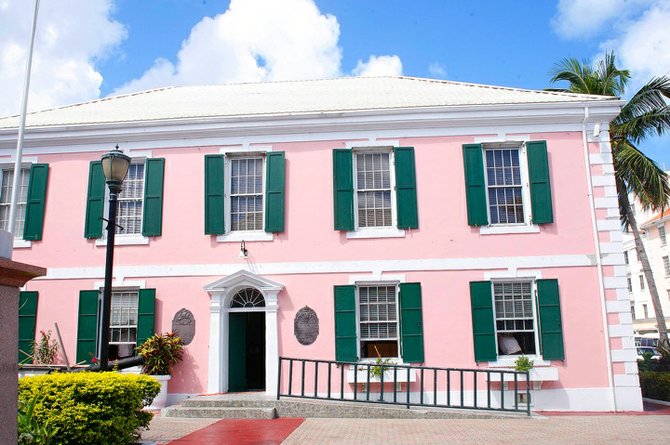
Bahamas Parliament – House of Assembly – Nassau

This is a serious issue!

This relates to the June 7th, 2016 referendum in the Bahamas. The measure listed 4 bills for constitutional amendments relating to Gender Equality, designed to correct some inequities in the legal structures of the country. The following summaries apply:

BILL 1: Would allow a child born outside of the Bahamas to a Bahamian mother and a non-Bahamian father to have citizenship.

BILL 2: Would allow a foreign man married to a Bahamian woman to seek citizenship.

BILL 3: Would allow an unmarried Bahamian father to pass his citizenship to a child born to a foreign mother.

BILL 4: Would end discrimination based on sex.
(Source: https://en.wikipedia.org/wiki/Bahamian_constitutional_referendum,_2016 )

Update June 8, 2016:  The Referendum failed in every constituency and every precinct. The ‘No‘ Vote movement succeeded overwhelmingly; see a related article here.

Like most societies, there are males and females, majorities and minorities. So an even more grave issue is brought to mind:

Human / Natural Rights of Men versus Women and Majorities versus Minorities

CU Blog - Women in Politics - Yes, They Can - Photo 5The Human Rights premise is: for those people who are not treated equal in a society, their rights should NOT be dependent on some popularity contests among the majority. No one should have to seek someone else’s permission to be happy. This is easier said than done, as our Caribbean is notorious for repression for those who do not conform with the majority.

This commentary asserts that natural rights / human rights should be accorded, no matter the results of some referendum.

The disposition of the Bahamas “lay in the balance” from this referendum. What message has been sent to the world: inviting or disinviting?

The book Go Lean … Caribbean addresses these issues, from the perspective of economics and nation-building. This book serves as a roadmap for the introduction and implementation of the Caribbean Union Trade Federation (CU); the purpose of which is to elevate Caribbean society, for all 30 member-states. The book stresses the need to guarantee human rights protections for all Caribbean people (Page 220), recognizing that the region is diverse in ethnicities and cultures.

Can’t we all just get along?! – Rodney King 1994

If we fail to try, or send the wrong message as to our inclusiveness, we suffer a dire consequence – “brain drain”. This is also the strong point made by the Bahamas Chamber of Commerce and Employers Confederation in the following news article:

By: Neil Hartnell, Business Editor, The Tribune Daily Newspaper
(Source: Posted May 6, 2016; retrieved June 2, 2016 from: http://www.tribune242.com/news/2016/may/06/referendum-outcomes-brain-drain-impact/)

The upcoming constitutional referendum’s outcome could have far-reaching consequences for the Bahamian economy and its ability to reverse the “brain drain”, a senior private sector executive warned yesterday.

Edison Sumner, the Bahamas Chamber of Commerce and Employers Confederation’s (BCCEC) chief executive, told Tribune Business that the four Bills that Bahamians will vote on have profound implications beyond gender equality.

Depending on the outcome, Mr Sumner said the referendum may impact the Bahamas’ ability to retain – and attract – the ‘best and brightest’, including future generations of entrepreneurs and managers, given that it would affect how citizenship is bestowed.

“The Bahamas already complains, as does the region, about there being a ‘brain drain’,” he told Tribune Business, referring to how many college and university graduates elected to remain abroad after completing their studies.

Most cited the lack of opportunity, and economic diversification, as the reasons behind this choice, but Mr Sumner warned that this trend could be exacerbated depending on which way Bahamians vote.

The Bills, as designed, will enable a child born outside the Bahamas to automatically become a Bahamian citizen at birth if either of the parents was a Bahamian citizen at birth.

They will also “enable a Bahamian woman married to a foreign man to secure for him the same entitlements to citizenship that a Bahamian man married to a foreign woman already has under the constitution”.

The Bahamian father of a child born outside of marriage will be able to pass on his citizenship to that child if the third Bill is approved by the electorate, while the fourth Bill effectively enshrines gender equality as a fundamental right under the constitution.

Mr Sumner said that, viewed strictly from an economic and workforce perspective, the Bills would eventually have major ramifications for the Bahamas’ ability to expand its labour and entrepreneur pools, plus its attraction for investors.

Making it easier for children born to Bahamians in the circumstances outlined by the Bills to obtain citizenship/status, he added, would be key to ensuring these people became positive contributors to the Bahamas’ economic development and growth

“Those born to a Bahamian parent outside the outside the country, or born outside marriage, may find themselves in a precarious position where they are not Bahamian, and have no more entitlement to become Bahamian,” Mr Sumner explained.

“We want to retain as much of our intellectual capital in the Bahamas as possible to help us grow the economy, the education system, the infrastructure of the country.

“It has to be one of those situations where they must see the benefits in coming to the Bahamas, getting their citizenship here, and helping to build the country and the economy.”

Mr Sumner also warned that Bahamian employers needed to “pay attention” to what happens with the Bills and the referendum, given that the outcome might impact employee workplace relations and hiring practices.

Given that the constitution “trumps all legislation”, he added that the Employment Act, Industrial Relations Act and other labour legislation might be impacted by the referendum.

So voting wrong on the referendum could exacerbate the “brain drain”? Yes! Justice for all? No!

Public referendums are a product of a democratic process. But there is something else more important: rule of law or a constitution. This normally defines the moral code by which a society is to judge “right from wrong”. For many Caribbean nations, their constitutions embed principles from the Judeo-Christian principles – from the Bible. But does that mean they are “Christian nations”. Just consider the comments of one of the founding fathers of the Bahamas, Arthur D. Hanna. See VIDEO here:

VIDEO – Hon. A. D. Hanna debunks the “Christian nation” myth – https://youtu.be/0q0o2-4t3UI

Published on Nov 15, 2014 – Founding Father, framer of the constitution and former Governor-General Arthur Dion Hanna makes it abundantly clear that the Bahamas is NOT a Christian nation. (recorded at the Bahamas Historical Society, 13th November, 2014)

A Christian character is preferred for the individual; a “Christian nation”, not so much. A Christian nation would impose orthodoxy and dogma, prohibiting gender equality and establishing men as the “head” in their families and communities; plus a Christian nation would prohibit the activities of the LGBT communities, due to the religious orthodoxy. This orthodoxy premise often lead victims to flee their homeland to find refuge abroad, exacerbating the “brain drain” further.

So what principle would be recommended for a Caribbean nation or the region as a whole? The Go Lean book (Page 37) answers: the Greater Good:

“It is the greatest good to the greatest number of people which is the measure of right and wrong”. Jeremy Bentham (1748-1832)

The Go Lean book (Page 20) advocates for all of the Caribbean the community ethos of the Greater Good – “fundamental character or spirit of a culture; the underlying sentiment that informs the beliefs, customs, or practices of a group or society”. But respect for the sovereign territories of each member-state mandates that we respect the individual laws enacted there. (Though we can use peer-pressure to foster change).

The Go Lean/CU roadmap employs a tactic of a “Separation-of-Powers between CU federal agencies and Caribbean member-state governments”; so the limitations of national laws in a member-state does not have to override the CU. The CU constitution would apply to the installation of Exclusive Economic Zones (EEZ) and Self-Governing Entities (SGE) that operate in controlled bordered territories like campuses, industrial parks, research labs and industrial plants.

This roadmap brings hope to assuage the Caribbean orthodoxy.

The CU – applying the Greater Good principle – would facilitate the regional prime directives:

  • Optimization of the economic engines in order to grow the regional economy to $800 Billion & create 2.2 million new jobs.
  • Establishment of a security apparatus to protect the resultant economic engines, specifically in EEZ’s and SGE’s.
  • Improvement of Caribbean governance, with the appropriate separation-of-powers, to support these engines.

The book Go Lean … Caribbean asserts that CU controlled territories – like EEZ’s and SGE’s – can be strategic, tactical and operationally efficient for elevating Caribbean society and mandating “justice for all”. These sites can serve as peer pressure on the rest of the region. These points are pronounced early in the book with this Declaration of Interdependence (Page 12), including these statements:

xi. Whereas all men are entitled to the benefits of good governance in a free society, “new guards” must be enacted to dissuade the emergence of incompetence, corruption, nepotism and cronyism at the peril of the people’s best interest. The Federation must guarantee the executions of a social contract between government and the governed.

xii. Whereas the legacy in recent times in individual states may be that of ineffectual governance with no redress to higher authority, the accedence of this Federation will ensure accountability and escalation of the human and civil rights of the people for good governance, justice assurances, due process and the rule of law. As such, any threats of a “failed state” status for any member state must enact emergency measures on behalf of the Federation to protect the human, civil and property rights of the citizens, residents, allies, trading partners, and visitors of the affected member state and the Federation as a whole.

xiii. Whereas the legacy of dissensions in many member-states … will require a concerted effort to integrate the exile community’s repatriation, the Federation must arrange for Reconciliation Commissions to satiate a demand for justice.

xvi. Whereas security of our homeland is inextricably linked to prosperity of the homeland, the economic and security interest of the region needs to be aligned under the same governance. Since economic crimes, including piracy and other forms of terrorism, can imperil the functioning of the wheels of commerce for all the citizenry, the accedence of this Federation must equip the security apparatus with the tools and techniques for predictive and proactive interdictions.

The subject of optimizing justice institutions and the “truth and consequences” of justice failures have been directly addressed and further elaborated upon in these previous blog/commentaries:

https://goleancaribbean.com/blog/?p=8099 Caribbean Image: ‘Less Than’?
https://goleancaribbean.com/blog/?p=7989 Political Transformation results in “free money”
https://goleancaribbean.com/blog/?p=7628 ‘A Change Is Gonna Come’ – Inevitable for the Caribbean
https://goleancaribbean.com/blog/?p=7490 Push Factor: Interpersonal Violence / Domestic
https://goleancaribbean.com/blog/?p=5784 Push Factor: Caribbean Unjust LGBT Treatments – ‘Say It Ain’t So’!
https://goleancaribbean.com/blog/?p=5695 Repenting, Forgiving and Reconciling the Past
https://goleancaribbean.com/blog/?p=5304 Mitigating the Eventual ‘Abuse of Power’
https://goleancaribbean.com/blog/?p=4840 Caribbean Orthodoxy: Jamaican Poll – ‘Bring back the British!’
https://goleancaribbean.com/blog/?p=4240 Bad Policy – Immigration Policy Exacerbates Productivity Crisis
https://goleancaribbean.com/blog/?p=2994 Justice Strategy: Special Prosecutors … et al
https://goleancaribbean.com/blog/?p=2709 Caribbean Study: 58% Of Boys Agree to Female ‘Discipline’
https://goleancaribbean.com/blog/?p=695 Help for Abused Women Depicts Societal Defects

The Go Lean book itself details the economic principles and community ethos to adopt, plus the executions of strategies, tactics, implementations and advocacies to mitigate the “push and pull” factors that imperil our Caribbean region:

Community Ethos – Economic Principles – All Choices Involve Costs Page 21
Community Ethos – Economic Principles – People Respond to Incentives Page 21
Community Ethos – Economic Principles – Economic Systems Influence Individual Choices Page 21
Community Ethos – Economic Principles – Voluntary Trade Creates Wealth Page 21
Community Ethos – Economic Principles – Consequences of Choices Lie in the Future Page 21
Community Ethos – Security Principles – Privacy –vs- Public Protection Page 23
Community Ethos – Security Principles – Whistleblower Protection Page 23
Community Ethos – Security Principles – Witness Security & Protection Page 23
Community Ethos – Security Principles – Anti-Bullying and Mitigation Page 23
Community Ethos – Governing Principles – Minority Equalization Page 24
Community Ethos – Governing Principles – Lean Operations Page 24
Community Ethos – Governing Principles – Cooperatives Page 25
Community Ethos – Ways to Manage Reconciliations Page 34
Community Ethos – Ways to Improve Sharing Page 35
Community Ethos – Ways to Impact the Greater Good Page 37
Strategy – Vision – Trade Federation with Proxy Powers of a Confederacy Page 45
Strategy – Mission – Build and Foster Local Economic Engines Page 45
Strategy – Mission – Protect Stakeholders with Vigorous Law-and-Order measures Page 45
Tactical – Confederating a Non-Sovereign Union Page 63
Tactical – Fostering a Technocracy Page 64
Tactical – Separation of Powers – Homeland Security Page 75
Tactical – Separation of Powers – Justice Department Page 77
Implementation – Foreign Policy Initiatives at Start-up Page 102
Implementation – Start-up Security Initiatives Page 103
Implementation – Start-up Benefits from the EEZ – Security – Interdictions Page 104
Implementation – Steps to Implement Self-Governing Entities – Security and Justice Page 105
Implementation – Ways to Foster International Aid – For oppressed minority groups Page 115
Planning – Ways to Make the Caribbean Better – Measures for the Rich and Poor Page 131
Planning – Ways to Improve Failed-State Indices – Law Enforcement Oversight Page 134
Planning – Lessons from the American West – Law & Order needed for progress Page 142
Advocacy – Ways to Grow the Economy Page 151
Advocacy – Ways to Create Jobs Page 152
Advocacy – Ways to Improve Governance Page 168
Advocacy – Ways to Better Manage the Social Contract Page 170
Advocacy – Ways to Improve Leadership Page 171
Advocacy – Ways to Impact Justice Page 177
Advocacy – Ways to Reduce Crime Page 178
Advocacy – Ways to Improve Homeland Security Page 180
Advocacy – Ways to Mitigate Terrorism Page 181
Advocacy – Ways to Improve Intelligence Gathering & Analysis Page 182
Advocacy – Ways to Protect Human Rights Page 220

The Caribbean is comprised of males and females, majorities and minorities. Everyone must be afforded every opportunity for life, liberty and the pursuit of happiness. But “push and pull” emigration factors are real and important considerations for the Caribbean. The standards of justice – or lack there-of – have and can contribute to the “push” factors for people abandoning their homeland.

The foregoing news article depicts the crisis for the Bahamas.

The strong references to “brain drain” in the foregoing article and this commentary indicate that many in the community have felt oppressed or repressed, and have thusly “taken their talents to South Beach” or South New York, or South Toronto, or South London, etc. Since we need our talented human resources to build-up our own communities, we must examine all the debilitating factors – societal defects – in our homelands. We need to do better. The Caribbean in general and Bahamas in particular needs to send this message to the world that in our homeland, the legal premise must be:

… liberty, equality and justice for all.

The Go Lean … Caribbean roadmap seeks to employ strategies, tactics and implementations to dissuade the societal abandonment, invite the Diaspora to repatriate and further to recruit empowering immigrants to join us in our quest to make the Caribbean a better place to live, work and play. 🙂

Download the book Go Lean … Caribbean – now!

Share this post:
, , ,
[Top]

Venezuela: Watching a ‘Train Wreck in Slow Motion’

Go Lean Commentary

Watching Venezuela now is like watching a “train wreck … in slow motion”.

- Photo 1Didn’t we just see this recently … in a land far-far away – Greece? If the Venezuela parallel with Greece continues, we will be able to accurately predict that “things will get worse before it gets worse!”

This is not just an academic consideration for Caribbean stakeholders, as Venezuela boasts a vast coastline on the Caribbean Sea; they also share a border with one Caribbean member-state, Guyana, and supplies the region with a lot of its oil. And just recently with its PetroCaribe initiative, Venezuela was one hope to help eradicate poverty in the Caribbean. But now Venezuela is having a tough time protecting its own self from the pangs of poverty.

Many people are now waking up – inside and outside Venezuela – to the harsh realities that a Failed-State is emerging in our neighborhood, right in front of our eyes. Unfortunately, we – the Caribbean – are all too familiar. Consider here how Venezuela’s political institutions are crumbling:

  • The opposition parties refused to collaborate with the governing officials
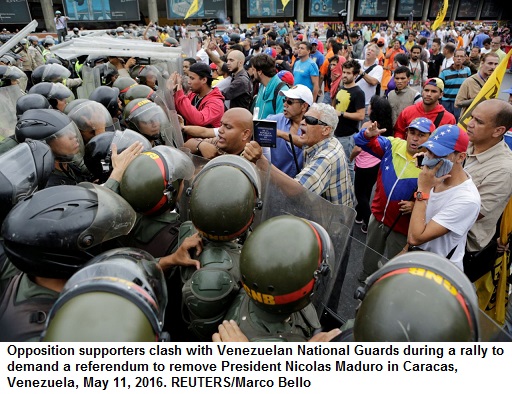
  • Riots in the streets
  • Assassinations of government officials
  • Economy in shambles
  • Currency in disarray
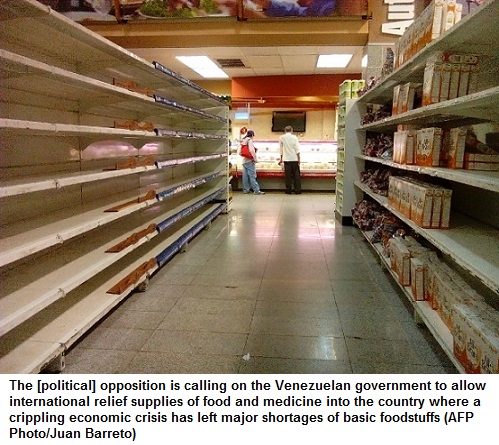
  • Cupboards and store shelves are bare – see Photo above
  • Basic government services – social contract – are not being executed
  • External parties – UNASUR – are coming in to intercede

See the news article here conveying this harsh reality in Venezuela:

Title: Venezuelan officials, opposition meet mediators over standoff
By: Ernesto Tovar

- Photo 2Caracas (AFP) – Venezuelan officials and opposition foes have held separate secret meetings in the Dominican Republic with a group of ex-world leaders seeking a way out of political crisis, officials said, as an ex-military reserve leader was shot dead.

Representatives of both sides of Venezuela’s political standoff met former Spanish prime minister Jose Luis Rodriguez Zapatero, former Dominican president Leonel Fernandez and Panama’s ex-president Martin Torrijos “in recent days” under the auspices of the Union of South American Nations, UNASUR, to seek a “framework for a national dialogue,” the organization said in a statement.

The mediating former leaders found “a desire for dialogue on both sides,” for which new meetings were proposed to “agree on an agenda that meets the requirements of each party and a method for engaging in national dialogue,” the statement said.

The meetings were the initiative of President Nicolas Maduro, Venezuelan Foreign Minister Delcy Rodriguez tweeted, saying the effort “promotes peace, respect for the rule of law and the defense of sovereignty and territorial integrity.”

The main center-right opposition group Democratic Unity Roundtable (MUD) said in a statement that its conditions for the talks were the holding of a referendum over Maduro’s recall, freeing political prisoners, allowing exiles to return and “an end to prosecutions for political persecution.”

The opposition is also calling on the government to allow international relief supplies of food and medicine into the country and seek to end a crippling economic crisis “generated by official corruption and an economic model that is spreading misery.”

The three former leaders also held talks with Maduro and the opposition under UNASUR auspices in Caracas two weeks ago.

Publicly, the two sides could not be further apart.

MUD which blames Maduro for the economic crisis, accuses the electoral authorities of dragging their feet in processing their petition for a referendum on removing the socialist leader from office.

Although a survey last month showed 68 percent of Venezuelans want Maduro to leave office and to hold new elections, he has said the referendum drive has “very little support.”

Venezuela has the world’s largest oil reserves, but its economy is reeling from the collapse in global crude prices.

Venezuelans are experiencing severe food and medicine shortages compounded by the world’s highest inflation — almost 190 percent in 2015, which the International Monetary Fund predicts will balloon to 700 percent in 2016.
Source: Yahoo/AFP Online News – Retrieved May 29, 2016 from: https://www.yahoo.com/news/venezuelan-officials-opposition-meet-mediators-over-standoff-020940920.html?nhp=1

Yet still, there are a lot of lessons for the Caribbean to consider from this crisis – a “crisis is a terrible thing to waste” declares the book Go Lean … Caribbean (Page 8). As a region with past and present Failed-States, we must not fail to discern these lessons.

- Photo 6For starters, there is a super-national organization that Venezuelan stakeholders are able to escalate to for mediation, the Union of South American Nations – UNASUR according to the Spanish-language acronym. A super-national organization – for mediation and conflict resolution – is also the goal of the Caribbean Union Trade Federation (CU). In both cases, the goal is to model the European Union. See details and VIDEO of the UNASUR organization in the Appendices below:

The UNASUR organization, as described below, is part of the Latin American integration movement, combining the efforts of the Andean Community and the Southern Common Market (Mercosur). This should be the primary strategy for mitigating Failed-State status in South America. While Venezuela is a sovereign state, they can still be held accountable to their neighbors in UNASUR; this would be a product of peer pressure and the threat of sanctions. Too bad this integration movement is not complete in its construct, as this would have been most effective in stopping this “slow motion train wreck”.

In fact, in the 2004 South American Summit, representatives of these twelve South American nations participated:

1 These countries are also considered to be associate members of Mercosur.
2 These countries are also considered to be associate members of the Andean Community.
C Caribbean Community (CARICOM) member state
L Latin American Integration Association (ALADI) member state
M Accessing member to Mercosur
Source: Retrieved May 31, 2016 from: https://en.wikipedia.org/wiki/Union_of_South_American_Nations

The leaders of these countries announced the intention of modeling the new community in the mold of the European Union, including a unified passport, a parliament and, eventually, a single currency. The then Secretary General of the Andean Community – Allan Wagner – speculated at that time that the advanced union like the EU should be possible within the next fifteen years. Based on these experiences in Venezuela, this integration movement is a “day late and a dollar short”.

The actuality of Venezuela is more than just a cautionary tale for the Caribbean, it is also a Caribbean problem. In addition to the presence of Caribbean Community member-states of Guyana and Suriname, many aspects of Venezuelan life parallel those of the Caribbean in general and in specifics – see these previous blog-commentaries:

Mono-Industrial Economy

Majority of consumer goods imported and pricey

Close proximity with other countries, not suffering this failing status

Long legacy of bad community ethos regarding fiscal responsibilities

Validation of regional criticism

High societal abandonment rate

Large Diaspora abroad

Challenge of security / public safety

Incompetent governance

Being at the brink of disaster, at the precipice, is perhaps the only time communities are willing to reform and transform. This reality is what inspired the book Go Lean…Caribbean to serve as a roadmap for the introduction and implementation of the technocratic Caribbean Union Trade Federation (CU). The events of the 2008 Global Financial Crisis was the trigger for the composition of this book. Will Venezuela now use this crisis to forge change for its society?

Will the Caribbean forge change by just “observing and reporting” on Venezuela? There are many lessons to learn and the Caribbean community is urged not to ignore. The lessons learned, and codified in the pages of the Go Lean book can now be enhanced with the examination of the realities of Venezuela. This examination must consider the reality of the economic, security and governing aspects of Venezuelan society and the resultant consequences on their neighbors.

Like the UNASUR initiative, the Go Lean roadmap calls for a confederation of the 30 member-states of the Caribbean into a Single Market of 42 million people so as to leverage the governing burden across a separation-of-powers: a federal government and member-state government. This allows a new response to national crisis (economic, security and governance). This vision is at the root of the Go Lean roadmap, embedded in the opening Declaration of Interdependence (Page 12 – 13):

x. Whereas we are surrounded and allied to nations of larger proportions in land mass, populations, and treasuries, elements in their societies may have ill-intent in their pursuits, at the expense of the safety and security of our citizens. We must therefore appoint “new guards” to ensure our public safety and threats against our society, both domestic and foreign. The Federation must employ the latest advances and best practices … to assuage continuous threats against public safety.

xii. Whereas the legacy in recent times in individual states may be that of ineffectual governance with no redress to higher authority, the accedence of this Federation will ensure accountability and escalation of the human and civil rights of the people for good governance, justice assurances, due process and the rule of law. As such, any threats of a “failed state” status for any member state must enact emergency measures on behalf of the Federation to protect the human, civil and property rights of the citizens, residents, allies, trading partners, and visitors of the affected member state and the Federation as a whole.

xvi. Whereas security of our homeland is inextricably linked to prosperity of the homeland, the economic and security interest of the region needs to be aligned under the same governance. Since economic crimes, including piracy and other forms of terrorism, can imperil the functioning of the wheels of commerce for all the citizenry, the accedence of this Federation must equip the security apparatus with the tools and techniques for predictive and proactive interdictions.

xxiv. Whereas a free market economy can be induced and spurred for continuous progress, the Federation must install the controls to better manage aspects of the economy: jobs, inflation, savings rate, investments and other economic principles. Thereby attracting direct foreign investment because of the stability and vibrancy of our economy.

The following details from the book Go Lean … Caribbean are the community ethos, strategies, tactics, implementations and advocacies necessary to effect the turn-around of the Caribbean societal engines – to learn from failing communities (like Greece and Venezuela):

Community Ethos – Economic Systems Influence Individual Choices Page 21
Community Ethos – Economic Principles – Money Multiplier Page 21
Community Ethos – Governing Principles – Lean Operations Page 24
Community Ethos – Ways to Impact the Future Page 26
Community Ethos – Ways to Impact Turn-Arounds Page 33
Community Ethos – Ways to Impact the Greater Good Page 37
Strategy – Vision – Confederate all 30 Member-States into a Single Market Page 47
Strategy – Mission – Build and foster local economic engines Page 45
Strategy – Mission – Fortify the stability of our mediums of exchange Page 45
Strategy – Mission – Dissuade further Brain Drain Page 46
Tactical – Confederating a Permanent Union Page 63
Tactical – Fostering a Technocracy Page 64
Tactical – Separation of Powers – Federal Government versus Member-States Page 71
Implementation – Assemble all Member-States Page 96
Implementation – Ways to Pay for Change Page 101
Implementation – Foreign Policy Initiatives at Start-up – Relationship with Venezuela Page 102
Implementation – Ways to Foster International Aid Page 115
Planning – Ways to Model the European Union Page 130
Planning – Ways to Improve Failed-State Indices Page 134
Planning – Lessons Learned from 2008 – The Global Financial Crisis Page 136
Advocacy – Ways to Grow the Economy Page 151
Advocacy – Ways to Create Jobs Page 152
Advocacy – Better Manage the Social Contract Page 170
Advocacy – Ways to Preserve Caribbean Heritage Page 218
Advocacy – Ways to Protect Human Rights Page 218
Advocacy – Ways to Re-boot Cuba – Marshall Plan Tactic for Failed-States Page 236
Advocacy – Ways to Re-boot Haiti – Marshall Plan Tactic for Failed-States Page 238
Appendix – Caribbean Failed-State Indicators and Definitions Page 271

Unless mitigated, Venezuela will become a Failed-State. We hope that the country, and their South American neighbors can secure their society to assure peace and the protection of human rights.

We also have near Failed-States in the Caribbean: Think: Haiti, Puerto Rico and Cuba; plus a host of countries just slightly behind them. We have to foster our own turn-around strategies for our region.

Venezuela is out of scope for the Go Lean roadmap; our quest is to reform and transform the Caribbean. The roadmap declares that the responsibility for fixing the Caribbean though must fall first-and-foremost on the Caribbean, its people and institutions. The effort is not easy; the Go Lean book describes it as heavy-lifting. But the returns will be worth the investment. This is true for Venezuela … and the Caribbean.

This is the goal of the Go Lean roadmap: to make the Caribbean a better place to live, work and play. 🙂

Download the free e-Book of Go Lean … Caribbean – now!

Sign the petition to lean-in for this roadmap for the Caribbean Union Trade Federation.

———————-

Appendix – Union of South American Nations – UNASUR

- Photo 3The Union of South American Nations (USAN; Spanish: Unión de Naciones SuramericanasUNASUR; Portuguese: União de Nações Sul-Americanas,UNASUL; Dutch: Unie van Zuid-Amerikaanse NatiesUZAN) is an intergovernmental regional organization comprising 12 South American countries.

The UNASUR Constitutive Treaty was signed on 23 May 2008 – [legally completing the integration between the Andean Community and the Southern Common Market (Mercosur) nations] – at the Third Summit of Heads of State, held in Brasília, Brazil.[7] According to the Constitutive Treaty, the Union’s headquarters will be located in Quito, Ecuador.[2] On 1 December 2010, Uruguay became the ninth state to ratify the UNASUR treaty, thus giving the union full legality.[8][9] As the Constitutive Treaty entered into force on 11 March 2011, UNASUR became a legal entity during a meeting of Foreign Ministers in Mitad del Mundo, Ecuador, where they had laid the foundation stone for the Secretariat Headquarters.[10] The South American Parliament will be located in Cochabamba, Bolivia, while the headquarters of its bank, the Bank of the South are located in Caracas,Venezuela.[2]

On 4 May 2010, at a heads of state summit held in Campana, 47 miles north of Buenos Aires, former Argentine President Néstor Kirchner was unanimously elected the first Secretary General of UNASUR for a two-year term.

Structure

At the moment, the provisional structure of the UNASUR is as follows:

  • A permanent Secretariat is to be established in Quito, Ecuador. The Secretary General, with a two-year mandate, is to be elected on a consensual basis among the Heads of State of the member states. Former Argentine President Néstor Kirchner was designated the first Secretary General on 4 May 2010.[20]
  • The presidents of the member nations will have an annual meeting, which will have the superior political mandate. The first meeting was in Brasília (Brazil) on 29–30 September 2005. The second meeting was in Cochabamba (Bolivia) on 8–9 December 2006. The third meeting was held in Brasília on 23 May 2008.
  • - Photo 5The Presidency Pro Tempore, is exercised for a one-year period on a pro tempore basis by one of the heads of state of each UNASUR Member State, the succession following alphabetical order. The first leader to occupy this position was Chilean President Michelle Bachelet. According to Decisions Reached in the Political Dialogue[21] which was signed during the First South American Energy Summit.
  • The ministers of foreign affairs of each country will meet once every six months. They will formulate concrete proposals of action and of executive decision. The President of the Mercosur’s permanent representatives committee and the director of the Mercosur’s department, the Andean Community’s general secretary, the general secretary of the Latin American Integration Association (ALADI) and the permanent secretaries of any institution for regional cooperation and integration, Amazon Cooperation Treaty Organization among others, will also be present at these meetings.
  • Sectorial Ministers’ meeting will be called upon by the presidents. The meetings will be developed according to Mercosur’s and CAN’s mechanisms.
  • On 9 December 2005, a special commission was established in charge of advancing the process of South American Integration. It consists of 12 members, whose function is to elaborate proposals that will help the process of integration between the South American nations.

An Executive Commission, which was created by the II CSN meeting, was transformed in the Political Commission or Delegates Council, according to Decisions Reached in the Political Dialogue.[21]

- Photo 4
=============================

APPENDIX – VIDEO – UNASUR –  https://youtu.be/rNjkr7y8-Kc

Published on Apr 16, 2016 – The Union of South American Nations, or UNASUR, marks its ninth anniversary this Sunday, April 17 with a 12-kilometer race in Ecuador with the aim of “bringing the regional body closer to the people.” The UNASUR Secretary-General Ernesto Samper resumed in a few words what the bloc is all about: “To promote peace, democracy and respect of human rights, as well as a Latin American integration. http://multimedia.telesurtv.net/v/una…

Share this post:
, ,
[Top]

ENCORE: Memorial of ‘National Sacrifice’

Miami, Florida USA – This blog/commentary is an ENCORE of the original blog from January 15, 2015. This is being re-distributed on this Memorial Day 2016, a US holiday set aside to remember the more than one million men and women who gave their lives in service of their country, the United States of America. The memory of these ones is raised by the living, who resolve not to let their sacrifice be in vain, but to rise up in their stead and continue the fight for liberty and justice for all.

Fight or Flight  The original commentary below was not a glorification of war, but rather an acknowledgement of the National Sacrifice necessary to forge change in a society. Our Caribbean needs more of a National Sacrifice ethos, rather that the propensity to flee – the current attitude – at the earliest signs of distress. We must rather, fight for change!

—————————————–

Go Lean Commentary

CU Blog - National Sacrifice - The Missing Ingredient - Photo 3The term National Sacrifice is defined here as the willingness to die for a greater cause; think “King/Queen and Country”. This spirit is currently missing in the recipe for “community” in the Caribbean homeland.

To be willing to die for a cause means that one is willing to live for the cause. Admittedly, “dying” is a bit extreme. The concept of “sacrifice” in general is the focus of this commentary.

The publishers of the book Go Lean…Caribbean wants to forge change in the Caribbean, we want to change the attitudes for an entire community, country and region. We have the track record of this type of commitment being exemplified in other communities. (Think: The US during WW II). Now we want to bring a National Sacrifice attitude to the Caribbean, as it is undoubtedly missing. This is evidenced by the fact the every Caribbean member-state suffers from alarming rates of societal abandonment: 70% of college educated population in the English states have left in a brain drain, while the US territories have lost more than 50% of their populations).

The book Go Lean…Caribbean opens with the acknowledgement that despite having the “greatest address in the world… the people of the Caribbean have beat down their doors to get out”, (Page 5).

CU Blog - National Sacrifice - The Missing Ingredient - Photo 4The book Go Lean…Caribbean serves as a roadmap for the introduction and implementation of the Caribbean Union Trade Federation (CU); a confederation to bring change, empowerment, to the Caribbean region; to make the region a better place to live, work and play for all stakeholders (residents, visitors, businesses, organizations – NGO’s and governments). This Go Lean roadmap also has initiatives to foster solutions for the Caribbean youth. The Go Lean book posits that permanent change for Caribbean society will only take root as a result of adjustments to the community attitudes, the national spirit that drives the character and identity of its people. This is identified in the book as “community ethos”; and that one such character, National Sacrifice is sorely missing in this region.

Any attempts to change Caribbean society’s community ethos must start with the youth.

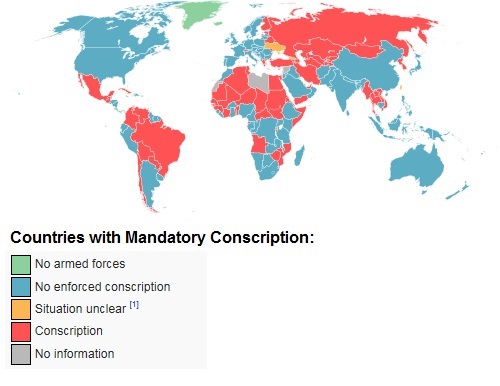
At no point should it be construed that this commentary is advocating sacrificing young men (and women) on the altar of the God of War. But rather, this commentary laments the missing ingredients of wholesale commitment to any national cause. Thusly, the recommendation is for conscription/draft (Appendix B) into a National Youth Service (NYS) program for the Caribbean. Take it one step further and make the Youth Service program regional in its scope rather than “national”; with applicable exemptions for:

  • military/police enrollments
  • student/research deferments (at regional institutions)
  • religious/missionary assignments
  • medical/disability exceptions

This quest relates a commitment so vital to a community that everyone should be willing to sacrifice and lean-in for the desired outcome. This Caribbean effort is not new to the world; it is currently being championed by a Washington-DC-based global Non-Government Organization (NGO) branded the Innovations in Civic Participation (ICP). Much can be learned from analyzing their successes … and failures. See details here:

Innovations in Civic Participation – NGO – Leaders for Youth Civic Engagement (Retrieved 01/15/2015):

Innovations in Civic Participation (ICP) is a global leader in the field of Youth Civic Engagement. ICP envisions a world where young people in every nation are actively engaged in improving their lives and their communities through civic participation. We believe that well-structured youth service programs can provide innovative solutions to social and environmental issues, while helping young people develop skills for future employment and active citizenship.

ICP carries out its mission through four main activities:

  1. Incubating innovative models for youth service programs;
  2. Creating and expanding global networks;
  3. Conducting research and publicizing information on youth civic engagement, especially national youth service and service-learning; and
  4. Serving as a financial intermediary to support program innovation and policy development.

In addition to these activities, ICP regularly consults with its extensive network of over 2,500 academics, policymakers, program entrepreneurs, and other leaders in the field on program and policy work.

Contact Information:

Innovations in Civic Participation
P.O. Box 39222
Washington, DC 20016
202-775-0290

http://www.icicp.org/about-us/

A quest for a National Youth Service has previously been advocated in Sub-Saharan Africa (see Appendix C). There, the NYS was designed to explore the potential to foster youth employability, entrepreneurship, and sustainable livelihoods. This effort stemmed from an existing tradition of NYS programs in Sub-Saharan Africa, which were originally designed to cultivate a sense of national identity and mobilize skills for development in post-independence nations; (see Appendix A). Today, NYS programs operate in the context of a deepening regional youth unemployment crisis, which averages over 20 percent, according to African Economic Outlook. NYS programs engage hundreds of thousands of young people each year and have the potential to equip them with strong civic skills and prepare them for employment and livelihood opportunities.

Despite its potential as an economic strategy, little is still known about how effective NYS programs are at increasing youth employability in Africa. But there is no doubt for the commitment to community that is forged from these efforts. Young people cry, sweat, and bleed for their community, embedding a desire to sacrifice for the Greater Good.

This corresponds with the Bible precept: “There is more happiness in giving than in receiving” – Acts 20:35

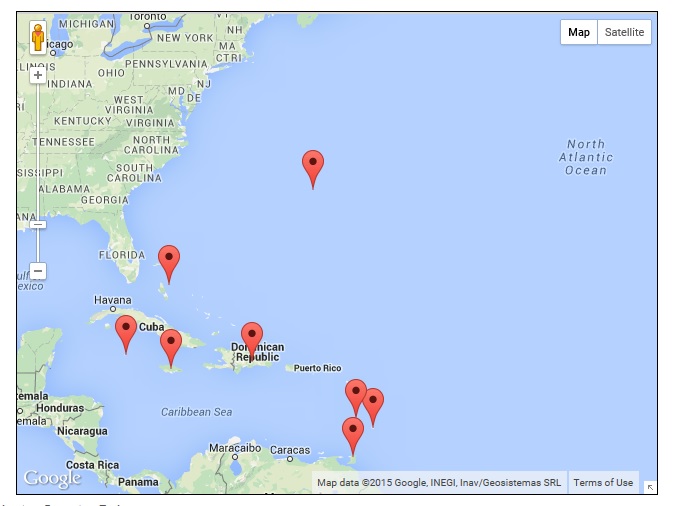
There are NYS programs already deployed or proposed for these Caribbean member-states, (though many have been snagged or stalled):

CU Blog - National Sacrifice - The Missing Ingredient - Photo 1

The purpose of the Go Lean book/roadmap is more than just the embedding of new community ethos, but rather the elevation/empowerment of Caribbean society. In total, the Caribbean empowerment roadmap has these 3 prime directives:

  • Optimization of the economic engines in order to grow the regional economy to $800 Billion & create 2.2 million new jobs.
  • Establishment of a security apparatus to protect the resultant economic engines.
  • Improve Caribbean governance and industrial policies to support these engines.

The roadmap details the following community ethos, plus the execution of these strategies, tactics, implementation and advocacies to forge permanent change in the region:

Community Ethos – Deferred Gratification Page 21
Community Ethos – Economic Principles – People Choose Page 21
Community Ethos – Economic Principles – People Respond to Incentives in Predictable Ways Page 21
Community Ethos – Economic Principles – The Consequences of Choices Lie in the Future Page 21
Community Ethos – Governing Principles – Lean Operations Page 24
Community Ethos – Governing Principles – Cooperatives Page 25
Community Ethos – Ways to Impact the Future Page 26
Community Ethos – Ways to Impact a Turn-Around Page 33
Community Ethos – Ways to Improve Sharing Page 35
Community Ethos – Ways to Promote Happiness Page 36
Community Ethos – Ways to Impact the Greater Good Page 37
Strategy – Vision – Confederate 30 Member-States Page 45
Strategy – Mission – Enact a Defense Pact to Defend the Homeland Page 45
Strategy – Mission – Keep the next generation at home Page 46
Tactical – Confederating a Permanent Union Page 63
Tactical – Fostering a Technocracy Page 64
Tactical – Separation-of-Powers Between CU & Member-States Governments Page 71
Implementation – Assemble – Incorporating all the existing regional organizations Page 96
Implementation – Ways to Pay for Change Page 101
Implementation – Security Initiatives at Start-up Page 103
Implementation – Ways to Deliver Page 109
Planning – 10 Big Ideas for the Caribbean – Confederation Without Sovereignty Page 127
Planning – Ways to Make the Caribbean Better Page 131
Planning – Lessons Learned from the West Indies Federation – Military Units Page 135
Advocacy – Ways to Grow the Economy Page 151
Advocacy – Ways to Create Jobs Page 152
Advocacy – Ways to Better Manage the Social Contract Page 170
Advocacy – Ways to Manage Federal Civil Service Page 173
Advocacy – Ways to Improve Homeland Security Page 181
Advocacy – Ways to Improve Communications Page 186
Advocacy – Ways to Preserve Caribbean Heritage Page 218
Advocacy – Ways to Impact Youth Page 227
Appendix – 30,000 Federal Employees Page 299
Appendix – Previous West Indies Integration – Caribbean Regiment Page 301

Previously Go Lean blog/commentaries have considered historic references and have also stressed fostering the proper and appropriate community ethos for the Caribbean to prosper; and reported on the repercussions and consequences of bad ethos. The following sample applies:

https://goleancaribbean.com/blog/?p=2830 Bad Ethos: Jamaica’s Public Pension Under-funded
https://goleancaribbean.com/blog/?p=2809 A Lesson in Bad Community Ethos : East Berlin/Germany
https://goleancaribbean.com/blog/?p=2480 A Lesson in History: Community Ethos of WW II
https://goleancaribbean.com/blog/?p=2297 A Lesson in History – Booker T versus Du Bois – to Change a Bad Community Ethos
https://goleancaribbean.com/blog/?p=1531 A Lesson in History: 100 Years Ago – World War I – Cause and Effect in Community Ethos
https://goleancaribbean.com/blog/?p=841 Having Less Babies is Bad for the Economy – Need People
https://goleancaribbean.com/blog/?p=623 Only at the Precipice, Do Communities Change
https://goleancaribbean.com/blog/?p=353 Book Review: ‘Wrong – Nine Economic Policy Disasters and What We Can Learn…’
https://goleancaribbean.com/blog/?p=228 Egalitarianism versus Anarchism – Community Ethos Debate

All in all, there is a certain community ethos associated with populations that have endured change. It is a National Sacrifice, a deferred gratification and focus on the future. Any losses of privileges are appreciated by the entire community, not just the affected individual or family member. This is the purpose of the US Memorial Day Holiday on the last Monday in May, honoring the military service of all our men and women in uniform, their families at home, and those who have made the ultimate sacrifice in dying for their country. A quest to unite the country in remembrance and appreciation of the fallen and to serve those who are grieving is a good way to forge a community ethos of National Sacrifice.

See VIDEO here of a community’s great honor to a slain soldier:

VIDEO: Sky Mote: Community Honors a Fallen Soldier from El Dorado County with a Hero’s Welcome –   http://youtu.be/MVQORRQvTpU

Published on Aug 17, 2012 – Starting with a Marine Honor Guard carrying the transfer case containing the body of Staff Sgt. Sky R. Mote of El Dorado, CA, upon arrival at Dover Air Force Base, Del. on Sunday Aug. 12, 2012. (AP Photo/Jose Luis Magana). Then continuing with the great Welcome Home the community gave. His family will never forget!

Though this Fallen Soldier is mourned and missed, his sacrifice is duly acknowledged, appreciated and honored in his hometown. This community spirit creates a value system for public service and National Sacrifice.

The US is not the only country that memorializes their war dead. Those countries that do, experience less societal abandonment. The British Commonwealth of Nations (representative of 18 Caribbean member-states) shows likewise homage to their Fallen Soldiers. The Commonwealth War Graves Commission (CWGC) is responsible for maintaining the war graves of 1.7 million service personnel that died in the First and Second World Wars fighting for Commonwealth member states. Founded in 1917 (as the Imperial War Graves Commission), the Commission has constructed 2,500 war cemeteries, and maintains individual graves at another 20,000 sites around the world.[107] The vast majority of the latter [however] are civilian cemeteries in Great Britain. (Source: http://en.wikipedia.org/wiki/Commonwealth_War_Graves_Commission).

The former British colonies did not adopt this National Sacrifice value system. As most Caribbean (notwithstanding the US Territories) member-states do not even have a (work-free) holiday to honor the sacrifices of those that fought, bled and/or died for their country.

No appreciation, no sacrifice; no sacrifice, no victory. It is that simple!

It is the recommendation of this blog/commentary that all Caribbean member-states should mandate a civilian conscription service for their citizens (1 year between ages 18 and 25); it is common for a confederation – the CU for the Caribbean – to marshal a multi-state, allied military force. Then the CU should facilitate a complete eco-system of engaging the conscripted NYS participants to serve and protect the people and resources of the Caribbean. After which, the communities should show proper appreciation and honor to those that make these sacrifices for “King/Queen and Country”, from all conscription services: military service, public and civilian.

(Many times school teachers and administrators are lowly paid; their service to their country is a great sacrifice).

Veteran-style benefits should thusly be considered for all these “national” servants. This commitment from the community would go far in forging deep loyalty within the citizenry, thus mitigating quick abandonment of the homeland.

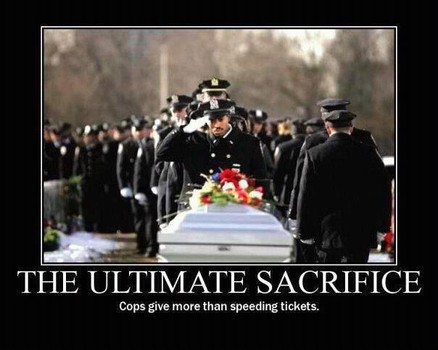
There is a separation-of-powers between the CU federal agencies and Caribbean member-states, so the CU would have no authority on how member-states manage, appreciate or honor their civil servants; unless some CU grants/funding apply. But for CU personnel, the practice will be institutionalized to recognize the service of long-time civil servants (active or retired) and their sacrifices. So for any human resource that die in the line of duty, the funeral processions will be filled with pomp and circumstance, much like the foregoing VIDEO.

“The [servants] who perform well are to be considered worthy of double honor, especially those who work hard …” – Bible 1 Timothy 5:17

Now is the time to lean-in to this roadmap for Caribbean change, as depicted in the book Go Lean…Caribbean. All the mitigations and empowerments in this roadmap require people to remain in the homeland. No people, no hope! A community ethos, a spirit or attitude of sacrifice for the Greater Good is a great start to forge change; no sacrifice, no victory.

🙂

Download the book Go Lean … Caribbean – now!

——————-

Appendix A – ICP Studies and Results

Overview of the National Youth Service Landscape in Sub-Saharan Africa

National Youth Service Project on Employability, Entrepreneurship and Sustainable Livelihoods in Sub-Saharan Africa: Synthesis Report

——————

Appendix B – Conscription (or Drafting)
This is the compulsory enlistment of people in some sort of National Service, most often military service.[2] Conscription dates back to antiquity and continues in some countries to the present day under various names. The modern system of near-universal national conscription for young men dates to the French Revolution in the 1790s, where it became the basis of a very large and powerful military. Most European nations later copied the system in peacetime, so that men at a certain age would serve 1–8 years on active duty and then transfer to the reserve force.

CU Blog - National Sacrifice - The Missing Ingredient - Photo 2Conscription is controversial for a range of reasons, including conscientious objection to military engagements on religious or philosophical grounds; political objection, for example to service for a disliked government or unpopular war; and ideological objection, for example, to a perceived violation of individual rights. Those conscripted may evade service, sometimes by leaving the country.[4] Some selection systems accommodate these attitudes by providing alternative service outside combat-operations roles or even outside the military, such as civil service in Austria and Switzerland.

As of the early 21st century, many states no longer conscript soldiers, relying instead upon professional militaries with volunteers enlisted to meet the demand for troops. The ability to rely on such an arrangement, however, presupposes some degree of predictability with regard to both war-fighting requirements and the scope of hostilities. Many states that have abolished conscription therefore still reserve the power to resume it during wartime or times of crisis.[5] (Source: http://en.wikipedia.org/wiki/Conscription)

National Service is a common name for mandatory or volunteer government service programmes. The term became common British usage during and for some years following the Second World War. Many young people spent one or more years in such programmes. Compulsory military service typically requires all citizens, or all male citizens, to participate for a period of a year (or more in some countries) during their youth, usually at some point between the age of 18 and their late twenties. (Source: http://en.wikipedia.org/wiki/National_service)

——————

Appendix C  – National Youth Service Corps in Nigeria
The National Youth Service Corps (NYSC) is an organisation set up by the Nigerian government to involve the country’s graduates in the development of the country. There is no military conscription in Nigeria, but since 1973 graduates of universities and later polytechnics have been required to take part in the National Youth Service Corps (NYSC) program for one year.[1] This is known as national service year.

“Corp” members are posted to cities far from their city of origin. They are expected to mix with people of other tribes, social and family backgrounds, to learn the culture of the indigenes in the place they are posted to. This action is aimed to bring about unity in the country and to help youths appreciate other ethnic groups.

There is an “orientation” period of approximately three weeks spent in a camp away from family and friends. There is also a “passing out ceremony” at the end of the year and primary assignment followed by one month of vacation.

The program has also helped in creating entry-level jobs for many Nigerian youth. An NYSC forum dedicated to the NYSC members was built to bridge the gap amongst members serving across Nigeria and also an avenue for members to share job information and career resources as well as getting loans from the National Directorate Of Employment.

The program has been met with serious criticism by a large portion of the country. The NYSC members have complained of being underpaid, paid late or not paid at all.[2] Several youths carrying out the NYSC program have been killed in the regions they were sent to due to religious violence, ethnic violence or political violence.[3]

A series of bomb and other violent attacks, especially in the North, rocked the country’s stability in the period preceding the 2011 gubernatorial and presidential elections. Most common of these attacks was perpetuated by the Islamist extremist terrorist group called Boko Haram. “Boko Haram” means “Western education is a sin” in the local hausa dialect in Nigeria. The group “Boko Haram” is against western education and wants to establish an Islamic state in Nigeria’s northern region.

Worst hit were National Youth Service Corps members, some of whom lost their lives.
(Source: http://en.wikipedia.org/wiki/National_Youth_Service_Corps)

Share this post:
, , ,
[Top]

Transformations: Civil Disobedience … Still Effective

Go Lean Commentary

This commentary has previously identified African-American Abolitionist Frederick Douglass as a role model for the Caribbean, despite the fact that his advocacy was 150 years ago. His is quite the legacy:

“Those who profess to favor freedom, yet deprecate agitation, are men who want crops without plowing up the ground. They want rain without thunder and lightening. They want the ocean without the awful roar of its many waters. This struggle may be a moral one; or it may be a physical one; or it may be both moral and physical; but it must be a struggle. Power concedes nothing without a demand. It never did and it never will.” – Frederick Douglass

CU Blog - American Defects - Racism - Is It Over - Photo 1

The publishers of the book Go Lean…Caribbean recognize the contributions of role models who used civil disobedience to reform and transform their societies, Frederick Douglass included. The book specifically details (Page 122) these other advocates:

Mohandas Gandhi Indian Independence
Dr. Martin Luther King African-American Civil Rights Movement
Nelson Mandela South Africa’s Anti-Apartheid
Cesar Chavez Migrant Farm Workers in the US
Candice Lightner Mothers Against Drunk Driving (MADD)

The quest to transform society, as accomplished by these foregoing named advocates, is familiar to the movement behind the book Go Lean…Caribbean. This book asserts that the societal engines in the Caribbean (economy, security, and governance) are deficient and defective and need to be reformed and transformed to make our homeland a better place to live, work and play. This is commentary 4 of 4 from this movement on the subject of transformations: how to move our region from the deficient-defective status quo to the undisputed title of “greatest address on the planet”. All these commentaries detailed transformation issues, as follows:

  1. Perfecting our Core Competence
  2. Money Matters – “Getting over” with “free money”
  3. Caribbean Postal Union (CPU) – Delivering the Future
  4. Civil Disobedience … Still Effective

The Go Lean book details the quest to transform the Caribbean; it features a how-to guide, a roadmap for elevating the region’s societal engines using effective tactics like civil disobedience.

Civil disobedience has been effective in the past … see a related history here:

Title: History of Mass Nonviolent Action

Source: ACT UPAIDS Coalition To Unleash Power – Civil Disobedience Training – Retrieved 05-22-2016 from: http://www.actupny.org/documents/CDdocuments/HistoryNV.html

The use of nonviolence runs throughout history. There have been numerous instances of people courageously and nonviolently refusing cooperation with injustice. However, the fusion of organized mass struggle and nonviolence is relatively new. It originated largely with Mohandas Gandhi in 1906 at the onset of the South African campaign for Indian rights. Later, the Indian struggle for complete independence from the British Empire included a number of spectacular nonviolent campaigns. Perhaps the most notable was the year-long Salt campaign in which 100,000 Indians were jailed for deliberately violating the Salt Laws.

The refusal to counter the violence of the repressive social system with more violence is a tactic that has also been used by other movements. The militant campaign for women’s suffrage in Britain included a variety of nonviolent tactics such as boycotts, noncooperation, limited property destruction, civil disobedience, mass marches and demonstrations, filling the jails, and disruption of public ceremonies.

The Salvadoran people have used nonviolence as one powerful and necessary element of their struggle. Particularly during the 1960s and 70s, Christian based communities, labor unions, campesino organizations, and student groups held occupations and sit-ins at universities, government offices, and places of work such as factories and haciendas.

There is rich tradition of nonviolent protest in this country as well, including Harriet Tubman’s underground railroad during the civil war and Henry David Thoreau’s refusal to pay war taxes. Nonviolent civil disobedience was a critical factor in gaining women the right to vote in the United States, as well.

The U.S. labor movement has also used nonviolence with striking effectiveness in a number of instances, such as the Industrial Workers of the World (IWW) free speech confrontations, the Congress of Industrial Organizations (CIO) sitdown strikes from 1935-1937 in auto plants, and the UFW grape and lettuce boycotts.

Using mass nonviolent action, the civil rights movement changed the face of the South. The Congress of Racial Equality (CORE) initiated modern nonviolent action for civil rights with sit-ins and a freedom ride in the 1940s. The successful Montgomery bus boycott electrified the nation. Then, the early 1960s exploded with nonviolent actions: sit-ins at lunch counters and other facilities, organized by the Student Nonviolent Coordinating Committee (SNCC); Freedom Rides to the South organized by CORE; the nonviolent battles against segregation in Birmingham, Alabama, by the Southern Christian Leadership Conference (SCLC); and the 1963 March on Washington, which drew 250,000 participants.

Opponents of the Vietnam War employed the use of draft card burnings, draft file destruction, mass demonstrations (such as the 500,000 who turned out in 1969 in Washington, D.C.), sit-ins, blocking induction centers, draft and tax resistance, and the historic 1971 May Day traffic blocking in Washington, D.C. in which 13,000 people were arrested.

Since the mid-70s, we have seen increasing nonviolent activity against the nuclear arms race and nuclear power industry. Nonviolent civil disobedience actions have taken place at dozens of nuclear weapons research installations, storage areas, missile silos, test sites, military bases, corporate and government offices and nuclear power plants. In the late 1970s mass civil disobedience actions took place at nuclear power plants from Seabrook, New Hampshire to the DiabloCanyon reactor in California and most states in between in this country and in other countries around the world. In 1982, 1750 people were arrested at the U.N. missions of the five major nuclear powers. Mass actions took place at the Livermore Laboratories in California and SAC bases in the midwest. In the late 80s a series of actions took place at the Nevada test site. International disarmament actions changed world opinion about nuclear weapons.

In 1980 women who were concerned with the destruction of the Earth and who were interested in exploring the connections between feminism and nonviolence were coming together. In November of 1980 and 1981 the Women’s Pentagon Actions, where hundreds of women came together to challenge patriarchy and militarism, took place. A movement grew that found ways to use direct action to put pressure on the military establishment and to show positive examples of life-affirming ways to live together. This movement spawned women’s peace camps at military bases around the world from Greenham Common, England to Puget Sound Peace Camp in Washington state, with camps in Japan and Italy among others.

The anti-apartheid movement in the 80s has built upon the powerful and empowering use of civil disobedience by the civil rights movement in the 60s. In November of 1984, a campaign began that involved daily civil disobedience in front of the South African Embassy. People, including members of Congress, national labor and religious leaders, celebrities, students, community leaders, teachers, and others, risked arrest every weekday for over a year. In the end over 3,100 people were arrested protesting apartheid and U.S. corporate and government support. At the same time, support actions for this campaign were held in 26 major Cities, resulting in an additional 5,000 arrests.

We also saw civil disobedience being incorporated as a key tactic in the movement against intervention in Central America. Beginning in 1983, national actions at the White House and State Department as well as local actions began to spread. In November 1984, the Pledge of Resistance was formed. Since then, over 5,000 people have been arrested at military installations, congressional offices, federal buildings, and CIA offices. Many people have also broken the law by providing sanctuary for Central American refugees and through the Lenten Witness, major denomination representatives have participated in weekly nonviolent civil disobedience actions at the Capitol.

Student activists have incorporated civil disobedience in both their anti-apartheid and Central America work. Divestment became the campus slogan of the 80s. Students built shantytowns and staged sit-ins at Administrator’s offices. Hundreds have been arrested resulting in the divestment of over 130 campuses and the subsequent withdrawal of over $4 billion from the South African economy. Central America student activists have carried out campaigns to protest CIA recruitment on campuses. Again, hundreds of students across the country have been arrested in this effort.

Nonviolent direct action has been an integral part of the renewed activism in the lesbian and gay community since 1987, when ACT UP (AIDS Coalition to Unleash Power) was formed. ACT UP and other groups have organized hundreds of civil disobedience actions across the country, focusing not only on AIDS but on the increasing climate of homophobia and attacks on lesbians and gay men. On October 13, 1987, the Supreme Court was the site of the first national lesbian and gay civil disobedience action, where nearly 600 people were arrested protesting the decision in Hardwick vs. Bowers, which upheld sodomy laws. This was the largest mass arrest in D.C. since 1971.

Political Analysis
Power itself is not derived through violence, though in governmental form it is usually violent in nature. Governmental power is often maintained through oppression and the tacit compliance of the majority of the governed. Any significant withdrawal of that compliance will restrict or dissolve governmental control. Apathy in the face of injustice is a form of violence. Struggle and conflict are often necessary to correct injustice.

Our struggle is not easy, and we must not think of nonviolence as a “safe” way to fight oppression. The strength of nonviolence comes from our willingness to take personal risk without threatening other people.

It is essential that we separate the individual from the role she/he plays. The “enemy” is the system that casts people in oppressive roles.

Civil disobedience is still effective today!

The Go Lean book serves as a roadmap for the introduction and implementation of the Caribbean Union Trade Federation (CU) to empower societal elevation (economics, security and governing engines) for the Caribbean region. This roadmap focuses on the political transformations and the practical transformations to elevate the Caribbean region, individually and collectively. But as identified in the foregoing quotation from Frederick Douglass, power is never ceded … without demand. It takes agitation, plowing up the ground, “thunder & lightening” and struggle. Those in power in the status quo will do what all “men” in power try to do: keep it!

The required transformation for the Caribbean may very well take some acts of civil disobedience, challenging the dysfunctional economic status, perhaps even with economic boycotts, sit-ins, general strikes, picket lines, marches and messaging campaigns.

There are effective role models for this as well. Consider here the very recent experience of the University of Missouri Football team:

Amid escalating protests over complaints of racial bigotry at the University of Missouri, the school’s football team said it won’t play until the University President resigns or was replaced. These football players threatened to go on strike. At least 30 players with the support of their coach made the demand. They wanted University President Tim Wolfe to resign for allegedly failing to confront racial tensions at the school.
Commentary: Mizzou Football And The Power Of The Players

Posted November 18, 2015; retrieved May 22, 2016

CU Blog - Transformations - Civil Disobedience...Still Effective - Photo  1

Members of the University of Missouri Tigers football team – after threatening civil disobedience – returned to practice Nov. 10, 2015 at Memorial Stadium in Columbia, Mo. – Michael B. Thomas/Getty Images

AUDIO Podcast – Commentary heard on NPR’s Morning Edition – http://www.npr.org/2015/11/18/456360331/commentary-mizzou-football-and-the-power-of-the-players


It’s accepted that thePresident of the University of Missouri stepped down in a racial dispute only when the football team threatened not to play a game. The players showed us again — surprise, surprise — how powerful is football, and let’s throw in basketball, too, throughout our bastions of higher education.

It would have cost old Mizzou a million-dollar penalty had it forfeited. It would have cost the players next to nothing, because the NCAA rules they must be amateurs and risk serious injury for the love of the game. Ironically, for once, having nothing to gain actually strengthened the players’ hand.

The particular racially insensitive issues at Missouri and those that’ve produced protests at other colleges have nothing to do with sport, but, on the other hand, it’s worth noting well over half of the football players who bring in the big money in the big-time conferences are African-American. The percentage of minority basketball players is even higher.

The Go Lean book relates that the experience of Frederick Douglass and other advocates assert that one man or one woman can make a difference and impact his/her community, country and the whole world. Now we must add the student-athletes of the University of Missouri to that podium of role models for us to emulate.

The Go Lean/CU roadmap is designed to motivate the people, institutions and governmental leaders of the Caribbean, regional stakeholders, to make an impact – by the use of civil disobedience if necessary – on the region’s societal engines corresponding with these prime directives:

  • Optimization of the economic engines in order to grow the regional economy to $800 Billion & create 2.2 million new jobs.
  • Establishment of a security apparatus to protect the resultant economic engines.
  • Improve Caribbean governance to support these engines.

The focus of the previous commentary, Frederick Douglass’ legacy, is relevant for our life and times and the Go Lean prime directives. Notice the parallels: The institution of slavery was initiated for economic purposes; it took civil disobedience in the form of a civil war to assuage. In addition, there was no consideration to security principles for the enslaved population. But for the consideration of the Go Lean book, the subject of consideration is one of governance, the need for technocratic stewardship of the regional Caribbean society; how to reform and transform it. This point of governance against the backdrop of civil disobedience was pronounced early in the book, in the opening Declaration of Interdependence (Pages 10 – 14) with these declarations:

Preamble:  As the history of our region and the oppression, suppression and repression of its indigenous people is duly documented, there is no one alive who can be held accountable for the prior actions, and so we must put aside the shackles of systems of repression to instead formulate efficient and effective systems to steer our own destiny. … whenever any form of government becomes destructive to these ends, it is the right of the people to alter or to abolish it, and to institute new government, laying its foundation on such principles and organizing its powers in such form, as to them shall seem most likely to effect their safety and happiness.

xi. Whereas all men are entitled to the benefits of good governance in a free society, “new guards” must be enacted to dissuade the emergence of incompetence, corruption, nepotism and cronyism at the peril of the people’s best interest. The Federation must guarantee the executions of a social contract between government and the governed.

xii. Whereas the legacy in recent times in individual states may be that of ineffectual governance with no redress to higher authority, the accedence of this Federation will ensure accountability and escalation of the human and civil rights of the people for good governance, justice assurances, due process and the rule of law. As such, any threats of a “failed state” status for any member state must enact emergency measures on behalf of the Federation to protect the human, civil and property rights of the citizens, residents, allies, trading partners, and visitors of the affected member state and the Federation as a whole.

xxxiii. Whereas lessons can be learned and applied from the study of the recent history of other societies, the Federation must formalize statutes and organizational dimensions to avoid the pitfalls of [other] communities.

The Go Lean book stresses key community ethos, strategies, tactics, implementations and advocacies necessary to reform and transform the eco-systems of Caribbean society and apply the lessons learned from other advocates. The book details the following:

Community Ethos – Economic Principles – Economic Systems Influence Individual Choices Page 21
Community Ethos – Economic Principles – Consequences of Choices Lie in the Future Page 21
Community Ethos – Ways to Impact the Future Page 26
Community Ethos – Ways to Foster Genius – Developing genius in many endeavors, i.e. Sports Page 27
Community Ethos – Ways to Impact Turn-Arounds Page 33
Community Ethos – Ways to Manage Reconciliations Page 34
Community Ethos – Ways to Impact the Greater Good Page 37
Strategy – Vision – Confederate all 30 member-states / 4 languages into a Single Market Page 45
Strategy – Mission – Build and foster local economic engines Page 45
Tactical – Ways to Foster a Technocracy Page 64
Tactical – Separation-of-Powers – CU Federal Government versus Member-State Governance Page 71
Planning – 10 Big Ideas – Failed States Marshall Plan Page 127
Planning – Ways to Make the Caribbean Better Page 131
Planning – Ways to Improve Failed-State Indices – Advocate for Human Rights Page 134
Advocacy – Ways to Grow the Economy Page 151
Advocacy – Ways to Improve Governance Page 168
Advocacy – Ways to Better Manage the Social Contract Page 170
Advocacy – Ways to Impact Wall Street – Lessons Learned from Occupy Wall Street Protests Page 200
Advocacy – Ways to Preserve Caribbean Heritage Page 218
Advocacy – Ways to Protect Human Rights Page 220

Civil disobedience lead to political transformation and practical transformation. Protest movements, with civil disobedience activities, have effectively reformed and transformed societies in the past, present and no doubt, the future. Scattered through the pages of history, many times protest leaders have become political leaders. Consider Nelson Mandela of South Africa and Lech Walesa of Poland.

Previous Go Lean blogs presented other lessons for the Caribbean to learn from considering protest movements from history; the following previous blog/commentaries apply:

https://goleancaribbean.com/blog/?p=7682 Frederick Douglass: Role Model for a Single Cause
https://goleancaribbean.com/blog/?p=7221 ‘Street naming for Martin Luther King’ protests unveils the real America
https://goleancaribbean.com/blog/?p=7204 ‘The Covenant with Black America’ – Ten Years Later
https://goleancaribbean.com/blog/?p=7103 COP21 Protest – ‘Climate Change’ Acknowledged
https://goleancaribbean.com/blog/?p=6720 A Lesson in Protest History – Principle over Principal During War
https://goleancaribbean.com/blog/?p=2907 Local Miami Haitian leaders protest Bahamian immigration policy
https://goleancaribbean.com/blog/?p=2633 Book Review: ‘The Protest Psychosis’
https://goleancaribbean.com/blog/?p=1918 Philadelphia Freedom – Successful Protest and Fight for Change
https://goleancaribbean.com/blog/?p=1683 British public sector workers strike over ‘poverty pay’

The words of Frederick Douglass echo loudly through the ages (19th, 20th and 21st centuries). Reform and transformation only comes with a struggle. This is because “power concedes nothing without a demand. It never did and it never will.”

This reality applies doubly for the Caribbean!

The Caribbean region is in crisis – all 30 member-states! But this crisis would be a terrible thing to waste. We must use this crisis as a motivation to transform the region. Motivation alone will not bring change – the powerful ones in the status quo will not give up power willingly; they will not accept change willingly. There must be struggle, employing tactics like civil disobedience! As conveyed by Frederick Douglass, we “cannot get the rain without thunder and lightening”. The Go Lean movement – books and blogs – call for rain, and calls for “thunder and lightening”. The movement calls for forging change – transformations – through approaches like the Fun Theory, Sales Process, Power of Music, Food Therapy, and Risking Too Much to Lose.

Once we succeed in transforming the Caribbean societal engines, we must then ensure the changes are permanent! The Go Lean book declares that for permanent change to take place, there must first be an adoption of new community ethos, the national spirit that drives the character and identity of its people. The roadmap was constructed with the primary community ethos of the Greater Good, not a political nor profit motive; but rather a commitment for the “greatest good for the greatest number of people”.

Now is the time for all Caribbean stakeholders to lean-in to this Go Lean regional solution. With this roadmap, the Caribbean can transform to a better society; a better place to live, work and play. 🙂

Download the book Go Lean … Caribbean – now!


Share this post:
, , ,
[Top]

Transformations: Caribbean Postal Union – Delivering the Future

Go Lean Commentary

“The stone the builders reject has become the chief cornerstone” – The Bible; Luke 20:17

CU Blog - Transformations - Delivering the Future - Photo 1Now in the days of email, postal mail has become inconsequential;  affectionately called “snail mail”. Governments around the world provide the overhead of postal operations, though they are mostly unprofitable and sneered upon. There are some exceptions however …

  • Germany’s Deutsche Post
  • SwedenPostenAB
  • Finland’s Netpost

… these feature some of the business models in postal services that have become impactful to their local communities. From the best-practices gleaned from these above countries, the model of the Caribbean Postal Union (CPU) was forged. The CPU is a subset of the roadmap defined in the book Go Lean…Caribbean; this is the mission for physically and figuratively delivering the future. This roadmap, for the introduction and implementation of the technocratic Caribbean Union Trade Federation (CU), focuses on the political transformations and the practical transformations to elevate the Caribbean region, individually and collectively.

The Go Lean book details the Germany, Sweden and Finland experiences (Page 99) in contrast to the US Postal Service (USPS). The USPS is not the model for the Caribbean to emulate. The Go Lean book describes the USPS as a failing enterprise. Previous Go Lean commentaries have identified better role models for the CPU: logistics/e-Commerce giant Amazon in the US, and Alibaba in China. These companies provide logistical solutions to their marketplaces; the same as the CPU can deliver the logistical solution for the Caribbean’s modern commerce. This model can transform Caribbean society: its people and institutions. The USPS is an old-dying model; the CPU, on the other hand, is a new, transformative model. See the VIDEO here that relates the disposition of the USPS as an enterprise.

VIDEO 1 – US Postal Service Faces Big Changes Amid Struggle to Deliver on Profitability – https://youtu.be/Lnjfua5wY5U

Uploaded on Dec 5, 2011 – The likelihood that a stamped letter could reach its destination by the next day will be virtually eliminated due to billions in U.S. Postal Service cuts announced Monday. Postmaster General Patrick Donahoe joins Gwen Ifill to discuss the cuts and what’s next for the postal service and its customers.

This is commentary 3 of 4 – from the movement behind the Go Lean book – on the subject of transformations: how to move our region from the deficient-defective status quo to a new status, the undisputed title of “greatest address on the planet”. All these commentaries detail these issues, considering:

  1. Perfecting our Core Competence
  2. Money Matters – “Getting over” with “free money”
  3. Caribbean Postal Union (CPU) – Delivering the Future
  4. Civil Disobedience – Still Effective

The Go Lean book details this quest to transform the Caribbean; it features a how-to guide, a roadmap for elevating the region’s societal engines of economics, security and governance. It leads with economic issues, not political ones! But as established previously, there must be political transformations before practical transformations can take place. In order to explore the benefits of the CPU practical transformations – a consolidation of all existing postal entities – must take place in the region. This is a heavy-lifting task. Imagine the management and staff of those agencies in the member-state governments; they now become a part of the CU Federal Civil Service.

See Appendix below for the list of the National Postal entities – all members of the Universal Postal Union – that constitute the 30 Caribbean member-states.

The Go Lean/CU plan calls for this consolidation on Day One/Step One of the implementation of the roadmap, during the Assembly phase. This requires the type of political transformation that involves every stakeholder in the community: residents, businesses and institutions. But this effort can be communicated as a “labor of love”, with very little down-side. What is at risk? The rejected, ignored, expensive postal operations that is currently a drag on member-states resources. It is time now for these rejected entities to be the cornerstone of the Caribbean transformation.

To the everyday man on the street, he will see changes … on the street. There is the need for formal street names and house numbers. For all the regional member-states, except the US territories of Puerto Rico and the Virgin Islands, there is no mail door-to-door delivery. With the CPU business model, the streets will be structured as a marketplace with grid numbers and postal/ZIP codes, and with pick-up and delivery.

CU Blog - Transformations - Delivering the Future - Photo 3The focus of the CPU is not just to deliver postal mail, but rather to deliver logistics … and the future. Just like Amazon and Alibaba do so much more than just sell merchandise online, the CPU will facilitate a complete eco-system for Small-Medium-Enterprises (SME’s) to thrive in the region: finding customers for their wares and collecting payments. This is key to growing the regional economy to $800 Billion.

The CPU is designed to deliver the Caribbean’s future for Global Trade and Electronic Commerce. These activities have greatly impacted many societies around the world – think China – elevating their economic engines. The CU/CPU will employ technologically innovative products and services to impact its prime directives; identified with the following 3 statements:

  • Optimization of the economic engines in order to grow the regional economy to $800 Billion & create 2.2 million new jobs.
  • Establishment of a security apparatus to protect the resultant economic engines.
  • Improve Caribbean governance to support these engines, including the consolidation of the state-ran postal operations.

The VIDEO here demonstrates the theme from the Go Lean book, that one organization-institution – like the CPU – that facilitates e-Commerce can optimize the societal engines in the region and impact the transformation of the homeland. The facilitation role will include the attendant functions of order entry, payment settlement, inventory fulfillment, marketplace hosting, customer service contact center and mail pick-up/delivery.

VIDEO 2 – What is E-Commerce? – https://youtu.be/nxSDHBdsWqA

Uploaded on Nov 19, 2011 – What is E-Commerce?
This video provides an explanation of e-commerce, trends in online business, and how the internet has revolutionized the modern marketplace. It also identifies key factors responsible for e-commerce’s continued success.

The Go Lean roadmap seeks to change the entire eco-system of Caribbean commerce and the interaction with postal operations. This vision is defined early in the book (Page 12 & 14) in the following pronouncements in the Declaration of Interdependence:

xv. Whereas the business of the Federation and the commercial interest in the region cannot prosper without an efficient facilitation of postal services, the Caribbean Union must allow for the integration of the existing mail operations of the governments of the member-states into a consolidated Caribbean Postal Union, allowing for the adoption of best practices and technical advances to deliver foreign/domestic mail in the region.

xxvii. Whereas the region has endured a spectator status during the Industrial Revolution, we cannot stand on the sidelines of this new economy, the Information Revolution. Rather, the Federation must embrace all the tenets of Internet Communications Technology (ICT) to serve as an equalizing element in competition with the rest of the world. The Federation must bridge the digital divide and promote the community ethos that research/development is valuable and must be promoted and incentivized for adoption.

CU Blog - Transformations - Delivering the Future - Photo 2In a previous Go Lean blog, this commentary described how …

“… email and text messages have replaced “snail” mail in advanced economy countries for personal written communications. Electronic Bill Presentation & Payments (EBP&P) schemes are transforming business-to-consumer interactions, and electronic funds transfer/electronic commerce is the norm. So [Internet & Communications Technology] (ICT) must be a prominent feature of any Caribbean empowerment plan. This is why creating the CPU and the Caribbean Cloud (www.myCaribbean.gov) is “Step One / Day One” in the Go Lean roadmap. This is the by-product of assembling regional organs with multilateral cooperation and a separation-of-powers. The roadmap also includes establishment of the Caribbean Central Bank (CCB), as a cooperative among existing Central Banks, and its facilitation of electronic payment schemes so as to enable the region’s foray into electronic commerce and trade marketplaces.

The Go Lean book details a series of community ethos, strategies, tactics, implementations and advocacies to foster the best practices for the delivery of the CPU and trade marketplaces in the Caribbean region:

Community Ethos – Deferred Gratification Page 21
Community Ethos – Economic Principles – All Choices Involve Costs Page 21
Community Ethos – Economic Principles – People Respond to Incentives Page 21
Community Ethos – Economic Principles – Economic Systems Influence Choices Page 21
Community Ethos – Economic Principles – Voluntary Trade Creates Wealth Page 21
Community Ethos – Economic Principles – The Consequence of Choice Lie in Future Page 21
Community Ethos – Job Multiplier Page 22
Community Ethos – Lean Operations Page 24
Community Ethos – Cooperatives Page 25
Community Ethos – Ways to Impact the Future Page 26
Community Ethos – Ways to Help Entrepreneurship Page 28
Community Ethos – Promote Intellectual Property Page 29
Community Ethos – Ways to Bridge the Digital Divide Page 31
Strategy – Customers – Citizens and Member-states Governmental Page 47
Tactical – Fostering a Technocracy Page 64
Tactical – How to Grow the Economy to $800 Billion – Trade and Globalization Page 70
Tactical – Separation of Powers – Postal Services Page 78
Tactical – Separation of Powers – Interstate Commerce Administration Page 79
Implementation – Year 1 / Assemble Phase – Establish CPU Page 96
Implementation – Anecdote – Mail Services – USPS Dilemma Page 99
Implementation – Ways to Pay for Change – Group Purchase Organizations (GPO) Page 101
Implementation – Ways to Optimize Mail Service & myCaribbean.gov Marketplace Page 108
Implementation – Ways to Deliver Page 109
Implementation – Ways to Impact Social Media Page 111
Implementation – Ways to Benefit from Globalization Page 119
Planning – 10 Big Ideas for the Caribbean – # 8 Cyber-Caribbean Page 127
Planning – Ways to Improve Trade – GPO’s Page 128
Planning – Ways to Improve Interstate Commerce Page 129
Advocacy – Ways to Grow the Economy Page 151
Advocacy – Ways to Create Jobs Page 152
Advocacy – Ways to Mitigate Black Markets Page 165
Advocacy – Ways to Manage the Federal Civil Service Page 173
Advocacy – Ways to Foster Cooperatives Page 176
Advocacy – Ways to Foster Technology Page 197
Advocacy – Ways to Foster e-Commerce Page 198
Advocacy – Reforms for Banking Regulations Page 199
Advocacy – Ways to Impact Main Street Page 201

Issues related to the CPU business model have previously been detailed in these Go Lean commentaries, listed here:

Skipping School to become Tech Giants
The Future of Money
How to address high consumer prices
Truth in Commerce – Learning from Yelp
Net Neutrality: It matters here … in the Caribbean
Robots help Amazon tackle Cyber Monday
Role Model Jack Ma brings Alibaba to America
Where the Jobs Are – Computers Reshaping Global Job Market
Amazon’s new FIRE Smartphone
Grenada PM Urges CARICOM on ICT

Increasing trade is a successful strategy for growing the regional economy; this will undoubtedly mean increases in jobs and entrepreneurial opportunities. The CU/CPU/Go Lean plan is designed to foster and incubate key industries for the goal of transforming and elevating the regional economy.

But any transformation to the Caribbean societal engines must be permanent! The Go Lean book declares that for permanent change to take place, there must first be an adoption of new community ethos, the national spirit that drives the character and identity of its people. The roadmap was constructed with the primary community ethos of the Greater Good, not a profit motive and not a nationalistic motive; but rather a commitment for the “greatest good for the greatest number of people”.

Now is the time for all of the Caribbean, the people and governing institutions (like Postal Operations), to lean-in for the changes in the book Go Lean … Caribbean. This is a Big Idea for the region, that of a Cyber Caribbean effort (Page 127), in which trade marketplaces play a major role. This roadmap is not just a plan for delivering the mail; it is also the delivery of the hopes and dreams of generations of Caribbean stakeholders; it is about delivering the future: a better place to live, work and play. 🙂

Download the book Go Lean … Caribbean – now!

—————–

Appendix – Universal Postal Union (UPU) Members, as of 2009

Country

Governmental authority

Regulatory authority

Designated operator

 Antigua and Barbuda Antigua Post Office
 Aruba[N 1] Post Aruba – for Aruba, Bonaire, Curaçao and Sint Maarten and the Dutch SSS Islands.
 Bahamas[2009] Ministry of Public Works and Transport None Bahamas Postal Service
 Barbados[2009] Ministry of Home Affairs None Barbados Postal Service
 Belize Ministry of Public Utilities, Transport, Communications[2] Belize Postal Service[N 2]
 Cuba[2009] Ministry of Informatics and Communications None Empresa de Correos de Cuba
 Dominica Ministry of Public Works, Energy and Ports[4] General Post Office (GPO)[4][N 2]
 Dominican Republic[2009] Ministry of Public Works and Communications None Instituto Postal Dominicano (INPOSDOM) (Dominican Postal Institute)
 France[2009] Minister for the Economy, Industry and Employment Electronic Communications and Postal Regulation Authority (ARCEP) La Poste for Guadeloupe, Martinique, St Barts and St Martin
British Overseas Territories
 Grenada Grenada Postal Corporation[2]
 Guyana Guyana Post Office Corporation
 Haiti Office des Postes d’Haiti
 Jamaica Postal Corporation of Jamaica
 Netherlands Ministry of Economic Affairs OPTA/Authority for Consumers & Markets (ACM) PostNL for some of the Dutch SSS Islands (Saba, Sint Eustatius and Sint Maarten)
 Saint Christopher-Nevis-Anguilla St. Kitts & Nevis Postal Services
 Saint Lucia Saint Lucia Postal Service
 Saint Vincent & the Grenadines SVG Postal Corporation
 Suriname Surpost
 Trinidad and Tobago TTPost
 United States United States Postal Service[N 5] Postal Regulatory Commission United States Postal Service for Puerto Rico and US Virgin Islands

Source: Retrieved March 12, 2016 from: https://en.wikipedia.org/wiki/List_of_postal_entities

Share this post:
, , ,
[Top]

Transformations: Money Matters – ‘Getting over’ with ‘free money’

Go Lean Commentary

Here is a fact we have learned about transformations: there must be political transformations and practical transformations.

The Go Lean quest is to transform the 30 member-states in the Caribbean region. We are not the first …

    … and we guarantee that we will not be the last.

CU Blog - Transformations - Getting Over with Free Money - Photo 2So there are good, bad and ugly lessons for us to consider from other societies at other times. Take the recent example of Iraq. This is one of the lessons we have learned from that society: the practical transformation is easier than the political transformation. After the regime change by the United States in 2003 – a practical transformation – the country had a very tough time forging a stable society … because they could not succeed with the required political transformations. This is heavy-lifting, requiring collaboration, compromise and consensus-building. Iraq is not so homogeneous; they have sectarian discord, multiple ethnic groups that compose the country: Shiite, Sunni, Kurds, Yazidis  and others; different religions, races, ethnicities, languages, values and goals.

The dysfunctions created voids in leadership, administration and security. Enter ISIS!

This experience relates that one benefit of getting the political transformation right is some assurance of peace and security.

Another benefit: Money!

Once political transformations transpire, the opportunity emerges to acquire free money. Again, consider Iraq:

On November 20, 2004, the Paris Club of creditor nations agreed to write off 80% ($33 billion) of Iraq’s $42 billion debt to Club members. Iraq’s total external debt was around $120 billion at the time of the 2003 invasion, and had grown another $5 billion by 2004. The debt relief will be implemented in three stages: two of 30% each and one of 20%.[133]
Source: Retrieved May 11, 2016 from: https://en.wikipedia.org/wiki/Iraq#Economy

This point aligns with the book Go Lean…Caribbean, which asserts that the societal engines in the Caribbean (economy, security, and governance) are deficient and defective; in some cases we even feature Failed-States (think: Haiti, Cuba, Puerto Rico and others). The book posits that the region can improve and make our homelands a better place to live, work and play.

How? One way we can “get over the hump” of transformation is to acquire Free Money… as much as possible.

This is commentary 2 of 4, from the movement behind the Go Lean book, on the subject of transformations: how to move our region from the deficient-defective status quo to the undisputed title of “greatest address on the planet”. All these commentaries detail these issues, considering:

  1. Perfecting our Core Competence
  2. Money Matters – “Getting over” with “free money”
  3. Caribbean Postal Union (CPU) – Delivering the Future
  4. Civil Disobedience – Still Effective

The Go Lean book details the quest to transform the Caribbean; it features a how-to guide, a roadmap for elevating the region’s societal engines of economics, security and governance. It leads with economic issues, not political ones!

It recognizes that while political transformation is heavy-lifting – requiring collaboration, compromise and consensus-building – economic ones are a little easier. Show up in any community with a boatload of jobs and people will line-up around the corner to transform and accept the jobs … and any dependent conditions. (Free Money always comes with conditions!)

This is the Go Lean quest … but first, we acquire all the “free money” possible. (There should be no entitlement attitude to Foreign Aid).

A previous blog related how the community of Haiti was granted $500 million in grants-aid for the 2010 Earthquake; the money was collected and administered by the American Red Cross … but very little of it reached it’s target destination in Haiti. The assertion is that we must take the lead for our own administration and stewardship.

Build it, and they will come. – Movie Quotation

The Go Lean position is that if we put the technocratic processes in place, we will benefit from a lot of available grant-aid monies. These “free” monies can help us to “get over the hump”, to succeed with the needed transformations in our society; see VIDEO here:

VIDEO: Foreign Aid 101https://youtu.be/s0Ps0UIY2Xc


Published on Mar 4, 2014 – Everything you need to know about U.S. foreign aid in 3 minutes, i.e. foreign aid is only less than 1 percent of the US federal government’s budget.

The book Go Lean … Caribbean serves as a roadmap for the introduction and implementation for the technocratic Caribbean Union Trade Federation (CU). As a federation or federal government representing all 30 member-states, the prime directives of this roadmap is the cause of elevating society by addressing these 3 focus areas:

  • Optimization of the economic engines in order to grow the regional economy to $800 Billion & create 2.2 million new jobs.
  • Establishment of a security apparatus to protect the resultant economic engines.
  • Improve Caribbean governance, including efforts with non-governmental agencies, to support these engines.

The samples and examples of so many other societies provide us with role models for how to procure grant/aid for our cause; see photo here.

CU Blog - Transformations - Getting Over with Free Money - Photo 1

Source: “Foreign Aid Explorer website”Foreign Aid Explorer. USAID. Posted July 27, 2015.

Continuing with Iraq, that country was able to procure a lot of grant/aid/loans from different international sources; see here:

Foreign aid to Iraq has increased to handle reconstruction efforts.
In 2004 the U.S. Agency for International Development was responsible for awarding contracts totaling US$900 million for capital construction, seaport renovation, personnel support, public educationpublic health, government administration, and airport management. The World Bank committed US$3 billion to US$5 billion for reconstruction over a five-year period, and smaller commitments came from Japan, the European UnionBritain, and SpainRussia canceled 65 percent of Iraq’s debt of US$8 billion, and Saudi Arabia offered an aid package totaling US$1 billion. Also, Iran has been accused of giving some monetary support to individual political parties. Some US$20 billion of US 2004 appropriations for Iraq were earmarked for reconstruction. Effective application of such funds, however, depends on substantial improvement in infrastructural and institutional resources. Because Iraq’s international debt situation had not been elaborated in 2005, for the foreseeable future US funds are expected to pay for capital investments in rebuilding.
Source: Retrieved May 11, 2016 from: https://en.wikipedia.org/wiki/Foreign_aid_to_Iraq

We can, and must, do better in the Caribbean, compared to Iraq, a country still in disarray. We are able to be more accountable, transparent and productive with grants/aid that we receive. The Go Lean book fully anticipated this strategy, as Page 115 cited:

The Go Lean/CU roadmap provides the scale and the means by which to plan and act for our Caribbean emergencies and natural disasters… But … the Caribbean must not be perennial beggars; we do need capital/money, especially to get started.

CariCom -vs- the Caribbean Union
The conclusion of consultants hired to advise the CariCom [(Caribbean Community Secretariat)] confessed that the Pact’s tacit strategy is to exploit the international donor community. The CU represents a break from this “Rich Man-Poor Man-Beggar Man-Thief” stance, and leans in to the alternate ethos of “Butcher-Baker-Candlestick Maker”. The CU vision is a Trade Federation that earns its keep thru trade and industriousness. In the Federation roadmap, the CariCom is re-constituted to the CU in Year 3.

In the Caribbean, we need grants/aid … to get started, to “get over the hump”; then we want to be able to stand-alone as a mature democracy – a regional Single Market. We need the initial help to optimize all 3 societal engines: economics, security and governance:

  • The economic help we seek should be viewed as seed money, so that we can sow in the fields of our marketplace, and later reap bountiful harvests. See Appendix VIDEO below.
  • The security help will allow us to foster a regional homeland security apparatus of our own; there is the specific need for military “hardware”; (think watercrafts, helicopters, and unmanned aerial drones).
  • For governance, we need technical assistance; the focus here is more on “software” or intellectual property, to provide better shepherding to the federal government, member-state governments and non-governmental organization (NGO) so as to execute the roadmap.

The following list from the Go Lean book is a sample of the strategies, tactics, implementation and advocacies of the Go Lean/CU roadmap related to the quest to foster more international aid:

Community Ethos – Lean Operations Page 24
Community Ethos – Ways to Improve Sharing Page 35
Community Ethos – Ways to Impact the Greater Good Page 37
Strategy – Customers – Member-State Governments Page 51
Strategy – Agents of Change – Globalization Page 57
Tactical – Confederating a Permanent Union Page 63
Tactical – Fostering a Technocracy Page 64
Tactical – Separation of Powers Page 71
Anecdote – Turning Around the CARICOM construct Page 92
Anecdote – “Lean” in Government Page 93
Implementation – Ways to Pay for Change Page 101
Implementation – Foreign Policy Initiatives at Start-up Page 102
Implementation – Ways to Deliver Page 109
Implementation – Ways to Better Manage Debt Page 114
Implementation – Ways to Foster International Aid Page 115
Planning – Ways to Make the Caribbean Better Page 131
Planning – Reasons Why the CU Will Succeed Page 132
Planning – Lessons Learned from the West Indies Federation Page 134
Advocacy – Ways to Grow the Economy Page 151
Advocacy – Ways to Create Jobs Page 152
Advocacy – Ways to Improve Credit Reporting – Improve Debt Management Page 155
Advocacy – Ways to Improve Governance Page 168
Advocacy – Better Manage the Social Contract Page 170
Advocacy – Revenue Sources … for Administration Page 172
Advocacy – Ways to Foster Cooperatives Page 176

The Caribbean can truly be a great place to live, work and play. With the proper structures, we can qualify for a lot of ‘free money’, but free always comes with conditions and strings. That makes us dependent, not independent; we maintain a status of a parasite, not a protégé. This is why the strategy in the roadmap is not to depend on Foreign Aid for the long term, but rather to tease and tempt the people and institutions in the region to conform and acquiesce to behavioral changes needed in the community. Consider this as a “carrot and stick” motivation:

  • Comply and get the money
  • Non-compliance and future money is taken away

Remember, political transformations versus practical transformations…

… many politicians are arrogant, dogmatic and defiant; but when the budgets do not add up, they begrudgingly become willing to be practical and pragmatic. Math rules … over mania. Consider this:

There is a current issue in some Caribbean member-states where there is the need to correct constitutional deficiencies for gender equality; (the Bahamas in particular has a public referendum slated for June 7, 2016). One strong motivation is the compliance with the United Nation’s Convention on the Elimination of All Forms of Discrimination Against Women. Future foreign aid and grants are tied to the successful execution of these constitutional reforms.

Previously, Go Lean blogs commented on transformations, identifying the status in Caribbean member-states; as sampled here:

https://goleancaribbean.com/blog/?p=7963 Being a ‘Good Neighbor’ – Like Puerto Rico needs right now
https://goleancaribbean.com/blog/?p=7198 State of the Caribbean Union
https://goleancaribbean.com/blog/?p=6231 China’s Caribbean Playbook: Helping Transform the region
https://goleancaribbean.com/blog/?p=4360 Dreading the ‘Caribbean Basin Security Initiative’ and planning for better
https://goleancaribbean.com/blog/?p=2953 Funding Caribbean Entrepreneurs – The ‘Crowdfunding’ Way
https://goleancaribbean.com/blog/?p=2887 Caribbean must work together to address rum subsidies
https://goleancaribbean.com/blog/?p=2435 Latin America’s Korean dream – A Model of a Rebuilt Economy
https://goleancaribbean.com/blog/?p=2359 CARICOM calls for innovative ideas to finance SmallIsland development
https://goleancaribbean.com/blog/?p=1965 America’s Naval Security – Model for Caribbean Security
https://goleancaribbean.com/blog/?p=1554 Status of Forces Agreement = Security Pact
https://goleancaribbean.com/blog/?p=1193 EU willing to fund study on cost of not having CARICOM
https://goleancaribbean.com/blog/?p=1014 Canada’s assessment: All is not well in the Caribbean – willing to help
https://goleancaribbean.com/blog/?p=816 The Future of CariCom
https://goleancaribbean.com/blog/?p=451 CARICOM deliver address on reparations – Looking for Free Money

There is a community ethos that fosters the building of effective economic engines, deploying an efficient security apparatus and organizing governing stewardship. It is called the Greater Good! The Go Lean roadmap describes any continuation of a dependent attitude, or expectation of entitlement to foreign aid, as “parasite” but the mature, independent attitude as “protégé”. So this roadmap calls on the Caribbean region to be collectively self-reliant – interdependent – both proactively and reactively.

Transformations …

… any transformation to the Caribbean societal engines must be permanent! The Go Lean book declares that for permanent change to take place, there must first be an adoption of new community ethos, the national spirit that drives the character and identity of its people. The roadmap was constructed with the primary community ethos of the Greater Good, not a profit motive, not a perennial-beggar motive nor a nationalistic motive; but rather a commitment for the “greatest good for the greatest number of people”.

Now is the time for all Caribbean stakeholders to lean-in to this Go Lean regional solution. With this roadmap, the Caribbean can transform to a better society; a better place to live, work and play. 🙂

Download the book Go Lean … Caribbean – now!

——————–

Appendix VIDEO – What’s Wrong With International Aid? – https://youtu.be/xNfOnqf5g6Y

Published on Oct 15, 2012 – Bran Dougherty-Johnson and Jennifer Holt designed the animated clip for Building Markets. Hatfarm produced the sound design.
Category: Nonprofits & Activism


Share this post:
, , ,
[Top]

Transformations: Perfecting Our Core Competence

Go Lean Commentary

What is required for the world to believe that the Caribbean is the greatest address on the planet?

Terrain and Weather Check
Culture and Hospitality Check
Food and Spirits Check
Music and Festivals Check
Economy and Jobs Danger! Fail!

This point aligns with the book Go Lean…Caribbean, which asserts that the societal engines in the Caribbean (economy, security, and governance) are deficient and defective; in some cases we even feature Failed-States (think: Haiti, Cuba, Puerto Rico and others). But alas, we can improve and make our homeland a better place to live, work and play.

How?

The Go Lean book details the quest to make the Caribbean better; it features a how-to guide, a roadmap for elevating the region’s societal engines of economics, security and governance. Despite the 370 pages, it boils down to doing a few things and doing them well!

This is commentary 1 of 4 on the subject of transformations: how to move our region from this status quo to the undisputed title of “greatest address on the planet”. All these commentaries detail these issues, starting with:

  1. Core Competence
  2. Money Matters – “Getting Over” with “free money”
  3. Caribbean Postal Union (CPU) – Delivering the Future
  4. Civil Disobedience – Still Effective

CU Blog - Transformations - Perfecting Our Core Competence - Photo 1

What are the focus activities that we do, as a region, that by improving we would pronounce to the world that we are truly the greatest address on the planet?

The Go Lean book identifies 144 advocacies to improve life in the region. But we cannot “master all trades”; we must do better than anywhere else in the world in a few activities; these ones here are deemed our core competence:

Economic Tourism / Events / Cruises
Specialty Agriculture
Energy
Security Public Safety
Governance Senior Health Care

The assertion is that the Caribbean region must at least do the above activities better than anywhere else in the world. Why?

Because we are competing with the world … and losing.

But if we do better, perfect our core competence – see VIDEO here of Transformations and Core Competence in the corporate setting – then our hard work will be recognized and rewarded by others wanting to share in our passions and profits. Or maybe even just to retain our citizens here at home. A previous blog stated this eloquently by quoting a Chinese proverb: “Make happy those who are near, and those who are far will come”.

VIDEO:An Introduction to Prahalad & Hamel’s Core Competence of the Corporation – A Macat Business Videohttps://youtu.be/KSUbSEvJ1Cs

Published on Nov 16, 2015 – Success in business comes from combining technological ability with organizational skills to gain a competitive edge. It is called “core competence.” Watch Macat’s short video for a great introduction to C. K. Prahalad and Gary Hamel’s “The Core Competence of the Corporation,” one of the most important business articles ever written. 

CU Blog - Transformations - Perfecting Our Core Competence - Photo 2

The book Go Lean … Caribbean sets to optimize the societal engines (economics, security and governance) in the Caribbean. The book serves as a roadmap for the introduction and implementation for the technocratic Caribbean Union Trade Federation (CU). As a federation or federal government representing all 30 member-states, the prime directives of this roadmap is to elevate society by addressing these 3 focus areas:

  • Optimization of the economic engines in order to grow the regional economy to $800 Billion & create 2.2 million new jobs.
  • Establishment of a security apparatus to protect the resultant economic engines.
  • Improve Caribbean governance to support these engines.

The benefits of core competence feature a “snowball” effect. The better we optimize one functional area, the better the rest of the environment becomes. For example, the 2.2 million jobs that the roadmap sets to create. There is no need to actuate the economic processes for each job. No, we focus on our core competence, and the job multiplier effect processes the remaining new jobs. To reach the required transformations, this commentary identifies these core competencies for our economic engines:

Tourism / Events / Cruises

CU Blog - Transformations - Perfecting Our Core Competence - Photo 3This activity is the Number 1 economic driver in the Caribbean region. But each member-state can only do “so much more” so as to generate marginal increases in their output. An old adage states that “one cannot get blood from a stone”; this is so true for the region: there are only so many beaches and coastal areas to explore for touristic opportunities. The Go Lean roadmap (Page 190) therefore takes a different, more elevated, approach to increase tourism: regionalism.

The book – and previous blogs – features empowerments that are not possible for any member-state alone, leveraging the full force of a bigger Single Market of 42 million people, across the 30 member states. The following are some regional highlights:

Specialty Agriculture

There are farming expressions, like “bread basket” of America, or Europe. But, these no not apply to the Caribbean, as we are not known for our agricultural productions … except for cigar and rum. Yes, these specialty agricultural products are deemed the “best in the world”. Following the strategies, tactics and implementations from the Go Lean book (Page 88), we can continue the greatness and exploit the reputation for even more profit; (jobs and entrepreneurial opportunities).

Cuba, the source of much of the heightened reputation for Caribbean cigars, has suffered with a 55-year trade embargo. Efforts are now being made to normalize trade with Cuba and the rest of the western world. There is therefore a lot of upside and growth for improved trade and production for this world-renown product. There will undoubtedly be a return on any investment in this core competence.

Energy

The Caribbean is the best-in-the world in certain pursuits; energy is not one of them, but it needs to be. At this juncture, the region is reported as having one of the highest energy costs on the planet. So we need to apply best-practices – detailed in the Go Lean book (Page 113) – to optimize our energy eco-system to go from the worst to the first – energy needs to become a core competence. Considering the successful models we have to emulate, we have all the resources we need to succeed ourselves:

We simply need better stewardship and administration of the region’s energy policies to optimize the supply-and-demand metrics. The Go Lean book specifically states (Page 46) the mission as follows:

Harness the power of the sun, the winds, and the tides to power our home and the institutions of our industry and government. This embrace of alternative energy can supplement our traditional power sources and usher in energy independence. Independence in general means that we are finally ready to stand-up and be counted worldwide.

Security – Public Safety

To reach the required transformations, this commentary also identifies one core competence for our security engine: Public Safety.

The art and science of Homeland Security covers vast areas, including warfare, community policing, terrorism, domestic violence, penology & criminology, organized crime, trans-national drug and human trafficking and other activities. While progress in all of these areas in the Caribbean would be nice, these are not prerequisites for the societal transformation sought in this commentary – we are not at war. No, we simply need to optimize our Public Safety apparatus. We need to be able to assure safe conditions for our stakeholders:

If we are able to raise the delivery level of protections to these groups, then our society will be recognized world-wide as a great place to live, work and play. This does not mean that we ignore the safety of the general citizenry; no, we simply accept that there will always be crime – bad actors – in every society, everywhere. So our remediation and mitigations for crime – need, greed and honor – must be omnipresent.

The following sample from the Go Lean book details the strategies, tactics, implementation and advocacies of the Go Lean roadmap related to the core competence of Public Safety:

Community Ethos – Economic Principles – Economic Systems Influence Individual Choices Page 21
Community Ethos – Security Principles Page 22
Community Ethos – Governing Principles – Lean Operations Page 24
Community Ethos – Ways to Impact the Greater Good Page 37
Strategy – Mission – Protect our stakeholders with anti-crime and law enforcement measures Page 45
Tactical – Confederating a Permanent Union Page 63
Tactical –  Separation of Powers – Homeland Security Page 75
Tactical –  Separation of Powers – CariPol Page 77
Implementation – Reasons to Repatriate to the Caribbean Page 118
Advocacy – Ways to Better Manage the Social Contract Page 170
Advocacy – Ways to Improve Leadership Page 171
Advocacy – Ways to Impact Justice Page 177
Advocacy – Ways to Remediate and Mitigate Crime Page 178
Advocacy – Ways to Improve Gun Control Page 179
Advocacy – Ways to Improve Homeland Security Page 180
Advocacy – Ways to Mitigate Terrorism Page 181
Advocacy – Ways to Improve Intelligence Gathering & Analysis Page 182
Advocacy – Ways to Improve for Natural Disasters Page 183
Advocacy – Ways to Protect Human Rights Page 220
Advocacy – Ways to Improve Elder-Care Page 225
Advocacy – Ways to Empower Women Page 226
Advocacy – Ways to Impact Youth Page 227
Advocacy – Ways to Impact Persons with Disabilities Page 228

Governance – Senior Healthcare

To reach the required transformations, this commentary lastly identifies one core competence for our regional governance: Senior / Elder Healthcare.

Most Caribbean member-states feature Democratic Socialism as the official form of government; (Cuba practices Communism, and the US Territories feature the American brand of Capitalism, though the majority of the population receive some government assistance). This means that the 30 member-states have a government entitlement program for healthcare, and it is self-evident that senior citizens in every society consume more healthcare services than any other population group.

The Go Lean movement (book and blogs) details how the governing engines in the region can elevate their healthcare deliveries, and how the elderly populations can benefit. The successful executions of the strategies, tactics, implementation and advocacies of the Go Lean roadmap, (see the following sample of these specific details from the book related to the core competence of senior healthcare), would allow the world to see how great a society the Caribbean would be. This lingering affects will reverberate in other aspects of society, like the repatriation of our aging Diaspora, medical tourists and other economic spin-offs – the book details 70,000 direct jobs created in the region as a result of these empowerments.

Community Ethos – Economic Principles – Economic Systems Influence Individual Choices Page 21
Community Ethos – Economic Principles – The Consequences of Choices Lie in the Future Page 21
Community Ethos – Governing Principles – Lean Operations Page 24
Community Ethos – Ways to Help Entrepreneurship – STEM Incubators Page 28
Community Ethos – Ways to Impact Research & Development – Including Medical Research Page 30
Community Ethos – Ways to Impact the Greater Good Page 37
Strategy – Mission – Reform our Health Care industries for the reality of our needs Page 46
Tactical –  Separation of Powers: Department of Health – Self-Governing Entities Page 80
Tactical –  Separation of Powers: Department of Health – MediCare Administration Page 86
Implementation – Reasons to Repatriate to the Caribbean Page 118
Planning – Ways to Make the Caribbean Better – Support/Social Services Page 131
Advocacy – Ways to Improve Healthcare Page 156
Advocacy – Ways to Impact Cancer Page 157
Advocacy – Ways to Impact Entitlements Page 158
Advocacy – Ways to Better Manage the Social Contract Page 170
Advocacy – Ways to Improve Elder-Care Page 225
Advocacy – Ways to Empower Women Page 226
Advocacy – Ways to Impact Persons with Disabilities Page 228
Appendix – Growing 2.2 Million Jobs in 5 years – Medical R&D, Gerontology & Healthcare Page 257

The Caribbean can truly be a great place to live, work, heal and play.

Previously, Go Lean blogs commented on transformations, showing the success of aspirations to be better and do better. Consider this sample:

Being Lean: Asking the Question ‘Why’ 5 Times
Going from ‘Good to Great’
‘A Change Is Gonna Come’
Forging Change: ‘Something to Lose’
Movie Lessons from the movie: ‘Tomorrowland’ – ‘Feed the right wolf’ in Society
Better than America? Yes, We Can!
‘Change the way you see the world; you change the world you see’
Making a Great Place to Work®
Book Review: ‘Citizenville – Take the Town Square Digital and Reinvent Government’

The effort to elevate the Caribbean is defined as heavy-lifting, a lot of strenuous actions that are very complicated. But despite the complexity, a successful completion of some of the basic or core functionality can aid the region – these limited actions are considered “core competencies”. The successful execution of these core competencies would start the “snowball” and transform the Caribbean … to a better homeland.

Any transformation for the Caribbean must be permanent! The Go Lean book declares that for permanent change to take place, there must first be an adoption of new community ethos, the national spirit that drives the character and identity of its people. The roadmap was constructed with the primary community ethos in mind, the Greater Good. This is a big deal; notice it is not a profit motive, nor a nationalistic motive, but rather a commitment to the “greatest good for the greatest number of people”.

Now is the time for all Caribbean stakeholders to lean-in to this regional solution – the Go Lean roadmap – for the Caribbean to transform to a better society, a better place to live, work and play. 🙂

Download the book Go Lean … Caribbean – now!

Share this post:
, , , ,
[Top]

‘Like a Good Neighbor’ – Being there for Puerto Rico

Go Lean Commentary

‘Just like a Good Neighbor, State Farm is there’ – Advertising tagline

What a nice thought: having a neighbor that is there for you in your times of need. State Farm is an insurance company that underwrites the risks of casualties (mishaps, disasters, man-made and acts of God). The people of the Caribbean needs Good Neighbors. We have many incidences and disasters to contend with, some times natural, some times man-made… some times, even economic.

The need for a Good Neighbor got special recognition in the book Go Lean … Caribbean. It opens with a quotation of the song lyrics “Lean On Me” by recording artist Bill Withers, with these words:

If there is a load you have to bear
That you can’t carry
I’m right up the road
I’ll share your load
If you just call me

- Being there - Photo 1

The US Territory of Puerto Rico needs a Good Neighbor right now. They do not need State Farm; they need the US Government – see Appendix – to change the laws to allow them to re-structure their heavy debt “load”. In effect, this community is in crisis, facing disaster and needs a helping hand. See the story in these VIDEOs here:

VIDEO 1: Hamilton star Lin-Manuel Miranda on his mission to help Puerto Rico – http://www.today.com/video/-hamilton-star-lin-manuel-miranda-on-his-mission-to-help-puerto-rico-680630339894 

NBC News – The Today Show – Posted May 6, 2016; retrieved May 8, 2016

——————

VIDEO 2: Last Week Tonight with John Oliver: Puerto Rico (HBO) – https://youtu.be/Tt-mpuR_QHQ

Published on Apr 24, 2016 – Puerto Rico is suffering a massive debt crisis. Lin-Manuel Miranda joins John Oliver to call for relief.
Pardon the Adult Language

This is serious…

The book Go Lean … Caribbean identified the grave disposition of Puerto Rico, calling them the “Greece of the Caribbean” (Page 18), a tongue-in-check swipe to this advertising tagline used for many islands in the region: “the Gem of the Caribbean“. The book’s motive is to elevate the entire Caribbean, by focusing on the societal engines of economics, security and governance. All of these facets are in peril in Puerto Rico today, even though the current disaster is an economic one. It would be a nice thought if Puerto Rico’s neighbors could come to it’s aid. This is the quest of the Go Lean movement: to consolidate, integrate and streamline Caribbean member-states so as to be prepared for disasters in the region, including the economic ones. The book declares that Puerto Rico – and all of the Caribbean – is in crisis, but that a “crisis is a terrible thing to waste”.

Puerto Rico’s crisis is $70 Billion in municipal debt! Holy Crap, the vultures are now circling!

This episode is an example of the incidents prepared for in the Go Lean book, especially within the subtitle, “Crap Happens”. The book was referring to situations where a ‘Clear and Present Danger’ can imperil everyday life for the everyday man. This is the case in the US Territory of Puerto Rico. Despite the economic nature of the $70 Billion debt-load, this crisis is affecting security and government deliveries. According to the foregoing VIDEOs, the communities on the island of Puerto Rico cannot deliver on their Social Contract obligations because they have inadequate resources and their legal first priority must be debt-servicing. The end result: people’s needs – in the Social Contract – are not met and so they … flee – see photo above.

Puerto Rico needs an intervention; a bail-out of some sort. They are specifically asking for provisions of the US Bankruptcy laws (Chapter 9) to apply to the Territory. (Normally Chapter 9 only refers to American municipal governments and not State governments nor Territories). There are proponents of this quest – like Lin-Manuel Miranda in the foregoing – and opponents, like the active creditors. The movement behind the Go Lean movement wants a resolution, but focuses more on the underlying societal foundation; like the flaws that have made this community a parasite of the US mainland, rather than a protégé.

This assertion in the Go Lean book is that bad things (and bad actors) will always emerge to disrupt the peace and harmony in communities. All Caribbean member-states, like US Territories Puerto Rico and the US Virgin Islands, need to be on guard and prepared for this possibility. The book (Page 23) prepares for many modes of “bad things/actors”. It defines them as industrial mishaps, natural disasters, “acts of God”, and yes, economic distress. The book relates that these happenings are historical facts – considering the 2008 Global Recession and the constant threats of hurricanes – that are bound to be repeated, again and again. The book’s goal is to prepare the region for the eventuality of bad things happening to the good people, so as to minimize the constant human flight and brain drain.

The Go Lean book posits that the Caribbean region is the “greatest address on the planet”, that people should be “beating down the doors” to get in, rather than the status quo of people “beating down the doors” to get out.

We must plan for all disasters, natural and man-made. “When we fail to plan, we plan to fail”. We need Good Neighbors, literally and figuratively. The book contends that the 30 member-states in the Caribbean region should prepare themselves as neighbors to aid themselves, primarily. This point is pronounced early in the book with these Declaration of Interdependence (Page 12):

i.     Whereas the earth’s climate has undeniably changed resulting in more severe tropical weather storms, it is necessary to prepare to insure the safety and security of life, property and systems of commerce in our geographical region. As nature recognizes no borders in the target of its destruction, we also must set aside border considerations in the preparation and response to these weather challenges.

ii.    Whereas the natural formation of the landmass for our lands constitutes some extreme seismic activity, it is our responsibility and ours alone to provide, protect and promote our society to coexist, prepare and recover from the realities of nature’s occurrences.

x.   Whereas we are surrounded and allied to nations of larger proportions in land mass, populations, and treasuries, elements in their societies may have ill-intent in their pursuits, at the expense of the safety and security of our citizens. We must therefore appoint “new guards” to ensure our public safety and threats against our society, both domestic and foreign. The Federation must employ the latest advances and best practices … to assuage continuous threats against public safety.

xii. Whereas the legacy in recent times in individual states may be that of ineffectual governance with no redress to higher authority, the accedence of this Federation will ensure accountability and escalation of the human and civil rights of the people for good governance, justice assurances, due process and the rule of law. As such, any threats of a “failed state” status for any member state must enact emergency measures on behalf of the Federation to protect the human, civil and property rights of the citizens, residents, allies, trading partners, and visitors of the affected member state and the Federation as a whole.

xvi. Whereas security of our homeland is inextricably linked to prosperity of the homeland, the economic and security interest of the region needs to be aligned under the same governance. Since economic crimes, including piracy and other forms of terrorism, can imperil the functioning of the wheels of commerce for all the citizenry, the accedence of this Federation must equip the security apparatus with the tools and techniques for predictive and proactive interdictions.

xxiii. Whereas many countries in our region are dependent OverseasTerritory of imperial powers, the systems of governance can be instituted on a regional and local basis, rather than requiring oversight or accountability from distant masters far removed from their subjects of administration. The Federation must facilitate success in autonomous rule by sharing tools, systems and teamwork within the geographical region.

xxv. Whereas the legacy of international democracies had been imperiled due to a global financial crisis, the structure of the Federation must allow for financial stability and assurance of the Federation’s institutions. To mandate the economic vibrancy of the region, monetary and fiscal controls and policies must be incorporated as proactive and reactive measures. These measures must address threats against the financial integrity of the Federation and of the member-states.

So the Go Lean book relates that the Caribbean must appoint “new guards” to ensure public safety and to include many strategies, tactics and implementations considered “best-practices” for economic stewardship and Emergency Management (Preparation and Response). We must be on a constant vigil against all “bad actors”, man-made or natural. This indicates being pro-active in monitoring, mitigating and managing risks. Then when “crap” does happen, as it always will, the region’s “new guards” must be prepared for any “Clear and Present” danger.

The Go Lean book serves as a roadmap for the introduction and implementation of the technocratic Caribbean Union Trade Federation (CU). The CU would structure the appropriate governmental and non-governmental agencies in the region into one initiative, providing a Unified Command and Control for Emergency operations to share, leverage and collaborate their practice across the whole region. The roadmap has a focus of optimizing Caribbean society through economics, homeland security and governance; as stated within the prime directives (3):

  • Optimization of the economic engines in order to grow the regional economy to $800 Billion & create 2.2 million new jobs.
  • Establishment of a security apparatus to protect the resultant economic engines and the Caribbean homeland.
  • Improvement of Caribbean governance to support these engines, including Bankruptcy processing at the regional level.

The Caribbean is the “greatest address on the planet”, but there are risks associated with living deep in this tropical zone. With the reality of natural disasters (perhaps even more due to Climate Change), we must not be caught unprepared if we do not want our citizens to continue to flee their homeland; we want them to prosper here, where they may be planted. So as a community, we must provide assurances that we can count on our Good Neighbors to provide aid for any of the region’s stakeholders.

The Go Lean book details the series of community ethos, strategies, tactics, implementations and advocacies to provide the proactive and reactive protections in the Caribbean region:

Community Ethos – Economic Systems Influence Individual Choices Page 21
Community Ethos – Consequences of Choices Lie in Future Page 21
Community Ethos – “Crap” Happens Page 23
Community Ethos – Cooperatives Page 25
Community Ethos – Ways to Impact the Future Page 26
Community Ethos – Ways to Impact the Greater Good Page 37
Strategy – Vision – Confederating to form a Single Market Economy Page 45
Strategy – Agents of Change – Globalization Page 57
Strategy – Agents of Change – Climate Change Page 57
Tactical – Fostering a Technocracy Page 64
Tactical – How to Grow the Economy – Economic Bubbles Recovery Page 69
Tactical – How to Grow the Economy – Recover from Disasters Page 70
Tactical – Separation of Powers – Securities Exchange Regulatory Agency Page 74
Tactical – Separation of Powers – Homeland Security Department Page 75
Tactical – Separation of Powers – Emergency Management Agency Page 76
Tactical – Separation of Powers – Meteorological and Geological Service Page 79
Tactical – Separation of Powers – Exclusive Federal Bankruptcy Courts Page 90
Implementation – Ways to Pay for Change Page 101
Implementation – Start-up Homeland Security Initiatives Page 103
Implementation – Ways to Better Manage Debt Page 114
Implementation – Ways to Foster International Aid Page 115
Planning – 10 Big Ideas – #3: Consolidated Homeland Security Pact Page 130
Planning – Ways to Make the Caribbean Better Page 131
Planning – Ways to Improve Failed-State Indices – Puerto Rico’s near Status Page 134
Advocacy – Ways to Grow the Economy – Disaster Recoveries Page 151
Advocacy – Ways to Create Jobs Page 152
Advocacy – Ways to Improve Governance Page 168
Advocacy – Ways to Better Manage the Social Contract Page 170
Advocacy – Ways to Improve Homeland Security Page 180
Advocacy – Ways to Improve for Natural Disasters Page 184
Advocacy – Ways to Improve for Emergency Management Page 196
Advocacy – Ways to Impact Wall Street – Optimize Security Markets Page 200
Advocacy – Ways to Impact US Territories – Puerto Rico and the Virgin Islands Page 244

Other subjects related to Good Neighbor responses to crises (Economic Disruptions, Emergency Management, and Homeland Security) in the region and the required governmental responses have been blogged in other Go Lean…Caribbean commentaries, as sampled here:

https://goleancaribbean.com/blog/?p=7327 Zika – An Epidemiology Crisis – Facing the Caribbean region
https://goleancaribbean.com/blog/?p=7235 Flint, Michigan – A Cautionary Tale
https://goleancaribbean.com/blog/?p=6893 A Meteorologist’s View On Climate Change
https://goleancaribbean.com/blog/?p=6563 Lessons from Iceland – Model of Recovery
https://goleancaribbean.com/blog/?p=6531 Economic Crisis: Learning from the Exigency of 2008
https://goleancaribbean.com/blog/?p=6189 A Lesson in History – Hurricane ‘Katrina’ is helping today’s crises
https://goleancaribbean.com/blog/?p=6103 Sum of All Fears – ‘On Guard’ Against Deadly Threats
https://goleancaribbean.com/blog/?p=5002 Managing a ‘Clear and Present Danger’
https://goleancaribbean.com/blog/?p=4741 Vanuatu and Tuvalu Cyclone – Inadequate response to human suffering
https://goleancaribbean.com/blog/?p=4360 Dreading the ‘Caribbean Basin Security Initiative’
https://goleancaribbean.com/blog/?p=2614 The ‘Great ShakeOut’ Earthquake Drill / Planning / Preparations
https://goleancaribbean.com/blog/?p=1817 Caribbean grapples with intense new cycles of flooding & drought

The island territory of Puerto Rico, and the Caribbean as a whole, has found itself on the losing side of the changes impacting the global economy; the Go Lean book identified one of the Agents of Change as globalization. According to the foregoing VIDEOs, they have been contending with a recession for nearly a decade. This has meant life-and-death for the community; death in terms of people abandoning the island. This commentary has frequently addressed these challenges – and solutions – for Puerto Rico; see sample list here:

https://goleancaribbean.com/blog/?p=6693 Ten Puerto Rico Police Accused of Criminal Network
https://goleancaribbean.com/blog/?p=6531 Economic Disaster: Learning from the Exigency of 2008
https://goleancaribbean.com/blog/?p=6260 Puerto Rico Bondholders Coalition Launches Ad Campaign
https://goleancaribbean.com/blog/?p=4551 US Territories – Between a ‘rock and a hard place’
https://goleancaribbean.com/blog/?p=1325 Puerto Rico Governor Signs Bill on SME’s
https://goleancaribbean.com/blog/?p=599 Ailing Puerto Rico open to radical economic fixes

These previous commentaries reflect the enduring crisis for the Caribbean; every member-state (island & mainland states) experience societal abandonment. The book Go Lean…Caribbean posits that this “Agent of Change” is too big for just any one member-state, like Puerto Rico, to tackle alone, that there must be a regional solution; and presents this roadmap as the salve.

The people and institutions of the region are hereby urged to lean-in to this Go Lean roadmap; this plan is conceivable, believable and achievable. We can make Puerto Rico, and the Caribbean as a whole, a better place to live, work and play.:-)

Download Go Lean … Caribbean – now!

————

Appendix – America’s Good Neighbor policy

The Good Neighbor policy was the foreign policy of the administration of United States President Franklin Roosevelt towards Latin America. Although the policy was implemented by the Roosevelt administration, 19th-century politician Henry Clay paved the way for it and coined the term “Good Neighbor”.

The policy’s main principle was that of non-intervention and non-interference in the domestic affairs of Latin America. It also reinforced the idea that the United States would be a “good neighbor” and engage in reciprocal exchanges with Latin American countries.[1] Overall, the Roosevelt administration expected that this new policy would create new economic opportunities in the form of reciprocal trade agreements and reassert the influence of the United States in Latin America; however, many Latin American governments were not convinced.[2]

- Being there - Photo 2

Carmen Miranda became the muse of the Good Neighbor policy.

Impact
The Good Neighbor Policy terminated the U.S. Marines occupation of Nicaragua in 1933 and occupation of Haiti in 1934, led to the annulment of the Platt Amendment by the Treaty of Relations with Cuba in 1934, and the negotiation of compensation for Mexico’s nationalization of foreign-owned oil assets in 1938.

Legacy
The era of the Good Neighbor Policy ended with the ramp-up of the Cold War in 1945, as the United States felt there was a greater need to protect the western hemisphere from Soviet influence. These changes conflicted with the Good Neighbor Policy’s fundamental principle of non-intervention and led to a new wave of US involvement in Latin American affairs.[2] Until the end of the Cold War the United States directly or indirectly attacked all suspected socialist or nationalist movements in the hope of ending the spread of Soviet influence. U.S. interventions in this era included the CIA overthrow of Guatemala’s President Jacobo Árbenz in 1954, the unsuccessful CIA-backed Bay of Pigs Invasion in Cuba in 1961, CIA subversion of Chilean President Salvador Allende in 1970–73, and CIA subversion of Nicaragua’s Sandinista government from about 1981 to 1990.[2]

After World War II, the US began to shift its focus to aid and rebuilding efforts in Europe and Japan. These U.S. efforts largely neglected the Latin American countries, though U.S. investors and business men did have some stake in the nations to the South.

See the entire encyclopedic reference here (retrieved May 9, 2016): https://en.wikipedia.org/wiki/Good_Neighbor_policy.

Share this post:
, , ,
[Top]

ENCORE: Bahamas Junkanoo Carnival – Long road to Legacy

On the occasion of the 2nd Bahamas Junkanoo Carnival – concluding on Saturday May 7, 2016 – this commentary encores the Post-Mortem Analysis from the inaugural  event in 2015.

2 years and counting …

… the officials here* in the Bahamas are taking the “long” view: that it might take some time – 5 years or more – to establish this event as a cultural legacy, “building the Junkanoo Carnival brand into the future“.

See here for the lessons learned from Year 1. As for Year 2, we say: Ditto!

*Assessing from the Bahamas; here to “observe and report”.

===================
Go Lean Commentary

May 14, 2015 – The Bahamas held their inaugural Junkanoo Carnival this past weekend. How did they do? How was the execution, compared to the planning? How much money was spent? How much return on investment was recouped?

Title: Carnival Fever: Organisers Hail A ‘Cultural Revolution’
By: Rashad Rolle, Tribune Staff Reporter
The Tribune – Daily Bahamian Newspaper. Posted 05/11/2015; retrieved from:
http://www.tribune242.com/news/2015/may/11/carnival-fever-organisers-hail-cultural-revolution/

CU Blog - Post-Mortem of Junkanoo Carnival - Photo 1An “unprecedented” number of people descended upon Clifford Park, the Western Esplanade and Arawak Cay to participate in the inaugural Junkanoo Carnival events between Thursday and Saturday, completing what officials say will become a permanent fixture on the Bahamian calendar that will jumpstart the country’s cultural economy.

Officials yesterday said it was too early to say exactly how many attended or participated in the event or to assess its overall economic impact.

However, it’s estimated that at the event’s peak, more than 15,000 attended Friday’s Music Masters concert – the “largest gathering of people” ever in The Bahamas, some said.

Last week, Mr Major estimated that 50,000 to 100,000 people would attend Junkanoo Carnival adding that the festival could bring in $50m to $60m.

The event – filled with food and arts and crafts – was bolstered by a well-received mixture of Bahamian and Soca music.

There were “no major (disruptive or criminal) incidents” and “no complaints” about security, Police Assistant Commissioner (ACP) Leon Bethel told The Tribune.

The event, which had faced months of criticism, “proved naysayers wrong,” Tourism Minister Obie Wilchcombe told this newspaper.

He noted that the government, the National Festival Commission and workers in the Tourism and Youth, Sports and Culture Ministries have now put on two major, successful events within the span of a week, proving that the country must add a “label of excellence” to its brand.

“Certainly by all that developed,” he said, “it proved that carnival does have a place in the Bahamas and it can be a unique festival celebrated in a traditional Bahamian way with the inclusion of Junkanoo, highlighting the many talented Bahamians, whether it’s the entertainers, the artisans who produced costumes, the vendors out there with their fine cuisine or the Royal Bahamas Police Force and the entire national security team that worked to turn the place into a spectacular village.”

“While there were those who prayed for rain, the place poured and rained with people,” Mr Wilchcombe added. “We must appreciate that for all the naysayers and those who opposed to the event, the Bahamian people spoke. No one stopped anyone from saying what they wanted to say or from criticising the event, but we stayed focused.”

“Each success, be it the IAAF World Relays or be it carnival, it tells you that collectively we know who we are as a people and what we are capable of.

“We did not let the invited guests dominate the occasion,” he said, reflecting on a prior concern that the event would not be Bahamian-centric.

Mr Wilchcombe added that he wished Bahamian singers ‘KB’, who has flip-flopped on his support for the festival, and ‘Geno D’ had been involved.

“They are two of the best musicians in the country, but in the future I think we are going to see more and more Bahamian artists coming out. What you are now going to see is that Abaco, Eleuthera, Bimini all will want to be a part of this fantastic event.”

In an interview with The Tribune, Festival Commission Chairman Paul Major also said the event exceeded his expectations.

“The spirit of the event, the number of spectators, the number of participants, it was awesome,” he said. “I think we are witnessing a cultural revolution. It’s an economic stimulus.”

Nonetheless, some critics said that while the event seemed to be a big hit among Bahamians, it did not attract the number of tourists needed to provide a major economic boost to the economy as hoped.

Mr Wilchcombe, however, disputed this and said the event will only grow following its successful launch.

Asked about this, Mr Major said: “(That claim) is not true. We were busing tourists from east and west of this venue and continued doing so throughout the event.”

Still, he conceded that the event could have been promoted more internationally. He said the fact that a headliner was not finalised until weeks before the Music Masters concert affected promotional work.

“We will start marketing for the next event as early as September of this year. We may have to look for another venue. This venue may not be big enough to host next year’s event,” Mr Major added.

As for the security of the event, ACP Bethel said the conduct of those attending was “top notch.”

“We had no resistance in terms of security measures. The security was elaborate with many layers in and around the event and we worked hand in hand with the organisers, private security, (and) the Defence Force.”

VIDEO: 2015 Bahamas Junkanoo Carnival Closes Out – https://youtu.be/IR0mGpAd47A

Published on May 10, 2015 – After three days of excitement the inaugural Bahamas Junkanoo Carnival came to an end with many already looking forward to next year. News coverage by local network ZNS TV.

It time now for a post-mortem analysis; borrowing this practice from medical science.

Medical science can teach us a lot. The purpose of the practice of medicine is to protect and promote health and wellness. But when there is a failure in this quest; when someone actually dies, another resource (medical doctor called a pathologist) adds value with a post-mortem examination (autopsy) — a highly specialized surgical procedure that consists of a thorough examination of a corpse to determine the cause and manner of death, evaluating any disease or injury.

This medical practice aligns with the process to forge change, as described in the book Go Lean … Caribbean (Page 9). The book performs a careful post-mortem analysis of the Caribbean’s eco-systems. The conclusion of that analysis was that the region is in crisis. But alas the book, serving as a roadmap for the introduction and implementation of the technocratic Caribbean Union Trade Federation (CU), declares that a crisis is a terrible thing to waste. The roadmap then provides for a turn-around, with turn-by-turn directions on how to elevate the economic, security and governing engines to make the homeland better to live, work and play.

One mission is to optimize events. The Bahamas Junkanoo Carnival is typical of the type of events that the roadmap projects to elevate the region’s societal engines. As detailed plans of this inaugural Carnival were published, this commentary applied analysis comparing the Go Lean baseline. Now that the event has transpired and Go Lean promoters were there to “observe and report”, these are now the lessons-learned; the post-mortem analysis:

  • Regionalism embraced … at lastCarnival is an international brand. One cannot expect to shove a Bahamian-first ethos into the Carnival brand; see Appendix B below. Many people in-country complained that international artists had to be brought in, and “cuddled”: Big Paychecks, amenities, etc; see Photo here of Trinidadian Soca Music Artist Marchel Montano. The Go Lean book/blogs calls for the embrace of the regional Single Market for all of the Caribbean.

CU Blog - Post-Mortem of Junkanoo Carnival - Photo 5

  • Fostering genius … at last – The Bahamas has been notorious for their policies advocating egalitarianism. The concept of Carnival requiring artists to compete for top prizes is 100% divergent from that ideal. Yet, this approach of fostering the musical genius in the country is essential for growing the regional/national economy. We must “hitch our wagons” to the strong, talented and gifted “horses”, as was the case for Bob Marley. See Photos here of the Bahamian Headliner and also of one of the Junkanoo Carnival “Music Masters” event finalist; see Appendix A – VIDEO below. Go Lean calls for formal institutions to develop and monetize musical genius in the region.

CU Blog - Post-Mortem of Junkanoo Carnival - Photo 2

CU Blog - Post-Mortem of Junkanoo Carnival - Photo 4

  • Carnival is a Stimulus (GDP) not an investment (no ROI)Gross Domestic Product is calculated as C + I + G + (X – M) or private consumption + gross investment + government spending + (exports − imports). So the Bahamas government spending $9 million to facilitate the inaugural Carnival did stimulate additional economic activity; (actual results still spending). The foregoing article quotes a $50 to $60 million impact on GDP. This is highly possible based on this formula. Go Lean plans many economic stimuli from Events.
  • Mass attendance is assured – but monetizing is the challenge – Other news reports reflect that vendors and merchants did not get the final returns they had hoped. The Go Lean roadmap calls for the embrace of fairgrounds so as to better monetize event revenues; think parking, hospitality tents, campgrounds (RV’s).
  • Main Street not fully engaged – Bigger Carnival events (Rio de Janeiro, New Orleans, etc.) are successful for their inclusion of floats and trinkets thrown to spectators. The embrace of this strategy would allow Main Street businesses or NGO’s direct participation with sponsorship, advertising and float construction. The Go Lean roadmap seeks to create 2.2 million new jobs in the region by embedding large, medium, small businesses and NGO’s in the development of trade and commerce.

CU Blog - Post-Mortem of Junkanoo Carnival - Photo 7 Sample Float from Rio De Janeiro, Brazil

CU Blog - Post-Mortem of Junkanoo Carnival - Photo 6 Bahamas Carnival’s “Road Fever” Winners

  • Carnival and religion do not make good dance partners – Carnival, by its very nature and history is not a religious event. It does not attempt to honor or worship the Christian God; therefore there should be no attempt to reconcile the two; see Photo here. The Bahamas event avoided planning Sunday activities as an acquiescence to religious leaders; thus missing out on prime weekend availability for visitors and locals alike. The Go Lean roadmap promotes a religiously neutral technocracy – better!

CU Blog - Post-Mortem of Junkanoo Carnival - Photo 3

  • Need an earlier date for Snow-birds and Spring-breakers – A typical Carnival pre-Ash Wednesday date would have been February, ideal for extensive outdoor activities in the Bahamian Heat. On the other hand, the 2nd weekend in May is virtually summer and therefore dis-inviting for northern visitors – the classic tourist market. The previous commentary had identified that the Bahamas does not have a Lenten ethos, so a March date would be better all-around for better weather, plus an appeal to Snow-birds and Spring-breakers. The Go Lean roadmap focuses on technocracy not religion.

The Go Lean book prescribes events/festivals as paramount in the roadmap to elevate the regional economy (Page 191). There are many ways for the lessons learned in this year’s inaugural Junkanoo Carnival to be better applied in the execution of the roadmap for the Bahamas and the rest of the Caribbean. There are dimensions of these type of events that hadn’t even been experienced by the region … as of yet, namely security. No “bad actors” have emerged to exploit the event for terroristic activities. Yet the Go Lean roadmap fully anticipates this reality. These are among the many strategies, tactics, implementation and advocacies for best-practices:

Community Ethos – People Respond to Incentives Page 23
Community Ethos – Return on Investments Page 24
Community Ethos – Cooperatives Page 25
Community Ethos – Non Government Organization Page 25
Ways to Impact the Future Page 26
Ways to Foster Genius – Performance Excellence Page 27
Ways to Improve Sharing Page 35
Ways to Promote Happiness Page 36
Ways to Impact the Greater Good Page 37
Strategy – Customers – Business Community Page 47
Strategy – Customers – Visitors / Tourists Page 47
Strategy – Competitors – Event Patrons Page 55
Separation of Powers – Emergency Mgmt. Page 76
Separation of Powers – Tourism Promotion Page 78
Separation of Powers – Sports & Culture Page 81
Separation of Powers – Fairgrounds Administration Page 83
Separation of Powers – Turnpike Operations Page 84
Steps to Implement Self-Governing Entities Page 105
Ways to Foster Cooperatives Page 176
Ways to Improve Intelligence Gathering & Analysis – Surveillance Page 182
Ways to Improve [Service] Animal Husbandry – For Event Security Page 185
Ways to Enhance Tourism Page 190
Ways to Impact Events Page 191
Ways to Promote Fairgrounds Page 192
Ways to Impact Hollywood – Media Industry Page 203
Ways to Preserve Caribbean Heritage Page 218
Ways to Improve the Arts Page 230
Ways to Promote Music Page 231
Appendix – Event Model: Sturgis 10-Day Festival Page 288

The publishers of the Go Lean roadmap applaud the current Bahamian Government officials for their commitment to fully commit to this Event Tourism strategy for future growth. This administration is hereby urged to lean-in to the Go Lean roadmap for clear directions (turn-by-turn) on how best to elevate Bahamian society to being a better place to live, work and play. In fact, the entire Caribbean region is hereby urged to lean into this roadmap.

The success of this roadmap is conceivable, believable and achievable.

Caribbean events are promotions of our unique culture to a world-wide stage; yet they can fortify economic efficiency as well.

So the world is watching…

See how the world marks the manner of our bearing – verse from Bahamas National Anthem.

🙂

Download the book Go Lean … Caribbean – now!

———–

Appendix A – VIDEO: Bahamas Carnival (Junkanoo Carnival) by Sonovia Pierre – https://youtu.be/5OyhOTBDFAA

Published on Dec 15, 2014 – Singer and songwriter Sonovia Pierre, affectionately called Novie, was destined to have an interesting musical life.  She holds a Bachelorʼs of Arts in Music Education from Florida Atlantic University. In 1990 she joined one of the most successful Bahamian bands, Visage as a lead vocalist. She has written and recorded several songs on five of the group’s albums and has collaborated with several other leading Bahamian artists. She is widely known for her hit songs including, “Still need a man” and “Man bad, woman bad”.

License: Standard YouTube License

———-

Appendix B – Caribbean Carnivals  – (Source: http://en.wikipedia.org/wiki/Caribbean_Carnival)

Approximate dates are given for the concluding festivities. Carnival season may last for over a month prior to the concluding festivities, and the exact dates vary from year to year [depending on the Judeo-Christian Passover/Easter calendar].

  • Anguilla – Anguilla Summer Festival, early August[1]
  • Antigua and Barbuda
  • Aruba – Carnival, February, Ash Wednesday[4]
  • The Bahamas – Junkanoo, late December/early January[5]; first Junkanoo Carnival inaugurated in May 2015.[63]
  • Barbados – Crop Over, early August[6]
  • Belize – Carnival, September[7]
  • Bonaire – Carnival, February Ash Wednesday[8]
  • British Virgin Islands
    • Tortola – BVI Emancipation (August) Festival, early August[9]
    • Virgin Gorda – Virgin Gorda Easter Festival Celebrations, late March/early April[10]
  • Cayman Islands – Batabano, late April/early May[11]
  • Cuba
  • Curaçao – Carnival, February, Ash Wednesday[14]
  • Dominica – Carnival, February, Ash Wednesday[15]
  • Dominican Republic – Dominican Carnival, February, Dominican Independence Day[16]
  • Grenada
    • Carriacou – Carriacou Carnival, February, Ash Wednesday[17]
    • Grenada – Spicemas, early August[18]
  • Guadeloupe – Carnaval – February, Ash Wednesday[19]
  • Guyana – Mashramani (Mash), February 23, Guyanese Republic Day[20]
  • Haiti – Kanaval, February, Ash Wednesday[21]
  • Jamaica – Bacchanal, late March/early April[22]
  • Martinique – Carnival, February, Ash Wednesday[23]
  • Montserrat – Montserrat Festival, early January, New Year’s Day[24]
  • Puerto Rico – Carnaval de Ponce, February, Ash Wednesday[25]
  • Saba – Saba Summer Festival, late July/early August[26]
  • Saint-Barthélemy – Carnival, February, Ash Wednesday[27]
  • Saint Lucia – Carnival, July[28]
  • Saint Kitts and Nevis
    • Saint Kitts – Carnival, December/January[29]
    • Nevis – Culturama, late July/early August[30]
  • Saint-Martin – Carnival, February, Ash Wednesday[31]
  • Saint Vincent and the Grenadines – Vincy Mas, late June/early July[32]
  • Saint Eustatius – Statia Carnival, late July/early August[33]
  • Sint Maarten – Carnival, late April/early May[34]
  • Trinidad and Tobago
    • Trinidad – Carnival, February, Ash Wednesday[35]
    • Tobago – Tobago Carnival, February, Ash Wednesday[36]
  • Turks and Caicos – Junkanoo, late December/early January, Three King’s Day[37]
  • United States Virgin Islands
    • Saint Croix – Crucian Festival, late December/early January Three King’s Day[38]
    • Saint John – St. John Festival, June through July 3 & 4, V.I. Emancipation Day and U.S. Independence Day[39]
    • Saint Thomas – V.I. Carnival, April through early May[40]


Share this post:
, , , ,
[Top]