Category: Government

Muslim officials condemn abductions of Nigerian girls

Go Lean Commentary

Nigerian Girls

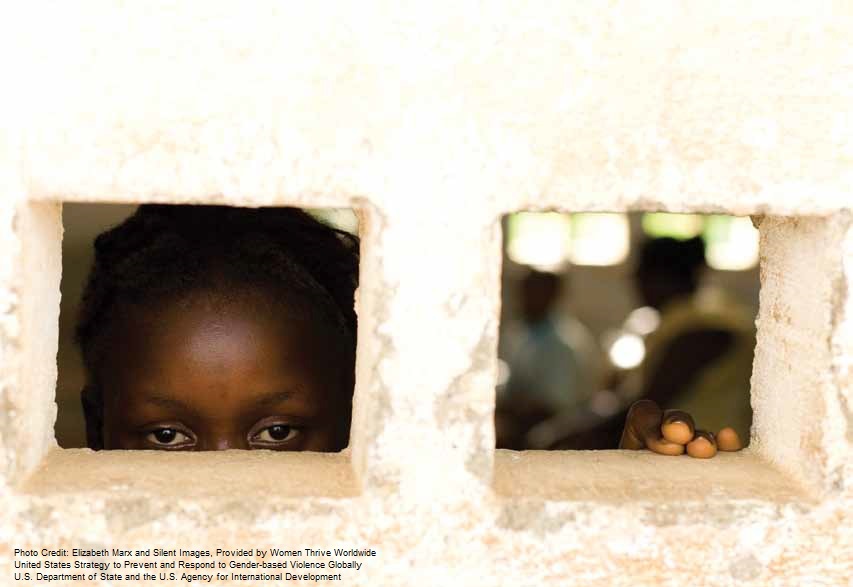
Abducting little girls from a boarding school in the middle of the night is just criminal! There is nothing religious or political about this action.

This is not just terrorism – in the classic sense – this is simply felonious behavior. This is evidenced further by the fact that the perpetrators have promised to sell the girls into slavery. The word “sell” has the connotation of obtaining money for this action. This is criminal and should therefore be condemned by every civilized society in the world.

Failure to marshal against these crimes is just failure – indicative of a Failed-State. Nigeria has a bad image of deceitful practices. So it is only appropriate to ask: is this truly a case of abduction, or could it all be one big Nigerian scam? Despite the obvious “cry wolf” reference, we must side with the innocent victims here. But, as is cited to in the foregoing news article, there are many people who feel that Nigeria hasn’t done enough for these girls. Only now that other countries have stepped up to assist/oversee has the government become more accountable.

Another group of victims in this drama are the peace-loving Islamic adherents. The actions of Boko Haram are casting dispersions on the whole religion. This terrorist group is not practicing the true teachings of Islam; in fact these actions are condemned as criminal even in the Muslim world.

AP*; Photo by: Manuel Balce Ceneta

The abduction three weeks ago of hundreds of schoolgirls in Nigeria by the Muslim extremist group Boko Haram is now generating worldwide attention and condemnation. Muslim leaders in various countries have criticized Boko Haram’s leader for using Islamic teachings as his justification for threatening to sell the girls into slavery. Others have focused on what they view as a slow response by Nigeria’s government to the crisis. The British and French governments announced Wednesday that they would send teams of experts to complement the U.S. team heading to Nigeria to help with the search for the girls, and Nigeria’s president said China has also offered assistance.

Some of the reactions to the crisis:

— EGYPT: Muslim religious officials strongly condemned Boko Haram. Religious Endowments Minister Mohammed Mohktar Gomaa said “the actions by Boko Haram are pure terrorism, with no relation to Islam, especially the kidnapping of the girls. These are criminal, terrorist acts.” According to the state news agency MENA, he said “these disasters come from cloaking political issues in the robes of religion and from peddling religion for secular interests, something we warn incessantly against.”

The sheik of the Cairo-based Al-Azhar, one of Sunni Islam’s most prestigious institutions, demanded the group release the girls, saying it “bears responsibility for any harm suffered by these girls.” The group’s actions “completely contradict Islam and its principles of tolerance,” Sheik Ahmed el-Tayeb said.

— PAKISTAN: Dawn, an English language newspaper in Pakistan, published an opinion piece that takes Nigeria to task for not moving against Boko Haram. “The popular upsurge in Nigeria in the wake of the latest unspeakable atrocity provides some scope for hoping that the state will finally act decisively to obliterate the growing menace,” wrote columnist Mahir Ali. “Naturally, the lives and welfare of the abducted girls must be an absolute priority. Looking back a few years hence, it would also provide a degree of satisfaction to be able to pinpoint the moment when Boko Haram sealed its own fate by going much too far.”

— INDONESIA: In the world’s most populous Muslim-majority country, the Jakarta Post published an editorial Wednesday condemning the Boko Haram leader for “wrongly” citing Islamic teaching as his excuse for selling the abducted girls into slavery. Recalling the Taliban’s shooting of 15-year-old Pakistani girl Malala Yousafzai in 2012 because of her outspokenness in defense of girls’ right to an education, the editorial said: “Malala’s message needs to be conveyed to all people who use their power to block children’s access to education. It is saddening that religion is misused to terrorize people and to kill the future leaders of the world.”

The newspaper also criticized Nigerian President Goodluck Jonathan, noting that “only after international condemnation and street demonstrations poured in did President Jonathan tell his nation that he would take all necessary actions to return the young women to their parents and schools, while also acknowledging that the whereabouts of the abductees remained unknown.”

— SWEDEN: In an editorial posted on the left-wing news website politism.se, blogger Nikita Feiz criticized the international community for its slow response and asked why the situation hadn’t triggered as loud a reaction as when Malala was shot in Pakistan. “Looking at the situation in Nigeria, Malala appears like a false promise from the West that it would stand up for girls’ rights to attend school without fear of being subjected to sexual exploitation and abuse,” she said. “It is difficult not to draw the conclusion that the West’s assurance to act for girls’ rights suddenly isn’t as natural when it comes to girls’ rights in a country in Africa.”

A Swedish women’s network called StreetGaris is planning a demonstration outside the Foreign Ministry on Friday to demand more action from the international community. Participants are encouraged to wear a head wrap or red clothes in solidarity with the girls and their relatives.

— UNITED STATES: The U.S. government is sending to Nigeria a team of technical experts, including American military and law enforcement personnel skilled in intelligence, investigations, hostage negotiating, information sharing and victim assistance, as well as officials with expertise in other areas — but not U.S. armed forces.

“In the short term our goal is obviously is to help the international community, and the Nigerian government, as a team to do everything we can to recover these young ladies,” President Barack Obama told NBC on Tuesday. “But we’re also going to have to deal with the broader problem of organizations like this that … can cause such havoc in people’s day-to-day lives.”

In an editorial, The New York Times faulted the Nigerian government for not aggressively responding to the abductions. “Mr. Jonathan, who leads a corrupt government that has little credibility, initially played down the group’s threat and claimed security forces were in control,” the newspaper said. “It wasn’t until Sunday, more than two weeks after the kidnappings, that he called a meeting of government officials, including the leader of the girls’ school, to discuss the incident.”

— BRITAIN: Prime Minister David Cameron’s office said Britain will send a small team of experts to complement the U.S. team being sent by Obama. The announcement was made Wednesday after Cameron spoke to the Nigerian president. The team will be sent as soon as possible and will include specialists from several departments. Experts have said special forces may be sent to the region. The issue has heated up in recent days with protests over the weekend outside the Nigerian Embassy in London and an increasing number of newspaper editorials calling for action to rescue the girls.

— FRANCE: Foreign Minister Laurent Fabius told lawmakers on Wednesday that France is ready to send a “specialized team … to help with the search and rescue” of the kidnapped girls. “In the face of such an appalling act, France, like other democratic nations, must react,” Fabius said. “This crime will not go unpunished.” Fabius gave no details of the team, except to say it’s among those already in the region. France has soldiers in Niger, Cameroon and Mali, where it is fighting Islamic insurgents, as well as in Central African Republic.

— CHINA: Chinese Premier Li Keqiang, arriving Wednesday in Nigeria for a state visit, did not specifically mention the abductions in a transcript of a joint press conference with Nigeria’s president, instead making only a general reference to the “need to work together to oppose and fight terrorism.” In his remarks, Jonathan said China “promised to assist Nigeria in our fight against terror especially in our commitment and effort to rescue the girls that were taken away from a secondary school.” He did not offer specifics.

— BRAZIL: The foreign ministry issued a statement Tuesday condemning the abductions. “In conveying the feelings of solidarity to the families of the victims and to the people and the Government of Nigeria, the Brazilian Government reiterates its strong condemnation of all acts of terrorism,” the statement said.

—-

* Associated Press correspondents Lee Keath in Cairo, Michelle Faul in Lagos, Nigeria, Gregory Katz in London, Malin Rising in Stockholm, Masha Macpherson in Paris and Stan Lehman in Sao Paulo, Brazil contributed to this report.

Associated Press – Online News – May 7, 2014 http://news.yahoo.com/muslim-officials-condemn-abductions-girls-160020053.html

This book Go Lean … Caribbean is a roadmap for the introduction and implementation of the Caribbean Union Trade Federation (CU), so as to elevate the delivery of economic and security solutions in the Caribbean. One specific mission is to manage against encroachments of the Failed-State index.

At the outset, the roadmap identified an urgent need to mitigate against organized crime & terrorism, and to ensure human rights protection. This is pronounced in this clause in the opening Declaration of Interdependence (Page 12)

xxi.   Whereas the legacy in recent times in individual states may be that of ineffectual governance with no redress to higher authority, the accedence of this Federation will ensure accountability and escalation of the human and civil rights of the people for good governance, justice assurances, due process and the rule of law. As such, any threats of a “failed state” status for any member state must enact emergency measures on behalf of the Federation to protect the human, civil and property rights of the citizens, residents, allies, trading partners, and visitors of the affected member state and the Federation as a whole.

The Go Lean roadmap projects that the CU will facilitate monitoring and accountability of regional law enforcement and homeland security institutions. This type of behavior will not be tolerated in the Caribbean. This CU effort will be coordinated in conjunction with and on behalf of the Caribbean member-states.

On that note, the Caribbean Union Trade Federation, if it was already in existence, would vociferously condemn the abduction of the Nigerian girls. Hence the CU would be added to the long list of condemnations in the foregoing article. But these would not be hollow words, but would be accompanied by the required actions to ensure that such a disposition could not thrive in the CU region. This commitment is detailed as these community ethos, strategies, tactics, implementations and advocates:

Community Ethos – Public Protection over Privacy Page 23
Community Ethos – Anti-Bullying and Mitigation Page 23
Community Ethos – Intelligence Gathering Page 23
Community Ethos – Minority Equalization Page 24
Community Ethos – Impact the Greater Good Page 37
Strategy – Placate & Pacify International Monitors Page 48
Separation of Powers – Homeland Security Page 75
Separation of Powers – Justice Department Page 77
Implementation –  Security Initiatives at Start-up Page 103
Planning – Ways to Improve Failed-State Indices Page 134
Advocacy – Manage the Social Contract Page 170
Advocacy – Ways to Impact Justice Page 177
Advocacy – Ways to Reduce Crime Page 178
Advocacy – Ways to Improve Homeland Security Page 180
Advocacy – Ways to Mitigate Terrorism Page 181
Advocacy –  Ways to Protect Human Rights Page 220
Advocacy –  Ways to Empower Women Page 226
Advocacy –  Ways to Impact Youth Page 227

In contrast with the events in Nigeria, local crimes against women, young or old will not be tolerated in the CU. Everyone, regardless of gender, will be guaranteed the right to life, liberty and the pursuit of happiness (and education for that matter). This will be standard, whether the world is watching or not.

However, we want the world to watch. We want to show how we feverishly protect our people, with assurance that the Caribbean is the world’s best address to live, work, learn and play.

Download the free e-Book of Go Lean … Caribbean – now!
 

Share this post:
, , ,

A Lesson in History – America’s War on the Caribbean

Go Lean Commentary
War on Caribbean 1

“Never kill yourself for someone who is willing to watch you die” – Inspired Expression.

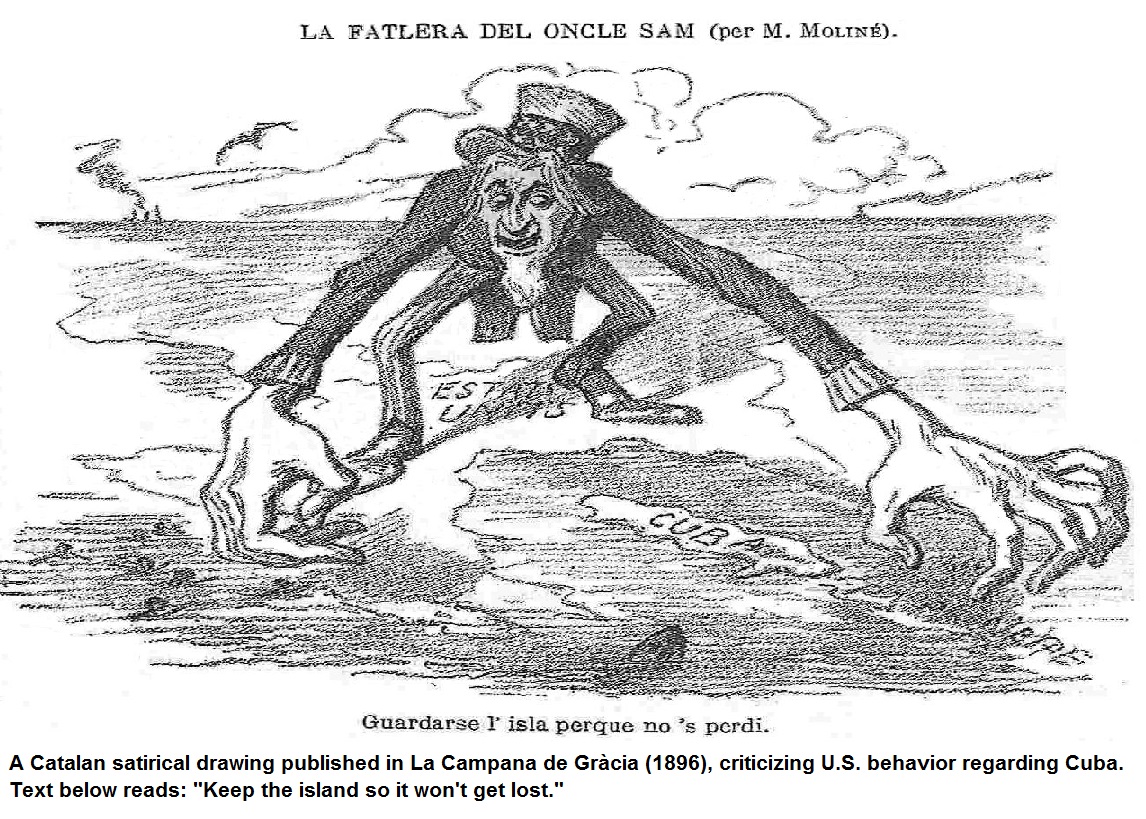
The United States of America fought an actual war, for 10 weeks, in the Caribbean theater in 1898. This was the war against the Spanish Empire, or more commonly known as the Spanish American War.

This is a lesson from an actual history:

These events transpired during the decline of the Spanish Empire. After centuries of vast colonial expansion, at this point, only a few of its vast territories remained. Revolts against Spanish rule had occurred for some years, in the Caribbean territories (Cuba, Dominican Republic and Puerto Rico), especially in Cuba. There had been war scares before. But in the late 1890s, American public opinion became agitated by an anti-Spanish propaganda; led by influential journalists such as Joseph Pulitzer and William Randolph Hearst, who used yellow journalism to criticize Spanish administration of Cuba.

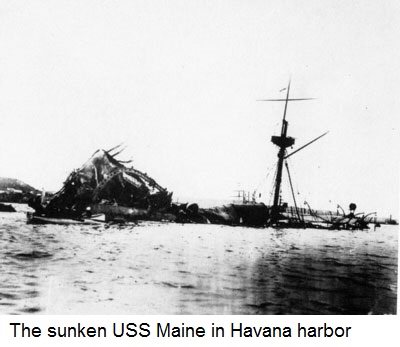
Then there was the mysterious sinking of the American battleship USS Maine in Havana harbor on February 15, 1898, which was believed to be and reported as a sabotage attack by Spanish forces. This created political pressure, from Congress and certain industrialists, to push the administration of Republican President William McKinley into a war he had hoped to avoid.[a]

The US Constitution (Article 1 Section 8) forbids that the country can NOT go to war unless provoked. With the sinking of the USS Maine, the government had its constitutional provocation.

Compromise was sought by Spain, but rejected by the United States which sent an ultimatum to Spain demanding it surrender control of Cuba. Consequently war was formally declared, first by Madrid, then by Washington on April 25, 1898.[a]

The ten-week war was fought in both the Caribbean and the Pacific, but the main issue that emerged was that of Cuban independence. American naval power proved decisive, allowing US expeditionary forces to disembark in Cuba against a Spanish garrison already brought to its knees by nationwide Cuban insurgent attacks and further wasted by yellow fever. With two obsolete Spanish squadrons sunk in Santiago de Cuba and Manila Bay and a third, more modern fleet recalled home to protect Spain’s coasts, Madrid sued for peace.[b] As a result, today, Cuba and the Dominican Republic enjoy independence, and Puerto Rico is an American territory, by choice – after many public referendums on the question of independence.

What was the motivation for this war?

Earlier, in 1823, US President James Monroe enunciated the Monroe Doctrine, which stated that the United States would not tolerate further efforts by European governments to colonize land or interfere with states in the Americas; however, Spain’s colony in Cuba was exempted. Before the Civil War Southern interests attempted to have the US purchase Cuba and make it new slave territory. The proposal failed, and subsequently the national attention shifted to the build-up towards the Civil War.[c]

But the “dye had been cast”. Cuba attracted America’s attention; little note was made of the Philippines, Guam, or Puerto Rico. The Spanish Government regarded Cuba as a province of Spain rather than a colony, and depended on it for prestige and trade. It would only be extracted with a war.

In 1976, the US Navy’s own historian (Admiral Hyman G. Rickover’s published book How the Battleship Maine Was Destroyed) declared that the sinking of the USS Maine — the justification for America’s entry into the Spanish-American War — was probably caused by an internal explosion of coal, rather than an attack by Spanish forces.[d]
Sources: See Citations in the Appendix below.

What is the lesson here for the Caribbean and today’s effort to integrate and unify the Caribbean economy? First, there are these principles, that should not be ignored, if we truly want progress/success:

  • In 1918 US Senator Hiram Warren Johnson is purported to have said: “The first casualty when war comes is truth”.
  • “War is a racket” – Smedley Butler, one of the most highly-decorated military men of all time, and the man who prevented a coup against Franklin D. Roosevelt.
  • The Bible declares that: “For there is nothing hidden that will not become manifest” – Luke 8:17

War on Caribbean 2There will be no chance for success in the Caribbean region if this effort goes against American security/foreign policy interest. This is a consistent theme in the book Go Lean … Caribbean, it serves as a roadmap for the introduction and implementation of the Caribbean Union Trade Federation (CU); it asserts that the economy of the Caribbean is inextricably linked to the security of the Caribbean. The roadmap therefore proposes an accompanying Security Pact to accompany the CU treaty’s economic empowerment efforts. The plan is to cooperate, collaborate and confer with American counterparts, not oppose them. In fact, two American territories (Puerto Rico and the US Virgin Islands) are included in this CU roadmap.

To establish a better American-Caribbean partnership, the Go Lean book presents a series of community ethos that must be adapted to forge this change. In addition, there are these specific strategies, tactics, implementation and advocacies to apply:

Community Ethos – new Economic Principles Page 21
Community Ethos – new Security Principles Page 22
Community Ethos – Minority Equalization Page 24
Community Ethos – Lean Operations Page 24
Community Ethos – Cooperatives Page 25
Community Ethos – Manage Reconciliations Page 25
Community Ethos – Impacting the Greater Good Page 34
Strategy – Customers – Public and Governments Page 47
Tactical – Fostering a Technocracy Page 64
Tactical – Homeland Security – Naval Operations Page 75
Tactical – Homeland Security – Militias Page 75
Implementation – Assemble – US Overseas Territory Page 96
Implementation – Foreign Policy Initiatives at Start-up Page 102
Implementation – Security Initiatives at Start-up Page 103
Implementation – Ways to Improve Mail Service Page 108
Implementation – Trade Mission Objectives Page 116
Implementation – Ways to Promote Independence Page 120
Planning – Ways to Model the EU Page 130
Planning – Lessons Learned from the W.I. Federation Page 135
Planning – Lessons from the US Constitution Page 145
Advocacy – Ways to Better Manage the Social Contract Page 170
Advocacy – Ways to Foster Cooperatives Page 176
Advocacy – Ways to Improve Homeland Security Page 180
Advocacy – Ways to Improve Intelligence Gathering Page 182
Advocacy – Ways to Enhance Tourism Page 190
Advocacy – Ways to Market Southern California Page 194
Advocacy – Ways to Preserve Caribbean Heritage Page 218
Advocacy – Ways to Re-boot Cuba Page 236
Advocacy – Ways to Impact the Dominican Republic Page 237
Advocacy – Ways to Impact US Territories Page 244

After this consideration, the conclusions are straight forward:

  • The Caribbean should take the lead for our best self-determination. We must do the heavy-lifting. We can always count on America to pursue what’s in America’s best interest, and this may not always align with Caribbean objectives. So we must take our own lead for our own self-interest.
  • American priorities change with presidential administrations.

Now is the time to lean-in to this roadmap for Caribbean change, as depicted in the book Go Lean…Caribbean. At this time, there is no American agenda or contrarian policy that may dissuade us – but that’s only today. We need to act fast before a new American crisis emerges, (or one is created artificially).

Download the book Go Lean … Caribbean – now!

————-

Appendix References

a. Beede, Benjamin R., ed. (1994), The War of 1898 and U.S. Interventions, 1898–1934, Taylor & Francis, ISBN 978-0-8240-5624-7. An encyclopedia. Pages 120; 148.

b. Dyal, Donald H; Carpenter, Brian B.; Thomas, Mark A. (1996), Historical Dictionary of the Spanish American War, Greenwood Press, ISBN 0-313-28852-6. Pages 108 – 109.

c. Wikipedia treatment on the Spanish American Way. Retrieved May 5, 2014 from: http://en.wikipedia.org/wiki/Spanish_American_War

d. “The Destruction of USS Maine”. Department of the Navy — Naval History and Heritage Command. Retrieved May 5, 2014 from: http://www.history.navy.mil/faqs/faq71-1.htm

Share this post:
, , , , ,
[Top]

Why not … a profit center?

Go Lean Commentary

Most Caribbean countries have embassies, consular offices and/or trade mission offices in world capitals. These are normally cost centers, where the governments have to maintain the cost burden for these facilities. But why do they have to be cost centers, why not profit centers?

Why not … a profit center? As in one integrated, consolidated center on behalf of all the Caribbean member-states – a classic “cooperative” model. This strategy meets a basic requirement of retail design: traffic. All the embassy, consular and trade mission activities would create impactful retail traffic demands.

This vision comes into focus as a result of the emergence of the Caribbean Union Trade Federation (CU), and the news article[c] below. The book Go Lean…Caribbean serves as a roadmap for the introduction and implementation of the CU. The roadmap fully anticipated integrating and consolidating Trade Mission Offices (Page 116) to advance the causes of the Caribbean people in foreign countries; eight (8) cities are specified in details.

The resultant facility, and accompanying eco-system, would fulfill a CU mandate, global outreach to expand Caribbean trade within the source country, city and regional area.

From the outset of the roadmap, the intent to leverage Trade Mission Offices was pronounced in the Declaration of Interdependence (Page 13), as follows:

xix. Whereas our legacy in recent times is one of societal abandonment, it is imperative that incentives and encouragement be put in place to first dissuade the human flight, and then entice and welcome the return of our Diaspora back to our shores. … The right of repatriation is to be extended to any natural born citizens despite any previous naturalization to foreign sovereignties.

xx. Whereas the results of our decades of migration created a vibrant Diaspora in foreign lands, the Federation must organize interactions with this population into structured markets. Thus allowing foreign consumption of domestic products, services and media, which is a positive trade impact. These economic activities must not be exploited by others’ profiteering but rather harnessed by Federation resources for efficient repatriations.

The roadmap also urges the urban design approach for mixed-use developments; (Page 234). This dictates a structure designed as retail (ground floor), mezzanine for offices, and higher levels/floors for residences (apartments, condominiums, and hotels). See a sample site in a US Midwestern city here – Photos & VIDEO:

Why Not ... a profit center - Photo 1 (2)

Why Not ... a profit center - Photo 2

Why Not ... a profit center - Photo SPECIAL

VIDEO Midtown Crossing Commercial – https://youtu.be/3Ua3FjWLfKk

A model of a successful mixed-use development is the Omaha-Nebraska Midtown Crossing[a].

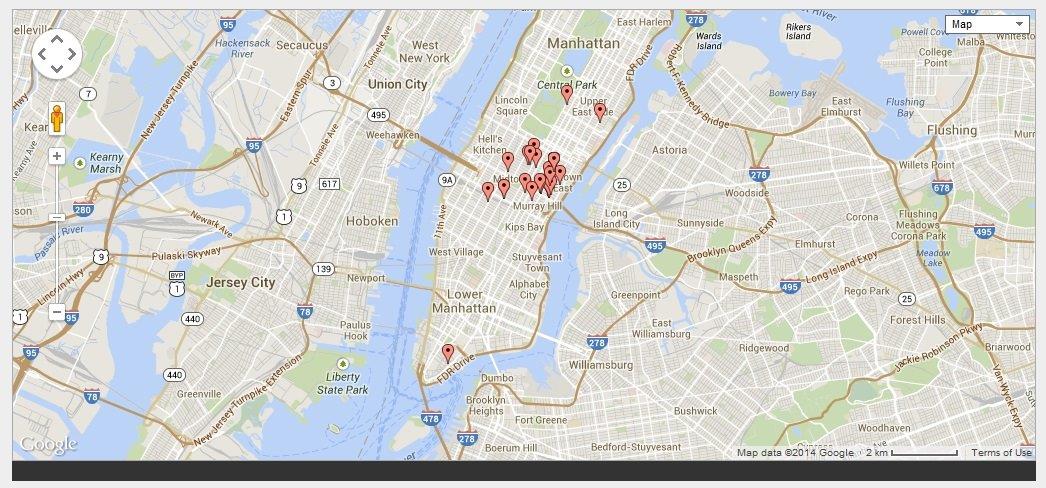
Consider New York City; it is one of 8 mission cities envisioned. This  map below and the Appendix Table lists all the addresses of the Caribbean embassies, consulates, and outreach offices in New York City[b] – all within a 5 mile radius. Imagine if all those facilities were in one property – a mixed-use development.

Why Not ... a profit center - Photo 4 (3)

Imagine too, a climate-controlled atrium with Caribbean fauna & flora; a food court showcasing cuisines from all the participating Caribbean countries, (up to 30); art galleries, convention/banquet facilities, exhibit halls, night clubs, performing arts theaters and maybe even an indoor entertainment center (for instance, modeling the legacy of Caribbean Pirates). This vision would generate multiple streams of revenue – a profit center as opposed to 30 cost centers.

This vision would benefit a lot of Caribbean stakeholders with support and outreach services – those desiring to live, work, learn, heal and play in the Caribbean. These stakeholders include:

  • Visitors
  • Caribbean Citizens (travelling abroad)
  • Diaspora
  • Foreign Direct Investors
  • Students

There is the need for this manifestation right now in London, England (another designated Trade Mission Office – Page 116 ); as depicted in this referenced news story[c]:

LONDON, England (May 1, 2014) — Overseas Territory representatives from the British Virgin Islands, Bermuda, Montserrat, the Cayman Islands and Anguilla met with United Kingdom business networking specialists, CaribDirect International Business Network (CIBN) in London last week, as the first networking session focusing on trade and investment gathers momentum.

These discussions, held at the offices of the Bermuda representative, focused on introducing the CaribDirect International Business Network (CIBN) concept; outlining its broad scope; revealing the economic and political opportunities available for the Caribbean Overseas Territories (OTs); and examining practical ways to work together for the benefit of the dependent territories of the Caribbean.

CIBN is an agency designed to facilitate and connect entrepreneurs and business people in the UK with Caribbean government and business representatives for trade and investment.

Representatives attending the meeting were Cayman Islands’ deputy director Charles Parchment, Montserrat director Janice Panton, BVI London Office director Kedrick Malone, Bermuda director Kimberley Durrant, CaribDirect director of policy Ron Belgrave and CaribDirect multi-media CEO David Roberts.

If only this profit center concept existed now … in London … and in New York.

The CU roadmap is designed to bring change to the Caribbean region. This commentary demonstrates that a lean, nimble organization structure can also be “at the corner of preparation and opportunity” and that opportunity can be made in turning a cost center into a profit center. This structure can optimize the Caribbean’s economic, security and governing engines – no matter the location. If the Trade Mission Offices were constituted as profit centers, the following details from the book Go Lean…Caribbean would manifest, with impacted community ethos, strategies, tactics, implementations and advocates; listed as follows:

Community Ethos – Lean Operations Page 24
Community Ethos – Cooperatives Page 25
Community Ethos – Ways to Improve Sharing Page 37
Strategy – Repatriating Caribbean Diaspora Page 47
Strategy – Inviting Foreign Direct Investments Page 48
Tactical – Separation of Powers – State Department Page 80
Tactical – Design Requirements for the Capital District Page 110
Implementation – Trade Mission Objectives Page 116
Implementation – Reasons to Repatriate Page 118
Implementation – Ways to Benefit from Globalization Page 119
Advocacy – Ways to Improve Trade Page 128
Advocacy – Lessons from New York City Page 137
Advocacy – Ways to Enhance Tourism Page 190
Advocacy – Impact the Diaspora Page 217
Advocacy – Ways to Impact Urban Living Page 234

The Go Lean roadmap will make the outreach, and foreign support, for Caribbean stakeholders more efficient and effective. This plan would impact and change the Caribbean and the foreign world we reach out to.

All Caribbean stakeholders – citizens, businesses and governments alike – are urged to lean-in to this Go Lean roadmap.

Download the free e-Book of Go Lean … Caribbean – now!
———————

Appendix – References

a. http://www.midtowncrossing.com/about/default.aspx
b. http://michaelbenjamin2012.com/2012/06/21/caribbean-region-consulates-in-nyc/
c. http://www.caribbeannewsnow.com/topstory-Caribbean-overseas-territories-meet-with-UK-networking-specialists-20934.html

———————

Appendix – TABLE – Caribbean States Mission Offices – New York City

Member-State

Address

Anguilla 845 Third Avenue, New York, NY 10022  Phone: 212-745-0277
Antigua & Barbuda 610 Fifth Avenue, Ste 311, New York, NY 10020  Phone: 212-541-4117
Aruba 666 Third Avenue, 19th floor, New York, NY 10017 Phone 877-388-2443
Bahamas 231 East 46th Street, New York, NY 10017  Phone: 212-421-6420
Barbados 820 Second Avenue, 5th Fl, New York, NY 10017  Phone: 212-551-4325
Belize 675 Third Avenue, Ste 1911, New York, NY 10017  Phone: 212-593-0999
Bermuda 845 Third Avenue, New York, NY 10022 Phone: 212-745-8272
British Virgin Islands 845 Third Avenue, New York, NY 10022 Phone: 212-745-8272
Cayman Islands 845 Third Avenue, New York, NY 10022 Phone: 212-745-8272
Cuba 315 Lexington Ave 38th Street New York, NY 10016 Ph. 212-689-7215
Dominica 800 Second Ave, Ste 400H, New York, NY 10017 Phone: 212-949-0853
Dominican Republic 1500 Broadway, Ste 410, New York, NY 10036  Phone: 212-768-2480
Grenada 800 Second Ave, Ste 400K, New York, NY 10017 Phone 212-599-0301
Guadeloupe 45 W 34th Street, Suite 703, New York, NY 10001 Phone  877-203-2551
Guyana 370 Seventh Avenue, 4th Fl, New York, NY 10001  Phone: 212-947-5110
Haiti 271 Madison Avenue, 17th Fl, New York, NY 10016 Phone: 212-967-9767
Jamaica 767 Third Avenue, New York, NY 10017  Phone: 212-935-9000
Martinique 444 Madison Avenue, 16th Fl, New York, NY 10022 Phone: 212-838-6887
Monserrat 845 Third Avenue, New York, NY 10022  Phone: 212-745-0200
Netherland Antilles:Bonaire, Curaçao, Sint Eustatius, Saba 1 Rockefeller Plaza 11th Floor, New York, NY 10020 212-246-1429
Puerto Rico 666 5th Avenue # 15l, New York, NY, 10103-1599. Phone: 212-333-0300
St. Barthelemy 934 Fifth Ave, New York, NY 10021 Phone: 212-606-3601
St. Kitts & Nevis 414 East 75th Street, New York, NY 10103 – 212-535-5521
St. Lucia 800 Second Avenue, 9th Fl, New York, NY 10017 – 212-697-9360
St. Maarten 675 Third Avenue, Ste 1807, New York, NY 10017 – 800-786-2278
St. Vincent & The Grenadines 801 Second Avenue, 21st Fl, New York, NY – 212-687-4490
Suriname 1 UN Plaza, 26th Fl, New York, NY 10017 – 212-826-0660
Trinidad & Tobago 125 Maiden Lane, Unit 4A, 4th Fl, New York, NY 10038 Ph. 212-682-7272
Turks & Caicos Island 845 Third Avenue, New York, NY 10022 Phone: 212-745-8272
US Virgin Islands 45 W 34th Street, Suite 703, New York, NY 10001 Phone 877-203-2551
Share this post:
, , , , , , , , ,
[Top]

Turks and Caicos Premier’s disclosures raises conflict questions

Go Lean Commentary

Money IssuesThese are the lyrics of a previously popular Bahamian folk song:

Show & Tell what your family got
Show & Tell what your family got, from the top of your head to the tip of your toe.
Mr. MP, Mr. Senator…
Oh, Mr. MP, let me see your money. Show the world you ain’t no crook. Let me see your bank book.
My people, oh my people. You know I “is” your MP. But “yinna” does hardly see me, how you expect to see my money.
— Chorus –
Different strokes for different folks
Different egg got different yokes
Different man take different stand
Dog like road and cat like sand
Show & Tell – Eddie Minnis
(MP = Member of Parliament)

This above song tells the story of the introduction of a Financial Disclosure law in the Bahamas in the 1970’s. The concept of open financial disclosures, as is related in the song and below news article, encountered resistance and apprehension. The above song duly captured the public fears and scrutiny of the process.

The advantage of public disclosures is that it mitigates corruption and bribery temptation in the government contract bidding process. The disadvantage is that capable, competent technocrats may shy away from public service because their business – personal and family finances – is “put out there in the streets”.

Personal financial disclosure requirements are standard among the First World, but scorned in the Third World. It is what it is! See the story here:

By: Caribbean News Now contributor
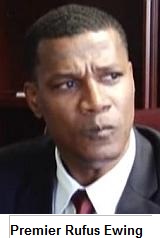
PROVIDENCIALES, Turks and Caicos Islands — The recent publication of an extract from Turks and Caicos Islands (TCI) Premier Rufus Ewing’s statement of registrable interests has raised conflict of interest questions regarding a controversial healthcare contract with Interhealth Canada.

Under the heading “Income Sources”, line item number two in Ewing’s statement lists “Salaries, benefits and allowances – Interhealth Canada TCI Ltd”.

Under section 25 of the Integrity Commission Ordinance 2008, all persons in public life (including members of the House of Assembly) are required to file with the Integrity Commission declarations of their incomes, assets and liabilities and those of their spouses and dependent children once every two years. This is otherwise referred to as “Section 25 Declaration”, and it is strictly confidential and may not be divulged to any person. Any breach of this confidentiality by any member of the commission or a third party and attracts stiff criminal sanctions under the ordinance.

However, the published excerpt of the Register has nothing to do with the section 25 Declaration of Financial Affairs but relates to an additional requirement under the constitution and the ordinance for members of the House of Assembly to file with the commission, once every year, statements of registrable interests of themselves and those of their spouses and dependent children.

According to Eugene Otuonye QC, director of the Integrity Commission, the published extract of Ewing’s statement of registrable interests appears genuine. He also pointed out that the register of such interests is available in the public domain and is not therefore confidential.

Otuonye went on to say that it is common and public knowledge that Dr. Dawn Perry, a gynecologist and the spouse of Premier Ewing, is legitimately employed in her own right at the Cheshire Hall Medical Centre (Interhealth Canada). She receives salaries, allowances and benefits for being so employed and these are part of the interests that the Ewing has disclosed to the public as part of his registrable interests.

However, as one observer commented, the mere fact that Ewing’s household is receiving a financial benefit from Interhealth Canada is bound to raise presumptions of a conflict of interest and may therefore explain, amongst other things, an apparent ongoing reluctance on the part of Ewing and his government to conduct or release the findings of either a financial and/or clinical audit of the operations of Interhealth Canada.

In addressing this issue, Otuonye said that any conflict of interest (perceived or actual) this scenario may present is a matter for the premier to manage within and guided by the existing legal framework, including the standing orders of the House of the Assembly and the code of conduct for persons in public life.

“As guardian of the code of conduct, the commission is interested not only in how a conflict of interest is managed but in providing such assistance as would enable the relevant conflict of interest to be effectively managed. The commission is committed to this responsibility,” he said.

It is not clear at this time how Ewing is managing this conflict of interest, whether real or perceived, except to try to distance himself from the health portfolio, which may be ineffectual given that he is ultimately the head of the elected government.

The financial cost of the $120 million debt for building two small hospitals at a cost of $4 million dollars per bed and outsourcing secondary healthcare to Interhealth Canada that together will cost the TCI around $1 billion over the course of 20 years has been the subject of ongoing controversy and concern since the contract was signed in 2009.

In response to Ewing’s earlier attempts in 2012 to distance himself from what was described by former chief financial officer Hugh McGarel Groves as a “financial disaster”, former TCI government CEO Patrick Boyle pointed out that Ewing had a “central role in developing the policy that led to the creation of the NHIP [National Health Insurance Plan]”.

A sworn statement by former health minister Karen Delancy also confirmed that Ewing made relevant decisions without consulting her and agreed the hospital construction contract without the benefit of competitive bids.

According to earlier reports, a number of civil servants (believed to be five) received payments of as much as $20,000 each — described as an “honorarium” — for doing a “good job” in negotiating and concluding the health care contract with Interhealth Canada. As then director of medical services, Ewing was said to be one of the five civil servants that received such payments.

The opposition Peoples Democratic Movement (PDM) has called for a review of the Interhealth Canada contract and the release of the relevant audits.

What has magnified the problem is that the Ewing-led government continues to raise taxes and fees while ignoring numerous calls for renegotiating the Interhealth Canada contract at a lower cost and refinancing the hospital mortgage, which is reported to have an exceptionally high rate of interest of 12%. The potential savings from such renegotiated healthcare costs could eliminate and/or reduce the need for the increase in taxation.
Source: http://www.caribbeannewsnow.com/topstory-Turks-and-Caicos-premier%27s-statement-of-interests-raises-conflict-questions-20931.html

Turks and Caicos Premier'sThe book Go Lean … Caribbean focuses on economic issues, governance and optimizing the civil service administration for the Caribbean region and for the 30 member-states. This book is a roadmap for the introduction and implementation of the Caribbean Union Trade Federation (CU), proffered as a super-national administration, a federal government for these states. There are 3 prime directives of the CU:

  1. Optimize the economic engines so as to grow the regional economy to $800 Billion and create 2.2 million new jobs.
  2. Establish a security apparatus (including persecution of economic and public integrity crimes) so as to mitigate the eventual emergence of “bad actors”.
  3. Improve Caribbean governance.

The tactical plan for this roadmap is a separation-of-powers for this federal government versus the governmental administrations of the member-states. Based on issues and cases similar to the foregoing news story, there is the need for accountability of public integrity.

(We are not levelling any accusation of towards Mr. Rufus Ewing, the Premier of the Turks & Caicos Islands. This commentary is simply in response, and as an analysis of the foregoing news article. There is due-process and an assumption of innocence).

There is also a CU mission to marshal against encroachments of Failed-State indicators. Any allegation of corruption or appearance of conflicts-of-interest by a Head of Government may undermine faith in that jurisdiction’s government. This might dissuade Foreign Direct Investors or efforts to repatriate the Diaspora or invite empowering immigrants. There must be a continuous sentinel; this role is assumed by applicable CU agencies.

This function is paramount in the vision of the Caribbean Union Trade Federation. The specific public integrity requirement is pronounced early in the Go Lean roadmap, in the opening Declaration of Interdependence (Page 12) with these statements:

xi. Whereas all men are entitled to the benefits of good governance in a free society, “new guards” must be enacted to dissuade the emergence of incompetence, corruption, nepotism and cronyism at the peril of the people’s best interest. The Federation must guarantee the executions of a social contract between government and the governed.

xii. Whereas the legacy in recent times in individual states may be that of ineffectual governance with no redress to higher authority, the accedence of this Federation will ensure accountability and escalation of the human and civil rights of the people for good governance, justice assurances, due process and the rule of law. As such, any threats of a “failed state” status for any member state must enact emergency measures on behalf of the Federation to protect the human, civil and property rights of the citizens, residents, allies, trading partners, and visitors of the affected member state and the Federation as a whole.

The people may cry: “How dare you, Caribbean Union, get into our business here in the TCI? This is not your concern”.

This argument is true, based on the status quo, but change has come to the Caribbean. The CU treaty compels a Security Pact for all the member-states, enacted even with the legacy sovereign countries of the United Kingdom, United States of America, Kingdom of the Netherlands and the Republic of France – the CU serves as their proxy. But this CU administration is executed by the Caribbean, for the Caribbean. The pronouncement continues:

xvi. Whereas security of our homeland is inextricably linked to prosperity of the homeland, the economic and security interest of the region needs to be aligned under the same governance. Since economic crimes … can imperil the functioning of the wheels of commerce for all the citizenry, the accedence of this Federation must equip the security apparatus with the tools and techniques for predictive and proactive interdictions.

The goal of the CU is to elevate Caribbean life, culture, economy, security and governing engine. Federal authorities would therefore have jurisdiction under a Good Governance mandate to review this case in consideration of the allegations. This is new for the region.  This new community ethos in this case is lean government.

The CU roadmap affects economics, security and governance. Based on the blatant needs depicted in the forgoing news article, the CU solutions will impact change in the region. These solutions are detailed in this book Go Lean … Caribbean as new community ethos, strategies, tactics, implementations and advocates; as follows:

Community Ethos – Privacy versus Public Protection Page 23
Community Ethos – Whistleblower Protection Page 23
Community Ethos – Witness Security & Protection Page 23
Community Ethos – Light Up the Dark Places Page 23
Community Ethos – Lean Operations Page 24
Community Ethos – Ways to Improve Negotiations Page 32
Community Ethos – Ways to Impact the Greater Good Page 37
Strategy – Repatriating Caribbean Diaspora Page 47
Strategy – Inviting Foreign Direct Investments Page 48
Strategy – Promoting Good/Clean Government Image Page 48
Tactical – Fostering a Technocracy Page 64
Tactical – Separation of Powers – Justice / District Attorneys Page 90
Implementation – Assemble – UK Territories Oversight Page 96
Implementation – Security Initiatives at Start-up Page 103
Implementation – Reasons to Repatriate Page 118
Implementation – Ways to Promote Independence Page 120
Planning – Ways to Improve Failed-State Indices Page 134
Advocacy – Ways to Improve Healthcare Page 156
Advocacy – Ways to Improve Governance Page 168
Advocacy – Ways to Better Manage the Social Contract Page 170
Advocacy – Ways to Improve Leadership Page 171
Advocacy – 10 Ways to Impact Justice Page 177
Advocacy – Ways to Improve Communications Page 186
Advocacy – Ways to Impact British Territories Page 245

The Go Lean roadmap will make the Caribbean a better place to live work, and play. The role of government is not divorced from this process, rather the member-states governing administrations are primary stakeholders, customers of the CU.

Change has come to the Caribbean. This is illustrated as a moving freight train. It cannot – must not – be stopped. Everyone must be “on board”. 🙂

Download the book Go Lean … Caribbean – now!


Share this post:
, , , ,
[Top]

Grenada accountant defeats PM in BK court motion

Go Lean Commentary

Grenada BK 2“He who does nothing makes no mistakes” – Old Adage.

The contrast of this “Old Adage” is also true: “No risk, no reward”. So “he who does a lot, risks a lot”. These truisms bear to ask the questions:

• When the risky endeavors fail, who is it that pays?

• Who should be held accountable?

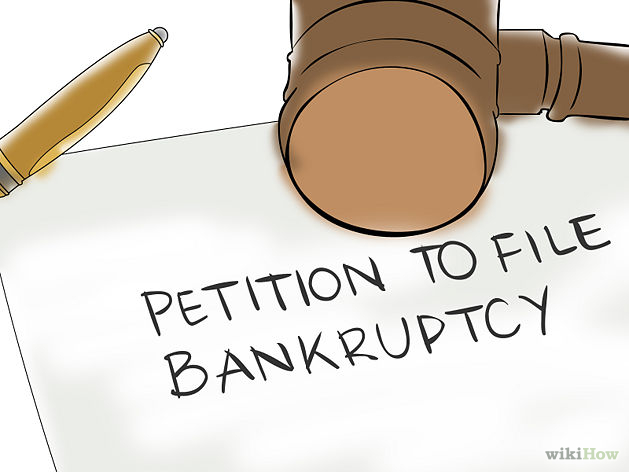
The answers to these questions align with the foregoing news article; this is the subject matter of bankruptcy (BK).

The book Go Lean … Caribbean delves deep into the matter of bankruptcy processing for the Caribbean region. This book is a roadmap for the introduction and implementation of the Caribbean Union Trade Federation (CU), for the economic optimization of the 30 member-states constituting the Caribbean region. The CU is proffered as a super-national administration, a federal government for these states. Strategically there are 3 prime directives of the CU:

1. Optimize the economic engines so as to grow the regional economy to $800 Billion and create 2.2 million new jobs.

2. Establish a security apparatus (including emergency management) around the economic engines so as to mitigate the eventual emergence of “bad actors”.

3. Improve Caribbean governance.

The tactical plan for this roadmap is a separation-of-powers for this federal government versus the governmental administrations of the member-states. Based on anecdotes similar to the foregoing news story, there should be little objection to elevating bankruptcy processing away from local control. It is obvious that locally, there is too much temptation for favoritism, cronyism and corruption.

(We are not levelling any accusation of corruption towards Grenada’s Prime Minister Dr. Keith Mitchell. This is just an acknowledgement that bankruptcy processing exposes different vantage points and priorities).

By: Caribbean News Now contributor

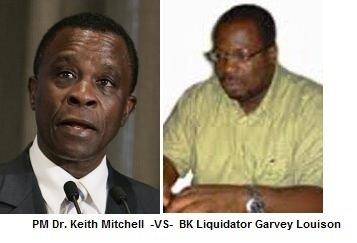
ST GEORGE’S, Grenada — Prime minister of Grenada Dr. Keith Mitchell has lost his bid before the High Court in Grenada to have local chartered certified accountant Garvey Louison removed as liquidator of the Grenada Today newspaper.

Mitchell had argued before that court that Louison had failed to comply with his duties, failed to indicate the location of assets, lost interest in the matter, and had caused undue delay in bringing the matter to a close.

In his defence, Louison argued that Mitchell had no evidence to support his claim, that Mitchell hid behind the frock of a legal secretary at a law firm to bring his allegations before the court, that the legal secretary had no standing before the court and that he had complied with the duties set out in the liquidation order and that of the Companies Act.

Justice Mohammed held that to remove the liquidator the applicant must have good standing, good grounds, and provide sufficient evidence to move to court.

The judge questioned the legal standing of the secretary, one Uthlyn George, to make the accusations that she filed by way of affidavit. The law is clear regarding the production of an affidavit. An affidavit is supposed to contain facts that are within the deponent’s own knowledge and belief and where it is not, it must set out the source of the information and belief or it would be hearsay.

The deponent failed to set out who informed her or what was the source of her information and belief in making allegations that were not in her direct knowledge. In particular regarding the allegations of delay, she failed to set out the details of such delay.

In addition, Mitchell did not provide a reason why he could not file the affidavit himself and had to use Uthlyn George.

It was held that, whereas the court can remove a liquidator in the circumstances where it was satisfied that the liquidator was inefficient, lacked vigour or was biased in the discharge of his duties, there was no evidence in this case to support the removal of the liquidator.

Local observers had claimed that, at some point, Mitchell was expected to move against Louison based on several articles the business consultant and former Auditor General, Accountant General and Permanent Secretary, Finance [Ministry] had been writing in the media.

Grenada Today was put into liquidation in 2009 as a result of two charges of criminal libel brought against the managing editor, George Worme, in connection with a letter published by the newspaper accusing Mitchell of bribing voters in the 1999 general election.

Caribbean News Now – Online News Source – April 19, 2014 –http://www.caribbeannewsnow.com/topstory-Grenada-accountant-defeats-prime-minister-in-court-20784.html

Grenada BK 1The foregoing news article relates that the issue of receivership of the insolvent Grenada Today Newspaper is a “touchy” subject, requiring checks-and-balances. In this case, the Grenada High Court became involved to adjudicate the matter.

While there is already a process for bankruptcy in all Caribbean member-states, the need to elevate this processing to a federal level is undeniable; to bring balance/fairness to creditors and avoid abuse by debtors. This is alluded to in the foregoing article.

The Go Lean roadmap envisions federal bankruptcy courts, with branches throughout the region, having exclusive jurisdiction.

These CU entities will manage bankruptcies for individuals, firms (for profit & not-for-profits), election campaigns and even governmental agencies (municipalities, public-private consortiums and central/national governments).

The CU will be the relief of last resort, the bail-out provider. Also, the first responder for encroachments of Failed-State indicators.

The CU mandate for bankruptcies is to lean towards reorganization, rather than outright dismissal of legitimate debt. Creditors may have to take a “hair-cut” (minor loss). The federal courts will then appoint direct receivership to Trustees (usually accountants and/or lawyers) to facilitate the processing of the bankruptcy obligations.

An efficient process for bankruptcy is vital to attract Foreign Direct Investments (FDI) – these stakeholders require protection and accountability. The definition of FDI is risk. With risky efforts come success … and failure. This requirement is pronounced early in the book’s Declaration of Interdependence (Page 13) with these statements:

xxi. Whereas the legacy in recent times in individual states may be that of ineffectual governance with no redress to higher authority, the accedence of this Federation will ensure accountability and escalation … to protect the human, civil and property rights of the citizens, residents, allies, trading partners, and visitors of the affected member state and the Federation as a whole.

xxiii. Whereas many countries in our region are dependent Overseas Territory of imperial powers, the systems of governance can be instituted on a regional and local basis, rather than requiring oversight or accountability from distant masters far removed from their subjects of administration. The Federation must facilitate success in autonomous rule … within the geographical region.

The goal of the CU is to elevate Caribbean life, culture and economy. This requires a new community ethos: investment in our people, by our people. There will be hits-and-misses, successes and failures. The CU roadmap is to hope (and build) for the best, but also plan for the worst. We will provide support services (incubators, shared systems, “cooperatives”, angel investors) to aid the entrepreneurial hopes and dreams. But we must facilitate the failures as well. We must methodically “wine down” failed enterprises and failed endeavors, so as to dissuade any fear of failure, rather to promote the “audacity of hope”.

So the subject matter of bankruptcy affects economics, security and governance. The solutions to effect change in the region are detailed in this book Go Lean … Caribbean as community ethos, strategies, tactics, implementations and advocates; as follows:

Community Ethos – Lean Operations Page 24
Community Ethos – Return on Investments Page 24
Community Ethos – Ways to Help Entrepreneurship Page 28
Community Ethos – Ways to Impact Turn-arounds Page 33
Strategy – Inviting Foreign Direct Investments Page 48
Tactical – Fostering a Technocracy Page 64
Separation of Powers – Federal Bankruptcy Courts Page 90
Implementation – Ways to Better Manage Debt Page 114
Implementation – Ways to Impact Elections Page 117
Implementation – Ways to Promote Independence Page 120
Planning – Ways to Improve Failed-State Indices Page 134
Planning – Lessons Learned from 2008 Page 136
Planning – Lessons from Detroit Page 140
Advocacy – Ways to Improve Credit Ratings Page 155
Advocacy – Ways to Impact Student Loans Page 160
Advocacy – Ways to Improve Governance Page 168
Advocacy – Reforms for Banking Regulations Page 199
Advocacy – Ways to Preserve Caribbean Heritage Page 218
Advocacy – Ways to ImpactBritishTerritories Page 245
Advocacy – Ways to ImpactDutchTerritories Page 246
Advocacy – Ways to ImpactFrenchTerritories Page 247

The Go Lean roadmap will make the Caribbean a better place to live work, and play. Caribbean stakeholders will make mistakes; but when we fall down, we will not stay down. We will get up, turn-around, reboot and recover. Our people deserve this continuous effort.

Download the Book- Go Lean…Caribbean Now!!!

Share this post:
, ,
[Top]

Abused wives find help by going to ‘Dona Carmen’

Go Lean Commentary

AbuseThe issue in the below news article is related more to human rights, than to feminism. This story is being brought into focus in a consideration of the book Go Lean … Caribbean. The book serves as a roadmap for the introduction and implementation of the Caribbean Union Trade Federation (CU), for the economic optimization in the region.

How does this story relate?

The roadmap posits that the economy of the Caribbean is inextricably linked to the security of the Caribbean. While the security scope of the CU is mostly focused on the “bad actors” that might emerge to exploit the new Caribbean economic engines and successes, the book is not quiet on what may be considered traditional crime-and-punishment issues. While the subject of domestic violence falls on the member-state side of the separation-of-powers divide, the CU will entail a jurisdiction of monitoring and metering (ratings, rankings, service levels, etc) local governments and their delivery of the Social Contract. For this reason, there is a 3rd focus of the CU prime directive, to optimize the region’s governing engines.

An underlying mission of the CU is to dissuade further human flight and incentivize repatriation of the far-flung Diaspora. Many who had fled previously obtained refugee status due to the abuse and persecution from domestic perpetrators. These issues must be addressed and targeted for solutions and reconciliations.

In fact, the foregoing article refers to the new enforcements introduced in Brazil in a 2006 law. That’s was just 8 years ago. (A similar Domestic Violence law was enacted in the Bahamas in 2008). A survey of other Latin American countries unveils even more new laws recently enacted in the Caribbean, Central and South America. Change has finally come.

Change has come to the Caribbean, but as the roadmap depicts, the problem of domestic violence (a human rights abuse) had persisted long before, and is thusly rooted in a community ethos. An ethos that must be uprooted and replaced with a new, progressive spirit, even within the public service entities, whose job it is to “serve & protect”. This is the new lean Caribbean!

This is reflected in the foregoing article with the principal character Dona Carmen, which is not even her real name, but more of an elevated title for her respected role in the community.

Title: Abused wives find help by going to ‘Dona Carmen’
By: Dom Phillips

CAMPINAS, Brazil — With her husband out of earshot, Queze Vicente told the story of the night he came at her with two knives in his hand.

“He was drinking,” she said outside their one-room shack in a roadside slum near an airport here. “We fought. And I had to go to Dona Carmen.”

Everyone in their community knows who Dona Carmen is and her method for getting abusive husbands in line. They call it “the discipline,” and it includes a sex strike.

For 15 days, husbands who hit their wives are also banned from drinking in the local bar and playing soccer on the local field. And any man who helps an offender violate the rules is also subject to the sex strike.

Abused by her husband and saddened by the abuse all around her, Dona Carmen talked 12 local women into adopting the punishment routine. Two years later, the women and most of the men say it works.

“Everyone thinks it is good,” said Vicente’s husband, Renato. “There are no more fights.”

The abuse in this community, a corner of the slum called Menino Chorão, or Crybaby Boy, was not unlike what many Brazilian women experience. In a survey conducted by the Patrícia Galvão Institute, which works on women’s rights and communication issues, 54 percent of Brazilians said they knew a woman who had been attacked by a partner and 70 percent said they believed Brazilian women suffered more violence at home than in public spaces.

But change is slowly coming to this most macho of societies as activists such as Dona Carmen try to help women find new ways to combat domestic abuse.

“This is a theme that permeates the whole of society,” said Julio Neto, a professor at Campinas State University whose department recently sponsored a forum at which Dona Carmen spoke. “Every Brazilian knows cases of violence against women.”

Neto said the women in the group were forced to act because the state was not protecting them. “If they call the police, the police don’t go.” He said he did not condone cases in which some women had beaten up male offenders but that he supported “the discipline.”

“It is very original. I think in this sense, it is marvelous,” he said.

Dona Carmen, whose real name is Maria de Sousa, commands respect within her group: the fact that she is addressed as “Dona” — roughly equivalent to “madame” — is evidence of that.

Like most of her neighbors, she is from Brazil’s poorer, more traditional northeast. For 13 years, she was married to a man who beat her persistently. One attack when she was five months pregnant caused her to miscarry twins. “My whole body had purple bruises from the beating he gave me,” she said.

She arrived in the southeastern city of Campinas from her native Fortaleza eight years ago when a woman she had met tricked her with a promise of work and a place to live. As a result, she said, she spent 40 days in a brothel but escaped and did not have to work as a prostitute.

“I was desperate to get a job,” said de Sousa, who has four children and now works in a kitchen at an advertising agency.

‘Still a lot to do’

Before Brazil introduced a domestic violence law in 2006, some offenders were able to get off with fines or even by donating food baskets.

The law is named for Maria da Penha, a biochemist whose husband shot her while she was asleep in 1983, leaving her paraplegic, and then tried to electrocute her. After almost two decades of legal maneuvering, he was finally jailed in 2002 and served 16 months in closed prison and three more years in semi-open prison.

Da Penha fought hard for his imprisonment and campaigned for the law. “I was revolted with the sexism of the Brazilian judiciary,” she said, talking by phone from Fortaleza, where she runs an educational institute.

The law set up special courts and police departments to deal with crimes against women, and stricter punishments. A special hotline was also set up to deal with cases of domestic abuse.

Da Penha, 67, said there has been major progress, but that these resources are still lacking in smaller towns and cities.

“Women who are victims of violence are slowly losing the shame they had to talk about this,” she said. “Sexual equality is being conquered little by little, but there is still a lot to do.”

Despite the tougher punishments for offenders, rates of violence against women remain high. In the first six months of 2013 alone, the hotline received 306,201 calls, of which 12.3 percent were reports of violence

Between 2009 and 2011, 16,900 women were murdered in Brazil because of “gender conflict” — a rate of 5.8 per 100,000 women, according to government statistics. In the United States in 2011, that rate was 1.17 per 100,000, according to the Violence Policy Center, based in Washington.

Brazilian women suffer inequality in other areas as well. In the World Economic Forum’s 2013 Global Gender Gap report, Brazil placed 62nd in a list of 136 countries. In terms of wage equality, it came in 117th.

Lieli Loures, 35, an activist in São Paulo, said the Maria da Penha law was a watershed moment for Brazil, and that a grass-roots feminist movement is growing. “I perceive a change,” she said. “Feminism is only beginning to be known.”

Ongoing debate
In Crybaby Boy, the debate continued in the front yard of the small brick house where Maria Santos, 34 — one of women in Dona Carmen’s group — lives with her husband, Adelmo, 31.

“We joke that the women are in charge here,” she said.

“We have to respect the rights of women,” he said. “But in the same way, we have to respect the rights of men.”

Then he lowered his voice to a whisper: “The women here want to be the man. They can’t.”

But Geraldo da Cruz, 62, said most men back the scheme. “Everything organized is better, right? Important.”

Source: Washington Post – Online News Source – April 25, 2014 –http://www.washingtonpost.com/world/the_americas/in-the-corner-of-a-brazilian-slum-abused-wives-find-help-by-going-to-dona-carmen/2014/04/25/afbb7d1a-c68d-11e3-8b9a-8e0977a24aeb_story.html

The Go Lean roadmap posits that every woman has a right to a violence-free existence, in the family and in society; it is reprehensible that in so many Caribbean/Latin countries women are still viewed as lesser beings that can be abused at the whim of men, as was evident in the foregoing news article. This type of thinking is still prevalent; not just in Brazil; (notice this related Bahamas story)

What should be done to mitigate these bad practices? How does the Go Lean roadmap address this issue?

There are strategic, tactical and operational advocacies presented in the Go Lean roadmap so as to ensure victims are protected and perpetrators are held accountable for their actions:

• The CU will therefore work with governmental and non-governmental organizations (NGO’s) to fulfill their charters to aid victims and legislate for changes.

• The CU will also fund the full vertical eco-system so that law enforcement (and/or social work) agencies can institute Special Victims Units and counseling services. The roadmap posits that even one person, an advocate, can make a difference (Page 122) in forging change in society.

• Facilitate community messaging to instill/persuade an enlightened value system for men and women; helping men curb aggressive behavior (like anger management training) and empowering women to live successful lives and seek recourse against abusers if needed.

• Oversee the internal affairs/military justice of security agencies to ensure the integrity of the justice institutions. (Deficiency in this area is a Failed–State Indicator).

While the CU does not have sovereignty (a deputized agency only), it can still provide support services to ensure compliance. In addition to monitoring and metering, the CU can also provide ratings, funding, training, intelligence gathering, and cross border (fugitive) law enforcement.

The solutions to effect change in the region are detailed in this book Go Lean … Caribbean as community ethos, strategies, tactics, implementations and advocates; as follows:

Community Ethos – Privacy –vs- Public Protection Page 23
Community Ethos – Whistleblower Protection Page 23
Community Ethos – Witness Security Page 23
Community Ethos – Anti Bullying & Mitigations Page 23
Community Ethos – Light Up the Dark Places Page 23
Community Ethos – Minority Equalizations Page 24
Community Ethos – Reconciliations Page 34
Strategy – Rule of Law –vs- Vigilantism Page 49
Separation of Powers – CariPol Page 77
Implementation – Reason to Repatriate Page 118
Ways to Improve Failed-State Indices Page 134
Ways to Better Manage the Social Contract Page 170
Ways to Impact Justice Page 177
Ways to Remediate and Mitigate Crime Page 178
Ways to Improve Gun Control Page 179
Ways to Improve Intelligence Gathering Page 182
Ways to Improve Communications Page 186
Ways to Impact the Prison Industrial Complex Page 211
Ways to Impact Foundations Page 219
Ways to Protect Human Rights Page 220
Ways to Empower Women Page 226
Ways to Impact Youth Page 227
Ways to Impact Persons with Disabilities Page 228

The goal is to make the Caribbean a better place to live work and play; with justice for all, regardless of gender. This is not politics; not feminism versus traditional family values. This is just right!

Share this post:
, , ,
[Top]

PM Christie responds to critics of Bahamian ‘Carnival’

Go Lean Commentary

Carnival 1Head –> Heart –> Hands.

This is the physiological process to forge change, described in the book Go Lean … Caribbean (Page 20). As experienced on a daily basis by people attempting to “quit smoking”, change is near impossible without engaging those three body parts. The book, serving as a roadmap for the introduction and implementation of the Caribbean Union Trade Federation (CU) describes the linked application of those three symbolic body parts, as follows:

  • Head – Plans, Models and Strategies
  • Heart – Community Ethos
  • Hands – Actions, Implementations, Advocacies

According to the below news article, the Prime Minister of the Bahamas wants to forge change in his homeland. He wants to incorporate a new festival, based on the model of Carnival and Madri Gras, so as to glean some of the massive economic harvests around those events in the Caribbean and other Western Hemisphere destinations.

Since initiating this plan in Spring 2013, cyber-space and public commentary have been awash with feedback: some in favor; most opposed.

Albeit he is inspired by good motives, the publishers declare that something is missing in the Prime Minister’s plans: Best practices.

By: Erica Wells, Managing Editor
Prime Minister Perry Christie has assured critics of the Government’s plan to create a Bahamian Carnival or Mardi Gras that the festival will be “essentially” Bahamian and that a special committee will be appointed to prepare the country and the world for the initiative.

Addressing the MP’s in his 2013/2014 budget wrap up, Christie said many people rushed to judgement after he made the announcement last month. The week-long festival is slated for a 2015 start-up and the government will spend $1 million to help with its development, which may incorporate a cultural village, public processions and song and costume competition. The $1 million will be allocated to the festival next year and will be a joint effort between the public and private sector, he said.

The government, Christie says, sees the festival as both a major economic intervention and a cultural expansion.

“It will be essentially Bahamian but also include thousands of visitors who will be attracted by what will be an absolutely fabulous affair,” said Christie.

Anthropologist and author Dr. Nicolette Bethel, who is also a former director of culture, has been one of the biggest critics of the proposed festival.

Bethel told Guardian Arts&Culture before Christie’s communication earlier this week that she did not have a problem with the idea per se, and that it was long overdue, but the timing and title were both “awful”.

“As a result I don’t think it’s feasible,” she said. “I have no idea what consultation, if any, was done with the relevant community. It falls during the Junkanoo downtime and I do not think that the practitioners will seriously be able to prepare for it, and in fact many of the most serious (Junkanooers) are out of the country attending the real carnivals that take place all around our region at that time — New Orleans, Rio de Janeiro, and of course Port-of-Spain.”

Bethel said she did not see that it would have any real effect on the current Junkanoo parades.

She also criticized the government’s $1 million allocation to the festival.

“One million dollars according to our data is nowhere near enough money to fund something of this kind,” said Bethel. “Annual Junkanoo parades take up to $3 million of the government’s money — $2 million at least. If that money were invested in creating a Junkanoo festival at the normal Junkanoo time it would go far further, but I do not see any way that we can hope to compete with the real carnivals by introducing something fake like this. It’s a total waste of a good idea.”

Christie noted that many critics questioned why The Bahamas should copy Trinidad or Brazil, and why the country would move away from Junkanoo, which is “spectacularly Bahamian”.

“Let me say at the outset that prior to making my announcement, I consulted with several icons in the world of Junkanoo and without exception they were fully supportive of the idea and immediately confirmed their willingness to work with the committee, which will be appointed to prepare The Bahamas and the world for this new festival,” said the prime minister.

The government will shortly appoint the committee, said Christie.

Paul Major, a former banker and Junkanoo participant, has been invited to chair the committee. Robert Sands and Ed Fields, and other major figures in the cultural field — in painting, music, drama all of which are a part of this new enterprise — will also be invited to sit on the committee, he said.

“I expect the committee to hold full consultations with all of the major personalities of Junkanoo, and associates. “I will, for my part, advise the committee that I do not wish them to interfere with Junkanoo.

This is a separate and different activity,” Christie explained. He noted that the major Junkanoo groups and their leaders will be advised that the government does not propose to licence those groups, unless there is overwhelming evidence of general acceptance by the rank and file.

Prime Minister Christie said for the groups to be licensed, they would have to form themselves into a company and operate as a business.

“This is a massive undertaking which will receive very careful consideration of the government,” he said.

“This is very necessary as the corporate groups will be advertising abroad and inviting persons to purchase costumes online as well as from store fronts in a cultural village or elsewhere.”

The Prime Minister said the committee would ultimately move recommendations to the government for its consideration.

Christie also noted that he has met with Sarkis Izmirlian of Baha Mar and advised him that the festival was one of the major promotions the government was putting in place in view of his introducing 2,200 new hotel rooms in December 2014.

“He liked the idea. The committee will recommend whether there should be a preferred resort destination or leave it to the choice of visitors,” said Christie.

Carnival worldwide industry

The prime minister said carnival is part of a worldwide masquerade industry.

He said the industry has been successful in attracting costume makers, wire benders, painters, designers and performers at some of the largest festivals in the world.

“It has an export dimension. We know of major festivals in Trinidad, Brazil, Toronto, Barbados, New York, Miami and London. Carnival in the diaspora generates hundreds of millions of dollars and creates many jobs and entrepreneurial opportunities.

“It is big business and it requires business planning, management, marketing of products and organizational structure,” said Christie.

Prime Minister Christie said costumes from carnival inspired designers show up in New York, Toronto, Notting Hill, London, Miami and many other centers in the U.S.

“The committee will be briefed and have the opportunity to visit carnival enterprises in Brazil, Trinidad and even Toronto, where carnival has become arguably the largest festival in the world,” he said.
Source: The Nassau Guardian Online. Posted 06/22/2013. (Retrieved 04/24/2014) –http://www.thenassauguardian.com/index.phpoption=com_content&view=article&id=40021&Itemid=59

The Go Lean roadmap is different! It employs best practices for assessing, strategizing and implementing change. The book commences with the practice to assess current landscapes; this is what strategists call “Understand the market / Plan the business”. Page 44 presents these questions:

• Who are our customers and what exactly do they want?

• Who are our competitors; how do we stack up against them?

The book then proceeds to answer these and other strategy queries, accordingly.

carnival 2Events/festivals are paramount in the Go Lean roadmap: the optimization of existing events and the introduction of new events. This advocacy is detailed on Page 191 as being supplemental to the goal of enhancing tourism (Page 190).

What are the prospects for this new Bahamas Carnival/Lenten festival?

On the surface, it seems far-fetched, as the Bahamas does not have a Lenten ethos. All the competitive destinations (Rio De Janeiro, New Orleans and Trinidad) have elevated lent habits (Ash Wednesday to Good Friday), so that Mardi Gras/Fat Tuesday actually has significance in preparation of this hallowed Lenten season. Without this ethos, it is hard, though not impossible, to forge a new tradition, festival or business model. But the mediocre financial investment, announced in the foregoing article – $1 million as opposed to $3 million, makes the success of initiating and promoting a new event an insurmountable obstacle.

The publishers of the Go Lean roadmap wish the Prime Minister good fortune with his plans, but this execution does not appear to be lean, within “best practices”. More is needed; much more! There should be more focus on “Head, Heart & Hands” principles. As a contrast, notice the detailed strategies, tactics, actions and advocacies for new events in the Go Lean roadmap:

Community Ethos – Lean Operations Page 24
Community Ethos – Return on Investments Page 24
Community Ethos – Cooperatives Page 25
Community Ethos – Non Government Org’s. Page 25
Impact the Future Page 26
Foster Genius – Performance Excellence Page 27
Ways to Improve Sharing Page 35
Ways to Promote Happiness Page 36
Ways to Impact the Greater Good Page 37
Strategy – Customers – Business Community Page 47
Strategy – Customers – Visitors / Tourists Page 47
Strategy – Competitors – Event Patrons Page 55
Separation of Powers – Emergency Mgmt. Page 76
Separation of Powers – Tourism Promotion Page 78
Separation of Powers – Sports & Culture Page 81
Separation of Powers – Fairgrounds Admin. Page 83
Separation of Powers – Turnpike Operations Page 84
Steps to Implement Self-Governing Entities Page 105
Ways to Foster Cooperatives Page 176
Ways to Improve Intelligence Gathering Page 182
Ways to Improve [Service] Animal Husbandry Page 185
Ways to Enhance Tourism Page 190
Ways to Impact Events Page 191
Ways to Promote Fairgrounds Page 192
Ways to Improve Emergency Management Page 196
Ways to Impact Hollywood [& Media Industry] Page 203
Ways to Preserve Caribbean Heritage Page 218
Ways to Improve the Arts Page 230
Ways to Promote Music Page 231

In summary, festivals/events are important, so they require lean administration and executions. They empower economics and fortify cultural pride. In all, they make the Bahamas, by extension the entire Caribbean, a better place to live, work, and play.

Download the book Go Lean … Caribbean – now!

Share this post:
, , , , , ,
[Top]

Advocates push for junk-food tax

Go Lean Commentary

Junk FoodThe forgoing article focuses on an important issue for the Caribbean. Diabetes is a scourge to the region; it is among the leading causes of death. Though death is the final destination of all humans, quality of life is a fitting goal for optimization. Diabetes is a degenerative disease; it grievously affects the quality of life; over time, its sufferers are afflicted with ailments like kidney failures, amputations and blindness. In addition to the personal discomforts, these treatments exact a huge toll on a community’s economics. For this matter, this subject is in scope for the Caribbean Union Trade Federation (CU).

The book, Go Lean … Caribbean, serves as a roadmap for the introduction and implementation of the CU. This technocratic agency will assume oversight to optimize the region’s:

(1) economy,

(2) security apparatus, and

(3) governing engines.

The subject of diabetes disease management is in scope for all 3 of these prime directives. The importance and linkage of the topics for diabetes, healthcare and economics are undeniable. But there are security threats as well, as advanced diabetes dispositions increase the need for organ transplantations, inducing many to venture into the illegal organ trade markets. Finally, the strain on governments to service this population and develop mitigation plans is a constant priority – or should be.

By: FELICIA FONSECA

Flagstaff, Arizona — Facing a high prevalence of diabetes, many American Indian tribes are returning to their roots with community and home gardens, cooking classes that incorporate traditional foods, and running programs to encourage healthy lifestyles.

The latest effort on the Navajo Nation, the country’s largest reservation, is to use the tax system to push people to ditch junk food.

Navajo President Ben Shelly earlier this year vetoed measures to enact a 2 percent sales tax on tax on chips, cookies and sodas, and to eliminate the tax on fresh fruit and vegetables. This week, tribal lawmakers have a chance to resurrect the proposals, and supporters are optimistic they’ll be among the first in the country to succeed.

Elected officials across the U.S. have taken aim at sugary drinks with proposed bans, size limits, tax hikes and warning labels, though their efforts have not gained widespread traction. In Mexico, lawmakers approved a junk food tax and a tax on soft drinks last year as part of that government’s campaign to fight obesity.

Shelly said he supports the intent of the proposals on the Navajo Nation but questioned how the higher tax on snacks high in fat, sugar and salt would be enacted and regulated. Supporters of the tax say it is another tool in their fight for the health of the people.

“If we can encourage our people to make healthier choices and work on the prevention side, we increase the life span of our children, we improve their quality of life,” said professional golfer Notah Begay III, who is among supporters.

American Indians and Alaska Natives as a whole have the highest age-adjusted prevalence of diabetes among U.S. racial and ethnic groups, according to the American Diabetes Association. They are more than twice as likely as non-Hispanic whites to have the disease that was the fourth leading cause of death in the Navajo area from 2003 to 2005, according to the Indian Health Service.

Native children ages 10 to 19 are nine times as likely to be diagnosed with Type 2 diabetes, the IHS said.

The proposed Navajo Nation tax wouldn’t add significantly to the price of junk food, but buying food on the reservation presents obstacles that don’t exist in most of urban America. The reservation is a vast 27,000 square miles with few grocery stores and a population with an unemployment rate of around 50 percent. Thousands of people live without electricity and have no way of storing perishable food items for too long.

“They have a tendency to purchase what’s available, and it’s not always the best food,” said Leslie Wheelock, director of tribal relations for the U.S. Department of Agriculture.

Wheelock said the diabetes issue in tribal communities is one that has been overlooked in the past or not taken as seriously as it could be. It has roots in the federal government taking over American Indian lands and introducing food that tribal members weren’t used to, she said.

To help remedy that, the USDA runs a program that distributes nutritional food to 276 tribes. Grants from the agency have gone toward gardening lessons for children within the Seneca Nation of Indians in New York, culturally relevant exercise programs for the Spirit Lake Tribe in North Dakota and food demonstrations using fresh fruit and vegetables on the Zuni reservations in New Mexico.

The Dine Community Advocacy Alliance, which has been pushing for the Navajo Nation junk food tax, estimates it will result in at least $1 million a year in revenue that could go toward wellness centers, community parks, walking trails and picnic grounds in tribal communities in Utah, New Mexico and Arizona. It would expire at the end of 2018.

Tribal lawmakers will vote this week on overturning Shelly’s vetoes. Regardless of whether that legislation passes, “we have to keep stepping up to the plate,” alliance member Gloria Begay said.

No other sales tax on the Navajo Nation specifically targets the spending habits of consumers. Alcohol is sold in a few places on the reservation but isn’t taxed. Retailers and distributors pay a tobacco tax.

Opponents of the junk food tax argue it would burden customers and drive revenue off the reservation. Mike Gardner, executive director of the Arizona Beverage Association, said the lack of specifics in the legislation as to what exactly will be taxed could mean fruit juice and nutritional shakes would be lumped in the same category as sodas.

“I don’t think they mean that, but that’s what will happen,” Gardner said. “It’s a little loose, a little vague. It’s going to create problems for retailers and … it doesn’t solve the problem.”

a. By the numbers:

Total population of Navajo Nation: 250,000

Unemployment rate: 44%

Families living in poverty: 30.5%

People living with diabetes: 55,000

Source: Partners In Health (PIH), a 501(c)(3) nonprofit corporation headquartered in Boston, Massachusetts. (http://www.pih.org/country/navajo-nation/about)

Associated Press (AP) News Wire Service (Retrieved 04/22/2014) –
http://news.yahoo.com/advocates-push-junk-food-tax-navajo-nation-155642994.html

The roadmap commences with a Declaration of Interdependence. In Verse IX (Page 11) it pronounces:

Whereas the realities of healthcare and an aging population cannot be ignored and cannot be afforded without some advanced mitigation, the Federation must arrange for health plans to consolidate premiums of both healthy and sickly people across the wider base of the entire Caribbean population. The mitigation should extend further to disease management, wellness, obesity and smoking cessation programs. The Federation must proactively anticipate the demand and supply of organ transplantation as developing countries are often exploited by richer neighbors for illicit organ trade.

The foregoing article highlights diabetes disease management in the controlled population of the Native American Reservation for the Navajo Nation in Arizona [a]. In fact, Go Lean posits that the Caribbean can benefit greatly from a consideration of the examples, samples and lessons from Native American tribes and their experiences. This is included in the book as “10 Lessons from Indian Reservations” (Page 141). As for this issue, Go Lean also recognizes that food choices and the preponderance of junk food could imperil community wellness; (Page 162). We must therefore take heed to these lessons.

The CU mission is to implement the complete eco-system to re-boot health delivery in the region. Applying strategies to win the battles of globalization, the Go Lean roadmap urges the Caribbean region to not only consume; we must create and contribute as well. In that vein, there are many tactics, implementations and advocacies to facilitate the vision for R&D, incubation, entrepreneurship and many other areas related to medical tourism. These are detailed here:

Community Ethos – Deferred Gratification Page 21
Community Ethos – Intelligence Gathering Page 23
Community Ethos – “Bad Things” Happen Page 23
Community Ethos – Lean Operations Page 24
Community Ethos – Return on Investments Page 24
Community Ethos – Non-Government Org’s. Page 25
Help Entrepreneurship Page 28
Impact Research and Development Page 30
Promote Happiness Page 36
Impact the Greater Good Page 37
Separation of Powers – Health Department Page 86
Steps to Implement Self-Governing Entities Page 105
Ways to Benefit from Globalization Page 119
Improve Healthcare Page 155
Impact Entitlements Page 158
Better Manage Food Consumption Page 162
Better Manage the Social Contract Page 170
Foster Cooperatives Page 176
Ways to Improve Organ Transplantations Page 214
Impact Foundations Page 219
Improve Elder-Care Page 225
Impact Persons with Disabilities Page 228

The roadmap addresses the obstacles for full implementation of the CU objectives. Like most communities, there are cost constraints, as the foregoing article reports on a special tax to fund junk food mitigations. How will the CU pay for its strategic and tactical initiatives?

The book addresses this issue in full detail in these advocacies:

Ways to Pay for Change Page 101
10 Revenue Sources for Administration Page 172

Change has come to the Caribbean. Both the people and institutions of the region are urged to “lean-in” for this change. As described in the book Go Lean … Caribbean, the benefits of this roadmap are too important; improving health deliveries is not just economic, more important, it’s about saving lives.

Download the Book- Go Lean…Caribbean Now!!!

Share this post:
, , , , ,
[Top]

Antigua Completes Construction of New National Library

Go Lean Commentary

Antigua ConstructionThis below article is an indictment of Caribbean governments and the Caribbean Diaspora: 40 years without a library.

The charge against the past governmental administrations is obvious. For this reason, the current administration of the Government of Antigua and Barbuda is to be applauded for this accomplishment announced in the foregoing news article; they have finally restored a basic requirement of modern societies: building/supplying/maintaining a national/community library.

“Man cannot live on bread alone – Bible quotation.

But why also indict the Diaspora?

Simple, they should have known better. They abandoned their homeland and turned a “blind eye” to even the basic needs of these previously-beloved community’s education. A library does not help the government, it helps the people; it guides the youth, infusing them with a love for knowledge, learning and imagination. We all have a responsibility, a duty even, to pass that “love” onto the next generation. For this, the Diaspora had failed, for 40 years!

So to you members of the Caribbean Diaspora who claim to love your heritage, but do not even look back to ensure that your former communities at least have access to books and information. Shame on you!

See the full news story here:

By the Caribbean Journal staff:
Antigua and Barbuda has completed construction on the country’s new national public library.

The completion of the project comes four decades after the country’s public library was damaged by an earthquake.

The 20,000-square-foot project on Hails Prominard Road succeeds a temporary library which had been operating on Market Street.

“Whenever we lament the weakness in literacy over the last four decades we should look back at how culpable we are as a nation in not providing the appreciation for books, for intellectual stimulation, which is a symbol in a national public library,” said Education Minister Dr. Jacqui Quinn-Leandro. “Any Antiguan and Barbudan forty years or younger would not have known or had the benefit of a properly, well run, well-resourced national public library. And I say without equivocation this is a burning shame, a disgrace and a national travesty. However, today is a historic day”.

The government said the library would become fully operational after completing finishing touches like custom-made shelving and special furniture.

“It is a key component of our drive to develop a pluralistic participatory and inclusive knowledge based society. Libraries are key institution in the context of achieving this goal. At the core of libraries are their missions to provide information, literacy education and culture,” said Antigua and Barbuda Prime Minister Dr. Baldwin Spencer. “This structure which we dedicate and which forms part of our mandate to the people to provide the greatest good to the greatest number of people will be the watering hole for individuals which hunger for free and equitable access to information be it in written, electronic and in audio visual form.”

Caribbean Journal Online News Source (Retrieved 04/10/2014) from: http://www.caribjournal.com/2014/04/10/antigua-completes-construction-of-new-national-library/

School kidThe book Go Lean … Caribbean is published by the SFE Foundation, a community development foundation chartered to bring change back to the Caribbean. The book serves as a roadmap for the introduction and implementation for the Caribbean Union Trade Federation (CU). The foundation is comprised of Diaspora members of different Caribbean countries, who now seek penance. We have sinned in our abandonment. To those in the Caribbean homeland, we ask for your forgiveness, and consideration for the solutions now being proffered.

The Go Lean book identifies, qualifies and proposes the establishment of community libraries throughout the region (Page 187). The roadmap posits that these libraries can be a portal to the New World of Internet Communication Technologies (Page 197); a means to bridge the “Digital Divide” (Page 31) and a delivery outlet for many e-Government services (Page 168).

There are practical reasons why there was no national library in Antigua for 40 years. Primarily, the reasons are economic. So the Go Lean roadmap leads first with an optimization of the region’s economic engines. The book details how to pay for these changes (Page 101), then how to maintain a consistent well-funded governing engine (Page 172).

Now is the time for all Caribbean stakeholders (residents, Diaspora, government officials, educators, and book lovers alike) to lean-in to this regional solution for Caribbean empowerment.

We now urged everyone to lean-in to the Go Lean roadmap for the Caribbean Union Trade Federation. Let’s make the Caribbean a better place to live, work, learn and play. 🙂

Download the free e-Book of Go Lean … Caribbean – now!
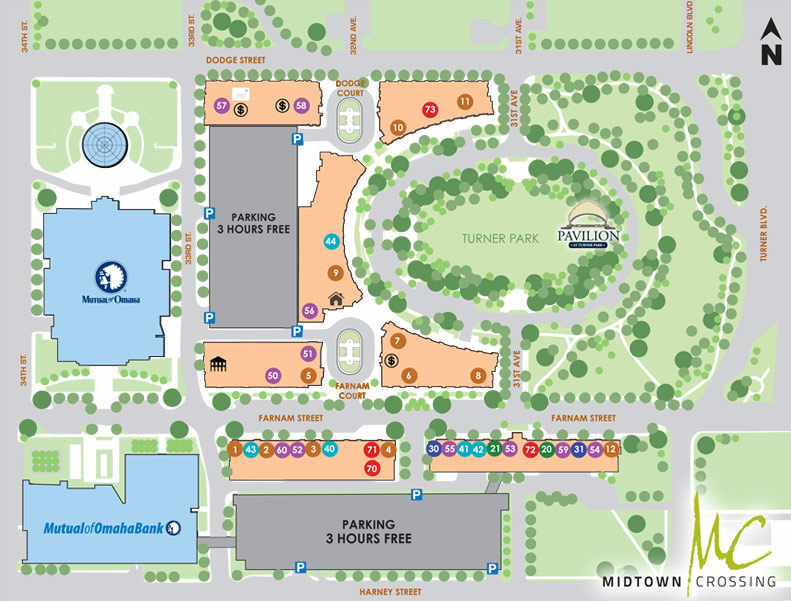
Share this post:
,
[Top]

Ailing Puerto Rico open to radical economic fixes

Go Lean Commentary

The Caribbean is in crisis!

Puerto Rican FlagPuerto Rico is in crisis! According to this quote, they have lots of issues, all stemming primarily from economic dysfunctions:

Puerto Rico, in dire straits following eight years of recession, has remained receptive as it debates hundreds of ideas: ‘‘We are studying all alternatives and all possibilities.

The publishers of the book Go Lean … Caribbean humbly submit this publication as a complete roadmap to re-boot the island’s economy, security and governing engines. This roadmap differs from all the other 369 suggestions submitted to the territorial government’s committee highlighted in the foregoing news article, in that it presents a regional option, rather than just a territorial solution. The book asserts that the problems of Puerto Rico (by extension, the entire Caribbean) are too big for any one member-state to solve alone. Rather, the focus of the roadmap is the region-wide professionally-managed, deputized technocracy of the Caribbean Union Trade Federation (CU).

Puerto Rico needs the strategies, tactics, implementations and advocacies of the CU.

The CU needs Puerto Rico!

The CU requires the full participation of all 30 member-states in the region, including all 4 language group (Dutch, English, French and Spanish). With this approach, the CU benefits from the economies-of-scale of 42 million people.

The CU expects NO MONEY from Puerto Rico. This is good as the island is running a $820 million deficit. To cure a deficit a government needs more revenues and/or fewer expenses. The Go Lean roadmap features both. The roadmap is a complete re-boot: new revenue streams and a separation-of-powers, thereby delegating governing overhead to the CU.

Go Lean … Caribbean introduces the CU to take oversight of’ much of the Caribbean economic, security and governing functionality. In summary, this plan’s execution makes Puerto Rico, and the Caribbean, a better place to live, work and play.

This Go Lean roadmap first assesses the Puerto Rican human flight/brain drain crisis, where more than half of the island’s populations have fled to American shores. This plight makes the task of building a functioning society difficult, as often the brightest and best talents are the ones that leave; plus entitlement programs simply need populace retention.

By DANICA COTO – Associated Press

SAN JUAN, Puerto Rico (AP) — Slash the number of public holidays by two-thirds. Eliminate dozens of government agencies. Legalize marijuana and prostitution.

From the intriguing to the impossible, there is no shortage of ideas for fixing Puerto Rico’s ailing economy as the government tries to dig out from a whopping $70 billion in public debt and bring back economic growth.

The ideas have come from legislators, entrepreneurs and even members of the public, who have submitted ideas via a government-sponsored website. Of the 369 ideas sent in by the public, 156 have been accepted by a government committee for consideration, including the suggestions to legalize marijuana and prostitution, and to limit how long people can live in subsidized housing.

But all the ideas require further government approval, either with a legislative vote, or an administrative nod from the governor, agency or department. More dramatic ideas, such as legalization of marijuana or prostitution, would require public hearings, legislative approval and the governor’s signature.

And prospects for approval of the various suggestions are decidedly mixed.

The governor, for example, is expected to sign a bill approved by lawmakers to release certain elderly prisoners, but not a suggestion floated by a member of the public to charge inmates for their room and board.

Puerto Rico, in dire straits following eight years of recession, has remained receptive as it debates hundreds of ideas: ‘‘We are studying all alternatives and all possibilities,’’ said Sen. Maria Teresa Gonzalez, a member of the governor’s party who has come under fire for submitting a bill that would reduce the number of holidays for public employees to six.

Puerto Rico FlagThe island currently celebrates 20 holidays a year, double those observed in the U.S. Many people have bristled at the proposal to scrap some of the additional extra days off, some of which commemorate various historic Puerto Rican leaders. But Gonzalez said the excessive number of holidays costs the government about $500 million a year in lost productivity and interruptions in service, among other things.

‘‘Change always brings about inconveniences,’’ she said. ‘‘I’m convinced that before we talk about something as dramatic and disastrous as layoffs, we have to consider other ideas.’’

Many suggestions have come as Gov. Alejandro Garcia Padilla prepares to submit the first balanced budget in decades, having promised U.S. investors and credit agencies that he will eliminate an $820 million deficit. The governor has not detailed his cutbacks, prompting fears of layoffs, tax increases and cuts to public service.

Opposition legislator Rep. Ricardo Llerandi Cruz has proposed eliminating 41 government agencies, saying it would save $160 million alone in administrative costs. He said the government has many agencies performing the same functions, noting that there’s a Department of Natural Resources, which protects, develops and manages the island’s environmental resources, and an Administration of Natural Resources, a division within the department with responsibilities that include overseeing projects such as cleanup efforts.

‘‘Puerto Rico is facing the worst fiscal crisis in all of its history,’’ Cruz said. ‘‘We need to refocus or revisit governmental priorities to face these problems.’’

A bill in the legislature also would cap the salaries of mayors, but legislators have been debating the issue for a year as mayors continue to give themselves raises. The full-time mayor of the western town of Maricao, for example, oversees the island’s second-least populated municipality with some 6,200 people and currently earns $78,000 a year, nearly double of what he earned the previous year. If the bill is approved, the mayor would earn a base salary of roughly $54,000 a year.

Manuel Lugo, an attorney who lives in the coastal town of Aguadilla, is among those who submitted the highest number of ideas on the government’s website. But despite having nine of 17 ideas approved, he doesn’t believe the government will take action on any of them.

‘‘It is very difficult to change the inertia of this island,’’ said Lugo, 43, who recently closed his office because of economic problems and is contemplating a move to Texas. ‘‘There has been no economic plan for decades. What they do here is repair and patch holes. That’s not how you run a country.’’

Yanira Hernandez, a governor spokeswoman, said Garcia will detail how he plans to balance the budget in a special televised address in late April. The budget must be approved before June 30.

While many are concerned about what cuts will be made to balance the budget, economist Gustavo Velez said extreme measures won’t be necessary if the government increases revenues and consolidates state agencies. Puerto Rico could generate $300 million more a year if it increases its capture rate on tax revenues from 56 to 75 percent, he said. The government also could suspend salary increases, Velez added.

‘‘Puerto Rico cannot keep operating on recurring deficits,’’ he said, noting it is unconstitutional. ‘‘We have to return to balanced budgets as the norm. Politicians have to embrace that reality.’’

The government also has considered tapping into the island’s underground economy, estimated by some experts at $20 billion a year, representing roughly 40 percent of overall consumption.

Puerto Ricans are increasingly seeking new ways to generate money, with some opening food trucks or hunting caimans to sell the meat as shish kebabs or fried snacks.

But an estimated 450,000 people have moved to the U.S. mainland in search of new jobs and a more affordable cost of living in the past decade.

Brunilda Cintron, 56, left the island in 2001 and now lives in Kissimmee, Florida. But her daughter and mother still live in Puerto Rico, and she worries about their future.

‘‘The government has to make some drastic decisions that will adversely affect people,’’ Cintron said, adding that she thinks her family will soon join her in the U.S. mainland. ‘‘I don’t think they’re going to have a choice.’’

Boston Globe – AP Newswire – Retrieved 04-11 2014 http://www.boston.com/news/world/caribbean/2014/04/10/ailing-puerto-rico-open-radical-economic-fixes/siVW5wfiml78bERu5MuJlM/story.html

The CU will fix Puerto Rico! Look here at the solutions; (sorted by Economic/Security/Governance). The book Go Lean … Caribbean details these specific curative measures (advocacies, strategies, tactics, and implementations):

Economic:

Community Ethos – Money Multiplier Page 22
Help Entrepreneurship Page 28
Impact Turn-Around Strategies/Tactics Page 33
Tactics to Forge an $800 Billion Economy Page 67
New Ways to Pay for Change Page 101
Start-up Benefits from an EEZ Page 104
Develop/Expand a Pipeline Industry Page 107
Improve Energy Usage Page 113
Better Manage Debt Page 114
Foster International Aid Page 115
Improve Trade Page 128
Improve Interstate Commerce Page 129
New Ways to Grow the Economy Page 151
Create Jobs Page 152
Control Inflation Page 153
Improve Credit Ratings Page 155
Mitigate Black Markets Page 165
Enhance Tourism Page 190
Impact Wall Street Page 200

Security:

Separation of Powers – Homeland Security Page 75
Security Initiatives [stemming from the Start-up] Page 103
Impact Justice Page 177
Mitigate & Reduce Crime Page 178
Improve Intelligence [Gathering & Analysis] Page 182
Impact the Prison-Industrial Complex Page 211

Governance:

Community Ethos – Deferred Gratification Page 21
Improve Negotiations Page 32
Impact the Greater Good Page 37
Tactics to Foster a Technocracy Page 64
Implement Self-Governing Entities Page 105
Improve Mail Service Page 108
Strong Reasons to Repatriate Page 118
Promote Independence Page 120
Improve Healthcare Page 156
Impact Entitlements Page 158
Improve Education Page 159
New [Governmental] Revenue Sources Page 172
Impact Public Works Page 175
Better Manage Natural Resources Page 183
Improve for Natural Disasters Page 184
Improve Emergency Management Page 196
Impact Urban Living Page 234
Impact US Territories Page 244

The roadmap alerts the Caribbean stakeholders of the obstacles that this plan will encounter, and then provides guidance, turn-by-turn directions, so as to reach the destination … promptly.

Change has come to the Caribbean. The people, institutions and governance of Puerto Rico are all urged to lean-in.”

In fact, now is the time for the whole Caribbean region to lean-in for this change, described in the book Go Lean … Caribbean. The benefits of this roadmap are too alluring to ignore: emergence of an $800 Billion regional economy, 2.2 million new jobs and an end to the dysfunction. This will result in Puerto Ricans repatriating from the US, not fleeing there.

Download the free e-Book of Go Lean … Caribbean – now!

Share this post:
, , , , ,
[Top]