Category: Government

Cuban cancer medication registered in 28 countries

Go Lean Commentary

Medicine 2While the below news article is about great cancer and diabetes drugs developed in the Caribbean, this commentary has an underlying theme about “American Exceptionalism”.

American exceptionalism is the theory that the United States is qualitatively different from other nation states.[a] In this view, US exceptionalism stems from its emergence from a revolution, becoming what political scientist Seymour Martin Lipset called “the first new nation” and developing a uniquely American ideology, “Americanism”, based on liberty, egalitarianism, individualism, republicanism, populism and laissez-faire. This ideology itself is often referred to as “American exceptionalism.”[b]

Although the term does not necessarily imply superiority, many neoconservative and other American conservative writers have promoted its use in that sense. To them, the US is like the Biblical “City upon a Hill”[c][d]

This subject matter aligns with the publication Go Lean … Caribbean, which serves as a roadmap for the introduction and implementation of the Caribbean Union Trade Federation (CU). The Go Lean roadmap maintains that other peoples (nations) have dreams as well; the American Dream is not the only aspiration to hope for. This foregoing article presses the point about innovation in cancer and diabetes drugs – that emerged from Cuba.

Posted: March 29, 2014

HAVANA, Cuba – Nimotuzumab, a Cuban monoclonal antibody humanized to treat cancer, is registered in 28 countries, mainly in South America, Africa and Asia, in addition to Cuba.

Specialists at the Center of Molecular Immunology, an institution of the BioCubaFarma Business Group, said that the product has shown its effectiveness in various cases of malignant tumours.

Indicated for tumours in the head and neck in advanced stages, brain tumours and of the esophagus, Nimotuzumab is also used in other oncological ailments of the colon, rectum and liver, and in lung cancer among other locations.

The monoclonal antibody and its results will be the focus, on March 25-27, of the eighth global scientific meeting on Nimotuzumab – Nimomeeting 2014.

With Havana’s Convention Center as its venue, the forum will bring together over 200 experts from some 20 nations, as well as about 20 international biopharmaceutical companies interested in sharing experiences about the medication, the therapeutics of which are used in the medical specialties of oncology, oncopediatrics, radiotherapy, pediatrics and neurosurgery, among others.

Meanwhile, Cuba is trying to take its diabetic foot ulcer drug known as Heberprot-P into the European market.

Heberprot-P is a product based on human growth factor currently being administered in some 20 countries, mostly in Latin America.

According to the marketing director of the Havana-based Genetic Engineer and Biotechnology Center, Ernesto Lopez, the pre-clinical stage of the product, known in Europe as Epipropt, was carried out with good toxicological and safety results.

In Spain, with an estimate 40,000 patients needing the Cuban drug, tests were carried out with no negative toxic results. The product has been developed since 2012 for research studies in other European nations.

According to studies, amputation of lower limbs was reduced fourfold, with the surgical procedure in Europe currently costing over 50,000 Euros, and treatment of the condition some 20,000 Euros.

It is the amputation of lower limbs as a direct consequence of diabetic foot ulcer that the Cuban medication avoids with a period of treatment of only six to seven months.

Along with the therapeutic action on serious ulcers, the treatment has demonstrated a preventive nature in countries like Cuba, Venezuela, and Ecuador.

Source: Caribbean News Now Online Newspaper – Retrieved 04-13-2014 http://www.caribbeannewsnow.com/topstory-Cuban-cancer-medication-registered-in-28-countries-20429.html

While the Go Lean book strategizes a roadmap for economic empowerment, it clearly relates that healthcare, disease management, cancer treatments and medicines are germane to the Caribbean quest for health, wealth and happiness. At the outset of the Go Lean book, in the Declaration of Interdependence (Page 10 & 11 respectively), these points are pronounced:

Preamble: While our rights to exercise good governance and promote a more perfect society are the natural assumptions among the powers of the earth, no one other than ourselves can be held accountable for our failure to succeed if we do not try to promote the opportunities that a democratic society fosters.

ix. Whereas the realities of healthcare and an aging population cannot be ignored and cannot be afforded without some advanced mitigation, the Federation must arrange for health plans to consolidate premiums of both healthy and sickly people across the wider base of the entire Caribbean population. The mitigation should extend further to disease management, wellness, obesity and smoking cessation programs. The Federation must proactively anticipate the demand and supply of organ transplantation as developing countries are often exploited by richer neighbors for illicit organ trade.

Cuba is not on friendly terms with the United States. A trade embargo was implemented in 1962 as a temporary measure to dissuade the island’s socialist leanings. Now, after 52 years, the embargo continues. Generations of Cubans and generations of Americans have come and gone without witnessing a normalized relationship between Cuba and its largest neighbor, the US. Millions too have died of the scourge of cancer, estimated by one source as afflicting 1-out-of-3 Americans [e]

(Personal note: the primary author of the book Go Lean … Caribbean was inspired to write this roadmap, after his sister died after a 32-year battle with cancer – See Dedication Page 2).

MedicineThe scourge of cancer and the realities of diabetes were not the motivation for composing the book Go Lean … Caribbean. But rather, the bigger goal of elevating Caribbean society. The Caribbean Union Trade Federation has the prime directive of optimizing the economic, security and governing engines of the region. The foregoing article depicts the benefits that can emerge as a result of innovation in science, technology, engineering and medicine (STEM). Cuba will be able to trade these advance medicines globally to the markets needing their therapeutic benefits. This is a win-win!

Under the Go Lean roadmap, more such developments will emerge … from all corners of the Caribbean. There are also obvious tangential benefits to the people of the Caribbean regarding public health administration and wellness.

The following list details the strategies, tactics, implementations and advocacies to optimize the region’s health deliveries:

Community Ethos – Cooperatives Page 25
Community Ethos – Non-Government Organizations Page 25
10 Ways to Impact Research and Development Page 30
10 Ways to Impact the Greater Good Page 37
Separation of Powers – Patent, Standards, & Copyrights Office Page 78
Separation of Powers – Health Department Page 86
Separation of Powers – Drug Administration Page 87
10 Ways to Implement Self-Government Entities Page 105
10 Trade Mission Objectives Page 116
10 Ways to Benefit from Globalization Page 119
10 Ways to Improve Healthcare Page 156
10 Ways to Impact Cancer Page 157
10 Ways to Impact Entitlements Page 158
10 Ways to Better Manage the Social Contract Page 170
10 Ways Foster Cooperatives Page 176
10 Ways to Improve Organ Transplants Page 214
10 Ways to Improve Elder-Care Page 225
10 Ways to Impact Persons with Disabilities Page 228
10 Ways to Re-boot Cuba Page 236

The foregoing article establishes that many patients around the world will benefit from medical innovations fostered in the Caribbean, in Cuba. The Go Lean roadmap posits that there are a lot of benefits the Caribbean can/will make to facilitate a better life for populations throughout the world. Executing these plans, following the roadmap, will be better for the Caribbean population too.

The United States of America should take heed.

Download the book Go Lean … Caribbean – now!

———

Appendix – References

a. Winfried Fluck; Donald E. Pease; John Carlos Rowe (2011). Re-Framing the Transnational Turn in American Studies. UPNE. p. 207. Retrived 4/16/2014 from: http://books.google.com/books?id=ccz81DWudCAC&pg=PA207

b. American Exceptionalism: A Double-Edged Sword. Seymour Martin Lipset. New York, N.Y.: W.W. Norton & Co., Inc. 1996. Page 18. ISBN 0-393-03725-8.

c. Harold Koh, “America’s Jekyll-and-Hyde Exceptionalism”, in Michael Ignatieff, ed., American Exceptionalism and Human Rights, p. 112

d. A “City upon a Hill” is a phrase from the Bible parable of Salt and Light in Jesus’s Sermon on the Mount. In Matthew 5:14, he tells his listeners, “You are the light of the world. A city that is set on a hill cannot be hidden.” It has become popular with American politicians.

e. Website http://www.preventcancer.com/losing/ – Retrieved Nov. 2013 / Wikipedia.org general subject treatment for the War on Cancer – Retrieved Nov. 2013.

 

Share this post:
, , ,

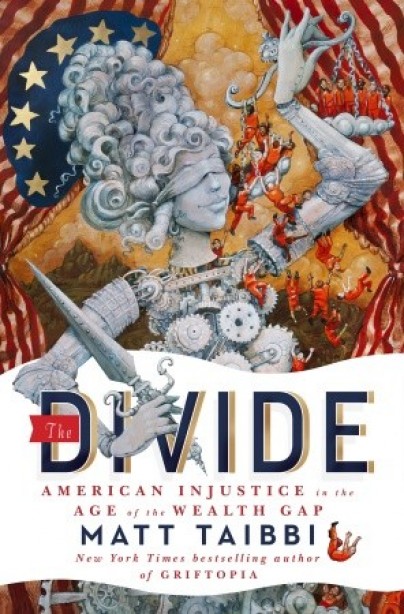
Book Review: ‘The Divide’

Go Lean Commentary

Book Review - The Divide - PhotoSo many Caribbean citizens would love the opportunity to immigrate to the United States. However, the old adage could apply here: “All that glitters is not gold”.

The publishers of the book Go Lean … Caribbean, align with the source book in this review, The Divide by Matt Taibbi. In the Caribbean, we hope to minimize the “push-and-pull” factors that draw our Caribbean youth away. This verse from Matt Taibbi’s book depicts that the US is not the “Promised Land” that many Caribbean expatriates envision:

Violent crime has fallen by 44 percent in America over the past two decades, but during that same period the prison population has more than doubled, skewing heavily black and poor. In essence, poverty itself is being criminalized.

This subject matter aligns with the Go Lean … Caribbean publication, which serves as a roadmap for the introduction and implementation of the Caribbean Union Trade Federation (CU). The Go Lean roadmap calls for the optimization of the Caribbean economic, security and governing engines. We want a society based on justice, but not the “American Justice” we see meted out, as described in the source book.

This Go Lean roadmap first assesses that the Caribbean is in crisis, that we are not able to retain our young people. Many member-states (St Vincent, Puerto Rico, US Virgin Islands, etc.) have lost more than half of their populations to foreign shores. This plight of human flight makes the task of building a functioning society difficult for the remainder, as often our brightest and best talents are the ones that leave. We “fatten frogs for snakes”, as the Jamaican expression depicts.

Many times, the destination of choice is the United States. The goal of Go Lean movement is to forge a better society, to make the Caribbean a better place to live, work and play. While the source book in the foregoing article is indicting the American Justice system, we, in the Caribbean, need to ensure that we are doing even better ourselves in our Caribbean homeland.

Book Review: By Timothy Noah; contributing writer New York Times, April 10, 2014

THE DIVIDE (Spiegel & Grau Publishers)

American Injustice in the Age of the Wealth Gap

By Matt Taibbi

“Low-class people do low-class things.” What’s notable in this reflexive dismissal of those with modest means are not the words themselves. Rather, please turn your attention to the person whom Matt Taibbi, in his ambitious new book documenting America’s unequal administration of justice to rich and poor, quotes saying them: a private attorney hired by New York State to defend low-income people in criminal court. We never learn his name, but Taibbi calls him Waldorf because he resembles the grouchy old balcony heckler on “The Muppet Show.”

Waldorf’s casual contempt for his defendants (and tacit approval of the sloppy policing dragnet that puts them at his mercy) is voiced at the conclusion of a grimly comic vignette worthy of Joseph Heller — one of many deeply reported, highly compelling mini-narratives of dysfunction within the criminal justice system that make “The Divide: American Injustice in the Age of the Wealth Gap” as infuriating as it is impossible to put down.

A 35-year-old black man named Andrew Brown is arrested for “obstructing pedestrian traffic” in Bedford-Stuyvesant. Brown, having been similarly harassed by the cops countless times before, refuses to provide ID and accept a summons, and is consequently brought into court. Once there, Brown explains to Waldorf that he was talking to a friend outside his own apartment building after getting off work, and that, given the lateness of the hour (shortly before 1 a.m.), there wouldn’t have been any pedestrian traffic on Myrtle Avenue to obstruct.

None of this seems to register with Waldorf. “What are you arguing?” he asks. He wonders aloud whether Brown was “being a wise guy” with the cops, and expresses surprise that a person such as Brown would have a job. He advises his client to pay the $25 fine.

Brown refuses and explains it all over again to the judge. The judge turns to Waldorf and asks whether Brown will pay the $25 fine. Waldorf explains, for the second time, that Brown won’t pay, his manner suggesting that for the life of him he can’t figure out why not.

Only then does the judge bestir himself to ask the arresting officer whether he saw any other people on the sidewalk that night. No? “O.K., then,” the judge sighs. “Not guilty.” Out in the hallway, Taibbi asks Waldorf why white people never get arrested for obstructing pedestrian traffic. Oblivious to the lesson that has just played out, and puzzled as to why Taibbi would want to include any of this in a book, Waldorf replies, “Low-class people do low-class things.”

Taibbi wrote “The Divide” to demonstrate that unequal wealth is producing grotesquely unequal outcomes in criminal justice. You might say that’s an old story, but Taibbi believes that, just as income disparities are growing ever wider, so, too, are disparities in who attracts the attention of cops and prosecutors and who doesn’t. Violent crime has fallen by 44 percent in America over the past two decades, but during that same period the prison population has more than doubled, skewing heavily black and poor. In essence, poverty itself is being criminalized. Meanwhile, at the other end of the income distribution, an epidemic of white-collar crime has overtaken the financial sector, indicated, for instance, by a proliferation of record-breaking civil settlements. But partly because of an embarrassing succession of botched Justice Department prosecutions, and partly because of a growing worry (first enunciated by Attorney General Eric Holder when he was Bill Clinton’s deputy attorney general) that any aggressive prosecution of big banks could destabilize the economy, Wall Street has come, under President Obama, to enjoy near-total immunity from criminal prosecution. It had more to fear, ironically, when George W. Bush was president.

The argument isn’t laid out in a particularly rigorous or nuanced manner, but it seems plausible enough. Taibbi, a longtime Rolling Stone writer who is currently developing a publication about political and financial corruption for First Look Media, has in the past written in a blustery style that put me off, but here the gonzo affectation is kept largely in check. What I failed to notice previously — or perhaps what Taibbi shows off to especially good effect here — is what a meticulous reporter he can be, with a facility for rendering complex financial skulduggery intelligible. Especially noteworthy are Taibbi’s detailed accounts of self-­dealing amid the dismantlement of Lehman Brothers — which involved, among other things, hoodwinking Lehman’s bankruptcy judge — and of a vicious harassment campaign waged by hedge fund managers against the employees of a Canadian insurance company whose stock they’d shorted. In both instances, one is struck that, however tricky the standard of proof may be for the white-collar criminal class, the evidence available nowadays in the form of compromising email communications would make Eliot Ness weep with gratitude. And yet the gangsters got away.

Taibbi is similarly skillful at explaining how bureaucratic imperatives in the criminal justice system can spin scarily out of control. In New York City, you start with a “broken windows” theory that says cracking down on petty crime can prevent little criminals from becoming big criminals. Possibly because that’s right, violent crime goes down. But paradoxically, that makes a cop’s life more difficult rather than less, because criminals are getting harder to find even as new computer systems are enabling the police commissioner to keep track of which precincts are making the most arrests. The solution turns out to be aggressive use of a stop-and-frisk policy that gives cops a blank check to “search virtually anyone at any time.” The police start behaving “like commercial fishermen, throwing nets over whole city blocks.” Some of the fish get prosecuted or ticketed for ever-pettier offenses; 20,000 summonses, for instance, are handed out annually for riding a bicycle on the sidewalk. But most fish aren’t guilty of anything and must grow accustomed to being routinely cuffed and ridden around in a police van before they are tossed back into the water. These fish are, of course, typically black and poor. Anecdotal evidence suggests that throwing a similar fishnet over entire Wall Street firms would produce a criminal yield at least as high as any random ghetto block. But innocent Wall Street fish would have a much bigger megaphone with which to proclaim their constitutional rights, and guilty Wall Street fish would have much better lawyers.

One theme implicit in Taibbi’s reporting is the extent to which the justice system’s newer kinds of inequalities are driven by technology. Computers encourage both the government and the banks to operate on a scale at which consideration of

individual circumstance isn’t really possible. The result is unstoppable error by government (say, the frequent miscalculations that leave welfare recipients at constant risk of being wrongly accused of fraud) and unstoppable fraud by banks (say, ­robo-signing endlessly repackaged and resold mortgages and credit card debt). For both government and banks, such scaling up inevitably creates injustices for certain individuals, but so long as the victims are powerless there won’t be much of a legal or political reckoning. The person tossed into jail for welfare fraud he didn’t commit or tossed out of his house because he was mistakenly judged not to be paying his mortgage may or may not get it all sorted out in the end, but even if he does the feedback loop won’t impose too much pain.

We may be approaching a day when any kind of personal attention from a large institution that wields substantial control over your life becomes a luxury available only to the few, like a bespoke suit or designer gown.

New York Times Online –Book Review – “The Justice Gap” – Retrieved 04-15-2014 –http://www.nytimes.com/2014/04/13/books/review/the-divide-by-matt-taibbi.html?_r=0http://www.nytimes.com/2014/04/13/books/review/the-divide-by-matt-taibbi.html_r=0

Even though the Go Lean book is presented as a roadmap for economic empowerment, it immediately recognizes that there must be an effort for justice among Caribbean institutions or rather, people will continue to flee. At the outset of the Go Lean book, in the Declaration of Interdependence (Page 12), this point is pronounced:

xxi. Whereas the legacy in recent times in individual states may be that of ineffectual governance with no redress to higher authority, the accedence of this Federation will ensure accountability and escalation of the human and civil rights of the people for good governance, justice assurances, due process and the rule of law. As such, any threats of a “failed state” status for any member state must enact emergency measures on behalf of the Federation to protect the human, civil and property rights of the citizens, residents, allies, trading partners, and visitors of the affected member state and the Federation as a whole.

How should the Caribbean be different than the United States in the pursuit of justice?

The book Go Lean … Caribbean details strategies, tactic, implementations and advocacies to elevate Caribbean society. Some of the specific features include:

Community Ethos – Juvenile Justice Page 23
10 Ways to Manage Reconciliations Page 34
10 Ways to Impact the Greater Good Page 37
Separation of Powers–Justice Department Page 77
Separation of Powers–Judicial Branch Page 90
10 Ways to Better Manage Image Page 133
10 Ways to Improve Failed-State Indices Page 134
10 Ways to Impact Justice Page 177
10 Ways to Reduce Crime Page 178
10 Ways to Improve Intelligence Page 182
10 Ways to Impact Wall Street Page 200
10 Ways to Impact Prison-Industrial Complex Page 211
10 Ways to Protect Human Rights Page 220
10 Ways to Impact Youth Page 227

The roadmap also cautions that we do not want to repeat America’s mistakes. If we do not learn from history …

In truth, the Caribbean is still reeling from the effects of the Global Financial Crisis of 2008.

What is worse, the US has “hardly” marshaled any persecutions against the culprits and perpetrators of the mortgage fraud that de-stabilized the American securities markets and the world economy. Matt Taibbi further reports:

In a speech last year that chilled Wall Street, New York Federal Reserve President William Dudley said he feared that the tax dodging, money laundering, mortgage fraud and trampling on homeowners by America’s big banks might reflect not just a few bad actors but ethical flaws deep in the fabric of Wall Street.

In 2010, Attorney General Eric Holder Jr. warned that “mortgage-fraud crimes have reached crisis proportions.” He vowed bravely to fight back, but the Justice Department’s inspector general recently reported that, in fact, Holder’s department has made Wall Street crime its lowest priority and that, since 2009, the FBI has closed 747 mortgage-fraud cases with little or no investigation.

800px-Statue_of_Liberty,_NYThere it is, the United States, where there seems to be a Great Divide in justice, one set of standards for the rich, another set for the poor.

The grass is not greener on that (American) side!

The reasons for emigration are “push-and-pull”. This source book identifies and qualifies a “pull” factor, the issue of justice in America. The book informs the reader that America should not be considered alluring from a justice perspective, especially if the reader/audience is poor and of a minority ethnicity.

This leaves the “push” factors. The Caribbean must address its issues, as to why its population is so inclined to emigrate. This is the purpose of the Go Lean roadmap. It features the assessments, strategies, tactics and implementations to make the Caribbean a better place to live, work and play.

Now is the time for the Caribbean region to lean-in for the changes described in the book Go Lean … Caribbean. The benefits of this roadmap are too alluring to ignore: emergence of our own $800 Billion economy, 2.2 million new jobs, new industries, services and optimized justice institutions.

Download the free e-Book of Go Lean … Caribbean – now!


Share this post:
, , , , ,
[Top]

Remembering and learning from Boston

Go Lean Commentary

Boston BombingApril 15, is the one year anniversary of the Boston Marathon bombing. 3 people died directly, and countless others were maimed and injured. From any perspective this was a tragedy! To the families that lost loved ones on that date, our deepest condolences.

There are many lessons for the Caribbean to learn from this experience.

The book Go Lean … Caribbean serves as a roadmap for the introduction and implementation of the Caribbean Union Trade Federation (CU). This CU is proffered to provide economic, security and governing solutions for the 30 member Caribbean states. This book posits that the Caribbean is not immune to similar experiences like Boston; that terrorism requires mitigation beyond the member-states; there needs to be a regional solution. The CU will furnish such a focus. There will be proactive and reactive measures to monitor, interdict, and marshal terroristic threats in the Caribbean. Most of the Caribbean has legacy affiliation with European/US countries that have been victims of terrorism. Though we have not had the tragedies of backpacks exploding at marathons, or chemical weapons used in subways, or airplanes crashing into our buildings, we must still hold a constant vigilance. The roadmap posits that “bad actors” always emerge where there is economic successes.  See a related news article here:

Title: Year after Boston bombing, it’s clear that threat of homegrown terrorism overhyped
By: David Schanzer and Charles Kurzman

In the aftermath of the Boston Marathon bombing one year ago Tuesday, many commentators and public officials called this tragedy a harbinger of more homegrown terrorist attacks to come.

“We’re going to see an explosion in this radicalization and recruitment,” predicted Congressman Frank Wolf. “We are less secure than we were 12 years ago,” claimed think-tank terrorism expert Michael Swetnam. Former Attorney General Michael Mukasey told Americans to “worry – a lot.

”To many, the Boston attack demonstrated the potency of the Islamist extremist ideology, the difficulty of detecting individuals radicalized through social media and the Internet, and the ease with which amateurs could cause massive harm in our open society. The Tsarnaev brothers, they claimed, had paved the way for more terrorism.

While only one year has passed, much of this concern appears to have been hyperbole.

No one has been killed by homegrown terrorists in the past year, and there have been no copycat attacks. To put this in context, over the same period there have been 14,000 murders in the United States, including 46 murders in Boston.

There also has been no epidemic of al-Qaida-inspired extremist behavior directed at American civilians. Our research shows that in the year since the marathon bombing, there have been 15 arrests of Muslim-Americans for terrorism-related offenses, below the average of 20 arrests per year since 9/11. Almost all of these arrests were for attempting to join a foreign terrorist organization abroad, not for planning attacks in the homeland, and were motivated by sympathies with rebels in Syria and elsewhere rather than by al-Qaida’s call for Muslims to attack the West.

Our law enforcement agencies have a far more balanced understanding of the nature of the extremist threat than many of those providing public commentary after the Boston attacks. A nationwide survey of law enforcement agencies we are conducting in collaboration with the Police Executive Research Forum shows that more than half of the agencies report little or no threat from al-Qaida-inspired extremism. Only 2 percent report the threat as “severe.” Agencies from large metropolitan areas reported somewhat higher levels of concern (27 percent reporting a low threat and 7 percent reporting a severe threat). Overall, law enforcement agencies are treating this as a serious, but manageable, issue rather than the existential crisis that many have feared.

Law enforcement agencies have embraced community outreach as an effective strategy to counter violent extremism. Almost every large metropolitan police force surveyed collaborates with Muslim-American communities that are targeted for recruitment by al-Qaida and related extremists. Most of these agencies report they have established a high level of trust with the community, and two-thirds say these relationships have helped develop actionable information. This track record contradicts claims by Congressman Peter King, a New York Republican, and others that Muslim-Americans have failed to cooperate with law enforcement.

One year after two individuals inflicted pain and suffering on the streets of Boston, we should not be overly fearful or cavalier about the threat of violent extremism. The low levels of violent conduct both before and after the Boston Marathon show that no matter how many extremist videos are posted on the Internet, the baseless ideas these videos propagate appeal to only a tiny fraction of our populace. Yet, since small numbers of people can do so much harm, law enforcement agencies and the communities they serve must be constantly vigilant and continue to work together to prevent the next atrocity.

David Schanzer is a Professor at Duke University’s Sanford School of Public Policy and Director of the Triangle Center on Terrorism and Homeland Security.

Charles Kurzman is a Professor of Sociology at the University of North Carolina, Chapel Hill.
Source: News Observer Newspaper – a Raleigh, North Carolina Daily – Retrieved 04/15/2014 from: http://www.newsobserver.com/2014/04/14/3784842/year-after-boston-bombing-its.html

How can we apply lessons from this foregoing article in the stewardship of the Caribbean Homeland Security?

We have the direct lessons of the scourge of piracy in the Caribbean for centuries. The “after-effects” of this legacy still remain, even today. As Caribbean society traversed over the centuries, the attitudes that tolerated piracy, described in the book as “community ethos”, evolved to tolerate, incubate and even promote other lawless activities; (shipwrecking, bootlegging, drug smuggling). So with this history in mind, and the prime directive to elevate Caribbean society, the Go Lean economic empowerment mission is coupled with appropriate security provisions. This mandate is detailed early on in the book’s Declaration of Interdependence, with the following pronouncements (Page 12):

x. Whereas we are surrounded and allied to nations of larger proportions in land mass, populations, and treasuries, elements in their societies may have ill-intent in their pursuits, at the expense of the safety and security of our citizens. We must therefore appoint “new guards” to ensure our public safety and threats against our society, both domestic and foreign. The Federation must employ the latest advances and best practices of criminology and penology to assuage continuous threats against public safety. The Federation must allow for facilitations of detention for convicted felons of federal crimes, and should over-build prisons to house trustees from other jurisdictions.

xvi. Whereas security of our homeland is inextricably linked to prosperity of the homeland, the economic and security interest of the region needs to be aligned under the same governance. Since economic crimes, including piracy and other forms of terrorism, can imperil the functioning of the wheels of commerce for all the citizenry, the accedence of this Federation must equip the security apparatus with the tools and techniques for predictive and proactive interdictions.

Gun ComicThere are many other lessons for us to learn from Boston. But there are other tragedies that appear to have gotten less attention in the past year since the marathon bombings. In Boston alone, there have been 46 murders since April 15, 2013. In total, there have been 14,000+ murders in the entire Unites States in that time. See the foregoing news article/commentary.

These have not gone unnoticed! Especially terrorism’s junior partner-in-crime, bullying; such incidents also call for mitigations.

The Go Lean roadmap therefore comes BIG, in its offering to effectuate change in the Caribbean. Notice these strategies, tactics, implementations, and advocacies detailed in the book related to Caribbean security:

10 Ways to Improve Sharing Page 35
10 Foreign Policy Initiatives at Start-up Page 102
10 Security Initiatives at Start-up Page 103
10 Ways to Impact Justice Page 177
10 Ways to Reduce Crime Page 178
10 Ways to Improve for Gun Control Page 179
10 Ways to Improve Homeland Security Page 180
10 Ways to Mitigate Terrorism Page 181
10 Ways to Improve Intelligence [Gathering] Page 182
10 Ways to Improve Animal Husbandry Page 185
10 Ways to Impact the Prison-Industrial Complex Page 211
10 Ways to Impact Youth Page 227

Further, the Go Lean roadmap portrays the need for public messaging to encourage adoption of better community ethos for the Greater Good (Page 37). We must not allow those innocent lives in Boston to pass without positive lessons for our society.

Download the book Go Lean … Caribbean – now!

Share this post:
, ,
[Top]

Facebook plans to provide mobile payment services

Facebook PicGo Lean Commentary

The jockeying for position has begun!

The foregoing article highlights the planning, development and deployment activities around the issue of mobile payments. This is germane for the Caribbean, as the World Bank reports that this region is #1 for homeland remittances from expatriated citizens.

This is a matter of supply and demand. The Caribbean Diaspora demands to send money; tools like Western Union, MoneyGram and these new solutions, identified here, supply the services.

But change is coming!

Reuters: Soham Chatterjee & Abhirup Roy (Bangalore)

Facebook Inc. is preparing to join the mobile-payments race with remittances and electronic-money services on the social network, the Financial Times reported on Sunday, citing several people involved in the process.

The company is close to obtaining approval from the Central Bank of Ireland to start a service that would allow users to store money on Facebook and use it to pay and exchange with others, the people told the FT. See: http://link.reuters.com/dag58v

The Irish Central Bank declined to comment.

Facebook was not immediately available for comment.

The company has also had partnership talks with at least three London start-ups — TransferWise, Moni Technologies and Azimo — that offer online and mobile international money transfer services, three people involved in the discussions told FT.

Telecom groups, retailers and banks are all trying to secure a [slice of the pie] of global mobile payments, which is predicted to grow rapidly in the next few years.

Vodafone brought its mobile money transfer service M-Pesa to Romania last month, following its success in Africa, and is likely to expand the service in eastern and central Europe.

Facebook’s rival Google Inc.’s head of payments recently reiterated commitment to the struggling Google Wallet and mobile payments service. The company had allowed users to send money last year as an email attachment.

Related Articles:

Google Wallet now lets you send money as an attachment in Gmail: http://link.reuters.com/wyf58v

Google exec reiterates commitment to mobile payments: http://link.reuters.com/xyf58v

Apple Chief Executive Tim Cook said in January the company’s interest in mobile payments was a reason for creating the Touch ID fingerprint sensor in its iPhone 5S smartphone – http://link.reuters.com/sag58v

Piggie Bank PicGlobal mobile transactions are expected to grow at an average 35 percent per year between 2012 and 2017, according to a report by research firm Gartner. The June 2013 report forecast a $721 billion market with more than 450 million users by 2017 – http://link.reuters.com/nyf58v.

Yahoo Online News Source (Retrieved 04/14/2014) –http://news.yahoo.com/facebook-plans-mobile-payment-services-ft-133451646–sector.html

The book, Go Lean…Caribbean, serving as a roadmap for the introduction and implementation of the Caribbean Union Trade Federation (CU), identified that new methods are needed to facilitate remittances. A lot of money is remitted back to the Caribbean (over $9 Billion dollars in 2010; sometimes 10% of GDP), and too many foreign entities are profiting on the backs of hard-working Caribbean people. The book lists a series of new alternatives that will be pursued in the Go Lean roadmap, some of which are identified in the foregoing news article.

This article also raises other issues, such as globalization, ICT, Social Media and Mobile Application development. All of these are covered in exhaustive details in the Go Lean book.

The premise is that the CU is chartered so that the Caribbean can have a hand in its own self-determination. There should be home-grown (Caribbean-based) solutions for Caribbean problems.

This point is pronounced early in the book, in the opening Declaration of Interdependence – (Page 14):

xxvii. Whereas the region has endured a spectator status during the Industrial Revolution, we cannot stand on the sidelines of this new economy, the Information Revolution. Rather, the Federation must embrace all the tenets of Internet Communications Technology (ICT) to serve as an equalizing element in competition with the rest of the world. The Federation must bridge the digital divide and promote the community ethos that research/development is valuable and must be promoted and incentivized for adoption.

In line with the foregoing article, the Go Lean book advocates some infrastructural enhancements so that the region can play a role in the development/deployment of this important industry. The book references are as follows:

• Research & Development (Page 30)

• Caribbean Central Bank (Page 73)

• Impact Social Media (Page 111)

• Benefit from Globalization (Page 119)

• Fostering e-Commerce (Page 198)

• Banking Reforms (Page 199)

• Impacting the Diaspora (Page 217)

• Alternative Remittance Modes (Page 270)

Who will win the “space race” between all the big Information Technology providers (Facebook, Google, Apple or Vodafone as depicted in the foregoing articles)? It is not known yet! But for the Caribbean, we must not be spectators only. Not this time!

With the CU / Go Lean roadmap in place, we can declare: Change has come to the Caribbean.

Download the book – Go Lean…Caribbean Now!!!


Share this post:
, , , ,
[Top]

Temasek firm backs Southeast Asia cab booking app

Go Lean Commentary

CU Blog - Temasek firm backs Southeast Asia cab booking app - Photo - CopySingapore has a public-private initiative to foster innovation, entrepreneurship and jobs. They use public monies to invest in private businesses that can generate future returns. This constitutes a progressive stewardship of a country’s economy; and a fine model for Caribbean empowerment objectives.

The book Go Lean…Caribbean makes similar claims as the news article below, that innovation and economic growth can result from a progressive community ethos. The book defines this “community ethos” as the fundamental character or spirit of a culture; the underlying sentiment that informs the beliefs, customs, or practices of society; dominant assumptions of a people or period.

By Andrew Toh

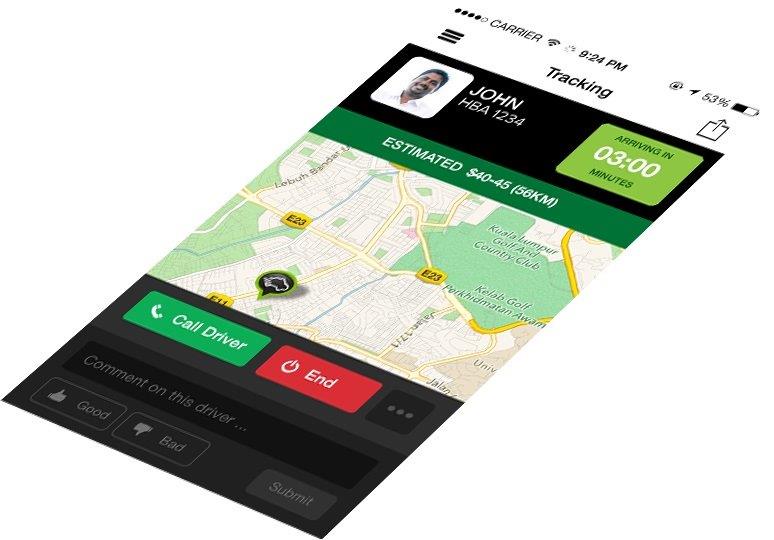
SINGAPORE (Reuters) – A unit of Singapore state investor Temasek Holdings is putting its substantial clout behind an app that eases the pain of booking taxis in Singapore and Malaysia, aiming to expand the service in other busy Southeast Asian cities.

Vertex Venture Holdings, a $1.2 billion venture capital firm that focuses on emerging companies and funds in Asia and the United States, said on Tuesday it was leading a group of mostly Malaysian investors putting an unspecified “eight-figure sum” into smartphone app company GrabTaxi.

The app, developed by two Harvard Business School graduates, was launched in Malaysia in 2012 as MyTeksi, and then expanded to Singapore a year later. It also operates in Thailand, Vietnam and the Philippines.

“We invest in potential champions which have developed new technology platforms or business models,” Vertex Venture CEO Chua Kee Lock told reporters. “We clearly see GrabTaxi as one such champion in the making.”

Booking a taxi is often an arduous task in Singapore, a city state with a population of around 5.4 million and just 28,000 cabs. Many people rely on taxis and public transport, as Singapore is one of the most expensive places in the world to own a private car, but finding a cab during peak hours, and the frequent tropical downpours, is often frustrating.

In other Southeast Asian cities like Manila and Kuala Lumpur, heavy traffic makes finding taxis equally difficult.

GrabTaxi competes in the region with an app from Hong-Kong based company Taxi Hero and Rocket Internet’s Easy Taxi app.

In Singapore, it is up against market leader Comfortdelgro Corp, which has its own booking app. GrabTaxi, however, offers commuters a choice from all the taxis that are closest to their location, regardless of which company operates them.

GrabTaxi founder and Chief Executive Anthony Tan said the app was the second most popular in Singapore after Comfortdelgro, and that it had been downloaded on to more than one million mobile devices in Southeast Asia.

He said the company was keen to expand outside Malaysia, because that is where he believed the biggest growth was happening.

“These markets have much bigger population sizes. They’re chewing up smart phones like no tomorrow,” he said. “I think jumping on this type of wave makes all the difference.”

The Vertex Venture-led investment will go into product innovation and building larger local teams to develop and market the app, Tan said. The app would rely on built-in traffic algorithms and feedback from users, he added.

Reuters News Source (Retrieved 04/08/2014) –http://news.yahoo.com/taxi-temasek-firm-backs-southeast-asia-cab-booking-102723508–sector.html

The foregoing news article, about Temasek & GrabTaxi, provides a number of other “fine models” for the Caribbean ethos:

  • Regional Taxi Administration – The Go Lean roadmap defines that taxis are the frontline of Caribbean hospitality; there is the need to compel the stakeholders to adapt innovative products & services like the mobile apps in this news article (Page 25).
  • Mobile Applications – The Go Lean roadmap defines the mastery of time-&-space as strategic for succeeding in mobile apps development and deployment for the region (Page 35).

CU Blog - Temasek 2nd PicThe book, Go Lean…Caribbean, serves as a roadmap for the introduction and implementation of the Caribbean Union Trade Federation (CU) over a 5 year period. The book stresses that the current community spirit/ethos must change. What can motivate people to change their values and priorities? Compelling external and internal drivers! The roadmap commences with the statement that the Caribbean is in crisis, and that “a crisis is a terrible thing to waste”. The region is devastated from external factors: global economic recession, globalization and rapid technology changes. The book then posits that to adapt, there must be a new internal optimization of the region’s strengths. This is defined in Verse XXVII (Page 14) of the Declaration of Interdependence:

Whereas the region has endured a spectator status during the Industrial Revolution, we cannot stand on the sidelines of this new economy, the Information Revolution. Rather, the Federation must embrace all the tenets of Internet Communications Technology (ICT) to serve as an equalizing element in competition with the rest of the world. The Federation must bridge the digital divide and promote the community ethos that research/development is valuable and must be promoted and incentivized for adoption.

In line with the foregoing article, the Go Lean book details some applicable community ethos, and provides a roadmap to better foster these qualities and their resulting benefits:

• Deferred Gratification (Page 21)

• Governing Principles – Return of Investments (Page 24)

• Help for Entrepreneurship (Page 28)

• Promotion of Intellectual Property (Page 29)

• Impacting Research & Developments (Page 30)

• Bridging the Digital Divide (Page 31)

The roadmap posits that the CU must incubate a Mobile Apps industry, forge entrepreneurial incentives and facilitate the infrastructure upgrades so that innovations can thrive. As related in the foregoing article, these efforts can help a region, in this case the Caribbean, to be a better place to live, work and play. 🙂

Download the free e-Book of Go Lean … Caribbean – now!

Share this post:
, , , , ,
[Top]

Grenada PM Urges CARICOM on ICT

Go Lean Commentary

CU Blog - Grenada PM Urges CARICOM on ICT - PhotoIt’s “Better in the Bahamas” – Tagline. But don’t bring your mobile phone!

The publisher of the book Go Lean…Caribbean, SFE Foundation, is a Think Tank/Community Development Foundation, constituted with members of the Caribbean Diaspora. They frequently travel throughout the region. The dilemma cited in the below news article, mobile roaming fees, has personal application for the SFE Foundation, (and all those who live, work and play in the Caribbean).

One director, while visiting the Bahamas, incurred mobile roaming charges in excess of $650 for doing … nothing; no phone calls, no text messages, no internet browsing. The reason was later explained by his US-based mobile carrier that the smart-phone was on! The pinging/synchronizing to the cellular towers generated those charges. So the subscriber got no benefit, but still incurred an exorbitant bill. This experience is not isolated; it has been reported time and again, especially by cruise ship passengers.

How’s that for extending hospitality to our guests and visitors?!

A mobile phone is ubiquitous in North America and Europe, the source of most Caribbean tourists. In addition, many people use their mobile devices for non-connected functions: camera, calendar, address book and even as a watch, to tell time. Imagine the shock and bad “after taste” for visiting the Caribbean and receiving a $600 phone bill for doing … nothing. See article here:

By: The Caribbean Journal Staff
Continuing his push for information and communication technology (ICT) development in the region, Grenada Prime Minister Dr. Keith Mitchell urged CARICOM heads of government to enhance the region’s ability to compete on the “global stage.”

Mitchell, addressing the CARICOM Heads of Government meeting at the Buccament Bay hotel in St Vincent, outlined a five-pronged plan for ICT development.

The Prime Minister’s five priority areas for ICT development included a single CARICOM ICT space; “bringing technology for the people,” cyber security, mobilization of resources and “developing the CARICOM digital agenda 2025.”

Mitchell holds the responsibility for ICT in CARICOM.

“Of course at the lowest denominator this must translate to job creation for a significant larger percentage of our citizens which ultimately will lead to a prosperous society with corresponding consequences of crime reduction and allow our citizens to live meaningful lives,” Mitchell said. “At the member state level, this requirement is well understood and there is sufficient evidence to support that leaders have positioned ICT as a development priority for their country.”

It’s the latest call for technological development in the region. Mitchell made headlines last year for urging the elimination of mobile roaming fees in the region, a call which was soon followed by Digicel’s announcement that it would be abolishing them.

“We observe that there exist intrinsic barriers to ICT infusion and adoption in countries referred to as Small Island Developing States (SIDS),” Mitchell said. “It would be terribly remiss if we do not amplify the ICT barriers as having equal, if not more urgency, than the environmental, economic and social vulnerabilities already identified and articulated for discussion.”
Source: Caribbean Journal – Regional Online News Source; retrieved 03/10/2014 from: http://www.caribjournal.com/2014/03/10/grenada-pm-urges-caricom-on-ict/

Regional coordination and promotion of Internet and Communications Technologies (ICT) is a critical mission and motivation of the Caribbean Union Trade Federation (CU). The book, Go Lean…Caribbean, serves as a roadmap for a methodical implementation of the CU over a 5 year time-span. The roadmap commences with a Declaration of Interdependence. In Verse XXVII (Page 14) it pronounces:

Whereas the region has endured a spectator status during the Industrial Revolution, we cannot stand on the sidelines of this new economy, the Information Revolution. Rather, the Federation must embrace all the tenets of Internet Communications Technology (ICT) to serve as an equalizing element in competition with the rest of the world. The Federation must bridge the digital divide and promote the community ethos that research/development is valuable and must be promoted and incentivized for adoption.

In line with the foregoing article, the Go Lean roadmap details many of the precepts of the Single ICT Space and the vision of the Grenada Prime Minister, the Committee Head for CARICOM Technology matters. The book features direct advocacies to:

• Help Entrepreneurship (Page 28)

• Promote Intellectual Property (Page 29)

• Bridge the Digital Divide (Page 31)

• Impact Social Media (Page 111)

• Foster Technology (Page 197)

• Foster Electronic Commerce (Page 198)

All in all, the roadmap posits that this plan can create 2.2 million new jobs.

How? When? “Go Lean…Caribbean” provides the turn-by-turn directions!

Single ICT Space

The initiative of a single ICT space for CARICOM calls the Caribbean member-states “to figure out how to leverage ICT as a platform for regional development” and that “the key recommendation of the Regional Digital Development Strategy is that we seek to transform ourselves from 15 sovereign states to a Single ICT Space.” – Grenada Prime Minister Dr. Keith Mitchell.

The Single ICT space initiative will aim to complement the flagship regional programme, the CARICOM Single Market and economy (CSME). Suggested characteristics of the Single ICT Space include: consistent rules across the Region, a single mobile numbering plan and consequent removal of roaming charges for intra-regional calls, and CARICOM Copyrights which could foster renewed entrepreneurship and innovation.

Considerable benefits are expected to be realised if a single ICT space can be established. In addition to improved economies of scale and scope, a single ICT space can lead to a more coherent approach in addressing a broad range of ICT-related issues in the region, which is urgently needed. More importantly, if done correctly, increased competitiveness and growth in the individual countries and the region as a whole could also eventuate.

At this 25th Inter-Sessional Meeting of the Conference in St. Vincent & the Grenadines, Dr. Ralph Gonsalves, Prime Minister of St. Vincent said that a Roadmap towards unveiling the Single Information Communication Technology ICT Space as the digital layer of the CARICOM Single Market and Economy (CSME) over the next two years would be developed and presented to the Heads of Government Meeting in July 2015. This roadmap would include elements such as spectrum management, bringing technology to the people and transforming them to digital citizens, diaspora re-engagement, cyber security and public-private partnerships. Developing a Single CARICOM ICT Space to enhance the environment for investment and production was identified as one of the key areas that the Community should undertake in the short-term to become competitive. As envisioned by its framers, the Single ICT Space will encompass the management of Regional information, human resources, legislation and infrastructure in the sector to elicit maximum benefit for the Region’s populace.

The Single ICT space and the Region’s Digital Agenda 2025 will be constructed on the foundation of the Regional Digital Development Strategy (RDDS) which was approved in 2013, and will also have inputs from the Commission on the Economy and the Post-2015 Agenda.

Download the book Go Lean … Caribbean now!

=================

Appendix – References:

• Caribbean Community Secretariat Press Release: http://www.caricom.org/jsp/pressreleases/press_releases_2014/pres49_14.jsp

• Wikipedia treatment for subject CariCom Single ICT space. Retrieved April 7, 2014 from: http://en.wikipedia.org/wiki/Caribbean_Community#Single_ICT_Space

Download the Book- Go Lean…Caribbean Now!!!


Share this post:
, ,
[Top]

Cuba Approves New “Law on Foreign Investment”

Go Lean Commentary

Cuba FlagCuba sera libre!

This has been the “war chant” for many lovers of Cuban heritage, culture and homeland. It’s a reminder that Cuba currently lacks many of the same freedoms so many of its neighbors enjoy. It is a mission of the book Go Lean … Caribbean, to bring change to the Caribbean in general and Cuba in particular, with the implementation of the Caribbean Union Trade Federation (CU). See the relevance in the following news article here:

Title: Cuba Approves New “Law on Foreign Investment”
By: Caribbean Journal Online Magazine

Cuba’s National Assembly has approved a new “Law on Foreign Investment,” the government said Saturday.
In a statement, the government said it would be an “essential instrument in the interest of Cuba to consolidate its economic model and build a prosperous and sustainable socialism.”

The law included a mix of mostly tax incentives, and it could be the latest move in what has been a gradual shift toward liberalizing the country’s economy, although it has come at a decidedly slow pace.

That nominal push kicked off last year, when Raul Castro, announcing plans to retire from politics in 2018, said Cuba needed to update its economic model to achieve a “sustainable and prosperous socialist society, a society less egalitarian, but more fair.”

The vote came at a special meeting convened by Cuba’s state council to discuss regulation; the meeting focused on “the need to attract foreign capital to the sectors of interest to the country,” according to a statement.

Marino Murillo Jorge, vice president of Cuba’s Council of Ministers, said that well-done foreign investment “does not mean giving away the country.”

He said the new model would focus on ensuring not just economic growth but development, with a target growth rate of between five and seven percent.

Retrieved 04/01/2014 from: http://www.caribjournal.com/2014/03/30/cubas-national-assembly-approves-new-law-on-foreign-investment/

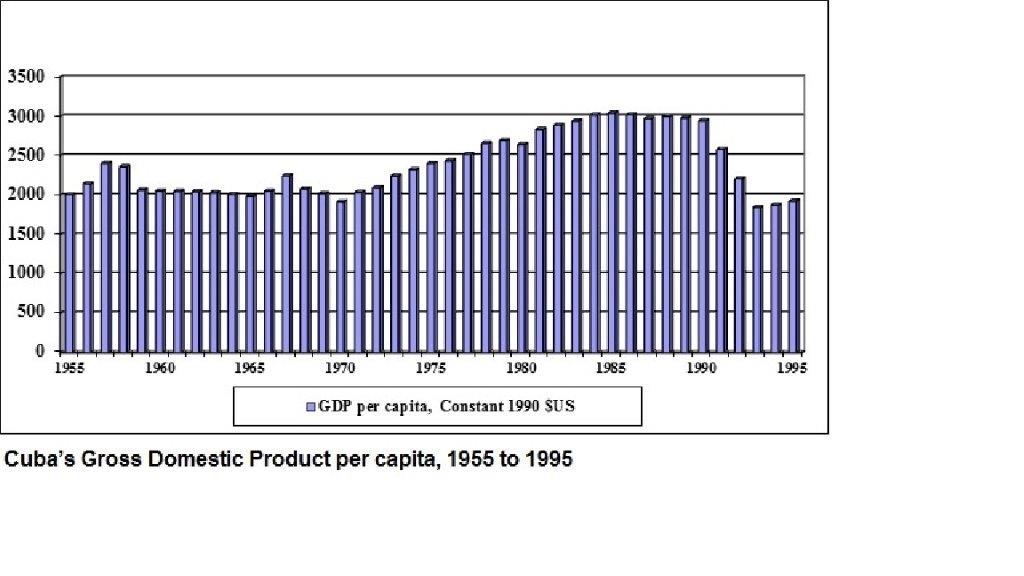
Cuba Blog GDPThe Go Lean roadmap recognizes that Cuba is very significant in the geographic and cultural anatomy of the Caribbean. As of 2010, Cuba possessed 26% of the region’s population (11.2 million out of 42.2 million) and 29% of the gross GDP, with their assumed $111 Billion output. But this is a far cry from where Cuba was 60 years ago, with one study placing Cuba as the #3 economy in Latin America and the Caribbean[a]. Though the “mighty has fallen”, this book posits that the “sleeping giant”, that is the Cuban economy, will awaken. The Go Loan roadmap is the preparation of Cuba’s re-emergence to the world’s economic consciousness. The realities and possibilities of Cuba’s past and future are identified early in the book, embedded in the Declaration of Interdependence, pronouncing a need for reconciliation efforts (Page 11):

xiii. Whereas the legacy of dissensions in many member-states (for example: Haiti and Cuba) will require a concerted effort to integrate the exile community’s repatriation, the Federation must arrange for Reconciliation Commissions to satiate a demand for justice.

The foregoing article confirms that change is on the way! The Cuban Communist regime recognizes that they need foreign investment, a “rightward” shift towards socialism; less egalitarianism and more free market accomplishments. The CU will expedite this process even more for/with Cuba. Where they declare “open arms” for foreign investments, we declare a regional embrace of Caribbean participation (Page 13):

xxiv. Whereas a free market economy can be induced and spurred for continuous progress, the Federation must install the controls to better manage aspects of the economy: jobs, inflation, savings rate, investments and other economic principles. Thereby attracting direct foreign investment because of the stability and vibrancy of our economy.

To the population of Cubans living on the island, we embrace you; “Help” is on the way! We entreat you to lean-in to this plan for confederation with your Caribbean neighbors.

To the Cuban Diaspora living abroad, we embrace you. There is a role for your inclusion in the future of Cuba. We entreat you to also lean-in to this roadmap for change and economic optimization for your beloved Cuba.

To the Cuban legacies, those descendants of Cuba’s past, we encourage you to tune-in and observe how the passions of your heritage will succeed in this new world.

Cuba sera libre!

Download the Book- Go Lean…Caribbean Now!!!

———–

Appendix – Reference:

a. United Nations Development Program, Human Development Report, Various issues, 1990, 1992, New York: Oxford University Press, 1991, 1993.


Share this post:
, , , , , ,
[Top]

Jamaica to receive World Bank funds to help in crime fight

Go Lean Commentary

images-Caribbean-jamaica_police_498560223The publisher of the book Go Lean … Caribbean commends the Government of Jamaica and the Washington DC-based World Bank institution for their diligent effort to forge solutions to some of the crucial challenges of Jamaica. Crime has proceeded to cast such a “dark cloud” on Jamaica that the country is near the assessment of a “Failed-State”. The societal problems in Jamaica are so bad that many different advocacies from the Go Lean book can be applied to bring much needed improvements to the island. The book thusly serves as a roadmap for the implementation of the Caribbean Union Trade Federation (CU), a regional entity projected to also forge solutions for the Caribbean region as a whole and Jamaica in particular.

WASHINGTON D.C. – The World Bank says more than 80,000 Jamaican citizens will benefit from improved services, basic infrastructure and targeted crime and violence interventions in 18 vulnerable inner-city communities as a result of a US$42 million project for integrated community development.

The Washington-based financial institution said the new project is a continuation of the partnership between the Jamaica government and the World Bank on upgrading some of the country’s most vulnerable and volatile communities.

It said the project builds on the success of the “Inner City Basic Services for the Poor Project” to address accelerating urban decay and declining citizen security.

“The project aims to foster a more inclusive society in Jamaica by improving the quality of life of marginalized city dwellers,” said Sophie Sirtaine, World Bank country director for the Caribbean.

“It also aims to prevent crime and violence by engaging youth in public safety initiatives and providing them with job skills training,” she added.

As a result of the funding, Sirtaine said more than 50,000 people will benefit from improved solid waste management services, street lighting, paved roads and drainage.

She said residents in the 18 communities would “feel safer” and that 1200 families will have their piped water connection repaired and 4,500 residents receiving educational and skills training.

“As we strive to advance the targets of the Vision 2030, where access to reliable services and adequate infrastructure is the norm, enhancing community safety and security is a priority,” said Scarlette Gillings, managing director of the Jamaica Social Investment Fund.

“And these communities are places of choice to live, work, raise families and do business,” she added.

In the Kingston Metropolitan Area, the World Bank said poverty has doubled in two years from seven per cent in 2008 to more than 14 per cent in 2010.

It also said youth unemployment is on the rise, with more than 50 per cent of young people unemployed, adding that homicides and other violent crimes rates are among “the highest in the Latin America and Caribbean region”.

Source: Caribbean360.com – Caribbean Online Magazine (Retrieved 03/20/2014) http://www.caribbean360.com/index.php/business/1107320.html#ixzz2wvpxCnMA

While the foregoing article identifies these 3 objectives of the announced project: improved services, basic infrastructure and targeted crime & violence interventions, the Go Lean roadmap depicts 144 missions for the CU to engage, and provides the turn-by-turn directions on how to implement and ensure their success. At the outset of the book (Page 12), public safeguards are identified as prime directives in the Declaration of Interdependence:

x. Whereas we are surrounded and allied to nations of larger proportions in land mass, populations, and treasuries, elements in their societies may have ill-intent in their pursuits, at the expense of the safety and security of our citizens. We must therefore appoint “new guards” to ensure our public safety and threats against our society, both domestic and foreign. The Federation must employ the latest advances and best practices of criminology and penology to assuage continuous threats against public safety.

xvi. Whereas security of our homeland is inextricably linked to prosperity of the homeland, the economic and security interest of the region needs to be aligned under the same governance. Since economic crimes … can imperil the functioning of the wheels of commerce for all the citizenry, the antecedence of this Federation must equip the security apparatus with the tools and techniques for predictive and proactive interdiction.

In addition to crime, the roadmap targets delivery of government services, identifying best practices in agile methodologies to guarantee fewer defects and more efficiency; (Pages 109 & 147). In fact, the name Go Lean refers to the commitment to lean project management methodologies in the structure of the CU; this is defined in the book’s Preface (Page 4).

Lastly, the book also details investments and the impact of pipelines in the region, recognizing that this field is an “art and a science”. These investments are identified as strategic, tactical and operational in their Caribbean deliveries (Page 43). This synchronizes with the World Bank and Jamaica’s initiatives to help the municipalities to better provide quality services with their Vision 2030 plan.

The book Go Lean … Caribbean is an economic empowerment plan for the Caribbean first and foremost. This means addressing the underlying issues that mitigate poverty: jobs, education and economic growth; (Page 222). The CU projects the creation of 2.2 million new jobs regionally while growing the economy to $800 Billion. This roadmap, once executed, should help Jamaica (and equally all 30 Caribbean member-states) shed this “Failed-State” eventuality.

Download the book Go Lean … Caribbean – now!

Share this post:
, ,
[Top]

Bahamas Debate: Was Prime Minister Behind On Tax?

Go Lean Commentary

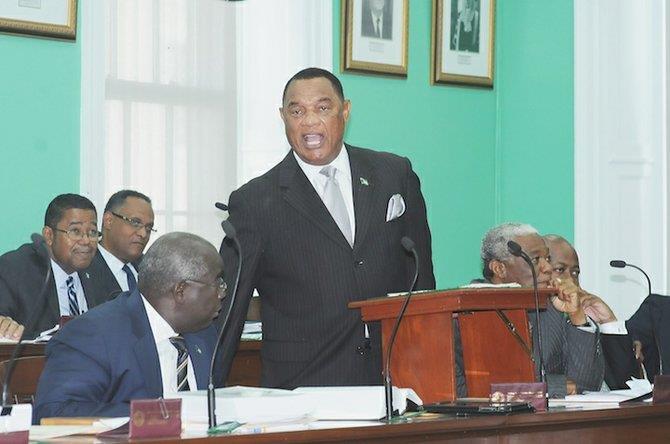
Photo - Perry Christie in ParliamentThe news article below is from The Tribune, a daily newspaper that covers the Bahamas. The story touches on a critical mission and motivation of the Caribbean Union Trade Federation (CU):

To re-boot the revenue systems that the region’s member-state governments depend on.

The book Go Lean … Caribbean, which serves as a roadmap for implementing the Caribbean Union Trade Federation, commences with an opening Declaration of Interdependence. In Verse XIV (Page 12) it pronounces:

Whereas government services cannot be delivered without the appropriate funding mechanisms, “new guards” must be incorporated to assess, accrue, calculate and collect revenues, fees and other income sources for the Federation and member-states. The Federation can spur government revenues directly through cross-border services and indirectly by fostering industries and economic activities not possible without the Union.

The below article crystalizes a debate. The country is mid-stream in implementing a new eco-system for assessing – collecting a Value-Added Tax (VAT). The proponents of the VAT are convinced that this is the panacea for the failure of real property tax collection, where even prominent politicians admit to not complying with the current taxing requirement. The foregoing debate is that maybe even the Prime Minister, Perry G. Christie, is delinquent, or may have been in the past. See the article here:

By: Khrisna Virgil, Tribune Staff Reporter (kvirgil@tribunemedia.net)

FNM (Bahamian Opposition Party) Deputy leader Loretta Butler-Turner is calling on Prime Minister Perry Christie to fully disclose whether he at some point fell behind in paying his real property taxes, and, if so, the years involved.

Branding him as the worst Prime Minister the Bahamas has seen to date, Mrs Butler-Turner criticised Mr Christie following his admission that he was unaware of which PLP parliamentarians, if any, were in arrears with their taxes.

The comments came amid a wave of backlash sparked following VAT advisor Ishmael Lightbourne’s confession that he had not paid real property taxes over the last decade. He owe’s the government more than $7,000.

The Christie administration has been heavily criticised since news of Mr Lightbourne’s delinquent account went public, especially as the government struggles to make its case that VAT is a suitable revenue-generating system.

It was Mrs Butler-Turner’s opinion that Mr Christie was “the most incompetent and irresponsible Prime Minister and Minister of Finance since the advent of Cabinet government in the Bahamas. He is very good at pleading ignorance and very poor at accepting responsibility.

“For the sake of accountability and responsibility might Mr. Christie advise if there were years when he did not pay his real property taxes in a timely manner and how many years this involved?

“If Mr Christie failed to ask (PLP parliamentarians), he is even more incompetent and slacker as Prime Minister than previously thought.

“He now says, ‘I will in fact review that with a view to seeing those of us who are in arrears of the various requirements in terms of taxes and with a view to advising them to meet the payments.’

“Why is he just doing this now, nearly two years after returning to office and on the eve of introducing legislation on VAT, legislation that has been postponed on three occasions by an incompetent government?

“He wants the Bahamian people to pay taxes and wants to raise taxes on law-abiding citizens, including the poor, but doesn’t know who in his own ranks are paying taxes? Is there one standard for the Bahamian people and another standard for PLP parliamentarians?”

Mrs Butler-Turner accused the Christie administration of being one of double standards, made clear, she said, by the actions of some PLPs. She added that seemingly it does not matter if taxes are raised or lowered because there are members of the government who simply do not pay.
Source: The Tribune – Daily newspaper online site (Retrieved 02/26/2014) –http://www.tribune242.com/news/2014/feb/26/fnm-deputy-was-prime-minister-behind-tax/

There are countless anecdotes in the Bahamas, and other countries with similar tax schemes and regimes, where property taxes had not been paid for decades, and only when there is a need for property title transfer (sale or inheritance), does the issue of tax collection become relevant. Does that anecdote also apply to the current Bahamian Prime Minister? This is not known here and now! Nor is it considered in the Go Lean book. The charge in the foregoing article seems to be more of a sensational political volley, rather than a statement of fact.

The CU, on the other hand, takes an apolitical, non-partisan stance. Further the Go Lean book asserts  that even the originator of Christianity, Jesus Christ, advised his followers to “pay Caesar’s things to Caesar”. This is found in a Chapter entitled:

10 Lessons from the Bible (Page 144).

(Note: the Bahamas claims to be a Christian nation).

The CU mission is to implement the complete eco-system for property tax assessment, registration and collections. The roadmap advocates an optimized tactic where the CU operates as a technocratic deputized agency and acquires “Receivables” for a country’s property taxes, in advance, and then subsequently facilitates collections and servicing. Imagine the Bahamas, and other similar member-states, under this new regime, receiving a warrant (securitized payment) of 80% of the amount of tax revenues that should be collected in a “perfect scenario” – 10 Ways to Pay For Change (Page 101). It then becomes the job of the CU’s technocratic professionals to complete the collection cycle – removing any political prejudices from the process – 10 Ways to Improve Credit Ratings (Page 155).

Without a doubt, this approach is far better than the status quo.

Download the book Go Lean … Caribbean – now!


Share this post:
,
[Top]

Fed Releases Transcripts from 2008 Meetings

Go Lean Commentary

Photo - US Federal reserve Bank Building (1)This foregoing article is part of the process of post-mortem analysis, sometimes referred as “Monday Morning Quarterbacking” or “Armchair Quarterbacking”. This can be a helpful process as it allows for lessons-learned of previous episodes and the mitigation of future risk. This is the premise of the book Go Lean … Caribbean. This book, serving as a roadmap for change in the Caribbean region, posits that the effects of the 2008 Great Recession continue to linger. Therefore the book advocates lessons from 2008 and the implementation of reforms, re-boots and turn-arounds to steer the region to a better outcome.

The book is inspired by the words of famed American Economist Paul Romer, who coined the phrase: “A crisis is a terrible thing to waste”. The above article shows that this philosophy was also incorporated in the undertakings of many of the stakeholders battling the challenges of 2008 – they did not waste the crisis. Many things that were blatantly wrong in the macro economy before 2008 were corrected by this crisis. The “easy money” policies and NINJA (No Income No Job or Assets) loans of the 2000’s decade were abated. The financial industries have now moved back to more sound, fundamental lending principles.

By Dunstan Prial:

Transcripts from 2008 Fed meetings divulge publicly, for the first time, details of decisions made by the central bank during the height of the financial crisis. [US Federal Reserve Chairman Ben] Bernanke proposed two options: an emergency term securities lending facility and to expand and extend the currency swap lines with struggling European banks.

By late October, after the collapse of Lehman Brothers and the fire sales of several other large banks on the brink of collapse, the Fed had dropped interest rates to about 1% and introduced a host of other emergency measures. And Fed policy members were apparently quarreling over whether those measures and how they were communicated to the public were helping or harming.

At the Fed’s Oct. 28-29 meetings, Timothy Geithner, then president of the New York Fed, scolded some colleagues for suggesting the Fed’s bold moves were hurting broader confidence in the economy: “Now, a lot of things happened over the last three months and the last year, and a lot of things happened in terms of policy over the last six weeks. There is no doubt that communication about policy by all the arms of the U.S. government and the uncertainty created by the actions by all the arms of the U.S. government contributed in ways to uncertainty about the policy response going forward,” Geithner said.

“There is also no doubt that inevitably in a crisis like this, when policy moves forcefully, it is scary because a lot of people are not yet at the point of assessing or understanding the forces driving our decisions. But I think it’s just unfair to suggest that the actions by the Chairman and this Committee were a substantial contributor to the erosion in confidence and to uncertainty about further policy actions, even though it’s true that when we move with force and drama it has the risk of adding to uncertainty.”

Geithner was a key supporter of the activist measures taken by the Fed before being named Treasury Secretary after Barack Obama was elected in November 2008. The transcripts, which run into the hundreds of pages, reveal that this was the beginning a series of unprecedented measures taken by the Fed in an effort to stave off another Depression.

The 14 transcripts are from eight scheduled meetings and six emergency meetings of the policy setting Federal Open Market Committee, which sets the central bank’s monetary policy, including the level of short-term rates.

The transcripts do not include other meetings at which smaller groups of Fed officials, working with the Treasury Department, arranged the bailouts of bankrupt Bear Stearns, the American International Group (NYSE: AIG), and housing service entities Fannie Mae and Freddie Mac.

Nor do the transcripts include notes from the meetings at which policy makers decided to let investment bank Lehman Brothers fall, which occurred in September 2008 and proved a key event at the outset of the crisis.

Fox Business News Online (Retrieved 02/21/2014) –http://www.foxbusiness.com/economy-policy/2014/02/21/fed-releases-transcripts-from-2008-meetings/

How about the Caribbean? Has the lessons been learned in and for this region? Have the blatantly wrong policies been abated? Has the markets returned to fundamentally sound policies?

Unfortunately, with the ever-expanding brain drain/human flight crisis in the Caribbean, the economic problems persist. Is it fair to conclude that when people move from the Caribbean to the US mainland, Canada or EU member-states, that there is some failure on behalf of Caribbean society? The Go Lean roadmap so declares, identifying “push-and-pull” underlying factors.

What qualifies the writers of this book to make these assessments?

Simple! They have lived the issues depicted in this foregoing news article and the Go Lean roadmap. The book is published by the SFE Foundation, a Community Development Corporation constituted by members of the Caribbean Diaspora. These are people who love their homeland, and would rather live, work and play there, but instead, find themselves toiling as alien residents in foreign lands. Principals of this foundation were also there in 2008, engaged with major stakeholders of the Global Financial crisis: Lehman Brothers, BearStearns. JPMorganChase, CitiGroup, etc. They were on the inside looking out, not the outside looking in. They were movers-and-shakers of the macro economy, not just armchair quarterbacks.


Share this post:
, , ,
[Top]