Month: April 2014

Ailing Puerto Rico open to radical economic fixes

Go Lean Commentary

The Caribbean is in crisis!

Puerto Rican FlagPuerto Rico is in crisis! According to this quote, they have lots of issues, all stemming primarily from economic dysfunctions:

Puerto Rico, in dire straits following eight years of recession, has remained receptive as it debates hundreds of ideas: ‘‘We are studying all alternatives and all possibilities.

The publishers of the book Go Lean … Caribbean humbly submit this publication as a complete roadmap to re-boot the island’s economy, security and governing engines. This roadmap differs from all the other 369 suggestions submitted to the territorial government’s committee highlighted in the foregoing news article, in that it presents a regional option, rather than just a territorial solution. The book asserts that the problems of Puerto Rico (by extension, the entire Caribbean) are too big for any one member-state to solve alone. Rather, the focus of the roadmap is the region-wide professionally-managed, deputized technocracy of the Caribbean Union Trade Federation (CU).

Puerto Rico needs the strategies, tactics, implementations and advocacies of the CU.

The CU needs Puerto Rico!

The CU requires the full participation of all 30 member-states in the region, including all 4 language group (Dutch, English, French and Spanish). With this approach, the CU benefits from the economies-of-scale of 42 million people.

The CU expects NO MONEY from Puerto Rico. This is good as the island is running a $820 million deficit. To cure a deficit a government needs more revenues and/or fewer expenses. The Go Lean roadmap features both. The roadmap is a complete re-boot: new revenue streams and a separation-of-powers, thereby delegating governing overhead to the CU.

Go Lean … Caribbean introduces the CU to take oversight of’ much of the Caribbean economic, security and governing functionality. In summary, this plan’s execution makes Puerto Rico, and the Caribbean, a better place to live, work and play.

This Go Lean roadmap first assesses the Puerto Rican human flight/brain drain crisis, where more than half of the island’s populations have fled to American shores. This plight makes the task of building a functioning society difficult, as often the brightest and best talents are the ones that leave; plus entitlement programs simply need populace retention.

By DANICA COTO – Associated Press

SAN JUAN, Puerto Rico (AP) — Slash the number of public holidays by two-thirds. Eliminate dozens of government agencies. Legalize marijuana and prostitution.

From the intriguing to the impossible, there is no shortage of ideas for fixing Puerto Rico’s ailing economy as the government tries to dig out from a whopping $70 billion in public debt and bring back economic growth.

The ideas have come from legislators, entrepreneurs and even members of the public, who have submitted ideas via a government-sponsored website. Of the 369 ideas sent in by the public, 156 have been accepted by a government committee for consideration, including the suggestions to legalize marijuana and prostitution, and to limit how long people can live in subsidized housing.

But all the ideas require further government approval, either with a legislative vote, or an administrative nod from the governor, agency or department. More dramatic ideas, such as legalization of marijuana or prostitution, would require public hearings, legislative approval and the governor’s signature.

And prospects for approval of the various suggestions are decidedly mixed.

The governor, for example, is expected to sign a bill approved by lawmakers to release certain elderly prisoners, but not a suggestion floated by a member of the public to charge inmates for their room and board.

Puerto Rico, in dire straits following eight years of recession, has remained receptive as it debates hundreds of ideas: ‘‘We are studying all alternatives and all possibilities,’’ said Sen. Maria Teresa Gonzalez, a member of the governor’s party who has come under fire for submitting a bill that would reduce the number of holidays for public employees to six.

Puerto Rico FlagThe island currently celebrates 20 holidays a year, double those observed in the U.S. Many people have bristled at the proposal to scrap some of the additional extra days off, some of which commemorate various historic Puerto Rican leaders. But Gonzalez said the excessive number of holidays costs the government about $500 million a year in lost productivity and interruptions in service, among other things.

‘‘Change always brings about inconveniences,’’ she said. ‘‘I’m convinced that before we talk about something as dramatic and disastrous as layoffs, we have to consider other ideas.’’

Many suggestions have come as Gov. Alejandro Garcia Padilla prepares to submit the first balanced budget in decades, having promised U.S. investors and credit agencies that he will eliminate an $820 million deficit. The governor has not detailed his cutbacks, prompting fears of layoffs, tax increases and cuts to public service.

Opposition legislator Rep. Ricardo Llerandi Cruz has proposed eliminating 41 government agencies, saying it would save $160 million alone in administrative costs. He said the government has many agencies performing the same functions, noting that there’s a Department of Natural Resources, which protects, develops and manages the island’s environmental resources, and an Administration of Natural Resources, a division within the department with responsibilities that include overseeing projects such as cleanup efforts.

‘‘Puerto Rico is facing the worst fiscal crisis in all of its history,’’ Cruz said. ‘‘We need to refocus or revisit governmental priorities to face these problems.’’

A bill in the legislature also would cap the salaries of mayors, but legislators have been debating the issue for a year as mayors continue to give themselves raises. The full-time mayor of the western town of Maricao, for example, oversees the island’s second-least populated municipality with some 6,200 people and currently earns $78,000 a year, nearly double of what he earned the previous year. If the bill is approved, the mayor would earn a base salary of roughly $54,000 a year.

Manuel Lugo, an attorney who lives in the coastal town of Aguadilla, is among those who submitted the highest number of ideas on the government’s website. But despite having nine of 17 ideas approved, he doesn’t believe the government will take action on any of them.

‘‘It is very difficult to change the inertia of this island,’’ said Lugo, 43, who recently closed his office because of economic problems and is contemplating a move to Texas. ‘‘There has been no economic plan for decades. What they do here is repair and patch holes. That’s not how you run a country.’’

Yanira Hernandez, a governor spokeswoman, said Garcia will detail how he plans to balance the budget in a special televised address in late April. The budget must be approved before June 30.

While many are concerned about what cuts will be made to balance the budget, economist Gustavo Velez said extreme measures won’t be necessary if the government increases revenues and consolidates state agencies. Puerto Rico could generate $300 million more a year if it increases its capture rate on tax revenues from 56 to 75 percent, he said. The government also could suspend salary increases, Velez added.

‘‘Puerto Rico cannot keep operating on recurring deficits,’’ he said, noting it is unconstitutional. ‘‘We have to return to balanced budgets as the norm. Politicians have to embrace that reality.’’

The government also has considered tapping into the island’s underground economy, estimated by some experts at $20 billion a year, representing roughly 40 percent of overall consumption.

Puerto Ricans are increasingly seeking new ways to generate money, with some opening food trucks or hunting caimans to sell the meat as shish kebabs or fried snacks.

But an estimated 450,000 people have moved to the U.S. mainland in search of new jobs and a more affordable cost of living in the past decade.

Brunilda Cintron, 56, left the island in 2001 and now lives in Kissimmee, Florida. But her daughter and mother still live in Puerto Rico, and she worries about their future.

‘‘The government has to make some drastic decisions that will adversely affect people,’’ Cintron said, adding that she thinks her family will soon join her in the U.S. mainland. ‘‘I don’t think they’re going to have a choice.’’

Boston Globe – AP Newswire – Retrieved 04-11 2014 http://www.boston.com/news/world/caribbean/2014/04/10/ailing-puerto-rico-open-radical-economic-fixes/siVW5wfiml78bERu5MuJlM/story.html

The CU will fix Puerto Rico! Look here at the solutions; (sorted by Economic/Security/Governance). The book Go Lean … Caribbean details these specific curative measures (advocacies, strategies, tactics, and implementations):

Economic:

Community Ethos – Money Multiplier Page 22
Help Entrepreneurship Page 28
Impact Turn-Around Strategies/Tactics Page 33
Tactics to Forge an $800 Billion Economy Page 67
New Ways to Pay for Change Page 101
Start-up Benefits from an EEZ Page 104
Develop/Expand a Pipeline Industry Page 107
Improve Energy Usage Page 113
Better Manage Debt Page 114
Foster International Aid Page 115
Improve Trade Page 128
Improve Interstate Commerce Page 129
New Ways to Grow the Economy Page 151
Create Jobs Page 152
Control Inflation Page 153
Improve Credit Ratings Page 155
Mitigate Black Markets Page 165
Enhance Tourism Page 190
Impact Wall Street Page 200

Security:

Separation of Powers – Homeland Security Page 75
Security Initiatives [stemming from the Start-up] Page 103
Impact Justice Page 177
Mitigate & Reduce Crime Page 178
Improve Intelligence [Gathering & Analysis] Page 182
Impact the Prison-Industrial Complex Page 211

Governance:

Community Ethos – Deferred Gratification Page 21
Improve Negotiations Page 32
Impact the Greater Good Page 37
Tactics to Foster a Technocracy Page 64
Implement Self-Governing Entities Page 105
Improve Mail Service Page 108
Strong Reasons to Repatriate Page 118
Promote Independence Page 120
Improve Healthcare Page 156
Impact Entitlements Page 158
Improve Education Page 159
New [Governmental] Revenue Sources Page 172
Impact Public Works Page 175
Better Manage Natural Resources Page 183
Improve for Natural Disasters Page 184
Improve Emergency Management Page 196
Impact Urban Living Page 234
Impact US Territories Page 244

The roadmap alerts the Caribbean stakeholders of the obstacles that this plan will encounter, and then provides guidance, turn-by-turn directions, so as to reach the destination … promptly.

Change has come to the Caribbean. The people, institutions and governance of Puerto Rico are all urged to lean-in.”

In fact, now is the time for the whole Caribbean region to lean-in for this change, described in the book Go Lean … Caribbean. The benefits of this roadmap are too alluring to ignore: emergence of an $800 Billion regional economy, 2.2 million new jobs and an end to the dysfunction. This will result in Puerto Ricans repatriating from the US, not fleeing there.

Download the free e-Book of Go Lean … Caribbean – now!

Share this post:
, , , , ,

Cuban cancer medication registered in 28 countries

Go Lean Commentary

Medicine 2While the below news article is about great cancer and diabetes drugs developed in the Caribbean, this commentary has an underlying theme about “American Exceptionalism”.

American exceptionalism is the theory that the United States is qualitatively different from other nation states.[a] In this view, US exceptionalism stems from its emergence from a revolution, becoming what political scientist Seymour Martin Lipset called “the first new nation” and developing a uniquely American ideology, “Americanism”, based on liberty, egalitarianism, individualism, republicanism, populism and laissez-faire. This ideology itself is often referred to as “American exceptionalism.”[b]

Although the term does not necessarily imply superiority, many neoconservative and other American conservative writers have promoted its use in that sense. To them, the US is like the Biblical “City upon a Hill”[c][d]

This subject matter aligns with the publication Go Lean … Caribbean, which serves as a roadmap for the introduction and implementation of the Caribbean Union Trade Federation (CU). The Go Lean roadmap maintains that other peoples (nations) have dreams as well; the American Dream is not the only aspiration to hope for. This foregoing article presses the point about innovation in cancer and diabetes drugs – that emerged from Cuba.

Posted: March 29, 2014

HAVANA, Cuba – Nimotuzumab, a Cuban monoclonal antibody humanized to treat cancer, is registered in 28 countries, mainly in South America, Africa and Asia, in addition to Cuba.

Specialists at the Center of Molecular Immunology, an institution of the BioCubaFarma Business Group, said that the product has shown its effectiveness in various cases of malignant tumours.

Indicated for tumours in the head and neck in advanced stages, brain tumours and of the esophagus, Nimotuzumab is also used in other oncological ailments of the colon, rectum and liver, and in lung cancer among other locations.

The monoclonal antibody and its results will be the focus, on March 25-27, of the eighth global scientific meeting on Nimotuzumab – Nimomeeting 2014.

With Havana’s Convention Center as its venue, the forum will bring together over 200 experts from some 20 nations, as well as about 20 international biopharmaceutical companies interested in sharing experiences about the medication, the therapeutics of which are used in the medical specialties of oncology, oncopediatrics, radiotherapy, pediatrics and neurosurgery, among others.

Meanwhile, Cuba is trying to take its diabetic foot ulcer drug known as Heberprot-P into the European market.

Heberprot-P is a product based on human growth factor currently being administered in some 20 countries, mostly in Latin America.

According to the marketing director of the Havana-based Genetic Engineer and Biotechnology Center, Ernesto Lopez, the pre-clinical stage of the product, known in Europe as Epipropt, was carried out with good toxicological and safety results.

In Spain, with an estimate 40,000 patients needing the Cuban drug, tests were carried out with no negative toxic results. The product has been developed since 2012 for research studies in other European nations.

According to studies, amputation of lower limbs was reduced fourfold, with the surgical procedure in Europe currently costing over 50,000 Euros, and treatment of the condition some 20,000 Euros.

It is the amputation of lower limbs as a direct consequence of diabetic foot ulcer that the Cuban medication avoids with a period of treatment of only six to seven months.

Along with the therapeutic action on serious ulcers, the treatment has demonstrated a preventive nature in countries like Cuba, Venezuela, and Ecuador.

Source: Caribbean News Now Online Newspaper – Retrieved 04-13-2014 http://www.caribbeannewsnow.com/topstory-Cuban-cancer-medication-registered-in-28-countries-20429.html

While the Go Lean book strategizes a roadmap for economic empowerment, it clearly relates that healthcare, disease management, cancer treatments and medicines are germane to the Caribbean quest for health, wealth and happiness. At the outset of the Go Lean book, in the Declaration of Interdependence (Page 10 & 11 respectively), these points are pronounced:

Preamble: While our rights to exercise good governance and promote a more perfect society are the natural assumptions among the powers of the earth, no one other than ourselves can be held accountable for our failure to succeed if we do not try to promote the opportunities that a democratic society fosters.

ix. Whereas the realities of healthcare and an aging population cannot be ignored and cannot be afforded without some advanced mitigation, the Federation must arrange for health plans to consolidate premiums of both healthy and sickly people across the wider base of the entire Caribbean population. The mitigation should extend further to disease management, wellness, obesity and smoking cessation programs. The Federation must proactively anticipate the demand and supply of organ transplantation as developing countries are often exploited by richer neighbors for illicit organ trade.

Cuba is not on friendly terms with the United States. A trade embargo was implemented in 1962 as a temporary measure to dissuade the island’s socialist leanings. Now, after 52 years, the embargo continues. Generations of Cubans and generations of Americans have come and gone without witnessing a normalized relationship between Cuba and its largest neighbor, the US. Millions too have died of the scourge of cancer, estimated by one source as afflicting 1-out-of-3 Americans [e]

(Personal note: the primary author of the book Go Lean … Caribbean was inspired to write this roadmap, after his sister died after a 32-year battle with cancer – See Dedication Page 2).

MedicineThe scourge of cancer and the realities of diabetes were not the motivation for composing the book Go Lean … Caribbean. But rather, the bigger goal of elevating Caribbean society. The Caribbean Union Trade Federation has the prime directive of optimizing the economic, security and governing engines of the region. The foregoing article depicts the benefits that can emerge as a result of innovation in science, technology, engineering and medicine (STEM). Cuba will be able to trade these advance medicines globally to the markets needing their therapeutic benefits. This is a win-win!

Under the Go Lean roadmap, more such developments will emerge … from all corners of the Caribbean. There are also obvious tangential benefits to the people of the Caribbean regarding public health administration and wellness.

The following list details the strategies, tactics, implementations and advocacies to optimize the region’s health deliveries:

Community Ethos – Cooperatives Page 25
Community Ethos – Non-Government Organizations Page 25
10 Ways to Impact Research and Development Page 30
10 Ways to Impact the Greater Good Page 37
Separation of Powers – Patent, Standards, & Copyrights Office Page 78
Separation of Powers – Health Department Page 86
Separation of Powers – Drug Administration Page 87
10 Ways to Implement Self-Government Entities Page 105
10 Trade Mission Objectives Page 116
10 Ways to Benefit from Globalization Page 119
10 Ways to Improve Healthcare Page 156
10 Ways to Impact Cancer Page 157
10 Ways to Impact Entitlements Page 158
10 Ways to Better Manage the Social Contract Page 170
10 Ways Foster Cooperatives Page 176
10 Ways to Improve Organ Transplants Page 214
10 Ways to Improve Elder-Care Page 225
10 Ways to Impact Persons with Disabilities Page 228
10 Ways to Re-boot Cuba Page 236

The foregoing article establishes that many patients around the world will benefit from medical innovations fostered in the Caribbean, in Cuba. The Go Lean roadmap posits that there are a lot of benefits the Caribbean can/will make to facilitate a better life for populations throughout the world. Executing these plans, following the roadmap, will be better for the Caribbean population too.

The United States of America should take heed.

Download the book Go Lean … Caribbean – now!

———

Appendix – References

a. Winfried Fluck; Donald E. Pease; John Carlos Rowe (2011). Re-Framing the Transnational Turn in American Studies. UPNE. p. 207. Retrived 4/16/2014 from: http://books.google.com/books?id=ccz81DWudCAC&pg=PA207

b. American Exceptionalism: A Double-Edged Sword. Seymour Martin Lipset. New York, N.Y.: W.W. Norton & Co., Inc. 1996. Page 18. ISBN 0-393-03725-8.

c. Harold Koh, “America’s Jekyll-and-Hyde Exceptionalism”, in Michael Ignatieff, ed., American Exceptionalism and Human Rights, p. 112

d. A “City upon a Hill” is a phrase from the Bible parable of Salt and Light in Jesus’s Sermon on the Mount. In Matthew 5:14, he tells his listeners, “You are the light of the world. A city that is set on a hill cannot be hidden.” It has become popular with American politicians.

e. Website http://www.preventcancer.com/losing/ – Retrieved Nov. 2013 / Wikipedia.org general subject treatment for the War on Cancer – Retrieved Nov. 2013.


Share this post:
, , ,
[Top]

Book Review: ‘The Divide’

Go Lean Commentary

Book Review - The Divide - PhotoSo many Caribbean citizens would love the opportunity to immigrate to the United States. However, the old adage could apply here: “All that glitters is not gold”.

The publishers of the book Go Lean … Caribbean, align with the source book in this review, The Divide by Matt Taibbi. In the Caribbean, we hope to minimize the “push-and-pull” factors that draw our Caribbean youth away. This verse from Matt Taibbi’s book depicts that the US is not the “Promised Land” that many Caribbean expatriates envision:

Violent crime has fallen by 44 percent in America over the past two decades, but during that same period the prison population has more than doubled, skewing heavily black and poor. In essence, poverty itself is being criminalized.

This subject matter aligns with the Go Lean … Caribbean publication, which serves as a roadmap for the introduction and implementation of the Caribbean Union Trade Federation (CU). The Go Lean roadmap calls for the optimization of the Caribbean economic, security and governing engines. We want a society based on justice, but not the “American Justice” we see meted out, as described in the source book.

This Go Lean roadmap first assesses that the Caribbean is in crisis, that we are not able to retain our young people. Many member-states (St Vincent, Puerto Rico, US Virgin Islands, etc.) have lost more than half of their populations to foreign shores. This plight of human flight makes the task of building a functioning society difficult for the remainder, as often our brightest and best talents are the ones that leave. We “fatten frogs for snakes”, as the Jamaican expression depicts.

Many times, the destination of choice is the United States. The goal of Go Lean movement is to forge a better society, to make the Caribbean a better place to live, work and play. While the source book in the foregoing article is indicting the American Justice system, we, in the Caribbean, need to ensure that we are doing even better ourselves in our Caribbean homeland.

Book Review: By Timothy Noah; contributing writer New York Times, April 10, 2014

THE DIVIDE (Spiegel & Grau Publishers)

American Injustice in the Age of the Wealth Gap

By Matt Taibbi

“Low-class people do low-class things.” What’s notable in this reflexive dismissal of those with modest means are not the words themselves. Rather, please turn your attention to the person whom Matt Taibbi, in his ambitious new book documenting America’s unequal administration of justice to rich and poor, quotes saying them: a private attorney hired by New York State to defend low-income people in criminal court. We never learn his name, but Taibbi calls him Waldorf because he resembles the grouchy old balcony heckler on “The Muppet Show.”

Waldorf’s casual contempt for his defendants (and tacit approval of the sloppy policing dragnet that puts them at his mercy) is voiced at the conclusion of a grimly comic vignette worthy of Joseph Heller — one of many deeply reported, highly compelling mini-narratives of dysfunction within the criminal justice system that make “The Divide: American Injustice in the Age of the Wealth Gap” as infuriating as it is impossible to put down.

A 35-year-old black man named Andrew Brown is arrested for “obstructing pedestrian traffic” in Bedford-Stuyvesant. Brown, having been similarly harassed by the cops countless times before, refuses to provide ID and accept a summons, and is consequently brought into court. Once there, Brown explains to Waldorf that he was talking to a friend outside his own apartment building after getting off work, and that, given the lateness of the hour (shortly before 1 a.m.), there wouldn’t have been any pedestrian traffic on Myrtle Avenue to obstruct.

None of this seems to register with Waldorf. “What are you arguing?” he asks. He wonders aloud whether Brown was “being a wise guy” with the cops, and expresses surprise that a person such as Brown would have a job. He advises his client to pay the $25 fine.

Brown refuses and explains it all over again to the judge. The judge turns to Waldorf and asks whether Brown will pay the $25 fine. Waldorf explains, for the second time, that Brown won’t pay, his manner suggesting that for the life of him he can’t figure out why not.

Only then does the judge bestir himself to ask the arresting officer whether he saw any other people on the sidewalk that night. No? “O.K., then,” the judge sighs. “Not guilty.” Out in the hallway, Taibbi asks Waldorf why white people never get arrested for obstructing pedestrian traffic. Oblivious to the lesson that has just played out, and puzzled as to why Taibbi would want to include any of this in a book, Waldorf replies, “Low-class people do low-class things.”

Taibbi wrote “The Divide” to demonstrate that unequal wealth is producing grotesquely unequal outcomes in criminal justice. You might say that’s an old story, but Taibbi believes that, just as income disparities are growing ever wider, so, too, are disparities in who attracts the attention of cops and prosecutors and who doesn’t. Violent crime has fallen by 44 percent in America over the past two decades, but during that same period the prison population has more than doubled, skewing heavily black and poor. In essence, poverty itself is being criminalized. Meanwhile, at the other end of the income distribution, an epidemic of white-collar crime has overtaken the financial sector, indicated, for instance, by a proliferation of record-breaking civil settlements. But partly because of an embarrassing succession of botched Justice Department prosecutions, and partly because of a growing worry (first enunciated by Attorney General Eric Holder when he was Bill Clinton’s deputy attorney general) that any aggressive prosecution of big banks could destabilize the economy, Wall Street has come, under President Obama, to enjoy near-total immunity from criminal prosecution. It had more to fear, ironically, when George W. Bush was president.

The argument isn’t laid out in a particularly rigorous or nuanced manner, but it seems plausible enough. Taibbi, a longtime Rolling Stone writer who is currently developing a publication about political and financial corruption for First Look Media, has in the past written in a blustery style that put me off, but here the gonzo affectation is kept largely in check. What I failed to notice previously — or perhaps what Taibbi shows off to especially good effect here — is what a meticulous reporter he can be, with a facility for rendering complex financial skulduggery intelligible. Especially noteworthy are Taibbi’s detailed accounts of self-­dealing amid the dismantlement of Lehman Brothers — which involved, among other things, hoodwinking Lehman’s bankruptcy judge — and of a vicious harassment campaign waged by hedge fund managers against the employees of a Canadian insurance company whose stock they’d shorted. In both instances, one is struck that, however tricky the standard of proof may be for the white-collar criminal class, the evidence available nowadays in the form of compromising email communications would make Eliot Ness weep with gratitude. And yet the gangsters got away.

Taibbi is similarly skillful at explaining how bureaucratic imperatives in the criminal justice system can spin scarily out of control. In New York City, you start with a “broken windows” theory that says cracking down on petty crime can prevent little criminals from becoming big criminals. Possibly because that’s right, violent crime goes down. But paradoxically, that makes a cop’s life more difficult rather than less, because criminals are getting harder to find even as new computer systems are enabling the police commissioner to keep track of which precincts are making the most arrests. The solution turns out to be aggressive use of a stop-and-frisk policy that gives cops a blank check to “search virtually anyone at any time.” The police start behaving “like commercial fishermen, throwing nets over whole city blocks.” Some of the fish get prosecuted or ticketed for ever-pettier offenses; 20,000 summonses, for instance, are handed out annually for riding a bicycle on the sidewalk. But most fish aren’t guilty of anything and must grow accustomed to being routinely cuffed and ridden around in a police van before they are tossed back into the water. These fish are, of course, typically black and poor. Anecdotal evidence suggests that throwing a similar fishnet over entire Wall Street firms would produce a criminal yield at least as high as any random ghetto block. But innocent Wall Street fish would have a much bigger megaphone with which to proclaim their constitutional rights, and guilty Wall Street fish would have much better lawyers.

One theme implicit in Taibbi’s reporting is the extent to which the justice system’s newer kinds of inequalities are driven by technology. Computers encourage both the government and the banks to operate on a scale at which consideration of

individual circumstance isn’t really possible. The result is unstoppable error by government (say, the frequent miscalculations that leave welfare recipients at constant risk of being wrongly accused of fraud) and unstoppable fraud by banks (say, ­robo-signing endlessly repackaged and resold mortgages and credit card debt). For both government and banks, such scaling up inevitably creates injustices for certain individuals, but so long as the victims are powerless there won’t be much of a legal or political reckoning. The person tossed into jail for welfare fraud he didn’t commit or tossed out of his house because he was mistakenly judged not to be paying his mortgage may or may not get it all sorted out in the end, but even if he does the feedback loop won’t impose too much pain.

We may be approaching a day when any kind of personal attention from a large institution that wields substantial control over your life becomes a luxury available only to the few, like a bespoke suit or designer gown.

New York Times Online –Book Review – “The Justice Gap” – Retrieved 04-15-2014 –http://www.nytimes.com/2014/04/13/books/review/the-divide-by-matt-taibbi.html?_r=0http://www.nytimes.com/2014/04/13/books/review/the-divide-by-matt-taibbi.html_r=0

Even though the Go Lean book is presented as a roadmap for economic empowerment, it immediately recognizes that there must be an effort for justice among Caribbean institutions or rather, people will continue to flee. At the outset of the Go Lean book, in the Declaration of Interdependence (Page 12), this point is pronounced:

xxi. Whereas the legacy in recent times in individual states may be that of ineffectual governance with no redress to higher authority, the accedence of this Federation will ensure accountability and escalation of the human and civil rights of the people for good governance, justice assurances, due process and the rule of law. As such, any threats of a “failed state” status for any member state must enact emergency measures on behalf of the Federation to protect the human, civil and property rights of the citizens, residents, allies, trading partners, and visitors of the affected member state and the Federation as a whole.

How should the Caribbean be different than the United States in the pursuit of justice?

The book Go Lean … Caribbean details strategies, tactic, implementations and advocacies to elevate Caribbean society. Some of the specific features include:

Community Ethos – Juvenile Justice Page 23
10 Ways to Manage Reconciliations Page 34
10 Ways to Impact the Greater Good Page 37
Separation of Powers–Justice Department Page 77
Separation of Powers–Judicial Branch Page 90
10 Ways to Better Manage Image Page 133
10 Ways to Improve Failed-State Indices Page 134
10 Ways to Impact Justice Page 177
10 Ways to Reduce Crime Page 178
10 Ways to Improve Intelligence Page 182
10 Ways to Impact Wall Street Page 200
10 Ways to Impact Prison-Industrial Complex Page 211
10 Ways to Protect Human Rights Page 220
10 Ways to Impact Youth Page 227

The roadmap also cautions that we do not want to repeat America’s mistakes. If we do not learn from history …

In truth, the Caribbean is still reeling from the effects of the Global Financial Crisis of 2008.

What is worse, the US has “hardly” marshaled any persecutions against the culprits and perpetrators of the mortgage fraud that de-stabilized the American securities markets and the world economy. Matt Taibbi further reports:

In a speech last year that chilled Wall Street, New York Federal Reserve President William Dudley said he feared that the tax dodging, money laundering, mortgage fraud and trampling on homeowners by America’s big banks might reflect not just a few bad actors but ethical flaws deep in the fabric of Wall Street.

In 2010, Attorney General Eric Holder Jr. warned that “mortgage-fraud crimes have reached crisis proportions.” He vowed bravely to fight back, but the Justice Department’s inspector general recently reported that, in fact, Holder’s department has made Wall Street crime its lowest priority and that, since 2009, the FBI has closed 747 mortgage-fraud cases with little or no investigation.

800px-Statue_of_Liberty,_NYThere it is, the United States, where there seems to be a Great Divide in justice, one set of standards for the rich, another set for the poor.

The grass is not greener on that (American) side!

The reasons for emigration are “push-and-pull”. This source book identifies and qualifies a “pull” factor, the issue of justice in America. The book informs the reader that America should not be considered alluring from a justice perspective, especially if the reader/audience is poor and of a minority ethnicity.

This leaves the “push” factors. The Caribbean must address its issues, as to why its population is so inclined to emigrate. This is the purpose of the Go Lean roadmap. It features the assessments, strategies, tactics and implementations to make the Caribbean a better place to live, work and play.

Now is the time for the Caribbean region to lean-in for the changes described in the book Go Lean … Caribbean. The benefits of this roadmap are too alluring to ignore: emergence of our own $800 Billion economy, 2.2 million new jobs, new industries, services and optimized justice institutions.

Download the free e-Book of Go Lean … Caribbean – now!


Share this post:
, , , , ,
[Top]

Remembering and learning from Boston

Go Lean Commentary

Boston BombingApril 15, is the one year anniversary of the Boston Marathon bombing. 3 people died directly, and countless others were maimed and injured. From any perspective this was a tragedy! To the families that lost loved ones on that date, our deepest condolences.

There are many lessons for the Caribbean to learn from this experience.

The book Go Lean … Caribbean serves as a roadmap for the introduction and implementation of the Caribbean Union Trade Federation (CU). This CU is proffered to provide economic, security and governing solutions for the 30 member Caribbean states. This book posits that the Caribbean is not immune to similar experiences like Boston; that terrorism requires mitigation beyond the member-states; there needs to be a regional solution. The CU will furnish such a focus. There will be proactive and reactive measures to monitor, interdict, and marshal terroristic threats in the Caribbean. Most of the Caribbean has legacy affiliation with European/US countries that have been victims of terrorism. Though we have not had the tragedies of backpacks exploding at marathons, or chemical weapons used in subways, or airplanes crashing into our buildings, we must still hold a constant vigilance. The roadmap posits that “bad actors” always emerge where there is economic successes.  See a related news article here:

Title: Year after Boston bombing, it’s clear that threat of homegrown terrorism overhyped
By: David Schanzer and Charles Kurzman

In the aftermath of the Boston Marathon bombing one year ago Tuesday, many commentators and public officials called this tragedy a harbinger of more homegrown terrorist attacks to come.

“We’re going to see an explosion in this radicalization and recruitment,” predicted Congressman Frank Wolf. “We are less secure than we were 12 years ago,” claimed think-tank terrorism expert Michael Swetnam. Former Attorney General Michael Mukasey told Americans to “worry – a lot.

”To many, the Boston attack demonstrated the potency of the Islamist extremist ideology, the difficulty of detecting individuals radicalized through social media and the Internet, and the ease with which amateurs could cause massive harm in our open society. The Tsarnaev brothers, they claimed, had paved the way for more terrorism.

While only one year has passed, much of this concern appears to have been hyperbole.

No one has been killed by homegrown terrorists in the past year, and there have been no copycat attacks. To put this in context, over the same period there have been 14,000 murders in the United States, including 46 murders in Boston.

There also has been no epidemic of al-Qaida-inspired extremist behavior directed at American civilians. Our research shows that in the year since the marathon bombing, there have been 15 arrests of Muslim-Americans for terrorism-related offenses, below the average of 20 arrests per year since 9/11. Almost all of these arrests were for attempting to join a foreign terrorist organization abroad, not for planning attacks in the homeland, and were motivated by sympathies with rebels in Syria and elsewhere rather than by al-Qaida’s call for Muslims to attack the West.

Our law enforcement agencies have a far more balanced understanding of the nature of the extremist threat than many of those providing public commentary after the Boston attacks. A nationwide survey of law enforcement agencies we are conducting in collaboration with the Police Executive Research Forum shows that more than half of the agencies report little or no threat from al-Qaida-inspired extremism. Only 2 percent report the threat as “severe.” Agencies from large metropolitan areas reported somewhat higher levels of concern (27 percent reporting a low threat and 7 percent reporting a severe threat). Overall, law enforcement agencies are treating this as a serious, but manageable, issue rather than the existential crisis that many have feared.

Law enforcement agencies have embraced community outreach as an effective strategy to counter violent extremism. Almost every large metropolitan police force surveyed collaborates with Muslim-American communities that are targeted for recruitment by al-Qaida and related extremists. Most of these agencies report they have established a high level of trust with the community, and two-thirds say these relationships have helped develop actionable information. This track record contradicts claims by Congressman Peter King, a New York Republican, and others that Muslim-Americans have failed to cooperate with law enforcement.

One year after two individuals inflicted pain and suffering on the streets of Boston, we should not be overly fearful or cavalier about the threat of violent extremism. The low levels of violent conduct both before and after the Boston Marathon show that no matter how many extremist videos are posted on the Internet, the baseless ideas these videos propagate appeal to only a tiny fraction of our populace. Yet, since small numbers of people can do so much harm, law enforcement agencies and the communities they serve must be constantly vigilant and continue to work together to prevent the next atrocity.

David Schanzer is a Professor at Duke University’s Sanford School of Public Policy and Director of the Triangle Center on Terrorism and Homeland Security.

Charles Kurzman is a Professor of Sociology at the University of North Carolina, Chapel Hill.
Source: News Observer Newspaper – a Raleigh, North Carolina Daily – Retrieved 04/15/2014 from: http://www.newsobserver.com/2014/04/14/3784842/year-after-boston-bombing-its.html

How can we apply lessons from this foregoing article in the stewardship of the Caribbean Homeland Security?

We have the direct lessons of the scourge of piracy in the Caribbean for centuries. The “after-effects” of this legacy still remain, even today. As Caribbean society traversed over the centuries, the attitudes that tolerated piracy, described in the book as “community ethos”, evolved to tolerate, incubate and even promote other lawless activities; (shipwrecking, bootlegging, drug smuggling). So with this history in mind, and the prime directive to elevate Caribbean society, the Go Lean economic empowerment mission is coupled with appropriate security provisions. This mandate is detailed early on in the book’s Declaration of Interdependence, with the following pronouncements (Page 12):

x. Whereas we are surrounded and allied to nations of larger proportions in land mass, populations, and treasuries, elements in their societies may have ill-intent in their pursuits, at the expense of the safety and security of our citizens. We must therefore appoint “new guards” to ensure our public safety and threats against our society, both domestic and foreign. The Federation must employ the latest advances and best practices of criminology and penology to assuage continuous threats against public safety. The Federation must allow for facilitations of detention for convicted felons of federal crimes, and should over-build prisons to house trustees from other jurisdictions.

xvi. Whereas security of our homeland is inextricably linked to prosperity of the homeland, the economic and security interest of the region needs to be aligned under the same governance. Since economic crimes, including piracy and other forms of terrorism, can imperil the functioning of the wheels of commerce for all the citizenry, the accedence of this Federation must equip the security apparatus with the tools and techniques for predictive and proactive interdictions.

Gun ComicThere are many other lessons for us to learn from Boston. But there are other tragedies that appear to have gotten less attention in the past year since the marathon bombings. In Boston alone, there have been 46 murders since April 15, 2013. In total, there have been 14,000+ murders in the entire Unites States in that time. See the foregoing news article/commentary.

These have not gone unnoticed! Especially terrorism’s junior partner-in-crime, bullying; such incidents also call for mitigations.

The Go Lean roadmap therefore comes BIG, in its offering to effectuate change in the Caribbean. Notice these strategies, tactics, implementations, and advocacies detailed in the book related to Caribbean security:

10 Ways to Improve Sharing Page 35
10 Foreign Policy Initiatives at Start-up Page 102
10 Security Initiatives at Start-up Page 103
10 Ways to Impact Justice Page 177
10 Ways to Reduce Crime Page 178
10 Ways to Improve for Gun Control Page 179
10 Ways to Improve Homeland Security Page 180
10 Ways to Mitigate Terrorism Page 181
10 Ways to Improve Intelligence [Gathering] Page 182
10 Ways to Improve Animal Husbandry Page 185
10 Ways to Impact the Prison-Industrial Complex Page 211
10 Ways to Impact Youth Page 227

Further, the Go Lean roadmap portrays the need for public messaging to encourage adoption of better community ethos for the Greater Good (Page 37). We must not allow those innocent lives in Boston to pass without positive lessons for our society.

Download the book Go Lean … Caribbean – now!

Share this post:
, ,
[Top]

Facebook plans to provide mobile payment services

Facebook PicGo Lean Commentary

The jockeying for position has begun!

The foregoing article highlights the planning, development and deployment activities around the issue of mobile payments. This is germane for the Caribbean, as the World Bank reports that this region is #1 for homeland remittances from expatriated citizens.

This is a matter of supply and demand. The Caribbean Diaspora demands to send money; tools like Western Union, MoneyGram and these new solutions, identified here, supply the services.

But change is coming!

Reuters: Soham Chatterjee & Abhirup Roy (Bangalore)

Facebook Inc. is preparing to join the mobile-payments race with remittances and electronic-money services on the social network, the Financial Times reported on Sunday, citing several people involved in the process.

The company is close to obtaining approval from the Central Bank of Ireland to start a service that would allow users to store money on Facebook and use it to pay and exchange with others, the people told the FT. See: http://link.reuters.com/dag58v

The Irish Central Bank declined to comment.

Facebook was not immediately available for comment.

The company has also had partnership talks with at least three London start-ups — TransferWise, Moni Technologies and Azimo — that offer online and mobile international money transfer services, three people involved in the discussions told FT.

Telecom groups, retailers and banks are all trying to secure a [slice of the pie] of global mobile payments, which is predicted to grow rapidly in the next few years.

Vodafone brought its mobile money transfer service M-Pesa to Romania last month, following its success in Africa, and is likely to expand the service in eastern and central Europe.

Facebook’s rival Google Inc.’s head of payments recently reiterated commitment to the struggling Google Wallet and mobile payments service. The company had allowed users to send money last year as an email attachment.

Related Articles:

Google Wallet now lets you send money as an attachment in Gmail: http://link.reuters.com/wyf58v

Google exec reiterates commitment to mobile payments: http://link.reuters.com/xyf58v

Apple Chief Executive Tim Cook said in January the company’s interest in mobile payments was a reason for creating the Touch ID fingerprint sensor in its iPhone 5S smartphone – http://link.reuters.com/sag58v

Piggie Bank PicGlobal mobile transactions are expected to grow at an average 35 percent per year between 2012 and 2017, according to a report by research firm Gartner. The June 2013 report forecast a $721 billion market with more than 450 million users by 2017 – http://link.reuters.com/nyf58v.

Yahoo Online News Source (Retrieved 04/14/2014) –http://news.yahoo.com/facebook-plans-mobile-payment-services-ft-133451646–sector.html

The book, Go Lean…Caribbean, serving as a roadmap for the introduction and implementation of the Caribbean Union Trade Federation (CU), identified that new methods are needed to facilitate remittances. A lot of money is remitted back to the Caribbean (over $9 Billion dollars in 2010; sometimes 10% of GDP), and too many foreign entities are profiting on the backs of hard-working Caribbean people. The book lists a series of new alternatives that will be pursued in the Go Lean roadmap, some of which are identified in the foregoing news article.

This article also raises other issues, such as globalization, ICT, Social Media and Mobile Application development. All of these are covered in exhaustive details in the Go Lean book.

The premise is that the CU is chartered so that the Caribbean can have a hand in its own self-determination. There should be home-grown (Caribbean-based) solutions for Caribbean problems.

This point is pronounced early in the book, in the opening Declaration of Interdependence – (Page 14):

xxvii. Whereas the region has endured a spectator status during the Industrial Revolution, we cannot stand on the sidelines of this new economy, the Information Revolution. Rather, the Federation must embrace all the tenets of Internet Communications Technology (ICT) to serve as an equalizing element in competition with the rest of the world. The Federation must bridge the digital divide and promote the community ethos that research/development is valuable and must be promoted and incentivized for adoption.

In line with the foregoing article, the Go Lean book advocates some infrastructural enhancements so that the region can play a role in the development/deployment of this important industry. The book references are as follows:

• Research & Development (Page 30)

• Caribbean Central Bank (Page 73)

• Impact Social Media (Page 111)

• Benefit from Globalization (Page 119)

• Fostering e-Commerce (Page 198)

• Banking Reforms (Page 199)

• Impacting the Diaspora (Page 217)

• Alternative Remittance Modes (Page 270)

Who will win the “space race” between all the big Information Technology providers (Facebook, Google, Apple or Vodafone as depicted in the foregoing articles)? It is not known yet! But for the Caribbean, we must not be spectators only. Not this time!

With the CU / Go Lean roadmap in place, we can declare: Change has come to the Caribbean.

Download the book – Go Lean…Caribbean Now!!!


Share this post:
, , , ,
[Top]

Financial Crisis Jokes

SmileThe book, Go Lean…Caribbean, serves as a roadmap for the implementation of the Caribbean Union Trade Federation (CU). This is a very sober and serious quest.

But it should be fun too!

This is embedded in the tagline for the CU: to make the Caribbean a better place to live, work and play.

In this vein, we present these Financial Crisis Jokes:

Q: How do you define optimism?

A: A banker who irons five shirts on a Sunday.

Q: What’s the difference between a banker and a large pizza?

A: The pizza can still feed a family of four.

As a surprise, a chief exec’s wife pops by his office. She finds him in an unorthodox position, with his secretary sitting in his lap. Without hesitation, he starts dictating: ‘. . . and in conclusion, gentlemen, credit crunch or no credit crunch, I cannot continue to operate this office with just one chair.’

Q: Why have real estate agents stopped looking out of the window in the morning?

A: Because otherwise they’d have nothing to do in the afternoon.

Q: What do you call five hedge fund managers at the bottom of the ocean?

A: A good start.

Q: What’s the difference between an investment banker and a pigeon?

A: The pigeon is still capable of putting down a deposit on a new Ferrari.

The credit crunch has helped me get back on my feet. The car’s been repossessed.

Q: What do you say to a hedge fund manager who can’t sell anything?

A: Quarter-pounder with fries, please.

Overheard in a NYC bar: ‘This credit crunch is worse than a divorce. I’ve lost half my net worth and I still have a wife.’

The bank returned a check to me this morning, stamped: ‘insufficient funds.’ Is it them or me?

A director decided to award a prize of $100 for the best idea of saving the company money during the credit crunch. It was won by a young executive who suggested reducing the prize money to $50.

Q: What’s the capital of Iceland?

A: About $3.50.

A man went to his bank manager and said: ‘I’d like to start a small business. How do I go about it?’ ‘Simple,’ said the bank manager. ‘Buy a big one and wait.’

Money talks. Trouble is, mine knows only one word: ‘Goodbye.’

A young man asked an elderly rich man how he made his money. ‘Well, son, it was 1932. The depth of the Great Depression. I was down to my last penny, so I invested that penny in an apple. I spent the entire day polishing the apple and, at the end of the day, I sold that apple for ten pennies. ‘The next morning I bought two apples, spent the day polishing them and sold them for 20 pennies. I continued this for a month, by which time I’d accumulated a fortune of $1.37. ‘Then my wife’s father died and left us $2 million.’

Q: What have an Icelandic bank and an Icelandic streaker got in common?

A: They both have frozen assets.

A reporter asked President Bush about his thoughts on the credit crunch. “Credit Crunch is ok”, he retorted, “but I really like Coco Puffs”.

If you don’t eat out as often as you used to it’s a recession. If you find yourself eating out more often, only it’s out of dumpsters, it’s a depression.

 Now Back to Work!!

Download the Book- Go Lean…Caribbean Now!!!

Share this post:
,
[Top]

What Usain Bolt can teach banks about financial risk

Go Lean Commentary

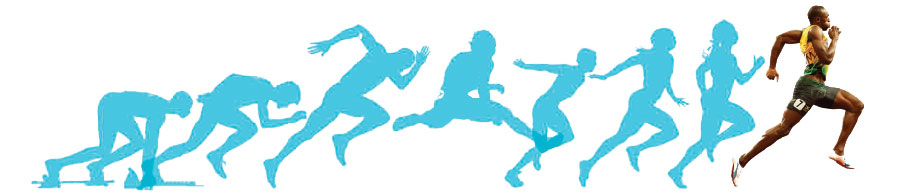
Runner GuyThere were 465 US bank failures between 2008 and 2012.[a]

Joke: “The bank returned a check to me this morning, stamped: ‘insufficient funds.’ Is it them or me?”

The foregoing article shows the type of functions that technocrats do: evaluating risk. Any risk that can imperil the complete financial system must be monitored and mitigated. The “extreme value theory” is a model for evaluating risk and predicting future performance; and while not perfect, it is better than doing nothing.

There was no one performing this role in the Caribbean in 2008.

The foregoing article and its reliance on calculus, quantitative methods and econometric modeling is an example of the required technocratic oversight in managing an economy. Usain Bolt is used here as an allegory, a fable. The Economist magazine thusly explains how complex issues can be taught with simplified analogies and illustrations. Banking is more complex than track-and-field; but the pursuit of excellence is similar. Just like any world-class athletic pursuit, this goal is hard to master.

The Economist explains…

THE banking industry did a bad job in the run-up to the financial crisis of assessing “tail risks”, extreme events that represent the least likely of a range of probable outcomes. The Basel Committee on Banking Supervision, which is the international standard-setter for bank capital, has proposed changes in the internal risk models that financial institutions use. In particular, it wants banks to shift from a technique called “value-at-risk” (VaR) to one called “expected shortfall” (ES).

VaR is a way of measuring a firm’s risk of suffering really big losses over a certain period (a day, a week, a month) to a certain level of “confidence”. A daily VaR of $1m at 1% probability means that there is a 99% chance that you will not lose more than $1 [million] on any one day. The problem is that if you have that one bad day in 100, the potential losses could go much higher than $1 [million]. VaR doesn’t have much to say about what those losses might be. The expected-shortfall approach is meant to provide an answer to that question. Instead of asking, “What are the chances that things get so bad that we lose $1 [million]?” it asks, “If things do get that bad, how much would we actually lose?”

To do this, it uses a statistical method called “extreme value theory”, which looks specifically at what happens in the tail of distributions. To take a more trivial example of where extreme-value theory has been used, a 2011 paper by two researchers at Tilburg University collected data on the personal bests of elite athletes between 1991 and 2008, in order to try and calculate the “ultimate world record” for 100m sprints—the absolute edge of human performance given the times, equipment and drugs-policies that then prevailed. For the 100[meter] for men, the boffins (British slang for technical expert) put the ultimate world record at 9.51 seconds, compared with the record that then prevailed of 9.72, and a current world best of 9.58, set by Usain Bolt in 2009. That looks pretty good: the model came up with a number that was well inside the mark that then prevailed, and is still a hefty improvement on the current record. If extreme-value theory is meant to help banks think through the extremes, this is encouraging.

But like every model in history, expected shortfall cannot predict the future. In an earlier 2006 paper, researchers from the same university tried to calculate ultimate world records for a wider range of events, including the men’s marathon. The researchers reckoned back in 2006 that the best possible running of that distance would yield a time of two hours, four minutes and six seconds. Yet the world record today stands at two hours, three minutes and 23 seconds (Wilson Kipsang in 2013). To be fair to the researchers, they did not claim that their ultimate record could not be broken. But whether bankers will remember that reality can be worse than expected is a different question. Expected shortfall is an improvement on VaR; it is not a crystal ball.
The Economist (Retrieved 04/09/2014) – http://www.economist.com/blogs/economist-explains/2014/04/economist-explains-4

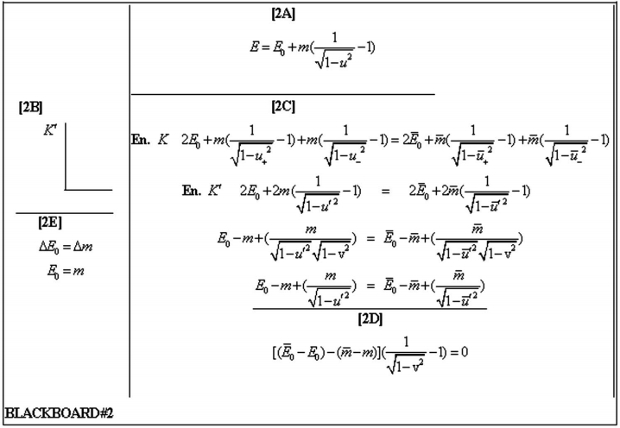
EquasionThe book, Go Lean…Caribbean, serves as a roadmap for the implementation of the Caribbean Union Trade Federation (CU). The book presents the CU as a technocracy, to ensure economic failures of the past do not re-occur. From the outset, the book identified that the Caribbean is in crisis, with the pronouncement that a “crisis is a terrible thing to waste”. The prime directive of the CU is to optimize economic, security and governing engines to impact the Caribbean’s Greater Good, for residents … and bank depositors. This was pronounced in the Declaration of Interdependence – (Page 13):

xxv. Whereas the legacy of international democracies had been imperiled due to a global financial crisis, the structure of the Federation must allow for financial stability and assurance of the Federation’s institutions. To mandate the economic vibrancy of the region, monetary and fiscal controls and policies must be incorporated as proactive and reactive measures. These measures must address threats against the financial integrity of the CU and of the member-states.

In line with the foregoing article, the Go Lean book details some infrastructural enhancements/advocacies to the region’s financial eco-system; to facilitate efficient management of the economy:

  • Fostering a Technocracy (Page 64)
  • Caribbean Central Bank (Page 73)
  • Deposit Insurance Regulations (Page 73)
  • Securities Regulatory Authority (Page 74)
  • Modeling the European Union / Central Bank (Page 130)
  • Lessons from 2008 (Page 136)
  • Banking Reforms (Page 199)

The mis-management of the economy has led to many episodes of “fight-or-flight” among Caribbean society. For many member-states, their Diaspora is more than half their population; i.e. Jamaica and Puerto Rico.

While there is no crystal ball, according to the foregoing article, there is much that can be done. Now is the time for the CU!

The purpose of this roadmap is to make the Caribbean, a better place to live, work and play. No more flight! Now we stand and fight with these technocratic weapons of modern economics.

Download the book Go Lean … Caribbean – now!

———-

Appendix Reference:
[a]. https://news.yahoo.com/facts-numbers-us-bank-failures-183852568.html

Share this post:
, , , , ,
[Top]

Florida’s Snowbirds Chilly Welcome

Go Lean Commentary

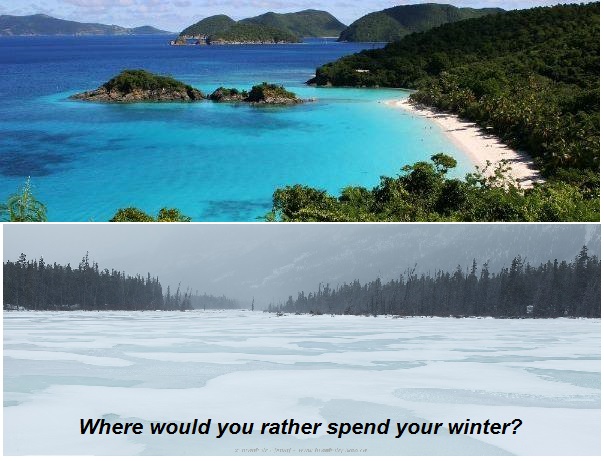
Florida's Snowbird Chilly Welcome - PhotoTo the Canadian Snowbirds, looking for warm climates and a warm welcome, we say:

“Be our guest”.

To the Caribbean Diaspora, living in Canada and other northern countries, we say:

“Come in from the cold”.

The book Go Lean…Caribbean aligns with the news story in the below article. While the US may be retracting the Welcome Mats from Canadian snowbirds, after 180 days, the islands of the Caribbean extend the invitation for them to pass the wintry months here. They are invited to bring their time, talent and treasuries; (according to the article: billions of dollars).

  • Need an extra month? No problem.
  • Need access to cutting-edge medical treatment? Got it.
  • Need protection from crime and harassment? Got you covered.
  • Need video communications to interact with Embassy and government officials? Sure thing.
  • Need access to your Canadian dollar bank accounts? No problem.

The source news article is embedded here as follows:

Title: “Congress protects America from Canadian pensioners”
Gulfport, Florida – A chore combining carpentry with diplomacy awaits Gordon Bennett, a retired Canadian soldier, after his move to a larger mobile home near Florida’s Gulf coast. As commander of an overseas post of the Royal Canadian Legion, he likes to fly his national flag from a handy palm tree. But as a respectful guest—one of about half a million Canadian “snowbirds” who own winter homes in Florida, using special visas good for a total of 180 days in any 12-month period—he knows to follow strict protocol when mounting his flags, or face complaints from American neighbours. His Canadian flag cannot be flown on its own but must be paired with the Stars and Stripes (though never on the same pole). The American flag may not be smaller or fly lower, and must be flown in the position of honour (the right, as you emerge from a doorway).

Mr. Bennett, a genial octogenarian, does not resent the fussing. In his winter home of Pinellas County—an unflashy region of mobile home parks, “senior living” complexes, golf courses and strip malls—the welcome is mostly warm for Canadian snowbirds, who pump billions of dollars into Florida’s economy each year. His post shares premises with the American Legion, and has introduced local veterans to Moose Milk, a lethal Canuck eggnog-variant involving maple syrup. He routinely brings 50 or 60 Canadians to ex-servicemen’s parades, picnics or dinner-dances.

But once issues of sovereignty are raised, America’s welcome can chill. Visa rules force Canadian pensioners to count each day after they cross the border, typically in late October. They are enforced ferociously: overstayers may be barred from re-entry for five years. Some members of Congress have been trying to ease the rules for Canadian pensioners since the late 1990s. A law allowing Canadians over 55 to spend up to eight months in America each year, as long as they can show leases for property down south and do not work, passed the Senate in 2013 as part of a comprehensive immigration bill, but like the bigger bill, it has now stalled. In the House of Representatives an extension for Canadian snowbirds has been tucked into the JOLT Act, a tourism-promotion law introduced by Joe Heck, a Nevada Republican.

Canadian pensioners are not an obviously threatening group—few Americans report being mugged by elderly Ottawans armed with ice-hockey sticks. They pay property and sales taxes in America. They must cover their own health-care costs while down south, through the Canadian public health-care system and private top-up policies. If allowed to stay for eight months, most would stay only seven, predicts Dann Oliver, president of the Canadian Club of the Gulf Coast (staying longer would complicate their health cover and their tax status). They just want a few more weeks in the sun.

Yet even something this easy is proving hard. Mr. Heck is willing to tweak his bill to focus on two reforms: the Canadian extension and visa interviews by video-conference for Chinese, Brazilian and Indian would-be visitors, who currently face long journeys to American consulates. But many members of the House “are reluctant to do anything with the word immigration in it,” says Mr. Heck. Optimists hope the bill might come up for a vote this year. For Mr. Bennett and his wife, Evelyn, Canadians whose “bones ache” in their homeland’s cold, it can’t come too soon.
Source: The Economist (Retrieved 03/08/2014) –http://www.economist.com/news/united-states/21598680-congress-protects-america-canadian-pensioners-chilly-welcome

Florida's Snowbird Chilly Welcome - Photo 2The book, Go Lean…Caribbean, serves as a roadmap for the implementation of the Caribbean Union Trade Federation (CU) over a 5 year period. The book posits that tourism products can be further extended to attract, accommodate and harvest the market of Snowbirds. These ones bring more than they take, and therefore should be viewed as low-hanging fruit for tourism’s economic harvest. While some CU member-states may target a High-Net-Worth clientele, there is room too for the hordes of retirees who may seek more modest accommodations. In the end, billions of dollars of economic output from the Snowbird market are still … billions of dollars.

From the outset, the book defined that the purpose of the CU is to optimize economic, security and governing engines to impact Caribbean society, for residents and visitors. This was pronounced in Verse IV (Page 11) of the opening Declaration of Interdependence:

Whereas the natural formation of the landmass is in a tropical region, the flora and fauna allows for an inherent beauty that is enviable to peoples near and far. The structures must be strenuously guarded to protect and promote sustainable systems of commerce paramount to this reality.

In line with the foregoing article, the Go Lean book details some applicable infrastructure enhancements and advocacies to facilitate more Snowbird traffic:

  • Ferries – Union Atlantic Turnpike (Page 205)
  • Self-Governing Entities/Fairgrounds (Pages 105, 192)
  • Optimized Medical Deliveries (Page 156)
  • Marshalling Economic Crimes (Page 178)
  • Improve Elder-Care (Page 239)

The purpose of this roadmap is to make the Caribbean, a better place to live, work and play; for snowbirds too! This way we can benefit from their presence.

Download the book Go Lean … Caribbean – now!

Share this post:
, , , , ,
[Top]

Book Review: ‘The Sports Gene’

Go Lean Commentary

Evolution AthleteSuccess is found at the intersection between talent and practice. Or so it seems…

These words are appropriate in reviewing the new book by David Epstein, The Sports Gene. He asserts that certain ethnicities have advantages for excelling in certain sports, but they must still put in the work to excel. These words are equally appropriate for assessing Caribbean life, prospects and cultures.

The forgoing news article in the Washington Times is a Review of the above-cited book; it takes a physiological, cultural and sociological look at the subject of sports and the athletes more inclined to excel at it. In fact the back cover photo features Jamaican Sprinter Usain Bolt, and the book prominently features an anecdote about Bahamian High Jumper Donald Thomas. So this author recognizes that Caribbean people are identified with excellence in sports; maybe even defined as geniuses[a].

The world recognizes that the Caribbean has gifted athletes, but unfortunately these participants must leave their beloved homeland to maximize their talents and earn a living from them. (Even to matriculate as student-athletes)

Book Review: By Robert VerBruggen – Special to the Washington Times, August 26, 2013

Subject: ‘The Sports Gene’ by David Epstein
Why are some people more athletic than others? Why is it that many sports are dominated by players of specific ethnicities?

These are questions that occur to many of us, sports fans and non-fans alike. Unfortunately, academia and the media have stubbornly refused to deal with them in an honest manner, keeping to simple, feel-good answers.

David Epstein’s “The Sports Gene” is a welcome exception. While the book’s title is unfortunate — no single gene could explain something so complex as athleticism — Mr. Epstein provides a careful and nuanced discussion of how nature, nurture and sports interact.

Mr. Epstein proves that genes exert a powerful influence on athleticism, and that ethnic physical differences can affect performance in many sports. Yet he does not shortchange the effects of practice and culture. This is a significant accomplishment.

There’s been much discussion in the popular press about the “10,000-hour rule” — the argument, formulated by journalist Malcolm Gladwell, that one masters a task not by having the right genes, but simply by practicing it for a total of 10,000 hours. This theory does not survive a close inspection by Mr. Epstein.

For starters, the drive needed to practice something for 10,000 hours might itself be genetic. For example, it’s possible to breed dogs and mice that have an insatiable desire to run, and twin studies suggest that genes contribute to the amount of physical activity that people get.

More to the point, the “rule” is based on flawed statistical reasoning. Yes, on average, a person who achieves elite status in a field does so after practicing for about 10,000 hours — but an average is not a rule for individuals to follow. Some people achieve elite status in as little as 3,000 hours, while others take more than twice the average. Every one of these studies has found an immense amount of variation.

Mr. Epstein illustrates this concept by comparing two high jumpers. Stefan Holm of Sweden has had a lifelong love of the sport, and through training, he very gradually improved his performance. Donald Thomas of the Bahamas, meanwhile, managed to clear a seven-foot bar on his first day. At the 2007 World Championships, just a year-and-a-half after his first high jump, Mr. Thomas beat Mr. Holm.

Mr. Epstein details many of the physical differences that give some athletes an advantage. Mr. Thomas benefited from unusually spring-like Achilles tendons. Basketball players are tall and have wide wingspans. Baseball players, who must look at a ball leaving a pitcher’s hand at 90 mph and instantly know whether and how to swing, have amazing vision. And so on.

None of this means that training doesn’t matter. For example, in addition to having great vision, baseball players must build an elaborate mental database of how different pitches look. They’re useless without this database. In one anecdote, Mr. Epstein tells of a professional softball pitcher who easily struck out some of Major League Baseball’s finest hitters. All the time they’d spent watching overhand fastballs had not prepared them for an underhand pitch.

What this does mean is that genetic qualities matter in sports. Which raises a question: Are some of these qualities more common in some ethnic groups than in others?

Much of academia swears that the phenomenon we refer to as “race” is merely a “social construct” with no biological significance whatsoever, but actual genetic research reveals otherwise: As humans spread out across the globe and encountered widely varying environment, each population evolved a little differently.

One difference that emerged is body structure. For example, the Kalenjin — a Kenyan ethnic group that is dramatically over represented in long-distance running accomplishments — tend to have thin lower legs, which is an advantage because weight there dramatically reduces running efficiency.

Further, in general, Africans of a given height have longer limbs than Europeans, and also have a higher center of mass. There are differences in average height among ethnic groups as well.

As with Mr. Epstein’s arguments regarding individual athletic achievement, his arguments about racial differences don’t imply that environment and culture are irrelevant. As Mr. Epstein notes, sometimes an ethnic group can dominate simply because they care about the sport more than their competitors — see the (now fading) pre-eminence of Japanese sumo wrestlers, or the stellar German record in dressage. The Kalenjin, in addition to their physical advantages, are raised in an environment where constant running is the norm.

That is what makes “The Sports Gene” such a worthy read: While the book’s purpose is to push back against the widespread denial that genes matter, Mr. Epstein avoids taking too strident a stance in the opposite direction. Human reality, he explains, isn’t the result of nature or nurture. It’s the result of both.

Washington Times Online –Book Review – Retrieved 04-09-2014 –http://www.washingtontimes.com/news/2013/aug/26/book-review-the-sports-gene/#ixzz2yRDgikdC

Horseback ridingThis subject matter aligns with the publication Go Lean … Caribbean, which serves as a roadmap for the introduction and implementation of the Caribbean Union Trade Federation (CU). The Go Lean roadmap only has one interest in this subject of sports, fostering the economic opportunities that can be forged from it[b].

This Go Lean roadmap first assesses that the Caribbean is in crisis; among the issues: athletes with any ability must seek refuge and opportunities in foreign lands. So this roadmap provides solutions to optimize the region’s economic, security and governing engines. The roadmap provides the facilitation to grow a professional, collegiate and amateur sports eco-system. Many times, the missing ingredients for organized sports are the facilities: stadia, arenas and playing fields. A study of this void, is bigger than just sports, it is “life and death”. But the roadmap posits that sports, even though it is just “extra-curricular”, does bring benefits. In fact, Go Lean quotes the Bible scripture at 1 Timothy 4:8 “For bodily exercise is profitable for a little …”[c]

The source book by David Epstein asserts that the rule that anyone can excel at any sport endeavor with 10,000 hours of practice and nurturing is a fallacy. Consider sports like Sumo wrestling and jockeying a horse; there’s no doubt that nature or physiology plays a role for success in these activities, despite the amount of practice. (There’s no way, a jockey will beat a Sumo Wrestler or vice-versa). But most importantly, the source book empathetically establishes that genes alone will never yield the sought-after result, there is the need for skilled training, coaching with best-practices and an internal drive. In so many ways, this parallels the current effort to reboot the Caribbean economic engines: nature (birth-right) is critical, but training, experience, coaching and the technocratic application of best-practices are also needed to forge change. The most important ingredient though is the internal drive; first and foremost, this is identified in the roadmap as “community ethos”.

The Go Lean roadmap recognizes many different kinds of athletics, team sports and individual events. The unique “genius” qualifier is highlighted at the outset of the Go Lean book, in the Declaration of Interdependence (Page 13 – 14), as follows:

xxi. Whereas the preparation of our labor force can foster opportunities and dictate economic progress for current and future generations, the Federation must ensure that educational and job training opportunities are fully optimized for all residents of all member-states, with no partiality towards any gender or ethnic group. The Federation must recognize and facilitate excellence in many different fields of endeavor, including sciences, languages, arts, music and sports. This responsibility should be executed without incurring the risks of further human flight, as has been the past history.

xxxi. Whereas sports have been a source of great pride for the Caribbean region, the economic returns from these ventures have not been evenly distributed as in other societies. The Federation must therefore facilitate the eco-systems and vertical industries of sports as a business, recreation, national pastime and even sports tourism – modeling the Olympics.

Similar to the publication by David Epstein, Go Lean … Caribbean highlights lessons that are learned from flawed ideologies, as in the case that education (abroad) elevates a society. (The Caribbean experience is that of a brain drain). While Epstein’s book prescribed strategies, tactics and implementation to optimize sport performance, Go Lean performs the same exercise for Caribbean economic empowerment.

Now is the time for the Caribbean region to lean-in for the changes described in the book Go Lean … Caribbean. Success is to be found at the intersection between opportunity and preparation.

The benefits of this roadmap are too alluring to ignore: emergence of an $800 Billion economy, 2.2. million new jobs, new industries, services and opportunities for the sports-playing youth of the Caribbean and even an invitation to the Diaspora (and their legacies) to repatriate from North American and European countries so as to preserve Caribbean culture in the Caribbean[d].

Download the book Go Lean … Caribbean – now!

—————–

Appendix – ‘Go Lean’ Book References

a. 10 Ways to Foster Genius – Page 27
b. Separations of Powers – Sports & Culture – Page 81
c. 10 Ways to Improve Sports – Page 229
d. 10 Ways to Preserve Caribbean Heritage – Page 218

Share this post:
, , , ,
[Top]

How Nigeria’s economy grew by 89% overnight

Go Lean Commentary

Nigeria EconomyThese words jump off the page in reviewing the foregoing article:

Nigeria has a deserved reputation for corruption, so a skeptic might think the doubling of its economy a result of fiddling the numbers.

The publishers of the book Go Lean…Caribbean are among the skeptics.

The measurement of Gross Domestic Product (GDP) is a very important function for the governing authorities of any state. This point is strongly advocated in the Go Lean book, serving as a roadmap for the introduction and implementation of both the Caribbean Union Trade Federation (CU) and the independent, yet aligned Caribbean Central Bank (CCB). These institutions depend on (and will ensure) accurate GDP calculations.

What is so wrong with an 89% overnight GDP jump? Isn’t a jump in GDP indicative of successful economic policies for a country’s administration? Yes!

But 89% is beyond common sense and sensibilities! See the full news article, here:

ON SATURDAY, April 5th, South Africa was Africa’s largest economy. The IMF put its GDP at $354 billion last year, well ahead of its closest rival for the crown, Nigeria. By Sunday afternoon that had changed. Nigeria’s statistician-general announced that his country’s GDP for 2013 had been revised from 42.4 trillion naira to 80.2 trillion naira ($509 billion). The estimated income of the average Nigerian went from less than $1,500 a year to $2,688 in a trice. How can an economy grow by almost 90% overnight?

Nigeria has a deserved reputation for corruption, so a skeptic might think the doubling of its economy a result of fiddling the numbers. In fact it is the old numbers that are dodgy. An economy’s real growth rate is typically measured by reference to prices in a base year. In Nigeria the reference year for the old estimate of GDP was 1990. The IMF recommends that base years be updated at least every five years. Nigeria left it far too long; as a result, its old GDP figures were hopelessly inaccurate.

The new figures use 2010 as the base year. Why was the upgrade so big? To come up with an estimate of GDP, statisticians need to add together estimates of output from a sample of businesses in every part of the economy, from farming to service industries. The weight they give to each sector depends on its importance to the economy in the base year. A snapshot of Nigeria’s economy in 1990 gave little or no weight to fast-growing parts of the economy such as mobile telephony or the movie industry. At the time the state-owned telephone company had a few hundred thousand customers. Today the country has 120m mobile-phone subscriptions. On the old 1990 figures, the telecoms sector was less than 1% of GDP; it is now almost 9% of GDP. Motion pictures had not shown up at all in the old figures, but the industry’s size is now put at 1.4% of GDP. Nigeria’s number-crunchers have improved the gathering of statistics in other ways. The old GDP figures were based on an estimate of output. The new figures are cross-checked against separate surveys of spending and income. The sample on which the data are based has increased from around 85,000 establishments to 850,000. Only businesses with a fixed location are included: the traders who weave precariously between the traffic are not captured. Even so, many small businesses are now part of the GDP picture.

Of course, Nigerians are no richer than they were on Saturday night. The majority of the country’s 170m people live on less than a dollar a day. What the revised GDP figures show is that its economy is far more than just an oil enclave, exporting crude to pay for imported goods from richer countries. The oil industry’s share of GDP is now put at just 14%, compared with 33% according to the old figures. Manufacturing is much larger than previously thought. Services are booming. It is still a tough place in which to do business. But any company or investor who wants exposure to Africa’s fast-growing markets cannot afford to pass the continent’s largest economy by.
Source: The Economist Magazine – Retrieved 04/08/2014 from:  http://www.economist.com/blogs/economist-explains/2014/04/economist-explains-2

According to the foregoing article, the current GDP determination may be correct, while the previous GDP figures may be wrong. A better approach may have been to correct and methodically adjust the base year (1990) slowly over a period of some years.

Why is accurate GDP so important? The lessons from Greece (years: 2000-2010) are too vivid! GDP growth measures success in economic engines. From a Central Bank perspective, the measure of GDP contributes to the determination of the money supply (M0 and M1). Too much currency in circulation can result in devaluation. This fate has been the affliction for many Caribbean member-states. The book describes the dilemma of currency/economic mis-management and their impact on Caribbean society; this is one of the “push” factors contributing to human flight; (Anecdote 16 – Caribbean Currencies, Page 149). Assuaging further human flight/brain drain is a prime directive of the Go Lean roadmap for the CU. This point is pronounced in the opening Declaration of Interdependence – Page 13:

xxiv. Whereas a free market economy can be induced and spurred for continuous progress, the Federation must install the controls to better manage aspects of the economy: jobs, inflation, savings rate, investments and other economic principles. Thereby attracting direct foreign investment because of the stability and vibrancy of our economy.

The Go Lean roadmap calls for confederating all 30 member-states of the Caribbean, despite their language and legacy, into an integrated Single Market, with a unified currency, Caribbean Dollar (C$). The end result after 5 years, not overnight, would be the growth in GDP from $378 Billion (per 2010) to $800 Billion. This growth is based on new jobs, industrial output and lean operational efficiency, not fiddling with the accounting numbers.

The book posits that the adoption of electronic payment systems by the governing entities (e-Government – Page 168), and fostering Electronic Commerce (Page 198) will Mitigate Black Markets (Page 165), thus reducing the guesswork of statistical abstracts. Thus, the CU will be able to better Measure the Progress (Page 147) of the Go Lean roadmap, and make the required course correction; this is a path to indisputable success.

Download the free e-Book of Go Lean … Caribbean – now!
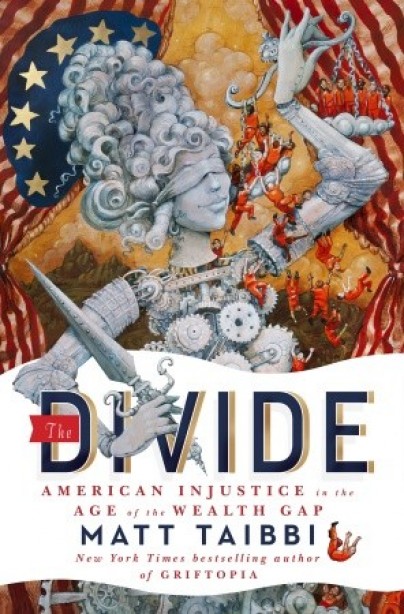
Share this post:
, ,
[Top]