Tag: Security

National Sacrifice – The Missing Ingredient

Go Lean Commentary

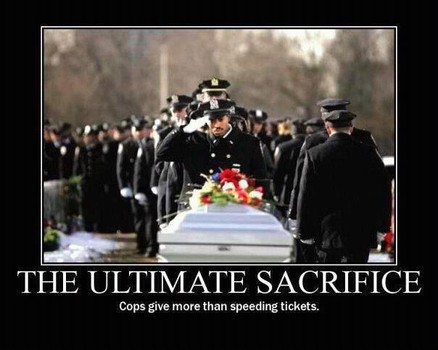
CU Blog - National Sacrifice - The Missing Ingredient - Photo 3The term National Sacrifice is defined here as the willingness to die for a greater cause; think “King/Queen and Country”. This spirit is currently missing in the recipe for “community” in the Caribbean homeland.

To be willing to die for a cause means that one is willing to live for the cause. Admittedly, “dying” is a bit extreme. The concept of “sacrifice” in general is the focus of this commentary.

The publishers of the book Go Lean…Caribbean wants to forge change in the Caribbean, we want to change the attitudes for an entire community, country and region. We have the track record of this type of commitment being exemplified in other communities. (Think: The US during WW II). Now we want to bring a National Sacrifice attitude to the Caribbean, as it is undoubtedly missing. This is evidenced by the fact the every Caribbean member-state suffers from alarming rates of societal abandonment: 70% of college educated population in the English states have left in a brain drain, while the US territories have lost more than 50% of their populations).

The book Go Lean…Caribbean opens with the acknowledgement that despite having the “greatest address in the world… the people of the Caribbean have beat down their doors to get out”, (Page 5).

CU Blog - National Sacrifice - The Missing Ingredient - Photo 4The book Go Lean…Caribbean serves as a roadmap for the introduction and implementation of the Caribbean Union Trade Federation (CU); a confederation to bring change, empowerment, to the Caribbean region; to make the region a better place to live, work and play for all stakeholders (residents, visitors, businesses, organizations – NGO’s and governments). This Go Lean roadmap also has initiatives to foster solutions for the Caribbean youth. The Go Lean book posits that permanent change for Caribbean society will only take root as a result of adjustments to the community attitudes, the national spirit that drives the character and identity of its people. This is identified in the book as “community ethos”; and that one such character, National Sacrifice is sorely missing in this region.

Any attempts to change Caribbean society’s community ethos must start with the youth.

At no point should it be construed that this commentary is advocating sacrificing young men (and women) on the altar of the God of War. But rather, this commentary laments the missing ingredients of wholesale commitment to any national cause. Thusly, the recommendation is for conscription/draft (Appendix B) into a National Youth Service (NYS) program for the Caribbean. Take it one step further and make the Youth Service program regional in its scope rather than “national”; with applicable exemptions for:

  • military/police enrollments
  • student/research deferments (at regional institutions)
  • religious/missionary assignments
  • medical/disability exceptions

This quest relates a commitment so vital to a community that everyone should be willing to sacrifice and lean-in for the desired outcome. This Caribbean effort is not new to the world; it is currently being championed by a Washington-DC-based global Non-Government Organization (NGO) branded the Innovations in Civic Participation (ICP). Much can be learned from analyzing their successes … and failures. See details here:

Innovations in Civic Participation – NGO – Leaders for Youth Civic Engagement (Retrieved 01/15/2015):

Innovations in Civic Participation (ICP) is a global leader in the field of Youth Civic Engagement. ICP envisions a world where young people in every nation are actively engaged in improving their lives and their communities through civic participation. We believe that well-structured youth service programs can provide innovative solutions to social and environmental issues, while helping young people develop skills for future employment and active citizenship.

ICP carries out its mission through four main activities:

  1. Incubating innovative models for youth service programs;
  2. Creating and expanding global networks;
  3. Conducting research and publicizing information on youth civic engagement, especially national youth service and service-learning; and
  4. Serving as a financial intermediary to support program innovation and policy development.

In addition to these activities, ICP regularly consults with its extensive network of over 2,500 academics, policymakers, program entrepreneurs, and other leaders in the field on program and policy work.

Contact Information:

Innovations in Civic Participation
P.O. Box 39222
Washington, DC 20016
202-775-0290

http://www.icicp.org/about-us/

A quest for a National Youth Service has previously been advocated in Sub-Saharan Africa (see Appendix C). There, the NYS was designed to explore the potential to foster youth employability, entrepreneurship, and sustainable livelihoods. This effort stemmed from an existing tradition of NYS programs in Sub-Saharan Africa, which were originally designed to cultivate a sense of national identity and mobilize skills for development in post-independence nations; (see Appendix A). Today, NYS programs operate in the context of a deepening regional youth unemployment crisis, which averages over 20 percent, according to African Economic Outlook. NYS programs engage hundreds of thousands of young people each year and have the potential to equip them with strong civic skills and prepare them for employment and livelihood opportunities.

Despite its potential as an economic strategy, little is still known about how effective NYS programs are at increasing youth employability in Africa. But there is no doubt for the commitment to community that is forged from these efforts. Young people cry, sweat, and bleed for their community, embedding a desire to sacrifice for the Greater Good.

This corresponds with the Bible precept: “There is more happiness in giving than in receiving” – Acts 20:35

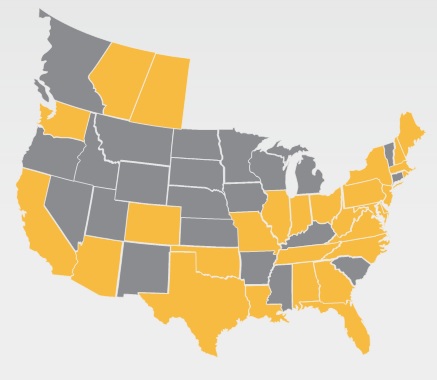
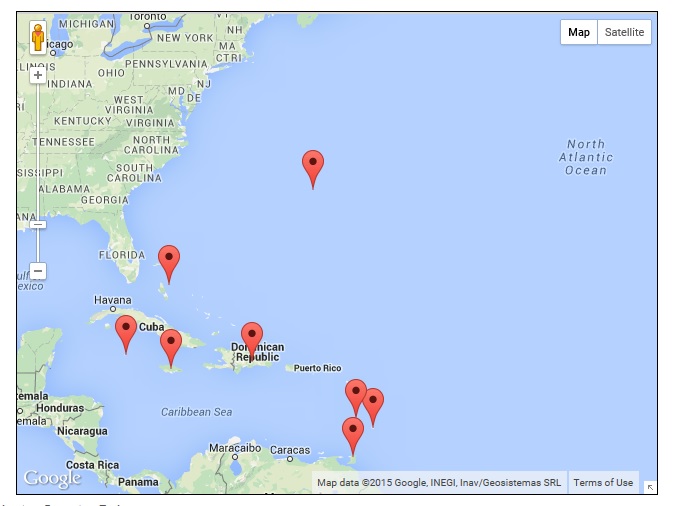
There are NYS programs already deployed or proposed for these Caribbean member-states, (though many have been snagged or stalled):
CU Blog - National Sacrifice - The Missing Ingredient - Photo 1

The purpose of the Go Lean book/roadmap is more than just the embedding of new community ethos, but rather the elevation/empowerment of Caribbean society. In total, the Caribbean empowerment roadmap has these 3 prime directives:

  • Optimization of the economic engines in order to grow the regional economy to $800 Billion & create 2.2 million new jobs.
  • Establishment of a security apparatus to protect the resultant economic engines.
  • Improve Caribbean governance and industrial policies to support these engines.

The roadmap details the following community ethos, plus the execution of these strategies, tactics, implementation and advocacies to forge permanent change in the region:

Community Ethos – Deferred Gratification Page 21
Community Ethos – Economic Principles – People Choose Page 21
Community Ethos – Economic Principles – People Respond to Incentives in Predictable Ways Page 21
Community Ethos – Economic Principles – The Consequences of Choices Lie in the Future Page 21
Community Ethos – Governing Principles – Lean Operations Page 24
Community Ethos – Governing Principles – Cooperatives Page 25
Community Ethos – Ways to Impact the Future Page 26
Community Ethos – Ways to Impact a Turn-Around Page 33
Community Ethos – Ways to Improve Sharing Page 35
Community Ethos – Ways to Promote Happiness Page 36
Community Ethos – Ways to Impact the Greater Good Page 37
Strategy – Vision – Confederate 30 Member-States Page 45
Strategy – Mission – Enact a Defense Pact to Defend the Homeland Page 45
Strategy – Mission – Keep the next generation at home Page 46
Tactical – Confederating a Permanent Union Page 63
Tactical – Fostering a Technocracy Page 64
Tactical – Separation-of-Powers Between CU & Member-States Governments Page 71
Implementation – Assemble – Incorporating all the existing regional organizations Page 96
Implementation – Ways to Pay for Change Page 101
Implementation – Security Initiatives at Start-up Page 103
Implementation – Ways to Deliver Page 109
Planning – 10 Big Ideas for the Caribbean – Confederation Without Sovereignty Page 127
Planning – Ways to Make the Caribbean Better Page 131
Planning – Lessons Learned from the West Indies Federation – Military Units Page 135
Advocacy – Ways to Grow the Economy Page 151
Advocacy – Ways to Create Jobs Page 152
Advocacy – Ways to Better Manage the Social Contract Page 170
Advocacy – Ways to Manage Federal Civil Service Page 173
Advocacy – Ways to Improve Homeland Security Page 181
Advocacy – Ways to Improve Communications Page 186
Advocacy – Ways to Preserve Caribbean Heritage Page 218
Advocacy – Ways to Impact Youth Page 227
Appendix – 30,000 Federal Employees Page 299
Appendix – Previous West Indies Integration – Caribbean Regiment Page 301

Previously Go Lean blog/commentaries have considered historic references and have also stressed fostering the proper and appropriate community ethos for the Caribbean to prosper; and reported on the repercussions and consequences of bad ethos. The following sample applies:

https://goleancaribbean.com/blog/?p=2830 Bad Ethos: Jamaica’s Public Pension Under-funded
https://goleancaribbean.com/blog/?p=2809 A Lesson in Bad Community Ethos : East Berlin/Germany
https://goleancaribbean.com/blog/?p=2480 A Lesson in History: Community Ethos of WW II
https://goleancaribbean.com/blog/?p=2297 A Lesson in History – Booker T versus Du Bois – to Change a Bad Community Ethos
https://goleancaribbean.com/blog/?p=1531 A Lesson in History: 100 Years Ago – World War I – Cause and Effect in Community Ethos
https://goleancaribbean.com/blog/?p=841 Having Less Babies is Bad for the Economy – Need People
https://goleancaribbean.com/blog/?p=623 Only at the Precipice, Do Communities Change
https://goleancaribbean.com/blog/?p=353 Book Review: ‘Wrong – Nine Economic Policy Disasters and What We Can Learn…’
https://goleancaribbean.com/blog/?p=228 Egalitarianism versus Anarchism – Community Ethos Debate

All in all, there is a certain community ethos associated with populations that have endured change. It is a National Sacrifice, a deferred gratification and focus on the future. Any losses of privileges are appreciated by the entire community, not just the affected individual or family member. This is the purpose of the US Memorial Day Holiday on the last Monday in May, honoring the military service of all our men and women in uniform, their families at home, and those who have made the ultimate sacrifice in dying for their country. A quest to unite the country in remembrance and appreciation of the fallen and to serve those who are grieving is a good way to forge a community ethos of National Sacrifice.

See VIDEO here of a community’s great honor to a slain soldier:

VIDEO: Sky Mote: Community Honors a Fallen Soldier from El Dorado County with a Hero’s Welcome –   http://youtu.be/MVQORRQvTpU

Published on Aug 17, 2012 – Starting with a Marine Honor Guard carrying the transfer case containing the body of Staff Sgt. Sky R. Mote of El Dorado, CA, upon arrival at Dover Air Force Base, Del. on Sunday Aug. 12, 2012. (AP Photo/Jose Luis Magana). Then continuing with the great Welcome Home the community gave. His family will never forget!

Though this Fallen Soldier is mourned and missed, his sacrifice is duly acknowledged, appreciated and honored in his hometown. This community spirit creates a value system for public service and National Sacrifice.

The US is not the only country that memorializes their war dead. Those countries that do, experience less societal abandonment. The British Commonwealth of Nations (representative of 18 Caribbean member-states) shows likewise homage to their Fallen Soldiers. The Commonwealth War Graves Commission (CWGC) is responsible for maintaining the war graves of 1.7 million service personnel that died in the First and Second World Wars fighting for Commonwealth member states. Founded in 1917 (as the Imperial War Graves Commission), the Commission has constructed 2,500 war cemeteries, and maintains individual graves at another 20,000 sites around the world.[107] The vast majority of the latter [however] are civilian cemeteries in Great Britain. (Source: http://en.wikipedia.org/wiki/Commonwealth_War_Graves_Commission).

The former British colonies did not adopt this National Sacrifice value system. As most Caribbean (notwithstanding the US Territories) member-states do not even have a (work-free) holiday to honor the sacrifices of those that fought, bled and/or died for their country.

No appreciation, no sacrifice; no sacrifice, no victory. It is that simple!

It is the recommendation of this blog/commentary that all Caribbean member-states should mandate a civilian conscription service for their citizens (1 year between ages 18 and 25); it is common for a confederation – the CU for the Caribbean – to marshal a multi-state, allied military force. Then the CU should facilitate a complete eco-system of engaging the conscripted NYS participants to serve and protect the people and resources of the Caribbean. After which, the communities should show proper appreciation and honor to those that make these sacrifices for “King/Queen and Country”, from all conscription services: military service, public and civilian.

(Many times school teachers and administrators are lowly paid; their service to their country is a great sacrifice).

Veteran-style benefits should thusly be considered for all these “national” servants. This commitment from the community would go far in forging deep loyalty within the citizenry, thus mitigating quick abandonment of the homeland.

There is a separation-of-powers between the CU federal agencies and Caribbean member-states, so the CU would have no authority on how member-states manage, appreciate or honor their civil servants; unless some CU grants/funding apply. But for CU personnel, the practice will be institutionalized to recognize the service of long-time civil servants (active or retired) and their sacrifices. So for any human resource that die in the line of duty, the funeral processions will be filled with pomp and circumstance, much like the foregoing VIDEO.

“The [servants] who perform well are to be considered worthy of double honor, especially those who work hard …” – Bible 1 Timothy 5:17

Now is the time to lean-in to this roadmap for Caribbean change, as depicted in the book Go Lean…Caribbean. All the mitigations and empowerments in this roadmap require people to remain in the homeland. No people, no hope! A community ethos, a spirit or attitude of sacrifice for the Greater Good is a great start to forge change; no sacrifice, no victory.

🙂

Download the book Go Lean … Caribbean – now!

——————-

Appendix A – ICP Studies and Results

Overview of the National Youth Service Landscape in Sub-Saharan Africa

National Youth Service Project on Employability, Entrepreneurship and Sustainable Livelihoods in Sub-Saharan Africa: Synthesis Report

——————

Appendix B – Conscription (or Drafting)
This is the compulsory enlistment of people in some sort of National Service, most often military service.[2] Conscription dates back to antiquity and continues in some countries to the present day under various names. The modern system of near-universal national conscription for young men dates to the French Revolution in the 1790s, where it became the basis of a very large and powerful military. Most European nations later copied the system in peacetime, so that men at a certain age would serve 1–8 years on active duty and then transfer to the reserve force.
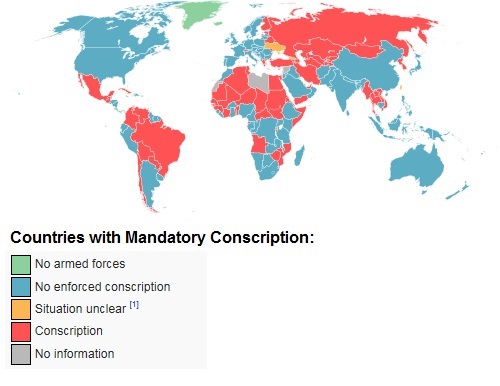
CU Blog - National Sacrifice - The Missing Ingredient - Photo 2Conscription is controversial for a range of reasons, including conscientious objection to military engagements on religious or philosophical grounds; political objection, for example to service for a disliked government or unpopular war; and ideological objection, for example, to a perceived violation of individual rights. Those conscripted may evade service, sometimes by leaving the country.[4] Some selection systems accommodate these attitudes by providing alternative service outside combat-operations roles or even outside the military, such as civil service in Austria and Switzerland.

As of the early 21st century, many states no longer conscript soldiers, relying instead upon professional militaries with volunteers enlisted to meet the demand for troops. The ability to rely on such an arrangement, however, presupposes some degree of predictability with regard to both war-fighting requirements and the scope of hostilities. Many states that have abolished conscription therefore still reserve the power to resume it during wartime or times of crisis.[5] (Source: http://en.wikipedia.org/wiki/Conscription)

National Service is a common name for mandatory or volunteer government service programmes. The term became common British usage during and for some years following the Second World War. Many young people spent one or more years in such programmes. Compulsory military service typically requires all citizens, or all male citizens, to participate for a period of a year (or more in some countries) during their youth, usually at some point between the age of 18 and their late twenties. (Source: http://en.wikipedia.org/wiki/National_service)

——————

Appendix C  – National Youth Service Corps in Nigeria
The National Youth Service Corps (NYSC) is an organisation set up by the Nigerian government to involve the country’s graduates in the development of the country. There is no military conscription in Nigeria, but since 1973 graduates of universities and later polytechnics have been required to take part in the National Youth Service Corps (NYSC) program for one year.[1] This is known as national service year.

“Corp” members are posted to cities far from their city of origin. They are expected to mix with people of other tribes, social and family backgrounds, to learn the culture of the indigenes in the place they are posted to. This action is aimed to bring about unity in the country and to help youths appreciate other ethnic groups.

There is an “orientation” period of approximately three weeks spent in a camp away from family and friends. There is also a “passing out ceremony” at the end of the year and primary assignment followed by one month of vacation.

The program has also helped in creating entry-level jobs for many Nigerian youth. An NYSC forum dedicated to the NYSC members was built to bridge the gap amongst members serving across Nigeria and also an avenue for members to share job information and career resources as well as getting loans from the National Directorate Of Employment.

The program has been met with serious criticism by a large portion of the country. The NYSC members have complained of being underpaid, paid late or not paid at all.[2] Several youths carrying out the NYSC program have been killed in the regions they were sent to due to religious violence, ethnic violence or political violence.[3]

A series of bomb and other violent attacks, especially in the North, rocked the country’s stability in the period preceding the 2011 gubernatorial and presidential elections. Most common of these attacks was perpetuated by the Islamist extremist terrorist group called Boko Haram. “Boko Haram” means “Western education is a sin” in the local hausa dialect in Nigeria. The group “Boko Haram” is against western education and wants to establish an Islamic state in Nigeria’s northern region.

Worst hit were National Youth Service Corps members, some of whom lost their lives.
(Source: http://en.wikipedia.org/wiki/National_Youth_Service_Corps)
Share this post:
, , ,

Migrant flow into US from Caribbean spikes

Go Lean Commentary

The subject of nationality is dominant in the news right now. This is due to many illegal migrants fleeing their homelands seeking a better life abroad, for themselves and/or their children, many times at great risk to their lives. The issue of the processing of immigrant children is where the simple desires meets complicated politics.

Do children of illegal immigrants have the right to stay in their new country of birth or be deported back to the homelands of their parents? What if one parent is a citizen of the host country, should gender of the parent matter?

These questions reflect the heavy-lifting burdens that the Caribbean member-states must address regarding nationality and immigration.

The book Go Lean…Caribbean serves as a roadmap for elevating Caribbean society, for all 30 member-states. The book does not ignore the subject of nationality and immigration. In fact the roadmap provides perhaps the ultimate resolution to this perplexing problem, that of a regional entity providing a regional solution. Consider the details of this news article:

Title: Migrant flow into US from Caribbean spikes
Associated Press Wire Service; Posted: January 4, 2015
http://news.yahoo.com/migrant-flow-us-caribbean-spikes-145024265.html
By: Jennifer Kay

MIAMI (AP) — Just starting a five-year sentence for illegally re-entering the United States, George Lewis stared at the officers staring back at him at Miami’s federal detention center and considered whether he’d risk getting on another smuggler’s boat — a chance that soaring numbers of Caribbean islanders are taking — once he’s deported again.

CU Blog - Migrant flow into US from Caribbean spikes - Photo 1U.S. authorities deported Lewis following a four-year sentence for a felony drug conviction in May 2013 to the Bahamas, where he was born but lived only briefly. His Haitian mother brought him to Miami as an infant, and though he always considered the U.S. home, he never became a legal resident.

Just five months after he was deported, he got on a Bahamian smuggler’s boat with over a dozen other people trying to sneak into Florida. It capsized and four Haitian women drowned. He and the others were rescued.

So would he dare make another attempt?

“Yeah,” Lewis, 39, said with a sigh. But, he added, “I would put on a life vest next time.”

A recent spike in Cubans attempting to reach the United States by sea has generated headlines. But the numbers of Haitians and other Caribbean islanders making similar journeys are up even more. And while federal law grants legal residency to Cubans reaching U.S. soil, anyone else can be detained and deported.

That law, the so-called wet foot-dry foot policy, and Coast Guard operations related to migrants remain unchanged even as Cuban and U.S. leaders say they are restoring diplomatic relations after more than 50 years.

“The Coast Guard strongly discourages attempts to illegally enter the country by taking to the sea. These trips are extremely dangerous. Individuals located at sea may be returned to Cuba,” said Lt. Cmdr. Gabe Somma, spokesman for the Coast Guard’s 7th District in Miami.

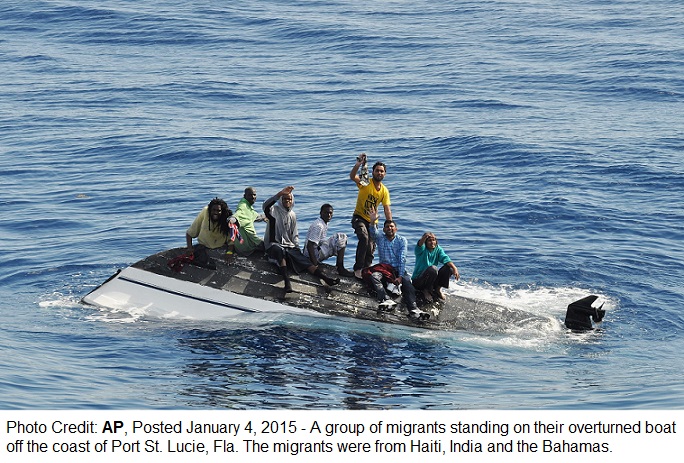
According to the Coast Guard, in the fiscal year that ended Sept. 30, U.S. authorities captured, intercepted or chased away at least 5,585 Haitians, 3,940 Cubans and hundreds from the Dominican Republic and other Caribbean countries attempting to sneak into the country.

That’s at least 3,000 more migrants intercepted than in the previous fiscal year. It’s also the highest number of Haitian migrants documented in five years and the highest number of Cubans recorded in six. It’s unknown how many made it to U.S. shores without getting caught, or how many died trying.

More than 1,920 migrants — most of them Cuban or Haitian — have been intercepted so far in the fiscal year that began Oct. 1. The Coast Guard worries that number will only increase as news spreads about recent changes to the U.S. immigration system, including fast-tracking visas for some Haitians already approved to join family here and an executive order signed by President Barack Obama that would make millions already illegally in the U.S. eligible for work permits and protection from deportation.

“Any perceived changes to U.S. immigration policy can cause a spike in immigration because it gives a glimmer of hope,” even to people not eligible under those changes, said Capt. Mark Fedor, chief of response for the Coast Guard’s 7th District.

It’s unclear why the numbers are jumping. Poverty and political repression have long caused Caribbean islanders to attempt the journey, and the outlook remains dismal for many. Coast Guard and U.S. immigration officials think another calm summer without many tropical storms and a recovering U.S. economy might have encouraged more to take to the sea. They also say the increased captures may reflect better law enforcement.

Smuggling operations in the region range from individual opportunists looking to use their vessels for extra money to sophisticated networks that may add drug shipments to their human cargo, said Carmen Pino, an official with U.S. Immigration and Customs Enforcement in Miami. Smugglers also lure people, especially in relatively new routes that send Haitians into the neighboring Dominican Republic to board boats bound for Puerto Rico.

Lewis said he easily talked his way onto a smuggler’s boat with about a dozen Haitians and Jamaicans hoping to make it to Florida under the cover of darkness. He just struck up a conversation with some locals at a sports bar in Bimini, a small cluster of Bahamian islands 57 miles off Miami, where Lewis figured he could find a boat home.

CU Blog - Migrant flow into US from Caribbean spikes - Photo 2“It was like getting a number from a girl. I just needed the right line,” Lewis said in an interview in November. The failed trip cost $4,000.

After his rescue, U.S. authorities initially accused him of being a smuggler, partly because he was the only person on board with a phone, which he used to call 911 when the boat started taking on water. He scoffed at the allegation. He remembered that on the boat he was talking to a teenage Haitian girl and thinking about his mother’s boat trip from Haiti to the Bahamas as a young girl, a crossing he never thought he would emulate. “I said, ‘Run behind me when we hit land.'” He said. ” I said, ‘Follow me, I’ll get you there.'”

Now Lewis finds himself back in the U.S. but not at home and facing another forced return to the Bahamas, a homeland he doesn’t know and where the government considers Haitians who have migrated illegally and their children an unwanted burden.

Lewis knows he’d try to reach the U.S. again.

“It’s not worth losing your life, but what life do you have when you have a whole country against you? I’m completely alienated from a country where I’m supposed to be from,” Lewis said.

A key problem with this immigration issue is the nationality sensitivity of any audience. As a people, what standards are we willing to tolerate versus what conditions are so deplorable that we must protest for change, with revolutionary fervor?

The American standard, because of its “Super Power” status, tends to influence the “normalized” view for many people in the Caribbean neighborhood for what is right and what is wrong with nationality recognition. But the US standard is bred from lessons learned from hard experiences. The 14th Amendment to the United States Constitution, (adopted on July 9, 1868, as one of the Reconstruction Amendments, addressing citizenship rights and equal protection of the laws, and was proposed in response to issues related to former slaves following the American Civil War of 1860 – 1865), provides that “all persons born or naturalized in the United States, and subject to the jurisdiction thereof, are citizens of the United States and of the State wherein they reside.”[24] The phrase “subject to the jurisdiction thereof” excludes children born to foreign diplomats and children born to enemy forces engaged in hostile occupation of the country’s territory.[25] Birthright citizenship is a separate concept from “natural-born citizen”, a qualification for the office of President of the United States.

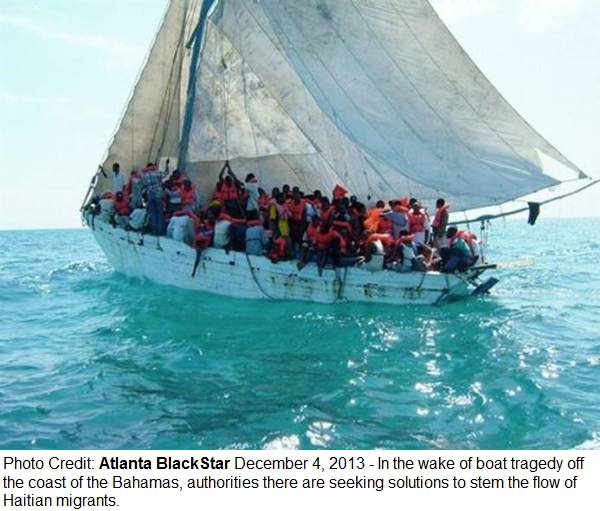
The sensitivities of the issues of migration and nationality are heightened right now because countries in the Caribbean neighborhood have become more exacting in their treatment of Cuban and Haitian refugees, many even considering changes to their constitutions in an effort to tighten immigration policies so as to end the automatic birthright citizenship for children of illegal immigrants.[12] This is already the status quo for the Bahamas.

In a previous blog commentary, the issue of the Bahamas versus the Haitian-American Diaspora in Miami was thoroughly detailed. This one point is extracted for consideration here:

The Bahamas does not automatically grant citizenship to people born of foreign parentage in its homeland. There are special provisos even if one parent is a Bahamian citizen; many details of which are gender-biased.

This Bahamian nationality standard creates a repressive circumstance for many born there to foreign parents; they have no status in the Bahamas, nor may they have any in their parent’s homeland. This means they are disqualified for jobs, advanced education or a passport – see experience of George Lewis in the foregoing news article. They cannot prosper where they are planted, nor legally migrate for better opportunities. As depicted in the Appendix AVIDEO: “they cannot win, cannot break-even and cannot get out of the game”. These ones would rather risk their lives and the lives of their children than accept this status quo.

This previous blog commentary related the Bahamas citizenship standard (jus sanguinis) versus the US/Canadian standard (jus soli), as applied to Puerto Rico and the US Virgin Islands member-states as well. All the independent countries in the Caribbean ascribe to either the one standard or the other – see ‘Nations Granting Birthright Citizenship’ Appendix B below. The French Caribbean member-states apply French nationality standards and the Netherlands Antilles member-states apply the nationality standards of the Kingdom of the Netherlands. The only other Caribbean member-states for nationality consideration are the British Overseas Territories (Bermuda, BVI, Caymans, Montserrat, and the Turks & Caicos); there is a formal Citizenship/Nationality B.O.T. process based on British Nationality standards. This summarizes all 30 member-states.

These Latin phrases, jus soli and jus sanguinis, for the applicable legal concepts are hereby explored:

1. Encyclopedic Reference: Jus soli (Latin: right of the soil)  – http://en.wikipedia.org/wiki/Jus_soli – Retrieved January 7, 2015

Jus soli is the right of anyone born in the territory of a state to nationality or citizenship.[2] As an unconditional basis for citizenship, it is the predominant rule in the Americas, but is rare elsewhere.[3][4][5][6] Since the Twenty-seventh Amendment of the Constitution of Ireland was enacted in 2004, no European country grants citizenship based on unconditional jus soli.[7][8] A study in 2010 found that only 30 of the world’s 194 countries grant citizenship at birth to the children of undocumented foreign residents.[5]

Almost all states in Europe, Asia, Africa and Oceania grant citizenship at birth based upon the principle of jus sanguinis (right of blood), in which citizenship is inherited through parents not by birthplace, or a restricted version of jus soli in which citizenship by birthplace is not automatic for the children of certain immigrants. Countries that have acceded to the 1961 Convention on the Reduction of Statelessness will grant nationality to otherwise stateless persons who were born on their territory, or on a ship or plane flagged by that country.

Jus soli is associated with permissive citizenship rights. Most countries with unconditional jus soli laws tend to give birthright citizenship (and nationality) based on jus sanguinis rules as well, although these stipulations tend to be more restrictive than in countries that use jus sanguinis as the primary basis for nationality.

At one time, jus sanguinis was the sole means of determining nationality in Europe (where it is still widespread in Central and Eastern Europe) and Asia. An individual belonged to a family, a tribe or a people, not to a territory. It was a basic tenet of Roman law.[9] [This is the premise of the “Christmas” story, the reason why Joseph and a pregnant Mary had to go to Bethlehem to register in accord with the declaration of Roman Emperor Caesar Augustus – Luke Chapter 2:1–5; The Bible].

Lex soli is a law used in practice to regulate who and under what circumstances an individual can assert the right of jus soli. Most states provide a specific lex soli, in application of the respective jus soli, and it is the most common means of acquiring nationality.

[Consider additional sources in the reference work by Jon Feere: “Birthright Citizenship in the United States: A Global Comparison,” Center for Immigration Studies].

————–

2. Encyclopedic Reference: Jus sanguinis (Latin: right of blood)  – http://en.wikipedia.org/wiki/Jus_sanguinis – Retrieved January 7, 2015

Jus sanguinis is a principle of nationality law by which citizenship is not determined by place of birth but by having one or both parents who are citizens of the state. Children at birth may automatically be citizens if their parents have state citizenship or national identities of ethnic, cultural or other origins.[1] Citizenship can also apply to children whose parents belong to a diaspora and were not themselves citizens of the state conferring citizenship. This principle contrasts with jus soli (Latin: right of soil).[22]

At the end of the 19th century, the French-German debate on nationality saw the French, such as Ernest Renan, oppose the German conception, exemplified by Johann Fichte, who believed in an “objective nationality”, based on blood, race or language. Renan’s republican conception, but perhaps also the presence of a German-speaking population in Alsace-Lorraine, explains France’s early adoption of jus soli. Many nations have a mixture of jus sanguinis and jus soli, including the United States, Canada, Israel, Greece, Ireland, and recently Germany.

Today France only narrowly applies jus sanguinis, but it is still the most common means of passing on citizenship in many continental European countries. Some countries provide almost the same rights as a citizen to people born in the country, without actually giving them citizenship. An example is Indfødsret in Denmark, which provides that upon reaching 18, non-citizen residents can decide to take a test to gain citizenship.

Some modern European states which arose out of dissolved empires, like the Austro-Hungarian or Ottoman, have huge numbers of ethnic populations outside of their new ‘national’ boundaries, as do most of the former Soviet states. Such long-standing diasporas do not conform to codified 20th-century European rules of citizenship.

In many cases, jus sanguinis rights are mandated by international treaty, with citizenship definitions imposed by the international community. In other cases, minorities are subject to legal and extra-legal persecution and choose to immigrate to their ancestral home country. States offering jus sanguinis rights to ethnic citizens and their descendants include Italy, Greece, Turkey, Bulgaria, Lebanon, Armenia and Romania. Each is required by international treaty to extend those rights.

The Caribbean member-states are badly in need of reform and remediation, to lower the “push and pull” factors that drive so many to risk their ‘life and limb’, and those of their children, to take flight under dangerous circumstances to seek a better life. Many people of goodwill do not want to live in a society where dead bodies may float up on beaches because people are desperate to leave their homeland at any cost. The Go Lean roadmap opens with the hypothesis that the Caribbean is the greatest address in the world; people should be “beating paths to get here”, not “beating down doors to get out”; (Page 3).

The idea of desperate migration is not just a problem for Cuba, Haiti and the countries in the migrants’ path (Bahamas, Dominican Republic, Puerto Rico) to get to better living conditions. This is a problem for all the Caribbean. There is always someone doing better and someone doing worst. For instance, while the Bahamas may have 80,000 illegal Haitians on their shores, there is a report that there were 70,000 illegal Bahamians in the US as of 2003; (College of The Bahamas 2005 Study on Haitian Migration, Page 10). The problem is so much bigger than just what’s at “face value”, the initial impression. This is a deep, serious issue that cuts at the heart of the Caribbean community ethos and requires heavy-lifting to address.

The Go Lean book and blogs posit that the effort is less to cure the Caribbean homeland than to thrive as an alien in a foreign land. But. this is easier said than done! Yet this is the quest of the Go Lean roadmap, to make the Caribbean homeland a better place to live, work and play for its 42 million residents and 80 million visitors, across the 30 member-states. The CU, applying best-practices for community empowerment has these 3 prime directives, proclaimed as follows:

  • Optimization of the economic engines in order to grow the regional economy to $800 Billion & create 2.2 million new jobs.
  • Establishment of a security apparatus to protect the resultant economic engines.
  • Improve Caribbean governance, with consideration for minority equalization, to support these engines.

The vision is to lower the “push and pull” factors that drives many to abandon their Caribbean homeland.

How exactly can the CU impact the most troubled countries that are the source of so many illegal migrants: Cuba and Haiti? The book relates the history of post-war Europe, where the Marshall Plan was instrumental in rebooting that continent. The book Go Lean…Caribbean details a Marshall Plan-like roadmap for Cuba and Haiti, and other failing Caribbean institutions.

The related subjects of economic, security and governing dysfunction among European and Caribbean member-states have been a frequent topic for blogging by the Go Lean promoters, as sampled here:

https://goleancaribbean.com/blog/?p=3473 Haiti’s Failed Attempts to Expand Caracol Industrial Park and Job Engines
https://goleancaribbean.com/blog/?p=3455 Restoration of Diplomatic Relations with Cuba – Need for Re-boot Now
https://goleancaribbean.com/blog/?p=3050 Obama’s immigration tweaks leave Big Tech wanting more
https://goleancaribbean.com/blog/?p=2907 Local Miami Haitian leaders protest Bahamian immigration policy
https://goleancaribbean.com/blog/?p=2809 A Lesson in History: Economics of East Germany
https://goleancaribbean.com/blog/?p=2480 A Lesson in History: Community Ethos of WW II
https://goleancaribbean.com/blog/?p=2330 ‘Raul Castro reforms not enough’, Cuba’s bishops say
https://goleancaribbean.com/blog/?p=1531 A Lesson in History: 100 Years Ago Today – World War I
https://goleancaribbean.com/blog/?p=1433 Caribbean loses over 70% of tertiary educated citizens to the   brain drain
https://goleancaribbean.com/blog/?p=1014 All is not well in the sunny Caribbean
https://goleancaribbean.com/blog/?p=623 Only at the precipice, do they change
https://goleancaribbean.com/blog/?p=599 Ailing Puerto Rico open to radical economic fixes

The Go Lean book details a series of community ethos, strategies, tactics, implementations and advocacies to optimize the “push/pull” factors that send Caribbean citizens to the High Seas to flee their homeland:

Community Ethos – Economic Systems Influence Choices & Incentives Page 21
Community Ethos – Consequences of Choices Lie in the Future Page 21
Community Ethos – Anti-Bullying and Mitigation Page 23
Community Ethos – Minority Equalization Page 24
Community Ethos – Ways to Impact the Future Page 26
Community Ethos – Ways to Manage Reconciliations Page 34
Community Ethos – Ways to Impact the Greater Good Page 37
Strategy – Vision –  Integrate region into a Single Market Economy Page 45
Strategy – Agents of Change – Globalization Page 57
Tactical – Separation of Powers – Department of Homeland Security Page 75
Implementation – Ways to Foster International Aid Page 115
Planning – 10 Big Ideas … in the Caribbean Region – Haiti & Cuba Page 127
Planning – Ways to Ways to Model the EU – From Worst to First Page 130
Planning – Reasons Why the CU Will Succeed – Germany Reconciliation Model Page 132
Planning – Ways to Improve Failed-State Indices – Cuba & Haiti on the List Page 134
Planning – Lessons from East Germany – European post-war rebuilding Page 139
Planning – Lessons from the US Constitution Page 145
Planning – Lessons from Canada’s History Page 146
Advocacy – Ways to Grow the Economy Page 151
Advocacy – Ways to Create Jobs Page 152
Advocacy – Ways to Foster Empowering Immigration – Case Study of Indian Migrants Page 174
Advocacy – Ways to Impact Justice Page 178
Advocacy – Ways to Impact the Diaspora Page 217
Advocacy – Ways to Protect Human Rights Page 220
Advocacy – Ways to Help Women Page 226
Advocacy – Ways to Impact Youth Page 227
Advocacy – Ways to Impact the Dominican Republic Page 237
Advocacy – Ways to Re-boot Haiti Page 238
Advocacy – Ways to Impact Trinidad & Tobago – Indo versus Afro Page 240
Advocacy – Ways to Impact Guyana – Indo versus Afro Page 241
Advocacy – Ways to Impact US Territories – All is not well Page 244
Appendix – Puerto Rico Migrations to New York Page 303

All of the Caribbean needs to deal with these domestic issues … now! We need to learn from the experiences of our neighbors, as depicted in the Go Lean book, and minimize the push-pull factors leading to societal abandonment. The US learned its lessons from a Civil War (Page 145), Canada from the fears of war (Page 146). As depicted in the foregoing news article, our citizens are dying in the waters trying to flee our homelands. When is enough, enough?

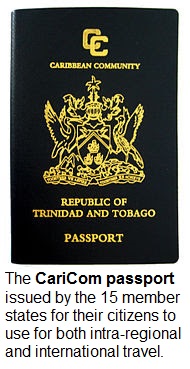
CU Blog - Migrant flow into US from Caribbean spikes - Photo 3The Go Lean/CU roadmap has proposed solutions: CU citizenship; and facilitating the Lex soli process at the CU level – thereby removing the subjectivity and bias to the nationality process. Fragments of this proposed system is already in place with the issuance of CariCom passports. The Go Lean roadmap calls for the assembling of CariCom organs into the CU Trade Federation, the Caribbean passport practice would therefore continue.

Now is the time for all of the Caribbean to learn the lessons from history or other successful (US & Canada) and unsuccessful societies (East Germany, etc.). The Go Lean book posits that the Caribbean is in a serious crisis, but asserts that this crisis would be a terrible thing to waste. The people and governing institutions of Cuba, Haiti and the entire Caribbean region are hereby urged to lean-in for the empowerments described in the book Go Lean … Caribbean.

This is a Big Deal for the region, as real solutions can finally be realized. Then we can present to the world that the Caribbean homeland is truly a better place to live, work, and play.

Download the book Go Lean … Caribbean – now!

————————–

Appendix A – VIDEO: The Wiz – http://youtu.be/3r1ssg1LIt4 The Crow Anthem (1978)

“You can’t win … can’t break-even and you can’t get out of the game”

Appendix B – Nations Granting Birthright Citizenship – Excerpts

(Source: https://www.numbersusa.com/content/learn/issues/birthright-citizenship/nations-granting-birthright-citizenship.html)

Birthright Citizenship is the automatic granting of citizenship to children born within a nation’s borders or territories. The United States and Canada are the only developed nations in the world to still offer Birthright Citizenship to tourists and illegal aliens. 8 U.S.C. § 1401 : US Code – Section 1401 (1952) grants automatic citizenship to any person born in the United States.

The following are among the nations repealing Birthright Citizenship in recent years:

  • Australia (2007)
  • New Zealand (2005)
  • Ireland (2005)
  • France (1993)
  • India (1987)
  • Malta (1989)
  • UK (1983)
  • Portugal (1981)

DEVELOPED NATIONS
Birthright Citizenship – Caribbean Neighborhood Only

YES

NO

Canada Bermuda
United States Netherlands
United Kingdom

OTHER NATIONS
Birthright Citizenship – Caribbean Neighborhood Only

YES

NO

Antigua and Barbuda Bahamas
Barbados Haiti
Belize Suriname
Dominica
Dominican Republic
Grenada
Guyana
Jamaica
St. Kitts and Nevis
St. Lucia
St. Vincent and the Grenadines
Trinidad and Tobago


Share this post:
, , , ,
[Top]

Bill Cosby’s Accusers – Why They Weren’t Believed

Go Lean Commentary

It is hard to reconcile the accusations floating against Bill Cosby with his television characters: Dr. Huxtable, Jell-O Pudding Pitch-Man and the voice/persona of the animated do-gooder Fat Albert (and the Cosby Kids ; see Appendix below*). Or is it?

… that it’s easy to categorize personalities as good versus bad. “We don’t think good and evil can co-exist in the same person” – Psychologist David Adams.

The following article posits that those who do horrible things may still be talented in their gifts and notoriously good to people in their lives, like family members. While it maybe difficult to understand the complexities of personalities, it is very much necessary that society be receptive to the possibility of good people doing bad things. The entire article is presented here:

By: NO MORE Staff

Bill Cosby Photo 1America’s Dad is having a very bad week. A few days ago, Barbara Bowman wrote a personal essay in The Washington Post chronicling how Bill Cosby drugged and raped her 30 years ago.

The story went viral and inspired several others to echo her experiences.

Not so when the teenager spoke out soon after the alleged attacks: When she went to a lawyer after the assaults, she was accused of lying. Her agent did nothing, either. Eventually, she moved on. Years later, Andrea Constand accused Cosby of rape and Bowman was asked to speak in court, but the case was quietly settled.

At this writing, a grand total of 15 women have accused Cosby of assault, dating from the late 1960s. (Here’s a timeline of the accusations.) Despite all this, Cosby’s career had coasted along—in fact, he was awarded the Mark Twain Prize for American Humor not long ago and was planning a new TV show.

But things are changing.

Finally, the accusers’ stories are getting traction. Why now? Last month, comedian Hannibal Buress called Cosby a rapist in his stand-up routine, which went viral. The Twitter-verse responded in kind: Last week, Cosby’s tone-deaf invitation to “meme me!” resulted in people superimposing assault accusations over his photo. #Cosbymeme did not go according to plan, and things only got worse: Last weekend, NPR interviewed him about his African American art collection and then asked him to respond to the Post story. He went silent. Eventually, his lawyer issued a statement firmly denying the allegations and refusing to comment further.

But the damage has been done: New stories about Cosby’s behavior continue to surface, Netflix has put his upcoming comedy special on hold, and NBC has abandoned plans to develop a new sitcom with him.

Why Accusations About Celebrities Aren’t Believed

Cosby isn’t the first icon to be accused of sexual assault or domestic violence, and yet the question persists: Why aren’t these accusers heard or given any credence—not just Cosby’s alleged victims, but the countless other people who have dared to challenge a celebrity?

The answer lies in the American conflation of celebrity and security, says Ulester Douglas, executive director of Men Stopping Violence. “We are a celebrity culture. Seeing someone we idolize, revere, and idealize being accused of horrific crimes makes us wonder: Who are we? It makes us realize that our own families could be capable of it, too,” he says. It’s unsettling and even terrifying to associate an idol with evil, particularly because there are so many celebrities who are good people, capable of powerful, positive influence.

Dissonance Perpetuates Silence

David Adams is a psychologist and co-director of Emerge, a Boston-based abusers’ intervention and counseling program. He sees a difference in how we respond to a stereotypical criminal and a celebrity accused of bad behavior due to our preconceptions about abusers. “We tend to think of an abuser as someone who is easily detectable: someone who is crude, sexist, and boorish. A quarter of men who abuse women do fit this stereotype, and since that’s a substantial subgroup, we tend to spot those guys and not the ones who are more likable. If we don’t know what to do with bad information about someone we adore, it creates dissonance, and we sometimes choose to disbelieve or to ignore it,” he says.

“When we see someone likable accused of a crime, we have a choice to believe something bad about them or to discount it because it doesn’t fit our experience. In some ways it’s easier to do that than to think, oh God, the world really is unknowable—I might as well give up on knowing people,” he says. “If we don’t know what to do with information about someone we worship, we put it aside.”

Why Celebrities Feel Immune

Of course, Cosby is hardly the first famous person to be accused of rape or assault. When we think about any celebrity facing serious allegations, though, it’s difficult to believe that an image-conscious idol could be willing to engage in hugely risky behavior, throwing away the very image they need. What’s going through their mind?

“Any consequence is overridden by the high of the conquest,” Douglas says. And, on a purely logistical level, “They do it because they can. They truly think they can get away with it, based on the very fact that they have a certain image. They will be believed; the accusers will be laughed out of the room.”

Absorbing The Narcissism Factor

In many celebrity cases, narcissism also plays a starring role. “A hallmark of narcissism is exceptionality. You literally think you will not get caught. This personality takes chances, acts reckless, and even associates the behavior with success, because they’ve always been rewarded,” Adams says.

“We think narcissists are people nobody would like. But, in fact, they’re quite charismatic, with good social and image-maintenance skills”— which often allow them to get away with bad behavior, even more so when there’s a PR team on call. Narcissists are also skilled at compartmentalization, Adams says, and they choose to focus on the “part of their life that everybody adores. They don’t focus on other parts of their lives, and if they do something wrong, they think, ‘Gee, everybody loves me. What’s the problem?’” he says. “It’s a lack of character development.”

“Narcissists can engage in all sorts of psychological gymnastics not to feel empathy,” says Douglas.

The Changing Tide

Adams says that it’s easy to categorize personalities as good versus bad. “We don’t think good and evil can co-exist in the same person,” he says. “But look at the Mafia—these guys who do horrible things but are notoriously good to their mothers. And along comes a show like The Sopranos to paint them in a more nuanced light. There’s now less focus on ‘good guys’ and ‘bad guys,’” he says. Understanding the complexities of personalities—refusing to glorify a celebrity as all good, all the time—could help to close the dissonance gap.

“We can also go a long way toward preventing male sexual and domestic violence against women by stopping the pervasive and pernicious victim-blaming,” Douglas says. “The media, for example, should quit asking the toxic, ‘Why did you go back to your abuser?’ and ‘Why didn’t you leave?’ A reporter could say instead, ‘As you know, there are some who question your credibility because of some of the choices you made. What, if anything, would you want to say to them?’ That is respectful journalism. The [accuser] should never be made to feel like she has to justify the choices she made or makes.”

Finally, in his own work with Men Stopping Violence, Douglas sees firsthand the power of healing through sharing. “I see survivors who are finding peace through coming forward and telling their stories. One of the most powerful things that survivors can do is tell their own stories, on their own terms,” he says.
The NO MORE Project – Posted November 19, 2014; retrieved November 26, 2014–
http://nomore.org/why-cosby-victims-werent-believed/

The subject matter in the foregoing article relates to the attitudes that communities must foster so as to mitigate the toleration of domestic violence, rape and stalking. These points are being brought into focus in a consideration of the book Go Lean … Caribbean. The book serves as a roadmap for the introduction and implementation of the technocratic Caribbean Union Trade Federation (CU), for the economic optimization in the region.

The focus of the Go Lean book is Economics, not domestic violence, rape or stalking! And yet this commentary relates that there is an alignment of objectives. The Go Lean roadmap posits that the economy of the Caribbean is inextricably linked to the security (public safety) of the Caribbean.

This CU/Go Lean roadmap has 3 prime directives:

  • Optimization of the economic engines in order to grow the regional economy and create 2.2 million new jobs.
  • Establishment of a security apparatus to protect the resultant economic engines and their relevant stakeholders.
  • Improve Caribbean governance (Executive facilitations, Legislative oversight and Judicial prudence) to support these economic/security engines.

Among the objectives to accomplish the economic elevation is the mission to retain Caribbean citizens in their homelands and repatriate the far-flung Diaspora back to the region. Since many people may have fled the region to mitigate abuse, attitudes of victim-blaming or complacency among public safety authorities must be “weeded out”.

The subject of Celebrity Culture is also germane for the Caribbean empowerment effort (Pages 203 & 224). The Go Lean roadmap consolidates the region’s 30 member-states into a Single Market, media market included – with the caveat of multi-language “simul-casting”. Celebrities will surely emerge. From a governance perspective, the CU will oversee the jurisdiction of monitoring and metering (ratings, rankings, service levels, etc) local public safety institutions to ensure their delivery of the Social Contract. for all regardless of gender or race.

Change has now come to the Caribbean. As the foregoing article depicts, there is a changing tide. It is no longer acceptable to dismiss accusers, even against celebrities. The article relates that “we can go a long way toward preventing male sexual and domestic violence against women by stopping the pervasive and pernicious victim-blaming”. This is part of a new community ethos – the value of women is not undermined! Many related issues/ points were elaborated in previous blogs, sampled here:

Justice Strategy: Special Prosecutors … et al
Caribbean Study: 58% Of Boys Agree to Female ‘Discipline’
Sex Crimes Mitigations – Students developing nail polish to detect date rape drugs
Aereo Founder on the future of TV; Caribbean included
Bob Marley: The legend of a Caribbean Celebrity lives on!
Muslim officials condemn abductions of Nigerian girls
Caribbean/Latin countries still view women as lesser
Book Review: ‘The Divide’ – Differences in US Justice for Rich versus Poor
Jamaica to receive World Bank funds to help in crime fight

The above commentaries examined global developments in crime mitigations and gender based attitudes, then relate their synchronicity with the principles in the Go Lean book. There are a number of touch points that relate to domestic violence, rape and stalking; these blogs also cite the community attitude to dissuade such behavior. Most importantly, the Go Lean book depicts solutions. These are presented as community ethos, strategies, tactics, implementations and advocates; detailed as follows:

Community Ethos – Privacy –vs- Public Protection Page 23
Community Ethos – Whistleblower Protection Page 23
Community Ethos – Witness Security Page 23
Community Ethos – Anti Bullying & Mitigations Page 23
Community Ethos – Light Up the Dark Places Page 23
Community Ethos – “Crap” Happens Page 23
Community Ethos – Minority Equalization Page 24
Community Ethos – Lean Operations Page 24
Community Ethos – NGO’s Page 25
Community Ethos – Reconciliations Page 34
Strategy – Rule of Law –vs- Vigilantism Page 49
Tactical – Separation of Powers – CariPol Page 77
Implementation – Reasons to Repatriate Page 118
Planning – Ways to Improve Failed-State Indices Page 134
Advocacy – Ways to Improve Governance Page 168
Advocacy – Ways to Better Manage the Social Contract Page 170
Advocacy – Ways to Impact Justice Page 177
Advocacy – Ways to Remediate and Mitigate Crime Page 178
Advocacy – Ways to Improve Gun Control – Restraining Orders Automatic Restrictions Page 179
Advocacy – Ways to Improve Intelligence Gathering Page 182
Advocacy – Ways to Improve Communications – Messaging Page 186
Advocacy – Ways to Impact Hollywood Page 203
Advocacy – Ways to Impact the Prison Industrial Complex – Reduce Recidivism Page 211
Advocacy – Ways to Impact Foundations Page 219
Advocacy – Ways to Protect Human Rights Page 220
Advocacy – Ways to Impact the One Percent –    Balancing Justice Provisions for Celebrities Page 224
Advocacy – Ways to Empower Women Page 226
Advocacy – Ways to Impact Persons with Disabilities – including Mental Challenges Page 228

The book Go Lean…Caribbean was written by resources from an organized movement, by people (residents and Diaspora) with passion to change/elevate the Caribbean’s economic, security and governing engines. One principal within this Go Lean movement has a direct job function to dissuade crimes against women.

While there is always the need to give the accused the benefit of the doubt, as in the current case against Bill Cosby, we do not want 30 years of inaction on reported sex crimes by celebrities. The CU roadmap’s goal is to optimize “Justice” institutions in the region. Why? All members of society (celebrities and regular citizens alike) need to be protected, and not dismissed or ignored, especially related to serious allegations like sexually inappropriate behavior. Any “misfeasance, malfeasance or nonfeasance” in this regards reflects negatively on the region’s hospitality – think of the unsolved disappearance of Natalee Holloway in Aruba in 2005; (see Page 190).

Though this topic may be a security issue, community wealth is undoubtedly linked, affecting push-and-pull factors for citizens to flee their homelands. This is lose-lose for all concerned. To the contrast, the goal of the Go Lean effort is to make the Caribbean a better place to live work and play; with justice for all. Since the region failed in the past, the new messaging is simple: “No More“!

The foregoing article is sourced by the Not-For-Profit organization, the “No More” Project. Their goal is to neutralize public attitudes that had previously tolerated and thusly promoted domestic violence, rape and stalking. This is a great role model for the Caribbean to emulate, as attitude adjustment is among the heavy-lifting tasks that regional administrators must undertake to bring positive change to the Caribbean.

Download the book Go Lean … Caribbean – now!

————

* Appendix – Video – Fat Albert And The Cosby Kidshttp://youtu.be/ga7gflAUGCc

It’s Bill Cosby coming at you with music and fun, and if you’re not careful, you might learn something before its done.


Share this post:
, , , ,
[Top]

Justice Strategy: Special Prosecutors … et al

Go Lean Commentary

The quest to elevate Caribbean society is a three-prong approach: economics, security and governance.

Economic optimizations are easiest to introduce; show up with investments (money) and jobs and almost any community will acquiesce. But to introduce empowerments for security and/or governing engines is more complicated, as changes in these categories normally require a political process; implying consensus-building and compromise. (Think: Iraq – “A military solution to a political problem?”; see Footnote 1)

This is what the book Go Lean…Caribbean calls “heavy-lifting”.

This Go Lean book posits that “bad actors” will always emerge in times of economic optimizations to exploit opportunities, with bad or evil intent. In support of this argument, the book relates a number of law-and-order episodes from world history: Pirates of the Caribbean (Page 181) and the Old American West (Page 142). In addition to the direct book references, there are a number previously published blogs/commentaries that covered subjects and dimensions for Caribbean justice institutions:

Role Model for Justice – The Pinkertons
Economic Crime Enforcement – The Criminalization of American Business
America’s Navy – 100 Percent – Model for Caribbean
A Lesson in History: 100 Years Ago – World War I
Here come the Drones … and the Concerns
Caribbean “Terrorists” travel to Venezuela for jihadist training
Jamaica to receive World Bank funds to help in crime fight
US slams Caribbean human rights practices
10 Things We Want from the US and 10 Things We Don’t Want: Pax Americana

It is evident that justice is very important to this roadmap for societal elevation. We do not want to only react (after the fact) to episodes undermining public security or the integrity of law-and-order in the homeland. We want to have a constant sentinel. This will be accomplished with two regional agencies (defined later): Justice Department and Homeland Security Department.

The Caribbean governance structures were developed under the tutelage of 4 European legacies (British, Dutch, French, Spanish) and the United States of America (territories of Puerto Rico & US Virgin Islands and the dominant cultural influence in the region). We now have fitting role models of their societies for the management of justice institutions. This commentary urges their best-practices.

The Go Lean book serves as a roadmap for the introduction and implementation of the technocratic Caribbean Union Trade Federation (CU). Normally, when there are questions of integrity in the due-process in executive, legislative or judicial branches of government, the curative measure is a Special Prosecutor (American) or a Commission of Inquiry (European and United Nations).

As defined in the following encyclopedia source reference, these measures are normally reactive, but for the CU, the strategy is proactive…from Day One:

1. UNITED STATES

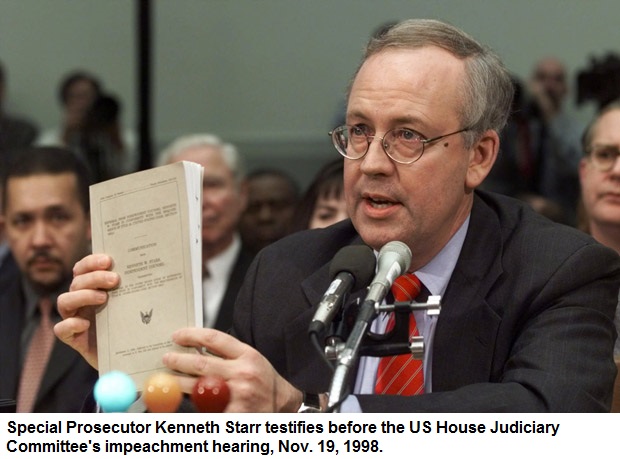
A Special Prosecutor generally is a lawyer from outside the government appointed by an Attorney General or, in the United States, by Congress to investigate a government official for misconduct while in office. A reasoning for such an appointment is that the governmental branch or agency may have political connections to those it might be asked to investigate. Inherently, this creates a conflict of interest and a solution is to have someone from outside the department lead the investigation. The term “Special Prosecutor” may have a variety of meanings from one country to the next, from one government branch to the next within the same country, and within different agencies within each government branch. Critics of the use of Special Prosecutors argue that these investigators act as a “fourth branch” to the government because they are not subject to limitations in spending or have deadlines to meet.

STARR

Federal government
Attorneys in the United States may be appointed/hired particularly or employed generally by different branches of the government to investigate. When appointed/hired particularly by the judicial branch to investigate and, if justified, seek indictments in a particular judicial branch case, the attorney is called Special Prosecutor. When appointed/hired particularly by a governmental branch or agency to investigate alleged misconduct within that branch or agency, the attorney is called Independent Counsel.

State government
Special Prosecutors may also be used in a state prosecution case when the prosecutor for the local jurisdiction has a conflict of interest in a case or otherwise may desire another attorney handle a case.
Source: Wikipedia Online Encyclopedia (Retrieved November 17, 2014) – http://en.wikipedia.org/wiki/Special_prosecutor

2. BRITISH DOMINION

A Royal Commission is a major ad-hoc formal public inquiry into a defined issue in some monarchies. They have been held in the United Kingdom, Australia, Canada, New Zealand, Bahrain, Malaysia, Hong Kong and Saudi Arabia. A Royal Commission is similar in function to a Commission of Enquiry (or Inquiry) found in other countries such as Ireland, South Africa, and Hong Kong; (all examples here are from the British Dominion).

CU Blog - Justice Strategy - Special Prosecutors - Photo 1

A Royal Commissioner has considerable powers, generally greater even than those of a judge but restricted to the Terms of Reference of the Commission. The Commission is created by the Head of State (the Sovereign, or his/her representative in the form of a Governor-General or Governor) on the advice of the Government and formally appointed by Letters Patent. In practice—unlike lesser forms of inquiry—once a Commission has started the government cannot stop it. Consequently governments are usually very careful about framing the Terms of Reference and generally include in them a date by which the commission must finish.

Royal Commissions are called to look into matters of great importance and usually controversy. These can be matters such as government structure, the treatment of minorities, events of considerable public concern or economic questions.

Many Royal Commissions last many years and, often, a different government is left to respond to the findings. In Australia—and particularly New South Wales—Royal Commissions have been investigations into police and government corruption and organised crime using the very broad coercive powers of the Royal Commissioner to defeat the protective systems that powerful, but corrupt, public officials had used to shield themselves from conventional investigation.

Royal Commissions usually involve research into an issue, consultations with experts both within and outside of government and public consultations as well. The Warrant may grant immense investigatory powers, including summoning witnesses under oath, offering of indemnities, seizing of documents and other evidence (sometimes including those normally protected, such as classified information), holding hearings in camera if necessary and—in a few cases—compelling all government officials to aid in the execution of the Commission.

The results of Royal Commissions are published in reports, often massive, of findings containing policy recommendations. These reports are often quite influential, with the government enacting some or all recommendations into law.
Source: Wikipedia Online Encyclopedia (Retrieved November 17, 2014) –
http://en.wikipedia.org/wiki/Royal_Commission

3. NETHERLANDS

Though never a member of British Dominion, the Kingdom of the Netherlands has a similar process. An example of a Commission of Inquiry in the Netherlands include this case study:

  • From mid-2010 to December 2011 the Commission of Inquiry carried out an independent study of the sexual abuse of minors in the Roman Catholic Church from 1945 to 2010.

Source: Investigation of Roman Catholic Church Online Site (Retrieved Nov. 17, 2014) –
http://www.onderzoekrk.nl/english-summery.html

4. UNITED NATIONS

a. Commissions and Investigative Bodies

The UN Security Council has established a wide-variety of Commissions to handle a variety of tasks related to the maintenance of international peace and security. Commissions have been created with different structures and a wide variety of mandates including investigation, mediation, or administering compensation. Below is a list of all commissions established by the Security Council, with a short description prepared on the basis of the Repertoire, as well as links to the sections covering them in the Repertoire (Public Relations Publication). They are organized by region, and then under relevant areas or sub-regions, placed chronologically starting with those established most recently:

1946-1951 1952-1955 1956-1958 1959-1963 1964-1965 1966-1968 1969-1971 1972-1974 1975-1980 1981-1984 1985-1988 1989-1992 1993-1995 1996-1999 2000-2003 2004-2007 2008-2009 2010-2011

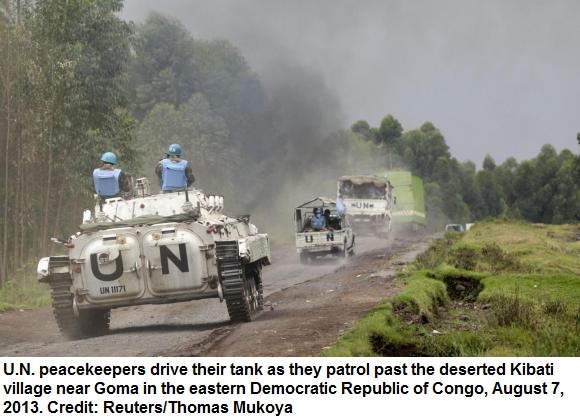
U.N. peacekeepers drive tank as they patrol past deserted Kibati village

For more information on the investigative and fact-finding powers of the Security Council, see this section on Article 34:

  • Article 34 – Investigation of disputes & fact-finding.
    Article 34 of the UN Charter empowers the Security Council to investigate any dispute, or any situation that is likely to endanger international peace and security. The provision covers investigations and fact-finding missions mandated by the Security Council or by the Secretary-General to which the Council expressed its support or of which it took note. Furthermore, this section has also looked at instances in which Member-States demanded or suggested to the Council that an investigation be carried out or a fact-finding mission be dispatched.

b. UN Commission for Conventional Armaments

The Commission for Conventional Armaments was established on 13 February 1947 to formulate proposals for carrying out General Assembly resolution 41 (I) of 14 December 1946 concerning the general regulation and reduction of armaments. This was a standing Commission, but it was formally dissolved on 30 January 1952.

Source: United Nations Online Archive – Retrieved Nov. 17, 2014 – http://www.un.org/en/sc/repertoire/subsidiary_organs/commissions_and_investigations.shtml

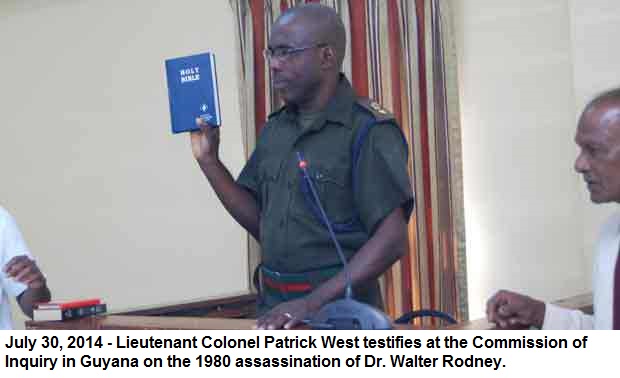
Normally a Special Prosecutor assignment has a limited time expiration. Also a Commission of Inquiry refers to individuals employed, during conciliation (Footnote 2), to investigate the facts of a particular dispute and to submit a report stating the facts and proposing terms for the resolution of the differences. Such a commission is one of many bodies available to governments to inquire/investigate into various issues. The commissions may report findings, give advice and make recommendations; and while their findings may not be legally binding, they can be highly influential.

The declared assignment documents for Special Prosecutors and/or Commissions of Inquiries are called “Warrants”.

The foregoing encyclopedic source explains that “Warrants” may grant immense investigatory powers, including summoning witnesses under oath, offering of indemnities, seizing of documents and other evidence, holding hearings, and compelling aid from government officials. This description provides the role-model for the CU‘s effort in justice and security. The Trade Federation will feature a federal Justice Department, with a separation-of-powers, a ‘Divide’, with the regional member-states. On the CU side of the ‘Divide’ is the jurisdiction for economic crimes, systemic threats, regional escalations and marshaling of any offenses on the federally-regulated grounds, Self-Governing Entities.

This separation-of-powers mandate also dictates that the CU‘s Homeland Security apparatus is the local manifestation of the United Nations Security (Peacekeeping) Forces , except for a regional scope only. This specific federal department will handle a variety of tasks related to the maintenance of regional peace and security.

The book Go Lean…Caribbean posits that the region must prepare its own security apparatus for its own security needs. So the vision is that all Caribbean member-states will authorize the CU as Special Prosecutors and Commissions of Inquiries. These warrants would legally authorize the regional “Justice Institutions”, covering law enforcement and regional defense, all encompassed in the book’s Homeland Security roadmap.

The CU would thusly be set to optimize Caribbean society through economic empowerment, and the aligning security dynamics. In fact, the Go Lean roadmap has 3 prime directives:

  • Optimization of the economic engines in order to grow the regional economy to $800 Billion & create 2.2 million new jobs.
  • Establishment of a security apparatus to protect the resultant economic engines.
  • Improve Caribbean governance to support these engines.

There is the need to ensure the economic engines in all 30 Caribbean member-states; plus extractions (mining, drilling) in the Exclusive Economic Zone (EEZ) of the Caribbean Sea. This point is pronounced early in the book with the Declaration of Interdependence (Page 12) that claims:

x.   Whereas we are surrounded and allied to nations of larger proportions in land mass, populations, and treasuries, elements in their societies may have ill-intent in their pursuits, at the expense of the safety and security of our citizens. We must therefore appoint “new guards” to ensure our public safety and threats against our society, both domestic and foreign. The Federation must employ the latest advances and best practices … to assuage continuous threats against public safety.

xi.  Whereas all men are entitled to the benefits of good governance in a free society, “new guards” must be enacted to dissuade the emergence of incompetence, corruption, nepotism and cronyism at the peril of the people’s best interest. The Federation must guarantee the executions of a social contract between government and the governed.

xii. Whereas the legacy in recent times in individual states may be that of ineffectual governance with no redress to higher authority, the accedence of this Federation will ensure accountability and escalation of the human and civil rights of the people for good governance, justice assurances, due process and the rule of law. As such, any threats of a “failed state” status for any member-state must enact emergency measures on behalf of the Federation to protect the human, civil and property rights of the citizens, residents, allies, trading partners, and visitors of the affected member-state and the Federation as a whole.

xvi. Whereas security of our homeland is inextricably linked to prosperity of the homeland, the economic and security interest of the region needs to be aligned under the same governance. Since economic crimes, including piracy and other forms of terrorism, can imperil the functioning of the wheels of commerce for all the citizenry, the accedence of this Federation must equip the security apparatus with the tools and techniques for predictive and proactive interdictions.

The treaty to establish the “new guards”, the Homeland Security Force and Federal Justice Department within the Caribbean Union Trade Federation gets legal authorization from the provisions of Special Prosecutors and Commissions of Inquiries, therefore enacting a Status of Forces Agreement with the initiation of the confederation. This elaborate process would be “Step One, Day One” in the Go Lean roadmap. The Go Lean book also details a series of community ethos, strategies, tactics, implementations and advocacies to provide increased public accountability and security in the Caribbean region:

Community Ethos – Economic Principle – Consequences of Choices Lie in Future Page 21
Community Ethos – Security Principle – Privacy –vs- Public Protection Page 23
Community Ethos – Security Principle – Whistleblower Protection Page 23
Community Ethos – Security Principle – Witness Security & Protection Page 23
Community Ethos – Security Principle – Anti-Bullying and Mitigation Page 23
Community Ethos – Security Principle – Intelligence Gathering Page 23
Community Ethos – Governing Principle – Minority Equalization Page 24
Community Ethos – Governing Principle – Lean Operations Page 24
Community Ethos – Governing Principle – Cooperatives Page 25
Community Ethos – Ways to Manage Reconciliations Page 34
Community Ethos – Ways to Improve Sharing Page 35
Community Ethos – Ways to Impact the Greater Good Page 37
Strategy – Vision – Trade Federation with Proxy Powers of a Confederacy Page 45
Strategy – Mission – Defense Pact to Defend against Systemic Threats Page 45
Strategy – Mission – Protect Stakeholders   with Vigorous Law-and-Order measures Page 45
Tactical – Confederating a Non-Sovereign Union Page 63
Tactical – Fostering a Technocracy Page 64
Tactical – Separation of Powers – Homeland Security Page 75
Tactical – Separation of Powers – Justice Department – District Attorneys as Special Prosecutors Page 77
Tactical – Separation of Powers – Justice Department – CariPol: Marshals & Investigations Page 77
Tactical – Separation of Powers – Justice Department – Witness Protection Page 77
Tactical – Separation of Powers – Trade Anti-Trust Regulatory Commission Page 77
Implementation – Foreign Policy Initiatives at Start-up Page 102
Implementation – Start-up Security Initiatives Page 103
Implementation – Start-up Benefits from the EEZ – Security – Interdictions & Piracy Page 104
Implementation – Steps to Implement Self-Governing Entities – Security and Justice Page 105
Implementation – Ways to Foster International Aid – Military Aid Page 115
Planning – Ways to Make the Caribbean Better – Safety Measures for the Rich and Poor Page 131
Planning – Ways to Improve Failed-State Indices – Law Enforcement Oversight Page 134
Planning – Lessons Learned from the West Indies (WI)   Federation – Regiment on the Ready Page 135
Planning – Lessons from the American West – Law & Order Needed Enforcements Page 142
Advocacy – Ways to Grow the Economy Page 151
Advocacy – Ways to Create Jobs Page 152
Advocacy – Ways to Improve Governance Page 168
Advocacy – Ways to Better Manage the Social Contract Page 170
Advocacy – Ways to Improve Leadership Page 171
Advocacy – Ways to Impact   Justice Page 177
Advocacy – Ways to Reduce Crime Page 178
Advocacy – Ways to Improve Homeland Security Page 180
Advocacy – Ways to Mitigate Terrorism Page 181
Advocacy – Ways to Improve Intelligence Gathering & Analysis Page 182
Advocacy – Ways to Protect Human Rights Page 220
Appendix – Art of War Chapters – Chapter 7 – Engaging The Security Force Page 327

Everyone in the Caribbean, the people and institutions, are hereby urged to lean-in to this Go Lean roadmap for elevation of Caribbean society. The roadmap calls for the heavy-lifting so that the justice institutions (permanent Special Prosecutors/Commissions of Inquiries) of the CU can execute their role in a just manner, thus impacting the Greater Good; see VIDEO below of South Africa’s example. This produces the output of a technocratic system bent on efficiency and effectiveness. In practice, this would mean accountability, transparency, and checks-and-balances in the execution of the rule-of-law.

This is the change for the Caribbean: elevated Public Safety, Law Enforcement and Homeland Security, all necessary to make the Caribbean a better place to live, work and play.

Download the free e-Book of Go Lean … Caribbean – now!

————–

Footnote:
1 – Iraq: A military solution to a political problem?

2 – Conciliation: The process of adjusting or settling disputes in a friendly manner through extra judicial means.

————–

Video: Marikana Commission of Inquiry has concluded its hearings – http://youtu.be/k0XAfRzjSXc


The Marikana Commission of Inquiry in South Africa has concluded its hearings after two years of attempting to establish what happened during the violent Wage Strike at Lonmin Platinum Mine in August 2012. 34 people were shot and killed in a confrontation with the police. 10 others including 2 police officers and 2 Mine Guards were also killed in the days preceding the August 16th tragedy.


Share this post:
, ,
[Top]

‘Too Big To Fail’ – Caribbean Version

Go Lean Commentary

The book Go Lean…Caribbean serves as a roadmap to implement the technocratic Caribbean Union Trade Federation (CU) and Caribbean Central Bank (CCB) to provide better stewardship, to ensure that the economic failures of the past do not re-occur.

What economic failures?

There were crises on 2 levels: the Global Financial Crisis of 2007 – 2009 and regional financial banking dysfunctions.

Global – The banks labeled “Too Big To Fail” impacted the world’s economy during the Global Financial Crisis. (See the VIDEO below on the anatomy and consequence of the Credit Crisis). Though the epi-center was on Wall Street, the Caribbean was not spared; it was deeply impacted with onslaughts to every aspect of Caribbean life (think: Tourism decline). In many ways, the crisis has still not passed.

Regional – The Caribbean region has not been front-and-center to many financial crises in the past, compared to the 465 US bank failures between 2008 and 2012.[a] But over the past few decades, there have been some failures among local commercial banks and affiliated insurance companies where the institutions could not meet demands from depositors for withdrawal. Consider these examples from Jamaica and Trinidad:

  • There was a  banking crisis in Jamaica in the 1990s. In January 1997, the decision was made to establish the Financial Sector Adjustment Company (FINSAC) with a mandate to take control and restructure the financial sector. FINSAC took control of 5 of the 9 commercial banks, 10 merchant banks, 21 insurance companies, 34 securities firms and 15 hotels. It was also involved in the re-capitalization and restructuring of 2 life insurance companies, with the requirement that they relinquish their shares in 2 commercial banks.[b]
  • For Trinidad, the notable failure was the holding company CL Financial, with subsidiaries Colonial Life Insurance Company and the CLICO Investment Bank (CIB). In mid-January 2009, this group approached the Central Bank of Trinidad and   Tobago requesting financial assistance due to persistent liquidity problems. The global financial events of 2008 combined with other factors placed tremendous strain on the group’s Balance Sheet. The CL Financial lines of business ranged from the areas of finance and energy to manufacturing and real estate services. The group’s assets were estimated at US$16 billion at year-end 2007, and it had a presence in at least thirty countries worldwide, including Barbados. Most significantly, the company held investments in real estate in Trinidad and the United States of America, and in the world’s largest methanol plant prior to its difficulties.

Welcome to the new Caribbean economy.

With the advent of the CARICOM Single Market & Economy (CSME), a more integrated region is expected to lead to greater linkages among the member-states of this existing economic union. The Go Lean roadmap calls for the deployment of the Caribbean Central Bank. So the issue of financial contagions will now have to be a constant concern for this regional sentinel.

The biggest threat of global financial contagions for this region has been dilution of net worth for the citizens of the US, Canada and Western Europe, the primary source of Caribbean tourists.

The prime directive of the CU is to optimize economic, security and governing engines to impact the Caribbean’s Greater Good, for all stakeholders: residents, visitors, bank depositors and mortgage-holders. This need was pronounced early in the Go Lean book, in the Declaration of Interdependence – (Page 13):

xxv.      Whereas the legacy of international democracies had been imperiled due to a global financial crisis, the structure of the Federation must allow for financial stability and assurance of the Federation’s institutions. To mandate the economic vibrancy of the region, monetary and fiscal controls and policies must be incorporated as proactive and reactive measures. These measures must address threats against the financial integrity of the CU and of the member-states.

The foregoing news articles shows the type of functions executed by technocracies: monitoring risks, assessing risk factors, managing leverage and regulating industry performances. This first article considers and welcomes new stewardship for the global “too big to fail” banks:

Title #1: New bank rules proposed to end ‘too big to fail’
By: Joshua Franklin and Huw Jones

CU Blog - Too Big To Fail - Caribbean Version - Photo 1BASEL, Switzerland/LONDON (Reuters) – Banks may have to scrap dividends and rein in bonuses if they breach new rules designed to ensure that creditors rather than taxpayers pick up the bill when big lenders collapse.

Mark Carney, chairman of the Financial Stability Board and Bank of England governor, said the rules, proposed on Monday, marked a watershed in putting an end to taxpayer bailouts of banks considered too big to fail.

“Once implemented, these agreements will play important roles in enabling globally systemic banks to be resolved (wound down) without recourse to public subsidy and without disruption to the wider financial system,” Carney said in a statement.

After the financial crisis in 2007-2009, governments had to spend billions of dollars of taxpayer money to rescue banks that ran into trouble and could have threatened the global financial system if allowed to go under.

Since then, regulators from the Group of 20 economies have been trying to find ways to prevent this happening again.

The plans envisage that global banks like Goldman Sachs and HSBC should have a buffer of bonds or equity equivalent to at least 16 to 20 percent of their risk-weighted assets, such as loans, from January 2019.

These bonds would be converted to equity to help shore up a stricken bank. The banks’ total buffer would include the minimum mandatory core capital requirements banks must already hold to bolster their defences against future crises.

The new rule will apply to 30 banks the regulators have deemed to be globally “systemically important,” though initially three from China on that list of 30 would be exempt.

G2O leaders are expected to back the proposal later this week in Australia. It is being put out to public consultation until Feb. 2, 2015.

David Ereira, a partner at law firm Linklaters, said that on its own the new rule as proposed would not end “too big to fail” banks and that politically tricky details still had to be settled.

BASELTOWER

Carney was confident the new rule would be applied as central banks and governments had a hand in drafting them.

“This isn’t something that we cooked up in Basel tower and are just presenting to everybody,” he told a news conference, referring to the FSB’s headquarters in Switzerland.

Most of the banks would need to sell more bonds to comply with the new rules, the FSB said. Some bonds, known as “senior debt” that banks have already sold to investors, would need restructuring.

Senior debt was largely protected during the financial crisis, which meant investors did not lose their money. But Carney said it in future these bonds might have to bear losses if allowed under national rules and if investors were warned in advance.

The new buffer, formally known as total loss absorbing capacity or TLAC, must be at least twice a bank’s leverage ratio, a separate measure of capital to total assets regardless of the level of risk.

Globally, the leverage ratio has been set provisionally at 3 percent but it could be higher when finalised in 2015.

Some of the buffer must be held at major overseas subsidiaries to reassure regulators outside a bank’s home country. Banks may have to hold more than the minimum because of “add-ons” due to specific business models, Carney said.

Elke Koenig, president of German regulator Bafin, said supervisors should orient themselves more toward the upper end of the 16-20 percent range, though banks may be given more time to comply.

Fitch ratings agency said banks might end up with a buffer equivalent to as much as a quarter of their risk-weighted assets once other capital requirements were included. Analysts have estimated this could run to billions of dollars.

Analysts at Citi estimated the new rule could cost European banks up to 3 percent of profits in 2016.

Citi said European banks would be required to issue the biggest chunk of new bonds, including BNP Paribas , Deutsche Bank , BBVA and UniCredit , with Swiss and British banks the least affected in Europe.

(Additional reporting by Alexander Huebner in Bonn, Editing by Keiron Henderson and Jane Merriman)
Reuters Newswire Service – Online Site (Posted 11/10/2014; retrieved 11/13/2014) –
http://news.yahoo.com/g20-proposes-buffer-end-too-big-fail-banks-061252790–sector.html

Within the region, this second article considers the stewardship of one Caribbean financial institution in Jamaica and their lending practices:

Title #2: VMBS sees dramatic fall in foreclosures

CU Blog - Too Big To Fail - Caribbean Version - Photo 2VICTORIA Mutual Building Society (VMBS) recorded a three-quarters drop in property foreclosures last year.

It signals greater resilience by homeowners during an austere economy affected by heavy currency depreciation.

“The building society also enabled more members who were facing financial difficulties to retain ownership of their homes,” said VMBS in a statement about its year ended December 31, 2013. “Foreclosures on properties totalled 10 last year, compared to 37 the year before.”

Its non-performing loans, or loans unserviced for over 90 days, moved from 6.9 per cent at the beginning of the year to 5.6 per cent at the end.

“This improvement was the result of the continued drive to engage members who were having difficulty meeting their monthly mortgage payments, and working with them collaboratively, with the aim of helping them to bring their accounts current and retain ownership of their homes,” said Michael McMorris, chairman of Victoria Mutual, in his report for the group’s 135th annual general meeting held last month.

Greater focus was also placed on sales and services with mortgage disbursements up 133 per cent to $3.3 billion last year, the company indicated.

The Victoria Mutual Group, an amalgam of various financial, mortgage and insurance entities, made less after-tax surplus at $965.8 million for 2013 compared with $1 billion a year earlier.

The group’s pre-tax surplus actually increased year on year but its after-tax surplus dipped 4.2 per cent to $965.8 million as it was “adversely affected by the imposition of an asset tax on regulated financial institutions, which applied to both VMBS and VM Wealth Management,” stated the company.

The VM Group said that it aims to keep mortgage rates low by reducing administration costs, which augurs well for prospective homeowners.

Stated McMorris: “Internally, the year 2014 will see a continuation of a number of projects and initiatives geared towards improving efficiency and service delivery throughout the group.”

VM Group will seek to improve its financial advisory and brokerage services by growing the assets it manages on behalf of clients.

“To do this, Victoria Mutual Wealth Management Limited (VMWM) is working on new products to allow clients to customise their investment portfolios,” stated McMorris.

VMBS Money Transfer Services Limited (VMTS) plans to expand its services, both locally and overseas. The remittance company became profitable two years ago, and saw earnings grow by 61 per cent last year, due largely to an increase in fees, the company stated. VMTS also benefited from a 28 per cent increase in foreign exchange trading gains.

“Better gains on foreign exchange in part reflected a more challenging business environment last year, when depreciation of the Jamaican dollar was higher than 12 per cent,” stated the company.

VMBS allows its debit card holders free withdrawals at any of its teller machine or point-of-sale terminals.
Jamaica Observer Daily Newspaper – Online Site (Posted 08/20/2014; retrieved 11/13/2014) – http://www.jamaicaobserver.com/business/VMBS-sees-dramatic-fall-in-foreclosures_17381839

The related subjects of banking oversight and optimizing  financial governance have been a frequent topic for blogging by the Go Lean promoters, as sampled here:

5 Steps of a Bubble – Learning to make a resilient economy
Canadian Imperial Bank of Commerce failing investment in FirstCaribbean Bank
Bitcoin needs regulatory framework to change ‘risky’ image
Open the Time Capsule: The Great Recession of 2008
What Usain Bolt can teach banks about financial risk
Barbados Central Bank records $3.7m loss in 2013
US Federal Reserve Releases Transcripts from 2008 Meetings
Dominica raises EC$20 million on regional securities market
Fractional Banking System – How to Create Money from Thin Air
Book Review: ‘Wrong – Nine Economic Policy Disasters and What We Can Learn…’
10 Things We Want from the US – # 2: American Capital
The Erosion of the Middle Class

All Caribbean countries have experienced economic dysfunction: English, Dutch, French and Spanish territories. In line with the foregoing articles, the Go Lean book details many infrastructural enhancements/advocacies to the region’s financial eco-system; to facilitate efficient management of the economy … going forward:

Ethos-Strategy-Tactics-Implementation-Advocacy

Page

Anecdote – Caribbean Single Market & Economy

15

Anecdote – Puerto Rico – The Caribbean’s Greece

18

Economic Systems Influence Individual Choices

21

Improve Sharing

35

Confederating Non-Sovereignty

45

Facilitate Currency Union/Co-op of Caribbean Dollar

45

Fostering a Technocracy

64

Caribbean Central Bank

73

Deposit Insurance Regulations

73

Securities Regulatory Authority

74

Modeling the European Union / Central Bank

130

Lessons from 2008

136

Anecdote – Caribbean Currencies

149

Growing the Economy

151

Creating Jobs

152

Better Manage Foreign Exchange

154

Improve Credit Ratings

155

Foster Cooperatives

176

Banking Reforms

199

Wall Street – Capital/Securities Market

200

Impact the Diaspora

219

Impact Retirement – Need for Savings

221

Help the Middle Class

223

Re-boot Jamaica

239

Appendix – Alternative Remittance Modes

270

There is no doubt that there has been mis-management of the Caribbean economy in the past. Consider the example of Jamaica; their currency has suffered from many de-valuations and depreciations; an average amount of $2.50 a year since the 1970’s; trading at 87-to-1 US Dollar; (at the time that Go Lean was composed – November 2013). Social Anthropologist posit that when societies come under duress, the communities have 2 choices: ‘Fight” or “Flight”. How have the countries responded that are cited in this commentary? They have chosen “flight”. A previous blog reported an average of 70 percent brain-drain rate across the region; with Jamaica at 85% and Trinidad at 79%.

Now is the time for change; time for new stewards of the Caribbean economy, security and governing engines. It’s time for the CU/CCB. We must prove that we have learned from the past. See the VIDEO below on the anatomy and consequence of the Credit Crisis.

The purpose of this roadmap is to provide that new stewardship. A lot is at stake: the destination for the hopes and dreams of the Caribbean youth. No more flight! We must act now and make the Caribbean, a better place to live, work and play. 🙂

———-

Appendix Video: – The Short and Simple Story of the Credit Crisis – http://youtu.be/bx_LWm6_6tA

Source References:

[a]. https://news.yahoo.com/facts-numbers-us-bank-failures-183852568.html

[b]. http://www.centralbank.org.bb/WEBCBB.nsf/WorkingPapers/DB0CF759B9E97FB9042579D70047F645/$FILE/Exploring%20Liquidity%20Linkages%20among%20CARICOM%20Banking%20Systems.pdf

Share this post:
, , , , ,
[Top]

Where the Jobs Are – Entrepreneurism in Junk

Go Lean Commentary

The dominant employment engine for the Caribbean involves tourism, but the regional tourism business models are being strained. The primary target market, American middle class have suffered crises and now harsh realities have come to fruition. The book Go Lean…Caribbean posits that there is a need to re-focus, re-boot, and optimize the engines of commerce so as to make the Caribbean a better place to live, work and play for all.

Where are the jobs … that the Caribbean people need today and will need even more so in the future?

A key answer is in the quotation: “One man’s trash is another man’s treasure”.

This is the underlying principle of the recycling-scrap-metal industry. This industry is a “destruction services” business model, a subset of the “turn-around” community ethos. Jobs can be created in the art and science of destruction (demolition, recycling and junkyards). But this industry does not “play well with others”, it makes a bad neighbor. It is dirty, wet, Blue-Collar and noisy. But, if done right, this model could be successful, and can impact a “turn-around” for many stakeholders.

This new focus on the “turn-around” community ethos, and the accompanying jobs, appears on the surface to be a win-win for all involved, but a more careful examination highlights some serious economic, security and governing obstacles/issues.

The Go Lean book calls for the optimization of these economic, security and governing engines for the Caribbean region:

  • Economics – Jobs, business models, industrial neighborhoods constitute the economic dimensions of this industry. Overall the roadmap calls for the optimization of the economic engines in order to grow the regional economy to $800 Billion GDP and create 2.2 million new jobs. There is another economic element to this recycling-scrap-metal industry sphere of activity, that of an entrepreneurial hustle – Scrapping. A person can generate self-employment income by gathering scrap-metal, recycled commodities, re-manufactured raw materials and transport them to junkyards. While this may be an occasional chore for some people, for others, this can be a daily hustle, their source of steady income. See photo examples here and VIDEO below:
  • CU Blog - Where the Jobs Are - Entrepreneurism in Junk - Photo 1-3
  • Security – The above trash-versus-treasure quotation introduces the security dimension of the commentary. The entire eco-system of recycling assumes that the “trash” holder of a commodity surrenders possession. If/when the commodity changes hands prematurely, the events are often associated with a crime: burglary, robbery, theft, vandalism, house-stripping, etc. For this reason, the Go Lean roadmap commandeers jurisdiction of salvage/recycling/scrap-metal functions for federal regulation/promotion. This stipulates that activities within the “turn-around” sphere will be marshaled by regional police authorities, with the application of best-practices: Verified Identification, Closed Circuit Surveillance Camera, Serial Number registration/tracking, etc.
  • Governance – In line with the Go Lean roadmap, many junkyards are identified as ideal for the structure of Self-Governing Entities (SGE), the bordered/fenced controlled campuses/compounds. This approach allows for initiation, cooperation and coordination of SGE’s to effectuate change in the region.

The alignment of strained economic-security-governance engines against the recycling-scrap-metal “turn-around” community ethos have been successfully championed before, particularly in the US during World War II. There is much to learn from this example and lesson in history.

Consider a modern example of this Los Angeles company, and imagine similar installations throughout the Caribbean region:

C & M Metals is a provider of Scrap-Metal Recycling and Metal Trading Services

1709 E. 24th St., Los Angeles, CA90058  |  Phone: 323-234-4662  |  Fax: 323-234-5844  |  sales@cmmetals.net

C&M Metals Inc. is a corporation dedicated to the, “Green Movement.” We have showed this by being one of the pioneers in the recycling of secondary metals and scrap metal waste for over 50 years. Our experience comes second to none and our long history speaks for itself. Call us today to inquire about how we could be of service to you.

Industries Served:

Metal Fabricators Demolitions Electricians
Machine Shops Networking Contractors
Electronic Manufactures Auto Repair Centers   Auto Wrecking
Plumbers Contractors Yards
Maintenance Contractors Radiator Repair Shops
Medical Industries Wheel and Tire Centers
Installers Auto Dealerships

CU Blog - Where the Jobs Are - Entrepreneurism in Junk - Photo 2
C & M Metals, Inc. – Los Angeles Premier Salvage Services – Retrieved
11-09-2014 –
http://www.cmmetals.net/index.html

The book Go Lean… Caribbean, serves as a roadmap for the introduction and implementation of the technocratic Caribbean Union Trade Federation (CU) with the charter to facilitate jobs in the region. Early in the Go Lean book, the responsibility to create jobs was identified as an important function for the CU with this pronouncement in the Declaration of Interdependence (Pages 14):

xxvi.  Whereas the Caribbean region must have new jobs to empower the engines of the economy and create the income sources for prosperity, and encourage the next generation to forge their dreams right at home, the Federation must therefore foster the development of new industries… In addition, the Federation must invigorate the enterprises related to existing industries … impacting the region with more jobs.

The Go Lean book also details the principle of job multipliers, how certain industries are better than others for generating multiple indirect jobs down-the-line for each direct job on a company’s payroll. The recycling-scrap-metal “turn-around” industries have impressive indirect job multiplier rates, hereby estimated at 5.0. This is important, as the Go Lean… Caribbean book details the creation of 2.2 million direct/indirect jobs in the region during the 5-year roadmap, including income-generation from entrepreneurial hustles.

The subject of SGE’s has been directly addressed and further elaborated upon in these previous blog/commentaries:

https://goleancaribbean.com/blog/?p=2750 Disney World – Example of SGE
https://goleancaribbean.com/blog/?p=2338 Using SGE’s to Welcome the Dreaded ‘Plutocracy’
https://goleancaribbean.com/blog/?p=2003 Where the Jobs Are – Ship-breaking under SGE Structure
https://goleancaribbean.com/blog/?p=1214 Fairgrounds as SGE and Landlords for Sports Leagues
https://goleancaribbean.com/blog/?p=286 Puerto Rico’s Comprehensive Cancer Center Project Breaks Ground – Model of Medical SGE

In addition, the subjects of self-employment opportunities and entrepreneurial hustle have been explored in previous blog/commentaries:

https://goleancaribbean.com/blog/?p=1325 Puerto Rico Governor Signs Bill on Small-Medium-Enterprises
https://goleancaribbean.com/blog/?p=599 Ailing Puerto Rico open to radical economic fixes – with focus on Informal Economy
https://goleancaribbean.com/blog/?p=398 Self-employment on the rise in the Caribbean – World Bank
https://goleancaribbean.com/blog/?p=214 LCD versus an Entrepreneurial Ethos

The adoption of new community ethos, plus the executions of the following strategies, tactics, implementations and advocacies will foster the returns on the “turn-around” investments:

Community Ethos – Deferred Gratification Page 21
Economic Principles – People Choose because Resources are Limited Page 21
Economic Principles – All Choices Involve Costs Page 21
Economic Principles – People Respond to Incentives Page 21
Economic Principles – Economic Systems Influence Choices & Incentives Page 21
Economic Principles – Voluntary Trade Creates Wealth Page 21
Community Ethos – Job Multiplier Page 22
Community Ethos – Lean Operations Page 24
Community Ethos – Return on Investments (ROI) Page 24
Community Ethos – Cooperatives Page 25
Community Ethos – Ways to Impact the Future Page 26
Community Ethos – Ways to Help Entrepreneurship Page 28
Community Ethos – Ways to Impact Research & Development (R&D) Page 30
Community Ethos – Ways to Impact Turn-Around: Recycling and Demolition Industries Page 33
Community Ethos – Ways to Impact the Greater Good Page 37
Strategy – Mission – Foster Local Economic Engines. Page 45
Tactical – Fostering a Technocracy Page 64
Tactical – Tactics to Forge an $800 Billion Economy – High Multiplier Industries Page 70
Tactical – Separation of Powers – Self-Governing Entities Page 80
Implementation – Ways to Pay for Change – SGE Licenses Page 101
Implementation – Steps to Implement Self-Governing Entities Page 105
Implementation – Ways to Deliver Page 109
Planning – 10 Big Ideas – Self-Governing Entities Page 127
Planning – Ways to Improve Trade Page 128
Planning – Ways to Make the Caribbean Better Page 131
Advocacy – Ways to Grow the Economy Page 151
Advocacy – Ways to Create Jobs Page 152
Advocacy – Ways to Foster Cooperatives Page 176
Advocacy – Ways to Improve Emergency Management Processes and Systems Page 196
Advocacy – Ways to Impact Main Street Page 201
Appendix – Job Multipliers Page 259

The CU will foster industrial developments in support of turn-around industries. While these industrial developments may feature physical-grounds like high-tech R&D campuses, medical parks, and technology bases, they will also include low-tech scrap-metal junkyards. So the Go Lean roadmap covers clean-and-dirty, wet-and-dry activities.

While STEM (Science, Technology, Engineering and Mathematics) attributes maybe the target activity for future-focused genius qualifiers, not all Caribbean stakeholders will be included among this grouping. In fact, STEM candidates are projected to only be a small minority in any community. Not everyone can be in the “Geek Squad”, or White Collar classes for that matter. So the Blue Collar classes must be accommodated as well in the Go Lean roadmap. This entrepreneurial hustle is an example of that total inclusion. As such, community investments must be made to facilitate the needs of Blue Collar workers. See below for Appendix – Cooperatives in Salvage.

The Caribbean is arguably the best address on the planet, but there are a lot of missing ingredients so as to be the best address for everyone. Some of the missing ingredients are jobs. The plan identified in the Go Lean book and blog/ commentaries is a good start to create employment opportunities for the region. This, the Go Lean roadmap, is where the jobs are! There are other benefits too; in general, the end result of this roadmap is a clearly defined destination: a better place to live, work and play. 🙂

Download the book Go Lean … Caribbean – now!

———-

Appendix – VIDEO: How to make money scrapping – http://youtu.be/6eggQxy4Tdk

Mike the Scrapper Introduction to Scrapping: “We all have to live and make money so this is for my new fellow scrappers and the one’s that have been already scrapping”.

———-

Appendix – Cooperatives in Salvage:

The CU will structure cooperative endeavors to marshal the economic and homeland security interest of the region. As such, the creation of “Worker” cooperatives will be incentivized for enterprises to assist the population to find gainful employment, even through entrepreneurial “hustles”.

Recycling-Scrap-Metal Industries are ideal for Worker cooperatives. But to facilitate these endeavors, large investments are needed to be made for industrial equipment, sampled as follows (from http://grindercrusherscreen.com/):

CU Blog - Where the Jobs Are - Entrepreneurism in Junk - Photo 4-6

Share this post:
, , , ,
[Top]

A Lesson in History – Economics of East Berlin

Go Lean Commentary

The book Go Lean…Caribbean serves as a roadmap for elevating Caribbean society; the book posits that the history of East Germany is a tutorial to the Caribbean effort. As such there are direct references in the book of the failed Communist State (Pages 132 & 139).

On this date 25 years ago, the “walls came tumbling down”, quickening the reunification of the nations of West Germany and East Germany. That is the headline, but beneath the surface, the German Democratic Republic (GDR or East Germany) was also rife with some other ugly truths.

In summary, the City of “East” Berlin was a maximum security prison in the heart of Europe. (This refers to City of East Berlin, not the whole country of East Germany).

Title: 25 Years Ago – The Berlin Wall Crumbled

CU Blog - A Lesson in History - Economics of East Berlin - Photo 1On the night of November 9, 1989, the Berlin Wall came down. East German authorities opened the border between East and West Berlin and the door to the fall of tyranny.

The wall went up in the early morning darkness of August 13, 1961, to keep millions of people from fleeing communist East Germany after World War II. It fell as suddenly as it had been built. For 28 years, Germany was a country divided not only by ideology but by stone, barbed wire and deadly force. The Berlin Wall — die Mauer — stood as a testament to the eternal struggle between open and closed societies. For all its might, the wall could not stop the free flow of news into East Berlin.

The West side of the wall became a stage for politicians and a canvas for artists. The East side grew grimmer, as social and economic problems worsened. In the end, people rose in protest. When the wall finally crumbled, there was dancing and celebration. But the wall’s toll could not be forgotten: Nearly 200 people died trying to escape; more than 30,000 political prisoners were jailed.

Today, the fallen wall is a memorial to their sacrifice, one of the world’s great symbols of the victory of freedom over oppression. The eight, 12-foot-high segments of the Berlin Wall in the Newseum’s Berlin Wall Gallery weigh 2.5 tons each and came from throughout Berlin. The Newseum acquired the pieces in 1993, along with the three-story East German guard tower that stood near Checkpoint Charlie.

Newseum Institute – Archives and Exhibit of News Artifacts
http://www.newseum.org/2014/11/06/25-years-ago-the-berlin-wall-crumbled/

CU Blog - A Lesson in History - Economics of East Berlin - Photo 2This is more than just dry history. No, this is a lesson plan for the Caribbean empowerment effort. That effort is part-and-parcel of the Go Lean…Caribbean movement, this refers to the book and accompanying blog/commentaries. The book posits that the experiences of East Germany and the reunification with the Federal Republic of Germany (FRG or West Germany) provide a fitting example for the Caribbean people and institutions. What most people in the Caribbean may not realize, due to the far distance of a continent away, is that the national border for West and East Germany did not traverse through the City of Berlin, but rather 100 miles to the west of Berlin; (see map here). So the City of Berlin stood as an “island” within the country of East Germany, with that island itself split into West and East territories. (This is so similar to many Caribbean locales). The Western portion of Berlin belonged to West Germany; the residents had travel access via “air bridge” to other ports in the Federal Republic of Germany, while East Berliners were restricted – imprisoned in their own country, despite committing no offenses. This is classic human rights violation.

East Berlin, and by extension East Germany was a definitive Failed-State.

This audio-podcast here relates a practice of East Germany selling prisoners to the West for hard currency, so as to remediate the government’s economic deficiencies:

Video: Public Radio International East Germany Prisoner Ransom … http://youtu.be/FjozYlAlMew

The narratives described in this audio-podcast constitutes state-sponsored human trafficking.

This is abominable!

The German Reunification was not a merger, rather it was a repossession. East Germany was at the precipice of a Failed-State. The Caribbean today is at a similar precipice of dysfunction. This status is not due to the failure of communism (though one Caribbean member-state – Cuba – does feature a failed communist society), but rather the global financial crisis. Cuba also parallels East Germany with a human trafficking crisis; many citizens are desperate to leave the island and families pay huge “ransoms” to extract them.

The review of the historic events of this day regarding the Berlin Wall 25 years ago is more than just an academic discussion, the book Go Lean…Caribbean aspires to economic principles that dictate that “consequences of choices lie in the future”. The book serves as a roadmap for the introduction and implementation of the technocratic Caribbean Union Trade Federation (CU). The people of the Caribbean may not know the intimate details of East Germany, but we do understand societal decline and dysfunction all too well.

What have we learned from the East/West Germany experiences? How will those lessons help us today?

  • Brain Drain is unrecoverable – East Germany learned quickly that they had to keep their talented citizens by any means necessary, and thus the wall. The CU/Go Lean roadmap places priority on the atmosphere for the Caribbean talent to want to stay in the homeland and for the Diaspora to repatriate..
  • Most valuable resource – East German sold their human resources to the West; (over 300,000 people according to the above audio-podcast/VIDEO). This was their best marketable resource. The Go Lean roadmap posits that one person can make a difference and impact the economic engines in the fields of endeavor. Rather than one, the CU/Go Lean effort strives to foster the masses for their collective and individual contributions.
  • Promote opportunities for the Pursuit of Happiness – People in the West were NOT trying to sneak into the East. Basic needs were not fully satisfied there, so higher level needs were rarely pursued. The Go Lean roadmap posits that when the basic needs are in place, only then can the pursuit of happiness be tackled.
  • Consider the Greater Good – Complying with this Greater Good principle would have prevented a lot of the conflict during the 28-year East-West segregation. This philosophy is directly quoted in the book as: “it is the greatest good to the greatest number of people which is the measure of right and wrong”. The CU/Go Lean roadmap calls for a number of measures that strike directly at the Greater Good mandate: accountable justice institutions, economic empowerment for rich and poor, strategic education initiatives, proactive health/wellness, etc.
  • Quit on “failed” policies  – With the Soviet Union and Eastern European trading partners collapsing, the East German currency, the Mark, had become worthless outside of the GDR, creating the acute need to merge the two German economies. The GDR did not try to prop up the failing currency beyond 1989, instead they transferred its financial & monetary policy to the stewards of the stronger West Germany currency. The Go Lean roadmap will employ a technocratic Caribbean Central Bank and Caribbean Dollar so as to shore up the currency and economic engines in the region.
  • Negotiating as partners not competitors – Considering the German reunification models, consolidating millions of people with divergent politics and cultures into one Federation requires toleration and adjustments by all stakeholders. Success is possible only when all sides are willing to negotiate as partners not competitors. The CU requires negotiations and treaty considerations for economics, security and governing solutions. So the Go Lean roadmap adopts negotiations as a community ethos.
  • Reconciliation of issues is not optional, more conflict will emerge otherwise – There was loss of life and many human rights abuses in the history of the East-West schism, and there must be accountability. The CU plans for Truth & Reconciliation Commissions for dealing with a lot of latent issues in the last Caribbean century (i.e. Cuba, Haiti, Dominican Republic, etc).

The related subjects of economic, security and governing dysfunction have been a frequent topic for blogging by the Go Lean promoters, as sampled here:

https://goleancaribbean.com/blog/?p=2585 A Lesson in History: Concorde SST
https://goleancaribbean.com/blog/?p=2480 A Lesson in History: Community Ethos of WW II
https://goleancaribbean.com/blog/?p=2359 CariCom calls for innovative ideas to finance SIDS development
https://goleancaribbean.com/blog/?p=2330 ‘Raul Castro reforms not enough’, Cuba’s bishops say
https://goleancaribbean.com/blog/?p=2297 A Lesson in History: Booker T versus Du Bois
https://goleancaribbean.com/blog/?p=1531 A Lesson in History: 100 Years Ago Today – World War I
https://goleancaribbean.com/blog/?p=1433 Caribbean loses over 70% of tertiary educated citizens to the brain drain
https://goleancaribbean.com/blog/?p=1309 5 Steps of a Bubble – Learning from the past and mitigating negatives
https://goleancaribbean.com/blog/?p=1014 All is not well in the sunny Caribbean
https://goleancaribbean.com/blog/?p=816 The Future of Caribbean Integration and CariCom
https://goleancaribbean.com/blog/?p=782 Open the Time Capsule: The Great Recession of 2008
https://goleancaribbean.com/blog/?p=623 Only at the precipice, do they change
https://goleancaribbean.com/blog/?p=599 Ailing Puerto Rico open to radical economic fixes
https://goleancaribbean.com/blog/?p=451 CariCom Chairman to deliver address on slavery/colonization reparations
https://goleancaribbean.com/blog/?p=353 Book Review: ‘Wrong – Nine Economic Policy Disasters and What We Can Learn…’

The purpose of the Go Lean roadmap is to turn-around the downward trends in the Caribbean today, to reverse course and elevate Caribbean society. This CU/Go Lean roadmap, applying lessons from the last 25 years of German history, has developed these prime directives, pronounced as follows:

  • Optimization of the economic engines in order to grow the regional economy to $800 Billion & create 2.2 million new jobs.
  • Establishment of a security apparatus to protect the resultant economic engines.
  • Improve Caribbean governance to support these engines.

The Go Lean book details a series of assessments, community ethos, strategies, tactics, implementations and advocacies to empower all the factions in the Caribbean region:

Community Ethos – Economic Systems Influence Choices & Incentives Page 21
Community Ethos – Consequences of Choices Lie in the Future Page 21
Community Ethos – Money Multiplier – Control of Local/Regional Currency Page 22
Community Ethos – Anti-Bullying and Mitigation Page 23
Community Ethos – Intelligence Gathering Page 23
Community Ethos – “Crap” Happens Page 23
Community Ethos – Minority Equalization Page 24
Community Ethos – Ways to Impact the Future Page 26
Community Ethos – Ways to Improve Negotiations Page 32
Community Ethos – Ways to Manage Reconciliations Page 34
Community Ethos – Ways to Improve Sharing Page 35
Community Ethos – Ways to Promote Happiness Page 36
Community Ethos – Ways to Impact the Greater Good Page 37
Strategy – Vision –  Integrate Region into a Single Market Economy Page 45
Strategy – Agents of Change – Globalization Page 57
Tactical – Separation of Powers – Department of Homeland Security Page 75
Implementation – Assemble Existing Super-national Institutions Page 96
Implementation – Ways to Pay for Change Page 101
Implementation – Foreign Policy Initiatives at Start-up Page 102
Implementation – Security Initiatives at Start-up Page 103
Implementation – Ways to Deliver Page 109
Planning – Ways to Ways to Model the EU Page 130
Planning – Ways to Make the Caribbean Better Page 131
Planning – Reasons Why the CU Will Succeed – Germany Reunification Model Page 132
Planning – Ways to Improve Failed-State Indices Page 134
Planning – Lessons from East Germany Page 139
Advocacy – Ways to Grow the Economy Page 151
Advocacy – Ways to Create Jobs Page 152
Advocacy – Ways to Better Manage the Social Contract Page 170
Advocacy – Ways to Foster Cooperatives Page 176
Advocacy – Ways to Impact Justice Page 177
Advocacy – Ways to Improve Homeland Security Page 180
Advocacy – Ways to Improve Intelligence Gathering and Analysis Page 182
Advocacy – Ways to Protect Human Rights Page 220

1989 was pivotal in the history of modern Germany. Today the unified country is the Number One Economy in Europe and a role model for the Caribbean.

Now is the time for all of the Caribbean to learn the lessons from East Germany’s failed economy. The book Go Lean … Caribbean posits that the Caribbean is in a serious crisis, but asserts that this crisis would be a terrible thing to waste. The people and governing institutions of the region are hereby urged to lean-in for the empowerments described in the book Go Lean … Caribbean. This is a big deal for the region, the same way 1989 was a big year for Germany. While “impacting Germany” is out-of-scope for this CU roadmap, applying effective turn-around strategies (as in emerging from communism in Cuba) and elevating the Caribbean neighborhood is realistic and plausible. We can make our Caribbean homeland a better place to live, work, and play. 🙂

Download the book Go Lean … Caribbean – now!

Share this post:
, , , ,
[Top]

DR President Medina on the economy: ‘God will provide’

Go Lean Commentary

The Caribbean is in crisis!

For many, “success is measured by the successful exodus from their Caribbean homeland”. So declares the foreword of the book Go Lean … Caribbean (Page 3).

The Dominican Republic is in crisis! According to the foregoing news article, the island nation have lots of issues, stemming primarily from economic dysfunctions, and the solution, according to the President of the Republic is only “Faith, Hope and Prayer”:

President Medina PhotoSanto Domingo – President Danilo Medina says that the Dominican state has a very high level of debt, because it is dragging a vital execution deficit with the income it receives and has to spend, which has prevented the economy from recovery over the past few years.

“When a country does not receive enough resources to fund its spending, the only way of financing it is to use state money. In all these years the country’s average fiscal deficit since 2000 to date has been 4.5% of the annual Gross Domestic Product,” said Medina

He said that the state will have to pay US$11 billion in debt between 2013 and 2015, and for the deficit to be reduced an effort must be made to reduce its essence, in order to take it to 2.8% of GDP.

The President warned that this reduction is behind the importance of building coal-fired plants to supply the country with energy, and that he does not understand why “there is a conspiracy against these plants that should be defended by the whole country, if we want sustainability in public finances.” He said that these plants, which will come into operation in 2017, would mean the state would save 1.7% of the GDP, by paying the Dominican Corporation of State Electricity Companies (CDEEE) debt, thus putting the national economy on a good path within a few years.

When he was asked where he would obtain the resources for governing over the next years, Medina answered, “God will provide.” He said that the budgetary spending restructuring meant the government was investing where people needed it and that this was being reflected in economic development.
Dominican Today – Online Community – Posted 08-20-2014; Retrieved 11-08-2014:
http://www.dominicantoday.com/dr/economy/2014/8/20/52502/President-Medina-on-the-economy-God-will-provide

The publishers of the Go Lean book recognize and respect religious faith and devotion. In fact, the book examines the Bible’s record on economic empowerment, listing 10 Lessons from the Bible (Page 144). For the consideration of this commentary and the President’s “easy” secession in the foregoing article, a fitting lesson is derived from the Bible Book of James Chapter 2:14 – 26; (see Appendix*):

James 2:26 – “Faith without works is dead”.

The required “works” is described in the Go Lean book as heavy-lifting.

The publishers of the Go Lean book humbly submit a plan for heavy-lifting, one so comprehensive that it is considered a roadmap, turn-by-turn directions to move the Dominican Republic from Point A (status quo), to Point B (destination of societal elevation). This roadmap is set to re-boot the island’s economy, security and governing engines, highlighting 144 different advocacies designed to impact society. The book asserts that the problems of the Dominican Republic (and by extension, the entire Caribbean) are too big for any one member-state to solve alone. Rather, the focus of the roadmap is the region-wide professionally-managed, deputized technocracy of the Caribbean Union Trade Federation (CU).

The Dominican Republic needs the strategies, tactics, implementations and advocacies of the CU.

The CU needs the Dominican Republic!

The CU requires the full participation of all 30 member-states in the region, including all 4 language groups (Dutch, English, French and Spanish). With this approach, the CU benefits from the economies-of-scale of 42 million people.

The CU expects NO MONEY from the Dominican Republic. This is good as the country’s treasuries are strained, maintaining the national debt of US$11 billion, plus a budget deficit reflecting 4.5% of GDP. To cure a deficit a government needs combinations of two things: more revenues and/or fewer expenses.

The Go Lean roadmap features both. The roadmap is a complete re-boot: new revenue streams and a separation-of-powers, thereby delegating some governance to CU agencies.

The Go Lean … Caribbean book introduces the CU to take oversight of’ much of the Caribbean economic, security and governing functionality. In summary, this plan’s execution makes the Dominican Republic, and the Caribbean, a better place to live, work and play.

This Go Lean roadmap assesses the Dominican Republic human flight/brain drain crisis, where large percentages of the island’s populations have fled to American shores, with estimates of up to 1.3 million in the Diaspora as of 2006 (Page 237 & 306). This plight makes the task of building a functioning society difficult, as often the brightest and best talents are the ones that flee; plus entitlement programs simply need populace retention.

The CU will fix the Dominican Republic! Look here at the solutions; (sorted by Economic/Security/Governance). The book Go Lean … Caribbean details these specific curative measures (advocacies, strategies, tactics, and implementations):

Economic:

Community Ethos – Money Multiplier Page 22
Help Entrepreneurship Page 28
Impact Turn-Around Strategies/Tactics Page 33
Tactics to Forge an $800 Billion Economy Page 67
New Ways to Pay for Change Page 101
Improve Energy Usage Page 113
Better Manage Debt Page 114
Foster International Aid Page 115
Improve Trade Page 128
Improve Interstate Commerce Page 129
New Ways to Grow the Economy Page 151
Create Jobs Page 152
Control Inflation Page 153
Improve Credit Ratings Page 155
Improve Education Page 159
Mitigate Black Markets Page 165
Enhance Tourism Page 190
Impact Wall Street Page 200

Security:

Separation of Powers – Homeland Security Page 75
Security Initiatives [stemming from the Start-up] Page 103
Impact Justice Page 177
Mitigate & Reduce Crime Page 178
Improve Intelligence [Gathering & Analysis] Page 182
Impact the Prison-Industrial Complex Page 211

Governance:

Community Ethos – Deferred Gratification Page 21
Improve Negotiations Page 32
Impact the Greater Good Page 37
Tactics to Foster a Technocracy Page 64
Implement Self-Governing Entities Page 105
Strong Reasons to Repatriate Page 118
Promote Independence Page 120
Improve Healthcare Page 156
Impact Entitlements Page 158
New [Governmental] Revenue Sources Page 172
Impact Public Works Page 175
Better Manage Natural Resources Page 183
Improve for Natural Disasters Page 184
Improve Emergency Management Page 196

The people of the Dominican Republic are calling for change, for help, for some mitigations. They need prayer, yes, but they need workable solutions too. See the VIDEO below, produced by young students in line with a “poverty” theme; this assessment is “from the mouth of babes” – Bible Quote (Matthew 21:16).

With the Go Lean roadmap, change has come to the Caribbean. The people and institutions of the Dominican Republic are all urged to “lean-in” to this roadmap.

In fact, now is the time for the whole Caribbean region to lean-in for this change, described in the book Go Lean … Caribbean. The benefits of this roadmap are too alluring to ignore: emergence of an $800 Billion regional economy, 2.2 million new jobs and an end to the economic dysfunction. This will result in Dominicans repatriating from the US, not fleeing to the US. 🙂

Download the book Go Lean … Caribbean – now!

————-

Appendix – Bible Reading – James Chapter 2:14 – 26 (New International Version)

*Faith and Deeds

14 What good is it, my brothers and sisters, if someone claims to have faith but has no deeds? Can such faith save them? 15 Suppose a brother or a sister is without clothes and daily food. 16 If one of you says to them, “Go in peace; keep warm and well fed,” but does nothing about their physical needs, what good is it? 17 In the same way, faith by itself, if it is not accompanied by action, is dead.
18 But someone will say, “You have faith; I have deeds.”
Show me your faith without deeds, and I will show you my faith by my deeds. 19 You believe that there is one God. Good! Even the demons believe that—and shudder.
20 You foolish person, do you want evidence that faith without deeds is useless ? 21 Was not our father Abraham considered righteous for what he did when he offered his son Isaac on the altar? 22 You see that his faith and his actions were working together, and his faith was made complete by what he did. 23 And the scripture was fulfilled that says, “Abraham believed God, and it was credited to him as righteousness, and he was called God’s friend. 24 You see that a person is considered righteous by what they do and not by faith alone.
25 In the same way, was not even Rahab the prostitute considered righteous for what she did when she gave lodging to the spies and sent them off in a different direction? 26 As the body without the spirit is dead, so faith without deeds is dead.

————-

Appendix – Video: Why the Dominican Republic is poor?  http://youtu.be/pCVR-kdc0ss

Published on May 15, 2013 By YouTube Contributor: “camilalovescupcakes” (Sharen Sosa)
The prologue included this verbiage: “In my school, as final exam in English classes, told us to do a video of ‘Why the Dominican Republic is poor?’ We had to make groups and make a video, talking about it, and also focus on the cause, which was the “Corruption”, we made a documentary and here is the whole video, hope you love it”.

Share this post:
, , , , ,
[Top]

Suit Over Red Light Traffic Cameras Could Impact Millions

Go Lean Commentary

Change is coming to the Caribbean … and economic prosperity will undoubtedly follow:

“Happy Days Are Here Again” – familiar feel-good song during American political conventions.

CU Blog - Suit Over Red Light Traffic Cameras Could Impact Millions - Photo 1The book Go Lean…Caribbean posits that “bad actors” will always emerge in times of economic prosperity to exploit opportunities, with bad or evil intent. The book therefore serves as a roadmap for the introduction and implementation of the technocratic Caribbean Union Trade Federation (CU) as a regional entity projected to forge security and public safety solutions for the entire Caribbean region.

The heavy-lifting activities to ensure security by this CU technocracy include deploying a wide network of closed-circuit and traffic cameras. This could be beneficial and advantageous, but it appears that there are some perils too. Considering the lessons learned from the US in this following VIDEO, there is the need to protect citizens and their “Due Process” rights:

VIDEO – NBC News TODAY Show – November 5, 2014 – A new lawsuit is challenging the popular cameras at intersections, and could lead to millions of busted drivers across the U.S. getting their money back. NBC’s Kerry Sanders reports.

http://www.today.com/video/today/56366199

The book Go Lean … Caribbean underpins the movement for traffic cameras throughout the Caribbean region, copying the model of the 3rd party company in the foregoing VIDEO, Arizona-based American Traffic Solutions, Inc. (see Appendix below). But rather than a profit motive, the CU‘s motive is the optimization of Caribbean society. Just imagine, receiving a traffic ticket “in the mail” for running a traffic light in some Caribbean member-state.

“In the mail” – This phrase in itself reflects the reform needed for the Caribbean governmental eco-system.

The CU would be set to optimize all aspects of Caribbean society through economic empowerment, and the aligning security dynamics. In fact, the Go Lean roadmap has these 3 prime directives:

  • Optimization of the economic engines in order to grow the regional economy to $800 Billion & create 2.2 million new jobs.
  • Establishment of a security apparatus to protect the resultant economic engines, including road traffic stakeholders like motorists and pedestrians.
  • Improve Caribbean governance, with a separation-of-powers between member-state administrations and the CU federal government (Executive facilitations, Legislative oversight and Judicial prudence) to support these economic/security engines.

Closed-circuit and traffic cameras are designed to impact society in the same above 3 areas: they can generate revenues/jobs, provide public safety / homeland security protections and streamline governmental processes. At the outset of the book (Page 12), these public safeguards are identified as prime directives in the Declaration of Interdependence:

x.      Whereas we are surrounded and allied to nations of larger proportions in land mass, populations, and treasuries, elements in their societies may have ill-intent in their pursuits, at the expense of the safety and security of our citizens. We must therefore appoint “new guards” to ensure our public safety and threats against our society, both domestic and foreign. The Federation must employ the latest advances and best practices of criminology and penology to assuage continuous threats against public safety.

xvi.      Whereas security of our homeland is inextricably linked to prosperity of the homeland, the economic and security interest of the region needs to be aligned under the same governance. Since economic crimes … can imperil the functioning of the wheels of commerce for all the citizenry, the accedence of this Federation must equip the security apparatus with the tools and techniques for predictive and proactive interdictions.

CU Blog - Suit Over Red Light Traffic Cameras Could Impact Millions - Photo 2Unified command-and-control is identified as a major function of the CU security / law enforcement apparatus. This includes all intelligence gathering and analysis activities for overt and covert purposes. The effectiveness of these tactics (advanced monitoring, satellite surveillance, electronic eavesdropping, closed-circuit, and traffic cameras) has been proven for crime remediation and investigations. In addition to crime, the Go Lean roadmap targets delivery of government services, identifying best practices in agile methodologies to guarantee fewer defects and more efficiency; (Pages 109 & 147). In fact, the name Go Lean refers to the commitment to lean project management methodologies in the structure of the CU (Page 4).

All of this technocratic efficiency should at least allow for direct home mail delivery. Also at the outset of the book (Page 12), the need to reboot postal operations is detailed in the Declaration of Interdependence:

xv.  Whereas the business of the Federation and the commercial interest in the region cannot prosper without an efficient facilitation of postal services, the Caribbean Union must allow for the integration of the existing mail operations of the governments of the member-states into a consolidated Caribbean Postal Union, allowing for the adoption of best practices and technical advances to deliver foreign/domestic mail in the region.

The installation of the unified command-and-control security structure would be “Step One, Day One” in the Go Lean roadmap. Secondarily, the roadmap must enhance the postal operations in the region to ensure that government mail can be efficiently delivered to citizens, car drivers and registered car owners – the roadmap proposes a Caribbean Postal Union (CPU). The Go Lean book therefore details a series of community ethos, strategies, tactics, implementations and advocacies to provide increased public safety, mail operations and government services in the Caribbean region:

Economic Principle – Consequences of Choices Lie in Future Page 21
Community Ethos – Privacy –vs- Public Protection Page 23
Community Ethos – Intelligence Gathering Page 23
Community Ethos – “Crap” Happens Page 23
Community Ethos – Cooperatives Page 25
Community Ethos – Ways to Improve Sharing Page 35
Community Ethos – Ways to Impact the Greater Good Page 37
Tactical – Confederating a Non-sovereign Union Page 63
Tactical – Fostering a Technocracy Page 64
Tactical – Separation of Powers – Homeland Security Page 75
Tactical – Separation of Powers – CariPol: Marshals and Investigations Page 77
Implementation – Assemble Regional Mail Operations into a CPU Page 96
Anecdote – Implementation Plan – US Failing Mail Services Page 99
Implementation – Ways to Pay for Change Page 101
Implementation – Start-up Security Initiatives Page 103
Implementation – Ways to Improve Mail Service Page 108
Implementation – Ways to Deliver Page 109
Planning – Ways to Make the Caribbean Better Page 131
Planning – Ways to Improve Failed-State Indices Page 134
Advocacy – Ways to Grow the Economy Page 151
Advocacy – Ways to Improve Governance Page 168
Advocacy – Ways to Better Manage the Social Contract Page 170
Advocacy – Ways to Improve Leadership Page 171
Advocacy – Ways to Impact   Justice Page 177
Advocacy – Ways to Reduce Crime Page 178
Advocacy – Ways to Improve for Gun Control Page 179
Advocacy – Ways to Improve Homeland Security Page 180
Advocacy – Ways to Mitigate Terrorism Page 181
Advocacy – Ways to Improve Intelligence Gathering/Analysis Page 182
Advocacy – Ways to Impact Events – Mitigating Security Threats Page 191
Advocacy – Ways to Impact the Prison Industrial Complex – Tracking Felons Page 211
Advocacy – Ways to Protect Human Rights Page 220
Appendix – Prison Industrial Complex – Nauru DetentionCenter Page 327

Other subjects related to public safety empowerments for the region have been blogged in other Go Lean…Caribbean commentaries, as sampled here:

https://goleancaribbean.com/blog/?p=1554 Security Pact from the Status of Forces Agreement
https://goleancaribbean.com/blog/?p=1487 Here come the Surveillance Drones … and the Concerns
https://goleancaribbean.com/blog/?p=960 NSA records all phone calls in Bahamas, according to Snowden
https://goleancaribbean.com/blog/?p=392 Jamaica to receive World Bank funds to help in crime fight

Bad actors will always emerge…

Accepting this premise means preparing the necessary counter-measures. The model of the company American Traffic Solutions gives the Caribbean a template of “how, what, when and why” for traffic cameras. Individual “Due Process” rights do not have to be trampled on in the course of this roadmap. The policing authorities in the region can simply deputize CU resources for law-and-order enforcements in member-states. This deputization strategy/process of member-states authority being vested to CU agencies is front-and-center in the Go Lean roadmap.

Public safety is necessary to make the Caribbean homeland, a better place to live, work and play. Caribbean people need these assurances.

Download the book Go Lean … Caribbean – now!

————–

Appendix – American Traffic Solutions, Inc. (ATS) – http://www.atsol.com/

ATS is the leading provider of traffic safety, mobility and compliance solutions for state & local governments, commercial fleets and rental car companies. With nearly 300 customers and more than 3,500 Road Safety Camera Systems installed and operating throughout the United States  and Canada (yellow in the below map), ATS is the market leader for Red-Light, Speed and School Bus Stop-Arm Safety Cameras.

CU Blog - Suit Over Red Light Traffic Cameras Could Impact Millions - Photo 3

ATS is also the industry leader in toll and violation management for fleets and rental companies.  PlatePass® coverage blankets all major toll regions in North America, complying with in-vehicle transponder and license-plate (video) toll recognition systems throughout the United States and Canada.

Share this post:
, , , ,
[Top]

Caribbean Study: 58% Of Boys Agree to Female ‘Discipline’

Go Lean Commentary

The issue in the subsequent news article relates to the guidance we give our young people. The words we say and the things we do have an impact on their standards of right and wrong. The research in this article relates to the attitudes that lead to domestic violence, and why the rest of the community may standby and tolerate it.

This point is being brought into focus in a consideration of the book Go Lean … Caribbean. The book serves as a roadmap for the introduction and implementation of the technocratic Caribbean Union Trade Federation (CU), for the economic optimization in the region.

The focus of the book is “Economics“, not domestic violence! And yet this commentary relates that there is an alignment of objectives. The Go Lean roadmap posits that the economy of the Caribbean is inextricably linked to the security (public safety) of the Caribbean.

Among the objectives to accomplish the economic elevation is the mission to retain Caribbean citizens in their homelands and repatriate the far-flung Diaspora back to the region.

Many times people flee the region to mitigate abusive situations; even more troubling, as victims they may have encountered an attitude of complacency and indifference among public safety authorities. The following article posits that this attitude is deeply entrenched in society, even among the next (younger) generation.

Title: COB Study: 58% Of Boys Believe Men Should Discipline Their Female Partners
By: Rashad Rolle, Staff Reporter
The Tribune – Bahamas Daily Newspaper – October 21, 2014

Caribbean Study 1

FIFTY-eight per cent of high school boys and 37 per cent of high school girls participating in a recent academic survey believe men should discipline their female partners, according to a new College of the Bahamas study.

The study also found that 49 per cent of boys believe women should ask permission from their male partners if they wanted to go out while 17 per cent of girls supported this view.

Of the students surveyed, 46 per cent of boys believed wives must have sex when her husband wants to, compared to 16 per cent of girls. This, according to researchers, has possible implications on debates on marital rape.

According to the study, most of the teens from both sexes believed men should be the head of their households and that both husbands and wives should submit to one another and remain committed, reflecting the country’s religious values.

The research was conducted by members of the Bahamas Crisis Centre (BCC) and COB’s academic community. Its findings appear in the latest edition of the International Journal of Bahamian Studies. The study investigated teen perspectives on relationships between the sexes and the prevalence of violence within teen relationships.

It concluded that efforts must be made to ensure adolescents adjust their behaviour before becoming adults in order to push back against a culture of violence.

It also concluded that girls are more likely than boys to use aggressive behaviour in teen relationships, such as restricting access to friends of the opposite sex.

Based on the gathered data, the study concludes that “there is a clear need for children to be taught how to respect one another from an early age.”

One thousand students from grade 10 to 12 from eight schools, including one private school, participated in the study.

According to the study, “over 80 per cent of respondents had been on a date and so had a relationship of some sort with the opposite sex,” a figure noted as higher than the 61 per cent reported in a similar study of teens in the United   States.

The study is titled Attitudes of High School Students Regarding Intimate Relationships and Gender Norms in New Providence, The Bahamas.

“The responses show that on a number of issues regarding relationships, boys and girls have different attitudes and behaviours,” the researchers wrote. “It can also be seen that large numbers of teens can be expected to be victims of controlling behaviours. The use of threats and physical force may be learnt behaviours due to the presence of violence in homes in The Bahamas.”

“Overall, it is apparent that the breakdown in adult relationships, which is considered to play an important role in the violence observed in Bahamian society, may be the consequence of adolescents not adjusting their teen behaviours when they become adults. Therefore, modifying the attitudes of children with regard to interpersonal relationships may be important in reducing long-term violence in the country. Boys and girls had different attitudes on many aspects of relationships with current or future partners, but their endorsement of stereotypes of sex-related roles and their participation in certain behaviours could be a cause for concern. Underpinning these attitudes may be issues associated with what it means to be a woman or a man in The Bahamas, and related gender norms.” http://www.tribune242.com/news/2014/oct/21/cob-study-58-boys-believe-men-should-discipline-th/
———–
The actual Research Report: ‘Attitudes of High School Students Regarding Intimate Relationships and Gender Norms in New Providence, The Bahamas’ can be found here:
http://journals.sfu.ca/cob/index.php/files/article/view/225

This CU/Go Lean roadmap has 3 prime directives:

  • Optimization of the economic engines in order to grow the regional economy and create 2.2 million new jobs.
  • Establishment of a security apparatus to protect the resultant economic engines and their relevant stakeholders.
  • Improve Caribbean governance, with a separation-of-powers between member-state administrations and the CU federal government (Executive facilitations, Legislative oversight and Judicial prudence) to support these economic/security engines.

While the subject of the Caribbean adolescent culture of violence falls on the member-state side of the separation-of-power / governance divide, the CU will entail a jurisdiction of monitoring and metering (ratings, rankings, service levels, etc) local governance and their delivery of the Social Contract.

Change has now come to the Caribbean. As the foregoing article depicts the problem of domestic violence is tied to a community ethos. This ‘negative’ ethos must be uprooted and replaced with a new, progressive spirit, starting at the adolescent level, when attitudes are pliable and sensitive to strategic messaging; see VIDEO below.

Many related issues/points were elaborated in previous blogs, sampled here:

Students developing nail polish to detect date rape drugs
Book Review: ‘Chasing Youth Culture and Getting It Right’
Muslim officials condemn abductions of Nigerian girls
Caribbean/Latin countries still view women as ‘lesser
Jamaica to receive World Bank funds to help in crime fight

The above commentaries examined global developments and related their synchronicity with the principles in the Go Lean book. There are a number of touch points that relate to domestic violence and the community attitude to dissuade such behavior. Most importantly, the Go Lean book depicts solutions. These are presented as community ethos, strategies, tactics, implementations and advocates; a sample is detailed as follows:

Community Ethos – Privacy –vs- Public Protection Page 23
Community Ethos – Whistleblower Protection Page 23
Community Ethos – Witness Security Page 23
Community Ethos – Anti Bullying & Mitigations Page 23
Community Ethos – Light Up the Dark Places Page 23
Community Ethos – Ways to Manage Reconciliations Page 34
Community Ethos – Ways to Impact the Greater Good Page 37
Strategy – Rule of Law –vs- Vigilantism Page 49
Tactical – Separation of Powers – CariPol Page 77
Implementation – Reasons to Repatriate Page 118
Planning – Ways to Improve Failed-State Indices – Law Enforcement Oversight Page 134
Advocacy – Ways to Better Manage the Social Contract Page 170
Advocacy – Ways to Impact Justice – Police Internal Affairs Auditing Page 177
Advocacy – Ways to Remediate and Mitigate Crime – Youth Crime Awareness Page 178
Advocacy – Ways to Improve Gun Control – Suspend Gun Rights during Domestic Discord Page 179
Advocacy – Ways to Improve Intelligence Gathering – Electronic Surveillance of Suspects Page 182
Advocacy – Ways to Improve Communications – Public Messaging Page 186
Advocacy – Ways to Impact the Prison Industrial Complex – Reduce Recidivism Page 211
Advocacy – Ways to Impact Foundations – Crisis Centers and Support Groups Page 219
Advocacy – Ways to Protect Human Rights – Women & Youth Focus Page 220
Advocacy – Ways to Empower Women Page 226
Advocacy – Ways to Impact Youth Page 227
Advocacy – Ways to Impact Persons with Disabilities Page 228
Appendix – Failed-State Definitions – Index for Human Rights Uneven Protection Page 273

The book Go Lean…Caribbean was written by resources from an organized movement, by people (residents and Diaspora) with passion to change/elevate their Caribbean homeland. This is personal! One of those people devoted to this Go Lean goal, Camille Russell-Smith, is a co-author of the underlying research in the foregoing news article. This research is a product of her collaboration with the Bahamas Crisis Centre (Donna Nicolls) and her role at the College of the Bahamas as a Counselor, Instructor and Workshop Facilitator for incoming freshmen students entitled “Violence in Interpersonal Relationships”.

Good job Donna Nicolls, Camille Russell-Smith and your research team; thank you for your service. Congratulations on this timely research effort.

The goal is to make the Caribbean a better place to live work and play; with justice for all, regardless of gender. This is the right thing to do! But this is not easy. This takes heavy-lifting on the part of everyone: the educators, public safety officials, community leaders and parents. The message must be strong and clear:

No More!

No More‘ is the theme of a campaign in the US to minimize the public attitudes that tolerate domestic violence. This is a great role model for the Caribbean to emulate. See the VIDEO here of the Public Service Announcement (PSA)/TV Commercial:

Video Title -‘ No More‘ PSA Campaign – https://www.youtube.com/watch?v=j70ha1PUlqk:

Download the book Go Lean … Caribbean – now!

Share this post:
, , , , ,
[Top]