Tag: Power

Detroit giving schools their ‘Worst Shot’

Go Lean Commentary

Want to give it ‘your best shot’ …

… then we strongly caution – anyone and everyone – against the practice of taking on debt. Many bad things happen when people depend on debt. A “slippery slope” can ensue … from dependence, to reliance, to requirement, to vital, … to debt slavery. The further one stays away from debt, the better.

Even the Bible admonishes:

“Let no debt remain outstanding, except the continuing debt to love one another…”. Romans 13:8 New International Version

Joe Louis Fist

The Fist – Detroit’s Tribute to Boxing Legend Joe Louis

The problem with debt is that it trades the future for the past! It gives the ‘worst shot’, not  the ‘best shot’. To continue the boxing analogy, debt burdens the boxer down with additional pounds and pressure; bad formula for success.

This is truly the experience in Detroit today. The City’s well-documented Failed-City status (and Bankruptcy) not only impacts its past, but apparently also it’s future – as in the education of its children. The schools in Detroit are below standard, below quality and below acceptability. This applies to their physical structure, budgets, teacher appreciation, student experience and student preparation.

Why?

Detroit, both the “City” and “School District” had been too indebted, so that the first priority of all revenues/funding has to go to debt servicing. This means other vital functioanlities (physical structure, teachers and students) must be de-prioritized or many times outright ignored.

The relevant stakeholders for Detroit Public Schools are truly giving the ‘worst shot’, not the ‘best shot’.

(For Detroit, the municipal City and the School District are separate legal entities. While the City of Detroit filed for Bankruptcy protection and re-organization in 2013, the School District has not).

This dire disposition is not exclusive to Detroit. Unfortunately, this applies to many other communities around the world (think Greece); and even in the Caribbean.

See the news article here conveying the harsh realities that many in the Detroit Public Schools are now faced with:

Title: Detroit school system wants judge to end teacher sickouts

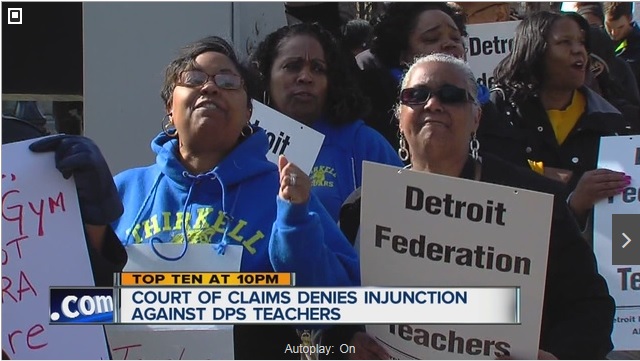
An attorney for the Detroit Public Schools has asked a judge to issue a restraining order and preliminary injunction to force teachers to stop sickouts and return to work, according to court documents filed Wednesday.

The motion names the Detroit Federation of Teachers, interim teachers union president Ivy Bailey and 23 Detroit Public Schools teachers.

“DPS has requested the court’s intervention in addressing the ongoing teacher sickouts that are plaguing the district,” Michelle Zdrodowski, the spokeswoman for the Detroit Public Schools said in a statement.

CU Blog - Detroit Giving Their Schools Their Worst - Photo 3

CU Blog - Detroit Giving Their Schools Their Worst - Photo 1

CU Blog - Detroit Giving Their Schools Their Worst - Photo 2

The teachers union responded to the filing, noting “Detroit deserves better.”

“It is regrettable that the Detroit Public Schools seeks to punish those who speak out about the deplorable conditions in our schools,” Bailey said. “It would be so much more productive to actually do something to fix Detroit schools rather than file restraining orders against those who expose the miserable conditions.”

Nearly all Detroit’s public schools were closed Wednesday as many protesting teachers called in sick, turning what was supposed to be a day to celebrate into one shining a harsh spotlight on one of Michigan’s struggling cities.

President Barack Obama was in Detroit for the North American International Auto Show. He praised the American automotive industry’s resurgence, which many people view as a major victory for Detroit.

But those inside the city tell a sharply different story, one illustrated in leaflets showing pictures of dead rats found at public schools, mildew taking over ceilings and walls and damage to school buildings.

Detroit teachers have pressed their case against what they call deplorable conditions and inadequate funding. They’ve also decried decisions made by the school system’s emergency manager, who was appointed by Republican Gov. Rick Snyder — criticism that echoes complaints in Flint, a Michigan city mired in a water crisis after state officials largely took over because of budget troubles, just as they did in Detroit.

Detroit teachers have backed up their words with mass sickouts, starting January 11, when 62 schools closed as a result.

Bailey estimated the doors of “over 30 schools” ultimately would be affected.

Zdrodowski said there would be no class Wednesday in 88 schools, about 90% of those in the system.

But as of Wednesday night, the Detroit Public Schools’ Facebook page indicated all schools will be open Thursday. The announcement included a request for students and parents to check the page again for updates.

The speaker of the House in Michigan called for absentee teachers to be dismissed.

“These teachers deserve to be fired for turning their backs on the children in their care,” said Kevin Cotter, a Republican from Mount Pleasant. “Their actions also go against any possible resolution on potential (Detroit Public Schools) reforms, because any long-term agreement on Detroit schools has to put the kids first.”

Cotter said more than 700,000 instructional hours have been lost.

Budgets leave children by wayside in 2 Michigan cities

Obama meets with Detroit’s mayor

The timing — on the day of Obama’s visit to the Detroit auto show, with the national media attention that it brought — was no coincidence.

The Detroit Federation of Teachers indicated as much on its website, saying now is the time to “fight for Detroit kids (who) are struggling in schools with hazardous environmental and safety issues (and) educators have made significant sacrifices for the good of students.”

“As the city celebrates this ‘ultra-luxury’ automobile event,” the teachers union said, “Detroit’s public schools are in a state of crisis.”

Protesters planned to hand out fliers to car show attendees and urge them to sign a petition — which had over 11,000 signatures as of Wednesday morning — entitled “Our Kids Deserve Better.”

“Enough is enough!” the petition states. “… We demand real answers and fully funded schools.”

Obama had lunch with Detroit Mayor Mike Duggan. Before the meeting the White House said they would likely discuss the mass school closures as well as larger funding problems plaguing the city.

Duggan has “met with several teachers and understands what they’re going through,” his spokesman John Roach told CNN. But he doesn’t think that calling in sick is the right approach.

“(The mayor feels) the best thing for them to do is go back to school and teach,” Roach said.

Governor: ‘Time to act is now’

This isn’t just Detroit’s problem. It’s one for all of Michigan, which took control over much of the city’s government due to its well-documented financial woes.

One man who has been a frequent target of critics is Darnell Earley, appointed by Snyder a year ago to oversee Detroit Public Schools.

Michigan Senate Democrats took a swipe at him in a tweet: “Crumbling #DPS schools are a direct result of damage that can be done by unelected emergency managers.”

Bailey, the teachers union chief, piled on, saying, “If the goal was to destroy DPS, emergency management has done an excellent job.”

Before going to Detroit, Earley served as the emergency manager in Flint. He was in that position in April 2014 when Flint’s water supply switched from Lake Huron to the Flint River, a decision reversed more than a year later after reports of corroded pipes and elevated blood lead levels.

How tap water became toxic in Flint

Earley has said he was not responsible for the decision, only for implementing it after it was approved. Whoever was to blame, Flint still faces a serious health crisis and the costly, complicated task of cleaning up its water and possibly replacing damaged water pipes across the city.

Another person Detroit and Flint have in common is Snyder, the governor who sent Earley to both cities and who is officially in charge.

In his State of the State address Tuesday night, the governor called for money spent on debt service, close to $1,200 per student, to be shifted into classroom funding to give teachers what they need to do their jobs.

“(The) time to act is now,” he told lawmakers. “The Detroit schools are in need of a transformational change.

“The state needs to ensure that a complete failure to educate schoolchildren never again happens to this extent in one of Michigan’s districts.”

Governor’s outlook for school reforms

‘Teachers are fed up and have had enough’

A proposal introduced last week in the state Legislature would appear to find a way of doing that while handling the school system’s massive $515 million debt.

It would create a second school district within the city that assumes control over all of its schools and students, while leaving the current Detroit Public Schools system with only the district’s debt, said Republican state Sen. Goeff Hansen, author of the proposal.

“It’s a high priority. It’s an emergency situation,” Hansen said.

About $7,400 of school funding is allocated per student each year. But close to $1,200 of that goes to pay down debt and other costs, Hansen said.

Under the proposal, tax revenue would continue to pay off the debt isolated in the DPS system, but the state would gain room to inject additional funding into the new school system.

It has left many teachers worried that Detroit Public Schools will go out of existence, said Bailey, the teachers union leader. Under the current system, funding could run out by April.

Teachers feel pushed over the edge to protest against a litany of resulting troubles. There have been recent concessions. The school district agreed to demands on staff meetings, sick leave accrual and a labor-management committee on curriculum, the teachers union said.

And last week, Duggan ordered inspections of all the city’s public schools.

Duggan hopes to have the first 20 school buildings fully inspected by month’s end and all of them wrapped up in about three months, according to Roach, his spokesman.

Yet Bailey says a lot more still needs to be done.

“It’s because of the lack of respect that has been displayed toward teachers in this district, the hazardous working conditions, oversize classes, lost preparation periods, decrease in pay, increase in health care cost, uncertainty of their future,” she said.

“I could go on and on. Teachers are fed up and have had enough.”

Detroit teachers demand fix to ‘hazardous’ school

CNN’s Jean Casaraz, John Newsome, Dominique Debucquoy-Dodley, Phil Gast, Steve Almasy, Mallory Simon and Eliott C. McLaughlin contributed to this report.
Source: CNN – (Cable News Network); posted January 20, 2016 retrieved January 21, 2016 from: http://www.cnn.com/2016/01/20/us/detroit-public-schools-michigan-governor/index.html

———

Complimentary Story/VIDEO – Detroit’s Teachers Are Tired Of Their Schools  https://youtu.be/H-h0Db3P4ic

Published on Jan 20, 2016 – Teachers in Detroit have been protesting about their working conditions by taking to the internet. After a mass “sick out,” they’re now going on social media to share the daily difficulties they and their students face in schools.
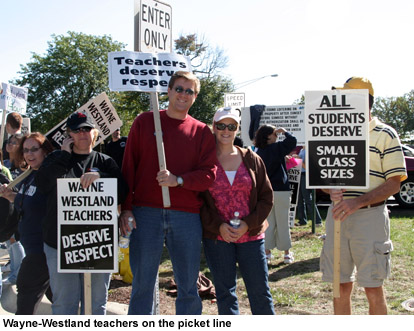

CU Blog - Detroit Giving Their Schools Their Worst - Photo 4The petition for Judicial action was denied.

Good! Do not just “swipe these issues under the rug”. Deal with them!

A “crisis is a terrible thing to waste”. Detroit needs to use this crisis to re-boot its school eco-system.

First, the School District – see Appendix – needs to petition for its own Chapter 9 Bankruptcy. There is the need to write-off much of that previous debt; “pay pennies on the dollar”. That debt – from the past – is shortchanging the future for Detroit’s children. And since the City is smaller today, population-wise compared to decades ago, many more schools can be closed – sold to creditors – and consolidated to a smaller number (from the 97 today).

Jesus answered … you are anxious and troubled about many things, but only few things are needed… prepare the good part, and it will not be taken away. – Bible Luke 10:41-42 World English Bible paraphrase.

This strong prescription for Detroit Public Schools is a lesson learned from another crisis, the Great Recession of 2008. The events of September 15, 2008 parallel Detroit Public Schools today; this is when the American Investment Bank Lehman Brothers filed for bankruptcy. This action brought the US (and the world’s economy) to the brink of disaster. The ultimate solution for Lehman in 2008 was dissolution and a wind-down of those assets and excessive debt.

Death can sometimes bring peace!

The economy eventually re-bounded. The old debts are only in the past, no future considerations.

This 2008 consideration is part-and-parcel of the book Go Lean…Caribbean which serves as a roadmap for the introduction of the technocratic Caribbean Union Trade Federation (CU) to provide new oversight for the Caribbean region’s economic, security and governing engines. The book was conceived as a result of this 2008 crisis, by stakeholders intimate with the anatomy of the 2008 crisis – worked for Lehman Brothers – and composed a prescription for Caribbean turn-around.

The pretext of the Go Lean roadmap is simple, and applies equally to the Caribbean, and any other community:

Only at the precipice do they change!

The lessons learned, and codified, in the pages of the Go Lean book can now be enhanced with the examination of the realities of Detroit’s Public Schools. This examination considers the reality of the economic, security and governing aspects of this distressed community.

The publishers of the Go Lean book are here in Detroit to “observe and report” the turn-around and rebirth of the once-great-but-now-distressed City of Detroit and its metropolitan areas, including the even more dysfunctional community of Flint. There are so many lessons to learn from Michigan: good, bad and ugly.

Lessons learned from Michigan communities have been frequently conveyed in previous blogs/commentaries. Consider this sample here:

https://goleancaribbean.com/blog/?p=7235 Flint, Michigan – A Cautionary Tale
https://goleancaribbean.com/blog/?p=6609 Before and After Photos Showing Detroit’s Riverfront Transformation
https://goleancaribbean.com/blog/?p=6269 Education & Economics: Welcome to Detroit, Mr. President
https://goleancaribbean.com/blog/?p=6022 Caribbean Diaspora in Detroit … Celebrating Heritage
https://goleancaribbean.com/blog/?p=5597 The Dire Straits of the Unions and Collective   Bargaining
https://goleancaribbean.com/blog/?p=5055 A Lesson from an Empowering Family in Detroit
https://goleancaribbean.com/blog/?p=4913 Ann Arbor: Model for ‘Start-up’ Cities
https://goleancaribbean.com/blog/?p=4476 De-icing Detroit’s Winter Roads: Impetuous & Short Term
https://goleancaribbean.com/blog/?p=3713 NEXUS: Facilitating Detroit-Windsor Cross-Border Commerce
https://goleancaribbean.com/blog/?p=3326 M-1 Rail: Alternative Motion in the Motor City
https://goleancaribbean.com/blog/?p=3311 Detroit to exit historic bankruptcy
https://goleancaribbean.com/blog/?p=3164 Michigan Unemployment – Then and Now
https://goleancaribbean.com/blog/?p=2480 A Lesson in History: Community Ethos of WW II
https://goleancaribbean.com/blog/?p=1656 Blue is the New Green – Managing Detroit’s Water Resources
https://goleancaribbean.com/blog/?p=970 JP Morgan Chase $100 million Detroit investment not just for Press

The CU is designed to do the heavy-lifting of organizing Caribbean society to benefit from the lessons from Detroit and other Michigan communities. The Go Lean book details the community ethos to adopt, plus the executions of the following strategies, tactics, implementations and advocacies to impact the rebirths, reboots and turn-around of Caribbean communities:

Community Ethos – Deferred Gratification Page 21
Community Ethos – People Respond to Incentives Page 21
Community Ethos – “Crap” Happens Page 23
Community Ethos – Lean Operations Page 24
Community Ethos – Return on Investments (ROI) Page 24
Community Ethos – Ways to Impact the Future Page 26
Community Ethos – Ways to Help Entrepreneurship Page 28
Community Ethos – Ways to Impact a Turn-Around Page 33
Community Ethos – Impact the Greater Good Page 37
Strategy – Vision – Integrate a Single Market for more Financial Leverage Page 45
Tactical – Fostering a Technocracy Page 64
Tactical – Modeling Post WW II Recovery: Germany – Marshall Plan Page 68
Tactical – Modeling Post WW II Recovery: Japan – with no Marshall Plan Page 69
Separation of Powers – Public Works & Infrastructure Page 82
Separation of Powers – Housing and Urban Authority Page 83
Implementation – Ways to Pay for Change Page 101
Implementation – Ways to Re-boot Freeport – A Sample Caribbean city needing turn-around Page 112
Implementation – Ways to Better Manage Debt Page 114
Planning – Ways to Improve Failed-State   Indices Page 132
Planning – Lessons Learned from 2008 Page 136
Planning – Lessons Learned from Detroit Page 140
Advocacy – Ways to Grow the Economy Page 151
Advocacy – Ways to Improve Education Page 159
Advocacy – Ways to Improve Local Government Page 169
Advocacy – Ways to Better Manage the Social   Contract Page 170
Advocacy – Ways to Impact Urban Living Page 234
Advocacy – Ways to Re-boot Cuba Page 236
Advocacy – Ways to Re-boot Haiti Page 238
Appendix – American Student Debt Crisis “Ripping Off Young America” Page 286

The Go Lean roadmap posits that change is coming to Detroit, (many Go Lean blog-commentaries have even reported on the change that is now afoot) and also that changes need to come to the Caribbean. Though Detroit is out-of-scope for the Go Lean movement, we can observe-and-report; we can apply the lessons – the good, bad and ugly – for optimization in our Caribbean homeland under the scheme of a Single Market. With the integration of 42 million people in the 30 member-states we will be able to do so much more – effect more turn-around – than anyone member-state can accomplish alone.

The Go Lean book declares: “A crisis is a terrible thing to waste” – quoting noted Economist Paul Romer. The opportunity exists now to forge change in the economic, security and governing engines of the Caribbean, as this cautionary guidance is gleaned from the Detroit crisis.

The roadmap calls for a confederation of the 30 member-states of the Caribbean into a Single Market of 42 million people; thereby allow an adequate size to absorb economic shocks and downward trends. The Go Lean roadmap provides the details for the creation of 2.2 million new jobs and GDP growth to accumulate to $800 Billion. This vision is at the root of the Go Lean roadmap, embedded in the opening Declaration of Interdependence (Page 13):

xxiv.    Whereas a free market economy can be induced and spurred for continuous progress, the Federation must install the controls to better manage aspects of the economy: jobs, inflation, savings rate, investments and other economic principles. Thereby attracting direct foreign investment because of the stability and vibrancy of our economy.

xxv.    Whereas the legacy of international democracies had been imperiled due to a global financial crisis, the structure of the Federation must allow for financial stability and assurance of the Federation’s institutions. To mandate the economic vibrancy of the region, monetary and fiscal controls and policies must be incorporated as proactive and reactive measures. These measures must address threats against the financial integrity of the Federation and of the member-states.

xxxiii.   Whereas lessons can be learned and applied from the study of the recent history of other societies, the Federation must formalize statutes and organizational dimensions to avoid the pitfalls of communities like … Detroit …

Detroit Public Schools should recover…eventually! Their status will go from “bad-to-clean-to-better” but then they would have a reboot, much like many communities around the country and around the world – consider Iceland. This is an established best-practice; paralleling a forest fire in many ways; except these are human lives being impacted, not trees.

The Caribbean also has Failed-State issues to contend with. There are real-and-perceived Failed-States now (Haiti, Cuba, Dominican Republic, Jamaica and Puerto Rico) and many more that are almost there, so we have to master the art-and-science of turn-around strategies for our region.

The Go Lean roadmap declares that the responsibility for fixing the Caribbean though must fall first-and-foremost on the Caribbean, its people and institutions.

The Caribbean must also reboot and “bounce back”; to “step back from the precipice”. The effort is not easy; the Go Lean book describes it as heavy-lifting. We need to burn-off old debris and build new eco-systems. The returns – new Caribbean structures – will be worth the investments and sacrifices. This is true for Detroit … and the Caribbean.

This is the goal of the Go Lean roadmap: set aside the past, catalog the lessons, then forge the future. This is the only way to make the Caribbean a better place to live, work and play.  🙂

Download the book Go Lean … Caribbean – now!

———-

Appendix – Detroit School District

Detroit Public Schools (DPS) is a school district that covers all of the city of Detroit, Michigan, United States and high school students in the insular city of Highland Park. The district has its headquarters in the Fisher Building of the New Center area of Detroit.[6][7]

Students 47,959 (2014–15)
Teachers 3,235 (2012-13)
Staff 15,535 (2007)[3]

Besides DPS, the Education Achievement Authority (EAA) operates 15 of the district’s schools totalling 6,556 students as of the 2014-15 school year.

Emergency Financial Manager

The district is currently under a state of a financial emergency and is currently run by an emergency manager instead of the school board and superintendent.

Currently all matters are under the control of Emergency Manager Darnell Earley was appointed as the new emergency manager for the school district by Snyder, appointed by Governor Rick Snyder in January 2013.[4]

From 2009–2011, DPS finances were managed by Robert Bobb who was appointed by former Governor Jennifer Granholm[33] and from 2011 to January 2015, Roy Roberts who was appointed by Governor Snyder.

Source: https://en.wikipedia.org/wiki/Detroit_Public_Schools retrieved January 22, 2016.


Share this post:
, , , , , ,

Flint, Michigan – A Cautionary Tale

Go Lean Commentary

In a previous commentary ranking American State governing engines, the overall scores were listed from Good-to-Bad-to-Worse-to-Detroit (Michigan). The State of Michigan, in which Detroit is its principal city and economic center, was ranked “dead last” among the 50 states. This was not an assessment of city governments but rather of state governments. But is it fair to label the entire State of Michigan based on the dysfunction of just the one city of Detroit?

Enter Exhibit 2: Flint, Michigan.

Encyclopedic Reference: Flint, Michigan
Source: https://en.wikipedia.org/wiki/Flint,_Michigan

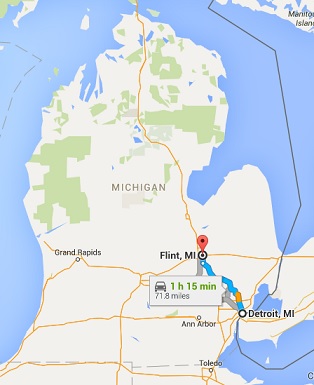
CU Blog - Flint, Michigan - A cautionary tale - Photo 1Flint is the seventh largest city in Michigan, while its Genesee County comprises the entirety of Flint’s metropolitan area and constitutes the fourth largest metropolitan area in Michigan with a population of 425,790 in 2010.[11]. Located along the Flint River, 66 miles (106 km) northwest of Detroit.

The community was founded as a village by fur traders in the early 1800’s and became a major lumbering area on the historic Saginaw Trail during the 19th century; it incorporated as a city in 1855. It later became a leading manufacturer of carriages and other vehicles earning it the nickname “Vehicle City”.

In 1908, William Crapo Durant formed General Motors in Flint. After World War II, Flint became an automobile manufacturing powerhouse for GM’s Buick and Chevrolet divisions, both of which were founded in Flint. However, by the late 1980s the city sank into a deep economic depression after GM closed and demolished several factories in the area, the effects of which remain today.

In the mid-2000s, it became known for its high crime rates.[12] Since this time, Flint has been ranked among the “Most Dangerous Cities in the United States”, with a per capita violent crime rate seven times higher than the national average.[13] The city was under a state of financial emergency from 2011 to 2015, the second in a decade.[14][15] It is currently in a public health state of emergency due to lead poisoning (and possibly Legionella) in the local water supply. [16]

On November 3, 2015, Flint residents elected Dr. Karen Weaver as their first female mayor.[17]

[This move is on the heels of the exit of the last State-appointed Emergency Manager].

CU Blog - Pressed by Debt Crisis, Doctors Leave Greece in Droves - Photo 1

Flint serves as a “cautionary tale” for other communities near “Failed City/Failed State” status. From this perspective, this community may be a valuable asset to the rest of the world and especially to the Caribbean.

CU Blog - Flint, Michigan - A cautionary tale - Photo 3The publishers of the book Go Lean…Caribbean are here in Detroit to “observe and report” the turn-around and rebirth of the once-great-but-now-distressed City of Detroit and its metropolitan areas, including Flint. (Previous commentaries featured the positive role model of the City of Ann Arbor).

What happened here?

According to the Timeline in the Appendix, Flint, MI suffered this fate as a chain reaction to its Failed-State status. Outside stakeholders – Emergency Managers – came into the equation to execute a recovery plan with focus only on the Bottom-Line. The consideration for people – the Greater Good – came second, if at all. They switched water sources, unwisely!

The assertion of the Go Lean book is that the Caribbean region can benefit from lessons learned from Good, Bad and Ugly governance. The book serves as a roadmap for the introduction and implementation of the technocratic Caribbean Union Trade Federation (CU). The Go Lean book and related commentaries call on citizens of the Caribbean member-states to lean-in to the empowerments described in the roadmap for elevation. This will require a constant vigil to ensure the Greater Good as opposed to personal gains.

The City of Flint is desperately in need of governing “best practice”. The Financial Emergency Status that just ended, 2011 to April 2015, was the 2nd one in a decade; (the first was from 2002 to 2005). Every time the city is penalized with the advent of a state-appointed Emergency Manager (EM), they lose out on a local stakeholder pursuing the city’s best-interest, rather the EM’s serve as a Receiver (without the formal Bankruptcy proceedings, which is a Federal not State action).

This is highlighted by the current Health Emergency due to the City’s switch of their water source to the Flint River – a contaminated source – and now endangering the health and wellness of many of its citizens; with the most damaging effects being on young children. That decision was made by the Emergency Manager to save money, as opposed to the community’s best interest. There is no checks-and-balances on the EM, other than the appointing Governor (and courts), as the EM has both Executive (Mayor) and legislative authority (City Council).

Absolute power …

… see example here:

Michigan Governor Rick Snyder appointed Michael Brown as the city’s Emergency Manager on November 29, effective December 1.[37] On December 2, Brown dismissed a number of top administrators including City Administrator Gregory Eason, Human Resources Director Donna Poplar, Citizen Services Director Rhoda Woods, Green City Coordinator Steve Montle and independent officials including Ombudswoman Brenda Purifoy and Civil Service Commission Director Ed Parker. Pay and benefits from Flint’s elected officials were automatically removed.[38] On December 8, the office of Obudsman and the Civil Service Commission were eliminated by Brown.[36] Brown resigned in September 2013 and was replaced by Darnell Earley, who served in that post until January 2015 – Retrieved January 18, 2016 from: https://en.wikipedia.org/wiki/Flint,_Michigan#First_financial_emergency:_2002.E2.80.932004

Now, the report is that this one EM role-player has effectively sacrificed the children of Flint on the altar of financial expedience. This is a bad example of absolute power exhibited abusively. See details here:

In April 2014, Flint switched its water supply from Lake Huron (via Detroit) to the Flint River. [51] After two independent studies, lead poisoning caused by the water was found in the area’s population. [52][53] This has lead to a federal lawsuit, the resignation of several officials, and a public health state of emergency for all of Genesee County. [54][55][56]

CU Blog - Flint, Michigan - A cautionary tale - Photo 2

See VIDEO here of the story in the national media and the Timeline in the Appendix below.

VIDEO – Citizens’ Anger Continues Over Toxic Water in Flint, Michigan – http://abcnews.go.com/WNT/video/citizens-anger-continues-toxic-water-flint-michigan-36348795

Surprise, surprise! Most city officials involved in this debacle had been dismissed or resigned. And there is national outcry for Governor Rick Snyder to resign. (At one point his stock in national politics was so highly rated that he was considered viable for the Vice-Presidency for the eventual 2016 Republican nominee for President).

This tragic story – cautionary tale of Flint – is an analysis of failure in the societal engines of economics, security and governance. These 3 facets are presented in the book Go Lean … Caribbean as the three-fold cord for societal harmony; for any society anywhere. The Caribbean wants societal harmony; we must therefore work to optimize all these three engines. As exhibited by Flint, this is easier said than done. This heavy-lifting is described in the book as both an art and a science.

The focus in this commentary is a continuation in the study of the societal engine of governance; previously, there was a series on economics and one on security. This commentary though, focuses on the bad eventually of Social Contract failures. The Social Contract refers to the unspoken expectations between citizens and the State. In many cases, State laws limit ownership of all mineral rights to the State; so citizens will be dependent on State systems to supply water. In the case of Flint, the City’s Water and Sewage Department has a monopoly; this supply is the only option for residents!

The Go Lean book describes “bad actors” wreaking havoc on the peace and security of the community. The book relates though that “bad actors” are not always human; they include bad events like natural disasters and industrial spills. Plus, actual “bad actors” may have started out with altruistic motives, good intentions. This is why the book and accompanying blogs design the organization structures for the new Caribbean with checks-and-balances, mandating a collaborative process, because sometimes even a well-intentioned individual may not have all the insight, hindsight and foresight necessary to pursue the Greater Good. This the defect of the Michigan Emergency Manager structure; it assigns too much power to just one person, bypassing the benefits of a collaborative process. This is one reason why this review is important: power corrupts…everyone … everywhere.

The Go Lean book asserts that Caribbean people deserve the best-of-the-best for governmental processes, and that Caribbean society – the 30 member-states – can be elevated with the prudent application of these best-practices for economics, security and governance. The roadmap features these 3 prime directives:

  • Optimization of the economic engines in order to grow the regional economy to $800 Billion & create 2.2 million new jobs.
  • Establishment of a security apparatus – with oversight over economic crimes – to protect the resultant economic engines.
  • Improvement of Caribbean governance to support these engines, including ranking and ratings of Social Contract effectiveness.

The City of Flint, Michigan is a cautionary tale for the Caribbean. We can glean lessons from their dysfunction and apply mitigations in our Caribbean effort, the CU/Go Lean roadmap. This point was strongly urged in the Go Lean book, in the opening Declaration of Interdependence (Pages 10 & 12) with these pronouncements:

Preamble: And while our rights to exercise good governance and promote a more perfect society are the natural assumptions among the powers of the earth, no one other than ourselves can be held accountable for our failure to succeed if we do not try to promote the opportunities that a democratic society fosters … and so we must put aside the shackles of systems of repression to instead formulate efficient and effective systems to steer our own destiny.

xii. Whereas the legacy in recent times in individual states may be that of ineffectual governance with no redress to higher authority, the accedence of this Federation will ensure accountability and escalation of the human and civil rights of the people for good governance, justice assurances, due process and the rule of law. As such, any threats of a “failed state” status for any member state must enact emergency measures on behalf of the Federation to protect the human, civil and property rights of the citizens, residents, allies, trading partners, and visitors of the affected member state and the Federation as a whole.

xxxiii. Whereas lessons can be learned and applied from the study of the recent history of other societies, the Federation must formalize statutes and organizational dimensions to avoid the pitfalls of communities like … Detroit …

The Go Lean book details all the community ethos to ensure the right attitudes and practices among the government stakeholders and leaders of the community. Plus the book identifies the strategies, tactics, implementations and advocacies to promote collaboration in the governing process:

Economic Principle – Economic Systems Influence Individual Choices Page 21
Economic Principle – Consequences of Choices Lie in Future Page 21
Community Ethos – Security Principle – Privacy –vs- Public Protection Page 23
Community Ethos – Security Principle – Whistleblower Protection Page 23
Community Ethos – Security Principle – Witness Security & Protection Page 23
Community Ethos – Security Principle – Anti-Bullying and Mitigation Page 23
Community Ethos – Security Principle – Intelligence Gathering Page 23
Community Ethos – Security Principle – Light Up the Dark Places – Openness Page 23
Community Ethos – Governing Principle – Minority Equalization Page 24
Community Ethos – Governing Principle – Cooperatives Among Member-States Page 25
Community Ethos – Ways to Foster Genius – Interpersonal; Leadership Page 27
Community Ethos – Ways to Manage Reconciliations Page 34
Community Ethos – Ways to Improve Sharing Page 35
Community Ethos – Ways to Impact the Greater Good Page 37
Tactical – Confederating a Non-Sovereign Union Page 63
Tactical – Fostering a Technocracy Page 64
Tactical – Separation of Powers – Justice Department – Jurisdiction for Public Integrity cases. Page 77
Tactical – Separation of Powers – Federal Courts – Truth and Reconciliation Commissions Page 90
Implementation – Assemble “Organs” – including Regional Courts and Justice Institutions Page 96
Implementation – Start-up Security Initiatives Page 103
Planning – Ways to Make the Caribbean Better Page 131
Planning – Ways to Improve Failed-State Indices – Accountability  of Governing Officials Page 134
Planning – Lessons from the US Constitution – Checks and Balances Page 145
Advocacy – Ways to Grow the Economy Page 151
Advocacy – Ways to Improve Governance Page 168
Advocacy – Ways to Better Manage the Social Contract Page 170
Advocacy – Ways to Improve Leadership Page 171
Appendix – Lessons Learned in Open/Collaborative Government – Floating the Trinidad Dollar Page 316

Other subjects related to collaboration, whistle-blowing and public integrity have been blogged in other Go Lean…Caribbean commentary, as sampled here:

https://goleancaribbean.com/blog/?p=6965 Secrecy, corruption and conflicts of interest pervade state governments
https://goleancaribbean.com/blog/?p=6937 Women in Politics – Yes, They Can!
https://goleancaribbean.com/blog/?p=5506 Whistleblower Edward Snowden – One Person Making a Difference
https://goleancaribbean.com/blog/?p=5304 Mitigating the Eventual ‘Abuse of Power’
https://goleancaribbean.com/blog/?p=5002 Managing a ‘Clear and Present Danger’
https://goleancaribbean.com/blog/?p=2994 Justice Strategy: Special Prosecutors … et al
https://goleancaribbean.com/blog/?p=2818 Dominican Republic, Perception of Corruption
https://goleancaribbean.com/blog/?p=2338 Welcoming the Dreaded ‘Plutocracy’

The goal of the Go Lean roadmap is to make the Caribbean homeland, a better place to live, work and play. Many of the Caribbean member-state governments feature the Westminster-style Parliamentary system with a Prime Minister. These structures lend to the tendency of autocratic leadership, as a Prime Minister leads his party, the Legislature, Executive branch and appoint the judges of the Judiciary. As demonstrated in Flint Michigan, this is not the best practice in leadership, as there are many subject matters that may be outside the core competence of an autocratic leader.

We must do better, than Flint! (Flint must do better; too many lives are involved).

We know that “bad actors and bad incidences” will always occur, even in government institutions, so we must be “on guard” against abusive influences and encroachments to Failed-State status. The Go Lean roadmap calls for engagement and participation from everyone, the people (citizens), institutions and government officials alike. We encouraged all with benevolent motives to lean-in to this roadmap, to get involved to effect a turnaround for the Caribbean Failed-States.

Our Caribbean stakeholders deserve the best … from their leaders.  🙂

Download the free e-Book of Go Lean … Caribbean – now!

———

Appendix – Timeline of the Water Crisis in Flint, Michigan
By: Associated Press – Jan 16, 2016, 3:18 PM ET

A look at some of the key events in the development of the Flint water crisis:

———

APRIL 2014: In an effort to save money, Flint begins drawing its water from the Flint River instead of relying on water from Detroit. The move is considered temporary while the city waits to connect to a new regional water system. Residents immediately complain about the smell, taste and appearance of the water. They also raise health concerns, reporting rashes, hair loss and other problems.

SUMMER 2014: Three boil-water advisories are issued in 22 days after positive tests for coliform bacteria.

OCTOBER 2014: A General Motors engine plant stops using Flint water, saying it rusts parts.

JANUARY 2015: Flint seeks an evaluation of its efforts to improve the water amid concerns that it contains potentially harmful levels of a disinfection byproduct. Detroit offers to reconnect Flint to its water system. Flint insists its water is safe.

JAN. 28: Flint residents snap up 200 cases of bottled water in 30 minutes in a giveaway program. More giveaways will follow in ensuing months.

FEB. 3: State officials pledge $2 million for Flint’s troubled water system.

FEBRUARY: A 40-member advisory committee is formed to address concerns over Flint’s water. Mayor Dayne Walling says the committee will ensure the community is involved in the issue.

MARCH 19: Flint promises to spend $2.24 million on immediate improvements to its water supply.

MARCH 27: Flint officials say the quality of its water has improved and that testing finds the water meets all state and federal standards for safety.

SEPT. 24: A group of doctors led by Dr. Mona Hanna-Attisha of HurleyMedicalCenter urges Flint to stop using the Flint River for water after finding high levels of lead in the blood of children. State regulators insist the water is safe.

SEPT. 29: Gov. Rick Snyder pledges to take action in response to the lead levels. It’s the first acknowledgment by the state that lead is a problem.

OCT. 2: Snyder announces that the state will spend $1 million to buy water filters and test water in Flint public schools.

OCT. 8: Snyder calls for Flint to go back to using water from Detroit’s system again.

OCT. 15: The Michigan Legislature and Snyder approve nearly $9.4 million in aid to Flint, including $6 million to help switch its drinking water back to Detroit. The legislation also includes money for water filters, inspections and lab testing.

NOV. 3: Voters elect newcomer Karen Weaver over incumbent Mayor Dayne Walling amid fallout over the drinking water.

DEC. 29: Snyder accepts the resignation of Department of Environmental Quality Director Dan Wyant and apologizes for what occurred in Flint.

JAN. 5: Snyder declares a state of emergency in Flint, the same day federal officials confirm that they are investigating.

JAN. 12: Snyder activates the Michigan National Guard to help distribute bottled water and filters in Flint and asks the federal government for help.

JAN. 13: Michigan health officials report an increase in Legionnaires’ disease cases during periods over the past two years in the county that includes Flint.

JAN. 14: Snyder asks the Obama administration for major disaster declaration and more federal aid.

JAN. 16: President Barack Obama signs emergency declaration and orders federal aid for Flint, authorizing the Federal Emergency Management Agency and the Department of Homeland Security to coordinate relief efforts.

Source: http://abcnews.go.com/Health/wireStory/timeline-water-crisis-flint-michigan-36331514; retrieved Jan 18, 2016

Share this post:
, , , ,
[Top]

ENCORE: Concussion – The Movie; The Cause

Nassau, Bahamas – This is a re-distribution of the blog-commentary published on August 31, 2015, now that the movie has been released on Christmas Day. The movie is in fact all that it purported to be.

Go Lean Commentary

“Are you ready for some football?” – Promotional song by Hank Williams, Jr. for Monday Night Football on ABC & ESPN networks for 22 years (1989 – 2011).

This iconic song (see Appendix) and catch-phrase is reflective of exactly how popular the National Football League (NFL) is in the US:

“They own an entire day of the week”.

- The Movie; The Cause - Photo 2So says the new movie ‘Concussions’, starring Will Smith, referring to the media domination of NFL Football on Sundays during the Autumn season. The movie’s script is along a line that resonates well in Hollywood’s Academy Award balloting: “David versus Goliath”; “a small man speaking truth to power”.

In the case of the NFL, it is not just about power, it is about money, prestige and protecting the status quo; the NFL is responsible for the livelihood of so many people. The book Go Lean … Caribbean recognized the importance of the NFL in the American lexicon of “live, work and play”; it featured a case study (Page 32) of the NFL and it’s collective bargaining successes (and failures) in 2011. An excerpt from the book is quoted as follows:

Football is big business in the US, $9 billion in revenue, and more than a business; emotions – civic pride, rivalries, and fanaticism – run high on both sides.

Previous Go Lean commentaries presents the socio-economic realities of much of the American football eco-system. Consider a sample here:

Socio-Economic Impact Analysis of [Football] Sports Stadiums
Watch the Super Bowl … Commercials
Levi’s® NFL Stadium: A Team Effort
Sports Role Model – College Football – Playing For Pride … And More
Sports Role Model – Turn On the SEC Network
Collegiate Sports in the Caribbean – Model of NCAA
10 Things We Want from the US: #10 – Sports Professionalism
10 Things We Don’t Want from the US: #10 – ‘Win At All Costs’ Ethos

While football plays a big role in American life, so do movies. Their role is more unique; they are able to change society. In a previous blog / commentary regarding Caribbean Diaspora member and Hollywood great, Sidney Poitier, it was declared that …

“Movies are an amazing business model. People give money to spend a couple of hours watching someone else’s creation and then leave the theater with nothing to show for the investment; except perhaps a different perspective”.

Yes, movies help us to glean a better view of ourselves … and our failings; and many times, show us a way-forward.

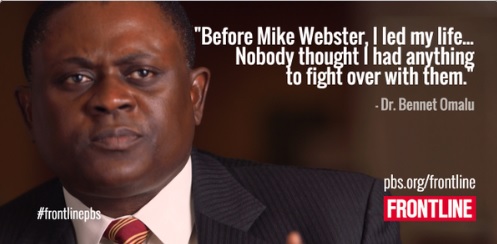
These descriptors actually describe the latest production from Hollywood icon Will Smith (the former Fresh Prince of Bel-Air). This movie, the film “Concussion”, in the following news article, relates the real life drama of one man, Dr. Bennet Omalu, a Nigerian-born medical doctor – a pathologist – who prepared autopsies of former players that suffered from football-related concussions. He did not buckle under the acute pressure to maintain the status quo, and now, he is celebrated for forging change in his adopted homeland. This one man made a difference. (The NFL is now credited for a Concussion awareness and prevention protocol so advanced that other levels of the sport – college, high schools and Youth – are being urged to emulate).

See news article here on the release of the movie:

Title: ‘Concussion’: 5 Take-a-ways From Will Smith’s New Film

Will Smith, 46, is definitely going to get a ton of Oscar buzz portraying Dr. Bennet Omalu in the new film “Concussion.” NFL columnist Peter King of Sports Illustrated got an exclusive first peek at the trailer and it has been widely shared on social media since. And it’s very chilling.

- The Movie; The Cause - Photo 1

Here are five take-aways and background you need to know before checking out the clip:

1 – It’s Based on a True Story

Omalu is the forensic pathologist and neuropathologist who discovered chronic traumatic encephalopathy in football players who got hit in the head over and over again, according to the Washington Post.

In the clip, he says repetitive “head trauma chokes the brain.”

Omalu was one of the founding members of the Brain Injury Research Institute in 2002. He conducted the autopsy of Pittsburgh Steelers center Mike Webster, played by David Morse in the film, which led to this discovery.

2 – Smith’s Version of Omalu’s Accent Is Spot On

Omalu is from Nigeria and Smith has been known to transform completely for a role. He was nominated for an Oscar for 2011’s “Ali,” playing the legendary Muhammad Ali.

For comparison, here’s Omalu’s PBS interview from 2013.

3 – Smith Is a Reluctant Hero

“If you don’t speak for them, who will,” Gugu Mbatha-Raw, who plays Prema Mutiso in the film, tells Smith’s character.

He admits he idolized America growing up and “was the wrong person to have discovered this.”

4 – Alec Baldwin and Luke Wilson

“Concussion” brought in some heavyweights for this movie. Baldwin plays Dr. Julian Bailes, who advises Omalu, and Wilson, who will reportedly play NFL Commissioner Roger Goodell, according to IMDB. There’s no official word on this. He’s seen at a podium in the trailer, but doesn’t speak.

5 – “Tell the Truth”

Smith captures Omalu’s passion to have the truth told about this injury and disease.

“I was afraid of letting Mike [Webster] down. I was afraid. I don’t know. I was afraid I was going to fail,” Omalu told PBS a couple years back.

———-

VIDEO Link: http://www.imdb.com/title/tt3322364/?ref_=nv_sr_1


Will Smith stars in the incredible true David vs. Goliath story of Dr. Bennet Omalu, the brilliant forensic neuropathologist who made the first discovery of CTE, a football-related brain trauma, in a pro player.

The subject of concussions is serious – life and death. Just a few weeks ago (August 8), an NFL Hall-of-Fame inductee was honored for his play on the field during his 20-year professional career, but his family, his daughter in particular, is the one that made his acceptance / induction speech. He had died, in 2012; he committed suicide after apparently suffering from a brain disorder – chronic traumatic encephalopathy (CTE), a type of chronic brain damage that has also been found in other deceased former NFL players[4] – sustained from his years of brutal head contacts in organized football in high school, college and in his NFL career. This player was Junior Seau.

- The Movie; The Cause - Photo 3a

- The Movie; The Cause - Photo 3b

Why would there be a need for “David versus Goliath”; “a small man speaking truth to power”? Is not the actuality of an acclaimed football player committing suicide in this manner – he shot himself in the chest so as to preserve his brain for research – telling enough to drive home the message for reform?

No. Hardly. As previously discussed, there is too much money at stake.

These stakes bring out the Crony-capitalism in American society.

The book Go Lean…Caribbean (and subsequent blog/commentaries) relates many examples of cronyism in the American eco-system. There is a lot of money at stake. Those who want to preserve the status quo or not invest in the required mitigations to remediate concussions will fight back against any Advocate promoting the Greater Good. The profit motive is powerful. There are doubters and those who want to spurn doubt. “Concussions in Football” is not the first issue these “actors” have promoted doubt on. The efforts to downplay concussion alarmists are from a familiar playbook, used previously by Climate Change deniers, Big Tobacco, Toxic Waste, Acid Rain, and other dangerous chemicals.

This Go Lean book serves as a roadmap for the introduction and implementation of the technocratic Caribbean Union Trade Federation (CU). Sports are integral to the Go Lean/CU roadmap. While sports can be good and promote positives in society, even economically, the safety issues must be addressed upfront. This is a matter of community security. Thusly, the prime directives of the CU are described as:

  • Optimize the economic engines of the Caribbean to elevate the regional economy to grow to $800 Billion and create 2.2 million new jobs, including sports-related industries with a projection of 21,000 direct jobs at Fairgrounds and sports enterprises.
  • Establish a security apparatus to protect the people and economic engines.
  • Improvement of Caribbean governance to support these economic and security engines.

The CU/Go Lean sports mission is to harness the individual abilities of athletes to not just elevate their performance, but also to harness the economic impact for their communities. So modern sports endeavors cannot be analyzed without considering the impact on “dollars and cents” for stakeholders. This is a fact and should never be ignored. There is therefore the need to carefully assess and be on guard for crony-capitalistic influences entering the decision-making of sports stakeholders. The Go Lean book posits that with the emergence of new economic engines, “bad actors” will also emerge thereafter to exploit the opportunities, with good, bad and evil intent”. These points were pronounced early in the opening Declaration of Interdependence (Page 12 &14):

x. Whereas we are surrounded and allied to nations of larger proportions in land mass, populations, and treasuries, elements in their societies may have ill-intent in their pursuits, at the expense of the safety and security of our citizens. We must therefore appoint “new guards” to ensure our public safety and threats against our society, both domestic and foreign. The Federation must employ the latest advances and best practices of criminology and penology to assuage continuous threats against public safety.

xi. Whereas all men are entitled to the benefits of good governance in a free society, “new guards” must be enacted to dissuade the emergence of incompetence, corruption, nepotism and cronyism at the peril of the people’s best interest. The Federation must guarantee the executions of a social contract between government and the governed.

xvi. Whereas security of our homeland is inextricably linked to prosperity of the homeland, the economic and security interests of the region needs to be aligned under the same governance. Since economic crimes … can imperil the functioning of the wheels of commerce for all the citizenry, the accedence of this Federation must equip the security apparatus with the tools and techniques for predictive and proactive interdictions.

xxxi. Whereas sports have been a source of great pride for the Caribbean region, the economic returns from these ventures have not been evenly distributed as in other societies. The Federation must therefore facilitate the eco-systems and vertical industries of sports as a business, recreation, national pastime and even sports tourism …

The Go Lean book envisions the CU – a confederation of the 30 member-states of the Caribbean chartered to do the heavy-lifting of empowering and elevating the Caribbean economy – as the landlord of many sports facilities (within the Self-Governing Entities design), and the regulator for inter-state sport federations. The book details the economic principles and community ethos to adopt, plus the executions of strategies, tactics, implementations and advocacies to optimize sports enterprises in the Caribbean:

Community Ethos – Deferred Gratification Page 21
Economic Principles – People Respond to Incentives in Predictable Ways Page 21
Economic Principles – Economic Systems Influence Individual Choices / Incentives Page 21
Economic Principles – The Consequences of Choices Lie in the Future Page 21
Economic Principles – Job Multiplier Page 22
Community Ethos – Security Principles – Whistleblower Protection Page 23
Community Ethos – Security Principles – Light-Up the Dark Places Page 23
Community Ethos – Security Principles – “Crap” Happens Page 23
Community Ethos – Governing Principles – Lean Operations Page 24
Community Ethos – Ways to Impact the Future Page 26
Community Ethos – Ways to Promote Happiness – Mitigate Suicide Threats Page 36
Community Ethos – Impact the Greater Good Page 37
Strategy – Vision – Confederating 30 Member-States into a Single Market Page 45
Strategy – Vision – Foster Local Economic Engines for Basic Needs Page 45
Strategy – Mission – Prepare for Natural Disasters Page 45
Strategic – Staffing – Sporting Events at Fairgrounds Page 55
Strategy – Agents of Change – Climate Change Page 57
Strategy – Agents of Change – Globalization Page 57
Tactical – Confederating a Permanent Union Page 63
Tactical – Fostering a Technocracy Page 64
Tactical – Separation of Powers – Sports & Culture Administration Page 81
Tactical – Separation of Powers – Fairgrounds Administration Page 83
Tactical – Separation of Powers – Health Department – Disease Management Page 86
Implementation – Assemble Regional Organs into a Single Market Economy Page 96
Implementation – Steps to Implement Self-Governing Entities – Sports Stadia Page 105
Implementation – Security Initiatives at Start-up – Unified Command & Control Page 103
Implementation – Industrial Policy for CU Self Governing Entities Page 103
Implementation – Ways to Deliver – Project Management/Accountabilities Page 109
Anatomy of Advocacies – Examples of Individuals Who Made Impact Page 122
Planning – Ways to Make the Caribbean Better Page 131
Advocacy – Ways to Grow the Economy Page 151
Advocacy – Ways to Create Jobs Page 152
Advocacy – Ways to Improve Governance Page 168
Advocacy – Ways to Better Manage the Social Contract Page 170
Advocacy – Ways to Promote Fairgrounds Page 192
Advocacy – Ways to Improve Emergency Management – Trauma Arts & Sciences Page 196
Advocacy – Ways to Improve Sports Page 229
Advocacy – Ways to Impact Urban Living – Sports Leagues Page 234

The Go Lean book and accompanying blogs declare that the Caribbean needs to learn lessons from other communities, especially when big money is involved in pursuits like sports. These activities should be beneficial to health, not detrimental. So the admonition is to be “on guard” against the “cronies”; they will always try to sacrifice public policy – the Greater Good – for private gain: profit.

Let’s do better. Yes, the Caribbean can be better than the American experiences.

The design of Self-Governing Entities allow for greater protections from Crony-Capitalistic abuses. While this roadmap is committed to availing the economic opportunities of sports and accompanying infrastructure, as demonstrated in the foregoing movie trailer, sport teams and owners can be plutocratic “animals” in their greed. We must learn to mitigate plutocratic abuses. While an optimized eco-system is good, there is always the need for an Advocate, one person to step up, blow the whistle and transform society. The Go Lean roadmap encourages these role models.

Bravo Dr. Bennet Omalu. Thank you for this example … and for being a role model for all of the Caribbean.

RIP Junior Seau.

Now is the time for all of the Caribbean, the people and governing institutions, to lean-in for the empowerments described in the book Go Lean … Caribbean. This roadmap will result in more positive socio-economic changes throughout the region; it will make the Caribbean a better place to live, work and play. 🙂

Download the free e-Book of Go Lean … Caribbean – now!

——-

Appendix VIDEO: Hank Williams Jr. – Are You Ready for Some Footballhttps://youtu.be/K8LLKO0-PAE

Uploaded on May 28, 2011 – Official Music Video


Share this post:
, , , , , ,
[Top]

Forging Change: ‘Something to Lose’

Go Lean Commentary

“You cannot miss something you never had” – Wise expression.

Not only is this expression thought-provoking, but also prophetic. The motives of the movement behind the book Go Lean…Caribbean is to forge change in the Caribbean. Plain and simple! The people, policies and processes from the book wants to elevate Caribbean life to a level that the people may not now appreciate, because they cannot “miss something that they never had”.

The book presents a plan to …

  • reboot economic engines (create 2.2 million new jobs, improved healthcare, facilitate new educational and entrepreneurial opportunities, stabilize a regional currency),
  • optimize the security apparatus (anti-crime and public safety), and
  • facilitate accountable governance for all citizens (including minority factions).

CU Blog - Forging Change - Something to Lose - Photo 5

CU Blog - Forging Change - Something to Lose - Photo 4

CU Blog - Forging Change - Something to Lose - Photo 1

CU Blog - Forging Change - Something to Lose - Photo 2

The region has never had this before, not even in the days of colonialism. With this acknowledgement, it is understandable that many may not “buy-in” to these Go Lean empowerments – they may not know what they are missing. But they do know what a better life would look like. They get such a view from these sources:

  • There is the media penetration in the Caribbean, portraying life in optimized societies abroad.
  • There are students matriculating abroad, who then may NOT want to return to our shores after their studies.
  • There are the tourists/visitors who interact with our citizens and describe their lives in their homelands.
  • There is the Diaspora that have left, many times as the only hope for work, and then repatriate monies to support their family.

Caribbean residents may not have had certain features, like the advanced societies in the US, Canada and Western Europe, but they do know how other people thrive in those other lands. They want that for themselves. This constitutes the “pull” factors that contribute to the high abandonment rate (drawn from “push-and-pull” references): life abroad on foreign shores may appeal to them more so than their homeland.

The book serves as a roadmap for the introduction and implementation of the technocratic Caribbean Union Trade Federation (CU) as a vehicle to make the region a better place to live, work and play. The vision is that of a Single Market of the 30 member-states, 4 language groups and 42 million people; this scope and leverage from this integration is such as has never actuated in the Caribbean before – the people cannot miss this vision because they have never seen it here.

So just how do we get the required buy-in? How do we get the populations to embrace, accept, commit and engage this vision of an elevated society that they may not have ever seen in their homeland before? How do we forge this change?

One approach to forging this change is to give the people something to lose.

This point was vocalized dramatically in the movie The Fast and the Furious Part Five with this dialogue:

VIDEO – Fast Five Joaquim de Almeida Speech – https://youtu.be/OucccI1pcFw

Uploaded on Jan 15, 2012 – Joaquim de Almeida talks about the Portuguese discoveries in Brazil …
This is art imitating life and life imitating art.

There is nothing nefarious or malevolent about the Go Lean roadmap. The efforts to forge change in the region are not intended for any one person or organization to wrestle power or the elevation of any one leader. The roadmap features only one objective: the Greater Good. This is defined in the book (Page 37) by Jeremy Bentham (1748 – 1832) a British philosopher, jurist, and social reformer as …

… “the greatest good to the greatest number of people which is the measure of right and wrong”.

This vision sounds good! What is there to lose?

The fact is that this vision is only on paper. The reality in the region is far different; the member-states are in crisis. In addition to the constant lure of foreign “pulls”, there is the definitive societal “push”. So many deficiencies in the Caribbean are driving people to abandon their beloved homeland and live in the Diaspora; one report asserts 70% for the college-educated classes have already left. The opportunity costs of NOT engaging the Go Lean roadmap is too great!

If we leave well enough alone, we will not be well enough!

The book describes the CU as a hallmark of a technocracy. This relates to “doing the right things and getting things done”. The term technocracy was originally used to designate the application of the scientific method to solving social and economic problems. The CU will start as a technocratic confederation – a Trade Federation – rather than evolving to this eventuality.

CU Blog - Forging Change - Something to Lose - Photo 3The roadmap must bring benefits to the region … quickly: improved economics, improved healthcare, improved education, introduction of a stable currency, improved security, improved governance, etc.. This is a Big Deal. The book likens this quest to the American effort in the 1960’s to “put a man on the man” (Page 127). As explained by the then-President of the United States, John F. Kennedy:

“I believe that this nation should commit itself to achieving the goal, before this decade is out, of landing a man on the moon and returning him safely to the earth”. His justification for the Moon Race was both that it was vital to national security and that it would focus the nation’s energies in other scientific and social fields.

As depicted in the foregoing VIDEO, there must be something for the people of the Caribbean to lose; their hope must be on the continuation of the benefits flowing from the CU. The Go Lean book declares that before any permanent change can take root in the Caribbean that there must be an adoption of new community ethos, the national spirit that drives the character and identity of its people. We must therefore use effective and efficient drivers to forge this change.

The Go Lean book – published in November 2013 – presented a two-prong approach: Top-Down and Bottoms-Up. The Top-Down plan called for engaging the politicians and community leaders to capitulate to this roadmap; while the Bottoms-Up plan called for engaging the full universe of Caribbean people: residents (42 million), Diaspora (10 million), trading-partners and visitors (80 million) to demand the empowerments of the CU/Go Lean roadmap. The verb for all these stakeholders is to “lean-in”, that is to embrace the values, hopes and dreams of this optimization plan.

Over the years, the Go Lean blog-commentaries have previously identified a number of alternate strategies to effectively forge change in the region. These were presented as follows:

The book and accompanying blogs all accept that forging this change will be an up-hill battle. But this heavy-lifting will be worth it in the end, as the Caribbean empowerment roadmap has these 3 prime directives:

  • Optimization of the economic engines in order to grow the regional economy to $800 Billion & create 2.2 million new jobs.
  • Establishment of a security apparatus to protect the resultant economic engines and ensure better public safety for stakeholders of the Caribbean.
  • Improvement of Caribbean governance to support these engines.

The roadmap was constructed with these motivations in mind: the community ethos to foster, plus the execution of strategies, tactics, implementation and advocacies to forge the identified permanent change in the region. The following is a sample of these specific details from the book:

Community Ethos – Deferred Gratification Page 21
Community Ethos – Economic Principles – People Choose Page 21
Community Ethos – Economic Principles – People Respond to Incentives in Predictable Ways Page 21
Community Ethos – Economic Principles – Economic Systems Influence Individual Choices Page 21
Community Ethos – Economic Principles – The Consequences of Choices Lie in the Future Page 21
Community Ethos – Governing Principles – Minority Equalization Page 23
Community Ethos – Governing Principles – Lean Operations Page 24
Community Ethos – Governing Principles – Cooperatives Page 25
Community Ethos – Ways to Impact the Future Page 26
Community Ethos – Ways to Help Entrepreneurship Page 28
Community Ethos – Ways to Promote Intellectual Property Page 29
Community Ethos – Ways to Impact Research & Development Page 30
Community Ethos – Ways to Bridge the Digital Divide Page 31
Community Ethos – Ways to Impact Turn-Arounds Page 33
Community Ethos – Ways to Improve Sharing Page 35
Community Ethos – Ways to Promote Happiness Page 36
Community Ethos – Ways to Impact the Greater Good Page 37
Strategy – Vision – Confederate 30 Member-States Page 45
Strategy – Mission – Stabilize and Fortify the Currency of the Region Page 46
Tactical – Confederating a Permanent Union Page 63
Tactical – Fostering a Technocracy Page 64
Implementation – Ways to Pay for Change Page 101
Implementation – Ways to Deliver Page 109
Planning – 10 Big Ideas for the Caribbean Region Page 127
Planning – Ways to Make the Caribbean Better Page 136
Planning – Reasons Why the CU Will Succeed Page 137
Advocacy – Ways to Grow the Economy Page 151
Advocacy – Ways to Create Jobs Page 152
Advocacy – Ways to Improve Healthcare Page 156
Advocacy – Ways to Improve Education Page 159
Advocacy – Ways to Improve Governance Page 168
Advocacy – Ways to Remediate and Mitigate Crime Page 178
Advocacy – Improve Homeland Security Page 180
Advocacy – Ways to Improve Communications – Community Messaging Page 186
Advocacy – Ways to Preserve Caribbean Heritage Page 218

The quest to change the Caribbean will require convincing people; they must get the message: there is much to lose for not enacting this roadmap, and even more to lose to discontinuing, once started. The empowerments in this commentary and in the Go Lean book, must be permanent changes.

This is heavy-lifting, but worth all the effort. The end-result should be a better homeland to live, work and play. 🙂

We encourage all of the Caribbean to lean-in now, to Go Lean.   🙂

Download the book Go Lean … Caribbean – now!


Share this post:
, , , ,
[Top]

Secrecy, corruption and conflicts of interest pervade state governments

Go Lean Commentary

Economics, security and governance is presented in the book Go Lean … Caribbean as the “three-fold cord” for societal harmony; for any society anywhere. The Caribbean wants that societal harmony; we must therefore work to optimize all these three engines. But this is easier said than done. This heavy-lifting is described in the book as both an art and a science.

The focus in this commentary is on the societal engine of governance; previously, there was a series on economics and one on security lessons. This commentary focuses on assuaging the “abuse of power”. The Go Lean book posits that verily, bad actors will always emerge to exploit successful engines (in economics and governance). Therefore the checks-and-balances must be proactively embedded in any organizational structure so as to minimize the actuality of abuses by authority figures.

CU Blog - Secrecy, corruption and conflicts of interest pervade state governments - Photo 3The American experience is important for this consideration. There is a lesson in governance here in examining the US; more exactly, examining the output from the Center for Public Integrity (CPI); see Appendix A below. This Non-Governmental Organization specifically evaluates/measures government misbehavior, structures and systems of oversight. It is an American NGO with an American focus; but we now need to focus on the Caribbean, measuring “best-practices” with this same American yardstick.

Warning!!! This is a LONG commentary … with the Appendices. Considering the grave subject matter; this length is unavoidable.

The work of the CPI is relevant in our consideration of the Caribbean. For the 30 Caribbean member-states, two are American territories (Puerto Rico and the US Virgin Islands), and a few member-states use the US Dollar as their official currency (British Virgin Islands, the Turks & Caicos Islands and the Dutch Caribbean Territories of Bonaire, Sint Eustatius and Saba). This is one reason why this review is important; the other, and most important reason is that our Caribbean people deserve the best-of-the-best of governmental processes. Power corrupts … everyone … everywhere.

The book Go Lean…Caribbean serves as a roadmap for the introduction and implementation of the technocratic Caribbean Union Trade Federation (CU) to elevate the economic, security and governance engines of the region’s 30 member-states. The roadmap features these 3 prime directives:

  • Optimization of the economic engines in order to grow the regional economy to $800 Billion & create 2.2 million new jobs.
  • Establishment of a security apparatus – with oversight over economic crimes and prosecutorial power for public officials – to protect the resultant economic engines.
  • Improvement of Caribbean governance to support these engines, including ranking and ratings of the mechanics of oversight.

The roadmap covers a 5 year period in which the societal engines will be optimized. The region’s GDP should increase from $278 Billion to $800 Billion. With this success, there will be a lot of opportunities for government administrators to acquire and wield power. The roadmap fully expects these corrupting effects of power to emerge in the Caribbean, as they have emerged in the US, according to the featured news article below (Appendix D):

  • Secret Deal-making – (S)
  • Corruption – (C)
  • Conflicts of Interest – (I)

Thusly, the CU/Go Lean roadmap embeds the required checks-and-balances from the outset to assuage these threats. This commentary considers the in-depth  examination of the member-state governments in the US – by the Center for Public Integrity – and then proceeds with a rating/ranking of those 50 states using these 13 categories:

  • Public Access to Information (S)
  • Political Financing (I)
  • Electoral Oversight (C)
  • Executive Accountability (I)
  • Legislative Accountability (I)
  • Judicial Accountability (I)
  • State Budget Processes (S)
  • State Civil Service Management  (I)
  • Procurement (C)
  • Internal Auditing (S)
  • Lobbying Disclosure (I)
  • Ethics Enforcement Agencies (C)
  • State Pension Fund Management (C)

Consider here, the actual VIDEO and news article (in Appendix D below) as reported in the national daily newspaper USA Today, published on November 9, 2015:

VIDEO: How corrupt is your state? – http://bcove.me/l24cawrv

An investigation by the Center for Public Integrity and Global Integrity ranked all 50 states based on how ‘corrupt’ they were. The investigation looked at data in 13 different categories. USA TODAY

Well done, CPI. This assessment of the integrity status of the 50 American state governments is a great check-and-balance on those governmental powers.

See the overall rank of the 50 US states in Appendix B below and the separate ranking for each of the 13 criteria at this web address http://www.usatoday.com/story/news/2015/11/09/center-integrity-corruption-grades-interactive/75033060/. The grade of “C” is the highest grade – not good – but it is a benchmark; all the other states did even worse. The state that ranks the highest on the list is Alaska; in contrast, the state with the lowest score/rank is Michigan. (The principal city and economic engine in Michigan is Detroit. The publishers of the book Go Lean…Caribbean are here in Detroit to “observe and report” the turn-around and rebirth of the once-great-but-now-distressed City of Detroit and its metropolitan area).

The assertion of the Go Lean book is that the Caribbean region can benefit from this Good Governance objective in the Center for Public Integrity (CPI) mission. The Caribbean region can do the same as the CPI does for the US. The states are not accountable to the CPI; but they do have to answer to “the people”. Underlying to the CPI mission, is the tactic of “Freedom of Information” embedded in State and Federal laws. They are first and foremost a journalistic organization; they are an NGO, they do not possess any sovereignty or prosecutorial powers.

The model of the Caribbean Union Trade Federation (CU) is similar, in that the CU will not possess sovereignty over its member-states. (The CU treaty does vest prosecutorial and accountability powers to CU entities for corruption matters related to CU federal funds). In general, the CU is limited to the same “ratings and ranking” tools as the CPI. So we must proactively and reactively address public corruption. But doing so judiciously and with proper regard for personal sacrifice and volunteerism.

The Go Lean roadmap calls on citizens of the Caribbean member-states to lean-in to the empowerments of this elevation plan. This will require whole-souled commitments and sacrifice on the part of the people; a determination to pursue the needs of the public over the needs of just one person; many times at great sacrifice. This is good! To reach the goals of the community, or an entire nation, there must be a willingness to sacrifice – blood, sweat and tears. This is the community ethos – spirit that drives the people – that is necessary for the pursuit of the Greater Good as opposed to personal gains.

But … there is a need for balance here.

We want to invite public participation, but we do not want people to come to public service looking to profit themselves. On the one hand, we do not want to discourage volunteerism and National Sacrifice with excessive disclosures (see Bahamian satirical song in Appendix C lambasting the resistance when introducing a financial disclosure law), while on the other hand, we want to check and double-check the integrity in the governing process. We must ensure Good Governance.

That perfect balance is possible! The Center for Public Integrity provides its own roadmap for doing so in the US. For this, they are a role model for the Caribbean effort, the CU/Go Lean roadmap. This point was strongly urged in the Go Lean book, in the opening Declaration of Interdependence (Pages 10 & 12) with these pronouncements:

Preamble:  … While our rights to exercise good governance and promote a more perfect society are the natural assumptions among the powers of the earth, no one other than ourselves can be held accountable for our failure to succeed if we do not try to promote the opportunities that a democratic society fosters.
As the history of our region and the oppression, suppression and repression of its indigenous people is duly documented, there is no one alive who can be held accountable for the prior actions, and so we must put aside the shackles of systems of repression to instead formulate efficient and effective systems to steer our own destiny.

xi.  Whereas all men are entitled to the benefits of good governance in a free society, “new guards” must be enacted to dissuade the emergence of incompetence, corruption,
nepotism and cronyism at the peril of the people’s best interest. The Federation must guarantee the executions of a social contract between government and the governed.

xii. Whereas the legacy in recent times in individual states may be that of ineffectual governance with no redress to higher authority, the accedence of this Federation will ensure accountability and escalation of the human and civil rights of the people for good governance, justice assurances, due process and the rule of law. As such, any threats of a “failed state” status for any member state must enact emergency measures on behalf of the Federation to protect the human, civil and property rights of the citizens, residents, allies, trading partners, and visitors of the affected member state and the Federation as a whole.

The Go Lean book details all the community ethos to ensure the right attitudes and practices among those that submit to serve and protect Caribbean communities. Plus the book identifies the strategies, tactics, implementations and advocacies to ensure public integrity for the Caribbean region governing process:

Economic Principle – Economic Systems Influence Individual Choices Page 21
Community Ethos – Security Principle – Privacy –vs- Public Protection Page 23
Community Ethos – Security Principle – Whistleblower Protection Page 23
Community Ethos – Security Principle – Witness Security & Protection Page 23
Community Ethos – Security Principle – Intelligence Gathering Page 23
Community Ethos – Security Principle – Light Up the Dark Places – Openness Page 23
Community Ethos – Governing Principle – Minority Equalization Page 24
Community Ethos – Governing Principle – Cooperatives and NGO’s Page 25
Community Ethos – Ways to Manage Reconciliations – Case Study of South Africa’s Truth and Reconciliation Commission Page 34
Community Ethos – Ways to Improve Sharing – Intelligence Gathering Page 35
Community Ethos – Ways to Impact the Greater Good Page 37
Tactical – Confederating a Non-Sovereign Union Page 63
Tactical – Fostering a Technocracy Page 64
Tactical – Separation of Powers – Justice Department – District Attorneys with Jurisdiction for Public Integrity cases. Page 77
Tactical – Separation of Powers – Justice Department – CariPol – Policing the Police Page 77
Tactical – Separation of Powers – Federal Courts – Truth and Reconciliation Commissions Page 90
Implementation – Assemble “Organs” – including Regional Courts and Justice Institutions Page 96
Implementation – Start-up Security Initiatives Page 103
Planning – Ways to Make the Caribbean Better Page 131
Planning – Ways to Improve Failed-State Indices – Accountability of Governing Officials Page 134
Planning – Lessons from the US Constitution – Checks and Balances Page 145
Advocacy – Ways to Grow the Economy Page 151
Advocacy – Ways to Improve Governance – Right to Good Governance Page 168
Advocacy – Ways to Better Manage the Social Contract Page 170
Advocacy – Ways to Impact Justice – including White Collar & Government Integrity Page 177
Advocacy – Ways to Improve Intelligence Gathering/Analysis Page 182
Advocacy – Ways to Improve Communications – Long Form Journalism and Public Broadcasting Page 186
Advocacy – Ways to Impact Wall Street – Ensure Corporate Governance Page 200
Advocacy – Ways to Impact the Prison Industrial Complex – Learn from Past & Ensure Corporate Governance Page 211
Advocacy – Ways to Protect Human Rights – Justice Focus and Good Governance Page 220
Appendix – Lessons Learned in Open Government – Floating the Trinidad & Tobago Dollar (1993) Page 316

Other subjects related to public integrity in the region (or the perception of deficient integrity) have been blogged in other Go Lean…Caribbean commentaries, as sampled here:

https://goleancaribbean.com/blog/?p=6693 Ten Puerto Rico Police Accused of Corruption and Criminal Network
https://goleancaribbean.com/blog/?p=5529 American Defects: Inventory of Crony-Capitalism
https://goleancaribbean.com/blog/?p=5506 Whistleblower Edward Snowden – One Person Making a Difference
https://goleancaribbean.com/blog/?p=5462 In Search Of The Red Cross’ $500 Million In Haiti Relief
https://goleancaribbean.com/blog/?p=5304 Mitigating the Eventual ‘Abuse of Power’
https://goleancaribbean.com/blog/?p=4863 Corrupt Police: A Picture is worth a thousand words; a video, a million
https://goleancaribbean.com/blog/?p=4551 US Territories – Between a ‘rock and a hard place’
https://goleancaribbean.com/blog/?p=4447 Probe of Ferguson-Missouri finds bias from cops, courts
https://goleancaribbean.com/blog/?p=3760 Concerns about ‘Citizenship By Investment Programs’
https://goleancaribbean.com/blog/?p=3533 No Fear of Failure – Case Study: Bahamasair
https://goleancaribbean.com/blog/?p=2994 Justice Strategy: Special Prosecutors … et al
https://goleancaribbean.com/blog/?p=2818 Dominican Republic, Perception of Corruption
https://goleancaribbean.com/blog/?p=2338 Welcoming the Dreaded ‘Plutocracy’
https://goleancaribbean.com/blog/?p=1112 Zuckerberg’s $100 Million for Newark’s Schools was a waste
https://goleancaribbean.com/blog/?p=493 How Nigeria’s economy grew by 89% overnight
https://goleancaribbean.com/blog/?p=467 Barbados Central Bank records $3.7m loss in 2013
https://goleancaribbean.com/blog/?p=313 Why are Jamaica’s reforms failing?

The goal of the Go Lean roadmap is to make the Caribbean homeland, a better place to live, work and play. We must lower the “push” factors that cause our citizens to flee their homeland for foreign (North American and European) shores. Among the many reasons people emigrate is the ineffectiveness of their homeland’s local government. We must therefore improve the governing process.

We must do better!

We know that “bad actors” will emerge, even in government institutions, so we must be “on guard” against corruptive threats, from internal (i.e. audits) and external (i.e. lobbyists) origins. We must maintain transparency, accountability, and constant commitments to due-process and the rule-of-law.

The Go Lean roadmap calls for the engagement and participation of everyone, the people (citizens), institutions and government officials alike. We encouraged all with benevolent motives to lean-in to this roadmap, to get involved, get busy and get going. But we caution all with malevolent motives – we will be watching, listening, checking and double-checking.

Our Caribbean subjects deserve only the best … for a change.  🙂

Download the book Go Lean … Caribbean – now!

———-

Appendix ACenter for Public Integrity

The CPI is an American nonprofit investigative journalism organization whose stated mission is “to reveal abuses of power, corruption and dereliction of duty by powerful public and private institutions in order to cause them to operate with honesty, integrity, accountability and to put the public interest first.”[1] With over 50 staff members, CPI is one of the largest nonpartisan, nonprofit investigative centers in America.[2] It won the 2014 Pulitzer Prize for Investigative Reporting.[3]

CPI describes itself as an organization that is “nonpartisan and does no advocacy work.”[4] CPI has been characterized as “progressive”[5] “nonpartisan,”[6] “independent,”[7] and a “liberal group.”[8][9]

CPI releases its reports via its web site to media outlets throughout the U.S. and around the globe. In 2004, CPI’s The Buying of the President book was on the New York Times bestseller list for three months.[10]

Source: https://en.wikipedia.org/wiki/Center_for_Public_Integrity

———-

Appendix BGrades for all 50 states on corruption

http://www.usatoday.com/story/news/2015/11/09/center-integrity-corruption-grades-interactive/75033060/

In state after state, legislators and agency officials engage in [secrecy, corruption and] conflicts of interest.  Here is the list of overall scores in ranking Good-to-Bad-to-Worse-to-Detroit (Michigan):

State Score Rank
Alaska C

1

California C-

2

Connecticut C-

3

Hawaii D+

4

Rhode Island D+

5

Ohio D+

6

Alabama D+

7

Kentucky D+

8

Nebraska D+

9

Indiana D-

10

Iowa D+

10

Massachusetts D+

11

Washington D+

12

Colorado D+

13

Illinois D+

14

Tennessee D

15

Virginia D

16

West Virginia D

17

North Carolina D

18

New Jersey D

19

Wisconsin D

20

Montana D

21

Arizona D

22

Maryland D

23

Georgia D-

24

Utah D-

25

Idaho D-

26

Missouri D-

27

Minnesota D-

28

Florida D-

30

New York D-

31

Arkansas D-

32

Mississippi D-

33

New Hampshire D-

34

New Mexico D-

35

South Carolina D-

36

North Dakota D-

37

Texas D-

38

Vermont D-

39

Oklahoma F

40

Louisiana F

41

Kansas F

42

Maine F

43

Oregon F

44

Pennsylvania F

45

Nevada F

46

South Dakota F

47

Delaware F

48

Wyoming F

49

Michigan F

50

———-

Appendix C VIDEO-AUDIOEddie Minnis – Show and Tell – https://youtu.be/9ERov4w7l78

Uploaded on Jun 16, 2011 – Artist: Eddie Minnis Song: Show & Tell Album: Greatest Hits!

———-

Appendix D – News Article Title: Secrecy, corruption and conflicts of interest pervade state governments
(Source: http://www.usatoday.com/story/news/2015/11/09/center-integrity-corruption-grades-states/74823212/ retrieved November 11, 2015)
By: Special Contributor – Nicholas Kusnetz, Center for Public Integrity

CU Blog - Secrecy, corruption and conflicts of interest pervade state governments - Photo 1In November 2014, Arkansas voters approved a ballot measure that, among other changes, barred the state’s elected officials from accepting lobbyists’ gifts. That hasn’t stopped influence peddlers from continuing to provide meals to lawmakers at the luxurious Capital Hotel or in top Little Rock eateries  such as the Brave New Restaurant; the prohibition does not apply to “food or drink available at a planned activity to which a specific governmental body is invited,” so lobbyists can buy meals as long as they invite an entire legislative committee.

Such loopholes are a common part of statehouse culture nationwide, according to the 2015 State Integrity Investigation, a data-driven assessment of state government by the Center for Public Integrity and Global Integrity. The comprehensive probe found that in state after state, open records laws are laced with exemptions, and part-time legislators and agency officials engage in glaring conflicts of interests and cozy relationships with lobbyists while feckless, understaffed watchdogs struggle to enforce laws as porous as honeycombs.

Take the Missouri lawmaker who introduced a bill this year — which passed despite a veto by the governor — to prohibit cities from banning plastic bags at grocery stores. The state representative cited concern for shoppers, but he also happens to be state director of the Missouri Grocers Association and is one of several lawmakers in the state who pushed bills that synced with their private interests.

Or the lobbyist who, despite a $50 cap on gifts to Idaho state lawmakers, spent $2,250 in 2013 to host a state senator and his wife at the annual Governors Cup charity golf tournament in Sun Valley; the prohibition does not apply to such lobbying largess as long as the money is not spent “in return for action” on a particular bill.

In Delaware, the Public Integrity Commission, which oversees lobbying and ethics laws for the executive branch there, has just two full-time employees. A 2013 report by a special state prosecutor found that the agency was unable “to undertake any serious inquiry or investigation into potential wrongdoing.”

And in New Mexico, lawmakers passed a resolution in 2013 declaring that their emails are exempt from public records laws — a rule change that did not require the governor’s signature.

These are among the practices illuminated by the State Integrity Investigation, which measured hundreds of variables to compile transparency and accountability grades for all 50 states. The best grade in the nation, which went to Alaska, is just a C. Only two others earned better than a D+; 11 states received failing grades. The results may be deflating to the two-thirds of Americans who, according to a recent poll,  look to the states for policy solutions as gridlock and partisanship has overtaken Washington.

The top of the pack includes bastions of liberal government, including California (ranked 2nd with a C), and states notorious for corrupt pasts (Connecticut, 3rd with a C-, and Rhode Island, 5th with a D+). In those New England states, scandals led to significant changes and relatively robust ethics laws, even if dubious dealings linger in the halls of government. The bottom includes many Western states that champion limited government, such as Nevada, South Dakota and Wyoming, but also others, such as Maine, Delaware and dead-last Michigan, that have not adopted the types of ethics and open records laws common in many other states.

The results are “disappointing but not surprising,” said Paula A. Franzese, an expert in state and local government ethics at Seton Hall University School of Law and former chairwoman of the New Jersey State Ethics Commission. Franzese said that as many states struggle financially, ethics oversight is among the last issues to receive funding. “It’s not the sort of issue that commands voters,” she said.

Aside from a few exceptions, there has been little progress on these issues since the State Integrity Investigation was first carried out in 2012. In fact, most scores have dropped since then, though some of that is attributable to changes made to improve and update the project and its methodology.

Since State Integrity’s first go-round, at least 12 states have seen their legislative leaders or top Cabinet-level officials charged, convicted or resign as a result of ethics or corruption-related scandal. Five House or Assembly leaders have fallen. No state has outdone New York, where 14 lawmakers have left office since the beginning of 2012 because of ethical or criminal issues, according to a count by Citizens Union, an advocacy group. That does not include the former leaders of both the Assembly and the Senate, who were charged in unrelated corruption schemes this year but remain in office while they await trial.

New York is not remarkable, however, in at least one regard: Only one of those 14 lawmakers has been sanctioned by the state’s ethics commission.

GRADING THE STATES

When first conducted in 2011-2012, the State Integrity Investigation was an unprecedented look at the systems that state governments use to prevent corruption and expose it when it does occur. Unlike many other examinations of the issue, the project does not attempt to measure corruption itself. The 2015 grades are based on 245 questions that ask about key indicators of transparency and accountability, looking not only at what the laws say, but also how well they’re enforced or implemented. The “indicators” are divided into 13 categories: public access to information, political financing, electoral oversight, executive accountability, legislative accountability, judicial accountability, state budget processes, state civil service management, procurement, internal auditing, lobbying disclosure, state pension fund management and ethics enforcement agencies.

Experienced journalists in each state undertook exhaustive research and reporting to score each of the questions, which ask, for example, whether lawmakers are required to file financial interest disclosures and whether they are complete and detailed. The results are both intuitive — an F for New York’s “three men in a room” budget process — and surprising — Illinois earned the best grade in the nation for its procurement practices. Altogether, the project presents a comprehensive look at transparency, accountability and ethics in state government. It’s not a pretty picture.

DOWNWARD TREND, BLIPS OF DAYLIGHT

Overall, states scored notably worse in this second round. Some of that decline is because of changes to the project, such as the addition of questions asking about “open data” policies, which call on governments to publish information online in formats that are easy to download and analyze. The drop also reflects moves toward greater secrecy in some states.

“Across the board, accessing government has always been, but is increasingly, a barrier to people from every reform angle,” said Jenny Rose Flanagan, vice president for state operations at Common Cause, a national advocacy group with chapters in most states.

CU Blog - Secrecy, corruption and conflicts of interest pervade state governments - Photo 2No state saw its score fall further than New Jersey, which  earned a B+, the best score in the nation, in 2012 — shocking just about anyone familiar with the state’s politics — thanks to tough ethics and anti-corruption laws that had been passed over the previous decade in response to a series of scandals.

None of that has changed. But journalists, advocates and academics have accused the Christie administration of fighting and delaying potentially damaging public records requests and meddling in the affairs of the State Ethics Commission. That’s on top of Bridgegate, the sprawling scandal that began as a traffic jam on the George Washington Bridge but has led to the indictments  of one of the governor’s aides and two of his appointees — one of whom pleaded guilty to conspiracy charges — and even to the resignations of top executives at United Airlines.

Admittedly, it’s not all doom and gloom. Iowa created an independent board with authority to mediate disputes when agencies reject public records requests. Gov. Terry Branstad cited the state’s previous grade from the center when he signed the bill, and the move helped catapult Iowa to first in the nation in the category for access to information, with a C- grade (Iowa’s overall score actually dropped modestly).

In Georgia, good government groups latched on to the state’s worst-in-the-nation rank in 2012 to amplify their ongoing push for changes. The result was a modest law the following year that created a $75 cap on the value of lobbyists’ gifts to public officials. The change helped boost the state’s score in the category of legislative accountability to a C-, sixth-best in the nation.

Perhaps the most dramatic changes came in Virginia, where scandal engulfed the administration of outgoing Gov. Robert McDonnell in 2013 after it emerged that he and his family had accepted more than $170,000 in loans and gifts, much of it undisclosed, from a Virginia businessman. McDonnell and his wife were later convicted on federal corruption charges, but the case underscored the state’s woefully lax ethics laws and oversight regime; Virginia received an overall F grade in 2012. At the time, there was no limit on the value of gifts that public officials could accept, and they were not required to disclose gifts to their immediate family, a clause that McDonnell grasped at to argue that he had complied with state laws. (Appeals of the McDonnells’ convictions are pending.)

Over the next two years, newly elected Gov. Terry McAuliffe and lawmakers passed a series of executive actions and laws that led in 2015 to a $100 cap on gifts to public officials from lobbyists and people seeking state business. They  created an ethics council that will advise lawmakers but will not have the power to issue sanctions. Advocates for ethics reform have said the changes, though significant, fall far short of what’s needed, particularly the creation of an ethics commission with enforcement powers.

States continued to score relatively well in the categories for auditing practices — 29 earned B- or better — and for budget transparency — 16 got a B- or above. (The category measures whether the budget process is transparent, with sufficient checks and balances, not whether it’s well-managed).

In Idaho, for example, which earned an A and the second best score for its budget process, the public is free to watch the Legislature’s joint budget committee meetings. Those not able to make it to Boise can watch by streaming video. Citizens can provide input during hearings and can view the full budget bill online.

New York earned the top score for its auditing practices — a B+ — because of its robustly funded state comptroller’s office, which is headed by an elected official who is largely protected from interference by the governor or Legislature. The office issues an annual report, which is publicly available, and has shown little hesitation to go after state agencies, such as in a recent audit that identified $500 million in waste in the state’s Medicaid program.

Unfortunately, such bright spots are the exceptions.

ACCESS DENIED

In 2013, George LeVines submitted a request for records to the Massachusetts State Police, asking for controlled substance seizure reports at state prisons dating back seven years. LeVines, who at the time was assistant editor at Muckrock, a news website and records-request repository, soon received a response from the agency saying he could have copies of the reports, but they would cost him $130,000. Though LeVines is quick to admit that his request was extremely broad, the figure shocked him nonetheless.

“I wouldn’t have ever expected getting that just scot-free, that does cost money,” he said. But $130,000? “It’s insane.”

The cost was prohibitive, and LeVines withdrew his request. Massachusetts State Police have become a notorious steel trap of information — they’ve charged tens of thousands of dollars or even, in one case, $2.7 million to produce documents — and were awarded this year with the tongue-in-cheek Golden Padlock award by a national journalism organization, which each year “honors” an agency or public official for their “abiding commitment to secrecy and impressive skill in information suppression.”

Dave Procopio, a spokesman for the State Police, said in an email that the department is committed to transparency but that its records are laced with sensitive information that’s exempt from disclosure and that reviewing the material is time-consuming and expensive. “While we most certainly agree that the public has a right to information not legally exempt from disclosure,” he wrote, “we will not cut corners for the purpose of expediency or economy if doing so means that private personal, medi[c]al, or criminal history information is inappropriately released.”

It’s not just the police. Both the Legislature and the judicial branch are at least partly exempt from Massachusetts’ public records law. Governors have cited a state Supreme Court ruling to argue that they, too, are exempt, though chief executives often comply with requests anyway. A review by The Boston Globe found that the secretary of State’s office, the first line of appeal for rejected requests, had ruled in favor of those seeking records in only one in five cases. Massachusetts earned an F in the category for public access to information. So did 43 other states, making this the worst-performing category in the State Integrity Investigation.

Though every state in the nation has open records and meetings laws, they’re typically shot through with holes and exemptions and usually have essentially no enforcement mechanisms, beyond the court system, when agencies refuse to comply. In most states, at least one entire branch of government or agency claims exemptions from the laws. Many agencies routinely fail to explain why they they’ve denied requests. Public officials charge excessive fees to discourage requestors. In the vast majority of states, citizens are unable to quickly and affordably resolve appeals when their records are denied. Only one state — Missouri — received a perfect score on a question asking whether citizens actually receive responses to their requests swiftly and at reasonable cost.

“We’re seeing increased secrecy throughout the country at the state and federal level,” said David Cuillier, director of the University of Arizona’s School of Journalism and an expert on open records laws. He said substantial research shows that the nation’s open records laws have been poked and prodded to include a sprawling list of exemptions and impediments and that public officials increasingly use those statutes to deny access to records. “It’s getting worse every year,” he said.

After a series of shootings by police officers in New Mexico, the Santa Fe New Mexican published a report about controversial changes made to the state-run training academy. When a reporter requested copies of the new curriculum, the program’s director refused, saying, “I’ll burn them before you get them.”

In January, The Wichita Eagle reported that Kansas Gov. Sam Brownback’s budget director had used his private email address to send details of a proposed budget to the private email accounts of fellow staff members and to a pair of lobbyists. He later said he did so only because he and the rest of the staff were home for the holidays. In May, Brownback acknowledged that he, too, used a private email account to communicate with staff, meaning his correspondence was not subject to the state’s public records laws. A state council is studying how to close the loophole. Court cases in California are examining a similar question.

Cuillier said that in most states, courts or others have determined that discussions of public business are subject to disclosure, no matter whether the email or phone used was public or private. But the debate is indicative of a larger problem, and it reveals public records laws as the crazy old uncle of government statutes: toothless, antiquated appendages of a bygone era.

WEAK ETHICS OVERSIGHT

Governments write ethics laws for a reason, presumably. Public officials can’t always be trusted to do the right thing; we need laws to make sure they do. The trouble is, a law is only as good as its enforcement, and the entities responsible for overseeing ethics are often impotent and ineffective.

In many states, a complex mix of legislative committees, stand-alone commissions and law enforcement agencies police the ethics laws. More often than not, the State Integrity Investigation shows, those entities are underfunded, subject to political interference or are simply unable or unwilling to initiate investigations and issue sanctions when rules are broken. Or at least that’s as far as the public can tell: Many of these bodies operate largely in secret.

The Tennessee Ethics Commission, for example, rose in 2006 out of the ashes of an FBI bribery probe that had burned four state lawmakers. In its decade of operation, the commission has never issued a penalty as a result of an ethics complaint against a public official (it did issue one to a lobbyist). That may seem surprising, but the dearth of actions is impossible to assess because the complaints become public only if four of six commissioners decide they warrant investigation. Of 17 complaints received in 2013 and 2014, only two are public.

“There just haven’t been that many valid complaints alleging wrongdoing,” said Drew Rawlins, executive director of the Bureau of Ethics and Campaign Finance, which includes the commission.

In 2013, in a case that did become public, the commission decided against issuing a fine to a powerful lobbyist and former adviser to Gov. Bill Haslam who had failed to disclose that he’d lobbied on behalf of a mining company  seeking a state contract. The lobbyist maintained that his failure was simply an oversight, and only one commissioner voted to issue a penalty.

In Kansas, staff shortages mean the state’s Governmental Ethics Commission is unable to fully audit lawmakers’ financial disclosures, according to Executive Director Carol Williams. “We would love to be able to do more comprehensive audits,” Williams told the investigation’s Kansas reporter. Instead, she said, all her staff can do is make sure officials are filling out the forms. “Whether they are correct or not, we don’t know.” Only two states initiate comprehensive, independent audits of lawmakers’ asset disclosures on an annual basis.

The State Integrity Investigation found that in two-thirds of all states, ethics agencies or committees routinely fail to initiate investigations or impose sanctions when necessary, often because they’re unable to do so without first receiving a complaint.

“Many of these laws are out of date. They need to be revised,” said Robert Stern, who spent  decades as president of the Center for Governmental Studies, which worked with local and state governments to improve ethics, campaign-finance and lobbying laws until it shut in 2011. Stern, who is helping to write a ballot initiative that would update California’s ethics statutes, said that although he thinks the State Integrity Investigation grades are unrealistically harsh, they do reflect the fact that state lawmakers have neglected their responsibilities when it comes to ethics and transparency. “It’s very, very difficult for legislatures to focus on these things and improve them because they don’t want these laws, they don’t want to enforce them, and they don’t want to fund the people enforcing them.”

In three in five states, the project found, ethics entities are inadequately funded, causing staff to be overloaded with work and occasionally forcing them to delay investigations.

The Oklahoma Ethics Commission is charged with overseeing ethics laws for the executive and legislative branches, lobbying activity and campaign finance. This year, the commission operated on a budget of $1 million. In 2014, the non-profit news site Oklahoma Watch reported that the commission had collected only 40% of all the late-filing penalties it had assessed to candidates, committees and other groups since it was created in 1990. Part of that failure was the result of a challenge to the commission’s rules, but Executive Director Lee Slater said much of it was simply due to a lack of resources.

“Until about a month ago, we had five employees in this office,” Slater said. “We’ve now got six. Try to do it with six employees.” Slater said the commission this year began collecting all fees it is owed, thanks to the sixth employee — whose salary is financed with fees — and new rules that clarify its authority. He said the agency simply does not have enough money to do what it ought to. “I’m not going to sit here and tell you that we do everything we should,” he said. “But I will tell you that we do the best that we can, whatever that is.”

Slater said he’s been told to expect a cut of 5% to 20% to the commission’s appropriations next year ($775,000 of the commission’s budget comes from appropriations.)

Oklahoma is hardly an outlier. “They don’t have the resources,” Stern said, speaking of similar agencies across the country. “That’s the problem.”

NEW FRONTIER POINTS TO OLD PROBLEM

Not long ago, journalists and citizen watchdogs were thrilled to get access to any type of information online. Standards have changed quickly, and many have come to expect government to not just publish data online but to do so in “open data” formats that allow users to download and analyze the information.

“The great benefit you get from making data available digitally is that it can then be very easily reused,” said Emily Shaw, deputy policy director at the Sunlight Foundation, an advocacy group. (Global Integrity consulted with the Sunlight Foundation when writing the open data questions for this project.)

Shaw said local governments are moving more aggressively than states toward putting data online in malleable formats. Only nine states have adopted open data measures, according to the Sunlight Foundation, some of which do little more than create an advisory panel to study the issue.

The 2015 State Integrity Investigation included questions in each category asking whether governments are meeting open data principles. The answer was almost always no. More than anything, these scores were responsible for dragging down the grades since the first round of the project.

Though open data principles are relatively new, the poor performance on these questions is indicative of the project’s findings as a whole. “If we really wanted to do it right, we’d just scrap it all and start from scratch,” said Cuillier of the University of Arizona, speaking of the broken state of open records and accessibility laws. That clearly is not going to happen, he said, so “we’re going to continue to have laws that are archaic and tinkered with, and usually in the wrong direction.”

This article draws on reporting from State Integrity Investigation reporters in all 50 states.


Share this post:
, , , ,
[Top]

Women in Politics – Yes, They Can!

Go Lean Commentary

CU Blog - Women in Politics - Yes, They Can - Photo 4

The Caribbean member-states, despite their differences, (4 languages, 5 colonial legacies, terrain: mountains -vs- limestone islands), have a lot in common. Some similarities include:

  • Lack of equality for women compared to men.
  • The government is the largest employer.

So the reality of Caribbean life is that while the governmental administrations are not fully representative of the populations, they are responsible for all societal engines: economy, security and governance.

This is bad and this is good! Bad, because all the “eggs are in the same basket”. Good, because there is only one entity to reform, reboot and re-focus.

So how do we seriously consider reforming government in the Caribbean?

  • Start anew.
  • Start with politics and policy-makers.
  • Start with the people who submit for politics, to be policy-makers.
  • Start with people who participate in the process.

Considering the status-quo of the region – in crisis – there is this need to start again. But this time we need more women.

Consider Canada!

(The City of Detroit is across the river from Windsor, Ontario, Canada. The publishers of the book Go Lean…Caribbean are here to “observe and report” the turn-around and rebirth of the once-great-but-now-distressed City of Detroit and its metropolitan area. This proximity also allows us to observe-and-report on Detroit’s neighbor: Canada).

The Canadian political landscape can serve as a great role model for the Caribbean; (its a fitting role model for Detroit too). Consider these articles on Canada’s recent national elections:

News Article #1 Title: 50% population, 25% representation. Why the parliamentary gender gap?

CU Blog - Women in Politics - Yes, They Can - Photo 1A record 88 women were elected in the 2015 federal election, up from 76 in 2011. The increase represents a modest gain in terms of representation, with women now accounting for 26 per cent of the seats in the House. The following feature — which was initially published before the election — examines the gender imbalance in Canadian politics.

Canadian women held just one-quarter of the seats in the House of Commons when the writ dropped back in August. This figure places us 50th in a recent international ranking of women in parliaments.

The 41st Canadian Parliament featured 77 women MPs, with a record 12 female ministers in Prime Minister Stephen Harper’s cabinet.

The NDP’s success in Quebec during the 2011 federal election largely triggered the uptick in the number of women in Parliament, with the proportion rising to 25 per cent from 22 per cent in the 2008 election.

In spite of this, a large gender gap persists after decades of relative stagnation in Canada’s House of Commons. Women comprise just 33 per cent of the candidates from the five leading parties in this election.

“There is no doubt that in the old democracies, including Canada, there is stagnation,” said Drude Dahlerup, a political scientist from the University of Stockholm who has consulted in countries such as Tunisia and Sierra Leone on gender equality in parliament.

“We have this perception that gender equality should come naturally. Our research shows that is not necessarily a fact.”

Old democracies don’t favour ‘gender shocks’
There is significant growth in women representatives in what Dahlerup calls “fast-track” countries — places that have experienced recent conflict or are a new democracy.

In fact, some of the countries outpacing Canada in terms of parliamentary gender equality include Rwanda, Bolivia, Iraq and Kazakhstan.

Newer democracies like Bolivia can experience a gender shock as it did in an October 2014 election, rising from 22 per cent to 53 per cent women in the lower house.

Older democracies take the incremental approach, which is slower and involves grappling with the conventions of older institutions.

Does the electorate share some of the blame?
Despite what some term as a patronizing treatment in the public sphere it appears that gender is not a chief concern for voters.

Sylvia Bashevkin, a political scientist from the University of Toronto, looked at the negative effects of underrepresentation for women in her 2009 book Women, Power, Politics: The Hidden Story of Canada’s Unfinished Democracy and found a persistent marginalization of women’s contributions to politics in the media and public sphere.

“There’s a certain stream of gender stereotyping that still colours our discussions of public leadership that often tends to trivialize the contributions of women by paying particular attention to things like their appearance, speaking style or their personal lives rather than positions on policy.”

According to a recent poll, party loyalty factors far outweigh individual factors such as gender. In fact, respondents said women often tend to represent leadership qualities the voting public admires. The online Abacus survey was conducted in December 2014 and included a sample size of 1,438 Canadians.

“The argument is that [women] tend to be more community focused… and that they tend on average to be more honest and trustworthy than male politicians,” said Bashevkin.

The core of the issue comes back to the political parties and their nominations processes, says Melanee Thomas, a political scientist from the University of Calgary.

“We can find no evidence that voters discriminate against women candidates. We did find considerable evidence that party [nomination committees] were more likely to discriminate against women candidates,” said Thomas.

Thomas’s 2013 research with Marc André Bodet of LavalUniversity looked at district competitiveness. They found that women were more likely to be chosen as nominees in areas considered strongholds for other parties.

Where women are involved in the party nomination process, Thomas also said, more women are recruited to run for that nomination. Former MP and deputy prime minister Sheila Copps agrees.

“People try to replicate themselves and their social circle is usually very like-minded. I probably recruited more women in my time because it’s human nature,” said Copps.

Copps played a role in pitching the concept of a gender target of 25 per cent to former prime minister Jean Chrétien in 1993.

The target concept relies on the ability of the party leader to appoint women nominees required to meet the target.

Former prime minister Paul Martin opted to not have a target for women in the federal Liberal Party for 2004 while Stéphane Dion increased the target to 30 per cent in 2008.

Liberal Leader Justin Trudeau is running with an open nomination policy for the upcoming election, although this has caused some recent controversies. Ultimately, women comprised 31 per cent of the Liberal candidates.

The NDP has internal mechanisms to attempt to foster diversity. They say they have “parity policies,” that aim for gender diversity in the party structure, leadership and delegates.” It also insists that ridings must provide documentation of efforts to search for a woman or minority candidate before selecting a white male. When the final candidate list was released, the NDP touted a record proportion of 43 per cent women candidates.

Under the leadership of Prime Minister Stephen Harper, the Conservative Party holds that the matter should be left up to the local riding associations to determine. After running only 38 women candidates in 2006 the party’s figure spiked quickly in 2008 to 63 candidates. In 2015, 66 women, representing 20 per cent of the Conservatives roster of candidates, are in the running.

Read the whole story here: CBC News Site retrieved 11/13/2013 from: http://www.cbc.ca/news2/interactives/women-politics/

VIDEO 1 – Canada’s First Woman MP Agnes Macphail – https://youtu.be/0ALgilFMkug

Published on Sep 11, 2014 – Canada’s first female MP takes up the cause of Canadian penal system reform (1935).

————-

VIDEO 2 – MacPhail’s Successors – https://youtu.be/fyK7C6DA9lI

Published on Oct 21, 2015 – Political Scientist Sylvia Bashevkin reviews Canada’s gender facts: 50% population, 25% representation Why the parliamentary gender gap?

————

News Article #2 Title: New PM unveils cabinet that looks ‘like Canada’
Sub-title: Justin Trudeau’s younger, more diverse team comprises old-guard Liberal politicians and newcomers, half of them women.

CU Blog - Women in Politics - Yes, They Can - Photo 2

Justin Trudeau has been sworn in as Canada’s new prime minister, appointing a cabinet that he says looks “like Canada”.

The 43-year-old Liberal party leader, who swept to power in a general election two weeks ago to end nearly a decade of Conservative rule, took the oath on Wednesday and promised big changes as he introduced a younger, more diverse cabinet.

Most of the new ministers are between the ages of 35 and 50, while half of them are women – in line with Trudeau’s campaign pledge.

Asked why gender balance was important, Trudeau’s response was: “Because it’s 2015.

“Canadians from all across this country sent a message that it is time for real change, and I am deeply honoured by the faith they have placed in my team and me.”

The new cabinet includes a mix of old-guard Liberal politicians with many newcomers.

Among them is Indian-born Harjit Sajjan, a former Canadian soldier and Afghanistan war veteran who was named as Canada’s new defence minister.

He was Canada’s first Sikh commanding officer and received a number of recognitions for his service, having been deployed to Kandahar, Afghanistan, and Bosnia-Herzegovina.

Sajjan, a lieutenant-colonel in Canada’s armed forces, will oversee an anticipated change in Canada’s military involvement in the battle against the Islamic State of Iraq and the Levant (ISIL) fighters in Syria and Iraq.

Read the whole story here: http://www.aljazeera.com/news/2015/11/canada-pm-trudeau-diverse-women-cabinet-151105062433796.html posted November 5, 2015 by Al Jazerra News Service; retrieved November 13, 2015

This is not just a case for feminism. The issues in the foregoing news articles relate to policy-making participation and optimization, more than they relate to feminism. This story is being brought into focus in a consideration of the book Go Lean … Caribbean. The book serves as a roadmap for the introduction and implementation of the technocratic Caribbean Union Trade Federation (CU), for the societal elevation in the region. This roadmap calls for a fuller participation from women as stakeholders.

How do the foregoing stories relate to the Caribbean? The book relates that Canada (Page 146) has always provided a great role model for the Caribbean to consider for empowerment and elevation of our society. That country is a “friend” of the Caribbean; but it is also a competitor; a “frienemy” of sorts. How are we competing? What is our rate of participation of women in politics? See CHART here:

—————

CHART – Caribbean Women Political Participation

Member-states

Women Eligible To Vote*

Women Eligible for Office*

Number of Legislators#

Number of Women Legislators#

Percentage

Anguilla

1951

1951

11

2

18.18%

Antigua and Barbuda

1951

1951

19

3

15.79%

Aruba

1949

1949

21

7

33.33%

Bahamas

1961

1961

38

5

13.16%

Barbados

1950

1950

30

5

16.67%

Belize

1954

1954

31

1

3.23%

Bermuda

1943

1943

36

8

22.22%

British Virgin Islands

1951

1951

15

3

20.00%

Cayman Islands

1959

1959

18

2

11.11%

Cuba

1934

1934

612

299

48.86%

Dominica

1951

1951

22

3

13.64%

Dominican Republic

1942

1942

183

38

20.77%

Grenada

1951

1951

16

5

31.25%

Guadeloupe (Fr)

1945

1945

41

11

26.83%

Guyana

1953

1945

65

18

27.69%

Haiti

1950

1950

95

4

4.21%

Jamaica

1944

1944

63

7

11.11%

Martinique (Fr)

1945

1945

41

14

34.15%

Montserrat

1951

1951

9

2

22.22%

Netherlands Antilles (Ne)^

1949

1949

150

56

37.33%

Puerto Rico

1920

1920

51

6

11.76%

Saint Barthélemy (Fr)

1945

1945

19

5

26.32%

Saint Kitts and Nevis

1951

1951

15

2

13.33%

Saint Lucia

1924

1924

18

3

16.67%

Saint Martin (Fr)

1945

1945

23

7

30.43%

Saint Vincent

1951

1951

23

3

13.04%

Suriname

1948

1948

51

13

25.49%

Trinidad and Tobago

1946

1946

42

12

28.57%

Turks and Caicos Islands

1951

1951

15

5

33.33%

US Virgin Islands

1920

1920

15

5

33.33%

TOTAL

.

.

1788

554

30.98%

^ – Includes: Bonaire, Curaçao, Saba, Sint Eustatius, Sint Maarten
* – The Women Suffrage Timeline: http://womensuffrage.org/?page_id=69
# – Women in National Parliaments (2015) retrieved Oct. 29, 2015 from: http://www.ipu.org/wmn-e/classif.htm

—————

The Go Lean book advocates for more women in position of authority and decision-making in the new Caribbean.

CU Blog - Women in Politics - Yes, They Can - Photo 5

Why is this necessary?

Simple: With 50% of the population, there is the need for 50% of the representation; (this is the target). The foregoing CHART, however shows a different reality. These facts align with the Go Lean book’s quest to elevate Caribbean society.

Among the crises that the region contends with is human flight, the brain drain or abandonment of the highly educated citizenry. Why do they leave? For “push-and-pull” reasons!

“Push” refers to deficient conditions at home that makes people want to flee. “Pull” refers to better conditions abroad that appeals to Caribbean residents. They want that better life.

An underlying mission of the CU is to dissuade this human flight (and incentivize repatriation of the far-flung Diaspora). Canada is one of those refuge countries; a large number of Caribbean Diaspora live there. This country does a better job of facilitating participation from women in the political process. In competition of the Caribbean versus Canada, the Caribbean needs to do better.

For this lofty goal, of which we are failing, we can learn from Canada – our competitor – and follow their lead!

Change has come to the Caribbean. As the roadmap depicts, there is the need to foster more collaboration and optimization in the region’s governing eco-system. This involves including all ready, willing and abled stakeholders, men or women. In the Summer 2015 Blockbuster Movie Tomorrowland, the main character Frank Walker – played by George Clooney – advised the audience hoping to impact their communities for change:

“Find the ones who haven’t given up. They are the future”.

Women participating more readily in the political process can help a community.

CU Blog - Women in Politics - Yes, They Can - Photo 3

This has been proven true. Consider the example of Rwanda. (The country first on the above list). This country has endured a lot (Genocide in the 1990’s between Hutu and Tutsi tribes). Now, despite being a poorer African country, they have healed a lot of social issues. They now have many women in policy-making roles; and they have  transformed their society and now feature a great turn-around story. See details here:

Since 2000 Rwanda’s economy,[51] tourist numbers,[52] and Human Development Index have grown rapidly;[53] between 2006 and 2011 the poverty rate reduced from 57% to 45%,[54] while life expectancy rose from 46.6 years in 2000[55] to 59.7 years in 2015.[56] 

Following the 2013 election, there are 51 female deputies,[78] up from 45 in 2008;[79] as of 2015, Rwanda is one of only two countries with a female majority in the national parliament.[80]
(Source: https://en.wikipedia.org/wiki/Rwanda#CITEREFCJCR2003 retrieved November 13, 2015.)

The Go Lean roadmap posits that every woman has a right to work towards making their homeland a better place to live, work and play. The book details the following community ethos, strategies, tactics, implementations and advocates to impact our homeland:

Community Ethos – Deferred Gratification Page 21
Community Ethos – Economic Systems Influence Individual Choices Page 21
Community Ethos – Consequences of Choices Lie in the Future Page 21
Community Ethos – Minority Equalizations Page 24
Strategy – Fix the broken systems of governance Page 46
Tactical – Separation of Powers – Member-states versus CU Federal Government Page 71
Implementation – Reason to Repatriate Page 118
Planning – Lessons Learned from the previous West Indies Federation – Canada’s Support Page 135
Planning – Lessons from Canada’s   History Page 146
Advocacy – Ways to Better Manage the Social Contract Page 170
Advocacy – Ways to Impact the Diaspora – Page 218
Advocacy – Ways to Impact Foundations – NGO’s for Women Causes Page 219
Advocacy – Ways to Protect Human Rights – Women’s Rights Page 220
Advocacy – Ways to Improve Elder-Care – Needs of Widows Page 225
Advocacy – Ways to Empower Women Page 226
Advocacy – Ways to Impact Youth – Steering Young Girls to STEM Careers Page 227
Advocacy – Ways to Impact Persons with Disabilities Page 228

There are serious issues impacting the Caribbean; these must be addressed . Since many of these issues affect women, it is better to have women as stakeholders, as policy-makers and as politicians.

Many of these issues have been addressed in previous Go Lean blog/commentaries, as sampled here:

https://goleancaribbean.com/blog/?p=6836 Empowering Role Model – #FatGirlsCan
https://goleancaribbean.com/blog/?p=6722 A Lesson in History on Birthright Mandates from the US Civil War
https://goleancaribbean.com/blog/?p=6434 ‘Good Hair’ and the Strong Black Woman
https://goleancaribbean.com/blog/?p=5720 Role Model and Disability Advocate: Reasonable Accommodations
https://goleancaribbean.com/blog/?p=5648 Role Model Taylor Swift – Wielding Power in the Music Industry
https://goleancaribbean.com/blog/?p=3490 One Woman – Role Model Rallying a Whole Community
https://goleancaribbean.com/blog/?p=3244 Sports Role Model – espnW – Network for Women
https://goleancaribbean.com/blog/?p=3078 Honoring Women Victims – Bill Cosby Accusers’ Case Study
https://goleancaribbean.com/blog/?p=1918 Philadelphia Spirit Empowered Women and Other Causes
https://goleancaribbean.com/blog/?p=1037 Role Model & Humanities Advocate – Maya Angelou – R.I.P.
https://goleancaribbean.com/blog/?p=809 Case Study: Bad Treatment of Women – Abductions of Nigerian girls
https://goleancaribbean.com/blog/?p=695 Case Study: Abused wives find help by going to ‘Dona Carmen’

Politics represent the power of the people. Women represent 50% of the population; to engage the population, we must engage women. But, we need the women to engage as well, to lean-in, to this roadmap to elevate their societal engines (economy, security and governance). The goal of the Go Lean roadmap is to make the Caribbean a better place to live work and play; for all, regardless of gender.

This is not politics. This is not feminism. This is simply a quest for “better”. 🙂

Download the book Go Lean … Caribbean – now!

Share this post:
, , , , ,
[Top]

A Meteorologist’s View On Climate Change

Go Lean Commentary

s View On Climate Change - Photo 1The Americans “got it bad!” They appear to be willing to ignore facts and deny science to continue their environmental unsound way of life, their eco-system. While Americans may have the right to their own opinions, they do not have the right to their own facts.

This is the summary from the below AUDIO PODCAST, that even the weather scientists, the meteorologists, are pressured to ignore the science or not sound the warning. This is their rationale for their non-stance:

  • The political climate is too heated.
  • Corporate ownership of TV stations don’t want to deal with Climate Change.

This is a bad model … for the rest of the world. According to the PODCAST, other countries – i.e. France – are not yielding to this American pressure; they recognize the need to sound a more accurate alarm. Listen to the PODCAST here/now (or read the transcript in the Appendix below):

Share this post:
, , , ,
[Top]

How to address high consumer prices

Go Lean Commentary

The Caribbean is arguably the best address on the planet, but a lot is missing. There are certain aspects of Caribbean life that is hard … and expensive.

Is it only the actuality of islands that make Caribbean life so expensive or are there other dynamics? These issues apply:

  • The need to import consumer products is a constant feature of island life.
  • An island is usually more limited with landmass, (sans Australia).
  • Opportunities for agricultural exploitations may be limited.
  • Transportation cost is the biggest hurdle, everything must be flown in or shipped in. The low-cost logistics of rail or trucks are irrelevant because of the reality of being surrounded by water.

This high cost of island living is not just a Caribbean issue; the American State of Hawaii has the same issues. Consider the news article in the Appendix below – from September 2013 – describing Hawaii’s plight.

Drawing from that experience, we are able to identify the following challenges consistent with island life … everywhere in the modern world:

  • Energy Costs – Unless the source of energy is homegrown (think Geo-Thermal Geysers in Iceland) the logistical costs of getting energy to an island is higher than mainland options.
  • Limited Land – There is competition for the available land on small tropical islands. The laws of supply-and-demand therefore implies that the price would rise with the demand. A higher demand for real estate puts upward pressure on home prices and rentals.
  • Consumer Prices – The consumer products to satisfy the day-to-day needs of island residence tend to be more expensive due to importation and an increase in transportation costs.
  • Heightened Corrosion – Islands are surrounded by salt water. There are also consistent trade winds. This is a bad combination for metal fixtures, appliances and equipment. Cars tend to suffer more wear-and-tear on islands compared to the mainlands due to this exposure to salt water on a daily basis.
  • Healthcare Realities – Healthcare costs are higher in island locales. The infrastructure needed to minimize costs (energy, product pricing) are less optimized on islands. Plus the lower populations affect the actuarial numbers for insurance pools.

This above summary applies equally to life in … the Caribbean. 27 of the 30 Caribbean member-states are islands (sans Belize, Guyana and Suriname) and the residents there have to contend with these hard realities.

One of the Caribbean member-states is the US Virgin Islands territory. Their government officials have been monitoring the foregoing societal factors for higher-than-mainland costs, and have become enraged over one factor: the price of oil/petroleum products. The assertion in this territory is that all that “glitters may not be gold”, something is afoul in the economic equations that result in oil/petroleum pricing. There may be some other factors at play.

See the article here:

Title: USVI to address high consumer prices

CU Blog - How to address high consumer prices - Photo 1ST THOMAS, USVI — The Department of Licensing and Consumer Affairs has announced an initiative with the attorney general’s office to take action to bring relief to the consumers of the US Virgin Islands.

“The Department of Licensing and Consumer continues to be concerned with the high prices consumers are paying for essential commodities in the Virgin Islands, especially food and gas,” said Commissioner Devin Carrington.

The commissioner stated that this concern is exacerbated by the fact that, in the past, retailers have justified the prices charged consumers, in part, on the cost of fuel on the world market that affects shipping and transportation costs paid by importers of consumer goods.

“If this is the case, periodic surveys conducted by the department for food and gas prices reflect no appreciable change in the prices paid by consumers for these essential commodities. This is so even though the price of oil per barrel is currently at the lowest it has been in a ten-year period. If fuel costs are lower, prices at the pump and on the shelf should be lower as well,” Carrington said.

Having observed the continuing trend in prices in the US Virgin Islands, despite lower fuel costs, the department has decided to take a more aggressive posture in order to bring relief to the consumers.

“After examination of survey data that may suggest fraudulent manipulation of prices, the department made the decision to enlist the attorney general’s office to launch an investigation into the causes of high consumer prices,” Carrington noted.
Source: Caribbean News Now – Online Magazine – Posted 10/29/2015 from: http://www.caribbeannewsnow.com/topstory-USVI-to-address-high-consumer-prices-28102.html

Welcome to the Caribbean, arguably the best address on the planet; in terms of physical beauty, absolutely yes; but in terms of a home to live, work and play – not so much.

VIDEOhttps://youtu.be/q6NKdMjdzpk – Guadeloupe’s sky high prices spoil tropical paradise

playbutton-300x300

Uploaded on Feb 25, 2009 – This report was posted during the impactful 2009 general strike on the French Caribbean island Guadeloupe. One of the protester demands was more help to cope with the high cost of living. This report specifically addresses the outlying island of Marie-Galante where prices are particularly high.

The book Go Lean…Caribbean addresses the issues that makes life in the Caribbean difficult and expensive. Identifying all the challenges of island life above, the book serves as a roadmap for the introduction of the technocratic Caribbean Union Trade Federation (CU) with the strategies, tactics and implementations to optimize Caribbean life. The book details how the CU is chartered with these prime directives to elevate life in the islands:

  • Optimization of the economic engines in order to grow the regional economy to $800 Billion & create 2.2 million new jobs.
  • Establishment of a security apparatus to protect the resultant economic engines.
  • Improvement of Caribbean governance to support these engines.

So specifically, why does the US Virgin Islands suffer from higher consumer prices with gasoline? Or generally, why is the Caribbean region expected to pay higher prices?

The answer is the same for us as for Hawaii (as depicted in the below Appendix) …

… plus the added burdens of rent-seeking!

In a previous blog/commentary, this bad community ethos of rent-seeking was identified as running contrary to the goal of optimizing the economy. Unfortunately, in the Caribbean the “free market” is not always “free” nor a “market”; sometimes, there are Crony-Capitalistic and monopolistic forces at play.

The purpose of the Go Lean roadmap is not just to report on Caribbean failures, but also to project solutions. The book details these 3 initiatives which will be used to impact the high costs of living:

  • Caribbean Postal Union
  • Regional Energy Grid
  • Union Atlantic Turnpike & Pipelines

CPU
To lower the eco-systems for higher costs of living, the Go Lean roadmap introduces the Caribbean Postal Union (CPU). This vision is identified as a model for Caribbean logistics, our means for delivering the mail. But the focus of the book Go Lean…Caribbean and the CPU is not just postal mail, but rather logistics for packages and chattel goods. So the Go Lean/CU/CPU does not model other Postal operations (like the US Postal Service debunked in the book at Page 99), but rather successful enterprise in the logistics industry, like Amazon and Alibaba.

The Go Lean roadmap seeks to change the entire eco-system of Caribbean commerce and logistics, with the interaction with postal operations. Part-and-parcel to this CPU effort is the launch of the social media website www.myCaribbean.gov to bring much of the general public interactions and marketing online. Now island residents can easily order consumer goods online from any merchant (foreign and domestic) and have them delivered… via the CPU. This creates a “great equalizer” for Caribbean life; it brings downward pressure on consumer prices. This vision is defined early in the book (Pages 12 & 14) in the following pronouncements in the Declaration of Interdependence:

xv.     Whereas the business of the Federation and the commercial interest in the region cannot prosper without an efficient facilitation of postal services, the Caribbean Union must allow for the integration of the existing mail operations of the governments of the member-states into a consolidated Caribbean Postal Union, allowing for the adoption of best practices and technical advances to deliver foreign/domestic mail in the region.

xxvii. Whereas the region has endured a spectator status during the Industrial Revolution, we cannot stand on the sidelines of this new economy, the Information Revolution. Rather, the Federation must embrace all the tenets of Internet Communications Technology (ICT) to serve as an equalizing element in competition with the rest of the world. The Federation must bridge the digital divide and promote the community ethos that research/development is valuable and must be promoted and incentivized for adoption.

Regional Energy Grid
Fulfilling energy needs is a great target for lean, agile operations, perfect for the CU technocracy. A more technocratic solution would equate to lower energy costs.

This Go Lean/CU roadmap recognizes that modern life has now expanded to include food, clothing, shelter and energy as a basic need. And thusly the book proposes many solutions for the region to optimize energy …

  • generation – Green options (solar, wind turbines, tidal and natural gas)
  • distribution – Underwater cables to connect individual islands
  • consumption – efficient battery back-ups for home deployments.

No “stone is left unturned”. Go Lean posits that the average costs of energy can be decreased from an average of US$0.35/kWh to US$0.088/kWh in the course of the 5-year term of this roadmap; (Page 100). That’s a 75% savings!

Union Atlantic Turnpike & Pipelines
The “Union Atlantic” Turnpike, (modeled after the Union Pacific efforts in the US back in 1862), is a big initiative of the CU to logistically connect all CU member-states for easier transport of goods and passengers. There are many transportation arteries envisioned for the Turnpike: Pipeline, Ferry, Highways, and Railroad. (Imagine a sophisticated network of ferry boats on schedule service to every island).

The book Go Lean … Caribbean asserts that pipelines can be strategic, tactical and operationally efficient for lowering the cost of delivery in the Caribbean region, for energy communities like oil, gas and water. They can also mitigate challenges from Mother Nature, create jobs and grow the economy at the same time. The book purports that a new technology-enhanced industrial revolution is emerging, in which there is more efficiency for installing-monitoring-maintaining pipelines. Caribbean society must participate in these developments, in order to optimize its costs of living. This point is pronounced early in the book with this Declaration of Interdependence (Page 14), with these statements:

xxvi. Whereas the Caribbean region must have new jobs to empower the engines of the economy and create the income sources for prosperity, and encourage the next generation to forge their dreams right at home, the Federation must therefore foster the development of new industries, like that of … pipelines …

There are many best practices around the world for the region to study and from which to glean insight and wisdom. The successful application of this roadmap will foster such best practices to optimize living in the Caribbean and lowering the costs of doing so. The wisdom the Go Lean book gleans are presented as a series of community ethos, strategies, tactics, implementations and advocacies; a detailed sample is listed as follows:

Community Assessment – French Caribbean: Organization and Discord Page 17
Community Ethos – Deferred Gratification Page 21
Community Ethos – Economic Systems Influence Individual Choices Page 21
Community Ethos – Consequences of Choices Lie in the Future Page 22
Community Ethos – Intelligence Gathering – Pricing Analysis Page 23
Community Ethos – Lean Operations Page 24
Community Ethos – Ways to Impact the Future Page 26
Community Ethos – Ways to Help Entrepreneurship Page 28
Community Ethos – Ways to Close the Digital Divide Page 31
Community Ethos – Ways to Impact the Greater Good Page 37
Strategy – Mission – Embrace the advances of technology Page 46
Strategy – Mission – Re-boot and Optimize Postal Operations Page 46
Tactical – Fostering a Technocracy Page 64
Tactical – Separation of Powers – Postal Services Page 78
Tactical – Separation of Powers – Interstate Commerce Administration Page 79
Implementation – Year 1 / Assemble Phase – Establish CPU Page 96
Anecdote – Implementation Plan – Mail Services – US Dilemma Page 99
Implementation – Ways to Pay for Change Page 101
Implementation – Ways to Develop a Pipeline Industry Page 107
Implementation – Improve Mail Services – Electronic Supplements Page 108
Implementation – Ways to Deliver Page 109
Implementation – Ways to Improve Energy Usage Page 113
Planning – 10 Big Ideas for the Caribbean Region – Cyber Caribbean Page 127
Advocacy – Ways to Improve Interstate Commerce Page 129
Advocacy – Ways to Make the Caribbean Better Page 131
Advocacy – Ways to Grow the Economy Page 151
Advocacy – Ways to Create Jobs Page 152
Advocacy – Ways to Improve Governance Page 168
Advocacy – Ways to Better Manage the Social Contract Page 170
Advocacy – Ways to Foster Technology Page 197
Advocacy – Ways to Foster e-Commerce Page 198
Advocacy – Ways to Impact Main Street Page 201
Advocacy – Ways to Improve Transportation – Ferries & Pipelines Page 205
Appendix – Alaska Marine Highway Page 280
Appendix – Eurotunnel Model – English Channel Tunnel Page 281

This commentary therefore features the subjects of commerce, logistics and energy. Yet the Go Lean book asserts that the problems of the Caribbean are too big for any one member-state to assuage alone, that rather the requisite investment of the resources (time, talent, treasuries) will require an integrated region-wide, professionally-managed, deputized technocracy to effect greater production and greater accountability.

The Caribbean can do better, even better than the US State of Hawaii. (While Hawaii is 2500 miles from the US mainland, Trinidad is 7 miles from the South American mainland; the Bahama island of Bimini is 50 miles away from Miami, Florida). This new improved infrastructure – described above – awaits deployment. The biggest ingredient missing in the region is the “will” of the people. We hereby urge all in the region to lean-in to this Go Lean roadmap.

This is the take-away of this consideration: Ferries, pipelines, tunnels and railways functioning as “blood vessels to connect all the organs” within the region, thus allowing easier transport of goods (ordered online) and people among the islands and the mainland states (Belize, Guyana or Suriname) – at cheaper costs.

Now is the time for all of the Caribbean, the people and governing institutions, to work to make their homeland a better and more affordable place to live, work and play. 🙂

Download the free e-Book of Go Lean … Caribbean – now!

———-

Appendix: Living Hawaii – Why Is the Price of Paradise So High?

By: Kery Murakami

Source: http://www.civilbeat.com/2013/09/19815-living-hawaii-why-is-the-price-of-paradise-so-high/; posted September 4, 2013; retrieved October 30, 2015

So this is paradise. Palm trees sway in the trade winds that take the edge off the late-summer sun. Nearby, tanned bodies glisten on the sand.

Cabbie Lam Lu sits at the entrance of the parking garage at the AlaMoanaCenter shopping mall, overworked and stressed out as he awaits a fare. Lu is parked outside Foodland. Inside the supermarket, an advertisement shows two smiling girls eating hamburgers. Maybe they shouldn’t be so happy. The store’s pack of hamburger buns goes for $5.59, almost $3 more than it costs at a similar market in Washington, D.C. Do the kids want to wash it down with some milk? That’s another $3.69 per quart, which is nearly double the $1.88 it costs in the nation’s capital.

Yes, we know it is pricey here. Cars run on the most expensive gas in the nation, at $4.35 a gallon on a recent day. Our shopping centers and our homes use electricity that’s twice as expensive per kilowatt hour as the next costliest state, Alaska. We have to earn more per hour than Californians and New Yorkers to afford a two-bedroom home. Hawaii actually has the ninth highest median income in the nation, at $59,605. That sounds great to many people on the mainland, but when the cost of living is factored in, Hawaii slides down to the 21st highest median income. And we pay more for goods and services than residents of any other state.

And, as we all know, the list goes on. It is why we work so hard, skimp so much.

All of which is why Lu looks so glum. He doesn’t surf. He doesn’t hang out at the beach. To make ends meet, he drives his cab 12 hours per day, seven days a week. For every $100 he makes in fares, $15 of it goes for gas.

“No time for paradise,” he said.

Does It Have to be This Way?

In an ongoing series, Civil Beat will examine the reasons behind the high cost of living and how it affects Hawaii’s submerged middle class. How come life is so expensive here? Why is food — including our beloved Spam — so pricey? Should rentals and real estate around the islands really compare with world-class cities like San Francisco and New York City? And why do we pay so much just to sit at home with the lights on?

It all adds up to the price of paradise, the phrase coined by University of Hawaii law professor Randy Roth in two best-selling books by that name that he edited and co-authored in the early 1990s. And it affects every aspect of our lives, at every stage from childhood to parenthood and beyond, to our final days in some of the costliest nursing homes in the country.

We’ve heard the explanations. Many people accept it because we are on our archipelago in the middle of the Pacific Ocean 2,500 miles from the West Coast ports that so much of our stuff ships through. There is a set amount of real estate on the islands, and there is competition for how it is used, which puts intense pressure on farmers, home renters and buyers. Some locals blame tourist-generated inflation. Others wonder who is getting rich — and maybe profiteering — off of our vulnerabilities. Others point at unions, a lack of competition, our small consumer market, high taxes.

Goods and Services

So, what can be done to bring down the cost of living here? What are the actual costs — of shipping, of transportation, of labor, of regulation. We look forward to breaking them down.

We’ll also look at what political and economic interests are standing in the way of making Hawaii more affordable and how the islands might remake themselves politically and economically to improve residents’ quality of life.

As part of this, we want to hear from you about your experiences. What sorts of things do you question the cost of? What everyday products have inexplicably high price tags? What do you want to know about, what have you sacrificed to live here and what do you Print

In the meantime, here are some facts of life in our islands:

— Hawaii has the highest cost of living in the nation, according to a U.S. Commerce Department Bureau of Economic Analysis report in June. The cost of living is 16 percent higher than the national average. (Second place goes to New York.)

— A single person can earn as much as $54,850 and qualify for housing assistance on Oahu. For a family of four, the cut-off is $78,300, according to the Hawaii Public Housing Authority. In most of the country, those would be comfortably middle-class incomes.

— We spend more on housing. Based on U.S. Department of Housing and Urban Development data, the National Low Income Housing Coalition says the median cost of renting a two-bedroom apartment in Hawaii is $1,671 a month. That’s not just the highest nationally, it is about 71 percent more than the national average of $977.

Based on the HUD standard that families shouldn’t spend more than a third of their income on housing, the coalition calculated what hourly wage people around the country would have to earn to afford such an apartment. Hawaii again earned the dubious rank of No. 1. A resident here would have to earn the most: $32.14, compared with a national average of $25.25 per hour.

Print 

— A 2013 report by the Center for Housing Policy found that Honolulu was the fifth most expensive city for home buyers. The average income necessary to own one, according to the center, is $115,949.

— Similarly, the people of Hawaii pay the highest electricity rates at 37 cents per kilowatt hour, triple the national average of 12 cents per kilowatt hour, according to the the US. Energy Information Agency. That translates into bills that are two, three or even four times those in other states. While rates can fluctuate quickly around the country, Hawaii residents are currently spending $60 per month more than people in Alabama, the state with the next highest monthly bill (even though Alabamans pay much lower per-kilowatt rates than residents of some states).

Print

— The cost of having a car (insurance, gas, maintenance, depreciation, etc.) is the eighth highest in the nation here in Hawaii. A study last year by Edmunds.com, a car pricing website, estimated that Hawaii drivers will have to spend $52,683 on their cars over the next five years, which is about $3,000 more than the national average. Hawaii cars also depreciate the fastest in the nation, by $16,809 over a five-year period. We also pay the most interest to finance a vehicle, $4,084, and the gas bill for those five years, $15,822, is also the highest in the nation.

— Food costs more. The U.S. Department of Agriculture calculates the differences in cost around the country to determine the size of food stamp benefits, and has found that food prices in Hawaii are 70 percent more than the national average. According to the USDA’s calculations, a family of four with young children nationally should be able to eat on a “thrifty” food budget of $373 per month. In Hawaii, it would cost the same family $632 for the same meals.

— We have to work more. According to the Bureau of Labor Statistics, 6.2 percent of Hawaii workers have more than one job, compared to only 4.9 percent nationally.

Print

An Age-Old Problem

There are those who say don’t worry. Be happy. Lucky you live Hawaii. But others note there are real impacts. Even for a middle-class that manages to scrape by, the cost of paradise often catches up to us late in life.

Bruce Bottorff, spokesman for the Hawaii chapter of the AARP, says that high prices have made it hard for most people to save for the day when they need help to live. “Most adult families have mortgages and rent, transportation, food and beverage costs, health care. And when you have all these costs, it makes it difficult to set aside an additional sum of money for an eventuality down the road. People take care of their immediate needs,” he said.

As a result, the AARP’s annual survey of Hawaii residents over 50 years old last year found that three in four said they did not want to rely on families and friends to take care of them in their old age, but more than half said they had no real plan for how they’d afford elderly care when they need it. (They acknowledged that they probably would have to rely on their families and friends.)

No wonder Tony Lenzer and his family have been feeling plenty of pressure. Lenzer, 83, said he had to put his wife, Joan, in a care home this year because she suffers from a variety of health problems, including dementia. Their children had taken turns helping Tony take care of his wife at home. But they couldn’t anymore. “We couldn’t keep her safe. She’s too frail,” he said.

They were among the (relatively) lucky ones because they bought long-term care health insurance that covers most of the nearly $9,500-a-month cost, Lenzer explained.

If they hadn’t, she would not have been able to afford the care home, Lenzer said. “I think it would be a very difficult situation. We would have to rely on family members, possibly friends, possibly neighbors to help out with the care. And even then we wouldn’t have been available for her 24/7.”

Old, with dementia, and needing your neighbor to bathe you.

Paradise.

Share this post:
, , , ,
[Top]

Role Model – #FatGirlsCan

Go Lean Commentary

So let’s test your political correctness (PC):

Is it proper to refer to individuals as “disabled people”?

… or as “persons with disabilities”?

Get it!?!? The PC is to recognize the whole person and then acknowledge the physical challenge.

But even now this is outdated … it’s so 2014. Now, the proper labeling is “differently-abled”.

Being PC is hard-work! This is the America of 2015. But consider the alternative, the America of yesteryear, where it was the greatest country in the world … if you were: White, Anglo-Saxon, Rich, Male, Straight, and “Right-sized”.

Anything/anyone else and … it was “God help you”.

This commentary aligns with the book Go Lean…Caribbean, which campaigns for a reasonable accommodation so that persons in the Caribbean that are differently-abled can live a full and engaging life … and help to elevate their communities and make their homelands better places to live, work and play.

This difference also includes “fat”.

This is a sober issue because many persons that are overweight, fat or obese are faced with serious challenges (scorn, discrimination, glares, prejudice, body-shaming and outright animosity) in society. And many times their challenge starts “in the mirror”. There is a lot that can be done and a lot that needs to be done for overweight, fat or obese persons, but it must start with self-advocacy and then, the whole society can be urged to change.

This is the cause of one advocate Jes Baker; she is a mastermind, author, blogger, champion and Militant Baker. Those of us that are looking, listening, learning, lending-a-hand and leading can greatly benefit by considering her as a Role Model.

Consider this account (Book Review, article and VIDEO) of her story:

Book Review:  Things No One Will Tell Fat Girls: A Handbook for Unapologetic Living  … By Jes Baker

CU Blog - Book Review - #FatGirlsCan - Photo 3“Things No One Will Tell Fat Girls” is a manifesto and call to arms for people of all sizes and ages. With her trademark wit, veteran blogger and advocate Jes Baker calls people everywhere to embrace a body-positive worldview, changing perceptions about weight, and making mental health a priority.

Alongside notable guest essayists, Jes shares personal experiences paired with in-depth research in a way that is approachable, digestible, and empowering. “Things No One Will Tell Fat Girls” is an invitation to reject fat prejudice, fight body-shaming at the hands of the media, and join this life-changing movement with one step: change the world by loving your body.

Among the many “Things No One Will Tell Fat Girls” that you don’t want to miss:

1. It’s Possible to Love Your Body (Today. Now.)
2. You Can Train Your Brain to Play Nice
3. Your Weight Is Not a Reflection Of Your Worth
4. Changing Your Tumblr Feed Will Change Your Life
5. Salad Will Not Get You to Heaven
6. Cheesecake Will Not Send You to Hell

If you’re a person with a body, this book is for you.

Source: http://www.amazon.com/Things-One-Will-Tell-Girls/dp/1580055826/ retrieved October 28, 2015

———-

First Person Anecdote: #FatGirlsCan blogger urges ‘girls of all sizes’ to love their bodies
By: Jes Baker

(Source: http://www.today.com/health/fatgirlscan-blogger-urges-girls-all-sizes-love-their-bodies-t52581)

CU Blog - Book Review - #FatGirlsCan - Photo 1A little more than two years, I was struggling after a horrible breakup and feeling quite low. I believed that I would never find a partner who loved me and loved my body.

I thought that someone would simply put up with how I looked. I also felt like only certain people could love a fat girl; there were just some people I could never date. I channeled those feelings into a blog post and began feeling more empowered.

Over the years as I continued blogging and speaking all over the country about body image, I realized the flaws behind my thinking—and I realized that societal norms inspired many of these thoughts. That idea that fat girls remain unlovable is just a lie.

Everyone deserves to be love and accepted.

And, fat girls can have authentic, sexy, enduring love.

The idea behind that blog eventually became part of an idea for my book, Things No One Will Tell Fat Girls. It’s full of things I wish I had learned a lot earlier in life and info I hope will help other women.

While it is a book about fat girls from a fat girl’s perspective I believe the message remains basic — and it’s one I hope that resonates with everyone.

We need to accept ourselves in our bodies.

CU Blog - Book Review - #FatGirlsCan - Photo 2There are so many bodies and so many people struggling with how they look in those bodies. I want fat girls to accept that fat is just an unbiased word to describe how a person looks. But I also want skinny girls to feel good about how they look, too, no matter how many times someone sneers at them to eat a hamburger.

As part of the social media campaign associated with the book, we developed a hashtag #FatGirlsCan and a trailer to accompany it. The hashtag encourages women to show visually what fat girls can do. There are fat girls whitewater rafting, rock climbing, practicing yoga, running marathons, wearing horizontal stripes, and so many other things. This was really incredible. I was never expecting to feel so inspired by seeing women doing things some of which I’m afraid to do. I know I can swim, dance, and ride a bike, but I don’t trust my body enough to rock climb or whitewater rafting.

Loads and loads of women have sent in pictures of themselves in love — all types of partners and all types of love. That feels like really powerful imagery.

Loving our bodies can really change the world.

When we liberate ourselves from our physical oppression then we are free to live our incredible lives. We become kinder to ourselves and to others. This book is for fat girls because that is who I am.

But it’s also for girls of all sizes told that they cannot do something because of how they look. Acceptance remains incredibly important and with that we can do so much more.

We can change society.

Related Article: ‘Just go for it’: 4 tips about self-acceptance from ‘Big Gal Yoga’
Tips:

    1. Don’t put your life on hold until you have the ‘perfect’ body
    2. Really look at your body
    3. Don’t let negative comments get to you
    4. Try New Things

———-

VIDEO– NBC Today Show – Chew the “Fat” – http://on.today.com/1HaBzDq

Published on October 28, 2015 – Jes Baker is blogger and mastermind behind the Militant Baker. She is a body image advocate, a fat model, and author of the new book, “Things No One Will Tell Fat Girls.” Jes shares her inspiration for why we all need to accept ourselves in our bodies.

That last sentence from the foregoing article is paramount: “We can change society”.

Yes, we can! All of us …

The Go Lean book posits that one person, despite their field of endeavor/advocacy, can make a difference in the Caribbean, and its impact on the world; that there are many opportunities where one champion can elevate society. In this light, the book features 144 different advocacies, one specifically for Persons with Disabilities (Page 228). We need advocates, vanguards and sentinels to ensure equal opportunities for all these relevant stakeholders. We even welcome those champions that may be overweight! #FatGirlsCan … and we welcome “Fat Men” too.

Make no mistake, obesity is unhealthy. But the individual must still be valued. They have human rights!

The Go Lean book serves as a roadmap for the introduction and implementation of the technocratic Caribbean Union Trade Federation (CU). The CU is designed to elevate the region’s economic, security and governing societal engines. This includes healthcare. We recognize the societal threats of obesity; we are not condoning bad eating habits nor bad diets. Just the opposite, this Go Lean/CU movement and underlying book, addresses the ailments tied to obesity and seeks to assuage it, including the psychological dimensions. But the roadmap starts first with this “frank and earnest” assessment of reality:

It is what it is.

There are “fat” people in the Caribbean and we need them too, to be involved in the empowerment plan to elevate our society. We need them to work to lower their perceived health risk and improve their wellness. We cannot impact their lives without their motivation and participation. They are different, yes, but differently-abled!

The CU/Go Lean roadmap has a singular directive, a prime directive: to make the Caribbean a better place to live, work and play for all stakeholders, including persons with physical disabilities and those differently-abled. The declarative statements of this prime directive are as follows:

  • Optimization of the economic engines in order to grow the regional economy to $800 Billion GDP and create 2.2 million new jobs.
  • Establishment of a security apparatus to prepare and protect stakeholders for natural, man-made and incidental emergencies.
  • Improvement of Caribbean governance to support these engines.

The Go Lean book relates a common crisis; that the whole region must integrate to streamline delivery systems for improved healthcare and wellness. There is the need to encourage healthy eating, assuage obesity, optimize the food supply and promote better self-esteem. But many of these mitigations are too big for any one member-state alone. From the outset, the book reported this requirement as a pronouncement in the opening Declaration of Interdependence (Page 11):

ix. Whereas the realities of healthcare and an aging population cannot be ignored and cannot be afforded without some advanced mitigation, the Federation must arrange for health plans to consolidate premiums of both healthy and sickly people across the wider base of the entire Caribbean population. The mitigation should extend further to disease management, wellness, mental health, obesity and smoking cessation programs. The Federation must proactively anticipate the demand and supply of organ transplantation as developing countries are often exploited by richer neighbors for illicit organ trade.

The pressing need to optimize facilitations for all population groups – abled and challenged – was also pronounced in the Declaration of Interdependence (Pages 13), with this statement:

xviii. Whereas all citizens in the Federation member-states may not have the same physical abilities, reasonable accommodations must be made so that individuals with physical and mental disabilities can still access public and governmental services so as to foster a satisfactory pursuit of life’s liberties and opportunities for happiness.

The Go Lean roadmap specifically encourages the region, to lean-in to elevate society for all stakeholders – abled and challenged – with these specific community ethos, strategies, tactics, implementations and advocacies:

Community Ethos – Economic Principles – Economic Systems Influence Individual Choices Page 21
Community Ethos – Governing Principles – Minority Equalization Page 24
Community Ethos – Governing Principles – Lean Operations Page 24
Community Ethos – Governing Principles – Return on Investments Page 24
Community Ethos – Ways to Promote Happiness – Minority Rights Page 36
Community Ethos – Ways to Impact the Greater Good Page 37
Strategy – Vision – Confederate all 30 Member-states Page 45
Strategy – Mission – Repatriate the Diaspora, young and old …even those disabled Page 46
Anatomy of Advocacies – Examples of Individuals Who Made Impact Page 122
Planning – 10 Big Ideas – Homeland Security Pact Page 127
Planning – Ways to Improve Failed-State Indices – Minority and Human Rights Page 134
Planning – Lessons from US Constitution – Equal Protection for all Minorities Page 139
Advocacy – Ways to Improve Governance – For All Citizens Page 168
Advocacy – Ways to Better Manage the Social Contract – Medical / Heath Endeavors Page 170
Advocacy – Ways to Impact Justice – Ensure Rights for   the Disabled Classes Page 177
Advocacy – Ways to Remediate and Mitigate Crime – Protect Minority Classes Page 178
Advocacy – Ways to Impact Homeland Security – Emergency Management Page 180
Advocacy – Ways to Foster Technology – e-Government Interfaces & Services Page 197
Advocacy – Ways to Protect Human Rights – Caribbean [Persons] with Disabilities Page 220
Advocacy – Ways to Improve Elder-Care – Caribbean [Persons] with Disabilities Page 225
Advocacy – Ways to Empower Women Page 226
Advocacy – Ways to Impact Youth Page 227
Advocacy – Ways to Impact Persons with Disabilities – Americans with Disabilities Act Model Page 228

The Caribbean region wants a more optimized society … for all citizens. We want to mitigate human rights and civil rights abuses, and empower all for a better life, liberty and the pursuit of happiness. This quest, for differently-abled persons, is not easy, it requires strenuous effort, heavy-lifting. These persons may not be able to contribute as much to Caribbean society as they draw from public resources. But they can engage more fully, and contribute more with the proper support systems. The mission to “help them help us” is only reasonable; it can generate a Return on Investment (ROI); as conveyed in the foregoing book review/article/VIDEO. Plus everyone needs the encouragement and confidence portrayed by that Role Model and Advocate Jes Baker.

Go Girl!

Many related subjects have been blogged in previous Go Lean…Caribbean commentaries; they are sampled here:

https://goleancaribbean.com/blog/?p=6819 The … Downside of the ‘Western’ Diet
https://goleancaribbean.com/blog/?p=5720 Role Model and Disability Advocate: Reasonable Accommodations
https://goleancaribbean.com/blog/?p=5098 Forging Change – ‘Food’ for Thought
https://goleancaribbean.com/blog/?p=2105 Recessions and Physical/Mental Public Health
https://goleancaribbean.com/blog/?p=278 Regional Health-care Concerns: The need for a “larger pool” of partakers

The CU/Go Lean roadmap is designed to empower and enhance the economic engines for the full participation and benefit of all Caribbean people, including the differently-abled ones. The CU’s vision is that this population group represents a critical talent pool that is underserved and underutilized. There is therefore a call for a Caribbean [Persons] with Disabilities (CDA) provision to be embedded in the CU confederation treaties; modeled after the Americans with Disabilities Act (ADA).

This roadmap is a fully comprehensive plan with consideration to all aspects of Caribbean life for all stakeholders: citizens, businesses, and institutions. All are hereby urged to lean-in to this roadmap. Yes, with all “hands on deck”, including the differently-abled, the Caribbean can truly become a better place to live, work and play.  🙂

Download the free e-book of Go Lean … Caribbean – now!

Share this post:
, , , , ,
[Top]

Venezuela sues black market currency website in US

Go Lean Commentary

Circa 1983*, American banks came to grips with the new reality: the old days of 3-6-9 were over, it was now a 24-7-365 world.

3-6-9 refers to the only numbers bankers were required to know: Borrow at 3%; lend at 6%; open the doors at 9am; close the doors at 3pm.

These banks were then faced with these new agents-of-change: Technology, Competition and Deregulation.

Thus started the perilous slide of banking down the path of instability. Two crisis would present themselves in the next 25 years: Savings & Loans Crisis of 1980s/1990s and the Great Recession of 2008. The world is still reeling from these events; this applies to American and International markets; Wall Street and Main Street.

(* In Winter 1983, this writer was an MBA-Commercial Bank Administration student studying the unfurling of these events).

The book Go Lean…Caribbean,  and the underlying movement by the publishers SFE Foundation, was forged as a direct result of the 2008 crisis. The purpose was to apply lessons learned from this American experience in the quest to empower the Caribbean. The book identified additional agents-of-change (i.e. Globalization, Climate Change, Aging Diaspora, etc.) and the battle plan to contend with them all.

Now comes a crisis for Venezuela, but the opportunity is still the same: apply the lessons learned.

The Central Bank of Venezuela has filed a lawsuit in US courts against Miami-based entity DolarToday, alleging that this website undermines the Venezuelan bank, currency and economy by falsifying the country’s exchange rates.

CU Blog - Venezuela sues black market currency website in US - Photo 2

This is a serious issue! See the news article here and the Appendices below for detailed definitions:

Title: Venezuela sues black market currency website in United States
By: Andrew Cawthorne

CARACAS (Reuters) – Venezuela’s Central Bank filed a lawsuit on Friday with allegations of “cyber-terrorism” against a U.S.-based website that tracks the OPEC member’s currency black market.

The DolarToday site has enraged President Nicolas Maduro’s government by publishing a rate in Venezuelan bolivars for the greenback far higher than the three official levels under Venezuela’s 12-year-long currency controls.

The rate has become an unofficial marker in the crisis-ridden economy, with some Venezuelans using it in private transactions or to fix prices of imported goods.

The lawsuit, in the U.S. District Court for the District of Delaware, named three Venezuelans in the United States as being behind the site: Gustavo Diaz, Ivan Lozada and Jose Altuve.

A representative of DolarToday could not immediately be reached by email or telephone for comment.

The Central Bank requested both an injunction and damages, accusing the three of fanning inflation in Venezuela, the world’s highest, and enriching themselves by illegal trading.

“Defendants conspired to use a form of cyber-terrorism to wreak, and in fact they have wreaked, economic and reputational harm on the Central Bank by impeding its ability to manage the Republic’s economy and foreign exchange system,” the lawsuit said.

DolarToday, which takes an aggressively anti-Maduro stance in its publications and says it calculates its rate based on trades on the Venezuela-Colombia border, quoted the dollar at 820 bolivars on Friday.

That is 130 times the strongest official rate of 6.3 bolivars and four times the government’s weakest rate of 200.

Maduro, a former bus driver and foreign minister who won election to replace Hugo Chavez in 2013, frequently lambastes DolarToday as part of an international capitalist conspiracy to sabotage the economy and undermine socialism in Venezuela.

“Arbitrarily manufacturing currency exchange rates creates further turmoil in a country that is working to overcome the obstacles it already faces,” said Adam Fox, a lawyer for U.S. law firm Squire Patton Boggs, which represents the bank.

Critics say Venezuela’s economic mess, with Gross Domestic Product shrinking and shortages widespread, is the result of hardline state policies such as currency controls.

The Central Bank estimated a million people visit the DolarToday site daily. Its Twitter account has 1.93 million followers. “Defendants have been playing ‘a cyber cat-and-mouse game’,” to circumvent government blocks, it said.

Central Bank officials in Caracas had no immediate comment.

(Additional reporting by Corina Pons in Caracas and Diane Bartz in Washington; editing by Grant McCool)
Source: Reuters News Wire – (Posted 10/23/2015; retrieved 10/26/2015) – http://news.yahoo.com/venezuela-sues-black-market-currency-website-united-states-215856233–business.html

This article is in consideration of the book Go Lean…Caribbean; it serves as a roadmap for the introduction and implementation of the technocratic Caribbean Union Trade Federation (CU) and Caribbean Central Bank (CCB) to provide better stewardship, to ensure that the economic and currency failures of the past, in the Caribbean and other regions (like Venezuela), do not re-occur here … again in the homeland.

There is now interconnectivity of the financial systems; see VIDEO in the Appendix below. Troubles for any bank or any currency in foreign countries easily become trouble for the Caribbean region. Plus, Venezuela is a trading partner with most of the Caribbean with the PetroCaribe initiative. The assumption embedded in the Go Lean roadmap is that there could be elasticity from foreign financial structures, but that the Caribbean is big enough – when integrated into a Single Market of 42 million people in the 30 member-states – and can thusly streamline its own viable currency/financial/securities market.

There are many issues (and lessons) in play with the foregoing news story:

o   Cyber-terrorism – from distant corners of the world, a “bad actor” can wreak havoc on a society’s economic engines with the aid of Information & Internet Communication Technologies (ICT). This is a serious allegation the officials of Venezuela is leveling against this website; they have used the term cyber-terrorism, so as to avail themselves of prosecutorial resources in the US and other countries who are conducting a “War on Terrorism”.

o   Capital Controls – the Go Lean book dives deeply into the discussion for Capital Controls; consider this direct quotation from Page 315 of the book:

    Capital controls are residency-based measures such as transaction taxes, other limits, or outright prohibitions that a nation’s government can use to regulate flows from capital markets into and out of the country’s capital account. Types of capital control include exchange controls that prevent or limit the buying and selling of a national currency at the market rate, caps on the allowed volume for the international sale or purchase of various financial assets, transaction taxes, minimum stay requirements, requirements for mandatory approval, or even limits on the amount of money a private citizen is allowed to remove from the country.

o   Currency Manipulations – bad actors emerges in many different scenarios. While not assigning blame nor casting judgement on the case in the foregoing article, it is fully acknowledged that currency manipulators can inflict harm on a country’s resources and perceived brand or image … for their own financial gain.

o   Black Markets – the quest for economic command-and-control runs counter to Black Markets. But electronic payment systems are effective at mitigating these Black Markets.

o   Human & Capital Flight – when a country’s currency is in distress, there is the threat that citizens may flee with their capital so as to secure the value of their savings and investments. The Caribbean has been plagued with this occurrence again and again. Even now, the region has an alarming 70% brain drain rate among the college-educated populations of Caribbean heritage.

The lessons from this consideration must be applied in the technocratic administration of the Caribbean Union Trade Federation, and the Caribbean Central Bank’s (CCB) oversight of the Caribbean Dollar (C$). The Go Lean roadmap calls for a cooperative entity of the existing Central Banks in the region; this will foster interdependence from the political entities allowing only the motivation of the regional Greater Good.

The planners of the new Caribbean sympathizes with the Central Bank of Venezuela. We have learned hard lessons on the issue of currency, as many CU member-states have had to endure painful devaluations over the past decades – on more than one occasion. So we understand that any attempt to reboot the Caribbean economic landscape must first start with a strenuous oversight of the proposed C$ currency – as a mostly electronic currency. Early in the book, this need for regional stewardship of Caribbean currencies was pronounced (Declaration of Interdependence – Page 13) with these statements:

xxiv. Whereas a free market economy can be induced and spurred for continuous progress, the Federation must install the controls to better manage aspects of the economy: jobs, inflation, savings rate, investments and other economic principles. Thereby attracting direct foreign investment because of the stability and vibrancy of our economy.

xxv.  Whereas the legacy of international democracies had been imperiled due to a global financial crisis, the structure of the Federation must allow for financial stability and assurance of the Federation’s institutions. To mandate the economic vibrancy of the region, monetary and fiscal controls and policies must be incorporated as proactive and reactive measures. These measures must address threats against the financial integrity of the Federation and of the member-states.

The Go Lean book, and previous blog/commentaries, stressed the key community ethos, strategies, tactics, implementations and advocacies necessary to establish a strong Caribbean financial eco-system and strong currency; plus mitigate Black Markets. These points are detailed in the book as follows:

Community Ethos – Economic Principles – Economic Systems Influence Individual Choices Page 21
Community Ethos – Economic Principles – Voluntary Trade Creates Wealth Page 21
Community Ethos – Economic Principles – Consequences of Choices Lie in the Future Page 21
Community Ethos – Economic Principles – Money Multiplier Page 23
Community Ethos – Governing Principles – Lean Operations Page 24
Community Ethos – Governing Principles – Return on Investments Page 24
Community Ethos – Ways to Impact the Future – Count on the Greedy to be Greedy Page 26
Community Ethos – Ways to Impact the Greater Good Page 37
Strategy – Mission – Fortify the Stability of the Currency and Securities markets Page 45
Strategy – Provide Proper Oversight and Support for the Depository Institutions Page 46
Strategy – e-Payments and Card-based Transactions Page 49
Tactical – Summary of Confederation Models Page 63
Tactical – Growing the Economy – Minimizing Bubbles Page 69
Tactical – Separation-of-Powers – Depository Insurance & Regulatory Agency Page 73
Anecdote – Turning Around CARICOM – Effects of 2008 Financial Crisis Page 92
Implementation – Assemble Caribbean Central Bank as a Cooperative Page 96
Implementation – Ways to Better Manage Debt – Optimizing Wall Street Role Page 114
Planning – 10 Big Ideas – Single Market / Currency Union Page 127
Planning – Lessons Learned from 2008 Page 136
Planning – Lessons Learned from New York City – Wall Street Page 137
Planning – Ways to Measure Progress Page 147
Anecdote – Caribbean Currencies Page 149
Advocacy – Ways to Grow the Economy Page 151
Advocacy – Ways to Control Inflation Page 153
Advocacy – Ways to Better Manage Foreign Exchange Page 154
Advocacy – Ways to Mitigate Black Markets Page 165
Advocacy – Ways to Foster Electronic Commerce Page 198
Advocacy – Reforms for Banking Regulations Page 199
Advocacy – Ways to Impact Wall Street Page 200
Advocacy – Ways to Impact Main Street Page 201
Appendix – Tool-kits for Capital Controls Page 315
Appendix – Lessons Learned from Floating the Trinidad & Tobago Dollar Page 316
Appendix – Controlling Inflation – Technical Details Page 318
Appendix – e-Government and e-Payments Example: EBT mitigates Black Markets Page 353

A careful study of national economies – a task of the Go Lean book – relates that there is an ebb-and-flow associated with economic stewardship. This stewardship constitutes the prime directives of the CU:

  • Optimization of the economic engines in order to grow the regional economy and create 2.2 million new jobs.
  • Establishment of a security apparatus to protect the resultant economic engines.
  • Improvement of Caribbean governance/administration/oversight to support these engines.

The best practice for effective stewardship of an economy’s ebb-and-flow is the recovery; managing the ability to “bounce back” quickly. The points of effective, technocratic banking/economic stewardship, were further elaborated upon in these previous blog/commentaries:

https://goleancaribbean.com/blog/?p=6635 New Security Chip in Credit Cards Unveiled to Mitigate Fraud/Abuse
https://goleancaribbean.com/blog/?p=6563 Lessons from Iceland – Model of Recovery
https://goleancaribbean.com/blog/?p=4166 A Lesson in History – Panamanian Balboa
https://goleancaribbean.com/blog/?p=3858 European Central Banks unveils 1 trillion stimulus program
https://goleancaribbean.com/blog/?p=3814 Lessons from the Swiss unpegging the franc
https://goleancaribbean.com/blog/?p=3582 For Canadian Banks: Caribbean is a ‘Bad Bet’
https://goleancaribbean.com/blog/?p=3397 A Christmas Present for the Banks from the Omnibus Bill
https://goleancaribbean.com/blog/?p=3028 Why India is doing better than most emerging markets
https://goleancaribbean.com/blog/?p=2930 ‘Too Big To Fail’ – Caribbean Version
https://goleancaribbean.com/blog/?p=2090 The Depth & Breadth of Remediating 2008
https://goleancaribbean.com/blog/?p=1014 Canadian View: All is not well in the sunny Caribbean
https://goleancaribbean.com/blog/?p=833 One currency, divergent economies
https://goleancaribbean.com/blog/?p=518 Analyzing the Data – What Banks learn about financial risks

The Go Lean quest is the coveted role of protégé to our North American, South American and European trading partners, not the parasite role we have thus far assumed. Though this is heavy-lifting, this is conceivable, believable and achievable.

We have so many lessons to learn from the Venezuelan Central Bank crisis. Let’s pay more than the usual attention to this bank’s effort to harness command-and-control of their currency and economic success. Let’s see how this lawsuit develops.

Class is now in session!

The Caribbean’s 30 member-states are urged to lean-in to this Go Lean roadmap for the CU, CCB and C$. This is the turn-by-turn directions, the heavy-lifting, to move the region to its new destination: a better homeland to live, work and play. 🙂

Download the book Go Lean … Caribbean – now!

————

Appendix A – VIDEO – Currency Exchange Rates and You – https://youtu.be/IYdt-16FoC4


Published on Apr 16, 2015 – You might not be an international banker, but you have more involvement in foreign currency exchange than you might realize. Kristen Fanarakis from the Center for Financial Policy at the University of Maryland’s Robert H. Smith School of Business explains how.

————

Appendix B – Venezuelan bolívar

The bolívar fuerte (sign: Bs.F.[3] or Bs.;[4] plural: bolívares fuertes; ISO 4217 code: VEF) has been the currency of Venezuela since 1 January 2008. It is subdivided into 100 céntimos[5] and replaced the original bolívar (sign: Bs.;[3] plural: bolívares; ISO 4217 code: VEB) at the rate of Bs.F. 1 = Bs. 1,000 because of inflation.

History
CU Blog - Venezuela sues black market currency website in US - Photo 1The bolívar was adopted by the monetary law of 1879, replacing the short-lived venezolano at a rate of five bolívares to one venezolano. Initially, the bolívar was defined on the silver standard, equal to 4.5g fine silver, following the principles of the Latin Monetary Union. The monetary law of 1887 made the gold bolívar unlimited legal tender, and the gold standard came into full operation in 1910. Venezuela went off gold in 1930, and in 1934 the bolívar exchange rate was fixed in terms of the U.S. dollar at a rate of 3.914 bolívares = 1 U.S. dollar, revalued to 3.18 bolívares = 1 U.S. dollar in 1937, a rate which lasted until 1941. Until 18 February 1983 (now called Black Friday (Viernes Negro) by many Venezuelans [6]), the bolívar had been the region’s most stable and internationally accepted currency. It then fell prey to high devaluation. Exchange controls were imposed on February 5, 2003 to limit capital flight.[7] The rate was pegged to the U.S. dollar at a fixed exchange rate of 1600 VEB to the dollar.

Bolívar fuerte
The government announced on 7 March 2007 that the bolívar would be revalued at a ratio of 1 to 1000 on 1 January 2008 and renamed the bolívar fuerte in an effort to facilitate the ease of transaction and accounting.[8] The new name is literally translated as “strong bolívar”,[9][10] but also references an old coin called the Peso fuerte worth 10 Spanish reales.[11]. (Fuerte = Spanish Strong)

The name “bolívar fuerte” was only used temporarily to distinguish it from the older currency that was being used along with the bolívar fuerte.[12]

The Central Bank of Venezuela promoted the new currency with an ad campaign and the slogan: “Una economía fuerte, un bolívar fuerte, un país fuerte” (lit. “a strong economy, a strong bolívar, a strong country”).

Some estimations suggest that the government spent more than US$320 million to introduce the new currency.

On 8 January 2010, the value was changed by the government from the fixed exchange rate of 2.15 bolívares fuertes to 2.60 bolívares for some imports (certain foods and healthcare goods) and 4.30 bolívares for other imports like cars, petrochemicals, and electronics.[13]

On 4 January 2011, the fixed exchange rate became 4.30 bolívares for 1.00 USD for both sides of the economy.

It should be noted that the official exchange rate is restricted to individuals by National Center for Foreign Commerce (CADIVI), which imposes an annual limit on the amount available for travel (up to $3000 annually depending on the location and duration of travel) and $400 for electronic purchases.

Since the government of Hugo Chavez established strict currency controls in 2003, there have been a series of five currency devaluations, disrupting the economy.[14] The last devaluation was on 13 February 2013 (to 6.30 bolivars per dollar), in an attempt to counter budget deficits.[15]

Currency black market
The black market value of the bolívar fuerte has been significantly lower than the fixed exchange rate. In November 2013, it was almost 10 times lower than the official fixed exchange rate of 6.3 bolívares per U.S. dollar.[16] In September 2014, the currency black market rate for the Bolivar Fuerte reached 100 VEF/USD;[17] on 25 February 2015, it went over 200 VEF/USD.[18] on 07 May, 2015, it was over 275 VEF/USD and on 22 September, 2015, it was over 730 VEF/USD.[19] Venezuela still had the highest inflation rate in the world, As of July 2015[update].[20]

It is illegal to publish the “parallel exchange rate” in Venezuela.[2] One company that publishes parallel exchange rates is DolarToday, which has also been critical of the Maduro government.[21]

Source: https://en.wikipedia.org/wiki/Venezuelan_bol%C3%ADvar retrieved October 26, 2015.

————

Appendix C – DolarToday

DolarToday is an American website that focuses on Latin American politics and finance. The company is more known for being an exchange rate reference to the Venezuelan bolívar, a currency which is not freely convertible;[2] it also known for the company’s focus in monitoring the Venezuelan economy.[3]

Background
DolarToday was founded on May 18, 2010. It is headquartered in Miami, Florida, United States. Prior to the election of Nicolás Maduro in 2013, DolarToday was the second most popular exchange rate reference in Venezuela, behind of Lechuga Verde. However, when a scandal had caused the demise of the Lechuga Verde,[4] DolarToday became the most popular exchange rate reference.[2]

According to BBC Mundo, DolarToday was founded as “a form of protest against a dictatorship increasingly committed to silence and intimidate the media in Venezuela.”[5] Up until today, the company’s website publishes criticisms about the Maduro administration which the founder states “are selected by the site’s writers based in Venezuela”.[2][1]

Exchange rates
Since its inception, DolarToday has provided black market exchange rates that are updated daily for Venezuelans who cannot exchange currencies with the Venezuelan government for the dwindling supply of the US dollar.[1] The company based its computed exchange rates of the Venezuelan bolívar to the United States dollar from the fees on trades in Cúcuta, Colombia, a city near the border of Venezuela.[6] Currently, with no other reliable source other than the black market exchange rates, these rates are used by Reuters, CNBC, and several media news agencies and networks.[7][8] The Economist states that the rates calculated by DolarToday are “erratic”, but that they are “more realistic than the three official rates” released by the Venezuelan government.[9] The website maintains that the rates are not manipulated in order to undercut the Venezuelan government.[2]

Today the exchange rate of Venezuelan currency, monitored and governed by the Central Bank of Venezuela, is prohibited by the Venezuelan government from being accessed by its citizens. Thus, the exchange rates posted by DolarToday are only accessible outside Venezuela.[10]

Censorship
According to DolarToday, the Venezuelan government had been attempting to censor the website since November 2013.[1] In March 2015, in a televised appearance, Maduro told the nation that he will ask United States [President] Barack Obama for the capture of the owners of the company.[13] In a press statement published in the government’s website, Maduro’s government said that it will exert all legal means against the company in response for defaming the Venezuelan economy.[14] That month, the Venezuelan government attempted to censor the website and brought down websites Amazon, Snapchat, and Pinterest in the process.[15]

Since President Maduro made such comments, DolarToday began to face blockages of their website almost every hour in Venezuela.[1] DolarToday then began using mirror sites on content distribution networks, placing cryptic links on their social media pages to such sites since foreign social media sites are difficult for the Venezuelan government to censor.[1] Each time a mirror site is blocked by the Venezuelan government, DolarToday begins to use a new one, with website engineers finding “ways to automatically create a new mirror site every 20 minutes”. [1]

Source: https://en.wikipedia.org/wiki/DolarToday retrieved October 26, 2015.

Share this post:
, , , , ,
[Top]