Tag: Security

Painful and rapid spread of new virus in Caribbean

Go Lean Commentary

“Crap happens”, declares the book Go Lean…Caribbean (Page 23).
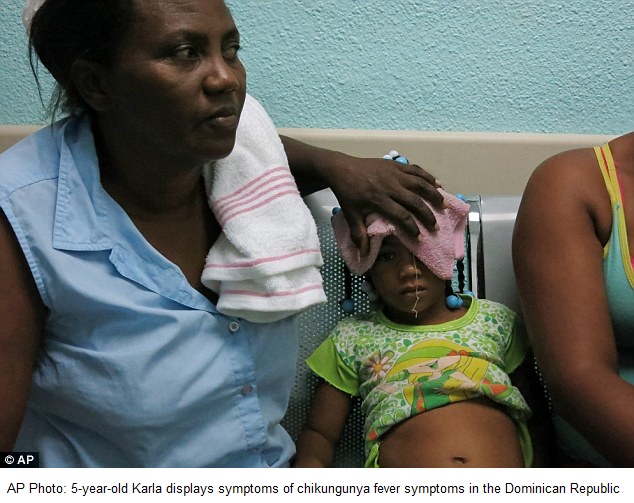
Virus 1The Chikungunya virus scare in the foregoing news article represents the sum of all fears for the Caribbean in terms of tourism and public health threats. This emphatically highlights the need for a regional security pact for Caribbean assurances.

The virus in this article has been identified in the Dominican Republic, Dominica, Saint Martin, and French Guiana; therefore, this is a cross-border threat. This re-enforces that there is a need for a super-national disease-medical sentinel in this security pact.

While other security pacts (for example NATO – North Atlantic Treaty Organization) may be based on defense against military aggression, the Caribbean security pact must focus more on public safety measures. This is one of the prime directives of the proposed Caribbean Union Trade Federation (CU). Naturally, the focus starts with economics, but the resultant engines can be seriously impacted by public safety/health threats. The book Go Lean… Caribbean, serves as a roadmap for the introduction and implementation of that regional sentinel, the CU. The complete prime directives are described as:

  • Optimize the economic engines of the Caribbean to elevate the regional economy.
  • Establish a security apparatus to protect the resultant economic engines.
  • Improve Caribbean governance to support these engines.

The Go Lean roadmap immediately calls for the establishment of a Homeland Security Department, with an agency to practice the arts and sciences of Emergency Management. The emergencies include natural disasters like hurricanes, earthquakes, tsunamis, volcanoes, flooding, forest fires, and droughts. Emergencies also include the man-made variety as in industrial accidents (oil spills, factory accidents and chemical spills), explosions, terroristic attacks and prison riots. The type of emergency described in the foregoing article requires a hybrid response of the Emergency Management agency and the CU’s Department of Health Disease Control & Management agency. Medical expertise would be required to contend with systemic threats of epidemic illness and infectious diseases.

The CU does not possess sovereignty for Caribbean member-states; so CU participation must be invited. This is why the CU is described as a deputized proxy organization. This invitation is equivalent to dialing “911”, a declaration of an emergency – thus granting a timed lease of limited authority to the CU agency, terminating with an “all clear” determination.

By: Ben Fox, AP

SAN CRISTOBAL, Dominican Republic (AP) — They suffer searing headaches, a burning fever and so much pain in their joints they can barely walk or use their hands. It’s like having a terrible flu combined with an abrupt case of arthritis.

Hospitals and clinics throughout the Caribbean are seeing thousands of people with the same symptoms, victims of a virus with a long and unfamiliar name that has been spread rapidly by mosquitoes across the islands after the first locally transmitted case was confirmed in December.

“You feel it in your bones, your fingers and your hands. It’s like everything is coming apart,” said 34-year-old Sahira Francisco as she and her daughter waited for treatment at a hospital in San Cristobal, a town in the southern Dominican Republic that has seen a surge of the cases in recent days.

The virus is chikungunya, derived from an African word that loosely translates as “contorted with pain.” People encountering it in the Caribbean for the first time say the description is fitting. While the virus is rarely fatal it is extremely debilitating.

“It is terrible, I have never in my life gotten such an illness,” said Maria Norde, a 66-year-old woman confined to bed at her home on the lush eastern Caribbean island of Dominica. “All my joints are in pain.”

Outbreaks of the virus have long made people miserable in Africa and Asia. But it is new to the Caribbean, with the first locally transmitted case documented in December in French St. Martin, likely brought in by an infected air traveler. Health officials are now working feverishly to educate the public about the illness, knock down the mosquito population, and deal with an onslaught of cases.

Authorities are attempting to control mosquitoes throughout the Caribbean, from dense urban neighborhoods to beach resorts. There have been no confirmed cases of local transmission of chikungunya on the U.S. mainland, but experts say the high number of travelers to the region means that could change as early as this summer.

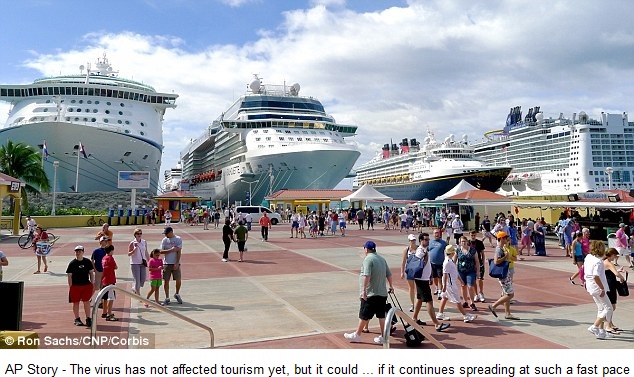
So far, there are no signs the virus is keeping visitors away though some Caribbean officials warn it might if it is not controlled. “We need to come together and deal with this disease,” said Dominica Tourism Minister Ian Douglas.

One thing is certain: The virus has found fertile ground in the Caribbean. The Pan American Health Organization reports more than 55,000 suspected and confirmed cases since December throughout the islands. It has also reached French Guiana, the first confirmed transmission on the South American mainland.

The Pan American Health Organization says seven people in the Caribbean with chikungunya have died during the outbreak but they had underlying health issues that likely contributed to their death.

“It’s building up like a snowball because of the constant movement of people,” said Jacqueline Medina, a specialist at the Instituto Technologico university in the Dominican Republic, where some hospitals report more than 100 new cases per day.

Virus 3Chikungunya was identified in Africa in 1953 and is found throughout the tropics of the Eastern Hemisphere. It is spread by two species of mosquitoes, aedes aegypti and aedes albopictus. It’s also a traveler-borne virus under the right circumstances.

It can spread to a new area if someone has it circulating in their system during a relatively short period of time, roughly 2-3 days before the onset of symptoms to 5 days after, and then arrives to an area with the right kind of mosquitoes.

For years, there have been sporadic cases of travelers diagnosed with chikungunya but without local transmission. In 2007, there was an outbreak in northern Italy, so health authorities figured it was just a matter of time before it spread to the Western Hemisphere, said Dr. Roger Nasci, of the U.S. Centers for Disease Control and Prevention.

“With the increase in travelers the likelihood that something like this would happen goes up and eventually it did,” said Nasci, chief of a CDC branch that tracks insect-borne diseases. “We ended up with somebody at the right time and the right place infecting mosquitoes.”

The two species of mosquitoes that spread chikungunya are found in the southern and eastern United States and the first local transmissions could occur this summer given the large number of U.S. travelers to the Caribbean, Nasci said. Already, the Florida Department of Health has reported at least four imported cases from travelers to Haiti, the Dominican Republic and Dominica.

“What we’re seeing now is an increase in the number of infected travelers coming from the Caribbean, which is expected because there’s a lot of U.S. travel, a lot of vacation travel, a lot of work travel,” he said.

Around the Caribbean, local authorities have been spraying fogs of pesticides and urging people to remove standing pools of water where mosquitoes breed.

An estimated 60-90 percent of those infected show symptoms, compared to around 20 percent for dengue, which is common in the region. There is no vaccine and the only cure is treatment for the pain and fluid loss.

One consolation for those suffering from the illness is that unlike dengue, which has several variants, people only seem to get chikungunya once.

“The evidence suggests that once you get it and recover, once your immune system clears the virus you are immune for life,” Nasci said.

Associated Press writers Ben Fox in Miami; P. Solomon Banda in Fort Collins, Colorado; David McFadden in Kingston, Jamaica; and Carlisle Jno Baptiste in Roseau, Dominica, contributed to this report.

Associated Press News Wire (Retrieved 05-22-2014) –          http://news.yahoo.com/painful-rapid-spread-virus-caribbean-040106421.html

The Go Lean roadmap immediately calls for the coordination of security monitoring and mitigation in the Caribbean; referring to viruses as well. This point is declared early in the Go Lean book, commencing with this opening pronouncement in the Declaration of Interdependence (Page 12), as follows:

xvi. Whereas security of our homeland is inextricably linked to prosperity of the homeland, the economic and security interest of the region needs to be aligned under the same governance. …[to ensure] the functioning of the wheels of commerce for all the citizenry, the accedence of this Federation must equip the security apparatus with the tools and techniques for predictive and proactive interdictions.

Go Lean … Caribbean therefore constitutes a change for the Caribbean. This is a roadmap to consolidate 30 member-states of 4 different languages and 5 colonial legacies (American, British, Dutch, French, Spanish) into a Trade Federation with the tools/techniques to bring immediate change to the region to benefit one and all member-states. This includes the monitoring/tracking/studying the origins of common and emerging viruses. This empowered CU agency will liaison with foreign entities with the same scope, like the Pan American Health Organization, US’s Center for Disease Control (CDC) and the World Health Organization (WHO).
Virus 2A lot is at stake!

Tourism is the primary economic driver in the region. The realization, or even the unsubstantiated rumor, of viral outbreaks can imperil the tourism product. We must therefore take proactive steps to protect our economic engines. But, we must not curtail freedom of movement among our visitors. We are, in effect, extending an “Open House” to the world to come enjoy our hospitality. Come… they will. So there are additional responsibilities for the stewards of the Caribbean economy, to impact the Greater Good. The CU invites this role, to promote this community ethos.

The book details that there must first be adoption of such a community ethos, the appropriate attitude/spirit to forge change in the region. Go Lean details this and other ethos; plus the executions of the following strategies, tactics, implementations and advocacies to impact the region’s public health:

Community Ethos – Privacy versus Public Protection Page 23
Community Ethos – “Crap” Happens Page 23
Community Ethos – Lean Operations Page 24
Community Ethos – Cooperatives Page 24
Community Ethos – Non-Government Organizations Page 25
Community Ethos – Ways to Improve Sharing Page 35
Community Ethos – Impact the Greater Good Page 37
Strategy – Vision – Non-Sovereign “Unified” Proxy Entity Page 45
Strategy – Customers – Residents & Visitors Page 47
Strategy – Agents of Change – Globalization Page 57
Tactical – Confederating a Permanent Union Page 63
Tactical – Fostering a Technocracy Page 64
Separation of Powers – Emergency Management Page 76
Separation of Powers – Disease Control & Management Page 86
Implementation – Ways to Pay for Change Page 101
Implementation – Security Initiatives at Start-up Page 103
Implementation – Ways to Deliver Page 109
Implementation – Ways to Foster International Aid Page 115
Implementation – Ways to Benefit from Globalization Page 119
Planning – Ways to Improve Failed-State Indices Page 134
Planning – Ways to Measure Progress Page 148
Advocacy – Ways to Grow the Economy Page 151
Advocacy – Ways to Improve Healthcare Page 156
Advocacy – Ways to Improve Governance Page 168
Advocacy – Ways to Better Manage the Social Contract Page 170
Advocacy – Ways to Foster Cooperatives Page 176
Advocacy – Ways to Improve for Natural Disasters Page 184
Advocacy – Ways to Improve Emergency Management Page 196

The foregoing news article introduces the threats of the Chikungunya virus. This is today’s issue. New issues will emerge tomorrow and the days after. This establishes that there is need for a permanent union – a sentinel – to provide efficient stewardship for Caribbean economy, security and governing engine. Change has come to the region.

How would the region pay for this change, these elevations? The Caribbean Union Trade Federation hereby submits for this job, no payment necessary! The region is hereby urged to lean-in to this Go Lean roadmap, to fulfill the vision of making the Caribbean region a better place to live, work and play.

Download the Book- Go Lean…Caribbean Now!!!

Share this post:
, , , ,

NSA records all phone calls in Bahamas, according to Snowden

Go Lean Commentary

Phone tap 1So wait, according to the below news article, the US National Security Agency is gathering and analyzing mobile phone calls on Bahamians talking to Bahamians. This article raises so many questions for a Caribbean consideration:

  • Is this OK with the political/social leaders of the Bahamas?
  • Is this OK with the people of the Bahamas?
  • Why is this effort exerted by the US and not the Bahamas?
  • Could the local obstacle be the costs of the ICT investment?
  • Is there any value to this intelligence gathering? Have crimes and terroristic attacks been mitigated?

The book Go Lean…Caribbean identifies that intelligence gathering & analysis can be advantageous for the security of the member-states in the Caribbean region. Whatever your politics, you want a measure of peace-and-security in the region. Based on the foregoing article, there is some value to a cross-border, regional intelligence/security apparatus.

This book Go Lean… Caribbean, serves as a roadmap for the introduction and implementation of the Caribbean Union Trade Federation (CU). This Go Lean roadmap has 3 prime directives:

  • Optimization of the economic engines in order to grow the regional economy.
  • Establishment of a security apparatus to protect the resultant economic engines.
  • Improve Caribbean governance to support these engines.

This book posits that “bad actors” will always emerge to exploit successful economic models.  Early in the book, the pressing need to streamline security efforts is pronounced in the Declaration of Interdependence (Page 12), with these opening statements:

x. Whereas we are surrounded and allied to nations of larger proportions in land mass, populations, and treasuries, elements in their societies may have ill-intent in their pursuits, at the expense of the safety and security of our citizens. We must therefore appoint “new guards” to ensure our public safety and threats against our society, both domestic and foreign.

xvi. Whereas security of our homeland is inextricably linked to prosperity of the homeland, the economic and security interest of the region needs to be aligned under the same governance. Since economic crimes, including … forms of terrorism, can imperil the functioning of the wheels of commerce for all the citizenry, the accedence of this Federation must equip the security apparatus with the tools and techniques for predictive and proactive interdictions.

The curative measures for the Caribbean security requires a regional security pact. This is why the Go Lean roadmap advocates a Homeland Security Department at the cabinet level. The result is that the Caribbean can then take the lead for Caribbean problems. The CU is a proxy of that leadership.

By: Travis Cartwright-Carroll, Nassau Guardian Staff

NASSAU, Bahamas — The Bahamas government has sought an explanation from the United States government over claims the National Security Agency (NSA) is collecting, recording and archiving every cell phone conversation in The Bahamas, Minister of Foreign Affairs Fred Mitchell said.

The allegation stems from documents allegedly leaked by former NSA analyst Edward Snowden.

According to documents, the NSA is using a surveillance system called SOMALGET to collect and store “full-take audio” of every mobile call made in The Bahamas and storing it for up to 30 days.

The documents also list Kenya, Mexico, the Philippines and another country, whose name was redacted, as countries where the program exists.

Minister of National Security Dr Bernard Nottage would not comment on the matter on Monday, but promised to make inquiries into the allegations.

Snowden’s latest disclosures were published on The Intercept website and claim that the NSA used “access legally obtained in cooperation with the US Drug Enforcement Administration to open a backdoor to the country’s cellular telephone network”.

According to The Intercept’s website, it “provides a platform to report on the documents previously provided by NSA whistleblower Edward Snowden”.

The documents state that SOMALGET’s access to the “Bahamian GSM communications” has led to the discovery of international narcotics traffickers and special-interest alien smugglers.

The documents also list SOMALGET as part of a bigger program called MYSTIC, which is described as a program for “the collection and processing of wireless/mobile communication networks”.

“The overt purpose is for legitimate commercial services for the telcos themselves; our covert mission is the provision of SIGINT,” the document reads.

According to the NSA’s website, “SIGINT is intelligence derived from electronic signals and systems used by foreign targets, such as communications systems, radars and weapons systems.

“SIGINT provides a vital window for our nation (USA) into foreign adversaries’ capabilities, actions, and intentions.”

The document notes that MYSTIC’s use in The Bahamas is “being used as a test bed for system deployments, capabilities and improvements”.

The Washington Post explored the program MYSTIC back in March 2014, but at the request of US government officials, withheld details that could be used to identify the country where the system is being employed.

That story said the NSA had “built a surveillance system capable of recording 100 percent of a foreign country’s telephone calls”.

Contacted by The Nassau Guardian on Monday, the US Embassy in Nassau said it will not comment on “every specific alleged intelligence activity”.

“As a matter of policy, we have made clear that the United States gathers foreign intelligence of the type gathered by all nations,” said Neda Brown, US Embassy spokesperson.

“We value our cooperation with all countries on issues of mutual concern.

“The United States values its relationship with The Bahamas.

“The United States and The Bahamas share a long history of trade partnership and security cooperation.

“Our cooperation advances civilian security, promotes social equity and spurs economic development.”

The issue of spying has been in the public consciousness over the last two weeks.

But it was connected to claims that The Bahamas government may be spying on Bahamians.

Opposition Free National Movement (FNM) deputy leader Loretta Butler-Turner charged that the Bahamian government is using the National Intelligence Agency (NIA)  to “engage in domestic spying on the Bahamian people”.

Nottage has dismissed the claim as “foolish” and said the government is not spying on Bahamians.

Source: Caribbean News Now / Nassau Guardian Newspaper; posted and retrieved 05-20-2014 from: http://www.caribbeannewsnow.com/topstory-NSA-records-all-phone-calls-in-Bahamas%2C-according-to-Snowden-leak-21203.html

Phone tap 3The foregoing article also highlights the value of efficient and effective information & communications technology (ICT) deployments. This Go Lean roadmap posits that technological innovations are necessary for advancement of societal protections. This point is pronounced in the same Declaration of Interdependence (Page 14), with these statements:

xxvii. Whereas the region has endured a spectator status during the Industrial Revolution, we cannot stand on the sidelines of this new economy, the Information Revolution. Rather, the Federation must embrace all the tenets of Internet Communications Technology (ICT) to serve as an equalizing element in competition with the rest of the world. The Federation must bridge the digital divide and promote the community ethos that research/development is valuable and must be promoted and incentivized for adoption.

xxviii. Whereas intellectual property can easily traverse national borders, the rights and privileges of intellectual property must be respected at home and abroad. The Federation must install protections to ensure that no abuse of these rights go with impunity, and to ensure that foreign authorities enforce the rights of the intellectual property registered in our region.

The Go Lean roadmap rises above the petty politics that nationalistic purists will surely project. For these ones, national sovereignty is more important than national security. This attitude has resulted in the status quo of lax security provisions throughout the region, and a high rate of societal abandonment.  Go Lean pursues the Greater Good ahead of any claim for independence. This is defined as a community ethos for the region to adopt. Change has now come to the Caribbean.

The book details other ethos to adopt, plus the executions of the following strategies, tactics, implementations and advocacies to impact the CU security assurances:

Community Ethos – Privacy versus Public Protection Page 23
Community Ethos – Intelligence Gathering Page 23
Community Ethos – Light Up the Dark Places Page 23
Community Ethos – Lean Operations Page 24
Community Ethos – Cooperatives Page 25
Community Ethos – Ways to Bridge the Digital Divide Page 31
Community Ethos – Impact the Greater Good Page 37
Separation of Powers – Homeland Security Department Page 75
Separation of Powers – Cari-Pol Page 77
Implementation – Security Initiatives at Start-up Page 103
Implementation – Ways to Promote Independence Page 120
Advocacy – Ways to Manage the Social Contract Page 170
Advocacy – Ways to Impact Justice Page 177
Advocacy – Ways to Remediate and Mitigate Crime Page 178
Advocacy – Ways to Improve Homeland Security Page 180
Advocacy – Ways to Improve Intelligence Gathering/Analysis Page 182

Phone tap 2The foregoing news article does remind us of the need to take the lead for our own community security. Go Lean advocates taking this lead for economic security as well. It is true that the objectives of the US may not align with the priorities of the Caribbean. Also, no Caribbean member-state has voting powers in the US Capitol, so rather than being “brothers” with the US, we must accept that our relationship with the US, at best, can only be as “good” neighbors. Yes, “blood is thicker than water”, so the Caribbean must create Caribbean solutions – this is interdependence, more so than independence.

The motives of the Go lean/CU roadmapis not to voice complaint regarding an intrusive American privacy violation, (though a valid criticism), but rather to simply make our homeland safer – a better place to live, work and play.

Download the book Go Lean … Caribbean – now!


Share this post:
, , , ,
[Top]

Trucks and Trains Play Well Together

Go Lean Commentary

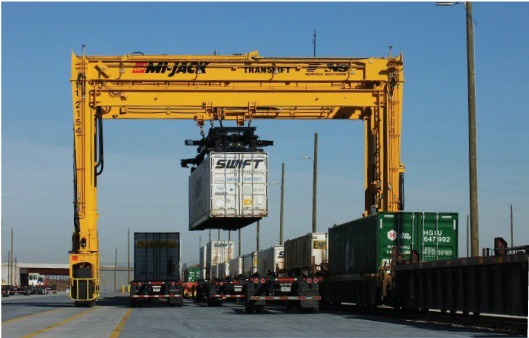
Trucks 1Not In My Back Yard (NIMBY) – this refers to the dichotomy of modern living. Many people want all the convenience that modern industrial development brings to their communities, but they do not want it … in their back yards. The point is alluded to in the foregoing news article, as a strategic success for forging business opportunities while neutralizing the NIMBY opposition. In this case the strategy is to locate multiple industrial infrastructural projects (rail-yard-truck intermodal) – normally noise pollutants to neighbors – at the airport, the Charlotte Douglas International Airport (CLT) – 1 – rail, 2 – trucks and 3 – air all in the same vicinity, This proved to be a smart move, neutralizing oppositions.

This strategic development corresponds with the book Go Lean … Caribbean. This publication serves as a roadmap for the introduction and implementation of the Caribbean Union Trade Federation (CU), another smart move. There is no doubt that Trade and Transport goes hand-in-hand, so this issue is of utmost importance to this roadmap. Since, most of the CU is comprised of islands (and 3 coastal states), there is the need to add a 4th mode to the CU intermodal consideration: sea.

The prime directive of the CU is to optimize the economic engines of the Caribbean region. In the roadmap, this directive aligns with the Union Atlantic Turnpike, a virtual consolidation of all the above transportation modes, and the investments to build and optimize them. The biggest change of the CU transportation approach is the deployment of multi-functional ferry-boats. Now imagine one destination (one backyard) with intermodal exchange for air, rail, ferry, and trucks. Imagine too, the amount of cargo (including mail), passengers, jobs, and economic activity on the move. Now multiply that imagination for all 30 member-states, serving a Caribbean single market of 42 million people. The resultant growth to the region is undeniable.

By: Gina Carroll Howard

Trucks, trains, and planes mean hours of fun for children. But for Charlotte USA, they mean business.

Norfolk Southern Corporation is betting that road and rail cargo transport will play an increasing role in the Charlotte region’s economy.

Since intermodal facilities can take a decade or more to build, the railroad looks for cities that are ripe for significant growth. Charlotte fits that profile, thanks to its progressive nature and pro-business culture — not to mention its prime location in the middle of the railroad’s Crescent Corridor.

Norfolk Southern recently relocated its local intermodal operation from a landlocked 40-acre site with encroaching residential growth to 200 acres at Charlotte Douglas International Airport (CLT). With its main line running right past the airport and easy highway access for trucks, the location in the world’s second-largest hub is ideal. As planes taxi, take off, and land nearby, about 200,000 cargo containers will transfer annually between trucks and trains. And that’s just the beginning.

“From Charlotte, we can move domestic and international traffic from anywhere in the U.S.,” says Jeff Heller, Norfolk Southern vice president of intermodal and automotive marketing.

“The Charlotte region has a huge consumer base. It’s a magnet that pulls trade into the area. This new facility is a showcase and can be front and center in business development. It’s modern and has access to both coasts and all major manufacturing and distribution centers in the country. It helps reinforce Charlotte’s reputation as a viable manufacturing and distribution center.”

It also helps the Charlotte airport retain its low-cost status.

“Norfolk Southern’s lease provides the airport with a secondary revenue source that directly offsets airport operating costs,” says Brent Cagle, interim aviation director. “This is a tremendous benefit to our airline partners and ultimately to the passengers they serve.”

Trucks 2Cagle believes that complementary companies will locate distribution centers on surrounding properties that the airport has acquired. These leases would provide the airport with another secondary revenue source.

The airport/railroad relationship is a symbiotic one that benefits CLT, Norfolk Southern, and Charlotte USA. Both Cagle and Heller agree that the two operations are highly compatible.

“With the airport site, we’re not creating any more noise or lights than already are there,” Heller notes.

And Cagle predicts that Norfolk Southern’s intermodal facility and Charlotte Douglas International Airport “will be great neighbors.” It sounds like they’ll play well together.

US Airways Inflight Magazine – April 2014 http://charlotteusa.com/news-media/blog/trucks-and-trains-play-well-together-/

The Go Lean roadmap quantifies the economic growth, from this and other industrial initiatives, and counts 2.2 million new jobs and the elevation to an $800 Billion regional economy.

As the foregoing article highlights, as children play with trucks, trains, and airplanes, the CU treats these (and ships/boats) as serious business. This commitment is codified in the roadmap, with details of community ethos, strategies, tactics, implementations and advocates; as follows:

Community Ethos – Job Multiplier Page 22
Community Ethos – Return on Investments Page 24
Strategy – Agents of Change – Globalization Page 57
Separation of Powers – Transportation Dept. Page 84
Implementation –  Consolidating Mail Service Page 108
Implementation –  Benefit from Globalization Page 119
Planning – Ways to Improve Trade Page 128
Planning – Ways to Improve Interstate Commerce Page 129
Government – Impact Public Works & the Turnpike Page 175
Industries – Ways to Improve Transportation Page 205
Appendix – Model of a Marine Highway System Page 280

Welcome to a new Caribbean, that’s on the move. Go Lean!

Download the Book- Go Lean…Caribbean Now!!!

Share this post:
, , ,
[Top]

Abused wives find help by going to ‘Dona Carmen’

Go Lean Commentary

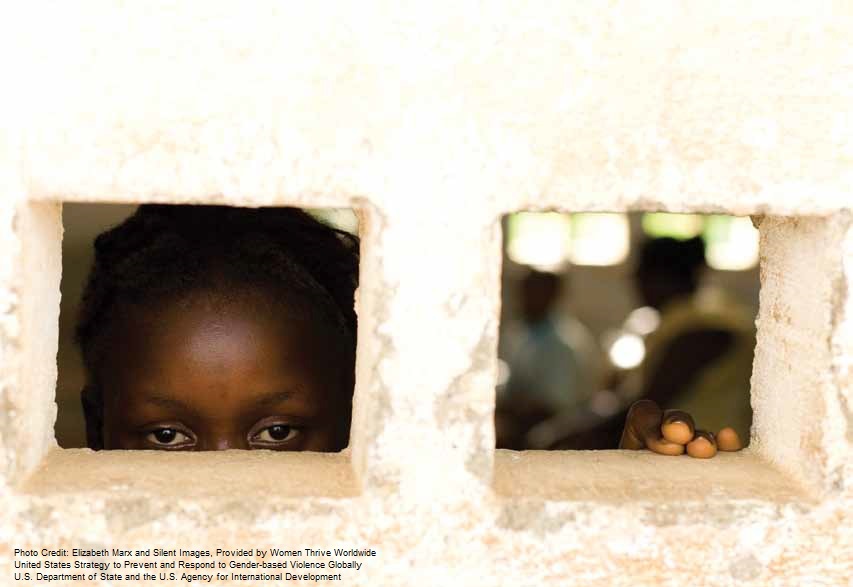
AbuseThe issue in the below news article is related more to human rights, than to feminism. This story is being brought into focus in a consideration of the book Go Lean … Caribbean. The book serves as a roadmap for the introduction and implementation of the Caribbean Union Trade Federation (CU), for the economic optimization in the region.

How does this story relate?

The roadmap posits that the economy of the Caribbean is inextricably linked to the security of the Caribbean. While the security scope of the CU is mostly focused on the “bad actors” that might emerge to exploit the new Caribbean economic engines and successes, the book is not quiet on what may be considered traditional crime-and-punishment issues. While the subject of domestic violence falls on the member-state side of the separation-of-powers divide, the CU will entail a jurisdiction of monitoring and metering (ratings, rankings, service levels, etc) local governments and their delivery of the Social Contract. For this reason, there is a 3rd focus of the CU prime directive, to optimize the region’s governing engines.

An underlying mission of the CU is to dissuade further human flight and incentivize repatriation of the far-flung Diaspora. Many who had fled previously obtained refugee status due to the abuse and persecution from domestic perpetrators. These issues must be addressed and targeted for solutions and reconciliations.

In fact, the foregoing article refers to the new enforcements introduced in Brazil in a 2006 law. That’s was just 8 years ago. (A similar Domestic Violence law was enacted in the Bahamas in 2008). A survey of other Latin American countries unveils even more new laws recently enacted in the Caribbean, Central and South America. Change has finally come.

Change has come to the Caribbean, but as the roadmap depicts, the problem of domestic violence (a human rights abuse) had persisted long before, and is thusly rooted in a community ethos. An ethos that must be uprooted and replaced with a new, progressive spirit, even within the public service entities, whose job it is to “serve & protect”. This is the new lean Caribbean!

This is reflected in the foregoing article with the principal character Dona Carmen, which is not even her real name, but more of an elevated title for her respected role in the community.

Title: Abused wives find help by going to ‘Dona Carmen’
By: Dom Phillips

CAMPINAS, Brazil — With her husband out of earshot, Queze Vicente told the story of the night he came at her with two knives in his hand.

“He was drinking,” she said outside their one-room shack in a roadside slum near an airport here. “We fought. And I had to go to Dona Carmen.”

Everyone in their community knows who Dona Carmen is and her method for getting abusive husbands in line. They call it “the discipline,” and it includes a sex strike.

For 15 days, husbands who hit their wives are also banned from drinking in the local bar and playing soccer on the local field. And any man who helps an offender violate the rules is also subject to the sex strike.

Abused by her husband and saddened by the abuse all around her, Dona Carmen talked 12 local women into adopting the punishment routine. Two years later, the women and most of the men say it works.

“Everyone thinks it is good,” said Vicente’s husband, Renato. “There are no more fights.”

The abuse in this community, a corner of the slum called Menino Chorão, or Crybaby Boy, was not unlike what many Brazilian women experience. In a survey conducted by the Patrícia Galvão Institute, which works on women’s rights and communication issues, 54 percent of Brazilians said they knew a woman who had been attacked by a partner and 70 percent said they believed Brazilian women suffered more violence at home than in public spaces.

But change is slowly coming to this most macho of societies as activists such as Dona Carmen try to help women find new ways to combat domestic abuse.

“This is a theme that permeates the whole of society,” said Julio Neto, a professor at Campinas State University whose department recently sponsored a forum at which Dona Carmen spoke. “Every Brazilian knows cases of violence against women.”

Neto said the women in the group were forced to act because the state was not protecting them. “If they call the police, the police don’t go.” He said he did not condone cases in which some women had beaten up male offenders but that he supported “the discipline.”

“It is very original. I think in this sense, it is marvelous,” he said.

Dona Carmen, whose real name is Maria de Sousa, commands respect within her group: the fact that she is addressed as “Dona” — roughly equivalent to “madame” — is evidence of that.

Like most of her neighbors, she is from Brazil’s poorer, more traditional northeast. For 13 years, she was married to a man who beat her persistently. One attack when she was five months pregnant caused her to miscarry twins. “My whole body had purple bruises from the beating he gave me,” she said.

She arrived in the southeastern city of Campinas from her native Fortaleza eight years ago when a woman she had met tricked her with a promise of work and a place to live. As a result, she said, she spent 40 days in a brothel but escaped and did not have to work as a prostitute.

“I was desperate to get a job,” said de Sousa, who has four children and now works in a kitchen at an advertising agency.

‘Still a lot to do’

Before Brazil introduced a domestic violence law in 2006, some offenders were able to get off with fines or even by donating food baskets.

The law is named for Maria da Penha, a biochemist whose husband shot her while she was asleep in 1983, leaving her paraplegic, and then tried to electrocute her. After almost two decades of legal maneuvering, he was finally jailed in 2002 and served 16 months in closed prison and three more years in semi-open prison.

Da Penha fought hard for his imprisonment and campaigned for the law. “I was revolted with the sexism of the Brazilian judiciary,” she said, talking by phone from Fortaleza, where she runs an educational institute.

The law set up special courts and police departments to deal with crimes against women, and stricter punishments. A special hotline was also set up to deal with cases of domestic abuse.

Da Penha, 67, said there has been major progress, but that these resources are still lacking in smaller towns and cities.

“Women who are victims of violence are slowly losing the shame they had to talk about this,” she said. “Sexual equality is being conquered little by little, but there is still a lot to do.”

Despite the tougher punishments for offenders, rates of violence against women remain high. In the first six months of 2013 alone, the hotline received 306,201 calls, of which 12.3 percent were reports of violence

Between 2009 and 2011, 16,900 women were murdered in Brazil because of “gender conflict” — a rate of 5.8 per 100,000 women, according to government statistics. In the United States in 2011, that rate was 1.17 per 100,000, according to the Violence Policy Center, based in Washington.

Brazilian women suffer inequality in other areas as well. In the World Economic Forum’s 2013 Global Gender Gap report, Brazil placed 62nd in a list of 136 countries. In terms of wage equality, it came in 117th.

Lieli Loures, 35, an activist in São Paulo, said the Maria da Penha law was a watershed moment for Brazil, and that a grass-roots feminist movement is growing. “I perceive a change,” she said. “Feminism is only beginning to be known.”

Ongoing debate
In Crybaby Boy, the debate continued in the front yard of the small brick house where Maria Santos, 34 — one of women in Dona Carmen’s group — lives with her husband, Adelmo, 31.

“We joke that the women are in charge here,” she said.

“We have to respect the rights of women,” he said. “But in the same way, we have to respect the rights of men.”

Then he lowered his voice to a whisper: “The women here want to be the man. They can’t.”

But Geraldo da Cruz, 62, said most men back the scheme. “Everything organized is better, right? Important.”

Source: Washington Post – Online News Source – April 25, 2014 –http://www.washingtonpost.com/world/the_americas/in-the-corner-of-a-brazilian-slum-abused-wives-find-help-by-going-to-dona-carmen/2014/04/25/afbb7d1a-c68d-11e3-8b9a-8e0977a24aeb_story.html

The Go Lean roadmap posits that every woman has a right to a violence-free existence, in the family and in society; it is reprehensible that in so many Caribbean/Latin countries women are still viewed as lesser beings that can be abused at the whim of men, as was evident in the foregoing news article. This type of thinking is still prevalent; not just in Brazil; (notice this related Bahamas story)

What should be done to mitigate these bad practices? How does the Go Lean roadmap address this issue?

There are strategic, tactical and operational advocacies presented in the Go Lean roadmap so as to ensure victims are protected and perpetrators are held accountable for their actions:

• The CU will therefore work with governmental and non-governmental organizations (NGO’s) to fulfill their charters to aid victims and legislate for changes.

• The CU will also fund the full vertical eco-system so that law enforcement (and/or social work) agencies can institute Special Victims Units and counseling services. The roadmap posits that even one person, an advocate, can make a difference (Page 122) in forging change in society.

• Facilitate community messaging to instill/persuade an enlightened value system for men and women; helping men curb aggressive behavior (like anger management training) and empowering women to live successful lives and seek recourse against abusers if needed.

• Oversee the internal affairs/military justice of security agencies to ensure the integrity of the justice institutions. (Deficiency in this area is a Failed–State Indicator).

While the CU does not have sovereignty (a deputized agency only), it can still provide support services to ensure compliance. In addition to monitoring and metering, the CU can also provide ratings, funding, training, intelligence gathering, and cross border (fugitive) law enforcement.

The solutions to effect change in the region are detailed in this book Go Lean … Caribbean as community ethos, strategies, tactics, implementations and advocates; as follows:

Community Ethos – Privacy –vs- Public Protection Page 23
Community Ethos – Whistleblower Protection Page 23
Community Ethos – Witness Security Page 23
Community Ethos – Anti Bullying & Mitigations Page 23
Community Ethos – Light Up the Dark Places Page 23
Community Ethos – Minority Equalizations Page 24
Community Ethos – Reconciliations Page 34
Strategy – Rule of Law –vs- Vigilantism Page 49
Separation of Powers – CariPol Page 77
Implementation – Reason to Repatriate Page 118
Ways to Improve Failed-State Indices Page 134
Ways to Better Manage the Social Contract Page 170
Ways to Impact Justice Page 177
Ways to Remediate and Mitigate Crime Page 178
Ways to Improve Gun Control Page 179
Ways to Improve Intelligence Gathering Page 182
Ways to Improve Communications Page 186
Ways to Impact the Prison Industrial Complex Page 211
Ways to Impact Foundations Page 219
Ways to Protect Human Rights Page 220
Ways to Empower Women Page 226
Ways to Impact Youth Page 227
Ways to Impact Persons with Disabilities Page 228

The goal is to make the Caribbean a better place to live work and play; with justice for all, regardless of gender. This is not politics; not feminism versus traditional family values. This is just right!

Share this post:
, , ,
[Top]

Remembering and learning from Boston

Go Lean Commentary

Boston BombingApril 15, is the one year anniversary of the Boston Marathon bombing. 3 people died directly, and countless others were maimed and injured. From any perspective this was a tragedy! To the families that lost loved ones on that date, our deepest condolences.

There are many lessons for the Caribbean to learn from this experience.

The book Go Lean … Caribbean serves as a roadmap for the introduction and implementation of the Caribbean Union Trade Federation (CU). This CU is proffered to provide economic, security and governing solutions for the 30 member Caribbean states. This book posits that the Caribbean is not immune to similar experiences like Boston; that terrorism requires mitigation beyond the member-states; there needs to be a regional solution. The CU will furnish such a focus. There will be proactive and reactive measures to monitor, interdict, and marshal terroristic threats in the Caribbean. Most of the Caribbean has legacy affiliation with European/US countries that have been victims of terrorism. Though we have not had the tragedies of backpacks exploding at marathons, or chemical weapons used in subways, or airplanes crashing into our buildings, we must still hold a constant vigilance. The roadmap posits that “bad actors” always emerge where there is economic successes.  See a related news article here:

Title: Year after Boston bombing, it’s clear that threat of homegrown terrorism overhyped
By: David Schanzer and Charles Kurzman

In the aftermath of the Boston Marathon bombing one year ago Tuesday, many commentators and public officials called this tragedy a harbinger of more homegrown terrorist attacks to come.

“We’re going to see an explosion in this radicalization and recruitment,” predicted Congressman Frank Wolf. “We are less secure than we were 12 years ago,” claimed think-tank terrorism expert Michael Swetnam. Former Attorney General Michael Mukasey told Americans to “worry – a lot.

”To many, the Boston attack demonstrated the potency of the Islamist extremist ideology, the difficulty of detecting individuals radicalized through social media and the Internet, and the ease with which amateurs could cause massive harm in our open society. The Tsarnaev brothers, they claimed, had paved the way for more terrorism.

While only one year has passed, much of this concern appears to have been hyperbole.

No one has been killed by homegrown terrorists in the past year, and there have been no copycat attacks. To put this in context, over the same period there have been 14,000 murders in the United States, including 46 murders in Boston.

There also has been no epidemic of al-Qaida-inspired extremist behavior directed at American civilians. Our research shows that in the year since the marathon bombing, there have been 15 arrests of Muslim-Americans for terrorism-related offenses, below the average of 20 arrests per year since 9/11. Almost all of these arrests were for attempting to join a foreign terrorist organization abroad, not for planning attacks in the homeland, and were motivated by sympathies with rebels in Syria and elsewhere rather than by al-Qaida’s call for Muslims to attack the West.

Our law enforcement agencies have a far more balanced understanding of the nature of the extremist threat than many of those providing public commentary after the Boston attacks. A nationwide survey of law enforcement agencies we are conducting in collaboration with the Police Executive Research Forum shows that more than half of the agencies report little or no threat from al-Qaida-inspired extremism. Only 2 percent report the threat as “severe.” Agencies from large metropolitan areas reported somewhat higher levels of concern (27 percent reporting a low threat and 7 percent reporting a severe threat). Overall, law enforcement agencies are treating this as a serious, but manageable, issue rather than the existential crisis that many have feared.

Law enforcement agencies have embraced community outreach as an effective strategy to counter violent extremism. Almost every large metropolitan police force surveyed collaborates with Muslim-American communities that are targeted for recruitment by al-Qaida and related extremists. Most of these agencies report they have established a high level of trust with the community, and two-thirds say these relationships have helped develop actionable information. This track record contradicts claims by Congressman Peter King, a New York Republican, and others that Muslim-Americans have failed to cooperate with law enforcement.

One year after two individuals inflicted pain and suffering on the streets of Boston, we should not be overly fearful or cavalier about the threat of violent extremism. The low levels of violent conduct both before and after the Boston Marathon show that no matter how many extremist videos are posted on the Internet, the baseless ideas these videos propagate appeal to only a tiny fraction of our populace. Yet, since small numbers of people can do so much harm, law enforcement agencies and the communities they serve must be constantly vigilant and continue to work together to prevent the next atrocity.

David Schanzer is a Professor at Duke University’s Sanford School of Public Policy and Director of the Triangle Center on Terrorism and Homeland Security.

Charles Kurzman is a Professor of Sociology at the University of North Carolina, Chapel Hill.
Source: News Observer Newspaper – a Raleigh, North Carolina Daily – Retrieved 04/15/2014 from: http://www.newsobserver.com/2014/04/14/3784842/year-after-boston-bombing-its.html

How can we apply lessons from this foregoing article in the stewardship of the Caribbean Homeland Security?

We have the direct lessons of the scourge of piracy in the Caribbean for centuries. The “after-effects” of this legacy still remain, even today. As Caribbean society traversed over the centuries, the attitudes that tolerated piracy, described in the book as “community ethos”, evolved to tolerate, incubate and even promote other lawless activities; (shipwrecking, bootlegging, drug smuggling). So with this history in mind, and the prime directive to elevate Caribbean society, the Go Lean economic empowerment mission is coupled with appropriate security provisions. This mandate is detailed early on in the book’s Declaration of Interdependence, with the following pronouncements (Page 12):

x. Whereas we are surrounded and allied to nations of larger proportions in land mass, populations, and treasuries, elements in their societies may have ill-intent in their pursuits, at the expense of the safety and security of our citizens. We must therefore appoint “new guards” to ensure our public safety and threats against our society, both domestic and foreign. The Federation must employ the latest advances and best practices of criminology and penology to assuage continuous threats against public safety. The Federation must allow for facilitations of detention for convicted felons of federal crimes, and should over-build prisons to house trustees from other jurisdictions.

xvi. Whereas security of our homeland is inextricably linked to prosperity of the homeland, the economic and security interest of the region needs to be aligned under the same governance. Since economic crimes, including piracy and other forms of terrorism, can imperil the functioning of the wheels of commerce for all the citizenry, the accedence of this Federation must equip the security apparatus with the tools and techniques for predictive and proactive interdictions.

Gun ComicThere are many other lessons for us to learn from Boston. But there are other tragedies that appear to have gotten less attention in the past year since the marathon bombings. In Boston alone, there have been 46 murders since April 15, 2013. In total, there have been 14,000+ murders in the entire Unites States in that time. See the foregoing news article/commentary.

These have not gone unnoticed! Especially terrorism’s junior partner-in-crime, bullying; such incidents also call for mitigations.

The Go Lean roadmap therefore comes BIG, in its offering to effectuate change in the Caribbean. Notice these strategies, tactics, implementations, and advocacies detailed in the book related to Caribbean security:

10 Ways to Improve Sharing Page 35
10 Foreign Policy Initiatives at Start-up Page 102
10 Security Initiatives at Start-up Page 103
10 Ways to Impact Justice Page 177
10 Ways to Reduce Crime Page 178
10 Ways to Improve for Gun Control Page 179
10 Ways to Improve Homeland Security Page 180
10 Ways to Mitigate Terrorism Page 181
10 Ways to Improve Intelligence [Gathering] Page 182
10 Ways to Improve Animal Husbandry Page 185
10 Ways to Impact the Prison-Industrial Complex Page 211
10 Ways to Impact Youth Page 227

Further, the Go Lean roadmap portrays the need for public messaging to encourage adoption of better community ethos for the Greater Good (Page 37). We must not allow those innocent lives in Boston to pass without positive lessons for our society.

Download the book Go Lean … Caribbean – now!

Share this post:
, ,
[Top]

What Usain Bolt can teach banks about financial risk

Go Lean Commentary

Runner GuyThere were 465 US bank failures between 2008 and 2012.[a]

Joke: “The bank returned a check to me this morning, stamped: ‘insufficient funds.’ Is it them or me?”

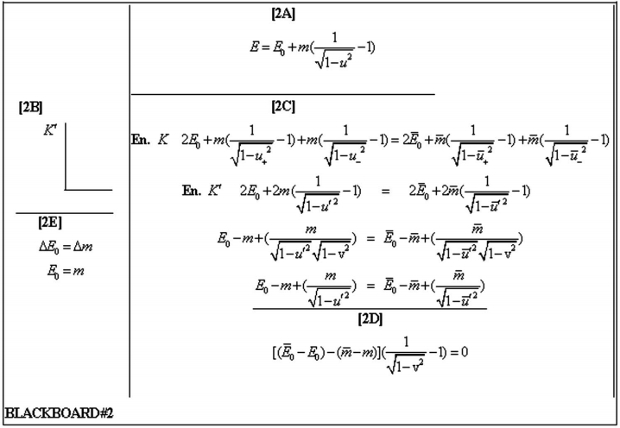
The foregoing article shows the type of functions that technocrats do: evaluating risk. Any risk that can imperil the complete financial system must be monitored and mitigated. The “extreme value theory” is a model for evaluating risk and predicting future performance; and while not perfect, it is better than doing nothing.

There was no one performing this role in the Caribbean in 2008.

The foregoing article and its reliance on calculus, quantitative methods and econometric modeling is an example of the required technocratic oversight in managing an economy. Usain Bolt is used here as an allegory, a fable. The Economist magazine thusly explains how complex issues can be taught with simplified analogies and illustrations. Banking is more complex than track-and-field; but the pursuit of excellence is similar. Just like any world-class athletic pursuit, this goal is hard to master.

The Economist explains…

THE banking industry did a bad job in the run-up to the financial crisis of assessing “tail risks”, extreme events that represent the least likely of a range of probable outcomes. The Basel Committee on Banking Supervision, which is the international standard-setter for bank capital, has proposed changes in the internal risk models that financial institutions use. In particular, it wants banks to shift from a technique called “value-at-risk” (VaR) to one called “expected shortfall” (ES).

VaR is a way of measuring a firm’s risk of suffering really big losses over a certain period (a day, a week, a month) to a certain level of “confidence”. A daily VaR of $1m at 1% probability means that there is a 99% chance that you will not lose more than $1 [million] on any one day. The problem is that if you have that one bad day in 100, the potential losses could go much higher than $1 [million]. VaR doesn’t have much to say about what those losses might be. The expected-shortfall approach is meant to provide an answer to that question. Instead of asking, “What are the chances that things get so bad that we lose $1 [million]?” it asks, “If things do get that bad, how much would we actually lose?”

To do this, it uses a statistical method called “extreme value theory”, which looks specifically at what happens in the tail of distributions. To take a more trivial example of where extreme-value theory has been used, a 2011 paper by two researchers at Tilburg University collected data on the personal bests of elite athletes between 1991 and 2008, in order to try and calculate the “ultimate world record” for 100m sprints—the absolute edge of human performance given the times, equipment and drugs-policies that then prevailed. For the 100[meter] for men, the boffins (British slang for technical expert) put the ultimate world record at 9.51 seconds, compared with the record that then prevailed of 9.72, and a current world best of 9.58, set by Usain Bolt in 2009. That looks pretty good: the model came up with a number that was well inside the mark that then prevailed, and is still a hefty improvement on the current record. If extreme-value theory is meant to help banks think through the extremes, this is encouraging.

But like every model in history, expected shortfall cannot predict the future. In an earlier 2006 paper, researchers from the same university tried to calculate ultimate world records for a wider range of events, including the men’s marathon. The researchers reckoned back in 2006 that the best possible running of that distance would yield a time of two hours, four minutes and six seconds. Yet the world record today stands at two hours, three minutes and 23 seconds (Wilson Kipsang in 2013). To be fair to the researchers, they did not claim that their ultimate record could not be broken. But whether bankers will remember that reality can be worse than expected is a different question. Expected shortfall is an improvement on VaR; it is not a crystal ball.
The Economist (Retrieved 04/09/2014) – http://www.economist.com/blogs/economist-explains/2014/04/economist-explains-4

EquasionThe book, Go Lean…Caribbean, serves as a roadmap for the implementation of the Caribbean Union Trade Federation (CU). The book presents the CU as a technocracy, to ensure economic failures of the past do not re-occur. From the outset, the book identified that the Caribbean is in crisis, with the pronouncement that a “crisis is a terrible thing to waste”. The prime directive of the CU is to optimize economic, security and governing engines to impact the Caribbean’s Greater Good, for residents … and bank depositors. This was pronounced in the Declaration of Interdependence – (Page 13):

xxv. Whereas the legacy of international democracies had been imperiled due to a global financial crisis, the structure of the Federation must allow for financial stability and assurance of the Federation’s institutions. To mandate the economic vibrancy of the region, monetary and fiscal controls and policies must be incorporated as proactive and reactive measures. These measures must address threats against the financial integrity of the CU and of the member-states.

In line with the foregoing article, the Go Lean book details some infrastructural enhancements/advocacies to the region’s financial eco-system; to facilitate efficient management of the economy:

  • Fostering a Technocracy (Page 64)
  • Caribbean Central Bank (Page 73)
  • Deposit Insurance Regulations (Page 73)
  • Securities Regulatory Authority (Page 74)
  • Modeling the European Union / Central Bank (Page 130)
  • Lessons from 2008 (Page 136)
  • Banking Reforms (Page 199)

The mis-management of the economy has led to many episodes of “fight-or-flight” among Caribbean society. For many member-states, their Diaspora is more than half their population; i.e. Jamaica and Puerto Rico.

While there is no crystal ball, according to the foregoing article, there is much that can be done. Now is the time for the CU!

The purpose of this roadmap is to make the Caribbean, a better place to live, work and play. No more flight! Now we stand and fight with these technocratic weapons of modern economics.

Download the book Go Lean … Caribbean – now!

———-

Appendix Reference:
[a]. https://news.yahoo.com/facts-numbers-us-bank-failures-183852568.html

Share this post:
, , , , ,
[Top]

Jamaica to receive World Bank funds to help in crime fight

Go Lean Commentary

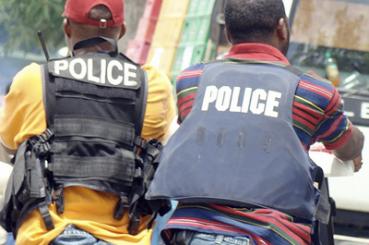
images-Caribbean-jamaica_police_498560223The publisher of the book Go Lean … Caribbean commends the Government of Jamaica and the Washington DC-based World Bank institution for their diligent effort to forge solutions to some of the crucial challenges of Jamaica. Crime has proceeded to cast such a “dark cloud” on Jamaica that the country is near the assessment of a “Failed-State”. The societal problems in Jamaica are so bad that many different advocacies from the Go Lean book can be applied to bring much needed improvements to the island. The book thusly serves as a roadmap for the implementation of the Caribbean Union Trade Federation (CU), a regional entity projected to also forge solutions for the Caribbean region as a whole and Jamaica in particular.

WASHINGTON D.C. – The World Bank says more than 80,000 Jamaican citizens will benefit from improved services, basic infrastructure and targeted crime and violence interventions in 18 vulnerable inner-city communities as a result of a US$42 million project for integrated community development.

The Washington-based financial institution said the new project is a continuation of the partnership between the Jamaica government and the World Bank on upgrading some of the country’s most vulnerable and volatile communities.

It said the project builds on the success of the “Inner City Basic Services for the Poor Project” to address accelerating urban decay and declining citizen security.

“The project aims to foster a more inclusive society in Jamaica by improving the quality of life of marginalized city dwellers,” said Sophie Sirtaine, World Bank country director for the Caribbean.

“It also aims to prevent crime and violence by engaging youth in public safety initiatives and providing them with job skills training,” she added.

As a result of the funding, Sirtaine said more than 50,000 people will benefit from improved solid waste management services, street lighting, paved roads and drainage.

She said residents in the 18 communities would “feel safer” and that 1200 families will have their piped water connection repaired and 4,500 residents receiving educational and skills training.

“As we strive to advance the targets of the Vision 2030, where access to reliable services and adequate infrastructure is the norm, enhancing community safety and security is a priority,” said Scarlette Gillings, managing director of the Jamaica Social Investment Fund.

“And these communities are places of choice to live, work, raise families and do business,” she added.

In the Kingston Metropolitan Area, the World Bank said poverty has doubled in two years from seven per cent in 2008 to more than 14 per cent in 2010.

It also said youth unemployment is on the rise, with more than 50 per cent of young people unemployed, adding that homicides and other violent crimes rates are among “the highest in the Latin America and Caribbean region”.

Source: Caribbean360.com – Caribbean Online Magazine (Retrieved 03/20/2014) http://www.caribbean360.com/index.php/business/1107320.html#ixzz2wvpxCnMA

While the foregoing article identifies these 3 objectives of the announced project: improved services, basic infrastructure and targeted crime & violence interventions, the Go Lean roadmap depicts 144 missions for the CU to engage, and provides the turn-by-turn directions on how to implement and ensure their success. At the outset of the book (Page 12), public safeguards are identified as prime directives in the Declaration of Interdependence:

x. Whereas we are surrounded and allied to nations of larger proportions in land mass, populations, and treasuries, elements in their societies may have ill-intent in their pursuits, at the expense of the safety and security of our citizens. We must therefore appoint “new guards” to ensure our public safety and threats against our society, both domestic and foreign. The Federation must employ the latest advances and best practices of criminology and penology to assuage continuous threats against public safety.

xvi. Whereas security of our homeland is inextricably linked to prosperity of the homeland, the economic and security interest of the region needs to be aligned under the same governance. Since economic crimes … can imperil the functioning of the wheels of commerce for all the citizenry, the antecedence of this Federation must equip the security apparatus with the tools and techniques for predictive and proactive interdiction.

In addition to crime, the roadmap targets delivery of government services, identifying best practices in agile methodologies to guarantee fewer defects and more efficiency; (Pages 109 & 147). In fact, the name Go Lean refers to the commitment to lean project management methodologies in the structure of the CU; this is defined in the book’s Preface (Page 4).

Lastly, the book also details investments and the impact of pipelines in the region, recognizing that this field is an “art and a science”. These investments are identified as strategic, tactical and operational in their Caribbean deliveries (Page 43). This synchronizes with the World Bank and Jamaica’s initiatives to help the municipalities to better provide quality services with their Vision 2030 plan.

The book Go Lean … Caribbean is an economic empowerment plan for the Caribbean first and foremost. This means addressing the underlying issues that mitigate poverty: jobs, education and economic growth; (Page 222). The CU projects the creation of 2.2 million new jobs regionally while growing the economy to $800 Billion. This roadmap, once executed, should help Jamaica (and equally all 30 Caribbean member-states) shed this “Failed-State” eventuality.

Download the book Go Lean … Caribbean – now!

Share this post:
, ,
[Top]

Book Review: ‘How Numbers Rule the World: The Use & Abuse of Statistics in Politics’

Go Lean Commentary

How Numbers Rule the WorldThe below news article is a Review of the above-cited book; it highlights many of the same approaches being used in the publication Go Lean … Caribbean for the introduction and implementation of the Caribbean Union Trade Federation (CU). This book embraces the concepts of agile or lean methodologies to measure and manage progress in the region. Thus the name Go Lean. The Federation will lean-in to best-practices for capturing, computing, and measuring good economic and consumption data.

The source book by Lorenzo Fioramonti focuses on the use and abuse of statistics in the field of economic measurements, or econometrics. He asserts that the aggregate numbers are so critical that they “rule the world”. Due to this power, there is a basis for abuse, and far too often bad numbers have been used to exploit good intentions. The Go Lean book serves as a roadmap for the 5-year implementation of the CU. This requires exact econometric measurements from the outset, and thusly organizational structures will be embedded with the capabilities to facilitate this mandate. See the review here:

Book: How Numbers Rule the World: The Use and Abuse of Statistics in Global Politics. Lorenzo Fioramonti. Zed Books

Review by: Stuart Astill

GDP drives our economies. Stock market indices flood our media and national debates. Statistical calculations define how we deal with climate change, poverty and sustainability. But what is behind these numbers? In this book, Lorenzo Fioramonti sets out to show how numbers have been used as a means to reinforce the grip of markets on our social and political life, curtailing public participation and rational debate. Stuart Astill finds it to be a well written book, blending together knowledge from different fields into a coherent and readable whole. Of interest to economists, statisticians and especially those studying all aspects of power and politics.

During my time as a government statistician I had literally no idea that I was not, as many people thought, an oxymoron, but rather I was a tautology. I have discovered amongst many other things, thanks to Lorenzo Fioramonti‘s book, that statistics were originally created for the express purpose of governing and reforming the state, hence the ‘stat’ part of the name.

However, the title of the book, “How numbers rule the world”, is much closer to describing the content than is the subtitle, “the use and abuse of statistics in global politics”. Fioramonti’s main concerns are economists and, perhaps even more, the people who ask questions of economists and statisticians. He intelligently explains how he despairs of people who abuse their technical

knowledge or their advantageous position to turn the world to their own ends rather than the common good. This is not surprising: the author holds a Chair in Governance at the University of Pretoria and applies governance thinking through his work on topics around development, alternative economies and social progress measurement.

This book is consequently largely about power, rather than numbers: it illustrates a subset of abuses of power that have numbers at their heart. It is in some ways a psychopath’s guide to bullying the world by numbers – pretending that everything is ‘rational’, ‘independent’ and ‘objective’ and building fortresses of power around these intentional misrepresentations. In a provocative and fascinating first introductory chapter Fioramonti outlines his take on the world of ‘official’ numbers – perhaps best summed up where he says “Experts who use numbers have become the guardians of [this] social trust… citizens, elected representatives and other stakeholders… are held hostage by experts…”

The main chapters are quite specific techno-politico-historical investigations into four areas; ‘New global rulers: the untameable power of credit rating’, ‘Fiddling while the planet burns: the marketization of climate change’,

‘Measuring the unmeasurable: the financialization of nature’ and ‘Numbers for good? The quest for aid effectiveness and social impact’. He concludes with ‘Rethinking numbers, rethinking governance’. The whole is well written, blending together knowledge from different fields into a coherent and readable flow with a good number of ‘light bulb’ moments.

As a slight criticism from a purist, Fioramonti occasionally blurs the undeniable neutrality of mathematics and the more qualitative issues that necessarily sit around it. Economics and, to a slightly lesser extent, applied statistics consist of assumptions first and foremost, plus mathematics. I would have preferred to have seen clearer isolation of elements that are unquestionably objective and true – there is only one way for a statistician to calculate where the 90th percentile lies and only one way for an economist to carry out a simple linear regression. What Fioramonti is discussing is not just mathematics, but numbers in the real political world that sit as the filling in a sandwich. On either side of the pure mathematical filling is the sometimes rotten bread. In statistics we have on one side the definition of the statistics under consideration and the selection of the methodology that will be used – on the other side a slice of presentation and selective highlighting (or subtle downplaying). In economics, even more crucially, the fundamental assumptions that define the model (the most famous of which is the General Equilibrium, or ‘free market’ model) make one slice of the bread, while the presentation and choice of weighting empirical evidence with pure theory form the other.

Mathematics is the neutral servant of the assumptions but the assumptions can and should be stated and debated independently. I have always argued that the crucial step in analysis is to come back to our clearly stated assumptions and test them in view of our results against the real world. We must embrace a qualitative depth even in the most apparently quantitative pursuits. Professor Fioramonti has shown in a passionate and convincing way the global importance of this aspiration. His unarguable clarion call is for clarity, transparency and widespread, gentle and constructive skepticism.

I would add that we must make a great push for wider numeracy and understanding of scientific philosophy. In our world it is possible for a senior public servant to say “I don’t do numbers”, despite ‘analysis and use of evidence’ being one of their core competencies. As long as the public and the politerati do not have the skills to engage with (note, not in) quantitative analysis we cannot escape the traps that are so vividly described by this book.

Another lesson illustrated clearly by Fioramonti in this book is to embrace ambiguity. From a practitioner’s point of view it is crucial to consider how integrity can go hand in hand with progressing the use of numbers in a beneficial way. I was particularly taken by the chapter ‘Numbers for good? The quest for aid effectiveness and social impact’ which illustrates Fioramonti’s theme particularly well, showing how the undeniable power of numbers to reduce the inconceivable reality of the world to manageable proportions can lead to dangers, especially when exercised in the realm of human behaviour. The sharpness of his argument is summed up when he says that “the complexity of social relations is lost through the cracks of mathematical algorithms”.

His dismay at models being ignorantly lifted from the world of business and planted in non-profit development sectors is clear and well evidenced. There is a wonderfully familiar feeling to a quote in the chapter on aid effectiveness where the author is commissioned by his development-sector client to “improve their impact assessment tools”. Fioramonti offers them a coherent and balanced strategy with a methodology that is sensitive to the needs of the client and, hopefully, inclusive and beneficial to those in the developing countries. The CEO of the commissioning organisation listens and then baldly states: “Dr Fioramonti, there must have been a misunderstanding… we want you to develop one number which can tell us if what we do works or doesn’t. As simple as that.”

To have integrity, practitioners must recognise the right of commissioners of work to voice such a demand, whilst to the best of their capability working to a conclusion that, at worst, does no harm. At best the practitioner’s conclusion improves the world, moves forward the client’s understanding and improves the shared body of knowledge. Not easy when there are practitioners out there with less integrity, ready to take money in exchange for work that may do harm.

The author shows us in the historical section of this chapter the devastating scale of the misguidedness (my polite phrase!) that can occur when poorly defined economic growth becomes the key measure of development; natural resources are over-exploited, countries grow, but fail to adequately develop democratically, in human capital terms or in the most basic health, poverty and human rights areas. Even when/if aid makes it to the correct destinations it may well merely be used to prove someone’s (flawed) economic theory. Philanthropic ventures, the author argues, are often backed by the kind of people (technocrats, those from the business world), who like their money to be spent according to simple methodologies with hard numbers that ought to be seen as widely discredited given the events of the last financial crisis.

However deep the numbers can take us they cannot take us to the true problem, which is also the heart of the solution: power. In the end it seems that most of the problems in this book come down to something simple and very human: desperation for certainty combined with a need for simplicity in a confusing world. The challenge then is to move forward constructively and honestly while responding to and understanding that impossible desire.

In the Go Lean book, there is an advocacy “10 Ways to Measure Progress” (Page 147), detailing how the CU will manage the mission to make the Caribbean a better place to live, work, and play. The roadmap posits that this effort is a journey, not just one act. Therefore this effort is to be optimized with advanced process management methodologies to ensure CU goals are being accomplished; the stakeholders must therefore measure the progress. The key to this effort will be the federal structure of a Commerce Department with the primary role of harvesting demographic and econometric data. The roadmap adopts a Trade philosophy branded as SHIELD (Strategic, Harvest, Interdiction, Enforcement, Logistics and Delivery). The CU will install Project Management Offices in every Executive Branch Department to ensure a lean culture of quality delivery and accountability. This mission is highlighted at the outset of the Go Lean book, in a Declaration of Interdependence, with the following statement:

xxiv. Whereas a free market economy can be induced and spurred for continuous progress, the Federation must install the controls to better manage aspects of the economy: jobs, inflation, savings rate, investments and other economic principles. Thereby attracting direct foreign investment because of the stability and vibrancy of our economy.

There are other numbers that are important in the management of the Caribbean regional economy, numbers that measure the capabilities of the economic engines and the quality of Caribbean life. In particular, these are the numbers that are compiled and evaluated by credit reporting agencies and “failed-state” assessors. The Go Lean roadmap details action plans to improve these metrics: “10 Ways to Improve Credit Ratings” (Page 155) and “10 Ways to Improve Failed-State Indices” (Page 134).

Now is the time for the Caribbean region to lean-in for the changes described in the book Go Lean … Caribbean. The benefits of this roadmap are very alluring, that with the measured progress, and appropriate course correction, the Caribbean region can emerge to a $800 Billion economy (up from $278 Billion based on 2010 figures). These are just numbers, yes, but as Lorenzo Fioramonti pointed in in the foregoing reviewed book, these ”… Numbers Rule the World …”

Download the book now Go Lean … Caribbean.

Share this post:
, , , ,
[Top]

US slams Caribbean human rights practices

Go Lean Commentary

shame-on-youThe below news article synchronizes with the book Go Lean … Caribbean in that it depicts the “hot topic” of human rights monitoring in the Caribbean region. The book declares that the people of the Caribbean have the right to good governance and the fulfillment of a presumed social contract to ensure due process, and the rule of law.

This book serves as a roadmap for the implementation of the Caribbean Union Trade Federation (CU), a technocratic federal government to administer and optimize the economic, security, and governing engines of the region’s 30 member-states. At the outset, the roadmap identified this urgent need for human rights protection, stating this clause in the Declaration of Interdependence (Page 12):

xxi. Whereas the legacy in recent times in individual states may be that of ineffectual governance with no redress to higher authority, the accedence of this Federation will ensure accountability and escalation of the human and civil rights of the people for good governance, justice assurances, due process and the rule of law. As such, any threats of a “failed state” status for any member state must enact emergency measures on behalf of the Federation to protect the human, civil and property rights of the citizens, residents, allies, trading partners, and visitors of the affected member state and the Federation as a whole.

The Go Lean roadmap projects that the CU will facilitate monitoring and accountability of the justice institutions to ensure compliance and mitigate abuses – all Police Internal Affairs and Military Justice institutions will have a federal up-line reporting – Pages 117 & 220. Consider this related article:

By: Nelson A. King
WASHINGTON DC, March 3, 2014 – While noting that governments that protect human rights and are accountable to their citizens are more secure, bolster international peace and security, and enjoy shared prosperity with stable democratic countries around the world, the United States continues to assail human rights practices in the Caribbean.

In its “Country Reports on Human Rights Practices for 2013,” released here earlier this week, Washington was particularly scathing in its criticism of Haiti, Jamaica, Guyana, Suriname, Trinidad and Tobago, and the Bahamas.

The US Department of State said the most serious impediments to human rights in Haiti involved weak democratic governance in the earthquake-ravaged, French-speaking Caribbean country; “insufficient respect for the rule of law, exacerbated by a deficient judicial system; and chronic corruption in all branches of government.”

It said basic human rights problems included “isolated allegations of arbitrary and unlawful killings by government officials; allegations of use of force against suspects and protesters; overcrowding and poor sanitation in prisons; prolonged pre-trial detention; an inefficient, unreliable, and inconsistent judiciary; rape, other violence, and societal discrimination against women; child abuse; allegations of social marginalization of vulnerable populations, including persons with disabilities and lesbian, gay, bisexual, and transgender (LGBT) persons; and trafficking in persons.”

The report also said that allegations “persisted of sexual exploitation and abuse by members of the UN Peacekeeping Force in Haiti (MINUSTAH).”

In addition, it said violence, crime and forced evictions within the remaining internally displaced persons (IDP) camps in Haiti, which contained about 172,000 IDPs as of November, “remained a problem.”

Although the Michel Martelly administration took some steps to prosecute or punish government and law enforcement officials accused of committing abuses, the State Department said “credible reports persisted of officials engaging in corrupt practices,” and that civil society groups allege that impunity was a problem.

The report said there were isolated allegations of police and other government officials’ involvement in arbitrary or unlawful killings, some of which resulted in arrests. However, none resulted in convictions, it said.

Washington said prisoners at times were subject to “degrading treatment, in large part due to overcrowded facilities”, adding that correction officers used physical punishment and psychological abuse to mistreat prisoners.

The State Department said prisons and detention centres throughout Haiti remained overcrowded, poorly maintained and unsanitary.

In Jamaica, the most serious human rights issues were alleged unlawful security force killings; cases involving the violation of rights that were not resolved in a timely way; and poor prison and jail conditions, including abuse of detainees and prisoners and severe overcrowding. The report said other human rights issues included an “overburdened, under resourced, and ineffective judicial system, and frequent lengthy delays in trials, violence against and sexual abuse of children, violence and discrimination against women, trafficking in persons, violence against persons based on their suspected sexual orientation or gender identity, and mob violence.

“The government took steps to investigate and punish members of the security forces who committed abuses, but in many instances a lack of witnesses and insufficient forensics equipment precluded arrests or prosecutions, thus providing the appearance of impunity for police who committed crimes.

“While the government or its agents did not commit politically motivated killings, there were numerous occurrences where citizens accused the government’s security forces or its agents of committing arbitrary or unlawful killings,” the State Department said.

The report said there were 211 killings involving Jamaican police through October, and that six police officers also were killed in the line of duty during that time.

It said human rights monitors indicated that some killings by police went unreported, with police allegedly meting out the justice they believed was unavailable through the judicial system.

The State Department said violent crime remained a “serious concern” in Jamaica, adding that, on many occasions, the Jamaica Constabulary Force (JCF) “employed lethal force in apprehending criminal suspects”.

Prisons and detention centres were also “severely overcrowded and presented serious threats to life and health,” the report said.

In Guyana, it said the most serious human rights abuses involved suspects and detainees’ complaints of mistreatment by security forces, unlawful killings by police, and poor prison and jail conditions.

Other human rights problems included lengthy pre-trial detention; allegations of government corruption, including among police officials; excessive government influence over the content of the national television network and continued restrictions on radio licensing; sexual and domestic violence against women; abuse of minors; and laws that discriminate against LGBT persons.

The report said there were no independent and transparent procedures for handling allegations of killings and other abuses by security force members.

“Prosecutions when pursued were extremely lengthy, and convictions were rare, leading to a widespread perception that security force members and government officials enjoyed impunity,” it said.

The State Department said there were alleged mistreatment of inmates by prison officials, as well as allegations of police abuse of suspects and detainees.

It said prison and jail conditions were “poor and deteriorating, particularly in police holding cells,” and that overcrowding was a “severe problem”.

The report said lengthy pre-trial detention, “due primarily to judicial inefficiency, staff shortages, and cumbersome legal procedures, remained a problem,” adding that “delays and inefficiencies undermined judicial due process.”

While the law provides for criminal penalties for corruption by officials, the State Department said the Guyana government did not implement the law effectively.

“There remained a widespread public perception of corruption involving officials at all levels, including the police and the judiciary,” it said, pointing to the World Bank’s Worldwide Governance Indicators that assessed that government corruption was “a serious problem”.

The most serious human rights problems in Suriname, according to the State Department, were “widespread government corruption, reports of press intimidation, and lengthy pre-trial detention”.

Other human rights problems, it said, included self-censorship by some media organizations and journalists; societal discrimination against women, Maroons, descendants of escaped slaves who fled to the interior of the country to avoid recapture, Amerindians, and other minorities; domestic violence against women; trafficking in persons; and child labour in the informal sector.

The report said while the government continued to take steps to prosecute abusers in the security forces, in certain cases, “there was a perception of impunity among the public”.

It said human rights groups, defence attorneys and the media continued to report various instances of mistreatment by police including unnecessary use of gun violence at time of arrest and beatings while in detention, as well as isolated incidents of abuse of prisoners by prison officials.The report said prisoners continued to express concern over conditions in Santo Boma Prison, where they complained of inadequate food provisions, mistreatment by prison guards, and limited ventilation?

The State Department identified police killings during apprehension or while in custody, and poor treatment of suspects, detainees and prisoners as the most serious human rights problems in Trinidad and Tobago.

It said other human rights problems involved inmate illnesses and injuries due to poor prison conditions, a slow judicial system, high-profile cases of alleged bribery, violence and discrimination against women, and inadequate services for vulnerable children.

The report noted that, while the Kamla Persad-Bissessar administration took some steps to punish security force members and other officials charged with killings or other abuse, “there continued to be a perception of impunity based on the open-ended nature of many investigations and the generally slow pace of criminal judicial proceedings”.

It said the People’s Partnership government or its agents did not commit any politically-motivated killings; but, according to official figures, police shot and killed 21 persons through November 1, compared with 21 in all of 2012.

The State Department said there were “credible reports” that police officers and prison guards mistreated individuals under arrest or in detention, stating that, from 2005 through 2012, “the government paid or was found liable to pay more than 10 million Trinidad and Tobago dollars (One TT dollar = US$0.16 cents) in compensation to prisoners on claims of excessive use of force by prison officers”.

The report said conditions in some of the prison system’s eight facilities continued to be harsh.

Police abuse, detainee abuse, compounded by problems in processing them, a poorly functioning judicial system leading to delays in trial, and witness intimidation, were the most serious human rights problems in the Bahamas, according to the report.

It said other human rights problems included poor detention conditions; corruption; violence and discrimination against women; sexual abuse of children; and discrimination based on ethnic descent, sexual orientation, or HIV status.

The State Department said prison and detention centre conditions “generally failed to meet international standards,” noting that conditions at the Fox Hill Prison, the country’s only prison, “remained harsh and unsanitary for many prisoners”.

The report said Bahamian authorities detained irregular immigrants, primarily Haitians, until arrangements could be made for them to leave the country or they obtained legal status.

It said the average length of detention varied significantly by nationality, willingness of governments to accept their nationals back in a timely manner, and availability of funds to pay for repatriation.

The report said authorities usually repatriated Haitians within one to two weeks, while they held Cubans for much longer periods.

It said the Bahamian government has “not effectively implemented laws and policies to provide certain habitual residents the opportunity to gain nationality in a timely manner and on a non-discriminatory basis,” adding that some commentators believed that these restrictions particularly targeted Haitians resident in the country.

In an immediate response, Nassau said that the report was now being reviewed by the Ministry of Foreign Affairs.

“From what has been seen so far, there is no need for any alarm or undue concern. In a free and open society like ours, anyone is free to comment and investigate the human rights record of our country and we do not fear such an examination,” the government said in a statement.

It said it would “take note of any errors or overreaches in the report and it will have to be determined to what extent we address those issues”.

In St Lucia, the State Department said the most serious human rights problems included long delays in investigating reports of unlawful police killings, abuse of suspects and prisoners by the police, and continued postponements of trials and sentencing.

Other human rights problems included violence against women, child abuse, and discrimination against persons based on their real or perceived sexual orientation or gender identity.

“Although the government took some steps to prosecute officials and employees who committed abuses, the procedure for investigating police officers was lengthy, cumbersome, and often inconclusive,” the State Department said.

“When the rare cases reached trial years later, juries often acquitted, leaving an appearance of de facto impunity,” it added.

The State Department said the Dean Barrow administration in Belize “failed at times to maintain effective control over the security forces,” stating that security forces allegedly committed human rights abuses.

It said the most important human rights abuses included the use of excessive force by security forces, lengthy pre-trial detention, and harassment and threats based on sexual orientation or gender identity.

Other human rights problems comprised domestic violence, discrimination against women, sexual abuse of children, trafficking in persons, and child labour.

In Antigua and Barbuda, the State Department said the most serious human rights problems involved poor prison conditions and violence against women.

Other human rights problems included trial delays resulting from court backlogs and reports of mental, physical, and sexual abuse of children. There were also laws that discriminate against LGBT persons.

The report said the Baldwin Spencer administration took steps to prosecute and punish those who committed human rights abuses, and that impunity was not a widespread problem.

Poor prison conditions, politicization of the police force, discrimination and violence against women, and child abuse topped the list for human rights abuses in St. Kitts and Nevis, according to the report.

Discrimination against the LGBT community was the other human rights problem, it claimed.

Occasional police use of excessive force and gender- based violence were the most serious human rights problems in St Vincent and the Grenadines, according to the State Department.

It said other human rights problems included official corruption, lack of government transparency, discrimination, and child abuse.

“The government took steps to punish officials who committed abuses, and there was not a widespread perception of impunity for security force members,” the report said.

The most serious human rights problems in Barbados were “unprofessional conduct” by police, violence against women, and discrimination against LGBT individuals, according to the report, adding that other human rights problems included child abuse.

The State Department said domestic violence against women and children were the most serious human rights problem in Dominica.

It said other human rights problems included adverse conditions experienced by the indigenous Kalinago (Carib) population and laws that discriminate against LGBT persons.

Human rights problems in Grenada included poor prison conditions, violence against women, instances of child abuse, and laws that discriminate against LGBT persons, the report said.
Source: Caribbean360.com – Caribbean Online Magazine (Retrieved 03/10/2014) – http://www.caribbean360.com/index.php/news/1107173.html#axzz2vZjwuO

The foregoing article highlights another example of the United States meddling/voicing opinions about issues in other countries, while they themselves have less than a stellar human rights record on this subject. Consider that the State Department’s report many times cited prison conditions in the Caribbean states. This is classic “pot calling kettle black” – the US has the highest incarceration rate in the world[a]. What’s worse is the fact that 60% of the US prison population is Black or Hispanic[b]; even though non-whites only committed 30.7% of the crimes[c]. Obviously justice in the US is dependent on the access to money. Where is the Human Rights outcries there?!

But it is what it is! Despite the hyprocrisy of the messenger, the message still has legitimacy; we do have issues in the Caribbean that need addressing. Basic Human Rights are being violated in the region, arbitrary and unlawful killings by government officials, poor sanitation in prisons and prolonged pre-trial detention. The Go Lean roadmap posits that any economic optimization effort must be accompanied by a strenuous security agenda, or “bad actors” will emerge. As such, the book presents the CU solution of marshaling economic crimes, and deploying a Prison Industrial complex to build over-sized facilities to house the region’s inmates and capitalize on opportunities to service shortcomings of foreign countries, like the US.

The CU solutions are designed to make the Caribbean a better place to live, work and play. Though the roadmap starts with an economic focus, it also facilitates the Human Rights protections for all members of our society: good or bad; as pilloried in the nursery rhyme: “rich man, poor man, beggar man, thief; doctor, lawyer, Indian Chief”.

Download the book Go Lean … Caribbean – now!

———-

Appendix – References:

a. International Centre for Prison Studies (18 Mar 2010). “Prison Brief – Highest to Lowest Rates”. World Prison Brief. London: King’s College London School of Law. Archived from (http://www.kcl.ac.uk/depsta/law/research/icps/worldbrief/wpb_stats.php?area=all&category=wb_poprate) on 25 March 2011. Retrieved 25 March 2011.

b. Office of Justice Programs – US Department of Justice – Prison Inmates at Midyear 2009 – Statistical Tables – Retrieved on March 11, 2013 from: http://www.bjs.gov/content/pub/pdf/pim09st.pdf

c. US Federal Bureau of Investigations – Crime in the United States, 2012 Arrests by Race”. Table 43– Retrieved on March 11, 2014 from: http://www.fbi.gov/about-us/cjis/ucr/crime-in-the-u.s/2012/crime-in-the-u.s.-2012/tables/43tabledatadecoverviewpdf


Share this post:
, , ,
[Top]

10 Things We Want from the US and 10 Things We Don’t Want from the US

Go Lean Commentary

There are things we, in the Caribbean want, and things we do not want from the United States of America. Here is a laundry list of the Good and the Bad and how the roadmap to elevate Caribbean society, the book Go Lean…Caribbean, describes how the lessons will be applied in the implementation of the Caribbean Union Trade Federation (CU):

American Imports

What we want

10 GOOD Things We Want from the US
10 BAD Things We Don’t Want from the US
1
Free Market – In pursuit of the American Dream
100 years ago there was great debate in terms of the best governmental system for mankind: communism or capitalism. After 75 more years, that debate was over! Communism had proven ineffectual. Free Market capitalism as exercised in the US, in pursuit of the American Dream to elevate one’s standing in life, is what the Caribbean region needs, wants and deserves.
The Go Lean roadmap extols a Caribbean dream; that in addition to synchronizes with the American version also has additional advocacies like repatriation to the islands.
Strategic Interest Prioritization – Or Lack There of
The US is now the only remaining super power, but they only exert their “muscles” when their own strategic interests are involved. So after the promise of “never again”, after the Nazi Holocaust, the world found the US “sitting idle” as other genocides/ethnic cleansings transpired, as in Cambodia, Bosnia and Rwanda. Why this inaction? Simple: there was no strategic US interest.
The Go Lean roadmap advocates that despite the two US Territories (Puerto Rico & USVI), the Caribbean must forge law-and-order and plan/allow for its own priorities.
2
Tourists
Tourism is still the primary economic driver for the Caribbean region. While there is a lot of competition in the domestic US and internationally, the Caribbean continues to make the case that its region is the best tourist destination in the world. The region wants to continue to appeal to Americans of all demographic persuasions to come visit the islands for stay-overs (land-based hotels) and/or cruise ships. We want to forge vacation options and traffic for the upper, middle and lower classes of American society.
The CU forges plans, advocacies and re-boots to further enhance the Caribbean tourism product array.
Partisan Politics
In 2013, the US Government almost came to a grinding halt on two occasions; due to an impasse in raising the sovereign debt limit and a failure to pass a budget by the end of the fiscal year. The reason for these failures in delivering governmental obligations was partisan politics. Factions in the Republican Party were determined not to give in to the continuation of certain Democratic Party policies. These polar oppositions preferred to default on debt payments or shut down the government than to compromise from their positions.
The Go Lean roadmap dictates certain automatic provisions (budgets) to assuage legislative deadlocks.
3
Capital
There are many Financial Centers around the world (London, Zurich, Hong Kong, etc.) but none with the liquidity like Wall Street. They have the capital the Caribbean needs for Direct Foreign Investments. After the 2008 Financial Crisis, the US Federal Reserve Banks have maintained a policy of flooding the money supply to keep the cost of capital (borrowing) low.
The Go Lean roadmap calls for the emergence of the Caribbean Dollar (C$) managed by a technocratic Caribbean Central Bank. This structure allows for more liquidity in the existing stock exchanges in the regions. A strong regional currency will also mitigate primary cause for prior emigration.
Quantitative Easing – De-Americanize World Money
It’s a standard accepted practice not to overstate the money supply and that this practice results in de-valuing currencies. But the US feels that this policy does not apply to them. To offset the 2008 Credit Crunch, the Federal Reserve instituted a policy of Quantitative Easing and set the Discount Rate to near zero so that banks could get access to almost-free Central Bank money. The end result now is that the Euro, which started in 1999 pegged E$1.17-to-1 with the US dollar, now trades for at E$1.36.
Imagine a savings account established in 1999 losing 19% of value just sitting idle. The C$ plan is modeled on the Euro.
4
Pax Americana
Pax Americana is not a “de jure” policy of the US government, but rather a “de facto” policy. The spirit of the Monroe Doctrine is still imbued in US foreign policy. This implies that any European aggression in the Americas is an affront to the US. Practically, the US strong military ensures peace in the region. There is no need for massive military output by Caribbean states.
The CU roadmap includes Cuba into the brotherhood of a Caribbean Confederacy. Previous expressions of Pax Americana have resulted in a trade embargo for Cuba.
2nd Amendment
The “right to bear arms” has a personal application beyond the country’s entitlement to maintain a militia. This “right” has been interpreted in a manner in which any normal “man” can get possession of guns and other armament. This proliferation of guns in society results in the highest rate of gun violence in the world, even an unconscionable rate of school shootings.
The Go Lean roadmap purports that this status has also caused discord – a gross abuse and availability of illegal guns – in bordering communities of Mexico, and Caribbean states of the Bahamas, and the DR. This propels our gun-related crime.
5
Intelligence Gathering
After the September 11 Terrorist attacks the US ramped up its deployment of Intelligence Gathering capabilities. These systems allow for more predictive modeling and better tracking of suspects and threats.
The CU maintains the example of the investigation of the April 2013 Boston Marathon Bombings region – arrests were made in 48 hours – is a successful model to copy.
Privacy Violations
In the name of security, the US surveillance apparatus has been heavy-handed. They have even eavesdropped on phone calls for foreign heads of states visiting the UN, without search warrants from official courts. (One report and confession found the US spying on the Bahamas). The average law-abiding citizen should not have to worry about an over-reaching security watch dog.
The CU envisions a balanced Intelligence Gathering goal.
6
Crime Watch Initiatives
“If you see something, say something” – is the mantra of the crime and terror awareness movement in the US. This involves the verticals from crime watch to public CATV.
The Go Lean roadmap provides comprehensive anti-crime and anti-terror measures, both the systems, personnel and funding to effectuate this change.
Criminal Organizations – RECO
The US is the single largest economy in the world. As a result of this success, “bad actors” have also emerged.
The CU recognizes that the history of US organized criminal organizations running rampart in Cuba is a risk to be mitigated for future Caribbean societies. The roadmap is to monitor and assuage all enterprise criminal activities.
American Imports (cont’d)
10 Things We Want from the US
10 Things We Don’t Want from the US
7
Melting Pot Societies
The Latin term “E pluribus unum” or “Out of many, one”is a phrase on the official Seal of the United States. Though this was never codified by law, this phrase is a de facto motto of the US. This corresponds with actual history as immigration was always a constant feature. The US always benefited with empowering immigrants impacting the economic engines of the country. There are many industries where the “best of the best” try to work their way to the US; consider the broad examples of Wall Street or Hollywood and the specific example of German aero-space engineer Wernher von Braun, who inspired & aided US Space efforts and the quest for a man on the Moon.
The CU represent 30 member-states and 4 languages so any hope for a successful union depends of successful “melting pots” in our region.
Discrimination of Immigrants
Hazing and discrimination seem to have been a rite of passage for every immigrant group’s experience as they have emerged in the US. This was the experience for the Irish, Italian, Jewish, Puerto Rico, Cuban, and other communities, no matter the time frame (1800’s, 1900’s and 2000’s). Why should hazing be experienced, when there is economic value to immigrant populations?
The CU posits that empowering immigrants should be invited and accommodated; the local communities should plan and facilitate the impact of changes: language translations, Diaspora retailing and cultural sensitivity training. There is also the inevitable refugee inclusion that all successful societies must allow for, though not planned nor invited. These can be distributed among the region.
8
Family Holiday Re-unification
The busiest travel day of the year in the US is the Wednesday before Thanksgiving; the 2nd busiest day is the following Sunday. Obviously American families place a high priority on coming together for holiday festivities. Though not as extreme, this pattern is repeated for other holidays like Christmas, Easter and family reunions.
The CU advocates “push and pull” factors of family reunification throughout the Go Lean roadmap. Plus, the transportation solutions enable more easy access.
Family Abandonment
Senior Living Facilities are a big industry in the US. This is due to the family habit of abandoning elderly parents to the care of professional strangers. The Caribbean way traditionally is to house their Senior Citizens with families, whether the economics apply or not.
The CU has a prime directive to encourage repatriation back to the Caribbean homeland and assuage societal abandonment. Frankly, senior citizens should avoid the cold climates of North American and EU Diaspora cities.
9
Media Arts – Film, TV, Stage, Music, e-Games
While prospects for many traditional 20th Century industries (factories, auto, steel, mining) have declined in the US due to the competitive imbalance of globalization, media continues to flourish. In 2011 the global box office amassed $32.6 billion in revenues. Hollywood continues to be a growing and impactful economic engine. Broadway saw $11.2 billion that year, while music and other media continued to enjoy strong numbers. US Media Arts have become more than just past-time, it’s a sustainable lifestyle.
The CU roadmap posits that art and music can drive big economic returns as long as the complete eco-system is there to identify, foster & compensate stakeholders.
Cultural Neutralizations – Domination of airwaves
There are other cultures than just American. If not abated, the American media will dominate and neutralize the airwaves. Caribbean culture should be preserved and promoted. With American media comes American values, and these may not always advocate what’s best for Caribbean life. Consider consumerism, proliferation of guns and drugs, societal abandonment, language assimilation and other social ills.
The CU roadmap makes comparison to cultural protectionism as employed in France versus the free market approach in the US. While France doesn’t lead many of the world’s media output, they have maintained their unique culture. This propels their tourism – 25 million visitors to Paris.
10
Sports Professionalism
The American leagues for Baseball, Football, Basketball, Hockey, Soccer and even their Olympic models inspire athletes that they can earn a living based on their talents, disciplines and abilities. There are many levels for the American sports world, so even if money is not the object, other benefits, like educational scholarships and civic pride, can often provide positive impacts on society. The quadrennial Olympics are more successful today because of the Americanization of the business models of these events; which is heavy on media, sponsorships and free-market ticket sales.
The Go Lean roadmap includes a comprehensive sport promotion and administration apparatus within the CU Cabinet level State Department.
Win at all costs ethic
There is a worldwide movement to curb the sport world of performance enhancing drugs. Many of the recent advances in the “outlaw” industry have emerged from the US (i.e. BALCO, HGH, PEDS, etc.). This scourge is part of the “win at all costs” ethos that American sports seem to foster. This attitude also relates to the treatment of the retired athletes; this refers to the abandonment of expended athletes, once they are perceived to offer no further contributions.
The Go Lean roadmap calls for rebooting sports administration, including the establishment of an Anti-Doping agency within the CU Trade Federation to elevate regulation and enforcement to the federal level. Other benefits of the regional focus will include better oversight of sports academies, agents and leagues.

A large number of Caribbean people live abroad, in the Diaspora. They live in places like the US, Canada, the UK and Europe. This commentary is Part 1 of 4 in a series examining the destinations of this Caribbean Diaspora. The full series is as follows:

  1. 10 Things We Want from the US and 10 Things We Do Not Want
  2. 10 Things We Want from Canada and 10 Things We Do Not Want
  3. 10 Things We Want from the UK and 10 Things We Do Not Want
  4. 10 Things We Want from Europe and 10 Things We Do Not Want

Everyone is urged to lean-in to the roadmap to introduce and implement the Caribbean Union Trade Federation (CU).

Download the book Go Lean … Caribbean – now!

Share this post:
, , , , ,
[Top]