Tag: History

Music Role Model ‘Ya Tafari’ – Happy Emancipation Day

Go Lean Commentary/Interview

Monday August 3, 2015 is Emancipation Day in all countries of the British Dominion. For the Caribbean this includes the current British Overseas Territories and current members of the (British) Commonwealth of Nations; defined as follows:

Overseas Territories Commonwealth States
Anguilla Antigua & Barbuda
Bermuda Bahamas
British Virgin Islands Barbados
Cayman Islands Belize
Montserrat Dominica
Turks & Caicos Guyana
Jamaica
Saint Kitts & Nevis
Saint Lucia
Saint Vincent
Trinidad and Tobago

All of these countries memorialize the abolition of slavery in the British Empire on August 1, 1834 with a National Holiday on the First Monday of August. (This holiday is commonly referred to as August Monday). The focus of this commemoration is not slavery, but rather a celebration of Caribbean culture – accentuating the positive.

For those in the Caribbean Diaspora (US, Canada and the United Kingdom), the holiday does not go un-recognized … nor uncelebrated.

This is the case in Metropolitan Detroit, Michigan USA. The publishers of the book Go Lean…Caribbean are here to “observe and report” the turn-around and rebirth of the once-great-but-now-distressed City of Detroit. The book posits that trade with the Caribbean Diaspora can be better organized and fostered so as to better harvest economic benefits to the homeland. This point is well-evidenced in Southfield (Detroit suburb) with the Jamaican restaurant Fenton’s Jerk Chicken:

http://fentonbrownsr.wix.com/fentonsjerkchicken
<<< See Appendix >>>

This establishment thrives in its community with a great tradition of quality food and Caribbean hospitality. But on Sunday, the eve of August Monday, this restaurant extended further with an Emancipation Day tribute/celebration for the public to consume. The main feature of this tribute was a One-Man Band, an elite and prolific Bahamian Recording Artist Ya Tafari. He is an award-winning composer and performer of Jazz, Latin, and Caribbean music. As a multi-instrumentalist and vocalist with a fan base stretching from Freeport, Bahamas to Detroit. This presentation was about music and the business of music, as it fostered an increase in sales for that one day at Fenton’s Jerk Chicken Restaurant. See VIDEO here:

VIDEO – Bahamian One-man Band Ya Tafari … at Fenton’s – https://youtu.be/rZoRKITj7d0

Performing on Sunday, August 2nd 2015 at Fenton’s Jamaican Restaurant in Southfield, Michigan

Artist Profile: YA TAFARI

Source: Online Music Retailing Website – Watchfire Music – The Trusted Destination for Inspirational Music; retrieved from: http://watchfiremusic.com/artist.php?arid=79

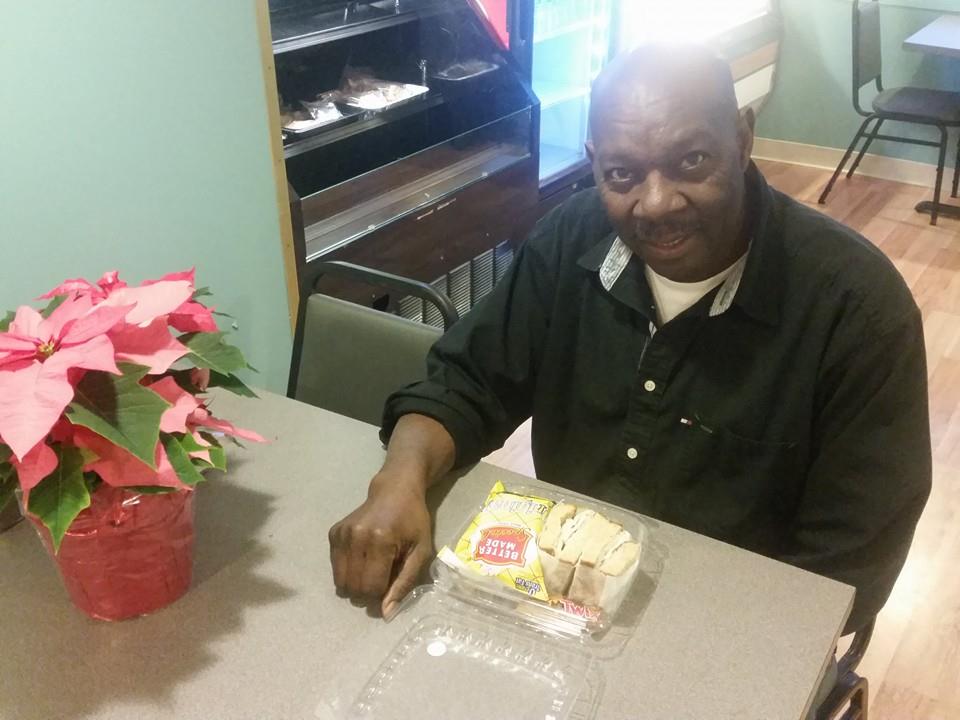
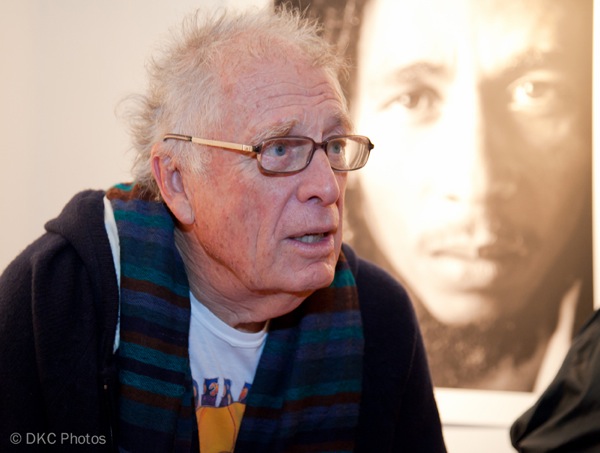
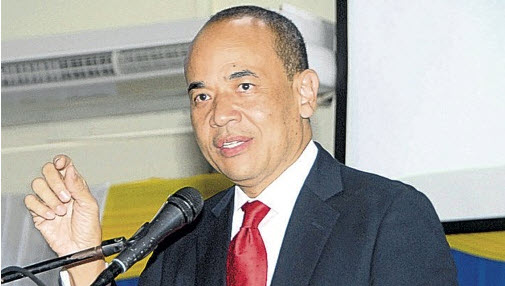
Ya Tafari Photo 1

Ya Tafari is an author, composer, singer- songwriter, and poet who plays piano, guitar, and Latin percussion. Born in Cincinnati, Ohio, he lived in the Bahama Islands and was “adopted” by a family there, and now claims the Bahamas as his second home.

Although Ya Tafari started as a folk singer, the genres in which he composes and performs are varied. They include traditional jazz, spiritual jazz, Latin, Caribbean, folk, tropical, and new world music. Using his keyboards, he has become renowned as a “one-man orchestra.”

Ya Tafari is fond of and influenced by other artists from around the world: Brazil – Joao Gilberto, Cuba – Tito Puente, Jamaica – Bob Marley and Harry Belafonte, the Bahamas – Ronnie Butler, Canada – Joni Mitchell, the United States – John Coltrane, Miles Davis, and Pharaoh Sanders.

His greatest love and influence is the Holy Bible , and the other Lost Books of God’s Word.

BIOGRAPHY

Yaqob Tafari Makuannen, a.k.a. YaTafari, an award-winning composer, author, and performer of Jazz, Latin, Caribbean, and Spiritual music, grew up in Cincinnati, Ohio, and settled in Detroit, Michigan.

In Detroit, he received the Spirit of Detroit Award, and earned first place in the Renaissance Center Talent Contest two years in a row. He was presented awards by Chuck Gaidica, a local celebrity.

As an adult, he traveled to the Bahamas and adopted it as his second home. There he performed for the Governor General of the Bahamas and attended the Bahamian Parliament. His first recording contract was with G.B.I. Records and Television in Freeport, Bahamas, with Frank Penn, C.E.O. Thus, he is a Bahamian recording artist.

Ya Tafari has performed throughout Metropolitan Detroit and internationally. As music consultant for the African Heritage Center of the Detroit Public Schools, he hassperformed in DPS schools to audiences from pre-school to high School, introducing students and staff to different rhythms, musical instruments, and genres from the African Diaspora.

His greatest love is reading God’s word in the Holy Bible and Lost Books. His recent projects include a book, Man Woman & Spirit, and a recording of the Psalms of David to the original music of Ya Tafari.

DISCOGRAPHY

Esoteric Jazz

Ya Tafari Photo 3

Esoteric sound is therapeutic and healing for the soul and spirit… for meditation and relaxation of body, mind, and spirit. It is a mystical transcendental mood.

Mystery Of The Sea

Ya Tafari Photo 4

No matter where you are…riding in a car, sitting in your home, walking, or laying down to sleep, “Mystery   of the Sea” will take you there and lift your spirits to another level. The sea speaks to us in its own way. Experience the mystery.

All Blue

Ya Tafari Photo 5

Why Blue? God chose the color Blue. The sky, the ocean, rage and calm, to cause people to remember to focus on right living. I thank God for blue. So, I used blue to focus on beautiful   sounds of music. All blue.

QUOTES/REVIEWS

“Ya Tafari has a smooth, soothing, CD sound that sends you on vacation.” – Kevin P., Detroit, Michigan

“The Cherry Hill Stage was ablaze with the sounds of Caribbean Jazz performed by YATAFARI & THE AFRO PERCUSSIONS.” – The Dearborn Homecoming Committee, Michael A. Guido, Mayor – Dearborn, Michigan

“…Caribbean Recording Artist YaTafari, the JunkAnoo jazz java and calypso colorful butterfly, is electrifying, exciting, and a ’must see’ entertainer from Nassau, Bahamas.” – Gracie Cross, Ragggedy Girl Publishing Group

“…Mr. Makuannen presented a program here at McKinley (Elementary School) during our Cultural History Celebration. It was outstanding!…You can’t go wrong with this program.” – J. Korenowsky, Principal, Toledo Public Schools

“…A fun festive, and captivating entertainer who will warm hearts with a kaleidoscope of sound, color, and sweet musical beats.” – Mitali Chaudhery, Website Coordinator, Schoolcraft College International Institute (SCII)

———–

Download Ya Tafari Music Now

Ya Tafari  Photo 2

In a structured interview, Ya Tafari made the following contributions to this discussion of the roadmap to elevate the Caribbean through music:

Bold = Author

You obviously love the Bahamas/Caribbean, why do you not live there?

I loved my time in Freeport (Bahamas 2nd City). I would love to settle there, but realistically the economic challenges are hard to overcome. I hope they would have a better economic reality there … in the future.

Where do you call home now?

I live here in the Greater Detroit area, in the Town of Novi. Despite not being “home” in the Bahamas, I have the assured comfort of being with my family here. I bring my love for my Bahamaland here to Detroit in my musical presentations.

What was your biggest performance ever?

I’ve had the pleasure of performing as a solo artist at the stage here in Detroit at the Eastern Market. I had a huge crowd completely captivated by my sound. They were into me, and I was into them. Good times!

What would you like to see different in the Bahamas in the next 5 years?

I would like to see that community more accepting of foreign influences, especially a fusion with Eastern/Oriental Music. I’ve incorporated a lot of the spirit of Yoga, Zen and New Age influences in my music and it serves me and my listening audience well. As the old adage goes: “Music does soothe the savage beast”.

What would you like to see different in the Bahamas in the next 10 years?

I would like to see the Bahamas open up the doors to all mankind. The society is not as tolerant of diverse people as they need to be. This is bigger than just music. If/when they do widen-out more, it will even improve their tourism product, by extending their embrace for all people.

What would you like to see different in the Bahamas in the next 20 years?

I would like to see the next generation of Bahamians not join the Diaspora. Of course, I want them to travel, and study, and engage foreign cultures and  then bring those experiences back home. That is an exciting prospect.

Where do you consider to be the best place on earth to live?

Italy! That culture is about enjoying life; they are concerned about more than just work, or making money. They strive to care for their people and lift everyone up. Despite the lack of economics though, I still find the Black communities around the world have a closer brotherhood. When a Black person sees another Black person while travelling abroad, they tend to acknowledge each others as brothers. That is inspiring. Yes, we can all do better.

————

Ya Tafari can be reached at: makuannen@mail.com

This artist profile is a manifestation of the roadmap depicted in the book Go Lean…Caribbean, that music, food and culture can be accentuated to promote change in the Caribbean and within the Caribbean Diaspora abroad. Music can help make any location a better place to live, work and play.

This Go Lean commentary previously featured subjects related to developing the eco-systems of the music/show business, as sampled here:

https://goleancaribbean.com/blog/?p=3641 ‘We Built This City …’ on Music
https://goleancaribbean.com/blog/?p=3568 Forging Change: Music Moves People
https://goleancaribbean.com/blog/?p=2415 Broadway Musical ‘The Lion King’ Roars into History With its Impact
https://goleancaribbean.com/blog/?p=1909 Music Role Model Berry Gordy – No Town Like Motown
https://goleancaribbean.com/blog/?p=866 Caribbean Music Man Bob Marley: The legend lives on!

This Go Lean roadmap calls for heavy-lifting to build up Caribbean communities, by shepherding important aspects of Caribbean life, beyond music and/or show business. In fact, the development roadmap has these 3 prime directives:

  • Optimization of the economic engines in order to grow the regional economy to $800 Billion & create 2.2 million new jobs.
  • Establishment of a security apparatus to protect the resultant economic engines.
  • Improvement of Caribbean governance to support these engines.

The Go Lean book focuses primarily on economic issues, but it recognizes that music, in its many genres can build up a nation, a city, and a community (Diaspora and local alike). Any difficult subject – like slavery, freedom and emancipation – can be more easily communicated if backed-up by a catchy melody and rhyming words. Yes, music can effect change and forge progress and elevation of society. The Go Lean book serves as a roadmap for the introduction and implementation of the technocratic Caribbean Union Trade Federation (CU). The CU is designed to elevate the region’s economic, security and governing societal engines.

The Go Lean book posits that one person, despite their field of endeavor, can make a difference in the Caribbean, and its impact on the world; that there are many opportunities where one champion, one advocate, can elevate society. In this light, the book features 144 different advocacies, one specifically to Promote Music (Page 231). We need champions like Ya Tafari to promote the joys of Caribbean life, culture and music.

The Go Lean roadmap specifically encourages the region, to lean-in to elevate society with these specific community ethos, strategies, tactics, implementations and advocacies to advance the music eco-systems:

Community Ethos – Deferred Gratification Page 21
Community Ethos – Economic Principles – People Respond to Incentives in Predictable Ways Page 21
Community Ethos – Economic Principles – The Consequences of Choices Lie in the Future Page 21
Community Ethos – Ways to Impact the Future Page 26
Community Ethos – Ways to Foster Genius – Fostering Music and the Arts Page 27
Community Ethos – Ways to Promote Intellectual Property Page 29
Community Ethos – Ways to Bridge the Digital Divide Page 31
Community Ethos – Ways to Impact Turn-Around Page 33
Community Ethos – Ways to Promote Happiness – Promotion of Domestic Culture Page 36
Community Ethos – Ways to Impact the Greater Good Page 37
Strategy – Vision – Confederate 30 Member-States Page 45
Strategy – Mission – Celebrate the Music, Sports, Art, People and Culture of the Caribbean Page 46
Tactical – Fostering a Technocracy Page 64
Tactical – Growing Economy to $800 Billion – Education Empowerments Page 70
Tactical – Separation-of-Powers – Educational Empowerment from Federation to Member-States Page 85
Implementation – Trade Mission Objectives Page 117
Planning – 10 Big Ideas for the Caribbean Region – Four Languages in   Unison Page 127
Planning – Ways to Improve Trade – Diaspora Trade Page 128
Planning – Ways to Make the Caribbean Better – Music/Media/Arts for better PLAY Page 131
Advocacy – Ways to Grow the Economy Page 151
Advocacy – Ways to Create Jobs Page 152
Advocacy – Ways to Improve Communications Page 186
Advocacy – Ways to Impact Hollywood – Media Arts of the Caribbean to the World Page 202
Advocacy – Ways to Impact the Diaspora Page 217
Advocacy – Ways to Preserve Caribbean Heritage Page 218
Advocacy – Ways to Improve the Arts Page 230
Advocacy – Ways to Promote Music Page 231
Appendix – Job Creations – Music and Art Related Jobs: 12,600 Page 257
Appendix – 169 Caribbean Musical Genres for all 30 Member States Page 347

The quest to change the Caribbean is conceivable, believable and achievable. But it is more than just playing or listening to music; it is the business of music, and music’s ability to reflect change and effect change. This helps the heavy-lifting of forging permanent change in the region. The Go Lean roadmap will make the region a better place to live, work and play. From the outset, the book recognized the significance of music in the Caribbean change/empowering plan with these statements in the opening Declaration of Interdependence (Page 12 & 14):

xxi.  Whereas the preparation of our labor force can foster opportunities and dictate economic progress for current and future generations, the Federation must ensure that educational and job training opportunities are fully optimized for all residents of all member-states, with no partiality towards any gender or ethnic group. The Federation must recognize and facilitate excellence in many different fields of endeavor, including sciences, languages, arts, music and sports. This responsibility should be executed without incurring the risks of further human flight, as has been the past history.

xxxii.  Whereas the cultural arts and music of the region are germane to the quality of Caribbean life, and the international appreciation of Caribbean life, the Federation must implement the support systems to teach, encourage, incentivize, monetize and promote the related industries for arts and music in domestic and foreign markets. These endeavors will make the Caribbean a better place to live, work and play.

The foregoing VIDEO explicitly depicted how the addition of music enhanced a Caribbean business establishment in the Detroit Diaspora community. Music can have that effect. It can make bad things good and good things better. It can be fun! While the Go Lean book describes the CU as a hallmark of a technocracy, with a commitment to efficiency and effectiveness, there is still a commitment to concepts of fun, such as music, arts, sports, film/media, heritage and culture.

This roadmap is a fully comprehensive plan with consideration to all aspects of Caribbean life. All stakeholders – residents and Diaspora – are hereby urged to lean-in to this roadmap.  🙂

Download the free e-Book of Go Lean … Caribbean – now!

—————

Appendix – Fenton’s Jamaican Jerk Chicken Restaurant – 28811 Northwestern Hwy, Southfield, Michigan, USA

Ya Tafari Photo 6

Ya Tafari Photo 7Ya Tafari Photo 8

Ya Tafari Photo 9

Share this post:
, , , , , ,

Socio-Economic Change: Illustrations That Perfectly Show How Society Has Changed

Go Lean Commentary

Be careful what you wish for; it just might come true. – Old Adage

This statement is a reporting of facts. In fact, this statement can be defined as a law. The law of the socio-economic dynamic. The definition of socio-economics (or social economics) is the social science that studies how economic activity affects and is shaped by social processes. In general it analyzes how societies progress, stagnate, or regress because of the local, regional or global economy.

This commentary is the 1st of a 3-part series; the other considerations relate to …

2. the high suicide rate among the elderly, and …

3. the economic impact studies to justify public financing of private enterprises.

Over the past half century, the economic structures of many North American and Western European countries have changed dramatically, a mostly upward trajectory (growth) with occasional dips (recessions). During this same past half century, the economics of many Caribbean countries have also changed dramatically, but mostly towards poor or regressive conditions. This fact has forced a brain drain among many of the member-states’ professional classes.

This [brain drain] reality is a socio-economic dynamic; it was the motivation for the publishing of the book Go Lean…Caribbean in the first place. It describes the current assessments of the region and then communicates a vision to elevate the Caribbean’s 30 member-states and 42 million people into a Single Market economy. The goal is to create 2.2 million new jobs and grow the region to $800 Billion GDP. This vision is embedded in the following statements in the opening Declaration of Interdependence (Page 13) for these member-states:

xix. Whereas our legacy in recent times is one of societal abandonment, it is imperative that incentives and encouragement be put in place to first dissuade the human flight, and then entice and welcome the return of our Diaspora back to our shores. This repatriation should be effected with the appropriate guards so as not to imperil the lives and securities of the repatriated citizens or the communities they inhabit. The right of repatriation is to be extended to any natural born citizens despite any previous naturalization to foreign sovereignties.

xx. Whereas the results of our decades of migration created a vibrant Diaspora in foreign lands, the Federation must organize interactions with this population into structured markets. Thus allowing foreign consumption of domestic products, services and media, which is a positive trade impact. These economic activities must not be exploited by others’ profiteering but rather harnessed by Federation resources for efficient repatriations.

xxi. Whereas the preparation of our labor force can foster opportunities and dictate economic progress for current and future generations, the Federation must ensure that educational and job training opportunities are fully optimized for all residents of all member-states, with no partiality towards any gender or ethnic group. The Federation must recognize and facilitate excellence in many different fields of endeavor, including sciences, languages, arts, music and sports. This responsibility should be executed without incurring the risks of further human flight, as has been the past history.

xxiv.  Whereas a free market economy can be induced and spurred for continuous progress, the Federation must install the controls to better manage aspects of the economy: jobs, inflation, savings rate, investments and other economic principles. Thereby attracting direct foreign investment because of the stability and vibrancy of our economy.

xxv.  Whereas the legacy of international democracies had been imperiled due to a global financial crisis, the structure of the Federation must allow for financial stability and assurance of the Federation’s institutions. To mandate the economic vibrancy of the region, monetary and fiscal controls and policies must be incorporated as proactive and reactive measures. These measures must address threats against the financial integrity of the Federation and of the member-states.

Another dynamic has been the advancement and assimilation of technology. This acknowledgement was also pronounced in the opening Declaration of Interdependence (Page 14):

xxvii. Whereas the region has endured a spectator status during the Industrial Revolution, we cannot stand on the sidelines of this new economy, the Information Revolution. Rather, the Federation must embrace all the tenets of Internet Communications Technology (ICT) to serve as an equalizing element in competition with the rest of the world. The Federation must bridge the digital divide and promote the community ethos that research/development is valuable and must be promoted and incentivized for adoption.

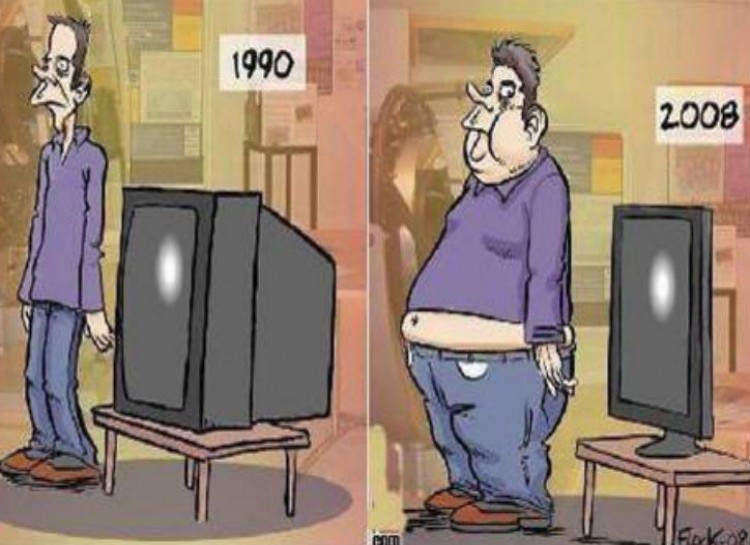
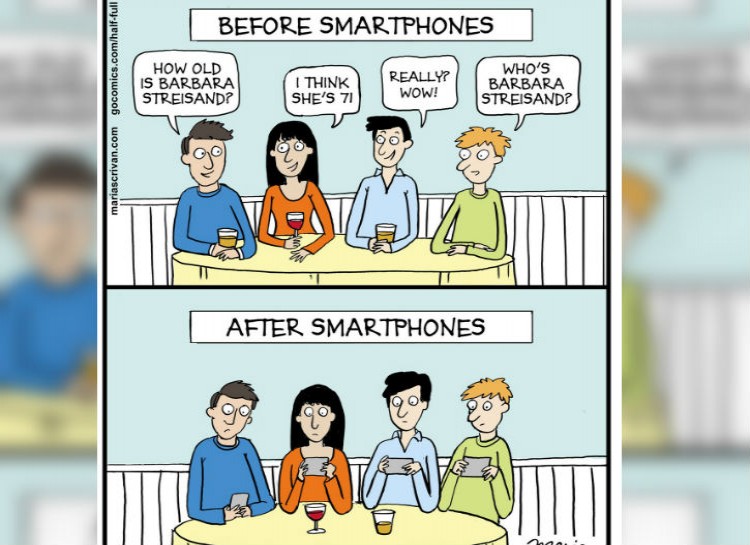
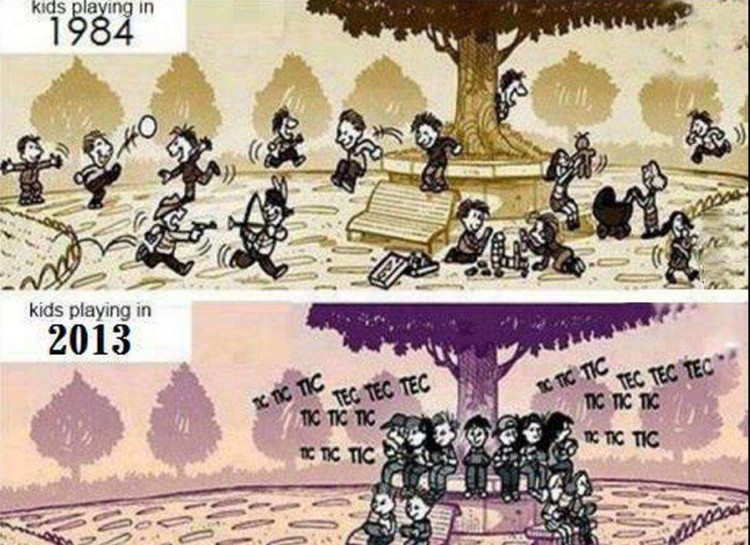
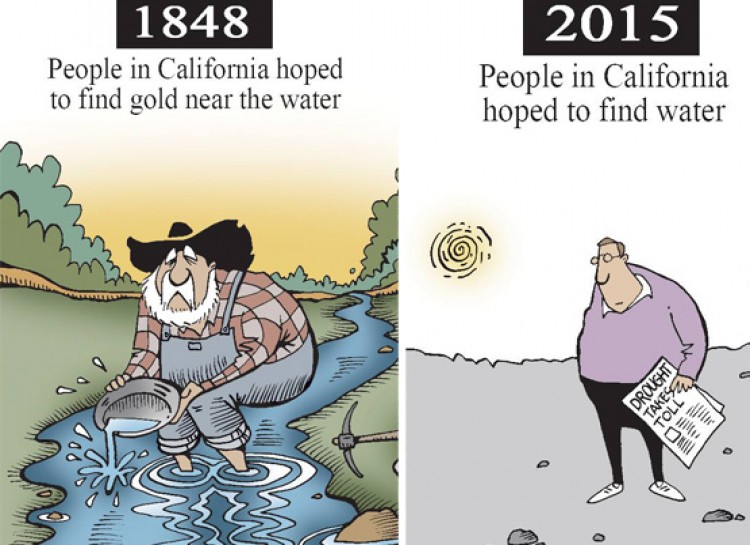
As these changes took hold of society, the social effects on people, families, traditions, habits and values have been drastic; a lot has changed over the past decades. How can this be conveyed graphically? The following – funny and enlightening illustrations – give an accurate depiction of society’s changes – then and now.

16 Illustrations That Perfectly Show How Society Has Changed

CU Blog - Socio-Economic Change - Illustrations That Perfectly Show How Society Has Changed - Photo 1
CU Blog - Socio-Economic Change - Illustrations That Perfectly Show How Society Has Changed - Photo 2
CU Blog - Socio-Economic Change - Illustrations That Perfectly Show How Society Has Changed - Photo 3
CU Blog - Socio-Economic Change - Illustrations That Perfectly Show How Society Has Changed - Photo 4
CU Blog - Socio-Economic Change - Illustrations That Perfectly Show How Society Has Changed - Photo 5
CU Blog - Socio-Economic Change - Illustrations That Perfectly Show How Society Has Changed - Photo 6
CU Blog - Socio-Economic Change - Illustrations That Perfectly Show How Society Has Changed - Photo 7
CU Blog - Socio-Economic Change - Illustrations That Perfectly Show How Society Has Changed - Photo 8
CU Blog - Socio-Economic Change - Illustrations That Perfectly Show How Society Has Changed - Photo 9
CU Blog - Socio-Economic Change - Illustrations That Perfectly Show How Society Has Changed - Photo 10
Illustrations 11
CU Blog - Socio-Economic Change - Illustrations That Perfectly Show How Society Has Changed - Photo 12
CU Blog - Socio-Economic Change - Illustrations That Perfectly Show How Society Has Changed - Photo 13
CU Blog - Socio-Economic Change - Illustrations That Perfectly Show How Society Has Changed - Photo 14
CU Blog - Socio-Economic Change - Illustrations That Perfectly Show How Society Has Changed - Photo 15
CU Blog - Socio-Economic Change - Illustrations That Perfectly Show How Society Has Changed - Photo 16
(Source: Brain Jet Daily Cerebral Stream – Ad-supported Online Site – Retrieved July 15, 2015 from: http://www.brainjet.com/random/19913/then-and-now-16-illustrations-that-perfectly-show-how-society-has-changed#slide/1)

Change is afoot!

Among the changes – to people, families, traditions, habits and values – is the socio-economic effects of the Caribbean brain drain, estimated at 70%. This is a crisis!

This is a consistent theme in the Go Lean book; it describes “push and pull” of societal change; it posits that life in North American and Western European countries serve as a “pull” factor for many Caribbean communities. Plus, the failing economic conditions further “push” many citizens away. To alleviate this crisis, there is the need to counter-defend with purposeful change of our own for the region. The Go Lean book serves as a roadmap to elevate the economics of the region; and it clearly describes the impact on other societal engines: security and governance. Everyone feels the change; it is like a moving locomotive, “you can’t stop the beat; you can’t stop the motion of the ocean”. This is also the moving imagery depicted in the VIDEO below.

The Go Lean roadmap is a planning tool for the strategic, tactical, and operational empowerments that needs to be implemented to keep pace with the world’s Agents of Change: Technology, Aging Diaspora, Globalization and “Climate Change”. The purpose of the book therefore is to position the region at the corner of preparation and opportunity, so as to benefit from change. We have many needs – economic, security and governance – to avert this societal abandonment trend. The book / roadmap is for the introduction and implementation of the Caribbean Union Trade Federation (CU), a super-national institution with federal powers to forge change in the Caribbean community. One mission is to dissuade further human flight/brain drain. (An additional mission is to incentivize the repatriation of the Caribbean Diaspora).

The following details from the book Go Lean … Caribbean are the assessments, community ethos, strategies, tactics, implementations and advocacies prescribed to manifest the elevation of Caribbean economy, society and life:

Assessments of Caribbean Communities – English, French, Dutch, and Spanish states Page 15
Community Ethos – Security Principles Page 23
Community Ethos – Economic Principles Page 21
Community Ethos – Governing Principles Page 24
Community Ethos – Ways to Impact the Future Page 26
Community Ethos – Ways to Impact Turn-Arounds Page 33
Community Ethos – Ways to Impact the Greater Good Page 37
Strategy – Vision – Confederate all 30 Member-States into a Single Market Page 45
Strategy – Mission – Repatriating Caribbean Diaspora Page 46
Strategy – Mission – Dissuade further Brain Drain Page 46
Tactical – Fostering a Technocracy Page 64
Tactical – Separation of Powers with Caribbean Member-states Page 71
Implementation – Assemble all Member-States Page 96
Implementation – Ways   to Pay for Change Page 101
Implementation –Reasons to Repatriate Page 118
Planning – Ways to Make the Caribbean   Better Page 131
Planning – Ways to Better Manage Image Page 133
Advocacy – Ways to Grow the Economy Page 151
Advocacy – Ways to Create Jobs Page 152
Advocacy – Better Manage the Social Contract Page 170
Advocacy – Ways to Foster Technology Page 197
Advocacy – Impact the Diaspora Page 217
Advocacy – Ways to Preserve Caribbean Heritage Page 218
Advocacy – Ways to Protect Human Rights Page 220

Many Caribbean citizens love their homeland but the realities of flawed economics will always cause a brain drain. This flight-abandonment creates the need for a societal reboot in the economics, security and governing engines. This is the quest of the Go Lean…Caribbean roadmap, to reboot these societal engines; employing best-practices and better strategies, tactics and implementations to impact its prime directives; identified with the following 3 statements:

  • Optimization of the economic engines in order to grow the regional economy to $800 Billion & create 2.2 million new jobs.
  • Establishment of a security apparatus to protect the resultant economic engines and mitigate challenges/threats to ensure public safety for the region’s stakeholders.
  • Improvement of Caribbean governance, including a separation-of-powers with member-states, to support these engines.

The same as the foregoing illustrations, there are many Go Lean blog commentaries that have detailed the anatomy of change in the Caribbean. Our changes – to systems, people and institutions – have not always been positive, or beneficial. Here is a sample of related commentaries, grouped by the recognizable categories in the illustrations:

  • Transforming Change
  • Internet & Communications Technology
  • Toleration of Minority Classes

Transforming Change

https://goleancaribbean.com/blog/?p=5695 Repenting, Forgiving and Reconciling the Past
https://goleancaribbean.com/blog/?p=5088 Immigrants account for 1 in 11 Blacks in USA
https://goleancaribbean.com/blog/?p=5123 A Lesson in History – Royal Charter: Zimbabwe -vs- South Africa
https://goleancaribbean.com/blog/?p=5098 Forging Change – ‘Food’ for Thought
https://goleancaribbean.com/blog/?p=4840 Jamaican Poll: ‘Bring back the British!’
https://goleancaribbean.com/blog/?p=3834 State of the Caribbean Union
https://goleancaribbean.com/blog/?p=3568 Forging Change: Music Moves People
https://goleancaribbean.com/blog/?p=3512 Forging Change: The Sales Process
https://goleancaribbean.com/blog/?p=3455 Restoration of Diplomatic Relations with Cuba
https://goleancaribbean.com/blog/?p=2291 Forging Change: The Fun Theory
https://goleancaribbean.com/blog/?p=1433 Caribbean loses more than 70 percent of tertiary educated to brain drain
https://goleancaribbean.com/blog/?p=1309 5 Steps of a Bubble
https://goleancaribbean.com/blog/?p=248 Is “Print” dead? Maybe soon! The Transforming Change in Media

Internet & Communications Technology

https://goleancaribbean.com/blog/?p=5840 Computer Glitches Disrupt Business As Usual
https://goleancaribbean.com/blog/?p=5668 Move over Mastercard/Visa – New Payment Systems in the Caribbean
https://goleancaribbean.com/blog/?p=5648 Changes in Music Retailing – Online and Mobile
https://goleancaribbean.com/blog/?p=5435 China Internet Policing – Model for Caribbean
https://goleancaribbean.com/blog/?p=4381 Net Neutrality: It Matters Here …
https://goleancaribbean.com/blog/?p=3974 Google and Mobile Phones – Here comes Change
https://goleancaribbean.com/blog/?p=3915 ‘Change the way you see the world; you change the world you see’
https://goleancaribbean.com/blog/?p=1416 The Amazon Model for Caribbean Empowerment
https://goleancaribbean.com/blog/?p=1092 The Aereo Case Study and the future of TV
https://goleancaribbean.com/blog/?p=308 CARCIP – Regional Initiatives to Urge Greater Caribbean Innovation

Toleration of Minority Classes

https://goleancaribbean.com/blog/?p=5784 Buggery in Jamaica – ‘Say It Ain’t So’!
https://goleancaribbean.com/blog/?p=5720 Disability Advocacy: Reasonable Accommodations
https://goleancaribbean.com/blog/?p=5527 American Defects: Racism – Is It Over?
https://goleancaribbean.com/blog/?p=5333 Racial Legacies: Cause and Effect
https://goleancaribbean.com/blog/?p=5183 A Lesson in History – Cinco De Mayo and the Mexican Model
https://goleancaribbean.com/blog/?p=4613 A Lesson in History – The ‘Luck of the Irish’; Past, Present & Future
https://goleancaribbean.com/blog/?p=4551 US Territories – Between a ‘rock and a hard place’
https://goleancaribbean.com/blog/?p=2633 Book Review: ‘The Protest Psychosis’
https://goleancaribbean.com/blog/?p=2547 Miami’s Success versus Caribbean Failure
https://goleancaribbean.com/blog/?p=809 Muslim officials condemn abductions of Nigerian girls
https://goleancaribbean.com/blog/?p=789 America’s War on the Caribbean
https://goleancaribbean.com/blog/?p=546 Book Review: ‘The Divide’
https://goleancaribbean.com/blog/?p=341 US slams Caribbean Human Rights practices
https://goleancaribbean.com/blog/?p=209 Case Study: Muhammad Ali –vs- the United States

There are many societal defects in the Caribbean region; we need effective strategies, tactics and implementation to effect turn-around.

The needs of Caribbean community cannot be casually dismissed. As crises ensue, people respond; they make choices: fight or flight.

We must do better than our prior track record. We can “rock with the changes” in society. Though this effort is not easy, rather heavy-lifting, the adoption and application of best-practices can yield beneficial results – the returns are worth the investment.

“You can’t stop a locomotive as it comes speeding down the track; yesterday is history and it’s never coming back. But tomorrow is a brand new day and it doesn’t know White or Black” – see VIDEO in the Appendix below.

This is the goal of the Go Lean roadmap: to help make the Caribbean a better place to live, work and play. 🙂

Download the free e-Book of Go Lean … Caribbean – now!

————-

Appendix VIDEO – You Can’t Stop The Beat! – https://youtu.be/ovLKUoMqPSg

A VIDEO of the finale of the movie Hairspray (2007) … ENJOY Edna & Tracy Turnblad, Link Larkin, Penny Pingleton, Velma & Amber Von Tussle, Motormouth Maybelle, Corny Collins and other characters, as they drive home the important moral lesson of accepting change.

Share this post:
, , , ,
[Top]

Role Model Iris Adderley – Disability Advocate: Reasonable Accommodations

Go Lean Commentary/Interview

Travel away from your children for an extended time period and you would notice something amazing: Change.

It turns out that change is constant; children grow. But you have to take a step back to notice the difference.

CU Blog - Anecdote - Iris Adderley - Photo 1This is the experience of Disability Advocate Iris Adderley. She is a proud Bahamian – oldest child with 10 siblings who mostly all still live in the Bahamas – who served her country well; especially during the early days of nation-building (independence status was obtained in 1973). In a job assignment with the Bahamas Ministry of Tourism, Ms. Adderley spent many years abroad (Coral Gables, FL and Dallas, TX) promoting the Bahamas around the world as a tourist and convention destination. She was continuously called upon to sell a vision of the Bahamas that she discovered later to be out-dated, and irrelevant. The country had changed … and even declined, it seemed, in her absence.

Ms. Adderley returned to the Bahamas in the year 2000, but not to the homeland she had left behind, rather to this newly changed community. The changes were not all good. To complicate matters, she was now returning as a quadriplegic, a permanent disability.

Ms. Adderley endured a life-threatening car accident in Metropolitan Dallas in 1982, where she lived and worked for her Ministry of Tourism assignment. But she does not consider her injury as a national sacrifice. It was just “time and unforeseen occurrence” befalling her; (see Bible reference of Ecclesiastes 9:11 in the Appendix below). This taught her a very important lesson that everybody is  vulnerable to injury and illness and can be rendered disabled. This new reality became her new advocacy, a quest to make sure people with disabilities have equal rights and opportunities to contribute to society. (This quest also applies as a population ages, the prevalence of disabilities increases proportionally; think Diabetes amputations, Hip replacements, etc.).

This conclusion aligns with the book Go Lean…Caribbean, that with just a reasonable accommodation, persons with disabilities can live a full and engaging life … and help to elevate their communities and make “home” better places to live, work and play.

What reasonable accommodations?

For starters, Ms. Adderley expressed that if her injury had occurred in her Caribbean homeland that she would now be dead!

The world is better … that she has survived.

The Go Lean book serves as a roadmap for the introduction and implementation of the technocratic Caribbean Union Trade Federation (CU). The CU is designed to elevate the region’s economic, security and governing societal engines. This includes healthcare. The CU roadmap calls for improvements to the region’s emergency management apparatus. There is a plan to deploy a network of 6 cutting-edge Trauma Centers throughout the Caribbean. With this mitigation and remediation, the region can more competently respond to trauma emergencies, like life-threatening auto accidents.

It is only reasonable to expect that Caribbean society would have caught up to finally being able this deliver on the social contract at this level, considering that Ms. Adderley trauma transpired 33 years ago.

Unfortunately, the experiences of so many in the Bahamas, specifically and the Caribbean as a whole, is that these countries are structured only for the lowest common denominator (LCD); anyone one with needs above-and-beyond this LCD level is just “out-of-luck”.

This is unacceptable … and unreasonable for Caribbean contributors like Iris Adderley. This is also unacceptable … and unreasonable for the planners of the new Caribbean. We must deliver better on the social contract, the implied covenant where citizens surrender some of their freedoms and submit to the authority of the State in exchange for protection of remaining natural and legal rights. Blatant failures on the delivery of this social contract lead to an undesirable destination: abandonment!

Ms. Adderley lived in the most advanced country in the world, in the US State of Texas. She would have been excused if she wanted to remain there for her sustained existence, considering her health disposition. But she showed a national sacrifice ethos and repatriated back to her Caribbean homeland. This is heroic!

In a structured interview, Iris Adderley made the following contributions to this discussion of the roadmap to elevate her community:

CU Blog - Anecdote - Iris Adderley - Photo 2

Bold = Author

What are the details of your advocacy?

There should be a stronger manifestation of “Human” and “Woman’s” rights in the Bahamas. It is deplorable that the country is so deficient in these offerings. Earlier in my career, I took the assignment in Dallas so as to leave the Coral Gables Office of the Ministry of Tourism because the spirit of gender discrimination was just so acute. I felt I could make a bigger impact in a more reasonable environment. I was proven correct and did indeed have a greater impact professionally there. Returning to the Bahamas in 2000 I wanted to nurture that same advocacy at home, but this time with a supplemental agenda for persons with disabilities.

What are your responsibilities now?

I serve as a Consultant at the Disability Affairs Division of the Ministry of Social Services and Community Development. I help to guide public policy to benefit those with disabilities in the country, even blending my prior role as a Tourism promoter by trying to create a great environment for persons with disabilities to come visit our shores and enjoy our hospitality.

What would you do if your project had 50% more funding?

Create rehabilitation centers, if not throughout the whole country, then at least in the capital city of Nassau. Persons with disabilities need help and support to get back to the point where they can contribute to society. Increased funding would allow more cultural education to message that persons with disabilities have the same rights in any society, to be more inclusive of the day-to-day affairs.

What do you want to see in The Bahamas in … 5 years?

More fulfilment of Sir Lynden’s Vision; (the first and longest-serving Prime Minister after majority rule, Sir Lynden O. Pindling). The young people need to know who we are as a people, where we came from and that we were a nation of beautiful, strong black people.

I want to see Bahamians own more of the Bahamas. This means diversifying from the main industries of tourism and financial services; all we’re doing there is servicing other people’s assets; we are not really owning or creating anything.

What do you want to see in The Bahamas in … 20 years?

The Bahamas needs a National Strategic Plan. This needs to reflect the values and best-practices that have been honed from experiences from around the world. The Bahamas has a global Diaspora – mostly of an elderly disposition now – their participation should be invited.

What features of North America/Europe would you like to see here?

The social safety nets (health, schools, food for the poor) are to be admired, especially in many European countries. Those communities extend themselves to care for their elderly, poor, sick and disabled citizens.

How would you feel if your children emigrate?

Though I don’t have any children directly, I’m blessed with many nieces, nephews and loving family members. So many of them are bright young all-stars and go-getters, studying abroad in colleges and universities. Unfortunately, far too often, these ones are not setting their sight on a return home to the Bahamas. Some would even rather go to a Latin American country than to come back here to the Bahamas. This is sad, as it does not reflect the great sacrifices that so many in the previous generations made to forge opportunities for this next generation.

Where do you consider to be the best place to live?

At one point, my answer would have been the Bahamas; but I’ve gotten to see the real country as it exists today; this is not what we sold to tourists in promotions and advertisements. The country has changed … downward. Instead of our next generation offering reassurance and hope, I am more troubled at their lack of proper training. We cannot expect greatness from the status quo of most of this generation today..

What areas are you most disappointed in when considering the last 20 years?

The lack of discernment is especially disappointing. Many times the wise course is presented to Bahamians, but they seem to like to ignore wisdom and instead proceed down a destructive path. I guess the proverb is true: “A prophet is not accepted at home”.

Your wisdom is discerned here Ms. Adderley!

The points from this Disability Advocate align with the CU/Go Lean roadmap. Our directive is similar: to elevate Caribbean society, including those persons with physical disabilities. The declarative statements of the prime directive are as follows:

  • Optimization of the economic engines in order to grow the regional economy.
  • Establishment of a security apparatus to prepare and protect stakeholders for natural, man-made and incidental emergencies.
  • Improvement of Caribbean governance to support these engines.

The book posits that one person, despite their field of endeavor, can make a difference in the Caribbean, and its impact on the world; that there are many opportunities where one champion, one advocate, can elevate society. In this light, the book features 144 different advocacies, one specifically for Persons with Disabilities (Page 228). We need advocates, vanguards and sentinels like Iris Adderley to ensure equal opportunities for all these relevant stakeholders.

The Go Lean roadmap specifically encourages the region, to lean-in to elevate society with these specific community ethos, strategies, tactics, implementations and advocacies:

Community Ethos – Economic Principles – Economic Systems Influence   Individual Choices Page 21
Community Ethos – Governing Principles – Minority Equalization Page 24
Community Ethos – Governing Principles – Lean Operations Page 24
Community Ethos – Governing Principles – Return on Investments Page 24
Community Ethos – Ways to Promote Happiness – Gerontology/Aging Factors Page 36
Community Ethos – Ways to Impact the Greater Good Page 37
Strategy – Vision – Confederate all 30 Member-states Page 45
Strategy – Mission – Repatriate the Diaspora,   young and old …even those disabled Page 46
Anatomy of Advocacies – Examples   of Individuals Who Made Impact Page 122
Planning – 10 Big Ideas – Homeland Security Pact Page 127
Planning – Ways to Improve Failed-State Indices – Minority and Human Rights Page 134
Planning – Lessons from US Constitution – Equal Protection for all Minorities Page 139
Advocacy – Ways to Improve Healthcare – Caribbean [Persons] with Disabilities Page 156
Advocacy – Ways to Improve Governance – For All Citizens Page 168
Advocacy – Ways to Better Manage the Social Contract – Medical / Heath Endeavors Page 170
Advocacy – Ways to Impact Justice – Ensure Rights for the Disabled Classes Page 177
Advocacy – Ways to Remediate and Mitigate Crime – Hate Crime Qualifiers Page 178
Advocacy – Ways to Impact Homeland Security – Emergency Management Page 180
Advocacy – Ways to Improve Emergency Management – Trauma Art & Science Page 182
Advocacy – Ways to Foster Technology – e-Government Interfaces & Services Page 197
Advocacy – Ways to Protect Human Rights – Caribbean [Persons] with Disabilities Page 220
Advocacy – Ways to Improve Elder-Care – Caribbean [Persons] with Disabilities Page 225
Advocacy – Ways to Empower Women Page 226
Advocacy – Ways to Impact Persons with Disabilities – ‘Americans with Disabilities Act’ Model Page 228
Appendix – Trauma Center Definitions Page 336

The Caribbean region wants a more optimized society … for all citizens. We want to mitigate human rights and civil rights abuses, and empower all for a better life, liberty and the pursuit of happiness.

The Go Lean book posits that economic measures and security measures must be in tandem for any societal empowerment effort. According to the foregoing interview/profile, after 30 years, our region is still behind with regards to servicing the needs of one specific minority group: persons with disabilities. We must do better!

Early in the book, the pressing need to optimize facilitations for this population group was pronounced in the Declaration of Interdependence (Pages 11 – 13), with these opening statements:

ix. Whereas the realities of healthcare and an aging population cannot be ignored and cannot be afforded without some advanced mitigation, the Federation must arrange for health plans

xi. Whereas all men are entitled to the benefits of good governance in a free society, “new guards” must be enacted to dissuade the emergence of incompetence, corruption, nepotism and cronyism at the peril of the people’s best interest. The Federation must guarantee the executions of a social contract between government and the governed.

xvi. Whereas security of our homeland is inextricably linked to prosperity of the homeland, the economic and security interest of the region needs to be aligned under the same governance.  the accedence of this Federation must equip the security apparatus with the tools and techniques for predictive and proactive interdictions.

xviii. Whereas all citizens in the Federation member-states may not have the same physical abilities, reasonable accommodations must be made so that individuals with physical and mental disabilities can still access public and governmental services so as to foster a satisfactory pursuit of life’s liberties and opportunities for happiness.

The Go Lean book explicitly acknowledges that optimizing the needs of persons with disabilities is not easy; this requires strenuous effort, heavy-lifting. These persons with disabilities normally are not able to contribute as much to Caribbean society as they draw on the public resources. This is unfortunate! Other societies have provided great models and amenities for facilitating fuller lives for those with disabilities: motorized wheelchairs, cars equipped with hand controls, Braille and TeleType (TTY and/or TDD) devices. This is the quest of the CU/Go Lean roadmap to engage more people – even those persons with disabilities – into this effort to optimize Caribbean society. More innovations are forthcoming; see VIDEOs in the Appendix. This vision is only reasonable, but prudent, as this population can generate a positive Return on Investment (ROI); as demonstrated by Iris Adderley in the foregoing interview.

Many subjects related to this profile of role model Iris Adderley have been blogged in previous Go Lean…Caribbean commentary; they are sampled here:

https://goleancaribbean.com/blog/?p=5002 Managing a ‘Clear and Present Danger’
https://goleancaribbean.com/blog/?p=4308 911 – Emergency Response Empowerments for the Caribbean
https://goleancaribbean.com/blog/?p=4278 Businesses Try to Stave-off Brain Drain as Boomers Age, Retire
https://goleancaribbean.com/blog/?p=3780 National Sacrifice – The Missing Ingredient
https://goleancaribbean.com/blog/?p=341 American Human Rights Leaders Slams Caribbean Poor Record

The CU/Go Lean roadmap is designed to empower and enhance the economic engines for the full participation and benefit of all Caribbean people. This includes the number of citizens that may have some physical challenges (deaf, blind, lame/mobility, etc.) or mental challenges. The CU’s vision is that this population group represents a critical talent pool that is under-served and underutilized; they are therefore included in the Go Lean roadmap. Tactically there is the call for a Caribbean [Persons] with Disabilities (CDA) provision to be embedded in the Caribbean Union confederation treaty; the request is to have the edict of reasonable accommodations legally embedded in statures.

In addition to the economic missions, the CU treaty would also address security needs, with the mission to fortify homeland security and to mitigate societal threats and risks, including a solution for emergency management and medical trauma arts and sciences.

Lastly, the CU treaty addresses remediation for regional governance. The local governments are thusly spurred to adapt and enforce access standards for all public edifices and private structures providing commerce to the general public. This reasonable accommodations mandate is modeled after the Americans with Disabilities Act (ADA) feature in US federal law.

This roadmap is a fully comprehensive plan with consideration to all aspects of Caribbean life. All stakeholders – citizens, businesses, and institutions – are hereby urged to lean-in to this roadmap.

Yes, with all “hands on deck”, persons with disabilities as well, the Caribbean can truly become a better place to live, work and play. 🙂

Download the book Go Lean … Caribbean – now!

———–

Appendices

1. Additional information on Iris Adderley: http://www.tribune242.com/news/2013/oct/22/iris-adderley-tireless-advocate-people-disabilitie/

2. Bible Reference – Ecclesiastes 9:11:
“I have seen something further under the sun, that the swift do not always win the race, nor do the mighty win the battle, nor do the wise always have the food, nor do the intelligent always have the riches, nor do those with knowledge always have success, because time and unexpected events overtake them all.” — New World Translation

3. VIDEO – Hugh Herr: The new bionics that let us run, climb and dancehttps://youtu.be/CDsNZJTWw0w

Published on Mar 28, 2014 – Hugh Herr is building the next generation of bionic limbs, robotic prosthetics inspired by nature’s own designs. Herr lost both legs in a climbing accident 30 years ago; now, as the head of the MIT Media Lab’s Biomechatronics group, he shows his incredible technology in a talk that’s both technical and deeply personal — with the help of ballroom dancer Adrianne Haslet-Davis, who lost her left leg in the 2013 Boston Marathon bombing, and performs again for the first time on the TED stage.

4. VIDEO‘Terminator’ arm is world’s most advanced prosthetic limbhttps://youtu.be/_qUPnnROxvY

Published on Nov 5, 2012 – A father who lost his arm in an accident six years ago has been given a new lease of life by a hi-tech bionic hand which is so precise he can type again. Nigel Ackland, 53, has been fitted with the Terminator-like carbon fibre mechanical hand which he can control with movements in his upper arm. The new bebionic3 myoelectric hand, which is also made from aluminium and alloy knuckles, moves like a real human limb by responding to Nigel’s muscle twitches. Incredibly, the robotic arm is so sensitive it means the father-of-one can touch type on a computer keyboard, peel vegetables, and even dress himself for the first time in six years.
More info about this amazing prosthetic can be found here http://bebionic.com

5. VIDEO – Berkeley Bionics: Introducing eLEGS – https://youtu.be/WcM0ruq28dc

Published on October 13, 2011 – Berkeley Bionics has rebranded. The company is now known as Ekso Bionics and eLEGS has become Ekso. To clarify, the device is an exoskeleton and the brand of the exoskeleton is Ekso, by Ekso Bionics.

Share this post:
, , , , , , ,
[Top]

Repenting, Forgiving and Reconciling the Past

Go Lean Commentary

CU Blog - Repenting, Forgiving and Reconciling the Past - Photo 2Christendom has a sullied past!

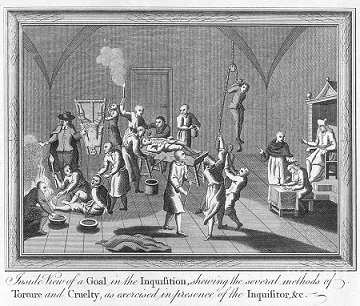
This is well represented in the historicity of the Spanish Inquisition (see Appendix * below), the campaign by the Roman Catholic Church to weed out the Jews and Muslims in Spain! This bad history of ethnic cleansing was at its worst in the 15th Century. See the tongue-in-cheek comedy VIDEO in the Appendix.

How does a community repent, forgive and reconcile from such a bad legacy?

Easier said than done!

For starters, do not proceed as if the events never happened. This is the lesson now being learned in modern day Spain. See the news article here:

Title: Ancient Spanish Village Is No Longer Named ‘Kill Jews’
(Source: Huffington Post – Online News Site; posted: 06/22/2015; retrieved 06/27/2015 from: http://www.huffingtonpost.com/2015/06/22/castrillo-matajudios-name-change_n_7636368.html)

SPAIN-RELIGION-HISTORY-JUDAISM

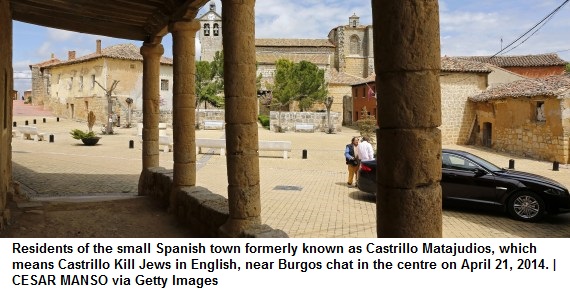
MADRID (AP) — The tiny Spanish village of Castrillo Matajudios — which means “Camp Kill Jews” — on Monday officially changed its name back to Castrillo Mota de Judios (“Jews’ Hill Camp”) following a referendum and regional government approval.

The village, with about 50 inhabitants, voted to change the name in 2014 after the mayor argued that the term was offensive and that the village should honor its Jewish origins.

Documents show the villages’ original name was “Jews’ Hill Camp” and that the “Kill Jews” name dates from 1627, after a 1492 Spanish edict ordering Jews to become Catholics or flee the country. Those who remained faced the Spanish inquisition, with many burned at the stake.

The name change was approved by the regional government of Castilla y Leon and published in the region’s official gazette.

Although Jews were killed in the area, researchers believe the village got its recent name from Jewish residents who converted to Catholicism and wanted to reinforce their repudiation of Judaism to convince Spanish authorities of their loyalty.

Others suspect the change may have come from a slip of the pen.

Although no Jews live in the village today, many residents have ancient Jewish roots and the town’s official shield includes the Star of David.

Spain’s lower house of parliament this month approved a law setting a citizenship path for the descendants of Jews who were forced to flee the country centuries ago.

Spain also has an ancient southeastern town called Valle de Matamoros, which translate as “Kill Muslims Valley.” The town has said it has no plans to change its name. Matamoros is also a surname in Spain.

There is a need to reconcile a lot of bad episodes in Caribbean history. Think:

  • Haiti
  • Cuba
  • Guyana’s border with Venezuela
  • Belize’s border with Guatemala

The book Go Lean…Caribbean posits that any attempt at unification of the Caribbean 30 member-states region must consider the ancient and modern conflicts some member-states have with others. The book serves as a roadmap for the introduction and implementation of the Caribbean Union Trade Federation (CU). A mission of the roadmap is to reverse the societal abandonment and invite the repatriation of the Diaspora by flashing the “Welcome Home” signs. But “old parties” returning can also open “old wounds”. Therefore an additional mission is to facilitate formal reconciliations, much like the model in South Africa with their Truth & Reconciliation Commissions (TRC). This mission will assuage these Failed-State indicators and threats (Page 272):

  • “Revenge seeking” groups
  • Group Grievances

The foregoing article depicts a bad episode in history and the best-practices to repent, forgive and reconcile.

The approach is simple, correct the bad “community ethos” from the past. The Go Lean  book defines “Community Ethos” as the fundamental character or spirit of a culture; the underlying sentiment that informs the beliefs, customs, or practices of a group or society; the dominant assumptions of a people or period. The Spanish town in the foregoing article continued to laud the bad actions of “killing Jews” by the continued use of that name. Though none of the villains or victims are alive today, it is just a bad spirit to imbrue from one generation to another. This town name “Camp Kill Jews” is such a bad image to uphold.

The CU/Go Lean vision to elevate Caribbean society must consider the issue of image. There is the need for a sentinel role for Caribbean image, as there are a lot of times that Caribbean life and people are denigrated in works of media arts: film, TV, books, magazines. The Go Lean roadmap calls for the CU to assume that role. Using cutting edge delivery of best practices, the CU will employ strategies, tactics and implementations to impact its prime directives; identified with the following 3 statements:

  • Optimization of the economic engines in order to grow the regional economy to $800 Billion & create 2.2 million new jobs.
  • Establishment of a security apparatus to protect the resultant economic engines.
  • Improvement of Caribbean governance to support these engines.

The Go Lean book speaks of the Caribbean as in crisis and posits that this crisis can be averted, that it is a “terrible thing to waste”. The Go Lean roadmap seeks to optimize the entire Caribbean economic/security/governance eco-system. This vision is defined early in the book (Page 12) in the following pronouncements in the Declaration of Interdependence:

xi. Whereas all men are entitled to the benefits of good governance in a free society, “new guards” must be enacted to dissuade the emergence of incompetence, corruption, nepotism and cronyism at the peril of the people’s best interest. The Federation must guarantee the executions of a social contract between government and the governed.

xii. Whereas the legacy in recent times in individual states may be that of ineffectual governance with no redress to higher authority, the accedence of this Federation will ensure accountability and escalation of the human and civil rights of the people for good governance, justice assurances, due process and the rule of law. As such, any threats of a “failed state” status for any member state must enact emergency measures on behalf of the Federation to protect the human, civil and property rights of the citizens, residents, allies, trading partners, and visitors of the affected member state and the Federation as a whole.

xiii. Whereas the legacy of dissensions in many member-states (for example: Haiti and Cuba) will require a concerted effort to integrate the exile community’s repatriation, the Federation must arrange for Reconciliation Commissions to satiate a demand for justice.

The Go Lean book details a lot more, a series of assessments, community ethos, strategies, tactics, implementations and advocacies to optimize the image of the Caribbean region:

Community Assessment – Dutch Caribbean – Integration & Secessions Page 16
Community Assessment – French Caribbean – Organization & Discord Page 17
Community Ethos – Economic Systems Influence Choices & Incentives Page 21
Community Ethos – People Respond to Incentives Page 21
Community Ethos – Consequences of Choices Lie in the Future Page 21
Community Ethos – Ways to Impact Turn-Arounds Page 33
Community Ethos – Ways to Manage Reconciliations Page 34
Community Ethos – Ways to Promote Happiness Page 36
Community Ethos – Ways to Impact the Greater Good Page 37
Strategy – Vision – Confederating a Non-Sovereign Union of 30 Member-states Page 45
Strategy – Mission – Keep the next generation at home; Repatriate Diaspora Page 46
Tactical – Separation of Powers – State Department – Economic & Diplomatic Relations Page 80
Tactical – Separation of Powers – Judiciary – Truth & Reconciliation Courts Page 90
Implementation – Foreign Policy Initiatives at Start-up – Relationships with South & Central American Neighbors Page 102
Implementation – Ways to Deliver Page 109
Implementation – Reasons to Repatriate Page 118
Anatomy of Advocacies Page 122
Planning – Ways to Improve Image Page 133
Planning – Improve Failed-State Indices Page 134
Advocacy – Ways to Grow the Economy Page 151
Advocacy – Ways to Better Manage the Social Contract Page 170
Advocacy – Ways to Impact Justice – Truth & Reconciliation Commissions Page 177
Advocacy – Ways to Impact Hollywood – Controlling Image Page 203
Advocacy – Ways to Preserve Caribbean Heritage Page 218
Advocacy – Ways to Protect Human Rights – Reconciliations Page 220
Advocacy – Ways to Re-boot Cuba – Reconciliations Page 236
Advocacy – Ways to Re-boot Haiti – Reconciliations Page 238
Advocacy – Ways to Impact The Guianas – Venezuelan Foreign Policy Synchronizations Page 241
Advocacy – Ways to Impact Belize – Guatemala Grand Bargain Page 242
Appendix – Failed State Indicators & Definitions Page 271
Appendix – Dominican Republic’s Trujillo Regime – Ethnic Cleansing Page 306

The foregoing news article conveys that many Spanish/European communities had not come to grips with their discriminatory past.  So there is the need for outreach. This relates to anti-Semitism and the historic abuses cast on the Jewish people. For the African Diaspora, the majority population of 29 of the Caribbean member-states, the experience is even more egregious.  (French territory St. Barthélemy is the sole demographic exception).

Now is the time for all of the Caribbean, the people and governing institutions, to lean-in for the empowerments described in the book Go Lean … Caribbean. There is reason to believe that these empowerment efforts can be successful. The Go Lean roadmap conveys how single causes/advocacies have successfully been forged throughout the world (Page 122 – Anatomy of Advocacies). We can succeed here as well.

(This movement does not campaign for reparations from slavery nor colonization).

The CU will address past, present and future challenges of human rights abuses and defamation to the Caribbean image.

The Caribbean can succeed in the advocacy to improve the Caribbean image in the region and around the world. There are previous blog commentaries that delve into aspects of Caribbean image:

https://goleancaribbean.com/blog/?p=4971 A Lesson in History – Royal Charter: Truth & Consequence
https://goleancaribbean.com/blog/?p=4058 Bad Image: New York Times Maledictions on The Bahamas
https://goleancaribbean.com/blog/?p=2547 Image: Miami’s Success versus Caribbean Failure
https://goleancaribbean.com/blog/?p=2025 Caribbean Jobs – Attitudes & Images of the Diaspora
https://goleancaribbean.com/blog/?p=1847 Good Image – Declared “Among the best in the world”
https://goleancaribbean.com/blog/?p=1568 Bad Image/Bad Tweet: Dutch airline angers Mexico soccer fans
https://goleancaribbean.com/blog/?p=857 Caribbean Image: Dreadlocks

The foregoing consideration helps us to appreciate that reconciliation is possible only when the persons doing the wrong accept the forgiveness being offered and repents for what they have done. We applaud the tiny Spanish village of Castrillo Matajudios for showing the world their “Mea Culpa”; this is the best-practice for reconciliation.

This is now a new ethos for the Caribbean, to reconcile conflicts from the past; to repent, forgive and hopefully forget the long history of human rights abuses from the past. All of this effort, heavy-lifting, will make the region a better place to live, work and play. We urge all to lean-in to this roadmap.

Download the book Go Lean … Caribbean – now!

————–

Appendix * – Spanish Inquisition

The Tribunal of the Holy Office of the Inquisition (Spanish: Tribunal del Santo Oficio de la Inquisición), commonly known as the Spanish Inquisition (Inquisición española), was established in 1478 by Catholic Monarchs Ferdinand II of Aragon and Isabella I of Castile. It was intended to maintain Catholic orthodoxy in their kingdoms and to replace the Medieval Inquisition, which was under Papal control. It became the most substantive of the three different manifestations of the wider Christian Inquisition along with the Roman Inquisition and Portuguese Inquisition.

The Inquisition was originally intended in large part to ensure the orthodoxy of those who converted from Judaism and Islam. This regulation of the faith of the newly converted was intensified after the royal decrees issued in 1492 and 1501 ordering Jews and Muslims to convert or leave Spain.

Various motives have been proposed for the monarchs’ decision to found the Inquisition such as increasing political authority, weakening opposition, suppressing conversos, profiting from confiscation of the property of convicted heretics, reducing social tensions, and protecting the kingdom from the danger of a fifth column (clandestine activities involving acts of sabotage, disinformation, or espionage executed within defense lines by secret sympathizers of an external force).

The body was under the direct control of the Spanish monarchy. It was not definitively abolished until 1834, during the reign of Isabella II, after a period of declining influence in the previous century.

The Spanish Inquisition is often cited in literature and history as an example of Catholic intolerance and repression. Modern historians have tended to question earlier and possibly exaggerated accounts concerning the severity of the Inquisition. Although records are incomplete, estimates of the number of persons charged with crimes by the Inquisition range up to 150,000, with 2,000 to 5,000 people executed.

(Source: https://en.wikipedia.org/wiki/Spanish_Inquisition)

————–

Appendix VIDEO – Movie: History of the World Part 1 Inquisition Scenehttps://youtu.be/5ZegQYgygdw

Published on Dec 8, 2012 – From Mel Brooks’ “History of the World Part 1”. This is a comedic parody, with song-and-dance!
Category: Entertainment; License: Standard YouTube License

Share this post:
, , , , , , , ,
[Top]

Economic Principle: Profit-Seeking – When ‘Greed is Good’

Go Lean Commentary

1776 was a very good year…

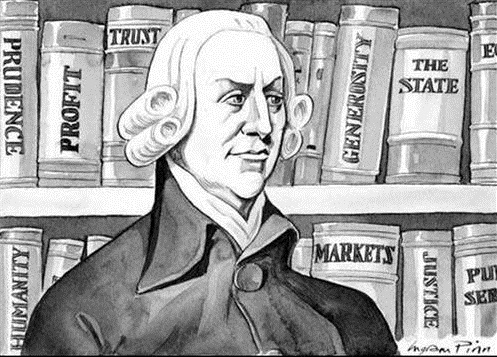
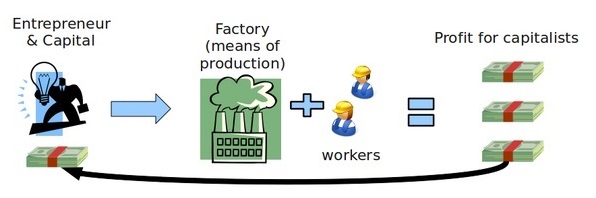
Profit-Seeking - 1… not just because the 13 original British colonies declared their independence as the United States of America, but also the publication of the landmark book on Economic Principles, An Inquiry into the Nature and Causes of the Wealth of Nations by Adam Smith, the 18th century Scottish political economics pioneer. The publication is cited as a reference source in the book Go Lean…Caribbean – a roadmap for the introduction and implementation of Caribbean Union Trade Federation (CU) to elevate the economic, security and governing engines of the Caribbean region. A relevant quote from the Go Lean book follows (Page 67):

… usually abbreviated as “The Wealth of Nations“, this book is considered the first modern work of economics, and [Smith] is thusly cited as the “father of modern economics”, even today, and among the most influential thinkers in the field of economics. Through reflection over the economics at the beginning of the Industrial Revolution the book touches upon broad topics as the division of labor, productivity and free markets.

Smith attacked most forms of government interference in the economic process, including tariffs, arguing that these create inefficiency and high prices in the long run. It is believed that this theory, laissez-faire economic philosophy, influenced government legislation in later years.

Smith advocated a government that was active in sectors other than the economy. He advocated public education for poor adults, a judiciary, and a standing army—institutional systems not directly profitable for private industries.

The “Invisible Hand” is a frequently referenced theme from Smith’s book. He refers to “the support of domestic industry” and contrasts that support with the importation of goods. Neoclassical economic theory has expanded the metaphor beyond the domestic/foreign manufacture argument to encompass nearly all aspects of economics. The “invisible hand” of the market is a metaphor now to describe the self-regulating behavior of the marketplace. … 

Profit 2

Adam Smith’s writings qualified many rules of economics, in particular the divisions of income into profit, wage, and rent.[4] In a previous commentary the concept of rent-seeking was fully explored.; also the global challenges of wage-seeking have been fully detailed in another commentary. Now, this commentary is about profit, and the concepts of governance and public choice theory, allowing for the pursuit of profit. Where there is the pursuit of profit, there is invariably a focus on greed. For the purpose of elevating the Caribbean economy, greed is good! (In this case “greed” is not being defined as excess, but rather the natural desire to possess wealth, goods, or objects of abstract value with the intention to keep it for one’s self. The dreaded excess of “greed”, on the other hand, is a “vice” that must be cautiously monitored and curtailed, i.e. Crony-Capitalism). See VIDEO in the Appendix below.

Profit 3

Actor Michael Douglas as Wall Street Corporate Raider Gordon Gekko in the 1987 film

The Caribbean features mixed economies, wherein greed or profit plays a pivotal motivator. A mixed economy is an economic system that is variously defined as containing a mixture of markets (profit-seeking) and economic planning, in which both the private sector and the State direct the economy; or as a mixture of free markets with economic interventionism.[1] Most mixed economies can be described as market economies with strong regulatory oversight and governmental provision of public goods. That “public good” is what Adam Smith focused on for the role of government – non-profit-seeking activities – that they should concentrate on the public availability and distribution of the non-excludable and non-rivalrous materials that satisfies human wants (infrastructure, education, judiciary, security, etc.) and are not directly profitable for private industries.

Economies ranging from the United States[3][4] to Cuba[5] – in effect all of the Caribbean – have been catalogued as mixed economies. Around the world, the most prosperous countries with the highest average standard of living tend to have mixed economic systems with democratically elected governments. Thusly, this consideration on the Economic Principles of Profit, as follows, is important for the roadmap to elevate Caribbean economies:

Encyclopedia Reference: Profit (Economic)
Source: https://en.wikipedia.org/wiki/Profit_(economics)
In classical economics, profit is the return to an owner of capital goods or natural resources in any productive pursuit involving labor, or a return on bonds and money invested in capital markets.[3]

Related concepts include profitability and the profit motive, which is the motivation of firms to operate so as to maximize their profits. Mainstream microeconomic theory posits that the ultimate goal of a business is to make money. Stated differently, the reason for a business’s existence is to turn a profit. The profit motive is a key tenet of rational choice theory, or the theory that economic agents (actors or decision makers in some aspect of the economy) tend to pursue what is in their own best interests. Accordingly, businesses seek to benefit themselves and/or their shareholders by maximizing profits. In general the basic premise of rational choice theory is that aggregate social behavior results from the behavior of individual actors, each of whom is making their individual decisions.

Profit 4

Government intervention
Often, governments will try to intervene in uncompetitive markets to make them more competitive. Antitrust or competition laws were created to prevent powerful firms from using their economic power to artificially create the barriers to entry they need to protect their economic profits.[7][8][9] This includes the use of predatory pricing toward smaller competitors.[6][9][10] With lower barriers, new firms can enter the market, making the long run equilibrium much more like that of a competitive industry, with no economic profit for firms.

(This consideration aligns with alternate Economic Principles regarding sources of income; other commentaries detailed the concepts of rent-seeking and wage-seeking).

This historic information regarding Economist Adam Smith is important in understanding the “Lessons in Economic Principles”. These lessons matter in assessing today’s Caribbean status and fate, as there is the need for the optimal balance of “free market” versus “interventionism”. The Go Lean book explains the significance of Economic Principles with this excerpt (Page 21):

While money is not the most important factor in society, the lack of money and the struggle to acquire money creates challenges that cannot be ignored. The primary reason why the Caribbean has suffered so much human flight in the recent decades is the performance of the Caribbean economy. Though this book is not a study in economics, it recommends, applies and embraces these 6 core economic principles as sound and relevant to this roadmap:

  1. People Choose: We always want more than we can get and productive resources (human, natural, capital, etc.) are always limited. Therefore, because of this major economic problem of scarcity, we usually choose the alternative that provides the most benefits with the least cost.
  2. All Choices Involve Costs: The opportunity cost is the next best alternative you give up when you make a choice. When we choose one thing, we refuse something else at the same time.
  3. People Respond to Incentives in Predictable   Ways: Incentives are actions, awards, or rewards that determine the choices people make. Incentives can be positive or negative. When incentives change, people change their behaviors in predictable ways.
  4. Economic Systems Influence Individual Choices and Incentives: People cooperate and govern their actions through both written and unwritten rules that determine methods of allocating scarce resources. These rules determine what is produced, how it is produced, and for whom it is produced. As the rules change, so do individual choices, incentives, and behavior.
  5. Voluntary Trade Creates Wealth: People specialize in the production of certain goods and services because they expect to gain from it. People trade what they produce with other people when they think they can gain something from the exchange. Some benefits of voluntary trade include higher standards of living and broader choices of goods and services.
  6. The Consequences of Choices Lie in the Future: Economists believe that the cost and benefits of decision making appear in the future, since it is only the future that we can influence. Sometimes our choices can lead to unintended consequences.
    Source: Handy Dandy Guide (HDC) by the National Council on Economic Education (2000)

The Go Lean book presents a roadmap on how to better benefit from these economic principles – and how to increase profit-seeking opportunities in the Caribbean member-states and for the region as a whole. While “rent-seeking” – seeking to increase one’s share of existing wealth without creating new wealth – is a negative ethos, “profit-seeking” – the end product of investing in new opportunities – can be positive. The absence of profit-seeking is an absence of prosperity. Every Caribbean community suffers from an acute problem of societal abandonment. Those most capable of creating opportunities of prosperity, the educated classes, have mostly fled these lands, despite being labeled “the best address on the planet”. Why?

When people love their homelands yet begrudgingly leave, the defects – deficient economic opportunities – must be addressed. Caribbean member-states have tried, strenuously, over the decades, to diversify their economies; yet the preponderance of evidence point to adoption of “rent-seeking” in the region rather than the required profit-seeking. The requisite investment of the resources (time, talent, treasuries) for the goal of economic optimization may be too big for any one Caribbean member-state to conduct alone. Rather there is the need for a regional technocratic solution.

The Caribbean needs the evolutionary spirit (for one generation to do better than the previous one) of “profit-seeking” or “greed”. As portrayed in the VIDEO:

“Greed, for the lack of a better word, is good!” [Thus says the fictitious character in below VIDEO]. “Greed clarifies, cuts through and captures the essence of the evolutionary spirit. Greed in all of its forms – greed for life, greed for money, greed for love, knowledge has marked the upward surge of mankind; and greed will not only save [this company] but the other malfunctioning corporation called the USA”.

Posted commentary by Screen Name “fh downtheline”on the below VIDEO:

There is a better word than “greed” for this application. It may be “hunger”. Hunger is more present [in the Caribbean] and thusly more important than greed. Hunger keeps people hunting for progress. While greed ends up destroying the value of that progress. “Hunger” would refer to more than just food or economic dimension, but rather there is a hunger for knowledge, hunger for scientific thought. While “greed” says “I want” this, “Hunger” says “I need” this!

“Profit-seeking” is also a better word than “greed”; it too conveys the same concept as the definition above.

The consideration of the Go Lean book, as related to this subject is one of governance, the need for technocratic stewardship of the regional Caribbean society. This point was also pronounced in the opening Declaration of Interdependence (Pages 12 – 14) with these acknowledgements and statements:

xi.   Whereas all men are entitled to the benefits of good governance in a free society, “new guards” must be enacted to dissuade the emergence of incompetence, corruption, nepotism and cronyism at the peril of the people’s best interest. The Federation must guarantee the executions of a social contract between government and the governed.

xii. Whereas the legacy in recent times in individual states may be that of ineffectual governance with no redress to higher authority, the accedence of this Federation will ensure accountability and escalation of the human and civil rights of the people for good governance, justice assurances, due process and the rule of law. As such, any threats of a “failed state” status for any member state must enact emergency measures on behalf of the Federation to protect the human, civil and property rights of the citizens, residents, allies, trading partners, and visitors of the affected member state and the Federation as a whole.

xxiv.  Whereas a free market economy can be induced and spurred for continuous progress, the Federation must install the controls to better manage aspects of the economy: jobs, inflation, savings rate, investments and other economic principles. Thereby attracting direct foreign investment because of the stability and vibrancy of our economy.

xxvi.  Whereas the Caribbean region must have new jobs to empower the engines of the economy and create the income sources for prosperity, and encourage the next generation to forge their dreams right at home, the Federation must therefore foster the development of new industries, like that of ship-building, automobile manufacturing, prefabricated housing, frozen foods, pipelines, call centers, and the prison industrial complex. In addition, the Federation must invigorate the enterprises related to existing industries like tourism, fisheries and lotteries – impacting the region with more jobs.

This Go Lean book serves as a roadmap for the introduction and implementation of the technocratic Caribbean Union Trade Federation (CU) to provide better stewardship for the 30 member-states of the Caribbean region. The CU is motivated by positive community ethos, designed to elevate Caribbean society and the economic opportunities there in. In general, the Go Lean roadmap stresses key community ethos, strategies, tactics, implementations and advocacies necessary to transform and turn-around the eco-systems of Caribbean society. These points are detailed in the book as follows:

Community Ethos – Deferred Gratification Page 21
Community Ethos – Return on Investments Page 24
Community Ethos – Ways to Impact the Future – Count on the Greedy to be greedy Page 26
Community Ethos – Ways to Help Entrepreneurship – Fostering Incubators Page 28
Community Ethos – Ways to Impact the Greater Good Page 37
Strategy – Vision – Confederate all 30 member-states / 4 languages into a Single Market Page 45
Tactical – $800 Billion Economy – How and When – Adam Smith Case Study Page 67
Tactical – Fostering High Job Multiplier Industries Page 70
Tactical – Separation-of-Powers – CU Federal Government versus Member-State Governance Page 71
Implementation – Ways to Pay for Change – Award exploratory rights in exclusive territories Page 101
Planning – 10 Big Ideas – #3: Proactive Anti-crime Measures Page 127
Planning – Ways to Improve Trade Page 128
Planning – Ways to Improve Interstate Commerce Page 129
Planning – Ways to Make the Caribbean Better Page 131
Advocacy – Ways to Grow the Economy Page 151
Advocacy – Ways to Create Jobs Page 152
Advocacy – Ways to Improve Education – Online Job Training Page 159
Advocacy – Ways to Improve Governance Page 168
Advocacy – Ways to Better Manage the Social Contract Page 170
Advocacy – Ways to Better Manage Natural Resources Page 183
Advocacy – Reforms for Banking Regulations – Tools to Stimulate/Control the Economy Page 199
Advocacy – Ways to Impact Wall Street Page 200
Advocacy – Ways to Impact Main Street Page 201
Advocacy – Ways to Battle Poverty – Entrepreneurial Values Page 222
Appendix – Job Multipliers Page 259

In considering this economic history, the CU/Go Lean roadmap is motivated to create value for Caribbean communities, to foster good economic habits and principles. In general, the CU/Go Lean roadmap employs better strategies, tactics and implementations to impact its prime directives; identified with the following 3 statements:

  • Optimization of the economic engines in order to grow the regional economy to $800 Billion & create 2.2 million new jobs.
  • Establishment of a security apparatus to protect the resultant economic engines and mitigate internal and external threats.
  • Improvement of Caribbean governance – federal, national, municipal and corporate – to support these engines.

As defined in previous blog/commentaries, the CU/Go Lean roadmap asserts best-practices for proper stewardship for regional, national, municipal, and corporate governance. One strategy advocated is to better grow/control the money supply. The end-product should be the creation of new jobs, wealth, trade networks, plus develop new products and services, and an educated society.

New jobs need not only originate from the big corporate entities; that is the multi-national corporations that are traded on Wall Street or the 9 stock exchanges in the Caribbean region. No, rather small-to-medium enterprises (SME) – and even the self-employment “hustle” – will play a role in the economic optimization process. These points were detailed in these previous commentaries:

https://goleancaribbean.com/blog/?p=3490 How One Entrepreneur Can Rally a Whole Community
https://goleancaribbean.com/blog/?p=2857 Where the Jobs Are – Entrepreneurism in Junk – the “Hustle” Ethos
https://goleancaribbean.com/blog/?p=1325 Puerto Rico Governor Signs Bill on SME’s
https://goleancaribbean.com/blog/?p=398 Self-employment on the rise in the Caribbean –  the “Hustle” Ethos
https://goleancaribbean.com/blog/?p=214 LCD versus an Entrepreneurial/”Hustle” Ethos

Adherence to economic principles/best-practices, such as profit-seeking, would help us make our Caribbean community better to live, work and play. We need to optimize the “invisible hand” of the market to incentivize, retain and repatriate Caribbean “free market” enterprises. Everyone in the region – the people, entrepreneurs, business owners and governmental institutions – are all urged to lean-in to this roadmap to elevate the Caribbean economic engines. 🙂

Download the book Go Lean … Caribbean – now!

———–

Appendix VIDEO: Gordon Gekko “Greed is Good” – https://youtu.be/PF_iorX_MAw
Uploaded on Dec 9, 2011 – Gordon Gekko, principal character in 1987 movie “Wall Street”, *unknowningly* describes the problems facing today’s private sector, while blasting the bureaucracy responsible for said problems in the first place. A classic speech, both in film and, also, within economic thought.

Share this post:
, , , ,
[Top]

Economic Principle: Bad Ethos of Rent-Seeking

Go Lean Commentary

Imagine a person making a resolution to improve their health…
… but they smoke cigarettes.

The expectation first would be:

Quit smoking!

One does not have to be a medical doctor, a PhD or a genius to glean this logic. It is now just common sense. Alas, common sense is not so common!

This commentary is not about smoking. It is about economics and public choice theory; see VIDEO’s below. In particular this commentary is about the bad Economic Principle referred to as “rent-seeking”. (This aligns with alternate Economic Principles regarding sources of income; other commentaries detailed the concepts of profit-seeking and wage-seeking). This is a big deal! Imagine a government public health department gifting cigarettes to people as a public health policy. Yes, it is that bad! This is the formal definition of “rent-seeking”:

CU Blog - Economic Principle - Bad Ethos of Rent-Seeking - Photo 1Rent-seeking is an attempt to obtain economic rent (i.e., the portion of income paid to a factor of production in excess of that which is needed to keep it employed in its current use) by manipulating the social or political environment in which economic activities occur, rather than by creating new wealth. Rent-seeking implies extraction of uncompensated value from others without making any contribution to productivity. The classic example of rent-seeking, according to Nobel Laureate Economist Robert Shiller, is that of a feudal lord who installs a chain across a river that flows through his land and then hires a collector to charge passing boats a fee (or rent of the section of the river for a few minutes) to lower the chain. There is nothing productive about the chain or the collector. The lord has made no improvements to the river and is helping nobody in any way, directly or indirectly, except himself. All he is doing is finding a way to make money from something that used to be free.[5]

“Finding a way to make money from something that used to be free”! How evasive is this practice? How can we identify it and how can we stop it?

The Caribbean is in crisis! Surveying the economic landscape of the region, we see a preponderance of rent-seeking as public policy in one member-state after another; see international Examples below. Alas, the book Go Lean…Caribbean, quoting famed economist Paul Romer (Page 8), declares that a crisis is a terrible thing to waste. Currently the region features unsustainable societal abandonment rates, exhaustive unemployment rates and near-Failed-State statuses.

The premise in this commentary is not an easy one. Just like it is common sense for a smoker to quit in order to preserve health/wellness, it is hereby acknowledged that this is “easier said than done”. Common sense is not so common! This heady discussion of advanced concepts in economics is an example of the heavy-lifting required to elevate Caribbean society.

The Go Lean book seeks to reboot and reform the economic engines of the Caribbean by being technocratic in applying best practices from the field of Economics. This intent is declared at the outset of the book with this Declaration of Interdependence (Page 10) for the region to work in unison to remediate the broken systems of commerce:

Preamble: As the colonial history of our region was initiated to create economic expansion opportunities for our previous imperial masters, the structures of government instituted in their wake have not fostered the best systems for prosperity of the indigenous people. Despite this past, we thrust our energies only to the future, in adapting the best practices and successes of the societies of these previous imperial masters and recognizing the positive spirit of their intent and vow to learn from their past accomplishments and mistakes so as to optimize the opportunities for our own citizenry to create a more perfect bond of union.

One of the basis of understanding this complex economic subject of “rent-seeking” is the review of the book The Rise and Decline of Nations by Economist Mancur Olson; in this publication, the writer traced the historic consequences of rent-seeking. He argued that the extremes of laissez-faire (the traditional economic philosophy in North American economies) and a command socialist economy (popular in Europe) would avoid rent-seeking, while a mixed economy would be subject to it.  Dr. Olson claimed two distinct groups (actors) with separate agendas: an encompassing organization with the broader social collective interest, versus the narrower distributional coalition – the special interest – who would naturally be a rent-seeking group that would slow down economic growth. See this detailed encyclopedic definition of the width-and-breadth of rent-seeking, here:

Encyclopedia Reference: Rent-Seeking
Source: http://en.wikipedia.org/wiki/Rent-seeking

In the field of Economics and public choice theory – the application of economic thinking to political issues – “rent-seeking” is seeking to increase one’s share of existing wealth without creating new wealth. The effects of these efforts are reduced economic efficiency [in the community] through poor allocation of resources, reduced actual wealth creation, lost government revenue, and increased income inequality,[1] and, potentially, national decline.

Attempts at capture of regulatory agencies to gain a coercive monopoly can result in advantages for the rent-seeker in the market while imposing disadvantages on competitors. (The term regulatory capture directly refers to a form of political corruption that occurs when a regulatory agency, created to act in the public interest, instead advances the commercial or special concerns of interest groups that dominate the industry or sector it is charged with regulating). The term “rent-seeking” itself is attributed to Economist Gordon Tullock in its modern sense with political connotation but with antecedents and common sense back to Ricardo.[2]

The idea of rent-seeking was developed by Gordon Tullock in 1967.[2] The expression rent-seeking was coined in 1974 by former World Bank Chief Economist Anne Krueger.[3] The word “rent” does not refer here to payment on a lease but stems instead from Adam Smith‘s division of incomes into profit, wage, and rent.[4] The origin of the term refers to gaining control of land or other natural resources.

Georgist economic theory – economic value derived from natural resources should belong equally to all residents of a community – describes rent-seeking in terms of land rent, where the value of land largely comes from government infrastructure and services (e.g. roads, public schools, maintenance of peace and order, etc.) and the community in general, rather than from the actions of any given landowner, in their role as mere titleholder. This role must be separated from the role of a property developer, which need not be the same person, and often is not.

In many market-driven economies, much of the competition for rents is legal, regardless of the harm it may do to an economy. However, some rent-seeking competition is illegal – such as bribery, corruption, smuggling, and even black market deals.

Rent-seeking is distinguished in economic theory from profit-seeking, in which entities seek to extract value by engaging in mutually beneficial transactions.[6] Profit-seeking in this sense is the creation of wealth, while rent-seeking is the use of social institutions such as the power of government to redistribute wealth among different groups without creating new wealth.[7] In a practical context, income obtained through rent-seeking may contribute to profits in the standard, accounting sense of the word.

Examples
An example of rent-seeking in a modern economy is spending money on political lobbying for government benefits or subsidies in order to be given a share of wealth that has already been created, or to impose regulations on competitors, in order to increase market share.

CU Blog - Economic Principle - Bad Ethos of Rent-Seeking - Photo 3A famous example of rent-seeking is the limiting of access to lucrative occupations, as by medieval guilds or modern state certifications and licensures. Taxi licensing is a commonly-referenced example of rent-seeking. To the extent that the issuing of licenses constrains overall supply of taxi services (rather than ensuring competence or quality), forbidding competition by livery vehicles, unregulated taxis and/or illegal taxis renders the (otherwise consensual) transaction of taxi service a forced transfer of part of the fee, from customers to taxi business proprietors. [Labor unions also fit the definition of rent-seeking].

The concept of rent-seeking would also apply to corruption of bureaucrats who solicit and extract ‘bribe’ or ‘rent’ for applying their legal but discretionary authority for awarding legitimate or illegitimate benefits to clients.[8] For example, tax officials may take bribes for lessening the tax burden of the tax payers; [and politicians take campaign contributions].

Regulatory capture is a related concept which refers to collusion between firms and the government agencies assigned to regulate them, which is seen as enabling extensive rent-seeking behavior, especially when the government agency must rely on the firms for knowledge about the market. Studies of rent-seeking focus on efforts to capture special monopoly privileges such as manipulating government regulation of free enterprise competition.[9] The term monopoly privilege rent-seeking is an often-used label for this particular type of rent-seeking. Often-cited examples include a lobby that seeks economic regulations such as tariff protection, quotas, subsidies,[10] or extension of copyright law.[11] Anne Krueger concludes that, “empirical evidence suggests that the value of rents associated with import licenses can be relatively large, and it has been shown that the welfare cost of quantitative restrictions equals that of their tariff equivalents plus the value of the rents” [12]

CU Blog - Economic Principle - Bad Ethos of Rent-Seeking - Photo 4Economists have argued that innovation in the financial industry is often a form of rent-seeking.[13][14] [A common everyday examples in American life would be: Wall Street on the ‘right’ and labor unions on the ‘left’].

[A local example stems from the Bahamas 2nd city of Freeport. That city provides a monopoly to the local petroleum retailing company, Freeport Oil Company, Limited (FOCOL). On one occasion that retailer limited gasoline purchases to the more expensive premium option only, as opposed to the standard choices; see story here: http://www.tribune242.com/news/2013/aug/02/focol-comes-under-fire-grand-bahama-residents/]

Possible consequences
From a theoretical standpoint, the moral hazard of rent-seeking can be considerable. If “buying” a favorable regulatory environment seems cheaper than building more efficient production, a firm may choose the former option, reaping incomes entirely unrelated to any contribution to total wealth or well-being. This results in a sub-optimal allocation of resources – money spent on lobbyists and counter-lobbyists rather than on research and development, on improved business practices, on employee training, or on additional capital goods – which retards economic growth. Claims that a firm is rent-seeking therefore often accompany allegations of government corruption, or the undue influence of special interests.[18]

Rent-seeking can prove costly to economic growth; high rent-seeking activity makes more rent-seeking attractive because of the natural and growing returns that one sees as a result of rent-seeking. Thus organizations value rent-seeking over productivity. In this case there are very high levels of rent-seeking with very low levels of output. Rent-seeking may grow at the cost of economic growth because rent-seeking by the state can easily hurt innovation. Ultimately, public rent-seeking hurts the economy the most because innovation drives economic growth.[19]

Government agents may initiate rent-seeking – such agents soliciting bribes or other favors from the individuals or firms that stand to gain from having special economic privileges, which opens up the possibility of exploitation of the consumer.[20] It has been shown that rent-seeking by bureaucracy can push up the cost of production of public goods.[21] It has also been shown that rent-seeking by tax officials may cause loss in revenue to the public exchequer.[8]

Mancur Olson traced the historic consequences of rent seeking in The Rise and Decline of Nations. As a country becomes increasingly dominated by organized interest groups, it loses economic vitality and falls into decline. Olson argued that countries that have a collapse of the political regime and the interest groups that have coalesced around it can radically improve productivity and increase national income because they start with a clean slate in the aftermath of the collapse. An example of this is Japan after World War Two. But new coalitions form over time, once again shackling society in order to redistribute wealth and income to themselves. However, social and technological changes have allowed new enterprises and groups to emerge in the past.[22]

A study by economists David Laband and John Sophocleus in 1988[23] estimated that rent-seeking had decreased total income in the US by 45 percent. Both economists William Dougan and Tullock affirmed (1991) the difficulty of finding the cost of rent-seeking. Rent-seekers of government-provided benefits will in turn spend up to that amount of benefit in order to gain those benefits, in the absence of, for example, the collective-action constraints highlighted by Olson.

Nobel Prize-winning Economist Joseph Stiglitz has argued that rent-seeking contributes significantly to income inequality in the United States through lobbying for government policies that let the wealthy and powerful get income, not as a reward for creating wealth, but by grabbing a larger share of the wealth that would otherwise have been produced without their effort.[26][27] (See related VIDEO here). Economists Thomas Piketty, Emmanuel Saez, and Stefanie Stantcheva (2011) had analyzed international economies and their changes in tax rates to conclude that much of income inequality is a result of rent-seeking among wealthy tax payers.[28]

This historic information is being considered in conjunction with the book Go Lean…Caribbean; a publication designed to elevate the region’s economy (create 2.2 million new jobs), security and governing engines. The book features a roster call for some All-stars of the field of Economics; (1700s, 1800s, 1900s & today). Consider this list of those quoted directly:

Paul Romer 1955 – Page 8
Adam Smith 1723 – 1790 Page 67
Arthur Okun 1928 – 1980 Page 153
James M. Buchanan 1919 – 2013 Page 169
Elinor Ostrom 1933 – 2012 Page 183
Norman Girvan 1941 – 2014 Page 255
Alfred Marshall 1842 – 1924 Page 258
Jacob Mincer 1922 – 2006 Page 258
Gary Becker 1930 – 2014 Page 258
John Geanakoplos 1955 – Page 276
David Hume 1711 – 1776 Page 318
John Maynard Keynes 1883 – 1946 Page 318

CU Blog - Economic Principle - Bad Ethos of Rent-Seeking - Photo 2

A review of the work of these great men and woman constitute “Lessons in Economic Principles”. Why would these lessons matter in assessing today’s Caribbean status and fate?

The Go Lean book explains the significance of Economic Principles with this excerpt (Page 21):

While money is not the most important factor in society, the lack of money and the struggle to acquire money creates challenges that cannot be ignored. The primary reason why the Caribbean has suffered so much human flight in the recent decades is the performance of the Caribbean economy. Though this book is not a study in economics, it recommends, applies and embraces these 6 core economic principles as sound and relevant to this roadmap:

  1. People Choose: We always want more than we can get and productive resources (human, natural, capital) are always limited. Therefore, because of this major economic problem of scarcity, we usually choose the alternative that provides the most benefits with the least cost.
  2. All Choices Involve Costs: The opportunity cost is the next best alternative you give up when you make a choice. When we choose one thing, we refuse something else at the same time.
  3. People Respond to Incentives in Predictable Ways: Incentives are actions, awards, or rewards that determine the choices people make. Incentives can be positive or negative. When incentives change, people change their behaviors in predictable ways.
  4. Economic Systems Influence Individual Choices and Incentives: People cooperate and govern their actions through both written and unwritten rules that determine methods of allocating scarce resources. These rules determine what is produced, how it is produced, and for whom it is produced. As the rules change, so do individual choices, incentives, and behavior.
  5. Voluntary Trade Creates Wealth: People specialize in the production of certain goods and services because they expect to gain from it. People trade what they produce with other people when they think they can gain something from the exchange. Some benefits of voluntary trade include higher standards of living and broader choices of goods and services.
  6. The Consequences of Choices Lie in the Future: Economists believe that the cost and benefits of decision making appear in the future, since it is only the future that we can influence. Sometimes our choices can lead to unintended consequences.
    Source: Handy Dandy Guide (HDC) by the National Council on Economic Education (2000)

In psycho-therapy the approach to forge change for an individual is defined as “starting in the head (thoughts, visions), penetrating the heart (feelings, motivations) and then finally manifesting in the hands (actions). The people of the Caribbean must change their feelings about elements of their society – elements that are in place and elements missing. This is referred to as “Community Ethos”, defined as: “the fundamental character or spirit of a culture; the underlying sentiment that informs the beliefs, customs, or practices of a group or society; dominant assumptions of a people or period; practices of a group or society; dominant assumptions of a people or period.

Rent-seeking is not one of the community ethos that is being urged for the Caribbean; just the opposite, it is a bad ethos to avoid!

VIDEO – The Rent Seeking of Both Left and Right – https://youtu.be/OqrDkegqyDo

Published on Jun 22, 2012 – For an alternative to our anti-democratic system check out Jim Rogers latest project to create a system that will hold politicians feet to the fire, and to put shackles on lobbyists so that they can no longer control the system. One day we might have a system that’s controlled by the people and is for the people.
This is an idea put forth for Americans but it can easily work in any other part of the world.

This bad ethos stems from an attitude of entitlement; to get something … for almost nothing. The Caribbean was colonized originally under this community ethos; a previous blog/commentary related how Papal Bulls and Royal Charters enabled entities to exploit Caribbean markets and trade with very little investment of their own. A direct quote from that commentary relates:

Most of the property and indigenous wealth of the Caribbean region is concentrated amongst the rich, powerful and yet small elite; an oligarchy. Many times these families received their property, corporate rights and/or monopolies by Royal Charter from the European monarchs of ancient times. These charters thus lingered in legacy from one generation to another … until …

The Go Lean book presents a roadmap on how to benefit from the above economic principles – and how to empower communities anew – without continuing rent-seeking practices. (For this reason this commentary opposes reparations for slavery and colonialism).

The consideration of the Go Lean book, as related to this subject is one of governance, (national, municipal and corporate governance), the need for technocratic stewardship of the regional Caribbean society. This point was also pronounced in the opening Declaration of Interdependence (Page 12) with these acknowledgements and statements:

xi.   Whereas all men are entitled to the benefits of good governance in a free society, “new guards” must be enacted to dissuade the emergence of incompetence, corruption, nepotism and cronyism at the peril of the people’s best interest. The Federation must guarantee the executions of a social contract between government and the governed.

xii. Whereas the legacy in recent times in individual states may be that of ineffectual governance with no redress to higher authority, the accedence of this Federation will ensure accountability and escalation of the human and civil rights of the people for good governance, justice assurances, due process and the rule of law. As such, any threats of a “failed state” status for any member state must enact emergency measures on behalf of the Federation to protect the human, civil and property rights of the citizens, residents, allies, trading partners, and visitors of the affected member state and the Federation as a whole.

xxxiii. Whereas lessons can be learned and applied from the study of the recent history of other societies, the Federation must formalize statutes and organizational dimensions to avoid the pitfalls of communities like East Germany, Detroit . On the other hand, the Federation must also implement the good examples learned from developments/communities like … Germany, [and] Japan .

This Go Lean book serves as a roadmap for the introduction and implementation of the technocratic Caribbean Union Trade Federation (CU) to provide better stewardship for the 30 member-states of the Caribbean region. The CU is motivated by the positive community ethos of the Greater Good!

In general the Go Lean roadmap stresses key community ethos, strategies, tactics, implementations and advocacies necessary to transform and turn-around the eco-systems of Caribbean society. These points are detailed in the book as follows:

Community Ethos – Deferred Gratification Page 21
Community Ethos – Return on Investments Page 24
Community Ethos – Ways to Impact the Future Page 26
Community Ethos – Ways to Impact the Greater Good Page 37
Strategy – Vision – Confederate all 30 member-states/ 4 languages into a Single Market Page 45
Tactical – Fostering a Technocracy – Economists are Technocrats Page 64
Tactical – Growing to $800 Billion GDP – Adam Smith Case Study: Father of Modern Economics Page 67
Tactical – Separation-of-Powers – CU Federal Government versus Member-State Governance Page 71
Implementation – Ways to Pay for Change – Award exploratory rights in exclusive territories Page 101
Implementation – Start-up Benefits from the Exclusive Economic Zone (EEZ) Page 104
Planning – 10 Big Ideas – #3: Proactive Anti-crime / Corporate Governance Measures Page 127
Planning – Ways to Improve Trade Page 128
Planning – Ways to Make the Caribbean Better Page 131
Planning – Lessons Learned from 2008 – Glass-Steagall Case Study Page 136
Advocacy – Ways to Grow the Economy – Government’s Role: Protect Property Rights Page 151
Advocacy – Ways to Create Jobs – 2.2 Million New Jobs Page 152
Advocacy – Ways to Improve Governance Page 168
Advocacy – Ways to Better Manage the Social Contract Page 170
Advocacy – Ways to Better Manage Natural Resources Page 183

In considering this economic history, the CU/Go Lean roadmap is motivated to create value for Caribbean communities, not skim off the top with rent-seeking practices. The mandate is simple:

Foster good economic habits; abandon bad habits.

(At one point, smoking was encouraged, but now it is universally assailed; this demonstrates that communities can mature).

This is not common ground; this is a higher ground!

With the proper stewardship, we can create jobs, value, wealth,  trade networks, an educated society, plus develop new products and services that the world demands. Adherence to these best-practices – and aversion to bad community ethos like rent-seeking – would help us make our Caribbean community better to live, work and play. 🙂

Download the book Go Lean … Caribbean – now!

————–

Appendix VIDEO: Public Choice – Rent Seeking – https://youtu.be/4H2TicrHC8I

Uploaded on Mar 1, 2007 – based on the textbook “Microeconomics for MBAs”

Share this post:
, , , , ,
[Top]

Blog # 300 – Legacies: Cause and Effect

Go Lean Commentary

What is legacy and why is it important?

The actual definition is: 1. anything handed down from the past, as from an ancestor or predecessor; 2. a gift of property, especially personal property, as money, by will; a bequest.

Legacies refer to good and bad. This is the pointed reference of this commentary, the legacies of American and Caribbean empowerments and disestablishments. Two examples are presented here as teaching points for our communities because frankly, these legacies are current and pervasive in the news and daily lives of so many people today.

This is a milestone – Number 300 – for this effort, these commentaries to draw attention to news, models and applications of the book Go Lean…Caribbean. These 300 blogs/commentaries all highlight subjects, issues and advocacies to promote best practices to elevate the Caribbean economic, security and governing eco-system. All previous blogs were grouped into these 10 categories:

The basis for the teaching point of this American legacy is the institutional segregation practiced in American cities that limited non-Whites to ghettos and slums. This was not just an issue in the South, as this AUDIO Podcast reveals:

AUDIO Podcast: Historian Says Don’t ‘Sanitize’ How Our Government Created Ghettos –  http://www.npr.org/player/v2/mediaPlayer.html?action=1&t=1&islist=false&id=406699264&m=406749329


Fifty years after the repeal of Jim Crow, many African-Americans still live in segregated ghettos in the country’s metropolitan areas. Richard Rothstein, a research associate at the Economic Policy Institute, has spent years studying the history of residential segregation in America. “We have a myth today that the ghettos in metropolitan areas around the country are what the Supreme Court calls ‘de-facto’ — just the accident of the fact that people have not enough income to move into middle class neighborhoods or because real estate agents steered black and white families to different neighborhoods or because there was white flight,” Rothstein tells NPR Fresh Air’s Terry Gross.

CU Blog - Blog # 300 - Legacies - Cause and Effect - Photo 1

“It was not the unintended effect of benign policies,” he says. “It was an explicit, racially purposeful policy that was pursued at all levels of government, and that’s the reason we have these ghettos today and we are reaping the fruits of those policies.”

The application of this history does not require an external geographic address to glean. Rather many people within the US, clearly recognize and lament this poor legacy. Notice here the following posted guestbook comments on the Podcast’s website:

“It doesn’t take rocket science or a degree in economics to see how white families would have become wealthier and African Americans would have missed out … by the time equal protection laws were enacted [in the 1960’s]. – Public Comment by “Cat Jones” on May 14, 2015.

“I remember in Lubbock, TX; which is a dry county [(no alcohol sold)]; they attempted to allow liquor stores [only] in the black neighborhoods, stating that it would be an influx of dollars into these neighborhoods. The black Churches came together to vote this down. The whites fought very hard for this to happen. Blacks said ok but why not allow them to be in the entire city. That question was never answered. It was simple we will provide your communities with the industries we have no desire for in our own communities but industries that improve the communities were reserved for white communities. Racism is far from running around shouting racist names. IT is stuff like this. – Public Comment by “bleemorrison” on May 14, 2015.

The book Go Lean…Caribbean pursues the quest to elevate the Caribbean region through economic, security and governance empowerments. This means looking, listening and learning from the lessons in history … old and new. This is especially true when our communities may still be impacted by that history. (The Podcast commences with the acknowledgement that Baltimore’s ghettos were just recently in flames due to the culmination of frustration of urban dysfunction there, ignited by the police killing of a Black Man in custody; this was just the “tip of the iceberg”). The book serves as a roadmap for the introduction and implementation of the technocratic Caribbean Union Trade Federation (CU) to provide better stewardship for the Caribbean homeland.

This book and subsequent 300 blogs posit that the Caribbean can do better than our American counterparts, that rather than being parasites, we can be protégés and maybe even provide American communities our model on how to build a progressive society to live, work and play. In a recent blog/commentary, the issue of legacies – from Royal Charters and the resultant effects on powerful families – was detailed. The full appreciation was explored on how good and bad circumstances in life can be extended from generation to generation.

That’s the American example…

The Caribbean example involves the member-state of Haiti. This week the President of France made a proclamation of acknowledgement that the Republic of Haiti has endured a long legacy of paying a debt (in blood and finances) for the natural right of freedom.

http://www.france24.com/en/20150512-hollande-vow-haiti-debt-france-settle-slavery-confusion

VIDEO: France’s Hollande to Pay ‘Moral Debt’ to Haiti – https://youtu.be/5R-hA2KqWs4

Published on May 12, 2015 – French President Francois Hollande pledged to pay back a “moral debt” to Haiti during a visit on Tuesday to the impoverished Caribbean nation founded by former French slaves who declared independence in 1804. His visit marked the first official visit by a French president to the hemisphere’s poorest country, a former colonial jewel still bitter over a debt France forced Haiti to pay in 1825 for property lost in the slave rebellion. Hollande said, “We cannot change the past, but we can change the future.” He spoke at an event with Haitian president Michel Martelly on Port au Prince’s Champ de Mars, in the city center near the presidential palace that was destroyed by a 2010 earthquake.

Haiti revolted its slave colony status in 1791 and fought for its independence in 1804. To finally be recognized, France required the new country of Haiti to offset the income that would be lost by French settlers and slave owners; they demanded compensation amounting to 150 million gold francs. After a new deal was struck in 1838, Haiti agreed to pay France 90 million gold francs (the equivalent of €17 billion today). It was not until 1952 that Haiti made the final payment on what became known as its “independence debt”. Many analysts posit that the compensation Haiti paid to France throughout the 19th century “strangled development” and hindered the “evolution of the country”.

Though many had hoped the French’s President’s cancelation of the moral debt would translate to monetary damages – reparations – it is asserted here that just the acknowledgement of the legacy is profound. The same as the Baltimore legacy restricted a community, the French-Haiti legacy restricted this Caribbean country and a race of people – Haiti continues to be dysfunctional – a failed-state – the poorest country in the Western Hemisphere.

We see the causes and effects of legacies.

The Go Lean book and accompanying blogs push further and deeper on this subject of legacies, stressing that success can still be derived in the Caribbean, despite any lack of legacies, as some parties in the Americas have enjoyed 500, 200 or 75 years of entitlement. The book therefore stresses that the region can turn-around from “ground zero”, by applying best-practices, and forge new societal institutions to empower the region.

The consideration of the Go Lean book, as related to this subject is one of governance, the need for technocratic stewardship of the regional Caribbean society. This point of governance against the backdrop of societal legacies was pronounced early in the book, in the opening Declaration of Interdependence (Pages 10 – 14) with these declarations:

Preamble:  As the history of our region and the oppression, suppression and repression of its indigenous people is duly documented, there is no one alive who can be held accountable for the prior actions, and so we must put aside the shackles of systems of repression to instead formulate efficient and effective systems to steer our own destiny.

xi.   Whereas all men are entitled to the benefits of good governance in a free society, “new guards” must be enacted to dissuade the emergence of incompetence, corruption, nepotism and cronyism at the peril of the people’s best interest. The Federation must guarantee the executions of a social contract between government and the governed.

xii. Whereas the legacy in recent times in individual states may be that of ineffectual governance with no redress to higher authority, the accedence of this Federation will ensure accountability and escalation of the human and civil rights of the people for good governance, justice assurances, due process and the rule of law. As such, any threats of a “failed state” status for any member state must enact emergency measures on behalf of the Federation to protect the human, civil and property rights of the citizens, residents, allies, trading partners, and visitors of the affected member state and the Federation as a whole.

xxiv.  Whereas a free market economy can be induced and spurred for continuous progress, the Federation must install the controls to better manage aspects of the economy: jobs, inflation, savings rate, investments and other economic principles. Thereby attracting direct foreign investment because of the stability and vibrancy of our economy.

xxxiii. Whereas lessons can be learned and applied from the study of the recent history of other societies, the Federation must formalize statutes and organizational dimensions to avoid the pitfalls of [other] communities.

According to the timeline established in the foregoing AUDIO Podcast, the Civil Rights movement of the 1960’s was a turn-around; it corrected a lot of the blatant defects in the American racial eco-systems. Haiti still awaits its turn-around.

This is the quest of Go Lean…Caribbean, to impact the Caribbean, not the United States. Haiti is in scope for this roadmap; Baltimore is not. The immediate goal is to analyze case studies, to learn lessons from the past (ancient and recent) of communities; then to assess how the best-practices … will drive success in the Caribbean. The roadmap simply seeks to reboot the region’s economic, security and governing engines, hypothesizing that the American and European colonial stewards did not have societal efficiency in mind when they structure administrations of the individual member-states in this region.

In general, the CU will employ better strategies, tactics and implementations to impact these 3 prime directives:

  • Optimization of the economic engines in order to grow the regional economy to $800 Billion & create 2.2 million new jobs.
  • Establishment of a security apparatus to protect the resultant economic engines and mitigate internal and external threats.
  • Improvement of Caribbean governance to support these engines.

The Go Lean book stresses key community ethos, strategies, tactics, implementations and advocacies necessary to transform and turn-around the eco-systems of Caribbean society. These points – relevant to the foregoing AUDIO and VIDEO features – are detailed in the book as follows:

Community Ethos – Economic Principles – Economic Systems Influence Individual Choices Page 21
Community Ethos – Economic Principles – Consequences of Choices Lie in the Future Page 21
Community Ethos – Ways to Impact the Future Page 26
Community Ethos – Ways to Manage Reconciliations Page 34
Community Ethos – Ways to Impact the Greater Good Page 37
Strategy – Vision – Confederate all 30 member-states / 4 languages into a Single Market Page 45
Strategy – Mission – Build and foster local economic engines Page 45
Tactical – Ways to Foster a Technocracy Page 64
Tactical – Growing the Economy – Post WW II European Marshall Plan Model Page 68
Tactical – Separation-of-Powers – CU Federal Government versus Member-State Governance Page 71
Implementation – Assemble All Regionally-focus Organizations of All Caribbean Communities Page 96
Implementation – Ways to Better Manage Debt Page 114
Planning – 10 Big Ideas – Haiti Marshall Plan Page 127
Planning – Ways to Make the Caribbean Better Page 131
Planning – Ways to Improve Failed-State Indices – Local Government and the Social Contract Page 134
Planning – Lessons Learned from the previous West Indies Federation Page 135
Planning – Lessons Learned from 2008 – Optimizing Economic-Financial-Monetary Engines Page 136
Planning – Lessons Learned from Omaha – Human Flight Mitigations Page 138
Planning – Lessons Learned from Detroit – Turn-around from Failure Page 140
Advocacy – Ways to Grow the Economy Page 151
Advocacy – Ways to Improve Governance Page 168
Advocacy – Ways to Better Manage the Social Contract Page 170
Advocacy – Ways to Improve Homeland Security Page 180
Advocacy – Ways to Preserve Caribbean Heritage Page 218
Advocacy – Ways to Re-boot Haiti Page 238
Appendix – Failed-State Index for Uneven Economic Development Page 272

There are other lessons for the Caribbean to learn from considering history; the following previous blog/commentaries apply:

https://goleancaribbean.com/blog/?p=5183 A Lesson in History – Cinco De Mayo
https://goleancaribbean.com/blog/?p=5123 A Lesson in History – Royal Charter: Zimbabwe   -vs- South Africa
https://goleancaribbean.com/blog/?p=5055 A Lesson in History – Royal Charter: Empowering Families
https://goleancaribbean.com/blog/?p=4971 A Lesson in History – Royal Charter: Truth & Consequence
https://goleancaribbean.com/blog/?p=4935 A Lesson in History: the ‘Grand Old Party’ of American Politics
https://goleancaribbean.com/blog/?p=4720 A Lesson in History: SARS in Hong Kong
https://goleancaribbean.com/blog/?p=4166 A Lesson in History: Panamanian Balboa
https://goleancaribbean.com/blog/?p=2809 A Lesson in History: Economics of East Berlin
https://goleancaribbean.com/blog/?p=2480 A Lesson in History: Community Ethos of WW II
https://goleancaribbean.com/blog/?p=2297 A Lesson in History: Booker T versus Du Bois
https://goleancaribbean.com/blog/?p=1531 A Lesson in History: 100 Years Ago Today – World War I
https://goleancaribbean.com/blog/?p=789 A Lesson in History: America’s War on the Caribbean

There is the effort to remediate American and European societies now. They recognize the futility of the actions of their ancestors and predecessors. They are now battling to try and weed-out the last vestiges of racism and housing discrimination. This is good! Housing investment is the best way to get rich slowly, to create generational wealth. This has been demonstrated time and again in the US, even though “black & brown” populations may have been excluded from participation.

The Go Lean roadmap focuses on the homeland only. It is out-of-scope to impact American cities like Baltimore; our scope is for the Caribbean only; for communities like Haiti.

Our quest is simple, the future, a 21st century effort to make the Caribbean region a better place to live, work and play. 🙂

Download the book Go Lean … Caribbean – now!

Share this post:
, , , ,
[Top]

A Lesson in History – Cinco De Mayo

Go Lean Commentary

Today (May 5) is Cinco De Mayo – celebrating this is a move of solidarity with Mexico; its people and culture – Enjoy the festivities!

Enjoy the Mexican food, spirits, music and culture. The country and people of Mexico have so much to offer the world – see VIDEO below – this includes the Caribbean.

One thing more that they can offer us in our region: A Lesson in History!

The summary of this celebration is simple on the surface: Mexican forces commanded by General Ignacio Zaragoza defeated the French army in the Battle of Puebla on 5 May 1862. 4 days later, on 9 May 1862, The then-President Benito Juárez declared that the anniversary of the Battle of Puebla would be a national holiday,[14][15][16][17][18] regarded as “Battle of Puebla Day” or “Battle of Cinco de Mayo”. Although today it is recognized in some countries as a day of Mexican heritage celebration, it is not a federal holiday in Mexico.[19]

Considering the real history of Cinco De Mayo is a really big deal. For starters, while Mexico was not the aggressor in this war, they were not exactly blameless.

The 1858 – 1860 Mexican civil war known as The Reform War had caused distress throughout Mexico’s economy. When taking office as the newly-elected president of the Republic in 1861, Juárez was forced to suspend payments of interest on foreign debts for a period of two years. At the end of October 1861 diplomats from Spain, France, and Britain met in London to form the Tripartite Alliance, with the main purpose of launching an allied invasion of Mexico, taking control of Veracruz, its major port, and forcing the Mexican government to negotiate terms for repaying its debts and for reparations for alleged harm to foreign citizens in Mexico. In December 1861, Spanish troops landed in Veracruz; British and French followed in early January. The allied forces occupied Veracruz and advanced to Orizaba. However, the Tripartite Alliance fell apart by early April 1862, when it became clear the French wanted to impose harsh demands on the Juarez government and provoke a war. The British and Spanish withdrew, leaving the French to march alone on Mexico City. French Emperor-President Napoleon III – the first democratically elected French President – wanted to set up a puppet regime, the Mexican Empire.

Thus started this French Intervention in Mexico. The effects of these 5 years were far-reaching, even to this day – consider the similarities in flags for these countries.

CU Blog - A Lesson in History - Cinco De Mayo - Photo 1Title: French Intervention in Mexico 1862 – 1867
Emperor Napoleon III of France was the instigator, justifying military intervention by claiming a broad foreign policy of commitment to free trade. For him, a friendly government in Mexico would ensure European access to Latin American markets. Napoleon also wanted the silver that could be mined in Mexico to finance his empire. Napoleon built a coalition with Spain and Britain while the U.S. was deeply engaged in its own civil war from 1861 to 1865.

Here is the main timeline of this French Intervention period:

1. 1862: Arrival of the French
After the initial victory by the Mexicans at the Battle of Puebla, the war continued in a different direction. The pursuing Mexican army was contained by the French at Orizaba, Veracruz, on 14 June. More British troops arrived on 21 September, and General Bazaine arrived with French reinforcements on 16 October. The French occupied the port of Tamaulipas on 23 October, and unopposed by Mexican forces took control of Xalapa, Veracruz on 12 December.

2. 1863: The French take the capital
CU Blog - A Lesson in History - Cinco De Mayo - Photo 2The French army of General François Achille Bazaine defeated the Mexican army led by General Comonfort in its campaign to relieve the siege of Puebla, at San Lorenzo, to the south of Puebla. Puebla surrendered to the French shortly afterward, on 17 May. On 31 May, President Juárez fled the capital city (Mexico City) with his cabinet, retreating northward to Paso del Norte and later to Chihuahua. Having taken the treasure of the state with them, the government-in-exile remained in Chihuahua until 1867.

French troops under Bazaine entered Mexico City on 7 June 1863. The main army entered the city three days later, led by General Forey. General Almonte was appointed the provisional President of Mexico on 16 June, by the Superior Junta (which had been appointed by Forey). The Superior Junta with its 35 members met on 21 June, and proclaimed a Catholic Empire on 10 July. The crown was offered to Austrian Prince Archduke Ferdinand Maximilian, following pressures by Napoleon. Maximilian accepted the crown on 3 October.

3. 1864: Arrival of Maximilian
Further decisive French victories continued with the fall of Guadalajara, Zacatecas, Acapulco, Durango by 3 July, and the defeat of republicans in the states of Sinaloa and Jalisco in November.

Maximilian formally accepted the crown on 10 April, signing the Treaty of Miramar (between France and Mexico), and landed at Veracruz on 28 May. He was enthroned as Maximilian I, Emperor of Mexico, [under French occupation].

4. 1865: Beginning of Republican victories
CU Blog - A Lesson in History - Cinco De Mayo - Photo 3After many more French victories, finally on 11 April, republicans defeated Imperial forces at Tacámbaro in Michoacán. In April and May the republicans had many forces in the states of Sinaloa and Chihuahua. Most towns along the Rio Grande, [(the border with the US),] were also occupied by republicans.

The decree known as the “Black Decree” was issued by Maximilian on 3 October, which threatened any Mexican captured in the war with immediate execution.

5. 1859-1867: U.S. Diplomacy and Involvement
The United States did not condone the French occupation of Mexico but it had to use its resources for the American Civil War, which lasted 1861 to 1865. Then-President Abraham Lincoln expressed his sympathy to Latin American republics against any European attempt to establish a monarchy; and the Congress passed a resolution in disgust of these French actions. In 1865, The US supported the sale of Mexican bonds by Mexican agents in the US to fund the Juarez Administration, raising up to $18-million dollars for the purchase of American war material.[16] By 1867, American policy shifted from thinly veiled sympathy to the republican government of Juarez to open threat of war to induce a French withdrawal, invoking the Monroe Doctrine, a policy to thwart any aggression by European powers in the Americas.

6. 1866: French withdrawal and Republican victories
Choosing Franco-American relations over his Mexican monarchy ambitions, Napoleon III announced the withdrawal of French forces beginning 31 May. Taking advantage of the end of French military support to the Imperial troops, the Republicans won a series of crippling victories in Chihuahua on 25 March, Guadalajara, Matamoros, Tampico and Acapulco in July. Napoleon III urged Maximilian to abandon Mexico and evacuate with the French troops; [but he persisted]. The French evacuated Monterrey on 26 July, Saltillo on 5 August, and the whole state of Sonora in September. Maximilian’s French cabinet members resigned on 18 September. The Republicans defeated imperial troops in Oaxaca in October, occupying the whole of Oaxaca in November, as well as parts of Zacatecas, San Luis Potosí and Guanajuato.

7. 1867: Republicans take the capital
The Republicans occupied the rest of the states of Zacatecas, San Luis Potosí and Guanajuato in January. The French evacuated the capital on 5 February.

On 13 February 1867, Maximilian withdrew to Querétaro. The Republicans began a siege of the city on 9 March, and Mexico City on 12 April. On 11 May, Maximilian finally resolved to try to escape through the enemy lines. He was intercepted on 15 May. Following a court-martial, he was sentenced to death and executed on 19 June.
Source: http://en.wikipedia.org/wiki/French intervention_in_Mexico  

This subject has relevance for the Caribbean. Mexico is a stakeholder in Caribbean affairs. They have a vast coastline (Yucatan Peninsula) on the Caribbean Sea, plus a few Caribbean islands (Cozumel, Isla Mujeres, Isla Contoy, and Isla Blanca). This country is also a member of the ACS – Association of Caribbean States – one of the relevant entities that must be assembled for this regional integration movement championed in the book Go Lean…Caribbean.

The underlying theme of this Lesson in Mexican History is the lack of effective security for the people and societal engines of Mexico. Now, after 150 years, this historic pattern has continued; Mexico proceeded to endure one revolution-rebellion-overthrow-coup d’etat after another until recent times.

The Caribbean cannot afford this same disposition: the dread and damage endured from decades of dysfunction.

Today, Mexico is known as a lawless society in many pockets, especially along the US border. Considering the art and science of security, it is sad that they never got it right! They resemble a Failed-State in so many perspectives. This is where their history, especially those 5 years of the Franco-Mexican War, provides lessons for the Caribbean people and institutions. But this Go Lean movement does not seek to remediate Mexico; this is out of scope. Rather the focus is strictly on the 30 Caribbean member-states: islands of the Caribbean plus the Central & South American states that caucus with the Caribbean Community (Belize, Guyana and Suriname).

This effort to elevate Caribbean society fully recognizes that security mitigations must be prioritized equally with economic and governing remediation. This is an underlying theme of the book Go Lean…Caribbean. The book declares that the region is in crisis, at the precipice of Failed-State status. This is the assertion of the Go Lean book, that the region must prepare its own security apparatus for its own security needs.

This book serves as a roadmap for the introduction and implementation of the technocratic Caribbean Union Trade Federation (CU). So while the CU is set to optimize Caribbean society through economic empowerment, the security dynamics will be inextricably linked to this same endeavor. Therefore the Go Lean roadmap has 3 prime directives:

  • Optimization of the economic engines in order to grow the regional economy to $800 Billion & create 2.2 million new jobs.
  • Establishment of a security apparatus to protect the resultant economic engines.
  • Improvement of Caribbean governance to support these engines.

The book contends, just as the French proved to be a “bad actor” to Mexico in 1862, that new “bad actors” will emerge for the Caribbean to contend with. This will be as a by-product of new economic successes in the region. This point is pronounced early in the book with the Declaration of Interdependence (Page 12) that claims:

x.   Whereas we are surrounded and allied to nations of larger proportions in land mass, populations, and treasuries, elements in their societies may have ill-intent in their pursuits, at the expense of the safety and security of our citizens. We must therefore appoint “new guards” to ensure our public safety and threats against our society, both domestic and foreign. The Federation must employ the latest advances and best practices … to assuage continuous threats against public safety.

xvi. Whereas security of our homeland is inextricably linked to prosperity of the homeland, the economic and security interest of the region needs to be aligned under the same governance. Since economic crimes, including piracy and other forms of terrorism, can imperil the functioning of the wheels of commerce for all the citizenry, the accedence of this Federation must equip the security apparatus with the tools and techniques for predictive and proactive interdictions.

The need for the Caribbean to appoint “new guards” or a security pact to mitigate foreign and domestic threats in the region is the primary lesson to glean from the foregoing encyclopedic article – a consideration of the history of Cinco De Mayo. This security pact is to be legally constituted by a Status of Forces Agreement which would be enacted as a complement to the CU confederation treaty. The Go Lean roadmap provides 370-pages of turn-by-turn directions on how to deploy cutting-edge strategies, tactics and implementations to succeed in this goal.

In addition, there are other lessons – secondary – that we learn from this consideration of the history of Cinco De Mayo:

The Go Lean book details a roadmap with turn-by-turn directions for transforming the Caribbean homeland. The following is a sample of the community ethos, strategies, tactics, implementations and advocacies to impact the Caribbean region for this turnaround:

Community Ethos – Economic Principle – Economic Systems Influence Choices Page 21
Community Ethos – Economic Principle – Consequences of Choices Lie in the Future Page 21
Community Ethos – Anti-Bullying and Mitigation Page 23
Community Ethos – Minority Equalization Page 24
Community Ethos – Cooperatives Page 25
Community Ethos – Ways to Improve Sharing Page 35
Strategy – Vision – Confederating a Non-Sovereign Union Page 45
Strategy – Mission – Protect Economic Engines from threats Page 45
Tactical – Fostering a Technocracy Page 64
Tactical – Separation of Powers Page 71
Implementation – Start-up Foreign Policy Initiatives Page 102
Implementation – Security Initiatives at Start-up Page 103
Implementation – Ways to Deliver Page 109
Implementation – Ways to Better Manage Debt Page 118
Implementation – Ways to Promote Independence – Interdependence Page 120
Planning – 10 Big Ideas – Defense / Homeland Security Pact Page 127
Planning – Ways to Make the Caribbean Better Page 131
Planning – Ways to Better Manage Image Page 133
Planning – Ways to Improve Failed-State Indices Page 134
Planning – Lessons from the American West Page 142
Advocacy – Ways to Grow the Economy Page 151
Advocacy – Ways to Create Jobs Page 152
Advocacy – Ways to Improve Governance Page 168
Advocacy – Ways to Better Manage the Social Contract Page 170
Advocacy – Ways to Impact Justice Page 177
Advocacy – Ways to Improve Homeland Security Page 180
Advocacy – Ways to Mitigate Terrorism Page 181
Advocacy – Ways to Protect Human Rights Page 220

Mexico is a beautiful country, with a beautifully diverse population plus a lot of natural resources. They experience a vibrant tourism product where millions visit annually for Mexican hospitality – they are a fit competitor of Caribbean tourism, even for cruises. See VIDEO here:

VIDEO: Mexico: Live It to Believe It – Cultural Diversity 2015 – https://youtu.be/jciVmLL_UgY

Published on Feb 27, 2014 – A production of the Mexico Department of Tourism; commissioned for the Central American and Caribbean Games in Veracruz from November 14 to 30, 2014.

Many people visit Mexico, but few would consider moving there permanently. In fact just the opposite occurs, the societal abandonment problem in Mexico is very pronounced. Their northern neighbor, the United States, has constant security issues of illegal Mexican migrants. Mexico has been dysfunctional for their entire history as a Republic. They must do better! While this quest is out-of-scope for the CU/Go Lean roadmap, we can learn lessons from their actions and inactions.

The Go Lean book posits (Page 3) that the Caribbean islands are among the greatest addresses in the world. But like Mexico, instead of the world “beating a path” to our doors, the people of the Caribbean have “beat down their doors” to get out; despite the absence of any war or revolution … like our Mexican neighbors. Our abandonment is inexcusable.

May we learn from this history of Mexico! Mexican culture is great! Enjoy the festivities: their people, food, drink, music and dance. But let’s do better … than they have done. Let’s make the Caribbean even better, where our citizens can prosper where they are planted; let’s make our homeland better places to live, work and play.  🙂

Download the free e-Book of Go Lean … Caribbean – now!

Share this post:
, , , , , ,
[Top]

A Lesson in History – Royal Charter: Zimbabwe -vs- South Africa

Go Lean Commentary

Zimbabwe - Photo 2If presented the choice, which would you rather be granted: riches or power?

Many would conclude riches, because of societal expressions like the “Golden Rule: He who has the Gold… rules”. Yet the truth is riches can be created and destroyed quickly. This was the experience just recently during the 2008 Great Recession, where people in the US – the richest country on the planet – lost $11 Trillion in net worth in short order.

On the other hand, there is power. History shows that with power, the rights to riches can be granted, exploited and passed on, from century to century, generation to generation. Consider for example the African continent (in particular the southern region) and the Royal Charters that granted abundant wealth to a privileged few:

The English had been the first to adopt the approach of bundling their resources into a monopoly enterprise, with the English East India Company in 1600. This threatened their Dutch competitors with ruin,[15] so in 1602 the Dutch monarchy followed suit and sponsored the creation of a single Dutch East Indies Company and granted it monopoly over the Asian trade. (Source: http://en.wikipedia.org/wiki/Dutch_East_India_Company#Formation_.281602.29)

CU Blog - A Lesson in History - Royal Charter - Zimbabwe -vs- South Africa - Photo 1The British monarchy has issued over 980 Royal Charters.[1] (A formal document issued by a monarch as letters patent, granting a right or power to an individual or a body corporate). A specific charter was issued for the South African region.

The British South Africa Company (BSAC) was established following the amalgamation of Cecil Rhodes‘ Central Search Association and the London-based Exploring Company Ltd which had originally competed to exploit the expected mineral wealth of Mashonaland but united because of common economic interests and to secure British government backing. The company received a Royal Charter in 1889 modeled on that of the English East India Company. Its first directors included the Duke of Abercorn, Rhodes himself and the South African financier Alfred Beit. Rhodes hoped BSAC would promote colonisation and economic exploitation across much of south-central Africa, as part of the “Scramble for Africa“. However, his main focus was south of the Zambezi, in Mashonaland and the coastal areas to its east, from which he believed the Portuguese could be removed by payment or force, and in the Transvaal, which he hoped would return to British control.[1] (Source: http://en.wikipedia.org/wiki/British_South_Africa_Company)

This historic information is being considered in conjunction with the book Go Lean…Caribbean; a publication designed to elevate the region’s economic (create 2.2 million new jobs), security and governing engines. Why would this “Lesson in History” matter in assessing today’s Caribbean status and fate?

It is of utmost importance. This discussion reveals how to reconcile the injustices of the past, and still build a better future. We have good models to consider, in this case the countries of Zimbabwe and South Africa.

In a previous blog/commentary, the issue of the origin of colonial entitlements was detailed at full length. A direct quote relates:

The most iconic of all the Papal Bulls [-“letters patent” or charters issued by a Pope, the Head of the Roman Catholic Church -] was the Inter caetera, a Papal Bull by Pope Alexander VI on 4 May 1493, which set a demarcation between the New Lands to Portugal and Spain; this granted to Spain all lands to the “west and south” … of the islands of the Azores … and all new lands to the East of this pole remained assigned to Portugal.

Just before this world-changing decree, there was an earlier Papal Bull that sealed the fate and would prejudice the African Diaspora for 500 years. The African Slave Trade and institution of “Slavery” was legally predicated on a Papal Bull from Pope Innocent VIII (Giovanni Battista Cybo) in 1491; just months before Christopher Columbus’s historic first voyage

From the origins of slavery, [colonialism] traversed the historic curves of social revolution and evolution. In the 1500, the Protestant movement took hold. As other European powers deviated from Catholicism, Papal Bulls carried no significance to them and compliance was ignored. England and Holland established their own Protestant Churches with their own monarch as head of Church and State; Papal decrees were replaced with Royal Decrees and Charters. The intent and end-result was still the same: territories and lands awarded (colonized) with the stroke of a pen by one European power after another. The Royal Decrees and Charters were then reinforced with a strong military presence and many battles…

[The resultant] “oligarchy” … power effectively rested with a small number of people. These people could be distinguished by royalty, wealth, family ties, education, corporate, religious or military affiliation.

In this discussion of oligarchy, focus is given to powerful families. There are encyclopedic references that relate that oligarchy structures are often controlled by a few prominent families, who typically pass their influence/wealth from one generation to the next, even though inheritance alone is not a necessary condition for oligarchies to prevail…

This is the challenge that belies Caribbean society. Most of the property and indigenous wealth of the Caribbean region is concentrated amongst the rich, powerful and yet small elite; an oligarchy. Many times these families received their property, corporate rights and/or monopolies by Royal Charter from the European monarchs of ancient times. These charters thus lingered in legacy from one generation to another … until …

The form of rulership that dominated these times in history is that of Oligarchy; empowered by Royal Charters/Decrees. Today, oligarchy – rule by the rich[4] – is synonymous with another term commonly used, plutocracy.

Zimbabwe Photo 3The subject of oligarchs is very familiar on the African continent. This has been a real issue there. In many countries after colonialism, like Zimbabwe (1980), the cure for the oligarch disease was nationalization – forfeiting and seizing commercial farms and mines. This turned out disastrously for this country; the cure was worse than the disease. But, next door in South Africa (14 years later), the strategy, tactics and implementation was different. This country did not ascend to majority-rule until 1994; the first majority-ruled President there, Nelson Mandela saw the futility of the nationalization strategy amongst the precedent independent African nations, so he pursued an alternate approach to assuage White Flight and keep the capital and skilled labor in the country. But the continuation of the oligarchs ill-gained, and public-perceived-stolen assets forged problems in the reality of economic/wealth inequality. Majority-rule therefore brought no revolutionary change for the average man.

All in all, change is not easy. It is heavy-lifting. This is abundantly clear in the examination of the independent majority-ruled Zimbabwe and majority-ruled South Africa. See Chart in the Appendix of the comparisons.

The details of the Republic of Zimbabwe (1980) evolution are as follows:

The British South Africa Company was a Royal Charter, to administer “North-Western Rhodesia” and “North-Eastern Rhodesia” for White settlement; it was not under those names, but the names of the geographic parts—”Mashonaland”, “Matabeleland”, “Barotseland”, and so on. The collective territories were initially referred to as “Zambesia” – the name origins of both Zambia and Zimbabwe – but became Rhodesia as an international brand. While the White minority community resisted the transition to black majority-rule, the change inevitably came, empowering revolutionary leader Robert Mugabe. The new regime – due to spite, revenge and broken promises – began confiscating White-owned farmlands. This is widely blamed for leading to the deterioration of the Zimbabwean economy (societal abandonment of human and financial capital); this has plagued the country even until this day.[113]

The details of the Republic of South Africa (1994) evolution are as follows:

The Cape Colony was a British colony in present-day South Africa and Namibia, named for the Cape of Good Hope. The British colony was preceded by an earlier Dutch colony of the same name, established in 1652 by the Dutch East India Company – granted by Royal Charter from the Dutch Monarchy. The Dutch lost the colony to Britain following the 1795 Battle of Muizenberg, but had it returned following the 1802 Peace Treaty of Amiens. It was re-occupied by the British following the Battle of Blaauwberg in 1806, and British possession affirmed with the Anglo-Dutch Treaty of 1814. The Cape Colony then remained in the British Empire, becoming self-governing in 1872, and uniting with three other colonies to form the Union of South Africa in 1910. Despite practicing racial segregation for most of its history, eventually integration and black majority-rule evolved in the Republic of South Africa. Despite their resistance to these changes, accommodations and reconciliations on the part of Nelson Mandela allowed for the continuation of the established societal engines; the minority White communities and business interests remained.

Zimbabwe - Photo 4Considering these case studies, the Failed-State status of Zimbabwe versus the economic successes of South Africa, we see a lesson in this history, an obvious appreciation for best-practices … for us to apply in the Caribbean. We can optimize these best-practices by applying regional strategies, tactics and implementations to benefit everyone – the Greater Good – and try not to disenfranchise any one group.

The masses of people in the democratic Caribbean now have the right to rule, not just some special group set aside by Royal Decree or granted power by a Royal Charter. Since there is the scientific fact that no one can go back in time and change history; we can only move forward, hopefully with wisdom from the lessons learned in history. The Go Lean book presents a roadmap on how to benefit from these lessons – good, bad and ugly – and how to empower communities anew; to use political power to impact the Greater Good. We therefore see a role for the Rich (One Percent – Page 224), the Poor (Page 222) and the Middle Classes (Page 223).

The consideration of the Go Lean book, as related to this subject is one of governance, the need for technocratic stewardship of the regional Caribbean society. This point was also pronounced in the opening Declaration of Interdependence (Page 12) with these acknowledgements and statements:

xi.   Whereas all men are entitled to the benefits of good governance in a free society, “new guards” must be enacted to dissuade the emergence of incompetence, corruption, nepotism and cronyism at the peril of the people’s best interest. The Federation must guarantee the executions of a social contract between government and the governed.

xii. Whereas the legacy in recent times in individual states may be that of ineffectual governance with no redress to higher authority, the accedence of this Federation will ensure accountability and escalation of the human and civil rights of the people for good governance, justice assurances, due process and the rule of law. As such, any threats of a “failed state” status for any member state must enact emergency measures on behalf of the Federation to protect the human, civil and property rights of the citizens, residents, allies, trading partners, and visitors of the affected member state and the Federation as a whole.

xiii. Whereas the legacy of dissensions in many member-states (for example: Haiti and Cuba) will require a concerted effort to integrate the exile community’s repatriation, the Federation must arrange for Reconciliation Commissions to satiate a demand for justice.

This Go Lean book serves as a roadmap for the introduction and implementation of the technocratic Caribbean Union Trade Federation (CU) to provide better stewardship for the 30 member-states of the Caribbean region, despite their European heritage. The book (and subsequent blog/commentaries) posits that we must not fashion ourselves as parasites of our previous European colonizers, but rather pursue a status as protégés.

Our past history feature much oppression and repression; European colonialism had been a villainous “dragon”. But we can train our dragons! We can make the most of previous bad history. This point was presented as a strategy for Direct Foreign Investments, asserting that we want to invite and attract investments. We can use their resources to elevate our own communities, while still providing a return/profit for the investors.

This is Pragmatism 101!

We, in the Caribbean, were not the only ones abused. Other indigenous people (Africans, Asians, Amerindians, etc.) also suffered, sometimes even more so. The goal should be to thrive despite the disabling legacy; (and if not for everyone, then make the most of the situation for the most number of people).

This is the community ethos of the Greater Good!

Globalization is now an ‘Agent of Change’ that we must contend with. We must “play nice in the sandbox” with people of other countries, especially those with capital resources. So if a minority group represents a faction that previously exploited our land and forefathers, we cannot expect to extract vengeance against them – Zimbabwe proved the futility of such a quest for justice and inequity. As related in the Go Lean book (Page 151), the best-practice for any governing entity to grow the economy is to protect all property rights; (real, personal or intellectual). This is the “new” New World; and the new formula for success.

Another formula, an economic principle, is that “voluntary trade creates wealth” (Page 21). This fact has often been overlooked in policy decisions for Africa. The following VIDEO portrays this dilemma, decrying the current migrant/refugee crisis in Europe, when the best-practice the continent can provide the African people is a more liberal trade policy, allowing markets for African agricultural produce. (Without this type of proactive strategies, the continent is being oppressed … all over again … by today’s Europe; this is a lesson learned from the Native American Reservations in the US).

VIDEO: UKIP Leader Nigel Farage Addressing European Parliament on African Culpability & Hyprocrisy – https://youtu.be/NTwOap7ohc4

Posted by Wednesday, April 29, 2015 – UKIP Leader Nigel Farage: speaks to the European Parliament on the EU suggestion that the continent should have a common asylum and migration policy. He felt it was important to represent the view that this is not just another attack on British sovereignty but also inherently dangerous.

In general, the Go Lean roadmap stresses key community ethos, strategies, tactics, implementations and advocacies necessary to transform and turn-around the eco-systems of Caribbean society. These points are detailed in the book as follows:

Community Ethos – Deferred Gratification Page 21
Community Ethos – Economic Principles – Economic Systems Influence   Individual Choices Page 21
Community Ethos – Economic Principles – Consequences of Choices Lie in   the Future Page 21
Community Ethos – Ways to Impact the Future Page 26
Community Ethos – Ways to Manage Reconciliations – South African Model Page 34
Community Ethos – Ways to Impact the Greater Good Page 37
Strategy – Vision – Confederate all 30 member-states/ 4 languages into a Single Market Page 45
Tactical – Separation-of-Powers – CU Federal Government versus Member-State Governance Page 71
Implementation – Ways to Pay for Change Page 101
Implementation – Ways to Foster International Aid Page 115
Planning – 10 Big Ideas – #4: Confederation Without Sovereignty Page 127
Planning – Ways to Improve Trade Page 128
Planning – Ways to Model the new European Union – Unified Economy Page 130
Planning – Ways to Make the Caribbean Better Page 131
Planning – Lessons Learned from 2008 Page 136
Planning – Lessons Learned from Indian Reservations – Audacity versus Absence of Hope Page 141
Advocacy – Ways to Grow the Economy – Protect Property Rights Page 151
Advocacy – Ways to Create Jobs Page 152
Advocacy – Ways to Improve Governance Page 168
Advocacy – Ways to Better Manage the Social Contract Page 170
Advocacy – Ways to Better Manage Natural Resources Page 183
Advocacy – Ways to Preserve Caribbean Heritage Page 218

In considering this history and re-addressing the opening question: given the choice between riches and power, we choose power!

With the proper stewardship, we can “create real money from thin air”; establish trade networks to grow the economy, educate our people to be global leaders, foster development of products and services that the world demands. The “world would beat a path to our doors”.

Adherence to these best-practices – gleaned from this lesson in history – would help us make our Caribbean community a better homeland to live, work and play.  🙂

Download the free e-Book of Go Lean … Caribbean – now!

———

Appendix – Comparative Analysis of Zimbabwe versus South Africa

Zimbabwe

South Africa

Economy – overview Zimbabwe’s economy is growing despite continuing political   uncertainty. Following a decade of contraction from 1998 to 2008, Zimbabwe’s   economy recorded real growth of roughly 10% per year in 2010-11, before   slowing in 2012-13 due poor harvests and low diamond revenues. The government   of Zimbabwe faces a number of difficult economic problems, including   infrastructure and regulatory deficiencies, ongoing indigenization pressure,   policy uncertainty, a large external debt burden, and insufficient formal   employment. Until early 2009, the Reserve Bank of Zimbabwe routinely printed money   to fund the budget deficit, causing hyperinflation. Dollarization in early   2009 – which allowed currencies such as the Botswana   pula, the South Africa   rand, and the US dollar to be used locally – ended hyperinflation and reduced   inflation below 10% per year, but exposed structural weaknesses that continue   to inhibit broad-based growth. South Africa is a middle-income, emerging market with an   abundant supply of natural resources; well-developed financial, legal,   communications, energy, and transport sectors and a stock exchange that is   the 16th largest in the world. Even though the country’s modern   infrastructure supports a relatively efficient distribution of goods to major   urban centers throughout the region, unstable electricity supplies retard   growth. The global financial crisis reduced commodity prices and world   demand. GDP fell nearly 2% in 2009 but has recovered since then, albeit   slowly with 2014 growth projected at about 2%. Unemployment, poverty, and   inequality – among the highest in the world – remain a challenge. Official   unemployment is at nearly 25% of the work force, and runs significantly   higher among black youth. Eskom, the state-run power company, has built two   new power stations and installed new power demand management programs to   improve power grid reliability. Construction delays at two additional plants,   however, mean South Africa   is operating on a razor thin margin; economists judge that growth cannot   exceed 3% until those plants come on line. South Africa’s economic policy   has focused on controlling inflation, however, the country has had   significant budget deficits that restrict its ability to deal with pressing   economic problems. The current government faces growing pressure from special   interest groups to use state-owned enterprises to deliver basic services to   low-income areas and to increase job growth.
Population 12,973,808 54,002,000
GDP (purchasing power parity) $7.496 billion (2013 est.) $595.7 billion (2013 est.)
$7.265 billion (2012 est.) $584 billion (2012 est.)
$6.957 billion (2011 est.) $569.5 billion (2011 est.)
note: data are in 2013 US dollars note: data are in 2013 US dollars
GDP – real growth rate 3.2% (2013 est.) 2% (2013 est.)
4.4% (2012 est.) 2.5% (2012 est.)
10.6% (2011 est.) 3.5% (2011 est.)
GDP – per capita (PPP) $600 (2013 est.) $11,500 (2013 est.)
$600 (2012 est.) $11,400 (2012 est.)
$500 (2011 est.) $11,300 (2011 est.)
note: data are in 2013 US dollars note: data are in 2013 US dollars
GDP – composition by sector agriculture: 20.1% agriculture: 2.6%
industry: 25.4% industry: 29%
services: 54.5% (2013 est.) services: 68.4% (2013 est.)
Population below poverty line 68% (2004) 31.3% (2009 est.)
Household income or consumption by   percentage share lowest 10%: 2% lowest 10%: 1.2%
highest 10%: 40.4% (1995) highest 10%: 51.7% (2009 est.)
Inflation rate (consumer prices) 8.5% (2013 est.) 5.8% (2013 est.)
8.2% (2012 est.) 5.7% (2012 est.)
Labor force 3.939 million (2013 est.) 18.54 million (2013 est.)
Labor force – by occupation agriculture: 66% agriculture: 9%
industry: 10% industry: 26%
services: 24% (1996) services: 65% (2007 est.)
Unemployment rate 95% (2009 est.) 24.9% (2013 est.)
80% (2005 est.) 25.1% (2012 est.)
note: figures include unemployment and underemployment;   true unemployment is unknown and, under current economic conditions,   unknowable
Distribution of family income – Gini   index 50.1 (2006) 63.1 (2005)
50.1 (1995) 59.3 (1994)
Budget revenues: $NA revenues: $88.53 billion
expenditures: $NA (2013 est.) expenditures: $105.5 billion (2013 est.)
Industries mining (coal, gold, platinum, copper,   nickel, tin, diamonds, clay, numerous metallic and nonmetallic ores), steel;   wood products, cement, chemicals, fertilizer, clothing and footwear, foodstuffs,   beverages mining (world’s largest producer of   platinum, gold, chromium), automobile assembly, metalworking, machinery,   textiles, iron and steel, chemicals, fertilizer, foodstuffs, commercial ship   repair
Industrial production growth rate 3.7% (2013 est.) 0.9% (2013 est.)
Agriculture – products corn, cotton, tobacco, wheat, coffee,   sugarcane, peanuts; sheep, goats, pigs corn, wheat, sugarcane, fruits,   vegetables; beef, poultry, mutton, wool, dairy products
Exports $3.144 billion (2013 est.) $91.05 billion (2013 est.)
$3.314 billion (2012 est.) $93.48 billion (2012 est.)
Exports – commodities platinum, cotton, tobacco, gold,   ferroalloys, textiles/clothing gold, diamonds, platinum, other metals   and minerals, machinery and equipment
Exports – partners China 21.1%, South Africa 15.1%,   Democratic Republic of the Congo 12.1%, Botswana 10.8%, Italy 4.6% (2012) China 11.8%, US 8.3%, Japan   6%, Germany 5.7%, India 4.2%   (2012)
Imports $4.571 billion (2013 est.) $99.55 billion (2013 est.)
$4.569 billion (2012 est.) $102.6 billion (2012 est.)
Imports – commodities machinery and transport equipment,   other manufactures, chemicals, fuels, food products machinery and equipment, chemicals,   petroleum products, scientific instruments, foodstuffs
Imports – partners South    Africa 51.9%, China 10%   (2012) China 14.4%, Germany   10.1%, Saudi Arabia 7.7%, US 7.4%, Japan   4.6%, India   4.5% (2012)
Debt – external $8.445 billion (31 December 2013 est.) $139 billion (31 December 2013 est.)
$8.765 billion (31 December 2012 est.) $130.4 billion (31 December 2012 est.)
Exchange rates Zimbabwean dollars (ZWD) per US dollar   – rand (ZAR) per US dollar –
234.25 (2010) 9.576 (2013 est.)
234.25 (2009) 8.2031 (2012 est.)
9,686.8 (2007) 7.3212 (2010 est.)
note: the dollar was adopted as a legal currency in 2009;   since then the Zimbabwean dollar has experienced hyperinflation and is   essentially worthless 8.42 (2009)
  7.9576 (2008)
Fiscal year calendar year 1 April – 31 March
Public debt 202.4% of GDP (2013 est.) 45.4% of GDP (2013 est.)
244.2% of GDP (2012 est.) 42.3% of GDP (2012 est.)
Reserves of foreign exchange and gold $437 million (31 December 2013 est.) $48.46 billion (31 December 2013 est.)
$575.6 million (31 December 2012 est.) $50.7 billion (31 December 2012 est.)
Current Account Balance -$576 million (2013 est.) -$23.78 billion (2013 est.)
-$416.5 million (2012 est.) -$24.07 billion (2012 est.)
GDP (official exchange rate) $10.48 billion (2013 est.) $353.9 billion (2013 est.)
Stock of direct foreign investment –   at home $NA $143.3 billion (31 December 2013 est.)


Share this post:
, , ,
[Top]

A Lesson in History – Empowering Families

Go Lean Commentary

How do you eat an elephant? One bite at a time. – Source unknown

This familiar expression is not intended to give culinary instructions regarding “elephant” meat, but rather it relates a formula for taking on big goals. The answer is to attack the big goal with one small task at a time; taking one step after another in a journey towards a destination. The book Go Lean…Caribbean seeks to engage a big goal, that of elevating the Caribbean region through economic, security and governing empowerments.

This book declares this “elephant-size” goal is heavy-lifting; thusly the above advice applies. The book serves as a roadmap for the introduction and implementation of the technocratic Caribbean Union Trade Federation (CU) to provide better stewardship for the Caribbean homeland. The book posits that we can do this. We can look internally for solutions, rather than expecting some external “actor” to come in and provide answers. No, we must not fashion ourselves as parasites, but rather protégés of those communities that have already completed these heavy-lifting tasks.

Here is where we benefit from the lessons in history from other communities, families and individuals that have demonstrated unity-of-purpose. We are taught that “bite-size morsels” of the regional “elephant” can be well-handled by strong families; therefore the need exists to strengthen and empower families to optimize their societal contributions.

This strategy of family empowerment is very critical, and has a successful track record. In a previous blog/commentary, the issue of the origin of powerful families was detailed at full length. A direct quote relates:

From the origins of slavery, the region traversed the historic curves of social revolution and evolution. In the 1500, the Protestant movement took hold. As other European powers deviated from Catholicism, Papal Bulls [- which awarded territories in this New World -] carried no significance to them and compliance was ignored. England and Holland established their own Protestant Churches with their own monarchs as head of Church and State; Papal decrees were replaced with Royal Decrees and Charters. The intent and end-result was still the same: territories and lands awarded (colonized) with the stroke of a pen by one European power after another. The Royal Decrees and Charters were then reinforced with a strong military presence and many battles…

[The resultant] “oligarchy” … power effectively rested with a small number of people. These people could be distinguished by royalty, wealth, family ties, education, corporate, religious or military affiliation.

In this discussion of oligarchy, focus is given to powerful families. There are encyclopedic references that relate that oligarchy structures are often controlled by a few prominent families, who typically pass their influence/wealth from one generation to the next, even though inheritance alone is not a necessary condition for oligarchies to prevail.

The islands of the Caribbean fit the story-line in the [Caribbean-Calypso] song lyrics: “Islands in the sun; willed to me by my father’s hand”.

This is the challenge that belies Caribbean society. Most of the property and indigenous wealth of the Caribbean region is concentrated amongst the rich, powerful and yet small elite; an oligarchy. Many times these families received their property, corporate rights and/or monopolies by Royal Charter from the European monarchs of ancient times. These charters thus lingered in legacy from one generation to another … until …

The Go Lean book pushes further and deeper on this subject of family empowerment, stressing that success can still be derived in the Caribbean, even without the legacy of 500 years of entitlement. The book therefore stresses certain best-practices to apply to the regional strategies, tactics and implementations.

The book and subsequent Go Lean blogs prescribed new empowerments like investments in intellectual properties, controlled mineral exploration & extraction, strategic ship-building and outsourced security services. The book/blogs also call for best practices to optimize the current business models of tourism, financial services and specialty agriculture/fisheries.

The lesson of best practices comes from another community, of which we can be a protégé. This is the City of Detroit, Michigan USA. This community is notorious for its urban failures, even filing Bankruptcy in 2013. But from these ashes we have the following example of the pivotal and empowering Ilitch Family. Their Ilitch Holdings, Inc. operates as a holding company for restaurants, sports clubs, real estate, and entertainment businesses. With 17,000 direct employees and annual revenues of $1.8 billion (estimated in 2007; privately held companies are not required to disclose), this family enterprise truly impacts and empowers its community. (Detroit is voted #1 Sports City in the USA). The family operates and franchises the Little Caesars Pizza global chain plus this entertainment company branded Olympia Entertainment:

CU Blog - A Lesson in History - Empowering Families - Photo 1In 1982, Michael and Marian Ilitch purchased the Olympia Stadium Corporation, the management company for Olympia Stadium and renamed it Olympia Arenas, Inc. (In 1927, the Olympia Sports Arena was built in downtown Detroit to accommodate Detroit’s NHL franchise, and serve as the premier venue for a variety of entertainment). The newly purchased business was responsible for managing events at Joe Louis Arena (which had been completed in 1979 as the home of the Detroit Red Wings), Cobo Arena and the Glens FallsCivicCenter. That same year, Mr. and Mrs. Ilitch purchased the Detroit Red Wings.

In 1987, the Ilitches purchased Detroit’s iconic Fox Theatre (built in 1928) and renovated the 4,800+ seat venue, saving 80% of the original surfaces. In 1988, the Ilitches re-opened the Fox as the hub of the Foxtown Entertainment District and the building now houses the offices of Olympia Entertainment and Little Caesars Pizza. In 1989, the National Parks Service designated the Fox Theatre as a National Landmark.

The Olympia Stadium Corporation was renamed Olympia Entertainment in 1996 to reflect the management company’s expanded operations and venues.

In April 2000, Comerica Park, the new home of the Detroit Tigers hosted Opening Day and ushered in a new era of MLB baseball in Detroit. The 41,000+ seat ballpark is owned by the Detroit-Wayne County Stadium Authority, and Olympia Entertainment operates Comerica Park.
(Source: http://www.olympiaentertainment.com/about-olympia-entertainment/company-history)

Why consider the Ilitch Family as a model? They are impactful in business, sports, entertainment and philanthropy. This applies to the patriarch (Michael, Sr.) and the next generation; thus forging a family legacy. The family enterprises plus the Olympic Entertainment are detailed in the Appendix below. This is truly a family endeavor; in addition to parents Michael and Marian Ilitch, they have seven children: Christopher Ilitch (current CEO and President of Ilitch Holdings, Inc.); daughter Denise Ilitch, an attorney; Ron; Michael, Jr.; Lisa Ilitch Murray; Atanas; and Carole (Ilitch) Trepeck.

Needless to say, the City of Detroit had/has to engage, cooperate and collaborate with this family to induce their investment in the community. This is an example of impacting the Greater Good.

The Go Lean roadmap calls for engaging families in the Caribbean that are committed to elevating the Caribbean. There are truly Ilitch-like families here as well. Just consider this simple list of the most influential families in just one Caribbean member-state, Jamaica; as published by the highly regarded regional online publication, Pan-American World:

Title: 8 Wealthiest and Most Influential People From Jamaica
Pan-American World Online Magazine  – Retrieved 04/21/2015 from:
http://www.panamericanworld.com/en/article/8-wealthiest-and-most-influential-people-jamaica

1. Joseph M. Matalon
CU Blog - A Lesson in History - Empowering Families - MatalonMatalon is among the foremost leaders in Jamaica business, part of a family with a legacy of successful business practices for decades. He is the chairman of the ICD Group, a Jamaican investment holding company. For more than 20 years, his knowledge and expertise have been utilized in the areas of transactional finance, investments and banking in various institutions. He is the chairman of British Caribbean Insurance Co., the Development Bank of Jamaica and president of the Private Sector Organization of Jamaica (PSOJ). He also is a director of the Gleaner Co. and Commodity Service Co. and a former director of the Bank of Nova Scotia (Jamaica Limited). In addition, he has been involved with a number of special committees to advise the government on financial and economic matters.

2. Michael Lee-Chin
CU Blog - A Lesson in History - Empowering Families - Michael Lee-ChinHe is a self-made billionaire who started his career as a road engineer for the Jamaican government and gradually built his way up to chairman and founder of Portland Holdings, a thriving, privately held investment company in Jamaica. Additionally, Lee-Chin is executive chairman of AIC Limited and National Commercial Bank. Born in Port Antonio in the Portland Parish, the Jamaican-Canadian Lee-Chin also owns stakes in National Commercial Bank Jamaica and Total Finance in Trinidad and Tobago. His personal real estate portfolio includes 250 acres of beachfront property in Ocho Rios, Jamaica, and homes in Canada and Florida, according to Forbes. He has been off the magazine’s billionaire list for the last four years, topping out at a net worth of $2.5 billion in 2005.

3. Chris Blackwell
CU Blog - A Lesson in History - Empowering Families - BlackwellHe belongs to an affluent family that acquired its wealth through sugar and Appleton Rum. He established himself as a music mogul more than 50 years ago. His rise included introducing the world to reggae. He produced music for artists like Ike and Tina Turner, Bob Marley and the Wailers, Burning Spear and Black Uhuru, among others. He is also the founder of Palm Pictures and creator of the Golden Eye Film Festival that honors Jamaicans who excel in the arts and music. He was awarded the Order of Jamaica for his exemplary work in the entertainment industry in 2004. The Blackwell family name has been the inspiration for “Blackwell Fine Jamaican Rum.” Blackwell currently runs Island Outpost, which is a conglomerate set up to run a group of resorts in Jamaica and the Bahamas. He has an estimated net worth of $180 million, according to celebritynetworth.com.

4. Paula Kerr-Jarrett
CU Blog - A Lesson in History - Empowering Families - JarrettShe is an attorney, philanthropist and influential presence in the Jamaican society circle. She and her husband, Mark, are working to bolster Montego Bay tourism. They announced two months ago a multibillion-dollar partnership project to construct 1,200 homes, a 48-acre tech park with enormous space for information technology that would bring 30,000 jobs and a new University of the West Indies that would accommodate up to 10,000 students. They estimate the investment value of this project to be $500 million. Her great-grandmother, Marion Louise Reece Bovell, was the first woman in Jamaica to run in the general elections of 1944 as an independent candidate. Kerr-Jarrett is connected by marriage to the prominent Jarrett family.

5. Dr. Blossom O’Meally-Nelson
CU Blog - A Lesson in History - Empowering Families - NelsonO’Meally-Nelson is Jamaica’s first female postmaster general. She is the former pro-chancellor and chairman of Council for the University of Technology (UTECH). Against the background of her outstanding achievements in public service, O’Meally-Nelson is making inroads in the private sector with a family-owned logistics company, Aeromar Group.

6. Joseph John Issa
CU Blog - A Lesson in History - Empowering Families - IssaKnown mostly as Joe Issa, he is the founder of Cool Group, a multibillion-dollar entity that is made up of more than 50 companies; the chairman of the SuperClubs all-inclusive resort chain, and vice chairman of the Gleaner Co. Issa is credited with introducing the all-inclusive concept into Jamaica more than 30 years ago. He introduced the concept during the tourism slump in the 1970s when many hotels were struggling to break even. It was and remains a booming success. He also maintains a commitment to helping the community, especially children from underprivileged areas in education. He said, ”Born into a rich family, I cannot imagine what it would be like going to school without lunch or books.”

7. Gordon ‘Butch’ Stewart
CU Blog - A Lesson in History - Empowering Families - StewartStewart reigns as the chairman of Sandals Resorts International, The Jamaica Observer and more than 20 other companies that fall under the Appliance Traders empire, one of the largest private-sector conglomerates in the Caribbean. He has a net worth of $1 billion. His working life began at the age of 12, when he borrowed his father’s fishing boat and began selling his catch of the day and ferrying the rich and famous between their anchored yachts and the harbor front. It was during those times he said he learned the elements of success.

8. Wayne Chen
CU Blog - A Lesson in History - Empowering Families - Wayne ChenWayne Chen, the chief executive officer of Super Plus Food Stores, is also the man behind a massive expansion in the local supermarket business in Jamaica. Super Plus is a large supermarket chain with at least 30 stores across the island. He wears other hats, too: chairman of NCB Insurance Co. Limited and West Indies Trust Co. Limited. He is also a director of NCB (Cayman) Limited, AIC (Barbados) Limited and the Christiana Town Centre Limited. He is also a younger brother of billionaire Michael Lee-Chin.

So the consideration of the Go Lean book, as related to this subject is one of governance and economic empowerment. The book posits that empowerment does not only need to emanate from government, but rather individuals and empowering families can have a positive impact. These points were pronounced in the opening Declaration of Interdependence (Page 12) with these acknowledgements and statements:

xi.   Whereas all men are entitled to the benefits of good governance in a free society, “new guards” must be enacted to dissuade the emergence of incompetence, corruption, nepotism and cronyism at the peril of the people’s best interest. The Federation must guarantee the executions of a social contract between government and the governed.

xii. Whereas the legacy in recent times in individual states may be that of ineffectual governance with no redress to higher authority, the accedence of this Federation will ensure accountability and escalation of the human and civil rights of the people for good governance, justice assurances, due process and the rule of law. As such, any threats of a “failed state” status for any member state must enact emergency measures on behalf of the Federation to protect the human, civil and property rights of the citizens, residents, allies, trading partners, and visitors of the affected member state and the Federation as a whole.

xxiv.  Whereas a free market economy can be induced and spurred for continuous progress, the Federation must install the controls to better manage aspects of the economy: jobs, inflation, savings rate, investments and other economic principles. Thereby attracting direct foreign investment because of the stability and vibrancy of our economy.

xxxiii. Whereas lessons can be learned and applied from the study of the recent history of other societies, the Federation must formalize statutes and organizational dimensions to avoid the pitfalls of communities like … Detroit…

The same as empowering families ruled in colonial times, based on special favor granted to their forebears by Royal Decree, the family dynamic can help the region again; this time for the Greater Good. While collaboration is so much harder on a societal level – there is the need for buy-in, compromise and consensus – families are already attuned to instinctively trust each other, work together and foster unity-of-purpose. Lastly, families often invest with a deferred gratification ethos, expecting many times that only the next generation will reap the returns on these investment. This eco-system is the microcosm of societal progress.

This Go Lean roadmap calls for incentivizing and engaging many empowering families; and to do so on a regional basis.

In general, the CU/Go Lean roadmap will employ strategies, tactics and implementations to impact its prime directives; identified with the following 3 statements:

  • Optimization of the economic engines in order to grow the regional economy to $800 Billion & create 2.2 million new jobs.
  • Establishment of a security apparatus to protect the resultant economic engines and mitigate internal and external threats.
  • Improve Caribbean governance to support these engines.

In much the same way the Ilitch Family seeks to transform Detroit, the Go Lean book stresses key community ethos, strategies, tactics, implementations and advocacies necessary to transform and turn-around the eco-systems of Caribbean society. These points are detailed in the book; the following is a sample:

Community Ethos – Economic Principles – Deferred Gratification Page 21
Community Ethos – Economic Principles – People Choose Page 21
Community Ethos – Economic Principles – Choices Involve Costs Page 21
Community Ethos – Economic Principles – Economic Systems Influence Individual Choices Page 21
Community Ethos – Economic Principles – Consequences of Choices Lie in the Future Page 21
Community Ethos – Governing Principles – Minority Equalization Page 24
Community Ethos – Governing Principles – Return on Investments Page 24
Community Ethos – Governing Principles – Cooperatives Page 25
Community Ethos – Ways to Impact the Future Page 26
Community Ethos – Ways to Help Entrepreneurship Page 28
Community Ethos – Ways to Impact Turn-Arounds – Learning from Detroit Page 33
Community Ethos – Ways to Impact the Greater Good Page 37
Strategy – Vision – Confederate all 30 member-states/ 4 languages into a Single Market Page 45
Strategy – Mission – Build   and foster local & regional economic engines Page 45
Tactical – Ways to Foster a Technocracy Page 64
Tactical – Growing the Economy – Repatriate & Reunite Families Page 70
Tactical – Separation-of-Powers – CU Federal Government versus Member-State Governance Page 71
Implementation – Ways to Pay for Change Page 101
Implementation – Reasons to Repatriate Page 118
Planning – Anatomy of Advocacies – One person can make a difference Page 122
Planning – Ways to Make the Caribbean Better Page 131
Planning – Lessons Learned from Detroit – Turn-around from Failure Page 140
Advocacy – Ways to Grow the Economy Page 151
Advocacy – Ways to Create Jobs Page 152
Advocacy – Ways to Improve Governance Page 168
Advocacy – Ways to Better Manage the Social Contract Page 170
Anecdote – Caribbean Industrialist – Butch Stewart Page 189
Advocacy – Ways to Preserve Caribbean Heritage Page 218
Advocacy – Ways to Impact Retirement Page 221
Advocacy – Ways to Impact the One Percent Page 224
Advocacy – Ways to Improve Elder-Care Page 225
Advocacy – Ways to Empower Women – Focus on Families Page 226
Advocacy – Ways to Impact Youth Page 227
Advocacy – Ways to Re-boot Jamaica Page 239

There are other lessons for the Caribbean to learn from considering the historicity of empowering families, those in the past, present and future. Whether these families prospered due to their own business acumen and hard work, or were entitled by some Royal Decree, we must all be judged on what we do with the gifts we are blessed with.

Our region has experienced a lot of abandonment over the decades; this status quo cannot persist. We have suffered the same as many other failing communities – like Detroit.  But the families depicted in this commentary, in Detroit and in the Caribbean, prove that despite hardships, if there is some unity-of-purpose, success can still be fostered even in the most trial-some conditions. Looking and learning at these communities, we glean that we can confer, convene and collaborate with empowering families to positively impact our communities.

Let’s get started! Let’s make our Caribbean homeland – and our individual communities – better places to live, work and play. 🙂

Download the book Go Lean … Caribbean – now!

———–

Appendix – Ilitch Family Holdings and Olympia Entertainment Group

Fox Theatre Opened: September 21, 1928 Re-opened: November 19, 1988 after Michael and Marian Ilitch bought and restored the theatre to its original splendor; saving 80 percent of the original surfaces.Features: The Fox Theatre was the crown jewel of Detroit’s theater district during the first quarter of the 20th Century playing host to some of the biggest names in show business and showing first-runs of some of the greatest films in history. The Fox Theatre has played host to some of the greatest names in entertainment including Louis Armstrong, Cab Calloway, Frank Sinatra, Sammy Davis Jr., Stevie Wonder and Diana Ross. Designated a National Landmark in 1989, the Fox is the second largest surviving theatre (over 4,800 seats) in the nation and has the second largest functioning Wurlitzer organ.
Joe Louis Arena Opened: In December 1979. Joe Louis Arena (The Joe or JLA) became the home-ice of the Detroit Red Wings NHL hockey franchise, replacing Olympia Stadium, the former home of Detroit’s NHL team for 72 years.Features: The 20,058-seat arena is Detroit’s largest indoor venue and has hosted a wide variety of events in its 30-year existence including the NHL All-Star Game (February 5, 1980), the Republican National Convention (July 14-18, 1980) and six Stanley Cup Finals. The arena is named after boxing legend and long-time Detroit resident, Joe Louis.First event: December 23, 1979 — University of Detroit vs. University of Michigan basketball; First Red Wings Game: December 29, 1979
ComericaPark Opened: April 11, 2000 Features: The 45,010 seat, open-air ballpark is home to the Detroit Tigers Major League Baseball franchise. The ballpark has hosted more than 850 ball games as well as concerts with more than 80,000 fans. Comerica Park has hosted Bon Jovi, Sheryl Crow, Bruce Springsteen, Aerosmith, KISS, Eminem, Jay-Z, The Rolling Stones and Kid Rock.First Event: Detroit Tigers vs. Seattle Mariners on April 11, 2000 First Concert: The Dave Matthews Band on July 5, 2000
City Theatre Opened: September 15, 1993 as the Second City-Detroit Reopened: October 6, 2004 as renamed City Theatre. Features: An intimate, 472-seat theatre with the atmosphere of a Broadway house.
Affiliates
Little Caesars Pizza Little Caesars Pizza founders Michael and Marian Ilitch opened their first restaurant in Garden City, Michigan, in 1959. Little Caesars, the fastest growing pizza chain, built more stores in the   world in 2009 than any other pizza brand and today is the largest carry-out   chain globally with restaurants on five continents. Little Caesars is growing in prime markets across the country, and is offering strong franchisee candidates an opportunity for independence with a proven system. For the third year in a row, Little Caesars was named “Best Value in America”* of all quick-serve restaurant chains. In addition, Little Caesars offers strong brand awareness with one of the most recognized and appealing characters in   the country, Little Caesar.
“Highest-Rated Chain – Value for the Money” based on a nationwide survey of quick-service restaurant consumers conducted by Sandelman & Associates, 2009
Detroit Red Wings One of the Original Six franchises in the National Hockey League, the Detroit Red Wings have won more Stanley Cup Championships than any other American franchise. Purchased in 1982 by Mike and Marian Ilitch, the Red Wings have stood as one of professional sports’ premier franchises with the most recent Cup victories in 1997, 1998,   2002 and 2008. The Red Wings play in front of sellout crowds of 20,000-plus fans at Joe Louis Arena in downtown Detroit. Visit us at http://www.detroitredwings.com.
Detroit Tigers In 1992, Mike Ilitch purchased the Detroit Tigers, Detroit’s major league baseball team, which plays in Comerica Park. The ballpark is located directly across the street from the Fox Theatre. ComericaPark opened in 2000 to rave reviews. Sports Illustrated called Comerica Park a “brilliant ballpark”, among the top two or three in the country.
In 2005, the Detroit Tigers hosted the 76th All-Star game at Comerica Park. All-Star Week in Detroit produced the highest grossing revenue in the history of the All-Star Game. Comerica Park has also hosted numerous concerts and the 2006 World Series. Visit the Detroit Tigers website at www.detroittigers.com
Little Caesars Pizza Kits Since its introduction in the Detroit area in 1997, Pizza Kits has become the “Hottest Fundraiser in America” for all types of   nonprofit organizations. Pizza Kits contain all the ingredients to make delicious pizza at home. The Pizza Kit Program now offers a variety of family favorites: 9 Pizza Kits, 3 Breads, and 3 Specialty Items.
In Fall 2003, the Little Caesars Cookie Dough Program was launched with 8 great tasting varieties including: Chocolate Chip, White Chocolate Macadamia Nut, Peanut Butter and Oatmeal Raisin.
Today, Little Caesars Fundraising Programs proudly helps raise millions of dollars for thousands of schools, churches, sports teams and nonprofit organizations throughout the continental United States. Visit us at www.pizzakit.com or call us toll free at 1-888-4-LC-KITS.
Olympia Development Olympia Development, L.L.C. was established by the Ilitch organization in 1996 to cultivate and attract   development in downtown Detroit. The company was instrumental in negotiating the side-by-side Detroit Tigers and Detroit Lions stadiums. As a result, the 76th All-Star Game played at Comerica Park in 2005 and the XL Super Bowl that played at Ford Field in 2006. Olympia Development is dedicated to supporting further growth with the new Foxtown sports and entertainment district in downtown Detroit; see VIDEO below.
Uptown Entertainment Uptown Entertainment includes two of Detroit’s finest movie theatres – the historic Birmingham 8 and Ren Cen 4. In addition to featuring first-run movies, Uptown   Entertainment offers unparalleled event services in a variety of unique settings. Uptown is dedicated to faithfully providing our guests with the ultimate in theatre projection, sight, sound, and service. Special features of Uptown Entertainment theatres include stadium seating, digital surround sound, wall-to-wall curved screens and full bar service is available for any private theatre reservations.
In 2010, the Birmingham 8 theatre was one of the first in the area to offer Sony Digital Cinema 4K projection and RealD 3D, which provides the highest resolution projection   available, 3D capability and a superior viewing experience for guests. The technology also allows for a variety of alternative content such as live concerts, sporting events, operas and more! Visit UptownEntertainment.com. The Destination for an Exceptional Entertainment Experience.
Hockeytown Cafe Voted the No. 2 sports bar in the country week after week by ESPN2’s Cold Pizza,   Hockeytown Cafe is the hottest place to take part in the action before, during and after both Red Wings and Tigers games with live bands, great food and drink and the best view of Comerica Park in the MotorCity! Visit us at www.hockeytowncafe.com.
Blue Line Foodservice Distribution Blue Line Foodservice Distribution was established in 1971 in Farmington Hills, Michigan as a premier foodservice distribution company. With 14 distribution centers in North America and satellite locations within the U.S., the company distributes food and equipment to Little Caesars® stores as well as many other customers throughout the world. Through its West Coast centers, Blue Line provides exporting services to the Australia, New Zealand, the Pacific Rim and other territories; through its East Coast centers support is provided to the Caribbean, Europe, the Middle East and South America. Blue Line, with 700 employees, offers a single point of contact for product purchasing, replenishment, equipment, customer service and logistics. Learn more about Blue Line Foodservice Distribution at www.bluelinedist.com.
Champion Foods Champion Foods is a premier manufacturer of top quality private label and branded food   products. Its specialty products are high quality packaged retail pizzas and breadsticks, par-baked pizza crusts and premium cookie dough. Champion Foods services many customers including major grocery retailers, foodservice distributors, restaurant chains and industrial toppers. Its experienced and professional staff makes dozens of products, any of which can be customized to specific customer needs at their state-of-the-art manufacturing research center located in Metro Detroit. Champion Food offers an expansive distribution network to ship throughout North America.   www.championfoods.com
The Little Caesars Amateur Hockey   League Little Caesars Amateur Hockey League (LCAHL) is the nation’s largest amateur youth   hockey league, involving teams from all over America’s Midwest — Michigan, Ohio and Indiana including Nashville, Tennessee — with more than 700 Travel and House Teams and over 11,000 players in 45 affiliated Associations.
Little Caesars AAA Hockey Little Caesars AAA Hockey is one of the most recognized and respected organizations in amateur travel hockey. A cornerstone of the Midwest Elite Hockey League   since 1968, the program has captured numerous state championships and   tournament titles over its 30-plus year history. Mike and Marian Ilitch, owners of the Little Caesars Pizza chain, have been sponsoring amateur hockey teams since 1968 and are a major reason for the club’s success. Visit us at www.littlecaesarshockey.com.
Little Foxes Fine Gifts Little Foxes Fine Gifts, located in Downtown Detroit’s Fox Theatre Building, offers Metro   Detroiters unique gifts for every occasion. You’ll find one-of-a-kind gifts from around the world including pottery, fine crystal, art, jewelry and home furnishings. Established by Marian Ilitch in 1992, Little Foxes is the premiere downtown location for all your gift giving needs! Free Parking is available. Visit us at www.littlefoxes.com.
MotorCity Casino Hotel Motor City Casino Hotel has 400 rooms and suites. Dining options include Iridescence, Detroit’s only AAA Four Diamond Award-winning restaurant, Grand River Deli, and Assembly Line Buffet. With live entertainment nightly at Chromatics, Detroit’s only Radio Bar, Spectators sports bar to watch the game, and Amnesia, Detroit’s only ultra lounge, there’s something for everyone. For more information please visit www.motorcitycasino.com. Due to Sports league ownership rules, the casino is directly owned by Marian Ilitch.
Coming Development
The District Detroit (See VIDEO below) Ilitch Organization Achieves Zoning Approval for New Detroit Events CenterOur Vision for Affordable Housing and Plan for Renovation of Eddystone HotelDetroit Businesses Win Majority of Contract Awards for New Detroit Events Center The District Detroit: Six Job Fairs in 60 Days

(Source: http://www.olympiaentertainment.com/about-olympia-entertainment/company-history)

VIDEO – Ilitch Organization unveils sports and entertainment district plans – https://youtu.be/3fSVcsNWhjk

Published on Jul 21, 2014

Share this post:
, , , , ,
[Top]