Tag: Banks

Changing the Culture & Currency of Commerce

Go Lean Commentary

Change is hard!

It does not just happen – in the positive direction – by itself. Someone (or some group) has to make it happen; they inspire it, communicate it and compel it to manifest. This is especially true of “commerce”.

commerce
noun 2. the exchange or buying and selling of commodities on a large scale involving transportation from place to place.
Usage example: a major center of commerce; interstate commerce

We want to change Caribbean commerce. We want to make it Bigger, Better and Faster.

  • Bigger – Yes, we want to go from local markets to a regional Single Market. Imagine all 30 Caribbean member-states with 42 million people and the potential to produce $800 Billion in GDP.
  • Better – Free Market would be better for Caribbean economics as opposed to the restricted controls of extreme socialism; think Cuba. Yet, many other member-states have policies and practices that are socialistic in their priorities; i.e. Antigua & Barbuda does NOT allow for private property ownership on Barbuda. (This smells like communism).
  • Faster – We want more and more electronic commerce options. This means a comprehensive Marketplace & Social Media (www.myCaribbean.gov) plus the delivery-logistics options of the optimized Caribbean Postal Union (CPU), a subset of the Caribbean Union Trade Federation (CU).

Forging change in Caribbean commerce will require a change in culture … and currency.

Culture
The current Caribbean culture for “commerce” is bad! A previous blog-commentary vividly described this definition of culture:

This definition of culture refers to community ethos; this is defined in the book Go Lean … Caribbean (Page 20) as …

… the fundamental character or spirit of a culture [group or community], the underlying sentiment that informs the beliefs, customs, or practices of a group or society; the dominant assumptions of a people or period.

Culture allows “you” to overcome obstacles; endure the heavy-lifting of a turn-around; invest in future success based on promising talents; stay the course of a roadmap, rather than “giving up” and fleeing for the appearance of greener pastures elsewhere. Culture dictates devoting “blood, sweat and tears” to a community cause, to give a full measure of devotion. We can learn so much by examining organizations and communities of great accomplishments.

In another previous blog-commentary, it was detailed how one Caribbean member-state, the US Virgin Islands, suffers from higher consumer prices due to the challenging logistics of island life … plus the bad community ethos of rent-seeking. So implementing an e-Commerce eco-system should have a positive impact on reducing the cost of living for all citizens.

Currency
The Caribbean currency also needs attention. For the 30 member-states in the region, there are many different currencies: local dollars (i.e. Bahamas, Barbados, Cayman, Cuba, Dominican Republic, Jamaica and Trinidad), sub-regional dollars (Eastern Caribbean) and International Reserve monies (Euros and US dollars). The attention that the new Caribbean needs is a new currency for its commercial activities, especially e-Commerce.

Welcome to the Caribbean Dollar (C$).

As related in yet another previous blog-commentary

… the book Go Lean … Caribbean proposed a monetary-currency (Caribbean Dollar or C$) solution involving a cooperative of the Central Banks already in the region, dubbed the Caribbean Central Bank (CCB). …. There is already currency interdependence for many member-states [with the sub-regional currency and the International Reserve currencies]. …

Now, we can launch our own crypto-currency and electronic payments, clearing and settlements from this strong foundation. The missing ingredient, Trust, would be fulfilled.

Rolling out a regional currency will be a Big Idea and Big Undertaking. The book states (Page 127):

Currency Union / Single Currency
Apolitical technocratic monetary control, by the Caribbean Central Bank (CCB), and foreign trade with a globally respected currency allows for the methodical growth of the Caribbean economy without the risk of hyper-inflation and/or currency devaluations. The CU/CCB trades in Caribbean Dollars (C$) of which the currency’s reserves are a mixed-basket of strong foreign currencies: US Dollars, Euro, British Pound and Japanese Yen.
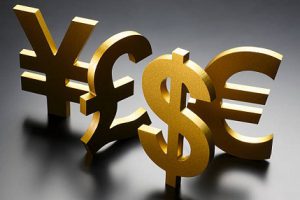
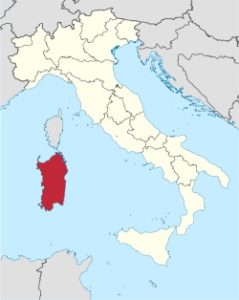
For us in the Caribbean to transform to a digital currency will require country-wide implementations. Fortunately, other countries have done this already … successfully. We would need to study (look, listen and learn) their experiences, good and bad. Consider the experience of the European country of Italy and their autonomous region/island of Sardinia:

VIDEO – Sardinia’s virtual currency – https://youtu.be/6qqKvctFZt0


CBS Sunday Morning
Published on Aug 6, 2017 – On the island of Sardinia, thousands of firms are not using traditional money to buy, sell, or pay salaries. They use Sardex, a virtual currency that allows businesses to earn and spend without relying on the Euro, or on banks that wouldn’t lend. Seth Doane reports on how the Mediterranean island is creating a new kind of wealth.

Subscribe to the “CBS Sunday Morning” Channel HERE: http://bit.ly/20gXwJT
Get more of “CBS Sunday Morning” HERE: http://cbsn.ws/1PlMmAz
Follow “CBS Sunday Morning” on Instagram HERE: http://bit.ly/23XunIh
Like “CBS Sunday Morning” on Facebook HERE: http://on.fb.me/1UUe0pY
Follow “CBS Sunday Morning” on Twitter HERE: http://bit.ly/1RquoQb
Get the latest news and best in original reporting from CBS News delivered to your inbox.
Subscribe to newsletters HERE: http://cbsn.ws/1RqHw7T
Get your news on the go! Download CBS News mobile apps HERE: http://cbsn.ws/1Xb1WC8
Get new episodes of shows you love across devices the next day, stream local news live, and watch full seasons of CBS fan favorites anytime, anywhere with CBS All Access. Try it free!
http://bit.ly/1OQA29B

“CBS Sunday Morning” features stories on the arts, music, nature, entertainment, sports, history, science, Americana and highlights unique human accomplishments and achievements. Check local listings for CBS Sunday Morning broadcast times.

———

Title: Italy’s B2B cashless Sardex currency set to take on the world

Directors of Sardex, a regional mutual credit network encompassing several thousand small and medium-sized businesses on the Italian island of Sardinia, are thinking big — even globally — but moving cautiously.

By: Nils Zimmermann

The basic idea behind Sardinia’s business-to-business (B2B) electronic credit system is a simple one, even if its execution is somewhat more complex.

The country’s first regional currency, Sardex, gives several thousand participating small- and medium-sized enterprises (SMEs) the opportunity to participate in a system of mutual credit and do business with other local companies.

Sardex’s business development team recruits a balanced portfolio of carefully screened Sardinian SMEs, such as electricians, plumbers, glaziers, carpenters, retailers, café owners, farmers, or small manufacturing businesses, to participate in the Sardex business network. Participating SMEs pay a flat annual fee to join. Once members, they gain access to new prospective customers and suppliers.

See the remaining of the article in the Appendix below.
The lessons-learned from the experiences of Sardinia are concise: currency and credit can be fostered regardless of the support of Big Banks or existing capital. This theme also aligns with previous Go Lean commentaries; see a sample list here:

https://goleancaribbean.com/blog/?p=16848 Two Pies: Economic Plan for a new Caribbean
https://goleancaribbean.com/blog/?p=16530 International efforts to de-Americanize the world’s economy
https://goleancaribbean.com/blog/?p=16210 Mitigating the Real Threat of Currency Assassins
https://goleancaribbean.com/blog/?p=15923 Industrial Reboot – Payment Cards 101
https://goleancaribbean.com/blog/?p=14248 Leading with Money Matters – Almighty Dollar vs Caribbean Dollars
https://goleancaribbean.com/blog/?p=13744 Rebooting Caribbean Economics: The Quest for a ‘Single Currency’
https://goleancaribbean.com/blog/?p=8704 Lessons from MetroCard – Model for the Caribbean Dollar
https://goleancaribbean.com/blog/?p=7034 The Future of Mobile Money Payment Systems

These previous commentaries all depict that it is conceivable, believable and achievable for the banking stakeholders in the Caribbean to deploy a new currency regime. In order to consider an e-Commerce culture, we must have the banking products in place … first. These innovations will bring so many benefits that we must embark on the roadmap to manifest these changes. We have already started … with the planning. Just notice these last 4 blog-commentaries published by the Go Lean movement:

Continuity of Business: Learning from Instagram’s system failures e-Commerce sites require good management to maintain systems up-time and to minimize downtime.
Wal-Mart now doing ‘Next Day’ deliveries Optimal logistics allow e-Commerce merchants to optimize the shopping experience.
Bad Ethos Retarding ‘New Commerce’ Bad government policy can curtail e-Commerce progress. For restaurants, a mandatory gratuity policy on take-out orders is just plain rent-seeking, a bad ethos.
Moving Forward with Transportation Solutions The Caribbean does not have the highway networks to facilitate cheap shipping options, but we can deploy a network of ferries in our Union Atlantic Turnpike scheme.

This commentary now – Culture and Currency – completes this series on the preparation for e-Commerce in the Caribbean. This whole collection depicts the heavy-lifting that regional stakeholders must do. Let’s lean-in for this effort. This is how we can make our homeland a better place to live, work and play. 🙂

About the Book
The book Go Lean…Caribbean serves as a roadmap for the introduction and implementation of the technocratic Caribbean Union Trade Federation (CU), for the elevation of Caribbean society – for all member-states. This CU/Go Lean roadmap has these 3 prime directives:

  • Optimization of the economic engines in order to grow the regional economy to $800 Billion & create 2.2 million new jobs.
  • Establishment of a security apparatus to ensure public safety and protect the resultant economic engines.
  • Improve Caribbean governance to support these engines, including a separation-of-powers between the member-states and CU federal agencies.

The Go Lean book provides 370-pages of turn-by-turn instructions on “how” to adopt new community ethos, plus the strategies, tactics, implementations and advocacies to execute so as to reboot, reform and transform the societal engines of Caribbean society.

Download the free e-Book of Go Lean … Caribbean – now!

Who We Are
The movement behind the Go Lean book – a non-partisan, apolitical, religiously-neutral Community Development Foundation chartered for the purpose of empowering and re-booting economic engines – stresses that reforming and transforming the Caribbean societal engines must be a regional pursuit. This was an early motivation for the roadmap, as pronounced in the opening Declaration of Interdependence (Pages 12 – 13):

xi. Whereas all men are entitled to the benefits of good governance in a free society, “new guards” must be enacted to dissuade the emergence of incompetence, corruption, nepotism and cronyism at the peril of the people’s best interest. The Federation must guarantee the executions of a social contract between government and the governed.

xvi. Whereas security of our homeland is inextricably linked to prosperity of the homeland, the economic and security interest of the region needs to be aligned under the same governance. Since economic crimes … can imperil the functioning of the wheels of commerce for all the citizenry, the accedence of this Federation must equip the security apparatus with the tools and techniques for predictive and proactive interdictions.

xxiv. Whereas a free market economy can be induced and spurred for continuous progress, the Federation must install the controls to better manage aspects of the economy: jobs, inflation, savings rate, investments and other economic principles. Thereby attracting direct foreign investment because of the stability and vibrancy of our economy.

Sign the petition to lean-in for this roadmap for the Caribbean Union Trade Federation.

————–

Appendix – Italy‘s B2B cashless Sardex currency set to take on the world Cont’d

Marketing help
All Sardex members have access to a searchable database of all the network’s members. They can post trade offers on Sardex’s web platform, and they’re encouraged to look for business opportunities within the network. Many join WhatsApp or Telegram groups comprising hundreds of members, to stay in touch and make each other aware of offers.

In addition, Sardex employs deal brokers whose job is to identify possible trading opportunities within the network. The brokers call up business owners to suggest deals, for example, by proposing plumbers, electricians, and builders they could cooperate with on a local construction project.

New business
“The point of Sardex is to facilitate new sales that would otherwise not occur, and make use of idle capacity,” said Giovanni Dini, who works on Sardex’s research and development team. “By joining Sardex, a participating SME should see growth in its transaction volume with other Sardinian businesses.”

Each new member’s annual fee is individually negotiated, and amounts to a small fraction of its estimated underutilized business capacity.

A mutual credit club
Members avoid paying each other for goods and services through normal financial channels. Instead of using cash, bank transfer, or standard credit cards to settle transactions, the euro-denominated amount (1 SRD equals €1, $1.16) can be recorded as a debt the buyer owes the Sardex network, not the seller. The seller, in turn, records a credit to their Sardex account. This credit is, in effect, a debt owed by Sardex to the seller.

In this way, Sardex members can buy and sell from each other even if they’re cash-strapped, or have difficulty gaining bank credit. As an added benefit, there is no interest charged or paid on Sardex account balances.

Participants are expected to keep their Sardex account level within individually agreed maximum credit or debt levels —usually a few thousand Euros. Members must buy as well as sell, and the net amount of credit or debt on purchases and sales made on their Sardex account should net to zero over the course of a year.

Limits on transaction volume
There are limits to the volume of trade a Sardex member can or should do, as a proportion of its total business volume. “We recommend no more than 30 percent of the total,” Dini told DW. “Most of that should be additional transactions, i.e., sales that would not have been made if the business hadn’t been a member of the Sardex network.”

A key reason for the 30 percent limit: Value-added taxes continue to be due on all transactions, and taxes are only payable in conventional bank Euros or in cash. If a business were to do 100 percent of its trade in Sardex credits, it would end up owing a lot of Euros to the Italian treasury, but would have no Euros in the bank to pay its taxes.

Tourism, construction and retail are among the sectors most active within the network.

Growing business volume
Dini said the total volume of business in Sardex credits transacted on Sardinia in 2016 was just over €67 million ($87 million). In 2017, it was nearly €81 million.
Those numbers don’t include transactions in 11 additional regions of Italy where Sardex has initiatied B2B credit clubs within the past couple of years, all of them using the same web- and app-based credit circuit technology platform Sardex developed for Sardinia, but each running its own separate regional B2B credit circuit. Veneto, Marche, and Lombardy are among the 11 regions.

“We’re looking at enabling interregional trade as well, i.e., transactions between credit circuit members from different regions,” Dini said.

“We have to be careful,” Dini added, “our top priority is increasing within-region trade. Sardex was founded as an instrument to stimulate jobs and trade within Sardinia, one of Italy’s economically depressed regions. If we open interregional trade too much, we’ll end up reproducing the same imbalances in trading relationships that already exist, with some regions being big net exporters and others running up debts as net importers.”

Is small beautiful?
In each region, Sardex has partnered with a local entrepreneur to run credit-club recruitment and operations. Transaction volumes outside Sardinia totalled €14 million in 2016; they nearly doubled to €26 million in 2017.

Given that Italy’s GDP in 2017 was about €1.72 trillion, these numbers are tiny in comparison. But members of one of these regional B2B credit clubs can see meaningful benefits at their own scale of activity, for example, a tradesman or tour operator might see an extra €30,000 a year in transactions.

Sardex had signed up a total of 3,896 SMEs as full members as of June 2018. The total SME membership for all 12 regional networks was 8,512. After Sardex, the top three regional networks at present are Marchex with 1,010 B2B members (2013 start), Linx with 894 (2015 start), and Venetex with 514 members (2016 start), respectively in the Marche, Lombardy and Veneto regions.

National and international interest
The Sardex model has been successful enough that it has attracted attention from all over Europe, and even beyond: “We’ve had non-government organisations, entrepreneurs, regional and municipal governments, and even one national government come to us and express interest in setting up a mutual credit network using our platform,” Dini said.

But Sardex’s founders and managers are moving carefully, to avoid over-extending their capacities, and to ensure that they have thoroughly worked out all aspects of the business on Sardinia first, the researcher and developer added.

The importance of the man on the ground
Some of the regional credit circuits Sardex has set up with partners in other regions are doing better than others. According to Dini, the most progress has been made in Italian regions which are already relatively prosperous, such as the Veneto and Marche regions.

Factors driving a regional network’s success, according to Dini, include, “the skill of the partner team on the ground, their dedication, and their luck. They need a good pitch for recruiting new members, they need to know their territory well, they need good salespeople.”

In addition, it makes a difference how big a region’s pool of SMEs is, Lombardy or Veneto have multiple times more businesses than Sardinia or other southern Italian regions, which makes member recruitment easier.

“The online credit circuit platform itself is only one element for building a successful mutual credit network,” Dini emphasised. “Going out and recruiting new members face-to-face, teaching them how to use the platform effectively, providing effective deal-brokerage services — these are essential too.”

Sardex has indicated it’s in touch with entrepreneurs in Germany and elsewhere to discuss the possibility of setting up a regional B2B credit circuit there as well, and the company hopes to be able to announce its first step beyond Italy sometime in early 2019.

“We’re seeing that our B2B credit circuit model is interesting to entrepreneurs in prosperous regions too, not only to businesses in economically depressed regions.”

Source: Deutsche Welle – German Business News Site – Posted September 5, 2018; retrieved May 25, 2019 from:  https://www.dw.com/en/italys-b2b-cashless-sardex-currency-set-to-take-on-the-world/a-45300395

———

Read more: Sardex: a model B2B credit club gives hope to Italy’s SMEs

Share this post:
, , , ,

Marshall Plan – Funding: How to Pay for Change

Go Lean Commentary

About that purse …
… we have been saying here repeatedly:

Will someone walk-up to Cuba/Haiti and give them $13 Billion (or $91 Billion in today’s dollars) to reboot, recover and turn-around their periods of dysfunction?

Probably, not!

So how to ensure that all this talk of a Marshall Plan is not just simply talk?

Answer: We create the purse ourselves.

Purse , noun
a: ResourcesFunds
b: 
a sum of money offered as a prize or present also the total amount of money offered in prizes for a given event

The book Go Lean…Caribbean asserts that the Caribbean region as an entity can create a new regional purse, one that can fund the Marshall Plan that is needed to reform the de facto Failed-States of Cuba, Haiti and other declining member-states.

Once we reform these problematic communities, then we can focus on transforming the entire region. Leverage is the key!

So we can comfortably declare that change is on the way for the Caribbean!

While the purpose of the Go Lean roadmap is NOT just Cuba & Haiti alone, we know that we cannot elevate the societal engines for all of the Caribbean while ignoring these near-Failed States. These member-states constitute 48% of the region’s population and a huge portion of the landmass. There is no Caribbean without these Cuban/Haitian countries and cultures.

So to repeat, if we can fix Cuba & Haiti, we can fix the entire Caribbean region. This is the “Why’ and “How” – Marshall Plan – and these are important considerations; but more importantly, we need to know how to fund our plans.

We must know if “someone” will walk-up to and give us $13 Billion (or $91 Billion in today’s dollars) to reboot, recover and turn-around our dysfunctional member-states. We can now hereby declare:

Probably, not … for any external entities.
Definitely yes … for doing it ourselves … internally.

The Go Lean roadmap asserts that it is up to the Caribbean to solve the Caribbean’s problems. We must plan, fund and execute our own Marshall Plan. Yes, we can!

The next step: graduate from just regional integration – Caribbean Community (CariCom) – to a Single Market.

The book Go Lean … Caribbean, serves as a roadmap for the introduction and implementation of the technocratic Caribbean Union Trade Federation (CU), to facilitate a Single Market. The book features (Page 101) this one advocacy for creating a purse, entitled: “10 Ways to Pay for Change“. These “10 Ways” include the following highlights, headlines and excerpts:

1 Lean-in for the Caribbean Single Market – Ratify treaty for the CU.
This treaty allows for the unification of the region into one market, expanding to an economy of 30 member-states of 42 million people, to impact a GDP of over $800 Billion. In order for the CU to reboot the economic engines of the region, the political entity of the unified Caribbean must be rebooted first. … The CU will generate its own initial funding, as listed here, below.
2 Spectrum Auctions
The CU will function as a government-owned multinational corporation to deliver services for an integrated Caribbean administration. Having the regional authority, the CU will hold auctions for the radio spectrum in the region. This will generate the CU’s own initial revenue stream, as only rights are being awarded; there is no performance – no fabrication of products or rendering of services. With this strategy, there will be revenues to return back to CU share-holders, member-states, even in the 1st year.
3 SGE Licenses
The CU treaty empowers economic engines (Self-Governing Entities – SGE: industrial parks, technology labs, medical campuses, etc.) in and on behalf of the region. These independent entities pay fees to the CU, at the outset, so as to be licensed by the CU.
4 GPO Logistic Fees
An important CU mission is the Group Purchasing Organization (GPO), an extension of the current [CariCom] Office of Trade Negotiations; but the CU will make purchases and fulfill delivery to member-states, for a handling fee.
5 Regional Lottery
The CU will implement a regional lottery, in conjunction with local state lotteries, with winnings awarded in Caribbean dollars (C$). The CU will outsource contracts for distribution, fund management and IT processing. These contracts can serve as an initial funding source.
6 EEZ Exploration Rights
7 Homeland Security – Private Protection Licensing
8 Homeland Security – Hurricane Insurance Fund
9 Warrants
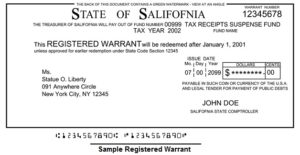
Paying for Change first optimizes the payment terms. All CU payments to member-states will be in the form of warrants attached to bonds; this allows the CU to pay lower interest rates. These warrants make the bonds sellable to the public. [See explanation of Registered Warrants in the Appendix below].
10 Foreign Aid & Grants including Non-Government Organizations (NGOs)

A Caribbean version of the previous European Marshall Plan will be very significant in the roadmap to reform and transform the Caribbean member-states. Planning the Plan is one thing; Executing the Plan is another. But in between the Plan and the Execution is the heavy-lifting task of funding the change. This is why this series of commentaries is so important. This is entry 4-of-5 in this series of commentaries on the Marshall Plan, the historic European one and Caribbean versions. Here, as follows, is the full series being presented this month of May (2019):

  1. Marshall Plan: A Lesson in History
  2. Marshall Plan: Cuba – An imminent need for ‘Free Market’ Emergence
  3. Marshall Plan: Haiti – Past time for Mitigation
  4. Marshall Plan: Funding – What Purse to Fund Our Plans?
  5. Marshall Plan: Is $91 Billion a Redux for Puerto Rico?

In this entry for this series we focus on “How” to fund the Marshall Plan. In the European model, “it” was about the money; for the Caribbean version, money will be equally important. The theme of recovering and rebooting the Caribbean economic landscape has been detailed in many previous Go Lean commentaries; consider this sample list here:

https://goleancaribbean.com/blog/?p=16848 ‘Two Pies’ – Funding Plan for a New Caribbean
https://goleancaribbean.com/blog/?p=16836 Crypto-currency: Here comes ‘Trouble’
https://goleancaribbean.com/blog/?p=16530 Efforts to de-Americanize the world’s economy
https://goleancaribbean.com/blog/?p=16210 In Defense of Trade – The Real Threat of Currency Assassins
https://goleancaribbean.com/blog/?p=15798 Lessons Learned from 2008 Great Recession – Region Still Recovering
https://goleancaribbean.com/blog/?p=14834 Counter-culture – Monetizing the Change
https://goleancaribbean.com/blog/?p=14248 Leading with Money Matters – Almighty Dollar – From US$ to C$
https://goleancaribbean.com/blog/?p=13744 Caribbean Economics – The Quest for a ‘Single Currency’
https://goleancaribbean.com/blog/?p=10513 Transforming ‘Money’ Countrywide
https://goleancaribbean.com/blog/?p=3582 For Canadian Banks – The Caribbean is a ‘Bad Bet’

The hope for a Marshall Plan for Cuba and Haiti will only be an empty promise unless the regional infrastructure accompanies the Planning and Executions. The Way Forward for the Caribbean economic landscape therefore presents these necessary ingredients:

  • Regional Currency – Trading in Caribbean Dollars (C$) rather than local currencies.
  • Regional Capital Markets  – There are 9 Stock Exchanges; these will expand due to C$ adoption; i.e. Warrants.

The current economic landscape is deficient and defective. We must reboot and change all of it: Top-Down and Bottoms-Up. This is a Big Shift being considered here, transforming how we finance government spending: Looking to Capital Markets for fostering a landscape with Registered Warrants instead of “cash”. Wow! (See more on this in the Appendix below). Only with these technocratic strategies, tactics and implementations, can we even contemplate rebooting Cuba and Haiti.

This product offering – Registered Warrants – is part of the Way Forward for the new Caribbean.

Our Way Forward for the entire Caribbean includes the entire Caribbean, with Cuba & Haiti too. So we have to prepare the region for the full inclusion of these problematic countries. With them, we can better leverage the political, social, security and economic fabric of the regional society. This is the Caribbean’s future. This is how we intend to make our homeland, Cuba & Haiti included, better places to live, work and play. 🙂

About the Book
The book Go Lean…Caribbean serves as a roadmap for the introduction and implementation of the technocratic Caribbean Union Trade Federation (CU), for the elevation of Caribbean society – for all member-states. This CU/Go Lean roadmap has these 3 prime directives:

  • Optimization of the economic engines in order to grow the regional economy to $800 Billion & create 2.2 million new jobs.
  • Establishment of a security apparatus to ensure public safety and protect the resultant economic engines.
  • Improve Caribbean governance to support these engines, including a separation-of-powers between the member-states and CU federal agencies.

The Go Lean book provides 370-pages of turn-by-turn instructions on “how” to adopt new community ethos, plus the strategies, tactics, implementations and advocacies to execute so as to reboot, reform and transform the societal engines of Caribbean society.

Download the free e-Book of Go Lean … Caribbean – now!

——-

Who We Are
The movement behind the Go Lean book – a non-partisan, apolitical, religiously-neutral Community Development Foundation chartered for the purpose of empowering and re-booting economic engines – stresses that reforming and transforming the Caribbean societal engines must be a regional pursuit. This was an early motivation for the roadmap, as pronounced in the opening Declaration of Interdependence (Pages 12 – 13):

xi. Whereas all men are entitled to the benefits of good governance in a free society, “new guards” must be enacted to dissuade the emergence of incompetence, corruption, nepotism and cronyism at the peril of the people’s best interest. The Federation must guarantee the executions of a social contract between government and the governed.

xvi. Whereas security of our homeland is inextricably linked to prosperity of the homeland, the economic and security interest of the region needs to be aligned under the same governance. Since economic crimes … can imperil the functioning of the wheels of commerce for all the citizenry, the accedence of this Federation must equip the security apparatus with the tools and techniques for predictive and proactive interdictions.

xxiv. Whereas a free market economy can be induced and spurred for continuous progress, the Federation must install the controls to better manage aspects of the economy: jobs, inflation, savings rate, investments and other economic principles. Thereby attracting direct foreign investment because of the stability and vibrancy of our economy.

Sign the petition to lean-in for this roadmap for the Caribbean Union Trade Federation.

—————

Appendix: Warrants of Payments

In financial transactions, a warrant is a written order from a first person that instructs a second person to pay a specified recipient a specific amount of money or goods at a specific time.[1] The warrant may or may not be negotiable and may authorize payment to the warrant holder on demand or after a maturity date. Governments may choose to pay wages and other accounts payable by issuing warrants instead of checks.

History
In the 18th century, warrants were used by the military to authorize payments to soldiers and suppliers. George Washington, for example, signed warrants that ordered quartermasters to deliver money or acquire supplies.[2] These warrants were used by quartermasters to issue vouchers to acquire food, supplies, munitions, clothing, transportation, etc., for the use of the American military and to maintain Washington’s headquarters. Warrants could be redeemed by the army paymasters, but most often they were used like cash by the recipient. Warrants, like bills of exchange and vouchers, were often heavily discounted and depreciated in value. The fortunes of war could be traced through the discount rates on warrants, vouchers, and Continental dollars.

Modern warrants
In government finance, a warrant is a written order to pay that instructs a federal, state, or county government treasurer to pay the warrant holder on demand or after a maturity date. Such warrants look like checks and clear through the banking system like checks, but are not drawn against cleared funds in a checking account (demand deposit account). Instead, they may be drawn against “available funds” or “out of fund 0027” so that the issuer can collect interest on the float or delay redemption. If the warrant is conditional on funds being available, the warrant is not a negotiable debt instrument. In the U.S., warrants are issued by government entities such as the military and state and county governments. Warrants are issued for payroll to individual employees, accounts payable to vendors, to local governments, to taxpayers receiving tax refunds, to recipients of unemployment benefits, and to owners of unclaimed money. A warrant differs from a check in that the warrant is not drawn on a checking account, is not necessarily payable on demand, and may not be negotiable.[5][6]

Warrants deposited in a bank are routed (based on the MICR routing number) to a collecting bank which processes them as collection items like maturing treasury bills and presents the warrants to the government entity’s treasury department for payment to the bank each business day.

Regular warrants are redeemable by the government treasurer after they are issued. “Registered warrants” bear interest and need not be redeemed by the treasurer until the warrant maturity date.[7] If warrants cannot be immediately redeemed by the issuing entity, the collecting bank may accept the warrants as short term debt instruments and collect interest when redeemed in accordance with a prior agreement with the issuing entity. The collecting bank may refuse to accept a warrant issue, in which case other banks may also refuse to accept them.[8]

“The warrants of a municipal corporation are not negotiable instruments. They do not constitute a new debt, or evidence of a new debt, but are only the prescribed means devised by law for drawing money from the treasury.”[9]

The U.S. Securities and Exchange Commission said on July 9, 2009, that California’s registered warrants are “securities” under federal securities law and will be regulated as municipal securities by the Municipal Securities Rulemaking Board.[10] Under these regulations, anybody who profits by buying and reselling warrants must be registered as a municipal securities broker-dealer.[11]

Although registered warrants are evidence of a municipality’s obligation to pay, because they demonstrate an intent to disburse funds when those funds become available, the US Supreme Court has ruled that a holder of a valid warrant cannot obtain a writ of mandamus for specific performance of the obligation to pay, enforced against a treasurer or other employee of the municipality.[12]

United Kingdom
In the UK, warrants are issued as payment by the NS&I when a Premium Bond is chosen.

The difference between a warrant and a cheque is that a cheque usually places no explicit time frame on when the amount is to be paid.

Source: Retrieved May 13, 2019 from: https://en.wikipedia.org/wiki/Warrant_of_payment

—————

VIDEO – What is WARRANT OF PAYMENT? What does WARRANT OF PAYMENT mean? WARRANT OF PAYMENT meaning – https://youtu.be/9LY7Ol5ec6E

The Audiopedia

Published on Apr 20, 2017 – … Governments may choose to pay wages and other accounts payable by issuing warrants instead of checks …

Share this post:
, ,
[Top]

Women Empowerment – Sallie Krawcheck – Power of ‘Her’ Wallet

Go Lean Commentary

So “you” think you can dance … with a partner?

“You” (male-dominated society) made progress for women; allowed for suffrage (right to vote), property rights, equal education opportunities and equal protection under the law. Well, Sallie Krawcheck says: Still not enough!

This submission is about Sallie Krawcheck …

Who?

Despite her unknown status, what she advocates and promotes is very much known … and important – See Book Review below.

Sallie Krawcheck is a Wall Street icon and activists; she currently serves as the CEO (Chief Executive Officer) for the new financial advisory company Ellevest:

Sallie L. Krawcheck (born November 28, 1964)[1] is the CEO and Co-Founder of Ellevest, a digital financial advisor for women, launched in 2016. She is owner and Chair of Ellevate Network.[2] Prior to this she was the president of the Global Wealth & Investment Management division of Bank of America.[3] She has been known as one of the most senior women on Wall Street.[4][5] Most recently she has been widely published in both social and more traditional media, focusing on Wall Street regulatory reform; she is also advising a number of start-ups.[6][7][8]Wikipedia

Beyond her professional vocation, she also serves as a Drum Major for change for young people – think millennials. She is trumpeting a message that we all need to hear:

The world is NOT moving in the right direction for gender equality.

The gender pay gap is decades away from closing for White women, 100 years for Black women and 200 years for Latinas.

These are just words – a picture is worth a thousand words; a VIDEO, a million. This VIDEO – from satirist Trevor Noah – presents her quest more fully:

VIDEO – Sallie Krawcheck – How Ellevest Is Challenging the Gender Investing Gap | The Daily Show – https://youtu.be/mdxS8S_06VM


The Daily Show with Trevor Noah

Published on Feb 5, 2019 – Sallie Krawcheck explains why diversity initiatives that start from the top aren’t enough, how the financial industry is biased against women and the right way to build a diverse company.

Subscribe to The Daily Show: https://www.youtube.com/channel/UCwWh…

Follow The Daily Show: Twitter: https://twitter.com/TheDailyShow

Facebook: https://www.facebook.com/thedailyshow

Instagram: https://www.instagram.com/thedailyshow

Watch full episodes of The Daily Show for free: http://www.cc.com/shows/the-daily-sho…

About The Daily Show: Trevor Noah and The World’s Fakest News Team tackle the biggest stories in news, politics and pop culture. The Daily Show with Trevor Noah airs weeknights at 11/10c on Comedy Central.

So young people naturally rebel against the standards and norms of their parents. This could be bad; this could be good. The counter-culture of the 1960’s/1970’s brought change from a lot of bad orthodoxy and American (and modern “Western”) life in general. Now the next generation (Millennials) have the opportunity – and thusly Ms. Krawcheck’s advocacy – to go one step further and demand equality, accountability and fairness, especially in the cases of pay gaps, justice and interpersonal abuse.

Because of the family dynamic, women control 85% of all consumer spending.

Millennial women are coming together and forging change.

Think: “Me Too” … calling out “Men Behaving Badly”.

We hear you Ms. Krawcheck … and agree. The progress with diversity is NOT enough; many times “we” have even regressed instead of progressed.

We need change in the Caribbean too. Far too often our societal institutions have under-valued our women (sisters, daughters and mothers). We need the societal engines of the Caribbean to be better:

  • Economics – Jobs and entrepreneurial opportunities must be equally available to all people, despite gender or race. There is a Freedom of Movement edict in the CariCom regional pact; but the provisions only allowed for one skilled worker to migrate freely among member-states, and not the spouse. This blatantly ignores the women of the region. Modern economic realities mandate that both spouses work, so such “no spouse” rules, depravedly disregards women.
  • Security – Victims of sexual and interpersonal violence should be protected and empowered in our Caribbean. But many member-states still have backwards policies, like on marital rape restrictive prosecutions.
  • Governance – Citizenship laws and cross-border employment must be neutral and equitable for gender roles.

We have no choice, we simply must make progress; we must work around the obstacles in our society. If we do not work around, our women will “walk around … and out”. Yes, they have choices; they have been choosing life away from us, rather than with us. Change is therefore not optional! Equality is therefore not optional!

Success is not automatic; it takes hard-work and heavy-lifting!

This theme – empowering women actually aids society – aligns with previous Go Lean commentaries; see a sample list here:

https://goleancaribbean.com/blog/?p=16477 Transforming Hindus versus Women – What it means for us?
https://goleancaribbean.com/blog/?p=13063 Gender Equity without a ‘Battle of the Sexes’
https://goleancaribbean.com/blog/?p=14718 ‘At the Table’ or ‘On the Menu’
https://goleancaribbean.com/blog/?p=6937 Women in Politics – Yes, They Can!
https://goleancaribbean.com/blog/?p=2201 Students developing nail polish to detect date rape drugs

Thank you Ms. Krawcheck. We hereby pledge to model your “thoughts, feelings, speech and actions” here in the Caribbean.

This is a continuation of this series of commentaries from the movement behind the book Go Lean … Caribbean. This is part 5 of 6 for Women History Month; this series addresses how women can make a difference in society; and how society can make a difference for women. Other commentaries in this series include these entries:

  1. Women History Month 2019Thoughts, Feelings, Speech and Actions
  2. Women History Month 2019Viola Desmond – The Rosa Parks of Canada
  3. Women History Month 2019Kamala Harris – Caribbean Legacy to the White House?
  4. Women History Month 2019: Captain Marvel – We need “Sheroes”
  5. Women History Month 2019: Ellevest CEO: Sallie Krawcheck
  6. Women History Month 2019: Accepting Black Women As Is

As related in these previous submissions, many women fight the bad orthodoxies in society; they challenge “us” to overcome obstacles and positively impact our communities. Some women fight; some cheer on; some can be Drum Major for change.

Like Ms. Krawcheck role model presents, “Yes, we can” make our homeland a better place to live, work and play. 🙂

About the Book
The book Go Lean…Caribbean serves as a roadmap for the introduction and implementation of the technocratic Caribbean Union Trade Federation (CU), for the elevation of Caribbean society – for all member-states. This CU/Go Lean roadmap has these 3 prime directives:

  • Optimization of the economic engines in order to grow the regional economy to $800 Billion and create 2.2 million new jobs.
  • Establishment of a security apparatus to ensure public safety and protect the resultant economic engines.
  • Improve Caribbean governance to support these engines, including a separation-of-powers between the member-states and CU federal agencies.

The Go Lean book provides 370-pages of turn-by-turn instructions on “how” to adopt new community ethos, plus the strategies, tactics, implementations and advocacies to execute so as to reboot, reform and transform the societal engines of Caribbean society.

Download the free e-Book of Go Lean … Caribbean – now!

Who We Are
The movement behind the Go Lean book – a non-partisan, apolitical, religiously-neutral Community Development Foundation chartered for the purpose of empowering and re-booting economic engines – stresses that reforming and transforming the Caribbean societal engines must be a regional pursuit. This was an early motivation for the roadmap, as pronounced in the opening Declaration of Interdependence (Pages 12 – 13):

xi. Whereas all men are entitled to the benefits of good governance in a free society, “new guards” must be enacted to dissuade the emergence of incompetence, corruption, nepotism and cronyism at the peril of the people’s best interest. The Federation must guarantee the executions of a social contract between government and the governed.

xvi. Whereas security of our homeland is inextricably linked to prosperity of the homeland, the economic and security interest of the region needs to be aligned under the same governance. Since economic crimes … can imperil the functioning of the wheels of commerce for all the citizenry, the accedence of this Federation must equip the security apparatus with the tools and techniques for predictive and proactive interdictions.

xxiv. Whereas a free market economy can be induced and spurred for continuous progress, the Federation must install the controls to better manage aspects of the economy: jobs, inflation, savings rate, investments and other economic principles. Thereby attracting direct foreign investment because of the stability and vibrancy of our economy.

Sign the petition to lean-in for this roadmap for the Caribbean Union Trade Federation. 

—————

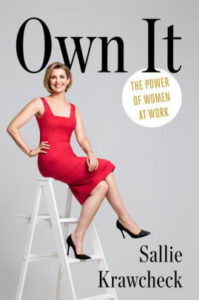
Book Summary: OWN IT – The Power of Woman at Work – By Sallie Krawcheck.

Amazon Product Review

Wall Street Journal and Washington Post Bestseller, “Own It” is a new kind of career playbook for a new era of feminism, offering women a new set of rules for professional success: one that plays to their strengths and builds on the power they already have.

Weren’t women supposed to have “arrived”? Perhaps with the nation’s first female President, equal pay on the horizon, true diversity in the workplace to come thereafter? Or, at least the end of “fat-shaming” and “locker room talk”?

Well, we aren’t quite there yet. But does that mean that progress for women in business has come to a screeching halt?  It’s true that the old rules didn’t get us as far as we hoped. But we can go the distance, and we can close the gaps that still exist. We just need a new way.

In fact, there are many reasons to be optimistic about the future, says former Wall Street powerhouse-turned-entrepreneur Sallie Krawcheck. That’s because the business world is changing fast – driven largely by technology – and it’s changing in ways that give us more power and opportunities than ever…and even more than we yet realize.

Success for professional women will no longer be about trying to compete at the men’s version of the game, she says. And it will no longer be about contorting ourselves to men’s expectations of how powerful people behave. Instead, it’s about embracing and investing in our innate strengths as women – and bringing them proudly and unapologetically, to work.

When we do, she says, we gain the power to advance in our careers in more natural ways. We gain the power to initiate courageous conversations in the workplace. We gain the power to forge non-traditional career paths; to leave companies that don’t respect our worth, and instead, go start our own. And we gain the power to invest our economic muscle in making our lives, and the world, better.

Here Krawcheck draws on her experiences at the highest levels of business, both as one of the few women at the top rungs of the biggest boy’s club in the world, and as an entrepreneur, to show women how to seize this seismic shift in power to take their careers to the next level. 

This change is real, and it’s coming fast. It’s time to own it.
Source: Retrieved March 9, 2019 from: https://www.amazon.com/Own-Power-Women-at-Work/dp/1101906251/ref=sr_1_1?keywords=Book+Own+It%3A+The+Power+of+Women+at+Work&qid=1552166250&s=gateway&sr=8-1

Share this post:
, , , ,
[Top]

‘Two Pies’ for a New Caribbean – ENCORE

Here’s a known fact of life in the USA; let’s examine:

The State of Florida does not have to pay for any of the deliverables for the people in the State of Minnesota; California does not have to worry about the needs of Vermont; Pennsylvania does not have to concern themselves with Arizona; and so on.
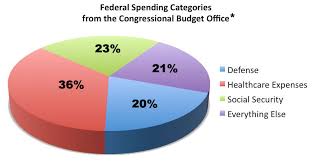
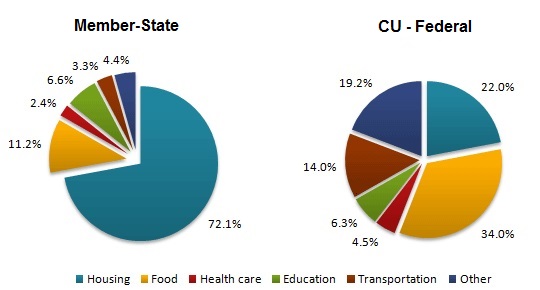
Every state only have to address and pay for the needs of the people in their state. Anything cross-border is handled by a different entity, the US federal government.

Yes, as an individual resident, a citizen would see Two Pies while in the USA; one for their State and one for the federal government.

This model is now proposed for the member-states of the Caribbean. This is the roadmap from the 2013 book Go Lean…Caribbean. The book introduces the Caribbean Union Trade Federation (CU) which will serve as a governing entity for cross-border services and deliveries. While it has always been a point of contention that any regional integration in the Caribbean would have the richer countries paying for the poorer countries. This is a fallacy! Each member-state has their own “pie” and the CU Federal entity will have its own “pie”.

This design of Two Pies have been thoroughly detailed in a previous blog-commentary from February 23, 2017; (two years ago exactly). See an Encore of that submission here-now.

————————

Go Lean Commentary Two Pies: Economic Plan for a new Caribbean

“Get your hands out of my pocket!” – Term used by another man in the room to cause a disturbance and distraction during the killing of Malcolm X in New York on February 21, 1965 – 52 years ago this week. See VIDEO in the Appendix below.
CU Blog - Two Pies - Economic Plan for a New Caribbean - Photo 4

The words above that were shouted to cause a disturbance are riot-inducing and can cause alarm for many communities. No one wants to think that someone unauthorized and unworthy may be pilfering hard-earned funds from innocent victims.

No one wants to be that victim!

CU Blog - Two Pies - Economic Plan for a New Caribbean - Photo 2This was a point of consideration in the conception of the book Go Lean…Caribbean. There was the inspiration to conceive an economic empowerment plan for all the Caribbean that would NOT take money out of one person’s pockets and give to another … unauthorized and unworthy. The solution?

Two pockets … or two pies.

… pie as in a pie-chart; this is the graphical representation of the distribution of a budget. Pie-charts are very effective in expressing one amount in comparison to another amount. So when there are two pie-charts, it undoubtedly expresses that there are two different funds, no intermingling. That is the economic plan for the new Caribbean:

Two Pies.

CU Blog - Two Pies - Economic Plan for a New Caribbean - Photo 3b

This means that there are two different funds. The Go Lean book serves as a roadmap for the introduction and implementation of the technocratic Caribbean Union Trade Federation (CU). This is a regional integration effort to benefit the 30 member-states of the Caribbean. There are a lot of money issues to contend with – but no one person’s hands are in another person’s pockets. So all the money issues for CU are exclusive to the CU. This is true of money-economics and other facets of Caribbean life: security and governance. In total, these 3 prime directives explore the full dimensions of the roadmap:

  • Optimization of the economic engines in order to grow the regional economy to $800 Billion & create 2.2 million new jobs.
  • Establishment of a security apparatus to ensure justice institutions and protect the resultant economic engines.
  • Improve Caribbean governance including a separation-of-powers between the member-states and CU federal agencies to support the economic and security engines.

In order to reboot the societal engines there must be these Two Pies. The CU Trade Federation is designed to lead, fund and facilitate regional empowerment plans. But the plan is NOT for the individual member-states to write checks to the CU so as to share one state’s treasuries with another state. Rather, the CU Trade Federation creates its own funding – from regionalized services – and then encumbers the funds for each member-state to deliver the economic, security and governing  mandates. This is analogized as Two Pies:

  • One ‘pie‘ to represent the existing budgets of the member-states and how they distribute their government funding between government services (education, healthcare, etc.), security measures (Police, Coast Guards)
  • One ‘pie‘ to represent the CU funding from exclusive activities (Spectrum Auctions, Lottery, Exploration Rights, Licenses, Foreign-Aid, etc.).

All in all, the book, and accompanying blogs, declare that the proposed CU Trade Federation is a new governmental layer, and thusly creates a new government budget. This is a confederation; designed to enhance the governmental deliveries for the 30 member-states. This necessity is expressed as a pronouncement in the opening Declaration of Interdependence, (Pages 10 – 11) with the following statement:

Preamble: While our rights to exercise good governance and promote a more perfect society are the natural assumptions among the powers of the earth, no one other than ourselves can be held accountable for our failure to succeed if we do not try to promote the opportunities that a democratic society fosters.

xi. Whereas all men are entitled to the benefits of good governance in a free society, “new guards” must be enacted to dissuade the emergence of incompetence, corruption, nepotism and cronyism at the peril of the people’s best interest. The Federation must guarantee the executions of a social contract between government and the governed.

CU Blog - Two Pies - Economic Plan for a New Caribbean - Photo 1The vision of a confederation is an integrated Single Market for the 30 member-states of the Caribbean; this means the Dutch, English, French and Spanish speaking territories. This also includes the US territories of Puerto Rico and the US Virgin Islands. Tactically, the CU allows for a separation-of-powers between the member-state governments and the new federal agencies.

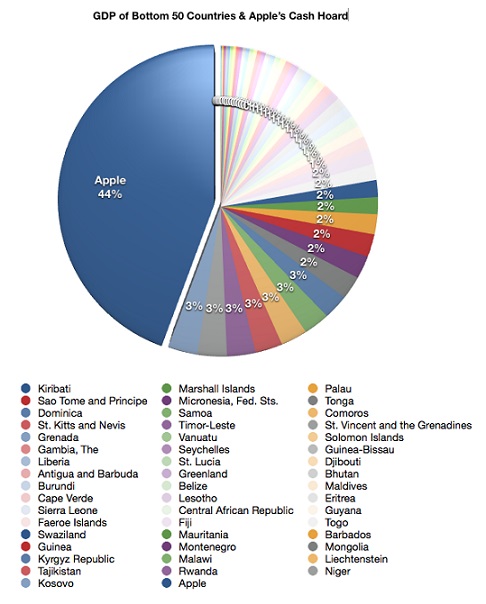
Currently the Caribbean member-states pockets are bare – these are all Third World destinations – even the US Territories of Puerto Rico and the Virgin Islands. Consider this First World comparison; consider Apple Corporation – the firm behind the iPhone, iPad, iTunes, etc. – due to their success in technology and business, they have a lot of money (cash on hand); a lot more than many Caribbean member-states … combined.

We need this CU roadmap to impact a turn-around for this region; we need the new “Pie” of the CU Single Market. The member-state’s economic engines – their “Pies” – are in crisis, but since a crisis would be a terrible thing to waste, we need to transform these economic engines for a new Caribbean by introducing the CU “Pie”, as follows:

  • Regional Capital Markets with a regional currency – Caribbean Dollar – would increase liquidity and lower the cost of capital. Rather than international debt, member-state governments and corporate institutions can avail themselves of lower financing costs, sometimes as low as 2% interest rates.
    Notice a glimpse of this vision in this previous blog-commentary:
    https://goleancaribbean.com/blog/?p=372 |  Dominica raises EC$20 million on regional securities market
  • Municipal financing – Debt by any governmental entity does not only reflect on the past, but impacts the future as well. Excessive debt can be so bad that at times the providers … and collectors of debt may be derisively called “vultures”. The CU pledges to re-purchase existing municipal debt and convert them to Caribbean Dollar instruments.
    Notice this portrayal in this previous blog-commentary:
    https://goleancaribbean.com/blog/?p=7601 |  Beware of Vulture Capitalists Commercial banking enhancements
  • Individual finance: Student Loans – Many Caribbean students obtained loans from their home countries, matriculated abroad and then never returned home. There was no return on investment and many times, no loan repayment. The CU pledges to buy outstanding loans (new, active and default) and enforce cross-border collections.
    Notice the details of this student loan crisis in this previous blog-commentary:
    https://goleancaribbean.com/blog/?p=8373 |  A Lesson in Economic Fallacies – Student Loans As Investments
  • Individual finance: Mortgages – Housing can be a great stimuli on the economy, but it is difficult for banks to recycle the capital that is tied up for 30 years without a Secondary Market. The CU pledges to deploy a Mortgage Secondary Market across the entire region (Go Lean book Page 83 and 199). This strategy will re-enforce banking within the region.
    Notice the issues associated with a dysfunctional mortgage eco-system in this previous blog-commentary:
    https://goleancaribbean.com/blog/?p=10187 |  Day of Reckoning for NINJA Loans
  • Individual finance: Retirement – Growing old in the Caribbean has become strained due to the high abandonment rate. National Pension plans depend on a macro structure where young people pay into the fund while the elderly withdraws from the fund. With so much emigration, the actuarial tables are distorted.
    Consider this previous blog-commentary that depicts a failing pension system in one member-state:
    https://goleancaribbean.com/blog/?p=2830 |  Jamaica’s Public Pension Under-funded
    … and one blog-commentary that describes how best to prosper:
    https://goleancaribbean.com/blog/?p=4222 |  Getting Rich Slowly in the Caribbean
  • Self-Governing Entities (SGE) – The Go Lean/CU roadmap features the installation of SGE’s as job-creating engines in many communities; these sites are ideal for technology laboratories, medical campuses, corporate parks, industrial sites, educational facilities and other forms of establishments situated inside bordered facilitates. They allow for an efficient process to launch and manage industrial efforts in the region. These types of installations will thrive under the strategies and tactics of the Go Lean roadmap. SGE’s do require governmental concurrence and maybe even public approvals – referendums – but only at the initiation. Beyond that, they are not a concern, or an expense, for local governments – they bring their own economic “Pie“.
    Consider this previous blog-commentary that details the dynamics of SGE’s:
    https://goleancaribbean.com/blog/?p=5921 |  Socio-Economic Change: Impact Analysis of SGE’s
  • Exclusive Economic Zones (EEZ) – The Go Lean/CU roadmap calls for the strategy of petitioning the United Nations Convention on the Law of the Sea (UNCLOS) for expanded territory in the Caribbean Sea for the CU to develop, explore, protect and exploit for the benefit to the Caribbean en-masse only. This means the CUPie” for revenues-and-expenses and not individual member-states.
    Consider this previous blog-commentary that details the dynamics of the EEZ:
    https://goleancaribbean.com/blog/?p=8819 |  Lessons from China – South China Seas: Exclusive Economic Zones

The Go Lean book details the series of community ethos, strategies, tactics, implementations and advocacies designed to create a federal “Pie” in the Caribbean region; see here:

Anecdote – Caribbean Single Market & Economy Page 15
Community Ethos – Money Multiplier Page 22
Community Ethos – Job Multiplier Page 22
Community Ethos – Lean Operations Page 24
Community Ethos – Ways to Impact the Future Page 26
Community Ethos – Ways to Impact the Greater Good Page 37
Strategic – Vision – Integrated Region in a Single Market Page 45
Strategic – Vision – Agents of Change Page 57
Tactical – Confederating a Non-sovereign Union Page 63
Tactical – Fostering a Technocracy Page 64
Tactical – Growing to $800 Billion Regional Economy Page 67
Tactical – Separation-of-Powers Page 71
Anecdote – “Lean” in Government – Optimizing Societal Engines Page 93
Implementation – Ways to Pay for Change Page 101
Implementation – Start-up Benefits from the Exclusive Economic Zone Page 104
Implementation – Steps to Implement Self-Governing Entities Page 105
Implementation – Ways to Better Manage Debt Page 114
Planning – Big Ideas for the Caribbean Region Page 127
Planning – Ways to Model the EU Page 130
Advocacy – Ways to Grow the Economy Page 151
Advocacy – Ways to Improve Governance Page 168
Advocacy – Ways to Better Manage the Social Contract Page 170
Advocacy – Reforms for Banking Regulations Page 199
Advocacy – Ways to Impact Wall Street Page 199

While the Caribbean needs its people, these people need a better Caribbean society – more prosperous. The region status quo is that “they got it bad”! Due to the many failures in the region, many people have fled to find refuge in foreign countries, resulting in a debilitating brain drain in the Caribbean, and thusly less people-less potential-less profits; so even more failure on top of failure.

The Go Lean roadmap for the CU stresses the need for this new “Pie“, the economics of a Caribbean Single Market. This theme was previously blogged on in so many previous Go Lean blog-commentaries; see sample here:

https://goleancaribbean.com/blog/?p=10043 Integration Plan for Greater Caribbean Prosperity
https://goleancaribbean.com/blog/?p=9595 Vision and Values for a ‘New’ Caribbean
https://goleancaribbean.com/blog/?p=8813 Lessons from China – Size Does Matter
https://goleancaribbean.com/blog/?p=841 Having Less Babies is Bad for the Economy
https://goleancaribbean.com/blog/?p=833 European Integration Currency Model: One Currency
https://goleancaribbean.com/blog/?p=599 Ailing Puerto Rico open to radical economic fixes
https://goleancaribbean.com/blog/?p=364 Time Value of Money
https://goleancaribbean.com/blog/?p=360 How to Create Money from Thin Air

Now is the time for all of the Caribbean – the people and governing institutions – to lean-in for the Caribbean integration re-boot, this Caribbean Union Trade Federation. We need the “Two Pies“. We need better engines to make our region more prosperous, to make it a better homeland to live, work and play. 🙂

Download the book Go Lean … Caribbean – now!

———

Appendix VIDEO – Malcolm X: Get your hand out my pocket – https://youtu.be/zHM8lAIFoU4

Uploaded on Jan 26, 2011 – Classic scene from a classic movie.


Share this post:
, ,
[Top]

Crypto-currency: Here comes ‘Trouble’

Go Lean Commentary

What materials should money be made from: Gold, Silver, Copper, Diamonds, Emeralds, Rubies and other precious stones?

How about “nothing”? Thin Air?

To insist on some orthodoxy of precious materials, would be inconsequential. Remember, the default currency now is paper. How much more precious a material is paper as opposed to Digits (1’s and 0’s). These are all close to “nothing”.

Yet, this is our economy. Yes, the medium for our currency is not the physical material, but rather: Trust.

The Trust equation is about to change, again. This time, instead of National Trust, we are looking at Corporate Trust.

Here comes the banks; here comes blockchain; here comes crypto-currency; here comes digitization.

Yes, here comes ‘trouble’. Here comes Big Wall Street Bank JPMorganChase. Here comes other players in other markets – see the news articles in the Appendices below:

  • Appendix A – JPMorganChase
  • Appendix B – Belarus
  • Appendix C – Sweden

All of these articles and news developments speak to the digitization of money and banking, highlighting that the primary ingredient in this recipe for success is Trust.

This is where this discussion comes home. In the Caribbean we need to embrace digital money and electronic payment solutions, but first we need Trust in a regional financial institution to manifest this roadmap. When we look at the reality of our Caribbean geography, we see:

American, Dutch, English, French, Spanish, Independent and Overseas Territories

Here comes trouble! We realize something very obvious: we do not trust each other!  So we may actually have to do the heavy-lifting that was always needed for our regional society to finally function as a coherent neighborhood. We have always needed to come together … in trust and unity; but never have.

Now more than ever, we must convene, collaborate and confederate banking solutions for our Caribbean homeland by committing vital resources for every Caribbean country, all 30 member-states. The basis for our trust must be, that we all have something to lose.

Then, only then, will we have no choice but to trust each other for a unified monetary and currency solution.

Trust but verify – Russian proverb Doveryai, no proveryai used by the 40th US President Ronald Reagan to emphasize “the extensive verification procedures that would enable both sides to monitor compliance with the INF Treaty of 1987 for nuclear disarmament by the US and USSR”[4].

We are urged to follow this wise “trust but verify” course of action. If it worked for bilateral cooperation between arch-enemies – USA and USSR – it can work for friendly neighbors in the Caribbean region.

The verification is key. The book Go Lean … Caribbean proposed a monetary-currency (Caribbean Dollar or C$) solution involving a cooperative of the Central Banks already in the region, dubbed the Caribbean Central Bank (CCB). Such a move should not be so unnerving. There is already currency interdependence for many member-states:

  • Eastern Caribbean Central Bank – services the monetary-currency needs of 8 countries (Antigua & Barbuda, Anguilla, Dominica, Grenada, Montserrat, St. Kitts & Nevis, St. Lucia, and St. Vincent & the Grenadines)
  • US Dollar is used as the monetary-currency solution for 4 Caribbean countries: British Virgin Islands, Puerto Rico, Turks & Caicos Islands, US Virgin Islands. (Plus used widely along with local currency in 9 countries).

With a Central Bank cooperative, we would already be half-way there! The Go Lean book (Page 73) details this CCB cooperative as follows:

The Caribbean Central Bank (CCB) is actually a cooperative among the region’s Central Banks. All the existing Central Banks, at the time of ascension, will cede their monetary powers to the CCB and continue their participation using well-established cooperative principles (Rochdale). This includes these 7 prime directives:
1). Open/voluntary membership – based on CU treaty ratification;
2). Democratic member control – the CCB cooperative is controlled by their Central Bank Governor-members, who actively participate in setting monetary policies and making tactical decisions;
3)-a. Members contribute equitably to, and democratically control, the capital of their co-operative – the C$ is the capital;
3)-b. Members are compensated for funds invested in the CCB cooperative, and decide how surpluses should be used – how much reserves to maintain and how much to return to the member-state governments;
4). Autonomous and independent – the very definition of a technocracy;
5). Provide education and training to their members and the public – the CCB champions the cause of an integrated currency to the public;
6). Co-ops cooperate with each other;
7). Work for the sustainable development of their communities through policies approved by their members – the community is the region as a whole.

Now, we can launch our own crypto-currency and electronic payments, clearing and settlements from this strong foundation. The missing ingredient, Trust, would be fulfilled. See how the underlying technology behind crypto-currencies, Blockchain, is explained in this TED Talk VIDEO here:

VIDEOHow the blockchain will radically transform the economy | Bettina Warburghttps://youtu.be/RplnSVTzvnU

TED
Published on Dec 8, 2016
– Say hello to the decentralized economy — the blockchain is about to change everything. In this lucid explainer of the complex (and confusing) technology, Bettina Warburg describes how the blockchain will eliminate the need for centralized institutions like banks or governments to facilitate trade, evolving age-old models of commerce and finance into something far more interesting: a distributed, transparent, autonomous system for exchanging value.

TEDTalks is a daily video podcast of the best talks and performances from the TED Conference, where the world’s leading thinkers and doers give the talk of their lives in 18 minutes (or less). Look for talks on Technology, Entertainment and Design — plus science, business, global issues, the arts and much more. Find closed captions and translated subtitles in many languages at http://www.ted.com/translate

Follow TED news on Twitter: http://www.twitter.com/tednews
Like TED on Facebook: https://www.facebook.com/TED
Subscribe to our channel: http://www.youtube.com/user/TEDtalksD…

A successful digital money / electronic payment scheme is very important in the strategy for elevating the Caribbean economy. The “risky” image of crypto-currency may now be nullified with all the global developments taking place.

Let’s get started!

This theme of Caribbean monetary and currency solutions have been elaborated in previous Go Lean commentaries; see a sample list here:

https://goleancaribbean.com/blog/?p=14248 Leading with Money Matters – New Almighty Caribbean Dollar
https://goleancaribbean.com/blog/?p=13744 Failure to Launch: The Quest for a Caribbean ‘Single Currency’
https://goleancaribbean.com/blog/?p=8381 Case Study on Central Banking for Puerto Rico
https://goleancaribbean.com/blog/?p=7034 The Future of Money – For the Caribbean and Beyond
https://goleancaribbean.com/blog/?p=906 Bitcoin needs regulatory framework to change ‘risky’ image
https://goleancaribbean.com/blog/?p=467 Barbados Central Bank records $3.7m loss in 2013
https://goleancaribbean.com/blog/?p=360 Central Banks Can Create Money from ‘Thin Air’ – Here’s How

The world of crypto-currency and electronic payment systems is here! But this is a good thing. The benefits of these new schemes are too enticing to ignore: fostering more e-Commerce, increasing regional money supply, mitigating Black Markets, more cruise tourism spending, growing the economy, creating jobs, enhancing security and optimizing governance.

Yep! Count us in!

Now is the time for all stakeholders of the Caribbean, (residents, visitors, merchants, vendors, bankers, and governing institutions), to lean-in for the empowerments described in the book Go Lean roadmap. These empowerments can help to make the Caribbean a better place to live, work and play. 🙂

About the Book
The book Go Lean…Caribbean serves as a roadmap for the introduction and implementation of the technocratic Caribbean Union Trade Federation (CU) and aligning Caribbean Central Bank (CCB), for the elevation of Caribbean society – for all member-states. This CU/Go Lean roadmap has these 3 prime directives:

  • Optimization of the economic engines in order to grow the regional economy to $800 Billion and create 2.2 million new jobs.
  • Establishment of a security apparatus to ensure public safety and protect the resultant economic engines.
  • Improve Caribbean governance to support these engines, including a separation-of-powers between the member-states and CU federal agencies.

The CCB provides a comprehensive role in this roadmap: facilitating and settling interbank transactions for the region, especially in light of the introduction of for new digital payment systems: new cards, telephony apps and crypto-currency. The Go Lean book provides 370-pages of turn-by-turn instructions on these solutions; and on “how” to adopt new community ethos, plus the strategies, tactics, implementations and advocacies to execute so as to reboot, reform and transform the societal engines of Caribbean society.

Download the free e-Book of Go Lean … Caribbean – now!

Who We Are
The movement behind the Go Lean book – a non-partisan, apolitical, religiously-neutral Community Development Foundation chartered for the purpose of empowering and re-booting economic engines – stresses that reforming and transforming the Caribbean societal engines must be a regional pursuit. This was an early motivation for the roadmap, as pronounced in the opening Declaration of Interdependence (Pages 12 – 13):

xi. Whereas all men are entitled to the benefits of good governance in a free society, “new guards” must be enacted to dissuade the emergence of incompetence, corruption, nepotism and cronyism at the peril of the people’s best interest. The Federation must guarantee the executions of a social contract between government and the governed.

xvi. Whereas security of our homeland is inextricably linked to prosperity of the homeland, the economic and security interest of the region needs to be aligned under the same governance. Since economic crimes … can imperil the functioning of the wheels of commerce for all the citizenry, the accedence of this Federation must equip the security apparatus with the tools and techniques for predictive and proactive interdictions.

xxiv. Whereas a free market economy can be induced and spurred for continuous progress, the Federation must install the controls to better manage aspects of the economy: jobs, inflation, savings rate, investments and other economic principles. Thereby attracting direct foreign investment because of the stability and vibrancy of our economy.

Sign the petition to lean-in for this roadmap for the Caribbean Union Trade Federation.

————-

Appendix A – JPMorgan launches ‘JPM Coin’ cryptocurrency, becomes first major bank to create its own digital coin By: Jade Scipioni

Nearly two years after JPMorgan Chase chief Jamie Dimon Opens a New Window. famously bashed bitcoin, calling it a “fraud,” the big bank announces it has created its own  cryptocurrency Opens a New Window. prototype.

Dubbed JPM Coin, the new tokens, which will be the first cryptocurrency backed by a U.S. bank, are set to be tested to instantly settle transactions, on a small portion of payments, among clients of the big bank’s wholesale payments business.

“The JPM Coin isn’t money per se. It is a digital coin representing United States Dollars held in designated accounts at JPMorganChase,” the company said in a press release.

In short, a JPM Coin will have a fixed value redeemable for one U.S. dollar. However, it won’t trade freely like bitcoin or other cryptocurrencies.

“When one client sends money to another over the blockchain, JPM Coins are transferred and instantaneously redeemed for the equivalents amount of U.S. dollars, reducing the typical settlement time,” the company added.

JPMorgan Opens a New Window. said it believes the new technology can help lower costs and risks associated with big money transfers around the world.

While the new tokens are initially designed for major ‘institutional clients’ for business-to-business transactions, not individuals, the cost-savings and efficiency benefits “would extend to the end customers of our institutional clients,” the company said.

The news does not come as a surprise either, as JPMorgan has been leading the charge in testing blockchain payments for more than two years.

As reported by FOX Business last September,Opens a New Window. more than 157 banks globally have joined a blockchain-based payment project led by JPMorgan to test how to streamline cross-border transactions.

The shared ledger called Interbank Information Network (IIN) was built by Dimon’s team in 2017 through its own blockchain platform called Quorum.

While Dimon did famously call bitcoin a “fraud” and “worse than tulip bulbs” — a reference to the 17th century economic bubble  — he and his key managers have consistently said that blockchain and regulated digital currencies do have promise.

Source: Posted February 14, 2019; retrieved February 19, 2019 from: https://www.foxbusiness.com/features/jpmorgan-set-to-roll-out-the-first-bank-backed-cryptocurrency

—— Related: Several banks (75) have now joined JPMORGAN to test Blockchain Payments

————-

Appendix B – Belarus’ Biggest Bank is ‘Working on’ Launching Its Own Cryptocurrency Exchange
By: Jimmy Aki, CCN
According to a report by local news outlet BeITA, Belarusbank, the largest bank in Belarus, is considering the launch of its very own cryptocurrency exchange platform.

The plans for the exchange were revealed by Viktor Ananich, the Chairman of Belrusbank’s board. Speaking with Belarus 1 TV channel, Ananich remarked:

“We are considering a possibility to establish a cryptocurrency exchange. We are working on it.”

For Belarusbank, Digitization is the Future
The bank is looking to intensify its focus on digitization, and it is reportedly seeking ways to expand its range of services by forming alliances with various mobile service providers. In addition to the reported cryptocurrency exchange, BeITA also stated that the bank is in the process of issuing virtual cards soon.

Source: Posted January 31, 2019; retrieved February 20, 2019 from: https://finance.yahoo.com/news/belarus-biggest-bank-working-launching-155444267.html

————-

Appendix C – Sweden Officially Backs a Cryptocurrency and Establishes It As Their Official Coin

It’s finally happened. A major worldwide government has just bestowed a huge vote of confidence and legitimacy onto the world of cryptocurrencies. Sweden, in an unprecedented move, just announced that they are officially adopting a certain cryptocurrency as Sweden’s official coin!
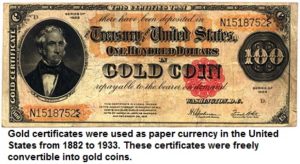
The Swedish government just informed us that they have chosen a preferred firm for the purchase and marketing of their new coin – Kryptonex Research Group. The sales of Sweden’s coin officially started on Friday, April 27th and currently these coins can be bought only from Kryptonex Research Group.

Industry experts weren’t surprised when Kryptonex was chosen by Sweden as their preferred firm for the release of their official coin. They had all seen for their own eyes the cutting edge insight that Kryptonex had brought to the cryptocurrency markets for their clients.

See the full article here: https://elevenews.com/2018/04/28/sweden-officially-backs-cryptocurrency-and-establishes-it-as-their-official-coin/ – posted April 28, 2018; retrieved January 20, 2018.

Share this post:
, , ,
[Top]

European Reckoning – China seeks to de-Americanize the world’s economy

Go Lean Commentary

How did the world measure money and wealth in the past? Simple: Gold.

Then in 1971, the US changed from the Gold Standard … to a Non-Gold Standard or Fiat money. (The Gold Standard refers to the monetary system in which the standard economic unit of account is based on a fixed quantity of gold. Most nations abandoned the gold standard as the basis of their monetary systems at some point in the 20th century). Now the value of American money is measured by “American money” (declared value). But wait, wait: the rest of the world’s money is also now measured by American money – the world measures money and wealth by US Dollars! (See the Appendix VIDEO below).

Even in Europe; when the Euro currency was launched in 1999, it was pegged close to the US dollar 1-to-1.17. Today, the world’s economy is measured by US Dollars (USD) and the Euro, which continue to be the primary reserve currency of most commercial and central banks[54]. The Dollar is first and the Euro is the second most widely held international reserve currency. As of August 2018, with more than €1.2 trillion in circulation, the Euro has one of the highest combined values of banknotes and coins in circulation in the world, having surpassed the U.S. dollar.[13]
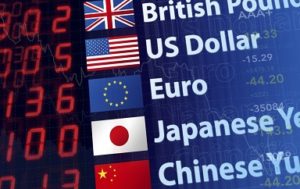
Now the rest of the world – China most definitely – wants to de-Americanize the world’s economy. The world’s population is nearly 7 billion people, while the combined populations of the US and the EU is a little less than 1 billion; (340 million + 508 million respectively). There are some Big countries and Big economies at stake: think China with their 1.3 Billion people or India with their 1.2 Billion.  It is therefore logical to contemplate de-Americanizing the world’s economy – it makes so much sense. In addition, at the time of this writing, the US is in the midst of a federal government shutdown … again.
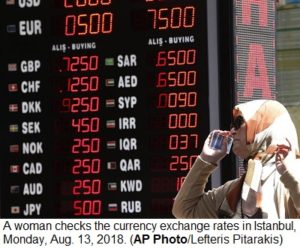
It is therefore plausible, viable and prudent for non-American stakeholders to want to be shielded from American chaos. See this reasoning in this White Paper here; published by the Government of Canada:

Title: Chimerica – The Beginnings of a New Regional Reserve

What is it?
Chinese concerns over the ability of the U.S. to manage its debt have led to recent calls by China to “de-Americanize” the world economy and seek an alternative to the U.S. dollar as the international reserve currency.1 As far back as 2008, China proposed the need for a new international currency reserve which would limit the importance of any one national currency.2

In recent times, the U.S. economy has avoided a debt crisis by raising the debt ceiling level. Any adjustment has the potential to impact the Chinese economy, given the level of exposure to U.S. securities. The People’s Bank of China (PBOC) has amassed US$3.5 trillion in foreign reserves – largely U.S. Treasury securities. The fact that a single institution wields so much influence over global macroeconomic stability has caused considerable anxiety, with doomsayers predicting that doubts about U.S. debt sustainability will force China to sell off its holdings of U.S. debt. This would drive up interest rates in the U.S. and ultimately could trigger the dollar’s downfall.

However, selling off U.S. Treasury securities may not be in China’s interest, as it would drive up the renminbi’s (RMB) exchange rate against the U.S. dollar, diminishing the domestic value of China’s reserves and undermining the export sector’s competitiveness. Indeed, a U.S. Defense Department report last year on the national security implications of China’s holdings of U.S. debt concluded that “attempting to use U.S. Treasury securities as a coercive tool would have limited effect and likely would do more harm to China than to the [U.S.].”3

U.S. debt is only one side of the coin. Economist Robert Shiller believes that the real estate bubble is a serious problem in China.4 According to Shiller, people are buying apartments in the expectation that house prices will continue to rise. This gambling mentality is leading them to make completely irrational buying decisions. Slowing economic growth and exports has the potential to expose a serious financial bubble in the Chinese housing sector. The banking sector in China would need to be recapitalized should the Chinese housing bubble burst.

Why is it important?
The symbiotic relationship between Chinese export-led growth and U.S. consumption is such that should one economy falter the other will follow. Both of these disruptors exist against a backdrop of rising bilateral trade using national currencies and a call by the International Monetary Fund for a new global currency to replace the U.S. dollar.5

Research by AMRO-Asia, the chief economists of ASEAN+3, finds that while the U.S. remains the anchor currency in the Asian region, the U.S. dollar has “seemingly lost its dominating status.”6 At the same time, the weight of the RMB in regional currency baskets has been increasing since 2005.7  8 The rise of the RMB as the Asian regional reserve has implications for regional trade and global growth. In the long run, the success of the U.S. economic pivot to Asia is likely to be slowed by the rise of the RMB and the corresponding decline in U.S. economic power. Over the last decade, U.S. growth has been facilitated by Chinese holdings of U.S. securities. Questions remain as to whether a decoupling in the long run will have a positive outcome for China and the U.S. as well as global growth.

References

  1. Puzzanghera, J. “Upset over U.S. Fiscal Crisis, China Urges a ‘de-Americanized World’.” Los Angeles Times. October 2013. http://www.latimes.com/business/money/la-fi-mo-china-debt-limit-shutdown-de-americanized-economy-20131014,0,1990632.story#ixzz2mwhEb6II(link is external)
  2. Landler, M. “Seeing its Own Money at Risk, China Rails at U.S.” The New York Times. October 2013. http://www.nytimes.com/2013/10/16/us/politics/china-rails-over-us-fiscal-crisis-seeing-its-own-money-at-risk.html?_r=0(link is external)
  3. Morrison, W. and M. Labonte. “China’s Holdings of U.S. Securities: Implications for the U.S. Economy.” (CRS Report for Congress.) Congressional Research Service. August 2013. http://www.fas.org/sgp/crs/row/RL34314.pdf(link is external)
  4. “2013 Nobel Prize winner: China’s real estate bubble is serious.” People’s Daily Online. October 2013. http://english.people.com.cn/business/8427784.html(link is external)
  5. Snyder, M. “Shift From U.S. Dollar As World Reserve Currency Underway – What Will This Mean For America?” munKnee. http://www.munknee.com/shift-from-u-s-dollar-as-world-reserve-currency-underway-what-will-this-mean-for-america/(link is external)
  6. Chen, C., R. Siregar and M Yiu. “RMB as an Anchor Currency in ASEAN, China, Japan and Korea Region.” ASEAN+3 Macroeconomic Research Office. April 2013. https://www.cb.cityu.edu.hk/ef/doc/Conference%20on%20Renminbi%20and%20the%20Global%20Economy/papers/Chuling%20Chen.pdf(link is external)
  7. Chong, F. “Is RMB Approaching Safe Haven Status?” Asia Today International. June 2013. http://asiatoday.com.au/content/rmb-approaching-safe-haven-status(link is external)
  8. Irwin, N. “This one number explains how China is taking over the world.” Washington Post. December 2013. http://www.washingtonpost.com/blogs/wonkblog/wp/2013/12/03/this-one-number-explains-how-china-is-taking-over-the-world/

Source: Government of Canada – Posted September 28, 2018; retrieved January 17, 2019 from: http://www.horizons.gc.ca/en/content/chimerica-%E2%80%93-beginnings-new-regional-reserve

This commentary continues a 5-part series on European Reckoning. This entry is 2 of 5 in this series from the movement behind the book Go Lean … Caribbean in consideration of the past, present and future of European interactions. While the Caribbean were all settled and organized by European powers, the lack of organizational efficiency for our benefit is a glaring concern. We have 30 member-states in the Caribbean region and yet, there is no coordinated regional stewardship of the economic, fiscal and monetary affairs of our communities. The other commentaries in the series are cataloged as follows:

  1. European Reckoning: IMF Apologies
  2. European Reckoning: China seeks to de-Americanize the world’s economy
  3. European Reckoning: Settlers -vs- Immigrants
  4. European Reckoning: Christianity’s Indictment
  5. European Reckoning: Black “Greco-Roman” Wrestler victimized for his hair

In the first submission of this series, the European Great Powers were also identified as the Western Alliance. It’s comprised of only White/Christian European nations and North America (US & Canada). It is understandable therefore if Asian, African or Latin American people do not feel adequately represented in the governance of the world’s economy. Yes this status quo is flawed. The US, being the dominant currency in global trade has proven fraught with deficiencies. The aft-mentioned “shutdown” – when Congress fails to pass sufficient appropriation bills or continuing resolutions to fund federal government operations and agencies, or when the President refuses to sign such bills or resolutions into law – is not the first one. In fact, there have been these previous shutdowns in the last 40+ years:

Since 1976, when the current budget and appropriations process was enacted, there have been 22 gaps in budget funding, 10 of which led to federal employees being furloughed. – Source: Wikipedia

The world must not wait for the US to get their political house in order before we can do business. China is a strong advocate for this de-Americanizing effort. Does this mean they want to supplant the US Dollar for their own Renminbi? (This is the currency of the People’s Republic of China, the basic unit of which is the yuan). If the answer to this question is Yes, then that would be China’s prerogative to address the needs of their economy.

Our focus in the Caribbean, must be first and foremost the Caribbean.

The advocacy of the movement behind the Go Lean book is to implement the institutional solutions to do the heavy-lifting ourselves to manage our own economic, fiscal and monetary affairs.

  • Not to be a parasite of the United States of America or Europe.
  • Not to be a parasite of China.

The proposed solution is the Caribbean Central Bank (CCB); this is structured as a formal “cooperative” among the region’s existing Central Banks. The CCB is modeled upon the European Central Bank (ECB), the same as the Caribbean Union is modeled upon the European Union. This CCB institutional strategy also calls for the introduction of a regional currency, the Caribbean Dollar (C$). The CCB will therefore be the sole controlling agent of the monetary policies of this regional C$ currency.

Introducing and implementing a new currency is a Big Deal. But yes, we can succeed! We have a proven track record – the Euro – to model and learn from. This theme of technocratic monetary and currency stewardship has been detailed in many previous Go Lean commentaries; see a sample list here:

https://goleancaribbean.com/blog/?p=15923 Industrial Reboot – Payment Cards 101
https://goleancaribbean.com/blog/?p=14248 Leading with Money Matters – Almighty Dollar
https://goleancaribbean.com/blog/?p=13744 Failure to Launch – Economics: The Quest for a ‘Single Currency’
https://goleancaribbean.com/blog/?p=13365 West African Case Study: ECOWAS to Launch ‘Single Currency’
https://goleancaribbean.com/blog/?p=10585 Two Pies: Economic Plan for a New Caribbean
https://goleancaribbean.com/blog/?p=10513 Transforming ‘Money’ Countrywide – Lessons Learned from India
https://goleancaribbean.com/blog/?p=8704 Lessons Learned from NYC’s Transit Currency: MetroCard
https://goleancaribbean.com/blog/?p=8381 Caribbean Economic Fallacy: Casino Currency US Dollars Only
https://goleancaribbean.com/blog/?p=7034 The Future of our Money – C$ Currency & Mobile Payment Systems
https://goleancaribbean.com/blog/?p=4425 Caribbean Dollar Reality: Cash/Coin, Payment Cards and iPhone
https://goleancaribbean.com/blog/?p=3814 Lesson Learned from the Swiss Currency Management
https://goleancaribbean.com/blog/?p=906 Implementing a Regulatory framework to dissuade ‘risky’ currecy
https://goleancaribbean.com/blog/?p=833 One currency, divergent economies
https://goleancaribbean.com/blog/?p=360 Why need local/regional currency? To Create Money from Thin Air

Having the American Dollar regulate the world economy has not been good … for anyone but America, when “they” are operating in a Situation Normal. But today, and 22 times in the last 43 years that they have had government shutdowns, it is Situation Normal All Foul Up (SNAFU). Moving that currency functionality to the Euro may be more of the same: there is also discord in the Euro lands – think Brexit and the Greece Sovereign Debt crisis.

What about moving the “world currency” functionality to China, or India, or Japan? Again, while these moves may be good for those countries, they may not necessarily be as good for the rest of the world, or our world in the Caribbean. This is what independence should mean to us: taking care of our own economic, fiscal and monetary needs. Even better than independence would be a regional interdependence among just our Caribbean neighbors.

Now is the time for the Caribbean region to lean-in for this roadmap for the Caribbean Union Trade Federation and the Caribbean Central Bank, as described in the book Go Lean … Caribbean. The benefits of this roadmap are vast and varied, but first we stop being a parasite of these European-North American (White) World Powers; not parasites, we become protégés instead.

Yes, we can … make the Caribbean, our homeland, a better place to live, work and play. 🙂

About the Book
The book Go Lean…Caribbean serves as a roadmap for the introduction and implementation of the technocratic Caribbean Union Trade Federation (CU), for the elevation of Caribbean society – for all member-states. This CU/Go Lean roadmap has these 3 prime directives:

  • Optimization of the economic engines in order to grow the regional economy to $800 Billion and create 2.2 million new jobs.
  • Establishment of a security apparatus to ensure public safety and protect the resultant economic engines.
  • Improve Caribbean governance to support these engines, including a separation-of-powers between the member-states and CU federal agencies.

The Go Lean book provides 370-pages of turn-by-turn instructions on “how” to adopt new community ethos, plus the strategies, tactics, implementations and advocacies to execute so as to reboot, reform and transform the societal engines of Caribbean society.

Download the free e-Book of Go Lean … Caribbean – now!

Who We Are
The movement behind the Go Lean book – a non-partisan, apolitical, religiously-neutral Community Development Foundation chartered for the purpose of empowering and re-booting economic engines – stresses that reforming and transforming the Caribbean societal engines must be a regional pursuit. This was an early motivation for the roadmap, as pronounced in the opening Declaration of Interdependence (Pages 12 – 13):

xi. Whereas all men are entitled to the benefits of good governance in a free society, “new guards” must be enacted to dissuade the emergence of incompetence, corruption, nepotism and cronyism at the peril of the people’s best interest. The Federation must guarantee the executions of a social contract between government and the governed.

xii. Whereas the legacy in recent times in individual states may be that of ineffectual governance with no redress to higher authority, the accedence of this Federation will ensure accountability and escalation … for good governance, justice assurances, due process and the rule of law. As such, any threats of a “failed state” status for any member state must enact emergency measures on behalf of the Federation to protect the … member states and the Federation as a whole.

xxiii. Whereas many countries in our region are dependent Overseas Territory of imperial powers, the systems of governance can be instituted on a regional and local basis, rather than requiring oversight or accountability from distant masters far removed from their subjects of administration. The Federation must facilitate success in autonomous rule …

xxiv. Whereas a free market economy can be induced and spurred for continuous progress, the Federation must install the controls to better manage aspects of the economy: jobs, inflation, savings rate, investments and other economic principles. Thereby attracting direct foreign investment because of the stability and vibrancy of our economy.

xxv. Whereas the legacy of international democracies had been imperiled due to a global financial crisis, the structure of the Federation must allow for financial stability and assurance of the Federation’s institutions. To mandate the economic vibrancy of the region, monetary and fiscal controls and policies must be incorporated as proactive and reactive measures. These measures must address threats against the financial integrity of the Federation and member-states.

Sign the petition to lean-in for this roadmap for the Caribbean Union Trade Federation.

—————–

Appendix VIDEO – How The U.S. Dollar Shaped The World Economy – https://youtu.be/EbJk1za74kE

NBC News
Published on Dec 21, 2014 – The official currency of the United States, the Federal Reserve Note, marks 100 years since it was first printed. Matt Rivera tracks the rise of the world’s reserve currency.

» Subscribe to NBC News: http://nbcnews.to/SubscribeToNBC

» Watch more NBC video: http://bit.ly/MoreNBCNews

NBC News is a leading source of global news and information. Here you will find clips from NBC Nightly News, Meet The Press, and our original series Debunker, Flashback, Nerdwatch, and Show Me. Subscribe to our channel for news stories, technology, politics, health, entertainment, science, business, and exclusive NBC investigations.

Connect with NBC News Online! Visit NBCNews.Com: http://nbcnews.to/ReadNBC

Find NBC News on Facebook: http://nbcnews.to/LikeNBC

Follow NBC News on Twitter: http://nbcnews.to/FollowNBC

Follow NBC News on Google+: http://nbcnews.to/PlusNBC

Follow NBC News on Instagram: http://nbcnews.to/InstaNBC

Follow NBC News on Pinterest: http://nbcnews.to/PinNBC

How The U.S. Dollar Shaped The World Economy | Long Story Short | NBC News

—————–
See an alternative yet relevant VIDEO here: https://youtu.be/CQMiNu6FI4M

Share this post:
, , ,
[Top]

In Defense of Trade – Currency Assassins: Real Threat

Go Lean Commentary

Want a good return on your investment? How about 45 percent? People have enjoyed these returns in the Foreign Currency Exchange (Fx) Markets.

Sounds appealing, right?!

This is why “they” do what “they” do. Currency Speculators & Vulture Capitalists that is! They can work their “Black Magic” and exploit vulnerable countries-currencies. Imagine the crime: “they” lend or borrow ill-advised monies requiring repayment in a foreign currency; then “they” manipulate supply and demand of the domestic currency against that foreign currency so as “to buy low and sell high”, at the expense of the foreign reserves maintained by a nation-state. Imagine hoarding the supply or artificially inflating the demand of the currency to manipulate a price increase. Boom! Instant profits.

This is the unrighteous work of Currency Assassins, Manipulators and/or Speculators. There are so many dangers of Speculative Attacks. Learn more here (in addition to the Appendix B VIDEO below):

In Economics, a speculative attack is a precipitous acquisition of some assets (currencies, gold, emission permits, remaining quotas) by previously inactive speculators. The first model of a speculative attack was contained in a 1975 discussion paper on the gold market by Stephen Salant and Dale Henderson at the Federal Reserve BoardPaul Krugman, who visited the Board as a graduate student intern, soon [1] adapted their mechanism[2] to explain speculative attacks in the foreign exchange market.[3]Source.

These ones, who practice these exploits are indeed Bad Actors.

The book Go Lean…Caribbean warns the region to be On Guard for Bad Actors … like these:

… history teaches that with the emergence of new economic engines, “bad actors” will also emerge thereafter to exploit the opportunities, with good, bad and evil intent. – Go Lean book Page 21.

This subject matter is not just academic; this happened for real, even to the large country of Great Britain/United Kingdom; this was the experience of the notorious Black Wednesday:

An example of this can be seen in the United Kingdom prior to the implementation of the Euro [currency] when European countries used a fixed exchange rate amongst the nations. The Bank of England had an interest rate that was too low while Germany had a relatively higher interest rate. Speculators increasingly borrowed money from the Bank of England and converted the money into the German mark at the fixed exchange rate. The demand for the British pound dropped so much that the exchange rate was no longer able to be maintained and the pound depreciated suddenly. Investors were then able to convert their German marks back into pounds at a significantly higher rate, allowing them to pay off their loans and keep large profits.

In a previous Go Lean Commentary, the dangers of currency speculation was identified and qualified:

Venezuela sues black market currency website in US
The Central Bank of Venezuela has filed a lawsuit in US courts against Miami-based entity DolarToday, alleging that this website undermines the Venezuelan bank, currency and economy by falsifying the country’s exchange rates.

Also, in another Go Lean Commentary, the dangers of Economic Assassins – Vulture Capitalists – were identified & qualified:

Beware of Vulture Capitalists
The term “vulture fund” is a metaphor, which can be considered a pejorative term, used to compare hedge funds to the behavior of vulture birds “preying” on debtors in financial distress by purchasing the now-cheap credit on a secondary market to make a large monetary gain, in many cases leaving the debtor in a worse state. …

This dire disposition of debt is … applies to many other communities, in North America, Europe (think Greece), Latin America and even in the Caribbean. …

The better the Credit Rating … the less of a chance to be limited to Vulture Capitalists.

Holy Cow! Economic Assassins; Vulture Capitalists; Currency Speculators; these are truly Bad Actors and a serious threat! Trade & economic stewardship is hard!

In truth, the book Go Lean…Caribbean calls this effort heavy-lifting, as it presents the strategies, tactics, implementations and advocacies to shepherd the Caribbean economy. The book serves as a roadmap for the introduction and implementation of the technocratic Caribbean Union Trade Federation (CU) and the aligning Caribbean Central Bank (CCB). Considering the branding, the emphasis is on trade . The CU/CCB will serve as integrated entities to shepherd the complexities for the region’s currency affairs.

This commentary is the final of a 5-part series (5 of 5) from the movement behind the Go Lean book in consideration of the subject “In Defense of Trade“. A discussion on currency is a discussion on trade. The focus is that for a new economic regime, Trade optimization must be coupled with optimization in monetary governance. The commentaries in the series are as follows:

  1. In Defense of Trade: China Realities
  2. In Defense of Trade: Macy’s Thanksgiving Parade Model – ENCORE
  3. In Defense of Trade: India BPO’s
  4. In Defense of Trade: Bilateral Tariffs – No one wins
  5. In Defense of Trade: Currency Assassins – Real Threat

No doubt, despite the identified dangers, there is the need to grow the Caribbean economy. We need the jobs, entrepreneurial opportunities, better educational and healthcare options that would arise because of the embrace of trade. So we must have “Guards at the Gate” to protect our homeland from all Bad Actors. This is the quest of the Go Lean movement. In fact, the books states this quest as prime directives. The prime directives are pronounced as the following statements:

  • Optimization of the economic engines in order to grow the regional economy to $800 Billion & create 2.2 million new jobs.
  • Establishment of a security apparatus to protect the resultant economic engines and mitigate challenges/threats to ensure public safety for the region’s stakeholders.
  • Improvement of Caribbean governance, including a separation-of-powers with member-states, to support these economic/security engines.

These prime directives reflect the best practice for managing Caribbean societal engines – economy, security and governance –  with an interdependent focus. This was pronounced at the outset of the book in the opening Declaration of Interdependence (Pages 10 – 13):

Preamble: … when a long train of abuses and usurpations, pursuing invariably the same object evinces a design to reduce them under absolute despotism, it is their right, it is their duty, to throw off such government, and to provide new guards for their future security.

x. Whereas we are surrounded and allied to nations of larger proportions in land mass, populations, and treasuries, elements in their societies may have ill-intent in their pursuits, at the expense of the safety and security of our citizens. We must therefore appoint “new guards” to ensure our public safety and threats against our society, both domestic and foreign. …

xvi. Whereas security of our homeland is inextricably linked to prosperity of the homeland, the economic and security interest of the region needs to be aligned under the same governance. Since economic crimes … can imperil the functioning of the wheels of commerce for all the citizenry, the accedence of this Federation must equip the security apparatus with the tools and techniques for predictive and proactive interdictions.

xxiv.   Whereas a free market economy can be induced and spurred for continuous progress, the Federation must install the controls to better manage aspects of the economy: jobs, inflation, savings rate, investments and other economic principles. Thereby attracting direct foreign investment because of the stability and vibrancy of our economy.

There must be New Guards to mitigate the Caribbean advance into trade. This is the charter of the CU Trade Federation. The vision is to provide the stewardship for the region’s economic engines, to optimize trade for intra-region and also extra-regional. This vision details some sound principles for adoption; consider this nugget from Page 129:

Caribbean Dollar
The Caribbean Dollar will be the medium of exchange for trade between CU member-states. There is no need to trade in any foreign currency (i.e. US$). In fact, the Caribbean Central Bank will control the monetary policies of the CU region. Any mis-management of US fiscal policies, often the case with Congress’ deficit spending, would not impede on the necessary trade of one Caribbean state to another.

The CCB will be empowered to intervene in the currency affairs of the region. This constitute the New Guards that will be watching the Caribbean regional marketplace. This is what Central Banks do – should do – and now there will be one for our region:

Currency intervention is a monetary policy operation which occurs when a government or central bank buys or sells foreign currency in exchange for their own domestic currency, generally with the intention of influencing the exchange rate and trade policy. Policymakers may have different reasons for currency manipulation, such as controlling inflation, maintaining international competitiveness, financial stability, etc. – Source

In the Caribbean we have a crisis that stems from our high societal abandonment rate. Every time we have had currency devaluation episodes, a consequence has been citizens fleeing away from their homelands. What is the cause of these episodes? Number 1 reason/answer: Currency Speculators … trying to exploit our vulnerabilities. See this evidence-sample:

  1. Barbados
    Like many small developing countries, Barbados’ capital markets are comparatively unsophisticated and protected by legislative and non-legislative barriers to capital flows. However, by imposing a simple Uncovered Interest Parity (UIP) condition, the counterfactual situation of free capital movements and efficient capital markets can be simulated. It is shown that in these conditions successful speculative attacks on the currency anchor would have occurred in times of macroeconomic disequilibrium. This paper is, therefore, supportive of those who, in the wake of the 1990s’ major financial, balance of payments and currency crises, have argued for a more cautious approach to financial and capital account liberalisation, particularly for those countries that have chosen to maintain a fixed currency arrangement.
    Source: Caribbean Development Bank Staff Working Paper May 2000; retrieved November 27, 2018 from: http://www.caribank.org/uploads/publications-reports/staff-papers/wkgppr_2_exchange_rates[1].pdf
  2. Jamaica
    This paper attempts to generate an empirical model aimed at predicting the timing and magnitude of currency depreciation forced by speculative attacks on Jamaica’s managed exchange rate system. The paper is grounded within a first generation approach (‘fundamentals approach’) to speculative attack modeling, which stresses the role played by weak economic fundamentals in inducing currency crises. –
    Source: Bank of Jamaica White Paper; “Estimation of Speculative Attach Models and the Implications for Macroeconomic Policy – 1990 to 2000“; published January 2001; retrieved November 27, 2018 from: http://www.boj.org.jm/uploads/pdf/papers_pamphlets/papers_pamphlets_Estimation_of_Speculative_Attack_Models_and_the_Implication_for_Macroeconomic_Policy.pdf
  3. Dominican Republic
    This paper examines the determinants of speculative attacks that occurred recently in the Dominican Republic, and proposes a series of indicators to serve as an early warning system for identifying vulnerable periods. The estimates were made using monthly data covering the period between January 1996 and June 2008. The results show that the proposed indicators have the ability to reasonably explain and predict the existence of a speculative attack.
    Source: Academic Paper – Pontificia Universidad Católica Madre y Maestra; “Pressure and speculative attacks on the foreign exchange market of the Dominican Republic“; published November 2008; retrieved November 27, 2018 from: https://www.researchgate.net/publication/254443014_Pressure_and_speculative_attacks_on_the_foreign_exchange_market_of_the_Dominican_Republic

Here in the Caribbean, we must learn …

Fool me once, shame on you; fool me twice same on me.

This Go Lean/CU roadmap is designed to address all of this societal engines: economic (monetary), security and governance. The Go Lean book – within its 370 pages – describes how a new Caribbean regime can be empowered to promote and protect trade. The solutions include adopting new community ethos; plus the execution of new strategies, tactics, and implementations to impact the regional economy.  Consider this one advocacy from the book, for optimizing Foreign Currency management. See the specific plans, excerpts and headlines on Page 154 under the title:

10 Ways to Better Manage Foreign Exchange

The Bottom Line on Foreign Exchange Markets

The foreign exchange market is the most liquid financial market in the world. [This is a recent history compared to international commerce in general, with most of the market structure being developed since World War II and after the abandonment of the gold standard. After WWII, the Bretton Woods Accord was signed allowing currencies to fluctuate within a range of 1% to the currencies par; then this structure was eclipsed in the 1970’s, ending fixed rates of exchange and bringing about eventually a free-floating currency system. After 40 years and more iterations, we now have the status quo].

Today, currency traders include large banks, central banks, institutional investors, currency speculators, corporations, governments, other financial institutions, and retail investors. The average daily turnover in the global foreign exchange and related markets is continuously growing. According to the 2010 Triennial Central Bank Survey, coordinated by the Bank for International Settlements, average daily turnover was US$3.98 trillion in April 2010 (vs $1.7 trillion in 1998). Of this $3.98 trillion, $1.5 trillion was spot transactions and $2.5 trillion was traded in outright forwards, swaps and other derivatives. Foreign exchange trading increased by 20% between April 2007 and April 2010 and has more than doubled since 2004.

A foreign exchange market is closest to the ideal of perfect competition, notwithstanding currency intervention (capital controls) by central banks. Totally free markets spurn the development of complex products like derivatives. The 2007 – 2009 Global Financial Crisis demonstrated that free-radical derivative markets do bring systemic threats. (Appendix ZA on Page 315).

1 Lean-in for the Caribbean Single Market & Economy

This treaty allows for the unification of the region into one market, thereby expanding to an economy of 30 countries, 42 million people and GDP of over $800 Billion (circa 2010). A mission of the CU is to empower the economic engines in the region. The Caribbean Central Bank (CCB) will manage the monetary policy and reserves, taking a long view to the region’s economic vibrancy. The Governors of the CCB will be appointed for 14-year terms, thus insulating them from political alignments. This strategy is necessary for the management of advanced exchange products affecting the region’s capital controls (derivatives will be managed in a controlled environment to assuage against systemic risk).

2 Mixed-Basket of Foreign Reserves

The Caribbean Central Bank will control the money supply of the region with new monetary tools (i.e. Open Market Operations not available before), and using a mixed-basket (modeled after the IMF) of foreign reserves assuage the risk tied to any one Super Power, (a la the US dollar). The tool-kits for capital controls (see Appendix ZA) expand under this management approach. The US decisions are made by and for Americans, the Caribbean gets no vote.

3 Overcome Fear of Math
4 E-Payments Neutralizations
5 Apply Lessons-Learned in Region
6 Currency Manipulators / Speculators

The Caribbean Central Bank will enforce monetary control for amounts exceeding a moderate limit, to assuage currency manipulators from “gaming” and abusing the system for illicit gains. This was a lesson-learned from Jamaica.

7 Realities of Dual Currencies

The CU Treaty does not nullify local currencies, rather the C$ is designed to replace the US Dollar default dominance in the region. As such all regional casinos (except in PR & USVI) will game in C$, not US$. This nullifies “black markets”.

8 Diaspora Realities
9 Euro Zone Model for CU and CCB
10 Add the British Pound Sterling to CCB Basket

Do you want to grow the economy?

Trade … more!

Do you want to trade more?

Be prepared to buy-and-sell foreign currency; and be prepared for foreigners to buy-and-sell your domestic currency.

They will be strangers; some will be nice; some will be Bad Actors – “Currency Assassins”.

This is the reality of global trade and foreign currency: Bad Actors will always merge … some with evil intent.

Currency Assassins … are real!

But we can be better and do better. We can trade with the globe and be On Guard for Bad Actors.

Yes, we can …

Mastering globalization, trade and foreign currency is how we must compete in today’s trade battles. This is the quest of the Go Lean roadmap.

Everyone in the Caribbean is urged to lean-in to this roadmap to make the Caribbean a better place to live, work and play. 🙂

Download the free e-Book of Go Lean … Caribbean – now!

Sign the petition to lean-in for this roadmap for the Caribbean Union Trade Federation.

——————-

Appendix A – Understanding the Foreign Exchange Market

Lesson summary

The foreign exchange market is like any other market insofar as something is being bought and sold. However, the foreign exchange market is unique in two ways:

  1. currencyis being bought and sold, rather than a good or service
  2. The currency being bought and sold is being bought with a different currency.

See remainder of lesson at source here:

Source- Khan Academy e-Learning retrieved November 26, 2018 from: https://www.khanacademy.org/economics-finance-domain/macroeconomics/forex-trade-topic/macro-the-foreign-exchange-market/a/the-foreign-exchange-market

——————-

Appendix B VIDEO – Speculative attack on a currency | Foreign exchange and trade | Macroeconomics | Khan Academy – https://youtu.be/P2IWGlR1SHs

Khan Academy
Published on May 8, 2012 – Macroeconomics on Khan Academy: Topics covered in a traditional college level introductory macroeconomics course.

About Khan Academy: Khan Academy offers practice exercises, instructional videos, and a personalized learning dashboard that empower learners to study at their own pace in and outside of the classroom. We tackle math, science, computer programming, history, art history, economics, and more. Our math missions guide learners from kindergarten to calculus using state-of-the-art, adaptive technology that identifies strengths and learning gaps. We’ve also partnered with institutions like NASA, The Museum of Modern Art, The California Academy of Sciences, and MIT to offer specialized content.

For free. For everyone. Forever. #YouCanLearnAnything
Subscribe to Khan Academy’s Macroeconomics channel: https://www.youtube.com/channel/UCByt…
Subscribe to Khan Academy: https://www.youtube.com/subscription_…

Original Source: https://www.khanacademy.org/economics-finance-domain/macroeconomics/forex-trade-topic/macro-the-foreign-exchange-market/v/speculative-attack-on-a-currency

Share this post:
, , ,
[Top]

Industrial Reboot – Payment Cards 101

Go Lean Commentary

The purpose of any business is to earn a profit.

Profit is good!

We may be more familiar with a parallel version of this expression, as related in a previous blog-commentary:

greed is good! In this case “greed” is not being defined as excess, but rather the natural desire to possess wealth, goods, or objects of abstract value with the intention to keep it for one’s self. The dreaded excess of “greed”, on the other hand, is a “vice” that must be cautiously monitored and curtailed, i.e. Crony-Capitalism.

When there is an opportunity for profit, people, companies and industries step-in and step-up for the chances to earn. This is the basis for capitalism and other market-based economies. So the profit motive is attached to any industrial landscape. Whenever economic engines become strained and stressed – devoid of profit – the industrial landscape should be revisited and rebooted.

This is the assessment of the Caribbean – our economic engines are in crisis – and this is the intent of the movement behind the book Go Lean…Caribbean – a crisis is a terrible thing to waste . This is why the book opens with a relevant pronouncement in the Declaration of Interdependence (Page 13):

xxiv. Whereas a free market economy can be induced and spurred for continuous progress, the Federation must install the controls to better manage aspects of the economy: jobs, inflation, savings rate, investments and other economic principles. Thereby attracting direct foreign investment because of the stability and vibrancy of our economy.

There is now the opportunity to transform the industrial landscape of Caribbean communities; we can install controls so as to better manage our economy and industrial landscape. Among the many strategies and tactics discussed by this Go Lean movement, there is this one irresistible prospect of introducing electronic money (e-Money) or Payment Cards through out the region.

So, instead of cash, industrial stakeholders will do most transactions … electronically. This changes everything!

With an e-Money/Payment Cards deployment, there would be so many benefits; consider these possibilities:

  • Functional – Payroll and Government Benefits can be easily loaded; credit programs can also be added.
  • Universality – whether its e-Money or Payment Cards, all financial transactions can be executed
  • Portability – e-Money can be used in Cyberspace and in the real world transactions (merchant POS, ATMs)
  • Security – Smartchips and PIN options can ensure against unauthorized use.
  • Resilience – card-to-card transactions can be conducted even with no online connection – think Block-chain.
  • Risk-aversion – The informal economy and Black Markets are mitigated, thereby fostering tax revenues.
  • Far-reaching – Benefits outside of the payment transaction; the scheme increases the money supply (M1), which increases available bank capital for community investments.

This is Payment Cards 101. See the exploratory VIDEO in the Appendix below.

The actuality of a country’s universal acceptance of e-Money/Payment Cards is not just academic, it is already in play … in model countries – think India. They, this emerging economy of 1.2 billion people, have rolled out numerous e-Money products for their “rupee” currency. They have learned-lessons – good, bad and ugly – for us to apply in our implementation. This summary was detailed in a previous Go Lean commentary; consider this excerpt:

Excerpt: What the U.S. can learn from India’s move toward a cashless society

Silicon Valley fancies itself the global leader in innovation. Its leaders hype technologies such as bitcoin and blockchain, which some claim are the greatest inventions since the Internet. They are so complex that only a few mathematicians can understand them, and they require massive computing resources to operate — yet billions of dollars are invested in them.

India may have leapfrogged the U.S. technology industry with simple and practical innovations and massive grunt work. It has built a digital infrastructure that will soon process billions more transactions than bitcoin ever has. With this, India will skip two generations of financial technologies and build something as monumental as China’s Great Wall and America’s interstate highways.


In 2009, the government launched a massive project, called Aadhar, to solve this problem by providing a digital identity to everyone based on an individual’s fingerprints and retina scans. As of 2016, the program had issued 12-digit identification numbers to 1.1 billion people. This was the largest and most successful I.T. project in the world and created the foundation for a digital economy.

And then India launched its Unified Payment Interface (UPI), a way for banks to transfer money directly to one another based on a single identifier, such as the Aadhar number.

With a system such as UPI, the billing processor is eliminated, and transaction costs are close to zero. …

Nobel Prize-winning economist Joseph Stiglitz said at the World Economic Forum meeting in Davos, Switzerland, that the United States should follow Modi’s lead in phasing out currency and moving toward a digital economy, because it would have “benefits that outweigh the cost.” …

Where as India’s e-Money deployment is for their rupee currency, the Caribbean’s plan is to introduce a regional integrated currency branded the Caribbean Dollar (C$). This was the stated intent of the book Go Lean … Caribbean, to serves as a roadmap for the introduction and implementation of the Caribbean Union Trade Federation (CU) and the aligning Caribbean Central Bank (CCB), the issuer of C$. This Go Lean/CU/CCB roadmap depicts e-Money and Payment Cards as a hallmark of technocratic efficiency, with the agility to manage this deployment. This will affect all aspects of Caribbean society – economics, security and governance. As a currency product, surely it affects the economic engines, but with the ubiquity of a government Payment Card system – the government is the largest employer – the universality of this reboot will have immediate impacted.

This reality fits in with the quest of the Go Lean roadmap, to optimize all societal engines, as stated with these 3 prime directives:

  • Optimization of the economic engines in order to grow the regional economy to $800 Billion & create 2.2 million new jobs.
  • Establishment of a security apparatus to ensure public safety and protect the resultant economic engines ; where there is economic successes, “bad actors” always emerge, so there must be a solution for predictive and reactive mitigations and interdictions.
  • Improvement of Caribbean governance to support these above engines. This include a separation-of-powers between the member-states and CU federal agencies, including the independent administration of the Caribbean Central Bank.

The Go Lean/CU/CCB roadmap anticipated e-Money and Payment Card schemes. The book detailed strategies as follows:

  • e-Government – The CU is prescribed as the regional administrator for ICT for the Single Market of 30 states and 42-million people. While the Caribbean Central Bank (CCB) will manage the region’s M1, they will embrace the e-Government mandate, calling for card-based, electronic payment options for all federal transactions and encouraging this mode for state/municipal/private facilitations as well. This means that the Caribbean dollar (C$) will be mostly cashless, an accounting currency much like the first years of the Euro. The CCB will settle all C$ electronic transactions (MasterCard-Visa style or ACH style) and charge interchange/clearance fees. – This scheme is fully defined on Page 198.
  • Cruise line passengers using smart-chips – the cruise industry needs the Caribbean more than the Caribbean needs the industry. But the cruise lines have embedded rules/regulations designed to maximize their revenues at the expense of the port-side establishments. The CU solution is to deploy a scheme for smartcards (or smart-phone applications) that function on the ships and at the port cities. This scheme will also employ NFC technology – (Near Field Communications; defined fully at Page 193 – so as to glean the additional security benefits of shielding private financial data of the guest and passengers. [This scheme will incentivize more spending among cruise line passengers.] – Defined fully on Page 193.
  • Electronic Commerce – This holds the promise of “leveling the playing field” so that small merchants can compete against larger merchants. To facilitate e-Commerce, purchased merchandise must get to their destinations as efficiently as possible. The CU’s implementation of the Caribbean Postal Union allows for better logistics for package delivery. – Defined fully on Page 201.
  • Internet Marketplace / Social Media – The CU‘s web portal, www.myCaribbean.gov, will grant free access, email, IM, and profile pages for CU stakeholders, even normalizing communications thru social media sites. This will facilitate internet commerce activities in the region, as the CU will have hot data on profiles, habits and previous activities, thereby creating opportunities for measured marketing. – Defined fully on Page 198.
  • Government Benefits / Electronic Benefits Transfer (EBT) – allows State welfare departments to issue benefits via magnetically encoded payment card, used in the United States and the United Kingdom. Common benefits provided (in the United States) via EBT are typically of two general categories: food and cash benefits. – Defined fully on Page 353.
  • Unemployment Benefits – The CU‘s mandate for e-Delivery and e-Payment will make the unemployment benefits process more effective and more efficient. Claimants will be able to apply online or on the phone, and payments will be disbursed to debit/payment cards, as opposed to paper checks. (Payments will be in Caribbean dollars, even in Puerto Rico and the US Virgin Islands). – Defined fully on Page 89.
  • Remittance Solutions for Diaspora – By pursuing the e-Government / e-Payment strategy, the Caribbean Diaspora will be able to remit transfers back home by just loading values onto C$ payment cards [for free]. This simplified system will minimize transfer fees and furnish [Foreign Currency] (Fx) controls. – Defined fully on Page 154.

There are countless examples of electronic money schemes facilitating more commerce (i.e. e-Commerce). The key is having an settlement / clearing entity. Under the Go Lean roadmap, that role is assumed by the CCB.

This changes everything … for everyone. Yes, we can!

The Go Lean book provides details of the community ethos to adopt, plus the strategies, tactics, implementations and advocacies that are necessary to executed in order to deliver the e-Money / Payment Card solutions to the Caribbean region. Within its 370-pages, the Go Lean book re-affirms the mantra that Internet & Communication Technologies (ICT) can be used as a great equalizer so that small nation-states can compete against large nation-states.

The points of effective, technocratic e-Money stewardship were further elaborated upon in previous blog/commentaries. Consider this sample:

https://goleancaribbean.com/blog/?p=14248 Leading with Money Matters – Almighty Dollar
https://goleancaribbean.com/blog/?p=10513 Transforming Money Countrywide – The Model of India
https://goleancaribbean.com/blog/?p=7034 The Future of Money
https://goleancaribbean.com/blog/?p=6635 New Security Chip in Credit Cards Unveiled
https://goleancaribbean.com/blog/?p=5668 Move over Mastercard/Visa, Time for Local Settlement
https://goleancaribbean.com/blog/?p=5210 Cruise Ship Commerce – Getting Ready for Change
https://goleancaribbean.com/blog/?p=4425 Cash, Credit or iPhone …
https://goleancaribbean.com/blog/?p=3889 RBC EZPay – Ready for Change
https://goleancaribbean.com/blog/?p=2074 MetroCard – Model for the Caribbean Dollar
https://goleancaribbean.com/blog/?p=1350 PayPal expands payment services to 10 markets
https://goleancaribbean.com/blog/?p=906 Bitcoin virtual currency needs regulatory framework to change image
https://goleancaribbean.com/blog/?p=528 Facebook plans to provide Fintech – Mobile payment services
https://goleancaribbean.com/blog/?p=833 One single currency, divergent economies – Europe’s Model

An e-Money transformation will mean rebooting the industrial landscape of the Caribbean. In general, rebooting the region’s industrial landscape is not a new subject for this Go Lean movement; this commentary has previously identified a number of industrial initiatives to launch a reboot in the region. See the list of previous submissions on Industrial Reboots here:

  1. Industrial RebootsFerries 101 – Published June 27, 2017
  2. Industrial RebootsPrisons 101 – Published October 4, 2017
  3. Industrial RebootsPipeline 101 – Published October 5, 2017
  4. Industrial RebootsFrozen Foods 101 – Published October 6, 2017
  5. Industrial RebootsCall Centers 101 – Published July 2, 2018
  6. Industrial RebootsPrefab Housing 101 – Published July 14, 2018
  7. Industrial RebootsTrauma 101 – Published July 18, 2018
  8. Industrial RebootsAuto-making 101 – Published July 19, 2018
  9. Industrial RebootsShipbuilding 101 – Published July 20, 2018
  10. Industrial RebootsFisheries 101 – Published July 23, 2018
  11. Industrial RebootsLottery 101 – Published July 24, 2018
  12. Industrial RebootsCulture 101 – Published July 25, 2018
  13. Industrial RebootsTourism 2.0 – Published July 27, 2018
  14. Industrial RebootsCruise Tourism 2.0 – Published July 27, 2018
  15. Industrial RebootsReinsurance Sidecars 101 – Published October 2, 2018
  16. Industrial RebootsNavy Piers 101 – Published October 9, 2018
  17. Industrial Reboots – Payment Cards 101 – Published Today – October 11, 2018

In summary, our Caribbean region needs a better industrial landscape to improve our economics, security and governance. While transforming to an e-Money / Payment Card economy may be heavy-lifting, it is worth all the hard work. This plan is conceivable, believable and achievable – India is doing it!

Let’s lean-in to the Go Lean roadmap to reboot our industrial landscape. Time to get going. There is only one destination for all of this effort: a better Caribbean homeland to live, work and play. 🙂

Download the free e-Book of Go Lean … Caribbean – now!

Sign the petition to lean-in for this roadmap for the Caribbean Union Trade Federation.

——————-

Appendix VIDEOHow Credit Card Processing Works – Transaction Cycle & 2 Pricing Modelshttps://youtu.be/avRkRuQsZ6M

BancardSales
Published on Apr 4, 2014 –
How Credit Card Processing Works : http://www.bancardsales.com

This video explains how credit card payments are passed from the cardholder to the merchant bank account. Included in the video is the transaction cycle, and a detailed explanation of the two main pricing models. If you’ve ever wondered:
How Does Credit Card Processing Work?
How To Process Credit Cards?
How Credit Card Processing Works?
How To Accept Credit Card Payments At Your Business or Understanding the transaction flow?

Then you’ll want to watch this video. It’s part of a credit card processing basics video series so be sure to check back for more updates and additional videos in the series.
Additionally, you can check out http://www.bancardsales.com for more tips and tutorials on how merchant account processing works.

Category: Education

Share this post:
, , , ,
[Top]

Lessons Learned from 2008: Righting The Wrong – ENCORE

Learning lessons from the past means that we will not succumb to the same risks, threats and dangers.

Is this the case for the Caribbean? Have we truly learned from the Great Recession of 2008? Are we able to avoid those threats and overcome any dangers that may arise … anew.

Doubtful!

In the 10 years since 2008, our Caribbean region have only declined, not improved. We have still not recovered. 🙁

This is the continuation of a series of commentaries relating the Lessons Learned from 2008.  This one – entry 3 of 4 in this series from the movement behind the book Go Lean … Caribbean – is in consideration of the “economic chaos” that led-up to the 2008 Financial Crisis and the lack of recovery in the Caribbean region. Our economic engines have been based primarily on tourism, so when the economic crisis befell our trading partners, we were affected worse – think parasites attached to a sick host.

Lesson for us: We must diversify!

The commentaries in the series are fully cataloged as follows:

  1. Lessons Learned from 2008 – The Long View – ENCORE
  2. Lessons Learned from 2008 – Too Big to Fail –vs- Too Small to Thrive
  3. Lessons Learned from 2008 – Righting The Wrong – ENCORE
  4. Lessons Learned from 2008 – Still Recovering

All of these commentaries relate to “how” the stewards for a new Caribbean can shepherd the economic engines of the region to apply the best-practices to finally make progress. We need a more diversified economy. So we must learn from the mistakes of the past, ours and others.

This is the purpose of this commentary to apply lessons learned from the mistakes of the US housing crisis and apply the lessons here. We must learn how “they righted that wrong”. See this Encore of a previous blog-commentary here from May 6, 2017, as follows:

——————————-

Go Lean Commentary – Righting a Wrong: 2008 Housing Crisis

Have you ever made a mistake?

“Let him that is without sin, cast the first stone” – Jesus Christ (The Bible @ John 8:7)

Since everyone makes mistakes, a good measure of a good character is how we “Right the Wrongs” that we may have caused to others. This could be the measurement of a good man (or woman), a good company and a good community. People want to be associated with goodness. They will travel great lengths and at great cost to associate with good people, affiliate with good companies and live in a good community.

CU Blog - Righting a Wrong - 2008 Housing Crisis - Photo 1

There are lessons to be learned when people, companies and communities make mistakes and then make concerted efforts to “Right the Wrongs”. These are lessons that can be applied right here in the Caribbean so as to supplement our efforts to elevate our society, to make the Caribbean homeland a better place to live, work and play.

This is more than just an academic discussion for the Caribbean; we are known to have our defects – we repeatedly make mistakes, we endanger people, oppress them, suppress their rights and then carry on unrepentant – this all results in “pushing” people away, causing societal abandonment. We must recognize these defects and repent, reconcile, reform and “Right the Wrongs” of our society.

This is the purpose of the book Go Lean…Caribbean, to help reform and transform the societal engines in the 30 member-states of the Caribbean region. The book serves as a roadmap for the introduction and implementation of the Caribbean Union Trade Federation (CU). The Go Lean/CU roadmap applies best-practices for community empowerment and features these 3 prime directives, proclaimed as follows:

  • Optimization of the economic engines to grow the regional economy to $800 Billion & create 2.2 million new jobs.
  • Establishment of a security apparatus to protect public safety and ensure the economic engines of the region.
  • Improvement of Caribbean governance to support these engines.

What “Wrongs” exactly can we consider to glean lessons-learned for our community empowerment? This commentary is 1 of 4 in a series considering how to “Right a Wrong”. The full series is as follows:

  1. Righting a Wrong: 2008 Housing Crisis
  2. Righting a Wrong: Puerto Rico’s Bankruptcy
  3. Righting a Wrong: Volkswagen Emissions Crisis
  4. Righting a Wrong: Takata Air-Bags

These “Wrongs” relate to bad actions and inaction by different actors. The image and reputations of stakeholders “take a hit” while the issue is fresh. But eventually the recovery – Righting the Wrong – can override and became the lasting legacy. This first wrong – 2008 Housing Crisis – was one of the episodes of the recent Great Recession. The Go Lean book sought to catalog the cause-and-effect of many 2008 developments from an inside perspective. The book identifies its authority to comment on these developments. See this “Who We Are” quotation (Page 8) and the VIDEO in the Appendix below:

This book is published by the SFE Foundation, a community development foundation chartered for the purpose of empowering and re-booting economic engines. …

2008 – The peak day of the recent global financial crisis was September 15, 2008. On this day, Wall Street giant Lehman Brothers filed for bankruptcy protection, and eventual dissolution, after succumbing to the weight of over-leverage in mortgage-backed securities. There is an old observation/expression that states that “there are 3 kinds of people in the world, those who make things happen, those who watch things happen and those who wonder ‘what happened?’“
Principals of the SFE Foundation were there in 2008 … engaged with Lehman Brothers; on the inside looking out, not the outside looking in. Understanding the anatomy of the modern macro economy, allows the dissection of the processes and the creation of viable solutions.

Omaha – The book was initially composed in Omaha, Nebraska, the home of one of the world’s richest men, Warren Buffet – the “Oracle of Omaha” – CEO of corporate giant Berkshire Hathaway. While the United States experienced boom and bust during the Great Recession, Omaha remained a stable, consistent model of prosperity (in March 2008 the unemployment rate in Omaha was 3.9 percent). This was no accident. This community embraces a certain ethos that is fundamental for stability and vibrancy: good corporate citizenship. Omaha is home to other corporate movers-shakers in addition to Berkshire Hathaway; (see Appendix A [on Page 254]). This community example is purported as a model for assimilation by the Caribbean region.

The Go Lean book, though composed in 2013, set the pattern for the Caribbean region to look-listen-learn from models, samples and examples like these. This allows for the regional stewards and administrators to structure policies and procedures so as to apply the lessons learned in their jurisdictions. This was an original intent. As a planning tool, the Go Lean book commenced with a Declaration of Interdependence, pronouncing the need for regional integration so as to improve our society based on lessons learned from other societies. See a stanza here (Page 14):

xxxiii. Whereas lessons can be learned and applied from the study of the recent history of other societies, the Federation must formalize statutes and organizational dimensions to avoid the pitfalls of communities like East Germany, Detroit, Indian (Native American) Reservations, Egypt and the previous West Indies Federation. On the other hand, the Federation must also implement the good examples learned from developments/communities like New York City, [Omaha,] Germany, Japan, Canada, the old American West and tenants of the US Constitution.

So here is the Wrong … and here is the “Righting of the Wrong” associated with the 2008 Housing Crisis:

The Wrong:
In 2008 a perfect storm of economic disasters hit the US and indeed the entire world. The most serious began with the collapse of housing bubbles in California and Florida, and the collapse of housing prices and the construction industries. Millions of mortgages (averaging about $200,000 each) had been bundled into securities called collateralized debt obligations that were re-sold worldwide. Many banks and hedge funds had borrowed hundreds of billions of dollars to buy these securities, which were now “toxic” because unknown values and no buying markets.

A series of the largest banks in the US and Europe collapsed; some went bankrupt, such as Lehman Brothers with $690 billion in assets; others such as Citigroup, the leading insurance company AIG, and the two largest mortgage companies (Fannie Mae, Freddie Mac) were bailed out by the US government. Congress voted $700 billion in bailout money, and the Treasury and Federal Reserve committed trillions of dollars to shoring up the financial system. But the measures did not reverse the declines – banks drastically tightened their lending policies, despite infusions of federal money. The government, for the first time, took major ownership positions in some banks. The stock market plunged 40%, wiping out tens of trillions of dollars in wealth (estimates tallying $11 Trillion); housing prices fell 20% nationwide wiping out trillions more. By late 2008 distress was spreading beyond the financial and housing sectors, especially as the “Big Three” of the automobile industry (General Motors, Ford and Chrysler) were on the verge of bankruptcy, and the retail sector showed major weaknesses. Critics of the $700 billion Troubled Assets Relief Program (TARP) expressed anger that much of the TARP money that had been distributed to banks was seemingly unaccounted for, with banks being secretive on the issue.[45] [See this portrayal in these photos or the VIDEO at https://youtu.be/N9YLta5Tr2A.]

CU Blog - Righting a Wrong - 2008 Housing Crisis - Photo 2

CU Blog - Righting a Wrong - 2008 Housing Crisis - Photo 3

CU Blog - Righting a Wrong - 2008 Housing Crisis - Photo 4

CU Blog - Righting a Wrong - 2008 Housing Crisis - Photo 5

Righting the Wrong:
In February 2009, [the newly inaugurated] President Barack Obama signed the American Recovery and Reinvestment Act; the bill provided $787 billion in stimulus through a combination of spending and tax cuts. The plan was largely based on the Keynesian theory that government spending should offset the fall in private spending during an economic downturn; otherwise the fall in private spending would perpetuate itself and productive resources, such as the labor hours of the unemployed, will be wasted.[46] Critics at the time claimed that government spending cannot offset a fall in private spending because government must borrow money from the private sector in order to add money to it. However, most economists do not think such “crowding out” is an issue when interest rates are near zero and the economy is stagnant.

The recession period officially expended only 6 quarters (Q4-2007 to Q1-2009), but the effects were longer lasting. This was deemed the Great Recession because of the fundamental shifts the economy made. For example, in the US, jobs paying between $14 and $21 per hour made up about 60% those lost during the recession, but such mid-wage jobs have comprised only about 27% of jobs gained during the recovery through mid-2012. In contrast, lower-paying jobs constituted about 58% of the jobs regained.

As of December 2012, the US Federal Reserve Bank reported that the net worth of US households recovered by $1.7 trillion to $65 trillion during Q3-2012. It was still below the record high of $67 trillion during Q3-2007, but up $13.5 trillion since its recent cyclical low during Q1-2009.[47]

Source: Book Go Lean…Caribbean Page 69 – 70

None of the Boom-and-Bust homes in this drama were in the Caribbean; (though Puerto Rico and US Virgin Islands are American territories and did have crises, their home pricing were only mildly affected, going up or going down only a little).

While this was a crisis for continental America, due to inaction on the part of Caribbean regional stewards, this 2008 crisis brought devastation to our region. In some cases, we are still reeling from it; they are near Failed-State status as a result.

There were bad actors in this crisis. They had their Day of Reckoning as well. See these previous blog-commentaries that detailed the aftershocks of the 2008 economic crisis:

https://goleancaribbean.com/blog/?p=10187 Day of Reckoning for NINJA Loans
https://goleancaribbean.com/blog/?p=8379 Economic Fallacy: Self-regulation of the Centers of Economic Activity
https://goleancaribbean.com/blog/?p=6531 A Lesson in History – Book Review of the ‘Exigency of 2008’
https://goleancaribbean.com/blog/?p=1896 The Crisis in Black Homeownership
https://goleancaribbean.com/blog/?p=1309 5 Steps of a Bubble
https://goleancaribbean.com/blog/?p=353 Book: Wrong Economic Policy Disasters and What We Can Learn

One mission of this Go Lean roadmap is to apply the lessons from this American Drama in the stewardship of our Caribbean homeland. Since we also had financial upheavals in our region, many things these were due to contagions of the American crisis. So we needed remediation of our financial institutions as well. This point was detailed in this previous blog-commentary from November 14, 2014:

‘Too Big To Fail’ – Caribbean Version

There were [financial] crises on 2 levels: the Global Financial Crisis of 2007 – 2009 and regional financial banking dysfunctions. See here:

Global – The banks labeled “Too Big To Fail” impacted the world’s economy during the Global Financial Crisis. Though the epi-center was on Wall Street, the Caribbean was not spared; it was deeply impacted with onslaughts to every aspect of Caribbean life (think: Tourism decline). In many ways, the crisis has still not passed.

Regional – The Caribbean region has not been front-and-center to many financial crises in the past, compared to the 465 US bank failures between 2008 and 2012. But over the past few decades, there have been some failures among local commercial banks and affiliated insurance companies where the institutions could not meet demands from depositors for withdrawal. Consider these examples from Jamaica and Trinidad:

  • There was a banking crisis in Jamaica in the 1990s. In January 1997, the decision was made to establish the Financial Sector Adjustment Company (FINSAC) with a mandate to take control and restructure the financial sector. FINSAC took control of 5 of the 9 commercial banks, 10 merchant banks, 21 insurance companies, 34 securities firms and 15 hotels. It was also involved in the re-capitalization and restructuring of 2 life insurance companies, with the requirement that they relinquish their shares in 2 commercial banks.[48]
  • For Trinidad, the notable failure was the holding company CL Financial, with subsidiaries Colonial Life Insurance Company and the CLICO Investment Bank (CIB). In mid-January 2009, this group approached the Central Bank of Trinidad and Tobago requesting financial assistance due to persistent liquidity problems. The global financial events of 2008 combined with other factors placed tremendous strain on the group’s Balance Sheet. The CL Financial lines of business ranged from the areas of finance and energy to manufacturing and real estate services. The group’s assets were estimated at US$16 billion at year-end 2007, and it had a presence in at least thirty countries worldwide, including Barbados. Most significantly, the company held investments in real estate in Trinidad and the United States of America, and in the world’s largest methanol plant prior to its difficulties.

Going forward, there needs to be a solution to mitigate systemic threats that may plague the Caribbean region.

This is the quest of the Go Lean roadmap. The book first presents the community ethos that the region needs to adopt; then it presents detailed strategies, tactics, implementations and advocacies for the economic stewards to deploy. These constitute Big Ideas for the Caribbean region.

For one, there is the plan for a Caribbean Central Bank!

Among the Big Ideas of the Caribbean Union Trade Federation is the introduction and assimilation of the Caribbean Central Bank (CCB) and the Caribbean Dollar. The CCB is actually a cooperative among the region’s Central Banks. All the existing Central Banks, at the time of ascension, will cede their monetary powers to the CCB and continue their participation using well-established cooperative principles. – Go Lean…Caribbean book Page 73

Secondly, there is the tactic of a separation-of-powers between the CU/CCB entities and the member-states in the region. This directive allows for the transfer of oversight and administration of certain state functions to the CU federal authorities. This is modeled after the European Union and the European Central Bank.

This is how the Go Lean roadmap proposes to “Right the Wrongs” of the recent financial crises: to incorporate the organizational structure with the mandate to administer and shepherd the region’s monetary and banking eco-system. This intent was pronounced at the outset, in the opening Declaration of Interdependence, enshrining the need for regional integration on monetary matters for Caribbean society. See the related stanzas here (Pages 12, 13):

xi. Whereas all men are entitled to the benefits of good governance in a free society, “new guards” must be enacted to dissuade the emergence of incompetence, corruption, nepotism and cronyism at the peril of the people’s best interest. The Federation must guarantee the executions of a social contract between government and the governed.

xxiv. Whereas a free market economy can be induced and spurred for continuous progress, the Federation must install the controls to better manage aspects of the economy: jobs, inflation, savings rate, investments and other economic principles. Thereby attracting direct foreign investment because of the stability and vibrancy of our economy.

xxv. Whereas the legacy of international democracies had been imperiled due to a global financial crisis, the structure of the Federation must allow for financial stability and assurance of the Federation’s institutions. To mandate the economic vibrancy of the region, monetary and fiscal controls and policies must be incorporated as proactive and reactive measures. These measures must address threats against the financial integrity of the Federation and of the member-states.

Now is the time for the Caribbean to embrace change. From an economic perspective, we have done wrong … in the past – at a minimum, we are guilty of inaction. We now need to “right those wrongs” or especially to develop the defenses to ensure no future damage to our economy by dysfunctional administration of the region’s monetary and economic engines. It is time for new stewards of the Caribbean economy, security and governing engines. It’s time for the CU/CCB. We must prove that we have learned from our past and that of our trading partners. We must do better and be better.

A lot is at stake: the hopes and dreams of our people, young and old. They all want; we all want a better Caribbean; better places to live, work and play. 🙂

Download the free e-Book of Go Lean … Caribbean – now!

Sign the petition to lean-in for the roadmap for the Caribbean Union Trade Federation.

————

Footnote References

45 – Holt, Jeff. “A Summary of the Primary Causes of the Housing Bubble and the Resulting Credit Crisis: A Non-Technical Paper”. 2009, 8, 1, 120-129. The Journal of Business Inquiry. Retrieved 15 February 2013.

46 – Congressional Budget Office – “Estimated Impact of the American Recovery and Reinvestment Act on Employment and Economic Output from October 2011 Through December 2011”. February 2012; retrieved June 2013.

47 – American Enterprise Institute – Retrieved December 2012 from: www.aei-ideas.org/…/u-s-net-worth-hasrecovered-13-5-trillion-but-still- below-2007-peak/

48 – Retrieved November 14, 2014 from: http://www.centralbank.org.bb/WEBCBB.nsf/WorkingPapers/DB0CF759B9E97FB9042579D70047F645/$FILE/Exploring%20Liquidity%20Linkages%20among%20CARICOM%20Banking%20Systems.pdf

————

Appendix VIDEOThe 2008 Financial Crisis: Crash Course Economicshttps://youtu.be/GPOv72Awo68

Published on Oct 21, 2015 – Today on Crash Course Economics, Adriene and Jacob talk about the 2008 financial crisis and the US Goverment’s response to the troubles. So, all this starts with home mortgages, and the use of mortgages as an investment instrument. For years, it seemed like the US housing market would go up and up. Like a bubble or something. It turns out it was a bubble. But not the good kind. And the government response was…interesting. Anyway, why are you reading this? Watch the video!
More Financial Crisis Resources:
Financial Crisis Inquiry Report: http://www.gpo.gov/fdsys/pkg/GPO-FCIC…
TAL: Giant Pool of Money: http://www.thisamericanlife.org/radio…
Timeline of the crisis: https://www.stlouisfed.org/financial-…
http://www.economist.com/news/schools…


Share this post:
, , ,
[Top]

Lessons Learned from 2008: Too Big to Fail –vs- Too Small to Thrive

Go Lean Commentary

It is now 10 years later. The world is remembering the Financial Crisis of 2008.

This is the anniversary of the peak day, that of Lehman Brothers bankruptcy filing on September 15, 2008. The world has endured a lot since that time, we have looked, listened and learned. We have even added some new phraseology to our vocabulary; think …

… “Too Big to Fail”, a theory in economics that asserts that certain corporations, particularly financial institutions, are so large and so interconnected that their failure would be disastrous to the greater economic system, and that they therefore must be supported by government when they face potential failure.[1] .

“Too Big to Fail” was a Big Deal. This is more than just an academic discussion – see AUDIO Podcast below. In 2008 the biggest impact of the global financial contagions was the dilution of net worth for the citizens of the affected countries: US, Canada and Western Europe. These economies are the primary source of Caribbean tourists; since tourism is the primary economic driver, this was a real problem for the pocketbooks of every individual and institution in the region.

This is the continuation of a series of commentaries relating the Lessons Learned from 2008.  This one – entry 2 of 4 in this series from the movement behind the book Go Lean … Caribbean – is in consideration of the “economic chaos” that led-up to the 2008 Financial Crisis and the contrast between “Too Big to Fail” and “Too Small to Thrive”. Due to the contagions of 2008, the Caribbean also had economic collapse, but not because our banks are too big; rather they are too small – think parasite attached to a sick host – they have no leverage or shock-absorption from servicing the full region.

The commentaries in the series are fully cataloged as follows:

  1. Lessons Learned from 2008 –The Long View – ENCORE
  2. Lessons Learned from 2008 – Too Big to Fail –vs- Too Small to Thrive
  3. Lessons Learned from 2008 – Righting The Wrong – ENCORE
  4. Lessons Learned from 2008 – Still Recovering

All of these commentaries relate to “how” the stewards for a new Caribbean can shepherd the economic engines of the region to apply the best-practices to finally make progress; move forward, not stand still and not go backwards.

The book Go Lean…Caribbean serves as a roadmap to implement the technocratic Caribbean Union Trade Federation (CU) and Caribbean Central Bank (CCB) to provide better economic stewardship, to ensure that failures of the past do not re-occur.

What economic failures?

In a previous Go Lean blog-commentaries, it was detailed how our region has had to endure financial crises; yes this includes the Too Big to Fail collapse in the US but also home-grown ones in our neighborhood. The financial system we live in today has been transformed because of the impact and consequence of previous crises. So the banks that have the Too Big to Fail designation now get additional protection and can thusly grow – with less regard to risk. And grow, they have!

NEW YORK – MARCH 24: (FILE PHOTO) The JP Morgan Chase building is seen March 24, 2008 in New York City. The banking giant posted a $2.7 billion profit in the second quarter July 16, 2009, a 36% jump from 2008. Revenues were up 39%, at $25.62 billion. (Photo by Chris Hondros/Getty Images)

This was the summary from this news article/PODCAST here, where it explains that “just six banks now manage more than half the assets in the whole banking industry”. In fact, one sample bank, JPMorganChase, now manages US$2.8 trillion in assets; that’s more than the gross domestic product of Canada, Italy or Brazil. Listen to the PODCAST here and see that full transcript in the Appendix below:

Audio-Podcast– Once “too small to thrive,” now some banks are “too big to fail” –https://play.publicradio.org/api-2.0.1/d/podcast/marketplace/segments/2018/09/11/mp_20180911_seg_19_64.mp3

So how and why did community banking become national banking or global banking? One word: Consolidation. The foregoing PODCAST quotes:

“There’s been a tremendous amount of consolidation during the last four decades,” … “The American banking system went from about 13 or 14,000 commercial banks four decades ago down to closer to 5,000 now.”

This is the advocacy for the Caribbean, here in the Go Lean book. The strategy is for all the 30 member-states in the region to consolidate, collaborate and confederate to form a Single Market economy. The regional leverage allows for more growth because of a larger, stronger market. This consolidation – across 30 countries of 5 different colonial legacies and 4 languages – is for banking as well. This is to be shepherded by the CCB, a formal cooperative (collusion) of all the Central Banks in the region. The CCB will be ready for the heavy-lifting of this regional stewardship.

Without this cooperative, we will never have “Too Big to Fail”, instead we will only have “Too Small to Thrive”.

So imagine 1 currency, the Caribbean Dollar! Imagine the proliferation and liquidity of vibrant Capitals/Securities Market.

Welcome to the new Caribbean economy.

Here is where the Lessons from 2008 weigh heavy. A consolidated, integrated banking system will mean more linkages among the member-states of a new economic union. So the issue of financial contagions among these linked communities will now be a constant concern – so there must be a constant sentinel: the Caribbean Central Bank.

The prime directive of the CU/CCB roadmap is to optimize the economic engines of the region despite the reality of financial contagions. This need was pronounced early in the Go Lean book, in the Declaration of Interdependence – (Page 13):

xxv. Whereas the legacy of international democracies had been imperiled due to a global financial crisis, the structure of the Federation must allow for financial stability and assurance of the Federation’s institutions. To mandate the economic vibrancy of the region, monetary and fiscal controls and policies must be incorporated as proactive and reactive measures. These measures must address threats against the financial integrity of the CU and of the member-states.

The foregoing PODCAST relates the peril associated with banks only tied to a mono-industrial local economy; this quotation:

… Texas, where oil was king in the ‘80s. Texas had more banks than any other state. Regional banks, like those in Texas, were not diversified. They were tied to the local economy. So when the price of oil fell to $10 a barrel, hundreds of Texas banks failed.

The foregoing PODCAST helps us to appreciate the regional vision: We do NOT want to be “Too Small to Thrive”, but we do not want to grow to be “Too Big to Fail” either. There must be a happy medium, a “Goldilocks” destination.

VIDEO – Goldilocks and the Three Bears – https://youtu.be/PGI-4MrC_b8

TheLearningStation – Kids Songs and Nursery Rhymes

Published on Jul 8, 2016 – Your children will love this popular children’s fairy tale, “Goldilocks and the Three Bears” song and story! Goldilocks and the Three Bears is from the CD and CD Download “La Di Da, La Di Di, Dance with Me.” “La Di Da, La Di Di, Dance with Me”.

CD Download: http://store.learningstationmusic.com…

“La Di Da, La Di Di, Dance with Me” CD http://store.learningstationmusic.com…  

The Go Lean book provides 370-pages of turn-by-turn instructions on “how” to adopt new community ethos, plus the strategies, tactics, implementations and advocacies to execute so as to reboot, reform and transform the societal engines of Caribbean society … including banking and monetary control. We must have the technocratic bank supervision and oversight: assessing risk factors, monitoring risks, managing leverage and regulating industry performances.  There is an advocacy in the book that relates specifically to bank supervision; consider the specific plans, excerpts and headlines from the book on Page 199 entitled:

10 Reforms for Banking Regulations

1 Lean-in for the Caribbean Single Market
This treaty allows for the unification of the region into one market, creating a single economy of 30 member-states, 42 million people and the GDP impact of over $800 Billion. In addition, the CU treaty creates a security apparatus to defend against regional threats and systemic risks. When it comes to banking, without proper oversight, the financial systems can imperil the region’s economic security. Deficient oversight can also foster an environment for lawlessness with bad actors exploiting the lack of controls for money laundering, tax evasion and even funding terrorists. Many countries in the region have (had) a vibrant offshore banking industry. But with international reforms from the OECD (an arm of the IMF), US Treasury/Justice Departments, and other institutions, there has been external and internal pressure to reform the industry to curb illegal activities and cooperate more with cross border investigations. … The CU economic and security reboot will bring the balanced oversight, plus added protections like deposit insurance.
2 Foreign Currency Considerations
The Caribbean Dollar (C$) will be traded in the international market, so the need for various currencies will be minimized. Domestic currency devaluations were among the Failed-State indices that drove a lot of Caribbean citizens to emigrate. The reforms associated with securing the new regional currency, C$, is therefore vital. For example, all casinos in the region will be expected to “game” in Caribbean dollars.
3 Debit Cards & e-Government Disbursements
4 e-Purse and Internet Commerce
5 NFC and Mobile Payment Systems
6 Mortgage Banking
7 Credit Card Banking
8 Fair Credit Reporting
9 Fair Collection Practices
10 Bankruptcy Reform

The related subjects of banking oversight and optimizing  financial governance have been a frequent topic for Go Lean blog-commentaries; see a sample here:

Leading with Money Matters – The Almighty Dollar
Failure to Launch – Economics: The Quest for a ‘Single Currency
West African Case Study: ECOWAS to Launch ‘Single Currency’
Transforming ‘Money’ Countrywide
European Central Bank launch 1 Trillion Euro Stimulus
For Canadian Banks: Caribbean is a ‘Bad Bet’
5 Steps of a Bubble – Learning to make a resilient economy
Canadian Imperial Bank of Commerce failing investment in FirstCaribbean Bank
Barbados Central Bank records $3.7m loss in 2013
Dominica raises EC$20 million on regional securities market

The 2008 Great Recession / Financial Crisis exposed the trappings of the interconnected global economy. If we, in the Caribbean, are going to “play in this sandbox” – transact in this marketplace – then we must be prepared and On Guard, for the risks, threats and dangers.

Big Hairy Audacious Goal (BHAG)!

We were not prepared in 2008! We were Too Small to Thrive.

We must be ready now … and going forward! We must learn and apply this lesson from 2008.

This is the quest of the Go Lean/CU/CCB roadmap, to elevate the societal engines of the region, the member-states individually and the Single Market as a whole. Yes, we can! The roadmap details these 3 prime directives:

This quest is the BHAG for the Caribbean region, but it is conceivable, believable and achievable. Now is the time for change; time for all regional stakeholders, individuals and institutions, creditors and debtors, to lean-in to this roadmap for the CU and CCB.

The functioning of this roadmap is complex and complicated, requiring heavy-lifting. But the destination of this roadmap is simple: a better place to live, work and play. 🙂

Download the free e-Book of Go Lean … Caribbean – now!

Sign the petition to lean-in for this roadmap for the Caribbean Union Trade Federation.

——————–

APPENDIX – Once “too small to thrive,” now some banks are “too big to fail”
By: Sabri Ben-Achour

The idea behind “too big to fail,” of course, is that some institutions are just so massive and interconnected that their failure would mean disaster for the economy.

And today? Lots of firms seem to fit that classification.

Let’s just take JPMorgan Chase. It manages $2.8 trillion. That’s more than the gross domestic product of Canada, Italy or Brazil. Just six banks manage more than half the assets in the whole banking industry. Most of them would be considered too big to fail.

There was a time when banks were small and plentiful.

“At the all-time peak in the United States, around 1921 or 1922, there were 31,000 or 32,000 banks,” said Richard Sylla, New York University financial historian and professor emeritus.

The Great Depression wiped out thousands of banks, but for about 40 years after that, the number was stable. Until it wasn’t.

“There’s been a tremendous amount of consolidation during the last four decades,” Sylla said. “The American banking system went from about 13 or 14,000 commercial banks four decades ago down to closer to 5,000 now.”

One reason there were so many banks is because state laws ensured it. Federal law left the regulation of bank branches up to states. Different states had different rules, and rules within states could be pretty restrictive.

“For most of American history, banks were not able to cross state lines,” said Frederic Mishkin, Columbia University professor of banking and financial institutions. “In some states you could only have only one branch.”

Some banks lobbied for it to be this way, Mishkin said.

“This actually was a way for banks to not be as competitive, and particularly if you’re a bank in one state you don’t want to have people from other states come in and take away some of your business. So you’ll fight like hell to keep them out,” he said.

Just because there were a lot of banks back in the ‘70s and ‘80s does not mean they were good banks.

“I lived in Chicago in the 1980s, and the service was just horrendous because the competition was just terrible,” Mishkin said. “I had a case where they had a check that that was forged. They cashed it and they’re supposed to give me the money back. I never got it back. So it was a different world.”

But the real problem for banks of that era was that because they were small, they were fragile, said Robert Hendershott, hedge fund portfolio manager and Santa Clara University associate professor of finance. “Having tens of thousands of tiny little banks is economically insane,” he said. “It is not an efficient way to organize a banking system.”

Today we talk about banks being too big to fail, but back then they had the opposite problem.

“The U.S. banking industry was too small to thrive,” Hendershott said.

He points to Texas, where oil was king in the ‘80s. Texas had more banks than any other state. Regional banks, like those in Texas, were not diversified. They were tied to the local economy. So when the price of oil fell to $10 a barrel, hundreds of Texas banks failed. The number of banks in the United States also shrank during the thrift crisis in the late ‘80s and the recession in the early ‘90s.

It’s at this point that Congress started to take notice, and in 1994, it passed the Interstate Banking and Branching Efficiency Act.

“That was where Congress tore down all the barriers and banks became free to merge and grow across state lines,” Hendershott said.

And that is exactly what banks did. Through the Great Recession, banks consolidated even further as some failed and were bought up by others. And more banks went from “too small to thrive” to “too big to fail.”

This story is part of Divided Decade, a yearlong series examining how the financial crisis changed America. 

Source: Posted September 11, 2018; retrieved September 17, 2018 from: https://www.marketplace.org/2018/09/11/economy/divided-decade/once-too-small-thrive-now-some-banks-are-too-big-fail

Share this post:
, , ,
[Top]