Tag: Transform

Repairing the Breach: One Option – National Youth Service – ENCORE

Blood, sweat and tears …

… that is all we want from the people in our Caribbean communities. If people sacrifice for their community then they tend to be more loyal to it.

There are problems in the Caribbean for managing our young people – they are not loyal to the concept of community – so we need to consider strategies, tactics and implementation for change. Some segments of the population are more troubled than others; in particular the disposition among “Black men and boys” in the Caribbean is of serious concern.

One option to effect change in this target population is a Military-style Draft …

Wait, what?!

We want to change/improve the Caribbean member-states. Any attempt to change Caribbean society’s community ethos must start with the youth. But when we say “blood”, we are not contemplating any sacrifice of our young men on the altar of the God of War. Rather, as related in the previous commentary encored below, our region is missing the ingredient of wholesale commitment of these young men to any national cause. Thusly, the recommendation is for conscription/draft into a National Youth Service (NYS) program but for the entire Caribbean region; see the ENCORE below.

This is a workable plan! When people sacrifice their blood, sweat and tears for a homeland, then they are less willing to disregard or abandon that homeland. We need this ingredient … urgently.

According to a White Paper by an academician, Dr. Donald McCartney of the Bahamas, the Black men and boys of our region need to be productive contributors to our society. He asserted that this population had experienced a breach in good citizenship in our society – “hurt people hurt people” – so he composed a White Paper to address this question of “How to repair this breach?” and identified some viable solutions for the region to consider. See that full White Paper here, and an Excerpt as follows:

White Paper Title: Repairing the Breach in the Caribbean – EXCERPT
By: Dr. Donald McCartney


As we approach the 200th anniversary of the abolition of slavery in the British Empire, the same questions, regarding Black men and boys, are being raised again.

These questions are being revived because many, too many Black men and boys are not a part of the economic structure or the body politic. Upon close examination, it becomes clear that many of them are not in community with their ethnic group.

For the most part, Black men and boys live in isolation, better yet, they are marginalized. They find it difficult to connect with society in general and the significant persons in their lives in particular.

The spiraling  murder rate and other acts of violence (particularly against young men and the elderly), makes it clear, that many Black men and boys in the Caribbean, pose a serious and critical problem of interpersonal violence in every corridor and thoroughfare that Caribbean peoples and residents must cross. Consequently, Black men and boys in the Caribbean are feared, demonized and vilified.

There is a breach within the fabric of Caribbean society, which has led to a breach in the lives of Black Caribbean males. A serious attempt must be made to repair this breach at all cost.

There must be a regional response with respect to the issues confronting Black men and boys in the Caribbean. This is no time for throwing up our hands as a gesture of capitulation, (posing the useless question: “What is wrong with these young men?) and rolling our eyes. It is time for action…serious sustained, positive action!

See the full White Paper here: https://goleancaribbean.com/blog/?p=14392

This commentary continues the 4-part series on Repairing the Breach; using the foregoing White Paper by Dr. McCartney as the premise. This entry is 3 of 4 in this series from the movement behind the book Go Lean … Caribbean in consideration of solutions to assuage the plight of Black men and boys. The other commentaries in the series are cataloged as follows:

  1. Repairing the Breach: Hurt People Hurt People
  2. Repairing the Breach: Crime – Need, Greed, Justice & Honor
  3. Repairing the Breach: One Option – National Youth Service
  4. Repairing the Breach: Image Impacts Economics

While all of these commentaries relate to “how” the stewards for a new Caribbean can assuage the failing dispositions of the Caribbean among our Black men and boys, this one in particular proposes a revolutionary approach on constricting all young people (males only initially) into a National Youth Service or public service in the region in general. The White Paper proposed these 3 questions, that the NYS scheme addresses:

  • First: How do we bring relief and assistance to communities and families that are experiencing the great hurt and harm of violent behaviour?
  • Secondly: How do we find a way to reestablish community and make inroads into violent behaviour, the major social problem of the day? 
  • Thirdly: How do we expect to engage Black men and boys in constructive dialogue and participation within Caribbean society while, at the same time, refurbishing the image that has now been unfairly placed upon the entire population of Black men and boys?

See here as follows, the ENCORE of the original blog-commentary from January 15, 2015 detailing the specificities of the National Youth Service scheme as an expression of the National Sacrifice community ethos:

——————

Go Lean Commentary – National Sacrifice – The Missing Ingredient
CU Blog - National Sacrifice - The Missing Ingredient - Photo 3The term National Sacrifice is defined here as the willingness to die for a greater cause; think “King/Queen and Country”. This spirit is currently missing in the recipe for “community” in the Caribbean homeland.

To be willing to die for a cause means that one is willing to live for the cause. Admittedly, “dying” is a bit extreme. The concept of “sacrifice” in general is the focus of this commentary.

The publishers of the book Go Lean…Caribbean wants to forge change in the Caribbean, we want to change the attitudes for an entire community, country and region. We have the track record of this type of commitment being exemplified in other communities. (Think: The US during WW II). Now we want to bring a National Sacrifice attitude to the Caribbean, as it is undoubtedly missing. This is evidenced by the fact the every Caribbean member-state suffers from alarming rates of societal abandonment: 70% of college educated population in the English states have left in a brain drain, while the US territories have lost more than 50% of their populations).

The book Go Lean…Caribbean opens with the acknowledgement that despite having the “greatest address in the world… the people of the Caribbean have beat down their doors to get out”, (Page 5).

CU Blog - National Sacrifice - The Missing Ingredient - Photo 4The book Go Lean…Caribbean serves as a roadmap for the introduction and implementation of the Caribbean Union Trade Federation (CU); a confederation to bring change, empowerment, to the Caribbean region; to make the region a better place to live, work and play for all stakeholders (residents, visitors, businesses, organizations – NGO’s and governments). This Go Lean roadmap also has initiatives to foster solutions for the Caribbean youth. The Go Lean book posits that permanent change for Caribbean society will only take root as a result of adjustments to the community attitudes, the national spirit that drives the character and identity of its people. This is identified in the book as “community ethos”; and that one such character, National Sacrifice is sorely missing in this region.

Any attempts to change Caribbean society’s community ethos must start with the youth.

At no point should it be construed that this commentary is advocating sacrificing young men (and women) on the altar of the God of War. But rather, this commentary laments the missing ingredients of wholesale commitment to any national cause. Thusly, the recommendation is for conscription/draft (Appendix B) into a National Youth Service (NYS) program for the Caribbean. Take it one step further and make the Youth Service program regional in its scope rather than “national”; with applicable exemptions for:

  • military/police enrollments
  • student/research deferments (at regional institutions)
  • religious/missionary assignments
  • medical/disability exceptions

This quest relates a commitment so vital to a community that everyone should be willing to sacrifice and lean-in for the desired outcome. This Caribbean effort is not new to the world; it is currently being championed by a Washington-DC-based global Non-Government Organization (NGO) branded the Innovations in Civic Participation (ICP). Much can be learned from analyzing their successes … and failures. See details here:

Innovations in Civic Participation – NGO – Leaders for Youth Civic Engagement (Retrieved 01/15/2015):

Innovations in Civic Participation (ICP) is a global leader in the field of Youth Civic Engagement. ICP envisions a world where young people in every nation are actively engaged in improving their lives and their communities through civic participation. We believe that well-structured youth service programs can provide innovative solutions to social and environmental issues, while helping young people develop skills for future employment and active citizenship.

ICP carries out its mission through four main activities:

  1. Incubating innovative models for youth service programs;
  2. Creating and expanding global networks;
  3. Conducting research and publicizing information on youth civic engagement, especially national youth service and service-learning; and
  4. Serving as a financial intermediary to support program innovation and policy development.

In addition to these activities, ICP regularly consults with its extensive network of over 2,500 academics, policymakers, program entrepreneurs, and other leaders in the field on program and policy work.

Contact Information:

Innovations in Civic Participation
P.O. Box 39222
Washington, DC 20016
202-775-0290

http://www.icicp.org/about-us/

A quest for a National Youth Service has previously been advocated in Sub-Saharan Africa (see Appendix C). There, the NYS was designed to explore the potential to foster youth employability, entrepreneurship, and sustainable livelihoods. This effort stemmed from an existing tradition of NYS programs in Sub-Saharan Africa, which were originally designed to cultivate a sense of national identity and mobilize skills for development in post-independence nations; (see Appendix A). Today, NYS programs operate in the context of a deepening regional youth unemployment crisis, which averages over 20 percent, according to African Economic Outlook. NYS programs engage hundreds of thousands of young people each year and have the potential to equip them with strong civic skills and prepare them for employment and livelihood opportunities.

Despite its potential as an economic strategy, little is still known about how effective NYS programs are at increasing youth employability in Africa. But there is no doubt for the commitment to community that is forged from these efforts. Young people cry, sweat, and bleed for their community, embedding a desire to sacrifice for the Greater Good.

This corresponds with the Bible precept: “There is more happiness in giving than in receiving” – Acts 20:35

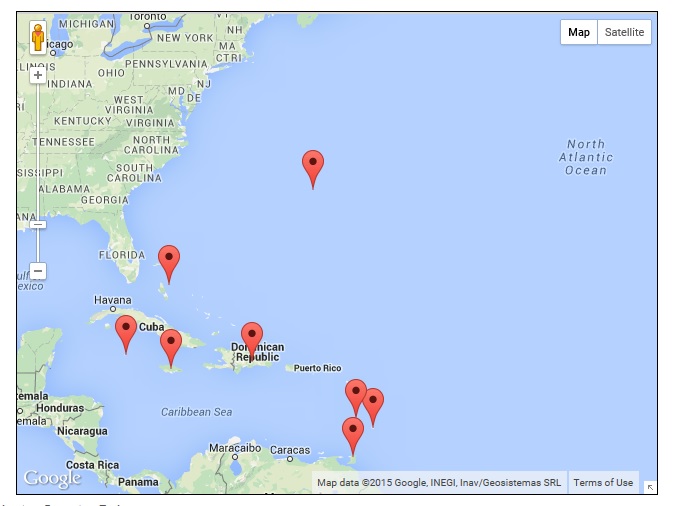
There are NYS programs already deployed or proposed for these Caribbean member-states, (though many have been snagged or stalled):
CU Blog - National Sacrifice - The Missing Ingredient - Photo 1

The purpose of the Go Lean book/roadmap is more than just the embedding of new community ethos, but rather the elevation/empowerment of Caribbean society. In total, the Caribbean empowerment roadmap has these 3 prime directives:

  • Optimization of the economic engines in order to grow the regional economy to $800 Billion & create 2.2 million new jobs.
  • Establishment of a security apparatus to protect the resultant economic engines.
  • Improve Caribbean governance and industrial policies to support these engines.

The roadmap details the following community ethos, plus the execution of these strategies, tactics, implementation and advocacies to forge permanent change in the region:

Community Ethos – Deferred Gratification Page 21
Community Ethos – Economic Principles – People Choose Page 21
Community Ethos – Economic Principles – People Respond to Incentives in Predictable Ways Page 21
Community Ethos – Economic Principles – The Consequences of Choices Lie in the Future Page 21
Community Ethos – Governing Principles – Lean Operations Page 24
Community Ethos – Governing Principles – Cooperatives Page 25
Community Ethos – Ways to Impact the Future Page 26
Community Ethos – Ways to Impact a Turn-Around Page 33
Community Ethos – Ways to Improve Sharing Page 35
Community Ethos – Ways to Promote Happiness Page 36
Community Ethos – Ways to Impact the Greater Good Page 37
Strategy – Vision – Confederate 30 Member-States Page 45
Strategy – Mission – Enact a Defense Pact to Defend the Homeland Page 45
Strategy – Mission – Keep the next generation at home Page 46
Tactical – Confederating a Permanent Union Page 63
Tactical – Fostering a Technocracy Page 64
Tactical – Separation-of-Powers Between CU & Member-States Governments Page 71
Implementation – Assemble – Incorporating all the existing regional organizations Page 96
Implementation – Ways to Pay for Change Page 101
Implementation – Security Initiatives at Start-up Page 103
Implementation – Ways to Deliver Page 109
Planning – 10 Big Ideas for the Caribbean – Confederation Without Sovereignty Page 127
Planning – Ways to Make the Caribbean Better Page 131
Planning – Lessons Learned from the West Indies Federation – Military Units Page 135
Advocacy – Ways to Grow the Economy Page 151
Advocacy – Ways to Create Jobs Page 152
Advocacy – Ways to Better Manage the Social Contract Page 170
Advocacy – Ways to Manage Federal Civil Service Page 173
Advocacy – Ways to Improve Homeland Security Page 181
Advocacy – Ways to Improve Communications Page 186
Advocacy – Ways to Preserve Caribbean Heritage Page 218
Advocacy – Ways to Impact Youth Page 227
Appendix – 30,000 Federal Employees Page 299
Appendix – Previous West Indies Integration – Caribbean Regiment Page 301

Previously Go Lean blog/commentaries have considered historic references and have also stressed fostering the proper and appropriate community ethos for the Caribbean to prosper; and reported on the repercussions and consequences of bad ethos. The following sample applies:

https://goleancaribbean.com/blog/?p=2830 Bad Ethos: Jamaica’s Public Pension Under-funded
https://goleancaribbean.com/blog/?p=2809 A Lesson in Bad Community Ethos : East Berlin/Germany
https://goleancaribbean.com/blog/?p=2480 A Lesson in History: Community Ethos of WW II
https://goleancaribbean.com/blog/?p=2297 A Lesson in History – Booker T versus Du Bois – to Change a Bad Community Ethos
https://goleancaribbean.com/blog/?p=1531 A Lesson in History: 100 Years Ago – World War I – Cause and Effect in Community Ethos
https://goleancaribbean.com/blog/?p=841 Having Less Babies is Bad for the Economy – Need People
https://goleancaribbean.com/blog/?p=623 Only at the Precipice, Do Communities Change
https://goleancaribbean.com/blog/?p=353 Book Review: ‘Wrong – Nine Economic Policy Disasters and What We Can Learn…’
https://goleancaribbean.com/blog/?p=228 Egalitarianism versus Anarchism – Community Ethos Debate

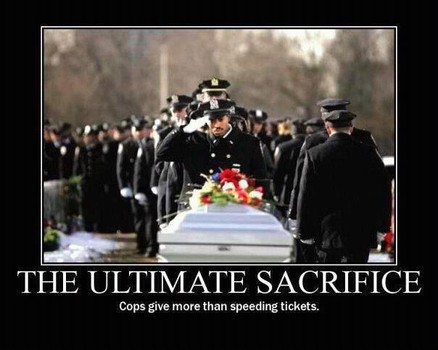
All in all, there is a certain community ethos associated with populations that have endured change. It is a National Sacrifice, a deferred gratification and focus on the future. Any losses of privileges are appreciated by the entire community, not just the affected individual or family member. This is the purpose of the US Memorial Day Holiday on the last Monday in May, honoring the military service of all our men and women in uniform, their families at home, and those who have made the ultimate sacrifice in dying for their country. A quest to unite the country in remembrance and appreciation of the fallen and to serve those who are grieving is a good way to forge a community ethos of National Sacrifice.

See VIDEO here of a community’s great honor to a slain soldier:

VIDEO: Sky Mote: Community Honors a Fallen Soldier from El Dorado County with a Hero’s Welcome –   http://youtu.be/MVQORRQvTpU

Published on Aug 17, 2012 – Starting with a Marine Honor Guard carrying the transfer case containing the body of Staff Sgt. Sky R. Mote of El Dorado, CA, upon arrival at Dover Air Force Base, Del. on Sunday Aug. 12, 2012. (AP Photo/Jose Luis Magana). Then continuing with the great Welcome Home the community gave. His family will never forget!

Though this Fallen Soldier is mourned and missed, his sacrifice is duly acknowledged, appreciated and honored in his hometown. This community spirit creates a value system for public service and National Sacrifice.

The US is not the only country that memorializes their war dead. Those countries that do, experience less societal abandonment. The British Commonwealth of Nations (representative of 18 Caribbean member-states) shows likewise homage to their Fallen Soldiers. The Commonwealth War Graves Commission (CWGC) is responsible for maintaining the war graves of 1.7 million service personnel that died in the First and Second World Wars fighting for Commonwealth member states. Founded in 1917 (as the Imperial War Graves Commission), the Commission has constructed 2,500 war cemeteries, and maintains individual graves at another 20,000 sites around the world.[107] The vast majority of the latter [however] are civilian cemeteries in Great Britain. (Source: http://en.wikipedia.org/wiki/Commonwealth_War_Graves_Commission).

The former British colonies did not adopt this National Sacrifice value system. As most Caribbean (notwithstanding the US Territories) member-states do not even have a (work-free) holiday to honor the sacrifices of those that fought, bled and/or died for their country.

No appreciation, no sacrifice; no sacrifice, no victory. It is that simple!

It is the recommendation of this blog/commentary that all Caribbean member-states should mandate a civilian conscription service for their citizens (1 year between ages 18 and 25); it is common for a confederation – the CU for the Caribbean – to marshal a multi-state, allied military force. Then the CU should facilitate a complete eco-system of engaging the conscripted NYS participants to serve and protect the people and resources of the Caribbean. After which, the communities should show proper appreciation and honor to those that make these sacrifices for “King/Queen and Country”, from all conscription services: military service, public and civilian.

(Many times school teachers and administrators are lowly paid; their service to their country is a great sacrifice).

Veteran-style benefits should thusly be considered for all these “national” servants. This commitment from the community would go far in forging deep loyalty within the citizenry, thus mitigating quick abandonment of the homeland.

There is a separation-of-powers between the CU federal agencies and Caribbean member-states, so the CU would have no authority on how member-states manage, appreciate or honor their civil servants; unless some CU grants/funding apply. But for CU personnel, the practice will be institutionalized to recognize the service of long-time civil servants (active or retired) and their sacrifices. So for any human resource that die in the line of duty, the funeral processions will be filled with pomp and circumstance, much like the foregoing VIDEO.

“The [servants] who perform well are to be considered worthy of double honor, especially those who work hard …” – Bible 1 Timothy 5:17

Now is the time to lean-in to this roadmap for Caribbean change, as depicted in the book Go Lean…Caribbean. All the mitigations and empowerments in this roadmap require people to remain in the homeland. No people, no hope! A community ethos, a spirit or attitude of sacrifice for the Greater Good is a great start to forge change; no sacrifice, no victory.

🙂

Download the book Go Lean … Caribbean – now!

Sign the petition to lean-in for this roadmap for the Caribbean Union Trade Federation.

——————-

Appendix A – ICP Studies and Results

Overview of the National Youth Service Landscape in Sub-Saharan Africa

National Youth Service Project on Employability, Entrepreneurship and Sustainable Livelihoods in Sub-Saharan Africa: Synthesis Report

——————

Appendix B – Conscription (or Drafting)
This is the compulsory enlistment of people in some sort of National Service, most often military service.[2] Conscription dates back to antiquity and continues in some countries to the present day under various names. The modern system of near-universal national conscription for young men dates to the French Revolution in the 1790s, where it became the basis of a very large and powerful military. Most European nations later copied the system in peacetime, so that men at a certain age would serve 1–8 years on active duty and then transfer to the reserve force.
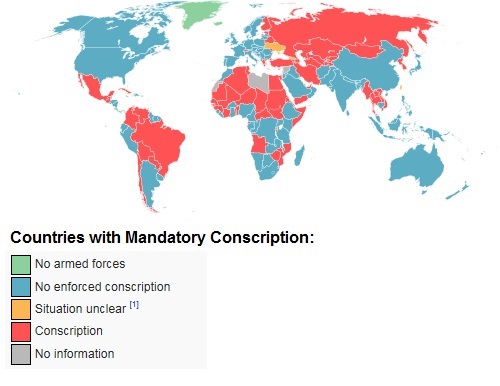
CU Blog - National Sacrifice - The Missing Ingredient - Photo 2Conscription is controversial for a range of reasons, including conscientious objection to military engagements on religious or philosophical grounds; political objection, for example to service for a disliked government or unpopular war; and ideological objection, for example, to a perceived violation of individual rights. Those conscripted may evade service, sometimes by leaving the country.[4] Some selection systems accommodate these attitudes by providing alternative service outside combat-operations roles or even outside the military, such as civil service in Austria and Switzerland.

As of the early 21st century, many states no longer conscript soldiers, relying instead upon professional militaries with volunteers enlisted to meet the demand for troops. The ability to rely on such an arrangement, however, presupposes some degree of predictability with regard to both war-fighting requirements and the scope of hostilities. Many states that have abolished conscription therefore still reserve the power to resume it during wartime or times of crisis.[5] (Source: http://en.wikipedia.org/wiki/Conscription)

National Service is a common name for mandatory or volunteer government service programmes. The term became common British usage during and for some years following the Second World War. Many young people spent one or more years in such programmes. Compulsory military service typically requires all citizens, or all male citizens, to participate for a period of a year (or more in some countries) during their youth, usually at some point between the age of 18 and their late twenties. (Source: http://en.wikipedia.org/wiki/National_service)

——————

Appendix C  – National Youth Service Corps in Nigeria
The National Youth Service Corps (NYSC) is an organisation set up by the Nigerian government to involve the country’s graduates in the development of the country. There is no military conscription in Nigeria, but since 1973 graduates of universities and later polytechnics have been required to take part in the National Youth Service Corps (NYSC) program for one year.[1] This is known as national service year.

“Corp” members are posted to cities far from their city of origin. They are expected to mix with people of other tribes, social and family backgrounds, to learn the culture of the indigenes in the place they are posted to. This action is aimed to bring about unity in the country and to help youths appreciate other ethnic groups.

There is an “orientation” period of approximately three weeks spent in a camp away from family and friends. There is also a “passing out ceremony” at the end of the year and primary assignment followed by one month of vacation.

The program has also helped in creating entry-level jobs for many Nigerian youth. An NYSC forum dedicated to the NYSC members was built to bridge the gap amongst members serving across Nigeria and also an avenue for members to share job information and career resources as well as getting loans from the National Directorate Of Employment.

The program has been met with serious criticism by a large portion of the country. The NYSC members have complained of being underpaid, paid late or not paid at all.[2] Several youths carrying out the NYSC program have been killed in the regions they were sent to due to religious violence, ethnic violence or political violence.[3]

A series of bomb and other violent attacks, especially in the North, rocked the country’s stability in the period preceding the 2011 gubernatorial and presidential elections. Most common of these attacks was perpetuated by the Islamist extremist terrorist group called Boko Haram. “Boko Haram” means “Western education is a sin” in the local hausa dialect in Nigeria. The group “Boko Haram” is against western education and wants to establish an Islamic state in Nigeria’s northern region.

Worst hit were National Youth Service Corps members, some of whom lost their lives.
(Source: http://en.wikipedia.org/wiki/National_Youth_Service_Corps)

Share this post:
, , ,

Repairing the Breach: Crime – Need, Greed, Justice & Honor – ENCORE

Here is an interesting fact about “Black men and boys” in the country of the United States:

They amount to 6.5 percent of the total US population.

They amount to 40.2 percent of the prison population.

Surely, there are some special issues associated with this special interest group. In the field of Public Health Management, there is the concept of “Triage”; consider this definition here:

tri·age

noun: (in medical use) the assignment of degrees of urgency to wounds or illnesses to decide the order of treatment of a large number of patients or casualties.

verb: assign degrees of urgency to (wounded or ill patients).

So the concept of “Triage” allows for immediate, expedited attention to those suffering more. The fact that more and more “Black men or boys” are entrusted to the criminal justice system – true in the Caribbean as well – indicates that this population needs more help. More and more, they are the victims and villains of crime. It brings to mind these questions:

  • What can we do to Repair the Breach for “Black men or boys”?
  • How can we reduce crime since this is so prevalent among this special sub-population?

These are legitimate questions. There are answers. We can explore these answers so as to Repair the Breach. This expression is derived from a White Paper by an academician, Dr. Donald McCartney of the Bahamas. He composed a White Paper to address this question of “How to repair this breach?” and identified some viable solutions for the Bahamas and the rest the Caribbean, especially related to the crime problem. See that full White Paper here, and an Excerpt as follows:

White Paper Title: Repairing the Breach in the Caribbean – EXCERPT
By: Dr. Donald McCartney


As we approach the 200th anniversary of the abolition of slavery in the British Empire, the same questions, regarding Black men and boys, are being raised again.


The spiraling  murder rate and other acts of violence (particularly against young men and the elderly), makes it clear, that many Black men and boys in the Caribbean, pose a serious and critical problem of interpersonal violence in every corridor and thoroughfare that Caribbean peoples and residents must cross. Consequently, Black men and boys in the Caribbean are feared, demonized and vilified.


The answers to these questions must be found; so that we can free those Black men and boys who have become slaves to violence and crime. We must come to the realization that, that which impacts Black men and boys impacts all Caribbean people and those who reside among us.


The primary aim will be to create a long-term structure of sustained intervention for Black men and boys who find themselves in trouble. The emphasis of the [remediating] Thurston Foundation will be on systemic change that will bring together a multiplicity of ideas in an effort to reduce violence and crime, thus making the Caribbean’ social life whole again.

The Thurston Foundation must not shape itself around the issue of violenceViolence, in the Caribbean, has been painted with a broad brush because Black men and boys are looked upon as the face of the violence.  This violence appears to have immobilized law abiding citizens into a state of panic and fear.

See the full White Paper here: https://goleancaribbean.com/blog/?p=14392

This commentary continues the 4-part series on Repairing the Breach; using the foregoing White Paper by Dr. McCartney as the premise. This entry is 2 of 4 in this series from the movement behind the book Go Lean … Caribbean in consideration of solutions to assuage the plight of Black men and boys. The other commentaries in the series are cataloged as follows:

  1. Repairing the Breach: Hurt People Hurt People
  2. Repairing the Breach: Crime – Need, Greed, Justice & Honor
  3. Repairing the Breach: One Option – National Youth Service
  4. Repairing the Breach: Image Impacts Economics

While all of these commentaries relate to “how” the stewards for a new Caribbean can assuage the failing dispositions of the Caribbean among our Black Men and boys, this one in particular addresses the root causes of possible solutions to mitigate and reduce crime.

This is an ENCORE of a previous blog-commentary addressing crime and inter-personal violence. This original submission from February 18, 2016 cataloged the reasons for street crimes as: 1. Need, 2. Greed, and 3. Justice. Though not re-published here, an additional form of violence was addressed in a different prior blog, though not a street crime: 4. Domestic Violence – the act of wife-battering.

There are certain ethnic groups where domestic violence is more prominent than others. Sadly, our communities in the Caribbean is prominent for this 4th category of crime as well; honor or not, it is still criminal. Many times, men in our society feel that it is their honor to discipline their wives … as they see fit. Remediating and reducing crime among our Black men and boys, means help-seeking for domestic abusers.

See here below, for the ENCORE of the blog-commentary on assessing, mitigating and reducing the crimes based on 1. Need, 2. Greed, and 3. Justice:

—————–

Go Lean Commentary – A Lesson in the History of Interpersonal Violence – Street Crimes

No justice, no peace!

The movement behind the book Go Lean … Caribbean, and accompanying blogs, has prioritized public safety and remediating/mitigating crime as paramount for the region. Despite the focus on economics, the book asserts that to elevate Caribbean society there must be a focus on the region’s security and governing engines to provide justice assurances. So in addition to economic empowerments (jobs, investments, education, entrepreneurship, etc.), the book posits that security concerns must also be front-and-center in any roadmap along with these economic efforts.

This is easier said than done.

In the previous blog/commentary in this series, the effort to reduce crime and remediate violence was identified as an “Art” and “Science”. This heavy reliance on artists and scientists have provided a lot of history for us to study and glean best-practices in this cause. What can we learn today from a study in the history of interpersonal violence as related to street violence?

This is commentary 2 of 3 considering this subject of interpersonal violence, and how it relates to the Caribbean homeland in 2016. The historic issues addressed are:

  1. Duels
  2. Street Violence
  3. Domestic Violence

Street violence stems from 3 considerations: 1. Need, 2. Greed, and 3. Justice.

CU Blog - A Lesson in the History of Interpersonal Violence - Street Crimes - Photo 3The Go Lean book serves as a roadmap for the introduction and implementation of the technocratic Caribbean Union Trade Federation (CU) to elevate the region’s economic, security and governing engines. The roadmap has these 3 prime directives:

  • Optimization of the economic engines in order to grow the regional economy and create 2.2 million new jobs.
  • Establishment of a security apparatus to provide public safety and protect the resultant economic engines from economic crimes.
  • Improve Caribbean governance, with a separation-of-powers between member-state administrations and the CU federal government (Executive facilitations, Legislative oversight and judicial prudence) to support these economic/security engines.

So the CU/Go Lean roadmap addresses the issue of more jobs; this will lower the “need” factor for crime; (there is no expectation that these efforts would fully eliminate violent crime; but this start will mitigate the risks). The book relates that with the emergence of new economic drivers, that “bad actors” will also emerge thereafter to exploit the opportunities, with good, bad and evil intent. The second factor, “greed” is tied to opportunities. The executions of the Go Lean roadmap (Page 23) are specifically designed to minimize opportunities for crime with these security mandates:

  • Adapt the Ethos: Public Protection over Privacy
  • Embrace Electronic Payment Systems – Carry less cash
  • Whistleblower Protection – Consider all allegation, anonymous and overt
  • Witness Security & Protection – Ensure Justice Process
  • Youth Crime Awareness & Prevention; Anti-Bullying and Mitigation – “Nip it in the bud
  • Intelligence Gathering – Universal Video Surveillance
  • Light Up the Dark Places – Eliminate the figurative and literal “shadows”
  • Prison Industrial Complex – Engage to reduce recidivism

The third contributor, justice, is tied to street riots, civil unrest and other outbursts against perceived injustices. The marching call of many of these movements is “No Justice; No Peace”.

Consider here the historicity of street violence (including sexual violence from strangers) in this AUDIO Podcast (48 minutes) here:

Click on Photo here to Play AUDIO Podcast; Click BACK to Return

CU Blog - A Lesson in the History of Interpersonal Violence - Street Crimes - Photo 2

What’s Behind Trends In U.S. Violent Crime Rates?
Guest Host: Indira Lakshmanan; posted February 9, 2016 – For more than 20 years violent crime rates in the U.S. states have been declining, but data from the first six months of 2015 suggest an unwelcome change: The FBI reports that from January and June 2015 overall violent crime was up nearly 2% and homicides jumped more than 6 percent with spikes in both small towns and big cities. The Justice Department cautioned it’s too soon to know whether the latest data signals an upturn in violence in America. Join us to talk about what drove violent crime down so dramatically over the last two decades in the U.S. and what could be ahead.
Six People Murdered On Chicago's South Side As City's Homicides Rise

Guests

  • Khalil Muhammad director, Schomburg Center for Research in Black Culture  New York Public Library
  • Paul Butler professor, Georgetown Law School
  • Barry Latzer emeritus professor of criminal justice,  John Jay College of Criminal Justice, CUNY  most recent book: “The Rise and Fall of Violent Crime in America”

The foregoing AUDIO Podcast relates the experience of the Black and Brown populations in the American criminal-justice system. There is no doubt, there is a “divide in America’s execution of their justice mandates”. But, the scope of the Go Lean/CU roadmap is to reform and transform the Caribbean, not America. We need to do better here, in our homeland. America’s success and failure does relate to us, as many of our Diaspora lives there, but frankly, the Go Lean book asserts that it is easier to fix the Caribbean, than to fix America. We simply need to keep our people at home. We need to minimize the “push and pull” reasons that drive them away. Curbing crime here – a “push” factor – helps this cause; messaging the real experiences of our Black and Brown Diaspora as they engage the criminal justice system in the US should also help our cause, in lowering the “pull” factors.

So let’s fix the Caribbean!

The quest of the Go Lean movement is to elevate Caribbean society above our dysfunctional past. We can improve upon public safety! The goal of the roadmap is to optimize society through economic empowerment, security & justice optimization, and also governing efficiencies in the region, since these are inextricably linked to this same elevation endeavor.

The cause-and-effect of failing economics leads to increasing criminality, the “need” factor. So the cause-and-effect of improving economics should therefore lead to lesser criminal activities. Improved security facilitation (i.e. intelligence gathering and analysis) should reduce the opportunities for crimes of convenience, thus mitigating the “greed” factor. Funding grants to improve Justice institutions (Police, Courts, Prison Industrial Complex), their transparency and accountability, should lower the outcries for justice. Thus the Go Lean/CU has devised a tactic of publishing rankings-and-ratings (i.e. Best Places in the Caribbean To Live …); this should exacerbate failings and failures more prominently to the monitoring public, at home and abroad.

The motivation of this Go Lean/CU roadmap is the basic principle, described in the book (Page 21), that “Economic Systems Influence Individual Choices and Incentives”.

This roadmap fully envisions the integration of shepherding – leadership – for the Caribbean region’s economic, security and governing initiatives under the same organization: the Caribbean Union Trade Federation. These points are pronounced early in the Go Lean book (Page 12) with these opening Declaration of Interdependence statements:

x.   Whereas we are surrounded and allied to nations of larger proportions in land mass, populations, and treasuries, elements in their societies may have ill-intent in their pursuits, at the expense of the safety and security of our citizens. We must therefore appoint “new guards” to ensure our public safety and threats against our society, both domestic and foreign. The Federation must employ the latest advances and best practices … to assuage continuous threats against public safety.

xi.   Whereas all men are entitled to the benefits of good governance in a free society, “new guards” must be enacted to dissuade the emergence of incompetence, corruption, nepotism and cronyism at the peril of the people’s best interest. The Federation must guarantee the executions of a social contract between government and the governed.

xii.  Whereas the legacy in recent times in individual states may be that of ineffectual governance with no redress to higher authority, the accedence of this Federation will ensure accountability and escalation of the human and civil rights of the people for good governance, justice assurances, due process and the rule of law. As such, any threats of a “failed state” status for any member state must enact emergency measures on behalf of the Federation to protect the human, civil and property rights of the citizens, residents, allies, trading partners, and visitors of the affected member state …

xiii. Whereas the legacy of dissensions in many member-states …  will require a concerted effort to integrate the exile community’s repatriation, the Federation must arrange for Reconciliation Commissions to satiate a demand for justice.

xvi. Whereas security of our homeland is inextricably linked to prosperity of the homeland, the economic and security interest of the region needs to be aligned under the same governance. Since economic crimes, including piracy and other forms of terrorism, can imperil the functioning of the wheels of commerce for all the citizenry, the accedence of this Federation must equip the security apparatus with the tools and techniques for predictive and proactive interdictions.

The Caribbean appointing “new guards”, or a security pact to ensure justice and public safety will include many strategies, tactics and implementations deemed “best-practice”, including an advanced Intelligence Gathering and Analysis effort to mitigate and remediate street crime in the region, and also to optimize the “art and science” of crime, including prison reform; (see Page 211 of the Go Lean book for a discussion on criminology and penology). The Go Lean book details the series of community ethos, strategies, tactics, implementations and advocacies to optimize justice institution and provide increased public safety – “top-down” and “bottoms up”  – in the Caribbean region:

Community Ethos – Economic Systems Influence Individual Choices Page 21
Community Ethos – Consequences of Choices Lie in Future Page 21
Community Ethos – Security Principles Page 22
Community Ethos – Ways to Manage Reconciliations Page 34
Community Ethos – Ways to Impact the Greater Good Page 37
Tactical – Vision – Forge a Single Market economy Page 45
Tactical – Confederating a non-sovereign union Page 63
Tactical – Fostering a Technocracy Page 64
Tactical – Separation of Powers – Homeland Security Page 75
Tactical – Separation of Powers – Justice Department Page 77
Tactical – Separation of Powers – CariPol: Marshals &   Investigations Page 77
Tactical – Separation of Powers – Witness Protection Page 77
Implementation – Start-up Security Initiatives Page 103
Implementation – Ways to Foster International Aid – Security   Assistance Page 115
Implementation – Reasons to Repatriate – Security Optimization Page 118
Planning – Ways to Make the Caribbean Better Page 131
Planning – Ways to Improve Failed-State Indices – Mitigate Organized Crime & Gangs Page 134
Planning – Lessons from the American West – Law & Order Lessons Page 142
Planning – Lessons from Egypt – Lackluster Law & Order affects Economy Page 143
Advocacy – Ways to Grow the Economy Page 151
Advocacy – Ways to Improve Governance Page 168
Advocacy – Ways to Better Manage the Social Contract Page 170
Advocacy – Ways to Impact Justice Page 177
Advocacy – Ways to Reduce Crime Page 178
Advocacy – Ways to Improve for Gun Control Page 179
Advocacy – Ways to Improve Homeland Security Page 180
Advocacy – Ways to Mitigate Terrorism – Mitigate Bullying and Gangs early Page 181
Advocacy – Ways to Improve Intelligence Gathering and Analysis Page 182
Advocacy – Ways to Impact the Prison Industrial Complex Page 211
Advocacy – Ways to Protect Human Rights Page 220

Other  subjects related to crime, justice and security empowerments for the region have been blogged in other Go Lean…Caribbean commentary, as sampled here:

https://goleancaribbean.com/blog/?p=7179 SME Declaration: ‘Change Leaders in Crime Fight’
https://goleancaribbean.com/blog/?p=6385 Wi-Fi Hot Spots Run By Hackers Are Targeting Tourists
https://goleancaribbean.com/blog/?p=5307 8th Violent Crime Warning to Bahamas Tourists
https://goleancaribbean.com/blog/?p=5304 Mitigating the Eventual ‘Abuse of Power’
https://goleancaribbean.com/blog/?p=5238 #ManifestJustice – Lessons for the Prison Eco-System
https://goleancaribbean.com/blog/?p=4863 A Picture is worth a thousand words; video, a million to expose corruption
https://goleancaribbean.com/blog/?p=4447 Probe of Ferguson-Missouri finds bias from cops, courts
https://goleancaribbean.com/blog/?p=4360 Dreading the ‘Caribbean Basin Security Initiative’
https://goleancaribbean.com/blog/?p=4308 911 – Emergency Response: System in Crisis
https://goleancaribbean.com/blog/?p=3881 Intelligence Agencies to Up Cyber Security Cooperation
https://goleancaribbean.com/blog/?p=2994 Justice Strategy: Special Prosecutors and Commissions of Inquiry
https://goleancaribbean.com/blog/?p=2684 Role Model for Justice, Anti-Crime & Security: The Pinkertons
https://goleancaribbean.com/blog/?p=1554 Status of Forces Agreement = Security Pact
https://goleancaribbean.com/blog/?p=1143 American White Collar fraud; criminals take $272 billion/year in healthcare
https://goleancaribbean.com/blog/?p=392 Jamaica to receive World Bank funds to help in crime fight
https://goleancaribbean.com/blog/?p=273 10 Things We Don’t Want from the US – #4: Gun Rights/2nd Amendment

The vision of the Go Lean roadmap is to make the Caribbean homeland, a better place to live, work and play. This means measurable reduction (mitigating and remediation) of interpersonal violence in the region. The Go Lean book presents a regional solution – CariPol et al – to remediate and mitigate street crime in the Caribbean, featuring details of strategies, tactics and implementations designed from world class best-practices to reduce street violence in the region.

The premise in the Go Lean book is that “bad actors” will always emerge, from internal and external origins. We must be prepared and on-guard to defend our homeland against all threats, foreign and domestic, including street crime and interpersonal violence. Plus, we must accomplish this goal with maximum transparency, accountability, and commitment to due-process and the rule-of-law. Thusly, there is a place for closed-circuit TV (CCTV), dashboard and body cameras. If there is the community “will”, the CU will ensure the “way”!

An additional mission is to lower the “push” factors (from “push-and-pull” reference) so that our citizens are not led to flee their homeland for foreign (North American and European) shores. Where we have failed in the past, we now want to reform and transform our communities, so that we can re-invite our Diaspora to return; this time, offering security assurances. Among the many reasons people emigrate or refuse to repatriate, is victimization of interpersonal violence or fear of crime.

There is “good, bad and ugly” in every society. We must therefore mitigate the “need, greed and justice” reasons for interpersonal violence in our society.

So all stakeholders in the Caribbean – people and institutions – are urged to lean-in to this Go Lean roadmap for the elevation of the Caribbean’s societal engine: economy, security and governance. The roadmap calls for the CU to do the heavy-lifting, so as to impact the Greater Good for justice, peace and security. This is conceivable, believable and achievable.  🙂

Download the book Go Lean … Caribbean – now!

Sign the petition to lean-in for this roadmap for the Caribbean Union Trade Federation.

Share this post:
, ,
[Top]

Legislating Morality – Yes, We Can

Go Lean Commentary

We have always heard: “No one can legislate morality”.

But truth be told, that is a fallacy. With the proper application of best-practices, we can legislate – pass laws – and change people’s attitudes and actions about habits and practices. Follow-up, messaging and enforcement is key! In modern society, we have seen this repeatedly in one community after another. Let’s examine … with the experiences with some common vices.

The book Go Lean…Caribbean – available to download for free – present numerous examples of advocates and their advocacies where they have labored to change their community (or nation) attitude and actions towards certain causes. The book addresses this whole subject under the topic of “community ethos”. This is defined as the fundamental character or spirit of a culture; the underlying sentiment that informs the beliefs, customs, or practices of society; dominant assumptions of a people or period. Think of the derivative term: “work ethic”.

Can we change community ethos?

Yes, indeed …

… but it is not easy; in fact the Go Lean book identifies the effort as heavy-lifting, but the movement behind the book volunteers for the task of executing change for the Caribbean.

The Go Lean book serves as a roadmap for the introduction and implementation of the technocratic Caribbean Union Trade Federation (CU), for the elevation of Caribbean society – for all member-states. This CU/Go Lean roadmap has these 3 prime directives:

  • Optimization of the economic engines in order to grow the regional economy to $800 Billion and create 2.2 million new jobs.
  • Establishment of a security apparatus to ensure public safety and protect the resultant economic engines.
  • Improve Caribbean governance to support these engines, including a separation-of-powers between the member-states and CU federal agencies.

We have seen changes to public morality: from bad to good; and from good to bad. We have seen the bad community ethos of “drunk driving” and “white supremacy” relegated to an “unbecoming” status in good citizenship. But we have also seen the good ethos of recreational drugs prohibition become accepted and demand for decriminalization and legalization. (In the US, Marijuana legalization is now the norm for 40 percent of the American population).

Change continues …

These changes have been duly documented by the movement behind the Go Lean book in these previous blog-commentaries:

https://goleancaribbean.com/blog/?p=13882 Managing ‘Change’ in California
https://goleancaribbean.com/blog/?p=12703 Lessons from Colorado: Legalized Marijuana – Heavy-lifting!
https://goleancaribbean.com/blog/?p=9646 ‘Time to Go’ – American Vices, i.e. Marijuana. Don’t Follow!
https://goleancaribbean.com/blog/?p=1386 Puff Peace – The Debate  for Marijuana in Jamaica

This is not just a phenomenon in the Americas; success in legislating morality have also been experienced in the Old Country; consider this European example in France.

Imagine the French and their affinity for Red Wine (Bordeaux), and Champagne and Cognac and Sherry … (There is also the traditions of the French Caribbean islands and their mastery of the rum eco-system). See Appendix VIDEO below.

These are export products for the Republic of France and indicative of the complex French culture. Yet, this country has legislated morality and reduce their alcohol consumption, by means of Evin Loi or Evan’s Law; see summary here from Wikipedia:

The loi Évin is the French alcohol and tobacco policy law passed in 1991. It takes its name from Claude Évin, then Minister of Health, who proposed it to Parliament. …

Before the law, French advertising laws discriminated against non-French producers. However, Scotch whisky producers challenged France in the European Court of Justice and won. France was condemned and required to change the law in 1980 but did not produce satisfactory legislation until 1991, with the enactment of Loi Evin, which affected both alcohol and tobacco policies. …

The provisions of the law reinforce the restrictions placed on tobacco and alcohol and their advertising by its predecessor Loi Veil (1976), legalising abortion. …

Alcohol advertisements are prohibited on television or in cinemas. The law requires strict control over messages and images and the inclusion in all advertisements of a message to the effect that alcohol abuse is dangerous to one’s health.

So this French law regulated alcohol advertising; advertising affected alcohol demand; so the end result on alcohol consumption are as reported in the following article:

“It has had a huge impact on the consumption of alcohol in France,” says Dr Mick Loftus, the anti-drinks campaigner and a former president of the GAA. “In 1960, the average adult in France consumed 30 litres of alcohol. Today, that figure is down to 13.5 litres and it’s mainly thanks to Loi Evin.

See full article in Appendix below.

Related Article:
Alcohol policy in France – Between traditions and paradoxes
https://intra.tai.ee/images/eventlist/events/27-11-15-alkokonverents_4_Craplet.pdf

The movement behind the Go Lean book asserts that Caribbean community ethos can be changed; even further, that Caribbean societal defects can be assuaged. But before the strategies, tactics, implementations and advocacies of a roadmap to elevate a society can be deployed, the affected society must first embrace a progressive community ethos. This is where legislating morality becomes so important. Yes, we can effect change in our region.

The Go Lean book provides 370-pages of turn-by-turn instructions on “how” to adopt new community ethos, plus the strategies, tactics, implementations and advocacies to execute so as to transform the societal engines of Caribbean society, regarding a lot of matters of morality. The Go Lean book cites (Page 122) one particular example of an advocate campaigning to legislate America’s morality. See this quotation here:

Candice Lightner
Mothers Against Drunk Driving (MADD)
Ms. Lightner forged change in her country (United States) values and attitudes with her founding of this organization. She advocated change in attitudes, acceptance, laws and enforcement so that families would be spared the heartache she personally experienced with the tragic lost of her daughter to a drunk driver in the 1970’s. One woman made a difference!

The Go Lean book asserts that every community has bad actors – stemming from bad community ethos. There must be “new guards” to assuage any risks and threats in society. This point is pronounced early in the book with the Declaration of Interdependence (Pages 12 – 13) that claims:

x. Whereas we are surrounded and allied to nations of larger proportions in land mass, populations, and treasuries, elements in their societies may have ill-intent in their pursuits, at the expense of the safety and security of our citizens. We must therefore appoint new guards to ensure our public safety and threats against our society, both domestic and foreign. The Federation must employ the latest advances and best practices of criminology and penology to assuage continuous threats against public safety. The Federation must allow for facilitations of detention for [domestic and foreign] convicted felons of federal crimes, and should over-build prisons to house trustees from other jurisdictions.

xi. Whereas all men are entitled to the benefits of good governance in a free society, “new guards” must be enacted to dissuade the emergence of incompetence, corruption, nepotism and cronyism at the peril of the people’s best interest. The Federation must guarantee the executions of a social contract between government and the governed.

xvi. Whereas security of our homeland is inextricably linked to prosperity of the homeland, the economic and security interest of the region needs to be aligned under the same governance. Since economic crimes, including piracy and other forms of terrorism, can imperil the functioning of the wheels of commerce for all the citizenry, the accedence of this Federation must equip the security apparatus with the tools and techniques for predictive and proactive interdictions.

Societies change …

We have all seen it; think seat belts, smoking, high fat diets. Leaders can legislate change and morality. It works … eventually. There are heavy-lifting involved, like messaging and enforcement. But if the effort persists, the values, priorities and motivations of people in communities can transform, for the better or the worse. Let’s work for better!

The Caribbean wants (or should want) to be an elevated society; to be a better homeland and a better place to live, work and play. So we urged everyone in the region to lean-in to this roadmap for change, and to pay more than the usual attention to other communities and their developments and manifestations for change. Let’s study their successes and failures. 🙂

Download the free e-Book of Go Lean … Caribbean – now!

Sign the petition to lean-in for this roadmap for the Caribbean Union Trade Federation.

———

Appendix: Alcohol Action – Advocating to reduce alcohol harm in Ireland

Title: How To Tackle The Drink Link To Sport? Just Ask The French

We know it as the Heineken Cup, but in France they call European rugby’s leading club competition the H Cup.

And when Liverpool FC played there in the Europa Cup some years ago, they had to wear shirts free of their then sponsor Carlsberg.

These are just two examples of the very strict anti-alcohol policies that have been in place in France for more than two decades.

From Indpendent.ie

While Irish people are used to drinks companies sponsoring a diverse range of sports, music festivals and arts events, as well as extensive alcohol-related advertising across the media, a whole new generation in France has grown up never seeing a single drinks ad or attending an event sponsored by a drinks company.

It’s thanks to Loi Evin (Evin’s Law – named after the then health minister Claude Evin) and it has been a feature of life in France since 1991. Advocates keen to curb binge-drinking in this country believe it is a model that we should adopt.

“It has had a huge impact on the consumption of alcohol in France,” says Dr Mick Loftus, the anti-drinks campaigner and a former president of the GAA. “In 1960, the average adult in France consumed 30 litres of alcohol. Today, that figure is down to 13.5 litres and it’s mainly thanks to Loi Evin.

“If you go to France now, you’ll rarely see the sort of drink-to-get-drunk culture that’s so prevalent here. There, there isn’t the same emphasis on consuming alcohol in order to have a good time that’s long been the case in Ireland. The fact that alcohol is not associated with fun events like music festivals and sport has helped shift the perception French people have with alcohol. Generally speaking, drinking alcohol is seen as something to do with food.”

The origins of the law are rooted in old French protectionist polices of curbing the promotion of “foreign” goods in order to give their indigenous products an advantage.

UK drinks firms took the fight to European courts in the 1970s and ’80s, and French lawmakers were eventually forced to level the playing field by also banning the promotion of home-grown alcohol companies.

The ruling continues to outrage the country’s wine industry. “They treat us as if we were making a dangerous product,” Burgundy winemaker Pascale Chicotot told The New York Times. “We are not terrorists. Wine is not a dangerous product. Wine is a noble thing.”

Yet, anti-alcoholism advocates in France believe it is this very restriction that is helping to reduce consumption across the board. Leading campaigner Dr Alain Rigaud says Loi Evin has had a significant positive impact: “The law has been efficient in correcting excesses in the form and the content of advertising messages and it is essential for the implementation of an overall and coherent preventative effort.”

Yet, he contends that it is still too soon to gauge its full consequences.

“The effectiveness of the law on younger generations will not be felt for several decades,” he says.

Despite the restrictions, there is evidence of growing alcohol misuse among teenagers in France since Evin Law was introduced. A recent survey there shows a rise of 17pc in this age group who said they had consumed five or more drinks in one session in the previous 30 days.

It’s a problem that is causing French authorities considerable disquiet, especially as the 2009 ruling that raised the legal purchase age from 16 to 18 does not appear to have had an impact.

Meanwhile, some lobbyists who favour the retention of alcohol’s relationship with sport, argue that sponsorship simply gives one brand a competitive advantage over another but does not influence consumption trends.

“We analysed consumption, sponsorship spend and disposable income per head in all the major markets,” said the authors of a report on behalf of the Sponsorship Today consultancy.

“There was a very clear correlation between consumption and disposable income, but no clear pattern regarding sponsorship spend and consumption.

“In Germany, for example, beer consumption per capita is among the highest in the world, but sports sponsorship spending is comparatively low, whereas in Portugal sponsorship spend is high, but consumption is low. The findings are not definitive proof of no impact, but they add to the body of research that suggests that sponsorship is not a major contributory factor in increasing alcohol consumption.”

Mick Loftus does not agree.

“If we want to protect the health of our young people, we need to have a blanket ban on all promotion of alcohol, including the sponsorship of sports event and we should look to France for a model. We simply won’t be serious as a nation about coming to terms with our alcohol problem until we do that.”

Source: Alcohol Ireland – Posted June 2013; retrieved February 27, 2018 from: http://alcoholireland.ie/how-to-tackle-the-drink-link-to-sport-just-ask-the-french/

———

Appendix VIDEO – Is French Wine the Best in the World? | #WineWars | French Guy Cooking – https://youtu.be/4u_PRozZsWw 

Jamie Oliver – Drinks

Published on Jan 26, 2015 – Alex – AKA Food Tuber French Guy Cooking – enters the #WineWars ring to fight the corner for French wine. Alex thinks French wine is the best in the world – but is he right? In this video he shows us three of his favourite French wines – a red (J. Boutin Saint-Joseph), a white (Alsace Gewurztraminer) and a rosé (Coteaux du Cap Corse: Domaine Pieretti Rosé).

Which country do YOU think produces the best wine in the world?

Leave a comment and get involved on social media using the hashtag #WineWars.

Share this post:
, ,
[Top]

Forging Change: Soft Power – Clean-up or ‘Adios Amazon’

Go Lean Commentary

Speak softly and carry a Big Stick – West African Proverb pronounced by the 26th US President, Theodore Roosevelt

Speak softly and carry a Big Payroll – Modern New Twist 

Welcome to the concept of “soft power” … 2018 style.

There are a number of ways to forge change on a society; military power or hard power is perhaps the most effective. “Leading by the sword” is not in dispute. Anyone willing to protect their life, family and property will comply. But leading by Money Matters is also extremely effective. The prospect of acquiring money or losing money can be a great motivation. This “soft power” is now emerging as the preferred way to forge change on society. We are seeing clear choices presented to different communities:

Clean-up your societal defects or else … face the loss of some economic bonanza.

This is the situation right now in Atlanta, in the US State of Georgia. The issues are so blatant that it is bordering on a “soft power” reality.

Soft power is the ability to attract and co-opt, rather than by coercion (hard power), which is using force or giving money as a means of persuasion. Soft power is the ability to shape the preferences of others through appeal and attraction. A defining feature of soft power is that it is non-coercive; the currency of soft power is culture, political values, and foreign policies. – Source

“Hard power” = involuntary; “soft power” = voluntary.

See the full article here, wherein the Big Tech firm Amazon is weighing Atlanta’s values and community ethos to attract or repel Amazon to consider that location for their Second Headquarters and 50,000 high-paying jobs. See the story here:

Title: ‘Adios Amazon:’ Tech giant sparks Georgia Capitol debate
By:
 Ben Nadler, Associated Press

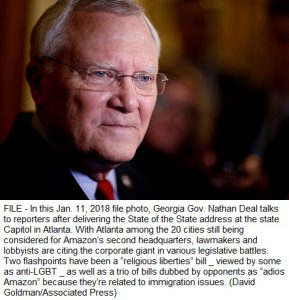
ATLANTA (AP) — With Atlanta among the 20 cities on the short list to become the home of Amazon’s second headquarters, the corporate giant’s name has become a contentious rallying cry inside the conservative Georgia Capitol.

Lawmakers and lobbyists in Georgia are viewing various pieces of legislation through the lens of how they will affect the city’s chances of winning Amazon’s business — and the estimated 50,000 jobs expected to be generated by the new headquarters.

Two flashpoints have been a “religious liberties” bill — viewed by some as anti-LGBT — as well as a trio of bills that opponents have dubbed “adios Amazon” because they’re related to immigration issues.

“It’s putting a target on our back,” Democratic Rep. Bee Nguyen said of the immigration-related bills, which she said would draw unnecessary scrutiny from the Amazon selection committee.

Amazon has yet to publicly release specific criteria it will use to judge the 20 finalist cities, but its initial call for proposals lists “Cultural Community Fit” as a priority, noting it requires a community with a “diverse population.” Amazon founder and CEO Jeff Bezos is a big-time donor to pro-LGBT causes and has given large amounts of money to fund scholarships for young immigrants.

The potential cost of legislation perceived to be discriminatory can be huge. North Carolina faced months of scrutiny and criticism after the passage of its “bathroom bill,” which effectively blocked the city of Charlotte from allowing transgender people to use restrooms aligned with their gender identity. An Associated Press analysis revealed backlash to the law would cost the state an estimated $3.76 billion over 12 years in business lost from Paypal, the NBA, Adidas, Deutsche Bank and other companies and organizations scuttling planned projects and events in the state.

But some lawmakers are skeptical that state legislation would have any effect on Amazon’s selection.

“It is a smart tactic to create this boogeyman of, ‘Oh, we are going to lose out on economic development,'” Republican Sen. Josh McKoon said. He said there was “zero evidence” that conservative policies make a state less likely to attract employers like Amazon and that state legislators should not be swayed by out-of-state companies that may not share the same values as the people of Georgia.

“Perhaps we should just have their board of directors come down and sit in our seats in the House and Senate,” McKoon said sarcastically.

McKoon is a sponsor of a resolution that would prevent the state government from issuing written driving tests and other official documents in any language other than English. That is one of three measures that opponents have dubbed “adios Amazon” legislation. The other two measures would require a special driver’s license for non-U.S. citizens and would tax out-of-state wire transfers, which are widely used by immigrants.

McKoon is also a supporter of another piece of controversial legislation that some people worry could derail Atlanta’s bid: a “religious liberties” bill that opponents say would allow individuals to deny services to LGBT people based on their religious convictions.

Republican Gov. Nathan Deal vetoed a similar measure in 2016 after pressure from corporate giants including Coca-Cola, a major employer based in Atlanta. But conservative legislators are pushing the measure forward again this year.

The veto highlights another important aspect of the Amazon debate: It’s not just Republican vs. Democrat.

In the run-up to November’s elections, conservative Republican legislators are pushing hot-button social issues that can win votes in rural parts of the state. But the party’s more centrist, business-friendly arm is worried that could turn off Amazon by seeming to be anti-immigrant or anti-LGBT.

Republican Sen. Michael Williams, who is running for governor, said in a statement to The Associated Press that he supported the “religious liberties” bill because his constituents support the measure. “I’ve made it clear that I’m not beholden to the establishment, Party leadership or big corporate,” Williams said.

But Republican House Speaker David Ralston told WABE Radio that he was interested in “growing economic opportunity for every part of Georgia” and that legislation such as the “religious liberties” bill didn’t fit into that plan.

“To the extent that any debate … creates headwinds for that, then I don’t have any interest in doing that, frankly,” he said.

William Hatcher, associate professor in the Department of Social Sciences at Augusta University, said that many of the bills being introduced will appeal to conservative voters, even if they don’t have much chance of becoming law. “There is a lot of symbolic politics going on,” Hatcher said.

“It really represents the conflict you have in the Republican party nationwide, but especially in a number of Southern states … between more economic conservatives and more social-religious conservatives,” he said.

Copyright 2018 The Associated Press. All rights reserved. This material may not be published, broadcast, rewritten or redistributed.

Source: US News & World Report – Posted February 13, 2018; Retrieved February 21, 2018 from: https://www.usnews.com/news/best-states/georgia/articles/2018-02-13/adios-amazon-tech-giant-sparks-georgia-capitol-debate

As related in the foregoing, Amazon HQ2 and the accompanying 50,000 high-paying jobs is the prize. Want it? Well, it will cost you! You have to … be nice.

You have to live … and let live.

This heavy-lifting burden is the price of the ticket … for consideration. Amazon has announced that their Selection Committee will be looking at cities with a “‘Cultural Community Fit’ as a priority, noting it requires a community with a ‘diverse population’.”

Wow, what an expensive price to pay. People in cities like Atlanta actually have to clean-up their societal engines; they have to try and get along or Amazon will not consider them. Plus, Amazon is only considering 1 city, so if a community double-downs on the effort to forge a pluralistic democracy – fair treatment to all despite diverse backgrounds and lifestyles – and they are not selected by Amazon, then they would have loved their neighbors … for nothing.


How sad! This satirical comment is the height of sarcasm, but true!

Companies prefer to inhabit a peaceful, prosperous community and they are willing to “put their money where their mouth is” to forge such communities. The business axiom is fully established: “Happy home life; happy work life”.

So as demonstrated here, the people of Atlanta are being urged to clean-up their society of all past bias, discriminatory practices and abusive behavior – towards minority groups – and there might be a BIG cash pay-out in the end. This is the premise of this recent series of blog-commentaries – from the movement behind the book Go Lean … Caribbean – considering the momentum that Money Matters can have on forging change in the 3 societal engines of a community – economics, security and governance. The conclusion was that it is so much easier to lead and get people to voluntarily follow – to lean-in – through economic means rather than by any security and governing directives. Atlanta – a major Southern city with the de jure segregation past and a de facto segregation present – had been under pressure to widen out its inclusion. (See Appendix VIDEO below). Now with the stakes of 50,000, jobs they are now more willing to capitulate.

This commentary follows up from the 5-part series in consideration of these Money Matters. The other commentaries in the series were cataloged as follows:

  1. Leading with Money Matters: Follow the Jobs
  2. Leading with Money Matters: Competing for New Industries
  3. Leading with Money Matters: Almighty Dollar
  4. Leading with Money Matters: As Goes Housing, Goes the Market
  5. Leading with Money Matters: Lottery Hopes and Dream

All of these previous commentaries related “how” to persuade the Caribbean region’s stakeholders to follow an empowerment roadmap. It is logical to conclude that if we “dangle money in front of our subjects”, we will get their attention; they will buy-in and lean-in because Money Matters.

There is no greater motivation than a crying baby – when hunger sets in and there is no economic solution for food, parents are willing to put aside their prejudices; they would do so willingly. Is it the desperation or is it a learning curve? We have seen the desperation, time and again. We have seen people risk their lives, and that of their children, to seek refuge; think Haiti, Cuba, etc..

The book Go Lean…Caribbean – available to download for free – declares that Caribbean society is in such dire straits, we are flirting with Failed-State status; we are at the precipice.

If people are money motivated – and they are – then economic incentives should work.

The book serves as a roadmap for the introduction and implementation of the technocratic Caribbean Union Trade Federation (CU), for the elevation of Caribbean society – for all member-states. This CU/Go Lean roadmap has these 3 prime directives:

  • Optimization of the economic engines in order to grow the regional economy to $800 Billion and create 2.2 million new jobs.
  • Establishment of a security apparatus to ensure public safety and protect the resultant economic engines.
  • Improve Caribbean governance to support these engines, including a separation-of-powers between the member-states and CU federal agencies.

Is the situation in Atlanta political or economic? (See Appendix VIDEO below). Politically in Georgia, the state is normally considered a RED state – social-religious conservatives – a Republican stronghold; but Republicans are normally also pro-business. Thusly, this conflict exists … in the Republican party nationwide, but especially in many Southern states … between more economic conservatives and more social-religious conservatives.

“Can’t we all just get along?” – Rodney King 1994

We can all get along … when 50,000 jobs hang in the balance.

The Go Lean book stresses this point; that reforming and transforming the Caribbean societal engines is easier when economic benefits are the result. To be successful in our region, we must leverage our regional economy and collaborate on regional solutions. See this portrayal early in the book, as pronounced in the opening Declaration of Interdependence (Pages 12 – 13):

xi. Whereas all men are entitled to the benefits of good governance in a free society, “new guards” must be enacted to dissuade the emergence of incompetence, corruption, nepotism and cronyism at the peril of the people’s best interest. The Federation must guarantee the executions of a social contract between government and the governed.

xvi. Whereas security of our homeland is inextricably linked to prosperity of the homeland, the economic and security interest of the region needs to be aligned under the same governance. Since economic crimes … can imperil the functioning of the wheels of commerce for all the citizenry, the accedence of this Federation must equip the security apparatus with the tools and techniques for predictive and proactive interdictions.

xxiv. Whereas a free market economy can be induced and spurred for continuous progress, the Federation must install the controls to better manage aspects of the economy: jobs, inflation, savings rate, investments and other economic principles. Thereby attracting direct foreign investment because of the stability and vibrancy of our economy.

The Go Lean book provides 370-pages of turn-by-turn instructions on “how” to adopt new community ethos, plus the strategies, tactics, implementations and advocacies to execute so as to reboot, reform and transform the societal engines of Caribbean society.

So religious conservatives are less tolerant of diversity…

The only thing to transcend it – forge change – is The Almighty Dollar

This thought of ‘forging change’ is a common theme by this Go Lean movement. See the full catalog here of this one, plus the previous 10 blog-commentaries that detailed approaches for forging change, in reverse chronological order:

  1. Forging Change – Soft Power (Today: February 21, 2018)
  2. Forging Change – Collective Bargaining (April 27, 2017)
  3. Forging Change – Addicted to Home (April 14, 2017)
  4. Forging Change – Arts & Artists (December 1, 2016)
  5. Forging Change – Panem et Circenses (November 15, 2016)
  6. Forging Change – Herd Mentality (October 11, 2016)
  7. Forging Change – ‘Something To Lose’ (November 18, 2015)
  8. Forging Change – ‘Food’ for Thought (April 29, 2015)
  9. Forging Change – Music Moves People (December 30, 2014)
  10. Forging Change – The Sales Process (December 22, 2014)
  11. Forging Change – The Fun Theory (September 9, 2014)

As related in these commentaries, forging change is how the Go Lean roadmap will make our Caribbean homeland a better place to live, work and play. Change will come! One way or another, so we urge every Caribbean stakeholder to lean-in and embrace the change … as envisioned in this roadmap to elevate the societal engines of the region. 🙂

Download the free e-book of Go Lean … Caribbean – now!

Sign the petition to lean-in for this roadmap for the Caribbean Union Trade Federation.

————

Appendix VIDEO – Atlanta: a segregated city – https://youtu.be/oeIntCp8EgQ

Vivien Morgan
Published on Apr 19, 2017 – The suburbs of Atlanta stretch for miles around the city centre. The affluent black middle classes have chosen residential segregation. It is a strange phenomenon in the city known for its black consciousness roots, birthplace of Martin Luther King and the civil rights movement.


Share this post:
, , , ,
[Top]

Leading with Money Matters – Lottery Hopes and Dreams

Go Lean Commentary

There is no doubt that gambling is a bad vice, but can a little gaming be tolerated in society?

There are parallels:

  • There is no doubt that alcoholism is vice-full,  but can social consumption be tolerated in society?
  • There is no doubt tobacco smoking is a dangerous habit, but can some cigarette or the world’s best cigars be good for Caribbean society?

Gambling, mildly permitted can be tolerated and even beneficial for society. Think State Lotteries …


When the jackpot gets huge – millions, tens of millions, hundreds of millions – a lottery can inspire Hope and Dreams. It can even lead people, influence them, steer them to do and act accordingly. Yes, the Hope and Dreams of a Lottery Jackpot, like all other Money Matters, can lead people to a new destination.

Let’s use this power to inspire good, as in Hope and Dreams for our society. Consider this American model; see article here:

Title: Powerball and Mega Millions: What you need to know

By: Chris Sims and Channing King, IndyStar

The Mega Millions and Powerball jackpots now total more than $950 million combined after Wednesday’s drawing failed to produce a winner.

And this stretch is the first time that both multi-state lottery grand prizes have been at more than $400 million each. That makes Saturday’s Powerball $550 million jackpot potentially the eighth largest lottery prize ever and Friday’s Mega Millions $418 million pot potentially the 16th largest lottery prize.

The winning numbers for Wednesday night’s Powerball drawing were 2, 18, 37, 39, 42 and the Powerball was 12. The Power Play number was 3.

Wednesday’s Powerball jackpot worth $460 million was the game’s seventh largest and 10th largest for all lottery games in the United States, according to Dennis Rosebrough, public relations director for the Hoosier Lottery.

► Jan. 3: No one wins Powerball, Mega Millions drawings
► Jan. 2: Happier new year: $800 million in jackpots await lucky winners
► Dec. 31: Will you hit it rich in 2018 with soaring lottery jackpots?

Tuesday’s Mega Millions drawing would have netted a winner $361 million jackpot.

Here’s what you need to know if you play Powerball or Mega Millions:

What is a winning ticket worth?

The Powerball jackpot now stands at $550 million for Saturday’s drawing, payable in 30 annual installments, with a one-time cash option of $347.9 million before taxes.

The Mega Millions grand prize is $418 million for Friday night’s drawing with a cash value of $261 million before taxes.

► Dec. 30: What to do if you win the lottery in 2018
► Nov. 16: North Carolina woman wins lottery twice in one day

No matter how a winner chooses to go, lottery prizes that hefty are taxed as ordinary income and put a winner in the highest tax bracket. So that’s $128.7 million for the feds right off the top of that Powerball lump sum, not counting state and local taxes.

One benefit of winning now vs. last year: The new federal tax cut will allow the winner of Saturday’s Powerball jackpot who chooses the one-time cash option to keep about $9 million more for himself.

When are the drawings? 

Powerball numbers are drawn at 10:59 p.m. ET every Wednesday and Saturday. Mega Millions numbers are drawn at 11 p.m. every Tuesday and Friday.

Find out where to watch the drawings on your local TV station by heading to your state lottery’s webpage. (Sorry, Alabama, Alaska, Hawaii, Mississippi, Nevada and Utah; you can’t play unless you cross state lines.)

If you’d rather look online, Powerball’s drawing is streamed here; some websites offer live streaming video of Mega Millions drawings, and Mega Millions’ official YouTubechannel posts its video soon after the live event.

Odds of winning

The odds of buying a winning Powerball ticket are 1 in 25. The odds of hitting the jackpot are 1 in more than 292 million. The odds of becoming a millionaire by matching five numbers is 1 in more than 11.5 million.

Mega Millions’ odds of winning overall are a little better at 1 in 24. However, the odds of winning the grand prize are 1 in more than 302.5 million. A shot at matching five numbers for a $1 million is 1 in more than 12.5.

You have a better chance of achieving sainthood than winning either grand prize, 1 in 20 million, according to Gregory Baer, author of Life: The Odds.

How much does it cost to play?

Powerball and Mega Millions tickets sell for $2 each.

Powerball players can add Power Play for an extra $1 per ticket for a chance to multiply a non-jackpot prize up to five times.

Mega Millions players can purchase the Megaplier for an extra $1 a ticket for a chance to multiply a non-jackpot prize up to five times.

If you win …

Rosebrough recommends that players sign and secure their ticket. Winners should call the number on the back of their ticket when they are ready to claim their prize.

“First, you should pause and take a deep breath,” Rosebrough said. “Then, our experience with past winners says you should consult with some experts whether they be accounting, legal or whatever if you have a major prize.”

Rosenbrough has been impressed with most Indiana winners. Most have had a plan in place before they attempt to receive the money.

How long before you get paid?

Both Powerball and Mega Millions officials transfer the money from a central depository of all districts selling tickets — that includes 44 states, the District of Columbia, Puerto Rico and the U.S. Virgin Islands for Powerball; Mega Millions sells in all of those places except Puerto Rico — to respective state lotteries within 24 to 48 hours, Rosenbrough said.

However, the transfer sometimes can take longer because of things such as long holiday weekends.

Follow Chris Sims and Channing King on Twitter: @ChrisFSims and @ChanningKing

Source: USA Today Newspaper Website – Published, Jan. 4, 2018; retrieved February 20, 2018 from: https://www.usatoday.com/story/money/nation-now/2018/01/04/powerball-mega-millions-need-know/1002979001/

As related in the foregoing, this discussion does have a Caribbean footprint, as Powerball is featured in Puerto Rico and the U.S. Virgin Islands; though ‘Mega Millions’ sells only in the Virgin Island. So our Caribbean people can have lottery hopes and dreams.

Here’s to the losers , bless them all – Song by legendary crooner Frank Sinatra

Everybody will lose at these games, except one of two persons … maybe.

VIDEO – Why you wouldn’t win the lottery – https://www.usatoday.com/videos/money/2018/01/03/why-you-wont-win-lottery/109119580/

Posted January 3, 2018 – The odds of winning the Mega Millions jackpot are 1 in more than 302 million. You have a better chance at all these other extraordinary things. USA TODAY

Add among the list of losers: existing gaming establishments – Atlantic City, New Jersey is now a failing business model – horse racing and dog racing tracks, Jai Lai frontons and other pari-mutuels. There are only limited casino models that now work, mostly regional establishments – think Las Vegas, Mohegan Sun in Connecticut, etc. – with abundant entertainment options. Even in the Caribbean, more and more casino resort amenities are failing to lure guests and gamers.

Yes, the lottery eco-system spins many losers, but there are winners too: the State Governments and their designated beneficiaries. In some states, like Florida, the State Legislature guaranteed in statues that all monies – after prizes and overhead expenses – will go to education. Other states supplement education with other causes, like Elder-Care in Pennsylvania.

The foregoing news article and VIDEO aligns with the book Go Lean…Caribbean, which calls for the elevation of Caribbean economics. The book clearly states that gambling is a losing proposition, but concedes to the economic realities: if people will spend their money on gambling, then the structures should be put in place to limit and regulate these activities – see the Appendix below – this will minimize the vice-full effects on society and maximize the returns to the Greater Good. (This Greater Good was defined by Philosopher Jeremy Bentham – lived from 1748 to 1832 – as the “greatest good to the greatest number of people which is the measure of right and wrong”.

This commentary is the final part, 5 of 5 in a series from the movement behind the book Go Lean … Caribbean in consideration of Money Matters for leading the Caribbean down a different path from their status quo. The other commentaries in the series are cataloged as follows:

  1. Leading with Money Matters: Follow the Jobs
  2. Leading with Money Matters: Competing for New Industries
  3. Leading with Money Matters: Almighty Dollar
  4. Leading with Money Matters: As Goes Housing, Goes the Market
  5. Leading with Money Matters: Lottery Hopes and Dreams

All of these commentaries relate to “how” the stewards for a new Caribbean can persuade the region stakeholders to follow this empowerment roadmap for the region. The series has already establish that if we “dangle money in front of our subjects”, they will respond and react. Now, imagine dangling a big Lottery Jackpot – millions, tens of millions, hundreds of millions.

The book Go Lean… Caribbean, serves as a roadmap for the introduction and implementation of the technocratic Caribbean Union Trade Federation (CU) with the charter to effectuate change in the region with these 3 prime directives:

  • Optimization of the economic engines in order to grow the regional economy to $800 Billion and create 2.2 million new jobs.
  • Establishment of a security apparatus to protect the resultant economic engines and marshal against economic crimes.
  • Improve Caribbean governance to support these engines.

Early in the book, the responsibility to monitor, manage, and mitigate the risks and threats on Caribbean societal engines were identified as an important function for the CU. The plan therefore includes provisions for a regional lottery, even declaring the possibility of 2,500 direct new jobs from the ventures (installing, maintaining merchant network & administrative staff). The opening Declaration of Interdependence (Pages 13) stressed this model:

xxvi.  Whereas the Caribbean region must have new jobs to empower the engines of the economy and create the income sources for prosperity, and encourage the next generation to forge their dreams right at home, the Federation must therefore foster the development of new industries… In addition, the Federation must invigorate the enterprises related to existing industries like tourism, fisheries and lotteries – impacting the region with more jobs.

This commentary have previously looked at the vices of society – marijuana, cigars and rum – and prepared sober plans for managing change, risks and threats to Caribbean society. Consider this sample of earlier Go Lean blogs:

https://goleancaribbean.com/blog/?p=13882 Lessons Learned from Managing Marijuana Laws in California
https://goleancaribbean.com/blog/?p=12703 Lessons from Colorado: Legalized Marijuana – Heavy-lifting!
https://goleancaribbean.com/blog/?p=9646 ‘Time to Go’ – American Vices. Don’t Follow!
https://goleancaribbean.com/blog/?p=6680 Vegas Casinos Place Bets on Video Games
https://goleancaribbean.com/blog/?p=2887 Caribbean community must work together to address rum subsidies
https://goleancaribbean.com/blog/?p=1847 Caribbean Cigars – Declared “Among the best in the world”
https://goleancaribbean.com/blog/?p=1386 Marijuana in Jamaica – Puff Peace

The Go Lean book provides 370 pages of detailed instructions regarding the community ethos needed to effect change and empowerment in the societal engines. Lotteries will create a stark contrast for member-states to reconcile. In the past,they told their citizens to work hard, live a clean life and they will prosper where planted in the Caribbean region. Now the message changes to “Buy a Ticket; Get Rich Quick”. This transformation requires the right messaging, plus the executions of the required strategies, tactics, implementations and advocacies to shepherd these societal engines. One particular advocacy in the book relates directly to a regional lottery (Page 213); consider some of the specific plans, excerpts and headlines from that advocacy in the book:

10 Ways to Impact the Lottery

1 Lean-in for the Caribbean Single Market
This treaty allows for the unification of the region into one market, thereby expanding to an economy of 26 countries, 42 million people and a GDP of over $800 Billion (per 2010). The Trade Federation will function as a government “proxy”, a multi-national corporation to deliver the services for an integrated administration. The CU will generate revenues from its own sources, like a lottery, by developing and harvesting regional eco-systems for efforts too big for just one state. The CU is also the sole authority for Self Governing Entities, bordered sites, where lottery tickets can be sold & cashed.
2 Caribbean Dollars Only

The CU Lottery will transact in Caribbean Dollars, not US dollars, UK pounds nor Euros. This way the financial benefit and economic multiplier remains in the region. Consider this UK model: 12% of revenue proceeds go to the State Government, 5% goes to lottery retailers, 4% to Lottery operations, and the remainder (over 50%) paid out in winnings.

3 Powerball / Mega-Millions Models – where even the Retailers share in the Winnings

The CU will model the Caribbean Regional Lottery after the American examples of Powerball and Mega-Millions. These multi-state systems have melded ideally with state counterparts, by incentivizing more gaming due to extra large jackpots tied to more players. Most people, gamblers or not, have no qualms wagering $1-to-$2 on “surreal” jackpots.

4 Education as a Beneficiary

A lottery will be a “tough sell”, unless it’s for the greater good. Education as the beneficiary is the “winning” argument that has worked in some jurisdiction. In fact, in Florida, the Lottery Referendum failed to win majority support many times, until it was aligned with the state’s educational initiatives. Then it passed…overwhelmingly.

5 Elder-Care as a Beneficiary

Not everyone in a jurisdiction, (childless/empty-nesters), care about educational benefits. Pennsylvania-USA aligned their lottery operations to benefit Elder-Care. This too, is a winning inducement, as everyone hopes to be old someday.

6 Cooperation with National Lotteries

The CU’s Lottery will co-exist with State Lotteries, by not deploying CU scratchcard games. Jamaica, Trinidad, Aruba and St. Lucia have successful programs; the US Virgin Islands and Puerto Rico have US Dollar lotteries plus Powerball / Mega-Millions. The USVI Lottery is also a member of an existing small Caribbean Lottery with other islands, such as Sint Maarten, Saint Kitts and Nevis, and Barbados. The CU Lottery will assimilate this current regional effort.

7 Hurricane Risk Reinsurance Fund Merchant Network and Online Presence
8 Diaspora Purchasing
9 Prize: Annuity Pay-outs

Like most lotteries, the CU’s option will award large prizes as 20-year annuities, with no inheritance benefits. This approach allows more funds to be immediately applied to lotteries beneficiaries and promotes the CU’s capital markets.

10 Prize: Lump-Sum Pay-outs
Like most lotteries, the CU will also allow prize winners to take an immediate pay-out rather than elect the 20-year annuity. The rules of NPV (Net Present Value) apply, so the lump-sum payout averages 45 – 60% of the jackpot.

This Go Lean/CU roadmap is not advocating the abandonment of wholesome industrial values. No, in fact the regional government will actually message against gambling, even lotteries. But if people will still consume – and they do – then i is pragmatic to facilitate the consumption of lotteries and tax the revenues… and benefit the people (education, Elder-Care, etc.).

The Caribbean can be a better place to live, work and play; play will include lotteries. Our goal remains: to be the best address on the planet. This is not a lottery fantasy with long odds. No, while effectively leading with Money Matters, change can be fostered in the Caribbean homeland. This roadmap is conceivable, believable and achievable. 🙂

We urge everyone to lean-in to this vision.

Download the book Go Lean … Caribbean – now!

Sign the petition to lean-in for this roadmap for the Caribbean Union Trade Federation.

————

Appendix – The Bottom Line on Gambling

Gambling is a major international commercial activity, with the legal gambling market totaling an estimated US$335 billion in 2009. Religious perspectives on gambling have been mixed. The Catholic Church holds the position that there is no moral impediment to gambling, so long as it is fair, all bettors have a reasonable chance of winning, there is no fraud involved, and the parties involved do not have actual knowledge of the outcome of the bet. [Catholic Churches are notorious for BINGO fundraisers].

Gambling has often been seen as having social consequences. For these social and religious reasons, most legal jurisdictions limit [and regulate] gambling. Such regulation generally leads to gambling tourism and illegal gambling in areas where it is not allowed. The involvement of governments, through regulation and taxation, has led to close connections between many governments and gaming firms, where legal gambling provides significant government revenues.

Studies show that though many people participate in gambling as a form of recreation or even as a means to gain an income, gambling, like any behavior which involves variation in brain chemistry, can become harmful, psychologically addictive.

Online gambling, also known as Internet gambling, is a general term for gambling using the Internet. In 1994 the Caribbean nation of Antigua and Barbuda passed the Free Trade & Processing act, allowing licenses to be granted to organizations applying to open online casinos. [The practice continues, even fighting and winning legal bouts at the WTO against the US].

Many of the companies operating out of Antigua are publicly traded on various stock exchanges, specifically the London Stock Exchange. Antigua has met British regulatory standards and has been added to the UK’s “white list”, which allows licensed Antiguan companies to advertise in the UK. By 2001, the estimated number of people who had participated in online gambling rose to 8 million and the growth continued, despite legislation and lawsuit challenges to online gambling. By 2008, estimates for worldwide online gambling revenue were at $21 billion. Most lotteries are run by governments and are heavily protected from competition due to their ability to generate large taxable cash flows. The first online lotteries were run by private companies but these stop trading as governments passed new laws giving themselves and their own lotteries greater protection. Government controlled lotteries now offer their games online, as with the UK National Lottery.

References:

Source: Book Go Lean…Caribbean Page 213


Share this post:
, ,
[Top]

Leading with Money Matters – As Goes Housing, Goes the Market

Go Lean Commentary

“I put a roof over your head …” – Rebuttal from any typical father.

We have all heard the above.

If you are a father yourself, you have probably said it. It’s a rite of passage. When it comes to Money Matters, satisfying housing is a Big Deal in starting any discussion. This was the case for the motivation for the book Go Lean…Caribbean – a roadmap for the technocratic Caribbean Union Trade Federation (CU) – in considering how to reboot Caribbean economics to deviate from the current failing disposition and move the region to a path of success. Page 152 of the book stated:

House Ourselves
In the US, it’s a truism of the National Association of Realtors® that “housing creates jobs”. With the repatriation of the Caribbean Diaspora, local building supplies and new “housing starts” will emerge in the Caribbean. Plus, the CU will facilitate mortgage secondary market and pre-fabulous construction thereby fostering new housing sub-industries.
See the original source of this quotation – from November 2013 – in the Appendix below.

Housing is a basic need. Everyone must have a solution. This premise is not in doubt. An amount of a country Gross Domestic Product will always be spent on housing. So this industry is a bellwether – an indicator or predictor of trends – for the rest of the economy: As goes housing, goes the market.

Consider your own economy!

What percentage of your monthly budget goes to housing? (In many urban areas, housing can account for 60%).

Now multiply that by 42 million people. Welcome to the quest to reform and transform the Caribbean societal engines. Considering the 3 societal engines of a community – economics, security and governance – it is so much easier to lead and get people to comply – to lean-in – if there are empowerments for housing.


Housing relates to economics, security and governance. This is a strong theme in the book Go Lean…Caribbean; it asserts that the best way to get regional buy-in for change is to lead with Money Matters. Consider how these 3 engines are impacted:

  • Economics – mortgages, construction jobs, insurance risk pools, etc. See the reference article from November 2013 in the Appendix below
  • Security – Emergency Management, Fire Rescue, Disaster Recovery, etc.
  • Governance – Property registration, tax assessment, collection, etc.

This commentary is the 4th of a 5-part series from the movement behind the book Go Lean … Caribbean in consideration of Money Matters for leading the Caribbean down a different path from their status quo. The other commentaries in the series are cataloged as follows:

  1. Leading with Money Matters: Follow the Jobs
  2. Leading with Money Matters: Competing for New Industries
  3. Leading with Money Matters: Almighty Dollar 
  4. Leading with Money Matters: As Goes Housing, Goes the Market
  5. Leading with Money Matters: Lottery Hopes and Dreams

All of these commentaries relate to “how” the stewards for a new Caribbean can persuade the region stakeholders to follow this empowerment roadmap for empowerment in this region. If we “dangle money in front of our subjects”, they will follow.

Here’s a little known Caribbean fact:

This is our Caribbean reality when it comes to housing. We must go from Zero to Hero. Imagine the institutional revenues from new mortgage opportunities; imagine the tax revenue and collections; imagine the jobs. The Go Lean book relates these and also one additional industrial development that can be pursued for the housing sector:

Pre-Fabricated Housing
One mission of the CU is to enable the region to facilitate its own shelter (plus food & clothing). A successful campaign to repatriate the Diaspora, and attract Retirement/Medical Tourists creates a new demand level for housing. The supply of housing will be met with different solutions, including Prefabricated options. In terms of demand, Pre-Fab homes are becoming popular in the EU and North America as they are cheaper compared to many existing homes on the market. The 2007-2009 Global Financial crisis, however, deflated the cost of regular houses in North America and Europe, so the “cheaper” benefits was not so valued during/after this crisis period. But the CU is a different market than the North America or Europe, resembling the Third World more so than the developed world, so a lot of the current housing is sub-standard and need to be replaced anyway.

——–

See samples in the VIDEO here:

VIDEO – 21 Coolest Affordable Modern Prefab Houses – https://youtu.be/h2cZm4heamI


INSPIRING HOME DECOR IDEAS

Published on Jul 18, 2017 – 21 Coolest Affordable Modern Prefab Houses

The book further relates that this new industrial expression can create 8.000 direct jobs in the design, fabrication and logistics for new pre-fabricated homes. While these are direct jobs, there is also the reality of indirect jobs – unrelated service and attendant functions – that at a 3.75 multiplier rate would add another 30,000 jobs. That’s 38,000 in total!

The book Go Lean … Caribbean serves as a roadmap for the introduction and implementation of the technocratic CU, with a charter to elevate Caribbean society by optimizing the delivery of the region’s basic needs. With 144 missions, the dynamics of housing is identified specifically as one of the missions for the Go Lean/CU roadmap; so too the quest for Pre-Fab housing. The book highlights the CU’s prime directives, as described by these statements:

  • Optimization of the economic engines – including housing solutions – in order to grow the regional economy to $800 Billion & create 2.2 million new jobs.
  • Establishment of a security apparatus to protect the resultant economic engines.
  • Improvement of Caribbean governance to support these engines.

The Go Lean roadmap, and the Appendix reference, calls for the region to double-down its efforts to optimize local housing initiatives. Economic growth will be the result. This need was identified early in the Go Lean book, in the opening pronouncement in the Declaration of Interdependence (Page 14), as follows:

xxvi. Whereas the Caribbean region must have new jobs to empower the engines of the economy and create the income sources for prosperity, and encourage the next generation to forge their dreams right at home, the Federation must therefore foster the development of new industries, like prefabricated housing .

The Go Lean … Caribbean roadmap constitutes a change for the region, a plan to consolidate 30 member-states into a Trade Federation with the tools/techniques to bring immediate change to the region to benefit one and all member-states. The roadmap calls for collaboration of the region’s housing needs at a CU federal agency. Though there is a separation-of-powers mandate between the member-states and federal agencies, the CU can still wield influence. It is only logical to conclude that people will “follow the money” as the CU optimizes the societal engines around housing.

As related in the first commentary in this series, Psychologist Abraham Maslow addressed the subject of basic needs. He established a “Hierarchy of Needs” that depicted the fact that basic needs – food, clothing and shelter – must be the first priority for society. All efforts towards higher-level needs – art, beauty, esteem, etc. – can only be engaged once those basic needs are satisfied. So handling Money Matters like housing will lead to more appreciation for the beauty of Caribbean life.

The Go Lean book provides 370 pages of detailed instructions regarding the community ethos needed to effect change and empowerment in the housing arena; plus the executions of the required strategies, tactics, implementations and advocacies to impact housing solutions. One particular advocacy relates directly to Housing (Page 161); consider some of the specific plans, excerpts and headlines from that advocacy in the book:

10 Ways to Improve Housing … in the Caribbean Region

1 Lean-in for the Caribbean Single Market
This will allow for the unification of the region into one market, thereby expanding to an economy of 30 countries, 42 million people and a GDP of over $800 Billion (according to 2010 figures). The CU‘s trade initiatives allows for more efficient exchange of goods & services that directly impact the supply and demand for housing. A basic economic precept is that houses should appreciate in value, doubling every 15 – 20 years. This grows individuals & community’s net worth.The CU will also provide e-Government services, outsourced for local governments, for property information systems for member countries, emulating a County Property Tax Recorder, Assessment and Collection operation for a typical US state/county. For economies-of-scale, the costs of installing and maintaining mainframe computer applications will be shared by many member states. This will allow for better property mapping/zoning, recording, tax assessment, tax rolls and tax collection. Mortgages must have clear title. This will also foster new industries, jobs, financial products, entrepreneurship & private investments. Regulation of building codes & standards come under peer review under the CU.
2 Public Housing Grants and Low-Interest Loans

This allows for greater infrastructure investment for mixed-used facilities, green initiatives, local efforts for urban and rural housing options. The goal will be to avoid the ghetto effect, while still fostering a free market for low-cost housing. Some public housing has to be designated exclusively for elder-care, as this population has different needs.

3 Promote Pre-fab-“ulous” Industry
4 Regulate and Promote Green Energy Deployments
5 Economic Incentives for “Energy Star” Appliances
6 Energy Co-ops and Power Grid Adoption

Communities should be able to organize energy coops, regulated at the CU level, and sell services back to their

constituents. These coops can co-exist with existing utilities and monopolies by buying power from the suppliers and/or

augmenting with alternative energy options like wind farm, tidal turbines, and natural gas. A grid makes this possible.

7 Hurricane Risk Reinsurance Fund

This fund fits the Emergency Management objectives of rebuilding and restoring after disasters. This is similar to

Florida’s Joint Underwriters Association but instead regulated at the CU so as to maximize the premium pool.

8 Mortgage Secondary Financial Markets

Financial institutions get the benefits of mortgage-backed securities to replenish their lending capital. These institutions

should only invest in bonds and other instruments rated AAA for municipal and Central Bank investments.

9 Mortgage Origination, Appraisals and Servicing Standards Enforcement

The CU wants to model the US economy and nation building strategies. But there are bad American examples to avoid

as well. A prime lesson learned from the 2008 US sub-prime crisis is to ensure governance in this industry. The CU will

implement appropriate oversight over mortgages, along the entire vertical line, to ensure compliance and best-practices.

10 Credit Reporting and Ratings for Consumers, Companies and Institutions

The CU will mandate fair credit reporting rules and accountability from industry players. The appropriate oversight will feature the Housing and Urban Authority (within the Interior Department) regulating for consumer credit and the Treasury Department regulating the Securities Rating industry for best practice compliance. (See Appendix GCPage 276 – for 2008 lessons).

The housing industry refers to more than just the house you live in, it includes the art-and-science of the raw materials and construction equipment, mortgage industry, credit eco-system, property insurance, property taxes, municipal services, power utility and energy efficiency. Rebooting the Caribbean economic engines means covering all of these related areas. This is the heavy-lifting of reforming and transforming the regional homeland.

In summary, the housing industry is a “bellwether” for the actual economy. If we can improve Caribbean housing, we can improve the Caribbean economy. If we can lead with Money Matters, we can reform and transform Caribbean society, make it a better homeland to live, work and play.

Yes, we can.

Everyone in Caribbean – residents, businesses, governments – are hereby urged to lean-in to the Go Lean roadmap for this  empowerment. 🙂

Download the book Go Lean … Caribbean – now!

Sign the petition to lean-in for this roadmap for the Caribbean Union Trade Federation.

————

Appendix – Jobs Impact of an Existing Home Purchase

The National Association of Realtors® estimates that one job is generated for every two home sales.  Using that ratio, 1,000 home sales generate 500 jobs.

The ratio is derived from the economic impact of an existing home sale. Each home sale contributes about sixty thousand dollars to the economy or Gross Domestic Product (GDP). The component measures of this figure are shown in the table below (full methodology page available).

Impact of Single Existing Home Purchase

Median Price $173,000

Real Estate Industries Related Industries
(Furniture/Gardening)
Local Economic
Multiplier
New Housing
Construction
Inducement
Total
Contribution
$15,570 + $5,235 + $9,987 + $27,738 = $58,529

GDP can be measured in three ways, one of which is the sum of all income1. Using the income concept and comparing GDP2 to the number of payroll workers in the US3, we find that the average income per employee was $113,000 in 2010.

This is an over-estimation of salary income since income can be earned from profits, rents, and other sources, however this gives us a ceiling to earnings per worker. Survey data show that full time US workers earned a median of $42,400 and average of $57, 4004 in 2009.

Putting these figures together reveals that every two home sales generate one job.

Income from two home sales: $117,058 Income from two home sales $117,058
Income per worker (GDP/worker): $113,000 Income per worker
(Average Earnings):
$57,400
Workers per two home sales: 1.04 Workers per two home sales: 2.04


Impact => 2 home sales = 1 job Impact => 2 home sales = 2 jobs

1 GDP can also be measured using what is called the expenditure approach or the value added approach. See
http://www.bea.gov/national/pdf/nipa_primer.pdf(link is external) for details.
2 GDP ranged between $14.4 and $14.9 trillion in 2010 per the Bureau of Economic Analysis.
3 Payroll employment in 2010 ranged between 129 and 130 million per the Bureau of Labor Statistics (BLS)
4 BLS/Census Current Population Survey’s Annual Social and Economic Supplement 2010

Source: National Association of Realtors. “Jobs Impact of an Existing Home Purchase”. Retrieved November 2013 from:

http://www.realtor.org/topics/home-ownership-matters/jobs-impact-of-an-existing-home-purchase

Share this post:
, ,
[Top]

Leading with Money Matters – Almighty Dollar

Go Lean Commentary

If you cannot beat them, join them … then beat them – New Twist on Old Adage

The plan to optimize the Caribbean societal engines entails confederating all of the 30 member-states in the region. This includes the American territories of Puerto Rico and the US Virgin Islands. The confederation plan also entails consolidating all the currencies into the one Caribbean Dollar (C$).

Wait, what?!

Do we think we can wrestle The Almighty US Dollars from these US Territories and make them use C$?

Who are we kidding?! What are we smoking?! The Almighty Dollar is the World’s reserve currency!

Yes, there is the cultural concept of The Almighty Dollar from which so many artistic developments have emerged; (source: Wikipedia). The concept refers the idiom often used to satirize obsession with material wealth, or with capitalism in general. The phrase implies that money is a kind of deity. The following is a sample of artistic outputs with that exact title:

Are “we” planning to supplant The Almighty Dollar from usage by Caribbean people? The answer is No! There is no plan to deviating from the US$. Rather the plan is for the Caribbean Union Trade Federation (CU) and the Caribbean Central Bank (CCB) to join the US dollar, or rather for the US dollar to join us. This plan is eloquently featured in the book Go Lean…Caribbean with this concise quotation (Page 32):

CCB – Mixed Basket – Monetary Strength
An obscure Murphy’s Law states “when people claim that it’s the principle, and not the money, chances are, it’s the money”. There are more important things in life than money, but somehow all these things can be bought/sold … for money. The CU strategy is to consolidate monetary reserves for the region into one currency, the Caribbean Dollar, managed by the technocratic Caribbean Central Bank. The C$ will be based on a mixed-basket of foreign reserves (US dollars, Euros, British pounds & [Japanese] Yens). This strategy allows the CU to negotiate with sufficient economic strengths.

So the Go Lean book depicts more than just a plan, it serves as a roadmap for the establishment of the technocratic CU, and the allied CCB to manage the monetary-currency affairs of this region. The book describes the breath-and-width of the CCB and the Caribbean Dollar as a Single Currency. With the US$ as a subset of the currency basket, we need all the dollars we can get to strengthen the foundation of the C$ currency.

The C$ manifest as an electronic currency, more so than coins or notes.

This manifestation requires further explanation. In a previous blog-commentary, the analogy of casino money was presented. Consider this excerpt:

[Casino] tokens, chips and e-Cards … become a nominal or fiat currency themselves; their value is set by the issuer to be any denomination they want – they may choose to make $100 chips Blue, $1000 chips Green and $10,000 chips Red or any combination. The only thing that matters is the cash-out process: when the gamers wants to receive real world currency value for any chips in hand.

Money is not just currency and currency is not just money. Currency relates to a national designation (US dollar, British pounds, Chinese Yuan, etc.) or a regional designation like the Euro or the Eastern Caribbean/EC dollar. Money, on the other hand is a matter of four (4) functions:

  • A Medium …
  • A Measure …
  • A Standard …
  • A Store …

Casino currencies (tokens, chips and e-Cards) perform all these 4 functions; and more …

Desisting from economic fallacies, there is a dose of reality in the Go Lean roadmap: the US will not allow its territories to wean off the US dollar as the currency base. But there is no controversy if the Caribbean dollar is an electronic currency for PR and USVI.

This is the plan!

This commentary is the 3rd of a 5-part series from the movement behind the book Go Lean … Caribbean in consideration of Money Matters for leading the Caribbean down a different path from their status quo. This commentary asserts that there is a place for The Almighty US Dollar in the Caribbean plan because the C$ will be transacted mostly as an electronic currency or e-Money. The other commentaries in the series are cataloged as follows:

  1. Leading with Money Matters: Follow the Jobs
  2. Leading with Money Matters: Competing for New Industries
  3. Leading with Money Matters: Almighty Dollar
  4. Leading with Money Matters: As Goes Housing, Goes the Market
  5. Leading with Money Matters: Lottery Hopes and Dreams

All of these commentaries relate to “how” the stewards for a new Caribbean can more easily persuade the region stakeholders to follow this empowerment roadmap. Consolidating the currency qualifies as “low hanging fruit”, new capital will result, just as a by-product of M1 Money Multiplier.  This was explained in a prior Go Lean commentary as follows:

Benefits outside of the payment transaction; the scheme increases M1, which increases available bank capital for community investments. (M1 is the measurement of currency/money in circulation – M0 – plus overnight bank deposits. As M1 values increase, there is a dynamic to create money “from thin-air”, called the money multiplier. The more money in the system, the more liquidity for investment and industrial expansion.)

Low hanging fruit, yes, but it is heavy-lifting to deliver. There is the need to optimize the technology and tactics for e-Money deployment. This is the role-responsibility for the lean, technocratic CCB to feature the agility to keep pace of technology and market changes. With such an efficient and effective delivery, it is only logical to conclude that people will “follow the money”. Then when even more money is created, people will conform, comply and capitulate even further. This is why this Go Lean/CU/CCB roadmap depicts e-Money as a hallmark of technocratic efficiency. The New York City MetroCard is an example of e-Money.

So for the Caribbean region, if we want to reform and transform our economic engines, to be better places to live, work and play, we have to dangle The Almighty Dollar” in front of our regional stakeholders. Surely, then will we get everyone’s attention.

This CU/CCB/Go Lean roadmap therefore urges the Caribbean Dollar as a Single Currency for the full Caribbean region. In effect this make the region a Single Market. These are the 3 prime directives for the Single Market:

  • Optimization of the economic-banking engines in order to grow the regional economy and create 2.2 million new jobs.
  • Establishment of a security apparatus to ensure public safety and protect the resultant economic engines.
  • Improvement of Caribbean governance to support these engines, including a separation-of-powers between the member-states and CU federal agencies.

As related in that previous commentary, a Single Currency in the Caribbean – for the Caribbean – is a BIG idea for reforming and transforming the economic engines of the 42 million people among our 30 member-states (including Puerto Rico and the US Virgin Islands); The Go Lean book stresses that our effort must likewise be a regional pursuit, and it must also optimize our currency landscape. This was an early motivation for the roadmap, as pronounced in the opening Declaration of Interdependence (Pages 12 – 13):

xi. Whereas all men are entitled to the benefits of good governance in a free society, “new guards” must be enacted to dissuade the emergence of incompetence, corruption, nepotism and cronyism at the peril of the people’s best interest. The Federation must guarantee the executions of a social contract between government and the governed.

xxiv. Whereas a free market economy can be induced and spurred for continuous progress, the Federation must install the controls to better manage aspects of the economy: jobs, inflation, savings rate, investments and other economic principles. Thereby attracting direct foreign investment because of the stability and vibrancy of our economy.

The Go Lean book provides 370-pages of turn-by-turn instructions on “how” to adopt new community ethos, plus the strategies, tactics, implementations and advocacies to execute so as to reboot, reform and transform the societal engines of Caribbean society. There is a lot of consideration in the book for establishing the CCB and a Single Currency in the region. There have also been a lot of previous blog-commentaries; consider this sample:

https://goleancaribbean.com/blog/?p=13744 Failure to Launch – Economics: The Quest for a ‘Single Currency’
https://goleancaribbean.com/blog/?p=13365 Model of the West Africa Single Currency ECOWAS
https://goleancaribbean.com/blog/?p=10513 Transforming Money Countrywide in India
https://goleancaribbean.com/blog/?p=8381 Case Study on Central Banking for Puerto Rico
https://goleancaribbean.com/blog/?p=4166 A Lesson from Panama: The Balboa Currency
https://goleancaribbean.com/blog/?p=3858 Lesson from the ECB Model: Unveiling 1 trillion Euro stimulus program
https://goleancaribbean.com/blog/?p=360 Central Banks Can Create Money from ‘Thin Air’ – Here’s How
https://goleancaribbean.com/blog/?p=833 Profile of the Euro: One Currency, Diverse Economies

If the planners for a new Caribbean want to reform and transform the region, then we must take the lead with regional currencies. Past currency management in the region has been dysfunctional:

Go Lean book Page 316 Appendix ZB Lessons Learned: 20 years later – Trinidad & Tobago – April 1993

TT Central Bank Floating of the TT dollar

https://goleancaribbean.com/blog/?p=467 Barbados Central Bank records $3.7m loss in 2013

So in order to introduce a new economic leadership regime to the region, we must introduce a new currency regime, too.

This is why the Go Lean/CU/CCB effort must …

Lead with Money Matters.

In summary, shepherding the economy is no simple task, the regional economy, even harder still – described as heavy-lifting. But technocratic shepherding of regional currencies is conceivable, believable and achievable.

We urge all Caribbean stakeholders – government officials, bankers and ordinary citizens – to lean-in for the currency innovations  and empowerments detailed in this Go Lean roadmap. This is how we will make our homeland a better place to live, work and play. 🙂

Download the free e-Book of Go Lean … Caribbean – now!

Sign the petition to lean-in for this roadmap for the Caribbean Union Trade Federation.

———–

Appendix VIDEO – For The Love of Money- The O’Jays – https://youtu.be/kjuRhETwbI0

Published on Feb 5, 2010 – Classic from the great O’Jays


Share this post:
, ,
[Top]

Leading with Money Matters – Competing for New Industries

Go Lean Commentary

Iron sharpens iron – The Bible; Proverbs 27:17; see more at Appendix B below.

Are we ready for the competition … among ourselves?

It’s coming. It always does.

When one subject is trying to be the best-in-the-world in a particular field of endeavor, there is always the need to compete with other contenders for the best-in-the-world status.

In the Caribbean, we know this scenario well, We have seen it time and again with our track-and-field athletes. Think Usain Bolt.
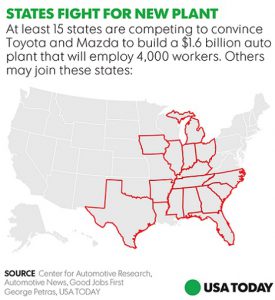
As related in a previous blog-commentary by the movement behind the book Go Lean … Caribbean, companies and Direct Foreign Investors many times seek out new cities to build factories, plants and corporate offices. Many times the “seek out” effort involves considering one city-state-country in competition with another.

Get ready Caribbean, this competition will impact you … more and more. And this “iron sharpening iron” competition will only increase the opportunity for success by urging us to pursue quality, excellence and competence for the needs of companies and Direct Foreign Investors.

This is the quest of the book Go Lean…Caribbean – available to download for free. The book calls for the elevation of Caribbean economics, security and governance. Placing greater emphasis on economics and industrial empowerment beyond the default tourism resorts, the book serves as a roadmap for the introduction and implementation of the technocratic Caribbean Union Trade Federation (CU). This CU/Go Lean roadmap has these 3 prime directives:

  • Optimization of the economic engines in order to grow the regional economy to $800 Billion & create 2.2 million new jobs.
  • Establishment of a security apparatus to ensure public safety and protect the resultant economic engines.
  • Improve Caribbean governance to support these engines, including a separation-of-powers between the member-states and CU federal agencies.

Despite the fact the individual cities may have to compete against each other, this Go Lean/CU roadmap stresses that reforming and transforming the Caribbean societal engines will first require regional leverage and synergy. Individually, no Caribbean community may have the assets to attract relocating factories, plants and corporate offices. So we have to reboot our industrial landscape first.

This is the reboot …

Accordingly, the Go Lean/CU roadmap facilitates an eco-system for Self-Governing Entities (SGE), an ideal concept for factories, plants, corporate offices and other industrial expressions like shipyards,  aerospace bases and even prisons. The exclusive federal regulation and promotion activities of SGE’s lie within the CU jurisdiction solely. Imagine bordered campuses – with a combination of fencing, walls and/or moats/canals – that designates the exclusivity of the commercial, security and administration to a superlative governance above the member-states.

This is transforming! This is the vision of an industrial reboot! This is where and how the jobs are to be created.

The Go Lean movement (book and blogs) details the principles of SGE’s and job multipliers, how certain industries are better than others for generating multiple indirect jobs down the line (or off-campus) for each direct job on the SGE’s payroll. In previous blog-commentaries, it was related how certain industries are perfectly suited for the Caribbean, as long as the structure was an independent SGE. These commentaries asserted that many new direct and indirect jobs will be facilitated. See further elaboration in this sample of previous blog-commentaries here:

https://goleancaribbean.com/blog/?p=13138 Industrial Reboot – Prisons 101
The business model for a Prison Industrial Complex allows for host-landlord facilities to get paid from the responsible jurisdictions for housing their inmates. This model will create jobs, entrepreneurial opportunities, trade transactions and more.
https://goleancaribbean.com/blog/?p=13420 A Lesson in History – Whaling Expeditions
The business prospects for ship-breaking are ideal for the SGE concept. Many jobs will result.
https://goleancaribbean.com/blog/?p=12581 State of the Union – Annexation: French Guiana
The European Space Agency in French Guiana is prominently featured in the Go Lean book – Page 105 – as a model for Self-Governing Entities (SGE). The hope – as expressed in the book – is that this territory, and all the French Antilles,  would someday join the regional neighborhood of the CU Trade Federation.
https://goleancaribbean.com/blog/?p=12146 Commerce of the Seas – Shipbuilding Model of Ingalls
Industrial plants for Shipbuilding is perfectly suited for the Caribbean; the SGE structure will allow for better economic (capital), security and governing engines.
https://goleancaribbean.com/blog/?p=7822 Cancer Research: Doing More
The Go Lean roadmap calls for more medical R&D initiatives but on Caribbean shores. The roadmap strategizes the adoption of SGE’s to employ medical research and treatment campuses.
https://goleancaribbean.com/blog/?p=3473 Haiti to Receive Grants to Expand Caracol Industrial Park
There is this industrial park in Haiti that a an premature model of the SGE concept. The existing park is plagued with turmoil, but it is a good start. SGE’s would be ideal.
https://goleancaribbean.com/blog/?p=2750 Disney World – Role Model for Self-Governing Entities
This indisputably successful SGE was originally considered for a Caribbean city, but we lost out to Orlando, Florida. Now they enjoy the 57 million guests per year. 🙁
https://goleancaribbean.com/blog/?p=1214 The Art & Science of Temporary Stadiums – No White Elephants
The SGE concept can also be successful with sports endeavors. Considering the good and bad lessons learned from Olympics, the economic benefits can be huge.

This vision of a superlative industrial landscape – SGE’s – was an early motivation for the Go Lean roadmap, as pronounced in the opening Declaration of Interdependence (Pages 12 – 13):

xi. Whereas all men are entitled to the benefits of good governance in a free society, “new guards” must be enacted to dissuade the emergence of incompetence, corruption, nepotism and cronyism at the peril of the people’s best interest. The Federation must guarantee the executions of a social contract between government and the governed.

xxiv.  Whereas a free market economy can be induced and spurred for continuous progress, the Federation must install the controls to better manage aspects of the economy: jobs, inflation, savings rate, investments and other economic principles. Thereby attracting direct foreign investment because of the stability and vibrancy of our economy.

xxvi.  Whereas the Caribbean region must have new jobs to empower the engines of the economy and create the income sources for prosperity, and encourage the next generation to forge their dreams right at home, the Federation must therefore foster the development of new industries, like that of … the prison industrial complex. In addition, the Federation must invigorate the enterprises related to existing industries like tourism, fisheries and lotteries – impacting the region with more jobs.

Under this SGE scheme, there will still be the need for inter-city competition, in terms of which locality to place the SGE. Here is where “iron could sharpen iron”. Local communities can get better and better in support of industrial entities – the job-creating engines – by challenging the support dynamics among each other. Notice the similar experience in the USA Today news article in Appendix A below. Notice how 15 different American states have been “jumping through the hoops” to  compete for the 4,000 direct jobs of an auto assembly plant to be located in a city within their jurisdiction.

The end-result of inter-city/inter-state competition will be more excellence … and more jobs. This is how Money Matters can lead to societal reforms.

This commentary is 2nd of a 5-part series from the movement behind the book Go Lean … Caribbean in consideration of Money Matters for leading the Caribbean down a different path from their status quo. The full commentaries in the series are cataloged as follows:

  1. Leading with Money Matters: Follow the Jobs
  2. Leading with Money Matters: Competing for New Industries
  3. Leading with Money Matters: Almighty Dollar
  4. Leading with Money Matters: As Goes Housing, Goes the Market
  5. Leading with Money Matters: Lottery Hopes and Dreams

All of these commentaries relate to “how” the stewards for a new Caribbean can persuade the region stakeholders to follow the economic empowerment plan. Seeing the “jumping through the hoops” that communities are willing to do – to attract job creators – it is logical to conclude that the economic principle is correct, that people will “respond to economic incentives”. This principle is the premise for the Go Lean quest to reform and transform the economic engines of the Caribbean member-states. We have to “dangle money” in order to get people to conform.

In summary, forging change in the Caribbean will require the region to finally get the art and science of job-creation right. If new factories, plants and corporate offices can serve as a job-creation bonanza then we need to attract them ourselves; we need our “iron to sharpen iron” so that we can excel at recruiting and attracting new industrial entities, local home-grown ones or Direct Foreign Investors.

This heavy-lifting plan is conceivable, believable and achievable. Yes, we can lead with Money Matters and make our Caribbean homeland a better place to live, work and play. We urge all Caribbean stakeholders to lean-in to this roadmap. 🙂

Download the free e-Book of Go Lean … Caribbean – now!

Sign the petition to lean-in for this roadmap for the Caribbean Union Trade Federation.

———–

Appendix A – Title: With code name, how Toyota-Mazda set off secret race for 4,000-job plant

One of the biggest potential job-creating bonanzas in the country, a giant new auto plant proposed by Toyota and Mazda, began in secret with a mysterious code name.

Now it has become a full-blown race among states to try to reel in the $1.6-billion project that will create 4,000 good-paying direct jobs and thousands of other indirect jobs.

The two Japanese automakers recently issued a blind request for proposals to states in the Midwest, mid-Atlantic and South, according to two people familiar with the plans who were not authorized to speak publicly because the process was confidential.

Told only that an unidentified employer was weighing its options for a massive project under the code name Project Mitt, state economic development officials delivered preliminary proposals, including potential tax incentives, job training programs and infrastructure investments.

When the Japanese automakers publicly revealed their joint venture two weeks ago, they made it clear they had not yet picked a site. State economic development offices are now in high gear.

No fewer than a dozen states are believed to have a shot at landing the automotive factory, which automotive industry researchers say could create several times as many jobs at nearby employers.

Job-creating projects of this magnitude are rare — it would be only the fourth U.S. assembly plant in a decade when it opens in 2021 — so Toyota and Mazda are expecting contenders to roll out the red carpet for their 50-50 joint venture.

Also making the project a plum, Toyota, in particular, takes “a very long-term view” that should keep its giant plant in place for half a century or more, said Ron Harbour, an expert on auto manufacturing sites who works for consultancy Oliver Wyman.

“You have to be able to say you’ve got the workforce, you’ve got the land, you’ve got the transportation systems and rail spurs, community college and education and a place where people want to live,” said Kristin Dziczek, director of industry, labor and economics at the Center for Automotive Research. “Once you’ve got all that, tax incentives come into play.”

But unlike the recent contest to land smartphone components manufacturer Foxconn’s first U.S. plant — which Wisconsin won after delivering a massive incentives package — tax breaks might not be enough to seal the deal.

Access to a dependable labor force, a vibrant community and enough contiguous land close to power and transportation infrastructure could make the difference, said Bradley Migdal, senior managing director and business incentives expert at Cushman & Wakefield.

Toyota, which hired commercial real estate firm Jones Lang LaSalle to help manage the process, declined to discuss states under consideration.

“We are just beginning the discovery process ,” Toyota said in a statement. “As we solidify our plans, we will share more information about the selection process.”

Mazda spokesman Jeremy Barnes, in an email, said, “I do know that no decisions have been made at this time, and that all options remain on the table.”

Here’s a look at some of the key states in the mix:

Alabama

Why it could win: Low-cost labor, bustling auto sector.

Why it could lose: Might not have enough workers.

Alabama’s vibrant auto manufacturing sector could help or hurt.

Three auto assembly plants made more than 1 million vehicles in 2016 in Alabama. The industry employed nearly 40,000 people in a right-to-work state desperate for good-paying jobs.

State development officials declined to directly discuss any efforts to land a proposed Toyota-Mazda assembly plant.

But Gov. Kay Ivey said new incentives laws have made Alabama more attractive to expanding companies. The changes she signed into law in May raised the annual state incentives cap to $300 million.

Ivey said Alabama’s reputation as “a proven manufacturing state” also helps.

Alabama has Hyundai, Mercedes-Benz and Toyota plants. North Alabama is the “more likely area” for the project if Alabama lands it, Montgomery Mayor Todd Strange said.

Brad Harper, Montgomery Advertiser

Arkansas

Why it could win: Was a finalist for the last new Toyota plant.

Why it could lose: Too far away from suppliers.

Arkansas was a finalist for the Toyota factory that opened in Blue Springs, Miss., in 2011.

Arkansas Economic Development Commission spokesman Jeff Moore said the state “certainly has interest” again.

Arkansas has broad latitude in issuing bonds to raise funds for infrastructure, land acquisition and job training.

The Economic Development Commission also administers sales tax exemptions, income tax credits and a payroll rebate program.

“We certainly have a very good toolbox of incentives to assist,” Moore said.

Kevin Hardy, Des Moines Register

Georgia

Why it could win: Worker training programs, enticing location.

Why it could lose: Lack of ties to Toyota operations.

Georgia is host to one of the newest U.S. assembly plants: the Kia factory in West Point, which opened in 2009, which has some 3,000 workers today.

One of the state’s key selling points is its geography. Interstate 75 runs right through it.

Among Georgia’s most compelling arguments is that its worker training programs are among “the best in the country,” said Bradley Migdal, the Cushman & Wakefield site expert.

Georgia Department of Economic Development communications director Stefanie Paupeck Harper declined to say whether the state has discussed a deal with Toyota and Mazda. But she said the state’s “hundreds” of suppliers could help.

“Automotive companies will not find another state that has a better combination of logistics, workforce, quality of life and proven record of success than Georgia,” Harper said.

Nathan Bomey, USA TODAY

Indiana

Why it could win: Already has a Toyota plant and is close to other operations, including Toyota’s Kentucky plant and Michigan engineering campus.

Why it could lose: The job market is so strong that the automakers might have a hard time finding enough employees.

Toyota has a 19-year-old factory in southern Indiana that builds the Sequoia sport-utility vehicle and Sienna minivan and is undergoing a $600 million expansion.

Overall, the auto industry employs more than 100,000 people in Indiana. Honda, Subaru and Chrysler each have initiated expansions there since 2010.

While the strong presence of auto factories and suppliers could make Indiana a viable contender for the Toyota-Mazda plant, existing facilities also might be one reason why the state gets passed over, said Mohan Tatikonda, an operations management professor for the Indiana University Kelley School of Business.

With Indiana’s unemployment rate at a near-record-low 3%, Toyota and Mazda could have concerns about finding employees.

“If we have multiple companies seeking generally the same labor skill, then laborers or their representatives can seek out a higher price,” Tatikonda said. “So, if that’s the case, a company may seek to go to a place where there’s less competition for a ready labor force.”

A spokeswoman for the Indiana Economic Development Corp. declined comment.

James Briggs, Indianapolis Star

Iowa

Why it could win: Dependable manufacturing workforce; no competition with other assembly plants.

Why it could lose: Too far away from suppliers.

Toyota has already asked Iowa for information on specific sites that could house a new assembly plant with room for suppliers to grow, said Debi Durham, director of the Iowa Economic Development Authority.

Iowa Gov. Kim Reynolds said the state is “extremely competitive” in its hunt for the Toyota-Mazda plant but wouldn’t comment on potential incentives.

“We are going to do everything we can ― up to a limit. You have to know where you draw a line,” Reynolds said. “But we’re competitive. This would be great for the state of Iowa.”

The Hawkeye state can tout a “second-to-none” work force, low energy costs and regular rankings that place the cost of doing business in Iowa among the lowest in the nation, she said.

The state routinely doles out forgivable loans, tax credits and tax refunds for companies that pledge to create or maintain jobs.

While Iowa isn’t known for automotive manufacturing, state officials have made a concerted effort to reach out to carmakers over the last year in an effort to recruit a new assembly plant.

Kevin Hardy, Des Moines Register

Kentucky

Why it could win: Toyota already has a massive factory in Georgetown, Ky.; close to numerous suppliers; likely to offer major incentives.

Why it could lose: If Toyota decides it’s already exhausted the local workforce for talent.Toyota’s 8 million-square-foot, 8,200-job Georgetown, Ky., facility makes more than 500,000 Camry, Lexus and Avalon vehicles per year. Toyota is investing $1.3 billion into plant upgrades.

The state also boasts two Ford factories in Louisville and General Motors’ Chevrolet Corvette plant in Bowling Green.

The factory draws from 350 suppliers and commodities vendors, 100 of them in Kentucky.

Gov. Matt Bevin told auto executives that a shovel-ready 1,550-acre site in central Kentucky, south of Elizabethtown near Interstate 65, is an ideal location for the investment.

Bevin pushed successfully for a right-to-work law and other business-friendly measures this year, and pledged to compete aggressively against rival states. “I say giddy up,” he said.

Grace Schneider, Louisville Courier-Journal

Michigan

Why it could win: Traditional home to the nation’s auto industry — and Toyota engineering has its engineering facility in the Wolverine State.

Why it could lose: If the automakers fear potential unionization.

While Michigan is home to the Detroit Three auto companies — not to mention engineering centers for virtually every major automaker and numerous suppliers — the state’s union history has long scared off foreign automakers from considering a manufacturing presence there. In fact, no foreign automaker operates an assembly plant in Michigan.

But “it’s not as much of a deterrent” anymore, said Glenn Stevens, vice president of the Detroit Regional Chamber. “Michigan previously was not a right-to-work state, as it is now. And even though the UAW has incredibly strong relationships with some companies in Michigan, there are also companies here that are not unionized.”

Gov. Rick Snyder signed legislation in 2012 that gives every worker the right to choose for themselves whether to join a union, arguing it would position it to better compete with states in the South that are more hostile to labor unions.

Gov. Rick Snyder signed a package of bills in July that would provide significant tax incentives for manufacturers, aiming to lure Foxconn.

“Michigan is absolutely the best location in the U.S. for this joint plant to be established, due to our leadership in automotive research & development, especially on mobility issues. We also have a strong pipeline of engineers and professional trades talent,” Snyder said in a statement.

Stevens also argued that Michigan has the manufacturing workforce necessary to support such a project and points out that Toyota employs 1,600 at engineering centers in the Ann Arbor area.

Brent Snavely, Detroit Free Press

Mississippi

Why it could win: Landed the last new Toyota plant.

Why it could lose: If Toyota believes the local workforce can’t sustain another factory.

The Toyota plant in Blue Springs, Miss. opened in 2011 and employs about 2,000 people. The state also has Nissan’s 5,000-person assembly plant in Canton.

Even with two major plants, the state can easily accommodate another and gin up training dollars to assure Toyota of a competent workforce, said Scott Waller, interim chief executive of the Mississippi Economic Council.

“Today the incentives are workforce based,” Waller said. “It’s all workforce driven. There’s absolutely no question Mississippi can be successful.”

–Ted Evanoff, Memphis Commercial-Appeal

North Carolina

Why it could win: No automotive assembly plants to compete with for talent.

Why it could lose: If the state is viewed as not having enough of a manufacturing workforce.

North Carolina doesn’t have any automotive assembly plants, which could prove enticing to Toyota because of the chance to bolster its political clout from the swing-state’s congressional delegation.

But the Tar Heel State has 26,000 workers at companies that supply the auto industry.

North Carolina’s tech-savvy Research Triangle could prove enticing, said John Boyd, head of Boyd Co. Inc., a location consultant.

–Ted Evanoff, Memphis Commercial-Appeal

Ohio

Why it could win: Strong manufacturing workforce; centrally located; many local suppliers.

Why it could lose: Not a right-to-work state.

JobsOhio said the state boasts several sites of more than 1,000 acres that are ready for a manufacturing plant to break ground quickly.

Toyota already has factories in neighboring Indiana and Kentucky and an engineering headquarters in Michigan. Locating its next plant in a Midwest state such as Ohio would keep it close to parts suppliers, saving time and money. Ohio is within a day’s drive of 75% of the country’s auto assembly plants and their accompanying parts networks, JobsOhio said.

Officially, Ohio isn’t saying whether it’s trying to land the Toyota-Mazda plant.

“We do not share whether or not we are in project discussions with companies,” said Matt Englehart, a spokesman for JobsOhio, the state’s privatized economic development arm.

But Gov. John Kasich and JobsOhio. the state’s privatized economic development arm, have shown a willingness to dole out incentives to keep auto-related jobs. Those moves included offering tax breaks to keep a Cleveland-area Ford truck plant open.

Chrissie Thompson, Cincinnati Enquirer

South Carolina

Why it could win: Growing automotive sector.

Why it could lose: If the automakers decide the job market is too crowded.

Finding the workers for such a plant could be a tall order, in part because of the state’s flourishing manufacturing sector. But state leaders said they have a proven track record for rising to the challenge by investing in training programs.

“We are a state that houses BMW, Volvo, Mercedes-Benz and Boeing,” South Carolina Department of Commerce spokeswoman Adrienne Fairwell said. “We have a workforce that is ready and available and we can create the workforce where necessary because we have the tools, tactics and strategies to do it.”

State economic development experts touted the region’s highly skilled workers, transportation hubs and cluster of auto suppliers. The upstate region, located in the northwestern portion of the state, is a manufacturing powerhouse, said Mark Farris, president of the Greenville Area Development Corporation.

But Ken Crews, training manager at German auto-parts supplier Stueken North America, said he has struggled to find new workers with the right combination of skills and work ethic for his plant.

Jermaine Whirl, vice president for economic development and corporate training at Greenville Tech, finding requires may require casting a wider net geographically and getting able-bodied workers back into the labor force.

Anna B. Mitchell, The Greenville News

Tennessee

Why it could win: Significant, growing automotive sector; perfect location for logistical purposes; strong business climate.

Why it could lose: If the automakers decide there aren’t enough workers.

Tennessee has been waiting for this moment. A decade ago, the state purchased land with the specific purpose of landing a Toyota plant that never came.

“There will be a lot (of) people fighting hard for that plant, and we intend to be at the lead,” Tennessee Gov. Bill Haslam told the Associated Press.

Hoping to lure the Toyota plant that eventually went to Blue Springs, Miss., Tennessee acquired property dubbed the Memphis Regional Megasite. The site, which remains unused, is 4,100 acres situated 32 miles east of Memphis on vacant farm land along Interstate 40.

Site selection consultants said it’s one of Tennessee’s leading candidates for industrial investment.

Tennessee already has spent more than $140 million on the Memphis Megasite, building roads and water and sewer lines.

–Ted Evanoff, Memphis Commercial-Appeal

Source: Posted Aug. 17, 2017; retrieved February 16, 2018 from: https://www.usatoday.com/story/money/cars/2017/08/17/toyota-mazda-auto-plant/573213001/

———-

VIDEO – Toyota, Mazda building $1.6B plant in USA – https://www.usatoday.com/videos/money/cars/2017/08/04/toyota-mazda-building-1.6b-plant-usa/104285082/

Posted Aug. 17, 2017 – President Trump applauded Toyota and Mazda’s plan to set up the joint venture in the USA and create up to 4,000 jobs. Wochit

———–

Appendix B: Tomorrow’s World Commentary: Iron Sharpens Iron

The Bible offers good advice on what to look for—and what to avoid—when choosing friends. One well-known principle of positive friendship is given in the Old Testament book of Proverbs: “As iron sharpens iron, so a person sharpens his friend” (Proverbs 27:17New English Translation). What does this scripture mean, and how can this idea direct your friendships?

According to The Bible Knowledge Commentary, “When iron is rubbed against another piece of iron it shapes and sharpens it. Similarly people can help each other improve by their discussions, criticisms, suggestions, and ideas.” The image of a chef using a rod of steel to sharpen a knife is a good example of using strong metals to improve the instrument.

Listen to the AUDIO file or read the remainder of this Bible Study subject here:

Source: https://www.tomorrowsworld.org/magazines/2016/march-april/iron-sharpens-iron posted March-April 2016 retrieved February 16, 2018.

Share this post:
, , ,
[Top]

Leading with Money Matters – Follow the Jobs

Go Lean Commentary

When people say it’s the principle and not the money, chances are: it’s the money. – Murphy’s Law on Money

Yes, there are more important things in life than money, but without money, those important things fall by the wayside, or never get pursued.

This is the nature of man. Psychologist Abraham Maslow addressed this subject in a comprehensive way. He established a “Hierarchy of Needs” that accurately depicted this fact that basic needs (food, clothing, shelter, safety, etc.) will always be the first priority. Efforts in pursuit of higher-level needs – art, beauty, esteem, etc. – will only be engaged once those basic needs are satiated.

This premise is not in doubt, especially in times of peace. (Yes, the sword/gun is most persuasive, but not lasting).

So considering the 3 societal engines of a community – economics, security and governance – it is so much easier to lead and get people to voluntarily comply – to lean-in – through economic means rather than by any security or governing directives.

For the vast majority of the world’s population, money plays a huge part in their decision-making. So this new movement to shepherd the Caribbean – group behind the book Go Lean…Caribbean – accepts that the best way to get regional buy-in is to lead with Money Matters.

This commentary is the first of a 5-part series from the movement behind the book Go Lean … Caribbean in consideration of Money Matters for leading the Caribbean down a different path from their status quo. The other commentaries in the series are cataloged as follows:

  1. Leading with Money Matters: Follow the Jobs
  2. Leading with Money Matters: Competing for New Industries
  3. Leading with Money Matters: Almighty Dollar
  4. Leading with Money Matters: As Goes Housing, Goes the Market
  5. Leading with Money Matters: Lottery Hopes and Dreams

All of these commentaries relate to “how” the stewards for a new Caribbean can persuade the region’s stakeholders to follow this empowerment roadmap. It is logical to conclude that people will “follow the money”. This conforms with the Go Lean quest to reform and transform the economic engines of the Caribbean member-states so that they can be better places to live, work and play. We have to “dangle money in front of our subjects”. Then, only then, will we get their attention. This is sad, but true!

The Go Lean book – available to download for free – declares that Caribbean society must change; the economic engines must be rebooted, and optimized, otherwise our society will simply not survive, not on the current trajectory.

If people are money motivated – and they are – then economic incentives should work. This point is presented in the Go Lean book (Page 21), quoting proven economic principles:

  • People Respond to Incentives in Predictable Ways:
    Incentives are actions, awards, or rewards that determine the choices people make. Incentives can be positive or negative. When incentives change, people change their behaviors in predictable ways.
  • Economic Systems Influence Individual Choices and Incentives:
    People cooperate and govern their actions through both written and unwritten rules that determine methods of allocating scarce These rules determine what is produced, how it is produced, and for whom it is produced. As the rules change, so do individual choices, incentives, and behavior.

Any attempt to empower Caribbean economics must start with a focus on jobs. Frankly, there are not enough jobs in the region, for any one of the 30 countries.

Due to this deficiency, people will respond to the availability or the absence of jobs. This is a fact today and was a fact for hundreds of years:

“Go West, Young Man” …

… is a phrase often credited to the American author and newspaper editor Horace Greeley concerning America’s expansion westward, related to the then-popular concept of Manifest Destiny. … Greeley later used the quote in his own editorial in 1865. Greeley favored westward expansion. – Source

In the mid 19th Century (1800’s), the US was expanding beyond the original 13 colonies into the Western parts of the continent:

  • Louisiana Purchase in 1804
  • Settling the War of 1812 with the compromise for the Northwest Territories (Ohio, Indiana, Illinois, Michigan, Wisconsin)
  • Texas Annexation in 1832
  • Annexation of Oregon Territory in 1846
  • New Mexico-California Acquisition in 1848

As the East Coast experienced economic stagnation, the sage advice was to “Go West” to seek jobs and entrepreneurial opportunities (like mining for precious metals: gold, silver, etc.).

This same advice is being followed in the Caribbean … today.

The region is in the throes of economic stagnation and people are leaving to “Go West”, many to the US, to find jobs. Our Caribbean people are being both “Pushed” and “Pulled”:

  • Push” refers to people who feel compelled to leave to find jobs, or better jobs; they seek refuge in this foreign land. “Refuge” is an appropriate word; because of economic defects in the homeland, people find that they must leave.
  • Pull”, on the other hand refers to the lure of a more prosperous life abroad; our people are emigrating for strong economics reasons; even many low level jobs in the foreign lands are more prosperous than professional ones at home.

The Number One employer in many Caribbean countries is the government, the Public Service; think Teachers, Nurses, government clerks, etc.. But even if people are able to get these jobs, the compensation is normally too small …

This is the true experience! Well trained, professionals, are inclined to flee due to the deficient pay. Notice this experience in this news article here:

Title: Pay up! – Educate Jamaica says $250,000 monthly salary needed to keep mathematics and science teachers in classroom
By: Gleaner Contributor Andre Poyser

Education Think Tank, Educate Jamaica, has estimated that it will take a minimum monthly salary of $250,000 to stem the flow of mathematics and science teachers leaving the classroom.

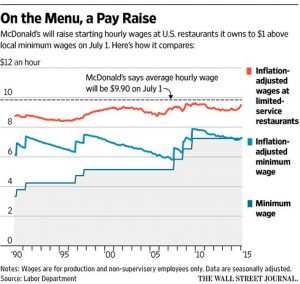
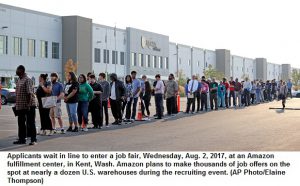
Data from the Ministry of Education indicate that 494 mathematics and science teachers exited the public education system in 2015.

According to the Think Tank, “24 to 36 months from now will see the biggest exodus of mathematics and science teachers from Jamaican classrooms”.

This exodus, it says, can only be halted by offering these teachers a monthly salary of $250,000.

A trained teacher at the entry level earns approximately $90,000 after tax.

“Only a salary of J$250,000 each month (after tax) will tempt these teachers to stay or tempt Jamaicans to return from these overseas countries to take up back their jobs. The other option will be for Jamaica to recruit teachers from Asian, South American and African countries such as Nigeria and Ghana to fill the gap being left,” the Think Tank said in an article on its website.

Explaining how he arrived at this figure, Ainsworth Darby, Chief Executive of Educate Jamaica, said he compared the salaries of teachers in the United Kingdom and the United States.

Darby also argued that a proposal to offer scholarships to attract more students to train as mathematics and science teachers should be complemented by offering more pay to these teachers.

WRONG DECISION
News reports have indicated that education minister Ronald Thwaites has backed down from a controversial differentiated-payment proposal for math and science teachers.

Darby however, believes this was a wrong decision that should be revisited. He also argued that the recruitment measure announced by Thwaites will not be enough to effectively fill the gap of mathematics and science teachers leaving the system.

Thwaites has said the proposal to pay math and science teachers more than their colleagues will not be dismissed.

However, he said the ministry hopes that the recruitment measure will help to replace the more than 500 math and science teachers who have left local classrooms within the last 12 months.

Source: Retrieved from The Jamaica Gleaner Daily Newspaper – January 27, 2016 from: http://jamaica-gleaner.com/article/news/20160127/pay-educate-jamaica-says-250000-monthly-salary-needed-keep-mathematics-and

Wait, what?!?!

The dollar amounts discussed in this foregoing article refer to Jamaican Dollars. The exchange rate at this time 1 US Dollar to 80 Jamaican Dollars ($J) or 1 J$ equals 0.0080 US$. So the reference to “a trained teacher at the entry level [that] earns approximately $90,000 after tax” is actually referring to:

    J$90,000 = US $720
    The recommended salary of J$250,000 equals US$2,000.

On the other hand, in the US, entry level jobs at Fast Food restaurant chain, McDonalds, is now starting in excess of US$9 per hour OR J$1,125. So a monthly salary, assuming 40-hour work weeks, would be J$180,000 (US$9 X 40 X 4 or $1,440).

Wow, that McDonalds minimum pay of $9/hr-plus … is more than Jamaica’s Public Service professionals. (The experience is similar in other countries).

This matter is all relative. While Caribbean member-states are complaining about “too low” wages for their Public Service employees, US workers are complaining about “too low” wages in the US. According to the foregoing, we are not competing in the Caribbean; we appear to not even me trying to compete.

Whatever a man is sowing, this he will also reap! – The Bible; Galatians 6:7

The disposition of the Caribbean economic landscape is dire.

If we want to reform and transform – we do – the stakeholder must effect change, some how. This is the quest of the Go Lean roadmap. We want to make Caribbean homeland a better place to live, work and play.

How?

The book serves as a roadmap for the introduction and implementation of the technocratic Caribbean Union Trade Federation (CU), for the elevation of Caribbean society – for all member-states. This CU/Go Lean roadmap has these 3 prime directives:

  • Optimization of the economic engines in order to grow the regional economy to $800 Billion & create 2.2 million new jobs.
  • Establishment of a security apparatus to ensure public safety and protect the resultant economic engines.
  • Improve Caribbean governance to support these engines, including a separation-of-powers between the member-states and CU federal agencies.

The plan is simple, create Two Pies for regional economics. In a previous Go Lean commentary, it related:

In order to reboot the societal engines there must be these Two Pies. The CU Trade Federation is designed to lead, fund and facilitate regional empowerment plans. But the plan is NOT for the individual member-states to write checks to the CU so as to share one state’s treasuries with another state. Rather, the CU Trade Federation creates its own funding – from regionalized services – and then encumbers the funds for each member-state to deliver the economic, security and governing  mandates. This is analogized as Two Pies:

  • One ‘pie‘ to represent the existing budgets of the member-states and how they distribute their government funding between government services (education, healthcare, etc.), security measures (Police, Coast Guards)
  • One ‘pie‘ to represent the CU funding from exclusive activities (Spectrum Auctions, Lottery, Exploration Rights, Licenses, Foreign-Aid, etc.).

For the CU pie, the strategy, tactic and implementation is for competitive salaries (compensation and benefits) for Federal Public Servants (Page 173). Plus, the CU roadmap deputizes the member-state governments for a lot of their functionality – i.e. Post Office – so that will lighten the load for the existing government payroll even further. Lastly, the CU automation and lean practices will optimize overall government delivery: do more with less.

The Go Lean book stresses that reforming and transforming the Caribbean societal engines (economics, security and governance) must be a regional pursuit. This was an early motivation for the roadmap, as pronounced in the opening Declaration of Interdependence (Pages 12 – 13):

xi. Whereas all men are entitled to the benefits of good governance in a free society, “new guards” must be enacted to dissuade the emergence of incompetence, corruption, nepotism and cronyism at the peril of the people’s best interest. The Federation must guarantee the executions of a social contract between government and the governed.

xvi. Whereas security of our homeland is inextricably linked to prosperity of the homeland, the economic and security interest of the region needs to be aligned under the same governance. Since economic crimes … can imperil the functioning of the wheels of commerce for all the citizenry, the accedence of this Federation must equip the security apparatus with the tools and techniques for predictive and proactive interdictions.

xxiv. Whereas a free market economy can be induced and spurred for continuous progress, the Federation must install the controls to better manage aspects of the economy: jobs, inflation, savings rate, investments and other economic principles. Thereby attracting direct foreign investment because of the stability and vibrancy of our economy.

xxvi.  Whereas the Caribbean region must have new jobs to empower the engines of the economy and create the income sources for prosperity, and encourage the next generation to forge their dreams right at home, the Federation must therefore foster the development of new industries, like that of … frozen foods … impacting the region with more jobs.

In total, the Go Lean book provides 370-pages of turn-by-turn instructions on “how” to adopt new community ethos, plus the strategies, tactics, implementations and advocacies to execute so as to reboot, reform and transform the societal engines of Caribbean society.

So what should the planners for a new Caribbean regime do next? Or do first, since the CU Trade Federation is not currently in force?

Lead with Money Matters.

Money is not the only option, but it is the best, most efficient and effective choice. Consider the other options of security or governance:

Show up to reform a community’s security apparatus or governance and you must convene (the stakeholders), collaborate, consensus-build and compromise. That is not easy! But try to reform economics by showing up with a boatload of money and boatload of jobs; people will line-up around the corner to comply, capitulate and consume those jobs.

Boom! Economic reform is easier!

The evidence shows that our Caribbean citizens have been abandoning their Caribbean communities and those government Public Service jobs to flee to foreign shores, looking for work, like those American minimum wage jobs.

One man’s trash is another man’s treasure.
(See the Appendix & VIDEO below).

We can and must do better. We must create job options here at home. This has been a familiar theme for previous Go Lean commentaries; consider this sample:

https://goleancaribbean.com/blog/?p=14191 Where the Jobs Are – The Option of ‘Gigs’
https://goleancaribbean.com/blog/?p=13420 Where the Jobs Are – Lessons from Whaling Gigs
https://goleancaribbean.com/blog/?p=13184 Where the Jobs Are – Industrial Reboot; A Series
https://goleancaribbean.com/blog/?p=9751 Where the Jobs Are – Animation and Game Design
https://goleancaribbean.com/blog/?p=6089 Where the Jobs Are – Futility of Minimum Wage
https://goleancaribbean.com/blog/?p=2857 Where the Jobs Are – Entrepreneurism in Junk
https://goleancaribbean.com/blog/?p=2126 Where the Jobs Are – Computers Reshaping Global Job Market
https://goleancaribbean.com/blog/?p=2025 Where the Jobs Are – Attitudes & Images of the Diaspora
https://goleancaribbean.com/blog/?p=2003 Where the Jobs Are – One Scenario: Ship-breaking

In summary, forging change in the Caribbean will mean doing better at job creation. Plain and simple!

There is a plan, here and now, to execute such a charter. This plan is conceivable, believable and achievable. But it is heavy-lifting too.

So let’s get busy …

… in the hard work of optimizing our society. Let’s lean-in to this plan to lead with Money Matters and make our Caribbean homeland a better place to live, work and play. We urge every Caribbean stakeholders to lean-in to this roadmap. 🙂

Download the free e-book of Go Lean … Caribbean – now!

Sign the petition to lean-in for this roadmap for the Caribbean Union Trade Federation. 

——————

Appendix Title: McDonald’s Joins Trend in Raising Pay

Sub-title: Pay will be at least $1 per hour more than minimum wage—franchisees excluded

By: Annie Gasparro and Eric Morath

McDonald’s Corp. plans to raise wages by more than 10% for workers at U.S. restaurants it operates—fresh evidence of the rising wage pressure in the American labor market.

Starting July 1, McDonald’s will pay at least $1 an hour more than the local minimum wage for employees at the roughly 1,500 restaurants it owns in the U.S.

The move follows similar efforts by other U.S. employers including WalMart Stores …

Read the full article here:

Source – Posted Wall Street Journal April 1, 2015; retrieved February 15, 2018 from: https://www.wsj.com/articles/mcdonalds-to-raise-hourly-pay-for-90-000-workers-1427916364

———

VIDEO – McDonalds Will Pay at Least $1 per Hour More than Minimum Wage – http://www.wsj.com/video/mcdonald-to-raise-hourly-pay-by-10/CC71E017-D357-4AF1-A71F-7381C5BF0232.html

McDonald’s will raise the pay for 90,000 workers by 10%, or $1 over the minimum wage, by July. WSJ’s Annie Gasparro reports.

Share this post:
, ,
[Top]

How the Youth are Consuming Media Today

Go Lean Commentary

The more things change, the more they remain the same.

People have always consumed media; the technology may change, but the consumption continues; see the flow of methods throughout history:

  • Scrolls
  • Books
  • Telegraphs
  • Newspapers/Magazines
  • Electronic Media: Radio, Television, Phonographs, etc.
  • Digital Media: Internet & Communications Technologies

Today, young people are consuming media as digital, but the ancient Bible prophecy still applies; maybe even more than ever right now:

Beyond this, my son, be warned: the writing of many books is endless, and excessive devotion to books is wearying to the body. – Ecclesiastes 12:12; The New American Standard Bible

So though technology may change, the consumption of media always continue: music is being played, stories are being told (on the screen), books are being read, hours upon hours are being spent (by each individual consumer). Only now, this consumption is transpiring with a digital transformation.

So make that e-Books, not just books.

… and make that music streamed and not just played.

… and make that a small screen (smartphones) and not just screen.

The world has changed, is changing now and will continue to change. Technology is an Agent of Change. For the Caribbean, this is not just a matter of “keeping up with the Joneses”; the problem now is that the “Joneses” have a competitive advantage; they are “eating our lunch”. Those best equipped to contend with this Agent of Change, our most educated ones, are abandoning us more and more as each day goes by. One report relates an average of 70 percent of the tertiary educated population fleeing. The abandonment is a direct result of our failure to compete.

See this Variety news article here relating the digital transformation for the music industry:

Title: With 70 Million Subscribers and a Risky IPO Strategy, Is Spotify Too Big to Fail?

By: Jem Aswad and Janko Roettgers

Manhattan’s Chelsea neighborhood has served as the home of Spotify’s U.S. headquarters since 2010, but not for much longer.

Mandatory Credit: Photo by Vesa Moilanen/REX/Shutterstock (7529625p)
Spotify co-founder and CEO Daniel Ek
Slush event, Helsinki, Finland – 30 Nov 2016
Slush is the focal point for startups and tech talent to meet with top-tier international investors, executives and media

Later this year, the streaming music company plans to move most of its 1,200 New York-based employees into 14 floors at 4 World Trade Center in the rejuvenated Financial District. As part of the deal for the 15-year lease, New York is granting an $11 million rent reduction in exchange for keeping more than 800 jobs in the state and adding 1,000 more employees.

But Spotify will make its presence felt in Lower Manhattan in 2018 in more ways than one. Sometime in the coming months at the New York Stock Exchange, just blocks away from its new home, the company will embark on what’s known as a direct listing, an unconventional initial public offering method that has never before been attempted on such a large scale.

Spotify and Wall Street aren’t the only ones that will be anxiously watching; count the music industry in as well. Its fortunes are largely bound with Spotify, which is becoming the industry’s top music distributor. Should the Sweden-based firm’s bold move backfire, its partners at the major record labels will feel the pain too.

“Just think about their depth of influence in the world,” says Capitol Music Group chairman-CEO Steve Barnett of Spotify. “[A recent Nielsen] report noted that Americans are spending more than 32 hours a week listening to music — up from [23.5] hours in two years. That tells you, for all the mistakes the industry made over a long period of time, things have been corrected.”

Spotify may draw some inspiration from Amazon, which lost hundreds of millions of dollars in its first few years as a public company, but investors stuck with the stock because the e-tailer reliably grew its business every quarter. On the other hand, Twitter and Snapchat stumbled not because of their monetary losses but primarily because of stalling user growth.

See the remainder of this article here: http://variety.com/2018/music/features/spotify-ipo-wall-street-music-industry-1202674266/ posted January 22, 2018; retrieved February 12, 2018.

In a previous Go Lean commentary, it was detailed how educational institutions are turning to tablets rather than textbooks. It is cheaper, faster to market and more engaging for young people. This is the point! Young people are more receptive to the efficiency of emerging (electronic) media outlets than the older generations. But that is the market that counts. Remember:

  • Young people are the ones that buy music
  • Young people go to the movies every weekend
  • Young people spur new trends
  • Young people will watch TV programming for young and older audiences, while older ones would not watch young programming; i.e. cartoons.

In addition to the efficiency of electronic or New Media, there is also the matter of effectiveness. Old Media has historically been a source for abuse and bullying, especially for young participants. New Media now allows for better options: direct-to-consumer deliveries and the bypass of the middle-man. The past Crony-Capitalism of media middle-men has often been the source of societal dysfunction. So the hope is that the effectiveness of New Media will bring more media productions.  This hope is realized! See this VIDEO here depicting the completion from direct-to-consumer streaming and the resultant decline on traditional television, Old Media:

VIDEO – The Real Reason Behind The Big Bang Theory’s Ratings Drop – https://youtu.be/aHvJkaGdY6A

Published on January 10, 2018 – After more than a decade as a CBS primetime mainstay, The Big Bang Theory remains one of the most popular shows on TV. However, fewer and fewer people are regularly tuning in to see what the most famous fictional nerds in the world are up to each week. So how come Big Bang isn’t popping the way it used to? Let’s explore …

TV ratings are down overall | 0:21
It’s hard to stream | 1:02
Blame football | 1:48
It’s part of a dying breed | 2:51
It’s a different show | 3:35
It’s inevitable | 4:19
Read more here → http://www.nickiswift.com/102976/real…

As related in the foregoing VIDEO, the Number One scripted television show is still Number One, but the audience is smaller, for television in general. Change is afoot!

So the media industry has moved forward, but with economic success “bad actors” always emerge. This consistent theme is presented by the movement behind the book Go Lean… Caribbean (Page 23). The book calls for the Caribbean to take its own lead in being “on guard” for bad actors and Crony-Capitalistic abuses. This means not being an American parasite.

As related in a previous commentary, the Go Lean movement asserts that the Caribbean region must not allow the US to take the lead for our own nation-building, that American capitalistic interest tends to highjack policies intended for the Greater Good. The recommendation in the roadmap is the key strategy of leveraging the needs of all 42 million people (4 languages) and become an American protégé, not parasite.

This Go Lean book serves as a roadmap for the introduction and implementation of the Caribbean Union Trade Federation (CU), to manage this change for New Media. We especially want to engage Caribbean young people with this foray into New Media. The youth of the Caribbean is the future of the Caribbean. The CU/Go Lean roadmap has 3 future-focused prime directives:

  • Optimization of the economic engines – and the educational apparatus – in order to grow the regional economy to $800 Billion and create 2.2 million new jobs.
  • Establishment of a security apparatus to protect the resultant economic engines.
  • Improve Caribbean governance to support these engines.

The Go Lean roadmap provides turn-by-turn directions on how to leverage the full Caribbean population, that’s a media market of 42 million people – in 4 languages. This roadmap is presented as a planning tool, pronouncing the collaborative benefits of a Single Market. This agenda was pronounced early in the book in the opening Declaration of Interdependence (Page 12 & 14):

viii.  Whereas the population size is too small to foster good negotiations for products and commodities from international vendors, the Federation must allow the unification of the region as one purchasing agent, thereby garnering better terms and discounts.

xi. Whereas all men are entitled to the benefits of good governance in a free society, “new guards” must be enacted to dissuade the emergence of incompetence, corruption, nepotism and cronyism at the peril of the people’s best interest. The Federation must guarantee the executions of a social contract between government and the governed.

xxi. Whereas the preparation of our labor force can foster opportunities and dictate economic progress for current and future generations, the Federation must ensure that educational and job training opportunities are fully optimized for all residents of all member-states, with no partiality towards any gender or ethnic group. The Federation must recognize and facilitate excellence in many different fields of endeavor, including sciences, languages, arts, music and sports. This responsibility should be executed without incurring the risks of further human flight, as has been the past history.

xxvii. Whereas the region has endured a spectator status during the Industrial Revolution, we cannot stand on the sidelines of this new economy, the Information Revolution. Rather, the Federation must embrace all the tenets of Internet Communications Technology (ICT) to serve as an equalizing element in competition with the rest of the world. The Federation must bridge the digital divide and promote the community ethos that research/development is valuable and must be promoted and incentivized for adoption.

The Go Lean book presents a roadmap for a confederation of the 30 Caribbean member-states doing the heavy-lifting of optimizing economic and media policies. Within its 370-pages, the Go Lean book details future-focused policies; and other ethos to adopt, plus the executions of strategies, tactics, implementations and advocacies to impact the media landscape in the region.

The Go Lean roadmap calls for bridging the Digital Divide, deploying a homegrown Social Media network and fostering technology in general. In addition to just communicating with 42 million people, we must do so in 4 general languages (Dutch, English, French and Spanish). So, the plan is for the CU to steer policy and capital to digital delivery and New Media.

Websites, music streaming, tablets and e-Books should be all the rage.

The foregoing news article and VIDEO relate to topics that should be of serious concern for Caribbean planners. We want to foster New Media and propel forward for the Caribbean’s best interest. No, we do not want to be parasites of America; we want to be better.

Many of these issues have been addressed in previous Go Lean blog-commentaries; consider this sample here:

https://goleancaribbean.com/blog/?p=13474 Future Focused – Radio is Dead … Almost
https://goleancaribbean.com/blog/?p=13321 Making a ‘Pluralistic Democracy’ – Multilingual Realities
https://goleancaribbean.com/blog/?p=10750 Less and Less People Reading Newspapers
https://goleancaribbean.com/blog/?p=9751 Where the Jobs Are – Animation and Game Design
https://goleancaribbean.com/blog/?p=8328 YouTube Millionaire: ‘Tipsy Bartender’
https://goleancaribbean.com/blog/?p=2126 Where the Jobs Are – Computers Reshaping Global Job Market
https://goleancaribbean.com/blog/?p=1698 STEM Jobs Are Filling Slowly
https://goleancaribbean.com/blog/?p=459 CXC and UK textbook publisher hosting CCSLC workshops in Barbados – Previewing e-Books

In general, the Go Lean book and movement projects a Cyber Caribbean (Page 127):

Forge electronic commerce industries so that the internet communications technology (ICT) can be a great equalizer in economic battles of global trade. This includes e-Government (outsourcing and in-sourcing for member-states systems) and e-Delivery, Postal Electronic Last Leg mail, e-Learning and wireline/wireless/satellite initiatives.

Strategically, the Go Lean roadmap posits that  we must compete as a homeland. We must keep our young people excited about their future prospect here in the region. To succeed in the competition of the global marketplace, our region must not only consume but rather also create, produce, and distribute intellectual property. We must be technocratic!

These are hallmarks of the CU technocracy: policies that reflect a future-focus.

Now is the time for all of the Caribbean, the people and school administrations, to lean-in for the changes described in the book Go Lean…Caribbean. 🙂

Download the book Go Lean … Caribbean – now!

Sign the petition to lean-in for this roadmap for the Caribbean Union Trade Federation.

Share this post:
, , , ,
[Top]