Tag: Transform

Industrial Reboot – Pipelines 101

Go Lean Commentary 

CU Blog - Industrial Reboot - Pipelines 101 - Photo 0There is the need to create jobs in the Caribbean. Where and how do we proceed?

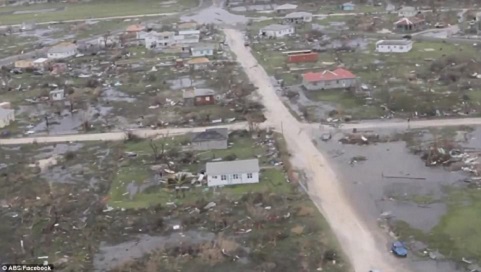
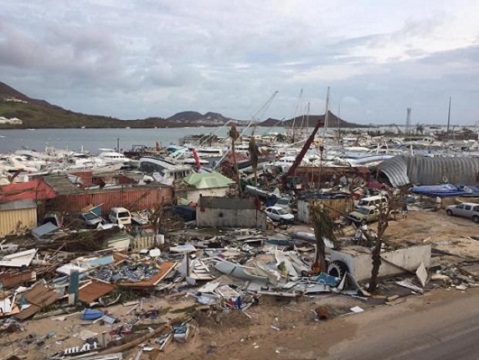
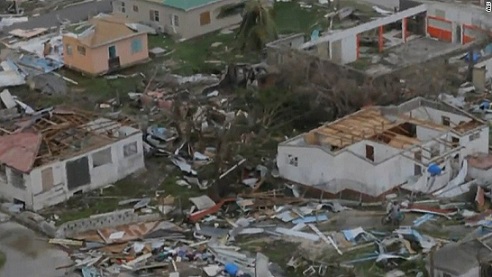
First, we must reboot our industrial landscape; and the “art and science” of pipelines can be pivotal, especially in light of the recent eruptions in natural disasters. There were 2 major hurricanes in September 2017 – Irma and Maria – and the devastation in some member-states has been almost complete – i.e. remember Barbuda. A great benefit of over-ground, underground and underwater pipelines is that they can be sustained during hurricanes…and can help to quickly restore power and the systems of commerce.

The movement behind the book Go Lean … Caribbean posits that it is possible to create the required jobs that we need and has presented a roadmap for 2.2 million jobs. But the book warns that for this task to be successful, it is heavy-lifting. The entire industrial landscape must be rebooted. There is now a full catalog for this Industrial Reboot 101 effort and this commentary is 3 of 4 in this occasional series. The full series is as follows:

  1. Industrial Reboot – Ferries 101
  2. Industrial Reboot – Prisons 101
  3. Industrial Reboot – Pipelines 101
  4. Industrial Reboot – Frozen Foods 101

Continuing with pipelines, a recent blog-commentary detailed how diverse pipeline technologies can help restore post-storm normality in quick order:

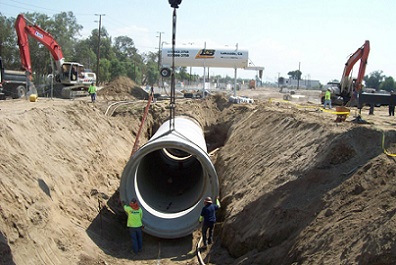
  • Flood Control drainage pipelines
    CU Blog - Industrial Reboot - Pipelines 101 - Photo 3b
    CU Blog - Industrial Reboot - Pipelines 101 - Photo 3a
    CU Blog - Industrial Reboot - Pipelines 101 - Photo 3c
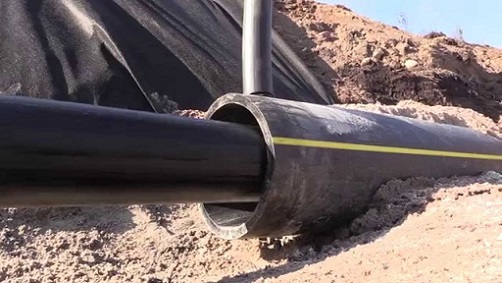
  • Underground-piped and underwater-piped electrical cables – see specifications sample in Appendix A
    CU Blog - After Irma, the Science of Power Restoration - Photo 1

CU Blog - Industrial Reboot - Pipelines 101 - Photo 4The book Go Lean … Caribbean details more; it asserts that pipelines can be strategic, tactical and operationally efficient for building community wealth in the Caribbean region. Yes, they can mitigate challenges from Mother Nature, create jobs and grow the economy at the same time. The book purports that a new technology-enhanced industrial revolution is emerging, in which there is more efficiency for installing-monitoring-maintaining pipelines. Caribbean society must participate in these developments, in order to “survive with the fittest”. This point is pronounced early in the book with this Declaration of Interdependence (Page 14), with these statements:

xxvi. Whereas the Caribbean region must have new jobs to empower the engines of the economy and create the income sources for prosperity, and encourage the next generation to forge their dreams right at home, the Federation must therefore foster the development of new industries, like that of … pipelines

xxvii. Whereas the region has endured a spectator status during the Industrial Revolution, we cannot stand on the sidelines of this new economy, the Information Revolution. Rather, the Federation must embrace all the tenets of Internet Communications Technology (ICT) to serve as an equalizing element in competition with the rest of the world. The Federation must bridge the digital divide and promote the community ethos that research/development is valuable and must be promoted and incentivized for adoption.

This Go Lean book serves as a roadmap for the introduction and implementation of the technocratic Caribbean Union Trade Federation (CU) to elevate the 30 Caribbean member-states. This Federation will assume jurisdiction for the 1,063,000 square-mile Caribbean Sea, in an Exclusive Economic Zone (EEZ). This approach allows for cooperation and coordination for pipelines among the member-states, The Go Lean book specifically identifies that pipelines can impact these societal engines (Page 96):

  • Economics – Pipelines bring resources from the source to the destination in a steady consistency, thereby fulfilling the economic supply-demand conundrum. This is vital for resources like water, energy elements (oil, gas, & minerals) – see Appendix B –  electricity, and telecommunications lines. There are newer innovations planned for pipelines, like Pneumatic Capsules, to allow for the transport of cargo, and even the far-reaching testing for high-speed passenger travel.
  • Governance – Administration to include a separation-of-powers between the member-states and CU federal agencies.
  • Security – This category does not refer to some military application, but rather public safety/security provisions. Pipelines can be erected in web design formations to allow transport from source to destination via alternate routes if ever extraordinary conditions (storms) impact normal flow – see model in Appendix C – this is modeled after the internet’s worldwide-web. There is also an element of economic security with the emergence of pipeline maintenance jobs to engineer, maintain and monitor installations.
    • Emergency – Tourism is the region’s primary industry driver so pipeline spills/accidents may have a major impact on the fauna/flora of the islands. But there are “best practices” to apply to mitigate the risks associated with pipelines. The web design approach also facilitates a recovery plan for emergencies. So when a Hurricane Watch is declared anywhere in the region, (normal 3 days from landfall), the mandate is that all pipeline flow must cease.

The subject of pipelines has also been addressed and further elaborated upon in these previous blog/commentaries:

https://goleancaribbean.com/blog/?p=6867 Pipelines can address high consumer prices
https://goleancaribbean.com/blog/?p=2670 A Lesson in History – Rockefeller’s Pipeline
https://goleancaribbean.com/blog/?p=1817 Caribbean grapples with intense new cycles of flooding & drought
https://goleancaribbean.com/blog/?p=1516 Floods in Minnesota, Drought in California – Why Not Share?

The Go Lean book provides 370 pages of details on the economic principles and community ethos to adopt, plus the executions of strategies, tactics, implementations and advocacies to forge pipelines and industrial growth in the Caribbean:

Economic Principles – Economic Systems Influence Individual Choices Page 21
Community Ethos – Job Multiplier Page 22
Community Ethos – “Crap” Happens – So we must be prepared Page 23
Community Ethos – Lean Operations Page 24
Community Ethos – Return on Investments (ROI) Page 24
Community Ethos – Cooperatives Page 25
Community Ethos – Ways to Impact the Future Page 26
Community Ethos – Ways to Help Entrepreneurship Page 28
Community Ethos – Ways to Promote Intellectual Property Page 29
Community Ethos – Ways to Impact Research & Development Page 30
Community Ethos – Ways to Improve Sharing Page 35
Community Ethos – Impact the Greater Good Page 37
Anecdote – Pipeline Transport – Strategies, Tactics & Implementations Page 43
Strategy – Agents of Change – Technology Page 57
Tactical – Fostering a Technocracy Page 64
Tactical – Growing Economy – New High Multiplier Industries Page 68
Separation of Powers – Interstate Commerce Administration Page 79
Separation of Powers – Interior Department – Exclusive Economic Zone Page 82
Implementation – Assemble – Pipeline as a Focused Activity Page 96
Implementation – Ways to Pay for Change Page 101
Implementation – Benefits from the Exclusive Economic Zone Page 104
Implementation – Ways to Develop a Pipeline Industry Page 107
Implementation – Ways to Deliver Page 109
Planning – 10 Big Ideas – Pipeline Projects Page 127
Planning – Ways to Improve Interstate Commerce Page 129
Planning – Lessons from New York City Page 137
Planning – Lessons from Omaha Page 138
Advocacy – Ways to Grow the Economy Page 151
Advocacy – Ways to Create Jobs Page 152
Advocacy – Ways to Better Manage the Social Contract – Infrastructure Page 170
Advocacy – Ways to Ways to Impact Public Works – Ideal for Pipelines Page 175
Advocacy – Ways to Foster Cooperatives Page 176
Advocacy – Ways to Better Manage Natural Resources – Water Resources Page 183
Anecdote – Caribbean Industrialist & Entrepreneur Role Model Page 189
Advocacy – Ways to Impact Extractions – Pipeline Strategy Alignment Page 195
Advocacy – Ways to Improve Emergency Management Page 196
Advocacy – Ways to Foster Technology Page 197
Advocacy – Ways to Improve Monopolies – Foster Cooperatives Page 202
Advocacy – Ways to Improve Transportation – Pipeline Options Page 205
Appendix – Interstate Compacts – Needed for Pipelines in US Territories Page 278
Appendix – Pipeline Maintenance Robots Page 283
Appendix – North Dakota Example – Oil Drilling Economic-Societal Effects Page 334

The economic principles of pipelines are sound.

The Go Lean book details that the Caribbean can create …

2,000 direct jobs building/maintaining pipelines, tunnels, and the regional power grid

These are direct jobs; there is also the reality of indirect jobs – unrelated service and attendant functions – at a 3.75 multiplier rate would add another 7,500 jobs. That makes a total of 9,500 jobs.

Hurricanes are so dire and disruptive that they need to be mitigated. We need pipelines and we need them NOW!

How” would the Caribbean region reboot, reform and transform their societal engines to develop a Pipeline industry. This is the actual title of one advocacy in the Go Lean book. Consider the specific plans, excerpts and headlines here from Page 107, entitled:

10 Ways to Develop a Pipeline Industry

1

Lean-in for the Caribbean Single Market
The CU will allow for the unification of the region into one market, thereby creating a single economy of 30 member-states, 42 million people and a GDP of over $800 Billion. The CU envisions applications to connect the member states with a network of pipelines/tunnels/cables; facilitated at the federal level due to cross-border implications and oversight of the region’s energy/environment missions. Another dimension that aligns with the CU is fostering hi-technology jobs.

2

Pneumatic Cargo TubesThe CU is ideal for the implementation of PCP systems to handle containers and trailers through underwater, underground and above-ground pipelines powered by magnetic levitation systems (ILM). There are some pre-defined sites well-fitted for PCP: 7 miles between Venezuela & Trinidad; Nassau’s cruise/cargo port to an intermodal exchange site, etc..

3

Underwater Tunnels

4

Underwater Pipes and CablesThe CU will employ the best practices, arts and sciences to install underwater pipelines and underwater cables. (Cables are flexible and can be inserted in/out of pipes). All pipes can be treated with an epoxy to withstand salt-water erosion.

5

Fresh WaterSome CU islands have water resource challenges (i.e. Antigua). They installed desalination as a solution. An alternate solution is now water pipelines. The CU will install the infrastructure to transport water from source to target via pipelines.

6

Oil-to-Oil RefineryThere are oil-producing states with the CU. (Plus, a lot of oil explorations engagements). There are also a number of oil refineries. The CU envisions above-ground/undersea pipelines to connect refineries to oil sources/shipping terminals.

7

High Intensity Power LinesThe CU will deploy a regional power grid, which is now feasible with the unified market. With the reality of island chains, and the reality of new technologies (like HVDC), the high intensity power lines can be mounted underground or underwater, (see Appendix below), in a solo fashion or in other CU built/maintained tunnels/pipelines.

8

Natural Gas on Land

9

Emergency ManagementThe CU treaty grants jurisdiction of strategic pipelines to federal governing authorities. The CU will apply the world’s best-in-breed tools, best-practice techniques and systems for ensuring the viability and integrity of pipelines:

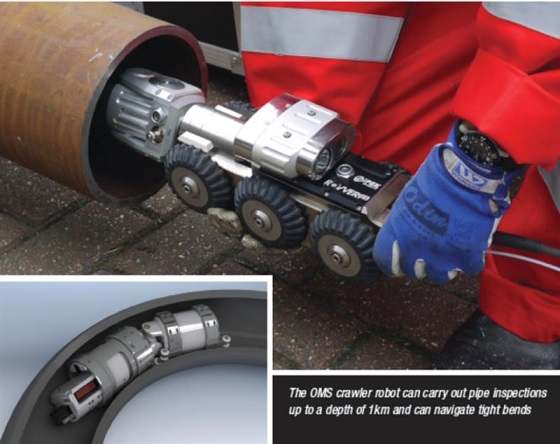
  • Maintenance – The CU will engage pipe crawlers (robots) for inspections to assuage pipeline risks (Appendix IF).
  • Incidents – Every incident must be rated for severity: Stratification 1 (leakage); “Strat” 2 (shutdown). While all incidents will be reported and published on the CU portal, Strat 3 (property damage) and 4 (loss of life) must have public hearings.
  • Disasters – The CU region have seasonal threats of hurricanes, and these dictate extraordinary measures and disaster recovery plans for Emergency Managers. The CU will mandate remediation & pipeline shutdown during storm warnings.

10

Tourism / Eco ImpactThe primary economic engine for the Caribbean is tourism. The CU will always promote and protect this industry. But pipelines can co-exist, and the natural/pristine environs can be protected! The CU envisions underground pipeline in urban/suburban areas, above ground pipelines in rural areas and underwater pipeline to connect the islands.

In summary, we need jobs; our Caribbean job creation dysfunction is acute. Jobs in the Pipeline industry are stable, reliable and providential to facilitate growth in other industries and to assure business continuity. These infrastructural enhancements would help us to make our homeland a better place to live, work and play.

Pipeline = Infrastructure! A region-wide pipeline deployment = Industrial Reboot!
CU Blog - Industrial Reboot - Pipelines 101 - Photo 1

Yes, we can … reboot our industrial landscape and deploy our own web of pipelines; consider the US model in Appendix C. We can create new jobs – and other economic opportunities – that the Caribbean region needs. We urge all Caribbean stakeholders – governments and citizens – to lean-in to this roadmap for economic empowerment. We can make all of the Caribbean homeland better places to live, work and play. 🙂

Download the free e-Book of Go Lean … Caribbean – now!

Sign the petition to lean-in for this roadmap for the Caribbean Union Trade Federation.

———–

Appendix A Title: Underwater High Intensity Power Lines

High-Voltage Direct Current (HVDC) Light technology is designed to transmit power over long distances in both underground and under-water settings. HVDC Light technology, offered by ABB – the German Industrial powerhouse, leading in the development and implementation of HVDC technology.

Buried HVDC is a feasible technology for the Caribbean Union Regional Power Grid. Its feasibility is based upon several factors that include it being a time-tested technology, having suitable cable capacity, utilizing efficient and small footprint converter stations.

A classical HVDC transmission has a power of more than 100 Megawatts (MW) and many are in the 1,000 – 3,000 MW range. There are classical HVDC transmissions that use overhead lines (OHL) and some that use undersea (and underground) cables (or combinations of cables and lines). ABB’s HVDC Light technology uses underground or submarine cables with an economical upper power range now reaching 1,200 MW and ±500 kV.

HVDC can be used to span OHL routes with a length of 1,000 km (about 600 miles) or more and undersea routes (submarine cables) from a length of 60 km (about 40 miles) upwards more economically than with alternating current (AC). Direct current has the advantage over alternating current that it does not cause eddy currents and can thus make use of the full cross section of the cable. Heat losses are lower because of the lower resistance for the same cross-section. Incidentally: Power losses with AC voltage are higher under water than in the air or underground because with deep sea cables it is not possible to use compensating elements (coils, capacitors) against inductive and capacitive losses.

The modern form of HVDC transmission uses technology developed extensively in the 1930s in Sweden at ASEA (a founding company of ABB). More specific to this document, buried HVDC has been employed in land and submarine transmission settings for many decades. This technology has been used most extensively in Europe, and is now being proposed for long distance high-voltage transmission lines in the northeast and eastern areas of the USA. The Champlain Hudson Power Express, a 333 mile-long transmission line from the U.S. – Canadian border to New York City, is currently in the EIS preparation stage. The transmission system will consist of two 5 inch diameter cables to be laid under water and on land. The proposed route will start at the U.S. – Canadian border, travel south through Lake Champlain and along railroad right of ways, and then enter the Hudson River south of Albany. The power will ultimately go to a converter station in Astoria Queens.

Working examples of HVDC buried land and underwater lines include: Cross Sound, across 42 kilometers of the Long Island Sound (New York); the Trans-Bay HVDC cable project under construction in California connecting Pittsburg in East Bay to San Francisco; a large number of working HVDC submarine cables transporting power between Europe and Scandinavia, between the UK and France, between the islands of New Zealand, and between Italy and Greece.

HVDC requires terminals, or converter stations, at the line ends. A significant feature of the HVDC Light transmission system is that an HVDC Light converter station has a much smaller size than even a classical HVDC converter station, and certainly is much smaller in size than an AC substation. A significant characteristic of HVDC Light cable is its excellent ability to stabilize AC voltage at the terminals. This is especially important for wind parks, where the variation in wind speed can cause severe voltage fluctuations. Additional technical aspects of this cable include: 1) if the cable is damaged, HVDC protection reduces the current and voltage to zero in a fraction of a second so there is no possibility of damage to persons and infrastructure, 2) the HVDC transmission system uses underwater and underground cables that are solid, are made from non-flammable materials, are well insulated, and contain no liquids or gels.

The burial of HVDC Light cable is similar to that of fiber-optic cables because the equipment used for trenching and the depths at which the cables are laid are comparable (1 to 1.5 m below the surface). In some relevant projects, underground cables are installed using modified pipeline installation equipment. The strength and flexibility of HVDC Light cables make them suitable for submarine use. They can be laid in deeper waters and on rough bottoms.

CU Blog - Industrial Reboot - Pipelines 101 - Photo 2

Source: ABB Technical Specification documents

———–

Appendix B VIDEO – Key US gasoline pipeline now ready to carry more fuel, just days after Harvey – https://youtu.be/NOG4j6PHv10

CBS North Carolina
Published on Aug 31, 2017 – Key US gasoline pipeline aims to carry more fuel by Sunday; Cooper urges caution.

———–

Appendix C VIDEO – Animated map of the major oil and gas pipelines in the US – https://youtu.be/MEIerHQ9IAw

Business Insider
Published on Dec 31, 2015 – The United States is the world’s largest consumer of oil, using over 19 million barrels a day in 2014. This high level of consumption wouldn’t be possible without the 2.5 million mile network of pipeline used to transport the fuel from its source to the market.

Business Insider is the fastest growing business news site in the US. Our mission: to tell you all you need to know about the big world around you. The BI Video team focuses on technology, strategy and science with an emphasis on unique storytelling and data that appeals to the next generation of leaders – the digital generation.

See a related VIDEO here at https://youtu.be/JXRFIqtCMzM that showcases pipeline safety, disaster and recovery dimensions.

 

Share this post:
, , ,

Industrial Reboot – Prisons 101

Go Lean Commentary

Want to create jobs? “Go to jail; go directly to jail”.

The book Go Lean … Caribbean (Page 23) makes this realistic disclosure:

“Bad Actors” will [always] emerge … to exploit the opportunities, with good, bad and evil intent.

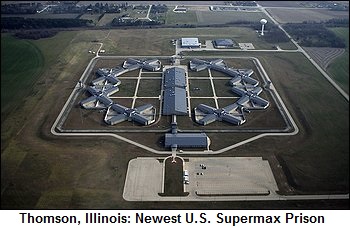
The book continues this theme and relates that there can be economic benefits if communities foster the industries around prisons – consider the SuperMax in the Appendix below – and incarcerating “bad actors”, especially “bad actors” that are the responsibility of other jurisdictions. This is a business model, a Prison Industrial Complex, in which the landlord-host gets paid from the responsible jurisdictions. Business model refers to jobs, entrepreneurial opportunities, trade transactions, etc.
CU Blog - Industrial Reboot - Prisons 101 - Photo 1The Go Lean book details that the Caribbean can create …

12,000 direct jobs for prison guards, administrators, supply logistics, and private protection

While these are direct jobs, there is also the reality of indirect jobs – unrelated service and attendant functions – that at a 3.75 multiplier rate would add another 45,000 jobs.

The book Go Lean…Caribbean – available to download for free – serves as a roadmap for the introduction and implementation of the technocratic Caribbean Union Trade Federation (CU); this is a confederation of all 30 member-states to execute a reboot of the Caribbean eco-system. This CU/Go Lean roadmap has these 3 prime directives:

  • Optimization of the economic engines in order to grow the regional economy to $800 Billion and create 2.2 million new jobs.
  • Establishment of a security apparatus to ensure public safety and protect the resultant economic engines.
  • Improvement of Caribbean governance to support these engines, including a separation-of-powers between the member-states and CU federal agencies.

There is the need for this reboot right now! In the last weeks – September 2017 – the Caribbean region has been beset by 2 major hurricanes, Irma and Maria. The devastation in some member-states has been so complete – i.e. remember Barbuda – that they have had to send their prisoners to foreign facilities, (still within the Caribbean). Consider the news article here, relating this actuality:

Title: St Lucia willing to accept up to 40 foreign prisoners: National Security Minister

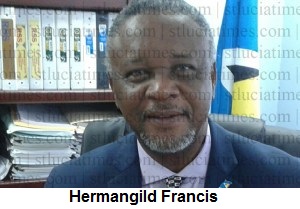
CU Blog - Industrial Reboot - Prisons 101 - Photo 2The National Security Minister, Senator Hermangild Francis has sought to downplay reports that the prisoners brought to St Lucia from the hurricane-ravaged Caribbean islands are high risk.

“People are saying high risk. I have not seen anything indicating that they are high risk. All I’ve been told is that they’re prisoners that needs shelter. So we have accepted to house as many as we could,” Francis asserted.

Seven prisoners from the British Virgin Islands arrived in St Lucia Tuesday along with three others from the Turks and Caicos Islands, bringing to 17 the total number of criminals currently being jailed on the island from the BritishOverseasTerritories, the National Security Minister confirmed.

The first group of seven prisoners arrived at the HewanorraInternationalAirport onboard a British military aircraft on Monday.

It’s unclear what crimes the prisoners were convicted of in their countries or how long will they be kept in St Lucia.

Francis could not confirm whether that would be the final batch.

He said St Lucia is willing to accommodate up to 40 prisoners given that the current low occupancy level at Bordelais Correctional Facility.

The National Security Minister said Tuesday’s transfer of prisoners was carried out “better” than the day before.

The men are being housed in a segregated unit of the Bordelais Correctional Facility, away from local prisoners, Francis said.

The Minister said he plans to visit the prison on Friday.

Source: Posted September 27, 2017; retrieved October 3, 2017 from: https://stluciatimes.com/2017/09/27/st-lucia-willing-accept-40-foreign-prisoners-national-security-minister

Related Story: “Most dangerous” BVI prisoners transferred to St Lucia; reports – Posted September 29, 2017; retrieved October 3, 2017 from: https://stluciatimes.com/2017/09/29/dangerous-bvi-prisoners-transferred-st-lucia-reports

CU Blog - Industrial Reboot - Prisons 101 - Photo 3

Hurricanes are “bad actors” too.

Having a Caribbean Prison Industrial Complex fully functional at this time would have impacted the region’s societal engines: economic, security apparatus and governing administrations. We need this Go Lean/CU roadmap NOW!
The Go Lean book stresses that reforming and transforming the Caribbean societal engines must be a regional pursuit. This was an early motivation for the roadmap, as pronounced in the opening Declaration of Interdependence (Pages 12 – 13):

x. Whereas we are surrounded and allied to nations of larger proportions in land mass, populations, and treasuries, elements in their societies may have ill-intent in their pursuits, at the expense of the safety and security of our citizens. We must therefore appoint “new guards” to ensure our public safety and threats against our society, both domestic and foreign. The Federation must employ the latest advances and best practices of criminology and penology to assuage continuous threats against public safety. The Federation must allow for facilitations of detention for convicted felons of federal crimes, and should over-build prisons to house trustees from other jurisdictions.
xi. Whereas all men are entitled to the benefits of good governance in a free society, “new guards” must be enacted to dissuade the emergence of incompetence, corruption, nepotism and cronyism at the peril of the people’s best interest. The Federation must guarantee the executions of a social contract between government and the governed.

xvi. Whereas security of our homeland is inextricably linked to prosperity of the homeland, the economic and security interest of the region needs to be aligned under the same governance. Since economic crimes … can imperil the functioning of the wheels of commerce for all the citizenry, the accedence of this Federation must equip the security apparatus with the tools and techniques for predictive and proactive interdictions.

xxiv.  Whereas a free market economy can be induced and spurred for continuous progress, the Federation must install the controls to better manage aspects of the economy: jobs, inflation, savings rate, investments and other economic principles. Thereby attracting direct foreign investment because of the stability and vibrancy of our economy.

xxvi.  Whereas the Caribbean region must have new jobs to empower the engines of the economy and create the income sources for prosperity, and encourage the next generation to forge their dreams right at home, the Federation must therefore foster the development of new industries, like that of … the prison industrial complex. In addition, the Federation must invigorate the enterprises related to existing industries like tourism, fisheries and lotteries – impacting the region with more jobs.

Accordingly, the CU will facilitate the eco-system for Self-Governing Entities (SGE), an ideal concept for prisons, with its exclusive federal regulation/promotion activities. Imagine a bordered campus – with a combination of fencing, walls and/or moats/canals – that designates the exclusivity of the commercial, security and administration to superlative governance above the member-states. With an approved “Action Plan”, the comings-and-goings would not be up to debate of local authorities.

The Go Lean movement (book and blogs) details the principles of SGE’s and job multipliers, how certain industries are better than others for generating multiple indirect jobs down the line (or off-campus) for each direct job on the SGE’s payroll. In a previous blog-commentary, it was related how one industry – shipbuilding – was perfectly suited for the Caribbean, as long as the structure was an independent “Shipyard”/SGE. That commentary asserted how 60,000 new jobs can easily be facilitated.

This is transforming! This is the vision of an industrial reboot! This is where and how the jobs are to be created.

But do the exploitations of the Prison Industrial Complex put security at risk for Caribbean communities?

No. Not if the deployments are done right!
(See the reality of “Life in a SuperMax” Prison facility in the Appendix VIDEO below).

The Go Lean book provides 370-pages of turn-by-turn instructions on “how” to adopt new community ethos, plus the strategies, tactics, implementations and advocacies to execute so as to reboot, reform and transform the societal engines of Caribbean society. One advocacy in rebooting the industrial landscape is to foster a Prison Industrial Complex; consider the  specific plans, excerpts and headlines from the book on Page 211 entitled:

10 Ways to Impact the Prison Industrial Complex

1

Lean-in for the Caribbean Single Market
This will allow for the unification of the region into one market of 42 million people across 30 member-states with a GDP of $800 Billion (2010 figures). In addition, the treaty calls for a collective security pact allowing the implementation of a prison system to detain convicts of CU federal offenses (i.e. economic and military crimes). The CU will over-build these facilities for more than just federal prisoners, but also to house inmates for other jurisdictions. Directly, there is a huge economic impact, starting with jobs (law enforcement and support personnel), and the construction industry to build the prisons. Indirectly, the spin-off in the local communities has a multiplier effect. This industry will generate direct income for the CU.

2

Invite and Repatriate Prisoners
The CU will petition host countries to return incarcerated members of the Caribbean Diaspora – for a fee – since they are guilty of crimes committed in those host countries. But the cost of incarceration can be lower in the CU region compared to North American and European venues, because of the ideal weather. The next leap is to offer to house other prisoners in an outsourcing arrangement for the foreign host countries – this is classic Prison Industrial Complex.

3

Impact Rural Communities

4

In-source for Local Governments
The member-states can embrace the CU’s Prison Industrial Complex to satisfy their own needs, both penal and labor. With economies-of-scale, they can out-source their own trustees to the CU to minimize their direct costs. In addition, the CU will manage the process of providing prison labor for public endeavors, i.e. license plates and document scanning.

5

Supply Prison Labor Needs

6

Build Employable Skill-Sets

7

Reduce Recidivism

8

Gathering Intelligence on Probation Trustees and Parolees

9

Prepare for Escalations and Emergencies
The security needs of the region are paramount, even in the case of emergencies. The CU region must allow for the systemic risks of natural disasters (hurricanes and earthquakes) in the vicinity of maximum security prisons. The risk mitigation plan must allow for tactical response/SWAT units, riot squads, and military readiness to suppress uprisings.

10

Learn from Peonage Past and Ensure Corporate Governance

There have been a number of blog-commentaries by the Go Lean movement that highlighted economic opportunities embedded in regional homeland security initiatives. See a sample list here:

https://goleancaribbean.com/blog/?p=13126 “Must Love Dogs”  – Providing K9 Solutions for Better Security
https://goleancaribbean.com/blog/?p=12400 Accede the Caribbean Arrest Treaty
https://goleancaribbean.com/blog/?p=9072 Model: Shots-Fired Monitoring – Securing the Homeland on the Ground
https://goleancaribbean.com/blog/?p=2782 Model: ‘Red Light Traffic Cameras’ for Public Safety & Profits
https://goleancaribbean.com/blog/?p=1832 Model: Opportunities as US Deports More Drug-arrested Inmates
https://goleancaribbean.com/blog/?p=1674 Model: $3.7 Billion for US Detention Centers

In summary, we need jobs; our Caribbean job creation dysfunction is acute. While not glamorous, Prison Industrial Complex jobs are stable, reliable and providential. They would help us to make our homeland a better place to live, work and play.

But this is only 57,000 (12,000 + 45,000) jobs. The Go Lean/CU vision is for 2.2 million new jobs. Where and how can this new technocracy expect to create those jobs, while the existing regimes of the Caribbean region cannot accomplish this now?

Industrial Reboot!

But the Go Lean book describes the process as “difficult”, no ABC-123. Rather it is heavy-lifting! Yet there are some basics that must be embraced; these basics can be catalogued as an “Industrial Reboot 101”. This commentary is 2 of 4 in an occasional series considering Industrial Reboots. The full series is as follows:

  1. Industrial Reboot – Ferries 101
  2. Industrial Reboot – Prisons 101
  3. Industrial Reboot – Pipeline 101
  4. Industrial Reboot – Frozen Foods 101

Yes, we can … reboot our industrial landscape. It is possible to create the new jobs – and other economic opportunities – that the Caribbean region needs. We urge all Caribbean stakeholders – governments and citizens – to lean-in to this roadmap for economic empowerment. We can make all of the Caribbean homeland better places to live, work and play. 🙂

Download the free e-book of Go Lean … Caribbean – now!

Sign the petition to lean-in for this roadmap for the Caribbean Union Trade Federation.

————

Appendix Title: SuperMax Prison

Supermax (short for: super-maximum security) is a primarily U.S. English term used to describe “control-unit” prisons, or units within prisons, which represent the most secure levels of custody in the prison systems of certain countries. The objective is to provide long-term, segregated housing for inmates classified as the highest security risks in the prison system—the “worst of the worst” criminals—and those who pose a threat to both national and global security.[1]

CU Blog - Industrial Reboot - Prisons 101 - Photo 4a

CU Blog - Industrial Reboot - Prisons 101 - Photo 4b

History
CU Blog - Industrial Reboot - Prisons 101 - Photo 5
The United States Penitentiary Alcatraz Island, opened in 1934, has been considered a prototype and early standard for a supermax prison.[5]

An early form of supermax-style prison unit appeared in Australia in 1975, when “Katingal” was built inside the Long Bay Correctional Centre in Sydney. Dubbed the “electronic zoo” by inmates, Katingal was a super-maximum security prison block with 40 prison cells having electronically operated doors, surveillance cameras, and no windows. It was closed down two years later over human rights concerns.[6] Since then, some maximum-security prisons have gone to full lockdown as well, while others have been built and dedicated to the supermax standard.

Supermax prisons began to proliferate within the United States after 1984. Prior to 1984 only one prison in the U.S. met “supermax” standards: the Federal Penitentiary in Marion, Illinois. By 1999, the United States contained at least 57 supermax facilities, spread across 30–34 states.[3] The push for this type of prison came after two correctional officers at Marion, Merle Clutts and Robert Hoffman, were stabbed to death in two separate incidents by …. This prompted Norman Carlson, director of the Federal Bureau of Prisons, to call for a new type of prison to isolate uncontrollable inmates. In Carlson’s view, such a prison was the only way to deal with inmates who “show absolutely no concern for human life”.[7]

Source: Retrieved from Wikipedia October 4, 2017 from: https://en.wikipedia.org/wiki/Supermax_prison

See related Appendix VIDEO of Life in a SuperMax Prison below.

————

Appendix VIDEO – Life in a SuperMax Prison – CNN Video – http://www.cnn.com/videos/us/2015/05/13/inside-supermax-prison-orig.cnn/video/playlists/inside-prison-cells/

Published May 143, 2015 – Life in a SuperMax Prison

If [Boston Marathon Bomber] Dzhokhar Tsarnaev is sent to the United States Penitentiary Administrative-Maximum Facility in Florence, Colorado, he’ll be cut off from the world. See what life is like for inmates inside a Supermax prison. Source: CNN


Share this post:
, , ,
[Top]

Fixing Haiti – Can the Diaspora be the Answer?

Go Lean Commentary

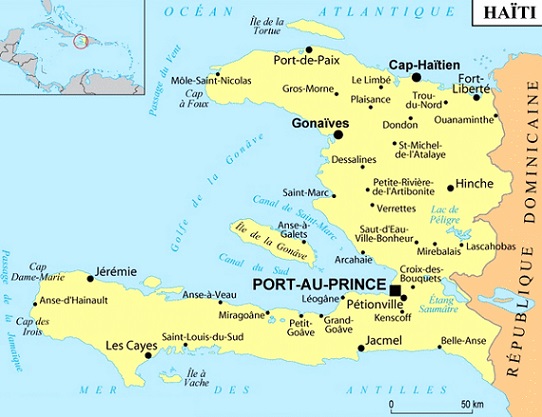
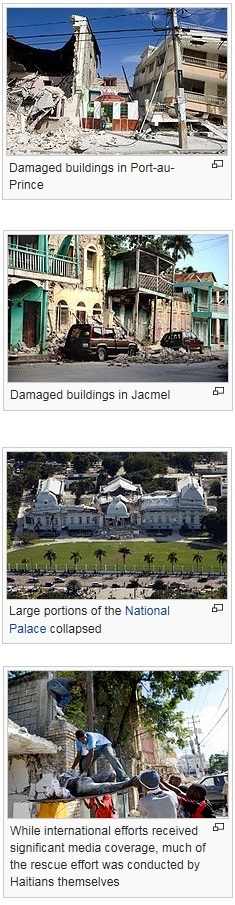
Make no mistake; Haiti needs all the help it can get. At this moment, there are many initiatives hoping to impact this country:

CU Blog - Haitian Diaspora - Not the Panacea - Photo 1Despite all of these efforts, Haiti continues to be the poorest country in the Western Hemisphere. They boast bad dysfunction!

Many people may argue – and they would be correct – that the reformation and transformation of Haiti should come from Haiti and Haitians first.

Do what you have always done; get what you have always got.

But can Haiti’s Diaspora be their “panacea” – the cure-all for all its societal ills?

Haiti’s problems have been too tumultuous for Haitians on the island to assuage on their own. Consider the news article in  Appendix A below; as a poor country with a far-flung Diaspora, there is some hope for Diaspora financing. So the people within this community continue to hope that their panacea – solution, cure-all for their ills – may come from their Diaspora.

Here we go again. We have seen how one Caribbean country after another put their hope and faith in their young people that they send off to the “mainland”. This precept was communicated brilliantly in the Broadway musical “Hamilton“ with this featured Hip-Hop song What’s Your Name? Alexander Hamilton; consider these lyrics:

When the word got around, they said “this kid is insane, man”
Took up a collection just to send “him” to the mainland
“Get your education, don’t forget from whence you came”
And the world gonna know your name …
———-
VIDEO – Lin-Manuel Miranda Performs at the White House Poetry Jam – https://youtu.be/WNFf7nMIGnE

The Obama White House
Published on Nov 2, 2009Writer and star of the Broadway musical In the Heights, Lin-Manuel Miranda performs “The Hamilton Mixtape” at the White House Evening of Poetry, Music, and the Spoken Word on May 12, 2009. Accompanied by Alex Lacamoire. (public domain)

This song/VIDEO is relevant to this discussion. Alexander Hamilton was born and raised among the Caribbean islands of Nevis and St. Croix; then he emigrated to colonial New York and became a “Founding Father” of the United States of America, along-side George Washington et al. But one legacy of Hamilton is that he never returned his attention to the Caribbean.

When will “our” Caribbean people learn? A trip (relocation) from the Caribbean to the mainland, tends to be One-Way.

In many of the Caribbean homelands, there is such a high societal abandonment rate that the population of the citizenry is approaching a distribution where half of the citizens live in the homeland and the other half live abroad – in the Diaspora. When this is not the case – as in Haiti – then a majority of the educated population have fled. One report presents that abandonment rate of 70 percent.

As related in a previous blog-commentary, those who live in the Diaspora know “both sides of the coin”, as most of them have lived in the ancestral lands at one point. But the other half, those who still live in the homeland may have never lived abroad.

They do not know what they do not know!

Being a visitor to some North American or European city is different than being a resident, as visitors do not have the interactions of applying for jobs, housing, government benefits, paying taxes, co-existing with neighbors, etc.. These ones in the homeland may naturally assume that the “grass is greener on the other side”. Here’s the truth:

    It is not! (The grass in the northern cities may not even be green at all; it may be covered with autumn foliage or snow).

The movement behind the book Go Lean … Caribbean has been consistent in urging the governments of the Caribbean member-states to NOT put their hope and faith in their Diaspora to look back to their homelands and be the panacea that their societies need. There is preponderance for one government administrations after another to pursue this strategy. This movement has been consistent in this theme. Just recently we published commentaries on this Caribbean pre-occupation, with these entries relating these homelands:

The premise for the criticism of this Diaspora strategy is that these ones have fled the region for a reason; they have been “pushed” or “pulled” away from their homeland. They would be less inclined to invest back in their country; and the historicity is that they have not! All of these previous commentaries relate this basic message about catering to the Diaspora:

The subtle message to the Caribbean population is that they need to leave their homeland, go get success and then please remember to invest in us afterwards.

… It is so unfortunate that the people in the Caribbean are beating down the doors to get out of their Caribbean homeland, to seek refuge in these places like the US, Canada and Western Europe. And yet it seems like the Chief Executive of this Caribbean country is encouraging more of it – there is a similar sentiment in the rest of the Caribbean member-states. As a result, we have such a sad state of affairs for our Caribbean eco-system as we are suffering from a bad record of societal abandonment.

Yes, the problem of this Diaspora-outreach strategy is that it double-downs on the failure of why the Diaspora left in the first place. When we look at Haiti and see the many failures of that country, we realize that the Haitians on the island and the Haitians in the Diaspora cannot, single-handedly or collectively, solve the problems on that homeland. No, something bigger and better is needed.

Enter the Caribbean Union Trade Federation (CU). This is presented as the organizational solution for Haiti; this is the panacea. We need people to stay in their Caribbean homelands, not flee. We need them to prosper where planted. Governments cannot expect to derive revenues from the emigrated Diaspora; this is equivalent to demanding alimony after a divorce. This is unrealistic and impractical as a government policy. There needs to be a better system of governance.

The book Go Lean…Caribbean – available to download for free – serves as a roadmap for the introduction and implementation of the technocratic CU, for the elevation of Caribbean societal engines – economic, security and governance for all member-states. The book asserts that the region must work to hold on to its populations – especially the professional classes – not see them leave for foreign shores. To accomplish this objective, this CU/Go Lean roadmap presents these 3 prime directives:

  • Optimization of the economic engines in order to grow the regional economy to $800 Billion and create 2.2 million new jobs.
  • Establishment of a security apparatus to ensure public safety and protect the resultant economic engines.
  • Improvement of Caribbean governance to support these engines, including a separation-of-powers between the member-states and CU federal agencies. Improved governance allows for better revenue options for member-states; in fact there are the options for Two Pies – revenues for the federal government – see Appendix B – and revenues for the member-states.

The Go Lean book – and many previous blog-commentary – asserts that while conditions may be bad for Caribbean (i.e. Haitian) residents in their homeland, Black-and-Brown immigrants to other countries often have to contend with less than welcoming conditions in those countries. It is only with the second generation that prosperity is achieved, but by then, the children of the Caribbean Diaspora is not considered Caribbean anymore; they assume their residential citizenship. (Previously we related how Afro-Caribbean people in the UK preferred to be identified as “Black British“).

It would be better for Haitian people, and people of all the Caribbean for that matter, to work to remediate the problems in their homeland, rather than emigrate and become aliens in a foreign land. But there is no doubt that such work would be heavy-lifting; it requires a reboot of the entire Haitian eco-system. The Go Lean roadmap calls for a technocratic reboot, to do things differently.

This roadmap is not for the Diaspora to come to the rescue, but rather a Caribbean confederacy, constituted by all 30 member-states. This position leverages the Caribbean as a Single Market (42 million people); it asserts that this is better than catering to the Diaspora of just one country; (Haiti’s Diaspora is estimated at 1 million). This is the panacea that the Caribbean needs to assuage its defects and dysfunction. Plus, it also includes the Diaspora, but of all the Caribbean nations combined – estimated at 10 to 25 million. This is a plan for interdependence! This was the motivation for the CU/Go Lean roadmap, as pronounced in the opening Declaration of Interdependence (Pages 12 – 13) of the book:

xi. Whereas all men are entitled to the benefits of good governance in a free society, “new guards” must be enacted to dissuade the emergence of incompetence, corruption, nepotism and cronyism at the peril of the people’s best interest. The Federation must guarantee the executions of a social contract between government and the governed.

xix. Whereas our legacy in recent times is one of societal abandonment, it is imperative that incentives and encouragement be put in place to first dissuade the human flight, and then entice and welcome the return of our Diaspora back to our shores. This repatriation should be effected with the appropriate guards so as not to imperil the lives and securities of the repatriated citizens or the communities they inhabit. The right of repatriation is to be extended to any natural born citizens despite any previous naturalization to foreign sovereignties.

xx.  Whereas the results of our decades of migration created a vibrant Diaspora in foreign lands, the Federation must organize interactions with this population into structured markets. Thus allowing foreign consumption of domestic  products, services and media, which is a positive trade impact. These economic activities must not be exploited by others’ profiteering but rather harnessed by Federation resources for efficient repatriations.

xxiv. Whereas a free market economy can be induced and spurred for continuous progress, the Federation must install the controls to better manage aspects of the economy: jobs, inflation, savings rate, investments and other economic principles. Thereby attracting direct foreign investment because of the stability and vibrancy of our economy.

The goal of the Go Lean roadmap is for Caribbean people to prosper where planted; the book therefore provides 370-pages of turn-by-turn instructions on “how” to adopt new community ethos, plus the strategies, tactics, implementations and advocacies to execute so as to reboot Haiti (and the rest of the Caribbean). One advocacy for a Way Forward is the plan to optimize government revenues collections (Page 172): 10 Revenues Sources for Caribbean Administration; see Appendix B below.

In addition, there is a specific plan in the roadmap to impact Haiti. Consider the Chapter excerpts and headlines here from this sample on Page 238 entitled: 10 Ways to Reboot Haiti. But first, understand the concept of the Marshall Plan:

The Bottom Line on the Marshall Plan
By the end of World War II much of Europe was devastated. The Marshall Plan, (officially the European Recovery Program, ERP), named after the then Secretary of State and retired general George Marshall, was the American program to aid Europe where the United States gave monetary support to help rebuild European economies after the end of the war. During the four years (1948 – 1952) that the plan was operational, US $13 billion in economic and technical assistance was given to help the recovery of the European countries. The plan looked to the future, and did not focus on the destruction caused by the war. Much more important were efforts to modernize European industrial and business practices using high-efficiency American models, reduce artificial trade barriers, and instill a sense of hope and self-reliance.By 1952 as the funding ended, the economy of every participant state had surpassed pre-war levels; for all Marshall Plan recipients, output in 1951 was at least 35% higher than in 1938. Over the next two decades, Western Europe enjoyed unprecedented growth and prosperity. Generally, economists agree that the Marshall Plan was one of the first elements of European integration, as it erased trade barriers and set up institutions to coordinate the economy on a continental level – that is, it stimulated the total political reconstruction of Western Europe. Today, the European Union, the latest successor of the integration effort, is the world largest integrated economy.

CU Blog - A Lesson in History - Haiti 1804 - Photo 3

10 Ways to Reboot Haiti

1

Lean-in for the Caribbean Single Market
This regional re-boot will allow for the unification of the region into one market, thereby creating a single economy of 30 member-states, 42 million people and a GDP of over $800 Billion. Following the model of  European integration, the CU will be the representative and negotiating body for Haiti and the entire region for all trade and security issues.

2

Marshall Plan for Haiti
Haiti is the poorest nation in the Western Hemisphere. But what they have is impassioned human capital as opposed to financial capital or valuable minerals. The CU is a total economic reboot for this country, one that involves developing internally and not thru emigration. To reboot Haiti will require a mini-Marshall Plan. The infrastructure, for the most part, is archaic compared to modern societies. The engines of the CU will enable a rapid upgrade of the infra-structure and some “low hanging fruit” for returns on the investment.

3

Leap Frog Philosophy
There is no need to move Haiti’s technology infrastructure baseline from the 1960’s, then to the 1970’s, and so on. Rather, the CU’s vision is to move Haiti to where technology is going, not coming from. This includes advanced urban planning concepts like electrified light-rail, prefab house constructions, alternative energies and e-delivery of governmental services and payment systems.

4

Repatriation and Reconciliation of the Haitian Diaspora
The goal will be to extend the “Welcome Mat” to people that may have left Haiti over the decades and want to return. The return the CU advocates is for the Diaspora’s time, talents and treasuries. In terms of time, the encouragement will be to have ex-patriots at least have a vacation home on the island. The CU will provide the re-patriots with special status to assuage any victimization. In addition, the CU will convene a Truth and Reconciliation Commission to bring resolution to many issues from previous coup d’état, coup attempts and the Duvalier dictatorship days.

5

Access to Capital Markets
Rebooting Haiti will require access to capital. The CU capital markets will allow for municipal and corporate financial options. The Caribbean Central Bank will manage Haiti’s monetary affairs with the global currency of Caribbean dollars.

6

National Historic Places

7

World Heritage Sites

8

Labor, Immigration and Movement of People
The recovery plan for Haiti would discourage the emigration of the population. Haiti has a population base (10 million) that can imperil other islands if too many Haitians relocate within the Caribbean. As a result, the CU will expend the resources and facilitate the campaign to dissuade relocation for the first 10 years of the ascension of the CU. During these first 10 years, Haitians visiting other CU member states, with Visa’s, will careful monitoring to ensure compliance.

9

Educational Mandates
Whereas the CU educational facilitation is satisfied at the secondary level, there will be a greater need for Adult Education in Haiti. Because of the decades of poverty, illiteracy is more dire in Haiti than in other CU state. There will be no age limitation for the educational opportunities. The macro-economic principle is “every year of education raises a country’s GDP”; this will allow for easy pickings of the economic “low hanging fruit”.

10

Language Neutrality of the Union

There have been a number of blog-commentaries by the Go Lean promoters that have detailed Haiti’s historicity and the Way-Forward – the best hope for a new eco-system for Haiti. See a sample list here:

https://goleancaribbean.com/blog/?p=10336 A Lesson in History: Haiti’s Reasonable Doubt
https://goleancaribbean.com/blog/?p=8767 A Lesson in History – Haiti 1804
https://goleancaribbean.com/blog/?p=8508 Support sought for kids left behind by UN troops in Haiti
https://goleancaribbean.com/blog/?p=7896 Lesson Learned from Haiti’s Disaster: The Logistics of Relief
https://goleancaribbean.com/blog/?p=5462 Charity Dysfunction: The Red Cross’ $500 Million In Haiti Relief
https://goleancaribbean.com/blog/?p=3473 Way Forward: Expansion of CaracolIndustrial Park

In summary, growing Haiti’s Diaspora is bad for Haiti and bad for their Diaspora. Haiti needs more revenue sources and the Go Lean roadmap details the Way-Forward for state finances. Any official policy to extract revenue from people who have fled a homeland is a flawed policy. There is no divorce clause in the citizenship arrangement. There can be no expectations of any kind of “alimony payments” from expatriates.

It is better to have citizens in the homeland. They can help to build up the country and they can be taxed.

So any policy that double-downs on the Diaspora, double-downs on failure. We should never want people to have to leave then hope they remember us so that our communities can have some chance of success. No, we want and need opportunities for success right at home. We need to be able to prosper where planted.

We strongly urge everyone to lean-in to this roadmap to make our homeland – Haiti et al – a better place to live, work and play. 🙂

Download the free e-book of Go Lean … Caribbean – now!

Sign the petition to lean-in for this roadmap for the Caribbean Union Trade Federation.

————

Appendix A Title: Haiti denies reports of plans to tax returning nationals

Government minister says reports are false

Haiti has denied reports that it intends to impose a tax on nationals returning to the country.

On Tuesday, Minister of Haitians Living Abroad (MHAVE), Stéphanie Auguste, told reporters there was no truth to the reports circulating in the diaspora that all Haitians abroad would be required to pay US$86 and a flat-rate income tax of 10,000 gourdes.

Auguste also dismissed suggestions that the new fiscal measures were included in the draft budget for 2017-2018.

Speaking in the presence of Economy and Finance Minister, Jude Alix Patrick, Auguste said “there is no question of paying $86  on arrival in Haiti, neither to the Consulates nor to the Embassies of Haiti for the request of a public service.

“The question of the income tax does not refer particularly to the diaspora, it concerns all Haitian or any national of other countries undertaking transactions in Haiti that involve income, importing goods, selling land, buying / selling a vehicle, or claiming the issuance of a passport…”

The authorities said that citizens whose annual income is less than 60,000 gourdes are not subjected to the payment of the tax.

However, they said it is necessary to present the certificate of filing of final declaration to conclude certain transactions.

They warned that any citizen not in a position to present it, at the time of a transaction or a public service which requires this document, will have to pay the lump sum of 10,000 gourdes, as provided for in the draft budget for 2017-2018.

“It would, therefore, be in the interest of citizens to make their final tax return annually at the prescribed time,” the minister said.

Source: Posted August 31, 2017 and retrieved September 28, 2017 from: https://www.caribbeannationalweekly.com/news/caribbean-news/haiti-news/haiti-denies-reports-plans-tax-returning-nationals/

————

Appendix B Title: 10 Revenue Sources … for Caribbean Administration

1.   CU Services and Infrastructural Returns – Think toll roads, tunnels and bridges

2.   e-Payment Settlements

3.   e-Government Services

4.   Property Tax Surcharges

5.   Income / Sales Tax Add-Ons

6.   Industry Licensing

7.   Regional Services i.e. Radio Spectrum Auctions

8.   Prison Industrial Complex

9.   Natural Disaster Insurance Fund

10. Capital Markets for Treasury Bonds

Source: Book: Go Lean … Caribbean Page 172

Share this post:
, ,
[Top]

Amazon Opens Search for HQ2

Go Lean Commentary

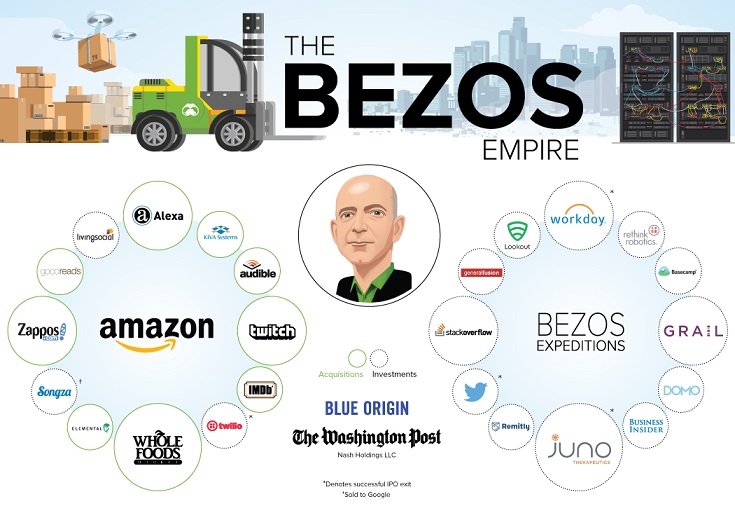
Amazon 2Amazon is not just a giant on the internet, in the areas of electronic commerce. No they are emerging as a giant in the real world as well. The company has over 380,000 employees worldwide and 40,000+ at their Seattle, Washington USA headquarters. That is a BIG corporate presence. In fact, economic analysts had tabulated Amazon’s Gross Domestic Product (GDP) contribution to Seattle at $US 38 Billion. Wow!

Now, the company has decided to open a new supplemental headquarters facility – with the promise of another 50,000 job opportunities. Where will they place this second HQ facility – HQ2? They are open to offers.

Let the bidding begin …

See the Press Release in the Appendix below and the related VIDEO here:

VIDEO – American cities vie to be site of Amazon’s second headquarters – https://www.today.com/video/american-cities-vie-to-be-site-of-amazon-s-second-headquarters-1055053379904

Many U.S cities are competing fiercely to show Amazon why they should become home to the online giant’s second headquarters. NBC business correspondent Jo Ling Kent reports for TODAY from one of them: Los Angeles.

As related in this VIDEO, Amazon HQ2 would be a “serious jolt to any local economy”. Consider these prospective cities that are lining up:

Atlanta El Paso, TX Nashville, TN
Baltimore Gary, Indiana Pittsburgh, PA
Birmingham, AL Houston, TX Phoenix, AZ
Boston, MA Las Vegas, NV Portland, OR
Chicago Los Angeles St Louis, MO
Cincinnati, OH Miami, FL Toronto, Canada
Denver, CO Minneapolis, MN Tucson, AZ

The Caribbean is not represented on that list; notwithstanding the frontier city of Miami. (Miami thrives due to the presence of the Caribbean Diaspora).

But that’s OK…this time. We have our own plans.

CU Blog - Amazon Opens Search for for HQ2 - Photo 1As related in previous blog-commentaries by the movement behind the book Go Lean … Caribbean, Amazon is a model for the Caribbean’s own venture into electronic commerce. We have the design for www.myCaribbean.gov web-portal and the Caribbean Postal Union to perform a lot of the same functionality that Amazon does in the USA.

The book Go Lean…Caribbean serves as a roadmap for the introduction and implementation of the technocratic Caribbean Union Trade Federation (CU) and the Caribbean Postal Union (CPU). These entities are designed to address the “Agents of Change“ in modern society, but for a Caribbean scope only.  The “Agents of Change” at play in the foregoing news source are as follows:

  • Technology
  • Globalization

As related in the foregoing VIDEO, the business dynamics of Amazon will have a huge impact on some local community. That American city that lands HQ2 will have a lot to celebrate, as their societal engines will be elevated. An enterprise that can create that many high-paying direct jobs – 50,000 – will have a stimulating effect on the rest of the economy. This too is a feature of Amazon that “we” want to model in the Caribbean. The Go Lean/CU roadmap is designed to elevate the Caribbean’s societal engines starting first with economics (jobs, industrial development and entrepreneurial opportunities). In fact, the following 3 statements are identified as the prime directives of the CU:

  • Optimization of the economic engines in order to grow the regional economy to $800 Billion & create 2.2 million new jobs.
  • Establishment of a security apparatus to protect the resultant economic engines.
  • Improve Caribbean governance to support these other engines. Governance will not grow the economy, commerce will.

One addition feature of Amazon that bears disclosing is their effect on stimulating other businesses. According to these words from the Press Release below, the home community of Amazon’s current headquarters – Seattle, Washington – has incubated many other Fortune 500 companies in the wake of Amazon’s rise and dominance:

Increase in Fortune 500 companies with engineering/R&D centers in Seattle: From 7 in 2010 to 31 in 2017

Incubation is a primary tactic addressed in the Go Lean book. It is explained (Page 28) as follows:

The Bottom Line on Incubators
Business incubators are programs designed to support the successful development of entrepreneurial companies through an array of business support resources and services, developed and orchestrated by incubator management. Incubators vary in the way they deliver their services, in their organizational structure, and in the types of clients they serve. Successful completion of a business incubation program increases the likelihood that a startup company will stay in business for the long term: studies found 87% of incubator graduates stayed in business, in contrast to 44% of all firms. [Incubators are common in the US, Canada and Europe]. In 2005 alone, North American incubation programs assisted more than 27,000 firms that provided employment for more than 100,000 workers and generated annual revenues of $17 billion.

Incubators differ from research and technology parks in their dedication to startup and early-stage companies. Incubators also differ from the U.S. Small Business Administration’s Small Business Development Centers in that they serve only selected clients. Most common incubators provide these services:

1. Help with business basics

2. Networking activities

3. Marketing assistance

4. Help with accounting/financial management

5. Access to bank loans, loan funds and guarantee programs

6. Help with presentation skills

7. Links to higher education resources

8. Links to strategic partners

9. Access to angel investors or venture capital

10. Advisory boards and mentors

11. Technology commercialization assistance

12. Help with regulatory compliance

13. Intellectual property management.

CU Blog - Retail Enemy - Amazon - Photo 1Amazon’s modus operandi is not to be an incubator, though they have invested in many other tech-related companies. No, the Seattle incubation resulted from more community synergy than direct planning. This is what is defined in the Go Lean book as “community ethos”:

1. The fundamental character or spirit of a culture; the underlying sentiment that informs the beliefs, customs, or practices of a group or society; dominant assumptions of a people or period.

2. The character or disposition of a community, group, person, etc.

We need this community ethos in the Caribbean!

Overall, in its 370-pages, the Go Lean book stresses the community ethos, strategies, tactics, implementations and advocacies to reform and transform the economic engines of Caribbean society. The required technocratic stewardship for the region’s economic engines was presented early in the book with these opening pronouncements in the Declaration of Interdependence (Page 13 and 14):

xxiv. Whereas a free market economy can be induced and spurred for continuous progress, the Federation must install the controls to better manage aspects of the economy: jobs, inflation, savings rate, investments and other economic principles. Thereby attracting direct foreign investment because of the stability and vibrancy of our economy.

xxvii. Whereas the region has endured a spectator status during the Industrial Revolution, we cannot stand on the sidelines of this new economy, the Information Revolution. Rather, the Federation must embrace all the tenets of Internet Communications Technology (ICT) to serve as an equalizing element in competition with the rest of the world. The Federation must bridge the digital divide and promote the community ethos that research/development is valuable and must be promoted and incentivized for adoption.

The points of effective, technocratic stewardship were further elaborated upon in previous blog-commentaries. Consider this sample:

https://goleancaribbean.com/blog/?p=12291 Amazon – The Retailers’ Enemy
https://goleancaribbean.com/blog/?p=8823 Lessons from China – WeChat: Model for Caribbean Social Media
https://goleancaribbean.com/blog/?p=7991 Transformations: Caribbean Postal Union – Delivering the Future
https://goleancaribbean.com/blog/?p=3187 Robots help Amazon tackle Cyber Monday
https://goleancaribbean.com/blog/?p=2488 Model of an E-Commerce Fulfillment Company: Alibaba
https://goleancaribbean.com/blog/?p=1416 Model of an E-Commerce Fulfillment Company: Amazon
https://goleancaribbean.com/blog/?p=528 Facebook’s advances for e-Commerce payments

Congratulation to the selected city – whoever is selected – for Amazon’s HQ2.

For the Caribbean, let’s pay attention to this bidding process. Let’s lean-in and learn how the economic incentives were structured by the winning city to attract this “whale” of a corporate investor – Amazon commits to spending $5 Billion to enhance local infrastructure in the selected city. This chosen city will make great progress in their attempts to elevate their city … to live, work and play.

The lessons learned can help the Caribbean in our solicitations of Direct Foreign Investors. We can learn so much from this process, since it is also our desire to make our homelands better places to live, work and play. 🙂

Download the free e-book of Go Lean … Caribbean – now!

Sign the petition to lean-in for the roadmap for the Caribbean Union Trade Federation.

————-

Appendix Title: Amazon Opens Search for Amazon HQ2 A Second Headquarters City in North America

New headquarters will be a full equal to Amazon’s headquarters in Seattle, and is expected to grow to 50,000 employees as part of the company’s ongoing job creation

Amazon plans to invest over $5 billion in construction and operation of Amazon HQ2

In addition to Amazon’s direct hiring and investment, construction and operation of Amazon HQ2 is expected to create tens of thousands of jobs in construction and related industries, and generate tens of billions of dollars in additional investment in the city where Amazon HQ2 is located

SEATTLE — (BUSINESS WIRE)

(NASDAQ: AMZN) — Amazon today announced plans to open Amazon HQ2, a second company headquarters in North America. Amazon expects to invest over $5 billion in construction and grow this second headquarters to include as many as 50,000 high-paying jobs. In addition to Amazon’s direct hiring and investment, construction and ongoing operation of Amazon HQ2 is expected to create tens of thousands of additional jobs and tens of billions of dollars in additional investment in the surrounding community. Amazon is opening the Amazon HQ2 Request for Proposal (“RFP”) now, and local and state government leaders interested in learning more about how they can bring Amazon to their community can visit www.amazon.com/amazonHQ2.

Amazon estimates its investments in Seattle from 2010 through 2016 resulted in an additional $38 billion to the city’s economy – every dollar invested by Amazon in Seattle generated an additional 1.4 dollars for the city’s economy overall.

Details of Amazon’s Seattle Headquarters:

Direct1 Number of buildings 33
Square feet 8.1 million
Local retail within Amazon headquarters 24 restaurants/cafes + 8 other services
Amazon employees 40,000+
Capital investment (buildings & infrastructure) $3.7 billion
Operational expenditures (utilities & maintenance) $1.4 billion
Compensation to employees $25.7 billion
Number of annual hotel nights by visiting Amazonians and guests 233,000 (2016)
Amount paid into the city’s public transportation system as employees’ transportation benefit $43 million
Indirect2 Additional jobs created in the city as a result of Amazon’s direct investments 53,000
Additional investments in the local economy as a result of Amazon’s direct investments $38 billion
Increase in personal income by non-Amazon employees as a result of Amazon’s direct investments $17 billion
Other Increase in Fortune 500 companies with engineering/R&D centers in Seattle From 7 in 2010 to 31 in 2017

1 From 2010 (when Amazon moved its headquarters to downtown Seattle) to June 2017.

2 From 2010-2016. Calculated using Input-Output methodology and multipliers developed by the U.S. Bureau of Economic Analysis.

With more than 380,000 employees worldwide, Amazon ranks #1 on Fast Company’s Most Innovative Companies, #2 on Fortune’s World’s Most Admired Companies, #1 on The Harris Poll’s Corporate Reputation survey, and #2 on LinkedIn’s U.S. most desirable companies list. Amazon was also recently included in the Military Times’ Best for Vets list of companies committed to providing opportunities for military veterans.

“We expect HQ2 to be a full equal to our Seattle headquarters,” said Jeff Bezos, Amazon founder and CEO. “Amazon HQ2 will bring billions of dollars in up-front and ongoing investments, and tens of thousands of high-paying jobs. We’re excited to find a second home.”

In choosing the location for HQ2, Amazon has a preference for:

  • Metropolitan areas with more than one million people
  • A stable and business-friendly environment
  • Urban or suburban locations with the potential to attract and retain strong technical talent
  • Communities that think big and creatively when considering locations and real estate options

HQ2 could be, but does not have to be:

  • An urban or downtown campus
  • A similar layout to Amazon’s Seattle campus
  • A development-prepped site. We want to encourage states and communities to think creatively for viable real estate options, while not negatively affecting our preferred timeline.

Amazon HQ2 will be a complete headquarters for Amazon – not a satellite office. Amazon expects to hire new teams and executives in HQ2, and will also let existing senior leaders across the company decide whether to locate their teams in HQ1, HQ2 or both. The company expects that employees who are currently working in HQ1 can choose to continue working there, or they could have an opportunity to move if they would prefer to be located in HQ2.

To learn more about Amazon’s current Seattle headquarters, plans for Amazon HQ2, and to submit a proposal, visit www.amazon.com/amazonHQ2.

———-

About Amazon

Amazon is guided by four principles: customer obsession rather than competitor focus, passion for invention, commitment to operational excellence, and long-term thinking. Customer reviews, 1-Click shopping, personalized recommendations, Prime, Fulfillment by Amazon, AWS, Kindle Direct Publishing, Kindle, Fire tablets, Fire TV, Amazon Echo, and Alexa are some of the products and services pioneered by Amazon. For more information, visit www.amazon.com/about and follow @AmazonNews.

Forward-Looking Statements

This press release contains forward-looking statements that are inherently difficult to predict. Actual results could differ materially for a variety of reasons, including, in addition to the factors discussed above, the amount that Amazon.com invests in new business opportunities and the timing of those investments, the mix of products and services sold to customers, the mix of net sales derived from products as compared with services, the extent to which we owe income taxes, competition, management of growth, potential fluctuations in operating results, international growth and expansion, the outcomes of legal proceedings and claims, fulfillment, sortation, delivery, and data center optimization, risks of inventory management, seasonality, the degree to which the Company enters into, maintains, and develops commercial agreements, acquisitions and strategic transactions, payments risks, and risks of fulfillment throughput and productivity. Other risks and uncertainties include, among others, risks related to new products, services, and technologies, system interruptions, government regulation and taxation, and fraud. In addition, the current global economic climate amplifies many of these risks. More information about factors that potentially could affect Amazon.com’s financial results is included in Amazon.com’s filings with the Securities and Exchange Commission (“SEC”), including its most recent Annual Report on Form 10-K and subsequent filings.

———-

View source version on businesswire.com: http://www.businesswire.com/news/home/20170907005717/en/

Amazon.com, Inc.
Media Hotline
Amazon-pr@amazon.com
www.amazon.com/pr

Copyright Business Wire 2017

———-

Source: Posted September 7, 2017; retrieved September 26, 2017 from: http://www.nbc-2.com/story/36308962/amazon-opens-search-for-amazon-hq2-a-second-headquarters-city-in-north-america

Share this post:
, , , , ,
[Top]

Jamaican Diaspora – Not the ‘Panacea’

Go Lean Commentary

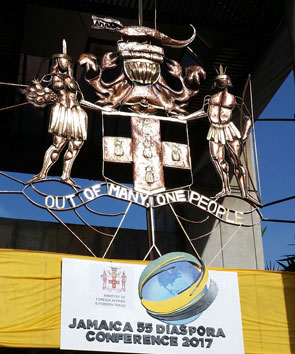
Here we go again. Will “they” ever learn? CU Blog - Jamaican Diaspora - Not the Panacea - Photo 0

Due to the high societal abandonment rate in the Caribbean homeland, the population of the citizenry of the individual member-states is approaching a distribution where half of the citizens live in the homeland and the other half live abroad – in the Diaspora.

Those who live in the Diaspora, know “both sides of the coin”, as most of them have lived in the ancestral lands at one point. But the other half, those who still live in the homeland may have never lived abroad.

They do not know what they do not know!

Oh, they may have visited! But being a visitor to some North American or European city is different than being a resident, as visitors do not have the interactions of applying for jobs, housing, government benefits, paying taxes, co-existing with neighbors, etc.. These ones in the homeland may naturally assume that the “grass is greener on the other side”. Here’s the truth:

It is not! (The grass in the northern cities may not even be green at all; it may be covered with autumn foliage or snow).

So as observers-and-reporters of Caribbean people, culture and eco-system in both the homeland and the Diaspora, “we” – the movement behind the book Go Lean…Caribbean – have noticed how consecutive government administrations seem to empathize with the strategy of making outreach to their Diaspora; see article in Appendix A. They put a lot of stock (investment) into this strategy and the results are always consistent:

There is no pay-off! Even now, after 50 years of emigration, the positive impact of the Diaspora is still elusive.

Hoping for the Diaspora to be the panacea of Caribbean ills – “Diaspora Bug” – has proven to be a fallacy, time and again. Notice in the referenced article that the World Bank organization reportedly stated that $500 million in investments had come to this one country from their Diaspora, but the researcher seems to want to inflate the impact, projecting a “pie-in-the-sky” figure of $12.8 billion.

Enough already people!

The movement behind the book Go Lean … Caribbean has been consistent in this theme. Just this year alone, we have commented on these flawed efforts, in:

The criticism has been leveled against all these Caribbean member-states hoping that their Diaspora – those who had fled, being “pushed” or “pulled” away from their homeland –  would invest back in their country. The problem is that this Diaspora-outreach strategy double-downs on the failure of why the Diaspora left in the first place. Both previous commentaries relate:

The subtle message to the Caribbean population is that they need to leave their homeland, go get success and then please remember to invest in us afterwards.

… It is so unfortunate that the people in the Caribbean are beating down the doors to get out of their Caribbean homeland, to seek refuge in these places like the US, Canada and Western Europe. And yet it seems like the Chief Executive of this Caribbean country is encouraging more of it – there is a similar sentiment in the rest of the Caribbean member-states. As a result, we have such a sad state of affairs for our Caribbean eco-system as we are suffering from a bad record of societal abandonment.

The country du jour – for this commentary – is Jamaica; see the related article in Appendix C below.

They have got this “Diaspora Bug” real bad. They have been “plowing these fields” for a while; they have structured an organized Diaspora Conference since 2004 and they sow and sow; still hoping for some reaping. See the full news article in Appendix A below relating the “Jamaica 55 Diaspora 2017 Conference” that was held in Kingston July 23-26, 2017.

The book Go Lean…Caribbean – available to download for free – serves as a roadmap for the introduction and implementation of the technocratic Caribbean Union Trade Federation (CU), for the elevation of Caribbean society – for all member-states. The book asserts that the region must work to hold onto its populations – especially the professional classes – not see them leave for foreign shores. To accomplish this objective, this CU/Go Lean roadmap presents these 3 prime directives:

  • Optimization of the economic engines in order to grow the regional economy to $800 Billion and create 2.2 million new jobs.
  • Establishment of a security apparatus to ensure public safety and protect the resultant economic engines.
  • Improvement of Caribbean governance to support these engines, including a separation-of-powers between the member-states and CU federal agencies.

The Go Lean book asserts that while conditions may be bad for Caribbean (i.e. Jamaican) residents in their homeland, many minority immigrants to other countries (think Black-and-Brown in America) have to contend with less than welcoming conditions there. In fact, economic and sociology researchers have published that first generation immigrants (especially noteworthy for those from Latin America and the Caribbean) normally under-perform all other segments of society in their new countries. It is only with the second generation that prosperity is achieved, but by then, their progeny no longer identifies with the ancestral home. Think: Jamaican-Americans identifying more with America than with Jamaica.

Consider further the American experience. The movement behind the Go Lean book has consistently related that the United States of America functions as a Great Society but it has two societal defects:

These societal defects can easily create a ‘Climate of Hate‘ that causes people to haze and blame-game the immigrant community.

There are similar anecdotes in Canada, the United Kingdom, The Netherlands, France and other Western European countries. While immigrants are better able to survive in these advanced democracies – there is an abundance of minimum wage jobs – to thrive is more of a challenge. It would seem better for Caribbean people to work to remediate the problems in their homeland, rather than work to become immigrants, aliens in a foreign land. But this is no easy task; this is hereby defined as heavy-lifting.

The Go Lean roadmap calls for a reboot!

Do what you have always done; get what you’ve always got.

The Go Lean roadmap presents a different approach; it posits that leveraging a Caribbean Single Market (42 million people) is better than catering to the Diaspora of just one country; (Jamaica’s Diaspora has a size of 3 million). This roadmap is presented as the panacea of Caribbean ills; and it still includes the Diaspora, but for all the Caribbean nations combined – estimated at 10 to 25 million. This plan calls for an interdependence of the Caribbean eco-system. This was the motivation for the CU/Go Lean roadmap, as pronounced in the opening Declaration of Interdependence (Pages 12 – 13) of the book:

xi. Whereas all men are entitled to the benefits of good governance in a free society, “new guards” must be enacted to dissuade the emergence of incompetence, corruption, nepotism and cronyism at the peril of the people’s best interest. The Federation must guarantee the executions of a social contract between government and the governed.

xix. Whereas our legacy in recent times is one of societal abandonment, it is imperative that incentives and encouragement be put in place to first dissuade the human flight, and then entice and welcome the return of our Diaspora back to our shores. This repatriation should be effected with the appropriate guards so as not to imperil the lives and securities of the repatriated citizens or the communities they inhabit. The right of repatriation is to be extended to any natural born citizens despite any previous naturalization to foreign sovereignties.

xx.  Whereas the results of our decades of migration created a vibrant Diaspora in foreign lands, the Federation must organize interactions with this population into structured markets. Thus allowing foreign consumption of domestic  products, services and media, which is a positive trade impact. These economic activities must not be exploited by others’ profiteering but rather harnessed by Federation resources for efficient repatriations.

xxiv. Whereas a free market economy can be induced and spurred for continuous progress, the Federation must install the controls to better manage aspects of the economy: jobs, inflation, savings rate, investments and other economic principles. Thereby attracting direct foreign investment because of the stability and vibrancy of our economy.

The goal of the Go Lean roadmap is for Caribbean people to prosper where planted; the book therefore provides 370-pages of turn-by-turn instructions on “how” to adopt new community ethos, plus the strategies, tactics, implementations and advocacies to execute so as to lower the “push and pull” factors that drives people to leave their homes in the first place. What are these factors:

“Push” refers to people who feel compelled to leave, to seek refuge in a foreign land. “Refuge” is an appropriate word; because of societal defects, many from the Caribbean must leave as refugees – think LGBTDisabilityDomestic-abuseMedically-challenged – for their life, liberty and pursuit of happiness.

“Pull”, on the other hand refers to the lure of a more prosperous life in the foreign destinations; many times our people are emigrating for economics solely.

The landscapes and waterscapes of the Caribbean make-up the best addresses on the planet. No one wants to leave to get away from the physical paradise; see the VIDEO in Appendix B below. But they do leave … to get away from our deficient and defective societal engines:

No economic prospects; no security assurances; no governing efficiency.

One mission of the Go Lean roadmap is to lower these “push and pull” factors.

Yes, we can.

Another mission is to invite the Diaspora to repatriate to the region, to come back home. This could be attractive prospect once the needed remediation is in place.

See how these missions has been communicated in other blog-commentaries, with this sample:

https://goleancaribbean.com/blog/?p=11314 Forging Change: Home Addiction
https://goleancaribbean.com/blog/?p=9648 ‘Time to Go’ – Public Schools for Black-and-Brown
https://goleancaribbean.com/blog/?p=8155 Gender Equality Referendum Outcome: Impact on the ‘Brain Drain’
https://goleancaribbean.com/blog/?p=7769 Being Lean on “Push & Pull”: Asking the Question ‘Why’ 5 Times

In summary, growing the Diaspora is bad for the Diaspora and bad for the Caribbean. Any official policy that double-downs on the Diaspora, double-downs on failure. We do not want an official strategy of requiring people to leave and kindly remember us so that our communities can be successful; no, we want to be successful anyway, to prosper right here at home. We strongly urge everyone to lean-in to this roadmap to make our homeland – Jamaica et al – a better place to live, work and play. 🙂

NOTE: This writer has mixed Jamaican heritage.

Download the free e-book of Go Lean … Caribbean – now!

Sign the petition to lean-in for this roadmap for the Caribbean Union Trade Federation.

———-

Appendix A Title: Jamaica still in dark over Diaspora’s huge potential

KINGSTON, Jamaica – Jamaica has no precise understanding of its diaspora’s massive potential, although emerging evidence indicates nationals living overseas are making a far greater contribution to the Caribbean nation’s welfare than previously believed.

Preliminary findings from a study, conducted by the Caribbean Policy Research Institute (CAPRI) and revealed at last month’s “Jamaica 55 Diaspora 2017 Conference” here, showed the country relies heavily on contributions from an estimated three million nationals living in places like the United States, United Kingdom and Canada.

CU Blog - Jamaican Diaspora - Not the Panacea - Photo 1According to research officer Shanike Smart, CAPRI’s study, sponsored by Jamaica National, was aimed at taking the guess work out of the diaspora’s influence, which would then lead to a better grasp of its value and enhance the relationship with Jamaica.

“We wanted to find out how significant are their (diaspora’s) contributions, because we think this can advance the conversation,” Smart explained following her conference presentation.

So far, she has already dismantled some long-held perceptions. For example, the diaspora’s contribution has mainly been identified with remittances. Jamaica benefits greatly from money sent from overseas – an estimated $2.2 billion a year. But that may be just the tip of the diaspora’s clout,.

“It turned out to be much more than that,” Smart said.

IGNORANCE

Diaspora investments in Jamaica also make up a huge chunk of benefits for the island as well. The World Bank reportedly stated that $500 million in investments had come to Jamaica. That figure, may be more like $12.8 billion.

Also gone underestimated has been the contributions in several other areas, including export of goods and services from Jamaica to the diaspora.

“I speak about companies launching businesses overseas, not thinking that maybe it’s the diaspora, not understanding that without (the diaspora) they might not been able to even prosper in that environment,” Smart explained.

The educational and professional qualifications of Jamaicans overseas have been downplayed as well, a reason many in the diaspora believe causes them to be overlooked for jobs in the island.

Diaspora tourists, are also now being viewed differently. According to statistics gathered by Smart, the Jamaica Tourist Board believes diaspora visitors’ spending accounts for four percent of general expenditure. She thinks it’s much higher.

“I estimated that it was seven percent of the expenditure,” Smart said. “(It’s) $180 something million U.S. dollars that they’re spending overall.”

MISLED

It comes down to misinformation, Smart explained, which may or not be deliberate.

“Normally in the literature, we’re finding that the diaspora tourist tends to spend less (in Jamaica) than a foreign national. However, they stay longer,” she said. “… When we’re looking at the numbers we’re saying this is suggesting otherwise, and then I was saying ‘can this be true?’

“I saw that the Jamaican tourist was almost spending more than, in a lot of cases was spending more than what the estimate was for the foreign national.”

The misunderstanding has been blamed on several factors, including lack of information, reluctance to seek it, unwillingness to provide it on request and preference to rely on old myths. Some Jamaicans deliberately hesitate to reveal information.

“A lot of people think that’s just our culture,” said Smart, who led CAPRI’s research team, “but I’m not sure what the reason is. And, again, even to this day we’re having some pushback.”

NO IDEA

In 2004 Jamaica held its first Diaspora Conference. But few had a full idea of the diaspora’s actual impact. Thirteen years, and a planned average of one conference every two years, later not much has changed.

However, through CAPRI’s early findings, a different picture is emerging. The study, which began about two months ago and is expected to have more concrete data by next month, has shown startling information.

Currently, the diaspora is estimated to contribute 23 percent of Jamaica’s gross domestic product (GDP). Smart suspects the potential is closer to 35 percent. However, she argued, more digging is needed to confirm her suspicions and guide future policy on the diaspora.

“We need research to back that up before we even start making any move,” she said.

What’s evident is the diaspora is offering much more than its been credited for and poised to make an even larger impact.

“When I look at the gap, when we look at what we’re currently doing and what the potential gap that’s left, it was 12 percent of GDP, over a billion (U.S.) dollars,” said Smart.

“I think it highlights how significant the diaspora is for Jamaica, which is currently under appreciated because the numbers aren’t existing,” she added.

It should be enough incentive for Jamaica to embrace its diaspora more tightly.

“It is also showing that it is an opportunity to show the diaspora and for persons to now recognize the diaspora, which should bring them onboard,” said Smart.

“And if they do come onboard some more, I mean, it’s unimaginable the value that will present.”

Related story: Jamaica lauds Diaspora’s input, but some lament slow progress

Source: Caribbean Today South Florida Magazine – Vol. 28 No. 9 (August) – Retrieved September 19, 2017 from: http://www.caribbeantoday.com/caribbean-news/latest-news/item/26432-jamaica-still-in-dark-over-diaspora-s-huge-potential.html

———-

Appendix B VIDEO – Jamaica Farewell | Jamaican Kids Song | World Rhymes – https://youtu.be/nFfs0ryiFy4

Published on May 30, 2013World Rhymes

Lyrics:
Down the way where the nights are gay
And the sun shines daily on the mountain top
I took a trip on a sailing ship
And when I reached Jamaica I made a stop

But I’m sad to say I’m on my way
Won’t be back for many a day
My heart is down, my head is turning around
I had to leave a little girl in Kingston town

Sounds of laughter everywhere
And the dancing girls swaying to and fro
I must declare my heart is there
Though I’ve been from Maine to Mexico

But I’m sad to say I’m on my way
Won’t be back for many a day
My heart is down, my head is turning around
I had to leave a little girl in Kingston town

Down at the market you can hear
Ladies cry out while on their heads they bear
`Akey’ rice, salt fish are nice
And the rum is fine any time of year

But I’m sad to say I’m on my way
Won’t be back for many a day
My heart is down, my head is turning around
I had to leave a little girl in Kingston town

Down the way where the nights are gay
And the sun shines daily on the mountain top
I took a trip on a sailing ship
And when I reached Jamaica I made a stop

But I’m sad to say I’m on my way
Won’t be back for many a day
My heart is down, my head is turning around
I had to leave a little girl in Kingston town

Sad to say I’m on my way
Won’t be back for many a day
My heart is down, my head is turning around
I had to leave a little girl in Kingston town

  • Category: Education
  • License: Standard YouTube License

———-

Appendix C – Over 80 Percent of Young Jamaicans Want to Leave the Island

Many young Jamaicans are ready to leave their country to pursue better educational and job opportunities. In fact, they would leave Jamaica for any destination other than Afghanistan. According to a 2016 survey commissioned by Respect Jamaica and the local office of UNICEF, 81 percent of Jamaica’s youth between 14 and 40 years of age would leave the country immediately if they could.

Continue reading at Jamaica.com site: http://jamaicans.com/young-jamaicans-want-leave-island/#ixzz4tDq4LzUt

Share this post:
, ,
[Top]

After Irma, Failed State Indicators: Destruction and Defection

Go Lean Commentary

CU Blog - After Irma, Barbuda Becomes a 'Ghost Town' - Photo 3What happens after a community is devastated by a catastrophic hurricane?

Many things; mostly all bad:

This is not just theoretical; this is the current disposition in the Caribbean after the recent Category 5 Hurricane Irma. These descriptors are all indicative of a Failed State status. This is a familiar theme for this movement behind the 2013 book Go Lean…Caribbean – available to download for free – (and the subsequent blog-commentaries). The book opens (Page 3) with this introduction to the subject of failure in the Caribbean:

Failure is just too familiar. Already we have member-states …  on the verge of a Failed-State status… . These states are not contending with the challenges of modern life: changing weather patterns, ever-pervasive technology, and the “flat world” of globalization. To reverse the fortunes of these failing states, and guide others in the opposite direction to a destination of prosperity, the Caribbean must re-boot the regional economy and systems of commerce.

CU Blog - After Irma, Failed-State Indicator - Death or Diaspora - Photo 1Hurricanes are tied to failure and Failed-State Indicators. The consequences of hurricanes are more than just natural, there is also the preponderance for people to leave their homelands afterwards – to defect. See a related story (article & VIDEO) in the Appendix below in which a family sought asylum in Canada for refuge from their devastated community.

In Failed-State formal-speak, the Go Lean book (Page 271) details 2 indicators or indices: Mounting Demographic Pressures (DP) and Massive Movement of Refugees (REF). These downward movements are indicators of Failed-State status – a bad report on the Fail-State index is simply a reflection of a miserable existence in society:

  • Mounting Demographic Pressures
    Pressures on the population such as disease and natural disasters make it difficult for the government to protect its citizens or demonstrate a lack of capacity or will. This indicator include pressures and measures related to:
    Natural Disaster, Disease, Environment, Pollution, Food Scarcity, Malnutrition, Water Scarcity, Population Growth, Youth or Age Bulge, and Mortality
  • Massive Movement of Refugees or IDPs
    Forced uprooting of large communities as a result of random or targeted violence and/or repression, causing food shortages, disease, lack of clean water, land competition, and turmoil that can spiral into larger humanitarian and security problems, both within and between countries. This indicator refers to refugees leaving or entering a country. This indicator include pressures and measures related to:
    Displacement, Refugee Camps, IDP (Internally Displaced Persons) Camps, Disease Related to Displacement, Refugees per capita, and IDPs per capita.

This commentary completes the 4-part series on the Aftermath of Hurricane Irma. There are a lot of mitigation and remediation efforts that can be done to lessen the impact of this and future storms. There are lessons that we must consider; there are reforms we must make; there are problems we must solve. The full list of the 4 entries of this series are detailed as follows:

  1. Aftermath of Hurricane Irma – America Should Scrap the ‘Jones Act’
  2. Aftermath of Hurricane Irma – Barbuda Becomes a ‘Ghost Town’
  3. Aftermath of Hurricane Irma – The Science of Power Restoration
  4. Aftermath of Hurricane Irma – Failed State Indicators: Destruction and Defection

Despite the manifested threats of Climate Change-fueled hurricanes, we must engage the heavy-lifting to make the Caribbean homeland a better place to live, work and play. Otherwise people flee the oppression, repression and suppression of being “home”.

In a previous blog-commentary about 19th Century Slavery Abolition icon Frederick Douglass, it revealed his theme when he went to the British island of Ireland to commiserate with that people on their oppression-repression-suppression plight. He asserted …

… that if an oppressed population didn’t find refuge, the only outcome would be Death or Diaspora.

The Diaspora prophecy happened, then in Ireland and today, especially here in the Caribbean! (In a previous blog, it was revealed that after 1840, emigration from Ireland became a massive, relentless, and efficiently managed national enterprise. In 1890 40% of Irish-born people were living abroad. By the 21st century, an estimated 80 million people worldwide claimed some Irish descent; which includes more than 36 million Americans who claim Irish as their primary ethnicity).

Caribbean citizens are also pruned to emigrate … to foreign shores (North America and Europe) seeking refuge. In a previous blog-commentary it was asserted that the US – the homeland  for Frederick Douglass – has experienced accelerated immigration in recent years. Published rates of societal abandonment among the college educated classes have reported an average of 70 percent in most member-states, with some countries (i.e. Guyana) tallying up to 89 percent. For this reason, there is solidarity for the Diaspora of Ireland and the Diaspora of the Caribbean.

The publishers of the Go Lean book are also steadfast and committed to one cause: arresting the societal abandonment of Caribbean communities. This would lessen the future Diaspora. This would be good!

The book Go Lean…Caribbean serves as a roadmap for the introduction and implementation of the technocratic Caribbean Union Trade Federation (CU), for the elevation of Caribbean society – for all member-states. This CU/Go Lean roadmap has these 3 prime directives:

  • Optimization of the economic engines in order to grow the regional economy to $800 Billion and create 2.2 million new jobs.
  • Establishment of a security apparatus to ensure public safety and protect the resultant economic engines. This security pact encompasses an emergency planning/response apparatus to deal with the reality of natural disasters. Otherwise, the affected population becomes refugees and the member-state moves towards Failed-State status. The CU mandate is to protect against any Failed-State encroachments.
  • Improve Caribbean governance to support these engines, including a separation-of-powers between the member-states and CU federal agencies.

The book stresses that reforming and transforming the Caribbean societal engines must be a regional pursuit. This was an early motivation for the roadmap, as pronounced in the opening Declaration of Interdependence (Pages 12 – 13):

xi. Whereas all men are entitled to the benefits of good governance in a free society, “new guards” must be enacted to dissuade the emergence of incompetence, corruption, nepotism and cronyism at the peril of the people’s best interest. The Federation must guarantee the executions of a social contract between government and the governed.

xii. Whereas the legacy in recent times in individual states may be that of ineffectual governance with no redress to higher authority, the accedence of this Federation will ensure accountability and escalation of the human and civil rights of the people for good governance, justice assurances, due process and the rule of law. As such, any threats of a “failed state” status for any member state must enact emergency measures on behalf of the Federation to protect the human, civil and property rights of the citizens, residents, allies, trading partners, and visitors of the affected member state and the Federation as a whole.

xvi. Whereas security of our homeland is inextricably linked to prosperity of the homeland, the economic and security interest of the region needs to be aligned under the same governance. Since economic crimes … can imperil the functioning of the wheels of commerce for all the citizenry, the accedence of this Federation must equip the security apparatus with the tools and techniques for predictive and proactive interdictions.

The Go Lean book provides 370-pages of turn-by-turn instructions on “how” to adopt new community ethos, plus the strategies, tactics, implementations and advocacies to execute so as to reboot, reform and transform the societal engines of Caribbean society, to reverse the trending to Failed-State status. Consider the Chapter excerpts and headlines from this sample on Page 134 entitled:

10 Ways to Improve Failed-State Indices

1

Lean-in for the Caribbean Union Trade Federation
This will allow for the unification of the region into one market of 42 million people across 30 member-states, thereby creating an economic zone to protect the interest of the participant trading partner-member-states. The GDP of the region will amount to $800 Billion (circa 2010). In addition, the treaty calls for a collective security agreement of the member states so as to ensure homeland security and assuage against systemic threats. The CU will ensure that law-and-order persist during times of distress. When a member state declares a State of Emergency, due to natural disaster or civil unrest, this triggers an automatic CU response – this is equivalent to the governmental dialing 911.

2

Image and Defamation
When a country’s primary foreign currency generator is tourism/hospitality, just the perception of a weak or failing state could be devastating. The index is a number that can rise and fall, like a credit score, so any upward movement in the index triggers the negative perception. The pressures are not only internal; there may be external entities that can have a defaming effect: credit rating, country risk, threat assessment, K-n-R (Kidnap and Ransom) insurance rates. The CU will manage the image of the region’s member-states against defamation and work to promote a better image.

3

Local Government and the Social Contract
The Social Contract is the concept that individuals have consented, either explicitly or tacitly, to surrender some of their freedoms and submit to the authority of the State in exchange for protection of their remaining rights (natural and legal). People therefore expect their government (national or municipal) to provide public safety, health, education and other services. The CU will facilitate overhead services for local governments and access to financial markets to fund capital infrastructure investments. The member-states will therefore have more accountability and reporting to CU institutions.

4

Law Enforcement Oversight
The CU will maintain jurisdiction for economic crimes and regional threats. Plus, the CU will collaborate and facilitate local law enforcement with grants of equipment and training to better fulfill their roles. Lastly, the regional security treaty will grant the CU the audit and compliance responsibility for “use of force” investigations and internal affairs.

5

Military and Political Monitoring
The CU will carefully monitor the activities of the military units (Army, Navy and Coast Guard) – this accountability will be the by-product of increased CU funding. The CU will assume the Judge Advocate General role for military justice affairs. For cross border engagements, the National armed forces will be marshaled by the CU’s Commander-in-Chief.

6

Crime/Homeland Intelligence
The CU will install advanced systems, processes, and personnel for intelligence gathering and analysis to assist public safety institutions. This includes terrestrial and satellite surveillance systems, phone eavesdropping, data mining and predictive modeling. The findings will be used to mitigate risks and threats (gangs, anarchy, and organized crime).

7

Minority and Human Rights 

8

Election Outsourcing

9

War Against Poverty
As a Trade Federation charged with facilitating the economic engines for the region, the CU operations will have positive effect on jobs and growing the local economies. The CU has a complete battle plan for the War on Poverty.

10

Big Data
The CU will embrace an e-Government and e-Delivery model. There will be a lot of data to collect and analyze. In addition, the CU Commerce Department will function as a regional OECD (Organization of Economic Cooperation and Development), accumulating and measuring economic metrics and statistical analysis. Any decline in Failed-State indices will be detected, and managed in both a predictive and reactionary manner.

The Caribbean must foster a better disaster preparation and response apparatus. We cannot just count on the kindness of strangers. America – the Super Power in our region – is busy … with it’s own hurricane aftermath. Our Way Forward must come from our own making. Otherwise, our people will just leave. People abandon the Caribbean homeland after every storm, not because of the severity of storms but the encroachments towards Failed-States status.

Failed-States = oppression, suppression and repression of the citizens of a country. This rule was true in the days of Frederick Douglass and it is true today:

If an oppressed people don’t find relief and refuge, the only outcome would be Death or Diaspora.

We must do better here in the Caribbean; we must make our homeland a better place to live, work and play. 🙂

Download the free e-book of Go Lean … Caribbean – now!

Sign the petition to lean-in for this roadmap for the Caribbean Union Trade Federation.

———-

Appendix – Title: Family arrives in Ontario after fleeing Hurricane Irma

CU Blog - After Irma, Failed-State Indicator - Death or Diaspora - Photo 2

A family has abandoned their home in the Bahamas, and spent their life savings to escape the threat of Hurricane Irma.

Desiree Johnson and her two sons fled without a plan. They say they know they made an impulsive decision, but felt they had no other choice. The Johnsons arrived at PearsonInternationalAirport around 10:30 p.m. on Thursday.

“I didn’t sleep at all, I paced the floor, I walked, I tried to call. It was not a good feeling”, Johnson told CTV Barrie.

The family of three doesn’t have any relatives or friends in Toronto, but they say they know Canada is a country with a caring reputation.  They don’t know what tomorrow will bring, but they have already reached out to several community agencies looking for help.

Irma’s pounding of the southern Bahamas also brings back terrifying memories of a previous storm.

“It was very scary, we were out for about 2 months – no water, no lights, some places no food”, Johnson recalls. Her 35-year-old son, Jevon Johnson, says he found the meaning of terror during Hurricane Matthew.

The family is now planning on asking the federal government to remain in Canada. Johnson says she wants an opportunity for two of her three sons to start a new life. Her third son was left behind in Bahamas, as the family didn’t have enough money to escape all together.

Source: CTV News Posted September 8, 2017 from: http://barrie.ctvnews.ca/family-arrives-in-ontario-after-fleeing-hurricane-irma-1.3581810

———–

VIDEO – Bahamian Family Flee to Canada Seeking Refuge from Hurricane Irma – https://youtu.be/g25cywl7V-w

Share this post:
, , ,
[Top]

After Irma, the Science of ‘Power Restoration’

Go Lean Commentary

The problem with hurricanes – and there are many – is that it takes a long time for the storm preparation and response (relief, recovery and rebuilding). On average, the storm’s preparation takes 3 days; this includes provisioning, installing protective shutters, hoarding water and gasoline. The response on the other hand can take days, weeks, months and dread-to-say, years.

The most uncomfortable part of the storm response is undeniable waiting for electrical power to be restored.

CU Blog - After Irma, the Science of Power Restoration - Photo 2

In general, the good-bad-ugly scale of memories of previous storms tend to be tied to the length of time it took for power to be restored. The peak of the hurricane season is the very hot months of August/September; there is the need for air-conditioning.

The Caribbean is in crisis now; our region has just been devastated by Hurricane Irma; it has wreaked catastrophic havoc in certain destinations: Barbuda, Saint BarthélemySaint MartinAnguilla, Puerto Rico, the Virgin Islands and Florida. Consider the encyclopedic details in Appendix A below and these questions:

  • How long did/will it take for power to be restored now after Hurricane Irma?
  • How can we reform and transform our Caribbean communities to ensure the efficiency of ‘Power Restoration’?

There is an art and science to the subject of ‘Power Restoration’; actually mostly science. The ‘art’ applies to the efficient deliveries of the management of the restoration process. The science considerations are extensive, starting with the entire eco-system of energy deliveries. As related in a previous blog-commentary

… no one doubts that the inventory of basic needs include “food, clothing and shelter”. But modernity has forced us to add another entry: “energy”. In fact, the availability and affordability of energy can impact the deliveries of these order basic needs.

… In our region, energy costs are among the highest in the world. The book Go Lean… Caribbean relates (Page 100) how the Caribbean has among the most expensive energy costs in the world, despite having abundant alternative energy natural resources (solar, wind, tidal, geo-thermal). The Caribbean eco-system focuses on imported petroleum to provide energy options and as a result retail electricity rates in the Caribbean average US$0.35/kWh, when instead it could be down to US$0.088/kWh. …

With such a 75% savings … there is definitely the need to adapt some of the scientific best practices for energy generation and consumption. In a previous blog-commentary, it was confessed that one of the reasons why people flee the Caribbean region, is the discomforts during the summer months … hot weather, and the lack of infrastructure to mitigate and remediate the discomfort, is identified as one of the reasons for the brain drain/societal abandonment.

One motivation of the movement behind the book Go Lean… Caribbean – available to download for free – is to facilitate a turn-around of economic, security and governing engines of the Caribbean region to do better with power generation, distribution and consumption. The Go Lean book serves as a roadmap for the introduction and implementation of the technocratic Caribbean Union Trade Federation (CU). This Go Lean roadmap has 3 prime directives:

This commentary continues the 4-part series – this is 3 of 4 – on the Aftermath of Hurricane Irma. There are a lot of mitigation and remediation efforts that can be done to lessen the impact of this and future storms. There are lessons that we must consider; there are reforms we must make; there are problems we must solve. The full list of the 4 entries of this series are detailed as follows:

  1. Aftermath of Hurricane Irma – America Should Scrap the ‘Jones Act’
  2. Aftermath of Hurricane Irma – Barbuda Becomes a ‘Ghost Town’
  3. Aftermath of Hurricane Irma – The Science of Power Restoration
  4. Aftermath of Hurricane Irma – Failed State Indicators: Destruction and Defection

Despite the manifested threats of Climate Change-fueled hurricanes, we want to make the Caribbean homeland a better place to live, work and play. This is going to take some heavy-lifting to accomplish, but we can be successful. Yes, we can. This quest is detailed early on in the Go Lean book’s Declaration of Interdependence, as follows (Page 11 – 13):

i. Whereas the earth’s climate has undeniably changed resulting in more severe tropical weather storms, it is necessary to prepare to insure the safety and security of life, property and systems of commerce in our geographical region. As nature recognizes no borders in the target of its destruction, we also must set aside border considerations in the preparation and response to these weather challenges.

xi. Whereas all men are entitled to the benefits of good governance in a free society, “new guards” must be enacted to dissuade the emergence of incompetence, corruption, nepotism and cronyism at the peril of the people’s best interest. The Federation must guarantee the executions of a social contract between government and the governed.

xvi. Whereas security of our homeland is inextricably linked to prosperity of the homeland, the economic and security interest of the region needs to be aligned under the same governance. Since economic crimes … can imperil the functioning of the wheels of commerce for all the citizenry, the accedence of this Federation must equip the security apparatus with the tools and techniques for predictive and proactive interdictions.

xix. Whereas our legacy in recent times is one of societal abandonment, it is imperative that incentives and encouragement be put in place to first dissuade the human flight, and then entice and welcome the return of our Diaspora back to our shores. This repatriation should be effected with the appropriate guards so as not to imperil the lives and securities of the repatriated citizens or the communities they inhabit. The right of repatriation is to be extended to any natural born citizens despite any previous naturalization to foreign sovereignties.

The Go Lean book asserts that Caribbean stakeholders must find a Way Forward; they must institute better systems, processes and utilities to deliver electrical power (energy) despite the reality of hurricanes. Though power will go off – electricity and water is a bad combination – ‘Power Restoration’ must be a priority. Therefore Caribbean communities must adopt different community ethos, plus execute key – and different – strategies, tactics, implementations and advocacies to reform and transform.

This Way Forward must therefore fulfill these 2 requirements:

  • Flood Management and Control
    CU Blog - After Irma, the Science of Power Restoration - Photo 3
    According to a previous blog-commentary: “there is a thesis that flooding could be prevented. Yes, indeed! This is the experience and historicity of the Dutch people, the European country of the Netherlands or Holland.”
    Even in the low-lying American city of New Orleans, Louisiana there is the practice of pumping out excess water to mitigate and remediate flooding; see this depicted in the VIDEO in Appendix B below.
  • Implementation of a Caribbean Regional Power Grid
    CU Blog - After Irma, the Science of Power Restoration - Photo 1
    Power distribution is important for any mitigation-remediation plan. The problem with hurricane toppling trees and power lines is unavoidable – it is what it is – a better solution is to deliver electricity underground or underwater, as illustrated in the above photo. The Go Lean roadmap calls for an extensive smart Power Grid and a region-wide Utility Cooperative. This would allow for alternate power generation and electrical distribution. See sample of an underground/underwater “Power Cable” product depicted in the VIDEO in Appendix C below.

Many other communities have done a good job of optimizing their electrical utility grid. They execute strategies, tactics and implementations to mitigate the risk of power outages; then remediate any crises with technocratic deliveries to facilitate ‘Power Restoration’.

Go Green 1

There will be heavy-lifting for our Caribbean region to have this disposition. The Go Lean roadmap details that heavy-lift, describing the community ethos, strategies, tactics, implementations and advocacies to foster progress for Caribbean energy distribution, our own Regional Power Grid. The following list of entries in the Go Lean book highlights this theme:

Community Ethos – Lean Operations Page 24
Community Ethos – Return on Investments Page 24
Community Ethos – Cooperatives Page 25
Community Ethos – Ways to Impact the Future Page 26
Community Ethos – Ways to Improve Negotiations Page 32
Anecdote – Pipeline Transport – Strategies, Tactics & Implementations Page 43
Strategy – Harness the power of the sun/winds Page 46
Tactical – Fostering a Technocracy Page 82
Tactical – Separation of Powers – Energy Commission Page 82
Anecdote – “Lean” in Government – Energy Permits Page 93
Implementation – Regional Grid as Economies-of-Scale benefit Page 97
Anecdote – Caribbean Energy Grid Implementation Page 100
Implementation – Start-up Benefits from the EEZ Page 104
Implementation – Ways to Develop Pipeline Industry Page 107
Implementation – Ways to Improve Energy Usage Page 113
Advocacy – Ways to Impact Public Works Page 175
Advocacy – Ways to Foster Cooperatives Page 176
Advocacy – Ways to Impact Monopolies Page 202
Appendix – Underwater High Intensity Power Lines Page 282

The experience of enduring hurricanes is never pleasant. As such, we do not invite people to fly down from northern locations to pass storms with us. In fact, when there is a Hurricane Watch, the practice is to evacuate tourists and visitors. We evacuate our high-risk residents as well; (kidney dialysis patients, senior citizens, anyone that cannot endure the loss of electronic-based health instruments). This is a best-practice.

Why do we only evacuate just a limited group from the islands?

We assume that everyone else can endure.

Hah, lol …

But actually, with such high post-hurricane abandonment rates, as reported previously, it is obvious that everyone loses patience. So any improvement in the ‘Power Restoration’ experience would be a win-win; it would improve our communities’ endurance and make our Caribbean homeland better places to live, work and play. 🙂

Download the free e-Book of Go Lean … Caribbean – now!

Sign the petition to lean-in for this roadmap for the Caribbean Union Trade Federation.

———–

Appendix A – Hurricane Irma Devastation

  • In Barbuda, Hurricane Irma caused catastrophic damage on the island; it damaged or destroyed 95% of the island’s buildings and infrastructure, leaving Barbuda “barely habitable” according to Prime Minister Gaston Browne. Everyone on the island was evacuated to Antigua, leaving Barbuda uninhabited for the first time in modern history.[3]
  • In St. Martin, on 6 and 7 September 2017 the island was hit by Hurricane Irma (Category 5 at landfall), which caused widespread and significant damage to buildings and infrastructure. A total of 11 deaths had been reported as of 8 September 2017.[12][13] France’s Minister of the InteriorGérard Collomb, said on 8 September 2017 that most of the schools were destroyed on the French half of the island. In addition to damage caused by high winds, there were reports of serious flood damage to businesses in the village of Marigot. Looting was also a serious problem. Both France and the Netherlands sent aid as well as additional police and emergency personnel to the island.[14][15][16] The Washington Post reported that 95% of the structures on the French side and 75% of the structures on the Dutch side were damaged or destroyed.[17][18] Some days after the storm had abated, a survey by the Dutch Red Cross estimated that nearly a third of the buildings in Sint Maarten had been destroyed and that over 90 percent of structures on the island had been damaged.[19] Princess Juliana Airport was extensively damaged but reopened on a partial basis in two days to allow incoming relief flights and for flights that would take evacuees to other islands.[20]
  • In Anguila, the eye of the storm pass over it on September 6. Many homes and schools were destroyed, and the island’s only hospital was badly damaged.[163] The devastation was particularly severe in East End, where the winds uprooted scores of trees and power poles and demolished a number of houses. … One death was reported on the island.[163] According to [sources], Anguilla’s economy could suffer at least $190 million in losses from the hurricane.[129]
  • Puerto Rico avoided a direct hit by the Category 5 Hurricane Irma on September 8, 2017, but high winds caused a loss of electrical power to some one million residents. Almost 50% of hospitals were operating with power provided by generators.[133]
  • Damage in the British Virgin Islands was extensive. Numerous buildings and roads were destroyed on the island of Tortola, which bore the brunt of the hurricane’s core.[172] Irma’s effects in the U.S. Virgin Islands were most profound on Saint Thomas. Due to its normal reliance on electricity from Saint Thomas, the island [of St. John] was left without power.
  • In the Florida Keys, the hurricane caused major damage to buildings, trailer parks, boats, roads, the electricity supply, mobile phone coverage, internet access, sanitation, the water supply and the fuel supply. … As of 6:41 p.m. EDT on September 10 over 2.6 million homes in Florida were without power.[232]

CU Blog - After Irma, Barbuda Becomes a 'Ghost Town' - Photo 2

———–

Appendix B VIDEO – Here’s how the pumps in New Orleans move water out during heavy rainfall – https://youtu.be/hZvGVUZi9FU

Published on Mar 30, 2017 – WDSU News: Pumps Work During Thursday’s Flooding

———–

Appendix C VIDEO – ABB launches world´s most powerful extruded HVDC cable system –

Published on Aug 21, 2014

ABB Power Grids

525 kV voltage (previous highest installed 320 kV) sets world record more than doubling power flow to 2600 MW (from 1000 MW) and extending range to 1500 km for more cost effective, efficient and reliable underground and subsea transmission while keeping losses to below 5 percent. Major breakthrough for applications like underground HVDC transmission, sub-sea interconnections, offshore wind integration etc. More information: http://new.abb.com/systems/high-volta…


Share this post:
, ,
[Top]

After Irma, Barbuda Becomes a ‘Ghost Town’

Go Lean Commentary

CU Blog - After Irma, Barbuda Becomes a 'Ghost Town' - Photo 1a

The Caribbean is in crisis today; we have just been devastated by Hurricane Irma; it has wreaked catastrophic havoc in certain islands, of which Barbuda is most notable. This is an official declaration; the Prime Minister of the country of Antigua and Barbuda has identified  90 percent of the structures on the island of Barbuda as uninhabitable and can now only be razed; see story in Appendix A below. See the news VIDEO here:

VIDEO – Barbuda, Destroyed By Hurricane Irma, Faces Jose Next | Rachel Maddow | MSNBChttps://youtu.be/2ewVgVDSuKg

Published on Sep 8, 2017 MSNBC
Michael Joseph, Red Cross president for Antigua and Barbuda, talks with Rachel Maddow about the utter devastation of the island of Barbuda by Hurricane Irma with Hurricane Jose just a day away. » Subscribe to MSNBC: http://on.msnbc.com/SubscribeTomsnbc About: MSNBC is the premier destination for in-depth analysis of daily headlines, insightful political commentary and informed perspectives. Reaching more than 95 million households worldwide, MSNBC offers a full schedule of live news coverage, political opinions and award-winning documentary programming — 24 hours a day, 7 days a week. Connect with MSNBC Online Visit msnbc.com: http://on.msnbc.com/Readmsnbc Find MSNBC on Facebook: http://on.msnbc.com/Likemsnbc Follow MSNBC on Twitter: http://on.msnbc.com/Followmsnbc Follow MSNBC on Google+: http://on.msnbc.com/Plusmsnbc Follow MSNBC on Instagram: http://on.msnbc.com/Instamsnbc Follow MSNBC on Tumblr: http://on.msnbc.com/LeanWithmsnbc Barbuda, Destroyed By Hurricane Irma, Faces Jose Next | Rachel Maddow | MSNBC

(Other impacted locales include Saint BarthélemySaint MartinAnguilla, Puerto Rico, the Virgin Islands and Florida).

Barbuda is a cautionary tale because it fulfills the forecast (prophecy) of this previous commentary, that if left unchecked, Caribbean crises get worse, completely dysfunctional, at the precipice of Failed-State status and communities emerge as …

Ghost Towns

A ghost town is an abandoned village, town or city, usually one which contains substantial visible remains. A town often becomes a ghost town because the economic activity that supported it has failed, or due to natural or human-caused disasters such as floods, government actions, uncontrolled lawlessness, war, or nuclear disasters. …

    “Things will always work themselves out” – Popular fallacy.

There is no guarantee of our survival. Communities and societies do fail; success is not assured; the work must be done, we must “sow if we want to reap”. …

How else would one explain why citizens from the most beautiful addresses on the planet are “breaking down the doors” to get out, either through legal means or illegal ones?

The book Go Lean … Caribbean stresses reboots, reorganizations and general turn-around of failing economic engines in favor of winning formulas. The book quotes a noted American Economist Paul Romer with this famous quotation:

    “A crisis is a terrible thing to waste”.

CU Blog - After Irma, Barbuda Becomes a 'Ghost Town' - Photo 1b

CU Blog - After Irma, Barbuda Becomes a 'Ghost Town' - Photo 1c

The movement behind the Go Lean book have often raised the subject of Ghost Towns. Just last month (August 22), this commentary was published:

Lessons from Colorado: Black Ghost Towns – “Booker T. turning in his grave”

So the future is not guaranteed for any Caribbean community. While our people may survive, our culture may not! We may have to supplant ourselves to some foreign destination. We may have to “take our talents to South Beach” … or South New York… or South Toronto, etc..

Prophecy: If we migrate to a foreign country, our grandchildren born there will NOT be identified as Caribbean.

So Ghost Towns have occurred and could happen in the Caribbean … again.

This commentary continues the 4-part series on the Aftermath of Hurricane Irma. This storm was devastating to the Atlantic tropical region, the Caribbean and US State of Florida. There are a lot of mitigation and remediation efforts that can be done to lessen the impact of storms. There are lessons that we must consider; there are reforms we must make; there are problems we must solve. The full list of the 4 entries of this series are detailed as follows:

  1. Aftermath of Hurricane Irma – America Should Scrap the ‘Jones Act’
  2. Aftermath of Hurricane Irma – Barbuda Becomes a ‘Ghost Town’
  3. Aftermath of Hurricane Irma – The Science of Power Restoration
  4. Aftermath of Hurricane Irma – Failed State Indicators: Destruction and Defection

We want to make the Caribbean homeland a better place to live, work and play. This is the quest of the book Go Lean … Caribbean – available to download for free – which serves as a roadmap for the introduction and implementation of the technocratic Caribbean Union Trade Federation (CU). Despite the threats of Climate Change, the CU is structured to turn-around failing Caribbean communities; it is proffered to provide economic, security and governance solutions for all 30 member Caribbean states. This mandate is detailed early on in the book’s Declaration of Interdependence, as follows (Page 11 – 13):

i. Whereas the earth’s climate has undeniably changed resulting in more severe tropical weather storms, it is necessary to prepare to insure the safety and security of life, property and systems of commerce in our geographical region. As nature recognizes no borders in the target of its destruction, we also must set aside border considerations in the preparation and response to these weather challenges.

xii. Whereas the legacy in recent times in individual states may be that of ineffectual governance with no redress to higher authority, the accedence of this Federation will ensure accountability and escalation of the human and civil rights of the people for good governance, justice assurances, due process and the rule of law. As such, any threats of a “failed state” status for any member state must enact emergency measures on behalf of the Federation to protect the human, civil and property rights of the citizens, residents, allies, trading partners, and visitors of the affected member state and the Federation as a whole.

xix. Whereas our legacy in recent times is one of societal abandonment, it is imperative that incentives and encouragement be put in place to first dissuade the human flight, and then entice and welcome the return of our Diaspora back to our shores. This repatriation should be effected with the appropriate guards so as not to imperil the lives and securities of the repatriated citizens or the communities they inhabit. The right of repatriation is to be extended to any natural born citizens despite any previous naturalization to foreign sovereignties.

The Go Lean book posits that failing Caribbean communities can be rescued, butt if “we do what we have always done, we get what we always got”. Therefore Caribbean communities must adopt different community ethos, plus the executions of key – and different – strategies, tactics, implementations and advocacies to reform and transform.

There is a Way Forward!

Consider this News Article in Appendix B relating the Prime Minister’s fundamental change in property laws for Barbuda:

Ownership is prohibited on the island of Barbuda; all lands in Barbuda are vested in the Crown on behalf of the people on the sister island. … “Whatever land they are occupying now, rather than having a license to occupy, we are saying that we will give … freehold ownership”.

Why should people invest in property they do not own?

Duh! This is such a basic societal factor; it is illogical that the government had not implemented this reform before.

In order to avoid the pitfalls and eventuality of “Ghost Towns”, the Go Lean book describes the heavy-lifting that all the community stakeholders must engage. These efforts are described as 3 prime directives:

Heavy-lifting and leverage!!!

Yes, since natural disasters – hurricanes, earthquakes and even volcanoes – are an inevitability in the Caribbean, we can better insure and assure the continuity of our communities’ societal engines, by spreading the risk across the wider region, not just one member-state. For relief-recovery-rebuilding communities like Barbuda after disasters, the goal is to spread the burden or heavy-lifting across the 30 member-states.

If there is a load you have to bear
That you can’t carry
I’m right up the road
I’ll share your load
If you just call me
Song: Lean On Me by Bill Withers – Go Lean Book (Page 5)

In summary, ghost towns could abound more and more if we continue with the status quo. Let’s not … continue with the more-of-the-same approach.

Let’s commit to this pledge to foster change in our region; we must reform and transform our societal engines. Everyone is hereby urged to lean-in to this CU/Go Lean roadmap to make the Caribbean a better place to live, work and play. 🙂

Download the free e-Book of Go Lean … Caribbean – now!

Sign the petition to lean-in for this roadmap for the Caribbean Union Trade Federation.

———-

Appendix ATitle: PM: 90 Percent of Barbuda ‘Destroyed’ by Hurricane Irma

Hurricane Irma has done catastrophic damage to “90 percent of Barbuda,” according to Gaston Browne, the Prime Minister of Antigua and Barbuda, after it barreled past the island nation and through the Caribbean on Wednesday. An official from the country’s Office of Disaster Services told ABC News said there was “widespread damage” across the island, which is home to 1,600 people. Authorities in St. Martin said 95 percent of the French part of the island was destroyed, with one local official saying the storm caused an “enormous catastrophe.” Irma made landfall as a Category 5 hurricane with sustained winds above 185 mph, and is expected to hit Florida on Saturday night.

Source: The Daily Beast Online Newswire posted September 7, 2017 from: http://www.thedailybeast.com/hurricane-irma-destroys-90-percent-of-barbuda

CU Blog - After Irma, Barbuda Becomes a 'Ghost Town' - Photo 3

CU Blog - After Irma, Barbuda Becomes a 'Ghost Town' - Photo 6

CU Blog - After Irma, Barbuda Becomes a 'Ghost Town' - Photo 5

CU Blog - After Irma, Barbuda Becomes a 'Ghost Town' - Photo 4

———-

Appendix BTitle: Barbudans to get title ownerships of lands they occupy

Antigua Observer – Barbudans will get the opportunity to own the lands they previously occupied as the island seeks to rebuild following the devastation caused by the passage of Hurricane Irma last week.

Prime Minister Gaston Browne made the disclosure yesterday during a special sitting of Parliament.

He said Barbudans would be given a crown grant of one dollar to obtain legal ownership of the lands on the 62-square mile island.

Currently, land ownership is prohibited on the island of Barbuda; all lands in Barbuda are vested in the crown on behalf of the people on the sister island.

The Land Department under the Barbuda Council is the main governing body.

“Whatever land they are occupying now, rather than having a license to occupy, we are saying that we will give you freehold ownership,” Browne said, noting that residents of the sister island are elated over the idea.

“When you give a Barbudan a freehold, they can go into the bank, they can borrow monies, they can get a mortgage, they can build. They can get a loan for student purposes, to do businesses, it is a form of empowerment,” Browne said.

The nation’s leader also suggested that protective mechanisms could be instituted to prevent Barbudans from transferring the freehold ownership without the approval of the Barbuda Council.

Browne told Parliamentarians in the Lower House that it is untenable for Barbuda to be exclusively dependent on Antigua.

According to Browne, it was never the intent of the central government to take full responsibility for the payment of salaries and wages and other expenses on the sister island.

He said the intention was for Barbuda to be able to generate some level of revenue while Antigua would provide a subsidy.

“It has become a dependent relationship. Now I know that the Barbudans are proud people and they don’t want to be coming, cap in hand, to Antigua begging for a salary cheque on a weekly or monthly basis when they can generate their income,” the PM concluded.

Over 1,000 people on Barbuda had to be evacuated from the island last week after the country’s leader described the situation as “uninhabitable” following the hurricane that has also been blamed for the death of a two-year old child.

The PM said the sister island could not progress until the land tenure question is settled, adding that no country can move forward without a proper rights system.

He said consultations would be held with the people of Barbuda on the way forward.

Meanwhile, the government has announced a tentative agreement with the United Arab Emirates to assist with the installation of 800-megawatt solar power  facility on Barbuda, as well as a medical health system.

Prime Minister Browne also said that he had instructed his bank to transfer EC$100,000  from his savings to a fund for the rehabilitation of the island.

Other Antigua & Barbuda Labour Party members have also pledged to dip into their pockets to fund the rebuilding effort.

PM Browne said that he expects other residents and businesses to step up to the plate.

Source: Posted September 12, 2017; retrieved September 16, 2017 from: https://stluciatimes.com/2017/09/12/barbudans-get-title-ownerships-lands-occupy

Share this post:
, ,
[Top]

ENCORE on Charity Management: Grow Up Already!

One year later, have we grown up anymore in that time?

Unfortunately, no!

There is still the need to Grow Up and manage our own affairs. This was detailed in a comprehensive commentary exactly one year ago today. Let’s Encore it here-now:

————————————————–

Go Lean Commentary – Charity Management: Grow Up Already!

cu-blog-charity-management-grow-up-already-photo-7“Don’t be a stock on the shelf” – Bob Marley: Pimpers Paradise – Album: Uprising – 1980.

What does the lyrics of this song mean? (See VIDEO here). The analysis is that it is poetic and prophetic. The song has a personal indictment and a community indictment. The lyrics directly address a young girl who stumbles into a party lifestyle; being victimized by abusers or “pimps”. The warning is that she would be considered nothing more than a commodity – to be counted on for illicit profits – rather than a real human with hopes and dreams. As for the community indictment, this submission on SongMeanings.com conveys an insightful point:

General Comment
I’ve always had the impression that this song is about Jamaica, Bob’s mother-country, and its contradictions, described through the technique of personification. If this were the case, most of the girl’s attributes and actions would refer to the whole community of Jamaicans and not to a single person, as it first appears. What makes this song so beautiful is the sadness, tenderness and pride of Marley’s lyrics and voice, as he describes his people’s use and abuse of drugs, its innate tendency to smile, have fun and carry on in spite of the poverty, violence and harshness which characterizes life in that country, and above all its vulnerability to the lies, deception and empty promises of politicians and elites in general, a vulnerability which forces most people into a lifelong submission and which gives this song its title.
By: dettawalker on April 19, 2015

There is a vulnerability to lies, deception and empty promises in the Caribbean. Other people have raised money under the guise of helping our region, but then only kept the monies for themselves … mostly. There is the need for philanthropy, charitable donations and community development, but we need to take the lead for this ourselves, rather than the potential of being victimized by others.

This is not a theory; this is a fact! Remember the $500 million raised by the American Red Cross to benefit Haiti after the 2010 Earthquake; the money mostly disappeared with little manifestation in Haiti. 🙁

Perhaps this is a by-product of the attitude of depending on “other peoples money”; this is so familiar in the Caribbean. For the past 50 years of Caribbean integration movements (West Indies Federation, Organization of Eastern Caribbean States and Caribbean Community or CariCom), the focus had been on soliciting aid – begging – from the richer North American and European nations.

Today, our message to Caribbean stakeholders is: Grow Up Already!

Truly, at what point is it expected that we would mature and take care of our own responsibilities?

Answer: Now! Half-pass now!

This point was eloquently conveyed in a previous blog-commentary, where it related how Caribbean member-states use “development funds” (International Aid) for budgetary support for the governments to fulfill their responsibilities in the Social Contract. As a reminder, this implied Social Contract refers to the arrangement where citizens surrender some of their freedoms and submit to the authority of the State in exchange for protection of remaining natural and legal rights. This contract authorizes the State to raise revenues from taxes and fees, but “one cannot get blood from a stone”. The 30 Caribbean member-states are mostly all Third World countries; they hover near the poverty line.

Yet still, the book Go Lean … Caribbean asserts it is high-time for this region to grow up and adapt best-practices to elevate our society. We can improve all societal engines: economics, security and governance. This theme is weaved throughout the Go Lean book which serves as a roadmap for the introduction and implementation of the technocratic Caribbean Union Trade Federation (CU). This Go Lean/CU roadmap has the vision of elevating Caribbean society by optimizing these engines. Observe the prime directives as published in the book:

  • Optimization of the economic engines in order to grow the regional economy to $800 Billion & create 2.2 million new jobs.
  • Establishment of a security apparatus to protect the resultant engines and mitigate internal and external “bad actors”.
  • Improvement of Caribbean governance to support these engines, including a separation-of-powers between the CU federal government and the member-states.

The Bible states …

… “anyone with ears to hear should listen and understand!” – Matthew 11:15; New Living Translation.

This does not mean that gleaning the wisdom of the fallacy of other people taking the lead for our development will eliminate our poverty. No; we are still a region of Third Word countries; that same Bible translation continues that “you will always have the poor among you” –  Matthew 26:11. We simply need to take the lead ourselves of soliciting aid, collecting the aid and managing the distribution of that aid and the resultant accountability. This is no “rocket science”; in fact, it is no science at all. It is mostly an art, and there are competent role models who perform these functions well; we only need to adapt their best-practices.

Consider this company Brewco Marketing; they consider themselves “the marketing vehicle for America’s most trusted brands”. This is a fitting analysis as this company currently conducts marketing campaigns to raise money to benefit impoverished people in several Caribbean countries, the Dominican Republic for example.

cu-blog-charity-management-grow-up-already-photo-9

cu-blog-charity-management-grow-up-already-photo-2

cu-blog-charity-management-grow-up-already-photo-1

cu-blog-charity-management-grow-up-already-photo-3

cu-blog-charity-management-grow-up-already-photo-8

cu-blog-charity-management-grow-up-already-photo-4

cu-blog-charity-management-grow-up-already-photo-6Brewco Marketing Group – see Appendix VIDEO below – is a leading experiential marketing company specializing in strategy, design, in-house fabrication, activation and program management. They provide these marketing services for other companies: for-profit corporations and not-for-profit charities. One such client is Compassion International, a Christian child sponsorship organization dedicated to the long-term development of children living in poverty around the world. They are headquartered in the US city of Colorado Springs, Colorado; but they function in 26 countries such as Bolivia, Colombia, Mexico, Haiti, Kenya, India and the Dominican Republic. According to the Wikipedia page on this charity, (retrieved September 12, 2016), this organization provides aid to more than 1,700,000 children.

Bravo Compassion International! See an example here of the type of faith-based advocacy Compassion International is conducting in our Caribbean region; in this case, the Dominican Republic: http://changetour.compassion.com/experience-dominican-republic/    

But, consider that Compassion International outsources to a for-profit marketing firm – Brewco – to solicit funding. What is Brewco’s motivation? Simple: Profit.

While not impugning any bad motives to Brewco or Compassion International, this commentary asserts for self-sufficiency, that “charity begins at home”. This is a basic prerequisite for a mature society.

This consideration aligns with the strategies, tactics, implementations and advocacies of the book Go Lean…Caribbean. The declaration is that the Caribbean must be front-and-center in providing for our own solutions. The alternative of someone else taking the lead for our solution, despite how altruistic the motives, seems to be lacking…every time! Consider this encyclopedia detail on criticism of “Child Sponsorship” charities:

Critics have argued that child sponsorship could alienate the relatively privileged sponsored children from their peers and may perpetuate harmful stereotypes about third-world citizens being helpless. They also claim that child sponsorship causes cultural confusion and unrealistic aspirations on the part of the recipient, and that child sponsorship is expensive to administer.[8][9] This latter problem has led some charities to offer information about a “typical” child to sponsors rather than one specifically supported by the sponsor. In some cases charities have been caught sending forged updates from deceased children.[10]

The Effective Altruism community – social movement that applies evidence and reason to determining the most effective ways to improve the world – generally opposes child sponsorship as a type of donor illusionGivewell – American non-profit charity evaluator – describes sponsorship thusly:[11]

  • Illusion: through an organization such as “Save the Children“, your money supports a specific child.
  • Reality: as “Save the Children” now discloses: “Your sponsorship contributions are not given directly to a child. Instead, your contributions are pooled with those of other sponsors to provide community-based programming for all eligible children in the area.”

Source: https://en.wikipedia.org/wiki/Child_sponsorship retrieved September 12, 2016

cu-blog-charity-management-grow-up-already-photo-5

This – reality of Big Charity – is just another example of Crony-Capitalism. See the running inventory list of all the Crony-Capitalism models that proliferate in the US, here at https://goleancaribbean.com/blog/?p=5529.

Considering this reality, we exclaim to the Caribbean: Grow up already!

The Go Lean book declares (Page 115) that:

“Haiti [in particular and the Caribbean in general] – should not be a perennial beggar; the Caribbean should not be perennial beggars, but we do need capital/money, especially to get started”.

The Go Lean movement (book and blogs) posits that the Caribbean must not be vulnerable to these American Crony-Capitalistic forces.

We do not need some external entity fleecing the public in our name – under the guise of charities but retain vast majorities of the funding as administrative costs – executive salary and bonuses – rather than the intended benefactors.

The Caribbean must do better!

The book Go Lean…Caribbean pursues the quest to elevate the Caribbean region through economic, security and governing empowerments. This includes oversight and guidance for Non-Governmental Organizations (NGO’s) in the region. The Go Lean/CU roadmap provides for better stewardship for the Caribbean homeland; and it describes NGO’s as additional Caribbean stakeholders. Governance to this vital area is part of the maturity our region must show; it is not about independence, but rather it conveys the community ethos of interdependence. This point was pronounced early in the Go Lean book, in the opening Declaration of Interdependence (Pages 11 & 14) with these acknowledgements and statements:

xi.   Whereas all men are entitled to the benefits of good governance in a free society, “new guards” must be enacted to dissuade the emergence of incompetence, corruption, nepotism and cronyism at the peril of the people’s best interest. The Federation must guarantee the executions of a social contract between government and the governed.

xii. Whereas the legacy in recent times in individual states may be that of ineffectual governance with no redress to higher authority, the accedence of this Federation will ensure accountability and escalation of the human and civil rights of the people for good governance, justice assurances, due process and the rule of law. As such, any threats of a “failed state” status for any member state must enact emergency measures on behalf of the Federation to protect the human, civil and property rights of the citizens, residents, allies, trading partners, and visitors of the affected member state and the Federation as a whole.

xxxiii. Whereas lessons can be learned and applied from the study of the recent history of other societies, the Federation must formalize statutes and organizational dimensions to avoid the pitfalls of [other] communities.

This is the quest of CU/Go Lean roadmap: to provide new guards for a more competent Caribbean administration … by governmental organizations and non-governmental organizations. Under this roadmap, NGO’s would be promoted, audited and overseen by CU administrators. The CU would be legally authorized as “deputies” of the member-state governments.

The Go Lean book stresses key community ethos, strategies, tactics, implementations and advocacies necessary to turn-around the eco-systems of Caribbean governance. These points are detailed in the book as follows:

Community Ethos – Deferred Gratification Page 21
Community Ethos – Economic Principles – Respond to Incentives in Predictable Ways Page 21
Community Ethos – Economic Principles – Economic Systems Influence Individual Choices Page 21
Community Ethos – Economic Principles – Consequences of Choices Lie in the Future Page 21
Community Ethos – Security Principles – Intelligence Gathering Page 23
Community Ethos – Security Principles – “Crap” Happens Page 23
Community Ethos – Governing Principles – Cooperatives Page 25
Community Ethos – Ways to Impact the Future Page 26
Community Ethos – Ways to Impact Turn-Arounds Page 33
Community Ethos – Ways to Improve Sharing – Emergency Response Page 35
Community Ethos – Ways to Impact the Greater Good Page 37
Strategy – Vision – Confederate all 30 member-states/ 4 languages into a Single Market Page 45
Strategy – Mission – Prepare for the eventuality of natural disasters Page 45
Strategy – Agents of Change – Climate Change Page 57
Tactical – Ways to Foster a Technocracy Page 64
Tactical – Growing the Economy – Post WW II European Marshall Plan/Recovery Model Page 68
Tactical – Separation-of-Powers – CU Federal Government versus Member-State Governance Page 71
Tactical – Separation-of-Powers – Treasury Department – Shared Property Recording Systems Page 74
Tactical – Separation-of-Powers – State Department – Liaison/Oversight for NGO’s Page 80
Tactical – Separation-of-Powers – Interior Department – Housing & Urban Authority Page 83
Implementation – Assemble All Regionally-focus Organizations of All Caribbean Communities Page 96
Implementation – Ways to Pay for Change Page 101
Implementation – Ways to Foster International Aid Page 115
Planning – 10 Big Ideas – Cuba & Haiti Marshall Plans Page 127
Planning – Ways to Make the Caribbean Better Page 131
Planning – Ways to Improve Failed-State Indices – Governance and the Social Contract Page 134
Advocacy – Ways to Grow the Economy Page 151
Advocacy – Ways to Create Jobs Page 152
Advocacy – Ways to Improve Housing – Optimizing Property Registration Process Page 152
Advocacy – Ways to Improve Governance Page 168
Advocacy – Ways to Better Manage the Social Contract Page 170
Advocacy – Ways to Improve Homeland Security Page 180
Advocacy – Ways to Improve for Natural Disasters – Enhanced local response and recovery Page 184
Advocacy – Ways to Develop a Pre-Fab Housing Industry – One solution ideal for Slums Page 207
Advocacy – Ways to Impact the Dominican Republic Page 237
Advocacy – Ways to Re-boot Haiti Page 238

These subjects – Charity Management, Philanthropy and International Aid – have been a source of consistent concern for the Go Lean movement. Consider the details from these previous blog-commentaries:

https://goleancaribbean.com/blog/?p=8243 Facebook Founder’s Philanthropy Project Makes First Major Investment
https://goleancaribbean.com/blog/?p=7989 ‘Getting over’ with ‘free money’ for societal transformations
https://goleancaribbean.com/blog/?p=7896 The Logistics of Disaster Relief
https://goleancaribbean.com/blog/?p=6129 Innovative Partnership Aids Farm Workers
https://goleancaribbean.com/blog/?p=3432 OECS diplomat has dire warning for Caribbean countries
https://goleancaribbean.com/blog/?p=1763 Bill & Melinda Gates Foundation Philanthropy Efforts

So the Caribbean experience with Charity Management in the past and at present is not ideal. How do we apply this insight to impact our future executions?

The primary strategy for improving Charity Management is to keep the administration local; this includes the fund development and the decision-making.

Looking at the great models and samples from Compassion International and Brewco Marketing, can we deploy mobile trailers and immersive exhibits? Can we deploy smart phone apps or tablets with walk-along narration to convey the desperate need for international aid in the Caribbean? Can we foster an eco-system with monthly billing, credit card transactions, or text-message billing?

Yes, we can …

… and this is the “grown up” thing to do, after being burned so often by outsiders.

When I was a child, I spoke and thought and reasoned as a child. But when I grew up, I put away childish things. – 1 Corinthians 13:11 – New Living Translation

The Go Lean roadmap seeks to empower and elevate Caribbean societal engines. We have a lot to do, the Go Lean book describes it as heavy-lifting. We see the American Crony-Capitalism in action. We do not want to follow their lead. We want to learn from their good and bad examples and models. (It is out-of-scope for the Go Lean movement to fix America). We simply want to fix our Caribbean society to be more self-reliant, both proactively and reactively.

Our quest is simple, a regional effort to make the Caribbean homeland a better place to live, work and play. 🙂

Download the free e-Book of Go Lean … Caribbean – now!

———–

Appendix VIDEO – Brewco Marketing Group – https://vimeo.com/101107626

The company’s offerings: from long-term experiential brand strategy to overall program execution and management. Engaging audiences where they work, live and play.

———–

Appendix VIDEO – Interactive Tour Immerses Visitors Into Daily Life in a Foreign Country – http://vimeo.com/73958461

Preview of The Compassion Experience from The Compassion Experience on Vimeo.

Retrieved September 12, 2016 – A self-guided tour will immerse visitors in the lives of the children. Through the use of an iPod, a headset and over 1,700 square feet of interactive space, visitors will see the children’s homes, walk through schools and markets, and hear life-changing stories of hope—all from the perspective of a child whose life began in poverty. This free event is appropriate for all ages and is an excellent opportunity for anyone who has never had the chance to travel outside the U.S. to get a small glimpse of what life can be like in developing countries. See more at http://changetour.compassion.com/


Share this post:
, , ,
[Top]

ENCORE: Managing a ‘Clear and Present Danger’

Oh, Oh! We have a problem bearing down on us. Hurricane Irma seems ominous. This is definitely a “Clear and Present Danger”.

This is a familiar declaration for us; one that requires desperate measures in the response to a desperate situation. We have had to contend with this before, many times in the past. We have also defined what is a Clear and Present Danger … and how to contend with it.

It is only apropos to Encore our previous blog-commentary on this subject from April 23, 2015. See it here-now:

===================

Go Lean CommentaryManaging a ‘Clear and Present Danger’

A ‘Clear and Present Danger’ sounds ominous…

- Photo 4

There should be no question as to intent or consequence if the situation goes unimpeded.

The ‘Clear and Present Danger’ doctrine is a concept in jurisprudence, which has bearing on everyday life for everybody. It refers to not just a potential danger but one that will likely cause a catastrophe if not immediately obstructed or neutralized.

This phrase was suggested as a test of harmful speech by the US Supreme Court Justice Oliver Wendell Holmes in the 1919 case of Schenck v. United States. In delivering the court’s unanimous decision upholding the conviction of a Socialist Party Officer (who encouraged resistance to the World War 1 Draft) under the Espionage Act (which suppressed Free Speech), Justice Holmes noted that the “character of every act depends upon the circumstances in which it is done.” He went on to say that, “when a nation is at war many things that might be said in time of peace are such a hindrance to its effort that their utterance will not be endured so long as men fight and that no court could regard them as protected by any constitutional right.” (Source: http://www.businessdictionary.com/definition/clear-and-present-danger.html)

How would this concept in jurisprudence relate to the everyday life for the average person in the Caribbean?

This consideration is presented in conjunction to mitigations and remediation for protecting the Caribbean homeland. The assertion in the book Go Lean … Caribbean (Page 23) is that with the emergence of new economic engines, “bad actors” will also emerge thereafter to exploit the opportunities, with good, bad and evil intent. But the book warns against more than just bad people, rather “bad actors”; thusly referring to corporate entities, natural disasters (hurricanes are assigned people names) and other “random acts” (think “red tides”, pandemics, etc.). The book relates that this is a historical fact that is bound to be repeated … again and again.

This point is pronounced early in the book with the Declaration of Interdependence (Page 12) that claims:

i.     Whereas the earth’s climate has undeniably changed resulting in more severe tropical weather storms, it is necessary to prepare to insure the safety and security of life, property and systems of commerce in our geographical region. As nature recognizes no borders in the target of its destruction, we also must set aside border considerations in the preparation and response to these weather challenges.

ii.    Whereas the natural formation of the landmass for our lands constitutes some extreme seismic activity, it is our responsibility and ours alone to provide, protect and promote our society to coexist, prepare and recover from the realities of nature’s occurrences.

x.   Whereas we are surrounded and allied to nations of larger proportions in land mass, populations, and treasuries, elements in their societies may have ill-intent in their pursuits, at the expense of the safety and security of our citizens. We must therefore appoint “new guards” to ensure our public safety and threats against our society, both domestic and foreign. The Federation must employ the latest advances and best practices … to assuage continuous threats against public safety.

xii. Whereas the legacy in recent times in individual states may be that of ineffectual governance with no redress to higher authority, the accedence of this Federation will ensure accountability and escalation of the human and civil rights of the people for good governance, justice assurances, due process and the rule of law. As such, any threats of a “failed state” status for any member state must enact emergency measures on behalf of the Federation to protect the human, civil and property rights of the citizens, residents, allies, trading partners, and visitors of the affected member state and the Federation as a whole.

xvi. Whereas security of our homeland is inextricably linked to prosperity of the homeland, the economic and security interest of the region needs to be aligned under the same governance. Since economic crimes, including piracy and other forms of terrorism, can imperil the functioning of the wheels of commerce for all the citizenry, the accedence of this Federation must equip the security apparatus with the tools and techniques for predictive and proactive interdictions.

The Caribbean appointing “new guards”, or a security pact to ensure public safety includes many strategies, tactics and implementations considered “best-practices”. We must be on a constant vigil against these “bad actors”, man-made or natural. This necessitates being pro-active in monitoring, mitigating and managing risks. Then when “crap” does happen, the “new guards” will be prepared for any “Clear and Present Danger“. The Go Lean book describes an organization structure with Emergency Management functionality, including Unified Command-and-Control for Caribbean Disaster Response, Anti-crime and Military Preparedness.

Wait! Wasn’t this done before? Didn’t the Caribbean region member-states come together – September 1, 2005 – and establish a security apparatus so as to assuage public safety risks and threats?

Yes, this is part of the CariCom (Caribbean Community) effort. The Go Lean book and these blogs commentaries have consistency railed against the ineffectiveness and inefficiency of CariCom and its regional organs.

The Caribbean Disaster Emergency Management Agency (CDEMA)[1] is an inter-regional supportive network of independent emergency units throughout the Caribbean region; see Appendix below. Originally formed as the Caribbean Disaster Emergency Response Agency (CDERA) it under-went the name change to CDEMA in September 2009.

See Photo below for a listing of the CDEMA functionality:

- Photo 1

The participating member states and agencies of the CDEMA include:

Country

Organization

Anguilla Department of Disaster Management (DDM)
Antigua and Barbuda National Office of Disaster Services (NODS)
Bahamas Disaster Management Unit
Barbados Department of Emergency Management
Belize National Emergency Management Organisation (NEMO)
British Virgin Islands Department of Disaster Management
Dominica Office of Disaster Management (ODM)
Grenada National Disaster Management Agency (NaDMA)
Guyana Civil Defense Commission
Haiti Civil Protection Directorate
Jamaica Office of Disaster Preparedness and Emergency Management (ODPEM)
Montserrat Disaster Management Coordination Agency
Saint Kitts and Nevis National Emergency Management Agency (NEMA)
Saint Lucia National Emergency Management Organisation (NEMO)
Saint Vincent and the Grenadines National Emergency Management Organisation (NEMO)
Suriname National Coordination Center For Disaster Relief (NCCR)
Trinidad and Tobago Office of Disaster Preparedness and Management (ODPM)
Turks and Caicos Islands Department of Disaster Management & Emergencies

What about regional defense?

There is a regional initiative branded the Regional Security System (RSS); it is an international agreement for the defense and security of the eastern Caribbean region. The Regional Security System was created out of a need for collective response to security threats, which were impacting on the stability of the region in the late 1970s and early 1980s. On 29 October 1982 four members of the Organisation of Eastern Caribbean States—namely, Antigua & Barbuda, Dominica, St. Lucia, and St. Vincent & the Grenadines—signed a memorandum of understanding (MOU) with Barbados to provide for “mutual assistance on request”. The signatories agreed to prepare contingency plans and assist one another, on request, in national emergencies, prevention of smuggling, search and rescue, immigration control, fishery protection, customs and excise control, maritime policing duties, protection of off-shore installations, pollution control, national and other disasters and threats to national security. Saint Kitts & Nevis joined following independence in 1983, and Grenada joined two years later.

These two initiatives CDEMA and RSS constitutes the regional security solutions for the Caribbean. “Our thimble runneth over!”

What is the problem with CDEMA, RSS and CariCom? For starters these regional efforts, the Caribbean Community, does not represent the full community of the Caribbean; not even half of the Caribbean. Consider here:

CU Member states not included or participating in CDEMA, RSS or CariCom:

  • Cuba
  • Dominican Republic
  • US Territories (Puerto Rico, US Virgin Islands)
  • Dutch Territories (ABC Islands: Aruba, Bonaire, Curacao; SSS Islands: Saba, Saint Marteen; Saint Eustatius)
  • French Territories (Guadeloupe, Martinique, St. Barthélemy, St. Martin)

Secondly, CariCom has extreme funding challenges; the regional construct depends on income derived almost exclusively from grants from the American federal government (US-AID), Canadian agencies and the EU’s Development Fund (EDF). After 40 years of CariCom, it can be concluded that the CariCom Secretariat and regional organs fail to meet the needs of the Caribbean people, even for the people in its participating member-states. They are a great “talking head”; nothing more. The Go Lean book quotes an internal report (Page 92) complaining of the severe weaknesses of the regional construct, stating their tendency to announce decisions over new initiatives as if full implementation were imminent, resulting in a so-called “implementation deficit”.

Obviously, the established security solution is not fully established and does not really solve any threats; therefore the region is not secured.

This reality is pronounced early in the Go Lean book (Page 8) with this declaration regarding the promoters of the Go Lean movement, that they are …

… not affiliated with the CariCom or any of its agencies or institutions. This movement is not an attempt to re-boot the CariCom, but rather a plan to re-boot the Caribbean… This movement was bred from the frustrations of the Diaspora, longing to go home, to lands of opportunities. But this is not a call for a revolt against the governments, agencies or institutions of the Caribbean region, but rather a petition for a peaceful transition and optimization of the economic, security and governing engines in the region.

The Go Lean book is a petition for change and optimization, serving as a roadmap for the introduction and implementation of the technocratic Caribbean Union Trade Federation (CU). The CU would roll the charters of CDEMA, RSS and CariCom into one consolidated, integrated and collaborated effort. The CU is set to optimize Caribbean society through economic empowerment, and also homeland security in the region, since these are inextricably linked to this same endeavor.

Therefore the Go Lean roadmap has 3 prime directives:

  • Optimization of the economic engines in order to grow the regional economy to $800 Billion & create 2.2 million new jobs.
  • Establishment of a security apparatus to protect the resultant economic engines and theCaribbean homeland.
  • Improvement of Caribbean governance to support these engines.

The CU Homeland Security forces have to always be “on guard”, on alert for real or perceived threats. The legal concept is one of being deputized by the sovereign authority for a role/responsibility in a member-state. So when “crap” happens these CU forces are expected to aid, assist, and support local resources in these member-states when called on. But, when a member-state is the problem, in terms of malfeasance, misfeasance or nonfeasance, the “Clear and Present Danger” mandate should be invoked. As a security apparatus, there should also be certain defined threats that would be designated as primarily assigned to the CU; this would apply in a Declaration of War against a known state-sponsored enemy.

But the world has now changed; there is the new threat of an unknown, non-state-sponsored enemy: the scourge of terrorism. Consider the situation in the United States, we all know of the World Trade Center attacks on September 11, 2001, but since then terrorist attacks have actually been a constant threat in the US. In a recent blog/commentary, it was reported that there were 17  terrorist attacks against the American homeland in this decade alone, since 2010. Surely the threat of terrorism is a “clear and present danger” in the US.

The CU treaty calls for the mitigation of terrorism to be a constant charter for the CU Homeland Security forces.

For most of the Caribbean, we are allied with the US; we even have two US Territories “smack-dab” in the middle of our archipelago. So the American terrorist-enemies are very much our enemies. Therefore the CU/Go Lean roadmap posits that the region must prepare an optimized security apparatus for its own security needs. This time for real!

The request is that all Caribbean member-states empower a security force to execute a limited scope on their sovereign territories. The legal basis for this empowerment is a Status of Forces Agreement (SOFA), embedded at the CU treaty initiation, thereby authorizing the CU Homeland Security Department for its role and responsibility for all the “crap” that could happen to the peace and prosperity of the Caribbean people. The CU Trade Federation would lead, fund and facilitate a security force, even encapsulating existing armed forces (full-time or part-time/reserves) as needed, at the discretion of the CU Commander-in-Chief.

The existing Caribbean Security initiatives have failed the region. Despite the existence of agencies like the CDEMA and RSS, the CariCom has not ascended to prominence in local communities. Most people do not even know these agencies exist. It is not seen, heard or felt. This is not the level of governance the Caribbean region needs; we need more; we need better. Previous Go Lean commentaries have meticulously detailed the overall failure of CariCom.

Perhaps the problem is economics (funding)? Or perhaps the security enablement (legal authorization to act)? Or perhaps, its the governance and administration? There are many questions; the only answer that matters is the solutions must address the Clear and Present Dangers.

Consider these monumental episodes and events in the Caribbean region that have occurred in the recent past; the expectation is that they would have invoked the “Clear and Present Danger” clause for engagement from the CDEMA entity. The following list is the Top 20 disasters in CDERA member states, according to the CDEMA published database and sorted by total losses:

No

Date

Year

Country

Event

Killed

Affected

Losses US$

1

20-Dec

2005

Guyana Flood

37

274,774

2,674,322,175

(Details)

2

7-Sep

2004

Grenada Tropical Cyclone

28

81,883

895,199,567

(Details)

3

9-Sep

2004

Jamaica Tropical Cyclone

17

369,685

592,971,569

(Details)

4

2-Sep

2004

The Bahamas Tropical Cyclone

0

8,000

356,983,000

(Details)

5

25-Sep

2004

The Bahamas Tropical Cyclone

2

28,000

350,886,000

(Details)

6

4-Aug

1980

Saint Lucia Tropical Cyclone

9

0

92,592,593

(Details)

7

9-Sep

1994

Saint Lucia Tropical Cyclone

3

0

85,185,185

(Details)

8

14-Jul

2005

Grenada Tropical Cyclone

1

39,085

75,478,163

(Details)

9

21-Nov

2004

Dominica Earthquake

0

19,527

45,150,614

(Details)

10

12-Nov

2004

Trinidad
(Details)
Mudslide

2

1,200

33,333,333

11

7-Sep

2004

Saint Lucia Tropical Cyclone

0

0

10,464,720

(Details)

12

26-Oct

1996

Saint Lucia Tropical Cyclone

0

0

4,444,444

(Details)

13

7-Sep

2004

St Vincent Tropical Cyclone

0

0

4,110,037

(Details)

14

10-Jul

1960

Saint Lucia Tropical Cyclone

6

0

1,421,481

(Details)

15

7-Sep

1967

Saint Lucia Tropical Cyclone

1

0

740,741

(Details)

16

9-Jun

1955

Saint Lucia Fire

3

0

462,963

(Details)

17

1-Aug

1966

Saint Lucia Tropical Cyclone

0

0

277,778

(Details)

18

25-Sep

1963

Saint Lucia Tropical Cyclone

0

0

277,778

(Details)

19

21-Oct

1998

Saint Lucia Tropical Cyclone

1

0

230,185

(Details)

20

1-Feb

1990

Saint Lucia Earthquake

0

0

214,813

(Details)
Total

110

822,154

$5,224,747,139

Was there a noticeable Caribbean-Regional presence in response to these disastrous events?

There are also examples of Industrial Incidents – Chemical Spills – not on the CDEMA list; (the exclusion is inexcusably surprising). These would have gotten the attention of CU Emergency Management agencies, as these also pose a “Clear and Present Danger”. This sample list is just for Jamaica:

Year

Activity Location Details

2005

Use/Application Hotel Explosion from inflammable gas; cause due to management failure

2003

Road Transport Road Tanker Trailer Oil Spill in Montego Bay

1981

Storage Port Sabotage/Vandalism of the Oil Tanker Erodona at Port Kaiser

The presence of this regional construct has not been felt in most of the Caribbean member-states. They have emerged more as an after-the-fact data collector. The burden of direct remediation, beyond the direct member-state, is elusive in the Caribbean homeland. Consider this short-list of emphatic disasters that, to date, have remained unmanaged and unresolved, despite the  “Clear and Present Dangers”:

Member-State Event/Episode
Bahamas Freeport – Hawksbill-area Industrial Plants Spill-Closure-Relocation
Bahamas Nassau – 2013 Rubis Gas Station Underground Tank leakage; need for relocation and remediation.
Haiti January 2010 Earthquake – Long drawn-out inadequate response from local, national and foreign stakeholders.

There is a difference between effectiveness and efficiency. It is easy for an individual or small group to simply deliver on a plan; that is efficiency. Effectiveness would be to get the buy-in from all stakeholders, so as to complete the needed collaboration, consensus-building and compromise. That is heavy-lifting.

All in all, the failures of CariCom, CDEMA and RSS are attributable to this one premise: “Too little, too late”.

It is time for more and better. By contrast, the CU‘s requirement for the SOFA is “Step One, Day One” in the Go Lean roadmap. The CU organization must be empowered for proactive and reactive management of natural disasters, industrial accidents, bacterial & viral pandemics and terrorism-related events. The Go Lean book details the series of community ethos, strategies, tactics, implementations and advocacies to provide the proactive and reactive public safety/security in the Caribbean region:

Community Ethos – Economic Systems Influence Individual Choices Page 21
Community Ethos – Consequences of Choices Lie in Future Page 21
Community Ethos – Privacy –vs- Public Protection Page 23
Community Ethos – Intelligence Gathering Page 23
Community Ethos – Whistleblower Protection Page 23
Community Ethos – “Crap” Happens Page 23
Community Ethos – Cooperatives Page 25
Community Ethos – Ways to Manage Reconciliations Page 34
Community Ethos – Ways to Improve Sharing Page 35
Community Ethos – Ways to Promote Happiness Page 36
Community Ethos – Ways to Impact the Greater Good Page 37
Strategy – Vision – Confederating a non-sovereign permanent union Page 45
Tactical – Fostering a Technocracy Page 64
Tactical – Separation of Powers – Coast Guard & Naval Authorities Page 75
Tactical – Separation of Powers – Ground Militia Forces Page 75
Tactical – Separation of Powers – Emergency Management Agency Page 76
Tactical – Separation of Powers – CariPol: Marshals & Investigations Page 75
Implementation – Ways to Pay for Change Page 101
Implementation – Start-up Foreign Policy Initiatives Page 102
Implementation – Start-up Security Initiatives Page 103
Implementation – Ways to Foster International Aid Page 115
Planning – 10 Big Ideas – #3: Consolidated Homeland Security Pact Page 130
Planning – Ways to Make the Caribbean Better Page 131
Planning – Ways to Improve Failed-State Indices – Escalation Role Page 134
Planning – Lessons from the American West – Needed Law & Order Page 142
Planning – Lessons from Egypt – Law & Order for Tourism Page 143
Advocacy – Ways to Grow the Economy – Quick Disaster Recovery Page 151
Advocacy – Ways to Improve Governance Page 168
Advocacy – Ways to Better Manage the Social Contract Page 170
Advocacy – Ways to Impact Justice – Policing the Police Page 177
Advocacy – Ways to Reduce Crime – Regional Security Intelligence Page 178
Advocacy – Ways to Improve Homeland Security Page 180
Advocacy – Ways to Mitigate Terrorism Page 181
Advocacy – Ways to Improve Intelligence Gathering & Analysis Page 182
Advocacy – Ways to Improve for Natural Disasters Page 184
Advocacy – Ways to Improve for Emergency Management Page 196
Advocacy – Ways to Protect Human Rights – Watchful World Page 220

Other subjects related to security and governing empowerments for the region have been blogged in other Go Lean…Caribbean commentary, as sampled here:

https://goleancaribbean.com/blog/?p=4809 Americans arrest 2 would-be terrorists – a Clear and Present Danger
https://goleancaribbean.com/blog/?p=4741 Vanuatu and Tuvalu Cyclone – Inadequate response to human suffering
https://goleancaribbean.com/blog/?p=4720 A Lesson in History: SARS in Hong Kong
https://goleancaribbean.com/blog/?p=4360 Dreading the ‘Caribbean Basin Security Initiative’
https://goleancaribbean.com/blog/?p=2614 The ‘Great ShakeOut’ Earthquake Drill / Planning / Preparations
https://goleancaribbean.com/blog/?p=2397 Stopping a Clear and Present Danger: Ebola
https://goleancaribbean.com/blog/?p=1076 Trinidad Muslims travel to Venezuela for jihadist training
https://goleancaribbean.com/blog/?p=1003 Painful and rapid spread of new virus – Chikungunya – in Caribbean
https://goleancaribbean.com/blog/?p=960 Lessons from NSA recording all phone calls in Bahamas
https://goleancaribbean.com/blog/?p=809 Muslim officials condemn abductions of Nigerian girls
https://goleancaribbean.com/blog/?p=535 Remembering and learning from Boston
https://goleancaribbean.com/blog/?p=273 10 Things We Want from the US – #4: Pax Americana
https://goleancaribbean.com/blog/?p=87 Fact, not fiction: 6.5M Earthquake Shakes Eastern Caribbean

The concept of “Clear and Present Danger” is conveyed in the following VIDEO, a “trailer” for a movie of the same name. This is art imitating life:

Title: Clear and Present Danger – Movie Trailer  – https://youtu.be/900kPg1lomU

Published on Jun 19, 2012 – This is the third film based on Tom Clancy’s high-tech espionage potboilers starring CIA deputy director Jack Ryan. Harrison Ford, returning to the Ryan role after his first go-round in 1992’s Patriot Games, is assigned to a delicate anti-drug investigation after a close friend of the President (a Reaganesque Donald Moffat) is murdered by a Colombian drug cartel. When Ryan discovers that the President’s wealthy friend was in league with the cartel, the President’s devious national security adviser (Harris Yulin) and an ambitious CIA deputy director (Henry Czerny) send a secret paramilitary force into Colombia to wipe out the drug lords. The force is captured and then abandoned by the President’s lackeys. It falls to Ryan to enter Colombia and rescue them, aided only by a renegade operative named Clark (Willem Dafoe), with both his life and career on the line.

The adoption of a “Clear and Present Danger” mandate is reflective of a technocratic work edict and community ethos. We can and must do better!

The advocacy to adopt the structure of a technocracy is reflective of this commitment to do better. The term technocracy is used to designate the application of the scientific method to solving social and economic problems. The CU must start as a technocracy, not grow into a technocracy – too much is at stake – lives are involved; see Appendix B below of Haiti’s Earthquake Photos.

All of the Caribbean is hereby urged to lean-in to this roadmap, to make the Caribbean safer and make the region a better destination to live, work and play.

🙂

Download the book Go Lean … Caribbean – now!

————

Appendix – CDEMA Role / Responsibilities:

Specific Roles and Responsibilities of the CDM Coordination and Harmonization Council:

  • Contribute to and provide recommendations for the development and implementation of a CDM monitoring and evaluation framework.
  • To consider reports on CDM implementation and provide guidance towards sustainability.
  • Identify and Provide recommendations for the integration of ongoing initiatives as well as planned initiatives that will support the achievement of the outcomes enshrined in the enhanced CDM Strategy
  • Discuss and address issues and opportunities to further good governance of the CDM
  • Nurture opportunities for synergies between development partners, participating states, representatives of the private sector, civil society and other relevant stakeholders responsible for the mainstreaming of the CDM strategy in development planning.
  • Provide policy guidance for the maintenance of the CDM database to ensure effective sharing of CDM knowledge.
  • Share annually  with the CDM Programming Consultation meeting, progress on CDM implementation
  • Identify a technical committee to support the planning process for the CDM Conference

The CDM Coordination and Harmonization Council comprise development partner representatives, sector leaders, participating states and private sector. The group includes:

  1. Caribbean Disaster Emergency Management Agency (Chair),
  2. Caribbean Development Bank (CDB),
  3. Canadian International Development Agency (CIDA),
  4. United Nations Development Programme (UNDP),
  5. United States Agency for International Development (Development Arm and OFDA),
  6. United Kingdom Department for International Development (DFID),
  7. European Union (EU),
  8. CARICOM Secretariat,
  9. Organization of American States (OAS),
  10. Organization of Eastern Caribbean States (OECS),
  11. University of the West Indies (UWI),
  12. Food and Agriculture Organisation (FAO),
  13. Caribbean Tourism Organization (CTO),
  14. Pan American Health organization (PAHO),
  15. Caribbean Electric Utility Services Cooperation (CARILEC),
  16. Caribbean Policy Development Centre (CPDC),
  17. United Nations Development Fund for Women (UNIFEM),
  18. Caribbean Community Climate Change Centre (CCCCC),
  19. Caribbean Association of Industry and Commerce (CAIC),
  20. Four representatives of CDERA Participating States – one representative from each sub-region.

—————-

Appendix B – Haiti Earthquake Photos – Evidence of a Clear and Present Danger

- Photo 2

- Photo 3


Share this post:
, , , ,
[Top]