Tag: Diaspora

Brain Drain – Where the Brains Are

Go Lean Commentary

Caribbean people are being urged to Stay Home, to remain in their homelands, or at least ‘in the region’. There are dire consequences when our people leave. So if one loves their homeland, they should Stay.

Abandoning the homeland, on the other hand, is not love. It could even be viewed as a serious offense to the country. In fact, in some ancient cultures, though this is the extreme, it was considered a capital offense – traitorous – and the penalty was death. See here:

Title: Overseas Chinese – History
When China was under the imperial rule of the Qing Dynasty (1644 to 1911), subjects who left the Qing Empire without the Administrator’s consent were considered to be traitors and were executed. Their family members faced consequences as well. However, the establishment of the Lanfang Republic in West KalimantanIndonesia, as a tributary state of Qing China, attests that it was possible to attain permission. The republic lasted until 1884, when it fell under Dutch occupation as Qing influence waned.

Under the administration of the Republic of China from 1911 to 1949, these rules were abolished and many migrated outside the Republic of China …
Source: Retrieved February 24, 2020 from: https://en.wikipedia.org/wiki/Overseas_Chinese

Why would there have ever been the extreme consideration of death to migrants and punishment to their families? Because abandonment takes such a toll on the society left behind. This actuality is the painful truth – remember East Berlin. Plus, who are the first to leave? Never the least wanted in society; but rather, the ones to leave are really the ones society can least afford to lose: the smartest, strongest, most potential and most gifted citizens – a Brain Drain.

There is a lesson for us in this history: No doubt, migration – human flight or Brain Drain – is a serious problem; (a possible problem for the US too – see Appendix A below).

Don’t get it twisted, no one is asking Caribbean people to die for their country. Just the opposite … the quest is to live for it; and to “live in the country”. The dire consequence of the Brain Drain has been our disposition in the Caribbean and now it is a crisis. The 2013 book Go Lean…Caribbean identified the actuality of the Brain Drain or societal abandonment, with these opening words (Page 3):

There is something wrong in the Caribbean. It is the greatest address in the world for its 4 language groups, but instead of the world “beating a path” to these doors, the people of the Caribbean have “beat down their doors” to get out. For some Caribbean countries, their population has declined or been flat for the last 3 decades. This is only possible if despite new births and the absence of war, people are fleeing. This scenario, human flight, is a constant threat to prosperity for all the Caribbean despite their colonial legacies. Our youth, the next generation, may not be inspired to participate in the future workings of their country; they may measure success only by their exodus from their Caribbean homeland.

For us in the Caribbean, it is important for us to understand the full width-and-breadth of Brain Drains. Every month, the movement behind the Go Lean book present a Teaching Series on a subject germane to Caribbean life. For this February 2020, our focus is on the machinations that lead to Brain Drain. This is entry 1 of 5 for this series, which details that every community everywhere has people with brains – or those with genius qualifiers – it is just the opportunities that is missing in many communities. So there is the need to analyze the “Push and Pull“ factors that causes our genius-qualified-people to abandon this homeland and then identify the strategies, tactics and implementations that we must consider in order to abate this bad trend.

Firstly, the “Push and Pull” reasons are identified in the Go Lean book as follows:

Push” refers to people who feel compelled to leave, to seek refuge in a foreign land. “Refuge” is an appropriate word; because of societal defects, many from the Caribbean must leave as refugees – think LGBTDisabilityDomestic-abuseMedically-challenged – for their life, liberty and pursuit of happiness.

Pull”, on the other hand refers to the lure of a more prosperous life abroad; many times our people are emigrating based on a mirage of “greener pastures”; but many times, the “better prospect” is elusive for the first generation.

Other Brain Drain considerations are presented in this series; see the full catalog here:

  1. Brain Drain – Where the Brains Are
  2. Brain Drain – Brain Gain: Yes we can!
  3. Brain Drain – Geeks and Freaks: Ultimate Revenge
  4. Brain Drain – ‘Tiger Moms’ – Is that so bad?
  5. Brain Drain – Live and Let Live – Introducing ‘Localism’

As alluded above, there are brains everywhere – every community have some degree of genius qualifiers. These ones simply have to be in the right market to be fully actualized … and appreciated.

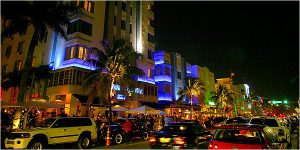
This sounds eerily familiar … with the issue of foreign accents. In a classic “art imitating life” scenario, this was depicted in a favorite movie from the 2003 film Love Actually; imagine an average guy in England who is only perceived as average in every respect; but “take his talents to South Beach” – a metonym for any US City – and he is a Superstar. See this in the following VIDEO excerpt:

VIDEO – Colin goes to Wisconsin – https://youtu.be/pHqhAnguYJ0

Posted Dec 20, 2011 – Funny if you ever have been there with a foreign accent.

Those with genius-qualifiers only need to go somewhere else, where their “genius” is better appreciated and in demand – thus our Caribbean Brain Drain. These ones are lulled to these alternate markets and we push them away; thusly the identified Push and Pull factors are at play. (Where are the destinations for the Caribbean Brain Drain? See the answers in Appendix C below).

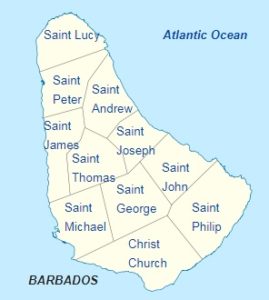
Consider the contrast at the beginning of this commentary, where ancient cultures dissuaded their people to leave because they were needed at home. But now, our Caribbean people are “pushed and pulled” out of our homeland so they can avail themselves with better opportunities; (i.e Barbados has a long list of “stars” that have left and thrived in their foreign abodes).

It’s time for a change; to do better … right here at home, to better appreciate and better utilize these brains – yes, we can.

This was the original motivation of the Go Lean book: to reboot the 3 vital societal engines (economics, security, governance) so that our young geniuses could find opportunities right here. The book provides 370 pages of details on how to spur such a turnaround, a reboot. First, it identified that new community ethos (attitudes and values) have to be adopted; then we must execute new strategies, tactics and implementations to elevate the societal engines. In fact, there is an actual advocacy for this purpose in the Go Lean book; see here some of the specific plans, excerpts and headlines from Page 27, entitled:

10 Ways to Foster Genius

1 Lean-in for the Caribbean Single Market Confederation Treaty: Caribbean Union Trade Federation (CU)
The CU treaty allows for the unification of the region into one market, thereby creating a single economy of 30 member-states 42 million people and a GDP of over $800 Billion. The CU assumes a mission of working with educational and youth agencies to identify and foster “genius” in our society, as early as possible. Geniuses are different from everyone else, although they maybe fairly easy to spot, defining exactly what makes one person a genius is a little trickier. Some researchers & theorists argue that the concept of genius is too limiting and doesn’t really give a full view of intelligence; they feel that intelligence is a combination of many factors; thereby concluding that genius can be found in many different abilities and endeavors. The CU posits that any one person can make a difference and positively impact their society; so the community ethos of investment in this specially identified group, geniuses, would always be a worthwhile endeavor.
2 Starting Early – “HeadStart”

One researcher that tried to provide a more complete view of intelligence is Psychologist Howard Gardner; his theory of Multiple Intelligences (MI) [6], identified eight types of intelligence or abilities: musical – rhythmic, visual – spatial, verbal-linguistic, logical – mathematical, bodily – kinesthetic, interpersonal, intrapersonal and naturalistic. He later suggested that “existential or moral” intelligence may also be worthy of inclusion (not in this book). Many parents and educators feel that these categories more accurately express the strengths of different children, for which the CU will implement HeadStart-like programs (academies, camps, e-Learning schemes and mentorships) to foster the early development of participants.

3 Anti-Bullying Campaign – “Revenge of the Nerds”

As is usually the case with young children, genius abilities usually stand-out from peer groups and can therefore render one child to ridicule from others. At times, this behavior leads to extreme bullying. The series of movies “Revenge of the Nerds” have become classic in depicting the adolescent struggles of this reality; (some researchers credit the first movie – 1984 – for a drop in US girls pursuing technical careers) [18]. The CU classifies “bullying” as domestic terrorism; while no adult-style interdiction is intended, the community ethos of “saying NO to bullies”, goes far in fostering future innovators.

4 Genius Definition 1: Linguistic
5 Genius Definition 2: Logical-Mathematics
6 Genius Definition 3: Musical, Sound, Rhythm
7 Genius Definition 4: Bodily-Kinesthetic-Body Movement Control
8 Genius Definition 5: Spatial – Shapes/Figures Aptitude
9 Genius Definition 6: Interpersonal – Other People’s Feelings – Leadership
10 Genius Definition 7: Intrapersonal and Naturalistic – Self-Awareness

So where are the Brains? Unfortunately, not right here at home! Even though the Good Lord blessed these Caribbean lands – islands and coastal states – with equality in the proportion of genius people and passion – just like other lands.

There are simply not enough opportunities here. Alas, this is now a crisis and a “crisis is a terrible thing to waste” – so here comes change!

The points of effective, technocratic stewardship to foster geniuses and genius expressions in our communities have been further elaborated upon in these previous blog/commentaries:

https://goleancaribbean.com/blog/?p=19180 Katherine Johnson – RIP – Mathematics Genius & Role Model
https://goleancaribbean.com/blog/?p=17992 What Went Wrong? Losing the Best; Nation-building with the Rest
https://goleancaribbean.com/blog/?p=17561 Hip-Hop Genius – Grand Master Flash
https://goleancaribbean.com/blog/?p=16698 The Genius, Legend and Legacy of Bob Marley
https://goleancaribbean.com/blog/?p=11787 Caribbean Roots of Bruno Mars – Genius with the Power of Endurance
https://goleancaribbean.com/blog/?p=10609 The Caribbean Roots of the Cast of ‘The Fresh Prince of Bel-Air’
https://goleancaribbean.com/blog/?p=9948 The Caribbean Roots of a Classic Hollywood Star: Sammy Davis, Jr.

Take my talents to South Beach” – Famous exhortation from Basketball Great Lebron James in Summer 2010.

This declaration should not be necessary anymore. We must foster the proper environment right here to develop genius abilities – like in Sports – and to monetize it – thusly creating local/regional opportunities. Yes, we can …

Let’s get started! Let’s examine the full catalog of this series on Brain Drains and see what more we can do.

We must make this examination; we much take stock of what we have and who we have; we must make the effort to better develop our most valuable assets, our people. This is how we can make our homeland a better place to live, work and play.  🙂

About the Book
The book Go Lean…Caribbean serves as a roadmap for the introduction and implementation of the technocratic Caribbean Union Trade Federation (CU), for the elevation of Caribbean society – for all member-states. This CU/Go Lean roadmap has these 3 prime directives:

  • Optimization of the economic engines in order to grow the regional economy to $800 Billion & create 2.2 million new jobs.
  • Establishment of a security apparatus to ensure public safety and protect the resultant economic engines.
  • Improve Caribbean governance to support these engines, including a separation-of-powers between the member-states and CU federal agencies.

The Go Lean book provides 370-pages of turn-by-turn instructions on “how” to adopt new community ethos, plus the strategies, tactics, implementations and advocacies to execute so as to reboot, reform and transform the societal engines of Caribbean society.

Download the free e-Book of Go Lean … Caribbean – now!

Who We Are
The movement behind the Go Lean book – a non-partisan, apolitical, religiously-neutral Community Development Foundation chartered for the purpose of empowering and re-booting economic engines – stresses that reforming and transforming the Caribbean societal engines must be a regional pursuit. This was an early motivation for the roadmap, as pronounced in the opening Declaration of Interdependence (Pages 12 – 13):

xi. Whereas all men are entitled to the benefits of good governance in a free society, “new guards” must be enacted to dissuade the emergence of incompetence, corruption, nepotism and cronyism at the peril of the people’s best interest. The Federation must guarantee the executions of a social contract between government and the governed.

xvi. Whereas security of our homeland is inextricably linked to prosperity of the homeland, the economic and security interest of the region needs to be aligned under the same governance. Since economic crimes … can imperil the functioning of the wheels of commerce for all the citizenry, the accedence of this Federation must equip the security apparatus with the tools and techniques for predictive and proactive interdictions.

xix. Whereas our legacy in recent times is one of societal abandonment, it is imperative that incentives and encouragement be put in place to first dissuade the human flight, and then entice and welcome the return of our Diaspora back to our shores. This repatriation should be effected with the appropriate guards so as not to imperil the lives and securities of the repatriated citizens or the communities they inhabit. The right of repatriation is to be extended to any natural born citizens despite any previous naturalization to foreign sovereignties.

xxi. Whereas the preparation of our labor force can foster opportunities and dictate economic progress for current and future generations, the Federation must ensure that educational and job training opportunities are fully optimized for all residents of all member-states, with no partiality towards any gender or ethnic group. The Federation must recognize and facilitate excellence in many different fields of endeavor, including sciences, languages, arts, music and sports. This responsibility should be executed without incurring the risks of further human flight, as has been the past history..

xxiv.  Whereas a free market economy can be induced and spurred for continuous progress, the Federation must install the controls to better manage aspects of the economy: jobs, inflation, savings rate, investments and other economic principles. Thereby attracting direct foreign investment because of the stability and vibrancy of our economy.

Sign the petition to lean-in for this roadmap for the Caribbean Union Trade Federation.

—————-

Appendix A – Could a ‘brain drain’ hit the U.S.?

Sub-title: When a country’s educated or entrepreneurial citizens leave all at once, the phenomenon is called “human capital flight” or “brain drain”.

By: Scotty Hendricks

  • Brain drain is a terrible phenomenon with a long and ignoble history.
  • Recently, it has occurred in several countries that were doing well even a few years ago.
  • Can it happen here?

Many of us who have ever dared to complain about the place we live in have heard the juvenile rebuttal “If you don’t like it, why don’t you leave?” As it turns out, sometimes people take that advice. When a country’s educated, intelligent, or entrepreneurial citizens take the advice all at once, the phenomenon is called “human capital flight” or “brain drain”.

Brain drain is pretty bad, and governments will go to great lengths to prevent it. Despite this, it can happen for many reasons almost anywhere.

How does it start?
As with all cases of emigration, there are push factors causing people to want to leave their countries, such as instability, political oppression, or lack of economic opportunity, and pull factors drawing them towards another country, such as better job opportunities, freedom, or political stability.

Often, the idea that the promise of lower taxes elsewhere is pulling all the talent out of one country and into another is proposed as the cause of brain drain by political leaders. The jury is still out on whether this is a significant factor for most people who do leave one country for another. Some papers say it is an important issue; others argue it isn’t.

What effects does it have on an economy?
That question is surprisingly difficult. It stands to reason that losing all your skilled workers at once would be devastating to an economy and a there is evidence to support that idea. It has been shown, however, that not all the effects are negative and that some countries benefit from sending their skilled workers elsewhere then hoping for remittances.

In any case, nobody likes to read headlines about all the educated people leaving the country in a hurry, and most societies consider brain drain to be dangerous.

Where have brain drains happened?
Turkey is currently suffering a bout of human capital flight as the wealthy, talented, and educated rush for the exits. This has been caused by many factors, not the least of which is the increasing authoritarianism of President Erdogan and the mismanagement of the economy under his ever increasing control. This is particularly interesting because, until recently, the Turkish economy had been doing well. It shows how a country’s fortunes can turn around in a hurry given the right events.

Venezuela offers a similar case, with the well documented ‘Bolivarian diaspora’. This exodus, initially limited to the wealthy and well educated but now including members of the lower and middle classes, was at first driven by the revolutionary administration of Hugo Chavez and its heavy-handed, socialistic tendencies. After his death and the collapse of the Venezuelan economy, the number of people leaving skyrocketed as living conditions deteriorated.

Sometimes the causes and results of brain drain are even written into history. As right-wing political movements came to power in 1930s Europe, many famous intellectuals got out as fast as they could. Thinkers like Albert EinsteinEnrico Fermi, and Niles Bohr all took their brilliance to the United States where they could safely live and work. Later, East Berlin had such a bad brain drain problem that they built a wall to stop it. You might have heard of it.

What about America? Can it happen here?
Technically, America has brain drain already, but between different regions rather than to other countries.

Rural flight, the tendency for people living in rural areas to move to the cities, has been going on for a century now. The Great Plains region is particularly hit by this, with a long history of population declines and the exodus of young people.

Not to be outdone, the Rust Belt is also suffering from a loss of people and talent. This flight has been caused by many things including poor governance, a lack of economic opportunities, and the pull factor of other regions that are experiencing much faster growth.

However, on the national scale, the United States is still seeing a net influx of talented, well-educated individuals. There is a recognized problem in holding onto the students who come to the US for an education and then return to their home countries rather than stay and work here, but that is another issue. Some scientists and innovators have left the US as a result of recent policies, but these emigrants are still few in number.

However, as the examples of how quickly human capital flight can start show us, the risk is always there, and some problems could start driving the talented to greener pastures if they are aggravated. The American middle class is poorer than that of several other countries, including Canada and Australia. The poor in Europe are better off than the American poor. Our healthcare costs more and delivers less. Politically, well, things aren’t great when a third of the population thinks a civil war is imminent.
Is the U.S. at risk for a brain drain? Not right now, but the risk is always there. As the cases of Turkey, Germany, and Venezuela show us, it can take as little as a few difficult years to start the process. As the world becomes increasingly interconnected, and migration between different continents becomes ever more practical, the ability for anybody to pack up and move to greener pastures is enhanced. While things are going well right now, history shows us how quickly things can change.

See the related VIDEO below.

Source: Posted January 10, 2019; retrieved February 26, 2020 from: https://bigthink.com/politics-current-affairs/american-brain-drain

———-

Appendix B VIDEO – How immigrants and their children affect the US economy | Robert Kaplan – https://youtu.be/ZL7MOpMpjRQ

Big Think
Posted Jul 26, 2018 – Slowing workforce growth can affect American GDP growth unless we focus on skills training and immigration reform, says Robert Steven Kaplan, the President and CEO of the Federal Reserve Bank of Dallas. Without immigrants, our workforce would not expand, he argues, based on the fact that immigrants have made up more than half of the workforce growth in the United States in the last 20 years.

———————————————————————————-

New videos DAILY: https://bigth.ink Join Big Think Edge for exclusive video lessons from top thinkers and doers: https://bigth.ink/Edge

———————————————————————————-

Robert Steven Kaplan
Robert S. Kaplan is president and chief executive of the Federal Reserve Bank of Dallas. Previously, he was the Senior Associate Dean for External Relations and Martin Marshall Professor of Management Practice in Business Administration at Harvard Business School. He is also co-chairman of Draper Richards Kaplan Foundation, a global venture philanthropy firm, as well as chairman and a founding partner of Indaba Capital Management. Before joining Harvard in 2005, Kaplan was vice chairman of the Goldman Sachs Group with responsibilities for Global Investment Banking and Investment Management.

He has written several books on leadership and goal development, including ‘What You’re Really Meant To Do: A Road Map For Reaching Your Unique Potential’ published by Harvard Business Review Press. You can read his most recent essay here.

—————-

Appendix C – Where the Brains Are … literally

A large number of Caribbean people live abroad. They live in places like the US, Canada, the UK and Europe. We have previously published blog-commentaries that examined the destinations of the Caribbean Diaspora. The full series is as follows:

  1. 10 Things We Want from the US and 10 Things We Do Not Want
  2. 10 Things We Want from Canada and 10 Things We Do Not Want
  3. 10 Things We Want from the UK and 10 Things We Do Not Want
  4. 10 Things We Want from Europe and 10 Things We Do Not Want
Share this post:
, , , ,

Guyana Diaspora – Not the Panacea

Go Lean Commentary

It is Election Time in Guyana … March 2, 2020.

What are the issues at stake?

  • Some say the economy;
  • For some, it is security-public safety issues.
  • All vested parties, conclude that better governance is a universal requirement; see the Appendix VIDEO for local insights.
  • Whatever the motivation, everyone is being urged to vote the issues, and not race (Afro-Guyanese –vs- Indo-Guyanese) nor political legacy.

There are many factors in Guyana that need addressing; this beautiful Caribbean country on the South American mainland is one of the worse for the societal abandonment problem. See this chart here – from a previous blog-commentary – which shows that 89% of the college-educated population has fled this homeland:

Guyana therefore has a large Diaspora … abroad.

Could the strategy for reforming and transforming Guyana simply be The Diaspora?

This is the assertion of one of the candidates for President of Guyana, Dr. Irfaan Ali; see this news story here about a recent political rally:

Title: Ali plans to get Diaspora involved in every aspect of national development
Sub-title: Speaking at his party’s rally on Sunday in Stewartville, Mr. Ali said the diaspora should not be ignored and he has no problem with those who have dual citizenship.

The Presidential Candidate for the People’s Progressive Party, Irfaan Ali, believes that members of the Diaspora could play a meaningful role in Guyana development and a government under his watch would include the diaspora in every aspect of decision making in Guyana.

Speaking at his party’s rally on Sunday in Stewartville, Mr. Ali said the diaspora should not be ignored and he has no problem with those who have dual citizenship.

“You are a born Guyanese and you have a right here and we love you and this is your home. We are going to aggressively involve the Diaspora in every aspect of national life and development, they must come back and work and be part of the future”, Ali told his supporters at the large rally.

Ali also released a menu of development plans for the Region 3 area that he intends to put in place if he wins the upcoming elections.

He said the West Demerara will see a superhighway and a new fixed bridge across the Demerara River with improved health and educational facilities under his leadership.

Mr. Ali also promised to do more to assist the farmers of Region 3.

The Region 3 residents were also told that revenues from the oil and gas sector will trickle down to them, with training and jobs being made available.

Ali who also lives in the West Demerara area believes the residents of the region must continue to support his party to ensure development of their communities.

Source: Posted & retrieved February 10, 2020 from: https://newssourcegy.com/news/ali-plans-to-get-diaspora-involved-in-every-aspect-of-national-development/

Don’t get it twisted, the Diaspora has not been, is not currently nor will they ever be the panacea for what ills Guyana. Plus the [majority of the] Diaspora is not even listening to this appeal from the home country. So calling out to them is a waste of Guyana’s time and the Diaspora’s time.

This is a constant message from the movement behind the 2013 book Go Lean…Caribbean. This was well communicated in a series of previous blogs on this same subject, for one Caribbean country after another:

The Diaspora – of all Caribbean countries – never listens to the appeals of their former homelands. Alas, Barbados [Guyana] is not the first to waste time, talent and treasuries to engage their Diaspora and urge them to come back and/or to invest in the homeland.

This quest has been pursued throughout the Caribbean world. Yet the failures has been loud.

Why? Because they – the Diaspora – are gone!

Yes, there is this preponderance for governments (and citizenry alike) in the region to pursue this same Diaspora strategy. [Since] the calendar year of 2017, we published a number of commentaries on this Caribbean pre-occupation, with these entries relating these homelands:

The Diaspora is not the panacea, or cure-all, for the Caribbean ills.

There is a rhyme-and-reason for why a strategy of depending on the Diaspora fails every time:

The troubling flaw for the Diaspora strategy is that the expectation is that these people who have left ‘here” will now turnaround and fix what is broken here. [But] this is a fallacy!

Rather than a strategy to “Invite the Diaspora to Remember Us”, there needs to be a Way Forward with strategies, tactics and implementations to elevate the societal engines of the Caribbean so that people do not have to leave in the first place.

Why do people leave?

The reasons have been identified as “Push and Pull”:

Push” refers to people who feel compelled to leave, to seek refuge in a foreign land. “Refuge” is an appropriate word; because of societal defects, many from the Caribbean must leave as refugees – think LGBTDisabilityDomestic-abuseMedically-challenged – for their life, liberty and pursuit of happiness.

Pull”, on the other hand refers to the lure of a more prosperous life abroad; many times our people are emigrating based on a mirage of “greener pastures”; many times, this is elusive for the first generations.

It is far better to mitigate these “Push and Pull” factors; this would dissuade our people from leaving in the first place.

These words here are different than what the political candidates are promising for the Guyana March 2, 2020 Poll. Why?

The approach is different!

Guyana’s political establishment is proud of their independence status – one of the first in the British West Indies to secure this status. The Go Lean book, on the other hand, serving as a roadmap for a Way Forward, declares that this country went down the wrong road, that the key to success for Guyana is not independence, but rather it must be interdependence. The problems in Guyana are “too big for Guyana alone” to assuage, they need confederated solutions with their regional neighbors, who are all “in the same boat”.

This Go Lean roadmap is the Way Forward for Guyana.

The Go Lean book, serving as a roadmap for the introduction of the Caribbean Union Trade Federation (CU), asserts that the panacea for Guyana is not the Diaspora, but rather the strategies, tactics and implementations of this regional construct. The quest of this CU charter is not CariCom or the “Caribbean Community”. No, we are advocating for something better. We are advocating for economic empowerments, a regional security apparatus to optimize public safety and justice standards for all stakeholders – citizens, visitors and trading partners – and a technocratic regional governance.

How do we go about elevating these 3 vital societal engines (economics, security, governance)? Throughout the 370 pages of the Go Lean book, the details are provided as turn-by-turn directions on how to adopt new community ethos (attitudes and values), execute new strategies, tactics and implementations. These will reboot Guyana … and the other CariCom member-state on the Guiana Platte (Suriname). In fact, this actual advocacy in the Go Lean book contains specific plans, excerpts and headlines here from Page 240, entitled:

10 Ways to Impact The Guianas

1 Lean-in for the Caribbean Single Market Confederation Treaty: Caribbean Union Trade Federation (CU)
The CU will allow for the unification of the region into one market, thereby creating a single economy of 30 member-states for 42 million, including the independent states of Guyana and Suriname. Other territories that made up The Guianas region include French Guiana, Spanish Guiana (today, the Guayana Region comprises three of the federal States of Venezuela: Amazonas, Bolívar, Delta Amacuro), and Portuguese Guiana (Brazil’s State of Amapa). On the CU roadmap, annexations will be explored in Year 5; French Guiana is ideal candidate, but not the Venezuelan and Brazilian regions. But there is the immediate need for foreign policy synchronizations with these other states for common pool resources and regional threats.
2 Trading Partners based on Nature not Politics
3 Homeland Security Pact – Assurance of Economic Engines
4 Disaster Planning, Preparation & Response
5 Caribbean Dollar and the Caribbean Central Bank

The CU Treaty allows the Caribbean Central Bank (CCB) to manage the monetary policy of the Caribbean Dollar, in place of the Guyanese Dollar or Suriname Dollar for global trade (supplanting US$). The independent-professional management will assuage devaluation risks while garnering the benefits of money multiplier. The C$ will be pegged to a basket of currencies, including the US dollar, Euro, British pound, so as to maximize value in the international markets.

6 Emigration Circuit Breaker

Some chronic problems related to economic progress has been the shortage of skilled labor and a deficient infrastructure. The CU seeks to offer an alternative to citizens abandoning the region for EU or US shores. A diverse, well-managed economy of 42 million people, rather than the minimal 700,000 of Guyana alone and 540,000 of Suriname, offer more options to assuage pressures for Guianian talent fleeing. The whole CU can provide solutions to contend with the scarcity of skilled labor, innovation deficits, and financial risks in social pension systems.

7 Extraction of Natural Resources
8 Tourism Collective Bargaining
9 Financial Receivership
10 Host Country Entitlements

Guyana has had some encroachments of Failed-State status in the recent past; (plus the dire straits of Venezuela next door). Their societal engines are so deficient that they now have one of the highest suicides rates in the world. This is not a proud legacy to boast, but rather an emphatic cry for help. Here comes help!

In fact, the dire status and issues of “Guiana Region” has been detailed in many previous blog-commentaries; consider this sample list here:

https://goleancaribbean.com/blog/?p=17691 ‘Free Market’ Versus … Socialism – Very Prevalent in the Caribbean
https://goleancaribbean.com/blog/?p=16172 A Lesson in History: Jonestown, Guyana
https://goleancaribbean.com/blog/?p=13299 Making a ‘Pluralistic Democracy’ – Respecting Diwali
https://goleancaribbean.com/blog/?p=12581 State of the Union – Annexation: French Guiana
https://goleancaribbean.com/blog/?p=12098 Inaction on Venezuela: A Recipe for ‘Failed-State’ Status
https://goleancaribbean.com/blog/?p=5396 ‘Significant’ oil deposit found offshore Guyana
https://goleancaribbean.com/blog/?p=2602 Guyana and Suriname Wrestle With High Rates of Suicides

So for the March 2, 2020 election, we urge the citizens of Guyana to vote early and often; just know that your Diaspora will probably have a small turn-out, (for those that are eligible from their foreign abodes). Do not waste time, talent and treasuries trying to engage this population. These one have left; support the ones who are still there and engaging their civil duty.

As related in a previous blog-commentary – A Change is Gonna Come – this Chinese proverb is apropos:

“Make happy those who are near, and those who are far will come”.

A change will come to Guyana. We urge the stakeholders there to hold-on and hold-out for the reformations and transformations that will come, either with the General Election on March 2, 2020 or soon thereafter with the Go Lean roadmap. We urge all Guyana stakeholders and Caribbean stakeholders alike to lean-in to this Go Lean roadmap … to do the heavy-lifting of elevating our regional society and making our homelands better places to live, work and play.  🙂

About the Book
The book Go Lean…Caribbean serves as a roadmap for the introduction and implementation of the technocratic Caribbean Union Trade Federation (CU), for the elevation of Caribbean society – for all member-states. This CU/Go Lean roadmap has these 3 prime directives:

  • Optimization of the economic engines in order to grow the regional economy to $800 Billion & create 2.2 million new jobs.
  • Establishment of a security apparatus to ensure public safety and protect the resultant economic engines.
  • Improve Caribbean governance to support these engines, including a separation-of-powers between the member-states and CU federal agencies.

The Go Lean book provides 370-pages of turn-by-turn instructions on “how” to adopt new community ethos, plus the strategies, tactics, implementations and advocacies to execute so as to reboot, reform and transform the societal engines of Caribbean society.

Download the free e-Book of Go Lean … Caribbean – now!

Who We Are
The movement behind the Go Lean book – a non-partisan, apolitical, religiously-neutral Community Development Foundation chartered for the purpose of empowering and re-booting economic engines – stresses that reforming and transforming the Caribbean societal engines must be a regional pursuit. This was an early motivation for the roadmap, as pronounced in the opening Declaration of Interdependence (Pages 12 – 13):

xi. Whereas all men are entitled to the benefits of good governance in a free society, “new guards” must be enacted to dissuade the emergence of incompetence, corruption, nepotism and cronyism at the peril of the people’s best interest. The Federation must guarantee the executions of a social contract between government and the governed.

xvi. Whereas security of our homeland is inextricably linked to prosperity of the homeland, the economic and security interest of the region needs to be aligned under the same governance. Since economic crimes … can imperil the functioning of the wheels of commerce for all the citizenry, the accedence of this Federation must equip the security apparatus with the tools and techniques for predictive and proactive interdictions.

xxiv. Whereas a free market economy can be induced and spurred for continuous progress, the Federation must install the controls to better manage aspects of the economy: jobs, inflation, savings rate, investments and other economic principles. Thereby attracting direct foreign investment because of the stability and vibrancy of our economy.

Sign the petition to lean-in for this roadmap for the Caribbean Union Trade Federation.

—————

APPENDIX VIDEO – This Week in 60 Minutes … – https://youtu.be/baIzuIIatx0

Peoples Progressive Party/Civic
Posted February 8, 2020

Share this post:
, ,
[Top]

An Ode to Miami – Not A Temporary Stop for ‘Us’

Go Lean Commentary

Survivor: Outwit. Outplay. Outlast. 

This expression is more than just the tagline advertising for the television show ‘Survivor’; it is also the historic summary of Caribbean people in the metropolitan areas of Miami, Florida.

Over the years, decades and centuries, this city has been the home to a lot of different groups of people – think Miccosukee & Seminole Indians, Spanish Explorers, Slave Traders, Blockade Evaders, Railroad Barons, Rum-runners, Treasure seekers, Snowbirds, Latin American political refugees, Colombian Drug Smugglers and those seeking refuge from them. All of these people have come and gone – Miami was a temporary stop-over for them! But another group to have come over the years have been Caribbean immigrants …

… they have never left. Consider:

After 4 years of observing-and-reporting, by the movement behind the book Go Lean … Caribbean, it is time now for us to move on from our temporary stop-over in Miami, while we return to our Caribbean homeland. So we say:

Ode or “goodbye” to the City of Miami and the surrounding metropolitan areas.

While “we” leave to return to the Caribbean, we recognize that all the other Caribbean exiles living there are NOT leaving; it is not temporary for them; it is now Home. These ones are entrenched and embedded in Miami society. In fact, Miami society is now based on this demographic and Miami’s success is due to their success. See the Census figures here:

Miami-Dade Country Demographics – 2010 U.S. Census Ethnic/Race Demographics:[34][35]

In 2010, the largest ancestry groups were:[34]

Source: Retrieved August 21, 2019 from: https://en.wikipedia.org/wiki/Miami-Dade_County,_Florida#Demographics

This is sad but true! The Caribbean Diaspora in Miami is NOT going anywhere. Despite the many others that have come and gone, these ones have outwitted, outplayed and outlasted everyone else. They are the winning Survivors! (See Appendix VIDEO sample below of the highlights from one Season of the TV Show Survivor).

This reality is in contrast to the goals and ideals of the Go Lean movement. Our quest is to:

We accept now: Miami is NOT just a temporary stop for many Caribbean people. So we have to make the best of this reality. This is what we have done. The publishers of the Go Lean book have “observed and reported” on Miami’s eco-system and published many lessons-learned from previous blog-commentaries. Consider this sample:

https://goleancaribbean.com/blog/?p=17848 Forging Change from Miami – ‘That’s What Friends Are For’
https://goleancaribbean.com/blog/?p=14732 ‘Red Letter Day’ for Cubans in Miami – Raul Castro Retires
https://goleancaribbean.com/blog/?p=14556 Observing Change in Miami … with Guns
https://goleancaribbean.com/blog/?p=13720 Miami’s Caribbean Marketplace Revisited
https://goleancaribbean.com/blog/?p=13677 Economics of ‘South Beach’ (Miami Beach)
https://goleancaribbean.com/blog/?p=13105 Fixing Haiti – Can the Diaspora be the Answer?
https://goleancaribbean.com/blog/?p=13040 Jamaican Diaspora – Not the ‘Panacea’
https://goleancaribbean.com/blog/?p=12834 Hurricane Andrew – 25 Years of History from Miami’s Worst Hurricane
https://goleancaribbean.com/blog/?p=11006 Funding and Learning from the Russell Family Memorial – RIP
https://goleancaribbean.com/blog/?p=10910 Jazz in Miami Gardens – Lessons Learned
https://goleancaribbean.com/blog/?p=9897 Art Walk Miami – Its a ‘Real Thing’ in Wynwood
https://goleancaribbean.com/blog/?p=6760 Miami’s Lesson in ‘Garbage’ for the Caribbean
https://goleancaribbean.com/blog/?p=5921 Learning from Miami’s ‘Bad’ Impact Analysis of a Community Investment
https://goleancaribbean.com/blog/?p=3662 Caribbean Migrant flow into US spikes
https://goleancaribbean.com/blog/?p=3292 Art Basel Miami – A Testament to the Spread of Culture
https://goleancaribbean.com/blog/?p=2547 Miami’s Success versus Caribbean Failure
https://goleancaribbean.com/blog/?p=798 Lessons Learned from Miami and the American Airlines merger

So if the Caribbean Diaspora cannot be expected to leave Miami, what is our hope for this population in their future interactions with the Caribbean:

While this is not the ideal, it is what it is, but we must still make the most of this situation. This assessment was begrudgingly accepted in the Go Lean book. An advocacy is presented there with the title 10 Ways to Impact the Diaspora (Page 217). These “10 Ways” include the following highlights, headlines and excerpts:

1 Lean-in for the Caribbean Single Market & Economy initiative: Caribbean Union Trade Federation (CU).

This treaty allows for the unification of the region into one market, thereby expanding to an economy of 30 countries, 42 million people and a GDP of over $800 Billion (according to 2010 figures). In addition to expanding the economic activity within the region, the CU mission is also to empower the Caribbean Diaspora, believed to amount to be an additional 6 million people in 1996 (and 8 – 10 million today); residing in North America and Europe (Appendix EA on Page 267), to facilitate their development and investment back to their “home” territory. The CU’s mission is to incentivize repatriation of the Diaspora, their time (impacting family reunification), talents (reversing brain drain) and treasuries (optimizing remittances by facilitating cheaper transfers – see Appendix ED on Page 270).

2 Remittances

Remittances, in this case, refer to transfers of money by foreign workers to their home Caribbean country. Money sent home by migrants, using Western Union and competitors, constitutes the second largest financial inflow, (after the country’s primary exports) for many developing countries. CU remittances, $9 Billion in 2010, contribute to economic growth and in several Caribbean countries, they account for near or more than 10% of GDP. (See Appendix EB on Page 268).

3 Brain Drain
4 Education

With the incontrovertible evidence, no doubt, the study abroad model has failed the Caribbean, as many students never returned to the region. The CU therefore advocates e-Learning solutions for in-country tertiary education. The CU will impact this industry by facilitating libraries throughout the region with internet (desktop, tablet/e-Reader) access, and the proliferation of Wi-Fi in urban and suburban areas.

5 Diasporic Exports
6 Media Consumption
7 Health Risk – See Mitigation Model in Appendix R on Page 300
8 Security Risks
9 Retirement/Entitlement

The CU will administer foreign policies of negotiating with host countries of the Diaspora to allow them [(Diaspora members)] to repatriate and still receive their Entitlement benefits (Pension, Health, Veterans). The key is to elevate the facilities to a first rate level.

10 Real Estate Investment Trusts (REIT)

Inviting the Diaspora back to the Caribbean region does not mean returning to their original houses. The CU will foster advanced products for evolving housing development and funding needs with REITs, Co-ops and Mixed-use structures. REITs, trade-able on stock exchanges are excellent investment vehicles as the underlying asset is sound, real estate.

The Go Lean book doubles-down on the concept that Diaspora members are stakeholders for the Caribbean future. We may have missed out on their full contribution to our society, but we can still “exploit” them with supply-and-demands dynamics.

(Yet, there is caution not to build too much expectation that the Diaspora would be some savior for Caribbean society – they did leave after all; many not considering their former homelands at all. See this warning to Barbados, Jamaica, Dominica, Bahamas, St. Lucia and Grenada)

So, farewell Miami! You have been the epitome of an immigrant community – everyone from somewhere else, especially from the Caribbean. You have proven that while pluralistic democracies are heavy-lifting, they can have success … after some endurance, patience and adoption of universal respect.

Miami learned  this lesson the hard way! (Their immigrant communities all separately went through long trains of abuse: rejection, anger, protest, bargaining, toleration and eventual acceptance; only after the appeal to their better nature, did the experience turn to one of celebration).

In our 4 years here, we’ve seen our people outwit, outplay and outlast. We’ve learned the lessons easily, by observing and reporting on the full Miami eco-system. We have looked, listened, learned, lend-a-hand here; now we are ready to go back to the Caribbean … and lead. We can now lead the efforts to make our own homeland a better place to live, work and play.  🙂

About the Book
The book Go Lean…Caribbean serves as a roadmap for the introduction and implementation of the technocratic Caribbean Union Trade Federation (CU), for the elevation of Caribbean society – for all member-states. This CU/Go Lean roadmap has these 3 prime directives:

  • Optimization of the economic engines in order to grow the regional economy to $800 Billion and create 2.2 million new jobs.
  • Establishment of a security apparatus to ensure public safety and protect the resultant economic engines.
  • Improve Caribbean governance to support these engines, including a separation-of-powers between the member-states and CU federal agencies.

The Go Lean book provides 370-pages of turn-by-turn instructions on “how” to adopt new community ethos, plus the strategies, tactics, implementations and advocacies to execute so as to reboot, reform and transform the societal engines of Caribbean society.

Download the free e-Book of Go Lean … Caribbean – now!

Who We Are
The movement behind the Go Lean book – a non-partisan, apolitical, religiously-neutral Community Development Foundation chartered for the purpose of empowering and re-booting economic engines – stresses that reforming and transforming the Caribbean societal engines must be a regional pursuit. This was an early motivation for the roadmap, as pronounced in the opening Declaration of Interdependence (Pages 12 – 13):

xi. Whereas all men are entitled to the benefits of good governance in a free society, “new guards” must be enacted to dissuade the emergence of incompetence, corruption, nepotism and cronyism at the peril of the people’s best interest. The Federation must guarantee the executions of a social contract between government and the governed.

xvi. Whereas security of our homeland is inextricably linked to prosperity of the homeland, the economic and security interest of the region needs to be aligned under the same governance. Since economic crimes … can imperil the functioning of the wheels of commerce for all the citizenry, the accedence of this Federation must equip the security apparatus with the tools and techniques for predictive and proactive interdictions.

xix. Whereas our legacy in recent times is one of societal abandonment, it is imperative that incentives and encouragement be put in place to first dissuade the human flight, and then entice and welcome the return of our Diaspora back to our shores. This repatriation should be effected with the appropriate guards so as not to imperil the lives and securities of the repatriated citizens or the communities they inhabit. The right of repatriation is to be extended to any natural born citizens despite any previous naturalization to foreign sovereignties.

xx. Whereas the results of our decades of migration created a vibrant Diaspora in foreign lands, the Federation must organize interactions with this population into structured markets. Thus allowing foreign consumption of domestic products, services and media, which is a positive trade impact. These economic activities must not be exploited by others’ profiteering but rather harnessed by Federation resources for efficient repatriations.

xxiv. Whereas a free market economy can be induced and spurred for continuous progress, the Federation must install the controls to better manage aspects of the economy: jobs, inflation, savings rate, investments and other economic principles. Thereby attracting direct foreign investment because of the stability and vibrancy of our economy.

Sign the petition to lean-in for this roadmap for the Caribbean Union Trade Federation.

————–

Appendix VIDEO – SURVIVOR Borneo – Moments In History – https://youtu.be/55qPFFvN2dY


Outwit Outplay Outlast

Published on Jan 11, 2016

SURVIVOR Borneo, Season 1

0:03 Rudy and Rich Bond
1:10 Rat Feast
2:26 Nature Phone
3:17 Family Video
5:07 Snakes and Rats

PLAYLIST: https://www.youtube.com/playlist?list…

SUBSCRIBE: https://www.youtube.com/c/OutwitOutpl…

Used for entertainment [and educational] purposes only. The property and rights for this video/audio go to ©CBS.

Share this post:
, ,
[Top]

What Went Wrong? Losing the Best; Nation-building with the Rest

“The one walking with the wise will become wise, but the one who has dealings with the stupid will fare badly”. – The Bible – Proverbs 13:20 NWT

There is no doubt that our Caribbean communities are suffering from a bad case of societal abandonment. Everyone in the Caribbean knows someone that has left. In fact, whenever there is a colleague we know from the hometown that is skilled and competent, we would expect them to leave and be disappointed if they have not; see this dramatized in the Appendix VIDEO; caution for Strong Language.

Search your heart, you know it to be true. That Valedictorian from High School, if he/she is still in the Caribbean, you are puzzled right?
This is our dilemma!

If/when all the best students leave, the remnant only reflect the rest – Less Than best students.

One Caribbean country – The Bahamas – has been faced with this reality. As their Brain Drain rate gets worse and worse, they are now measuring the academic performance of the remaining students, and the grade is bad:

‘D’ Average.

See the full news article here:

Title: Results Expose Failing Schools
By: Khrisna Russell, Deputy Chief Reporter
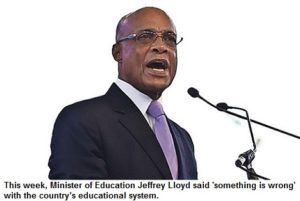
A DAY after Education Minister Jeff Lloyd said “something is wrong” with the country’s educational system, officials withheld an official subject letter grade breakdown for the Bahamas General Certificate of Secondary Education examination results, which also show that of 6,692 students who sat the national tests this year, only 521 or 7.8 per cent, scored a C or above in mathematics, English and a science subject.

This is about a nine per cent decrease compared to last year.

This lack of detailed BGCSE statistics raises questions over how students fared in individual test subjects and highlights challenges this country faces regarding the readiness of youth to adjust to life after high school where they are expected to transition into the work force or college.

However, sources within the Ministry of Education told The Tribune this year’s test scores did not depart greatly from the dismal grade trends seen in both 2015 and 2016.

On Wednesday Mr Lloyd told educators during an event in Grand Bahama that they could not continue to rest on their laurels while the national exam results remain at a D average.

“For the last 10 years or more, the BGCSE results have shown not (any) improvement; we started out with a D, we are still at a D – something is wrong,” the minister said during the Ministry of Education’s annual Teachers’ Enrichment Day. The event was held at the Jack Hayward High School gymnasium on Wednesday.

He continued: “There is no way to camouflage it; there is no way to excuse it; something is wrong and we must fix it.”

He went on to stress the only way the issue could be corrected was to go back to the beginning and start with preschoolers.

In 2015, core subjects of mathematics and English averaged an E and D+ respectively. In 2016, the ministry did not release letter grades per subject, but then Minister of Education Jerome Fitzgerald confirmed at the time that the grades were not much different from those of 2015.

Prior to 2015, subject letter grades were released with the official BGCSE and Bahamas Junior Certificate (BJC) exam tests scores. The following year, the ministry broke away from its traditional analysis, only giving a general overview and percentage calculations per letter grade. This year, the Ministry of Education also did not hold its usual press conference to officially release the results, this time opting to disseminate the details of the tests by email.

Results
“In 2017, a total of 521 candidates received at least a grade C or better in mathematics, English language and a science,” the press release accompanying the 2017 results noted. “This represents a decrease of 9.23 per cent when compared to 2016 which had a total of 574 candidates. There were 570 candidates in 2015; 588 in 2014 and 561 candidates in 2013.”

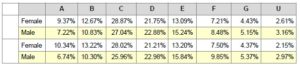
According to the new results, there were 2,141 As; 3,000 Bs; 7,065 Cs; 5,569 Ds; 3,496 Es; 1,936 Fs; 1,184 Gs and 710 Us for the BGCSE exams.

Regarding the number of students who sat these tests, there were 6,692, or a 3.95 per cent increase compared to the 6,438 test takers in 2016.

A further breakdown of the results showed in 2017, a total of 1,493 candidates obtained a minimum grade of D in at least five subjects. This represents an increase of 2.33 per cent from 2016, which had a total of 1,459 candidates.

There were also 1,534 candidates achieving this mark in 2015; 1,545 in 2014 and 1,626 in 2013.

In addition, a total of 880 candidates received at least grade C in five or more subjects in 2017 compared with 903 candidates in 2016.

This represents a decrease of 2.55 per cent. There were 961 candidates in 2015; 922 candidates in 2014 and 996 in 2013 in this category.

The Bahamas Junior Certificate (BJC) examination results were not much different when compared with the BGCSE test scores.

Of the 12,120 students who took the tests in 2017, only 1,326 or 10.94 per cent of candidates achieved at least a C in mathematics, English and a science.

“This represents a 14.67 per cent decrease when compared with 2016, which had a total of 1,554 candidates. There were 1,479 candidates in 2015; 1,651 candidates in 2014 and 1,302 candidates in 2013,” the Ministry of Education said in its press release.

The BJC results also show there were 3,831 As; 7,033 Bs; 9,395 Cs; 8,036 Ds; 6,036 Es; 4,508 Fs; 2,954 Gs and 2,565 Us.

“When compared with 2016, there is a percentage decrease noted at grades A, C, E and U and increases at B, D, F and G. It is interesting to note that this is the second consecutive year the percentage at U has decreased.

“Overall, the percentage of candidates achieving grades A – D decreased this year when compared with last year,” the Ministry of Education said.

Source: Posted August 31, 2017; retrieved July 29, 2019 from: http://www.tribune242.com/news/2017/sep/01/results-expose-failing-schools/

While this article is from 2017; an except of the full Ministry of Education Report (MOE) for the 2017-2018 Academic Year is also hereby attached in Appendix below. This commentary is hereby published during mid-summer 2019; so we only have analysis based on that 2018 report. See a related news article on the latest MOE Report from September 3, 2018:

Title: Exam Passes Down Again
By: Khrisna Russell, Deputy Chief Reporter
STUDENTS who took the Bahamas General Certificate of Secondary Education (BGCSE) examinations performed marginally worse this year [2018] in comparison with those who took the national tests in 2017.

See the full article here: Retrieved July 29, 2019 from: http://www.tribune242.com/news/2018/sep/04/exam-passes-down-again/

This has not always been the case. What Went Wrong?

Simple: This grade is an average!

In the past, there were better students in the Bahamian educational eco-system. If you total all of those test scores and divide by the count, you get the average. If you then take away all the higher earners and calculate the average again, the result is an even lower average score. Repeat this process again and again and the overall average lowers.

Welcome to the ‘D’ Grade Reality. This is indicative that the best-of-the-best have left, are leaving and unless something is done, will continue to leave.

(“An apple doesn’t fall far from a tree”; so most good students have children that are good students; most bad students rarely have children that are good students. This is Nature and Nurture).

This commentary completes the July series from the movement behind the book Go Lean…Caribbean. This submission follow through on the theme “What Went Wrong?“, focuses on Caribbean defects and dysfunctions in every aspect of Caribbean life; many which have been addressed and remediated by other societies – think North America and Europe yes, but even Asian communities. So this creates the pressure of Push and Pull, in which our people leave to seek refuge in those places.

While this is entry 6-of-6, the full catalog were published as follows:

  1. What Went Wrong? Asking ‘Why’ is Important
  2. What Went Wrong? ‘We’ never had our war!
  3. What Went Wrong? ‘7 to 1’ – Caribbean ‘Less Than’
  4. What Went Wrong? ‘Be our Guest’ – The Rules of Hospitality
  5. What Went Wrong? Failing the Lessons from Infrastructure 101
  6. What Went Wrong? Losing the Best; Nation-building with the Rest

Though the foregoing news article cites the Bahamas, the experience of falling test scores have befallen all Caribbean communities. In this What Went Wrong series, we did not only detail the timelines of the faults and breaks, but also drew reference to the need for a comprehensive roadmap for reforming and transforming the Caribbean region – all member states, individually and collectively. So the solutions here-in are for the Bahamas and the rest of the region.

The problems of failing Caribbean education scores are too big for any one member-state alone, we would need the leverage of the whole Caribbean neighborhood – despite the language, race, colonial heritage or political structure – to forge the change and solutions.

Forge the change and solutions?
The Go Lean movement (book and previous blog-commentaries) asserts that technology, Internet Communications Technology (ICT) in fact – can be the great equalizer in education solutions so that smaller countries can compete with larger ones worldwide.  Imagine, right on our islands, coastal shores, rural settlements, barrios and ghettos, our students can have the best-of-the best for instruction, knowledge base, tutorials and reference sources.

Yes, we can … correct What Went Wrong in our Caribbean education evolution with these different strategies, tactics and implementations. See how this theme was developed and presented in these previous blog-commentaries:

Title: Future Focused – Personal Development and the Internet – November 8, 2017

“I believe that children are the future; teach them well and let them lead the way”.

That is just a song; but this is life.

  • What is the hope for the Caribbean youth to be transformed in their development compared to past generations?
  • What transformations are transpiring in the region that shows willingness for the people and institutions to embrace the needed change?

In 2017, a focus on the future for young people must also consider “cyber reality” and/or the Internet. This consideration is embedded in the Go Lean roadmap. In fact, the book presents the good stewardship so that Internet & Communications Technologies (ICT) can be a great equalizing element for leveling the playing field in competition with the rest of the world. …

The Go Lean book presents the plan to deploy many e-Learning provisions so as to deliver on the ICT promise in educating our Caribbean youth. The book references the roles and responsibilities of e-Learning in many iterations; this shows the Future Focus of the Go Lean roadmap; …

The future – of electronic learning systems – is now! The technology is ready and the Caribbean youth is ready. We only need to deploy the delivery models to allow our students to matriculate online. See the profile of this American company that is currently available:

http://www.k12.com/

———–

Title: Future Focused – College, Caribbean Style – November 10, 2017

A huge step in making [distance learning] happen occurred with the development of the personal computer and the Internet. It took a while for modem technology to gain use in distance learning, but once it did, online educational platforms started popping up all over the place, first by connecting private computers directly, but later on the Internet. Add in the benefits of updated teleconferencing technologies, and it’s no wonder that six million postsecondary students take at least one fully online class every year.

Related:

————

Title: Managing the ‘Strong versus the Weak’ – Lower Ed. –  April 27, 2017
(Avoiding the bad American example)

We need more e-Learning options in our Caribbean homeland, for all education levels: K-12 and college. There are many successful models and best practices to adopt. We are in position to pick, choose and refuse products and services from all our foreign trading partners, including from the US. (We must assuredly avoid their societal defects).

One successful model is “iReady”  [used by Miami-Dade Country School District].

The purpose of the Go Lean movement is not education, rather it is presenting a roadmap to reform and transform the societal engines (economics, security and governance) of the Caribbean. We must reboot to stop the Brain Drain. But education is important! Education is directly related to economics. See how this theme was developed in many previous Go Lean commentaries; see a sample list here:

https://goleancaribbean.com/blog/?p=16882 Exploring Medical School Opportunities … as Economic Engines
https://goleancaribbean.com/blog/?p=15543 Ross University Relocation Saga: There Goes Economy and Jobs
https://goleancaribbean.com/blog/?p=13952 Welcoming the Caribbean Intelligentsia: Educated Economists Role
https://goleancaribbean.com/blog/?p=6269 Education & Economics: Welcome Mr. President
https://goleancaribbean.com/blog/?p=4487 Role Model FAMU – No. 3 for Facilitating Economic Opportunity
https://goleancaribbean.com/blog/?p=1433 Caribbean loses over 70 percent of tertiary educated to Brain Drain

All of the Caribbean feature societal defects and dysfunctions. A lot went wrong! Now that we have diagnosed that, we can better prescribe remedies.

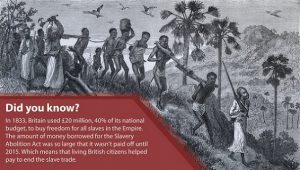
We cannot go back in time and correct the Caribbean Bad Start – associated with slavery and colonialism – we can only go forward from here and weed out the bad community ethos; then adopt the good ones, plus strategies, tactics and implementations that we need to reboot society.

Yes, we can.

This is the assertion of the movement behind the Go Lean…Caribbean book and the resultant roadmap. So we urge all Caribbean stakeholders to lean-in to this roadmap to make our homeland a better place to live, work, learn and play. 🙂

About the Book
The book Go Lean…Caribbean serves as a roadmap for the introduction and implementation of the technocratic Caribbean Union Trade Federation (CU), for the elevation of Caribbean society – for all member-states. This CU/Go Lean roadmap has these 3 prime directives:

  • Optimization of the economic engines in order to grow the regional economy to $800 Billion and create 2.2 million new jobs.
  • Establishment of a security apparatus to ensure public safety and protect the resultant economic engines.
  • Improve Caribbean governance to support these engines, including a separation-of-powers between the member-states and CU federal agencies.

The Go Lean book provides 370-pages of turn-by-turn instructions on “how” to adopt new community ethos, plus the strategies, tactics, implementations and advocacies to execute so as to reboot, reform and transform the societal engines of Caribbean society.

Download the free e-Book of Go Lean … Caribbean – now!

Who We Are
The movement behind the Go Lean book – a non-partisan, apolitical, religiously-neutral Community Development Foundation chartered for the purpose of empowering and re-booting economic engines – stresses that reforming and transforming the Caribbean societal engines must be a regional pursuit. This was an early motivation for the roadmap, as pronounced in the opening Declaration of Interdependence (Pages 12 – 13):

xi. Whereas all men are entitled to the benefits of good governance in a free society, “new guards” must be enacted to dissuade the emergence of incompetence, corruption, nepotism and cronyism at the peril of the people’s best interest. The Federation must guarantee the executions of a social contract between government and the governed.

xvi. Whereas security of our homeland is inextricably linked to prosperity of the homeland, the economic and security interest of the region needs to be aligned under the same governance. Since economic crimes … can imperil the functioning of the wheels of commerce for all the citizenry, the accedence of this Federation must equip the security apparatus with the tools and techniques for predictive and proactive interdictions.

xxiv. Whereas a free market economy can be induced and spurred for continuous progress, the Federation must install the controls to better manage aspects of the economy: jobs, inflation, savings rate, investments and other economic principles. Thereby attracting direct foreign investment because of the stability and vibrancy of our economy.

Sign the petition to lean-in for this roadmap for the Caribbean Union Trade Federation. 

————-

Reference: The Ministry of Education submits the results of the 2018 Bahamas Junior Certificate (BJC) and the Bahamas General Certificate of Secondary Education (BGCSE) examinations.

Excerpts:

… The national examinations are all graded on a seven (7) point scale, i.e., High-Up: A – Lowest of the low: G – all grades indicate a measure of positive achievement. Grade ‘A’ denotes the highest level of performance while grade ‘G’ denotes the lowest level. …

BGCSE Grade Outcome Statistics

Females continue to outperform males receiving higher percentages at A – C and lower percentages at E – U. Males outperformed females at D. It is interesting to note that females increased in percentage at grades A and B this year while males decreased in performance at A – C. It is unfortunate that males also increased in percentage at grades E – G. Positively, both males and females decreased in percentage at U.

See full report at this: https://www.bahamaslocal.com/files/BJC%20&%20BGCSE%202018%20Results.pdf posted August 2018; retrieved Bahamas Ministry of Education; July 29, 2019.

————-

Appendix VIDEO – Good Will Hunting | ‘The Best Part of My … (HD) – Ben Affleck, Matt Damon | MIRAMAX – https://youtu.be/Xv7eeMikM_w

Miramax

Published on Dec 15, 2015 – Chuckie (Ben Affleck) gives Will (Matt Damon) a friendly dose of reality.
In this scene: Will (Matt Damon), Chuckie (Ben Affleck)
About Good Will Hunting:
The most brilliant mind at America’s top university isn’t a student; he’s the kid who cleans the floors. Will Hunting is a headstrong, working-class genius who is failing the lessons of life. After one too many run-ins with the law, Will’s last chance is a psychology professor, who might be the only man who can reach him. Finally forced to deal with his past, Will discovers that the only one holding him back is himself.
Starring, in alphabetical order: Ben Affleck, Casey Affleck, Matt Damon, Minnie Driver, Cole Hauser, Stellan Skarsgård, Robin Williams
About Miramax:
Miramax is a global film and television studio best known for its highly acclaimed, original content.
Visit Miramax on our WEBSITE: https://www.miramax.com/ Good Will Hunting | ‘The Best Part of My Day’ (HD) – Ben Affleck, Matt Damon | MIRAMAX
Share this post:
, , , ,
[Top]

Is the US a ‘Just’ Society? Hardly! – ENCORE

People want to live in a just society.

So many Caribbean people have fled their ancestral homelands in search of refuge in foreign lands, like the US. If our expatriates are seeking a more just society, then they will be sadly disappointed with the American experience.

Ah, the American legal system! So many courts – County, Circuit, District, Appeals and Supreme – and yet justice is so elusive. One population groups gets too much mercy and one population group gets too much punishment.

Is there any doubt as to which population group gets what treatment? White people get the privilege, while the Black-and-Brown gets the shaft.

These are not just my words alone. Consider these anecdotes.

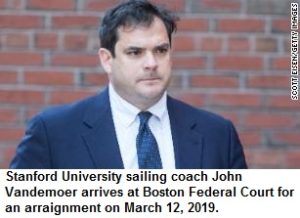
First, we have the sentencing – yesterday June 13, 2019 – of John Vandemoer, the Stanford sailing coach who confessed to racketeering charges in connection with the college entrance scam. He will serve no time in prison. He is White. See the full story here:

Title: Former Stanford sailing coach gets no prison time in the college admissions scam
By:
Mark Morales, CNN
Former Stanford sailing coach John Vandemoer will serve no time in prison in connection with the college entrance scam. He is the first among 50 people charged in connection with the scheme to be sentenced.
Vandemoer was sentenced to two years supervised release and a $10,000 fine. He must spend the first six months of the sentence in home detention with electronic monitoring, Massachusetts Judge Rya Zobel said.

Vandemoer pleaded guilty to conspiracy to commit racketeering for arranging bribes of $110,000 and $160,000 to the sailing program and then designating two applicants, who had no sailing experience, as sailing recruits, according to his criminal complaint.

Neither student completed the application process, university officials said.

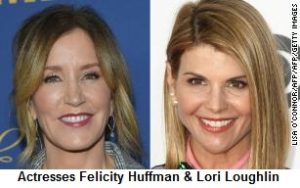
The 50 people charged in the scam include coaches, parents, and members of mastermind William Rick Singer‘s inner circle, who were arrested in connection with the scandal in March.

“Mr Vandemoer is probably the least culpable,” Judge Zobel said during sentencing. “They (the others charged) took money for themselves. He did not do that. All the money he took went directly to the sailing program.”

Assistant US Attorney Eric Rosen had recommended a 13-month prison sentence for Vandemoer, arguing that it would help deter others in powerful university positions from similar crimes and that punishment would help restore confidence in the admission system.

“His actions not only deceived and defrauded the university that employed him, but also validated a national cynicism over college admissions by helping wealthy and unscrupulous applicants enjoy an unjust advantage over those who either lack deep pockets or are simply unwilling to cheat to get ahead,” Rosen wrote in a sentencing memorandum filed on June 7.

Vandemoer’s attorney, Robert Fisher, wrote to Judge Zobel in a memorandum on Friday that he should get probation and not a prison sentence, arguing that he didn’t pocket any of the money, didn’t take any money from the university and that this was his only instance of bad judgement.

“Mr. Vandemoer failed in one instance to live up to the high expectations he sets for himself,” Fisher wrote. “He fully accepts responsibility for his mistake. Mr. Vandemoer is determined to make amends for this mistake move on with his life and continue to provide for his family.”

Just two days before Vandemoer’s sentencing, Stanford University officials submitted a victim impact statement which details how Vandemoer, who traded his slots reserved for student-athletes for bribes, has damaged the university.

“Mr. Vandemoer’s actions in this matter are profoundly disappointing and especially so as he had a reputation of caring deeply for his student-athletes,” said Debra Zumwalt, vice president and general counsel for Stanford University in a statement.

The impact statement charged that Vandemoer and Singer not only undermined the public’s trust in the college admissions process, but also cost the university valuable time and money dealing with the fallout from the federal investigation.

Stanford fired Vandemoer the very same day he plead guilty.

“I spent my life trying to be a good, moral person and here, I made a mistake,” Vandemoer said when given a chance to address the court Wednesday.

The former coach apologized to the school, alumni, the sailing team and his family and friends.

“I deserve all of this. I caused it and for that I’m deeply ashamed.”

A third student was identified by the university as having worked with Singer and Vandemoer to get admitted into Stanford, university officials said. That student’s admission was rescinded and their credits were vacated, according to the impact statement.

Stanford officials previously said the Key Worldwide Foundation, Singer’s sham charity, contributed a total of $770,000 to the sailing program in the form of three separate gifts.

That money, Zumwalt said in the statement, was considered tainted, and university officials are working with the California Attorney General to donate that money for the public’s good.

“Stanford does not wish to benefit in any way from Mr. Vandemoer’s conduct,” Zumwalt said.

Twenty-seven letters of support for Vandemoer were sent to Judge Zobel, all pleading for leniency.

“I must say they are an extraordinary group of letters … that speak of the person they love and support,” Judge Zobel said during sentencing. “That is highly unusual in this setting.”

Vandemoer’s wife, Molly Vandemoer, wrote about how the former university sailing coach found a therapist shortly after his firing and is working toward his MBA as a way to put his life back together.

“I know he made a mistake,” Molly wrote. “I know it is extremely costly to his livelihood, to our family, etc. But I know he will never do something like this again.”

Clinton Hayes, once Vandemoer’s top assistant, became the interim head of the sailing team after the coach was fired by the university. Hayes wrote about how Vandemoer put student athletes first, letting them skip out on sailing meets for valuable internships or important trips, something he said spoke to the coach’s selflessness.

“John truly cared that everyone of our student athletes left Stanford a better person and productive member of society…” Hates wrote. “John always did what was right for each individual.”

Other letters came from former students, parents, and other family members.

———-

CNN’s Theresa Waldrop contributed to this report.
Source: Retrieved June 14, 2019 from: https://www.cnn.com/2019/06/11/us/college-admissions-scandal-john-vandemoer/index.html

Just 1 day in prison … Wow!

The defendant in this case gets 1 day in jail, time served, and a 13-month suspended sentence – a “slap on the wrist” for a crime that undermines the entire US college admissions integrity.

At the other end of the spectrum, there is the treatment of Black defendants in the court system. According to this previous blog-commentary by the movement behind the book Go Lean…Caribbean, Black people are usually sentenced for longer jail-time by judges whose political affiliation is associated with the Republican Party.

See the Encore of that full blog-commentary here:

————

Go Lean Commentary – ‘Time to Go’ – Blacks get longer sentences from ‘Republican’ Judges

“Tell me who your friends are and I will tell you who you are” – Old Adage

This Old Adage was drummed in me as a youth; I may have wanted to question its validity, but time has proven its accuracy. As humans, we are affected by the people we associate with; their values, principles, character, aspirations – or lack thereof – will have an effect on us. This statement even harmonizes with the Bible scripture at 1 Corinthians 15:33, which states:

“Bad companions ruin good character.” – Today’s English Version

This commentary highlights a disturbing trend in American jurisprudence; it turns out that among judges that associates with the conservative political parties or the liberal political parties, one group consistently sentences Black defendants to longer prison sentences. This is indicative of more than just the tolerance of criminality; this shows some hidden bias, that severely endangers the Black populations in America. These judges, despite claims of non-partisanship, are affected by their party.

Say it ain’t so!

The party with the harsher sentences is the Republican Party or GOP (for Grand Old Party).

Sometimes, we need to step back and look at the whole picture before we can notice trends and leanings. This is the common sense in the old expression: “One cannot see the forest for the trees”. This was the purpose of a study on judicial bias; it looked at a range of 500,000 cases to summarize its findings. Intelligence and wisdom can be gleaned from this data.

The numbers – and conclusions – must not be ignored. See the full story here:

Title: Black Defendants Get Longer Sentences From Republican-Appointed Judges, Study Finds
By: Adam Liptak

WASHINGTON — Judges appointed by Republican presidents gave longer sentences to black defendants and shorter ones to women than judges appointed by Democrats, according to a new study that analyzed data on more than half a million defendants.

“Republican-appointed judges sentence black defendants to three more months than similar nonblacks and female defendants to two fewer months than similar males compared with Democratic-appointed judges,” the study found, adding, “These differences cannot be explained by other judge characteristics and grow substantially larger when judges are granted more discretion.”

The study was conducted by two professors at Harvard Law School, Alma Cohen and Crystal S. Yang. They examined the sentencing practices of about 1,400 federal trial judges over more than 15 years, relying on information from the Federal Judicial Center, the United States Sentencing Commission and the Transactional Records Access Clearinghouse at Syracuse University.

Douglas A. Berman, an authority on sentencing law at Ohio State University, said the study contained “amazing new empirical research.”

“It’s an extraordinarily important contribution to our statistical understanding of sentencing decision making in federal courts over the last two decades,” he said.

It has long been known that there is an overall racial sentencing gap, with judges of all political affiliations meting out longer sentences to black offenders. The new study confirmed this, finding that black defendants are sentenced to 4.8 months more than similar offenders of other races.

It was also well known, and perhaps not terribly surprising, that Republican appointees are tougher on crime over all, imposing sentences an average of 2.4 months longer than Democratic appointees.

But the study’s findings on how judges’ partisan affiliations affected the racial and gender gaps were new and startling.

“The racial gap by political affiliation is three months, approximately 65 percent of the baseline racial sentence gap,” the authors wrote. “We also find that Republican-appointed judges give female defendants two months less in prison than similar male defendants compared to Democratic-appointed judges, 17 percent of the baseline gender sentence gap.”

The two kinds of gaps appear to have slightly different explanations. “We find evidence that gender disparities by political affiliation are largely driven by violent offenses and drug offenses,” the study said. “We also find that racial disparities by political affiliation are largely driven by drug offenses.”

The authors of the study sounded a note of caution. “The precise reasons why these disparities by political affiliation exist remain unknown and we caution that our results cannot speak to whether the sentences imposed by Republican- or Democratic-appointed judges are warranted or ‘right,’” the authors wrote. “Our results, however, do suggest that Republican- and Democratic-appointed judges treat defendants differently on the basis of their race and gender given that we observe robust disparities despite the random assignment of cases to judges within the same court.”

The study is studded with fascinating tidbits. Black judges treat male and female offenders more equally than white judges do. Black judges appointed by Republicans treat black offenders more leniently than do other Republican appointees.

More experienced judges are less apt to treat black and female defendants differently. Judges in states with higher levels of racism, as measured by popular support for laws against interracial marriage, are more likely to treat black defendants more harshly than white ones.

The Trump administration has been quite successful in stocking the federal bench with its appointees, and by some estimates the share of Republican appointees on the federal district courts could rise to 50 percent in 2020, from 34 percent in early 2017.

The study said these trends were likely to widen the sentencing gaps.

“Our estimates suggest that a 10 percentage point increase in the share of Republican-appointed judges in each court would increase the racial sentencing gap by approximately 5 percent and the gender sentencing gap by roughly 2 percent,” the authors wrote. “During an average four-year term, a Republican president has the potential to alter the partisan composition of the district courts by over 15 percentage points, potentially increasing the racial and gender sentencing gap by 7.5 and 3 percent, respectively.”

There are a couple of reasons to question that prediction. The Trump administration has been more energetic in appointing appeals court judges than trial judges. And in recent years many conservatives have started to shift positions on sentencing policy. The very scope of the study, which considered sentences imposed from 1999 to 2015, could mask trends in the later years.

Supreme Court justices like to say that partisan affiliation plays no role in judicial decision making.

“There’s no such thing as a Republican judge or a Democratic judge,” Justice Neil M. Gorsuch, President Trump’s Supreme Court appointee, said at his confirmation hearing last year. “We just have judges in this country.”

Political scientists have disagreed, finding that Republican appointees are markedly more likely to vote in a conservative direction than Democratic ones. Senate Republicans, by refusing to hold hearings for Judge Merrick B. Garland, President Barack Obama’s Supreme Court nominee, seemed to agree.

So has Mr. Trump. “We need more Republicans in 2018 and must ALWAYS hold the Supreme Court!” he tweeted in March.

But judicial ideology is one thing. The race and gender gaps identified by the new study present a different and difficult set of questions.

Professor Berman said the study should prompt both research and reflection. “It only begins a conversation,” he said, “about what sets of factors really influence judges at sentencing in modern times.”

Follow Adam Liptak on Twitter: @adamliptak.

Source: New York Times – published May 28, 2018; retrieved June 26, 2018 from: https://www.nytimes.com/2018/05/28/us/politics/black-defendants-women-prison-terms-study.html

This article alludes to a stereotype; one where women are sentenced lighter, but Blacks harsher. This stereotype transcends the entire history of the United States … right up to this day. The more things change, the more they remain the same!

This commentary continues the series on Time to Go, considering the reality for life of the Caribbean’s Black-and-Brown population in the US. This entry is Number 10 in this series from the movement behind the book Go Lean … Caribbean which started in September 2016 with the first 6 issues. Now, this revisit, this commentary, examines a disturbing trend with the sentences of federal court judges; these ones are appointed by the President of the United States. Needless to say, Presidents appoint judges that reflect and respect their values – it’s a natural expectation that they would have the same (virtual) association. So “we” can tell a lot about federal judges, just by knowing which President appointed them.

These were the 2016 submissions in this series:

  1. Time to Go: Spot-on for Protest
  2. Time to Go: No Respect for our Hair
  3. Time to Go: Logic of Senior Immigration
  4. Time to Go: Marginalizing Our Vote
  5. Time to Go: American Vices; Don’t Follow
  6. Time to Go: Public Schools for Black-and-Brown

Now, we consider these 5 new entries along that same theme:

  1. Time to Go: Windrush – 70th Anniversary
  2. Time to Go: Mandatory Guns – Say it Ain’t So
  3. Time to Go: Racist History of Loitering
  4. Time to Go: Blacks Get Longer Sentences From ‘Republican’ Judges
  5. Time to Go: States must have Population Increases

All of these commentaries relate to Caribbean people and their disposition in foreign lands – in this case in the US – and why they need to Go Back Home. Surely, it is obvious and evident that institutional racism is “Alive & Well” in the US. We can and must do better at home. The Go Lean book – available to download for free – serves as a roadmap for the technocratic Caribbean Union Trade Federation (CU) to assuage the societal defects in this region. It is “out of scope” for our movement to fix America; our efforts to reform and transform is limited to the Caribbean.

‘Republican’ Judges???

This is as opposed to Democratic Judges! Yes, this is a reference to specific political parties in the US. Yet, we are not making these assessments with any political leaning. Rather, this movement behind the Go Lean book and blogs, the SFE Foundation, is an apolitical organization with no favoritism for one political party over the other. In fact, the first 6 commentaries in this Time to Go series were published during the presidential administration of Barack Obama, a Democrat.

The subject of Optimized Criminal Justice is a failing for all previous presidential administrations – though Blacks lean more to the Democrats – see/listen to the AUDIO-Podcast in the Appendix below. This is a familiar theme for this Go Lean commentary. This movement have consistently related the lack of respect for those in America fitting the Black-and-Brown description; consider these prior submissions:

https://goleancaribbean.com/blog/?p=14627 Cop-on-Black Shootings – In America’s DNA
https://goleancaribbean.com/blog/?p=14413 Repairing the Breach: Hurt People Hurt People
https://goleancaribbean.com/blog/?p=8202 Lessons Learned from American Dysfunctional Minority Relations
https://goleancaribbean.com/blog/?p=8200 Climate of Hate for American Minorities
https://goleancaribbean.com/blog/?p=7221 Street naming for Martin Luther King unveils the real America
https://goleancaribbean.com/blog/?p=5527 American Defects: Racism – Is It Over?
https://goleancaribbean.com/blog/?p=4863 Video of Police Shooting: Worth a Million Words
https://goleancaribbean.com/blog/?p=4447 Probe of Ferguson, Missouri shows cops & court bias
https://goleancaribbean.com/blog/?p=546 Book Review – ‘The Divide’ – Injustice in the Age of the Wealth Gap
https://goleancaribbean.com/blog/?p=341 Hypocritical US slams Caribbean human rights practices

It is a dangerous proposition to be Black in America. This is why this movement consistently urges the Black-and-Brown of the Caribbean to Stay Home! In fact, The Bahamas urged its majority Black population (and the young men) to exercise extreme caution when traveling to the US and dealing with police authorities. There is no doubt that the America of Old – would have been no place for Caribbean people to seek refuge. But now we are asserting that the disposition is still the same:

  • Our Black-and-Brown Diaspora should plan to repatriate back to the Caribbean
  • While our young people, in the homeland, who plan to prosper where planted rather than setting their sights on American shores.

Despite the fact that this society – modern America – is still no place for Black-and-Brown Caribbean people to seek refuge, all 30 member-states of the region continue to suffer from an abominable brain drain rate – one report proclaims 70 percent – in which so many Caribbean citizens have emigrated to the US (and other places). We must resist this bad trend! How?!

  • Good messaging
  • Heavy-lifting to reform and transform the societal engines

The Go Lean book identifies the reasons why people abandon their homeland as “push and pull”. While the “push” refers to the societal defects that people take refuge from, the “pull” is mostly due to messaging. Our people perceive that the US is better for them, and that landing in the US is the panacea – cure-all – for all societal short-comings. Good messaging will mitigate that trend. Yet, still, we must do the hard work for fixing our society.

The Go Lean book asserts that it is easier for the Black-and-Brown populations in the Caribbean to prosper where planted in the Caribbean, rather than in the United States. Plus, we need these people’s help to reform and transform our society. We need some to lead, and some just to follow. We need some to produce, and some just to consume. We need growth! So abandonment is counter-productive.

This is the quest of the Go Lean/CU roadmap. The book presents 370 pages of instructions for how to reform and transform our Caribbean member-states. It stresses the key community ethos that needs to be adopted, plus the strategies, tactics, implementations and advocacies necessary to optimize the societal engines in a community. The CU/Go Lean roadmap has these 3 prime directives for optimizing our societal engines:

As related in this blog series, it is Time to Go! We have a better chance of optimizing our society in the Caribbean for our Black-and-Brown majority populations than the US will do for our people; we can actually be better than America. Just look, their distinguished judges are still adjudicating like its 1868, and not 2018. America has gone “2 steps forward and 1 step backwards”.

Now is the Time to Go and now is the time to lean-in to this Go Lean/CU roadmap. This quest is conceivable, believable and achievable. Yes, we can … reform and transform our society. We can make our homeland a better place to live, work and play. 🙂

Download the free e-Book of Go Lean … Caribbean – now

Sign the petition to lean-in for this roadmap for the Caribbean Union Trade Federation.

————–

AUDIO Podcast – Why Did Black Voters Flee The Republican Party In The 1960s? – https://www.npr.org/sections/codeswitch/2014/07/14/331298996/why-did-black-voters-flee-the-republican-party-in-the-1960s


Posted July 14, 2014 – If you’d walked into a gathering of older black folks 100 years ago, you’d have found that most of them would have been Republican.

Wait… what?

Yep. Republican. Party of Lincoln. Party of the Emancipation. Party that pushed not only black votes but black politicians during that post-bellum period known as Reconstruction.

Today, it’s almost the exact opposite. That migration of black voters away from the GOP reached its last phase 50 years ago this week.

Share this post:
, , , ,
[Top]

Caribbean Roots: Grand Master Flash

Go Lean Commentary

Welcome to June!

It’s Caribbean-American Heritage Month.

… unanimously adopted by the House of Representatives on June 27, 2005 in House Congressional Resolution 71, sponsored by Congresswoman Barbara Lee, recognizing the significance of Caribbean people and their descendants in the history and culture of the United States.[14]

LONDON – 1985: DJ Grandmaster Flash aka Joseph Saddler of the rap group “Grandmaster Flash & The Furious Five” performs onstage at Wembley Arena in 1985 in London, England. (Photo by David Corio/Michael Ochs Archives/Getty Images)

It is also Black Music Month.

… initiated … by President Jimmy Carter who, on June 7, 1979, decreed that June would be the month of black music.

In 2009, the commemoration was given its current name by President Barack Obama.[1] In his 2016 proclamation, Obama noted that African-American music and musicians have helped the country “to dance, to express our faith through song, to march against injustice, and to defend our country’s enduring promise of freedom and opportunity for all. “[2]

This commentary is a fusion between these 2 observances.

Most emphatically, Caribbean-American Diaspora has contributed greatly to the Great American Songbook, even for Hip-Hop music. We are referring to one of the original heroes of this all-American musical genre: Joseph Saddler aka Grand Master Flash. Yes, he was born and raised in Barbados and emigrated to the New York metropolitan area at a young age.

Original hero? We are not the only one to conclude this; (plus, see the references in the Appendices below):

Grandmaster Flash and the Furious Five were inducted into the Rock and Roll Hall of Fame in 2007, becoming the first hip hop act to be honored.[1]

VIDEO – Grandmaster Flash and the Furious Five accept and perform Rock Hall Inductions 2007 – https://youtu.be/7tuPWXPd4nI

Rock & Roll Hall of Fame
Published on Sep 23, 2011 –
Grandmaster Flash and the Furious Five accept and perform Rock Hall Inductions 2007

  • Category: Music

Unfortunately, despite our Caribbean being the greatest address on the planet, a report relates that …

“The [Caribbean] region has exported more of its people than any other region of the world since the abolition of slavery in 1834.[3] While the largest Caribbean immigrant sources to the U.S. are Cuba, the Dominican Republic, Jamaica and Haiti, U.S. citizen migrants also come from Puerto Rico and the U.S. Virgin Islands.”

Wow, we got “it” bad, societal abandonment that is!

Imagine if we did a better job of holding on to our citizens. Imagine the world-class contributions and artistic productions. They would have done all that they have done here – maybe even more and better. Talent always finds a way to “break thru”; see photo here:

This theme – the Caribbean heritage of so many movers-and-shakers – aligns with previous commentaries from the movement behind the 2013 book Go Lean…Caribbean; see a sample list here:

https://goleancaribbean.com/blog/?p=16938 Caribbean Roots: Presidential Candidate – Kamala Harris
https://goleancaribbean.com/blog/?p=11787 Caribbean Roots: Bruno Mars … and the Power of Endurance
https://goleancaribbean.com/blog/?p=11442 Caribbean Roots: Al Roker – ‘Climate Change’ Defender
https://goleancaribbean.com/blog/?p=10801 Caribbean Roots: John Carlos – The Man. The Moment. The Movement
https://goleancaribbean.com/blog/?p=10609 Caribbean Roots: Cast of ‘The Fresh Prince of Bel-Air’
https://goleancaribbean.com/blog/?p=10114 Caribbean Roots: Esther Rolle of ‘Good Times’
https://goleancaribbean.com/blog/?p=10015 Caribbean Roots: E. R. Braithwaite, Author of ‘To Sir, With Love’ – RIP
https://goleancaribbean.com/blog/?p=9948 Caribbean Roots: Sammy Davis, Jr.
https://goleancaribbean.com/blog/?p=8724 Caribbean Roots: Pan-African Leader – Marcus Garvey
https://goleancaribbean.com/blog/?p=2726 Caribbean Roots: Fashion Great – Oscar De La Renta – RIP

The Go Lean movement recognizes the Caribbean Roots and artistic contributions of artists like Joseph Saddler aka Grand Master Flash, even in non-traditional art forms like Hip-Hop.  (This makes up the sound track of this writer’s life).

Truth be told, Hip-Hop is now the Number One consumed music genre in the US. Caribbean contributions are hereby acknowledged!

CU Blog - Rock-n-Roll Dethroned by Hip-Hop - Photo 1

Yes, there is power to music; it can urge people to act … and feel … and move. Music can even “soothe the savage beast”.

Yes we can … impact our homeland and impact the world. With music, we can both reach people’s hearts and make them dance. This is one more way to forge change in society! This is why the promotion of music is vital in our quest to elevate Caribbean life and culture. This is one way that we can make our homeland a better place to live, work and play. 🙂

About the Book
The book Go Lean…Caribbean serves as a roadmap for the introduction and implementation of the technocratic Caribbean Union Trade Federation (CU), for the elevation of Caribbean society – for all member-states. This CU/Go Lean roadmap has these 3 prime directives:

  • Optimization of the economic engines in order to grow the regional economy to $800 Billion and create 2.2 million new jobs.
  • Establishment of a security apparatus to ensure public safety and protect the resultant economic engines.
  • Improve Caribbean governance to support these engines, including a separation-of-powers between the member-states and CU federal agencies.

The Go Lean book provides 370-pages of turn-by-turn instructions on “how” to adopt new community ethos, plus the strategies, tactics, implementations and advocacies to execute so as to reboot, reform and transform the societal engines of Caribbean society.

Download the free e-Book of Go Lean … Caribbean – now!

Who We Are
The movement behind the Go Lean book – a non-partisan, apolitical, religiously-neutral Community Development Foundation chartered for the purpose of empowering and re-booting economic engines – stresses that reforming and transforming the Caribbean societal engines must be a regional pursuit. This was an early motivation for the roadmap, as pronounced in the opening Declaration of Interdependence (Pages 12 – 14):

xi. Whereas all men are entitled to the benefits of good governance in a free society, “new guards” must be enacted to dissuade the emergence of incompetence, corruption, nepotism and cronyism at the peril of the people’s best interest. The Federation must guarantee the executions of a social contract between government and the governed.

xxiv. Whereas a free market economy can be induced and spurred for continuous progress, the Federation must install the controls to better manage aspects of the economy: jobs, inflation, savings rate, investments and other economic principles. Thereby attracting direct foreign investment because of the stability and vibrancy of our economy.

xxxii. Whereas the cultural arts and music of the region are germane to the quality of Caribbean life, and the international appreciation of Caribbean life, the Federation must implement the support systems to teach, encourage, incentivize, monetize and promote the related industries for arts and music in domestic and foreign markets. These endeavors will make the Caribbean a better place to live, work and play.

Sign the petition to lean-in for this roadmap for the Caribbean Union Trade Federation.  

——————

Appendix A – Joseph Saddler aka Grandmaster Flash

Joseph Saddler’s family emigrated to the United States from Barbados, in the Caribbean. He grew up in the Bronx in New York City where he attended Samuel Gompers High School, a public vocational school. There, he learned how to repair electronic equipment.[2] Saddler’s parents played an important role in his interest in music. His parents came from Barbados and his father was a big fan of Caribbean and African American records.[3]
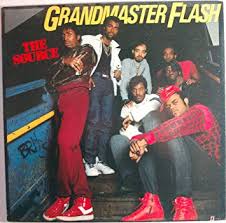
As a child, Saddler was fascinated by his father’s record collection. In an interview, he reflected: “My father was a very heavy record collector. He still thinks that he has the strongest collection. I used to open his closets and just watch all the records he had. I used to get into trouble for touching his records, but I’d go right back and bother them.”[3] Saddler’s early interest in DJing came from this fascination with his father’s record collection as well as his mother’s desire for him to educate himself in electronics.[4] After high school, he became involved in the earliest New York DJ scene, attending parties set up by early luminaries, like DJ Kool Herc.

Source: Retrieved June 4, 2019 from: https://en.wikipedia.org/wiki/Grandmaster_Flash

——————

Appendix B – Induction: Grandmaster Flash and the Furious Five  –  2007  |  Category: Performers

Members:

  • Joseph “Grandmaster Flash” Saddler
  • Melvin “Mele Mel” Glover
  • Nathaniel “The Kidd Creole” Glover Jr.
  • Eddie “Scorpio aka Mr. Ness” Morris
  • Keith “Keef Cowboy” Wiggins
  • Guy “Rahiem” Williams

Summary:
Put simply, Grandmaster Flash and the Furious Five were innovators. Sonically, their new techniques and equipment expanded the sound of hip-hop. Lyrically, their masterpiece “The Message” [see Appendix C below] exposed the dirty underside of a landscape known for partying—and no one saw it coming.

Biography
Grandmaster Flash and the Furious Five fomented the musical revolution known as hip-hop.

Theirs was a pioneering union between one DJ and five rapping MCs. Grandmaster Flash (born Joseph Saddler) not only devised various techniques but also designed turntable and mixing equipment. Formed in the South Bronx, Grandmaster Flash and the Furious Five were one of the first rap posses, responsible for such masterpieces as “The Message,” “Grandmaster Flash on the Wheels of Steel” and “White Lines.” The combination of Grandmaster Flash’s turntable mastery and the Furious Five’s raps, which ranged from socially conscious to frivolously fun, made for a series of 12-inch records that forever altered the musical landscape.

Flash, along with DJ Kool Herc and Afrika Bambaataa, pioneered the art of break-beat deejaying—the process of remixing and thereby creating a new piece of music by playing vinyl records and turntables as if they were musical instruments. Disco-era deejays like Pete “DJ” Jones, an early influence on Grandmaster Flash, spun records so that people could dance. Turntablists took it a step further by scratching and cutting records, focusing on “breaks”—what Flash described as “the short, climactic parts of the records that really grabbed me”—as a way of heightening musical excitement and creating something new.

Flash’s days as a deejay date back to 1974, when he and other deejays who were too young to get into discos began playing at house parties and block parties in their South Bronx neighborhoods. Flash worked briefly with Kurtis Blow, but Cowboy became the first MC to officially join Grandmaster Flash in what would become the Furious Five. Cowboy’s rousing exhortations, including now-familiar calls to party, like “Throw your hands in the air and wave ‘em like you just don’t care!” became essential ingredients of the hip-hop experience.

Grandmaster’s squadron of MCs expanded to include Kidd Creole, Mele Mel, Mr. Ness (a.k.a. Scorpio) and Rahiem, in that order. Mele Mel, one of the most phonetically and rhythmically precise rappers in the genre—and the authoritatively deep voice who delivered the anti-cocaine rap “White Lines”—recalled the early days of hip-hop: “Disco was for adults, and they wouldn’t let the kids in. That forced us to go out on the streets and make our own entertainment.”

Grandmaster Flash and the Furious Five issued their first record, “Superrappin’,” on the Enjoy label in 1979. They then signed to Sylvia Robinson’s New Jersey-based Sugarhill label, where they made the R&B charts with a 12-inch single called “Freedom,” which ran for more than eight minutes. Various combinations of Grandmaster Flash, Mele Mel and the Furious Five placed ten records in the charts during a three-year span from 1980 to 1983. These included Grandmaster Flash’s dizzying turntable showcase, “Grandmaster Flash on the Wheels of Steel,” and the group’s acknowledged masterpiece, “The Message.” The latter offered a series of unflinchingly honest and discomfiting observations about life in the ghetto, with lead rapper Mele Mel returning to the same weary conclusion: “It’s like a jungle sometime, it makes me wonder how I keep from going under.”

As Rolling Stone observed, “’The Message’ was [the first record] to prove that rap could become the inner city’s voice, as well as its choice.” This slice of unvarnished social realism sold half a million copies in a month, topped numerous critics’ and magazines’ lists of best singles for 1982 and cemented Grandmaster Flash and the Furious Five’s place in hip-hop’s vanguard. “I ask myself to this day, ‘Why do people want to hear this?’” Grandmaster Flash wondered of “The Message” in 1988. “But it’s the only lyric-pictorial record that could be called ‘How Urban America Lived.’”

In 1984, disagreements over business matters, including a lawsuit with Sugarhill, caused the group to split into two factions, and their commercial momentum was lost. However, they reunited in 1987 for a charity concert hosted by Paul Simon at Madison Square Garden in New York. The result was another album, On the Strength, released in 1988. On the Strength contained another example of Grandmaster Flash’s turntable genius (“This Is Where You Got It From”) and a history lesson for those who didn’t understand hip-hop’s roots and longevity (“Back in the Old Days of Hip-Hop”). In the ensuing years, Grandmaster Flash and Mele Mel have made records under their own names, and numerous anthologies have been released, including Grandmaster Flash, Mele Mel and the Furious Five: The Definitive Groove Collection.

Inductees: Melvin Glover a.k.a. Mele Mel (vocals; born May 15, 1961), Nathaniel Glover Jr. a.k.a. Kidd Creole (vocals; born February 19, 1960), Eddie Morris a.k.a. Mr. Ness/Scorpio (vocals; born October 12, 1960), Joseph Saddler a.k.a. Grandmaster Flash (turntables; born January 1, 1958), Keith Wiggins a.k.a. Cowboy (vocals; born September 20, 1960, died September 8, 1989), Guy Williams a.k.a. Rahiem (vocals; born February 13, 1963)

Source: Rock & Roll Hall of Fame; posted September 23, 2011; retrieved June 4, 2019 from: https://www.rockhall.com/inductees/grandmaster-flash-and-furious-five
————–
Appendix C VIDEO – Grandmaster Flash & The Furious Five – The Message (Official Video) – https://youtu.be/PobrSpMwKk4


Sugarhill Records

Published on Aug 24, 2015 – 
Download The Message on iTunes – http://hyperurl.co/sgur7n
Stream The Message on Spotify – http://hyperurl.co/92hx5f
Buy The Message on Amazon – http://hyperurl.co/d1jnmy
Follow Grandmaster Flash Website: http://hyperurl.co/8bmdbs
Facebook: http://hyperurl.co/jn3yxq
Twitter: http://hyperurl.co/b31agz
Instagram: http://hyperurl.co/lzisge
Share this post:
, ,
[Top]

Barbados Diaspora – Not the Panacea

Go Lean Commentary

“Come home Bajans …”
“… in 2020”?

This is the campaign challenge to all Barbadian (Bajan) Disapora, to consider coming back to Barbados. For good! (See the story of a sample repatriate/re-patriot in the VIDEO in the Appendix below).

Is this the vision? Yes, this is the hope that is expressed by the island-nation’s Prime Minister:

During her address, the Prime Minister highlighted some of the struggles this country faced in the past and stressed that democracy was a precious gift that must be nurtured and protected, so persons would always have a voice.

She noted that all Barbadians, not only the 300,000 living here but those overseas, must all work together to build the best Barbados.
(See full article below).

But wait, is the Honorable Prime Minister Mia Amor Mottley openly admitting that the country is NOT yet at that destination? But still, she is calling for Bajans to come home.

In all due respect, Madam Prime Minister, “they” are not listening. The Diaspora – of all Caribbean countries – never listens to the appeals of their former homelands. Alas, Barbados is not the first to waste time, talent and treasuries to engage their Diaspora and urge them to come back and/or to invest in the homeland.

This quest had been pursued throughout the Caribbean. Yet the failures has been loud.

Why? Because they – the Diaspora – are gone!

Yes, there is this preponderance for governments (and citizenry alike) in the region to pursue this same Diaspora strategy. During the calendar year of 2017, we published a number of commentaries on this Caribbean pre-occupation, with these entries relating these homelands:

The Diaspora is not the panacea, or cure-all, for the Caribbean ills. This is the assertion of the movement behind the book Go Lean … Caribbean – available to download for free. Why are we so emphatic in this assertion? The troubling flaw for the Diaspora strategy is that the expectation is that these people who have left ‘here” will now turnaround and fix what is broken here. This is a fallacy! This mistake was committed by these previous governments and unfortunately is being pursued anew in Barbados. See the full news article here:

Title: Come Home Bajans In 2020
By: Sharon Austin

Prime Minister Mia Amor Mottley has urged Barbadians living across the world to come home for 2020.

Ms. Mottley made the appeal tonight at the launch of We Gatherin’ Barbados 2020 in Parliament’s Courtyard before a large crowd, including those “watch parties” of Barbadians and friends in Geneva, New York, Beijing, Canada, Washington and Australia.
The Prime Minister told her audience: “Coming together in 2020 isn’t about a single moment in time, but it is about a process. It is about the building of a nation from St. Lucy to St. Philip, from the west coast to the east coast….  2020 must be about defining who we are as that one people, in this one space….

“2020 is that point, ironically, where vision is perfected, but we have a bigger vision ahead of us…. We, as Barbadians, will play that role because we…live in a world that we see changing around us, and by 2030 we want to be that country in the world that…will no longer contribute to the destruction of mother earth,  but that will work to make our placement on this earth carbon neutral.”

Ms. Mottley noted that Barbados was accustomed to excellence and highlighted the island’s lead in cane breeding in the 19th century.  She asked how did the country reach such levels of excellence in so many fields, but failed to tell the story to citizens to inspire them to greater heights, not just here, but in the world.

“So 2020, my friends, is about that conversation…telling our story, sharing our passions, coming home for that inspiration…. 2020 is about making that difference to your old primary school or making that difference to the church that helped nurture you in your parish.  2020 is about families recognizing that time on this earth is way too short and we need to get together a little more,” she explained.

She added that Barbados must be that place where global business must be transacted.

During her address, the Prime Minister highlighted some of the struggles this country faced in the past and stressed that democracy was a precious gift that must be nurtured and protected, so persons would always have a voice.

She noted that all Barbadians, not only the 300,000 living here but those overseas, must all work together to build the best Barbados.

We Gatherin’ is a 12-month global celebration of Barbadian excellence, and a recommitment to this country’s successful future and core values that have defined us as a people.  2020 has been designated as the year for Barbadians and those who love this country to come home, reconnect with family and friends, and invest in the rebuilding and development of Barbados.

The initiative will begin in the north of the island in January 2020, and move southward every month, allowing each designated parish to showcase its icons, social life and the food for which it is renowned.  The parish celebrations will culminate in St. Michael in November, and We Gatherin’ will climax in December in Barbados.

[Author Sharon Austin can be reached at:] sharon.austingill-moore@barbados.gov.bb

Source: Posted February 22, 2019; retrieved April 30, 2019 from: http://gisbarbados.gov.bb/blog/come-home-bajans-in-2020/?fbclid=IwAR1toA1bQXh0epcWWvxGYh2KNdWXjIrCt5-uPHLOZRAa-_csRF9zaIb844Q

This seems so innocent, so practical, yet as a strategy to elevate the Barbadian society, it is so flawed. This was eloquently explained in a previous blog-commentary, as follows:

The premise for the criticism of this Diaspora strategy is that the ones that have fled the region have done so for a reason; they have been “pushed” or “pulled” away from their homeland. They may still love their “past” country, but can only do so much from abroad. Plus, history documents that they are less inclined to invest back in their country; they are burdened with the concerns of today and the future, that it is illogical to think that they are concerned about their yesterdays. Thusly, all efforts to outreach the Diaspora are usually futile. All of these prior commentaries relate this basic truth about catering to the Diaspora:

The subtle [Diaspora outreach] message to the Caribbean population is that they need to leave their homeland, go get success and then please remember to invest in us afterwards.

… It is so unfortunate that the people in the Caribbean are beating down the doors to get out of their Caribbean homeland, to seek refuge in these places like the US, Canada and Western Europe. … As a result, we have such a sad state of affairs for our Caribbean eco-system as we are suffering from a bad record of societal abandonment.

Thank you, all Diaspora members that have looked back and lent a hand, but the heavy-lifting of reforming and transforming our society must really come from the people who are in the homeland and in the region. For starters, we must try to dissuade people from leaving in the first place and help them to prosper where planted. The record shows that those who do leave, tend to be the ones that we can least afford to lose. These include the professional classes and highly educated ones; one report presents an abandonment rate of 70 percent of the college-educated populations.

Picture a family with limited food supply, serving dinner and “making extra plates” for family members who have left or passed. This would be illogical. We need to be more pragmatic and work a different strategy to assuage our crisis. We need a strategy that embraces those who are still here, not those that “used to be”.

So the problem of a Diaspora-outreach strategy is that it double-downs on the failure of why the Diaspora left in the first place. We need to employ new strategies for the underlying failures. When we look at our Caribbean homeland and see the many failures, we realize that the people on some islands … and the people in their Diaspora cannot solve the problems in the homeland … alone. No, something bigger and better is needed.

So rather than the strategy to “Invite the Diaspora to Remember Us”, there needs to be a Way Forward with strategies, tactics and implementations to elevate the societal engines of Barbados. This Way Forward has just been exhausted in a series of 9 commentaries for the month of April 2019. The Way Forward is presented in the Go Lean book, as it serves as a roadmap for the introduction and implementation of the Caribbean Union Trade Federation (CU). This will benefit Barbados and the rest of the 30 Caribbean member-states.

The foregoing article asserted that Barbados has been home to excellence in the past. This is so true. A lot of the Diaspora that have left – and/or their children – have excelled in their foreign abodes. Look here at this list:

Reference: Prominent Bajans Around the World

Actors

Musicians (sample)

Source: Retrieved April 30, 2019 from: https://en.wikipedia.org/wiki/List_of_Eastern_Caribbean_people#Barbados

An elevated society, allows for accomplished people to accomplish right at home.

The goal of the Go Lean roadmap is to facilitate the Caribbean to be a better place to live, work and play. We would do the heavy-lifting, not expecting some Diaspora member to “swing in and save all of society”. No, the Diaspora is not coming to the rescue. Rather a Caribbean confederacy, constituted by all 30 member-states, is the Way Forward; it is our best option.

By us pointing focus on the Diaspora, it encourages more and more people to abandon the homeland and join the Diaspora. Any country growing their Diaspora is bad for that country and bad for the Diaspora members. Despite the foregoing list of accomplished Bajans, most Diaspora members, only barely survive in the foreign lands, especially the first generation. So any official policy to encourage emigration and living-working-abroad – on a permanent basis – is a flawed policy, not a panacea.

So policies that double-down on the Diaspora is actually doubling-down on failure. There should be no need “to leave and remember”. We should never want people to have to leave. We strongly urge every stakeholder of Barbados, and all of the Caribbean member-states, to lean-in to this roadmap to elevate our homeland.

Yes, we can make our homelands better places to live, work and play. 🙂

About the Book
The book Go Lean…Caribbean serves as a roadmap for the introduction and implementation of the technocratic Caribbean Union Trade Federation (CU), for the elevation of Caribbean society – for all member-states. This CU/Go Lean roadmap has these 3 prime directives:

  • Optimization of the economic engines in order to grow the regional economy to $800 Billion and create 2.2 million new jobs.
  • Establishment of a security apparatus to ensure public safety and protect the resultant economic engines.
  • Improve Caribbean governance to support these engines, including a separation-of-powers between the member-states and CU federal agencies.

The Go Lean book provides 370-pages of turn-by-turn instructions on “how” to adopt new community ethos, plus the strategies, tactics, implementations and advocacies to execute so as to reboot, reform and transform the societal engines of Caribbean society.

Download the free e-Book of Go Lean … Caribbean – now!

Who We Are
The movement behind the Go Lean book – a non-partisan, apolitical, religiously-neutral Community Development Foundation chartered for the purpose of empowering and re-booting economic engines – stresses that reforming and transforming the Caribbean societal engines must be a regional pursuit. This was an early motivation for the roadmap, as pronounced in the opening Declaration of Interdependence (Pages 12 – 13):

xi. Whereas all men are entitled to the benefits of good governance in a free society, “new guards” must be enacted to dissuade the emergence of incompetence, corruption, nepotism and cronyism at the peril of the people’s best interest. The Federation must guarantee the executions of a social contract between government and the governed.

xvi. Whereas security of our homeland is inextricably linked to prosperity of the homeland, the economic and security interest of the region needs to be aligned under the same governance. Since economic crimes … can imperil the functioning of the wheels of commerce for all the citizenry, the accedence of this Federation must equip the security apparatus with the tools and techniques for predictive and proactive interdictions.

xix. Whereas our legacy in recent times is one of societal abandonment, it is imperative that incentives and encouragement be put in place to first dissuade the human flight, and then entice and welcome the return of our Diaspora back to our shores. This repatriation should be effected with the appropriate guards so as not to imperil the lives and securities of the repatriated citizens or the communities they inhabit. The right of repatriation is to be extended to any natural born citizens despite any previous naturalization to foreign sovereignties.

xx. Whereas the results of our decades of migration created a vibrant Diaspora in foreign lands, the Federation must organize interactions with this population into structured markets. Thus allowing foreign consumption of domestic products, services and media, which is a positive trade impact. These economic activities must not be exploited by others’ profiteering but rather harnessed by Federation resources for efficient repatriations.

xxiv.  Whereas a free market economy can be induced and spurred for continuous progress, the Federation must install the controls to better manage aspects of the economy: jobs, inflation, savings rate, investments and other economic principles. Thereby attracting direct foreign investment because of the stability and vibrancy of our economy.

Sign the petition to lean-in for this roadmap for the Caribbean Union Trade Federation.

—————-

Appendix VIDEO – Moving to Barbados? –  https://youtu.be/zpiNbrk7qXo


Liz Neptune

Published on Sep 1, 2016 – So this is the start of my month-long stay in Barbados, my first attempt at living there. A small intro of things to come. A “vacation” that turned in a self-discovering retreat, an amazing adventure and a 2nd chance at love!!

Rate, comment and Subscribe!

If you enjoy my videos please consider a: 1 Time Donation to Paypal: https://bit.ly/2C3rGyT
or Subscribe to Me: https://www.subscribestar.com/liz-nep…

Check out my MERCHANDISE STORE! https://www.lizneptune.com/shop-1

For photography and film/video services, email liznikols@gmail.com

Connect with me!! IG:
@lizzzneptune
http://www.lizneptune.com
https://www.facebook.com/Neptune-Medi…

SC: tracylorde
TW: @lizzzneptune

Share this post:
, ,
[Top]

Women Empowerment – Accepting Black Women ‘As Is’

Go Lean Commentary

“Don’t go changing to try to please me … I love you just the way you are” – Song by Billy Joel
(See Appendix A VIDEO below).

There is the need to reform and transform Caribbean society. Period!

When we say society, we are referring to the community institutions, governmental agencies and … the people.

The people need to change … some more than others. One group needs a lot of help: Black Men & Boys. Another group needs to curtail their behavior and their preponderance to abuse others: White Males. Then there is also one group who needs less of the effort to change but needs to be accepted more … “just the way they are”:
Black females (women and girls).

Don’t get it twisted! Black women are not perfect.

But, they are not inferior either. (See the related news article on “Black Hair and Politics” in Appendix B below).

Yet, these Black women devote so much concern and resources to conform their natural hair to a different standard. This theme has been elaborated on by the movement behind the book Go Lean…Caribbean, in these previous Go Lean blog-commentaries:

Network Mandates for a New Caribbean
In the media industry you must look the part. So if you have facial or grooming features that are different – zag while everyone else zig – you may not be selected for promotion and production. …
Caribbean beauty should be recognized in the eyes of Caribbean beholders.
At a bare minimum …
But truth be told, if the media networks in the region are owned by foreign entities, then foreign standards are still “the rule”.

‘Good Hair’ and the Strong Black Woman
Black kinky hair is considered worthless in the global marketplace. But the market for mitigating, treating (chemicals) and covering the hair (wigs & extensions) is worth $9 Billion annually. This seems like such a dichotomy for the Black community, especially among women. This ethnic group prides itself on a proud heritage of Strong Black Women, and yet there is this unspoken rejection of natural Black Hair. This is sad!

Caribbean Image: Dreadlocks
Many people in the Caribbean, though not a majority in the region, wear dreadlocks, despite their occupation. These “locs” can be an expression of deep religious or spiritual convictions, ethnic pride, a political statement, or  simply be a fashion preference. Yet, their wear can be detrimental in job placement and advancement.

It turn out that there is one BIG compelling reason why this may be the norm – religion…

… the African experience in the New World started with the Slave Trade. This was also related in a previous blog-commentary:

European Reckoning – Christianity’s Indictment

The Church felt justified with the Slave Trade, Slavery and Colonialism because of their distorted values to make new disciples at all costs. …

Pope Innocent VIII, he permitted trade with Barbary merchants, in which foodstuffs would be given in exchange for slaves who could then be converted to Christianity. …

… reconciling the European experience, previous submissions addressed European economic leadership. This submission however asserts that the conduct of the Christian-side of White-Christian-European history has been worthy of indictment and the European institutions need to be held to account. Even though the New World and the Caribbean were established by European military power, the Church was aligned and complicit.

The Christian faith of the Europeans is based on The Bible; there is one scripture that has been wrongly interpreted to malign Black Women and their default hair styles. See here, this scripture from 1 Timothy 2:9 and notice the actual prohibition on the hair style of “braided hair” in some translations, while other translations used neutral terms like “elaborate hair” or “immodest hair“:

Biblical Reference: Scriptural “1 Timothy 2:9” Translation Comparison

  • New International Version – I also want the women to dress modestly, with decency and propriety, adorning themselves, not with elaborate hairstyles or gold or pearls or expensive clothes,
  • New Living Translation – And I want women to be modest in their appearance. They should wear decent and appropriate clothing and not draw attention to themselves by the way they fix their hair or by wearing gold or pearls or expensive clothes.
  • English Standard Version – likewise also that women should adorn themselves in respectable apparel, with modesty and self-control, not with braided hair and gold or pearls or costly attire,
  • Berean Study Bible – Likewise, I want the women to adorn themselves with respectable apparel, with modesty, and with self-control, not with braided hair or gold or pearls or expensive clothes,
  • Berean Literal Bible – Likewise also women should adorn themselves in respectable apparel, with modesty and self-control, not with braided hair or gold or pearls or costly clothing,
  • New American Standard Bible – Likewise, I want women to adorn themselves with proper clothing, modestly and discreetly, not with braided hair and gold or pearls or costly garments,
  • King James Bible – In like manner also, that women adorn themselves in modest apparel, with shamefacedness and sobriety; not with braided hair, or gold, or pearls, or costly array;
  • Christian Standard Bible – Also, the women are to dress themselves in modest clothing, with decency and good sense, not with elaborate hairstyles, gold, pearls, or expensive apparel,
  • Contemporary English Version – I would like for women to wear modest and sensible clothes. They should not have fancy hairdos, or wear expensive clothes, or put on jewelry made of gold or pearls.
  • Good News Translation – I also want the women to be modest and sensible about their clothes and to dress properly; not with fancy hair styles or with gold ornaments or pearls or expensive dresses,
  • Holman Christian Standard Bible – Also, the women are to dress themselves in modest clothing, with decency and good sense, not with elaborate hairstyles, gold, pearls, or expensive apparel,
  • International Standard Version – Women, for their part, should display their beauty by dressing modestly and decently in appropriate clothes, not with elaborate hairstyles or by wearing gold, pearls, or expensive clothes,
  • NET Bible – Likewise the women are to dress in suitable apparel, with modesty and self-control. Their adornment must not be with braided hair and gold or pearls or expensive clothing,
  • New Heart English Bible – In the same way, that women also adorn themselves in decent clothing, with modesty and propriety; not just with braided hair, gold, pearls, or expensive clothing;
  • Aramaic Bible in Plain English – Likewise also the women shall be modest in fashion of dress, their adornment shall be in bashfulness and in modesty, not in braiding with gold or with pearls or in gorgeous robes,
  • GOD’S WORD® Translation – I want women to show their beauty by dressing in appropriate clothes that are modest and respectable. Their beauty will be shown by what they do, not by their hair styles or the gold jewelry, pearls, or expensive clothes they wear.
  • New American Standard 1977 – Likewise, I wantwomen to adorn themselves with proper clothing, modestly and discreetly, not with braided hair and gold or pearls or costly garments;
  • Jubilee Bible 2000 – In like manner also that the women adorn themselves in an honest manner, with shyness and modesty, not with ostentatious hair or gold or pearls or costly clothing
  • King James 2000 Bible – In like manner also, that women adorn themselves in modest apparel, with decency and propriety; not with braided hair, or gold, or pearls, or costly array;
  • American King James Version – In like manner also, that women adorn themselves in modest apparel, with modesty and sobriety; not with braided hair, or gold, or pearls, or costly array;
  • American Standard Version – In like manner, that women adorn themselves in modest apparel, with shamefastness and sobriety; not with braided hair, and gold or pearls or costly raiment;
  • Douay-Rheims Bible – In like manner women also in decent apparel: adorning themselves with modesty and sobriety, not with plaited hair, or gold, or pearls, or costly attire,
  • Darby Bible Translation – In like manner also that the women in decent deportment and dress adorn themselves with modesty and discretion, not with plaited [hair] and gold, or pearls, or costly clothing,
  • English Revised Version – In like manner, that women adorn themselves in modest apparel, with shamefastness and sobriety; not with braided hair, and gold or pearls or costly raiment;
  • Webster’s Bible Translation – In like manner also, that women adorn themselves in decent apparel, with modesty and sobriety; not with broidered hair, or gold, or pearls, or costly array,
  • Weymouth New Testament – and I would have the women dress becomingly, with modesty and self-control, not with plaited hair or gold or pearls or costly clothes,
  • World English Bible – In the same way, that women also adorn themselves in decent clothing, with modesty and propriety; not just with braided hair, gold, pearls, or expensive clothing;
  • Young’s Literal Translation – in like manner also the women, in becoming apparel, with modesty and sobriety to adorn themselves, not in braided hair, or gold, or pearls, or garments of great price, ….

Source: Scripture 1 Timothy 2:9 – retrieved March 10, 2019 from: https://biblehub.com/1_timothy/2-9.htm

You see it, right?

Considering the full context and the diverse translations, it is self-evident that there is no Biblical prohibition on natural Black Hair, only elaborate/immodest hairstyles.

Yet, many women in the Black community never feel comfortable wearing braids (or dreadlocks) “into Church” (or before God). They would rather press and “perm” their hair, add weaves, wear a wig, and/or wear a hat.

(There is a parallel conflict in the Halls of Democracy; see the related news article on “Black Hair and Politics” in Appendix B below).

This discussion of this actuality completes this series of commentaries from the Go Lean movement. This is part 6 of 6 for Women History Month; this series addresses how women can make a difference in society; and how society can make a difference for women. This submission asserts that Black Women should not have to change anything to conform to some White/European standard, especially their hair; they are adequate, beautiful and complete “just the way they are”. Other commentaries in this series include these entries:

  1. Women History Month 2019Thoughts, Feelings, Speech and Actions
  2. Women History Month 2019Viola Desmond – The Rosa Parks of Canada
  3. Women History Month 2019Kamala Harris – Caribbean Legacy to the White House?
  4. Women History Month 2019: Captain Marvel – We need “Sheroes”
  5. Women History Month 2019Ellevest CEO: Sallie Krawcheck
  6. Women History Month 2019: Accepting Black Women ‘As Is’

In this series, references were made to a “Next Frontier” of gender relations, how women in modern society are now on the verge of breaking all “glass ceilings” in their communities; maybe even the “Leader of the Free World”. Yes, they can! To transcend to that next plateau, more is needed from the greater population; this means us all.

More?

Actually, the same is needed! The acceptance that all woman, Black women included, are good enough “just as they are”. If there is a problem – there is one – it is a defect with the societal orthodoxies, not our Black women. See this theme developed in these previous blog-commentaries.

https://goleancaribbean.com/blog/?p=16541 Black ‘Greco-Roman’ Wrestler victimized for his hair
https://goleancaribbean.com/blog/?p=16534 European Reckoning – Christianity’s Indictment
https://goleancaribbean.com/blog/?p=9216 ‘Time to Go’ – No Respect for our Hair
https://goleancaribbean.com/blog/?p=809 Muslim officials condemn “abductions” of Nigerian education-seeking school girls

It is conceivable, believable and achievable that we can live in a world with empowered women, Black women and all the other ethnic groups. There is beauty in all the races – the Caribbean is constituted with 5 different ethnicities (Amerindian, African, European, Indian and Chinese) fused and intermingled together – there must always be full acceptance of all our strengths and weakness. Keep it real!

There is beauty in each culture too; see Appendix C below. (Though, there may be a  push-back based on a bad orthodoxy, we shall overcome).

The world must accept that women are dutiful partners for elevating society. The world? Yes, but right now our focus and scope is for the Caribbean to accept that women are dutiful partners for elevating our communities. We need, want and love our women … “just the way they are”.

Yes, we can do this – partner up with our women – and make our homeland a better place to live, work and play for all. Let’s do this! Let’s get busy!  🙂

About the Book
The book Go Lean…Caribbean serves as a roadmap for the introduction and implementation of the technocratic Caribbean Union Trade Federation (CU), for the elevation of Caribbean society – for all member-states. This CU/Go Lean roadmap has these 3 prime directives:

  • Optimization of the economic engines in order to grow the regional economy to $800 Billion and create 2.2 million new jobs.
  • Establishment of a security apparatus to ensure public safety and protect the resultant economic engines.
  • Improve Caribbean governance to support these engines, including a separation-of-powers between the member-states and CU federal agencies.

The Go Lean book provides 370-pages of turn-by-turn instructions on “how” to adopt new community ethos, plus the strategies, tactics, implementations and advocacies to execute so as to reboot, reform and transform the societal engines of Caribbean society.

Download the free e-Book of Go Lean … Caribbean – now!

Who We Are
The movement behind the Go Lean book – a non-partisan, apolitical, religiously-neutral Community Development Foundation chartered for the purpose of empowering and re-booting economic engines – stresses that reforming and transforming the Caribbean societal engines must be a regional pursuit. This was an early motivation for the roadmap, as pronounced in the opening Declaration of Interdependence (Pages 12 – 13):

xi. Whereas all men are entitled to the benefits of good governance in a free society, “new guards” must be enacted to dissuade the emergence of incompetence, corruption, nepotism and cronyism at the peril of the people’s best interest. The Federation must guarantee the executions of a social contract between government and the governed.

xvi. Whereas security of our homeland is inextricably linked to prosperity of the homeland, the economic and security interest of the region needs to be aligned under the same governance. Since economic crimes … can imperil the functioning of the wheels of commerce for all the citizenry, the accedence of this Federation must equip the security apparatus with the tools and techniques for predictive and proactive interdictions.

xxiv. Whereas a free market economy can be induced and spurred for continuous progress, the Federation must install the controls to better manage aspects of the economy: jobs, inflation, savings rate, investments and other economic principles. Thereby attracting direct foreign investment because of the stability and vibrancy of our economy.

Sign the petition to lean-in for this roadmap for the Caribbean Union Trade Federation.

—————-

Appendix A VIDEO – Billy Joel – Just the Way You Are (Audio) – https://youtu.be/HaA3YZ6QdJU

Billy Joel
Published on Mar 22, 2013 – In 1977, Billy Joel released his album titled The Stranger. Listen to Billy Joel perform ‘Just the Way You Are‘:  http://smarturl.it/BJ_MOTS_YT?IQid=yt…

Lyrics:
Don’t go trying some new fashion
Don’t change the color of your hair
You always have my unspoken passion
Although I might not seem to care

I don’t want clever conversation
I never want to work that hard
I just want someone that I can talk to
I want you just the way you are.

—————-

Appendix B – News Article: Ilhan Omar will be first Muslim woman to wear hijab in Congress with Democrats set to end head covering ban

Summary: Democrats worked to change the rule banning head coverings on the House floor …

See full story here: Retrieved March 10 2019: https://www.independent.co.uk/news/world/americas/us-politics/ilhan-omar-muslim-hijab-congress-democrats-ban-head-covering-a8708696.html

—————-

Appendix C – News Article: Black Women Left Off Cosmo List Of The Most Beautiful Women In The World

Ummm, who approved this list?

See full story here: Posted March 13, 2017; retrieved March 10, 2019: https://blackamericaweb.com/2017/03/13/black-women-left-off-cosmo-list-of-the-most-beautiful-women-in-the-world/?fbclid=IwAR2oNVP5DC0HeTsZEPuiJxb8ZlNyD1Thn6Qrxhz8olYJtknoFjqQJJHwtsE

Share this post:
, , , ,
[Top]

Women Empowerment – Captain Marvel: We need “Sheroes” in Facts and Fiction

Go Lean Commentary

A ‘Shero’ is quite simply a female hero. What is it that ‘Sheroes’ want?

A better life; better protections ; better promotion; better empowerment and also: Better Balance … or #BalanceforBetter.

This is important, today and beyond.

From empowerment seminars to street strikes, pop-up art shows to business master classes, female voices will echo across the globe Friday with a resounding message: Women want balance.

#BalanceforBetter is the theme for this year’s International Women’s Day, which is observed each year on March 8. The 2019 initiative is aimed at gender equality, a greater awareness of discrimination and a celebration of women’s achievements, according to the International Women’s Day website. That includes reducing the global pay gap between men and women and making sure all are equal – and balanced – in activist movements, boardrooms and beyond. – USA Today

Today, we acknowledge International Women’s Day 2019, as part of the consideration for Women’s History Month 2019. In addition to #BalanceforBetter in real life (facts), we also want to see more balance in our fiction (movies, novels and comic books).

Life imitating art; art imitating life.

In honor of International Women’s Day 2019, the media conglomerate Disney Pictures is releasing a new film Captain Marvel under their subsidiary Marvel Studios – Marvel Cinematic Universe (MCU). This live-action movie – see Trailer below – renders the comic book superhero Carol Danvers, aka Captain Marvel, in a powerful role where she has to overcome immense odds to protect, promote and empower balance and peace in the galaxy. Forgive the spoiler, but in the film, Carol Danvers begins fighting  for the Kree against the Skrulls, has to endure a hero’s journey in which she learns the truth of herself, her friends and her enemies. In the end, she helps and support the Skrulls; she fights for balance and in pursuit of the Greater Good!


The confluence of Marvel (MCU) and International Women’s Day is the theme of this feature article here:

Title: On International Women’s Day, we’re celebrating the women of Marvel, from Black Widow to Captain Marvel
Subtitle: For International Women’s Day and Month, women across CBS Interactive have teamed up to spotlight the fierce ladies pushing Marvel ahead, both on and off screen.
By: Rebecca Fleenor, Caitlin Petrakovitz

Black Widow takes out a room of men — while tied to a chair. Gamora wins an electric sword fight with her sister Nebula. Okoye points a spear at her own husband after he charges her down on a rhino. The women of Marvel, needless to say, are fearless.

CBS Interactive, which CNET is part of, is celebrating the March 8 release of Captain Marvel, and all of International Women’s Month, by highlighting the powerful women of Marvel movies and shows. We’re focusing not only on the incredible women of the MCU, but also on Marvel comics and their impact on pop culture.

Multiple CBS sites have come together to produce this special report on the women of the Marvel universe. CNET has a mega-bracket showdown of powerful womenEntertainment Tonight is profiling prominent women behind and in front of the camera; and TV Guide will look ahead at the future of Marvel’s strong characters on the small screen.

Highlighting the scope of talented women who work at CBS Interactive, women throughout the company wrote, edited and produced every article, gallery and video in this collection — from our long-running compendium of Marvel movies to our roundtable of women talking about more strong ladies and our Q&A with Danai Gurira, Black Panther’s General Okoye, for CNET Magazine.

Captain Marvel sets the stage
Brie Larson stars as Carol Danvers, aka Captain Marvel, the 21st MCU movie now open around the world. For anyone unfamiliar with Captain Marvel’s backstory, check out GameSpot’s comic book history of Captain Marvel. CNET’s Patricia Puentes called the film “two hours of pure female empowerment packaged with all the visual power you’d expect from a Marvel blockbuster.”

Additionally, Entertainment Tonight‘s Meredith B. Kile reviewed Captain Marvel, noting that its “origin-story-in-reverse structure allows Captain Marvel to do away with many of the more overdone origin story tropes.” As the film opens, GameSpot will feature more explainers, spoilers, and breakdowns of how Captain Marvel (and those post-credits scenes!) will tie into Avengers: Endgame.

International Women’s Month
The first National Women’s Day was observed in the United States all the way back in 1909, many years before we’d celebrate Women’s History Month. In 1980, President Jimmy Carter declared the week of March 8 to be National Women’s History Week, and by 1987, Congress had passed a statute designating March as Women’s History Month. We continue to celebrate International Women’s Day on March 8. Did we mention one or 100 times that’s the day Captain Marvel, the first female-led film in the entire MCU, comes out?

Since the ’90s, the United Nations has focused on an annual theme for International Women’s Day. This year’s theme is “Think equal, build smart, innovate for change.” That’s why it feels appropriate for us to look to the women of Marvel who’ve been working in innovative ways, both on screen and off screen, to get more seats at the franchise’s proverbial table.

Women of the MCU making magic 
Captain Marvel may be taking the lead right now, but many other women have been key to making magic happen in the Marvel universe. CNET’s Patricia Puentes talked to costume designer Ruth E. Carter, who just won an Oscar for costume design for Black Panther. Entertainment Tonight looks at the women of Wakanda, aka all the women behind Black Panther, making Oscar history. And there’ll be much, much more Marvel flying your way.

Source: C-NET.com – Posted and retrieved March 8, 2019 from: https://www.cnet.com/news/celebrating-the-women-of-marvel-from-black-widow-to-captain-marvel-international-womens-day/

This – relevance of fictional heroes impacting real life – is a familiar theme for the movement behind the book Go Lean … Caribbean. We have published a lot of media advocating for balance and the Greater Good. We have even published many previous Go Lean commentaries that reviewed superhero films; see a sample list here:

https://goleancaribbean.com/blog/?p=14911 Film: Avengers Infinity War
Art Imitating Life – Was ‘Thanos’ Right?
https://goleancaribbean.com/blog/?p=14359 Film: Black Panther
Wakanda Forever – Conceive, Believe and Achieve
https://goleancaribbean.com/blog/?p=13579 Film: Thor Ragnarok
Colonialism’s Bloody History Revisited
https://goleancaribbean.com/blog/?p=12035 Film: Wonder Woman
‘Wonder Woman’ Leaning-in Then (75 years) and Now
https://goleancaribbean.com/blog/?p=7151 Film: Star Wars – The Force Awakens
The Caribbean is Looking for Heroes … ‘to Return’
https://goleancaribbean.com/blog/?p=5964 Film: Tomorrowland
Feed the right wolf

These prior commentaries portray how the Caribbean also need heroes and sheroes to impact our real communities – the facts, not just the fiction. This means protecting, promoting and empowering the sisters, mothers and daughters in our society. Our status quo is lacking …

Without the appropriate female empowerment, many of our sisters, mothers and daughters leave the homeland to seek refuge else where – one reports states 70 percent of our tertiary educated citizens have already left and live abroad. It is understandable, justifiable and viable that they would have left; our governing engines continue to double-down of female-dishonoring policies.

We need to stop … and fight these bad orthodoxies. It is so heroic of our Caribbean women who have returned and those who contemplate doing so. We need them! We want them back!

Many women fight the bad orthodoxies in society; they challenge us to overcome obstacles and positively impact our communities. This is a continuation of this series of commentaries from the movement behind the book Go Lean … Caribbean. This is part 4 of 6 for Women History Month; this series addresses how one woman can make a difference in society; and how society can make a difference for women; other commentaries in this series include these entries:

  1. Women History Month 2019Thoughts, Feelings, Speech and Actions
  2. Women History Month 2019Viola Desmond – The Rosa Parks of Canada
  3. Women History Month 2019Kamala Harris – Caribbean Legacy to the White House?
  4. Women History Month 2019: Captain Marvel – We need “Sheroes”
  5. Women History Month 2019Ellevest CEO: Sallie Krawcheck
  6. Women History Month 2019: Accepting Black Women As Is

As related in the foregoing, the United Nations designates the annual theme for International Women’s Day. This year’s theme is “Think equal, build smart, innovate for change.” The foregoing article continues:

“That’s why it feels appropriate for us to look to the women of Marvel who’ve been working in innovative ways, both on screen and off screen, to get more seats at the franchise’s proverbial table”.

Ditto … for the Caribbean.

We need more heroes and sheroes … to help us make our homeland a better place to live, work and play. 🙂

About the Book
The book Go Lean…Caribbean serves as a roadmap for the introduction and implementation of the technocratic Caribbean Union Trade Federation (CU), for the elevation of Caribbean society – for all member-states. This CU/Go Lean roadmap has these 3 prime directives:

  • Optimization of the economic engines in order to grow the regional economy to $800 Billion and create 2.2 million new jobs.
  • Establishment of a security apparatus to ensure public safety and protect the resultant economic engines.
  • Improve Caribbean governance to support these engines, including a separation-of-powers between the member-states and CU federal agencies.

The Go Lean book provides 370-pages of turn-by-turn instructions on “how” to adopt new community ethos, plus the strategies, tactics, implementations and advocacies to execute so as to reboot, reform and transform the societal engines of Caribbean society.

Download the free e-Book of Go Lean … Caribbean – now!

Who We Are
The movement behind the Go Lean book – a non-partisan, apolitical, religiously-neutral Community Development Foundation chartered for the purpose of empowering and re-booting economic engines – stresses that reforming and transforming the Caribbean societal engines must be a regional pursuit. This was an early motivation for the roadmap, as pronounced in the opening Declaration of Interdependence (Pages 12 – 13):

xi. Whereas all men are entitled to the benefits of good governance in a free society, “new guards” must be enacted to dissuade the emergence of incompetence, corruption, nepotism and cronyism at the peril of the people’s best interest. The Federation must guarantee the executions of a social contract between government and the governed.

xvi. Whereas security of our homeland is inextricably linked to prosperity of the homeland, the economic and security interest of the region needs to be aligned under the same governance. Since economic crimes … can imperil the functioning of the wheels of commerce for all the citizenry, the accedence of this Federation must equip the security apparatus with the tools and techniques for predictive and proactive interdictions.

xxiv. Whereas a free market economy can be induced and spurred for continuous progress, the Federation must install the controls to better manage aspects of the economy: jobs, inflation, savings rate, investments and other economic principles. Thereby attracting direct foreign investment because of the stability and vibrancy of our economy.

Sign the petition to lean-in for this roadmap for the Caribbean Union Trade Federation.

—————–

Appendix VIDEO – TRAILER: Captain Marvel (2019)  – https://youtu.be/_tnGmshDB4I


FilmSelect Trailer

Published on Dec 3, 2018 – Trailer 2 for Marvel Studios CAPTAIN MARVEL

Release date: March 8, 2019

Category: Entertainment


Share this post:
, , , ,
[Top]

‘February 14’ commemorating ‘Hate, Not Love’ this year – ENCORE

This is Greater Miami – 2019.

What should be a day set-aside for lovers – Valentines Day – is now only being remembered for the bad episode of a  School Shooting at Marjory Stoneman Douglas High School in Parkland, Florida – a suburban town in Greater Miami.

May we never forget!

But this is America; a warped pattern of gun use in society is common and now expected. For Caribbean communities, we have always been able to sit on the sidelines and just laugh-weep-mourn at these bad practices. On February 14, 2018 however, things change. One of our Caribbean Diaspora was enrolled at that High School … and victimized accordingly.

This American social dysfunction came to “our home” to roost.

So we must advocate for change, not just in our Caribbean homeland, but also for America, as the full Caribbean eco-system includes our Diaspora that have left the homeland 50, 40, 30, and 20 years ago – plus their children … and grandchildren. Surely, as compassionate people, we feel the thug on our hearts if/when a little one is victimized by this cruel American dysfunction.
Surely, we mourn for our own, and for those who emigrated from our communities; ones who may still consider the Caribbean their true identity and their tropical homeland as their true “yard”.

Surely!

This was the theme of a previous Go Lean commentary from March 26, 2018, asserting that while we need to work to reform our Caribbean homeland, to make it a better place to live, work and play, that we also need to lend-a-hand to change America. That previous blog is Encored here-now:

===========================

Go Lean CommentaryObserving the Change … with Guns

Here’s is our assignment – the 5 L‘s – for the Caribbean Diaspora in the US hoping for change back in our beloved homeland:

Look, Listen, Learn for the societal defects in the American eco-system.

… and if you can: Lend-a-hand

… then go back home and Lead.

You see, we are not trying to be like America; we are trying to be better.

This is a Big Deal … right now. There was a school shooting in the US again; this time on February 14, 2018 in Parkland, Florida. 17 people were killed, 14 students and 3 staff members. Though the school, Marjory Stoneman Douglas High School, has 3100+ students, the survivors are not going away quietly; they are “mad as hell and not taking it anymore”; they are not satisfied with the status quo for gun control in this country and they are not going to settle for anything other than:


Change.

When asked about the #Enough hashtag – “hactivism” – these young ones responses has been consistent, summarized as:

America should have considered it “Enough” with Columbine (1999), Virginia Tech (2007), Aurora Theater (2008), SandyHook (2012), Pulse Nightclub (2016), Las Vegas Concert (2017), or any of the other 260 shootings since Columbine. The fact that these shootings have proliferated is proof that the adults have failed to protect their children. Now the children will not be satisfied until there is real reform, real change.

——–

VIDEO – Hundreds of thousands stand with March for Our Liveshttps://youtu.be/KYxIQ_FHPE4

Posted March 24, 2018 – From Washington D.C. to Paris, young voices resound in protest against gun violence.

The implementation of any reforms will surely be heavy-lifting.

For the Caribbean, let’s pay more than the usual attention for lessons learned for our own Big Deal implementation for change in our region. But let’s lend-a-hand here too. We do have our Caribbean Diaspora here, and students and visitors. These ones amount to millions. Any lack of reform can and do imperil our own loved ones. This is sad, but true – one of the 17 victims in Parkland, Helena Ramsay (Age 17), was of Caribbean (Jamaica/Trinidad) heritage. See story here:

Title: Student of Caribbean-American descent among 17 victims killed at Parkland high school

According to reports obtained by the Jamaican Consulate in Miami, one of the victims of the tragic mass shooting at the Marjory Stoneman Douglas High School in Parkland, Florida on Wednesday, February 14 was the child of Caribbean Americans parents.
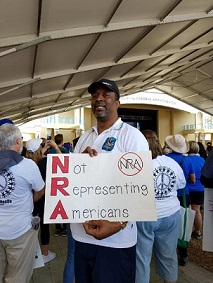
Helena Ramsay, 17, a student at the high school was confirmed by the Broward County Sheriff’s Office as one of the 17 killed by a 19-year old gunman who opened fire on students and school staff. Her mother is reported to be Jamaican and her father Trinidadian.

Source: Posted February 16, 2018; retrieved March 27, 2018 from: https://www.caribbeannationalweekly.com/caribbean-breaking-news-featured/student-caribbean-american-descent-among-17-victims-killed-parkland-high-school/

Again, the US is being urged to reform and transform its policies on guns and school safety, while the Caribbean needs to implement a roadmap to forge change in the societal engines (economics, security and governance) for the 30 member-states of our region.

The book Go Lean…Caribbean – available to download for free – serves as a roadmap for the introduction and implementation of the technocratic Caribbean Union Trade Federation (CU), for the elevation of Caribbean society – for all member-states. This CU/Go Lean roadmap has these 3 prime directives:

  • Optimization of the economic engines in order to grow the regional economy to $800 Billion and create 2.2 million new jobs.
  • Establishment of a security apparatus to ensure public safety and protect the resultant economic engines.
  • Improve Caribbean governance to support these engines, including a separation-of-powers between the member-states and CU federal agencies.

There will be a lot of security and governing dynamics associated with the topic of guns.

The Go Lean book provides 370-pages of turn-by-turn instructions on “how” to adopt new community ethos, plus the strategies, tactics, implementations and advocacies to execute so as to transform the societal engines of Caribbean society, regarding guns and gun control. In fact, there is 1 advocacy entitled “10 Ways to Improve Gun Control” (Page 179), with specific highlights, mitigations and solutions. There is also this encyclopedic reference to the US’s Second Amendment, here:

The Bottom Line on the 2nd Amendment

The Second Amendment to the United States Constitution is the part of the United States Bill of Rights that protects the right to keep and bear arms. It was adopted on December 15, 1791, along with the rest of the Bill of Rights.

In the 19th and 20th centuries, the Supreme Court ruled on several occasions that the amendment did not bar state regulation of firearms, considering the amendment to be “a limitation only upon the power of Congress and the National government and not upon that of the States.” Along with the incorporation of the Second Amendment in the 21st century, the Supreme Court ruled that the Second Amendment protects an individual right to possess and carry firearms. In 2008 and 2010, the Court issued these two landmark decisions to officially establish an “individual rights” interpretation of the Second Amendment:

a. In District of Columbia v. Heller (2008), the Court ruled that the Second Amendment protects an individual’s right to possess a firearm, unconnected to service in a militia and to use that arm for traditionally lawful purposes, such as self-defense within the home within many longstanding prohibitions and restrictions on firearms possession listed by the Court as being consistent with the Second Amendment.

b. In McDonald v. Chicago (2010), the Court ruled that the Second Amendment limits state and local governments to the same extent that it limits the federal government.

The US has the most liberal gun ownership laws in the western world, accompanied by highest gun crime and murder rate.

The Go Lean book asserts that every community has bad actors, and coupled with guns, a bad actor can do a lot of damage. The assumption in the Social Contract – where citizens surrender some of their freedoms and submit to the authority of the State in exchange for protection of remaining natural and legal rights – is for the State or governing entity to regulate weapons to ensure protections for all members of society. There must be “new guards” to assuage any gun risks and threats in Caribbean communities. This point is pronounced early in the book with the Declaration of Interdependence (Pages 12 – 13) that claims:

x. Whereas we are surrounded and allied to nations of larger proportions in land mass, populations, and treasuries, elements in their societies may have ill-intent in their pursuits, at the expense of the safety and security of our citizens. We must therefore appoint new guards to ensure our public safety and threats against our society, both domestic and foreign. The Federation must employ the latest advances and best practices of criminology and penology to assuage continuous threats against public safety.

xi. Whereas all men are entitled to the benefits of good governance in a free society, “new guards” must be enacted to dissuade the emergence of incompetence, corruption, nepotism and cronyism at the peril of the people’s best interest. The Federation must guarantee the executions of a social contract between government and the governed.

xvi. Whereas security of our homeland is inextricably linked to prosperity of the homeland, the economic and security interest of the region needs to be aligned under the same governance. Since economic crimes, including piracy and other forms of terrorism, can imperil the functioning of the wheels of commerce for all the citizenry, the accedence of this Federation must equip the security apparatus with the tools and techniques for predictive and proactive interdictions.

Reforming guns in the US is a BIG DEAL considering that many Caribbean people have emigrated to the US from their island homes. It is a frightening prospect that our people may have jumped from the “frying pan” of failing communities, “into the fire” of a gun-crazed society. This point was addressed recently in a previous blog-commentary entitled – ‘Pulled’ – Despite American Guns with this excerpt:

The repeated incidences of mass shootings – with no gun control remediation – makes American life defective

This commentary aligns with charter of the book Go Lean … Caribbean to make the countries of the Caribbean region better places to live, work and play. The goal is to be Better Than America; to be a protégé without the ignominious Second Amendment; to exercise better governance.

Let’s see how this process goes in the US. Guns are in the DNA of this country; the Second Amendment was ratified in 1791; the US has more gun ownership per capita than any other country in the world; more gun deaths too. Changing this culture will truly be a BIG DEAL!

This writer is doing more than just “look, see or observe”; I will lend-a-hand as well.

I have children and grandchildren in the US States of Florida and Arizona. Though my efforts are only in the scope of reforming and transforming the Caribbean, my heart does want to ensure change in the US regarding guns and school safety.

I would not want to sacrifice my children nor grandchildren to the American twisted perception of gun rights. No, and while I accept the premise that I cannot fix America, I can work to fix the Caribbean homelands to be better places to live, work and play. Hopefully then we can provide a model to the US on how to effect change.

Let’s observe-and-report on this American effort – these Parkland students – let’s observe their successes and their failures, while we hope for change.

Speaking of change, this commentary commences a short 3-part series on “Change” in society. The full catalog of commentaries in this series are as follows:

  1. Change! Observing the Change – Student Marches for Gun Control Reform and Action
  2. Change! Be the Change – RIP Linda Brown; the little girl in “Brown vs Board of Education”
  3. Change! Forging Change – Citibank’s Model of “Corporate Vigilantism”

All of these commentaries give insights on “how” the stewards of a new Caribbean can persuade people, establishments and institutions to forge change in their communities. 🙂

Download the free e-Book of Go Lean … Caribbean – now!

Sign the petition to lean-in for this roadmap for the Caribbean Union Trade Federation.

Share this post:
, , , ,
[Top]