Tag: Foreign Policy

Microsoft Pledges $75 million for Kids in Computer Science

Go Lean Commentary

CU Blog - Microsoft pledges $75 million for kids in computer science - Photo 2Microsoft pledges support to young children learning the science of computers … $75 million worth.

… on behalf of a grateful region, we accept.

While $75 million is not a lot for a global program, consider the source of the benefactor – Microsoft – and it is the spirit that counts. We will take it Microsoft; we want your time, talents and treasuries.

These three resources, are what the book Go Lean…Caribbean asks for from the philanthropic community in terms of gifts to the Caribbean. This is so important, that the book prepares a comprehensive plan for organizing the interactions with charitable foundations and gift-giving organizations. We need and want all the help we can garner!

The Go Lean book serves as a roadmap for the introduction and implementation of the Caribbean Union Trade Federation (CU) to elevate Caribbean society. This movement asserts that to effect change in the region, all Caribbean stakeholders (residents, institutions, students, Diaspora) have to devote a measure of time, talents and treasuries.

The Go Lean book strategizes a roadmap to elevate the economic, security, and governing engines. It clearly relates that these prime directives do not cover every social aspect of Caribbean life. We need the resultant void to be filled by Non-Government Organizations (NGO’s). The following news article/Press Release relates the community empowering and philanthropic efforts from one such entity, computer software giant Microsoft:

Title: Microsoft expands global YouthSpark initiative to focus on computer science
Sub-Title: Microsoft invests $75 million in community programs to increase access to computer science education for all youth and build greater diversity into the tech talent pipeline.

CU Blog - Microsoft pledges $75 million for kids in computer science - Photo 1

SAN FRANCISCO, Sept. 16, 2015 /PRNewswire/ — Microsoft Corp. announced on Wednesday a new commitment of $75 million in community investments over the next three years to increase access to computer science education for all youth, and especially for those from under-represented backgrounds. Through the company’s global YouthSpark initiative, scores of nonprofit organizations around the world will receive cash donations and other resources to provide computer science education to diverse populations of young people in their communities and prepare them with the computational-thinking and problem-solving skills necessary for success in an increasingly digital world.

“If we are going to solve tomorrow’s global challenges, we must come together today to inspire young people everywhere with the promise of technology,” said Microsoft CEO Satya Nadella. “We can’t leave anyone out. We’re proud to make this $75 million investment in computer science education to create new opportunities for students across the spectrum of diverse youth and help build a tech talent pipeline that will spark new innovations for the future.”

Over the next three years, Microsoft will deliver on this commitment through cash grants and nonprofit partnerships as well as unique program and content offerings to increase access to computer science education and build computational thinking skills for diverse populations of youth. One of the flagship programs is Technology Education and Literacy in Schools (TEALS), which pairs tech professionals from across the industry with classroom educators to team-teach computer science in U.S. high schools. TEALS aims to grow fivefold in the next three years, with the goal of working with 2,000 tech industry volunteers to reach 30,000 students in nearly 700 schools across 33 states. A key objective of TEALS is to support classroom educators as they learn the computer science coursework, preparing them to teach computer science independently after two years of team-teaching.

Nadella reinforced the company’s commitment to computer science education today during the annual Dreamforce conference hosted by Salesforce where he called upon thousands of tech professionals to serve as TEALS volunteers and help broaden the opportunity for students of all backgrounds to learn computer science in high school.

“Computer science is a foundational subject — like algebra, chemistry or physics — for learning how the world works, yet it’s offered in less than 25 percent of American high schools,” said Microsoft President Brad Smith. “We need to increase access to computer science and computational thinking for all students, especially those from diverse populations, by partnering across the industry and with teachers and schools to turn this situation around and change the paradigm for developing a more diverse tech talent pipeline.”

There are three additional key elements of Microsoft’s global commitment to increasing access for all youth to the full range of computing skills, from digital literacy to computer science.

  • Global philanthropic investments with nonprofits in 80 countries, including the Center for Digital Inclusion in Latin America, Silatech in the Middle East and Africa, CoderDojo Foundation in Europe, YCAB Foundation in Asia, and many others, will deliver a range of computing skills from digital literacy to computer science education to youth in local communities around the world.
  • Microsoft Imagine connects students with the tools, resources and experiences they need to turn their innovative ideas into reality. Whether it’s building a game or designing an app, Microsoft Imagine makes learning to code easy and accessible for students and educators, no matter their age or skill level and at no cost. Whether it’s free cloud services like Azure, online competitions via Imagine Cup that educators can incorporate into their curriculum, or fun self-serve learning tutorials, Microsoft Imagine helps bring a student’s technology passion to life through computer science.
  • YouthSpark Hub resources are designed to inspire youth about the full spectrum of computing skills, ranging from digital literacy to computer science engineering. In addition to providing access to the Microsoft Imagine tools, the YouthSpark Hub brings together opportunities to participate in activities such as DigiGirlz and YouthSpark Live, attend free YouthSpark Camps at the Microsoft Stores, and access training through nonprofit organizations supported by Microsoft around the world.

Since 2012, Microsoft YouthSpark has created new opportunities for more than 300 million youth around the world, offering technology skills training and connections to employment, entrepreneurship, and continued education or training.

More information about YouthSpark and access to tools and resources can be found at http://YouthSparkHub.com and http://imagine.microsoft.com.

Those wanting more information on the TEALS program and to learn more about how they can get involved should visit http://TEALSK12.org.

Microsoft (Nasdaq “MSFT” @microsoft) is the leading platform and productivity company for the mobile-first, cloud-first world, and its mission is to empower every person and every organization on the planet to achieve more.
Source: PR Newswire Service; retrieved September 17, 2015 from: http://www.prnewswire.com/news-releases/microsoft-expands-global-youthspark-initiative-to-focus-on-computer-science-300144592.html

——
VIDEO – Microsoft YouthSpark: Opportunity for Youth – https://youtu.be/ZRKYTQ6_UEs

Published by Microsoft – http://www.microsoft.eu
YOUTH INFOGRAPHIC: http://www.microsoft.eu/Portals/0/Doc

There’s $75,000,000 and then there’s $75,000,000 from Microsoft.

A $75,000,000 charitable gift from Microsoft is more than just money; it’s an invitation to explore the future: the future of Information Technology.

This is BIG! As it also builds a technology talent pipeline, especially for the under-represented female population; so future jobs are at stake.

Microsoft founder and largest shareholder, Bill Gates, is now retired from the CEO’s office. (Though he continues as non-executive Chairman of the Board of Directors). He is a certifiable billionaire – a member of the One Percent – in which his riches came from this company. He is a great role model for all the youth of the Caribbean.

A great role model for the adults, too!

This innovator’s latest effort is the Bill & Melinda Gates Foundation, which sets out to make a permanent impact on the world. According to a previous blog detailing this foundation’s efforts, his belief is that every life has equal value. So his Foundation works to help all people lead healthy, productive lives. Now we see his hallmark company following this lead so as to also promote hi-technology values among the more disadvantaged youth populations in the world.

We absolutely appreciate those leading and following in this path.

The book Go Lean…Caribbean champions the cause of building and optimizing the Caribbean eco-system. There are a lot of expectations for technology in the region, to aid and assist with all aspects of the Go Lean prime directives, defined as follows:

  • Optimization of the economic engines in order to grow the regional economy to $800 Billion & create 2.2 million new jobs.
  • Establishment of a security apparatus to protect the resultant economic engines.
  • Improve Caribbean governance to support these engines.

The CU/Go Lean roadmap clearly recognizes that the love and curiosity for technology must be ingrained as early as possible. Since the Caribbean does not only want to be on the consuming end of technological developments, we want to create, produce and contribute to the world of innovations. So we need to foster genius qualifiers in our Caribbean youth for careers and occupations – at home – involving Science, Technology, Engineering and Mathematics (STEM).

This point was pronounced at the outset of the Go Lean book with these opening Foreword (Page 3) and the subsequent Declaration of Interdependence (Page 12 & 14) with these statements:

Foreword:  Our youth, the next generation, may not be inspired to participate in the future workings of their country; they may measure success only by their exodus from their Caribbean homeland.

xiii.     Whereas the preparation of our labor force can foster opportunities and dictate economic progress for current and future generations, the Federation must ensure that educational and job training opportunities are fully optimized for all residents of all member-states, with no partiality towards any gender or ethnic group. The Federation must recognize and facilitate excellence in many different fields of endeavor, including sciences, languages, arts, music and sports. This responsibility should be executed without incurring the risks of further human flight, as has been the past history.

xxvi.   Whereas the Caribbean region must have new jobs to empower the engines of the economy and create the income sources for prosperity, and encourage the next generation to forge their dreams right at home, the Federation must therefore foster the development of new industries, like that of ship-building, automobile manufacturing, prefabricated housing, frozen foods, pipelines, call centers, and the prison industrial complex. In addition, the Federation must invigorate the enterprises related to existing industries like tourism, fisheries and lotteries – impacting the region with more jobs.

xxvii.  Whereas the region has endured a spectator status during the Industrial Revolution, we cannot stand on the sidelines of this new economy, the Information Revolution. Rather, the Federation must embrace all the tenets of Internet Communications Technology (ICT) to serve as an equalizing element in competition with the rest of the world. The Federation must bridge the digital divide and promote the community ethos that research/development is valuable and must be promoted and incentivized for adoption.

xxx.    Whereas the effects of globalization can be felt in every aspect of Caribbean life, from the acquisition of food and clothing, to the ubiquity of ICT, the region cannot only consume, it is imperative that our lands also produce and add to the international community, even if doing so requires some sacrifice and subsidy.

The Go Lean book seeks a quest to create 64,000 new direct and indirect technology/software jobs in the Caribbean marketplace. It will be a good start to use the grants and support of Microsoft, The Bill & Melinda Gates Foundation and other philanthropic groups and NGO’s to foster this campaign.

The Go Lean roadmap was constructed with the community ethos in mind to forge the needed change to adopt technology. Plus with the execution of these related strategies, tactics, implementations and advocacies it will help build up our communities. The following is a sample of these specific details from the book:

Community Ethos – Deferred Gratification Page   21
Community Ethos – Economic Principles – People Choose Page   21
Community Ethos – Economic Principles – People Respond to Incentives in Predictable Ways Page   21
Community Ethos – Economic Principles – The Consequences of Choices Lie in the   Future Page   21
Community Ethos – Economic Principles – Job Multiplier Page   22
Community Ethos – Governing Principles – Lean Operations Page   24
Community Ethos – Governing Principles – Cooperatives Page   25
Community Ethos – Governing Principles – Non-Government Organizations Page   25
Community Ethos – Ways to Impact the Future Page   26
Community Ethos – Ways to Foster Genius – Anti-Bullying Campaigns Page   27
Community Ethos – Ways to Promote Intellectual Property Page   29
Community Ethos – Ways to Impact Research & Development Page   30
Community Ethos – Ways to Bridge the Digital Divide Page   31
Community Ethos – Ways to Impact Turn-Around Page   33
Community Ethos – Ways to Promote Happiness Page   36
Community Ethos – Ways to Impact the Greater Good Page   37
Strategy – Vision – Confederate 30 Member-States Page   45
Strategy – Vision – Prepare the Youth with the skills to compete in the modern world Page   46
Strategy – Mission – Exploit the benefits and opportunities of globalization Page   46
Tactical – Confederating a Permanent Union Page   63
Tactical – Fostering a Technocracy Page   64
Tactical – Separation of Powers – State Department – Registrar/Liaison of NGO’s Page   80
Implementation – Ways to Pay for Change Page   101
Implementation – Trends in Implementing Data Centers – Creating the ‘Cloud’ Page   106
Implementation – Ways to Deliver Page   109
Implementation – Ways to Impact Social Media – Caribbean Cloud Page   111
Implementation – Ways to Foster International Aid Page   115
Planning – 10 Big Ideas for the Caribbean Region – Cyber-Caribbean Page   127
Planning – Ways to Make the Caribbean Better Page   136
Advocacy – Ways to Grow the Economy Page   151
Advocacy – Ways to Create Jobs Page   152
Advocacy – Ways to Improve Education – STEM Promotion Page   159
Advocacy – Ways to Improve Governance – e-Government & e-Delivery Page   168
Advocacy – Ways to Better Manage the Social Contract Page   170
Advocacy – Ways to Foster Cooperatives Page 176
Advocacy – Ways to Improve Communications Page   186
Advocacy – Ways to Improve Libraries Page 187
Advocacy – Ways to Enhance Tourism – Internet Marketing Page   190
Advocacy – Ways to Foster Technology Page   197
Advocacy – Ways to Foster e-Commerce Page   198
Advocacy – Ways to Impact Main Street Page   201
Advocacy – Ways to Impact Foundations Page 219
Advocacy – Ways to Impact the One-Percent Page   224
Advocacy – Ways to Impact Youth Page   227
Advocacy – Ways to Improve the Arts Page   230
Appendix – CU Job Creations Page   257
Appendix – Giving Pledge Signatories – 113 Super Rich – One Percent – Benefactors Page   292

This Go Lean roadmap calls for the heavy-lifting to build-up Caribbean communities, to shepherd important aspects of Caribbean life, so as to better prepare for the future, dissuade emigration and optimize the ICT eco-systems here at home.

These goals were previously featured in Go Lean blogs/commentaries, as sampled here:

https://goleancaribbean.com/blog/?p=6341 Tourism Digital Marketing & Stewardship — What’s Next?
https://goleancaribbean.com/blog/?p=6269 Education & Economics: Lessons from Detroit
https://goleancaribbean.com/blog/?p=6151 3D Printing: Here Comes Change
https://goleancaribbean.com/blog/?p=3974 Google and Mobile Phones – Here comes Change
https://goleancaribbean.com/blog/?p=3915 ‘Change the way you see the world; you change the world you see’
https://goleancaribbean.com/blog/?p=3490 How One Internet Entrepreneur Can Rally a Whole Community
https://goleancaribbean.com/blog/?p=2126 Where the Jobs Are – Computers Reshaping Global Job Market
https://goleancaribbean.com/blog/?p=1698 STEM Jobs Are Filling Slowly
https://goleancaribbean.com/blog/?p=1416 Amazon – A Role Model for Caribbean Logistics
https://goleancaribbean.com/blog/?p=1277 The need for highway safety innovations – here comes Google
https://goleancaribbean.com/blog/?p=476 CARICOM Urged on ICT
https://goleancaribbean.com/blog/?p=308 CARCIP Urges Greater Innovation

The Go Lean book focuses primarily on economic issues, and it recognizes that computer technology is the future direction for industrial developments. (See the foregoing VIDEO). This is where the jobs are to be found. The Go Lean roadmap describes the heavy-lifting for people, organizations and governments to forge these innovations here at home in the Caribbean. Clearly philanthropic organizations, Not-For-Profit charities, foundations and NGO’s are also stakeholders for the effort to make the Caribbean better.

So the Go Lean roadmap invites NGO’s to impact the Caribbean – to plant seeds – according to their charters. We are open to ask for their help. But we assure these benefactors that their help is really an investment. Our young people have the will, passion and integrity to grow the seeds into fine fruit.

We want more … such organizations. We will be pursuing other NGO’s … especially for the under-represented female population, such as:

Black Girls Code –  Their Vision: To increase the number of women of color in the digital space by empowering girls of color ages 7 to 17 to become innovators in STEM fields, leaders in their communities, and builders of their own futures through exposure to computer science and technology.

Women in Technology – A premier professional association for women in the technology industry, we understand the unique challenges you face. No matter where you are in your professional development, or what technology-related field you’re in, our community offers a broad range of support, programs and resources to advance women in technology from the classroom to the boardroom.

Women in STEM – The Office of Science and Technology Policy, in collaboration with the White House Council on Women and Girls, is dedicated to increasing the participation of women and girls — as well as other underrepresented groups — in the fields of science, technology, engineering, and mathematics by increasing the engagement of girls with STEM subjects in formal and informal environments, encouraging mentoring to support women throughout their academic and professional experiences, and supporting efforts to retain women in the STEM workforce.

This is an invitation to the world to help us help ourselves. It is not just a dream. This is a conceivable, believable and achievable business plan. With the right commitment of time, talent and treasuries from domestic and foreign sources, we can succeed in making the region a better place to live, work, learn and play.  🙂
Download the book Go Lean … Caribbean – now!

Share this post:
, , , , , , , ,

Tragic images show refugee crisis at a tipping point in Europe

Go Lean Commentary

You break it, you buy it!

Though this policy is not codified in law, this seems to be the de facto standard for handling other people’s property.

But the issue in this commentary is not property, it is people.

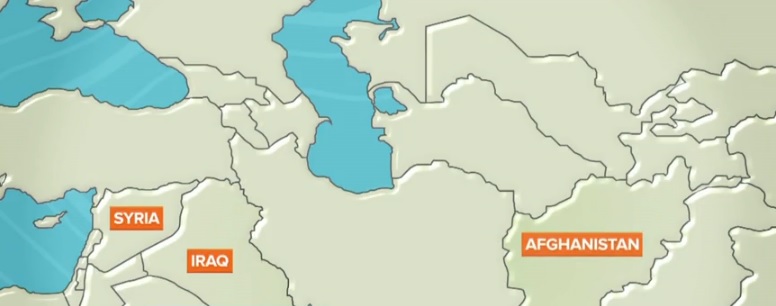
CU Blog - Tragic images show refugee crisis at a tipping point in Europe - Photo 3The people of the Failed-State countries of Syria, Iraq and Afghanistan are desperate and fleeing for their lives to get out of those war-torn countries to find relief. These ones risk their lives, and the lives of their children, to turn “sure defeat” into a fighting chance for life. It’s a bet – a gamble – and many times, these ones lose.

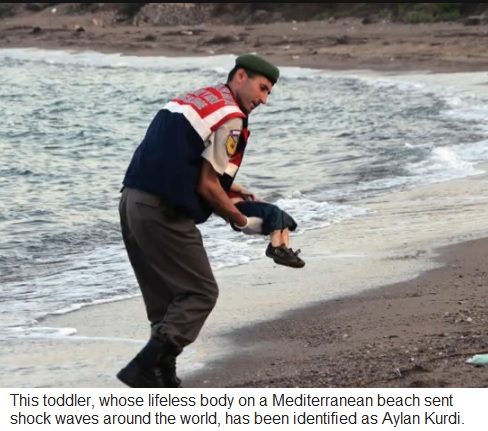
The name of a young toddler is now surfacing to give a name (and face) to his tragedy. Young Aylan Kurdi, a Syrian refugee, drowned in the waters of the Mediterranean Sea, trying to make it to shore with his parents. See the images here:

VIDEO: Tragic images show refugee crisis at a tipping point in Europe – http://www.today.com/video/tragic-images-show-refugee-crisis-at-a-tipping-point-in-europe-518578243727

Posted September 3, 2015 – Hundreds of thousands of refugees are risking their lives to reach Europe this year, 20,000 overwhelming a small Greek island in just the last week, with thousands drowning and dying in what’s become the biggest mass migration since WWII. NBC’s Bill Neely reports for TODAY.
CU Blog - Tragic images show refugee crisis at a tipping point in Europe - Photo 1

“There but for the Grace of God go I” – Old Expression

From the Caribbean perspective, we have seen this tragedy before, again and again. Just recently – in January – this commentary related the same tragedies in Caribbean member-states with refugees endangering their lives to leave places like Cuba, Haiti, Jamaica and the Dominican Republic. We understand the full breadth-and-width of Failed-States.

The toddler – Aylan Kurdi – in the foregoing photo deserves better. It is hoped that these images that were published Wednesday with his soaked red shirt, blue bottoms and tiny velcro-strap shoes that washed up on the beach in the Turkish resort of Bodrum, would ricochet across traditional and social media and be hailed as emblematic of the desperate and deadly refugee struggle to reach Europe.

These were plastered on international front pages on Thursday. This boy’s tragic life and death will not be in vain. CU Blog - Tragic images show refugee crisis at a tipping point in Europe - Photo 2The situation in these Failed-State countries (Syria, Iraq and Afghanistan) must be addressed. See Appendix below.

The book Go Lean…Caribbean serves as a roadmap for elevating the 30 member-states of the Caribbean, a few near Failed-State status. The book does not target Middle-East countries in its mitigation and remediation plans – Caribbean only – but we seek to learn lessons from the handling of this crisis.

The 5-Step leading-learning curve is normally:

1. Look, 2. Listen, 3. Learn, 4. Lend-a-hand and then 5. Lead.

We cannot lead in this case, but we can lend-a-hand, (contribute to any international relief campaign). We can also learn how to minimize Failed-State risks within our region.

So who should take the lead for fixing the Middle East Failed-State dysfunctions or the refugee crisis into Europe?

According to the opening quotation of this commentary: those who broke it. (Notice, in the foregoing VIDEO, that the refugees are targeting NATO countries).

The US and Western Europe are perhaps more directly responsible. They are the ones, in multi-national coalitions, that toppled the strong governments of Afghanistan and Iraq, then sat aside and allowed ISIS (Islamic State in Iraq and Syria) to form with the hope of overthrowing the oppressive regime of Bashar al-Assad in Syria. (So far, ISIS, has become its own “Frankenstein Monster”, to say the least, creating more distress and becoming its own threat). See Appendix below.
The Middle East is not easy!

In 2008 the newly elected US President, Barack Obama, vowed to exit US forces from Afghanistan and Iraq. He succeeded. The “laws of unintended consequences” may now have taken reign.

As for the Caribbean, we are on the periphery of this issue. Yes, we are allied to the United States and their enemies do tend to lash out at American allies. So we do have the “Sum of All Fears” that Al-Qaeda, ISIS or some other terrorist group would secure a “dirty bomb” nuclear device and detonate it in the Caribbean. But the biggest concern must be the slow creep of Failed-State status. This point was pronounced early in the Go Lean book as a motivation and a basis for confederation among Caribbean neighbors; there are the applicable statements in the opening Declaration of Interdependence (Page 12):

x.   Whereas we are surrounded and allied to nations of larger proportions in land mass, populations, and treasuries, elements in their societies may have ill-intent in their pursuits, at the expense of the safety and security of our citizens. We must therefore appoint “new guards” to ensure our public safety and threats against our society, both domestic and foreign. The Federation must employ the latest advances and best practices … to assuage continuous threats against public safety.

xi. Whereas all men are entitled to the benefits of good governance in a free society, “new guards” must be enacted to dissuade the emergence of incompetence, corruption, nepotism and cronyism at the peril of the people’s best interest. The Federation must guarantee the executions of a social contract between government and the governed.

xii. Whereas the legacy in recent times in individual states may be that of ineffectual governance with no redress to higher authority, the accedence of this Federation will ensure accountability and escalation of the human and civil rights of the people for good governance, justice assurances, due process and the rule of law. As such, any threats of a “failed-state” status for any member state must enact emergency measures on behalf of the Federation to protect the human, civil and property rights of the citizens, residents, allies, trading partners, and visitors of the affected member state and the Federation as a whole.

xiii. Whereas the legacy of dissensions in many member-states (for example: Haiti and Cuba) will require a concerted effort to integrate the exile community’s repatriation, the Federation must arrange for Reconciliation Commissions to satiate a demand for justice.

xvi. Whereas security of our homeland is inextricably linked to prosperity of the homeland, the economic and security interest of the region needs to be aligned under the same governance. Since economic crimes, including piracy and other forms of terrorism, can imperil the functioning of the wheels of commerce for all the citizenry, the accedence of this Federation must equip the security apparatus with the tools and techniques for predictive and proactive interdictions.

This Go Lean book serves as a roadmap for the introduction and implementation of the technocratic Caribbean Union Trade Federation (CU). With a branding name like Trade Federation, obviously the scope of elevating Caribbean society starts with economics. But the CU must seek to optimize the security dynamics in addition to economic empowerments. Therefore the Go Lean roadmap has these 3 prime directives:

  • Optimization of the economic engines in order to grow the regional economy and create 2.2 million new jobs.
  • Establishment of a security apparatus to protect the resultant economic engines and mitigate challenges/threats to ensure public safety for the region’s stakeholders.
  • Improvement of Caribbean governance to support these engines.

The book contends that though terrorism may not be a scourge on Caribbean life presently, new “bad actors” will eventually emerge to exploit the new economic successes envisioned in the Go Lean roadmap. The CU/Go Lean Strategy statement is quoted as follows (Page 46):

Fix the broken systems of governance in our region and deter against movements towards Failed-States, and any preying upon our people. We must protect the most vulnerable among us and guarantee the human/civil rights of our women and minorities.

The Go Lean book details a series of community ethos, strategies, tactics, implementations and advocacies to optimize the societal engines of the region, to stop any downward spiral into Failed-State status. See the lists here:

Community Ethos – Economic Systems Influence Choices & Incentives Page 21
Community Ethos – Consequences of Choices Lie in the Future Page 21
Community Ethos – Anti-Bullying and Mitigation Page 23
Community Ethos – Minority Equalization Page 24
Community Ethos – Ways to Impact the Future – Focus on Youth & Progress Page 26
Community Ethos – Ways to Manage Reconciliations Page 34
Community Ethos – Ways to Impact the Greater Good Page 37
Strategy – Vision –  Integrate region into a Single Market Economy Page 45
Strategy – Agents of Change – Globalization Page 57
Strategy – Agents of Change – Climate Change – Increase in Droughts and Floods Page 57
Tactical – Separation of Powers – Department of Homeland Security Page 75
Tactical – Separation of Powers – Federal Courts – Truth & Reconciliation Commissions Page 75
Implementation – Ways to Foster International Aid Page 115
Planning – 10 Big Ideas … in the Caribbean Region – Haiti & Cuba Page 127
Planning – Ways to Model the EU – From Worst to First Page 130
Planning – Reasons Why the CU Will Succeed – Germany Reconciliation Model Page 132
Planning – Ways to Improve Failed-State Indices – Cuba & Haiti on the List Page 134
Planning – Lessons from East Germany – European post-war rebuilding Page 139
Planning – Lessons from Egypt – Arab Spring Page 143
Planning – Lessons from the US Constitution – Gradual Optimization Page 145
Planning – Lessons from Canada’s History – Reconciliations with Indigenous Peoples Page 146
Advocacy – Ways to Grow the Economy Page 151
Advocacy – Ways to Create Jobs Page 152
Advocacy – Ways to Impact Justice Page 178
Advocacy – Ways to Impact the Diaspora Page 217
Advocacy – Ways to Protect Human Rights Page 220
Advocacy – Ways to Help Women Page 226
Advocacy – Ways to Impact Youth Page 227
Advocacy – Ways to Impact the Dominican Republic – Need for Reconciliations Page 237
Advocacy – Ways to Re-boot Haiti Page 238
Advocacy – Ways to Re-boot Jamaica – Mitigate Migrations & Brain Drain Page 239

In previous blog commentaries, the related issues of Caribbean migration and refugee-seeking were fully explored. See sample list here:

https://goleancaribbean.com/blog/?p=5759 Pressed by Debt Crisis, Doctors Leave Greece in Droves
https://goleancaribbean.com/blog/?p=4809 Americans arrested for aiding ISIS
https://goleancaribbean.com/blog/?p=3662 Migrant flow into US from Caribbean spikes
https://goleancaribbean.com/blog/?p=2907 Local Miami Haitian leaders protest Bahamian immigration policy
https://goleancaribbean.com/blog/?p=2809 A Lesson in History: Economics of East Germany
https://goleancaribbean.com/blog/?p=1531 A Lesson in History: World War I Ethnic Cleansing
https://goleancaribbean.com/blog/?p=1433 Caribbean loses over 70% of tertiary educated citizens to the   brain drain
https://goleancaribbean.com/blog/?p=623 Only at the precipice, do they change

All of the Caribbean needs to pay more-than-the-usual attention to the crisis with these Middle East Failed-States and the resultant refugee influx into Europe.

“There but for the Grace of God go I”

The remediation and mitigations in the Go Lean book are best-practices to minimize the push-pull factors for our own societal abandonment, and downward spirals into Failed-States. Now is the time for all of the Caribbean to lean-in this roadmap. Let’s show the world how to re-boot Failed-States and how to forge better conditions in a homeland. Let’s truly make the Caribbean better places to live, work, and play.  🙂

… and R.I.P. little Aylan Kurdi. We will not soon forget you. 🙁

Download the free e-Book of Go Lean … Caribbean – now!

——–

Appendix – Middle East Failed States

Afghanistan

A landlocked country, with a population of approximately 32 million people; it is located within South Asia and Central Asia between Iran and Pakistan. The recent history features a series of coups in the 1970s and was followed by a Soviet invasion and a series of civil wars that devastated much of Afghanistan.

The September 11 attacks on the United States were perpetrated by known terrorist Osama bin Laden and his al-Qaeda movement. The US demanded that the then-Taliban government hand him over.[122] After refusing to comply, the October 2001 Operation Enduring Freedom was launched by the US to topple the Taliban government. During the initial invasion, US and UK forces bombed al-Qaeda training camps. The United States began working with the Northern Alliance to remove the Taliban from power.[123] American forces remained until the official end of the war on December 28, 2014. However, thousands of US-led NATO troops have remained in the country to train and advise Afghan government forces.[138] The 2001-present war has resulted in between 185,000 and 249,000 deaths, which includes civilians, insurgents and government forces. A Taliban insurgency remains, to this day.

Iraq

This country is situated near the Arabian Peninsula and sits in between Saudi Arabia, Iran, Turkey, Jordan and Kuwait. The largest ethnic groups in Iraq are Arabs and Kurds. Other ethnic groups include Assyrians, Turkmen, Shabakis, Yazidis, Armenians, Mandeans, Circassians and Kawliya.[6] Around 95% of the country’s 36 million citizens are Shia or Sunni Muslims, with Christianity, Yarsan, Yezidism and Mandeanism also present.

Iraq was controlled by the Arab Socialist Ba’ath Party from 1968 until 2003. After an invasion by the United States and its allies in 2003, Saddam Hussein‘s Ba’ath Party was removed from power and multi-party parliamentary elections were held in 2005. The American presence in Iraq ended in 2011,[9] but the Iraqi insurgency continued and intensified as fighters from the Syrian Civil War spilled into the country. Civil strife continues to this day with conflicts among the ethnic and religious sects.

Syria

A country of 18 million people, on the coast of the Mediterranean; it is made up of fertile plains, high mountains, and deserts, it is home to diverse ethnic and religious groups, including Arabs, Greeks, Armenians, Assyrians, Kurds, Circassians,[8] Mandeans[9] and Turks. Religious groups include Sunnis, Christians, Alawites, Druze, Mandeans and Yazidis. Sunni Arabs make up the largest population group in Syria. Since March 2011, Syria has been embroiled in an uprising against Assad and the Ba’athist government as part of the Arab Spring, a crackdown which contributed to the Syrian Civil War and Syria becoming among the least peaceful countries in the world.[16]

Share this post:
, , , , ,
[Top]

China’s Caribbean Playbook: America’s Script

Go Lean Commentary

China has invested heavily in the Caribbean, as of recent; see list here of selected announcements since January 2014:

 China Playbook 3

New $250 Million Hotel Project – The Pointe – Breaks Ground in Nassau

Big China-Bahamas project – Baha Mar – Still embroiled in legal wrangling

A New $2 Billion Caribbean Resort Project in Grenada

Is This Island – Puerto Rico – China’s Next Caribbean Investment Target?

The Caribbean’s Big New Canal Project – backed by China

Antigua and Barbuda Closer to Completion of New Airport Terminal – built by China Civil Engineering Construction Corporation

China to Build More Homes in Grenada

Dominica, China Sign Agreement on $16 Million in Projects

Barbados, China Talk Agriculture

Trinidad, China Talk Infrastructure

British Virgin Islands Signs Agreements With Delegations From China

China Playbook 2

Just what is China’s motive, their end game?

Should we be leery or should we just embrace [the badly needed] help from whatever sources?

How much of this questioning is influenced by a pro-American yearning? Pro-Christian yearning? Fear of strangers? Racist under-valuing of non-White/European races?

There is the need for the Caribbean to take stock of its thoughts-feelings-actions and give all of these questions serious deliberation.

If this Golden Rule is true: “he who has the gold makes the rules”, then we will be held to account to stakeholders in China, as their many state-own companies are definitely “bringing gold” to the table. This was vividly communicated in a previous (2014) China-Caribbean Trade/Business Summit:

“Latin America has much to gain from deepening its relationship with China, just as China has much to gain from our region,” said Luis Alberto Moreno, president of the Inter-American Development Bank (IDB). “For our governments, this is a strategic priority. But much of the day-to-day building of those links will fall on the private sector.”

China joined the IDB as a shareholder in 2009, and is now the top trade partner for several countries in the region, including Brazil and Chile.

Trade between Latin America and the Caribbean and China is expected to double in the next decade.

Source: http://caribjournal.com/2014/09/15/china-holds-business-summit-with-latin-america-caribbean/

The book Go Lean…Caribbean anticipates the participation of Direct Foreign Investments in the Caribbean community. The book serves as a roadmap for the introduction and implementation of the technocratic Caribbean Union Trade Federation (CU). The CU will serve as an integrated entity to shepherd progress and optimization among the region’s societal engines for economics, security and governance. This is to be likened to a Confederated Command of Allied Forces for battles in a “Trade War”.

This aligns with the CU/Go Lean roadmap, as the focus of CU is about Trade, not politics; thus the CU branding is Trade Federation. The experience and wisdom of this roadmap was derived from successes and failures in 2008 Trade Wars.

China is officially a Communist country. But these referenced headlines do not refer to politics nor any Chinese influence of the region’s politics; not even any pressure to lean politically. It is only about trade and succeeding in a global “Trade War”.

China, with its Communist leaning is also officially atheist but truthfully, their de facto policy is religious agnosticism; they simply tolerate them all. (Many religions abound in that 1.2 Billion population, consider: Buddhism, Taoism, Confucianism and the toleration of Western religions). The publisher of the book Go Lean…Caribbean, SFE Foundation, is a Community Development Foundation; it shares many of these same ideals. This was related in the book’s opening chapter with this Who We Are statement:

The SFE Foundation is not a person; it’s an apolitical, religiously-neutral, economic-focused movement, initiated at the grass-root level to bring change back to the Caribbean … There is an old observation/expression that states that “there are 3 kinds of people in the world, those who make things happen, those who watch things happen and those who wonder ‘what happened?’“ Principals of SFE Foundation were there in 2008 … on the inside looking out, not the outside looking in. Understanding the anatomy of the modern macro economy, allows the dissection of the processes and the creation of viable solutions.

This focus on trade is very familiar.

This is the same playbook of the United States of America in building the world’s largest Single Market economy. (Remember, with the Army Corp of Engineers, the US built the Panama Canal, but with more strings attached). China is simply following the same American script – minus the cronyism and militarism – of promoting trade of their products, services and capital.

Capital? Yes, many of the projects highlighted in the foregoing news articles are being financed by China’s state-owned banks and lending institutions. They are “putting their money, where their mouth is”. These are economic battles only! See US President Barack Obama’s comments on China’s Caribbean motives in the Appendix-VIDEO below.

As a region, with numerous Failed-States, can we really quiver over the nationality of our benefactors; can we question the ethnicity of the “Cavalry that has come to our rescue”? Hardly! We have to just manage with whatever refuge being offered, to allow us to better cover our basic needs.

For example, healthcare delivery is still a major concern in the Caribbean. According to the following article, the member-state of Jamaica needs to expand their number of hospital beds … and a China-backed project is facilitating this quest:

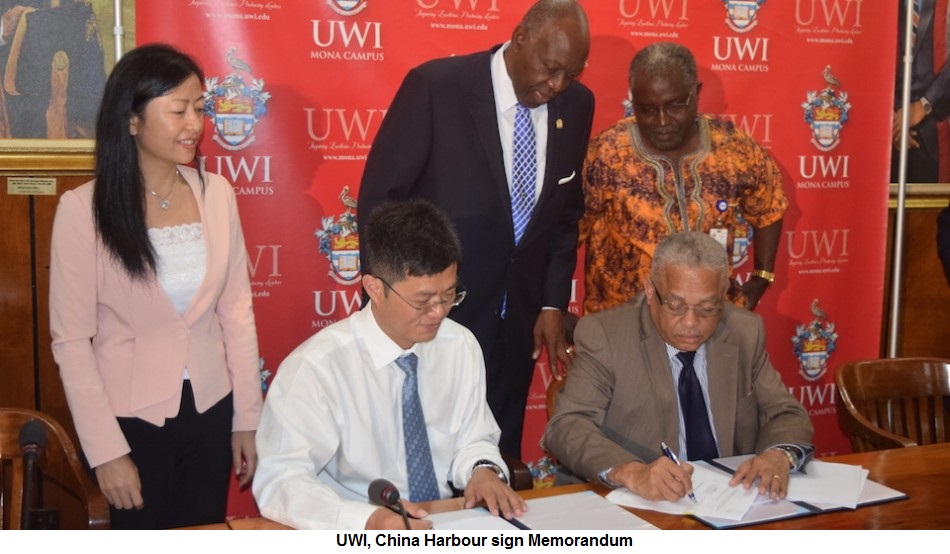
Title: China to Fund $511 Million Project at University of the West Indies
By: Dana Niland, Contributor, Caribbean Journal – Online News Source; (posted 08/28/2015; retrieved 09/02/2015 from:
http://caribjournal.com/2015/08/28/china-to-fund-511-million-project-at-university-of-the-west-indies/)

China Playbook

The University of the West Indies and China Harbour Engineering Company (see Appendix) have signed a Memorandum of Understanding for a $511 million USD development project.

The project will include the expansion of the University Hospital from 500 to 1,000 beds, an upgrade to the College Commons, the building of a 100-room hotel, and a new center for sporting activities.

The expansion will also include the addition of a cogeneration plant to supply electricity and to feed the cooling system for the campus.

Addressing the signing ceremony at the UWI Mona Campus, Professor Archibald McDonald said that the realignment of the hospital’s structure was necessary to promote efficiency and to put the institution in a position to serve the wider region.

“This will have all the modern facilities. The Government of Jamaica invests a large portion of its budget to the [UHWI]; therefore, the University Hospital has to give back to the people of Jamaica. It has to supplement the Government’s hospitals, and provide a higher level of care,” he said.

Jamaican Minister of Health, Dr. Fenton Ferguson also praised the arrangement.

“I am satisfied that the direction [in which] they are going will preserve and protect the most vulnerable within our society, and ensure that health care is not out of the reach of ordinary citizens,” Ferguson said.

The project in this article is not solely for Jamaica, but rather, it is within the charter of the University of the West Indies; so there is a regional focus.

The underlying motivation of the Go Lean book is brotherly love. Therefore who so ever, brings a solution to impact the Greater Good for the Caribbean people must be embraced, despite their political affiliations. The Go Lean roadmap is therefore not “pro” or “con” American, but rather pro solutions; in fact the CU is described as a technocracy with a focus on delivery and merit; this is the same charter as the Steering Committee of the Government of the Peoples Republic of China. This was related in the Go Lean book (Page 64) as follows:

Even the leaders of the Communist Party of China are mostly professional engineers. The Five-Year plans of the People’s Republic of China have enabled them to plan ahead in a technocratic fashion to build projects such as the National Trunk Highway System, the High-speed rail system, and the Three Gorges Dam.

A basic economic principle, subscribed in Go Lean (Page 21), is that “Economic Systems Influence Individual Choices and Incentives”. So the advanced field of economics hereby posits that Economic Systems, more so than political systems influence people’s choices and incentives. The CU seeks to optimize the region’s economic systems to better deliver on the prime directives of the Go Lean roadmap, pronounced as the following statements:

  • Optimization of the economic engines in order to grow the regional economy to $800 Billion & create 2.2 million new jobs.
  • Establishment of a security apparatus to protect the resultant economic engines and mitigate challenges/threats to ensure public safety for the region’s stakeholders.
  • Improvement of Caribbean governance, including a separation-of-powers with member-states, to support these economic/security engines.

So the CU vision is to provide the stewardship for the region’s economic engines, first, so as to succeed in the goals of the roadmap. This vision was pronounced at the outset of the book in the roadmap’s Declaration of Interdependence (Page 13):

xxiv.   Whereas a free market economy can be induced and spurred for continuous progress, the Federation must install the controls to better manage aspects of the economy: jobs, inflation, savings rate, investments and other economic principles. Thereby attracting direct foreign investment because of the stability and vibrancy of our economy.

The CU roadmap drives change among the region’s economic, security and governing engines. These solutions are as new community ethos, strategies, tactics, implementations and advocates; sampled as follows:

Who We Are – Veterans of 2008 “Wars” & Financial Crisis Page 8
Community Ethos – Voluntary Trade Creates Wealth Page 21
Community Ethos – Consequences of Choices Lie in the Future Page 21
Community Ethos – Job Multiplier Page 22
Community Ethos – Cooperatives Page 25
Community Ethos – Impact the Greater Good Page 37
Strategy – CU Vision and Mission Page 45
Strategy – Build and foster local economic engines Page 45
Strategy – Reform our HealthCare industries to better fulfill our health care needs Page 45
Tactical – Fostering a Technocracy – China’s Example Page 64
Tactical – $800 Billion Economy – How and When – Trade Page 67
Tactical – Recovering from Economic Bubbles Page 69
Tactical – Separation-of-Powers – Interstate Commerce & Trade Facilitation Page 79
Tactical – Separation-of-Powers – Office of Trade Negotiations Page 80
Implementation – Ways to Pay for Change Page 101
Implementation – Foreign Policy Initiatives at Start-up Page 102
Implementation – Trade Mission Objectives Page 117
Implementation – Ways to Benefit Globalization Page 119
Planning – Ways to Improve Trade Page 128
Planning – Ways to Improve Failed-State Indices Page 134
Planning – Lessons Learned from 2008 Page 136
Advocacy – Ways to Grow the Economy Page 151
Advocacy – Ways to Create Jobs Page 152
Advocacy – Ways to Improve Healthcare Page 156
Advocacy – Ways to Impact Public Works – US Army Corp of Engineers Model Page 175
Advocacy – Ways to Preserve Caribbean Heritage Page 218
Advocacy – Ways to Re-boot Jamaica Page 239
Appendix – Trade SHIELD Principles Page 264
Appendix – Caribbean Failed-States Indicators & Definitions Page 271

The Caribbean region needs help! We need the elevations of this Go Lean roadmap; we need the direct investments from China’s banks. We need the expertise and core competences of China’s many state-owned engineering and development companies. We simply cannot expect progress with a North American-only focus. We cannot only look North and West, we must also look East and South. The world is now flat; we must embrace globalization.

It is now a changed world. We must embrace China. Not as new colonizers, but as partners. There are opportunities for China to reap returns on their investments, with no exploitation of the Caribbean land or people.

The Caribbean is arguably the best address on the planet, but there are many deficiencies, as in jobs and economic empowerments. With the previous North & West focus we have suffered. Our deficiencies has led to societal abandonment so bad that the region has lost a large share of our human capital, one estimate of 70% of the college-educated population to the brain-drain.

No More! Our region can be and must be better.

The shepherding of the Caribbean economy now requires best-practices and technocratic executions; it requires those trained and accomplished from the battles of globalization and trade wars. This is the Go Lean roadmap.

Everyone, the people, businesses, institutions and trading partners are all hereby urged to lean-in to this roadmap to make the Caribbean a better place to live, work and play.  🙂

Download the book Go Lean … Caribbean – now!

———

Appendix – China Harbour Engineering Company, Ltd (CHEC) – https://en.wikipedia.org/wiki/China_Harbour_Engineering

CHEC is an engineering contractor and a subsidiary of CCCC (China Communications Construction Company), providing infrastructure construction, such as marine engineering, dredging and reclamation, road and bridge, railways, airports and plant construction.[1] As a dredger the company is the second largest in the world, carrying out contracts in Asia, Africa, and Europe.[2]

The company was established in December 2005 during the merger of China Harbour Engineering Company Group (founded 1980) with China Road and Bridge Corporation into CCCC.

CHEC has won large contracts for dredging, particularly in the Middle East and Asia.

———
Appendix – VIDEO – President Obama On China’s Influence In The Caribbean & Latin America https://youtu.be/vfve6V3zA08

Published on Apr 16, 2015 – President Obama on China’s growing influence in the Caribbean and Latin America at youth town hall meeting, Thursday April 9, 2015, University of the West Indies (Mona Campus), Kingston, Jamaica. Watch the full video here: https://www.youtube.com/watch?v=ftDpg…


Share this post:
, , , , ,
[Top]

Sum of All Fears – ‘On Guard’ Against Deadly Threats

Go Lean Commentary

It’s time for some serious talk:

There are people out there that would like to kill us, and destroy our way of life.

Doubtful? Consider ISIS, Al Qaeda or Boko Haram!

These groups are Terrorist organizations, and they are committed, even at the risk of their own lives to carry out what they consider “a sacred service to their God”. (This aligns with the Bible at John 16:2  – “the time cometh that whosoever killeth you will think that he doeth God service” – KJV).

From the Caribbean perspective, this is a scary proposition. This also considers that the people, institutions of the Caribbean may not be the Terrorists’ target; they are really at enmity with the United States, not the Caribbean.

The US has a massive security apparatus, with huge budgets, systems, hardware (ships, submarines, fighter jets, satellites, etc.) and military personnel; the largest in the world. These enemies may not be able to get to their ideal target, the American homeland, but will settle with successful attacks against its bordering neighbors, allies and defenseless island territories (Puerto Rico, and/or the US Virgin Islands).

God forbid, they may get their hands on nuclear materials and detonate a “dirty bomb” on our Caribbean homeland.

This is the sum of all our fears!

CU Blog - Sum of All Fears - Photo 2

This title, “Sum of All Fears”, comes from a quote by the late British Prime Minister Winston Churchill, quoted as follows:

Why, you may take the most gallant sailor, the most intrepid airman or the most audacious soldier, put them at a table together – what do you get? The sum of their fears.

In the modern lexicon however, the title draws reference to the movie based on the novel of the same name. These works of fiction portray a scenario where a nuclear bomb is exploded on US soil at a celebrated American football game. The movie truly depicted an ominous scenario. See the movie trailer here:

VIDEO – Sum of All Fears (2002) – Movie Trailer  – https://youtu.be/p4Y-0Pun2Eg

Published on Feb 22, 2013 – CIA analyst Jack Ryan must thwart the plans of a terrorist faction that threatens to induce a catastrophic conflict between the United States and Russia’s newly elected president by detonating a nuclear weapon at a football game in Baltimore.
Alternate Synopsis: When the president of Russia suddenly dies, a man whose politics are virtually unknown succeeds him. The change in political leaders sparks paranoia among American CIA officials, so CIA director Bill Cabot recruits a young analyst to supply insight and advice on the situation. Then the unthinkable happens: a nuclear bomb explodes in a U.S. city, and America is quick to blame the Russians.

Life imitating art; art imitating life.

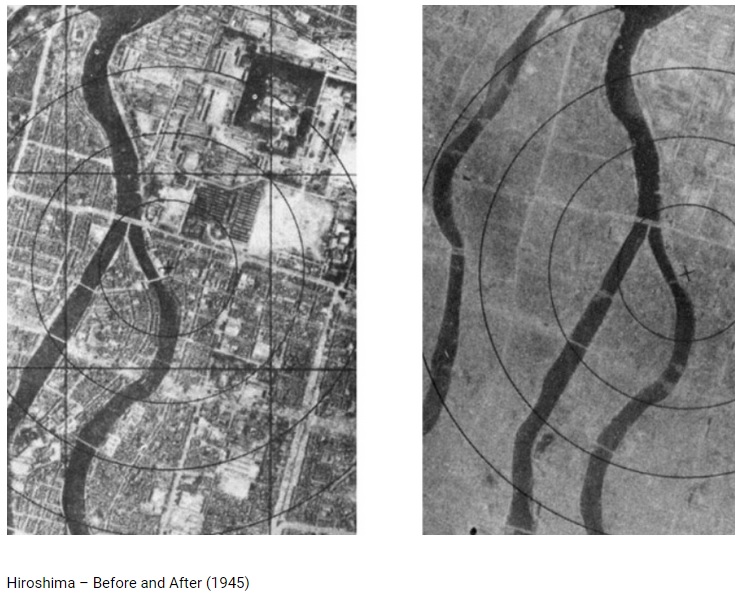
Atomic bombs have been detonated before … twice, in World War II against Japan on the cities of  Hiroshima and Nagasaki. (Today, August 6, is the exact 70th Anniversary of the Hiroshima detonation).

CU Blog - Sum of All Fears - Photo 1

No one can therefore claim that this fear of an atomic, hydrogen or nuclear bomb is far-fetched.

This consideration is presented in conjunction to mitigations and remediation for protecting the Caribbean homeland. The assertion in the book Go Lean … Caribbean (Page 23) is that with the emergence of new economic engines, “bad actors” will also emerge thereafter to exploit the opportunities, with good, bad and evil intent. The book warns that this “bad actor” emergence is a historical fact; it is not inconceivable that it can be repeated, even on the Caribbean homeland.

This is the sum of our fears!

This point is pronounced early in the book with the Declaration of Interdependence (Page 12) that claims:

x.   Whereas we are surrounded and allied to nations of larger proportions in land mass, populations, and treasuries, elements in their societies may have ill-intent in their pursuits, at the expense of the safety and security of our citizens. We must therefore appoint “new guards” to ensure our public safety and threats against our society, both domestic and foreign. The Federation must employ the latest advances and best practices … to assuage continuous threats against public safety.

xii. Whereas the legacy in recent times in individual states may be that of ineffectual governance with no redress to higher authority, the accedence of this Federation will ensure accountability and escalation of the human and civil rights of the people for good governance, justice assurances, due process and the rule of law. As such, any threats of a “failed state” status for any member state must enact emergency measures on behalf of the Federation to protect the human, civil and property rights of the citizens, residents, allies, trading partners, and visitors of the affected member state and the Federation as a whole.

xvi. Whereas security of our homeland is inextricably linked to prosperity of the homeland, the economic and security interest of the region needs to be aligned under the same governance. Since economic crimes, including piracy and other forms of terrorism, can imperil the functioning of the wheels of commerce for all the citizenry, the accedence of this Federation must equip the security apparatus with the tools and techniques for predictive and proactive interdictions.

The Go Lean book serves as a roadmap for the introduction and implementation of the technocratic Caribbean Union Trade Federation (CU). The branding Trade connotes economics, but the roadmap also addresses Homeland Security. Thusly, ascending the CU treaty would also enact a Defense Pact for the region’s security interest. Therefore the Go Lean roadmap has these 3 prime directives:

  • Optimization of the economic engines in order to grow the regional economy and create new jobs.
  • Establishment of a security apparatus to protect the resultant economic engines and the Caribbean homeland.
  • Improvement of Caribbean governance to support these engines.

This structure heeds the pleas of the foregoing Declaration of Interdependence. The Caribbean appointing “new guards”, or a security pact to ensure public safety includes many strategies, tactics and implementations considered “best-practices”. We must be on a constant vigil against the eventual emergence of a “bad actor” that would be the “sum of our fears”. This indicates being pro-active in monitoring, mitigating and managing risks. The Go Lean book describes an organization structure with Intelligence Gathering and Analysis, a robust Emergency Management functionality, plus the Unified Command and Control for Caribbean Disaster Response, anti-crime and military preparedness.

This type of initiative was attempted before. Some Caribbean region member-states came together, starting in 1982, to establish the Regional Security System (RSS); it is an international accord for the defense and security of the eastern Caribbean region. The CU/Go Lean roadmap “stands on the shoulders” of that nascent beginning and extends the vision further with a Status of Forces Agreement (SOFA) embedded in the treaty to create the CU Trade Federation. It is past time now for some real assurances. The world has become a scarier place. The threat of an unknown, non-state-sponsored enemy, terrorism is real. The World Trade Center/Pentagon attack on September 11, 2001 was an undeniable game-changer. But in a recent blog/commentary, it was reported that 17 recent terrorist attacks against the American homeland was cited for this decade alone, since 2010.

The CU Homeland Security Pact would roll the charters of the RSS and other regional efforts, such as:

… into one consolidated apparatus, the SOFA, thusly creating one entity, under a Commander-in-Chief would be “on guard” 24-7-365 for real or perceived threats.

The CU‘s requirement for the SOFA is “Step One, Day One” in the Go Lean roadmap. The Go Lean book details the series of community ethos, strategies, tactics, implementations and advocacies to provide the proactive and reactive public safety/security in the Caribbean region:

Community Ethos – Economic Systems Influence Individual Choices Page 21
Community Ethos – Consequences of Choices Lie in Future Page 21
Community Ethos – Privacy –vs- Public Protection Page 23
Community Ethos – Intelligence Gathering Page 23
Community Ethos – Whistleblower Protection Page 23
Community Ethos – “Crap” Happens Page 23
Community Ethos – Cooperatives Page 25
Community Ethos – Ways to Manage Reconciliations Page 34
Community Ethos – Ways to Improve Sharing Page 35
Community Ethos – Ways to Promote Happiness Page 36
Community Ethos – Ways to Impact the Greater Good Page 37
Strategy – Vision – Confederating a non-sovereign permanent union Page 45
Tactical – Fostering a Technocracy Page 64
Tactical – Separation of Powers – Coast Guard & Naval Authorities Page 75
Tactical – Separation of Powers – Ground Militia Forces Page 75
Tactical – Separation of Powers – Emergency Management Agency Page 76
Tactical – Separation of Powers – CariPol: Marshals & Investigations Page 75
Implementation – Assemble Regional Organs into the CU Page 96
Implementation – Ways to Pay for Change Page 101
Implementation – Start-up Foreign Policy Initiatives Page 102
Implementation – Start-up Security Initiatives Page 103
Implementation – Ways to Foster International Aid – Military Aid Page 115
Planning – 10 Big Ideas – #3: Consolidated Homeland Security Pact Page 130
Planning – Ways to Make the Caribbean Better – Improved Public Safety Page 131
Planning – Ways to Improve Failed-State Indices – Escalation Role Page 134
Planning – Lessons from the American West – Needed Law & Order Page 142
Planning – Lessons from Egypt – Law & Order to not undermine Tourism Page 143
Advocacy – Ways to Grow the Economy – Quick Disaster Recovery Page 151
Advocacy – Ways to Improve Governance Page 168
Advocacy – Ways to Better Manage the Social Contract Page 170
Advocacy – Ways to Impact Justice – Policing the Security Forces Page 177
Advocacy – Ways to Reduce Crime – Regional Security Intelligence Page 178
Advocacy – Ways to Improve Gun Control Page 179
Advocacy – Ways to Improve Homeland Security Page 180
Advocacy – Ways to Mitigate Terrorism Page 181
Advocacy – Ways to Improve Intelligence Gathering & Analysis Page 182
Advocacy – Ways to Improve for Emergency Management Page 196
Advocacy – Ways to Protect Human Rights Page 220

Other subjects related to security and governing empowerments for the region’s defense have been blogged in other Go Lean…Caribbean commentaries, as sampled here:

https://goleancaribbean.com/blog/?p=5840 Computer Glitches – Cyber Attacks Maybe – Disrupt Business As Usual
https://goleancaribbean.com/blog/?p=5183 A Lesson in History – Cinco De Mayo and Mexico’s Security Lapses
https://goleancaribbean.com/blog/?p=5002 Managing a ‘Clear and Present Danger’
https://goleancaribbean.com/blog/?p=4809 Americans arrest 2 would-be terrorists – Mitigating threats
https://goleancaribbean.com/blog/?p=4360 Dreading the ‘Caribbean Basin Security Initiative’
https://goleancaribbean.com/blog/?p=3881 Intelligence Agencies to Up Cyber Security Cooperation
https://goleancaribbean.com/blog/?p=1965 America’s Navy – 100 Percent – Model for Caribbean
https://goleancaribbean.com/blog/?p=1554 Status of Forces Agreement = Security Pact
https://goleancaribbean.com/blog/?p=1531 A Lesson in History: 100 Years Ago – Root Causes of World War I
https://goleancaribbean.com/blog/?p=1076 Trinidad Muslims travel to Venezuela for Jihadist training
https://goleancaribbean.com/blog/?p=960 Lessons from NSA recording all phone calls in Bahamas
https://goleancaribbean.com/blog/?p=809 Muslim officials condemn abductions of Nigerian girls
https://goleancaribbean.com/blog/?p=535 Remembering and learning from Boston
https://goleancaribbean.com/blog/?p=273 10 Things We Want from the US – #4: Pax Americana

The Caribbean is arguably the best address of the planet. The people are kind, and hospitable. History shows that kindness is often disregarded as weakness. So we must project strength, underlying the regional smiles and touristic “welcome mat”.

Unfortunately, there are those out in the “mad-mad” world that will kill … with no qualms. What’s worst, they will overkill.

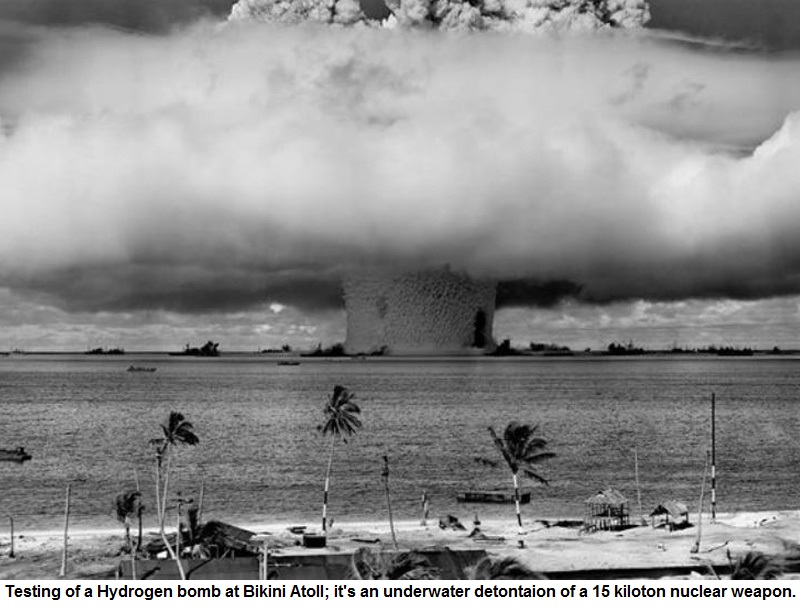
Overkill? See this Photo here:

CU Blog - Sum of All Fears - Photo 3

Nuclear/Hydrogen/Atomic weapons are overkill.

This is the formation of human society; any opening for exploitation will be explored. Someone must be “on guard” for these risks, threats and abuses.

Help is on the way; here comes the Caribbean Union Trade Federation, to help make the region a better, safer homeland to live, work and play.

Everyone in the Caribbean – citizens, institutions and governments – are hereby urged to lean-in to this Go Lean roadmap. 🙂

Download the free e-Book of Go Lean … Caribbean – now!

Share this post:
, , , ,
[Top]

Better than America? Yes, We Can!

Go Lean Commentary

Is America the “Greatest Country in the World”?

Perhaps this was arguable in the past? Today? Hardly … see VIDEO here; (excuse the profanity):

VIDEO: America, the Greatest? –


Published on Oct 21, 2012 – Jeff Daniels, who portrays news anchor Will McAvoy in the HBO Series “The Newsroom”, delivered a stunning, hard-hitting, accurate, and intelligent monologue/response when asked why America is the greatest country in the world. A sobering outlook on the state of the USA. (CAUTION ON THE ADULT LANGUAGE).

Even in the past when the “Greatest” label was arguable, it didn’t apply to everyone! America was the Greatest Country, maybe, if you were:

White, Anglo-Saxon, Rich, Male and Straight

But if you were any of the following, then God help you:

Black
Brown – Hispanic
Native American
Jewish
Catholic
Woman
Gay
Persons with Disabilities (Physical or Mental)
Slavic – Eastern European
Muslim
Communists
Atheist
Poor

CU Blog - Better than America - Yes We Can - Photo 2Yes, building a multi-cultural society is not easy. The book Go Lean … Caribbean describes the challenge as heavy-lifting. America has failed at this challenge, hands-down. In previous blog- commentaries, many defects of American life were detailed, (including the propensity for Crony-Capitalism). See the list of defects here: Housing, education, job hunting, prisons, drug crime prosecutions, and racial profiling.

But despite this list and the reality of this subject, America tries …

This is an important consideration for the planners of Caribbean empowerment. The Caribbean, a region where unfortunately, we have NOT … tried.

The social science of Anthropology teaches that communities have two choices when confronted with endangering crises: fight or flight. The unfortunate reality is that we have chosen the option of flight; (we have no ethos for fighting for our homeland).

The book Go Lean … Caribbean asserts that no society can prosper with a high abandonment rate – reported at 70% for educated classes. The primary mission of the Go Lean book is to “battle” against the “push-and-pull” factors that draw so many of our Caribbean citizens away from their homelands to go to the US. While we cannot change/fix America, we can…

Lower the “push” factors!

The purpose of the Go Lean book is to fix the Caribbean, to be better than America. The Go Lean book serves as a roadmap for the introduction and implementation of the technocratic Caribbean Union Trade Federation (CU) to pursue the quest to elevate the Caribbean region through empowerments in economics, security and governance. It is the assertion that Caribbean citizens can stay home and effect change in their homelands more effectively than going to America to find the “Greatest Country in the World”. The book therefore asserts that the region can turn-around from failing assessments by applying best-practices, and forging new societal institutions to impact the Greater Good for all the Caribbean. This point was pronounced in the opening Declaration of Interdependence (Pages 10 – 14) with these acknowledgements and statements:

xi.   Whereas all men are entitled to the benefits of good governance in a free society, “new guards” must be enacted to dissuade the emergence of incompetence, corruption, nepotism and cronyism at the peril of the people’s best interest. The Federation must guarantee the executions of a social contract between government and the governed.

xii. Whereas the legacy in recent times in individual states may be that of ineffectual governance with no redress to higher authority, the accedence of this Federation will ensure accountability and escalation of the human and civil rights of the people for good governance, justice assurances, due process and the rule of law. As such, any threats of a “failed state” status for any member state must enact emergency measures on behalf of the Federation to protect the human, civil and property rights of the citizens, residents, allies, trading partners, and visitors of the affected member state and the Federation as a whole.

xxxiii. Whereas lessons can be learned and applied from the study of the recent history of other societies, the Federation must formalize statutes and organizational dimensions to avoid the pitfalls of communities like … Detroit, Indian (Native American) Reservations… On the other hand, the Federation must also implement the good examples learned from developments/ communities like New York City, … Canada, the old American West and tenants of the US Constitution.

This is the quest of Go Lean…Caribbean roadmap, to reboot the region’s societal engines; employing best-practices and better strategies, tactics and implementations to impact its prime directives; identified with the following 3 statements:

  • Optimization of the economic engines in order to grow the regional economy to $800 Billion & create 2.2 million new jobs.
  • Establishment of a security apparatus to protect the resultant economic engines and mitigate challenges/threats to the region’s public safety.
  • Improvement of Caribbean governance to support these engines.

The Go Lean book stresses key community ethos, strategies, tactics, implementations and advocacies necessary to transform and turn-around the eco-systems of Caribbean society. These points are detailed in the book as follows:

Community Ethos – Economic Principles – Economic Systems Influence Individual Choices Page 21
Community Ethos – Economic Principles – Consequences of Choices Lie in the Future Page 21
Community Ethos – Governing Principles – Lean Operations Page 24
Community Ethos – Ways to Impact the Future Page 26
Community Ethos – Ways to Promote Happiness Page 36
Community Ethos – Ways to Impact the Greater Good Page 37
Strategy – Vision – Confederate all 30 member-states/ 4 languages into a Single Market Page 45
Strategy – Mission – Build and foster local economic engines Page 45
Tactical – Ways to Foster a Technocracy Page 64
Tactical – Growing the Economy to $800 Billion GDP Page 68
Tactical – Separation-of-Powers – CU Federal Government versus Member-State Governance Page 71
Implementation – Assemble All Regionally-focus Organizations of All Caribbean Communities Page 96
Planning – 10 Big Ideas – American Model: Kennedy’s Quest for the Moon Page 127
Planning – Ways to Make the Caribbean Better Page 131
Planning – Lessons Learned New York City – Managing as a “Frienemy” Page 137
Planning – Lessons Learned from Detroit – Turn-around from Failure Page 140
Planning – Lessons Learned from Indian Reservations – Pattern of Ethnic Oppression Page 141
Planning – Lessons Learned from the American West – How to Win the Peace Page 142
Planning – Lessons Learned from the US Constitution – America Tries – Each Generation Improves Page 145
Advocacy – Ways to Grow the Economy Page 151
Advocacy – Ways to Create Jobs Page 152
Advocacy – Ways to Improve Governance Page 168
Advocacy – Ways to Better Manage the Social Contract Page 170
Advocacy – Ways to Impact Justice Page 177
Advocacy – Ways to Improve Homeland Security Page 180
Advocacy – Ways to Preserve Caribbean Heritage Page 218

The threats of the repressive American past have not always been domestic; there have been times when American dysfunction have reached across borders, including Caribbean countries, and disrupted the peace and progress. This is an important lessons for the Caribbean to learn from considering the history of “American Greatness”; the following previous blog/commentaries apply:

https://goleancaribbean.com/blog/?p=5506 Edward Snowden Case Study: One Person Making a Difference
https://goleancaribbean.com/blog/?p=4166 A Lesson in History: Panamanian Balboa
https://goleancaribbean.com/blog/?p=789 A Lesson in History: America’s War on the Caribbean

The Go Lean roadmap seeks to empower and elevate Caribbean societal engines to make us better than the American eco-system. Tall order?

Yes, we can!

According to the foregoing VIDEO (and the Appendix below), other communities have done it. Consider Europe, all grown up now.

We can apply these models and lessons from these societies to obtain success. This vision is conceivable, believable and achievable!

Yes we can … make the Caribbean region a better place to live, work and play.  🙂

Download the free e-Book of Go Lean … Caribbean – now!

———

Appendix VIDEO – Comedic Commentary – Bill Maher: America Isn’t #1 – https://youtu.be/T8UqdPKbpWM

Uploaded on Jul 11, 2009 – Bill Maher rants on America letting people know we need to reclaim that title and to quit replying on old adages.
Share this post:
, , , , , ,
[Top]

China Internet Policing – Model for Caribbean

Go Lean Commentary

Is anyone watching the store in the Caribbean? The e-Store that is! Are there open sales for illegal narcotics, weapons and paraphernalia on Caribbean-area web domains? How about stolen credit cards, or movies, or music?

China Internet Policing 2Just because these commercial transactions are on the internet, and may be electronically advanced, these facts do not make them benevolent. Rather, there is a lot of malevolence on the world-wide-web (WWW). Sometimes the moniker WWW is derisively dubbed the Wild-Wild-West; thusly referring to the olden days of the American West – in the 19th century – when law-and-order was many times absent from society; outlaws, duels and revenge-seeking were prevalent. The theme of the marketplace then was: “Let the buyer beware”.

The thinking is that we have now advanced a long way from those bad old days.

But yet, have you ever gotten an email from some Nigerian Tribal Chief … or Nigerian widow (or a Nigerian job; see Appendix VIDEO), who needs you to facilitate some financial transaction, using your money in the process but boasting how you will profit big in the end? Have you gotten one of these…lately? No; just check your Spam e-Mail folder; there are probably a few there now.

There is a Murphy’s Law on Technology that is apropos to this discussion:

A computer can make as many mistakes in 2 seconds as 20 men in 20 years.

A need therefore exists to regulate man and machine when it comes to technology-driven commerce:

o  There is the need for someone to watch the e-Store.

o  There is also the other extreme: freedom of speech
… it should not be curtailed by web censors.

But can the freedoms go too far; and conversely, can censorship go too far?

Can companies protect their reputation online from defamation? Or how about cyber-bullying by irate customers or some competitive agent? These are all real concerns and real threats. This following news article conveys that China recognizes the need for some policing in the internet marketplace:

Title: China’s ‘Internet police’ open a window on Web censorship

BEIJING (Reuters) – The branch of China’s police in charge of censoring “illegal and harmful” online information will make its efforts more visible to the public from Monday with the launch of their own social media accounts, the Ministry of Public Security said.

China Internet Policing – Model for Caribbean - Photo 1The Chinese government aggressively censors the Internet, blocking many sites it deems could challenge the rule of the Communist Party or threaten stability, including popular Western sites like YouTube, Instagram and Facebook, as well as Google Inc.’s main search engine and Gmail service.

Police in some 50 areas, from metropolises like Beijing and Shanghai to more obscure cities like Xuzhou in Jiangsu province, will open accounts on sites including Weibo, China’s answer to Twitter, the ministry said late on Sunday.

The move is a response to public concern about problems like online gambling and pornography and is aimed at increasing the visibility of the police presence online to “create a harmonious, cultured, clear and bright Internet”, it said.

“The Internet police are coming out to the front stage from behind the curtains, beginning regular open inspection and law enforcement efforts, raising the visibility of the police online, working hard to increase a joint feeling of public safety for the online community and satisfy the public,” the ministry said.

The cyber police are working to root out “illegal and harmful information on the Internet, deter and prevent cyber-crimes and improper words and deeds online, publish case reports and handle public tip-offs”, it said.

Problems such as fraud, defamation, gambling, the sale of drugs and guns, and “picking quarrels and provoking trouble” – a charge often used to lock up dissidents – have angered people and created a serious challenge to an orderly Internet, it said.

The police would issue warnings to those involved in minor offences and go after more serious cases.

“Just like in the real world, law violations in cyberspace will not go unaccounted for,” it said.

The government has already deleted some 758,000 pieces of “illegal and criminal information” from the Internet and investigated more than 70,000 cyber-crime cases since the start of this year, the ministry said.

(Reporting by Ben Blanchard; Editing by Paul Tait)
Reuters News Wire – Published May 31, 2015; retrieved June 2, 2015 from:
http://news.yahoo.com/chinas-internet-police-open-window-censorship-023422128–finance.html

Where do we stand in the Caribbean?

For starters, there is no call for censorship. But there is a need for responsible internet messaging.

China Internet Policing 3Electronic Commerce is now all the rage in North America, Europe and certain key Asian markets (i.e. China, Japan, Indonesia, etc.). While the Caribbean has not fully embraced the world of e-Commerce, the internet via broadband, Wi-Fi and mobile has been fully assimilated – most adults have a mobile phone. So planners for Caribbean economic empowerments have contemplated the infrastructural deficiencies and proposed the remediation to better govern e-Commerce in this region. This is the assertion in the book Go Lean…Caribbean; it is the contemplation, proposal and remediation plan to reboot Caribbean economics, security and governance. This Go Lean book serves as a roadmap for the introduction and implementation of the technocratic Caribbean Union Trade Federation (CU) to facilitate the growth, promotion and regulatory oversight of electronic commerce in a regional Single Market.

The book posits that some issues are too big for any one Caribbean member-state to manage alone, that there are times when there must be a cross-border, multilateral coordination. The strategy is to confederate all 30 Caribbean member-states and appoint the CU as a deputized agency to oversee this important activity. In addition, attendant functions are included in the roadmap to facilitate e-Commerce: Central Bank adoption of Electronic Payment schemes and Postal Integration/Optimization. Without these functionalities, internet commerce would remain stagnant!

On the other hand, with the expected surge in this sphere of activity, many other challenges will come. In previous blogs, the following issues were detailed:

https://goleancaribbean.com/blog/?p=5353 US Presidential Politics and the Internet
https://goleancaribbean.com/blog/?p=4793 Online reviews – like Yelp and Angie’s List – can wield great power for services marketed, solicited and contracted online.
https://goleancaribbean.com/blog/?p=4381 Net Neutrality – The need for Caribbean Administration of the Issue.
https://goleancaribbean.com/blog/?p=4337 Crony-Capitalism Among the Online Real Estate Markets
https://goleancaribbean.com/blog/?p=3881 European and North American Intelligence Agencies to Ramp-up Cyber Security Cooperation
https://goleancaribbean.com/blog/?p=906 Bitcoin e-Payments needs regulatory framework to manage ‘risky’ image
https://goleancaribbean.com/blog/?p=308 Caribbean Communications Infrastructure Program (CARCIP) and the Caribbean Telecommunications Union (CTU) urges greater innovation and protection.

These commentaries demonstrate that there is the need for a governing body to better oversee and police Caribbean society to mitigate cyber-crimes and illicit activities initiated and/or continued in the online world. Policing the internet is too big for any one Caribbean member-state to manage alone. Too much is at stake.

Providing regional oversight for the Caribbean Single Market – a lean technocracy – for cross-border electronic media, governance of the Information Technology Arts and Sciences and Grievance Officiating are among the missions of Go Lean roadmap. The CU’s prime directives are identified with the following 3 statements:

  • Optimization of the economic engines in order to grow the regional economy to $800 Billion & create 2.2 million new jobs.
  • Establishment of a security apparatus to protect the people and processes (economic engines) of the region from threats and attacks (physical and electronic) that may originate from foreign or domestic sources.
  • Improvement of Caribbean governance to support these engines.

These prime directives will elevate Caribbean society. With this success comes the emergence of bad actors – foreign and domestic. The goal of preparing the appropriate security apparatus was envision in the Go Lean roadmap from the beginning; this was defined early in the book (Page 12 & 14) in the following pronouncements in the Declaration of Interdependence:

x.  Whereas we are surrounded and allied to nations of larger proportions in land mass, populations, and treasuries, elements in their societies may have ill-intent in their pursuits, at the expense of the safety and security of our citizens. We must therefore appoint “new guards” to ensure our public safety and threats against our society, both domestic and foreign. The Federation must employ the latest advances and best practices … to assuage continuous threats against public safety.

xv. Whereas the business of the Federation and the commercial interest in the region cannot prosper without an efficient facilitation of postal services, the Caribbean Union must allow for the integration of the existing mail operations of the governments of the member-states into a consolidated Caribbean Postal Union, allowing for the adoption of best practices and technical advances to deliver foreign/domestic mail in the region.

xvi. Whereas security of our homeland is inextricably linked to prosperity of the homeland, the economic and security interest of the region needs to be aligned under the same governance. Since economic crimes, including piracy and other forms of terrorism, can imperil the functioning of the wheels of commerce for all the citizenry, the accedence of this Federation must equip the security apparatus with the tools and techniques for predictive and proactive interdictions.

xxvii. Whereas the region has endured a spectator status during the Industrial Revolution, we cannot stand on the sidelines of this new economy, the Information Revolution. Rather, the Federation must embrace all the tenets of Internet Communications Technology (ICT) to serve as an equalizing element in competition with the rest of the world. The Federation must bridge the digital divide and promote the community ethos that research/development is valuable and must be promoted and incentivized for adoption.

The subjects of cyber-crimes and electronic commerce integrity feature economic, security and governing concerns. These fields will escalate in importance with the Go Lean roadmap as there is the call for deployment of a Social Media / Electronic Commerce offering for all Caribbean member-states, branded www.myCaribbean.gov. This Caribbean Cloud initiative is projected in the Go Lean book as a subset of the integrated postal operations, the Caribbean Postal Union.

China Internet Policing 4China is an emerging economy. Their economic growth has been impressive in the last 30 years. Despite their official Communism adherence, they model technocratic governmental administrations. There is much for the Caribbean region to learn from their model.

Of course the Caribbean will not boast the 1.3 Billion-population that China holds, but the same as we’re able to model the American example, there is much to consider from our Asian (Chinese) trading partners. The wisdom the Go Lean book gleans from these models is presented as a series of community ethos, strategies, tactics, implementations and advocacies; as highlighted in the following sample:

Community Ethos – Deferred Gratification Page 21
Community Ethos – People Choose Page 21
Community Ethos – People Respond to Incentives Page 21
Community Ethos – Economic Systems Influence Individual Choices Page 21
Community Ethos – Job Multiplier Page 22
Community Ethos – Privacy versus Public Protection Page 23
Community Ethos – Whistleblower Protection Page 23
Community Ethos – Lean Operations Page 24
Community Ethos – Ways to Help Entrepreneurship Page 28
Community Ethos – Promote Intellectual Property Page 29
Community Ethos – Ways to Bridge the Digital Divide Page 31
Community Ethos – Ways to Improve Sharing Page 35
Community Ethos – Ways to Impact the Greater Good Page 37
Strategy – Vision – Integrate a Single Market of entire region Page 45
Tactical – Fostering a Technocracy Page 64
Tactical – Separation of Powers – Caribbean Postal Union (CPU) Page 78
Tactical – Separation of Powers – Interstate Commerce Administration Page 79
Tactical – Separation of Powers – Communications and Media Authority Page 79
Implementation – Year 1 / Assemble Phase – Establish CPU Page 96
Anecdote – Implementation Plan – Mail Services – US Dilemma Page 99
Implementation – Improve Mail Services – Electronic Supplements Page 108
Implementation – Ways to Deliver Page 109
Implementation – Ways to Impact Social Media – Weibo Volumes Page 111
Planning – 10 Big Ideas for the Caribbean Region – Cyber Caribbean Page 127
Advocacy – Ways to Improve Interstate Commerce Page 129
Advocacy – Ways to Grow the Economy Page 151
Advocacy – Ways to Create Jobs Page 152
Advocacy –Ways to Improve Governance Page 168
Advocacy – Ways to Foster Technology Page 197
Advocacy – Ways to Foster e-Commerce Page 198
Advocacy – Ways to Impact Main Street – Wifi & Mobile Apps Page 201
Advocacy – Ways to Impact Urban Living Page 234

This commentary is not intended to make disparaging remarks about Nigeria. Also, this commentary is not intended to make disparaging remarks about Communist China. Rather, the Go Lean book asserts (Page 23) that there is good and bad in every country; no matter the time or place, bad actors will always emerge to exploit economic successes.

That place is now extended to cyber-space.

We, the Caribbean collectively and individually, must police cyber-space as well.

To keep pace with the latest and greatest cyber-criminals will require an advanced level of interdiction and technical competence. It is the assertion here that this is heavy-lifting and too much for any one Caribbean member-state alone. No, the Caribbean needs the effectiveness and efficiencies proposed in Go Lean…Caribbean. The Caribbean needs this technocracy!

This is a lesson we can learn … and apply from China, in our application and pursuit of the Greater Good.

🙂

Download the book Go Lean … Caribbean – now!

————–

Appendix – VIDEO: Nigerian Scammers Impersonate FBI Agent in Work-from-Home Scam – https://youtu.be/D82MzqwyK8A

Published on Mar 13, 2012 – The FBI’s Special Agent Tom Simon is warning about a new scam targeting Hawaii residents, which offers them a work-from-home position, but the company they reportedly will work for, and the financial transactions they are asked to perform, are fake.


Share this post:
, , , ,
[Top]

A Lesson in History – Cinco De Mayo

Go Lean Commentary

Today (May 5) is Cinco De Mayo – celebrating this is a move of solidarity with Mexico; its people and culture – Enjoy the festivities!

Enjoy the Mexican food, spirits, music and culture. The country and people of Mexico have so much to offer the world – see VIDEO below – this includes the Caribbean.

One thing more that they can offer us in our region: A Lesson in History!

The summary of this celebration is simple on the surface: Mexican forces commanded by General Ignacio Zaragoza defeated the French army in the Battle of Puebla on 5 May 1862. 4 days later, on 9 May 1862, The then-President Benito Juárez declared that the anniversary of the Battle of Puebla would be a national holiday,[14][15][16][17][18] regarded as “Battle of Puebla Day” or “Battle of Cinco de Mayo”. Although today it is recognized in some countries as a day of Mexican heritage celebration, it is not a federal holiday in Mexico.[19]

Considering the real history of Cinco De Mayo is a really big deal. For starters, while Mexico was not the aggressor in this war, they were not exactly blameless.

The 1858 – 1860 Mexican civil war known as The Reform War had caused distress throughout Mexico’s economy. When taking office as the newly-elected president of the Republic in 1861, Juárez was forced to suspend payments of interest on foreign debts for a period of two years. At the end of October 1861 diplomats from Spain, France, and Britain met in London to form the Tripartite Alliance, with the main purpose of launching an allied invasion of Mexico, taking control of Veracruz, its major port, and forcing the Mexican government to negotiate terms for repaying its debts and for reparations for alleged harm to foreign citizens in Mexico. In December 1861, Spanish troops landed in Veracruz; British and French followed in early January. The allied forces occupied Veracruz and advanced to Orizaba. However, the Tripartite Alliance fell apart by early April 1862, when it became clear the French wanted to impose harsh demands on the Juarez government and provoke a war. The British and Spanish withdrew, leaving the French to march alone on Mexico City. French Emperor-President Napoleon III – the first democratically elected French President – wanted to set up a puppet regime, the Mexican Empire.

Thus started this French Intervention in Mexico. The effects of these 5 years were far-reaching, even to this day – consider the similarities in flags for these countries.

CU Blog - A Lesson in History - Cinco De Mayo - Photo 1Title: French Intervention in Mexico 1862 – 1867
Emperor Napoleon III of France was the instigator, justifying military intervention by claiming a broad foreign policy of commitment to free trade. For him, a friendly government in Mexico would ensure European access to Latin American markets. Napoleon also wanted the silver that could be mined in Mexico to finance his empire. Napoleon built a coalition with Spain and Britain while the U.S. was deeply engaged in its own civil war from 1861 to 1865.

Here is the main timeline of this French Intervention period:

1. 1862: Arrival of the French
After the initial victory by the Mexicans at the Battle of Puebla, the war continued in a different direction. The pursuing Mexican army was contained by the French at Orizaba, Veracruz, on 14 June. More British troops arrived on 21 September, and General Bazaine arrived with French reinforcements on 16 October. The French occupied the port of Tamaulipas on 23 October, and unopposed by Mexican forces took control of Xalapa, Veracruz on 12 December.

2. 1863: The French take the capital
CU Blog - A Lesson in History - Cinco De Mayo - Photo 2The French army of General François Achille Bazaine defeated the Mexican army led by General Comonfort in its campaign to relieve the siege of Puebla, at San Lorenzo, to the south of Puebla. Puebla surrendered to the French shortly afterward, on 17 May. On 31 May, President Juárez fled the capital city (Mexico City) with his cabinet, retreating northward to Paso del Norte and later to Chihuahua. Having taken the treasure of the state with them, the government-in-exile remained in Chihuahua until 1867.

French troops under Bazaine entered Mexico City on 7 June 1863. The main army entered the city three days later, led by General Forey. General Almonte was appointed the provisional President of Mexico on 16 June, by the Superior Junta (which had been appointed by Forey). The Superior Junta with its 35 members met on 21 June, and proclaimed a Catholic Empire on 10 July. The crown was offered to Austrian Prince Archduke Ferdinand Maximilian, following pressures by Napoleon. Maximilian accepted the crown on 3 October.

3. 1864: Arrival of Maximilian
Further decisive French victories continued with the fall of Guadalajara, Zacatecas, Acapulco, Durango by 3 July, and the defeat of republicans in the states of Sinaloa and Jalisco in November.

Maximilian formally accepted the crown on 10 April, signing the Treaty of Miramar (between France and Mexico), and landed at Veracruz on 28 May. He was enthroned as Maximilian I, Emperor of Mexico, [under French occupation].

4. 1865: Beginning of Republican victories
CU Blog - A Lesson in History - Cinco De Mayo - Photo 3After many more French victories, finally on 11 April, republicans defeated Imperial forces at Tacámbaro in Michoacán. In April and May the republicans had many forces in the states of Sinaloa and Chihuahua. Most towns along the Rio Grande, [(the border with the US),] were also occupied by republicans.

The decree known as the “Black Decree” was issued by Maximilian on 3 October, which threatened any Mexican captured in the war with immediate execution.

5. 1859-1867: U.S. Diplomacy and Involvement
The United States did not condone the French occupation of Mexico but it had to use its resources for the American Civil War, which lasted 1861 to 1865. Then-President Abraham Lincoln expressed his sympathy to Latin American republics against any European attempt to establish a monarchy; and the Congress passed a resolution in disgust of these French actions. In 1865, The US supported the sale of Mexican bonds by Mexican agents in the US to fund the Juarez Administration, raising up to $18-million dollars for the purchase of American war material.[16] By 1867, American policy shifted from thinly veiled sympathy to the republican government of Juarez to open threat of war to induce a French withdrawal, invoking the Monroe Doctrine, a policy to thwart any aggression by European powers in the Americas.

6. 1866: French withdrawal and Republican victories
Choosing Franco-American relations over his Mexican monarchy ambitions, Napoleon III announced the withdrawal of French forces beginning 31 May. Taking advantage of the end of French military support to the Imperial troops, the Republicans won a series of crippling victories in Chihuahua on 25 March, Guadalajara, Matamoros, Tampico and Acapulco in July. Napoleon III urged Maximilian to abandon Mexico and evacuate with the French troops; [but he persisted]. The French evacuated Monterrey on 26 July, Saltillo on 5 August, and the whole state of Sonora in September. Maximilian’s French cabinet members resigned on 18 September. The Republicans defeated imperial troops in Oaxaca in October, occupying the whole of Oaxaca in November, as well as parts of Zacatecas, San Luis Potosí and Guanajuato.

7. 1867: Republicans take the capital
The Republicans occupied the rest of the states of Zacatecas, San Luis Potosí and Guanajuato in January. The French evacuated the capital on 5 February.

On 13 February 1867, Maximilian withdrew to Querétaro. The Republicans began a siege of the city on 9 March, and Mexico City on 12 April. On 11 May, Maximilian finally resolved to try to escape through the enemy lines. He was intercepted on 15 May. Following a court-martial, he was sentenced to death and executed on 19 June.
Source: http://en.wikipedia.org/wiki/French intervention_in_Mexico  

This subject has relevance for the Caribbean. Mexico is a stakeholder in Caribbean affairs. They have a vast coastline (Yucatan Peninsula) on the Caribbean Sea, plus a few Caribbean islands (Cozumel, Isla Mujeres, Isla Contoy, and Isla Blanca). This country is also a member of the ACS – Association of Caribbean States – one of the relevant entities that must be assembled for this regional integration movement championed in the book Go Lean…Caribbean.

The underlying theme of this Lesson in Mexican History is the lack of effective security for the people and societal engines of Mexico. Now, after 150 years, this historic pattern has continued; Mexico proceeded to endure one revolution-rebellion-overthrow-coup d’etat after another until recent times.

The Caribbean cannot afford this same disposition: the dread and damage endured from decades of dysfunction.

Today, Mexico is known as a lawless society in many pockets, especially along the US border. Considering the art and science of security, it is sad that they never got it right! They resemble a Failed-State in so many perspectives. This is where their history, especially those 5 years of the Franco-Mexican War, provides lessons for the Caribbean people and institutions. But this Go Lean movement does not seek to remediate Mexico; this is out of scope. Rather the focus is strictly on the 30 Caribbean member-states: islands of the Caribbean plus the Central & South American states that caucus with the Caribbean Community (Belize, Guyana and Suriname).

This effort to elevate Caribbean society fully recognizes that security mitigations must be prioritized equally with economic and governing remediation. This is an underlying theme of the book Go Lean…Caribbean. The book declares that the region is in crisis, at the precipice of Failed-State status. This is the assertion of the Go Lean book, that the region must prepare its own security apparatus for its own security needs.

This book serves as a roadmap for the introduction and implementation of the technocratic Caribbean Union Trade Federation (CU). So while the CU is set to optimize Caribbean society through economic empowerment, the security dynamics will be inextricably linked to this same endeavor. Therefore the Go Lean roadmap has 3 prime directives:

  • Optimization of the economic engines in order to grow the regional economy to $800 Billion & create 2.2 million new jobs.
  • Establishment of a security apparatus to protect the resultant economic engines.
  • Improvement of Caribbean governance to support these engines.

The book contends, just as the French proved to be a “bad actor” to Mexico in 1862, that new “bad actors” will emerge for the Caribbean to contend with. This will be as a by-product of new economic successes in the region. This point is pronounced early in the book with the Declaration of Interdependence (Page 12) that claims:

x.   Whereas we are surrounded and allied to nations of larger proportions in land mass, populations, and treasuries, elements in their societies may have ill-intent in their pursuits, at the expense of the safety and security of our citizens. We must therefore appoint “new guards” to ensure our public safety and threats against our society, both domestic and foreign. The Federation must employ the latest advances and best practices … to assuage continuous threats against public safety.

xvi. Whereas security of our homeland is inextricably linked to prosperity of the homeland, the economic and security interest of the region needs to be aligned under the same governance. Since economic crimes, including piracy and other forms of terrorism, can imperil the functioning of the wheels of commerce for all the citizenry, the accedence of this Federation must equip the security apparatus with the tools and techniques for predictive and proactive interdictions.

The need for the Caribbean to appoint “new guards” or a security pact to mitigate foreign and domestic threats in the region is the primary lesson to glean from the foregoing encyclopedic article – a consideration of the history of Cinco De Mayo. This security pact is to be legally constituted by a Status of Forces Agreement which would be enacted as a complement to the CU confederation treaty. The Go Lean roadmap provides 370-pages of turn-by-turn directions on how to deploy cutting-edge strategies, tactics and implementations to succeed in this goal.

In addition, there are other lessons – secondary – that we learn from this consideration of the history of Cinco De Mayo:

The Go Lean book details a roadmap with turn-by-turn directions for transforming the Caribbean homeland. The following is a sample of the community ethos, strategies, tactics, implementations and advocacies to impact the Caribbean region for this turnaround:

Community Ethos – Economic Principle – Economic Systems Influence Choices Page 21
Community Ethos – Economic Principle – Consequences of Choices Lie in the Future Page 21
Community Ethos – Anti-Bullying and Mitigation Page 23
Community Ethos – Minority Equalization Page 24
Community Ethos – Cooperatives Page 25
Community Ethos – Ways to Improve Sharing Page 35
Strategy – Vision – Confederating a Non-Sovereign Union Page 45
Strategy – Mission – Protect Economic Engines from threats Page 45
Tactical – Fostering a Technocracy Page 64
Tactical – Separation of Powers Page 71
Implementation – Start-up Foreign Policy Initiatives Page 102
Implementation – Security Initiatives at Start-up Page 103
Implementation – Ways to Deliver Page 109
Implementation – Ways to Better Manage Debt Page 118
Implementation – Ways to Promote Independence – Interdependence Page 120
Planning – 10 Big Ideas – Defense / Homeland Security Pact Page 127
Planning – Ways to Make the Caribbean Better Page 131
Planning – Ways to Better Manage Image Page 133
Planning – Ways to Improve Failed-State Indices Page 134
Planning – Lessons from the American West Page 142
Advocacy – Ways to Grow the Economy Page 151
Advocacy – Ways to Create Jobs Page 152
Advocacy – Ways to Improve Governance Page 168
Advocacy – Ways to Better Manage the Social Contract Page 170
Advocacy – Ways to Impact Justice Page 177
Advocacy – Ways to Improve Homeland Security Page 180
Advocacy – Ways to Mitigate Terrorism Page 181
Advocacy – Ways to Protect Human Rights Page 220

Mexico is a beautiful country, with a beautifully diverse population plus a lot of natural resources. They experience a vibrant tourism product where millions visit annually for Mexican hospitality – they are a fit competitor of Caribbean tourism, even for cruises. See VIDEO here:

VIDEO: Mexico: Live It to Believe It – Cultural Diversity 2015 – https://youtu.be/jciVmLL_UgY

Published on Feb 27, 2014 – A production of the Mexico Department of Tourism; commissioned for the Central American and Caribbean Games in Veracruz from November 14 to 30, 2014.

Many people visit Mexico, but few would consider moving there permanently. In fact just the opposite occurs, the societal abandonment problem in Mexico is very pronounced. Their northern neighbor, the United States, has constant security issues of illegal Mexican migrants. Mexico has been dysfunctional for their entire history as a Republic. They must do better! While this quest is out-of-scope for the CU/Go Lean roadmap, we can learn lessons from their actions and inactions.

The Go Lean book posits (Page 3) that the Caribbean islands are among the greatest addresses in the world. But like Mexico, instead of the world “beating a path” to our doors, the people of the Caribbean have “beat down their doors” to get out; despite the absence of any war or revolution … like our Mexican neighbors. Our abandonment is inexcusable.

May we learn from this history of Mexico! Mexican culture is great! Enjoy the festivities: their people, food, drink, music and dance. But let’s do better … than they have done. Let’s make the Caribbean even better, where our citizens can prosper where they are planted; let’s make our homeland better places to live, work and play.  🙂

Download the free e-Book of Go Lean … Caribbean – now!

Share this post:
, , , , , ,
[Top]

Managing a ‘Clear and Present Danger’

Go Lean Commentary

A ‘Clear and Present Danger’ sounds ominous…

- Photo 4

There should be no question as to intent or consequence if the situation goes unimpeded.

The ‘Clear and Present Danger’ doctrine is a concept in jurisprudence, which has bearing on everyday life for everybody. It refers to not just a potential danger but one that will likely cause a catastrophe if not immediately obstructed or neutralized.

This phrase was suggested as a test of harmful speech by the US Supreme Court Justice Oliver Wendell Holmes in the 1919 case of Schenck v. United States. In delivering the court’s unanimous decision upholding the conviction of a Socialist Party Officer (who encouraged resistance to the World War 1 Draft) under the Espionage Act (which suppressed Free Speech), Justice Holmes noted that the “character of every act depends upon the circumstances in which it is done.” He went on to say that, “when a nation is at war many things that might be said in time of peace are such a hindrance to its effort that their utterance will not be endured so long as men fight and that no court could regard them as protected by any constitutional right.” (Source: http://www.businessdictionary.com/definition/clear-and-present-danger.html)

How would this concept in jurisprudence relate to the everyday life for the average person in the Caribbean?

This consideration is presented in conjunction to mitigations and remediation for protecting the Caribbean homeland. The assertion in the book Go Lean … Caribbean (Page 23) is that with the emergence of new economic engines, “bad actors” will also emerge thereafter to exploit the opportunities, with good, bad and evil intent. But the book warns against more than just bad people, rather “bad actors”; thusly referring to corporate entities, natural disasters (hurricanes are assigned people names) and other “random acts” (think “red tides”, pandemics, etc.). The book relates that this is a historical fact that is bound to be repeated … again and again.

This point is pronounced early in the book with the Declaration of Interdependence (Page 12) that claims:

i.     Whereas the earth’s climate has undeniably changed resulting in more severe tropical weather storms, it is necessary to prepare to insure the safety and security of life, property and systems of commerce in our geographical region. As nature recognizes no borders in the target of its destruction, we also must set aside border considerations in the preparation and response to these weather challenges.

ii.    Whereas the natural formation of the landmass for our lands constitutes some extreme seismic activity, it is our responsibility and ours alone to provide, protect and promote our society to coexist, prepare and recover from the realities of nature’s occurrences.

x.   Whereas we are surrounded and allied to nations of larger proportions in land mass, populations, and treasuries, elements in their societies may have ill-intent in their pursuits, at the expense of the safety and security of our citizens. We must therefore appoint “new guards” to ensure our public safety and threats against our society, both domestic and foreign. The Federation must employ the latest advances and best practices … to assuage continuous threats against public safety.

xii. Whereas the legacy in recent times in individual states may be that of ineffectual governance with no redress to higher authority, the accedence of this Federation will ensure accountability and escalation of the human and civil rights of the people for good governance, justice assurances, due process and the rule of law. As such, any threats of a “failed state” status for any member state must enact emergency measures on behalf of the Federation to protect the human, civil and property rights of the citizens, residents, allies, trading partners, and visitors of the affected member state and the Federation as a whole.

xvi. Whereas security of our homeland is inextricably linked to prosperity of the homeland, the economic and security interest of the region needs to be aligned under the same governance. Since economic crimes, including piracy and other forms of terrorism, can imperil the functioning of the wheels of commerce for all the citizenry, the accedence of this Federation must equip the security apparatus with the tools and techniques for predictive and proactive interdictions.

The Caribbean appointing “new guards”, or a security pact to ensure public safety includes many strategies, tactics and implementations considered “best-practices”. We must be on a constant vigil against these “bad actors”, man-made or natural. This necessitates being pro-active in monitoring, mitigating and managing risks. Then when “crap” does happen, the “new guards” will be prepared for any “Clear and Present Danger“. The Go Lean book describes an organization structure with Emergency Management functionality, including Unified Command-and-Control for Caribbean Disaster Response, Anti-crime and Military Preparedness.

Wait! Wasn’t this done before? Didn’t the Caribbean region member-states come together – September 1, 2005 – and establish a security apparatus so as to assuage public safety risks and threats?

Yes, this is part of the CariCom (Caribbean Community) effort. The Go Lean book and these blogs commentaries have consistency railed against the ineffectiveness and inefficiency of CariCom and its regional organs.

The Caribbean Disaster Emergency Management Agency (CDEMA)[1] is an inter-regional supportive network of independent emergency units throughout the Caribbean region; see Appendix below. Originally formed as the Caribbean Disaster Emergency Response Agency (CDERA) it under-went the name change to CDEMA in September 2009.
See Photo below for a listing of the CDEMA functionality:

- Photo 1

The participating member states and agencies of the CDEMA include:

Country

Organization

Anguilla Department of Disaster Management (DDM)
Antigua and Barbuda National Office of Disaster Services (NODS)
Bahamas Disaster Management Unit
Barbados Department of Emergency Management
Belize National Emergency Management Organisation (NEMO)
British Virgin Islands Department of Disaster Management
Dominica Office of Disaster Management (ODM)
Grenada National Disaster Management Agency (NaDMA)
Guyana Civil Defense Commission
Haiti Civil Protection Directorate
Jamaica Office of Disaster Preparedness and Emergency Management (ODPEM)
Montserrat Disaster Management Coordination Agency
Saint Kitts and Nevis National Emergency Management Agency (NEMA)
Saint Lucia National Emergency Management Organisation (NEMO)
Saint Vincent and the Grenadines National Emergency Management Organisation (NEMO)
Suriname National Coordination Center For Disaster Relief (NCCR)
Trinidad and Tobago Office of Disaster Preparedness and Management (ODPM)
Turks and Caicos Islands Department of Disaster Management & Emergencies

What about regional defense?

There is a regional initiative branded the Regional Security System (RSS); it is an international agreement for the defense and security of the eastern Caribbean region. The Regional Security System was created out of a need for collective response to security threats, which were impacting on the stability of the region in the late 1970s and early 1980s. On 29 October 1982 four members of the Organisation of Eastern Caribbean States—namely, Antigua & Barbuda, Dominica, St. Lucia, and St. Vincent & the Grenadines—signed a memorandum of understanding (MOU) with Barbados to provide for “mutual assistance on request”. The signatories agreed to prepare contingency plans and assist one another, on request, in national emergencies, prevention of smuggling, search and rescue, immigration control, fishery protection, customs and excise control, maritime policing duties, protection of off-shore installations, pollution control, national and other disasters and threats to national security. Saint Kitts & Nevis joined following independence in 1983, and Grenada joined two years later.

These two initiatives CDEMA and RSS constitutes the regional security solutions for the Caribbean. “Our thimble runneth over!”

What is the problem with CDEMA, RSS and CariCom? For starters these regional efforts, the Caribbean Community, does not represent the full community of the Caribbean; not even half of the Caribbean. Consider here:

CU Member states not included or participating in CDEMA, RSS or CariCom:

  • Cuba
  • Dominican Republic
  • US Territories (Puerto Rico, US Virgin Islands)
  • Dutch Territories (ABC Islands: Aruba, Bonaire, Curacao; SSS Islands: Saba, Saint Marteen; Saint Eustatius)
  • French Territories (Guadeloupe, Martinique, St. Barthélemy, St. Martin)

Secondly, CariCom has extreme funding challenges; the regional construct depends on income derived almost exclusively from grants from the American federal government (US-AID), Canadian agencies and the EU’s Development Fund (EDF). After 40 years of CariCom, it can be concluded that the CariCom Secretariat and regional organs fail to meet the needs of the Caribbean people, even for the people in its participating member-states. They are a great “talking head”; nothing more. The Go Lean book quotes an internal report (Page 92) complaining of the severe weaknesses of the regional construct, stating their tendency to announce decisions over new initiatives as if full implementation were imminent, resulting in a so-called “implementation deficit”.

Obviously, the established security solution is not fully established and does not really solve any threats; therefore the region is not secured.

This reality is pronounced early in the Go Lean book (Page 8) with this declaration regarding the promoters of the Go Lean movement, that they are …

… not affiliated with the CariCom or any of its agencies or institutions. This movement is not an attempt to re-boot the CariCom, but rather a plan to re-boot the Caribbean… This movement was bred from the frustrations of the Diaspora, longing to go home, to lands of opportunities. But this is not a call for a revolt against the governments, agencies or institutions of the Caribbean region, but rather a petition for a peaceful transition and optimization of the economic, security and governing engines in the region.

The Go Lean book is a petition for change and optimization, serving as a roadmap for the introduction and implementation of the technocratic Caribbean Union Trade Federation (CU). The CU would roll the charters of CDEMA, RSS and CariCom into one consolidated, integrated and collaborated effort. The CU is set to optimize Caribbean society through economic empowerment, and also homeland security in the region, since these are inextricably linked to this same endeavor.

Therefore the Go Lean roadmap has 3 prime directives:

  • Optimization of the economic engines in order to grow the regional economy to $800 Billion & create 2.2 million new jobs.
  • Establishment of a security apparatus to protect the resultant economic engines and theCaribbean homeland.
  • Improvement of Caribbean governance to support these engines.

The CU Homeland Security forces have to always be “on guard”, on alert for real or perceived threats. The legal concept is one of being deputized by the sovereign authority for a role/responsibility in a member-state. So when “crap” happens these CU forces are expected to aid, assist, and support local resources in these member-states when called on. But, when a member-state is the problem, in terms of malfeasance, misfeasance or nonfeasance, the “Clear and Present Danger” mandate should be invoked. As a security apparatus, there should also be certain defined threats that would be designated as primarily assigned to the CU; this would apply in a Declaration of War against a known state-sponsored enemy.

But the world has now changed; there is the new threat of an unknown, non-state-sponsored enemy: the scourge of terrorism. Consider the situation in the United States, we all know of the World Trade Center attacks on September 11, 2001, but since then terrorist attacks have actually been a constant threat in the US. In a recent blog/commentary, it was reported that there were 17  terrorist attacks against the American homeland in this decade alone, since 2010. Surely the threat of terrorism is a “clear and present danger” in the US.

The CU treaty calls for the mitigation of terrorism to be a constant charter for the CU Homeland Security forces.

For most of the Caribbean, we are allied with the US; we even have two US Territories “smack-dab” in the middle of our archipelago. So the American terrorist-enemies are very much our enemies. Therefore the CU/Go Lean roadmap posits that the region must prepare an optimized security apparatus for its own security needs. This time for real!

The request is that all Caribbean member-states empower a security force to execute a limited scope on their sovereign territories. The legal basis for this empowerment is a Status of Forces Agreement (SOFA), embedded at the CU treaty initiation, thereby authorizing the CU Homeland Security Department for its role and responsibility for all the “crap” that could happen to the peace and prosperity of the Caribbean people. The CU Trade Federation would lead, fund and facilitate a security force, even encapsulating existing armed forces (full-time or part-time/reserves) as needed, at the discretion of the CU Commander-in-Chief.

The existing Caribbean Security initiatives have failed the region. Despite the existence of agencies like the CDEMA and RSS, the CariCom has not ascended to prominence in local communities. Most people do not even know these agencies exist. It is not seen, heard or felt. This is not the level of governance the Caribbean region needs; we need more; we need better. Previous Go Lean commentaries have meticulously detailed the overall failure of CariCom.

Perhaps the problem is economics (funding)? Or perhaps the security enablement (legal authorization to act)? Or perhaps, its the governance and administration? There are many questions; the only answer that matters is the solutions must address the Clear and Present Dangers.

Consider these monumental episodes and events in the Caribbean region that have occurred in the recent past; the expectation is that they would have invoked the “Clear and Present Danger” clause for engagement from the CDEMA entity. The following list is the Top 20 disasters in CDERA member states, according to the CDEMA published database and sorted by total losses:

No

Date

Year

Country

Event

Killed

Affected

Losses US$

1

20-Dec

2005

Guyana Flood

37

274,774

2,674,322,175

(Details)

2

7-Sep

2004

Grenada Tropical Cyclone

28

81,883

895,199,567

(Details)

3

9-Sep

2004

Jamaica Tropical Cyclone

17

369,685

592,971,569

(Details)

4

2-Sep

2004

The Bahamas Tropical Cyclone

0

8,000

356,983,000

(Details)

5

25-Sep

2004

The Bahamas Tropical Cyclone

2

28,000

350,886,000

(Details)

6

4-Aug

1980

Saint Lucia Tropical Cyclone

9

0

92,592,593

(Details)

7

9-Sep

1994

Saint Lucia Tropical Cyclone

3

0

85,185,185

(Details)

8

14-Jul

2005

Grenada Tropical Cyclone

1

39,085

75,478,163

(Details)

9

21-Nov

2004

Dominica Earthquake

0

19,527

45,150,614

(Details)

10

12-Nov

2004

Trinidad
(Details)
Mudslide

2

1,200

33,333,333

11

7-Sep

2004

Saint Lucia Tropical Cyclone

0

0

10,464,720

(Details)

12

26-Oct

1996

Saint Lucia Tropical Cyclone

0

0

4,444,444

(Details)

13

7-Sep

2004

St Vincent Tropical Cyclone

0

0

4,110,037

(Details)

14

10-Jul

1960

Saint Lucia Tropical Cyclone

6

0

1,421,481

(Details)

15

7-Sep

1967

Saint Lucia Tropical Cyclone

1

0

740,741

(Details)

16

9-Jun

1955

Saint Lucia Fire

3

0

462,963

(Details)

17

1-Aug

1966

Saint Lucia Tropical Cyclone

0

0

277,778

(Details)

18

25-Sep

1963

Saint Lucia Tropical Cyclone

0

0

277,778

(Details)

19

21-Oct

1998

Saint Lucia Tropical Cyclone

1

0

230,185

(Details)

20

1-Feb

1990

Saint Lucia Earthquake

0

0

214,813

(Details)
Total

110

822,154

$5,224,747,139

Was there a noticeable Caribbean-Regional presence in response to these disastrous events?

There are also examples of Industrial Incidents – Chemical Spills – not on the CDEMA list; (the exclusion is inexcusably surprising). These would have gotten the attention of CU Emergency Management agencies, as these also pose a “Clear and Present Danger”. This sample list is just for Jamaica:

Year

Activity Location Details

2005

Use/Application Hotel Explosion from inflammable gas; cause due to management failure

2003

Road Transport Road Tanker Trailer Oil Spill in Montego Bay

1981

Storage Port Sabotage/Vandalism of the Oil Tanker Erodona at Port Kaiser

The presence of this regional construct has not been felt in most of the Caribbean member-states. They have emerged more as an after-the-fact data collector. The burden of direct remediation, beyond the direct member-state, is elusive in the Caribbean homeland. Consider this short-list of emphatic disasters that, to date, have remained unmanaged and unresolved, despite the  “Clear and Present Dangers”:

Member-State Event/Episode
Bahamas Freeport – Hawksbill-area Industrial Plants Spill-Closure-Relocation
Bahamas Nassau – 2013 Rubis Gas Station Underground Tank leakage; need for relocation and remediation.
Haiti January 2010 Earthquake – Long drawn-out inadequate response from local, national and foreign stakeholders.

There is a difference between effectiveness and efficiency. It is easy for an individual or small group to simply deliver on a plan; that is efficiency. Effectiveness would be to get the buy-in from all stakeholders, so as to complete the needed collaboration, consensus-building and compromise. That is heavy-lifting.

All in all, the failures of CariCom, CDEMA and RSS are attributable to this one premise: “Too little, too late”.

It is time for more and better. By contrast, the CU‘s requirement for the SOFA is “Step One, Day One” in the Go Lean roadmap. The CU organization must be empowered for proactive and reactive management of natural disasters, industrial accidents, bacterial & viral pandemics and terrorism-related events. The Go Lean book details the series of community ethos, strategies, tactics, implementations and advocacies to provide the proactive and reactive public safety/security in the Caribbean region:

Community Ethos – Economic Systems Influence Individual Choices Page 21
Community Ethos – Consequences of Choices Lie in Future Page 21
Community Ethos – Privacy –vs- Public Protection Page 23
Community Ethos – Intelligence Gathering Page 23
Community Ethos – Whistleblower Protection Page 23
Community Ethos – “Crap” Happens Page 23
Community Ethos – Cooperatives Page 25
Community Ethos – Ways to Manage Reconciliations Page 34
Community Ethos – Ways to Improve Sharing Page 35
Community Ethos – Ways to Promote Happiness Page 36
Community Ethos – Ways to Impact the Greater Good Page 37
Strategy – Vision – Confederating a non-sovereign permanent union Page 45
Tactical – Fostering a Technocracy Page 64
Tactical – Separation of Powers – Coast Guard & Naval Authorities Page 75
Tactical – Separation of Powers – Ground Militia Forces Page 75
Tactical – Separation of Powers – Emergency Management Agency Page 76
Tactical – Separation of Powers – CariPol: Marshals & Investigations Page 75
Implementation – Ways to Pay for Change Page 101
Implementation – Start-up Foreign Policy Initiatives Page 102
Implementation – Start-up Security Initiatives Page 103
Implementation – Ways to Foster International Aid Page 115
Planning – 10 Big Ideas – #3: Consolidated Homeland Security Pact Page 130
Planning – Ways to Make the Caribbean Better Page 131
Planning – Ways to Improve Failed-State Indices – Escalation Role Page 134
Planning – Lessons from the American West – Needed Law & Order Page 142
Planning – Lessons from Egypt – Law & Order for Tourism Page 143
Advocacy – Ways to Grow the Economy – Quick Disaster Recovery Page 151
Advocacy – Ways to Improve Governance Page 168
Advocacy – Ways to Better Manage the Social Contract Page 170
Advocacy – Ways to Impact Justice – Policing the Police Page 177
Advocacy – Ways to Reduce Crime – Regional Security Intelligence Page 178
Advocacy – Ways to Improve Homeland Security Page 180
Advocacy – Ways to Mitigate Terrorism Page 181
Advocacy – Ways to Improve Intelligence Gathering & Analysis Page 182
Advocacy – Ways to Improve for Natural Disasters Page 184
Advocacy – Ways to Improve for Emergency Management Page 196
Advocacy – Ways to Protect Human Rights – Watchful World Page 220

Other subjects related to security and governing empowerments for the region have been blogged in other Go Lean…Caribbean commentary, as sampled here:

https://goleancaribbean.com/blog/?p=4809 Americans arrest 2 would-be terrorists – a Clear and Present Danger
https://goleancaribbean.com/blog/?p=4741 Vanuatu and Tuvalu Cyclone – Inadequate response to human suffering
https://goleancaribbean.com/blog/?p=4720 A Lesson in History: SARS in Hong Kong
https://goleancaribbean.com/blog/?p=4360 Dreading the ‘Caribbean Basin Security Initiative’
https://goleancaribbean.com/blog/?p=2614 The ‘Great ShakeOut’ Earthquake Drill / Planning / Preparations
https://goleancaribbean.com/blog/?p=2397 Stopping a Clear and Present Danger: Ebola
https://goleancaribbean.com/blog/?p=1076 Trinidad Muslims travel to Venezuela for jihadist training
https://goleancaribbean.com/blog/?p=1003 Painful and rapid spread of new virus – Chikungunya – in Caribbean
https://goleancaribbean.com/blog/?p=960 Lessons from NSA recording all phone calls in Bahamas
https://goleancaribbean.com/blog/?p=809 Muslim officials condemn abductions of Nigerian girls
https://goleancaribbean.com/blog/?p=535 Remembering and learning from Boston
https://goleancaribbean.com/blog/?p=273 10 Things We Want from the US – #4: Pax Americana
https://goleancaribbean.com/blog/?p=87 Fact, not fiction: 6.5M Earthquake Shakes Eastern Caribbean

The concept of “Clear and Present Danger” is conveyed in the following VIDEO, a “trailer” for a movie of the same name. This is art imitating life:

Title: Clear and Present Danger – Movie Trailer  – https://youtu.be/900kPg1lomU

Published on Jun 19, 2012 – This is the third film based on Tom Clancy’s high-tech espionage potboilers starring CIA deputy director Jack Ryan. Harrison Ford, returning to the Ryan role after his first go-round in 1992’s Patriot Games, is assigned to a delicate anti-drug investigation after a close friend of the President (a Reaganesque Donald Moffat) is murdered by a Colombian drug cartel. When Ryan discovers that the President’s wealthy friend was in league with the cartel, the President’s devious national security adviser (Harris Yulin) and an ambitious CIA deputy director (Henry Czerny) send a secret paramilitary force into Colombia to wipe out the drug lords. The force is captured and then abandoned by the President’s lackeys. It falls to Ryan to enter Colombia and rescue them, aided only by a renegade operative named Clark (Willem Dafoe), with both his life and career on the line.

The adoption of a “Clear and Present Danger” mandate is reflective of a technocratic work edict and community ethos. We can and must do better!

The advocacy to adopt the structure of a technocracy is reflective of this commitment to do better. The term technocracy is used to designate the application of the scientific method to solving social and economic problems. The CU must start as a technocracy, not grow into a technocracy – too much is at stake – lives are involved; see Appendix B below of Haiti’s Earthquake Photos.

All of the Caribbean is hereby urged to lean-in to this roadmap, to make the Caribbean safer and make the region a better destination to live, work and play.

🙂

Download the book Go Lean … Caribbean – now!

————

Appendix – CDEMA Role / Responsibilities:

Specific Roles and Responsibilities of the CDM Coordination and Harmonization Council:

  • Contribute to and provide recommendations for the development and implementation of a CDM monitoring and evaluation framework.
  • To consider reports on CDM implementation and provide guidance towards sustainability.
  • Identify and Provide recommendations for the integration of ongoing initiatives as well as planned initiatives that will support the achievement of the outcomes enshrined in the enhanced CDM Strategy
  • Discuss and address issues and opportunities to further good governance of the CDM
  • Nurture opportunities for synergies between development partners, participating states, representatives of the private sector, civil society and other relevant stakeholders responsible for the mainstreaming of the CDM strategy in development planning.
  • Provide policy guidance for the maintenance of the CDM database to ensure effective sharing of CDM knowledge.
  • Share annually  with the CDM Programming Consultation meeting, progress on CDM implementation
  • Identify a technical committee to support the planning process for the CDM Conference

The CDM Coordination and Harmonization Council comprise development partner representatives, sector leaders, participating states and private sector. The group includes:

  1. Caribbean Disaster Emergency Management Agency (Chair),
  2. Caribbean Development Bank (CDB),
  3. Canadian International Development Agency (CIDA),
  4. United Nations Development Programme (UNDP),
  5. United States Agency for International Development (Development Arm and OFDA),
  6. United Kingdom Department for International Development (DFID),
  7. European Union (EU),
  8. CARICOM Secretariat,
  9. Organization of American States (OAS),
  10. Organization of Eastern Caribbean States (OECS),
  11. University of the West Indies (UWI),
  12. Food and Agriculture Organisation (FAO),
  13. Caribbean Tourism Organization (CTO),
  14. Pan American Health organization (PAHO),
  15. Caribbean Electric Utility Services Cooperation (CARILEC),
  16. Caribbean Policy Development Centre (CPDC),
  17. United Nations Development Fund for Women (UNIFEM),
  18. Caribbean Community Climate Change Centre (CCCCC),
  19. Caribbean Association of Industry and Commerce (CAIC),
  20. Four representatives of CDERA Participating States – one representative from each sub-region.

—————-

Appendix B – Haiti Earthquake Photos – Evidence of a Clear and Present Danger

- Photo 2

- Photo 3


Share this post:
, , , ,
[Top]

Ambassadors to Caribbean discuss PetroCaribe-Energy, Security

Go Lean Commentary

The problem with different independent nations coming together to build consensus is that each party may have its own self-interest. Independence and consensus-building are inherently opposed to each other.

The subsequent news article highlights this point, as it relates how 5 US ambassadors to Caribbean member-states had convened stakeholders to promote an agenda of American leadership in energy security.

Something about this initiative seems conflicting!

A lack of American leadership in the past has resulted in solutions originating elsewhere, from one neighbor in particular: Venezuela. That country’s PetroCaribe initiative had been valued by many Caribbean member-states as it was a vital lifeline throughout the global financial crisis, which had combined with cripplingly high oil and gas prices in 2008. But Venezuela-PetroCaribe is in enmity with US policy.

This brings to the fore a previous lesson in American foreign-policy history, from 25 years ago: Nelson Mandela’s unconditional support of enemies of the US that were unconditional supporters of the anti-Apartheid movement. Mr. Mandela’s direct comment was as follows:

“One mistake that some political analysts make is to think that their enemies should be our enemies. That [is something] we cannot and should never do. We have our own struggle that we are conducting. We are grateful to the world for supporting our struggle…but independence means we get to choose our friends and choose our enemies” – Nelson Mandela; June 21, 1990. (See Appendix A below).

The foregoing article speaks of the US Caribbean foreign policy initiative in campaigning against PetroCaribe et al:

Title: Ambassadors to Caribbean countries discuss energy, security
By: Jennifer Kay
MIAMI (AP) — Five U.S. ambassadors to the Caribbean on Thursday reinforced the U.S. government’s commitment to helping the cash-strapped region to reduce its dependence on Venezuelan oil while addressing multiple security issues.

The panel at Florida International University followed last month’s Caribbean Energy Security Summit in Washington, where Vice President Joe Biden said the U.S. was poised to help Caribbean countries that could address corruption and make needed regulatory changes.

CU Blog - Ambassadors to Caribbean Discuss PetroCaribe-Energy and Security - Photo 1

The U.S. ambassadors to Haiti, the Dominican Republic, Jamaica, Suriname and Barbados and the eastern Caribbean participated in the panel hosted by FIU’s Latin American and CaribbeanCenter.

The U.S. wants to encourage more American investment in Caribbean energy projects, such as a new wind farm in Jamaica, “but we need to have and provide a safe and secure environment,” said Luis Moreno, the ambassador to Jamaica.

With falling oil prices shaking Venezuela’s economy, the Caribbean is interested in finding alternatives to Petrocaribe, a decade-old trade program created by the late President Hugo Chavez that requires member countries to pay only a small portion of the up-front costs for oil, allowing them to finance the rest under long-term debt agreements.

The ambassadors derided the program, though they acknowledged it wasn’t likely to end soon even as they push Caribbean countries to consider shifting to natural gas or other energy alternatives.

“We want to encourage individuality. We want to get these countries to sit up for themselves,” said Moreno, who called Petrocaribe “a blunt political instrument.”

Aside from Venezuela’s influence, the Caribbean faces a number of challenges that concern the U.S, such as border security, rising Chinese influence in the region, human rights, weak infrastructure, a lack of regional coordination and vulnerability to climate change and natural disasters.

There’s also been a rise in drug, arms and human trafficking in some eastern Caribbean islands as authorities put pressure on traffickers in South America, and some countries have begun essentially offering citizenship and easing travel for people who buy land or make other investments in the islands, said Larry Palmer, ambassador to Barbados and the eastern Caribbean.

Another problem is political instability in Haiti, in spite of strides the country has made in recovering from a 2010 earthquake. Long-delayed elections are scheduled later this year, but “it’s always rocky in Haiti,” said Pamela White, ambassador to Haiti.

“Let’s just pray we can get through those two days (of scheduled voting) this year so the Haitian people have the right, the democratic right, to vote in people they think will represent them,” she said.
Source: Associated Press News Wire Service (Retrieved 02/18/2015) – http://www.washingtontimes.com/news/2015/feb/12/ambassadors-to-caribbean-countries-discuss-energy-/ 

Night Earth. Bermuda Triangle Area

VIDEO – St Lucia Clip from Caribbean Energy Security Summit – http://youtu.be/0Ho_PmQThTQ

Published on Jan 29, 2015 – Dr. James Fletcher – Minister of Public Service & Energy – who attended the US Summit on Energy Security says the meeting was a precursor to the energy and climate partnership of the America’s meeting which will take place in March 2015.

What is PetroCaribe and how does it relate to the Caribbean economic empowerment effort? (See Appendix B below). Previously, this commentary detailed a discussion on PetroCaribe-ALBA-SUCRE, identifying these economic integration initiatives started by the late Venezuelan President Hugo Chavez (1954-2013). His advocacy of socialism often brought him at odds with the US. But still, there were benefits and benevolence in his actions.

The book Go Lean…Caribbean pursues an apolitical agenda; the only motive is the elevation of Caribbean society by optimizing the economic, security and governance engines. This serves as a roadmap for the introduction and implementation of the Caribbean Union Trade Federation (CU). Further, the book, and accompanying blog commentaries, posit that American leadership may not always have the Caribbean best interest in mind, even for US Territories. Societies do better in their American interactions when they relate as protégés, not parasites. This is a reality that we must accept. The Go Lean roadmap features 144 missions to accomplish this feat of elevating Caribbean society to protégé status.

The Go Lean roadmap does align with many of the objectives of these US ambassadors; it is important for the Caribbean to pursue energy independence. As such there is a focus on alternative energy options that can be easily deployed in the region: solar, wind turbines, tidal and yes, the natural gas option as the US advocates. The cause to combat climate change and mitigate natural disasters is welcomed from the US, as our Caribbean islands are on the front lines of this battle. But the Go Lean roadmap is not 100% concurring with the US policy; we also align with some objectives of PetroCaribe, especially negotiating group discounts and delivery terms for the Caribbean member-states. Early in the book, these pressing needs were pronounced in the Declaration of Interdependence (Page 11), with these statements:

i.      Whereas the earth’s climate has undeniably changed resulting in more severe tropical weather storms, it is necessary to prepare to insure the safety and security of life, property and systems of commerce in our geographical region. As nature recognizes no borders in the target of its destruction, we also must set aside border considerations in the preparation and response to these weather challenges.

vi.      Whereas the finite nature of the landmass of our lands limits the populations and markets of commerce, by extending the bonds of brotherhood to our geographic neighbors allows for extended opportunities and better execution of the kinetics of our economies through trade. This regional focus must foster and promote diverse economic stimuli.

viii.      Whereas the population size is too small to foster good negotiations for products and commodities from international vendors, the Federation must allow the unification of the region as one purchasing agent, thereby garnering better terms and discounts.

The Go Lean roadmap details a series of community ethos, strategies, tactics, implementations and advocacies to foster the progress in the wide fields of energy alternatives and group purchasing. The following list applies:

Community Ethos – Economic Systems Influence Individual Choices Page 21
Community Ethos – Lean Operations – Group Purchase Organizations Page 24
Community Ethos – Cooperatives Page 25
Community Ethos – Regional Taxi Commissions Page 25
Community Ethos – Ways to Improve Negotiations Page 32
Community Ethos – Ways to Impact the Greater Good Page 37
Strategy – Harness alternative power: Sun, Wind, and Natural Gas Page 46
Tactical – Fostering a Technocracy Page 82
Tactical – Separation of Powers – Energy Commission Page 82
Anecdote – “Lean” in Government – Energy Permits Page 93
Anecdote – Caribbean Energy Grid Implementation Page 100
Implementation – Foreign Policy Initiatives at Start-up Page 102
Implementation – Ways to Develop Pipeline Industry – Underwater Power Lines Page 107
Implementation – Ways to Improve Energy Usage Page 113
Implementation – Ways to Promote Independence Page 120
Planning – Lessons Learned from 2008 Page 136
Advocacy – Ways to Impact Public Works Page 175
Advocacy – Ways to Foster Cooperatives Page 176
Advocacy – Ways to Impact Monopolies Page 202
Advocacy – Ways to Impact US Territories Page 244

The planners of a new elevated Caribbean hereby thank the US foreign policy-makers for their dedication towards the Caribbean. This is friendly! But as matured independent nations, we accept the responsibility to “choose our own friends and our own enemies”.

We accept that in this case, the US may have altruistic motives, especially with declining oil prices possibly affecting Venezuela. But for far too often, American leadership has been motivated by crony-capitalistic intentions. The points of mitigating the risks of American Big Business were further elaborated upon in these previous blog/commentaries:

https://goleancaribbean.com/blog/?p=4076 US Big Media Fantasies versus Weather Realities
https://goleancaribbean.com/blog/?p=3397 A Christmas Present for the Banks from the Omnibus Bill
https://goleancaribbean.com/blog/?p=3326 Detroit’s M-1 Rail – Finally avoiding Plutocratic Auto Industry influence
https://goleancaribbean.com/blog/?p=2887 Caribbean must work together to address rum subsidies
https://goleancaribbean.com/blog/?p=2522 The Cost of Cancer Drugs
https://goleancaribbean.com/blog/?p=2465 Book Review: ‘This Changes Everything: Capitalism vs. the Climate’
https://goleancaribbean.com/blog/?p=2435 Korea’s Protégé Model – A Dream for Latin America / Caribbean
https://goleancaribbean.com/blog/?p=2338 Lesson Learned – How Best to Welcome the Dreaded ‘Plutocracy’
https://goleancaribbean.com/blog/?p=2259 The Criminalization of American Business – Big Banks Let Loose
https://goleancaribbean.com/blog/?p=2251 US Black-and-Brown populations are still institutionally disadvantaged
https://goleancaribbean.com/blog/?p=2183 A Textbook Case of Industry Price-gouging
https://goleancaribbean.com/blog/?p=1143 Health-care fraud in America; Criminals take $272 billion a year
https://goleancaribbean.com/blog/?p=789 America’s War on the Caribbean
https://goleancaribbean.com/blog/?p=709 Post 2008 Great Recession – Student debt holds back home buyers
https://goleancaribbean.com/blog/?p=242 Post 2008 Great Recession – The Erosion of the Middle Class
https://goleancaribbean.com/blog/?p=273 10 Things We Don’t Want from the US – #1: American Self-Interest

The Go Lean roadmap calls for integration of the regional member-states, a strategy of confederation with a tactic of separating powers between CU federal agencies and member-states’ governments. The roadmap calls for the regional integration of energy generation and energy distribution services – a regional grid. The separation-of-powers tactic also calls for assumption of Emergency Management agencies for the member-states. This allows for the regional mitigation and remediation of the affects of climate change. The roadmap posits that to succeed as a society, the Caribbean region must integrate and consolidate into a Single Market of 42 million people, so as to be able to compete with the rest of the world, and to facilitate better negotiations.

It is time to choose our own friends … and enemies.

Now is the time for all of the Caribbean, the people, business, institutions and governments, to lean-in for the optimizations and opportunities described in the book Go Lean … Caribbean. 🙂

————

Appendix A: Nelson Mandela’s Friends

The relationship between the United States and the anti-apartheid movement Mandela led was duplicitous. Some of his most fervent international supporters were leaders of countries sharply at odds with America.

The US Government criticized Nelson Mandela for going to Libya to visit Muammar Gaddafi, and in a speech that he gave Nelson Mandela said that “they could go and jump into a pool”. He said that he was not going to turn his back on the people that was there for him in his darkest hour.

Nelson Mandela was 100% man; he didn’t allow other people to tell him what to do, and he didn’t allow people to pick his friends [or his enemies]. [Many times,] America’s enemies were Mandela’s friends.
(Source: http://s1.zetaboards.com/Express_Yourself/topic/5312294/1/).

These “friends” referred to:

  • Fidel Castro of Cuba
  • Minister Louis Farrakhan of the Nation of Islam
  • Yasser Arafat of the Palestine Liberation Organization (PLO)
  • Ayatollah Khomeini of Iran

—–

Additional research: Mandela Town Hall Meeting, New   York City, June 21, 1990:
http://youtu.be/q6eE9BIUfBg  – 1990 video of Town Hall meeting with Nelson Mandela of South Africa anchored by Ted Koppel on ABC Nightline in New York.

————

Appendix B: PetroCaribe / ALBA / SUCRE

PetroCaribe is an oil alliance with Venezuela which allows the purchase of oil on conditions of preferential payment. The alliance was launched on 29 June 2005 in Puerto La Cruz, Venezuela. In 2013 PetroCaribe agreed to links with the Bolivarian Alliance for the Americas (ALBA), and to go beyond oil and promote economic cooperation. It is now considered an “economic zone”.

There are a total of 17 members, plus Venezuela; 12 of the members are from the 15 member CariCom (excluding, Barbados, Montserrat and Trinidad and Tobago). At the first summit, 14 countries joined the alliance. These were: Antigua and Barbuda, the Bahamas, Belize, Cuba, Dominica, Dominican Republic, Grenada, Guyana, Haití, Honduras, Jamaica, Nicaragua, St Lucia, St Kitts and Nevis, Saint Vincent and the Grenadines, Suriname and Venezuela.

ALBA – The Bolivarian Alliance for the Americas is an intergovernmental organization associated with socialist and social democratic governments wishing to consolidate regional economic integration based on a vision of social welfare, bartering and mutual economic aid. ALBA nations may conduct trade using a virtual regional currency known as the SUCRE.

SUCRE – A regional currency to be used in commercial exchanges between members of the regional ALBA trade bloc. It is intended to replace the US dollar as a medium of exchange in order to decrease US control of Latin American economies. The acronym is in Spanish, as: Sistema Único de Compensación Regional. In English, this means: Unified System for Regional Compensation. The plan is for the SUCRE to become a hard currency.

Venezuela Oil

Share this post:
, , , ,
[Top]

The State of Aruba’s Economy

Go Lean Commentary

The Caribbean is comprised of 4 different language groups. We hear mostly of the English, French and Spanish speaking islands, but the Dutch speaking islands are far from inconsequential. They are integral to the Caribbean landscape and integral to the plan for regional confederation, consolidation and elevation.

The book Go Lean…Caribbean addresses the needs of all the Caribbean, including the Dutch territories. In the book, the islands are referred to as the formal name of the Netherlands Antilles (Page 16). This consists of two island groups; the ABC Islands of Aruba, Bonaire and Curaçao, located just off the Venezuelan coast. Plus also the SSS islands of Sint Maarten, Saba and Sint Eustatius, located in the Leeward Islands southeast of the Virgin Islands near the northern end of the Lesser Antilles. The Dutch colonized these islands in the 17th century, (at one point, Anguilla, Tobago, the British Virgin Islands, and St. Croix of the US Virgin Islands had also been Dutch), and united them in the new constituent state of the Netherlands Antilles in December 1954.

s Economy - Photo 2The largest of the Dutch Caribbean is Aruba.

Aruba called for secession from the Netherlands Antilles from as early as the 1930s, becoming a separate state within the Kingdom of the Netherlands in 1986. After many other organizational developments, by 2010, Aruba is dispositioned as one of the four constituent countries that form the Kingdom of the Netherlands, along with the Netherlands (European homeland), Curaçao and Sint Maarten.

What is the status of Aruba today?

How has it fared as an autonomous state?

The Go Lean book posits that Aruba is in crisis; (along with the rest of the Caribbean). This is also the assessment by the International Monetary Fund, as related in this news article:

By: By the Caribbean Journal staff
Aruba’s economy is “recovering gradually” from a “severe double-dip recession,” according to the International Monetary Fund, which recently concluded its 2015 Article IV Mission to the Dutch Caribbean island.

The recession was [exacerbated] by a pair of factors: the global financial crisis and the shutdown of the oil refinery in Aruba.

“These shocks have substantially increased public debt—over 80 percent of GDP in 2014—and eroded fiscal space,” the IMF said in a statement. “To address these fiscal challenges, the authorities have undertaken major entitlement reforms and are aiming to reach a small fiscal surplus in 2018.”

Without similar measures, however, the IMF warned that the pace of fiscal consolidation in the island could slow and public debt would continue to rise in the medium term.

s Economy - Photo 1Growth in Aruba is projected to rise by about 2.5 percent in 2015, which would put the island in favorable territory with the rest of the region, though.

The closure of the refinery, however, puts even more pressure on the island’s tourism sector, the IMF said.

That could compound the island’s risk, though, given its large dependence on tourists from the US and from Venezuela, with the latter’s economic crisis adding to the risk.

But the IMF said that Aruba had maintained its competitiveness in tourism, with its share of the Caribbean’s tourism market share continuing to grow.

“In addition, the authorities’ marketing efforts, access to new US hubs, and additional airlift capacity from South America have improved resilience,” the IMF said. “Increasing labor market flexibility and reducing the costs of doing business would not only further improve Aruba’s competitiveness, but would also help its adjustment to external shocks and facilitate diversification.”
Caribbean Journal Regional News Site – Posted February 16, 2015 –
http://www.caribjournal.com/2015/02/16/the-state-of-arubas-economy/

The Caribbean country of Aruba needs to focus on growing its economy and creating jobs. The Go Lean book asserts that this effort is too big a task for just one Caribbean member-state alone, that Aruba needs to convene, confederate and collaborate with the other regional member-states. As such, the Go Lean book serves as a roadmap for the introduction and implementation of the technocratic Caribbean Union Trade Federation (CU), for the elevation of Caribbean society – for all member-states. This CU/Go Lean roadmap has these 3 prime directives:

  • Optimization of the economic engines in order to grow the regional economy to $800 Billion and create 2.2 million new jobs.
  • Establishment of a security apparatus to protect the resultant economic engines.
  • Improvement of Caribbean governance to support these engines.

The Go Lean book (Page 3) makes this simple assertion regarding the state of Aruba and all the Caribbean economy: the region is in crisis. There is something wrong in these island and coastal states, that  despite the greatest address in the world, instead of the world “beating a path” to these doors, the people of the Caribbean have “beat down their doors” to get out. Aruba fails to keep its young people at home. In fact, the anecdotal experience (one story after another) is that young people abandon this island as soon as they finish high school; many never to return again, except for occasional visits. (Aruban natives – plus all Netherland Antilles states – have Dutch citizenship, sharing the same Dutch passport as the Kingdom of the Netherlands).

A mission of the Go Lean roadmap is to minimize the “push-and-pull” factors that contribute to this alarmingly high rate of societal abandonment – one report reflects a 70% brain drain rate for the overall Caribbean. The book stresses (early at Page 13 & 14) the need to be on-guard for these “push-and-pull” factors in these pronouncements in the Declaration of Interdependence:

xix.      Whereas our legacy in recent times is one of societal abandonment, it is imperative that incentives and encouragement be put in place to first dissuade the human flight, and then entice and welcome the return of our Diaspora back to our shores. This repatriation should be effected with the appropriate guards so as not to imperil the lives and securities of the repatriated citizens or the communities they inhabit. The right of repatriation is to be extended to any natural born citizens despite any previous naturalization to foreign sovereignties.

xxi.      Whereas the preparation of our labor force can foster opportunities and dictate economic progress for current and future generations, the Federation must ensure that educational and job training opportunities are fully optimized for all residents of all member-states, with no partiality towards any gender or ethnic group. The Federation must recognize and facilitate excellence in many different fields of endeavor, including sciences, languages, arts, music and sports. This responsibility should be executed without incurring the risks of further human flight, as has been the past history.

xxv.      Whereas the legacy of international democracies had been imperiled due to a global financial crisis, the structure of the Federation must allow for financial stability and assurance of the Federation’s institutions. To mandate the economic vibrancy of the region, monetary and fiscal controls and policies must be incorporated as proactive and reactive measures. These measures must address threats against the financial integrity of the Federation and of the member-states.

xxvi.      Whereas the Caribbean region must have new jobs to empower the engines of the economy and create the income sources for prosperity, and encourage the next generation to forge their dreams right at home, the Federation must therefore foster the development of new industries, like that of ship-building, automobile manufacturing, prefabricated housing, frozen foods, pipelines, call centers, and the prison industrial complex. In addition, the Federation must invigorate the enterprises related to existing industries like tourism… – impacting the region with more jobs.

This commentary previously related details of the “push-and-pull” factors for Caribbean emigration to North America and Europe, and the region’s own job-creation efforts. Here is a sample of earlier blogs:

https://goleancaribbean.com/blog/?p=3834 State of the Caribbean Union
https://goleancaribbean.com/blog/?p=3780 National Sacrifice: The Missing Ingredient – Caribbean people not willing to die or live in sacrifice to their homeland
https://goleancaribbean.com/blog/?p=3446 Forecast for higher unemployment in Caribbean in 2015
https://goleancaribbean.com/blog/?p=3050 Obama’s immigration tweaks leave Big Tech wanting more
https://goleancaribbean.com/blog/?p=1698 American “Pull” Factors – STEM Jobs Are Filling Slowly
https://goleancaribbean.com/blog/?p=1683 British public sector workers strike over ‘poverty pay’
https://goleancaribbean.com/blog/?p=1596 Book Review: ‘Prosper Where You Are Planted’
https://goleancaribbean.com/blog/?p=1433 Caribbean loses more than 70 percent of tertiary educated to brain drain
https://goleancaribbean.com/blog/?p=1296 Remittances to Caribbean Increased By 3 Percent in 2013
https://goleancaribbean.com/blog/?p=1256 Traditional 4-year College Degree are Terrible Investments for the Caribbean Region
https://goleancaribbean.com/blog/?p=841 Having Less Babies (Population) is Bad for the Economy

The Go Lean book and these accompanying blogs posit that the economic failures in the Caribbean in general and Aruba in particular is the direct result of the lack of diversity in industrial development. The region depends too heavily on tourism. Aruba though, made some diversification attempts with oil refinery installations; according to Wikipedia:

With its location near Venezuela, the island became an attractive spot for oil refineries. The Lago Oil and Transport Company, owned by Standard Oil of New Jersey (now Exxon), opened in 1929 near the transshipping port of San Nicolaas. Following in their footsteps, the Eagle Oil Refinery opened soon after. Over the next few decades, the oil industry took over as Aruba’s primary economic force.

During World War II, considerable expansion was done to the Lago Refinery, becoming one of the largest refineries in the world – only bested by Royal Dutch Shell Isla refinery on nearby Curaçao – and a major producer of petroleum products for the Allied war efforts.

The Eagle Oil Refinery shut down and was dismantled in the late 1950s. But the Lago refinery kept going until 1985, when the demand for oil fell and Exxon closed it. In 1991, the Coastal Corporation bought it, scaled down operations, and reopened it. Coastal Corporation later sold the refinery to Valero Energy Corporation in 2004. Its reopening didn’t raise Aruba’s oil industry to its previous heights although it did revive that sector and continued to be a key contributor to the country’s economy until 2009 when it was closed.

Aruba is now applying a strategy to “double-down” on tourism; see Appendix-VIDEO below. The Go Lean roadmap asserts that this strategy is flawed; that while prudence dictates that the Caribbean nations expand and optimize their tourism products, the Caribbean must also look for other opportunities for economic expansion. The requisite investment of the resources (time, talent, treasuries) for this goal may be too big for any one Caribbean member-state like Aruba. Rather, shifting the responsibility to a region-wide, professionally-managed, deputized technocracy will result in greater production and greater accountability. The roadmap will facilitate economic growth and job creation.

This is the charge of the Go Lean…Caribbean roadmap, to do the heavy-lifting, to implement the organization dynamics to impact Caribbean society here and now with economic growth and jobs. The following are the community ethos, strategies, tactics and operational advocacies to effectuate this goal:

Community Ethos – People Respond to Incentives Page 21
Community Ethos – Economic Systems Influences Choices & Incentives Page 21
Community Ethos – The Consequences of Choice Lie in the Future Page 21
Community Ethos – Job Multiplier Page 22
Community Ethos – Minority Equalization Page 24
Community Ethos – Lean Operations Page 24
Community Ethos – Ways to Impact the Greater Good Page 37
Strategy – Vision – Make the Caribbean the Best Address   on Planet Page 45
Strategy – Mission – Repatriate Diaspora Page 46
Strategy – Mission – Dissuade Human Flight/“Brain Drain” Page 46
Tactical – Separation of Powers – Union versus Member-States Page 71
Implementation – Assemble CariCom, Dutch, French, Cuba and US   Territories Page 95
Implementation – Enact Territorial Compacts for PR & the Virgin Islands Page 96
Implementation – Foreign Policy Initiatives at Start-up Page 102
Implementation – Ways to Deliver Page 109
Implementation – Ways to Better Manage Debt Page 114
Implementation – Reasons to Repatriate Page 118
Implementation – Ways to Benefit from Globalization Page 119
Implementation – Ways to Promote Independence Page 120
Planning – 10 Big Ideas for the Caribbean Page 127
Planning – Ways to Make the Caribbean Better Page 131
Advocacy – Ways to Grow the Economy Page 151
Advocacy – Ways to Create Jobs Page 152
Advocacy – Ways to Improve Governance Page 168
Advocacy – Ways to Enhance Tourism Page 190
Advocacy – Ways to Market Southern California – New Markets Page 194
Advocacy – Ways to Impact Extractions Page 195
Advocacy – Ways to Impact the Diaspora Page 217
Advocacy – Ways to Impact DutchTerritories Page 246

This Go Lean book accepts that the current State of Aruba’s Economy does not have to be a permanent disposition. The roadmap presents a plan for greater energy independence, energy security and energy generation in the region – there will be the need to capitalize on Aruba’s core-competence with oil refineries. So under the Go Lean roadmap, Aruba’s economy will do better; the same as all of the Caribbean will do better. This roadmap is a 5-year plan to effect change, to make our homeland a better place to live, work and play.

As for the Dutch Caribbean territories, even though they are no longer considered colonies, but rather constituent countries of the Kingdom of the Netherlands, they are effectively just welfare states dependent on Amsterdam; and a feeder for low-cost labor in Holland. They are inconsequential within the Dutch sphere of influence. There are parasites not protégés!

We must do better!

Now is the time for Aruba, the Dutch Caribbean and all of the Caribbean, the people and institutions, to lean-in to this Go Lean … Caribbean roadmap. 🙂

Download the book Go Lean … Caribbean – now!

———-

Appendix – VIDEO: Aruba – One Happy Island – http://youtu.be/p7NdI0jmvXA

Published on Mar 28, 2012 – Our white-sand beaches, cooling trade winds and warm, friendly people are just a few reasons why so many people return to Aruba year after year. Discover everything that makes this One Happy Island…


Share this post:
, , , , , ,
[Top]