Tag: Model

Pre-Fab Housing and Elder-Care Conjunction

Go Lean Commentary

Food, clothing and shelter …

CU Blog - Pre-Fab Housing and Elder-Care Conjunction - Photo 1… these are undeniable and undisputable classifications of basic needs. (Some societies add energy as an additional basic need). When economies get warped and twisted, the recommendation is always to return focus back to these basics so as to jump-start an economic reboot by optimizing the commerce engines delivering these basics.

So a consideration of housing solutions, that requires local jobs/fabrication and satisfies Elder-Care is a study in economic kinetics. Every community needs housing … for their seniors. This is just a basic fact of life: old age and illness … befall us all.

Just because an abled-bodied person has a house, it does not make it ideal when the circumstances change to “less than able”, or disabled, or differently-abled. Yet, disabilities are a reality … everyday: Just keep living.

This consideration is very appropriate for the Caribbean. We have some societal defects: consider our abandonment rate, especially among the younger generation, due mainly to a lack of economic opportunities, at home. Assuredly, they emigrate for refuge abroad, and then remit funds back to their Caribbean homelands, often to support their aging parents. These ones have the need for Elder-Care; but Elder-Care consists of more than remittances; many times, it includes nursing.

Providing housing, Elder-Care and nursing can be an economic conjunction, an activity at an intersection. The book Go Lean … Caribbean asserts that “luck” is the intersection of preparation and opportunity; that economic growth can be gained simply by positioning at that intersection and exploiting the opportunities.

Exploit … economics …

That sounds like a formula for “greed”. But alas, in this case, greed is good! In this case, greed is motivated by the ethos of the Greater Good, that is a solution that can provide the most good to the most number of people. This solution of facilitating a housing solution specifically designed for Elder-Care would benefit so many: elders, builders, nurse practitioners/clinicians, local family, Diasporic family, public health deliveries and the overall economy.

Win, win …

See a sample of the relevant solution here, in this article and accompanying VIDEOs:

Title: These Backyard “Granny Pods” Could be the Solution to Nursing Homes
By: David Wolfe (see profile in Appendix)
Since the age of 20, I had known that I would be the one to take care of my aunt when she got older. I love her dearly, but my family enjoys our space. It has always been a stressful notion of what we are going to do once it is time to take care of her, with both of us being so independent, sharing our home was never an option while a nursing home also does not feel right. I had no idea that a solution was already out there.

These “Granny Pods” are specially built with the safety of a senior in mind. They include a small kitchen, bedroom, and bathroom all designed to house safely a senior. The bathrooms are handicap accessible with railing and safety features built in.

The kitchen includes a microwave, small refrigerator, and a pill dispenser. The microwave could be unplugged and used as an electromagnetically-insulated safe container for supplements. A BerryBreeze refrigerator purifier could be put in the small refrigerator. The pill dispenser could be filled with capsules of supplements, superfoods, and superherbs. Everything is conveniently located and safe to reach.

The safety features for these little homes are fantastic. They include webcams for monitoring by family members and a padded floor! Padded floor is great on joints. Also, they protect older relatives from a fall. One can be comfortable having their family member spending time in these homes.

Talk about high tech! These pods utilize small robotic features that can monitor vital signs. In addition, they can filter the air for contaminants while sending alerts reminding when to take supplements, superfoods, and superherbs. Communication is a breeze with high-tech video and text cell technology incorporated. If anything were to go wrong, these pods have alert systems to notify caregivers as well.

With three models thus far to choose from, you are sure to pick the right one for your loved one. Knowing that your family member will have a safe space that is close by is worth everything.

Check them out at their website MedCottages and/or Facebook/MEDCottages

CU Blog - Pre-Fab Housing and Elder-Care Conjunction - Photo 3

CU Blog - Pre-Fab Housing and Elder-Care Conjunction - Photo 4

CU Blog - Pre-Fab Housing and Elder-Care Conjunction - Photo 5

CU Blog - Pre-Fab Housing and Elder-Care Conjunction - Photo 2

———

VIDEO – THESE BACKYARD “GRANNY PODS” COULD BE THE SOLUTION TO NURSING HOMES – https://youtu.be/r08e7eZl-AQ

Published on Feb 25, 2016 – Move Grandma and/or Grandpa into a “Granny Pod”. http://www.davidwolfe.com/backyard-gr
Category: Education
License: Standard YouTube License

———–

VIDEO – The Backyard Nursing Home – https://youtu.be/5RnY5CSwO9E

Uploaded on Jul 18, 2010 – In the future, you may not have to go far to care for aging loved ones. Whit Johnson has a first look at the MedCottage which could be a new option for caring for the elderly in your backyard.
Category: News & Politics
License: Standard YouTube License


Using the foregoing model, the Caribbean can create its own solutions to the impending crisis with Elder-Care housing. This has always been in the plan (roadmap); the book serves as a roadmap for the introduction and implementation of the Caribbean Union Trade Federation (CU), with a charter to elevate Caribbean society, using Pre-Fab housing as one of 144 missions. The book highlights the CU’s prime directives, as described by these statements:

  • Optimization of the economic engines in order to grow the regional economy to $800 Billion & create 2.2 million new jobs.
  • Establishment of a security apparatus to protect the resultant economic engines and mitigate challenges/threats to ensure public safety for the region’s stakeholders (residents, visitors, trading partners, Diaspora, etc.).
  • Improvement of Caribbean governance, including a separation-of-powers with member-states, to support these engines.

The Go Lean roadmap, and the foregoing article, calls for the region to double-down its efforts to ensure a quality delivery for Elder-Care and healthcare. The need for this awareness was identified in early in the Go Lean book, in the opening pronouncement in the Declaration of Interdependence (Page 11), as follows:

ix.  Whereas the realities of healthcare and an aging population cannot be ignored and cannot be afforded without some advanced mitigation, the Federation must arrange for health plans to consolidate premiums of both healthy and sickly people across the wider base of the entire Caribbean population. The mitigation should extend further to disease management, wellness, mental health, obesity … programs.

The Go Lean … Caribbean roadmap constitutes a change for the region, a plan to consolidate 30 member-states into a Trade Federation with the tools/techniques to bring immediate change to the region to benefit one and all member-states. The roadmap calls for coordination of the region’s healthcare needs at a CU federal agency. Though there is a separation-of-powers mandate between the member-states and federal agencies, the CU can still wield influence in this area due to funding accountabilities – strings attached – monitoring and metering responsibility between the CU and the member-states. So there will be some federal compliance and regulatory oversight. This empowerment would also allow for better coordination with non-governmental organizations (NGOs) and international stakeholders.

The book details the community ethos needed to effect change in this area, plus the executions of the following strategies, tactics, implementations and advocacies to impact the region’s Elder-Care, Healthcare and Housing solutions:

Community Ethos – Deferred Gratification Page 21
Community Ethos – Economics Influence Choices Page 21
Community Ethos – People Choose Page 21
Community Ethos – All Choices Involve Costs Page 21
Community Ethos – Lean Operations Page 24
Community Ethos – Cooperatives Page 24
Community Ethos – Non-Government Organizations Page 25
Community Ethos – Impact the Greater Good Page 37
Strategy – Vision – Confederate 30 Member-States Page 45
Strategy – Mission – Reform our Health Care Response Page 47
Strategy – Agents of Change – Aging Diaspora Page 57
Tactical – Fostering a Technocracy Page 64
Separation of Powers – Department of Health Page 86
Implementation – Ways to Deliver Page 109
Planning – Ways to Make the Caribbean Better – Improve First Responder Solutions Page 131
Advocacy – Ways to Create Jobs Page 152
Advocacy – Ways to Improve Healthcare Page 156
Advocacy – Ways to Better Manage the Social Contract Page 170
Advocacy – Ways to Foster Cooperatives Page 176
Advocacy – Ways to Improve Intelligence Gathering & Analysis – First Responders Page 182
Advocacy – Ways to Improve Emergency Management – First Responders Page 196
Advocacy – Ways to Foster Technology Page 197
Advocacy – Ways to Develop a Pre-Fab Housing Industry Page 207
Advocacy – Ways to Improve Elder-Care – Including Oversight of First Responders Page 225
Appendix – New Jobs: 10,000 Gerontology related jobs Page 257
Appendix – Sample Pre-fab Homes, with Photos Page 289
Appendix – Disease Management – Healthways Model Page 300

This Go Lean book asserts that there is a direct correlation of healthcare (physical, mental, preventative, wellness, pharmaceuticals, etc.) and the economy. This viewpoint has been previously detailed in Go Lean blog/commentaries, as sampled here:

Blink Health: The Cure for High Drug Prices
Zika – A 4-Letter Word
Capitalism of Drug Patents
Socio-Economic Change: The Demographic Theory of Elderly Suicide
Book Review: ‘The Protest Psychosis’
Public Health Economics – The Cost of Cancer Drugs
Antibiotics Misuse Associated With Obesity Risk
Recessions and Public Health in the Caribbean Region
New Hope in the Fight Against Alzheimer’s Disease
Business Opportunities from Comprehensive Cancer/Medical Centers

The Go Lean roadmap encourages the inclusion of more senior citizens, not less. In addition to retaining our seniors, we also want to encourage the repatriation of our Diaspora and invite other seniors to enjoy our hospitality. Granted, caring for older people is not easy, but no effort to reform and transform the Caribbean is going to be easy. The Go Lean book, describes it as heavy-lifting. But do it we must! For the love … of our senior citizens, and the accompanying jobs and economic growth.

All of this is for the Greater Good and for our own good. A measurement of a great society is how well we care for our senior citizens. This concept is from the Bible:

The form of worship that is clean and undefiled from the standpoint of our God and Father is this: to look after orphans and widows in their tribulation …- James 1:27 – New World Translation

Pre-fab housing solutions are conceivable, believable and achievable. Considering the foregoing article, photos and VIDEO‘s, the Caribbean can and must foster our own solutions. But we have the constant threats of hurricanes, so our pre-fab structures must feature mitigations for storm resistance. The plausible options are depicted in great details in the Go Lean book (Page 207).

Everyone in Caribbean – people, institutions, governments – are hereby urged to lean-in to the Go Lean roadmap for regional, societal empowerment.  🙂

Download the book Go Lean … Caribbean – now!

———

Appendix – About David Wolfe

David “Avocado” Wolfe is the rock star and Indiana Jones of the super-foods and longevity universe. The world’s top CEOs, ambassadors, celebrities, athletes, artists, and the real superheroes of this planet—Moms—all look to David for expert advice in health, beauty, herbal-ism, nutrition, and chocolate!

David is the celebrity spokesperson for America’s #1 selling kitchen appliance: the NUTRiBULLET™ and for www.LongevityWarehouse.com. He is the co-founder of TheBestDayEver.com online health magazine and is the visionary founder and president of the non-profit The Fruit Tree Planting Foundation charity (www.ftpf.org) with a mission to plant 18 billion fruit, nut, and medicinal trees on planet Earth.

With over 22 years of dedicated experience and having hosted over 2750 live events, David has led the environmental charge for radiant health via a positive mental attitude, eco-community building, living spring water, and the best-ever quality organic foods and herbs.

David champions the ideals of spending time in nature, growing one’s own food, and making today the best day ever. He teaches that inspiration is found in love, travel, natural beauty, vibrant health, and peak-performance.

David has circumnavigated the Earth for decades seeking out the world’s purest foods and waters and leading adventure retreats (please see www.davidwolfeadventures.com).
Source: http://www.davidwolfe.com/about/

Share this post:
, , , , ,

Going from ‘Good to Great’

Go Lean Commentary

caribbean_viewThe Caribbean is arguably the greatest address on the planet.

So declares the book Go Lean…Caribbean. This not only refers to terrain, but also culture (music, food, festivals, fun, etc.) and hospitality. Despite these arguable facts, the societal engines in the Caribbean (economy, security, and governance) are NOT great; in some cases, they may not even be considered “good”, as we do feature a few Failed-States in the region.

For the sake of this commentary, we give every Caribbean member-state a scholarship and assume they are “good”. Now how do we go from “Good to Great”?

The book Go Lean…Caribbean represents a quest to make the Caribbean a Great place to live, work and play. But there is actually a formula to making a society (or company/organization) great, as opposed to just being good. Below is the book review and accompanying VIDEO of the landmark publication by writer – see Appendix – and management consultant Jim Collins:

Book Title: Good to Great: Why Some Companies Make the Leap … and Others Don’t
Executive Summary

CU Blog - Going from Good to Great - Photo 1Jim Collins, already established as one of the most influential management consultants, further established his credibility with the wildly popular Good to Great: Why Some Companies Make the Leap…and Others Don’t, originally published in 2001. The book went on to be one of the bestsellers in the genre, and it is now widely regarded as a modern classic of management theory.

Collins takes up a daunting challenge in the book: identifying and evaluating the factors and variables that allow a small fraction of companies to make the transition from merely good to truly great. ‘Great,’ an admittedly subjective term, is operationally defined according to a number of metrics, including, specifically, financial performance that exceeded the market average by several orders of magnitude over a sustained period of time. Using these criteria, Collins and his research team exhaustively catalogued the business literature, identifying a handful of companies that fulfilled their predetermined criteria for greatness. Then, the defining characteristics that differentiated these ‘great’ firms from their competitors were quantified and analyzed.

The resulting data are presented in Good to Great in compelling detail. Over the course of 9 chapters, Collins addresses a number of management, personnel, and operational practices, behaviors, and attitudes that are both conducive and antithetical to the good-to-great transition. One overarching theme that links together virtually all of Collins’ arguments is the need to define a narrowly focused objective and field of competency and then focus all of the company’s resources toward that area of strength. Repeatedly, Collins warns that straying too far from a company’s established strengths is inimical to the attainment of greatness. Finally, Collins links the findings of Good to Great to the conclusions he reached in his previous book, Built to Last, which focused on the factors that define companies that survive in the long-term, meshing both sets of results into an overarching framework for enduring success.

Chapter Summaries

Chapter 1: Good is the Enemy of Great

The first chapter of the book lays out the criteria that Collins and his research team used in selecting the companies that served as the basis of the meta-analysis that provided the findings set forth in the book. The most important factor in the selection process was a period of growth and sustained success that far outpaced the market or industry average. Based on the stated criteria, the companies that were selected for inclusion were Abbott, Fannie Mae, Circuit City, Gillette, Kimberly-Clark, Kroger, Nucor, Philip Morris, Pitney Bowes, Walgreens, and Wells Fargo.

Collins also offers a few of the most significant findings gleaned from the study. Of particular note are the many indications that factors such as CEO compensation, technology, mergers and acquisitions, and change management initiatives played relatively minor roles in fostering the Good to Great process. Instead, Collins found that successes in three main areas, which he terms disciplined people, disciplined thought, and disciplined action, were likely the most significant factors in determining a company’s ability to achieve greatness.

Chapter 2: Level 5 Leadership

In this chapter, Collins begins the process of identifying and further explicating the unique factors and variables that differentiate good and great companies. One of the most significant differences, he asserts, is the quality and nature of leadership in the firm. Collins goes on to identify “Level 5 leadership” as a common characteristic of the great companies assessed in the study. This type of leadership forms the top level of a 5-level hierarchy that ranges from merely competent supervision to strategic executive decision-making.

By further studying the behaviors and attitudes of so-called Level 5 leaders, Collins found that many of those classified in this group displayed an unusual mix of intense determination and profound humility. These leaders often have a long-term personal sense of investment in the company and its success, often cultivated through a career-spanning climb up the company’s ranks. The personal ego and individual financial gain are not as important as the long-term benefit of the team and the company to true Level 5 leaders. As such, Collins asserts that the much-touted trend of bringing in a celebrity CEO to turn around a flailing firm is usually not conducive to fostering the transition from Good to Great.

Chapter 3: First Who, Then What

The next factor that Collins identifies as part of the Good to Great process is the nature of the leadership team. Specifically, Collins advances the concept that the process of securing high-quality, high-talent individuals with Level 5 leadership abilities must be undertaken before an overarching strategy can be developed. With the right people in the right positions, Collins contends that many of the management problems that plague companies and sap valuable resources will automatically dissipate. As such, he argues, firms seeking to make the Good to Great transition may find it worthwhile to expend extra energy and time on personnel searches and decision-making.

Collins also underscores the importance of maintaining rigorousness in all personnel decisions. He recommends moving potentially failing employees and managers to new positions, but not hesitating to remove personnel who are not actively contributing. He also recommends that hiring should be delayed until an absolutely suitable candidate has been identified. Hewing to both of these guidelines, Collins claims, will likely save time, effort, and resources in the long-term.

Chapter 4: Confront the Brutal Facts (Yet Never Lose Faith)

Another key element of some companies’ unique ability to make the transition from Good to Great is the willingness to identify and assess defining facts in the company and in the larger business environment. In today’s market, trends in consumer preferences are constantly changing, and the inability to keep apace with these changes often results in company failure. Using the example of an extended comparative analysis of Kroger and A & P, Collins observes that Kroger recognized the trend towards modernization in the grocery industry and adjusted its business model accordingly, although doing so required a complete transformation of the company and its stores. A & P, on the other hand, resisted large-scale change, and thus guaranteed its own demise.

Collins outlines a four-step process to promote awareness of emerging trends and potential problems: 1) Lead with questions, not answers; 2) Engage in dialogue and debate, not coercion; 3) Conduct autopsies without blame; and 4) Build red flag mechanisms that turn information into information that cannot be ignored.

Chapter 5: The Hedgehog Concept (Simplicity Within the Three Circles)

In this chapter, Collins uses the metaphor of the hedgehog to illustrate the seemingly contradictory principle that simplicity can sometimes lead to greatness. When confronted by predators, the hedgehog’s simple but surprisingly effective response is to roll up into a ball. While other predators, such as the fox, may be impressively clever, few can devise a strategy that is effective enough to overcome the hedgehog’s simple, repetitive response.

Similarly, Collins asserts, the way to make the transformation from Good to Great is often not doing many things well, but instead, doing one thing better than anyone else in the world. It may take time to identify the single function that will be a particular firm’s “hedgehog concept,” but those who do successfully identify it are often rewarded with singular success. In order to help expedite this process, Collins suggests using the following three criteria: 1) Determine what you can be best in the world at and what you cannot be best in the world at; 2) Determine what drives your economic engine; and 3) Determine what you are deeply passionate about.

Chapter 6: A Culture of Discipline

Another defining characteristic of the companies that Collins defined as great in his study was an overarching organizational culture of discipline. He is quick to point out that a culture of discipline is not to be confused with a strict authoritarian environment; instead, Collins is referring to an organization in which each manager and staff member is driven by an unrelenting inner sense of determination. In this type of organization, each individual functions as an entrepreneur, with a deeply rooted personal investment in both their own work and the company’s success.

Although this discipline will manifest itself in a high standard of quality in the work that is produced by managers and employees alike, its most significant outcome will be an almost fanatical devotion to the objectives outlined in the “hedgehog concept” exercises. Disciplined workers will be better equipped to hew to these goals with a single-minded intensity that, according to Collins, will foster the transformation from merely Good to Great. In addition, the author asserts, it is important that within this overarching culture of discipline, every team member is afforded the degree of personal empowerment and latitude that is necessary to ensure that they will be able to go to unheard-of extremes to bring the firm’s envisioned objectives into existence.

Chapter 7: Technology Accelerators

Today, many businesses have come to depend upon technology to increase efficiency, reduce overhead, and maximize competitive advantage. However, Collins cautions that technology should not be regarded as a potential panacea for all that ails a company. The folly of this kind of thinking was revealed in the aftermath of the crash of the tech bubble in the early 2000s. The market correction threw into sharp relief the differences between sustainable uses of the Internet to extend established businesses and ill-planned, unviable online start-ups.

Collins contends that the good-to-great companies approach the prospect of new and emerging technologies with the same prudence and careful deliberation that characterizes all of their other business decisions. Further, these companies tend to apply technology in a manner that is reflective of their “hedgehog concepts” — typically by selecting and focusing solely upon the development of a few technologies that are fundamentally compatible with their established strengths and objectives. Collins characterizes the ideal approach to technology with the following cycle: “Pause — Think — Crawl — Walk — Run.”

Chapter 8: The Flywheel and the Doom Loop

In this chapter, Collins describes two cycles that demonstrate the way that business decisions tend to accumulate incrementally in either an advantageous or a disadvantageous manner. Both, the author emphasizes, accrue over time. Despite the popular misperception that business success or failure often occurs suddenly, Collins asserts that it more typically occurs over the course of years, and that both only transpire after sufficient positive or negative momentum has been accrued.

Collins describes the advantageous business cycle that, in some cases, can foster the transition from Good to Great as “the flywheel effect.” By making decisions and taking actions that reinforce and affirm the company’s “hedgehog” competencies, executives initiate positive momentum. This, in turn, results in the accumulation of tangible positive outcomes, which serve to energize and earn the investment and loyalty of the staff. This revitalization of the team serves to further build momentum. If the cycle continues to repeat in this manner, the transition from Good to Great is likely to transpire. In contrast, the doom loop is characterized by reactive decision-making, an overextension into too many diverse areas of concentration, following short-lived trends, frequent changes in leadership and personnel, loss of morale, and disappointing results.

Chapter 9: From Good to Great to Built to Last

In the concluding chapter of Good to Great, Collins makes a connection between this book and his previous work, Built to Last, which represented the findings of a six-year study into the factors that determined whether a new company would survive in the long-term. First and foremost, Collins contends that companies need a set of core values in order to achieve the kind of long-term, sustainable success that may lead to greatness. Companies need to exist for a higher purpose than mere profit generation in order to transcend the category of merely good. According to Collins, this purpose does not have to be specific — even if the shared values that compel the company toward success are as open-ended as being the best at what they do and achieving excellence consistently, that may be sufficient as long as the team members are equally dedicated to the same set of values.

Although many of the conclusions of both of the books overlap, Collins notes that Good to Great should not be seen as the follow-up to Built to Last, which focuses on sustaining success in the long-term. Instead, Good to Great actually functions as the prequel to Built to Last. First, a company should focus on developing the foundation that is necessary to work toward greatness. Then, they can begin to apply the principles of longevity that are set forth in Built to Last.
Source: Wikipedia Online Encyclopedia’s Wiki-Summaries – Retrieved 03/02/2016 –
http://www.wikisummaries.org/Good_to_Great:_Why_Some_Companies_Make_the_Leap…_and Others_Don’t

————————

VIDEO: Video Review for ‘Good To Great by Jim Collins’https://youtu.be/Yk7bzZjOXaM

Published on Aug 16, 2013 – Employee Engagement with http://callibrain.com

This is video review for the book Good To Great by Jim Collins, produced by Callibrain, employee engagement through social collaboration and execution discipline.
To buy the book click here – http://www.amazon.com/Good-Great-Comp
Category: Education
License: Standard YouTube License

CU Blog - Going from Good to Great - Photo 2The talk of societal greatness is en vogue right now. This is election season in the United States and one candidate for President, Donald J. Trump, pledges to “Make America Great Again”; see photo here.

Greatness also aligns with other empowerment efforts, like the advocacy championed by the Great Place to Work® Institute.

The book Go Lean … Caribbean stresses the need to create a great society of all of the Caribbean. It serves as a roadmap for the introduction and implementation for the technocratic Caribbean Union Trade Federation (CU). As a federation or federal government, there will be the need to pursue greatness organizationally to benefit all stakeholders (residents, Diaspora, visitors, trading partners, etc.). There is also the need to employ and empower a Civil Service workforce; this labor pool is projected to be only 30,000 people, thusly embracing lean (or agile) delivery methodologies. So all the references in the foregoing regarding organization, enterprise, company and/or firm could apply directly and indirectly to the CU Trade Federation.

Yet, these federal civil servants are not the only focus of the Go Lean/CU roadmap. The prime directives of this roadmap covers these 3 focus areas:

  • Optimization of the economic engines in order to grow the regional economy to $800 Billion & create 2.2 million new jobs.
  • Establishment of a security apparatus to protect the resultant economic engines.
  • Improve Caribbean governance to support these engines.

With the success of this roadmap, the Caribbean region will be enabled to go from Good to Great! With confidence now, we can truly declare that “A Change Is Gonna Come“.

But any change must be permanent! The Go Lean book declares that for permanent change to take place, there must first be an adoption of new community ethos, the national spirit that drives the character and identity of its people. The roadmap was constructed with the following community ethos in mind, plus the execution of strategies, tactics, implementation and advocacies to move from Good to Great. The following is a sample of these specific details from the book:

Community Ethos – Deferred Gratification Page 21
Community Ethos – Economic Principles – Economic Systems Influence Individual Choices Page 21
Community Ethos – Economic Principles – The Consequences of Choices Lie in the Future Page 21
Community Ethos – Governing Principles – Lean Operations Page 24
Community Ethos – Ways to Impact the Future Page 26
Community Ethos – Ways to Foster Genius Page 27
Community Ethos – Ways to Help Entrepreneurship – Incubators Page 28
Community Ethos – Ways to Impact Research & Development Page 30
Community Ethos – Ways to Improve Sharing Page 35
Community Ethos – Ways to Promote Happiness Page 36
Community Ethos – Ways to Impact the Greater Good Page 37
Anecdote – LCD versus an Entrepreneurial Ethos Page 39
Strategy – Mission – Build and foster local economic engines Page 45
Tactical – Confederating a Permanent Union Page 63
Tactical –  Separation of Powers: Federal Administration versus Member-States Governance Page 71
Implementation – Ways to Pay for Change Page 101
Planning – Ways to Make the Caribbean Better – Live, Work and Play Empowerments Page 131
Advocacy – Ways to Grow the Economy Page 151
Advocacy – Ways to Create Jobs Page 152
Advocacy – Ways to Improve Governance in the Caribbean Region Page 168
Advocacy – Ways to Better Manage the Social Contract Page 170
Advocacy – Ways to Improve Leadership Page 171
Advocacy – Ways to Manage Federal Civil Service Page 173
Advocacy – Ways to Improve Communications – Improve the Messaging Page 186
Advocacy – Ways Impact Main Street Page 201
Advocacy – Ways to Preserve Caribbean Heritage Page 218
Advocacy – Ways to Protect Human Rights Page 220
Advocacy – Ways to Help the Middle Class Page 223
Advocacy – Ways to Improve Urban Living Page 234
Advocacy – Ways to Improve Rural Living Page 235

The Go Lean/CU roadmap identifies, qualifies and proposes the establishment of technocratic administration throughout the region to impact all societal engines.

Previously, Go Lean blogs commented on developments – in the public sector and also with industrial and entrepreneurial endeavors – showing the success of aspiring to be better and do better. Consider this sample:

Blink Health: The Cure for High Drug Prices
Oil Refineries – Strategy for Advanced Economics
Addressing and Fixing High Consumer Prices
Movie Review: ‘Tomorrowland’ – ‘Feed the right wolf’ in Society
Better than America? Yes, We Can!
‘Change the way you see the world; you change the world you see’
How One Entrepreneur Can Rally a Whole Community
Making a Great Place to Work®
Book Review: ‘Prosper Where You Are Planted’
Book Review: ‘Citizenville – Take the Town Square Digital and Reinvent Government’

Now is the time for all Caribbean stakeholders, employees in the public and private sectors, to lean-in to this regional solution – the Go Lean roadmap – for the Caribbean to go from Good to Great. While a good homeland may seem satisfactory, we now see that satisfactory is not good enough – we lose too many of our citizens as they flee to foreign shores for refuge.

The desired destination is not “good”, but rather “great”. We want to make the Caribbean a Great place to live, work and play.   🙂

Download the book Go Lean … Caribbean – now!

———-

Appendix – Bibliography of Jim Collins

Share this post:
,
[Top]

Beware of Vulture Capitalists

Go Lean Commentary

We repeat the strong caution …

… just say “No” to debt!

CU Blog - Beware of Vulture Capitalists - Photo 5Many bad things happen when people, institutions and countries depend on debt. A “slippery slope” can emerge … from dependence, to reliance, to requirement, to a “vital” status, to … debt slavery. Emancipation from debt slavery is not so easy, as many times its a voluntary slavery. The ransom to redeem from slavery is all about money, finance and/or economics. This is why the sage advice from a Subject Matter Expert in Economics is: The further one stays away from debt, the better!

It’s a lesson learned, as chronicled in the book Go Lean … Caribbean, from Detroit; not only does debt impact the past, but the future as well. Debt can be so bad that at times the providers … and collectors of debt may be derisively called “vultures”, as follows:

The term “vulture fund” is a metaphor, which can be considered a pejorative term,[9] used to compare hedge funds to the behavior of vulture birds “preying” on debtors in financial distress by purchasing the now-cheap credit on a secondary market to make a large monetary gain, in many cases leaving the debtor in a worse state. The term is often used to criticize the fund for strategically profiting off of debtors that are in financial distress, and thus is frequently considered derogatory.[10][11][12] However financiers dealing with vulture funds argue that “their lawsuits force accountability for national borrowing, without which credit markets would shrivel, and that their pursuit of unpaid commercial debt uncovers public corruption.”[13] A related term is “vulture investing”, where certain stocks in near bankrupt companies are purchased upon anticipation of asset divestiture or successful reorganization.[14]

The term has gained wide acceptance from governments, newspapers, academics and international organizations such as the World Bank, Group of 77, Organization of American States and Council on Foreign Relations, among others.[15][16][17][18][19]
Source: https://en.wikipedia.org/wiki/Vulture_fund retrieved February 24, 2016.

This dire disposition of debt is not exclusive nor limited to Detroit. This applies to many other communities, in North America, Europe (think Greece), Latin America and even in the Caribbean.

See the news article here – plus the accompany encyclopedic reference and VIDEO regarding Vulture Capitalists – conveying the harsh economic and governing realities in Argentina:

News Article: New Argentine govt resumes talks with ‘vulture’ creditors

By: Mariano Andrade, AFP

New York (AFP) – The new Argentine government reopened talks with bondholders in New York that for years have blocked the struggling country’s access to global capital markets.

CU Blog - Beware of Vulture Capitalists - Photo 2Officials said they plan to submit a proposal later this month, which they hope will finally provide a resolution to the long-running financial crisis.

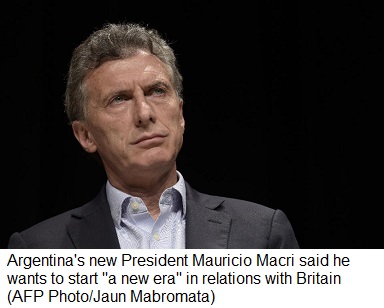
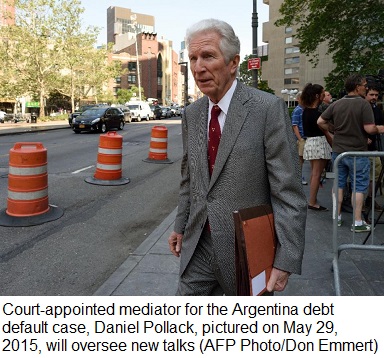
Talks between bondholders and representatives of the new government of President Mauricio Macri, who has pledged to reform and revitalize the Argentine economy, opened in Manhattan under the guidance of the court-appointed mediator Daniel Pollack.

“We’ll be presenting Argentina’s proposal during the week of Monday, January 25 to Pollack and to the holdout firms” Luis Caputo, an official representing Buenos Aires said at the close of five hours of negotiations on the first day of talks.

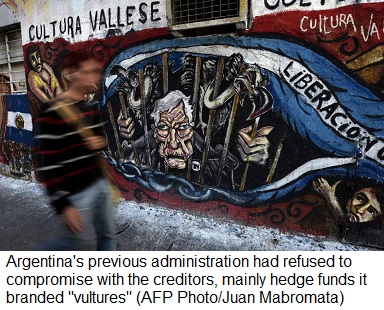
The previous administration of Cristina Kirchner had refused to compromise with the creditors, mainly hedge funds it branded “vultures,” after a US court ordered the country to pay the full value of bonds that Buenos Aires defaulted on some 15 years ago.

The leaders of the so-called “holdout” group, the hedge funds NML Capital and Aurelius Capital Management, bought up Argentine debt cheaply around the time of the default and over the next decade refused to join 93 percent of bondholders in restructuring the debt.

Speaking in Buenos Aires on Wednesday, Argentine Economy Minister Alfonso Prat-Gay said the South American country would negotiate “with toughness” but was committed to finding an agreement.

On Tuesday, Macri said he hoped for a “reasonable agreement” with the creditors, who have demanded 100 percent payment of their bonds even though most of the creditors in the country’s $100 billion default in 2001 accepted sharp losses in a negotiated debt restructuring.

“We will tell the mediator that there has been a change, another vision for our debts and how to stop being a defaulter and to resolve the pending issues,” Macri said.

CU Blog - Beware of Vulture Capitalists - Photo 1To the great dismay of Argentina and its restructured bondholders, NML and Aurelius won a New York court judgment in 2012 that ordered Argentina to repay the full value of their bonds.

The decision roiled the sovereign bond world.

The court said, moreover, that Buenos Aires could not make payments on the restructured bonds without first paying off in full the two hedge funds. And it forbade banks from handling any other bond payments before the hedge funds were paid.

Kirchner’s government refused, and talks on an ostensible compromise went nowhere.

– Heavy price tag –
The two hedge funds hold about $1.3 billion worth of bonds, whose accrued value is now about $1.7 billion.

Last October, the New York court further ruled that 49 other holdouts were covered by the 2012 ruling and also had to be paid first, adding another $6.1 billion to the sum Argentina is ordered to pay. Pollack has said the total amount owed to holdouts is around $10 billion.

The Argentine economy minister said the US court ruling gave the creditors lavish interest payments — up to 95 cents out of every dollar Buenos Aires has been ordered to pay, in the case of certain bonds.

“That is what we want to discuss quickly and resolve the problem,” he said.

CU Blog - Beware of Vulture Capitalists - Photo 3But he blamed the Kirchner administration for the heavy price tag.

“This is the cost of washing our hands of the problem for more than 10 years,” he said.

With foreign reserves believed to be at less than $30 billion, Kirchner’s government said it could not afford to pay, and Macri’s government will face the same challenge.

The conservative new president has launched into a program of difficult structural reforms for the economy that includes a more than 30 percent devaluation of the peso.

He has indicated he wants to resolve the problem with the bond holdouts quickly, as it impedes the country’s access to global capital markets.

Within days of assuming office on December 10, Macri sent representatives to let Pollack know the country was ready to negotiate in earnest.
(Source: http://news.yahoo.com/argentine-govt-resumes-talks-vulture-creditors-180051669.html posted January 13, 2016; posted February 23, 2016).

Related Stories

  1. Argentina resolves a bond debt claim for over $110 million – Associated Press
  2. US judge tentatively backs Argentina on debt payments – AFP

———-

Reference Title: Vulture Capitalists

Vulture capitalists are investors that acquire distressed firms in the hopes of making them more profitable and selling them for a profit.[1] Due to how vulture capitalist make firms more profitable, and their aggressive investing nature, vulture capitalists are often criticized.[2]

Venture vs. vulture capitalist

A venture capitalist is an investor who provides funding for start-ups, early stage firms and companies with growth potential.[1] These types of firms seek out venture capitalists, as they are too small or too new to have credit profiles, making them ineligible for bank loans and other forms of raising capital.[3]

Although risky, venture capitalists invest in firms as there are very lucrative returns on their investments when the company they are investing in is successful.[1][4] Furthermore, venture capitalists will often invest in a range of firms rather than just one or two, in order to mitigate risks if the investments are unsuccessful.[5]

On the other hand, vulture capitalists are a type of venture capitalist, which provide a final attempt at gaining funding.[4] Whereas venture capitalists seek firms with growth potential,[1] vulture capitalists seek firms where costs can be cut in order to increase profits. Most often, these firms are distressed and on the brink of bankruptcy.[4] Due to this reason, vulture capitalists are able to buy these firms for very low prices.[4]

Once the firm is acquired, vulture capitalists cut-down costs wherever possible, which often means firing workers and cutting benefits. With reduced costs, the firm becomes more profitable, raising share price, giving investors profit. Lastly, the vulture capitalists sell any equity they own, allowing for more profit to be made.[6]

Criticism

Vulture capitalists receive a lot of criticism as they often go for firms that are in very poor shape,[4] meaning these firms are unable to secure capital from banks or even venture capitalists as they are too risky of an investment.[3] Due to this, vulture capitalists are able to acquire the firms for prices that are way below the actual market value price.[4]

Once vulture capitalists acquire a firm, they often fire workers to reduce costs,[6] in order to raise profitability for their own gain. Vulture capitalists are criticized for this as the newly unemployed people put pressure on the social system through needing unemployment benefits, which comes from taxpayers’ money.[6] Meanwhile, vulture capitalists pay only 15% tax[6] on their profits. In other words, while vulture capitalists reap in the rewards, they put more pressure on the social system.

Due to these reasons, venture capitalists can be accused of being a vulture capitalist, or vulture for short, depending on how they conduct their business.[7] In this sense, vulture capitalist is used as a derogatory word for venture capitalists, as the vulture capitalists are considered to be preying on firms in distress for their own profit.[2]
———-

VIDEO – Argentina – Vulture Capitalism Takes Another Step – https://youtu.be/NhGhrRZ8NJg

Published on Aug 14, 2015 – Greg Palast, Billionaires & Ballot Bandits/Vultures and Vote Rustlers, joins Thom. A dispute between the country of Argentina and a block of New York hedge funds led by Paul Singer’s “Elliot Management” just entered a new chapter.

Argentina, according to the foregoing article, definitely has a crisis. But according to the book Go Lean … Caribbean, “a crisis is a terrible thing to waste”. Argentina – and all of Latin America and the Caribbean – needs to use crises to re-boot their debt-finance-economic eco-system. Though Argentina and Latin America is out-of-scope for the focus of the Go Lean book.

The focus is strictly on the Caribbean. The Go Lean book – with the simple pretext that only at the precipice do people change – serves as a roadmap for the introduction and implementation of the technocratic Caribbean Union Trade Federation (CU) to provide new oversight for the Caribbean region’s economic, security and governing engines. The book was conceived in the wake the 2008 Global Recession, heightened with the collapse of Investment Bank Lehman Brothers, by stakeholders intimate with the anatomy of that crisis – worked for Lehman – and composed a prescription for a Caribbean turn-around from all crises.

The publishers of the Go Lean book, used the insights and experiences of good, bad and ugly examples of debt servitude in the modern world. The book considered Egypt (1800s), Greece and Detroit to forge the roadmap for effecting change in the Caribbean without “Vulture” debt.  The book also stresses the art and science of better Credit Ratings.

CU Blog - Beware of Vulture Capitalists - Photo 4

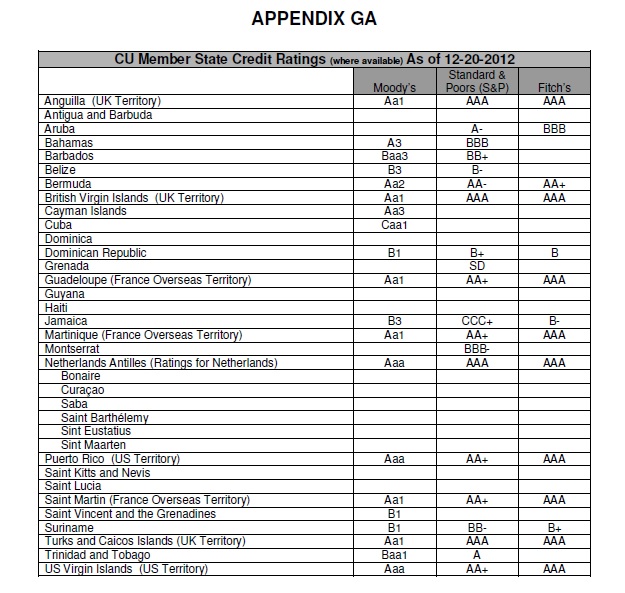
The better the Credit Rating – see Jamaica’s example in the Photo here; an Appendix from the Go Lean book (Page 274) – the less of a chance to be limited to Vulture Capitalists. Many lessons on debt (sovereign, municipal and personal), finance and economics have been detailed in previous blogs/commentaries. Consider this sample here:

https://goleancaribbean.com/blog/?p=7268 Detroit’s ‘debt reality’ giving schools their ‘Worst Shot’
https://goleancaribbean.com/blog/?p=7235 Flint, Michigan – A Cautionary Tale for bad debt management
https://goleancaribbean.com/blog/?p=7140 Azerbaijan sets its currency on free float
https://goleancaribbean.com/blog/?p=6800 Venezuela sues Black Market currency website in US
https://goleancaribbean.com/blog/?p=6563 Lessons from Iceland – Model of Recovery
https://goleancaribbean.com/blog/?p=6531 A Lesson in History – Book Review on the 2008 Crisis
https://goleancaribbean.com/blog/?p=5818 Greece: From Bad to Worse
https://goleancaribbean.com/blog/?p=5759 Pressed by Debt Crisis, Doctors Leave Greece in Droves
https://goleancaribbean.com/blog/?p=5183 A Lesson in History – Troubles from Mexico’s Unpaid Debt
https://goleancaribbean.com/blog/?p=3814 Lessons from the Swiss un-pegging the franc
https://goleancaribbean.com/blog/?p=3582 For Canadian Banks: Caribbean is a ‘Bad Bet’
https://goleancaribbean.com/blog/?p=3311 Detroit to exit historic bankruptcy
https://goleancaribbean.com/blog/?p=709 Student debt holds back many would-be home buyers
https://goleancaribbean.com/blog/?p=372 Dominica raises EC$20 million on regional securities market
https://goleancaribbean.com/blog/?p=273 10 Things We Want from the US – # 3 American Capital

The Go Lean/CU roadmap proposes debt, finance and economic solutions designed to avoid the tragedy of Argentina, Greece, Detroit and other communities that have succumbed to debt slavery. In summary, the strategy is to model the American capital markets, not with the same liquidity (initially on a per capita basis), but with similar accessibility and universal participation. With the success of this roadmap, Caribbean member-states and municipalities will be able to tap regional capital markets for bond financing in Caribbean Dollars (C$). This means repaying in C$, not US Dollars as related in the foregoing news article about Argentina. This means no foreign currency risks for repayment, and no foreign oversight on sovereignty.

The CU is designed to do the heavy-lifting of organizing Caribbean society to benefit from the lessons from sovereign, municipal and personal debt crises from other communities. The Go Lean book details the community ethos to adopt, plus the executions of the following strategies, tactics, implementations and advocacies to impact the economic turn-around of Caribbean communities:

Community Ethos – Economic Principles – Economic Systems Influence Individual Choices Page 21
Community Ethos – Economic Principles – Voluntary Trade Creates Wealth Page 21
Community Ethos – Economic Principles – Consequences of   Choices Lie in the Future Page 21
Community Ethos – Economic Principles – Money Multiplier Page 23
Community Ethos – Governing Principles – Lean Operations Page 24
Community Ethos – Governing Principles – Return on Investments Page 24
Community Ethos – Ways to Impact the Future – Count on the Greedy to be Greedy Page 26
Community Ethos – Ways to Impact the Greater Good Page 37
Strategy – Mission – Fortify the Stability of the Securities Markets Page 45
Strategy – Provide Proper Oversight and Support for the Depository Institutions Page 46
Tactical – Growing the Economy – Minimizing Bubbles Page 69
Tactical – Separation-of-Powers – Depository Insurance & Regulatory Agency Page 73
Implementation – Assemble Caribbean Central Bank as a Cooperative Page 96
Implementation – Ways to Better Manage Debt – Optimizing Wall Street Role Page 114
Implementation – Ways to Foster International Aid – Technical Assistance Page 115
Planning – 10 Big Ideas – Single Market / Currency Union Page 127
Planning – Lessons Learned from 2008 Page 136
Planning – Lessons Learned from New York City – Wall Street Page 137
Planning – Lessons Learned from Detroit Page 140
Planning – Ways to Measure Progress – Allow strategy of Plan, Do & Review Page 147
Anecdote – Caribbean Currencies Page 149
Advocacy – Ways to Grow the Economy Page 151
Advocacy – Ways to Create Jobs Page 152
Advocacy – Ways to Control Inflation Page 153
Advocacy – Ways to Better Manage Foreign Exchange (fx) – Strong regional currency Page 154
Advocacy – Reforms for Banking Regulations Page 199
Advocacy – Ways to Impact Wall Street Page 200
Advocacy – Ways to Impact Main Street Page 201
Appendix GA – Caribbean Member-States Credit Ratings – December 2012 Page 274
Appendix – Tool-kits for Capital Controls Page 315
Appendix – Lessons Learned from Floating the Trinidad & Tobago Dollar Page 316
Appendix – Controlling Inflation – Technical Details Page 318

The Go Lean roadmap posits that change is coming to the Caribbean so that we can divorce ourselves from the dependence of Vulture Capitalists; see sample Vulture Capitalist in this commentary. Many Go Lean blog-commentaries have reported that change is now afoot to reboot public finances. Though Argentina is out-of-scope for the Go Lean roadmap, we can observe-and-report on the progress and regression of that country and other  Latin America’s economies.

The Go Lean book declares: “A crisis is a terrible thing to waste” – quoting noted Economist Paul Romer. The opportunity exists now to forge change in the economic, security and governing engines of the Caribbean. The region’s economic engines can be better optimized with the Single Market integration of the 42 million people in the 30 member-states; together we can do much more – and effect more turn-around – than anyone member-state can accomplish alone.

The roadmap calls for a confederation of the 30 Caribbean member-states; thereby creating the larger Single Market that can absorb economic shocks and downward trends. The Go Lean book provides the details of this vision; in fact the following pronouncements are embedded in the opening Declaration of Interdependence (Page 13 & 14):

xxiv. Whereas a free market economy can be induced and spurred for continuous progress, the Federation must install the controls to better manage aspects of the economy: jobs, inflation, savings rate, investments and other economic principles. Thereby attracting direct foreign investment because of the stability and vibrancy of our economy.

xxv.  Whereas the legacy of international democracies had been imperiled due to a global financial crisis, the structure of the Federation must allow for financial stability and assurance of the Federation’s institutions. To mandate the economic vibrancy of the region, monetary and fiscal controls and policies must be incorporated as proactive and reactive measures. These measures must address threats against the financial integrity of the Federation and of the member-states.

xxxiii. Whereas lessons can be learned and applied from the study of the recent history of other societies, the Federation must formalize statutes and organizational dimensions to avoid the pitfalls of communities like East Germany, Detroit, Indian (Native American) Reservations, [and] Egypt …

According to the foregoing news article, Argentina is trying to recover from faulty decisions regarding debt repayment. They are attempting to turn the corner and turn-around to a better community ethos: other people’s money is important to them and needs to be repaid. Other communities have successfully applied a turn-around strategy, consider Iceland.

The Caribbean must also reboot and “bounce back”; to “step back from the precipice”. The effort is not easy; the Go Lean book describes it as heavy-lifting. We need to burn-off old debris and build new eco-systems. The returns – new Caribbean structures – will be worth the investment and sacrifice. This is true for Detroit … and the Caribbean.

The quest of the Go Lean roadmap is to elevate Caribbean society and economic engines from the parasite role we currently assume, where we were dependent on Vulture Capitalists (Wall Street Hedge Funds) for funding, to a new world where we garner funding from our own regional sources: the people and institutions of the Caribbean. We want to be a protégé of Wall Street, not a parasite! We want to master the credit rating metrics so that our member-states are considered safe investments, not prone to default. Despite the previous realities of credit unworthiness, the roadmap seeks to optimize the regional economics with advanced empowerments, “Economics 901”. Yes, we can!

All the stakeholders in the Caribbean – people, governments and institutions – are urged to lean-in to this Go Lean roadmap for the CU and the C$. We have so many lessons to learn from this case study from Argentina – past, present and future. We mostly learn that concept of a successful “Turnaround” is conceivable, believable and achievable.  🙂

Download the book Go Lean … Caribbean – now!


Share this post:
, , ,
[Top]

Blink Health: The Cure for High Drug Prices

Go Lean Commentary

There are needs and there are wants; medicine and medical services are a hybrid of the two. We all need these services, but we can choose to defer or bypass them; (unless we get sick or injured). The field of medicine and medical services are different than most industries in this regards, it is NOT a basic need (food, clothing or shelter) but it could mean life or death.

This is duplicitous!

This is why different societies have different levels of healthcare deliveries. In some Third World countries, the Public Health mandate of immunization against communicable diseases (Measles, Mumps, Polio, etc.) may be the only standard. While more advanced democracies provide (or require) full medical coverage for basic, specialty and advanced medical care, even up to treatment for chronic conditions (cancer, diabetes, hypertension, etc.). Health care is important; but not a right everywhere; many times, its a privilege.

Consider dental care …

… it is good to get semi-annual teeth cleaning. But many people do not; and yet their health may not be considered deficient. Many people in Third World countries only go to the dentist for tooth extraction.

CU Blog - Blink Health - The Cure for High Drug Prices - Photo 4So the delivery of health care (medical and dental) is not evenly distributed around the world, around the region, around the nation or even around the community. There are uneven supply factors everywhere.

Even prescription medicine prices are unevenly applied in communities. Depending on the State, health insurance carrier, deductible plan or government benefits status, prices can be scattered all over the dollar scale. The one strategy that seems to work more effectively is the single payer scheme for the government health plan for senior citizens (MediCare in the US).

What can we learn from this experience and how can consumers get a benefit for lower prescription prices?

There is now a new option. From the confusions and duplicities of healthcare and prescription pricing in the US, a new company emerged: Blink Health. They unwittingly seem to be following the mandates of noted Economist Paul Romer in his declaration that “a crisis is a terrible thing to waste”. This enterprise serves as a Group Purchasing Organization (GPO) that contracts pricing directly from the pharmaceutical manufacturer, yet still utilizes the distribution supply of local retailers. This model demonstrates the advantages of GPO’s. Consider their business model in this corporate website review here and accompanying VIDEO:

Company Profile: Blink Health

>>>   01   <<<

The Same Low Price, Everywhere
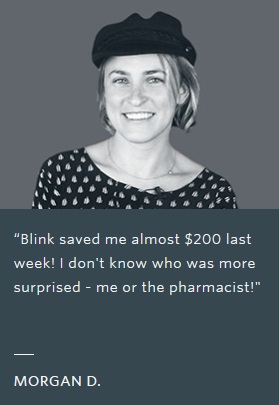
Blink is the first company that allows you to pay for your prescriptions online and pick them up at your pharmacy.
Accepted at over 60,000 pharmacies nationwide
Blink offers the same low price at every major pharmacy and most independent pharmacies including Walmart, Walgreens, CVS, Rite Aid, Target and many more.

>>>   02   <<<

How To Use Blink
No membership fees. Purchases are refundable.
Only pay for the medications you pick up. You can cancel your purchases at any time.

CU Blog - Blink Health - The Cure for High Drug Prices - Photo 2

>>>   03   <<<

The Blink Difference
Blink offers the lowest prices on over 15,000 medications and is accepted at more than 60,000 pharmacies nationwide.

CU Blog - Blink Health - The Cure for High Drug Prices - Photo 3

—————–

>>>   Our Mission   <<<

Blink is the cure for a disease with immeasurable human cost.

That disease is the high cost of prescription drugs.
A cost that takes its toll on human lives in many ways, not just in money but in health itself.
Our mission is to cure this disease, and to make prescription medications available at lower prices to millions of people across America.

Blink Health is committed to ensuring that no one goes without the drugs they need to live a healthy, happy life.

Whether you have good insurance, bad insurance, or no insurance at all, Blink can save you money at over 60,000 pharmacies nationwide.
We’re the first company to develop a proprietary technology to group millions of patients together, creating the strength to negotiate the lowest drug prices possible.
We’re also the first company to allow patients to purchase their medications online and pick them up at their local pharmacy.

Blink Health believes that lower drug prices are healthier for everyone.

Lower drug prices can put an end to skipping doses or stopping medication altogether.
Lower drug prices put an end to sticker shock at the pharmacy counter.
Lower drug prices mean Americans can take the drugs they’re prescribed without worrying about the cost.

Blink Health believes that no one should have to stress about taking their medications.

Many of the drugs that people need every day have unacceptably high prices.  And yet, in spite of the general outrage at the problem, no one seems to know how much a drug actually costs — or how much it should cost.
At Blink Health, we do.  And we offer this transparency to everyone.  Our product is available to all.  With one low price for everyone, everywhere.
The Blink price is the real price.  And the only one you’ll ever have to pay.
We’re proud to be able to fill this long-overdue prescription for American health, and to finally give Americans the drug prices they deserve.

Blink Health. The cure for high drug prices.

Source: https://www.blinkhealth.com/

VIDEO: NBC News profiles “Blink Health”: The Cure for High Drug Prices

Published on Feb 17, 2016 – Blink Health is the first company to allow patients to purchase their medications online and pick them up at their local pharmacy. Blink uses technology to get you affordable prices on your prescription medications.
Category: People & Blogs
License: Standard YouTube License

CU Blog - Blink Health - The Cure for High Drug Prices - Photo 1The book Go Lean … Caribbean also quotes that “a crisis is a terrible thing to waste” (Page 8); and that there are exigent circumstances throughout the Caribbean region, in so many  fields of endeavor, that constitute crises. The book therefore strategizes the use of GPO’s for many regional acquisitions including medical supplies and prescription drugs. This strategy maximizing the dynamics of “supply-and-demand”. At its very heart, Economics is all about supply-and-demand. The more advanced the exercise in Economics, the more complex the dimensions of the supply-side and the demand-side of a commodity; in the case of Blink Health, prescription drugs. There is BIG money in healthcare and assuredly too, BIG complications in the economic formulas. Yet still, there is more that the Caribbean community can do to optimize our demand, supply and price factors.

The Go Lean book serves as a roadmap for the introduction and implementation of the technocratic Caribbean Union Trade Federation (CU). This is a call for confederating, collaborating and convening the 30 member-states of the region into a Single Market; and for one federal governmental entity to optimize the economic, security and governing endeavors. The Go Lean/CU roadmap calls for multiple GPO’s and cooperatives. This is part-and-parcel of the prime directives (3) of the CU/Go Lean roadmap:

  • Optimization of the economic engines – accepting that energy is as basic a need as food, clothing and shelter – in order to grow the regional economy to $800 Billion & create 2.2 million new jobs.
  • Establishment of a security apparatus – including public safety and public health concerns – to protect the resultant economic engines.
  • Improve Caribbean governance to support these engines.

The CU seeks to facilitate better mastery of the advanced fields of economics by coordinating pricing, supply and delivery options for the region’s pharmaceutical needs. Public Health stewards will be able to enter into commodities contracts to buy their vaccines, prescriptions and over-the-counter medications days, weeks, months and years in advance. This is the power of the “collective”, or purchasing cooperative, and/or Group Purchasing Organizations.

This commentary asserts that healthcare needs are undeniable to promote a better society. Options abound when the total Caribbean market is leveraged. This is the underlying strategy of the Caribbean Single Market. This point was pronounced from the outset of the Go Lean book in the opening Declaration of Interdependence (Pages 11 & 14), with these statements:

viii. Whereas the population size is too small to foster good negotiations for products and commodities from international vendors, the Federation must allow the unification of the region as one purchasing agent, thereby garnering better terms and discounts.

ix. Whereas the realities of healthcare and an aging population cannot be ignored and cannot be afforded without some advanced mitigation, the Federation must arrange for health plans to consolidate premiums of both healthy and sickly people across the wider base of the entire Caribbean population. The mitigation should extend further to disease management, wellness, mental health, obesity and smoking cessation programs.

xxx. Whereas the effects of globalization can be felt in every aspect of Caribbean life, from the acquisition of food and clothing, to the ubiquity of ICT, the region cannot only consume, it is imperative that our lands also produce and add to the international community, even if doing so requires some sacrifice and subsidy.

The Go Lean/CU roadmap describes the execution of this GPO strategy as heavy-lifting, but worth the effort. The empowerments from GPO’s will surely impact the macro economy; and will surely impact the micro-economy: healthcare costs will reduce and more jobs will emerge!

The Go Lean roadmap identifies 4,000 new jobs tied to cooperatives, and at least 2,000 new jobs tied to the GPO practice (as a subset of new Health and Trade jobs). These empowerment will impact every aspect of Caribbean life. The Caribbean homeland will then be better to compete globally and present more favorable options for our youth to stay home in the region. We fail miserably at youth options now!

The Go Lean book details a series of community ethos, strategies, tactics, implementations and advocacies to foster progress with health and GPO deliveries. The following list applies:

Community Ethos – Lean Operations – Group Purchasing Organizations (GPO) Page 24
Community Ethos – Return on Investments Page 24
Community Ethos – Cooperatives Page 25
Community Ethos – Non-Government Organizations Page 25
Community Ethos – Ways to Impact the Future Page 26
Community Ethos – Ways to Improve Negotiations Page 32
Community Ethos – Ways to Impact the Greater Good Page 32
Strategy – Vision – Confederate to form a Single Market Page 45
Strategy – Mission –  Reform our Health Care – With Cost-savings GPO Schemes Page 46
Tactical – Fostering a Technocracy Page 64
Tactical – Separation of Powers – Department of Health – MediCare Administration Page 86
Tactical – Separation of Powers – Department of Health – Disease Control & Management Page 86
Anecdote – “Lean” in Government Page 93
Implementation – Ways to Pay for Change – GPO’s Page 101
Implementation – Ways to Foster International Aid Page 115
Advocacy – 10 Big Ideas – Single Market Leverage Page 127
Advocacy – Ways to Improve Interstate Commerce Page 129
Advocacy – Ways to Improve Healthcare Page 156
Advocacy – Ways to Impact Entitlements Page 158
Advocacy – Ways to Better Manage the Social Contract Page 170
Advocacy – Ways to Foster Cooperatives Page 176
Advocacy – Ways to Improve Emergency Management Page 196
Advocacy – Ways to Impact Main Street Page 201
Advocacy – Ways to Improve Elder-Care Page 225
Appendix – Disease Management Model – Healthways Page 300
Appendix – Trauma Center Definitions Page 336

This commentary asserts that healthcare needs are undeniable, but options abound when the rise of the total Caribbean market is leveraged. This is the underlying strategy of the Caribbean Single Market. The Go Lean/CU roadmap describes the execution of this roadmap as heavy-lifting, but this “heavy-lifting” is the charter for the lean, agile CU technocracy.

Many of these heavy-lifting issues have been previously identified and addressed in prior Go Lean blog-commentaries. See here, this list, related to direct and peripheral issues of cooperative strategies for healthcare supply-and-demand and for other industries:

https://goleancaribbean.com/blog/?p=7384 Oil Refineries – Strategy for Advanced Economics
https://goleancaribbean.com/blog/?p=6867 How to address high consumer prices – Healthcare a BIG issue
https://goleancaribbean.com/blog/?p=6580 Capitalism of Drug Patents
https://goleancaribbean.com/blog/?p=6016 Hotter than July – The Need for Cooperative Refrigeration
https://goleancaribbean.com/blog/?p=5287 Book Review – ‘Thimerosal: Let The Science Speak’
https://goleancaribbean.com/blog/?p=4720 A Lesson in History – SARS in Hong Kong
https://goleancaribbean.com/blog/?p=4111 Detroit-area Judge to Decide if Kids Need Vaccines
https://goleancaribbean.com/blog/?p=2522 The Cost of Cancer Drugs

The message to the people of the Caribbean region is that there are solutions to these complex solutions like prescription pricing. Whereas the Caribbean may have been a parasite before, now we can function in the role of a protégé. Change is afoot! Plus, as the foregoing Profile and VIDEO reveals, the American eco-system is defective. We must do better!

Now is the time for all Caribbean stakeholders, to lean-in for the optimizations and empowerments described in the book Go Lean … Caribbean. Yes, we can make the region a better homeland to live, work, play and heal.  🙂

Download the free e-Book of Go Lean … Caribbean – now!

Share this post:
, ,
[Top]

Oil Refineries – Strategy for Advanced Economics

Go Lean Commentary

Energy is a basic need. We need it for a functional life in modern society.

Behavioral Scientist & Psychologist Abraham Maslow provided the world with his definitive Hierarchy of Needs[a]; he identified a pyramid, where at the bottom, or base level, are basic survival elements (food, water, shelter, etc.). Rise above that level, the next need relates to security and/or safety. Any consideration of energy (fuel and oil) need to address it as a basic need. Then once our survival has been facilitated, we then need to elevate and focus more on energy security. At this level, energy (fuel and oil) is not so basic or simple; it becomes a subject of Advanced Economics.

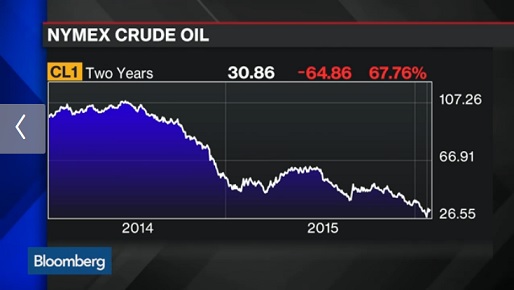
CU Blog - Oil Refineries - Strategic for Advanced Economics - Photo 3Today, gas prices have remained consistently low in the US for the past year and a half. The price per barrel had dipped as low as $30, (on the retail level prices have dropped below $2 per gallon), and now is hovering around $36.

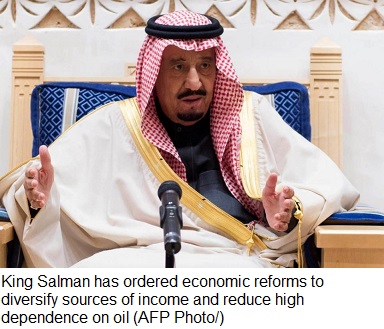
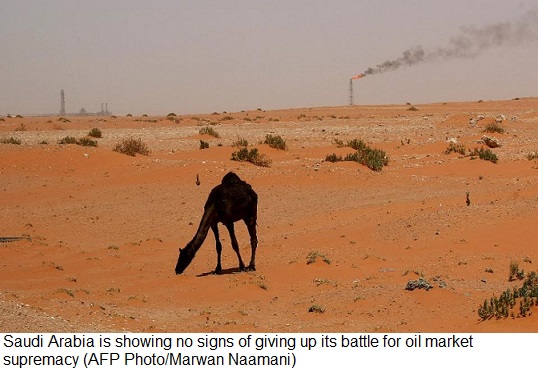
This is good; this is bad. This is due to complexities within the Advanced Economics of crude oil supply-and-demand. Just recently, in 2008, retail gas prices where near $5 per gallon, while the wholesale price per barrel were straddling $130. This cyclical industry is amazingly complicated, and yet it so directly affects the everyday man, everyday. These “peaks and valleys” – “feasts and famine” – call for a more normalized system for oil producing/exporting countries. These cyclical extremes create crises and heighten the need for a more diversified economic system. See Appendix A regarding Saudi Arabia’s efforts to diversify. Now is the time too, for the Caribbean to plan for similar solutions.

The book Go Lean … Caribbean quotes noted Economist Paul Romer in his declaration that “a crisis is a terrible thing to waste”. We need to use the exigency of the current crisis to forge change in the Caribbean region. We can optimize the economic, security and governing engines of our Caribbean communities. There are a number of strategies for accomplishing this goal; one notable one is to apply lessons learned from other communities. We have such a role model in Saudi Arabia; they are known for their abundant oil wealth and yet the economic metrics are trending in the wrong direction:

Saudi Arabia’s reserves dropped to $611.9 billion at the end of 2015, the lowest level since 2011, down from $732 billion a year before, the Saudi Jadwa Investment said in an economic report.
Source: http://news.yahoo.com/saudi-fiscal-reserves-slide-4-low-weak-oil-104815796.html retrieved 02-02-2016.

Another strategy is maximizing the metrics of “supply-and-demand”. At its very heart, Economics is all about supply-and-demand. The more advanced the exercise in Economics, the more complex the dimensions of the supply-side and the demand-side of a commodity; in this case “oil”. There is BIG money in oil and assuredly too, BIG complications in the economic formulas. Yet still, there is more that the Caribbean community can do to optimize our demand and supply factors.

Previously, this commentary delved on the demand-side of the oil-for-energy eco-system; consider these blogs:

https://goleancaribbean.com/blog/?p=7056 Electric Cars: ‘Necessity is the Mother of Invention’
https://goleancaribbean.com/blog/?p=4587 Burlington, Vermont: First city to be powered 100% by renewables
https://goleancaribbean.com/blog/?p=915 Go Green Caribbean – Renewable energy pursuits in the region

Now we focus on the supply side. We can start first with bridging the gap between wholesale and retail prices. How? Oil refineries. There are a number of refineries in the region already. But obviously, not enough. See the list here:

Member-State

Plant

Legacy

Population Capacity – Barrels/day
Aruba

Aruba Refinery (Valero)

Dutch

106,000

275,000

Cuba

Nico López Refinery (Cupet or Cubapetroleo)

Spanish

11,236,444

122,000

Hermanos Díaz Refinery (Cupet)

102,500

Cienfuegos Refinery (Cupet)

76,000

Dominican Republic

Haina Refinery (REFIDOMSA)

Spanish

9,523,209

33,000

Jamaica

Kingston Refinery (PetroJam)

British

2,825,928

50,000

Martinique

Fort de France (SARA)

French

402,000

16,000

Netherlands Antilles

Dutch

231,834

Curaçao

Isla Refinery (PDVSA or Petróleos de Venezuela, S.A.)

320,000

Puerto Rico

Caribbean Petroleum Corporation oil refinery*

USA

3,994,259

0

Trinidad & Tobago

Pointe-à-Pierre Refinery (Petrotrin)

British

1,305,000

165,000

US Virgin Islands

St Croix Refinery (HOVENSA)

USA

108,848

494,000

TOTAL

42,198,874

979,000

* Shuttered in 2009 after a major fire-explosion; had a capacity of 48,000 barrels/day.
Source: Retrieved February 1, 2016 from https://en.wikipedia.org/wiki/List of oil refineries

The book Go Lean… Caribbean, a roadmap for the introduction and implementation of the Caribbean Union Trade Federation (CU), calls for confederating, collaborating and convening the 30 member-states of the region into a Single Market; and to one intergovernmental organization. The CU seeks to facilitate better strategies for Advanced Economics in the Caribbean region. This is part-and-parcel of the prime directives (3) of the CU/Go Lean roadmap:

  • Optimization of the economic engines – accepting that energy is as basic a need as food, clothing and shelter – in order to grow the regional economy to $800 Billion & create 2.2 million new jobs.
  • Establishment of a security apparatus, including energy security, to protect the resultant economic engines.
  • Improve Caribbean governance to support these engines.

By coordinating all the oil refineries in the region – a million barrels a day with the Puerto Rico option – in one concerted effort, there will be benefits for the wholesale and retail markets in the Caribbean. Why? Due to the realities of Advanced Economics.

In many Caribbean locales, gas is still priced near $5.00 per gallon, due to challenges in the supply-chain.

The initiatives addressed here will remediate challenges to the Caribbean energy supply. Then considering all the risk in the global markets, a closer, more technocratic delivery can also mitigate many risks. Consider a scenario of a retail price of $2 per gallon – highly probable as a result of this roadmap – and a wholesale crude price of $30 per barrel (1 barrel = 55 gallons), there is a definitive margin to still cover the cost of production (refinery) and distribution; ($110/barrel versus $30/barrel ). The more mature the eco-system for crude-to-gasoline production, the better the savings on the supply side. So when there are more local refinery capabilities, this leads to better cost dynamics (and profit) for fuel at the retail level.

The goal of the CU is to optimize Caribbean society in the dimensions of confederation, collaboration and consolidation. Consider these queries:

  • Can we deploy more oil refineries?
  • Can we provide more industrial financing for refinery expansion and upgrades?
  • Can we guarantee refineries the needed customers for their end-products?
  • Can we coordinate downtime among the array of refineries to allow for required maintenance windows?
  • Can we deploy pipelines to move crude or finished products from source location to destination?

The answers to all of these questions are “Yes, in the affirmative”. This is the power of the “collective” … for energy solutions. The Go Lean/CU roadmap calls for this type of cooperative effort, with the details of Purchasing Cooperatives and Utility Cooperatives, operating across national borders, within the region. The vision of a Single Market is a paradigm shift that forges benefits for all in the region: producers, wholesalers, retailers and consumers.

Pipelines will undoubtedly lower the cost of shipping fuel (crude or finished) among the island and coastal states.

Then too, consider the positive effects of developing a regional currency and capital market, as prescribed in the Go Lean roadmap. Trading in commodities, like crude oil, will be very viable for regional stakeholders. Local oil producers like Trinidad and Venezuela will be able to enter into commodities contracts to sell their crude oil, days, weeks, months and even years in advance. This too is the power of the “collective”, or Purchasing Cooperative, or Group Purchasing Organizations.

CU Blog - Oil Refineries - Strategic for Advanced Economics - Photo 4But there is a need for caution. The Go Lean/CU is not advocating “doubling down” on an oil-based economy. Rather, the strategy is just the opposite, to pursue the merits of diversification: energy diversity and economic diversity. There is too much pain associated with a mono-industrial economy. This is true for oil and true for tourism. There is always a need to “put the eggs in more than one basket”. But “it is what it is”. Oil is part of the energy solution today and this needs to be optimized. Oil dominated our past, and dominates our present, but hopefully there will be the need for less and less oil in the future. There is an urgency, in general, to wean-off from fossil fuels like oil to arrest Climate Change. The failure to do this has had dire consequences for our region – on the front-lines of global-warming-induced destructive hurricanes and rising sea levels.

The changes to lower the demand for oil needs to be planned and gradual. Sudden changes in the supply-chain creates economic shocks and devastating consequences to the economy. Just consider the impact on West Texas and North Dakota as depicted in this news VIDEO story here:

VIDEO:  The downsides of cheap oil – http://www.cbsnews.com/videos/is-cheap-gas-driving-the-oil-industry-broke

Posted January 31, 2015 – For people in the petroleum business, it’s a slippery slope: The plunge in oil prices that’s a boon for most of us [consumers] is a calamity for others. And it’s not just producers overseas taking the hit. Our Cover Story is reported here by Martha Teichner. (VIDEO plays best in Internet Explorer).

All of these empowerments on the macro-economy will surely make impact on the micro-economy: energy prices will decline and more jobs will emerge!

The Go Lean/CU roadmap proposes many solutions for the region to optimize energy generation, distribution and consumption. The book posits that the average costs of energy can be decreased from an average of US$0.35/kWh to US$0.088/kWh in the course of the 5-year term of this roadmap. This success will be a by-product of diversifying the energy eco-system with many alternative resources, like natural gas, solar, wind and tidal.

The Go Lean roadmap identifies 4,000 new jobs tied to cooperatives, 2,000 new jobs tied to Capital Markets and 2,000 new jobs tied to the Pipeline industry. In truth, these empowerments will impact every aspect of Caribbean life. The Caribbean homeland will then be better to compete globally and present more favorable options for our youth to stay home in the region. We fail miserably at this quest now!

The Go Lean book details a series of community ethos, strategies, tactics, implementations and advocacies to foster progress in the fields of energy generation, distribution, and consumption. The following list applies:

Community Ethos – Lean Operations – Group Purchasing Organizations (GPO) Page 24
Community Ethos – Return on Investments Page 24
Community Ethos – Cooperatives Page 25
Community Ethos – Regional Taxi Commissions – Ideal for Alternative Energy & GPO’s Page 25
Community Ethos – Non-Government Organizations Page 25
Community Ethos – Ways to Impact the Future Page 26
Community Ethos – Ways to Improve Negotiations Page 32
Anecdote – Pipeline Transport – Strategies, Tactics & Implementations Page 43
Strategy – Vision – Confederate to form a Single Market Page 45
Strategy – Mission –  Harness the power of the sun/winds Page 46
Tactical – Fostering a Technocracy Page 82
Tactical – Separation of Powers – Energy Commission Page 82
Anecdote – “Lean” in Government – Energy Permits Page 93
Anecdote – Caribbean Energy Grid Implementation Page 100
Implementation – Ways to Develop Pipeline   Industry Page 107
Implementation – Ways to Improve Energy Usage Page 113
Advocacy – Ways to Impact Public Works Page 175
Advocacy – Ways to Foster Cooperatives Page 176
Advocacy – Reforms for Banking – Create more working capital Page 199
Advocacy – Ways to Impact Wall   Street Page 200
Advocacy – Ways to Impact Monopolies – Utilities and State-owned Oil Companies Page 202
Advocacy – Ways to Improve Transportation Page 205
Advocacy – Ways to Develop the Auto Industry Page 206
Appendix – Sources of New Jobs Page 257

This commentary asserts that energy needs are undeniable. Options abound when the total Caribbean market is leveraged. This is the underlying strategy of the Caribbean Single Market. This point was pronounced from the outset of the Go Lean book in the opening Declaration of Interdependence (Page 11), with these statements as follows:

viii. Whereas the population size is too small to foster good negotiations for products and commodities from international vendors, the Federation must allow the unification of the region as one purchasing agent, thereby garnering better terms and discounts.

xxx. Whereas the effects of globalization can be felt in every aspect of Caribbean life, from the acquisition of food and clothing, to the ubiquity of ICT, the region cannot only consume, it is imperative that our lands also produce and add to the international community, even if doing so requires some sacrifice and subsidy.

The Go Lean/CU roadmap describes the execution of this roadmap as heavy-lifting.

So be it! Bring it on!

This “heavy-lifting” is the charter for the lean, agile operations of the CU technocracy.

Many of these heavy-lifting issues have been previously identified and detailed in prior Go Lean blog-commentaries. See here as some peripheral issues of energy supply-and-demand have been addressed:

https://goleancaribbean.com/blog/?p=6867 How to address high consumer prices – Fuel a BIG issue
https://goleancaribbean.com/blog/?p=6016 Hotter than July – The Need for Cooperative Refrigeration
https://goleancaribbean.com/blog/?p=5396 ‘Significant’ oil deposits found offshore Guyana
https://goleancaribbean.com/blog/?p=5155 Tesla unveils super-battery to power homes
https://goleancaribbean.com/blog/?p=4897 US Backs LNG Distribution Base in Jamaica
https://goleancaribbean.com/blog/?p=4587 Burlington, Vermont: First city to be powered 100% by renewables
https://goleancaribbean.com/blog/?p=926 Conservative heavyweights have solar industry in their sights in the US
https://goleancaribbean.com/blog/?p=915 Go Green Caribbean – Renewable energy pursuits in the region
https://goleancaribbean.com/blog/?p=273 10 Things We Want from the US – American Innovation

The message to the people of the Caribbean region is that there are solutions to these heady issues in the world energy markets. The Caribbean past is not to be the Caribbean future. Change is afoot!

Now is the time for all Caribbean stakeholders, to lean-in for the optimizations and empowerments described in the book Go Lean … Caribbean. Yes, we can make the region a better homeland to live, work and play.  🙂

Download the book Go Lean … Caribbean – now!

————-

Appendix A – Saudi Arabia to diversify economy away from oil

December 23, 2015 – Riyadh (AFP) – Saudi King Salman on Wednesday said he has ordered economic reforms to diversify sources of income and reduce high dependence on oil following a sharp drop in crude prices.

CU Blog - Oil Refineries - Strategic for Advanced Economics - Photo 1“Our vision for economic reform is to increase the efficiency of public spending, utilise economic resources and boost returns from state investment,” he said in an address to the Shura Council.

“I have directed the Council of Economic and Development Affairs to devise the necessary plans, policies and programmes to achieve that,” he told the consultative body, without elaborating.

Oil income accounts for more than 90 percent of public revenues in Saudi Arabia.

The world’s largest oil exporter, Saudi Arabia is facing an unprecedented budget crunch as the price of oil has dropped by more than 60 percent since mid-2014.

At midday Wednesday, benchmark Brent North Sea crude for delivery in February stood at $36.50 a barrel, hovering just above an 11-year low.

The king said Saudi Arabia carried out a large number of mega infrastructure projects and boosted its fiscal reserves in the past several years when oil prices were high.

The size of the fiscal buffers has enabled the kingdom to overcome the consequences from the sharp decline in oil revenues, said the king, adding that development projects have not been affected by the drop.

Saudi Arabia is projected to post a record budget deficit of around $130 billion for this year, the International Monetary Fund says.

CU Blog - Oil Refineries - Strategic for Advanced Economics - Photo 2The IMF has advised Riyadh to implement reforms, including expanding non-oil revenues, warning that failure to do so would deplete its foreign reserves.

The kingdom, which has been pumping around 10.4 million barrels a day, has withdrawn funds from its foreign reserves and also issued bonds to finance the budget deficit.

At the end of October, its reserves fell to $644 billion from $732 billion at the end of last year.

The finance ministry has issued bonds worth $20 billion for the domestic market.

In 2014, Saudi Arabia posted a budget deficit of $17.5 billion, only its second since 2002.

Source: http://news.yahoo.com/saudi-diversify-economy-away-oil-king-salman-151858656.html retrieved February 2, 2016.

————-

Appendix B – Citatation

a. Maslow, Abraham H. (1943). A Theory of Human Motivation. Psychological Review, 50(4), 370–96. Retrieved February 2, 2016.

Share this post:
, , , , ,
[Top]

ENCORE: Media Fantasies versus Weather Realities

Howell, Michigan@ Tuesday, February 2, 2016: Woody The Woodchuck dominates these parts while Punxsutawney Phil reigns supreme in Pennsylvania to the south. Different locales, different animals; same result: Media Fantasy! For 2016, Woody predicts a longer winter while Phil predicts a shortened winter.

LOL … These prognosticating rodents only boast a 39% success rate.

This ENCORE is re-distributed on the occasion of Groundhog Day 2016. Despite all the news of relevance and significance regarding the societal engines of economics, security and governance, the media outlets continue to prioritize their Breaking News declaring “Early Spring” and “Later Spring”. But we’ll see …

Go Lean Commentary

Dateline Monday, February 2, 2015: It’s Groundhog Day again…and again…and again…*

CU Blog - Media Fantasies Versus Weather Realities - Photo 3

The media swarms around this hibernating animal for prognosticating signs of what to expect for the rest of the winter weather season. This is a fantasy; an American media fantasy. On the other hand, there are many effective meteorological models that do an effective job of forecasting the weather, but many people think these are ignored in place of media hype; case in point: a Groundhog.

VIDEO – Punxsutawney Phil See His Shadow and Predicts 6 More Weeks of Winter – http://wapo.st/1BU7s23

A Groundhog?

Groundhogs, whistlepigs, woodchucks, all names for the same animal. Depending on where you live, you might have heard all three of these names; however, woodchuck is the scientifically accepted common name for the species, Marmota monax. As the first word suggests, the woodchuck is a marmot, a genus comprised of 15 species of medium-sized, ground-dwelling squirrels. Although woodchucks are generally solitary and live in lowland areas, most marmot species live in social groups in mountainous parts of Europe, Asia, and North America. (Source: http://blog.oup.com/2015/02/groundhog-day-urban-wildlife-institute/#sthash.c41AKDvb.dpuf)

The concept of weather forecasting requires hardware and software, not rodent animals. The Europeans have provided a good example for the Caribbean to model. Their hardware: satellites, are collaborative efforts to deploy, maintain and support, referred to as the European Organization for the Exploitation of Meteorological Satellites or EUMETSAT; see Appendix below.

The software for weather forecasting is the application of science and technology to predict the state of the atmosphere for a given location. These forecasts are made by collecting quantitative data about the current state of the atmosphere at a given place and using scientific understanding of atmospheric processes to project how the atmosphere will change. The chaotic nature of the atmosphere, the massive computational power required to solve the equations that describe the atmosphere, error involved in measuring the initial conditions, and an incomplete understanding of atmospheric processes mean that forecasts become less accurate as the time range of the forecast increases. The use of ensembles and model consensus help narrow the error and pick the most likely outcome.

A major part of modern weather forecasting is the severe weather alerts and advisories which a governmental weather service may issue when severe or hazardous weather is expected. This is done to protect life and property.[75] Some of the most commonly known severe weather advisories are the severe thunderstorm, tornado warnings, as well as the severe tornado watches. Other forms of these advisories include those for winter weather, high wind, flood, tropical hurricanes, and fog.[76] Severe weather advisories and alerts are broadcasted through the media, including radio, using emergency systems as the Emergency Alert System which break into regular TV and radio programming.[77]

Among the notable models for Caribbean consideration are:

  1. American Model: National Oceanic and Atmospheric Administration (NOAA)
  2. European Model: European Centre for Medium-Range Weather Forecasts (ECMRWF).

The scope of the American Model is weather affecting the American mainland and aligned territories. The European Model, on the other hand, has a similar scope for Europe, but starts their focus earlier with weather patterns in the Americas and Caribbean. (The “Jet Stream” brings weather from West to East across the US and then continues across the Atlantic on to the European continent).

The American and European models assume different strategies. The American model runs a short, mid and long range forecast. The European model considers mid-range only, running out only 10 to 15 days into the future.

This consideration aligns with the book Go Lean…Caribbean; this book serves as a roadmap for the introduction and implementation of the technocratic Caribbean Union Trade Federation (CU). This empowerment effort represents a change for the region, calling on all 30 member-states in the region to confederate and provide their own solutions in the areas of economics, security and governance. Weather, as depicted in the foregoing VIDEOS, relates to all three areas. The CU/Go Lean roadmap has these prime directives:

  • Optimization of the economic engines in order to grow the regional economy.
  • Establishment of a security apparatus to protect the resultant economic engines against “bad actors” and natural disasters.
  • Improve Caribbean governance to support these engines, with a separation-of-powers between federal and state agencies.

The purpose of this commentary is to draw reference to the European Model, ECMWF, at a time when the American eco-system appears to be dysfunctional and filled with bad intent.

ECMRWF is renowned worldwide as providing the most accurate medium-range global weather forecasts to 15 days and seasonal forecasts to 12 months.[2] Its products are provided to the European National Weather Services, as a complement to the national short-range and climatological activities. The National Meteorological Services of member-states use ECMWF’s products for their own national duties, in particular to give early warning of potentially damaging severe weather.

While many things the US do are good, there is also “bad intent” in the American eco-system, often associated with crony-capitalism. Many believe that media hype over weather forecasts spurs retail spending (surplus food, gasoline, generators, and firewood) to benefit the same companies that contract media purchases (advertising) with the media outlets. Consider the “blown out of proportion” sense in the following article:

About Juno: The how and why of a blown forecast http://www.mcall.com/news/breaking/mc-juno-snow-dud-lehigh-valley-20150127-story.html

January 27, 2015 – Those Lehigh Valley commuters dusting the powder off their windshields Tuesday morning undoubtedly cast their thoughts back a day and concluded something had gone amiss in all the weather laboratories.

Wasn’t it supposed to snow 14 inches? Or was it six? Or two to four? They said something about a European model…

Well, off to work.

The storm that might have been is now the storm that wasn’t and no one will mention it again, at least until the next big miss by the weather services.

CU Blog - Media Fantasies Versus Weather Realities - Photo 2“Mother nature humbled us,” the Eastern PA Weather Authority wrote in a mea culpa Facebook post after its final call of 9 to 14 inches fell roughly 9 to 14 inches short.

What happened? As always, forecasters looked at a variety of models — the European model, famed for its precise forecasting of Superstorm Sandy, and many domestic models — and made predictions based on the data.

Mitchell Gaines, a meteorologist with the National Weather Service in Mount Holly, N.J., said there are about 10 commonly used models that make use of weather observations gathered around the world from satellites, balloons, ground stations and ships.

“We blew the call, and everyone blew it,” the Eastern PA Weather Authority post said. “(A)mending or lowering your original call is not nailing it either. No one got this right, plain and simple.”

Not quite no one. Adam Joseph, a meteorologist at the ABC station in Philadelphia, had predicted an underwhelming storm for the Philadelphia# region from early on, saying on Sunday it had “high bust potential.”

New York Mayor Bill DeBlasio spent a couple of days making pronouncements so foreboding that he was parodied as an end-times prophet by [humor magazine] The Onion.

But instead of three feet of snow and blizzard winds, the city got about 8 inches of snow in Central Park. “Snore-easter,” the Daily News called it.

“This is an imprecise science,” New York# Governor Andrew Cuomo said at a news briefing early Tuesday when asked about the forecast. He noted that last November, a storm that officials had not expected to be severe dropped seven feet of snow on Buffalo, in the western part of the state.

In New Jersey#, Governor Chris Christie said it was better to err on the side of caution: “I was being told as late as 9 o’clock (Monday) night that we were looking at 20-inch accumulations in parts of New Jersey,” he said. “We were acting based on what we were being told.”

There was, too, something of a New York-centric slant in the media coverage. The storm was declared a “dud” because it largely spared Manhattan. But it slammed New England as advertised, with wind gusts approaching hurricane strength and smothering snow.

VIDEO MONSTER BLIZZARD OF 2015 | New York Snow Storm Juno Forecast was an EPIC FAILhttps://youtu.be/Je6zr_K966A

Published on Jan 28, 2015 – Jan. 27, 2015 will go down in the annals of history as the day New Jersey came to a standstill for a blizzard in another state. Blizzard warnings have been lifted in the Garden State, projected snow totals more than cut in half and forecasters have apologized for what they’re describing as “big forecast miss.”

Conspiracy, anyone?

The book Go Lean…Caribbean asserts that the Caribbean region must not allow the US to take the lead for our own nation-building, that American Crony-Capitalistic interest tends to hijack policies intended for the Greater Good. This assessment is logical considering that despite the reality of the 2008 Great Recession and the Wall Street complexity, no one has gone to jail! This despite the blatant “lying, cheating and stealing”, the millions of victims and $11 Trillion in economic setbacks.

Be kind, rewind …

In the fall of 2012, Super Storm Sandy devastated the Northeast American coast despite warnings and accurate forecasts from the European Model.

US vs. European hurricane model: Which is better?
By:
Tamara Lush; posted May 29, 2013; retrieved February 3, 2015 from:
http://news.yahoo.com/us-vs-european-hurricane-model-better-164750199.html

When forecasters from the National Weather Service track a hurricane, they use models from several different supercomputers located around the world to create their predictions.

Some of those models are more accurate than others. During Hurricane Sandy last October, for instance, the model from the EuropeanCenter for Medium-range Weather Forecasting in the United Kingdom predicted eight days before landfall that the large storm would hit the East Coast, while the American supercomputer model showed Sandy drifting out to sea.

The American model eventually predicted Sandy’s landfall four days before the storm hit — plenty of time for preparation — but revealed a potential weakness in the American computer compared to the European system. It left some meteorologists fuming.

“Let me be blunt: the state of operational U.S. numerical weather prediction is an embarrassment to the nation and it does not have to be this way,” wrote Cliff Maas, a professor of atmospheric sciences at the University of Washington.

Experts also say the quality of a nation’s computer capability [for modeling] is emblematic of its underlying commitment to research, science and innovation.

Many felt that “the powers that be” did not want to overly alarm American citizens and affect the turnout for the Presidential Elections days later.

The foregoing articles/VIDEOs look at the repetition of Weather Forecast Dysfunction in 2012 with Super Storm Sandy and again, just last week with Winter Storm Juno. Compare this to the over-blown media hype of a Groundhog in Punxsutawney, Pennsylvania…for weather prognostication.

Something is wrong with this portrayal. This is American crony-capitalism all over again. Like the Groundhog Day movie, the same patterns are repeating again, and again …

The Caribbean must do better!

This issue on weather is not the first instance of a “Big Bad American Bully” in the business world. This is just another reflection of American Crony Capitalism – where public policy is set to benefit private parties. Consider this chart from a previous blog:

Big Oil While lobbying for continuous tax subsidies, the industry have colluded to artificially keep prices high and garner rocket profits ($38+ Billion every quarter).
Big Box Retail chains impoverish small merchants on Main Street with Antitrust-like tactics, thusly impacting community jobs.
Big Pharma Chemo-therapy cost $20,000+/month; and the War against Cancer is imperiled due to industry profit insistence.
Big Tobacco Cigarettes are not natural tobacco but rather latent with chemicals to spruce addiction.
Big Agra Agribusiness concerns bully family farmers and crowd out the market; plus fight common sense food labeling efforts.
Big Data Brokers for internet and demographic data clearly have no regards to privacy confines
Big Media Hollywood insists on big tax breaks/ subsidies for on-location shooting; cable companies conspire to keep rates high; textbook publishers practice price gouging.
Big Banks Wall Street’s damage to housing and student loans are incontrovertible.
NEW ENTRY
Big Weather Overblown hype of “Weather Forecasts” to dictate commercial transactions.

The Go Lean book, and accompanying blog commentaries, go even deeper and hypothesize that beyond weather alerts, the American economic models are dysfunctional for the Caribbean perspective. The American wheels of commerce portray the Caribbean in a “parasite” role; imperiling regional industrialization even further. The US foreign policy for the Caribbean is to incentivize consumption of American products and media, and to ensure that no other European powers exert undue influence in the region – Monroe Doctrine and Pax Americana (Page 180).

The disposition of a “parasite” is not the only choice, for despite American pressure, countries like Japan and South Korea, despite being small population-size, have trade surpluses with the US. They are protégés, not parasites, and thusly provide a model for the Caribbean to emulate.

This broken system in America does not have to be modeled in the Caribbean. Change has now come. The driver of this change is technology and globalization. The Go Lean book posits that the governmental administrations must be open to full disclosure and accountability. The ubiquity of the internet has allowed whistleblowers to expose “shady” practices to the general public; think WikiLeaks.

The Go Lean roadmap provides turn-by-turn directions on how to forge this change in the region for a reboot of these Caribbean societal systems, including justice institutions. This roadmap is thusly viewed as more than just a planning tool, pronouncing this point early in the Declaration of Interdependence (Page 13) with these statements:

xvi. Whereas security [(Emergency/Disaster Management)] of our homeland is inextricably linked to prosperity of the homeland, the economic and security interest of the region needs to be aligned under the same governance. Since economic crimes…can imperil the functioning of the wheels of commerce for all the citizenry, the accedence of this Federation must equip the security apparatus with the tools and techniques for predictive and proactive interdictions.

The Go Lean book purports that the Caribbean can – and must – do better than our American counterparts. The vision of the CU is a confederation of the 30 member-states of the Caribbean to do the heavy-lifting of optimizing economic-security-governing engines. The book thusly details the policies and other community ethos to adopt, plus the executions of the following strategies, tactics, implementations and advocacies to protect Caribbean society with prudent weather forecasting:

Community Ethos – Deferred Gratification Page 21
Community Ethos – Consequences of Choices Lie in the Future Page 21
Community Ethos – Privacy versus Public Protection Page 23
Community Ethos – Whistleblower Protection Page 23
Community Ethos – Anti-Bullying and Mitigation Page 23
Community Ethos – Intelligence Gathering Page 23
Community Ethos – Lean Operations Page 24
Community Ethos – Ways to Impact the Greater Good Page 37
Strategy – Agents of Change – Technology Page 57
Strategy – Agents of Change – Globalization Page 57
Tactical – Separation of Powers – Emergency Management Page 76
Tactical – Separation of Powers – Meteorological and Geological Services Page 79
Implementation – Security Initiatives at Start-up Page 103
Implementation – Ways to Benefit from Globalization Page 119
Planning – Big Ideas – Integrating to a Single Market Page 127
Planning – Lessons Learned from 2008 Page 136
Advocacy – Ways to Grow the Economy Page 151
Advocacy – Ways to Create Jobs Page 152
Advocacy – Ways to Improve Governance Page 169
Advocacy – Ways to Better Manage the Social Contract Page 171
Advocacy – Ways to Improve Homeland Security Page 180
Advocacy – Ways to Improve Intelligence Gathering & Analysis Page 182
Advocacy – Ways to Improve for Natural Disasters Page 184
Advocacy – Ways to Improve Emergency Management Page 196

The foregoing article/VIDEO relates to topics that are of serious concern for Caribbean planners. While the US is the world’s largest Single Market economy, we want to only model some of the American example. We would rather foster a business climate to benefit the Greater Good, not just some special interest group.

The world is not fooled! “Tamarind, Sour Sap and Green Dilly, you musse think we silly” – Bahamian Folk Song

There are many Go Lean blog commentaries that have echoed this point, addressing the subject of the Caribbean avoiding American consequences. See sample here:

https://goleancaribbean.com/blog/?p=3397 A Christmas Present for the Banks from the Omnibus Bill
https://goleancaribbean.com/blog/?p=3326 Detroit’s M-1 Rail – Finally avoiding Plutocratic Auto Industry Solutions
https://goleancaribbean.com/blog/?p=2887 Caribbean must work together to address rum subsidies
https://goleancaribbean.com/blog/?p=2522 The Cost of Cancer Drugs
https://goleancaribbean.com/blog/?p=2465 Book Review: ‘This Changes Everything: Capitalism vs. the Climate’
https://goleancaribbean.com/blog/?p=2435 Korea’s Model – A dream for Latin America and the Caribbean
https://goleancaribbean.com/blog/?p=2338 How Caribbean can Mitigate the Dreaded ‘Plutocracy’
https://goleancaribbean.com/blog/?p=2259 The Criminalization of American Business
https://goleancaribbean.com/blog/?p=2183 A Textbook Case of Industry Price-gouging
https://goleancaribbean.com/blog/?p=1309 5 Steps to a Bubble
https://goleancaribbean.com/blog/?p=1256 Traditional 4-year Colleges – Terrible Investment for Region and Jobs
https://goleancaribbean.com/blog/?p=1143 Health-care fraud in America; Criminals take $272 billion a year
https://goleancaribbean.com/blog/?p=798 Lessons Learned from the American Airlines merger
https://goleancaribbean.com/blog/?p=789 America’s War on the Caribbean
https://goleancaribbean.com/blog/?p=782 Open the Time Capsule: The Great Recession of 2008
https://goleancaribbean.com/blog/?p=709 Student debt holds back many would-be home buyers
https://goleancaribbean.com/blog/?p=658 Indian Reservation Advocates Push for Junk-Food Tax
https://goleancaribbean.com/blog/?p=623 Book Review: “The Divide – American Injustice in the Age of the Wealth Gap”
https://goleancaribbean.com/blog/?p=353 Book Review: ‘Wrong – Nine Economic Policy Disasters and What We Can Learn…’
https://goleancaribbean.com/blog/?p=273 10 Things We Don’t Want from the US – #1: American Self-Interest Policies

The book Go Lean…Caribbean posits that many problems of the region are too big for any one member-state to solve alone, that there is the need for the technocracy of the Caribbean Union Trade Federation. The purpose of this Go Lean/CU roadmap is to make the Caribbean homeland, a better place to live, work, learn and play. This effort is more than academic; this involves many practical mitigations and heavy-lifting. While this charter is not easy, it is worth all effort.

Climate change is a reality … for the Caribbean; (despite many in denial, especially in the US).

In the Caribbean we need accurate weather forecasting and alerts. We need the public to respect these alerts and not question some commercial-profit ulterior motive. We need the European Model more so than the American one.

The Go Lean roadmap calls for some integration of the regional member-states, a strategy of confederation with a tactic of separating powers between CU federal agencies and member-states’ governments. The roadmap calls for the regional integration of all meteorological and geological professional services. The separation-of-powers tactic also calls for assumption of Emergency Management Agencies for the member-states. There is the need for weather and disaster preparation/response under the same umbrella, with a direct line of reporting. The roadmap posits that to succeed as a society, the Caribbean region must not only consume, (in this case weather forecasts), but also create, produce, and distribute intellectual products and services (property) to the rest of the world. We need our own Caribbean weather/forecast models, algorithms, calculations and formulas!

Now is the time for all of the Caribbean, the people and governing institutions, to lean-in for the changes and empowerments described in the book Go Lean … Caribbean.

🙂

Download the book Go Lean … Caribbean – now!

—————-

AppendixEUMETSAT: European Organization for the Exploitation of Meteorological Satellites

CU Blog - Media Fantasies versus Weather Realities - Photo 1EUMETSAT is an intergovernmental organization created through an international convention agreed by a current total of 30 European Member States: Austria, Belgium, Bulgaria, Croatia, the Czech Republic, Denmark, Estonia, Finland, France, Germany, Greece, Hungary, Ireland, Iceland, Italy, Latvia, Lithuania, Luxembourg, the Netherlands, Norway, Poland, Portugal, Romania, Slovakia, Slovenia, Spain, Serbia, Sweden, Switzerland, Turkey, and the United Kingdom. These States fund the EUMETSAT programs and are the principal users of the systems. The convention establishing EUMETSAT was opened for signature in 1983 and entered into force in 19 June 1986.

EUMETSAT’s primary objective is to establish, maintain and exploit European systems of operational meteorological satellites. EUMETSAT is responsible for the launch and operation of the satellites and for delivering satellite data to end-users as well as contributing to the operational monitoring of climate and the detection of global climate changes.

The activities of EUMETSAT contribute to a global meteorological satellite observing system coordinated with other space-faring nations.

Satellite observations are an essential input to numerical weather prediction systems and also assist the human forecaster in the diagnosis of potentially hazardous weather developments. Of growing importance is the capacity of weather satellites to gather long-term measurements from space in support of climate change studies.

EUMETSAT is not part of the European Union, but became a signatory to the International Charter on Space and Major Disasters in 2012, thus providing for the global charitable use of its space assets.[1]
Source Reference: 1. http://www.disasterscharter.org/c/document_library/get_file?p_l_id=23109&folderId=172718&name=DLFE-4704.pdf

—————-

Appendix – # Winter Storm Juno Overblown Preparations: http://youtu.be/ivK6jtWfX-U

Blizzard 2015 !!! Winter Storm Juno Forecast “Northeast Snowstorm Ramping Up ” !!! Amazing Video

Published on Jan 27, 2015 – More than 35 million people along the Philadelphia-to-Boston corridor rushed to get home and settle in Monday as a fearsome storm swirled in with the potential for hurricane-force winds and 1 to 3 feet of snow that could paralyze the Northeast for days.

—————-

Appendix – * Movie Reference: 1993 Movie Groundhog Day

http://www.imdb.com/title/tt0107048/?ref_=nv_sr_2

A weatherman finds himself living the same day over and over again.

Trailer: http://www.imdb.com/video/imdb/vi1957600025?ref_=tt_ov_vi

—————-

Appendix – @ Howell, Michigan

Howell is a city in the U.S. state of Michigan. As of the 2010 census, the city had a total population of 9,489. The city is 55 miles northwest of Detroit, at Exit 137 on Interstate 96.

Howell is home to many festivals celebrated through the year. Most notable for Februry, the Winter – Spring Forecast from “Woody The Woodchuck”.

Share this post:
, , , , ,
[Top]

Death of the ‘Department Store’: Exaggerated or Eventual

Go Lean Commentary

The acceptance of modern technology has transformed so many aspects of Western society. Today’s technology adds a lot to our lives … and takes a lot away, (makes obsolete). Just consider:

Appliances: camera, watch, pager, map, address book, calculator, planning-calendar, payphones, books and more.

Industries: travel agencies, music producers/retailers, book retailers, newspapers, travel agencies, Big Box retailers, etc..

CU Blog - Aereo Founder and CEO Chet Kanojia on the future of TV - Photo 1

Take note – This, transformative change, is perhaps happening again, this time with Department Stores. They are on a death kneel, fighting for survival.

What went wrong? What hope for survival? Can this industry be saved: reformed and transformed?

VIDEO – Are we witnessing the death of the department store? – NBC News (Retrieved 01-21-2016) – http://www.today.com/video/are-we-witnessing-the-death-of-the-department-store-605812291802 – If you loathe a trip to the mall, you might not be alone. With the rise of online shopping, many experts are now suggesting that we’re witnessing the death of department stores. TODAY’s Sheinelle Jones reports:

Department Stores are not uniquely American, (for example, London, England has the renowned Harrods’s Department Store). But the focus of this commentary is a review of the American eco-system, past, present and future. The hypothesis is simple, the lessons learned and strategies developed for application in the US can be applied elsewhere, throughout the world, and even in the Caribbean.

CU Blog - Death of the Department Store - Photo 1

CU Blog - Death of the Department Store - Photo 1b

CU Blog - Death of the Department Store - Photo 5

This industry is confronted with a lot of modern challenges. But this commentary is not an obituary of the industry, but rather a prescription on how to correct (mitigate and remediate) the inherent defects. Defects?

  • Technology – Online retailers are able to better compete on price, brand and quality, as long as there is deferred gratification. This is the entire business model of electronic commerce – companies (and websites) like Amazon, eBay and Alibaba – where their market capitalization (value on Wall Street) is greater than traditional companies like Coca Cola.
  • Competition – Factory Outlets have become “all the rage”; these ones have bred new life to older-dying malls in the inter-city. Even the manufacturers can sell directly to consumers, bypassing Department Stores.
  • Changing social values – Americans have become increasingly casual in its fashion-taste. Few people dress-up for work, leisure activities or even Church these days. Blue Jeans are “standard uniform attire” for young and old, men and women, even celebrities; in addition, many men – “millennials” especially – do not even know how to tie a neck-tie.

CU Blog - Death of the Department Store - Photo 3 CU Blog - Death of the Department Store - Photo 2

CU Blog - Death of the Department Store - Photo 4b

CU Blog - Death of the Department Store - Photo 4

These are the agents-of-change that comprise the “present” of this Department Store industry. But if abated, the industry can boast a bright “future”. Take technology for example, the prospects of technology-aids for the retail industry are exciting. Imagine:

  • The “One-Two Punch” of cutting-edge e-Commerce – in the mode of Amazon – but with local store fulfillment; (i.e. order online, pick-up at the store).
  • Smart-phone Apps that find and reserve parking spots at the Department Store or the Shopping Mall in general.

The book Go Lean…Caribbean also focuses heavily on the future, and how to manage, monitor, and mitigate the changes that the future will bring. The acute industry transformations caused by technology, competition and “changing social values” do not have to be a death stroke for Department Stores. Change can be embraced, anticipated and cajoled.

Department Stores can easily be early adopters of innovation. (Though their prior stance was one of orthodoxy).

The Go Lean book posits that the Caribbean region must also be early adopters of innovation; that we cannot wait until our industries are at death’s door, before seeking change. This is the reality of technology; a community cannot only consume technology, but rather must create, develop and contribute to the world of innovation.

Being an early adopter of innovation can also mean jobs.

This point was pronounced early in the book with these visionary statements in the opening Declaration of Interdependence (Page 12 & 14):

xiii.   Whereas the preparation of our labor force can foster opportunities and dictate economic progress for current and future generations, the Federation must ensure that educational and job training opportunities are fully optimized for all residents of all member-states, with no partiality towards any gender or ethnic group. The Federation must recognize and facilitate excellence in many different fields of endeavor, including sciences, languages, arts, music and sports. This responsibility should be executed without incurring the risks of further human flight, as has been the past history.

xxvi.  Whereas the Caribbean region must have new jobs to empower the engines of the economy and create the income sources for prosperity, and encourage the next generation to forge their dreams right at home, the Federation must therefore foster the development of new industries, like that of ship-building, automobile manufacturing, prefabricated housing, frozen foods, pipelines, call centers, and the prison industrial complex. In addition, the Federation must invigorate the enterprises related to existing industries like tourism, fisheries and lotteries – impacting the region with more jobs.

xxvii. Whereas the region has endured a spectator status during the Industrial Revolution, we cannot stand on the sidelines of this new economy, the Information Revolution. Rather, the Federation must embrace all the tenets of Internet Communications Technology (ICT) to serve as an equalizing element in competition with the rest of the world. The Federation must bridge the digital divide and promote the community ethos that research/development is valuable and must be promoted and incentivized for adoption.

xxviii. Whereas intellectual property can easily traverse national borders, the rights and privileges of intellectual property must be respected at home and abroad. The Federation must install protections to ensure that no abuse of these rights go with impunity, and to ensure that foreign authorities enforce the rights of the intellectual property registered in our region.

xxx.   Whereas the effects of globalization can be felt in every aspect of Caribbean life, from the acquisition of food and clothing, to the ubiquity of ICT, the region cannot only consume, it is imperative that our lands also produce and add to the international community, even if doing so requires some sacrifice and subsidy.

The Go Lean book serves as a roadmap for the introduction and implementation of the Caribbean Union Trade Federation (CU), a technocratic federal government to administer and optimize the region’s eco-systems. In fact the book identifies the prime directives of the CU with these statements:

  • Optimization of the economic engines in order to grow the regional economy to $800 Billion & create 2.2 million new jobs.
  • Establishment of a security apparatus to protect the resultant economic engines.
  • Improvement of Caribbean governance to support these engines.

A technocratic framework is what is needed for Department Stores, and what is needed for the Caribbean. Consider how the exercise of technocratic efficiencies have been proven to help the Department Stores industry, in this research project, presented here:

Title: Can department stores compete again?
Research Project Name: Resurgence of the Department Store

WHAT WE DID
We undertook an investigation into the future of the department store under the premise that although we keep hearing about the imminent “death of department stores,” it hasn’t happened. To learn more, we spoke with industry leaders, visited successful stores around the world, and conducted research by scanning business and trade publications. What we concluded is that there are distinct advantages for department stores in today’s business and retail climate, but bold strategies are needed to regain the competitive advantages these businesses once held.

THE CONTEXT
Many department stores currently sit on a precipice: Sales are languishing, malls are struggling, and their future existence is in question. But it doesn’t have to be this way. Exciting new strategies are emerging that capitalize on changing shopping habits and advances in technology. Department stores are uniquely positioned to lead this paradigm shift in the retail experience, a shift that consumers are already demanding. By moving forward with a bold, no-holds-barred approach, and by leveraging what made them successful to begin with, department stores not only can survive, but can thrive— and rise to the top of the retail sector once again.

THE RESULTS
On closer examination, the deck is stacked in favor of department stores. At both the regional and the national levels, department stores have tremendous access to merchandise based on their buying power. They can utilize this power to demand exclusives from designers as limited-run collaborations, exclusive product offerings, or special events.

Department stores are also major stakeholders in malls, and they have the anchor clout to push the daily, weekly, and yearly programming that is vital to driving foot traffic. The specialty stores that are their mall neighbors offer opportunities to develop corporate relationships and forge strategic alliances that result in mutually beneficial synergies.

The fact that department stores often have a significant space advantage, plus they frequently own the buildings in which they sit, provides a real opportunity. Strategic planning of the available space—combined with technology-enhanced product displays, leveraging of websites, and stocking efficiencies enables by RFID (radio frequency identification)—can reduce the amount of physical area required to showcase pure product without reducing offerings. That surplus space can then be used to provide unique guest experiences. Enormous marketing budgets can also be better leveraged.

Budget and space allocations can be shifted from pure commercial advertising to training and community outreach, strengthening department stores’ connections to their local communities and investing in employees to enhance customer service.

And in the end, the one thing shoppers can’t buy is time, which they seem to have less and less of every day. The department store can look to its roots and provide a wide selection of relevant offerings to create one-stop shopping that has a curatorial edge.

WHAT THIS MEANS
Curate products and pursue synergies to deliver the unexpected. Department stores have the power to select and curate their selection of products, to demand exclusives from designers, and to drive the creation of new products. Use this power to develop new and unexpected product synergies. Get feedback by asking customers what they want and delivering what they ask for. And consider platforms that put the customers even more in control, allowing them to “create” their own collections or online stores.

Elevate the guest experience. Department stores need to unify the virtual and physical shopping experience and truly deliver something better. STEP 1: Consistent pricing. STEP 2: Go beyond that by connecting with local communities to deliver something unique and to better understand customers. STEP 3: Remember that the shopping experience always comes first. Technology is a powerful tool, but not an end in itself.

Create a culture of customer service. To get the guest experience right, a culture in which the customer comes first is key. Again, department stores have the advantage: They can use their scale to train staff, share best practices, and deliver service and experiences smaller specialty stores couldn’t dream of. This may require a rethinking of staffing priorities. Consider dropping commissions in favor of training as a long-term investment.

Be socially responsible. Customers want to give their money to companies whose culture they respect, companies they believe share their values, and companies they feel are positive contributors to the community. This sentiment seems to be even stronger in the BRIC countries (Brazil, Russia, India, and China) and in developing nations, where often cash-strapped consumers are making decisions based on what they think a company stands for. Partner with local communities to deliver value and invest in contributions to the community.

WHAT’S NEXT?
The opportunities for department stores to deliver differentiated products and experiences are plenty. The key is to think beyond the ordinary, to make the bold investment, and to gauge the results. But the true challenge will be to continually pursue daring innovations. A one-dimensional strategy isn’t going to cut it. A far-reaching, persistent, unexpected—even risky—strategy for success is what will push stores ahead of the pack. Making that push means daring to be great, and understanding that change must be constant.

The Go Lean book projects a technocratic solution for the Caribbean region: the CU Trade Federation. This CU/Go Lean roadmap estimates that the technology job-creating effect of innovative retail solutions  can amount to thousands of new direct and indirect technology/logistics jobs in the region. This is just one ethos. The Go Lean roadmap was constructed with more community ethos in mind to forge change and build anticipation and excitement for technological transformative changes. The book lists samples of the community ethos, plus the execution of related strategies, tactics, implementations and advocacies:

Community Ethos – Deferred Gratification Page 21
Community Ethos – Economic Principles – People Choose Page 21
Community Ethos – Economic Principles – People Respond to Incentives in Predictable Ways Page 21
Community Ethos – Economic Principles – The Consequences of Choices Lie in the Future Page 21
Community Ethos – Economic Principles – Job Multiplier Page 22
Community Ethos – Governing Principles – Lean Operations Page 24
Community Ethos – Ways to Impact the Future Page 26
Community Ethos – Ways to Foster Genius – Fashion and Art Page 27
Community Ethos – Ways to Promote Intellectual Property Page 29
Community Ethos – Ways to Impact Research & Development Page 30
Community Ethos – Ways to Bridge the Digital Divide Page 31
Community Ethos – Ways to Promote Happiness Page 36
Community Ethos – Ways to Impact the Greater Good Page 37
Strategy – Vision – Confederate 30 Member-States to Create Single Market Page 45
Strategy – Mission – Build and foster local economic engines Page 46
Strategy – Mission – Exploit the benefits and opportunities of globalization Page 46
Tactical – Confederating a Permanent Union Page 63
Tactical – Fostering a Technocracy Page 64
Implementation – Ways to Pay for Change Page 101
Implementation – Steps to Implement Self-Governing Entities Page 105
Implementation – Ways to Improve Mail Service – Caribbean Postal Union Page 108
Implementation – Trends in Implementing Data Centers – Creating the ‘Cloud’ Page 106
Implementation – Ways to Deliver Page 109
Implementation – Ways to Impact Social Media – Caribbean Cloud Page 111
Planning – 10 Big Ideas for the Caribbean Region – Cyber-Caribbean Page 127
Advocacy – Ways to Grow the Economy Page 151
Advocacy – Ways to Create Jobs Page 152
Advocacy – Ways to Better Provide Clothing – Improve Fashion Merchandising Page 163
Advocacy – Ways to Improve Governance – e-Government & e-Delivery Page 168
Advocacy – Ways to Foster Technology Page 197
Advocacy – Ways to Foster e-Commerce Page 198
Advocacy – Ways to Impact Main Street Page 201
Advocacy – Ways to Impact Urban Living Page 234
Appendix – CU Job Creations Page 257

This Go Lean roadmap calls for the heavy-lifting to transform Caribbean society. Technological change is coming … anyway; rather than fight or resist change, we all need to embrace it. The roadmap advocates getting ahead of the change, to shepherd and navigate important aspects of Caribbean life through the “seas of change”. These goals were previously featured in Go Lean blogs/commentaries, as sampled here:

https://goleancaribbean.com/blog/?p=6341 Tourism Stewardship — What’s Next? The need to Master e-Commerce
https://goleancaribbean.com/blog/?p=6151 3D Printing: Here Comes Change
https://goleancaribbean.com/blog/?p=5668 Move over   Mastercard/Visa – The emergence of Caribbean e-Payments
https://goleancaribbean.com/blog/?p=5435 China Internet Policing – Model for Transforming the Caribbean
https://goleancaribbean.com/blog/?p=5155 Transformative Tesla unveils super-battery to power homes
https://goleancaribbean.com/blog/?p=5034 Patents: The Guardians of Innovation
https://goleancaribbean.com/blog/?p=4425 Cash, Credit or iPhone – New Trends in Retail payments
https://goleancaribbean.com/blog/?p=4381 Net Neutrality – This Matters … For Transformation & Innovation
https://goleancaribbean.com/blog/?p=4793 Truth in Commerce – Learning from Yelp
https://goleancaribbean.com/blog/?p=3915 Change the way you see the world; you change the world you see
https://goleancaribbean.com/blog/?p=3490 How One Internet   Entrepreneur Can Rally a Whole Community
https://goleancaribbean.com/blog/?p=3187 Robots help Amazon tackle Cyber Monday
https://goleancaribbean.com/blog/?p=2488 Role Model Jack Ma brings Alibaba to America
https://goleancaribbean.com/blog/?p=1416 Amazon’s new FIRE Smartphone
https://goleancaribbean.com/blog/?p=1350 PayPal expands payment services to 10 markets
https://goleancaribbean.com/blog/?p=308 CARCIP Urges Greater Innovation

The Go Lean book focuses primarily on economic issues;  retail sales fit that distinction. As portrayed in the foregoing VIDEO, the future is bleak for Department Stores if they continue business-as-usual. They must reform and transform.

This analysis is a good study for the Caribbean. We, too, must reform and transform. Change has come; our business models are no longer as assured.

Who moved my cheese?
CU Blog - Death of the Department Store - Photo 6

The Go Lean book offers the turn-by-turn directions of strategies, tactics and implementations so that our communities may keep pace with the agents-of-change. This is not easy; this is heavy-lifting, but this is worth the effort. Everyone in the Caribbean, institutions and individuals alike, are urged to lean-in to this roadmap for empowerment of the region’s societal engines. 🙂

Download the book Go Lean…Caribbean now!

Share this post:
, , , , ,
[Top]

Detroit giving schools their ‘Worst Shot’

Go Lean Commentary

Want to give it ‘your best shot’ …

… then we strongly caution – anyone and everyone – against the practice of taking on debt. Many bad things happen when people depend on debt. A “slippery slope” can ensue … from dependence, to reliance, to requirement, to vital, … to debt slavery. The further one stays away from debt, the better.

Even the Bible admonishes:

“Let no debt remain outstanding, except the continuing debt to love one another…”. Romans 13:8 New International Version

Joe Louis Fist

The Fist – Detroit’s Tribute to Boxing Legend Joe Louis

The problem with debt is that it trades the future for the past! It gives the ‘worst shot’, not  the ‘best shot’. To continue the boxing analogy, debt burdens the boxer down with additional pounds and pressure; bad formula for success.

This is truly the experience in Detroit today. The City’s well-documented Failed-City status (and Bankruptcy) not only impacts its past, but apparently also it’s future – as in the education of its children. The schools in Detroit are below standard, below quality and below acceptability. This applies to their physical structure, budgets, teacher appreciation, student experience and student preparation.

Why?

Detroit, both the “City” and “School District” had been too indebted, so that the first priority of all revenues/funding has to go to debt servicing. This means other vital functioanlities (physical structure, teachers and students) must be de-prioritized or many times outright ignored.

The relevant stakeholders for Detroit Public Schools are truly giving the ‘worst shot’, not the ‘best shot’.

(For Detroit, the municipal City and the School District are separate legal entities. While the City of Detroit filed for Bankruptcy protection and re-organization in 2013, the School District has not).

This dire disposition is not exclusive to Detroit. Unfortunately, this applies to many other communities around the world (think Greece); and even in the Caribbean.

See the news article here conveying the harsh realities that many in the Detroit Public Schools are now faced with:

Title: Detroit school system wants judge to end teacher sickouts

An attorney for the Detroit Public Schools has asked a judge to issue a restraining order and preliminary injunction to force teachers to stop sickouts and return to work, according to court documents filed Wednesday.

The motion names the Detroit Federation of Teachers, interim teachers union president Ivy Bailey and 23 Detroit Public Schools teachers.

“DPS has requested the court’s intervention in addressing the ongoing teacher sickouts that are plaguing the district,” Michelle Zdrodowski, the spokeswoman for the Detroit Public Schools said in a statement.

CU Blog - Detroit Giving Their Schools Their Worst - Photo 3

CU Blog - Detroit Giving Their Schools Their Worst - Photo 1

CU Blog - Detroit Giving Their Schools Their Worst - Photo 2

The teachers union responded to the filing, noting “Detroit deserves better.”

“It is regrettable that the Detroit Public Schools seeks to punish those who speak out about the deplorable conditions in our schools,” Bailey said. “It would be so much more productive to actually do something to fix Detroit schools rather than file restraining orders against those who expose the miserable conditions.”

Nearly all Detroit’s public schools were closed Wednesday as many protesting teachers called in sick, turning what was supposed to be a day to celebrate into one shining a harsh spotlight on one of Michigan’s struggling cities.

President Barack Obama was in Detroit for the North American International Auto Show. He praised the American automotive industry’s resurgence, which many people view as a major victory for Detroit.

But those inside the city tell a sharply different story, one illustrated in leaflets showing pictures of dead rats found at public schools, mildew taking over ceilings and walls and damage to school buildings.

Detroit teachers have pressed their case against what they call deplorable conditions and inadequate funding. They’ve also decried decisions made by the school system’s emergency manager, who was appointed by Republican Gov. Rick Snyder — criticism that echoes complaints in Flint, a Michigan city mired in a water crisis after state officials largely took over because of budget troubles, just as they did in Detroit.

Detroit teachers have backed up their words with mass sickouts, starting January 11, when 62 schools closed as a result.

Bailey estimated the doors of “over 30 schools” ultimately would be affected.

Zdrodowski said there would be no class Wednesday in 88 schools, about 90% of those in the system.

But as of Wednesday night, the Detroit Public Schools’ Facebook page indicated all schools will be open Thursday. The announcement included a request for students and parents to check the page again for updates.

The speaker of the House in Michigan called for absentee teachers to be dismissed.

“These teachers deserve to be fired for turning their backs on the children in their care,” said Kevin Cotter, a Republican from Mount Pleasant. “Their actions also go against any possible resolution on potential (Detroit Public Schools) reforms, because any long-term agreement on Detroit schools has to put the kids first.”

Cotter said more than 700,000 instructional hours have been lost.

Budgets leave children by wayside in 2 Michigan cities

Obama meets with Detroit’s mayor

The timing — on the day of Obama’s visit to the Detroit auto show, with the national media attention that it brought — was no coincidence.

The Detroit Federation of Teachers indicated as much on its website, saying now is the time to “fight for Detroit kids (who) are struggling in schools with hazardous environmental and safety issues (and) educators have made significant sacrifices for the good of students.”

“As the city celebrates this ‘ultra-luxury’ automobile event,” the teachers union said, “Detroit’s public schools are in a state of crisis.”

Protesters planned to hand out fliers to car show attendees and urge them to sign a petition — which had over 11,000 signatures as of Wednesday morning — entitled “Our Kids Deserve Better.”

“Enough is enough!” the petition states. “… We demand real answers and fully funded schools.”

Obama had lunch with Detroit Mayor Mike Duggan. Before the meeting the White House said they would likely discuss the mass school closures as well as larger funding problems plaguing the city.

Duggan has “met with several teachers and understands what they’re going through,” his spokesman John Roach told CNN. But he doesn’t think that calling in sick is the right approach.

“(The mayor feels) the best thing for them to do is go back to school and teach,” Roach said.

Governor: ‘Time to act is now’

This isn’t just Detroit’s problem. It’s one for all of Michigan, which took control over much of the city’s government due to its well-documented financial woes.

One man who has been a frequent target of critics is Darnell Earley, appointed by Snyder a year ago to oversee Detroit Public Schools.

Michigan Senate Democrats took a swipe at him in a tweet: “Crumbling #DPS schools are a direct result of damage that can be done by unelected emergency managers.”

Bailey, the teachers union chief, piled on, saying, “If the goal was to destroy DPS, emergency management has done an excellent job.”

Before going to Detroit, Earley served as the emergency manager in Flint. He was in that position in April 2014 when Flint’s water supply switched from Lake Huron to the Flint River, a decision reversed more than a year later after reports of corroded pipes and elevated blood lead levels.

How tap water became toxic in Flint

Earley has said he was not responsible for the decision, only for implementing it after it was approved. Whoever was to blame, Flint still faces a serious health crisis and the costly, complicated task of cleaning up its water and possibly replacing damaged water pipes across the city.

Another person Detroit and Flint have in common is Snyder, the governor who sent Earley to both cities and who is officially in charge.

In his State of the State address Tuesday night, the governor called for money spent on debt service, close to $1,200 per student, to be shifted into classroom funding to give teachers what they need to do their jobs.

“(The) time to act is now,” he told lawmakers. “The Detroit schools are in need of a transformational change.

“The state needs to ensure that a complete failure to educate schoolchildren never again happens to this extent in one of Michigan’s districts.”

Governor’s outlook for school reforms

‘Teachers are fed up and have had enough’

A proposal introduced last week in the state Legislature would appear to find a way of doing that while handling the school system’s massive $515 million debt.

It would create a second school district within the city that assumes control over all of its schools and students, while leaving the current Detroit Public Schools system with only the district’s debt, said Republican state Sen. Goeff Hansen, author of the proposal.

“It’s a high priority. It’s an emergency situation,” Hansen said.

About $7,400 of school funding is allocated per student each year. But close to $1,200 of that goes to pay down debt and other costs, Hansen said.

Under the proposal, tax revenue would continue to pay off the debt isolated in the DPS system, but the state would gain room to inject additional funding into the new school system.

It has left many teachers worried that Detroit Public Schools will go out of existence, said Bailey, the teachers union leader. Under the current system, funding could run out by April.

Teachers feel pushed over the edge to protest against a litany of resulting troubles. There have been recent concessions. The school district agreed to demands on staff meetings, sick leave accrual and a labor-management committee on curriculum, the teachers union said.

And last week, Duggan ordered inspections of all the city’s public schools.

Duggan hopes to have the first 20 school buildings fully inspected by month’s end and all of them wrapped up in about three months, according to Roach, his spokesman.

Yet Bailey says a lot more still needs to be done.

“It’s because of the lack of respect that has been displayed toward teachers in this district, the hazardous working conditions, oversize classes, lost preparation periods, decrease in pay, increase in health care cost, uncertainty of their future,” she said.

“I could go on and on. Teachers are fed up and have had enough.”

Detroit teachers demand fix to ‘hazardous’ school

CNN’s Jean Casaraz, John Newsome, Dominique Debucquoy-Dodley, Phil Gast, Steve Almasy, Mallory Simon and Eliott C. McLaughlin contributed to this report.
Source: CNN – (Cable News Network); posted January 20, 2016 retrieved January 21, 2016 from: http://www.cnn.com/2016/01/20/us/detroit-public-schools-michigan-governor/index.html

———

Complimentary Story/VIDEO – Detroit’s Teachers Are Tired Of Their Schools  https://youtu.be/H-h0Db3P4ic

Published on Jan 20, 2016 – Teachers in Detroit have been protesting about their working conditions by taking to the internet. After a mass “sick out,” they’re now going on social media to share the daily difficulties they and their students face in schools.

CU Blog - Detroit Giving Their Schools Their Worst - Photo 4The petition for Judicial action was denied.

Good! Do not just “swipe these issues under the rug”. Deal with them!

A “crisis is a terrible thing to waste”. Detroit needs to use this crisis to re-boot its school eco-system.

First, the School District – see Appendix – needs to petition for its own Chapter 9 Bankruptcy. There is the need to write-off much of that previous debt; “pay pennies on the dollar”. That debt – from the past – is shortchanging the future for Detroit’s children. And since the City is smaller today, population-wise compared to decades ago, many more schools can be closed – sold to creditors – and consolidated to a smaller number (from the 97 today).

Jesus answered … you are anxious and troubled about many things, but only few things are needed… prepare the good part, and it will not be taken away. – Bible Luke 10:41-42 World English Bible paraphrase.

This strong prescription for Detroit Public Schools is a lesson learned from another crisis, the Great Recession of 2008. The events of September 15, 2008 parallel Detroit Public Schools today; this is when the American Investment Bank Lehman Brothers filed for bankruptcy. This action brought the US (and the world’s economy) to the brink of disaster. The ultimate solution for Lehman in 2008 was dissolution and a wind-down of those assets and excessive debt.

Death can sometimes bring peace!

The economy eventually re-bounded. The old debts are only in the past, no future considerations.

This 2008 consideration is part-and-parcel of the book Go Lean…Caribbean which serves as a roadmap for the introduction of the technocratic Caribbean Union Trade Federation (CU) to provide new oversight for the Caribbean region’s economic, security and governing engines. The book was conceived as a result of this 2008 crisis, by stakeholders intimate with the anatomy of the 2008 crisis – worked for Lehman Brothers – and composed a prescription for Caribbean turn-around.

The pretext of the Go Lean roadmap is simple, and applies equally to the Caribbean, and any other community:

Only at the precipice do they change!

The lessons learned, and codified, in the pages of the Go Lean book can now be enhanced with the examination of the realities of Detroit’s Public Schools. This examination considers the reality of the economic, security and governing aspects of this distressed community.

The publishers of the Go Lean book are here in Detroit to “observe and report” the turn-around and rebirth of the once-great-but-now-distressed City of Detroit and its metropolitan areas, including the even more dysfunctional community of Flint. There are so many lessons to learn from Michigan: good, bad and ugly.

Lessons learned from Michigan communities have been frequently conveyed in previous blogs/commentaries. Consider this sample here:

https://goleancaribbean.com/blog/?p=7235 Flint, Michigan – A Cautionary Tale
https://goleancaribbean.com/blog/?p=6609 Before and After Photos Showing Detroit’s Riverfront Transformation
https://goleancaribbean.com/blog/?p=6269 Education & Economics: Welcome to Detroit, Mr. President
https://goleancaribbean.com/blog/?p=6022 Caribbean Diaspora in Detroit … Celebrating Heritage
https://goleancaribbean.com/blog/?p=5597 The Dire Straits of the Unions and Collective   Bargaining
https://goleancaribbean.com/blog/?p=5055 A Lesson from an Empowering Family in Detroit
https://goleancaribbean.com/blog/?p=4913 Ann Arbor: Model for ‘Start-up’ Cities
https://goleancaribbean.com/blog/?p=4476 De-icing Detroit’s Winter Roads: Impetuous & Short Term
https://goleancaribbean.com/blog/?p=3713 NEXUS: Facilitating Detroit-Windsor Cross-Border Commerce
https://goleancaribbean.com/blog/?p=3326 M-1 Rail: Alternative Motion in the Motor City
https://goleancaribbean.com/blog/?p=3311 Detroit to exit historic bankruptcy
https://goleancaribbean.com/blog/?p=3164 Michigan Unemployment – Then and Now
https://goleancaribbean.com/blog/?p=2480 A Lesson in History: Community Ethos of WW II
https://goleancaribbean.com/blog/?p=1656 Blue is the New Green – Managing Detroit’s Water Resources
https://goleancaribbean.com/blog/?p=970 JP Morgan Chase $100 million Detroit investment not just for Press

The CU is designed to do the heavy-lifting of organizing Caribbean society to benefit from the lessons from Detroit and other Michigan communities. The Go Lean book details the community ethos to adopt, plus the executions of the following strategies, tactics, implementations and advocacies to impact the rebirths, reboots and turn-around of Caribbean communities:

Community Ethos – Deferred Gratification Page 21
Community Ethos – People Respond to Incentives Page 21
Community Ethos – “Crap” Happens Page 23
Community Ethos – Lean Operations Page 24
Community Ethos – Return on Investments (ROI) Page 24
Community Ethos – Ways to Impact the Future Page 26
Community Ethos – Ways to Help Entrepreneurship Page 28
Community Ethos – Ways to Impact a Turn-Around Page 33
Community Ethos – Impact the Greater Good Page 37
Strategy – Vision – Integrate a Single Market for more Financial Leverage Page 45
Tactical – Fostering a Technocracy Page 64
Tactical – Modeling Post WW II Recovery: Germany – Marshall Plan Page 68
Tactical – Modeling Post WW II Recovery: Japan – with no Marshall Plan Page 69
Separation of Powers – Public Works & Infrastructure Page 82
Separation of Powers – Housing and Urban Authority Page 83
Implementation – Ways to Pay for Change Page 101
Implementation – Ways to Re-boot Freeport – A Sample Caribbean city needing turn-around Page 112
Implementation – Ways to Better Manage Debt Page 114
Planning – Ways to Improve Failed-State   Indices Page 132
Planning – Lessons Learned from 2008 Page 136
Planning – Lessons Learned from Detroit Page 140
Advocacy – Ways to Grow the Economy Page 151
Advocacy – Ways to Improve Education Page 159
Advocacy – Ways to Improve Local Government Page 169
Advocacy – Ways to Better Manage the Social   Contract Page 170
Advocacy – Ways to Impact Urban Living Page 234
Advocacy – Ways to Re-boot Cuba Page 236
Advocacy – Ways to Re-boot Haiti Page 238
Appendix – American Student Debt Crisis “Ripping Off Young America” Page 286

The Go Lean roadmap posits that change is coming to Detroit, (many Go Lean blog-commentaries have even reported on the change that is now afoot) and also that changes need to come to the Caribbean. Though Detroit is out-of-scope for the Go Lean movement, we can observe-and-report; we can apply the lessons – the good, bad and ugly – for optimization in our Caribbean homeland under the scheme of a Single Market. With the integration of 42 million people in the 30 member-states we will be able to do so much more – effect more turn-around – than anyone member-state can accomplish alone.

The Go Lean book declares: “A crisis is a terrible thing to waste” – quoting noted Economist Paul Romer. The opportunity exists now to forge change in the economic, security and governing engines of the Caribbean, as this cautionary guidance is gleaned from the Detroit crisis.

The roadmap calls for a confederation of the 30 member-states of the Caribbean into a Single Market of 42 million people; thereby allow an adequate size to absorb economic shocks and downward trends. The Go Lean roadmap provides the details for the creation of 2.2 million new jobs and GDP growth to accumulate to $800 Billion. This vision is at the root of the Go Lean roadmap, embedded in the opening Declaration of Interdependence (Page 13):

xxiv.    Whereas a free market economy can be induced and spurred for continuous progress, the Federation must install the controls to better manage aspects of the economy: jobs, inflation, savings rate, investments and other economic principles. Thereby attracting direct foreign investment because of the stability and vibrancy of our economy.

xxv.    Whereas the legacy of international democracies had been imperiled due to a global financial crisis, the structure of the Federation must allow for financial stability and assurance of the Federation’s institutions. To mandate the economic vibrancy of the region, monetary and fiscal controls and policies must be incorporated as proactive and reactive measures. These measures must address threats against the financial integrity of the Federation and of the member-states.

xxxiii.   Whereas lessons can be learned and applied from the study of the recent history of other societies, the Federation must formalize statutes and organizational dimensions to avoid the pitfalls of communities like … Detroit …

Detroit Public Schools should recover…eventually! Their status will go from “bad-to-clean-to-better” but then they would have a reboot, much like many communities around the country and around the world – consider Iceland. This is an established best-practice; paralleling a forest fire in many ways; except these are human lives being impacted, not trees.

The Caribbean also has Failed-State issues to contend with. There are real-and-perceived Failed-States now (Haiti, Cuba, Dominican Republic, Jamaica and Puerto Rico) and many more that are almost there, so we have to master the art-and-science of turn-around strategies for our region.

The Go Lean roadmap declares that the responsibility for fixing the Caribbean though must fall first-and-foremost on the Caribbean, its people and institutions.

The Caribbean must also reboot and “bounce back”; to “step back from the precipice”. The effort is not easy; the Go Lean book describes it as heavy-lifting. We need to burn-off old debris and build new eco-systems. The returns – new Caribbean structures – will be worth the investments and sacrifices. This is true for Detroit … and the Caribbean.

This is the goal of the Go Lean roadmap: set aside the past, catalog the lessons, then forge the future. This is the only way to make the Caribbean a better place to live, work and play.  🙂

Download the book Go Lean … Caribbean – now!

———-

Appendix – Detroit School District

Detroit Public Schools (DPS) is a school district that covers all of the city of Detroit, Michigan, United States and high school students in the insular city of Highland Park. The district has its headquarters in the Fisher Building of the New Center area of Detroit.[6][7]

Students 47,959 (2014–15)
Teachers 3,235 (2012-13)
Staff 15,535 (2007)[3]

Besides DPS, the Education Achievement Authority (EAA) operates 15 of the district’s schools totalling 6,556 students as of the 2014-15 school year.

Emergency Financial Manager

The district is currently under a state of a financial emergency and is currently run by an emergency manager instead of the school board and superintendent.

Currently all matters are under the control of Emergency Manager Darnell Earley was appointed as the new emergency manager for the school district by Snyder, appointed by Governor Rick Snyder in January 2013.[4]

From 2009–2011, DPS finances were managed by Robert Bobb who was appointed by former Governor Jennifer Granholm[33] and from 2011 to January 2015, Roy Roberts who was appointed by Governor Snyder.

Source: https://en.wikipedia.org/wiki/Detroit_Public_Schools retrieved January 22, 2016.


Share this post:
, , , , , ,
[Top]

Flint, Michigan – A Cautionary Tale

Go Lean Commentary

In a previous commentary ranking American State governing engines, the overall scores were listed from Good-to-Bad-to-Worse-to-Detroit (Michigan). The State of Michigan, in which Detroit is its principal city and economic center, was ranked “dead last” among the 50 states. This was not an assessment of city governments but rather of state governments. But is it fair to label the entire State of Michigan based on the dysfunction of just the one city of Detroit?

Enter Exhibit 2: Flint, Michigan.

Encyclopedic Reference: Flint, Michigan
Source: https://en.wikipedia.org/wiki/Flint,_Michigan

CU Blog - Flint, Michigan - A cautionary tale - Photo 1Flint is the seventh largest city in Michigan, while its Genesee County comprises the entirety of Flint’s metropolitan area and constitutes the fourth largest metropolitan area in Michigan with a population of 425,790 in 2010.[11]. Located along the Flint River, 66 miles (106 km) northwest of Detroit.

The community was founded as a village by fur traders in the early 1800’s and became a major lumbering area on the historic Saginaw Trail during the 19th century; it incorporated as a city in 1855. It later became a leading manufacturer of carriages and other vehicles earning it the nickname “Vehicle City”.

In 1908, William Crapo Durant formed General Motors in Flint. After World War II, Flint became an automobile manufacturing powerhouse for GM’s Buick and Chevrolet divisions, both of which were founded in Flint. However, by the late 1980s the city sank into a deep economic depression after GM closed and demolished several factories in the area, the effects of which remain today.

In the mid-2000s, it became known for its high crime rates.[12] Since this time, Flint has been ranked among the “Most Dangerous Cities in the United States”, with a per capita violent crime rate seven times higher than the national average.[13] The city was under a state of financial emergency from 2011 to 2015, the second in a decade.[14][15] It is currently in a public health state of emergency due to lead poisoning (and possibly Legionella) in the local water supply. [16]

On November 3, 2015, Flint residents elected Dr. Karen Weaver as their first female mayor.[17]

[This move is on the heels of the exit of the last State-appointed Emergency Manager].

CU Blog - Pressed by Debt Crisis, Doctors Leave Greece in Droves - Photo 1

Flint serves as a “cautionary tale” for other communities near “Failed City/Failed State” status. From this perspective, this community may be a valuable asset to the rest of the world and especially to the Caribbean.

CU Blog - Flint, Michigan - A cautionary tale - Photo 3The publishers of the book Go Lean…Caribbean are here in Detroit to “observe and report” the turn-around and rebirth of the once-great-but-now-distressed City of Detroit and its metropolitan areas, including Flint. (Previous commentaries featured the positive role model of the City of Ann Arbor).

What happened here?

According to the Timeline in the Appendix, Flint, MI suffered this fate as a chain reaction to its Failed-State status. Outside stakeholders – Emergency Managers – came into the equation to execute a recovery plan with focus only on the Bottom-Line. The consideration for people – the Greater Good – came second, if at all. They switched water sources, unwisely!

The assertion of the Go Lean book is that the Caribbean region can benefit from lessons learned from Good, Bad and Ugly governance. The book serves as a roadmap for the introduction and implementation of the technocratic Caribbean Union Trade Federation (CU). The Go Lean book and related commentaries call on citizens of the Caribbean member-states to lean-in to the empowerments described in the roadmap for elevation. This will require a constant vigil to ensure the Greater Good as opposed to personal gains.

The City of Flint is desperately in need of governing “best practice”. The Financial Emergency Status that just ended, 2011 to April 2015, was the 2nd one in a decade; (the first was from 2002 to 2005). Every time the city is penalized with the advent of a state-appointed Emergency Manager (EM), they lose out on a local stakeholder pursuing the city’s best-interest, rather the EM’s serve as a Receiver (without the formal Bankruptcy proceedings, which is a Federal not State action).

This is highlighted by the current Health Emergency due to the City’s switch of their water source to the Flint River – a contaminated source – and now endangering the health and wellness of many of its citizens; with the most damaging effects being on young children. That decision was made by the Emergency Manager to save money, as opposed to the community’s best interest. There is no checks-and-balances on the EM, other than the appointing Governor (and courts), as the EM has both Executive (Mayor) and legislative authority (City Council).

Absolute power …

… see example here:

Michigan Governor Rick Snyder appointed Michael Brown as the city’s Emergency Manager on November 29, effective December 1.[37] On December 2, Brown dismissed a number of top administrators including City Administrator Gregory Eason, Human Resources Director Donna Poplar, Citizen Services Director Rhoda Woods, Green City Coordinator Steve Montle and independent officials including Ombudswoman Brenda Purifoy and Civil Service Commission Director Ed Parker. Pay and benefits from Flint’s elected officials were automatically removed.[38] On December 8, the office of Obudsman and the Civil Service Commission were eliminated by Brown.[36] Brown resigned in September 2013 and was replaced by Darnell Earley, who served in that post until January 2015 – Retrieved January 18, 2016 from: https://en.wikipedia.org/wiki/Flint,_Michigan#First_financial_emergency:_2002.E2.80.932004

Now, the report is that this one EM role-player has effectively sacrificed the children of Flint on the altar of financial expedience. This is a bad example of absolute power exhibited abusively. See details here:

In April 2014, Flint switched its water supply from Lake Huron (via Detroit) to the Flint River. [51] After two independent studies, lead poisoning caused by the water was found in the area’s population. [52][53] This has lead to a federal lawsuit, the resignation of several officials, and a public health state of emergency for all of Genesee County. [54][55][56]

CU Blog - Flint, Michigan - A cautionary tale - Photo 2

See VIDEO here of the story in the national media and the Timeline in the Appendix below.

VIDEO – Citizens’ Anger Continues Over Toxic Water in Flint, Michigan – http://abcnews.go.com/WNT/video/citizens-anger-continues-toxic-water-flint-michigan-36348795

Surprise, surprise! Most city officials involved in this debacle had been dismissed or resigned. And there is national outcry for Governor Rick Snyder to resign. (At one point his stock in national politics was so highly rated that he was considered viable for the Vice-Presidency for the eventual 2016 Republican nominee for President).

This tragic story – cautionary tale of Flint – is an analysis of failure in the societal engines of economics, security and governance. These 3 facets are presented in the book Go Lean … Caribbean as the three-fold cord for societal harmony; for any society anywhere. The Caribbean wants societal harmony; we must therefore work to optimize all these three engines. As exhibited by Flint, this is easier said than done. This heavy-lifting is described in the book as both an art and a science.

The focus in this commentary is a continuation in the study of the societal engine of governance; previously, there was a series on economics and one on security. This commentary though, focuses on the bad eventually of Social Contract failures. The Social Contract refers to the unspoken expectations between citizens and the State. In many cases, State laws limit ownership of all mineral rights to the State; so citizens will be dependent on State systems to supply water. In the case of Flint, the City’s Water and Sewage Department has a monopoly; this supply is the only option for residents!

The Go Lean book describes “bad actors” wreaking havoc on the peace and security of the community. The book relates though that “bad actors” are not always human; they include bad events like natural disasters and industrial spills. Plus, actual “bad actors” may have started out with altruistic motives, good intentions. This is why the book and accompanying blogs design the organization structures for the new Caribbean with checks-and-balances, mandating a collaborative process, because sometimes even a well-intentioned individual may not have all the insight, hindsight and foresight necessary to pursue the Greater Good. This the defect of the Michigan Emergency Manager structure; it assigns too much power to just one person, bypassing the benefits of a collaborative process. This is one reason why this review is important: power corrupts…everyone … everywhere.

The Go Lean book asserts that Caribbean people deserve the best-of-the-best for governmental processes, and that Caribbean society – the 30 member-states – can be elevated with the prudent application of these best-practices for economics, security and governance. The roadmap features these 3 prime directives:

  • Optimization of the economic engines in order to grow the regional economy to $800 Billion & create 2.2 million new jobs.
  • Establishment of a security apparatus – with oversight over economic crimes – to protect the resultant economic engines.
  • Improvement of Caribbean governance to support these engines, including ranking and ratings of Social Contract effectiveness.

The City of Flint, Michigan is a cautionary tale for the Caribbean. We can glean lessons from their dysfunction and apply mitigations in our Caribbean effort, the CU/Go Lean roadmap. This point was strongly urged in the Go Lean book, in the opening Declaration of Interdependence (Pages 10 & 12) with these pronouncements:

Preamble: And while our rights to exercise good governance and promote a more perfect society are the natural assumptions among the powers of the earth, no one other than ourselves can be held accountable for our failure to succeed if we do not try to promote the opportunities that a democratic society fosters … and so we must put aside the shackles of systems of repression to instead formulate efficient and effective systems to steer our own destiny.

xii. Whereas the legacy in recent times in individual states may be that of ineffectual governance with no redress to higher authority, the accedence of this Federation will ensure accountability and escalation of the human and civil rights of the people for good governance, justice assurances, due process and the rule of law. As such, any threats of a “failed state” status for any member state must enact emergency measures on behalf of the Federation to protect the human, civil and property rights of the citizens, residents, allies, trading partners, and visitors of the affected member state and the Federation as a whole.

xxxiii. Whereas lessons can be learned and applied from the study of the recent history of other societies, the Federation must formalize statutes and organizational dimensions to avoid the pitfalls of communities like … Detroit …

The Go Lean book details all the community ethos to ensure the right attitudes and practices among the government stakeholders and leaders of the community. Plus the book identifies the strategies, tactics, implementations and advocacies to promote collaboration in the governing process:

Economic Principle – Economic Systems Influence Individual Choices Page 21
Economic Principle – Consequences of Choices Lie in Future Page 21
Community Ethos – Security Principle – Privacy –vs- Public Protection Page 23
Community Ethos – Security Principle – Whistleblower Protection Page 23
Community Ethos – Security Principle – Witness Security & Protection Page 23
Community Ethos – Security Principle – Anti-Bullying and Mitigation Page 23
Community Ethos – Security Principle – Intelligence Gathering Page 23
Community Ethos – Security Principle – Light Up the Dark Places – Openness Page 23
Community Ethos – Governing Principle – Minority Equalization Page 24
Community Ethos – Governing Principle – Cooperatives Among Member-States Page 25
Community Ethos – Ways to Foster Genius – Interpersonal; Leadership Page 27
Community Ethos – Ways to Manage Reconciliations Page 34
Community Ethos – Ways to Improve Sharing Page 35
Community Ethos – Ways to Impact the Greater Good Page 37
Tactical – Confederating a Non-Sovereign Union Page 63
Tactical – Fostering a Technocracy Page 64
Tactical – Separation of Powers – Justice Department – Jurisdiction for Public Integrity cases. Page 77
Tactical – Separation of Powers – Federal Courts – Truth and Reconciliation Commissions Page 90
Implementation – Assemble “Organs” – including Regional Courts and Justice Institutions Page 96
Implementation – Start-up Security Initiatives Page 103
Planning – Ways to Make the Caribbean Better Page 131
Planning – Ways to Improve Failed-State Indices – Accountability  of Governing Officials Page 134
Planning – Lessons from the US Constitution – Checks and Balances Page 145
Advocacy – Ways to Grow the Economy Page 151
Advocacy – Ways to Improve Governance Page 168
Advocacy – Ways to Better Manage the Social Contract Page 170
Advocacy – Ways to Improve Leadership Page 171
Appendix – Lessons Learned in Open/Collaborative Government – Floating the Trinidad Dollar Page 316

Other subjects related to collaboration, whistle-blowing and public integrity have been blogged in other Go Lean…Caribbean commentary, as sampled here:

https://goleancaribbean.com/blog/?p=6965 Secrecy, corruption and conflicts of interest pervade state governments
https://goleancaribbean.com/blog/?p=6937 Women in Politics – Yes, They Can!
https://goleancaribbean.com/blog/?p=5506 Whistleblower Edward Snowden – One Person Making a Difference
https://goleancaribbean.com/blog/?p=5304 Mitigating the Eventual ‘Abuse of Power’
https://goleancaribbean.com/blog/?p=5002 Managing a ‘Clear and Present Danger’
https://goleancaribbean.com/blog/?p=2994 Justice Strategy: Special Prosecutors … et al
https://goleancaribbean.com/blog/?p=2818 Dominican Republic, Perception of Corruption
https://goleancaribbean.com/blog/?p=2338 Welcoming the Dreaded ‘Plutocracy’

The goal of the Go Lean roadmap is to make the Caribbean homeland, a better place to live, work and play. Many of the Caribbean member-state governments feature the Westminster-style Parliamentary system with a Prime Minister. These structures lend to the tendency of autocratic leadership, as a Prime Minister leads his party, the Legislature, Executive branch and appoint the judges of the Judiciary. As demonstrated in Flint Michigan, this is not the best practice in leadership, as there are many subject matters that may be outside the core competence of an autocratic leader.

We must do better, than Flint! (Flint must do better; too many lives are involved).

We know that “bad actors and bad incidences” will always occur, even in government institutions, so we must be “on guard” against abusive influences and encroachments to Failed-State status. The Go Lean roadmap calls for engagement and participation from everyone, the people (citizens), institutions and government officials alike. We encouraged all with benevolent motives to lean-in to this roadmap, to get involved to effect a turnaround for the Caribbean Failed-States.

Our Caribbean stakeholders deserve the best … from their leaders.  🙂

Download the free e-Book of Go Lean … Caribbean – now!

———

Appendix – Timeline of the Water Crisis in Flint, Michigan
By: Associated Press – Jan 16, 2016, 3:18 PM ET

A look at some of the key events in the development of the Flint water crisis:

———

APRIL 2014: In an effort to save money, Flint begins drawing its water from the Flint River instead of relying on water from Detroit. The move is considered temporary while the city waits to connect to a new regional water system. Residents immediately complain about the smell, taste and appearance of the water. They also raise health concerns, reporting rashes, hair loss and other problems.

SUMMER 2014: Three boil-water advisories are issued in 22 days after positive tests for coliform bacteria.

OCTOBER 2014: A General Motors engine plant stops using Flint water, saying it rusts parts.

JANUARY 2015: Flint seeks an evaluation of its efforts to improve the water amid concerns that it contains potentially harmful levels of a disinfection byproduct. Detroit offers to reconnect Flint to its water system. Flint insists its water is safe.

JAN. 28: Flint residents snap up 200 cases of bottled water in 30 minutes in a giveaway program. More giveaways will follow in ensuing months.

FEB. 3: State officials pledge $2 million for Flint’s troubled water system.

FEBRUARY: A 40-member advisory committee is formed to address concerns over Flint’s water. Mayor Dayne Walling says the committee will ensure the community is involved in the issue.

MARCH 19: Flint promises to spend $2.24 million on immediate improvements to its water supply.

MARCH 27: Flint officials say the quality of its water has improved and that testing finds the water meets all state and federal standards for safety.

SEPT. 24: A group of doctors led by Dr. Mona Hanna-Attisha of HurleyMedicalCenter urges Flint to stop using the Flint River for water after finding high levels of lead in the blood of children. State regulators insist the water is safe.

SEPT. 29: Gov. Rick Snyder pledges to take action in response to the lead levels. It’s the first acknowledgment by the state that lead is a problem.

OCT. 2: Snyder announces that the state will spend $1 million to buy water filters and test water in Flint public schools.

OCT. 8: Snyder calls for Flint to go back to using water from Detroit’s system again.

OCT. 15: The Michigan Legislature and Snyder approve nearly $9.4 million in aid to Flint, including $6 million to help switch its drinking water back to Detroit. The legislation also includes money for water filters, inspections and lab testing.

NOV. 3: Voters elect newcomer Karen Weaver over incumbent Mayor Dayne Walling amid fallout over the drinking water.

DEC. 29: Snyder accepts the resignation of Department of Environmental Quality Director Dan Wyant and apologizes for what occurred in Flint.

JAN. 5: Snyder declares a state of emergency in Flint, the same day federal officials confirm that they are investigating.

JAN. 12: Snyder activates the Michigan National Guard to help distribute bottled water and filters in Flint and asks the federal government for help.

JAN. 13: Michigan health officials report an increase in Legionnaires’ disease cases during periods over the past two years in the county that includes Flint.

JAN. 14: Snyder asks the Obama administration for major disaster declaration and more federal aid.

JAN. 16: President Barack Obama signs emergency declaration and orders federal aid for Flint, authorizing the Federal Emergency Management Agency and the Department of Homeland Security to coordinate relief efforts.

Source: http://abcnews.go.com/Health/wireStory/timeline-water-crisis-flint-michigan-36331514; retrieved Jan 18, 2016

Share this post:
, , , ,
[Top]

Street naming for Martin Luther King unveils the real America

Go Lean Commentary

We join the nation today to celebrate Dr. Martin Luther King Jr.’s birthday. This day is an opportunity to honor Dr. King and his legacy.CU Blog - Street naming for Martin Luther King unveils the real America - Photo 1

Born on January 15, 1929 in Atlanta, Georgia, Dr. King was a well-respected activist, scholar, pastor and humanitarian. Although his life was brief, Dr. King’s accomplishments in the civil rights movement and social justice are echoed throughout the world still today. Considered to be one of the greatest non-violent leaders in world history, Dr. King’s exceptional achievements used the power of legislation and social change.

As an advocate for freedom and non-violent resistance, Dr. King offered the power of words through public protests, grassroots organizing, and powerful sermons to achieve nearly insurmountable goals. He fought against racial segregation and poverty, advocated for international peace, and eliminated lasting barriers to voting for African-Americans.

In honor of his work, Dr. King received numerous awards during his lifetime including the Nobel Peace Prize in 1964. He continues to be remembered as one of the most lauded African-American leaders in history, often referenced by his 1963 speech, “I Have a Dream.” – Corporate Intranet Website for Credit Acceptance Corporation, Southfield (Detroit), Michigan; retrieved January 18, 2016.

Ditto”, for the promoters of the book Go Lean … Caribbean and accompanying blogs advocating for change in the Caribbean. Dr. Martin Luther King proved that “one man can make a difference” – a frequent theme of this Go Lean movement. He thusly serves as a role model for current and future Caribbean advocates, activists and humanitarians hoping to impact the Greater Good in their homeland.

Based on these accomplishments, one would think honoring Dr. King with a street-naming would be a simple task.

One would think!

Let us see how far America has progressed regarding race relations, in the naming of streets after Martin Luther King, in one town after another!

Consider this encyclopedic source – a website:

Title: A street fit for a King?
Website: Politics of Naming Streets for Martin Luther King, Jr. – Retrieved January 18, 2016: http://mlkstreet.com/

Naming streets is one of the most widespread and contentious ways of commemorating Martin Luther King Jr.  Debates over whether to name a street for King and which specific street to identify with him have led to the boycott of businesses, protest marches, court actions, petition drives, the vandalizing of roads, and even activists chaining themselves to street signs.

Honoring King with a street name is often controversial when the road in question challenges long-standing racial and economic boundaries within communities.  While few scholars have studied the King street naming phenomena, the naming process is an important indicator of local political tensions as well as broader debates about race, memory, and place in America.

CU Blog - Street naming for Martin Luther King unveils the real America - Photo 2I have studied the politics of naming streets after King for the past several years, seeking to understand the obstacles that face street naming proponents and the various strategies that communities have pursued in finding a street fit for remembering King. In many instances (but not all), public opposition has led King’s name to be socially and geographically marginalized within cities, which has worked to stigmatize these streets and create public anxiety about renaming more prominent streets.  As a cultural geographer, my work stresses the importance that location–the street’s site, situation, and scale within the city’s larger social landscape–plays in shaping the meaning of King’s commemoration.    Believing that my research and perspectives can be of some help to the public, I have set up this web page as a resource for engaging and assisting the movement to remember the civil rights leader.

Below (Appendix A) are some research papers that I have written about naming streets for King as well as some questions that I frequently encounter in my discussions with journalists and street naming stakeholders (proponents and opponents).  If you have a question not listed here, email me and I will try to provide some feedback.

—-

Site established to spread information and commentary on the (re)naming of streets for slain civil rights leader Martin Luther King, Jr. with the hope of informing public debate.

If you use any information or statistics from this site, please cite the source (Appendix C) as: Derek Alderman, Professor of Geography, University of Tennessee, Knoxville TN.

To the uninitiated, one would think the year is 1956, rather than 2016; see the VIDEO (Appendix D) of the documentary “MLK Streets Project”. One would think that such a racially-charged society was only representative of the America of old; that now America has transformed, to the point that the President is of African-American descent. But it must be concluded that the more things change, the more they remain the same.

The issue in the foregoing encyclopedic source (and the below VIDEO) relates the true disposition of the America many Caribbean citizens emigrate to, or want to. There is a great lure for Black-and-Brown Caribbean immigrants to come to America. But these portrayals/depictions would be the atmosphere that the new arrivals would have to navigate. Perhaps the shining light of that Welcome Sign should be dulled a little.

This consideration is brought to focus by the book Go Lean … Caribbean. The book serves as a roadmap for the introduction and implementation of the technocratic Caribbean Union Trade Federation (CU), for the economic optimization in the region. One mission of the roadmap is to minimize the “push-and-pull” factors that contribute to the alarming high abandonment rate of Caribbean citizens – one report reflects a 70% brain drain rate.

The Go Lean book posits that when the economic engines are not sufficient that people will flee, abandon their homelands, despite the love of family, friends and culture and endure all obstacles to secure a better livelihood. This has been the reality for all of the Caribbean, even the American member-states (Puerto Rico & Virgin Islands). So is the “grass greener”, is life in the American urban communities better that the status quo in the Caribbean? Considering the actuality of Caribbean emigrants, and the fact that there is no migration in the opposite direction, the answer must be true.

Sad! If only, there would be a better option for the Caribbean?

The book and movement Go Lean…Caribbean present that option!

This CU/Go Lean roadmap provides the turn-by-turn directions with the following 3 prime directives:

  • Optimization of the economic engines in order to grow the regional economy to $800 Billion & create 2.2 million new jobs.
  • Establishment of a security apparatus to protect the resultant economic engines.
  • Improve Caribbean governance to support these engines.

The roadmap posits that the United States of America should not be viewed as the panacea for Caribbean ailments; that when the choices of a challenge is “fight or flight” that Caribbean society must now consider the “fight” options. (No violent conflict is being advocated, in emulation of Martin Luther King, but rather a strenuous effort, heavy-lifting, to compete and win economic battles).

Are there social issues in America that are more important than street naming?

CU Blog - Street naming for Martin Luther King unveils the real America - Photo 3Proponents for naming streets for King often encounter the argument that African Americans should concern themselves with civil rights issues “more important” than street naming.

No doubt, there are a large number of worthy social and economic issues in need of addressing. At the same time, it is worth thinking about how the naming of roads is not necessarily separate from the larger racial/social justice picture. Naming streets for King can signal something very important about the willingness (or unwillingness) of the larger community to invest in African Americans, thus providing (or failing to provide) a platform on which to bring about more “substantive” change and improvement. When that community refuses to do something as seemingly minor as naming street, what does that say about the degree to which the community is really ready or willing to take on the “tough” issues?

I have argued in my research that the street naming issue is about the struggle to be seen and heard within public space, an important civil right in and of itself and one arguably necessary for other rights to be realized. Plus, we can also think about how street naming can be coupled with other larger and “more important” social and economic campaigns on streets in America, such as community redevelopment.

The problem is NOT that street naming is inherently less important. Rather it is the limited ways in which we imagine street naming as a social and political tool.  The photo above, from a street naming struggle in Melbourne, Florida, captures the deep emotions that proponents and opponents attach to the street renaming issue.  Street naming proponents in Melbourne were especially vocal about how honoring King was part of a larger campaign against racism. – Professor Derek Alderman.

As related in the foregoing article/VIDEO, America is not so welcoming a society for the “Black and Brown” populations from the Caribbean – and yet they come, they are in the USA and their numbers cannot be ignored. Here is the need for the heavy-lifting, to effect change to dissuade further brain drain and in reverse to incentivize repatriation. While not ignoring the “push” reason that cause people to flee, the book stresses (early at Page 13) the need to be on-guard for this fight in the following pronouncements in the Declaration of Interdependence:

xix.    Whereas our legacy in recent times is one of societal abandonment, it is imperative that incentives and encouragement be put in place to first dissuade the human flight, and then entice and welcome the return of our Diaspora back to our shores. This repatriation should be effected with the appropriate guards so as not to imperil the lives and securities of the repatriated citizens or the communities they inhabit. The right of repatriation is to be extended to any natural born citizens despite any previous naturalization to foreign sovereignties.

xx.    Whereas the results of our decades of migration created a vibrant Diaspora in foreign lands, the Federation must organize interactions with this population into structured markets. Thus allowing foreign consumption of domestic products, services and media, which is a positive trade impact. These economic activities must not be exploited by others’ profiteering but rather harnessed by Federation resources for efficient repatriations.

xxi.    Whereas the preparation of our labor force can foster opportunities and dictate economic progress for current and future generations, the Federation must ensure that educational and job training opportunities are fully optimized for all residents of all member-states, with no partiality towards any gender or ethnic group. The Federation must recognize and facilitate excellence in many different fields of endeavor, including sciences, languages, arts, music and sports. This responsibility should be executed without incurring the risks of further human flight, as has been the past history.

xxvi.    Whereas the Caribbean region must have new jobs to empower the engines of the economy and create the income sources for prosperity, and encourage the next generation to forge their dreams right at home, the Federation must therefore foster the development of new industries, like that of ship-building, automobile manufacturing, prefabricated housing, frozen foods, pipelines, call centers, and the prison industrial complex. In addition, the Federation must invigorate the enterprises related to existing industries like tourism, fisheries and lotteries – impacting the region with more jobs.

This commentary previously related details of the Caribbean Diaspora experience, the “push-and-pull” factors in the US, and the American record on Civil Rights. Here is a sample from earlier Go Lean blogs:

https://goleancaribbean.com/blog/?p=7204 ‘The Covenant with Black America’ – Ten Years Later
https://goleancaribbean.com/blog/?p=6722 A Lesson in History – After the Civil War: Birthright Mandates
https://goleancaribbean.com/blog/?p=6434 ‘Good Hair’ and the Strong Black Woman
https://goleancaribbean.com/blog/?p=5527 American Defects: Racism – Is It Over?
https://goleancaribbean.com/blog/?p=5333 American Urban Segregation Legacies: Cause and Effect
https://goleancaribbean.com/blog/?p=2297 A Lesson in History – Booker T versus Du Bois
https://goleancaribbean.com/blog/?p=2222 Sports Role Model – Playing For Pride … And More
https://goleancaribbean.com/blog/?p=1896 American “Pull” Factors – Crisis in Black Homeownership
https://goleancaribbean.com/blog/?p=1596 Book Review: ‘Prosper Where You Are Planted’
https://goleancaribbean.com/blog/?p=1433 Caribbean loses more than 70 percent of tertiary educated to brain drain
https://goleancaribbean.com/blog/?p=546 Book Review: ‘The Divide’: American Injustice in the Age of the Wealth Gap
https://goleancaribbean.com/blog/?p=209 Muhammad Ali’s Greatest Fight

For the Caribbean Diaspora, fleeing from their homelands to reside in the US is akin to “jumping from the frying pan into the fire”. While we may not be able to change American society, we can – no, we must – impact our own society. How? What? When? Why? All of these questions are valid, because the answers are difficult. The Go Lean book details the heavy-lifting answers with a roadmap to implement new community ethos, strategies, tactics and operational advocacies to effectuate this goal:

Community Ethos – Deferred Gratification Page 21
Community Ethos – People Respond to Incentives Page 21
Community Ethos – Economic Systems Influences Choices & Incentives Page 21
Community Ethos – The Consequences of Choice Lie in the Future Page 21
Community Ethos – Job Multiplier Page 22
Community Ethos – Minority Equalization Page 24
Community Ethos – Lean Operations Page 24
Community Ethos – Ways to Foster Genius Page 27
Community Ethos – Ways to Impact the Greater Good Page 37
Strategy – Vision – Make the Caribbean the Best Address on Planet Page 45
Strategy – Mission – Repatriate Diaspora Page 46
Strategy – Mission – Dissuade Human Flight/“Brain Drain” Page 46
Tactical – Ways to Foster a Technocracy Page 64
Tactical – Separation of Powers – Federal Government versus Member-States Page 89
Implementation – Ways to Deliver Page 109
Implementation – Reasons to Repatriate Page 118
Planning – Lessons Learned from the Year 2008 Page 136
Planning – Lessons from the US Constitutional Laws and Processes Page 145
Advocacy – Ways to Grow the Economy Page 151
Advocacy – Ways to Create Jobs Page 152
Advocacy – Ways to Impact the Diaspora Page 217
Advocacy – Ways to Preserve Caribbean Heritage Page 218
Advocacy – Battles in the War on Poverty Page 222
Advocacy – Ways to Help the Middle Class Page 223
Advocacy – Ways to Impact US Territories Page 244
Appendix – Analysis of Caribbean Emigration Page 269
Appendix – Puerto Rican Population in the US Page 304

The scope of this roadmap is to focus on the changes we have to make in the Caribbean, not the changes for American society. The Caribbean can be the world’s best address. This success is conceivable, believable and achievable.  Now is the time for all of the Caribbean, the people and governing institutions, to lean-in to this Go Lean … Caribbean roadmap.

This is a big deal for the region. This roadmap is not just a plan, it’s a Dream. We want the same sense of possibility that was manifested by Dr. Martin Luther King. We too, have a dream that one day … [we would be] “free at last, free at last; thank God almighty we are free (and home) at last”. 🙂

Download the free e-Book of Go Lean … Caribbean – now!

———

Appendix A – Publications Related to MLK Place/Street Naming

Mitchell, Jerry and Derek H. Alderman. 2014. “A Street Named for a King: A Lesson in the Politics of Place-Naming.” Social Education 78(3): 137-142.

Alderman, Derek H. and Joshua F.J. Inwood. 2013. “Street Naming and the Politics of Belonging: Spatial Injustices in the Toponymic Commemoration of Martin Luther King, Jr.” Social & Cultural Geography 14(2): 211-233.

Dwyer, Owen J. and Derek H. Alderman. 2008. Civil Rights Memorials and the Geography of Memory.  Book from Center for American Places and University of Georgia Press.

Alderman, Derek H. 2008. “Martin Luther King, Jr. Streets in the South: A New Landscape of Memory.Southern Cultures 14(3): 88-105.

Alderman, Derek H., Steve Spina, and Preston Mitchell. 2008. “A Bumpy Road: the Challenges of Naming Streets for Martin Luther King, Jr.” Planning 74(1): 18-21. Contribution to American Planning Association magazine.

Alderman, Derek H. and Preston Mitchell. 2007. “A Sign of Changing Times: A Street Renaming Lesson from Chapel Hill, North Carolina.” Public Management  89(6): 37-38. Contribution to International City/County Management Association magazine as part of special feature entitled Street Naming: Not as Easy as You Might Think.

Mitchelson, Matthew, Derek H. Alderman, Jeff Popke. 2007. “Branded: The Economic Geographies of MLK Streets.” Social Science Quarterly 88(1): 120-145.

Alderman, Derek H. 2006. “Naming Streets after Martin Luther King, Jr.: No Easy Road.” In Landscape and Race in the United States, Routledge Press (edited by Richard Schein), pp. 213-236.

Alderman, Derek H. 2003. “Street names and the scaling of memory: The politics of commemorating Martin Luther King, Jr. within the African-American community.Area 35 (2): 163-173.

Alderman, Derek H. 2002. “Street Names as Memorial Arenas: The Reputational Politics of Commemorating Martin Luther King, Jr. in a Georgia County.”  Historical Geography 30: 99-120.

Alderman, Derek H. 2002. “School Names as Cultural Arenas: The Naming of U.S. Public Schools after Martin Luther King, Jr.Urban Geography 23(7): 601-626.

Alderman, Derek H. 2000.  “A Street fit for a King: Naming Places and Commemoration in the American South.”  Professional Geographer 52(4): 672-684.

Alderman, Derek H.  1996. “Creating a New Geography of Memory in the South: The (Re) Naming of Streets in Honor of Martin Luther King, Jr.”  Southeastern Geographer 36(1): 51-69.

———

Appendix B – MLK Street Naming Educational Pamphlet

Electronic copy (pdf) of community outreach pamphlet on MLK street naming (produced 2005). Note data is now old. Pamphlet distributed to various schools, activists groups, and civil rights; national meetings of the NAACP and SCLC; and MLK Historic Site in Atlanta, Georgia.

Outside cover of pamphlet

Inside content of pamphlet

———

Appendix C – About Professor Derek Alderman

Professor of Cultural and Historical Geography and Head of the Department of GeographyUniversity of Tennessee-Knoxville (formerly affiliated with East Carolina University)

CV/Resume

Homepage

Academia.edu Page 

Book on Civil Rights Memorials and Street Naming

Email at: dalderma@utk.edu

Follow on: @MLKStreet

———

Appendix D – Trailer MLK Street Projecthttps://youtu.be/dE73UMlqaIs


Uploaded on Sep 28, 2010 – Trailer for the documentary “The MLK Streets Project”. A film by One Common Unity and Straight No Chaser Productions

Share this post:
, , , ,
[Top]