Tag: Bahamas

New York Times Maledictions on The Bahamas

Go Lean Commentary

In this context, the word malediction simply means “bad” or “damning” words. It is not calling down a curse on a subject, but rather the reporting of an unbecoming characteristic. The Bahamas has done “bad” and the New York Times is telling the world.

But this is New York, not the Bahamas; why should this matter?

The New York Times is more than just the newspaper for the Tri-State metropolitan area surrounding New York City (35 million people); nicknamed for years as “The Gray Lady“, the New York Times is long regarded within the industry as a national “newspaper of record“.[6] The paper’s print version remains the largest metropolitan newspaper in the United States. Its motto is “All the News That’s Fit to Print”, which appears in the upper left-hand corner of the front page.CU Blog - NY Times Malecdiction on The Bahamas - Photo 7

If a student wants to do research on the 1892 American Recession for instance, (the paper has printed continuously since September 18, 1851), this one only has to retrieve the archives of the New York Times for that period.

Over its history, the New York Times has been awarded 114 different Pulitzer Prizes for Excellence in Journalism. Pulitzer Prizes have previously been awarded to journalists reporting on human trafficking and illegal migrations – See VIDEO below – it is an ignoble accomplishment to be put into this focus.

A front-page story, above the fold, about a small 320,000 populated nation in this paper is by all means an earth-shattering occurrence. Bahamas, you have done “bad” to garner this type of coverage, right in the middle of your #1 tourist market during the peak tourist season.

The article print date is Saturday January 31, only a few days after vicious Winter Storm Juno pelted the Northeast United States, (shutting down all of Manhattan), now to be followed by another (Artic Blast) storm currently lambasting the Mid-West (Chicago, Detroit, Cleveland, etc.) but heading eastward towards NYC. Drawing attention to a tropical resort destination like the Bahamas in the middle of such uninviting winter weather should be a bonus of free publicity. But alas, the New York Times article is a malediction!

This is also “on the heel” of a demand to “boycott Bahamas tourism” by certain fractions in Miami, Florida.

The purpose of this commentary is more than just newspapers and maledictions, but rather the acknowledgement that perhaps, the boycott-cause is gaining traction. Anyone from this Caribbean country, as is the case of this writer, may be timid with the characterization of supporting a cruel, inhumane – though legal – regime in his homeland. The constitution in the Bahamas do not award citizenship to babies born in the Bahamas to non-national parents. This is the standard – jus solis – in the US and in Canada. This standard obviously shades the American newspaper’s view of the Bahamas domestic policies.

There are so many issues with this New York Times story that aligns with the book Go Lean…Caribbean. The book serves as a roadmap for elevating Caribbean society and the economic, security and governing engines. The roadmap introduces the technocratic Caribbean Union Trade Federation (CU), asserting that the problems besetting the region are too big for any one Caribbean member-state to tackle alone. That rather, there is a need for a super-national solution. Considering the details of the following article, a number of countries have been struggling with this same issue: Bahamas, Turks & Caicos Island, Dominican Republic, etc. The actual New York Times story about Haitian immigrants is as follows:

Title 1: Immigration Rules in Bahamas Sweep Up Haitians
http://www.nytimes.com/2015/01/31/world/haitians-are-swept-up-as-bahamas-tightens-immigration-rules.html?mwrsm=Facebook&fb_ref=Default&_r=0
By: Frances Robles – January 30, 2015

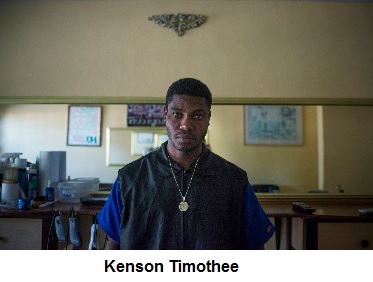
NASSAU, BahamasKenson Timothee was walking down the street when a uniformed officer asked him a question that sends Bahamians of Haitian descent like him into a panic these days: Do you have a passport?

Mr. Timothee, who was born in the Bahamas to illegal Haitian immigrants, wound up jailed in immigration detention for six weeks. He is one of hundreds of people swept up in a fiercely debated new immigration policy in the Bahamas requiring everyone to hold a passport, a rule that human rights groups say unfairly targets people of Haitian descent.

CU Blog - NY Times Malecdiction on The Bahamas - Photo 2Mr. Timothee had proof that he was born in the Bahamas, but because he had trouble obtaining his absentee father’s birth certificate, his application for Bahamian citizenship was never completed.

“I showed them that I had applied for citizenship, but they said that wasn’t good enough; as far as they are concerned, you are not Bahamian, you are Haitian, and you need to get deported,” Mr. Timothee said. “I don’t know anything about Haiti.”

On Thursday, the Bahamian government announced that the new policy would go a step further: By next Fall, schools will be asked to ensure that every child has a student permit. The annual $125 permit and a passport with a residency stamp will be required even of children born in the Bahamas who do not hold Bahamian citizenship.

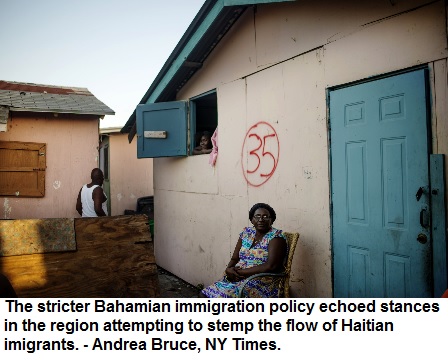
The tough new policy echoes similar stances around the region, where new citizenship policies and anti-immigration measures have overwhelmingly affected Haitians, who are fleeing the hemisphere’s poorest country and are the most likely group to migrate illegally in great numbers. The top court in the Dominican Republic ruled in 2013 that the children of illegal immigrants, even if they are born in the country, did not have the right to citizenship.

Facing an international backlash, the Dominican government came up with a plan to prevent tens of thousands of people from becoming stateless, but months later, few people had managed to complete the process. With few successes to tout, in October the Dominican government extended the application period for another three months.

In Turks and Caicos, a top immigration official vowed early in 2013 to hunt down and capture Haitians illegally in the country, promising to make their lives “unbearable.” The country had already changed its immigration policies in 2012, making it harder for children of immigrants to obtain residency. Last year, Turks and Caicos said it would deploy drones to stop Haitian migration.

In Brazil, politicians considered closing a border with Peru last year to stem the tide of Haitians, and last month, Canada announced that it would resume deporting Haitians.

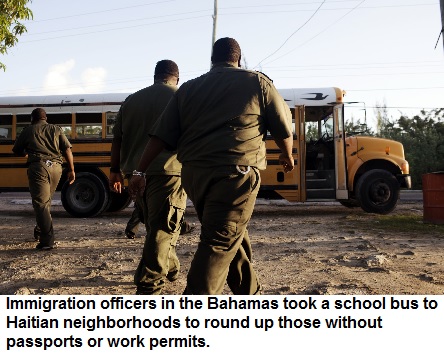
Here in the Bahamas, Mr. Timothee’s arrest coincided with stepped-up immigration raids in predominantly Haitian shantytowns, where people who lacked passports or work permits were apprehended. When illegal immigrants ran from officers, the agents knocked down doors and took their children, and the photos of toddlers being carried away circulated widely on social media.

Since the policy took effect November 1, children born in the Bahamas have been deported with their parents, and others with Haitian-sounding names have been pulled from school classrooms, human rights observers said. The government acknowledges that even Bahamian citizens with French surnames are frequently arrested by mistake. In September alone, 241 Haitians were deported, according to government figures.

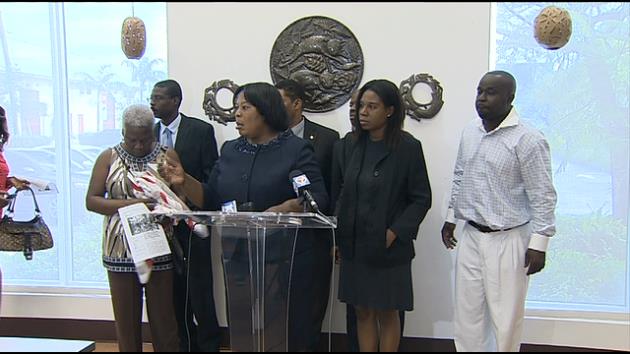
Though 85 percent of Bahamians support the new policy according to one poll, it has set off a round of international condemnation. A Florida legislator called for a tourism boycott of the Bahamas and organized a protest at the nation’s Miami consulate. Citing some of the more alarming cases, including that of a pregnant Haitian woman who gave birth on an immigration detention center floor aided only by other detainees, several international groups have asked the Inter-American Commission on Human Rights to intervene.

Immigration officials in the Bahamas say their policies do not target any particular group, provide a better sense of who is living in their country, and could deter thousands of Haitian migrants from taking to the high seas each year in boats that often sink.

“We had situations where 100 people were showing up every day; that’s unsustainable,” said Frederick A. Mitchell, the Bahamian foreign minister. “That situation had spiraled out of control.”

Annette M. Martínez Orabona, director of the Caribbean Institute for Human Rights, said she recently visited the Bahamas to investigate the new policy, arguing that it fit into a broad context of immigration crackdowns in the region.

“It’s all guided by discriminatory practices toward persons of Haitian origin,” she said.

Children like Mr. Timothee’s 5-year-old daughter are in a particularly precarious legal situation, she said. If nationality is passed down by blood and Mr. Timothee has no citizenship, then what passport would his daughter get?

“The third generation is in a black hole,” Ms. Martínez said.

In the Bahamas, the Constitution says that people born there to parents who were not citizens have the right to apply for citizenship between their 18th and 19th birthdays. In a country where one in 10 Bahamians is of Haitian descent, many people never apply, and others face years of administrative delays, leaving an untold number of people in the country without documentation.CU Blog - NY Times Malecdiction on The Bahamas - Photo 5

The new policy forces them to apply for a passport from their parents’ country of origin. Americans who have children in the Bahamas regularly get United States passports for them, and this is no different, Mr. Mitchell said.

“There’s nothing wrong with being Haitian,” Mr. Mitchell said.

But the people affected by the new policy are leery of obtaining citizenship from Haiti, a country most of them have never visited.

“It’s a trick,” said Fred R. Smith, a civil rights lawyer in the Bahamas who has become the policy’s most vocal critic. “Once you apply for a Haitian passport, you’re already a citizen of another country, and you no longer fit into a category where the Bahamas is under an obligation to give you citizenship. You are no longer stateless.”

He said the government had routinely descended on an area, apprehended a few hundred people, and “hauled off” anyone who could not produce papers on the spot. The majority of detainees are released when their relatives or employers come to the detention center with their paperwork.

CU Blog - NY Times Malecdiction on The Bahamas - Photo 3Some people have been deported even though they were born in the Bahamas. People like Mr. Timothee, whose citizenship status is pending, wind up in limbo. Others, like Rose St. Fleur, have been sent home with an admonishment to carry their paperwork.

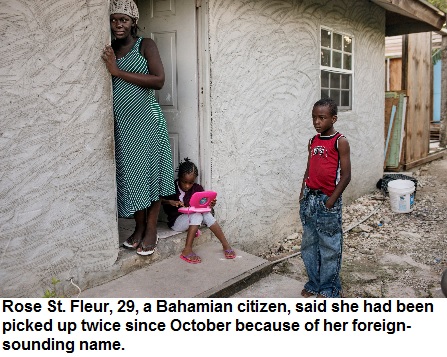
Ms. St. Fleur, a 29-year-old Bahamian citizen, said she had been picked up twice since October. She was 32 weeks pregnant when neighbors watched agents drag her down the street onto a bus, she and her neighbors said.

“When they asked me my name and I told them, they said, ‘That’s a foreign last name,’ ” Ms. St. Fleur said. “I told them, ‘Yes, but I am a Bahamian citizen.’ ” She said they replied, “You still have to come with us.”

Many people have not been able to obtain documents because the paperwork required, including certified copies of both parents’ birth certificates, is difficult to obtain. The Haitian government, itself crippled by political infighting and a halting recovery from the earthquake five years ago, has been unable to speedily produce records for the hundreds of thousands of people in the Dominican Republic and the Bahamas who are suddenly in need of decades-old birth records.

Because of delays in obtaining Haitian passports, thousands of Bahamians are now at risk of having no nationality at all.

“The person who may have a delay in getting papers is not stateless,” Dwight L. Beneby, the Bahamas’ assistant director of immigration. “It’s not that we’re trying to get rid of people or trying to get out of giving them citizenship. If you are here, let’s know who you are.”

Francois Guillaume II, who was Haiti’s minister of Haitians living abroad when the policy was announced, said the new policy came without warning.

CU Blog - NY Times Malecdiction on The Bahamas - Photo 6“It’s troubling when we have cases of people who have never lived in Haiti and are sent to a country that is completely foreign to them,” said Mr. Guillaume, who lost his position in a recent ministerial shuffle. “It must be traumatizing for them.”

Most of the Bahamian-born deportees were children, but one was 18 years old, and it was unclear why she was not given the opportunity to seek legal residency, he said.

“I don’t think there is an anti-Haitian sentiment in the area; I believe there are countries experiencing social pressure and are trying to look for solutions,” Mr. Guillaume said. “Some solutions are rash. Sometimes they are politically motivated. Nonetheless, we hope the solutions respect international norms.”
Though the Bahamas immigration/nationality enforcement is “legal” per the country’s constitution, not everyone in the homeland approves of this policy. Note to the  New York Times: “The round-up of Bahamian-born Haitians is not universally concurred in the country”. This is a policy of the current government administration. There are non-government organizations (NGOs) and elected opposition officials that are vocal in their disagreements of this enforcement. (This Go Lean commentary remains apolitical). See a news article (snippet) here in that vein:

Title 2: Call To Bring Immigration Legislation to Parliament –
(Retrieved 01/30/2015 from: http://www.tribune242.com/news/2015/jan/30/call-bring-immigration-legislation/)

ST ANNE’S MP Hubert Chipman yesterday renewed calls for legislation to be brought to Parliament to support the government’s new immigration policy.

Mr. Chipman, shadow minister for foreign affairs and immigration, said the only person who had a clear understanding of the policy was Immigration Minister Fred Mitchell, and questioned how the new policy has affected the department’s backlog of citizenship applications.

He said officials have put the “cart before the horse” by targeting migrant communities before modernizing infrastructure to process individuals.

These articles reflect the heavy-lifting burdens that the Caribbean member-states must address regarding nationality and immigration. Underlying to this issue among all the affected Caribbean member-states is the failing disposition of Haiti. The Go Lean…Caribbean book presents a Marshall Plan to re-boot Haiti. The consequence: a better Haiti to live, work and play. Only then will the citizens of Haiti, and the Caribbean as a whole, be less inclined to flee the homeland.

The Go Lean roadmap provides perhaps the ultimate resolution to this perplexing nationality processing problem, that of a regional entity, the CU, to streamline application processing. This would be an extension of the current CariCom passport process.

A key problem with this nationality issue is the current sensitivities of Jus soli (Latin: right of the soil) versus Jus sanguinis (Latin: right of blood). These points were detailed in a previous blog.

In the middle of the winter, the New York Times should be inciting its readers to flee the bitter cold and enjoy the hospitality of the Bahamas, Turks & Caicos and the Dominican Republic, yet instead the front page article is exposing the human rights shortcomings of these states’ nationality policies.

The Go Lean book and blogs addresses ways to better protect human rights. While this subject is not tried-and-true economics – the usual focus of this roadmap –  there is a correlation of satisfactory human rights records and American trade. The roadmap seeks to elevate all the engines of Caribbean society for a better homeland for the 42 million residents and 80 million visitors, across the 30 member-states. The CU, applying best-practices for community empowerment and human rights, has the following 3 prime directives:

  • Optimization of the economic engines in order to grow the regional economy to $800 Billion & create 2.2 million new jobs.
  • Establishment of a security apparatus to protect the resultant economic engines.
  • Improve Caribbean governance, with consideration for minority equalization, to support these engines.

The Go Lean book details a series of community ethos, strategies, tactics, implementations and advocacies to optimize the region’s economic landscape:

Community Ethos – Economic Systems Influence Choices & Incentives Page 21
Community Ethos – Consequences of Choices Lie in the Future Page 21
Community Ethos – Anti-Bullying and Mitigation Page 23
Community Ethos – Minority Equalization Page 24
Community Ethos – Ways to Impact the Future Page 26
Community Ethos – Ways to Manage Reconciliations Page 34
Community Ethos – Ways to Impact the Greater Good Page 37
Strategy – Vision –  Integrate region into a Single Market Economy Page 45
Strategy – Agents of Change – Globalization Page 57
Tactical – Separation of Powers – Department of   Homeland Security Page 75
Implementation – Ways to Foster   International Aid Page 115
Planning – 10 Big Ideas … in the Caribbean Region – Haiti & Cuba Page 127
Planning – Ways to Ways to Model the EU – From Worst to First Page 130
Planning – Reasons Why the CU Will Succeed – Germany Reconciliation Model Page 132
Planning – Ways to Improve Failed-State Indices – Cuba & Haiti on the List Page 134
Planning – Lessons from East Germany – European post-war rebuilding Page 139
Planning – Lessons from the US Constitution Page 145
Planning – Lessons from Canada’s History Page 146
Advocacy – Ways to Grow the Economy Page 151
Advocacy – Ways to Create Jobs Page 152
Advocacy – Ways to Foster Empowering Immigration – Case Study of Indian Migrants Page 174
Advocacy – Ways to Impact Justice Page 178
Advocacy – Ways to Impact the Diaspora Page 217
Advocacy – Ways to Protect Human Rights Page 220
Advocacy – Ways to Re-boot Cuba Page 237
Advocacy – Ways to Impact the Dominican Republic Page 237
Advocacy – Ways to Re-boot Haiti Page 238

The message to the Caribbean leaders and planners is straight-forward: The US, New York Times and all American media, are watching and judging, based on their own standards. The goal of the Go Lean roadmap is to formulate the Caribbean region to be better American neighbors, a protégé status rather than the current parasite status. There is the need to re-focus on our populations in general – majority, minority, Black, White, French, English, etc.. Countries like the Bahamas, and Haiti for that matter, need “all hands on deck”, not less hands. Economic growth requires a growing population; (a previous report disclosed 70,000 Bahamians living illegally in the US).

We do not want to encourage migration nor facilitate it. Just the opposite, we simply want to encourage and facilitate citizens staying and contributing to their native homelands. We do not want to “fatten frogs for snake”, we want to elevate our own communities to be better places to live, work and play.

Now is the time for all the Caribbean to lean-in to this Go Lean roadmap for Caribbean economic, security and governance elevation. Now is the time for all of the Caribbean to learn the lessons from other communities, (think Apartheid in South Africa). It is guaranteed: once the human rights issues are resolved, your society/community will soar.

🙂

Download the book Go Lean … Caribbean – now!

———

APPENDIX – VIDEO: Pulitzer Prizes on Human Trafficking

Direct Link: http://www.nytimes.com/video/multimedia/100000002825879/reuters-journalist-jason-szep-celebrates-pulitzer-prize.html


 

Share this post:
, , ,

How to Train Your ‘Dragon’ – Freeport Version

Go Lean Commentary

The term ‘dragon’ has a deep and rich meaning in all of literature; see Appendix A for a list of different cultures with dragon mythologies.

CU Blog - Freeport Version - How to Train My Dragon - Photo 6

Needless to say, there is no such creature, apart from the adorable Komodo Dragon, a big lizard native to South Pacific and Australasia region.

Even in scripture, the great Enemy, Satan the Devil is depicted as a Dragon; (Revelation 12:9). This commentary is not labeling any one person as a “Dragon”, but rather assigning the term “Dragon” to a “Dependence on Foreign Investors” or DFI.

So figuratively, the term “dragon” refers to an adversarial creature. This is where the relevance is to this commentary for the promotion of the book Go Lean…Caribbean. The book calls for the elevation of Caribbean economics, security and governance. It assesses many “dragon-like” challenges that stand in the way of progress and have resulted in near wholesale abandonment of so many communities.

One city of focus for this commentary is the 2nd city in the Bahamas, Freeport/Lucaya. This town is now undergoing a crisis in all three challenge factors (economics, security, and governance), and yet the book maintains that this “dragon can be trained’ see VIDEO below. Part of this crisis is the fact the certain tax-free provisions, real property tax and Business License, of the Hawksbill Creek Agreement (that led to the private development of Freeport) will expire on August 4, 2015. The national government is pondering renewal and extension; the ongoing stalemate, exacerbates the municipal crisis.

The book opens with the declaration that a crisis is a terrible thing to waste. For the Caribbean region there is not just one issue, but rather many negative/downward triggers, all which are addressed in the Go Lean book. While these challenges abound through out the region, Freeport’s exposure to these following triggers are more heightened than elsewhere:

  • Climate Change and threats from natural disasters
  • Decline of the American Middle Class, since the 2008 financial crisis
  • Decimation of the tourism product – measured decline in amenities like Golf and Casino Gambling.
  • Failure to diversify the economy with any industrial base
  • Emergence of powerful elite, the One Percent.
  • Bureaucratic hindrance of Foreign Direct Investors
  • Security threats from border encroachments of illegal immigrants.
  • Security threats of immigrants assimilating their adopted societies.

Harsh realities have now come to fruition in the Caribbean, but the town of Freeport have been hard hit with the full force of all of these dynamics. The book therefore posits that there is a need to re-focus, re-boot, and optimize the engines of commerce so as to make all the Caribbean a better place to live, work and play. While all the Caribbean needs to create jobs, this town of Freeport, has a greater need, more so than others.

Ship-building, in its many genres, is being promoted for adoption and incubation. This is just one of the advocacies identified, qualified and proposed in the Go Lean book. In total, there are 144 advocacies, catalogued in the areas of Community Ethos, Strategy, Tactics, Implementations, Planning, Economics, Government, Industries, Social, and Locations.

Normally DFI refer to Direct Foreign Investment, but in this case the “Dependence on Foreign Investors” is portrayed as a negative factor or pest – a dragon –  unless “trained”, caroled and controlled to harness the energy in a positive way.

Consider these news articles that describe the business climate and players for the Freeport landscape:

1. Freeport Plutocratic Benefactor – Sir Jack Hayward:

CU Blog - Freeport Version - How to Train My Dragon - Photo 5Sir Jack Hayward, British Businessman, Property Developer, Philanthropist and Sports Team Owner was memorialized by fans of his football team Wolverhampton Wanderers F.C.. He passed away last week (January 13) at age 91. He was loved and hated in different circles, some even compared his racism to Adolf Hitler – perhaps a hyperbole. Sir Jack was also a principal owner in the Grand Bahama Port Authority*. So he wielded power as to the municipal affairs and economic development of this city.

http://www.birminghammail.co.uk/sport/wolves-football-pundit-barry-glendenning-8481522

2. Fleeing a “sinking ship”:

Sir Jack Hayward Jack arrived in Grand Bahama in 1956 to promote the development of Freeport and became a Vice-President of the Grand Bahama Port Authority; eventually he assumed the Chairmanship of the Board of Directors (after 2004). Until the convalescence before his death, he continued to play an active role in Freeport. Sir Jack was in negotiations to sell his family’s 50 per cent stake in the GBPA Group of Companies. Now that provisions of the Hawksbill Creek Agreement (HCA) need renewal from the national government, multiple “dragons” are now circling the City of Freeport.

http://www.tribune242.com/news/2015/jan/28/sir-jack-port-sale-talks-passing/

3. At the precipice:

Community leaders in Freeport have declared that it would be “disastrous” if the national government fail to pursue HCA extension and allow the levy of real property taxes on GBPA licensees; “this would be another nail in Freeport’s coffin”. Freeport is now at the precipice – dragons are circling.

http://www.tribune242.com/news/2015/jan/08/freeport-disaster-if-property-tax-imposed/

4. Roadmap for economic empowerments:

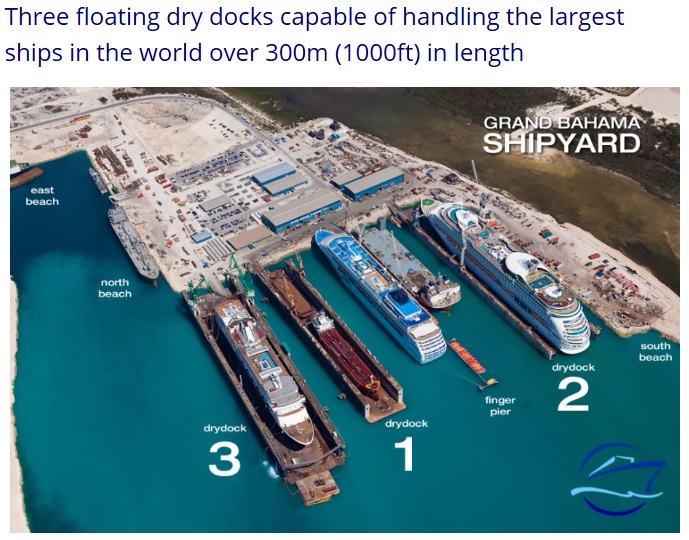
CU Blog - Freeport Version - How to Train My Dragon - Photo 4The Go Lean roadmap is not a work of fiction or mythology; it is based on the reality of the Caribbean disposition. It is what it is, the book declares. It is only by accepting reality that real solutions can be forged: discovered, designed and deployed.  The book, and accompanying blogs posit that “dragons can be trained”. The sad state of affairs in Freeport can be turned around by the embrace of a “double down” strategy on the island’s nascent ship-building industry.

http://grandbahamashipyard.com/facilities/drydocks/

The current disposition for Freeport, Grand Bahama is dire. But there is a glimmer of hope with this industrial development of ship-building. A previous blog/commentary pushed hard on the idea of ship-building/ship-breaking for the Caribbean region; now this commentary advocates adding ship-breaking to the ship-building model for Freeport, and then “double-down” on this industry space … with incubators, stimulus grants, angel investors, R&D and other initiatives. This is the heavy-lifting described in the Go Lean book.

In this vein, the book Go Lean… Caribbean, serves as a roadmap for the introduction and implementation of the technocratic Caribbean Union Trade Federation (CU) with the charter to facilitate jobs in the region. We want to explore all the strong benefits of the ship-building/ship-breaking industry. This aligns with the CU charter; as defined by these 3 prime directives:

  • Optimization of economic engines in order to grow the regional economy to $800 Billion and create 2.2 million new jobs.
  • Establishment of a security apparatus to protect the resultant economic.
  • Improvement of Caribbean governance to support these engines.

Early in the Go Lean book, the responsibility to create jobs was identified as an important function for the CU with this pronouncement in the Declaration of Interdependence (Pages 14):

xxvi.  Whereas the Caribbean region must have new jobs to empower the engines of the economy and create the income sources for prosperity, and encourage the next generation to forge their dreams right at home, the Federation must therefore foster the development of new industries, like that of ship-building, automobile manufacturing, prefabricated housing, frozen foods, pipelines, call centers, and the prison industrial complex. In addition, the Federation must invigorate the enterprises related to existing industries tourism, fisheries and lotteries – impacting the region with more jobs.

The CU will facilitate the region’s eco-system for Self-Governing Entities (SGE) for shipyards. This approach calls for the establishment of industrial parks, corporate campuses and research parks in bordered territories; these structures would be inviting to the super-rich (One-Percent) and their resources. These entities would be governed solely by the technocratic CU. The approach is not to punish the One-Percent for their success nor cower to any special interests group at the expense of the greater population.

This roadmap explains how all 30 Caribbean member-states can elevate the economic engines (direct and indirect spin-off activities), by allowing the CU to assume jurisdiction for SGE’s in the region and the Exclusive Economic Zone (the 1,063,000 square miles of the Caribbean Sea). Freeport is ideal for SGE’s for ship-building/ship-breaking yards, with its vast array of canals and waterways.

The Go Lean book also details the principle of job multipliers, how certain industries are better than others for generating multiple indirect jobs down the line for each direct job on a company’s payroll. The shipyard industry has a job-multiplier rate of 3.0. So the creation of 15,000 direct jobs for the shipyard industry in the Caribbean region can have the multiplier effect of 45,000 jobs. That economic impact is the result of “training the dragons”.

How would the Caribbean create 45,000 jobs in the course of the 5-year roadmap? By adoption of different community ethos, plus the executions of key strategies, tactics, implementations and advocacies. The following is a sample:

Community Ethos – Economic Principle – Economic Systems Influence Choices & Incentives Page 21
Community Ethos – Economic Principle – Voluntary Trade Creates Wealth Page 21
Community Ethos – Job Multiplier Page 22
Community Ethos – Lean Operations Page 24
Community Ethos – Ways to Impact the Future Page 26
Community Ethos – Ways to Help Entrepreneurship Page 28
Community Ethos – Ways to Impact Research & Development Page 30
Community Ethos – Ways to Impact Turn-Around – Recycling and Demolition Industries Page 33
Community Ethos – Ways to Impact the Greater Good Page 37
Strategy – Mission – Facilitate   a Shipbuilding Industry Page 46
Tactical – Fostering a Technocracy Page 64
Tactical – Tactics to Forge an $800 Billion Economy – High Multiplier Industries Page 70
Tactical – Separation of Powers – Self-Governing Entities Page 80
Implementation – Steps to Implement Self-Governing Entities Page 105
Implementation – Ways to Re-boot Freeport Page 112
Planning – Big Ideas – Confederation with Sovereignty Page 127
Advocacy – Ways to Grow the Economy Page 151
Advocacy – Ways to Create Jobs Page 152
Advocacy – Ways to Improve Emergency Management – Processes and Systems Page 196
Advocacy – Ways to Foster Technology Page 197
Advocacy – Ways to Develop/Grow a Ship-Building Industry Page 209
Appendix – Job Multipliers Page 259

The CU will foster industrial developments in support of alternative options to tourism. An important ingredient is the willingness of the people to engage. The CU/Go Lean will message to the Caribbean people, that the region is ready for this industrial challenge of ship-breaking.

The Caribbean is arguably the best address on the planet, but jobs are missing. With jobs, communities like the City of Freeport will be able to retain more of their citizens and suffer less abandonment. It’s all about people; Freeport has lost people and populations in the last few decades. The imagery of pests – dragons – come to mind that sneak away with young people during the night.

Time now for a change; time to train the dragons!

Whereas dragons are mythical, the Caribbean disposition, and Freeport’s, is no fairytale, no myth; this is real life. 🙂

Download the free e-Book of Go Lean … Caribbean – now!

————-

Appendix VIDEO: How To Train Your Dragon: “Official Trailer” – http://www.imdb.com/video/imdb/vi1158218777/

This commentary asserts that Freeport, Grand Bahama would be analogous to the fictitious Town of Berk in the movie.

This movie/snippet is owned by Dreamworks Entertainment. No copyright infringement intended. Apologies for the references to Nordic Culture, and any negative stereotypes projected.

Appendix A – Cultures with Dragon Mythology

Nordic (Viking)
Greek
Slavic (Romania, Russia)
Egypt
Ancient India
Persian
Jewish
Chinese dragon
Japanese
Korean
Bhutan
Manipur
Vietnam

CU Blog - Freeport Version - How to Train My Dragon - Photo 1

CU Blog - Freeport Version - How to Train My Dragon - Photo 2

CU Blog - Freeport Version - How to Train My Dragon - Photo 3

————–

Appendix B* Grand Bahama Port Authority (GBPA)

The Port Authority is a privately held corporation that acts as the municipal authority for Freeport, Grand Bahama Island, The Bahamas. The GBPA was created by the Hawksbill Creek Agreement of 1955. The GBPA is horizontally integrated with property development, municipal services, airport ( world’s largest privately owned airport), harbor operations, and shipyard concerns.

The Grand Bahama Port Authority is jointly owned by Sir Jack Hayward (50%) and the family of the late Edward St. George (1928 – 2004).The Ownership Structure also features a partnership with Hong Kong-based Hutchison Whampoa on the container port operations, and the resort area in the Lucaya section of the City.


Share this post:
, , , , , , ,
[Top]

Sir Sidney Poitier – ‘Breaking New Ground’

Go Lean Commentary

CU Blog - Downtime with Sir Sidney Poitier - Photo 1Movies are an amazing business model. People give money to spend a couple of hours watching someone else’s creation and then leave the theater with nothing to show for the investment; except perhaps a different perspective. That is all!

But no one wants to live in a world without this art-form, without movies. Those few hours can entertain, engage and transform; sometimes even “break new ground” and change the world. So movies and movie stars can be extremely influential in modern society. This is the power of the arts, and this art-form in particular.

The book Go Lean…Caribbean stresses the arts as equally as it does the sciences, for empowering and transforming Caribbean society. While the Caribbean may not have any Nobel Prize winning scientist, we do have an Academy Award winning artist/actor, Sidney Poitier from the Bahamas. He has been able to capitalize on the influence of this art-form for over 65 years and pursued the Greater Good. So his accomplishments transcend the movie screen and impacts real-life.

CU Blog - Downtime with Sir Sidney Poitier - Photo 3For this accomplishment, he has been honored and knighted by British Monarch Queen Elizabeth II as a “Commander of the Order of the British Empire (KBE)”. We thusly refer to him now as Sir Sidney Poitier.

He has also received a similar accolade from the US President, the highest civilian honor: the Presidential Medal of Freedom*.

He has received many more honors and awards; see Appendix A for a sample list of Top Honors.

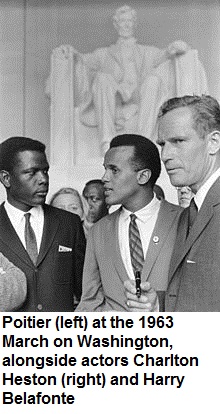
In focus for this commentary is his 1964 Oscar win for the 1963 movie Lilies of the Field. This was a big deal for Sir Sidney and the entire African Diaspora – people of color. Or as the BBC reported then: “he broke new ground”.

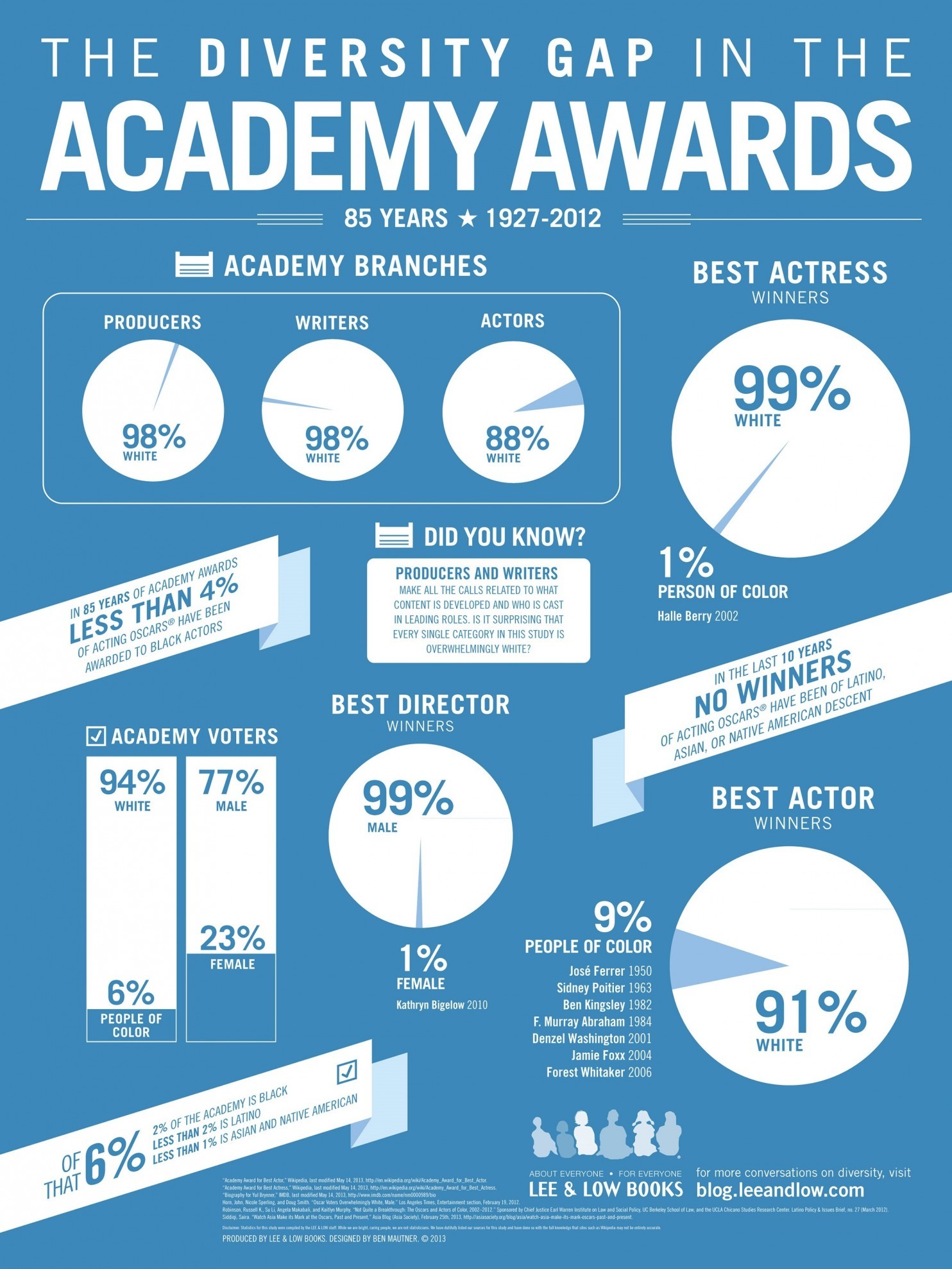
No new ground is being broken in Hollywood this year. The biggest stunner of the 2015 Academy Award nominations for films released in 2014 was that not a single actor of color or female director was included, sparking immediate criticism about Hollywood’s failure to include minorities in its most elite ranks. While this is a valid criticism, Hollywood may actually mirror society in general, where minority participation may be lacking in so many attendant functions – senior positions – of this business eco-system.

CU Blog - Downtime with Sir Sidney Poitier - Photo 2

(Click on the Photo to Enlarge)

While there may be some catch-up that this industry must still make, there are times when the movie-business will “boldly go where no one has gone before”. The Sir Sidney 1964 break-through was one such moment.

With a date-of-birth of February 20, 1927 (age 88 on his next birthday), what does this screen legend do on his downtime? In addition to serving as patriarch of his family of 6 daughters and 6 granddaughters, he summons world leaders to him for consultation. (Sir Sidney serves as the Bahamas non-residential Ambassador to Japan). See this VIDEO here of his entertaining the Prime Minister of the Bahamas in a recent visit.

VIDEO – Downtime with Sir Sidney Poitier – http://youtu.be/xYv5QUT_zKI

Published on Jan 21, 2015 – In a special interview with ZNS News, legendary actor Sir Sidney Poitier challenged Bahamian political leaders to take the country to the next level.

The publishers of the book Go Lean…Caribbean recognizes the life contributions of Sir Sidney as an role model for excellence in the arts and also as an advocate of civil rights and social justice. He definitely demonstrates a love for his Caribbean (Bahamas) homeland and seeks to impact its development on the world scene. Though not a direct quotation, he has called for the elevation of Caribbean life and culture. This book serves as a roadmap for the introduction and implementation of the technocratic Caribbean Union Trade Federation (CU) to help the region become a better place to live, work and play. There is a role for the arts (including film-making) in this empowerment roadmap.

Unlike the current dread of “Black and Brown” among the Oscar nominees, the Go Lean roadmap seeks to put Caribbean people in a place of better command-and-control of their circumstances, to develop the community ethos of assisting each other to advance in our own lives, in our individual communities and in the Caribbean as a whole. The book posits that a unified Caribbean Single Market of 42 million people and a GDP of $800 Billion can foster a “domestic” film industry, much like the formations of Bollywood in India (Page 346) and Nollywood in Nigeria. Deeper exploration of this amazing business model (movies/show-business) can create jobs and garner local returns from the necessary investments.

These previous blog/commentaries drilled deeper on this quest to better foster show-business; below are some examples:

https://goleancaribbean.com/blog/?p=3641 ‘We Built This City …’ on Music and Show-business
https://goleancaribbean.com/blog/?p=3568 Forging Change: Music Moves People
https://goleancaribbean.com/blog/?p=3292 Art Basel Miami – a Testament to the Spread of Culture
https://goleancaribbean.com/blog/?p=3078 Bill Cosby – Sir Sidney’s Frequent Co-Star – Accusations abound
https://goleancaribbean.com/blog/?p=2726 Caribbean Role Model for the Arts/Fashion – Oscar De La Renta: RIP
https://goleancaribbean.com/blog/?p=2415 How ‘The Lion King’ roared into history
https://goleancaribbean.com/blog/?p=1909 Role Model Berry Gordy – No Town Like Motown
https://goleancaribbean.com/blog/?p=1037 Humanities Advocate – Maya Angelou: RIP
https://goleancaribbean.com/blog/?p=866 Caribbean Music Man: Bob Marley – The legend lives on!

The quest is to elevate Caribbean society with many industrial developments, including the arts. This was stressed in the opening Declaration of Interdependence (Page 13) with this statement:

xxi. Whereas the preparation of our labor force can foster opportunities and dictate economic progress for current and future generations, the Federation must ensure that educational and job training opportunities are fully optimized for all residents of all member-states, with no partiality towards any gender or ethnic group. The Federation must recognize and facilitate excellence in many different fields of endeavor, including sciences, languages, arts, music and sports. This responsibility should be executed without incurring the risks of further human flight, as has been the past history.

This impact and overall benefit of this roadmap is pronounced in the CU‘s prime directives, identified with these 3 statements:

  • Optimization of the economic engines in order to grow the regional economy to $800 Billion & create 2.2 million new jobs.
  • Establishment of a security apparatus to protect the resultant economic engines.
  • Improvement of Caribbean governance to support these engines.

The roadmap specifically encourages the region, to lean-in and foster the next generation of Sidney Poitier’s with these specific community ethos, strategies, tactics, implementations and advocacies:

Community Ethos – Consequences of Choices Lie in the Future Page 24
Community Ethos – Minority Equalization Page 24
Community Ethos – Cooperatives Page 25
Community Ethos – Ways to Foster Genius Page 27
Community Ethos – Ways to Promote Intellectual Property Page 31
Community Ethos – Ways to Improve Sharing Page 35
Community Ethos – Ways to Promote Happiness Page 36
Community Ethos – Ways to Impact the Greater Good Page 37
Strategy – Celebrate the arts, people and culture of the Caribbean Page 46
Tactical – Separation-of-Powers – Tourism and Film Promotion & Administration Page 78
Implementation – Integration of Region in Single Market of 42 million people Page 95
Anatomy of Advocacies – Ability to Change the World Page 122
Planning – 10 Big Ideas – Caribbean Single Market Page 127
Planning – Ways to Better Manage Image Page 129
Advocacy – Ways to Improve Education – Foster Performing Arts Page 159
Advocacy – Ways to Foster Cooperatives Page 176
Advocacy – Ways to Impact Justice Page 177
Advocacy – Ways to Impact Hollywood Page 203
Advocacy – Ways to Preserve Caribbean Heritage Page 222
Advocacy – Ways to Impact Youth Page 225
Advocacy – Ways to Improve the Arts Page 230
Appendix –  A Summary of Bollywood Movies Page 346

The Go Lean posits that the CU should foster the genius potential in Caribbean artists and incubate the related industries of show-business. The roadmap pronounces that with the participation of many advocates on many different paths for progress, the Caribbean can truly become a better place to live, work and play. We, along with the whole world, owe a debt to Sir Sidney for leading us along this path.

Yes, Hollywood must change and acknowledge more  diversity; but this is out-of-scope for this roadmap. The Caribbean must change … to adapt to a changing world. This is within our scope. While no Caribbean member-state may be able to compete and excel alone, together and collaboratively, we can stand up proud and present the world the beautiful contributions of Caribbean people and art. 🙂

Download the book Go Lean … Caribbean – now!

———

APPENDIX A – Sidney Poitier Honors & Awards

  • 1958 British Academy Film Award for Best Foreign Actor for The Defiant Ones
  • 1958 Silver Bear for Best Actor (8th Berlin Film Festival) for The Defiant Ones[39]
  • 1963 Academy Award (Oscar) for Best Actor in a Leading Role for Lilies of the Field
  • 1963 Golden Globe Award for Best Actor in a Motion Picture Drama for Lilies of the Field
  • 1963 Silver Bear for Best Actor (13th Berlin Film Festival) for Lilies of the Field [40]
  • 1974 Knight Commander of the Order of the British Empire (KBE)
  • 1982 Golden Globe Cecil B. DeMille Award [41]
  • 1992 AFI Life Achievement Award
  • 1995 Kennedy Center Honors
  • 1997 Appointed non-resident Bahamian Ambassador to Japan
  • 1999 SAG Life Achievement Award
  • 2000 NAACP Image Award for Outstanding Actor in a Television Movie, Mini-Series or Dramatic Special for The Simple Life of Noah Dearborn
  • 2001 NAACP Image Award – Hall of Fame Award
  • 2001 Grammy Award for Best Spoken Word Album – Rick Harris, John Runnette (producers) and Sidney Poitier for The Measure of a Man
  • 2002 Honorary Oscar – “For his extraordinary performances and unique presence on the screen and for representing the industry with dignity, style and intelligence”
  • 2009 Presidential Medal of Freedom[42]
  • 2011 Film Society of Lincoln Center Gala Tribute[43] honoring his life and careers

——–

APPENDIX B – * Presidential Medal of Freedom CU Blog - Downtime with Sir Sidney Poitier - Photo 4

This award is bestowed by the President of the United States and is — along with the comparable Congressional Gold Medal, bestowed by an act of U.S. Congress—the highest civilian award of the United States. It recognizes those individuals who have made “an especially meritorious contribution to the security or national interests of the United States, world peace, cultural or other significant public or private endeavors”.[3] (Source:http://en.wikipedia.org/wiki/Presidential_Medal_of_Freedom)


Share this post:
, , ,
[Top]

Bahamas VAT Regime Barreling Towards Informal Economy

Go Lean Commentary

Those who refuse to learn from history are condemned to repeat it – Dire warning from all High School History Teachers.

The purpose of this commentary is not a lesson in history but rather a navigational guide for managing the change process. Other lands in the Caribbean have previously introduced Value Added Taxes (VAT) and/or Sales Taxes and learned bitter lessons; that the public shifts to the Informal Economy or Black Market. In particular, this was a hard lesson learned in Puerto Rico…

The Bahamas now attempts a VAT implemetation; it is feared that this country too, may barrel towards the Informal Economy/Black Market. See article here:

Title: PM says ‘We were right on VAT’ (Excerpt Only)
Subtitle: Christie Addressed nation on VAT, crime, immigration and economy
By: Royston Jones, Jr., Staff Reporter

CU Blog - VAT Regime Barreling Towards Informal Economy - Photo 2Prime Minister Perry Christie yesterday assured Bahamians that despite what will be “the inevitable growing pains that always attend the early days of important changes, the Bahamian people will see that we were right to introduce VAT (value-added tax) and do it when we did”.

Calling the controversial implementation of VAT on January 1 the “single most fundamental change to our public revenue system in the modern history of The Bahamas”, the prime minister used his New Year’s Day address to the nation to point out that while crime, unemployment and underemployment remain pressing challenges for The Bahamas, his administration has made what he termed “commendable progress in tackling a number of pressing issues”.

Focusing primarily on VAT, Christie said he viewed the new tax as a “necessary improvement”.

“It may not be the most popular move for a government to make but it is an absolutely necessary one,” Christie said. “We were right because VAT is going to expand the revenue base in a way that will enable the government to better meet the social and infrastructural needs of the Bahamian people, now and well into the future.

“Our obligations to build hospitals and clinics; to build schools and community development facilities; to provide critical funding support for our electricity, water and sewerage infrastructure; to provide relief to the elderly and indigent in our communities; to meet the costs of Family Island development; and to meet the costs of our public service bureaucracy – these obligations could simply not be met out of our traditional sources of public revenue any longer.

“VAT, therefore, is a necessary improvement and one that is destined, I am convinced, to bring brighter skies and clearer days for our country and its finances.”

The prime minister also focused on immigration reform

Christie also promised a renewed focus on crime in the New Year

With regard to the economy, Christie said 2015 will see major advances. “The multi-billion dollar Baha Mar project

———-

CU Blog - VAT Regime Barreling Towards Informal Economy - Photo 1

Other related local news articles reporting the challenges of VAT in this country:

VAT Price Hikes Fears Heightened

Mixed Reviews from Shoppers after VAT Implementation

Pain, confusion on VAT roll-out; Not yet applied on Gasoline

VAT Registration Process Simplified

No VAT On Tourism-specific transactions

Hotels Brace For 150% Vat Tax Burden Rise

White Paper: The Economic Consequences of the Value-Added – Market Response

White Paper: A Valued Add Tax Within A Reformed Tax System – Official Government Publication

Bahamas Official VAT Website: VAT Bahamas

CU Blog - VAT Regime Barreling Towards Informal Economy - Photo 3There are advanced lessons here for the Bahamas and all the Caribbean to learn.

The book Go Lean … Caribbean made an assessment of Puerto Rico and reported that much of that country’s spending is conducted in the Informal Economy/Black Market (Page 18). This is bad! There is a Social Contract between governments and their constituents. People need their government and governments need people … and their legitimate spending. With an informal economy (i.e. “under the table” retail transactions and bartering) much of the government’s deliverables are handicapped as governmental agencies do not get the needed revenues.

This issue is among the primary focus of the book, serving as a roadmap for the introduction and implementation of the technocratic Caribbean Union Trade Federation (CU). The following 3 prime directives are explored in full details:

  • Optimization of the economic engines in order to grow the regional economy to $800 Billion & create 2.2 million new jobs.
  • Establishment of a security apparatus to protect the resultant economic engines.
  • Improve Caribbean governance to support these engines.

As a planning tool, the Go Lean roadmap accepts the challenge to adapt for societal empowerments, such as tax regime changes. This point was pronounced in the opening Declaration of Interdependence (Page 12), with this statement as follows:

xiv. Whereas government services cannot be delivered without the appropriate funding mechanisms, “new guards” must be incorporated to assess, accrue, calculate and collect revenues, fees and other income sources for the Federation and member-states. The Federation can spur government revenues directly through cross-border services and indirectly by fostering industries and economic activities not possible without this Union.

The foregoing news articles highlight the issue of VAT implementation in the Bahamas. This government, and the people, are struggling with this roll-out – this change is hard and everyone is affected; see VIDEOs below. This issue had previously been addressed in Go Lean blogs:

CARICOM calls for innovative ideas to finance SIDS development
Bahamas Planning to Introduce 7.5 Percent VAT in 2015

The issues of government revenue reform, operational processing, and best practices for delivery are critical for the Caribbean region and for the CU to master. VAT is very much related, as it already applies in Barbados (17.5 percent), Guyana (16 percent) Saint Kitts & Nevis (17 percent) and Trinidad & Tobago (15 percent).

The Go Lean strategy is to confederate all the 30 member-states of the Caribbean, despite their language and legacy, into an integrated “single market”. Tactically, this will allow a separation-of-powers between the member-states governments and federal agencies, allowing for efficient economies-of-scale for revenue collection systems, processes and people. In total, the Go Lean book details a series of community ethos, plus strategies, tactics, implementations and advocacies to deliver better revenue solutions:

Anecdote Puerto Rico – The Greece of the Caribbean Page 18
Community Ethos – All Choices Involve Costs Page 21
Community Ethos – People Respond to Incentives in Predictable Ways Page 21
Community Ethos – Economic Systems Influence Individual Choices Page 21
Community Ethos – The Consequences of Choices Lie in the Future Page 21
Community Ethos – Lean Operations Page 24
Community Ethos – Cooperatives Page 25
Community Ethos – Ways to Improve Sharing Page 35
Strategic – Vision – Integrated region in a Single Market Page 45
Strategic – Vision – Agents of Change – Globalization Page 57
Tactical – Confederating a Non-sovereign Union Page 63
Tactical – Fostering a Technocracy Page 64
Tactical – Growing to $800 Billion – Trade & Globalization Page 70
Tactical – Separation of Powers – Union Revenue Administration Page 74
Anecdote – “Lean” in Government Page 93
Implementation – Ways to Pay for Change Page 101
Implementation – Ways to Deliver Page 109
Implementation – Ways to Better Manage Debt Page 114
Implementation – Ways to Benefit from Globalization – Reform Tax Systems Page 119
Advocacy – Ways to Grow the Economy Page 151
Advocacy – Ways to Ways to Mitigate Black Markets Page 165
Advocacy – Ways to Improve Governance Page 168
Advocacy – Ways to Improve Local Governments Page 169
Advocacy – Ways to Better Manage the Social Contract Page 170
Advocacy – Revenue Sources for Administration Page 172
Advocacy – Ways to Foster Cooperatives Page 176
Advocacy – Ways to Foster e-Commerce Page 198

The introduction of new taxes is a heavy-lifting activity. For every action, there will be reaction, consequences and repercussions. This commentary hereby warns the Bahamas tax planners regarding the emergence of Black Markets, as was experienced in other states, like Puerto Rico. The Go Lean book provides the remediation and mitigation plans for Black Markets (Page 165).

This process of implementing a new tax regime is a complex one. There are a lot of fears associated with the implementation, as this strategy can be counter-productive – one step forward, two steps backwards; (one Economic Impact Study predicts VAT adoption will lead to a $165 million decline in government revenues). An identified frightened scenario stems from a competition analysis with other tourism-based economies in the Caribbean that do not charge VAT taxes on the revenue of the wholesale tour operators/industrial-players. This is bad! This point was echoed by Mr. Stuart Bowe, the Bahamas Hotel and Tourism Association’s (BHTA) president with these words: ”… [tax regime] change “would have resulted in overseas wholesalers, tour operators, travel agencies and online travel agencies steering business away from the Bahamas“. The current VAT-assessing countries trail the Bahamas in tourism numbers – by far.

The publishers of the Go Lean book calls on the Government of the Bahamas to engage a Plan-Do-Review approach for VAT implementation:

1. Apply best-practices.
2. Be nimble and technocratic so as to adapt to new realities bred from this new tax regime.
3. Your goal should be a net gain of 15% more revenues (in the first year) compared to the old tax regime.
4. Be prepared to disband strategies and tactics that do not work as hoped.
5. Immediately adopt e-Government and e-Payment schemes.
6. Look out for the Black Market encroachment.

CU Blog - VAT Regime Barreling Towards Informal Economy - Photo 4

VAT should be more about the future than it is about the present. So the most important consideration should be that something better is on the way! This is also the thrust of the  Go Lean/CU roadmap.

Now is the time for the Bahamas, and all of the Caribbean – the people and governing institutions – to lean-in for the empowerments described in the book Go Lean … Caribbean. The local governments need this comprehensive roadmap; they need their revenues. They are part of the eco-system to elevate Caribbean life, culture and systems of commerce.

Download the free e-Book of Go Lean … Caribbean – now!

————-

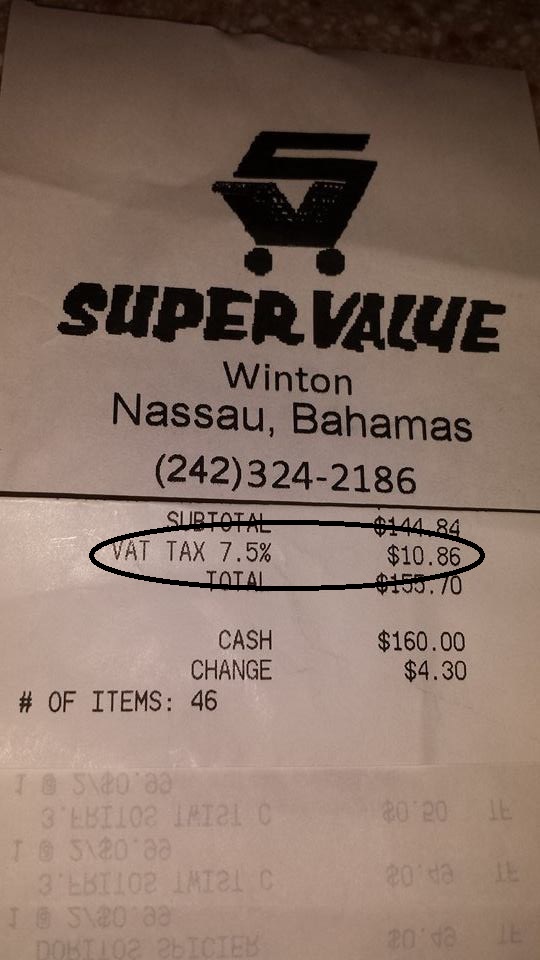
Photo: Sample Receipt with VAT applied
CU Blog - VAT Regime Barreling Towards Informal Economy - Photo 5 Rotated

VIDEO # 1: http://youtu.be/SsgKkp2Dpxg – One Bahamian Man’s Random Thoughts on VAT

VIDEO # 2 – http://youtu.be/Qzzxq1mBbF4 – Economist – Is VAT Good for The Bahamas?

Published on Apr 1, 2014 – Royal Fidelity “Face Time” with CEO Tyler Cowen.
At Fidelity Bank’s Cayman Economic Outlook, Feb 2014, with author, economist, and professor at George Mason University, Tyler Cowen.
Share this post:
, ,
[Top]

For Canadian Banks: Caribbean is a ‘Bad Bet’

Go Lean Commentary

There is no one entity designated to regulate the Caribbean banking sector in its full entirety. There are however some financial institutions doing business in much of the region who thusly have to make regionalized assessments. This includes NGOs like the World Bank and the Inter-American Development Bank, plus for-profit institutions like the Royal Bank of Canada (RBC) and the Bank of Nova Scotia (Scotiabank).

The subsequent news articles reflect the assessment of Caribbean economics from the point-of-view of Canadian Bankers: RBC and Scotiabank. Their conclusion:

All is not well in the Caribbean.

These articles highlighting the need for regional stewardship and oversight of banking in the Caribbean. This is the siren call of the book Go Lean…Caribbean; it serves as a roadmap for the introduction and implementation of the technocratic Caribbean Union Trade Federation (CU) and Caribbean Central Bank (CCB) to provide better stewardship, to ensure that the economic failures of the past, in the Caribbean and other regions, do not re-occur here in the homeland.

According to these following articles, the need for this CU/CCB administration is past due:

Title # 1: RBC Wealth Management pulls out of Caribbean markets
Caribbean 360 – Regional News Site (Posted 11/21/2014; retrieved 12/30/2014) –
http://www.caribbean360.com/news/canadas-largest-bank-shutters-wealth-management-branches-in-the-bahamas-barbados-and-the-cayman-islands

BRIDGETOWN, Barbados – The Royal Bank of Canada (RBC) is now the latest Canadian bank to cut its losses in the Caribbean, following a decision to close its Caribbean wealth management divisions and several international advisory businesses in North America.

CU Blog - For Canadian Banks - Caribbean a Bad Bet - Photo 1The move follows RBC’s sale of its Jamaican operations earlier this year, and an announcement by The Bank of Nova Scotia earlier this month of its plans to close around 120 branches in Mexico and the Caribbean (35 in the Caribbean specifically).

Canadian bank CIBC also suffered a net-loss on its FirstCaribbean bank operations in April 2014, for which it incurred a CDN $420 million goodwill impairment charge primarily related to its under-performing operation in the Bahamas.

Speaking to media sources in Canada following the RBC developments, Craig Fehr – an analyst with Edward Jones – said:

What we’re seeing is the banks are doing a thorough evaluation of their business mix and figuring out what makes sense long term and what is probably best left in the hands of someone else.

Sources indicate that the closure of RBC’s regional wealth management divisions – domiciled in The Bahamas, Barbados and the Cayman Islands – as well as management teams in Toronto, Montreal and the United States, could affect over 300 employees.

While heads of RBC’s regional wealth management divisions in the Caribbean declined specific comment on the exit and its impacts, RBC spokesman Claire Holland has confirmed the closures, while declining to offer specifics on the bank’s exit strategy:

“As there are a number of strategic options being considered as part of the exit, it would be premature at this stage to estimate the number of employees that will be impacted”, she said, while adding that the focus of the bank’s international growth strategy will now be on operating in major financial centres where RBC has “competitive strengths.”

RBC’s Caribbean wealth management divisions manage a portion of over CDN$43.2 billion in assets under the affected US and international wealth management operations.

When contacted for comment, Director of the Barbados International Business Association (BIBA), Henderson Holmes, said that his organisation was still trying to ascertain the facts before making a full statement on the RBC exit.

Holmes however cautioned that an exit “would not be good for Barbados”, while stating that BIBA’s current considerations were in whether a purchaser has been identified for the Barbados business, and whether its assets would remain in the country.

According to the International Monetary Fund, RBC, CIBC and the Bank of Nova Scotia hold around 60% of total banking assets in the Caribbean – a fact which the Fund says places the region at an increased risk of exposure to foreign financial crises.

For its part, RBC indicates that the closures will allow the bank to place increased focus on high net-worth and ultra-high net worth clients in key expansion markets, including Canada, the United States, the British Isles and Asia.

————

Title # 2: Scotiabank loans to hospitality sector ‘impaired’
Nassau Guardian Daily Newspaper Website (Posted 11/07/2014; retrieved 12/30/2014) –
http://www.thenassauguardian.com/bahamas-business/40-bahamas-business/51574-scotiabank-loans-to-hospitality-sector-impaired
By:
K. Quincy Parker, Guardian Business Editor

Scotiabank loans to the Caribbean hospitality sector have apparently lost hundreds of millions of dollars in value; a portfolio worth $1.3 billion a year ago fell to a $1 billion before a restructuring which has led to write-downs in the region, and which may mean branch closures and job losses in The Bahamas.

It appears that Scotiabank’s Caribbean write-downs – or adjustment to the value of its business – largely stem from three “net impaired” loans to the hospitality sector in the region. In fact, Canadian financial publications note that “trouble in the Caribbean” is becoming a common refrain. Scotiabank’s write-down follows on the heels of an even bigger one by First Caribbean earlier this year.

After 125 years of operations in the region, Scotiabank’s Chief Executive Officer Brian Porter said during a call this week that the bank will close a significant number of branches in the Caribbean (35 branches was the estimate given) as part of the restructuring. The shift is expected to mean layoffs as well, but local representatives could not speak to the extent – if any – of closures or job cuts in The Bahamas.

Scotiabank’s spokespeople told Guardian Business on Thursday that the lender’s growth in the region has “created some overlap and duplication of services”.

“As a result, we undertook a review of our operating model and international distribution network and found opportunities to strengthen our retail presence by investing in areas that are going to improve the speed and quality of service for our customers,” the bank said in a statement released to this paper.

Porter has announced changes including branch closures, restructuring charges totaling more than $450 million, 1,500 layoffs – mostly in Canada – and loan losses of $109 million in the Caribbean. He also revealed that Scotiabank will either close or downsize 120 branches, largely in Mexico and the Caribbean, to focus on high-growth markets such as Chile and Colombia.

The Scotiabank Bahamas statement said: “The numbers announced relating to branch closures were across the Bank’s international network.

“The bank is still undergoing its review and while this process will take some time, it will be carefully planned with consideration given to all affected stakeholders including employees and our customers”.

The Caribbean has had to learn hard lessons on banking … abroad. Due to the interconnectivity of the financial systems, bank troubles in foreign countries easily become trouble for the region. This was definitely true for the 2008 Banking Crisis that spurred the Great Recession. (Eventually the middle classes were impacted and shrunk our tourism marketing prospects). The events of this period were the lynchpin for the Go Lean movement, (book and blogs). This Go Lean book, and the associated movement, posits that the effects of the 2008 Great Recession continue to linger in the Caribbean. Therefore the book advocates instituting the appropriate governance on the region’s banking sector so as to apply the learned lessons from 2008. We do not want to be vulnerable to any financial mis-management of our North American neighbors; or some “plutocratic” elements there-in.

2008 was all about Wall Street (New York City). Today’s headlines are all about Canada. Though there is elasticity from these foreign financial centers, the Caribbean is big enough (42 million people in 30 member-states) to streamline its own viable financial / securities market. We can exert some control over our own economic destiny. We must assume the coveted role of protégé to our North American partners, not parasites, as experienced … to date.

The CU’s prime directive is to elevate the Caribbean’s economic-security-governing engines. Early in the book, the need for a regional steward was pronounced (Declaration of Interdependence – Page 13) with these statements:

xxiv.    Whereas a free market economy can be induced and spurred for continuous progress, the Federation must install the controls to better manage aspects of the economy: jobs, inflation, savings rate, investments and other economic principles. Thereby attracting direct foreign investment because of the stability and vibrancy of our economy.

xxv.    Whereas the legacy of international democracies had been imperiled due to a global financial crisis, the structure of the Federation must allow for financial stability and assurance of the Federation’s institutions. To mandate the economic vibrancy of the region, monetary and fiscal controls and policies must be incorporated as proactive and reactive measures. These measures must address threats against the financial integrity of the Federation and of the member-states.

The Go Lean book, and previous blog/commentaries, stressed the key community ethos, strategies, tactics, implementations and advocacies necessary to establish the regional financial eco-systems for Caribbean self-determination. These pointed are detailed in the book as follows:

Community Ethos – Economic Principles – Economic Systems Influence   Individual Choices Page 21
Community Ethos – Economic Principles – Voluntary Trade Creates Wealth Page 21
Community Ethos – Economic Principles – Consequences of Choices Lie in   the Future Page 21
Community Ethos – Economic Principles – Money Multiplier Page 23
Community Ethos – Governing Principles – Lean Operations Page 24
Community Ethos – Governing Principles – Return on Investments Page 24
Community Ethos – Ways to Impact the Future Page 26
Community Ethos – Ways to Help Entrepreneurship Page 28
Community Ethos – Ways to Impact Turn-around – 2008 Crisis Page 33
Community Ethos – Ways to Impact the Greater Good Page 37
Strategy – Mission – Fortify the Stability of   the Securities Markets Page 47
Strategy – CU Stakeholders   to Protect – Banks & Depositors Page 47
Tactical – Growing the Economy – Minimizing Bubbles Page 69
Tactical – Separation-of-Powers – Depository Insurance &   Regulatory Agency Page 73
Anecdote – Turning Around CARICOM – Effects of 2008 Financial Crisis Page 92
Implementation – Assemble Caribbean Central Bank as Cooperative Page 96
Implementation – Ways to Better Manage Debt – Optimizing Wall Street   Role Page 114
Planning – 10 Big Ideas – Single Market / Currency Union Page 127
Planning – Lessons Learned from the old West Indies Federation – Canada’s   Help Page 135
Planning – Lessons Learned from 2008 Page 136
Planning – Lessons Learned from Canada’s History Page 146
Planning – Ways to Measure Progress Page 147
Advocacy – Ways to Grow the Economy Page 151
Advocacy – Ways to Improve Credit Ratings – 2008 Lessons Page 155
Advocacy – Ways to Improve Housing – 2008 Mortgage Crisis Lessons Page 161
Advocacy – Ways to Impact Labor Unions – 2008 Effects on Main Street   Jobs Page 164
Anecdote – Caribbean Industrialist – Growth and Success Page 189
Advocacy – Reforms for Banking Regulations Page 199
Advocacy – Ways to Impact Wall Street Page 200
Advocacy – Ways to Impact Main Street Page 201
Appendix – Offshore Financial Services Industry Developments Page 321
Appendix – Bahamas & Tax Info Exchange Agreements Page 322

The points of effective, technocratic regional stewardship, especially in response to the 2008 Great Recession / Financial Crisis, were further elaborated upon in these previous blog/commentaries:

https://goleancaribbean.com/blog/?p=3397 A Christmas Present for the Banks from the Omnibus Bill
https://goleancaribbean.com/blog/?p=3090 Lessons Learned – Europe Sovereign Debt Crisis of 2009
https://goleancaribbean.com/blog/?p=3028 Why India is doing better than most emerging markets since the crisis
https://goleancaribbean.com/blog/?p=2930 ‘Too Big To Fail’ – Caribbean Version
https://goleancaribbean.com/blog/?p=2090 The Depth & Breadth of Remediating 2008
https://goleancaribbean.com/blog/?p=1896 The Crisis in Black Homeownership since 2008
https://goleancaribbean.com/blog/?p=1014 Canadian View: All is not well in the sunny Caribbean
https://goleancaribbean.com/blog/?p=841 Post 2008 – Having Less Babies is Bad for the Economy?
https://goleancaribbean.com/blog/?p=782 Open/Review the Time Capsule: The Great Recession of 2008
https://goleancaribbean.com/blog/?p=709 Analyzing the Data – Student debt holds back home buyers
https://goleancaribbean.com/blog/?p=518 Analyzing the Data – What Banks learn about financial risks

Canada has been a dear friend to the Caribbean – see Appendices below. It is unfortunate that so many of their banks have experienced losses doing business in the Caribbean – we have been a ‘bad bet’. We want these Canadian banks and Canada in general to have good returns on their Caribbean investments and nothing but pleasurable experiences interacting with our culture and society. We want the Caribbean to be a better place to live, work and play for Canadians.

According to the foregoing news articles, our parasitic regional culture has not being gracious to our Canadian guest and direct investors. We need the proposed successes of the Go Lean roadmap for so many reasons; one strong motivation is to turn-around the results of the Canadian-Caribbean relationships. We must diversify our economy, fortify our security and improve our governance so that Canada would consider us in the role of a protégé, not a parasite again and again. This is the purpose of the Go Lean roadmap, to provide a turn-by-turn direction to move the region to that destination.

Don’t give up on us Canada!

🙂

Download the book Go Lean … Caribbean – now!

——————–

Appendix A – Scotiabank in the Caribbean and Central America
We have been part of the Caribbean and Central America region since 1889 when we opened our first office in Kingston, Jamaica to support the trade of rum sugar and fish. This was the first time a Canadian bank had opened a branch outside the U.K. or the U.S. Scotiabank had a branch in Kingston before opening a branch in Toronto, Canada, where the Executive Offices are now located.

Some 120 plus years later, Scotiabank is the leading bank in the Caribbean and Central America, with operations in 25 countries, including affiliates. We are the only Canadian bank with operations in four of the seven Central American countries, namely Costa Rica, Belize, Panama and El Salvador.

Scotiabank Facts:

  • Scotiabank employs 7,765 people in the region
  • Serves more than two million customers
  • About 99% of employees are hired locally
  • There are 294 branches and over 655 automated banking machines (ATMs) throughout the region

Our international strategy focuses on investing resources in high-potential markets where Scotiabank anticipates solid, long-term economic growth. We pride ourselves on leveraging the best Canadian sales and service practices to retain and attract high-value customers abroad. Our core purpose is to be the best at helping you become financially better off by providing relevant solutions to meet your unique needs.
(Source: http://www.scotiabank.com/jm/en/0,,37,00.html retrieved December 31, 2014)

VIDEOScotiabank Celebrates 125 Years in Jamaicahttp://youtu.be/17WPQTE4Lr8

————-

Appendix B – Scotiabank and the Diaspora

CU Blog - For Canadian Banks - Caribbean a Bad Bet - Photo 2The Scotiabank Caribbean Carnival Toronto is an exciting three-week cultural explosion of Caribbean music, cuisine, revelry as well as visual and performing arts. In its 45th year it has become a major international event and the largest cultural festival of its kind in North America.

As Carnival is an international cultural phenomenon, the great metropolis of Toronto and its environs will come alive as the city explodes with the pulsating rhythms and melodies of Calypso, Soca, Reggae, Hip Hop, Chutney, Steel Pan and Brass Bands. This colourful exhibition and display of genius is truly a musical panorama that is certain to bring a pleasing smile to the ancestral titans of Pan and Calypso music.

Share this post:
, , , , ,
[Top]

No Fear of Failure – Case Study: Bahamasair

Go Lean Commentary

CU Blog - No Fear of Failure - Photo 3The book Go Lean … Caribbean stresses the need to adopt best practices in the regional airline industry so as to better facilitate the region’s primary economic driver of tourism. The tagline for the book is “a better place to live, work and play”.

The reference to “better” and “best practices” in this case refers to “quality” – a missing ingredient in much of the Caribbean air transport industry. The bad example being cited in this case is Bahamasair, the National Flag Carrier of the Bahamas.

Bahamasair Holdings Limited, operating as Bahamasair, is an airline based in Nassau. It is the national airline and operates domestic scheduled services to 14 destinations and regional scheduled services to destinations in the Caribbean and the United States. Its main base is Lynden Pindling International Airport. It has the same logo as the current Bahamas national tourism marketing logo, but with the tagline: “We don’t just fly there, we live there”.

CU Blog - No Fear of Failure - Photo 2

The story being related in the following article is a far cry from a pursuit of quality, in fact the overriding theme is “no fear of failure” on the part of the airline’s stakeholders; “if we succeed or fail, it doesn’t really matter”:

Title: Bahamasair Flights Cancelled as Pilots Strike
Local South Florida TV Newscasts (Posted 12/23/2014; retrieved 12/29/2014) –
http://www.nbcmiami.com/news/local/Bahamasair–286735471.html

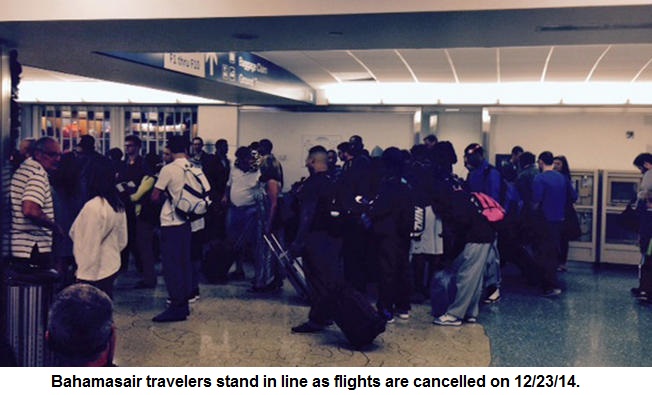
CU Blog - No Fear of Failure - Photo 1Hundreds of air travelers hoping to get to the Bahamas continue to wait for answers as their flights on Bahamasair have been cancelled.

The cancelled flights have left some passengers at South Florida airports for more than 10 hours.

All flights out of Miami International Airport and Fort Lauderdale International Airport on board Bahamasair that were scheduled for Tuesday have been cancelled. That includes two scheduled arrivals in Fort   Lauderdale, along with one departure from FLL. MIA has seen two departures cancelled along with one arrival.

Miami International Airport has one Bahamasair flight scheduled to arrive at 7:40 a.m. on Christmas Eve that is still on the board as of 8:30 p.m.

NBC 6 has reached out to Bahamasair about the cancellations, but has not received a response.

According to the website tribune242.com, the airline has seen their flights grounded due to a protest from pilots over salary negotiations. The Nassau Guardian reported that the pilots’ union denied it instructed its pilots to go on strike over the negotiations.

The airline told the Nassau Guardian, “Bahamasair is cognizant that this is the height of our peak travel period and we will do the best we can to mitigate any further disruption to your holiday travel plans.”

VIDEO: http://youtu.be/mPM0mDg4-5E  – CBS4 Miami Reporting on the Christmas-time Bahamasair Pilots Strike

This airline has an eclectic history, one bred out of the need to optimize economic engines, and yet they have failed so often in their delivery of this charter. Bahamasair was born out of the oil crisis of the 1970s. In 1970, British Airways stopped flying to The Bahamas, and the Bahamian Government accurately predicted that some of the other major airlines flying to the country would follow British Airways’ lead. Bahamasair was therefore established by the government and started operations on 7 June 1973, by acquiring the operations of Flamingo Airlines and Out Island Airways. [1]

Bahamasair initially encountered operating difficulties, including poor maintenance facilities, economic conditions and company structure. Those factors brought public distrust as a consequence. However, jet airliners started to arrive in the shape of British Aircraft Corporation BAC One-Elevens followed by brand new Boeing 737s, and in 1972, it opened its first international service, from Nassau to Tampa, Florida. In 1973, the government’s vision of many airlines leaving the island became a reality, when Pan Am and some other major companies decided to stop operating to the Bahamas. This enabled Bahamasair to capture a substantial part of the Bahamas scheduled air transport market. Through the rest of the 1970s, Bahamasair kept adding flights to other cities in Florida and, domestically, the presence of the airline also grew rapidly.

During the early 1980s, Bahamasair unsuccessfully tried to expand to the Northeast United States [so as to influence market prices for this vital tourism source territory], opening flights to Philadelphia, Washington-DC and Newark, New Jersey. But in 1989, the airline’s directors decided that those routes were not profitable and eliminated them from the airline’s route map – an exercise in futility. In 1991, the airline streamlined it fleet operations, with the acquisition of de Havilland Canada DHC-8 Dash 8 turbine propeller aircrafts, purchased to substitute for the whole jet fleet; the Boeing 737-200s were taken out of service. In 1997 however, Boeing 737-200’s were returned to service because key routes warranted the cargo and passenger carrying capabilities offered by these jetliners. The 737-200 was deployed to Fort Lauderdale, Miami and Orlando as well as one domestic route, being Nassau-Freeport. Today, Bahamasair operates efficient late model Boeing 737-500 jetliners, in addition to the stretched Dash 8 series 300 turboprop. But, the culture of dysfunction persists…

This foregoing news article, VIDEO and encyclopedic details are just echoes of the negative community ethos of failure with this airline for this country. While most Bahamians may not know the intricate details of the airline industry, they do know that the Bahamasair’s model is the epitome of failure, as the performance history has been consistently poor. This sad culture has resulted in the local community concocting phrases like:

1. BahamaScare
2. A religious airline: only God knows when they are arriving and only God knows when they are taking off.

This negative community ethos is even enshrined in the regulatory filing for the airline as an international carrier. Appendix B highlights the accepted quality standard in aviation known as the Warsaw Convention. Appendix C on the other hand, demonstrates how Bahamasair, and other Caribbean carriers, have petitioned for waivers so as not to abide by these high standards. Imagine the impressions and messaging this plea relates to the world:

No, hold us to a lower standard.
We are not afraid to fail.
We will not try to satisfy our customers.

This message aligns with the news report above. The Pilot Union in this case gained a bargaining edge in salary negotiations with the airline’s management, but at the expense of any goodwill with the flying public… or the affected tourist industry “partners” in the island-nation’s homeland.

This is sad … and embarrassing!

Change must come to the airline industry for the Bahamas … and the entire region. The book Go Lean … Caribbean serves as a roadmap for the introduction and implementation of the Caribbean Union Trade Federation (CU), an alliance of the 30 Caribbean member-states. This Go Lean roadmap has 3 prime directives:

  • Optimization of the economic engines in order to grow the regional economy to $800 Billion and create 2.2 million new jobs.
  • Establishment of a security apparatus to protect the resultant economic engines.
  • Improve Caribbean governance to support these engines.

This Go Lean roadmap portrays the need for regional integration, administration, and promotion for Caribbean air carriers. The book posits that transportation and logistics empowers the economic engines of a community, in this case tourism. The forgoing news articles definitely assert this economic leaning. There must be efficient air carrier solutions, to service the transportation and tourism needs of the Caribbean islands with optimized deliveries and best practices.

Efficiency, optimization, best practices …
… a new standard for a national character, reputation, image, and brand!

For the region as a whole, Bahamas included, it is the expectation that air travel will continue to grow and impact Caribbean society – thus the need for more regional coordination. New models are detailed in the book in which tourism will be enhanced with features like “air lifts” and “air bridges” to partner with Caribbean events and properties.

For much of the Caribbean, air service is the only transportation option for land-based visitations (stop-overs), so this Go Lean roadmap introduces the Union Atlantic Turnpike to offer more transportation solutions (ferries, toll roads, railways, and pipelines) to better facilitate the efficient movement of people and cargo.

The roadmap also calls for regulating and promoting the Caribbean’s aviation industry. We need Bahamasair and other regional carriers to better deliver on their charters to facilitate air passengers to and within the Caribbean.

This is how the CU will optimize the region’s economic engines. This is change!

The Go Lean book presents a series of positive community ethos, in place of the negative ethos that permeates the Caribbean air transport industry; these positive ethos must first be adopted to forge the desired change. In addition, there are these specific strategies, tactics, implementations and advocacies to apply, that would contribute to better deliveries:

Introduction to Lean – Quality in Production and Delivery Page 4
Who We Are – Experts in Lean, Agile and Quality Delivery Page 8
Anecdote – Learning from the French Caribbean’s Peak Season Strike Page 17
Community Ethos – Deferred Gratification Page 21
Community Ethos – People Choose Due to Scarcity of Resources Page 21
Community Ethos – All Choice Involve Costs Page 21
Community Ethos – People Respond to Incentives Page 21
Community Ethos – Economic Systems Influence Individual Choices Page 21
Community Ethos – Consequences of Choices Lie in the Future Page 21
Community Ethos – Lean Operations Page 24
Community Ethos – Cooperatives Page 25
Community Ethos – Ways to Foster Genius – Promote Excellence Page 27
Community Ethos – Ways to Improve on the Art of Negotiations Page 32
Community Ethos – Ways to Improve Sharing Page 35
Community Ethos – Impacting the Greater Good Page 37
Strategy – Customers – Visitors Page 47
Strategy – Competitive Analysis –  Event Patrons Page 55
Strategy – Core Competence – Tourism Page 58
Anecdote – Caribbean Hotel & Tourism Assoc. focus on Air Transport Page 60
Tactical – Fostering a Technocracy Page 64
Tactical – Separation of Powers: Commerce – Tourism Promotion Page 78
Tactical – Separation of Powers: Aviation Administration & Promotion Page 84
Anecdote – “Lean” in Government – Extracting Quality from Best Practices Page 93
Implementation – Ways to Deliver Page 109
Implementation – Ways to Impact Social Media – Outreach to CU Stakeholders Page 111
Implementation – Trade Mission Objectives – Elevate Image Page 116
Planning – Ways to Improve Trade Page 128
Planning – Ways to Better Manage Image – Public Relations Page 133
Planning – Negative Lessons Learned from Egypt’s Tourism Mis-steps Page 143
Planning – Ways to Measure Quality and Progress – Six Sigma Page 147
Advocacy – Ways to Impact Labor Unions – Quality Adoptions Page 162
Advocacy – Ways to Improve Leadership – Inspire Excellence Page 171
Advocacy – Ways to Enhance Tourism Page 190
Advocacy – Ways to Impact Events Page 191
Advocacy – Ways to Market Southern California – Air Bridge Page 194
Advocacy – Ways to Impact Main Street – Tourism Spin-offs Page 201
Advocacy – Ways to Improve Transportation – Aviation Promotion Page 205

Previous Go Lean blogs also detailed the dynamics of the air transport industry in the region; see sample here:

Caribbean less competitive due to increasing aviation taxes
Lessons Learned from the American Airlines Merger
Caribbean Changes – Air Antilles Launches St. Maarten Service

What exactly can be done to immediately turn-around the delivery practices for Bahamasair, and other regional carriers? The Go Lean book provides specific details within its 370 pages, serving as a roadmap for forging change in Caribbean society. Here is a list of products/services that would have elevated the experiences of the travelling public in the foregoing news article/VIDEO:

  • Cooperative among Regional Carriers – Sharing the burden of industrial crises
  • Service Level Agreements – Guaranteeing performance of service providers and accepting liability for failures (Appendix B)
  • www.myCaribbean.gov – Social Media / Online Account Interactions – Awarding e-Credits for performance failures
  • Labor Union Escalation of Grievances – Providing recourse for the Pilots’ Petition – Mitigating the need for peak season strikes

Now is the time to lean-in to this roadmap for Caribbean change, as depicted in the book Go Lean…Caribbean. We cannot afford more news headlines like in the foregoing news article/VIDEO. Flying as a National Flag Carrier is a public trust. The Caribbean can – and must – do better.

Download the book Go Lean … Caribbean – now!

———-

Appendix A – Source Reference:

http://en.wikipedia.org/wiki/Bahamasair retrieved December 29, 2014

———————–

Appendix B – Hotwire/Industry Quality Standards: Warsaw Convention

See Photo 1 & 2 of Fare Rules/Details:

CU Blog - No Fear of Failure - Photo 4

CU Blog - No Fear of Failure - Photo 5

————————

Appendix C – Warsaw Convention Exemptions for International Carriers in the US.

See Photo 1 & 2 of Detailed List of Exempted Airlines – Highlighting Caribbean regional carriers:

CU Blog - No Fear of Failure - Photo 6

CU Blog - No Fear of Failure - Photo 7

Share this post:
, , , , ,
[Top]

Local Miami Haitian leaders protest Bahamian immigration policy

Go Lean Commentary

“Why’s everybody always pickin’ on me?” – The Coasters – Charlie Brown Song; (see Appendix A).

It would seem that Haitians all around the world can sing the chorus to this above song. The history of Haiti is frequented with hardships in their own country and they have understandingly pursued a better life abroad. However, the Haitian Diaspora have also experienced oppression, discrimination and exclusionary treatment abroad and have had to endure a “hard welcome” in most foreign countries.

The book Go Lean…Caribbean serves as a roadmap for elevating Caribbean society, for all 30 member-states, including Haiti. As such there are direct references in the book regarding Haiti’s historicity; (Pages 238 & 306).

In addition to history, Haiti also has a different geography compared to most Caribbean nations. They share the same island with the Dominican Republic. The oppression, discrimination and exclusionary treatment of Haitians started on that island. Over the years, the governmental administrations of the Dominican Republic have favored “white” immigrant refugees over other races; Dominican troops often forcibly expelled illegal Haitians. Most notably, the 1937 Parsley Massacre of Haitian immigrants, a government-sponsored genocide in October 1937, at the direct order of then President Rafael Trujillo. He ordered the execution of the Haitian population living in the borderlands. The violence resulted in the killing of 20,000 ethnic Haitian civilians during approximately five days. (See Appendix B for additional historic references and inferences).

The US and other countries in the Caribbean neighborhood have also been harsh in their treatment of Haitian refugees. Consider this story of a conflict with the Bahamas, and the protests from the Haitian Diaspora in Miami:

1. News Article Title: Local Miami Haitian leaders protest Bahamian immigration policy
http://www.wsvn.com/story/27344225/local-haitian-leaders-protest-bahamian-immigration-policy – Posted: November 10, 2014

Miami Haitian Protesters 1

MIAMI (WSVN) — Local leaders are stepping up to stop a deportation dilemma regarding an immigration policy.

The policy forces families of Haitian descent out of the Bahamas.

Florida State Representative Daphne Campbell spoke out on the issue at a press conference in Little Haiti Monday morning. “I’m asking all, all cruises and all tourists, to make sure every industry boycotts the Bahamas to end discrimination against Haitian children,” Campbell stated. “Boycott Bahamas! Boycott Bahamas! Boycott Bahamas!”

Activists are now asking for the public’s support in helping to protect the future of Haitian families.
————

Video: WSVN Newscast – http://www.wsvn.com/story/27344225/local-haitian-leaders-protest-bahamian-immigration-policy?autoStart=true&topVideoCatNo=default&clipId=10832494

Though the leader of the accusing team has her detractors/problems, (South Florida state Rep. Daphne Campbell faces IRS investigation and she is already facing a Florida Medicaid fraud probe), the subject of her accusation may still have merit. What are the facts of the case regarding Haitian children in the Bahamas?

The Bahamas does not automatically grant citizenship to people born of foreign parentage in its homeland. There are special provisos even if one parent is a Bahamian citizen; many details of which are gender-biased. (There were attempts to correct these provisos in Parliament this past year, but this legislative reform was stalled).

This citizenship criteria is not standard … compared to the US, Canada, and most western European countries. Ironic as these countries are also the source of most tourists visiting the Bahamas, the #1 economic driver for the country. So any traction in this Boycott Bahamas campaign can potentially have a negative impact – remember “Boycott Apartheid in South Africa”.

What’s worse, the Universal Declaration of Human Rights or UDHR (as related in Go Lean book Page 220) have specific prohibitions against national governments enforcing laws that effectuate discrimination against minority groups.

(The UDHR was adopted by the United Nations General Assembly in 1948, partly in response to the atrocities of World War II, composed by a committee led by former American First Lady Eleanor Roosevelt. Although the UDHR was a non-binding resolution, it is now considered by some to have acquired the force of international customary law which may be invoked in appropriate circumstances by national and other judiciaries. The UDHR urges member nations to promote a number of human, civil, economic and social rights, asserting these rights as part of the “foundation of freedom, justice and peace in the world”).

This means you Bahamas! Are you ready to receive the onslaught of darts from the international community? Economic sanctions, formal or informal, are debilitating!

This is not just a Haitian -versus- Bahamian issue. The same immigration-border-encroaching issues are trending with the US, Dominican Republic and Puerto Rico. This following news article relates this controversy:

2. Title: Haitian Illegal Immigration Through Puerto Rico Is Skyrocketing Too  – http://news.yahoo.com/haitian-illegal-immigration-puerto-rico-skyrocketing-too-021611125.html;_ylt=AwrBJR6DB9dTyzoAHyzQtDMD – Posted: July 26, 2014

Haitians to PRWhile U.S. immigration agencies grapple with a recent surge of tens of thousands of illegal immigrants at the Mexican border, the number of Haitians trying to enter the U.S. illegally through Puerto Rico has skyrocketed as well.

In 2011, only 12 Haitians made the trek through the Dominican Republic to Puerto Rico, a U.S. territory in the Caribbean Sea. That number had ballooned to 1,760 as of last year, according to U.S. Coast Guard statistics, CBS News reports.

“That’s new, and that’s something we’re trying to target,” Capt. Mark Fedor, the Coast Guard’s chief of response for the Southeast and Caribbean, told CBS.

“Organized smugglers in the Dominican Republic are advertising their services to Haitians and saying, ‘We’ll smuggle you through the Dominican Republic, put you on a boat to Puerto Rico or to one of the islands in the Mona Pass – a much shorter journey and we can get you to the United States that way.’ And I think people are responding to that,” he said.

The Dominican smugglers often drop their Haitian charges off at Mona Island, an uninhabited Puerto Rican island 40 miles off of the Dominican coast in the Mona Pass.

“As soon as you’re in Puerto Rico, it’s like you’re in the United States,” Lolo Sterne, coordinator for Haiti’s Office of Migration, told the Associated Press last year.

Once in Puerto Rico, the illegal Haitian immigrants are able to fly to destinations in the U.S. without having to show a passport. All they need is a driver’s license, according to the Associated Press.

The new route through the Mona Pass is seen as more desirable as the U.S. Coast Guard has increased patrols of normal routes taken by immigrants from Haiti and the Dominican Republic. As the AP points out, it has become more difficult to travel directly to the U.S. mainland or through Miami, which has historically served as the choice destination for illegal immigrants from the Caribbean.

Haiti and its 9+ million residents need change. In fact, all of the Caribbean’s 42 million people need change/empowerment.

The purpose of the Go Lean roadmap is to turn-around the downward trends in the Caribbean today, to reverse course and elevate society in the Caribbean as a whole and Haiti in particular. The CU, applying best-practices for community empowerment has these 3 prime directives, pronounced as follows:

  • Optimization of the economic engines in order to grow the regional economy to $800 Billion & create 2.2 million new jobs.
  • Establishment of a security apparatus to protect the resultant economic engines.
  • Improve Caribbean governance, with consideration for minority equalization, to support these engines.

How exactly can the CU impact Haiti to reboot that failing state? The answer can be found in the history of post-war Europe, where the Marshall Plan was instrumental in rebooting that continent. The book Go Lean…Caribbean details a Marshall Plan-like roadmap for Haiti, and all other failing Caribbean institutions.

The related subjects of economic, security and governing dysfunction among European and Caribbean member-states have been a frequent topic for blogging by the Go Lean promoters, as sampled here:

https://goleancaribbean.com/blog/?p=2809 A Lesson in History: Economics of East Berlin
https://goleancaribbean.com/blog/?p=2480 A Lesson in History: Community Ethos of WW II
https://goleancaribbean.com/blog/?p=2330 ‘Raul Castro reforms not enough’, Cuba’s bishops say
https://goleancaribbean.com/blog/?p=1531 A Lesson in History: 100 Years Ago Today – World War I
https://goleancaribbean.com/blog/?p=1433 Caribbean loses over 70% of tertiary educated citizens to the brain drain
https://goleancaribbean.com/blog/?p=1014 All is not well in the sunny Caribbean
https://goleancaribbean.com/blog/?p=623 Only at the precipice, do they change
https://goleancaribbean.com/blog/?p=599 Ailing Puerto Rico open to radical economic fixes
https://goleancaribbean.com/blog/?p=451 CariCom Chairman to deliver address on slavery/colonization reparations

The goal of the Go Lean roadmap is simple: to make Haiti (and by extension the rest of the Caribbean) a better place to live, work and play so that citizens would not feel compelled to risk life-and-limb to flee for foreign shores. The goal extends further in the mission to reverse course and encourage the repatriation of the Haitian/Caribbean Diaspora. To accomplish these goals, the book details a series of community ethos, strategies, tactics, implementations and advocacies to empower all the factions of Haitian life in the Caribbean region and in the Diaspora:

Community Ethos – Economic Systems Influence Choices & Incentives Page 21
Community Ethos – Consequences of Choices Lie in the Future Page 21
Community Ethos – Anti-Bullying and Mitigation Page 23
Community Ethos – Minority Equalization Page 24
Community Ethos – Ways to Impact the Future Page 26
Community Ethos – Ways to Manage Reconciliations Page 34
Community Ethos – Ways to Impact the Greater Good Page 37
Strategy – Vision –  Integrate region into a Single Market Economy Page 45
Strategy – Agents of Change – Globalization Page 57
Tactical – Separation of Powers – Department of Homeland Security Page 75
Implementation – Ways to Foster International Aid Page 115
Planning – 10 Big Ideas … for the Caribbean Region – Haiti & Cuba Page 127
Planning – Ways to Ways to Model the EU Page 130
Planning – Reasons Why the CU Will Succeed – Germany Reconciliation Model Page 132
Planning – Ways to Improve Failed-State Indices – Haiti – first on the region list Page 134
Planning – Lessons from East Germany – European post-war rebuilding Page 139
Planning – Lessons from Canada’s History Page 146
Advocacy – Ways to Grow the Economy Page 151
Advocacy – Ways to Create Jobs Page 152
Advocacy – Ways to Foster Empowering Immigration Page 174
Advocacy – Ways to Impact Justice Page 178
Advocacy – Ways to Enhance Tourism Page 187
Advocacy – Ways to Impact the Diaspora – Haitians in Miami Page 217
Advocacy – Ways to Protect Human Rights Page 220
Advocacy – Ways to Help Women Page 226
Advocacy – Ways to Impact Youth Page 227
Advocacy – Ways to Impact the Dominican Republic Page 237
Advocacy – Ways to Re-boot Haiti Page 238
Advocacy – Ways to Impact US Territories Page 244
Appendix – Dominican Republic – Rafael Trujillo Regime Page 306

The conclusion of the Go Lean book relates the experiences and motivations of the US Supreme Court for the 1954 landmark decision Brown versus Board of Education. The unanimous wisdom of the 9 Justices on the Court should not be ignored, it was strewn from the experiences of modern society waging two world wars; they saw the rampage, devastation of 60 million deaths around the world and appreciated the wisdom that a downtrodden people would not stay down, that they would rise and revolt, that they would risk their lives and that of their children to pursue freedom.

How impactful is the Haitian Diaspora in the Bahamas? With a total national population of 320,000 and one estimate (July 2013) of 50,000 Haitian and/or Haitian-Bahamians, there is an imminent wave of dissent for the Bahamas to contend with. Don’t wait Bahamas, deal with your domestic issues now! Learn from the experiences of your neighbors, as depicted in the Go Lean book:

US: Lessons from the US Constitution (Page 145)
Canada: Reconciliation with First Nations (Page 146)
Guyana: Indo-Guyanese versus Afro-Guyanese (Page 174)
Trinidad: Indo-Trinidadians versus Afro-Trinidadians (Page 240)

Now is the time for all of the Caribbean to learn the lessons from [economic] history of other successful (US & Canada) and unsuccessful societies. The Go Lean book posits that the Caribbean is in a serious crisis, but asserts that this crisis would be a terrible thing to waste. The people and governing institutions of the Bahamas, Haiti and the region as a whole are hereby urged to lean-in for the empowerments described in the book Go Lean … Caribbean. This is a big deal for the region, we can all strive to make our Caribbean homeland a better place to live, work, and play.

Download the free e-book of Go Lean … Caribbean – now!

———–

Appendix A – The song: Charlie Brown by The Coasters – http://youtu.be/_UnPzp2lmNk

———–

Appendix B – Homework for additional credit: better understand the history of Haiti and its consequential impact on the world.

Video Title: Black In Latin America (Episode 1): Haiti and The Dominican Republic- The Roots of Division

This scholarly work was produced and narrated by noted Professor Henry Louis Gates. This was part of a series developed for the Public Broadcasting System (PBS) , a network of public TV stations in the US. The other features in the series, include:

Black In Latin America (Episode 2): Cuba: The Next Revolution
Black In Latin America (Episode 3): Brazil: A Racial Paradise?
Black In Latin America (Episode 4): Mexico & Peru: The Black Grandma in the Closet


Share this post:
, , , ,
[Top]

Caribbean Study: 58% Of Boys Agree to Female ‘Discipline’

Go Lean Commentary

The issue in the subsequent news article relates to the guidance we give our young people. The words we say and the things we do have an impact on their standards of right and wrong. The research in this article relates to the attitudes that lead to domestic violence, and why the rest of the community may standby and tolerate it.

This point is being brought into focus in a consideration of the book Go Lean … Caribbean. The book serves as a roadmap for the introduction and implementation of the technocratic Caribbean Union Trade Federation (CU), for the economic optimization in the region.

The focus of the book is “Economics“, not domestic violence! And yet this commentary relates that there is an alignment of objectives. The Go Lean roadmap posits that the economy of the Caribbean is inextricably linked to the security (public safety) of the Caribbean.

Among the objectives to accomplish the economic elevation is the mission to retain Caribbean citizens in their homelands and repatriate the far-flung Diaspora back to the region.

Many times people flee the region to mitigate abusive situations; even more troubling, as victims they may have encountered an attitude of complacency and indifference among public safety authorities. The following article posits that this attitude is deeply entrenched in society, even among the next (younger) generation.

Title: COB Study: 58% Of Boys Believe Men Should Discipline Their Female Partners
By: Rashad Rolle, Staff Reporter
The Tribune – Bahamas Daily Newspaper – October 21, 2014

Caribbean Study 1

FIFTY-eight per cent of high school boys and 37 per cent of high school girls participating in a recent academic survey believe men should discipline their female partners, according to a new College of the Bahamas study.

The study also found that 49 per cent of boys believe women should ask permission from their male partners if they wanted to go out while 17 per cent of girls supported this view.

Of the students surveyed, 46 per cent of boys believed wives must have sex when her husband wants to, compared to 16 per cent of girls. This, according to researchers, has possible implications on debates on marital rape.

According to the study, most of the teens from both sexes believed men should be the head of their households and that both husbands and wives should submit to one another and remain committed, reflecting the country’s religious values.

The research was conducted by members of the Bahamas Crisis Centre (BCC) and COB’s academic community. Its findings appear in the latest edition of the International Journal of Bahamian Studies. The study investigated teen perspectives on relationships between the sexes and the prevalence of violence within teen relationships.

It concluded that efforts must be made to ensure adolescents adjust their behaviour before becoming adults in order to push back against a culture of violence.

It also concluded that girls are more likely than boys to use aggressive behaviour in teen relationships, such as restricting access to friends of the opposite sex.

Based on the gathered data, the study concludes that “there is a clear need for children to be taught how to respect one another from an early age.”

One thousand students from grade 10 to 12 from eight schools, including one private school, participated in the study.

According to the study, “over 80 per cent of respondents had been on a date and so had a relationship of some sort with the opposite sex,” a figure noted as higher than the 61 per cent reported in a similar study of teens in the United   States.

The study is titled Attitudes of High School Students Regarding Intimate Relationships and Gender Norms in New Providence, The Bahamas.

“The responses show that on a number of issues regarding relationships, boys and girls have different attitudes and behaviours,” the researchers wrote. “It can also be seen that large numbers of teens can be expected to be victims of controlling behaviours. The use of threats and physical force may be learnt behaviours due to the presence of violence in homes in The Bahamas.”

“Overall, it is apparent that the breakdown in adult relationships, which is considered to play an important role in the violence observed in Bahamian society, may be the consequence of adolescents not adjusting their teen behaviours when they become adults. Therefore, modifying the attitudes of children with regard to interpersonal relationships may be important in reducing long-term violence in the country. Boys and girls had different attitudes on many aspects of relationships with current or future partners, but their endorsement of stereotypes of sex-related roles and their participation in certain behaviours could be a cause for concern. Underpinning these attitudes may be issues associated with what it means to be a woman or a man in The Bahamas, and related gender norms.” http://www.tribune242.com/news/2014/oct/21/cob-study-58-boys-believe-men-should-discipline-th/
———–
The actual Research Report: ‘Attitudes of High School Students Regarding Intimate Relationships and Gender Norms in New Providence, The Bahamas’ can be found here:
http://journals.sfu.ca/cob/index.php/files/article/view/225

This CU/Go Lean roadmap has 3 prime directives:

  • Optimization of the economic engines in order to grow the regional economy and create 2.2 million new jobs.
  • Establishment of a security apparatus to protect the resultant economic engines and their relevant stakeholders.
  • Improve Caribbean governance, with a separation-of-powers between member-state administrations and the CU federal government (Executive facilitations, Legislative oversight and Judicial prudence) to support these economic/security engines.

While the subject of the Caribbean adolescent culture of violence falls on the member-state side of the separation-of-power / governance divide, the CU will entail a jurisdiction of monitoring and metering (ratings, rankings, service levels, etc) local governance and their delivery of the Social Contract.

Change has now come to the Caribbean. As the foregoing article depicts the problem of domestic violence is tied to a community ethos. This ‘negative’ ethos must be uprooted and replaced with a new, progressive spirit, starting at the adolescent level, when attitudes are pliable and sensitive to strategic messaging; see VIDEO below.

Many related issues/points were elaborated in previous blogs, sampled here:

Students developing nail polish to detect date rape drugs
Book Review: ‘Chasing Youth Culture and Getting It Right’
Muslim officials condemn abductions of Nigerian girls
Caribbean/Latin countries still view women as ‘lesser
Jamaica to receive World Bank funds to help in crime fight

The above commentaries examined global developments and related their synchronicity with the principles in the Go Lean book. There are a number of touch points that relate to domestic violence and the community attitude to dissuade such behavior. Most importantly, the Go Lean book depicts solutions. These are presented as community ethos, strategies, tactics, implementations and advocates; a sample is detailed as follows:

Community Ethos – Privacy –vs- Public Protection Page 23
Community Ethos – Whistleblower Protection Page 23
Community Ethos – Witness Security Page 23
Community Ethos – Anti Bullying & Mitigations Page 23
Community Ethos – Light Up the Dark Places Page 23
Community Ethos – Ways to Manage Reconciliations Page 34
Community Ethos – Ways to Impact the Greater Good Page 37
Strategy – Rule of Law –vs- Vigilantism Page 49
Tactical – Separation of Powers – CariPol Page 77
Implementation – Reasons to Repatriate Page 118
Planning – Ways to Improve Failed-State Indices – Law Enforcement Oversight Page 134
Advocacy – Ways to Better Manage the Social Contract Page 170
Advocacy – Ways to Impact Justice – Police Internal Affairs Auditing Page 177
Advocacy – Ways to Remediate and Mitigate Crime – Youth Crime Awareness Page 178
Advocacy – Ways to Improve Gun Control – Suspend Gun Rights during Domestic Discord Page 179
Advocacy – Ways to Improve Intelligence Gathering – Electronic Surveillance of Suspects Page 182
Advocacy – Ways to Improve Communications – Public Messaging Page 186
Advocacy – Ways to Impact the Prison Industrial Complex – Reduce Recidivism Page 211
Advocacy – Ways to Impact Foundations – Crisis Centers and Support Groups Page 219
Advocacy – Ways to Protect Human Rights – Women & Youth Focus Page 220
Advocacy – Ways to Empower Women Page 226
Advocacy – Ways to Impact Youth Page 227
Advocacy – Ways to Impact Persons with Disabilities Page 228
Appendix – Failed-State Definitions – Index for Human Rights Uneven Protection Page 273

The book Go Lean…Caribbean was written by resources from an organized movement, by people (residents and Diaspora) with passion to change/elevate their Caribbean homeland. This is personal! One of those people devoted to this Go Lean goal, Camille Russell-Smith, is a co-author of the underlying research in the foregoing news article. This research is a product of her collaboration with the Bahamas Crisis Centre (Donna Nicolls) and her role at the College of the Bahamas as a Counselor, Instructor and Workshop Facilitator for incoming freshmen students entitled “Violence in Interpersonal Relationships”.

Good job Donna Nicolls, Camille Russell-Smith and your research team; thank you for your service. Congratulations on this timely research effort.

The goal is to make the Caribbean a better place to live work and play; with justice for all, regardless of gender. This is the right thing to do! But this is not easy. This takes heavy-lifting on the part of everyone: the educators, public safety officials, community leaders and parents. The message must be strong and clear:

No More!

No More‘ is the theme of a campaign in the US to minimize the public attitudes that tolerate domestic violence. This is a great role model for the Caribbean to emulate. See the VIDEO here of the Public Service Announcement (PSA)/TV Commercial:

Video Title -‘ No More‘ PSA Campaign – https://www.youtube.com/watch?v=j70ha1PUlqk:

Download the book Go Lean … Caribbean – now!

Share this post:
, , , , ,
[Top]

Corporate Tax Dodging – Transfer Policing

Go Lean Commentary

Bermuda, Bahama … come on pretty mama” – List of fun-spots from the lyrics of the song “Kokomo” by the Beach Boys. (See Appendix & VIDEO below).

“Bermuda, Luxembourg and Ireland” – List of countries from the foregoing article that facilitate tax dodging and evading schemes by corporations in Big Economy countries.

Somehow this just seems wrong!

It seems even worst to be on this latter list.

This is not the Caribbean that we want to bequeath to our children. (According to previous blog commentaries, the children have also voted to divorce themselves of their Caribbean heritage).

The following article depicts the great lengths that “tax dodgers” go through to avoid their social responsibilities…and then use the Caribbean as “partners in crime”.

Subtitle: Big Economies take aim at the firms running circles around their taxmen

POLITICIANS in the rich world like to splutter about the ever more elaborate dodges that big multinational firms undertake to minimise their tax bills. But doing something about them is trickier. America’s Congress is struggling to agree on ways to stop companies “inverting”—switching domicile to reduce tax bills (see article). The European Union is locked in a protracted debate about whether the favourable treatment that some of its members give to particular forms of corporate revenue are tantamount to illegal subsidies. So the news that the world’s biggest economies have agreed on a plan to limit “base erosion and profit shifting” in corporate tax is something of a watershed.

It has become the norm for multinationals to park themselves or large chunks of their assets—especially intangible ones, such as rights to royalties—in low- or no-tax places such as Bermuda, Luxembourg and Ireland. The wiliest, including Apple, have even discovered ways to re-route funds so as to render income stateless. These transactions are generally legal, or at least exploit grey areas in the tax codes of the countries concerned. But they appear unfair to many in these fiscally strained times, not least because they are beyond the reach of small, domestic firms.

CU Blog - Corporate Tax Dodging - Transfer policing - Photo 1It is only natural that companies take advantage of the gaps. They plough huge resources into doing so, viewing cutting-edge tax arbitrage as a competitive advantage. One study estimated that the resulting tax avoidance could amount to a quarter of total corporate profit-tax receipts in rich countries, and more in poor ones. In truth, the extent of the fleecing is unclear. Corporate tax receipts as a share of GDP, although volatile, do not appear to have declined markedly in the past decade. As a share of profits, however, they have fallen steeply (see chart), though that is partly due to declining rates.

In 2012 the G20, a club of the world’s biggest economies, called on the OECD*, a similar grouping which has long overseen international tax standards, to seek consensus on ways to close the loopholes. Its members have agreed on one set of proposals, released this week, and are working on another. The G20 will formally approve the OECD’s plan at a summit in Australia on September 20th. All told, 44 countries accounting for 90% of the world economy are on board.

The proposals aim to reduce the discrepancy, for many firms, between where they do most of their business and where they pay most of their taxes. One target is “transfer pricing”, the rates that subsidiaries of a single firm charge each other for goods and services. By setting these high, firms can spirit profits out of the countries where they do most of their business to tax havens where they locate their intangibles. The proposals would also clamp down on “treaty shopping”, arrangements through which firms obtain benefits from a tax treaty despite not being resident in either country that is party to it.

Another measure attempts to end the absurd practice of “hybrid mismatches”, whereby companies claim double deductions by classifying financial instruments as debt in some countries and equity in others. In a genuine coup, all members will share basic information about multinationals (such as assets, sales, profits and employees), giving authorities a better chance of spotting tax dodging.

In some areas, consensus could not be reached or is slow to emerge. There was, for instance, no agreement on restricting the use of “patent boxes”, favourable tax regimes for patented inventions and other innovations. In a win for America, the countries agreed not to treat e-commerce as a distinct sector, subject to special “Google taxes”, although they did undertake to study the digital economy’s impact on taxes further. The second set of proposals, expected late next year, is unlikely to include anything much more concrete on this. It will, however, tackle a number of other thorny issues, such as the rampant use of intra-group loans to “strip” earnings out of higher-tax countries.

The chief complaint against the OECD’s approach is that it eschews more radical reforms, such as divvying up taxing rights among countries according to the proportion of a firm’s sales or staff located there. Sol Picciotto of Lancaster University and the Tax Justice Network, an NGO, calls the reforms “a patch-up job” that maintains the “fiction” that subsidiaries charge each other market prices and does little for the poor African countries that are among the main victims of profit-shifting. Jeffrey Owens, a former head of the OECD’s tax division, applauds his former employer’s work but thinks policymakers could struggle to keep up as location becomes an ever-fuzzier concept in business.

Moreover, much of what has been agreed requires the amending of laws and treaties. The risk is that countries implement only the bits that suit them. It remains to be seen how Britain, for instance, will square its official support for the project with its desire to be the most tax-competitive nation in the G20. It offers an alluring patent box and generous treatment of interest and has enthusiastically cut its corporate tax rate, to 20%. America often drops multilateral initiatives in favour of its own preferences.

Small wonder, then, that only 23% of the 3,000 firms surveyed recently by Grant Thornton, an accountancy, expect the proposals to win global approval. And even if they do, the next step is even harder: making sure the multinationals’ supremely inventive lawyers and accountants do not find a way around them.
The Economist Magazine (Posted 09-20-2014) –
http://www.economist.com/news/finance-and-economics/21618911-big-economies-take-aim-firms-running-circles-around-their-taxmen-transfer?fsrc=nlw|hig|18-09-2014|53552127899249e1cc9ea210|NA

*OECD = Organization of Economic Cooperation & Development

The book Go Lean…Caribbean asserts that governments need to collect their taxes, plain and simple. The Social Contract with their citizens requires that they collect revenues so as to render services on behalf of their people. The less tax revenues, the less services that can be rendered. When this trending continues, the destination takes on a “failed-state status”. Unfortunately, the Caribbean region is far too familiar with this “failed-state status”. So  cooperating with foreign companies looking to continue tax dodging practices would be counter-productive – a negative community ethos that we would want to avoid.

The Go Lean book purports that the Caribbean can – and must – do better.

This book, Go Lean… Caribbean, serves as a roadmap for the introduction and implementation of the technocratic Caribbean Union Trade Federation (CU), which represents change for the region. The CU/Go Lean roadmap has 3 prime directives:

  • Optimization of the economic engines in order to grow the regional economy.
  • Establishment of a security apparatus to protect the resultant economic engines against “bad actors”.
  • Improve Caribbean governance to support these engines.

The Go Lean roadmap provides turn-by-turn directions on how to forge a change in the region’s community ethos to encourage honest/moral business practices and a level-playing field.  There is this established business axiom: “there are two certainties: Death and Taxes”. This roadmap thusly views the moral obligation to facilitate government tax deliverables, pronouncing this point early in the Declaration of Interdependence (Page 12) with these statements:

xiv.      Whereas government services cannot be delivered without the appropriate funding mechanisms, “new guards” must be incorporated to assess, accrue, calculate and collect revenues, fees and other income sources for the Federation and member-states. The Federation can spur government revenues directly through cross-border services and indirectly by fostering industries and economic activities not possible without this Union.

The Caribbean have for far too long looked for opportunities on the grey-side of international laws. The foregoing article relates the business historicity of booking Intellectual Property rights royalties and other intangible assets in off-shore locales:

“These transactions are generally legal, or at least exploit grey areas in the tax codes of the countries concerned. But they appear unfair …”

Rather than being complicit in these “grey” activities, indicative of a “parasite” mentality, this roadmap now projects that it is past the time to “straighten up and fly right”. The Go Lean book, and accompanying blog commentaries, go even deeper in describing a “parasite” status that proliferates the Caribbean disposition.

Change has now come to the Caribbean. Rather than a “parasite” ethos, the Go Lean movement calls for a protégé ethos. This shift is now in progress. The Go Lean book (Pages 199, 321 – 326) describes the reform developments in the Offshore Tax & Financial Services industries, in moving the industries from Black List to White List status.

There are many Go Lean blog commentaries that have echoed this point, addressing the change for the Caribbean to shift from “parasite” to protégé:

https://goleancaribbean.com/blog/?p=2207 Hotels Parasite Policies are making billions from added fees
https://goleancaribbean.com/blog/?p=1984 Casinos Failing Business Model
https://goleancaribbean.com/blog/?p=1869 Senate Bill targets cowardly companies that move overseas
https://goleancaribbean.com/blog/?p=623 Only at the precipice, do they change
https://goleancaribbean.com/blog/?p=451 CARICOM Chairman to deliver address on reparations – Parasitical
https://goleancaribbean.com/blog/?p=273 10 Things We Want from the US – Free Market

Change is coming throughout the world, a by-product of globalization. It will not be tolerated for one country to exploit tax loopholes in other countries. This intolerance for “parasites” is not just among the publishers of Go Lean. While this movement anticipates change and then prepares the Caribbean for it, there is an international parallel effort. The G20, a club of the world’s biggest economies, has called on the OECD to oversee international tax standards, to seek consensus on ways to close the tax loopholes. The foregoing article relates that its members have agreed on one set of proposals; so far  44 countries, accounting for 90% of the world economy, are on board for the proposals.

How about for the Caribbean? It is only a matter of time for some international corporate tax reforms to take root. How will those changes affect the Offshore Financial industries and the practice of allowing companies to run circles around tax rules by using “Black List” countries?  The fact that these questions have to be considered demonstrate the need for a more “White List” community/business ethos. These questions should be moot! Never mind the answers.

Debate Over!

The Go Lean book purports that the Caribbean can – and must – do better. The roadmap for the CU is a confederation of the 30 member-states of the Caribbean to do the heavy-lifting of optimizing economic-security-governing engines. The Go Lean book details the community ethos to adopt, plus the executions of the following strategies, tactics, implementations and advocacies to change Caribbean society:

Community Ethos – Deferred Gratification Page 21
Community Ethos – Consequences of Choices Lie in the Future Page 21
Community Ethos – Whistleblower Protection Page 23
Community Ethos – Intelligence Gathering Page 23
Community Ethos – Lean Operations Page 24
Community Ethos – Ways to Help Entrepreneurship Page 28
Community Ethos – Ways to Promote Intellectual Property Page 29
Community Ethos – Ways to Impact Research & Development Page 30
Community Ethos – Ways to Impact the Greater Good Page 37
Strategy – Agents of Change – Technology Page 57
Strategy – Agents of Change – Globalization Page 57
Tactical – How to Grow to a $800 Economy – Trade and Globalization Page 70
Tactical – Separation of Powers – Securities Exchange Regulatory Agency Page 74
Tactical – Separation of Powers – Trade Anti-Trust Regulatory Commission Page 77
Tactical – Separation of Powers – Patent, Standards, and Copyrights Office Page 78
Implementation – Trade Mission Offices Objectives Page 117
Implementation – Ways to Benefit from Globalization Page 119
Planning – Ways to Improve Trade Page 128
Planning – Ways to Make the Caribbean Better Page 131
Advocacy – Ways to Grow the Economy Page 151
Advocacy – Ways to Create Jobs Page 152
Advocacy – Ways to Improve Governance Page 169
Advocacy – Ways to Better Manage the Social Contract Page 171
Advocacy – Ways to Impact Justice Page 177
Advocacy – Ways to Improve Intelligence Gathering & Analysis Page 182
Advocacy – Reforms for Banking Regulations Page 199
Advocacy – Ways to Impact Wall Street Page 200
Advocacy – Ways to Impact Main Street Page 201
Advocacy – Ways to Impact the One Percent Page 224
Advocacy – Ways to Impact … – Bottom Line on the OECD Page 240
Appendix – Offshore Tax & Financial Services Industry Developments Page 321
Appendix – Offshore Tax & Financial Services Industry – Bahamas Example Page 322

The book Go Lean…Caribbean posits that many problems of the region are too big for any one member-state to solve alone, that there is the need for the technocracy of the Caribbean Union Trade Federation. The purpose of this Go Lean/CU roadmap is to make the Caribbean homeland, a better place to live, work and play. We want to be on the list of fun places to PLAY, as conveyed by the below Beach Boys song, not on the list of the “grey”/shady places to WORK.

We do want to be on the consciousness of the rest of the world. We want them envious of our lifestyle and desirous to sample this imagery:

That’s where you wanna go
to get away from it all
Bodies in the sand,
tropical drink melting in your hand
We’ll be falling in love
to the rhythm of a steel drum band

Now is the time for all of the Caribbean, the people and governing institutions, to lean-in for the changes described in the book Go Lean … Caribbean.

Download the e-Book of Go Lean … Caribbean – free … now!

———————————–

Appendix – Song Lyrics for “Kokomo” by the Beach Boys

Aruba, Jamaica, ooh I wanna take ya
Bermuda, Bahama, come on pretty mama
Key Largo, Montego,
baby why don’t we go,
Jamaica

Off the Florida Keys
there’s a place called Kokomo
That’s where you wanna go
to get away from it all
Bodies in the sand,
tropical drink melting in your hand
We’ll be falling in love
to the rhythm of a steel drum band
Down in Kokomo

[Chorus:]
Aruba, Jamaica, ooh I wanna take you to
Bermuda, Bahama, come on pretty mama
Key Largo Montego,
baby why don’t we go
Ooh I wanna take you down to Kokomo,
we’ll get there fast
and then we’ll take it slow
That’s where we wanna go,
way down in Kokomo.

Martinique, that Monserrat mystique…

We’ll put out to sea
and we’ll perfect our chemistry
By and by we’ll defy
a little bit of gravity
Afternoon delight,
cocktails and moonlit nights
That dreamy look in your eye,
give me a tropical contact high
Way down in Kokomo

[Chorus]

Port au Prince, I wanna catch a glimpse…

Everybody knows a little place like Kokomo Now if you wanna go to get away from it all
Go down to Kokomo

[Chorus]

—————

YouTube Video: https://www.youtube.com/embed/_wHiliL4He4


Share this post:
, , , , , ,
[Top]

COB Master Plan 2025 – Reach for the Lamp-Post

Go Lean Commentary

“Keep your feet on the ground and keep reaching for the stars” – Casey Kasem (1932 – 2014).

The world lost another icon of Rock-n-Roll last week with news of the passing of renowned DJ and Media Host Casey Kasem. He was well known for his closing salutation quoted above.

“Reaching for the stars” should be more than a radio catch phrase; it should be a community ethos. This is noticeably missing in the 2025 Master Plan for the University of the Bahamas. They appear to be striving for the cutting edge of 1985; they are not reaching for the stars, they are reaching for the lamp-post.

Title: College of The Bahamas Master Plan 2014-2024
The College’s plan to accommodate growth in programs and to improve campus life through the creation of a more beautiful and cohesive campus.

“Twenty-five percent growth in student enrollment is what the Master Plan for the University of the Bahamas seeks to accommodate”. Visit the link… to view this newly produced infomercial on the blueprint for the physical growth that will undergird the impending University.
Vimeo – Video Sharing Site (Retrieved 06/23/2014) – http://vimeo.com/98270213

College of The Bahamas Master Plan 2014-2024 from The College of The Bahamas on Vimeo.

Make no mistake; it is a good thing that the College of the Bahamas (COB) is graduating to the University of the Bahamas (in 2015). It is also incontrovertible that COB is inadequate in meeting tertiary education needs of Bahamians, not to think of the rest of the world. Don’t agree? Consider how many Bahamian students matriculate abroad; now consider how many foreign students matriculate at COB.

Debate over!

This is more than just an academic discussion, as the subject of Caribbean students abandoning their homeland for foreign shores is a motivator for the book Go Lean…Caribbean. The book serves as a roadmap for the introduction and implementation of the technocratic Caribbean Union Trade Federation (CU). This effort mitigates published reports that the Caribbean loses over 70% of tertiary educated citizens due to brain drain; (https://goleancaribbean.com/blog/?p=1433).

COB PhotoSo as the sole tertiary education institution in the Bahamas, it would be expected that a Master Plan would “dream a little dream” and strive to counter the negative realities of students matriculating abroad. Instead COB delivered a plan that only inches forward – only reaching for the lamp-post. The inadequacy in the Master Plan highlights the need for the Go Lean roadmap for elevating Caribbean society. The CU, using cutting edge delivery of best practices, will employ strategies, tactics and implementations to impact its prime directives; identified with the following 3 statements:

  • Optimization of the economic engines in order to grow the regional economy to $800 Billion & create 2.2 million new jobs.
  • Establishment of a security apparatus to protect the resultant economic engines.
  • Improvement of Caribbean governance to support these engines.

The Go Lean book posits that the Caribbean is in crisis, with the debilitating brain drain/societal abandonment rate, but that this crisis can be a useful because a “crisis is a terrible thing to waste”. Therefore the roadmap seeks to change the entire eco-system of Caribbean education and learning solutions. This vision is defined early in the book (Page 13 & 14) in the following pronouncements in the Declaration of Interdependence:

xix.   Whereas our legacy in recent times is one of societal abandonment, it is imperative that incentives and encouragement be put in place to first dissuade the human flight, and then entice and welcome the return of our Diaspora back to our shores…

xxi.   Whereas the preparation of our labor force can foster opportunities and dictate economic progress for current and future generations, the Federation must ensure that educational and job training opportunities are fully optimized for all residents of all member-states, with no partiality towards any gender or ethnic group. The Federation must recognize and facilitate excellence in many different fields of endeavor, including sciences, languages, arts, music and sports. This responsibility should be executed without incurring the risks of further human flight, as has been the past history.

xxvii.   Whereas the region has endured a spectator status during the Industrial Revolution, we cannot stand on the sidelines of this new economy, the Information Revolution. Rather, the Federation must embrace all the tenets of Internet Communications Technology (ICT) to serve as an equalizing element in competition with the rest of the world. The Federation must bridge the digital divide and promote the community ethos that research/development is valuable and must be promoted and incentivized for adoption.

So what (also how/when) should be featured in a Master Plan/roadmap for effectuating change in the tertiary education landscape for the Bahamas and the rest of the Caribbean?

The answer is not as simple as A-B-C-1-2-3. The answer requires heavy-lifting, a long reach, and a consideration of the economic realities of the region. Thus the Casey Kasem axiom is so applicable:

“Keep your feet on the ground and keep reaching for the stars”.

“Reaching for the stars” would include fostering Research & Development (R&D) on our college campuses. Also, the deployment of cutting-edge technologies to avail the benefits of e-Learning would deter the trend (and necessity) of young students studying abroad; thus minimizing the temptations to remain abroad or to subsequently emigrate. This would mean staying grounded!

The Go Lean book details a lot more, a series of assessments, community ethos, strategies, tactics, implementations and advocacies to foster the elevation of college education in the Caribbean region:

Community Ethos – Economic Systems Influence Choices & Incentives Page 21
Community Ethos – People Respond to Incentives Page 21
Community Ethos – Consequences of Choices Lie in the Future Page 21
Community Ethos – Return on Investments Page 24
Community Ethos – Ways to Impact the Future Page 26
Community Ethos – Ways to Foster Genius Page 27
Community Ethos – Ways to Impact Research & Development Page 30
Community Ethos – Ways to Bridge the Digital Divide Page 31
Community Ethos – Ways to Impact the Greater Good Page 37
Anecdote – Valedictorian Now Diaspora Member Page 38
Strategy – Vision – Realistic, Achievable, Demanding, & Inspirational Goal Page 45
Strategy – Mission – Local Education to Compete with the Best in the World Page 46
Tactical – Separation of Powers – Education Department – University Admin Page 85
Tactical – Separation of Powers – Labor Department – On-the-Job Training Page 89
Implementation – Ways to Pay for Change Page 101
Implementation – Steps to Implement Campuses   as Self-Governing Entities Page 105
Implementation – Ways to Deliver Page 109
Advocacy – Ways to Grow the Economy Page 151
Advocacy – Ways to Create Jobs Page 152
Advocacy – Ways to Improve Education Page 159
Advocacy – Ways to Impact Student Loans Page 160
Advocacy – Ways to Improve Libraries Page 187
Advocacy – Ways to Foster Technology Page 197
Advocacy – Ways to Impact Youth Page 227
Appendix – Education & Economic Growth Page 258
Appendix – Measuring Education Page 266

Now is the time for all of the Caribbean, the people and governing institutions, to lean-in for the empowerments described in the book Go Lean … Caribbean. This is a big deal for the region. This book is not just a Master Plan; it is roadmap with turn-by-turn directions of how to get from Point A, where we can only hope to dream of reaching the lamp-post, to Point B, where we can finally dream about reaching the stars.

The Bahamas in particular, and the Caribbean region as a whole needs the deliveries of Go Lean … Caribbean. Otherwise, we have no hope to incite/retain our young people to work towards promoting a better future for the Caribbean, and making it a better place to live, work, learn and play.

Thank you Casey Kasem, for reminding us, (with song, great-story-telling and a heartfelt out-reach), what it means to keep our feet on the ground while continuing to reach for the stars. Rest in Peace!

Download the book Go Lean … Caribbean – now!

Share this post:
, , , , , ,
[Top]