Tag: Security

High Profile Sexual Harassment Accusers – Finally Believed? – ENCORE

3 years ago, we were commenting on why the dozens of accusers against Bill Cosby were not believed, now we see that there has been a floodgate of women successfully getting their reckoning from powerful men (in media and politics) who had “taken liberties” with them.

Good for the women! (They are being believed … more and more).

Still the same question can be posed about women accusers in general: Why were they not believed?

In summary, “celebrities should not be glorified as all good, all the time” …
… for nation-building, women must be able to seek refuge in the Criminal Justice systems in their communities.

VIDEO – Matt Lauer Fired from TODAY – https://usat.ly/2Bv3zGi

See the ENCORE of this previous blog-commentary below, from November 26, 2014 on Bill Cosby’s Accusers: Why They Weren’t Believed.

Which men are being reckoned with now? See the full alphabetical list from USA Today national newspaper – to date as of December 4, 2017 – here:

Ben Afleck, Actor-Director Gavin Baker, Hedge Fund Manager John Besh, Celebrity Chef
David Blaine, Magician George H.W. Bush, Former President Louis C.K., Actor-Comedian
Nick Carter, Singer John Conyers, Congressman Andy Dick, Actor
Richard Dreyfuss Hamilton Fish, Magazine Publisher Al Franken, Ex-Actor-now-Senator
Alex Gilady, Olympics Organizer Gary Goddard, Writer-Producer David Guillod, Movie Producer
Mark Halperin, Political Analyst Dustin Hoffman, Actor Danny Jordaan, FIFA Organizer
Steve Jurvetson, Hedge Fund Manager Ethan Kath, Music Producer Garrison Keillor, Radio Host
Andrew Kreisberg, TV Producer John Lasseter, Movie Producer Matt Lauer, TV Host
Benny Medina, Talent Agent Murray Miller, Screenwriter Roy Moore, US Senate Candidate
Michael Oreskes, NPR Vice-President Jeremy Piven, Actor Roy Price, Movie Studio Executive
Brett Ratner, Producer-Director Twiggy Ramirez, Musician-Rock Star Terry Richardson, Photographer
Charlie Rose, TV Host Gilbert Rozon, Comedy Organizer Chris Savino, Animator-Writer
Mark Schwahn, Screenwriter Robert Scoble, Technology Blogger Steven Seagal, Actor-Producer
Russell Simmons, Music Mogul Tom Sizemore, Actor Kevin Spacey, Actor-Producer
Sylvester Stallone, Actor-Producer George Takei, Actor-Activist Jeffrey Tambor, Actor
Glenn Thrush, Newspaper Reporter James Toback, Director-Screenwriter Bob Weinstein, Movie Producer
Harvey Weinstein, Movie Producer Matthew Weiner, TV Producer Ed Westwick, Actor
Leon Wieseltier, Magazine Editor

Source: https://www.usatoday.com/story/news/2017/11/22/weinstein-aftermath-all-men-accused-sexual-misconduct/884778001/

————

Go Lean Commentary – Bill Cosby’s Accusers: Why They Weren’t Believed.

It is hard to reconcile the accusations floating against Bill Cosby with his television characters: Dr. Huxtable, Jell-O Pudding Pitch-Man and the voice/persona of the animated do-gooder Fat Albert (and the Cosby Kids ; see Appendix below*). Or is it?

… that it’s easy to categorize personalities as good versus bad. “We don’t think good and evil can co-exist in the same person” – Psychologist David Adams.

The following article posits that those who do horrible things may still be talented in their gifts and notoriously good to people in their lives, like family members. While it maybe difficult to understand the complexities of personalities, it is very much necessary that society be receptive to the possibility of good people doing bad things. The entire article is presented here:

By: NO MORE Staff

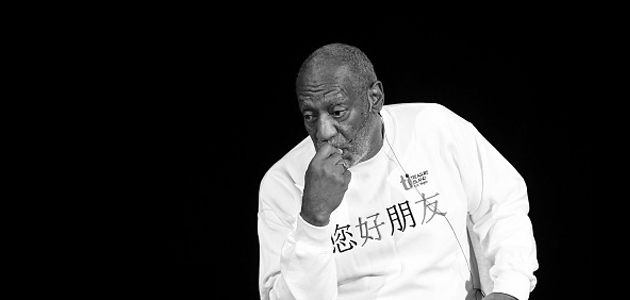
Bill Cosby Photo 1America’s Dad is having a very bad week. A few days ago, Barbara Bowman wrote a personal essay in The Washington Post chronicling how Bill Cosby drugged and raped her 30 years ago.

The story went viral and inspired several others to echo her experiences.

Not so when the teenager spoke out soon after the alleged attacks: When she went to a lawyer after the assaults, she was accused of lying. Her agent did nothing, either. Eventually, she moved on. Years later, Andrea Constand accused Cosby of rape and Bowman was asked to speak in court, but the case was quietly settled.

At this writing, a grand total of 15 women have accused Cosby of assault, dating from the late 1960s. (Here’s a timeline of the accusations.) Despite all this, Cosby’s career had coasted along—in fact, he was awarded the Mark Twain Prize for American Humor not long ago and was planning a new TV show.

But things are changing.

Finally, the accusers’ stories are getting traction. Why now? Last month, comedian Hannibal Buress called Cosby a rapist in his stand-up routine, which went viral. The Twitter-verse responded in kind: Last week, Cosby’s tone-deaf invitation to “meme me!” resulted in people superimposing assault accusations over his photo. #Cosbymeme did not go according to plan, and things only got worse: Last weekend, NPR interviewed him about his African American art collection and then asked him to respond to the Post story. He went silent. Eventually, his lawyer issued a statement firmly denying the allegations and refusing to comment further.

But the damage has been done: New stories about Cosby’s behavior continue to surface, Netflix has put his upcoming comedy special on hold, and NBC has abandoned plans to develop a new sitcom with him.

Why Accusations About Celebrities Aren’t Believed

Cosby isn’t the first icon to be accused of sexual assault or domestic violence, and yet the question persists: Why aren’t these accusers heard or given any credence—not just Cosby’s alleged victims, but the countless other people who have dared to challenge a celebrity?

The answer lies in the American conflation of celebrity and security, says Ulester Douglas, executive director of Men Stopping Violence. “We are a celebrity culture. Seeing someone we idolize, revere, and idealize being accused of horrific crimes makes us wonder: Who are we? It makes us realize that our own families could be capable of it, too,” he says. It’s unsettling and even terrifying to associate an idol with evil, particularly because there are so many celebrities who are good people, capable of powerful, positive influence.

Dissonance Perpetuates Silence

David Adams is a psychologist and co-director of Emerge, a Boston-based abusers’ intervention and counseling program. He sees a difference in how we respond to a stereotypical criminal and a celebrity accused of bad behavior due to our preconceptions about abusers. “We tend to think of an abuser as someone who is easily detectable: someone who is crude, sexist, and boorish. A quarter of men who abuse women do fit this stereotype, and since that’s a substantial subgroup, we tend to spot those guys and not the ones who are more likable. If we don’t know what to do with bad information about someone we adore, it creates dissonance, and we sometimes choose to disbelieve or to ignore it,” he says.

“When we see someone likable accused of a crime, we have a choice to believe something bad about them or to discount it because it doesn’t fit our experience. In some ways it’s easier to do that than to think, oh God, the world really is unknowable—I might as well give up on knowing people,” he says. “If we don’t know what to do with information about someone we worship, we put it aside.”

Why Celebrities Feel Immune

Of course, Cosby is hardly the first famous person to be accused of rape or assault. When we think about any celebrity facing serious allegations, though, it’s difficult to believe that an image-conscious idol could be willing to engage in hugely risky behavior, throwing away the very image they need. What’s going through their mind?

“Any consequence is overridden by the high of the conquest,” Douglas says. And, on a purely logistical level, “They do it because they can. They truly think they can get away with it, based on the very fact that they have a certain image. They will be believed; the accusers will be laughed out of the room.”

Absorbing The Narcissism Factor

In many celebrity cases, narcissism also plays a starring role. “A hallmark of narcissism is exceptionality. You literally think you will not get caught. This personality takes chances, acts reckless, and even associates the behavior with success, because they’ve always been rewarded,” Adams says.

“We think narcissists are people nobody would like. But, in fact, they’re quite charismatic, with good social and image-maintenance skills”— which often allow them to get away with bad behavior, even more so when there’s a PR team on call. Narcissists are also skilled at compartmentalization, Adams says, and they choose to focus on the “part of their life that everybody adores. They don’t focus on other parts of their lives, and if they do something wrong, they think, ‘Gee, everybody loves me. What’s the problem?’” he says. “It’s a lack of character development.”

“Narcissists can engage in all sorts of psychological gymnastics not to feel empathy,” says Douglas.

The Changing Tide

Adams says that it’s easy to categorize personalities as good versus bad. “We don’t think good and evil can co-exist in the same person,” he says. “But look at the Mafia—these guys who do horrible things but are notoriously good to their mothers. And along comes a show like The Sopranos to paint them in a more nuanced light. There’s now less focus on ‘good guys’ and ‘bad guys,’” he says. Understanding the complexities of personalities—refusing to glorify a celebrity as all good, all the time—could help to close the dissonance gap.

“We can also go a long way toward preventing male sexual and domestic violence against women by stopping the pervasive and pernicious victim-blaming,” Douglas says. “The media, for example, should quit asking the toxic, ‘Why did you go back to your abuser?’ and ‘Why didn’t you leave?’ A reporter could say instead, ‘As you know, there are some who question your credibility because of some of the choices you made. What, if anything, would you want to say to them?’ That is respectful journalism. The [accuser] should never be made to feel like she has to justify the choices she made or makes.”

Finally, in his own work with Men Stopping Violence, Douglas sees firsthand the power of healing through sharing. “I see survivors who are finding peace through coming forward and telling their stories. One of the most powerful things that survivors can do is tell their own stories, on their own terms,” he says.
The NO MORE Project – Posted November 19, 2014; retrieved November 26, 2014–
http://nomore.org/why-cosby-victims-werent-believed/
The subject matter in the foregoing article relates to the attitudes that communities must foster so as to mitigate the toleration of domestic violence, rape and stalking. These points are being brought into focus in a consideration of the book Go Lean … Caribbean. The book serves as a roadmap for the introduction and implementation of the technocratic Caribbean Union Trade Federation (CU), for the economic optimization in the region.

The focus of the Go Lean book is Economics, not domestic violence, rape or stalking! And yet this commentary relates that there is an alignment of objectives. The Go Lean roadmap posits that the economy of the Caribbean is inextricably linked to the security (public safety) of the Caribbean.

This CU/Go Lean roadmap has 3 prime directives:

  • Optimization of the economic engines in order to grow the regional economy and create 2.2 million new jobs.
  • Establishment of a security apparatus to protect the resultant economic engines and their relevant stakeholders.
  • Improve Caribbean governance (Executive facilitations, Legislative oversight and Judicial prudence) to support these economic/security engines.

Among the objectives to accomplish the economic elevation is the mission to retain Caribbean citizens in their homelands and repatriate the far-flung Diaspora back to the region. Since many people may have fled the region to mitigate abuse, attitudes of victim-blaming or complacency among public safety authorities must be “weeded out”.

The subject of Celebrity Culture is also germane for the Caribbean empowerment effort (Pages 203 & 224). The Go Lean roadmap consolidates the region’s 30 member-states into a Single Market, media market included – with the caveat of multi-language “simul-casting”. Celebrities will surely emerge. From a governance perspective, the CU will oversee the jurisdiction of monitoring and metering (ratings, rankings, service levels, etc) local public safety institutions to ensure their delivery of the Social Contract. for all regardless of gender or race.

Change has now come to the Caribbean. As the foregoing article depicts, there is a changing tide. It is no longer acceptable to dismiss accusers, even against celebrities. The article relates that “we can go a long way toward preventing male sexual and domestic violence against women by stopping the pervasive and pernicious victim-blaming”. This is part of a new community ethos – the value of women is not undermined! Many related issues/ points were elaborated in previous blogs, sampled here:

Justice Strategy: Special Prosecutors … et al
Caribbean Study: 58% Of Boys Agree to Female ‘Discipline’
Sex Crimes Mitigations – Students developing nail polish to detect date rape drugs
Aereo Founder on the future of TV; Caribbean included
Bob Marley: The legend of a Caribbean Celebrity lives on!
Muslim officials condemn abductions of Nigerian girls
Caribbean/Latin countries still view women as lesser
Book Review: ‘The Divide’ – Differences in US Justice for Rich versus Poor
Jamaica to receive World Bank funds to help in crime fight

The above commentaries examined global developments in crime mitigations and gender based attitudes, then relate their synchronicity with the principles in the Go Lean book. There are a number of touch points that relate to domestic violence, rape and stalking; these blogs also cite the community attitude to dissuade such behavior. Most importantly, the Go Lean book depicts solutions. These are presented as community ethos, strategies, tactics, implementations and advocates; detailed as follows:

Community Ethos – Privacy –vs- Public Protection Page 23
Community Ethos – Whistleblower Protection Page 23
Community Ethos – Witness Security Page 23
Community Ethos – Anti Bullying & Mitigations Page 23
Community Ethos – Light Up the Dark Places Page 23
Community Ethos – “Crap” Happens Page 23
Community Ethos – Minority Equalization Page 24
Community Ethos – Lean Operations Page 24
Community Ethos – NGO’s Page 25
Community Ethos – Reconciliations Page 34
Strategy – Rule of Law –vs- Vigilantism Page 49
Tactical – Separation of Powers – CariPol Page 77
Implementation – Reasons to Repatriate Page 118
Planning – Ways to Improve Failed-State Indices Page 134
Advocacy – Ways to Improve Governance Page 168
Advocacy – Ways to Better Manage the Social Contract Page 170
Advocacy – Ways to Impact Justice Page 177
Advocacy – Ways to Remediate and Mitigate Crime Page 178
Advocacy – Ways to Improve Gun Control – Restraining Orders Automatic Restrictions Page 179
Advocacy – Ways to Improve Intelligence Gathering Page 182
Advocacy – Ways to Improve Communications – Messaging Page 186
Advocacy – Ways to Impact Hollywood Page 203
Advocacy – Ways to Impact the Prison Industrial Complex – Reduce Recidivism Page 211
Advocacy – Ways to Impact Foundations Page 219
Advocacy – Ways to Protect Human Rights Page 220
Advocacy – Ways to Impact the One Percent –    Balancing Justice Provisions for Celebrities Page 224
Advocacy – Ways to Empower Women Page 226
Advocacy – Ways to Impact Persons with Disabilities – including Mental Challenges Page 228

The book Go Lean…Caribbean was written by resources from an organized movement, by people (residents and Diaspora) with passion to change/elevate the Caribbean’s economic, security and governing engines. One principal within this Go Lean movement has a direct job function to dissuade crimes against women.

While there is always the need to give the accused the benefit of the doubt, as in the current case against Bill Cosby, we do not want 30 years of inaction on reported sex crimes by celebrities. The CU roadmap’s goal is to optimize “Justice” institutions in the region. Why? All members of society (celebrities and regular citizens alike) need to be protected, and not dismissed or ignored, especially related to serious allegations like sexually inappropriate behavior. Any “misfeasance, malfeasance or nonfeasance” in this regards reflects negatively on the region’s hospitality – think of the unsolved disappearance of Natalee Holloway in Aruba in 2005; (see Page 190).

Though this topic may be a security issue, community wealth is undoubtedly linked, affecting push-and-pull factors for citizens to flee their homelands. This is lose-lose for all concerned. To the contrast, the goal of the Go Lean effort is to make the Caribbean a better place to live work and play; with justice for all. Since the region failed in the past, the new messaging is simple: “No More“!

The foregoing article is sourced by the Not-For-Profit organization, the “No More” Project. Their goal is to neutralize public attitudes that had previously tolerated and thusly promoted domestic violence, rape and stalking. This is a great role model for the Caribbean to emulate, as attitude adjustment is among the heavy-lifting tasks that regional administrators must undertake to bring positive change to the Caribbean.

Download the book Go Lean … Caribbean – now!

————

* Appendix – Video – Fat Albert And The Cosby Kidshttp://youtu.be/ga7gflAUGCc

It’s Bill Cosby coming at you with music and fun, and if you’re not careful, you might learn something before its done.
 

Share this post:
, , , ,

Future Focused – Policing the Police

Go Lean Commentary

It’s the economy, Stupid!
Quotation from Presidential Candidate Bill Clinton’s 1992 response to a question on voters’ primary issue.

Actually, there are other issues too, when considering why people flee from their Caribbean homeland and pursue life as a foreigner in the Diaspora – for some countries, according to a World Bank report, the vast majority of the college-educated population (60 to 81 percent) have fled. As was related in the Clinton quote, the primary reason is economic, but there are security concerns as well.

This commentary is about optimizing the police and security apparatus in the Caribbean region. If the region is to transform from its dysfunctional past to a brighter future, we must address regional security as strenuously as we address regional economics.

This discussion aligns with a motivation of the movement behind the book Go Lean…Caribbean – available to download for free – to dissuade Caribbean citizens from abandoning their homelands and invite the Diaspora to return, to repatriate. The movement describes the “Push” and “Pull” reasons why people leave in the first place, as follows:

  • “Push” refers to people who feel compelled to leave, to seek refuge in a foreign land. “Refuge” is an appropriate word; because of societal defects, many from the Caribbean must leave as refugees – think Crime Victims, Domestic-abuseLGBTDisabilityMedically-challenged– for their life, liberty and pursuit of happiness. For these people, it is like “they are on fire” and need to stop-drop-and-roll.
  • “Pull”, on the other hand refers to the lure of a more prosperous life abroad; this is mostly economic in nature as people are emigrating on the false perception that they can have a better “home” abroad.

Yes, while deficient economics – the primary reason – may affect the wallet, security deficiencies may affect life-and-death. Deficiencies – not enough – are not the only problem with Caribbean security measures; sometimes the problem is too much, as in “abuses”. All in all, there is the need to Police the Police – see the definitions of the noun and the verb in Appendix B – to give help and support, yes, but accountability too. Why the checks-and-balances? “No justice, no peace”. (See the depiction of unrestrained police abuse in the Appendix VIDEO below).

The Go Lean book therefore focuses on the future and how we can assuage both economics and security inequities. At the outset, this Future Focused book states (Page 3) that the economy of the Caribbean is inextricably linked to the security of the region. Therefore any economic action plan must also include a security pact to implement the mechanisms to ensure greater homeland protections. These efforts must monitor and mitigate against power abuses, economic crimes, systemic threats and also facilitate natural disaster planning and response agencies.

Every Caribbean member-state has a police/security entity, and yet there are so many security inadequacies. The future must therefore include better solutions and better deliveries. The Go Lean book provides a 370-page turn-by-turn guide for forging a new future; it details “how” to adopt new community ethos, plus the strategies, tactics, implementations and advocacies so as to formulate change, to deviate from the current path and foster a brighter-better-safer future. This would mean reforming and transforming the police and security apparatus. This Go Lean book serves as a roadmap for the introduction and implementation of the technocratic Caribbean Union Trade Federation (CU) to elevate the societal engines, including the optimization of the regional security apparatus and justice institutions.

There is currently a regional security apparatus, but it is very deficient! Consider the news article in Appendix A below, depicting the IMPACS investigation of Police excessive force/extra judicial killings (12) in St. Lucia. IMPACS is the formal name for the CARICOM agency with the anti-crime scope. IMPACS = Implementation Agency for Crime and Security.

Improving or elevating the regional security apparatus, is a mandate of this Future Focused roadmap; the plan is to Police the Police.

This commentary continues this series on the Caribbean Future; this is Part 4 of 5 on this subject. The full series is catalogued as follows:

  1. Future FocusedPersonal Development and the Internet
  2. Future FocusedCollege, Caribbean Style
  3. Future FocusedRadio is Dead
  4. Future Focused – Policing the Police
  5. Future Focusede-Government Portal 101

We accept that all is not well in the Caribbean – in fact the region is in crisis – but it can get better … in the future. We have challenges and opportunities. The Future Focus allows us to work to assuage the challenges. This is what the Go Lean book presents, a workable roadmap to effect change in all societal engines. In fact, the roadmap features these 3 Future Focused prime directives:

  • Optimization of the economic engines in order to grow the regional economy to $800 Billion & create 2.2 million new jobs.
  • Establishment of a security apparatus to ensure public safety and protect the resultant economic engines.
  • Improve Caribbean governance to support these engines, including a separation-of-powers between the member-states and CU federal agencies.

The Go Lean book features this excerpt-summary (Page 23) of Security Principles:

This roadmap for Caribbean integration declares that peace, security and public safety is tantamount to economic prosperity. This is why an advocacy for the Greater Good must be championed as a community ethos. A prime precept is that it is “better to know than to not know” – this implies that privacy is secondary to security. A secondary precept is that bad things will happen to good people and so the community needs to be prepared to contend with the risks that can imperil the homeland.
  1. Privacy versus Public Protection 
  2. Whistleblower Protection 
  3. Witness Security & Protection 
  4. Anti-Bullying and Mitigation 
  5. Intelligence Gathering 
  6. Light Up the Dark Places 
  7. Crap” Happens

Rampant crime and security inadequacies can drive good people away from their beloved homelands … to settle in as refugees in foreign lands, where their prospects for life is only one of marginalization, until the next generation. We must do a better job of protecting our people here at home; and we must protect the protectors; and protect the people from the protectors. These are the challenges – heavy-lifting – of shepherding society in a pluralistic democracy.

This point had been further detailed in previous blog-commentaries, depicting the Future Focus of the CU/Go Lean roadmap:

  • Mitigating the Eventual ‘Abuse of Power’
    Since “power corrupts and absolute power corrupts absolutely”, there is the need to monitor, mitigate and manage the risks of bad behavior among law enforcement and security personnel. The CU/Go Lean roadmap is designed with the needed protections in mind to ensure a safer community.
  • Ten Puerto Rico Police Accused of Criminal Network
    A news article reports on corruption by 10 police officials that have undermined Puerto Rico’s justice institutions. This is not so surprising, as the Go Lean book relates that “bad actors” will always emerge to exploit the community. Despite the American territorial status, this threat is still ever-present in Puerto Rico. They need the full protection of a technocratic Caribbean Union Trade Federation.
  • Support sought for kids left behind by UN troops in Haiti
    The United Nations Security/Peacekeeping Forces in Haiti did some good … and some bad. Their personnel needed to be held to account for their impropriety. There is a greater need for a local/regional security solution, for the protections and accountability – there is a Military Justice eco-system embedded in the CU/Go Lean roadmap.
  • Grenada Diaspora Bails-out National Police with Protective Gear
    Who do national Police Forces call now when they have a problem bigger than they can handle with their resources? The answers are limited. This demonstrates the need for a better regional security apparatus – this is the CU/Go Lean roadmap – to support the local police institutions – to step in, step up and help out.
  • Securing the Homeland – On the Ground
    The CU/Go Lean roadmap calls for the acquisition and deployment of advanced security systems (hardware and software). Many of the cutting-edge solutions allow the security forces to do more with less.
  • Waging a Successful War on ‘Terrorism’
    The threat of terrorism is just too big for community policing. The solutions require a bigger effort than what any one Caribbean member-state can muster alone. The CU/Go Lean roadmap provides a technocratic regional option.
  • Prisoners for Profit – Abuses in the Prison Industrial Complex
    The human rights of prisoners are easily abused and their labors exploited without the proper stewardship in the security apparatus. The CU/Go Lean security roadmap considers lessons learned from the ugly US history.
  • Justice Strategy: Special Prosecutors / Commissions of Inquiries … et al
    Security engines are complicated to implement in society; they require a political process, consensus-building and compromise. But abuses abound! So there must be checks-and-balances and escalation for conflict resolutions. The CU/Go Lean roadmap calls for optimized justice institutions based on best practices from other societies.

The effort, as detailed in this commentary: to better secure the homeland and optimize justice institutions, is designed to lower the “push-pull” factors that lead to the current atrocious Caribbean brain-drain rate.

In addition, “power” is often associated with abuse, so there is the plan to “check” those with power, and the security institutions.

Can we improve community policing in the Caribbean homeland? Can we better protect those protecting society? Can we provide checks-and-balances on those who wield the power?

Yes, we can!

Though this is not easy – heavy-lifting – it is conceivable, believable and achievable.

This is the kind of Future Focused efforts that are needed to reform and transform Caribbean society – we must Police the Police – to make our homelands better- safer places to live, work and play. 🙂

Download the free e-Book of Go Lean … Caribbean – now!

Sign the petition to lean-in for this roadmap for the Caribbean Union Trade Federation.

————

Appendix A – National Security Minister cautions against identifying officers in IMPACS investigation

The National Security Minister [of St. Lucia] has advised journalists against exposing the identity of the police officers currently being questioned as part of the IMPACS investigation. [(CARICOM Implementation Agency for Crime and Security)].

Hermangild Francis says the officers have not been charged and could become targets in their communities.
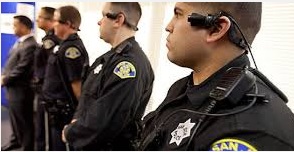
“To go around showing persons pictures who have not even been charged or anything like that is unfair and a very dangerous precedent that is being set. So I want to make an appeal to the press that they refrain from showing the photographs of anybody that the DPP [(Director of Public Prosecutions)] will speak to,” Francis said.

Three officers have been brought in for questioning as the Officer of the Director of Public Prosecutions seeks to bring an end to the IMPACS case amid mounting pressure from the United States and the European Union.

Former Prime Minister Dr Kenny Anthony had in 2013 commissioned an investigation by the Caribbean Community IMPACS agency into alleged extra judicial killings by members of the Royal Saint Lucia Police Force (RSLPF).

The killings occurred under a special police operation dubbed “operation Restore Confidence” instituted during a period of heightened criminal activity.

In an address to the nation on March 8, 2015 on certain aspects contained in the report, Anthony said, among other things, that the police staged fake encounters and planted evidence in the 12 fatal shootings that took place.

In August 2013, the United States suspended all forms of assistance to the RSLPF, citing allegations of serious human rights violations.

Francis is concerned that publishing images of the officers being questioned in the matter could place their lives in jeopardy.

“A lot of persons are going to be brought in for questioning; some persons who were involved and some people who were not involved. And by showing the photographs of everybody who goes to the DPP is jeopardizing the lives and the safety of the majority of these officers,” he added.
Source: Posted September 22, 2017; retrieved November 13, 2017 from: https://stluciatimes.com/2017/09/22/national-security-minister-cautions-identifying-officers-impacs-investigation

————

Appendix B – Definitions: Police

Noun

  1. Also called police force. an organized civil force for maintaining order, preventing and detecting crime, and enforcing the laws.
  2. (used with a plural verb) members of such a force:
    Several police are patrolling the neighborhood.
  3. the regulation and control of a community, especially for the maintenance of public order, safety, health, morals, etc.
  4. the department of the government concerned with this, especially with the maintenance of order.
  5. any body of people officially maintained or employed to keep order, enforce regulations, etc.
  6. people who seek to regulate a specified activity, practice, etc.:
    the language police.
  7. a.  the cleaning and keeping clean of a camp, post, station, etc.
    b.  the condition of a camp, post, station, etc., with reference to cleanliness.

Verb (used with object), policed, policing.

  1. to regulate, control, or keep in order by or as if by means of police.
  2. to clean and keep clean (a camp, post, etc.)

Source: Retrieved November 14, 2017 from: http://www.dictionary.com/browse/police?s=t

————

Appendix VIDEO – KAMAU – PohLease [Official video] – https://youtu.be/nhMxQXTX2ak

BrotherKAMAU

Published on Aug 31, 2016 – “Who Police the Police … when they get out of line”.

“PohLease” – off of our debut EP “A Gorgeous Fortune”

The Socials: https://www.facebook.com/KAMAUothm; https://twitter.com/brotherKAMAU; https://www.instagram.com/brotherkamau/; https://soundcloud.com/brotherKAMAU

Available Now: http://smarturl.it/AGorgeousFortune ; Stream – http://smarturl.it/StreamAGF

Share this post:
, ,
[Top]

Grenada Diaspora – Not the Panacea

Go Lean Commentary

Who you gonna call?

This question can be asked throughout the Caribbean. There is an emergency, a threat to life and property, who do you call? The answer should be the Police.

But who would the Police call when they have a problem?
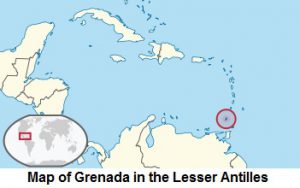
It is hoped that there would be some regional entity that steps in, steps up and helps out.

There is such a need!

This was the scenario in Grenada, just recently. They had a security need above and beyond the local provisioning, and the Royal Grenada Police Force turned to the Grenada Diaspora.

This is perplexing! Let’s examine this further. See the full news article here:

Title: NYPD officers with Caribbean roots reach out to aid the region

(NY Daily) The NYPD-RGPF Officers’ Association — a group of NYPD officers with roots in Grenada — is bringing new meaning to the phrase “long arm of the law” by reaching out to help Grenada law enforcement officials and aiding other causes in the region.

This month, the association collected much-needed relief supplies — including food, soap and shoes — for survivors of Hurricane Maria on storm-ravaged Dominica. Association members were scheduled to gather in Brooklyn yesterday to pack donated supplies bound for Dominica.

The NYPD-RGPF association was founded in the wake of tragedy and its members are, professionally and personally, well suited to respond to crisis.

According to NYPD-RGPF spokesman Michael Bascombe, the association — which uses the Royal Grenada Police Force acronym RGPF in its name — was founded after RGPF Corporal Daniel Edgar was fatally shot in the line of duty in Grenada in April 2016.

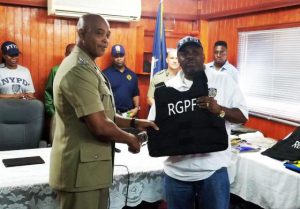
Through fund-raising efforts and personal financial support from NYPD officers, the association’s first act was a financial contribution to Edgar’s family — and donating 100 bullet-proof vests, helmets, traffic enforcement equipment and other gear to the Grenada Police Force in September.

The association has started discussions with the RGPF on possible future partnerships, he said.

Source: Posted October 30, 2017; retrieved November 2, 2017 from: https://stluciatimes.com/2017/10/30/nypd-officers-caribbean-roots-reach-aid-region

Make no mistake; Grenada needs all the help it can get. All of these Caribbean member-states need whatever help they can get. The region is reeling from the near total devastation from Category 5 storms: Hurricane Maria and Hurricane Irma; Dominica is in disarray! Barbuda is wiped out and declared a Ghost Town as a result. These places must relieve, restore, recover and rebuild.

Who they gonna call?

The urging here is to NOT look to the Diaspora as some panacea, cure-all solution. This is definitely what is happening in Grenada, as this foregoing news article related:

The NYPD-RGPF association was founded in the wake of tragedy and its members are, professionally and personally, well suited to respond to crisis.

This is a troubling point here: we cannot look to people who have left here to turn around and fix what is broken here. They – the Diaspora – are gone! Yet, this is the preponderance for governments (and citizenry alike) to pursue this strategy in the region. Just recently we published commentaries on this Caribbean pre-occupation, with these entries relating these homelands:

The premise for the criticism of this Diaspora strategy is that the ones that have fled the region have done so for a reason; they have been “pushed” or “pulled” away from their homeland. They may still love their “past” country, but can only do so much from abroad. Plus, history documents that they are less inclined to invest back in their country; they are burdened with the concerns of today and the future, that it is illogical to think that they are concerned about their yesterdays. Thusly, all efforts to outreach the Diaspora are usually futile. All of these prior commentaries relate this basic truth about catering to the Diaspora:

The subtle [Diaspora outreach] message to the Caribbean population is that they need to leave their homeland, go get success and then please remember to invest in us afterwards.

… It is so unfortunate that the people in the Caribbean are beating down the doors to get out of their Caribbean homeland, to seek refuge in these places like the US, Canada and Western Europe. … As a result, we have such a sad state of affairs for our Caribbean eco-system as we are suffering from a bad record of societal abandonment.

Thank you, all Diaspora members that have looked back and lent a hand, but the heavy-lifting of reforming and transforming our society must really come from the people who are in the homeland and in the region. For starters, we must try to dissuade people from leaving in the first place and help them to prosper where planted. The record shows that those who do leave, tends to be the ones that we can least afford to lose. These include the professional classes and highly educated ones; one report presents an abandonment rate of 70 percent of the college-educated populations.

Picture a family with limited food supply, serving dinner and “making extra plates” for family members who have left or passed. This would be illogical. We need to be more pragmatic and work a different strategy to assuage our crisis. We need a strategy that embraces those who are still here, not those that “used to be”.

So the problem of a Diaspora-outreach strategy is that it double-downs on the failure of why the Diaspora left in the first place. We need to employ new strategies for the underlying failures. When we look at our Caribbean homeland and see the many failures, we realize that the people on some islands – like Grenada – and the people in their Diaspora cannot solve the problems in the homeland … alone. No, something bigger and better is needed.

We need a Way Forward. This is where and why we have introduced that something BIGGER … and better …

… enter the Caribbean Union Trade Federation (CU). This is presented as the organizational solution for the economic, security and governing needs of all 30 Caribbean member-states, including Grenada; this is the panacea the region needs.

The foregoing article addressed security issues and law-and-order. The book Go Lean…Caribbean – available to download for free – serves as a roadmap for the introduction and implementation of the technocratic CU, for the elevation of Caribbean societal engines – including economic, security and governance for all member-states. The book asserts that the region can do better with security solutions. We can make our region better and safer to live, work and play. But the requirement is that we must work together – in a formal regional integration – to establish the economy-of-scale to employ the many strategies, tactics and implementation to remediate and mitigate crime in the homeland.

In fact, the CU/Go Lean roadmap presents these 3 prime directives:

The goal of the Go Lean roadmap is for Caribbean people to prosper where planted; the book therefore provides 370-pages of turn-by-turn instructions on “how” to adopt new community ethos, plus the strategies, tactics, implementations and advocacies to execute so as to reboot the region’s societal engines, for Grenada and other member-states. One advocacy for a Way Forward is the plan to optimize community policing (Page 178); see the headlines and excerpts from that page here:

10 Ways to Remediate and Mitigate Crime

1 Lean-in for the Caribbean Single Market
This will allow for the unification of the region into one market of 42 million people across 30 member-states, thereby creating an economic zone to promote and protect the interest of the member-states. (The GDP of the region will amount to $800 Billion according to 2010 figures). In addition, the treaty calls for a collective security agreement of the Caribbean nations so as to implement provisions to serve and protect the citizenry against systemic threats. The CU’s law enforcement agencies will enforce, investigate and prosecute economic crimes, including Racketeering, and Organized Crime Enterprises (RECO), plus any cross border gang activity. In addition, the CU will also provide funding, grants, training, technical consultancy, and support services for member-states law enforcement, including crime labs.
2 Deploy the Caribbean Police (CariPol)

The CU Treaty will compel local police to have accountability and respect for the jurisdiction of the Caribbean Police. CariPol will be modeled after Interpol and the US FBI, with Inspectors for investigations and Marshalls for protection and interdiction. When the local Police call for escalation, CariPol responds. CariPol also “polices” the Police, with audit and compliance oversight for “use of force” reviews and Internal Affairs. The appeal to engage CariPol does not have to come from local police, but rather any constitutional institution (i.e. state governments, courts, or legislative bodies).

3 Regional Security Intelligence Bureau

The CU law enforcement apparatus will deploy sophisticated intelligence gathering and analysis systems, processes and personnel. This includes terrestrial and satellite surveillance (CATV, ankle monitoring) systems, eavesdropping, data mining and predictive modeling. Local and regional Police institutions would have access to these findings and results.

The CU’s intelligence agency will also monitor police actions for public integrity assurance (corruption threats).

4 Prison Industrial Complex
5 Equip local police with advanced technologies

The CU will provide grants to equip local police with advanced technologies, including video (dashboard cameras) and audio transmission, GPS tracking, and mobile computing systems to optimize community policing. The advanced systems also include anklet monitoring systems for non-violent offenders and suspects out on bail.

6 Witness Protection
7 Enable the Private Industry of First Responders and Bounty Hunters
8 Hate Crime Qualifiers
9 Youth Crime Awareness and Prevention
10 Death Penalty Reform

Bullet Proof vests are necessary equipment for community policing. The foregoing news article, and VIDEO in the Appendix below, related that the Diaspora group, the NYPD-RGPF, “donated 100 bullet-proof vests, helmets, traffic enforcement equipment and other gear to the Grenada Police Force in September”. Frankly, this is a local government responsibility. The fact that there is the need for this gift in Grenada is reflective of the security deficiencies in that country and in the region. If the community stakeholders cannot protect their own Peace Officers, how much more so can they protect the citizenry. See this sage commentary:

Intentionally murdering a police officer is an especially heinous crime. When the agents of the state who protect the public are themselves targeted, it is a threat to public order and an attack on the authority of the state. Such crimes ought to be penalized more harshly throughout the entire country. – National Review Magazine.

The Caribbean has mourned the death of a Police Office in Grenada. The Caribbean is not the only region that have experienced violent crime … against law enforcement officers and other citizens. In fact, in the US, the rate of death from gun violence far exceeds all other advanced democracy countries. Yet, our Caribbean Diaspora – from New York City – has stepped in to help Grenada.
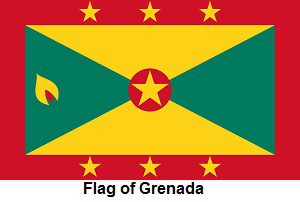
Thank you …

… but we are urged to lower our expectations of gifts and investments from the Diaspora in general.

The Go Lean book – and many previous blog-commentaries – asserts that while conditions may be bad for Caribbean residents (i.e. Grenadian) in their homeland, Black-and-Brown immigrants to far-away countries (think: North America and Western Europe; think New York City) often have to contend with less than welcoming conditions in those countries. It is only with the Second Generation that prosperity is achieved, but by then, the children of the Caribbean Diaspora are not considered “Caribbean” anymore; they assume their residential citizenship.

When Caribbean people in general, and Grenadians in particular, emigrate and become aliens in a foreign land, life is not necessarily better in those countries. As related in these prior blog-commentaries, those who live in the Diaspora know “both sides of the coin”, as most of them have lived in the ancestral lands at one point. But on the other half, those who still live in the homeland may have never lived abroad.

They do not know what they do not know!

Being a visitor to some North American or European city is different than being a resident, as visitors do not have the interactions of applying for jobs, housing, government benefits, paying taxes, co-existing with neighbors, etc.. These ones in the homeland may naturally assume that the “grass is greener on the other side”. Here’s the truth:

    It is not! (The grass in the northern cities may not even be green at all; it may be covered with autumn foliage or snow).

So it is the summation of this commentary and all the related ones with the theme “Diaspora – Not the Panacea” that it is better for Grenadian people, and people of all the Caribbean for that matter, to work to remediate and mitigate the risks of Failed-State status in their homeland. But many people may argue – and they would be correct – that the reformation and transformation of Caribbean communities should come from Caribbean people first. Yet with such a high societal abandonment rate, the population of many Caribbean member-states – as in Grenada – is approaching a distribution where more citizens live abroad – in the Diaspora than on the island. See the additional data references here:

Grenada, like many of the Caribbean islands is subject to a large amount of migration, with a large number of young people wanting to leave the island to seek life elsewhere. With estimated 107,317 people living in Grenada, estimates and census data suggest that there are at least that number of Grenadian-born people in other parts of the Caribbean (such as Barbados and Trinidad) and at least that number again in First World countries. Popular migration points for Grenadians further north include New York City, Toronto, the United Kingdom (in particular, London and Yorkshire; see Grenadians in the UK) and sometimes Montreal, or as far south as Australia. This means that probably [ONLY] around a third of those born in Grenada still live there.- Wikipedia.

The Go Lean roadmap is not one that advocates the Diaspora coming to the rescue, but rather a Caribbean confederacy, constituted by all 30 member-states, being the solution. This roadmap leverages the Caribbean as a Single Market (42 million people); it asserts that this is better than just catering to the Diaspora of just one country. This is to be the panacea that Caribbean needs to assuage its defects and dysfunctions. Plus, it also includes the Diaspora, but for all the Caribbean nations combined – estimated at 10 to 25 million. This is a plan for interdependence! This was the initial motivation for the CU/Go Lean roadmap, as pronounced in opening Declaration of Interdependence (Pages 12 – 13) statements of the book:

x. Whereas we are surrounded and allied to nations of larger proportions in land mass, populations, and treasuries, elements in their societies may have ill-intent in their pursuits, at the expense of the safety and security of our citizens. We must therefore appoint “new guards” to ensure our public safety and threats against our society, both domestic and foreign. The Federation must employ the latest advances and best practices of criminology and penology to assuage continuous threats against public safety. The Federation must allow for facilitations of detention for convicted felons of federal crimes, and should over-build prisons to house trustees from other jurisdictions.

xi. Whereas all men are entitled to the benefits of good governance in a free society, “new guards” must be enacted to dissuade the emergence of incompetence, corruption, nepotism and cronyism at the peril of the people’s best interest. The Federation must guarantee the executions of a social contract between government and the governed.

xvi. Whereas security of our homeland is inextricably linked to prosperity of the homeland, the economic and security interest of the region needs to be aligned under the same governance. Since economic crimes, including piracy and other forms of terrorism, can imperil the functioning of the wheels of commerce for all the citizenry, the accedence of this Federation must equip the security apparatus with the tools and techniques for predictive and proactive interdictions.

xix. Whereas our legacy in recent times is one of societal abandonment, it is imperative that incentives and encouragement be put in place to first dissuade the human flight, and then entice and welcome the return of our Diaspora back to our shores. This repatriation should be effected with the appropriate guards so as not to imperil the lives and securities of the repatriated citizens or the communities they inhabit. The right of repatriation is to be extended to any natural born citizens despite any previous naturalization to foreign sovereignties.

xx. Whereas the results of our decades of migration created a vibrant Diaspora in foreign lands, the Federation must organize interactions with this population into structured markets. Thus allowing foreign consumption of domestic products, services and media, which is a positive trade impact. These economic activities must not be exploited by others’ profiteering but rather harnessed by Federation resources for efficient repatriations.

There have been a number of blog-commentaries by the Go Lean promoters that have detailed the functionalities of the CU‘s security measures as part of the Way-Forward – the best hope for a new eco-system for Grenada, and the whole Caribbean. See a sample list here of recent submissions:

https://goleancaribbean.com/blog/?p=13138 Industrial Reboot for Better Security – Prisons 101
https://goleancaribbean.com/blog/?p=13126 The Requirement for Better Policing/Security – ‘Must Love Dogs’
https://goleancaribbean.com/blog/?p=12400 Strong Urging to Accede the Caribbean Arrest Treaty
https://goleancaribbean.com/blog/?p=11244 Gun and Violent Deaths More Common in USA Than Caribbean
https://goleancaribbean.com/blog/?p=10566 Funding the Caribbean Security Pact
https://goleancaribbean.com/blog/?p=9072 Securing the Homeland – A Series
https://goleancaribbean.com/blog/?p=7485 A Lesson in the History of Interpersonal Violence – Street Crimes
https://goleancaribbean.com/blog/?p=2684 Role Model for Justice – The Pinkertons
https://goleancaribbean.com/blog/?p=392 World Bank Funds Caribbean Country to Help in Crime Fight

Confederating a regional response is by all means the best-practice for Grenada and other Caribbean security threats. Good results are evident from the limited multilateral efforts that have been exerted thus far. In fact, the current Caribbean Community – CARICOM – includes this regional anti-crime organization IMPACS. The formal name is actually CARICOM Implementation Agency for Crime and Security.

See the “Fact Sheet” in the Appendix below.

This IMPACS organization tries …

… but trying alone is not enough. There is the need for solutions: hardware (tools, equipment and devices) and software (techniques, best-practices, training and systems).

In summary, regional integration: Good; societal abandonment: Bad!

Any country growing their Diaspora is bad for that country and bad for the Diaspora members. Grenada – and every other country – needs its sons and daughters right now; actually this island needs “all hands on deck” for the Way-Forward. Any official policy to encourage emigration and living-working-abroad – on a permanent basis – is a flawed policy. Rather, it is better to have our citizens in the homeland. They can better help to better protect the community.

So any policy that double-downs on the Diaspora is actually doubling-down on failure. We should never want people to have to leave then hope they remember us in our times of distress. No, we want and need them here at home at all times: good, bad and “ugly”.

We strongly urge every stakeholder of Grenada and all of the Caribbean to lean-in to this roadmap to make our homeland, Grenada and the remaining of the 30 member-states, better/safer places to live, work and play. 🙂

Sign the petition to lean-in for this roadmap for the Caribbean Union Trade Federation.

———-

Appendix VIDEO – RGPF Receives Safety Gear From NYPD – https://youtu.be/QBB3mMP802s

Grenada Broadcasting Network

Published on Sep 8, 2017 – Police officers have been given a security boost.

Approximately one hundred bullet proof vests and other items were handed over, from Grenadian officers of the New York Police Department.

  • Category: News & Politics
  • License: Standard YouTube License

———-

Appendix – IMPACS Fact Sheet

The Agency is the nerve centre of the Region’s new multilateral Crime and Security management architecture, specifically designed to administer a collective response to the Crime and Security priorities of Member States. Under the directives of, and with reporting responsibility to the Council of Ministers of National Security and Law Enforcement. IMPACS core functions include -:

  • The implementation of actions agreed by the Council relating to crime and security;
  • The development and implementation of projects in furtherance of the Agency’s objectives;
  • The initiation and development of proposals for consideration and determination by the Council;
  • Advising the Council on appropriate regional responses to Crime and Security arrangements on the basis of research and analysis;
  • The execution of regional projects relating to matters of crime and security;
  • Providing a clearing house for relevant information in matters relating to crime and security;
  • Mobilizing resources in support of the regional Crime and Security agenda and negotiation of technical assistance;
  • Contributing to the development and implementation of strategies for effective representation of CARICOM on a regional and international level on matters relating to crime and security;
  • The dissemination of information to Contracting Parties with respect to evolving regional and international trends in crime and security;
  • The collaboration and co-ordination with national and international crime prevention and control agencies to determine trends, methodologies and strategies for crime prevention and enhancing security for the Community; and
  • Developing, in collaboration with the CARICOM Secretariat, roles, functions and Rules of Procedure for such Committees as may be established in furtherance of the regional Crime and Security agenda.

Source: Retrieved November 3, 2017 from: http://www.caricom.org/about-caricom/who-we-are/institutions1/caricom-implementing-agency-for-crime-and-security-impacs

Share this post:
, , ,
[Top]

‘Pulled’ – Despite American Guns

Go Lean Commentary

“Can’t see the forest for the trees” – Famous Quotation
This is an expression used for someone who is too involved in the details of a problem to look at the situation as a whole: “The congressman became so involved in the wording of his bill that he couldn’t see the forest for the trees; he did not realize that the bill could never pass.”

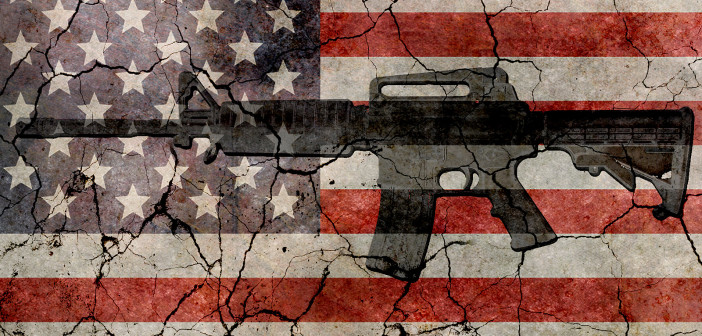
CU Blog - 'Pulled' to American Guns - Photo 1This concept is true for communities too!

The United States of America presents itself as the “City on the Hill“, the richest, most powerful model democracy in the history of the world. But this country has some societal defects – i.e. Institutional Racism & Crony-Capitalism – that are so acute that they distort the American reality as a Great Society. One defect in particular is the American gun culture, gun deaths and mass shootings.

Still, America draws – or pulls – a lot of immigrants from around the world, including the Caribbean, despite the voluminous deaths. Just how many deaths are there?

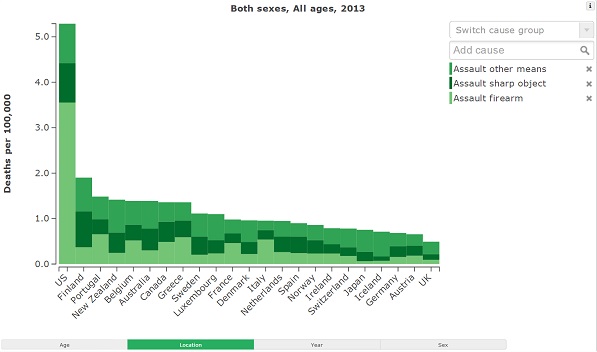
First, the US has far more gun deaths than most other advanced economy countries.

Title: Visualizing gun deaths: Comparing the U.S. to the rest of the world
Whenever a mass shooting occurs, a debate about gun violence ensues. An often-cited counter to the point about the United States’ high rates of gun homicides is that people in other countries kill one another at the same rate using different types of weapons. It’s not true.

Compared to other countries with similar levels of development or socioeconomic status, the United States has exceptional homicide rates, and it’s driven by gun violence.

Here is the data:

CU Blog - 'To Live and Die in L.A.' - Photo 3

Source: Posted June 12, 2016; retrieved October 9, 2017 from: Global Burden of Disease Study. Access the data visualization here: http://ihmeuw.org/3oi4

Just how many mass shootings are there?

See this encyclopedic reference:

Title: Mass shootings in the United States by year

These are the number of shootings (incidents) that transpired during the applicable year. For the last 2 years (2017-to-date & 2016), the actual shooting events are detailed.

Year Incidents Details
2017 13 Partial Year – As of October 1, 2017
    Bronx-Lebanon Hospital attack
    Burnette Chapel shooting
    Clovis library shooting
    Congressional baseball shooting
    Fort Lauderdale airport shooting
    Freeman High School shooting
    Las Vegas Strip shooting
    Little Rock nightclub shooting
    Mississippi shootings
    Orlando shooting
    Plano shooting
    UPS shooting in San Francisco
    Weis Markets shooting
2016 14  
    Baton Rouge shooting of police officers
    Cascade Mall shooting
    Citronelle homicides
    shooting of Dallas police officers
    FreightCar America shooting
    Hesston shooting
    Kalamazoo shootings
    Madison High School shooting
    Mukilteo shooting
    Orlando nightclub shooting
    Pike County, Ohio, shootings
    Pablo Antonio Serrano-Vitorino
    St. Joseph courthouse shooting
    Wilkinsburg shooting
2015 9  
2014 5  
2013 6  
2012 11  
2011 7  
2010 5  
2009 8  

Source: Retrieved October 9, 2017:  https://en.wikipedia.org/wiki/Category:Mass_shootings_in_the_United_States_by_year

In a previous blog-commentary, the thesis was presented that for Caribbean citizens, it is NOT better to live “fast & furious” in the US, but rather it is better to prosper where planted in the Caribbean homeland. Life in the US may experience a shorter mortality due to the risky gun culture.

And yet, our Caribbean communities are losing people more and more with our atrocious societal abandonment rates – estimated by one report at 70 percent of the professional classes –  to destinations like the United States. Why are they leaving? Two reasons:

  • “Push” refers to people who feel compelled to leave, to seek refuge in a foreign land. “Refuge” is an appropriate word; because of societal defects, many from the Caribbean must leave as refugees – think LGBTDisabilityDomestic-abuseMedically-challenged – for their life, liberty and pursuit of happiness.
  • “Pull”, on the other hand refers to the lure of a more prosperous life abroad; many times our people are emigrating for economics solely.

Is life really so prosperous in the US with such a track record of gun violence?

CU Blog - Must Love Dogs ENCORE - Photo 1

CU Blog - 'Pulled' to American Guns - Photo 2

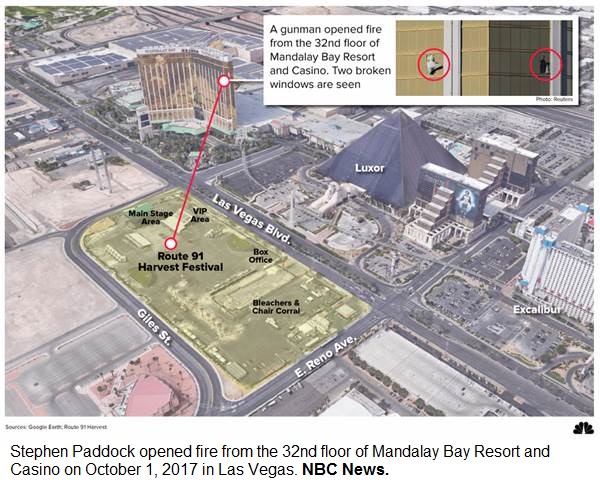
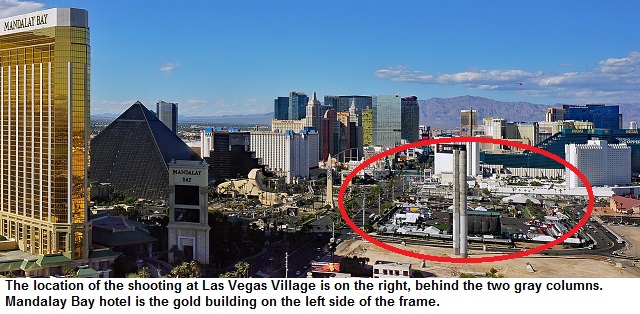
On October 1, 2017 a shooter – Stephen Paddock – used 23 guns (mostly automatic rifles) perched in a 32nd floor hotel room rained down bullets on a Country Music concert in an adjacent park. He killed 58 innocent people and injured more than 500.

The repeated incidences of mass shooters – with no gun control remediation – makes American life defective; see VIDEO in the Appendix below.

This commentary aligns with the charter of the book Go Lean … Caribbean to make the countries of the Caribbean region better places to live, work and play. The goal is to be Better Than America; to be a protégé without the ignominious Second Amendment; to exercise better governance. A previous blog-commentary entitled 10 Things We Want from the US and 10 Things We Don’t Want from the US detailed:

The “right to bear arms” has a personal application beyond the country’s entitlement to maintain a militia. This “right” has been interpreted in a manner in which any normal “man” can get possession of guns and other armament. This proliferation of guns in society results in the highest rate of gun violence in the world, even an unconscionable rate of school shootings.

The Go Lean roadmap purports that this status has also caused discord – a gross abuse and availability of illegal guns – in bordering communities of Mexico, and Caribbean states of the Bahamas, and the DR. This propels our gun-related crime.

The Go Lean book serves as a roadmap for the introduction and implementation of the technocratic Caribbean Union Trade Federation (CU) to elevate the region’s societal engines – economics, homeland security and governance – for all 30 Caribbean member-states in the region. In fact, the prime directives of the roadmap includes the following 3 statements:

  • Optimization of the economic engines in order to grow the regional economy to $800 Billion & create 2.2 million new jobs.
  • Establishment of a security apparatus to ensure public safety and protect the resultant economic engines with proactive and reactive measures.
  • Improvement of Caribbean governance to support these engines, including a separation-of-powers between the member-states and CU federal agencies.

The quest is to minimize the paradox of future-planning/decision-making for Caribbean citizens. We want to make the Caribbean region better places to live, work and play; this way our citizens would not have to leave … for American shores. Above and beyond mass shootings, the truth of the matter is people die more readily in America due to gun-violence than they die in the Caribbean, or anywhere else.

The planners for a new Caribbean should be able to lower the “pull” factors for Caribbean citizens. Caribbean life is in competition with American life and we should be able to sell the lower risk of being killed by American guns.

The Go Lean book contends that bad actors will always emerge just as a result of economic successes in society. Once the prospects of guns are factored it, the inevitable “bad guy with a gun” can do more damage than ordinary. There must be remediation and mitigation. This point is pronounced early in the book with the Declaration of Interdependence (Page 12) that claims:

x. Whereas we are surrounded and allied to nations of larger proportions in land mass, populations, and treasuries, elements in their societies may have ill-intent in their pursuits, at the expense of the safety and security of our citizens. We must therefore appoint “new guards” to ensure our public safety and threats against our society, both domestic and foreign. The Federation must employ the latest advances and best practices … to assuage continuous threats against public safety.

xi. Whereas all men are entitled to the benefits of good governance in a free society, “new guards” must be enacted to dissuade the emergence of incompetence, corruption, nepotism and cronyism at the peril of the people’s best interest. The Federation must guarantee the executions of a social contract between government and the governed.

xvi. Whereas security of our homeland is inextricably linked to prosperity of the homeland, the economic and security interest of the region needs to be aligned under the same governance. Since economic crimes, including piracy and other forms of terrorism, can imperil the functioning of the wheels of commerce for all the citizenry, the accedence of this Federation must equip the security apparatus with the tools and techniques for predictive and proactive interdictions.

The Go Lean book provides 370 pages of details on the economic principles and community ethos to adopt, plus the executions of strategies, tactics, implementations and advocacies to better secure the Caribbean homeland. Just “how” can the Caribbean region reboot, reform and transform their societal engines to provide better protections and gun control. This is the actual title of one advocacy in the Go Lean book. Consider the specific plans, excerpts and headlines here from Page 179, entitled:

10 Ways to Improve Gun Control

1

Lean-in for the Caribbean Single Market
The [CU] treaty allows for the unification of the region into one market of 42 million people across 30 member-states, thereby creating an economic zone to promote and protect the interest of the member-states. In addition, the treaty calls for a collective security pact to ensure homeland security and assuage against systemic threats. The CU will elevate and consolidate the registration, gun-permitting process to regional oversight. The goal is to apply learned-lessons from the US example. For Third World countries, as most of the CU apply, undisciplined gun use affect the Failed-State indicator: Criminalization / De-Legitimization of the State. The CU’s mandate is to manage the image and reality of Failed-States.

2

Background Checks
It’s a best practice to restrain certain aspects of the population access to guns (felons, defendants on bail, targets of restraining orders). This includes gun purchasing and ownership. So the CU Gun Registration regulation (within CariPol) will enforce strict background checks for ALL purchases: retail, wholesale and private-party. This regulation will also be post-reactive in the event a CU resident becomes a subject of legal/police action so as to suspend their gun rights.

3

Ballistics Testing
The CU will extend gun registration/regulation beyond our American neighbors. To facilitate subsequent investigation of gun crimes, every registered gun must complete ballistic tests and the results must be on (computer) file at CariPol.

4

Mental Illness Data

5

Intelligence Gathering and Big Data Analysis

6

United States (FBI / ATF) Coordination

7

Private Security Bodyguards

8

Private First Responders / Bounty Hunters

9

Gun BuybacksThe CU will maintain a constant program for anonymous gun “buybacks”. These endeavors will be funded with CU funds and coordinated with not-for-profit foundations. The acquired guns will all be registered, for serial numbers and ballistic testing results, and then destroyed; unless needed for legal prosecutions.

10

Public Relations / Anti-Bullying Campaign

There have been a number of blog-commentaries by the Go Lean movement that highlighted the eco-system of crime-domestic terrorism; this is part-and-parcel of the regional homeland security initiatives. See a sample list here:

https://goleancaribbean.com/blog/?p=13126 “Must Love Dogs”  – Providing K9 Solutions for Better Security
https://goleancaribbean.com/blog/?p=12400 Accede the Caribbean Arrest Treaty
https://goleancaribbean.com/blog/?p=11332 Boston Bombing Anniversary – Learning Lessons
https://goleancaribbean.com/blog/?p=11048 Managing the ‘Strong versus the Weak’ Series – Model of Hammurabi
https://goleancaribbean.com/blog/?p=9072 Model: Shots-Fired Monitoring – Securing the Homeland on the Ground
https://goleancaribbean.com/blog/?p=7485 Mitigating Interpersonal Violence Series – Street Crimes
https://goleancaribbean.com/blog/?p=2684 Role Model for Law, Order and Justice – The Pinkertons

In summary, it is only logical that any stewards of society to remediate any known risks and threats; yet this is not the case for guns in America.

This is stupid … for this to continue unimpeded … for so long. (The American rationale is the 2nd Amendment of the US Constitution; one original motivation in 1791 was to suppress insurrection, allegedly including slave revolts [60][61][62]).

In a previous blog-commentary, it was related that when stupidity persists in society it is because someone is getting paid. Who are the financial benefactors in the case of guns in America: The Firearms Manufacturers!

Stock prices of firearms manufacturers rose the day after the shooting, as has happened after similar incidents. Investors expect gun sales will increase over concerns that such an event could lead to more stringent gun-control legislation and a rush of customers wishing to defend themselves against future attacks. – MarketWatch[83]  / Bloomberg[84]

In fact, the National Rifle Association (NRA) now has the reputation of being a Chamber of Commerce-like organization rather than a consumer protection/advocacy group as was its original charter.

Enough already! Too many innocent lives have been lost; see the VIDEO in the Appendix belowSurely, we can be better here in the Caribbean … going forward. Surely we can convince our Caribbean people to Stay Home and not be lured to this madness in the first place.

And for those of the Diaspora in the US: you are in harm’s way, just living an ordinary life. It is Time to Go … back home!

Now is the time for all of the Caribbean – the leaders and the people – to lean-in for the empowerments described here in the book Go Lean…Caribbean. It is conceivable, believable and achievable to prosper where planted here in the region; to make the Caribbean a better place to live, work and play. 🙂

Download the free e-book of Go Lean … Caribbean – now!

Sign the petition to lean-in for the roadmap for the Caribbean Union Trade Federation.

————-

APPENDIX VIDEO – Reassessing the Same Old Debate on Gun Control: The Daily Show – https://youtu.be/U0UUrMmoPME

The Daily Show with Trevor Noah

Published on Oct 9, 2017 – In the aftermath of a mass shooting in Las Vegas, Neal Brennan explains why the debate over gun control in the U.S. needs to change.

The Daily Show with Trevor Noah airs weeknights at 11/10c on Comedy Central.

  • Category: Comedy
  • License: Standard YouTube License
Share this post:
, ,
[Top]

Industrial Reboot – Prisons 101

Go Lean Commentary

Want to create jobs? “Go to jail; go directly to jail”.

The book Go Lean … Caribbean (Page 23) makes this realistic disclosure:

“Bad Actors” will [always] emerge … to exploit the opportunities, with good, bad and evil intent.

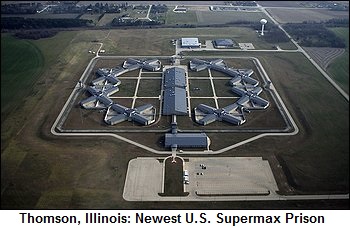
The book continues this theme and relates that there can be economic benefits if communities foster the industries around prisons – consider the SuperMax in the Appendix below – and incarcerating “bad actors”, especially “bad actors” that are the responsibility of other jurisdictions. This is a business model, a Prison Industrial Complex, in which the landlord-host gets paid from the responsible jurisdictions. Business model refers to jobs, entrepreneurial opportunities, trade transactions, etc.

CU Blog - Industrial Reboot - Prisons 101 - Photo 1The Go Lean book details that the Caribbean can create …

12,000 direct jobs for prison guards, administrators, supply logistics, and private protection

While these are direct jobs, there is also the reality of indirect jobs – unrelated service and attendant functions – that at a 3.75 multiplier rate would add another 45,000 jobs.

The book Go Lean…Caribbean – available to download for free – serves as a roadmap for the introduction and implementation of the technocratic Caribbean Union Trade Federation (CU); this is a confederation of all 30 member-states to execute a reboot of the Caribbean eco-system. This CU/Go Lean roadmap has these 3 prime directives:

  • Optimization of the economic engines in order to grow the regional economy to $800 Billion and create 2.2 million new jobs.
  • Establishment of a security apparatus to ensure public safety and protect the resultant economic engines.
  • Improvement of Caribbean governance to support these engines, including a separation-of-powers between the member-states and CU federal agencies.

There is the need for this reboot right now! In the last weeks – September 2017 – the Caribbean region has been beset by 2 major hurricanes, Irma and Maria. The devastation in some member-states has been so complete – i.e. remember Barbuda – that they have had to send their prisoners to foreign facilities, (still within the Caribbean). Consider the news article here, relating this actuality:

Title: St Lucia willing to accept up to 40 foreign prisoners: National Security Minister

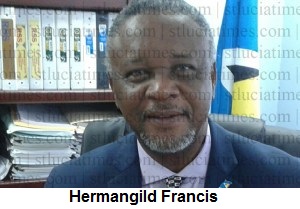
CU Blog - Industrial Reboot - Prisons 101 - Photo 2The National Security Minister, Senator Hermangild Francis has sought to downplay reports that the prisoners brought to St Lucia from the hurricane-ravaged Caribbean islands are high risk.

“People are saying high risk. I have not seen anything indicating that they are high risk. All I’ve been told is that they’re prisoners that needs shelter. So we have accepted to house as many as we could,” Francis asserted.

Seven prisoners from the British Virgin Islands arrived in St Lucia Tuesday along with three others from the Turks and Caicos Islands, bringing to 17 the total number of criminals currently being jailed on the island from the BritishOverseasTerritories, the National Security Minister confirmed.

The first group of seven prisoners arrived at the HewanorraInternationalAirport onboard a British military aircraft on Monday.

It’s unclear what crimes the prisoners were convicted of in their countries or how long will they be kept in St Lucia.

Francis could not confirm whether that would be the final batch.

He said St Lucia is willing to accommodate up to 40 prisoners given that the current low occupancy level at Bordelais Correctional Facility.

The National Security Minister said Tuesday’s transfer of prisoners was carried out “better” than the day before.

The men are being housed in a segregated unit of the Bordelais Correctional Facility, away from local prisoners, Francis said.

The Minister said he plans to visit the prison on Friday.

Source: Posted September 27, 2017; retrieved October 3, 2017 from: https://stluciatimes.com/2017/09/27/st-lucia-willing-accept-40-foreign-prisoners-national-security-minister

Related Story: “Most dangerous” BVI prisoners transferred to St Lucia; reports – Posted September 29, 2017; retrieved October 3, 2017 from: https://stluciatimes.com/2017/09/29/dangerous-bvi-prisoners-transferred-st-lucia-reports

CU Blog - Industrial Reboot - Prisons 101 - Photo 3

Hurricanes are “bad actors” too.

Having a Caribbean Prison Industrial Complex fully functional at this time would have impacted the region’s societal engines: economic, security apparatus and governing administrations. We need this Go Lean/CU roadmap NOW!

The Go Lean book stresses that reforming and transforming the Caribbean societal engines must be a regional pursuit. This was an early motivation for the roadmap, as pronounced in the opening Declaration of Interdependence (Pages 12 – 13):

x. Whereas we are surrounded and allied to nations of larger proportions in land mass, populations, and treasuries, elements in their societies may have ill-intent in their pursuits, at the expense of the safety and security of our citizens. We must therefore appoint “new guards” to ensure our public safety and threats against our society, both domestic and foreign. The Federation must employ the latest advances and best practices of criminology and penology to assuage continuous threats against public safety. The Federation must allow for facilitations of detention for convicted felons of federal crimes, and should over-build prisons to house trustees from other jurisdictions.

xi. Whereas all men are entitled to the benefits of good governance in a free society, “new guards” must be enacted to dissuade the emergence of incompetence, corruption, nepotism and cronyism at the peril of the people’s best interest. The Federation must guarantee the executions of a social contract between government and the governed.

xvi. Whereas security of our homeland is inextricably linked to prosperity of the homeland, the economic and security interest of the region needs to be aligned under the same governance. Since economic crimes … can imperil the functioning of the wheels of commerce for all the citizenry, the accedence of this Federation must equip the security apparatus with the tools and techniques for predictive and proactive interdictions.

xxiv.  Whereas a free market economy can be induced and spurred for continuous progress, the Federation must install the controls to better manage aspects of the economy: jobs, inflation, savings rate, investments and other economic principles. Thereby attracting direct foreign investment because of the stability and vibrancy of our economy.

xxvi.  Whereas the Caribbean region must have new jobs to empower the engines of the economy and create the income sources for prosperity, and encourage the next generation to forge their dreams right at home, the Federation must therefore foster the development of new industries, like that of … the prison industrial complex. In addition, the Federation must invigorate the enterprises related to existing industries like tourism, fisheries and lotteries – impacting the region with more jobs.

Accordingly, the CU will facilitate the eco-system for Self-Governing Entities (SGE), an ideal concept for prisons, with its exclusive federal regulation/promotion activities. Imagine a bordered campus – with a combination of fencing, walls and/or moats/canals – that designates the exclusivity of the commercial, security and administration to superlative governance above the member-states. With an approved “Action Plan”, the comings-and-goings would not be up to debate of local authorities.

The Go Lean movement (book and blogs) details the principles of SGE’s and job multipliers, how certain industries are better than others for generating multiple indirect jobs down the line (or off-campus) for each direct job on the SGE’s payroll. In a previous blog-commentary, it was related how one industry – shipbuilding – was perfectly suited for the Caribbean, as long as the structure was an independent “Shipyard”/SGE. That commentary asserted how 60,000 new jobs can easily be facilitated.

This is transforming! This is the vision of an industrial reboot! This is where and how the jobs are to be created.

But do the exploitations of the Prison Industrial Complex put security at risk for Caribbean communities?

No. Not if the deployments are done right!
(See the reality of “Life in a SuperMax” Prison facility in the Appendix VIDEO below).

The Go Lean book provides 370-pages of turn-by-turn instructions on “how” to adopt new community ethos, plus the strategies, tactics, implementations and advocacies to execute so as to reboot, reform and transform the societal engines of Caribbean society. One advocacy in rebooting the industrial landscape is to foster a Prison Industrial Complex; consider the  specific plans, excerpts and headlines from the book on Page 211 entitled:

10 Ways to Impact the Prison Industrial Complex

1

Lean-in for the Caribbean Single Market
This will allow for the unification of the region into one market of 42 million people across 30 member-states with a GDP of $800 Billion (2010 figures). In addition, the treaty calls for a collective security pact allowing the implementation of a prison system to detain convicts of CU federal offenses (i.e. economic and military crimes). The CU will over-build these facilities for more than just federal prisoners, but also to house inmates for other jurisdictions. Directly, there is a huge economic impact, starting with jobs (law enforcement and support personnel), and the construction industry to build the prisons. Indirectly, the spin-off in the local communities has a multiplier effect. This industry will generate direct income for the CU.

2

Invite and Repatriate Prisoners
The CU will petition host countries to return incarcerated members of the Caribbean Diaspora – for a fee – since they are guilty of crimes committed in those host countries. But the cost of incarceration can be lower in the CU region compared to North American and European venues, because of the ideal weather. The next leap is to offer to house other prisoners in an outsourcing arrangement for the foreign host countries – this is classic Prison Industrial Complex.

3

Impact Rural Communities

4

In-source for Local Governments
The member-states can embrace the CU’s Prison Industrial Complex to satisfy their own needs, both penal and labor. With economies-of-scale, they can out-source their own trustees to the CU to minimize their direct costs. In addition, the CU will manage the process of providing prison labor for public endeavors, i.e. license plates and document scanning.

5

Supply Prison Labor Needs

6

Build Employable Skill-Sets

7

Reduce Recidivism

8

Gathering Intelligence on Probation Trustees and Parolees

9

Prepare for Escalations and Emergencies
The security needs of the region are paramount, even in the case of emergencies. The CU region must allow for the systemic risks of natural disasters (hurricanes and earthquakes) in the vicinity of maximum security prisons. The risk mitigation plan must allow for tactical response/SWAT units, riot squads, and military readiness to suppress uprisings.

10

Learn from Peonage Past and Ensure Corporate Governance

There have been a number of blog-commentaries by the Go Lean movement that highlighted economic opportunities embedded in regional homeland security initiatives. See a sample list here:

https://goleancaribbean.com/blog/?p=13126 “Must Love Dogs”  – Providing K9 Solutions for Better Security
https://goleancaribbean.com/blog/?p=12400 Accede the Caribbean Arrest Treaty
https://goleancaribbean.com/blog/?p=9072 Model: Shots-Fired Monitoring – Securing the Homeland on the Ground
https://goleancaribbean.com/blog/?p=2782 Model: ‘Red Light Traffic Cameras’ for Public Safety & Profits
https://goleancaribbean.com/blog/?p=1832 Model: Opportunities as US Deports More Drug-arrested Inmates
https://goleancaribbean.com/blog/?p=1674 Model: $3.7 Billion for US Detention Centers

In summary, we need jobs; our Caribbean job creation dysfunction is acute. While not glamorous, Prison Industrial Complex jobs are stable, reliable and providential. They would help us to make our homeland a better place to live, work and play.

But this is only 57,000 (12,000 + 45,000) jobs. The Go Lean/CU vision is for 2.2 million new jobs. Where and how can this new technocracy expect to create those jobs, while the existing regimes of the Caribbean region cannot accomplish this now?

Industrial Reboot!

But the Go Lean book describes the process as “difficult”, no ABC-123. Rather it is heavy-lifting! Yet there are some basics that must be embraced; these basics can be catalogued as an “Industrial Reboot 101”. This commentary is 2 of 4 in an occasional series considering Industrial Reboots. The full series is as follows:

  1. Industrial Reboot – Ferries 101
  2. Industrial Reboot – Prisons 101
  3. Industrial Reboot – Pipeline 101
  4. Industrial Reboot – Frozen Foods 101

Yes, we can … reboot our industrial landscape. It is possible to create the new jobs – and other economic opportunities – that the Caribbean region needs. We urge all Caribbean stakeholders – governments and citizens – to lean-in to this roadmap for economic empowerment. We can make all of the Caribbean homeland better places to live, work and play. 🙂

Download the free e-book of Go Lean … Caribbean – now!

Sign the petition to lean-in for this roadmap for the Caribbean Union Trade Federation.

————

Appendix Title: SuperMax Prison

Supermax (short for: super-maximum security) is a primarily U.S. English term used to describe “control-unit” prisons, or units within prisons, which represent the most secure levels of custody in the prison systems of certain countries. The objective is to provide long-term, segregated housing for inmates classified as the highest security risks in the prison system—the “worst of the worst” criminals—and those who pose a threat to both national and global security.[1]

CU Blog - Industrial Reboot - Prisons 101 - Photo 4a

CU Blog - Industrial Reboot - Prisons 101 - Photo 4b

History
CU Blog - Industrial Reboot - Prisons 101 - Photo 5
The United States Penitentiary Alcatraz Island, opened in 1934, has been considered a prototype and early standard for a supermax prison.[5]

An early form of supermax-style prison unit appeared in Australia in 1975, when “Katingal” was built inside the Long Bay Correctional Centre in Sydney. Dubbed the “electronic zoo” by inmates, Katingal was a super-maximum security prison block with 40 prison cells having electronically operated doors, surveillance cameras, and no windows. It was closed down two years later over human rights concerns.[6] Since then, some maximum-security prisons have gone to full lockdown as well, while others have been built and dedicated to the supermax standard.

Supermax prisons began to proliferate within the United States after 1984. Prior to 1984 only one prison in the U.S. met “supermax” standards: the Federal Penitentiary in Marion, Illinois. By 1999, the United States contained at least 57 supermax facilities, spread across 30–34 states.[3] The push for this type of prison came after two correctional officers at Marion, Merle Clutts and Robert Hoffman, were stabbed to death in two separate incidents by …. This prompted Norman Carlson, director of the Federal Bureau of Prisons, to call for a new type of prison to isolate uncontrollable inmates. In Carlson’s view, such a prison was the only way to deal with inmates who “show absolutely no concern for human life”.[7]

Source: Retrieved from Wikipedia October 4, 2017 from: https://en.wikipedia.org/wiki/Supermax_prison

See related Appendix VIDEO of Life in a SuperMax Prison below.

————

Appendix VIDEO – Life in a SuperMax Prison – CNN Video – http://www.cnn.com/videos/us/2015/05/13/inside-supermax-prison-orig.cnn/video/playlists/inside-prison-cells/

Published May 143, 2015 – Life in a SuperMax Prison

If [Boston Marathon Bomber] Dzhokhar Tsarnaev is sent to the United States Penitentiary Administrative-Maximum Facility in Florence, Colorado, he’ll be cut off from the world. See what life is like for inmates inside a Supermax prison. Source: CNN


Share this post:
, , ,
[Top]

ENCORE: The Requirement for Better Security – ‘Must Love Dogs’

One Minute Las Vegas Was Rocking; the Next It Was ‘World War III’ – Report of October 1, 2017 attack at a Country Music Festival
CU Blog - Must Love Dogs ENCORE - Photo 1

It is obvious that tourism and terrorism do not “make good dance partners”. Las Vegas enjoys 47 million tourists year, but with last night’s terrorist attack, there may be the need for some security enhancements at tourist and festival venues.

This is the similar awareness after the May 2017 attack at the Ariana Grande concert in Manchester, England

… and the June 2016 Pulse Night Club shooting in Orlando, Florida.

The advocacy from the lessons-learned from all of these events is “Want Better Security? Must Love Dogs“. There are opportunities for bomb-sniffing and gun-sniffing dogs at venues and surrounding areas. This is the exact theme of a previous blog-commentary. Here is an ENCORE of that commentary:

———————

Go Lean Commentary – Want Better Security? Must Love Dogs

So you want to secure your homeland against terror and other threats? Here’s a key requirement:

‘Must Love Dogs’

This is so true; man’s best friend can also be our best partner for mitigating threats of terroristic acts in public places. This is common sense … now that we have seen how devious the terrorists can be, exploiting soft targets right outside any hard target zones.

This is a fresh concern as there was a terrorist attack at the Manchester Arena in Manchester, England last night (May 22, 2017). The attacker was an ISIS-backed suicide bomber who positioned himself among the exiting concert-goers for a show at the Arena. (The artist is American teen pop-sensation Ariana Grande, a fan-favorite among teenage girls and boys). He detonated his “Improvised Explosive Device” (IED) right outside the security zone while people were exiting to leave. So far, the death toll is 22, with 59 injuries. See full details on the story, aftermath and investigation here:

ISIS Claims Responsibility for Manchester Concert Attack; 22 Dead

Manchester Arena – Situation Normal
CU Blog - 'Must Love Dogs' - Photo 4

CU Blog - 'Must Love Dogs' - Photo 3

CU Blog - 'Must Love Dogs' - Photo 2

Manchester Arena – Monday Night May 22, 2017

CU Blog - 'Must Love Dogs' - Photo 1

CU Blog - 'Must Love Dogs' - Photo 5

Expect more revelations of the motives and bitter consequences of this attack against “innocence”.

This is a matter of serious concern for planners of a new Caribbean. This is Terrorism 101; this is affecting the whole world and our world. Though this attack was far away from the Caribbean islands, it was not far away from Caribbean people, as related in a previous blog-commentary from the promoters of the book Go Lean…Caribbean, there is a large Caribbean Diaspora in Manchester.

The book Go Lean…Caribbean – available to download for free – serves as a roadmap for the introduction and implementation of the technocratic Caribbean Union Trade Federation (CU), for the elevation of Caribbean society – for all member-states. The book asserts that the needed security apparatus to better defend against the modern threats of terrorism is too much for any one Caribbean member-state alone. There must be a regional integrated and confederated solution. This CU/Go Lean roadmap has these 3 prime directives:

  • Optimization of the economic engines in order to grow the regional economy and create new jobs.
  • Establishment of a security apparatus to ensure public safety and protect the resultant economic engines.
  • Improve Caribbean governance to support these engines, including a separation-of-powers between the member-states and CU federal agencies.

The book stresses that reforming and transforming the Caribbean societal engines must be a regional pursuit. This was an early motivation for the roadmap, as pronounced in the opening Declaration of Interdependence (Pages 12 – 13):

x. Whereas we are surrounded and allied to nations of larger proportions in land mass, populations, and treasuries, elements in their societies may have ill-intent in their pursuits, at the expense of the safety and security of our citizens. We must therefore appoint “new guards” to ensure our public safety and threats against our society, both domestic and foreign. The Federation must employ the latest advances and best practices of criminology and penology to assuage continuous threats against public safety. …

xi. Whereas all men are entitled to the benefits of good governance in a free society, “new guards” must be enacted to dissuade the emergence of incompetence, corruption, nepotism and cronyism at the peril of the people’s best interest. The Federation must guarantee the executions of a social contract between government and the governed.

xvi. Whereas security of our homeland is inextricably linked to prosperity of the homeland, the economic and security interest of the region needs to be aligned under the same governance. Since economic crimes … can imperil the functioning of the wheels of commerce for all the citizenry, the accedence of this Federation must equip the security apparatus with the tools and techniques for predictive and proactive interdictions.

Is there anything more that could have been done to prevent this Manchester Terrorist Attack? Let the post-trauma analysis begin! For one, the planners of the new Caribbean security apparatus have always presented this ingredient to the recipe for security success:

Must love dogs!

- Photo 6

In a previous blog-commentary, it was related how specially-trained canines can help to better secure the Caribbean homeland. Consider this quotation:

The subject of animals and animal companionship is also pivotal in the roadmap for elevating Caribbean society, especially for the security engines. The Go Lean book posits (Page 185) that better command of Animal Husbandry can facilitate better security around the region’s economic engines. Dogs feel a lot less intrusive and less intimidating than formal security screening, or personnel patrolling with AK47 automatic rifles.  Imagine a beautiful Caribbean beach scene with a plain clothes “officer” walking along with specialty dogs, or more exactly:

  • Drug Sniffing Dogs
  • Bomb [and Gun] Sniffing Dogs
  • Service/Therapy Dogs

This is one implementation that could have been deployed to mitigate the terrorism threat in Manchester … and everyday here in the Caribbean. Yes, this is in hindsight; this is “Monday Morning Quarterbacking“. This is not fair to the 22 lives lost in Manchester, but this is most importantly a pledge, not to let those lives die in vain. Let’s apply the lessons-learned.

This implementation with service dogs is just one “how”. The Go Lean book provides 370-pages of turn-by-turn instructions on “how” to adopt new community ethos, plus the strategies, tactics, implementations and advocacies to execute so as to better ensure homeland security in the Caribbean region.

Consider this one chapter (and Case Study) … where the Go Lean book fully detailed the advocacy of Animal Husbandry; see  these headlines from Page 185:

Case Study: Trikos K9 Warriors
When the bombs went off at the Boston Marathon [in April 2013], highly trained dogs were rushed to the scene to search for more explosives. Boston Police have said dogs swept the streets in the morning and a second time just an hour before the first marathoners crossed the finish line. It’s considered likely that the bombers planted their devices well after the dogs finished sweeping the area. Since 9/11, dogs have been used more than ever because nothing has proven more effective against hidden bombs than the nose of a working dog. The best of them serve with U.S. Special Operations, so much of what they do is classified, but by looking at the trainers, Trikos K9 Warriors (www.trikos.com) – on a 20-acre ranch in rural Cooper, Texas – one gets a rare glimpse inside the secretive world of these elite dogs. Most of them are from one breed, Belgian Malinois.
Dogs and their handlers work as a team, train as a team, and they go through so much together their bond is as strong as a band of brothers. In Afghanistan, they led their units and protected them in battlefields littered with hidden bombs. Per former Navy SEAL and Trikos Founder Mike Ritland: “same thing that they do for [the troops] overseas, detect explosives, they can do on American streets; plus they can run faster than 30 miles an hour so they can help take down suspects”.
See Appendix below for VIDEO from CBS News Magazine “60 Minutes”.


10 Ways to Improve Animal Husbandry

1 Lean-in for Caribbean Integration
The CU treaty allows for the unification of the region into one market, thereby impaneling a federal layer for oversight of the economy and security of the 30 member-states and 42 million people. One CU mission is to facilitate better security around the region’s economic engines. Another mission is to make the Caribbean a better place to live, work and play. In considering the needs of the 42-million population, there must be some consideration for their animals. Beyond the CU overseeing food-supply regulations and spearheading the security benefits of employing specially trained service animals, the CU will spur philanthropy for more animal husbandry efforts, such as foundations advocating Spay/Neuter goals for dogs/cats. Lastly, the CU will coalesce with local authorities to ensure “dog parks” in urban/suburban areas.
2 Plantations for Bomb Sniffing Dogs
The CU assumes the responsibility to assuage systemic risks and economic crimes. This includes marshaling defensive support for events/festivals, against terrorism and cross border gangs. The US model of Trikos K9 Warriors will be adopted with Belgian Malinois dogs, to breed them on plantations and train them to detect and interdict explosives.
3 Cadaver Dogs / Drug Sniffing Dogs / Drug Sniffing Pigs
The CU will install plantations for dogs and pigs (Vietnamese Potbellies are especially acute) to train them to detect drugs/contraband and cadavers. The CU will maintain animals on-the-ready for acquisition by local and federal police.
4 Police K9 Units
Each member-state may currently have a platoon of K9 police dogs, but their average service life is less than 10 years. So there is always a constant need for service animals. These needs will henceforth be fulfilled locally within the region.
5 Horses for Mounted Police
Many polices forces have a Mounted Police Squad. These are especially critical for patrols at events and crowded locales. The CU will facilitate the acquisition and training of horses for the region’s Mounted Police units. These breeding and training plantations are ideal for rural area development, thus spurning an economic benefit.
6 Water Focus – Seals and Dolphins
Service animals are not only the land variety. There are aquatic mammals as well: seals and dolphins. These species are excellent for securing maritime and naval operations – the CU are all islands and coastal states. The best practice is to mount mobile cameras on these mammals and have them patrol a specified grid. The economies of scale of the CU will allow for the deployment of these creative solutions while any one member-state alone cannot justify the investment.
These deployments should not be secretive, but rather exposed to local/foreign media for image promotion.
7 Service Dogs for the Blind / Disabled – Domestic and Tourists
8 Comfort Animals for Therapies and Treatment
9 Bio-Medical Farms (Pigs, Baboons)
10 Agricultural Considerations – Animals for Foods

The Go Lean movement (book and preceding blog-commentaries) relate that security is not automatic, innate nor natural – Freedom is not Free. There is heavy-lifting involved in protecting the homeland for Caribbean stakeholders: residents and visitors. This point was detailed in these previous blog-commentaries:

https://goleancaribbean.com/blog/?p=11332 Boston Bombing Anniversary – Learning Lessons
https://goleancaribbean.com/blog/?p=10959 See Something, Say Something … Do Something
https://goleancaribbean.com/blog/?p=10566 Funding the Caribbean Security Pact
https://goleancaribbean.com/blog/?p=10222 Waging a Successful War on Terrorism
https://goleancaribbean.com/blog/?p=9072 Securing the Homeland – On the Ground
https://goleancaribbean.com/blog/?p=6103 Sum of All Fears – ‘On Guard’ Against Deadly Threats
https://goleancaribbean.com/blog/?p=5307 8th Violent Crime Warning to Bahamas Tourists
https://goleancaribbean.com/blog/?p=5002 Managing a ‘Clear and Present Danger’
https://goleancaribbean.com/blog/?p=1965 America’s Navy – 100 Percent – Model for Caribbean Regional Security
https://goleancaribbean.com/blog/?p=1832 American Drug-arrested inmates to be deported – Look-out Caribbean
https://goleancaribbean.com/blog/?p=1554 Status of Forces Agreement for Regional Security Pact
https://goleancaribbean.com/blog/?p=1487 Here come the Drones … and the Concerns
https://goleancaribbean.com/blog/?p=392 Jamaica received World Bank funds to help in crime fight

The quest of the Go Lean roadmap is to make the Caribbean homeland, a better place to live, work and play. This means measurable reduction (mitigating and remediation) of crime, interpersonal violence and systemic threats in the region. The Go Lean book presents a regional solution to remediate and mitigate crime and terrorism in the Caribbean, featuring details of strategies, tactics and implementations designed based on best-practices from around the world. The book’s vision is quite simple:

If we fail to plan, then we plan to fail.

The premise in the Go Lean book is that “bad actors” will always emerge, from internal and external origins. We must be prepared and on-guard to defend our homeland against all threats, foreign and domestic, including terrorism and interpersonal violence. Plus, we must accomplish this goal with maximum transparency, accountability, and commitment to due-process and the rule-of-law. Thusly, there is a place for many tools and techniques, think: closed-circuit TV (CCTV), dashboard and body cameras.

The title on this commentary – ‘Must Love Dogs’ – puns the title of the 2005 Movie of the same name. That movie was not about Terrorism nor about dogs. (It was about a couple who met through an internet dating site that matched their dog-loving profiles).

See a review of the movie here: http://www.rogerebert.com/reviews/must-love-dogs-2005.
CU Blog - 'Must Love Dogs' - Photo 0

Yes, we can – with our “love for dogs” – make our homeland a better-safer place to live, work and play. 🙂

Download the free e-Book of Go Lean … Caribbean – now!

Sign the petition to lean-in for this roadmap for the Caribbean Union Trade Federation.

—————

Appendix VIDEO – Sniffing Out Bombs: America’s most elite dogs – https://youtu.be/FsnPAQ137fY

Published on Apr 21, 2013 – Lara Logan gets a rare look into the secretive world of working dogs — some of whose capabilities are military secrets — and their handlers.

Share this post:
, , , ,
[Top]

ENCORE: America’s Race Relations – Spot-on for Protest

The protest action of “Kneeling during the National Anthem” has become huge.

CU Blog - ENCORE - Spot on for Protest - Photo 1

See the full news article here: https://www.nytimes.com/2017/09/25/sports/football/cowboys-cardinals-anthem-protest.html?mcubz=3

This issue was also huge this day last year – with the below blog-commentary – when NFL quarterback Colin Kaepernick began this protest. What is different now? A lot! Starting with the President of the United States, Donald J. Trump. He seems to want to take America backwards by asserting that NFL players who take a knee should be fired.

CU Blog - ENCORE - Spot on for Protest - Photo 2 CU Blog - ENCORE - Spot on for Protest - Photo 3

Well, now whole teams are taking the knee and the league is universally blasting the President.

The President? This is the Leader of the Free World?

This commentary asserted then on September 26, 2016 and is presented here as an ENCORE now, “It is Time To Go! America is not home for Caribbean people”. See here:

——–

Go Lean Commentary – Time To Go – Spot-on for Protest

Here’s an interesting little-known tidbit about Abraham Lincoln – the liberator and emancipator of the American slaves:

Initially, he felt that the freed slaves needed to leave America. He felt that they would never be treated as equals in the land that had previously held them as slaves for 250 years. He advocated for places like the Caribbean (Haiti & British colonies), Central America (Belize & Panama), South America (Guyana) or Africa (Liberia).
Source Book: Colonization After Emancipation: Lincoln and the Movement for Black Resettlement.
CU Blog - A Lesson in History - Before the Civil War - Human Right Not Compromise - Photo 3

Now, 150 years later, perhaps his thinking was “spot-on”.

These 150 years since the formal emancipation has seen a continuous suppression, repression and oppression of the Black race in America. Could they have had a better disposition in the Caribbean, with its Black majority rule?

This commentary asserts that it is easier for the Black-and-Brown populations in the Caribbean to prosper where planted in the Caribbean, rather than emigrating to foreign countries, like the United States.

We agree with Abraham Lincoln’s gut instinct; he was “spot on”.

This point aligns with the book Go Lean…Caribbean, which states that while the blatant racist attitudes and actions may now be considered politically incorrect, the foundations of institutional racism in the US have become even more entrenched. The book supports the notion that the Caribbean can be an even better place to live for the Caribbean’s Black-and-Brown populations, once we make the homeland a better place to live, work and play.

There is the need to optimize the economic, security and governing engines in the Caribbean region. This commentary is 1 of 3 from the movement behind the book Go Lean … Caribbean, in consideration of the rhymes-and-reasons to repatriate back to the Caribbean homeland. The other commentaries detailed in this series are as follows:

  1.   Time to Go – Spot-on for Protest
  2.   Time to Go – No respect for our Hair
  3.   Time to Go – Logic of Senior Emigration

All of these commentaries relate to the Caribbean image and disposition as a majority Black region. No racial supremacy is advocated in this book nor by this movement. The motivation is simply for the Greater Good. This is defined as …

the greatest good to the greatest number of people which is the measure of right and wrong.” – Jeremy Bentham (1748-1832).

The Go Lean book and movement serves as a roadmap for the introduction of the technocratic Caribbean Union Trade Federation (CU). The CU is set to optimize Caribbean society through economic empowerment, yes, but there are security and governing dynamics as well. Therefore the Go Lean roadmap has 3 prime directives:

  • Optimization of the economic engines in order to grow the regional economy to $800 Billion & create 2.2 million new jobs.
  • Establishment of a security apparatus to ensure public safety, justice assurances and protect the economic engines.
  • Improve Caribbean governance to support these engines.

The Go Lean roadmap posits that the Caribbean region is in crisis now, and so many are quick to flee for refuge in foreign countries. But the “grass is not necessarily greener on the other side”; life in the US, for example, is definitely not optimized for the Caribbean’s Black-and-Brown. It is “spot-on” that there is need for protest, anguish and outright fear for the interactions of Black men and the American police/law enforcement establishment.

The Go Lean book asserts that every community has bad actors. The Caribbean has bad actors; and the US has bad actors. But because of the obvious need for reform and to transform the region, it may be easier to effect change at home, than in the foreign country of the US.

Besides, many (non-Black) people in the US, don’t even think they need to change anything. They think there is no problem – everything is fine – notwithstanding the proliferation of Cop-On-Black killings. See a related news article here regarding legendary NFL Head Coach Mike Ditka; (despite these developments, Mr. Ditka continues to be honored and esteemed in the Caribbean):

Title: Mike Ditka to Colin Kaepernick: ‘Get the hell out’ if you don’t like America
By: Bryan Armen Graham
Sub-title: Mike Ditka spared no criticism of Colin Kaepernick’s national anthem protest.

cu-blog-time-to-go-spot-on-for-protest-photo-1

Hall of Fame coach Mike Ditka has leveled blistering criticism at Colin Kaepernick’s decision to kneel during the national anthem, saying he has “no respect” for the San Francisco 49ers quarterback whose protest has sparked a national discussion over racial injustice, inspired dozens of NFL players to follow suit and landed him on the cover of Time magazine.

“I think it’s a problem, anybody who disrespects this country and the flag,” the longtime NFL coach said in a radio interview on KRLD-FM in Dallas. “If they don’t like the country, if they don’t like our flag, get the hell out. That’s what I think.

“I have no respect for Colin Kaepernick. He probably has no respect for me, that’s his choice. My choice is that I like this country, I respect our flag, and I don’t see all the atrocities going on in this country that people say are going on.

“I see opportunities if people want to look for opportunity. Now if they don’t want to look for them, then you can find problems with anything, but this is the land of opportunity because you can be anything you want to be if you work. Now if you don’t work, that’s a different problem.”

The 76-year-old Ditka, who was inducted into the Pro Football Hall of Fame in 1988, is one of two people in NFL history to win a league title as a player, an assistant coach and a head coach. He graduated from local hero to Chicago icon during an 11-year coaching stint with the Bears that included the team’s only Super Bowl win during the 1985 season, then retired permanently after a failed comeback with the New Orleans Saints in 1999.

A well-known conservative, Ditka publicly flirted with running against Democratic candidate Barack Obama, then a state senator, for the open seat in the US Senate vacated by Illinois senator Peter Fitzgerald in 2004. No one then could have imagined how the election would ultimately propel Obama to the presidency in four years’ time.

“Biggest mistake I’ve ever made,” he told the Dickinson Press in 2013. “Not that I would have won, but I probably would have and he wouldn’t be in the White House.”

In March, Ditka called Obama “the worst president we’ve ever had”.

“Barack Obama is a fine man,” he added. “He’s pleasant, he’d be great to play golf with. He’s not a leader.”
Source: The Guardian Daily Newspaper Online Site; Posted September 23, 2016; retrieved September 25, 2016:
https://www.theguardian.com/sport/2016/sep/23/mike-ditka-colin-kaepernick-get-the-hell-out-anthem-protest
cu-blog-time-to-go-spot-on-for-protest-photo-2

Photograph: Jordan Strauss/Invision/AP

The protagonist in this drama is NFL Quarterback Colin Kaepernick; he has started a protest against the treatment of African-Americans in the US. He asserts that too many unarmed Black Men has died, as of recent, by the hands of White Police Officers. While others share this view, including the African-American President of the US Barack Obama, Mr. Kaepernick is voicing his protest by refusing to stand during the singing of the national anthem at the start of his NFL football games. This protest has fostered a lot of attention … and discord to this issue.

The underlying injustice of Cop-on-Black killings is acute. There is a need for community outrage; it is “spot-on” that anyone would protest. Kudos to Colin Kaepernick! Since he started his protest stance on August 26, 2016, at least 15 more “Black men have been killed by law enforcement officers” as of September 20, 2016; (but there has been 2 more highly publicized killings since this posting: Keith Lamont Scott in Charlotte, North Carolina, and Terence Crutcher in Tulsa, Oklahoma).

The foregoing article gives the instruction for people to leave who do not agree with the American status quo. But can they really? Could the liberated slaves in Lincoln’s day leave for elsewhere? How about the countless cries over the centuries and decades for Black American Nationalism; (as in Marcus Garvey)? Was there an alternative homeland for their consideration? This reminds us of the movie dialogue from the 1982 movie An Officer and a Gentlemen. Remember this exchange:

Foley: You can forget it! You’re out!

Mayo: Don’t you do it! Don’t! You… I got nowhere else to go! I got nowhere else to g… I got nothin’ else.

Seriously, for the majority of Black America, they have no where else to go. The Caribbean Diaspora who represent 1 in 11 Blacks in the US, on the other hand, have the option of repatriating home.

We welcome them! We declare that it is “Time to Go“. We are hereby preparing for their return – fixing our defects – monitoring our “bad actors”.

We have to consider that police officers can also be “bad actors”. The book contends that the Caribbean must better prepare for bad actors, that we will see more of them. With the plan for economic success, comes the eventuality of even more bad actors, just as a result of economic success. This point is pronounced early in the book with the Declaration of Interdependence (Page 12) that claims:

x.   Whereas we are surrounded and allied to nations of larger proportions in land mass, populations, and treasuries, elements in their societies may have ill-intent in their pursuits, at the expense of the safety and security of our citizens. We must therefore appoint “new guards” to ensure our public safety and threats against our society, both domestic and foreign. The Federation must employ the latest advances and best practices of criminology and penology to assuage continuous threats against public safety. The Federation must allow for facilitations of detention for [domestic and foreign] convicted felons of federal crimes, and should over-build prisons to house trustees from other jurisdictions.

xvi. Whereas security of our homeland is inextricably linked to prosperity of the homeland, the economic and security interest of the region needs to be aligned under the same governance. Since economic crimes, including piracy and other forms of terrorism, can imperil the functioning of the wheels of commerce for all the citizenry, the accedence of this Federation must equip the security apparatus with the tools and techniques for predictive and proactive interdictions.

The Caribbean appointing “new guards”, or a security pact to ensure public safety and justice assurance is a comprehensive endeavor, that will encapsulate the needs of all Caribbean stakeholders: governments, institutions and residents.

An important mission of the Go Lean roadmap is to dissuade the high emigration rates of Caribbean citizens to the American homeland. Secondly, there is a mission to encourage the repatriation of the Caribbean Diaspora back to their ancestral homeland.

This means being conscious of why people flee – “push” and “pull” reasons – and monitoring the societal engines to ensure improvement – optimization. (“Push” refers to the societal defects in the Caribbean that moves people to want to get way; and “pull” factors refer to the impressions and perceptions that America is better).

An increased perception that “one would be shoot by a White police officer” should lower the “pull” factor. We would think …
See VIDEO here:

VIDEO – I Am Afraid I Will Be Killed By Police – https://youtu.be/9DD64urEx28

Published on Jul 7, 2016 by Kevin OnStage. See more from this commentator here:
http://kevonstage.com/store
http://kevonstage.com/booking

The Go Lean book details a series of community ethos, strategies, tactics, implementations and advocacies to better optimize our Caribbean life (economic and security concerns):

Community Ethos – Consequences of Choices Lie in Future Page 21
Community Ethos – Economic Principle – Consequences of Choices Lie in Future Page 21
Community Ethos – Whistleblower Protection Page 23
Community Ethos – Anti-Bullying and Mitigation Page 23
Community Ethos – Minority Equalization Page 24
Community Ethos – Return on Investments Page 24
Community Ethos – Cooperatives Page 25
Community Ethos – Ways to Manage Reconciliations Page 34
Community Ethos – Ways to Improve Sharing Page 35
Community Ethos – Ways to Impact the Greater Good Page 37
Tactical – Confederating a non-sovereign union Page 63
Tactical – Fostering a Technocracy Page 64
Tactical – Separation of Powers – CU Federal Agencies -vs- Member-states Page 75
Implementation – Ways to Pay for Change Page 101
Implementation – Start-up Foreign Policy Initiatives Page 102
Implementation – Start-up Security Initiatives Page 103
Implementation – Reasons to Repatriate Page 118
Planning – Big Ideas – Regional Single Market Page 127
Planning – Ways to Make the Caribbean Better Page 131
Planning – Ways to Better Manage the Caribbean Image Page 133
Advocacy – Ways to Grow the Economy Page 151
Advocacy – Ways to Create Jobs Page 152
Advocacy – Ways to Improve Governance Page 168
Advocacy – Ways to Better Manage the Social Contract Page 170
Advocacy – Ways to Improve Leadership Page 171
Advocacy – Ways to Impact Justice Page 177
Advocacy – Ways to Reduce Crime Page 178
Advocacy – Ways to Improve Homeland Security Page 180
Advocacy – Ways to Improve Intelligence Gathering/Analysis Page 182
Advocacy – Ways to Improve for Natural Disasters – Many flee after disasters Page 184
Advocacy – Ways to Impact the Diaspora Page 217
Advocacy – Ways to Preserve Caribbean Heritage Page 218
Advocacy – Ways to Protect Human Rights Page 220
Advocacy – Ways to Impact Urban Living Page 234
Advocacy – Ways to Impact US Territories Page 244

This subject of “push and pull” has been frequently blogged on in other Go Lean commentaries; as sampled here with these entries relating American “pull” factors:

https://goleancaribbean.com/blog/?p=8431 Bahamas Issued US Travel Advisory Citing Police Violence
https://goleancaribbean.com/blog/?p=8202 Respect for Minorities: Lessons Learned from American Dysfunction
https://goleancaribbean.com/blog/?p=8200 Respect for Minorities: Climate of Hate
https://goleancaribbean.com/blog/?p=8099 Caribbean Image: ‘Less Than’?
https://goleancaribbean.com/blog/?p=7221 Street naming for Martin Luther King unveils the real America
https://goleancaribbean.com/blog/?p=7204 ‘The Covenant with Black America’ – Ten Years Later
https://goleancaribbean.com/blog/?p=6189 A Lesson in History – Hurricane ‘Katrina’ exposed a “Climate of Hate”
https://goleancaribbean.com/blog/?p=5733 Better than America? Yes, We Can!
https://goleancaribbean.com/blog/?p=5527 American Defects: Racism – Is It Over?
https://goleancaribbean.com/blog/?p=5333 Racial Legacies: Cause and Effect
https://goleancaribbean.com/blog/?p=1020 Also a European Sports Problem
https://goleancaribbean.com/blog/?p=546 American Model: Book Review – ‘The Divide’ – … Injustice in the Age of the Wealth Gap
https://goleancaribbean.com/blog/?p=341 Hypocritical US slams Caribbean human rights practices
https://goleancaribbean.com/blog/?p=273 10 Things We Don’t Want from the US: Racism against minorities

Underlying to the Go Lean/CU prime directive of elevating the economics, security and governing engines of the Caribbean, is the desire to make the Caribbean homeland, a better place to live, work and play. We know “bad actors” will emerge – even as law enforcement officers – so we need to be “on guard”.

We want proactive and reactive mitigations for abuse of power. We want to ensure our Caribbean communities are safe for our stakeholders (residents and visitors). We entreat the American forces to work towards remediating their own defects. But fixing the US is not within our scope; fixing the Caribbean is our only mission.

Saying that it is “Time to Go“, must mean that we are ready to receive our oft-scattered Caribbean Diaspora. Are we ready, now?

Frankly, no …

… but were are ready, willing and able to start the change process, to reform and transform. This was the intent of the book Go Lean … Caribbean. The book contends that the Caribbean must prepare for the return of all of our people, back to these shores. This means people in a good disposition and bad (sick, aged, unemployed, destitute, imprisoned, etc.). This point is pronounced early in the book with the Declaration of Interdependence (Pages 12 & 13) that claims:

xiii. Whereas the legacy of dissensions in many member-states … will require a concerted effort to integrate the exile community’s repatriation, the Federation must arrange for Reconciliation Commissions to satiate a demand for justice.

xviii. Whereas all citizens in the Federation member-states may not have the same physical abilities, reasonable accommodations must be made so that individuals with physical and mental disabilities can still access public and governmental services so as to foster a satisfactory pursuit of life’s liberties and opportunities for happiness.

xix. Whereas our legacy in recent times is one of societal abandonment, it is imperative that incentives and encouragement be put in place to first dissuade the human flight, and then entice and welcome the return of our Diaspora back to our shores. This repatriation should be effected with the appropriate guards so as not to imperil the lives and securities of the repatriated citizens or the communities they inhabit. The right of repatriation is to be extended to any natural born citizens despite any previous naturalization to foreign sovereignties.

xxvi. Whereas the Caribbean region must have new jobs to empower the engines of the economy and create the income sources for prosperity, and encourage the next generation to forge their dreams right at home, the Federation must therefore foster the development of new industries, like that of ship-building, automobile manufacturing, prefabricated housing, frozen foods, pipelines, call centers, and the prison industrial complex. In addition, the Federation must invigorate the enterprises related to existing industries like tourism, fisheries and lotteries – impacting the region with more jobs.

The book details the needed security provisions that need to be put in place to optimize Caribbean life. See this quotation here (Page 118):

“New Guards” for Public Safety
The CU implements the anti-crime measures and provides special protections for classes of repatriates and retirees. Crimes against these special classes are marshaled by the CU, superseding local police. Since the CU will also install a penal system, with probation and parole, the region can institute prisoner exchange programs and in-source detention for foreign governments, especially for detainees of Caribbean heritage.

This subject of improving the conditions for successful Caribbean repatriation has been blogged in previous Go Lean commentaries; as sampled here:

https://goleancaribbean.com/blog/?p=5304 Mitigating the Eventual Abuse of Power
https://goleancaribbean.com/blog/?p=5002 Managing a ‘Clear and Present Danger’
https://goleancaribbean.com/blog/?p=4360 Dreading the American: ‘CaribbeanBasin Security Initiative’
https://goleancaribbean.com/blog/?p=4308 911 – Emergency Response: System in Crisis

The Go Lean roadmap was composed with the community ethos of the Greater Good foremost; for all peoples – Black, Brown, White, Yellow, Red. We advocate for a color-blind society …

… and justice for all.

This is an American concept … in words only. In practice, America has always fallen short in its delivery of justice and opportunities for its Black-and-Brown populations. There is so much that America does right, that we want to model; there is so much that America does poorly, that we want to mitigate. The “grass is not greener on the other side”. Effort is needed anywhere, everywhere, to improve society. But for the Black-and-Brown of the Caribbean, more success from less effort can be expected in the Caribbean than in the US; the underlying foundation of racism in America may be just too hard to unseat.

All Caribbean stakeholders are hereby urged to lean-in to this Go Lean/CU roadmap to elevate the Caribbean; to make our homeland a better place to live, work and play. 🙂

Download the free e-Book of Go Lean … Caribbean – now!

Share this post:
, , ,
[Top]

After Irma, Failed State Indicators: Destruction and Defection

Go Lean Commentary

CU Blog - After Irma, Barbuda Becomes a 'Ghost Town' - Photo 3What happens after a community is devastated by a catastrophic hurricane?

Many things; mostly all bad:

This is not just theoretical; this is the current disposition in the Caribbean after the recent Category 5 Hurricane Irma. These descriptors are all indicative of a Failed State status. This is a familiar theme for this movement behind the 2013 book Go Lean…Caribbean – available to download for free – (and the subsequent blog-commentaries). The book opens (Page 3) with this introduction to the subject of failure in the Caribbean:

Failure is just too familiar. Already we have member-states …  on the verge of a Failed-State status… . These states are not contending with the challenges of modern life: changing weather patterns, ever-pervasive technology, and the “flat world” of globalization. To reverse the fortunes of these failing states, and guide others in the opposite direction to a destination of prosperity, the Caribbean must re-boot the regional economy and systems of commerce.

CU Blog - After Irma, Failed-State Indicator - Death or Diaspora - Photo 1Hurricanes are tied to failure and Failed-State Indicators. The consequences of hurricanes are more than just natural, there is also the preponderance for people to leave their homelands afterwards – to defect. See a related story (article & VIDEO) in the Appendix below in which a family sought asylum in Canada for refuge from their devastated community.

In Failed-State formal-speak, the Go Lean book (Page 271) details 2 indicators or indices: Mounting Demographic Pressures (DP) and Massive Movement of Refugees (REF). These downward movements are indicators of Failed-State status – a bad report on the Fail-State index is simply a reflection of a miserable existence in society:

  • Mounting Demographic Pressures
    Pressures on the population such as disease and natural disasters make it difficult for the government to protect its citizens or demonstrate a lack of capacity or will. This indicator include pressures and measures related to:
    Natural Disaster, Disease, Environment, Pollution, Food Scarcity, Malnutrition, Water Scarcity, Population Growth, Youth or Age Bulge, and Mortality
  • Massive Movement of Refugees or IDPs
    Forced uprooting of large communities as a result of random or targeted violence and/or repression, causing food shortages, disease, lack of clean water, land competition, and turmoil that can spiral into larger humanitarian and security problems, both within and between countries. This indicator refers to refugees leaving or entering a country. This indicator include pressures and measures related to:
    Displacement, Refugee Camps, IDP (Internally Displaced Persons) Camps, Disease Related to Displacement, Refugees per capita, and IDPs per capita.

This commentary completes the 4-part series on the Aftermath of Hurricane Irma. There are a lot of mitigation and remediation efforts that can be done to lessen the impact of this and future storms. There are lessons that we must consider; there are reforms we must make; there are problems we must solve. The full list of the 4 entries of this series are detailed as follows:

  1. Aftermath of Hurricane Irma – America Should Scrap the ‘Jones Act’
  2. Aftermath of Hurricane Irma – Barbuda Becomes a ‘Ghost Town’
  3. Aftermath of Hurricane Irma – The Science of Power Restoration
  4. Aftermath of Hurricane Irma – Failed State Indicators: Destruction and Defection

Despite the manifested threats of Climate Change-fueled hurricanes, we must engage the heavy-lifting to make the Caribbean homeland a better place to live, work and play. Otherwise people flee the oppression, repression and suppression of being “home”.

In a previous blog-commentary about 19th Century Slavery Abolition icon Frederick Douglass, it revealed his theme when he went to the British island of Ireland to commiserate with that people on their oppression-repression-suppression plight. He asserted …

… that if an oppressed population didn’t find refuge, the only outcome would be Death or Diaspora.

The Diaspora prophecy happened, then in Ireland and today, especially here in the Caribbean! (In a previous blog, it was revealed that after 1840, emigration from Ireland became a massive, relentless, and efficiently managed national enterprise. In 1890 40% of Irish-born people were living abroad. By the 21st century, an estimated 80 million people worldwide claimed some Irish descent; which includes more than 36 million Americans who claim Irish as their primary ethnicity).

Caribbean citizens are also pruned to emigrate … to foreign shores (North America and Europe) seeking refuge. In a previous blog-commentary it was asserted that the US – the homeland  for Frederick Douglass – has experienced accelerated immigration in recent years. Published rates of societal abandonment among the college educated classes have reported an average of 70 percent in most member-states, with some countries (i.e. Guyana) tallying up to 89 percent. For this reason, there is solidarity for the Diaspora of Ireland and the Diaspora of the Caribbean.

The publishers of the Go Lean book are also steadfast and committed to one cause: arresting the societal abandonment of Caribbean communities. This would lessen the future Diaspora. This would be good!

The book Go Lean…Caribbean serves as a roadmap for the introduction and implementation of the technocratic Caribbean Union Trade Federation (CU), for the elevation of Caribbean society – for all member-states. This CU/Go Lean roadmap has these 3 prime directives:

  • Optimization of the economic engines in order to grow the regional economy to $800 Billion and create 2.2 million new jobs.
  • Establishment of a security apparatus to ensure public safety and protect the resultant economic engines. This security pact encompasses an emergency planning/response apparatus to deal with the reality of natural disasters. Otherwise, the affected population becomes refugees and the member-state moves towards Failed-State status. The CU mandate is to protect against any Failed-State encroachments.
  • Improve Caribbean governance to support these engines, including a separation-of-powers between the member-states and CU federal agencies.

The book stresses that reforming and transforming the Caribbean societal engines must be a regional pursuit. This was an early motivation for the roadmap, as pronounced in the opening Declaration of Interdependence (Pages 12 – 13):

xi. Whereas all men are entitled to the benefits of good governance in a free society, “new guards” must be enacted to dissuade the emergence of incompetence, corruption, nepotism and cronyism at the peril of the people’s best interest. The Federation must guarantee the executions of a social contract between government and the governed.

xii. Whereas the legacy in recent times in individual states may be that of ineffectual governance with no redress to higher authority, the accedence of this Federation will ensure accountability and escalation of the human and civil rights of the people for good governance, justice assurances, due process and the rule of law. As such, any threats of a “failed state” status for any member state must enact emergency measures on behalf of the Federation to protect the human, civil and property rights of the citizens, residents, allies, trading partners, and visitors of the affected member state and the Federation as a whole.

xvi. Whereas security of our homeland is inextricably linked to prosperity of the homeland, the economic and security interest of the region needs to be aligned under the same governance. Since economic crimes … can imperil the functioning of the wheels of commerce for all the citizenry, the accedence of this Federation must equip the security apparatus with the tools and techniques for predictive and proactive interdictions.

The Go Lean book provides 370-pages of turn-by-turn instructions on “how” to adopt new community ethos, plus the strategies, tactics, implementations and advocacies to execute so as to reboot, reform and transform the societal engines of Caribbean society, to reverse the trending to Failed-State status. Consider the Chapter excerpts and headlines from this sample on Page 134 entitled:

10 Ways to Improve Failed-State Indices

1

Lean-in for the Caribbean Union Trade Federation
This will allow for the unification of the region into one market of 42 million people across 30 member-states, thereby creating an economic zone to protect the interest of the participant trading partner-member-states. The GDP of the region will amount to $800 Billion (circa 2010). In addition, the treaty calls for a collective security agreement of the member states so as to ensure homeland security and assuage against systemic threats. The CU will ensure that law-and-order persist during times of distress. When a member state declares a State of Emergency, due to natural disaster or civil unrest, this triggers an automatic CU response – this is equivalent to the governmental dialing 911.

2

Image and Defamation
When a country’s primary foreign currency generator is tourism/hospitality, just the perception of a weak or failing state could be devastating. The index is a number that can rise and fall, like a credit score, so any upward movement in the index triggers the negative perception. The pressures are not only internal; there may be external entities that can have a defaming effect: credit rating, country risk, threat assessment, K-n-R (Kidnap and Ransom) insurance rates. The CU will manage the image of the region’s member-states against defamation and work to promote a better image.

3

Local Government and the Social Contract
The Social Contract is the concept that individuals have consented, either explicitly or tacitly, to surrender some of their freedoms and submit to the authority of the State in exchange for protection of their remaining rights (natural and legal). People therefore expect their government (national or municipal) to provide public safety, health, education and other services. The CU will facilitate overhead services for local governments and access to financial markets to fund capital infrastructure investments. The member-states will therefore have more accountability and reporting to CU institutions.

4

Law Enforcement Oversight
The CU will maintain jurisdiction for economic crimes and regional threats. Plus, the CU will collaborate and facilitate local law enforcement with grants of equipment and training to better fulfill their roles. Lastly, the regional security treaty will grant the CU the audit and compliance responsibility for “use of force” investigations and internal affairs.

5

Military and Political Monitoring
The CU will carefully monitor the activities of the military units (Army, Navy and Coast Guard) – this accountability will be the by-product of increased CU funding. The CU will assume the Judge Advocate General role for military justice affairs. For cross border engagements, the National armed forces will be marshaled by the CU’s Commander-in-Chief.

6

Crime/Homeland Intelligence
The CU will install advanced systems, processes, and personnel for intelligence gathering and analysis to assist public safety institutions. This includes terrestrial and satellite surveillance systems, phone eavesdropping, data mining and predictive modeling. The findings will be used to mitigate risks and threats (gangs, anarchy, and organized crime).

7

Minority and Human Rights 

8

Election Outsourcing

9

War Against Poverty
As a Trade Federation charged with facilitating the economic engines for the region, the CU operations will have positive effect on jobs and growing the local economies. The CU has a complete battle plan for the War on Poverty.

10

Big Data
The CU will embrace an e-Government and e-Delivery model. There will be a lot of data to collect and analyze. In addition, the CU Commerce Department will function as a regional OECD (Organization of Economic Cooperation and Development), accumulating and measuring economic metrics and statistical analysis. Any decline in Failed-State indices will be detected, and managed in both a predictive and reactionary manner.

The Caribbean must foster a better disaster preparation and response apparatus. We cannot just count on the kindness of strangers. America – the Super Power in our region – is busy … with it’s own hurricane aftermath. Our Way Forward must come from our own making. Otherwise, our people will just leave. People abandon the Caribbean homeland after every storm, not because of the severity of storms but the encroachments towards Failed-States status.

Failed-States = oppression, suppression and repression of the citizens of a country. This rule was true in the days of Frederick Douglass and it is true today:

If an oppressed people don’t find relief and refuge, the only outcome would be Death or Diaspora.

We must do better here in the Caribbean; we must make our homeland a better place to live, work and play. 🙂

Download the free e-book of Go Lean … Caribbean – now!

Sign the petition to lean-in for this roadmap for the Caribbean Union Trade Federation.

———-

Appendix – Title: Family arrives in Ontario after fleeing Hurricane Irma

CU Blog - After Irma, Failed-State Indicator - Death or Diaspora - Photo 2

A family has abandoned their home in the Bahamas, and spent their life savings to escape the threat of Hurricane Irma.

Desiree Johnson and her two sons fled without a plan. They say they know they made an impulsive decision, but felt they had no other choice. The Johnsons arrived at PearsonInternationalAirport around 10:30 p.m. on Thursday.

“I didn’t sleep at all, I paced the floor, I walked, I tried to call. It was not a good feeling”, Johnson told CTV Barrie.

The family of three doesn’t have any relatives or friends in Toronto, but they say they know Canada is a country with a caring reputation.  They don’t know what tomorrow will bring, but they have already reached out to several community agencies looking for help.

Irma’s pounding of the southern Bahamas also brings back terrifying memories of a previous storm.

“It was very scary, we were out for about 2 months – no water, no lights, some places no food”, Johnson recalls. Her 35-year-old son, Jevon Johnson, says he found the meaning of terror during Hurricane Matthew.

The family is now planning on asking the federal government to remain in Canada. Johnson says she wants an opportunity for two of her three sons to start a new life. Her third son was left behind in Bahamas, as the family didn’t have enough money to escape all together.

Source: CTV News Posted September 8, 2017 from: http://barrie.ctvnews.ca/family-arrives-in-ontario-after-fleeing-hurricane-irma-1.3581810

———–

VIDEO – Bahamian Family Flee to Canada Seeking Refuge from Hurricane Irma – https://youtu.be/g25cywl7V-w

Share this post:
, , ,
[Top]

ENCORE: Managing a ‘Clear and Present Danger’

Oh, Oh! We have a problem bearing down on us. Hurricane Irma seems ominous. This is definitely a “Clear and Present Danger”.

This is a familiar declaration for us; one that requires desperate measures in the response to a desperate situation. We have had to contend with this before, many times in the past. We have also defined what is a Clear and Present Danger … and how to contend with it.

It is only apropos to Encore our previous blog-commentary on this subject from April 23, 2015. See it here-now:

===================

Go Lean CommentaryManaging a ‘Clear and Present Danger’

A ‘Clear and Present Danger’ sounds ominous…

- Photo 4

There should be no question as to intent or consequence if the situation goes unimpeded.

The ‘Clear and Present Danger’ doctrine is a concept in jurisprudence, which has bearing on everyday life for everybody. It refers to not just a potential danger but one that will likely cause a catastrophe if not immediately obstructed or neutralized.

This phrase was suggested as a test of harmful speech by the US Supreme Court Justice Oliver Wendell Holmes in the 1919 case of Schenck v. United States. In delivering the court’s unanimous decision upholding the conviction of a Socialist Party Officer (who encouraged resistance to the World War 1 Draft) under the Espionage Act (which suppressed Free Speech), Justice Holmes noted that the “character of every act depends upon the circumstances in which it is done.” He went on to say that, “when a nation is at war many things that might be said in time of peace are such a hindrance to its effort that their utterance will not be endured so long as men fight and that no court could regard them as protected by any constitutional right.” (Source: http://www.businessdictionary.com/definition/clear-and-present-danger.html)

How would this concept in jurisprudence relate to the everyday life for the average person in the Caribbean?

This consideration is presented in conjunction to mitigations and remediation for protecting the Caribbean homeland. The assertion in the book Go Lean … Caribbean (Page 23) is that with the emergence of new economic engines, “bad actors” will also emerge thereafter to exploit the opportunities, with good, bad and evil intent. But the book warns against more than just bad people, rather “bad actors”; thusly referring to corporate entities, natural disasters (hurricanes are assigned people names) and other “random acts” (think “red tides”, pandemics, etc.). The book relates that this is a historical fact that is bound to be repeated … again and again.

This point is pronounced early in the book with the Declaration of Interdependence (Page 12) that claims:

i.     Whereas the earth’s climate has undeniably changed resulting in more severe tropical weather storms, it is necessary to prepare to insure the safety and security of life, property and systems of commerce in our geographical region. As nature recognizes no borders in the target of its destruction, we also must set aside border considerations in the preparation and response to these weather challenges.

ii.    Whereas the natural formation of the landmass for our lands constitutes some extreme seismic activity, it is our responsibility and ours alone to provide, protect and promote our society to coexist, prepare and recover from the realities of nature’s occurrences.

x.   Whereas we are surrounded and allied to nations of larger proportions in land mass, populations, and treasuries, elements in their societies may have ill-intent in their pursuits, at the expense of the safety and security of our citizens. We must therefore appoint “new guards” to ensure our public safety and threats against our society, both domestic and foreign. The Federation must employ the latest advances and best practices … to assuage continuous threats against public safety.

xii. Whereas the legacy in recent times in individual states may be that of ineffectual governance with no redress to higher authority, the accedence of this Federation will ensure accountability and escalation of the human and civil rights of the people for good governance, justice assurances, due process and the rule of law. As such, any threats of a “failed state” status for any member state must enact emergency measures on behalf of the Federation to protect the human, civil and property rights of the citizens, residents, allies, trading partners, and visitors of the affected member state and the Federation as a whole.

xvi. Whereas security of our homeland is inextricably linked to prosperity of the homeland, the economic and security interest of the region needs to be aligned under the same governance. Since economic crimes, including piracy and other forms of terrorism, can imperil the functioning of the wheels of commerce for all the citizenry, the accedence of this Federation must equip the security apparatus with the tools and techniques for predictive and proactive interdictions.

The Caribbean appointing “new guards”, or a security pact to ensure public safety includes many strategies, tactics and implementations considered “best-practices”. We must be on a constant vigil against these “bad actors”, man-made or natural. This necessitates being pro-active in monitoring, mitigating and managing risks. Then when “crap” does happen, the “new guards” will be prepared for any “Clear and Present Danger“. The Go Lean book describes an organization structure with Emergency Management functionality, including Unified Command-and-Control for Caribbean Disaster Response, Anti-crime and Military Preparedness.

Wait! Wasn’t this done before? Didn’t the Caribbean region member-states come together – September 1, 2005 – and establish a security apparatus so as to assuage public safety risks and threats?

Yes, this is part of the CariCom (Caribbean Community) effort. The Go Lean book and these blogs commentaries have consistency railed against the ineffectiveness and inefficiency of CariCom and its regional organs.

The Caribbean Disaster Emergency Management Agency (CDEMA)[1] is an inter-regional supportive network of independent emergency units throughout the Caribbean region; see Appendix below. Originally formed as the Caribbean Disaster Emergency Response Agency (CDERA) it under-went the name change to CDEMA in September 2009.

See Photo below for a listing of the CDEMA functionality:

- Photo 1

The participating member states and agencies of the CDEMA include:

Country

Organization

Anguilla Department of Disaster Management (DDM)
Antigua and Barbuda National Office of Disaster Services (NODS)
Bahamas Disaster Management Unit
Barbados Department of Emergency Management
Belize National Emergency Management Organisation (NEMO)
British Virgin Islands Department of Disaster Management
Dominica Office of Disaster Management (ODM)
Grenada National Disaster Management Agency (NaDMA)
Guyana Civil Defense Commission
Haiti Civil Protection Directorate
Jamaica Office of Disaster Preparedness and Emergency Management (ODPEM)
Montserrat Disaster Management Coordination Agency
Saint Kitts and Nevis National Emergency Management Agency (NEMA)
Saint Lucia National Emergency Management Organisation (NEMO)
Saint Vincent and the Grenadines National Emergency Management Organisation (NEMO)
Suriname National Coordination Center For Disaster Relief (NCCR)
Trinidad and Tobago Office of Disaster Preparedness and Management (ODPM)
Turks and Caicos Islands Department of Disaster Management & Emergencies

What about regional defense?

There is a regional initiative branded the Regional Security System (RSS); it is an international agreement for the defense and security of the eastern Caribbean region. The Regional Security System was created out of a need for collective response to security threats, which were impacting on the stability of the region in the late 1970s and early 1980s. On 29 October 1982 four members of the Organisation of Eastern Caribbean States—namely, Antigua & Barbuda, Dominica, St. Lucia, and St. Vincent & the Grenadines—signed a memorandum of understanding (MOU) with Barbados to provide for “mutual assistance on request”. The signatories agreed to prepare contingency plans and assist one another, on request, in national emergencies, prevention of smuggling, search and rescue, immigration control, fishery protection, customs and excise control, maritime policing duties, protection of off-shore installations, pollution control, national and other disasters and threats to national security. Saint Kitts & Nevis joined following independence in 1983, and Grenada joined two years later.

These two initiatives CDEMA and RSS constitutes the regional security solutions for the Caribbean. “Our thimble runneth over!”

What is the problem with CDEMA, RSS and CariCom? For starters these regional efforts, the Caribbean Community, does not represent the full community of the Caribbean; not even half of the Caribbean. Consider here:

CU Member states not included or participating in CDEMA, RSS or CariCom:

  • Cuba
  • Dominican Republic
  • US Territories (Puerto Rico, US Virgin Islands)
  • Dutch Territories (ABC Islands: Aruba, Bonaire, Curacao; SSS Islands: Saba, Saint Marteen; Saint Eustatius)
  • French Territories (Guadeloupe, Martinique, St. Barthélemy, St. Martin)

Secondly, CariCom has extreme funding challenges; the regional construct depends on income derived almost exclusively from grants from the American federal government (US-AID), Canadian agencies and the EU’s Development Fund (EDF). After 40 years of CariCom, it can be concluded that the CariCom Secretariat and regional organs fail to meet the needs of the Caribbean people, even for the people in its participating member-states. They are a great “talking head”; nothing more. The Go Lean book quotes an internal report (Page 92) complaining of the severe weaknesses of the regional construct, stating their tendency to announce decisions over new initiatives as if full implementation were imminent, resulting in a so-called “implementation deficit”.

Obviously, the established security solution is not fully established and does not really solve any threats; therefore the region is not secured.

This reality is pronounced early in the Go Lean book (Page 8) with this declaration regarding the promoters of the Go Lean movement, that they are …

… not affiliated with the CariCom or any of its agencies or institutions. This movement is not an attempt to re-boot the CariCom, but rather a plan to re-boot the Caribbean… This movement was bred from the frustrations of the Diaspora, longing to go home, to lands of opportunities. But this is not a call for a revolt against the governments, agencies or institutions of the Caribbean region, but rather a petition for a peaceful transition and optimization of the economic, security and governing engines in the region.

The Go Lean book is a petition for change and optimization, serving as a roadmap for the introduction and implementation of the technocratic Caribbean Union Trade Federation (CU). The CU would roll the charters of CDEMA, RSS and CariCom into one consolidated, integrated and collaborated effort. The CU is set to optimize Caribbean society through economic empowerment, and also homeland security in the region, since these are inextricably linked to this same endeavor.

Therefore the Go Lean roadmap has 3 prime directives:

  • Optimization of the economic engines in order to grow the regional economy to $800 Billion & create 2.2 million new jobs.
  • Establishment of a security apparatus to protect the resultant economic engines and theCaribbean homeland.
  • Improvement of Caribbean governance to support these engines.

The CU Homeland Security forces have to always be “on guard”, on alert for real or perceived threats. The legal concept is one of being deputized by the sovereign authority for a role/responsibility in a member-state. So when “crap” happens these CU forces are expected to aid, assist, and support local resources in these member-states when called on. But, when a member-state is the problem, in terms of malfeasance, misfeasance or nonfeasance, the “Clear and Present Danger” mandate should be invoked. As a security apparatus, there should also be certain defined threats that would be designated as primarily assigned to the CU; this would apply in a Declaration of War against a known state-sponsored enemy.

But the world has now changed; there is the new threat of an unknown, non-state-sponsored enemy: the scourge of terrorism. Consider the situation in the United States, we all know of the World Trade Center attacks on September 11, 2001, but since then terrorist attacks have actually been a constant threat in the US. In a recent blog/commentary, it was reported that there were 17  terrorist attacks against the American homeland in this decade alone, since 2010. Surely the threat of terrorism is a “clear and present danger” in the US.

The CU treaty calls for the mitigation of terrorism to be a constant charter for the CU Homeland Security forces.

For most of the Caribbean, we are allied with the US; we even have two US Territories “smack-dab” in the middle of our archipelago. So the American terrorist-enemies are very much our enemies. Therefore the CU/Go Lean roadmap posits that the region must prepare an optimized security apparatus for its own security needs. This time for real!

The request is that all Caribbean member-states empower a security force to execute a limited scope on their sovereign territories. The legal basis for this empowerment is a Status of Forces Agreement (SOFA), embedded at the CU treaty initiation, thereby authorizing the CU Homeland Security Department for its role and responsibility for all the “crap” that could happen to the peace and prosperity of the Caribbean people. The CU Trade Federation would lead, fund and facilitate a security force, even encapsulating existing armed forces (full-time or part-time/reserves) as needed, at the discretion of the CU Commander-in-Chief.

The existing Caribbean Security initiatives have failed the region. Despite the existence of agencies like the CDEMA and RSS, the CariCom has not ascended to prominence in local communities. Most people do not even know these agencies exist. It is not seen, heard or felt. This is not the level of governance the Caribbean region needs; we need more; we need better. Previous Go Lean commentaries have meticulously detailed the overall failure of CariCom.

Perhaps the problem is economics (funding)? Or perhaps the security enablement (legal authorization to act)? Or perhaps, its the governance and administration? There are many questions; the only answer that matters is the solutions must address the Clear and Present Dangers.

Consider these monumental episodes and events in the Caribbean region that have occurred in the recent past; the expectation is that they would have invoked the “Clear and Present Danger” clause for engagement from the CDEMA entity. The following list is the Top 20 disasters in CDERA member states, according to the CDEMA published database and sorted by total losses:

No

Date

Year

Country

Event

Killed

Affected

Losses US$

1

20-Dec

2005

Guyana Flood

37

274,774

2,674,322,175

(Details)

2

7-Sep

2004

Grenada Tropical Cyclone

28

81,883

895,199,567

(Details)

3

9-Sep

2004

Jamaica Tropical Cyclone

17

369,685

592,971,569

(Details)

4

2-Sep

2004

The Bahamas Tropical Cyclone

0

8,000

356,983,000

(Details)

5

25-Sep

2004

The Bahamas Tropical Cyclone

2

28,000

350,886,000

(Details)

6

4-Aug

1980

Saint Lucia Tropical Cyclone

9

0

92,592,593

(Details)

7

9-Sep

1994

Saint Lucia Tropical Cyclone

3

0

85,185,185

(Details)

8

14-Jul

2005

Grenada Tropical Cyclone

1

39,085

75,478,163

(Details)

9

21-Nov

2004

Dominica Earthquake

0

19,527

45,150,614

(Details)

10

12-Nov

2004

Trinidad
(Details)
Mudslide

2

1,200

33,333,333

11

7-Sep

2004

Saint Lucia Tropical Cyclone

0

0

10,464,720

(Details)

12

26-Oct

1996

Saint Lucia Tropical Cyclone

0

0

4,444,444

(Details)

13

7-Sep

2004

St Vincent Tropical Cyclone

0

0

4,110,037

(Details)

14

10-Jul

1960

Saint Lucia Tropical Cyclone

6

0

1,421,481

(Details)

15

7-Sep

1967

Saint Lucia Tropical Cyclone

1

0

740,741

(Details)

16

9-Jun

1955

Saint Lucia Fire

3

0

462,963

(Details)

17

1-Aug

1966

Saint Lucia Tropical Cyclone

0

0

277,778

(Details)

18

25-Sep

1963

Saint Lucia Tropical Cyclone

0

0

277,778

(Details)

19

21-Oct

1998

Saint Lucia Tropical Cyclone

1

0

230,185

(Details)

20

1-Feb

1990

Saint Lucia Earthquake

0

0

214,813

(Details)
Total

110

822,154

$5,224,747,139

Was there a noticeable Caribbean-Regional presence in response to these disastrous events?

There are also examples of Industrial Incidents – Chemical Spills – not on the CDEMA list; (the exclusion is inexcusably surprising). These would have gotten the attention of CU Emergency Management agencies, as these also pose a “Clear and Present Danger”. This sample list is just for Jamaica:

Year

Activity Location Details

2005

Use/Application Hotel Explosion from inflammable gas; cause due to management failure

2003

Road Transport Road Tanker Trailer Oil Spill in Montego Bay

1981

Storage Port Sabotage/Vandalism of the Oil Tanker Erodona at Port Kaiser

The presence of this regional construct has not been felt in most of the Caribbean member-states. They have emerged more as an after-the-fact data collector. The burden of direct remediation, beyond the direct member-state, is elusive in the Caribbean homeland. Consider this short-list of emphatic disasters that, to date, have remained unmanaged and unresolved, despite the  “Clear and Present Dangers”:

Member-State Event/Episode
Bahamas Freeport – Hawksbill-area Industrial Plants Spill-Closure-Relocation
Bahamas Nassau – 2013 Rubis Gas Station Underground Tank leakage; need for relocation and remediation.
Haiti January 2010 Earthquake – Long drawn-out inadequate response from local, national and foreign stakeholders.

There is a difference between effectiveness and efficiency. It is easy for an individual or small group to simply deliver on a plan; that is efficiency. Effectiveness would be to get the buy-in from all stakeholders, so as to complete the needed collaboration, consensus-building and compromise. That is heavy-lifting.

All in all, the failures of CariCom, CDEMA and RSS are attributable to this one premise: “Too little, too late”.
It is time for more and better. By contrast, the CU‘s requirement for the SOFA is “Step One, Day One” in the Go Lean roadmap. The CU organization must be empowered for proactive and reactive management of natural disasters, industrial accidents, bacterial & viral pandemics and terrorism-related events. The Go Lean book details the series of community ethos, strategies, tactics, implementations and advocacies to provide the proactive and reactive public safety/security in the Caribbean region:

Community Ethos – Economic Systems Influence Individual Choices Page 21
Community Ethos – Consequences of Choices Lie in Future Page 21
Community Ethos – Privacy –vs- Public Protection Page 23
Community Ethos – Intelligence Gathering Page 23
Community Ethos – Whistleblower Protection Page 23
Community Ethos – “Crap” Happens Page 23
Community Ethos – Cooperatives Page 25
Community Ethos – Ways to Manage Reconciliations Page 34
Community Ethos – Ways to Improve Sharing Page 35
Community Ethos – Ways to Promote Happiness Page 36
Community Ethos – Ways to Impact the Greater Good Page 37
Strategy – Vision – Confederating a non-sovereign permanent union Page 45
Tactical – Fostering a Technocracy Page 64
Tactical – Separation of Powers – Coast Guard & Naval Authorities Page 75
Tactical – Separation of Powers – Ground Militia Forces Page 75
Tactical – Separation of Powers – Emergency Management Agency Page 76
Tactical – Separation of Powers – CariPol: Marshals & Investigations Page 75
Implementation – Ways to Pay for Change Page 101
Implementation – Start-up Foreign Policy Initiatives Page 102
Implementation – Start-up Security Initiatives Page 103
Implementation – Ways to Foster International Aid Page 115
Planning – 10 Big Ideas – #3: Consolidated Homeland Security Pact Page 130
Planning – Ways to Make the Caribbean Better Page 131
Planning – Ways to Improve Failed-State Indices – Escalation Role Page 134
Planning – Lessons from the American West – Needed Law & Order Page 142
Planning – Lessons from Egypt – Law & Order for Tourism Page 143
Advocacy – Ways to Grow the Economy – Quick Disaster Recovery Page 151
Advocacy – Ways to Improve Governance Page 168
Advocacy – Ways to Better Manage the Social Contract Page 170
Advocacy – Ways to Impact Justice – Policing the Police Page 177
Advocacy – Ways to Reduce Crime – Regional Security Intelligence Page 178
Advocacy – Ways to Improve Homeland Security Page 180
Advocacy – Ways to Mitigate Terrorism Page 181
Advocacy – Ways to Improve Intelligence Gathering & Analysis Page 182
Advocacy – Ways to Improve for Natural Disasters Page 184
Advocacy – Ways to Improve for Emergency Management Page 196
Advocacy – Ways to Protect Human Rights – Watchful World Page 220

Other subjects related to security and governing empowerments for the region have been blogged in other Go Lean…Caribbean commentary, as sampled here:

https://goleancaribbean.com/blog/?p=4809 Americans arrest 2 would-be terrorists – a Clear and Present Danger
https://goleancaribbean.com/blog/?p=4741 Vanuatu and Tuvalu Cyclone – Inadequate response to human suffering
https://goleancaribbean.com/blog/?p=4720 A Lesson in History: SARS in Hong Kong
https://goleancaribbean.com/blog/?p=4360 Dreading the ‘Caribbean Basin Security Initiative’
https://goleancaribbean.com/blog/?p=2614 The ‘Great ShakeOut’ Earthquake Drill / Planning / Preparations
https://goleancaribbean.com/blog/?p=2397 Stopping a Clear and Present Danger: Ebola
https://goleancaribbean.com/blog/?p=1076 Trinidad Muslims travel to Venezuela for jihadist training
https://goleancaribbean.com/blog/?p=1003 Painful and rapid spread of new virus – Chikungunya – in Caribbean
https://goleancaribbean.com/blog/?p=960 Lessons from NSA recording all phone calls in Bahamas
https://goleancaribbean.com/blog/?p=809 Muslim officials condemn abductions of Nigerian girls
https://goleancaribbean.com/blog/?p=535 Remembering and learning from Boston
https://goleancaribbean.com/blog/?p=273 10 Things We Want from the US – #4: Pax Americana
https://goleancaribbean.com/blog/?p=87 Fact, not fiction: 6.5M Earthquake Shakes Eastern Caribbean

The concept of “Clear and Present Danger” is conveyed in the following VIDEO, a “trailer” for a movie of the same name. This is art imitating life:

Title: Clear and Present Danger – Movie Trailer  – https://youtu.be/900kPg1lomU

Published on Jun 19, 2012 – This is the third film based on Tom Clancy’s high-tech espionage potboilers starring CIA deputy director Jack Ryan. Harrison Ford, returning to the Ryan role after his first go-round in 1992’s Patriot Games, is assigned to a delicate anti-drug investigation after a close friend of the President (a Reaganesque Donald Moffat) is murdered by a Colombian drug cartel. When Ryan discovers that the President’s wealthy friend was in league with the cartel, the President’s devious national security adviser (Harris Yulin) and an ambitious CIA deputy director (Henry Czerny) send a secret paramilitary force into Colombia to wipe out the drug lords. The force is captured and then abandoned by the President’s lackeys. It falls to Ryan to enter Colombia and rescue them, aided only by a renegade operative named Clark (Willem Dafoe), with both his life and career on the line.

The adoption of a “Clear and Present Danger” mandate is reflective of a technocratic work edict and community ethos. We can and must do better!

The advocacy to adopt the structure of a technocracy is reflective of this commitment to do better. The term technocracy is used to designate the application of the scientific method to solving social and economic problems. The CU must start as a technocracy, not grow into a technocracy – too much is at stake – lives are involved; see Appendix B below of Haiti’s Earthquake Photos.

All of the Caribbean is hereby urged to lean-in to this roadmap, to make the Caribbean safer and make the region a better destination to live, work and play.

🙂

Download the book Go Lean … Caribbean – now!

————

Appendix – CDEMA Role / Responsibilities:

Specific Roles and Responsibilities of the CDM Coordination and Harmonization Council:

  • Contribute to and provide recommendations for the development and implementation of a CDM monitoring and evaluation framework.
  • To consider reports on CDM implementation and provide guidance towards sustainability.
  • Identify and Provide recommendations for the integration of ongoing initiatives as well as planned initiatives that will support the achievement of the outcomes enshrined in the enhanced CDM Strategy
  • Discuss and address issues and opportunities to further good governance of the CDM
  • Nurture opportunities for synergies between development partners, participating states, representatives of the private sector, civil society and other relevant stakeholders responsible for the mainstreaming of the CDM strategy in development planning.
  • Provide policy guidance for the maintenance of the CDM database to ensure effective sharing of CDM knowledge.
  • Share annually  with the CDM Programming Consultation meeting, progress on CDM implementation
  • Identify a technical committee to support the planning process for the CDM Conference

The CDM Coordination and Harmonization Council comprise development partner representatives, sector leaders, participating states and private sector. The group includes:

  1. Caribbean Disaster Emergency Management Agency (Chair),
  2. Caribbean Development Bank (CDB),
  3. Canadian International Development Agency (CIDA),
  4. United Nations Development Programme (UNDP),
  5. United States Agency for International Development (Development Arm and OFDA),
  6. United Kingdom Department for International Development (DFID),
  7. European Union (EU),
  8. CARICOM Secretariat,
  9. Organization of American States (OAS),
  10. Organization of Eastern Caribbean States (OECS),
  11. University of the West Indies (UWI),
  12. Food and Agriculture Organisation (FAO),
  13. Caribbean Tourism Organization (CTO),
  14. Pan American Health organization (PAHO),
  15. Caribbean Electric Utility Services Cooperation (CARILEC),
  16. Caribbean Policy Development Centre (CPDC),
  17. United Nations Development Fund for Women (UNIFEM),
  18. Caribbean Community Climate Change Centre (CCCCC),
  19. Caribbean Association of Industry and Commerce (CAIC),
  20. Four representatives of CDERA Participating States – one representative from each sub-region.

—————-

Appendix B – Haiti Earthquake Photos – Evidence of a Clear and Present Danger

- Photo 2

- Photo 3


Share this post:
, , , ,
[Top]

ENCORE: Hurricane Categories – The Science

Go Lean Commentary

Category 5

… that term has become one of the most dreaded phases in modern times in the Western Hemisphere, and especially in the Caribbean.

A Category 5 Hurricane – with its maximum sustained winds in excess of 156 miles per hour – is the Sum of All of Our Fears and a Clear & Present Danger. (See the full list of their historicity in the Appendix below). The most powerful one on record featured 215 mph winds – Hurricane Patricia – was just recently in October 2015 off the coast of Mexico.

Hurricanes – tropical cyclones in the Atlantic Ocean and Eastern Pacific Ocean – are the exclusive brand for the Northern Hemisphere. Considering the rotation of the earth, the majority travel East to West, from Africa over to North America. That’s the majority; but the minority is nothing to ignore either.  These can start in the Caribbean Sea or the Gulf of Mexico and travel at will: north, south, east, or west.

Welcome to our Caribbean, the greatest address on the planet!

Hurricanes are our reality. A hurricane is a meteorological phenomena that cannot be ignored; its science is a marvel.

Hurricanes are scientifically measured by the Saffir–Simpson scale. This scale was developed in 1971 by civil engineer Herbert Saffir and meteorologist Robert Simpson, who at the time was director of the U.S. National Hurricane Center (NHC).[1] The scale was introduced to the general public in 1973,[2] and saw widespread use after a new Director Neil Frank replaced Mr. Simpson in 1974 at the helm of the NHC, as a tribute to Mr. Simpson.[3]

See full details on this hurricane scale here:

Title: Saffir–Simpson Scale
The Saffir–Simpson hurricane wind scale, formerly the Saffir–Simpson hurricane scale (SSHS), classifies hurricanes –Western Hemisphere tropical cyclones that exceed the intensities of tropical depressions, and tropical storms – into five categories distinguished by the intensities of their sustained winds. To be classified as a hurricane,  a tropical cyclone must have maximum sustained winds of:

  • 74–95 mph –  Category 1.
    cu-blog-hurricane-categories-the-science-photo-1
  • 96–110 mph – Category 2.
    cu-blog-hurricane-categories-the-science-photo-2
  • 111–129 mph – Category 3.
    cu-blog-hurricane-categories-the-science-photo-3
  • 130–156 mph – Category 4.
    cu-blog-hurricane-categories-the-science-photo-4
  • ≥ 157 mph – Category 5.
    cu-blog-hurricane-categories-the-science-photo-5

So the highest classification in the scale, Category 5, is reserved for storms with winds exceeding 156 mph (70 m/s; 136 kn; 251 km/h). [There have been a number of these since 1924. See full list in the Appendix below].

The classifications can provide some indication of the potential damage and flooding a hurricane will cause upon landfall.

Officially, the Saffir–Simpson hurricane wind scale is used only to describe hurricanes forming in the Atlantic Ocean and northern Pacific Ocean east of the International Date Line. Other areas use different scales to label these storms, which are called “cyclones” or “typhoons“, depending on the area.

There is some criticism of the SSHS for not taking rain, storm surge, and other important factors into consideration, but SSHS defenders say that part of the goal of SSHS is to be straightforward and simple to understand.
Source: Wikipedia Online Reference – Retrieved October 7, 2016 from: https://en.wikipedia.org/wiki/Saffir%E2%80%93Simpson_scale

We are thankful to these two pioneering scientists, Mr. Saffir and Mr. Simpson; they lived full and impactful lives – R.I.P..

Mr. Simpson died on December 18, 2014 at age 102.

Mr. Saffir died on November 21, 2007 at age 90.

These scientists have given us the numbers 1 through 5 to indicate an extent of our misery. But misery is more than just a number. Misery is an experience; an unpleasant one. See here the VIDEO visually depicting damage along the Saffir-Simpson scale:

VIDEO – Why Hurricane Categories Make a Difference – https://youtu.be/lqfExHpvLRY

Published on Aug 8, 2013 – During a hurricane you usually hear meteorologists refer to its intensity by categories. If you don’t know the difference between a category 1 and a category 5 hurricane, The Weather Channel meteorologist Mark Elliot breaks it down for you.

Hurricanes are reminders that “Crap Happens“. They affect the everyday life for everyday people. This discussion is presented in conjunction with the book Go Lean … Caribbean. It addresses the challenges facing life in the Caribbean and then presents strategies, tactics and implementations for optimizing the regional community.

Hurricanes are a product of ‘Mother Nature’ – natural disasters – but communities can be more efficient and effective in mitigating the risks associated with these natural disasters (hurricanes, earthquakes, volcanoes, floods, forest fires, etc.). In addition, there are bacterial & viral pandemics. Lastly, there are industrial incidents (chemical & oil spills) and other man-made disasters: i.e. terrorism-related events.

The Go Lean book asserts that bad things (and bad actors), like hurricanes, will always emerge to disrupt the peace and harmony in communities. Crap Happens … therefore all Caribbean member-states need to be “on guard” and prepared for this possibility. The Go Lean book (Page 23) prepares the Caribbean for many modes of “bad things/actors” with proactive and reactive mitigations. This point is pronounced early in the book with the opening Declaration of Interdependence (Page 12) that claims:

i. Whereas the earth’s climate has undeniably changed resulting in more severe tropical weather storms, it is necessary to prepare to insure the safety and security of life, property and systems of commerce in our geographical region. As nature recognizes no borders in the target of its destruction, we also must set aside border considerations in the preparation and response to these weather challenges.

ii. Whereas the natural formation of the landmass for our lands constitutes some extreme seismic activity, it is our responsibility and ours alone to provide, protect and promote our society to coexist, prepare and recover from the realities of nature’s occurrences.

x. Whereas we are surrounded and allied to nations of larger proportions in land mass, populations, and treasuries, elements in their societies may have ill-intent in their pursuits, at the expense of the safety and security of our citizens. We must therefore appoint “new guards” to ensure our public safety and threats against our society, both domestic and foreign. The Federation must employ the latest advances and best practices … to assuage continuous threats against public safety.

xii. Whereas the legacy in recent times in individual states may be that of ineffectual governance with no redress to higher authority, the accedence of this Federation will ensure accountability and escalation of the human and civil rights of the people for good governance, justice assurances, due process and the rule of law. As such, any threats of a “failed state” status for any member state must enact emergency measures on behalf of the Federation to protect the human, civil and property rights of the citizens, residents, allies, trading partners, and visitors of the affected member state and the Federation as a whole.

xvi. Whereas security of our homeland is inextricably linked to prosperity of the homeland, the economic and security interest of the region needs to be aligned under the same governance. Since economic crimes, including piracy and other forms of terrorism, can imperil the functioning of the wheels of commerce for all the citizenry, the accedence of this Federation must equip the security apparatus with the tools and techniques for predictive and proactive interdictions.

So the Go Lean book relates that the Caribbean must appoint “new guards”, or a security apparatus, to ensure public safety and to include many strategies, tactics and implementations considered “best-practices” for Emergency Management (Preparation and Response). We must be on a constant vigil against these “bad actors”, man-made or natural. The Go Lean book serves as a roadmap for the introduction and implementation of the technocratic Caribbean Union Trade Federation (CU).

The Go Lean/CU roadmap has a focus of optimizing Caribbean society through economic empowerment, and homeland security. Emergency preparedness and response is paramount for this quest. In fact, the Go Lean roadmap has the following 3 prime directives:

  • Optimization of the economic engines in order to grow the regional economy to $800 Billion & create 2.2 million new jobs.
  • Establishment of a security apparatus – a new guard – to protect the resultant economic engines and the Caribbean homeland.
  • Improvement of Caribbean governance to support these engines.

The CU would serve as the “new guard“, a promoter and facilitator of all the Emergency Management agencies in the region. The strategy is to provide a Unified Command and Control for emergency operations to share, leverage and collaborate the “art and science” of this practice across the whole region.

The regional vision is that all Caribbean member-states empower a CU Homeland Security force to execute a limited scope on their sovereign territories. The legal basis for this empowerment is a Status of Forces Agreement (SOFA), embedded in the CU treaty from Step One/Day One. The CU Trade Federation would lead, fund and facilitate the Emergency Management functionality under the oversight of a regionally elected Commander-in-Chief for the CU.

As cited above, the Caribbean is the “greatest address on the planet”, but there is risk associated with living deep in a tropical zone. With the reality of Climate Change, we must not be caught unprepared.

In our immediate past, the Caribbean region has failed at the need for readiness and response. We have even failed to properly coordinate the “cry for help” and the collection of international-charitable support. We have suffered dire consequences as a result: loss of life, damage to property, disruption to economic systems, corruption … and abandonment. Many of our citizens have fled their Caribbean homeland, as a result, after each natural disaster. We have even created Ghost Towns.

We want something better, something more. We want our people to prosper where they are planted in the Caribbean. So as a community, we must provide assurances. No assurance that there will be no hurricanes, but rather the assurance that we can respond, recover, repair and rebuild:

“Yes, we can … “.

The Go Lean book details the series of community ethos, strategies, tactics, implementations and advocacies to provide the proactive and reactive public safety/security in the Caribbean region:

Community Ethos – Economic Systems Influence Individual Choices Page 21
Community Ethos – Consequences of Choices Lie in Future Page 21
Community Ethos – “Crap” Happens Page 23
Community Ethos – Cooperatives Page 25
Community Ethos – Ways to Impact the Future Page 26
Community Ethos – Ways to Improve Sharing Page 35
Community Ethos – Ways to Promote Happiness Page 36
Community Ethos – Ways to Impact the Greater Good Page 37
Strategy – Vision – Confederating a non-sovereign permanent union Page 45
Strategy – Agents of Change – Climate Change Page 57
Tactical – Fostering a Technocracy Page 64
Tactical – How to Grow the Economy – Recover from Disasters Page 70
Tactical – Separation of Powers – Homeland Security Department Page 75
Tactical – Separation of Powers – Emergency Management Agency Page 76
Tactical – Separation of Powers – Meteorological and Geological Service Page 79
Implementation – Ways to Pay for Change Page 101
Implementation – Start-up Homeland Security Initiatives Page 103
Implementation – Ways to Re-boot Freeport Page 112
Implementation – Ways to Foster International Aid Page 115
Planning – 10 Big Ideas – #3: Consolidated Homeland Security Pact Page 130
Planning – Ways to Make the Caribbean Better Page 131
Planning – Ways to Improve Failed-State Indices – Escalation Role Page 134
Advocacy – Ways to Grow the Economy – Quick Disaster Recovery Page 151
Advocacy – Ways to Improve Governance Page 168
Advocacy – Ways to Better Manage the Social Contract Page 170
Advocacy – Ways to Improve Homeland Security Page 180
Advocacy – Ways to Improve Intelligence Gathering & Analysis Page 182
Advocacy – Ways to Improve for Natural Disasters Page 184
Advocacy – Ways to Improve for Emergency Management Page 196
Advocacy – Ways to Impact Wall Street – Adopt Advanced Recovery Products Page 200

Other subjects related to Emergency Management, Homeland Security and governing empowerments for the region have been blogged in other Go Lean…Caribbean commentaries, as sampled here:

https://goleancaribbean.com/blog/?p=9070 Securing the Homeland – From the Seas
https://goleancaribbean.com/blog/?p=9038 Doing Better with Charity Management
https://goleancaribbean.com/blog/?p=7896 The Logistics of Disaster Relief
https://goleancaribbean.com/blog/?p=7449 The Art and Science of Emergency Management
https://goleancaribbean.com/blog/?p=7327 Zika – An Epidemiology Crisis – A 4-Letter Word
https://goleancaribbean.com/blog/?p=7235 Flint, Michigan – A Cautionary Tale
https://goleancaribbean.com/blog/?p=6893 A Meteorologist’s View On Climate Change
https://goleancaribbean.com/blog/?p=6563 Lessons from Iceland – Model of Recovery
https://goleancaribbean.com/blog/?p=6189 A Lesson in History – Hurricane ‘Katrina’ is helping today’s crises
https://goleancaribbean.com/blog/?p=4741 Vanuatu and Tuvalu Cyclone – Inadequate response to human suffering
https://goleancaribbean.com/blog/?p=2614 The ‘Great ShakeOut’ Earthquake Drill / Planning / Preparations
https://goleancaribbean.com/blog/?p=2397 Stopping a Clear and Present Danger: Ebola
https://goleancaribbean.com/blog/?p=1817 Caribbean grapples with intense new cycles of flooding & drought

The Caribbean is on the frontline of this battle: man versus Climate Change. While we are not the only ones, we have to be accountable and responsible for our own people and property. The book Go Lean…Caribbean posits that this “Agent of Change” is too big for just any one member-state to tackle alone, that there must be a regional solution; and presents this roadmap.

Climate Change has produced winners (consider northern cities with milder than normal winters) and losers. The Caribbean has found itself on the losing side. This means life-and-death for the people and the economic engines of the Caribbean communities.

While hurricanes are our reality, there is a science to these meteorological phenomena, and an art to our response. We can plan, monitor, alert, prepare and recover. We can do it better than in the recent past. We can provide assurances that “no stone” will be unturned in protecting people, property and systems of commerce. The watching world – our trading partners – needs this assurance!

The people and institutions of the region are therefore urged to lean-in to this Go Lean roadmap to make the Caribbean a better, safer, place to live, work and play. This plan is conceivable, believable and achievable. Yes, we can. 🙂

Download the book Go Lean … Caribbean – now!

Sign the petition to lean-in for this roadmap for the Caribbean Union Trade Federation. 


————–

Appendix – List of Category 5 Atlantic Hurricanes

Storm
name

Season

Dates as a
Category 5

Time as a
Category 5 (hours)

Peak one-minute
sustained winds

Pressure

mph

km/h

hPa

inHg

Matthew 2016 September 30 – October 1 6 160 260

934

27.58

Felix 2007 September 3–4† 24 175 280

929

27.43

Dean 2007 August 18–21† 24 175 280

905

26.72

Wilma 2005 October 19 18 185 295

882

26.05

Rita 2005 September 21–22 24 180 285

895

26.43

Katrina 2005 August 28–29 18 175 280

902

26.64

Emily 2005 July 16 6 160 260

929

27.43

Ivan 2004 September 9–14† 60 165 270

910

26.87

Isabel 2003 September 11–14† 42 165 270

915

27.02

Mitch 1998 October 26–28 42 180 285

905

26.72

Andrew 1992 August 23–24† 16 175 280

922

27.23

Hugo 1989 September 15 6 160 260

918

27.11

Gilbert 1988 September 13–14 24 185 295

888

26.22

Allen 1980 August 5–9† 72 190 305

899

26.55

David 1979 August 30–31 42 175 280

924

27.29

Anita 1977 September 2 12 175 280

926

27.34

Edith 1971 September 9 6 160 260

943

27.85

Camille 1969 August 16–18† 30 175 280

900

26.58

Beulah 1967 September 20 18 160 260

923

27.26

Hattie 1961 October 30–31 18 160 260

920

27.17

Carla 1961 September 11 18 175 280

931

27.49

Janet 1955 September 27–28 18 175 280

914

27.0

Carol 1953 September 3 12 160 260

929

27.43

“New England” 1938 September 19–20 18 160 260

940

27.76

“Labor Day” 1935 September 3 18 185 295

892

26.34

“Tampico” 1933 September 21 12 160 260

929

27.43

“Cuba–Brownsville” 1933 August 30 12 160 260

930

27.46

“Cuba” 1932 November 5–8 78 175 280

915

27.02

“Bahamas” 1932 September 5–6 24 160 260

921

27.20

San Felipe II-“Okeechobee” 1928 September 13–14 12 160 260

929

27.43

“Cuba” 1924 October 19 12 165 270

910

26.87

Reference=[1] †= Attained Category 5 status more than once

Source: Retrieved October 7, 2016 from https://en.wikipedia.org/wiki/List_of_Category_5_Atlantic_hurricanes

Share this post:
, , , ,
[Top]