Tag: Model

DC Streetcars – Model For Caribbean Re-development

Go Lean Commentary

CU Blog - DC Streetcars - Model For Caribbean Re-development - Photo 1

The US capital city of Washington D.C. is now embarking on the deployment of a streetcar system … again. Between 1862 and 1962, streetcars in Washington, D.C., were a common mode of transportation, but the system was dismantled in the early 1960s as part of a switch to bus service.

One step forward, two steps backwards!

The District now embarks on a re-deployment, pivotal to a re-development of blighted urban areas. See story here:

August 4, 2014 – The Washington D.C. Department of Transportation will begin training streetcar operators in traffic for the first time this week along H Street and Benning Road in Northeast Washington. [The full system implementation is planned for late 2014].

The DC Streetcar is a surface light rail and streetcar network under construction in Washington, D.C. The streetcars will be the first to run in the District of   Columbia since the dismantling of the previous streetcar system in 1962. The District   of Columbia began laying track in 2009 for two lines whose locations in Anacostia and Benning were chosen to revitalize blighted commercial corridors. Initially, the system will be funded and owned by the District’s Department of Transportation (DDOT).

The D.C. government owns three Czech-built Inekon streetcars (destined for the Anacostia Line) that will serve the system; as of December 2009, they were in storage at Metro’s Greenbelt Rail Yard; [but now fully engaged in test runs]. Each car is eight ft (2.438 meters) wide and 66 feet (20.12 m) long, and each train consists of three car connected sections.

The City’s hope is that now with all the new bars and restaurants opening on H Street, this streetcar line will encourage people (residents, business commuters and tourists) to visit here. Mayor Vincent Gray states “what we’re trying to do is encourage people as a part of our sustainability plan to find other ways of moving around. Eventually, this will be a 37-mile system that will get people to every ward in the District of Columbia.”
WJLA Local ABC 7 TV News
http://www.wjla.com/articles/2014/08/d-c-streetcar-operator-training-begins-this-week-105726.html
Wikipedia
Online Encyclopedia  (Retrieved November 3, 2014) –
http://en.wikipedia.org/wiki/DC_Streetcar

WJLA TV News Video: http://youtu.be/EY0d8E3304M

Why is there a need to re-start the streetcar system? Why did the streetcars end? Conspiracy theories abound. The following VIDEO portrays the story, and admittedly, there is a ring of truth:

In this excerpt from Stephen Talbot’s “Heartbeat of America” (1993), Christopher Snell explains how GM conspired with oil & tire companies to kill streetcars in cities all across America in order to create an inferior bus system that would guarantee the sale of tires, gas, and bus parts for an eternity.
VIDEO – Who Killed The Electric Street Car? – http://youtu.be/wFhsrbtQObI

The fact that Washington DC, and other cities (see VIDEO below of Portland’s effort), are re-deploying streetcars is proof-positive of the economic and logistical benefits of streetcars. Instead of gasoline or diesel vehicles, streetcars use energy-efficient electrified lines to power the vehicle up-and-down city streets. This is a win-win for all stakeholders!

Are streetcars being considered for Caribbean deployment, especially as these member-states report very high fuel costs and feature old-narrow streets?

Absolutely, yes! The book Go Lean … Caribbean asserts transportation solutions that include streetcars, light-rail, natural-gas powered vehicles and toll roads to empower the region through mass transit (Page 205).

Why not autonomous (driver-less) streetcars? This vision is one of intensive remote monitoring, plus unified command-and-control to mitigate security/safety concerns. (Think Disney World’s Mono-Rail). This is the future that is being planned, developed and tested now. The experience of the last 100 years is that those doing the planning, developing and testing for futuristic technologies are the ones that profit most from the economic gains.

The book, Go Lean … Caribbean, therefore extols the principle that R&D (research and development) activities are necessary to profit from advantages in technology. We want to do R&D here in the Caribbean. This is a mandate for the Caribbean Union Trade Federation (CU). This book serves as a roadmap for the introduction and implementation of the CU. This technocracy will assume oversight to optimize the region in the areas of:

(1) economics
(2) security
(3) lean government

This vision of an autonomous streetcar aligns with the scope of Self-Governing Entities (SGEs) throughout the Caribbean region. On these bordered grounds (technology bases, industrial parks, research campuses, theater districts, medical centers, etc), only CU federal regulation and jurisdiction apply. This allows for the nimble environment to develop, test and deploy autonomous vehicles. This is the benefit of lean governmental coordination, so that a launch of these initiatives becomes possible and probable.

Though not written with this particular initiative in mind, the Go Lean roadmap anticipates such opportunities, as pronounced in the Declaration of Interdependence, (Pages 12 & 14):

xvi.    Whereas security of our homeland is inextricably linked to prosperity of the homeland, the economic and security interest of the region needs to be aligned under the same governance. Since economic crimes … can imperil the functioning of the wheels of commerce for all the citizenry, the accedence of this Federation must equip the security apparatus with the tools and techniques for predictive and proactive interdictions.

xxvii. Whereas the region has endured a spectator status during the Industrial Revolution, we cannot stand on the sidelines of this new economy, the Information Revolution. Rather, the Federation must embrace all the tenets of Internet Communications Technology (ICT) to serve as an equalizing element in competition with the rest of the world. The Federation must bridge the digital divide and promote the community ethos that research/development is valuable and must be promoted and incentivized for adoption.

xxx.   Whereas the effects of globalization can be felt in every aspect of Caribbean life, from the acquisition of food and clothing, to the ubiquity of ICT, the region cannot only consume, it is imperative that our lands also produce and add to the international community, even if doing so requires some sacrifice and subsidy.

The CU mission is to implement the complete eco-system to deliver on market opportunities of streetcars, autonomous or driver- operated as sampled in the foregoing article. There are many strategies, tactics, implementations and advocacies that will facilitate this readiness; a sample is detailed here:

Economic Principles – Economic Systems Influence Individual Choices Page 21
Economic Principles – People Choose because Resources are Limited Page 21
Economic Principles – All Choices Involve Costs Page 21
Economic Principles – People Respond to Incentives Page 21
Economic Principles – Economic Systems Influence Individual Choices Page 21
Community Ethos – Money Multiplier Page 22
Community Ethos – Job Multiplier Page 22
Community Ethos – Lean Operations Page 24
Community Ethos – Return on Investments Page 24
Community Ethos – Ways to Impact the Future Page 26
Community Ethos – Ways to Help Entrepreneurship Page 28
Community Ethos – Ways to Promote Intellectual Property Page 29
Community Ethos – Ways to Impact Research and Development Page 30
Community Ethos – Ways to Ways to Improve Negotiations Page 32
Tactical – Separation of Powers – Emergency Management Page 76
Tactical – Separation of Powers – Department of State – SGE’s Page 80
Implementation – Security Initiatives at Start-up – Command-and-Control Page 103
Implementation – Start-up Benefits from the EEZ Page 104
Implementation – Steps to Implement Self-Governing Entities Page 105
Implementation – Ways to Improve Energy Usage – Electrified Buses/Trains Page 113
Implementation – Ways to Benefit from Globalization Page 119
Advocacy – Ways to Improve Trade Page 128
Advocacy – Ways to Create Jobs Page 152
Advocacy – Ways to Improve Governance Page 168
Advocacy – Ways to Foster Cooperatives Page 176
Advocacy – Ways to Improve Homeland Security Page 180
Advocacy – Ways to Improve Intelligence Gathering & Analysis Page 182
Advocacy – Ways to Better Manage Natural Resources Page 183
Advocacy – Ways to Foster Technology Page 197
Advocacy – Ways to Improve Transportation Page 205
Advocacy – Ways to Develop the Auto Industry Page 206
Advocacy – Ways to Impact Urban Living – Transit Options Page 234

The world is preparing for the change for more efficient mass transit options and also to deploy more autonomous systems to do the heavy-lifting of industrial engagements. A new ethos to prepare for this change has now come to the Caribbean.

This blog/commentary touches on many related issues and subjects that affect planning for Caribbean empowerment in this transportation industry-space. Many of these issues were also elaborated upon in these previous blog/commentaries:

https://goleancaribbean.com/blog/?p=2750 Walt Disney World’s example of an SGE – Their Florida Resort features autonomous “monorails”
https://goleancaribbean.com/blog/?p=2338 Mitigating the Dreaded ‘Plutocracy’, as GM practiced in the US in the past to quash the thriving Streetcar enterprises throughout the country
https://goleancaribbean.com/blog/?p=2259 The Criminalization/Abuses of American Business – Applying the many Lessons Learned
https://goleancaribbean.com/blog/?p=2126 Where the Jobs Are – Computers Reshaping the Global Job Market
https://goleancaribbean.com/blog/?p=1487 Here come the Autonomous Aircrafts/Drones … and the Concerns
https://goleancaribbean.com/blog/?p=1277 Google Self-Driving cars to mitigate highway safety concerns
https://goleancaribbean.com/blog/?p=1214 Fairgrounds as SGEs and the CU as Landlord for Sports Leagues – Great need to move masses (thousands) to stadia/arenas in short time
https://goleancaribbean.com/blog/?p=915 Go Green Caribbean – Streetcars are electric, less carbon footprint
https://goleancaribbean.com/blog/?p=829 Trains and Trucks play well together
https://goleancaribbean.com/blog/?p=673 Ghost ships – Autonomous cargo vessels without a crew

Re-deploy, re-develop, and re-boot…

All of these verbs are germane for this Go Lean roadmap. The Caribbean needs help…with transportation solutions, jobs, growing the economy, and motivating our youth to impact their future here at home… in the Caribbean.

Therefore the people of the region are urged to “lean-in” for the changes/empowerments as described in the book Go Lean … Caribbean. The benefits of this roadmap are too alluring to miss out: emergence of an $800 Billion single market economy, 2.2 million new jobs and relevance on the world scene for R&D. 🙂

Let’s all Go Lean!

Download the e-Book of Go Lean … Caribbean – free … now!

———–

VIDEO – Portland’s Streetcar revival – Federal aid has helped spur the construction of modern U.S. streetcars for the first time in 58 years. http://youtu.be/BIcVlCB0er0


 

Share this post:
, ,

Caribbean Role Model – Oscar De La Renta – RIP

Go Lean Commentary

The world mourns the passing of Oscar De La Renta (1932 – 2014; age 82), the Dominican American fashion designer that became internationally known in the 1960s as one of the couturiers who dressed First Lady Jacqueline Kennedy. He was an award-winning designer who worked for Paris fashion houses Lanvin and Balmain; but is better known for his eponymous fashion house as he continued to dress leading figures, from film stars and world leaders to royalty [19], right up to weeks before his death – he dressed Amal Alamuddin for her September 27th wedding to George Clooney.

De La Renta was born in the Dominican Republic’s capital city of Santo Domingo; he remained committed and impassioned to assist his homeland, despite his permanence in the New York metropolitan area. He was a stalwart of the NYC fashion scene.

The world’s media duly recognized his passing yesterday (Monday October 20) and the contribution of his life. The following productions feature a news story and a newscast of his passing and obituary of his legacy:

1. Title: Oscar De la Renta, legendary designer, dead at 82
CU Blog - Caribbean Role Model - Oscar De La Renta - RIP - Photo 1NEW YORK (AP) — At his Fashion Week runway show in September, Oscar De La Renta sat in his usual spot: in a chair right inside the wings, where he could carefully inspect each model just as she was about to emerge in one of his sumptuous, impeccably constructed designs.

At the end of the show, the legendary designer himself emerged, supported by two of his models. He didn’t walk on his own, and didn’t go far, but he was beaming from ear to ear. He gave each model a peck on the cheek, and then returned to the wings, where models and staff could be heard cheering him enthusiastically.

De La Renta, who dressed first ladies, socialites and Hollywood stars for more than four decades, died Monday evening at his Connecticut home at age 82, only six weeks after that runway show. But not before another high-profile honor was bestowed on him: The most famous bride in the world, Amal Alamuddin, wore a custom, off-the-shoulder De La Renta gown to wed George Clooney in Venice. Photos of the smiling designer perched on a table at the dress fitting appeared in Vogue.

De La Renta died surrounded by family, friends and “more than a few dogs,” according to a handwritten statement signed by his stepdaughter Eliza Reed Bolen and her husband, Alex Bolen. The statement did not specify a cause of death, but De La Renta had spoken in the past of having cancer.

“He died exactly as he lived: with tremendous grace, great dignity and very much on his own terms,” the statement said. “While our hearts are broken by the idea of life without Oscar, he is still very much with us. … All that we have done, and all that we will do, is informed by his values and his spirit.”

The late ’60s and early ’70s were a defining moment in U.S. fashion as New York-based designers carved out a look of their own that was finally taken seriously by Europeans. De La Renta and his peers, including the late Bill Blass, Halston and Geoffrey Beene, defined American style then and now.

De La Renta’s specialty was eveningwear, though he also was known for chic daytime suits favored by the women who would gather at the Four Seasons or Le Cirque at lunchtime. His signature looks were voluminous skirts, exquisite embroideries and rich colors.

Earlier this month, first lady Michelle Obama notably wore a De La Renta dress for the first time. De La Renta had criticized her several years earlier for not wearing an American label to a state dinner in 2011.

Among Obama’s predecessors favoring De La Renta were Laura Bush, who wore an icy blue gown by De La Renta to the 2005 inaugural ball, and Hillary Rodham Clinton, who wore a gold De La Renta in 1997.

“We will miss Oscar’s generous and warm personality, his charm, and his wonderful talents.” Bush said in a statement. ” We will always remember him as the man who made women look and feel beautiful.”

A statement from former President Bill Clinton, Hillary Clinton, and Chelsea Clinton and Marc Mezvinsky, said: “Oscar’s remarkable eye was matched only by his generous heart. His legacy of philanthropy extended from children in his home country who now have access to education and health care, to some of New   York’s finest artists whose creativity has been sustained through his support.”

De La Renta made just as big a name for himself on the Hollywood red carpet — with actresses of all ages. Penelope Cruz and Sandra Bullock were among the celebrities to don his feminine and opulent gowns. His clothes even were woven into episodes of “Sex and the City,” with its style icon, Carrie Bradshaw, comparing his designs to poetry.

One actress who wore a De La Renta gown to this year’s Oscars was Jennifer Garner.

“Mr. De La Renta loved women,” she said on Monday evening, wiping away tears. “And you saw it in every design that he did. He honored women’s features, he honored our bodies. He wasn’t afraid to pull back and let the woman be the star of the look.”

De La Renta was also deeply admired by his fellow designers. “He set the bar,” designer Dennis Basso said on Instagram Monday night. “But most of all he was a refined elegant gentleman.”

The designer’s path to New York’s Seventh Avenue took an unlikely route: He left his native Dominican Republic at 18 to study painting in Spain, but soon became sidetracked by fashion. The wife of the U.S. ambassador saw some of his sketches and asked him to make a dress for her daughter — a dress that landed on the cover of Life magazine.

That led to an apprenticeship with Cristobal Balenciaga, and then De La Renta moved to France to work for Lanvin. By 1963, he was working for Elizabeth Arden couture in New York, and in 1965 he launched his own label.

He told The Associated Press in 2004 that his Hispanic roots had worked their way into his designs.

“I like light, color, luminosity. I like things full of color and vibrant,” he said.

While De La Renta made Manhattan his primary home, he often visited the Dominican Republic and kept a home there. Vogue Editor-in-Chief Anna Wintour was a frequent visitor.

CU Blog - Caribbean Role Model - Oscar De La Renta - RIP - Photo 2“His designs reflected his extraordinary personality: optimistic, fun, sunny, romantic,” Wintour wrote in a remembrance on Tuesday. “He always said accept your friends for who they are, not for who you want them to be. Oscar was everything you could want a friend to be. ”

He also had a country home in Kent, Connecticut, where he died Monday. Gardening and dancing were among his favorite diversions from work. “I’m a very restless person. I’m always doing something. The creative process never stops,” he said.

As a designer, De La Renta catered to his socialite friends and neighbors — he and his wife, Annette, were fixtures on the black-tie charity circuit — but he did make occasional efforts to reach the masses, including launching a mid-priced line in 2004 and developing a dozen or so perfumes.

He was an avid patron of the arts, serving as a board member of The Metropolitan Opera and Carnegie Hall, among others, and he devoted considerable time to children’s charities, including New Yorkers for Children. He also helped fund schools and day-care centers in La Romana and Punta Cana in his native country.

The Dominican Republic honored de la Renta with the Order of Merit of Juan Pablo Duarte and the order of Cristobol Colon. In the United States, he received the Coty American Fashion Critics Award twice, was named womens-wear designer of the year by the Council of Fashion Designers of America in 2000 and also received a lifetime achievement award from the CFDA — an organization for which he served as president in the 1980s.

Besides his own label, De La Renta spearheaded the Pierre Balmain collection from 1993-2002, marking the first time an American designed for a French couture house, and he was awarded the French Legion of Honor with the rank of commander. He also received the Gold Medal Award from the King and Queen of Spain.

De La Renta gave up the title of chief executive of his company in 2004, handing over business duties to the Bolens, but he remained active and continued to show his collections during New York Fashion Week.

De La Renta also is survived by his son, Moises, a designer at the company.

De La Renta’s first wife, French Vogue editor Francoise de Langlade, died in 1983.

Associated Press Entertainment Writer Ryan Pearson in Los Angeles also contributed to this report.
AP News Source (Retrieved October 21, 2014) –
http://news.yahoo.com/oscar-la-renta-legendary-designer-dead-82-063208260.html

——-

2. Video: NBC News Video – http://www.nbcnews.com/video/nightly-news/56275679/#56275679:

Oscar De La Renta impacted the fashion world with his contributions. He was awarded numerous honors and awards from around the world. This man of Caribbean heritage impacted the whole world.

In 1977, De La Renta launched his fragrance, OSCAR,[20] followed by an accessories line in 2001[21] and a home-wares line in 2002.[22] The new business venture included 100 home furnishings for Century Furniture featuring dining tables, upholstered chairs, and couches. In 2004, he added a less expensive line of clothing called O Oscar. De la Renta said he wanted to attract new customers whom he could not reach before.[23]

In 2006, De La Renta designed Tortuga Bay, a boutique hotel at Punta Cana Resort and Club. Tortuga Bay is a Leading Small Hotel of the World.[24] and a member of Virtuoso.[25]

The publishers of the book Go Lean…Caribbean recognize the life contributions of Oscar De La Renta as an artist, entrepreneur, industrialist and advocate for many causes that align with our quest for empowerment and elevation of Caribbean life and culture. The book serves as a roadmap for the introduction and implementation of the Caribbean Union Trade Federation (CU). The CU seeks to also empower the people of the Caribbean to lead more impactful lives in which they are better able to meet their needs and plan for a productive future. The Go Lean roadmap seeks to put Caribbean people in a place of better command-and-control of their circumstances, to develop the community ethos of assisting each other to advance in our own lives, in our individual communities and in the Caribbean as a whole.

Like Oscar De La Renta, the prime directive of the Go Lean book is also to elevate society, but instead of impacting America, the roadmap focus is the Caribbean first. In fact, the declarative statements are as follows:

  • Optimization of the economic engines in order to grow the regional economy to $800 Billion & create 2.2 million new jobs.
  • Establishment of a security apparatus to protect the resultant economic engines.
  • Improve Caribbean governance to support these engines.

Oscar De La Renta is hereby recognized as a role model that the rest of the Caribbean can emulate. He has provided a successful track record of forging change, overcoming incredible odds, managing crises to successful conclusions and paying forward to benefit the next generation. The Go Lean book posits that while economics, security and governance are all important for the sustenance of Caribbean life, pursuits like fashion, poetry, art, and beauty are the reasons we want to live. Oscar De La Renta stood as a vanguard for many of these pursuits.

The book posits that one person, despite his/her field of endeavor, can make a difference in the Caribbean, and its impact on the world; that there are many opportunities where one champion, one advocate, can elevate society. In this light, the book features 144 different advocacies, so there is inspiration for the “next” Oscar De La Renta to emerge, establish and excel right here at home in the Caribbean.

The roadmap specifically encourages the region, to lean-in and foster this “next” generation of Oscar De La Renta’s with these specific community ethos, strategies, tactics, implementations and advocacies:

Community Ethos – Minority Equalization Page 24
Community Ethos – Ways to Foster Genius Page 27
Community Ethos – Ways to Promote Intellectual Property Page 31
Community Ethos – Ways to Promote Happiness – Cultural Promotion Page 36
Community Ethos – Ways to Impact the Greater Good Page 37
Anatomy of Advocacies Page 122
Planning – Ways to Improve Trade Page 128
Planning – Ways to Better Manage Caribbean Image Page 129
Planning – Lessons from New York City – Fashion Industry Impact Page 137
Advocacy – Ways to Better Provide Clothing Page 163
Advocacy – Ways to Impact Hollywood – Image Management Page 203
Advocacy – Ways to Impact Beauty Pageants – Fashion & Economic Output Page 204
Advocacy – Ways to Preserve Caribbean Heritage Page 218
Advocacy – Ways to Improve the Arts Page 230
Appendix – New York City Economy – Fashion Economic Impact/Jobs Page 277

Fashion and clothing are priorities in the Go Lean roadmap. While food, clothing, shelter and energy are vital essentials of life, finding efficient solutions for home-spun delivery of these needs is a basis for generating wealth. The change stemming from this roadmap constitute a commitment and facilitation to provide many of our basic needs ourselves. This vision creates a lot of opportunities for contributions from a lot of different people. This quest is pronounced early in the Declaration of Interdependence at the outset of the book, pronouncing this need for regional solutions (Pages 13 & 14) with these statements:

xxi. Whereas the preparation of our labor force can foster opportunities and dictate economic progress for current and future generations, the Federation must ensure that educational and job training opportunities are fully optimized for all residents of all member-states, with no partiality towards any gender or ethnic group. The Federation must recognize and facilitate excellence in many different fields of endeavor, including sciences, languages, arts, music and sports. This responsibility should be executed without incurring the risks of further human flight, as has been the past history.

xxx. Whereas the effects of globalization can be felt in every aspect of Caribbean life, from the acquisition of food and clothing, to the ubiquity of ICT, the region cannot only consume, it is imperative that our lands also produce and add to the international community, even if doing so requires some sacrifice and subsidy.

With the participation of many advocates on many different paths for progress, the Caribbean can truly become a better place to live, work and play.

Rest in Peace Oscar De La Renta. Thank you for making “us” look good.

Download the book Go Lean … Caribbean – now!

————

Referenced Sources:

19. Wikipedia Online Encyclopedia on Oscar De La Renta. Retrieved October 21, 2014 from: http://en.wikipedia.org/wiki/Oscar_de_la_Renta
20. “Óscar de la Renta 1977”. Retrieved 10 July 2012.
21. “Óscar de la Renta 2001”. Retrieved 10 July 2012.
22. “Óscar de la Renta 2002”. Retrieved 10 July 2012.
23. Biography.com Feature. Retrieved 26 Sep 2013.  from http://www.biography.com/people/oscar-de-la-renta-9270239
24. “Luxury Hotels of the World at The Leading Hotels of the World”. Lhw.com. 29 December 2010. Retrieved 13 August 2012.
25. “Specialists in the Art of Travel, Luxury Travel Advisors”. Virtuoso (Luxury Travel Advisory). Retrieved 13 August 2012.

Share this post:
, , , ,
[Top]

Role Model for Justice – The Pinkertons

Go Lean Commentary

How do we learn from other people? By their precepts and by their examples.

Sometimes the lessons are from good, sometimes from bad and yes, sometimes from ugly examples. This commentary on the legendary Private Security firm “The Pinkertons” demonstrates the need to ensure economic engines have a security apparatus. This commentary also provides a cautionary tale of how excessive force can lead to abuse.

No Justice – No Peace!

This discussion harmonizes with the book Go Lean…Caribbean which posits that “bad actors” will always emerge to exploit opportunities in times of economic prosperity, with bad or evil intent. The book relates a number of related episodes from world history, such as the Pirates of the Caribbean (Page 181) and the Old American West (Page 142).

If only life could be so simple and we all “just get along”. However there is the reality! When the primary economic driver is tourism, the strategy is to market an image of “pleasure and paradise”. Pirates and Old West Outlaws do not fit into that image. Mitigation efforts must be exerted to ensure that chaos does not reign supreme.

This is where we learn so much from The Pinkertons, of old (though the company continues today). The historic details are as follows:

 CU Blog - Role Model for Justice - The Pinkertons - Photo 1

“We Never Sleep” – Company Motto

Pinkerton, founded as the Pinkerton National Detective Agency, is a private security guard and detective agency established in the United States by Allan Pinkerton in 1850 and currently a subsidiary of Securitas AB.[1]

Pinkerton became famous when he claimed to have foiled a plot to assassinate president-elect Abraham Lincoln, who later hired Pinkerton agents for his personal security during the Civil War.[2] Pinkerton’s agents performed services ranging from security guarding to private military contracting work. Pinkerton was the largest private law enforcement organization in the world at the height of its power.[3] By the early 1890s, the Pinkerton National Detective Agency employed more agents than there were members of the standing army of the United States of America.

During the labor strikes of the late 19th and early 20th centuries, businessmen hired the Pinkerton Agency to infiltrate unions, supply guards, keep strikers and suspected unionists out of factories, as well as recruiting “goon squads” to intimidate workers. One such confrontation was the Homestead Strike of 1892, in which Pinkerton agents were called in to reinforce the strikebreaking measures of industrialist Henry Clay Frick, acting on behalf of Andrew Carnegie. The ensuing battle between Pinkerton agents and striking workers led to the deaths of seven Pinkerton agents and nine steelworkers.[4]

The Pinkertons were also used as guards in coal, iron, and lumber disputes in Illinois, Michigan, New York, Pennsylvania, and West Virginia as well as the Great Railroad Strike of 1877 and the Battle of Blair Mountain in 1921. The organization was pejoratively called the “Pinks” by its opponents.

CU Blog - Role Model for Justice - The Pinkertons - Photo 3

The company now operates as “Pinkerton Consulting & Investigations, Inc. d.b.a. Pinkerton Corporate Risk Management”, a division of the Swedish security company SecuritasAB. The former Government Services division, PGS, now operates as Securitas Critical Infrastructure Services, Inc.[5]

At one point, the good, bad and ugly track record of The Pinkertons heightened to the point that the US Federal Government passed a landmark legislation called the Anti-Pinkerton Act in 1893. The following details apply:

The Anti-Pinkerton Act was a law passed by the U.S. Congress in 1893 to limit the government’s ability to hire strikebreakers. It is contained within 5 U.S.C. 3108 and specifically restricts the government (and Federal Territories) from hiring employees of The Pinkerton Agency or similar organizations.

So much of American history and media productions reference The Pinkertons:

  • The Pinkertons have been mentioned in season 1 and featured in seasons 2 and 3 of the HBO series “Deadwood“, and also the 1980 movie “The Long Riders,” where Pinkerton agents are depicted investigating criminal activity of the James brothers.
  • In the fourth season episode “Havre de Grace” of “Boardwalk Empire“, the character Roy Phillips is revealed to be a detective working for the agency.
  • The protagonist of the video game BioShock Infinite, Booker DeWitt, is an ex-Pinkerton, known for his violent methods in controlling strikes.
  • The character Captain Homer Jackson in the BBC series Ripper Street is also revealed as an ex-Pinkerton agent in series one.
  • Two Pinkerton Agents were featured in the movie “Legend Of Zorro”.
  • The Pinkertons are featured in the “3:10 to Yuma” remake featuring Russel Crowe and Christian Bale.
  • In Ian Fleming’s James Bond 007 Novels Felix Leiter worked for Pinkertons.
  • Three Pinkerton Agents were featured in the first season episode “Husbands & Fathers”, of the BBC America show Copper (TV series).
  • In 1966 Irwin Allen series The Time Tunnel on episode 12 “The Death Trap”, Mr. Pinkerton, with the help of the two main characters, saved President Lincoln.
  • In the Sherlock Holmes novel The Valley of Fear, Birdy Edwards is a Pinkerton agent.
  • In Cable TV network Showtime’s Penny Dreadful Season 1-Episode 8 “Grand Guignol” Ethan Chandler is confronted by 2 Pinkerton agents in a bar as his past catches up with him.
  • The song “Book, Saddle, And Go” on the 2013 album Earth Rocker from musical group “Clutch” references ‘Pinkerton Man’ – “Pinkerton man, murdering bastard, I’m gonna get even, get even with you, Get even with you”.
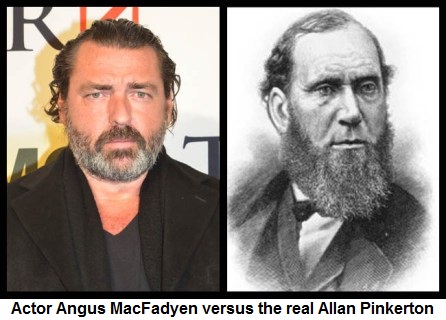
  • The Pinkertons, a scripted one-hour syndicated show starring Angus MacFadyen as Allan Pinkerton, debuted in 2014.[22][23]
    Actor Angus MacFadyen is set for one of the lead roles in The Pinkertons, Canadian companies Rosetta Media and Buffalo Gal Pictures’ upcoming 22-episode action-adventure detective series that is set to premiere in first-run syndication in the U.S. this fall. It has been cleared in more than 85% of the country by Rohrs Media Group on station groups including Tribune, Weigel, Hearst, LIN, Meredith, Cox and the CW PLUS. Drawing on the real cases of The Pinkerton Detective Agency, The Pinkertons follows founder Allan Pinkerton (MacFadyen), his son, William, and America’s first female detective, Kate Warne, as they solve crimes throughout the “Wild West” of the 1860s (Pinkerton is known for revolutionizing detective work by developing use of surveillance, undercover work and the mug shot). In part because of his commitment to AMC drama Turn, on which he is a regular, MacFadyen is will be a recurring guest star on The Pinkertons, not appearing in all episodes.[23]

CU Blog - Role Model for Justice - The Pinkertons - Photo 2
Promotional Video for the TV Series: The Pinkertons  https://www.youtube.com/watch?v=5Nhl9A5smo0

The security goal of Go Lean…Caribbean is for public safety! This is not the first (newly integrated) society needing public safety mitigations. The role model and history of The Pinkertons provides great insight. In 1871, Congress appropriated $50,000 to the new Department of Justice (DOJ) to form a sub-organization devoted to “the detection and prosecution of those guilty of violating federal law”. The amount was insufficient for the DOJ to fashion an integral investigating unit, so the DOJ contracted out the services to The Pinkerton National Detective Agency.[10] This is the biggest lesson for the Caribbean role model. The Pinkerton Agency had a nation-wide footprint and expedience in protecting economic engines – the US Federal government needed that expertise.

The Go Lean book calls for the establishment of “Justice Institutions” within the Caribbean at the outset of the roadmap. These institutions, similar to The Pinkertons, will have the broad scope for jurisdiction and prosecution of economic crimes throughout the entire region. In addition to economic crimes, there is the need for a military establishment in the region. Execution of the roadmap integrates and consolidates a regional naval force, escalated expeditionary forces, unified command-and-control and an intelligence gathering & analysis apparatus. But unlike The Pinkerton agency, the Caribbean’s public safety entities (law enforcement and security forces) will not be accountable to private or corporate interest, but rather accountable to a technocratic Caribbean governance.

This goal is detailed in the Go Lean book as it serves as a roadmap for the introduction and implementation of the technocratic Caribbean Union Trade Federation (CU). The CU would be set to optimize Caribbean society through economic empowerment, and the aligning security dynamics. In fact, the Go Lean roadmap has 3 prime directives:

  • Optimization of the economic engines in order to grow the regional economy to $800 Billion & create 2.2 million new jobs.
  • Establishment of a security apparatus to protect the resultant economic engines.
  • Improve Caribbean governance, (with Executive, Legislative and Judicial branches) to support these engines.

The security apparatus within this Go Lean roadmap asserts that the region (and member-states) must prepare for its own security needs. So the vision is that all Caribbean member-states authorize regional “Justice Institutions” and delegate jurisdiction to marshal and prosecute economic crimes. This delegation, or separation-of-powers, will cover law enforcement and regional defense, all encompassed in the book’s Homeland Security roadmap.

There is the need to ensure law-and-order in all 30 Caribbean member-states and the Exclusive Economic Zone (EEZ) of the Caribbean Sea. This point is pronounced early in the book with the Declaration of Interdependence (Page 12) that claims:

x.   Whereas we are surrounded and allied to nations of larger proportions in land mass, populations, and treasuries, elements in their societies may have ill-intent in their pursuits, at the expense of the safety and security of our citizens. We must therefore appoint “new guards” to ensure our public safety and threats against our society, both domestic and foreign. The Federation must employ the latest advances and best practices … to assuage continuous threats against public safety.

xvi. Whereas security of our homeland is inextricably linked to prosperity of the homeland, the economic and security interest of the region needs to be aligned under the same governance. Since economic crimes, including piracy and other forms of terrorism, can imperil the functioning of the wheels of commerce for all the citizenry, the accedence of this Federation must equip the security apparatus with the tools and techniques for predictive and proactive interdictions.

The Caribbean appointing “new guards”, or a security pact to ensure public safety has been previously detailed in these blogs/ commentaries:

https://goleancaribbean.com/blog/?p=2259 Economic Crime Enforcement – The Criminalization of American Business
https://goleancaribbean.com/blog/?p=1965 America’s Navy – 100 Percent – Model for Caribbean
https://goleancaribbean.com/blog/?p=1531 A Lesson in History: 100 Years Ago – World War I
https://goleancaribbean.com/blog/?p=1487 Here come the Drones … and the Concerns
https://goleancaribbean.com/blog/?p=1076 Caribbean “Terrorists” travel   to Venezuela for jihadist training
https://goleancaribbean.com/blog/?p=392 Jamaica to receive World Bank funds to help in crime fight
https://goleancaribbean.com/blog/?p=341 US slams Caribbean human rights practices
https://goleancaribbean.com/blog/?p=273 10 Things We Want from the US and 10 Things We Don’t Want …

The treaty to establish the “new guards”, the Homeland Security Force and Federal Justice Department within the Caribbean Union Trade Federation gets legal authorization from a Status of Forces Agreement with the initiation of the confederation. This process would be “Step One, Day One” in the Go Lean roadmap. The Go Lean book also details a series of community ethos, strategies, tactics, implementations and advocacies to provide increased public safety & security in the Caribbean region:

Community Ethos – Economic Principle – Consequences of Choices Lie in Future Page 21
Community Ethos – Security Principle – Privacy –vs- Public Protection Page 23
Community Ethos – Security Principle – Intelligence Gathering Page 23
Community Ethos – Security Principle – Crap” Happens Page 23
Community Ethos – Governing Principle – Lean Operations Page 24
Community Ethos – Governing Principle – Cooperatives Page 25
Community Ethos – Ways to Improve Sharing Page 35
Community Ethos – Ways to Impact the Greater Good Page 37
Strategy – Vision – Trade Federation with Proxy Powers of a Confederacy Page 45
Strategy – Vision – Defense Pact to Defend Against Systemic Threats Page 45
Tactical – Confederating a Non-Sovereign Union Page 63
Tactical – Fostering a Technocracy Page 64
Tactical – Separation of Powers – Homeland Security Page 75
Tactical – Separation of Powers – Justice Department – CariPol: Marshals and Investigations Page 77
Tactical – Separation of Powers – Justice Department – Witness Protection Page 77
Implementation – Ways to Pay for Change Page 101
Implementation – Start-up Security Initiatives Page 103
Implementation – Start-up Benefits from the EEZ – Security – Interdictions & Piracy Page 104
Implementation – Steps to Implement Self-Governing Entities – Security and Justice Page 105
Implementation – Ways to Foster International Aid – Military Aid Page 115
Planning – Ways to Make the Caribbean Better Page 131
Planning – Ways to Improve Failed-State Indices – Law Enforcement Oversight Page 134
Planning – Lessons Learned from the West Indies (WI) Federation – WI Regiment Page 135
Planning – Lessons from the American West – Law & Order Page 139
Advocacy – Ways to Grow the Economy Page 151
Advocacy – Ways to Improve Governance Page 168
Advocacy – Ways to Better Manage the Social Contract Page 170
Advocacy – Ways to Improve Leadership – Art of War Applications Page 171
Advocacy – Ways to Impact Justice Page 177
Advocacy – Ways to Reduce Crime Page 178
Advocacy – Ways to Improve for Gun Control Page 179
Advocacy – Ways to Improve Homeland Security Page 180
Advocacy – Ways to Mitigate Terrorism Page 181
Advocacy – Ways to Improve Intelligence Gathering & Analysis Page 182
Advocacy – Ways to Protect Human Rights Page 220
Appendix – Art of War Chapters – Chapter 7 – Engaging The Security Force Page 327

The history of The Pinkertons depicts honorable men (and women) engaging an honorable cause (law and order), but not always in an honorable manner. Their motto was “we never sleep” but their ethos appeared to be “by any means necessary”. Yes, bad actors will always emerge, but people of goodwill do not need to use bad behavior to stop bad things from happening – two wrongs don’t make a right.

The Go Lean roadmap calls for justice institutions of the CU to execute their role in a just manner, to impact the Greater Good. This does not happen accidently, this must be the output of a technocratic system bent on efficiency and effectiveness. The Go Lean roadmap ensures accountability, transparency, checks-and-balances in the execution of the rule-of-law. This is the change for the Caribbean. Public Safety, Law Enforcement and Homeland Security is necessary to make the Caribbean a better place to live, work and play. Everyone in the Caribbean, the people and institutions, are hereby urged to lean-in to this elevation of society.

Download the e-Book of Go Lean … Caribbean – free … now!

————————————

Source References:
1. “Pinkerton Government Services, Inc.: Private Company Information – Businessweek”. investing.businessweek.com. Retrieved 24 September 2012.
2. Green, James (2006). Death in the Haymarket: A Story of Chicago, the First Labor Movement, and the Bombing that Divided Gilded Age America. Pantheon Books.  Page 43
3. TM Becker (1974). “The place of private police in society: An area of research for the Social Sciences”. Social Problems (Social Problems) 21 (3): 438–453. doi:10.1525/sp.1974.21.3.03a00110. JSTOR 799910.
4. Krause, Paul (1992). The Battle for Homestead, 1890-1892: Politics, Culture, and Steel. University of Pittsburgh Press.  Page 20-21
5. http://www.linkedin.com/company/pinkerton-government-services
10. Churchill, Ward (Spring 2004). “From the Pinkertons to the PATRIOT Act: The Trajectory of Political Policing in the United States, 1870 to the Present”. The New Centennial Review 4 (1): 1–72. doi:10.1353/ncr.2004.0016. Archived from the original on 2009-07-29.
22. “The Pinkertons TV Series”. Rosetta Media and Buffalo Gal Pictures. Retrieved 2014-10-11.
23. Andreeva, Nellie (July 23, 2014). “Angus MacFadyen Set To Play Allan Pinkerton In Syndicated Drama Series ‘The Pinkertons’”. Deadline Hollywood (Penske Business Media, LLC). Retrieved 2014-10-11.

Share this post:
, , , ,
[Top]

A Lesson in History – Rockefeller’s Pipeline

Go Lean Commentary

This book Go Lean…Caribbean was written in 2013 in Omaha, Nebraska, in the shadow of one of the world’s richest men, Warren Buffett. The book posits that location is very important for the proper perspective when developing an empowerment plan. The book quotes the Bible scripture at Proverbs 22:29: “Have you beheld a man skillful in his work? Before kings is where he will station himself”. (Page 137). If this was the time of the Roman Empire, an empowerment roadmap like Go Lean would have to be written in Rome.

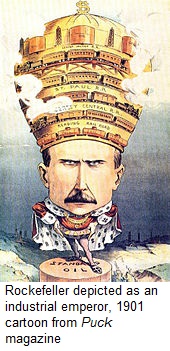
On the other hand, if this roadmap was written in 1885, at the start of the American Industrial domination, the author would have to be in the shadow of Industrialist John D. Rockefeller in New York City. See VIDEO below.

The Go Lean book posits that one person can make a difference and positively impact their society; so the book advocates for a community ethos of investment in the “gifts” that individuals “bring to table”. The book identifies the quality of geniuses and relates worthwhile returns from their investments. This mode of study allows us to consider this example of contributions from the industrial role model of Mr. Rockefeller and his prudent implementation of pipelines:

JCU Blog - A Lesson in History - Rockefeller Pipeline - Photo 1ohn Davison Rockefeller, Sr. (July 8, 1839 – May 23, 1937) was an American business magnate and philanthropist. He was a co-founder of the Standard Oil Company, which dominated the oil industry and was the first great U.S. business trust. Rockefeller revolutionized the petroleum industry, and along with other key contemporary industrialists such as Andrew Carnegie, defined the structure of modern philanthropy. In 1870, he co-founded Standard Oil Company and actively ran it until he officially retired in 1897.[3]

Rockefeller founded Standard Oil as an Ohio partnership with his brother William along with Henry Flagler, Jabez A. Bostwick, chemist Samuel Andrews, and a silent partner, Stephen V. Harkness. As Kerosene and Gasoline grew in importance, Rockefeller’s wealth soared and he became the world’s richest man and the first American worth more than a billion dollars.[a] Adjusting for inflation, he is often regarded as the richest person in history.[4][5][6][7]

His fortune was mainly used to create the modern systematic approach of targeted philanthropy. He was able to do this through the creation of foundations that had a major effect on medicine, education and scientific research.[8] His foundations pioneered the development of medical research and were instrumental in the eradication of hookworm and yellow fever.

Rockefeller was also the founder of both the University of Chicago and RockefellerUniversity and funded the establishment of Central Philippine University in the Philippines. He was a devoted Northern Baptist and supported many church-based institutions. Rockefeller adhered to total abstinence from alcohol and tobacco throughout his life.[9] He was a faithful congregant of the Erie Street Baptist Mission Church, where he taught Sunday school, and served as a trustee, clerk, and occasional janitor.[10][11] Religion was a guiding force throughout his life, and Rockefeller believed it to be the source of his success. Rockefeller was also considered a supporter of capitalism based in a perspective of social Darwinism, and is often quoted saying “The growth of a large business is merely a survival of the fittest”.[12][13]
Wikipedia Online Encyclopedia  (Retrieved October 18, 2014) –
http://en.wikipedia.org/wiki/John_D._Rockefeller

Living for almost 98 years and accumulating vast wealth, Mr. Rockefeller was highly accomplished. He was an early adoptor of Kerosene oil and earned his initial fortune by fostering entrepreneurship and Research & Development (R&D) around the then-cutting-edge product; see VIDEO below. One accomplishment that aligns with this Go Lean roadmap is Mr. Rockefeller’s strategic, tactical and operational applications of pipelines; see Appendix below. He used pipelines to spur his production, acquire raw materials, deliver finished goods to customers, mitigate against threats, and neutralize competition and opposition.

The book Go Lean … Caribbean also asserts that pipelines can be strategic, tactical and operationally efficient for building community wealth in the Caribbean region. They can mitigate challenges from Mother Nature, create jobs and grow the economy at the same time. The book purports that a new technology-enhanced industrial revolution is emerging, in which there is more efficiency for installing-monitoring-maintaining pipelines. Caribbean society must participate in these developments, in order to “survive with the fittest”. This point is pronounced early in the book with this Declaration of Interdependence (Page 14), with these statements:

xxvi.      Whereas the Caribbean region must have new jobs to empower the engines of the economy and create the income sources for prosperity, and encourage the next generation to forge their dreams right at home, the Federation must therefore foster the development of new industries, like that of … pipelines …

xxvii.      Whereas the region has endured a spectator status during the Industrial Revolution, we cannot stand on the sidelines of this new economy, the Information Revolution. Rather, the Federation must embrace all the tenets of Internet Communications Technology (ICT) to serve as an equalizing element in competition with the rest of the world. The Federation must bridge the digital divide and promote the community ethos that research/development is valuable and must be promoted and incentivized for adoption.

This book Go Lean… Caribbean, serves as a roadmap for the introduction and implementation of the technocratic Caribbean Union Trade Federation (CU) to elevate the 30 Caribbean member-states. This Federation will assume jurisdiction for the 1,063,000 square-mile Caribbean Sea, in an Exclusive Economic Zone. This approach allows for cooperation and coordination for pipelines among the member-states; this will thusly effectuate change in the region by allowing these 3 prime directives:

  • Optimization of the economic engines in order to grow the regional economy to $800 Billion GDP and create 2.2 million new jobs.
  • Establishment of a security apparatus to protect the resultant economic engines.
  • Improve Caribbean governance to support these engines.

The subject of pipelines has been addressed and further elaborated upon in these previous blog/commentaries:

https://goleancaribbean.com/blog/?p=1817 Caribbean grapples with intense new cycles of flooding & drought
https://goleancaribbean.com/blog/?p=1516 Floods in Minnesota, Drought in California – Why Not Share?

The Go Lean book itself details the economic principles and community ethos to adopt, plus the executions of strategies, tactics, implementations and advocacies to forge pipelines, Research & Development and industrial growth in the Caribbean:

Economic Principles – People Choose because Resources are Limited Page 21
Economic Principles – All Choices Involve Costs Page 21
Economic Principles – People Respond to Incentives Page 21
Economic Principles – Economic Systems Influence Individual Choices Page 21
Economic Principles – Voluntary Trade Creates Wealth Page 21
Community Ethos – Job Multiplier Page 22
Community Ethos – “Crap” Happens Page 23
Community Ethos – Lean Operations Page 24
Community Ethos – Return on Investments (ROI) Page 24
Community Ethos – Cooperatives Page 25
Community Ethos – Ways to Help Entrepreneurship Page 28
Community Ethos – Ways to Promote Intellectual Property Page 29
Community Ethos – Ways to Impact Research & Development Page 30
Community Ethos – Ways to Improve Negotiations Page 32
Community Ethos – Impact the Greater Good Page 37
Anecdote – Pipeline Transport – Strategies, Tactics & Implementations Page 43
Strategy – Vision – Confederating 30 Member-states in a Union Page 45
Strategy – Agents of Change – Technology Page 57
Tactical – Fostering a Technocracy Page 64
Tactical – Growing Economy – New High Multiplier Industries Page 68
Separation of Powers – Interstate Commerce Administration Page 79
Separation of Powers – Interior Department – Exclusive Economic Zone Page 82
Implementation – Assemble – Pipeline as a Focused Activity Page 96
Implementation – Ways to Pay for Change Page 101
Implementation – Benefits from the Exclusive Economic Zone Page 104
Implementation – Ways to Develop a Pipeline Industry Page 107
Implementation – Ways to Deliver Page 109
Planning – 10 Big Ideas – Pipeline Projects Page 127
Planning – Ways to Improve Interstate Commerce Page 129
Planning – Lessons from New York City Page 137
Planning – Lessons from Omaha Page 138
Advocacy – Ways to Grow the Economy Page 151
Advocacy – Ways to Create Jobs Page 152
Advocacy – Ways to Better Manage the Social Contract – Infrastructure Page 170
Advocacy – Ways to Ways to Impact Public Works – Ideal for Pipelines Page 175
Advocacy – Ways to Foster Cooperatives Page 176
Advocacy – Ways to Better Manage Natural Resources – Water Resources Page 183
Anecdote – Caribbean Industrialist & Entrepreneur Role Model Page 189
Advocacy – Ways to Impact Extractions – Pipeline Strategy Alignment Page 195
Advocacy – Ways to Improve Emergency Management Page 196
Advocacy – Ways to Foster Technology Page 197
Advocacy – Ways to Impact Wall Street – Adopt Advanced Financial Products Page 200
Advocacy – Ways to Improve Monopolies – Foster Cooperatives Page 202
Advocacy – Ways to Improve Transportation – Pipeline Options Page 205
Appendix – Interstate Compacts Page 278
Appendix – Pipeline Maintenance Robots Page 283

The economic principles of pipelines are sound. Pipelines can be used to bring resources from a source to a destination in a steady consistency, fulfilling the economic supply-demand conundrum. The Go Lean roadmap envisions pipelines solutions for resources like water, natural gas, electricity cables, and telecommunication cables – above ground and underwater.

We have the pipeline example of the prudence and success of one of the world’s richest men (ever) as a model, that of John D. Rockefeller. He also provides a role model for us in the Caribbean in other endeavors of life:

Research & Development (Kerosene & Gasoline)
Cooperatives & Trusts
Creative Financing & Securities Oversight
Fostering Genius
Philanthropic Foundations
Educational Empowerments
Spiritual Guidance

The contributions of a committed person can be impactful indeed in this vision for the elevation and empowerment of the Caribbean homeland. The Go Lean … Caribbean roadmap invites these contributions; (the roadmap mitigates the threats of corporate abuse of a plutocracy). Like Mr. Rockefeller’s model describes, we also invite pipelines, with their strategic, tactical and operational implementations. With the right applications from people, tools and techniques any movement can have an impact in a changing society.

Change has come to the Caribbean. Everyone is hereby urged to lean-in to this roadmap to make the Caribbean a better place to live, work and play. 🙂

Download the book Go Lean…Caribbean now!

———

Video: Rockefeller’s Standard Oil

John D. Rockefeller built an oil empire by guaranteeing a uniform quality for his Standard Oil Kerosene – History Channel.

http://www.history.com/topics/john-d-rockefeller/videos/rockefellers-standard-oil

—————————————————————————————-

APPENDIX – Rockefeller and his Pipeline Reality

In 1877, Standard Oil clashed with the Pennsylvania Railroad, its chief hauler. Rockefeller had envisioned the use of pipelines as an alternative transport system for oil and began a campaign to build and acquire them.[40]

At this stage the company did not actually drill for oil; it merely refined it. In 1879 an association of producers completed the Tidewater Pipeline, running from oil fields in Bradford to the Reading Railroad at Williamsport, Pennsylvania. This innovation demonstrated that crude oil could be shipped cheaply over long distances by pipeline – much more cheaply than by rail, in fact. Standard Oil quickly responded by beginning construction of its own network of pipelines, [installing over 4,000 miles]. Before Tidewater, Standard Oil had made good profits refining oil in Cleveland and other points and shipping it by rail. But the cost-efficiency of pipeline transport made it imperative to ship crude oil to shipping points and refine it there.[39]

The railroads, seeing Standard’s incursion into the transportation and pipeline fields, struck back and formed a subsidiary to buy and build oil refineries and pipelines.[41] Standard countered and held back its shipments and, with the help of other railroads, started a price war that dramatically reduced freight payments and caused labor unrest as well. Rockefeller eventually prevailed and the railroad sold all its oil interests to Standard. But in the aftermath of that battle, in 1879 the Commonwealth of Pennsylvania indicted Rockefeller on charges of monopolizing the oil trade, starting an avalanche of similar court proceedings in other states and making a national issue of Standard Oil’s business practices.[42]

Monopoly – Cause and Effect

CU Blog - A Lesson in History - Rockefeller Pipeline - Photo 2Standard Oil gradually gained almost complete control of oil refining and marketing in the United States through horizontal integration. In the Kerosene industry, Standard Oil replaced the old distribution systems with its own vertical system. It supplied Kerosene by tank cars that brought the fuel to local markets, and tank wagons then delivered to retail customers, thus bypassing the existing network of wholesale jobbers.[43] Despite improving the quality and availability of Kerosene products while greatly reducing their cost to the public (the price of Kerosene dropped by nearly 80% over the life of the company), Standard Oil’s business practices created intense controversy; [this is typical plutocratic behavior]. Standard’s most potent weapons against competitors were underselling, differential pricing, and secret transportation rebates.[44] The firm was attacked by journalists and politicians throughout its existence, in part for these monopolistic methods, giving momentum to the antitrust movement. By 1880, according to the New York World newspaper, Standard Oil was “the most cruel, impudent, pitiless, and grasping monopoly that ever fastened upon a country.”[45] To the critics Rockefeller replied, “In a business so large as ours….. some things are likely to be done which we cannot approve. We correct them as soon as they come to our knowledge.”[45]

At that time, many legislatures had made it difficult to incorporate in one state and operate in another. As a result, Rockefeller and his associates owned dozens of separate corporations, each of which operated in just one state; the management of the whole enterprise was rather unwieldy. In 1882, Rockefeller’s lawyers created an innovative form of corporation to centralize their holdings, giving birth to the Standard Oil Trust.[46] The “trust” was a corporation of corporations, and the entity’s size and wealth drew much attention. Nine trustees, including Rockefeller, ran the 41 companies in the trust.[46] The public and the press were immediately suspicious of this new legal entity, but other businesses seized upon the idea and emulated it, further inflaming public sentiment. Standard Oil had gained an aura of invincibility, always prevailing against competitors, critics, and political enemies. It had become the richest, biggest, most feared business in the world, seemingly immune to the boom and bust of the business cycle, consistently racking up profits year after year.[47]

Standard Oil’s vast American empire included 20,000 domestic wells, 4,000 miles of pipeline, 5,000 tank cars, and over 100,000 employees.[47] Its share of world oil refining topped out above 90% but slowly dropped to about 80% for the rest of the century.[48] In spite of the formation of the trust and its perceived immunity from all competition, by the 1880s Standard Oil had passed its peak of power over the world oil market. Rockefeller finally gave up his dream of controlling all the world’s oil refining, he admitted later, “We realized that public sentiment would be against us if we actually refined all the oil.”[48] Over time foreign competition and new finds abroad eroded his dominance. In the early 1880s, Rockefeller created one of his most important innovations. Rather than try to influence the price of crude oil directly, Standard Oil had been exercising indirect control by altering oil storage charges to suit market conditions. Rockefeller then decided to order the issuance of certificates against oil stored in its pipelines. These certificates became traded by speculators, thus creating the first oil-futures market which effectively set spot market prices from then on. The National Petroleum Exchange opened in Manhattan in late 1882 to facilitate the oil futures trading.[49]

The invention of the light bulb gradually began to erode the dominance of Kerosene for illumination. But Standard Oil adapted, developing its own European presence, expanding into natural gas production [and distribution] in the U.S., then into Gasoline for automobiles, which until then had [only] been considered a waste product.[52]

In 1887, Congress created the Interstate Commerce Commission which was tasked with enforcing equal rates for all railroad freight, but by then Standard Oil depended more on pipeline transport.[54]

– (Retrieved October 18, 2014 from: http://en.wikipedia.org/wiki/John_D._Rockefeller)

Cited References:
a.      Fortune Magazine lists the richest Americans not by the changing value of the dollar but by percentage of GDP: Rockefeller is credited with a Wealth/GDP of 1/65.
———–
3.             “John D. and Standard Oil”. Bowling   GreenStateUniversity. Retrieved 2008-05-13.
4.             “The Richest Americans”. Fortune (CNN). Retrieved May 6, 2010.
5.             “Top 10 Richest Men of All Time”. AskMen.com. Retrieved 2007-05-29.
6.             “The Rockefellers”. PBS. Retrieved 2007-05-29.
7.             “The Wealthiest Americans Ever”. The New York Times. July 15, 2007. Retrieved 2007-07-17.
8.             Fosdick, Raymond Blaine (1989). The story of the Rockefeller Foundation. Transaction Publishers.
9.             Martin, Albro (1999), “John D. Rockefeller”, Encyclopedia Americana Page 23
10.         Chernow, Ron (1998). Titan: The Life of John D. Rockefeller, Sr. Random House, Page 52.
11.         “The 9 most amazing facts about John D. Rockefeller”. Oil Patch Asia.
12.         Richard Hofstadter et al. Sep 1, p. 45.
13.         Schultz, Duane P; Schultz, Sydney Ellen, A History of Modern Psychology, p. 128
———–
39.         Enclycopedia.com Online Resource. “Standard Oil Company – Pipelines. Retrieved October 19, 2014 from: http://www.encyclopedia.com/topic/Standard_Oil_Company.aspx
40.         Chernow 1998, p. 171.
41.         Segall, Grant (2001). John D. Rockefeller: Anointed With Oil. OxfordUniversity Press., p. 57.
42.         Segall 2001, p. 58.
43.         Chernow 1998, p. 253.
44.         Chernow 1998, p. 258.
45.         Segall 2001, p. 60.
46.         Segall 2001, p. 61.
47.         Chernow 1998, p. 249.
48.         Segall 2001, p. 67.
49.         Chernow 1998, p. 259.
50.         Chernow 1998, p. 242.
51.         Chernow 1998, p. 246.
52.         Segall 2001, p. 68.
53.         Segall 2001, pp. 62–63.
54.         Rockefeller, John D (1984) [1909]. Random Reminiscences of Men and Events. New York: Sleepy Hollow Press and Rockefeller Archive Center, Page 48.

Share this post:
, , , ,
[Top]

The ‘Great ShakeOut’ Earthquake Drill

Go Lean Commentary

At this moment (Thursday October 16), there is a Category 4 Hurricane (Gonzalo) bearing down on a Caribbean member-state (Bermuda), and yet this commentary is focusing on another type of natural disaster: Earthquakes.

January 2010 saw a devastating tremor hit Haiti. The whole world came to a halt – from Haiti’s perspective – the island nation has still not recovered.

Hurricanes. Earthquakes. This is the reality of Caribbean life – we have to contend with natural disasters; some with advanced warnings, some with no warnings at all.

In the past, our region has not done well managing the crisis associated with natural disasters. In fact, this was a motivation for the origination of the book, Go Lean … Caribbean. We do not have the luxury of “sticking our head in the sand” and pretending that there is no problem. Rather, we must prepare.

The foregoing news article/VIDEO is an example of earthquake preparation around the world, but especially in a region (US Eastern Seaboard) that usually do not have to contend with the threat of earthquakes; and yet got a surprising “shake” in August 2011:

Title: Damaged National Cathedral Hosts ‘Great ShakeOut’ Earthquake Drill
By: Alex DeMetrick, General Assignment Reporter

WASHINGTON (WJZ) – There’s nothing like an earthquake to get your attention, and the large quake Maryland felt three years ago is helping to spread the word to prepare for another.

Alex DeMetrick reports it’s all part of the great shakeout campaign.

Earthquake Drill - Photo 1

Depending on where you were three years ago, experiencing a 5.8 magnitude earthquake made an impression.

And you didn’t have to be scrambling out of the Washington Monument.

Maryland rocked all over.

“The Earth’s crust here is old; it’s cold. It transmits energy very effectively. Sort of rings like a bell,” said Dr. David Applegate, U.S. Geological Survey.

And because it could ring again, the Mid-Atlantic region is now part of the Great ShakeOut.

With the National Cathedral as a backdrop, the day is used to promote “drop, cover and hold on” in a quake.

“Something as simple as a book could hurt you, or a bookshelf could hurt, so you don’t want to try and run out, especially in our area here,” said Wendy Phillips, FEMA program specialist.

Bricks and masonry can fall. Thousands of pounds worth fell from the top of the National Cathedral.

“Top of the tower is the absolute worst,” said James Shepherd, director of preservation at the National Cathedral. “So those are the areas that really released the energy. Those are the areas we have the most damage.”

Repairs made the inside safe, although work still continues at the rear of the cathedral.

Just this reinforcement effort has cost $10 million.

Another $22 million will have to be found to strengthen the structure’s flying buttresses.

If it isn’t done, “what that means if there’s an earthquake, the stones move,” Shepherd said.

While repairs may still take years, the cathedral is a reminder the next earthquake could happen any time.

“Absolutely, earthquakes have defied efforts to give a short term prediction, so an earthquake in the east, less frequent, but the shaking can be a real issue over a wide area,” Applegate said.

The Great ShakeOut campaign began in California, and worldwide an estimated 25 million people, including 1 million in the Mid-Atlantic, practiced drop, cover and hold-on drills Thursday.
Baltimore Local CBS Station WJZ Newscast  (Retrieved 10-16-2014) – http://baltimore.cbslocal.com/2014/10/16/damaged-national-cathedral-hosts-great-shakeout-earthquake-drill/

CBS Baltimore Video: http://baltimore.cbslocal.com/video?autoStart=true&topVideoCatNo=default&clipId=10700214

The Go Lean book posits that earthquakes are outside of our control and can easily wreak havoc on one Caribbean island after another. This regional threat is due to the active Enriquillo fault-line in the Greater Antilles (Jamaica, Cuba, Hispaniola and Puerto Rico) and the Lesser Antilles subduction zone (also known for volcanoes) along the rim of the Eastern Caribbean basin. Already there have been a number of small quakes in a few Caribbean islands for 2014, including Puerto Rico, Dominican Republic, Martinique, Barbados and others.

So the earthquake threat is real. The foregoing article/VIDEO advocates preparing people in the region to survive quaking and shaking. The Caribbean has to be on guard for danger from seismic activities – we have failed miserably in the past, as in Haiti.

Earthquake Drill - Photo 2A previous blog/commentary asserted that the risk of earthquakes plus the constant threats during the annual hurricane season creates the need for a full-time sentinel to monitor, mitigate and manage the risks of natural disasters in the region. This is the mandate for the technocratic Caribbean Union Trade Federation (CU) for the 30 member-states of the Caribbean region. The Go Lean … Caribbean roadmap describes the CU’s prime directives as empowering the region’s economic engines, providing homeland security assurances and preparing/responding the region’s governance for natural disasters.

The point of natural disaster preparation, especially in the era of climate change, is pronounced early in the book with this Declaration of Interdependence (Page 11), with this opening statement:

i.        Whereas the earth’s climate has undeniably changed resulting in more severe tropical weather storms, it is necessary to prepare to insure the safety and security of life, property and systems of commerce in our geographical region. As nature recognizes no borders in the target of its destruction, we also must set aside border considerations in the preparation and response to these weather challenges.

The Go Lean book details the economic principles and community ethos to adopt, plus the executions of the following strategies, tactics, implementations and advocacies to prepare for the eventuality of earthquakes and hurricanes in Caribbean communities:

Economic Principles – People Respond to Incentives Page 21
Economic Principles – Economic Systems Influence   Individual Choices Page 21
Economic Principles – Consequences of Choices Lie in the   Future Page 21
Community Ethos – “Crap” Happens Page 23
Community Ethos – Lean Operations Page 24
Community Ethos – Return on Investments (ROI) Page 24
Community Ethos – Ways to Impact the Future Page 26
Community Ethos – Ways to Improve Sharing Page 35
Community Ethos – Impact the Greater Good Page 37
Strategy – Vision – Confederating 30 Member-states in a Union Page 45
Strategy – Agents of Change – Climate Change Page 57
Tactical – Fostering a Technocracy Page 64
Tactical – Separation of Powers – Emergency Management   Agency Page 76
Implementation – Ways to Deliver Page 109
Implementation – Ways to Foster International Aid – Haiti’s   Earthquakes Page 115
Planning – 10 Big Ideas – Homeland Security Pact Page 127
Advocacy – Ways to Grow the Economy Page 151
Advocacy – Ways to Improve for Natural Disasters Page 184
Advocacy – Ways to Improve Emergency Management Page 196

This is the change that has come to the region: the Caribbean is accepting that it is undoubtedly an earthquake zone.

There is the need for a regional sentinel to coordinate the preparation for earthquakes among the Caribbean member-states. There is the need for participation in the ‘Great ShakeOut’ Earthquake Drill, as related in the foregoing article and VIDEO, for this year (but its too late) and next year, and henceforth.

Natural disasters are unavoidable in the Caribbean. But we can prepare for them, we can make the Caribbean a better place to live, work and play. These elevations are identified, qualified and proposed in the book Go Lean…Caribbean; the mitigations are not just reactive, but also proactive.

All of the Caribbean, the people and institutions, are urged to lean-in to the roadmap from this book – and to “drop, cover and hold-on”.

Download the book Go Lean…Caribbean now!

Share this post:
, ,
[Top]

A Lesson in History – Concorde SST

Go Lean Commentary

CU Blog - A Lesson in History - Concorde SST - Photo 130 years go by so fast…

In the 1970’s, when the Concorde Supersonic Transport (SST) jets were designed, developed and deployed, with a 30 year life-span, that time seemed so far off. But that time has now come and gone. Yes, cutting-edge has an expiration date.

It is difficult to think, now in 2014, that 1970’s technologies may still be cutting-edge, except that there are no other Supersonic Transport vehicles for civilian use today. So despite all the scientific and technological advances in the last 40 years, in this area, the world has gone backwards.

There are a lot of lessons here for us to consider with the history of the Concorde, taking into account that the SST had commercial applications, safety concerns and governing issues. This subject therefore parallels with the book Go Lean… Caribbean. The following is the historic reference of the Concorde:

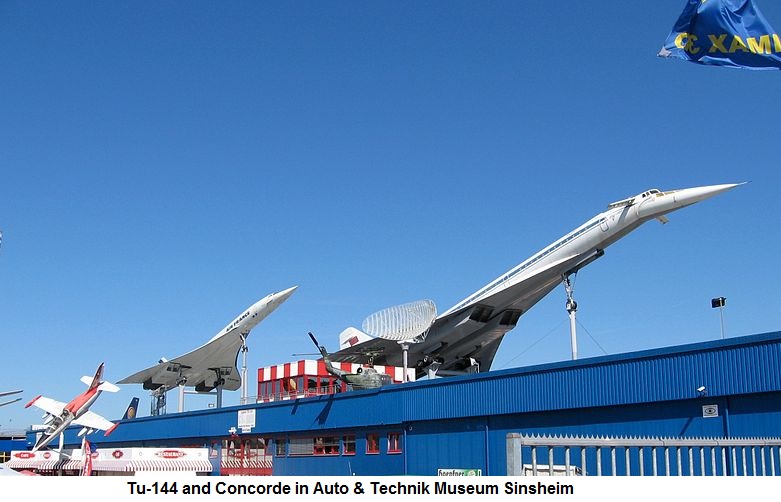
CU Blog - A Lesson in History - Concorde SST - Photo 2Aérospatiale-BAC Concorde is a retired turbojet-powered supersonic passenger airliner or supersonic transport. It is one of only two SSTs to have entered commercial service; the other was the Tupolev Tu-144; (built by the Soviet Union under the direction of the Tupolev design bureau, headed by Alexei Tupolev; their prototype first flew on 31 December 1968 near Moscow, two months before the first flight of Concorde. The Tu-144 first went supersonic on 5 June 1969, and on 26 May 1970 became the first commercial transport to exceed Mach 2). The Concorde was jointly developed and produced by France-owned Aérospatiale and the British Aircraft Corporation (BAC) under an Anglo-French treaty. First flown in 1969, the Concorde entered service in 1976 and continued commercial flights for 27 years.

Reflecting the treaty between the British and French governments which led to the Concorde’s construction, the name Concorde is from the French word concorde, which has an English equivalent, concord. Both words mean agreement, harmony or union.

The Concorde needed to fly long distances to be economically viable; this required high efficiency. (Turbojets were found to be the best choice of engines.[68] The engine used was the twin spool Rolls-Royce/Snecma Olympus 593, a development of the Bristol engine first used for the Avro Vulcan bomber, and developed into an afterburning supersonic variant for the BAC TSR-2 strike bomber.[69] Rolls-Royce’s own engine proposed for the SST aircraft at the time of Concorde’s initial design was the RB.169 [70]). Among other destinations, the Concorde flew regular transatlantic flights from London Heathrow and Paris-Charles de Gaulle Airport to New York JFK, Washington Dulles and Barbados in the Caribbean; it flew these routes in less than half the time of other airliners. Only 20 aircraft were ever built, so the development of Concorde was a substantial economic loss; Air France and British Airways also received considerable government subsidies to purchase them.

While commercial jets took eight hours to fly from New York to Paris, the average supersonic flight time on the transatlantic routes was just under 3.5 hours. The Concorde’s maximum cruising altitude was 60,000 feet, (while subsonic airliners typically cruise below 40,000 feet), and an average cruise speed of Mach 2.02, about 1155 knots (2140 km/h or 1334 mph), more than twice the speed of conventional aircraft.[107]

The Concorde’s drooping nose, enabled the aircraft to switch between being streamlined to reduce drag and achieve optimum aerodynamic efficiency, and not obstructing the pilot’s view during taxi, takeoff, and landing operations. Due to the high angle of attack, the long pointed nose obstructed the view and necessitated the capability to droop to ensure visibility and FAA approval in the US.

The Concorde was retired in 2003 due to a general downturn in the aviation industry after the aircraft’s only crash in 2000 (killing 113 people onboard and on the ground), the 9/11 terrorist attacks in 2001, and a decision by Airbus (the successor firm of Aerospatiale) and BAC, to discontinue maintenance support.[5]
Wikipedia Online Encyclopedia (Retrieved October 13, 2014) –
http://en.wikipedia.org/wiki/Concorde

See the foregoing VIDEO for a synopsis of the Concorde’s 27-year history:

Video Title – Concorde: 27 Supersonic Years:

This review of the historicity of the Concorde is more than just an academic discussion; the aircraft was always presented as a glimpse into the future.  Likewise, the book Go Lean…Caribbean is future-focused, aspiring to economic principles that dictate that “consequences of choices lie in the future”. The book serves as a roadmap for the introduction and implementation of the technocratic Caribbean Union Trade Federation (CU). This confederation effort (aligning many former colonies of the same sponsoring countries of Great Britain and France that designed, developed and deployed the Concorde SST project) will spur a lot of technologically-driven industrial developments.

CU Blog - A Lesson in History - Concorde SST - Photo 4

What have we learned from the 27-year history of the Concorde, in terms of economics, security and governing lessons? How will these lessons help us today?

  • Crisis is a terrible thing to waste – The end of World War II saw an immediate clash and conflict between Soviet-backed communist countries versus Western democracies. There was an “arms and space” race. The Anglo-Franco treaty to design-develop the Concorde was a manifestation of that competition. While the US invested in supersonic technology for military applications, the Anglo-Franco treaty allowed for a civilian application, and exploitation of a populous market for those with capitalistic adherence. The Go Lean roadmap posits that the Caribbean is also in a crisis (on the losing end of globalization, advancing technology and economic dysfunction). The CU will incubate and foster industrial policy to better explore science, technology, engineering and mechanical (STEM) initiatives. With 80 million annual visitors across 30 different member-states, (many of them islands), we have the overall need for air transport solutions and a built-in market acceptance.
  • Promote opportunities for Research & Development – As far back as October 1956, the UK’s Ministry of Supply asked key Subject Matter Experts to form a new study group, the Supersonic Transport Advisory Committee or STAC,[12] with the explicit goal of developing a practical SST design and finding industry partners to build it. The ethos expressed by this specialty group foresaw that huge economic and security benefits could yield by developing cutting-edge solutions in the air-transport industry space . The Go Lean roadmap posits that appropriate investments must be prioritized for new industrial solutions, such as with Information & Communications Technologies. The Go Lean book posits that large states or small ones can have a “level-playing field” by exploring innovative solutions for the New Economy.
  • New “community ethos” can be adopted by the general public – The Concorde aircraft was regarded by many people as an aviation icon and an engineering marvel. During flight testing of the pre-production SST aircraft, it visited a number of “allied” foreign countries. It was not uncommon for ten-mile traffic jams to build up around airports as crowds of a hundred thousand and more gathered to look over the aircraft that was designed to bring faster-than-sound flight within reach of anyone with the price of a plane ticket.[25] The CU will employ messaging and image management to forge new attitudes about technology, R&D, entrepreneurship, intellectual property and STEM initiatives in the region.
  • Negotiate as partners not competitors – France had 3 nationally supported companies (state-owned Sud Aviation and Nord-Aviation, plus private firm Dassault Group) in the aero-space industry, but no jet-engine solution. The British company Rolls Royce had demonstrated great market leadership with jet engines. A collaboration was apropos. The CU maintains that, negotiation is an art and a science. More can be accomplished by treating negotiating counterparts as a partner, rather than not an adversary.
  • Cooperatives and sharing schemes lighten burdens among partners – In 1967, at the start of the new Anglo-Franco consortium, there was the intent to produce one long-range and one short-range SST version. However, prospective customers showed no interest in the short-range version and it was dropped.[25] The consortium secured orders (i.e., non-binding options) for over 100 of the long-range version from the major airlines of the day: Pan Am, BOAC, and Air France were the launch customers, with six Concordes each. Other airlines in the order book included Panair do Brasil, Continental Airlines, Japan Airlines, Lufthansa, American Airlines, United Airlines, Air India, Air Canada, Braniff, Singapore Airlines, Iran Air, Olympic Airways, Qantas, CAAC (China), Middle East Airlines, and TWA.[25][30][31] At the time of the first flight (1969) the options list contained 74 orders from 16 airlines. The important function for the CU in these cooperative initiatives is command-and-control. For the Concorde project the labor of up to 50,000 (including sub-contractors and suppliers) people had to be efficiently coordinated. The CU will employ cooperatives and sharing schemes for limited scopes within the prime directives of optimizing the economic, security and governing engines.
  • Bureaucratic response to crisis impede progress – At the end of the pre-production trials, there were orders for 74 aircrafts for 16 airlines, but in the end only 20 Concorde jets were ever manufactured. What happened? Geo-political crisis. Concorde SSTs required more fuel usage compared to subsonic aircrafts. The 1970’s saw a number of crises involving steeply rising oil prices (OPEC, Iran Revolution, etc.)[148] and new wide-body aircrafts, such as the Boeing 747, had recently made subsonic aircrafts significantly more efficient and presented a low-risk option for airlines.[50]. The governmental bureaucracy of the two national governments impeded tactical responses and adjustments to these agents-of-change, resulting in cancellation of unfulfilled orders … and also any continuous technological upgrades to the SST program. “There have always been those who want to go faster and those who think the present speed (of ox-cart, stagecoach, sailing ship) was fast enough”.[25] The Go Lean roadmap calls for the establishment of Self-Governing Entities (SGE), regulated at the federal level, to facilitate R&D in industrial settings. Under this scheme, government negotiation is only required at the outset/initiation; no further bureaucratic stalemates beyond the start-up. Tactically, SGE’s  can nimbly adapt to the demands of the global marketplace. This is the manifestation of a lean technocracy.
  • “Crap” Happens – While the Concorde had initially held a great deal of customer interest, the project was hit by a large number of order cancellations. There was a crash of the competing Soviet Tupolev Tu-144 at the Paris Le Bourget air show in 1973; this shocked potential buyers, and public concern over the environmental issues presented by supersonic aircrafts. Also, the issue of sonic booms and takeoff-noise pollution produced a shift in public opinion of SSTs. By 1976 only four nations remained as prospective buyers: Britain, France, China, and Iran.[43] But only Air France and British Airways (the successor to BOAC) ever took up their orders, with the two governments taking a cut of any profits made.[44] The United States cancelled the Boeing 2707, its rival supersonic transport program, in 1971. Observers have suggested that opposition to the Concorde on grounds of noise pollution had been encouraged by the United States Government, as it lacked its own competitor.[45] The US, India, and Malaysia all ruled out Concorde supersonic flights over the noise concern, although some of these restrictions were later relaxed.[46][47] This lesson constitutes the security scope of the Concorde SST historic consideration. The Go Lean roadmap anticipates that things would go wrong, and plans for risk mitigations in advance. This includes man-made, industrial and natural disasters. In addition, there is the governance plan for the CU to have jurisdiction over the region’s aviation regulations – much like the FAA (Federal Aviation Admin.) in the US.
  • CU Blog - A Lesson in History - Concorde SST - Photo 3Consider the Greater Good – In the end, the realization of a noise pollution threat never materialized with Concorde SSTs – more fear than actualization. A progressive path forward from 1976 should have resulted in even faster supersonic transportation options at cheaper prices by today, 40 years later. Author and Professor Douglas Ross characterized restrictions placed upon Concorde operations by President Jimmy Carter’s administration (1977 – 1981) as having been an act of protectionism for American aircraft manufacturers.[48] To the contrary, the Caribbean need policies for the Greater Good. With island tourism being the primary economic driver in the region, we need proactive air-transport solutions to facilitate visitors’ easy access to Caribbean hospitality. The Greater Good philosophy is directly quoted as: “It is the greatest good to the greatest number of people which is the measure of right and wrong”. The CU/Go Lean roadmap calls for a number of measures that strike directly at this Greater Good mandate.

The related subjects of technology-bred innovations and history lessons have been a frequent topic for Go Lean blog/commentaries, as sampled here:

https://goleancaribbean.com/blog/?p=2480 A Lesson in History: Community Ethos of WW II
https://goleancaribbean.com/blog/?p=1568 Airline Lesson: Dutch airline angers Mexico soccer fans
https://goleancaribbean.com/blog/?p=1531 A Lesson in History: 100 Years Ago Today – World War I
https://goleancaribbean.com/blog/?p=1487 Aeronautics Lesson: Here come the Drones … and the Concerns
https://goleancaribbean.com/blog/?p=673 Transport Lesson: Autonomous cargo vessels without a crew
https://goleancaribbean.com/blog/?p=308 Community Ethos: CARCIP Urges Greater Innovation
https://goleancaribbean.com/blog/?p=254 Airline Lesson: Air Antilles Launches new St. Maarten Service
https://goleancaribbean.com/blog/?p=235 Economic Reality: Tourism’s changing profile

The purpose of the Go Lean roadmap is to shift the downward trends in the Caribbean today, to reverse course and elevate Caribbean society. The CU, applying lessons from the Concorde history, has prime directives proclaimed as follows:

  • Optimization of the economic engines in order to grow the regional economy to $800 Billion & create 2.2 million new jobs.
  • Establishment of a security apparatus to protect the resultant economic engines.
  • Improve Caribbean governance to support these engines.

While the Go Lean book is not written as an analysis of the Concorde, the following detail considerations of community ethos, strategies, tactics, implementations and advocacies in the book are still helpful to empower Caribbean society:

Community Ethos – Economic Systems Influence Choices & Incentives Page 21
Community Ethos – Consequences of Choices Lie in the Future Page 21
Community Ethos – “Crap” Happens Page 23
Community Ethos – Ways to Impact the Future Page 26
Community Ethos – Ways to Improve Negotiations Page 32
Community Ethos – Ways to Manage Reconciliations Page 34
Community Ethos – Ways to Improve Sharing Page 35
Community Ethos – Ways to Impact the Greater Good Page 37
Strategy – Vision –  Integrate region into a Single Market Economy Page 45
Strategy – Agents of Change – Technology Page 57
Strategy – Agents of Change – Globalization Page 57
Tactical – Separation of Powers – Department of State – SGE Administration Page 80
Tactical – Separation of Powers – Transportation Department – Aviation Admin Page 84
Implementation – Ways to Pay for Change Page 101
Implementation – Foreign Policy Initiatives at Start-up Page 102
Implementation – Security Initiatives at Start-up Page 103
Implementation – Steps to Implement Self-Governing Entities Page 105
Implementation – Ways to Deliver Page 109
Implementation – Ways to Benefit from Globalization Page 119
Planning – Ways to Ways to Model the EU Page 130
Planning – Ways to Better Manage Image Page 133
Planning – Lessons Learned from the defunct West Indies Federation Page 134
Planning – Lessons from Detroit Page 140
Advocacy – Ways to Grow the Economy Page 151
Advocacy – Ways to Create Jobs Page 152
Advocacy – Ways to Foster Cooperatives Page 176
Advocacy – Ways to Enhance Tourism in the Caribbean Region – Air Lifts Page 190
Advocacy – Ways to Market Southern California – Transportation Options Page 194
Advocacy – Ways to Foster Technology Page 197
Advocacy – Ways to Improve Transportation Page 205

The image of the Concorde was that of cutting-edge technology for its entire 27-year run. But cutting-edge does have an expiration date; so there must be the culture of continuous enhancing and upgrading any cutting-edge innovation. This is true in the new world of Internet Communications Technologies (ICT), where innovations emerge every year; sometimes even a few times during the year. The battleground has changed, from the Concorde’s frontier of aero-space to the ever-changing frontiers of cyber-space. The Go Lean movement asserts that the culture/attitude/ethos, to be constantly innovative, is most crucial in this new economy, where the only constant is change itself.

Now is the time for all of the Caribbean to learn the lessons from the 27-year history of the Concorde. The people and governing institutions of the region are hereby urged to lean-in for the empowerments described in the book Go Lean … Caribbean. This is a big deal for the region; the current economic engines need technology-based innovations in general, and air transport solutions in particular. This is one way we can make our homeland a better place to live, work, and play. 🙂

Download the free e-Book of Go Lean … Caribbean – now!

—————————–

Referenced Sources:
5.     “UK | Concorde grounded for good”. BBC News. 2003-04-10. Retrieved 2013-06-15.
12.   Conway, Eric (2005). High-Speed Dreams: NASA and the Technopolitics of Supersonic Transportation, 1945–1999. JHU Press. Page 39.
25.   “Early History.” concordesst.com. Retrieved 8 September 2007.
30.   “Aerospace: Pan Am’s Concorde Retreat”. Time, 12 February 1973. 12 February 1973.
31.   “Vertrag mit Luken”. Der Spiegel. 13 March 1967. Retrieved 6 November 2012.
43.   “Concordes limited to 16”. Virgin Islands Daily News, 5 June 1976.
44.    “Payments for Concorde”. British Airways. Retrieved 2 December 2009.
45.   Lewis, Anthony (12 February 1973). “Britain and France have wasted billions on the Concorde”. The New York Times, 12 February 1973.
46.   “Malaysia lifting ban on the use Of its Airspace by the Concorde”. The New York Times, 17 December 1978. 17 December 1978. Retrieved 30 June 2011.
47.   “News from around the world”. Herald-Journal, 13 January 1978. Retrieved 30 June 2011.
48.  Ross, Douglas (March 1978). The Concorde Compromise: The Politics of Decision-making. Bulletin of the Atomic Scientists. p. 46.
49.  Marston, Paul (16 August 2000). “Is this the end of the Concorde dream?”. London: Daily Telegraph, 16 August 2000.
50.   Ross, Douglas (March 1978). The Concorde Compromise: The Politics of Decision-making. Bulletin of the Atomic Scientists, pp. 47–49.
68.   Birtles, Philip. Concorde, pp. 62–63. Vergennes, Vermont: Plymouth Press, 2000.
69.   “Rolls Royce Olympus history.” wingweb.co.uk. Retrieved 15 January 2010.
70.   Aero Engines 1962, Flight International, 28 June 1962: 1018
107. Schrader, Richard K. (1989). Concorde: The Full Story of the Anglo-French SST. Kent, UK: Pictorial Histories Pub. Co., p. 64.
148. B.CAL drops Concorde plans but asks for Hong Kong licence. Flight International Magazine, posted 30 June 1979, p. 2331.

Share this post:
, , ,
[Top]

Role Model Jack Ma brings Alibaba to America

Go Lean Commentary

The Chinese company Alibaba Group is another model for the Caribbean Postal Union (CPU): our logistics solution for delivering the mail … and modern commerce – 21st Century trade – to the Caribbean region.

The US Postal Service (USPS) is not the model for the Caribbean. The book Go Lean…Caribbean describes the USPS as a failing enterprise (Page 99). Alibaba, on the other hand, just went public on the New York Stock Exchange (NYSE), raising $25 Billion in the first week.

CU Blog - Role Model Jack Ma brings Alibaba to America - Photo 1Alibaba Group Holding Limited is a publicly traded Hangzhou-based group of Internet-based e-commerce businesses, including business-to-business online web portals, online retail and payment services, a shopping search engine and data-centric cloud computing services. The group began in 1999 when Jack Ma founded the website Alibaba.com, a business-to-business portal to connect Chinese manufacturers with overseas buyers. In 2012, two of Alibaba’s portals handled 1.1 trillion yuan ($170 Billion) in sales.[13] The company primarily operates in the People’s Republic of China (PRC), and at closing time, on the date of its historic initial public offering (IPO), 19 September 2014, Alibaba’s market value was measured as US$231 Billion.[14]. Analysts says that performance marketing will play a key role in meeting the financial markets’ expectations of such market valuation [15]

In September 2013, the company sought an IPO in the United States after a deal could not be reached with Hong Kong regulators.[16] Planning occurred over 12 months before the company’s market debut in September 2014. The NYSE Alibaba ticker symbol is “BABA.N”, while the pricing of the IPO initially raised US$21.8 billion,[17][14] which later increased to US$25 billion, making it the largest IPO in history.[18] However, buyers weren’t purchasing actual shares in the group, since China forbids foreign ownership, but rather just shares in a Cayman Islands shell corporation.[19]

Alibaba’s consumer-to-consumer portal Taobao Marketplace, similar to US-based eBay.com, features nearly a billion products and is one of the 20 most-visited websites globally. The Group’s websites accounted for over 60% of the parcels delivered in China by March 2013,[13] and 80% of the nation’s online sales by September 2014.[14] Alipay, an online payment escrow service, accounts for roughly half of all online payment transactions within China.[20]

Alipay.com is a third-party online payment platform with no transaction fees.[1] It was launched in China in 2004 by Alibaba Group and its founder Jack Ma. According to analyst research report, Alipay has the biggest market share in China with 300 million users and control of just under half of China’s online payment market in February 2014. According to Credit Suisse, the total value of online transactions in China grew from an insignificant size in 2008 to around RMB 4 trillion (US$660 billion) in 2012.[2]

Alipay provides an escrow service, in which consumers can verify whether they are happy with goods they have bought before releasing money to the seller. This service was offered for what the company says are China’s weak consumer protection laws, which have reduced consumer confidence in C2C (Consumer-to-Consumer) and even B2C (Business-to-Consumer) quality control.

The company says Alipay operates with more than 65 financial institutions including Visa and MasterCard[3] to provide payment services for Taobao and Tmall as well as more than 460,000 Chinese businesses. Internationally, more than 300 worldwide merchants use Alipay to sell directly to consumers in China. It currently supports transactions in 12 foreign currencies.

The payment methods are MasterCard, Visa, Boleto Bancário, Transferência Bancária, Maestro, WebMoney, and QIWI Кошелек as of May 2014.[4]

The PBOC (People’s Bank of China), China’s central bank, issued licensing regulations in June 2010 for third-party payment providers. It also issued separate guidelines for foreign-funded payment institutions. Because of this, Alipay, which accounts for half of China’s non-bank online payment market, was restructured as a domestic company controlled by Alibaba CEO Jack Ma in order to facilitate the regulatory approval for the license.[5] The 2010 transfer of Alipay’s ownership was controversial, with media reports in 2011 that Yahoo! and Softbank (Alibaba Group’s controlling shareholders) were not informed of the sale for nominal value. Chinese business publications Century Weekly criticised Ma, who stated that Alibaba Group’s board of directors was aware of the transaction.[6] The incident was criticized in foreign and Chinese media as harming foreign trust in making Chinese investments.[7] The ownership dispute was resolved by Alibaba Group, Yahoo!, and Softbank in July 2011.[8]

In 2013 Alipay launched a financial product platform called Yu’ebao.[9] As of June 2013 the company still had what it called “a minor paperwork problem” with the China Securities Regulatory Commission, but the company said that they planned to expand the product while these are sorted out.[10]
Wikipedia Online Encyclopedia – Retrieved October 2, 2014
http://en.wikipedia.org/wiki/Alipay

Source References:

  1. Zhe, Sun (Jan 2012). “From Stall to Mall”. News China.
  2. John Watling (14 February 2014). “China’s Internet Giants Lead in Online Finance”. The Financialist. Credit Suisse. Retrieved 15 February 2014.
  3. “About Alipay”. Alipay. Retrieved 10 October 2013.
  4. https://alipay.alibaba.com/checkout.htm (free registration required)
  5. Wang, Shanshan (27 May 2011). “Alipay Awarded Third-Party Payment License”. Caixin Online.
  6. “How Jack Ma’s Mistake Damaged China’s Market”. Caixin Online. 14 June 2011.
  7. “Jack Ma Talks To China Entrepreneur Magazine About The Alipay Case (UPDATED)”. DigiCha. 6 July 2011. Retrieved 10 October 2013.
  8. Rusli, Evelyn M. (29 July 2011). “Yahoo and Alibaba Resolve Dispute Over Alipay”. DealBook.
  9. Chohan, Usman W. “Financial Innovation in China: Alibaba’s Leftover Treasure – 余额宝”. McGillUniversity. Retrieved 14 May 2014.
  10. Hsu, Alex (27 June 2013). “Alipay’s Issue with CSRC Only a Paperwork Problem; Alipay Will Continue to Expand Yu E Bao”. BrightWire News.

Alibaba’s 2013 revenues amounted to USD 7.5 billion[11] with 22,000 employees (March 2014).[12] This Alibaba model relates to the Caribbean in so many ways, including the fact that it is a Cayman Islands incorporated business entity.

If the CPU can duplicate some of Alibaba’s success, that would be a win-win. The focus of the CPU is not just postal mail, but rather logistics. Alibaba does so much more than just sell Chinese manufactured goods online, it facilitates a complete eco-system for Small-Medium-Enterprises (SME’s) to thrive: finding customers for their wares and collecting payments. (The end result is the generation of $170 billion in commerce). We need that functionality in the Caribbean. Alibaba is therefore a good model, not just for the CPU but the entire Caribbean Union Trade Federation (CU). The book Go Lean…Caribbean, serves as a roadmap for the introduction and implementation of the technocratic CU.

Alibaba was the brainchild of just one person, Jack Ma.

This VIDEO demonstrates an additional theme from the Go Lean book, that one person can make a difference in transforming society:

VIDEO: CBS News 60 Minutes – (Posted 09-28-2014) –
http://www.cbsnews.com/news/alibaba-chairman-jack-ma-brings-company-to-america/

(VIDEO plays best in Internet Explorer).

Jack Ma and Alibaba have greatly impacted Chinese society, elevating the economic engines. This result synchronizes with the Go Lean roadmap for elevating Caribbean society. The CU will employ technologically innovative products and services to impact its prime directives; identified with the following 3 statements:

  • Optimization of the economic engines in order to grow the regional economy to $800 Billion & create 2.2 million new jobs.
  • Establishment of a security apparatus to protect the resultant economic engines.
  • Improve Caribbean governance to support these engines.

The Go Lean roadmap seeks to change the entire eco-system of Caribbean commerce and the interaction with postal operations. This vision is defined early in the book (Page 12 & 14) in the following pronouncements in the Declaration of Interdependence:

xv. Whereas the business of the Federation and the commercial interest in the region cannot prosper without an efficient facilitation of postal services, the Caribbean Union must allow for the integration of the existing mail operations of the governments of the member-states into a consolidated Caribbean Postal Union, allowing for the adoption of best practices and technical advances to deliver foreign/domestic mail in the region.

xxvii. Whereas the region has endured a spectator status during the Industrial Revolution, we cannot stand on the sidelines of this new economy, the Information Revolution. Rather, the Federation must embrace all the tenets of Internet Communications Technology (ICT) to serve as an equalizing element in competition with the rest of the world. The Federation must bridge the digital divide and promote the community ethos that research/development is valuable and must be promoted and incentivized for adoption.

Email and text messages have replaced “snail” mail in advanced economy countries for personal written communications. Electronic Bill Presentation & Payments (EBP&P) schemes are transforming business-to-consumer interactions, and electronic funds transfer/electronic commerce is the norm for payments. So ICT must be a prominent feature of any Caribbean empowerment plan. This is why creating the CPU and the Caribbean Cloud is “Step One, Day One” in the Go Lean roadmap. This is the by-product of assembling regional organs into a single entity with multilateral cooperation and a separation-of-powers (Page 71). The roadmap also includes establishment of the Caribbean Central Bank (CCB), as a cooperative among existing Central Banks, and its facilitation of electronic payments schemes so as to enable the region’s foray into electronic commerce and trade marketplaces, as depicted with the Alibaba/Alipay model in the foregoing article and VIDEO.

The Go Lean book details a series of community ethos, strategies, tactics, implementations and advocacies to foster the best practices for the delivery of the CPU and trade marketplaces in the Caribbean region:

Community Ethos – Deferred Gratification Page 21
Community Ethos – Economic Principles – All Choices Involve Costs Page 21
Community Ethos – Economic Principles – People Respond to   Incentives Page 21
Community Ethos – Economic Principles – Economic Systems Influence   Choices Page 21
Community Ethos – Economic Principles – Voluntary Trade Creates Wealth Page 21
Community Ethos – Economic Principles – The Consequence of Choice Lie   in Future Page 21
Community Ethos – Job Multiplier Page 22
Community Ethos – Lean Operations Page 24
Community Ethos – Cooperatives Page 25
Community Ethos – Ways to Impact the Future Page 26
Community Ethos – Ways to Help Entrepreneurship Page 28
Community Ethos – Promote Intellectual Property Page 29
Community Ethos – Ways to Bridge the Digital Divide Page 31
Strategy – Agents of Change – Technology Page 57
Strategy – Agents of Change – Globalization Page 57
Tactical – Fostering a Technocracy Page 64
Tactical – How to Grow the Economy to $800 Billion – ‘East Asian Tigers’ Model Page 67
Tactical – Separation of Powers – Postal Services Page 78
Tactical – Separation of Powers – Interstate Commerce Administration Page 79
Implementation – Year 1 / Assemble Phase – Establish CPU Page 96
Implementation – Anecdote – Mail Services – US Dilemma Page 99
Implementation – Ways to Pay for Change – Group Purchasing Organizations (GPO) Page 101
Implementation – Ways to Optimize Mail Service & myCaribbean.gov Marketplace Page 108
Implementation – Ways to Deliver Page 109
Implementation – Ways to Impact Social Media Page 111
Implementation – Ways to Benefit from Globalization Page 119
Planning – Ways to Improve Trade – GPO’s Page 128
Planning – Ways to Improve Interstate Commerce Page 129
Advocacy – Ways to Grow the Economy Page 151
Advocacy – Ways to Create Jobs Page 152
Advocacy – Ways to Mitigate Black Markets Page 165
Advocacy – Ways to Foster Cooperatives Page 176
Anecdote – Caribbean Industrialist – Role Model Butch Stewart Page 189
Advocacy – Ways to Foster Technology – Incubators Strategy Page 197
Advocacy – Ways to Foster e-Commerce Page 198
Advocacy – Reforms for Banking Regulations Page 199
Advocacy – Ways to Impact Wall Street Page 200
Advocacy – Ways to Impact Main Street Page 201

According to the foregoing article, trade business models can be very successful as a strategy to grow the regional economy. Increased trade will undoubtedly mean increased job opportunities. The CU/CPU/CCB/Go Lean plan is to foster and incubate key industries for this goal, incorporating many of the best practices as related in the foregoing article and VIDEO; imagine a Caribbean-based marketplace – www.myCaribbean.gov – with 150 million subscribers (Page 74). Alibaba is now worth over US$231 Billion, though it is a recent start-up. This is a role model for the CU/CPU/CCB/Go Lean roadmap to follow, a methodical start-up with technocratic efficiency.

Now is the time for all of the Caribbean, the people and governing institutions (like Postal Operations), to lean-in for the changes in the book Go Lean … Caribbean. This is a Big Idea for the region, that of a Cyber Caribbean effort (Page 127), in which trade marketplaces play a major role. This roadmap is not just a plan for delivering the mail; it is also the delivery of the hopes and dreams of generations of Caribbean stakeholders; it is about delivering the future: a better place to live, work and play.  🙂

Download the book Go Lean … Caribbean – now!

———————————

Appendix – Commentary References:

11. “Ali Group’s revenue in 2011 amounted to $ 2.8 billion over 40% profit margin”. Sohu.com – Chinese Internet Search Engine . Retrieved 2012-06-07 from: http://it.sohu.com/20120607/n344991768.shtml.

12. “Alibaba group FAQs”. Retrieved 2012-06-07 from: http://www.alibabagroup.com/en/about/faqs.

13. “E-commerce in China: The Alibaba phenomenon”. The Economist. Retrieved 23 March 2013 from: http://www.economist.com/news/leaders/21573981-chinas-e-commerce-giant-could-generate-enormous-wealthprovided-countrys-rulers-leave-it.

14. Lianna B. Baker, Jessica Toonkel, Ryan Vlastelica (19 September 2014). “Alibaba surges 38 percent on massive demand in market debut“. Reuters. Retrieved 20 September 2014 from: .

15. “How Alibaba can double sales“. Retrieved 30 September 2014.

16. “U.S. to get coveted Alibaba IPO after Hong Kong talks founder“. Reuters. 25 September 2013. Retrieved 26 September 2013 from: .

17. “IPO launch of Alibaba pushed back by a week“. China National News. 1 September 2014. Retrieved 1 September 2014.

18. Picker, Leslie; Chen, Lulu Yilun (22 September 2014). “Alibaba’s Banks Boost IPO Size to Record of $25 Billion“. Bloomberg. Retrieved 23 September 2014.

19. Solomon, Steven Davidoff (May 6, 2014). “Alibaba Investors Will Buy a Risky Corporate Structure“. New York Times (Dealbook blog).

20. “Alibaba: The world’s greatest bazaar“. The Economist. Retrieved 23 March 2013.


Share this post:
, , , ,
[Top]

A Lesson in History – Community Ethos of WW II

Go Lean Commentary

The publishers of the book Go Lean…Caribbean want to forge change in the Caribbean. Is it possible to change the attitudes of an entire community, country or region? Has that ever been done before for an entire community? When?

Yes, and yes. 1942…

The book relates a great case study, that of the history of the United States during World War II, where the entire country postponed immediate gratification, endured hard sacrifices, and became convinced that their future (after the war) would be better than their past (before the war).

The foregoing article is a scholarly work on that subject, the events of 1942, and the subsequent years of World War II.

Title: The Auto Industry Goes to War

CU Blog - A Lesson in History - Community Ethos of WW II - Photo 1

Did the U.S. manufacture of automobiles come to a halt during World War II?

Yes, it halted completely. No cars, commercial trucks, or auto parts were made from February 1942 to October 1945.

On January 1, 1942, all sales of cars, as well as the delivery of cars to customers who had previously contracted for them, were frozen by the government’s Office of Production Management. As a temporary measure, local rationing boards could issue permits allowing persons who had contracted for cars before January 1st to secure delivery.

President Roosevelt established the War Production Board on January 16, 1942. It superseded the Office of Production Management. The WPB regulated the industrial production and allocation of war materiel and fuel. That included coordinating heavy manufacturing, and the rationing of vital materials, such as metals, rubber, and oil. It also established wage and price controls.

All manufacturers ended their production of automobiles on February 22, 1942. The January 1942 production quota had been a little over 100,000 automobiles and light trucks. The units manufactured at the beginning of February would bring up the total number of vehicles in a newly established car stockpile to 520,000. These would be available during the duration of the war for rationed sales by auto dealers to purchasers deemed “essential drivers.”

Representatives from the auto industry formed the Automotive Council for War Production in April 1942, to facilitate the sharing of resources, expertise, and manpower in defense production contracting.

The auto industry retooled to manufacture tanks, trucks, jeeps, airplanes, bombs, torpedoes, steel helmets, and ammunition under massive contracts issued by the government. Beginning immediately after the production of automobiles ceased, entire factories were upended almost overnight. Huge manufacturing machines were jack hammered out of their foundations and new ones brought in to replace them. Conveyors were stripped away and rebuilt, electrical wires were bundled together and stored in the vast factory ceilings, half-finished parts were sent to steel mills to be re-melted, and even many of the dies that had been used in the fabrication of auto parts were sent to salvage.

The government’s Office of Price Administration imposed rationing of gasoline and tires and set a national speed limit of 35 mph.

By April 1944, only 30,000 new cars out of the initial stockpile were left. Almost all were 1942 models and customers required a permit to make the purchase. The Office of Price Administration set the price. The government contemplated rationing used car sales as well, but that was finally deemed unnecessary. The government estimated that about a million cars had been taken off the road by their owners, to reserve for their own use after the war.

In the autumn of 1944, looking then toward the end of the war, Ford, Chrysler, Nash, and Fisher Body of General Motors received authorization from the War Production Board to do preliminary work on experimental models of civilian passenger cars, on condition that it not interfere with war work and that employees so used be limited to planning engineers and technicians. Limits were also set on the amount of labor and materials the companies could divert to this.

During the war, the automobile and oil companies continued to advertise heavily to insure that the public did not forget their brand names. Companies also were proud to proclaim their patriotic role in war production, and their advertisements displayed the trucks, aircraft, and munitions that they were making to do their part in combat.

In addition, auto advertisements encouraged the public to patronize local auto dealers’ service departments so that car repairs could help extend the lives of the cars their customers had bought before the war. In the last couple of years of the war, the auto companies also used their advertisements to heighten public anticipation of the end of the war and the resumption of car and truck manufacturing, with advertising copy such as Ford’s “There’s a Ford in Your Future.”

About the Author

CU Blog - A Lesson in History - Community Ethos of WW II - Photo 2
Historian John Buescher is an author and professor who formerly headed Tibetan language broadcasts at Voice of America. His Ph.D. is from the University of Virginia and he has published extensively on the history of Tibetan and Indian Buddhism and on the history of 19th-century American spiritualism.

Bibliography
a. John Alfred Heitmann, The Automobile and American Life. Jefferson, NC: McFarland, 2009. pp. 119-130.
b. James J. Flink, The Automobile Age. Cambridge: MIT Press, 1988. pp. 275-76.
c. Automobile Manufacturers Association, Freedom’s Arsenal: The Story of the Automotive Council for War Production. Detroit: Automobile Manufacturers Association, 1950.
Teaching History.org – National History Education Clearinghouse (Retrieved 09/29/2014) –
http://www.teachinghistory.org/history-content/ask-a-historian/24088

This relates a commitment so vital to a community that everyone was willing to sacrifice and lean-in for the desired outcome. This requires effective messaging.

The book Go Lean…Caribbean serves as a roadmap for the introduction and implementation of the Caribbean Union Trade Federation (CU); an initiative to bring change, empowerment, to the Caribbean region; to make the region a better place to live, work and play. This Go Lean roadmap also has initiatives to foster a domestic (region-wide) automotive industry. So there are a lot of benefits to glean by studying the American track record, even the periods of halted production. The Go Lean book posits that permanent change for Caribbean society will only take root as a result of adjustments to the community attitudes, the national spirit that drives the character and identity of its people. This is identified in the book as “community ethos”.

The purpose of the book/roadmap though is not just the ethos changes, but rather the elevation/empowerment of Caribbean society. In total, the Caribbean empowerment roadmap has these 3 prime directives:

  • Optimization of the economic engines in order to grow the regional economy to $800 Billion & create 2.2 million new jobs.
  • Establishment of a security apparatus to protect the resultant economic engines.
  • Improve Caribbean governance and industrial policies to support these engines.

The roadmap details the following community ethos, plus the execution of these strategies, tactics, implementation and advocacies to forge the identified permanent change in the region:

Community Ethos – Deferred Gratification Page 21
Community Ethos – Economic Principles – People Choose Page 21
Community Ethos – Economic Principles – People Respond to Incentives in Predictable Ways Page 21
Community Ethos – Economic Principles – The Consequences of Choices Lie in the Future Page 21
Community Ethos – Governing Principles – Lean Operations Page 24
Community Ethos – Governing Principles – Cooperatives Page 25
Community Ethos – Ways to Impact the Future Page 26
Community Ethos – Ways to Help Entrepreneurship Page 28
Community Ethos – Ways to Impact Research & Development Page 30
Community Ethos – Ways to Impact Turn-Arounds Page 33
Community Ethos – Ways to Improve Sharing Page 35
Community Ethos – Ways to Promote Happiness Page 36
Community Ethos – Ways to Impact the Greater Good Page 37
Strategy – Vision – Confederate 30 Member-States Page 45
Strategy – Mission – Foster New Industries Page 46
Tactical – Confederating a Permanent Union Page 63
Tactical – Fostering a Technocracy Page 64
Implementation – Ways to Pay for Change Page 101
Implementation – Ways to Deliver Page 109
Planning – 10 Big Ideas for the Caribbean Page 127
Planning – Ways   to Make the Caribbean Better Page 131
Planning – Reasons   Why the CU Will Succeed Page 132
Planning – Lessons   Learned from 2008 Page 136
Advocacy – Ways to Grow the   Economy Page 151
Advocacy – Ways to Create Jobs Page 152
Advocacy – Ways   to Improve Communications Page 186
Advocacy – Ways   to Develop Auto Industry Page 206
Advocacy – Ways   to Preserve Caribbean Heritage Page 218

Previously Go Lean blog/commentaries have considered historic references and stressed fostering the proper and appropriate community ethos for the Caribbean to prosper. The following sample applies:

https://goleancaribbean.com/blog/?p=2297 A Lesson in History – Booker T   versus Du Bois – to Change a Bad Community Ethos
https://goleancaribbean.com/blog/?p=2201 Changing Bad Community Ethos – Students   Developing Nail Polish to Detect Date Rape Drugs
https://goleancaribbean.com/blog/?p=1918 Philadelphia Freedom – Some Restrictions Apply – One   Community’s Constant Quest to Change
https://goleancaribbean.com/blog/?p=1531 A Lesson in History: 100 Years Ago   Today – World War I – Cause and Effect in Community Ethos
https://goleancaribbean.com/blog/?p=841 Having   Less Babies is Bad for the Economy?
https://goleancaribbean.com/blog/?p=623 Only   at the Precipice, Do Communities Change
https://goleancaribbean.com/blog/?p=353 Book Review: ‘Wrong – Nine   Economic Policy Disasters and What We Can Learn…’
https://goleancaribbean.com/blog/?p=228 Egalitarianism versus Anarchism – Community   Ethos Debate

All in all, there is a certain community ethos associated with populations that have endured crises. It is a focus on the future, a deferred gratification as investment for future returns. These attributes have been promoted by the Go Lean book as necessary traits to forge change in the Caribbean region. We need our own Caribbean flavor of this community ethos, in our manifestation of industrial policy.

The world was at the precipice, near implosion, in 1942 (World War II) … (and again in 2008 during the Great Recession). In order to endure the crises, many people had to endure sacrifice; but the entire community had to adopt the community ethos of deferred gratification. The industrial policy adjusted accordingly, with little objection from the public in general. A lot of good came from these sacrifices.

There are lessons for the Caribbean today to consider from the development of industrial policy in US history during World War II:

• Priorities can change in times of crisis. A crisis is a terrible thing to waste.

• Having a domestic manufacturing industry gives control of domestic production capability.

• Efficiency and effectiveness in one industry can be transferred to other industries; it is disciplined competence that is the real asset.

• Lowest cost is not the only criteria for providing out-sourced contracts.

• Limited raw materials are valuable, even as recycled materials.

• Effective Command-and-Control accentuates front-line effectiveness – Lean operational principles.

• Interdependence with partners can avoid crisis in the first place, and mitigate the damage from realized threats.

Now the Caribbean is in crisis, still reeling from 2008; we must endure, we must sacrifice and we must defer gratification. Now is the time to lean-in to this roadmap for Caribbean change, as depicted in the book Go Lean…Caribbean. We cannot afford to standby and watch our world implode. This was the case in 1942 and again in 2008. We must have a hand in our own destiny; an integrated (Single) market of 42 million people is large enough to be consequential in world negotiations.

We urge all Caribbean stakeholders (residents, Diaspora, governmental leaders, visitors, investors, etc.) to lean-in to this roadmap for change. 🙂

Download the book Go Lean … Caribbean – now!


Share this post:
, , , ,
[Top]

Latin America’s Korean dream

Go Lean Commentary

“Trade and Marketplaces” are great strategies. So says the below news story and VIDEO.

The book Go Lean…Caribbean calls for the introduction and implementation of the Caribbean Union Trade Federation (CU). With that branding “Trade Federation”, obviously there is an emphasis on Trade activities. Why?

The book explained that the proper management of trade can increase wealth. The book relates the following on Page 21:

Voluntary Trade Creates Wealth: People specialize in the production of certain goods and services because they expect to gain from it. People trade what they produce with other people when they think they can gain something from the exchange. Some benefits of voluntary trade include higher standards of living and broader choices of goods and services.

The foregoing article stresses that there is a role model for modern industrial policy in the country/region for Latin America as a whole (and the Caribbean specifically): the East Asian Tigers, or South Korea more specifically.

Sub-title: The case for a modern industrial policy
ONCE again, Latin America has a growth problem. After a dozen golden years of economic expansion and falling poverty, the region is likely to grow by only around 1.5% this year. Argentina, Brazil and Venezuela are suffering recessions of varying severity. Even high-flyers like Peru and Chile have slowed to a crawl; growth in Mexico, where reforms promise much, has yet to take off.

The immediate reasons are not hard to divine. The commodity boom has waned and, in some places, years of fiscal populism are coming home to roost. Low unemployment and a population that is starting to age mean that growth can no longer come from adding workers. If the region is to return to faster expansion, it must raise productivity.

Korean Dream - Photo 1Yet here the region has a lamentable record (see chart) – and for familiar reasons: red tape and the informal economy, poor education and infrastructure, and a lack of competition and credit. But according to a new study* by the Inter-American Development Bank (IDB), there is another factor. Unlike many East Asian countries, Latin America has eschewed state action to stimulate the development of higher-productivity sectors and businesses.

Industrial policy, as it used to be called, went out of fashion in the region in the 1980s, and for good reason. In Latin America it was mainly deployed in the cause of import substitution. All too often, it sheltered favoured low-productivity firms from the foreign competition that would have made them more efficient. In South Korea, by contrast, industrial policy was more ruthless: state help for businesses was temporary and linked to performance in exports and innovation.

Because of this dismal history, the IDB rebrands “industrial policy” as “productive development policies”. That signals not only that such policies should apply to services and farming as well as manufacturing, but also that they should avoid past mistakes. They are justified, the authors caution, only when they aim to develop a latent or potential comparative advantage and when market forces have failed to do this. And the remedy should directly address the market failure.

There is much to do. Latin America is poor at innovation. Spending on research and development in the region, as a share of GDP, is less than half that in developed countries, which have seven times as many researchers per 1,000 workers. Tax breaks can stimulate innovation, especially when they reward the hiring of researchers and collaboration between universities and firms in competitive industries.

State intervention may also be justified in order to overcome “co-ordination failures”—where several firms would potentially benefit but no one will organise a scheme to pay for, say, setting up a temperature-controlled “cold chain” for the export of fruit and vegetables. Costa Rica’s investment agency helped to develop a surgical-devices industry by persuading an American firm to set up a sterilising service in the country. Argentina’s INTA, a public agricultural-technology institute, worked with local farmers to develop more productive strains of rice.

The biggest challenge is for the state to incubate new higher-value industries—without falling prey to special pleading. There are several such success stories in Latin America. The origins of Embraer, a Brazilian aircraft manufacturer, lie in a public aeronautical-technology institute. Fundación Chile, a private development agency with a public-policy remit, created a salmon-farming industry. But such initiatives will work only if governments have the technical and institutional capacity to carry them out, the IDB warns. It thinks projects should be subject to external evaluation. South   Korea’s example suggests that sunset clauses in state support and subjecting firms to the discipline of foreign competition is crucial.

Some chapters of the IDB study are indigestible, written for economists rather than politicians. It pulls some punches: although it criticises the protection of rice farmers in small Costa Rica, it is silent about the recent use of subsidies and protection in Brazil and Argentina to cosset declining or established industries.

But its argument for a modern industrial policy is timely. Indeed, it is already being applied. This year Peru’s production minister, Piero Ghezzi, unveiled a “productive diversification plan”, the first step of which is the opening of ten technological-innovation centres. Peruvian man cannot live by mining alone. Sensible government policies can help.
The Economist Magazine (Retrieved 09/20/2014) – http://www.economist.com/news/americas/21618785-case-modern-industrial-policy-latin-americas-korean-dream

——

* “Rethinking Productive Development: Sound Policies and Institutions for Economic Transformation”, edited by Gustavo Crespi, Eduardo Fernández-Arias and Ernesto Stein, IDB

The foregoing article indicates that Latin America countries can do better in managing their industrial policy and macro-economics. This point is stressed in the Go Lean book, pronounced in the opening Declaration of Interdependence – Page 13:

xxiv.Whereas a free market economy can be induced and spurred for continuous progress, the Federation must install the controls to better manage aspects of the economy: jobs, inflation, savings rate, investments and other economic principles. Thereby attracting direct foreign investment because of the stability and vibrancy of our economy.

The Go Lean roadmap calls for confederating 30 member-states of the Caribbean, despite their language and legacy, into an integrated “single market. The resulting entity will increase trade within the region and with the rest of the world, increasing the economy (GDP) from $378 Billion (per 2010) to $800 Billion. This growth is based on new jobs, industrial output and lean operational efficiency.

The Go Lean book posits that this growth is only possible with the integrated economy, not with individual member-states growing on their own, “the whole is worth more than the sum of its parts“. But economic issues alone do not complete the solution, in fact the CU roadmap cites these 3 prime directives:

  • Optimization of the economic engines so as to grow the regional economy to $800 Billion and create 2.2 million new jobs.
  • Establishment of a security apparatus (with prosecutorial powers for economic crimes) so as to mitigate the eventual emergence of “bad actors”.
  • Improve Caribbean governance.

Growth in the Caribbean is a strong theme for the Go Lean… Caribbean book and a frequent topic for these Go Lean blogs. These points of economy, security and governance have also been detailed in previous Go Lean blogs/commentaries. The following is a sample:

The following is a sample:

https://goleancaribbean.com/blog/?p=2372 Corporate Tax Dodging – Transfer Policing
https://goleancaribbean.com/blog/?p=2338 Welcoming New Business from the Dreaded Plutocracy
https://goleancaribbean.com/blog/?p=2126 Where the Jobs Are – Computers Reshaping Global Job Market
https://goleancaribbean.com/blog/?p=2003 Where the Jobs Are – One Scenario: Ship-breaking
https://goleancaribbean.com/blog/?p=1869 US Senate bill targets companies that move overseas
https://goleancaribbean.com/blog/?p=1731 Role Model Warren Buffet – An Ode to Omaha
https://goleancaribbean.com/blog/?p=1609 Cuba mulls economy in Parliament session
https://goleancaribbean.com/blog/?p=1554 Status of Forces Agreement = The Caribbean Approach for a Regional Security Pact
https://goleancaribbean.com/blog/?p=1416 Amazon, a model of a Trade Marketplace, and its new FIRE Smartphone
https://goleancaribbean.com/blog/?p=949 Inflation Matters – The CU‘s Approach for Macro-Economic Efficiency
https://goleancaribbean.com/blog/?p=888 Book Review: ‘Citizenville – Take the Town Square Digital and Reinvent Government’
https://goleancaribbean.com/blog/?p=833 CU Strategy: One currency, divergent economies
https://goleancaribbean.com/blog/?p=689 eMerge Conference Aims to Jump-start Miami Tech Hub in Exploiting Latin America Trade
https://goleancaribbean.com/blog/?p=476 Grenada PM Urges CARICOM on ICT to Grow Economy
https://goleancaribbean.com/blog/?p=360 How the CU/CCB will Create Money from Thin Air
https://goleancaribbean.com/blog/?p=308 CARCIP Urges Greater Innovation to Grow Economy

Now the foregoing news article points that there is value in analyzing the transformation of the East Asian nation-states. These countries provide great lessons, samples and examples of convergence, in which under-developed countries apply the catch-up principle to grow their economies to “developed” status. The Go Lean book details this progress (Page 69) for the sample countries of Singapore, Hong Kong, Taiwan and South Korea.

The CU roadmap likewise drives change among economic, security and governing engines to guide the Caribbean member-states to the destination of elevated societies – a better place to live, work and place. This change is based on new community ethos, strategies, tactics, implementations and advocates; sampled as follows:

Community Ethos – Economic Principles – People Choose Page 21
Community Ethos – Economic Principles – All Choices Involve Costs Page 21
Community Ethos – Economic Principles – People Respond to Incentives Page 21
Community Ethos – Economic Principles – Economic Systems Influence Choices Page 21
Community Ethos – Economic Principles – Voluntary Trade Creates Wealth Page 21
Community Ethos – Economic Principles – The Consequence of Choice Lie in Future Page 21
Community Ethos – Money Multiplier Page 22
Community Ethos – Job Multiplier Page 22
Community Ethos – Security Principles Page 22
Community Ethos – Governing Principles Page 24
Community Ethos – Lean Operations – GPO’s Page 24
Community Ethos – Return on Investments Page 24
Community Ethos – Cooperatives Page 25
Community Ethos – Ways to Help Entrepreneurship Page 28
Community Ethos – Ways to Impact Research and Development Page 30
Community Ethos – Ways to Close the Digital Divide Page 31
Community Ethos – Ways to Impact Turn-arounds Page 33
Community Ethos – Ways to Improve Sharing Page 35
Strategy – Agents of Change – Globalization Page 57
Tactical – Confederating a Permanent Union Page 63
Tactical – Growing the Economy to $800 Billion – Convergence of East Asian Tigers Page 67
Implementation – Ways to Pay for Change – GPO’s Page 101
Implementation – Foreign Policy Start-up Initiatives Page 102
Implementation – Security Initiatives at Start-up Page 103
Implementation – Ways to Optimize Mail Service & myCaribbean.gov Marketplace Page 108
Implementation – Ways to Improve Energy Usage Page 113
Implementation – Ways to Benefit from Globalization Page 119
Planning – Ways to Improve Trade – GPO’s Page 128
Planning – Ways to Improve Interstate Commerce Page 129
Planning – Ways to Measure Progress Page 147
Advocacy – Ways to Grow the Economy Page 151
Advocacy – Ways to Create Jobs Page 152
Advocacy – Ways to Control Inflation Page 153
Advocacy – Ways to Mitigate Black Markets Page 165
Advocacy – Ways to Improve Governance Page 168
Advocacy – Ways to Foster Cooperatives Page 176
Anecdote – Caribbean Industrialist Page 189
Advocacy – Ways to Foster Technology – Incubators   Strategy Page 197
Advocacy – Reforms for Banking Regulations Page 199
Advocacy – Ways to Impact Wall Street Page 200
Advocacy – Ways to Impact Main Street Page 201
Advocacy – Ways to Develop / Foster <specific> Industries Page 206

The foregoing news article identifies new industrial policies for Latin America. But the focus of the book Go Lean…Caribbean and accompanying blogs is the Caribbean alone, a sub-set of Latin America. Trade is very much critical to the strategies to grow the regional economy. Increased trade will undoubtedly mean increased job opportunities. The CU/Go Lean plan is to foster and incubate key industries for this goal, incorporating suggestions, recommendations and best-practices as related in the foregoing article. This too was pronounced early in the opening Declaration of Interdependence (Page 14), as follows:

xxvi. Whereas the Caribbean region must have new jobs to empower the engines of the economy and create the income sources for prosperity, and encourage the next generation to forge their dreams right at home, the Federation must therefore foster the development of new industries, like that of ship-building, automobile manufacturing, prefabricated housing, frozen foods, pipelines, call centers, and the prison industrial complex.

Despite many previous efforts to expand Caribbean trade, this new Go Lean effort takes a novel approach, that of the Trade Federation. This entity would do the heavy-lifting of elevating the Caribbean economy, security and governing engines. This roadmap would include a “marketplace”, with all the dimensions highlighted in the following VIDEO:

Video: https://www.youtube.com/watch?v=BUp3Q6O8IYg

For the Caribbean, the status quo cannot continue. It is time for the region, the people and institutions, to lean in to this roadmap for change, to make the Caribbean a better place to live, work and play. It is worth the effort and investment.  🙂

Download the free e-Book of Go Lean … Caribbean – now!

Share this post:
, ,
[Top]

Stopping Ebola

Go Lean Commentary

CU Blog - Stopping Ebola - Photo 1What a cute little boy in this photo…

Look at that sly look. It’s as if he just doesn’t understand why he is expected to believe the “nonsense”. He will not “drink the Kool-Aid”.

From the mouths of babes -The Bible; Matthew 21:16

The below article by the Editorial Board of the Miami Herald newspaper seems to indicate that someone has been “drinking the Kool-Aid”. Ebola is not an American problem. As of this moment the figures reported by the World Health Organization is that 2,300 people have died during this recent spread of Ebola in West Africa (Sierra Leone, Liberia, Guinea and other neighboring countries). What’s more, that number afflicted is expected to rise to 20,000 by the end of November. What’s worse, 70% of the afflicted are expected to die, if nothing is done.

There is the need for leadership.

This editorial article therefore petitions for American leadership in this Ebola threat:

By: Miami Herald Editorial Board

CU Blog - Stopping Ebola - Photo 2 Rarely has the idea of the global village and the mantra that the world is one big neighborhood seemed as real as in the frightening case of the raging Ebola epidemic in Africa.

There was a time, not so long ago, that an outbreak of disease anywhere in the Third World would have seemed far removed from the daily concerns of Americans and the nation’s foreign-policy agenda. Safely protected from foreign plagues by vast oceans, U.S. leaders would not have felt compelled to order a rapid response along the lines announced last week by President Obama as a matter of self-protection.

There might have been a tardy and symbolic response, if any at all, but certainly it would not have been treated as a priority demanding presidential action, complete with a significant military deployment.

What makes Ebola different is the realization that the world is indeed smaller, that modern modes of transportation — with busier travel patterns and habits — have lowered the barriers against infection. In places like Miami, a major port of entry for overseas visitors, the threat is very real, and Ebola is a particularly scary virus.

The disease kills between 50 percent and 90 percent of people infected with the virus, and there is as yet no specific and effective treatment available. No vaccine exists. Senior U.N. officials say cases are rising at an almost exponential level, with 5,000 reported by the end of August and many more expected.

Officials in Africa are plainly scared, and should be. Over the weekend, the government in Sierra Leone confined the country’s entire population, some 6 million people, to their homes for three days, an action that one news report called “the most sweeping lockdown against disease since the Middle Ages.”

Some experts estimate that as many as 20,000 people could become infected before the epidemic is under control. Others said the number would be several times higher by year’s end.

“We don’t know where the numbers are going,” said Dr. Bruce Aylward, assistant director general of the World Health Organization. He said the virus was spreading faster than the (belated) escalation of the response by the international community.

Indeed, the international community could have responded more quickly, and more effectively. A major outbreak was reported in Guinea in March by WHO, but it was not until last week that President Obama announced action commensurate with the nature of the threat.

He ordered a deployment of medicine, equipment and soldiers to Liberia and Senegal. A contingent of 3,000 military personnel will help build emergency treatment centers and establish what Pentagon officials call “command and control” assistance to coordinate the overall effort with other countries. According to the White House, the Centers for Disease Control and Prevention has committed more than $100 million to the fight since the outbreak started, but months were lost before the alarm was sounded outside the borders of the affected countries.

As Mr. Obama explained, as a virus multiplies, it also mutates to fight human immunology and counter-measures. That adds to the urgency of the crisis and makes it imperative for the United   States to coordinate an effort on a scale large enough to make a difference.
Miami Herald Daily Newspaper (Posted 09-21-2014) – http://www.miamiherald.com/opinion/editorials/article2180670.html

Ebola is not an American problem but when American citizens have been afflicted, the US response has been inspiringly genius, deploying a potential cure within a week. (See caption on above photo). This is not the resume of a global leader, this is the resume of a nation playing favorites.

CU Blog - Stopping Ebola - Photo 3

The book Go Lean…Caribbean posits that the Caribbean region must promote its own interest and protect its own citizens. We cannot count on the US to pursue the Greater Good for the whole world, or the Caribbean for that matter. Assuredly, we must have our own preparation and response vehicle.

This is the goal of the Go Lean…Caribbean book.

The book serves as a roadmap for the introduction and implementation of that regional sentinel, the Caribbean Union Trade Federation (CU). The complete prime directives of the CU:

  • Optimize the economic engines of the Caribbean to elevate the regional economy.
  • Establish a security apparatus to protect the resultant economic engines.
  • Improve Caribbean governance to support these engines.

This CU roadmap declares that “Crap happens” (Page 23). The Go Lean roadmap immediately calls for the establishment of a Homeland Security Department, with an agency to practice the arts and sciences of Emergency Management. The emergencies include more than natural disasters (hurricanes, earthquakes, tsunamis, volcanoes, flooding, forest fires, and droughts), they include the man-made variety (industrial accidents, oil spills, factory accidents, chemical spills, explosions, terroristic attacks, prison riots) and epidemic threats. Of course, these types of emergencies, described in the foregoing article, require professional expertise, a medical discipline. Stopping Ebola therefore would require a hybrid response of the Emergency Management agency and the CU’s Department of Health Disease Control & Management agency. This agency of Medical experts would help contend with systemic threats of epidemic illness and infectious diseases.

The Go Lean roadmap immediately calls for the coordination of security monitoring and mitigation in the Caribbean; this point is declared early in the Go Lean book with a pronouncement in the Declaration of Interdependence (Page 12), as follows:

xvi. Whereas security of our homeland is inextricably linked to prosperity of the homeland, the economic and security interest of the region needs to be aligned under the same governance. …[to ensure] the functioning of the wheels of commerce for all the citizenry, the accedence of this Federation must equip the security apparatus with the tools and techniques for predictive and proactive interdictions.

The Go Lean roadmap calls for the integration of the viral sentinel responsibility of the 30 Caribbean member-states, despite the 4 different languages and 5 colonial legacies (American, British, Dutch, French, Spanish) into a Trade Federation with the tools/techniques to bring immediate change to the region to benefit one and all member-states. This includes the monitoring and epidemiological defense of common and emerging viruses. This empowered CU agency will liaison with foreign entities with the same scope, like the World Health Organization (WHO), and the US’s Center for Disease Control (CDC). The need for this empowerment had previously been discussed in a similar blog/commentary regarding the Chikungunya virus.

Embedded YouTube Video: https://www.youtube.com/watch?v=Ui8wMZpwnp0

Since the CU roadmap leads with economic reform, the primary economic driver of the region (tourism) would be a constant concern. A lot is at stake if the Ebola threat comes to Caribbean shores. The realization, or even the unsubstantiated rumor, of viral outbreaks can imperil the tourism product. We must therefore take proactive steps to protect our economic engines. So there are heavy responsibilities for the stewardship of the Caribbean economy, security and governing engines; the goal is to impact the Greater Good of the entire Caribbean region. There is the need for a Caribbean-based agency to do the heavy-lifting of epidemiology for the region – no such entity exists today.  The emerging CU will invite this role and will promote it as a community ethos.

The book details the community ethos, plus the executions of the following strategies, tactics, implementations and advocacies to impact the region’s public health security in protection of the economy:

Community Ethos – Privacy versus Public Protection Page 23
Community Ethos – “Crap” Happens Page 23
Community Ethos – Lean Operations Page 24
Community Ethos – Cooperatives Page 24
Community Ethos – Non-Government Organizations Page 25
Community Ethos – Ways to Improve Sharing Page 35
Community Ethos – Impact the Greater Good Page 37
Strategy – Vision – Confederate a Non-Sovereign Single Market Entity Page 45
Strategy – Customers – Residents & Visitors Page 47
Strategy – Agents of Change – Globalization Page 57
Tactical – Confederating a Permanent Union Page 63
Tactical – Fostering a Technocracy Page 64
Separation of Powers – Emergency Management Page 76
Separation of Powers – Disease Control & Management Page 86
Implementation – Ways to Pay for Change Page 101
Implementation – Security Initiatives at Start-up Page 103
Implementation – Ways to Deliver Page 109
Implementation – Ways to Foster International Aid Page 115
Implementation – Ways to Benefit from Globalization Page 119
Planning – Ways to Improve Failed-State Indices Page 134
Planning – Ways to Measure Progress Page 148
Advocacy – Ways to Grow the Economy Page 151
Advocacy – Ways to Improve Healthcare Page 156
Advocacy – Ways to Improve Governance Page 168
Advocacy – Ways to Better Manage the Social Contract Page 170
Advocacy – Ways to Foster Cooperatives Page 176
Advocacy – Ways to Improve for Natural Disasters Page 184
Advocacy – Ways to Improve Emergency Management Page 196

The foregoing news editorial assumes the US will be altruistic and only pursue the Greater Good for the rest of the world.

LOL…

Recent Go Lean blogs have reported that the US is still not an equal society for its own citizens; forget those in foreign lands looking to the US for leadership. See sample list here:

https://goleancaribbean.com/blog/?p=2297 A Lesson in US Racial History – Booker T versus Du Bois
https://goleancaribbean.com/blog/?p=2259 The Criminalization of American Business
https://goleancaribbean.com/blog/?p=2251 What’s In A Name… (American Job Discrimination for Minorities)
https://goleancaribbean.com/blog/?p=2183 A Textbook Case of Price-gouging
https://goleancaribbean.com/blog/?p=1896 The Unbalanced Crisis in Black Homeownership
https://goleancaribbean.com/blog/?p=1832 Many drug inmates who get break under new plan to be deported
https://goleancaribbean.com/blog/?p=1674 Obama’s Plans for $3.7 Billion Immigration Crisis Funds
https://goleancaribbean.com/blog/?p=1143 Health-care fraud in America; criminals take $272 billion a year
https://goleancaribbean.com/blog/?p=789 America’s War on the Caribbean
https://goleancaribbean.com/blog/?p=546 Book Review: ‘The Divide’ – American Injustice in the Age of the Wealth Gap
https://goleancaribbean.com/blog/?p=341 Hypocritical US slams Caribbean human rights practices
https://goleancaribbean.com/blog/?p=273 10 Things We Don’t Want from the US: #7 – Discrimination of Immigrants

The change now being fostered by this Go Lean roadmap (and blogs) is focused on the Caribbean member-states, not on the United States of America. The US is out-of-scope; the Caribbean, on the other hand is our home. According to the old adage: “charity begins at home”.

The region is hereby urged to lean-in to this Go Lean roadmap, to fulfill the vision of making the Caribbean region a better place to live, work and play.

Share this post:
, , , , , , ,
[Top]