Tag: Tourism

A Lesson in History – SARS in Hong Kong

Go Lean Commentary

Sadly, we report – though it is only a reminder – that there is no cure for the common cold; nor its more debilitating “Big Brother”, influenza or “the flu”.

Sometimes the flu is just the flu. Symptoms may include cough, sore throat, fever, myalgia (muscle pain), and lethargy (fatigue or drowsiness, or prolonged sleep patterns). Unfortunately this normal start for influenza may morph into more serious concerns. For example, consider the SARS epidemic of 2003; see Appendix A.  The same symptoms, above, were the applicable descriptors at the start of the SARS outbreak.

Why would anyone think of anything more than the common/annual flu? How can a community – the Caribbean region in this case – manage such an epidemiological crisis?

For this, we have a well-documented lesson from Hong Kong in 2003. There is much for us to learn from this lesson in history.

The people, institutions and governance of the Caribbean need to pay more than the usual attention to the lessons of SARS in Hong Kong, not just from the medical perspective (see Appendix B), but also from an economic viewpoint.

During the “heyday” of the SARS crisis, travel and transport to Hong Kong virtually came to a grinding halt! Hong Kong had previously enjoyed up to 14 million visitors annually; they were a gateway to the world. The SARS epidemic became a pandemic because of this status. Within weeks of the outbreak, SARS had spread from Hong Kong to infect individuals in 37 countries in early 2003.[3]

Can we afford this disposition in any Caribbean community? Consider this VIDEO:

VIDEO: SARS on Hong Kong’s Economy – BiA Fall 2013 – https://youtu.be/l0rSJhUaCU8

Published on Dec 5, 2013 – Documentary of the impact of the 2003 SARS period in Hong Kong and on its economy. (Business in Asia presentation clip)

Consider how this history may impact the Caribbean region. SARS in Hong Kong was 12 years ago. But last year the world was rocked with an Ebola crisis originating from West Africa. An additional example local to the Caribbean is the Chikungunya virus that emerged in Spring 2014. The presentation of these facts evinces that we cannot allow mis-management of any public health crisis; this disposition would not extend the welcoming hospitality that the tourism product depends on. Our domestic engines cannot sustain an outbreak of a virus like SARS (nor Ebola nor Chikungunya). Less than an outbreak, our tourism economic engines, on the other hand, cannot even withstand a rumor. We must act fast, with inter-state efficiency, against any virus.

This is the goal as detailed in the book Go Lean … Caribbean as it serves as a roadmap for the introduction of the technocratic Caribbean Union Trade Federation (CU). The vision of the CU is to ensure that the Caribbean is a protégé of communities like the US and EU states, not a parasite. This roadmap is an anti-parasite campaign. A virus, like SARS, is a parasite! This commentary is the factual lesson:

Medically, there are effective remedies for SARS; (thank you Hong Kong for teaching this lesson); see Appendix B.

Antibiotics are ineffective, as SARS is a viral disease. Treatment of SARS is largely supportive with antipyretics (fever reducers), supplemental oxygen and mechanical ventilation as needed.

Suspected cases of SARS must be isolated, preferably in negative pressure rooms, with complete “barrier nursing” precautions taken for any necessary contact with these patients; (protective gear: masks, gloves, etc).

The full details of the Hong Kong experience is provided here:

Title: SARS legacy still felt in Hong Kong, 10 years on
By Katie Hunt, BBC News; posted 20 March 2013

Hong Kong – Bathed in low evening light, Amoy Gardens is a hive of activity. People duck in and out of noodle joints, fast food chains and convenience stores before heading home to the warren of apartments nestled in the estate’s nineteen tower blocks.

But 10 years ago, this densely populated Hong Kong apartment complex, home to 19,000 people, was an eerie ghost town.

Two hundred residents had contracted a deadly respiratory disease, now known as SARS, within a week and no-one knew how it was spreading.

Rats and cockroaches were touted by the press as possible culprits.

“Taxi drivers refused to come here,” Yip Hing Kwok, a long-time resident and now a local councillor, recalls of the deadly 2003 outbreak.

Alarm turned to panic on March 31 when residents of block E, which experienced the densest concentration of cases, woke up to find that they were unable to leave their building as police and medical staff clad in protective suits enforced an emergency quarantine order.

Police were ordered to chase down those who had already left and residents were later moved to two holiday camps.

“We tried to improve the cleaning of the estate but the number of cases kept increasing,” says Mr Yip, who did not live in the blighted block. “The situation was uncontrollable.”

Starring role
Amoy Gardens played an unwanted starring role in the 2003 SARS epidemic that infected 8,096 worldwide, and killed 744. The disease, from the same family of viruses as the common cold, emerged in southern China at the end of 2002. CU Blog - A Lesson in History - SARS in Hong Kong - Photo 2

It was carried to Hong Kong by a doctor, whose one-night stay in the Metropole Hotel resulted in seven other guests being infected. These guests then jumped on planes, spreading SARS around the world.

While the disease appeared to spread fast, the number of people killed by the virus was relatively small, especially compared with the half a million people who died of influenza in the same year.

But these facts were not known until the disease had come under control in the summer. In March and early April of 2003, as the epidemic seemed to spiral out of control, Hong Kong was a city gripped by fear.

CU Blog - A Lesson in History - SARS in Hong Kong - Photo 1Surgical masks became hot commodities and the city’s usually crowded shopping malls, restaurants and mass transport emptied. Expats fled, schools closed and those who could worked from home.

Back then, working as a reporter in the city, I recall being urged by a contact to head straight for the airport as Hong Kong was to be declared an infectious port and sealed from the outside world. A teenager was later arrested in what turned out to be an April Fool’s Day stunt.

On the same day, a hugely popular singer and actor, Leslie Cheung, committed suicide by jumping from the 24th floor of the Mandarin Oriental hotel in the middle of the financial district, plunging an already anxious Hong Kong into mourning.

Of course, Hong Kong was not the only place to suffer during the epidemic.

Singapore, Taipei, Beijing and Toronto were hard hit and China’s citizens were kept in the dark about the outbreak as the country’s leaders initially refused to acknowledge the extent and severity of the disease.

But it is perhaps in Hong Kong, the city that suffered the greatest number of casualties, that its legacy is felt most keenly.

Praise and criticism
Hong Kong earned praise for its transparency in reporting the spread of the disease, in sharp contrast to the cover-up in China.

Like the rest of the city, I was glued to the daily 4.30pm televised press conference during the outbreak that detailed the latest death toll and new cases.

However, the government was criticised for its early handling of the outbreak, particularly at Amoy Gardens, where 42 died and 329 were infected.

Hong Kong has taken the lessons to heart, both in its approach to managing new diseases and maintaining hygiene.

Ten years after the outbreak, apartment and office blocks still boast of how many times daily they sanitise lift buttons, hand rails, door knobs and almost all public surfaces. Masks are de rigueur if you have a cold, and a sneezing or coughing fit on public transport meets with disapproving glances.

Kindergartens, like the one my daughter attends, require parents to record their child’s body temperature in a special notebook each morning. If we forget, a note comes back admonishing us.

The threat of a new outbreak is taken extremely seriously and measures are taken that might seem excessive elsewhere. In 2009, the city quarantined 286 guests staying at a downtown hotel for seven days after a Mexican traveller was confirmed as contracting swine flu.

And the city is closely monitoring the emergence of a new SARS-like illness after rumours, later proved unfounded, of a case in Hong Kong in February. The disease has infected 12 and killed six people worldwide.

Bounced back?
Amoy Gardens, like the rest of Hong Kong, has recovered from the SARS outbreak and the economic downturn it triggered with the panache typical of this fast-paced city.

The apartment complex and shopping plaza has since had a HK$60 million (5.1m; $7.7m) facelift, including changes to the drainage and sewage system that was ultimately found to have played a role in the quick spread of the disease at the estate.

Two-bedroom apartments that once struggled to find buyers in the outbreak’s aftermath now fetch HK$3.9m (0.33m; $0.5m) – beneficiaries of a recent property boom.

On a tour of the infamous block E, Mr Yip proudly points out the air purifiers in the marbled lobby, where a cleaning lady stands with detergent and a grey cloth poised to wipe away any germs left by visitors.

But the memories are harder to erase.

Mr Yip said many residents, fed up with the stigma attached to their address, left after the outbreak, and those that remained have asked him to deflect the media attention the 10-year anniversary has attracted.

In the residents’ committee office, Mr Yip flips through a binder of old newspaper clippings and stops on a picture of a young quarantined boy peering from a window at the armed policemen encircling the entrance to his home – a photograph he says made a particular impression on him at the time.

“l felt so helpless,” he tells me. “We want to forget our unhappy image.”
BBC News Website (Posted 20 March 2013; Retrieved 24 March 2015) –
http://www.bbc.com/news/world-asia-china-21680682

Prior to this SARS outbreak, the WHO had developed a Pandemic War Plan, reserved for the worst situations; see Appendix C. This features strategies and tasks to identify, isolate and eradicate a major virus outbreak … at the start. But the War Plan presents a cautionary warning: should the disease ever escape the isolation attempts, the result could be socio-economic disaster, with millions dead.

The possibility of this warning is the motivation of this commentary and the Go Lean movement.

In general, the CU will employ its own “War Plan”; its strategies, tactics and implementations to impact its prime directives. These prime directives are defined with the following 3 statements:

  • Optimization of the economic engines in order to grow the regional economy to $800 Billion & create 2.2 million new jobs.
  • Establishment of a security apparatus to protect the resultant economic engines and mitigate internal and external threats.
  • Improve Caribbean governance to support these engines.

The issue in this commentary relates to economics, security and economic security; in effect this is a governance issue. This is an issue of business continuity for the region. Early in the Go Lean book, this need for careful technocratic stewardship of the regional Caribbean economy was pronounced (Declaration of Interdependence; Page 12 – 13) with these acknowledgements and statements:

xi.   Whereas all men are entitled to the benefits of good governance in a free society, “new guards” must be enacted to dissuade the emergence of incompetence, corruption, nepotism and cronyism at the peril of the people’s best interest. The Federation must guarantee the executions of a social contract between government and the governed.

xii.   Whereas the legacy in recent times in individual states may be that of ineffectual governance with no redress to higher authority, the accedence of this Federation will ensure accountability and escalation of the human and civil rights of the people for good governance, justice assurances, due process and the rule of law. As such, any threats of a “failed state” status for any member state must enact emergency measures on behalf of the Federation to protect the human, civil and property rights of the citizens, residents, allies, trading partners, and visitors of the affected member state and the Federation as a whole.

xvi.  Whereas security of our homeland is inextricably linked to prosperity of the homeland, the economic and security interest of the region needs to be aligned under the same governance. Since economic crimes, including piracy and other forms of terrorism, can imperil the functioning of the wheels of commerce for all the citizenry, the accedence of this Federation must equip the security apparatus with the tools and techniques for predictive and proactive interdictions.

xxiv.  Whereas the legacy of international democracies had been imperiled due to a global financial crisis, the structure of the Federation must allow for financial stability and assurance of the Federation’s institutions. To mandate the economic vibrancy of the region, monetary and fiscal controls and policies must be incorporated as proactive and reactive measures. These measures must address threats against the financial integrity of the Federation and of the member-states.

The Go Lean book, and previous blog/commentaries, stressed the key community ethos, strategies, tactics, implementations and advocacies necessary to regulate and manage regional threats and emergencies. These points are detailed in the book as follows:

Community Ethos – Privacy versus Public Protection Page 23
Community Ethos – “Crap” Happens Page 23
Community Ethos – Lean Operations Page 24
Community Ethos – Cooperatives Page 24
Community Ethos – Non-Government Organizations Page 25
Community Ethos – Ways to Improve Sharing Page 35
Community Ethos – Impact the Greater Good Page 37
Strategy – Vision – Non-Sovereign “Unified” Proxy Entity Page 45
Strategy – Customers – Residents & Visitors Page 47
Strategy – Agents of Change – Globalization Page 57
Tactical – Confederating a Permanent Union Page 63
Tactical – Fostering a Technocracy Page 64
Separation of Powers – Emergency Management Page 76
Separation of Powers – Disease Control & Management Page 86
Implementation – Ways to Pay for Change Page 101
Implementation – Security Initiatives at Start-up Page 103
Implementation – Ways to Deliver Page 109
Implementation – Ways to Foster International Aid Page 115
Implementation – Ways to Benefit from Globalization Page 119
Planning – Ways to Improve Failed-State Indices Page 134
Planning – Ways to Measure Progress Page 148
Advocacy – Ways to Grow the Economy Page 151
Advocacy – Ways to Improve Healthcare Page 156
Advocacy – Ways to Improve Governance Page 168
Advocacy – Ways to Better Manage the Social Contract Page 170
Advocacy – Ways to Foster Cooperatives Page 176
Advocacy – Ways to Impact Justice Page 177
Advocacy – Ways to Improve Homeland Security Page 180
Advocacy – Ways to Mitigate Terrorism Page 181
Advocacy – Ways to Improve for Natural Disasters Page 184
Advocacy – Ways to Improve Emergency Management Page 196

The Go Lean movement posits that wisdom, prudence and best practices can be adopted by careful study of complex matters. This is defined in the Go Lean book and subsequent blogs as a hallmark of a technocracy. The points of effective, technocratic stewardship gleaned from facts in history were further elaborated upon in these previous blog/commentaries:

https://goleancaribbean.com/blog/?p=4166 A Lesson in History: Panamanian Balboa
https://goleancaribbean.com/blog/?p=2809 A Lesson in History: Economics of East    Berlin
https://goleancaribbean.com/blog/?p=2670 A Lesson in History: Rockefeller’s Pipeline
https://goleancaribbean.com/blog/?p=2585 A Lesson in History: Concorde SST
https://goleancaribbean.com/blog/?p=2480 A Lesson in History: Community Ethos of WW II
https://goleancaribbean.com/blog/?p=2297 A Lesson in History: Booker T versus Du Bois
https://goleancaribbean.com/blog/?p=1531 A Lesson in History: 100 Years Ago – World War I
https://goleancaribbean.com/blog/?p=798 Lessons Learned from the American Airlines merger

The Go Lean book reports that previous Caribbean administrations have failed miserably in managing regional crises. There is no structure for cooperation, collaboration and coordination across borders. This is the charge of the Go Lean/CU roadmap. To effectuate change in the region by convening all 30 Caribbean member-states, despite their historical legacies or governmental hierarchy.

The CU is not designed to just be in some advisory role when it comes to pandemic crises, but rather to possess the authority to act as a Security Apparatus for the region’s Greater Good. This is the mandate as pronounced in the opening Declaration of Interdependence (Page 11) related to climate change, but it applies equally to pandemics, to …

“protect the entire region it is necessary to prepare to insure the safety and security of life, property and systems of commerce in our geographical region. As nature recognizes no borders in the target of its destruction, we also must set aside border considerations in the preparation and response to these … challenges”.

Legally, each Caribbean member-state would ratify a Status of Forces Agreement that would authorize this role for the CU agencies (Emergency Management and Disease Control & Management) to serve as a proxy and deputy of the Public Health administrations for each member-state. This would thusly empower these CU agencies to quarantine and detain citizens with probable cause of an infectious disease. The transparency, accountability and chain-of-command would be intact with the appropriate checks-and-balances of the CU’s legislative and judicial oversight. This is a lesson learned from Hong Kong 2003 with China’s belligerence.

SARS was eradicated by January 2004 and no cases have been reported since. [4] We must have this “happy-ending”, but from the beginning. This is the lesson we can learn and apply in the Caribbean. This exercise makes our Caribbean elevation quest conceivable, believable and achievable.

Yes, we can make our homeland a better place to live, work and play.  🙂

Download the free e-Book of Go Lean … Caribbean – now!

———

Appendix A – SARS Definition / Timeline

CU Blog - A Lesson in History - SARS in Hong Kong - Photo 3What is SARS? SARS stands for Severe Acute Respiratory Syndrome and was the name given to the respiratory disease by the World Health Organization on March 15, 2003. Like the common cold, it belongs to the coronavirus family.

Scientists think the disease jumped from civet cats, a delicacy in southern China, to humans. It has also been linked to bats.

Timeline – SARS Outbreak 2003:

  • January 23 – Health authorities in China’s Guangdong province produce a report on cases of atypical pneumonia occurring in the province. The report is not shared with the WHO or Hong Kong government
  • Feb 21 – A medical professor from Guangzhou checks into the Metropole Hotel in Hong Kong for one night, bringing the virus to Hong Kong. He infects other guests, who spread the virus to Vietnam, Singapore and Toronto
  • March 12 – Hong Kong reports 23 cases of the disease at one hospital.
  • March 15 – WHO names the new disease as Severe Acute Respiratory Syndrome (SARS) and says cases have been found in China, Hong Kong, Indonesia, Philippines, Singapore, Thailand, and Vietnam
  • March 31 – Amoy Gardens Block E isolated and residents quarantined
  • April 5 – China apologises for its slow response to the SARS outbreak amid allegations that officials have covered up the true extent of the spread of the disease
  • April 16 – WHO announces that a new pathogen, a member of the coronavirus family never before seen in humans, is the cause of SARS
  • May 23 – Research teams in Hong Kong and Shenzhen, China detect several coronaviruses closely related to SARS in masked palm civet and raccoon-dog at a market in southern China selling wild animals for human consumption
  • June 4- WHO says the outbreak is in decline
  • June 11 – Hong Kong’s last SARS case reported

——–

Appendix B – Referenced Citation

The SARS epidemic in Hong Kong: what lessons have we learned [medically]? Journal of the Royal Society of Medicine; August 2003; retrieved March 24, 2015 from: http://www.ncbi.nlm.nih.gov/pmc/articles/PMC539564/

———

Appendix C – VIDEO: Additional homework – BBC Horizon: SARS, The True Story (2003)

Link: https://youtu.be/MXPaee0uEQM

(This VIDEO length is 45 minutes)

Share this post:
, , , ,

Tobago: A Model for Cruise Tourism

Go Lean Commentary

The Caribbean is composed of 30 member-states: countries, territories, and commonwealths. There are a lot of differences (5 colonial legacies, 4 different languages – even more dialects), and yet just one economy…primarily. The economic driver for most of the region is focused first on tourism.

This is good!

  • Non-renewal resources are not exhausted, exploited or consumed.

This is bad!

  • The mono-industrial reality overly depends on the prosperity of foreign countries.

It is what it is!

The book Go Lean…Caribbean addresses the economic needs of all the Caribbean, including the dimensions of the tourism sector. There are two options for visiting the Caribbean: stay-overs and cruises.

CU Blog - Tobago - A Model for Cruise Tourism - Photo 2

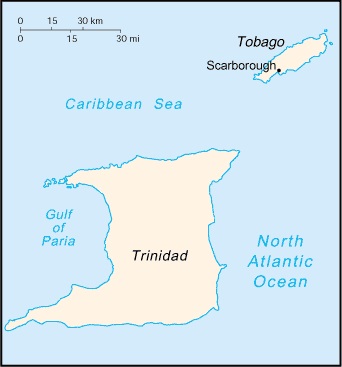
Scarborough, Tobago

CU Blog - Tobago - A Model for Cruise Tourism - Photo 1

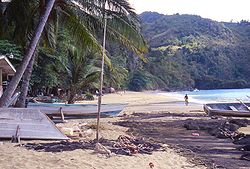
Beach scene on Tobago

From a strictly economic consideration, stay-overs are preferred. The visitors consume more of the local culture and spend more monies on amenities like hotels, taxis, restaurants, shopping and excursions. On the other hand, cruise passengers consume most of these amenities onboard the ships, with just spin-off revenues to the local port cities.

CU Blog - Tobago - A Model for Cruise Tourism - Photo 3The experience of tourism in the Caribbean is that there has been a sea-change since 2008; the crisis of the Great Recession deeply impacted the region as prosperity in the foreign countries – source markets – became spurious. Yes, the high-end tourist resorts have flourished since the Great Recession, but properties catering to the general middle class have floundered. The one exception being the emergence of the cruise industry as a viable vacation option for the general American population. The CU therefore plans to empower the industry directly, and to elevate the cruise industry’s impact on Caribbean society.

Plus, cruise lines are an effective way to introduce and grow a tourism product “from scratch”. This is the model for the island of Tobago, the secondary island (population of 62,000) in the federated Republic of Trinidad and Tobago. Tobago’s main economy is based on tourism, fishing, and government spending, with government spending being the largest; (the local governing body – the Tobago House of Assembly – employs 62% of the labor force). Tourism is still a fledgling industry on the island and needs to be further developed. There are no casinos, just two golf courses, and perhaps just one hotel classified among the Caribbean resort-variety; but the island boast great eco-tourism opportunities.

See this article here referring to the pending expansion of cruise operations to Tobago:

1. Title: More on Carnival’s Tobago Plans
By: The Caribbean Journal staff; retrieved from: http://www.caribjournal.com/2015/03/16/more-on-carnivals-tobago-plans/  

Carnival Cruise Lines has already announced its plans to visit Tobago next year, and now the company has revealed more information on its schedule.

The cruise line began visiting Tobago in February 2015, part of a longer itinerary that includes St Maarten, Dominica, Barbados, Scarborough, Grenada, Martinique, St Kitts and St Thomas.

“Based on feedback from our guests and travel agent partners, we’re delighted to offer these longer length voyages which provide vacationers an opportunity to visit some of the world’s most breathtaking destinations while enjoying all the wonderful on-board innovations and features found aboard Carnival’s ships,” said Terry Thornton, senior vice president of itinerary planning at Carnival.

The cruise line’s arrival will bring an estimated 10,642 Carnival passengers to the island next year.

VIDEO: Top 5 Beaches of Tobago – https://youtu.be/lpIg_6kzW0Q

Published on Dec 22, 2014 – Check out Tobago’s Top 5 Beaches as listed in the 2014 Tobago International Cycling Classic show which aired on ESPN in November. Tobago is one of the most beautiful islands in the Caribbean and it’s many beaches is one of the reasons.

The Go Lean book posits that this strategy is not enough; it is deficient to support a growing economy; to state better: an economy that should be growing. In general, the Caribbean economy is in crisis. Communities that are too dependent on tourism have suffered since 2008, directly and indirectly. Directly, the communities are deriving fewer returns from the tourism investments, especially where cruise operations are concerned. Indirectly, the crisis has driven many young ones to flee the region, setting their sights on foreign shores as the destination for their dreams and aspirations.

While Tobago is looking to expand its cruise traffic, as a way to springboard its nascent tourist industry, other communities are looking at ways to expand the yield from the existing cruise tourist traffic.

Consider this second news article here relating the efforts in Jamaica (and elsewhere) to increase the per-passenger average “spend” amounts:

2. Title: Jamaica unhappy with cruise pax spending
By: Gay Nagle Myers; Travel Weekly Magazine – Industry Periodical – Posted September 25, 2012; retrieved 03/18/2015 – http://www.travelweekly.com/Cruise-Travel/Jamaica-unhappy-with-spending-levels-of-cruise-passengers/

Jamaica’s cruise numbers saw solid growth last year, but tourism authorities there are not pleased with the level of per-passenger spending, which trails most other major cruise destinations in the Caribbean.

CU Blog - Tobago - A Model for Cruise Tourism - Photo 4Data about Jamaica’s cruise industry are contained in the recently released Annual Travel Statistics 2011, a hefty document published by the Jamaica Tourist Board that examines all facets of visitor arrivals, hotel occupancy by room size category and visitor expenditure.

Tourism data were compiled from embarkation/disembarkation cards filled out by visitors arriving by air and by exit surveys at the airports and at cruise ship piers.

Data on cruise ship arrivals were obtained from the ships’ manifests.

In many instances, the current figures are compared to figures for the years since 2007 to illustrate how well or poorly certain tourism segments are faring.

Jamaica had solid cruise growth in 2011, welcoming more than 1.1 million passengers, a jump of 23.7% over 2010.

The main contributing factor to the turnaround in passenger arrivals was the opening of the Falmouth pier in Trelawny in February 2011.

In the 11 months that followed, the port of Falmouth hosted 110 cruise ship calls and was the entry point for 456,442 cruise ship passengers, or 40.6% of all passengers arriving in Jamaica. That included 21 calls by Royal Caribbean International’s Oasis of the Seas, accounting for 125,023 passengers.

The port of Ocho Rios, which in the past provided the largest share of Jamaica’s cruise arrivals, accounted for 417,520 of total cruise passengers in 2011, or 37.1%.

The port of Montego Bay accounted for 250,491 passengers, or 22.3%. The problem lies in how much those passengers spent in their ports of arrival. Overall gross visitor expenditure in 2011 was estimated at just over $2 billion, an increase of just 0.4% over 2010.

Foreign visitors arriving by air spent $1.85 billion, while cruise passenger spend totaled $80 million, and nonresident Jamaicans visiting friends and family contributed $76 million.

This means that the average tourist on holiday spent $115.74 per person per night, while cruise passengers strolling the streets of Falmouth or the vendor stalls in Montego Bay spent just $71.27.

The level of cruise passenger spend is not sitting well with tourism officials. It represents a drop of 20%, or $16 per passenger, the lowest in 10 years, according to the JTB annual report.

This is a disappointing payback following the opening of the much-touted Falmouth pier.

William Tatham, vice president of the Port Authority of Jamaica, said tourism officials would like to see a 70% jump in the cruise spend per passenger, to $120 per person, in the coming cruise season.

That goal could be realized with the opening of Margaritaville Falmouth at the cruise pier later this year.

The planned $7 million, 17,000-square-foot attraction will include a pirate ship with a pool and water slide, a zipline and a Jacuzzi right on the dock, according to Ian Dear, CEO of Island Entertainment Brands, which operates 27 Margaritaville venues, four of them in Jamaica.

Even if Jamaica should reach its goal of passengers spending $120 a day, the island still will trail the Bahamas and the U.S. Virgin Islands, the Caribbean’s two top-volume cruise ports, when it comes to per-passenger spend.

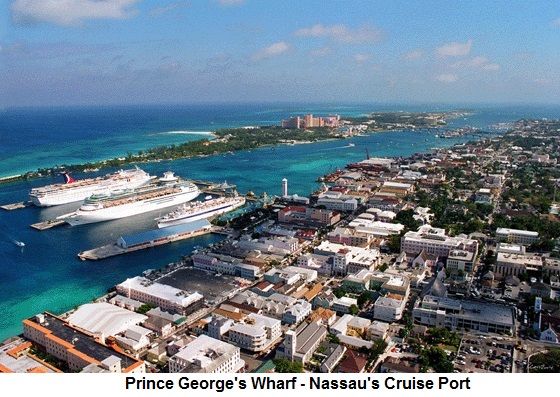
CU Blog - Tobago - A Model for Cruise Tourism - Photo 5The Bahamas welcomed 4.1 million cruise passengers in 2011, up 9.4% from the 3.8 million it welcomed in 2010.

The average spend of a Bahamas cruise passenger in 2012 is $111, up from $73 in 2011, according to Carla Stuart, director of cruise development for the Ministry of Tourism.

“The Bahamas remains the leader in the cruise industry in the region,” Stuart said. “For the first quarter of 2012, we saw more than an 11% increase in cruise arrivals compared to the same period in 2011. We expect this growth will continue throughout the year, bringing in significant revenue to small businesses and individuals employed directly and indirectly in the tourism sector.”

The USVI cruise numbers stood at 2 million in 2011, up 8.1% from 1.8 million in 2010, putting it third in cruise volume in the Caribbean region. (If Cozumel, Mexico, an island port in the Western Caribbean off Mexico’s Riviera Maya region, is factored into the Caribbean cruise data, it actually outranks the USVI with 2.8 million cruise arrivals in 2011, down 1.4% from the 2.9 million in 2010.)

Passengers disembarking in St. Thomas and St. Croix outspent those in Nassau and Freeport, Bahamas last year, dropping $156 per person on duty-free items, island tours, banana daiquiris at Mountaintop in St. Thomas or Buck Island snorkeling tours in St. Croix.

However, the 2011 figure fell from the 2010 figure of an average spend of $167 per cruise passenger, according to the Department of Tourism.

Projected cruise passenger spend for the U.S. Virgin Islands during the 2012-2013 cruise season is $165 per person.

The Caribbean region needs to focus on growing the economy and creating jobs. The Go Lean book asserts that this effort is too big a task for any one Caribbean member-state alone, that Jamaica, Tobago and other port cities need to convene, confederate and collaborate with the other regional member-states. As such, the Go Lean book serves as a roadmap for the introduction and implementation of the technocratic Caribbean Union Trade Federation (CU), for the elevation of Caribbean society – for all member-states including Tobago. This CU/Go Lean roadmap has these 3 prime directives:

  • Optimization of the economic engines in order to grow the regional economy to $800 Billion and create 2.2 million new jobs.
  • Establishment of a security apparatus to protect the resultant economic engines.
  • Improvement of Caribbean governance – including local government – to support these engines.

The Go Lean book (Page 193 – 10 Ways to Impact Cruise Tourism) makes this simple assertion that the unification of the region into a Single Market will allow for collective bargaining with the cruise industry; no one nation-state would have the clout of a unified market. The industry needs the Caribbean more than the Caribbean needs the industry. The ports-of-calls need to be able to generate more revenue from the visiting passengers, but the cruise line have embedded rules/regulations designed to maximize their revenues at the expense of the port-side establishments. There is a better way!

Yet still, the strategies and tactics of the Go Lean roadmap are not to be contrarian for the region’s business stakeholders, but rather to promote and facilitate more business options, even for the cruise lines – we are cheerleaders. The cruise lines will have a partner in this Trade Federation for facilitating the best Caribbean experience for their passengers. We want to make the Caribbean better … to live, work and play for visitors and residents alike. And when something goes awry, the CU’s Emergency protocols will be engaged to facilitate a quick recovery.

A win-win…

The book stresses (early at Page 11 & 14) the need to be on-guard for opportunities to expand cruise industry performance in these pronouncements in the Declaration of Interdependence:

iv.  Whereas the natural formation of the landmass is in a tropical region, the flora and fauna allows for an inherent beauty that is enviable to peoples near and far. The structures must be strenuously guarded to protect and promote sustainable systems of commerce paramount to this reality.

xxvi.  Whereas the Caribbean region must have new jobs to empower the engines of the economy and create the income sources for prosperity, and encourage the next generation to forge their dreams right at home, the Federation must therefore foster the development of new industries, like that of ship-building, automobile manufacturing, prefabricated housing, frozen foods, pipelines, call centers, and the prison industrial complex. In addition, the Federation must invigorate the enterprises related to existing industries like tourism, fisheries and lotteries – impacting the region with more jobs.

This commentary previously related details of Caribbean tourism dynamics and the region’s own job-creation efforts. Here is a sample of earlier blogs:

https://goleancaribbean.com/blog/?p=4263 State of Aruba’s Mono-Industrial Economy
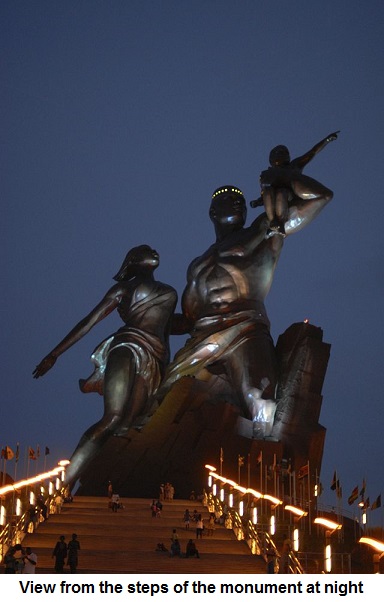
https://goleancaribbean.com/blog/?p=4145 The African Renaissance  Monument – Model for Art Tourism
https://goleancaribbean.com/blog/?p=4058 The Bahamas missed tourism marketing in New York due to the New York Times focus on immigration dysfunction.
https://goleancaribbean.com/blog/?p=3743 Trinidad cuts budget as oil prices tumble – Perils of a mono-industrial economy.
https://goleancaribbean.com/blog/?p=2750 Disney World – Role Model for Touristic Self-Governing Entities
https://goleancaribbean.com/blog/?p=2571 More Business Travelers Flock to Airbnb
https://goleancaribbean.com/blog/?p=2207 Bad Model – Hotels making billions from Resort Fees
https://goleancaribbean.com/blog/?p=1984 Casinos Changing/Failing Business Model for Tourism activities
https://goleancaribbean.com/blog/?p=1943 The Future of Golf; Vital for Tourism, but failing badly
https://goleancaribbean.com/blog/?p=510 Florida’s Snowbirds Chilly Welcome – Bad Model for managing a great demographic and market potential.
https://goleancaribbean.com/blog/?p=273 10 Things We Want from the US – #2: Tourists
https://goleancaribbean.com/blog/?p=242 The Erosion of the Middle Class
https://goleancaribbean.com/blog/?p=235 Tourism’s changing profile

The Go Lean book and accompanying blogs posit that for the Caribbean tourism is undergoing change due to … a changing world:

“If we do what we have always done, we will no longer get what we always got”.

The world is now considered flat, because it is digital and connected. The region must explore all the marketing opportunities there-in. This is the charge of the Go Lean…Caribbean roadmap, to do the heavy-lifting, to implement the organizational dynamics to optimize Caribbean tourism here and now. The following are the community ethos, strategies, tactics, implementations and operational advocacies to effectuate this goal:

Community Ethos – People Respond to Incentives Page 21
Community Ethos – Economic Systems Influences Choices & Incentives Page 21
Community Ethos – Job Multiplier Page 22
Community Ethos – Lean Operations Page 24
Community Ethos – Ways to Improve Negotiations – Cruise Collective Bargaining Page 32
Community Ethos – Ways to Impact the Greater Good Page 37
Strategy – Vision – Make the Caribbean the Best Address on Planet Page 45
Strategy – Mission – Facilitate transportation options for passengers and cargo Page 46
Strategy – Agents of Change – Technology Page 57
Strategy – Agents of Change – Globalization Page 57
Anecdote – Carnival Corporation Strategy Report Page 61
Tactical – Separation of Powers – Tourism Promotion and Administration Page 78
Implementation – Assemble Regional Organs Page 95
Implementation – Ways to Deliver Page 109
Implementation – Ways to Impact Social Media – Tourism Outreach Page 111
Implementation – Ways to Benefit from Globalization Page 119
Implementation – Ways to Promote Independence Page 120
Planning – 10 Big Ideas for the Caribbean – Confederate to Single Market Page 127
Planning – Ways to Improve Trade Page 128
Planning – Lessons Learned from 2008 Page 136
Advocacy – Ways to Grow the Economy Page 151
Advocacy – Ways to Create Jobs Page 152
Advocacy – Ways to Improve Governance Page 168
Advocacy – Ways to Improve Local Governance – Help communities like Tobago Page 169
Advocacy – Ways to Reduce & Mitigate Crime – Against Tourist Protected Class Page 178
Advocacy – Ways to Enhance Tourism – Regional promotion and facilitation Page 190
Advocacy – Ways to Impact Cruise Tourism – 10 specific steps/actions for improvement Page 193
Advocacy – Ways to Improve Transportation – More efficiency in moving people Page 205
Advocacy – Ways to Preserve Caribbean Heritage … and Culture Page 218
Advocacy – Ways to Impact Trinidad & Tobago – More can be done Page 240
Appendix – Lessons Learned – Trinidad & Tobago – Floating the T&T Dollar Page 316

Cruising in the Caribbean is a great experience; we must grow this business. Staying-over in the Caribbean is even better, allowing more time to enjoy sun, sand, sea, surf, savor, salsa and smoke; (savor as in foods; salsa as in dance and smoke as in cigars). We can definitely grow this business with more technocratic deliveries. The Go Lean book provides 370 pages of turn-by-turn directions on how to accomplish this grandiose goal.

Now is the time for all of the Caribbean – the people, business and governing institutions – to lean-in to this Go Lean … Caribbean roadmap. This plan is conceivable, believable and achievable to make the region better places to live work and play. 🙂

Download the book Go Lean … Caribbean – now!

Share this post:
, , , , ,
[Top]

Cash, Credit or iPhone …

Go Lean Commentary

Caribbean society is advancing; moving forward…

A previous blog/commentary demonstrated that the region’s banks are ready to accept electronic payments transactions, that their deployment of credit card terminals allow the introduction of the Caribbean Dollar (C$) as a regional currency. This is a good start!

But the world has already moved forward from that standard. The future of the credit card, debit card and payment card is missing … the card! Yet, still the Caribbean region must be ready.

Getting the region ready is the mission of the book Go Lean … Caribbean, a roadmap for the introduction and implementation of the Caribbean Union Trade Federation (CU) and the Caribbean Central Bank (CCB). This Go Lean roadmap depicts these entities as hallmarks of technocratic efficiency; therefore the agility will be part of the institutions’ DNA to not just keep pace with technology and market changes but also to drive change as well. In fact, these 3 statements are identified as prime directives for the CU/CCB effort:

  • Optimization of the economic engines in order to grow the regional economy to $800 Billion & create 2.2 million new jobs.
  • Establishment of a security apparatus to protect the resultant economic engines.
  • Improvement of Caribbean governance to support these engines.

So the electronic payment schemes being considered by the rest of the world, in the following article, must also be envisioned for deployment in the Caribbean region:

Title: Cash, Credit or iPhone?
By: Chris Clayton, Special Contributor

If one word summed the future of how we pay for things, it certainly wouldn’t be “plastics”. Mobile payments are emerging as the ultimate disrupter of cash and credit cards, with Apple Pay, Google Wallet and others competing in an ever crowded market.

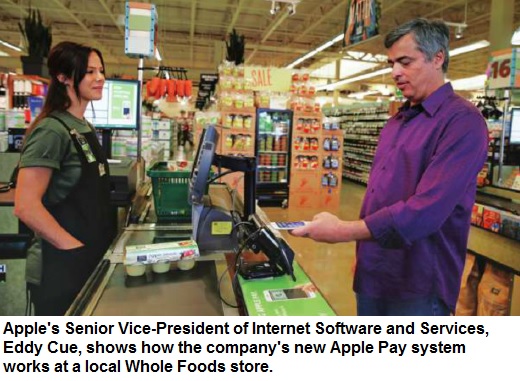
By nearly every psychographic measure, Elliot Payne is the ideal Apple customer. He lives in a hip city (Minneapolis), has a creative job (designer as a digital ad agency), moonlights as a DJ, blogs about tech and – most importantly – is a proud early adopter. So when Apple released its new mobile payment service on iPhone 6 in October, guess who tried it out at Whole Foods on the first day it was available? At checkout, Payne placed his thumb on his phone’s touch ID sensor, waved it in front of a reader on the payment terminal, and before he could say “expensive organic groceries,” he had used his fingerprint and smartphone to buy expensive organic groceries.

Not that swiping plastic is any more time-consuming than holding up your phone, but Payne argues that convenience isn’t Apple Pay’s main selling point. “Its more about security,” he says. Apple Pay uses something called “tokenization,” which replaces the card info stored on your phone with a special number used to make payments. That number is translated only when it reaches your credit card network, meaning the merchants never sees your financial information. It is not foolproof, but it’s a lot safer than swiping plastic, which leaves your identity exposed to hackers.

Innovations such as tokenization in the mobile space are slowly but surely pushing consumers away from cash, checks and physical cards

CU Blog - Cash, Credit or iPhone - Photo 1

According to a 2014 Business Insider report, in-store mobile payments in the United States (that is, using your phone to pay for goods rather than cash, check or plastic card) will grow by 153 percent from $1.8 billion in 2013 to $190 billion in 2018. Pair that with data from a 2014 Forrester Research eCommerce forecast predicting online retail sales to jump from $294 billion in 2014 to $414 billion in 2018, and its clear that our our growing love of smartphones and tablets is impacting how and where we shop. Predictably, banks, credit card networks, retailers and tech companies are clamoring to invent bells and whistles to make mobile payments easier, more secure, and – to borrow a phrase from a Square spokesperson when we asked how the merchant services outfit planned on winning at the point of sale – more “magical.”

Excerpt from: Delta SKY In-flight Magazine January 2015; retrieved from: http://msp.imirus.com/Mpowered/book/vds2015/i1/p70

———

Another article/VIDEO relating the Apple Pay innovation: Huntington Bank joins Key, PNC, US Bank and Chase with Apple Pay Deployment.

VIDEO – Apple Pay Demo  – http://youtu.be/4I9MbIrlEUw

Published on Sep 9, 2014 – Apple has revealed its mobile payments play, and it features NFC and Touch ID, as many expected. Essentially, with the new iPhones, a user holds their phone near a payment terminal, and the payment card they’ve set as a default is called up, prompting a Touch ID action where the user authenticates their transaction.

———

Apple Pay is not the only Mobile Payment Solution. Other options have emerged:

The Go Lean book posits that electronic payment schemes (card-based, NFC and internet) are very important in this strategy to elevating the Caribbean economy, security and governing engines.

This Go Lean/CU/CCB roadmap looks to employ electronic payments schemes to impact the growth of the regional economy in tourism and other domestic endeavors. One CU scheme is directly targeted to impact one segment of tourism eco-system: Cruise line passengers:

  • The cruise industry needs the Caribbean more than the Caribbean needs the industry. But the cruise lines have embedded rules/regulations designed to maximize their revenues at the expense of the port-side establishments. The CU solution is to deploy a scheme for smartcards (or smartphone applications) that function on the ships and at the port cities. This scheme will also employ NFC technology – (Near Field Communications; defined fully at Page 192 – so as to glean the additional security benefits of shielding private financial data of the guest and passengers.

The goal of electronic payments is to facilitate more electronic commerce (or e-Commerce). The Go Lean roadmap defines that the Caribbean Dollar (C$) will be mostly cashless, an accounting currency. So the CCB will settle all C$ electronic transactions (MasterCard-Visa style or ACH style) and charge interchange/clearance fees. Apple Pay is not a “free” service; card issuers have to pay about 15 basis points (.15%) to Apple, and merchants pay about 3% interchange fees for the e-Payment transaction (MC/Visa/AmEx) itself. Acquirers (sales and consolidation organizations) must be in place. So this scheme allows for the full emergence of the e-Commerce eco-system.

The benefits of these technologies, as related in the foregoing articles, cannot be ignored for their security benefits. Previously this commentary explored the perplexing issues associate with cyber-security in this internet age. We cannot invite millions of visitors to the Caribbean region and then show disregard for their protections; including information security.

In terms of governance, there is the urgent need for regional coordination of the Caribbean radio spectrum. This regulates mobile phones, Wifi and satellite communications. Again, we cannot invite millions of guests and then exploit them with roaming charges the moment they turned on their smartphones to complete a payment transaction. This issue was also raised and explored in a previous Go Lean blog commentary. This is why the Go Lean roadmap calls for a consolidated Communications and Media Authority, operating under the CU’s Department of Commerce, to lead the oversight of these attendant telecommunication endeavors. The consequences of mis-management in this regards are dire. Soon and very soon, we will have tourists arriving on our shores with no credit cards; armed only with their smartphones; ready to tap unquenchable sums of discretionary monies for their enjoyment of Caribbean hospitality.

Still yet, the greatest benefit of marshaling electronic payments systems is not governance, nor security, nor technology; it is economics.  These electronic payment schemes allow for more M1 in the regional economy; this is the measurement of currency/money in circulation (M0) plus overnight bank deposits. As M1 values increase, there is a dynamic to create money “from thin-air”, called the money multiplier. The more money in the system, the more liquidity for investment and industrial expansion opportunities. Lastly, there will be the additional economic benefit of mitigating Black Market “under-the-table” transactions, as all these electronic transactions must be processed through some clearing house, in the case of the Go Lean roadmap, this will be the role of the CCB, a cooperative of the region’s central banks.

The Go Lean book and accompanying blogs posit that the Caribbean is in crisis, and that this crisis will only worsen without some technocratic efficiency with currency and money supply (M1). The world is moving very fast, embracing one technological advancement after another; we cannot only consume these innovations, we must produce and guide advancements for ourselves:

The Best Way to Predict the Future is to Create it - Photo 1

The book posits that to adapt and thrive in the new global marketplace there must be more strenuous management and technocratic oversight of the region’s currencies, telecommunications (information security & spectrum) and governance. This is the charge of Go Lean roadmap, opening with these pronouncements; Declaration of Interdependence (Page 13 and 14):

xxiv.    Whereas a free market economy can be induced and spurred for continuous progress, the Federation must install the controls to better manage aspects of the economy: jobs, inflation, savings rate, investments and other economic principles. Thereby attracting direct foreign investment because of the stability and vibrancy of our economy.

xxv.    Whereas the legacy of international democracies had been imperiled due to a global financial crisis, the structure of the Federation must allow for financial stability and assurance of the Federation’s institutions. To mandate the economic vibrancy of the region, monetary and fiscal controls and policies must be incorporated as proactive and reactive measures. These measures must address threats against the financial integrity of the Federation and of the member-states.

xxvii. Whereas the region has endured a spectator status during the Industrial Revolution, we cannot stand on the sidelines of this new economy, the Information Revolution. Rather, the Federation must embrace all the tenets of Internet Communications Technology (ICT) to serve as an equalizing element in competition with the rest of the world. The Federation must bridge the digital divide and promote the community ethos that research/development is valuable and must be promoted and incentivized for adoption.

xxviii. Whereas intellectual property can easily traverse national borders, the rights and privileges of intellectual property must be respected at home and abroad. The Federation must install protections to ensure that no abuse of these rights go with impunity, and to ensure that foreign authorities enforce the rights of the intellectual property registered in our region.

xxx. Whereas the effects of globalization can be felt in every aspect of Caribbean life, from the acquisition of food and clothing, to the ubiquity of ICT, the region cannot only consume, it is imperative that our lands also produce and add to the international community, even if doing so requires some sacrifice and subsidy.

“Step One, Day One” in the Go Lean roadmap is the assembly of existing Caribbean organs under the regional administration of the CU. This includes the Caribbean Telecommunications Union (CTU), and the CCB governance; as a cooperative of existing central banks. The strategy is to implement the bank and C$ currency with the appropriate regulatory framework, tools and infrastructure, to facilitates the electronic schemes identified above.

The Go Lean book details a series of community ethos, strategies, tactics, implementations and advocacies to foster the proper controls for electronic/mobile payments in the Caribbean region:

Community Ethos – Economic Principles Page 21
Community Ethos – Money Multiplier Principle Page 22
Community Ethos – Security Principles – Privacy versus Public Protection Page 23
Community Ethos – Governing Principles – Lean Operations Page 24
Community Ethos – Governing Principles – Cooperatives Page 25
Community Ethos – Promote Intellectual Property Page 29
Community Ethos – Ways to Bridge the Digital Divide Page 31
Community Ethos – Ways to Improve Sharing Page 25
Strategy – Mission – Fortify the monetary needs through a Currency Union Page 45
Tactical – Separation of Powers – Central Banking Page 73
Implementation – Assemble Central Bank Cooperative Page 96
Implementation – Assemble Caribbean Regional Organs – like CTU Page 96
Implementation – Ways to Deliver Page 109
Implementation – Ways to Impact Social Media Page 111
Planning – 10 Big Ideas – #2: Currency Union / Single Currency Page 127
Anecdote – Caribbean Currencies Page 149
Advocacy – Ways to Grow the Economy Page 151
Advocacy – Ways to Create Jobs Page 152
Advocacy – Ways to Mitigate Black Markets Page 165
Advocacy – Ways to Foster Cooperatives Page 176
Advocacy – Ways to Impact Cruise Tourism – Smartcard scheme Page 193
Advocacy – Ways to Foster Technology Page 197
Advocacy – Ways to Foster e-Commerce Page 198
Advocacy – Reforms for Banking Regulations – Central Banking Efficiencies Page 199
Advocacy – Ways to Impact Main Street – Downtown Wi-Fi – Time and Place Page 201
Appendix – Assembling the Caribbean Telecommunications Union Page 256

The points of effective, technocratic banking/currency stewardship and dynamic change in the mobile communications space were further elaborated upon in these previous blog/commentaries:

https://goleancaribbean.com/blog/?p=4381 Net Neutrality: It Matters in the Caribbean
https://goleancaribbean.com/blog/?p=4308 Systems for Emergency Telephone Numbers in Crisis; need for Mobile App for Emergencies
https://goleancaribbean.com/blog/?p=3974 Google and Mobile Phones – Here comes Change
https://goleancaribbean.com/blog/?p=3814 Lessons from the Swiss unpegging the franc
https://goleancaribbean.com/blog/?p=3889 RBC EZPay – Ready for Change
https://goleancaribbean.com/blog/?p=3881 The Need for Regional Cooperation to Up Cyber-Security
https://goleancaribbean.com/blog/?p=3617 Bahamas roll-out of VAT leading more to Black Markets
https://goleancaribbean.com/blog/?p=3582 For Canadian Banks: Caribbean is a ‘Bad Bet’
https://goleancaribbean.com/blog/?p=2074 MetroCard – Model for the Caribbean Dollar
https://goleancaribbean.com/blog/?p=1350 PayPal expands payment services to 10 markets
https://goleancaribbean.com/blog/?p=906 Bitcoin virtual currency needs regulatory framework to change image
https://goleancaribbean.com/blog/?p=833 One currency, divergent economies
https://goleancaribbean.com/blog/?p=476 CARICOM urged on ICT, e-Commerce and e-Payments

The Caribbean ought to participate in more mobile smartphone development. There are so many benefits from efficient regional oversight of this technology: more cruise tourism spending, fostering more e-Commerce, increasing regional M1, mitigation of Black Markets, growing the economy, creating jobs, enhancing security and optimizing governance. Mobile smartphones are the future, and that future is now! (We, the Caribbean, have to play catch-up).

Now is the time for all stakeholders of the Caribbean – residents, visitors, bankers and governing institutions – to lean-in for the empowerments described in the book Go Lean … Caribbean. The benefits are many; but most important, the success of the roadmap can make the Caribbean a better place to live, work and play.  🙂

Download Go Lean … Caribbean – now!

Share this post:
, , , ,
[Top]

911 – Emergency Response: System in Crisis

Go Lean Commentary

Emergency management, as defined in the book Go Lean…Caribbean, is an art and a science.

The Go Lean book embarks on the strategy to consolidate the Emergency Management (preparation and response) for the entire Caribbean region. Therefore the issue of Emergency Telephone Numbers is of serious concern; sometimes it’s a life-or-death matter.

Despite all the attendant issues – technology, standards, geography, legacy, and language – this is first-and-foremost an issue of life-and-death. Failure in this area is not an option. Consider here this example of short-comings in the US system:

VIDEO Title: Some 911 systems can’t find you in an emergency due to dated technology – http://www.today.com/video/today/57011057#57011057

Published on Feb 23, 2015 – Some 911 systems can’t find you in an emergency

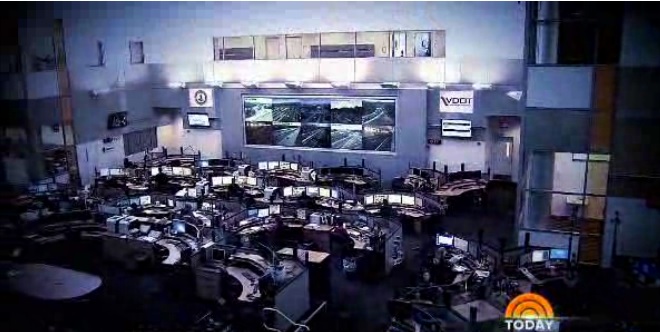
Many 911 centers around the country still rely on dated cell tower technology instead of something as widely used as Google Maps, which means dispatchers may not be able to locate you in an emergency – and the consequences can be tragic. TODAY’s national investigative correspondent Jeff Rossen reports; (see transcript in the Appendix below).

CU Blog - 911 System Crisis - Photo 3There is no one world standard for Emergency Telephone Numbers. But the number is always intuitive; normally just a 3-digit code and applicable on a land-line or a mobile phone – this is an issue of technology. Normally neighboring countries share the same number, even if a dual overlap applies; so as to assuage any confusion for people when they absolutely have an emergency.

In the Caribbean region, like most places, everyone expects to pick up a phone and dial a 3-digit code – like 911 – and within short order be able to talk with an Emergency Management First-Responder for Police, Ambulance and Fire incidences.

Unfortunately for the Caribbean, we have 5 different legacies that rule the standards of day-to-day life:  American, British, Dutch, French and the Spanish Caribbean. But geographically, since the region is physically located among all these cultures; all territories must comply with a consistent structure; that consistency is identified as the North American Numbering Plan.

So 911 rules…

But for countries with active European oversight, they normally go further and allow their European Emergency Phone Number configurations to also apply while in the Caribbean member-states. So the 3-digit code in the European Union – 112 – will also work in the Dutch and French member-states.

This issue reflects the regional oversight the book Go Lean…Caribbean envisions for the Caribbean region. The book serves as a roadmap for the introduction and implementation of the technocratic Caribbean Union Trade Federation (CU). This CU roadmap is designed to elevate Caribbean society by these prime directives:

  • Optimization of the economic engines; growing the regional economy.
  • Establishment of a security apparatus to protect the resultant economic engines.
  • Improvement of Caribbean governance to support these engines.

All 3 of these features of the Go Lean roadmap relate to this topic of Emergency Telephone Numbers. There is the need for effectiveness and efficiency so as to protect the life and property of all Caribbean stakeholders: residents and visitors alike. The book posits that some issues are too big for any one member-state to manage alone – especially with such close proximities – there are times when there must be cross-border, multilateral coordination. This vision is defined early in the book (Pages 12 – 14) with these statements in the  opening Declaration of Interdependence:

xi. Whereas all men are entitled to the benefits of good governance in a free society, “new guards” must be enacted to dissuade the emergence of incompetence, corruption, nepotism and cronyism at the peril of the people’s best interest. The Federation must guarantee the executions of a social contract between government and the governed.

xii. Whereas the legacy in recent times in individual states may be that of ineffectual governance with no redress to higher authority, the accedence of this Federation will ensure accountability and escalation of the human and civil rights of the people for good governance, justice assurances, due process and the rule of law. As such, any threats of a “failed state” status for any member state must enact emergency measures on behalf of the Federation to protect the human, civil and property rights of the citizens, residents, allies, trading partners, and visitors of the affected member state and the Federation as a whole.

xvi. Whereas security of our homeland is inextricably linked to prosperity of the homeland, the economic and security interest of the region needs to be aligned under the same governance. Since economic crimes … can imperil the functioning of the wheels of commerce for all the citizenry, the accedence of this Federation must equip the security apparatus with the tools and techniques for predictive and proactive interdictions.

xviii. Whereas all citizens in the Federation member-states may not have the same physical abilities, reasonable accommodations must be made so that individuals with physical and mental disabilities can still access public and governmental services so as to foster a satisfactory pursuit of life’s liberties and opportunities for happiness.

xxiii. Whereas many countries in our region are dependent Overseas Territory of imperial powers, the systems of governance can be instituted on a regional and local basis, rather than requiring oversight or accountability from distant masters far removed from their subjects of administration. The Federation must facilitate success in autonomous rule by sharing tools, systems and teamwork within the geographical region.

xxvii. Whereas the region has endured a spectator status during the Industrial Revolution, we cannot stand on the sidelines of this new economy, the Information Revolution. Rather, the Federation must embrace all the tenets of Internet Communications Technology (ICT) to serve as an equalizing element in competition with the rest of the world. The Federation must bridge the digital divide and promote the community ethos that research/development is valuable and must be promoted and incentivized for adoption.

Though the issue of “911” is primarily associated with the North American Numbering Plan; this discussion of emergency contacts is not just the focus for North America.

The following information is retrieved from Wikipedia regarding the universality of Emergency Telephone Numbers; (source: http://en.wikipedia.org/wiki/Emergency_telephone_number):

CU Blog - 911 System Crisis - Photo 2In many countries the public telephone network has a single emergency telephone number (sometimes known as the universal emergency telephone number or the emergency services number) that allows a caller to contact local emergency services for assistance. The emergency number differs from country to country; it is typically a three-digit number so that it can be easily remembered and dialed quickly. Some countries have a different emergency number for each of the different emergency services; these often differ only by the last digit. In the European Union, Russia, Turkey, Ukraine and others “112” was introduced as a common emergency call number during the 1990s, and as the GSM standard it is now a well known mobile telephone emergency number around the globe[1] alongside the North American “911“.

Mobile Telephones
Mobile phones can be used in countries with different emergency numbers. This means that a traveller visiting a foreign country does not have to know the local emergency numbers. The mobile phone and the SIM card have a preprogrammed list of emergency numbers. When the user tries to set up a call using an emergency number known by a GSM or 3G phone, the special emergency call setup takes place. The actual number is not even transmitted into the network, but the network redirects the emergency call to the local emergency desk. Most GSM mobile phones can dial emergency numbers even when the phone keyboard is locked, the phone is without a SIM card, emergency number is entered instead of the PIN or there isn’t a network signal (busy network).

Most GSM mobile phones have 112, 999 and 911 as pre-programmed emergency numbers that are always available.[15] The SIM card issued by the operator can contain additional country-specific emergency numbers that can be used even when roaming abroad. The GSM network can also update the list of well-known emergency numbers when the phone registers to it.

Some notable exceptions in the Caribbean neighborhood include:

Country

Police

Ambulance

Fire

Mexico

066

065

068

Bahamas

919 or 911

Haiti

114

118

115

Jamaica

119

110

Trinidad and Tobago

999

990

Guyana

911

913

912

Suriname

112

Considering the experiences from the foregoing VIDEO, the US needs better coordination with their Communications Regulator and Emergency Management Agencies. While it is out-of-scope for the Go Lean roadmap to change America, we can do better in the Caribbean. The CU is formed from a pledge for efficient, agile regional coordination. The Go Lean book describes this oversight as “lean”. The concept of “lean” is very prominent in the Go Lean book (and movement), even adopting the title, Go Lean, for this quest for excellence in Caribbean economic empowerment, security coordination and governing efforts. The label “lean” is therefore indicative of this quest; the word is used in the book as a noun, a verb and an adjective. This point is pronounced early in the book (Page 4) with these statements:

The CU will lean on, lean in, lean over backwards, and then lean towards…
The CU will embrace lean, agile, efficient organization structures – more virtual, less physical, more systems, less payroll.

This commitment to “lean” lends confidence to the coordination of the CU federal authorities. The Go Lean book hypothesizes that the Caribbean region can succeed in transforming our society in short order; the roadmap is a 5 year plan. Previous blogs/commentaries also exclaimed societal benefits from pursuits in regional coordination; consider this sample of previous blogs:

https://goleancaribbean.com/blog/?p=3881 Regional Coordination: Cyber Security Cooperation
https://goleancaribbean.com/blog/?p=3834 State of the Caribbean Union’s Regional Society
https://goleancaribbean.com/blog/?p=3760 Regional Proxy for Citizenship Programs
https://goleancaribbean.com/blog/?p=3713 NEXUS – Model of Regional Border Control
https://goleancaribbean.com/blog/?p=3594 Lessons for Regional Coordination for Queen Conch
https://goleancaribbean.com/blog/?p=3582 Better Coordination for Regional Banks
https://goleancaribbean.com/blog/?p=3432 Mitigating Regional Preponderance to Beg for Development Aid
https://goleancaribbean.com/blog/?p=3354 Regional Call to End the US Embargo on Cuba
https://goleancaribbean.com/blog/?p=3090 Model of Regionalism: Europe – All Grown Up
https://goleancaribbean.com/blog/?p=2887 Caribbean Region Must Work Together to Address Rum Subsidies
https://goleancaribbean.com/blog/?p=2614 The ‘Great ShakeOut’ Earthquake Drill for the Region’s Seismic Areas
https://goleancaribbean.com/blog/?p=2435 Role Model for Caribbean Economy: Korea
https://goleancaribbean.com/blog/?p=2359 Regional calls for innovative ideas to finance Small Island Development
https://goleancaribbean.com/blog/?p=2171 SEC Network – Role Model for Regional Sports Broadcast Networks
https://goleancaribbean.com/blog/?p=1965 America’s Navy – 100 Percent – Model for Caribbean Regional Security
https://goleancaribbean.com/blog/?p=1554 Status of Forces Agreement for a Regional Security Pact
https://goleancaribbean.com/blog/?p=833 One currency, divergent economies – Model for the Caribbean
https://goleancaribbean.com/blog/?p=479 PetroCaribe press ahead with plan to eradicate hunger & poverty in the region
https://goleancaribbean.com/blog/?p=318 Collegiate Sports Eco-System for the Caribbean Region
https://goleancaribbean.com/blog/?p=308 CARCIP – Regional Effort Can Foster Technology Innovations

The Go Lean book posits that communication technologies must be regulated at the regional level for the Greater Good of the Caribbean. There are too many instances with overlapping spectrum from one member-state to another. Citizens should not need to worry about border considerations during emergency incidences. There should be a smartphone mobile app for the Caribbean region from Step One/Day One of the CU implementation. In the present tense, this regional coordination is managed by bilateral treaties. A unitary confederation treaty – for all 30 member-states – would be better.

The Go Lean book details a series of community ethos, strategies, tactics, implementations and advocacies to foster better regional coordination within the Caribbean neighborhood. This list provides a sample, as follows:

Community Ethos – People Respond to Incentives Page 21
Community Ethos – Economic Systems Influence Individual Choices Page 21
Community Ethos – Security Principle – Privacy versus Public Protection Page 23
Community Ethos – Governing Principle – Lean Operations Page 24
Community Ethos – Ways to Bridge the Digital Divide Page 31
Community Ethos – Ways to Improve Sharing Page 35
Community Ethos – Ways to Impact the Greater Good Page 37
Strategy – Provide Emergency Management Arts and Sciences for Disasters Page 45
Strategy – Mission – Embrace the Advances of Technology Page 46
Strategy – Agents of Change – Technology Page 57
Strategy – Agents of Change – Climate Change Page 57
Tactical – Fostering a Technocracy Page 64
Tactical – Separation of Powers – Homeland Security – Emergency Management Page 76
Tactical – Separation of Powers – Communications and Media Authority Page 79
Implementation – Assemble Regional Organs Under Umbrella Confederation Page 96
Implementation – Security Initiatives at Start-up – Intelligence Collaboration Page 103
Implementation – Ways to Deliver Page 109
Implementation – Ways to Foster International Aid – Natural Disaster Relief Page 115
Planning – Big Ideas – Homeland Security Pact Page 127
Planning – Ways to Make the Caribbean Better Page 131
Advocacy – Ways to Grow the Economy Page 151
Advocacy – Ways to Create Jobs Page 152
Advocacy – Ways to Improve Governance Page 168
Advocacy – Ways to Better Manage the Social Contract Page 170
Advocacy – Ways to Improve for Natural Disasters Page 184
Advocacy – Ways to Improve Communications Page 186
Advocacy – Ways to Improve Emergency Management – Trauma Medicine Page 196
Advocacy – Ways to Foster Technology Page 197
Advocacy – Ways to Impact Main Street – Mobile Apps: Time and Place Page 201
Advocacy – Ways to Protect Human Rights Page 220
Advocacy – Ways to Impact Urban Living – Proximity to First Responders Page 234
Appendix – Interstate Compacts – Model: Great Lakes Compact Page 278
Appendix – Emergency Management – Service Continuity Management Page 338
Appendix – Emergency Management – Trauma Medicine Principles Page 339

The foregoing VIDEO and news article identifies the Federal Communications Commission (FCC) as the regulator for US land-line and mobile telephone systems. Who assumes this role for the Caribbean? While the same FCC has jurisdiction over 2 Caribbean member-states (Puerto Rico & US Virgin Islands), there is the need for a deputized agency for the other 28 Caribbean member-states. The Go Lean roadmap calls for an Interstate Compact among the US Territories that is also ratified as an international treaty for all the other member-states. This constitutes the Caribbean Union treaty. Also, as many Interstate Compacts create independent agencies to administer the tenants of the multi-party agreements – think the New York/New Jersey Port Authority – the CU treaty will be administered by the region-wide, deputized technocracy, that is the Trade Federation, specifically the Commerce Department’s Communications and Media Authority.

The CU – with an agency within the Homeland Security Department – also doubles as the regional Emergency Management Agency.

This allows for better coordination of Emergency Telephone Numbers – 911, 919, 112, etc. – for the region. The Communications regulator and Emergency Management under the same “umbrella”: a better pairing!

The region needs this delivery; it makes the Caribbean a better place for emergencies. Now is the time to lean-in to this Go Lean roadmap; now is the time to deliver the Caribbean as a better place to live, work and play… for today and for the future. 🙂

Download the book Go Lean … Caribbean – now!

———–

Appendix: 911 System Crisis – VIDEO Transcript
Jeff Rossen and Charlie McLravy TODAY – February 23, 2015

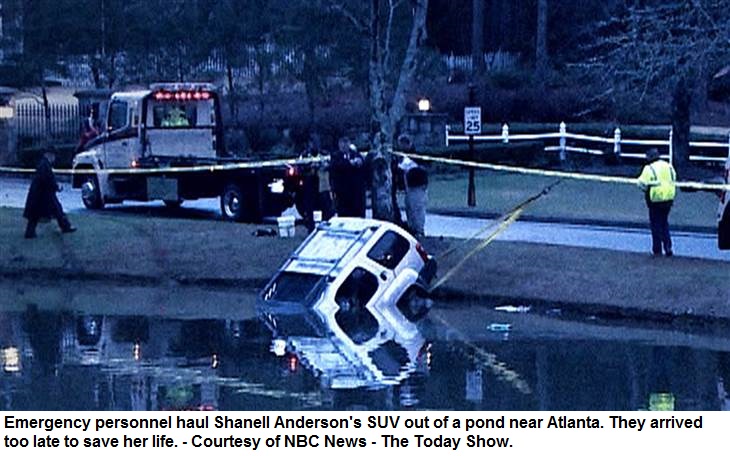
It was shortly after 4 a.m. on the foggy morning of December 29 when Shanell Anderson took a wrong turn in the dark in a suburban Atlanta neighborhood.

The 31-year-old supervisor for a newspaper delivery service was substituting for an employee who had called in sick when she accidentally drove her SUV into a large pond. Her Nissan Xterra began filling with water, its doors held shut by hundreds of pounds of water pressure.

Anderson had nothing to break the windows with, but she did have a cellphone. She dialed 911.

“911, what is the address of your emergency?” the dispatcher answered. “Where’s your emergency?”

“I’m in a car in a lake,” Anderson replied.

“Where?” said the dispatcher. “Where are you?”

“The Fairway!” Anderson answered.

“Give me the address again, make sure I have it right.”

“The Fairway and Batesville.”

“Batesville and what?” the dispatcher asked.

“The Fairway is a street, ma’am.”

“The Fairway?” the dispatcher repeated. “I don’t have that.”

“Ma’am, I’m losing air very quickly,” Anderson said.

“Give me the address one more time, it’s not working,” the dispatcher asked.

“The Fairway!” Anderson yelled, and spelled the name. “F-A-I-R-W-A-Y!”

The 911 recording captured the dispatcher saying “I lost her” before the line went dead.

It took first responders nearly 20 minutes to get to the location and almost another nine minutes to find Anderson’s car 8 feet underwater. By the time they dove into the lake, broke into the completely submerged SUV and removed her from it, she was unresponsive.

Paramedics were able to restart Anderson’s heart. She was taken to the hospital, where she clung to life in a coma for a week and a half before her organs failed and she died.

CU Blog - 911 System Crisis - Photo 1The reason it took responders so long to find Anderson is because she was sinking into a pond in the next county. Her desperate call to 911 was picked up by a cell tower in Fulton County, but the pond she was trapped in was actually in Cherokee County. The 911 dispatcher who took her call couldn’t find Anderson’s location because the map on her system only showed Fulton County, where she worked — not nearby Cherokee County, where Anderson was.

The 911 center Anderson’s call was routed to is one of many around the country that still rely on dated cell tower technology instead of something as widely used as Google Maps. Wireless 911 calls get routed to the wrong call centers so often that many dispatchers have dedicated buttons to transfer callers to neighboring departments.

Brendan Keefe, chief investigative reporter for NBC Atlanta affiliate WXIA, was the first to report on the problem with the 911 system there. His report prompted NBC News and Gannett-owned news outlets across the country to launch their own investigations into the issue.

“It has one fatal flaw; it stops at the city line,” Keefe said of Atlanta’s 911 system. “If you hit a cell tower outside their jurisdiction, they don’t know where you are.”

“If the phone had automatically routed to the correct jurisdiction, this very well may have had a different outcome,” Carl Hall, chief of technology at the Public Safety Department in Alpharetta, Georgia (in Fulton County), told Keefe in an recent interview. Hall oversees one of the most advanced 911 centers in the nation, accredited in the top 2 percent and equipped with the latest gear.

“The address of that tower determines which 911 center that call goes to,” Hall told Keefe. “It’s not based on the location of the telephone; it’s the physical address of the tower, not the physical address of the phone.”

Adding to the delay, Fulton County’s 911 follows the industry standard of using proprietary maps instead of technology like Google Maps, which most of us have installed on our cellphones.

“That’s the whole point of 911— finding you quickly,” said Anderson’s mother, Jacquene Curlee. “But when it matters, when someone’s life is in danger, they can’t find you. That is absolutely absurd.”

To demonstrate the problem, TODAY national investigative correspondent Jeff Rossen visited a 911 center in Fairfax, Virginia, with Steve Souder, director of the Fairfax County Department of Public Safety Communications. Rossen dialed 911 from inside the center and asked the responding dispatcher to identify his location.

Consulting a computer, the dispatcher replied: “Showing 4610 West Ox Road.”

“Absolutely not,” Souder said. “That’s about a quarter of a mile from where we are.”

“And we’re inside a 911 center,” Rossen said. “And they still can’t find us.”

Responsibility for fixing the problem falls to the Federal Communications Commission. “We need to concentrate on the technologies that make cellphone information and location available to 911 centers instantly,” said Jamie Barnett, a former FCC official who now represents a coalition of emergency responders and 911 dispatchers who are pushing the commission and Congress to improve 911 systems. “The technology exists that can provide it within seconds.”

“It is unacceptable that I can make a wireless call and people can’t find me,” FCC chairman Tom Wheeler acknowledged to Rossen. “Local government controls what happens with 911; the wireless carriers have the technology, and we have the oversight, with jurisdiction over the carriers, but not over local government.

“And so our job is: How do we keep pushing?” Wheeler continued. “And what we’ve recently done is to come up with a new set of rules that have pushed further.”

The new rules “demand 40 percent accuracy within the next two years,” Rossen pointed out. “How bad is it right now, if in two years the goal is 40 percent accuracy? Which I think we can agree is not a great number.”

“We have to push to make sure that both the wireless carriers and the local 911 folks are prepared to be able to exceed that and to give the kind of expectation that you and I have a right to have when we call 911,” Wheeler replied.

Wheeler also revealed that the FCC is developing a 911 app — like Uber for 911. He said that there is no timetable yet for when the app will be ready.

But that is not good enough or fast enough for Shanell Anderson’s mother.

“Her death was so senseless,” Jacquene Curlee said. “Our 911 system doesn’t work.”

Source: NBC News – The Today Show – Retrieved February 23, 2015 from:
http://www.today.com/news/some-911-systems-cant-find-you-emergency-2D80503362


Share this post:
, , ,
[Top]

The State of Aruba’s Economy

Go Lean Commentary

The Caribbean is comprised of 4 different language groups. We hear mostly of the English, French and Spanish speaking islands, but the Dutch speaking islands are far from inconsequential. They are integral to the Caribbean landscape and integral to the plan for regional confederation, consolidation and elevation.

The book Go Lean…Caribbean addresses the needs of all the Caribbean, including the Dutch territories. In the book, the islands are referred to as the formal name of the Netherlands Antilles (Page 16). This consists of two island groups; the ABC Islands of Aruba, Bonaire and Curaçao, located just off the Venezuelan coast. Plus also the SSS islands of Sint Maarten, Saba and Sint Eustatius, located in the Leeward Islands southeast of the Virgin Islands near the northern end of the Lesser Antilles. The Dutch colonized these islands in the 17th century, (at one point, Anguilla, Tobago, the British Virgin Islands, and St. Croix of the US Virgin Islands had also been Dutch), and united them in the new constituent state of the Netherlands Antilles in December 1954.

s Economy - Photo 2The largest of the Dutch Caribbean is Aruba.

Aruba called for secession from the Netherlands Antilles from as early as the 1930s, becoming a separate state within the Kingdom of the Netherlands in 1986. After many other organizational developments, by 2010, Aruba is dispositioned as one of the four constituent countries that form the Kingdom of the Netherlands, along with the Netherlands (European homeland), Curaçao and Sint Maarten.

What is the status of Aruba today?

How has it fared as an autonomous state?

The Go Lean book posits that Aruba is in crisis; (along with the rest of the Caribbean). This is also the assessment by the International Monetary Fund, as related in this news article:

By: By the Caribbean Journal staff
Aruba’s economy is “recovering gradually” from a “severe double-dip recession,” according to the International Monetary Fund, which recently concluded its 2015 Article IV Mission to the Dutch Caribbean island.

The recession was [exacerbated] by a pair of factors: the global financial crisis and the shutdown of the oil refinery in Aruba.

“These shocks have substantially increased public debt—over 80 percent of GDP in 2014—and eroded fiscal space,” the IMF said in a statement. “To address these fiscal challenges, the authorities have undertaken major entitlement reforms and are aiming to reach a small fiscal surplus in 2018.”

Without similar measures, however, the IMF warned that the pace of fiscal consolidation in the island could slow and public debt would continue to rise in the medium term.

s Economy - Photo 1Growth in Aruba is projected to rise by about 2.5 percent in 2015, which would put the island in favorable territory with the rest of the region, though.

The closure of the refinery, however, puts even more pressure on the island’s tourism sector, the IMF said.

That could compound the island’s risk, though, given its large dependence on tourists from the US and from Venezuela, with the latter’s economic crisis adding to the risk.

But the IMF said that Aruba had maintained its competitiveness in tourism, with its share of the Caribbean’s tourism market share continuing to grow.

“In addition, the authorities’ marketing efforts, access to new US hubs, and additional airlift capacity from South America have improved resilience,” the IMF said. “Increasing labor market flexibility and reducing the costs of doing business would not only further improve Aruba’s competitiveness, but would also help its adjustment to external shocks and facilitate diversification.”
Caribbean Journal Regional News Site – Posted February 16, 2015 –
http://www.caribjournal.com/2015/02/16/the-state-of-arubas-economy/

The Caribbean country of Aruba needs to focus on growing its economy and creating jobs. The Go Lean book asserts that this effort is too big a task for just one Caribbean member-state alone, that Aruba needs to convene, confederate and collaborate with the other regional member-states. As such, the Go Lean book serves as a roadmap for the introduction and implementation of the technocratic Caribbean Union Trade Federation (CU), for the elevation of Caribbean society – for all member-states. This CU/Go Lean roadmap has these 3 prime directives:

  • Optimization of the economic engines in order to grow the regional economy to $800 Billion and create 2.2 million new jobs.
  • Establishment of a security apparatus to protect the resultant economic engines.
  • Improvement of Caribbean governance to support these engines.

The Go Lean book (Page 3) makes this simple assertion regarding the state of Aruba and all the Caribbean economy: the region is in crisis. There is something wrong in these island and coastal states, that  despite the greatest address in the world, instead of the world “beating a path” to these doors, the people of the Caribbean have “beat down their doors” to get out. Aruba fails to keep its young people at home. In fact, the anecdotal experience (one story after another) is that young people abandon this island as soon as they finish high school; many never to return again, except for occasional visits. (Aruban natives – plus all Netherland Antilles states – have Dutch citizenship, sharing the same Dutch passport as the Kingdom of the Netherlands).

A mission of the Go Lean roadmap is to minimize the “push-and-pull” factors that contribute to this alarmingly high rate of societal abandonment – one report reflects a 70% brain drain rate for the overall Caribbean. The book stresses (early at Page 13 & 14) the need to be on-guard for these “push-and-pull” factors in these pronouncements in the Declaration of Interdependence:

xix.      Whereas our legacy in recent times is one of societal abandonment, it is imperative that incentives and encouragement be put in place to first dissuade the human flight, and then entice and welcome the return of our Diaspora back to our shores. This repatriation should be effected with the appropriate guards so as not to imperil the lives and securities of the repatriated citizens or the communities they inhabit. The right of repatriation is to be extended to any natural born citizens despite any previous naturalization to foreign sovereignties.

xxi.      Whereas the preparation of our labor force can foster opportunities and dictate economic progress for current and future generations, the Federation must ensure that educational and job training opportunities are fully optimized for all residents of all member-states, with no partiality towards any gender or ethnic group. The Federation must recognize and facilitate excellence in many different fields of endeavor, including sciences, languages, arts, music and sports. This responsibility should be executed without incurring the risks of further human flight, as has been the past history.

xxv.      Whereas the legacy of international democracies had been imperiled due to a global financial crisis, the structure of the Federation must allow for financial stability and assurance of the Federation’s institutions. To mandate the economic vibrancy of the region, monetary and fiscal controls and policies must be incorporated as proactive and reactive measures. These measures must address threats against the financial integrity of the Federation and of the member-states.

xxvi.      Whereas the Caribbean region must have new jobs to empower the engines of the economy and create the income sources for prosperity, and encourage the next generation to forge their dreams right at home, the Federation must therefore foster the development of new industries, like that of ship-building, automobile manufacturing, prefabricated housing, frozen foods, pipelines, call centers, and the prison industrial complex. In addition, the Federation must invigorate the enterprises related to existing industries like tourism… – impacting the region with more jobs.

This commentary previously related details of the “push-and-pull” factors for Caribbean emigration to North America and Europe, and the region’s own job-creation efforts. Here is a sample of earlier blogs:

https://goleancaribbean.com/blog/?p=3834 State of the Caribbean Union
https://goleancaribbean.com/blog/?p=3780 National Sacrifice: The Missing Ingredient – Caribbean people not willing to die or live in sacrifice to their homeland
https://goleancaribbean.com/blog/?p=3446 Forecast for higher unemployment in Caribbean in 2015
https://goleancaribbean.com/blog/?p=3050 Obama’s immigration tweaks leave Big Tech wanting more
https://goleancaribbean.com/blog/?p=1698 American “Pull” Factors – STEM Jobs Are Filling Slowly
https://goleancaribbean.com/blog/?p=1683 British public sector workers strike over ‘poverty pay’
https://goleancaribbean.com/blog/?p=1596 Book Review: ‘Prosper Where You Are Planted’
https://goleancaribbean.com/blog/?p=1433 Caribbean loses more than 70 percent of tertiary educated to brain drain
https://goleancaribbean.com/blog/?p=1296 Remittances to Caribbean Increased By 3 Percent in 2013
https://goleancaribbean.com/blog/?p=1256 Traditional 4-year College Degree are Terrible Investments for the Caribbean Region
https://goleancaribbean.com/blog/?p=841 Having Less Babies (Population) is Bad for the Economy

The Go Lean book and these accompanying blogs posit that the economic failures in the Caribbean in general and Aruba in particular is the direct result of the lack of diversity in industrial development. The region depends too heavily on tourism. Aruba though, made some diversification attempts with oil refinery installations; according to Wikipedia:

With its location near Venezuela, the island became an attractive spot for oil refineries. The Lago Oil and Transport Company, owned by Standard Oil of New Jersey (now Exxon), opened in 1929 near the transshipping port of San Nicolaas. Following in their footsteps, the Eagle Oil Refinery opened soon after. Over the next few decades, the oil industry took over as Aruba’s primary economic force.

During World War II, considerable expansion was done to the Lago Refinery, becoming one of the largest refineries in the world – only bested by Royal Dutch Shell Isla refinery on nearby Curaçao – and a major producer of petroleum products for the Allied war efforts.

The Eagle Oil Refinery shut down and was dismantled in the late 1950s. But the Lago refinery kept going until 1985, when the demand for oil fell and Exxon closed it. In 1991, the Coastal Corporation bought it, scaled down operations, and reopened it. Coastal Corporation later sold the refinery to Valero Energy Corporation in 2004. Its reopening didn’t raise Aruba’s oil industry to its previous heights although it did revive that sector and continued to be a key contributor to the country’s economy until 2009 when it was closed.

Aruba is now applying a strategy to “double-down” on tourism; see Appendix-VIDEO below. The Go Lean roadmap asserts that this strategy is flawed; that while prudence dictates that the Caribbean nations expand and optimize their tourism products, the Caribbean must also look for other opportunities for economic expansion. The requisite investment of the resources (time, talent, treasuries) for this goal may be too big for any one Caribbean member-state like Aruba. Rather, shifting the responsibility to a region-wide, professionally-managed, deputized technocracy will result in greater production and greater accountability. The roadmap will facilitate economic growth and job creation.

This is the charge of the Go Lean…Caribbean roadmap, to do the heavy-lifting, to implement the organization dynamics to impact Caribbean society here and now with economic growth and jobs. The following are the community ethos, strategies, tactics and operational advocacies to effectuate this goal:

Community Ethos – People Respond to Incentives Page 21
Community Ethos – Economic Systems Influences Choices & Incentives Page 21
Community Ethos – The Consequences of Choice Lie in the Future Page 21
Community Ethos – Job Multiplier Page 22
Community Ethos – Minority Equalization Page 24
Community Ethos – Lean Operations Page 24
Community Ethos – Ways to Impact the Greater Good Page 37
Strategy – Vision – Make the Caribbean the Best Address   on Planet Page 45
Strategy – Mission – Repatriate Diaspora Page 46
Strategy – Mission – Dissuade Human Flight/“Brain Drain” Page 46
Tactical – Separation of Powers – Union versus Member-States Page 71
Implementation – Assemble CariCom, Dutch, French, Cuba and US   Territories Page 95
Implementation – Enact Territorial Compacts for PR & the Virgin Islands Page 96
Implementation – Foreign Policy Initiatives at Start-up Page 102
Implementation – Ways to Deliver Page 109
Implementation – Ways to Better Manage Debt Page 114
Implementation – Reasons to Repatriate Page 118
Implementation – Ways to Benefit from Globalization Page 119
Implementation – Ways to Promote Independence Page 120
Planning – 10 Big Ideas for the Caribbean Page 127
Planning – Ways to Make the Caribbean Better Page 131
Advocacy – Ways to Grow the Economy Page 151
Advocacy – Ways to Create Jobs Page 152
Advocacy – Ways to Improve Governance Page 168
Advocacy – Ways to Enhance Tourism Page 190
Advocacy – Ways to Market Southern California – New Markets Page 194
Advocacy – Ways to Impact Extractions Page 195
Advocacy – Ways to Impact the Diaspora Page 217
Advocacy – Ways to Impact DutchTerritories Page 246

This Go Lean book accepts that the current State of Aruba’s Economy does not have to be a permanent disposition. The roadmap presents a plan for greater energy independence, energy security and energy generation in the region – there will be the need to capitalize on Aruba’s core-competence with oil refineries. So under the Go Lean roadmap, Aruba’s economy will do better; the same as all of the Caribbean will do better. This roadmap is a 5-year plan to effect change, to make our homeland a better place to live, work and play.

As for the Dutch Caribbean territories, even though they are no longer considered colonies, but rather constituent countries of the Kingdom of the Netherlands, they are effectively just welfare states dependent on Amsterdam; and a feeder for low-cost labor in Holland. They are inconsequential within the Dutch sphere of influence. There are parasites not protégés!

We must do better!

Now is the time for Aruba, the Dutch Caribbean and all of the Caribbean, the people and institutions, to lean-in to this Go Lean … Caribbean roadmap. 🙂

Download the book Go Lean … Caribbean – now!

———-

Appendix – VIDEO: Aruba – One Happy Island – http://youtu.be/p7NdI0jmvXA

Published on Mar 28, 2012 – Our white-sand beaches, cooling trade winds and warm, friendly people are just a few reasons why so many people return to Aruba year after year. Discover everything that makes this One Happy Island…


Share this post:
, , , , , ,
[Top]

Caribbean Ghost Towns: It Could Happen…Again

Go Lean Commentary

The Caribbean is in crisis today; but even more so, if left unchecked, the crisis gets worst tomorrow (near future). We are at the point, and have been here for some time, where we are completely dysfunctional as a society; we are at the precipice. How else would one explain why citizens from the most beautiful addresses on the planet are “breaking down the doors” to get out, either through legal means or illegal ones?

“Things will always work themselves out” – Popular fallacy.

There is no guarantee of our survival. Communities and societies do fail; success is not assured; the work must be done, we must “sow if we want to reap”.

The reality of ghost towns, in the Caribbean and around the world, is a reminder to failing communities of where the road ends. Consider the definition of ghost towns here:

A ghost town is an abandoned village, town or city, usually one which contains substantial visible remains. A town often becomes a ghost town because the economic activity that supported it has failed, or due to natural or human-caused disasters such as floods, government actions, uncontrolled lawlessness, war, or nuclear disasters. The term can sometimes refer to cities, towns, and neighborhoods which are still populated, but significantly less so than in years past; for example those affected by high levels of unemployment and dereliction.[1]

CU Blog - Caribbean Ghost Towns - It Could Happen - Photo 1

Some ghost towns, especially those that preserve period-specific architecture, have become tourist attractions. Some examples are Bannack, Montana; Calico, California; Centralia, Pennsylvania; and Oatman, Arizona in the United States; Barkerville, British Columbia in Canada; Craco in Italy; ElizabethBay and Kolmanskop in Namibia; and Pripyat in Ukraine. Visiting, writing about, and photographing ghost towns is a minor industry. A recent modern-day example is Ōkuma, Fukushima, which was abandoned due to the Fukushima Daiichi nuclear disaster in 2011. (Also see Battleship or Hashima Island in the Appendix-VIDEO below).

There is a ghost town that is an incumbent de jure capital: Plymouth in the Caribbean island of Montserrat*. This city was abandoned in 1997 due to volcanic eruptions and is now part of an Exclusion Zone.

CU Blog - Caribbean Ghost Towns - It Could Happen - Photo 2

CU Blog - Caribbean Ghost Towns - It Could Happen - Photo 6
(Source: http://en.wikipedia.org/wiki/Ghost_town retrieved February 11, 2015)

The book Go Lean … Caribbean stresses reboots, reorganizations and general turn-around of failing economic engines in favor of winning formulas. The book quotes a noted American Economist Paul Romer with this famous quotation:

“A crisis is a terrible thing to waste”.

The encyclopedic reference of ghost towns continues:

Ghost towns may result when the single activity or resource that created a boomtown (e.g., nearby mine, mill or resort) is depleted or the resource economy undergoes a “bust” (e.g., catastrophic resource price collapse). Boomtowns can often decrease in size as fast as they initially grew. Sometimes, all or nearly the entire population can desert the town, resulting in a ghost town.

The dismantling of a boomtown can often occur on a planned basis. Mining companies nowadays will create a temporary community to service a mine site, building all the accommodation shops and services, and then remove it as the resource is worked out. A gold rush would often bring intensive but short-lived economic activity to a remote village, only to leave a ghost town once the resource was depleted.

In some cases, multiple factors may remove the economic basis for a community; some former mining towns on U.S. Route 66 suffered both mine closures when the resources were depleted and loss of highway traffic as US 66 was diverted away from places like Oatman, Arizona onto a more direct path.

The Middle East has many ghost towns that were created when the shifting of politics or the fall of empires caused capital cities to be socially or economically non-viable, such as Ctesiphon, (a once great city of ancient Mesopotamia; today’s modern-day Iraq, Kuwait, and the northeastern section of Syria).

The Go Lean book posits that many Caribbean communities suffer from a mono-industrial complex (Page 3), therefore the risk is high for the same ghost town eventuality like so many other towns have experienced. Yes, ghost towns could happen in the Caribbean … again.

In fact, the 2nd city in the Bahamas, Freeport, on the island of Grand Bahama is experiencing a sharp decline in it’s economic output – where tourism is the primary industry – calculated at 66 percent decline from 2004 to 2013 for air arrivals. They are now near a failed-city status.

CU Blog - Caribbean Ghost Towns - It Could Happen - Photo 11Freeport’s tourism, which used to top over a million visitors a year – with air arrivals and cruise passengers – has considerably diminished since 2004, when two major hurricanes, Hurricane Frances and Hurricane Jeanne, hit the island; then the following year (2005), Hurricane Wilma reiterated more destruction to Freeport’s economic engines – many hotels shuttered their doors for good. Since then, several cruise ships also stopped their weekly visits to the island. Much of the remaining tourist industry is centered on the seaside suburb of Lucaya; in fact the city is often promoted as Freeport/Lucaya. Most remaining hotels on the island are located along the southern shore in Lucaya. The primary shopping venues for tourists used to be the popular International Bazaar near downtown Freeport, but now the focus has shifted to the Port Lucaya Marketplace, an outdoor mall-like complex near the beach-side hotel-resorts.

What of the current disposition of the International Bazaar in the downtown area? Unfortunately, the adjoining hotel-casino-resort, Royal Oasis, closed after the above hurricanes and never re-opened.  A local Bahamas photography magazine thusly dubbed the International Bazaar as a “ghost town”. (Retrieved February 11, 2015; article entitled: “The International Bazaar – The Lost Shopping Mecca”):

What happened to this marvelous structure? I do not know. What is its fate? I still do not know. What I do know: it is a sad day when one of the Bahamas’ greatest attractions has been reduced to a ghost town.  What I can tell you is that it seems as if the excitement has moved from the Bazaar to Port Lucaya. It is now the New Shopping Mecca of Grand Bahama.

Photo Caption: Freeport’s International Bazaar in it’s “Hey Day”

CU Blog - Caribbean Ghost Towns - It Could Happen - Photo 7

CU Blog - Caribbean Ghost Towns - It Could Happen - Photo 3

Photo Caption: Freeport’s International Bazaar Ghost Town Today

CU Blog - Caribbean Ghost Towns - It Could Happen - Photo 9

CU Blog - Caribbean Ghost Towns - It Could Happen - Photo 4

CU Blog - Caribbean Ghost Towns - It Could Happen - Photo 5

See TripAdvisor.com comments of disappointed visitors:

CU Blog - Caribbean Ghost Towns - It Could Happen - Photo 8

CU Blog - Caribbean Ghost Towns - It Could Happen - Photo 10

In fact, many more comments abound on the internet with “ghost town” comparisons for Freeport.

Freeport must now reboot, or face the eventuality: Ghost Town!

This sad reality of Montserrat and Freeport is an omen for the rest of the Caribbean.

The book Go Lean … Caribbean serves as a roadmap for the introduction and implementation of the technocratic Caribbean Union Trade Federation (CU). The CU is structured to turn-around failing Caribbean communities; it is proffered to provide economic, security and governance solutions for all 30 member Caribbean states, including Montserrat and Freeport. This mandate is detailed early on in the book’s Declaration of Interdependence, as follows (Page 12 & 13):

xii. Whereas the legacy in recent times in individual states may be that of ineffectual governance with no redress to higher authority, the accedence of this Federation will ensure accountability and escalation of the human and civil rights of the people for good governance, justice assurances, due process and the rule of law. As such, any threats of a “failed state” status for any member state must enact emergency measures on behalf of the Federation to protect the human, civil and property rights of the citizens, residents, allies, trading partners, and visitors of the affected member state and the Federation as a whole.

xix. Whereas our legacy in recent times is one of societal abandonment, it is imperative that incentives and encouragement be put in place to first dissuade the human flight, and then entice and welcome the return of our Diaspora back to our shores. This repatriation should be effected with the appropriate guards so as not to imperil the lives and securities of the repatriated citizens or the communities they inhabit…

The Go Lean book posits that failing Caribbean communities can be rescued, that if “we do what we have always done, we get what we have always got”. Therefore Caribbean communities must adopt different community ethos, plus the executions of key strategies, tactics, implementations and advocacies to bring about change, empowerment and turn-around . The following is a sample:

Community Ethos – Economic Principle – Economic Systems Influence Choices & Incentives Page 21
Community Ethos – Economic Principle – Voluntary Trade Creates Wealth Page 21
Community Ethos – Job Multiplier Page 22
Community Ethos – Lean Operations Page 24
Community Ethos – Ways to Impact the Future Page 26
Community Ethos – Ways to Help Entrepreneurship Page 28
Community Ethos – Ways to Impact Turn-Around – Recycling and Demolition Industries Page 33
Community Ethos – Ways to Impact the Greater Good Page 37
Strategy – Mission – Foster Local Economic Engines to Diversify the Economy Page 45
Tactical – Fostering a Technocracy Page 64
Tactical – Tactics to Forge an $800 Billion Economy – High Multiplier Industries Page 70
Tactical – Separation of Powers – Meteorological and Geological Service Page 79
Tactical – Separation of Powers – Self-Governing Entities Page 80
Implementation – Steps to Implement Self-Governing Entities Page 105
Implementation – Ways to Re-boot Freeport Page 112
Planning – Big Ideas – Virtual “Turnpike” Operations to Ensure Continued Relevance Page 127
Planning – Ways to Make the Caribbean Better Page 131
Planning – Ways to Improve Failed-State Indices Page 134
Planning – Lessons from East Germany Page 139
Planning – Lessons from Detroit – Model of City needing Turn-around Page 140
Advocacy – Ways to Grow the Economy Page 151
Advocacy – Ways to Create Jobs Page 152
Advocacy – Ways to Better Improve for Natural Disasters – Volcanoes and Hurricanes Page 184
Advocacy – Ways to Improve Emergency Management – Casualty Insurance to Rebuild Page 196
Advocacy – Ways to Impact Main Street Page 201
Appendix – Job Multipliers Page 259

Natural disasters are an inevitability in the Caribbean: earthquakes, volcanoes and hurricanes. We must insure and assure the business continuity of our communities’ economic engines. To recover, rebuild and reboot communities like Montserrat and Freeport after disasters, the burden or heavy-lifting should be spread across the full region, as leverage for all 30 member-states.

In order to avoid the pitfalls and eventuality of “ghost towns”, communities must diversify their economy. The Go Lean book also describes this heavy-lifting effort to facilitate this goal. The book describes the turn-by-turn directions for all the community stakeholders to follow to reach this goal, categorizing the effort as these 3 prime directives:

  • Optimization of economic engines in order to grow the regional economy to $800 Billion and create 2.2 million new jobs.
  • Establishment of a security apparatus to protect the resultant economic.
  • Improve Caribbean governance to support these engines.

In summary, ghost towns abound throughout the world, (see Appendix-VIDEO below), and can happen again here in the Caribbean region. A mono-industrial economy is bad; disaster  remediation and mitigations are good; diversity is good!

The CU will take the lead … for optimizing economic, security and governing engines. (Starting with a diversification from tourism). Everyone is hereby urged to lean-in to this CU/Go Lean roadmap to make the Caribbean a better place to live, work and play.  🙂

Download the book Go Lean … Caribbean – now!

———

Appendix*Plymouth, Montserrat

Montserrat is a British Overseas Territory located in the Caribbean. The island is located in the Leeward Islands chain of islands.[2] Montserrat is nicknamed The Emerald Isle of the Caribbean both for its resemblance to coastal Ireland and for the Irish ancestry of some of its inhabitants.[3]

Plymouth was the capital of the island of Montserrat. For centuries it had been the only port of entry to the island. On 18 July 1995, the previously dormant Soufrière Hills volcano, in the southern part of the island, became active.  Eruptions destroyed this Georgian era capital city and two-thirds of the island’s population was forced to flee.[6] The town was overwhelmed and was abandoned. The volcanic activity continues, even today, mostly affecting the vicinity of Plymouth, including its docking facilities, and the eastern side of the island around the former W.H. Bramble Airport, the remnants of which were buried by flows from volcanic activity on 11 February 2010.

An Exclusion Zone that extends from the south coast of the island north to parts of the BelhamValley was imposed because of the size of the existing volcanic dome and the resulting potential for pyroclastic activity. Visitors are generally not permitted entry into the exclusion zone, but an impressive view of the destruction of Plymouth can be seen from the top of Garibaldi Hill in IslesBay. Relatively quiet since early 2010, the volcano continues to be closely monitored by the Montserrat Volcano Observatory.

A new town and port is being developed at Little Bay, which is on the northwest coast of the island. While this construction proceeds, the centre of government and businesses rests new Village of Brades in the northen extremes of the island.

(Source: http://en.wikipedia.org/wiki/Montserrat retrieved February 11, 2015)

———

VIDEO: Battleship Island: Japan’s Ultimate Ghost Town – http://youtu.be/wHbQMhmsGPc

Uploaded on Dec 30, 2011 – This island – also known as Hashima Island is among the Japanese chain – sits 9 miles off the coast of Nagasaki. It was the administrative and residential base for undersea coal mines. As a ghost town it serves as a filming location for many projects, including serving as the inspiration for the external filming sets for the film Skyfall  – James Bond 007. For more stunning images of this Holy Grail of all industrial ruins, see: https://www.flickr.com/photos/picturenarrative/sets/72157628124548378/with/6388285131/


Share this post:
, , , , , ,
[Top]

The African Renaissance Monument

Go Lean Commentary

The commentaries of the Go Lean…Caribbean blogs have often addressed the Caribbean Diaspora. But for many people of Caribbean heritage, they are a member of a larger Diaspora, the African Diaspora. Every Caribbean member-state – except for the French Territory Saint Barthélemy and the new Indo-Guyanese immigrant reality – has a majority population of Black or African ethnicity. So most people of the region have been affected by events that took place in Western Africa during the Atlantic Slave Trade. Any symbolism or artistic expression commemorating this historic sacrifice of Africa to the Caribbean genome should be acknowledged, promoted and celebrated.

This prominent statue in Dakar, Senegal, the African Renaissance Monument, is the epitome of such a symbolism.

 CU Blog - The African Renaissance Monument - Photo 1

CU Blog - The African Renaissance Monument - Photo 2

CU Blog - The African Renaissance Monument - Photo 3

This monument should be a World Heritage Site.

This subject aligns with the book Go Lean…Caribbean which details a plan to promote World Heritage Sites (Page 248) in the Caribbean region. The book also asserts that there are good economic returns to be harnessed by communities investing in regional artists and the eco-systems surrounding the business of the arts.

This commentary continues that pattern, established in the book. The following encyclopedic details provides a role model for how the Caribbean can further develop this industry space:

Title: African Renaissance Monument – Source: Wikipedia Online Encyclopedia (Retrieved 02/08/2015 from: http://en.wikipedia.org/wiki/African_Renaissance_Monument)

The African Renaissance Monument is a 49m tall bronze statue located on top of one of the twin hills known as Collines des Mamelles, outside of Dakar, Senegal. Built overlooking the Atlantic Ocean in the Ouakam suburb, the statue was designed by the Senegalese architect Pierre Goudiaby after an idea presented by president Abdoulaye Wade (in office from year 2000 to 2012) and built by Mansudae Overseas Projects, a company from North Korea.[1] Site preparation on top of the 100-meter high hill began in 2006, and construction of the bronze statue began 3 April 2008.[2] Originally scheduled for completion in December 2009, delays stretched into early 2010, and the formal dedication occurred on 4 April 2010, Senegal’s “National Day”, commemorating the 50th anniversary of the country’s independence from France.[3] It is the tallest statue in Africa.

CU Blog - The African Renaissance Monument - Photo 4

CU Blog - The African Renaissance Monument - Photo 5

Construction

The monument is made of 3-centimetre thick metal sheets and depicts a family group emerging from a mountaintop: a full-length statue of a young woman, a man, and held aloft on the man’s raised left arm, a child resolutely pointing west towards the sea. Construction of the bronze statue group was carried out by the North Korean firm Mansudae Overseas Project Group of Companies.[4]

The project was launched by then Senegalese president Abdoulaye Wade who considered it part of Senegal’s prestige projects, aimed at providing monuments to herald a new era of African Renaissance.

Unveiling

On 3 April 2010, the African Renaissance Monument was unveiled in Dakar in front of 19 African heads of state, including President of Malawi and the African Union Bingu wa Mutharika, Jean Ping of the African Union Commission and the Presidents of Benin, Cape Verde, Republic of Congo, Ivory Coast, Gambia, Liberia, Mali, Mauritania and Zimbabwe, as well as representatives from North Korea, and Jesse Jackson and musician Akon, both from the United States.[3][5] Everyone was given a tour.[3][5]

President Wade said “It brings to life our common destiny. Africa has arrived in the 21st century standing tall and more ready than ever to take its destiny into its hands”.[6] President Bingu said “This monument does not belong to Senegal. It belongs to the African people wherever we are”.[7]

Criticism

Expense
Thousands of people protested against “all the failures of [President] Wade’s regime, the least of which is this horrible statue” on the city’s streets beforehand, with riot police deployed to maintain control.[3] Deputy leader of the opposition Ndeye Fatou Toure described the monument as an “economic monster and a financial scandal in the context of the current [economic] crisis”.

The colossal statue has been criticized for its cost at US$ 27 million (£16.6m).[1] The payment was made in kind, with 30 to 40 hectares of land that will be sponsored by a Senegalese businessman.[8]

Style
Senegalese opposition leaders have also questioned the style of the project, labelling it “Stalinist“, while art critics have pointed out that the body shapes are cartoon-like, with only vaguely African facial features.[1] It has also been suggested that the monument is a stark representation of the macho sexism of African authoritarian rulers.[9] The statue’s design has been derided internationally because of false claims of its Senegalese origin, actually having been designed by a Romanian architect and built by a North Korean sculpting company famous for various projects and large statues throughout Africa since the 1970s.[10] It was a poorly received piece by art critics around the world after its much-delayed unveiling in 2010, and has been compared by some to the infamous (and now-abandoned) Christopher Columbus statue project that was underway in Cataño, Puerto Rico in the late 1990s and early 2000s.[11] Local Imams (Islamic Spiritual Leaders) argue that a statue depicting a human figure is idolatrous, and object to the perceived immodesty of the semi-nude male and female figures.[12]

In December 2009, president Abdoulaye Wade apologised to Senegal’s Christian minority for comparing the statue to Jesus Christ.[1]

Revenue
The project has also attracted controversy due to Wade’s claim to the intellectual property rights of the statue, and insisting that he is entitled to 35 percent of the profits raised.[12] Opposition figures have sharply criticized Wade’s plan to claim intellectual property rights, insisting that the president cannot claim copyright over ideas conceived as a function of his public office.[13][1]

Local artists
Ousmane Sow, a world-renowned Senegalese sculptor, also objected to the use of North Korean builders, saying it was anything but a symbol of African Renaissance and nothing to do with art.[14]

The book Go Lean…Caribbean is a economic elevation roadmap for the Caribbean, not Africa. But there are many lessons for the Caribbean to glean from this African Renaissance Monument project: good, bad and ugly. Whereas, this monument project does not have the economic impact of the Statue of Liberty in New York Harbor, it has potential.

This discussion of “art in the public domain” is not just academic. Community pride, jobs, and the growth of the regional economy is involved. This point aligns with the objectives of the Go Lean book, in that it serves as a roadmap for the introduction and implementation of the technocratic Caribbean Union Trade Federation (CU). This effort will harness the individual genius abilities (micro) of artists so as to elevate the arts and the economic impact on their related communities (macros). To glean these economic benefits, the charter for the regional “art world” must be bigger than just sculpture; it must also include paintings, fashion, music, film and performing arts (dance & theater). The CU will employ strategies, tactics and implementations to impact its prime directives, defined with the following 3 statements:

  • Optimization of the economic engines in order to grow the regional economy to $800 Billion & create 2.2 million new jobs.
  • Establishment of a security apparatus to protect the resultant economic engines.
  • Improve Caribbean governance to support these engines.

The Go Lean book identified this vision early in the book (Page 13 & 14) in the following pronouncements in the Declaration of Interdependence:

Preamble: As the history of our region and the oppression, suppression and repression of its indigenous people is duly documented, there is no one alive who can be held accountable for the prior actions, and so we must put aside the shackles of systems of repression to instead formulate efficient and effective systems to steer our own destiny.
As the colonial history of our region was initiated to create economic expansion opportunities for our previous imperial masters, the structures of government instituted in their wake have not fostered the best systems for prosperity of the indigenous people.

xxi.      Whereas the preparation of our labor force can foster opportunities and dictate economic progress for current and future generations, the Federation must ensure that educational and job training opportunities are fully optimized for all residents of all member-states, with no partiality towards any gender or ethnic group. The Federation must recognize and facilitate excellence in many different fields of endeavor, including sciences, languages, arts, music and sports. This responsibility should be executed without incurring the risks of further human flight, as has been the past history.

xxxiii.      Whereas the cultural arts and music of the region are germane to the quality of Caribbean life, and the international appreciation of Caribbean life, the Federation must implement the support systems to teach, encourage, incentivize, monetize and promote the related industries for arts and music in domestic and foreign markets. These endeavors will make the Caribbean a better place to live, work and play.

The foregoing African Renaissance Monument is on the Eastern side of the Atlantic; there is also a monument effort on the Western side of the Atlantic: the “Vicissitudes” and other features in the Moilinere Bay Underwater Sculpture Park in the waters off the Caribbean island of Grenada. The voyage across the Atlantic was referred to as the Middle Passage, a segment in the Slave Trade Triangle. Many victims, African captives designated to be sold in slavery, did not survive the Middle Passage. The Vicissitudes are in honor of the African Ancestors who were thrown overboard during the voyage; (retrieved from: http://en.wikipedia.org/wiki/Molinere_Underwater_Sculpture_Park).

1. “Vicissitudes” – According to the primary professional Artist, British Sculptor Jason de Caires Taylor:

“Vicissitudes depicts a circle of figures, all linked through holding hands. These are life-size casts taken from a group of children of diverse ethnic background. Circular in structure … the work both withstands strong currents and replicates one of the primary geometric shapes, evoking ideas of unity and continuum. … The sculpture proposes growth, chance, and natural transformation. It shows how time and environment impact on and shape the physical body. Children by nature are adaptive to their surroundings. Their use within the work highlights the importance of creating a sustainable and well-managed environment, a space for future generations.”

2. Amateur Projects – Cast student faces in the side of a large underwater stone: Theophilus Albert Marryshow Community College

In March 2007, a project was initiated with Helen Hayward of T.A. Marryshow Community College (Grenada) to produce a series of works for the Molinere sculpture park. Workshops were planned with A-level Art and Design students; (senior exams – General Certificate of Education or GCE – from the University of London). Each student was required to produce a life cast of their face, to form an installation two meters deep around the shoreline of Molinere Bay.

The project aimed to encourage local artists to contribute further works to the site and provide a arena for communities to appreciate and highlight the marine processes evident in their local environment.

The students were taught a range of skills including life-casting, cement casting and sculpting. The final pieces were installed by Jason [de Caires Taylor] on 25th April 2007.

CU Blog - The African Renaissance Monument - Photo 6

CU Blog - The African Renaissance Monument - Photo 7

The following news article relates the coverage received at the project’s implementation:

Title: Underwater Sculpture Park off Grenada is stunning and unique
Sub-title: Jason de Caires Taylor is an internationally recognized sculptor with a difference.
(Source: http://www.telegraph.co.uk/news/earth/environment/3538787/Underwater-sculpture-park-off-Grenada-is-stunning-and-unique.html)

December 1, 2008 – Instead of bleak urban backdrops for his creations, [artist Jason de Caires Taylor] has crafted a stunning and unique underwater sculpture park in the shallow waters off the West Indies island of Grenada.

His desire to create striking and meaningful art forms and his love of the underwater world led him to explore the intricate relationships between art and the environment.

For Grenada, this has resulted in a series of beautiful marine seascapes that have formed a series of artificial reefs, drawing new life into areas which have been damaged by nature’s raw power and mans intervention.

Jason discusses his work in a video interview with Miranda Krestovnikoff, one of the UK faces of a new global web TV channel, The Underwater Channel.

Miranda, also a BBC One Show / Coast presenter, explores Jason’s motivations and shows footage of his installations demonstrating the beauty of the structures and the way they interact with their environment. In some zones, the shifting sands of the ocean floor can change the whole viewing experience from moment to moment.

The sculptures are sited in clear, shallow waters to allow easy access by divers, snorkellers and those in glass-bottomed boats. Jason is keen to engage local people, particularly children, in his work to build a direct relationship with and understanding of their own precious natural resource.

The physical nature of the underwater world is vastly different from that of dry land. Objects appear 25 per cent larger underwater, and as a consequence they also appear closer. Colours alter as light is absorbed and reflected at different rates, with the depth of the water affecting this further.

The large number of angles and perspectives from which the sculptures can be viewed increase the unique experience of encountering the works.

His first work, Grace Reef, was built in a bay where the coral growth and natural habitat had been decimated by Hurricane Ivan. It comprises 16 statues, each cast from a local Grenadian woman.

Located across an expansive underwater area the work draws marine life to a zone that has suffered substantial and sustained storm damage. The direction and strengths of currents mean that entire sections of the work become covered, hidden and lost. At other times figures emerge and are fully visible.

Another major work is Vicissitudes comprising the extraordinary visual impact of a circle of 26 life-size children of diverse ethnic background, all holding hands and facing outwards.

The cement finish and chemical composition of Vicissitudes actively promotes the colonisation of coral and marine life. This natural process echoes the changes experienced through growing up and shows how time and environment impact on and shape the physical body.

Children by nature are adaptive to their surroundings and their use within the work highlights the importance of creating a sustainable and well-managed environment, a space for future generations.

“This piece took six months to create and weighs about 15 tons” Jason tells Miranda. “Consequently I had to install it in sections and it attracted quite a lot of local attention as parts of it sat outside the front of my house!”.

Un-Still life is a beautiful depiction of the essence of growth and change in the marine environment which mirrors the composition of still life tableaux.

On a table is an arrangement of cement objects; a vase, bowl and fruit. In contrast to established ideas of stasis the work is constantly changing, remaining a work in progress as living coral builds layers onto its surface and marine creatures take up residence in its tiny nooks and crannies.

This colonization becomes a physical equivalent to the conventional development of drawing and painting.

Jason currently has 65 stunning installations in place. The majority of his work is in Grenada, but he also has additional projects in the UK and Europe. Contracts have been agreed for the first phase of a new underwater project in Mexico, placed within the National Marine Park of Cancun, Isla Mujeres and Nisuc. Jason works out of his studio in London.

VIDEO: Grenada Underwater Sculpture Park, Molinere Bay, Marine Protected Area, Grenada, West Indies – http://youtu.be/Zmy0o7Zk4wg

Published by Louis Kahn (c) on Apr 1, 2012 – Video shot while scuba diving in Grenada at the Underwater Sculpture
Park.

The African Renaissance Monument in Senegal should be a World Heritage Site.

The stunning and unique Underwater Sculpture Park in Grenada should be a World Heritage Site; and similar expressions should be duplicated throughout the Caribbean region.

Imagine eco-tourism tours, SCUBA divers, glass-bottom boats and sub-marines, to this site and other monuments erected in kind.

Previous Go Lean blog/commentaries related artistic endeavors in the region and how they have impacted the communities; consider this sample as follows:

https://goleancaribbean.com/blog/?p=3999 Sir Sidney Poitier – ‘Breaking New Ground’ in the Film Arts
https://goleancaribbean.com/blog/?p=3641 ‘We Built This City …’ on Music and Show-business
https://goleancaribbean.com/blog/?p=3568 Forging Change: Music Moves People
https://goleancaribbean.com/blog/?p=3292 Art Basel Miami – a Testament to the Spread of Art & Culture
https://goleancaribbean.com/blog/?p=2726 Caribbean Role Model for the Arts/Fashion – Oscar De La Renta: RIP
https://goleancaribbean.com/blog/?p=2415 How ‘The Lion King’ roared into history
https://goleancaribbean.com/blog/?p=1909 Music Role Model Berry Gordy – No Town Like Motown
https://goleancaribbean.com/blog/?p=1037 Humanities Advocate – Maya Angelou: RIP
https://goleancaribbean.com/blog/?p=866 Caribbean Music Man: Bob Marley – The legend lives on!

The Slave Trade and Middle Passage victimized millions of innocent people. The world must never forget the travesty and sacrifice of the African people. The Bible makes a related statement at Isaiah 56:5 (NET Bible): “I will set up within my temple and my walls a monument that will be better than sons and daughters. I will set up a permanent monument for them that will remain”.

Now is the time for all of the Caribbean to lean-in to the following community ethos, strategies, tactics, implementations and advocacies detailed in the book Go Lean … Caribbean to foster remembrances and memorials in the region:

Community Ethos – Deferred Gratification – African Diaspora Experience Page 21
Community Ethos – People Respond to Incentives in Predictable Ways Page 21
Community Ethos – Consequences of Choices Lie in the Future Page 21
Community Ethos – Return on Investments Page 24
Community Ethos – Ways to Foster Genius – High Art Intelligence Page 27
Community Ethos – Ways to Promote Happiness Page 36
Community Ethos – Ways to Impact the Greater Good Page 37
Strategic – Vision – Integrating Region in to a Single Market Page 45
Strategic – Mission – Preserve Caribbean Ecology Page 46
Tactical – Fostering a Technocracy Page 64
Tactical – Separation of Powers – Culture Administration Page 81
Tactical – Separation of Powers – Fairgrounds Administration Page 83
Implementation – Steps to Implement Self-Governing Entities (SGE’s) Page 105
Implementation – Ways to Deliver Page 109
Planning – 10 Big Ideas for the Caribbean Region Page 127
Planning – Ways to Make the Caribbean Better Page 131
Planning – Ways to Better Manage Caribbean Image Page 133
Advocacy – Ways to Grow the Economy Page 151
Advocacy – Ways to Create Jobs Page 152
Advocacy – Ways to Improve Governance Page 168
Advocacy – Ways to Improve Libraries – Creative Exhibits & Archives Page 187
Advocacy – Ways to Enhance Tourism – Eco-Tourism Page 190
Advocacy – Ways to Promote Fairgrounds – Art Colonies as SGE’s Page 192
Advocacy – Ways to Impact Public Works – Aesthetic & Practical Page 175
Advocacy – Ways to Better Manage Natural Resources – World Heritage Sites Page 183
Advocacy – Ways to Impact the Diaspora Page 217
Advocacy – Ways to Preserve Caribbean Heritage Page 218
Advocacy – Ways to Improve the Arts Page 230
Advocacy – Ways to Impact Urban Living – Access to the Arts and Culture Page 234
Advocacy – Ways to Promote World-Heritage-Sites – Petition UNESCO for more… Page 248
Appendix – Taos (New Mexico) Artist Colony Page 291
Appendix – List of 21 World Heritage Sites in the Caribbean region Page 330

Now is the time for all of the Caribbean, the people and governing institutions, to lean-in for the empowerments described in the book Go Lean…Caribbean. This is a big deal for regional artists and art institutions. This book provides the turn-by-turn directions for how to monetize the arts and foster genius potential. By pursuing the strategies, tactics, and implementations of this roadmap, we do not only impact the artists; we also impact the whole world.

“Artists have a unique power to change minds and attitudes” – President Obama urging to the Grammy’s audience (musical artists) on February 8, 2015.

The Caribbean needs change…and empowerments (jobs, economic growth and brand/image enhancement); plus we need to always remember the great sacrifices of the others that came before us, and those that did not survive.

🙂

Download the book Go Lean … Caribbean – now!

Share this post:
, , , ,
[Top]

New York Times Maledictions on The Bahamas

Go Lean Commentary

In this context, the word malediction simply means “bad” or “damning” words. It is not calling down a curse on a subject, but rather the reporting of an unbecoming characteristic. The Bahamas has done “bad” and the New York Times is telling the world.

But this is New York, not the Bahamas; why should this matter?

The New York Times is more than just the newspaper for the Tri-State metropolitan area surrounding New York City (35 million people); nicknamed for years as “The Gray Lady“, the New York Times is long regarded within the industry as a national “newspaper of record“.[6] The paper’s print version remains the largest metropolitan newspaper in the United States. Its motto is “All the News That’s Fit to Print”, which appears in the upper left-hand corner of the front page.CU Blog - NY Times Malecdiction on The Bahamas - Photo 7

If a student wants to do research on the 1892 American Recession for instance, (the paper has printed continuously since September 18, 1851), this one only has to retrieve the archives of the New York Times for that period.

Over its history, the New York Times has been awarded 114 different Pulitzer Prizes for Excellence in Journalism. Pulitzer Prizes have previously been awarded to journalists reporting on human trafficking and illegal migrations – See VIDEO below – it is an ignoble accomplishment to be put into this focus.

A front-page story, above the fold, about a small 320,000 populated nation in this paper is by all means an earth-shattering occurrence. Bahamas, you have done “bad” to garner this type of coverage, right in the middle of your #1 tourist market during the peak tourist season.

The article print date is Saturday January 31, only a few days after vicious Winter Storm Juno pelted the Northeast United States, (shutting down all of Manhattan), now to be followed by another (Artic Blast) storm currently lambasting the Mid-West (Chicago, Detroit, Cleveland, etc.) but heading eastward towards NYC. Drawing attention to a tropical resort destination like the Bahamas in the middle of such uninviting winter weather should be a bonus of free publicity. But alas, the New York Times article is a malediction!

This is also “on the heel” of a demand to “boycott Bahamas tourism” by certain fractions in Miami, Florida.

The purpose of this commentary is more than just newspapers and maledictions, but rather the acknowledgement that perhaps, the boycott-cause is gaining traction. Anyone from this Caribbean country, as is the case of this writer, may be timid with the characterization of supporting a cruel, inhumane – though legal – regime in his homeland. The constitution in the Bahamas do not award citizenship to babies born in the Bahamas to non-national parents. This is the standard – jus solis – in the US and in Canada. This standard obviously shades the American newspaper’s view of the Bahamas domestic policies.

There are so many issues with this New York Times story that aligns with the book Go Lean…Caribbean. The book serves as a roadmap for elevating Caribbean society and the economic, security and governing engines. The roadmap introduces the technocratic Caribbean Union Trade Federation (CU), asserting that the problems besetting the region are too big for any one Caribbean member-state to tackle alone. That rather, there is a need for a super-national solution. Considering the details of the following article, a number of countries have been struggling with this same issue: Bahamas, Turks & Caicos Island, Dominican Republic, etc. The actual New York Times story about Haitian immigrants is as follows:

Title 1: Immigration Rules in Bahamas Sweep Up Haitians
http://www.nytimes.com/2015/01/31/world/haitians-are-swept-up-as-bahamas-tightens-immigration-rules.html?mwrsm=Facebook&fb_ref=Default&_r=0
By: Frances Robles – January 30, 2015

NASSAU, BahamasKenson Timothee was walking down the street when a uniformed officer asked him a question that sends Bahamians of Haitian descent like him into a panic these days: Do you have a passport?

Mr. Timothee, who was born in the Bahamas to illegal Haitian immigrants, wound up jailed in immigration detention for six weeks. He is one of hundreds of people swept up in a fiercely debated new immigration policy in the Bahamas requiring everyone to hold a passport, a rule that human rights groups say unfairly targets people of Haitian descent.

CU Blog - NY Times Malecdiction on The Bahamas - Photo 2Mr. Timothee had proof that he was born in the Bahamas, but because he had trouble obtaining his absentee father’s birth certificate, his application for Bahamian citizenship was never completed.

“I showed them that I had applied for citizenship, but they said that wasn’t good enough; as far as they are concerned, you are not Bahamian, you are Haitian, and you need to get deported,” Mr. Timothee said. “I don’t know anything about Haiti.”

On Thursday, the Bahamian government announced that the new policy would go a step further: By next Fall, schools will be asked to ensure that every child has a student permit. The annual $125 permit and a passport with a residency stamp will be required even of children born in the Bahamas who do not hold Bahamian citizenship.

The tough new policy echoes similar stances around the region, where new citizenship policies and anti-immigration measures have overwhelmingly affected Haitians, who are fleeing the hemisphere’s poorest country and are the most likely group to migrate illegally in great numbers. The top court in the Dominican Republic ruled in 2013 that the children of illegal immigrants, even if they are born in the country, did not have the right to citizenship.

Facing an international backlash, the Dominican government came up with a plan to prevent tens of thousands of people from becoming stateless, but months later, few people had managed to complete the process. With few successes to tout, in October the Dominican government extended the application period for another three months.

In Turks and Caicos, a top immigration official vowed early in 2013 to hunt down and capture Haitians illegally in the country, promising to make their lives “unbearable.” The country had already changed its immigration policies in 2012, making it harder for children of immigrants to obtain residency. Last year, Turks and Caicos said it would deploy drones to stop Haitian migration.

In Brazil, politicians considered closing a border with Peru last year to stem the tide of Haitians, and last month, Canada announced that it would resume deporting Haitians.

Here in the Bahamas, Mr. Timothee’s arrest coincided with stepped-up immigration raids in predominantly Haitian shantytowns, where people who lacked passports or work permits were apprehended. When illegal immigrants ran from officers, the agents knocked down doors and took their children, and the photos of toddlers being carried away circulated widely on social media.

Since the policy took effect November 1, children born in the Bahamas have been deported with their parents, and others with Haitian-sounding names have been pulled from school classrooms, human rights observers said. The government acknowledges that even Bahamian citizens with French surnames are frequently arrested by mistake. In September alone, 241 Haitians were deported, according to government figures.

Though 85 percent of Bahamians support the new policy according to one poll, it has set off a round of international condemnation. A Florida legislator called for a tourism boycott of the Bahamas and organized a protest at the nation’s Miami consulate. Citing some of the more alarming cases, including that of a pregnant Haitian woman who gave birth on an immigration detention center floor aided only by other detainees, several international groups have asked the Inter-American Commission on Human Rights to intervene.

Immigration officials in the Bahamas say their policies do not target any particular group, provide a better sense of who is living in their country, and could deter thousands of Haitian migrants from taking to the high seas each year in boats that often sink.

“We had situations where 100 people were showing up every day; that’s unsustainable,” said Frederick A. Mitchell, the Bahamian foreign minister. “That situation had spiraled out of control.”

Annette M. Martínez Orabona, director of the Caribbean Institute for Human Rights, said she recently visited the Bahamas to investigate the new policy, arguing that it fit into a broad context of immigration crackdowns in the region.

“It’s all guided by discriminatory practices toward persons of Haitian origin,” she said.

Children like Mr. Timothee’s 5-year-old daughter are in a particularly precarious legal situation, she said. If nationality is passed down by blood and Mr. Timothee has no citizenship, then what passport would his daughter get?

“The third generation is in a black hole,” Ms. Martínez said.

In the Bahamas, the Constitution says that people born there to parents who were not citizens have the right to apply for citizenship between their 18th and 19th birthdays. In a country where one in 10 Bahamians is of Haitian descent, many people never apply, and others face years of administrative delays, leaving an untold number of people in the country without documentation.CU Blog - NY Times Malecdiction on The Bahamas - Photo 5

The new policy forces them to apply for a passport from their parents’ country of origin. Americans who have children in the Bahamas regularly get United States passports for them, and this is no different, Mr. Mitchell said.

“There’s nothing wrong with being Haitian,” Mr. Mitchell said.

But the people affected by the new policy are leery of obtaining citizenship from Haiti, a country most of them have never visited.

“It’s a trick,” said Fred R. Smith, a civil rights lawyer in the Bahamas who has become the policy’s most vocal critic. “Once you apply for a Haitian passport, you’re already a citizen of another country, and you no longer fit into a category where the Bahamas is under an obligation to give you citizenship. You are no longer stateless.”

He said the government had routinely descended on an area, apprehended a few hundred people, and “hauled off” anyone who could not produce papers on the spot. The majority of detainees are released when their relatives or employers come to the detention center with their paperwork.

CU Blog - NY Times Malecdiction on The Bahamas - Photo 3Some people have been deported even though they were born in the Bahamas. People like Mr. Timothee, whose citizenship status is pending, wind up in limbo. Others, like Rose St. Fleur, have been sent home with an admonishment to carry their paperwork.

Ms. St. Fleur, a 29-year-old Bahamian citizen, said she had been picked up twice since October. She was 32 weeks pregnant when neighbors watched agents drag her down the street onto a bus, she and her neighbors said.

“When they asked me my name and I told them, they said, ‘That’s a foreign last name,’ ” Ms. St. Fleur said. “I told them, ‘Yes, but I am a Bahamian citizen.’ ” She said they replied, “You still have to come with us.”

Many people have not been able to obtain documents because the paperwork required, including certified copies of both parents’ birth certificates, is difficult to obtain. The Haitian government, itself crippled by political infighting and a halting recovery from the earthquake five years ago, has been unable to speedily produce records for the hundreds of thousands of people in the Dominican Republic and the Bahamas who are suddenly in need of decades-old birth records.

Because of delays in obtaining Haitian passports, thousands of Bahamians are now at risk of having no nationality at all.

“The person who may have a delay in getting papers is not stateless,” Dwight L. Beneby, the Bahamas’ assistant director of immigration. “It’s not that we’re trying to get rid of people or trying to get out of giving them citizenship. If you are here, let’s know who you are.”

Francois Guillaume II, who was Haiti’s minister of Haitians living abroad when the policy was announced, said the new policy came without warning.

CU Blog - NY Times Malecdiction on The Bahamas - Photo 6“It’s troubling when we have cases of people who have never lived in Haiti and are sent to a country that is completely foreign to them,” said Mr. Guillaume, who lost his position in a recent ministerial shuffle. “It must be traumatizing for them.”

Most of the Bahamian-born deportees were children, but one was 18 years old, and it was unclear why she was not given the opportunity to seek legal residency, he said.

“I don’t think there is an anti-Haitian sentiment in the area; I believe there are countries experiencing social pressure and are trying to look for solutions,” Mr. Guillaume said. “Some solutions are rash. Sometimes they are politically motivated. Nonetheless, we hope the solutions respect international norms.”

Though the Bahamas immigration/nationality enforcement is “legal” per the country’s constitution, not everyone in the homeland approves of this policy. Note to the  New York Times: “The round-up of Bahamian-born Haitians is not universally concurred in the country”. This is a policy of the current government administration. There are non-government organizations (NGOs) and elected opposition officials that are vocal in their disagreements of this enforcement. (This Go Lean commentary remains apolitical). See a news article (snippet) here in that vein:

Title 2: Call To Bring Immigration Legislation to Parliament –
(Retrieved 01/30/2015 from: http://www.tribune242.com/news/2015/jan/30/call-bring-immigration-legislation/)

ST ANNE’S MP Hubert Chipman yesterday renewed calls for legislation to be brought to Parliament to support the government’s new immigration policy.

Mr. Chipman, shadow minister for foreign affairs and immigration, said the only person who had a clear understanding of the policy was Immigration Minister Fred Mitchell, and questioned how the new policy has affected the department’s backlog of citizenship applications.

He said officials have put the “cart before the horse” by targeting migrant communities before modernizing infrastructure to process individuals.

These articles reflect the heavy-lifting burdens that the Caribbean member-states must address regarding nationality and immigration. Underlying to this issue among all the affected Caribbean member-states is the failing disposition of Haiti. The Go Lean…Caribbean book presents a Marshall Plan to re-boot Haiti. The consequence: a better Haiti to live, work and play. Only then will the citizens of Haiti, and the Caribbean as a whole, be less inclined to flee the homeland.

The Go Lean roadmap provides perhaps the ultimate resolution to this perplexing nationality processing problem, that of a regional entity, the CU, to streamline application processing. This would be an extension of the current CariCom passport process.

A key problem with this nationality issue is the current sensitivities of Jus soli (Latin: right of the soil) versus Jus sanguinis (Latin: right of blood). These points were detailed in a previous blog.

In the middle of the winter, the New York Times should be inciting its readers to flee the bitter cold and enjoy the hospitality of the Bahamas, Turks & Caicos and the Dominican Republic, yet instead the front page article is exposing the human rights shortcomings of these states’ nationality policies.

The Go Lean book and blogs addresses ways to better protect human rights. While this subject is not tried-and-true economics – the usual focus of this roadmap –  there is a correlation of satisfactory human rights records and American trade. The roadmap seeks to elevate all the engines of Caribbean society for a better homeland for the 42 million residents and 80 million visitors, across the 30 member-states. The CU, applying best-practices for community empowerment and human rights, has the following 3 prime directives:

  • Optimization of the economic engines in order to grow the regional economy to $800 Billion & create 2.2 million new jobs.
  • Establishment of a security apparatus to protect the resultant economic engines.
  • Improve Caribbean governance, with consideration for minority equalization, to support these engines.

The Go Lean book details a series of community ethos, strategies, tactics, implementations and advocacies to optimize the region’s economic landscape:

Community Ethos – Economic Systems Influence Choices & Incentives Page 21
Community Ethos – Consequences of Choices Lie in the Future Page 21
Community Ethos – Anti-Bullying and Mitigation Page 23
Community Ethos – Minority Equalization Page 24
Community Ethos – Ways to Impact the Future Page 26
Community Ethos – Ways to Manage Reconciliations Page 34
Community Ethos – Ways to Impact the Greater Good Page 37
Strategy – Vision –  Integrate region into a Single Market Economy Page 45
Strategy – Agents of Change – Globalization Page 57
Tactical – Separation of Powers – Department of   Homeland Security Page 75
Implementation – Ways to Foster   International Aid Page 115
Planning – 10 Big Ideas … in the Caribbean Region – Haiti & Cuba Page 127
Planning – Ways to Ways to Model the EU – From Worst to First Page 130
Planning – Reasons Why the CU Will Succeed – Germany Reconciliation Model Page 132
Planning – Ways to Improve Failed-State Indices – Cuba & Haiti on the List Page 134
Planning – Lessons from East Germany – European post-war rebuilding Page 139
Planning – Lessons from the US Constitution Page 145
Planning – Lessons from Canada’s History Page 146
Advocacy – Ways to Grow the Economy Page 151
Advocacy – Ways to Create Jobs Page 152
Advocacy – Ways to Foster Empowering Immigration – Case Study of Indian Migrants Page 174
Advocacy – Ways to Impact Justice Page 178
Advocacy – Ways to Impact the Diaspora Page 217
Advocacy – Ways to Protect Human Rights Page 220
Advocacy – Ways to Re-boot Cuba Page 237
Advocacy – Ways to Impact the Dominican Republic Page 237
Advocacy – Ways to Re-boot Haiti Page 238

The message to the Caribbean leaders and planners is straight-forward: The US, New York Times and all American media, are watching and judging, based on their own standards. The goal of the Go Lean roadmap is to formulate the Caribbean region to be better American neighbors, a protégé status rather than the current parasite status. There is the need to re-focus on our populations in general – majority, minority, Black, White, French, English, etc.. Countries like the Bahamas, and Haiti for that matter, need “all hands on deck”, not less hands. Economic growth requires a growing population; (a previous report disclosed 70,000 Bahamians living illegally in the US).

We do not want to encourage migration nor facilitate it. Just the opposite, we simply want to encourage and facilitate citizens staying and contributing to their native homelands. We do not want to “fatten frogs for snake”, we want to elevate our own communities to be better places to live, work and play.

Now is the time for all the Caribbean to lean-in to this Go Lean roadmap for Caribbean economic, security and governance elevation. Now is the time for all of the Caribbean to learn the lessons from other communities, (think Apartheid in South Africa). It is guaranteed: once the human rights issues are resolved, your society/community will soar.

🙂

Download the book Go Lean … Caribbean – now!

———

APPENDIX – VIDEO: Pulitzer Prizes on Human Trafficking

Direct Link: http://www.nytimes.com/video/multimedia/100000002825879/reuters-journalist-jason-szep-celebrates-pulitzer-prize.html


Share this post:
, , ,
[Top]

RBC EZPay – Ready for Change

Go Lean Commentary

It’s time to introduce the Caribbean Dollar (C$) as a regional currency. Though there will be coins and notes, the primary focus will be on electronic transactions. This is the future!

Electronic Payments schemes (card-based & internet) are very important in the strategy to elevate the Caribbean economy, bring change and empower people, process and profits.

According to the subsequent news article, the regional banks – in this case the Royal Bank of Canada (RBC) – are ready for this change.

CU Blog - RBC EZPay - Ready for Change - Photo 3Roseau, Dominica – RBC Royal Bank today unveiled its new RBC EZ Pay Wireless Terminals, a wireless device that can be used to complete credit card transactions anywhere where a cellular phone can be used.

“This product is ideal for car rental companies, as well as for use at restaurants, tour and taxi operators, local outdoor markets, trade shows and even community and festive events,” said Mr. Yuri Lazare, Country Head, Dominica. “We are proud to be the pioneers of this technology in Dominica, providing a payment solution that is limitless in terms of where it can be used; effortless in that it is so easy to set up and use; and completely wireless, allowing merchants to accept payments wherever their customers are.”

RBC is the first financial services company in Dominica to offer this innovative product, which has many features. RBC EZ Pay is a high-speed, cordless point-of-sale terminal with an integrated antenna and printer. It has the ability to process Visa, MasterCard, Diners Club and Discover credit cards. It also has a backlit display, a secure network and a rechargeable/removable battery.

CU Blog - RBC EZPay - Ready for Change - Photo 1“Retailers who have previewed the RBC EZ Pay Wireless Terminal like it because it provides flexibility to set up temporary payment locations, such as at sidewalk sales and special events. The device also gives restaurant owners the flexibility to take payment from their customers wherever they are seated, even on outdoor patios or bars,” said Dave Legge, Manager for Commercial Financial Services, Eastern Caribbean. “With this system, car rental companies and other on-the-go vendors can now accept credit payments, which can help expand their business.”

This new product launch continues the long tradition of leadership that RBC has displayed in Dominica.  “In March this year, RBC celebrated 95 continuous years of doing business in Dominica and we look forward to continuing this partnership for many years to come” said Mr. Yuri Lazare, Country Head Dominica. “We appreciate the many opportunities we have had to play a role in the national development of the country.  Today’s launch is historic and evidence of our dedication to delivering innovative product solutions that create an environment in which Dominicans can maximize their entrepreneurial potential.”

Business persons interested in learning more about this new product and obtaining pricing can visit our Roseau branch or call Ermine Darroux at 255 – 1803.
Dominica News Online – Website for Daily Newspaper- (Posted 06/11/2010; Retrieved 01/23/2015) –
http://dominicanewsonline.com/news/homepage/news/business/rbc-unveils-rbc-ez-pay-wireless-terminals/

This point is detailed in the book Go Lean…Caribbean, a roadmap for the introduction of the Caribbean Union Trade Federation (CU) and the Caribbean Central Bank (CCB). This Go Lean roadmap has 3 prime directives:

  • Optimization of the economic engines in order to grow the regional economy to $800 Billion & create 2.2 million new jobs.
  • Establishment of a security apparatus to protect the resultant economic engines.
  • Improve Caribbean governance to support these engines.

This Go Lean/CU/CCB roadmap looks to employ electronic payments schemes to impact the growth of the regional economy. There are two CU schemes that relate to this foregoing news story, as they require the demonstrated POS terminals:

  • Cruise Passenger Smartcards – The Go Lean roadmap posits that the cruise industry needs the Caribbean more than the Caribbean needs the industry. But the cruise lines have embedded rules/regulations designed to maximize their revenues at the expense of the port-side establishments. The CU solution is to deploy a scheme for smartcards that function on the ships and at the port cities.
  • e-Commerce Facilitation – The Go Lean roadmap defines that the Caribbean Dollar (C$) will be mostly cashless, an accounting currency. So the Caribbean Central Bank (CCB) will settle all C$ electronic transactions (MasterCard-Visa style or ACH style) and charge interchange/clearance fees. This scheme allows for the emergence of full-throttle e-Commerce activities.

The focus of these schemes is not technology, its economics.  These electronic payments provide the impetus for M1, the economic measurement of currency/money in circulation (M0) plus overnight bank deposits. As M1 values increase, there is a dynamic to create money “from thin-air”, called the money multiplier. The more money in the system, the more liquidity for investment and industrial expansion opportunities.

An additional economic benefit is the mitigation of Black Market “under-the-table” transactions that proliferate in a cash-only environment. These neutralize government revenue schemes: sales tax, VAT, etc.

CU Blog - RBC EZPay - Ready for Change - Photo 2Though the foregoing article refers to the Royal Bank of Canada, the currency in focus here is not the Canadian dollar, but rather the new Caribbean dollar. This Canadian bank, along with others – Bank of Nova Scotia, Canadian Imperial Bank of Commerce (CIBC) / FirstCaribbean – support local currencies, like the Bahamian dollars, Jamaican dollars, T&T dollars, etc. In fact, in whichever country RBC operates, they transact in local currency. The Go Lean roadmap calls for that same participation with the new C$ regional currency.

If the Caribbean member-states already have currencies, why is there the need to transform to a new currency regime?

The Go Lean book posits that the Caribbean is in crisis, and that this “crisis is a terrible thing to waste”. The region has been devastated by currency mis-management over the decades; (for example, the Jamaica dollar was trading 87-to-1 at the end of 2009 and conditions have only worsened since then). In most cases, local Caribbean currencies have been pegged to the US Dollar, but even American stewardship have hurt Caribbean fortunes, the dollar has lost value compared to other bread-basket currencies (Euros, British Pound Sterling, Swiss Franc, Japanese Yen, Chinese Yuan, etc.), meaning that the global buying power has dwindled more and more for the average Caribbean resident due to no fault of his own. These internal and external currency factors have contributed to the Caribbean economic crisis, and the urgent need for reform, re-boot and remediation.

The book posits that to adapt and thrive in the new global marketplace there must be more strenuous management, technocratic optimizations, of the region’s currencies. This is the charge of Go Lean roadmap, opening with the Declaration of Interdependence (Page 13) and these pronouncements:

xxiv.    Whereas a free market economy can be induced and spurred for continuous progress, the Federation must install the controls to better manage aspects of the economy: jobs, inflation, savings rate, investments and other economic principles. Thereby attracting direct foreign investment because of the stability and vibrancy of our economy.

xxv.    Whereas the legacy of international democracies had been imperiled due to a global financial crisis, the structure of the Federation must allow for financial stability and assurance of the Federation’s institutions. To mandate the economic vibrancy of the region, monetary and fiscal controls and policies must be incorporated as proactive and reactive measures. These measures must address threats against the financial integrity of the Federation and of the member-states.

Creating the CU/CCB governance is “Step One, Day One” in the Go Lean roadmap. The strategy is to implement the bank and C$ currency with the appropriate regulatory framework, tools and infrastructure, to facilitate the electronic schemes identified above.

The foregoing article, demonstrates that this regional bank (RBC) is ready for this change, but evidence abounds that the other banks are equally competitive. See VIDEO sample below for the bank-neutral “The Square Credit Card Reader”.

The Go Lean book details a series of community ethos, strategies, tactics, implementations and advocacies to foster the proper controls for electronic payments/virtual money in the Caribbean region:

Community Ethos – Economic Principles Page 21
Community Ethos – Money Multiplier Principle Page 22
Community Ethos – “Light Up the Dark Places” Page 23
Community Ethos – Lean Operations Page 24
Community Ethos – Cooperatives Page 25
Community Ethos – Ways to Impact the Future Page 26
Community Ethos – Promote Intellectual Property Page 29
Community Ethos – Ways to Bridge the Digital Divide Page 31
Tactical – Separation of Powers – Central Banking Page 73
Implementation – Assemble Central Bank Cooperative Page 96
Implementation – Ways to Deliver Page 109
Implementation – Ways to Impact Social Media Page 111
Planning – Ways to Better Manage Image Page 129
Anecdote – Caribbean Currencies Page 149
Advocacy – Ways to Mitigate Black Markets Page 165
Advocacy – Ways to Foster Cooperatives Page 176
Advocacy – Ways to Impact Cruise Tourism – Smartcard scheme Page 193
Advocacy – Ways to Foster Technology Page 197
Advocacy – Ways to Foster e-Commerce Page 198
Advocacy – Reforms for Banking Regulations Page 199
Appendix – Alternative Remittance Modes Page 270

The points of effective, technocratic banking/currency stewardship, were further elaborated upon in these previous blog/commentaries:

https://goleancaribbean.com/blog/?p=3814 Lessons from the Swiss unpegging the franc
https://goleancaribbean.com/blog/?p=3582 For Canadian Banks: Caribbean is a ‘Bad Bet’
https://goleancaribbean.com/blog/?p=3090 Lessons Learned – Europe Sovereign Debt Crisis of 2009
https://goleancaribbean.com/blog/?p=2930 ‘Too Big To Fail’ – Caribbean Version
https://goleancaribbean.com/blog/?p=2074 MetroCard – Model for the Caribbean Dollar
https://goleancaribbean.com/blog/?p=1350 PayPal expands payment services to 10 markets
https://goleancaribbean.com/blog/?p=906 Bitcoin virtual currency needs regulatory framework to change image
https://goleancaribbean.com/blog/?p=833 One currency, divergent economies

There are so many benefits to deploying the e-Payment functionality of the C$:

  • More Cruise Tourism Spending
  • Fostering e-Commerce
  • Increase of M1
  • Mitigation of Black Markets

Now is the time for all of the Caribbean, the people, the banking establishments and governing institutions, to lean-in for these empowerments described in the Go Lean/CU/CCB roadmap. The benefits are too alluring, and far overdue, a better place to live, work and play. 🙂

Download Go Lean … Caribbean – now!

——-

VIDEO – How To Use The Square Credit Card Reader With Your Phone. Get It For Free. http://youtu.be/-RtmHsLxcrA

Published on Jun 28, 2014 – Using The Reader. Take Credit Card Payments With Your Phone. Signing up, getting and how to use the Square credit card reader by Square Up with a Samsung Galaxy Note III. Tutorial. Great for small businesses.

Share this post:
, , , , ,
[Top]

Trinidad cuts 2015 budget as oil prices tumble

Go Lean Commentary

One man’s trash is another man’s treasure; on the other hand, one man’s windfall is another man’s shortfall. This parallel poetry is indicative of what is transpiring in the world market for producers and consumers of oil. Consumers are enjoying a windfall with sub-$2.00 pricing (per gallon) while petroleum producing nations are having to suffer and adapt to a shortfall of revenues.

For one oil-exporting country in the Caribbean, Trinidad and Tobago, this constitutes a crisis. The book Go Lean … Caribbean was written to address crises, declaring in the foreword that a “crisis is a terrible thing to waste”.

See news article here:

Title: Trinidad and Tobago cuts 2015 budget as oil prices tumble
By: Ria Taitt, Political Editor
CU Blog - Trinidad cuts 2015 budget as oil prices tumble - Photo 1PORT OF SPAIN, Trinidad — A $7.4 billion (US$1.16 billion) budget shortfall as a result of falling oil prices is what Trinidad and Tobago Prime Minister Kamla Persad-Bissessar identified on Thursday night.

The PM reaffirmed that the support grants, senior citizens’ pension, new minimum wage and baby grants will be untouched. But she provided no precise cost-cutting details or any sacrifices that the population might be called upon to make.

What the Prime Minister did announce was the government’s 2015 budget would now be pegged on a revised oil price of US$45 a barrel, a 44 percent reduction from the original benchmark of US$80 a barrel.

The natural gas price on which the budget is premised was also revised, from US$2.75 per mmbtu to $2.25 per mmbtu, she stated.

This points to a major realignment in Government revenue and therefore adjustments in spending.

However, delivering her address to the nation on the economic situation, in light of the new budgetary and fiscal situation, Persad-Bissessar identified savings in government expenditure from one source — $1.4 billion from a lower fuel subsidy outlay.

“What (areas) are we adjusting? In moving forward there’ll be areas where we must moderate or redirect our spending in order to manage the present situation, always making sure that we keep people and country first — reviews of our PSIP and current expenditure are ongoing, with the aim of identifying savings of approximately $4.5 billion,” the Prime Minister stated.

“Amongst the areas identified for re-directional spending and indeed in helping us to make up the shortfall of the $7.5 billion… these are the areas that we would consider — infrastructural projects for which funding has not yet been confirmed; lower expenditure on non-critical goods and services; and cuts in allocation in selective ministries by about 15 percent.

“Any additional shortfall will be met from revenues generated as a result of our continued public offering programme,” she added, referring to the IPO to be held for the public sale of shares in Phoenix Park Gas Processors Limited.
“This would be the first-ever listing of an energy stock on the local stock market, thereby giving the citizens a direct stake in our very important energy sector.”

The Prime Minister said the international credit rating agencies, Standard and Poor’s and Moody’s, have projected that oil will rebound to between US$62.7 and US$70 a barrel in the near to medium term.

However, she said, government decided to use the “more conservative assumptions” (of US$45 a barrel) for oil and gas.
“What this means is that the shortfall we may experience in Trinidad and Tobago would be in the region of TT$7.4 billion,” she said.

The price of oil has moved from a high of US$107 per barrel in June 2014 to US$48.65 at the close of business on Thursday, representing a 55 percent decline, Persad-Bissessar pointed out.

But in noting that the country had to adjust its spending, she committed her government to continue expenditure on “the things that matter most to you (the population)”.

Persad-Bissessar singled out the energy corridor — San Fernando to Mayaro highway, describing it as a “key investment”.
She also cited her government’s commitment to the “provision of protection to the vulnerable and disadvantaged; to ensuring the pace of business activity continues; to preserving jobs and personal incomes; to intensifying its efforts in making our nation safer; to maintaining successful investments in education; to making improvements in the quality of health care so urgently required; and to keeping our commitment to critical infrastructure projects, including schools, hospitals and the housing programme”.

The Prime Minister gave the assurance that her government will navigate safety through these turbulent times.
She pointed to the achievements of her government, stating that the economic fundamentals were stronger today than ever and that her government’s economic policies had halted the decline that it inherited.

Persad-Bissessar recalled that, when she was a member of the government in the 1990s the oil price fell to as low as US$9 a barrel, yet the economy was kept strong and investor confidence high and stability was maintained.

“I make this reference to reinforce the reference that Trinidad and   Tobago has been here before and was able to overcome the challenges faced. The population can feel confident that once again the nation is fortunate to have a government in place that has demonstrated responsible fiscal policies, that has balanced investment in social programmes and people-centred development whilst simultaneously turning the fragile economy we inherited in 2010 into the stable and strong one that it is today,” she said.

“The same prudence with which we managed the economy since 2010, to bring us to a position of resilience and stability, will be used in shifting our priorities and maintaining stability,” the Prime Minister stated.

“History will record this period as one of our finest when we stood strong, made the right choices, exercised the right amount of restraint, held the right course and indeed saw the right results,” Persad-Bissessar said.

Before delivering her address, the Prime Minister met with senior executives of the energy companies in the state sector and the Ministry of Energy and held another meeting of a sub-committee of the Cabinet.

Republished with permission of the Trinidad Express
Caribbean
News Now – Regional Online News Site (Posted 01-10-2015; retrieved 01-12-2015
http://www.caribbeannewsnow.com/headline-Trinidad-and-Tobago-cuts-2015-budget-as-oil-prices-tumble-24325.html

In 2008, a pivotal year in Go Lean consideration, prices for a gallon of gas reached $5.00 in some locations, (California for example). Now most locales in the US are enjoying sub $2.00/gallon prices. See this reporting in a previous blog.

There is no evil, no malice at work here; the fluctuations in oil prices is simply a product of economics, of supply-and-demand. Higher demand, lower supply equals to higher prices. While on the other hand, higher supply and lower demand equals lower prices. The forces pushing for higher prices (OPEC) are simply pursuing their stakeholders’ self-interest.

Trinidad, a non-OPEC country, is simply squeezed in the middle. The Go Lean book serves as a roadmap for the introduction and implementation of the Caribbean Union Trade Federation (CU). This federation is built on economic principles, designed to exploit the best practices of the social science of global economics. Instead of looking for ways to increase supply-demand of petroleum, the CU seeks to diversify: energy mix of the 30 Caribbean member-states and the revenue generators of the overall Caribbean economy. In fact, the CU/Go Lean roadmap has these 3 prime directives:

  • Optimization of the economic engines in order to grow the regional economy to $800 Billion & create 2.2 million new jobs.
  • Establishment of a security apparatus, including energy security, to protect the resultant economic engines.
  • Improve Caribbean governance to support these engines.

The goal of the CU is to optimize Caribbean society, allowing us to better compete globally and hopefully present more favorable options for our youth to prosper here at homeland, instead of fleeing the region as practiced by previous generations.

Considering the foregoing article, it is obvious that Trinidad’s economy is overly dependent on the oil market. An unsavory dip in oil prices is affecting all aspects of this country’s societal engines (economy, security and governance). This is not a formula for success. This describes a mono-industrial society; they ebb-and-flow with the fortunes of the one economic driver. This is also the case in many other Caribbean member-states with their mono-industrial expressions of tourism. The region needs to do better with the diversification quest. The Go Lean roadmap asserts many unrelated, disconnected, industries for job creation – a decades-old pursuit.

CU Blog - Trinidad cuts 2015 budget as oil prices tumble - Photo 2Despite an oil-producing country in the region, this Go Lean/CU roadmap pursues a viable mix of energy sources for Caribbean deployment. The book proposes solutions for the region to optimize energy generation, distribution and consumption. Some features include solar/wind/tidal power generation, a regional power grid, electric mass transit street cars, natural gas vehicles, electric-hybrid passenger cars, and the separation of power generating and power distribution utilities. The Go Lean posits that the average costs of energy can be lowered from an average of US$0.35/kWh to US$0.088/kWh with this roadmap. (Page 100).

Just how does energy affect our modern world? See VIDEO here depicting Exxon’s (known in the Caribbean as ESSO) strategic expressions in the world:

VIDEO: Energy lives here™ anthem – http://youtu.be/FZ3S2EOBbwE

Published on Nov 27, 2013 – If you could see energy, what would you see? It powers our lives. And no one applies more technology to produce American energy and refine it more efficiently than ExxonMobil.

The Go Lean roadmap details a series of community ethos, strategies, tactics, implementations and advocacies to foster the progress in the wide fields of the energy business: generation, distribution and consumption. The following list applies:

Community Ethos – Economic Principles – People Choose Page 21
Community Ethos – Economic Principles – All Choices Involve Costs Page 21
Community Ethos – Economic Principles – Economic Systems Influence Individual Choices Page 21
Community Ethos – Economic Principles – Voluntary Trade Creates Wealth Page 21
Community Ethos – Economic Principles – Consequences of Choices Lie in the Future Page 21
Community Ethos – Economic Principles – Job Multiplier Page 22
Community Ethos – Lean Operations Page 24
Community Ethos – Return on Investments Page 24
Community Ethos – Cooperatives Page 25
Community Ethos – Regional Taxi Commissions – for Regional Energy Compliance Shift Page 25
Community Ethos – Ways to Impact the Future Page 26
Community Ethos – Ways to Impact Research & Development Page 30
Anecdote – Pipeline Transport – Strategies, Tactics & Implementations Page 43
Strategy – Alternative Energy: Harness the   power of the sun, winds and tides Page 46
Strategy – Agents of Change – Technology Page 57
Strategy – Agents of Change – Globalization Page 57
Strategy – Agents of Change – Climate Change Page 57
Tactical – Fostering a Technocracy Page 82
Tactical – Separation of Powers – Energy Commission Page 82
Anecdote – “Lean” in Government – Energy Permits Page 93
Anecdote – Caribbean Energy Grid Implementation Page 100
Implementation – Ways to Develop Pipeline Industry Page 107
Implementation – Ways to Improve Energy Usage Page 113
Planning – Lessons Learned from 2008 Page 136
Advocacy – Ways to Impact Public Works Page 175
Advocacy – Ways to Foster Cooperatives Page 176
Advocacy – Ways to Impact Extractions – Oil Exploration & Mitigations Page 195
Advocacy – Ways to Improve Emergency Management Page 196
Advocacy – Ways to Impact Monopolies – Ratings and Rankings Page 202
Advocacy – Ways to Improve Transportation – More Fuel Efficiency Page 205
Advocacy – Ways to Develop a Local Auto Industry – Lead with Fuel Efficiency Page 206
Advocacy – Ways Impact Trinidad & Tobago – Oil Boom to Expire in 2018 Page 240
Appendix – North Dakota Oil Boom Economic-Societal Effects Page 334
Appendix – Off-Shore Wind Farm Sample/Model Page 335

This commentary asserts that the Caribbean energy needs are undeniable and that the oil-depended economy of Trinidad & Tobago needs to diversify. The CU/Go Lean roadmap is here to help Trinidad, and all of the Caribbean. On a “per capita” basis Trinidad is among the most affluent of the Caribbean independent member-states (Page 66), even higher than the US Territory of Puerto Rico. But Trinidad sorely needs the mitigations and empowerments in this roadmap; their status quo is unsustainable; too many of their human capital flee their homeland, just like many other Caribbean locations.

More changes are imminent for Trinidad. After the $5.00/gallon prices of 2008 the world has a new resolve, to be less-dependent on oil. That imminence has now materialized with the manifestation of more energy options and less demand for oil. Thusly, oil prices have declined. It is the expectation that more efficiency and diversity will emerge and assimilate the world economy. The CU/Go Lean roadmap is designed to bring that efficiency and diversity to the Caribbean region as well.

The Go Lean roadmap will prepare and mitigate Trinidad & Tobago, and the rest of the Caribbean for global changes.

Trinidad’s oil reserves are also depleting … fast (Page 240). The stakeholders of Trinidad’s economic, security and governing engines cannot “stick their heads in the sand” while these change dynamics emerge. There is the need for heavy-lifting.

Now is the time for all of the Caribbean, the people, business, institutions and governments, to lean-in for the efficiencies and diversities described in the book Go Lean … Caribbean.  🙂

Download the Book Go Lean … Caribbean – Now!

Share this post:
, , , , ,
[Top]