Tag: Security

Securing the Homeland – On the Ground

CU Blog - Suit Over Red Light Traffic Cameras Could Impact Millions - Photo 1

Go Lean Commentary

The issue of security in the Caribbean homeland is fully encompassing, it covers region-wide issues from military intrusions down to 911 emergencies. Yes, the concern is not World War III, but when someone’s security is threatened, the urgency is always life-and-death. So any efforts to improve homeland security must consider the emphatic view of the beholder:

Just like “beauty is in the eye of the beholder”, so too is the perception of security.

Continuing with the series on Security Intelligence, this commentary – 3 of 3 from the movement behind the book Go Lean … Caribbean – focuses on the urgency of security threats. The consideration is given for the need to communicate urgent-emergent situations, proactively and reactively. How can we optimize Security Intelligence (military episodes, border-encroachments and police-crime scenarios) on the ground so as to better secure our Caribbean homeland? All the other commentaries in the series covered these details:

  1.    Securing the Homeland – From the Air
  2.    Securing the Homeland – From the Seas
  3.    Securing the Homeland – On the Ground

Each commentary relates to the Caribbean security apparatus being promoted in the Go Lean regional empowerment effort.

There is no doubt that the subject of Security Intelligence needs a fresh look in the Caribbean. Among the “push and pull” reasons why people have emigrated away from the region, personal security has been listed as a high rationale. As communicated in previous blog-commentaries (see list below), our concern for homeland security is not communism or terrorism – as is the case for our American neighbors – but rather it is the risks and threats of crime and the dread of emergencies. Remediation and mitigation for the Caribbean homeland must focus more on the micro, than on the macro.

For the macro, we are fortunate to be within the border vicinity of the United States. They are a militarized society – boasting the biggest, most equipped Armed Forces in the history of mankind – so we benefit from Pax Americana. This feature was previously detailed as follows:

Pax Americana is not a “de jure” policy of the US government, but rather a “de facto” policy. The spirit of the Monroe Doctrine is still imbued in US foreign policy. This implies that any European aggression in the Americas is an affront to the US. Practically, the US strong military ensures peace in the region. There is no need for massive military output by Caribbean states… Previous expressions of Pax Americana have resulted in a trade embargo for Cuba.

Pax Americana will not address all of our security needs. The American priority is America. We need our own resources to prioritize our needs and our solutions. How many satellites does the US have pointing to Caribbean neighborhoods? How many “Persons of Interest” are being surveilled for unbecoming activities? These are good questions, and the answers correspond with this point made in a previous blog-commentary:

[The US has a] security commitment to their Caribbean neighbors, but the amount they devote is such a piddling – they prioritize 0.1968% of the total security budget towards the region – that the Caribbean should not be lulled into complacency. We need our own security solutions!

For the micro, we see the need to remediate and mitigate crime; accepting that this challenge is both an “Art” and a “Science”. We have to rely on security professionals – Soldiers, Sailors and Police – to do this job. When there are failures in these executions, we all feel the pressure in society. This is not just academic, this is life-and-death. The result could be an alarming crime problem that draws the attention of local, regional and international stakeholders. This attention can dissuade inter-trade activities for our Caribbean region.

For the micro, we also see the need to optimize ‘Emergency Management’; this too is defined in the book Go Lean…Caribbean as both an “Art” and a “Science”. The book embarks on the strategy to integrate Emergency Management (Preparation and Response) into the regional homeland security efforts. Therefore the issue of Security Intelligence is of serious concern, requiring serious solutions if we want to ensure that all our stakeholders – residents, tourists, trading partners – are safe and secure within our borders.

This quest is not just a desire, it is also a job description, as related in the first submission in this series. According to the implied Social Contract between citizens and their governments, citizens are required to surrender some of their natural rights and submit to the authority of the State in exchange for added protection of their remaining legal rights. This Social Contract authorizes the State to raise a militia and establish police forces to ensure public safety and protections against all enemies, foreign and domestic.

Fulfilling this job responsibility is a BIG deal; and very expensive, where some governmental entities spend the lion-share of their budgets on their security fulfillments. This is all due to the one ingredient that is most expensive: Personnel.

The Go Lean book presents a strategy for better securing the homeland by employing new Security Intelligence tools to optimize the investment in people. While the approach is to ensure homeland security by confederating a regional force – military and police – under the guise of the Caribbean Union Trade Federation (CU), most of the Security Intelligence initiatives considered here are on the State-side of the Federation/member-state separation-of-powers line. The Go Lean/CU approach is to leverage the size of the CU to deploy investments too big, out-of-reach for anyone one member-state alone.

Consider these Security Intelligence solutions that will bring great benefits, protections, to any community:

Shots Fire Monitoring There is a myth that gun crime doesn’t matter unless it results in a homicide or a gunshot wound. But the truth of the matter is that for every homicide committed with a gun, there are more than 100 gunfire incidents.  So as to make neighborhoods safe, it is essential to employ a system that delivers an accurate and real-time picture of gun crime. The US provides a fitting model with deployments in many citiesSee full details on the ShotSpotter product and VIDEO 1 in the Appendix below.
Traffic Cams Road traffic is a sore subject in many communities; it is usually the Number One killer of young people. Yet, the solution for dangerous driving is so simple: stick a police officer on the scene; everyone slows down and drives more cautiously and safely. Now technology allows this disposition all the time, without the human police officer; with the deployment of Traffic Cameras. The realities of these implementation have been detailed in a prior Go Lean blog: https://goleancaribbean.com/blog/?p=2782
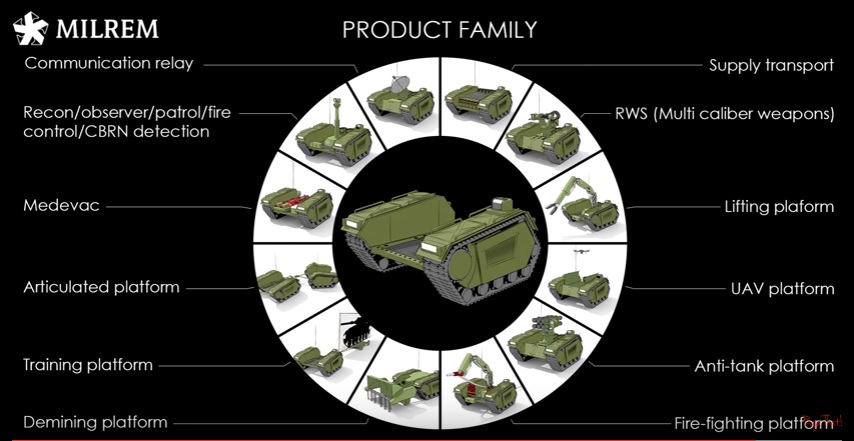
Crowd-Control Drones Drones are here to stay. There has been countless blog-commentaries depicting the tactical benefits of aerial drones (UAV’s) and the vantage point they provide for a Unified Command & Control structure. As the technology advances, the benefits of drone deployments increase accordingly. This does not only apply to UAV’s, but robotic tanks for crowd-control, hostage stand-offs, bomb-mine removals and infantry ground support. See the Photos here and embedded VIDEO 2 and VIDEO 3 in the Appendix.
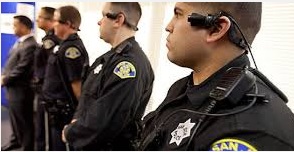
Helmet & Body Cams There are undeniable benefits when military and police personnel dawn helmet and/or body cameras. There isn’t just the accountability for justice assurance, but also the elevation of more intelligence during tactical missions. This is the benefit of Unified Command & Control. See sample Photos here.

cu-blog-securing-the-homeland-on-the-ground-photo-2

cu-blog-securing-the-homeland-on-the-ground-photo-1

cu-blog-securing-the-homeland-on-the-ground-photo-4

cu-blog-securing-the-homeland-on-the-ground-photo-5

cu-blog-securing-the-homeland-on-the-ground-photo-3

These solutions reflect the need for regional oversight, as envisioned in the book Go Lean…Caribbean. The book serves as a roadmap for the introduction and implementation of the technocratic entire Caribbean Union Trade Federation (CU). This CU roadmap is designed to elevate Caribbean society by these prime directives:

  • Optimization of the economic engines; growing the regional economy.
  • Establishment of a security apparatus to ensure public safety and protect the resultant economic engines.
  • Improvement of Caribbean governance to support these engines.

CU Blog - Suit Over Red Light Traffic Cameras Could Impact Millions - Photo 2All of these foregoing features relate to this topic of Unified Command & Control. The Go Lean book stressed the effectiveness and efficiency of this strategy, for protecting life and property of all Caribbean stakeholders: residents and visitors alike. This is why the book posits that some deployments are too big for any one member-state to manage alone – especially with such close proximities of one island nation versus another – there are times when there must be a cross-border multi-lateral coordination. This vision is defined early in the book (Pages 12 – 14) with these statements in the opening Declaration of Interdependence:

x. Whereas we are surrounded and allied to nations of larger proportions in land mass, populations, and treasuries, elements in their societies may have ill-intent in their pursuits, at the expense of the safety and security of our citizens. We must therefore appoint “new guards” to ensure our public safety and threats against our society, both domestic and foreign. The Federation must employ the latest advances and best practices of criminology … to assuage continuous threats against public safety.

xi. Whereas all men are entitled to the benefits of good governance in a free society, “new guards” must be enacted to dissuade the emergence of incompetence, corruption, nepotism and cronyism at the peril of the people’s best interest. The Federation must guarantee the executions of a social contract between government and the governed.

xii. Whereas the legacy in recent times in individual states may be that of ineffectual governance with no redress to higher authority, the accedence of this Federation will ensure accountability and escalation of the human and civil rights of the people for good governance, justice assurances, due process and the rule of law. As such, any threats of a “failed state” status for any member state must enact emergency measures on behalf of the Federation to protect the human, civil and property rights of the citizens, residents, allies, trading partners, and visitors of the affected member state and the Federation as a whole.

xvi. Whereas security of our homeland is inextricably linked to prosperity of the homeland, the economic and security interest of the region needs to be aligned under the same governance. Since economic crimes … can imperil the functioning of the wheels of commerce for all the citizenry, the accedence of this Federation must equip the security apparatus with the tools and techniques for predictive and proactive interdictions.

xxvii. Whereas the region has endured a spectator status during the Industrial Revolution, we cannot stand on the sidelines of this new economy, the Information Revolution. Rather, the Federation must embrace all the tenets of Internet Communications Technology (ICT) to serve as an equalizing element in competition with the rest of the world. The Federation must bridge the digital divide and promote the community ethos that research/development is valuable and must be promoted and incentivized for adoption.

Unified Command & Control requires an efficient collaboration of the regional stakeholders delivering security solutions in the Caribbean. The Go Lean book describes this effort as heavy-lifting and the required oversight as agile or “lean”. The concept of “lean” is very prominent in the Go Lean book (and movement), even adapting the title, Go Lean, for this quest.

The focus of the Go Lean book has been towards economics and security from the start. While there is no plan to amass any great Army or Navy, there is the plan to “double-down” on efficient, agile, lean coordination for the homeland’s security. Notice this quotation from the book (Page 103):

Unified Command & Control with State Militias and Police
The CU is not waging a Cold War against a Super-Power, so there is no need for a military-industrial complex. There is only the need to secure the economic engines in the region, and to assuage against the regional threats that arise. As such, most CU homeland security initiatives will be targeting regional policing needs. So the CU security institutions will lock-step with the police & militias of the member-states. The CU will enhance this collaborative effort with advanced monitoring systems, crime laboratories and tactical response units – a complete unified command & control eco-system.

Previous blogs/commentaries also exclaimed societal benefits from pursuits in regional coordination for homeland security; consider this sample of previous blogs, and the submissions on drones:

https://goleancaribbean.com/blog/?p=8431 Bahamas Issues a Proactive Advisory Citing American Police Violence
https://goleancaribbean.com/blog/?p=7485 A Lesson in the History of Interpersonal Violence – Street Crimes
https://goleancaribbean.com/blog/?p=7449 ‘Crap Happens’ – So What Now?
https://goleancaribbean.com/blog/?p=7179 SME Declaration: ‘Change Leaders in Crime Fight’
https://goleancaribbean.com/blog/?p=7119 Security Role Model: African Standby Force
https://goleancaribbean.com/blog/?p=6103 Sum of All Fears – ‘On Guard’ Against Deadly Threats
https://goleancaribbean.com/blog/?p=5376 Drones to be used for Insurance Damage Claims
https://goleancaribbean.com/blog/?p=5002 Managing a ‘Clear and Present Danger’
https://goleancaribbean.com/blog/?p=3881 Regional Coordination: Cyber Security Cooperation
https://goleancaribbean.com/blog/?p=3834 State of the Caribbean Union’s Regional Society
https://goleancaribbean.com/blog/?p=3713 Model of Regional Border Control
https://goleancaribbean.com/blog/?p=1965 America’s Navy – 100 Percent – Model for Caribbean Regional Security
https://goleancaribbean.com/blog/?p=1554 Status of Forces Agreement for Regional Security Pact
https://goleancaribbean.com/blog/?p=1487 Here come the Drones … and the Concerns

The Go Lean book details a series of community ethos, strategies, tactics, implementations and advocacies to better secure the Caribbean homeland and foster better regional coordination. The list is as follows:

Community Ethos – People Respond to Incentives Page 21
Community Ethos – Economic Systems Influence Individual Choices Page 21
Community Ethos – Security Principle – Privacy versus Public Protection Page 23
Community Ethos – Governing Principle – Lean Operations Page 24
Community Ethos – Ways to Impact Research and Development Page 30
Community Ethos – Ways to Bridge the Digital Divide Page 31
Community Ethos – Ways to Improve Sharing Page 35
Community Ethos – Ways to Impact the Greater Good Page 37
Strategy – Provide Emergency Management Arts and Sciences for Disasters Page 45
Strategy – Mission – Embrace the Advances of Technology Page 46
Strategy – Agents of Change – Technology Page 57
Strategy – Agents of Change – Climate Change Page 57
Tactical – Fostering a Technocracy Page 64
Tactical – Separation of Powers – Homeland Security – Emergency Management Page 76
Tactical – Separation of Powers – CariPol: Marshals and Investigations Page 77
Implementation – Security Initiatives at Start-up – Intelligence Collaboration Page 103
Implementation – Ways to Foster International Aid – Natural Disaster Relief Page 115
Planning – Big Ideas – Homeland Security Pact Page 127
Advocacy – Ways to Grow the Economy Page 151
Advocacy – Ways to Create Jobs Page 152
Advocacy – Ways to Improve Governance Page 168
Advocacy – Ways to Better Manage the Social Contract Page 170
Advocacy – Ways to Foster Cooperatives Page 176
Advocacy – Ways to Remediate and Mitigate Crime Page 178
Advocacy – Ways to Improve Gun Control Page 179
Advocacy – Ways to Improve Homeland Security Page 180
Advocacy – Ways to Mitigate Terrorism Page 181
Advocacy – Ways to Improve Intelligence Gathering & Analysis Page 182
Advocacy – Ways to Improve for Natural Disasters – Emergency Management Page 184
Advocacy – Ways to Improve Emergency Management – Trauma Medicine Page 196
Advocacy – Ways to Foster Technology Page 197
Advocacy – Ways to Protect Human Rights Page 220

Security in the Caribbean requires proactive and reactive measures on the regional level. The CU – with an agency within the Homeland Security Department – also doubles as the regional Emergency Management entity. Our delivery of security cannot resemble a sledgehammer, but rather it must model the precision execution of a surgical scalpel. This is demonstrated with the heavy emphasis on Intelligence Gathering & Analysis.

The promoters of the Go Lean … Caribbean book has only one goal: to make this homeland a better place to live, work and play. While the Caribbean is arguably the best address of the planet, there are societal defects as well. Our security mitigations must therefore be executed in a smart – intelligent – manner so as not to dissuade our primary economic driver: tourism, while still ensuring a safe homeland. This is important for how we live, how we work, and how we and others play here in the Caribbean.

So the issues raised in this series on Homeland Security, and the proposed Intelligence Gathering & Analysis solutions are all of serious concern. These allow for our vision of an elevated society to be fully manifested today and in the future. 🙂

Download the free e-Book of Go Lean … Caribbean – now!

————

Appendix: ShotSpotter Overview

Title: Is reducing gun violence a priority in your city?
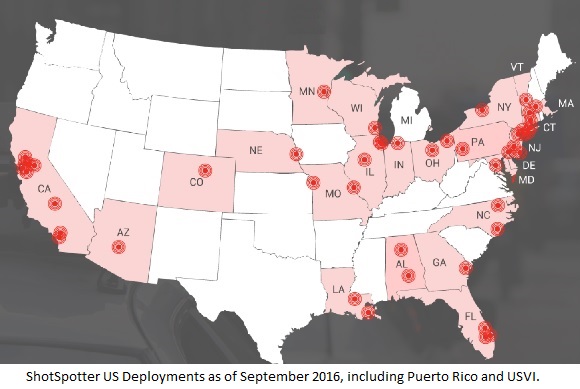
cu-blog-securing-the-homeland-on-the-ground-photo-6

The communities most affected by gunfire are least likely to call it in. With fewer than 1 in 5 shooting incidents reported to 9-1-1 [Emergency Reporting], gun crime is vastly underreported. When 9-1-1 calls are made, unfortunately the information provided is typically inaccurate. Without knowing exactly where to respond, police waste valuable time and resources driving block by block looking for evidence as criminals escape the scene. Dispatching officers to an active shooting without all available intelligence is a threat to officer safety and needlessly places the public at risk.

Intelligence-Led Policing
ShotSpotter gunfire data enables intelligent analysis. With that, law enforcement can move from the reactive to the proactive. ShotSpotter has been called “a force multiplier” because it provides critical information for better, more timely resource allocation — especially important as agencies are being asked to do more with less.

cu-blog-securing-the-homeland-on-the-ground-photo-7ShotSpotter Flex instantly notifies officers of gunshot crimes in progress with real-time data delivered to dispatch centers, patrol cars and even smart phones. This affordable, subscription-based service enhances officer safety and effectiveness through:

  • Real-time access to maps of shooting locations and gunshot audio,
  • Actionable intelligence detailing the number of shooters and the number of shots fired,
  • Pinpointing precise locations for first responders aiding victims, searching for evidence and interviewing witnesses.

Source: Retrieved September 14, 2016 from: http://www.shotspotter.com/law-enforcement

————

Appendix VIDEO 1 – ShotSpotter in San Francisco – https://youtu.be/1MiKY1ADAAU

Published on Oct 8, 2014ShotSpotter gunfire data enables intelligent analysis. With that, law enforcement can move from the reactive to the proactive. ShotSpotter has been called “a force multiplier” because it provides critical information for better, more timely resource allocation.

————

Appendix VIDEO 2Top 5 Drone Inventions you Must Havehttps://youtu.be/_l6CQRHIGyg

Published on Jun 22, 2015 – Drone Inventions you never knew about …

————

Appendix VIDEO 3ROBOT TANK DRONE: Unmanned Ground Vehicle | RUN FOR YOUR LIVES!  – https://youtu.be/HpECV7wGZwI

Published on Feb 24, 2016 – Estonian defense company Milrem took the wraps off its robotic Tracked Hybrid Modular Infantry System (THeMIS) – a “first-of-its-kind modular hybrid Unmanned Ground Vehicle (UGV)” that acts as a multi-mission vehicle platform to assist or replace soldiers on the battlefield.
 

Share this post:
, ,

Securing the Homeland – From the Seas

Go Lean Commentary

Continuing with the series on Security Intelligence, this commentary – 2 of 3 from the movement behind the book Go Lean … Caribbean – focuses on the Caribbean Sea and adjoining waterways. It addresses how we can optimize Security Intelligence (Naval/Coast Guard and police-crime issues) emanating from the seas so as to better secure our Caribbean homeland. All the other commentaries in the series covered these details:

  1.   Securing the Homeland – From the Air
  2.    Securing the Homeland – From the Seas
  3.   Securing the Homeland – On the Ground

Each commentary relates to the Caribbean security apparatus being promoted in the Go Lean regional empowerment effort. They consider the short-term, mid-term and long-term needs of our communities.

cu-blog-securing-the-homeland-from-the-seas-photo-4The 1,063,000 square miles of the Caribbean Sea are very important to our economic wellbeing, in addition to the banks and straits surrounding other islands in the Atlantic Ocean like the Bahamas, Bermuda and Turks & Caicos Island. There are fishery issues, commercial shipping, mineral extraction, pipelines, cruise lines and personal boat-based tourism (yachting, sailboats, etc.) issues. Island-hopping is an important activity for visitors.

The promoters of the book Go Lean … Caribbean wants to protect these activities and the homeland in general. We want to ensure that all our stakeholders – residents, tourists, trading partners – are safe and secure within our borders, on our waterways and within our Exclusive Economic Zone. This would fulfill our implied Social Contract, where citizens surrender some of their natural rights in exchange for additional protections from the State. The normal Social Contract would authorize the Caribbean member-states to deploy Naval operations and Coast Guards. The Go Lean roadmap extends the Social Contract further, empowering the Caribbean Union Trade Federation (CU) and its security apparatus … for a CU Navy.

cu-blog-securing-the-homeland-from-the-seas-photo-5For Security Intelligence related to the seas, the focus is not only on human “bad actors”; sometimes the nemesis is Mother Nature.  As related previously, the Caribbean region must be ready for when “Crap Happens“. The qualifying incidences include events and hazards that pose a ‘clear and present danger’ to everyday life for Caribbean communities. So in addition to terrorism-related events like piracy and economic crimes like fishery encroachments, the Caribbean security apparatus must also include an Emergency Management operation. This covers the communities for “911 dangers” like “Search and Rescue” plus regional catastrophes; which includes natural disasters (hurricanes, earthquakes/tsunamis, volcanoes, floods, etc.), industrial incidents (chemical & oil spills), and sea-bourn bacterial & viral pandemics; think “red tides”.

The Go Lean book serves as a roadmap for the introduction and implementation of the technocratic Caribbean Union Trade Federation. This implementation would allow for the establishment of a technical efficient Navy – bleeding with cutting-edge systems and technologies – incorporating the existing Navies and Coast Guards of all the member-states. This allows for greater leverage and economies-of-scale.

Naval operations are costly to maintain; it is prudent to spread this large cost across the wider (wholesale) base of 42 million people in the 30 member-states. In addition to the pure economic metrics, the Go Lean roadmap also allows for smart, efficient and agile deployments; (lean = agile). But the focus of this commentary is not so much on naval hardware (ships, sub-marines, piers and docks), as it is a focus on software: Intelligence Gathering & Analysis, un-manned vessels, positioning and surveillance systems, like radar, GPS and e-LORAN.

These executions are a BIG deal, not just for the world of nautical arts  & sciences, but also for the Caribbean historicity. Nautical failures have always plagued Caribbean maritime operations. In a previous blog-commentary, the practice of “Shipwrecking” was exposed, reflecting a bad community ethos that permeated the region at the time. The encyclopedic details are as follow:

Shipwrecking was the practice of taking valuables (cargo) from a shipwreck which has floundered close to shore; this evolved into what is now known as “marine salvage”. While wrecking is no longer economically significant, this practice was in itself an industry as recently as the 19th century in some parts of the world, and a mainstay in many Caribbean economies. The Caribbean islands, waterways and ports have to contend with a lot of hidden water hazards, like reefs. So this industry thrived on the uncertainty of shipping, (before better navigational tools and systems), but also created their own pro-wrecking incidents and threats, like false lighting and sabotage.

This history helps us to appreciate the need for good nautical intelligence.

  • Where are the ships/vessels?
  • Where are they going?
  • How do they plan to get there?

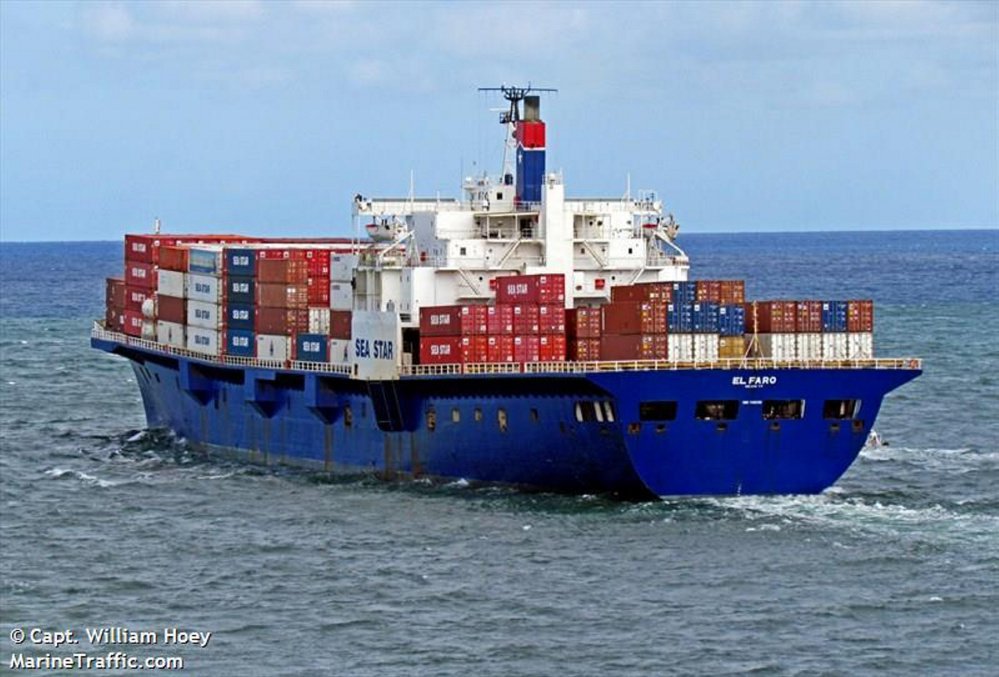
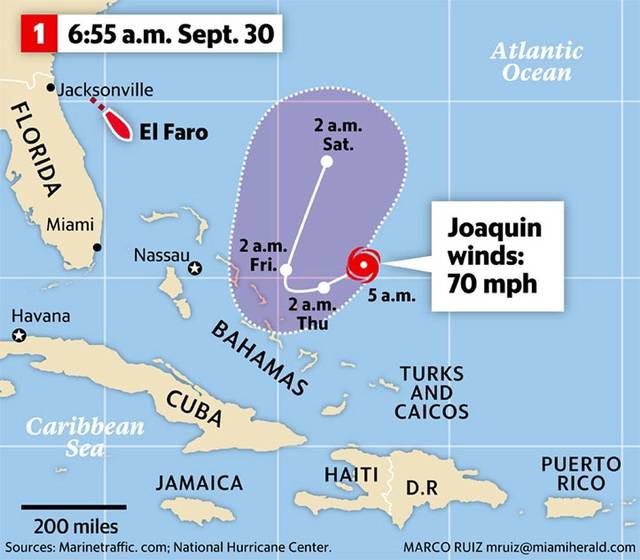
These simple questions can mean life-or-death. We have the unfortunate experience, just this past year, of the cargo ship El Faro, that sank of the coast of the Bahamas in the middle of a quickly developed storm, Hurricane Joaquin. See details of the incident in the VIDEO here and the full news story in the Appendix below:

cu-blog-securing-the-homeland-from-the-seas-photo-2

cu-blog-securing-the-homeland-from-the-seas-photo-1

VIDEO – Search for survivors of cargo ship that disappeared during Hurricane Joaquin – http://www.miamiherald.com/latest-news/article37787241.html

Posted on October 5, 2015 – U.S. Coast Guard Captain Mark Fedor addresses journalists about the search for survivors of El Faro, the cargo ship that disappeared during Hurricane Joaquin. The Coast Guard now believes the ship has sunk, but the search continues for survivors. Video by Walter Michot (wmichot@miamiherald.com).

This type of incident should NEVER happen again under the CU regime. Modeling the Air Traffic Control eco-system, the CU mandate is to know the geo-position of every vessel (of a certain tonnage) in the Exclusive Economic Zones of the Caribbean Seas.

How?

How do we gather this intelligence from the Caribbean Seas? Considering that maritime satellites are already in place, and weather forecasting is already a mature ‘Art & Science’, here are 3 additional deployments embedded in the Go Lean roadmap slated for the Caribbean Seas region:

Lighthouses This 300 year old technology of a physical lighthouse is now anachronistic. With satellite-based GPS, there is no need for a flashing light to distinguish a coastal destination. This is not the case for virtual lighthouses, where a unique radio signal may constantly ping so as to establish the location. The location is established by triangulating 3 distinct signals. The CU will install e-LORAN virtual lighthouses all along coastlines in every Caribbean member-state. These sites will identify their locations and also gather radar & surveillance data of all passing vessels, then report the data back to the Unified Command & Control Centers for Maritime Operations. See encyclopedia details on e-LORAN in the Appendix below.
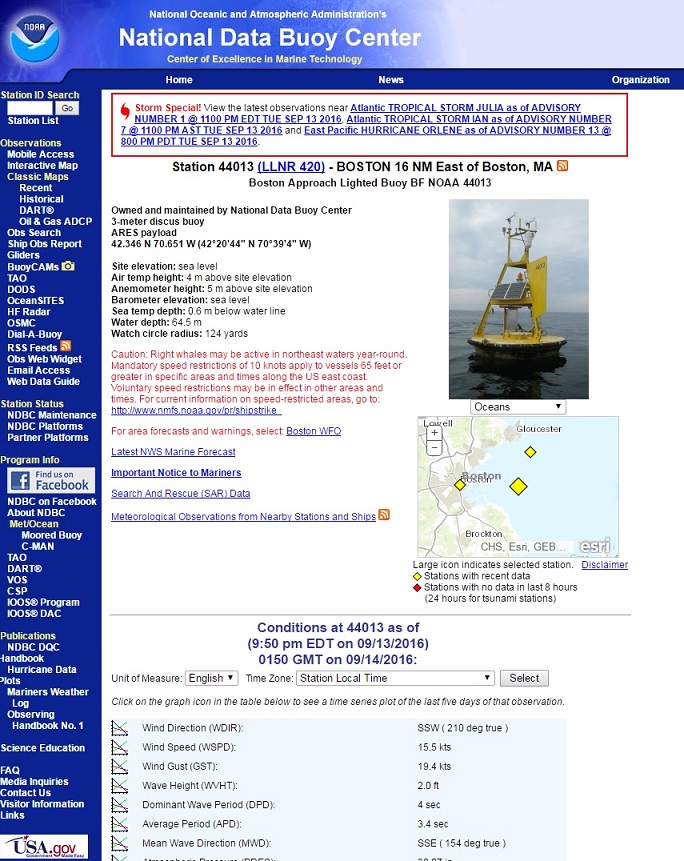
Buoys Modeling the successes of the National Oceanic and Atmospheric Administration in the US, the CU will deploy advanced buoys that broadcast atmospheric data in short range burst to nearby vessels, plus transmit the data back to Maritime Operations Centers. The American example provides for dynamic data from these buoys to be uploaded to searchable websites, like this example here: http://www.ndbc.noaa.gov/station_page.php?station=44013. See Photo of Buoy website below.
Unmanned vessels While there is a jockeying for position in the race for unmanned self-driving cars on land and unmanned aerial drones in the air, there is also an “arms race” for autonomous ships. A strategy of a wide network of connected unmanned boats conducting continuous surveillance on the Caribbean Seas will enable tactical management within the Unified Command & Control structure. See Photo of Ghost Ships below.

cu-blog-securing-the-homeland-from-the-seas-photo-3

Ghost ships - Autonomous cargo vessels without a crew

Gathering nautical intelligence does not have to be a covert activity. This could simply be the law: every vessel – over a certain tonnage – must register with Caribbean maritime authorities when entering our waters. We must have a physical or virtual transponder to recognize them on regional radar and surveillance systems.

The previous submission in this blog series describes that the regional security pact must be instituted with a legal treaty – Status of Forces Agreement – at the launch of the Caribbean Union Trade Federation. This treaty also enables the establishment of the CU Navy and an accompanying Marine Expeditionary Force to facilitate the region’s security interest. In addition, the roadmap details the width-and-breadth of a complete Intelligence Gathering & Analysis Apparatus. Nautical data – of every ship/vessel in the area – adds to the intelligence gathering.

Imagine the presence – on radar – of a ship that has not registered its transponder – suspicious.

The Go Lean book asserts there is a constant ‘clear and present danger’ on the Caribbean waters. There is the need for remediation and mitigation. This point is pronounced early in the Go Lean book with the opening Declaration of Interdependence (Pages 11 – 12) that claims:

v.    Whereas the natural formation of our landmass and coastlines entail a large portion of waterscapes, the reality of management of our interior calls for extended oversight of the waterways between the islands. The internationally accepted 12-mile limits for national borders must be extended by International Tribunals to encompass the areas in between islands. The individual states must maintain their 12-mile borders while the sovereignty of this expanded area, the Exclusive Economic Zone, must be vested in the accedence of this Federation.

x.    Whereas we are surrounded and allied to nations of larger proportions in land mass, populations, and treasuries, elements in their societies may have ill-intent in their pursuits, at the expense of the safety and security of our citizens. We must therefore appoint “new guards” to ensure our public safety and threats against our society, both domestic and foreign. The Federation must employ the latest advances and best practices … to assuage continuous threats against public safety.

xii.   Whereas the legacy in recent times in individual states may be that of ineffectual governance with no redress to higher authority, the accedence of this Federation will ensure accountability and escalation of the human and civil rights of the people for good governance, justice assurances, due process and the rule of law. As such, any threats of a “failed state” status for any member state must enact emergency measures on behalf of the Federation to protect the human, civil and property rights of the citizens, residents, allies, trading partners, and visitors of the affected member state and the Federation as a whole.

xvi.  Whereas security of our homeland is inextricably linked to prosperity of the homeland, the economic and security interest of the region needs to be aligned under the same governance. Since economic crimes, including piracy and other forms of terrorism, can imperil the functioning of the wheels of commerce for all the citizenry, the accedence of this Federation must equip the security apparatus with the tools and techniques for predictive and proactive interdictions.

The CU Security/Defense Pact establishes the Homeland Security Department with jurisdiction over the 30 member-states and the Exclusive Economic Zone. Even though there will be the need for collaboration with the formal Armed Forces of the US and their Coast Guard, the CU must take the lead for the region’s security apparatus, in support and defense of the region’s economic engines. In fact, the Go Lean roadmap stresses its prime directives with these 3 statements:

  • Optimization of the economic engines in order to grow the regional economy and create new jobs.
  • Establishment of a security apparatus to protect the resultant economic engines and the Caribbean homeland.
  • Improvement of Caribbean governance to support these engines.

The requirement for the Status of Forces Agreement, to empower our security apparatus, is “Step One, Day One” in the Go Lean roadmap. The Go Lean book details the series of community ethos, strategies, tactics, implementations and advocacies to provide the proactive and reactive public safety/security in the region and the Caribbean Seas:

Community Ethos – Economic Systems Influence Individual Choices Page 21
Community Ethos – Consequences of Choices Lie in Future Page 21
Community Ethos – Privacy –vs- Public Protection Page 23
Community Ethos – Intelligence Gathering Page 23
Community Ethos – “Crap” Happens Page 23
Community Ethos – Cooperatives Page 25
Community Ethos – Ways to Improve Sharing Page 35
Community Ethos – Ways to Impact the Greater Good Page 37
Strategy – Vision – Confederating a non-sovereign permanent union Page 45
Tactical – Fostering a Technocracy Page 64
Tactical – Separation of Powers – Coast Guard & Naval Authorities Page 75
Tactical – Separation of Powers – Ground Militia Forces Page 75
Tactical – Separation of Powers – Emergency Management Agency Page 76
Tactical – Separation of Powers – Department of Agriculture and Fisheries Page 88
Implementation – Ways to Pay for Change Page 101
Implementation – Start-up Foreign Policy Initiatives Page 102
Implementation – Start-up Security Initiatives Page 103
Implementation – Start-up Benefits from the EEZ Page 104
Implementation – Ways to Foster International Aid Page 115
Planning – 10 Big Ideas – #3: Consolidated Homeland Security Pact Page 130
Planning – Ways to Make the Caribbean Better – Safer Page 131
Planning – Ways to Improve Failed-State Indices – Escalation Role Page 134
Planning – Lessons from the American West – Needed Law & Order Page 142
Planning – Lessons from Egypt – Law & Order for Tourism Page 143
Advocacy – Ways to Grow the Economy – Quick Disaster Recovery Page 151
Advocacy – Ways to Improve Governance Page 168
Advocacy – Ways to Better Manage the Social Contract Page 170
Advocacy – Ways to Impact Justice – Piracy & Terrorism Enforcement Page 177
Advocacy – Ways to Reduce Crime – Regional Security Intelligence Page 178
Advocacy – Ways to Improve Homeland Security Page 180
Advocacy – Ways to Mitigate Terrorism – Combat Piracy Page 181
Advocacy – Ways to Improve Intelligence Gathering & Analysis Page 182
Advocacy – Ways to Improve for Natural Disasters Page 184
Advocacy – Ways to Improve for Emergency Management Page 196
Advocacy – Ways to Foster Technology Page 197
Advocacy – Ways to Develop Ship-Building Page 209
Advocacy – Ways to Improve Fisheries Page 210

Other subjects related to security and governing empowerments for the region’s defense have been blogged in other Go Lean…Caribbean commentary, as sampled here:

https://goleancaribbean.com/blog/?p=8819 Lesson from China – SouthChinaSeas: Exclusive Economic Zones
https://goleancaribbean.com/blog/?p=7449 ‘Crap Happens’ – So What Now?
https://goleancaribbean.com/blog/?p=6893 Meteorology Realities for Modern Tropical Life
https://goleancaribbean.com/blog/?p=6103 Sum of All Fears – ‘On Guard’ Against Deadly Threats
https://goleancaribbean.com/blog/?p=5396 ‘Significant’ oil deposits changes Exclusive Economic Zone Security Needs
https://goleancaribbean.com/blog/?p=5002 Managing a ‘Clear and Present Danger’
https://goleancaribbean.com/blog/?p=4360 Dreading the ‘CaribbeanBasin Security Initiative’
https://goleancaribbean.com/blog/?p=3881 Intelligence Agencies to Up Cyber Security Cooperation
https://goleancaribbean.com/blog/?p=1965 America’s Navy – 100 Percent – Model for Caribbean
https://goleancaribbean.com/blog/?p=1554 Status of Forces Agreement = Security Pact
https://goleancaribbean.com/blog/?p=273 10 Things We Want from the US – #4: Pax Americana

The promoters of the Go Lean … Caribbean book has only one goal: to make this homeland a better place to live, work and play. This also means stability and safety on our waterways.

The Caribbean is arguably the best address of the planet, with some of the best waterscapes; but there are societal defects as well. These must be remediated and mitigated. Our primary economic driver is tourism, including cruise tourism. There have been incidents in the past within the cruise industry, where the implementations of this Go Lean/CU roadmap would have helped to maintain business continuity. See samples/examples of previous incidences in the link here: http://www.usatoday.com/picture-gallery/travel/2016/02/09/cruise-ship-incidents/80049070/

To succeed in the region’s execution of Homeland Security on the waterways, we must lead first with nautical intelligence.

To succeed in the region’s execution of Emergency Management, we must lead first with nautical intelligence.

A safe, secure homeland and a safe, secure Caribbean Sea is important for how we live, how we work, and how we and others play here in the Caribbean. So the issues in this Homeland Security series is of serious concern. This allows for our vision of an elevated society to be fully manifested in good times and bad. 🙂

Download the book Go Lean … Caribbean – now!

———–

Appendix eLORAN

Loran or “long range navigation” was a hyperbolic radio navigation system developed in the United States during World War II. After some evolution, Loran-C was the navigation standard for a number of decades. This system allowed a receiver to determine its position by listening to low frequency radio signals transmitted by fixed land-based radio beacons. [It has now been mostly de-commissioned] due to the expense of the equipment needed to interpret the signals, compared to civilian satellite navigation – GPS – systems introduced in the 1990s.

With the perceived vulnerability of global navigation satellite system (GNSS),[47] and their own propagation and reception limitations, renewed interest in LORAN applications and development has appeared.[48] Enhanced LORAN, also known as eLORAN or E-LORAN, comprises an advancement in receiver design and transmission characteristics which increase the accuracy and usefulness of traditional LORAN. With reported accuracy as good as ± 8 meters,[49] the system becomes competitive with unenhanced GPS. eLORAN also includes additional pulses which can transmit auxiliary data such as DGPS corrections. eLORAN receivers now use “all in view” reception, incorporating signals from all stations in range, not solely those from a single GRI, incorporating time signals and other data from up to 40 stations. These enhancements in LORAN make it adequate as a substitute for scenarios where GPS is unavailable or degraded.[50]

United Kingdom eLORAN implementation
On 31 May 2007, the UK Department for Transport (DfT), via the General Lighthouse Authorities (GLA), awarded a 15-year contract to provide a state-of-the-art enhanced LORAN (eLORAN) service to improve the safety of mariners in the UK and Western Europe.
Source: Retrieved September 13, 2016 from: https://en.wikipedia.org/wiki/Loran-C#eLORAN

———–

Appendix – News Article: Despite warnings, lost Florida ship steamed into Hurricane Joaquin

By: Alex Harris and David Ovalle

OCTOBER 5, 2015 – When the cargo ship El Faro left Jacksonville for its regular run to Puerto Rico, its owners considered a tropical storm named Joaquin drifting near the Bahamas nothing that the rugged 790-foot vessel and its experienced 33-member crew couldn’t handle.

The forecast changed as soon as the massive ship set sail but its course — the shortest, straightest shot across the Atlantic to offload containers — never did.

In the face of increasingly ominous warnings about Hurricane Joaquin from the NationalHurricaneCenter, tracking data shows that the El Faro steered almost directly into the strengthening eye of a major hurricane, a decision that appears to have contributed to one of the worst cargo-ship accidents off the U.S. coast in decades.

On Monday, the U.SCoast Guard confirmed the worst fears of families awaiting word in the ship’s homeport of Jacksonville: The massive ship, missing since a last communication Thursday, sank. Its hull spewed so much Styrofoam packing debris from within its bowels that a Coast Guard officer said the waters off the Bahamas resembled a golf course driving range dotted with balls.

One corpse was found Sunday night, as well as an empty and badly damaged 43-seat lifeboat. There were unidentifiable human remains inside a “survival suit,” which helps crew members float and avoid hypothermia.

Despite the Coast Guard’s grim discoveries, the search will continue for possible survivors. The questions about what happened to the ship have only begun.

While much remained unclear, some commercial shipping experts said federal investigators, who will produce the final report on the El Faro’s fate, will almost certainly focus on the call to risk navigating through a hurricane rather than the captain or company deciding to take the safer, but longer route down along the more protected Florida coast.

“He was going to cross the storm at some point. In my opinion, it makes no sense to do that. When you’re a ship, you want to avoid the storm at all costs,” said Capt. Sam Stephenson, who teaches emergency ship handling at Fort Lauderdale’s ResolveMaritimeAcademy.

“A lot of questions will be about what the company and the captain knew and when, and what action was taken,” Basil Karatzas, of Karatzas Marine Advisors & Co., told the Wall Street Journal.

The 790-foot ship departed from Jacksonville on Tuesday when Joaquin was still a tropical storm. The American-flagged El Faro, which means The Lighthouse in Spanish, had a crew of 33 — 28 Americans and 5 from Poland. The captain, Michael Davidson of Maine, was a veteran. The ship was due to arrive in San Juan on Friday.

In a statement on its website, TOTE Maritime Puerto Rico, which owns the ship, said that when the crew set sail on Tuesday, the weather called for a tropical storm, not a hurricane.

“Our crew are trained to deal with unfolding weather situations and are best prepared and equipped to respond to emerging situations while at sea,” the company wrote. “TOTE Maritime Puerto Rico authorized the sailing knowing that the crew are more than equipped to handle situations such as changing weather.”

But by 11 p.m. that night, with the El Faro still not far from Jacksonville, forecasters warned that Joaquin had already hit 70 mph and would become a hurricane by the next morning. Forecasters also noted that Bahamian waters were warm and wind shear was mild, conditions that can fuel intensification. Some computer models saw Joaquin growing fiercer fast. “It should be noted, that the UKMET, GFS, and ECMWF models all significantly deepen Joaquin during the next few days, and the NHC forecast could be somewhat conservative.”

That’s exactly what happened. By 8 a.m. Wednesday, with the ship still hours from the northern Bahamas according to data from Marinetraffic.com, the NHC declared Joaquin a hurricane with 75 mph winds. Forecasters also cautioned that additional strengthening was expected. Over the next 12 hours, Joaquin exploded, wind speed leaping with every NHC advisory. By 11 p.m. Wednesday, it was a Category 3 storm with 115 mph winds.

At least one crew member expressed concern. “Not sure if you’ve been following the weather at all,” crew member Danielle Randolph wrote in an e-mail to her mother, according to the Washington Post, “but there is a hurricane out here and we are heading straight into it.”

By 7:30 a.m. Thursday — about when the ship would have been hitting the hurricane wind field of a storm on the cusp of Cat 4 — the El Faro reported losing power and taking on water. According to TOTE, the company that owns the ship, the crew reported successfully pumping the water out. The weather conditions kept the ship leaning a “manageable” 15 degrees to the side, according to TOTE. That was the last communication from the ship.

At a Monday press conference, Coast Guard Capt. Mark Fedor said that would have left the ship, unable to make headway, at the mercy of 100-knot winds and waves estimated at 50-feet high. Hulls can crack when suspended between waves. Container ships, which can be top-heavy, also are prone to capsizing. Unless the hull is found, how the El Faro went down may always be a speculation.

It’s unclear if that will happen. The ship, packed with 391 containers above deck and 294 below, sank in an area where the Atlantic runs 15,000 feet deep.

The conditions of a major hurricane — where wind and waves can be blinding — also make the process of abandoning ship dangerous. But Coast Guard rescue teams haven’t given up hope of finding survivors. Fedor said a person could survive four to five days in the 80 degree water.

“These are trained mariners,” he said. “We’re not going to discount someone’s will to survive.”

Because El Faro is an American-flagged vessel, the investigation into the sinking will be led by the National Transportation Safety Board and aided by the Coast Guard. Fedor said the Coast Guard will likely launch an independent investigation as well.

U.S. Rep. Corrine Brown of Jacksonville, a senior member of the House Transportation and Infrastructure Committee, also called for a congressional inquiry. She planned to meet with El Faro family members Monday afternoon.

TOTE Maritime Puerto Rico did not respond to calls for comment. But in a statement released Monday, President Tim Nolan expressed gratitude to the Coast Guard and dismay at the situation. “We continue to hold out hope for survivors,” he said. “Our prayers and thoughts go out to the family members and we will continue to do all we can to support them.”

But some commercial shipping experts question whether there was a push to try to cut it too close around a developing storm. The Marinetraffic.com data shows El Faro steaming along toward the Bahamas at 18 to near 20 knots — close to its maximum speed.

Giving Joaquin a wider berth and traveling south down the Florida coast might have added 200 miles, and anywhere between six and 10 hours of travel time, Stephenson said. “Prudence plays a large role in this situation.”

Capt. Mark Rupert, who worked the Jacksonville-to-Puerto Rico route for over a decade on cargo ships, agreed the route nearer to Florida was the safest option. Trying to outrun the storm by heading east could lead a ship right into the system’s nastier side.

Rupert and Stephenson said a loss of power would have led to cascading problems, breaking cargo free, worsening violent lurching in waves and adding to any list from taking on water.

“When you don’t have propulsion, you can’t do anything. You’re at the mercy of the sea,” said Rupert, a veteran shipping captain who now works as a harbor pilot in Fort Lauderdale. “It’s kind of terrifying to think of what the crew would have went through in their final minutes.”

Stephenson said the fact that the remains of a crew member were found in a survival suit also tells a story. “They knew the ship was going down.”

In the Bahamas, meanwhile, donations continued to pour as officials worked to assess the extent of the damage in its southern and central islands from Hurricane Joaquin. The government still has not confirmed any deaths from the storm. But Rev. Keith Cartwright of the Anglican Diocese of the Bahamas and the Turks and Caicos Islands told the Miami Herald that according to Bahamian officials, a man died when the roof of his home on Long Island collapsed as a result of high winds

Downed utility poles and flooded runways continue to pose challenges, though Police Commissioner Ellison Greenslade and his team were able to land in Acklins and CrookedIslands Monday as they traveled to assess the situation.

“Please help the people at ColonelHillAirport to get to Nassau before sunset. They need airlift. 46 persons and counting,” Greenslade Twitter account read. Colonel Hill is in CrookedIsland.

Prime Minister Perry Christie also continued his tour of the devastation and his appeal for assistance. He pledged that no resources would be spared in providing assistance in the Joaquin’s aftermath but said the country cannot do it alone.

“We are going to need help,” Christie told the government news station ZNS Sunday after his second visit to Long Island in 24 hours. “We made a commitment to go all out, to bring relief in the shortest possible time, to bring restoration in the shortest possible time. We have now spread our teams around the affected areas.”

MIAMI HERALD STAFF WRITER JACQUELINE CHARLES CONTRIBUTED TO THIS STORY.

Source: Retrieved September 13, 2016 from: http://www.miamiherald.com/news/weather/hurricane/article37779879.html

Share this post:
, , , ,
[Top]

Securing the Homeland – From the Air

Go Lean Commentary

cu-blog-securing-the-homeland-from-the-air-photo-4The movement behind the book Go Lean … Caribbean wants to protect the Caribbean homeland. We want to ensure that all our stakeholders – residents, tourists, trading partners – are safe and secure within our borders.

This quest is not just a desire, it is also a job description. According to the implied Social Contract, citizens surrender some of their freedoms and submit to the authority of the State in exchange for protection of remaining natural and legal rights. This Social Contract authorizes the State to raise a militia and establish police forces to ensure public safety and protections against all enemies, foreign and domestic.

This job responsibility is a BIG deal; and very expensive. For some governmental administrations – think local municipalities – security fulfillment is the lion-share of their budgets. This is because of the one ingredient that is most expensive:

Personnel.

The Go Lean book presents a strategy for better securing the homeland by optimizing the investment in people. The approach is to ensure homeland security by confederating a regional force – police and military – under the guise of the Caribbean Union Trade Federation (CU). This allows for greater leverage and economies-of-scale.

Security is costly; both on the macro and the micro (price per citizen/capita). So it is prudent to spread the large cost of security across a wider base; think wholesale versus retail. The bigger the confederation, the cheaper the cost per capita. This strategy allows us to attain our objectives while confronting the reality of Caribbean life, that the 30 member-states are mostly all Third World countries; they hover near the poverty line; we do not have money to field a Big-Bulky military or police force.

If a community wants to have the protections without the expense, then there is the need to be smart, efficient and agile: “Jack be nimble; Jack be quick”.

Agile or nimble? These are descriptors synonymous with “lean”.

Just the name of the book – Go Lean … Caribbean – is a clue to this strategy: to provide a nimble, agile security solution in conjunction with economic empowerments. So when we think of lean security, do not think sledgehammer, think scalpel, or surgical precision.

There is a primary functionality that the CU can provide that is surgical? Intelligence.

The Go Lean book provide comprehensive details on Intelligence Gathering and Analysis. See this sample here from Page 182:

  • The [enlarged] size of the CU market will allow it to afford cutting edge equipment, systems and training to facilitate the intelligence gathering functionality for all CU defense initiatives.
  • The CU’s law enforcement agencies will work in conjunction with the Homeland Security apparatus. Even though the CU jurisdiction extends to economic crimes and regional threats, the CU will provide intelligence gathering and analysis for domestic and foreign security entities. The CU will also extend grants to local agencies to acquire and maintain surveillance equipment: CATV, dashboard cameras for police cars and helmet “cams” on tactical (SWAT) team members.

Security Intelligence is the focus of this series of commentaries. There is the need to optimize military intelligence and police-crime intelligence to better secure the Caribbean homeland. This commentary is 1 of 3 from the movement behind the book Go Lean … Caribbean, in consideration of Security Intelligence. The other commentaries detailed in this series are as follows:

  1.   Securing the Homeland – From the Air
  2.   Securing the Homeland – From the Seas
  3.   Securing the Homeland – On the Ground

All of these commentaries relate to the Caribbean security apparatus being promoted in the Go Lean regional empowerment effort. They consider the short-term, mid-term and long-term needs of our communities.

As related in previous commentaries – see list below – there is the need for overt and covert security in the region. These previous submissions describe that the regional security pact must be instituted with a legal treaty – Status of Forces Agreement – at the launch of the Caribbean Union Trade Federation (CU). The Go Lean book therefore serves as a roadmap for the introduction and implementation of the CU. The security apparatus within the CU would be established by all sovereign powers of the 30 Caribbean member-states to empower the region with this Security / Defense Pact (Armed Forces) with a fully-empowered Naval Force and adequately manned Expeditionary Marine Forces to facilitate the region’s security interest. For covert empowerments, the book details the width-and-breadth of an Intelligence Gathering & Analysis Apparatus to fully round-out the security efforts.

For this consideration, we should answer the question: how can we secure the Caribbean homeland from the air?

Hardware and software…

So hardware refers to the following military equipment (satellites, planes, air-ships, etc). While software refers to intelligence, communications and computer applications. Today’s military establishment is part-soldier, part-sailor, part-aviator and part-computer-programmer!

Satellites

cu-blog-securing-the-homeland-from-the-air-photo-1The Caribbean owns no satellites! Yet, the Go Lean book details that Security Intelligence can still be fulfilled by engaging other satellite solutions providers:

The Bottom Line on DigitalGlobe
In addition to skilled people, overt intelligence gathering is accomplished by systems architecture (hardware, software & communications) and applications. The combination of DigitalGlobe and GeoEye creates a global leader in earth imagery architecture and the means by which to perform geospatial analysis. They now boast 5 advanced satellites with harmonized collection programs, a collection capability of 3 million square kilometers per day. This provides a worldwide infrastructure for optimized data upload/offload operations and shorter delivery timeframes. A partner client of DigitalGlobe is the Washington, DC-based non-government organization (NGO) Fund For Peace Institute that performs threat assessment and conflict analysis. (Annually, they publish the FSI – Failed State Index). The following is their published statement (Fundforpeace.org):
“As part of our quest to find new and innovative methods for conflict analysis, we have begun working with DigitalGlobe’s Analysis Center, which has access to real-time and archival satellite imagery captured by DigitalGlobe’s own fleet of satellites that have been made famous for their role in the Satellite Sentinel Project over Sudan and South Sudan. We are exploring these new forms of data to watch human patterns change and understand the impact on potential for conflict, or how a change in patterns may be an indicator of conflict. We also want to see how digital imagery – and data generated from the analysis of it – can be integrated into our data, both that used for the high-level FSI and other more granular analysis”. Go Lean book Page 182.

See the VIDEO here on the GeoEye system:

VIDEO – GeoEye – https://youtu.be/oUhYndAfKyA

Uploaded on Jan 13, 2009 – Learn about GeoEye 1 – the world’s highest resolution commercial earth imaging satellite.

Continuing the theme of “Other People’s Satellites”, the Go Lean roadmap also identified the reality that many Caribbean member-states are overseas territories of major military powers, with their own array of satellite offerings. Consider this list:

Military Power Dependent Territory
USA Puerto Rico
US Virgin Islands
United Kingdom Anguilla, Bermuda, Cayman Islands, Montserrat
Turks & Caicos, British Virgin Islands
Netherlands Aruba, Bonaire, Curaçao, Sint Maarten, Saba
Sint Eustatius
France Guadeloupe, Martinique, Saint Martin, Saint Barthélemy

Planes

cu-blog-securing-the-homeland-from-the-air-photo-2There is no need for the Caribbean to deploy or maintain intercontinental ballistic missiles, long-range bombers and fighter jets. But still, many of our allies – see above list – maintain such a readiness. We would welcome their placement in the Caribbean region, whether from ground-bases or aboard aircraft carriers. The Go Lean roadmap allows for a role of these above-identified Military powers in securing the Caribbean homeland from the air. The book implies this at (individually at Pages 245, 246, 247, 248):

The CU Security Pact will allow American/UK/France/NATO forces to patrol, train and visit Caribbean waters [, airspace] and CU ports.

The primary responsibility then for the CU Security Pact in securing the homeland from the air will be the Unified Command and Control of all the intelligence activities from these other powers. This point was stressed in the book on Page 180 – Ways to Improve Homeland Security:

CU Defense Pact
The CU region has enemies, examples being narco-terrorists, and sworn enemies of the CU‘s allies and legacy nations (US, Britain, France, and Netherlands). As a result, the collective security agreement will create a Homeland Security Department, to defend the member states against all enemies, foreign and domestic. This Department will coalesce with the US/British, French and Dutch military liaisons to coordinate the public safety needs of the region against systemic threats. The CU, by the sheer size of the market, will fund the acquisition of cutting edge equipment and defensive weapons – i.e. Un-manned Aviation Vehicles (Drones), anti-aircraft systems, and Attack helicopters.

The Go Lean roadmap does not only call for use of other people’s planes for communications and surveillance, we can and should deploy some of our own as well. How about cutting-edge Un-manned Aerial Vehicles (drones) designed to stay aloft for weeks, months, years at a time. This is now reality…

… see the VIDEO here of a sample UAV, developed with support from Facebook, designed to remain aloft for indefinite periods of time.  (In addition, see this related news article here on this breakthrough accomplishment; retrieved September 13, 2016 from: https://www.theguardian.com/business/2016/jul/21/facebook-solar-powered-internet-plane-test-flight-aquila):

VIDEO – Facebook’s drone Aquila project tries to bring internet to the rest of the world  – https://youtu.be/v5_kGZS3yr8

Published on Jul 31, 2015 –

Mark Zuckerberg the CEO of facebook on his facebook shares this:

I’m excited to announce we’ve completed construction of our first full scale aircraft, Aquila, as part of our Internet.org effort.

Aquila is a solar powered unmanned plane that beams down internet connectivity from the sky. It has the wingspan of a Boeing 737, but weighs less than a car and can stay in the air for months at a time.

We’ve also made a breakthrough in laser communications technology. We’ve successfully tested a new laser that can transmit data at 10 gigabits per second. That’s ten times faster than any previous system, and it can accurately connect with a point the size of a dime from more than 10 miles away.

This effort is important because 10% of the world’s population lives in areas without existing internet infrastructure. To affordably connect everyone, we need to build completely new technologies.

Using aircraft to connect communities using lasers might seem like science fiction. But science fiction is often just science before its time. Over the coming months, we will test these systems in the real world and continue refining them so we can turn their promise into reality. Here’s a video showing the building of Aquila.

For more information, see website: http://www.hackindo.com

——–

First flight – June 28, 2016 …

“We’re proud to announce the successful first test flight of Aquila, the solar airplane we designed to bring internet access to people living in remote locations. We look forward to the rest of the journey toward making the world more open and connected.”

Accompanying VIDEO: https://youtu.be/lKdmLbxK5dQ

Air-ships

cu-blog-securing-the-homeland-from-the-air-photo-3The Caribbean is an ideal market for modern air-ships.

Gone are the days of the Hindenburg – the German hydrogen-powered air-ship that crashed in the US state of New Jersey in 1937. Now the “lighter than air” class of dirigibles feature stable and secure operations – powered by safe helium – with solar-paneled embedded frames/coverings to enable continuous high-end electronic surveillance. They can remain afloat for weeks at a time. Imagine an inter-connected network of constantly flying air-ships circum-navigating the Caribbean skies-and-waters, always watching, always on guard to protect the homeland from the skies. See a sample air-ship here in this VIDEO:

VIDEO – Lockheed Martin – P-791 Hybrid Airship – https://youtu.be/isJRgEu7DQo

Uploaded on Sep 10, 2010 – Success in the war on terrorism depends on knowing where the enemy is hiding and having resources in place to act on that knowledge quickly. In a war where the adversaries of freedom can strike at any time and from any point, our servicemen and women need the most sophisticated intelligence, surveillance and reconnaissance assets available. Their lives and the lives of innocent civilians may hang in the balance.

—————

Considering the foregoing solutions to secure Caribbean intelligence from the air, there is one consistent adjective: not labor-intensive.

  • Yes, we want the advanced security options.
  • No, we do not want high maintenance costs. We want lean, technocratic options … only.

There is the need to reform and transform the societal engines of the Caribbean. This refers to economics, security and governing aspects in the homeland of the 30 member-states of the Caribbean region: all the Caribbean islands, plus the 2 member-states on the South American mainland (Guyana and Suriname) and 1 member-state on the Central American isthmus (Belize). Despite our difference, “we are all in the same boat” and must band together to ensure our homeland is protected.

We know that “bad actors” abound now; and we expect even more … to come.

The Go Lean book asserts that once we remediate and mitigate our broken economic engines, we most assuredly should expect more security challenges, as economic success brings “bad actors” looking to exploit the environment for their own illicit gains; (Page 23). This point is pronounced early in the Go Lean book with the Declaration of Interdependence (Page 12) that claims:

x.   Whereas we are surrounded and allied to nations of larger proportions in land mass, populations, and treasuries, elements in their societies may have ill-intent in their pursuits, at the expense of the safety and security of our citizens. We must therefore appoint “new guards” to ensure our public safety and threats against our society, both domestic and foreign. The Federation must employ the latest advances and best practices … to assuage continuous threats against public safety.

xii. Whereas the legacy in recent times in individual states may be that of ineffectual governance with no redress to higher authority, the accedence of this Federation will ensure accountability and escalation of the human and civil rights of the people for good governance, justice assurances, due process and the rule of law. As such, any threats of a “failed state” status for any member state must enact emergency measures on behalf of the Federation to protect the human, civil and property rights of the citizens, residents, allies, trading partners, and visitors of the affected member state and the Federation as a whole.

xvi. Whereas security of our homeland is inextricably linked to prosperity of the homeland, the economic and security interest of the region needs to be aligned under the same governance. Since economic crimes, including piracy and other forms of terrorism, can imperil the functioning of the wheels of commerce for all the citizenry, the accedence of this Federation must equip the security apparatus with the tools and techniques for predictive and proactive interdictions.

The CU Security/Defense Pact would be established by the 30 member-states to empower the region, above and beyond any offerings from our neighboring Super-Power, the US. We are responsible for our economic engines, and must also be responsible for our own security apparatus. In fact, the Go Lean roadmap stresses these 3 statements in the Go Lean/CU prime directives:

  • Optimization of the economic engines in order to grow the regional economy and create new jobs.
  • Establishment of a security apparatus to protect the resultant economic engines and the Caribbean homeland.
  • Improvement of Caribbean governance to support these engines.

The requirement for the Status of Forces Agreement, to empower our security apparatus, is “Step One, Day One” in the Go Lean roadmap. The Go Lean book details the series of community ethos, strategies, tactics, implementations and advocacies to provide the proactive and reactive public safety/security in the Caribbean region:

Community Ethos – Economic Systems Influence Individual Choices Page 21
Community Ethos – Consequences of Choices Lie in Future Page 21
Community Ethos – Privacy –vs- Public Protection Page 23
Community Ethos – Intelligence Gathering Page 23
Community Ethos – “Crap” Happens Page 23
Community Ethos – Cooperatives Page 25
Community Ethos – Ways to Improve Sharing Page 35
Community Ethos – Ways to Promote Happiness Page 36
Community Ethos – Ways to Impact the Greater Good Page 37
Strategy – Vision – Confederating a non-sovereign permanent union Page 45
Tactical – Fostering a Technocracy Page 64
Tactical – Separation of Powers – Coast Guard & Naval Authorities Page 75
Tactical – Separation of Powers – Ground Militia Forces Page 75
Tactical – Separation of Powers – Emergency Management Agency Page 76
Implementation – Ways to Pay for Change Page 101
Implementation – Start-up Foreign Policy Initiatives Page 102
Implementation – Start-up Security Initiatives Page 103
Implementation – Ways to Foster International Aid Page 115
Planning – 10 Big Ideas – #3: Consolidated Homeland Security Pact Page 130
Planning – Ways to Make the Caribbean Better – Safer Page 131
Planning – Ways to Improve Failed-State Indices – Escalation Role Page 134
Planning – Lessons from the American West – Needed Law & Order Page 142
Planning – Lessons from Egypt – Law & Order for Tourism Page 143
Advocacy – Ways to Grow the Economy – Quick Disaster Recovery Page 151
Advocacy – Ways to Improve Governance Page 168
Advocacy – Ways to Better Manage the Social Contract Page 170
Advocacy – Ways to Impact Justice – Policing the Police Page 177
Advocacy – Ways to Reduce Crime – Regional Security Intelligence Page 178
Advocacy – Ways to Improve Homeland Security Page 180
Advocacy – Ways to Mitigate Terrorism Page 181
Advocacy – Ways to Improve Intelligence Gathering & Analysis Page 182
Advocacy – Ways to Improve for Emergency Management Page 196
Advocacy – Ways to Foster Technology Page 197

Other subjects related to security and governing empowerments for the region’s defense have been blogged in other Go Lean…Caribbean commentary, as sampled here:

https://goleancaribbean.com/blog/?p=8819 Lesson from China – South China Seas: Exclusive Economic Zones
https://goleancaribbean.com/blog/?p=7449 ‘Crap Happens’ – So What Now?
https://goleancaribbean.com/blog/?p=7345 ISIS and Terrorism reaches the Caribbean Region
https://goleancaribbean.com/blog/?p=7119 Security Role Model: African Standby Force
https://goleancaribbean.com/blog/?p=6720 A Lesson in History – During the Civil War: Principle over Principal
https://goleancaribbean.com/blog/?p=6103 Sum of All Fears – ‘On Guard’ Against Deadly Threats
https://goleancaribbean.com/blog/?p=5183 A Lesson in History – Cinco De Mayo and Mexico’s Security Lapses
https://goleancaribbean.com/blog/?p=5002 Managing a ‘Clear and Present Danger’
https://goleancaribbean.com/blog/?p=4360 Dreading the ‘Caribbean Basin Security Initiative’
https://goleancaribbean.com/blog/?p=3881 Intelligence Agencies to Up Cyber Security Cooperation
https://goleancaribbean.com/blog/?p=1965 America’s Navy – 100 Percent – Model for Caribbean
https://goleancaribbean.com/blog/?p=1554 Status of Forces Agreement = Security Pact
https://goleancaribbean.com/blog/?p=535 Remembering and learning from Boston
https://goleancaribbean.com/blog/?p=273 10 Things We Want from the US – #4: Pax Americana

The promoters of the Go Lean … Caribbean book has only one goal: to make this homeland a better place to live, work and play. This also means stronger and safer!

The Caribbean is arguably the best address on the planet; but there are societal defects that must be remediated and mitigated. Our primary economic driver is tourism, and tourists do not visit “hot-spots” with civil war, genocides, active terrorism and rampant crime. We cannot allow these threats to arise and must be prepared to mitigate them at the earliest signs of trouble.

We must lead first with intelligence … gathering and analysis.

A safe, secure homeland is important for how we live, how we work, and how we and others play here in the Caribbean. So the issues in this discussion is of serious concern. We are not preparing for war; we are preparing for peace; preparing to secure our homeland. 🙂

Download the free e-Book of Go Lean … Caribbean – now!

Share this post:
, , ,
[Top]

Lessons from China – South China Seas: Exclusive Economic Zones

Go Lean Commentary

There is a risk for war, right now, on the other side of the Earth. Have you been paying attention? Do you understand the issues?

Understanding the geo-political issues affecting China means understanding the United Nations Convention on the Law of the Sea (UNCLOS).

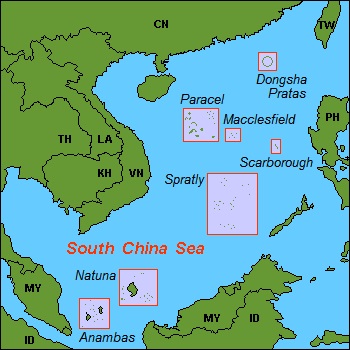
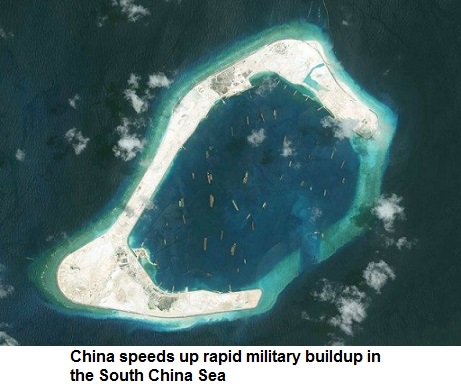
CU Blog - Lessons from China - South China Seas - Exclusive Economic Zone - Photo 1This is an old international maritime law that dates from the days of piracy all the way down to today with modern updates and trends. This is the international convention that governs the 200-mile Exclusive Economic Zone along the coastline of a country. There is a hot issue in the South China Seas region right now involving China and its neighbors.

This issue is so urgent and emergent that many analysts believe dysfunctions in this regards can lead to war.

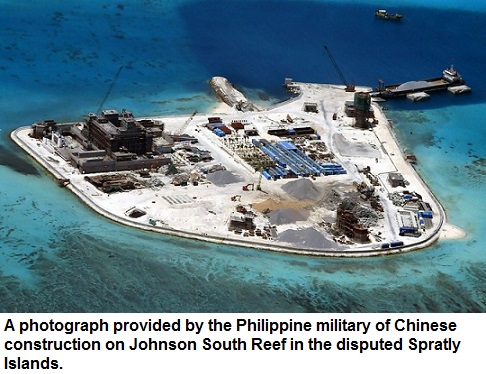
See photos in Appendix B below.

There has now been an update in this case. This update is furnished by the Hague Tribunal for the UNCLOS.

This news story here speaks of the ruling in the Hague about the disposition of China’s claims regarding their Exclusive Economic Zone in the South China Seas. See story here:

VIDEOSouth China Sea Ruling: 5 Things to Know https://youtu.be/qOeEMsdYzm4

Published on Jul 15, 2016 – China’s South China Sea ambitions have been denied! The ruling by a United Nations Convention on the Law of the Sea tribunal in the Hague said China’s claims to the South China Sea have “no legal basis.” Is this a victory for the Philippines? The United States? Or will this lead to war? Find out on this episode of China Uncensored!

MORE EPISODES:

Indonesia “Attacks” China in South China Sea
https://www.youtube.com/watch?v=WS5qi…

China Defends South China Sea from Japanese Aggression
https://www.youtube.com/watch?v=pg7BM…

US Sends Destroyers to South China Sea — Is War Next?
https://www.youtube.com/watch?v=nC8wR…

Will China Provoke War in South China Sea
https://www.youtube.com/watch?v=MxU6w…

Why is this discussion about conflicts in the South China Seas – see Appendix A – important to us in the Caribbean region?

The focus is on the concept of an Exclusive Economic Zone (EEZ); see Appendix C. This is an applicable reference for the Caribbean as we have a similar quest, to extend oversight for the Caribbean Sea. This point had been detailed in a previous blog-commentary regarding the Association of Caribbean States (ACS); an excerpt follows:

One agenda adopted by the ACS has been an attempt to secure the designation of the Caribbean Sea as a special zone in the context of sustainable development; it is pushing for the UN to consider the Caribbean Sea as an invaluable asset that is worth protecting and treasuring. The organization has sought to form a coalition among member states to devise a United Nations General Assembly resolution to ban the transshipment of nuclear materials through the Caribbean Sea and the Panama Canal. The Go Lean roadmap aligns with this agenda with the implementation plan of an Exclusive Economic Zone for these seas.

This commentary is part of a series on China. This is commentary 5 of 6 in consideration of the good and bad lessons from China. The other commentaries detailed in this series are as follows:

  1. History of China Trade: Too Big to Ignore
  2. Why China will soon be Hollywood’s largest market
  3. Organ Transplantation: Facts and Fiction
  4. Mobile Game Apps: The new Playground
  5. South China Seas: Exclusive Economic Zones
  6. WeChat: Model for Caribbean Social Media – www.MyCaribbean.gov

All of these commentaries relate to nation-building, stressing the community investments required to facilitate the short-term, mid-term and long-term needs of our communities. But this one commentary identifies China as a “bully” in the neighborhood of the South China Seas. So the lesson for the Caribbean is how to deal with a bully.

What empowers China as a bully in this conflict? Their size! China, with its 1.3 billion people, is the largest country bordering on the South China Seas. Truth be told, China is the largest country in the world. That 1.3 billion population is … 1.3 billion. It is hard for those observing-and-reporting from North America to comprehend the perspective. The US has 320 million people; the Caribbean, as a consolidated region is 42 million. Size does matter!

This is the guidance from the book Go Lean … Caribbean. It serves as a roadmap – turn by turn directions – for the introduction and implementation of the Caribbean Union Trade Federation (CU). This confederation treaty is designed to leverage the 30 member-states of the Caribbean so as to get some economy-of-scale. The book asserts that some problems in the region are too big for anyone member-state to contend with alone. An integrated Single Market of all 42 million people across the 30 member-states allows us to stand-up more forthrightly to bullies in our region. And we do have bullies.

This is the strategy for the Caribbean region to elevate its society. In fact, the roadmap has these 3 prime directives:

  • Optimization of the economic engines in order to grow the regional economy to $800 Billion & create 2.2 million new jobs.
  • Establishment of a security apparatus – with oversight of the EEZ – to provide public safety and protect the resultant economic engines of the Caribbean homeland.
  • Improvement of Caribbean governance – with oversight of the EEZ – to support these engines.

The implementation of the CU allows for the designation of more Exclusive Economic Zones, the consolidation existing EEZ’s and the deployment of a security apparatus to ensure protections in these zones.

Where does an 800 pound sleep? Anywhere he wants” – Old Wives Tale

Injustice anywhere is a threat to justice everywhere.” – Quotation from Martin Luther King, Jr.

“The only thing necessary for the triumph of evil is for good men to do nothing” – Edmund Burke; 1729 – 1797

It is important to remember from this commentary, the primary lesson from China is the undeniable size of their market, population and military. Without even trying, China can be a bully!

The Caribbean does not need to stand-up to China – but we stand up on the side of justice. We are not a world Super-Power, nor do we aspire to be. We leave that role to our allies in NATO (the North American Treaty Organization including the US and Western European states). Nonetheless, our region will be stronger with the 42 million; while no billions as in China, our consolidated size will allow us to stand-up to regional threats: border encroachments, narco-terrorism and piracy. This need for  security strength was pronounced in the opening of the Go Lean book, with these statements in the Declaration of Interdependence (Pages 11 – 13):

v.  Whereas the natural formation of our landmass and coastlines entail a large portion of waterscapes, the reality of management of our interior calls for extended oversight of the waterways between the islands. The internationally accepted 12-mile limits for national borders must be extended by International Tribunals to encompass the areas in between islands. The individual states must maintain their 12-mile borders while the sovereignty of this expanded  area, the Exclusive Economic Zone, must be vested in the accedence of this Federation.

x.   Whereas we are surrounded and allied to nations of larger proportions in land mass, populations, and treasuries, elements in their societies may have ill-intent in their pursuits, at the expense of the safety and security of our citizens. We must therefore appoint “new guards” to ensure our public safety and threats against our society, both domestic and foreign.

xi.  Whereas all men are entitled to the benefits of good governance in a free society, “new guards” must be enacted to dissuade the emergence of incompetence, corruption, nepotism and cronyism at the peril of the people’s best interest. The Federation must guarantee the executions of a social contract between government and the governed.

xii. Whereas the legacy in recent times in individual states may be that of ineffectual governance with no redress to higher authority, the accedence of this Federation will ensure accountability and escalation of the human and civil rights of the people for good governance, justice assurances, due process and the rule of law. As such, any threats of a “failed state” status for any member state must enact emergency measures on behalf of the Federation to protect the human, civil and property rights of the citizens, residents, allies, trading partners, and visitors of the affected member state and the Federation as a whole.

xvi. Whereas security of our homeland is inextricably linked to prosperity of the homeland, the economic and security interest of the region needs to be aligned under the same governance. Since economic crimes, including piracy and other forms of terrorism, can imperil the functioning of the wheels of commerce for all the citizenry, the accedence of this Federation must equip the security apparatus with the tools and techniques for predictive and proactive interdictions.

The Go Lean book, and previous blog/commentaries, stressed the key community ethos, strategies, tactics, implementations and advocacies necessary to provide better homeland security to the Caribbean region, and to foster development, administration and protections in the Caribbean EEZ. These points are detailed in the book as follows:

Community Ethos – Deferred Gratification Page 21
Community Ethos – Economic Principles – All Choices Involve Costs Page 21
Community Ethos – Economic Principles – Economic Systems Influence Individual Choices Page 21
Community Ethos – Economic Principles – Voluntary Trade Creates Wealth Page 21
Community Ethos – Economic Principles – Consequences of Choices Lie in the Future Page 21
Community Ethos – Security Principles – Anti-Bullying and Mitigations Page 22
Community Ethos – Security Principles – Intelligence Gathering Page 23
Community Ethos – Security Principles – “Crap” Happens Page 23
Community Ethos – Governing Principles – Lean Operations Page 24
Community Ethos – Governing Principles – Return on Investments Page 24
Community Ethos – Governing Principles – Cooperatives Page 25
Strategy – Agents of Change – Globalization Page 57
Tactical – Fostering a Technocracy Page 64
Tactical – Separation of Powers – Homeland Security Department Page 75
Tactical – Separation of Powers – Coast Guard and Naval Authority Page 75
Tactical – Separation of Powers – Militia Page 75
Implementation – Ways to Pay for Change – EEZ Exploration Rights Page 101
Implementation – Security Initiatives at Start-up Page 103
Implementation – Start-up Benefits from the EEZ Page 104
Advocacy – Ways to Grow the Economy – Enterprise Zones & Empowerment Zones Page 151
Advocacy – Ways to Improve Governance Page 168
Advocacy – Ways to Improve Homeland Security Page 180
Advocacy – Ways to Mitigate Terrorism – Piracy Page 181
Advocacy – Ways to Better Manage Natural Resources Page 183
Advocacy – Ways to Improve Emergency Management Page 196
Advocacy – Ways to Improve Fisheries – Model of Alaska EEZ Page 210
Appendix – Cape Cod Wind Farm – Model for Caribbean EEZ Page 335

Other subjects related to security, anti-bullying and justice empowerments for the region have been blogged in previous Go Lean…Caribbean commentaries, as sampled here:

https://goleancaribbean.com/blog/?p=7896 The Need for Local Administration: The Logistics of Disaster Relief
https://goleancaribbean.com/blog/?p=7449 ‘Crap Happens’ – Planning and Execution
https://goleancaribbean.com/blog/?p=7345 ISIS reaches the Caribbean Region
https://goleancaribbean.com/blog/?p=7119 Role Model for the Caribbean: African Standby Force
https://goleancaribbean.com/blog/?p=6247 Tragic images show Mediterranean Sea Refugee Crisis
https://goleancaribbean.com/blog/?p=6103 Sum of All Fears – ‘On Guard’ Against Deadly Threats
https://goleancaribbean.com/blog/?p=5462 Case of American NGO Bullying: Red Cross’ Missing $500 Million In Haiti Relief
https://goleancaribbean.com/blog/?p=5183 A Lesson in History – Cinco De Mayo and Mexico’s Security Lapses
https://goleancaribbean.com/blog/?p=5002 Managing a ‘Clear and Present Danger’
https://goleancaribbean.com/blog/?p=4360 Dreading the ‘CaribbeanBasin Security Initiative’
https://goleancaribbean.com/blog/?p=1965 America’s Navy – 100 Percent – Model for Caribbean
https://goleancaribbean.com/blog/?p=1554 Status of Forces Agreement = Security Pact
https://goleancaribbean.com/blog/?p=1076 Regional Threat: Trinidad Muslims travel for Jihadist training
https://goleancaribbean.com/blog/?p=809 Muslim officials condemn bullying and abductions of Nigerian girls
https://goleancaribbean.com/blog/?p=535 Remembering and learning from Boston’s Terror Attack
https://goleancaribbean.com/blog/?p=273 10 Things We Want from the US – #4: Pax Americana

The Caribbean sorely needs the empowerments in this roadmap to mitigate threats and ensure protections on our seaways and waterscapes. The key is the Exclusive Economic Zone designation.

This is an important lesson being learned from consideration of China. EEZ dimensions should not be left up to vague interpretations. There is need for surety! In fact, the Go Lean book (Page 101) asserts that this surety will subsequently have long-ranging economic implications:

EEZ Exploration Rights
Representing the member-states, the CU will petition the UN for an Exclusive Economic Zone (EEZ) for the areas between the islands. All economic activity in these non-state areas (underwater cables, oil/gas drilling, mines, etc.) will be awarded & regulated by the CU.
Exploratory rights are awarded for license fees upfront.

We have this and other important lessons from China. Their large population makes them a venerable threat to all their smaller neighboring countries. There is the need for security and justice mitigations in their region.

There is the need for security and justice mitigations in our region, too. Justice takes a constant effort – a sentinel. This is the role envisioned for the CU and its security apparatus.

“On guard” … for threats against justice.

Now is the time for all of the Caribbean – the people, institutions and governments – to lean-in for these justice assurances described in the book Go Lean … Caribbean. This effort will make the Caribbean homeland a better, safer, place to live, work and play. 🙂

Download the free e-Book of Go Lean … Caribbean – now!

————-

Appendix A – South China Sea

The South China Sea is a marginal sea that is part of the Pacific Ocean, encompassing an area from the Karimata and Malacca Straits to the Strait of Taiwan of around 3,500,000 square kilometres (1,400,000 sq mi). The area’s importance largely results from one-third of the world’s shipping sailing through its waters and that it is believed to hold huge oil and gas reserves beneath its seabed.[2]

It is located[3]:

The minute South China Sea Islands, collectively an archipelago, number in the hundreds. The sea and its mostly uninhabited islands are subject to competing claims of sovereignty by several countries. These claims are also reflected in the variety of names used for the islands and the sea.

Geography

States and territories with borders on the sea (clockwise from north) include: the People’s Republic of China (including Macau and Hong Kong), the Republic of China (Taiwan), the Philippines, Malaysia, Brunei, Indonesia, Singapore, and Vietnam.

Major rivers that flow into the South China Sea include the PearlMinJiulongRedMekongRajangPahangPampanga, and Pasig Rivers.
Source: Retrieved August 30 from: https://en.wikipedia.org/wiki/South_China_Sea

————-

Appendix B – Photos of Military Escalations

CU Blog - Lessons from China - South China Seas - Exclusive Economic Zone - Photo 2


CU Blog - Lessons from China - South China Seas - Exclusive Economic Zone - Photo 5


CU Blog - Lessons from China - South China Seas - Exclusive Economic Zone - Photo 4

CU Blog - Lessons from China - South China Seas - Exclusive Economic Zone - Photo 3

————-

Appendix C – Exclusive Economic Zone

An Exclusive Economic Zone (EEZ) is a sea zone prescribed by the United Nations Convention on the Law of the Sea over which a state has special rights regarding the exploration and use of marine resources, including energy production from water and wind.[1] It stretches from the baseline out to 200 nautical miles (nmi) from its coast. In colloquial usage, the term may include the continental shelf. The term does not include either the territorial sea or the continental shelf beyond the 200 nmi limit. The difference between the territorial sea and the exclusive economic zone is that the first confers full sovereignty over the waters, whereas the second is merely a “sovereign right” which refers to the coastal state’s rights below the surface of the sea. The surface waters, as can be seen in the map, are international waters.[2]

Generally, a state’s EEZ extends to a distance of 200 nautical miles (370 km) out from its coastal baseline. The exception to this rule occurs when EEZs would overlap; that is, state coastal baselines are less than 400 nautical miles (740 km) apart. When an overlap occurs, it is up to the states to delineate the actual maritime boundary.[3] Generally, any point within an overlapping area defaults to the nearest state.[4]

A state’s Exclusive Economic Zone starts at the landward edge of its territorial sea and extends outward to a distance of 200 nautical miles (370.4 km) from the baseline. The Exclusive Economic Zone stretches much further into sea than the territorial waters, which end at 12 nmi (22 km) from the coastal baseline (if following the rules set out in the UN Convention on the Law of the Sea).[5] Thus, the EEZ includes the contiguous zone. States also have rights to the seabed of what is called the continental shelf up to 350 nautical miles (648 km) from the coastal baseline, beyond the EEZ, but such areas are not part of their EEZ. The legal definition of the continental shelf does not directly correspond to the geological meaning of the term, as it also includes the continental rise and slope, and the entire seabed within the EEZ.

The following is a list of the largest Exclusive Economic Zones; by country with a few noticeable deviations:

Country EEZ Kilometers2 Additional Details
United States 11,351,000 The American EEZ – the world’s largest – includes the Caribbean overseas territories of Puerto Rico and the US Virgin Islands.
France 11,035,000 The French EEZ includes the Caribbean overseas territories of Guadeloupe, Martinique, Saint Martin, Saint Barthélemy and French Guiana.
Australia 8,505,348 Australia has the third largest exclusive economic zone, behind the United States and France, with the total area actually exceeding that of its land territory. Per the UN convention, Australia’s EEZ generally extends 200 nautical miles (370 km) from the coastline of Australia and its external territories, except where a maritime delimitation agreement exists with another state.[15]The United Nations Commission on the Limits of the Continental Shelf confirmed, in April 2008, Australia’s rights over an additional 2.5 million square kilometres of seabed beyond the limits of Australia’s EEZ.[16][17] Australia also claimed, in its submission to the UN Commission on the Limits of the Continental Shelf, additional Continental Shelf past its EEZ from the Australian Antarctic Territory,[18] but these claims were deferred on Australia’s request. However, Australia’s EEZ from its Antarctic Territory is approximately 2 million square kilometres.[17]
Russia 7,566,673
United Kingdom 6,805,586 The UK includes the Caribbean territories of Anguilla, Bermuda, Cayman Islands, Montserrat, Turks & Caicos and the British Virgin Islands.
Indonesia 6,159,032
Canada 5,599,077 Canada is unusual in that its EEZ, covering 2,755,564 km2, is slightly smaller than its territorial waters.[20] The latter generally extend only 12 nautical miles from the shore, but also include inland marine waters such as Hudson Bay (about 300 nautical miles (560 km; 350 mi) across), the Gulf of Saint Lawrence and the internal waters of the Arctic archipelago.
Japan 4,479,388 In addition to Japan’s recognized EEZ, it also has a joint regime with Republic of (South) Korea and has disputes over other territories it claims but are in dispute with all its Asian neighbors (Russia, Republic of Korea and China).
New Zealand 4,083,744
Chile 3,681,989
Brazil 3,660,955 In 2004, the country submitted its claims to the United Nations Commission on the Limits of the Continental Shelf (CLCS) to extend its maritime continental margin.[19]
Mexico 3,269,386 Mexico’s EEZ comprises half of the Gulf of Mexico, with the other half claimed by the US.[32]
Micronesia 2,996,419 The Federated States of Micronesia comprise around 607 islands (a combined land area of approximately 702 km2 or 271 sq mi) that cover a longitudinal distance of almost 2,700 km (1,678 mi) just north of the equator. They lie northeast of New Guinea, south of Guam and the Marianas, west of Nauru and the Marshall Islands, east of Palau and the Philippines, about 2,900 km (1,802 mi) north of eastern Australia and some 4,000 km (2,485 mi) southwest of the main islands of Hawaii. While the FSM’s total land area is quite small, its EEZ occupies more than 2,900,000 km2 (1,000,000 sq mi) of the Pacific Ocean.
Denmark 2,551,238 The Kingdom of Denmark includes the autonomous province of Greenland and the self-governing province of the Faroe Islands. The EEZs of the latter two do not form part of the EEZ of the European Union.
Papua New Guinea 2,402,288
China 2,287,969
Marshall Islands 1,990,530 The Republic of the Marshall Islands is an island country located near the equator in the Pacific Ocean, slightly west of the International Date Line. Geographically, the country is part of the larger island group of Micronesia. The country’s population of 68,480 people is spread out over 24 coral atolls, comprising 1,156 individual islands and islets. The land mass amounts to 181 km2 (70 sq mi) but the EEZ is 1,990,000 km2, one of the world’s largest.
Portugal 1,727,408 Portugal has the 10th largest EEZ in the world. Presently, it is divided in three non-contiguous sub-zones:

Portugal submitted a claim to extend its jurisdiction over additional 2.15 million square kilometers of the neighboring continental shelf in May 2009,[44] resulting in an area with a total of more than 3,877,408 km2. The submission, as well as a detailed map, can be found in the Task Group for the extension of the Continental Shelf website.

Spain disputes the EEZ’s southern border, maintaining that it should be drawn halfway between Madeira and the Canary Islands. But Portugal exercises sovereignty over the SavageIslands, a small archipelago north of the Canaries, claiming an EEZ border further south. Spain objects, arguing that the SavageIslands do not have a separate continental shelf,[45] citing article 121 of the United Nations Convention on the Law of the Sea.[46]

Philippines 1,590,780 The Philippines’ EEZ covers 2,265,684 (135,783) km2[41].
Solomon Islands 1,589,477
South Africa 1,535,538
Fiji 1,282,978 Fiji is an archipelago of more than 332 islands, of which 110 are permanently inhabited, and more than 500 islets, amounting to a total land area of about 18,300 square kilometres (7,100 sq mi).
Argentina 1,159,063
Spain 1,039,233
Bahamas 654,715
Cuba 350,751
Jamaica 258,137
Dominican Republic 255,898
Barbados 186,898
Netherlands 154,011 The Kingdom of the Netherlands include the Antilles islands of Aruba. Bonaire, Curacao, Saba, Sint Maarten and Sint Eustatius
Guyana 137,765
Suriname 127,772
Haiti 126,760
Antigua and Barbuda 110,089
Trinidad and Tobago 74,199
St Vincent and the Grenadines 36,302
Belize 35,351
Dominica 28,985
Grenada 27,426
Saint Lucia 15,617
Saint Kitts and Nevis 9,974

(Source: http://en.wikipedia.org/wiki/Exclusive_economic_zone)


Share this post:
, , ,
[Top]

Support sought for kids left behind by UN troops in Haiti

Go Lean Commentary

The United Nations – bless their heart – they mean well, but they are a complete failure.

You see, there is intent …

… and then there is delivery. The UN is a failure in delivery. In addition to failures of the UN to provide peace and security in the world – the prime directive of their charter – there is also direct, immediate repercussions of the presence of their Peacekeepers. These are human beings who bring human frailties with them – think love and romance.

So a word to the wise in the Caribbean: “Do not count on the UN nor their Peacekeeping Forces to provide positive solutions for the Caribbean region”.

Who are the Peacekeepers and what do they do? See VIDEO here:

VIDEO – What Exactly Do UN Peacekeepers Do?  – https://youtu.be/Ns37jHVUilE

Published on Feb 3, 2016 – How Does The UN Work? http://testu.be/1QUyy2f
Subscribe! http://bitly.com/1iLOHml

So rather than depend on the UN or any foreign Peacekeepers, we need our own local and/or regional solution.

The book Go Lean…Caribbean posits that the region needs to prepare its own security apparatus for its own security needs. We need to not depend on UN peacekeeping nor foreign peacekeeping. The request is that all Caribbean member-states confederate and empower a security force to execute a limited scope on our sovereign territories.

This will help us to avoid some peripheral problems like this one here in the following news report:

By: David McFadden
PORT SALUT, Haiti (AP) — The first time Rosa Mina Joseph met Julio Cesar Posse he was hanging out in civilian clothes on the beach in her hometown in southern Haiti, where he was stationed as a member of a U.N. peacekeeping force.

CU Blog - Support sought for kids left behind by UN troops in Haiti - Photo 1

Within weeks, she says, the Uruguayan marine was showing up every weekend at her family’s shack, pledging his love in Spanish and broken Haitian Creole.

But about a year later when his rotation ended, Posse quietly returned home. He left behind Joseph, a broken-hearted 17-year-old with an infant and no way to support the child without depending on struggling relatives.

“He promised me he’d marry me and would take care of me,” Joseph, now 22, tearfully said in a recent interview at her mother’s house in Port Salut, a town along the southwestern tip of Haiti.

After years of mounting frustration, she and several other women with children fathered by peacekeepers say they will now pursue claims for child support against the absentee fathers and the U.N.

Haitian human rights attorney Mario Joseph said he will file civil suits in Haiti this month. Joseph’s law firm also is involved in a high-profile claim on behalf of 5,000 cholera victims who blame the U.N. for introducing the disease. A U.S. federal appeals panel in New York is weighing whether the lawsuit can proceed or if the United Nations is entitled to immunity.

The peacekeeping force was sent to Haiti in 2004 to keep order following a violent rebellion that toppled President Jean-Bertrand Aristide.

Since then, some peacekeepers have been accused of rape and other abuse, of using excessive force and of inadvertently introducing cholera because of inadequate sanitation at a base used by troops from Nepal.

U.N. troops have been accused of sexual exploitation elsewhere as well, most recently in the Central African Republic, and “peacekeeper babies,” have long been a legacy of their deployments, as they have for other military forces throughout history.

Rosa Mina Joseph, whose son was born in 2011, said she received an envelope with $300 in cash from the U.N. two years ago when it established paternity. She had to drop out of school to care for the son and her dreams of becoming a nurse have all but vanished.

Posse sent her $100 once from Uruguay, she said, but has not sent anything more.

While Joseph was a minor at the time she gave birth, potential criminal charges against the marine would confront a difficult legal challenge: U.N. peacekeepers can’t be prosecuted in the countries in which they serve under international agreements.

The Associated Press does not typically identify sexual assault victims, but Joseph gave permission as long as a photo of her face was not published.

“I want him to take responsibility to care for his son because I don’t have the means by myself,” she said in the yard where she spends her days doing laundry and cooking.

The U.N. force in Haiti currently includes 4,899 uniformed personnel, a combination of military and civilian police, from more than a dozen countries. That’s down from over 13,000 peacekeepers following Haiti’s devastating 2010 earthquake.

Ghandi Shukry, head of a Conduct and Discipline Unit in the U.N. mission, which is known by its French acronym MINUSTAH, said 29 claims for paternity have been submitted to the U.N. in Haiti. He said 18 of the claimants have been classified as “victims” by the world body because they were receiving some kind of support.

“We are not facing a current wave of paternity claims. They are all kind of old cases,” said Shukry, stressing that any kind of sexual relations by peacekeepers and locals is prohibited.

The U.N. official confirmed that Joseph and three other Port Salut women represented by the attorney did have paternity established in 2014 after DNA swabs from the mothers, children and peacekeepers were analyzed. He declined to discuss any of the cases in detail.

He said that two members of his unit maintain regular contact with the Port Salut women. MINUSTAH also put the women in touch with a Uruguayan military representative, he said, since the U.N. allows troop-contributing countries to investigate allegations and decide how to pursue paternity claims.

The Port Salut women, however, say contact with U.N. staffers or Uruguay’s military representative is rare and generally bewildering.

A 2015 U.N. report by Secretary-General Ban Ki-moon acknowledged that there were “numerous obstacles to having paternity recognized and to obtaining support for children of United Nations personnel, whether they were born as a result of sexual exploitation and abuse or not.”

MINUSTAH’s uniformed personnel are now barred from leaving bases alone or when wearing civilian clothing and mission rules have changed in recent years to prohibit any fraternization. “Not only sexual relations are prohibited; even having normal relations with the local population is prohibited,” Shukry said.

Uruguay’s Navy spokesman, Capt. Gaston Jaunsolo, acknowledged there have been a small number of paternity cases and said service members found guilty are sanctioned and barred from peacekeeping missions.

He confirmed that Posse continued in the Navy and said service members are forbidden to speak the press without permission. A listed phone number for Posse was out of service. His profile on a social networking site says he’s looking for a young woman between 18 and 25 to start a family with.

The Uruguayan Army issued a statement to AP saying it’s sent roughly 3,000 troops to Haiti since 2011 and four paternity allegations were made against that military branch. There’s been one positive DNA test, the statement said, and no complaints have been made since 2014. It said the soldier who tested positive was punished but not discharged.

Meanwhile, the women struggling to raise their kids in Port Salut are eking out a living with the help of their families. Their children are sometimes teased by other kids who call them “MINUSTAH babies” or mockingly ask where their daddies are.

“When he’s older I’ll find a way to explain things. For now, the only thing I can say is that his father’s not here,” Joseph said as she held a snapshot showing her and Posse together at her 17th birthday party, a heart drawn on the back of it reading “Osemina y Julio.”

___

AP writer Leonardo Haberkorn contributed from Montevideo, Uruguay.

Source: https://www.yahoo.com/news/support-sought-kids-left-behind-un-troops-haiti-040556442.html?ref=gs Posted July 14, 2016; retrieved July 20, 2016.

There is a need for a local Caribbean security solution. The book Go Lean … Caribbean promotes the plan to confederate under a unified entity made up of the Caribbean to provide homeland security to the Caribbean. But homeland security for the Caribbean has a different meaning than some other regions and countries. Though we must be on defense against military intrusions like terrorism & piracy, we mostly have to contend with threats that may imperil the region’s economic engines, and crime remediation and mitigation. The CU security goal is for public safety! This goal is detailed in the book as it serves as a roadmap for the introduction of the technocratic Caribbean Union Trade Federation (CU). The CU is set to optimize Caribbean society through economic empowerment and also security implementations. The book describes that these two dynamics are inextricably linked in the same societal elevation endeavor. In fact, the Go Lean roadmap presents the following 3 prime directives:

  • Optimization of the economic engines in order to grow the regional economy to $800 Billion & create 2.2 million new jobs.
  • Establishment of a security apparatus to protect the resultant economic engines.
  • Improve Caribbean governance to support these engines.

The Go Lean book contends that bad actors will emerge just as a result of economic successes in the region. This point is pronounced early in the book with the Declaration of Interdependence (Page 12) that claims:

x.   Whereas we are surrounded and allied to nations of larger proportions in land mass, populations, and treasuries, elements in their societies may have ill-intent in their pursuits, at the expense of the safety and security of our citizens. We must therefore appoint “new guards” to ensure our public safety and threats against our society, both domestic and foreign. The Federation must employ the latest advances and best practices … to assuage continuous threats against public safety.

xvi. Whereas security of our homeland is inextricably linked to prosperity of the homeland, the economic and security interest of the region needs to be aligned under the same governance. Since economic crimes, including piracy and other forms of terrorism, can imperil the functioning of the wheels of commerce for all the citizenry, the accedence of this Federation must equip the security apparatus with the tools and techniques for predictive and proactive interdictions.

The Caribbean appointing “new guards”, or a security pact to ensure public safety is not so new an endeavor on the world scene; security threats have been a constant in the modern world. Since World War II, the UN, by means of its Security Council have tried to be the “new guard” for mitigating threats around the world. And yet, skirmishes, revolts and uprisings are a constant on the world scene. Yes, the UN has failed on the delivery execution of this charter.

There continues to be the need for intervention around the world. The decisioning of UN Peacekeeping Forces comes from this Security Council. The Council, following a mandate for the maintenance of international peace and security, assigns the Peacekeepers for a wide-variety of engagements. Consider the details of these current engagements in Appendix B below.

During the entire existence of the UN, there has not been a need for Peacekeepers in North America (US, Canada or Mexico) among these NAFTA members. There also has not been a need for Peacekeepers in the 27 member-states that now constitute the European Union – once they joined the EU. The truth is that integrated communities can more effectively provide their own security solutions, as an extension of the economic cooperation. This, an integrated community, is the quest of the CU/Go Lean roadmap, and to model the EU structure in our economic and security implementations.

So the Caribbean appointing “new guards”, or a security pact to ensure justice institutions and public safety in this region is not so revolutionary as a concept on the world scene. It is just what the mature democracies do. The Go Lean roadmap calls for a permanent professional security apparatus with naval and ground (Marine) forces, plus its own Military Justice establishment. This security pact would be sanctioned by all 30 CU member-states. The CU Trade Federation will lead, fund and facilitate this security force, encapsulating all the (full-time or part-time) existing armed forces in the region. This CU Homeland Security Force would get its legal authorization from a legal Status of Forces Agreement signed with the CU treaty enhancements.

This implementation will result in lesser social repercussions, because it will be Caribbean people protecting the Caribbean. So the ramifications as depicted in the foregoing news article, and in the Appendix A below, will be lessened.

CU Blog - Support sought for kids left behind by UN troops in Haiti - Photo 2This problem detailed in the foregoing news article, has not only been a problem for Haiti and the Caribbean. In recent months, revelations have come forth of inappropriate and unprofessional actions of UN Peacekeeping forces in Africa. There had been accusations and convictions of soldiers abusing women and girls in that and other regions.

The truth is: Power abuses; and absolute power abuses absolutely. So this is not just a Pan-African problem, this is a human rights problem, for even those entities bringing relief, as was the intention in Haiti, can cause distress. Accountability and transparency must therefore be present and evident in all justice initiatives. This is the Go Lean plan for the military establishment; as detailed in the book (Page 177):

Military Justice – The CU will carefully monitor the activities of all military units (Marines, Navy & Coast Guard) – this accountability will be the by-product of increased CU funding. The CU will assume Judge Advocate General (JAG) role for military justice affairs.

This CU Security Apparatus is “Step One, Day One” in the Go Lean roadmap, covering the approach for adequate accountability and control. The Go Lean book details a series of community ethos, strategies, tactics, implementations and advocacies to provide increased public safety & security in the Caribbean region:

Economic Principle – Consequences of Choices Lie in Future Page 21
Community Ethos – Privacy –vs- Public Protection Page 23
Community Ethos – Anti-Bullying and Mitigation Page 23
Community Ethos – “Crap” Happens Page 23
Community Ethos – Minority Equalization Page 24
Community Ethos – Cooperatives Page 25
Community Ethos – Ways to Impact the Greater Good Page 37
Tactical – Confederating a non-sovereign union Page 63
Tactical – Fostering a Technocracy Page 64
Tactical – Separation of Powers – Homeland Security Page 75
Implementation – Start-up Security Initiatives Page 103
Implementation – Ways to Foster International Aid Page 115
Implementation – Reasons to Repatriate Page 118
Planning – Ways to Model the EU Page 130
Planning – Ways to Make the Caribbean Better Page 131
Planning – Ways to Improve Failed-State Indices Page 134
Planning – Lessons Learned from the West Indies Federation Page 135
Planning – Lessons from East Germany Page 139
Planning – Lessons from the American West Page 142
Planning – Lessons from Egypt Page 143
Advocacy – Ways to Grow the Economy Page 151
Advocacy – Ways to Improve Governance Page 168
Advocacy – Ways to Better Manage the Social Contract Page 170
Advocacy – Ways to Improve Leadership Page 171
Advocacy – Ways to Impact Justice – Military Prosecutions Page 177
Advocacy – Ways to Reduce Crime Page 178
Advocacy – Ways to Improve Homeland Security Page 180
Advocacy – Ways to Mitigate Terrorism Page 181
Advocacy – Ways to Improve for Natural Disasters Page 184
Advocacy – Ways to Impact Extractions Page 196
Advocacy – Ways to Improve Fisheries Page 210
Advocacy – Ways to Protect Human Rights Page 220
Advocacy – Ways to Re-boot Haiti Page 238

Other subjects related to security and justice empowerments for the region have been blogged in previous Go Lean…Caribbean commentaries, as sampled here:

https://goleancaribbean.com/blog/?p=7896 The Need for Local Administration: The Logistics of Disaster Relief
https://goleancaribbean.com/blog/?p=7345 ISIS reaches the Caribbean Region
https://goleancaribbean.com/blog/?p=7119 Role Model for the Caribbean: African Standby Force
https://goleancaribbean.com/blog/?p=6247 Tragic images show refugee crisis at a tipping point in Europe
https://goleancaribbean.com/blog/?p=6103 Sum of All Fears – ‘On Guard’ Against Deadly Threats
https://goleancaribbean.com/blog/?p=5462 The Need for Local Administration: The Red Cross’ Missing $500 Million In Haiti Relief
https://goleancaribbean.com/blog/?p=5304 Mitigating the Eventual ‘Abuse of Power’
https://goleancaribbean.com/blog/?p=5183 A Lesson in History – Cinco De Mayo and Mexico’s Security Lapses
https://goleancaribbean.com/blog/?p=5002 Managing a ‘Clear and Present Danger’
https://goleancaribbean.com/blog/?p=4360 Dreading the ‘CaribbeanBasin Security Initiative’
https://goleancaribbean.com/blog/?p=1965 America’s Navy – 100 Percent – Model for Caribbean
https://goleancaribbean.com/blog/?p=1554 Status of Forces Agreement = Security Pact
https://goleancaribbean.com/blog/?p=1531 A Lesson in History: 100 Years Ago – Root Causes of World War I
https://goleancaribbean.com/blog/?p=1076 Trinidad Muslims travel to Venezuela for Jihadist training
https://goleancaribbean.com/blog/?p=809 Muslim officials condemn abductions of Nigerian girls
https://goleancaribbean.com/blog/?p=535 Remembering and learning from Boston
https://goleancaribbean.com/blog/?p=273 10 Things We Want from the US – #4: Pax Americana

The narrative in the foregoing news article is a “tale as old as time”:

Boy meets girl…
Boy protects girl.
Girl likes boy.
Boy seduces girl and leaves her with a baby … with no regard for future support.

This narrative, though sad, is not uniquely Caribbean nor United Nations. It is just a human (rights) story.

Better command of human rights and security in the Caribbean will lead to mitigation of these sad scenarios.

Charity … (and security) begins at home.

We know that “bad actors” will always emerge; we do not want a few “bad actors” – as in the violent rebellion that toppled Haiti’s President Jean-Bertrand Aristide in 2004 – disrupting the peace of our 42 million Caribbean residents, or the 80 million visitors.

We know too that “wolves, sometimes dressed in “sheep’s clothing”, will always come to prey on the sheep”. This means you: UN Peacekeeper Julio Cesar Posse, who deflowered the innocent 17 year-old girl; and this means you of the UN Peacekeepers who were agitators – though not intentional – of the cholera disease resulting in 5,000 victims in Haiti.

The quest of the CU/Go Lean roadmap is better security and better justice executions for the people of the Caribbean region. Underlying to the prime directive of elevating the Caribbean societal engines – economics, security and governing – is the desire to simply make the Caribbean homeland, a better place to live, work and play.

Let’s do “this” … ourselves. 🙂

Download the book Go Lean … Caribbean – now!

————–

Appendix A Peacekeeping, human trafficking, and forced prostitution

Reporters witnessed a rapid increase in prostitution in Cambodia and Mozambique after UN peacekeeping forces moved in. In the 1996 U.N. study “The Impact of Armed Conflict on Children”, former first lady of Mozambique Graça Machel documented: “In 6 out of 12 country studies on sexual exploitation of children in situations of armed conflict prepared for the present report, the arrival of peacekeeping troops has been associated with a rapid rise in child prostitution.”[17]

Gita Sahgal spoke out in 2004 with regard to the fact that prostitution and sex abuse crops up wherever humanitarian intervention efforts are set up. She observed: “The issue with the UN is that peacekeeping operations unfortunately seem to be doing the same thing that other militaries do. Even the guardians have to be guarded.”[18]

Source: Retrieved July 14, 2016 from: https://en.wikipedia.org/wiki/Child_sexual_abuse_by_UN_peacekeepers

—————

Appendix B – Current Deployment (16)

Source: https://en.wikipedia.org/wiki/List_of_United_Nations_peacekeeping_missions

Africa

Start of operation Name of Operation Location Conflict Website
1991 United Nations Mission for the Referendum in Western Sahara (MINURSO) Western Sahara Western Sahara conflict [56]
2003 United Nations Mission in Liberia (UNMIL) Liberia Second Liberian Civil War [57]
2004 United Nations Operation in Côte d’Ivoire (UNOCI) Côte d’Ivoire Civil war in Côte d’Ivoire [58]
2007 United Nations/African Union Mission in Darfur (UNAMID) Sudan War in Darfur [59]
2010 United Nations Organisation Stabilisation Mission in the Democratic Republic of the Congo (MONUSCO) Congo Kivu conflict [60]
2011 United Nations Interim Security Force for Abyei (UNISFA) Sudan Abyei conflict [61]
2011 United Nations Mission in the Republic of South Sudan (UNMISS) South Sudan Ethnic violence in South Sudan
South Sudanese Civil War
[62]
1 July 2013 Multidimensional Integrated Stabilisation Mission in Mali (MINUSMA) Mali Northern Mali conflict [63]
2014 United Nations Multidimensional Integrated Stabilisation Mission in the Central African Republic (MINUSCA) Central African Republic Central African Republic conflict [64]

Americas

Start of operation Name of Operation Location Conflict Website
2004 United Nations Stabilisation Mission in Haiti (MINUSTAH) Haiti 2004 Haiti rebellion [65]

Asia

Start of operation Name of Operation Location Conflict Website
1949 United Nations Military Observer Group in India and Pakistan (UNMOGIP) Kashmir Kashmir conflict [66]

Europe

Start of operation Name of Operation Location Conflict Website
1964 United Nations Peacekeeping Force in Cyprus (UNFICYP) Cyprus1 Cyprus dispute [67]
1999 United Nations Interim Administration Mission in Kosovo (UNMIK) Kosovo2 Kosovo War [68]

Middle East

Start of operation Name of Operation Location Conflict Website
1948 United Nations Truce Supervision Organisation (UNTSO) Middle East (Monitors the various ceasefires and assists UNDOF and UNIFIL) [69]
1974 United Nations Disengagement Observer Force (UNDOF) Golan Heights Agreed withdrawal by Syrian and Israeliforces following the Yom Kippur War. [70]
1978 United Nations Interim Force in Lebanon (UNIFIL) Lebanon Israeli invasion of Lebanon and 2006 Israel-Lebanon conflict [71]


Share this post:
, ,
[Top]

Bahamas Issued US Travel Advisory Citing Police Violence

Go Lean Commentary

The news in the below article is common … the other way around.

The United States government frequently post Travel Advisories for tourists to foreign countries, even the Caribbean in general and the Bahamas – the country of focus – in particular. But this time, the tables are turned. See the Travel Alert preceded by a related news article here:

Title: The Bahamas Just Issued A Travel Advisory For The U.S., Citing Police Violence
By:Salvador Hernandez, BuzzFeed News Reporter

CU Blog - Bahamas Issued US Travel Advisory Citing Police Violence - Photo 1

Sub-title: “Young males are asked to exercise extreme caution in affected cities in their interactions with the police. Do not be confrontational.”

The Bahamas on Friday issued a travel advisory [as follows] for citizens planning to go to the United States, warning them about the tensions in some cities over the shooting of young black men.

“Do not get involved in political or other demonstrations under any circumstances and avoid crowds,” the government warned.

The Ministry of Foreign Affairs and Immigration specifically warned young males to be aware of how they interact with U.S. police officers, telling them to “exercise extreme caution.”

“In particular, young males are asked to exercise extreme caution in affected cities in their interactions with the police,” the advisory states. “Do not be confrontational and cooperate.”

The advisory comes after five officers in Dallas were shot and killed Thursday by a sniper targeting police. Seven other officers were injured in the attack.

About 800 protesters were marching in the Dallas after police killings of black men in Louisiana and Minnesota. On Friday, protests against police violence against black men also occurred in Atlanta, New York, and Phoenix.

The warning from the Ministry of of Foreign Affairs was also posted on the government’s Ministry of Environment and Housing Facebook page, and Consulate General’s New York website, and its own Facebook page.

The U.S. issues similar advisories when violence has broken out in other countries. For example, the State Department issued travel advisories for France after the terror attacks in Paris, in Bangladesh after 20 hostages were killed, and Mexico during a wave of drug cartel violence.

While some countries have warned its citizens about crime in foreign cities, a warning about possible unrest in the U.S. is uncommon.

An official with the U.S. Department of State declined to comment on the warning issued by the Bahamas.

———–

Alert!

Ministry of Foreign Affairs and Immigration Issues Travel Advisory for Bahamians traveling to United States of America

CU Blog - Bahamas Issued US Travel Advisory Citing Police Violence - Photo 2

For Immediate Release

8 July 2016

The Ministry of Foreign Affairs and Immigration has taken a note of the recent tensions in some American cities over shootings of young black males by police officers.

At the commencement of the Independence holiday weekend, many Bahamians will no doubt use the opportunity to travel, in particular to destinations in the United States.

We wish to advise all Bahamians traveling to the US but especially to the affected cities to exercise appropriate caution generally. In particular young males are asked to exercise extreme caution in affected cities in their interactions with the police. Do not be confrontational and cooperate.

If there is any issue please allow consular offices for The Bahamas to deal with the issues. Do not get involved in political or other demonstrations under any circumstances and avoid crowds.

The Bahamas has consular offices in New York, Washington, Miami and Atlanta and honorary consuls in Los Angeles, Denver, Chicago and Houston.

Their addresses are on the Ministry’s website – mofa.gov.bs

Pay attention to the public notices and news announcements in the city that you are visiting.

Be safe, enjoy the holiday weekend and be sensible.

Source: Posted July 8, 2016 from: http://mofa.gov.bs/ministry-of-foreign-affairs-and-immigration-issues-travel-advisory-for-bahamians-traveling-to-united-states-of-america/

——————-

VIDEO – Officer lashes out at ‘racist’ cops in viral video – http://www.cnn.com/videos/us/2016/07/09/officer-lashes-out-racist-cops-viral-video-newday.cnn

Cleveland police officer Nakia Jones posted a video on Facebook strongly criticizing “racist” police officers. Source: CNN

This is not a “cry wolf” scenario; there have been some real tragic episodes impacting the American social order… especially this week. Consider this recap:

  • A Facebook video vent viral showing white police officers killing a black man, Alton Sterling, in Baton Rouge, Louisiana on Tuesday.
  • A Facebook video vent viral showing a white police officer killing a black man, Philando Castile, in Minneapolis, Minnesota on Wednesday.
  • On Thursday, a sniper – Micah Johnson, a Black man – opened fire on white police officers protecting a protest rally in Dallas, Texas by the Black Lives Matter movement, killing 5 officers and injuring 7 others, claiming to be enraged by the Cop-on-Black killings above.

Yes, there is the need for this unprecedented* advisory.

According to the book Go Lean…Caribbean, advisories of this sort need to be permanent, not just temporary. This is due to the many societal distresses incurred by Bahamians and Caribbean citizens traveling to the US for permanent residency; these ones should be warned. This book posits that it is easier for the Black-and-Brown populations of the Caribbean to prosper where planted in the Caribbean rather than fleeing to the US for refuge.

Neither societies are perfect! But the Go Lean book asserts that the societal engines in the Caribbean are easier to optimize than the societal defects in the American homeland.

The Go Lean book and movement serves as a roadmap for the introduction of the technocratic Caribbean Union Trade Federation (CU). With the word ‘Trade‘ in the CU‘s branding, obviously the CU is set to optimize Caribbean society through economic empowerment; but the truth of the matter is that the security dynamics of the region are inextricably linked to this economic endeavor. Therefore the Go Lean roadmap has 3 prime directives:

  • Optimization of the economic engines in order to grow the regional economy to $800 Billion & create 2.2 million new jobs.
  • Establishment of a security apparatus to ensure public safety and protect the economic engines.
  • Improve Caribbean governance to support these engines.

The Go Lean roadmap posits that the Caribbean region must work to optimize its society. So the request is that all Caribbean member-states form and empower a federal government to execute a limited scope on Caribbean nations and territories.  The goal is to confederate under a unified entity for both economic and security causes. The Caribbean’s public safety must be holistic!

The Go Lean roadmap puts the focus on the Greater Good. This is defined as “the greatest good to the greatest number of people which is the measure of right and wrong.” – Jeremy Bentham (1748-1832).

The US has bad actors.

The Caribbean has bad actors.

The Bahamas has bad actors.

The book contends that bad actors emerges just as a result of economic success. This point is pronounced early in the book with the Declaration of Interdependence (Page 12) that claims:

x.   Whereas we are surrounded and allied to nations of larger proportions in land mass, populations, and treasuries, elements in their societies may have ill-intent in their pursuits, at the expense of the safety and security of our citizens. We must therefore appoint “new guards” to ensure our public safety and threats against our society, both domestic and foreign. The Federation must employ the latest advances and best practices … to assuage continuous threats against public safety.

xvi. Whereas security of our homeland is inextricably linked to prosperity of the homeland, the economic and security interest of the region needs to be aligned under the same governance. Since economic crimes, including piracy and other forms of terrorism, can imperil the functioning of the wheels of commerce for all the citizenry, the accedence of this Federation must equip the security apparatus with the tools and techniques for predictive and proactive interdictions.

The Caribbean appointing “new guards”, or a security pact to ensure public safety is a comprehensive endeavor, encapsulating the needs of all Caribbean stakeholders: governments, institutions and residents.

As the Bahamas Ministry of Foreign Affairs give a travel advisory to Black Bahamians (90% of population) traveling to the US to avoid danger in interacting with the US police establishment, the planners for an elevated Caribbean society, the Go Lean movement, give warning that the presence and practices of our American neighbors are not always benevolent for us in the Caribbean.

This is a mission of the Go Lean roadmap, to dissuade the high emigration rates of Caribbean citizens to the American homeland.

Why do they flee?

“Push” and “pull” reasons.

Where as “push” refers to the societal defects in the Caribbean that moves people to want to get away, “pull” factors, on the other hand, refer to the impressions and perceptions that America is better.

These travel advisories now say to Caribbean people: America could be harmful to your health and welfare!

Touché

Let’s hope these advisories lower the “pull” factors.

The Go Lean book details a series of community ethos, strategies, tactics, implementations and advocacies to provide better optimized Caribbean life (economic and security concerns):

Community Ethos – Consequences of Choices Lie in Future Page 21
Community Ethos – Economic Principle – Consequences of Choices Lie in Future Page 21
Community Ethos – Privacy –vs- Public Protection Page 23
Community Ethos – Intelligence Gathering Page 23
Community Ethos – “Crap” Happens Page 23
Community Ethos – Minority Equalization Page 24
Community Ethos – Cooperatives Page 25
Community Ethos – Ways to Manage Reconciliations Page 34
Community Ethos – Ways to Improve Sharing Page 35
Community Ethos – Ways to Impact the Greater Good Page 37
Tactical – Confederating a non-sovereign union Page 63
Tactical – Fostering a Technocracy Page 64
Tactical – Separation of Powers – CU Federal Agencies -vs- Member-states Page 75
Implementation – Ways to Pay for Change Page 101
Implementation – Start-up Foreign Policy Initiatives Page 102
Implementation – Start-up Security Initiatives Page 103
Implementation – Reasons to Repatriate Page 118
Planning – Big Ideas – Regional Single Market Page 127
Planning – Ways to Make the Caribbean Better Page 131
Planning – Ways to Better Manage the Caribbean Image Page 133
Advocacy – Ways to Grow the Economy Page 151
Advocacy – Ways to Create Jobs Page 152
Advocacy – Ways to Improve Governance Page 168
Advocacy – Ways to Better Manage the Social Contract Page 170
Advocacy – Ways to Improve Leadership Page 171
Advocacy – Ways to Impact Justice Page 177
Advocacy – Ways to Reduce Crime Page 178
Advocacy – Ways to Improve Homeland Security Page 180
Advocacy – Ways to Improve Intelligence Gathering/Analysis Page 182
Advocacy – Ways to Improve for Natural Disasters – Many flee after disasters Page 184
Advocacy – Ways to Impact the Diaspora Page 217
Advocacy – Ways to Preserve Caribbean Heritage Page 218
Advocacy – Ways to Protect Human Rights Page 220
Advocacy – Ways to Impact Urban Living Page 234
Advocacy – Ways to Impact US Territories Page 244

If only we had Caribbean member-states giving travel advisories to Caribbean citizens in the past; with warnings like:

Caution: Abandoning  your homeland is bad for you … and your homeland.

… or …

Caution: The grass is not greener on the other side.

This subject of “push and pull” has been frequently blogged on in other Go Lean commentaries; as sampled here with these entries muting American “pull” factors:

https://goleancaribbean.com/blog/?p=8202 Respect for Minorities: Lessons Learned from American Dysfunction
https://goleancaribbean.com/blog/?p=8200 Respect for Minorities: Climate of Hate
https://goleancaribbean.com/blog/?p=8099 Caribbean Image: ‘Less Than’?
https://goleancaribbean.com/blog/?p=7221 Street naming for Martin Luther King unveils the real America
https://goleancaribbean.com/blog/?p=7204 ‘The Covenant with Black America’ – Ten Years Later
https://goleancaribbean.com/blog/?p=6189 A Lesson in History – Hurricane ‘Katrina’ exposed a “Climate of Hate”
https://goleancaribbean.com/blog/?p=5733 Better than America? Yes, We Can!
https://goleancaribbean.com/blog/?p=5527 American Defects: Racism – Is It Over?
https://goleancaribbean.com/blog/?p=5333 Racial Legacies: Cause and Effect
https://goleancaribbean.com/blog/?p=5304 Mitigating the Eventual Abuse of Power
https://goleancaribbean.com/blog/?p=4863 Video Evidence of American Injustice
https://goleancaribbean.com/blog/?p=4360 Dreading the American: ‘Caribbean Basin Security Initiative’
https://goleancaribbean.com/blog/?p=1020 A European Sport’s Problem with Blatant Racism – Also Relevant
https://goleancaribbean.com/blog/?p=546 American Model: Book Review – ‘The Divide’ – … Injustice in the Age of the Wealth Gap
https://goleancaribbean.com/blog/?p=341 Hypocritical US slams Caribbean human rights practices
https://goleancaribbean.com/blog/?p=273 10 Things We Don’t Want from the US: Racism against immigrants

Underlying to the prime directive of elevating the economics, security and governing engines of the Caribbean, is the desire to make the Caribbean homeland, a better place to live, work and play. We know “bad actors” will emerge – they always do – so travel advisories will continue to be issued on both sides: Caribbean  and American. We want proactive and reactive mitigations to ensure our Caribbean communities are safe for our stakeholders (residents and visitors). We entreat the American forces to work towards ensuring safety for our Caribbean citizens when they are visiting or studying in the US. We do not want “bad actors” in either homeland disrupting the peace.

The Go Lean roadmap was composed with the community ethos of the Greater Good foremost; “the needs of the many outweighing the needs of the few” (Page 37). All Caribbean stakeholders are hereby urged to lean-in to this roadmap. 🙂

Download the book Go Lean … Caribbean – now!

—————

* Appendix – Unusual Advisories on Travel to the United States

News Article Title: 25 Unusual Foreign Travel Warnings for Visiting the U.S. By: Shaunacy Ferro

What do foreign tourists worry about when they visit the U.S.? Expensive emergency healthcare, overly sensitive attitudes towards nude sunbathing, and gross tap water, apparently. That’s according to travel warnings for potential U.S. tourists from around the world. These government-issued advisories can seem like common sense for Americans, but they also reveal significant cultural differences between the U.S. and other countries.

Most countries warn their citizens of America’s high rates of both firearm possession and crime. Don’t anger Americans, several countries subtly hint, lest they have a gun. Many warn visitors to get travel insurance since, unlike at home, they won’t be covered by a national healthcare system should they get injured. Others provide even more specific advice to avoid certain neighborhoods and businesses. Here are 25 unexpected travel warnings from around the world aimed at those visiting the U.S. [(Click here for the actual details of each of these headlines)]:

1.  DON’T GET RIPPED OFF AT AN ORLANDO GAS STATION (UK)

2. TAKE CARE OF THE FLOWERS (CHINA

3. DO NOT USE HOTMAIL OR GMAIL (AUSTRALIA)

4. DO NOT STALK ANYONE (GERMANY)

5. WATCH OUT FOR GUNS AT NIGHTTIME (CANADA)

6. STAY AWAY FROM THE EAST COAST (CHINA

7. REALLY, WATCH OUT FOR GUNS (GERMANY)

8. DOORS MIGHT BE CLOSED (RUSSIA

9. DO NOT INSPIRE ROAD RAGE (CHINA

10. DO NOT TALK TO PROSTITUTES (GERMANY)

11. DON’T PEE IN THE STREET (SWITZERLAND

12. DON’T JOKE ABOUT BOMBS (UK)

13. TRY TO AVOID BEING NAKED (GERMANY

14. FEEL FREE TO SHACK UP (AUSTRIA)

15. DON’T CUT IN LINE (CHINA

16. DON’T EXPECT AIR TRAVEL TO BE SAFE (CANADA)

17. VACCINES DON’T CAUSE AUTISM (MEXICO)

18. THE TAP WATER TASTES GROSS (AUSTRIA

19. THE AMERICAN DREAM ISN’T REAL (RUSSIA

20. EXPECT HARASSMENT IN ARIZONA (MEXICO) 

21. YOU MIGHT GET EXTRADITED (RUSSIA

22. WATCH OUT FOR EXPENSIVE DOCTOR VISITS (AUSTRALIA)

23. DON’T LEAVE TRASH IN YOUR CAR (CANADA)

24. TAXI DRIVERS KNOW NOTHING (RUSSIA

25. PAY YOUR TRAFFIC TICKETS (GERMANY)

Source: Retrieved July 9, 2016 from: http://mentalfloss.com/article/68276/25-unusual-foreign-travel-warnings-visiting-us


Share this post:
, , , ,
[Top]

ENCORE: Memorial of ‘National Sacrifice’

Miami, Florida USA – This blog/commentary is an ENCORE of the original blog from January 15, 2015. This is being re-distributed on this Memorial Day 2016, a US holiday set aside to remember the more than one million men and women who gave their lives in service of their country, the United States of America. The memory of these ones is raised by the living, who resolve not to let their sacrifice be in vain, but to rise up in their stead and continue the fight for liberty and justice for all.

Fight or Flight  The original commentary below was not a glorification of war, but rather an acknowledgement of the National Sacrifice necessary to forge change in a society. Our Caribbean needs more of a National Sacrifice ethos, rather that the propensity to flee – the current attitude – at the earliest signs of distress. We must rather, fight for change!

—————————————–

Go Lean Commentary

CU Blog - National Sacrifice - The Missing Ingredient - Photo 3The term National Sacrifice is defined here as the willingness to die for a greater cause; think “King/Queen and Country”. This spirit is currently missing in the recipe for “community” in the Caribbean homeland.

To be willing to die for a cause means that one is willing to live for the cause. Admittedly, “dying” is a bit extreme. The concept of “sacrifice” in general is the focus of this commentary.

The publishers of the book Go Lean…Caribbean wants to forge change in the Caribbean, we want to change the attitudes for an entire community, country and region. We have the track record of this type of commitment being exemplified in other communities. (Think: The US during WW II). Now we want to bring a National Sacrifice attitude to the Caribbean, as it is undoubtedly missing. This is evidenced by the fact the every Caribbean member-state suffers from alarming rates of societal abandonment: 70% of college educated population in the English states have left in a brain drain, while the US territories have lost more than 50% of their populations).

The book Go Lean…Caribbean opens with the acknowledgement that despite having the “greatest address in the world… the people of the Caribbean have beat down their doors to get out”, (Page 5).

CU Blog - National Sacrifice - The Missing Ingredient - Photo 4The book Go Lean…Caribbean serves as a roadmap for the introduction and implementation of the Caribbean Union Trade Federation (CU); a confederation to bring change, empowerment, to the Caribbean region; to make the region a better place to live, work and play for all stakeholders (residents, visitors, businesses, organizations – NGO’s and governments). This Go Lean roadmap also has initiatives to foster solutions for the Caribbean youth. The Go Lean book posits that permanent change for Caribbean society will only take root as a result of adjustments to the community attitudes, the national spirit that drives the character and identity of its people. This is identified in the book as “community ethos”; and that one such character, National Sacrifice is sorely missing in this region.

Any attempts to change Caribbean society’s community ethos must start with the youth.

At no point should it be construed that this commentary is advocating sacrificing young men (and women) on the altar of the God of War. But rather, this commentary laments the missing ingredients of wholesale commitment to any national cause. Thusly, the recommendation is for conscription/draft (Appendix B) into a National Youth Service (NYS) program for the Caribbean. Take it one step further and make the Youth Service program regional in its scope rather than “national”; with applicable exemptions for:

  • military/police enrollments
  • student/research deferments (at regional institutions)
  • religious/missionary assignments
  • medical/disability exceptions

This quest relates a commitment so vital to a community that everyone should be willing to sacrifice and lean-in for the desired outcome. This Caribbean effort is not new to the world; it is currently being championed by a Washington-DC-based global Non-Government Organization (NGO) branded the Innovations in Civic Participation (ICP). Much can be learned from analyzing their successes … and failures. See details here:

Innovations in Civic Participation – NGO – Leaders for Youth Civic Engagement (Retrieved 01/15/2015):

Innovations in Civic Participation (ICP) is a global leader in the field of Youth Civic Engagement. ICP envisions a world where young people in every nation are actively engaged in improving their lives and their communities through civic participation. We believe that well-structured youth service programs can provide innovative solutions to social and environmental issues, while helping young people develop skills for future employment and active citizenship.

ICP carries out its mission through four main activities:

  1. Incubating innovative models for youth service programs;
  2. Creating and expanding global networks;
  3. Conducting research and publicizing information on youth civic engagement, especially national youth service and service-learning; and
  4. Serving as a financial intermediary to support program innovation and policy development.

In addition to these activities, ICP regularly consults with its extensive network of over 2,500 academics, policymakers, program entrepreneurs, and other leaders in the field on program and policy work.

Contact Information:

Innovations in Civic Participation
P.O. Box 39222
Washington, DC 20016
202-775-0290

http://www.icicp.org/about-us/

A quest for a National Youth Service has previously been advocated in Sub-Saharan Africa (see Appendix C). There, the NYS was designed to explore the potential to foster youth employability, entrepreneurship, and sustainable livelihoods. This effort stemmed from an existing tradition of NYS programs in Sub-Saharan Africa, which were originally designed to cultivate a sense of national identity and mobilize skills for development in post-independence nations; (see Appendix A). Today, NYS programs operate in the context of a deepening regional youth unemployment crisis, which averages over 20 percent, according to African Economic Outlook. NYS programs engage hundreds of thousands of young people each year and have the potential to equip them with strong civic skills and prepare them for employment and livelihood opportunities.

Despite its potential as an economic strategy, little is still known about how effective NYS programs are at increasing youth employability in Africa. But there is no doubt for the commitment to community that is forged from these efforts. Young people cry, sweat, and bleed for their community, embedding a desire to sacrifice for the Greater Good.

This corresponds with the Bible precept: “There is more happiness in giving than in receiving” – Acts 20:35

There are NYS programs already deployed or proposed for these Caribbean member-states, (though many have been snagged or stalled):

CU Blog - National Sacrifice - The Missing Ingredient - Photo 1

The purpose of the Go Lean book/roadmap is more than just the embedding of new community ethos, but rather the elevation/empowerment of Caribbean society. In total, the Caribbean empowerment roadmap has these 3 prime directives:

  • Optimization of the economic engines in order to grow the regional economy to $800 Billion & create 2.2 million new jobs.
  • Establishment of a security apparatus to protect the resultant economic engines.
  • Improve Caribbean governance and industrial policies to support these engines.

The roadmap details the following community ethos, plus the execution of these strategies, tactics, implementation and advocacies to forge permanent change in the region:

Community Ethos – Deferred Gratification Page 21
Community Ethos – Economic Principles – People Choose Page 21
Community Ethos – Economic Principles – People Respond to Incentives in Predictable Ways Page 21
Community Ethos – Economic Principles – The Consequences of Choices Lie in the Future Page 21
Community Ethos – Governing Principles – Lean Operations Page 24
Community Ethos – Governing Principles – Cooperatives Page 25
Community Ethos – Ways to Impact the Future Page 26
Community Ethos – Ways to Impact a Turn-Around Page 33
Community Ethos – Ways to Improve Sharing Page 35
Community Ethos – Ways to Promote Happiness Page 36
Community Ethos – Ways to Impact the Greater Good Page 37
Strategy – Vision – Confederate 30 Member-States Page 45
Strategy – Mission – Enact a Defense Pact to Defend the Homeland Page 45
Strategy – Mission – Keep the next generation at home Page 46
Tactical – Confederating a Permanent Union Page 63
Tactical – Fostering a Technocracy Page 64
Tactical – Separation-of-Powers Between CU & Member-States Governments Page 71
Implementation – Assemble – Incorporating all the existing regional organizations Page 96
Implementation – Ways to Pay for Change Page 101
Implementation – Security Initiatives at Start-up Page 103
Implementation – Ways to Deliver Page 109
Planning – 10 Big Ideas for the Caribbean – Confederation Without Sovereignty Page 127
Planning – Ways to Make the Caribbean Better Page 131
Planning – Lessons Learned from the West Indies Federation – Military Units Page 135
Advocacy – Ways to Grow the Economy Page 151
Advocacy – Ways to Create Jobs Page 152
Advocacy – Ways to Better Manage the Social Contract Page 170
Advocacy – Ways to Manage Federal Civil Service Page 173
Advocacy – Ways to Improve Homeland Security Page 181
Advocacy – Ways to Improve Communications Page 186
Advocacy – Ways to Preserve Caribbean Heritage Page 218
Advocacy – Ways to Impact Youth Page 227
Appendix – 30,000 Federal Employees Page 299
Appendix – Previous West Indies Integration – Caribbean Regiment Page 301

Previously Go Lean blog/commentaries have considered historic references and have also stressed fostering the proper and appropriate community ethos for the Caribbean to prosper; and reported on the repercussions and consequences of bad ethos. The following sample applies:

https://goleancaribbean.com/blog/?p=2830 Bad Ethos: Jamaica’s Public Pension Under-funded
https://goleancaribbean.com/blog/?p=2809 A Lesson in Bad Community Ethos : East Berlin/Germany
https://goleancaribbean.com/blog/?p=2480 A Lesson in History: Community Ethos of WW II
https://goleancaribbean.com/blog/?p=2297 A Lesson in History – Booker T versus Du Bois – to Change a Bad Community Ethos
https://goleancaribbean.com/blog/?p=1531 A Lesson in History: 100 Years Ago – World War I – Cause and Effect in Community Ethos
https://goleancaribbean.com/blog/?p=841 Having Less Babies is Bad for the Economy – Need People
https://goleancaribbean.com/blog/?p=623 Only at the Precipice, Do Communities Change
https://goleancaribbean.com/blog/?p=353 Book Review: ‘Wrong – Nine Economic Policy Disasters and What We Can Learn…’
https://goleancaribbean.com/blog/?p=228 Egalitarianism versus Anarchism – Community Ethos Debate

All in all, there is a certain community ethos associated with populations that have endured change. It is a National Sacrifice, a deferred gratification and focus on the future. Any losses of privileges are appreciated by the entire community, not just the affected individual or family member. This is the purpose of the US Memorial Day Holiday on the last Monday in May, honoring the military service of all our men and women in uniform, their families at home, and those who have made the ultimate sacrifice in dying for their country. A quest to unite the country in remembrance and appreciation of the fallen and to serve those who are grieving is a good way to forge a community ethos of National Sacrifice.

See VIDEO here of a community’s great honor to a slain soldier:

VIDEO: Sky Mote: Community Honors a Fallen Soldier from El Dorado County with a Hero’s Welcome –   http://youtu.be/MVQORRQvTpU

Published on Aug 17, 2012 – Starting with a Marine Honor Guard carrying the transfer case containing the body of Staff Sgt. Sky R. Mote of El Dorado, CA, upon arrival at Dover Air Force Base, Del. on Sunday Aug. 12, 2012. (AP Photo/Jose Luis Magana). Then continuing with the great Welcome Home the community gave. His family will never forget!

Though this Fallen Soldier is mourned and missed, his sacrifice is duly acknowledged, appreciated and honored in his hometown. This community spirit creates a value system for public service and National Sacrifice.

The US is not the only country that memorializes their war dead. Those countries that do, experience less societal abandonment. The British Commonwealth of Nations (representative of 18 Caribbean member-states) shows likewise homage to their Fallen Soldiers. The Commonwealth War Graves Commission (CWGC) is responsible for maintaining the war graves of 1.7 million service personnel that died in the First and Second World Wars fighting for Commonwealth member states. Founded in 1917 (as the Imperial War Graves Commission), the Commission has constructed 2,500 war cemeteries, and maintains individual graves at another 20,000 sites around the world.[107] The vast majority of the latter [however] are civilian cemeteries in Great Britain. (Source: http://en.wikipedia.org/wiki/Commonwealth_War_Graves_Commission).

The former British colonies did not adopt this National Sacrifice value system. As most Caribbean (notwithstanding the US Territories) member-states do not even have a (work-free) holiday to honor the sacrifices of those that fought, bled and/or died for their country.

No appreciation, no sacrifice; no sacrifice, no victory. It is that simple!

It is the recommendation of this blog/commentary that all Caribbean member-states should mandate a civilian conscription service for their citizens (1 year between ages 18 and 25); it is common for a confederation – the CU for the Caribbean – to marshal a multi-state, allied military force. Then the CU should facilitate a complete eco-system of engaging the conscripted NYS participants to serve and protect the people and resources of the Caribbean. After which, the communities should show proper appreciation and honor to those that make these sacrifices for “King/Queen and Country”, from all conscription services: military service, public and civilian.

(Many times school teachers and administrators are lowly paid; their service to their country is a great sacrifice).

Veteran-style benefits should thusly be considered for all these “national” servants. This commitment from the community would go far in forging deep loyalty within the citizenry, thus mitigating quick abandonment of the homeland.

There is a separation-of-powers between the CU federal agencies and Caribbean member-states, so the CU would have no authority on how member-states manage, appreciate or honor their civil servants; unless some CU grants/funding apply. But for CU personnel, the practice will be institutionalized to recognize the service of long-time civil servants (active or retired) and their sacrifices. So for any human resource that die in the line of duty, the funeral processions will be filled with pomp and circumstance, much like the foregoing VIDEO.

“The [servants] who perform well are to be considered worthy of double honor, especially those who work hard …” – Bible 1 Timothy 5:17

Now is the time to lean-in to this roadmap for Caribbean change, as depicted in the book Go Lean…Caribbean. All the mitigations and empowerments in this roadmap require people to remain in the homeland. No people, no hope! A community ethos, a spirit or attitude of sacrifice for the Greater Good is a great start to forge change; no sacrifice, no victory.

🙂

Download the book Go Lean … Caribbean – now!

——————-

Appendix A – ICP Studies and Results

Overview of the National Youth Service Landscape in Sub-Saharan Africa

National Youth Service Project on Employability, Entrepreneurship and Sustainable Livelihoods in Sub-Saharan Africa: Synthesis Report

——————

Appendix B – Conscription (or Drafting)
This is the compulsory enlistment of people in some sort of National Service, most often military service.[2] Conscription dates back to antiquity and continues in some countries to the present day under various names. The modern system of near-universal national conscription for young men dates to the French Revolution in the 1790s, where it became the basis of a very large and powerful military. Most European nations later copied the system in peacetime, so that men at a certain age would serve 1–8 years on active duty and then transfer to the reserve force.

CU Blog - National Sacrifice - The Missing Ingredient - Photo 2Conscription is controversial for a range of reasons, including conscientious objection to military engagements on religious or philosophical grounds; political objection, for example to service for a disliked government or unpopular war; and ideological objection, for example, to a perceived violation of individual rights. Those conscripted may evade service, sometimes by leaving the country.[4] Some selection systems accommodate these attitudes by providing alternative service outside combat-operations roles or even outside the military, such as civil service in Austria and Switzerland.

As of the early 21st century, many states no longer conscript soldiers, relying instead upon professional militaries with volunteers enlisted to meet the demand for troops. The ability to rely on such an arrangement, however, presupposes some degree of predictability with regard to both war-fighting requirements and the scope of hostilities. Many states that have abolished conscription therefore still reserve the power to resume it during wartime or times of crisis.[5] (Source: http://en.wikipedia.org/wiki/Conscription)

National Service is a common name for mandatory or volunteer government service programmes. The term became common British usage during and for some years following the Second World War. Many young people spent one or more years in such programmes. Compulsory military service typically requires all citizens, or all male citizens, to participate for a period of a year (or more in some countries) during their youth, usually at some point between the age of 18 and their late twenties. (Source: http://en.wikipedia.org/wiki/National_service)

——————

Appendix C  – National Youth Service Corps in Nigeria
The National Youth Service Corps (NYSC) is an organisation set up by the Nigerian government to involve the country’s graduates in the development of the country. There is no military conscription in Nigeria, but since 1973 graduates of universities and later polytechnics have been required to take part in the National Youth Service Corps (NYSC) program for one year.[1] This is known as national service year.

“Corp” members are posted to cities far from their city of origin. They are expected to mix with people of other tribes, social and family backgrounds, to learn the culture of the indigenes in the place they are posted to. This action is aimed to bring about unity in the country and to help youths appreciate other ethnic groups.

There is an “orientation” period of approximately three weeks spent in a camp away from family and friends. There is also a “passing out ceremony” at the end of the year and primary assignment followed by one month of vacation.

The program has also helped in creating entry-level jobs for many Nigerian youth. An NYSC forum dedicated to the NYSC members was built to bridge the gap amongst members serving across Nigeria and also an avenue for members to share job information and career resources as well as getting loans from the National Directorate Of Employment.

The program has been met with serious criticism by a large portion of the country. The NYSC members have complained of being underpaid, paid late or not paid at all.[2] Several youths carrying out the NYSC program have been killed in the regions they were sent to due to religious violence, ethnic violence or political violence.[3]

A series of bomb and other violent attacks, especially in the North, rocked the country’s stability in the period preceding the 2011 gubernatorial and presidential elections. Most common of these attacks was perpetuated by the Islamist extremist terrorist group called Boko Haram. “Boko Haram” means “Western education is a sin” in the local hausa dialect in Nigeria. The group “Boko Haram” is against western education and wants to establish an Islamic state in Nigeria’s northern region.

Worst hit were National Youth Service Corps members, some of whom lost their lives.
(Source: http://en.wikipedia.org/wiki/National_Youth_Service_Corps)

Share this post:
, , ,
[Top]

ENCORE: Celebrating ‘Cinco De Mayo’

This Go Lean blog-commentary from May 5, 2015 is re-distributed on this occasion of Cinco De Mayo 2016. As always, this year’s commemoration is a celebration of Mexican culture, more so than Mexican history.

CU Blog - Celebrating Mexican Culture - Photo 1

Bienvenido Amigos …

————–

Go Lean Commentary

Today (May 5) is Cinco De Mayo – celebrating this is a move of solidarity with Mexico; its people and culture – Enjoy the festivities!

Enjoy the Mexican food, spirits, music and culture. The country and people of Mexico have so much to offer the world – see VIDEO below – this includes the Caribbean.

One thing more that they can offer us in our region: A Lesson in History!

The summary of this celebration is simple on the surface: Mexican forces commanded by General Ignacio Zaragoza defeated the French army in the Battle of Puebla on 5 May 1862. 4 days later, on 9 May 1862, The then-President Benito Juárez declared that the anniversary of the Battle of Puebla would be a national holiday,[14][15][16][17][18] regarded as “Battle of Puebla Day” or “Battle of Cinco de Mayo”. Although today it is recognized in some countries as a day of Mexican heritage celebration, it is not a federal holiday in Mexico.[19]

Considering the real history of Cinco De Mayo is a really big deal. For starters, while Mexico was not the aggressor in this war, they were not exactly blameless.

The 1858 – 1860 Mexican civil war known as The Reform War had caused distress throughout Mexico’s economy. When taking office as the newly-elected president of the Republic in 1861, Juárez was forced to suspend payments of interest on foreign debts for a period of two years. At the end of October 1861 diplomats from Spain, France, and Britain met in London to form the Tripartite Alliance, with the main purpose of launching an allied invasion of Mexico, taking control of Veracruz, its major port, and forcing the Mexican government to negotiate terms for repaying its debts and for reparations for alleged harm to foreign citizens in Mexico. In December 1861, Spanish troops landed in Veracruz; British and French followed in early January. The allied forces occupied Veracruz and advanced to Orizaba. However, the Tripartite Alliance fell apart by early April 1862, when it became clear the French wanted to impose harsh demands on the Juarez government and provoke a war. The British and Spanish withdrew, leaving the French to march alone on Mexico City. French Emperor-President Napoleon III – the first democratically elected French President – wanted to set up a puppet regime, the Mexican Empire.

Thus started this French Intervention in Mexico. The effects of these 5 years were far-reaching, even to this day – consider the similarities in flags for these countries.

CU Blog - A Lesson in History - Cinco De Mayo - Photo 1Title: French Intervention in Mexico 1862 – 1867
Emperor Napoleon III of France was the instigator, justifying military intervention by claiming a broad foreign policy of commitment to free trade. For him, a friendly government in Mexico would ensure European access to Latin American markets. Napoleon also wanted the silver that could be mined in Mexico to finance his empire. Napoleon built a coalition with Spain and Britain while the U.S. was deeply engaged in its own civil war from 1861 to 1865.

Here is the main timeline of this French Intervention period:

1. 1862: Arrival of the French
After the initial victory by the Mexicans at the Battle of Puebla, the war continued in a different direction. The pursuing Mexican army was contained by the French at Orizaba, Veracruz, on 14 June. More British troops arrived on 21 September, and General Bazaine arrived with French reinforcements on 16 October. The French occupied the port of Tamaulipas on 23 October, and unopposed by Mexican forces took control of Xalapa, Veracruz on 12 December.

2. 1863: The French take the capital
CU Blog - A Lesson in History - Cinco De Mayo - Photo 2The French army of General François Achille Bazaine defeated the Mexican army led by General Comonfort in its campaign to relieve the siege of Puebla, at San Lorenzo, to the south of Puebla. Puebla surrendered to the French shortly afterward, on 17 May. On 31 May, President Juárez fled the capital city (Mexico City) with his cabinet, retreating northward to Paso del Norte and later to Chihuahua. Having taken the treasure of the state with them, the government-in-exile remained in Chihuahua until 1867.

French troops under Bazaine entered Mexico City on 7 June 1863. The main army entered the city three days later, led by General Forey. General Almonte was appointed the provisional President of Mexico on 16 June, by the Superior Junta (which had been appointed by Forey). The Superior Junta with its 35 members met on 21 June, and proclaimed a Catholic Empire on 10 July. The crown was offered to Austrian Prince Archduke Ferdinand Maximilian, following pressures by Napoleon. Maximilian accepted the crown on 3 October.

3. 1864: Arrival of Maximilian
Further decisive French victories continued with the fall of Guadalajara, Zacatecas, Acapulco, Durango by 3 July, and the defeat of republicans in the states of Sinaloa and Jalisco in November.

Maximilian formally accepted the crown on 10 April, signing the Treaty of Miramar (between France and Mexico), and landed at Veracruz on 28 May. He was enthroned as Maximilian I, Emperor of Mexico, [under French occupation].

4. 1865: Beginning of Republican victories
CU Blog - A Lesson in History - Cinco De Mayo - Photo 3After many more French victories, finally on 11 April, republicans defeated Imperial forces at Tacámbaro in Michoacán. In April and May the republicans had many forces in the states of Sinaloa and Chihuahua. Most towns along the Rio Grande, [(the border with the US),] were also occupied by republicans.

The decree known as the “Black Decree” was issued by Maximilian on 3 October, which threatened any Mexican captured in the war with immediate execution.

5. 1859-1867: U.S. Diplomacy and Involvement
The United States did not condone the French occupation of Mexico but it had to use its resources for the American Civil War, which lasted 1861 to 1865. Then-President Abraham Lincoln expressed his sympathy to Latin American republics against any European attempt to establish a monarchy; and the Congress passed a resolution in disgust of these French actions. In 1865, The US supported the sale of Mexican bonds by Mexican agents in the US to fund the Juarez Administration, raising up to $18-million dollars for the purchase of American war material.[16] By 1867, American policy shifted from thinly veiled sympathy to the republican government of Juarez to open threat of war to induce a French withdrawal, invoking the Monroe Doctrine, a policy to thwart any aggression by European powers in the Americas.

6. 1866: French withdrawal and Republican victories
Choosing Franco-American relations over his Mexican monarchy ambitions, Napoleon III announced the withdrawal of French forces beginning 31 May. Taking advantage of the end of French military support to the Imperial troops, the Republicans won a series of crippling victories in Chihuahua on 25 March, Guadalajara, Matamoros, Tampico and Acapulco in July. Napoleon III urged Maximilian to abandon Mexico and evacuate with the French troops; [but he persisted]. The French evacuated Monterrey on 26 July, Saltillo on 5 August, and the whole state of Sonora in September. Maximilian’s French cabinet members resigned on 18 September. The Republicans defeated imperial troops in Oaxaca in October, occupying the whole of Oaxaca in November, as well as parts of Zacatecas, San Luis Potosí and Guanajuato.

7. 1867: Republicans take the capital
The Republicans occupied the rest of the states of Zacatecas, San Luis Potosí and Guanajuato in January. The French evacuated the capital on 5 February.

On 13 February 1867, Maximilian withdrew to Querétaro. The Republicans began a siege of the city on 9 March, and Mexico City on 12 April. On 11 May, Maximilian finally resolved to try to escape through the enemy lines. He was intercepted on 15 May. Following a court-martial, he was sentenced to death and executed on 19 June.
Source: http://en.wikipedia.org/wiki/French intervention_in_Mexico  

This subject has relevance for the Caribbean. Mexico is a stakeholder in Caribbean affairs. They have a vast coastline (Yucatan Peninsula) on the Caribbean Sea, plus a few Caribbean islands (Cozumel, Isla Mujeres, Isla Contoy, and Isla Blanca). This country is also a member of the ACS – Association of Caribbean States – one of the relevant entities that must be assembled for this regional integration movement championed in the book Go Lean…Caribbean.

The underlying theme of this Lesson in Mexican History is the lack of effective security for the people and societal engines of Mexico. Now, after 150 years, this historic pattern has continued; Mexico proceeded to endure one revolution-rebellion-overthrow-coup d’etat after another until recent times.

The Caribbean cannot afford this same disposition: the dread and damage endured from decades of dysfunction.

Today, Mexico is known as a lawless society in many pockets, especially along the US border. Considering the art and science of security, it is sad that they never got it right! They resemble a Failed-State in so many perspectives. This is where their history, especially those 5 years of the Franco-Mexican War, provides lessons for the Caribbean people and institutions. But this Go Lean movement does not seek to remediate Mexico; this is out of scope. Rather the focus is strictly on the 30 Caribbean member-states: islands of the Caribbean plus the Central & South American states that caucus with the Caribbean Community (Belize, Guyana and Suriname).

This effort to elevate Caribbean society fully recognizes that security mitigations must be prioritized equally with economic and governing remediation. This is an underlying theme of the book Go Lean…Caribbean. The book declares that the region is in crisis, at the precipice of Failed-State status. This is the assertion of the Go Lean book, that the region must prepare its own security apparatus for its own security needs.

This book serves as a roadmap for the introduction and implementation of the technocratic Caribbean Union Trade Federation (CU). So while the CU is set to optimize Caribbean society through economic empowerment, the security dynamics will be inextricably linked to this same endeavor. Therefore the Go Lean roadmap has 3 prime directives:

  • Optimization of the economic engines in order to grow the regional economy to $800 Billion & create 2.2 million new jobs.
  • Establishment of a security apparatus to protect the resultant economic engines.
  • Improvement of Caribbean governance to support these engines.

The book contends, just as the French proved to be a “bad actor” to Mexico in 1862, that new “bad actors” will emerge for the Caribbean to contend with. This will be as a by-product of new economic successes in the region. This point is pronounced early in the book with the Declaration of Interdependence (Page 12) that claims:

x.   Whereas we are surrounded and allied to nations of larger proportions in land mass, populations, and treasuries, elements in their societies may have ill-intent in their pursuits, at the expense of the safety and security of our citizens. We must therefore appoint “new guards” to ensure our public safety and threats against our society, both domestic and foreign. The Federation must employ the latest advances and best practices … to assuage continuous threats against public safety.

xvi. Whereas security of our homeland is inextricably linked to prosperity of the homeland, the economic and security interest of the region needs to be aligned under the same governance. Since economic crimes, including piracy and other forms of terrorism, can imperil the functioning of the wheels of commerce for all the citizenry, the accedence of this Federation must equip the security apparatus with the tools and techniques for predictive and proactive interdictions.

The need for the Caribbean to appoint “new guards” or a security pact to mitigate foreign and domestic threats in the region is the primary lesson to glean from the foregoing encyclopedic article – a consideration of the history of Cinco De Mayo. This security pact is to be legally constituted by a Status of Forces Agreement which would be enacted as a complement to the CU confederation treaty. The Go Lean roadmap provides 370-pages of turn-by-turn directions on how to deploy cutting-edge strategies, tactics and implementations to succeed in this goal.

In addition, there are other lessons – secondary – that we learn from this consideration of the history of Cinco De Mayo:

The Go Lean book details a roadmap with turn-by-turn directions for transforming the Caribbean homeland. The following is a sample of the community ethos, strategies, tactics, implementations and advocacies to impact the Caribbean region for this turnaround:

Community Ethos – Economic Principle – Economic Systems Influence Choices Page 21
Community Ethos – Economic Principle – Consequences of Choices Lie in the Future Page 21
Community Ethos – Anti-Bullying and Mitigation Page 23
Community Ethos – Minority Equalization Page 24
Community Ethos – Cooperatives Page 25
Community Ethos – Ways to Improve Sharing Page 35
Strategy – Vision – Confederating a Non-Sovereign Union Page 45
Strategy – Mission – Protect Economic Engines from threats Page 45
Tactical – Fostering a Technocracy Page 64
Tactical – Separation of Powers Page 71
Implementation – Start-up Foreign Policy Initiatives Page 102
Implementation – Security Initiatives at Start-up Page 103
Implementation – Ways to Deliver Page 109
Implementation – Ways to Better Manage Debt Page 118
Implementation – Ways to Promote Independence – Interdependence Page 120
Planning – 10 Big Ideas – Defense / Homeland Security Pact Page 127
Planning – Ways to Make the Caribbean Better Page 131
Planning – Ways to Better Manage Image Page 133
Planning – Ways to Improve Failed-State Indices Page 134
Planning – Lessons from the American West Page 142
Advocacy – Ways to Grow the Economy Page 151
Advocacy – Ways to Create Jobs Page 152
Advocacy – Ways to Improve Governance Page 168
Advocacy – Ways to Better Manage the Social Contract Page 170
Advocacy – Ways to Impact Justice Page 177
Advocacy – Ways to Improve Homeland Security Page 180
Advocacy – Ways to Mitigate Terrorism Page 181
Advocacy – Ways to Protect Human Rights Page 220

Mexico is a beautiful country, with a beautifully diverse population plus a lot of natural resources. They experience a vibrant tourism product where millions visit annually for Mexican hospitality – they are a fit competitor of Caribbean tourism, even for cruises. See VIDEO here:

VIDEO: Mexico: Live It to Believe It – Cultural Diversity 2015 – https://youtu.be/jciVmLL_UgY

Published on Feb 27, 2014 – A production of the Mexico Department of Tourism; commissioned for the Central American and Caribbean Games in Veracruz from November 14 to 30, 2014.

Many people visit Mexico, but few would consider moving there permanently. In fact just the opposite occurs, the societal abandonment problem in Mexico is very pronounced. Their northern neighbor, the United States, has constant security issues of illegal Mexican migrants. Mexico has been dysfunctional for their entire history as a Republic. They must do better! While this quest is out-of-scope for the CU/Go Lean roadmap, we can learn lessons from their actions and inactions.

The Go Lean book posits (Page 3) that the Caribbean islands are among the greatest addresses in the world. But like Mexico, instead of the world “beating a path” to our doors, the people of the Caribbean have “beat down their doors” to get out; despite the absence of any war or revolution … like our Mexican neighbors. Our abandonment is inexcusable.

May we learn from this history of Mexico! Mexican culture is great! Enjoy the festivities: their people, food, drink, music and dance. But let’s do better … than they have done. Let’s make the Caribbean even better, where our citizens can prosper where they are planted; let’s make our homeland better places to live, work and play.  🙂

Download the free e-Book of Go Lean … Caribbean – now!

Share this post:
, , , , , ,
[Top]

The Logistics of Disaster Relief

Go Lean Commentary

It is during the worst of times that we see the best in people.

This statement needs to be coupled with the age old proverb: “The Road to Hell is Paved with Good Intentions“…

… especially when it comes to disaster relief.

In previous blog-commentaries promoting the book Go Lean…Caribbean, it was established that “bad things happen to good people”; (i.e. ‘Crap Happens’ – So What Now?, Managing a ‘Clear and Present Danger’). Yes, disasters are a reality for modern life. The Go Lean book posits that with the emergence of Climate Change  that natural disasters are more common place.

In addition there are earthquakes …

… these natural phenomena may not be associated with Climate Change, but alas, they too are more common and more destructive nowadays. (People with a Christian religious leanings assert that “an increase of earthquakes is a tell-tale sign that we are living in what the Bible calls the “Last Days” – Matthew 24: 7).

$500 Million In Haiti Relief - Photo 1The motives of the Go Lean book, and accompanying blogs is not to proselytize, but rather to prepare the Caribbean region for “bad actors”, natural or man-made. The book was written in response to the aftermath and deficient regional response following the great earthquake in Haiti on January 12, 2010. Many Non-Government Organizations (NGO) embarked on campaigns to shoulder a response, a relief and rebuilding of Haiti. Many people hold the view that those efforts did a lot of harm, along with some good.

In a previous blog-commentary, it was reported how the fundraising campaign by one group, the American Red Cross, raised almost US$500 million and yet only a “piddling” was spent on the victims and communities themselves.

Now we learn too that many good-intentioned people donated tons of relief supplies that many times turned out to be “more harm than help”. See the story here in this news VIDEO; (and/or the Narration Transcript/photos in the Appendix below):

VIDEO – When disaster relief brings anything but relief – http://www.cbsnews.com/videos/disaster-relief-donations-that-dont-bring-relief

Posted April 24, 2016 – Many of the well-meaning articles Americans donate in times of disaster turn out to be of no use to those in need. Sometimes, they even get in the way. That’s a message relief organizations very much want “us” to heed. This story is reported by Scott Simon, [on loan from] NPR. (VIDEO plays best in Internet Explorer).

This commentary asserts that more is needed in the Caribbean to facilitate good disaster relief, in particular a technocratic administration. This consideration is the focus of the strategies, tactics, implementations and advocacies of the Go Lean…Caribbean book. The declaration is that the Caribbean itself must be agile, lean, and optimized in providing its own solutions for disaster recovery. The alternative, from past experiences like in this foregoing VIDEO, is that others taking the lead for our solution seem to fall short in some way … almost every time!

The Caribbean must now stand up and be counted!

The Go Lean book declares (Page 115) that the “Caribbean should not be perennial beggars, [even though] we do need capital/money to get started”, we need technocratic executions even more.

What is a technocracy?

This is the quest of the Go Lean movement. The movement calls for a treaty to form a technocratic confederation of all the 30 member-states in the Caribbean region. This will form a Single Market of 42 million. The consolidation and integration allows for economies-of-scale and leverage that would not be possible otherwise. “Many hands make a big job … small”. But it is not just size that will define the Caribbean technocracy but quality, efficiency and optimization as well.

According to the Go Lean book (Page 64), the …

“… term technocracy was originally used to designate the application of the scientific method to solving social and economic problems, in counter distinction to the traditional political or philosophic approaches. The CU must start as a technocratic confederation – a Trade Federation – rather than evolving to this eventuality due to some failed-state status or insolvency.”

The book Go Lean…Caribbean serves as a roadmap for the introduction and implementation of the technocratic Caribbean Union Trade Federation (CU) to provide better stewardship for the Caribbean homeland. The foregoing VIDEO describes the efforts of non-governmental organizations (NGO) in shepherding disaster reliefs. These NGO’s are stakeholders in this Caribbean elevation roadmap. Even though many of the 30 member-states are independent nations, the premise of the Go Lean book is that there must be a resolve for interdependence among the governmental and non-governmental entities. This all relates to governance, the need for this new technocratic stewardship of regional Caribbean society. The need for this resolve was pronounced in the opening Declaration of Interdependence (Pages 11 & 14) with these acknowledgements and statements:

i.    Whereas the earth’s climate has undeniably changed resulting in more severe tropical weather storms, it is necessary to prepare to insure the safety and security of life, property and systems of commerce in our geographical region. As nature recognizes no borders in the target of its destruction, we also must set aside border considerations in the preparation and response to these weather challenges.

ii.    Whereas the natural formation of the landmass for our lands constitutes some extreme seismic activity, it is our responsibility and ours alone to provide, protect and promote our society to coexist, prepare and recover from the realities of nature’s occurrences.

x.   Whereas we are surrounded and allied to nations of larger proportions in land mass, populations, and treasuries, elements in their societies may have ill-intent in their pursuits, at the expense of the safety and security of our citizens. We must therefore appoint “new guards” to ensure our public safety and threats against our society, both domestic and foreign. The Federation must employ the latest advances and best practices … to assuage continuous threats against public safety.

xi.   Whereas all men are entitled to the benefits of good governance in a free society, “new guards” must be enacted to dissuade the emergence of incompetence, corruption, nepotism and cronyism at the peril of the people’s best interest. The Federation must guarantee the executions of a social contract between government and the governed.

xii. Whereas the legacy in recent times in individual states may be that of ineffectual governance with no redress to higher authority, the accedence of this Federation will ensure accountability and escalation of the human and civil rights of the people for good governance, justice assurances, due process and the rule of law. As such, any threats of a “failed state” status for any member state must enact emergency measures on behalf of the Federation to protect the human, civil and property rights of the citizens, residents, allies, trading partners, and visitors of the affected member state and the Federation as a whole.

xxxiii.   Whereas lessons can be learned and applied from the study of the recent history of other societies, the Federation must formalize statutes and organizational dimensions to avoid the pitfalls of [other] communities.

This is the quest of CU/Go Lean roadmap: to provide new guards for a more competent Caribbean administration … by governmental organizations and non-governmental organizations. (NGO would also be promoted, audited and overseen by CU administrators). The Caribbean must do better!

Our quest must start “in the calm”, before any storm (or earthquake). We must elevate the societal engines the Caribbean region through economic, security and governance empowerments. In general, the CU will employ better strategies, tactics and implementations to impact its prime directives; identified with the following 3 statements:

  • Optimization of the economic engines in order to grow the regional economy to $800 Billion & create 2.2 million new jobs.
  • Establishment of a security apparatus to protect the resultant economic engines and the Caribbean homeland.
  • Improvement of Caribbean governance to support these engines.

Former US President George W. Bush shares this advocacy!

He narrated this VIDEO here describing the efficiencies of the American logistics company, UPS, in delivering disaster relief:

VIDEO – Report Logistics and Haiti: Points of Light and President Bush – https://youtu.be/8-gmh1QyWTU

Uploaded on Mar 30, 2011 – [In 2009], Transportation Manager Chip Chappelle volunteered to help The UPS Foundation coordinate an ocean shipment of emergency tents from Indiana to Honduras. Since then, he has managed the logistics of humanitarian aid from every corner of the world to help the victims of floods, tsunamis, earthquakes, hurricanes and cyclones.

The Go Lean book stresses our own community ethos, strategies, tactics, implementations and advocacies necessary for the Caribbean to deliver, to provide the proactive and reactive public safety/security provisions in the region. See sample list here:

Community Ethos – Deferred Gratification Page 21
Community Ethos – Economic Principles – Respond to Incentives in Predictable Ways Page 21
Community Ethos – Economic Principles – Economic Systems Influence Individual Choices Page 21
Community Ethos – Economic Principles – Consequences of Choices Lie in the Future Page 21
Community Ethos – Security Principles – Whistleblower Protection Page 23
Community Ethos – Security Principles – Intelligence Gathering Page 23
Community Ethos – Security Principles – “Crap” Happens Page 23
Community Ethos – Governing Principles – Lean Operations Page 24
Community Ethos – Governing Principles – Return on Investments Page 24
Community Ethos – Governing Principles – Cooperatives Page 25
Community Ethos – Ways to Impact the Future Page 26
Community Ethos – Ways to Impact Turn-Arounds Page 33
Community Ethos – Ways to Improve Sharing – Emergency Response Page 35
Community Ethos – Ways to Impact the Greater Good Page 37
Strategy – Vision – Confederate all 30 member-states/ 4 languages into a Single Market Page 45
Strategy – Mission – Prepare for the eventuality of natural disasters Page 45
Strategy – Agents of Change – Climate Change Page 57
Tactical – Ways to Foster a Technocracy Page 64
Tactical – Growing the Economy – Post WW II European Marshall Plan/Recovery Model Page 68
Tactical – Separation-of-Powers – CU Federal Government versus Member-State Governance Page 71
Tactical – Separation-of-Powers – Homeland Security – Emergency Management Page 76
Tactical – Separation-of-Powers – State Department – Liaison/Oversight for NGO’s Page 80
Implementation – Assemble All Regionally-focus Organizations of All Caribbean Communities Page 96
Implementation – Ways to Pay for Change Page 101
Implementation – Ways to Foster International Aid Page 115
Planning – 10 Big Ideas – Homeland Security Pact Page 127
Planning – Ways to Make the Caribbean Better Page 131
Planning – Ways to Improve Failed-State Indices – Governance and the Social Contract Page 134
Advocacy – Ways to Grow the Economy Page 151
Advocacy – Ways to Create Jobs Page 152
Advocacy – Ways to Improve Housing – Hurricane Risk Reinsurance Fund Page 161
Advocacy – Ways to Improve Governance Page 168
Advocacy – Ways to Better Manage the Social Contract Page 170
Advocacy – Ways to Improve Homeland Security Page 180
Advocacy – Ways to Improve for Natural Disasters Page 184
Advocacy – Ways to Develop a Pre-Fab Housing Industry – One solution ideal for Haiti Page 207
Advocacy – Ways to Re-boot Haiti Page 238

The Go Lean roadmap seeks to empower and elevate Caribbean societal engines to be better prepared for the eventual natural disasters. The good intentions of Americans, as depicted in the foregoing VIDEO, is encouraging … but good intentions alone is not enough. We need good management! We need a technocracy! While it is out-of-scope for this roadmap to impact America, we can – and must – exercise good management in our Caribbean region. So what do we want from Americans in our time of need? See VIDEO here:

VIDEO – Donate Responsibly – https://youtu.be/14h9_9sopRA

Published on Nov 2, 2012 – A series of PSAs released by the Ad Council explain why cash is the best way to help. The campaign was launched on November 5, 2012 by the Ad Council and supported by the coalition — which includes CIDI, the U.S. Agency for International Development, InterAction, the UPS Foundation and National Voluntary Organizations Active in Disaster.

The Go Lean book calls on the Caribbean region to be more technocratic: collectively self-reliant, both proactively and reactively. Because of Climate Change or the Last Days, natural disasters (i.e. hurricanes and earthquakes) will occur again and again. Considering that our American neighbors may Pave our Road to Hell with Good Intentions, we need to prepare the right strategies, tactics and implementations ourselves, to make our region a better homeland to live, work and play. 🙂

Download the free e-Book of Go Lean … Caribbean – now!

——————

Appendix Transcript – When disaster relief brings anything but relief

When Nature grows savage and angry, Americans get generous and kind. That’s admirable. It might also be a problem.

“Generally after a disaster, people with loving intentions donate things that cannot be used in a disaster response, and in fact may actually be harmful,” said Juanita Rilling, director of the Center for International Disaster Information in Washington, D.C. “And they have no idea that they’re doing it.”

Rilling has spent more than a decade trying to tell well-meaning people to think before they give.

In 1998 Hurricane Mitch struck Honduras. More than 11,000 people died. More than a million and a half were left homeless.

And Rilling got a wake-up call: “Got a call from one of our logistics experts who said that a plane full of supplies could not land, because there was clothing on the runway. It’s in boxes and bales. It takes up yards of space. It can’t be moved.’ ‘Whose clothing is it?’ He said, ‘Well, I don’t know whose it is, but there’s a high-heeled shoe, just one, and a bale of winter coats.’ And I thought, winter coats? It’s summer in Honduras.”

Humanitarian workers call the crush of useless, often incomprehensible contributions “the second disaster.”

In 2004, following the Indian Ocean tsunami, a beach in Indonesia was piled with used clothing.

There was no time for disaster workers to sort and clean old clothes. So the contributions just sat and rotted.

CU Blog - Logistics of Disaster Relief - Photo 1“This very quickly went toxic and had to be destroyed,” said Rilling. “And local officials poured gasoline on it and set it on fire. And then it was out to sea.”

“So, rather than clothing somebody, it went up in flames?” asked Simon.

“Correct. The thinking is that these people have lost everything, so they must NEED everything. So people SEND everything. You know, any donation is crazy if it’s not needed. People have donated prom gowns and wigs and tiger costumes and pumpkins, and frostbite cream to Rwanda, and used teabags, ’cause you can always get another cup of tea.”

You may not think that sending bottles of water to devastated people seems crazy. But Rilling points out, “This water, it’s about 100,000 liters, will provide drinking water for 40,000 people for one day. This amount of water to send from the United States, say, to West Africa — and people did this — costs about $300,000. But relief organizations with portable water purification units can produce the same amount, a 100,000 liters of water, for about $300.”

And then there were warm-hearted American women who wanted to send their breast milk to nursing mothers in Haiti after the 2010 earthquake.

“It sounds wonderful, but in the midst of a crisis it’s actually one of the most challenging things,” said Rebecca Gustafson, a humanitarian aid expert who has worked on the ground after many disasters.

“Breast milk doesn’t stay fresh for very long. And the challenge is, what happens if you do give it to an infant who then gets sick?”

CU Blog - Logistics of Disaster Relief - Photo 2December 2012, Newtown, Connecticut: A gunman killed 20 children and six adults at Sandy Hook Elementary School. Almost instantaneously, stuff start arriving.

Chris Kelsey, who worked for Newtown at the time, said they had to get a warehouse to hold all the teddy bears.

Simon asked, “Was there a need for teddy bears?”

“I think it was a nice gesture,” Kelsey replied. “There was a need to do something for the kids. There was a need to make people feel better. I think the wave of stuff we got was a little overwhelming in the end.”

And how many teddy bear came to Newtown? “I think it was about 67,000,” Kelsey said. “Wasn’t limited to teddy bears. There was also thousands of boxes of school supplies, and thousands of boxes of toys, bicycles, sleds, clothes.”

Newtown had been struck by mass murder, not a tsunami. As Kelsey said, “I think a lot of the stuff that came into the warehouse was more for the people that sent it, than it was for the people in Newtown. At least, that’s the way it felt at the end.”

Every child in Newtown got a few bears. The rest had to be sent away, along with the bikes and blankets.

CU Blog - Logistics of Disaster Relief - Photo 3There are times when giving things works. More than 650,000 homes were destroyed or damaged in Hurricane Sandy in 2012. Thousands of people lost everything.

Tammy Shapiro is one of the organizers of Occupy Sandy, which grew out of the Occupy Wall Street movement.

“We were able to respond in a way that the big, bureaucratic agencies can’t,” Shapiro said.

When the hurricane struck, they had a network of activists, connected and waiting.

“Very quickly, we just stopped taking clothes,” Shapiro said. Instead, they created a “relief supply wedding registry.”

“We put the items that we needed donated on that registry,” said Shapiro. “And then people who wanted to donate could buy the items that were needed. I mean, a lot of what we had on the wedding registry was diapers. They needed flashlights.”

Simon asked, “How transportable is your experience here, following Hurricane Sandy?”

“For me, the network is key. Who has the knowledge? Where are spaces that goods can live if there’s a disaster? Who’s really well-connected on their blocks?”

Juanita Rilling’s album of disaster images shows shot after shot of good intentions just spoiling in warehouses, or rotting on the landscape.

“It is heartbreaking,” Rilling said. “It’s heartbreaking for the donor, it’s heartbreaking for the relief organizations, and it’s heartbreaking for survivors. This is why cash donations are so much more effective. They buy exactly what people need, when they need it.

“And cash donations enable relief organizations to purchase supplies locally, which ensures that they’re fresh and familiar to survivors, purchased in just the right quantities, and delivered quickly. And those local purchases support the local merchants, which strengthens the local economy for the long run.”

Disaster response worker Rebecca Gustafson says that most people want to donate something that is theirs: “Money sometimes doesn’t feel personal enough for people. They don’t feel enough of their heart and soul is in that donation, that check that they would send.

“The reality is, it’s one of the most compassionate things that people can do.”

Share this post:
, , , ,
[Top]

An Ode to Detroit – Good Luck on Trade!

Go Lean Commentary

It’s now time to say “goodbye and good luck” to the City of Detroit with these passing words, lessons and advice …

A commonly accepted economic principle declares that “Voluntary Trade Creates Wealth”.

Really? The City of Detroit, Michigan seems to have not “gotten the memo”.

The actual principle is summarized in the book Go Lean … Caribbean (Page 21) as follows:

Voluntary Trade Creates Wealth – People specialize in the production of certain goods and services because they expect to gain from it. People trade what they produce with other people when they think they can gain something from the exchange. Some benefits of voluntary trade include higher standards of living and broader choices of goods and services.

Detroit is branded the Motor City or Motown for being the capital of the American Automotive industry, (all the Big 3 car-makers – General Motors, Ford and Chrysler – are based in this metropolitan area). From a trade perspective, automobiles are among the most successful American exports. According to this simple logic  – trade creates wealth and Detroit is home to one of America’s best trade products – there should be win-win for all stakeholders in the vertical automotive industry, including the local communities. Right?

Not quite! This is NOT the reality.

CU Blog - An Ode to Detroit - Good luck on Trade - Photo 1

CU Blog - An Ode to Detroit - Good luck on Trade - Photo 2

This article below, just in time for the US presidential elections – posted on March 8, 2016 – and the arrival of the main candidates for the Democratic and Republican nominations, reveal the truth of life in today’s Detroit … and the dire consequence of free trade:

The City of Detroit has gone from one of the country’s richest in the 1960s to one of the poorest [today].

The once-thriving automotive hub is pocked by blighted homes and crime and has more children living in extreme poverty than any of the nation’s 50 largest cities. Manufacturing job losses devastated neighboring communities, sowing more than 20 years of resentment among white, working-class Democrats over the North American Free Trade Agreement.
Source: MSN Social Media Site; (posted 03-08-2016; retrieved April 9, 2016) .

The publishers of the Go Lean book have been in Detroit to “observe and report” on the turn-around and rebirth of the once-great-but-now-distressed city and its nearby communities; (we have also considered the dysfunction of Flint and the promise of Ann Arbor). There have been so many lessons to learn from Michigan: good, bad and ugly. Consider this sample here conveyed in previous blogs/commentaries:

https://goleancaribbean.com/blog/?p=7601 Beware of Vulture Capitalists
https://goleancaribbean.com/blog/?p=7268 Detroit giving schools their ‘Worst Shot’
https://goleancaribbean.com/blog/?p=7235 Flint, Michigan – A Cautionary Tale
https://goleancaribbean.com/blog/?p=6965 Secrecy, corruption and ‘conflicts of interest’ pervade state governments
https://goleancaribbean.com/blog/?p=6609 Before and After Photos Showing Detroit’s Riverfront Transformation
https://goleancaribbean.com/blog/?p=6269 Education & Economics: Welcome to Detroit, Mr. President
https://goleancaribbean.com/blog/?p=6022 Caribbean Diaspora in Detroit … Celebrating Heritage
https://goleancaribbean.com/blog/?p=5597 The Dire Strait of Unions and Collective Bargaining
https://goleancaribbean.com/blog/?p=5055 A Lesson from an Empowering Family in Detroit
https://goleancaribbean.com/blog/?p=4913 Ann Arbor: Model for ‘Start-up’ Cities
https://goleancaribbean.com/blog/?p=4476 De-icing Detroit’s Winter Roads: Impetuous & Short Term
https://goleancaribbean.com/blog/?p=3713 NEXUS: Facilitating Detroit-Windsor Cross-Border Commerce
https://goleancaribbean.com/blog/?p=3326 M-1 Rail: Alternative Motion in the Motor City
https://goleancaribbean.com/blog/?p=3311 Detroit to exit historic bankruptcy
https://goleancaribbean.com/blog/?p=3164 Michigan Unemployment – Then and Now
https://goleancaribbean.com/blog/?p=2480 A Lesson in History: Community Ethos of WW II
https://goleancaribbean.com/blog/?p=1656 Blue is the New Green – Managing Michigan’s Water Resources
https://goleancaribbean.com/blog/?p=970 JP Morgan Chase’s $100 million Detroit investment – Not just for the Press

The full news article from the MSN Social Media Site is embedded here, retrieved from – http://www.msn.com/en-us/news/politics/michigan-a-critical-showdown-for-sanders-to-mount-comeback/ar-BBqsehO?li=BBnb7Kz&ocid=ieslice:

Title: Michigan ‘a critical showdown’ for Sanders to mount comeback
By: Heidi M. Przybyla

CU Blog - An Ode to Detroit - Good luck on Trade - Photo 3The State of Michigan could be Bernie Sanders’ last, best chance to challenge Hillary Clinton’s hold on the Democratic presidential race.

The Midwestern industrial state, which holds its primary Tuesday [(March 8, 2016)], is the ideal audience for Sanders’ campaign message about “unfair” trade agreements, income inequality and a “rigged economy.”

“This is ground zero for trade,” said Rep. Debbie Dingell, D-Mich. “People are frustrated. It’s been almost 15 years, and they’re not better off than they were,” said the first-term Democrat, who is backing Clinton.

Yet Clinton has consistently led in polls — a Monmouth University Poll out Monday showed her up 13 points. “If he can’t win in Michigan, where can he win besides these small caucus states?” said Susan Demas, publisher of Inside Michigan Politics, a political analysis newsletter. Sanders campaign manager Jeff Weaver is calling Michigan “a critical showdown.”

Mississippi also holds a primary on Tuesday, and Clinton is favored there.

The city of Detroit has gone from one of the country’s richest in the 1960s to one of the poorest.  The once-thriving automotive hub is pocked by blighted homes and crime and has more children living in extreme poverty than any of the nation’s 50 largest cities. Manufacturing job losses devastated neighboring communities, sowing more than 20 years of resentment among white, working-class Democrats over the North American Free Trade Agreement.

Sanders is hitting Clinton hard on the trade issue, including a recent ad picturing abandoned homes and factories. NAFTA was championed by her husband, former president Bill Clinton, though the former first lady is trying to distance herself from a number of those policies.

Michigan could expose some of Clinton’s longer-term vulnerabilities. Some of the state’s most powerful unions, including the Teamsters, the AFL-CIO and the United Auto Workers, traditional Democratic allies, haven’t endorsed a candidate. Many union rank-and-file backed her husband in 1992 and 1996 but are now supporting Sanders or Republican front-runner Donald Trump.

“She’s also competing with Donald Trump, who’s made this a strong issue and not backed down on the currency trade issue,” said Dingell. “There’s a lot of pent-up anger, and Donald Trump let’s them release it,” she said.

Sanders may be indirectly helping Trump. At campaign rallies, he has repeatedly slammed Clinton on trade, listing it as a key area where they disagree. Sanders says he led opposition to NAFTA and permanent normal trade relations with China, which he says resulted in the loss of millions of middle-class jobs and “a race to the bottom.” His campaign, in a March 3 news release, dubbed Clinton the “outsourcer-in-chief.”

Clinton has been trying to distance herself from the 1990s-era policy. In the Flint debate, she tried to distinguish her record from that of her husband’s.  As a senator, she voted against a Central American trade agreement, the only multinational pact that came before her, she said. More recently, she’s come out against the Trans-Pacific Partnership.

Nearing closer to the nomination, Clinton has begun to discuss the role Sanders would need to play in unifying the party. During a town hall forum Monday in Grand Rapids, she talked extensively about how she encouraged her voters to back Barack Obama in 2008.

“I had a lot of passionate supporters who did not feel like they wanted to support then-Sen. Obama. I worked as hard as I could. I nominated him at the convention. I made the case, because he and I shared a lot of the same views,” she said.

“We have differences, but those differences pale in comparison to what we see going on with the Republicans right now,” said Clinton.

Clinton’s supporters acknowledge a Michigan loss is unlikely to deter Sanders. Several testy exchanges in the Flint debate highlighted festering tensions between the two, and Sanders is flush with campaign donations to keep him going.

“I think Hillary Clinton will win Michigan,” said Dingell. “But I think Sen. Sanders plans on staying in this race for a while.”

Contributing writer: Nicole Gaudiano

News Update: Senator Bernie Sanders won the Michigan Democratic primary.

There is a strong current against free trade deals in big industrial cities in the American north. At this juncture (April 9, 2016), Bernie Sanders has won the last 7 state primaries with his “unfair trade” message:

  • Idaho
  • Utah
  • Alaska
  • Hawaii
  • Washington
  • Wisconsin
  • Wyoming

But chances are, these trade agreements will not disappear, even under a new president – to be elected later this year. (Listen to the related AUDIO podcast in the Appendix below).

These free trade agreements are ratified treaties with other countries that are not so easily dismantled. Plus, the US business interest has proven to be formidable in their obstructionism to radical changes to their status quo.

The Go Lean movement asserts that there is a Crony-Capitalistic influence in the US that creates a societal defect for forging change. In this case, trade deals like NAFTA allow big corporations to shift labor costs to alternate locales with lower payroll costs. This commentary has related that the money motivation with this strategy may be too much to overcome in the America of 2016.

Good luck to Detroit.

Hope and Change? Not here, not now.

The book Go Lean… Caribbean urges Caribbean citizens not to be swayed by the false perception of refuge in America. The grass is NOT greener on this side.

Yes, the status quo in the overall US is better than the status quo in the Caribbean, but change is afoot. This movement – book and blogs – posits that it is easier to reform and transform the Caribbean member-states than to attempt to change America. The Go Lean book serves as a roadmap for the introduction and implementation of the technocratic  Caribbean Union Trade Federation (CU). This represents a confederation of the 30 member-states of the Caribbean region, including the US Territories (2): Puerto Rico and the US Virgin Islands); the French Territories (5); 6 Dutch Territories constituted as 1 member; British Overseas Territories (5) and independent states and Republics (17).

This CU/Go Lean roadmap extols a priority of trade in the execution of its prime directives. Economic stability and progress is fundamental to forging an elevated society. As observed in Detroit, dysfunction in a community’s economic engine, brings about dysfunction in other facets of societal life. This explains why Detroit is also plagued with rampant crime. (During the course of the Go Lean movement’s observing-and-reporting on Detroit, there were some acute criminal activities, like the one case where a mother was adjudicated for killing and storing 2 dead children in her kitchen freezer). Likewise, the City has been plagued with one instance after another of ineffectual governance or municipal corruption. (A recent ex-Mayor – Kwame Kilpatrick – lingers in federal prison on federal corruption convictions). This is why the CU prime directives feature economics, security and governance, as defined by these 3 statements here:

  • Optimize the Caribbean economic engines of the region to grow the GDP of the economy to $800 billion and create 2.2 million new jobs.
  • Establish a security apparatus to protect the resultant economic engines in the Caribbean.
  • Improve Caribbean governance – including municipal, state and federal administrations – to support these engines.

The Go Lean roadmap seeks to reform the Caribbean, not the City of Detroit nor America. The roadmap opens with the call for the consolidation of trade negotiation for the region – treating everyone as equals. This point is echoed early, and often, in the book, commencing with these opening pronouncements in the Declaration of Interdependence (Pages 11 – 14), as follows:

viii.   Whereas the population size is too small to foster good negotiations for products and commodities from international vendors, the Federation must allow the unification of the region as one purchasing agent, thereby garnering better terms and discounts.

xi.   Whereas all men are entitled to the benefits of good governance in a free society, “new guards” must be enacted to dissuade the emergence of incompetence, corruption, nepotism and cronyism at the peril of the people’s best interest. The Federation must guarantee the executions of a social contract between government and the governed.

xvi. Whereas security of our homeland is inextricably linked to prosperity of the homeland, the economic and security interest of the region needs to be aligned under the same governance. Since economic crimes … can imperil the functioning of the wheels of commerce for all the citizenry, the accedence of this Federation must equip the security apparatus with the tools and techniques for predictive and proactive interdictions.

xxiv. Whereas a free market economy can be induced and spurred for continuous progress, the Federation must install the controls to better manage aspects of the economy: jobs, inflation, savings rate, investments and other economic principles. Thereby attracting direct foreign investment because of the stability and vibrancy of our economy.

xxx. Whereas the effects of globalization can be felt in every aspect of Caribbean life, from the acquisition of food and clothing, to the ubiquity of ICT, the region cannot only consume, it is imperative that our lands also produce and add to the international community, even if doing so requires some sacrifice and subsidy.

The Go Lean roadmap therefore constitutes a change for the Caribbean. This provides the tools/techniques to bring immediate elevation to the region to benefit one and all member-states. The book details the community ethos to forge such change; plus the executions of the following strategies, tactics, implementations and advocacies to make the changes permanent:

Community Ethos – Deferred Gratification Page 21
Community Ethos – Economic Systems Influence Individual Choices Page 21
Community Ethos – Voluntary Trade Creates Wealth Page 21
Community Ethos – Lean Operations Page 24
Community Ethos – Return on Investments Page 24
Community Ethos – Cooperatives Page 24
Community Ethos – Ways to Improve Negotiations Page 30
Community Ethos – Impact the Greater Good Page 37
Strategy – Unified Region in a Single Market Economy Page 45
Strategy – Customers – The Business Community Page 47
Strategy – Agents of Change – Globalization Page 57
Tactical – Confederating a Permanent Union Page 63
Tactical – Fostering a Technocracy Page 64
Tactical – Growth Approach – Trade and Globalization Page 70
Tactical – Separation of Powers – Interstate Commerce Admin Page 79
Tactical – Separation of Powers – Office of Trade Negotiations Page 80
Implementation – Ways to Pay for Change Page 101
Implementation – Foreign Policy Initiatives at Start-up Page 102
Implementation – Ways to Deliver Page 109
Implementation – Trade Mission Office Objectives Page 116
Planning – Ways to Improve Trade Page 128
Planning – Ways to Improve Interstate Commerce Page 129
Planning – Lessons Learned from Detroit Page 140
Advocacy – Ways to Grow the Economy Page 151
Advocacy – Ways to Create Job Page 152
Advocacy – Ways to Improve Housing – Lesson from Detroit to raze Dilapidated housing Page 161
Advocacy – Ways to Improve Governance Page 168
Advocacy – Ways to Improve Local Government Page 169
Advocacy – Ways to Better Manage the Social Contract Page 170
Advocacy – Ways to Foster Cooperatives Page 176
Advocacy – Ways to Impact Main Street Page 201

The issues in this commentary are important for the development of Caribbean region. There is the need to fully participate in trade agreements; it is the only way to fully compete in a globalized marketplace. But there is the need for a new regulatory regime for the Caribbean market, as free market dynamics are normally based on supply-and-demand. The Caribbean member-states, with their small population and market-sizes have not been able to compete with the voluminous demand nor voluminous supply of some of the bigger countries (i.e. China, India, EU, the US, etc). The consolidated CU market would be different … and better!

The Go Lean book is a detailed turn-by-turn, step-by-step roadmap for how to lean-in to a new trade regime. We now urge everyone in the region – all stakeholders: citizens, visitors, direct foreign investors, trading-partners, business establishments – to lean-in to this roadmap. With this plan, we would have reason to believe in “Hope and Change” for the Caribbean region, for it to be a better place to live, work and play.

So as we move onto another American locale (Miami) for final preparation for an eventual repatriation, here’s our advice to the Caribbean Diaspora living in Detroit: Go home and help with this Go Lean roadmap to elevate the Caribbean …

… and to the people of Detroit, we say: Good luck. We invite you too, to come and visit us in  the Caribbean … often. 🙂

Download the book Go Lean…Caribbean now!

————-

APPENDIX – AUDIO Podcast: Free Trade On The Campaign Trail – http://www.npr.org/podcasts/510053/on-point-with-tom-ashbrook#

Posted March 8, 2016 – From Trump to Sanders, free trade is getting a thumping on the campaign trail. Could, would the United States really turn it around? Plus: inspecting stalled millennial wage growth.

Share this post:
, , , ,
[Top]