Transformations: Perfecting Our Core Competence

Go Lean Commentary

What is required for the world to believe that the Caribbean is the greatest address on the planet?

Terrain and Weather Check
Culture and Hospitality Check
Food and Spirits Check
Music and Festivals Check
Economy and Jobs Danger! Fail!

This point aligns with the book Go Lean…Caribbean, which asserts that the societal engines in the Caribbean (economy, security, and governance) are deficient and defective; in some cases we even feature Failed-States (think: Haiti, Cuba, Puerto Rico and others). But alas, we can improve and make our homeland a better place to live, work and play.

How?

The Go Lean book details the quest to make the Caribbean better; it features a how-to guide, a roadmap for elevating the region’s societal engines of economics, security and governance. Despite the 370 pages, it boils down to doing a few things and doing them well!

This is commentary 1 of 4 on the subject of transformations: how to move our region from this status quo to the undisputed title of “greatest address on the planet”. All these commentaries detail these issues, starting with:

  1. Core Competence
  2. Money Matters – “Getting Over” with “free money”
  3. Caribbean Postal Union (CPU) – Delivering the Future
  4. Civil Disobedience – Still Effective

CU Blog - Transformations - Perfecting Our Core Competence - Photo 1

What are the focus activities that we do, as a region, that by improving we would pronounce to the world that we are truly the greatest address on the planet?

The Go Lean book identifies 144 advocacies to improve life in the region. But we cannot “master all trades”; we must do better than anywhere else in the world in a few activities; these ones here are deemed our core competence:

Economic Tourism / Events / Cruises
Specialty Agriculture
Energy
Security Public Safety
Governance Senior Health Care

The assertion is that the Caribbean region must at least do the above activities better than anywhere else in the world. Why?

Because we are competing with the world … and losing.

But if we do better, perfect our core competence – see VIDEO here of Transformations and Core Competence in the corporate setting – then our hard work will be recognized and rewarded by others wanting to share in our passions and profits. Or maybe even just to retain our citizens here at home. A previous blog stated this eloquently by quoting a Chinese proverb: “Make happy those who are near, and those who are far will come”.

VIDEO:An Introduction to Prahalad & Hamel’s Core Competence of the Corporation – A Macat Business Videohttps://youtu.be/KSUbSEvJ1Cs

Published on Nov 16, 2015 – Success in business comes from combining technological ability with organizational skills to gain a competitive edge. It is called “core competence.” Watch Macat’s short video for a great introduction to C. K. Prahalad and Gary Hamel’s “The Core Competence of the Corporation,” one of the most important business articles ever written. 

CU Blog - Transformations - Perfecting Our Core Competence - Photo 2

The book Go Lean … Caribbean sets to optimize the societal engines (economics, security and governance) in the Caribbean. The book serves as a roadmap for the introduction and implementation for the technocratic Caribbean Union Trade Federation (CU). As a federation or federal government representing all 30 member-states, the prime directives of this roadmap is to elevate society by addressing these 3 focus areas:

  • Optimization of the economic engines in order to grow the regional economy to $800 Billion & create 2.2 million new jobs.
  • Establishment of a security apparatus to protect the resultant economic engines.
  • Improve Caribbean governance to support these engines.

The benefits of core competence feature a “snowball” effect. The better we optimize one functional area, the better the rest of the environment becomes. For example, the 2.2 million jobs that the roadmap sets to create. There is no need to actuate the economic processes for each job. No, we focus on our core competence, and the job multiplier effect processes the remaining new jobs. To reach the required transformations, this commentary identifies these core competencies for our economic engines:

Tourism / Events / Cruises

CU Blog - Transformations - Perfecting Our Core Competence - Photo 3This activity is the Number 1 economic driver in the Caribbean region. But each member-state can only do “so much more” so as to generate marginal increases in their output. An old adage states that “one cannot get blood from a stone”; this is so true for the region: there are only so many beaches and coastal areas to explore for touristic opportunities. The Go Lean roadmap (Page 190) therefore takes a different, more elevated, approach to increase tourism: regionalism.

The book – and previous blogs – features empowerments that are not possible for any member-state alone, leveraging the full force of a bigger Single Market of 42 million people, across the 30 member states. The following are some regional highlights:

Specialty Agriculture

There are farming expressions, like “bread basket” of America, or Europe. But, these no not apply to the Caribbean, as we are not known for our agricultural productions … except for cigar and rum. Yes, these specialty agricultural products are deemed the “best in the world”. Following the strategies, tactics and implementations from the Go Lean book (Page 88), we can continue the greatness and exploit the reputation for even more profit; (jobs and entrepreneurial opportunities).

Cuba, the source of much of the heightened reputation for Caribbean cigars, has suffered with a 55-year trade embargo. Efforts are now being made to normalize trade with Cuba and the rest of the western world. There is therefore a lot of upside and growth for improved trade and production for this world-renown product. There will undoubtedly be a return on any investment in this core competence.

Energy

The Caribbean is the best-in-the world in certain pursuits; energy is not one of them, but it needs to be. At this juncture, the region is reported as having one of the highest energy costs on the planet. So we need to apply best-practices – detailed in the Go Lean book (Page 113) – to optimize our energy eco-system to go from the worst to the first – energy needs to become a core competence. Considering the successful models we have to emulate, we have all the resources we need to succeed ourselves:

We simply need better stewardship and administration of the region’s energy policies to optimize the supply-and-demand metrics. The Go Lean book specifically states (Page 46) the mission as follows:

Harness the power of the sun, the winds, and the tides to power our home and the institutions of our industry and government. This embrace of alternative energy can supplement our traditional power sources and usher in energy independence. Independence in general means that we are finally ready to stand-up and be counted worldwide.

Security – Public Safety

To reach the required transformations, this commentary also identifies one core competence for our security engine: Public Safety.

The art and science of Homeland Security covers vast areas, including warfare, community policing, terrorism, domestic violence, penology & criminology, organized crime, trans-national drug and human trafficking and other activities. While progress in all of these areas in the Caribbean would be nice, these are not prerequisites for the societal transformation sought in this commentary – we are not at war. No, we simply need to optimize our Public Safety apparatus. We need to be able to assure safe conditions for our stakeholders:

If we are able to raise the delivery level of protections to these groups, then our society will be recognized world-wide as a great place to live, work and play. This does not mean that we ignore the safety of the general citizenry; no, we simply accept that there will always be crime – bad actors – in every society, everywhere. So our remediation and mitigations for crime – need, greed and honor – must be omnipresent.

The following sample from the Go Lean book details the strategies, tactics, implementation and advocacies of the Go Lean roadmap related to the core competence of Public Safety:

Community Ethos – Economic Principles – Economic Systems Influence Individual Choices Page 21
Community Ethos – Security Principles Page 22
Community Ethos – Governing Principles – Lean Operations Page 24
Community Ethos – Ways to Impact the Greater Good Page 37
Strategy – Mission – Protect our stakeholders with anti-crime and law enforcement measures Page 45
Tactical – Confederating a Permanent Union Page 63
Tactical –  Separation of Powers – Homeland Security Page 75
Tactical –  Separation of Powers – CariPol Page 77
Implementation – Reasons to Repatriate to the Caribbean Page 118
Advocacy – Ways to Better Manage the Social Contract Page 170
Advocacy – Ways to Improve Leadership Page 171
Advocacy – Ways to Impact Justice Page 177
Advocacy – Ways to Remediate and Mitigate Crime Page 178
Advocacy – Ways to Improve Gun Control Page 179
Advocacy – Ways to Improve Homeland Security Page 180
Advocacy – Ways to Mitigate Terrorism Page 181
Advocacy – Ways to Improve Intelligence Gathering & Analysis Page 182
Advocacy – Ways to Improve for Natural Disasters Page 183
Advocacy – Ways to Protect Human Rights Page 220
Advocacy – Ways to Improve Elder-Care Page 225
Advocacy – Ways to Empower Women Page 226
Advocacy – Ways to Impact Youth Page 227
Advocacy – Ways to Impact Persons with Disabilities Page 228

Governance – Senior Healthcare

To reach the required transformations, this commentary lastly identifies one core competence for our regional governance: Senior / Elder Healthcare.

Most Caribbean member-states feature Democratic Socialism as the official form of government; (Cuba practices Communism, and the US Territories feature the American brand of Capitalism, though the majority of the population receive some government assistance). This means that the 30 member-states have a government entitlement program for healthcare, and it is self-evident that senior citizens in every society consume more healthcare services than any other population group.

The Go Lean movement (book and blogs) details how the governing engines in the region can elevate their healthcare deliveries, and how the elderly populations can benefit. The successful executions of the strategies, tactics, implementation and advocacies of the Go Lean roadmap, (see the following sample of these specific details from the book related to the core competence of senior healthcare), would allow the world to see how great a society the Caribbean would be. This lingering affects will reverberate in other aspects of society, like the repatriation of our aging Diaspora, medical tourists and other economic spin-offs – the book details 70,000 direct jobs created in the region as a result of these empowerments.

Community Ethos – Economic Principles – Economic Systems Influence Individual Choices Page 21
Community Ethos – Economic Principles – The Consequences of Choices Lie in the Future Page 21
Community Ethos – Governing Principles – Lean Operations Page 24
Community Ethos – Ways to Help Entrepreneurship – STEM Incubators Page 28
Community Ethos – Ways to Impact Research & Development – Including Medical Research Page 30
Community Ethos – Ways to Impact the Greater Good Page 37
Strategy – Mission – Reform our Health Care industries for the reality of our needs Page 46
Tactical –  Separation of Powers: Department of Health – Self-Governing Entities Page 80
Tactical –  Separation of Powers: Department of Health – MediCare Administration Page 86
Implementation – Reasons to Repatriate to the Caribbean Page 118
Planning – Ways to Make the Caribbean Better – Support/Social Services Page 131
Advocacy – Ways to Improve Healthcare Page 156
Advocacy – Ways to Impact Cancer Page 157
Advocacy – Ways to Impact Entitlements Page 158
Advocacy – Ways to Better Manage the Social Contract Page 170
Advocacy – Ways to Improve Elder-Care Page 225
Advocacy – Ways to Empower Women Page 226
Advocacy – Ways to Impact Persons with Disabilities Page 228
Appendix – Growing 2.2 Million Jobs in 5 years – Medical R&D, Gerontology & Healthcare Page 257

The Caribbean can truly be a great place to live, work, heal and play.

Previously, Go Lean blogs commented on transformations, showing the success of aspirations to be better and do better. Consider this sample:

Being Lean: Asking the Question ‘Why’ 5 Times
Going from ‘Good to Great’
‘A Change Is Gonna Come’
Forging Change: ‘Something to Lose’
Movie Lessons from the movie: ‘Tomorrowland’ – ‘Feed the right wolf’ in Society
Better than America? Yes, We Can!
‘Change the way you see the world; you change the world you see’
Making a Great Place to Work®
Book Review: ‘Citizenville – Take the Town Square Digital and Reinvent Government’

The effort to elevate the Caribbean is defined as heavy-lifting, a lot of strenuous actions that are very complicated. But despite the complexity, a successful completion of some of the basic or core functionality can aid the region – these limited actions are considered “core competencies”. The successful execution of these core competencies would start the “snowball” and transform the Caribbean … to a better homeland.

Any transformation for the Caribbean must be permanent! The Go Lean book declares that for permanent change to take place, there must first be an adoption of new community ethos, the national spirit that drives the character and identity of its people. The roadmap was constructed with the primary community ethos in mind, the Greater Good. This is a big deal; notice it is not a profit motive, nor a nationalistic motive, but rather a commitment to the “greatest good for the greatest number of people”.

Now is the time for all Caribbean stakeholders to lean-in to this regional solution – the Go Lean roadmap – for the Caribbean to transform to a better society, a better place to live, work and play. 🙂
Download the book Go Lean … Caribbean – now!

Share this post:
, , , ,

‘Like a Good Neighbor’ – Being there for Puerto Rico

Go Lean Commentary

‘Just like a Good Neighbor, State Farm is there’ – Advertising tagline

What a nice thought: having a neighbor that is there for you in your times of need. State Farm is an insurance company that underwrites the risks of casualties (mishaps, disasters, man-made and acts of God). The people of the Caribbean needs Good Neighbors. We have many incidences and disasters to contend with, some times natural, some times man-made… some times, even economic.

The need for a Good Neighbor got special recognition in the book Go Lean … Caribbean. It opens with a quotation of the song lyrics “Lean On Me” by recording artist Bill Withers, with these words:

If there is a load you have to bear
That you can’t carry
I’m right up the road
I’ll share your load
If you just call me

- Being there - Photo 1

The US Territory of Puerto Rico needs a Good Neighbor right now. They do not need State Farm; they need the US Government – see Appendix – to change the laws to allow them to re-structure their heavy debt “load”. In effect, this community is in crisis, facing disaster and needs a helping hand. See the story in these VIDEOs here:

VIDEO 1: Hamilton star Lin-Manuel Miranda on his mission to help Puerto Rico – http://www.today.com/video/-hamilton-star-lin-manuel-miranda-on-his-mission-to-help-puerto-rico-680630339894 

NBC News – The Today Show – Posted May 6, 2016; retrieved May 8, 2016

——————

VIDEO 2: Last Week Tonight with John Oliver: Puerto Rico (HBO) – https://youtu.be/Tt-mpuR_QHQ

Published on Apr 24, 2016 – Puerto Rico is suffering a massive debt crisis. Lin-Manuel Miranda joins John Oliver to call for relief.
Pardon the Adult Language

This is serious…

The book Go Lean … Caribbean identified the grave disposition of Puerto Rico, calling them the “Greece of the Caribbean” (Page 18), a tongue-in-check swipe to this advertising tagline used for many islands in the region: “the Gem of the Caribbean“. The book’s motive is to elevate the entire Caribbean, by focusing on the societal engines of economics, security and governance. All of these facets are in peril in Puerto Rico today, even though the current disaster is an economic one. It would be a nice thought if Puerto Rico’s neighbors could come to it’s aid. This is the quest of the Go Lean movement: to consolidate, integrate and streamline Caribbean member-states so as to be prepared for disasters in the region, including the economic ones. The book declares that Puerto Rico – and all of the Caribbean – is in crisis, but that a “crisis is a terrible thing to waste”.

Puerto Rico’s crisis is $70 Billion in municipal debt! Holy Crap, the vultures are now circling!

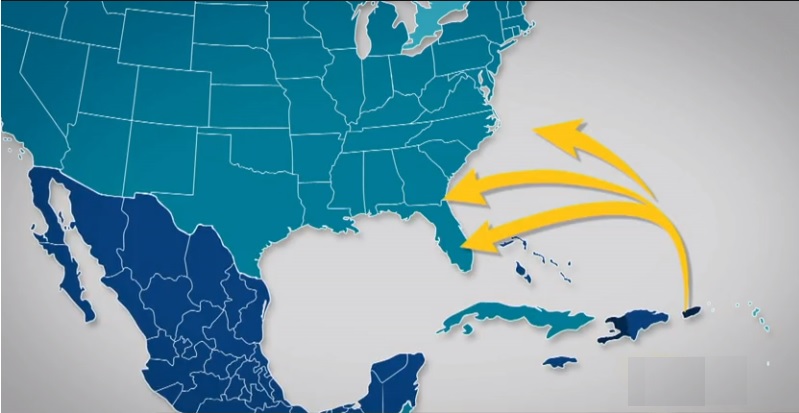
This episode is an example of the incidents prepared for in the Go Lean book, especially within the subtitle, “Crap Happens”. The book was referring to situations where a ‘Clear and Present Danger’ can imperil everyday life for the everyday man. This is the case in the US Territory of Puerto Rico. Despite the economic nature of the $70 Billion debt-load, this crisis is affecting security and government deliveries. According to the foregoing VIDEOs, the communities on the island of Puerto Rico cannot deliver on their Social Contract obligations because they have inadequate resources and their legal first priority must be debt-servicing. The end result: people’s needs – in the Social Contract – are not met and so they … flee – see photo above.

Puerto Rico needs an intervention; a bail-out of some sort. They are specifically asking for provisions of the US Bankruptcy laws (Chapter 9) to apply to the Territory. (Normally Chapter 9 only refers to American municipal governments and not State governments nor Territories). There are proponents of this quest – like Lin-Manuel Miranda in the foregoing – and opponents, like the active creditors. The movement behind the Go Lean movement wants a resolution, but focuses more on the underlying societal foundation; like the flaws that have made this community a parasite of the US mainland, rather than a protégé.

This assertion in the Go Lean book is that bad things (and bad actors) will always emerge to disrupt the peace and harmony in communities. All Caribbean member-states, like US Territories Puerto Rico and the US Virgin Islands, need to be on guard and prepared for this possibility. The book (Page 23) prepares for many modes of “bad things/actors”. It defines them as industrial mishaps, natural disasters, “acts of God”, and yes, economic distress. The book relates that these happenings are historical facts – considering the 2008 Global Recession and the constant threats of hurricanes – that are bound to be repeated, again and again. The book’s goal is to prepare the region for the eventuality of bad things happening to the good people, so as to minimize the constant human flight and brain drain.

The Go Lean book posits that the Caribbean region is the “greatest address on the planet”, that people should be “beating down the doors” to get in, rather than the status quo of people “beating down the doors” to get out.

We must plan for all disasters, natural and man-made. “When we fail to plan, we plan to fail”. We need Good Neighbors, literally and figuratively. The book contends that the 30 member-states in the Caribbean region should prepare themselves as neighbors to aid themselves, primarily. This point is pronounced early in the book with these Declaration of Interdependence (Page 12):

i.     Whereas the earth’s climate has undeniably changed resulting in more severe tropical weather storms, it is necessary to prepare to insure the safety and security of life, property and systems of commerce in our geographical region. As nature recognizes no borders in the target of its destruction, we also must set aside border considerations in the preparation and response to these weather challenges.

ii.    Whereas the natural formation of the landmass for our lands constitutes some extreme seismic activity, it is our responsibility and ours alone to provide, protect and promote our society to coexist, prepare and recover from the realities of nature’s occurrences.

x.   Whereas we are surrounded and allied to nations of larger proportions in land mass, populations, and treasuries, elements in their societies may have ill-intent in their pursuits, at the expense of the safety and security of our citizens. We must therefore appoint “new guards” to ensure our public safety and threats against our society, both domestic and foreign. The Federation must employ the latest advances and best practices … to assuage continuous threats against public safety.

xii. Whereas the legacy in recent times in individual states may be that of ineffectual governance with no redress to higher authority, the accedence of this Federation will ensure accountability and escalation of the human and civil rights of the people for good governance, justice assurances, due process and the rule of law. As such, any threats of a “failed state” status for any member state must enact emergency measures on behalf of the Federation to protect the human, civil and property rights of the citizens, residents, allies, trading partners, and visitors of the affected member state and the Federation as a whole.

xvi. Whereas security of our homeland is inextricably linked to prosperity of the homeland, the economic and security interest of the region needs to be aligned under the same governance. Since economic crimes, including piracy and other forms of terrorism, can imperil the functioning of the wheels of commerce for all the citizenry, the accedence of this Federation must equip the security apparatus with the tools and techniques for predictive and proactive interdictions.

xxiii. Whereas many countries in our region are dependent OverseasTerritory of imperial powers, the systems of governance can be instituted on a regional and local basis, rather than requiring oversight or accountability from distant masters far removed from their subjects of administration. The Federation must facilitate success in autonomous rule by sharing tools, systems and teamwork within the geographical region.

xxv. Whereas the legacy of international democracies had been imperiled due to a global financial crisis, the structure of the Federation must allow for financial stability and assurance of the Federation’s institutions. To mandate the economic vibrancy of the region, monetary and fiscal controls and policies must be incorporated as proactive and reactive measures. These measures must address threats against the financial integrity of the Federation and of the member-states.

So the Go Lean book relates that the Caribbean must appoint “new guards” to ensure public safety and to include many strategies, tactics and implementations considered “best-practices” for economic stewardship and Emergency Management (Preparation and Response). We must be on a constant vigil against all “bad actors”, man-made or natural. This indicates being pro-active in monitoring, mitigating and managing risks. Then when “crap” does happen, as it always will, the region’s “new guards” must be prepared for any “Clear and Present” danger.

The Go Lean book serves as a roadmap for the introduction and implementation of the technocratic Caribbean Union Trade Federation (CU). The CU would structure the appropriate governmental and non-governmental agencies in the region into one initiative, providing a Unified Command and Control for Emergency operations to share, leverage and collaborate their practice across the whole region. The roadmap has a focus of optimizing Caribbean society through economics, homeland security and governance; as stated within the prime directives (3):

  • Optimization of the economic engines in order to grow the regional economy to $800 Billion & create 2.2 million new jobs.
  • Establishment of a security apparatus to protect the resultant economic engines and the Caribbean homeland.
  • Improvement of Caribbean governance to support these engines, including Bankruptcy processing at the regional level.

The Caribbean is the “greatest address on the planet”, but there are risks associated with living deep in this tropical zone. With the reality of natural disasters (perhaps even more due to Climate Change), we must not be caught unprepared if we do not want our citizens to continue to flee their homeland; we want them to prosper here, where they may be planted. So as a community, we must provide assurances that we can count on our Good Neighbors to provide aid for any of the region’s stakeholders.

The Go Lean book details the series of community ethos, strategies, tactics, implementations and advocacies to provide the proactive and reactive protections in the Caribbean region:

Community Ethos – Economic Systems Influence Individual Choices Page 21
Community Ethos – Consequences of Choices Lie in Future Page 21
Community Ethos – “Crap” Happens Page 23
Community Ethos – Cooperatives Page 25
Community Ethos – Ways to Impact the Future Page 26
Community Ethos – Ways to Impact the Greater Good Page 37
Strategy – Vision – Confederating to form a Single Market Economy Page 45
Strategy – Agents of Change – Globalization Page 57
Strategy – Agents of Change – Climate Change Page 57
Tactical – Fostering a Technocracy Page 64
Tactical – How to Grow the Economy – Economic Bubbles Recovery Page 69
Tactical – How to Grow the Economy – Recover from Disasters Page 70
Tactical – Separation of Powers – Securities Exchange Regulatory Agency Page 74
Tactical – Separation of Powers – Homeland Security Department Page 75
Tactical – Separation of Powers – Emergency Management Agency Page 76
Tactical – Separation of Powers – Meteorological and Geological Service Page 79
Tactical – Separation of Powers – Exclusive Federal Bankruptcy Courts Page 90
Implementation – Ways to Pay for Change Page 101
Implementation – Start-up Homeland Security Initiatives Page 103
Implementation – Ways to Better Manage Debt Page 114
Implementation – Ways to Foster International Aid Page 115
Planning – 10 Big Ideas – #3: Consolidated Homeland Security Pact Page 130
Planning – Ways to Make the Caribbean Better Page 131
Planning – Ways to Improve Failed-State Indices – Puerto Rico’s near Status Page 134
Advocacy – Ways to Grow the Economy – Disaster Recoveries Page 151
Advocacy – Ways to Create Jobs Page 152
Advocacy – Ways to Improve Governance Page 168
Advocacy – Ways to Better Manage the Social Contract Page 170
Advocacy – Ways to Improve Homeland Security Page 180
Advocacy – Ways to Improve for Natural Disasters Page 184
Advocacy – Ways to Improve for Emergency Management Page 196
Advocacy – Ways to Impact Wall Street – Optimize Security Markets Page 200
Advocacy – Ways to Impact US Territories – Puerto Rico and the Virgin Islands Page 244

Other subjects related to Good Neighbor responses to crises (Economic Disruptions, Emergency Management, and Homeland Security) in the region and the required governmental responses have been blogged in other Go Lean…Caribbean commentaries, as sampled here:

https://goleancaribbean.com/blog/?p=7327 Zika – An Epidemiology Crisis – Facing the Caribbean region
https://goleancaribbean.com/blog/?p=7235 Flint, Michigan – A Cautionary Tale
https://goleancaribbean.com/blog/?p=6893 A Meteorologist’s View On Climate Change
https://goleancaribbean.com/blog/?p=6563 Lessons from Iceland – Model of Recovery
https://goleancaribbean.com/blog/?p=6531 Economic Crisis: Learning from the Exigency of 2008
https://goleancaribbean.com/blog/?p=6189 A Lesson in History – Hurricane ‘Katrina’ is helping today’s crises
https://goleancaribbean.com/blog/?p=6103 Sum of All Fears – ‘On Guard’ Against Deadly Threats
https://goleancaribbean.com/blog/?p=5002 Managing a ‘Clear and Present Danger’
https://goleancaribbean.com/blog/?p=4741 Vanuatu and Tuvalu Cyclone – Inadequate response to human suffering
https://goleancaribbean.com/blog/?p=4360 Dreading the ‘Caribbean Basin Security Initiative’
https://goleancaribbean.com/blog/?p=2614 The ‘Great ShakeOut’ Earthquake Drill / Planning / Preparations
https://goleancaribbean.com/blog/?p=1817 Caribbean grapples with intense new cycles of flooding & drought

The island territory of Puerto Rico, and the Caribbean as a whole, has found itself on the losing side of the changes impacting the global economy; the Go Lean book identified one of the Agents of Change as globalization. According to the foregoing VIDEOs, they have been contending with a recession for nearly a decade. This has meant life-and-death for the community; death in terms of people abandoning the island. This commentary has frequently addressed these challenges – and solutions – for Puerto Rico; see sample list here:

https://goleancaribbean.com/blog/?p=6693 Ten Puerto Rico Police Accused of Criminal Network
https://goleancaribbean.com/blog/?p=6531 Economic Disaster: Learning from the Exigency of 2008
https://goleancaribbean.com/blog/?p=6260 Puerto Rico Bondholders Coalition Launches Ad Campaign
https://goleancaribbean.com/blog/?p=4551 US Territories – Between a ‘rock and a hard place’
https://goleancaribbean.com/blog/?p=1325 Puerto Rico Governor Signs Bill on SME’s
https://goleancaribbean.com/blog/?p=599 Ailing Puerto Rico open to radical economic fixes

These previous commentaries reflect the enduring crisis for the Caribbean; every member-state (island & mainland states) experience societal abandonment. The book Go Lean…Caribbean posits that this “Agent of Change” is too big for just any one member-state, like Puerto Rico, to tackle alone, that there must be a regional solution; and presents this roadmap as the salve.

The people and institutions of the region are hereby urged to lean-in to this Go Lean roadmap; this plan is conceivable, believable and achievable. We can make Puerto Rico, and the Caribbean as a whole, a better place to live, work and play.:-)

Download Go Lean … Caribbean – now!

————

Appendix – America’s Good Neighbor policy

The Good Neighbor policy was the foreign policy of the administration of United States President Franklin Roosevelt towards Latin America. Although the policy was implemented by the Roosevelt administration, 19th-century politician Henry Clay paved the way for it and coined the term “Good Neighbor”.

The policy’s main principle was that of non-intervention and non-interference in the domestic affairs of Latin America. It also reinforced the idea that the United States would be a “good neighbor” and engage in reciprocal exchanges with Latin American countries.[1] Overall, the Roosevelt administration expected that this new policy would create new economic opportunities in the form of reciprocal trade agreements and reassert the influence of the United States in Latin America; however, many Latin American governments were not convinced.[2]

- Being there - Photo 2

Carmen Miranda became the muse of the Good Neighbor policy.

Impact
The Good Neighbor Policy terminated the U.S. Marines occupation of Nicaragua in 1933 and occupation of Haiti in 1934, led to the annulment of the Platt Amendment by the Treaty of Relations with Cuba in 1934, and the negotiation of compensation for Mexico’s nationalization of foreign-owned oil assets in 1938.

Legacy
The era of the Good Neighbor Policy ended with the ramp-up of the Cold War in 1945, as the United States felt there was a greater need to protect the western hemisphere from Soviet influence. These changes conflicted with the Good Neighbor Policy’s fundamental principle of non-intervention and led to a new wave of US involvement in Latin American affairs.[2] Until the end of the Cold War the United States directly or indirectly attacked all suspected socialist or nationalist movements in the hope of ending the spread of Soviet influence. U.S. interventions in this era included the CIA overthrow of Guatemala’s President Jacobo Árbenz in 1954, the unsuccessful CIA-backed Bay of Pigs Invasion in Cuba in 1961, CIA subversion of Chilean President Salvador Allende in 1970–73, and CIA subversion of Nicaragua’s Sandinista government from about 1981 to 1990.[2]

After World War II, the US began to shift its focus to aid and rebuilding efforts in Europe and Japan. These U.S. efforts largely neglected the Latin American countries, though U.S. investors and business men did have some stake in the nations to the South.

See the entire encyclopedic reference here (retrieved May 9, 2016): https://en.wikipedia.org/wiki/Good_Neighbor_policy.

Share this post:
, , ,
[Top]

ENCORE: Bahamas Junkanoo Carnival – Long road to Legacy

On the occasion of the 2nd Bahamas Junkanoo Carnival – concluding on Saturday May 7, 2016 – this commentary encores the Post-Mortem Analysis from the inaugural  event in 2015.

2 years and counting …

… the officials here* in the Bahamas are taking the “long” view: that it might take some time – 5 years or more – to establish this event as a cultural legacy, “building the Junkanoo Carnival brand into the future“.

See here for the lessons learned from Year 1. As for Year 2, we say: Ditto!

*Assessing from the Bahamas; here to “observe and report”.

===================
Go Lean Commentary

May 14, 2015 – The Bahamas held their inaugural Junkanoo Carnival this past weekend. How did they do? How was the execution, compared to the planning? How much money was spent? How much return on investment was recouped?

Title: Carnival Fever: Organisers Hail A ‘Cultural Revolution’
By: Rashad Rolle, Tribune Staff Reporter
The Tribune – Daily Bahamian Newspaper. Posted 05/11/2015; retrieved from:
http://www.tribune242.com/news/2015/may/11/carnival-fever-organisers-hail-cultural-revolution/

CU Blog - Post-Mortem of Junkanoo Carnival - Photo 1An “unprecedented” number of people descended upon Clifford Park, the Western Esplanade and Arawak Cay to participate in the inaugural Junkanoo Carnival events between Thursday and Saturday, completing what officials say will become a permanent fixture on the Bahamian calendar that will jumpstart the country’s cultural economy.

Officials yesterday said it was too early to say exactly how many attended or participated in the event or to assess its overall economic impact.

However, it’s estimated that at the event’s peak, more than 15,000 attended Friday’s Music Masters concert – the “largest gathering of people” ever in The Bahamas, some said.

Last week, Mr Major estimated that 50,000 to 100,000 people would attend Junkanoo Carnival adding that the festival could bring in $50m to $60m.

The event – filled with food and arts and crafts – was bolstered by a well-received mixture of Bahamian and Soca music.

There were “no major (disruptive or criminal) incidents” and “no complaints” about security, Police Assistant Commissioner (ACP) Leon Bethel told The Tribune.

The event, which had faced months of criticism, “proved naysayers wrong,” Tourism Minister Obie Wilchcombe told this newspaper.

He noted that the government, the National Festival Commission and workers in the Tourism and Youth, Sports and Culture Ministries have now put on two major, successful events within the span of a week, proving that the country must add a “label of excellence” to its brand.

“Certainly by all that developed,” he said, “it proved that carnival does have a place in the Bahamas and it can be a unique festival celebrated in a traditional Bahamian way with the inclusion of Junkanoo, highlighting the many talented Bahamians, whether it’s the entertainers, the artisans who produced costumes, the vendors out there with their fine cuisine or the Royal Bahamas Police Force and the entire national security team that worked to turn the place into a spectacular village.”

“While there were those who prayed for rain, the place poured and rained with people,” Mr Wilchcombe added. “We must appreciate that for all the naysayers and those who opposed to the event, the Bahamian people spoke. No one stopped anyone from saying what they wanted to say or from criticising the event, but we stayed focused.”

“Each success, be it the IAAF World Relays or be it carnival, it tells you that collectively we know who we are as a people and what we are capable of.

“We did not let the invited guests dominate the occasion,” he said, reflecting on a prior concern that the event would not be Bahamian-centric.

Mr Wilchcombe added that he wished Bahamian singers ‘KB’, who has flip-flopped on his support for the festival, and ‘Geno D’ had been involved.

“They are two of the best musicians in the country, but in the future I think we are going to see more and more Bahamian artists coming out. What you are now going to see is that Abaco, Eleuthera, Bimini all will want to be a part of this fantastic event.”

In an interview with The Tribune, Festival Commission Chairman Paul Major also said the event exceeded his expectations.

“The spirit of the event, the number of spectators, the number of participants, it was awesome,” he said. “I think we are witnessing a cultural revolution. It’s an economic stimulus.”

Nonetheless, some critics said that while the event seemed to be a big hit among Bahamians, it did not attract the number of tourists needed to provide a major economic boost to the economy as hoped.

Mr Wilchcombe, however, disputed this and said the event will only grow following its successful launch.

Asked about this, Mr Major said: “(That claim) is not true. We were busing tourists from east and west of this venue and continued doing so throughout the event.”

Still, he conceded that the event could have been promoted more internationally. He said the fact that a headliner was not finalised until weeks before the Music Masters concert affected promotional work.

“We will start marketing for the next event as early as September of this year. We may have to look for another venue. This venue may not be big enough to host next year’s event,” Mr Major added.

As for the security of the event, ACP Bethel said the conduct of those attending was “top notch.”

“We had no resistance in terms of security measures. The security was elaborate with many layers in and around the event and we worked hand in hand with the organisers, private security, (and) the Defence Force.”

VIDEO: 2015 Bahamas Junkanoo Carnival Closes Out – https://youtu.be/IR0mGpAd47A

Published on May 10, 2015 – After three days of excitement the inaugural Bahamas Junkanoo Carnival came to an end with many already looking forward to next year. News coverage by local network ZNS TV.

It time now for a post-mortem analysis; borrowing this practice from medical science.

Medical science can teach us a lot. The purpose of the practice of medicine is to protect and promote health and wellness. But when there is a failure in this quest; when someone actually dies, another resource (medical doctor called a pathologist) adds value with a post-mortem examination (autopsy) — a highly specialized surgical procedure that consists of a thorough examination of a corpse to determine the cause and manner of death, evaluating any disease or injury.

This medical practice aligns with the process to forge change, as described in the book Go Lean … Caribbean (Page 9). The book performs a careful post-mortem analysis of the Caribbean’s eco-systems. The conclusion of that analysis was that the region is in crisis. But alas the book, serving as a roadmap for the introduction and implementation of the technocratic Caribbean Union Trade Federation (CU), declares that a crisis is a terrible thing to waste. The roadmap then provides for a turn-around, with turn-by-turn directions on how to elevate the economic, security and governing engines to make the homeland better to live, work and play.

One mission is to optimize events. The Bahamas Junkanoo Carnival is typical of the type of events that the roadmap projects to elevate the region’s societal engines. As detailed plans of this inaugural Carnival were published, this commentary applied analysis comparing the Go Lean baseline. Now that the event has transpired and Go Lean promoters were there to “observe and report”, these are now the lessons-learned; the post-mortem analysis:

  • Regionalism embraced … at lastCarnival is an international brand. One cannot expect to shove a Bahamian-first ethos into the Carnival brand; see Appendix B below. Many people in-country complained that international artists had to be brought in, and “cuddled”: Big Paychecks, amenities, etc; see Photo here of Trinidadian Soca Music Artist Marchel Montano. The Go Lean book/blogs calls for the embrace of the regional Single Market for all of the Caribbean.

CU Blog - Post-Mortem of Junkanoo Carnival - Photo 5

  • Fostering genius … at last – The Bahamas has been notorious for their policies advocating egalitarianism. The concept of Carnival requiring artists to compete for top prizes is 100% divergent from that ideal. Yet, this approach of fostering the musical genius in the country is essential for growing the regional/national economy. We must “hitch our wagons” to the strong, talented and gifted “horses”, as was the case for Bob Marley. See Photos here of the Bahamian Headliner and also of one of the Junkanoo Carnival “Music Masters” event finalist; see Appendix A – VIDEO below. Go Lean calls for formal institutions to develop and monetize musical genius in the region.

CU Blog - Post-Mortem of Junkanoo Carnival - Photo 2

CU Blog - Post-Mortem of Junkanoo Carnival - Photo 4

  • Carnival is a Stimulus (GDP) not an investment (no ROI)Gross Domestic Product is calculated as C + I + G + (X – M) or private consumption + gross investment + government spending + (exports − imports). So the Bahamas government spending $9 million to facilitate the inaugural Carnival did stimulate additional economic activity; (actual results still spending). The foregoing article quotes a $50 to $60 million impact on GDP. This is highly possible based on this formula. Go Lean plans many economic stimuli from Events.
  • Mass attendance is assured – but monetizing is the challenge – Other news reports reflect that vendors and merchants did not get the final returns they had hoped. The Go Lean roadmap calls for the embrace of fairgrounds so as to better monetize event revenues; think parking, hospitality tents, campgrounds (RV’s).
  • Main Street not fully engaged – Bigger Carnival events (Rio de Janeiro, New Orleans, etc.) are successful for their inclusion of floats and trinkets thrown to spectators. The embrace of this strategy would allow Main Street businesses or NGO’s direct participation with sponsorship, advertising and float construction. The Go Lean roadmap seeks to create 2.2 million new jobs in the region by embedding large, medium, small businesses and NGO’s in the development of trade and commerce.

CU Blog - Post-Mortem of Junkanoo Carnival - Photo 7 Sample Float from Rio De Janeiro, Brazil

CU Blog - Post-Mortem of Junkanoo Carnival - Photo 6 Bahamas Carnival’s “Road Fever” Winners

  • Carnival and religion do not make good dance partners – Carnival, by its very nature and history is not a religious event. It does not attempt to honor or worship the Christian God; therefore there should be no attempt to reconcile the two; see Photo here. The Bahamas event avoided planning Sunday activities as an acquiescence to religious leaders; thus missing out on prime weekend availability for visitors and locals alike. The Go Lean roadmap promotes a religiously neutral technocracy – better!

CU Blog - Post-Mortem of Junkanoo Carnival - Photo 3

  • Need an earlier date for Snow-birds and Spring-breakers – A typical Carnival pre-Ash Wednesday date would have been February, ideal for extensive outdoor activities in the Bahamian Heat. On the other hand, the 2nd weekend in May is virtually summer and therefore dis-inviting for northern visitors – the classic tourist market. The previous commentary had identified that the Bahamas does not have a Lenten ethos, so a March date would be better all-around for better weather, plus an appeal to Snow-birds and Spring-breakers. The Go Lean roadmap focuses on technocracy not religion.

The Go Lean book prescribes events/festivals as paramount in the roadmap to elevate the regional economy (Page 191). There are many ways for the lessons learned in this year’s inaugural Junkanoo Carnival to be better applied in the execution of the roadmap for the Bahamas and the rest of the Caribbean. There are dimensions of these type of events that hadn’t even been experienced by the region … as of yet, namely security. No “bad actors” have emerged to exploit the event for terroristic activities. Yet the Go Lean roadmap fully anticipates this reality. These are among the many strategies, tactics, implementation and advocacies for best-practices:

Community Ethos – People Respond to Incentives Page 23
Community Ethos – Return on Investments Page 24
Community Ethos – Cooperatives Page 25
Community Ethos – Non Government Organization Page 25
Ways to Impact the Future Page 26
Ways to Foster Genius – Performance Excellence Page 27
Ways to Improve Sharing Page 35
Ways to Promote Happiness Page 36
Ways to Impact the Greater Good Page 37
Strategy – Customers – Business Community Page 47
Strategy – Customers – Visitors / Tourists Page 47
Strategy – Competitors – Event Patrons Page 55
Separation of Powers – Emergency Mgmt. Page 76
Separation of Powers – Tourism Promotion Page 78
Separation of Powers – Sports & Culture Page 81
Separation of Powers – Fairgrounds Administration Page 83
Separation of Powers – Turnpike Operations Page 84
Steps to Implement Self-Governing Entities Page 105
Ways to Foster Cooperatives Page 176
Ways to Improve Intelligence Gathering & Analysis – Surveillance Page 182
Ways to Improve [Service] Animal Husbandry – For Event Security Page 185
Ways to Enhance Tourism Page 190
Ways to Impact Events Page 191
Ways to Promote Fairgrounds Page 192
Ways to Impact Hollywood – Media Industry Page 203
Ways to Preserve Caribbean Heritage Page 218
Ways to Improve the Arts Page 230
Ways to Promote Music Page 231
Appendix – Event Model: Sturgis 10-Day Festival Page 288

The publishers of the Go Lean roadmap applaud the current Bahamian Government officials for their commitment to fully commit to this Event Tourism strategy for future growth. This administration is hereby urged to lean-in to the Go Lean roadmap for clear directions (turn-by-turn) on how best to elevate Bahamian society to being a better place to live, work and play. In fact, the entire Caribbean region is hereby urged to lean into this roadmap.

The success of this roadmap is conceivable, believable and achievable.

Caribbean events are promotions of our unique culture to a world-wide stage; yet they can fortify economic efficiency as well.

So the world is watching…

See how the world marks the manner of our bearing – verse from Bahamas National Anthem.

🙂

Download the book Go Lean … Caribbean – now!

———–

Appendix A – VIDEO: Bahamas Carnival (Junkanoo Carnival) by Sonovia Pierre – https://youtu.be/5OyhOTBDFAA

Published on Dec 15, 2014 – Singer and songwriter Sonovia Pierre, affectionately called Novie, was destined to have an interesting musical life.  She holds a Bachelorʼs of Arts in Music Education from Florida Atlantic University. In 1990 she joined one of the most successful Bahamian bands, Visage as a lead vocalist. She has written and recorded several songs on five of the group’s albums and has collaborated with several other leading Bahamian artists. She is widely known for her hit songs including, “Still need a man” and “Man bad, woman bad”.

License: Standard YouTube License

———-

Appendix B – Caribbean Carnivals  – (Source: http://en.wikipedia.org/wiki/Caribbean_Carnival)

Approximate dates are given for the concluding festivities. Carnival season may last for over a month prior to the concluding festivities, and the exact dates vary from year to year [depending on the Judeo-Christian Passover/Easter calendar].

  • Anguilla – Anguilla Summer Festival, early August[1]
  • Antigua and Barbuda
  • Aruba – Carnival, February, Ash Wednesday[4]
  • The Bahamas – Junkanoo, late December/early January[5]; first Junkanoo Carnival inaugurated in May 2015.[63]
  • Barbados – Crop Over, early August[6]
  • Belize – Carnival, September[7]
  • Bonaire – Carnival, February Ash Wednesday[8]
  • British Virgin Islands
    • Tortola – BVI Emancipation (August) Festival, early August[9]
    • Virgin Gorda – Virgin Gorda Easter Festival Celebrations, late March/early April[10]
  • Cayman Islands – Batabano, late April/early May[11]
  • Cuba
  • Curaçao – Carnival, February, Ash Wednesday[14]
  • Dominica – Carnival, February, Ash Wednesday[15]
  • Dominican Republic – Dominican Carnival, February, Dominican Independence Day[16]
  • Grenada
    • Carriacou – Carriacou Carnival, February, Ash Wednesday[17]
    • Grenada – Spicemas, early August[18]
  • Guadeloupe – Carnaval – February, Ash Wednesday[19]
  • Guyana – Mashramani (Mash), February 23, Guyanese Republic Day[20]
  • Haiti – Kanaval, February, Ash Wednesday[21]
  • Jamaica – Bacchanal, late March/early April[22]
  • Martinique – Carnival, February, Ash Wednesday[23]
  • Montserrat – Montserrat Festival, early January, New Year’s Day[24]
  • Puerto Rico – Carnaval de Ponce, February, Ash Wednesday[25]
  • Saba – Saba Summer Festival, late July/early August[26]
  • Saint-Barthélemy – Carnival, February, Ash Wednesday[27]
  • Saint Lucia – Carnival, July[28]
  • Saint Kitts and Nevis
    • Saint Kitts – Carnival, December/January[29]
    • Nevis – Culturama, late July/early August[30]
  • Saint-Martin – Carnival, February, Ash Wednesday[31]
  • Saint Vincent and the Grenadines – Vincy Mas, late June/early July[32]
  • Saint Eustatius – Statia Carnival, late July/early August[33]
  • Sint Maarten – Carnival, late April/early May[34]
  • Trinidad and Tobago
    • Trinidad – Carnival, February, Ash Wednesday[35]
    • Tobago – Tobago Carnival, February, Ash Wednesday[36]
  • Turks and Caicos – Junkanoo, late December/early January, Three King’s Day[37]
  • United States Virgin Islands
    • Saint Croix – Crucian Festival, late December/early January Three King’s Day[38]
    • Saint John – St. John Festival, June through July 3 & 4, V.I. Emancipation Day and U.S. Independence Day[39]
    • Saint Thomas – V.I. Carnival, April through early May[40]


Share this post:
, , , ,
[Top]

ENCORE: Celebrating ‘Cinco De Mayo’

This Go Lean blog-commentary from May 5, 2015 is re-distributed on this occasion of Cinco De Mayo 2016. As always, this year’s commemoration is a celebration of Mexican culture, more so than Mexican history.

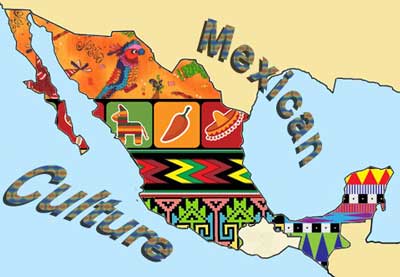
CU Blog - Celebrating Mexican Culture - Photo 1

Bienvenido Amigos …

————–

Go Lean Commentary

Today (May 5) is Cinco De Mayo – celebrating this is a move of solidarity with Mexico; its people and culture – Enjoy the festivities!

Enjoy the Mexican food, spirits, music and culture. The country and people of Mexico have so much to offer the world – see VIDEO below – this includes the Caribbean.

One thing more that they can offer us in our region: A Lesson in History!

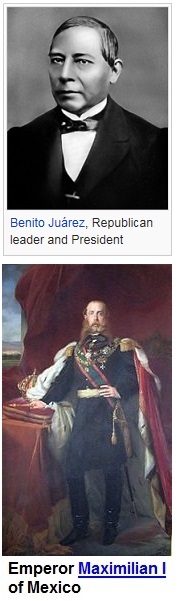
The summary of this celebration is simple on the surface: Mexican forces commanded by General Ignacio Zaragoza defeated the French army in the Battle of Puebla on 5 May 1862. 4 days later, on 9 May 1862, The then-President Benito Juárez declared that the anniversary of the Battle of Puebla would be a national holiday,[14][15][16][17][18] regarded as “Battle of Puebla Day” or “Battle of Cinco de Mayo”. Although today it is recognized in some countries as a day of Mexican heritage celebration, it is not a federal holiday in Mexico.[19]

Considering the real history of Cinco De Mayo is a really big deal. For starters, while Mexico was not the aggressor in this war, they were not exactly blameless.

The 1858 – 1860 Mexican civil war known as The Reform War had caused distress throughout Mexico’s economy. When taking office as the newly-elected president of the Republic in 1861, Juárez was forced to suspend payments of interest on foreign debts for a period of two years. At the end of October 1861 diplomats from Spain, France, and Britain met in London to form the Tripartite Alliance, with the main purpose of launching an allied invasion of Mexico, taking control of Veracruz, its major port, and forcing the Mexican government to negotiate terms for repaying its debts and for reparations for alleged harm to foreign citizens in Mexico. In December 1861, Spanish troops landed in Veracruz; British and French followed in early January. The allied forces occupied Veracruz and advanced to Orizaba. However, the Tripartite Alliance fell apart by early April 1862, when it became clear the French wanted to impose harsh demands on the Juarez government and provoke a war. The British and Spanish withdrew, leaving the French to march alone on Mexico City. French Emperor-President Napoleon III – the first democratically elected French President – wanted to set up a puppet regime, the Mexican Empire.

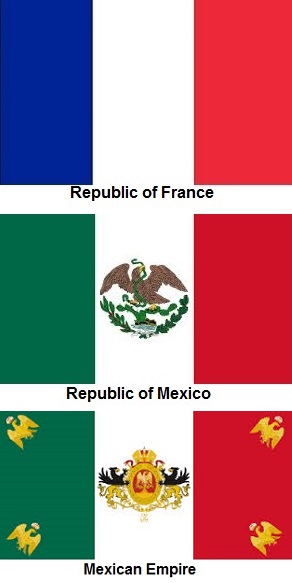
Thus started this French Intervention in Mexico. The effects of these 5 years were far-reaching, even to this day – consider the similarities in flags for these countries.

CU Blog - A Lesson in History - Cinco De Mayo - Photo 1Title: French Intervention in Mexico 1862 – 1867
Emperor Napoleon III of France was the instigator, justifying military intervention by claiming a broad foreign policy of commitment to free trade. For him, a friendly government in Mexico would ensure European access to Latin American markets. Napoleon also wanted the silver that could be mined in Mexico to finance his empire. Napoleon built a coalition with Spain and Britain while the U.S. was deeply engaged in its own civil war from 1861 to 1865.

Here is the main timeline of this French Intervention period:

1. 1862: Arrival of the French
After the initial victory by the Mexicans at the Battle of Puebla, the war continued in a different direction. The pursuing Mexican army was contained by the French at Orizaba, Veracruz, on 14 June. More British troops arrived on 21 September, and General Bazaine arrived with French reinforcements on 16 October. The French occupied the port of Tamaulipas on 23 October, and unopposed by Mexican forces took control of Xalapa, Veracruz on 12 December.

2. 1863: The French take the capital
CU Blog - A Lesson in History - Cinco De Mayo - Photo 2The French army of General François Achille Bazaine defeated the Mexican army led by General Comonfort in its campaign to relieve the siege of Puebla, at San Lorenzo, to the south of Puebla. Puebla surrendered to the French shortly afterward, on 17 May. On 31 May, President Juárez fled the capital city (Mexico City) with his cabinet, retreating northward to Paso del Norte and later to Chihuahua. Having taken the treasure of the state with them, the government-in-exile remained in Chihuahua until 1867.

French troops under Bazaine entered Mexico City on 7 June 1863. The main army entered the city three days later, led by General Forey. General Almonte was appointed the provisional President of Mexico on 16 June, by the Superior Junta (which had been appointed by Forey). The Superior Junta with its 35 members met on 21 June, and proclaimed a Catholic Empire on 10 July. The crown was offered to Austrian Prince Archduke Ferdinand Maximilian, following pressures by Napoleon. Maximilian accepted the crown on 3 October.

3. 1864: Arrival of Maximilian
Further decisive French victories continued with the fall of Guadalajara, Zacatecas, Acapulco, Durango by 3 July, and the defeat of republicans in the states of Sinaloa and Jalisco in November.

Maximilian formally accepted the crown on 10 April, signing the Treaty of Miramar (between France and Mexico), and landed at Veracruz on 28 May. He was enthroned as Maximilian I, Emperor of Mexico, [under French occupation].

4. 1865: Beginning of Republican victories
CU Blog - A Lesson in History - Cinco De Mayo - Photo 3After many more French victories, finally on 11 April, republicans defeated Imperial forces at Tacámbaro in Michoacán. In April and May the republicans had many forces in the states of Sinaloa and Chihuahua. Most towns along the Rio Grande, [(the border with the US),] were also occupied by republicans.

The decree known as the “Black Decree” was issued by Maximilian on 3 October, which threatened any Mexican captured in the war with immediate execution.

5. 1859-1867: U.S. Diplomacy and Involvement
The United States did not condone the French occupation of Mexico but it had to use its resources for the American Civil War, which lasted 1861 to 1865. Then-President Abraham Lincoln expressed his sympathy to Latin American republics against any European attempt to establish a monarchy; and the Congress passed a resolution in disgust of these French actions. In 1865, The US supported the sale of Mexican bonds by Mexican agents in the US to fund the Juarez Administration, raising up to $18-million dollars for the purchase of American war material.[16] By 1867, American policy shifted from thinly veiled sympathy to the republican government of Juarez to open threat of war to induce a French withdrawal, invoking the Monroe Doctrine, a policy to thwart any aggression by European powers in the Americas.

6. 1866: French withdrawal and Republican victories
Choosing Franco-American relations over his Mexican monarchy ambitions, Napoleon III announced the withdrawal of French forces beginning 31 May. Taking advantage of the end of French military support to the Imperial troops, the Republicans won a series of crippling victories in Chihuahua on 25 March, Guadalajara, Matamoros, Tampico and Acapulco in July. Napoleon III urged Maximilian to abandon Mexico and evacuate with the French troops; [but he persisted]. The French evacuated Monterrey on 26 July, Saltillo on 5 August, and the whole state of Sonora in September. Maximilian’s French cabinet members resigned on 18 September. The Republicans defeated imperial troops in Oaxaca in October, occupying the whole of Oaxaca in November, as well as parts of Zacatecas, San Luis Potosí and Guanajuato.

7. 1867: Republicans take the capital
The Republicans occupied the rest of the states of Zacatecas, San Luis Potosí and Guanajuato in January. The French evacuated the capital on 5 February.

On 13 February 1867, Maximilian withdrew to Querétaro. The Republicans began a siege of the city on 9 March, and Mexico City on 12 April. On 11 May, Maximilian finally resolved to try to escape through the enemy lines. He was intercepted on 15 May. Following a court-martial, he was sentenced to death and executed on 19 June.
Source: http://en.wikipedia.org/wiki/French intervention_in_Mexico  

This subject has relevance for the Caribbean. Mexico is a stakeholder in Caribbean affairs. They have a vast coastline (Yucatan Peninsula) on the Caribbean Sea, plus a few Caribbean islands (Cozumel, Isla Mujeres, Isla Contoy, and Isla Blanca). This country is also a member of the ACS – Association of Caribbean States – one of the relevant entities that must be assembled for this regional integration movement championed in the book Go Lean…Caribbean.

The underlying theme of this Lesson in Mexican History is the lack of effective security for the people and societal engines of Mexico. Now, after 150 years, this historic pattern has continued; Mexico proceeded to endure one revolution-rebellion-overthrow-coup d’etat after another until recent times.

The Caribbean cannot afford this same disposition: the dread and damage endured from decades of dysfunction.

Today, Mexico is known as a lawless society in many pockets, especially along the US border. Considering the art and science of security, it is sad that they never got it right! They resemble a Failed-State in so many perspectives. This is where their history, especially those 5 years of the Franco-Mexican War, provides lessons for the Caribbean people and institutions. But this Go Lean movement does not seek to remediate Mexico; this is out of scope. Rather the focus is strictly on the 30 Caribbean member-states: islands of the Caribbean plus the Central & South American states that caucus with the Caribbean Community (Belize, Guyana and Suriname).

This effort to elevate Caribbean society fully recognizes that security mitigations must be prioritized equally with economic and governing remediation. This is an underlying theme of the book Go Lean…Caribbean. The book declares that the region is in crisis, at the precipice of Failed-State status. This is the assertion of the Go Lean book, that the region must prepare its own security apparatus for its own security needs.

This book serves as a roadmap for the introduction and implementation of the technocratic Caribbean Union Trade Federation (CU). So while the CU is set to optimize Caribbean society through economic empowerment, the security dynamics will be inextricably linked to this same endeavor. Therefore the Go Lean roadmap has 3 prime directives:

  • Optimization of the economic engines in order to grow the regional economy to $800 Billion & create 2.2 million new jobs.
  • Establishment of a security apparatus to protect the resultant economic engines.
  • Improvement of Caribbean governance to support these engines.

The book contends, just as the French proved to be a “bad actor” to Mexico in 1862, that new “bad actors” will emerge for the Caribbean to contend with. This will be as a by-product of new economic successes in the region. This point is pronounced early in the book with the Declaration of Interdependence (Page 12) that claims:

x.   Whereas we are surrounded and allied to nations of larger proportions in land mass, populations, and treasuries, elements in their societies may have ill-intent in their pursuits, at the expense of the safety and security of our citizens. We must therefore appoint “new guards” to ensure our public safety and threats against our society, both domestic and foreign. The Federation must employ the latest advances and best practices … to assuage continuous threats against public safety.

xvi. Whereas security of our homeland is inextricably linked to prosperity of the homeland, the economic and security interest of the region needs to be aligned under the same governance. Since economic crimes, including piracy and other forms of terrorism, can imperil the functioning of the wheels of commerce for all the citizenry, the accedence of this Federation must equip the security apparatus with the tools and techniques for predictive and proactive interdictions.

The need for the Caribbean to appoint “new guards” or a security pact to mitigate foreign and domestic threats in the region is the primary lesson to glean from the foregoing encyclopedic article – a consideration of the history of Cinco De Mayo. This security pact is to be legally constituted by a Status of Forces Agreement which would be enacted as a complement to the CU confederation treaty. The Go Lean roadmap provides 370-pages of turn-by-turn directions on how to deploy cutting-edge strategies, tactics and implementations to succeed in this goal.

In addition, there are other lessons – secondary – that we learn from this consideration of the history of Cinco De Mayo:

The Go Lean book details a roadmap with turn-by-turn directions for transforming the Caribbean homeland. The following is a sample of the community ethos, strategies, tactics, implementations and advocacies to impact the Caribbean region for this turnaround:

Community Ethos – Economic Principle – Economic Systems Influence Choices Page 21
Community Ethos – Economic Principle – Consequences of Choices Lie in the Future Page 21
Community Ethos – Anti-Bullying and Mitigation Page 23
Community Ethos – Minority Equalization Page 24
Community Ethos – Cooperatives Page 25
Community Ethos – Ways to Improve Sharing Page 35
Strategy – Vision – Confederating a Non-Sovereign Union Page 45
Strategy – Mission – Protect Economic Engines from threats Page 45
Tactical – Fostering a Technocracy Page 64
Tactical – Separation of Powers Page 71
Implementation – Start-up Foreign Policy Initiatives Page 102
Implementation – Security Initiatives at Start-up Page 103
Implementation – Ways to Deliver Page 109
Implementation – Ways to Better Manage Debt Page 118
Implementation – Ways to Promote Independence – Interdependence Page 120
Planning – 10 Big Ideas – Defense / Homeland Security Pact Page 127
Planning – Ways to Make the Caribbean Better Page 131
Planning – Ways to Better Manage Image Page 133
Planning – Ways to Improve Failed-State Indices Page 134
Planning – Lessons from the American West Page 142
Advocacy – Ways to Grow the Economy Page 151
Advocacy – Ways to Create Jobs Page 152
Advocacy – Ways to Improve Governance Page 168
Advocacy – Ways to Better Manage the Social Contract Page 170
Advocacy – Ways to Impact Justice Page 177
Advocacy – Ways to Improve Homeland Security Page 180
Advocacy – Ways to Mitigate Terrorism Page 181
Advocacy – Ways to Protect Human Rights Page 220

Mexico is a beautiful country, with a beautifully diverse population plus a lot of natural resources. They experience a vibrant tourism product where millions visit annually for Mexican hospitality – they are a fit competitor of Caribbean tourism, even for cruises. See VIDEO here:

VIDEO: Mexico: Live It to Believe It – Cultural Diversity 2015 – https://youtu.be/jciVmLL_UgY

Published on Feb 27, 2014 – A production of the Mexico Department of Tourism; commissioned for the Central American and Caribbean Games in Veracruz from November 14 to 30, 2014.

Many people visit Mexico, but few would consider moving there permanently. In fact just the opposite occurs, the societal abandonment problem in Mexico is very pronounced. Their northern neighbor, the United States, has constant security issues of illegal Mexican migrants. Mexico has been dysfunctional for their entire history as a Republic. They must do better! While this quest is out-of-scope for the CU/Go Lean roadmap, we can learn lessons from their actions and inactions.

The Go Lean book posits (Page 3) that the Caribbean islands are among the greatest addresses in the world. But like Mexico, instead of the world “beating a path” to our doors, the people of the Caribbean have “beat down their doors” to get out; despite the absence of any war or revolution … like our Mexican neighbors. Our abandonment is inexcusable.

May we learn from this history of Mexico! Mexican culture is great! Enjoy the festivities: their people, food, drink, music and dance. But let’s do better … than they have done. Let’s make the Caribbean even better, where our citizens can prosper where they are planted; let’s make our homeland better places to live, work and play.  🙂

Download the free e-Book of Go Lean … Caribbean – now!

Share this post:
, , , , , ,
[Top]

Chambers’ Strategy: A Great Role Model

Go Lean Commentary

We normally do not think much about Chambers of Commerce, but they are important in the normal eco-systems that businesses operate in. Despite the community, a representative of a Chamber of Commerce – see Appendix A below – can almost always get an audience with the Mayor or other governmental executives. See this news reference here:

CU Blog - Chambers Strategy - A Great Role Model - Photo 2Mention the Chamber of Commerce, and most people think of a benign organization comprised mostly of small business owners who meet for networking and mutual support in local chapters across the U.S. But today’s Chamber is anything but that, according to Alyssa Katz’s extensive research, recently published as “The Influence Machine.”

Founded in 1912, the U.S. Chamber of Commerce has been shaped by its CEO Tom Donohue into a powerful lobbying and campaigning machine that pursues a fairly narrow special-interest agenda. It’s now the largest lobbying organization in the U.S. (ranked by budget). It mostly represents the interests of a handful of so-called “legacy industries” – industries like tobacco, banking and fossil fuels which have been around for generations and learned how to parley their earnings into political influence. The Chamber seeks favorable treatment for them, for example, through trade negotiations, tax treatment, regulations and judicial rulings.
Source: Retrieved April 30, 2016 from: http://www.usnews.com/opinion/economic-intelligence/2015/10/22/who-does-the-us-chamber-of-commerce-really-represent

The book Go Lean … Caribbean, a how-to guide for elevating the societal engines in the Caribbean homeland, owes its origin-motivation to the US Chamber of Commerce. On August 1, 2011 the US Chamber published a recommendation to American power brokers on how to recover from the recession and create jobs in the US. They provided a 10-Step advocacy for creating jobs in the US; in response, the Go Lean publishers created its own 10-Step advocacy for the Caribbean; this proved to be the first of 144 advocacies that constituted the 370-page book. See the side-by-side comparison in Appendix B below.

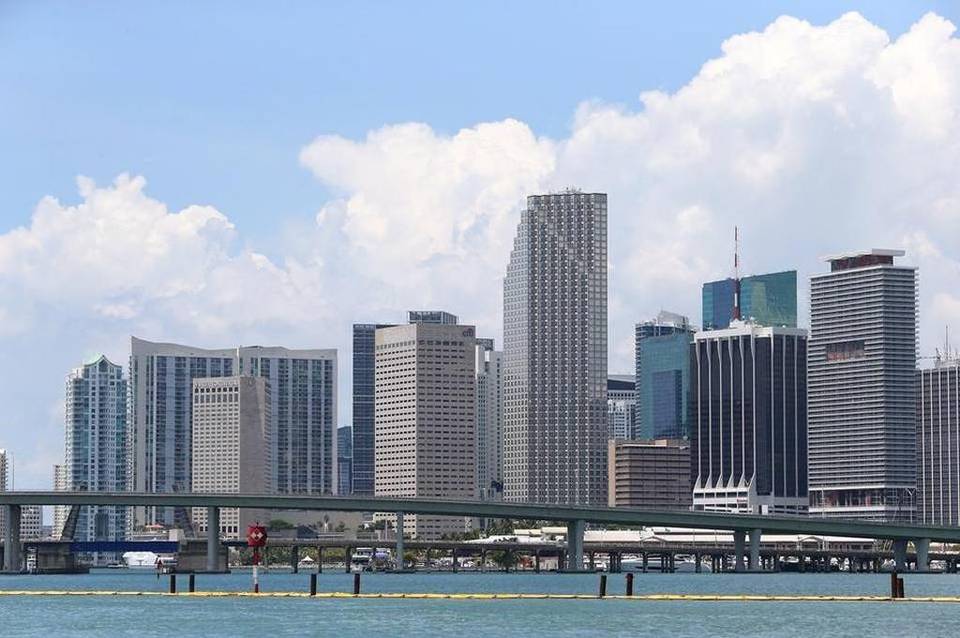
CU Blog - Chambers Strategy - A Great Role Model - Photo 1The Go Lean book was composed with many of the same strategies as pro-business Chambers of Commerce in the US. We therefore look to these organizations as a role model in our roadmap to transform – remediate and mitigate – the engines of regional economics, security and governance. Rather than just any Chamber in the US, this commentary considers the example of the 2 Chambers in South Florida (Greater Miami Chamber in Miami-Dade County and the Fort Lauderdale Chamber in Broward County). These entities are now embarking on a strategy that the Caribbean stewards should examine and apply in our region. See VIDEO in Appendix C below on the Greater Miami Chamber; the City of Miami is pictured here.

The publishers of the Go Lean book are now here in Greater Miami, (in from Detroit), to observe-and-report on the developments and progress of this neo-Caribbean community. Miami is notorious for its penetration of Caribbean people, culture and causes. It has a full scope of business and civic activities that traverse the breadth-and-depth of Caribbean interest. Miami’s success, with its potpourri of Caribbean Diaspora, comes as a consequence of many Caribbean failures; consider the experiences of Cubans, Haitians, Dominicans, Puerto Ricans, JamaicansBahamian and other nationalities from the region.

Therefore the strategies, tactics and implementations of the Miami-Dade-Broward Chambers of Commerce definitely apply to the Caribbean region. See related news article here:

Title: Greater Miami, Fort Lauderdale chambers may merge
By: Nancy Dahlberg and Jane Wooldridge ndahlberg@miamiherald.com

South Florida’s two largest chambers of commerce, the Greater Miami Chamber of Commerce and the Greater Fort Lauderdale Chamber of Commerce, are exploring a merger.

A memorandum of understanding was signed by the executive committees of each group, the chambers announced on Monday. A task force is being created to explore the structure and operational issues required for the combination to move ahead, and the chambers will decide by the end of the year whether to proceed, the chambers said.

“It’s a great opportunity for our business communities to evaluate this as many of the things we do discuss are very regionalized. … such as transportation, sea level rise and beach erosion,” said Heiko Dobrikow, chairman of the Greater Fort Lauderdale Chamber of Commerce and General Manager of the Riverside Hotel. “And when you have a larger, more regional representation, it gives our members certainly more growth potential for their businesses.”

Christine Barney, chairwoman of the Greater Miami Chamber of Commerce and CEO of Miami’s rbb Communications, concurred. “The potential combination gives more clout to the business community in shaping the future of South Florida,” she said.

“In the past we’ve done a lot of strategic alliances and that can only do so much,” Barney said. “We thought a more-aggressive approach was needed.”

Though membership in both Greater Miami and Greater Fort Lauderdale chambers has remained strong, nationwide, chambers of commerce have suffered declining membership and revenues.

“Even though we are acquiring new members it is probably not at the same rate as we wish, and there is probably a great opportunity that we have,” Dobrikow said.

The Greater Miami Chamber was founded in 1907 and now boasts about 4,100 members representing about 400,000 employees. The Greater Fort Lauderdale Chamber, founded in 1910, has 1,311 company-members that employ more than 500,000.

Both counties are also home to myriad smaller chambers focusing on specific geography or demographics. The idea rose from regular meetings between the president and CEOs of the two organizations, said Miami’s Barry Johnson, who announced recently he will retire at the end of this year.

Said Dan Lindblade, leader of the Greater Fort Lauderdale Chamber, “Barry Johnson and I have been talking over the years and we thought now would be a good time to begin these discussions to see if they lead us into the direction that we both feel is inevitable — a regional chamber with the size and scope of the two largest chambers in Broward and Miami-Dade.”

The Greater Miami chamber will continue the search for Johnson’s replacement during the evaluation period, Barney said.

As more small smartups emerge throughout South Florida, the traditional model of fee-based memberships has become less attractive to some members, who may have specific needs such as international introductions or skills training but not the full range of services now offered, said Barney. The ultimate goal, said both chamber chairs, is to bring more value to members.

Said Barney, “Miami is unique, Broward unique, Palm Beach is unique. … Whatever we do, we want to keep the strength of the local representation as front and center as possible.”
Source:  Posted April 26, 2016; retrieved April 30, 2016 from: http://www.miamiherald.com/news/business/article73800622.html

So the Greater Miami Chamber of Commerce and the Greater Fort Lauderdale Chamber of Commerce are considering merging, consolidating and integrating their efforts to elevate the business environment for the entire South Florida region. If successfully executed, this effort could be a role model for the Caribbean region to emulate. This discussion aligns with the book Go Lean … Caribbean, in its effort to serve as a roadmap for the introduction and implementation of the Caribbean Union Trade Federation (CU); the purpose of which is to elevate Caribbean society, for all 30 member-states. The book stresses the need to optimize the societal engines of economics, security and governance. Jobs is a very important goal of the Go Lean roadmap, with a prime directive to create 2.2 million new jobs in the Caribbean.

The stance of Chambers of Commerce is normally pro-business, anti-labor. So they are not always universally loved in their communities; they do and will “ruffle feathers”; sometimes they are even accused of promoting Crony-Capitalism. But the Go Lean focus here is “jobs” more so than Chambers of Commerce. The Go Lean book opens with pronouncements relating to the jobs-creating directive. Consider these statements early in the book in the Declaration of Interdependence (Page 12 – 14):

xxi. Whereas the preparation of our labor force can foster opportunities and dictate economic progress for current and future generations, the Federation must ensure that educational and job training opportunities are fully optimized for all residents of all member-states, with no partiality towards any gender or ethnic group. The Federation must recognize and facilitate excellence in many different fields of endeavor, including sciences, languages, arts, music and sports. This responsibility should be executed without incurring the risks of further human flight, as has been the past history.

xxiv. Whereas a free market economy can be induced and spurred for continuous progress, the Federation must install the controls to better manage aspects of the economy: jobs, inflation, savings rate, investments and other economic principles. Thereby attracting direct foreign investment because of the stability and vibrancy of our economy.

xxv. Whereas the legacy of international democracies had been imperiled due to a global financial crisis, the structure of the Federation must allow for financial stability and assurance of the Federation’s institutions. To mandate the economic vibrancy of the region, monetary and fiscal controls and policies must be incorporated as proactive and reactive measures. These measures must address threats against the financial integrity of the Federation and of the member-states.

xxvi.   Whereas the Caribbean region must have new jobs to empower the engines of the economy and create the income sources for prosperity, and encourage the next generation to forge their dreams right at home, the Federation must therefore foster the development of new industries… In addition, the Federation must invigorate the enterprises related to existing industries like tourism … impacting the region with more jobs.

The subject of job creation has been directly addressed and further elaborated upon in these previous blog/commentaries:

https://goleancaribbean.com/blog/?p=6760 Where the Jobs Are – A Lesson in ‘Garbage’
https://goleancaribbean.com/blog/?p=6680 Vegas Casinos Create New Jobs By Betting on Video Games
https://goleancaribbean.com/blog/?p=6089 Where the Jobs Are – Futility of Minimum Wage
https://goleancaribbean.com/blog/?p=4240 Immigration Policy Exacerbates Worker Productivity Crisis
https://goleancaribbean.com/blog/?p=3694 Job Option: Jamaica-Canada employment programme
https://goleancaribbean.com/blog/?p=3050 Obama’s immigration tweaks in the US leave Big Tech wanting more
https://goleancaribbean.com/blog/?p=2857 Where the Jobs Are – Entrepreneurism in Junk
https://goleancaribbean.com/blog/?p=2750 Disney World – Role Model for Self Governing Entities
https://goleancaribbean.com/blog/?p=2338 Using SGE’s to Welcome the Dreaded ‘Plutocracy’ and Jobs
https://goleancaribbean.com/blog/?p=2126 Where the Jobs Are – Computers Reshaping Global Job Market
https://goleancaribbean.com/blog/?p=2003 Where the Jobs Are – Ship-breaking under SGE Structure
https://goleancaribbean.com/blog/?p=1698 STEM Jobs Are Filling Slowly

The Go Lean book itself details the economic principles and community ethos to adopt, plus the executions of strategies, tactics, implementations and advocacies to create new jobs in Caribbean communities. See a sample list here:

Economic Principles – People Choose because Resources are Limited Page 21
Economic Principles – All Choices Involve Costs Page 21
Economic Principles – People Respond to Incentives Page 21
Economic Principles – Economic Systems Influence Individual Choices Page 21
Economic Principles – Voluntary Trade Creates Wealth Page 21
Economic Principles – Consequences of Choices Lie in the Future Page 21
Community Ethos – Job Multiplier Page 22
Community Ethos – Lean Operations Page 24
Community Ethos – Return on Investments Page 24
Community Ethos – Ways to Impact the Future Page 26
Community Ethos – Ways to Help Entrepreneurship Page 28
Community Ethos – Ways to Impact Research & Development – Create Local; Stay Local Page 30
Strategy – Vision – Integrate 30 member-states to a Single Market Economy Page 45
Strategy – Mission – Foster local economic engines Page 45
Tactical – Tactics to Forge an $800 Billion Economy – High Multiplier Industries Page 70
Tactical – Separation of Powers – Commerce Department – Promotions Role Page 78
Implementation – Ways to Deliver Page 109
Planning – Ways to Improve Trade Page 128
Advocacy – Ways to Create Jobs Page 152
Advocacy – Ways to Improve Education Page 159
Advocacy – Ways to Impact Labor Markets and Unions Page 164
Advocacy – Ways to Foster Technology Page 197
Advocacy – Ways to Foster e-Commerce Page 198
Advocacy – Ways to Help the Middle Class – Promote Entrepreneurship Page 223
Advocacy – Ways to Impact Youth – Early Start for STEM Page 227
Appendix – Growing 2.2 Million Jobs in 5 Years Page 257
Appendix – Job Multipliers Page 259

The Go Lean … Caribbean roadmap needs the effective modeling of South Florida’s business promotion, as in the regional Chambers of Commerce. Considering the 5 L‘s, (Look, Listen, Learn, Lend-a-hand & Lead), there will be much for us to look, listen and learn in the South Florida area. Eventually we may even be able to lend-a-hand to the South Florida cause – especially in regards to the Diaspora – but our focus is on the Caribbean. We do not look to lead in Florida; we are preparing to lead in the Caribbean.

Today, the Greater Miami / South Florida region is a better place to live, work and play … due in many ways to the contributions of the Caribbean Diaspora. These ones are active in the participation of the work-force, business promotion and culture of South Florida, resulting in a distinctive character that has made the Greater Miami region unique, and appealing.

We invite all of the Caribbean Diaspora in the Greater Miami / South Florida region to lean-in to this roadmap to make the Caribbean a better place to live, work and play. We also urge all stakeholders in the Caribbean to lean-in to this roadmap. 🙂

Download the book Go Lean … Caribbean – now!

———–

Appendix – Encyclopedic Reference: Chamber of Commerce

A chamber of commerce (or board of trade) is a form of business network, for example, a local organization of businesses whose goal is to further the interests of businesses. Business owners in towns and cities form these local societies to advocate on behalf of the business community. Local businesses are members, and they elect a board of directors or executive council to set policy for the chamber. The board or council then hires a President, CEO or Executive Director, plus staffing appropriate to size, to run the organization.

The first chamber of commerce was founded in 1599 in Marseille, France.[1][2][3][4] Another official chamber of commerce would follow 65 years later, probably in Bruges, then part of the Spanish Netherlands.[5]

The world’s oldest English-speaking chamber of commerce, in New York City, dates from 1768.[6] The oldest known existing chamber in the English-speaking world with continuous records, the Glasgow Chamber of Commerce,[7] was founded in 1783. However, Hull Chamber of Commerce[8] is the UK’s oldest, followed by those of Leeds and of Belfast in Northern Ireland.

As a non-governmental institution, a chamber of commerce has no direct role in the writing and passage of laws and regulations that affect businesses. It may however, lobby in an attempt to get laws passed that are favorable to businesses. They also work closely with a number of other youth organizations in the country about the value and role of business in our Source: Retrieved April 30, 2016 from: https://en.wikipedia.org/wiki/Chamber_of_commerce

———–

Appendix B – Creating Jobs: How?


US Chamber of Commerce – 2011

Go Lean … Caribbean (Page 152)

1

Steer more students into technical schools Lean-in for the Caribbean Single Market & Economy

2

Enhance the payoff of a college degree Feed Ourselves

3

Help small businesses find foreign customers Clothe Ourselves

4

Welcome more immigrants House Ourselves

5

Create a national jobs database Update Our Own Infrastructure and the Industries They Spun

6

Create “lean” regulatory agencies Steer More People to S.T.E.M. Education and Careers

7

Speed the foreclosure epidemic Help Regional Businesses Find Foreign Markets

8

Copy Germany’s Model for Jobs Preservation Welcome Home Emigrants

9

Draw more tourists Welcome “Empowering” Immigrants

10

Lure American companies back home Draw More Tourists

Source: Posted August 1, 2011; retrieved April 30, 2011 from http://www.usnews.com/news/slideshows/10-ways-to-create-jobs

———–

Appendix C VIDEO – Greater Miami Chamber of Commerce – https://youtu.be/igNL5An_VAo

Published on Jul 18, 2015 – Category: How To & Style
License: Standard YouTube License


Share this post:
, ,
[Top]

ENCORE: eMerge conference aims to jump-start Miami tech hub

This commentary is being re-distributed on the occasion of eMerge TechWeek 2016.
The event just ended … April 18 – 19.

CU Blog - eMerge Conference 2016 Photo 1

In the commentary in 2014, previewing the inaugural event, the expectation was for 3,000 visitors. This time, just 2 years later, the attendance was 13,000 visitors. Congratulations to the organizers on this successful event. Now let’s plan on another successful one for June 12 – 13, 2017.

The original blog – still relevant – is as follows:
—————

Go Lean Commentary

Master BrokersPositive Change!

It doesn’t just happen. It takes people forging it, guiding it and fostering it. The below news article speaks of the effort in South Florida (from Miami north to West Palm Beach) to establish an economic engine of a “tech hub”.

This is a noble, yet strategic undertaking. Success in this “industry space” would mean more jobs, investment capital, and more technology students remaining in South Florida after matriculating in the area’s colleges. These 3 objectives align this story with the advocacies of the book Go Lean … Caribbean.

The book serves as a roadmap for the introduction and implementation of the Caribbean Union Trade Federation (CU). The prime directive of this organization is to optimize the economic engines of the Caribbean region. We also want to increase jobs and investment capital, plus retain more of our young people aspiring for careers in high technology fields. But the CU wants to harvest these activities in the Caribbean, for the Caribbean and by the people of the Caribbean.

South Florida is germane to the Caribbean conscience. It is the Number One destination for the Caribbean Diaspora, featuring large populations of Cubans, Jamaicans, Dominicans (DR), Puerto Ricans, Bahamians, and Haitians. The book relates this association by declaring the NBA basketball team, Miami Heat, as the “home team” of the Caribbean; (Page 42).

Right time, right place!

The eMerge Americas Techweek is this week. Also, the Miami Heat has just started the playoffs in defense of their consecutive World Championships.

By: Marcia Heroux Pounds and Doreen Hemlock

A movement to make South Florida a technology hub for the Americas kicks off its first conference this week, aiming to draw more than 3,000 people from entrepreneurs to investors to students — from Broward and Palm Beach counties and from around the world.

Organizers want to build on South Florida’s success as a gateway to Latin America for trade, banking and services, extending that prowess into technology, entrepreneurship and capital for startups. They hope the event — eMerge Americas Techweek — can do for tech what the annual Art Basel event in Miami Beach has done for art: put South Florida on the world map.

It’s an exciting chance for entrepreneurs like Boca Raton’s Dan Cane, chief executive of Boca Raton-based Modernizing Medicine, which developed an iPad application for specialty physicians. He’s among influencers named to the event’s “Techweek100” — South Florida leaders who have had a significant impact on business and technology. He will speak at the conference.

“We jumped at the opportunity,” said Cane, whose 3-year-old company had $17.5 million in sales last year. “We hope to find contacts and connections and begin to develop the right ecosystem in the Latin American market” to export south starting next year.

The eMerge push doesn’t strive to make South Florida into Silicon Valley. It aims instead for a tech center specialized in multinationals looking south, Latin American companies moving north, local startup companies, as well as universities and investors.

That’s why Citi Latin America, the regional headquarters for financial giant Citi, is taking part in what is planned as an annual event. The division employs about 750 people in Miami-Dade and Broward counties and is sponsoring the event, sending speakers and bringing clients, said Jorge Ruiz, who heads digital banking.

“This event is a great example of the things we should do more of,” Ruiz said. It showcases the importance of technology to a range of industries, promotes what South Florida already offers and highlights South Florida’s ability to unite from across the Americas for tech business, he said.

“As people come together, they’re going to realize this is the space to invest in,” Ruiz said.

Universities that train talent for tech jobs are eager to participate too.

“We’re going to bring as many students as possible,” said Eric Ackerman, dean and associate professor of the Graduate School of Computer and Information Sciences at Nova Southeastern University, who also is on the Techweek100 list. Nova has more than 500 students studying information technology.

Ackerman said tech graduates often leave South Florida, figuring they will have better job opportunities in larger hubs known for innovation.

“That’s one of the things we are trying to change — to become an innovation zone for new technology, new products and new services,” Ackerman said. “An event like this says, ‘Look what’s here in our own back yard. Why should I go somewhere else?’ ”

Kimberly Gramm, assistant dean and director of FAU’s Adams Center for Entrepreneurship, is taking winners of FAU’s recent business plan competition to eMerge’s Startup Village.

Some of South Florida’s largest tech companies also will exhibit at eMerge. Those include Citrix Systems of Fort Lauderdale, C3 Cloud Computing Concepts of Delray Beach and TriNet Group of Boca Raton, said Lonnie Maier, president of the South Florida Technology Alliance, a group that promotes local tech.

Investors and consultants to startups also are heading to eMerge to network and build business.

New World Angels, a Boca Raton-based group of investors, will share a booth with the Miami Innovation Fund to offer entrepreneurs advice on launching or growing their ventures, said Rhys Williams, executive director of New World Angels and a Techweek 100 leader.

“Technology investing is a contact sport. There are few textbooks or classes of relevance, so this conference is a timely way to keep current on your knowledge base and pick up new knowledge, skills and contacts,” said Williams, who also is a judge in the eMerge Launch competition where more than 200 companies will compete for $150,000 in prizes.

Of course, South Florida faces hurdles in its quest, tech leaders said.

The area needs to overcome a long-time image based on sun and fun. And it needs to show critical mass in tech, especially success stories of entrepreneurs that grew startups to global players — much as conference organizer Manny Medina did, starting Miami-based Terremark and selling it for more than $1.4 billion to Verizon.

Enterprise Development Corp. President Rob Strandberg, whose group works with startups from Boca Raton to Miami, will be busy making introductions between entrepreneurs and potential investors at the conference. He’s also a judge in the Launch competition.

EDC executive director Linda Gove will participate with the Boca Raton incubator’s startup companies.

“Investors are taking notice of South Florida companies to a far greater extent than they were,” Strandberg said.

Joe Levy, CEO of Fort Lauderdale-based startup ClearCi and also named to the Techweek 100, said the perception of the area as a tech hub is changing.

“Folks used to ask me, ‘Why aren’t you in Silicon Valley?’ ” Levy said. “We don’t get that anymore.”

South Florida’s Sun Sentinel Daily Newspaper – April 27, 2014 – http://www.sun-sentinel.com/business/careers/fl-emerge-broward-palm-beach-20140427,0,1252077.story

The Go Lean roadmap calls for agencies within the CU to champion technological start-up endeavors, much like this week’s eMerge initiative.

There is much for the CU’s planners to glean by the observation of the planned events this week. The Go Lean/CU approach, in the absence of the actual establishment of the Trade Federation is simply to:

1. Look
2. Listen
3. Learn
4. Lend-a-hand
5. Lead

This approach is codified in the book, with details of community ethos, strategies, tactics, implementations and advocates; as follows:

Community Ethos – Impact the Future Page 26
Community Ethos – Foster Genius Page 27
Community Ethos – Help Entrepreneurship Page 28
Community Ethos – Promote Intellectual Property Page 29
Community Ethos – Impact R & D Page 30
Community Ethos – Bridge the Digital Divide Page 31
Strategy – Agents of Change: Technology Page 57
Separation of Powers – Patents & Copyrights Page 78
Implementation –  Self-Governing Entities Page 105
Implementation –  Impact Social Media Page 111
Ways to Better Manage Image Page 133
Industries – Ways to Foster Technology Page 197
Industries – Foster e-Commerce Page 198

We hope for success for eMerge Americas Techweek. We hope our Caribbean brothers living and working in South Florida participate, engage in and benefit from this initiative. Then we hope that they would repatriate some of this passion, knowledge, and experience back to their Caribbean homelands.

Lastly, we cheer for further basketball dominance. Go Heat!

Basketball shot

Download the book – Go Lean…Caribbean now!!!

Share this post:
, , , , , ,
[Top]

The Logistics of Disaster Relief

Go Lean Commentary

It is during the worst of times that we see the best in people.

This statement needs to be coupled with the age old proverb: “The Road to Hell is Paved with Good Intentions“…

… especially when it comes to disaster relief.

In previous blog-commentaries promoting the book Go Lean…Caribbean, it was established that “bad things happen to good people”; (i.e. ‘Crap Happens’ – So What Now?, Managing a ‘Clear and Present Danger’). Yes, disasters are a reality for modern life. The Go Lean book posits that with the emergence of Climate Change  that natural disasters are more common place.

In addition there are earthquakes …

… these natural phenomena may not be associated with Climate Change, but alas, they too are more common and more destructive nowadays. (People with a Christian religious leanings assert that “an increase of earthquakes is a tell-tale sign that we are living in what the Bible calls the “Last Days” – Matthew 24: 7).

$500 Million In Haiti Relief - Photo 1The motives of the Go Lean book, and accompanying blogs is not to proselytize, but rather to prepare the Caribbean region for “bad actors”, natural or man-made. The book was written in response to the aftermath and deficient regional response following the great earthquake in Haiti on January 12, 2010. Many Non-Government Organizations (NGO) embarked on campaigns to shoulder a response, a relief and rebuilding of Haiti. Many people hold the view that those efforts did a lot of harm, along with some good.

In a previous blog-commentary, it was reported how the fundraising campaign by one group, the American Red Cross, raised almost US$500 million and yet only a “piddling” was spent on the victims and communities themselves.

Now we learn too that many good-intentioned people donated tons of relief supplies that many times turned out to be “more harm than help”. See the story here in this news VIDEO; (and/or the Narration Transcript/photos in the Appendix below):

VIDEO – When disaster relief brings anything but relief – http://www.cbsnews.com/videos/disaster-relief-donations-that-dont-bring-relief

Posted April 24, 2016 – Many of the well-meaning articles Americans donate in times of disaster turn out to be of no use to those in need. Sometimes, they even get in the way. That’s a message relief organizations very much want “us” to heed. This story is reported by Scott Simon, [on loan from] NPR. (VIDEO plays best in Internet Explorer).

This commentary asserts that more is needed in the Caribbean to facilitate good disaster relief, in particular a technocratic administration. This consideration is the focus of the strategies, tactics, implementations and advocacies of the Go Lean…Caribbean book. The declaration is that the Caribbean itself must be agile, lean, and optimized in providing its own solutions for disaster recovery. The alternative, from past experiences like in this foregoing VIDEO, is that others taking the lead for our solution seem to fall short in some way … almost every time!

The Caribbean must now stand up and be counted!

The Go Lean book declares (Page 115) that the “Caribbean should not be perennial beggars, [even though] we do need capital/money to get started”, we need technocratic executions even more.

What is a technocracy?

This is the quest of the Go Lean movement. The movement calls for a treaty to form a technocratic confederation of all the 30 member-states in the Caribbean region. This will form a Single Market of 42 million. The consolidation and integration allows for economies-of-scale and leverage that would not be possible otherwise. “Many hands make a big job … small”. But it is not just size that will define the Caribbean technocracy but quality, efficiency and optimization as well.

According to the Go Lean book (Page 64), the …

“… term technocracy was originally used to designate the application of the scientific method to solving social and economic problems, in counter distinction to the traditional political or philosophic approaches. The CU must start as a technocratic confederation – a Trade Federation – rather than evolving to this eventuality due to some failed-state status or insolvency.”

The book Go Lean…Caribbean serves as a roadmap for the introduction and implementation of the technocratic Caribbean Union Trade Federation (CU) to provide better stewardship for the Caribbean homeland. The foregoing VIDEO describes the efforts of non-governmental organizations (NGO) in shepherding disaster reliefs. These NGO’s are stakeholders in this Caribbean elevation roadmap. Even though many of the 30 member-states are independent nations, the premise of the Go Lean book is that there must be a resolve for interdependence among the governmental and non-governmental entities. This all relates to governance, the need for this new technocratic stewardship of regional Caribbean society. The need for this resolve was pronounced in the opening Declaration of Interdependence (Pages 11 & 14) with these acknowledgements and statements:

i.    Whereas the earth’s climate has undeniably changed resulting in more severe tropical weather storms, it is necessary to prepare to insure the safety and security of life, property and systems of commerce in our geographical region. As nature recognizes no borders in the target of its destruction, we also must set aside border considerations in the preparation and response to these weather challenges.

ii.    Whereas the natural formation of the landmass for our lands constitutes some extreme seismic activity, it is our responsibility and ours alone to provide, protect and promote our society to coexist, prepare and recover from the realities of nature’s occurrences.

x.   Whereas we are surrounded and allied to nations of larger proportions in land mass, populations, and treasuries, elements in their societies may have ill-intent in their pursuits, at the expense of the safety and security of our citizens. We must therefore appoint “new guards” to ensure our public safety and threats against our society, both domestic and foreign. The Federation must employ the latest advances and best practices … to assuage continuous threats against public safety.

xi.   Whereas all men are entitled to the benefits of good governance in a free society, “new guards” must be enacted to dissuade the emergence of incompetence, corruption, nepotism and cronyism at the peril of the people’s best interest. The Federation must guarantee the executions of a social contract between government and the governed.

xii. Whereas the legacy in recent times in individual states may be that of ineffectual governance with no redress to higher authority, the accedence of this Federation will ensure accountability and escalation of the human and civil rights of the people for good governance, justice assurances, due process and the rule of law. As such, any threats of a “failed state” status for any member state must enact emergency measures on behalf of the Federation to protect the human, civil and property rights of the citizens, residents, allies, trading partners, and visitors of the affected member state and the Federation as a whole.

xxxiii.   Whereas lessons can be learned and applied from the study of the recent history of other societies, the Federation must formalize statutes and organizational dimensions to avoid the pitfalls of [other] communities.

This is the quest of CU/Go Lean roadmap: to provide new guards for a more competent Caribbean administration … by governmental organizations and non-governmental organizations. (NGO would also be promoted, audited and overseen by CU administrators). The Caribbean must do better!

Our quest must start “in the calm”, before any storm (or earthquake). We must elevate the societal engines the Caribbean region through economic, security and governance empowerments. In general, the CU will employ better strategies, tactics and implementations to impact its prime directives; identified with the following 3 statements:

  • Optimization of the economic engines in order to grow the regional economy to $800 Billion & create 2.2 million new jobs.
  • Establishment of a security apparatus to protect the resultant economic engines and the Caribbean homeland.
  • Improvement of Caribbean governance to support these engines.

Former US President George W. Bush shares this advocacy!

He narrated this VIDEO here describing the efficiencies of the American logistics company, UPS, in delivering disaster relief:

VIDEO – Report Logistics and Haiti: Points of Light and President Bush – https://youtu.be/8-gmh1QyWTU

Uploaded on Mar 30, 2011 – [In 2009], Transportation Manager Chip Chappelle volunteered to help The UPS Foundation coordinate an ocean shipment of emergency tents from Indiana to Honduras. Since then, he has managed the logistics of humanitarian aid from every corner of the world to help the victims of floods, tsunamis, earthquakes, hurricanes and cyclones.

The Go Lean book stresses our own community ethos, strategies, tactics, implementations and advocacies necessary for the Caribbean to deliver, to provide the proactive and reactive public safety/security provisions in the region. See sample list here:

Community Ethos – Deferred Gratification Page 21
Community Ethos – Economic Principles – Respond to Incentives in Predictable Ways Page 21
Community Ethos – Economic Principles – Economic Systems Influence Individual Choices Page 21
Community Ethos – Economic Principles – Consequences of Choices Lie in the Future Page 21
Community Ethos – Security Principles – Whistleblower Protection Page 23
Community Ethos – Security Principles – Intelligence Gathering Page 23
Community Ethos – Security Principles – “Crap” Happens Page 23
Community Ethos – Governing Principles – Lean Operations Page 24
Community Ethos – Governing Principles – Return on Investments Page 24
Community Ethos – Governing Principles – Cooperatives Page 25
Community Ethos – Ways to Impact the Future Page 26
Community Ethos – Ways to Impact Turn-Arounds Page 33
Community Ethos – Ways to Improve Sharing – Emergency Response Page 35
Community Ethos – Ways to Impact the Greater Good Page 37
Strategy – Vision – Confederate all 30 member-states/ 4 languages into a Single Market Page 45
Strategy – Mission – Prepare for the eventuality of natural disasters Page 45
Strategy – Agents of Change – Climate Change Page 57
Tactical – Ways to Foster a Technocracy Page 64
Tactical – Growing the Economy – Post WW II European Marshall Plan/Recovery Model Page 68
Tactical – Separation-of-Powers – CU Federal Government versus Member-State Governance Page 71
Tactical – Separation-of-Powers – Homeland Security – Emergency Management Page 76
Tactical – Separation-of-Powers – State Department – Liaison/Oversight for NGO’s Page 80
Implementation – Assemble All Regionally-focus Organizations of All Caribbean Communities Page 96
Implementation – Ways to Pay for Change Page 101
Implementation – Ways to Foster International Aid Page 115
Planning – 10 Big Ideas – Homeland Security Pact Page 127
Planning – Ways to Make the Caribbean Better Page 131
Planning – Ways to Improve Failed-State Indices – Governance and the Social Contract Page 134
Advocacy – Ways to Grow the Economy Page 151
Advocacy – Ways to Create Jobs Page 152
Advocacy – Ways to Improve Housing – Hurricane Risk Reinsurance Fund Page 161
Advocacy – Ways to Improve Governance Page 168
Advocacy – Ways to Better Manage the Social Contract Page 170
Advocacy – Ways to Improve Homeland Security Page 180
Advocacy – Ways to Improve for Natural Disasters Page 184
Advocacy – Ways to Develop a Pre-Fab Housing Industry – One solution ideal for Haiti Page 207
Advocacy – Ways to Re-boot Haiti Page 238

The Go Lean roadmap seeks to empower and elevate Caribbean societal engines to be better prepared for the eventual natural disasters. The good intentions of Americans, as depicted in the foregoing VIDEO, is encouraging … but good intentions alone is not enough. We need good management! We need a technocracy! While it is out-of-scope for this roadmap to impact America, we can – and must – exercise good management in our Caribbean region. So what do we want from Americans in our time of need? See VIDEO here:

VIDEO – Donate Responsibly – https://youtu.be/14h9_9sopRA

Published on Nov 2, 2012 – A series of PSAs released by the Ad Council explain why cash is the best way to help. The campaign was launched on November 5, 2012 by the Ad Council and supported by the coalition — which includes CIDI, the U.S. Agency for International Development, InterAction, the UPS Foundation and National Voluntary Organizations Active in Disaster.

The Go Lean book calls on the Caribbean region to be more technocratic: collectively self-reliant, both proactively and reactively. Because of Climate Change or the Last Days, natural disasters (i.e. hurricanes and earthquakes) will occur again and again. Considering that our American neighbors may Pave our Road to Hell with Good Intentions, we need to prepare the right strategies, tactics and implementations ourselves, to make our region a better homeland to live, work and play. 🙂

Download the free e-Book of Go Lean … Caribbean – now!

——————

Appendix Transcript – When disaster relief brings anything but relief

When Nature grows savage and angry, Americans get generous and kind. That’s admirable. It might also be a problem.

“Generally after a disaster, people with loving intentions donate things that cannot be used in a disaster response, and in fact may actually be harmful,” said Juanita Rilling, director of the Center for International Disaster Information in Washington, D.C. “And they have no idea that they’re doing it.”

Rilling has spent more than a decade trying to tell well-meaning people to think before they give.

In 1998 Hurricane Mitch struck Honduras. More than 11,000 people died. More than a million and a half were left homeless.

And Rilling got a wake-up call: “Got a call from one of our logistics experts who said that a plane full of supplies could not land, because there was clothing on the runway. It’s in boxes and bales. It takes up yards of space. It can’t be moved.’ ‘Whose clothing is it?’ He said, ‘Well, I don’t know whose it is, but there’s a high-heeled shoe, just one, and a bale of winter coats.’ And I thought, winter coats? It’s summer in Honduras.”

Humanitarian workers call the crush of useless, often incomprehensible contributions “the second disaster.”

In 2004, following the Indian Ocean tsunami, a beach in Indonesia was piled with used clothing.

There was no time for disaster workers to sort and clean old clothes. So the contributions just sat and rotted.

CU Blog - Logistics of Disaster Relief - Photo 1“This very quickly went toxic and had to be destroyed,” said Rilling. “And local officials poured gasoline on it and set it on fire. And then it was out to sea.”

“So, rather than clothing somebody, it went up in flames?” asked Simon.

“Correct. The thinking is that these people have lost everything, so they must NEED everything. So people SEND everything. You know, any donation is crazy if it’s not needed. People have donated prom gowns and wigs and tiger costumes and pumpkins, and frostbite cream to Rwanda, and used teabags, ’cause you can always get another cup of tea.”

You may not think that sending bottles of water to devastated people seems crazy. But Rilling points out, “This water, it’s about 100,000 liters, will provide drinking water for 40,000 people for one day. This amount of water to send from the United States, say, to West Africa — and people did this — costs about $300,000. But relief organizations with portable water purification units can produce the same amount, a 100,000 liters of water, for about $300.”

And then there were warm-hearted American women who wanted to send their breast milk to nursing mothers in Haiti after the 2010 earthquake.

“It sounds wonderful, but in the midst of a crisis it’s actually one of the most challenging things,” said Rebecca Gustafson, a humanitarian aid expert who has worked on the ground after many disasters.

“Breast milk doesn’t stay fresh for very long. And the challenge is, what happens if you do give it to an infant who then gets sick?”

CU Blog - Logistics of Disaster Relief - Photo 2December 2012, Newtown, Connecticut: A gunman killed 20 children and six adults at Sandy Hook Elementary School. Almost instantaneously, stuff start arriving.

Chris Kelsey, who worked for Newtown at the time, said they had to get a warehouse to hold all the teddy bears.

Simon asked, “Was there a need for teddy bears?”

“I think it was a nice gesture,” Kelsey replied. “There was a need to do something for the kids. There was a need to make people feel better. I think the wave of stuff we got was a little overwhelming in the end.”

And how many teddy bear came to Newtown? “I think it was about 67,000,” Kelsey said. “Wasn’t limited to teddy bears. There was also thousands of boxes of school supplies, and thousands of boxes of toys, bicycles, sleds, clothes.”

Newtown had been struck by mass murder, not a tsunami. As Kelsey said, “I think a lot of the stuff that came into the warehouse was more for the people that sent it, than it was for the people in Newtown. At least, that’s the way it felt at the end.”

Every child in Newtown got a few bears. The rest had to be sent away, along with the bikes and blankets.

CU Blog - Logistics of Disaster Relief - Photo 3There are times when giving things works. More than 650,000 homes were destroyed or damaged in Hurricane Sandy in 2012. Thousands of people lost everything.

Tammy Shapiro is one of the organizers of Occupy Sandy, which grew out of the Occupy Wall Street movement.

“We were able to respond in a way that the big, bureaucratic agencies can’t,” Shapiro said.

When the hurricane struck, they had a network of activists, connected and waiting.

“Very quickly, we just stopped taking clothes,” Shapiro said. Instead, they created a “relief supply wedding registry.”

“We put the items that we needed donated on that registry,” said Shapiro. “And then people who wanted to donate could buy the items that were needed. I mean, a lot of what we had on the wedding registry was diapers. They needed flashlights.”

Simon asked, “How transportable is your experience here, following Hurricane Sandy?”

“For me, the network is key. Who has the knowledge? Where are spaces that goods can live if there’s a disaster? Who’s really well-connected on their blocks?”

Juanita Rilling’s album of disaster images shows shot after shot of good intentions just spoiling in warehouses, or rotting on the landscape.

“It is heartbreaking,” Rilling said. “It’s heartbreaking for the donor, it’s heartbreaking for the relief organizations, and it’s heartbreaking for survivors. This is why cash donations are so much more effective. They buy exactly what people need, when they need it.

“And cash donations enable relief organizations to purchase supplies locally, which ensures that they’re fresh and familiar to survivors, purchased in just the right quantities, and delivered quickly. And those local purchases support the local merchants, which strengthens the local economy for the long run.”

Disaster response worker Rebecca Gustafson says that most people want to donate something that is theirs: “Money sometimes doesn’t feel personal enough for people. They don’t feel enough of their heart and soul is in that donation, that check that they would send.

“The reality is, it’s one of the most compassionate things that people can do.”

Share this post:
, , , ,
[Top]

Switching Allegiances: Jamaican sprinters move on to represent other countries

Go Lean Commentary

“I’m going to take my talents to South Beach”.

CU Blog - Lebronomy - Economic Impact of the Return of the NBA GreatThese words – The Decision – proved to be among the most dramatic quotations in American Sports for the new 21st Century. These words were spoken by basketball superstar LeBron James in July 2010. He had been frustrated with the team management inefficiency in his hometown of Cleveland, Ohio where he played for the NBA’s Cleveland Cavaliers from 2003 to 2010. At the time of this utterance, he had elected to “opt-out” of his contract with the Cavaliers and become a free agent. After being aggressively recruited by a number of teams – including the incumbent club in Cleveland – he decided to join the NBA franchise in South Florida (South Beach), the Miami Heat.

For the fans in Cleveland, this was a betrayal! They asserted that he switched allegiances in taking his talents to South Beach.

This perceived act of betrayal is considered a “stab in the heart” for a community that loves its local athletes. While this foregoing anecdote is an American drama, the Caribbean island of Jamaica can relate and empathize with Cleveland. Or better stated, the community of Cleveland can empathize with Jamaica as the same anecdotes are being related there, again and again with their World-Class Track-and-Field athletes.

Consider these related news articles of events transpiring in the last year:

Title: Switching Allegiances: One More Jamaican Sprinter Moves On To Represent Another Country
By: Blogger – StephanieK
CU Blog - Switching Allegiances - Jamaican Sprinters - Photo 1Winston Barnes – in focus in the photo here – a former sprinter from Jamaica College, will now be representing Turkey in athletic competitions. Barnes, who will be known as Emre Zafer Barnes, joined three other Jamaican sprinters who decided to switch their allegiance to compete for various Arab countries. Former Wolmer’s Boys’ sprinter Jacques Harvey made the switch to Turkey earlier and is now known as Jak Ali Harvey. Following Jamaica’s Olympic Games, Shericka Williams, silver medalist, Andrew Fisher and Kemarley Brown all asked to move on to Bahrain, planning to represent that country at the 2016 Olympics in Brazil.

According to Commonwealth Games 100-metre champion Kemar Bailey-Cole, Jamaica could lose even more of its top athletes to countries who are willing to provide the financial support lacking from the Jamaica Athletics Administrative Association (JAAA), corporate Jamaica, and the government.
Source:  Jamaicans.com – Online Community – Retrieved 04-25-2016 from: http://jamaicans.com/one-more-jamaican-sprinter-moves-on/

——————————-

Title: Three Jamaican Athletes Plan to Represent Bahrain
July 22, 2015 – Three of Jamaica’s top athletes will be switching their allegiance from the island to the country of Bahrain, announced Dr. Warren Blake, the president of the Jamaica Athletics Administrative Association (JAAA). Shericka “Wire” Williams, 2008 Olympic 400-meter silver medallist, and sprinters Kemarley Brown and Andrew Fisher, submitted applications to the JAAA with the intention of competing for Bahrain.

The athletes said it has become difficult to represent Jamaica and want the chance to represent Bahrain as they consider moving to that country and becoming citizens. Williams received a silver medal for Jamaica at the Berlin world Championships in 2009, while Fisher is the latest Jamaican to run under the 10-second barrier. Brown also clocked below that mark with a personal best on July 20 of 9.93 seconds.
Source: Retrieved 04-25-2016 from: http://jamaicans.com/top-7-jamaican-caribbean-news-stories-for-the-week-ending-july-24th-2015/#ixzz46n7Z3doE

The decisions of these Jamaican athletes relate to the drama of Cleveland-Miami in 2010. The book Go Lean … Caribbean reported on these 2010 events, as follows (Page 42):

The National Basketball Association (NBA) franchise: Miami Heat is the league champion for the last 2 consecutive seasons; (composed November 2013). This is their 3rd championship, having won, in 2006, 2012, and 2013, to date. It is felt that this team can win many more. In fact, brewing some controversy when the team was assembled by the General Manager in 2010, one of the superstar players, LeBron James, pronounced that this team was built for multiple championships; the actual number: “not one, not, two, not three, not four, not five …”

Those words incited disgust from everyone…other than Miami Heat fans. But the team has lived up to its bragging and boasting, by succeeding to reach the Championship series (NBA Finals) all three years [to date] since the group was assembled.

The recent history of this Miami Heat drama does relate to the Caribbean and this roadmap for economic integration. First, with its base in Miami, Florida, it possesses the largest pocket of Caribbean Diaspora. So in many ways, the Miami Heat is the “home team” of the Caribbean.

This foregoing news articles also align with the Go Lean book in that it serves as a roadmap for the introduction and implementation of the Caribbean Union Trade Federation (CU). The Go Lean roadmap only has one interest in this subject of sports, fostering the economic opportunities that can be forged by professionalizing a regional sports eco-system. Dysfunction in this regards is exactly the issue in Jamaica today and why these athletes are “taking their talents to …” foreign shores.

This Go Lean roadmap assesses that not just Jamaica, but all of the Caribbean is in crisis. This is why athletes with any ability must seek refuge and opportunities in foreign lands. So this roadmap provides solutions to optimize the region’s economic, security and governing engines. The roadmap provides the facilitation to grow a professional, collegiate and amateur sports eco-system. Many times, the missing ingredients for organized sports are the facilities: stadia, arenas and playing fields. A previous blog-commentary reported that the sports eco-system void maybe considered as bigger than just sports, it is “life and death”. But the roadmap posits that sports, even though it is just “extra-curricular”, does bring benefits. In fact, Go Lean book (Page 229) quotes the Bible scripture at 1 Timothy 4:8 “For bodily exercise is profitable for a little …”.

Caribbean people are identified with excellence in sports; maybe even defined as geniuses. See the VIDEO here of a talented 10-year-old Jamaican football (soccer) sensation; his aspiration is to play professionally … in Europe in the future.

VIDEO – 10 year-old Jamaican Prodigy Brian Burketthttps://youtu.be/YJChu-Rwez0

Published on December 30, 2014 – Brian Burkett is a self motivated boy who has a dream to play football at the highest level in the world. His talent is immaculate for his age along with his love for the game. Brian started playing at age 3 and have grown in passion and discipline to learn more about the game.

While Caribbean athletic talent is recognized around the world, there is not enough economic rewards at home for these ones with genius abilities. These ones must leave their beloved homelands to maximize their talents and earn a living from them. (This also applies to matriculating college student-athletes).

Previous blogs established that sports genius alone will never yield the sought-after result of World-Class excellence, there is the need for skilled training, coaching with best-practices and an internal drive. In so many ways, this parallels the current effort to reboot the Caribbean economic engines: nature (birth-right) is critical, but training, experience, coaching and the technocratic application of best-practices are also needed to forge change. The most important though is the internal drive; first and foremost, this is identified in the roadmap as “community ethos”.

The Go Lean roadmap recognizes many different kinds of athletics, team sports and individual event. The unique “genius” qualifier is highlighted at the outset of the Go Lean book, in the Declaration of Interdependence (Pages 12 & 14), as follows:

xxi. Whereas the preparation of our labor force can foster opportunities and dictate economic progress for current and future generations, the Federation must ensure that educational and job training opportunities are fully optimized for all residents of all member-states, with no partiality towards any gender or ethnic group. The Federation must recognize and facilitate excellence in many different fields of endeavor, including sciences, languages, arts, music and sports. This responsibility should be executed without incurring the risks of further human flight, as has been the past history.

xxxi. Whereas sports have been a source of great pride for the Caribbean region, the economic returns from these ventures have not been evenly distributed as in other societies. The Federation must therefore facilitate the eco-systems and vertical industries of sports as a business, recreation, national pastime and even sports tourism – modeling the Olympics.

The book Go Lean … Caribbean highlights the community ethos, plus the strategies, tactics, implementation and advocacies to optimize the sports eco-system in the region; it posits that success is to be found at the intersection between opportunity and preparation. The following list shows samples from the book that detailed these points:

Community Ethos – People Respond to Incentives in Predictable Ways Page 21
Community Ethos – Consequences of Choices Lie in the Future Page 21
Community Ethos – Lean Operations Page 24
Community Ethos – Return on Investments Page 25
Community Ethos – Ways to Foster Genius Page 27
Community Ethos – Ways to Impact the Greater Good Page 37
Strategic – Staffing – Sporting Events at Fairgrounds Page 55
Tactical – Fostering a Technocracy Page 64
Tactical – Separation of Powers – Sports & Culture Administration Page 81
Tactical – Separation of Powers – Fairgrounds Administration Page 83
Implementation – Steps to Implement Self-Governing Entities (SGE) Page 105
Implementation – Ways to Deliver Page 109
Planning – Ways to Make the Caribbean Better Page 131
Advocacy – Ways to Grow the Economy Page 151
Advocacy – Ways to Create Jobs Page 152
Advocacy – Ways to Improve Local Government – Parks & Recreation Page 169
Advocacy – Ways to Impact Public Works Page 175
Advocacy – Ways to Impact Events Page 191
Advocacy – Ways to Promote Fairgrounds as Sporting Venues Page 192
Advocacy – Ways to Preserve Caribbean Heritage Page 218
Advocacy – Ways to Improve Sports Page 229
Advocacy – Ways to Impact Urban Living – Sports Leagues Page 234

The Go Lean book and accompanying blogs declare that the Caribbean needs to learn lessons from these Track-and-Field athletes taking their talents to other markets … elsewhere. This commentary is about the business of sports; and this subject is a familiar topic for the Go Lean movement, as was detailed in these previous blogs:

https://goleancaribbean.com/blog/?p=6464 WWE Network – Model for Caribbean
https://goleancaribbean.com/blog/?p=6202 ‘Concussions’ – The Movie; The Cause
https://goleancaribbean.com/blog/?p=5921 Socio-Economic Change: Impact Analysis of SGE’s
https://goleancaribbean.com/blog/?p=4879 Martinique – The New Caribbean Surfing Capital
https://goleancaribbean.com/blog/?p=4019 Melding of Sports & Technology; the Business of the Super Bowl
https://goleancaribbean.com/blog/?p=3414 Levi’s® Stadium: A Team Effort
https://goleancaribbean.com/blog/?p=3244 Sports Role Model – espnW
https://goleancaribbean.com/blog/?p=2222 Sports Role Model – Playing For Pride … And More
https://goleancaribbean.com/blog/?p=2171 Sports Role Model – Turn On the SEC Network
https://goleancaribbean.com/blog/?p=2152 Sports Role Model – US versus the World
https://goleancaribbean.com/blog/?p=1715 Lebronomy – Economic Impact of the Return of the NBA Great
https://goleancaribbean.com/blog/?p=1446 Caribbean Players in the 2014 World Cup
https://goleancaribbean.com/blog/?p=1341 College World Series Time – Lessons from Omaha
https://goleancaribbean.com/blog/?p=1214 Landlord of Temporary Stadiums
https://goleancaribbean.com/blog/?p=1148 Sports Bubble – Franchise values in basketball
https://goleancaribbean.com/blog/?p=1020 Sports Revolutionary: Advocate Jeffrey Webb
https://goleancaribbean.com/blog/?p=498 Book Review: ‘The Sports Gene’
https://goleancaribbean.com/blog/?p=318 Collegiate Sports in the Caribbean
https://goleancaribbean.com/blog/?p=60 Could the Caribbean Host the Olympic Games?

The end result for the Go Lean roadmap’s venture into regional sport professionalization is economic growth and “jobs” here at home. The Go Lean roadmap anticipates 21,000 direct jobs at sports enterprises throughout the region, not including the athletes.

CU Blog - Switching Allegiances - Jamaican Sprinters - Photo 2The benefits of the Go Lean roadmap are too alluring to ignore: emergence of an $800 Billion economy, 2.2. million new regional jobs, new industries, services and finally opportunities for the sports-playing youth of the Caribbean . The roadmap even extends an invitation to the Diaspora (and their legacies) to repatriate from North American, European and Middle-Eastern/Arab countries. This will help to preserve Caribbean culture here … in the Caribbean.

As for the latest developments of the opening anecdote of LeBron James and the Cleveland-Miami drama: after 4 years in Miami and 2 championships, he repatriated to Cleveland; (see photo above) … with a new resolve to bring a championship to Cleveland. In this vein, his quest – now fulfilled – serves as a role model for Caribbean athletes: excelling at home is “so much sweeter” than on the road. This is the precept to prosper where planted. 🙂

Download the book Go Lean … Caribbean – now!

Share this post:
, , , , , ,
[Top]

PC industry swoons …

Go Lean Commentary

“Live by the sword, die by the sword” – Matthew 26:52; The Bible CU Blog - Aereo Founder and CEO Chet Kanojia on the future of TV - Photo 1

The history of the Personal Computer (PC) industry is synonymous with change. The product and industry came along and force change everywhere on everything; not just on businesses, but for families and households as well. Just consider this photo here. All of these transformations happened because of the ubiquity of personal computers … and the internet.

The trend of upward mobility in the PC industry started 35 years ago. The IBM PC, running Microsoft’s MS-DOS operating system – was introduced in 1981. In fact, due to the impact of the PC, Time Magazine named the computer as Man of the Year in 1982.

CU Blog - PC industry swoons - Photo 2

Like most trends, this product has had an arc, a bell-curve per se; but now the curve is trending downward. The PC is being out-maneuvered in transforming society by alternate concepts transforming PC’s. The truth is, businesses and consumers want solutions, more so than technology. So whatever new function or application can perform better than the old function or application will get traction. This aligns with an old business adage:

Build a better mousetrap and the world will beat a path to your door.

This adage has been a “battle cry” since the Industrial Revolution; even more so now in the Information Revolution. The battle is …

  • Man versus machine: Man loses!
  • Old machine versus new machine: Old machine loses.
  • For the jobs of the men (and women) associated with the old machines and old technologies, they continue to lose.

This point also aligns with the book Go Lean…Caribbean which prepares the Caribbean economic, security and governing engines to better anticipate and respond to transformational changes in Internet & Communications Technologies (ICT). The book asserts that the Caribbean region has been losing the battle of globalization and technology. The consequences of our defeat is the abandonment of our people. The assessment of all 30 Caribbean member-states is that every community has lost human capital to emigration; people are moving to where the jobs are; many times the new jobs are tied to innovative companies in the technology industries. This is why so many of our region’s college-educated citizens (more than 70 percent) have fled their homelands for foreign shores.

The below news article asserts that change in the ICT industries goes both ways for the industry players: trends come and go; markets will be up and down. The PC, which has been a great trendsetter is now getting trumped by other trendsetters: mobile devices, tablets and cloud computing. See related stories here:

Title #1: Intel to cut up to 12,000 jobs as PC industry swoons
By: Narottam Medhora
CU Blog - PC industry swoons - Photo 1(Reuters) – Intel Corp said on Tuesday it would cut up to 12,000 jobs globally, or 11 percent of its workforce, as it refocuses its business towards making microchips that power data centers and Internet connected devices and away from the declining personal computer industry it helped found.

Tech companies including the former Hewlett Packard Co and Microsoft Corp have reorganized in the face of the PC industry decline. Many new tech users around the world turn to mobile phones for their computing needs, and corporations increasingly rely on big machines rather than desktop models to run their businesses. Global personal computer shipments fell 11.5 percent in the first quarter, tech research company IDC said on Monday.

Intel, the world’s largest chipmaker, lowered its revenue forecast for the year. It now expects revenue to rise in mid-single digits, down from its previous forecast of mid- to high-single digits.

Intel’s shares were down 2.2 percent at $30.90 in extended trading.

Most of Intel’s factories are in the United States, although it did not identify where cuts would be focused geographically. It said it would record a pretax restructuring charge of $1.2 billion in the second quarter and expected annual savings of $1.4 billion per year starting mid-2017. (http://bit.ly/1WDPfBm)

The company also said Chief Financial Officer Stacy Smith will move to a new role leading sales, manufacturing and operations. Intel said it would begin a formal search process for a new CFO.

Smith said that Intel now expects the PC market to decline by a percentage in the high single digits in 2016 versus a prior forecast of a mid single-digit decline. Declines in China and other emerging markets are also leading to greater than anticipated reductions in worldwide PC supply chain inventory, Intel Chief Executive Brian Krzanich said on a conference call.

“PC demand, at least in the eyes of Intel, is expected to be weaker than the industry originally anticipated,” said Angelo Zino, an equity analyst at S&P Capital Global Market Intelligence.

He added that although the industry has already seen some of the weakness experienced by Intel, the company’s comments dashed any hope of recovery.

The Santa Clara, California-based company has been focusing on its higher-margin data center business as it looks to reduce its dependence on the slowing PC market. Intel has also made inroads into the mobile devices market, although competitors Qualcomm Inc and Samsung Electronics Co dominate there.

Intel said in a statement the job cuts would be carried out by mid-2017 and the restructuring would “accelerate its evolution from a PC company to one that powers the cloud and billions of smart, connected computing devices.”

Sales of products for the data center and the Internet of things accounted for 40 percent of revenue and the majority of operating profit, it added.

Raymond James analyst Hans Mosesmann, who rates Intel “under perform” said the problems leading to the job cuts were likely more about Intel than the broader tech industry.

“The bigger issue is the restructuring and will it be enough for the company to properly adapt to a changing environment where cloud and IoT competitive dynamics are quite different,” Mosesmann added.

On a per share basis, the company earned 42 cents per share, in the first quarter, up from 41 cents a year earlier.

Net revenue rose to $13.70 billion from $12.78 billion.

Non-GAAP net revenue came in at $13.80 billion, compared with analysts’ average estimate of $13.83 billion, according to Thomson Reuters I/B/E/S. Adjusted earnings of 54 cents per share topped Wall Street forecasts of 48 cents.

Up to Tuesday’s close, Intel’s shares had fallen 8.4 percent this year, compared with a slight gain in the broader semiconductor index <.SOX>.

(Reporting by Narottam Medhora in Bengaluru and Peter Henderson in San Francisco; Editing by Sriraj Kalluvila and Diane Craft)
Source: Reuters News Service – Retrieved 04-19-2016 from: https://www.yahoo.com/news/intel-cut-12-000-jobs-pc-industry-swoons-001010341–finance.html

——————————

Title #2: Intel and Microsoft face different challenges in shifts to cloud
By: Sarah McBride
CU Blog - PC industry swoons - Photo 3SAN FRANCISCO (Reuters) – Financial results from Microsoft Corp and Intel Corp this week brought into sharp relief the challenges the onetime PC partners face as they shift more of their emphasis to cloud computing.

Microsoft has seen strong long-term growth in parts of its cloud business, a combination of services and software catering to corporations moving computing functions to remote data centers run by outside providers.

While revenue for its flagship cloud services business Azure more than doubled last quarter, the company said in Thursday’s earning report, the “intelligent cloud” division that includes it saw just 3 percent revenue growth in the period. And operating profits for the division dropped by 14 percent, in part reflecting non-cloud products included under its umbrella, such as traditional server software.

Chipmaker Intel has a less clear path to growth for its cloud operations, and investors have remained skeptical.

The company’s  share price is down about 1 percent over the last year, as software maker Microsoft’s stock rose about 30 percent. Microsoft’s market capitalization of around $440 billion is almost three times Intel’s at $151 billion, compared to about double five years ago.

“Wintel” computers running Windows on Intel chips dominated the personal-computing era, which is slowly ending as more people turn to mobile phones for computing needs and corporations deemphasize desktops. Both Intel and Microsoft, run by relatively new CEOs Brian Krzanich and Satya Nadella, are betting their businesses on the cloud.

Graphic on Intel and Microsoft market value: http://fingfx.thomsonreuters.com/gfx/rngs/1/1368/2143/e2jq021kfn46.htm

At Intel, in a quarter where the company announced plans to cut 12,000 jobs as it shifts away from the PC, data-center business revenue rose 9 percent to $4 billion. That segment includes the chips powering cloud data centers, where the company says it is doing well.

“There’s this perception that Microsoft is more on the cusp and benefiting from this (cloud) trend,” said Dan Morgan, a fund manager at Synovus Trust Co who holds both companies in his portfolio. “Intel is still more drowned out,” meaning not as high-profile.

Microsoft’s best-known play in the cloud is Azure, a set of services for computing and storage as well as tools for software developers.

Azure is gaining ground on Amazon’s AWS unit, the industry heavyweight in cloud computing services. Azure commands about 10 percent of the $23 billion market, estimates Synergy Research, compared with AWS’ 31 percent.

Intel has done well in its category, dominating the market for processor chips that are the brains of data center computers, but the business faces major pressures.

Much of the difference in the companies’ fortunes boils down to Microsoft’s fundamental business as a software company versus Intel’s as a hardware company, said Nick Sturiale, a venture capitalist at Ignition Partners.

Clients are spending an ever-larger part of their technology budget on software, according to research firm Gartner. And Intel’s customer base for data-center chips is consolidating into a few big companies, including Facebook, Google, Amazon and Microsoft itself, from a much wider group.

“The cloud vendors are brutal price negotiators and have more power over Intel,” said Sturiale. Average prices of data center chips fell 3 percent in the last quarter, although Intel said that reflected the fact that cheaper chips were gaining ground the fastest.

Intel could suffer as big data-center builders like Facebook increasingly design their own data-center hardware. So far, Intel has held its own, but one day its customers could extend their cost-cutting to chips.

In a call this week with analysts, Krzanich said Intel’s “top to bottom” understanding of the cloud-based data center and keen eye on competitors would help it stay ahead.

“Always paranoid about the competition, always driving,” he said.

“And you know that we live or die by the performance of our product.”

Intel makes other promising products, including chips for Internet-connected devices known as the Internet of Things. If a blockbuster consumer or business product in that market comes along, those chips could take off.

And Microsoft may be overemphasizing how far it has come. Much of its “intelligent cloud” business comprises software for traditional on-premises servers and other businesses with little to do with the cloud. A spokeswoman said the segment’s name “is to align to the ambition” of building the cloud.

Microsoft also is good at playing up its cloud business. In its January earnings call with investors, the term “cloud” came up 59 times. In Intel’s call this week, it came up 11 times.

(Reporting by Sarah McBride,; additional reporting by Noel Randewich; editing by Andrew Hay)
Source: Posted April 22, 2016 from: https://www.yahoo.com/news/intel-microsoft-face-different-challenges-shifts-cloud-010342392–finance.html?ref=gs

See VIDEO‘s of both Intel and Microsoft’s “Cloud” offering in the Appendices below.

Considering the trends in the foregoing articles – tablets, mobile and web-enabled virtual devices (cloud computing) – the Go Lean book posits that there is a need for the Caribbean to be agile or lean to optimize to benefits from the ever-changing technology industry-space. This requires the stakeholders in the region to re-focus and re-boot the regional engines of commerce so as to benefit from these innovations – keep pace – and to create jobs. These two assignments are among the missions of the Go Lean book, blogs and movement.

The book Go Lean… Caribbean, serves as a roadmap for the introduction and implementation of the technocratic Caribbean Union Trade Federation (CU) with the charter to facilitate jobs in the region. The book posits that ICT (Internet & Communications Technology) can be a great equalizer for the Caribbean to better compete with the rest of the world. The book thereafter details the prime directives (3) of the roadmap:

  • Optimization of economic engines in order to grow the regional economy to $800 Billion and create 2.2 million new jobs.
  • Establishment of a security apparatus to protect the resultant economic engines.
  • Improve Caribbean governance to support all these engines.

Early in the Go Lean book, the mission to create jobs and keep pace with technology was identified as important functions for the CU with these pronouncements in the Declaration of Interdependence (Pages 14):

xxvi.  Whereas the Caribbean region must have new jobs to empower the engines of the economy and create the income sources for prosperity, and encourage the next generation to forge their dreams right at home, the Federation must therefore foster the development of new industries, like that of ship-building, automobile manufacturing, prefabricated housing, frozen foods, pipelines, call centers, and the prison industrial complex. In addition, the Federation must invigorate the enterprises related to existing industries tourism, fisheries and lotteries – impacting the region with more jobs.

xxvii. Whereas the region has endured a spectator status during the Industrial Revolution, we cannot stand on the sidelines of this new economy, the Information Revolution. Rather, the Federation must embrace all the tenets of Internet Communications Technology (ICT) to serve as an equalizing element in competition with the rest of the world. The Federation must bridge the digital divide and promote the community ethos that research/development is valuable and must be promoted and incentivized for adoption.

xxviii. Whereas intellectual property can easily traverse national borders, the rights and privileges of intellectual property must be respected at home and abroad. The Federation must install protections to ensure that no abuse of these rights go with impunity, and to ensure that foreign authorities enforce the rights of the intellectual property registered in our region.

xxx.  Whereas the effects of globalization can be felt in every aspect of Caribbean life, from the acquisition of food and clothing, to the ubiquity of ICT, the region cannot only consume, it is imperative that our lands also produce and add to the international community, even if doing so requires some sacrifice and subsidy.

According to the foregoing articles, changes in computing trends are reshaping the global ICT industry; and the job market is being affected, for better and for worse. The Go Lean book identified that tablet devices must be part-and-parcel to any technology empowerment plan, it detailed the possibilities of deploying low-cost tablets ($35) throughout the Caribbean region.

CU Blog - PC industry swoons - Photo 4

The Aakash UbiSlate 7Ci is a super-cheap tablet that will attempt to connect every student in India to the Internet. Educators have long hoped that cheap computing devices could bridge the global information divide, but previous attempts have been dogged by disappointing performance, lack of Internet access, and financial barriers. The latest version of India’s $35 tablet comes equipped with WiFi and has an optional upgrade ($64) of a cellular Internet package of $2/month for 2 GB of data… – Go Lean … Caribbean (Page 296).

Likewise, the Go Lean book identified the emergence of cloud computing. The roadmap detailed a strategy of forging a Cyber Caribbean with many outsourcing/in-sourcing deployments, plus the assembly of the Caribbean Postal Union (CPU) to consolidate and integrate the region’s postal operations into a 21st Century model, including all the tenets of ICT: email, social media (www.myCaribbean.com), e-Government, etc.. The roadmap there-in describes the role of Virtual Desktop Infrastructure (VDI) as an alternative to expensive Personal Computer installations for corporate and institutional (government and NGO) applications. See a specific reference from the book here:

CU Blog - PC industry swoons - Photo 5
Virtual Desktop Infrastructure (VDI) is a desktop-centric service that hosts user desktop environments on remote servers and/or blade PCs, which are accessed over a network using a remote display protocol. A connection brokering service is used to connect users to their assigned desktop sessions. For users, this means they can access their desktop from any location, without being tied to a single client device. Since the resources are centralized, users moving between work locations can still access the same desktop environment with their applications and data. For IT administrators, this means a more centralized, efficient client environment that is easier to maintain and able to respond more quickly to the changing needs of the user and business
… – Go Lean … Caribbean (Page 295).

The Go Lean book details how jobs are to be created in this new world of cyclical technology trends and in the new Caribbean. The book asserts that certain industries are better than others for generating multiple indirect jobs down the line for each direct job on a company’s payroll. Industries relating to STEM (Science, Technology, Engineering and Mathematics) fields have demonstrated high job-multiplier rates of 3.0 to 4.1 factors (Page 260). In total, the book details the creation of 2.2 million new jobs for the Caribbean region, many embracing ICT skill-sets, by adopting certain community ethos, plus the executions of key strategies, tactics, implementations and advocacies. The following is a sample from the book:

Community Ethos – Deferred Gratification Page 21
Community Ethos – Economic Principle – Economic Systems Influence Choices & Incentives Page 21
Community Ethos – Economic Principle – Voluntary Trade Creates Wealth Page 21
Community Ethos – Consequences of Choices Lie in the Future Page 21
Community Ethos – Job Multiplier Page 22
Community Ethos – Lean Operations Page 24
Community Ethos – Ways to Impact the Future Page 26
Community Ethos – Ways to Foster Genius Page 27
Community Ethos – Ways to Help Entrepreneurship Page 28
Community Ethos – Ways to Promote Intellectual Property Page 29
Community Ethos – Ways to Impact Research & Development Page 30
Community Ethos – Ways to Bridge the Digital Divide Page 31
Strategy – Mission – Education Without Further Brain Drain Page 46
Tactical – Fostering a Technocracy Page 64
Tactical – Tactics to Forge an $800 Billion Economy – High Multiplier Industries Page 70
Tactical – Separation of Powers – Commerce Department – Postal Services/CPU Page 78
Implementation – Trends in Implementing Data Centers Page 106
Implementation – Ways to Improve Mail Service – Caribbean Postal Union Page 108
Implementation – Ways to Impact ICT and Social Media Page 111
Planning – Ways to Improve Trade – e-Commerce to Streamline a Bigger Regional Market Page 128
Advocacy – Ways to Grow the Economy Page 151
Advocacy – Ways to Create Jobs Page 152
Advocacy – Ways to Improve Education – e-Learning Options Page 159
Advocacy – Ways to Foster Technology Page 197
Advocacy – Ways to Foster e-Commerce Page 198
Appendix – Growing 2.2 Million Jobs in 5 Years Page 257
Appendix – Job Multipliers Page 259
Appendix – Virtual Desktop Infrastructure Page 295
Appendix – India’s $35 Tablet Page 296

As depicted in the foregoing news articles, the current trending with ICT innovation nullifies location. The innovations need not come from Silicon Valley – a region just south of San Francisco, California, they can easily come from any beach in the Caribbean.

The Caribbean is arguably the best address on the planet – definitely the best beaches – but jobs are missing. We can fill the void the same way other communities are jockeying to fill the void: innovations for ICT. The Go Lean roadmap posits that we can get the needed innovation from our own people, rather that watching our prospective innovators “take their talents to South Beach”, or South Toronto, or South London or South of San Francisco (Silicon Valley).

The Go Lean/CU roadmap is designed to foster job-creating developments in the Caribbean region. This requires a full-vertical strategy: identifying human resources, developing the skill-sets, incentivizing high-tech start-ups and incubating viable companies. These points have been detailed in many previous Go Lean blog-commentaries; consider this sample:

https://goleancaribbean.com/blog/?p=7806 Skipping School to become Tech Giants
https://goleancaribbean.com/blog/?p=6422 Microsoft Pledges $75 million for Kids in Computer Science
https://goleancaribbean.com/blog/?p=6341 The new Tourism Stewardship: e-Commerce
https://goleancaribbean.com/blog/?p=6151 3D Printing: Here Comes Change
https://goleancaribbean.com/blog/?p=5840 Security Concerns: Computer Glitches Disrupt Business As Usual
https://goleancaribbean.com/blog/?p=5435 China Internet Policing – Model for Caribbean
https://goleancaribbean.com/blog/?p=4793 Truth in Commerce – Learning from Yelp
https://goleancaribbean.com/blog/?p=4381 Net Neutrality: It Matters Here …in the Caribbean
https://goleancaribbean.com/blog/?p=3974 Google and Mobile Phones – Here comes Change
https://goleancaribbean.com/blog/?p=3915 Microsoft’s new Hologram systems – Changing the World View
https://goleancaribbean.com/blog/?p=3881 Intelligence Agencies to Up Cyber Security Cooperation
https://goleancaribbean.com/blog/?p=3187 Robots help Amazon tackle Cyber Monday
https://goleancaribbean.com/blog/?p=2126 Computers Reshaping Global Job Market
https://goleancaribbean.com/blog/?p=689 ‘eMerge’ Conference aims to jump-start Tech Hub
https://goleancaribbean.com/blog/?p=308 CARCIP – CariCom Initiative – Urges Greater Innovation

The primary ingredient for a Caribbean ICT strategy need only be Caribbean people, and the community “will” to engage. This is conceivable, believable and achievable. The Go Lean roadmap describes the need to reform and transform this community “will” as community ethos – national spirit – to spur achievement in this ICT industry space.

We can do this – here at home.

The roadmap goes further and provides the turn-by-turn directions to get “us” to the desired location: a better place to live, work and play. 🙂

Download the book Go Lean…Caribbean now!

————

Appendix VIDEO – Why Intel Cloud Technology – https://youtu.be/P5h1KMk-8Qo

Published on Jan 10, 2014 – Customers want to know what is inside their cloud. This animation provides an overview of the Intel Cloud Technology program, which provides users assurances that their cloud service provider is running on the latest Intel Xeon Processor-based servers, which means taking advantage of technologies including Intel Turbo Boost Technology, Intel TXT, Intel AVX, and Intel AES-NI. Intel Cloud Technology helps increase performance, reduce completion time, and enhance security. Learn more at http://intel.ly/1gpFL5PSubscribe now to Intel on YouTube: http://bit.ly/1BZDtpf
About Intel:
Intel, the world leader in silicon innovation, develops technologies, products and initiatives to continually advance how people work and live. Founded in 1968 to build semiconductor memory products, Intel introduced the world’s first microprocessor in 1971. This decade, our mission is to create and extend computing technology to connect and enrich the lives of every person on earth.
Connect with Intel:

Visit Intel WEBSITE: http://intel.ly/1WXmVMe

————

Appendix VIDEO – Microsoft Cloud: Empowering Businesshttps://youtu.be/HZChlynmtgc

Published on Jan 18, 2016 – See how The Microsoft Cloud is helping businesses around the world scale, connect, transform and reinvent.

Share this post:
, , ,
[Top]

ENCORE: French Caribbean ready for the Martinique Surf Pro

This Go Lean blog-commentary from April 14, 2015 is re-distributed on this occasion of the Second Annual Martinique Surf Pro. Here is the announcement:

After a successful first edition in 2015, the Martinique Surf Pro, a men’s QS3,000 event, will return this season to the idyllic French West Indies island of Martinique from April 17-24, 2016.

The epic first installment unfolded last year in quality surf and brought surfers from all corners of the world. Ultimately, Hawaiian up-and-comer Joshua Moniz (HAW), 19, won the event.
Source: http://www.worldsurfleague.com/posts/181916/french-caribbean-readies-for-second-martinique-surf-pro

Consider the VIDEO highlights from Day 1 of this year’s event.

————–

Go Lean Commentary
Sports could be big business; culture is big business. Every now-and-then there is the opportunity to merge sports and culture into a single economic activity. One such expression is the sports/culture of surfing. This focus is a priority for the movement to elevate the Caribbean society, stemming from the book Go Lean…Caribbean.

The book serves as a roadmap for the introduction and implementation of the technocratic Caribbean Union Trade Federation (CU). While the CU is not intended as a sports promotion entity, it does promote the important role of sports in the quest to make the Caribbean a better place to live, work and play.

Though surfing activities originated with Polynesian culture (see Appendix below), the sport has assimilated well in other societies – the Caribbean included.

In terms of cultural expressions of surfing in the United States, the most iconic portrayal is the Rock-n-Roll group the Beach Boys; see VIDEO in the Appendix below of a milestone performance in Tokyo, Japan.

Yes surfing is global in it participation and appreciation.

Now a Caribbean community, the French-domain of Martinique is exploring the surfing sub-culture for sport, tourism and sports-tourism.

Cowabonga* Dude!

By: The Caribbean Journal staff

Long an under-the-radar surfing spot, the French Caribbean island will get its place in the spotlight when the surfing world gathers on the island later this month for the first-ever Martinique Surf Pro.

From April 21-26, the Caribbean’s only World Surf League Qualification Series event this year will take place along the shores of Basse-Pointe in Martinique.

The event, which is being organized by Martinique Surfing in partnership with the World Surf League, will bring together 100 world-class surfers from the United States, Japan, Europe, Brazil and the Caribbean.

“Martinique has been among the best-kept secrets in Caribbean surfing for some time now,” said Muriel Wiltord, director of the Americas for the Martinique Promotion Bureau. “Such a high-profile event as this cements the island’s position as a prime surfing destination. As one the top watersports competitions being held in the Caribbean in 2015, Martinique Surf Pro also shines a spotlight on the wide range of additional watersports options that Martinique has to offer.”

Martinique’s surfing season typically lasts between November and May along its northern and northeastern Atlantic coasts.

Source retrieved April 13, 2015: http://www.caribjournal.com/2015/04/13/is-martinique-the-next-caribbean-surfing-capital/

CU Blog - Is Martinique the next big Caribbean surfing capital - Photo 2

CU Blog - Is Martinique the next big Caribbean surfing capital - Photo 3

CU Blog - Is Martinique the next big Caribbean surfing capital - Photo 1

Not every coastline is ideal for surfing; thusly many Caribbean residents do not surf; it is not an indigenous activity to this region. But the past-time – and culture for that matter – is adaptable. Why is this? While the Caribbean has been blessed with many natural gifts, the physical conditions for surfing are not everywhere; (based on factual information retrieved from Wikipedia).

There must be a consistent swell. A swell is generated when wind blows consistently over a large area of open water, called the wind’s fetch. The size of a swell is determined by the strength of the wind and the length of its fetch and duration. Because of this, surf tends to be larger and more prevalent on coastlines exposed to large expanses of ocean traversed by intense low pressure systems.

Local wind conditions affect wave quality, since the surface of a wave can become choppy in blustery conditions. Ideal conditions include a light to moderate “offshore” wind, because it blows into the front of the wave, making it a “barrel” or “tube” wave. Waves are Left handed and Right Handed depending upon the breaking formation of the wave.

Waves are generally recognized by the surfaces over which they break.[7] For example, there are Beach breaks, Reef breaks and Point breaks.

The most important influence on wave shape is the topography of the seabed directly behind and immediately beneath the breaking wave. The contours of the reef or bar front becomes stretched by diffraction. Each break is different, since each location’s underwater topography is unique. At beach breaks, sandbanks change shape from week to week. Surf forecasting is aided by advances in information technology. Mathematical modeling graphically depicts the size and direction of swells around the globe.

So mastering the sport of surfing is now an art and a science.

Despite the fun and joy of surfing, there are a lot of dangers with this activity:

This activity is not for the faint of heart.

Not every market, especially in the Caribbean, can support the demands of surfing as a sport and as a cultural event. As depicted in the foregoing article, Martinique uniquely qualifies. This year’s professional tournament is the inaugural event. This Caribbean island makes a very short-list of all locations where this activity is practical. The following is a sample of the competitive/major surfing locations (Surf Cities) around the globe:

1. In Australia

2. In Asia

3. In the South Pacific

4. In South Africa

5. In North America

6. In Central America

7. In South America

8. In the USA

9. In Europe

The Martinique effort and initiative to satiate the thirst … and fascination of surfing aligns with the objects of the CU/Go Lean roadmap; especially the mission “to forge industries and economic drivers around the individual and group activities of sports and culture” (Page 81).

The Go Lean vision is a confederation of the 30 member-states of the Caribbean forming the CU as a proxy organization to do the heavy-lighting of building, funding, maintaining and promoting sports venues. The strategy is for the CU to be the landlord, and super-regional regulatory agency, for sports leagues, federations and associations (amateur, collegiate, and professional). The embrace and promotion of the sport and culture of surfing can contribute to the Greater Good for the Caribbean. This aligns with the prime directives of the CU/Go Lean roadmap; summarized in the book with these 3 statements:

  • Optimization of the economic engines in order to grow the regional economy to $800 Billion & create 2.2 million new jobs.
  • Establishment of a security apparatus to protect the resultant economic engines and the participants in activities like surfing.
  • Improvement of Caribbean governance to support these engines.

This roadmap commences with the recognition that genius qualifiers can be found in many fields of endeavor, including sports. The roadmap pronounces the need for the region to confederate in order to invest in elevation of the Caribbean eco-systems in which such athletic geniuses can soar. These pronouncements are made in the opening Declaration of Interdependence, (Pages 13 & 14) as follows:

xxi. Whereas the preparation of our labor force can foster opportunities and dictate economic progress for current and future generations, the Federation must ensure that educational and job training opportunities are fully optimized for all residents of all member-states, with no partiality towards any gender or ethnic group. The Federation must recognize and facilitate excellence in many different fields of endeavor, including sciences, languages, arts, music and sports. This responsibility should be executed without incurring the risks of further human flight, as has been the past history.

xxii. Whereas sports have been a source of great pride for the Caribbean region, the economic returns from these ventures have not been evenly distributed as in other societies. The Federation must therefore facilitate the eco-systems and vertical industries of sports as a business, recreation, national pastime and even sports tourism – modeling the Olympics.

The Go Lean book and accompanying blogs declare that the Caribbean needs to learn lessons from Surf City communities and other sporting venues/administrations. So thusly this subject of the “business of sports” is a familiar topic for Go Lean blogs. This cause was detailed in these previous blogs:

https://goleancaribbean.com/blog/?p=6464 NEW: WWE Network – Model for Caribbean
https://goleancaribbean.com/blog/?p=4019 Melding of Sports & Technology; the Business of the Super Bowl
https://goleancaribbean.com/blog/?p=3414 Levi’s® Stadium: A Team Effort
https://goleancaribbean.com/blog/?p=3244 Sports Role Model – espnW
https://goleancaribbean.com/blog/?p=2222 Sports Role Model – Playing For Pride … And More
https://goleancaribbean.com/blog/?p=2171 Sports Role Model – Turn On the SEC Network
https://goleancaribbean.com/blog/?p=2152 Sports Role Model – US versus the World
https://goleancaribbean.com/blog/?p=1715 Lebronomy – Economic Impact of the Return of the NBA Great
https://goleancaribbean.com/blog/?p=1446 Caribbean Players in the 2014 World Cup
https://goleancaribbean.com/blog/?p=1341 College World Series Time – Lessons from Omaha
https://goleancaribbean.com/blog/?p=1214 Landlord of Temporary Stadiums
https://goleancaribbean.com/blog/?p=1148 Sports Bubble – Franchise values in basketball
https://goleancaribbean.com/blog/?p=1020 Sports Revolutionary: Advocate Jeffrey Webb
https://goleancaribbean.com/blog/?p=498 Book Review: ‘The Sports Gene’
https://goleancaribbean.com/blog/?p=318 Collegiate Sports in the Caribbean
https://goleancaribbean.com/blog/?p=60 Could the Caribbean Host the Olympic Games?

This Go Lean roadmap is committed to availing the economic opportunities of all the Caribbean sports eco-system to respond to the world’s thirst for surfing. The book details the series of community ethos, strategies, tactics, implementations and advocacies to deliver the regional solutions to better harness economic benefits from sports and sports-tourism activities:

Community Ethos – People Respond to Incentives in Predictable Ways Page 21
Community Ethos – Consequences of Choices Lie in the Future Page 21
Community Ethos – Lean Operations Page 24
Community Ethos – Return on Investments Page 25
Community Ethos – Ways to Foster Genius Page 27
Community Ethos – Ways to Impact the Greater Good Page 37
Strategic – Staffing – Sporting Events at Fairgrounds Page 55
Tactical – Fostering a Technocracy Page 64
Tactical – Separation of Powers – Sports & Culture Administration Page 81
Tactical – Separation of Powers – Fairgrounds Administration Page 83
Implementation – Steps to Implement Self-Governing Entities Page 105
Implementation – Ways to Deliver Page 109
Planning – Ways to Make the Caribbean Better Page 131
Advocacy – Ways to Grow the Economy Page 151
Advocacy – Ways to Create Jobs Page 152
Advocacy – Ways to Improve Local Government – Parks & Recreation Page 169
Advocacy – Ways to Impact Public Works Page 175
Advocacy – Ways to Impact Events Page 191
Advocacy – Ways to Promote Fairgrounds as Sporting Venues Page 192
Advocacy – Ways to Preserve Caribbean Heritage Page 218
Advocacy – Ways to Improve Sports Page 229
Advocacy – Ways to Impact Urban Living – Sports Leagues Page 234

What could be the end result for the Go Lean roadmap’s venture into the sport of surfing and the business of sports? Economic growth and “jobs”. The Go Lean roadmap anticipates 21,000 direct jobs at sports enterprises throughout the region.

But surfing is also a leisure amenity, a “play” activity within the Go Lean roadmap. Many participate in this activity with no competitive motives. So the promotion of surfing in the Caribbean region can appeal to many enthusiasts far-and-wide to come visit and enjoy our Caribbean hospitality. This subject therefore relates back to the primary regional economic activity of tourism. This fits into the appeal of the Caribbean sun, sand and surf.

Overall, with these executions, the Caribbean region can be a better place to live, work and play. There is a lot of economic activity in the “play” aspects of society. Everyone, surfers, athletes and spectators alike, are hereby urged to lean-in to this Go Lean roadmap.

Cowabonga Dudes!

Download the book Go Lean … Caribbean – now!

———-

Appendix – *Cowabunga: (slang) an expression of surprise or amazement, often followed by “dude”. Popular among California surfers.

———-

Appendix – Encyclopedia of Surfing:

For centuries, surfing was a central part of ancient Polynesian culture. This activity was first observed by Europeans at Tahiti in 1767 by Samuel Wallis and the crew members of the Dolphin; they were the first Europeans to visit the island in June of that year.

Surfing is a surface water sport in which the wave rider, referred to as a surfer, rides on the forward or deep face of a moving wave, which is usually carrying the surfer toward the shore. Waves suitable for surfing are primarily found in the ocean, but can also be found in lakes or in rivers in the form of a standing wave or tidal bore. However, surfers can also utilize artificial waves such as those from boat wakes and the waves created in artificial wave pools.

The term surfing refers to the act of riding a wave, regardless of whether the wave is ridden with a board or without a board, and regardless of the stance used. The native peoples of the Pacific, for instance, surfed waves on alaia, paipo, and other such craft, and did so on their belly and knees. The modern-day definition of surfing, however, most often refers to a surfer riding a wave standing up on a surfboard; this is also referred to as stand-up surfing.

George Freeth (8 November 1883 – 7 April 1919) is often credited as being the “Father of Modern Surfing”.

In 1907, the eclectic interests of the land baron Henry Huntington (of whom the City of Huntington Beach is named after) brought the ancient art of surfing to the California coast. While on vacation, Huntington had seen Hawaiian boys surfing the island waves. Looking for a way to entice visitors to the area of Redondo Beach, where he had heavily invested in real estate, he hired the young Hawaiian George Freeth to come to California and ride surfboards to the delight of visitors; Mr. Freeth exhibited his surfing skills twice a day in front of the Hotel Redondo.

In 1975, professional contests started.[6]

Today, the Surfing Hall of Fame is located in the city of Huntington Beach, California. The city brands itself as Surf City USA.

(Source retrieved April 14 from: http://en.wikipedia.org/wiki/Surfing)

———-

AppendixVIDEO – The Beach Boys: Surfin’ Safari~Surf City~Surfin’ U.S.A – https://youtu.be/qpSwdQMn8xs

Uploaded on Jul 29, 2011 – Live at Budokan in Japan November 2, 1991

Share this post:
, , , , ,
[Top]