Ambassadors to Caribbean discuss PetroCaribe-Energy, Security

Go Lean Commentary

The problem with different independent nations coming together to build consensus is that each party may have its own self-interest. Independence and consensus-building are inherently opposed to each other.

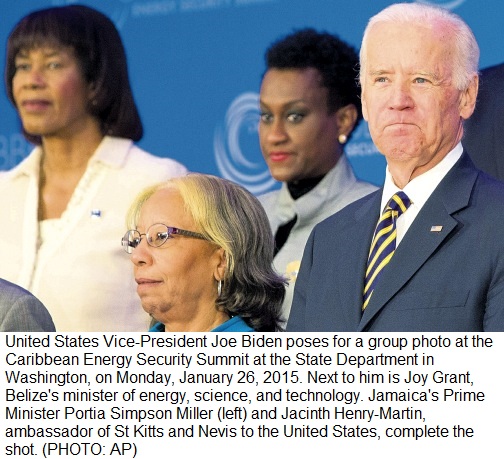
The subsequent news article highlights this point, as it relates how 5 US ambassadors to Caribbean member-states had convened stakeholders to promote an agenda of American leadership in energy security.

Something about this initiative seems conflicting!

A lack of American leadership in the past has resulted in solutions originating elsewhere, from one neighbor in particular: Venezuela. That country’s PetroCaribe initiative had been valued by many Caribbean member-states as it was a vital lifeline throughout the global financial crisis, which had combined with cripplingly high oil and gas prices in 2008. But Venezuela-PetroCaribe is in enmity with US policy.

This brings to the fore a previous lesson in American foreign-policy history, from 25 years ago: Nelson Mandela’s unconditional support of enemies of the US that were unconditional supporters of the anti-Apartheid movement. Mr. Mandela’s direct comment was as follows:

“One mistake that some political analysts make is to think that their enemies should be our enemies. That [is something] we cannot and should never do. We have our own struggle that we are conducting. We are grateful to the world for supporting our struggle…but independence means we get to choose our friends and choose our enemies” – Nelson Mandela; June 21, 1990. (See Appendix A below).

The foregoing article speaks of the US Caribbean foreign policy initiative in campaigning against PetroCaribe et al:

Title: Ambassadors to Caribbean countries discuss energy, security
By: Jennifer Kay
MIAMI (AP) — Five U.S. ambassadors to the Caribbean on Thursday reinforced the U.S. government’s commitment to helping the cash-strapped region to reduce its dependence on Venezuelan oil while addressing multiple security issues.

The panel at Florida International University followed last month’s Caribbean Energy Security Summit in Washington, where Vice President Joe Biden said the U.S. was poised to help Caribbean countries that could address corruption and make needed regulatory changes.

CU Blog - Ambassadors to Caribbean Discuss PetroCaribe-Energy and Security - Photo 1

The U.S. ambassadors to Haiti, the Dominican Republic, Jamaica, Suriname and Barbados and the eastern Caribbean participated in the panel hosted by FIU’s Latin American and CaribbeanCenter.

The U.S. wants to encourage more American investment in Caribbean energy projects, such as a new wind farm in Jamaica, “but we need to have and provide a safe and secure environment,” said Luis Moreno, the ambassador to Jamaica.

With falling oil prices shaking Venezuela’s economy, the Caribbean is interested in finding alternatives to Petrocaribe, a decade-old trade program created by the late President Hugo Chavez that requires member countries to pay only a small portion of the up-front costs for oil, allowing them to finance the rest under long-term debt agreements.

The ambassadors derided the program, though they acknowledged it wasn’t likely to end soon even as they push Caribbean countries to consider shifting to natural gas or other energy alternatives.

“We want to encourage individuality. We want to get these countries to sit up for themselves,” said Moreno, who called Petrocaribe “a blunt political instrument.”

Aside from Venezuela’s influence, the Caribbean faces a number of challenges that concern the U.S, such as border security, rising Chinese influence in the region, human rights, weak infrastructure, a lack of regional coordination and vulnerability to climate change and natural disasters.

There’s also been a rise in drug, arms and human trafficking in some eastern Caribbean islands as authorities put pressure on traffickers in South America, and some countries have begun essentially offering citizenship and easing travel for people who buy land or make other investments in the islands, said Larry Palmer, ambassador to Barbados and the eastern Caribbean.

Another problem is political instability in Haiti, in spite of strides the country has made in recovering from a 2010 earthquake. Long-delayed elections are scheduled later this year, but “it’s always rocky in Haiti,” said Pamela White, ambassador to Haiti.

“Let’s just pray we can get through those two days (of scheduled voting) this year so the Haitian people have the right, the democratic right, to vote in people they think will represent them,” she said.
Source: Associated Press News Wire Service (Retrieved 02/18/2015) – http://www.washingtontimes.com/news/2015/feb/12/ambassadors-to-caribbean-countries-discuss-energy-/ 

Night Earth. Bermuda Triangle Area

VIDEO – St Lucia Clip from Caribbean Energy Security Summit – http://youtu.be/0Ho_PmQThTQ

Published on Jan 29, 2015 – Dr. James Fletcher – Minister of Public Service & Energy – who attended the US Summit on Energy Security says the meeting was a precursor to the energy and climate partnership of the America’s meeting which will take place in March 2015.
What is PetroCaribe and how does it relate to the Caribbean economic empowerment effort? (See Appendix B below). Previously, this commentary detailed a discussion on PetroCaribe-ALBA-SUCRE, identifying these economic integration initiatives started by the late Venezuelan President Hugo Chavez (1954-2013). His advocacy of socialism often brought him at odds with the US. But still, there were benefits and benevolence in his actions.

The book Go Lean…Caribbean pursues an apolitical agenda; the only motive is the elevation of Caribbean society by optimizing the economic, security and governance engines. This serves as a roadmap for the introduction and implementation of the Caribbean Union Trade Federation (CU). Further, the book, and accompanying blog commentaries, posit that American leadership may not always have the Caribbean best interest in mind, even for US Territories. Societies do better in their American interactions when they relate as protégés, not parasites. This is a reality that we must accept. The Go Lean roadmap features 144 missions to accomplish this feat of elevating Caribbean society to protégé status.

The Go Lean roadmap does align with many of the objectives of these US ambassadors; it is important for the Caribbean to pursue energy independence. As such there is a focus on alternative energy options that can be easily deployed in the region: solar, wind turbines, tidal and yes, the natural gas option as the US advocates. The cause to combat climate change and mitigate natural disasters is welcomed from the US, as our Caribbean islands are on the front lines of this battle. But the Go Lean roadmap is not 100% concurring with the US policy; we also align with some objectives of PetroCaribe, especially negotiating group discounts and delivery terms for the Caribbean member-states. Early in the book, these pressing needs were pronounced in the Declaration of Interdependence (Page 11), with these statements:

i.      Whereas the earth’s climate has undeniably changed resulting in more severe tropical weather storms, it is necessary to prepare to insure the safety and security of life, property and systems of commerce in our geographical region. As nature recognizes no borders in the target of its destruction, we also must set aside border considerations in the preparation and response to these weather challenges.

vi.      Whereas the finite nature of the landmass of our lands limits the populations and markets of commerce, by extending the bonds of brotherhood to our geographic neighbors allows for extended opportunities and better execution of the kinetics of our economies through trade. This regional focus must foster and promote diverse economic stimuli.

viii.      Whereas the population size is too small to foster good negotiations for products and commodities from international vendors, the Federation must allow the unification of the region as one purchasing agent, thereby garnering better terms and discounts.

The Go Lean roadmap details a series of community ethos, strategies, tactics, implementations and advocacies to foster the progress in the wide fields of energy alternatives and group purchasing. The following list applies:

Community Ethos – Economic Systems Influence Individual Choices Page 21
Community Ethos – Lean Operations – Group Purchase Organizations Page 24
Community Ethos – Cooperatives Page 25
Community Ethos – Regional Taxi Commissions Page 25
Community Ethos – Ways to Improve Negotiations Page 32
Community Ethos – Ways to Impact the Greater Good Page 37
Strategy – Harness alternative power: Sun, Wind, and Natural Gas Page 46
Tactical – Fostering a Technocracy Page 82
Tactical – Separation of Powers – Energy Commission Page 82
Anecdote – “Lean” in Government – Energy Permits Page 93
Anecdote – Caribbean Energy Grid Implementation Page 100
Implementation – Foreign Policy Initiatives at Start-up Page 102
Implementation – Ways to Develop Pipeline Industry – Underwater Power Lines Page 107
Implementation – Ways to Improve Energy Usage Page 113
Implementation – Ways to Promote Independence Page 120
Planning – Lessons Learned from 2008 Page 136
Advocacy – Ways to Impact Public Works Page 175
Advocacy – Ways to Foster Cooperatives Page 176
Advocacy – Ways to Impact Monopolies Page 202
Advocacy – Ways to Impact US Territories Page 244

The planners of a new elevated Caribbean hereby thank the US foreign policy-makers for their dedication towards the Caribbean. This is friendly! But as matured independent nations, we accept the responsibility to “choose our own friends and our own enemies”.

We accept that in this case, the US may have altruistic motives, especially with declining oil prices possibly affecting Venezuela. But for far too often, American leadership has been motivated by crony-capitalistic intentions. The points of mitigating the risks of American Big Business were further elaborated upon in these previous blog/commentaries:

https://goleancaribbean.com/blog/?p=4076 US Big Media Fantasies versus Weather Realities
https://goleancaribbean.com/blog/?p=3397 A Christmas Present for the Banks from the Omnibus Bill
https://goleancaribbean.com/blog/?p=3326 Detroit’s M-1 Rail – Finally avoiding Plutocratic Auto Industry influence
https://goleancaribbean.com/blog/?p=2887 Caribbean must work together to address rum subsidies
https://goleancaribbean.com/blog/?p=2522 The Cost of Cancer Drugs
https://goleancaribbean.com/blog/?p=2465 Book Review: ‘This Changes Everything: Capitalism vs. the Climate’
https://goleancaribbean.com/blog/?p=2435 Korea’s Protégé Model – A Dream for Latin America / Caribbean
https://goleancaribbean.com/blog/?p=2338 Lesson Learned – How Best to Welcome the Dreaded ‘Plutocracy’
https://goleancaribbean.com/blog/?p=2259 The Criminalization of American Business – Big Banks Let Loose
https://goleancaribbean.com/blog/?p=2251 US Black-and-Brown populations are still institutionally disadvantaged
https://goleancaribbean.com/blog/?p=2183 A Textbook Case of Industry Price-gouging
https://goleancaribbean.com/blog/?p=1143 Health-care fraud in America; Criminals take $272 billion a year
https://goleancaribbean.com/blog/?p=789 America’s War on the Caribbean
https://goleancaribbean.com/blog/?p=709 Post 2008 Great Recession – Student debt holds back home buyers
https://goleancaribbean.com/blog/?p=242 Post 2008 Great Recession – The Erosion of the Middle Class
https://goleancaribbean.com/blog/?p=273 10 Things We Don’t Want from the US – #1: American Self-Interest

The Go Lean roadmap calls for integration of the regional member-states, a strategy of confederation with a tactic of separating powers between CU federal agencies and member-states’ governments. The roadmap calls for the regional integration of energy generation and energy distribution services – a regional grid. The separation-of-powers tactic also calls for assumption of Emergency Management agencies for the member-states. This allows for the regional mitigation and remediation of the affects of climate change. The roadmap posits that to succeed as a society, the Caribbean region must integrate and consolidate into a Single Market of 42 million people, so as to be able to compete with the rest of the world, and to facilitate better negotiations.

It is time to choose our own friends … and enemies.

Now is the time for all of the Caribbean, the people, business, institutions and governments, to lean-in for the optimizations and opportunities described in the book Go Lean … Caribbean. 🙂

————

Appendix A: Nelson Mandela’s Friends

The relationship between the United States and the anti-apartheid movement Mandela led was duplicitous. Some of his most fervent international supporters were leaders of countries sharply at odds with America.

The US Government criticized Nelson Mandela for going to Libya to visit Muammar Gaddafi, and in a speech that he gave Nelson Mandela said that “they could go and jump into a pool”. He said that he was not going to turn his back on the people that was there for him in his darkest hour.

Nelson Mandela was 100% man; he didn’t allow other people to tell him what to do, and he didn’t allow people to pick his friends [or his enemies]. [Many times,] America’s enemies were Mandela’s friends.
(Source: http://s1.zetaboards.com/Express_Yourself/topic/5312294/1/).

These “friends” referred to:

  • Fidel Castro of Cuba
  • Minister Louis Farrakhan of the Nation of Islam
  • Yasser Arafat of the Palestine Liberation Organization (PLO)
  • Ayatollah Khomeini of Iran

—–

Additional research: Mandela Town Hall Meeting, New   York City, June 21, 1990:
http://youtu.be/q6eE9BIUfBg  – 1990 video of Town Hall meeting with Nelson Mandela of South Africa anchored by Ted Koppel on ABC Nightline in New York.

————

Appendix B: PetroCaribe / ALBA / SUCRE

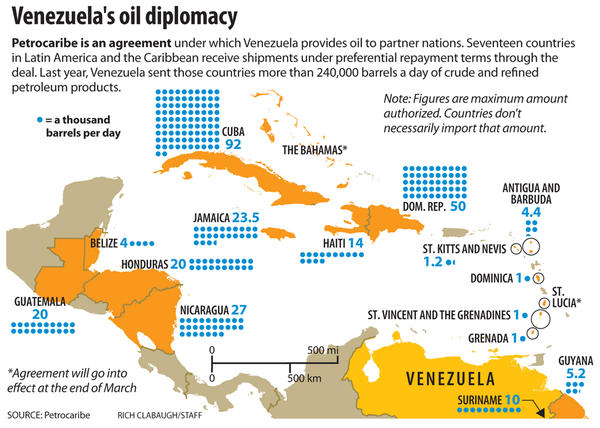
PetroCaribe is an oil alliance with Venezuela which allows the purchase of oil on conditions of preferential payment. The alliance was launched on 29 June 2005 in Puerto La Cruz, Venezuela. In 2013 PetroCaribe agreed to links with the Bolivarian Alliance for the Americas (ALBA), and to go beyond oil and promote economic cooperation. It is now considered an “economic zone”.

There are a total of 17 members, plus Venezuela; 12 of the members are from the 15 member CariCom (excluding, Barbados, Montserrat and Trinidad and Tobago). At the first summit, 14 countries joined the alliance. These were: Antigua and Barbuda, the Bahamas, Belize, Cuba, Dominica, Dominican Republic, Grenada, Guyana, Haití, Honduras, Jamaica, Nicaragua, St Lucia, St Kitts and Nevis, Saint Vincent and the Grenadines, Suriname and Venezuela.

ALBA – The Bolivarian Alliance for the Americas is an intergovernmental organization associated with socialist and social democratic governments wishing to consolidate regional economic integration based on a vision of social welfare, bartering and mutual economic aid. ALBA nations may conduct trade using a virtual regional currency known as the SUCRE.

SUCRE – A regional currency to be used in commercial exchanges between members of the regional ALBA trade bloc. It is intended to replace the US dollar as a medium of exchange in order to decrease US control of Latin American economies. The acronym is in Spanish, as: Sistema Único de Compensación Regional. In English, this means: Unified System for Regional Compensation. The plan is for the SUCRE to become a hard currency.
Venezuela Oil

Share this post:
, , , ,

Businesses Try to Stave-off Brain Drain as Boomers Retire

Go Lean Commentary

A consistent theme in the book Go Lean…Caribbean is that communities need their economic engines optimized, otherwise their citizens would simply leave. The book, and subsequent blog/commentaries, posit that the reality of the recent global financial crisis has resulted in an even higher abandonment rate among Caribbean communities. Another dynamic have now become prominent: families are having less babies.

This means, from a strictly supply-and-demand basis, older workers will be pressured to retire later and stay on with their employers longer.

This point was highlighted in the Go Lean book with the acknowledgement that the Aging Diaspora is a new Agent-of-Change for the Caribbean to contend with (Page 57). The book specifically identified that the demographics of the Caribbean was altered in the decades following World War II. Many members of the Caribbean Diaspora availed themselves of opportunities in Europe and North America during the rebuilding efforts for those nations. So those that emigrated in the 1950’s, 1960’s and 1970’s now comprise an aging Diaspora – with the strong desire to return to their native homelands for their “golden years”. They should be welcomed back and incentivized to repatriate, and Caribbean communities should prepare – and profit – from this eventuality. The Go Lean book describes the effort as a figurative “Welcome Mat” that must be administered, with details like: health care, security, disability support, elder-care, entitlements, etc.

There are economic concerns … and benefits from this execution.

But now, according to this story and AUDIO podcast, there may be more pressure for these ones to remain in the work place longer:

Podcast from National Public Radio (NPR) – January 15, 2015
By: Yuki Noguchi

AUDIO Podcast: – http://www.npr.org/2015/01/15/377201540/businesses-try-to-stave-off-brain-drain-as-boomers-retire

(See transcript in Appendix below)

These same issues, though presented from the perspective of the US, have the same application in the Caribbean. Our population is trending older as more and more young people abandon Caribbean communities for Diaspora life in foreign lands. We must also stave-off brain drain in the Caribbean region.

The Go Lean book serves as a roadmap for the introduction and implementation of the technocratic Caribbean Union Trade Federation (CU). This CU is proffered to provide economic, security and economic security solutions for the 30 member-states and their 42 million people. It is our quest to be prepared for this changing landscape. This mandate is pronounced early on in the book’s Declaration of Interdependence with the following statements (Page 11 – 13):

ix.    Whereas the realities of healthcare and an aging population cannot be ignored and cannot be afforded without some advanced mitigation, the Federation must arrange for health plans to consolidate premiums of both healthy and sickly people across the wider base of the entire Caribbean population. The mitigation should extend further to disease management, wellness, mental health, obesity and smoking cessation programs. The Federation must proactively anticipate the demand and supply of organ transplantation as developing countries are often exploited by richer neighbors for illicit organ trade.

xix.    Whereas our legacy in recent times is one of societal abandonment, it is imperative that incentives and encouragement be put in place to first dissuade the human flight, and then entice and welcome the return of our Diaspora back to our shores. This repatriation should be effected with the appropriate guards so as not to imperil the lives and securities of the repatriated citizens or the communities they inhabit. The right of repatriation is to be extended to any natural born citizens despite any previous naturalization to foreign sovereignties.

xxiv.    Whereas a free market economy can be induced and spurred for continuous progress, the Federation must install the controls to better manage aspects of the economy: jobs, inflation, savings rate, investments and other economic principles. Thereby attracting direct foreign investment because of the stability and vibrancy of our economy.

xxv.    Whereas the legacy of international democracies had been imperiled due to a global financial crisis, the structure of the Federation must allow for financial stability and assurance of the Federation’s institutions. To mandate the economic vibrancy of the region, monetary and fiscal controls and policies must be incorporated as proactive and reactive measures. These measures must address threats against the financial integrity of the Federation and of the member-states.

Modern societies are based on the assumption that there will always be more young people in a community than the older population; this is a basic principle in “actuarial science”. There are many social safety nets that depend on this actuarial fact: the Caribbean needs population growth not population contraction. Already the repercussions of so many people abandoning their communities have created devastating consequences. For example, retirement plans-funds are strained in many Caribbean countries. Yes, the Caribbean, as a region, is at the precipice of failed-state status.

The Go Lean book posits that this is a “crisis, but that this crisis is a terrible thing to waste”; (Page 8). As such the roadmap structures the CU to impact the region with the execution of the prime directives defined as these 3 goals:

  • Optimization of economic engines in order to grow the regional economy to $800 Billion and create 2.2 million new jobs.
  • Establishment of a security apparatus to protect the resultant economic.
  • Improvement of Caribbean governance to support these engines.

According to the foregoing article, America needs to keep their older workers working longer; they cannot afford the brain drain. But this fact is conflicting for Caribbean pursuits. We need our aging Diaspora to come back home, sooner, rather than later…and to bring their wealth, benefits and entitlements with them; Go Lean describes it as their “time, talent and treasuries”. This creates a seller’s market for the foreign workers with demand in the US and also in the homeland. It is hoped that “love for the Caribbean homeland” would be the primary motivator.

It is hoped!

Though the needs of the Caribbean youth are identified as priority for the Go Lean movement (book and blogs), the needs of the elderly population are not ignored. In fact, the Go Lean roadmap details missions like retirement planning, increased retirement age, pension re-financing, heightened public safety and optimized healthcare. The following details from the book Go Lean … Caribbean are the community ethos, strategies, tactics, implementations and advocates prescribed to manifest the commitment to the Caribbean elderly populations:

Community Ethos – Deferred Gratification Page 21
Community Ethos – Ways to Impact the Future Page 26
Community Ethos – Ways to Promote Happiness Page 36
Community Ethos – Ways to Impact the Greater Good Page 37
Strategy – Repatriating Caribbean Diaspora Page 47
Strategy – Non-Government Organizations – Senior Aid Groups Page 48
Strategy – Agents of Change – Aging Diaspora Page 57
Tactical – Confederating a Permanent Union Page 63
Tactical – Fostering a Technocracy Page 64
Implementation – Assemble all Member-States Page 96
Implementation – Ways to Pay for Change Page 101
Implementation – Ways to Better Manage Debt – Re-work Pensions Page 114
Implementation – Reasons to Repatriate Page 118
Planning – 10 Big Ideas … in the Caribbean Region Page 127
Planning – Lessons Learned from 2008 Page 136
Advocacy – Ways to Grow the Economy Page 151
Advocacy – Ways to Create Jobs Page 152
Advocacy – Better Manage the Social Contract Page 170
Advocacy – Reforms for Banking Regulations – Central Bank Page 199
Advocacy – Ways to Impact Wall Street Page 200
Advocacy – Impact the Diaspora Page 217
Advocacy – Ways to Preserve Caribbean   Heritage Page 218
Advocacy – Ways to Impact Retirement Page 221
Advocacy – Ways to Help the Middle Class Page 223
Advocacy – Ways to Improve Elder-Care Page 225

The Baby Boom generation has come full circle now as senior citizens. This large population group (born between years 1946 and 1964) is bringing a boon to the industries that cater to their care and preferences. There is an estimated 78.3 million Americans who were born during this demographic period, encompassing a quarter of the US population.

The Caribbean cannot be far behind. Unfortunately though, many of these Caribbean boomers live in foreign countries like the US, Canada, UK, France, the Netherlands and other European countries.  This is a “Big Idea” to incentivize these ones to make a return to their Caribbean ancestral homelands. The Go Lean book describes this big effort as heavy-lifting, a task too big for any one member-state alone. But rather, there is the need for the technocracy of the Caribbean Union Trade Federation. The purpose of this Go Lean/CU roadmap is to deliver, to do the heavy-lifting to make the Caribbean homeland a better place to live, work and play.

Now is the time for all of the Caribbean, the people and governing institutions, to lean-in for the changes/empowerments described in the book Go Lean … Caribbean. 🙂

Download the book Go Lean … Caribbean – now!

———

APPENDIX – Podcast Transcript: Businesses Try to Stave Off Brain Drain as Boomers Retire

In the U.S., roughly 10,000 people reach retirement age every day. And though not everyone who turns 62 or 65 retires right away, enough do that some companies are trying to head off the problem.

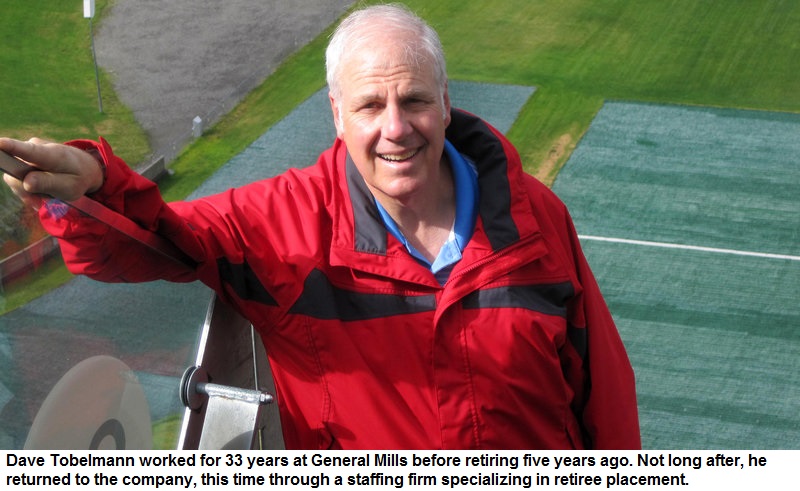
CU Blog - Businesses Try To Stave Off Brain Drain As Boomers Retire - Photo 1Dave Tobelmann, who for 33 years developed new products for General Mills, retired five years ago at age 57 — around the same time as a number of other colleagues. “Yeah, I went to a lot of retirement parties,” Tobelmann says.

Losing veteran workers is a challenge, even for big companies like General Mills.

“Let’s say you have 30 people retire in a year and the average years of experience is 30 years. So you just had 1,000 years walk away. That’s hard to lose,” Tobelmann says.

The need is not across the board; not all retirees are in demand. But the older-worker brain drain is a big concern for industries like mining and health care. They are trying to retain older employees because demand is increasing and fewer younger workers are rising through the ranks.

In a survey out this week, the Society for Human Resource Management reports that a third of employers expect staffing problems in coming years.

“When you have large numbers that are leaving and a pipeline that is not entirely as wide as the exit pipeline, you will have temporary gaps,” says Mark Schmit, executive director of the association’s foundation.

Take, for example, the insurance business.

“The average age is in the late 50s in this industry,” says Sharon Emek, who sold an insurance business five years ago after three of the four partners reached retirement age. She then started Work at Home Vintage Employees, a company that contracts insurance-industry retirees.

“It’s a big crisis within the industry where they’re trying to recruit young talent and keep young talent, and the industry is constantly writing about the problem,” Emek says.

Employers are trying to hang onto older talent by offering flexible work hours, more attractive health care benefits or having retirees return to mentor younger workers. And more people are, in fact, working later — either because they want to, or they have to. According to AARP, nearly 19 percent of workers over age 65 work (about 1 in 5), compared with about 11 percent (1 in 10) three decades ago.

Soon after retiring, Tobelmann returned to General Mills. He works through YourEncore, a staffing firm specializing in retiree placement. Procter & Gamble, Boeing and other companies started YourEncore to prepare for baby boomers retiring. Tobelmann says the benefits for the company are obvious.

“I already know how to speak the language, I know how the company operates, I know how the businesses operate, I know how they make money, I know how projects proceed, I know all the processes,” he says.

At Michelin North America, more than 40 percent of the workforce is approaching retirement age. Retirees have, on average, 2 1/2 decades of experience. Dave Stafford, who heads human resources for the company, says last year, it had to plan around losing most of a lab team made up entirely of older workers.

“If we’re doing our job well, we’ll know that there’s risk; we’ll start to staff to compensate for the fact that that risk may come to fruition,” he says.

Michelin encourages retirees to stick around part-time, especially those in technical maintenance, where talent is chronically scarce. But it’s not always easy to accommodate.

“Sometimes they have a very limited number of hours that they want to work, and to try to work around their schedule sometimes can be a bit of a challenge,” says Dale Sweere of Stanley Consultants, an engineering consulting firm based in Muscatine, Iowa.

But Sweere says the company has always offered phased retirement because experienced workers have relationships with clients that are valuable to hang onto. “It’s kind of a running joke around here that we have their retirement party on a Friday and they show up for work again on Monday,” Sweere says.

Share this post:
, , , , , , ,
[Top]

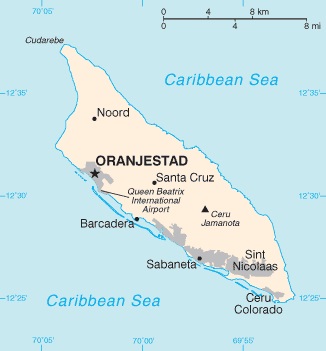
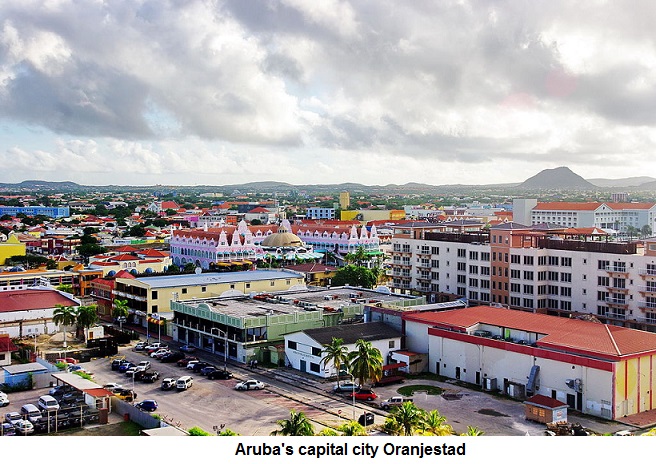
The State of Aruba’s Economy

Go Lean Commentary

The Caribbean is comprised of 4 different language groups. We hear mostly of the English, French and Spanish speaking islands, but the Dutch speaking islands are far from inconsequential. They are integral to the Caribbean landscape and integral to the plan for regional confederation, consolidation and elevation.

The book Go Lean…Caribbean addresses the needs of all the Caribbean, including the Dutch territories. In the book, the islands are referred to as the formal name of the Netherlands Antilles (Page 16). This consists of two island groups; the ABC Islands of Aruba, Bonaire and Curaçao, located just off the Venezuelan coast. Plus also the SSS islands of Sint Maarten, Saba and Sint Eustatius, located in the Leeward Islands southeast of the Virgin Islands near the northern end of the Lesser Antilles. The Dutch colonized these islands in the 17th century, (at one point, Anguilla, Tobago, the British Virgin Islands, and St. Croix of the US Virgin Islands had also been Dutch), and united them in the new constituent state of the Netherlands Antilles in December 1954.

s Economy - Photo 2The largest of the Dutch Caribbean is Aruba.

Aruba called for secession from the Netherlands Antilles from as early as the 1930s, becoming a separate state within the Kingdom of the Netherlands in 1986. After many other organizational developments, by 2010, Aruba is dispositioned as one of the four constituent countries that form the Kingdom of the Netherlands, along with the Netherlands (European homeland), Curaçao and Sint Maarten.

What is the status of Aruba today?

How has it fared as an autonomous state?

The Go Lean book posits that Aruba is in crisis; (along with the rest of the Caribbean). This is also the assessment by the International Monetary Fund, as related in this news article:

By: By the Caribbean Journal staff
Aruba’s economy is “recovering gradually” from a “severe double-dip recession,” according to the International Monetary Fund, which recently concluded its 2015 Article IV Mission to the Dutch Caribbean island.

The recession was [exacerbated] by a pair of factors: the global financial crisis and the shutdown of the oil refinery in Aruba.

“These shocks have substantially increased public debt—over 80 percent of GDP in 2014—and eroded fiscal space,” the IMF said in a statement. “To address these fiscal challenges, the authorities have undertaken major entitlement reforms and are aiming to reach a small fiscal surplus in 2018.”

Without similar measures, however, the IMF warned that the pace of fiscal consolidation in the island could slow and public debt would continue to rise in the medium term.

s Economy - Photo 1Growth in Aruba is projected to rise by about 2.5 percent in 2015, which would put the island in favorable territory with the rest of the region, though.

The closure of the refinery, however, puts even more pressure on the island’s tourism sector, the IMF said.

That could compound the island’s risk, though, given its large dependence on tourists from the US and from Venezuela, with the latter’s economic crisis adding to the risk.

But the IMF said that Aruba had maintained its competitiveness in tourism, with its share of the Caribbean’s tourism market share continuing to grow.

“In addition, the authorities’ marketing efforts, access to new US hubs, and additional airlift capacity from South America have improved resilience,” the IMF said. “Increasing labor market flexibility and reducing the costs of doing business would not only further improve Aruba’s competitiveness, but would also help its adjustment to external shocks and facilitate diversification.”
Caribbean Journal Regional News Site – Posted February 16, 2015 –
http://www.caribjournal.com/2015/02/16/the-state-of-arubas-economy/

The Caribbean country of Aruba needs to focus on growing its economy and creating jobs. The Go Lean book asserts that this effort is too big a task for just one Caribbean member-state alone, that Aruba needs to convene, confederate and collaborate with the other regional member-states. As such, the Go Lean book serves as a roadmap for the introduction and implementation of the technocratic Caribbean Union Trade Federation (CU), for the elevation of Caribbean society – for all member-states. This CU/Go Lean roadmap has these 3 prime directives:

  • Optimization of the economic engines in order to grow the regional economy to $800 Billion and create 2.2 million new jobs.
  • Establishment of a security apparatus to protect the resultant economic engines.
  • Improvement of Caribbean governance to support these engines.

The Go Lean book (Page 3) makes this simple assertion regarding the state of Aruba and all the Caribbean economy: the region is in crisis. There is something wrong in these island and coastal states, that  despite the greatest address in the world, instead of the world “beating a path” to these doors, the people of the Caribbean have “beat down their doors” to get out. Aruba fails to keep its young people at home. In fact, the anecdotal experience (one story after another) is that young people abandon this island as soon as they finish high school; many never to return again, except for occasional visits. (Aruban natives – plus all Netherland Antilles states – have Dutch citizenship, sharing the same Dutch passport as the Kingdom of the Netherlands).

A mission of the Go Lean roadmap is to minimize the “push-and-pull” factors that contribute to this alarmingly high rate of societal abandonment – one report reflects a 70% brain drain rate for the overall Caribbean. The book stresses (early at Page 13 & 14) the need to be on-guard for these “push-and-pull” factors in these pronouncements in the Declaration of Interdependence:

xix.      Whereas our legacy in recent times is one of societal abandonment, it is imperative that incentives and encouragement be put in place to first dissuade the human flight, and then entice and welcome the return of our Diaspora back to our shores. This repatriation should be effected with the appropriate guards so as not to imperil the lives and securities of the repatriated citizens or the communities they inhabit. The right of repatriation is to be extended to any natural born citizens despite any previous naturalization to foreign sovereignties.

xxi.      Whereas the preparation of our labor force can foster opportunities and dictate economic progress for current and future generations, the Federation must ensure that educational and job training opportunities are fully optimized for all residents of all member-states, with no partiality towards any gender or ethnic group. The Federation must recognize and facilitate excellence in many different fields of endeavor, including sciences, languages, arts, music and sports. This responsibility should be executed without incurring the risks of further human flight, as has been the past history.

xxv.      Whereas the legacy of international democracies had been imperiled due to a global financial crisis, the structure of the Federation must allow for financial stability and assurance of the Federation’s institutions. To mandate the economic vibrancy of the region, monetary and fiscal controls and policies must be incorporated as proactive and reactive measures. These measures must address threats against the financial integrity of the Federation and of the member-states.

xxvi.      Whereas the Caribbean region must have new jobs to empower the engines of the economy and create the income sources for prosperity, and encourage the next generation to forge their dreams right at home, the Federation must therefore foster the development of new industries, like that of ship-building, automobile manufacturing, prefabricated housing, frozen foods, pipelines, call centers, and the prison industrial complex. In addition, the Federation must invigorate the enterprises related to existing industries like tourism… – impacting the region with more jobs.

This commentary previously related details of the “push-and-pull” factors for Caribbean emigration to North America and Europe, and the region’s own job-creation efforts. Here is a sample of earlier blogs:

https://goleancaribbean.com/blog/?p=3834 State of the Caribbean Union
https://goleancaribbean.com/blog/?p=3780 National Sacrifice: The Missing Ingredient – Caribbean people not willing to die or live in sacrifice to their homeland
https://goleancaribbean.com/blog/?p=3446 Forecast for higher unemployment in Caribbean in 2015
https://goleancaribbean.com/blog/?p=3050 Obama’s immigration tweaks leave Big Tech wanting more
https://goleancaribbean.com/blog/?p=1698 American “Pull” Factors – STEM Jobs Are Filling Slowly
https://goleancaribbean.com/blog/?p=1683 British public sector workers strike over ‘poverty pay’
https://goleancaribbean.com/blog/?p=1596 Book Review: ‘Prosper Where You Are Planted’
https://goleancaribbean.com/blog/?p=1433 Caribbean loses more than 70 percent of tertiary educated to brain drain
https://goleancaribbean.com/blog/?p=1296 Remittances to Caribbean Increased By 3 Percent in 2013
https://goleancaribbean.com/blog/?p=1256 Traditional 4-year College Degree are Terrible Investments for the Caribbean Region
https://goleancaribbean.com/blog/?p=841 Having Less Babies (Population) is Bad for the Economy

The Go Lean book and these accompanying blogs posit that the economic failures in the Caribbean in general and Aruba in particular is the direct result of the lack of diversity in industrial development. The region depends too heavily on tourism. Aruba though, made some diversification attempts with oil refinery installations; according to Wikipedia:

With its location near Venezuela, the island became an attractive spot for oil refineries. The Lago Oil and Transport Company, owned by Standard Oil of New Jersey (now Exxon), opened in 1929 near the transshipping port of San Nicolaas. Following in their footsteps, the Eagle Oil Refinery opened soon after. Over the next few decades, the oil industry took over as Aruba’s primary economic force.

During World War II, considerable expansion was done to the Lago Refinery, becoming one of the largest refineries in the world – only bested by Royal Dutch Shell Isla refinery on nearby Curaçao – and a major producer of petroleum products for the Allied war efforts.

The Eagle Oil Refinery shut down and was dismantled in the late 1950s. But the Lago refinery kept going until 1985, when the demand for oil fell and Exxon closed it. In 1991, the Coastal Corporation bought it, scaled down operations, and reopened it. Coastal Corporation later sold the refinery to Valero Energy Corporation in 2004. Its reopening didn’t raise Aruba’s oil industry to its previous heights although it did revive that sector and continued to be a key contributor to the country’s economy until 2009 when it was closed.

Aruba is now applying a strategy to “double-down” on tourism; see Appendix-VIDEO below. The Go Lean roadmap asserts that this strategy is flawed; that while prudence dictates that the Caribbean nations expand and optimize their tourism products, the Caribbean must also look for other opportunities for economic expansion. The requisite investment of the resources (time, talent, treasuries) for this goal may be too big for any one Caribbean member-state like Aruba. Rather, shifting the responsibility to a region-wide, professionally-managed, deputized technocracy will result in greater production and greater accountability. The roadmap will facilitate economic growth and job creation.

This is the charge of the Go Lean…Caribbean roadmap, to do the heavy-lifting, to implement the organization dynamics to impact Caribbean society here and now with economic growth and jobs. The following are the community ethos, strategies, tactics and operational advocacies to effectuate this goal:

Community Ethos – People Respond to Incentives Page 21
Community Ethos – Economic Systems Influences Choices & Incentives Page 21
Community Ethos – The Consequences of Choice Lie in the Future Page 21
Community Ethos – Job Multiplier Page 22
Community Ethos – Minority Equalization Page 24
Community Ethos – Lean Operations Page 24
Community Ethos – Ways to Impact the Greater Good Page 37
Strategy – Vision – Make the Caribbean the Best Address   on Planet Page 45
Strategy – Mission – Repatriate Diaspora Page 46
Strategy – Mission – Dissuade Human Flight/“Brain Drain” Page 46
Tactical – Separation of Powers – Union versus Member-States Page 71
Implementation – Assemble CariCom, Dutch, French, Cuba and US   Territories Page 95
Implementation – Enact Territorial Compacts for PR & the Virgin Islands Page 96
Implementation – Foreign Policy Initiatives at Start-up Page 102
Implementation – Ways to Deliver Page 109
Implementation – Ways to Better Manage Debt Page 114
Implementation – Reasons to Repatriate Page 118
Implementation – Ways to Benefit from Globalization Page 119
Implementation – Ways to Promote Independence Page 120
Planning – 10 Big Ideas for the Caribbean Page 127
Planning – Ways to Make the Caribbean Better Page 131
Advocacy – Ways to Grow the Economy Page 151
Advocacy – Ways to Create Jobs Page 152
Advocacy – Ways to Improve Governance Page 168
Advocacy – Ways to Enhance Tourism Page 190
Advocacy – Ways to Market Southern California – New Markets Page 194
Advocacy – Ways to Impact Extractions Page 195
Advocacy – Ways to Impact the Diaspora Page 217
Advocacy – Ways to Impact DutchTerritories Page 246

This Go Lean book accepts that the current State of Aruba’s Economy does not have to be a permanent disposition. The roadmap presents a plan for greater energy independence, energy security and energy generation in the region – there will be the need to capitalize on Aruba’s core-competence with oil refineries. So under the Go Lean roadmap, Aruba’s economy will do better; the same as all of the Caribbean will do better. This roadmap is a 5-year plan to effect change, to make our homeland a better place to live, work and play.

As for the Dutch Caribbean territories, even though they are no longer considered colonies, but rather constituent countries of the Kingdom of the Netherlands, they are effectively just welfare states dependent on Amsterdam; and a feeder for low-cost labor in Holland. They are inconsequential within the Dutch sphere of influence. There are parasites not protégés!

We must do better!

Now is the time for Aruba, the Dutch Caribbean and all of the Caribbean, the people and institutions, to lean-in to this Go Lean … Caribbean roadmap. 🙂

Download the book Go Lean … Caribbean – now!

———-

Appendix – VIDEO: Aruba – One Happy Island – http://youtu.be/p7NdI0jmvXA

Published on Mar 28, 2012 – Our white-sand beaches, cooling trade winds and warm, friendly people are just a few reasons why so many people return to Aruba year after year. Discover everything that makes this One Happy Island…


Share this post:
, , , , , ,
[Top]

Immigration Policy Exacerbates Worker Productivity Crisis

Go Lean Commentary

The book Go Lean … Caribbean seeks to elevate society in the Caribbean homeland. The book is a 370-page roadmap with turn-by-turn directions on how to transform – remediate and mitigate – the engines of regional commerce, security and governance. While this type of advocacy is the normal sphere of Chambers of Commerce in their pledge to support the business communities, the Go Lean effort is different; it is not motivated by normal profit incentives, but rather the Greater Good for the Caribbean people.

 CU Blog - Immigration Policy Exacerbates Worker Productivity Crisis - Photo 3

(This commentary is not affiliated with any Chamber of Commerce)

Here’s a question for the Caribbean in general, and considering the subsequent news article, the Bahamas in particular:

What do you want from the world?

Do you want to have an advanced-modern society with all the latest “bells-and-whistles” of science, technology, engineering and medicine (STEM)? Or do you want a closed society, designated for reaping by your native people only?

“Oh island in the sun, willed to me by my father’s hand” – Classic Caribbean/Calypso folk song.

There is truly a choice to make. There are closed societies in the world, think North Korea. Even here in the Caribbean, there is Cuba, which was cut-off from US trade for 55 years. The end result, their society “stood still in time” in terms of technological developments; (1950-era American automobiles proliferate in Cuba even today).

The disposition of these aforementioned societies may not be too appealing for the rest of the Caribbean. So the answer being given is one of global citizenship. The Caribbean member-states have expressed, explicitly and implicitly, that they want to be an advanced-modern society. This means one thing:

Give-and-take with the rest of the world.

So there must be some give-and-take with immigration policy. We must “give” some allowances to immigrants to take the returns of their talents.

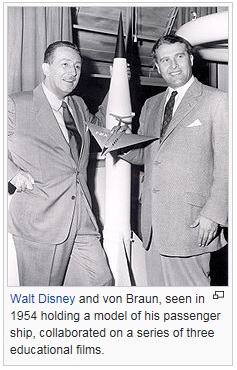
Look at the Caribbean’s biggest neighbor (to the north), the United States of America. Immigration is what made the US a great nation; let’s consider just one example. Much of America’s leadership in the Space Race during the Cold War years of 1950 to 1991 was due to the contributions of one empowering immigrant: Rocket Scientist Wernher von Braun; see summary VIDEO here and more details in the Appendix below.

Wernher Von Braun Vision: ” MAN IN SPACE ” Walt Disney TV production, March 9, 1955 – http://youtu.be/2fautyLuuvo


Uploaded on Sep 12, 2011 – Von Braun explain a future of space orbital mission with Space Shuttle rockets. A positive propagating for human voyage into space.

This discussion aligns with the book Go Lean … Caribbean. This book serves as a roadmap for the introduction and implementation of the Caribbean Union Trade Federation (CU); the purpose of which is to elevate Caribbean society, for all 30 member-states. The book stresses the need for empowering immigration (Page 174), recognizing that some of the skill-sets necessary to elevate our society may not currently exist in the homeland, so we may actually need to import the talent.

This is also the strong point being enunciated by the Bahamas Chamber of Commerce and Employers Confederation in the following news article:

By: Neil Hartnell, Business Editor, The Tribune Daily Newspaper – retrieved February 10, 2015 from:
http://www.tribune242.com/news/2015/feb/10/immigration-policy-exacerbates-worker-productivity/

The Immigration Department’s “closed door” work permit policies are exacerbating the Bahamas’ productivity crisis, a top private sector executive yesterday warning they were making it impossible for companies to hire the “unemployable”.

CU Blog - Immigration Policy Exacerbates Worker Productivity Crisis - Photo 2Robert Myers, the immediate past Bahamas Chamber of Commerce and Employers Confederation (BCCEC) chairman, told Tribune Business that restrictive Immigration policies were preventing businesses from recruiting middle management and skilled line staff essential to their smooth operation.

Apart from hindering the ability of local companies to expand, Mr Myers said they were also prevented from improving staff productivity and efficiency, as they could not “hire the educated to train the uneducated”.

Jerome Fitzgerald, minister of education, admitted last week that 40 per cent of the workforce lacked “a basic education”, with at least 35-38 per cent having failed to graduate from high school.

Mr Myers, though, pegged the number of high school leavers who were functionally illiterate and numerate [only] at 55 percent – a statistic that continues to limit business and GDP growth, and hinder government tax revenues.

“There’s a problem because the Immigration policies are only enabling these problems,” he told Tribune Business. “We have the wrong Immigration policies.

“There’s a desperate need to hire the educated to educate the uneducated and undereducated. We need to relax the Immigration policies, and do it with educated, not uneducated, people.

“The only way you can go out and hire this massive chunk in the economy is to bring in educated people capable of training those uneducated.”

Mr Myers said the Bahamas should tailor its work permit policies to reward, and incentivise, those companies who brought in expatriates to help train Bahamian staff.

“People like myself who could grow their businesses can’t, because it is cost prohibitive to bring in quality managers and line staff,” he told Tribune Business.

“It’s a layering effect. In order for me to grow and get uneducated people working, you need to bring in educated people.

“But you’ve made it so cost prohibitive to bring in line staff and middle managers, you’ve made it so expensive, that if I try to do that I become uncompetitive. So I can’t bring them in, and can’t hire uneducated people.”

Mr Myers said the Christie administration needed to “understand the connectivity of all this”, describing it as “reasonably complex but not rocket science”.

Arguing that the issue went to the heart of the Bahamas’ social fabric, he added: “If you have the wrong Immigration policies, you can’t improve education, the transfer of knowledge, employment and GDP growth. Crime goes up, and the uneducated are left to their own devices.”

Numerous Bahamian businesses have in the past complained to Tribune Business about what they have labelled “a dearth” of middle management talent in this nation, leaving them unable to fill positions essential to their smooth functioning with the right people.

However, in a bid to create employment for Bahamians, in a society struggling with a high 15.7 per cent jobless rate, the Immigration Department has tightened its work permit policies despite fears in some quarters it is trying to force ‘square pegs into round holes’ – forcing companies to take on unsuitable persons.

And several in the private sector have also suggested that it sometimes requires the hiring of one expatriate worker to create jobs for 10 or more Bahamians.

Mr Myers yesterday told Tribune Business that it was “so frustrating” that persons like himself and Mr Fitzgerald understood the problems, yet the Immigration Department was operating policies that were “completely contradictory” to the necessary solutions.

“When you have these problems lined up, teed up in education, crime and growth, stop making it more expensive for the educated to come in and teach the uneducated,” he added.

“Why does the Government not step in, and make it more competitive for businesses, increase the ease of doing business, increase GDP growth.

“I understand you’re trying to shut down Immigration to create employment, but these people are unemployable unless you open Immigration.”

Suggesting that Mr Fitzgerald’s comments, and Immigration policies, showed the Government’s ‘left hand and right hand’ did not know what each was doing, Mr Myers said the Bahamas’ “lack of governance is causing us to sink further”.

In a position paper he shared with Tribune Business yesterday, Mr Myers admitted that some businesses had resorted to hiring illegal Haitians in a bid to find productive workers for low income jobs.

“The Haitian workforce has also had a negative affect on businesses, as the Haitian workers are not always English literate, thus creating the same training and mobility problems for growth and development of businesses,” the ex-BCCEC chairman wrote.

“The Department of Immigration’s policies have caused further burden to businesses as they attempt to create more employment for Bahamians. While this may seem like a positive policy, it in fact negatively impacts Bahamian businesses for all the above said reasons and decreases productivity, making the Bahamas a more expensive and a less competitive nation.

“National security is at risk as we see direct correlations between the failing educational system and increases in violent crimes and drugs. The uneducated will fall victim to illegal activity if they have no hope or ability to become productive members of our society. People with no hope turn to drugs, in many cases for temporary relief. Our choices become one of two: Provide better education or build more courts, police stations and jails.”

So let’s repeat that question to the Caribbean: what kind of society do you want?

Do you want cutting-edge technology?

If so, then you must be prepared to welcome empowering immigrants!

There is no better alternative approach/strategy!

There are however many tactics that can align with this empowering immigration approach/strategy. The Go Lean book promotes a tactic of Separation-of-Powers between CU federal agencies and Caribbean member-state governments; offering the installation of Exclusive Economic Zones (EEZ) and Self-Governing Entities (SGE) to operate in controlled bordered territories like campuses, industrial parks, research laboratories, industrial plants and even aero-space launch facilities – much like advocate Wernher Von Braun campaigned and successfully implementated in the US in the 1950’s and 1960’s. Look today at all the economic spin-off benefits that the US has enjoyed because of the contributions of this one empowering immigrant: satellite communications, GPS, aero-space industrial developments, space exploration, etc.

(There is a Caribbean expression of aero-space initiatives in the European Space Agency in the Caribbean-leaning territory of French Guiana; this Agency would be a SGE under the CU/Go Lean scheme).

Under the EEZ/SGE scheme, the CU maintains exclusive jurisdiction and regulatory oversight for the employment of immigrants. This separation-of-powers will mitigate all the threats of negative immigration policies, as related in the foregoing article. This is technocratic: Just get it done! Just do it!

The CU – applying best-practices for agile deliveries – would facilitate the required elevation of society with these 3 prime directives:

  • Optimization of the economic engines in order to grow the regional economy to $800 Billion & create 2.2 million new jobs.
  • Establishment of a security apparatus to protect the resultant economic engines, specifically in EEZ’s and SGE’s.
  • Improvement of Caribbean governance, with the appropriate separation-of-powers, to support these engines.

The book Go Lean … Caribbean asserts that EEZ’s and SGE’s can be strategic, tactical and operationally efficient for elevating Caribbean society. These points are pronounced early in the book with this Declaration of Interdependence (Pages 11 and 14), with these statements:

v.        Whereas the natural formation of our landmass and coastlines entail a large portion of waterscapes, the reality of management of our interior calls for extended oversight of the waterways between the islands. The internationally accepted 12-mile limits for national borders must be extended by International Tribunals to encompass the areas in between islands. The individual states must maintain their 12-mile borders while the sovereignty of this expanded area, the Exclusive Economic Zone, must be vested in the accedence of this Federation.

xxvi.   Whereas the Caribbean region must have new jobs to empower the engines of the economy and create the income sources for prosperity, and encourage the next generation to forge their dreams right at home, the Federation must therefore foster the development of new industries… In addition, the Federation must invigorate the enterprises related to existing industries like tourism … impacting the region with more jobs.

The subjects of EEZ’s, SGE’s and empowering immigration jobs has been directly addressed and further elaborated upon in these previous blog/commentaries:

https://goleancaribbean.com/blog/?p=3760 Concerns about ‘Citizenship By Investment Programs’
https://goleancaribbean.com/blog/?p=3694 Jamaica-Canada employment programme pumps millions into local economy
https://goleancaribbean.com/blog/?p=3662 Migrant flow into US from Caribbean spikes
https://goleancaribbean.com/blog/?p=3050 Obama’s immigration tweaks in the US leave Big Tech wanting more
https://goleancaribbean.com/blog/?p=2750 Disney World – Role Model for Self Governing Entities
https://goleancaribbean.com/blog/?p=2338 Using SGE’s to Welcome the Dreaded ‘Plutocracy’
https://goleancaribbean.com/blog/?p=2003 Where the Jobs Are – Ship-breaking under SGE Structure
https://goleancaribbean.com/blog/?p=1214 Fairgrounds as SGE and Landlords for Sports Leagues
https://goleancaribbean.com/blog/?p=286 Puerto Rico’s Comprehensive Cancer Center Project Breaks Ground – Model of Medical SGE

The Go Lean book itself details the economic principles and community ethos to adopt, plus the executions of strategies, tactics, implementations and advocacies to forge benefits from empowering immigrants, Self-Governing Entities, and Exclusive Economic Zones in the Caribbean region:

Economic Principles – People Choose because Resources are Limited Page 21
Economic Principles – All Choices Involve Costs Page 21
Economic Principles – People Respond to Incentives Page 21
Economic Principles – Economic Systems Influence Individual Choices Page 21
Economic Principles – Voluntary Trade Creates Wealth Page 21
Economic Principles – Consequences of Choices Lie in the Future Page 21
Community Ethos – Job Multiplier Page 22
Community Ethos – Lean Operations Page 24
Community Ethos – Return on Investments (ROI) Page 24
Community Ethos – Cooperatives Page 25
Community Ethos – Ways to Impact the Future Page 26
Community Ethos – Ways to Help Entrepreneurship Page 28
Community Ethos – Ways to Impact Research & Development Page 30
Community Ethos – Ways to Improve Negotiations Page 32
Community Ethos – Impact the Greater Good Page 37
Strategy – Vision – Confederating 30 Member-states in a Union Page 45
Strategy – Mission – Build and Foster Local Economic Engines Page 45
Tactical – Fostering a Technocracy Page 64
Tactical – Growing Economy – New High Multiplier Industries Page 68
Tactical – Separation of Powers – Department of State – Self-Governing Entities Page 80
Tactical – Separation of Powers – Interior Department – Exclusive Economic Zone Page 82
Implementation – Ways to Pay for Change – SGE Licenses Page 101
Implementation – Steps to Implement Self-Governing Entities Page 103
Implementation – Anecdote – French Guiana Space Agency – Example of a SGE Page 103
Implementation – Benefits from the Exclusive Economic Zone Page 104
Planning – 10 Big Ideas – Self-Governing Entities Page 127
Planning – Ways to Improve Interstate Commerce Page 129
Planning – Lessons from New York City Page 137
Planning – Lessons from Omaha Page 138
Advocacy – Ways to Grow the Economy Page 151
Advocacy – Ways to Create Jobs Page 152
Advocacy – Ways to Impact Empowering Immigration Page 174
Advocacy – Ways to Better Manage Natural Resources – EEZ and SGE’s Page 183
Anecdote – Caribbean Industrialist & Entrepreneur Role Model Page 189
Advocacy – Ways to Promote Fairgrounds Page 192
Advocacy – Ways to Develop Ship-Building as SGE’s Page 209
Advocacy – Ways to Impact the Prison Industrial Complex as SGE’s Page 211
Advocacy – Ways to Protect Human Rights Page 220
Advocacy – Ways to Impact the One Percent – Job Creators Inducements Page 224
Advocacy – Ways to Impact Urban Living – Self-Governing Entities Page 234
Advocacy – Ways to Impact Rural Living – Self-Governing Entities Page 235
Advocacy – Ways to Promote World-Heritage-Sites as SGE’s Page 248
Appendix – Job Multipliers Realities Page 259
Appendix – Airport Cities – Models for Self Governing Entities Page 287

There is a role for the contributions of many impactful and empowering immigrants in this vision for the elevation of the Caribbean homeland. Since the skills needed for today’s global economy are not plentiful in the Caribbean today, we must invite others to join us. These ones will only come initially for profit, not love of community, not the Greater Good. This Greater Good preferred community ethos only comes after some sacrifice; after these ones assimilate their Caribbean homelands and want to protect it as their home … and for their offspring and next generations.

This is why  empowering immigrants should give more than they take; they should not be looking for jobs, rather they should create jobs. In the case of the foregoing news article, the Chamber of Commerce estimates 1 empowering immigrant creates 10 jobs. This job multiplier reality should not be ignored. Especially in this era of empowering STEM careers. We need to build and retain that talent in the Caribbean homeland now.

The Caribbean, including the Bahamas, need to send this message:

  • Scientists – Welcome!
  • Technologists – Welcome!
  • Engineers – Welcome!
  • Medical Practitioners – Welcome!
  • Job Creators – Welcome!
  • Foreign Direct Investors – Welcome!

The Go Lean … Caribbean roadmap invites the contributions of empowering immigrants, especially under the guise of SGE’s. With the right applications from people, tools and techniques many SGE initiatives can have a positive impact in changing society, with minimal risks and threats of negative consequences – the roadmap mitigates the threats of corporate abuse of plutocracies. There are many examples and models to apply from other societies (i.e. Werner von Braun in the US Space program despite his Nazi past – see Appendix below).

Change has come to the Caribbean. Everyone is hereby urged to lean-in to this roadmap to make the Caribbean a better place to live, work and play. If Caribbean people want change, progress, empowerment, growth, jobs (STEM and otherwise), justice and security, then the move to welcome empowering immigrants must be normalized. These ones must be welcomed. 🙂

Download the book Go Lean … Caribbean – now!

————

Appendix: America’s most empowering immigrant: Wernher von Braun

CU Blog - Immigration Policy Exacerbates Worker Productivity Crisis - Photo 1Wernher Magnus Maximilian, Freiherr von Braun (March 23, 1912 – June 16, 1977) was a German and later American aerospace engineer and space architect. He was one of the leading figures in the development of rocket technology in Germany and the United States and is considered one of the “Fathers of Rocket Science”. He was also a member of the Nazi party and the Schutzstaffel (SS), and was suspected of perpetrating war crimes during World War II.

In his twenties and early thirties, Braun was already the central figure in the Nazis’ rocket development program, responsible for the design and realization of the V-2 rocket during World War II. After the war, he and selected members of his rocket team were taken to the United States as part of the secret Operation Paperclip. Braun worked on the United States Army’s intermediate range ballistic missile (IRBM) program before his group was assimilated by NASA. Under NASA, he served as director of the newly formed Marshall Space Flight Center and as the chief architect of the Saturn V launch vehicle, the super-booster that propelled the Apollo spacecraft to the Moon.[1] According to one NASA source, he is “without doubt, the greatest rocket scientist in history”.[2] In 1975 he received the National Medal of Science.

See full biography VIDEO here:

https://www.youtube.com/watch?v=4Ch0OgkkJKI


Share this post:
, ,
[Top]

Getting Rich Slowly … in the Caribbean

Go Lean Commentary

The old practice was for couples to have a lot of children so that there would be assurances for their old age; the many children would be able to leverage caregiving roles among themselves. With a high infant-mortality rate, there was the need to hedge the risk with a few more children – an “heir and a spare” many times over.

(This writer is the youngest of 6 children).

Then “the road turned”… change came.

After World War II, modern medicine improved (i.e. childhood vaccines), more family planning options were introduced, governments adopted social safety-net strategies (Social Security, National Insurance and other pensions) and a consumer culture took hold. It was no longer necessary, in the First World (North American and Western Europe), to have so many children. Couples in these countries, during the decades of the 1970’s to 1990’s, averaged only 2.1 children; today that figure is down to 1.8.

(This writer has 3 children).

This standard is now universal, even in the Third World Caribbean.

Here is where the “rubber meets the road”; without those old-world family planning strategies, care for aging parents now becomes an issue, a cause and an advocacy.

Not everyone is prepared for change.

The book Go Lean … Caribbean addresses this issue head-on. It first declares that the Caribbean is in crisis, that most Caribbean citizens, residents in the homeland or the Diaspora, are not prepared for retirement and their “golden years”. Then with the propensity for societal abandonment, so many Caribbean citizens live abroad, away from their aging parents, so there is no practicality normally associated with a close proximity; (children cannot just simply cohabitate with their parents). To make matters worse, many Caribbean member-state governments have failing economic structures, so fulfilling their Social Contract responsibilities have been strained; consider currency devaluations, unchecked inflation, dependency on foreign imports and higher taxation with import Customs duties.

Alas, the book also declares that “a crisis is a terrible thing to waste”.

The Go Lean book serves as a roadmap for the introduction and implementation of the technocratic Caribbean Union Trade Federation (CU). This CU is proffered to provide economic, security and economic security solutions for the 30 member Caribbean states and their 42 million people. It is our quest to be prepared for the changed landscape. This mandate is detailed early on in the book’s Declaration of Interdependence with the following statements (Page 11 – 13):

viii.    Whereas the population size is too small to foster good negotiations for products and commodities from international vendors, the Federation must allow the unification of the region as one purchasing agent, thereby garnering better terms and discounts.

ix.    Whereas the realities of healthcare and an aging population cannot be ignored and cannot be afforded without some advanced mitigation, the Federation must arrange for health plans to consolidate premiums of both healthy and sickly people across the wider base of the entire Caribbean population. The mitigation should extend further to disease management, wellness, mental health, obesity and smoking cessation programs. The Federation must proactively anticipate the demand and supply of organ transplantation as developing countries are often exploited by richer neighbors for illicit organ trade.

xxiv.    Whereas a free market economy can be induced and spurred for continuous progress, the Federation must install the controls to better manage aspects of the economy: jobs, inflation, savings rate, investments and other economic principles. Thereby attracting direct foreign investment because of the stability and vibrancy of our economy.

While the Caribbean may be in crisis today, conditions would get even worse tomorrow (near future) if left unchecked; if there is no remediation and mitigation for retirement. The Go Lean roadmap posits that retirement is a community issue, and that the mandate for the CU is to manage economic security issues – strong messages and incentives – to encompass retirement planning as well.

It should be duly noted that this issue is not one that the US shows leadership with. Far too many American citizens have not fully developed solutions for their retirement, despite the myriad of financial products available in that advanced economy. This is not a community choice issue; this is a community ethos issue. The Go Lean book (Page 21) defines community ethos as the “fundamental character or spirit of a culture; the underlying sentiment that informs the beliefs, customs, or practices of a group or society”. The ethos associated with retirement planning is that of “deferred gratification”, setting aside immediate benefits for more long-term benefits.

“A good person leaves an inheritance for their children’s children, but a sinner’s wealth is stored up for the righteous”. – The Bible; Proverbs 13:22 – New International Version

While Americans need to adopt this ethos – Social Security benefits alone are grossly insufficient to satisfy retirees’ needs – Caribbean citizens need to “double-down” on this spirit all the more so. In either case, there must be supplemental retirement income. With a patient, future-focused attitude, the stage is set for individuals to glean the benefits of the time value of money. This concept is fundamental in finance – it allows for greater future rewards of monies invested today. The very approach for retirement is to glean returns tomorrow (after a person retires) on the investments made today (while the person is still working).

Compliance in this regards, does not require intellectual genius, just financial discipline. Consider here, the example of a simple man, a “blue-collar” worker in the US State of Vermont. He is a role model for us all for “how to get rich slowly”:

Title: Janitor bequeaths millions to library, hospital
(Retrieved from CNBC.com – Consumer News & Business Channel site – http://www.cnbc.com/id/102404530)

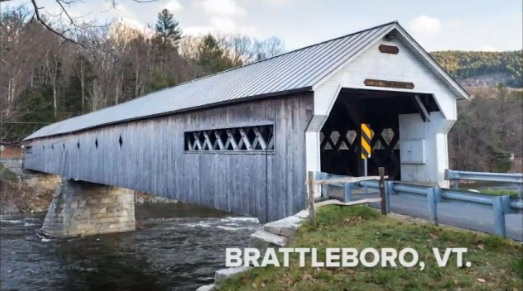
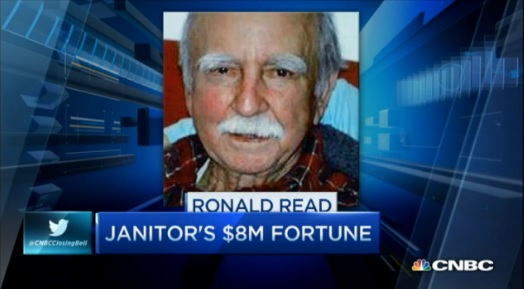
CU Blog - Getting Rich Slowly in the Caribbean - Photo 2Reuters; Friday, 6 Feb 2015 – Perhaps the only clue that Ronald Read, a Vermont gas station attendant and janitor who died last year at age 92, had been quietly amassing an $8 million fortune was his habit of reading the Wall Street Journal, his friends and family say.

It was not until last week that the residents of Brattleboro would discover Read’s little secret. That’s when the local library and hospital received the bulk of his estate, built up over the years with savvy stock picks. “Investing and cutting wood, he was good at both of them,” his lawyer Laurie Rowell said on Wednesday, noting that he read the Journal every day.

Most of those who knew Read, described as a frugal and extremely private person, were aware that he could handle an axe. But next to no one knew how well he was handling his financial portfolio.

Read, the first person in his family to graduate from high school, dressed in worn flannel shirts and spent his free time scavenging for fallen branches for his home wood stove. He drove a second-hand Toyota Yaris.

“You’d never know the man was a millionaire,” Rowell said. “The last time he came here, he parked far away in a spot where there were no meters so he could save the coins.”

CU Blog - Getting Rich Slowly in the Caribbean - Photo 1Read graduated from Brattleboro High School in 1940 and during World War II served in North Africa, Italy and the Pacific theater. Returning home, he worked at Haviland’s service station and then as a janitor at a JCPenney store, marrying a woman with two children.

Before his death on June 2, 2014, Read’s only indulgence was eating breakfast at the local coffee shop, where he once tried to pay his bill only to find that someone had already covered it under the assumption he did not have the means, Rowell said.

Last week, Brooks Memorial Library and Brattleboro Memorial Hospital each received their largest bequests ever. Read left $1.2 million to the library, founded in 1886, and $4.8 million to the hospital, founded in 1904.

“It was a thunderbolt from the sky,” said the library’s executive director, Jerry Carbone. While a surprise, he said the gift made sense once he learned more about the quiet, shy library patron appropriately named Read.

“Being a self-made man with his investments, he recognized the transformative nature of a library, what it can do for people,” Carbone said.

Read’s stepchildren survive him but were not immediately available for comment.

VIDEO 1: – Investing like Vermont’s secret millionaire stock-picker – http://video.cnbc.com/gallery/?video=3000353159

VIDEO 2: – Janitor’s $8 million fortune – http://video.cnbc.com/gallery/?video=3000353167

In a previous blog/commentary, it was reported that the US does not make a good role model for its administration of the elderly. The American standard is to delegate elderly family care to professionals, rather than to family, and that this is not an example we want in our region; the referenced quotation was entitled 10 Things We Do Not Want from the US:

# 7: Family Abandonment – Senior Living Facilities are a big industry in the US. This is due to the family habit of abandoning elderly parents to the care of professional strangers. The Caribbean way traditionally is to house their Senior Citizens with families, whether the economics apply or not.

On the other hand, we do admire the US capital markets, as the Go Lean book reports that Wall Street is the most liquid in the world (Page 200). So among the 10 Things We Want from the US, American capital is prominent:

# 3: Capital – There are many Financial Centers around the world (London, Zurich, Hong Kong, etc.) but none with the liquidity like Wall Street. They have the capital the Caribbean needs for Direct Foreign Investments. After the 2008 Financial Crisis, the US Federal Reserve Banks have maintained a policy of flooding the money supply to keep the cost of capital (borrowing) low.

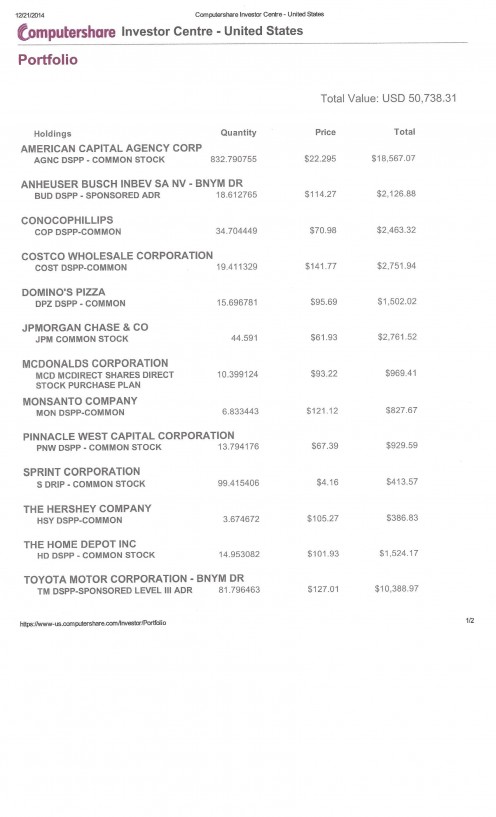
The roadmap uses the model of Wall Street to structure more robust investment vehicles in the regional Caribbean securities markets – the book identifies 9 exchanges. Imagine this one great US product that a Caribbean Diaspora member, a CPA, Clifton Rodriquez, strongly campaigns for: Dividend Re-Investment Plans or DRIPs. His blog entry is attached in the Appendix with his strong urging.

The Go Lean book describes this heavy-lifting to empower Caribbean society to prepare for change and challenges that confront modern financial management, for the macro (national economy) and the micro (individuals and families). There is no “get rich quick” scheme in the roadmap, but rather a comprehensive plan for all Caribbean stakeholders to “get rich slowly” and ensure economic success at home, “prospering where they are planted”. The book describes the turn-by-turn directions for all the community stakeholders to follow to reach the 3 goals defined as the CU/Go Lean prime directives:

  • Optimization of economic engines in order to grow the regional economy to $800 Billion and create 2.2 million new jobs.
  • Establishment of a security apparatus to protect the resultant economic.
  • Improvement of Caribbean governance to support these engines.

The Go Lean roadmap calls for the emergence of the Caribbean Dollar (C$) managed by a regional technocratic Caribbean Central Bank. This structure allows for more liquidity in the existing stock exchanges in the regions. Products like DRIPs can be successfully promoted and regulated under the Go Lean’s vision for a more robust regional capital/securities market using Caribbean Dollars (C$).

The CU also embarks on a mission to encourage repatriation of the Diaspora back to the Caribbean homeland and assuage societal abandonment. The book asserts that, senior citizens should avoid the cold climates of North American and EU, especially in the winter months:

“Come in from the cold” – Song title of Caribbean Music Icon Bob Marley from 1980 Album Uprising.

The Go Lean/CU roadmap portrays the need for public messaging to encourage savings/investments, describing deferred gratification as a community ethos that is required to forge permanent change in the Caribbean homeland. In addition, these additional ethos, strategies, tactics and advocacies are trumpeted in the book to optimize financial/retirement planning:

Ethos – Deferred Gratification Page 21
Ethos – People Respond to Incentives in Predictable Ways Page 21
Ethos – Consequences of Choices Lie in the Future Page 21
Ways to Impact the Future Page 26
Ways to Better Manage Debt Page 114
Reasons to Repatriate Page 118
Ways to Control Inflation Page 153
Lessons from New York City – Wall Street Power Page 137
Ways to Improve Communications – Messaging Page 186
Reforms for Banking Regulations – Central Banking Page 199
Ways to Impact Wall Street Page 200
Ways to Impact Retirement Page 231
Ways to Improve Elder-Care Page 225

There are many Go Lean blog commentaries that previously stressed the dynamics of technocratic management of regional finances, at the micro level and at the macro level for the Greater Good of Caribbean communities. See sample here:

https://goleancaribbean.com/blog/?p=2930 ‘Too Big To Fail’ – Caribbean Version
https://goleancaribbean.com/blog/?p=2830 Jamaica’s Public Pension Under-funded
https://goleancaribbean.com/blog/?p=1433 Caribbean loses more than 70 percent of tertiary educated to brain drain
https://goleancaribbean.com/blog/?p=949 Inflation Matters
https://goleancaribbean.com/blog/?p=665 Great Investment Vehicle – Real Estate Investment Trusts explained
https://goleancaribbean.com/blog/?p=510 Canadian Retirees – Florida’s Snowbirds Chilly Welcome
https://goleancaribbean.com/blog/?p=467 Barbados Central Bank records $3.7m loss in 2013
https://goleancaribbean.com/blog/?p=372 Dominica Government raises EC$20 million on regional capital market
https://goleancaribbean.com/blog/?p=364 Time Value of Money – The basis for retirement planning
https://goleancaribbean.com/blog/?p=360 How to Create Money from Thin Air
https://goleancaribbean.com/blog/?p=273 10 Things We Want from the US: #3 – American Investment Options

The book Go Lean…Caribbean posits that many problems of the region are too big for any one member-state to solve alone, that there is the need for the technocracy of the Caribbean Union Trade Federation. The purpose of this Go Lean/CU roadmap is to make the Caribbean homeland, a better place to live, work, learn and play. This effort is more than academic; this involves many practical mitigations and heavy-lifting. While this charter is not easy, it is worth all effort.

The roadmap posits that to succeed as a society, the Caribbean region must arrange for economic, security and governance solutions. Any failure in this regard results in immediate abandonment – people leave – this undermines any empowerment efforts. We need to keep our people at home: the older retirees and the younger workers; they are all important for pension plans and actuarial tables.

Now is the time for all of the Caribbean, the people and governing institutions, to lean-in for the changes/empowerments described in the book Go Lean … Caribbean. We must all be able to prosper where we are planted at home.

Download the book Go Lean … Caribbean – now!

———-

APPENDIX – Successful Retirement Investment in the Caribbean – DRIPs

Title: Drip-a Proven Approach to Wealth Building
(Retrieved from: http://cliftonhrodriquez.hubpages.com/hub/DRIP-A-PROVEN-APPROACH-TO-WEALTH-BUILDING)
By: Clifton H. Rodriquez

What Are DRIPS?
Direct stock and dividend reinvestment plans, or to use the acronym, DRIP’s have been around for some eighty (80) years. As the name suggests, they permit investors to directly invest in any a significant number of public companies without going through a stock broker. Investors are able to buy stocks directly from the companies, or via a transfer agent. In general, the purchase would entail a modest down payment coupled with automatic monthly payments. The term “IRM 72’s” is also used to describe DRIPs. The two names are one in the same and should not be viewed as different investment vehicles.

CU Blog - Getting Rich Slowly in the Caribbean - Photo 3

WEALTH BUILDING OVER TIME
As aforementioned, DRIP’s maybe referred to as IRM 72’s as well. They are an efficient and effective mechanism for building substantial financial nest-eggs over time. They are efficient investment vehicles because they allow investors to pay a small investment fee, usually for administrative purposes, while investing substantially more of their money in a particular stock. In some cases, a number of companies will cover some of the administrative fees, especially ones involving reinvestment of dividends, associated with DRIP investing. It is a fact that even discount brokers cannot match the low costs associated with DRIP investing. Furthermore, greater efficiency is realized with DRIPs due to “dollar cost average” associated with purchasing risk assets (stocks) over time. In a nutshell, investors are able to acquire more of a particular stock when the market price declines, but less when the price increases. However, over the extended period of time, the actual costs averages out.

It is an effective mechanism because unlike investing lump sums of money and taking greater risk, DRIPs allow for gradual investing over time and investors tend not to feel the pain of the volatility that often arises from time to time in the market. Thus, DRIP investors are less likely to panic and pull money out of their DRIP portfolios whenever bad news hits the market and causes chaos and panic (i.e., the root cause of volatility in the stock market). DRIP investors tend to appreciate market dips because they view them as opportunities to pick up their stocks at bargained prices. Picking up the stocks at these bargained prices tend to add to DRIP investors capital appreciation whenever other investors return to the stock market and chase stocks to higher prices. This is merely one way in which DRIP investors make money on their investments, and the other way is in effect “icing on the cake”.

DRIP investors experience icing on their investment cakes from the high dividend yields that they get from their investments. It is not inconceivable for DRIP stocks to give dividend yields as high sixteen (16%) percent. The yield is determined by taking the annual dividend and dividing it by current market price. Of course the higher the annual dividend, and the lower the current stock price, the greater the dividend yield. The opposite also is true. Most DRIP stock pay quarterly dividends, but several also pay monthly dividends which provide a higher effective yield to investors. Even if a DRIP stock does not increase in market price, if it has a high single or double digit yield that maybe enough for investors to maintain their positions in the stocks. Thus, it is a rarity to see many of these stocks decline in value. Investors tend to chase them for their dividend yields.

Investors chase these stocks for their dividend yields because these yields tend to fuel geometric growth in DRIP accounts, especially when an investor re-invests their dividends (i.e., use their dividends to buy additional shares of stocks). The re-investment of the dividends coupled with automatic monthly investment tend to bring about a profound compounding effect in the DRIP accounts. This effect can only be described as geometric in nature, and the value of the account tend to quickly double in most cases over a short period of time. Thus, the dividend yield of any DRIP stock is very important. The higher the yield the less time it takes for the DRIP account to grow geometrically.

DRIPs are the only investment vehicle that can create a greater wealth effect. No other investment (i.e., real estate or anything else) is more effective at creating wealth than investing in stocks. However, only forty nine (49%) of Americans are actively trading stocks (December 2014 Issue of “DRIP Investor”). Thus, 51% of Americans have their money tied up in other investment vehicles like real estate, or in most cases, institutions (i.e., banks or insurance companies). Thus, the wealth gap will continue to widen as long as a minority of Americans is invested in the stock market. Why? Again, the US Stock Market creates more millionaires and billionaires than any other investment institution. The stock market, in effect, provides an effective way in which US and other investors can not only stay abreast of inflation, but soundly beat inflation.

Unfortunately, the majority of Americans will not beat inflation. They will continue to receive negative real returns on their investments because many of them simply do not understand “time value of money”. They are convinced that banks and insurance companies are the safest places for their money, despite the fact that banks in general pay as little as a 1/2 of one percent return on passbook savings, while insurance companies will pay about two point five (2.5) percent on their best financial vehicles (annuities). Treasury bonds yields are somewhere in between what a bank will pay on its passbook savings and certificate of deposit (COD) account. The dividend yield pickings are slight to none whenever investors look at alternative investments to the stock market. According to time value of money (future value of a lump sum and future value of an annuity), money will not grow well whenever simple interest is paid. Thus, banks and insurance companies are simply middlemen which must be cut out of the equation if an investor wants to realize geometric growth (compounding effect).

In most cases, the banks and insurance companies simply take the very dollars that investors entrust to them, and lend them out to other customers (in form of secured loans) at much higher rates. The banks in particular cannot directly invest depositors dollars into the US Stock Market, and they do have to maintain certain reserve balances in accordance with the Feds’ guidelines and regulations. Nevertheless, these banks and insurance companies, collectively known as institutional investors, do move the Markets with the huge amount of dollars that they invest in stocks. They realize tremendous returns, but continue to pay nominal returns on their passbook savings and CODs. They get away with it because 51% of American investors fear investing their money in the stock market. They believe that their money is “safe” in a bank because the banks will claim that they are “FDIC” insured up to $250,000.00 per bank account. This insurance actually comes from the American Taxpayer who ultimately foots the bill for any failed commercial depository, or savings and loans. This was the case in 1989-1991 when the U.S. taxpayers bailed out the savings and loans industry. What the banks do not tell their customers is that they are actually getting negative real returns on their passbook savings and COD accounts. Why is that? If inflation is running at 2.5% in the U.S.,and the banks are merely paying a half (1/2) of one (1) percent, then it stands to reasons that most investors are losing purchasing power by keeping their money in a passbook savings or COD account.

A bank customer will not experience any degree of wealth by simply putting money in a passbook savings or COD account. As a matter of fact, given time value of money concepts, it would be better for a bank customer to keep their money under their mattress, given the negative returns that they experience by putting it in a passbook saving or COD account. The only real way to build any meaningful wealth over time is by investing directly into stocks. Stocks are risk assets, but given the fact that the US Stock Market is down roughly 20% to 25% of the time and up 75% to 80% of the time, it is a “no-brainer” for investors to stay in the stock market, especially if their investment time horizon is long-term (1-30 years). It is a fact that substantial wealth in the stock market can be built over time with consistent investing and reinvesting of dividends and capital gains. Unfortunately for the 51% of Americans who look to bank and insurance companies, the stock market is the only profitable game in town.

Anyone, even workers on minimum wages, can invest in the stock market via DRIP investing. This author started a DRIP portfolio back on November 1, 2012 with four stocks, AGNC, COP, COST, and TM (see below for details). The initial investment over the one year period amounted to $6,500.00. As of October 31, 2013, the DRIP Portfolio grew by five (5) additional stocks and had an accumulated market value of $13,078. The estimated return during the first year of investment was roughly 52.6%, most of the return came from the performance of Toyota Motor Corporation (TM), ConocoPhillips Corporation (COP) and JP Morgan Chase Bank (JPM) Over the next one year period that it grew to 15 stocks (AFLAC is not clearly shown in the depiction). Additional capital investment totaled $15,000, but most of the growth resulted from re-investment of dividends and capital gains. As of the close of the stock market on December 19th, 2014 the value of the author’s DRIP Portfolio is $50,700 plus. By this time next year (i.e., December 20, 2015), the projected value of the Portfolio will be around $80,000 to $85,000, given that the same investment strategy will be maintained, and additional capital investment of $15,000 to 20,000 will be made in American Capital Agency Corporation (AGNC), which has an effective dividend yield of 11.5%, a net book value of $25.25.

Investing in the U.S. Stock Market, or any of the capital markets entails considerable risk. Any potential investor exposing their capital to these markets need to do their homework prior to buying risk assets. This homework may entail in depth consultation with financial and investment advisers prior to any funds being committed to risk assets. An investor should never under any circumstances expose capital to the markets if they cannot afford to lose said capital. A potential investor should never rely solely upon anything that is written in this article, or any other article as the only source of prudent investment advice and basis for any decision making. Again, a proper research and consultation coupled with professional investment advice from reliable source should govern any investment decisions, regardless of the amount of capital involved, or the investment strategy employed.

My DRIP Portfolio

CU Blog - Getting Rich Slowly in the Caribbean - Photo 4

Share this post:
, , , , ,
[Top]

Caribbean Ghost Towns: It Could Happen…Again

Go Lean Commentary

The Caribbean is in crisis today; but even more so, if left unchecked, the crisis gets worst tomorrow (near future). We are at the point, and have been here for some time, where we are completely dysfunctional as a society; we are at the precipice. How else would one explain why citizens from the most beautiful addresses on the planet are “breaking down the doors” to get out, either through legal means or illegal ones?

“Things will always work themselves out” – Popular fallacy.

There is no guarantee of our survival. Communities and societies do fail; success is not assured; the work must be done, we must “sow if we want to reap”.

The reality of ghost towns, in the Caribbean and around the world, is a reminder to failing communities of where the road ends. Consider the definition of ghost towns here:

A ghost town is an abandoned village, town or city, usually one which contains substantial visible remains. A town often becomes a ghost town because the economic activity that supported it has failed, or due to natural or human-caused disasters such as floods, government actions, uncontrolled lawlessness, war, or nuclear disasters. The term can sometimes refer to cities, towns, and neighborhoods which are still populated, but significantly less so than in years past; for example those affected by high levels of unemployment and dereliction.[1]

CU Blog - Caribbean Ghost Towns - It Could Happen - Photo 1

Some ghost towns, especially those that preserve period-specific architecture, have become tourist attractions. Some examples are Bannack, Montana; Calico, California; Centralia, Pennsylvania; and Oatman, Arizona in the United States; Barkerville, British Columbia in Canada; Craco in Italy; ElizabethBay and Kolmanskop in Namibia; and Pripyat in Ukraine. Visiting, writing about, and photographing ghost towns is a minor industry. A recent modern-day example is Ōkuma, Fukushima, which was abandoned due to the Fukushima Daiichi nuclear disaster in 2011. (Also see Battleship or Hashima Island in the Appendix-VIDEO below).

There is a ghost town that is an incumbent de jure capital: Plymouth in the Caribbean island of Montserrat*. This city was abandoned in 1997 due to volcanic eruptions and is now part of an Exclusion Zone.

CU Blog - Caribbean Ghost Towns - It Could Happen - Photo 2

CU Blog - Caribbean Ghost Towns - It Could Happen - Photo 6
(Source: http://en.wikipedia.org/wiki/Ghost_town retrieved February 11, 2015)

The book Go Lean … Caribbean stresses reboots, reorganizations and general turn-around of failing economic engines in favor of winning formulas. The book quotes a noted American Economist Paul Romer with this famous quotation:

“A crisis is a terrible thing to waste”.

The encyclopedic reference of ghost towns continues:

Ghost towns may result when the single activity or resource that created a boomtown (e.g., nearby mine, mill or resort) is depleted or the resource economy undergoes a “bust” (e.g., catastrophic resource price collapse). Boomtowns can often decrease in size as fast as they initially grew. Sometimes, all or nearly the entire population can desert the town, resulting in a ghost town.

The dismantling of a boomtown can often occur on a planned basis. Mining companies nowadays will create a temporary community to service a mine site, building all the accommodation shops and services, and then remove it as the resource is worked out. A gold rush would often bring intensive but short-lived economic activity to a remote village, only to leave a ghost town once the resource was depleted.

In some cases, multiple factors may remove the economic basis for a community; some former mining towns on U.S. Route 66 suffered both mine closures when the resources were depleted and loss of highway traffic as US 66 was diverted away from places like Oatman, Arizona onto a more direct path.

The Middle East has many ghost towns that were created when the shifting of politics or the fall of empires caused capital cities to be socially or economically non-viable, such as Ctesiphon, (a once great city of ancient Mesopotamia; today’s modern-day Iraq, Kuwait, and the northeastern section of Syria).

The Go Lean book posits that many Caribbean communities suffer from a mono-industrial complex (Page 3), therefore the risk is high for the same ghost town eventuality like so many other towns have experienced. Yes, ghost towns could happen in the Caribbean … again.

In fact, the 2nd city in the Bahamas, Freeport, on the island of Grand Bahama is experiencing a sharp decline in it’s economic output – where tourism is the primary industry – calculated at 66 percent decline from 2004 to 2013 for air arrivals. They are now near a failed-city status.

CU Blog - Caribbean Ghost Towns - It Could Happen - Photo 11Freeport’s tourism, which used to top over a million visitors a year – with air arrivals and cruise passengers – has considerably diminished since 2004, when two major hurricanes, Hurricane Frances and Hurricane Jeanne, hit the island; then the following year (2005), Hurricane Wilma reiterated more destruction to Freeport’s economic engines – many hotels shuttered their doors for good. Since then, several cruise ships also stopped their weekly visits to the island. Much of the remaining tourist industry is centered on the seaside suburb of Lucaya; in fact the city is often promoted as Freeport/Lucaya. Most remaining hotels on the island are located along the southern shore in Lucaya. The primary shopping venues for tourists used to be the popular International Bazaar near downtown Freeport, but now the focus has shifted to the Port Lucaya Marketplace, an outdoor mall-like complex near the beach-side hotel-resorts.

What of the current disposition of the International Bazaar in the downtown area? Unfortunately, the adjoining hotel-casino-resort, Royal Oasis, closed after the above hurricanes and never re-opened.  A local Bahamas photography magazine thusly dubbed the International Bazaar as a “ghost town”. (Retrieved February 11, 2015; article entitled: “The International Bazaar – The Lost Shopping Mecca”):

What happened to this marvelous structure? I do not know. What is its fate? I still do not know. What I do know: it is a sad day when one of the Bahamas’ greatest attractions has been reduced to a ghost town.  What I can tell you is that it seems as if the excitement has moved from the Bazaar to Port Lucaya. It is now the New Shopping Mecca of Grand Bahama.

Photo Caption: Freeport’s International Bazaar in it’s “Hey Day”

CU Blog - Caribbean Ghost Towns - It Could Happen - Photo 7

CU Blog - Caribbean Ghost Towns - It Could Happen - Photo 3

Photo Caption: Freeport’s International Bazaar Ghost Town Today

CU Blog - Caribbean Ghost Towns - It Could Happen - Photo 9

CU Blog - Caribbean Ghost Towns - It Could Happen - Photo 4

CU Blog - Caribbean Ghost Towns - It Could Happen - Photo 5

See TripAdvisor.com comments of disappointed visitors:

CU Blog - Caribbean Ghost Towns - It Could Happen - Photo 8

CU Blog - Caribbean Ghost Towns - It Could Happen - Photo 10

In fact, many more comments abound on the internet with “ghost town” comparisons for Freeport.

Freeport must now reboot, or face the eventuality: Ghost Town!

This sad reality of Montserrat and Freeport is an omen for the rest of the Caribbean.

The book Go Lean … Caribbean serves as a roadmap for the introduction and implementation of the technocratic Caribbean Union Trade Federation (CU). The CU is structured to turn-around failing Caribbean communities; it is proffered to provide economic, security and governance solutions for all 30 member Caribbean states, including Montserrat and Freeport. This mandate is detailed early on in the book’s Declaration of Interdependence, as follows (Page 12 & 13):

xii. Whereas the legacy in recent times in individual states may be that of ineffectual governance with no redress to higher authority, the accedence of this Federation will ensure accountability and escalation of the human and civil rights of the people for good governance, justice assurances, due process and the rule of law. As such, any threats of a “failed state” status for any member state must enact emergency measures on behalf of the Federation to protect the human, civil and property rights of the citizens, residents, allies, trading partners, and visitors of the affected member state and the Federation as a whole.

xix. Whereas our legacy in recent times is one of societal abandonment, it is imperative that incentives and encouragement be put in place to first dissuade the human flight, and then entice and welcome the return of our Diaspora back to our shores. This repatriation should be effected with the appropriate guards so as not to imperil the lives and securities of the repatriated citizens or the communities they inhabit…

The Go Lean book posits that failing Caribbean communities can be rescued, that if “we do what we have always done, we get what we have always got”. Therefore Caribbean communities must adopt different community ethos, plus the executions of key strategies, tactics, implementations and advocacies to bring about change, empowerment and turn-around . The following is a sample:

Community Ethos – Economic Principle – Economic Systems Influence Choices & Incentives Page 21
Community Ethos – Economic Principle – Voluntary Trade Creates Wealth Page 21
Community Ethos – Job Multiplier Page 22
Community Ethos – Lean Operations Page 24
Community Ethos – Ways to Impact the Future Page 26
Community Ethos – Ways to Help Entrepreneurship Page 28
Community Ethos – Ways to Impact Turn-Around – Recycling and Demolition Industries Page 33
Community Ethos – Ways to Impact the Greater Good Page 37
Strategy – Mission – Foster Local Economic Engines to Diversify the Economy Page 45
Tactical – Fostering a Technocracy Page 64
Tactical – Tactics to Forge an $800 Billion Economy – High Multiplier Industries Page 70
Tactical – Separation of Powers – Meteorological and Geological Service Page 79
Tactical – Separation of Powers – Self-Governing Entities Page 80
Implementation – Steps to Implement Self-Governing Entities Page 105
Implementation – Ways to Re-boot Freeport Page 112
Planning – Big Ideas – Virtual “Turnpike” Operations to Ensure Continued Relevance Page 127
Planning – Ways to Make the Caribbean Better Page 131
Planning – Ways to Improve Failed-State Indices Page 134
Planning – Lessons from East Germany Page 139
Planning – Lessons from Detroit – Model of City needing Turn-around Page 140
Advocacy – Ways to Grow the Economy Page 151
Advocacy – Ways to Create Jobs Page 152
Advocacy – Ways to Better Improve for Natural Disasters – Volcanoes and Hurricanes Page 184
Advocacy – Ways to Improve Emergency Management – Casualty Insurance to Rebuild Page 196
Advocacy – Ways to Impact Main Street Page 201
Appendix – Job Multipliers Page 259

Natural disasters are an inevitability in the Caribbean: earthquakes, volcanoes and hurricanes. We must insure and assure the business continuity of our communities’ economic engines. To recover, rebuild and reboot communities like Montserrat and Freeport after disasters, the burden or heavy-lifting should be spread across the full region, as leverage for all 30 member-states.

In order to avoid the pitfalls and eventuality of “ghost towns”, communities must diversify their economy. The Go Lean book also describes this heavy-lifting effort to facilitate this goal. The book describes the turn-by-turn directions for all the community stakeholders to follow to reach this goal, categorizing the effort as these 3 prime directives:

  • Optimization of economic engines in order to grow the regional economy to $800 Billion and create 2.2 million new jobs.
  • Establishment of a security apparatus to protect the resultant economic.
  • Improve Caribbean governance to support these engines.

In summary, ghost towns abound throughout the world, (see Appendix-VIDEO below), and can happen again here in the Caribbean region. A mono-industrial economy is bad; disaster  remediation and mitigations are good; diversity is good!

The CU will take the lead … for optimizing economic, security and governing engines. (Starting with a diversification from tourism). Everyone is hereby urged to lean-in to this CU/Go Lean roadmap to make the Caribbean a better place to live, work and play.  🙂

Download the book Go Lean … Caribbean – now!

———

Appendix*Plymouth, Montserrat

Montserrat is a British Overseas Territory located in the Caribbean. The island is located in the Leeward Islands chain of islands.[2] Montserrat is nicknamed The Emerald Isle of the Caribbean both for its resemblance to coastal Ireland and for the Irish ancestry of some of its inhabitants.[3]

Plymouth was the capital of the island of Montserrat. For centuries it had been the only port of entry to the island. On 18 July 1995, the previously dormant Soufrière Hills volcano, in the southern part of the island, became active.  Eruptions destroyed this Georgian era capital city and two-thirds of the island’s population was forced to flee.[6] The town was overwhelmed and was abandoned. The volcanic activity continues, even today, mostly affecting the vicinity of Plymouth, including its docking facilities, and the eastern side of the island around the former W.H. Bramble Airport, the remnants of which were buried by flows from volcanic activity on 11 February 2010.

An Exclusion Zone that extends from the south coast of the island north to parts of the BelhamValley was imposed because of the size of the existing volcanic dome and the resulting potential for pyroclastic activity. Visitors are generally not permitted entry into the exclusion zone, but an impressive view of the destruction of Plymouth can be seen from the top of Garibaldi Hill in IslesBay. Relatively quiet since early 2010, the volcano continues to be closely monitored by the Montserrat Volcano Observatory.

A new town and port is being developed at Little Bay, which is on the northwest coast of the island. While this construction proceeds, the centre of government and businesses rests new Village of Brades in the northen extremes of the island.

(Source: http://en.wikipedia.org/wiki/Montserrat retrieved February 11, 2015)

———

VIDEO: Battleship Island: Japan’s Ultimate Ghost Town – http://youtu.be/wHbQMhmsGPc

Uploaded on Dec 30, 2011 – This island – also known as Hashima Island is among the Japanese chain – sits 9 miles off the coast of Nagasaki. It was the administrative and residential base for undersea coal mines. As a ghost town it serves as a filming location for many projects, including serving as the inspiration for the external filming sets for the film Skyfall  – James Bond 007. For more stunning images of this Holy Grail of all industrial ruins, see: https://www.flickr.com/photos/picturenarrative/sets/72157628124548378/with/6388285131/


Share this post:
, , , , , ,
[Top]

A Lesson in History – Panamanian Balboa

Go Lean Commentary

America has surely changed over the past century!

The people, institutions and governance of the US are now more tolerant of minorities and their communities. As such, there are no more American complexities in overthrowing Latin American & Caribbean governments.

Wink-wink

This hypothesis is validated with the lesson in history from 1941 in the Republic of Panama. This Central American country is a young nation; they were formed in 1903 after seceding from the Republic of Colombia, with US backing. The new country immediately signed a treaty with the US to allow the construction of the Panama Canal, by the US Army Corps of Engineers, and a perpetual lease* for its operations. The country’s separation from Colombia also included changing from the Colombian Peso currency. So in 1904 the Panamanian Balboa currency was launched, but as coins only; the country used the US Dollar as banknotes.
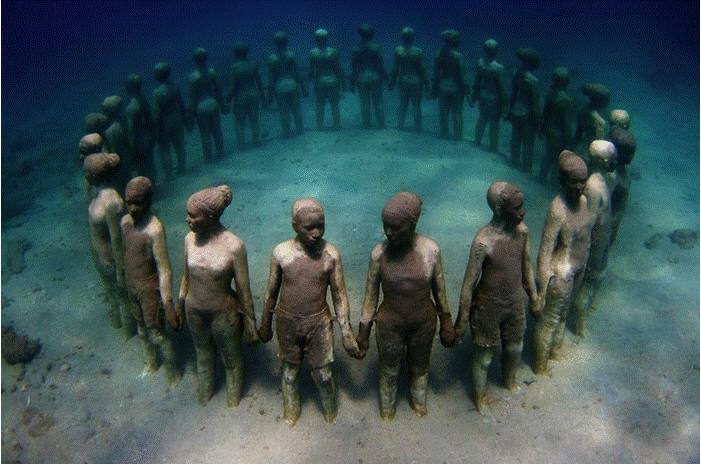
A basic tenant of macro-economics is that countries should issue their own currency and banknotes so as to better influence the economic engines in their communities. By manipulating the banknote quantity and the “Discount Rate” in a Fractional Central Banking System, monetary supply can be regulated, interest rates controlled; credit markets tamed; and yes, money can be created from “thin air”. Panama had none of this control, due to its lack of banknotes.

In 1941, the then-President Dr. Arnulfo Arias pushed the government to create the Central Bank and to issue paper currency. [2] The bank was authorized, constitutionally, to issue up to 6 million Balboas worth of paper notes, but only 2.7 million Balboas were issued on 2 October 1941. Seven days later, Arias was deposed in a military coup – supported by the United States – and replaced by Dr. Ricardo Adolfo de la Guardia Arango as President. The new government immediately closed the bank, withdrew the issued notes, and burned all unissued money stock. In the 74 years since then, the country has never re-attempted to issue its own paper money currency; they continue to use US Dollars, even today.

A bit extreme?

This lesson in history is presented in a consideration of the book Go Lean…Caribbean; it serves as a roadmap for the introduction and implementation of the technocratic Caribbean Union Trade Federation (CU) and Caribbean Central Bank (CCB) to provide better stewardship in ensuring that the currency and economic failures of the past, in the Caribbean and other regions, do not re-occur here in the homeland. The book posits that we must NOT fashion ourselves as an American parasite economy, but rather pursue a status as a protégé.

The full details of the Panamanian Balboa history is provided here:

Title: Panamanian Balboa
(Source: Wikipedia Online Encyclopedia (Retrieved 02/09/2015) – http://en.wikipedia.org/wiki/Panamanian_balboa)

The Balboa (sign: B/.; ISO 4217: PAB) is, along with the United States dollar, one of the official currencies of Panama. It is named in honor of the Spanish explorer / conquistador Vasco Núñez de Balboa. The Balboa is subdivided into 100 centésimos.

The history of the Panamanian Balboa

The Balboa replaced the Colombian Peso in 1904 following the country’s independence. The Balboa has been tied to the United States dollar (which is legal tender in Panama) at an exchange rate of 1:1 since its introduction and has always circulated alongside dollars.

Coins

In 1904, silver coins in denominations of 2½, 5, 10, 25, and 50 centésimos were introduced. These coins were weight-related to the 25 gram 50 centésimos, making the 2½ centésimos coin 1¼ grams. Its small size led to it being known as the “Panama pill” or the “Panama pearl”. In 1907, copper-nickel ½ and 2½ centésimos coins were introduced, followed by copper-nickel 5 centésimos in 1929. In 1930, coins for 110, ¼, and ½ Balboa were introduced, followed by 1 balboa in 1931, which were identical in size and composition to the corresponding U.S. coins. In 1935, bronze 1 centésimo coins were introduced, with 1¼ centésimo pieces minted in 1940.

CU Blog - A Lesson in History - Panamanian Balboa - Photo 1

In 1966, Panama followed the U.S. in changing the composition of their silver coins, with copper-nickel clad 110 and ¼ Balboa, and .400 fineness ½ Balboa. 1 balboa coins, at .900 fineness silver, were issued that year for the first time since 1947. In 1973, copper-nickel clad ½ Balboa coins were introduced. 1973 also saw the revival of the 2½ centésimos coin, which had a size similar to that of the U.S. half dime, but these were discontinued two years later due to lack of popular demand. In 1983, 1 centésimo coins followed their U.S. counterpart by switching from copper to copper plated zinc. Further issues of the 1 Balboa coins have been made since 1982 in copper-nickel without reducing the size.

Modern 1 and 5 centésimos and 110, ¼, and ½ balboa coins are the same weight, dimensions, and composition as the U.S. cent, nickel, dime, quarter, and half-dollar, respectively. In 2011, new 1 and 2 balboa bi-metal coins were issued.[1]

In addition to the circulating issues, commemorative coins with denominations of 5, 10, 20, 50, 75, 100, 150, 200, and 500 Balboas have been issued.

Banknotes

In 1941, President Dr. Arnulfo Arias pushed the government to enact Article 156 to the constitution, authorizing official and private banks to issue paper money. As a result, on 30 September 1941, El Banco Central de Emission de la Republica de Panama was established.[2]

CU Blog - A Lesson in History - Panamanian Balboa - Photo 2

The bank was authorized to issue up to 6,000,000 Balboas worth of paper notes, but only 2,700,000 balboas were issued on 2 October 1941. A week later, Dr. Ricardo Adolfo de la Guardia Arango replaced Arias as president in a coup supported by the United States. The new government immediately closed the bank, withdrew the issued notes, and burned all unissued stocks of same. Very few of these so-called “Arias Seven Day” notes escaped incineration.

Reference Notes:
1. http://worldcoinnews.blogspot.com/search/label/panama
2. Linzmayer, Owen (2012). “Panama”. The Banknote Book. San Francisco, CA: www.BanknoteNews.com.

Panama is out-of-scope of this Go Lean empowerment roadmap. They are not a member-state that caucuses with the Caribbean Community (CariCom), and they do not even have an “Observer” representation/status within the trade bloc. But since a part of their territory-coastline is on the Caribbean Sea, their dealings should generate review and monitoring from Caribbean planners. There are many issues for the Caribbean to consider  – from an academic point-of-view – about this history of Panama: an obvious failed-state as recent as the 1980’s.

Is the American manipulations in Panama’s past reflective of the same America today? The assumption is No! The US no longer draws such “hard lines” in their interactions with peoples of different ethnicity. The country has endured deep soul-searching and reconciliation of its racial past, (Civil Rights Movement, Affirmative Action, etc.), and now even the President of the United States is a Black Man. On the surface today, America is a color-blind society.

On the surface!

Behind the scenes, under the covers, there is another reality. The current American experience is that Black-and-Brown is still institutionally disadvantaged and Wall Street, and by extension “Big American Business”, wields uncanny power over the socio-economic-political affairs of the country. For this and other reasons, the Go Lean movement advocates for Caribbean people and institutions to take their own lead for their own determination. We want to be a protégé of the US, not a parasite.

The roadmap calls for a cooperative entity of the existing regional Central Banks to foster interdependence for the regional Greater Good. We must issue Caribbean banknotes, branded Caribbean Dollars (C$). The totality of the regional market, 42 million people in 30 member-states, is large enough to allow for streamlining of the marketplace, creating the right climate for viable currency/financial/securities markets. While there might be some reticence for liberal currency operations, considering that so many Caribbean member-states had to learn hard lessons on currency over the decades – painful devaluations – the CU is to be structured as a technocracy, with the right mix of skilled talent, gifted genius and independent oversight to allow regional C$ currency markets to soar.

The strategy is not a pro-American stance, no pegging to the US Dollar, therefore no losses will be experienced when the US dollar drops value compared to other international currencies, a far too frequent an occurrence in the last 50 years. The US Dollar planners (Federal Reserve) do not have the Caribbean best-interest in mind for their technocratic decisions regarding their currency management; they have American self-interest in mind. Therefore the Caribbean region must overcome any “fear of math” because the C$ may become stronger, (see VIDEO below), in comparison to the US$. This is why e-Commerce and e-Payments schemes are strongly urged within the CU/Go Lean roadmap.

In general, the CU will employ strategies, tactics and implementations to impact its prime directives; identified with the following 3 statements:

  • Optimization of the economic engines in order to grow the regional economy to $800 Billion & create 2.2 million new jobs.
  • Establishment of a security apparatus to protect the resultant economic engines and mitigate internal and external threats.
  • Improve Caribbean governance to support these engines.

Early in the Go Lean book, this need for careful technocratic stewardship of the regional Caribbean economy was pronounced (Declaration of Interdependence – Page 12 – 13) with these acknowledgements and statements:

xi.   Whereas all men are entitled to the benefits of good governance in a free society, “new guards” must be enacted to dissuade the emergence of incompetence, corruption, nepotism and cronyism at the peril of the people’s best interest. The Federation must guarantee the executions of a social contract between government and the governed.

xii.   Whereas the legacy in recent times in individual states may be that of ineffectual governance with no redress to higher authority, the accedence of this Federation will ensure accountability and escalation of the human and civil rights of the people for good governance, justice assurances, due process and the rule of law. As such, any threats of a “failed state” status for any member state must enact emergency measures on behalf of the Federation to protect the human, civil and property rights of the citizens, residents, allies, trading partners, and visitors of the affected member state and the Federation as a whole.

xxiv.   Whereas a free market economy can be induced and spurred for continuous progress, the Federation must install the controls to better manage aspects of the economy: jobs, inflation, savings rate, investments and other economic principles. Thereby attracting direct foreign investment because of the stability and vibrancy of our economy.

xxv.   Whereas the legacy of international democracies had been imperiled due to a global financial crisis, the structure of the Federation must allow for financial stability and assurance of the Federation’s institutions. To mandate the economic vibrancy of the region, monetary and fiscal controls and policies must be incorporated as proactive and reactive measures. These measures must address threats against the financial integrity of the Federation and of the member-states.

The Go Lean book, and previous blog/commentaries, stressed the key community ethos, strategies, tactics, implementations and advocacies necessary to regulate and manage the regional financial eco-system for the Caribbean currency. These points are detailed in the book as follows:

Community Ethos – Economic Principles – Economic Systems Influence Individual Choices Page 21
Community Ethos – Economic Principles – Consequences of Choices Lie in the Future Page 21
Community Ethos – Economic Principles – Money Multiplier Page 23
Community Ethos – Governing Principles – Lean Operations Page 24
Community Ethos – Ways to Impact the Future Page 26
Community Ethos – Ways to Impact the Greater Good Page 37
Strategy – Mission – Fortify the Stability of the Banking Institutions Page 45
Strategy – Provide Proper Oversight and Support for the Depository Institutions Page 46
Tactical – Ways to Foster a Technocracy Page 64
Tactical – Growing the Economy – Minimizing Bubbles Page 69
Tactical – Separation-of-Powers – Caribbean Central Bank Page 73
Tactical – Separation-of-Powers – Depository Institutions Regulatory Agency Page 73
Anecdote – Turning Around CARICOM – Effects of 2008 Financial Crisis Page 92
Implementation – Assemble Caribbean Central Bank as a Cooperative Page 96
Implementation – Ways to Better Manage Debt Page 114
Planning –10 Big Ideas – Single Market / Currency Union Page 127
Planning – Ways to Improve Failed-State Indices Page 134
Planning – Lessons Learned from 2008 Page 136
Planning – Ways to Measure Progress Page 147
Anecdote – Caribbean Currencies Page 149
Advocacy – Ways to Grow the Economy Page 151
Advocacy – Ways to Control Inflation Page 153
Advocacy – Reforms for Banking Regulations Page 199
Advocacy – Ways to Impact Wall Street Page 200
Advocacy – Ways to Impact Main Street Page 201
Appendix – Controlling Inflation – Technical Details Page 318
Appendix – Jamaica’s International Perception – “High inflation and currency dysfunction” Page 297

The points of effective, technocratic banking/economic stewardship of regional currencies, were further elaborated upon in these previous blog/commentaries:

https://goleancaribbean.com/blog/?p=3889 RBC EZPay – Ready for Change
https://goleancaribbean.com/blog/?p=3858 ECB unveils 1 trillion Euro stimulus program
https://goleancaribbean.com/blog/?p=3814 Lessons from the Swiss unpegging the franc
https://goleancaribbean.com/blog/?p=3743 Trinidad cuts 2015 budget as oil prices tumble
https://goleancaribbean.com/blog/?p=3582 For Canadian Banks: Caribbean is a ‘Bad Bet’
https://goleancaribbean.com/blog/?p=3090 Lessons Learned – Europe Sovereign Debt Crisis of 2009
https://goleancaribbean.com/blog/?p=2930 ‘Too Big To Fail’ – Caribbean Version
https://goleancaribbean.com/blog/?p=949 Inflation Matters
https://goleancaribbean.com/blog/?p=833 One currency, divergent economies
https://goleancaribbean.com/blog/?p=518 Analyzing the Data – What Banks learn about financial risks
https://goleancaribbean.com/blog/?p=378 US Federal Reserve Releases Transcripts from 2008 Meetings/Stimulus
https://goleancaribbean.com/blog/?p=273 10 Things We Don’t Want from the US – #3: Quantitative Easing

Similar to Panama, there are a number of Caribbean member-states that use the US dollar as their sole paper currency:

  • British Virgin Island
  • Turks & Caicos Islands
  • Dutch Caribbean Territories: Bonaire, Sint Eustatius and Saba
  • US Territories of Puerto Rico & US Virgin Islands

The Go Lean book reports that previous Caribbean administrations have failed miserably in managing regional currencies. Consider Jamaica for example, despite being pegged 1-to-1 with the US dollar in 1960’s, the J$ was trading at 87-to-1 with the US$ at press time for the book (November 2013). Other countries (like Trinidad, Dominican Republic, and the Eastern Caribbean Currency Union states) experienced similar turmoil, though at lesser rates of devaluation. The book opens with the declaration that the Caribbean is in crisis because of episodes like these currency failings. In every case, the direct after-effect was increased societal abandonment, and now the reported brain-drain rate is estimated at 70%, with some countries even reporting up to 81%. This disposition is symptomatic of a Failed-State status.

Currency management includes details of more than just the paper-money people carry in their wallets. The book describes the 4 basic functions of money:

  • a medium of exchange
  • a unit of account
  • a store of value
  • a standard of deferred payment

These dynamics have an effect on inflation/deflation and trade facilitation with other countries. So Central Banks must strenuously manage currency issues to ensure economic progress and avoid financial dysfunction. This point is conveyed in the following VIDEO, as regards the Central Bank management of the Chinese Yuan.

VIDEO: Pegging the Yuan – http://youtu.be/S-9iY1OgbDE

Uploaded on Oct 25, 2010 – How the Chinese Central Bank could peg the Yuan to the dollar by printing Yuan and buying dollars (building up a dollar reserve). This lesson in macro-economics can be applied to any Central Bank, any other currency.

There are so many currency issues that have to be coordinated that the Go Lean book describes the effort as heavy-lifting. The roadmap (Page 5) declares that change has come to the Caribbean, and that new technocrats are ready to assume oversight of regional currency issues:

Please swallow your pride
If I have things you need to borrow
For no one can fill those of your needs
That you won’t let show
You just call on me brother, when you need a hand

(Chorus)
We all need somebody to lean on
I just might have a problem that you’d understand
We all need somebody to lean on

(Lyrics of song: Lean On Me, by Singer/Songwriter: Bill Withers)

This is not the same world as 1941 Panama, but still there are many lessons to learn and apply in the Caribbean. The goal is simple, to move the region to a new destination: a better homeland to live, work and play. Now is the time for all of the Caribbean, the people, banking establishments and the governing institutions, to lean-in for the changes described in the book Go Lean … Caribbean.

🙂

Download the free e-Book of Go Lean … Caribbean – now!

———

* Appendix Footnote: Subsequent treaties added an expiration date for 1999; the Canal is now fully Panamanian.

Share this post:
, , , ,
[Top]

The African Renaissance Monument

Go Lean Commentary

The commentaries of the Go Lean…Caribbean blogs have often addressed the Caribbean Diaspora. But for many people of Caribbean heritage, they are a member of a larger Diaspora, the African Diaspora. Every Caribbean member-state – except for the French Territory Saint Barthélemy and the new Indo-Guyanese immigrant reality – has a majority population of Black or African ethnicity. So most people of the region have been affected by events that took place in Western Africa during the Atlantic Slave Trade. Any symbolism or artistic expression commemorating this historic sacrifice of Africa to the Caribbean genome should be acknowledged, promoted and celebrated.

This prominent statue in Dakar, Senegal, the African Renaissance Monument, is the epitome of such a symbolism.

 CU Blog - The African Renaissance Monument - Photo 1

CU Blog - The African Renaissance Monument - Photo 2

CU Blog - The African Renaissance Monument - Photo 3

This monument should be a World Heritage Site.

This subject aligns with the book Go Lean…Caribbean which details a plan to promote World Heritage Sites (Page 248) in the Caribbean region. The book also asserts that there are good economic returns to be harnessed by communities investing in regional artists and the eco-systems surrounding the business of the arts.

This commentary continues that pattern, established in the book. The following encyclopedic details provides a role model for how the Caribbean can further develop this industry space:

Title: African Renaissance Monument – Source: Wikipedia Online Encyclopedia (Retrieved 02/08/2015 from: http://en.wikipedia.org/wiki/African_Renaissance_Monument)

The African Renaissance Monument is a 49m tall bronze statue located on top of one of the twin hills known as Collines des Mamelles, outside of Dakar, Senegal. Built overlooking the Atlantic Ocean in the Ouakam suburb, the statue was designed by the Senegalese architect Pierre Goudiaby after an idea presented by president Abdoulaye Wade (in office from year 2000 to 2012) and built by Mansudae Overseas Projects, a company from North Korea.[1] Site preparation on top of the 100-meter high hill began in 2006, and construction of the bronze statue began 3 April 2008.[2] Originally scheduled for completion in December 2009, delays stretched into early 2010, and the formal dedication occurred on 4 April 2010, Senegal’s “National Day”, commemorating the 50th anniversary of the country’s independence from France.[3] It is the tallest statue in Africa.

CU Blog - The African Renaissance Monument - Photo 4

CU Blog - The African Renaissance Monument - Photo 5

Construction

The monument is made of 3-centimetre thick metal sheets and depicts a family group emerging from a mountaintop: a full-length statue of a young woman, a man, and held aloft on the man’s raised left arm, a child resolutely pointing west towards the sea. Construction of the bronze statue group was carried out by the North Korean firm Mansudae Overseas Project Group of Companies.[4]

The project was launched by then Senegalese president Abdoulaye Wade who considered it part of Senegal’s prestige projects, aimed at providing monuments to herald a new era of African Renaissance.

Unveiling

On 3 April 2010, the African Renaissance Monument was unveiled in Dakar in front of 19 African heads of state, including President of Malawi and the African Union Bingu wa Mutharika, Jean Ping of the African Union Commission and the Presidents of Benin, Cape Verde, Republic of Congo, Ivory Coast, Gambia, Liberia, Mali, Mauritania and Zimbabwe, as well as representatives from North Korea, and Jesse Jackson and musician Akon, both from the United States.[3][5] Everyone was given a tour.[3][5]

President Wade said “It brings to life our common destiny. Africa has arrived in the 21st century standing tall and more ready than ever to take its destiny into its hands”.[6] President Bingu said “This monument does not belong to Senegal. It belongs to the African people wherever we are”.[7]

Criticism

Expense
Thousands of people protested against “all the failures of [President] Wade’s regime, the least of which is this horrible statue” on the city’s streets beforehand, with riot police deployed to maintain control.[3] Deputy leader of the opposition Ndeye Fatou Toure described the monument as an “economic monster and a financial scandal in the context of the current [economic] crisis”.

The colossal statue has been criticized for its cost at US$ 27 million (£16.6m).[1] The payment was made in kind, with 30 to 40 hectares of land that will be sponsored by a Senegalese businessman.[8]

Style
Senegalese opposition leaders have also questioned the style of the project, labelling it “Stalinist“, while art critics have pointed out that the body shapes are cartoon-like, with only vaguely African facial features.[1] It has also been suggested that the monument is a stark representation of the macho sexism of African authoritarian rulers.[9] The statue’s design has been derided internationally because of false claims of its Senegalese origin, actually having been designed by a Romanian architect and built by a North Korean sculpting company famous for various projects and large statues throughout Africa since the 1970s.[10] It was a poorly received piece by art critics around the world after its much-delayed unveiling in 2010, and has been compared by some to the infamous (and now-abandoned) Christopher Columbus statue project that was underway in Cataño, Puerto Rico in the late 1990s and early 2000s.[11] Local Imams (Islamic Spiritual Leaders) argue that a statue depicting a human figure is idolatrous, and object to the perceived immodesty of the semi-nude male and female figures.[12]

In December 2009, president Abdoulaye Wade apologised to Senegal’s Christian minority for comparing the statue to Jesus Christ.[1]

Revenue
The project has also attracted controversy due to Wade’s claim to the intellectual property rights of the statue, and insisting that he is entitled to 35 percent of the profits raised.[12] Opposition figures have sharply criticized Wade’s plan to claim intellectual property rights, insisting that the president cannot claim copyright over ideas conceived as a function of his public office.[13][1]

Local artists
Ousmane Sow, a world-renowned Senegalese sculptor, also objected to the use of North Korean builders, saying it was anything but a symbol of African Renaissance and nothing to do with art.[14]

The book Go Lean…Caribbean is a economic elevation roadmap for the Caribbean, not Africa. But there are many lessons for the Caribbean to glean from this African Renaissance Monument project: good, bad and ugly. Whereas, this monument project does not have the economic impact of the Statue of Liberty in New York Harbor, it has potential.

This discussion of “art in the public domain” is not just academic. Community pride, jobs, and the growth of the regional economy is involved. This point aligns with the objectives of the Go Lean book, in that it serves as a roadmap for the introduction and implementation of the technocratic Caribbean Union Trade Federation (CU). This effort will harness the individual genius abilities (micro) of artists so as to elevate the arts and the economic impact on their related communities (macros). To glean these economic benefits, the charter for the regional “art world” must be bigger than just sculpture; it must also include paintings, fashion, music, film and performing arts (dance & theater). The CU will employ strategies, tactics and implementations to impact its prime directives, defined with the following 3 statements:

  • Optimization of the economic engines in order to grow the regional economy to $800 Billion & create 2.2 million new jobs.
  • Establishment of a security apparatus to protect the resultant economic engines.
  • Improve Caribbean governance to support these engines.

The Go Lean book identified this vision early in the book (Page 13 & 14) in the following pronouncements in the Declaration of Interdependence:

Preamble: As the history of our region and the oppression, suppression and repression of its indigenous people is duly documented, there is no one alive who can be held accountable for the prior actions, and so we must put aside the shackles of systems of repression to instead formulate efficient and effective systems to steer our own destiny.
As the colonial history of our region was initiated to create economic expansion opportunities for our previous imperial masters, the structures of government instituted in their wake have not fostered the best systems for prosperity of the indigenous people.

xxi.      Whereas the preparation of our labor force can foster opportunities and dictate economic progress for current and future generations, the Federation must ensure that educational and job training opportunities are fully optimized for all residents of all member-states, with no partiality towards any gender or ethnic group. The Federation must recognize and facilitate excellence in many different fields of endeavor, including sciences, languages, arts, music and sports. This responsibility should be executed without incurring the risks of further human flight, as has been the past history.

xxxiii.      Whereas the cultural arts and music of the region are germane to the quality of Caribbean life, and the international appreciation of Caribbean life, the Federation must implement the support systems to teach, encourage, incentivize, monetize and promote the related industries for arts and music in domestic and foreign markets. These endeavors will make the Caribbean a better place to live, work and play.

The foregoing African Renaissance Monument is on the Eastern side of the Atlantic; there is also a monument effort on the Western side of the Atlantic: the “Vicissitudes” and other features in the Moilinere Bay Underwater Sculpture Park in the waters off the Caribbean island of Grenada. The voyage across the Atlantic was referred to as the Middle Passage, a segment in the Slave Trade Triangle. Many victims, African captives designated to be sold in slavery, did not survive the Middle Passage. The Vicissitudes are in honor of the African Ancestors who were thrown overboard during the voyage; (retrieved from: http://en.wikipedia.org/wiki/Molinere_Underwater_Sculpture_Park).

1. “Vicissitudes” – According to the primary professional Artist, British Sculptor Jason de Caires Taylor:

“Vicissitudes depicts a circle of figures, all linked through holding hands. These are life-size casts taken from a group of children of diverse ethnic background. Circular in structure … the work both withstands strong currents and replicates one of the primary geometric shapes, evoking ideas of unity and continuum. … The sculpture proposes growth, chance, and natural transformation. It shows how time and environment impact on and shape the physical body. Children by nature are adaptive to their surroundings. Their use within the work highlights the importance of creating a sustainable and well-managed environment, a space for future generations.”

2. Amateur Projects – Cast student faces in the side of a large underwater stone: Theophilus Albert Marryshow Community College

In March 2007, a project was initiated with Helen Hayward of T.A. Marryshow Community College (Grenada) to produce a series of works for the Molinere sculpture park. Workshops were planned with A-level Art and Design students; (senior exams – General Certificate of Education or GCE – from the University of London). Each student was required to produce a life cast of their face, to form an installation two meters deep around the shoreline of Molinere Bay.

The project aimed to encourage local artists to contribute further works to the site and provide a arena for communities to appreciate and highlight the marine processes evident in their local environment.

The students were taught a range of skills including life-casting, cement casting and sculpting. The final pieces were installed by Jason [de Caires Taylor] on 25th April 2007.

CU Blog - The African Renaissance Monument - Photo 6

CU Blog - The African Renaissance Monument - Photo 7

The following news article relates the coverage received at the project’s implementation:

Title: Underwater Sculpture Park off Grenada is stunning and unique
Sub-title: Jason de Caires Taylor is an internationally recognized sculptor with a difference.
(Source: http://www.telegraph.co.uk/news/earth/environment/3538787/Underwater-sculpture-park-off-Grenada-is-stunning-and-unique.html)

December 1, 2008 – Instead of bleak urban backdrops for his creations, [artist Jason de Caires Taylor] has crafted a stunning and unique underwater sculpture park in the shallow waters off the West Indies island of Grenada.

His desire to create striking and meaningful art forms and his love of the underwater world led him to explore the intricate relationships between art and the environment.

For Grenada, this has resulted in a series of beautiful marine seascapes that have formed a series of artificial reefs, drawing new life into areas which have been damaged by nature’s raw power and mans intervention.

Jason discusses his work in a video interview with Miranda Krestovnikoff, one of the UK faces of a new global web TV channel, The Underwater Channel.

Miranda, also a BBC One Show / Coast presenter, explores Jason’s motivations and shows footage of his installations demonstrating the beauty of the structures and the way they interact with their environment. In some zones, the shifting sands of the ocean floor can change the whole viewing experience from moment to moment.

The sculptures are sited in clear, shallow waters to allow easy access by divers, snorkellers and those in glass-bottomed boats. Jason is keen to engage local people, particularly children, in his work to build a direct relationship with and understanding of their own precious natural resource.

The physical nature of the underwater world is vastly different from that of dry land. Objects appear 25 per cent larger underwater, and as a consequence they also appear closer. Colours alter as light is absorbed and reflected at different rates, with the depth of the water affecting this further.

The large number of angles and perspectives from which the sculptures can be viewed increase the unique experience of encountering the works.

His first work, Grace Reef, was built in a bay where the coral growth and natural habitat had been decimated by Hurricane Ivan. It comprises 16 statues, each cast from a local Grenadian woman.

Located across an expansive underwater area the work draws marine life to a zone that has suffered substantial and sustained storm damage. The direction and strengths of currents mean that entire sections of the work become covered, hidden and lost. At other times figures emerge and are fully visible.

Another major work is Vicissitudes comprising the extraordinary visual impact of a circle of 26 life-size children of diverse ethnic background, all holding hands and facing outwards.

The cement finish and chemical composition of Vicissitudes actively promotes the colonisation of coral and marine life. This natural process echoes the changes experienced through growing up and shows how time and environment impact on and shape the physical body.

Children by nature are adaptive to their surroundings and their use within the work highlights the importance of creating a sustainable and well-managed environment, a space for future generations.

“This piece took six months to create and weighs about 15 tons” Jason tells Miranda. “Consequently I had to install it in sections and it attracted quite a lot of local attention as parts of it sat outside the front of my house!”.

Un-Still life is a beautiful depiction of the essence of growth and change in the marine environment which mirrors the composition of still life tableaux.

On a table is an arrangement of cement objects; a vase, bowl and fruit. In contrast to established ideas of stasis the work is constantly changing, remaining a work in progress as living coral builds layers onto its surface and marine creatures take up residence in its tiny nooks and crannies.

This colonization becomes a physical equivalent to the conventional development of drawing and painting.

Jason currently has 65 stunning installations in place. The majority of his work is in Grenada, but he also has additional projects in the UK and Europe. Contracts have been agreed for the first phase of a new underwater project in Mexico, placed within the National Marine Park of Cancun, Isla Mujeres and Nisuc. Jason works out of his studio in London.

VIDEO: Grenada Underwater Sculpture Park, Molinere Bay, Marine Protected Area, Grenada, West Indies – http://youtu.be/Zmy0o7Zk4wg

Published by Louis Kahn (c) on Apr 1, 2012 – Video shot while scuba diving in Grenada at the Underwater Sculpture
Park.

The African Renaissance Monument in Senegal should be a World Heritage Site.

The stunning and unique Underwater Sculpture Park in Grenada should be a World Heritage Site; and similar expressions should be duplicated throughout the Caribbean region.

Imagine eco-tourism tours, SCUBA divers, glass-bottom boats and sub-marines, to this site and other monuments erected in kind.

Previous Go Lean blog/commentaries related artistic endeavors in the region and how they have impacted the communities; consider this sample as follows:

https://goleancaribbean.com/blog/?p=3999 Sir Sidney Poitier – ‘Breaking New Ground’ in the Film Arts
https://goleancaribbean.com/blog/?p=3641 ‘We Built This City …’ on Music and Show-business
https://goleancaribbean.com/blog/?p=3568 Forging Change: Music Moves People
https://goleancaribbean.com/blog/?p=3292 Art Basel Miami – a Testament to the Spread of Art & Culture
https://goleancaribbean.com/blog/?p=2726 Caribbean Role Model for the Arts/Fashion – Oscar De La Renta: RIP
https://goleancaribbean.com/blog/?p=2415 How ‘The Lion King’ roared into history
https://goleancaribbean.com/blog/?p=1909 Music Role Model Berry Gordy – No Town Like Motown
https://goleancaribbean.com/blog/?p=1037 Humanities Advocate – Maya Angelou: RIP
https://goleancaribbean.com/blog/?p=866 Caribbean Music Man: Bob Marley – The legend lives on!

The Slave Trade and Middle Passage victimized millions of innocent people. The world must never forget the travesty and sacrifice of the African people. The Bible makes a related statement at Isaiah 56:5 (NET Bible): “I will set up within my temple and my walls a monument that will be better than sons and daughters. I will set up a permanent monument for them that will remain”.

Now is the time for all of the Caribbean to lean-in to the following community ethos, strategies, tactics, implementations and advocacies detailed in the book Go Lean … Caribbean to foster remembrances and memorials in the region:

Community Ethos – Deferred Gratification – African Diaspora Experience Page 21
Community Ethos – People Respond to Incentives in Predictable Ways Page 21
Community Ethos – Consequences of Choices Lie in the Future Page 21
Community Ethos – Return on Investments Page 24
Community Ethos – Ways to Foster Genius – High Art Intelligence Page 27
Community Ethos – Ways to Promote Happiness Page 36
Community Ethos – Ways to Impact the Greater Good Page 37
Strategic – Vision – Integrating Region in to a Single Market Page 45
Strategic – Mission – Preserve Caribbean Ecology Page 46
Tactical – Fostering a Technocracy Page 64
Tactical – Separation of Powers – Culture Administration Page 81
Tactical – Separation of Powers – Fairgrounds Administration Page 83
Implementation – Steps to Implement Self-Governing Entities (SGE’s) Page 105
Implementation – Ways to Deliver Page 109
Planning – 10 Big Ideas for the Caribbean Region Page 127
Planning – Ways to Make the Caribbean Better Page 131
Planning – Ways to Better Manage Caribbean Image Page 133
Advocacy – Ways to Grow the Economy Page 151
Advocacy – Ways to Create Jobs Page 152
Advocacy – Ways to Improve Governance Page 168
Advocacy – Ways to Improve Libraries – Creative Exhibits & Archives Page 187
Advocacy – Ways to Enhance Tourism – Eco-Tourism Page 190
Advocacy – Ways to Promote Fairgrounds – Art Colonies as SGE’s Page 192
Advocacy – Ways to Impact Public Works – Aesthetic & Practical Page 175
Advocacy – Ways to Better Manage Natural Resources – World Heritage Sites Page 183
Advocacy – Ways to Impact the Diaspora Page 217
Advocacy – Ways to Preserve Caribbean Heritage Page 218
Advocacy – Ways to Improve the Arts Page 230
Advocacy – Ways to Impact Urban Living – Access to the Arts and Culture Page 234
Advocacy – Ways to Promote World-Heritage-Sites – Petition UNESCO for more… Page 248
Appendix – Taos (New Mexico) Artist Colony Page 291
Appendix – List of 21 World Heritage Sites in the Caribbean region Page 330

Now is the time for all of the Caribbean, the people and governing institutions, to lean-in for the empowerments described in the book Go Lean…Caribbean. This is a big deal for regional artists and art institutions. This book provides the turn-by-turn directions for how to monetize the arts and foster genius potential. By pursuing the strategies, tactics, and implementations of this roadmap, we do not only impact the artists; we also impact the whole world.

“Artists have a unique power to change minds and attitudes” – President Obama urging to the Grammy’s audience (musical artists) on February 8, 2015.

The Caribbean needs change…and empowerments (jobs, economic growth and brand/image enhancement); plus we need to always remember the great sacrifices of the others that came before us, and those that did not survive.

🙂

Download the book Go Lean … Caribbean – now!

Share this post:
, , , ,
[Top]

Daktronics – Keeping score on the world’s largest video displays

Go Lean Commentary

The book Go Lean…Caribbean asserts (Page 20) that elevating Caribbean society has to be a total commitment, involving “Head, Heart, Hands”, in full measure. Head refers to visions, roadmaps and strategies; heart refers to the community ethos, the motivation and spirit that drives the community; hands refer to the industrious energy to do the heavy-lifting to make progress.

s largest video displays - Photo 1The Go Lean book, and accompanying blog/commentaries,  frequently focuses on the subject of models and lessons from companies and institutions that exemplify these above values.

One such company stemmed from humble beginnings, in a small town, with the motive to retain local talent in the local area; to give people the opportunity to prosper where they are planted. The firm is Daktronics, founded in 1968 by Drs. Aelred Kurtenbach and Duane Sander, professors of electrical engineering at South Dakota State University in Brookings, SD. The company began with the design and manufacture of electronic voting systems for state legislatures.

In 1971, Daktronics developed the patented Matside® wrestling scoreboard, the first product in the company’s growing and evolving line. Then in 1994, Daktronics continued growth allowed them to become a publicly traded company, offering shares under the symbol DAKT on the NASDAQ National Market Exchange.

s largest video displays - Photo 6Today, Daktronics has grown from a small company operating out of a garage to the world leader, offering the most complete product lineup in the display industry. The company’s vision is to be the world leader at informing and entertaining audiences through dynamic audio-visual communications systems. Their mission statement details a commitment to:

  • Deliver industry leading value to customers
  • Engage employees through challenging and rewarding opportunities
  • Develop strategic partnerships with suppliers
  • Leverage their strengths in product innovation, manufacturing, and service
  • Contribute to the betterment of their communities
  • Generate an attractive return for investors

The book Go Lean…Caribbean boasts a similar vision and mission for the Caribbean Union Trade Federation (CU), to impact the Caribbean region. The book describes initiatives from top-to-bottom in the Information Technology/ICT industry space, asserting that the region should not only consume, but should create, develop and produce as well. So Daktronics is a good role model for Caribbean initiatives. The book serves as a roadmap for the introduction and implementation of the technocratic CU. This CU roadmap is designed to elevate the economic, security and governing engines of Caribbean society; this vision is defined early in the book (Page 14) with these statements in the opening Declaration of Interdependence:

xxvii. Whereas the region has endured a spectator status during the Industrial Revolution, we cannot stand on the sidelines of this new economy, the Information Revolution. Rather, the Federation must embrace all the tenets of Internet Communications Technology (ICT) to serve as an equalizing element in competition with the rest of the world. The Federation must bridge the digital divide and promote the community ethos that research/development is valuable and must be promoted and incentivized for adoption.

xxxiii. Whereas lessons can be learned and applied from the study of the recent history of other societies, the Federation must formalize statutes and organizational dimensions to … implement the good examples learned from developments/communities like New York City, Germany, Japan, Canada, the old American West and tenants of the US Constitution.

Daktronics has found its niche, especially in the market of giant scoreboards at sports stadiums; consider their activities as highlighted in the following VIDEO; (or the written narrative below):

VIDEO: Daktronics Featured on CBS Sunday Morninghttp://youtu.be/KY9SS2jMVUo –

Published on February 1, 2015 – How did a small Midwest company, Daktronics of Brookings-South Dakota, operating out of a garage end up as the leading provider of professional sports scoreboards? CBS News national correspondent Lee Cowan spent three days at company headquarters to find out.

These Go Lean blogs have previously detailed the economic and civic advantages of sports enterprises. Now we can consider how opportunities have been exploited in the attendant functions of sports, scoreboard systems (then spinning-off to Main Street):

The Daktronics difference is obvious from local high school scoreboards to “giant-esque” video systems in major league stadiums; from roadside LED signs to “Gee-Whiz” digital signage in iconic sites like Times Square (New York) and Piccadilly Circus (London) – see sample of non-sports installations in the Appendix below. There is a good chance one can see Daktronics products every day as their range of products make them the most experienced digital display manufacturer in the industry.

s largest video displays - Photo 2From the “comfy confines” of rural South Dakota, this electronics company (Dak + tronics) has shocked the world; proving that change can emerge from anywhere, even remote locales. This provides great inspiration for any island in the Caribbean! Daktronics’ contribution to the world is their focus on efficiency, quality and agility. This is what the Go Lean book refers to as “lean”.

The concept of “lean” is very prominent in the book (and movement), even adapting the title, Go Lean, for the quest for excellence in Caribbean economic empowerment and governing efforts. The label “lean” is indicative of this quest; the word is used as a noun, a verb and an adjective. This point is pronounced early in the book (Page 4) with these statements:

The CU will lean on, lean in, lean over backwards, and then lean towards…
The CU will embrace lean, agile, efficient organizational structures – more virtual, less physical, more systems, less payroll.

The Daktronics experience lends confidence to the viability of the revolutionary changes being proposed by the Go Lean roadmap, that we can succeed in transforming our society through innovative technology. Previous blogs/commentaries also exclaimed societal benefits from pursuits in the fields of Science, Technology, Engineering and Mathematics (STEM). Consider this sample of previous blogs:

https://goleancaribbean.com/blog/?p=3974 Google and Mobile Phones – Here comes Change
https://goleancaribbean.com/blog/?p=3915 Microsoft Holograms Transforming How We See the World
https://goleancaribbean.com/blog/?p=3889 RBC EZPay and other Banking Automations – Ready for Change
https://goleancaribbean.com/blog/?p=3490 How One STEM Entrepreneurial Start-up Can Rally a Whole Community
https://goleancaribbean.com/blog/?p=3276 STEM/Medical Role Model Shaking Up the World of Cancer
https://goleancaribbean.com/blog/?p=3187 Robots help Amazon tackle and dominate Cyber Monday
https://goleancaribbean.com/blog/?p=2488 Role Model Jack Ma brings Alibaba to America
https://goleancaribbean.com/blog/?p=2126 Where the Jobs Are – Computers Reshaping Global Job Market
https://goleancaribbean.com/blog/?p=1743 Google and Novartis to develop ‘smart’ contact lens
https://goleancaribbean.com/blog/?p=1698 STEM Jobs Are Filling Slowly
https://goleancaribbean.com/blog/?p=1416 Amazon’s new FIRE Smartphone
https://goleancaribbean.com/blog/?p=1277 The need for highway safety innovations – here comes Google
https://goleancaribbean.com/blog/?p=888 Book Review: ‘Citizenville – Take the Town Square Digital & Reinvent Govt’
https://goleancaribbean.com/blog/?p=554 Cuban cancer medication registered in 28 countries
https://goleancaribbean.com/blog/?p=308 CARCIP Urges Greater Innovation

The Go Lean book posits that technology and ICT can level the playing field of competition and trade with the rest of the world. Surely this entire Daktronics commentary demonstrates the advantage of leading with technological innovations. We do not have to be in Silicon Valley to have an impact. Daktronics was foundered and remains based in a Midwest rural city (Brookings, SD) of only 22,000 people. Yes, an innovator can also be on a beach in the Caribbean homeland, with a great idea and support of his community.

The Go Lean book details a series of community ethos, strategies, tactics, implementations and advocacies to foster great contributions from Caribbean technology innovators. The list is as follows:

Community Ethos – Deferred Gratification Page 21
Community Ethos – People Respond to Incentives Page 21
Community Ethos – Economic Systems Influence Individual Choices Page 21
Community Ethos – Consequences of Choices Lie in the Future Page 21
Community Ethos – Job Multiplier Page 22
Community Ethos – Governing Principle – Lean Operations Page 24
Community Ethos – Governing Principle – Return on Investments Page 24
Community Ethos – Ways to Impact the Future Page 26
Community Ethos – Ways to Help Entrepreneurship Page 28
Community Ethos – Promote Intellectual Property Page 29
Community Ethos – Ways to Impact Research & Development Page 30
Community Ethos – Ways to Bridge the Digital Divide Page 31
Community Ethos – Ways to Impact the Greater Good Page 37
Strategy – Mission – Exploit Globalization – Producers & Consumers Page 46
Strategy – Agents of Change – Technology Page 57
Strategy – Agents of Change – Globalization Page 57
Tactical – Fostering a Technocracy Page 64
Tactical – Growing to $800 Billion GDP – East Asian Tigers Lesson Page 69
Tactical – Separation of Powers Page 71
Implementation – Ways to Pay for Change Page 101
Implementation – Ways to Deliver Page 109
Implementation – Ways to Impact Social   Media Page 111
Planning – Big Ideas – Cyber Caribbean Page 127
Planning – Ways to Make the Caribbean Better Page 136
Advocacy – Ways to Grow the Economy Page 151
Advocacy – Ways to Create Jobs Page 152
Advocacy – Ways to Improve Education – STEM Promotion Page 159
Advocacy – Ways to Foster Technology Page 197
Advocacy – Ways to Foster e-Commerce Page 198
Advocacy – Ways to Impact Main Street Page 201
Advocacy – Ways to Impact Youth Page 227
Appendix – CU Job Creations Page 257
Appendix – Copyright Infringement – Protecting Intellectual Businesses Page 351

Now is the time for all of the Caribbean to lean-in for the empowerments in the book Go Lean … Caribbean. This is a big deal for the region. The benefits are simply too alluring to not commit to this cause:

  • Optimization of the economic engines; growing the regional economy to $800 Billion & creating 2.2 million new jobs.
  • Establishment of a security apparatus to protect the resultant economic engines.
  • Improvement of Caribbean governance to support these engines.

The region needs this delivery. Without the equalizing effects of technology/ICT, we will continue to be rendered inconsequential on the world scene. This was the motivation of Drs. Aelred Kurtenbach and Duane Sander, founders of Daktronics. We can channel their resolve and commitment to retain our young people to remain in their homeland. We can do for the Caribbean what they have done for rural South Dakota.

Now is the time to deliver the Caribbean as a better place to live, work and play… for today and for the future. 🙂

Download the book Go Lean … Caribbean – now!

———-

Appendix – Daktronics Sample Non-Sports Client Installations

s largest video displays - Photo 4

s largest video displays - Photo 3

s largest video displays - Photo 5

———-
Appendix VIDEO Narrative:

Title: Keeping score on the world’s largest video displays
By: Lee Cowan, CBS News National Correspondent; Posted February 1, 2015 from:
http://www.cbsnews.com/news/keeping-score-on-the-worlds-largest-video-displays/

Here on the plains of South Dakota, being a football fan can be a bit lonely. The closest NFL team is a four-hour drive from here.

And yet, the town of Brookings, South Dakota, has a big stake in tonight’s Super Bowl — because this is where the NFL goes up in lights.

The town is the home of a company called Daktronics, which, in the late 1990s, entered what’s become an arms race to build the biggest and most vivid video scoreboards in football … including one that will be used at tonight’s big game in Arizona.

If you’re surprised that something that big comes from such a small place, don’t worry — Daktronics CEO Reece Kurtenbach is pretty used to that. He says it’s one of the “mental hurdles” they’ve had to overcome: “We’re here in South Dakota, we have a high-tech company – ‘Where’s South Dakota?'” he laughed. “And you have to kind of position it on the map for some people, even in the U.S.!”

It all started back in 1968 on the campus of South Dakota State University with two friendly engineering professors.

Al Kurtenbach (Reece’s father) and fellow professor Duane Sander were looking for a way to help their students find local jobs.

“We were seeing our students leaving the state and thought we should try to do something to keep our students here,” said Sander.

They rented space in a tire repair shop just off Main Street in Brookings, and never really planned to leave.

“When you talk to startup companies, talk to venture capitalists, those kind of people, they always talk about the exit strategy — ‘What’s your exit strategy?'” said Al Kurtenbach. “And my exit strategy for the company was no exit!”

His first hire was a graduate student named Jim Morgan. He went on to become Daktronics’ CEO years later, but back in those days he didn’t even know what the company was supposed to make.

“Basically, we really didn’t have a product when we started,” said Morgan, “so every accomplishment you celebrated in those days!”

They finally put their engineering minds together to build a scoreboard for wrestling matches. It may look simple, but at the time it was revolutionary.

And they’ve never looked back since.

“If somebody was interested in having us build another scoreboard, we were willing to do that,” said Sander.

They were soon building scoreboards for high schools, colleges, you name it.

In 1980 Daktronics was even asked to ply their trade at the Winter Olympics in Lake Placid. It was a turning point for them, to have a worldwide audience for what they were building in Brookings. “Yeah, it was fairly good advertising!” laughed Sander.

Back then, they were timing world records. Today, they’re making them. Daktronics holds the distinction of building the largest video displays in sports, installed at the home of the Jacksonville Jaguars.

Each is bigger than the field the Jags plays on — 362 feet long, six stories high.

And with a price-tag to match. The scoreboards come in at nearly $9 million a piece.

To really appreciate their size, you’ve got to see them in person. There’s almost 22,000 square feet of screen. With Cowan’s face displayed, that makes Lee’s face big enough to be on Mount Rushmore. His eyeballs are about 11 feet across.

The NFL is counting on bigger being better, a way to entice fans off their comfy couches to buy tickets to see the spectacle in person.

“You have many great reasons to stay home,” said Larry Rosen, executive producer of the Jaguars’ big screen entertainment. “You have your 62-inch HD in your man cave or whatever. Those are great reasons to stay home. I need to provide you with a different kind of experience that you can only get in a venue.”

The resolution is four times better than what one could get at home. The screens are a constellation of millions of LEDs — about the size of a small thumb tack — spaced about a half an inch apart. Standing near them, it’s hard to actually picture a picture; all your eyes focus on are clusters of red, blue and green lights.

But back away . . . and those clusters miraculously blend together into a portrait in vivid detail.

The panels undergo brutal testing to make sure they can withstand the elements — everything from the steamy heat of Sun Life Stadium in Miami, to the pounding rain and snow of Chicago’s Soldier Field. Some are even submerged in water.

But perhaps the biggest test for Daktronics has been the students at SDSU, where Al Kurtenbach — long since retired as a professor — still rarely misses a Jackrabbits game (under HIS scoreboard, of course).

In the early ’80s, only 22 percent of Engineering graduates here actually found work near Brookings, S.D. Today, that number is closer to 62 percent. Many of Daktronics’ would-be employees now attend class in the university’s Daktronics Engineering Hall.

“I felt we always had to show them exciting work, demonstrate that there was exciting work right here in Brookings,” said Kurtenbach.

Daktronics, of course, isn’t the only manufacturer of stadium big screens. Mitsubishi turned heads years ago with a massive display at the home of the Dallas Cowboys.

But it’s Daktronics that has just been awarded the contract to build the biggest scoreboard to date. Called a “Halo Board,” it will ring the top of the new Atlanta Stadium. The only way for this screen to get any bigger is for the stadium itself to grow.

“How big can these displays get?” asked Cowan. “I mean, are we approaching sort of the biggest they’re gonna be?”

“I think it depends on how large the checkbook is,” said Kurtenbach. “That would certainly be a factor. If the checkbook is larger, we’ll sure try to build it!”

And we, undoubtedly, will watch.


Share this post:
, , , ,
[Top]

Detroit-area Judge to Decide if Kids Need Vaccines

Go Lean Commentary

“What a tangled web we weave when first we practice to deceive” – Novelist and Poet Sir Walter Scott.

The viral debate regarding some parents refusal to vaccinate their children is not one that can be simply reduced to bad parenting; there are some heavy issues surrounding this topic. This is not 1950, where there were only 3 vaccines; the number has now grown voluminously. Consider the US standards:

Vaccination of 14 diseases by two years of age…
U.S. children receive as many as 24 vaccine injections …

Then in the 1990’s, a new deterrent arose, the sudden rise in the cases of Autism among children; 1 in every 160.

No wonder a growing number of parents apply for exemptions from vaccinating their kids; (see Forbes Magazine article below). It almost seems logical.

Though there is no conclusive evidence that Autism may be linked to vaccinations, the occurrence rate is ungodly, 1 in 160. This alarming Autism rate seemed to exceed any risk of exposure to “wild” pathogens targeted by vaccinations – until the Disneyland outbreak recently. It was hard to ignore these numbers, thusly parents were trying to protect their children from the cure, not the disease, and refusing to vaccinate their children. Consider this story from Metropolitan Detroit:

VIDEO – Oakland County judge to decide if 4 kids need vaccines – http://www.clickondetroit.com/news/oakland-county-judge-to-decide-if-4-kids-need-vaccines/31099632

While this may appear to be an issue of Public Health policy, it can be argued that actually this is an issue of capitalism.

The vaccine, the medicine comes from Pharmaceutical companies. When new drugs are introduced and then compelled for the entire population, it is a boon for the drug company. This is the kinetics of capitalism at full hilt. The below encyclopedic reference (Appendix #1) help us to appreciate the background of the economic dynamics of this issue.

This consideration aligns with the book Go Lean…Caribbean; this book serves as a roadmap for the introduction and implementation of the technocratic Caribbean Union Trade Federation (CU). This empowerment effort represents a change for the region, calling on all 30 member-state governments in the region to confederate and provide their own solutions – together – in the areas of economics, security and governance. The book directly advocates for a Group Purchasing Organization to facilitate better pricing and delivery options for Public Health medications – the vaccines that must be administered. This issue therefore relates to all three areas (economics, security and governance). The CU/Go Lean roadmap defines these 3 prime directives as follows:

  • Optimization of the economic engines in order to grow the regional economy.
  • Establishment of a security apparatus to protect the resultant economic engines against “bad actors”.
  • Improve Caribbean governance to support these engines.

The purpose of this commentary is to draw reference to the different governing bodies regulating these policies around the world, or at least in countries within scope of a Caribbean focus. The Center for Disease Control (CDC) in the US, European Medicines Agency (EMA) in Europe and the UN’s World Health Organization (WHO) hold sway over this issue.

Just what influence does the Pharmaceutical industry have in lobbying these agencies to steadily increase the vaccination requirements? This industry is pejoratively referred as Big Pharma. Why the negative reference?

More and more parents have not trusted Big Pharma’s assertions, motives and sponsored research into side-effects and repercussions of vaccinations. There is no doubt that this industry would have a profit motive to protect and deflect any criticism of their Public Health policies. The charges of Autism fit this mode. See Autism Reference in the Appendix #2 below.

Is there a conspiracy? While it would only be honorable to give Big Pharma the benefit of any doubt, odds like 1-in-160 is very hard to ignore. Besides, many sources, including this Go Lean book and accompanying blogs have reported on the “bad intent” in the American eco-system associated with crony-capitalism.

But vaccination is an honorable cause. Many of these “now” preventable diseases wreaked havoc on human society until the vaccines were developed and distributed. The sustainability of modern life has actually improved due to immunizations. This fact was re-affirmed with the recent Disneyland measles outbreak. See article here:

Title: Is The Disneyland Measles Outbreak A Turning Point In The Vaccine Wars?
By: Matthew Herper, Forbes Staff – February 4, 2015 Retrieved from: http://www.forbes.com/sites/matthewherper/2015/02/04/the-disneyland-measles-outbreak-is-a-turning-point-in-the-vaccine-wars/

“In an hour, she was unconscious. In twelve hours she was dead. The measles had turned into a terrible thing called measles encephalitis and there was nothing the doctors could do to save her.”

Those words were written by Roald Dahl, the author of Charlie and The Chocolate Factory and James the Giant Peach, about his seven-year-old daughter who died in 1962. In 1986, when he wrote them in an entreaty to his fellow Britons to vaccinate their children so that his little girl would not have died in vain, Dahl followed up with a taunt that played on his readers’ sense of national pride. “In America,” he wrote, “where measles immunization is compulsory, measles like smallpox, has been virtually wiped out.”

I saw Dahl’s 621-word pamphlet shared dozens of times this weekend, on sites like Io9 and DailyKos and by friends on Facebook who are frustrated and upset that Dahl’s statement is no longer true – that America, which led the eradication of smallpox, has snatched defeat from the jaws of victory. As a result of the growing number of parents who are applying for exemptions from vaccinating their kids, an outbreak that started in Disneyland in California has now spread. There have been 102 cases of measles reported in 14 states since January 1, more than in all of 2012.

What’s different now – and this is a reason for hope, even celebration – is that people are angry. This was clear Monday when Chris Christie, the New Jersey governor and likely Republican presidential candidate, when he told an MSNBC reporter that he vaccinates his own kids, but that “I also understand that parents need to have some measure of choice in things as well, so that’s the balance that the government has to decide.” The backlash was so fast and fierce that an hour-and-a-half later Christie’s office was walking the statement back, saying that “with a disease like measles there is no question kids should be vaccinated.”

CU Blog - Detroit-area Judge to Decide if Kids Need Vaccines - Photo 4Turning Walt Disney’s Happiest Place on Earth into the measles kingdom flipped a switch in our collective brain. The thought that thousands of people could have been exposed to a virus that was declared eliminated in the U.S. a decade-and-a-half-ago is scary. And it drives home the reality that vaccines only fully protect us if almost everyone uses them.

Between CNN’s tale of an infant quarantined due to measles and NPR’s profile of a little boy named Rhett who’d battled leukemia and whose father was angrily campaigning to require schoolmates to be vaccinated, we remembered that even amazingly powerful vaccines aren’t perfect, and that people with measles can spread the disease for four days before symptoms occur, and that at least 5 out of 100 vaccinated people will still catch measles if exposed to it.

Up until now, politicians frequently at least gave lip service to the very small but very vocal group of parents who believe that vaccines are harmful and that they should be able to opt-out. California Governor Jerry Brown, a Democrat, did more than that in 2012, signing a law that loosened vaccine exemptions, allowing parents who claim a religious reason for not vaccinating to leave a doctor’s office without even mandatory counseling. The reaction was subdued.

Now a few Republicans, including Kentucky Senator Rand Paul and Wisconsin Representative Sean Duffy, are arguing that vaccines should be voluntary. The nine out of ten of American parents who vaccinate their children should let their elected officials know that this isn’t acceptable – that we want the rules about vaccine exemptions tightened. We don’t need draconian measures (I’ve seen arguments that parents who don’t vaccinate should be jailed or sued, which is impractical and harsh) just the same fair rules we’ve had for years. Want to send your kid to school? Make sure he gets his shots, or have a very, very, very good reason not to have.

Measles is still a small problem. Even if there are 1,000 cases this year, it remains so. The high vaccination rates through most of the country mean it will burn out. But we’re also likely to face 28,000 cases of whooping cough, another vaccine-preventable illness that has been on the rise not so much because of patients who don’t get vaccinated but also because the new vaccine adopted in the 1990s is less effective than the old one. And every year there are between 3,000 to 49,000 deaths due to influenza; even though the flu vaccine is one of the least effective we have, if everyone got it each year it would reduce that number.

In a Roald Dahl story, a big friendly giant could visit people who choose not to vaccinate and give them nightmares of measles encephalitis. But this is the real world. The way for people to keep vaccine rates up is to write their elected representatives, and to be very public about the benefits of vaccines. Mention in conversations the way that vaccines have changed the world. Or get your flu shot, and brag about it as if you just shaved a ten seconds off the time it takes you to run a mile. That’s the way to turn the anger that’s been produced by the news about Disneyland into a happier world for everyone.

The book Go Lean…Caribbean asserts that the Caribbean Public Health must be strenuously protected. Like Disneyland, the Caribbean economic engines are based on extending hospitality to visitors; so (preventable) infectious diseases undermine the attractiveness of the destination.

So all stakeholders need to employ best-practices. Citizens need to embrace immunizations and Pharmaceutical companies need to “play nice” and not excessively pile on the vaccination formulas. The region must do better; we must not allow the US, or Big Pharma, to take the lead for our own nation-building. In America, capitalistic interest tends to hijack policies intended for the Greater Good. This assessment is logical considering the realities of so many of these Big Corporate Bullies, as follows, where public policy is set to benefit private parties:

Big Oil While lobbying for continuous tax subsidies, the industry have colluded to artificially keep prices high and garner rocket profits ($38+ Billion every quarter).
Big Box Retail chains impoverish small merchants on Main Street   with Antitrust-like tactics, thusly impacting community jobs.
Big Pharma Chemo-therapy cost $20,000+/month; and the War against Cancer is imperiled due to industry profit insistence.
Big Tobacco Cigarettes are not natural tobacco but rather latent with chemicals to spruce addiction.
Big Agra Agribusiness concerns bully family farmers and crowd out the market; plus fight common sense food labeling efforts.
Big Data Brokers for internet and demographic data clearly have no regards to privacy confines
Big Media Hollywood insists on big tax breaks/subsidies for on-location shooting; cable companies conspire to keep rates high; textbook publishers practice price gouging.
Big Banks Wall Street’s damage to housing and student loans in 2008 are incontrovertible.
Big Weather Overblown hype of “Weather Forecasts” to dictate commercial transactions.

The Go Lean book, and accompanying blog commentaries, go even deeper and hypothesize that American economic models are not always suitable for long-term Caribbean benefits. The American wheels of commerce stages the Caribbean in a “parasite” role; imperiling regional industrialization even further. The US foreign policy for the Caribbean is to incentivize consumption of American products, and serve as a playground for their leisure.

The book and blogs assert that this disposition of a “parasite” is not the only choice. Other communities have demonstrated how to forge a protégé relationship with the US.  Japan and South Korea, despite American pressure and having a small population-size, are examples of countries having trade surpluses for the US. They are protégés, not parasites, and thusly provide a role model for the Caribbean to emulate.

The broken Pharma eco-system in the US does not have to be modeled in the Caribbean. Parents should not have to demand exemptions from mandatory immunizations, nor should corporations be allowed to bully Public Health demands. Change has now come to the region. The Go Lean book posits that the governmental administrations must be open to full disclosure and accountability. Any encroachment into bullying should be easily detected and censured. Plus the ubiquity of the internet allows whistleblowers to expose “shady” practices to the general public; (WikiLeaks and Edward Snowden provide great examples).

The Go Lean roadmap provides turn-by-turn directions for forging change to reboot Caribbean societal engines. This roadmap is thusly viewed as more than just planning; this is pronounced early in the Declaration of Interdependence (Page 11 – 12):

viii.   Whereas the population size is too small to foster good negotiations for products and commodities from international vendors, the Federation must allow the unification of the region as one purchasing agent, thereby garnering better terms and discounts.

xvi.   Whereas security of our homeland is inextricably linked to prosperity of the homeland, the economic and security interest of the region needs to be aligned under the same governance. Since economic crimes…can imperil the functioning of the wheels of commerce for all the citizenry, the accedence of this Federation must equip the security apparatus with the tools and techniques for predictive and proactive interdictions.

The Go Lean book purports that the Caribbean can – and must – do better. The vision of the CU is a confederation of the 30 member-states of the Caribbean doing the heavy-lifting of optimizing economic-security-governing engines. We can weld more power and influence collaborating and consolidating Public Health acquisitions. The Go Lean book details the policies and other community ethos to adopt, plus the executions of the following strategies, tactics, implementations and advocacies to elevate Caribbean society, and make it a better place to live, work, play and heal:

Community Ethos – Deferred Gratification Page 21
Community Ethos – Economic Principles – People Choose Page 21
Community Ethos – Economic Principles – Choices Involve Costs: Page 21
Community Ethos – Economic Principles – People Respond to Incentives Page 21
Community Ethos – Economic Principles – Economic Systems Influence Individual Choices Page 21
Community Ethos – Economic Principles – Consequences of Choices Lie in the Future Page 21
Community Ethos – Privacy versus Public   Protection Page 23
Community Ethos – Whistleblower Protection Page 23
Community Ethos – Witness Security & Protection Page 23
Community Ethos – Anti-Bullying and Mitigation Page 23
Community Ethos – Intelligence Gathering Page 23
Community Ethos – Lean Operations – Group Purchasing Organization Page 24
Community Ethos – Ways to Manage Reconciliations Page 34
Community Ethos – Ways to Improve Sharing Page 35
Community Ethos – Ways to Impact the Greater Good Page 37
Strategy – Agents of Change – Technology Page 57
Strategy – Agents of Change – Globalization Page 57
Tactical – Separation of Powers – Emergency Management Page 76
Tactical – Separation of Powers – Justice Department – Trade/Antitrust Page 77
Tactical – Separation of Powers – Health Department – Disease Control Page 86
Tactical – Separation of Powers – Health Department – Drug Administration Page 86
Implementation – Ways to Pay for Change – GPO Logistic   Fees Page 101
Implementation – Security Initiatives at Start-up – Big Data Analysis Page 103
Implementation – Ways to Benefit from Globalization Page 119
Planning – Ways to Improve Failed-State Indices Page 134
Planning – Lessons Learned from 2008 Page 136
Advocacy – Ways to Measure Progress Page 147
Advocacy – Ways to Grow the Economy Page 151
Advocacy – Ways to Create Jobs Page 152
Advocacy – Ways to Improve Healthcare – Public Health Extension Page 156
Advocacy – Ways to Improve Governance Page 169
Advocacy – Ways to Better Manage the Social Contract Page 171
Advocacy – Ways to Impact Justice – Truth & Reconciliation Commissions Page 177
Advocacy – Ways to Improve Homeland Security Page 180
Advocacy – Ways to Improve Intelligence Gathering & Analysis Page 182
Advocacy – Ways to Ways to Protect Human Rights Page 220

The foregoing article/VIDEO relates to topics that are of serious concern, even for Caribbean communities. While the US is the world’s largest Single Market economy, we want to only model some of the American example. Instead we would rather foster a business climate to benefit the Greater Good, not just some special interest group.

There are many Go Lean blog commentaries that have echoed this point, addressing the subject of the Caribbean avoiding American crony-capitalism consequences. See sample here:

https://goleancaribbean.com/blog/?p=3760 Concerns about ‘Citizenship By Investment Programs’
https://goleancaribbean.com/blog/?p=3397 A Christmas Present for the Banks from the Omnibus Bill
https://goleancaribbean.com/blog/?p=3326 Detroit’s M-1 Rail – Finally avoiding Plutocratic Auto Industry Solutions
https://goleancaribbean.com/blog/?p=2887 Caribbean must work together to address rum subsidies
https://goleancaribbean.com/blog/?p=2522 The Cost of Cancer Drugs
https://goleancaribbean.com/blog/?p=2465 Book Review: ‘This Changes Everything: Capitalism vs. the Climate’
https://goleancaribbean.com/blog/?p=2435 Korea’s   Model – A dream for Latin America and the Caribbean
https://goleancaribbean.com/blog/?p=2338 How Caribbean can Mitigate the Dreaded ‘Plutocracy’
https://goleancaribbean.com/blog/?p=2259 The Criminalization of American Business
https://goleancaribbean.com/blog/?p=2183 A Textbook Case of Industry Price-gouging
https://goleancaribbean.com/blog/?p=1309 5 Steps to a Bubble
https://goleancaribbean.com/blog/?p=1256 Traditional 4-year Colleges – Terrible Investment for Region and Jobs
https://goleancaribbean.com/blog/?p=1143 Health-care fraud in America; Criminals take $272 billion a year
https://goleancaribbean.com/blog/?p=798 Lessons Learned from the American Airlines merger
https://goleancaribbean.com/blog/?p=709 Student debt holds back many would-be home buyers
https://goleancaribbean.com/blog/?p=658 Indian Reservation Advocates Push for Junk-Food Tax
https://goleancaribbean.com/blog/?p=353 Book Review: ‘Wrong – Nine Economic Policy Disasters and What We Can Learn…’
https://goleancaribbean.com/blog/?p=273 10 Things We Don’t Want from the US – American Self-Interest Policies

“Measles” is a serious, painful disease; death can result as well. This disease does not make an inviting call for our guests to visit the Caribbean destination for vacations and festivals. Not just the manifestation of measles but also any unsubstantiated rumors can curtail economic activity in the CU regional area.

What is the connection with vaccinations and Autism? Currently, a connection is not definitive; more research is needed. Autism must be monitored, tracked and catalogued. There is no cure; but the conditions can be managed as an chronic ailment…

The book Go Lean…Caribbean posits that many problems of the region are too big for any one member-state to solve alone; there is the need for the technocracy of the Caribbean Union Trade Federation. The purpose of this Go Lean/CU roadmap is to elevate the Caribbean homeland; and improve the lives for Caribbean citizens. We want our people to prosper where they are planted in the Caribbean.

The Go Lean roadmap calls for integration of the regional member-states drug acquisition and regulatory oversight. Further, the roadmap posits that to succeed as a society, the Caribbean region must not only consume, but also create, produce, and distribute intellectual property products (like medical innovations) to the rest of the world. We need our own Caribbean solutions.

Now is the time for all of the Caribbean, the people and governing institutions, to lean-in for the changes/empowerments described in the book Go Lean … Caribbean.

🙂

Download the free e-book of Go Lean … Caribbean – now!

———–

1. Appendix – Vaccination Schedule (http://en.wikipedia.org/wiki/Vaccination_schedule)

CU Blog - Detroit-area Judge to Decide if Kids Need Vaccines - Photo 1

(Click Photo to Enlarge)

A vaccination schedule is a series of vaccinations, including the timing of all doses, which may be either recommended or compulsory, depending on the country of residence.

A vaccine is an antigenic preparation used to produce active immunity to a disease, in order to prevent or reduce the effects of infection by any natural or “wild” pathogen.[1] Many vaccines require multiple doses for maximum effectiveness, either to produce sufficient initial immune response or to boost response that fades over time. For example, tetanus vaccine boosters are often recommended every 10 years.[2] Vaccine schedules are developed by governmental agencies or physicians groups to achieve maximum effectiveness using required and recommended vaccines for a locality while minimizing the number of health care system interactions. Over the past two decades, the recommended vaccination schedule has grown rapidly and become more complicated as many new vaccines have been developed.[3]

CU Blog - Detroit-area Judge to Decide if Kids Need Vaccines - Photo 2Some vaccines are recommended only in certain areas (countries, subnational areas, or at-risk populations) where a disease is common. For instance, yellow fever vaccination is on the routine vaccine schedule of French Guiana, is recommended in certain regions of Brazil but in the United States is only given to travelers heading to countries with a history of the disease.[4] In developing countries, vaccine recommendations also take into account the level of health care access, the cost of vaccines and issues with vaccine availability and storage. Sample vaccinations schedules discussed by the World Health Organization show a developed country using a schedule which extends over the first five years of a child’s life and uses vaccines which cost over $700 including administration costs while a developing country uses a schedule providing vaccines in the first 9 months of life and costing only $25.[5] This difference is due to the lower cost of health care, the lower cost of many vaccines provided to developing nations, and that more expensive vaccines, often for less common diseases, are not utilized.

In 1900, the smallpox vaccine was the only one administered to children. By the early 1950s, children routinely received three vaccines, for protection against (diphtheria, pertussis, tetanus and smallpox), and as many as five shots by two years of age.[3] Since the mid-1980s, many vaccines have been added to the schedule. As of 2009[update], the US Centers for Disease Control and Prevention (CDC) now recommends vaccination against at least fourteen diseases. By two years of age, U.S. children receive as many as 24 vaccine injections, and might receive up to five shots during one visit to the doctor.[3] The use of combination vaccine products means that, as of 2013[update], the United Kingdom’s immunization program consists of 10 injections by the age of two, rather than 25 if vaccination for each disease was given as a separate injection.[6]

2. Appendix – Autism Causes (http://en.wikipedia.org/wiki/Autism)

CU Blog - Detroit-area Judge to Decide if Kids Need Vaccines - Photo 3Autism is a neurodevelopmental disorder characterized by impaired social interaction, verbal and non-verbal communication, and restricted and repetitive behavior. Parents usually notice signs in the first two years of their child’s life.[2] The signs typically develop gradually, but some children with autism will reach their developmental milestones at a normal pace and then regress.[3]

It has long been presumed that the cause of Autism is genetic. But now environmental factors that have been claimed to contribute to or exacerbate autism, or may be important in future research, include certain foods, air pollution, infectious diseases, solvents, diesel exhaust, PCBs, phthalates and phenols used in plastic products, pesticides, brominated flame retardants, alcohol, smoking, illicit drugs, and … vaccines [19].

Controversies surround many of these environmental causes;[6] for example, medical stakeholders posit that the vaccine hypotheses are biologically implausible and have been disproven in scientific studies.


Share this post:
, , , ,
[Top]