Category: Ethos

Caribbean Study: 58% Of Boys Agree to Female ‘Discipline’

Go Lean Commentary

The issue in the subsequent news article relates to the guidance we give our young people. The words we say and the things we do have an impact on their standards of right and wrong. The research in this article relates to the attitudes that lead to domestic violence, and why the rest of the community may standby and tolerate it.

This point is being brought into focus in a consideration of the book Go Lean … Caribbean. The book serves as a roadmap for the introduction and implementation of the technocratic Caribbean Union Trade Federation (CU), for the economic optimization in the region.

The focus of the book is “Economics“, not domestic violence! And yet this commentary relates that there is an alignment of objectives. The Go Lean roadmap posits that the economy of the Caribbean is inextricably linked to the security (public safety) of the Caribbean.

Among the objectives to accomplish the economic elevation is the mission to retain Caribbean citizens in their homelands and repatriate the far-flung Diaspora back to the region.

Many times people flee the region to mitigate abusive situations; even more troubling, as victims they may have encountered an attitude of complacency and indifference among public safety authorities. The following article posits that this attitude is deeply entrenched in society, even among the next (younger) generation.

Title: COB Study: 58% Of Boys Believe Men Should Discipline Their Female Partners
By: Rashad Rolle, Staff Reporter
The Tribune – Bahamas Daily Newspaper – October 21, 2014

Caribbean Study 1

FIFTY-eight per cent of high school boys and 37 per cent of high school girls participating in a recent academic survey believe men should discipline their female partners, according to a new College of the Bahamas study.

The study also found that 49 per cent of boys believe women should ask permission from their male partners if they wanted to go out while 17 per cent of girls supported this view.

Of the students surveyed, 46 per cent of boys believed wives must have sex when her husband wants to, compared to 16 per cent of girls. This, according to researchers, has possible implications on debates on marital rape.

According to the study, most of the teens from both sexes believed men should be the head of their households and that both husbands and wives should submit to one another and remain committed, reflecting the country’s religious values.

The research was conducted by members of the Bahamas Crisis Centre (BCC) and COB’s academic community. Its findings appear in the latest edition of the International Journal of Bahamian Studies. The study investigated teen perspectives on relationships between the sexes and the prevalence of violence within teen relationships.

It concluded that efforts must be made to ensure adolescents adjust their behaviour before becoming adults in order to push back against a culture of violence.

It also concluded that girls are more likely than boys to use aggressive behaviour in teen relationships, such as restricting access to friends of the opposite sex.

Based on the gathered data, the study concludes that “there is a clear need for children to be taught how to respect one another from an early age.”

One thousand students from grade 10 to 12 from eight schools, including one private school, participated in the study.

According to the study, “over 80 per cent of respondents had been on a date and so had a relationship of some sort with the opposite sex,” a figure noted as higher than the 61 per cent reported in a similar study of teens in the United   States.

The study is titled Attitudes of High School Students Regarding Intimate Relationships and Gender Norms in New Providence, The Bahamas.

“The responses show that on a number of issues regarding relationships, boys and girls have different attitudes and behaviours,” the researchers wrote. “It can also be seen that large numbers of teens can be expected to be victims of controlling behaviours. The use of threats and physical force may be learnt behaviours due to the presence of violence in homes in The Bahamas.”

“Overall, it is apparent that the breakdown in adult relationships, which is considered to play an important role in the violence observed in Bahamian society, may be the consequence of adolescents not adjusting their teen behaviours when they become adults. Therefore, modifying the attitudes of children with regard to interpersonal relationships may be important in reducing long-term violence in the country. Boys and girls had different attitudes on many aspects of relationships with current or future partners, but their endorsement of stereotypes of sex-related roles and their participation in certain behaviours could be a cause for concern. Underpinning these attitudes may be issues associated with what it means to be a woman or a man in The Bahamas, and related gender norms.” http://www.tribune242.com/news/2014/oct/21/cob-study-58-boys-believe-men-should-discipline-th/
———–
The actual Research Report: ‘Attitudes of High School Students Regarding Intimate Relationships and Gender Norms in New Providence, The Bahamas’ can be found here:
http://journals.sfu.ca/cob/index.php/files/article/view/225
This CU/Go Lean roadmap has 3 prime directives:

  • Optimization of the economic engines in order to grow the regional economy and create 2.2 million new jobs.
  • Establishment of a security apparatus to protect the resultant economic engines and their relevant stakeholders.
  • Improve Caribbean governance, with a separation-of-powers between member-state administrations and the CU federal government (Executive facilitations, Legislative oversight and Judicial prudence) to support these economic/security engines.

While the subject of the Caribbean adolescent culture of violence falls on the member-state side of the separation-of-power / governance divide, the CU will entail a jurisdiction of monitoring and metering (ratings, rankings, service levels, etc) local governance and their delivery of the Social Contract.

Change has now come to the Caribbean. As the foregoing article depicts the problem of domestic violence is tied to a community ethos. This ‘negative’ ethos must be uprooted and replaced with a new, progressive spirit, starting at the adolescent level, when attitudes are pliable and sensitive to strategic messaging; see VIDEO below.

Many related issues/points were elaborated in previous blogs, sampled here:

Students developing nail polish to detect date rape drugs
Book Review: ‘Chasing Youth Culture and Getting It Right’
Muslim officials condemn abductions of Nigerian girls
Caribbean/Latin countries still view women as ‘lesser
Jamaica to receive World Bank funds to help in crime fight

The above commentaries examined global developments and related their synchronicity with the principles in the Go Lean book. There are a number of touch points that relate to domestic violence and the community attitude to dissuade such behavior. Most importantly, the Go Lean book depicts solutions. These are presented as community ethos, strategies, tactics, implementations and advocates; a sample is detailed as follows:

Community Ethos – Privacy –vs- Public Protection Page 23
Community Ethos – Whistleblower Protection Page 23
Community Ethos – Witness Security Page 23
Community Ethos – Anti Bullying & Mitigations Page 23
Community Ethos – Light Up the Dark Places Page 23
Community Ethos – Ways to Manage Reconciliations Page 34
Community Ethos – Ways to Impact the Greater Good Page 37
Strategy – Rule of Law –vs- Vigilantism Page 49
Tactical – Separation of Powers – CariPol Page 77
Implementation – Reasons to Repatriate Page 118
Planning – Ways to Improve Failed-State Indices – Law Enforcement Oversight Page 134
Advocacy – Ways to Better Manage the Social Contract Page 170
Advocacy – Ways to Impact Justice – Police Internal Affairs Auditing Page 177
Advocacy – Ways to Remediate and Mitigate Crime – Youth Crime Awareness Page 178
Advocacy – Ways to Improve Gun Control – Suspend Gun Rights during Domestic Discord Page 179
Advocacy – Ways to Improve Intelligence Gathering – Electronic Surveillance of Suspects Page 182
Advocacy – Ways to Improve Communications – Public Messaging Page 186
Advocacy – Ways to Impact the Prison Industrial Complex – Reduce Recidivism Page 211
Advocacy – Ways to Impact Foundations – Crisis Centers and Support Groups Page 219
Advocacy – Ways to Protect Human Rights – Women & Youth Focus Page 220
Advocacy – Ways to Empower Women Page 226
Advocacy – Ways to Impact Youth Page 227
Advocacy – Ways to Impact Persons with Disabilities Page 228
Appendix – Failed-State Definitions – Index for Human Rights Uneven Protection Page 273

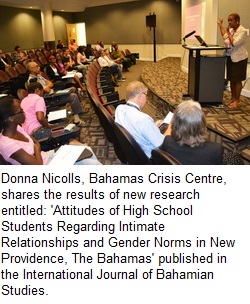
The book Go Lean…Caribbean was written by resources from an organized movement, by people (residents and Diaspora) with passion to change/elevate their Caribbean homeland. This is personal! One of those people devoted to this Go Lean goal, Camille Russell-Smith, is a co-author of the underlying research in the foregoing news article. This research is a product of her collaboration with the Bahamas Crisis Centre (Donna Nicolls) and her role at the College of the Bahamas as a Counselor, Instructor and Workshop Facilitator for incoming freshmen students entitled “Violence in Interpersonal Relationships”.

Good job Donna Nicolls, Camille Russell-Smith and your research team; thank you for your service. Congratulations on this timely research effort.

The goal is to make the Caribbean a better place to live work and play; with justice for all, regardless of gender. This is the right thing to do! But this is not easy. This takes heavy-lifting on the part of everyone: the educators, public safety officials, community leaders and parents. The message must be strong and clear:

No More!

No More‘ is the theme of a campaign in the US to minimize the public attitudes that tolerate domestic violence. This is a great role model for the Caribbean to emulate. See the VIDEO here of the Public Service Announcement (PSA)/TV Commercial:

Video Title -‘ No More‘ PSA Campaign – https://www.youtube.com/watch?v=j70ha1PUlqk:
Download the book Go Lean … Caribbean – now!

Share this post:
, , , , ,

Book Review: ‘The Protest Psychosis’

Go Lean Commentary

Life, liberty and the pursuit of happiness…

These words are from the US Declaration of Independence,  but how many actually believe these words apply to all Americans? This important part of this very important American document is not exclusively American; it is reflected repeatedly in values from the Enlightenment Era (1650 to 1700) that became fundamental to a lot of protest movements around the world. This is also true of the movement to protest the status quo in the Caribbean region today. This movement is underpinned by the book Go Lean … Caribbean in its efforts to elevate Caribbean society.

Many times protesters have been viewed as insane by contemporaries and especially their adversaries. This oppositional practice was far too common in the US during the slavery era, and just recently during the Civil Rights Movement in the latter half of the 20th Century. This was the point of the book The Protest Psychosis: How Schizophrenia Became a Black Disease” by Professor Jonathan Metzl. This review paragraph summarizes the book:

A powerful account of how cultural anxieties about race shaped American notions of mental illness The civil rights era is largely remembered as a time of sit-ins, boycotts, and riots. But a very different civil rights history evolved at the Ionia State Hospital for the Criminally Insane in Ionia, Michigan. In “The Protest Psychosis“, psychiatrist and cultural critic Jonathan Metzl tells the shocking story of how schizophrenia became the diagnostic term overwhelmingly applied to African American protesters at Ionia–for political reasons as well as clinical ones. Expertly sifting through a vast array of cultural documents, Metzl shows how associations between schizophrenia and blackness emerged during the tumultuous decades of the 1960s and 1970s – and he provides a cautionary tale of how anxieties about race continue to impact doctor-patient interactions in our seemingly postracial America.
http://www.alibris.com/search/books/isbn/9780807001271?qwork=#search-anchor
- Photo 3

From this historic perspective, there are many lessons to consider for the Caribbean empowerment effort.

The Caribbean is not detached from the underlying narrative of The Protest Psychosis book; this region benefited greatly from the US Civil Rights Movement. Though there may not have been many sit-ins, protest marches (a la the “March on Washington”) in the Caribbean, there was a natural spin-off. All of the Caribbean have a majority Black population (except for one, the French Caribbean island of Saint Barthélemy), that were suppressed, repressed and oppressed until the Civil Rights Movement and De-colonization-Majority Rule Movements manifested. There is the need now for a new protest movement. The Caribbean status quo still reflects economic suppression, repression and oppression; the societal abandon rate is so abominable that 70 percent of college educated citizens leave, resulting in a debilitating brain drain.

  • Will the demands to change Caribbean society today require “psychotic” protests?
  • Will a conservative population or empowered governing elite emerge to halt change and demand that the status quo continue unabated?
  • Who will be the new champions of change this time?
  • Will their advocacy be so impassioned that their motives and actions will be labeled as deranged or insane?

Insanity and Schizophrenia are all serious subjects within the field of mental health, not to be taken lightly. Imagine then, the weight of authority thrust upon the diagnosis of a Clinical Psychiatrist when he or she labels some protester with these diagnoses. Imagine too, how such protests can be undermined just by tossing around these labels. This is a serious issue that requires some sober reflection.

Sober reflection is the appropriate descriptor of the following podcast, a 30-minute interview with the author of the referenced book.

The book review follows:

Book Review Podcast Presented by: Lynne Malcolm
Title: The Protest Psychosis: How Schizophrenia Became a Black Disease.
By: Professor Jonathan Metzl

Psychiatrist Jonathan Metzl treats people in the clinic whose lives are afflicted by severe psychosis. But he also documents an explosive ‘other’ history of schizophrenia, and what he sees as its transformation from a diagnosis of feminine docility or creative eccentricity, to one given to angry black men during the civil rights era. You’ll never see medicine and the mind in quite the same light again.

About the Presenter: Lynne Malcolm

- Photo 1Lynne Malcolm is passionate about people and their personal experience and when she least expected it – she discovered the power of radio to tell their stories. She is also Executive Producer of RN’s (Radio National) Science Unit.

Lynne has received a number of awards for her work in radio including Bronze & Gold Medals in the New York Radio Festivals International Awards, the Michael Daley Award for Journalism in Science, finalist status in the Eureka Awards. She has also won 2 Mental Health Services media achievement awards for All in the Mind, one in 2007 for her series on schizophrenia, and one in 2013 for 2 programs on youth mental health.

Lynne is delighted to be hosting All In the Mind because she finds the workings of the human mind and how that affects our lives endlessly fascinating.
All In The Mind – Radio National, Australia Broadcast Corporation Saturday 1 May 2010 1:00PM
http://www.abc.net.au/radionational/programs/allinthemind/the-protest-psychosis/3041652

Podcast: http://youtu.be/9zc0mI5HgF8

This consideration of such sober topics aligns with the book Go Lean… Caribbean. The book addresses many serious aspects of Caribbean life.  While the Go Lean book is not a reference source for science, mental health or psychiatry, it does glean from “social science” concepts in communicating the plan to elevate Caribbean society. The book serves as a roadmap for the introduction and implementation of the technocratic Caribbean Union Trade Federation (CU). The complete prime directives are described as:

  • Optimize the economic engines of the Caribbean to elevate and grow the regional economy to $800 Billion.
  • Establish a security apparatus to protect the resultant economic engines.
  • Improve Caribbean governance to support these engines.

The Go Lean … Caribbean roadmap constitutes a change for the region, a plan to consolidate 30 member-states into a Trade Federation with the tools/techniques to bring immediate change to the region to benefit one and all member-states. The ethos to effectuate this change in the region will require courage, advocacy and passion. It is our sincere hope that these attributes will not be considered “crazy or insane”.

This vision may seem “insane” to some.

The Go Lean roadmap immediately calls for the establishment of a federal Health Department with some oversight over the region’s mental health administrations – due to funding, ratings and rankings. The focus on mental health will be as stern as all other health concerns (cancer, trauma, virus, immunizations). This direct correlation of mental health issues with the economy has been previously detailed in Go Lean blog/commentaries, as sampled here:

Guyana Wrestles With High Rate of Suicides
Recessions and Public Health in the Caribbean Region

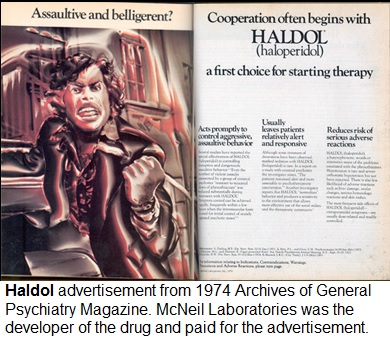
In addition, Big Pharmaceutical companies had some vested interest in the mis-diagnosis of psychotic drugs; this familiar malpractice has been the subject of a previous blog. (See Haldol photo/advertising above).

The Go Lean roadmap calls for the immediate coordination of the region’s healthcare needs. This point is declared early in the Go Lean book, commencing with this opening pronouncement in the Declaration of Interdependence (Page 12), as follows:

ix.  Whereas the realities of healthcare … cannot be ignored and cannot be afforded without some advanced mitigation, the Federation must arrange for health plans to consolidate premiums of both healthy and sickly people across the wider base of the entire Caribbean population. The mitigation should extend further to disease management, wellness, mental health, obesity and smoking cessation programs.

The foregoing Book Review recited a dysfunction in the US during the Civil Rights Movement of blatantly labeling everyone desirous of social change as just being schizophrenic/insane. This was an abuse of the Psychiatric profession and the Hippocratic oath (for Doctors to do no harm).  Schizophrenia is a serious disorder. This was barely understood until recently in medical science history. See the VIDEO clip (below) from the movie: “A Beautiful Mind”.

We have the need for protest movements in the Caribbean now. But we also need to be technocratic in the management of our mental health needs – no blatant assignment of labels just to “shoo” away protesters or Advocates for change. The Go Lean book details the community ethos to forge change; plus the executions of the following strategies, tactics, implementations and advocacies to impact the region’s healthcare to ensure no abuse of the mental health process:

Assessment – Caribbean Single Market & Economy Page 15
Assessment – Dutch Caribbean – Integration & Secessions Page 16
Assessment – French Caribbean – Organization & Discord Page 17
Assessment – Puerto Rico – The Greece of the Caribbean Page 18
Community Ethos – Security Principles – Privacy versus Public Protection Page 23
Community Ethos – Security Principles – Anti-Bullying and Mitigation Page 23
Community Ethos – Security Principles – “Crap” Happens Page 23
Community Ethos – Governing Principles – Lean Operations Page 24
Community Ethos – Governing Principles – Cooperatives Page 24
Community Ethos – Governing Principles – Non-Government Organizations Page 25
Community Ethos – Ways to Impact the Future Page 26
Community Ethos – Ways to Foster Genius Page 27
Community Ethos – Ways to Promote Happiness Page 36
Community Ethos – Impact the Greater Good Page 37
Strategy – Vision – Confederate 30 Member-States Page 45
Strategy – Mission – Reform   our Health Care Response Page 47
Strategy – Agents of Change – Aging Diaspora Page 57
Tactical – Fostering a Technocracy Page 64
Tactical – How to Grow the Economy to $800 Billion Page 67
Separation of Powers – Department of Health Page 86
Implementation – Ways to Deliver Page 109
Planning – Ways to Make the Caribbean Better Page 131
Planning – Ways to Improve Failed-State Indices Page 134
Planning – Lessons from Indian Reservations – Hopelessness & Mental Health Page 148
Advocacy – Ways to Grow the Economy Page 151
Advocacy – Ways to Improve Healthcare Page 156
Advocacy – Ways to Better Manage the Social Contract Page 170
Advocacy – Ways to Foster Cooperatives Page 176
Advocacy – Ways to Improve Emergency Management – Trauma Medicine Page 196
Advocacy – Ways to Impact the Prison Industrial Complex Page 211
Advocacy – Ways to Improve Elder-Care Page 225
Advocacy – Ways to Empower Women Page 226

Caribbean society is now imperiled; it is in crisis due to deficiencies in economics, security and governance. It should be considered insanity for people to just apathetically accept the status quo. Apathy should not be an option; the options should be “fight or flight”. But far too often, “flight” was selected.

Change has now come to our region; everyone should engage! There is the need for a permanent union to provide efficient stewardship for Caribbean economy, security and governing engines. The Go Lean…Caribbean posits that there are problems, agents of change, that are too big for just any one member-state to tackle alone, there must be a regional solution. This multi-state technocratic administration of the CU may be our best option.

The foregoing article/AUDIO podcast, the Book Review on The Protest Psychosis alludes that 1-out-of-every-100 persons are afflicted with Schizophrenia and related issues (depression and anxiety disorders). The commonly accepted fact is that brain chemistry changes in a lot of people (men and women) as they age, or women enduring child birth or menopause. So many people are affected – perhaps one in every family. Monitoring, managing and mitigating the issues of mental health impacts the Greater Good – the greatest good for the greatest number of people.

The people and institutions of the region are hereby urged to lean-in to this Go Lean roadmap. We can make the Caribbean a better homeland to live, work and play. 🙂

Download the free e-Book of Go Lean … Caribbean – now!

————-

Video: Selected Scenes of Schizophrenia from the movie “A Beautiful Mind”- https://www.youtube.com/watch?v=Yqj1DhUKJco

- Photo 2

Share this post:
, , , , ,
[Top]

A Lesson in History – Concorde SST

Go Lean Commentary

CU Blog - A Lesson in History - Concorde SST - Photo 130 years go by so fast…

In the 1970’s, when the Concorde Supersonic Transport (SST) jets were designed, developed and deployed, with a 30 year life-span, that time seemed so far off. But that time has now come and gone. Yes, cutting-edge has an expiration date.

It is difficult to think, now in 2014, that 1970’s technologies may still be cutting-edge, except that there are no other Supersonic Transport vehicles for civilian use today. So despite all the scientific and technological advances in the last 40 years, in this area, the world has gone backwards.

There are a lot of lessons here for us to consider with the history of the Concorde, taking into account that the SST had commercial applications, safety concerns and governing issues. This subject therefore parallels with the book Go Lean… Caribbean. The following is the historic reference of the Concorde:

CU Blog - A Lesson in History - Concorde SST - Photo 2Aérospatiale-BAC Concorde is a retired turbojet-powered supersonic passenger airliner or supersonic transport. It is one of only two SSTs to have entered commercial service; the other was the Tupolev Tu-144; (built by the Soviet Union under the direction of the Tupolev design bureau, headed by Alexei Tupolev; their prototype first flew on 31 December 1968 near Moscow, two months before the first flight of Concorde. The Tu-144 first went supersonic on 5 June 1969, and on 26 May 1970 became the first commercial transport to exceed Mach 2). The Concorde was jointly developed and produced by France-owned Aérospatiale and the British Aircraft Corporation (BAC) under an Anglo-French treaty. First flown in 1969, the Concorde entered service in 1976 and continued commercial flights for 27 years.

Reflecting the treaty between the British and French governments which led to the Concorde’s construction, the name Concorde is from the French word concorde, which has an English equivalent, concord. Both words mean agreement, harmony or union.

The Concorde needed to fly long distances to be economically viable; this required high efficiency. (Turbojets were found to be the best choice of engines.[68] The engine used was the twin spool Rolls-Royce/Snecma Olympus 593, a development of the Bristol engine first used for the Avro Vulcan bomber, and developed into an afterburning supersonic variant for the BAC TSR-2 strike bomber.[69] Rolls-Royce’s own engine proposed for the SST aircraft at the time of Concorde’s initial design was the RB.169 [70]). Among other destinations, the Concorde flew regular transatlantic flights from London Heathrow and Paris-Charles de Gaulle Airport to New York JFK, Washington Dulles and Barbados in the Caribbean; it flew these routes in less than half the time of other airliners. Only 20 aircraft were ever built, so the development of Concorde was a substantial economic loss; Air France and British Airways also received considerable government subsidies to purchase them.

While commercial jets took eight hours to fly from New York to Paris, the average supersonic flight time on the transatlantic routes was just under 3.5 hours. The Concorde’s maximum cruising altitude was 60,000 feet, (while subsonic airliners typically cruise below 40,000 feet), and an average cruise speed of Mach 2.02, about 1155 knots (2140 km/h or 1334 mph), more than twice the speed of conventional aircraft.[107]

The Concorde’s drooping nose, enabled the aircraft to switch between being streamlined to reduce drag and achieve optimum aerodynamic efficiency, and not obstructing the pilot’s view during taxi, takeoff, and landing operations. Due to the high angle of attack, the long pointed nose obstructed the view and necessitated the capability to droop to ensure visibility and FAA approval in the US.

The Concorde was retired in 2003 due to a general downturn in the aviation industry after the aircraft’s only crash in 2000 (killing 113 people onboard and on the ground), the 9/11 terrorist attacks in 2001, and a decision by Airbus (the successor firm of Aerospatiale) and BAC, to discontinue maintenance support.[5]
Wikipedia Online Encyclopedia (Retrieved October 13, 2014) –
http://en.wikipedia.org/wiki/Concorde

See the foregoing VIDEO for a synopsis of the Concorde’s 27-year history:

Video Title – Concorde: 27 Supersonic Years:

This review of the historicity of the Concorde is more than just an academic discussion; the aircraft was always presented as a glimpse into the future.  Likewise, the book Go Lean…Caribbean is future-focused, aspiring to economic principles that dictate that “consequences of choices lie in the future”. The book serves as a roadmap for the introduction and implementation of the technocratic Caribbean Union Trade Federation (CU). This confederation effort (aligning many former colonies of the same sponsoring countries of Great Britain and France that designed, developed and deployed the Concorde SST project) will spur a lot of technologically-driven industrial developments.

CU Blog - A Lesson in History - Concorde SST - Photo 4

What have we learned from the 27-year history of the Concorde, in terms of economics, security and governing lessons? How will these lessons help us today?

  • Crisis is a terrible thing to waste – The end of World War II saw an immediate clash and conflict between Soviet-backed communist countries versus Western democracies. There was an “arms and space” race. The Anglo-Franco treaty to design-develop the Concorde was a manifestation of that competition. While the US invested in supersonic technology for military applications, the Anglo-Franco treaty allowed for a civilian application, and exploitation of a populous market for those with capitalistic adherence. The Go Lean roadmap posits that the Caribbean is also in a crisis (on the losing end of globalization, advancing technology and economic dysfunction). The CU will incubate and foster industrial policy to better explore science, technology, engineering and mechanical (STEM) initiatives. With 80 million annual visitors across 30 different member-states, (many of them islands), we have the overall need for air transport solutions and a built-in market acceptance.
  • Promote opportunities for Research & Development – As far back as October 1956, the UK’s Ministry of Supply asked key Subject Matter Experts to form a new study group, the Supersonic Transport Advisory Committee or STAC,[12] with the explicit goal of developing a practical SST design and finding industry partners to build it. The ethos expressed by this specialty group foresaw that huge economic and security benefits could yield by developing cutting-edge solutions in the air-transport industry space . The Go Lean roadmap posits that appropriate investments must be prioritized for new industrial solutions, such as with Information & Communications Technologies. The Go Lean book posits that large states or small ones can have a “level-playing field” by exploring innovative solutions for the New Economy.
  • New “community ethos” can be adopted by the general public – The Concorde aircraft was regarded by many people as an aviation icon and an engineering marvel. During flight testing of the pre-production SST aircraft, it visited a number of “allied” foreign countries. It was not uncommon for ten-mile traffic jams to build up around airports as crowds of a hundred thousand and more gathered to look over the aircraft that was designed to bring faster-than-sound flight within reach of anyone with the price of a plane ticket.[25] The CU will employ messaging and image management to forge new attitudes about technology, R&D, entrepreneurship, intellectual property and STEM initiatives in the region.
  • Negotiate as partners not competitors – France had 3 nationally supported companies (state-owned Sud Aviation and Nord-Aviation, plus private firm Dassault Group) in the aero-space industry, but no jet-engine solution. The British company Rolls Royce had demonstrated great market leadership with jet engines. A collaboration was apropos. The CU maintains that, negotiation is an art and a science. More can be accomplished by treating negotiating counterparts as a partner, rather than not an adversary.
  • Cooperatives and sharing schemes lighten burdens among partners – In 1967, at the start of the new Anglo-Franco consortium, there was the intent to produce one long-range and one short-range SST version. However, prospective customers showed no interest in the short-range version and it was dropped.[25] The consortium secured orders (i.e., non-binding options) for over 100 of the long-range version from the major airlines of the day: Pan Am, BOAC, and Air France were the launch customers, with six Concordes each. Other airlines in the order book included Panair do Brasil, Continental Airlines, Japan Airlines, Lufthansa, American Airlines, United Airlines, Air India, Air Canada, Braniff, Singapore Airlines, Iran Air, Olympic Airways, Qantas, CAAC (China), Middle East Airlines, and TWA.[25][30][31] At the time of the first flight (1969) the options list contained 74 orders from 16 airlines. The important function for the CU in these cooperative initiatives is command-and-control. For the Concorde project the labor of up to 50,000 (including sub-contractors and suppliers) people had to be efficiently coordinated. The CU will employ cooperatives and sharing schemes for limited scopes within the prime directives of optimizing the economic, security and governing engines.
  • Bureaucratic response to crisis impede progress – At the end of the pre-production trials, there were orders for 74 aircrafts for 16 airlines, but in the end only 20 Concorde jets were ever manufactured. What happened? Geo-political crisis. Concorde SSTs required more fuel usage compared to subsonic aircrafts. The 1970’s saw a number of crises involving steeply rising oil prices (OPEC, Iran Revolution, etc.)[148] and new wide-body aircrafts, such as the Boeing 747, had recently made subsonic aircrafts significantly more efficient and presented a low-risk option for airlines.[50]. The governmental bureaucracy of the two national governments impeded tactical responses and adjustments to these agents-of-change, resulting in cancellation of unfulfilled orders … and also any continuous technological upgrades to the SST program. “There have always been those who want to go faster and those who think the present speed (of ox-cart, stagecoach, sailing ship) was fast enough”.[25] The Go Lean roadmap calls for the establishment of Self-Governing Entities (SGE), regulated at the federal level, to facilitate R&D in industrial settings. Under this scheme, government negotiation is only required at the outset/initiation; no further bureaucratic stalemates beyond the start-up. Tactically, SGE’s  can nimbly adapt to the demands of the global marketplace. This is the manifestation of a lean technocracy.
  • “Crap” Happens – While the Concorde had initially held a great deal of customer interest, the project was hit by a large number of order cancellations. There was a crash of the competing Soviet Tupolev Tu-144 at the Paris Le Bourget air show in 1973; this shocked potential buyers, and public concern over the environmental issues presented by supersonic aircrafts. Also, the issue of sonic booms and takeoff-noise pollution produced a shift in public opinion of SSTs. By 1976 only four nations remained as prospective buyers: Britain, France, China, and Iran.[43] But only Air France and British Airways (the successor to BOAC) ever took up their orders, with the two governments taking a cut of any profits made.[44] The United States cancelled the Boeing 2707, its rival supersonic transport program, in 1971. Observers have suggested that opposition to the Concorde on grounds of noise pollution had been encouraged by the United States Government, as it lacked its own competitor.[45] The US, India, and Malaysia all ruled out Concorde supersonic flights over the noise concern, although some of these restrictions were later relaxed.[46][47] This lesson constitutes the security scope of the Concorde SST historic consideration. The Go Lean roadmap anticipates that things would go wrong, and plans for risk mitigations in advance. This includes man-made, industrial and natural disasters. In addition, there is the governance plan for the CU to have jurisdiction over the region’s aviation regulations – much like the FAA (Federal Aviation Admin.) in the US.
  • CU Blog - A Lesson in History - Concorde SST - Photo 3Consider the Greater Good – In the end, the realization of a noise pollution threat never materialized with Concorde SSTs – more fear than actualization. A progressive path forward from 1976 should have resulted in even faster supersonic transportation options at cheaper prices by today, 40 years later. Author and Professor Douglas Ross characterized restrictions placed upon Concorde operations by President Jimmy Carter’s administration (1977 – 1981) as having been an act of protectionism for American aircraft manufacturers.[48] To the contrary, the Caribbean need policies for the Greater Good. With island tourism being the primary economic driver in the region, we need proactive air-transport solutions to facilitate visitors’ easy access to Caribbean hospitality. The Greater Good philosophy is directly quoted as: “It is the greatest good to the greatest number of people which is the measure of right and wrong”. The CU/Go Lean roadmap calls for a number of measures that strike directly at this Greater Good mandate.

The related subjects of technology-bred innovations and history lessons have been a frequent topic for Go Lean blog/commentaries, as sampled here:

https://goleancaribbean.com/blog/?p=2480 A Lesson in History: Community Ethos of WW II
https://goleancaribbean.com/blog/?p=1568 Airline Lesson: Dutch airline angers Mexico soccer fans
https://goleancaribbean.com/blog/?p=1531 A Lesson in History: 100 Years Ago Today – World War I
https://goleancaribbean.com/blog/?p=1487 Aeronautics Lesson: Here come the Drones … and the Concerns
https://goleancaribbean.com/blog/?p=673 Transport Lesson: Autonomous cargo vessels without a crew
https://goleancaribbean.com/blog/?p=308 Community Ethos: CARCIP Urges Greater Innovation
https://goleancaribbean.com/blog/?p=254 Airline Lesson: Air Antilles Launches new St. Maarten Service
https://goleancaribbean.com/blog/?p=235 Economic Reality: Tourism’s changing profile

The purpose of the Go Lean roadmap is to shift the downward trends in the Caribbean today, to reverse course and elevate Caribbean society. The CU, applying lessons from the Concorde history, has prime directives proclaimed as follows:

  • Optimization of the economic engines in order to grow the regional economy to $800 Billion & create 2.2 million new jobs.
  • Establishment of a security apparatus to protect the resultant economic engines.
  • Improve Caribbean governance to support these engines.

While the Go Lean book is not written as an analysis of the Concorde, the following detail considerations of community ethos, strategies, tactics, implementations and advocacies in the book are still helpful to empower Caribbean society:

Community Ethos – Economic Systems Influence Choices & Incentives Page 21
Community Ethos – Consequences of Choices Lie in the Future Page 21
Community Ethos – “Crap” Happens Page 23
Community Ethos – Ways to Impact the Future Page 26
Community Ethos – Ways to Improve Negotiations Page 32
Community Ethos – Ways to Manage Reconciliations Page 34
Community Ethos – Ways to Improve Sharing Page 35
Community Ethos – Ways to Impact the Greater Good Page 37
Strategy – Vision –  Integrate region into a Single Market Economy Page 45
Strategy – Agents of Change – Technology Page 57
Strategy – Agents of Change – Globalization Page 57
Tactical – Separation of Powers – Department of State – SGE Administration Page 80
Tactical – Separation of Powers – Transportation Department – Aviation Admin Page 84
Implementation – Ways to Pay for Change Page 101
Implementation – Foreign Policy Initiatives at Start-up Page 102
Implementation – Security Initiatives at Start-up Page 103
Implementation – Steps to Implement Self-Governing Entities Page 105
Implementation – Ways to Deliver Page 109
Implementation – Ways to Benefit from Globalization Page 119
Planning – Ways to Ways to Model the EU Page 130
Planning – Ways to Better Manage Image Page 133
Planning – Lessons Learned from the defunct West Indies Federation Page 134
Planning – Lessons from Detroit Page 140
Advocacy – Ways to Grow the Economy Page 151
Advocacy – Ways to Create Jobs Page 152
Advocacy – Ways to Foster Cooperatives Page 176
Advocacy – Ways to Enhance Tourism in the Caribbean Region – Air Lifts Page 190
Advocacy – Ways to Market Southern California – Transportation Options Page 194
Advocacy – Ways to Foster Technology Page 197
Advocacy – Ways to Improve Transportation Page 205

The image of the Concorde was that of cutting-edge technology for its entire 27-year run. But cutting-edge does have an expiration date; so there must be the culture of continuous enhancing and upgrading any cutting-edge innovation. This is true in the new world of Internet Communications Technologies (ICT), where innovations emerge every year; sometimes even a few times during the year. The battleground has changed, from the Concorde’s frontier of aero-space to the ever-changing frontiers of cyber-space. The Go Lean movement asserts that the culture/attitude/ethos, to be constantly innovative, is most crucial in this new economy, where the only constant is change itself.

Now is the time for all of the Caribbean to learn the lessons from the 27-year history of the Concorde. The people and governing institutions of the region are hereby urged to lean-in for the empowerments described in the book Go Lean … Caribbean. This is a big deal for the region; the current economic engines need technology-based innovations in general, and air transport solutions in particular. This is one way we can make our homeland a better place to live, work, and play. 🙂

Download the free e-Book of Go Lean … Caribbean – now!

—————————–

Referenced Sources:
5.     “UK | Concorde grounded for good”. BBC News. 2003-04-10. Retrieved 2013-06-15.
12.   Conway, Eric (2005). High-Speed Dreams: NASA and the Technopolitics of Supersonic Transportation, 1945–1999. JHU Press. Page 39.
25.   “Early History.” concordesst.com. Retrieved 8 September 2007.
30.   “Aerospace: Pan Am’s Concorde Retreat”. Time, 12 February 1973. 12 February 1973.
31.   “Vertrag mit Luken”. Der Spiegel. 13 March 1967. Retrieved 6 November 2012.
43.   “Concordes limited to 16”. Virgin Islands Daily News, 5 June 1976.
44.    “Payments for Concorde”. British Airways. Retrieved 2 December 2009.
45.   Lewis, Anthony (12 February 1973). “Britain and France have wasted billions on the Concorde”. The New York Times, 12 February 1973.
46.   “Malaysia lifting ban on the use Of its Airspace by the Concorde”. The New York Times, 17 December 1978. 17 December 1978. Retrieved 30 June 2011.
47.   “News from around the world”. Herald-Journal, 13 January 1978. Retrieved 30 June 2011.
48.  Ross, Douglas (March 1978). The Concorde Compromise: The Politics of Decision-making. Bulletin of the Atomic Scientists. p. 46.
49.  Marston, Paul (16 August 2000). “Is this the end of the Concorde dream?”. London: Daily Telegraph, 16 August 2000.
50.   Ross, Douglas (March 1978). The Concorde Compromise: The Politics of Decision-making. Bulletin of the Atomic Scientists, pp. 47–49.
68.   Birtles, Philip. Concorde, pp. 62–63. Vergennes, Vermont: Plymouth Press, 2000.
69.   “Rolls Royce Olympus history.” wingweb.co.uk. Retrieved 15 January 2010.
70.   Aero Engines 1962, Flight International, 28 June 1962: 1018
107. Schrader, Richard K. (1989). Concorde: The Full Story of the Anglo-French SST. Kent, UK: Pictorial Histories Pub. Co., p. 64.
148. B.CAL drops Concorde plans but asks for Hong Kong licence. Flight International Magazine, posted 30 June 1979, p. 2331.

Share this post:
, , ,
[Top]

More Business Travelers Flock to Airbnb

Go Lean Commentary

The internet has changed everything.

…especially in the hospitality industry. (Remember Travel Agents?!)

The book and accompanying blog/commentaries for Go Lean…Caribbean posit that the Sharing Economy can emerge more fully in the Caribbean. The Internet & Communications Technology (ICT) provides the tools and techniques. Visitors/tourists will be able to easily search and book houses, condominiums and apartments by connecting directly to the homeowner. This will be a win-win for the homeowner and their guests.

CU Blog - More Business Travelers Flock to Airbnb - Photo

This change is ecstasy for some, but agony for others.

Navigating the world of change is a mission of the Go Lean book. The book posits that the Bed & Breakfast (B&B) industry has evolved with the emerging internet culture and now allow families to share their high-end homes with strangers (and business travelers), in lieu of resort properties (Page 35). This development, like many agents-of-change, brings winners and losers. Hotel room nights and collection of municipal hotel taxes can all be imperiled if this ICT-Sharing development proceeds unchecked. This is why Go Lean promotes “sharing” as a community ethos, so as to mitigate the perils of this industry. We need online sharing tools to target the Caribbean, especially during the peaks of event tourism (festivals, carnivals, fairs). But we need our hotel taxes too.

The challenge with the Sharing Economy, for room rentals and many other areas of life, is one-step forward-two steps-backwards.

See the foregoing news article and the following VIDEO, that depicts the emergence of the company Airbnb:

Video Source: NBC News TODAY Show (Retrieved October 8, 2014)

Corporate travelers are getting creative, using the Internet and home rental sites like Airbnb to find alternative housing rather than checking into hotels. NBC’s Joe Fryer reports. http://on.today.com/2x9Sicg

————–

Title: Democratizing the Sharing Economy – The Center for Popular Economics
By: Anders Fremstad

The internet has sharply reduced the cost of peer-to-peer transactions.  In the 1990s and 2000s, Craigslist and eBay made it much easier to buy and sell secondhand goods, and these sites now facilitate over a million transactions a day.  More recently, online platforms associated with the “sharing economy” are helping friends, neighbors, and even strangers borrow, lend, and rent goods.  Travellers can reserve a spare room through Airbnb or find a free place to crash on Couchsurfing.  People can find a ride on Uber or rent a neighbor’s car on RelayRides.  Neighbors can increasingly borrow tools, gear, and appliances free-of-charge on NeighborGoods, Sharetribe, and similar sites.

Most observers celebrate how the sharing economy lowers the cost of accessing goods, but there is a growing debate over how these online platforms should be regulated.  Unfortunately, this debate ignores how many of the fundamental problems with the sharing economy arise from its corporate nature.  The solution may not be to simply regulate the corporate sharing economy but to also democratize the sharing economy by empowering the people who use these platforms to determine how they work.

Source: http://www.populareconomics.org/democratizing-the-sharing-economy/  Posted 06-24-2014; retrieved 10-10-2014

The book serves as a roadmap for the introduction and implementation of the technocratic Caribbean Union Trade Federation (CU). The roadmap posits that many issues and challenges for a Sharing Economy can only be managed with feasible economies-of-scale. The CU market size of 30 member-states and 42 million people will allow for the leverage to consolidate, collaborate and confederate the organizational dynamics to tackle these issues.

The book Go Lean…Caribbean anticipates the compelling issues associated with room sharing in the emerging new economy.

The book asserts that before the strategies, tactics and implementations of the roadmap can be deployed, the affected communities must first embrace a progressive community ethos. The book defines this “community ethos” as the fundamental character or spirit of a culture; the underlying sentiment that informs the beliefs, customs, or practices of society; dominant assumptions of a people or period. The Go Lean book stresses that the current community ethos must change and the best way to motivate people to adapt their values and priorities is in response to a crisis. The roadmap recognizes this fact with the pronouncement that the Caribbean is in crisis, and that “a crisis is a terrible thing to waste”. The region is devastated from external factors: global economic recession, globalization and rapid technology changes.

Cause and effect!

The Go Lean roadmap promotes development activity for the new ICT global economy, first in the anticipation and then in response of the demands of the Sharing Economy. Even if there is no international trade realization, these developments are needed for the integrated domestic “Single Market”. The roadmap incubates these industrial initiatives to promote the practice:

  • Caribbean Cloud – The Go Lean roadmap calls for the establishment of the Caribbean Cloud, an online community and social media initiative dubbed as myCaribbean.gov. This effort will be exerted by the Caribbean Postal Union (CPU) so as to impact allCaribbean stakeholders: residents, businesses, Diaspora, trading partners, visitors – a universe of 150 million people. TheCaribbean region accommodates 80 million visitors every year. The strategy of maintaining contact with previous visitors steadily increases the universe … and potential customer-base.
  • Mobile Applications – The Go Lean roadmap defines the mastery of time-&-space as strategic for succeeding in mobile apps development and deployment for the region (Page 35). Products like AirBnB and competitors, master mobile apps so that dynamic decisions and impulse buying can be exploited on behalf of touristic properties. Imagine a customer seeing an advertising billboard for a Caribbean resort in a North American city, in the middle of a snow storm, at the moment the desire to partake of Caribbean hospitality may be a great inclination.

The book asserts that to adapt to the new Sharing Economy, there must be a new internal optimization of the region’s strengths. This is defined in the following statement of the opening Declaration of Interdependence (Page 14):

xxvii. Whereas the region has endured a spectator status during the Industrial Revolution, we cannot stand on the sidelines of this new economy, the Information Revolution. Rather, the Federation must embrace all the tenets of Internet Communications Technology (ICT) to serve as an equalizing element in competition with the rest of the world. The Federation must bridge the digital divide and promote the community ethos that research/development is valuable and must be promoted and incentivized for adoption.

Something old, something new, something borrowed, something blue – Old Adage regarding marriage and weddings.

The quest to elevate Caribbean society includes embracing the “New Economy” and also optimizing ongoing economic engines; in this case tourism. This can be likened to a marriage. The CU will employ technologically innovative products and services to marry the “New Economy” with the “Old Economy”. This impact is pronounced in the CU‘s prime directives, identified with the following 3 statements:

  • Optimization of the economic engines in order to grow the regional economy to $800 Billion & create 2.2 million new jobs.
  • Establishment of a security apparatus to protect the resultant economic engines.
  • Improve Caribbean governance to support these engines.

The subject in this blog/commentary, of focusing on the intersection of the “Old Economy” with the “New Economy”, the 100-year old tourism product with the brand new internet, is a big challenge, requiring brand new leadership. This Agent-of-Change is impacting all aspects of commerce in the modern world, including the tourism product.

This subject of “New Economy’s” shared hospitality services has been previously covered in these Go Lean blogs, highlighted here in the following samples:

https://goleancaribbean.com/blog/?p=1364 Car-Sharing Uber Demonstrations Snarl Traffic from London to Berlin
https://goleancaribbean.com/blog/?p=486 Incubator firm (Temasek) backs Southeast Asia cab booking app GrabTaxi

In line with the foregoing article and VIDEO, the Go Lean book details the applicable community ethos, strategies, tactics, implementation and advocacies as a roadmap to foster this change/empowerment in the region for the Sharing Economy and to impact the tourism product:

Community Ethos – Ways to Impact the Future Page 26
Community Ethos – Ways to Help Entrepreneurship Page 28
Community Ethos – Promote Intellectual Property Page 29
Community Ethos – Ways to Bridge the Digital Divide Page 31
Community Ethos – Ways to Improve Sharing Page 35
Strategy – Confederate 30 Caribbean Member-States Page 45
Strategy – Customers – Citizens, Diaspora and Visitors Page 47
Strategy – Agents of Change – Technology Page 57
Tactical – Separation of Powers – Caribbean Cloud Page 74
Tactical – Separation of Powers – Caribbean Postal Union   (CPU) Page 78
Implementation – Year 1 / Assemble Phase – Establish CPU Page 96
Implementation – 10 Trends in Implementing Data Centers Page 106
Implementation – Improve Mail Services – Electronic Supplements Page 108
Implementation – Ways to Impact Social Media Page 111
Advocacy – Ways to Benefit from Globalization – Level Playing Field with ICT Page 129
Advocacy – Ways to Grow the Economy Page 151
Advocacy – Ways to Create Jobs Page 152
Advocacy – Revenue Sources for Regional Administrations Page 172
Advocacy – Ways to Enhance Tourism Page 190
Advocacy – Ways to Impact Events Page 191
Advocacy – Ways to Market Southern California Page 194
Advocacy – Ways to Foster Technology Page 197
Advocacy – Ways to Foster e-Commerce Page 198
Advocacy – Ways to Impact Main Street Page 201
Advocacy – Ways to Promote Call Centers Page 212
Advocacy – Ways to Impact the Diaspora Page 217
Appendix – Urban Bicycle Sharing Model Page 352

The roadmap posits that the CU will foster and incubate the Shared Economy and the Mobile Apps industry, thereby forging entrepreneurial incentives and jobs. Under the right climate, innovations can thrive. We need that climate here in the Caribbean; we must remain competitive, as a people and as a tourism market. As related in the foregoing article and VIDEO, the general market is embracing the Shared Economy.

The world has changed!

This change can be good. We can make the Caribbean, a better place to live, work and play.

Download the book Go Lean … Caribbean – now!

Share this post:
, , ,
[Top]

The Cost of Cancer Drugs

Go Lean Commentary:

1. Even a broken clock is right … twice a day.
2. Greed is good … for incentivizing innovation.

According to the transcript in the below VIDEO, “Cancer is so pervasive that it touches virtually every family in this country. More than one out of three Americans will be diagnosed with some form of it in their lifetime. And as anyone who’s been through it knows, the shock and anxiety of the diagnosis is followed by a second jolt: the high price of cancer drugs.”

“If 1-in-3 Americans are at risk for cancer, Caribbean citizens cannot be far behind”. So declares the book Go Lean…Caribbean (Page 157). This is not speculative, this is real … life and death. The principal author for the Go Lean book dedicated the book to his sister who had recently died after losing her battle with cancer. 42 years earlier, their mother died of the same cause.

The opening quotations relate the underlying theme of this commentary, that the cost of cancer drugs is a distortion of the “free market”; reflective of American “crony” capitalism. Also, that despite an obvious broken eco-system, failed-state status in Cuba, this Caribbean country “does cancer drugs right”. This point is related in the following article:

Title #1: Medimpex to sell Cuban ‘scorpion’ cancer drug here [in Jamaica]
By: HG Helps, Editor-at-Large
helpsh@jamaicaobserver.com

CU Blog - The Cost of Cancer Drugs - Photo 1HUNGARIAN drug distribution company Medimpex has been granted exclusive rights to import and sell to retailers the Cuban cancer-fighting drug Vidatox.

The drug, produced by protein peptides from the venom of the blue or Rhopalrus Junceus scorpion — endemic to Cuba — will be available in Jamaican pharmacies before the end of October, an official of Medimpex told the Jamaica Observer.

“On September 18, we signed a contract with Cuban company Labiofam, which distributes Vidatox and we are awaiting the first shipment in another four weeks,” Medimpex’s Managing Director Laszlo Bakon said.

“We see a huge potential for the drug in Jamaica, because cancer is one of the leading causes of death in Jamaica and other countries of the world.

“The demand is definitely there. We have held meetings with oncologists in Jamaica and the feedback from them and the rest of the market is good. It is a unique cancer treatment,” Bakon said.

Jamaica’s Ministry of Health approved the introduction of Vidatox to the shelves of local pharmacies, following its registration on June 18, when a team of technocrats from the socialist country visited.

Early indications are that the cost of the oral drug could be in the region of US$150 for a 30ml bottle, which normally represents two months’ usage.

Vidatox is already being used in Asia, Europe, North, South and Central America.

The drug has been used to treat cancer-related ailments among the Cuban population for over 200 years. This followed 15 years of clinical research spearheaded by Cuban biologist Misael Bordier and tests involving more than 10,000 people — 3,500 of them foreigners — which yielded positive results in improving quality of life, retarding tumour growth and boosting the immune system in cancer patients.

The drug is said to be safe, with no side effects, and is principally used along with conventional medicines.

“The Cubans have done their job and from now on it will be our job to put it on the market. There is a lot of scepticism from the western world about the drug, but the truth always triumphs. When they see what happens to patients, then they will believe. We have clinical proof that Vidatox works,” said Bakon, who is also Hungary’s honorary consul in Jamaica.

Cuba’s Ambassador to Jamaica, Yuri Gala Lopez, hailed the new business alliances.

“I hope that doctors in Jamaica will take advantage of this partnership, as steps like this will strengthen the already close relationship between Jamaica and Cuba,” Gala Lopez said.

Bakon said that there would be sharp monitoring of the use of the drug and meetings have been held with the National Health Fund and the Jamaica Cancer Society, but no direct communication has been established with the management of public hospitals yet.
Jamaica Observer Daily Newspaper = Posted 09-24-2012; Retrieved 10-07-2014
http://www.jamaicaobserver.com/news/Medimpex-to-sell-Cuban–scorpion–cancer-drug-here_12606863

—————————-

VIDEO Title: The Cost of Cancer Drugs in the US
CBS News Magazine 60 Minutes – Posted 10-05-2014. (VIDEO plays best in Internet Explorer). http://www.cbsnews.com/news/the-cost-of-cancer-drugs/

Why is the cost of cancer drugs so high in the US?

One theory was posited in a recent Go Lean blog, that related that Big Pharma, the Pharmaceutical industry, dictates standards of care in the field of medicine, more so than may be a best-practice. The blog painted a picture of a familiar scene where pharmaceutical salesmen slip in the backdoor to visit doctors to showcase latest product lines; the foregoing VIDEO relates that there are commission kick-backs in these arrangements. The Go Lean book posits that the Caribbean must take its own lead in the battle of health, wellness and cancer. The US eco-system is mostly motivated by profit.

Cuba is right, on this matter. As they demonstrate, we can do better in the Caribbean homeland, and still glean economic benefits.

The Go Lean book strategizes a roadmap for economic empowerment in the region, clearly relating that healthcare, and pharmaceutical (cancer drug) acquisitions are important in the quest to make the Caribbean a better place to live, work and play. At the outset of the Go Lean book, in the Declaration of Interdependence (Page 11), these points are pronounced:

viii.  Whereas the population size is too small to foster good negotiations for products and commodities from international vendors, the Federation must allow the unification of the region as one purchasing agent, thereby garnering better terms and discounts.

ix.     Whereas the realities of healthcare and an aging population cannot be ignored and cannot be afforded without some advanced mitigation, the Federation must arrange for health plans to consolidate premiums of both healthy and sickly people across the wider base of the entire Caribbean population. The mitigation should extend further to disease management, wellness, obesity and smoking cessation programs.

The Go Lean serves as a roadmap for the implementation and introduction of the technocratic Caribbean Union Trade Federation (CU). The CU‘s prime directives are identified with the following 3 statements:

  • Optimization of the economic engines in order to grow the regional economy to $800 Billion & create 2.2 million new jobs.
  • Establishment of a security apparatus to protect the resultant economic engines.
  • Improve Caribbean governance to support these engines.

Previous blog/commentaries addressed issues of capitalistic conflicts in American medical practices, compared to other countries, and the Caribbean. The following sample applies:

Antibiotics Misuse Linked to Obesity in the US
CHOP Research: Climate Change May Bring More Kidney Stones
Big Pharma & Criminalization of American Business
New Research and New Hope in the Fight against Alzheimer’s Disease
Health-care fraud in America; criminals take $272 billion a year
New Cuban Cancer medication registered in 28 countries

The foregoing news article and VIDEO provides an inside glimpse in the retailing of cancer groups bred from a research discipline. Obviously, the innovators and developers of drugs have the right to glean the economic returns of their research. The two foregoing articles (#1-Print and #2-VIDEO) show two paths, one altruistic and one bent on greed. In the Caribbean, Cuba currently performs a lot of R&D into cancer, diabetes and other ailments. The Go Lean roadmap posits that more innovations will emerge in the region as a direct result of the CU prioritization on science, technology, engineering and medical (STEM) activities on Caribbean R&D campuses and educational institutions.

The Caribbean Union Trade Federation has the prime directive of optimizing the economic, security and governing engines of the region. The foregoing article and VIDEO depicts that research is very important to identify and qualify best-practices in health management for the public. This is the manifestation and benefit of Research & Development (R&D). The roadmap describes this focus as a community ethos and promote R&D as valuable for the region. The following list details additional ethos, strategies, tactics, implementations and advocacies to optimize the region’s health deliveries and R&D investments:

Community Ethos – Deferred Gratification Page 21
Community Ethos – Economic Systems Influence Individual Choices and Incentives Page 21
Community Ethos – The Consequences of Choices Lie in the Future Page 21
Community Ethos – Governing Principles – Lean Operations – Group Purchasing Page 24
Community Ethos – Governing Principles – Return on Investments Page 24
Community Ethos – Governing Principles – Cooperatives Page 25
Community Ethos – Non-Government Organizations Page 25
Community Ethos – Ways to Impact Research & Development (R&D) Page 30
Community Ethos – Ways to Promote Happiness Page 36
Community Ethos – Ways to Impact the Greater Good Page 37
Strategy – Integrate and unify region in a Single Market Page 45
Strategy – Agents of Change – Globalization Page 57
Tactical – Fostering a Technocracy Page 64
Tactical – Separation of Powers – Health Department Page 86
Tactical – Separation of Powers – Drug Administration Page 87
Implementation – Ways to Pay for Change Page 101
Implementation – Ways to Implement Self-Government Entities – R&D Campuses Page 105
Implementation – Ways to Deliver Page 109
Planning – Ways to Improve Trade Page 128
Planning – Ways to Make the Caribbean Better Page 131
Advocacy – Ways to Improve Healthcare Page 156
Advocacy – Ways to Better Manage the Social Contract Page 170
Advocacy – Ways Foster Cooperatives Page 176
Advocacy – Ways to Improve Emergency Management Page 196
Advocacy – Ways to Impact Foundations Page 219
Advocacy – Ways to Impact Persons with Disabilities Page 228
Appendix – Emergency Management – Medical Trauma Centers Page 336

The Go Lean roadmap does not purport to be an authority on medical or cancer research best-practices. The CU economic-security-governance empowerment plan should not direct the course of direction for cancer research and/or treatment. But something is wrong here. The pharmaceutical companies cannot claim any adherence to any “better nature” in their practices. Their motive is strictly profit …

CU Blog - The Cost of Cancer Drugs - Photo 2The King of Pop, Michael Jackson, released a song with the title: “They don’t [really] care about us”; he very well could have been talking about Big Pharma; (https://www.youtube.com/watch?v=QNJL6nfu__Q). The foregoing CBS 60 Minutes VIDEO relates one drug, Gleevec, as a  top selling option for industry giant Novartis, “bringing in more than $4 billion a year in sales. $35 billion since the drug came to market. There are now several other drugs like it. So, you’d think with the competition, the price of Gleevec would have come down. Yet, the price of the drug tripled from $28,000 a year in 2001 to $92,000 a year in 2012”.

This is not economics, which extols principles like the “law of diminishing returns”, or “competition breathes lower prices and higher quality”. No, the cancer drug industry is just a “pure evil” version of American Crony Capitalism.

This is not the role model upon which we want to build Caribbean society.

We can do better in the Caribbean – thanks to Cuba, we have done better. We can use this ethos to impact the Greater Good; this means life-or-death. This is the heavy-lifting of the CU. We can make the Caribbean a better place to live, work, heal and play.

Download the book Go Lean … Caribbean – now!

Share this post:
, , , , ,
[Top]

Antibiotics Use Associated With Obesity Risk

 Go Lean Commentary:

The below news article relates to our most vulnerable victims in society, our children under age 2. The article helps us to appreciate that they need to be protected.

This report was published by a recognized technocratic institution, the Children’s Hospital of Philadelphia (CHOP), a previously referenced source for the publishers of the book Go Lean…Caribbean. Many of the research of CHOP have relevance for Caribbean life and the Go Lean elevation effort.

The CHOP research is published as follows:

Title: Antibiotic Use by Age 2 Associated With Obesity Risk

CU Blog - Antibiotics Use Associated with Obesity Risk - Photo 2

Repeated exposure to broad-spectrum antibiotics in the first two years of life is associated with early childhood obesity, say researchers from The Children’s Hospital of Philadelphia in a retrospective study based on data from electronic health records from the extensive CHOP Care Network.

Studying early life events that may affect how the body regulates weight

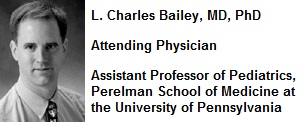
CU Blog - Antibiotics Use Associated with Obesity Risk - Photo 1The researchers found that children with four or more exposures to broad spectrum antibiotics during infancy were particularly more likely to be at risk for obesity. The study, published online September 29, 2014 in JAMA Pediatrics, did not directly examine cause and effect, said Charles Bailey, MD, PhD, (See Photo) lead author of the study, but he added, “as pediatricians, we’re interested in whether events that happen early in life might reset the baseline and have a long-term effect on how the body regulates weight.”

The researchers were intrigued by the emerging idea that the microbial population that begins to colonize in infants’ intestines shortly after birth, known as the microbiome, plays an important role in establishing energy metabolism. Previous studies have shown that antibiotic exposure influences the microbiome’s diversity and composition. “The thought is that the microbiome may be critically dependent on what is going on during infancy,” Bailey added.

The study team analyzed electronic health records from 2001 to 2013 of 64,580 children with annual visits at ages 0 to 23 months, as well as one or more visits at ages 24 to 59 months within the CHOP Care Network. They assessed the relationships between antibiotic prescription and related diagnoses before age 24 months and the development of obesity in the following three years.

Broad-spectrum drugs associated with obesity but not narrow-spectrum drugs

The investigators saw the association with broad-spectrum drugs, but they reported no significant association between obesity and narrow-spectrum drugs. For this study, they classified first-line therapy for common pediatric infections, such as penicillin and amoxicillin, as narrow-spectrum. They considered broad-spectrum antibiotics to include those recommended in current guidelines as second-line therapy.

“Treating obesity is going to be a matter of finding the collection of things that together have a major effect, even though each alone has only a small effect,” said Patricia DeRusso, MD, director of the Healthy Weight Program and vice president of Medical Staff Affairs at Children’s Hospital who was the senior author of the study. “Part of what we are exploring in this study is one of those factors that we can possibly modify in the way we take care of kids and make it better.”

Future investigations are needed involving multiple large pediatric health systems that will take a broader look at several populations and how adopting guidelines that accentuate the use of narrow-spectrum antibiotics might affect patients’ risk of obesity, Dr. Bailey said. In addition to supporting this type of research locally, CHOP is also a key contributor to networks such as PEDSnet that link many children’s hospitals to make more effective clinical research possible. Researchers also are looking at ways the microbial communities living in infants’ intestines are swayed by dietary and environmental factors.

Early intervention is key

Childhood obesity has more than doubled in children over the past 30 years, according to the Centers for Disease Control and Prevention. Many will remain obese into adulthood and be susceptible to heart disease, type 2 diabetes, stroke, several types of cancer, and osteoarthritis. Medical researchers at CHOP want to identify ways to intervene as early as possible, in order to avert the lifetime of medical, developmental, and social problems associated with obesity.

More information

“Association of Antibiotics in Infancy With Early Childhood Obesity” JAMA Pediatrics, published online on September 29, 2014 doi:10.1001/jamapediatrics.2014.1539

Dr. Bailey’s coauthors were Christopher Forrest, MD, PhD; Peixin Zhang, PhD; Thomas M. Richards, MS; Alice Livshits, BS; and Patricia A. DeRusso, MD, MS.

This research project was funded by an unrestricted donation to The Children’s Hospital of Philadelphia’s Healthy Weight Program from the American Beverage Foundation for a Healthy America.

Contact: Joey McCool, The Children’s Hospital of Philadelphia, 267-426-6070 or McCool@email.chop.edu
Children’s Hospital of Philadelphia Web Site – Posted 9-30-2014
http://www.chop.edu/news/antibiotic-use-by-age-2-associated-with-obesity-risk.html

Referenced Video: https://www.youtube.com/watch?v=HF3zTp5YQSg

Why is antibiotics misuse so high in American society*?

One theory is that Big Pharma, the Pharmaceutical industry, dictates standards of care in the field of medicine, more so than may be a best-practice. (Picture the scene of a Pharmaceutical Salesperson slipping in the backdoor to visit a doctor and showcase latest product lines).

This subject of damaging health effects deriving from capitalistic practices in medicine aligns with Go Lean … Caribbean (Page 157), as it posits that Cancer treatment (in the US) has been driven by the profit motive, more so than a quest for wellness and/or a cure.

This is not the model we want to effect the well-being of our young children.

The Go Lean roadmap specifies where we are as a region (minimal advanced medicine options), where we want to go (elevation of Caribbean society in the homeland for all citizens to optimize wellness) and how we plan to get there – confederating as a Single Market entity. While the Go Lean book strategizes a roadmap for economic empowerment, it clearly relates that healthcare, and pharmaceutical acquisitions are important in the quest to make the Caribbean a better place to live, work and play. At the outset of the Go Lean book, in the Declaration of Interdependence (Page 11), these points are pronounced:

viii.  Whereas the population size is too small to foster good negotiations for products and commodities from international vendors, the Federation must allow the unification of the region as one purchasing agent, thereby garnering better terms and discounts.

ix.     Whereas the realities of healthcare and an aging population cannot be ignored and cannot be afforded without some advanced mitigation, the Federation must arrange for health plans to consolidate premiums of both healthy and sickly people across the wider base of the entire Caribbean population. The mitigation should extend further to disease management, wellness, obesity and smoking cessation programs.

The Go Lean book is not a medical reference or science book, but it does touch on medical issues, especially as they relate to community economics. The publishers of the book are not trying to dictate policies for medical practice; that would be out-of-scope for Go Lean, which serves as a roadmap for the implementation and introduction of the technocratic Caribbean Union Trade Federation (CU). The CU‘s prime directives are identified with the following 3 statements:

  • Optimization of the economic engines in order to grow the regional economy to $800 Billion & create 2.2 million new jobs.
  • Establishment of a security apparatus to protect the resultant economic engines.
  • Improve Caribbean governance to support these engines.

Previous blog/commentaries addressed similar issues as the foregoing article. The following sample applies:

CHOP Research: Climate Change May Bring More Kidney Stones
Big Pharma & Criminalization of American Business
New Research and New Hope in the Fight against Alzheimer’s Disease
New Cuban Cancer medication registered in 28 countries

The Caribbean Union Trade Federation has the prime directive of optimizing the economic, security and governing engines of the region. The foregoing article/VIDEO depicts that research is very important to identify and qualify best-practices in health management for the public. Obviously the scourge of obesity is unwelcomed. Nutrition education is a key mitigation, but the foregoing article/VIDEO proclaims another driver that is outside of the control of the afflicted, or their families. This is the manifestation and benefits of Research & Development (R&D). The roadmap describes this focus as a community ethos. Then it goes on to stress that the CU must promote the community ethos that R&D is valuable and must be incentivized for adoption. The following list details additional ethos, strategies, tactics, implementations and advocacies to optimize the region’s health deliveries:

Community Ethos – Deferred Gratification Page 21
Community Ethos – The Consequences of Choices Lie in the Future Page 21
Community Ethos – Governing Principles – Return on Investments Page 24
Community Ethos – Cooperatives Page 25
Community Ethos – Non-Government Organizations Page 25
Community Ethos – Ways to Impact Research & Development (R&D) Page 30
Community Ethos – Ways to Promote Happiness Page 36
Community Ethos – Ways to Impact the Greater Good Page 37
Strategy – Integrate and unify region in a Single Market Page 45
Strategy – Agents of Change – Globalization Page 57
Tactical – Fostering a Technocracy Page 64
Tactical – Separation of Powers – Health Department Page 86
Tactical – Separation of Powers – Drug Administration Page 87
Implementation – Ways to Pay for Change Page 101
Implementation – Ways to Implement Self-Government Entities – R&D Campuses Page 105
Implementation – Ways to Deliver Page 109
Planning – Ways to Make the Caribbean Better Page 131
Advocacy – Ways to Improve Healthcare Page 156
Advocacy – Ways to Better Manage the Social Contract Page 170
Advocacy – Ways Foster Cooperatives Page 176
Advocacy – Ways to Improve Emergency Management Page 196
Advocacy – Ways to Impact Foundations Page 219
Advocacy – Ways to Impact Youth – Healthcare Page 227
Advocacy – Ways to Impact Persons with Disabilities Page 228
Appendix – Emergency Management – Medical Trauma Centers Page 336

The foregoing news/VIDEO story depicted analysis administered by the Children’s Hospital of Philadelphia, a teaching and research facility for the care of children.  There is a need for more such R&D on obesity causes and drivers. In the Caribbean, Cuba currently performs a lot of R&D into cancer, diabetes and other ailments. The Go Lean roadmap posits that more innovations will emerge in the region as a direct result of the CU prioritization on science, technology, engineering and medical (STEM) activities on Caribbean R&D campuses and educational institutions.

The Go Lean roadmap does not purport to be an authority on medical best-practices. The CU economic-security-governance empowerment plan should not direct the course of direction for obesity research and treatment. Neither should pharmaceutical salesmen. Their motive is strictly profit …

The CU motive, to impact the Greater Good, mandates monitoring progress in obesity research, the causes and effects. The hope is to minimize the affliction. This is the heavy-lifting the Caribbean region needs. This means life-or-death for some. All of the Caribbean is hereby urged to lean-in to this roadmap for Caribbean elevation.

Download the book Go Lean … Caribbean – now!

————–

* Appendix – Antibiotics Misuse – (http://en.wikipedia.org/wiki/Antibiotics)

“The first rule of antibiotics is try not to use them, and the second rule is try not to use too many of them.” – The ICU Book [70]

Inappropriate antibiotic treatment and overuse of antibiotics have contributed to the emergence of antibiotic-resistant bacteria. Self prescription of antibiotics is an example of misuse.[71] Many antibiotics are frequently prescribed to treat symptoms or diseases that do not respond to antibiotics or that are likely to resolve without treatment. Also incorrect or suboptimal antibiotics are prescribed for certain bacterial infections.[41][71] The overuse of antibiotics, like penicillin and erythromycin, have been associated with emerging antibiotic resistance since the 1950s.[56][72] Widespread usage of antibiotics in hospitals has also been associated with increases in bacterial strains and species that no longer respond to treatment with the most common antibiotics.[72]

Common forms of antibiotic misuse include excessive use of prophylactic antibiotics in travelers and failure of medical professionals to prescribe the correct dosage of antibiotics on the basis of the patient’s weight and history of prior use. Other forms of misuse include failure to take the entire prescribed course of the antibiotic, incorrect dosage and administration, or failure to rest for sufficient recovery. Inappropriate antibiotic treatment, for example, is their prescription to treat viral infections such as the common cold. One study on respiratory tract infections found “physicians were more likely to prescribe antibiotics to patients who appeared to expect them”.[73] Multifactorial interventions aimed at both physicians and patients can reduce inappropriate prescription of antibiotics.[74]

Referenced Sources:

41. Slama TG, Amin A, Brunton SA, et al. (July 2005). “A clinician’s guide to the appropriate and accurate use of antibiotics: the Council for Appropriate and Rational Antibiotic Therapy (CARAT) criteria”. Am. J. Med. 118 Suppl 7A (7): 1S–6S. doi:10.1016/j.amjmed.2005.05.007

56. Pearson, Carol (28 February 2007). “Antibiotic Resistance Fast-Growing Problem Worldwide”. Voice Of America. Archived from the original on 2 December 2008. Retrieved 29 December 2008.

70. Marino PL (2007). “Antimicrobial therapy”. The ICU book. Hagerstown, MD: Lippincott Williams & Wilkins. p. 817. ISBN 978-0-7817-4802-5.

71. Larson E (2007). “Community factors in the development of antibiotic resistance”. Annu Rev Public Health 28: 435–447. doi:10.1146/annurev.publhealth.28.021406.144020. PMID 17094768.

72. Hawkey PM (September 2008). “The growing burden of antimicrobial resistance”. J. Antimicrob. Chemother. 62 Suppl 1: i1–9. doi:10.1093/jac/dkn241. PMID 18684701.

73. Ong S, Nakase J, Moran GJ, Karras DJ, Kuehnert MJ, Talan DA (2007). “Antibiotic use for emergency department patients with upper respiratory infections: prescribing practices, patient expectations, and patient satisfaction”. Annals of Emergency Medicine 50 (3): 213–20. doi:10.1016/j.annemergmed.2007.03.026. PMID 17467120.

74. Metlay JP, Camargo CA, MacKenzie T, et al. (2007). “Cluster-randomized trial to improve antibiotic use for adults with acute respiratory infections treated in emergency departments”. Annals of Emergency Medicine 50 (3): 221–30. doi:10.1016/j.annemergmed.2007.03.022. PMID 17509729


Share this post:
, , ,
[Top]

A Lesson in History – Community Ethos of WW II

Go Lean Commentary

The publishers of the book Go Lean…Caribbean want to forge change in the Caribbean. Is it possible to change the attitudes of an entire community, country or region? Has that ever been done before for an entire community? When?

Yes, and yes. 1942…

The book relates a great case study, that of the history of the United States during World War II, where the entire country postponed immediate gratification, endured hard sacrifices, and became convinced that their future (after the war) would be better than their past (before the war).

The foregoing article is a scholarly work on that subject, the events of 1942, and the subsequent years of World War II.

Title: The Auto Industry Goes to War

CU Blog - A Lesson in History - Community Ethos of WW II - Photo 1

Did the U.S. manufacture of automobiles come to a halt during World War II?

Yes, it halted completely. No cars, commercial trucks, or auto parts were made from February 1942 to October 1945.

On January 1, 1942, all sales of cars, as well as the delivery of cars to customers who had previously contracted for them, were frozen by the government’s Office of Production Management. As a temporary measure, local rationing boards could issue permits allowing persons who had contracted for cars before January 1st to secure delivery.

President Roosevelt established the War Production Board on January 16, 1942. It superseded the Office of Production Management. The WPB regulated the industrial production and allocation of war materiel and fuel. That included coordinating heavy manufacturing, and the rationing of vital materials, such as metals, rubber, and oil. It also established wage and price controls.

All manufacturers ended their production of automobiles on February 22, 1942. The January 1942 production quota had been a little over 100,000 automobiles and light trucks. The units manufactured at the beginning of February would bring up the total number of vehicles in a newly established car stockpile to 520,000. These would be available during the duration of the war for rationed sales by auto dealers to purchasers deemed “essential drivers.”

Representatives from the auto industry formed the Automotive Council for War Production in April 1942, to facilitate the sharing of resources, expertise, and manpower in defense production contracting.

The auto industry retooled to manufacture tanks, trucks, jeeps, airplanes, bombs, torpedoes, steel helmets, and ammunition under massive contracts issued by the government. Beginning immediately after the production of automobiles ceased, entire factories were upended almost overnight. Huge manufacturing machines were jack hammered out of their foundations and new ones brought in to replace them. Conveyors were stripped away and rebuilt, electrical wires were bundled together and stored in the vast factory ceilings, half-finished parts were sent to steel mills to be re-melted, and even many of the dies that had been used in the fabrication of auto parts were sent to salvage.

The government’s Office of Price Administration imposed rationing of gasoline and tires and set a national speed limit of 35 mph.

By April 1944, only 30,000 new cars out of the initial stockpile were left. Almost all were 1942 models and customers required a permit to make the purchase. The Office of Price Administration set the price. The government contemplated rationing used car sales as well, but that was finally deemed unnecessary. The government estimated that about a million cars had been taken off the road by their owners, to reserve for their own use after the war.

In the autumn of 1944, looking then toward the end of the war, Ford, Chrysler, Nash, and Fisher Body of General Motors received authorization from the War Production Board to do preliminary work on experimental models of civilian passenger cars, on condition that it not interfere with war work and that employees so used be limited to planning engineers and technicians. Limits were also set on the amount of labor and materials the companies could divert to this.

During the war, the automobile and oil companies continued to advertise heavily to insure that the public did not forget their brand names. Companies also were proud to proclaim their patriotic role in war production, and their advertisements displayed the trucks, aircraft, and munitions that they were making to do their part in combat.

In addition, auto advertisements encouraged the public to patronize local auto dealers’ service departments so that car repairs could help extend the lives of the cars their customers had bought before the war. In the last couple of years of the war, the auto companies also used their advertisements to heighten public anticipation of the end of the war and the resumption of car and truck manufacturing, with advertising copy such as Ford’s “There’s a Ford in Your Future.”

About the Author

CU Blog - A Lesson in History - Community Ethos of WW II - Photo 2
Historian John Buescher is an author and professor who formerly headed Tibetan language broadcasts at Voice of America. His Ph.D. is from the University of Virginia and he has published extensively on the history of Tibetan and Indian Buddhism and on the history of 19th-century American spiritualism.

Bibliography
a. John Alfred Heitmann, The Automobile and American Life. Jefferson, NC: McFarland, 2009. pp. 119-130.
b. James J. Flink, The Automobile Age. Cambridge: MIT Press, 1988. pp. 275-76.
c. Automobile Manufacturers Association, Freedom’s Arsenal: The Story of the Automotive Council for War Production. Detroit: Automobile Manufacturers Association, 1950.
Teaching History.org – National History Education Clearinghouse (Retrieved 09/29/2014) –
http://www.teachinghistory.org/history-content/ask-a-historian/24088

This relates a commitment so vital to a community that everyone was willing to sacrifice and lean-in for the desired outcome. This requires effective messaging.

The book Go Lean…Caribbean serves as a roadmap for the introduction and implementation of the Caribbean Union Trade Federation (CU); an initiative to bring change, empowerment, to the Caribbean region; to make the region a better place to live, work and play. This Go Lean roadmap also has initiatives to foster a domestic (region-wide) automotive industry. So there are a lot of benefits to glean by studying the American track record, even the periods of halted production. The Go Lean book posits that permanent change for Caribbean society will only take root as a result of adjustments to the community attitudes, the national spirit that drives the character and identity of its people. This is identified in the book as “community ethos”.

The purpose of the book/roadmap though is not just the ethos changes, but rather the elevation/empowerment of Caribbean society. In total, the Caribbean empowerment roadmap has these 3 prime directives:

  • Optimization of the economic engines in order to grow the regional economy to $800 Billion & create 2.2 million new jobs.
  • Establishment of a security apparatus to protect the resultant economic engines.
  • Improve Caribbean governance and industrial policies to support these engines.

The roadmap details the following community ethos, plus the execution of these strategies, tactics, implementation and advocacies to forge the identified permanent change in the region:

Community Ethos – Deferred Gratification Page 21
Community Ethos – Economic Principles – People Choose Page 21
Community Ethos – Economic Principles – People Respond to Incentives in Predictable Ways Page 21
Community Ethos – Economic Principles – The Consequences of Choices Lie in the Future Page 21
Community Ethos – Governing Principles – Lean Operations Page 24
Community Ethos – Governing Principles – Cooperatives Page 25
Community Ethos – Ways to Impact the Future Page 26
Community Ethos – Ways to Help Entrepreneurship Page 28
Community Ethos – Ways to Impact Research & Development Page 30
Community Ethos – Ways to Impact Turn-Arounds Page 33
Community Ethos – Ways to Improve Sharing Page 35
Community Ethos – Ways to Promote Happiness Page 36
Community Ethos – Ways to Impact the Greater Good Page 37
Strategy – Vision – Confederate 30 Member-States Page 45
Strategy – Mission – Foster New Industries Page 46
Tactical – Confederating a Permanent Union Page 63
Tactical – Fostering a Technocracy Page 64
Implementation – Ways to Pay for Change Page 101
Implementation – Ways to Deliver Page 109
Planning – 10 Big Ideas for the Caribbean Page 127
Planning – Ways   to Make the Caribbean Better Page 131
Planning – Reasons   Why the CU Will Succeed Page 132
Planning – Lessons   Learned from 2008 Page 136
Advocacy – Ways to Grow the   Economy Page 151
Advocacy – Ways to Create Jobs Page 152
Advocacy – Ways   to Improve Communications Page 186
Advocacy – Ways   to Develop Auto Industry Page 206
Advocacy – Ways   to Preserve Caribbean Heritage Page 218

Previously Go Lean blog/commentaries have considered historic references and stressed fostering the proper and appropriate community ethos for the Caribbean to prosper. The following sample applies:

https://goleancaribbean.com/blog/?p=2297 A Lesson in History – Booker T   versus Du Bois – to Change a Bad Community Ethos
https://goleancaribbean.com/blog/?p=2201 Changing Bad Community Ethos – Students   Developing Nail Polish to Detect Date Rape Drugs
https://goleancaribbean.com/blog/?p=1918 Philadelphia Freedom – Some Restrictions Apply – One   Community’s Constant Quest to Change
https://goleancaribbean.com/blog/?p=1531 A Lesson in History: 100 Years Ago   Today – World War I – Cause and Effect in Community Ethos
https://goleancaribbean.com/blog/?p=841 Having   Less Babies is Bad for the Economy?
https://goleancaribbean.com/blog/?p=623 Only   at the Precipice, Do Communities Change
https://goleancaribbean.com/blog/?p=353 Book Review: ‘Wrong – Nine   Economic Policy Disasters and What We Can Learn…’
https://goleancaribbean.com/blog/?p=228 Egalitarianism versus Anarchism – Community   Ethos Debate

All in all, there is a certain community ethos associated with populations that have endured crises. It is a focus on the future, a deferred gratification as investment for future returns. These attributes have been promoted by the Go Lean book as necessary traits to forge change in the Caribbean region. We need our own Caribbean flavor of this community ethos, in our manifestation of industrial policy.

The world was at the precipice, near implosion, in 1942 (World War II) … (and again in 2008 during the Great Recession). In order to endure the crises, many people had to endure sacrifice; but the entire community had to adopt the community ethos of deferred gratification. The industrial policy adjusted accordingly, with little objection from the public in general. A lot of good came from these sacrifices.

There are lessons for the Caribbean today to consider from the development of industrial policy in US history during World War II:

• Priorities can change in times of crisis. A crisis is a terrible thing to waste.

• Having a domestic manufacturing industry gives control of domestic production capability.

• Efficiency and effectiveness in one industry can be transferred to other industries; it is disciplined competence that is the real asset.

• Lowest cost is not the only criteria for providing out-sourced contracts.

• Limited raw materials are valuable, even as recycled materials.

• Effective Command-and-Control accentuates front-line effectiveness – Lean operational principles.

• Interdependence with partners can avoid crisis in the first place, and mitigate the damage from realized threats.

Now the Caribbean is in crisis, still reeling from 2008; we must endure, we must sacrifice and we must defer gratification. Now is the time to lean-in to this roadmap for Caribbean change, as depicted in the book Go Lean…Caribbean. We cannot afford to standby and watch our world implode. This was the case in 1942 and again in 2008. We must have a hand in our own destiny; an integrated (Single) market of 42 million people is large enough to be consequential in world negotiations.

We urge all Caribbean stakeholders (residents, Diaspora, governmental leaders, visitors, investors, etc.) to lean-in to this roadmap for change. 🙂

Download the book Go Lean … Caribbean – now!


Share this post:
, , , ,
[Top]

‘Consumer Reports’ Survey Finds the American Consumer is Back

Go Lean Commentary

There are more lessons to learn from the Great Recession of 2007-2008. The lingering effects continue, right up to this day. According to the foregoing news article, only now, 7 years later, are Americans willing to start spending again… on big purchases. Too bad! Many aspects of the US economy depend on regular spending*.

According to the foregoing article, there is value to processing, defining and analyzing economic data associated with the Great Recession; this is the merit of Big Data Analysis. This point aligns with the book Go Lean… Caribbean in that a plan is envisioned to capture raw data, measuring many aspects of Caribbean society, including economic, trade, consumption, macro performance, and societal values. Much can be gleaned from this art and science, mastery of which allows for better stewardship of the Caribbean elevation effort. The news story follows:

SOURCE: Consumer Reports
Seven years after the Great Recession, consumers are finally opening their wallets, making long-delayed purchases and undertaking postponed life decisions

YONKERS, N.Y., Sept. 25, 2014 /PRNewswire-USNewswire/ — The Great Recession of 2007[/2008] caused the once-prolific American shopper to go into a prolonged scrimp mode.  Now, some seven years later – and more than 5 years after the recession officially ended — the tide has turned, according to a groundbreaking Consumer Reports study. A nationally representative survey of 1,006 adult Americans conducted by the ConsumerReportsNationalResearchCenter revealed that people are now in the market for major purchases like homes, cars, and appliances – and that they plan to spend even more money in the coming year.

The full report, “How America Shops Now,” is the cover story for the November 2014 issue of Consumer Reports magazine and is available on newsstands now and at ConsumerReports.org.

So traumatizing was the Great Recession that many Americans put off purchases and personal decisions such as marriage and divorce. Seven out of 10 people told Consumer Reports that they finally feel fiscally stable enough to make up for lost time. Other findings from the survey that point to shoppers’ improved outlook:

  • 64 percent said that they’d dropped big bucks on a major purchase in the past year
  • 46 percent said they bought a new or used vehicle in the past year or intend to buy one in the coming year
  • 12 percent said they’d bought a residence in the past year or intend to do so in the coming year
  • 34 percent said they recently completed or are ready to do a major home-remodeling project
  • 31 percent are holding fewer garage sales
  • 30 percent are taking fewer odd jobs
  • 26 percent of young Americans (aged 18-34) said they were ready to buy a new home; 32 percent believe they can buy a car

“Shoppers may be back, but they’re far from the profligate spenders they used to be. The harsh lessons of the prolonged downturn have had a major impact, perhaps a permanent one,” said Tod Marks, Senior Projects Editor for Consumer Reports.  “Our survey shows that Americans are spending their money very pragmatically, and even though the employment picture has improved, many are working scared – scared about their future job stability and earnings outlook.”

The report also features testimonials from real consumers about their new spending habits. Additional data from CR’s nationally representative survey includes what Americans are most reluctant to cut back on – regardless of the economy, and the pricier items many people feel are still out of reach.  The full report is available in the November issue of Consumer Reports magazine, and online at ConsumerReports.org.

CU Blog - Consumer Reports Survey Finds the American Consumer is Back - PhotoConsumer Reports is the world’s largest independent product-testing organization. Using its more than 50 labs, auto test center, and survey research center, the nonprofit rates thousands of products and services annually. Founded in 1936, Consumer Reports has over 8 million subscribers to its magazine, website and other publications. Its advocacy division, Consumers Union, works for health reform, food and product safety, financial reform, and other consumer issues in Washington, D.C., the states, and in the marketplace.

September 2014
The material above is intended for legitimate news entities only; it may not be used for advertising or promotional purposes. Consumer Reports® is an expert, independent nonprofit organization whose mission is to work for a fair, just, and safe marketplace for all consumers and to empower consumers to protect themselves.  We accept no advertising and pay for all the products we test. We are not beholden to any commercial interest. Our income is derived from the sale of Consumer Reports®, ConsumerReports.org® and our other publications and information products, services, fees, and noncommercial contributions and grants. Our Ratings and reports are intended solely for the use of our readers. Neither the Ratings nor the reports may be used in advertising or for any other commercial purpose without our permission.
CBS News Reporting on Consumer Reports – Thursday, September 25, 2014 – http://www.cbs19.tv/story/26623848/consumer-reports-survey-finds-the-american-consumer-is-back-and-ready-to-spend

VIDEO CBS This Morning: Back to buying: Americans’ spending habits change after recession

(VIDEO plays best in Internet Explorer).

This book Go Lean… Caribbean serves as a roadmap for the introduction and implementation of the technocratic Caribbean Union Trade Federation (CU), the regime to empower Caribbean society. The CU/Go Lean roadmap has 3 prime directives:

  • Optimization of the economic engines in order to grow the regional economy to $800 Billion GDP and create 2.2 million jobs.
  • Establishment of a security apparatus to protect the resultant economic engines against “bad actors”.
  • Improve Caribbean governance to support these engines.

These prime directives recognize that the changes the region needs, new economic engines, will start first with the adoption of new community ethos and controls. Early in the book, the need for this shift is pronounced, (Declaration of Interdependence – Page 13) with these statements:

xxiv. Whereas a free market economy can be induced and spurred for continuous progress, the Federation must install the controls to better manage aspects of the economy: jobs, inflation, savings rate, investments and other economic principles. Thereby attracting direct foreign investment because of the stability and vibrancy of our economy.

xxv. Whereas the legacy of international democracies had been imperiled due to a global financial crisis, the structure of the Federation must allow for financial stability and assurance of the Federation’s institutions. To mandate the economic vibrancy of the region, monetary and fiscal controls and policies must be incorporated as proactive and reactive measures. These measures must address threats against the financial integrity of the Federation and of the member-states.

The Go Lean book, and previous blog/commentaries stress that Big Data Analysis will be key, among the societal controls, in the roadmap for Caribbean elevation. The book references to this analysis are as follows:

Community Ethos – Impact Research and Development Page 30
Community Ethos – Ways to Improve Negotiations Page 32
Strategy – CU Stakeholders – NGO’s need for Big   Data Page 56
Implementation – Security Initiatives at Start-up Page 103
Implementation – Ways to Deliver Page 109
Implementation – Ways to Impact Social Media Page 111
Implementation – Ways to Foster International Aid Page 115
Implementation – Ways to Impact Elections Page 116
Planning – Ways to Improve Failed-State Indices Page 134
Planning – Lessons Learned from 2008 Page 136
Planning – Ways to Measure Progress Page 147
Advocacy – Ways to Mitigate Black Markets Page 165
Advocacy – Ways to Improve Leadership Page 171
Advocacy – Ways to Improve Gun Control Page 179
Advocacy – Ways to Promote Contact Centers Page 212
Advocacy – Ways to Impact Foundations Page 219
Appendix – Application of a Chapter, the Book Art   of War Page 325
Appendix – Electronic Benefits Transfer / e-Payments Page 353

The points of Big Data Analysis for Command-and-Control were further elaborated upon in these previous blog/commentaries:

https://goleancaribbean.com/blog/?p=2105 Recessions and Public Health – Lessons from the 2008 Crisis
https://goleancaribbean.com/blog/?p=2126 Analyzing the Data – Where Are the Jobs Now: Computers Reshaping Global Job Market
https://goleancaribbean.com/blog/?p=2003 Analyzing the Data – Where Are the Jobs Now – One Scenario: Ship-breaking
https://goleancaribbean.com/blog/?p=1763 Analyzing the Data – The World as 100 People – Showing the Gaps
https://goleancaribbean.com/blog/?p=1715 Analyzing the Data – Lebronomy: Economic Impact of the Return of the NBA Great to his Home  City
https://goleancaribbean.com/blog/?p=1433 Analyzing the Data – Caribbean loses more than 70 percent of tertiary educated to brain drain
https://goleancaribbean.com/blog/?p=1296 Analyzing the Data – Remittances to Caribbean Increased By 3 Percent in 2013
https://goleancaribbean.com/blog/?p=841 Analyzing the Data – Having Less Babies is Bad for the Economy?
https://goleancaribbean.com/blog/?p=782 Open/Review the Time Capsule: The Great Recession of 2008
https://goleancaribbean.com/blog/?p=709 Analyzing the Data – Student debt holds back home buyers
https://goleancaribbean.com/blog/?p=518 Analyzing the Data – What Banks learn about financial risks
https://goleancaribbean.com/blog/?p=493 Analyzing the Data – Nigeria’s economy grew by 89% overnight
https://goleancaribbean.com/blog/?p=356 Book Review: ‘How Numbers Rule the World: The Use & Abuse of Statistics in Politics’
https://goleancaribbean.com/blog/?p=242 Analyzing the Data – The Erosion of the Middle Class
https://goleancaribbean.com/blog/?p=235 Analyzing the Data – Tourism’s changing profile

The 2007/2008 Great Recession brought major upheaval to American society. Unfortunately, due to economic inter-connections, this upheaval extended to the Caribbean as well, our economy is structured as individual parasites on the US economy. According to the foregoing news article, the US is now finally returning to their spending habits of old, and yet the Caribbean continues to linger in economic upheaval. There is a need for a change in the Caribbean, from these individual parasite economies to a regional-unified interdependent protégé economy.

The CU/Go Lean roadmap is designed to drive change among the economic, security and governing engines of the region. The change requires new community ethos, strategies, tactics, implementations and advocates; this effort requires Command-and-Control because despite the best efforts and best-practices, success will not come on the first attempt, or second, or third. In fact it will take a continuous effort, again and again, combined with the measurement of the progress, course adjustment and more continuous effort to finally bring the desired result: a better homeland to live, work and play. This result is worth all this effort, all this heavy-lifting.

The foregoing article which discusses the role of of the Consumers Report organizational structure, depicts how technocratic stewardship can greatly impact a community. This is a fitting role model for the CU/Go Lean roadmap in a new Caribbean.

Big Data Analysis is not just for academic consumption, rather it must be for the stewardship, Command-and-Control, of regional economic, security and governing engines. The people and institutions of the region are hereby urged to lean-in to this Go Lean roadmap, to fulfill the vision of making the Caribbean a better place to live, work and play. 🙂

Download the book Go Lean … Caribbean – now!

———

* The Go Lean book details the economic impact of the housing (Pages 161, 207) and automotive (Page 206) industries; these are traditionally “big purchase” items.

Share this post:
, , ,
[Top]

Latin America’s Korean dream

Go Lean Commentary

“Trade and Marketplaces” are great strategies. So says the below news story and VIDEO.

The book Go Lean…Caribbean calls for the introduction and implementation of the Caribbean Union Trade Federation (CU). With that branding “Trade Federation”, obviously there is an emphasis on Trade activities. Why?

The book explained that the proper management of trade can increase wealth. The book relates the following on Page 21:

Voluntary Trade Creates Wealth: People specialize in the production of certain goods and services because they expect to gain from it. People trade what they produce with other people when they think they can gain something from the exchange. Some benefits of voluntary trade include higher standards of living and broader choices of goods and services.

The foregoing article stresses that there is a role model for modern industrial policy in the country/region for Latin America as a whole (and the Caribbean specifically): the East Asian Tigers, or South Korea more specifically.

Sub-title: The case for a modern industrial policy
ONCE again, Latin America has a growth problem. After a dozen golden years of economic expansion and falling poverty, the region is likely to grow by only around 1.5% this year. Argentina, Brazil and Venezuela are suffering recessions of varying severity. Even high-flyers like Peru and Chile have slowed to a crawl; growth in Mexico, where reforms promise much, has yet to take off.

The immediate reasons are not hard to divine. The commodity boom has waned and, in some places, years of fiscal populism are coming home to roost. Low unemployment and a population that is starting to age mean that growth can no longer come from adding workers. If the region is to return to faster expansion, it must raise productivity.

Korean Dream - Photo 1Yet here the region has a lamentable record (see chart) – and for familiar reasons: red tape and the informal economy, poor education and infrastructure, and a lack of competition and credit. But according to a new study* by the Inter-American Development Bank (IDB), there is another factor. Unlike many East Asian countries, Latin America has eschewed state action to stimulate the development of higher-productivity sectors and businesses.

Industrial policy, as it used to be called, went out of fashion in the region in the 1980s, and for good reason. In Latin America it was mainly deployed in the cause of import substitution. All too often, it sheltered favoured low-productivity firms from the foreign competition that would have made them more efficient. In South Korea, by contrast, industrial policy was more ruthless: state help for businesses was temporary and linked to performance in exports and innovation.

Because of this dismal history, the IDB rebrands “industrial policy” as “productive development policies”. That signals not only that such policies should apply to services and farming as well as manufacturing, but also that they should avoid past mistakes. They are justified, the authors caution, only when they aim to develop a latent or potential comparative advantage and when market forces have failed to do this. And the remedy should directly address the market failure.

There is much to do. Latin America is poor at innovation. Spending on research and development in the region, as a share of GDP, is less than half that in developed countries, which have seven times as many researchers per 1,000 workers. Tax breaks can stimulate innovation, especially when they reward the hiring of researchers and collaboration between universities and firms in competitive industries.

State intervention may also be justified in order to overcome “co-ordination failures”—where several firms would potentially benefit but no one will organise a scheme to pay for, say, setting up a temperature-controlled “cold chain” for the export of fruit and vegetables. Costa Rica’s investment agency helped to develop a surgical-devices industry by persuading an American firm to set up a sterilising service in the country. Argentina’s INTA, a public agricultural-technology institute, worked with local farmers to develop more productive strains of rice.

The biggest challenge is for the state to incubate new higher-value industries—without falling prey to special pleading. There are several such success stories in Latin America. The origins of Embraer, a Brazilian aircraft manufacturer, lie in a public aeronautical-technology institute. Fundación Chile, a private development agency with a public-policy remit, created a salmon-farming industry. But such initiatives will work only if governments have the technical and institutional capacity to carry them out, the IDB warns. It thinks projects should be subject to external evaluation. South   Korea’s example suggests that sunset clauses in state support and subjecting firms to the discipline of foreign competition is crucial.

Some chapters of the IDB study are indigestible, written for economists rather than politicians. It pulls some punches: although it criticises the protection of rice farmers in small Costa Rica, it is silent about the recent use of subsidies and protection in Brazil and Argentina to cosset declining or established industries.

But its argument for a modern industrial policy is timely. Indeed, it is already being applied. This year Peru’s production minister, Piero Ghezzi, unveiled a “productive diversification plan”, the first step of which is the opening of ten technological-innovation centres. Peruvian man cannot live by mining alone. Sensible government policies can help.
The Economist Magazine (Retrieved 09/20/2014) – http://www.economist.com/news/americas/21618785-case-modern-industrial-policy-latin-americas-korean-dream

——

* “Rethinking Productive Development: Sound Policies and Institutions for Economic Transformation”, edited by Gustavo Crespi, Eduardo Fernández-Arias and Ernesto Stein, IDB

The foregoing article indicates that Latin America countries can do better in managing their industrial policy and macro-economics. This point is stressed in the Go Lean book, pronounced in the opening Declaration of Interdependence – Page 13:

xxiv.Whereas a free market economy can be induced and spurred for continuous progress, the Federation must install the controls to better manage aspects of the economy: jobs, inflation, savings rate, investments and other economic principles. Thereby attracting direct foreign investment because of the stability and vibrancy of our economy.

The Go Lean roadmap calls for confederating 30 member-states of the Caribbean, despite their language and legacy, into an integrated “single market. The resulting entity will increase trade within the region and with the rest of the world, increasing the economy (GDP) from $378 Billion (per 2010) to $800 Billion. This growth is based on new jobs, industrial output and lean operational efficiency.

The Go Lean book posits that this growth is only possible with the integrated economy, not with individual member-states growing on their own, “the whole is worth more than the sum of its parts“. But economic issues alone do not complete the solution, in fact the CU roadmap cites these 3 prime directives:

  • Optimization of the economic engines so as to grow the regional economy to $800 Billion and create 2.2 million new jobs.
  • Establishment of a security apparatus (with prosecutorial powers for economic crimes) so as to mitigate the eventual emergence of “bad actors”.
  • Improve Caribbean governance.

Growth in the Caribbean is a strong theme for the Go Lean… Caribbean book and a frequent topic for these Go Lean blogs. These points of economy, security and governance have also been detailed in previous Go Lean blogs/commentaries. The following is a sample:

The following is a sample:

https://goleancaribbean.com/blog/?p=2372 Corporate Tax Dodging – Transfer Policing
https://goleancaribbean.com/blog/?p=2338 Welcoming New Business from the Dreaded Plutocracy
https://goleancaribbean.com/blog/?p=2126 Where the Jobs Are – Computers Reshaping Global Job Market
https://goleancaribbean.com/blog/?p=2003 Where the Jobs Are – One Scenario: Ship-breaking
https://goleancaribbean.com/blog/?p=1869 US Senate bill targets companies that move overseas
https://goleancaribbean.com/blog/?p=1731 Role Model Warren Buffet – An Ode to Omaha
https://goleancaribbean.com/blog/?p=1609 Cuba mulls economy in Parliament session
https://goleancaribbean.com/blog/?p=1554 Status of Forces Agreement = The Caribbean Approach for a Regional Security Pact
https://goleancaribbean.com/blog/?p=1416 Amazon, a model of a Trade Marketplace, and its new FIRE Smartphone
https://goleancaribbean.com/blog/?p=949 Inflation Matters – The CU‘s Approach for Macro-Economic Efficiency
https://goleancaribbean.com/blog/?p=888 Book Review: ‘Citizenville – Take the Town Square Digital and Reinvent Government’
https://goleancaribbean.com/blog/?p=833 CU Strategy: One currency, divergent economies
https://goleancaribbean.com/blog/?p=689 eMerge Conference Aims to Jump-start Miami Tech Hub in Exploiting Latin America Trade
https://goleancaribbean.com/blog/?p=476 Grenada PM Urges CARICOM on ICT to Grow Economy
https://goleancaribbean.com/blog/?p=360 How the CU/CCB will Create Money from Thin Air
https://goleancaribbean.com/blog/?p=308 CARCIP Urges Greater Innovation to Grow Economy

Now the foregoing news article points that there is value in analyzing the transformation of the East Asian nation-states. These countries provide great lessons, samples and examples of convergence, in which under-developed countries apply the catch-up principle to grow their economies to “developed” status. The Go Lean book details this progress (Page 69) for the sample countries of Singapore, Hong Kong, Taiwan and South Korea.

The CU roadmap likewise drives change among economic, security and governing engines to guide the Caribbean member-states to the destination of elevated societies – a better place to live, work and place. This change is based on new community ethos, strategies, tactics, implementations and advocates; sampled as follows:

Community Ethos – Economic Principles – People Choose Page 21
Community Ethos – Economic Principles – All Choices Involve Costs Page 21
Community Ethos – Economic Principles – People Respond to Incentives Page 21
Community Ethos – Economic Principles – Economic Systems Influence Choices Page 21
Community Ethos – Economic Principles – Voluntary Trade Creates Wealth Page 21
Community Ethos – Economic Principles – The Consequence of Choice Lie in Future Page 21
Community Ethos – Money Multiplier Page 22
Community Ethos – Job Multiplier Page 22
Community Ethos – Security Principles Page 22
Community Ethos – Governing Principles Page 24
Community Ethos – Lean Operations – GPO’s Page 24
Community Ethos – Return on Investments Page 24
Community Ethos – Cooperatives Page 25
Community Ethos – Ways to Help Entrepreneurship Page 28
Community Ethos – Ways to Impact Research and Development Page 30
Community Ethos – Ways to Close the Digital Divide Page 31
Community Ethos – Ways to Impact Turn-arounds Page 33
Community Ethos – Ways to Improve Sharing Page 35
Strategy – Agents of Change – Globalization Page 57
Tactical – Confederating a Permanent Union Page 63
Tactical – Growing the Economy to $800 Billion – Convergence of East Asian Tigers Page 67
Implementation – Ways to Pay for Change – GPO’s Page 101
Implementation – Foreign Policy Start-up Initiatives Page 102
Implementation – Security Initiatives at Start-up Page 103
Implementation – Ways to Optimize Mail Service & myCaribbean.gov Marketplace Page 108
Implementation – Ways to Improve Energy Usage Page 113
Implementation – Ways to Benefit from Globalization Page 119
Planning – Ways to Improve Trade – GPO’s Page 128
Planning – Ways to Improve Interstate Commerce Page 129
Planning – Ways to Measure Progress Page 147
Advocacy – Ways to Grow the Economy Page 151
Advocacy – Ways to Create Jobs Page 152
Advocacy – Ways to Control Inflation Page 153
Advocacy – Ways to Mitigate Black Markets Page 165
Advocacy – Ways to Improve Governance Page 168
Advocacy – Ways to Foster Cooperatives Page 176
Anecdote – Caribbean Industrialist Page 189
Advocacy – Ways to Foster Technology – Incubators   Strategy Page 197
Advocacy – Reforms for Banking Regulations Page 199
Advocacy – Ways to Impact Wall Street Page 200
Advocacy – Ways to Impact Main Street Page 201
Advocacy – Ways to Develop / Foster <specific> Industries Page 206

The foregoing news article identifies new industrial policies for Latin America. But the focus of the book Go Lean…Caribbean and accompanying blogs is the Caribbean alone, a sub-set of Latin America. Trade is very much critical to the strategies to grow the regional economy. Increased trade will undoubtedly mean increased job opportunities. The CU/Go Lean plan is to foster and incubate key industries for this goal, incorporating suggestions, recommendations and best-practices as related in the foregoing article. This too was pronounced early in the opening Declaration of Interdependence (Page 14), as follows:

xxvi. Whereas the Caribbean region must have new jobs to empower the engines of the economy and create the income sources for prosperity, and encourage the next generation to forge their dreams right at home, the Federation must therefore foster the development of new industries, like that of ship-building, automobile manufacturing, prefabricated housing, frozen foods, pipelines, call centers, and the prison industrial complex.

Despite many previous efforts to expand Caribbean trade, this new Go Lean effort takes a novel approach, that of the Trade Federation. This entity would do the heavy-lifting of elevating the Caribbean economy, security and governing engines. This roadmap would include a “marketplace”, with all the dimensions highlighted in the following VIDEO:

Video: https://www.youtube.com/watch?v=BUp3Q6O8IYg

For the Caribbean, the status quo cannot continue. It is time for the region, the people and institutions, to lean in to this roadmap for change, to make the Caribbean a better place to live, work and play. It is worth the effort and investment.  🙂

Download the free e-Book of Go Lean … Caribbean – now!

Share this post:
, ,
[Top]

Corporate Tax Dodging – Transfer Policing

Go Lean Commentary

Bermuda, Bahama … come on pretty mama” – List of fun-spots from the lyrics of the song “Kokomo” by the Beach Boys. (See Appendix & VIDEO below).

“Bermuda, Luxembourg and Ireland” – List of countries from the foregoing article that facilitate tax dodging and evading schemes by corporations in Big Economy countries.

Somehow this just seems wrong!

It seems even worst to be on this latter list.

This is not the Caribbean that we want to bequeath to our children. (According to previous blog commentaries, the children have also voted to divorce themselves of their Caribbean heritage).

The following article depicts the great lengths that “tax dodgers” go through to avoid their social responsibilities…and then use the Caribbean as “partners in crime”.

Subtitle: Big Economies take aim at the firms running circles around their taxmen

POLITICIANS in the rich world like to splutter about the ever more elaborate dodges that big multinational firms undertake to minimise their tax bills. But doing something about them is trickier. America’s Congress is struggling to agree on ways to stop companies “inverting”—switching domicile to reduce tax bills (see article). The European Union is locked in a protracted debate about whether the favourable treatment that some of its members give to particular forms of corporate revenue are tantamount to illegal subsidies. So the news that the world’s biggest economies have agreed on a plan to limit “base erosion and profit shifting” in corporate tax is something of a watershed.

It has become the norm for multinationals to park themselves or large chunks of their assets—especially intangible ones, such as rights to royalties—in low- or no-tax places such as Bermuda, Luxembourg and Ireland. The wiliest, including Apple, have even discovered ways to re-route funds so as to render income stateless. These transactions are generally legal, or at least exploit grey areas in the tax codes of the countries concerned. But they appear unfair to many in these fiscally strained times, not least because they are beyond the reach of small, domestic firms.

CU Blog - Corporate Tax Dodging - Transfer policing - Photo 1It is only natural that companies take advantage of the gaps. They plough huge resources into doing so, viewing cutting-edge tax arbitrage as a competitive advantage. One study estimated that the resulting tax avoidance could amount to a quarter of total corporate profit-tax receipts in rich countries, and more in poor ones. In truth, the extent of the fleecing is unclear. Corporate tax receipts as a share of GDP, although volatile, do not appear to have declined markedly in the past decade. As a share of profits, however, they have fallen steeply (see chart), though that is partly due to declining rates.

In 2012 the G20, a club of the world’s biggest economies, called on the OECD*, a similar grouping which has long overseen international tax standards, to seek consensus on ways to close the loopholes. Its members have agreed on one set of proposals, released this week, and are working on another. The G20 will formally approve the OECD’s plan at a summit in Australia on September 20th. All told, 44 countries accounting for 90% of the world economy are on board.

The proposals aim to reduce the discrepancy, for many firms, between where they do most of their business and where they pay most of their taxes. One target is “transfer pricing”, the rates that subsidiaries of a single firm charge each other for goods and services. By setting these high, firms can spirit profits out of the countries where they do most of their business to tax havens where they locate their intangibles. The proposals would also clamp down on “treaty shopping”, arrangements through which firms obtain benefits from a tax treaty despite not being resident in either country that is party to it.

Another measure attempts to end the absurd practice of “hybrid mismatches”, whereby companies claim double deductions by classifying financial instruments as debt in some countries and equity in others. In a genuine coup, all members will share basic information about multinationals (such as assets, sales, profits and employees), giving authorities a better chance of spotting tax dodging.

In some areas, consensus could not be reached or is slow to emerge. There was, for instance, no agreement on restricting the use of “patent boxes”, favourable tax regimes for patented inventions and other innovations. In a win for America, the countries agreed not to treat e-commerce as a distinct sector, subject to special “Google taxes”, although they did undertake to study the digital economy’s impact on taxes further. The second set of proposals, expected late next year, is unlikely to include anything much more concrete on this. It will, however, tackle a number of other thorny issues, such as the rampant use of intra-group loans to “strip” earnings out of higher-tax countries.

The chief complaint against the OECD’s approach is that it eschews more radical reforms, such as divvying up taxing rights among countries according to the proportion of a firm’s sales or staff located there. Sol Picciotto of Lancaster University and the Tax Justice Network, an NGO, calls the reforms “a patch-up job” that maintains the “fiction” that subsidiaries charge each other market prices and does little for the poor African countries that are among the main victims of profit-shifting. Jeffrey Owens, a former head of the OECD’s tax division, applauds his former employer’s work but thinks policymakers could struggle to keep up as location becomes an ever-fuzzier concept in business.

Moreover, much of what has been agreed requires the amending of laws and treaties. The risk is that countries implement only the bits that suit them. It remains to be seen how Britain, for instance, will square its official support for the project with its desire to be the most tax-competitive nation in the G20. It offers an alluring patent box and generous treatment of interest and has enthusiastically cut its corporate tax rate, to 20%. America often drops multilateral initiatives in favour of its own preferences.

Small wonder, then, that only 23% of the 3,000 firms surveyed recently by Grant Thornton, an accountancy, expect the proposals to win global approval. And even if they do, the next step is even harder: making sure the multinationals’ supremely inventive lawyers and accountants do not find a way around them.
The Economist Magazine (Posted 09-20-2014) –
http://www.economist.com/news/finance-and-economics/21618911-big-economies-take-aim-firms-running-circles-around-their-taxmen-transfer?fsrc=nlw|hig|18-09-2014|53552127899249e1cc9ea210|NA

*OECD = Organization of Economic Cooperation & Development

The book Go Lean…Caribbean asserts that governments need to collect their taxes, plain and simple. The Social Contract with their citizens requires that they collect revenues so as to render services on behalf of their people. The less tax revenues, the less services that can be rendered. When this trending continues, the destination takes on a “failed-state status”. Unfortunately, the Caribbean region is far too familiar with this “failed-state status”. So  cooperating with foreign companies looking to continue tax dodging practices would be counter-productive – a negative community ethos that we would want to avoid.

The Go Lean book purports that the Caribbean can – and must – do better.

This book, Go Lean… Caribbean, serves as a roadmap for the introduction and implementation of the technocratic Caribbean Union Trade Federation (CU), which represents change for the region. The CU/Go Lean roadmap has 3 prime directives:

  • Optimization of the economic engines in order to grow the regional economy.
  • Establishment of a security apparatus to protect the resultant economic engines against “bad actors”.
  • Improve Caribbean governance to support these engines.

The Go Lean roadmap provides turn-by-turn directions on how to forge a change in the region’s community ethos to encourage honest/moral business practices and a level-playing field.  There is this established business axiom: “there are two certainties: Death and Taxes”. This roadmap thusly views the moral obligation to facilitate government tax deliverables, pronouncing this point early in the Declaration of Interdependence (Page 12) with these statements:

xiv.      Whereas government services cannot be delivered without the appropriate funding mechanisms, “new guards” must be incorporated to assess, accrue, calculate and collect revenues, fees and other income sources for the Federation and member-states. The Federation can spur government revenues directly through cross-border services and indirectly by fostering industries and economic activities not possible without this Union.

The Caribbean have for far too long looked for opportunities on the grey-side of international laws. The foregoing article relates the business historicity of booking Intellectual Property rights royalties and other intangible assets in off-shore locales:

“These transactions are generally legal, or at least exploit grey areas in the tax codes of the countries concerned. But they appear unfair …”

Rather than being complicit in these “grey” activities, indicative of a “parasite” mentality, this roadmap now projects that it is past the time to “straighten up and fly right”. The Go Lean book, and accompanying blog commentaries, go even deeper in describing a “parasite” status that proliferates the Caribbean disposition.

Change has now come to the Caribbean. Rather than a “parasite” ethos, the Go Lean movement calls for a protégé ethos. This shift is now in progress. The Go Lean book (Pages 199, 321 – 326) describes the reform developments in the Offshore Tax & Financial Services industries, in moving the industries from Black List to White List status.

There are many Go Lean blog commentaries that have echoed this point, addressing the change for the Caribbean to shift from “parasite” to protégé:

https://goleancaribbean.com/blog/?p=2207 Hotels Parasite Policies are making billions from added fees
https://goleancaribbean.com/blog/?p=1984 Casinos Failing Business Model
https://goleancaribbean.com/blog/?p=1869 Senate Bill targets cowardly companies that move overseas
https://goleancaribbean.com/blog/?p=623 Only at the precipice, do they change
https://goleancaribbean.com/blog/?p=451 CARICOM Chairman to deliver address on reparations – Parasitical
https://goleancaribbean.com/blog/?p=273 10 Things We Want from the US – Free Market

Change is coming throughout the world, a by-product of globalization. It will not be tolerated for one country to exploit tax loopholes in other countries. This intolerance for “parasites” is not just among the publishers of Go Lean. While this movement anticipates change and then prepares the Caribbean for it, there is an international parallel effort. The G20, a club of the world’s biggest economies, has called on the OECD to oversee international tax standards, to seek consensus on ways to close the tax loopholes. The foregoing article relates that its members have agreed on one set of proposals; so far  44 countries, accounting for 90% of the world economy, are on board for the proposals.

How about for the Caribbean? It is only a matter of time for some international corporate tax reforms to take root. How will those changes affect the Offshore Financial industries and the practice of allowing companies to run circles around tax rules by using “Black List” countries?  The fact that these questions have to be considered demonstrate the need for a more “White List” community/business ethos. These questions should be moot! Never mind the answers.

Debate Over!

The Go Lean book purports that the Caribbean can – and must – do better. The roadmap for the CU is a confederation of the 30 member-states of the Caribbean to do the heavy-lifting of optimizing economic-security-governing engines. The Go Lean book details the community ethos to adopt, plus the executions of the following strategies, tactics, implementations and advocacies to change Caribbean society:

Community Ethos – Deferred Gratification Page 21
Community Ethos – Consequences of Choices Lie in the Future Page 21
Community Ethos – Whistleblower Protection Page 23
Community Ethos – Intelligence Gathering Page 23
Community Ethos – Lean Operations Page 24
Community Ethos – Ways to Help Entrepreneurship Page 28
Community Ethos – Ways to Promote Intellectual Property Page 29
Community Ethos – Ways to Impact Research & Development Page 30
Community Ethos – Ways to Impact the Greater Good Page 37
Strategy – Agents of Change – Technology Page 57
Strategy – Agents of Change – Globalization Page 57
Tactical – How to Grow to a $800 Economy – Trade and Globalization Page 70
Tactical – Separation of Powers – Securities Exchange Regulatory Agency Page 74
Tactical – Separation of Powers – Trade Anti-Trust Regulatory Commission Page 77
Tactical – Separation of Powers – Patent, Standards, and Copyrights Office Page 78
Implementation – Trade Mission Offices Objectives Page 117
Implementation – Ways to Benefit from Globalization Page 119
Planning – Ways to Improve Trade Page 128
Planning – Ways to Make the Caribbean Better Page 131
Advocacy – Ways to Grow the Economy Page 151
Advocacy – Ways to Create Jobs Page 152
Advocacy – Ways to Improve Governance Page 169
Advocacy – Ways to Better Manage the Social Contract Page 171
Advocacy – Ways to Impact Justice Page 177
Advocacy – Ways to Improve Intelligence Gathering & Analysis Page 182
Advocacy – Reforms for Banking Regulations Page 199
Advocacy – Ways to Impact Wall Street Page 200
Advocacy – Ways to Impact Main Street Page 201
Advocacy – Ways to Impact the One Percent Page 224
Advocacy – Ways to Impact … – Bottom Line on the OECD Page 240
Appendix – Offshore Tax & Financial Services Industry Developments Page 321
Appendix – Offshore Tax & Financial Services Industry – Bahamas Example Page 322

The book Go Lean…Caribbean posits that many problems of the region are too big for any one member-state to solve alone, that there is the need for the technocracy of the Caribbean Union Trade Federation. The purpose of this Go Lean/CU roadmap is to make the Caribbean homeland, a better place to live, work and play. We want to be on the list of fun places to PLAY, as conveyed by the below Beach Boys song, not on the list of the “grey”/shady places to WORK.

We do want to be on the consciousness of the rest of the world. We want them envious of our lifestyle and desirous to sample this imagery:

That’s where you wanna go
to get away from it all
Bodies in the sand,
tropical drink melting in your hand
We’ll be falling in love
to the rhythm of a steel drum band

Now is the time for all of the Caribbean, the people and governing institutions, to lean-in for the changes described in the book Go Lean … Caribbean.

Download the e-Book of Go Lean … Caribbean – free … now!

———————————–

Appendix – Song Lyrics for “Kokomo” by the Beach Boys

Aruba, Jamaica, ooh I wanna take ya
Bermuda, Bahama, come on pretty mama
Key Largo, Montego,
baby why don’t we go,
Jamaica

Off the Florida Keys
there’s a place called Kokomo
That’s where you wanna go
to get away from it all
Bodies in the sand,
tropical drink melting in your hand
We’ll be falling in love
to the rhythm of a steel drum band
Down in Kokomo

[Chorus:]
Aruba, Jamaica, ooh I wanna take you to
Bermuda, Bahama, come on pretty mama
Key Largo Montego,
baby why don’t we go
Ooh I wanna take you down to Kokomo,
we’ll get there fast
and then we’ll take it slow
That’s where we wanna go,
way down in Kokomo.

Martinique, that Monserrat mystique…

We’ll put out to sea
and we’ll perfect our chemistry
By and by we’ll defy
a little bit of gravity
Afternoon delight,
cocktails and moonlit nights
That dreamy look in your eye,
give me a tropical contact high
Way down in Kokomo

[Chorus]

Port au Prince, I wanna catch a glimpse…

Everybody knows a little place like Kokomo Now if you wanna go to get away from it all
Go down to Kokomo

[Chorus]

—————

YouTube Video: https://www.youtube.com/embed/_wHiliL4He4


Share this post:
, , , , , ,
[Top]