Category: Social

Should We Celebrate the ‘4th of July’? – ENCORE

This is a good question.

Think about America’s closest Ally, England, Great Britain or the United Kingdom; (same country, 3 names): Do they celebrate this American Holiday in London?

Should they?

Of course not!

This good question was asked a year ago on July 4th, 2017 in a previous blog-commentary. It is so important that Caribbean people should ask it every year. The Encore of that previous submission follows:

==================================================================

Go Lean Commentary – A Lesson in History – ‘4th of July’ and Slavery

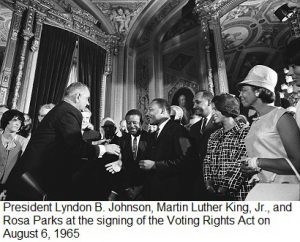
CU Blog - A Lesson in History - Slavery and the 4th of July - Photo 1Today is a special day in the United States, it is the 241st anniversary of their Declaration of Independence from Great Britain on July 4, 1776. This day will be celebrated all over the country with parades, picnics, music and fireworks.

The celebrations of this day is a BIG deal!

What is buried in this annual celebration is the stark and sharp contrast on the different sides in the conflict of July 4, 1776. There were the British loyalists on one hand and those seeking freedom from the British, the patriots, on the other hand; see the opposing sides here:

Title #1: What two sides emerged in response to the Declaration of Independence? What did each side favor?

Answer:
The Patriots and Loyalists; Patriots favored independence and Loyalists favored staying as a British colony.

Explanation:
Tensions were simmering prior to the start of the Revolution, and the Declaration of Independence, signed in 1776 formally broadcasted to all that the United States was a new and independent nation. This led to two factions being formed: Patriots and Loyalists.

Patriots believed that the United States should be an independent nation separate from Britain. They felt that they were being treated unfairly as a colony and that their basic rights were being trampled upon. It was their view that the time for compromises was over and that the colonies needed to leave the British Empire.

Loyalists thought that the colonies were better off staying with England. Some did this out of loyalty for the king, but others feared instability and anarchy in the event of a change in government. In addition, many feared that the economic fallout with the mother country would destabilize the American economy.

All in all, these were the two groups that were formed, and as you know, the Patriots emerged as successful and formed a new nation.

Source: Retrieved July 4, 2017 from: https://socratic.org/questions/what-two-sides-emerged-in-response-to-the-declaration-of-independence-what-did-e

The patriots get to celebrate the 4th of July every year. But as there were 2 sides of this conflict, we sometimes forget the loyalists side of the conflict. They did not simply go away; they remained vocal and loyal to the Britain’s Crown.

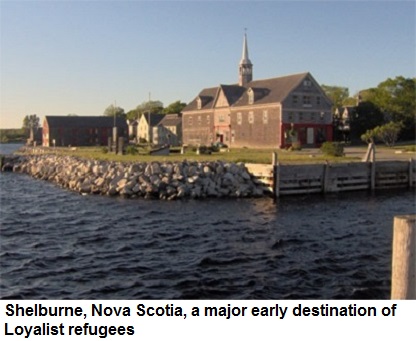
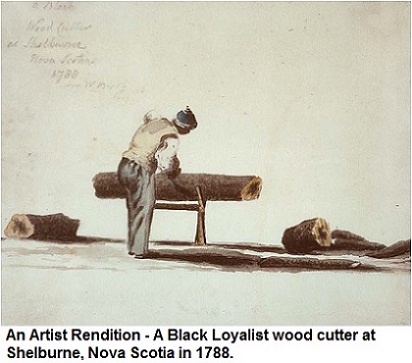
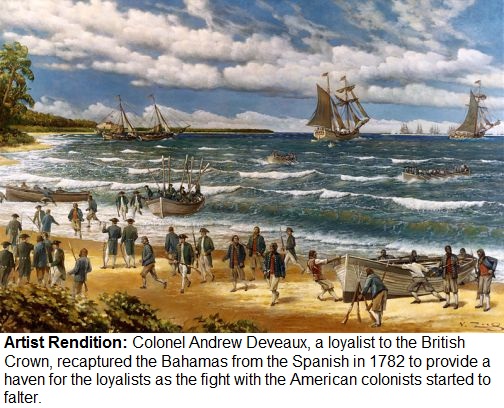
The category of loyalists have a big bearing on the history of the Caribbean. Of the 30 member-states that caucus as the Caribbean, 18 of them have British heritage. Many of these were impacted by the American Declaration of Independence; many loyalists fled America and relocated to these British West Indies. Consider these notes:

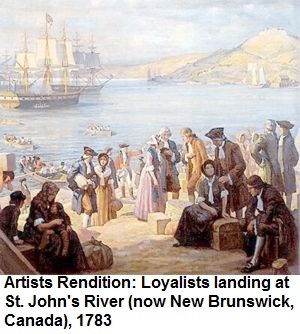
When their cause was defeated, about 15% of the Loyalists (65,000–70,000 people) fled to other parts of the British Empire, to Britain itself, or to British North America (now Canada). …

CU Blog - A Lesson in History - Slavery and the 4th of July - Photo 3a

CU Blog - A Lesson in History - Slavery and the 4th of July - Photo 2a

CU Blog - A Lesson in History - Slavery and the 4th of July - Photo 2b

The wealthiest and most prominent Loyalist exiles went to Great Britain to rebuild their careers; many received pensions. Many Southern Loyalists, taking along their slaves, went to the West Indies and the Bahamas, particularly to the Abaco Islands. – Source: Wikipedia
CU Blog - A Lesson in History - Slavery and the 4th of July - Photo 3b

Great Britain also responded … formally. See details of the response here:

Title #2: The British Reply

When Great Britain first received the Declaration of Independence, the country was silent. To them, this was another annoyance from the colonies. The colonists had sent previous letters to King George III that had been ignored, but this was the first time that they had declared themselves free from Great Britain. You know how you feel when a little child continues to ask you for the same thing over and over again, and eventually, you stop listening? This was how King George III viewed the colonies. They were a nuisance, but relatively harmless. Or so he thought.

The government hired John Lind, an English politician and pamphleteer, to write a rebuttal to the declaration. He wrote Answer to the Declaration of the American Congress, a reply that tried to pick apart the Declaration of Independence. Lind focused on the issue of slavery, saying that the colonists were actually angry that King George III had offered freedom to the slaves. Lind even mocked the writers for stating, ‘All men are created equal…’, yet they allowed slavery. Of course, all of this was just a distraction. The colonists really paid no attention to the pamphlet.

Following this, King George III officially declared the colonies to be in a state of rebellion. By August of 1776, the King ordered troops to the colonies.

Once the Revolutionary War began, the citizens of Great Britain became more concerned about the colonies and their fight for independence. In October, King George III addressed Parliament, hoping to ease some of the concerns. He opened the address wishing that he could inform them that the troubles were at an end and that the people had ‘recovered from their delusion’ and ‘returned to their duty.’ However, the colonists continued to fight and even ‘openly renounced all allegiance to the Crown.’ King George III accused the colonists of treason, but reassured the Parliament that England was still united.

The King ended his address singing his own praises saying, ‘No people ever enjoyed more Happiness, or lived under a milder Government, then those now revolted Provinces.’ Everything that the colonies have—their land, sea, wealth, and strength—was because of him. His desire was to return the colonies as a part of the British Empire and end the war.

As we know, King George III’s desire to end the war and keep the colonies did not go as planned. The Revolutionary War, the war for American Independence, continued until 1783, ending with more than 50,000 deaths, and the colonies freed as a new country, the United States of America.

Source: Retrieved July 4, 2017 from: http://study.com/academy/lesson/british-reply-to-the-declaration-summary-analysis.html

As related, slavery was not the cause of the US War of Independence … entirely. But the notion that “all men are created equal” was a laughable American hypocrisy. The continuation of slavery in the wake of a trend of liberalism in England became a boiling point of contention. In fact as reported here, many African Americans – 12,000 or so – fled to the side of the British for the promise of freedom:

Title #3: Slavery and Black Loyalists

As a result of the looming crisis in 1775 the Royal Governor of Virginia, Lord Dunmoreissued a proclamation that promised freedom to servants and slaves who were able to bear arms and join his Loyalist Ethiopian Regiment. Many of the slaves in the South joined the Loyalists with intentions of gaining freedom and escaping the South. About 800 did so; some helped rout the Virginia militia at the Battle of Kemp’s Landing and fought in the Battle of Great Bridge on the Elizabeth River, wearing the motto “Liberty to Slaves”, but this time they were defeated. The remains of their regiment were then involved in the evacuation of Norfolk [(Virginia)], after which they served in the Chesapeake area. Eventually the camp that they had set up there suffered an outbreak of smallpox and other diseases. This took a heavy toll, putting many of them out of action for some time. There was a slave by the name of Boston King who joined the Loyalists and wound up catching smallpox. Boston King and other soldiers who were sick were relocated to a different part of the camp so that they did not contaminate the healthy soldiers. The survivors joined other British units and continued to serve throughout the war. Black colonials were often the first to come forward to volunteer and a total of 12,000 African Americans served with the British from 1775 to 1783. This factor had the effect of forcing the rebels to also offer freedom to those who would serve in the Continental Army; however, such promises were often reneged upon by both sides.[31]

African Americans who gained their freedom by fighting for the British became known as Black Loyalists. The British honored the pledge of freedom in New York City through the efforts of General Guy Carleton who recorded the names of African Americans who had supported the British in a document called the Book of Negroes which granted freedom to slaves who had escaped and assisted the British. About 4,000 Black Loyalists went to the British colonies of Nova Scotia and New Brunswick, where the British promised them land. They founded communities across the two provinces, many of which still exist today. Over 2,500 settled in Birchtown, Nova Scotia, instantly making it the largest free black community in North America. However, the inferior grants of land they were given and the prejudices of white Loyalists in nearby Shelburne who regularly harassed the settlement in events such as the Shelburne Riots in 1784, made life very difficult for the community.[32] In 1791 Britain’s Sierra Leone Company offered to transport dissatisfied black Loyalists to the British colony of Sierra Leone in Africa, with the promise of better land and more equality. About 1,200 left Nova Scotia for Sierra Leone, where they named the capital Freetown.[32] After 1787 they became Sierra Leone’s ruling elite. About 400 to 1,000 free blacks who joined the British side in the Revolution went to London and joined the free black community of about 10,000 there.

Source: Retrieved July 4, 2017 from: https://en.wikipedia.org/wiki/Loyalist_(American_Revolution)#Slavery_and_Black_Loyalists

Wow, what a notion! An argument can be made that for the Black population – the majority ethnicity for 29 of the 30 Caribbean member-states – their celebration of the 4th of July should have been … for the other side!

Intriguing!

This is the lesson in history for the Caribbean; American historic accomplishments are NOT historic accomplishments for the majority of Caribbean people. Poor race relations tarnished so much of American history, that the country continues with this societal defect … even to this day.

This lesson from America’s initiation is presented by the movement behind the book Go Lean…Caribbean – available to download for free – which serves as a roadmap for the introduction and implementation of the technocratic Caribbean Union Trade Federation (CU), for the elevation of Caribbean society – for all member-states. This book features a declaration of its own, a Declaration of Interdependence (Pages 10 – 13):

Preamble: When, in the course of human events, it becomes necessary for one people to unite with others so as to connect them together to collaborate, confederate and champion the challenges that face them, we the people of Caribbean democracies find it necessary to accede and form a confederated Union, the Caribbean Union Trade Federation, with our geographic neighbors of common interest.

While the laws of nature and of nature’s God entitle us to form a society and a brotherhood to foster manifestations of our hopes and aspirations and to forge solutions to the challenges that imperil us, decent respect to the opinions of mankind requires that we declare the causes which imperil us and incite us to unite to assuage our common threats.

And while our rights to exercise good governance and promote a more perfect society are the natural assumptions among the powers of the earth, no one other than ourselves can be held accountable for our failure to succeed if we do not try to promote the opportunities that a democratic society fosters.

As the history of our region and the oppression, suppression and repression of its indigenous people is duly documented, there is no one alive who can be held accountable for the prior actions, and so we must put aside the shackles of systems of repression to instead formulate efficient and effective systems to steer our own destiny. …

xi. Whereas all men are entitled to the benefits of good governance in a free society, “new guards” must be enacted to dissuade the emergence of incompetence, corruption, nepotism and cronyism at the peril of the people’s best interest. The Federation must guarantee the executions of a social contract between government and the governed.

xvi. Whereas security of our homeland is inextricably linked to prosperity of the homeland, the economic and security interest of the region needs to be aligned under the same governance. Since economic crimes … can imperil the functioning of the wheels of commerce for all the citizenry, the accedence of this Federation must equip the security apparatus with the tools and techniques for predictive and proactive interdictions.

xxiv. Whereas a free market economy can be induced and spurred for continuous progress, the Federation must install the controls to better manage aspects of the economy: jobs, inflation, savings rate, investments and other economic principles. Thereby attracting direct foreign investment because of the stability and vibrancy of our economy.

The Go Lean book provides 370-pages of turn-by-turn instructions on this roadmap, on “how” to adopt new community ethos, plus the strategies, tactics, implementations and advocacies to execute so as to reboot, reform and transform the societal engines of Caribbean society. This CU/Go Lean roadmap has these 3 prime directives:

  • Optimization of the economic engines in order to grow the regional economy to $800 Billion and create 2.2 million new jobs.
  • Establishment of a security apparatus to ensure public safety and protect the resultant economic engines.
  • Improve Caribbean governance to support these engines, including a separation-of-powers between the member-states and CU federal agencies.

“Lessons in History” are a familiar theme for these Go Lean blog-commentaries; consider this sample of previous submissions:

https://goleancaribbean.com/blog/?p=12274 A Lesson in History – Spanish Caribbean
https://goleancaribbean.com/blog/?p=11870 A Lesson in History – Indian Termination Policy
https://goleancaribbean.com/blog/?p=10933 A Lesson in History – White is Right – Not!
https://goleancaribbean.com/blog/?p=10733 150 Years of Historically Black Colleges & Universities
https://goleancaribbean.com/blog/?p=9151 The New Smithsonian African – American Museum
https://goleancaribbean.com/blog/?p=8767 A Lesson in History – Haiti 1804
https://goleancaribbean.com/blog/?p=7769 History’s Effect of the Current Caribbean Disposition
https://goleancaribbean.com/blog/?p=7738 A Lesson in History – Legacy of the Buffalo Soldiers
https://goleancaribbean.com/blog/?p=5695 A Lesson in History – Repenting, Forgiving and Reconciling the Past
https://goleancaribbean.com/blog/?p=4971 A Lesson in History – Royal Charters: Truth & Consequence
https://goleancaribbean.com/blog/?p=451 CariCom position on Slavery/Colonization Reparations

There are so many lessons that we, in the Caribbean, can learn from this history of the initiation of the United States; the role of slavery was integral to the whole fabric of American society. Repercussions and consequences of this societal defect reverberated from those events in July 1776 right down to our day. In many ways, these repercussions and consequences are responsible for our region’s poor performance in our economic, security and governing engines. Our society was created as parasites of the American- European (British) eco-system, rather than protégés  of these advanced economies.

It is time for this disposition to end! It is not 1776 anymore; we must make the societal progress that 241 years of lessons should have taught us. America has reformed and transformed … some, but still needs more progress. But our goal is not to reform and transform America; our target is the Caribbean … only. We hereby urge everyone in the region – people, institutions and governments – to lean-in to this Go Lean roadmap.

We can do this, we can declare our interdependence and make our homeland a better place to live, work and play. 🙂

Download the free e-Book of Go Lean … Caribbean – now!

Sign the petition to lean-in for this roadmap for the Caribbean Union Trade Federation.

Share this post:
, ,

‘Time to Go’ – Blacks get longer sentences from ‘Republican’ Judges

Go Lean Commentary

“Tell me who your friends are and I will tell you who you are” – Old Adage

This Old Adage was drummed in me as a youth; I may have wanted to question its validity, but time has proven its accuracy. As humans, we are affected by the people we associate with; their values, principles, character, aspirations – or lack thereof – will have an effect on us. This statement even harmonizes with the Bible scripture at 1 Corinthians 15:33, which states:

“Bad companions ruin good character.” – Today’s English Version

This commentary highlights a disturbing trend in American jurisprudence; it turns out that among judges that associates with the conservative political parties or the liberal political parties, one group consistently sentences Black defendants to longer prison sentences. This is indicative of more than just the tolerance of criminality; this shows some hidden bias, that severely endangers the Black populations in America. These judges, despite claims of non-partisanship, are affected by their party.

Say it ain’t so!

The party with the harsher sentences is the Republican Party or GOP (for Grand Old Party).

Sometimes, we need to step back and look at the whole picture before we can notice trends and leanings. This is the common sense in the old expression: “One cannot see the forest for the trees”. This was the purpose of a study on judicial bias; it looked at a range of 500,000 cases to summarize its findings. Intelligence and wisdom can be gleaned from this data.

The numbers – and conclusions – must not be ignored. See the full story here:

Title: Black Defendants Get Longer Sentences From Republican-Appointed Judges, Study Finds
By: Adam Liptak

WASHINGTON — Judges appointed by Republican presidents gave longer sentences to black defendants and shorter ones to women than judges appointed by Democrats, according to a new study that analyzed data on more than half a million defendants.

“Republican-appointed judges sentence black defendants to three more months than similar nonblacks and female defendants to two fewer months than similar males compared with Democratic-appointed judges,” the study found, adding, “These differences cannot be explained by other judge characteristics and grow substantially larger when judges are granted more discretion.”

The study was conducted by two professors at Harvard Law School, Alma Cohen and Crystal S. Yang. They examined the sentencing practices of about 1,400 federal trial judges over more than 15 years, relying on information from the Federal Judicial Center, the United States Sentencing Commission and the Transactional Records Access Clearinghouse at Syracuse University.

Douglas A. Berman, an authority on sentencing law at Ohio State University, said the study contained “amazing new empirical research.”

“It’s an extraordinarily important contribution to our statistical understanding of sentencing decision making in federal courts over the last two decades,” he said.

It has long been known that there is an overall racial sentencing gap, with judges of all political affiliations meting out longer sentences to black offenders. The new study confirmed this, finding that black defendants are sentenced to 4.8 months more than similar offenders of other races.

It was also well known, and perhaps not terribly surprising, that Republican appointees are tougher on crime over all, imposing sentences an average of 2.4 months longer than Democratic appointees.

But the study’s findings on how judges’ partisan affiliations affected the racial and gender gaps were new and startling.

“The racial gap by political affiliation is three months, approximately 65 percent of the baseline racial sentence gap,” the authors wrote. “We also find that Republican-appointed judges give female defendants two months less in prison than similar male defendants compared to Democratic-appointed judges, 17 percent of the baseline gender sentence gap.”

The two kinds of gaps appear to have slightly different explanations. “We find evidence that gender disparities by political affiliation are largely driven by violent offenses and drug offenses,” the study said. “We also find that racial disparities by political affiliation are largely driven by drug offenses.”

The authors of the study sounded a note of caution. “The precise reasons why these disparities by political affiliation exist remain unknown and we caution that our results cannot speak to whether the sentences imposed by Republican- or Democratic-appointed judges are warranted or ‘right,’” the authors wrote. “Our results, however, do suggest that Republican- and Democratic-appointed judges treat defendants differently on the basis of their race and gender given that we observe robust disparities despite the random assignment of cases to judges within the same court.”

The study is studded with fascinating tidbits. Black judges treat male and female offenders more equally than white judges do. Black judges appointed by Republicans treat black offenders more leniently than do other Republican appointees.

More experienced judges are less apt to treat black and female defendants differently. Judges in states with higher levels of racism, as measured by popular support for laws against interracial marriage, are more likely to treat black defendants more harshly than white ones.

The Trump administration has been quite successful in stocking the federal bench with its appointees, and by some estimates the share of Republican appointees on the federal district courts could rise to 50 percent in 2020, from 34 percent in early 2017.

The study said these trends were likely to widen the sentencing gaps.

“Our estimates suggest that a 10 percentage point increase in the share of Republican-appointed judges in each court would increase the racial sentencing gap by approximately 5 percent and the gender sentencing gap by roughly 2 percent,” the authors wrote. “During an average four-year term, a Republican president has the potential to alter the partisan composition of the district courts by over 15 percentage points, potentially increasing the racial and gender sentencing gap by 7.5 and 3 percent, respectively.”

There are a couple of reasons to question that prediction. The Trump administration has been more energetic in appointing appeals court judges than trial judges. And in recent years many conservatives have started to shift positions on sentencing policy. The very scope of the study, which considered sentences imposed from 1999 to 2015, could mask trends in the later years.

Supreme Court justices like to say that partisan affiliation plays no role in judicial decision making.

“There’s no such thing as a Republican judge or a Democratic judge,” Justice Neil M. Gorsuch, President Trump’s Supreme Court appointee, said at his confirmation hearing last year. “We just have judges in this country.”

Political scientists have disagreed, finding that Republican appointees are markedly more likely to vote in a conservative direction than Democratic ones. Senate Republicans, by refusing to hold hearings for Judge Merrick B. Garland, President Barack Obama’s Supreme Court nominee, seemed to agree.

So has Mr. Trump. “We need more Republicans in 2018 and must ALWAYS hold the Supreme Court!” he tweeted in March.

But judicial ideology is one thing. The race and gender gaps identified by the new study present a different and difficult set of questions.

Professor Berman said the study should prompt both research and reflection. “It only begins a conversation,” he said, “about what sets of factors really influence judges at sentencing in modern times.”

Follow Adam Liptak on Twitter: @adamliptak.

Source: New York Times – published May 28, 2018; retrieved June 26, 2018 from: https://www.nytimes.com/2018/05/28/us/politics/black-defendants-women-prison-terms-study.html

This article alludes to a stereotype; one where women are sentenced lighter, but Blacks harsher. This stereotype transcends the entire history of the United States … right up to this day. The more things change, the more they remain the same!

This commentary continues the series on Time to Go, considering the reality for life of the Caribbean’s Black-and-Brown population in the US. This entry is Number 10 in this series from the movement behind the book Go Lean … Caribbean which started in September 2016 with the first 6 issues. Now, this revisit, this commentary, examines a disturbing trend with the sentences of federal court judges; these ones are appointed by the President of the United States. Needless to say, Presidents appoint judges that reflect and respect their values – it’s a natural expectation that they would have the same (virtual) association. So “we” can tell a lot about federal judges, just by knowing which President appointed them.

These were the 2016 submissions in this series:

  1. Time to Go: Spot-on for Protest
  2. Time to Go: No Respect for our Hair
  3. Time to Go: Logic of Senior Immigration
  4. Time to Go: Marginalizing Our Vote
  5. Time to Go: American Vices; Don’t Follow
  6. Time to Go: Public Schools for Black-and-Brown

Now, we consider these 5 new entries along that same theme:

  1. Time to Go: Windrush – 70th Anniversary
  2. Time to Go: Mandatory Guns – Say it Ain’t So
  3. Time to Go: Racist History of Loitering
  4. Time to Go: Blacks Get Longer Sentences From ‘Republican’ Judges
  5. Time to Go: States must have Population Increases

All of these commentaries relate to Caribbean people and their disposition in foreign lands – in this case in the US – and why they need to Go Back Home. Surely, it is obvious and evident that institutional racism is “Alive & Well” in the US. We can and must do better at home. The Go Lean book – available to download for free – serves as a roadmap for the technocratic Caribbean Union Trade Federation (CU) to assuage the societal defects in this region. It is “out of scope” for our movement to fix America; our efforts to reform and transform is limited to the Caribbean.

‘Republican’ Judges???

This is as opposed to Democratic Judges! Yes, this is a reference to specific political parties in the US. Yet, we are not making these assessments with any political leaning. Rather, this movement behind the Go Lean book and blogs, the SFE Foundation, is an apolitical organization with no favoritism for one political party over the other. In fact, the first 6 commentaries in this Time to Go series were published during the presidential administration of Barack Obama, a Democrat.

The subject of Optimized Criminal Justice is a failing for all previous presidential administrations – though Blacks lean more to the Democrats – see/listen to the AUDIO-Podcast in the Appendix below. This is a familiar theme for this Go Lean commentary. This movement have consistently related the lack of respect for those in America fitting the Black-and-Brown description; consider these prior submissions:

https://goleancaribbean.com/blog/?p=14627 Cop-on-Black Shootings – In America’s DNA
https://goleancaribbean.com/blog/?p=14413 Repairing the Breach: Hurt People Hurt People
https://goleancaribbean.com/blog/?p=8202 Lessons Learned from American Dysfunctional Minority Relations
https://goleancaribbean.com/blog/?p=8200 Climate of Hate for American Minorities
https://goleancaribbean.com/blog/?p=7221 Street naming for Martin Luther King unveils the real America
https://goleancaribbean.com/blog/?p=5527 American Defects: Racism – Is It Over?
https://goleancaribbean.com/blog/?p=4863 Video of Police Shooting: Worth a Million Words
https://goleancaribbean.com/blog/?p=4447 Probe of Ferguson, Missouri shows cops & court bias
https://goleancaribbean.com/blog/?p=546 Book Review – ‘The Divide’ – Injustice in the Age of the Wealth Gap
https://goleancaribbean.com/blog/?p=341 Hypocritical US slams Caribbean human rights practices

It is a dangerous proposition to be Black in America. This is why this movement consistently urges the Black-and-Brown of the Caribbean to Stay Home! In fact, The Bahamas urged its majority Black population (and the young men) to exercise extreme caution when traveling to the US and dealing with police authorities. There is no doubt that the America of Old – would have been no place for Caribbean people to seek refuge. But now we are asserting that the disposition is still the same:

  • Our Black-and-Brown Diaspora should plan to repatriate back to the Caribbean
  • While our young people, in the homeland, should plan to prosper where planted rather than setting their sights on American shores.

Despite the fact that this society – modern America – is still no place for Black-and-Brown Caribbean people to seek refuge, all 30 member-states of the region continue to suffer from an abominable brain drain rate – one report proclaims 70 percent – in which so many Caribbean citizens have emigrated to the US (and other places). We must resist this bad trend! How?!

  • Good messaging
  • Heavy-lifting to reform and transform the societal engines

The Go Lean book identifies the reasons why people abandon their homeland as “push and pull”. While the “push” refers to the societal defects that people take refuge from, the “pull” is mostly due to messaging. Our people perceive that the US is better for them, and that landing in the US is the panacea – cure-all – for all societal short-comings. Good messaging will mitigate that trend. Yet, still, we must do the hard work for fixing our society.

The Go Lean book asserts that it is easier for the Black-and-Brown populations in the Caribbean to prosper where planted in the Caribbean, rather than in the United States. Plus, we need these people’s help to reform and transform our society. We need some to lead, and some just to follow. We need some to produce, and some just to consume. We need growth! So abandonment is counter-productive.

This is the quest of the Go Lean/CU roadmap. The book presents 370 pages of instructions for how to reform and transform our Caribbean member-states. It stresses the key community ethos that needs to be adopted, plus the strategies, tactics, implementations and advocacies necessary to optimize the societal engines in a community. The CU/Go Lean roadmap has these 3 prime directives for optimizing our societal engines:

As related in this blog series, it is Time to Go! We have a better chance of optimizing our society in the Caribbean for our Black-and-Brown majority populations than the US will do for our people; we can actually be better than America. Just look, their distinguished judges are still adjudicating like its 1868, and not 2018. America has gone “2 steps forward and 1 step backwards”.

Now is the Time to Go and now is the time to lean-in to this Go Lean/CU roadmap. This quest is conceivable, believable and achievable. Yes, we can … reform and transform our society. We can make our homeland a better place to live, work and play. 🙂

Download the free e-Book of Go Lean … Caribbean – now

Sign the petition to lean-in for this roadmap for the Caribbean Union Trade Federation.

————–

AUDIO Podcast – Why Did Black Voters Flee The Republican Party In The 1960s? – https://www.npr.org/sections/codeswitch/2014/07/14/331298996/why-did-black-voters-flee-the-republican-party-in-the-1960s


Posted July 14, 2014 – If you’d walked into a gathering of older black folks 100 years ago, you’d have found that most of them would have been Republican.

Wait… what?

Yep. Republican. Party of Lincoln. Party of the Emancipation. Party that pushed not only black votes but black politicians during that post-bellum period known as Reconstruction.

Today, it’s almost the exact opposite. That migration of black voters away from the GOP reached its last phase 50 years ago this week.

Share this post:
, , ,
[Top]

‘Time to Go’ – Racist History of Loitering

Go Lean Commentary 

The cruel, inhumane institution of slavery finally ended in the United States … on which date?

This was not meant to be a multiple choice! But rather, these answers demonstrate the continuous flow of racist oppression that had befallen the African-American experience, despite these identifiable dates ending the practices and legacy of America’s Original Sin.

Why so lingering here, when the practice was so much more easily disbanded elsewhere; think British Empire in 1834.

This commentary asserts than the Southern United States – the former Confederate States/Slave States – never embraced the end of slavery because of this philosophical premise here:

“An empire toppled by its enemies can rise again, but one which crumbles from within, is dead forever. ” – Popular Quotation from the Character Baron Zemo in the Marvel film Captain America: Civil Wars

Say it ain’t so! The Confederate South was toppled by its enemies (the non-Slave Northern States), their same spirit of racial superiority rose again. If the South had evolved on their own to assuage their societal defects, things may have been different for the Black minority there among the White majority.

While racial disparity in the US is a national reality, attitudes in the Southern States continued to reflect blatant White Supremacy. Since this was tolerated in the South, there was spin-off in the rest of the country. Truthfully, oppression, suppression and repression of the African race became the community ethos in the whole country: blatant in the South; subtle in the North and in the West. Community ethos is defined as:

The fundamental character or spirit of a culture; the underlying sentiment that informs the beliefs, customs, or practices of a group or society; dominant assumptions of a people or period.

Considering the foregoing historic timeline, loitering laws against African-Americans, is the focus of this commentary. There have been a number of high profile cases of Blacks being discriminated against in general society. See related VIDEO‘s here:

VIDEO 1 – Racist History of Loitering – https://youtu.be/jQuT0gO2X0o


Splinter

Published on May 16, 2018 – What is the line between “loitering” and just “hanging out”? Turns out, the enforcement of loitering laws often has less to do with committing the act and more to do with the skin color of the person who does:

Subscribe to Splinter: https://goo.gl/BwuJiy

————-

VIDEO 2 – Somebody Called The Cops On Me In My Own Building – https://youtu.be/LzQsYc_k4Tk


HuffPost
Published on May 18, 2018 – Someone called the police on him for suspected armed robbery. The reality? He was moving into his New York City apartment.

Subscribe to HuffPost today: http://goo.gl/xW6HG

Get More HuffPost Read: https://www.huffingtonpost.com/

Racial disparity in the US is still a reality. As related in the above VIDEO‘s, “you’re already criminalized when you have Black skin”.

This commentary asserts that it is easier for the Black-and-Brown populations in the Caribbean to prosper where planted in the Caribbean, rather than emigrating to foreign countries, like the United States. So the urging is as follows:

All Black-and-Brown Caribbean people exiling in the US, we entreat you: It’s Time to Go!

All Black-and-Brown people in the Caribbean wanting to emigrate to the US, we entreat you to Stay Home!

This point aligns with the book Go Lean…Caribbean, which states that while the blatant racist attitudes and actions may now be considered politically incorrect, the foundations of institutional racism in the US are entrenched. The book supports the notion that the Caribbean can be an even better place to live for the Caribbean’s Black-and-Brown, once we make the homeland a better place to live, work and play. Our quest is to optimize the economic, security and economic engines in the Caribbean region so as to dissuade our people from leaving and encourage the Diaspora to repatriate.

This commentary – Number 9 – continues a series from the movement behind the book Go Lean … Caribbean, in consideration of the rationale to return back to the Caribbean homeland. The other commentaries – published in September 2016 and beyond – detailed in this series are as follows:

  1. Time to Go: Spot-on for Protest
  2. Time to Go: No Respect for our Hair
  3. Time to Go: Logic of Senior Immigration
  4. Time to Go: Marginalizing Our Vote
  5. Time to Go: American Vices; Don’t Follow
  6. Time to Go: Public Schools for Black-and-Brown

Now, we consider 5 new entries along that same theme; they are identified as follows:

  1. Time to Go: Windrush – 70th Anniversary
  2. Time to Go: Mandatory Guns – Say it Ain’t So
  3. Time to Go: Racist History of Loitering
  4. Time to Go: Blacks Get Longer Sentences From ‘Republican’ Judges
  5. Time to Go: States must have Population Increases

All of these commentaries in this series relate to the disposition of the Caribbean Diaspora in foreign countries; in the case of this one, the United States of America. The Go Lean book and movement serves as a roadmap for the introduction of the technocratic Caribbean Union Trade Federation (CU). The CU is set to optimize Caribbean society through economic, security and governing optimizations. Therefore the Go Lean roadmap has 3 prime directives:

  • Optimization of the economic engines in order to grow the regional economy to $800 Billion & create 2.2 million new jobs.
  • Establishment of a security apparatus to ensure public safety and protect the economic engines.
  • Improve Caribbean governance to support these engines.

The Go Lean roadmap posits that the Caribbean region is in crisis now, and so many are quick to flee for refuge in foreign countries. But the “grass is not necessarily greener on the other side”. Here in the Caribbean, Black-and-Brown people are not arrested for being Black-and-Brown – they are the majority population. But they are a minority in the US; and that society is definitely not optimized for Caribbean people.

The Go Lean book asserts that every community has bad actors. The Caribbean has bad actors; and the US has bad actors. But because of the obvious need for reform and to transform the region, it may be easier to effect change at home, than in the foreign country of the US. Besides, many (non-Black) people in the US, don’t even think they need to change anything. They think there is no problem – they are perfectly allowed to call the police because a Black person is in their presence … loitering, or drinking coffee, or studying, or moving.

African Americans may have no where else to go, but the Black-and-Brown of the Caribbean can go back to the Caribbean. This is the urging now: It’s Time to Go!

This was a motivation of the Go Lean roadmap, we have to prepare for the Diaspora’s return; we have to fix our defects and mitigate for our “bad actors”; bad actors always emerge. This point is pronounced early in the book with the Declaration of Interdependence (Page 12) that claims:

x. Whereas we are surrounded and allied to nations of larger proportions in land mass, populations, and treasuries, elements in their societies may have ill-intent in their pursuits, at the expense of the safety and security of our citizens. We must therefore appoint “new guards” to ensure our public safety and threats against our society, both domestic and foreign. The Federation must employ the latest advances and best practices of criminology and penology to assuage continuous threats against public safety. The Federation must allow for facilitations of detention for [domestic and foreign] convicted felons of federal crimes, and should over-build prisons to house trustees from other jurisdictions.

xvi. Whereas security of our homeland is inextricably linked to prosperity of the homeland, the economic and security interest of the region needs to be aligned under the same governance. Since economic crimes, including piracy and other forms of terrorism, can imperil the functioning of the wheels of commerce for all the citizenry, the accedence of this Federation must equip the security apparatus with the tools and techniques for predictive and proactive interdictions.

The Caribbean appointing “new guards”, or a security pact to ensure public safety and justice assurance is part of the comprehensive effort of reforming the societal engines in our region. Security lapses are among the reasons why people left – they were pushed to seek refuge. So better delivering on the Social Contract – citizens surrender some of their freedoms and submit to the authority of the State in exchange for protection of remaining natural and legal rights – sends the message that we are readying the homeland for our far-flung Diaspora to finally come home.

The Go Lean book provides 370-pages of turn-by-turn instructions on “how” to adopt new community ethos, plus the strategies, tactics, implementations and advocacies to execute so as to reform and transform the societal engines of Caribbean society. Accepting that we have been inadequate in delivering security needs to our citizens in the past, we must now do better, not just in security promises, but in security deliveries. In addition, the Go Lean movement have presented many previous blog-commentaries on regional security and the assurance of public safety; consider this sample here:

https://goleancaribbean.com/blog/?p=14482 International Women’s Day – Protecting Rural Women
https://goleancaribbean.com/blog/?p=14424 Repairing the Breach: Crime – Need, Greed, Justice & Honor
https://goleancaribbean.com/blog/?p=13664 Managing High Profile Sexual Harassment Accusations
https://goleancaribbean.com/blog/?p=13476 Future Focused – Policing the Police
https://goleancaribbean.com/blog/?p=13126 The Requirement for Better Security – ‘Must Love Dogs’
https://goleancaribbean.com/blog/?p=12400 Accede the Caribbean Regional Arrest Treaty
https://goleancaribbean.com/blog/?p=10959 See Something, Say Something … Do Something
https://goleancaribbean.com/blog/?p=10566 Funding the Caribbean Security Pact
https://goleancaribbean.com/blog/?p=10222 Waging a Successful War on ‘Terrorism’
https://goleancaribbean.com/blog/?p=9072 Securing the Homeland – A Series featuring “On the Ground, Air and Sea”
https://goleancaribbean.com/blog/?p=5002 Managing a ‘Clear and Present Danger’
https://goleancaribbean.com/blog/?p=4360 Dreading the American: ‘Caribbean Basin Security Initiative’
https://goleancaribbean.com/blog/?p=4308 911 – Improving Emergency Response

The Go Lean roadmap was composed with the community ethos of the Greater Good – the greatest good for the greatest number of people – Black, Brown, White, Yellow or Red. We advocate for a pluralistic democracy

… and justice for all.

While this is an American concept … in words only, we have the opportunity to manifest this in the Caribbean. America does many things right, but they feature a lot of societal defects still, so we have the opportunity to do a pluralistic democracy Better than America.

This is the quest of the Go Lean/CU roadmap. We urge all Caribbean stakeholders to lean-in to this roadmap to elevate the Caribbean; to make our homeland a better place to live, work and play. 🙂

Download the book Go Lean … Caribbean – now!

Sign the petition to lean-in for this roadmap for the Caribbean Union Trade Federation.

————

APPENDIX – The Bottom Line on Peonage – Book: Go Lean … Caribbean (Page 211)

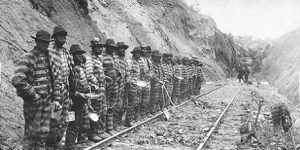
Peonage, involuntary servitude, existed historically during the colonial period, especially in Latin America and areas of Spanish rule, as well as in the Southern United States … after slavery was abolished. These States passed “Black Codes” to control the freed “Black” population. Peonage was essentially debt slavery, where a person was held against their will to work off an alleged debt to someone who had purchased them. This was the language, buying and selling, that was used for inmates purchased from county jails and state prison systems. They often declared as vagrant those who were [simply] unemployed.
Under such laws, local officials arbitrarily arrested tens of thousands, and charged them with fines and court costs. (By the beginning of the 20th century, 40% of blacks in the South were imprisoned in peonage). Merchants, farmers or business owners could pay their debts, and the prisoners had to work off the debt. Prisoners were “sold” or leased as forced laborers to operators of coal mines, lumber camps, brickyards, railroads, quarries and farm plantations, with the fees for their labor going to the States. Overseers often used severe deprivation, beatings and other abuses as “discipline”.

By 1942, the jail/prison peonage system came to an end with public exposure of the abuses and atrocities, advances of the American Communist movement, congressional hearings and public outcry.

Share this post:
, , ,
[Top]

‘Time to Go’ – Mandatory Guns: “Say it Ain’t So”

Go Lean Commentary

There is that Biblical directive:

Live by the Sword; Die by the Sword – Matthew 26:52

While the reference is here to the weapon of a sword, the truism of this statement applies to any weapon.

So for our American counterparts, this version is apropos: “Live by the Gun; Die by the Gun”.

Consider the recent school shootings and mass shootings, is there any doubt to the fulfillment of these words: America and guns go hand in hand.

Here’s proof! See this news article here; here this town in Georgia tried to mandate that every home own a gun. This is real! See the article & VIDEO here:

Title: Georgia City Loses Battle Over Mandatory Gun Ownership Law, Affirms Right Not To Bear Arms
By: Nick Wing

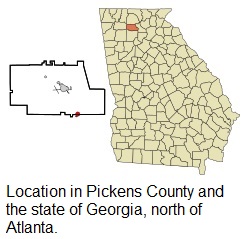
The small city of Nelson, [Georgia], agreed Thursday to revise an ordinance passed earlier this year that required every household to own a gun.

The measure, passed in April, drew nationwide attention for attempting to make gun and ammunition ownership mandatory. The Brady Center to Prevent Gun Violence, a national gun control group, sued Nelson over the law, claiming it was unconstitutional to make those demands of its citizens.

Nelson settled the suit this week when the city council unanimously approved a motion to amend the ordinance, the Atlanta Journal-Constitution reported. Here are the additions to the text:

    WHEREAS, many members of the City Council believe that possessing a firearm in the home is an effective means to defend residents and the community; and
    WHEREAS, the City Council also recognizes that there are other means available to defend families and homes, and the Constitution protects the rights of Americans to choose not to possess a firearm or bring one into the home….

The Brady Center applauded the city council’s decision in a statement:

“The Constitution protects not just the right to bear arms, but the right not to bear arms,” said Jonathan Lowy, Director of the Legal Action Project at the Brady Center. “The Brady Center brought this lawsuit to establish that the Constitution protects the rights of gun owners and non-gun owners alike, and all of us must be respectful of each other’s rights. We are pleased that as a result of our lawsuit the City of Nelson has recognized that the Second Amendment protects the rights of the hundreds of millions of Americans who believe that the best way to keep themselves and their families safe is by keeping guns out of their homes.”

While the idea of mandatory gun ownership is clearly a divisive one, many people on both sides of the issue pointed out that Nelson’s push was never likely to have been enforced. As the Associated Press reported in April, the ordinance had exemptions for convicted felons, those who suffer from certain physical or mental disabilities, and anyone who generally objects to gun ownership.

Lamar Kellett, a Brady Center member and one of Nelson’s 1,317 residents, was concerned that the law could lead to his being punished for opting not to own a firearm, so he sued. On Thursday, he called Nelson’s changes an “acceptable solution.”

Other mandatory gun ownership laws, meanwhile, remain in place largely without controversy. Kennesaw, Ga. has had such a measure on the books since 1982, though the law is rarely enforced, and some residents reportedly opt to ignore it.

Source: Huffington Post; Posted August 23, 2013; retrieved June 22, 2018: https://www.huffingtonpost.com/2013/08/23/nelson-georgia-guns_n_3805292.html

—————

VIDEO – Guns for everybody: Georgia town makes firearm ownership mandatory – https://youtu.be/e6DELdrYZuI

RT America
Published on Apr 2, 2013 – The city council in the town of Nelson, Georgia voted unanimously in favor of every resident possessing a gun at their homes. Now it’s compulsory for all of them, and Nelson isn’t the only US town to vote for a measure like this. RT’s Liz Wahl explains.

Find RT America in your area: http://rt.com/where-to-watch/
Or watch us online: http://rt.com/on-air/rt-america-air/

Say it Ain’t So! Is this the life that Caribbean people want? It should not be!

Yet, we are losing so many of our people to this eventuality. Our people leave due to “Push and Pull” reasons. “Push” refers to the societal defects in the Caribbean that moves people to want to get way; and “pull” factors refer to the impressions and perceptions that America is better. Surely a mandatory gun culture is not better!

The purpose of this commentary is to relate two strong points of contention:

  • We need to dissuade the high emigration rates of Caribbean citizens to the American homeland.
  • We need to encourage the Caribbean Diaspora to repatriate back to their ancestral homeland.

According to the foregoing article, American life is to “live by the sword/gun and die by the sword/gun”. Despite all the efforts to change this disposition, America’s consistency with guns continue, even now to the point that some communities want to mandate that every household have a gun. This is not the case in the Caribbean.

Yippee! If only, we can “prosper where planted” there.  Yes, we can!

This commentary and the movement behind the book Go Lean … Caribbean asserts that “yes, we can” reform and transform our Caribbean homeland so as to be better places to live, work and play. Where as, Caribbean communities can be elevated and improved, we already comply with common sense gun control, there is no hope for this in America – guns are in their DNA. (Good luck to American Youth demanding change).

For all Caribbean people in America who want a more sound life – gun wise – we entreat you: It is Time to Go.

This commentary is a continuation of a series from the Go Lean movement, in consideration of reasons why the Diaspora should repatriate back to the Caribbean homeland. There was an original 6-part series in 2016, with these submissions:

  1. Time to Go: Spot-on for Protest
  2. Time to Go: No Respect for our Hair
  3. Time to Go: Logic of Senior Immigration
  4. Time to Go: Marginalizing Our Vote
  5. Time to Go: American Vices; Don’t Follow
  6. Time to Go: Public Schools for Black-and-Brown

Now, we consider 5 new entries along that same theme; they are identified as follows:

  1. Time to Go: Windrush – 70th Anniversary
  2. Time to Go: Mandatory Guns – Say it Ain’t So
  3. Time to Go: Racist History of Loitering
  4. Time to Go: Blacks Get Longer Sentences From ‘Republican’ Judges
  5. Time to Go: States must have Population Increases

All of these commentaries relate to the disposition of the Caribbean Diaspora in foreign countries. The Go Lean book and movement serves as a roadmap for the introduction of the technocratic Caribbean Union Trade Federation (CU). The CU is set to optimize Caribbean society through economic, security and governing optimizations. Therefore the Go Lean roadmap has 3 prime directives:

  • Optimization of the economic engines in order to grow the regional economy to $800 Billion & create 2.2 million new jobs.
  • Establishment of a security apparatus to ensure public safety – including regional gun violence abatements – and protect the economic engines.
  • Improve Caribbean governance to support these engines, including a separation-of-powers between the member-states and CU federal agencies.

The “push and pull” factors do imperil Caribbean life. We push our citizens out. Then the resultant effect is a brain drain and even more endangerment to our society: less skilled workers, less entrepreneurs, less law-abiding citizens, less capable public servants – we lose our best and leave the communities with the rest. This create a crisis. The Go Lean roadmap posits that the entire Caribbean is now in crisis; so many of our citizens have fled for refuge in the US and other foreign countries, but the refuge is a mirage. The “grass is not necessarily greener on the other side”. Life in the US, is definitely not optimized – can you imagine living in a community where everyone is mandated to have a gun.

Yes, there is a challenge to reform and transform communities in the US; and there is a challenge to reform and transform communities in the Caribbean. It is easier though, to fix the Caribbean than to fix the American eco-system. So it is Time to Go, so our Caribbean people can do the work to prosper where planted in their Caribbean communities.

Why not simply try to fix America?

The history and DNA of America may be beyond our reach.

Just consider:

Who benefits from a mandatory gun ownership policy?

The Retail Stores and gun manufacturers!

This is Crony-Capitalism at work – exploiting the public good for private profit.

Also underlying the Second Amendment (of the US Constitution) is the white supremacy defect. This ignominious Second Amendment; is a product of the previous Slave Culture, as one original motivation in 1791 was to suppress insurrection, allegedly including slave revolts [60][61][62]. A previous blog-commentary entitled 10 Things We Want from the US and 10 Things We Don’t Want from the US detailed this rationale:

The “right to bear arms” has a personal application beyond the country’s entitlement to maintain a militia. This “right” has been interpreted in a manner in which any normal “man” can get possession of guns and other armament. This proliferation of guns in society results in the highest rate of gun violence in the world, even an unconscionable rate of school shootings.

The Go Lean roadmap purports that this status has also caused discord – a gross abuse and availability of illegal guns – in bordering communities of Mexico, and Caribbean states of the Bahamas, and the DR. This propels our gun-related crime.

The US still has some societal defects – racism and Crony-Capitalism for example – that are so imbrued that they are tied to the country’s DNA. This is why the Go Lean movement posits that it is easier to effect change at home in the Caribbean, than in the foreign country of the US.

In a previous blog-commentary, a thesis was presented that for Caribbean citizens, it is NOT better to live “fast & furious” in the US, but rather it is better to prosper where planted in the Caribbean homeland. Life in the US may experience a shorter mortality due to the riskier reality, like this dangerous gun culture – this is not just theory, a Caribbean Diaspora’s daughter was killed in the Parkland School Shooting in February 2018. And yet, our Caribbean communities are losing people more and more to the US with our atrocious societal abandonment rates.

While we are declaring that it is “Time to Go“, we are also preparing for the return – fixing our economic, security and governing defects. Our goal is to be an American protégé and not a parasite; maybe to even be Better Than America.

If this is going to be, it starts with me – being residential in the Caribbean homeland. Time to Go!

The vision of the CU is a confederation of the 30 member-states of the Caribbean to do the heavy-lifting of championing better economic and security policies. There is the structure of a separation-of-powers between CU agencies and the individual member-states. So the CU will be able to do more independently than the regional status quo, while also helping to elevate the status quo security deliveries in the 30 member-states.

The Go Lean roadmap provides turn-by-turn directions on how to reform the Caribbean security apparatus to better secure Caribbean society as a whole. This roadmap concedes that the Caribbean is in crisis, but that this “crisis would be a terrible thing to waste”. As a planning tool, the roadmap commences with a Declaration of Interdependence, pronouncing the approach of regional integration (Page 12 – 13) as a viable solution to elevate the region’s societal engines:

x. Whereas we are surrounded and allied to nations of larger proportions in land mass, populations, and treasuries, elements in their societies may have ill-intent in their pursuits, at the expense of the safety and security of our citizens. We must therefore appoint “new guards” to ensure our public safety and threats against our society, both domestic and foreign. The Federation must employ the latest advances and best practices … to assuage continuous threats against public safety.

xi. Whereas all men are entitled to the benefits of good governance in a free society, “new guards” must be enacted to dissuade the emergence of incompetence, corruption, nepotism and cronyism at the peril of the people’s best interest. The Federation must guarantee the executions of a social contract between government and the governed.

xvi. Whereas security of our homeland is inextricably linked to prosperity of the homeland, the economic and security interest of the region needs to be aligned under the same governance. Since economic crimes, including piracy and other forms of terrorism, can imperil the functioning of the wheels of commerce for all the citizenry, the accedence of this Federation must equip the security apparatus with the tools and techniques for predictive and proactive interdictions.

xix. Whereas our legacy in recent times is one of societal abandonment, it is imperative that incentives and encouragement be put in place to first dissuade the human flight, and then entice and welcome the return of our Diaspora back to our shores

Change has now come. The driver of this change is globalization. Caribbean people have been emigrating in their search for a better life. Nelson, Georgia – from the foregoing article – should not be that destination. Nor should any community that refuses to implement common sense gun control. The bottom-line should not include sacrificing our children. The bottom-line motive should be the Greater Good – “the greatest good for the greatest number of people which is the measure of right and wrong – not profit, prejudice nor emigration.

The Go Lean book provides 370-pages of turn-by-turn instructions on “how” to adopt new community ethos, plus the strategies, tactics, implementations and advocacies to execute so as to transform the societal engines of Caribbean society, regarding guns and gun control. In addition, the Go Lean movement have presented many previous blog-commentaries on regional security and common-sense provisions to remediate and mitigate crime and violence. See this sample here:

https://goleancaribbean.com/blog/?p=14596 Forging Change – Corporate Vigilantism To Help with Guns
https://goleancaribbean.com/blog/?p=14556 Observing the Change … with Guns
https://goleancaribbean.com/blog/?p=13746 Failure to Launch – Security: Caribbean Basin Security Dreams
https://goleancaribbean.com/blog/?p=13476 Future Focused – Policing the Police
https://goleancaribbean.com/blog/?p=13213 Caribbean People ‘Pulled’ – Despite American Guns
https://goleancaribbean.com/blog/?p=13126 “Must Love Dogs”  – Providing K9 Solutions for Better Security
https://goleancaribbean.com/blog/?p=12400 Accede the Caribbean Arrest Treaty
https://goleancaribbean.com/blog/?p=11332 Boston Bombing Anniversary – Learning Lessons
https://goleancaribbean.com/blog/?p=11244 Live Fast; Die Young – The Fast & Furious Life in the US
https://goleancaribbean.com/blog/?p=11048 Managing the ‘Strong versus the Weak’ Series – Mitigating Bullies
https://goleancaribbean.com/blog/?p=9072 Model: Shots-Fired Monitoring – Securing the Homeland on the Ground
https://goleancaribbean.com/blog/?p=7485 Mitigating Interpersonal Violence Series – Street Crimes

In the Caribbean, we need to dissuade our people from leaving … and incentivize many of the Diaspora to return. We need our people to help us reform and transform our societies. Fleeing to America is not the answer! The grass is not greener on the other side. There are far too many guns in America for that society to be inviting. No, America is not the panacea for all of the Caribbean ills. To the contrary, we must reform and transform our own society.

The Go Lean/CU roadmap asserts that now is the time for all of the Caribbean – residents and Diaspora – to lean-in for the empowerments described here in the book Go Lean … Caribbean. This is conceivable, believable and achievable that we can elevate our homeland and to make our communities better places to live, work and play.

Now is the Time to Go … home! 🙂

Download the book Go Lean … Caribbean – now!

Sign the petition to lean-in for this roadmap for the Caribbean Union Trade Federation.

Share this post:
, , ,
[Top]

‘Time to Go’ – Windrush: 70th Anniversary Today – ENCORE

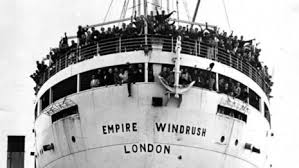
On 22 June 1948, the ship HMT Empire Windrush brought a group of 802 migrants to the port of Tilbury, near London, England. – Wikipedia

Thus started the drain! 

The Brain Drain that is. What started as a “drip has now turned into a drizzle”.  After 70 years exactly, the jury is now in. The verdict is emphatic:

Time to Go!

“Frankly, the Caribbean Diaspora … can now do better at home … in the Caribbean.” – This was the assertion from this previous blog-commentary from July 10, 2014. Today, on the 70th anniversary of the Windrush landing with its African Caribbean arrivals; it is time now to Encore that submission – see below.

African Caribbean people may not be so welcomed in the British Isles right now, anyway. See the latest on the Windrush Controversy in the Appendix VIDEO below.

This Encore continues a series from 2016, with these entries:

  1. Time to Go: Spot-on for Protest
  2. Time to Go: No Respect for our Hair
  3. Time to Go: Logic of Senior Immigration
  4. Time to Go: Marginalizing Our Vote
  5. Time to Go: American Vices; Don’t Follow
  6. Time to Go: Public Schools for Black-and-Brown

Now, we consider 5 new entries along that same theme; they are identified as follows:

  1. Time to Go: Windrush – 70th Anniversary
  2. Time to Go: Mandatory Guns – Say it Ain’t So
  3. Time to Go: Racist History of Loitering
  4. Time to Go: Blacks Get Longer Sentences From ‘Republican’ Judges
  5. Time to Go: States must have Population Increases

All of these commentaries relate to the Caribbean Diaspora’s disposition in foreign lands, asserting that it is Time to Go … home! See that Encore now:

———————

Go Lean Commentary – British public sector workers strike over ‘poverty pay’

The grass is not greener on the other side.

Go from being a big fish in small pond, to small fish in big pond.

These expressions are relevant in considering the fate of so many Caribbean Diaspora that had fled their Caribbean homelands over the past decades to take residence in Great Britain. Many of them sought refuge as career civil servants; (one reason [a] was the acute racism and intolerance encountered in private enterprises). These ones are faced with the harsh reality that pay scales in the public sector have not kept pace with inflation; they are now at poverty level. See the news article here:

By: Tess Little (Editing by Stephen Addison)

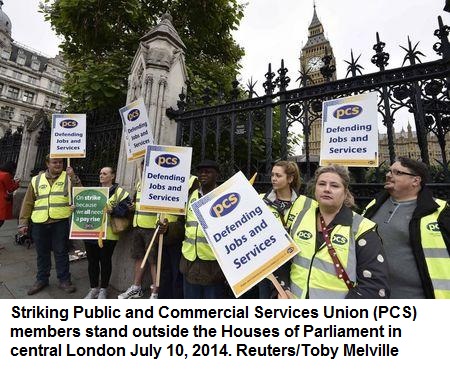
British strike 1LONDON (Reuters) – Hundreds of thousands of public sector workers including teachers, council workers and firefighters staged a 24-hour pay strike on Thursday in a stoppage that has prompted Prime Minister David Cameron to pledge a crackdown on union powers.

Protesters marched through the streets of many of Britain’s main cities in one of the biggest co-ordinated labour stoppages for three years.

Denouncing what they called “poverty pay,” they demanded an end to restrictions on wage rises that have been imposed by the government over the past four years in an effort to help reduce Britain’s huge budget deficit.

In London, demonstrators marched towards Trafalgar Square at midday, chanting “Low pay, no way, no slave labour” to the beat of a drum. A giant pair of inflatable scissors, carried by members of the National Union of Teachers (NUT), read “Education cuts never heal.”

Firefighter Simon Amos, 47, marched wearing his uniform behind a flashing fire engine parading members of the Fire Brigades Union (FBU). “The government [is] making us pay more for our pension for it to be worth the same, and making us work longer,” he said.

British strike 2The biggest public sector union involved, Unison, said early reports showed the strike had led to 3,225 school closures with more than 1,000 others partially closed.

Refuse collectors, school support staff, cleaners, street sweepers, care workers, nursery assistants and social workers were joining the strike, it added.

Hot spots, it said, included the North East, Wales and East Midlands where most council offices had closed, while more than 60 picket lines have closed most services in Newcastle.

“It is a massive decision by local government and school support workers to sacrifice a day’s pay by going on strike, but today they are saying enough is enough,” said Unison General Secretary, Dave Prentis in a statement.

Britain’s coalition government has enforced a policy of pay restraint for public sector workers since coming to power in 2010, imposing a pay freeze until 2012 and then a one percent pay rise cap, resulting in a fall in income in real terms [compared to inflation].

The Cabinet Office played down the impact of the strike, saying that most schools in England and Wales were open and that fire services were operating throughout the country.

British strike 3On Wednesday, Cameron told parliament he planned to limit unions’ powers to call strikes.

“How can it possibly be right for our children’s education to be disrupted by trade unions acting in this way” he said.

Tough new laws would be proposed in the Conservative manifesto for next year’s general election, he added.

These would include the introduction of a minimum threshold in the number of union members who need to take part in a strike ballot for it to be legal.

The manifesto could also back the introduction of a time limit on how long a vote in favour of industrial action would remain valid.

The NUT mandate for Thursday’s strike, for example, came from a 2012 strike ballot based on a turnout of just 27 percent, Cameron said.

The issue of minimum voting thresholds last arose three months ago when a strike by London Underground train drivers caused huge disruption in the capital, prompting Mayor Boris Johnson to demand that at least half of a union’s members should vote in favour for a strike to go ahead.
Source: Reuters News Service; retrieved 07/10/2014 from: http://news.yahoo.com/public-sector-workers-strike-over-poverty-pay-105040672.html

Frankly, the Caribbean Diaspora employed in the British public sector can now do better at home … in the Caribbean.

This is the assertion of the book Go Lean…Caribbean. That once the proposed empowerments are put in place, the Caribbean Diaspora should consider repatriating to their ancestral homelands.

Unfortunately for the Caribbean, this societal abandonment has continued, since the early days of the “Windrush Generation”[a] right up to now. In a recent blog post, this commentary related analysis by the Inter-American Development Bank that the Caribbean endures a brain drain of 70% among the college educated population; (https://goleancaribbean.com/blog/?p=1433).

Change has now come to the Caribbean.

The book Go Lean…Caribbean serves as a roadmap for the introduction and implementation of the technocratic Caribbean Union Trade Federation (CU). This roadmap will spearhead the elevation of Caribbean society. The prime directives of the CU are presented as the following 3 statements:

  • Optimization of the economic engines in order to grow the regional economy & create 2.2 million new jobs at home.
  • Establishment of a security apparatus to protect the resultant economic engines.
  • Improve Caribbean governance to support these engines.

The book posits that the improved conditions projected over the 5 years of the roadmap will neutralize the impetus for Caribbean citizens to flee, identified as “push and pull” factors. This point is stressed early in the book (Page 13) in the following pronouncements in the opening Declaration of Interdependence:

xix.   Whereas our legacy in recent times is one of societal abandonment, it is imperative that incentives and encouragement be put in place to first dissuade the human flight, and then entice and welcome the return of our Diaspora back to our shores. This repatriation should be effected with the appropriate guards so as not to imperil the lives and securities of the repatriated citizens or the communities they inhabit. The right of repatriation is to be extended to any natural born citizens despite any previous naturalization to foreign sovereignties.

xx.   Whereas the results of our decades of migration created a vibrant Diaspora in foreign lands, the Federation must organize interactions with this population into structured markets. Thus allowing foreign consumption of domestic products, services and media, which is a positive trade impact. These economic activities must not be exploited by others’ profiteering but rather harnessed by Federation resources for efficient repatriations.

This foregoing article highlights other issues that have been prominently addressed in the Go Lean book, namely that of the Civil Service and Labor Relations. There is the need for a professional staff in the Federal Civil Service. They require marketable benefits and compensation. There is also a role for Labor Unions to play in the elevation of Caribbean society. The Go Lean roadmap envisions an inclusionary attitude towards unions. The Go Lean community ethos is that of being partners with unions, not competitors. The book features specific tools and techniques that can enhance management-labor relationships.

These issues constitute heavy-lifting for the regional administration of the Caribbean:

  • fostering best practices for federal civil service and labor unions,
  • minimizing the brain drain, and
  • facilitating repatriation to the homeland.

These issues cannot be glossed over or handled lightly; this is why the Go Lean book contains 370 pages of finite details for managing change in the region. The book contains the following sample of community ethos, strategies, tactics, implementations and advocacies to impact the Caribbean homeland:

Community Ethos – Economic Systems Influence Choices & Incentives Page 21
Community Ethos – The Consequences of Choices Lie in the Future Page 21
Community Ethos – Job Multiplier Page 22
Community Ethos – Lean Operations Page 24
Community Ethos – Return on Investments Page 24
Community Ethos – Ways to Impact the Future Page 26
Community Ethos – Ways to Improve Negotiations Page 32
Strategy – Competition – Remain home   –vs- Emigrate Page 49
Strategy – Agents of Change – Aging Diaspora Page 57
Tactical – Separation of Powers – Versus Member-States Governments Page 71
Implementation – Year 1 / Assemble Phase – Establish Civil Service Page 96
Implementation – Ways to Deliver Page 109
Implementation – Trade Mission Objectives Page 116
Implementation – Reasons to Repatriate Page 118
Anecdote – Experiences of a Repatriated Resident Page 126
Planning  – 10 Big Ideas for the Caribbean Region Page 127
Advocacy – Ways to Create Jobs Page 152
Advocacy – Ways to Impact Labor Unions Page 164
Advocacy – Ways to Manage Federal Civil Service Page 173
Anecdote – Experiences of Diaspora Member Living Abroad Page 216
Advocacy – Ways to Impact the Diaspora Page 217

The Go Lean roadmap has simple motives: fix the problems in the homeland to make the Caribbean a better place to live, work, learn and play. There should be no need to go abroad and try to foster an existence in a foreign land. So for those of Caribbean heritage working in the British Civil Service, we hear your pleas. Our response: Come home; come in from the cold.

Now is the time for all of the Caribbean, the people residing in the homeland and those of the Diaspora, to lean-in for the empowerments described in the book Go Lean … Caribbean. This Big Idea for the region is a dramatic change; one that is overdue. The policies & practices of the past have failed Caribbean society. Too many people left, yet have little to show for it.

Caribbean music icon Bob Marley advocated this same charter for the Caribbean Diaspora. He sang to “come in from the cold” in the opening song of his last album Uprisings in 1980. How “spot-on’ were his words in the following music/video:

Download the free e-Book of Go Lean … Caribbean – now!

———————

Appendix – Cited Reference
a: “There was plenty of work in post-war Britain and industries such as British Rail, the National Health Service and public transport recruited almost exclusively from Jamaica and Barbados”. Retrieved July 10, 2014 from: http://en.wikipedia.org/wiki/British_African-Caribbean_people#The_.22Windrush_generation.22

——————–

Appendix VIDEO – How will the UK solve the Windrush controversy? | Inside Story – https://youtu.be/GYUag4XYhFo

Al Jazeera English

Published on Apr 17, 2018 – They are called the “Windrush generation”. That is a refefence to the ship, the Empire Windrush, that carried the first wave of immigrants from the West Indies to Britain in 1948. Many arrvied as children on their parents’ passports – and have lived in the UK for over 70 years, paying taxes and insurance, but never formally becoming British Citizens. Now, as the government tightens its immigration rules, those without the proper documents are being denied services and could even face deportation. Some are calling it ‘cruel and inhumane’ treatment. The government has apologised and it’s promsing an investigation. But will that be enough?
Presenter: Peter Dobbie Guests Sally Daghlian – CEO of Praxis, an organisation that provides assistance to people affected by the Windrush controversy. Clive Foster – member of the Nottingham Citizens Group.
Share this post:
, ,
[Top]

In Life or Death: No Love for Puerto Rico

Go Lean Commentary

The American association is just not working for failing Puerto Rico (PR). This is no longer a theory; this is now a fact!

The devastating Category 5 Hurricane Maria came by and desolated the island, 9 months ago (September 18, 2017). The restoration and recovery is finally complete …

Wait, no!

The restoration and recovery is still not complete, even though it’s the eve of a new Hurricane Season (June 1).

In life, Puerto Rico just gets no love.

Unfortunately, this is true in death too – we learn now that even the resultant deaths from Hurricane Maria had been under counted.

What? How? Why?

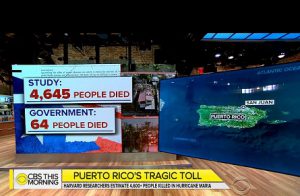
The act of counting deaths is more straight-forward than the Washington and San Juan officials would have you believe. Simply count the number of mortalities (death certificates issued) for the 4th Quarter of the last few years. The PR government try to assert that the number of deaths were 64 people; and yet demographers and other social scientists counted the mortality rate for 4th Quarter 2017 and the 4th Quarters in previous years and the real count is more like:

4600+

Wait, wait … don’t tell me! According to this story here, “researchers concluded the final death count could [actually] be as high as 8,500”:

Title: Puerto Rico governor welcomes “real number” of Hurricane Maria deaths after shocking report

new Harvard University study says the death toll from Hurricane Maria last year is dramatically larger than reported. The study, published in the New England Journal of Medicine, estimates more than 4,600 people died on the island. The official government death toll is just 64.

Researchers randomly knocked on doors and asked if anyone died thereThere were more questions — but that’s how it started. It took six weeks and $50,000 from Harvard to come up with a number that is stunning, reports CBS News’ David Begnaud.

Puerto Rico’s Governor Ricardo Rosselló, who himself is a scientist, seemed blindsided by the Harvard study. His government wasn’t involved and he didn’t know it was being released.

“We welcome all studies,” Rosselló said at a press conference Tuesday. “We want the real number to come out. We had a protocol that really was subpar and we recognize it.”

The government protocol is for doctors to tell the government if a death was caused by Hurricane Maria. Families have to petition the government to investigate if they disagree with a doctor’s opinion.

The Harvard study surveyed more than 3,000 homes across the island and found the mortality rate rose 62 percent in the three months after Hurricane Maria compared to that period the year before. Researchers concluded the final death count could be as high as 8,500.

“One third of our deaths were reported because lack of medical treatment,” said Domingo Marques, who was a lead author of the study.

During his visit to Puerto Rico last October, President Trump hailed the low death toll, which at the time was 16. He compared it to Hurricane Katrina. In light of the Harvard report, a White House spokesperson said the people of Puerto Rico deserve nothing less than transparency and accountability.

“The negligence that allowed those lives to be lost, needs to be accounted for,” San Juan mayor Carmen Yulín Cruz said.

Cruz has blasted Mr. Trump for being tone deaf and slow to respond. When asked to evaluate her own response she said, “I know I didn’t get to everyone… We did the best we could, but that wasn’t’ good enough. That wasn’t good enough.”

Why this story is more than just a shocking number? For every death that is certified by a government official to be related to Hurricane Maria, family members are eligible to have the federal government help pay for funeral expenses. The numbers matter.

© 2018 CBS Interactive Inc. All Rights Reserved.

Source: CBS News; retrieved May 30, 2018 from: https://www.cbsnews.com/news/hurricane-maria-death-toll-puerto-rico-harvard-university-study/

Related stories:

————-

VIDEO – Puerto Rico’s Tragic Toll – https://www.cbsnews.com/video/puerto-rico-hurricane-death-toll-in-the-thousands-researchers-say/

Posted May 30, 2018 – CBS This Morning: Harvard Researchers estimate 4,600+ people killed in Hurricane Maria.

Wow; these people, this island – Puerto Rico – don’t even get respect in death.

Call a spade a spade!

There is no love for Puerto Rico. (This is not “our” assessment alone; see the Mayor of San Juan in the Appendix VIDEO).

Time to make a move! It is past time now for Puerto Rico to change from its parasite status as an American Protectorate and graduate to being a US State. Or maybe, it’s time for Puerto Rico to divorce the American relationship entirely and become an independent nation – as was done in the Philippines. In a previous commentary by the movement behind the book Go Lean…Caribbean, the assertion was that the American association maybe the problem for Puerto Rico. That blog-commentary stated:

Where is your pride Puerto Rico? “Have you no sense of decency?” You are not being loved; you are being pitied.

No wait, even the pity is gone – compassion exhaustion after the prior hurricanes Harvey and Irma; plus forest fires in California.

Puerto Rico: You “cannot win; cannot break-even and cannot get out of the game”.

… Puerto Rico is now at the cross roads; things will get worse before it gets worse! … The outcome for Puerto Rico, and other Caribbean islands, would be defection – “forced uprooting-displacement of large communities”. Truly, this is what has happened.

The book Go Lean…Caribbean – available to download for free – serves as a roadmap for the introduction and implementation of the technocratic Caribbean Union Trade Federation (CU), for the elevation of Caribbean society – for all member-states, including the American Territories of Puerto Rico and the US Virgin Islands. This roadmap asserts that regional integration is the key for future Caribbean success; it thus presents these 3 prime directives:

  • Optimization of the economic engines in order to grow the regional economy to $800 Billion and create 2.2 million new jobs. Puerto Ricans have been defecting for decade looking for jobs.
  • Establishment of a security apparatus to ensure public safety and protect the resultant economic engines. This security pact encompasses an emergency planning/response apparatus to deal with the reality of natural disasters. The CU mandate is to protect against any Failed-State
  • Improve Caribbean governance to support these engines, including a separation-of-powers between the member-states and CU federal agencies.

To Puerto Rico, we entreat you: there are successful countries that are separate and detached of America. Your status quo is not the only destiny.

The Go Lean book stresses reform for Caribbean society. It reminds the readers of the American Revolutionary experience: the original 13 colonies were failing under the weight of their British baggage. So to reach success, they had to “break of the shackles“ of British colonialism.

This is Puerto Rico today! They need to “break of the shackles of American colonialism”. This island needs to echo the revolutionary sentiments of “Founding Father” Thomas Jefferson, who wrote in the Declaration of Independence:

… That whenever any form of government becomes destructive to these ends, it is the right of the people to alter or to abolish it, and to institute new government, laying its foundation on such principles and organizing its powers in such form, as to them shall seem most likely to effect their safety and happiness. Prudence, indeed, will dictate that governments long established should not be changed for light and transient causes; and accordingly all experience hath shown that mankind are more disposed to suffer, while evils are sufferable, than to right themselves by abolishing the forms to which they are accustomed. But when a long train of abuses and usurpations, pursuing invariably the same object evinces a design to reduce them under absolute despotism, it is their right, it is their duty, to throw off such government, and to provide new guards for their future security. — Such has been the patient sufferance of these [former] colonies …- book Go Lean…Caribbean (Page 10).

These words, this break from a failing status quo was an early motivation for the CU/Go Lean roadmap, as pronounced in the opening Declaration of Interdependence (Pages 12 – 13) of the book:

xi. Whereas all men are entitled to the benefits of good governance in a free society, “new guards” must be enacted to dissuade the emergence of incompetence, corruption, nepotism and cronyism at the peril of the people’s best interest. The Federation must guarantee the executions of a social contract between government and the governed.

xii. Whereas the legacy in recent times in individual states may be that of ineffectual governance with no redress to higher authority, the accedence of this Federation will ensure accountability and escalation of the human and civil rights of the people for good governance, justice assurances, due process and the rule of law. As such, any threats of a “failed state” status for any member state must enact emergency measures on behalf of the Federation to protect the human, civil and property rights of the citizens, residents, allies, trading partners, and visitors of the affected member state and the Federation as a whole.

xvi. Whereas security of our homeland is inextricably linked to prosperity of the homeland, the economic and security interest of the region needs to be aligned under the same governance. Since economic crimes … can imperil the functioning of the wheels of commerce for all the citizenry, the accedence of this Federation must equip the security apparatus with the tools and techniques for predictive and proactive interdictions.

The Go Lean book provides 370-pages of turn-by-turn instructions on “how” to adopt new community ethos, plus the strategies, tactics, implementations and advocacies to execute so as to effect a reboot and turn-around. In fact, the book (Page 33) provides one advocacy specifically dedicated to the subject of Turn-arounds. See the headlines, excerpts and quotations here:

10 Ways to Impact Turn-Arounds

1 Lean-in for the Caribbean Single Market and Economy
The CU treaty facilitates a reboot of the region’s economic engines, security apparatus and emergency management(preparation/response for the 30 member-states, 42 million people and $800 Billion GDP. The treaty allows for theestablishment of Self Governing Entities where the CU will be the municipal administrator – this allows for civic planning, zoning, demolitions and imminent domain decision-making separate from the member-states. While too, dispositions of abandoned buildings in the member-states still relate to CU missions, as in the protection of image (“psychological trauma” is inflicted daily on neighbors of abandoned structures) and the quest for beauty. While beauty, aesthetics and preservation may be paramount for communities, these should only be a concern after basic needs are satisfied – housing is a basic need. The economics of housing can be impacted with the over-supply ofabandoned buildings, as it brings the value down for other properties, and sends out the false vision, like Detroit’sabandoned structures, that just a “little rehab” and their new manifestations will be readily available. Learning from Detroit, it is more beneficial to raze abandoned buildings and build anew – turn-around, rather than considering restoration or preservation.
2 Bankruptcy Processing
3 Homeland Security Concerns
Abandoned buildings are a security concern for the community as these buildings are often used as drug “dens” or to house other illegal/criminal activities. Playing children can also be ensnared by dilapidated structures and thus consume emergency medical services. Therefore, impacting turn-arounds of abandoned properties is proactive for CU security.
4 Property Tax Revenue and Services
5 Clean Slate / Blank Canvas

By razing abandoned buildings, the community can truly engage a turn-around strategy. The property now becomes a clean slate / blank canvas, ready for any new development or a return to a natural disposition of Caribbean flora/fauna.

6 Explosives Use – Art & Science
7 Demolition Jobs
8 Recycling Materials
9 Community Gardens and Fruit Trees – by Non-Government Organizations (NGO)
10 Common Grazing Rights

To Washington, these Caribbean islands are far-off territories – out of sight, out of mind. But these Caribbean islands are our home:

Oh, island in the sun. Willed to me by my father’s hand.

So the Caribbean stakeholders in the region must be the ones to foster the workable solutions for the region: a better disaster preparation and response apparatus. We must not count on the “kindness of strangers”!

Duh!!! – The jury is in! They do not even count our dead!

The Way Forward for Puerto Rico must be the Way Forward for the rest of the Caribbean region – we are “all in the same boat”.

Hurricane Season 2018 starts tomorrow – June 1. (The American president, Donald Trump, even denies Climate Change as a fact or a science. By denying our reality; he is denying “us”).

This assertion – Puerto Rico needing to rely more on their geographical neighbors rather than the American hegemony – is not new. This has been the consistent pleading from this Go Lean movement. Consider these previous blog-commentaries:

https://goleancaribbean.com/blog/?p=14718 ‘At the Table’ or ‘On the Menu’ – PR’s No Vote; No Voice in D.C.
https://goleancaribbean.com/blog/?p=14101 Wait, ‘We Are The World’ – Raising money for PR Relief
https://goleancaribbean.com/blog/?p=13995 First Steps for PR & USVI – Congressional Interstate Compacts
https://goleancaribbean.com/blog/?p=13391 After Maria, Failed-State Indicators: Destruction and Defection
https://goleancaribbean.com/blog/?p=12959 After Irma, America Should Scrap the ‘Jones Act’
https://goleancaribbean.com/blog/?p=12126 Commerce of the Seas – Stupidity of the Jones Act
https://goleancaribbean.com/blog/?p=11963 Oscar López Rivera: The ‘Nelson Mandela’ of Puerto Rico?
https://goleancaribbean.com/blog/?p=11647 Righting a Wrong: Puerto Rico’s Bankruptcy
https://goleancaribbean.com/blog/?p=7963 ‘Like a Good Neighbor’ – Being there for Puerto Rico
https://goleancaribbean.com/blog/?p=4551 US Territories – Between a ‘rock and a hard place’
https://goleancaribbean.com/blog/?p=1325 Puerto Rico Governor Signs Bill on Small Businesses
https://goleancaribbean.com/blog/?p=599 Ailing Puerto Rico open to radical economic fixes

The PR should not stand for this. Time to move … away from this inconsequential, parasitic status quo. It is past time for debate:

“A little less conversation; a little more action” – Song: Elvis Presley.

The responsibility to improve our homeland is ours alone. The quest to make our homeland a better place to live, work and play must be engaged by Caribbean people. The rest of the world have no love for us. We must love ourselves, first and foremost! Puerto Rico, you do not have to do this heavy-lifting task alone; we need to lift the same heavy load. Let’s do it together! 🙂

Download the free e-book of Go Lean … Caribbean – now!

Sign the petition to lean-in for this roadmap for the Caribbean Union Trade Federation.

—————

Appendix VIDEOSan Juan mayor on hurricane death toll studyhttps://www.cbsnews.com/video/san-juan-mayor-criticizes-local-leaders-trump-after-hurricane-death-toll-study/

Posted May 30, 2018 – CBS This Morning: San Juan mayor criticizes local leaders, Trump after hurricane death toll study

Share this post:
, ,
[Top]

Saint Lucia Recognized as ‘Best Island in the Caribbean’

Go Lean Commentary

Saying that “we are the best”, really does not bring any solace.

Just ask the people in St. Lucia! Do they feel like they are the “best island in the Caribbean”? (Economically, they are below average; their GDP ranking for the region is 18 of 30; see Table 1).

But it is true, the Caribbean does some things well; and some islands do the “well” even better than others:

There are features of Caribbean life that work very well now. We are currently the “best address” in the world. If one has the resources, there is no better place to call home – imagine a lottery winner relocating to a Caribbean paradise. Further, if someone has the resources for only a short time-frame, there is no better place to vacation. And thus, as a regional community, the Caribbean is best at servicing: Tourism, Cruise Operations, Offshore Banking, and Specialty Agriculture.

Tourism
Tourism is the primary economic driver for almost every “CU“ member-state. In economics, a measurement of demand is the price indicator. During the “high” season – winter peak – Caribbean hotels, of a high-quality rating, can be priced at thousands of (US) dollars … per night. There is the demand; then follows, the supply systems to meet the demand. This peak period, throughout the Caribbean, lasts from December to April. – Book Go Lean…Caribbean Page 58.

While we may have the “best of this and the best of that”, our dispositions in the Caribbean are still inadequate, bad and sometimes failing. On the one hand, we may have the best addresses on the planet for tourism, but on the other hand, we have blatant failures in so many other areas of society. So if the goal is to forge a better place to live, work and play, then we need to accept that only the “play” part is enjoying some measure of success and the ranking of “Best” is simply not enough.

See this news article here:

Title: Saint Lucia Recognized as Best Island In the Caribbean

Press Release: Saint Lucia has been recognized as the “Best Island in the Caribbean” by Global Traveler at their Sixth Annual Leisure Lifestyle Awards. Global Traveler is a monthly publication that attracts some 300,000 readers and connects with U.S.-based frequent, affluent, international travellers who have an average net worth of $2 million.

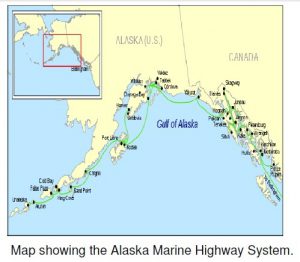
The awards cocktail took place on the rooftop of Sofitel Los Angeles, Beverly Hills. This award marks the destination’s second ‘Best Island in the Caribbean’ honour in the 6-year life of the Global Traveler Leisure Lifestyle Awards, Saint Lucia having won the inaugural award in 2013.

Saint Lucia registered a record-setting year in 2017, with year-to-date numbers for 2018 improving over the same period last year. First quarter figures for 2018 show a 17.8% increase in stay-over arrivals and a 13.5% increase in cruise arrivals over last year’s record.

Remarking on Global Traveler award, Minister for Tourism Hon. Dominic Fedee stated, “This is an award of recognition to the hard work and dedication of every hospitality worker and to every Saint Lucian. It is the Saint Lucian story and its majesty which continues to attract visitors to the destination making it a world-class holiday and business destination for travellers.”

Global Traveler also highlighted Saint Lucia as a ‘dream come true’ port of call for cruise visitors. The award survey was conducted in the Global Traveler magazine through an insert in subscriber copies, as a direct mail questionnaire, online and in emails. Saint Lucia beat out nine other destinations for the top honour, including Aruba, Grand Cayman, Saint Vincent and the Grenadines, the Bahamas, Curaçao, Nevis, Jamaica the British Virgin Islands and the U.S. Virgin Islands.

“We believe Saint Lucia is a unique Caribbean destination which offers something to every traveller and this award is in recognition of our destination’s appeal. We will continue to find creative ways to present Saint Lucia in the marketplace as we seek to increase market penetration, awareness and visitor arrivals,” stated the Executive Chairperson of the Saint Lucia Tourism Authority Agnes Francis.

Each year, Global Traveler awards the GT Tested Reader Survey awards, the Leisure Lifestyle Awards and the Wines on the Wing awards.

Source: Retrieved May 29, 2018 from: https://stluciatimes.com/2018/05/22/saint-lucia-recognized-as-best-island-in-the-caribbean/

So the appeal to the U.S.-based affluent traveler is “spot on” for Saint Lucian tourism; but maybe this is not good enough; see the still low GDP-Per-Capita figures in Table 1. Experiences shows that catering to the rich will ever only generate a limited success, because this is only a limited population – think the One Percent. Imagine if “we”, the entire Caribbean are able to appeal and deliver to the other 99 Percent. Maybe then, there would be more prosperity for a better Caribbean.

This is the assertion of the book Go Lean…Caribbean – available to download for free. It posits that with a unified approach the Caribbean region can launch certain empowerments that can elevate all of the region to better deliver on the tourism product. The book explains that these empowerments will make the region better, not just to play, but to live, work and play.

The Go Lean book serves as a roadmap for the introduction and implementation of the technocratic Caribbean Union Trade Federation (CU), for the elevation of Caribbean society – for all member-states. The book provides 370-pages of turn-by-turn instructions on “how” to adopt new community ethos, plus strategies, tactics, implementations and advocacies to execute so as to transform the economic engines of the region. For example, to supplement the affluent market for tourism stay-overs, the book urges the targeting of an alternate special population with the following advocacies:

  • 10 Ways to Enhance Tourism in the Caribbean Region (Page 19)
The Bottom Line on Snowbirds

A snowbird is someone from the U.S. Northeast, U.S. Midwest, Pacific Northwest, or Canada who spends a large portion of winter in warmer locales such as California, Arizona, Florida, Texas, the Carolinas, or elsewhere along the Sun Belt region of the southern and southwest United States, Mexico, and areas of the Caribbean. Snowbirds are typically retirees, and business owners who have a second home in a warmer location or whose business can be easily moved from place to place, such as flea market and swap meet vendors. Some snowbirds carry their homes with them, as RV’s or campers (mounted on bus or truck frames) or as boats following the east coast Intracoastal waterway. In the past snowbirds were frequently wealthy with independent income who maintained several seasonal residences and shifted residence with the seasons to avail themselves of the best time to be at each location; this custom has declined considerably due to changing patterns of taxation and the relative ease of long distance travel compared with earlier times. Many of these “snowbirds” also use their vacation time to declare permanent residency in low- or no-tax income tax states (where the tax bases are augmented by high tourism taxes), and claim lower non-resident income taxes in their home states. Canadian snowbirds usually make sure they retain residency in Canada in order to retain health benefits.

See Appendix VIDEO below.

  • 10 Ways to Improve Transportation (Page 20)
# 3 Turnpike: Ferries

For the most part, the CU member-states are islands [or coastal states] thereby allowing for a viable means of transportation via sea navigation. By deploying ferries, the CU facilitates passenger travel for business and leisure.

  • APPENDIX IC – Alaska Marine Highway System (Page 28)
Model for the CU

The CU envisions a similar water-based highway system of ferries and docks to facilitate passenger, cargo and vehicle [(i.e. RV’s)] travel connecting the islands of the Caribbean region to the mainland ports. This ferry system will be a component of the Union Atlantic Turnpike.

So kudos to St. Lucia…

… but let’s do even better than the status quo. We have the opportunity to benefit from a year-round tourism product; plus the successful diversification of the regional economy. In fact, this CU/Go Lean roadmap has these 3 prime directives:

  • Optimization of the economic engines in order to grow the regional economy to $800 Billion and create 2.2 million new jobs.
  • Establishment of a security apparatus to ensure public safety and protect the resultant economic engines.
  • Improve Caribbean governance to support these engines, including a separation-of-powers between the member-states and CU federal agencies.

The vision of an interconnected ferry system throughout the region requires a better interdependence among all the Caribbean islands. This is the quest of the Go Lean/CU roadmap. The book stresses that transforming the Caribbean societal engines must be a regional pursuit. This was an early motivation for the roadmap, as pronounced in the opening Declaration of Interdependence (Pages 12 – 14):

xi. Whereas all men are entitled to the benefits of good governance in a free society, “new guards” must be enacted to dissuade the emergence of incompetence, corruption, nepotism and cronyism at the peril of the people’s best interest. The Federation must guarantee the executions of a social contract between government and the governed.

xvi. Whereas security of our homeland is inextricably linked to prosperity of the homeland, the economic and security interest of the region needs to be aligned under the same governance. Since economic crimes … can imperil the functioning of the wheels of commerce for all the citizenry, the accedence of this Federation must equip the security apparatus with the tools and techniques for predictive and proactive interdictions.

xxiv. Whereas a free market economy can be induced and spurred for continuous progress, the Federation must install the controls to better manage aspects of the economy: jobs, inflation, savings rate, investments and other economic principles. Thereby attracting direct foreign investment because of the stability and vibrancy of our economy.

xxvi.  Whereas the Caribbean region must have new jobs to empower the engines of the economy and create the income sources for prosperity, and encourage the next generation to forge their dreams right at home, the Federation must therefore foster the development of new industries … [and] invigorate the enterprises related to existing industries like tourism … – impacting the region with more jobs.

The vision of an interconnected ferry system throughout the Caribbean region has been detailed before in these previous blog-commentaries:

https://goleancaribbean.com/blog/?p=12322 Ferries 101: Economics, Security and Governance
https://goleancaribbean.com/blog/?p=9179 Snowbirds Tourism – First Day of Autumn – Time to Head South
https://goleancaribbean.com/blog/?p=510 Snowbirds Need for Winter Hospitality

Ferries will transform all areas of Caribbean life. So the Go Lean roadmap is conceivable, believable and achievable for transforming the regional tourism product. Our Best can be even better still.

Let’s do this; let’s make our homeland a better place to live, work and play. 🙂

Download the free e-Book of Go Lean … Caribbean – now!

Sign the petition to lean-in for this roadmap for the Caribbean Union Trade Federation.

————

Appendix – Table 1 

Click on Photo to Enlarge

————

Appendix VIDEO – Anne Murray ~ Snowbird (1970) – https://youtu.be/x0oc3IR4qGQ

Published May 26, 2011 – Music in this video; Learn more

Share this post:
, , ,
[Top]

Graduation Speakers – Say ‘Something Nice’ or Nothing At All

Go Lean Commentary

Congratulations to all the graduates in the Class of 2018.

Way to go! Before you move the tassel from left to right, you have to endure the invited speaker who should deliver an inspired Commencement speech. To that speaker, we urge: “Say something nice or say nothing at all”.

Please learn the good lesson from this bad speech delivered last year to the combined graduating classes – 400 students – of all 4 public high schools in Grand Bahama (Freeport), Bahamas in June 2017.

This was really bad!

First though, some background …

… this was one month after the new government came into power in the Bahamas. The political party, Free National Movement, with the Leader and thusly the new Prime Minister, Dr. Hubert A. Minnis, was voted in with a landslide victory on May 10, 2017. The party, and new Cabinet, was thrust into power by a mandate of the Bahamian people; their demand for a change because the assessments before were so very bad. The new Minister of Education, Jeffrey Lloyd was called on to give this graduation speech. Let’s give him the benefit of the doubt that this was his first one; see here:

Title: Education Minister tells GB Public School Graduates to Think Globally, Get Qualified, Come Back and Build Their Country

By: Andrew Coakley, Bahamas Information Services

FREEPORT, Grand Bahama – Minister of Education the Hon. Jeffrey Lloyd told the 2017 graduating class of public school students in Grand Bahama that The Bahamas critically needs their talents to positively shape and form the future of these islands.  “Go out and see the world – there are six or seven continents in this world — go and visit them all, and even work in them all, but come back home and build your country,” said Minister Lloyd.

“We need your talents, your brilliance, your capabilities and your insights so that we can become the best little country on God’s earth.”

The Education Minister’s remarks came during graduation ceremonies for the Ministry of Education’s Inaugural Bahamas High School Diploma, which was held at the Grand Lucayan resort on Friday, June 9, 2017. The ceremony combined the public schools on Grand Bahama, inclusive of Jack Hayward High School, St. George’s High School, Eight Mile Rock High, as well as students from the Beacon School.

“Today, there are nearly 50,000 students in the public schools in this country,” said Minister Lloyd.  “Young people like you, under the age of 20, make up approximately 40 percent of the population of this land. Those under 30 make up almost 60 percent of this population.

“So, without a doubt, the future social atmosphere, the cultural identity, the economic and political reality of this country is directly tied to the constructive development of you. This is a time of great opportunity; it is also a time of great trial and challenge.

“There are many, many negative influences that swirl about in your young lives.”

He apologized to those graduates who may not have had the opportunity to have positive role models in their lives and within their environments. He said those are not the paradigm they must follow, but that Jesus, the Christ is the role model to follow.

“And what he invites you to understand graduates, is that you must let no one take your greatness, your potential, your power, your magnificence nor your splendor from you,” said Minister Lloyd.

The Education Minister reminded the students that they live in what is considered to be one of the most exciting times in mankind’s history.

Minister Lloyd reminded teachers that education has changed and is constantly changing; now it is driven by technology.

“So educators, if you are not tech savvy, you better get there, because that is the world we live in today. Unlike anytime in our history the re-dedication of the educational professional to their craft and the outcomes they seek, what we seek, is never more powerful.”

Minister Lloyd left the graduates with three final thoughts as they move to the next level of their lives: Think globally, get qualified and become mobile.

Source: Posted June 12, 2017; retrieved May 26, 2018 from The Official Website of the Government of The Bahamas

We have made this assessment of the speech and verbiage of this new government before. These words by the Education Minister is the same bad advice:

“Go out and see the world … visit them all, and even work in them all, but come back home and build your country”.

Yeah, nobody does that! They leave; they very seldom come back!

The Education Minister here seems to be doubling-down on failure. In a previous blog-commentary, the Prime Minister, Dr. Minnis, addressed a Bahamian Diaspora group and he portrayed them as if they were the panacea, the “cure-all”, for what ails the Bahamas. This attitude truly reflects why the Bahamas, and especially this 2nd city of Freeport, is failing in all their societal engines. The problem is abandonment or human flight. Now, the chief educator in the country stares down at these young impressionable men and women and urges them further to …

Leave!
Get world experience and then maybe, if its not too much trouble, come back.

It is a well known fact, that the college educated populations in the Bahamas do NOT come back. In fact, according to a World Bank study, the country suffers from a 61 percent abandonment rate.

Most of what ails Freeport and the whole Bahamas (actually true for the entire Caribbean) is the human flight of their most educated citizens. A country cannot “nation build” without nation-builders. A government policy that urges young ones to leave and complete their development abroad is a flawed strategy; it should not be spoken. This is not just a problem for the Bahamas,  but has been consistently lambasted in these other Caribbean member-states:

This commentary is from the movement behind the book Go Lean … Caribbean. We have criticized every Caribbean member-state that projects policies that encourage more traffic among their Diaspora – those who had fled, being “pushed” or “pulled” away from their homeland. This policy-strategy double-downs on the failure of why the Diaspora left in the first place. A previous commentary explained:

The subtle message to the Caribbean population is that they need to leave their homeland, go get success and then please remember to invest in us afterwards.

… It is so unfortunate that the people in the Caribbean are beating down the doors to get out of their Caribbean homeland, to seek refuge in these places like the US, Canada and Western Europe. … We have such a sad state of affairs for our Caribbean eco-system as we are suffering from a bad record of societal abandonment.

This movement advocates for the people of Freeport, people of the Bahamas and the people of the Caribbean. We want them all to “prosper where planted” in their Caribbean homelands. But first, we must “stop the bleeding” – even student loans have been defaulted by those abandoning their Bahamian homeland. Leaving home to matriculate and/or work has a serious and consistent track record of failure. This should never be the theme of a Commencement address.

Our quest should be to “stop the bleeding”. This is truly a quest, and not just an idea. This is not easy; there is heavy-lifting involved. We must assess the reasons why people leave, the “push and pull” factors, then conceive strategies, tactics, implementations and advocacies to assuage the bad trend. Yes, this quest is conceivable, believable and achievable.

The book Go Lean…Caribbean – available to download for free – serves as a roadmap for the introduction and implementation of the technocratic Caribbean Union Trade Federation (CU), for the elevation of Caribbean society – Freeport, for the Bahamas and for all member-states. The book asserts that the region must work to hold on its populations – especially the well-educated classes – not send them away and see them never return from foreign shores. To accomplish this objective, this CU/Go Lean roadmap presents these 3 prime directives:

  • Optimization of the economic engines in order to grow the regional economy to $800 Billion and create 2.2 million new jobs.
  • Establishment of a security apparatus to ensure public safety and protect the resultant economic engines.
  • Improvement of Caribbean governance to support these engines, including a separation-of-powers between the member-states and CU federal agencies.

The book aligns with the vision of the Education Minister and the  Prime Minister of the Bahamas in the desire to reform and transform their community. But the Go Lean roadmap does not double-down on the failing policy of “leaving off” from nation-building for the hope that maybe someday, the student can nation-build later. Rather, the book provides the turn-by-turn direction of how to reform Bahamian (and all Caribbean) education systems now with the new education regime that the Education Minister alluded to in his ill-fated speech:

Minister Lloyd reminded teachers that education has changed and is constantly changing; now it is driven by technology.

The Go Lean movement has consistently urged Caribbean communities to invest … in post-secondary education options right here in the region, or better still, right here at home, maybe even e-Learning solutions. These points were exhaustingly detailed in these previous blog-commentaries:

There is a reason, this commentary can criticize the Minister of Education, the Honorable Jeffrey Lloyd. Despite his knowledge, desire and hope for the students in his audience, he could not present this “study local and online” plan. The problems facing the Bahamas are too insurmountable for the Bahamas alone. This government’s scope is only a population of 320,000; the ideal solutions require more leverage, a BIGGER market. This is the strategy of the CU/Go Lean roadmap; it  targets all 30 Caribbean member-states and their 42 million people. The larger scope is accomplished by forging a Single Market of all these countries and catering for the educational needs of this full Single Market.

Yes, a better educational landscape – one that minimizes the risk of abandonment – is ushered in with an interdependence of the Caribbean member-states. This was an early motivation for the CU/Go Lean roadmap, as pronounced in the opening Declaration of Interdependence (Pages 12 – 14) of the book:

xi. Whereas all men are entitled to the benefits of good governance in a free society, “new guards” must be enacted to dissuade the emergence of incompetence, corruption, nepotism and cronyism at the peril of the people’s best interest. The Federation must guarantee the executions of a social contract between government and the governed.

xix. Whereas our legacy in recent times is one of societal abandonment, it is imperative that incentives and encouragement be put in place to first dissuade the human flight, and then entice and welcome the return of our Diaspora back to our shores. This repatriation should be effected with the appropriate guards so as not to imperil the lives and securities of the repatriated citizens or the communities they inhabit. The right of repatriation is to be extended to any natural born citizens despite any previous naturalization to foreign sovereignties.

xxi. Whereas the preparation of our labor force can foster opportunities and dictate economic progress for current and future generations, the Federation must ensure that educational and job training opportunities are fully optimized for all residents of all member-states, with no partiality towards any gender or ethnic group. The Federation must recognize and facilitate excellence in many different fields of endeavor, including sciences, languages, arts, music and sports. This responsibility should be executed without incurring the risks of further human flight, as has been the past history.

xxvi.  Whereas the Caribbean region must have new jobs to empower the engines of the economy and create the income sources for prosperity, and encourage the next generation to forge their dreams right at home, the Federation must therefore foster the development of new industries … [and] invigorate the enterprises related to existing industries … impacting the region with more jobs.

xxvii. Whereas the region has endured a spectator status during the Industrial Revolution, we cannot stand on the sidelines of this new economy, the Information Revolution. Rather, the Federation must embrace all the tenets of Internet Communications Technology (ICT) to serve as an equalizing element in competition with the rest of the world. The Federation must bridge the digital divide and promote the community ethos that research/development is valuable and must be promoted and incentivized for adoption.

The vision of Caribbean interdependence is a great theme for a Commencement address. Describing the prospects of an inviting homeland where the students can prosper would be an truly inspirational speech. Inspiration is one of the mandates of any good Commencement address; see Appendix. So to the Honorable Minister Jeffrey Lloyd, we hereby deliver to you this previous blog-commentary for your consideration; and grant you permission to glean from its inspiration and messaging:

“Be the change you want to see in the world” – Mahatma Gandhi
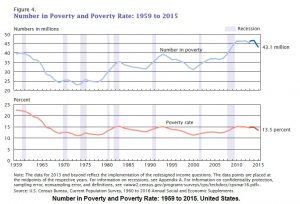
… Changing one-self; changing the community and changing the world; these are great aspirations! This is such a familiar theme for the [Go Lean] movement …

Yes, the societal defects of the Caribbean can be fixed – remediated and mitigated – but “if it is going to be, it starts with me”; it is necessary for all stakeholders to engage in the effort to turn-around the Caribbean. To forge change, the region must consider top-down and bottoms-up approaches, so we need the multitude of Caribbean people (bottoms-up) and politicians and community leaders (top-down) to lean-in to this quest to turn-around the community. Yes, it starts with “me”, as in everyone.

So Minister Jeffrey Lloyd, we urge you to say “something nice” … like this or say nothing at all.

For an example of an inspiring Commencement address, see this VIDEO in the Appendix below.

Freeport is in dire straits. The city needs its young men and women to be champions at home, not on the road. So urging Freeport’s human capital to leave is just irresponsible. Any effort to reboot Freeport can only be exerted by being in Freeport. This commentary had previously detailed the assessment and possibilities for Freeport; see this sample here:

https://goleancaribbean.com/blog/?p=10470 More ‘Bad News’ for Freeport
https://goleancaribbean.com/blog/?p=7528 A Vision of Freeport as a Self-Governing Entity
https://goleancaribbean.com/blog/?p=7449 ‘Crap Happens’ – So What Now? Case Study: Freeport
https://goleancaribbean.com/blog/?p=5542 Freeport’s Bad Model: Economic Dysfunctions with Rent-Seeking
https://goleancaribbean.com/blog/?p=4185 Caribbean Ghost Towns: It Could Happen…Again in Freeport
https://goleancaribbean.com/blog/?p=4037 How to Train Your ‘Dragon’ – Freeport Version
https://goleancaribbean.com/blog/?p=3641 ‘We Built This City …’ on Music and Entertainment
https://goleancaribbean.com/blog/?p=2585 A Lesson in History for Freeport – Concorde SST
https://goleancaribbean.com/blog/?p=300 Dire City – ‘10,000 Bahamians Living in Darkness in Grand Bahama’

The Go Lean book provides 370-pages of turn-by-turn instructions on “how” to adopt new community ethos, plus the strategies, tactics, implementations and advocacies to execute so as to reboot, reform and transform Freeport and the regional collective of Caribbean communities.

To the people of Freeport, and to all the Caribbean, we urge …

Stay Home! Do NOT double-down on failure … by fleeing. The grass is not greener on the other side – of the border – you can thrive more at home than as an alien resident in another land. In North America or Europe, you will always be “alien”.

As related in this commentary, joining the Diaspora is bad for the Diaspora and bad for the Caribbean. The Diaspora should not be counted on to come back and save their previous Caribbean homes. No we must do the heavy-lifting ourselves. We can succeed to make our homelands better places to live, work and play so that our citizens can prosper where planted. This way, they wouldn’t have to leave in the first place. 🙂

Download the free e-book of Go Lean … Caribbean – now!

Sign the petition to lean-in for this roadmap for the Caribbean Union Trade Federation. 

—————

Appendix VIDEO – Chadwick Boseman’s Howard University 2018 Commencement Speech – https://youtu.be/RIHZypMyQ2s

Howard University

Published on May 14, 2018 – Howard University alumnus Chadwick Boseman provides words of inspiration to the Class of 2018 during Howard University’s 150th Commencement Ceremony on Saturday, May 12 in Washington, D.C.

  • Category: Education
  •  License: Standard YouTube License
Share this post:
, , ,
[Top]

Art Imitating Life – Was ‘Thanos’ Right?

Go Lean Commentary

The supposition is simple; if a society suffers from famine and poverty, then eliminate half of the population and there will be plenty of resources for all the remaining people.

But this is a fallacy, devoid of logic! This is not how economic systems work. The truth is: the more people, the better!

Consider the facts: the landmass of the United States has not changed since 1959; Alaska became the 49th state of the U.S. on January 3, 1959 and Hawaii received statehood on August 21, 1959. The US population in 1960 was 179,323,175; today the estimated US population is 325,719,178. Yet the 1960 poverty rate (19%) was atrocious; conditions are better today; though some poverty/hunger persists; due more to individual abuses; listen to the AUDIO-PODCAST in Appendix A below.

Why … was poverty alleviated? It’s the community education, science and technology, not the size of the population. “These ones” won the ‘War on Poverty’; see the formal details of the US Government’s War on Poverty in Appendix B.

This truly is logical!

Imagine the increased yields from “factory farms” and industrialized agriculture. The plains on the American continent are now considered the “bread basket” of the world.

Yet, believe it or not, that fallacious logic – also practiced by the Supervillain Thanos in the Marvel Cinematic Universe – is common thinking in the Caribbean.

Wait, who?

Thanos is the fictitious character in Marvel Comic books and related movies. He is a Supervillain in that he has ultimate abilities:

  • Superhuman strength, agility, durability, and longevity
  • Superhuman physiology of Eternals
  • Plasma energy projection

Thanos is all the rage right now in 2018. The current Number 1 movie at the box office is Avengers: Infinity War; this movie was the fastest film to ever reach $ 1 Billion in gross receipts. Wow!

Though the heroes of the film are the Avengers, the plotline of this movie really belongs to Thanos. The verbiage on the movie poster reveals:

The Avengers and their allies must be willing to sacrifice all in an attempt to defeat the powerful Thanos before his blitz of devastation and ruin puts an end to the universe.

The main character Thanos is portrayed by the actor Josh Brolin. In the film, according to one summary, he seeks the six notorious Infinity Stones because he believes the Universe is overpopulated and wants to cull it by half so that those who remain may have a better quality of life.

The fallacy of Thanos’s reasoning is obvious, if a community loses half of the population – through death or abandonment – we lose the producers and consumers, so that means the nation builders, professional classes would be diminished as well.

This is not just a question for this movie, but for Caribbean life as well.

Through their words and actions (policies & procedures) the stakeholders of the Caribbean are behaving as if the countries in the region would be “better off” if there were less people; i.e. Puerto Rico is already at 50 percent of baseline numbers.

Could our society do a better job feeding (and other provisions) ourselves with only half of the population?

So the supposition in the Caribbean is that more and more people need to leave the islands so that there would finally be  just enough resources to provide for the remaining people; think fish stock. This is wrong thinking.

So sad! This commentary asserts that the answer to this supposition is: No!

A trusted source – The Bible – declares in Matthew 26:11 of the English Standard Version: “For you always have the poor with you …”. So poverty abounded in the past, now, and will most assuredly continue in the future.

The problem is not any excessive population, but rather the failure to embrace the art and science of sustenance. In fact, the quest of the movement behind the book Go Lean … Caribbean, is to urge the increase of the Caribbean population, not the decline. A better practice to balance the supply-demand  equation is to smartly grow the industrial landscape, to elevate the economic engines in the region. This will alleviate hunger; see this theme conveyed in these previous blog-commentaries:

https://goleancaribbean.com/blog/?p=13184 Industrial Reboot – Frozen Foods 101
https://goleancaribbean.com/blog/?p=10369 Science of Sustenance – Temperate Foods
https://goleancaribbean.com/blog/?p=5098 Forging Change: ‘Food’ for Thought
https://goleancaribbean.com/blog/?p=2276 Managing Climate Change Effect on the Food Supply

Though the US performs far better with hunger abatement among its population now than it did when the population was half, some degree of poverty and hunger still exists. The solution cannot be the numbers; it is the methods, the systems of sustenance. This is the theme in the reference article in Appendix B.

Yet still, so many in the Caribbean reflect the theme of Thanos. It seems that they would rather lose half of their population – with policies that encourage abandonment – than try to adopt the best practices for food acquisition and distribution. This commentary have consistently detailed the “push and pull” factors that lead to the human flight in this region. Consider this sample of previous blog-commentaries:

https://goleancaribbean.com/blog/?p=12879 Disaster Vulnerability: ‘Rinse and Repeat’
https://goleancaribbean.com/blog/?p=11048 Allowing the ‘Strong to Abuse the Weak’ – Lesson from Hammurabi
https://goleancaribbean.com/blog/?p=10367 The Lack of Systems to Sustain Caribbean Living
https://goleancaribbean.com/blog/?p=10220 Bad Habit of Rent-seeking
https://goleancaribbean.com/blog/?p=10216 Caribbean Orthodoxy Pushing Good People Away
https://goleancaribbean.com/blog/?p=8155 Gender Inequities lead to Brain Drain
https://goleancaribbean.com/blog/?p=5784 Blatant Human Rights Violations
https://goleancaribbean.com/blog/?p=915 Excessive Energy Costs – The Need To Go ‘Green

Though there may be no malicious intent, the absence of malice does not excuse the societal incompetence!

We must do better in our Caribbean homeland.

The political leaders in the Caribbean would rather have their Diaspora “dead to them” rather than invite their participation in the outworking of the Caribbean member-states. In proof, they do not allow their Diaspora to vote or participate in the democratic process.

While Thanos is not real … his persona is a work of art! His model can help us. So this is art imitating life.

The edict of “life imitating art and art imitating life” provides a lot of teaching moments for the world in general and the Caribbean in particular. There is a lot of influence to be gathered from the Avengers: Infinity War movie; this movie is successful and fulfilling. See here for the effect on the box office in the related VIDEO here:

VIDEO – Weekend Box Office May 11 – 13, 2018 – https://www.imdb.com/list/ls025720609/videoplayer/vi3098786585

There are so many points of consideration from this movie. This demonstrates the power of this art form. In a previous blog/commentary regarding Caribbean Diaspora member and Hollywood great, Sidney Poitier, it was declared that …

“Movies are an amazing business model. People give money to spend a couple of hours watching someone else’s creation and then leave the theater with nothing to show for the investment; except perhaps a different perspective”.

The quest of the Go Lean roadmap is to elevate the societal engines so that Caribbean people can prosper where planted here in the Caribbean. The fact that people are abandoning their Caribbean homeland is proof-positive that little prospering happens here – one report list 70 percent of the professional classes are gone.

Another lesson we glean from the fiction of Thanos, is that we need heroes. There is the need to impact our Caribbean society with new empowerments. We do not need a brand of Super Heroes, just people in the homeland, who would work together, like the Avengers. This level of commitment will help us to accomplish our goals.

The Go Lean movement seeks to engage Caribbean heroes; the book serves as a roadmap to introduce the technocratic Caribbean Union Trade Federation (CU) to elevate the region’s societal engines – economics, homeland security and governance – of the 30 Caribbean member-states. In fact, the prime directives of the roadmap includes the following 3 statements:

  • Optimize the economic engines in order to grow the regional economy to $800 Billion & create 2.2 million new jobs.
  • Establish a security apparatus to ensure public safety and protect the resultant economic.
  • Improve Caribbean governance to support these engines, including a separation-of-powers between the member-states and CU federal agencies.

The Go Lean book makes the point of the need for heroics early in a Declaration of Interdependence (Page 12) that claims:

x. Whereas we are surrounded and allied to nations of larger proportions in land mass, populations, and treasuries, elements in their societies may have ill-intent in their pursuits, at the expense of the safety and security of our citizens. We must therefore appoint “new guards” to ensure our public safety and threats against our society, both domestic and foreign. The Federation must employ the latest advances and best practices … to assuage continuous threats against public safety.

xi. Whereas all men are entitled to the benefits of good governance in a free society, “new guards” must be enacted to dissuade the emergence of incompetence, corruption, nepotism and cronyism at the peril of the people’s best interest. The Federation must guarantee the executions of a social contract between government and the governed.

xii. Whereas the legacy in recent times in individual states may be that of ineffectual governance with no redress to higher authority, the accedence of this Federation will ensure accountability and escalation of the human and civil rights of the people for good governance, justice assurances, due process and the rule of law. As such, any threats of a “failed state” status for any member state must enact emergency measures on behalf of the Federation to protect the human, civil and property rights of the citizens … of the affected member state and the Federation as a whole.

xvi. Whereas security of our homeland is inextricably linked to prosperity of the homeland, the economic and security interest of the region needs to be aligned under the same governance. Since economic crimes, including piracy and other forms of terrorism, can imperil the functioning of the wheels of commerce for all the citizenry, the accedence of this Federation must equip the security apparatus with the tools and techniques for predictive and proactive interdictions.

Let’s defeat the “Thanos” in our communities. (They are out there!)

Having fewer mouths to feed is not the strategy for the Caribbean success. In fact, having fewer mouths to feed is actually bad for the economy. People do more than just eat; they also work, build up their communities and help with nation-building. A lot of economic activity can be created just by living and being; this is true with all aspects of food provisioning; think agriculture and fisheries. Imagine a family garden, what is the practice with excess vegetables? Sell, trade, barter or gift them, right?! All these activities would be beneficial for society.

The Go Lean book provides 370 pages of details on the economic principles and community ethos to adopt, plus the executions of strategies, tactics, implementations and advocacies to better secure the Caribbean homeland. Just “how” can the Caribbean reboot, reform and transform their societal engines to help alleviate poverty. This is the actual title of one advocacy in the Go Lean book. Consider the specific plans, excerpts and headlines here from Page 222, entitled:

10 Battles in the War on Poverty

1 Lean-in for the Caribbean Single Market and Economy
This regional re-boot will allow for the unification of the region into one market, thereby creating a single economy of 30 member-states, 42 million people and a GDP of over $800 Billion. Following the model of the European Union, the CU will seek to streamline economic engines so as to increase jobs, standards of living and opportunities – increasing GDP. The CU will work to make the Caribbean a better place to live, work and play for all socio-economic classes.
2 Minimize Political Bureaucracy
3 Welfare versus “Work-fare”
Many economists have argued that the US “War Against Poverty” – Welfare first – policies, actually had a negative impact on the economy because of their interventionist nature. This school of thought is that the best way to fight poverty is not through government spending but through economic growth, thus “Work-fare” is a better solution. In 1996 the US implemented a Welfare-to-Work program that had almost immediate results – welfare and poverty rates both declined during the late-1990s, leading many commentators to declare that the legislation was a success. The CU takes a similar stance: lead with jobs!
4 Entrepreneurial Values
Job creators would be valued, promoted and heralded under the CU economic schemes. Venture Capitalists, small business loans and access to capital markets are measures designed to spur growth and attitudes in entrepreneurship.
5 Repatriation of Time, Talent and Treasuries
The CU will incentivize the Diaspora to repatriate to the Caribbean region, and protect them from victimization upon return. Where a physical return is not possible, other avenues of support will be promoted for an economic leap from this remote population: vacation homes, labor certification priority, and ease of funds transfer.
6 Family Planning
Third World countries usually have higher birth rates than Developed countries. While not discouraging individual rights, the CU will facilitate better education, women’s health resources and access to prenatal healthcare.
7 Education Goals in Balance
Education is considered a panacea to raise standard of living, but tertiary education in the CU region has resulted in a higher emigration pattern than should be tolerated. The CU will facilitate e-Learning solutions to retain the talent.
8 Proactive about Healthcare Realities
9 Aging Population

The CU will facilitate for the Caribbean Region to be the world’s best address for senior citizens. This will send the invitation to retirees (Caribbean Diaspora and foreign) to welcome their participation and contributions to CU society. The increase in the pool of participants and beneficiaries will extend added benefits to domestic seniors.

10 Raise Retirement Age

Abandoning wrong thinking about poverty in society and engaging a more positive approach may be considered heroic.

The Caribbean needs heroes, to make this difference. The Go Lean book describes the need for the Caribbean to appoint “new guards” to effect the necessary empowerments in the Caribbean. We need the “new guards” or a regional security pact to engage to better protect our homeland from threats and risks, foreign and domestic. So the purpose of the published strategies, tactics and implementations of this security pact is to ensure public safety as a comprehensive endeavor, encapsulating the needs of all Caribbean stakeholders: residents and institutions alike.

The edict of “life imitating art and art imitating life” can be applied in our everyday Caribbean life. Let’s lean-in for our own heroic cause. Yes, we can … collectively if not individually, be heroes and defeat the “Thanos” villainy in our midst. Let’s start by leaning-in for the empowerments described here in the book Go Lean…Caribbean.

Let’s do it! This plan, to make the Caribbean a better place to live, work and play is conceivable, believable and achievable. 🙂

Download the free e-book of Go Lean … Caribbean – now!

Sign the petition to lean-in for the roadmap for the Caribbean Union Trade Federation.

————

Appendix A AUDIO-PODCASTCity Limits: Why Reducing Poverty is Such an Elusive Goal – https://cpa.ds.npr.org/waer/audio/2018/01/city_limits-_what_is_poverty.mp3

Real Estate Investment

Posted December 13, 2017 – The statistics regarding the poverty rate in [the American city of] Syracuse are staggering. But what is poverty? And what can be done about it? [Public Radio station] WAER’s Chris Bolt talks with some of those living in poverty, to tackle these questions.

————

Appendix B – War on Poverty

The War on Poverty is the unofficial name for legislation first introduced by United States President Lyndon B. Johnson during his State of the Union address on Wednesday, January 8, 1964. This legislation was proposed by Johnson in response to a national poverty rate of around nineteen percent. The speech led the United States Congress to pass the Economic Opportunity Act, which established the Office of Economic Opportunity (OEO) to administer the local application of federal funds targeted against poverty.

As a part of the Great Society, Johnson believed in expanding the federal government’s roles in education and health care as poverty reduction strategies.[1]

… 

The legacy of the War on Poverty policy initiative remains in the continued existence of such federal programs as Head StartVolunteers in Service to America (VISTA), TRiO, and Job Corps.

The popularity of a war on poverty waned after the 1960s. Deregulation, growing criticism of the welfare state, and an ideological shift to reducing federal aid to impoverished people in the 1980s and 1990s culminated in the Personal Responsibility and Work Opportunity Act of 1996, which President Bill Clinton claimed, “ended welfare as we know it.”

Major Initiatives

Source: Retrieved May 15, 2018 from: https://en.wikipedia.org/wiki/War_on_Poverty


Share this post:
, ,
[Top]

Counter-culture: Pushing for Change

Go Lean Commentary

The Change Agent cometh; … they always come.

The only constant is change itself.

A primary motivation of the movement behind the book Go Lean…Caribbean is to better cope with societal change. The book asserted that the region had been “steamrolled” by dynamic Agents of Change; these 4 agents are full explored in the book (Page 57) with this introduction:

Shakespeare described change as “an undiscovered country”. No one knows exactly what will happen next and when. The best practice is to monitor the developments in the marketplace, adapt and adjust as soon as possible. This description of a nimble response is the purpose behind “Agile” project management and other Lean management methodologies. … Assuming a role to “understand the market and plan the business” requires looking at the business landscape today and planning the strategic, tactical, and operational changes to keep pace with the market and ahead of competitors. Strategic changes that must be accounted for now, includes:

  • Technology
  • Globalization
  • Climate Change
  • Aging Diaspora

This commentary – entry 4 of 4 – is the final submission in this series on the counter-culture of the 1960’s/1970’s. This series from the Go Lean movement considers the experiences of how people deviated from the mainstream society to forge change in their communities. The people – think: Hippies – were scorned and ridiculed, but they persisted … and eventually manifested change on … everything and everybody. The other commentaries in the series are cataloged as follows:

  1. Counter-culture: Embracing the Change – Battling against Orthodoxy
  2. Counter-culture: Manifesting Change – Environmentalism & ‘Climate Change’ abatement
  3. Counter-culture: Monetizing the Change – Education, Workplace, Healthcare & Retirement Mandates
  4. Counter-culture: Pushing for Change – Is Ganja here to stay?

Today, it is clear that mainstream society has been assimilated by the counter-culture revolution with previously debated New Morals. Some people even claim that this New Morality is the same Old Immorality. For instance, consider recreational drugs, marijuana in particular; counter-culturists have always “pushed” for the freedom of marijuana use; see the VIDEO in the Appendix below. Despite all the efforts to outlaw it, authority figures are now starting to just accept, tolerate and legitimize its usage. This last commentary in this series asked the pointed question:

Is Ganja here to stay?

(We use the Caribbean branding here for marijuana; known by many different names: weed, cannabis, pot or reefer).

Is this change here to stay? Is this just another victory from the counter-culturists from the 1960’s/1970’s? They are still pushing! Though it may not be the same people, it is still the same counter-revolutionary attitudes.

As related in the previous submissions – in this series – the champions of the counter-culture were able to claim some measure of victory in their efforts. Therefore, all of these commentaries have conveyed “how” the stewards for a new Caribbean can shepherd our society for smoother change management.

The marijuana reality is pressing down on us. Notice the imminence as conveyed in this news article here from St. Lucia:

Title # 1: Mondesir says ganja unstoppable, here to stay

Former Health Minister, Doctor Keith Mondesir, asserting that ganja is here to stay and is unstoppable, has come out in support of its legalisation.

“The entire first world, Europe , the USA, have tried hard to stop it. They have given up now realising this is here to stay. So  we as a people in the Caribbean, we have to determine what policies  do we have right now and what policies should we adopt,” Mondesir declared.

“Are we going to have open policy like Holland? Are we going to have it restricted like the US in certain places? But we know that the world is now accepting the smoking of marijuana,” the former minister observed.

He pointed to the example of Canada which is heading towards legalisation,  noting that farmers there are preparing to cash in on the herb.

“If anyone planting marijuana here has any intention of making money, they are missing the boat,” Mondesir remarked.

Just last week National Security Minister and former Deputy Police Commissioner, Hermangild Francis, expressed support for ‘relaxing’ current ganja laws in Saint Lucia.

But the Cannabis Movement, which has been in the forefront of the push to decriminalise or legalise marijuana ‘outright’, has accused the authorities  here of being split and possibly ‘two-faced’ on the issue.
Source: Retrieved May 12, 2018 from: https://stluciatimes.com/2018/04/23/mondesir-says-ganja-unstoppable-here-to-stay/

Were you alive in the 1960’s or 1970’s?

Can you believe now that we are talking about how we can co-exist with legal marijuana use in our communities?

Such talk would have been considered crazy, just a few years or a decade ago.

But crazy is as crazy does; consider these quotes from Advertising Executive Rob Siltanen:

  1. “The people who are crazy enough to think they can change the world are the ones who do.”
  2. “Here’s to the crazy ones. The misfits. The rebels. The troublemakers. The round pegs in the square holes. The ones who see things differently. They’re not fond of rules. And they have no respect for the status quo. You can quote them, disagree with them, glorify or vilify them. About the only thing you can’t do is ignore them. Because they change things. They push the human race forward. And while some may see them as the crazy ones, we see genius. Because the people who are crazy enough to think they can change the world, are the ones who do.”

The stewards for a new Caribbean regional administration – the movement behind the Go Lean book, a roadmap for the introduction and implementation of the technocratic Caribbean Union Trade Federation (CU) – are not crazy. We know the dangers, risks and threats of drugs in society, and yet accept that this counter-cultural change may also be inevitable. So rather that dreading or running from the eventuality of marijuana decriminalization, we seek to prepare for it, but on a regional, super-national level. Amazingly, this strategy also aligns with a former government Cabinet member in St. Lucia; “he” made this siren call:

Title # 2: ‘Musa’ wants united Caribbean approach to ganja decriminalisation

Former Agriculture Minister, Moses ‘Musa’ Jn Baptiste, has expressed the view that the Caribbean should approach the issue of decriminalising marijuana in a united way.

‘It is something that we have spoken about even when we were in government. I was minister of agriculture and that question came up many times,’ Jn Baptiste recalled.

‘We were always of the view that the Caribbean should approach this in a united way because if you have decriminalisation in various countries and not in others, especially in an OECS economic union, you can envisage the challenges,’ the former minister told reporters Thursday.

He asserted that the decriminalisation process and the decriminalisation movement in the region are moving in a ‘particular direction.’

‘I am sure that all governments in the sub-region will quickly realise that instead of everybody doing it on their own, that we  should move on this,’ Jn Baptiste declared.

He expressed the hope that there would be widespread consultation.

‘The whole society has to sit down and talk about this – but certainly, this is moving in a particular direction and we see what is happening in the United States, we see what is happening in certain states in the United States and  we just noticed what has happened in Antigua and definitely I am sure all governments and people in the region, especially the OECS economic union, will be taking this seriously,’ Jn Baptiste stated.
Source: Retrieved May 12, 2018 from: https://stluciatimes.com/2018/04/06/musa-wants-united-caribbean-approach-to-ganja-decriminalisation/

Imagine a regional Caribbean coordination for the drama of marijuana decriminalization. “Yes, we can”!

The Go Lean book provides 370-pages of turn-by-turn instructions on “how” to adopt a regional community ethos, plus the strategies, tactics, implementations and advocacies to execute so as to transform the societal engines of Caribbean society (economics, security and governance), regarding the whole drug eco-system. As related in a previous blog-commentary:

… the Go Lean book asserts that every community has bad actors, and with a more liberal-progressive attitude towards a once-illegal drug, community attitudes must be paramount. There must be “new guards” to assuage any threats from this practice on society. This point is pronounced early in the book with the Declaration of Interdependence (Pages 12 – 13) that claims:

x. Whereas we are surrounded and allied to nations of larger proportions in land mass, populations, and treasuries, elements in their societies may have ill-intent in their pursuits, at the expense of the safety and security of our citizens. We must therefore appoint new guards to ensure our public safety and threats against our society, both domestic and foreign. The Federation must employ the latest advances and best practices of criminology and penology to assuage continuous threats against public safety. The Federation must allow for facilitations of detention for [domestic and foreign] convicted felons of federal crimes, and should over-build prisons to house trustees from other jurisdictions.

xi. Whereas all men are entitled to the benefits of good governance in a free society, “new guards” must be enacted to dissuade the emergence of incompetence, corruption, nepotism and cronyism at the peril of the people’s best interest. The Federation must guarantee the executions of a social contract between government and the governed.

xvi. Whereas security of our homeland is inextricably linked to prosperity of the homeland, the economic and security interest of the region needs to be aligned under the same governance. Since economic crimes, including piracy and other forms of terrorism, can imperil the functioning of the wheels of commerce for all the citizenry, the accedence of this Federation must equip the security apparatus with the tools and techniques for predictive and proactive interdictions.

So legalizing marijuana … will be about more than just managing change, it will also be about managing risks. The Go Lean book relates that managing risk is more than just “One Act”, there is lengthy, engaged process (Page 76):

  • Education
  • Mentoring
  • Monitoring
  • Mitigation
  • Licensing
  • Coordination

For this delicate matter of marijuana decriminalization, issues abound, in all facets of society. There are economic, security and governing complexities that must be considered. In  fact, these issues were addressed in many previous Go Lean blog-commentaries. Consider this list here:

https://goleancaribbean.com/blog/?p=13882 Managing Legal Marijuana ‘Change’ in California
https://goleancaribbean.com/blog/?p=12703 Rocky Mountain High – Marijuana management in Colorado
https://goleancaribbean.com/blog/?p=9646 ‘Time to Go’ – American Vices, i.e. Marijuana. Don’t Follow!
https://goleancaribbean.com/blog/?p=1386 Marijuana in Jamaica – Puff Peace

The Go Lean book and roadmap stresses that preparing the Caribbean region for change is possible, but heavy-lifting. All the societal engines will have to be reformed and transformed. Yet still, this is conceivable, believable and achievable.

As related in the foregoing news articles, the First World or Advanced Democracies are advancing – pushing – towards legal or decriminalized marijuana use.

Ready or not, here they come!

    … vacationing  tourists …
    … cruise passengers.
    … students studying abroad.
    … repatriated citizens.
    … Ouch!

These descriptions – First World or Advanced Democracies – apply to the US, Canada and many Western European nations (think: England, The Netherlands, France, Germany, etc.), our tourism target markets. These descriptors do not apply to any Caribbean member-states. All 30 countries and territories (islands or coastal states) are flirting with Failed-State status. Adding recreational drug use into the Caribbean mix may only be a recipe for disaster. And yet, the change “cometh” anyway.

Let’s get ready! Let’s confederate, cooperate and collaborate to install the empowerments to allow us to better manage Caribbean affairs. We urge all Caribbean stakeholders to lean-in to this Go Lean roadmap. It is a viable plan to make our  homeland a better place to live, work and play. 🙂

Download the free e-Book of Go Lean … Caribbean – now!

Sign the petition to lean-in for this roadmap for the Caribbean Union Trade Federation.

———-

Appendix VIDEO – Rick James – Mary Jane – https://youtu.be/PrPNwLuk0zQ

Published on Oct 16, 2015

Rick James – Mary Jane (Video)


Share this post:
, ,
[Top]