Category: Social

Counter-culture: Monetizing the Change

Go Lean Commentary

“Put your money where your mouth is” – Popular Challenge

It is appropriate to look back 50 years at the height of the counter-culture – Hippie movement – and ask the question:

Were the counter-culturists willing to pay for the change they were demanding?

As asserted in the last submission of this series of commentaries on the counter-culture of the 1960’s/1970’s, the counter-culturists didn’t just go away, they won! They had some relative victory and transformed the mainstream values of society.

A counter-culture typically involves criticism or rejection of the status quo powerful institutions, with accompanying hope for a better life or a new society. There was a subsequent shift in the Social Contract deliveries after this counter revolution.

But how did the advocates pay for the change?

In the height of the 1960’s counter-culture movement, this question was asked – by the Number 1 English-speaking band, The Beatles – and the answers didn’t emerge for years, decades and generations.

The question was in the form of a song – You say you want a Revolution – see here (and the lyrics in Appendix A below):

VIDEO – The Beatles: Revolution (1968) – https://youtu.be/BGLGzRXY5Bw

The Beatles

Published on Oct 20, 2015 – The Beatles 1 Video Collection is Out Now. Get your copy here: http://thebeatles1.lnk.to/DeluxeBluRay

“When you talk about destruction, don’t you know that you can count me out”

“I did the slow version and I wanted it out as a single: as a statement of The Beatles’ position on Vietnam and The Beatles’ position on revolution. For years, on The Beatles’ tours, Brian Epstein had stopped us from saying anything about Vietnam or the war.” – John Lennon.

“Plugging directly into the Abbey Road desk and pushing the needles into the red achieved the fuzz-guitar sound. According to George Martin “We got into distortion on that, which we had a lot of complaints from the technical people about. But that was the idea: it was John’s song and the idea was to push it right to the limit. Well, we went to the limit and beyond.”

“Revolution” was directed by Michael Lindsay-Hogg, and filmed on the 4th September 1968 at Twickenham Film Studios. “Don’t you know it’s gonna be all right”

Music video by The Beatles performing Revolution. (C) 2015 Calderstone Productions Limited (a division of Universal Music Group) / Apple Films Ltd.

Only now, 50 years later, are we able to look (back), listen and learn the lessons from those times. (This exercise is part-and-parcel of the popular 5 L’s methodology: Look, Listen, Learn, Lend-a-hand and Lead). Monetizing the change is easier said than done!

The Beatles stated:

“But if you want money for people with minds that hate … All I can tell is brother you have to wait”

What did the counter-culture movement do so as to monetize the change that they were protesting for? As these groups assimilated their victories into mainstream society, they forced changes to the financial-economic systems as well. For example, one innovation that emerged in the US was moving away from institutional pensions to a new scheme of Individual Retirement Accounts or the 401(k). See more here on the US program, though this term 401K has been used in many other countries as a generic term for Individual Retirement Accounts:

Reference Title: 401(k)
In the United States, a 401(k) plan is the tax-qualified, defined-contribution pension account defined in subsection 401(k) of the Internal Revenue Code.[1] Under the plan, retirement savings contributions are provided (and sometimes proportionately matched) by an employer, deducted from the employee’s paycheck before taxation (therefore tax-deferred until withdrawn after retirement or as otherwise permitted by applicable law), and limited to a maximum pre-tax annual contribution of $18,500 (as of 2018).[2][3]

Other employer-provided defined-contribution plans include 403(b) plans for nonprofit institutions, 457(b) plans for governmental employers, and 401(a) plans. These plans may provide total annual addition of $55,000 (as of 2018) per plan participant, including both employee and employer contributions.

History
In the early 1970s a group of high earning individuals from Kodak approached Congress to allow a part of their salary to be invested in the stock market and thus be exempt from income taxes.[4] This resulted in section 401(k) being inserted in the then taxation regulations that allowed this to be done. The section of the Internal Revenue Code that made such 401(k) plans possible was enacted into law in 1978.[5] It was intended to allow taxpayers a break on taxes on deferred income. In 1980, a benefits consultant and attorney named Ted Benna took note of the previously obscure provision and figured out that it could be used to create a simple, tax-advantaged way to save for retirement. The client for whom he was working at the time chose not to create a 401(k) plan.[6] He later went on to install the first 401(k) plan at his own employer, the Johnson Companies[7] (today doing business as Johnson Kendall & Johnson).[8] At the time, employees could contribute 25% of their salary, up to $30,000 per year, to their employer’s 401(k) plan.[9]

Taxation
Income taxes on pre-tax contributions and investment earnings in the form of interest and dividends are tax deferred. The ability to defer income taxes to a period where one’s tax rates may be lower is a potential benefit of the 401(k) plan. The ability to defer income taxes has no benefit when the participant is subject to the same tax rates in retirement as when the original contributions were made or interest and dividends earned. Earnings from investments in a 401(k) account in the form of capital gains are not subject to capital gains taxes. This ability to avoid this second level of tax is a primary benefit of the 401(k) plan. Relative to investing outside of 401(k) plans, more income tax is paid but less taxes are paid overall with the 401(k) due to the ability to avoid taxes on capital gains.

For pre-tax contributions, the employee does not pay federal income tax on the amount of current income he or she defers to a 401(k) account, but does still pay the total 7.65% payroll taxes (social security and medicare).

Source: Retrieved May 10, 2018 from: https://en.wikipedia.org/wiki/401(k)

This commentary continues the series on the counter-culture of the 1960’s/1970’s. This series from the movement behind the book Go Lean … Caribbean considers the experiences of how people deviated from the mainstream society to forge change in their communities. The other commentaries in the series are cataloged as follows:

  1. Counter-culture: Embracing the Change – Battling against Orthodoxy
  2. Counter-culture: Manifesting Change – Environmentalism & ‘Climate Change’ abatement
  3. Counter-culture: Monetizing the Change – Education, Healthcare & Retirement Mandates
  4. Counter-culture: Pushing for Change – Is Ganja here to stay?

All of these commentaries convey “how” the stewards for a new Caribbean can forge a change culture when established institutions are dysfunctional and defective; the status quo must be protested. This entry – 3 of 4 – considers the financial and economic changes that emerged as a result of the 1960’s counter-culture movement; subsequently a more independent spirit emerged for planning retirement, education and healthcare. Today there are solutions that deviated from the previous broken institutional offering.

The affected countries – United States, Canada and Western Europe – are in better financial dispositions now than they were in the 1960’s. There are lessons for us to learn and apply here in the Caribbean.

The book Go Lean…Caribbean – available to download for free – serves as a roadmap for the introduction and implementation of the technocratic Caribbean Union Trade Federation (CU), for the elevation of Caribbean society – for all member-states. This CU/Go Lean roadmap has these 3 prime directives:

  • Optimization of the economic engines in order to grow the regional economy to $800 Billion and create 2.2 million new jobs. The deficient delivery of Caribbean Jobs is a sore subject regionally; this is responsible for so much abandonment.
  • Establishment of a security apparatus to ensure public safety and protect the resultant economic engines.
  • Improve Caribbean governance to support these engines, including a separation-of-powers between the member-states and CU federal agencies.

As the foregoing details, 401(k) Individual Retirement Accounts (IRA) brought a revolutionary shift in American society for Middle Class economic values. No longer where citizens dependent on broken institutions to deliver their financial solutions late in life. This spirit was also manifested in other areas of American financial life:

  • Education / College Planning – A 529 plan is a tax-advantaged savings plan designed to encourage saving for future college costs. 529 plans, legally known as “qualified tuition plans,” are sponsored by states, state agencies, or educational institutions and are authorized by Section 529 of the Internal Revenue Code – Source: SEC.gov.
  • Health Savings Accounts – HSA‘s are tax-advantaged medical savings accounts available to taxpayers in the United States who are enrolled in a high-deductible health plan (HDHP).[1][2] The funds contributed to an account are not subject to federal income tax at the time of deposit. HSA funds may currently be used to pay for qualified medical expenses at any time without federal tax liability or penalty. Beginning in early 2011 over-the-counter medications cannot be paid with an HSA without a doctor’s prescription.[3] Withdrawals for non-medical expenses are treated very similarly to those in an individual retirement account (IRA) in that they may provide tax advantages if taken after retirement age, and they incur penalties if taken earlier. The accounts are a component of consumer-driven health care. Source: Wikipedia.

All of these financial-economic empowerments enhanced the Middle Class eco-system for young men … and women. The counter-culture brought a lot of opportunities for women … finally. Women in the workplace! It was real thing!

So society changed upwards … for the better by ushering in dual income households (DINC = Double Income No Children). Imagine all the additional capital added to the securities markets (Wall Street) because the Middle Class was now participating in deferred savings and investments schemes. Consider the Economic Study in Appendix B.
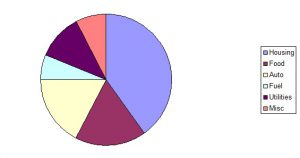
Household Budget Before the 1960’s Revolution.
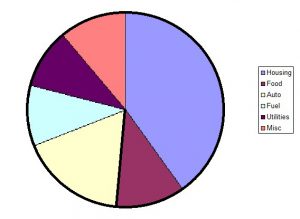
Household Budget After the 1960’s Revolution; a Bigger Pie.

Society also changed downward … because less and less women were fulltime homemakers. Family harmony suffered!

Lessons abound by studying the pro’s and con’s of the after-effect of the counter-culture on Middle Class American life.

The Go Lean book stresses that quest to reform and transform Caribbean societal engines can benefit by looking, listening, learning about the American Middle Class experience; then the goal would be to lend-a-hand and lead with a regional focus. This was an early motivation for the roadmap, as pronounced in the opening Declaration of Interdependence (Pages 12 – 13):

xi. Whereas all men are entitled to the benefits of good governance in a free society, “new guards” must be enacted to dissuade the emergence of incompetence, corruption, nepotism and cronyism at the peril of the people’s best interest. The Federation must guarantee the executions of a social contract between government and the governed.

xxiv. Whereas a free market economy can be induced and spurred for continuous progress, the Federation must install the controls to better manage aspects of the economy: jobs, inflation, savings rate, investments and other economic principles. Thereby attracting direct foreign investment because of the stability and vibrancy of our economy.

The Go Lean book provides 370-pages of turn-by-turn instructions on “how” to adopt new community ethos, plus the strategies, tactics, implementations and advocacies to execute so as to reboot, reform and transform the societal engines of Caribbean society. Just “how” can the Caribbean region pay for our revolution, the empowerments to elevate our regional society. This is the actual title of one advocacy in the Go Lean book. Consider the specific plans, excerpts and headlines here from Page 101, entitled: “10 Ways to Pay for Change“. Consider the specific plans, excerpts and headlines here:

10 Ways to Pay for Change

1 Lean-in for the Caribbean Single Market
The [CU] treaty allows for the unification of the region into one market, expanding to an economy of 30 member-states of 42 million people, to impact a GDP of over $800 Billion. In order for the CU to reboot the economic engines of the region, the political entity of the unified Caribbean must be rebooted first. That entity is the CariCom. In a commissioned 159-page study, the Turning Around CariCom report published one recommendation after another, all with the same pre-amble: “the budget must be substantially increased”. The analysis of that report is a chicken-and-egg conundrum, the CariCom construct can effectively increase the economics of the region, IF the region increases the funding of the CariCom. The CU Trade Federation implodes that quandary, as the CU will generate its own initial funding, as listed here, below.
2 Spectrum Auctions
The CU will function as a government-owned multinational corporation to deliver services for an integrated Caribbean administration. Having the regional authority, the CU will hold auctions for the radio spectrum in the region. This will generate the CU’s own initial revenue stream, as only rights are being awarded; there is no performance – no fabrication of products or rendering of services. With this strategy, there will be revenues to return back to CU share-holders, member-states, even in the 1st year. (See Appendix IBPage 279 – for samples/examples).
3 SGE Licenses
4 GPO Logistic Fees
An important CU mission is the Group Purchasing Organization (GPO), an extension of the current Office of Trade Negotiations; but the CU will make purchases and fulfill delivery to member-states, for a handling fee.
5 Regional Lottery
6 EEZ Exploration Rights
7 Homeland Security – Private Protection Licensing
8 Homeland Security – Hurricane Insurance Fund
9 Warrants
Paying for Change first optimizes the payment terms. All CU payments to member-states will be in the form of warrants attached to bonds; this allows the CU to pay lower interest rates. These warrants make the bonds sellable to the public.
10 Foreign Aid & Grants including Non-Government Organizations (NGOs)

There have been a number of blog-commentaries by the Go Lean movement that highlighted the regional economic revolution; this is part-and-parcel to rebooting the Caribbean eco-system. See a sample list of those previous blogs-commentaries here:

https://goleancaribbean.com/blog/?p=13744 Caribbean Economics: The Quest for a ‘Single Currency’
https://goleancaribbean.com/blog/?p=13677 Economics of a Beach City: ‘South Beach’
https://goleancaribbean.com/blog/?p=10585 Two Pies: Economic Plan for a New Caribbean
https://goleancaribbean.com/blog/?p=6269 Education & Economics – Michigan Model
https://goleancaribbean.com/blog/?p=599 Ailing Puerto Rico open to radical economic fixes
https://goleancaribbean.com/blog/?p=242 The Erosion of the Middle Class

In summary, it is only logical that the stewards for a new Caribbean consider the practicalities of how to pay for or monetize “their revolution”. If we want to be serious about effecting change in our society – we do – then we must have a formidable strategic, tactical and operational plan. This is the modus operandi of the Go Lean roadmap: a plan that is conceivable, believable and achievable for making the Caribbean homeland a better place to live, work and play.

We urge all Caribbean stakeholders to lean-in to this roadmap. 🙂

Download the free e-Book of Go Lean … Caribbean – now!

Sign the petition to lean-in for this roadmap for the Caribbean Union Trade Federation.

————

Appendix A – Song Lyrics: Revolution (1968) by The Beatles

You say you want a revolution
Well, you know
We all want to change the world
You tell me that it’s evolution
Well, you know
We all want to change the world

But when you talk about destruction
Don’t you know that you can count me out
Don’t you know it’s gonna be
All right, all right, all right

You say you got a real solution
Well, you know
We’d all love to see the plan
You ask me for a contribution
Well, you know
We’re doing what we can

But if you want money for people with minds that hate
All I can tell is brother you have to wait
Don’t you know it’s gonna be
All right, all right, all right

You say you’ll change the constitution
Well, you know
We all want to change your head
You tell me it’s the institution
Well, you know
You better free you mind instead

But if you go carrying pictures of chairman Mao
You ain’t going to make it with anyone anyhow
Don’t you know it’s gonna be
All right, all right, all right
All right, all right

Songwriters: John Lennon / Paul Mccartney

Source: Retrieved May 10, 2018 from: http://www.lyricsfreak.com/b/beatles/revolution+1_10026331.html

————

Appendix B – The Effects of Pension Funds on Markets Performance: A Review

Abstract – The worldwide reforming process of pension systems triggered by the demographic transition and globalization has led several countries to implement multi‐pillar pension systems and enhance pension funds. For this reason the studies on the effects that pension funds exert on markets performance have been flourishing in the last decades. In this paper, we provide an updated review of the empirical advances in this field of study, with particular focus on the effects that pension funds produce on labour markets, financial markets and economic growth.

Read the full report at: https://doi.org/10.1111/joes.12085

Source: Posted August 22, 2014; retrieved May 10, 2018 Wiley Online Library

Share this post:
, , ,

Counter-culture: Manifesting Change – Environmentalism

Go Lean Commentary

News Flash: The hippies of the 1960’s grew up! They became middle class suburbanites. They traded in their tie-dye T-shirts for Polo shirts; and their Volkswagen Beetles for ‘Soccer-Mom’ Minivans.

Did the revolution for the 60’s Hippies simply fail? Did they retreat into the mainstream?

No and No, they simply won, their fight; the changes the counter-culture demanded were manifested:

The counter-culture has been argued to have diminished in the early 1970s, and some have attributed two reasons for this. First, it has been suggested that the most popular of its political goals—civil rightscivil libertiesgender equalityenvironmentalism, and the end of the Vietnam War—were “accomplished” (to at least some degree); and also that its most popular social attributes—particularly a “live and let live” mentality in personal lifestyles (the “sexual revolution“)—were co-opted by mainstream society.[57][65] Second, a decline of idealism and hedonism occurred as many notable counter-culture figures died, the rest settled into mainstream society and started their own families, and the “magic economy” of the 1960s gave way to the stagflation of the 1970s[57]—the latter costing many in the middle-classes the luxury of being able to live outside conventional social institutions. The counter-culture, however, continues to influence social movements, art, music, and society in general, and the post-1973 mainstream society has been in many ways a hybrid of the 1960s establishment and counter-culture.[65]Wikipedia.

Wait, what?!

The fights for civil rights, civil liberties, gender equality, environmentalism, and the “end of the Vietnam War” was successful. The world – America and Western Europe – we live in today is radically different than the world before the 1960’s. So they – the counter-culturists – are able to declare some relative victory.

Unfortunately, while that success was only limited, the Caribbean was left out in this fight … and the victory tour.

For example, the mentality to “live and let live” which is present in the US and other countries is painfully absent in the Caribbean. Many Caribbean citizens have fled the Caribbean orthodoxy, many being “pushed”, to live in a society where they can “live and let live”.

Let’s consider one fight that was manifested by the counter-culture: environmentalism.

At its crux, environmentalism is an attempt to balance relations between humans and the various natural systems on which we depend in such a way that all the components are accorded a proper degree of sustainability. There was a relative success for environmentalism in the US with the creation and facilitation of the EPA (Environmental Protection Agency). This new independent federal agency was established by the 37th US President Richard Nixon in December 1970. The Administrator of the EPA is accorded Cabinet rank, so it wields power and authority to effect change in American society. In fact, under the 44th President, Barack Obama, the EPA began to impose regulations on carbon emissions from cars, power plants and other industries who contribute to Climate Change.

Despite all the accomplishments with environmental protection (land, air and water), there is still more work to do. In fact, Climate Change has been identified as one of the biggest threats for the Caribbean region. There is a need for our Caribbean communities to stand-up and fight for better Climate Change mitigations. This commentary asserts that there is the need to re-kindle that old counter-cultural vigor and vigilance.

This commentary – entry 2 of 4 – is a continuation in this series on the counter-culture of the 1960’s/1970’s. This series from the movement behind the book Go Lean … Caribbean considers the experiences of how people deviated from the mainstream society to forge change in their communities. The people – youth mostly – were scorned and ridiculed, but they persisted … and manifested the needed change. The other commentaries in the series are cataloged as follows:

  1. Counter-culture: Embracing the Change – Battling against Orthodoxy
  2. Counter-culture: Manifesting Change – Environmentalism & ‘Climate Change’ abatement
  3. Counter-culture: Monetizing the Change – Education, Workplace, Healthcare & Retirement Mandates
  4. Counter-culture: Pushing for Change – Is Ganja here to stay?

All of these commentaries convey “how” the stewards for a new Caribbean can take a “page from the counter-culture book” so as to shepherd societal change in this region.

Yes, we can!

We need that 1960’s vigor and vigilance in our efforts to abate Climate Change today. Remember the powerful anthem by R&B singer Marvin Gaye Mercy, Mercy Me! See the VIDEO here:

VIDEO-AUDIO – Marvin Gaye: Mercy, Mercy Me! (1971)https://youtu.be/U9BA6fFGMjI

Published on Aug 21, 2007
Marvin Gaye – Mercy, Mercy Me (the ecology); Rest in Peace Marvin

———–

VIDEO-AUDIO – Robert Palmer – Mercy Mercy Me/I Want You (1991)https://youtu.be/RMT-oiiY7DE

Published on Aug 20, 2006
A cover of two Marvin Gaye’s “Mercy Mercy Me” and “I Want You” singles from Robert Palmer (Rest in Peace).

  • Category: Music 
  • License: Standard YouTube License

The science has proven that Climate Change is man-made – it is not just Mother Nature – and so man can mitigate the risks and remediate the threats. While this is a global problem, one man, one community, one country and one region can make a difference. Since we are on the frontlines of this battle – due to our vulnerabilities with hurricanes (see Appendix A below) – we need to be front-and-center in the fight.

We have the successful track record of Acid Rain.

In a previous blog-commentary (October 13, 2016), it was related that previous fight against Acid Rain is a good model for Climate Change today. Consider this direct quote:

Remember Acid Rain?

That was a big deal in the 1970’s and 1980’s. It was a big environmental problem; the stakeholders came together – many kicking and screaming – to put in the remediation and mitigation and now the problem is greatly abated. See the encyclopedia details of the problem in the Appendix A below, where it is reported that Acid Rain levels have dropped 65% since 1976.

Climate Change is another area of atmospheric pollution that can also be abated with a lot of the same strategies, tactics and implementations as was employed to abate Acid Rain. But instead of the smoke stacks of factories and power plants, the problematic culprit this time is fossil fuels.

Fossil fuels and carbon emission = Climate Change!

Unlike Acid Rain, the “bad actors” for Climate Change are not just industrial installations; this time it is “almost everybody”. Cars are one of the biggest contributors. There is no denying this cause-effect any more. The problem is now globally acknowledged! There are new international agreements – Paris Conference of the Parties (COP) or COP21 – to curb fossil fuels / carbon dioxide emissions. 195 countries have signed on to these accords, including big polluters China (#1) and the US (#2).

The overall goal of these international accords is to achieve significant environmental benefits through reductions in emissions of greenhouse gases, the primary causes of Climate Change. The remediation and mitigations employ regulatory and market based approaches for controlling GHG [(Greenhouse Gases)] elements. It should be noted that the COP21 accord is a non-binding agreement, but the biggest contribution is that the community will is now entrenched.

The book Go Lean … Caribbean uses an alternate technical term for “community will”; it identifies “community ethos”, as “the fundamental character or spirit of a culture; the underlying sentiment that informs the beliefs, customs, or practices of a society” (Page 20). So, in everyday practical terms, it will now be politically incorrect to pursue policies in denial of Climate Change.

The Go Lean book presents a 370-page roadmap for rebooting, re-organizing and restructuring the economic, security and governmental institutions of the 30 member-states in the Caribbean region, especially in light of the realities of Climate Change. … We must “Go Green” to arrest our own carbon footprint, so that we may be less hypocritical – have moral authority – in calling for reform from the big polluting nations.

The timing for this commentary, and reminder, is crucial! We are on the threshold of the 2018 hurricane season and the scientists are expecting a catastrophic one … again. See the related article in Appendix A below.
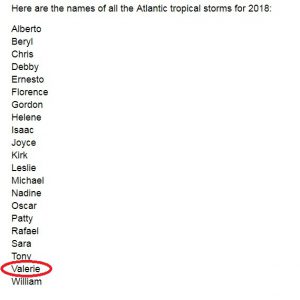
We must do better this year and in the future, compared to how we did last year. In 2017, 2 major storms impacted the Caribbean regions, leaving death, destruction, dysfunction and defection in their wake:

  • Irma – A Category 5 storm on September 4, 2017; this caused devastation in many islands, hitting Barbuda and the Virgin Islands especially hard.
  • Maria – A Category 5 storm on September 18, 2017; this caused devastation in many islands, hitting Puerto Rico and Dominica especially hard.

Remember that Hurricane Season is imminent.

Remember Acid Rain …

Remember the Hippies …

In the previous submission in this “counter-culture” series, it was asserted …

… the ‘Hippies’ stood in the track of an oncoming locomotive … and stopped the train!

We need to apply the lessons-learned from the counter-culture most urgently in getting our communities ready for Climate Change abatement.

The book Go Lean…Caribbean – available to download for free – serves as a roadmap for the introduction and implementation of the technocratic Caribbean Union Trade Federation (CU), to reform and transform all of Caribbean society – all 30 member-states. There is the need to shepherd our communities through major challenges, ones that are too big for any one member-state alone; we need to confederate. This CU/Go Lean roadmap has these 3 prime directives:

  • Optimization of the economic engines in order to grow the regional economy to $800 Billion & create 2.2 million new jobs.
  • Establishment of a security apparatus to ensure public safety and protect the resultant economic engines; including a disaster planning and response functionality.
  • Improve Caribbean governance to support these engines, including a separation-of-powers between the member-states and CU federal agencies.

The Caribbean needs the spirit of the previous counter-culture to “stop the train” that is on our track. Can we remember and role-model the previous rebels and revolutionaries who did not settle for the status quo? Yes, we can!

No we are not saying become hippies! Yes, we are saying to counter the status quo.

The movement behind the Go Lean book has previously detailed many related issues and advocacies for Climate Change awareness and abatement. Consider this sample of previous blog-commentaries:

https://goleancaribbean.com/blog/?p=14174 Canada says: “Follow-me” for Model on ‘Climate Change’ Action
https://goleancaribbean.com/blog/?p=13985 EU Assists Barbados to Go Green
https://goleancaribbean.com/blog/?p=11858 Looking and Learning from the Cautionary Tale of Kiribati
https://goleancaribbean.com/blog/?p=10367 The Science of Green Batteries
https://goleancaribbean.com/blog/?p=9455 Fix ‘Climate Change’ – Yes, We Can
https://goleancaribbean.com/blog/?p=7449 Due to Climate Change, ‘Crap Happens’ – So What Now?
https://goleancaribbean.com/blog/?p=7103 COP21 – ‘Climate Change’ Acknowledged
https://goleancaribbean.com/blog/?p=6893 A Meteorologist’s View On Climate Change
https://goleancaribbean.com/blog/?p=6016 ‘Hotter than July’ – Reality in the Caribbean
https://goleancaribbean.com/blog/?p=4673 Climate Change‘ Merchants of Doubt … to Preserve Profits!!
https://goleancaribbean.com/blog/?p=2465 Book: ‘This Changes Everything: Capitalism vs. the Climate’
https://goleancaribbean.com/blog/?p=2276 Climate Change May Affect Food Supply Within a Decade
https://goleancaribbean.com/blog/?p=1883 Climate Change May Bring More Kidney Stones
https://goleancaribbean.com/blog/?p=1817 Caribbean grapples with intense cycles of flooding & drought
https://goleancaribbean.com/blog/?p=915 Go ‘Green’ … Caribbean

The Go Lean book and roadmap stresses that reforming and transforming the Caribbean’s societal engines is possible; it is conceivable, believable and achievable. But changing society entails changing the people in society, their attitudes and values.

We saw change manifest with the counter-culture of the 1960’s/1970’s. As related above, “the post-1973 mainstream society has been in many ways a hybrid of the 1960s establishment and counter-culture”.

We now need to change our people, our Caribbean people. We need them committed, devoted and inspired to adopt the appropriate community ethos to derail the current trajectory – to doom – and move our countries in a new direction.

The Go Lean book provides 370-pages of turn-by-turn instructions on “how” to forge a counter-cultural revolution transition in the Caribbean; it details the new community ethos that needs to be adopted, plus the strategies, tactics, implementations and advocacies to execute so as to reboot, reform and transform the societal engines of Caribbean society.

We urge all Caribbean stakeholders to lean-in to this roadmap for change, to make our homeland a better place to live, work and play. 🙂

Download the free e-Book of Go Lean … Caribbean – now!

Sign the petition to lean-in for this roadmap for the Caribbean Union Trade Federation.

————-

Appendix – Grenada’s Forestry Department Concerned About ‘Climate Change’ And Its Effects On Hurricanes

By: Maryam J. Tawfiq-iLAND Resilience Project

With the announcement from Colorado State University hurricane researchers of their projections for the 2018 Atlantic Hurricane Season the forestry department of the ministry of agriculture in Grenada is concerned with the likely effects of this year’s storm and of them possibly intensifying.

The 14 named storms of the 2018 season will be slightly above-average, said a report from the university. It projects that seven of the storms will become hurricanes; three of them “major’’ hurricanes.

Ever more people around the world seem to be experiencing freak storms, floods and droughts — including catastrophes that devastate whole regions. The reasons for these complex weather events aren’t straightforward. Some say the crazy weather we’re experiencing is due to greenhouse gas emissions around the world; others disagree.

Anthony Jeremiah, acting chief forestry officer, said the ministry of agriculture is adopting “active preparedness measures’’, admitting that “we are very much concerned regarding the destruction that can arise from hurricanes’’.

During the 2017 Atlantic basin hurricane season, six major storms – all of which were Category 3 or higher – produced devastating human, material and financial losses across the southern United States and the Caribbean.

Last year’s above-average storm activity was foreseeable. Hurricane intensity ticked up in 2016 and scientists have predicted this trend will hold as global temperatures continue to rise.

Though the Caribbean is facing increasing vulnerability to hurricanes, many in the region hold very different opinions about the severity of climate change. According to results from the latest Vanderbilt University Americas Barometer survey, a strong majority of Caribbean residents perceive climate change as a “very serious” problem. In contrast, just 44 percent of the U.S. public does.

The 2018 Atlantic hurricane season runs from June 1 to Nov. 30.

Source: Posted May 5, 2018; retrieved May 8, 2018 from: https://stluciatimes.com/2018/05/05/grenadas-forestry-department-concerned-about-climate-change-and-its-effects-on-hurricanes/

Share this post:
, , ,
[Top]

Counter-culture: Embracing the Change

Go Lean Commentary

Children almost always rebel against their parental norms!

This is just a fact of life. Many times this actuality is a source of friction and frustration in families … and society in general. But many times, the rebellion can result in subsequent benefits to people and institutions in society; though this judgment may not be realized until a later time.

So a younger generation’s rebellion may be how whole communities are disciplined. This thought even aligns with the Bible’s counsel on discipline:

No discipline is enjoyable while it is happening – it’s painful! But afterward there will be a peaceful harvest of right living for those who are trained in this way. – Hebrews 12:11 New Living Translation

Just consider these quick examples of protest movements: slavery abolition, women’s suffrage, labor rights and civil rights. These changes upended – sometimes violently – societal norms. But now, our communities are better for having endured it.

With this premise, we are now able to better embrace the historicity of the “counter-culture” of the 1960’s. This is our most recent example of a subculture whose values and norms of behavior differed substantially from those of mainstream society. And this is not just an academic discussion, for this timeframe corresponds with the time of upheaval for Caribbean society; yet we have not fully applied the lessons-learned and benefits from the resultant societal discipline; see Appendix VIDEO.
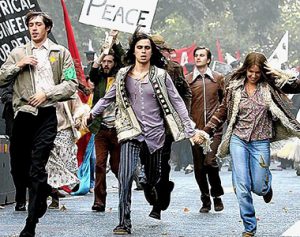
A counter-culture typically involves criticism or rejection of the status quo powerful institutions, with accompanying hope for a better life or a new society.

This is the focus of this series of commentaries on the counter-culture of the 1960’s. This first one – entry 1 of 4 in this series from the movement behind the book Go Lean … Caribbean – is in consideration of remaining societal defects in the Caribbean region. We did not reform or transform like other communities contending with the counter-culture. The other commentaries in the series are cataloged as follows:

  1. Counter-culture: Embracing the Change – Battling against Orthodoxy
  2. Counter-culture: Manifesting Change – Environmentalism & ‘Climate Change’
  3. Counter-culture: Monetizing the Change – Education, Workplace, Healthcare & Retirement
  4. Counter-culture: Pushing for Change – Is Ganja here to stay?

All of these commentaries relate to “how” the stewards for a new Caribbean can shepherd societal change in this region. We accept that with the counter-culture, young people can reject conventional social norms. This can be good when the “mainstream” culture reflects cultural standards that are defective. The counter-culturists of the 1960’s – think hippies – rejected the norms of their parents – from the 1950’s and before – especially with respect to:

  • Racial segregation – The US had a long, bad track record of enforcing a “separate but equal” standard. This was a sham! For the minority populations, they were separated but far from equal; they were oppressed, suppressed and repressed to ensure an inferior status. It took a counter-culture to press until change manifested; i.e. Linda Brown
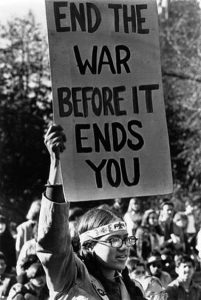
  • Support for wars – The counter-culturists opposed military conscriptions with vocal protests, publications, demonstrations and acts of civil disobedience. In fact, not until the Military Draft ended in the US, did Caribbean people start to consider the prospect of emigrating to the US.
  • Women’s rights – These rights, like many other societal reforms, only come about as a result of advocates and activists fighting for change. But these battles were too important not to fight. Starting in the mid-19th Century, the 1960’s Civil and Gender Rights succeeded with the landmark 1972 Title IX US federal legislation.
  • Sexual mores – Many countries criminalize sexual acts between consenting adults of the same sex and other forms of sexual orientation, gender identity and expression. The counter-culturists did not stand still; they persisted and got the US to continue the national trend of more tolerance with every generation.
  • Traditional modes of authority – The counter-culturists conveyed to the world that Police authorities were far from perfect, and many times, not even in the right. Standards for mitigating and managing Police Abuse of Power emerged from this hard-fought counter-culture revolution.
  • A materialist interpretation of Middle Class values – While capitalism has won all debate for governing policy, the harsh profit-first priority of Crony-Capitalism has been debunked by counter-culturists. Now environmentalism, arts, humanitarianism has emerged as great candidates for a purpose-driven life.
  • Drug usage – The counter-culture normalized marijuana use and now … State authorities are enacting legislation to legitimize or decriminalize recreational marijuana use. This implementation will be heavy-lifting as there are many security and governing dynamics to manage.

Lessons abound … all of this above drama from the counter-culture is not just American drama. No, the 1960’s counter-culture movement was truly global. It also impacted our Caribbean homeland as well; see Appendix VIDEO.

All of the above issues had a Caribbean parallel.

Yes, the 1960’s counter-culturists triggered dramatic changes; but they were not the first in history, nor were they the last. See here:

Prominent examples of countercultures in Europe and North America include Romanticism (1790–1840), Bohemianism (1850–1910), the more fragmentary counterculture of the Beat Generation (1944–1964), followed by the globalized counter-culture of the 1960s (1964–1974), usually associated with the hippie subculture[3] and the diversified punk subculture of the 1970s and 1980s. – Wikipedia 

The book Go Lean…Caribbean – available to download for free – serves as a roadmap for the introduction and implementation of the technocratic Caribbean Union Trade Federation (CU), to reform and transform all of Caribbean society – all 30 member-states. This is counter to the existing culture. There is the need to shepherd our communities through major changes; we need to reboot our societal engines. This CU/Go Lean roadmap has these 3 prime directives:

  • Optimization of the economic engines in order to grow the regional economy to $800 Billion and create 2.2 million new jobs.
  • Establishment of a security apparatus to ensure public safety and protect the resultant economic engines.
  • Improve Caribbean governance to support these engines, including a separation-of-powers between the member-states and CU federal agencies.

The Caribbean needs a counter-culture revolution! We have defects we need to abandon and gaps that need to be filled.

We need our young people to reject conventional social norms. We need them to rebel and revile their parents … and other members of society that are backwards – trying to preserve defective “mainstream” cultural standards – then move forward.

The Go Lean book identifies and defines “mainstream” cultural standards as community ethos; with this direct quotation (Page 20 – 25):

The people of the Caribbean must change their feelings about elements of their society – elements that are in place and elements missing. This is referred to as “Community Ethos”, defined as:

noun – (www.Dictionary.com)

    1. the fundamental character or spirit of a culture; the underlying sentiment that informs the beliefs, customs, or practices of a group or society; dominant assumptions of a people or period.
    2. the character or disposition of a community, group, person, etc.

As such, some [missing] community ethos … have been identified as relevant for the Caribbean. They are as follows:

  • Deferred Gratification
  • Economic Principles
    • Money Multiplier
    • Job Multiplier
  • Security Principles
    • Privacy versus Public Protection
    • Whistleblower Protection
    • Witness Security & Protection
    • Anti-Bullying and Mitigation
    • Intelligence Gathering
    • Light Up the Dark Places
    • “Crap” Happens
  • Governing Principles
    • Minority Equalization
    • Lean Operations
    • Return on Investments
    • Cooperatives
    • Non-Government Organizations
  • Advocacies
    • Ways to Impact the Future
    • Ways to Foster Genius
    • Ways to Help Entrepreneurship
    • Ways to Promote Intellectual Property
    • Ways to Impact Research & Development
    • Ways to Bridge the Digital Divide
    • Ways to Improve Negotiations
    • Ways to Impact Turn-Arounds
    • Ways to Manage Reconciliations
    • Ways to Improve Sharing
    • Ways to Promote Happiness
    • Ways to Impact the Greater Good

The movement behind the Go Lean book have previously identified many defective “mainstream” cultural values in the Caribbean; consider this sample of previous blog-commentaries:

https://goleancaribbean.com/blog/?p=13974 Haiti – Earning its “Shit-Hole” Brand
https://goleancaribbean.com/blog/?p=13890 We Need to Talk – The Caribbean Disposition is Dire!
https://goleancaribbean.com/blog/?p=13321 Divided and Conquered – Too Much Pluralism – Us and Them
https://goleancaribbean.com/blog/?p=11244 Caribbean People Willing to “Live Too Fast and Die Too Young”
https://goleancaribbean.com/blog/?p=11048 Ignoring the Society Golden Rule – Protecting Weak from the Strong
https://goleancaribbean.com/blog/?p=8200 Promoting a ‘Climate of Hate’
https://goleancaribbean.com/blog/?p=7082 All Play, No Work – Only Known for Leisure
https://goleancaribbean.com/blog/?p=5784 “Say it ain’t so”! – Archaic Buggery Laws Still in Jamaica
https://goleancaribbean.com/blog/?p=4058 New York Times Maledictions on the Bahamas
https://goleancaribbean.com/blog/?p=2709 58% of Caribbean Boys Agree to Female Discipline
https://goleancaribbean.com/blog/?p=1386 Nonchalance About Impact of Drugs and De-Criminalization

There is so much to learn from the counter-culture movement of the 1960’s!

The ‘Hippies’ stood in the track of an oncoming locomotive … and stopped the train!

The counter-culture brought change, some good (ie: desegregation & anti-war protest) and some bad (ie: un-kept grooming & liberal drug use)! So the ‘Hippies’ are only to be emulated as a model for forging change, not necessarily what they change.

The Go Lean book and roadmap stresses that reforming and transforming the Caribbean’s societal engines is possible, but must be preceded with reforming and transforming Caribbean attitudes or community ethos. Despite the individual member-states, counter-cultural changes can be pushed regionally. This – regional push – was an early motivation for the roadmap, as pronounced in the opening Declaration of Interdependence (Pages 12 – 13):

xi. Whereas all men are entitled to the benefits of good governance in a free society, “new guards” must be enacted to dissuade the emergence of incompetence, corruption, nepotism and cronyism at the peril of the people’s best interest. The Federation must guarantee the executions of a social contract between government and the governed.

xvi.  Whereas security of our homeland is inextricably linked to prosperity of the homeland, the economic and security interest of the region needs to be aligned under the same governance. Since economic crimes … can imperil the functioning of the wheels of commerce for all the citizenry, the accedence of this Federation must equip the security apparatus with the tools and techniques for predictive and proactive interdictions.

xxiv. Whereas a free market economy can be induced and spurred for continuous progress, the Federation must install the controls to better manage aspects of the economy: jobs, inflation, savings rate, investments and other economic principles. Thereby attracting direct foreign investment because of the stability and vibrancy of our economy.

The Go Lean book provides 370-pages of turn-by-turn instructions on “how” to forge a counter-cultural revolution transition in the Caribbean; it details the new community ethos that needs to be adopted, plus the strategies, tactics, implementations and advocacies to execute so as to reboot, reform and transform the societal engines of Caribbean society.

We are not asking the Caribbean to be “hippies”, just learn from the “hippies” and reject the status quo and orthodoxy of the broken Caribbean eco-system.

Yes, we can foster change, a counter-culture even; we can make our homeland a better place to live, work and play. 🙂

Download the free e-Book of Go Lean … Caribbean – now!

Sign the petition to lean-in for this roadmap for the Caribbean Union Trade Federation.

—————

Appendix VIDEO-AUDIO – Eddie Minnis: “Ting an’ Ting Y2K” – https://youtu.be/oDF2cQsEURU

This is a Bahamian folk song by legend Eddie Minnis describing societal change in the capital city. ‘Ting and Ting’, the counter-culture had taken hold and everything changed … for good and bad:

  • “Nassau’s become such a funky town since “ting an’ ting” been going ’round.

EDDIE MINNIS – Topic

Published on Jul 20, 2015 – Provided to YouTube by CDBaby “Ting An’ Ting Y2k” (Granny and Fleabs Mix) · Eddie Minnis Tropical Waves ℗ 2012 Edward Minnis Released on: 2012-08-01 Auto-generated by YouTube.


Share this post:
, ,
[Top]

May Day! May Day! We Need Help With Jobs! – ENCORE

Today is May Day!

In many countries, this day is equivalent to Labor Day, a date set aside to honor and celebrate workers, or the movement to empower workers in society. Many of the historicity of these movements were tied to labor unions.

More than 80 countries celebrate International Workers’ Day on May 1 – the ancient European holiday of May Day.

All Caribbean member-states need help with our job-labor eco-system. Our societal engines are so dysfunctional that our people flee … abandoning the homeland in search of jobs.

There is this prospect for help. This previous blog-commentary from June 18, 2015, discussed the trends in the labor markets, which depict a decline in collective bargaining. This Encore of that commentary is presented here with a plan to assuage this bad trend and create 2.2 million new jobs:

==================

Title: Economic Principle: Wage-Seeking – Market Forces -vs- Collective Bargaining

Go Lean Commentary

The field of Economics is unique! We all practice it every day, no matter the level of skill or competence. There is even the subject area in basic education branded Home Economics, teaching the students the fundamentals of maintaining, supporting and optimizing a home environment. Most assuredly, economics is an art and a science, albeit a social science.

In a previous blog/commentary, Scotman’s Adam Smith was identified as the father of modern macro-economics. Though he lived from 1723 to 1790, his writings defined advanced economic concepts even in this 21st Century. His landmark book An Inquiry into the Nature and Causes of the Wealth of Nations qualified the divisions of income into these following categories: profit, wage, and rent.[4] We have previously explored profit-seeking (a positive ethos that needs to be fostered in the Caribbean region) and rent-seeking (a negative effort that proliferates in the Caribbean but needs to be mitigated), so now the focus of this commentary is on the activity of wage-seeking, and the concepts of governance and public choice theory to allow for maximum employment.

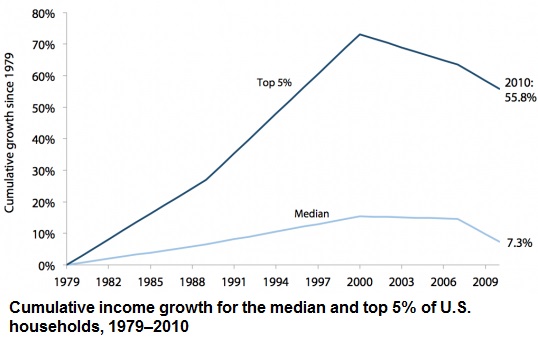
This is hard! Change has come to the world of wage-seekers – the middle classes are under attack; the labor-pool of most industrialized nations have endured decline, not in the numbers, but rather in prosperity. While wage-earners have not kept pace with inflation, top-earners (bonuses, commissions and business profits) have soared; (see Photo).

CU Blog - Economic Principles - Wage-Seeking - Market forces -vs- Collective Bargaining - Photo 2As a direct result, every Caribbean member-state struggles with employment issues in their homeland. In fact, this was an initial motivation for the book Go Lean…Caribbean, stemming from the fall-out of the 2008 Great Recession, this publication was presented as a roadmap for the introduction and implementation of the Caribbean Union Trade Federation (CU) to elevate the economic, security and governing engines of the Caribbean region to create 2.2 million new jobs, despite global challenges.

Needless to say, the global challenge is far more complex than Home Economics. The Go Lean book describes the effort as heavy-lifting; then proceeds to detail the turn-by-turn directions of a roadmap to remediate and mitigate wage-seeking.

The roadmap channels the Economic Principles and best-practices of technocrats like Adam Smith and 11 other named economists, many of them Nobel Laureates. A review of the work of these great men and woman constitute “Lessons in Economic Principles”. Why would these lessons matter in the oversight of Caribbean administration? Cause-and-effect!

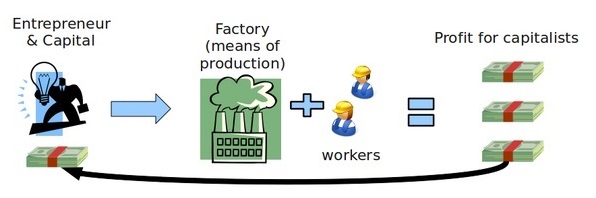
Profit 4The root of the current challenge for wage-seekers is income equality; and this is bigger than just the Caribbean. It is tied to the global adoption of globalization and technology/ automation – a product of global Market Forces as opposed to previous Collective Bargaining factors. This relates back to the fundamental Economic Principle of “supply-and-demand”; but now the “supply” is global. This photo/”process flow” here depicts the ingredients of Market Forces. When there is the need for labor, the principle of comparative analysis is employed, and most times the conclusion is to “off-shore” the labor efforts, and then import the finished products. This is reversed of the colonialism that was advocated by Adam Smith; instead of the developed country providing factory labor for Third World consumption, the developed nation (i.e. United States) is now in the consumer-only role, with less and less production activities, for products fabricated in the Third World. This reality is not sustainable for providing prosperity to the middle classes, to the wage-seekers.

As a community, we may not like the laws of Economics, but we cannot ignore them. The Go Lean book explains the roles and significance of Economic Principles … with this excerpt (Page 21):

While money is not the most important factor in society, the lack of money and the struggle to acquire money creates challenges that cannot be ignored. The primary reason why the Caribbean has suffered so much human flight in the recent decades is the performance of the Caribbean economy. Though this book is not a study in economics, it recommends, applies and embraces these 6 core Economic Principles as sound and relevant to this roadmap:

  1. People Choose: We always want more than we can get and productive resources (human, natural, capital) are always limited. Therefore, because of this major economic problem of scarcity, we usually choose the alternative that provides the most benefits with the least cost.
  2. All Choices Involve Costs: The opportunity cost is the next best alternative you give up when you make a choice. When we choose one thing, we refuse something else at the same time.
  3. People Respond to Incentives in Predictable   Ways: Incentives are actions, awards, or rewards that determine the choices people make. Incentives can be positive or negative. When incentives change, people change their behaviors in predictable ways.
  4. Economic Systems Influence Individual Choices and Incentives: People cooperate and govern their actions through both written and unwritten rules that determine methods of allocating scarce resources. These rules determine what is produced, how it is produced, and for whom it is produced. As the rules change, so do individual choices, incentives, and behavior.
  5. Voluntary Trade Creates Wealth: People specialize in the production of certain goods and services because they expect to gain from it. People trade what they produce with other people when they think they can gain something from the exchange. Some benefits of voluntary trade include higher standards of living and broader choices of goods and services.
  6. The Consequences of Choices Lie in the Future: Economists believe that the cost and benefits of decision making appear in the future, since it is only the future that we can influence. Sometimes our choices can lead to unintended consequences.

Source: Handy Dandy Guide (HDC) by the National Council on Economic Education (2000)

The Go Lean book describes the end result of the application of best-practices in this field of economics over the course of a 5-year roadmap: the CU … as a hallmark of technocracy. But the purpose is not the edification of the region’s economists, rather to make the Caribbean homeland “better places to live, work and play” for its citizens. This branding therefore puts emphasis on the verb “work”; the nouns “jobs” and “wages” must thusly be a constant focus of the roadmap.

Brain Drain 70 percent ChartThis Go Lean book declares that the Caribbean eco-system for job-creation is in crisis … due to the same global dilemma. The roadmap describes the crisis as losing a war, the battle of globalization and technology. The consequence of the defeat is 2 undesirable conditions: income inequality and societal abandonment, citizens driven away to a life in the Diaspora. This assessment currently applies in all 30 Caribbean member-states, as every community has lost human capital to emigration. Some communities, like Puerto Rico and the US Virgin Islands have suffered with an abandonment rate of more than 50% and others have watched more than 70% of college-educated citizens flee their community for foreign shores. Even education is presented as failed investments as those educated in the region and leave to find work do not even return remittances in proportion to their costs of development. (See Table 4.1 in the Photo)

The Go Lean book therefore posits that there is a need to re-focus, re-boot, and optimize the labor/wage-seeking engines so as to create more jobs with livable wages. Alas, this is not just a Caribbean issue, but a global (i.e. American) one as well. See the following encyclopedic references for wage-seeking and Collective Bargaining to fully understand the complexities of these global issues:

Encyclopedia Reference #1: Wage-Seeking
(Source: https://en.wikipedia.org/wiki/Wage)

A wage is monetary compensation paid by an employer to an employee in exchange for work done. Payment may be calculated as a fixed amount for each task completed (a task wage or piece rate), or at an hourly or daily rate, or based on an easily measured quantity of work done.

Wages are an example of expenses that are involved in running a business.

Payment by wage contrasts with salaried work, in which the employer pays an arranged amount at steady intervals (such as a week or month) regardless of hours worked, with commission which conditions pay on individual performance, and with compensation based on the performance of the company as a whole. Waged employees may also receive tips or gratuity paid directly by clients and employee benefits which are non-monetary forms of compensation. Since wage labour is the predominant form of work, the term “wage” sometimes refers to all forms (or all monetary forms) of employee compensation.

Determinants of wage rates
Depending on the structure and traditions of different economies around the world, wage rates will be influenced by market forces (supply and demand), legislation, and tradition. Market forces are perhaps more dominant in the United States, while tradition, social structure and seniority, perhaps play a greater role in Japan.[6]

Wage Differences
Even in countries where market forces primarily set wage rates, studies show that there are still differences in remuneration for work based on sex and race. For example, according to the U.S. Bureau of Labor Statistics, in 2007 women of all races made approximately 80% of the median wage of their male counterparts. This is likely due to the supply and demand for women in the market because of family obligations. [7] Similarly, white men made about 84% the wage of Asian men, and black men 64%.[8] These are overall averages and are not adjusted for the type, amount, and quality of work done.

Real Wage
The term real wages refers to wages that have been adjusted for inflation, or, equivalently, wages in terms of the amount of goods and services that can be bought. This term is used in contrast to nominal wages or unadjusted wages. Because it has been adjusted to account for changes in the prices of goods and services, real wages provide a clearer representation of an individual’s wages in terms of what they can afford to buy with those wages – specifically, in terms of the amount of goods and services that can be bought.

See Table of European Model in the Appendix below. (The European Union is the model for the Caribbean Union).

———-

Encyclopedia Reference #2: Collective Bargaining
(Source: https://en.wikipedia.org/wiki/Collective_bargaining)

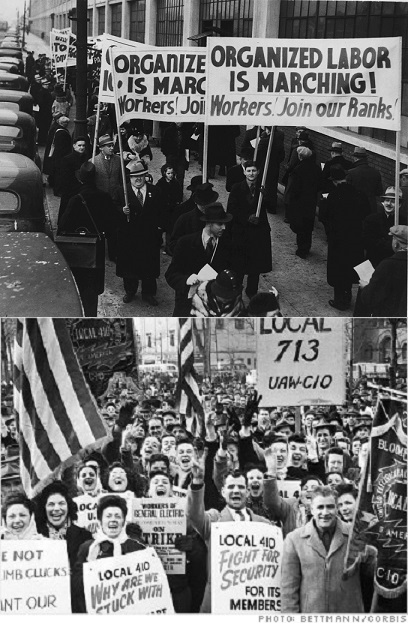
WPR: Marches & PicketsCollective Bargaining is a process of negotiation between employers and a group of employees aimed at reaching agreements to regulate working conditions. The interests of the employees are commonly presented by representatives of a trade union to which the employees belong. The collective agreements reached by these negotiations usually set out wage scales, working hours, training, health and safety, overtime, grievance mechanisms, and rights to participate in workplace or company affairs.[1]

The union may negotiate with a single employer (who is typically representing a company’s shareholders) or may negotiate with a group of businesses, depending on the country, to reach an industry wide agreement. A collective agreement functions as a labor contract between an employer and one or more unions.

The industrial revolution brought a swell of labor-organizing in [to many industrialized countries, like] the US. The American Federation of Labor (AFL) was formed in 1886, providing unprecedented bargaining powers for a variety of workers.[11] The Railway Labor Act (1926) required employers to bargain collectively with unions. While globally, International Labour Organization Conventions (ILO) were ratified in parallel to the United Nations efforts (i.e. Declaration of Human Rights, etc.). There were a total of eight ILO fundamental conventions [3] all ascending between 1930 and 1973, i.e. the Freedom of Association and Protection of the Right to Organise Convention (1949).

The Go Lean book presents a roadmap on how to benefit from the above Economic Principles – and how to empower communities anew – in the midst of tumultuous global challenges. This roadmap addresses more than economics, as there are other areas of societal concern. This is expressed in the CU charter; as defined by these 3 prime directives:

  • Optimization of economic engines in order to grow the regional economy to $800 Billion and create 2.2 million new jobs.
  • Establishment of a security apparatus to protect the resultant economic.
  • Improvement of Caribbean governance to support these engines.

Early in the Go Lean book, the responsibility to create jobs was identified as an important function for the CU with these pronouncements in the Declaration of Interdependence (Pages 14):

xix.  Whereas our legacy in recent times is one of societal abandonment, it is imperative that incentives and encouragement be put in place to first dissuade the human flight, and then entice and welcome the return of our Diaspora back to our shores.

xxi.  Whereas the preparation of our labor force can foster opportunities and dictate economic progress for current and future generations, the Federation must ensure that educational and job training opportunities are fully optimized for all residents of all member-states, with no partiality towards any gender or ethnic group. The Federation must recognize and facilitate excellence in many different fields of endeavor, including sciences, languages, arts, music and sports. This responsibility should be executed without incurring the risks of further human flight, as has been the past history.

xxiv. Whereas a free market economy can be induced and spurred for continuous progress, the Federation must install the controls to better manage aspects of the economy: jobs, inflation, savings rate, investments and other economic principles. Thereby attracting direct foreign investment because of the stability and vibrancy of our economy.

xxvi.  Whereas the Caribbean region must have new jobs to empower the engines of the economy and create the income sources for prosperity, and encourage the next generation to forge their dreams right at home, the Federation must therefore foster the development of new industries, like that of ship-building, automobile manufacturing, prefabricated housing, frozen foods, pipelines, call centers, and the prison industrial complex. In addition, the Federation must invigorate the enterprises related to existing industries tourism, fisheries and lotteries – impacting the region with more jobs.

According to an article from the Economic Policy Institute, entitled The Decline of Collective Bargaining and the Erosion of Middle-class Incomes in Michigan by Lawrence Mishel (September 25, 2012), the challenges to middle class income are indisputable, and the previous solution – Collective Bargaining – is no longer as effective as in the past. (The industrial landscape of Michigan had previously been identified as a model for the Caribbean to consider). See a summary of the article here (italics added) and VIDEO in the Appendix:

In Michigan between 1979 and 2007, the last year before the Great Recession, the state’s economy experienced substantial growth and incomes rose for high-income households. But middle-class incomes did not grow. The Michigan experience is slightly worse than but parallels that of the United States as a whole, where middle-class income gains were modest but still far less than the income gains at the top. What the experience of Michiganders and other Americans makes clear is that income inequality is rising, and it has prevented middle-class incomes from growing adequately in either Michigan or the nation.

The key dynamic driving this income disparity has been the divergence between the growth of productivity—the improvement in the output of goods and services produced per hour worked—and the growth of wages and benefits (compensation) for the typical worker. It has been amply documented that productivity and hourly compensation grew in tandem between the late 1940s and the late 1970s, but split apart radically after 1979. Nationwide, productivity grew by 69.1 percent between 1979 and 2011, but the hourly compensation of the median worker (who makes more than half the workforce but less than the other half) grew by just 9.6 percent (Mishel and Gee 2012; Mishel et al. 2012). In other words, since 1979 the typical worker has hardly benefited from improvements in the economy’s ability to raise living standards and, consequently, middle-class families’ living standards have barely budged since then. This phenomenon has occurred across the nation, including in Michigan.

This divergence between pay and productivity and the corresponding failure of middle-class incomes to grow is strongly related to the erosion of collective bargaining. And collective bargaining has eroded more in Michigan than in the rest of the nation, helping to explain Michigan’s more disappointing outcomes.

Research three decades ago by economist Richard Freeman (1980) showed that collective bargaining reduces wage inequality, and all the research since then (see Freeman 2005) has confirmed his finding. Collective bargaining reduces wage inequality for three reasons. The first is that wage setting in collective bargaining focuses on establishing “standard rates” for comparable work across business establishments and for particular occupations within establishments. The outcome is less differentiation of wages among workers and, correspondingly, less discrimination against women and minorities. A second reason is that wage gaps between occupations tend to be lower where there is collective bargaining, and so the wages in occupations that are typically low-paid tend to be higher under collective bargaining. A third reason is that collective bargaining has been most prevalent among middle-class workers, so it reduces the wage gaps between middle-class workers and high earners (who have tended not to benefit from collective bargaining).

Collective bargaining also reduces wage inequality in a less-direct way. Wage and benefit standards set by collective bargaining are often followed in workplaces not covered by collective bargaining, at least where there is extensive coverage by collective bargaining in particular occupations and industries. This spillover effect means that the impact of collective bargaining on the wages and benefits of middle-class workers extends far beyond those workers directly covered by an agreement.

Source: http://www.epi.org/publication/bp347-collective-bargaining/

The siren call went out 20 years ago, of the emergence of an “Apartheid” economy, a distinct separation between the classes: labor and management. Former US Secretary of Labor Robert Reich (1993 – 1997 during the Clinton Administration’s First Term) identified vividly, in this 1996 Harvard Business Review paper, that something was wrong with the U.S. economy then; (it is worst now):

CU Blog - Economic Principles - Wage-Seeking - Market forces -vs- Collective Bargaining - Photo 3That something is not the country’s productivity, technological leadership, or rate of economic growth, though there is room for improvement in all those areas. That something is an issue normally on the back burner in U.S. public discourse: the distribution of the fruits of economic progress. For many, the rise in AT&T’s stock after it announced plans [on January 3, 1996] to lay off 40,000 employees crystallized the picture of an economy gone haywire, with shareholders gaining and employees losing as a result of innovation and advances in productivity.

Has the distribution of the benefits of economic growth in the United States in fact gone awry? Is the nation heading toward an apartheid economy—one in which the wealthy and powerful prosper while the less well-off struggle? What are the facts? What do they mean? Are there real problems—and can they be solved?

Deploying solutions for the problem of income equality in the Caribbean is the quest of the Go Lean/CU roadmap. The book identified Agents of Change (Page 57) that is confronting the region, (America as well); they include: Globalization and Technology. A lot of the jobs that paid a “living wage” are now being shipped overseas to countries with lower wage levels, or neutralized by the advancement of technology. Yes, computers are reshaping the global job market, so even Collective Bargaining may fail to counter any eventual obsolescence of wage-earners, their valuation and appreciation; (see Encyclopedic Article # 2). The Go Lean book, and previous blog/commentaries, therefore detailed the campaign to not just consume technology, but to also innovate, produce and distribute the computer-enabled end-products. Therefore industries relating to STEM (Science, Technology, Engineering and Mathematics/Medicine) are critical in the roadmap. Not only do these careers yield good-paying direct jobs, but also factor in the indirect job market, and the job-multiplier rate (3.0 to 4.1) for down-the-line employment (Page 260) opportunities.

The Go Lean… Caribbean book details the creation of 2.2 million new jobs for the Caribbean region, many embracing ICT/STEM skill-sets. This is easier said than done, so how does Go Lean purpose to deliver on this quest? By the adoption of certain community ethos, plus the executions of key strategies, tactics, implementations and advocacies. The following is a sample from the book:

Assessment – Puerto Rico – Extreme Unemployment – The Greece of the Caribbean Page 18
Community Ethos – Deferred Gratification Page 21
Community Ethos – Job Multiplier Page 22
Community Ethos – Anti-Bullying and Mitigation Page 23
Community Ethos – Lean Operations Page 24
Community Ethos – Return on Investments Page 24
Community Ethos – Ways to Impact the Future Page 26
Community Ethos – Ways to Foster Genius Page 27
Community Ethos – Ways to Help Entrepreneurship Page 28
Community Ethos – Ways to Promote Intellectual Property – Key to ICT Careers Page 29
Community Ethos – Ways to Impact Research and Development – Germaine for STEM jobs Page 30
Community Ethos – Ways to Close the Digital Divide – Vital for fostering ICT careers Page 31
Strategy – Mission – Education Without Further Brain Drain Page 46
Strategy – Agents of Change – Technology Page 57
Strategy – Agents of Change – Globalization Page 57
Tactical – Fostering a Technocracy Page 64
Tactical – Tactics to Forge an $800 Billion Economy – East Asian Tigers Model Page 69
Tactical – Tactics to Forge an $800 Billion Economy – High Multiplier Industries Page 70
Tactical – Tactics to Forge an $800 Billion Economy – Trade and Globalization Page 70
Tactical – Separation of Powers – Commerce Department – Patents & Copyrights Page 78
Implementation – Steps to Implement Self-Governing Entities – As Job-creating Engines Page 105
Implementation – Ways to Benefit from Globalization – Technology: The Great Equalizer Page 119
Planning – Ways to Improve Trade Page 128
Planning – Ways to Model the EU Page 130
Planning – Lessons Learned from 2008 – Income Equality Now More Pronounced Page 136
Advocacy – Ways to Grow the Economy Page 151
Advocacy – Ways to Create Jobs Page 152
Advocacy – Ways to Improve Education – e-Learning Options Page 159
Advocacy – Ways to Impact Labor Markets and Unions – Collective Bargaining Best-Practices Page 164
Advocacy – Ways to Foster Empowering Immigration – STEM Resources Page 174
Advocacy – Ways to Foster Technology – Credits, Incentives and Investments Page 197
Advocacy – Ways to Foster e-Commerce – Optimize Remittance Methods Page 198
Advocacy – Ways to Help the Middle Class – Exploit Globalization Page 223
Appendix – Growing 2.2 Million Jobs in 5 Years Page 257
Appendix – Job Multipliers – Direct & Indirect Job Correlations Page 259
Appendix – Emigration Bad Example – Puerto Rican Population in the US Mainland Page 304

The CU will foster job-creating developments, incentivizing many high-tech start-ups and incubating viable companies. The primary ingredient for CU success will be Caribbean people, so we must foster and incite participation of many young people into fields currently sharing higher job demands, like ICT and STEM, so as to better impact their communities. A second ingredient will be the support of the community – the Go Lean movement recognizes the limitation that not everyone in the community can embrace the opportunity to lead in these endeavors. An apathetic disposition is fine-and-well; we simply must not allow that to be a hindrance to those wanting to progress – there are both direct jobs and indirect jobs connected with the embrace of ICT/STEM disciplines. The community ethos or national spirit, must encourage and spur “achievers” into roles where “they can be all they can be”. Go Lean asserts that one person can make a difference … to a community (Page 122).

Other subjects related to job empowerments for wage-seekers in the region have been blogged in other Go Lean…Caribbean commentaries, as sampled here:

https://goleancaribbean.com/blog/?p=4240 Immigration Policy Exacerbates Worker Productivity Crisis
https://goleancaribbean.com/blog/?p=3694 Jamaica-Canada employment programme pumps millions into local economy
https://goleancaribbean.com/blog/?p=3473 Haiti to Receive $70 Million Grant to Expand Caracol Industrial Park to Create Jobs and Benefit from Globalization
https://goleancaribbean.com/blog/?p=3446 Forecast for higher unemployment in Caribbean in 2015
https://goleancaribbean.com/blog/?p=3164 Michigan Unemployment Model – Then and Now
https://goleancaribbean.com/blog/?p=2857 Where the Jobs Are – Entrepreneurism in Junk
https://goleancaribbean.com/blog/?p=2800 The Geography of Joblessness
https://goleancaribbean.com/blog/?p=2750 Disney World’s example of Self Governing Entities and Economic Impacts of 70,000 jobs; 847,000+ Puerto Ricans now live in the vicinity.
https://goleancaribbean.com/blog/?p=2126 Where the Jobs Are – Computers Reshaping Global Job Market
https://goleancaribbean.com/blog/?p=2025 Where the Jobs Are – Attitudes & Images of the Caribbean Diaspora in US
https://goleancaribbean.com/blog/?p=2003 Where the Jobs Are – Ship-breaking under the SGE Structure
https://goleancaribbean.com/blog/?p=1698 Where the Jobs Are – STEM Jobs Are Filling Slowly
https://goleancaribbean.com/blog/?p=1683 Where the Jobs Were – British public sector now strike over ‘poverty pay’
https://goleancaribbean.com/blog/?p=1214 Where the Jobs Are – Fairgrounds as SGE & Landlords for Sports Leagues
https://goleancaribbean.com/blog/?p=273 10 Things We Don’t Want from the US – Job Discrimination of Immigrations

The Caribbean is arguably the best address on the planet, but “man cannot live on beauty alone”, there is the need for a livelihood as well. This is the challenge, considering the reality of unemployment in the region; the jobless rate among the youth is even higher.

The crisis of income inequality for the US is a direct result of free trade agreements, like NAFTA, and China’s Preferential Trading Status. Despite this status, we can benefit from the realities of globalization; jobs are being moved to conducive locations with lower labor costs.  We should invite these investors to look for cheaper labor options, here in the Caribbean region (Haiti, Dominican Republic, Jamaica, etc.). This is the same reality as in Europe with different wage levels for the different countries (see Appendix below); the Caribbean also has these wage differences.

The Go Lean roadmap seeks to foster higher-paying job options: Call Centers, Offshore Software Development Centers, R&D Medical campuses, light-manufacturing and assembly plants for “basic needs” products (food, clothing shelter, energy, and transportation) for Caribbean consumption. This is the successful model of Japan, China and the “East Asia Tigers” economies; these are manifestations of effective Economic Principles.

The Go Lean book therefore digs deeper, providing turn-by-turn directions to get to the desired Caribbean results: a better place to live, work and play. 🙂

Download the free e-Book of Go Lean … Caribbean – now!

————-

Appendix – List of European countries by average wage (USA & Japan added for comparison)

(Source: https://en.wikipedia.org/wiki/List_of_European_countries_by_average_wage)

2014 Annual values (in national currency) for a family with two children with one average salary, including tax credits and allowances.[1] Net amount is computed after Taxes, Social Security and Family Allowances; the result is provided in both the National Currency and the Euro, if different. The table, sorted from highest Net amount to the lowest, is presented as follows:

State Gross Net (Natl. Curr) Net (Euro)
Switzerland 90,521.98 86,731.20 71,407.21
Luxembourg 54,560.39 52,041.36 52,041.36
Norway 542,385.96 415,557.87 49.,741.20
Denmark 397,483.78 289,292.48 38,806.20
Iceland 6,856,099.69 5,872.114.66 37,865.07
UNITED STATES 56,067 45,582 37,671
Sweden 407,974.45 335,501.45 36,874.37
Netherlands 48,855.70 36,648.71 36,648.71
United Kingdom 35,632.64 28,960.38 35,925.65
Belgium 46,464.41 35,810.55 35,810.55
Italy 41,462.67 24,539.93 35,539.93
Germany 45,952.05 36,269.23 35,269.23
France 38,427.35 30,776.75 34,776.75
Ireland 34,465.85 34,382.63 34,382.63
Austria 42,573.25 33,666.04 33,666.04
Finland 42,909.72 32,386.59 32,386.59
JAPAN 4,881,994.24 4,132.432.02 29,452.16
Spain 26,161.81 22,129.78 22,129.78
Greece 24,201.50 17,250.24 17,250.24
Slovenia 17,851.28 15,882.53 15,882.53
Portugal 17,435.71 15,140.25 15,140.25
Estonia 12,435.95 11,176.87 11,176.87
Czech Republic 312,083.83 306,153.76 11,118.31
Slovakia 10,342.10 9,778.16 9,778.16
Poland 42,360.01 34,638.77 8,278.27
Hungary 3,009,283.93 2,530.280.97 8,196.30
Turkey 28,370.00 21,072.12 7,250.00

————-

Appendix VideoCollective Bargaining and Shared Prosperity: Michigan, 1979 – 2009 http://youtu.be/PcT4jK89JmE

Published on September 27, 2012 – This VIDEO depicts the positive effects of Collective Bargaining on the quest for income equality in the US State of Michigan; and the sad consequence of the widening income inequality when Collective Bargaining is less pervasive.
This reflect the “Observe and Report” functionality of the Go Lean…Caribbean promoters in the Greater Detroit-Michigan area.

Share this post:
, , , ,
[Top]

‘Loose Lips Sink Ships’ – Undermining College Enrollment

Go Lean Commentary 

Let’s go over this again…

As reported in a previous blog-commentary last year …

Loose lips sink ships …

… this is an American-English idiom meaning “beware of unguarded talk”. The phrase originated on propaganda posters during World War II.[4]  There are similar expressions in other cultures:
The British equivalent used “Careless Talk Costs Lives“, and variations on the phrase “Keep mum“,[5] while in neutral Sweden the State Information Board promoted the wordplay “en svensk tiger” (the Swedish word “tiger” means both “tiger” and “keeping silent”), and Germany used “Schäm Dich, Schwätzer!” (English: “Shame on you, blabbermouth!”).[6]
Source: Retrieved 04-07-2017 from: https://en.wikipedia.org/wiki/Loose_lips_sink_ships

Yes, inappropriate talk can undermine societal engines … and economic engines.

Universities, even not-for-profit ones, need to preserve their economic engines. They must have an influx of new students to replace the ones that graduate every year. Where do these students come from?

The economics of universities are simple, especially state-sponsored universities:

  • In-state students pay a per-credit fee for tuition, since state taxes subsidize schools
  • Out-of-state students pay a higher per-credit fee, sometimes double the in-state rate
  • Foreign students must pay out-of-state tuition every year; there is no in-state option for them
  • More revenues – and no financial aid or discounts – are associated with foreign students.

For many American universities, the appeal to lure international students is a “hen that lays golden eggs”. It will be unbecoming to compromise this business arrangement. Enter …

Donald J. Trump, 45th President of the United States

As reported in that previous blog-commentary, the “United States is suffering the dire consequence of ‘loose lips sinking ships’ right now. The new President – Donald Trump – has made disparaging remarks about certain foreign groups, and then introduced policies that reinforce his disdain for these foreigners”.

As a result, more and more foreign students are refusing to come to the US to matriculate. See the full article here and the Appendix VIDEO below:

Title: Trump blamed as U.S. colleges lure fewer foreign students
Sub-title: U.S. colleges blame the administration’s immigration policies as they fall behind foreign competitors in vying for international students.

American universities are losing out to colleges in other countries in the race to enroll international students, and they’re blaming President Donald Trump.

Foreign competitors are taking advantage of Trump’s anti-immigration rhetoric, aggressively recruiting the types of foreign students and faculty who would have typically come to the United States for their higher education. The data already show that U.S. colleges are falling behind foreign competitors during the Trump era.

New foreign student enrollment in the U.S. dropped by 3 percent during the 2016-17 school year, and that decline is projected to double this school year, data show. At the same time, universities overseas are seeing increases as high as the double digits. The decline in foreign students enrolling in American colleges is just the latest evidence of Trump’s immigration policies shutting doors in America. The U.S. is also granting fewer visitor visas to people from around the world.

Trump is responsible for the decline in student enrollment, U.S. universities argue — especially his travel ban, which goes before the Supreme Court on Wednesday. Dozens of higher education groups wrote in an amicus brief for that case that Trump’s travel ban is a “clarion message of exclusion to millions” that harms universities’ ability to enroll international students and recruit top faculty.

Overseas, they’re gloating. “We don’t actually need to be negative about the American academy, as President Trump is doing more damage to ‘brand America’ on his own than any competitor country ever could,” Phil Honeywood, the CEO of Australia’s international education association, told POLITICO.

“There is no doubt that President Trump’s much-publicized antagonism toward Muslims and migrants has sent out negative messages to students who would otherwise have America at the top of their list as a study destination,” said Honeywood. Australia — long one of America’s top competitors — has seen big jumps in students enrolling from Muslim majority countries, such as Malaysia and Indonesia and in the Middle East, he said.

And it’s not just Australia, which saw a 12 percent increase in international students last year. Universities in Canada, China, New Zealand, Japan and Spain all posted double-digit increases in international enrollment, according to data from the nonprofit Institute of International Education.

Meanwhile, the U.S. decline tracked by the IIE was the first time that number had dropped in the 12 years the group collected such data. While the 2017-18 data are not yet available, the decline was projected to more than double, based on the findings of a separate online enrollment survey IIE conducted in October.

Universities say they need to continue to attract the world’s brightest students for America to maintain its scientific edge. They argue foreign students often become important economic drivers, pointing to famous foreign-born entrepreneurs like Elon Musk, who grew up in South Africa and graduated from the University of Pennsylvania. International students can also help with the bottom line, since they often pay full freight, and some universities charge them more to attend.

“Where the United States retreats, there’s a vacuum, and other countries will rush to fill it,” University of California President Janet Napolitano, who served as Homeland Security secretary in the Obama administration, told POLITICO. “American education has always led the world — and it still leads the world, and it should lead the world. But we are leading the world in an atmosphere where the White House, at least, is sending a very kind of ‘stay away’ message — and that’s a challenge.”

The university groups wrote in the Supreme Court brief that since Trump signed the travel ban, international students have expressed concerns about coming to the U.S. to study, while faculty have turned down jobs and foreign scholars have pulled out of American academic conferences.

“Foreign students, faculty and researchers come to this country because our institutions are rightly perceived as the destinations of choice compared to all others around the globe,” the brief said. The president’s proclamation “altered those positive perceptions with the stroke of a pen,” it said.

In the case, the Supreme Court will hear arguments that Trump overstepped his authority in issuing an order limiting visas to eight countries, six of which are majority Muslim. Among the questions the justices are expected to consider in the case, which was brought by the state of Hawaii and the leader of a Muslim group there, is whether the president’s order violated the Constitution’s ban on establishment of religion by targeting Muslims.

The administration has contended the travel ban is a necessary national-security step, and government attorneys have argued it’s not related to Trump’s vows on the campaign trail to institute a Muslim ban.

It’s not just the travel ban. The Trump administration is considering restricting visas for Chinese citizens, which could hurt Chinese students studying at American universities. Administration officials portray the possible restrictions, as well as steep tariffs, as a response to alleged intellectual property theft.

American colleges, meanwhile, have aggressively pushed for lawmakers to find a way to preserve the Obama-era Deferred Action for Childhood Arrivals program, which protected from deportation and gave work permits to undocumented individuals brought to the country as children. Trump scrapped the program.

Foreign universities have watched the political climate shift and are pouncing on the opportunity to lure away would-be students and faculty.

“At a time of closing borders and closing minds, students from around the world are choosing Canada,” a group of Canadian universities boasted late last year.

Canada saw an 18 percent jump in international enrollment in 2016. New Zealand saw the biggest boost — a 34 percent increase. International enrollment jumped 25 percent in Spain, 13 percent in Japan and 11 percent in China.

“Ten years ago, China wasn’t even on anyone’s radar screen as a competitor,” said Rachel Banks, director of public policy at NAFSA: Association of International Educators, America’s main international education lobbying group. “They were not active. They were not aggressive at all.”

China has set a goal of enrolling half a million students by the year 2020, and the nation is on a path to exceed that goal early, she said. International students have been a big part of that growth.

Many of these countries long have had aggressive strategies to recruit internationally and have built immigration policies around those efforts.

Australia, for example, allows foreign students to stick around for 18 months after graduation to gain experiential training. Graduates in high-need occupations are able to stay and work for as long as four years. And the country has a path to permanent residency for all foreign graduates.

And they’re not just targeting students.

French President Emmanuel Macron last year announced France would give four-year grants to professors, graduate students and other researchers willing to work on climate change research. Just last month, Canada announced its universities had successfully poached 24 faculty members from colleges in other nations. More than half of them came from American universities, including Harvard, Brown and Duke.

Canadian Prime Minister Justin Trudeau has been spending time in Silicon Valley, trying to convince startups there that Canada might be a more friendly place as the U.S. continues to restrict immigration, including through additional scrutiny of work visas.

“That’s pretty telling,” Banks said.

American universities have tried to counter the narrative. Colleges have written letters expressing their continued support for international education, and some have even offered assistance, such as additional housing, for international students. They’ve lobbied aggressively against restrictive immigration policies and entered court battles. The University of California is among the plaintiffs challenging Trump’s decision to scrap DACA.

“The key for us is to be able to still attract the best and the brightest from all over the world,” University of Southern California President C.L. Max Nikias told POLITICO. “That has been part of the strength of who we are as a country.”

Source: Politico – posted April 23, 2018; retrieved April 30, 2018 from: https://www.politico.com/story/2018/04/23/foreign-students-colleges-trump-544717

College is a big investment; yet nobody wants to spend their BIG money in a place where they are not welcomed.

This lesson must be learned in the Caribbean. We have the same threats afoot. But unlike the US, who has the leverage and surety of “richest Single Market economy in the world” to absorb any fall, our Caribbean member-states are mostly Third World and failing. This commentary has previous detailed how societal deficiency has resulted in a Brain Drain among the educated classes in the Caribbean homeland – all due to “push and pull” reasons. We persecute certain groups in our society; at times our community leaders are projecting “a climate of hate”.

In general, neutralizing a “hateful attitude” has been an ongoing theme for the movement behind the book Go Lean … Caribbean. The book presents the Caribbean region a roadmap to elevate all societal engines, including economics, homeland security and governance. In fact, the prime directives of the roadmap includes the following 3 statements:

  • Optimization of the economic engines in order to grow the regional economy to $800 Billion & create 2.2 million new jobs.
  • Establishment of a security apparatus to ensure public safety for all and protect the resultant economic engines.
  • Improve Caribbean governance for all people, even minority groups, to support these economic and security engines.

The Go Lean book introduces the Caribbean Union Trade Federation (CU) as an intergovernmental agency for 30 regional member-states, to provide a better – technocratic – stewardship for the regional economy. We need all community stakeholders to “not sink ships” with their unbridled hatred and disdain for people who may look, act and speak differently than them.

The movement behind the Go Lean book hereby makes this urging to the Caribbean political, social and religious leaders:

Learn from the fallacy of President Trump.

Now is the time for all of the Caribbean – the people and leaders – to lean-in for the empowerments described here-in and in the book Go Lean … Caribbean. This is about jobs and economic opportunities – education included; we need better engines to make our region more prosperous. We can elevate our communities through education!

It is conceivable, believable and achievable to make the Caribbean a better place to live, work, learn and play. 🙂

Sign the petition to lean-in for the roadmap for the Caribbean Union Trade Federation.

Download the free e-book of Go Lean … Caribbean – now!

———–

Appendix VIDEO – US universities experiencing massive drop in foreign students – https://youtu.be/uIVdCg5zm-4

Published Dec 7, 2017 – FRANCE 24 live news stream: all the latest news 24/7 http://f24.my/YTliveEN Decisions made by US President Donald Trump’s administration are having an effect on the number of foreign students coming to America to study.

A new report says dozens of campuses across the country have lost a big chunk of their foreign students and the drop in numbers means a drop in money as well. In the past school year, foreign students contributed some $37 billion to the US economy, and helped fund around 450,000 jobs. Our correspondents report from Indiana University. Also on the show: An Argentinian court has sentenced former military personnel for their involvement in crimes committed at a notorious torture center during the country’s so-called “Dirty War”, some four decades ago. Only a fraction of the estimated 5,000 anti-government activists who were sent there survived. And in Canada, the small town of Chruchill is the scene for a wintery spectacle every year. In October and November, polar bears travel through the town as part of their winter migration. The move is proving popular with tourists who hope to get close up to the furry, white giants. http://www.france24.com/en/taxonomy/e…

Share this post:
, , ,
[Top]

Calls for Repatriation Strategy

Go Lean Commentary

“Here I am, send me”!

There are some leaders in Caribbean governance that “see the light”. They know that the member-states in the region have suffered from acute societal abandonment and there is the need to reverse the trend and urge people to return, to repatriate.

This one Caribbean government official – see Appendix – even pleas for “someone” to develop a repatriation strategy.

To this leader, and all others, the movement behind the book Go Lean…Caribbean is standing up, stepping up and speaking up:

“… Here I am, send me” – The Bible; Isaiah 6:8
(New International Version: Then I heard the voice of the Lord saying, “Whom shall I send? And who will go for us?” And I said, “Here am I. Send me!”)

The basic premise of the economic analysis in the Go Lean book is that we need our population to stay, remain and return to the Caribbean; the more people we have in the market the better. Despite all the complexities in the field of Economics, societal growth comes down to this truism, as reported in a prior blog-commentary:

We tend to think economic growth comes from working harder and smarter, but economists attribute up to a third of it [growth] to more people joining the workforce each year than leaving it. The result is more producing, earning and spending.

Yes, the Caribbean needs to retain its people, and recruit its Diaspora to return, but in a previous blog-commentary, it was related that the prospect for return of the younger people – who have left – is not very pragmatic … until their retirement. Maybe though, a strategy can be designed, developed and deployed to recruit Diaspora members in earlier phases of their lives; as the St. Lucian Senator requests in the Appendix news story: “young people, mid-career and senior career” people.

The Go Lean book presented such a strategy …

… along with the tactics, implementations and advocacies to make such a repatriation plan work.

The Go Lean book asserts that the Caribbean region must reform and transform its societal engines, so as to:

  1. Dissuade people from leaving, in the first place.
  2. Invite people who have emigrated to consider a return.

The Go Lean book serves as a roadmap for the introduction and implementation of the technocratic  Caribbean Union Trade Federation (CU) so that all 30 regional member-states can work together – in a formal regional integration – to leverage to economies-of-scale to optimize the organizational dynamics in the region. To accomplish this objective, this CU/Go Lean roadmap presents these 3 prime directives:

  • Optimization of the economic engines in order to grow the regional economy to $800 Billion and create 2.2 million new jobs. There are limited economic (job creation and entrepreneurial) opportunities today, but a regional reboot can create a new industrial landscape with long-sought opportunities.
  • Establishment of a security apparatus to ensure public safety and protect the resultant economic engines. This includes the proactive and reactive empowerments to better prepare and respond to natural and man-made threats.
  • Improvement of Caribbean governance to support these engines, including regional integration with a separation-of-powers between each state and CU There is also a plan to provide stewardship that will help repatriates fully consume their entitlement benefits from foreign countries.

We – the movement behind the Go Lean book – are hereby presenting ourselves to do the heavy-lifting of preparing our society to better accommodate these repatriates, in all phases of life, young, mature adults and senior citizens. “Here I am, send me”! The book previews the required effort; it provides 370-pages of turn-by-turn instructions on “how” to adopt new community ethos, plus the strategies, tactics, implementations and advocacies to reboot the region’s societal engines.
In addition to the book, there have been a number of previous blog-commentaries by the Go Lean promoters that have detailed the prospects and requisites for Caribbean repatriation. See a sample list of such blogs here:

https://goleancaribbean.com/blog/?p=13604 Caribbean Communities Want Diaspora to Retire Back at Home
https://goleancaribbean.com/blog/?p=11314 Forging Change: Home Addiction
https://goleancaribbean.com/blog/?p=10629 Stay Home! – A Series Depicting the Cons > Pros of Leaving
https://goleancaribbean.com/blog/?p=10566 Funding the Caribbean Security Pact to Better Protect Repatriates
https://goleancaribbean.com/blog/?p=9214 Time to Go: A Series Relating Why Caribbean People Should Return
https://goleancaribbean.com/blog/?p=7151 The Caribbean is Looking for Heroes … ‘to Return’
https://goleancaribbean.com/blog/?p=5695 Repenting, Forgiving and Reconciling the Past
https://goleancaribbean.com/blog/?p=665 Real Estate Investment Trusts explained for Repatriates Housing

The St. Lucia Senator – Honorable Dr. Adrian Augier, an Economist – is pushing further and farther than most politicians seeking outreach to the Diaspora. These ones have adopted the lazy approach of just asking for the Diaspora’s money (investments); Dr. Augier on the other hand, is asking for their outright return. This is a big departure from the “lazy approach”, where many Caribbean member-states do not allow their Diaspora to vote in national elections. So in this case, the “lazy” politicians want the money with “no strings attached”; they do not want to be accountable or answerable to these far-flung former residents. See the consistent pattern of these Caribbean member-states advocating for Diaspora investments in these previous blog-commentaries:

When people repatriate, they normally bring their new preferences and standards with them. They will no longer accept a Less Than standard for Social Contract obligations, like public safety and security provisions. For example, imagine hospitals (i.e. Trauma Centers) and first responder (i.e. police) quality levels.

Wanting the Diaspora to return without doing any of the heavy-lifting – to reform and transform – is just plain lazy. The Go Lean planners for a new Caribbean now want the full benefits of a full return. More and more, people are learning that foreign countries are not designed for the Caribbean’s Black and Brown. It is better for the people and the homeland if our citizens can prosper where planted here in the Caribbean.

Rather than being lazy, the Go Lean movement is volunteering – Here I am, Send Me – to do the heavy-lifting to optimize our regional society.  We will do the work necessary to reboot the homelands so that our repatriates-prospects can finally have a opportunity to prosper where planted here in the region.

Yes, this is a regional effort. The Go Lean roadmap asserts this requirement; first calling for an interdependence among the 30 member-states in the region. This was the motivation for the CU/Go Lean roadmap, as pronounced in the opening Declaration of Interdependence (Pages 12 – 13) of the book:

x. Whereas we are surrounded and allied to nations of larger proportions in land mass, populations, and treasuries, elements in their societies may have ill-intent in their pursuits, at the expense of the safety and security of our citizens. We must therefore appoint “new guards” to ensure our public safety and threats against our society, domestic and foreign. …

xi. Whereas all men are entitled to the benefits of good governance in a free society, “new guards” must be enacted to dissuade the emergence of incompetence, corruption, nepotism and cronyism at the peril of the people’s best interest. The Federation must guarantee the executions of a social contract between government and the governed.

xix. Whereas our legacy in recent times is one of societal abandonment, it is imperative that incentives and encouragement be put in place to first dissuade the human flight, and then entice and welcome the return of our Diaspora back to our shores. This repatriation should be effected with the appropriate guards so as not to imperil the lives and securities of the repatriated citizens or the communities they inhabit. The right of repatriation is to be extended to any natural born citizens despite any previous naturalization to foreign sovereignties.

xxiv.  Whereas a free market economy can be induced and spurred for continuous progress, the Federation must install the controls to better manage aspects of the economy: jobs, inflation, savings rate, investments and other economic principles. Thereby attracting direct foreign investment because of the stability and vibrancy of our economy.

How is this for a repatriation strategy?!

This delivery should answer the urging of the Caribbean politician- Economist, as he urges more Diaspora members to come back to  the islands. In fact, Going Back to the Islands is a familiar plea in the region; see this song-VIDEO here:

VIDEO – Baha Men – Going Back to the Islands – https://youtu.be/Zs2-p2MAq5k

Khodi Mack

Published on Feb 10, 2012 –

http://bit.ly/bahamentoday

The group was first called High Voltage for a number of years. In 1991, they changed their name to Baha Men and recorded “Back To The Island” which was their first single recorded as a group signed to “Big Beat” an international record label. Several years later, Baha Men recorded “Who Let The Dogs Out”, their biggest hit ever…..and the rest as they say…….is history. Get this song Directly @ http://bit.ly/back-to-the-island

Yes, come back to the islands …

… all you who have fled. We need you here, not remaining in the Diaspora. Any policy that double-downs on the Diaspora is actually doubling-down on failure. We strongly urge Caribbean stakeholders – politicians and citizens alike – to lean-in to this roadmap to invite the Diaspora back home and make our homeland, all 30 member-states, better places to live, work and play. 🙂

Download the free e-book of Go Lean … Caribbean – now!

Sign the petition to lean-in for this roadmap for the Caribbean Union Trade Federation.

————

Appendix – Adrian Augier calls for repatriation strategy

Press Release:-  [St. Lucian] Independent Senator Hon. Dr. Adrian Augier has called on the government to consider an aggressive repatriation strategy, in order to address the country’s brain drain.

Dr. Augier lamented the fact that too many Saint Lucians are finding their future outside their homeland.

In his presentation to the Senate during the debate on the 2018 Appropriations Bill, Dr. Augier called on the government to compile a database of Saint Lucian expertise residing overseas. He said an aggressive repatriation strategy may help to curb Saint Lucia’s constant reliance on borrowing institutions.

“I would like to see the creation of an environment that attracts not only our brightest and best young people back home, but an aggressive program developed by the government which encourages just that. One that seeks to find out where are human resources are located around the world, young people, mid-career and senior career Saint Lucians who are capable of assisting with the development of this country. I think we are losing out very rapidly, and what we are going to have left in this country is going to be less than optimal in terms of our young nation.”

Meantime, the independent senator has suggested that the mandate of the Saint Lucia National Lotteries Authority be expanded to include support not just to sports but to the creative industries.

“There is absolutely no reason why there should be a dearth of direct support to the arts and creative industries sector,” he said. “Right now there is absolutely nowhere to go for the proponents of our creative genius to be able to get support to express themselves and to express the values of their nation and their community in art and creativity. So I am making a specific recommendation to this honourable House. I am considering a private bill, but I am hoping that wouldn’t be necessary, so that we could have the mandate of the NLA expanded to include not just support for sports, but for arts as culture as well.”

Independent Senator Adrian Augier’s contribution to the debate focused primarily on the importance of maintaining balance and sustainability.

Source: Posted April 19, 2018; retrieved April 20, 2010 from: https://stluciatimes.com/2018/04/19/adrian-augier-calls-for-repatriation-strategy/

Share this post:
, ,
[Top]

‘At the Table’ or ‘On the Menu’

Go Lean Commentary

There are those that reflect society and those that effect society.
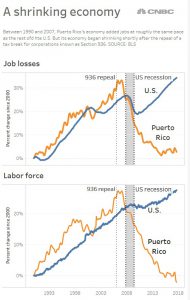
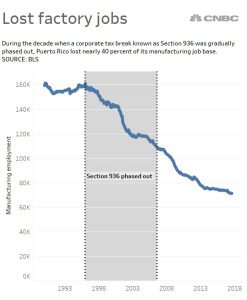
Unfortunately, these may not be the same people.

While we are not impugning any bad motives to these men, we accept that in the United States, the leadership in the Republican Party – the party in power, also called the GOP, with control of the White House, the House of Representatives and the Senate – all reflect White Men over the age of 45. Clearly, not a Pluralistic Democracy!

At the same time this real census demographics apply for America today:

Race: 77.1% White; 13.3% Black; 5.6% Asian; 2.6% Other/multiracial; 1.2% Native; 0.2% Pacific Islander
Ethnicity: 17.6% Hispanic or Latino; 82.4% non-Hispanic or Latino
Age & Gender: Under 18 = 24%; 18 to 44 = 36.5%; 45 to 64 = 26.4%; Over 65 = 13%; Median age = 37.8
Female = 50.8; Male = 49.2

Change is hard! Reforming and transforming a community is heavy-lifting. A lot of societal reforms – human and civil rights – only come about as a result of advocates fighting for change … “at the top” or “from the bottom”. Changing “at the top” means conferring, convincing, consulting and cajoling leaders (political and business) to implement changes in policies and procedures; it means being “at the table”. Changing “from the bottom” means “taking to the streets” and rallying the masses to force governments and businesses – the establishment – to hear demands and make changes.

Truthfully, the former – Top-Down approach – is much easier than the latter – Bottoms-Up approach.

But, in order to confer, convince, consult and cajole, Change Advocates must have a seat “at the table”. When some interest group is absent in their representation, the possibility of disregard – and victimization – is highly possible.

“If You’re Not at the Table, You’re on the Menu”
This quote is believed to have originated around [the year] 2000 in Washington, DC, and is of unknown origin. Basically, it means that if you are not represented at the decision-making table, you are in a financially vulnerable position, you get left out, or, worse yet, you are on the menu.

See this fear manifested in the news-article-commentary here … and the Appendix VIDEO below:

Title # 1: Ryan pressed on all-white, all-male GOP leadership

By: Juana Summers, CNN

Washington (CNN) House Speaker Paul Ryan acknowledged Thursday that the Republican Party needs more women and minorities, and pointed to Utah Rep. Mia Love — the only black Republican woman in Congress — as evidence that the party was making progress.

The discussion, with CBS News host Gayle King, was prompted by President Donald Trump’s tweet of a photo from a dinner he hosted at the White House for members of Republican leadership.

In the photo, which was tweeted Wednesday night, Trump and Vice President Mike Pence are surrounded by five members of congressional Republican leadership, including Ryan. All of the lawmakers included in that photo are white men.

“When I look at that picture, Mr. Speaker, I have to say, I don’t see anyone that looks like me in terms of color or gender,” CBS News host Gayle King told Ryan. “You were one of the main people who said you want to do more for the Republican Party to expand … Some say this President really doesn’t want to expand the base.”

“I don’t like the fact that you feel that way,” Ryan told King, adding that “we need more minorities, more women in our party and I’ve been focusing on that kind of recruitment.”

Ryan, who announced Wednesday that he would retire in January, then pointed to [Congresswoman Mia] Love, who he has mentored, as an example.

“She’s somebody I recruited in a primary to come to Congress. There are a lot of candidates like Mia that we’re recruiting all around the country,” he added, saying that even though he is retiring from Congress he was going to “keep being involved and focusing on inclusive, aspirational politics.”

While Congress has undoubtedly grown more diverse, the ranks of leadership in the Republican Party have not. Every member of Republican leadership on both sides of the Rotunda is white. There is one woman, Rep. Cathy McMorris Rodgers, in House Republican leadership. There are none in Senate Republican leadership.

Source: Posted April 12, 2018; retrieved April 15, 2018 from: https://www.cnn.com/2018/04/12/politics/paul-ryan-republican-diversity-photo/index.html

This American drama is more than just theoretical; there is an actual manifestation associated with it. There are real world consequences and it is all bad! And this is not only an American drama; it is a Caribbean concern as well. There are two American territories in the middle of the Caribbean; and guess what?

This same group of White Men – in the foregoing – effect the populations of Puerto Rico and the US Virgin Islands, though they do not reflect their populations.

Things are bad; consider this bad episode:

Title # 2: Here’s how an obscure tax change sank Puerto Rico’s economy

As GOP lawmakers and the White House put the finishing touches on a proposal to overhaul the American tax code, Congress and the Trump administration are also considering multiple options to help storm-ravaged Puerto Rico get back on its feet.

Even before the storm brought Puerto Rico to a near standstill, the government there already struggled with an economy in shambles and a default on billions of dollars of public debt.

That fiscal mess, partly the result of a prolonged downturn that lingered long after the rest of the U.S. had recovered from the Great Recession, has its roots in the repeal of a controversial corporate tax break that helped spark an exodus from the island and sent its economy into reverse.

More than half a century ago, U.S. lawmakers sought to help Puerto Rico emerge from a colonial past, transforming its largely agrarian economy into a manufacturing powerhouse. The effort, known as Operation Bootstrap, began with a series of tax breaks designed to attract manufacturers who would provide steady factory jobs.

For a time the plan seemed to work, as standards of living in Puerto Rico rose. Between 1950 and 1980, per capita gross national product grew nearly tenfold in Puerto Rico, and disposable income and educational attainment rose sharply, according to the Center for a New Economy, a think tank based in San Juan, Puerto Rico.

One of those tax breaks, enacted in 1976, allowed U.S. manufacturing companies to avoid corporate income taxes on profits made in U.S. territories, including Puerto Rico. Manufacturers, led by the pharmaceutical industry, flocked to the island.

But by the early 1990s, the provision faced growing opposition from critics who attacked the tax break as a form of corporate welfare. Much like the current debate over corporations parking profits offshore to avoid taxes, tax reformers saw the provision, known as Section 936, as too costly for the Treasury.

The tax break also had some unintended consequences, notably the unfair tax burden that fell to domestic Puerto Rican companies.

In 1996, President Bill Clinton signed the law that would phase out Section 936 over 10 years.

Plant closures and job losses followed. Ten years later, on the eve of the Great Recession, employment in Puerto Rico peaked. Left with a dwindling tax base, the Puerto Rican government borrowed heavily to replace the lost revenue.

Today, the U.S. territory has nearly $70 billion in debt, an unemployment rate 2.5 times the U.S. average, a 45 percent poverty rate, nearly insolvent pension systems and a chronically underfunded Medicaid insurance program for the poor.

Puerto Rico’s job base continues to shrink, taking its economy along with it. Since the recession ended, a lack of job prospects has sent many Puerto Ricans fleeing to the mainland, where the job market is much stronger.

The devastation brought by Hurricane Maria has accelerated the exodus, as families who have lost their homes seek shelter with relatives on the U.S. mainland. Many likely see the relocation as temporary. Others may find better opportunities in one of the 50 states, where the average weekly wage is nearly twice that of Puerto Rico.

It remains to be seen how many will return, leaving even fewer workers to rebuild the territory’s battered economy.

Source: Posted Sept 26, 2017; retrieved April 15, 2018 from: https://www.cnbc.com/2017/09/26/heres-how-an-obscure-tax-change-sank-puerto-ricos-economy.html

That GOP Leadership is very important now for Puerto Rico’s viability – and the USVI – and they have no vote, nor voice in Congress. They do not have a “seat at the table”. Unfortunately, the Washington experience for Puerto Rico has been out-of-sight and out-of-mind.

This commentary has previously asserted that Puerto Rico reflects a Failed-State status; see this direct quotation:

Puerto Rico can do “bad” all by itself; it does not need to be America’s Failed-State!

They do not need the American Hegemony to create an unbearable situation for them. This is NOT an assessment based on the fact that Donald Trump is in the White House now, no rather, this is a summary-analysis based on 120 years of US-PR history. Like many abusive marriages, the US has reserved its most abusive behavior for its own family member, the island territory of PR. This, despite the President or the administration.

No one should be expected to tolerate 2nd Class Citizenship status … for 120 years!

This commentary continues the assertion of the book Go Lean…Caribbean, that Caribbean territories should confederate with their actual Caribbean neighbors and seek their own self-determination. Puerto Rico needs their Caribbean neighbors and the neighbors need Puerto Rico. The effort to reboot the regional economy may be too big for Puerto Rico and the Virgin Islands alone; they need the leverage of the full Caribbean neighborhood – a Single Market of 42 million people in 30 member-states. The book – available to download for free – presents this roadmap for the introduction and implementation of the technocratic Caribbean Union Trade Federation (CU), for the elevation of Caribbean society – for all 30 member-states, American territories included. This CU/Go Lean roadmap has these 3 prime directives for regional integration:

For our Caribbean effort to reform and transform our society, we need “all hands on deck”. Not just Old White Men; no, we need Black and White, Male and Female, Young and Old, English speakers and Dutch, French and Spanish speakers. We need the stewards that shepherd our societal engines to reflect and effect all of the Caribbean.

The mandate to forge an optimized regional confederation – with full participation of people that reflect our Caribbean population – was pronounced early in the Go Lean book with this Declaration of Interdependence (Pages 12 – 14); demonstrated with these opening statements:

xi. Whereas all men are entitled to the benefits of good governance in a free society, “new guards” must be enacted to dissuade the emergence of incompetence, corruption, nepotism and cronyism at the peril of the people’s best interest. The Federation must guarantee the executions of a social contract between government and the governed.

xxi. Whereas the preparation of our labor force can foster opportunities and dictate economic progress for current and future generations, the Federation must ensure that educational and job training opportunities are fully optimized for all residents of all member-states, with no partiality towards any gender or ethnic group. The Federation must recognize and facilitate excellence in many different fields of endeavor, including sciences, languages, arts, music and sports. This responsibility should be executed without incurring the risks of further human flight, as has been the past history.

xxvi. Whereas the Caribbean region must have new jobs to empower the engines of the economy and create the income sources for prosperity, and encourage the next generation to forge their dreams right at home, the Federation must therefore foster the development of new industries …

The subject of fostering a Pluralistic Democracy with full gender equity, equal access and equal protections have been directly addressed and further elaborated upon in previous blog/commentaries; consider this sample:

https://goleancaribbean.com/blog/?p=14633 Nature or Nurture: Women Have Nurtured Change
https://goleancaribbean.com/blog/?p=13321 Making a ‘Pluralistic Democracy’ – Multilingual Realities
https://goleancaribbean.com/blog/?p=13063 Gender Equity without a ‘Battle of the Sexes’
https://goleancaribbean.com/blog/?p=12035 Lean-in for ‘Wonder Woman Day’
https://goleancaribbean.com/blog/?p=11812 State of Caribbean Union: Hope and Change
https://goleancaribbean.com/blog/?p=9216 ‘Time to Go’ – When there is ‘No Respect’ for our Hair
https://goleancaribbean.com/blog/?p=8306 Women Get Ready for New Lean-In Campaign
https://goleancaribbean.com/blog/?p=6937 Women in Politics – Yes, They Can!
https://goleancaribbean.com/blog/?p=6836 Role Model – #FatGirlsCan – Empowering Women
https://goleancaribbean.com/blog/?p=6434 ‘Good Hair’ and the Strong Black Woman
https://goleancaribbean.com/blog/?p=6422 Getting More Women Interested in Science/Technology Careers

The Go Lean book posits that people of all races, colors and creed have the right to work towards making their communities better places to live, work and play. This should be the default perception of our stewards and shepherds – there is strength in our diversity. Plus, we need all the help we can get. So the book provides 370-pages of turn-by-turn instructions on “how” to adopt new community ethos, plus the strategies, tactics, implementations and advocacies to execute so as to transition to a Pluralistic Democracy, one that better reflects and effects the full population of Caribbean people: Black or White, Men or Women.

This quest to elevate our regional society requires heavy-lifting! But this push towards a Pluralistic Democracy is conceivable, believable and achievable. We invite all peoples to devote their time, talent and treasuries to this cause. Yes, we can … succeed in this quest; yes, we can be a better society. 🙂

Download the free e-Book of Go Lean … Caribbean – now!

Sign the petition to lean-in for this roadmap for the Caribbean Union Trade Federation.

———-

Appendix VIDEO – Speaker Ryan Lamenting Lack of Diversity – https://twitter.com/NorahODonnell/status/984411160207388672

@GayleKing: “When I look at the picture, I don’t feel very celebratory. I feel very excluded.” @SpeakerRyan: “I don’t like that you feel that way. We need more minorities, more women in our party.” @CBSThisMorning

Share this post:
, , ,
[Top]

Nature or Nurture: Women Have Nurtured Change

Go Lean Commentary

Here is valuable advice to young people … hoping to partner with a soul-mate:

Take time to know him/her … give it a full cycle of seasons: Summer and Winter.

There is the person’s Nature and also their Nurture-ing that must be taken to account:

Nature – Genetics determine behavior; personality traits and abilities are in “nature”

Nurture – Environment, upbringing and life experiences determine behavior. Humans are “nurtured” to behave in certain ways.

So prospective marriage mates need to ascertain the Nature and Nurture of a potential partner.
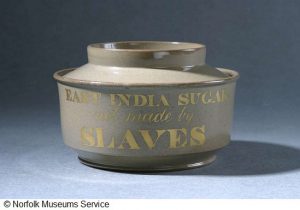
If the potential mate does not measure up, my advice: do not bond, take your leave. Just do so BEFORE the wedding rehearsal – i.e. Runaway Brides – do not abandon all the stakeholders high-and-dry (“at the altar”), after they may have invested in catering, banquet halls, clothes, travel, etc.. Such a failure would just be pathetic!

This advice applies to individuals, yes, but not so much for communities, or societies. For the group dynamic, we simply have no choice; we must work to transform the attitudes, traits and practices in a community. The book Go Lean…Caribbean identified this subject as “community ethos”, with this definition:

… the fundamental character or spirit of a culture; the underlying sentiment that informs the beliefs, customs, or practices of a group or society; dominant assumptions of a people or period. – Page 20

If/When the community ethos is unbecoming for a society, citizens do not bond; they abandon! This is so pathetic, as the community too may have invested hugely in the individuals – think education, scholarships and student loans. The community is “left at the altar“.

But change is possible! Communities have forged change and been transformed .. in the past, in the present and I guarantee future communities will also forge change.

How is this possible? How to Nurture change despite “bad” Nature? Let’s consider a sample-example from the history of the UK; this is actually the history of the Caribbean as well, as it features the Abolition of Slavery in the British Empire in the year 1833 – the date that the measure passed the British Parliament.

There were a lot of advocates and activists that led the fight against … first the Slave Trade and then eventually the institution of Slavery itself; think William Wilberforce and Charles Spurgeon who argued for the abolition of slavery and advocated for women to have rights equal to that of men. Slavery and Women’s Rights became locked-in-step – see Appendix VIDEO. So a lot of the Nurturing for the abolition advocacy came from women of the British Empire. See this portrayed in the article here:

Title: Ending Slavery

For much of the 18th century few European or American people questioned slavery. Gradually on both sides of the Atlantic a few enlightened individuals, some of them Quakers, began to oppose it.

From the 1760s activists in London challenged the morality and legality of the slave trade. They included former slaves, like Olaudah Equiano and the abolitionist campaigners Granville Sharp and William Wilberforce.

Women who opposed slavery took the lead in boycotts of slave-grown produce, particularly sugar. Slavery abolitionists used badges and iconic images to publicise their views, like the sugar bowl above made by Wedgewood. Enormous petitions opposing the slave trade were delivered to the House of Commons.

Women Against Slavery

It is only relatively recently that historians have explored the activities of women abolitionists. When looking at local provincial sources, autobiographies, historical objects and sites it becomes clear that women played a significant and, at times, pivotal role in the campaign to abolish slavery.

These women came from a range of backgrounds. The tactics they used – boycotting slave-produced sugar and other goods, organising mass petitions and addressing public meetings – proved highly effective.

Hannah Moore

Hannah Moore (from 1745 to 1833) was an educator, writer and social reformer. Born in Bristol, she was strongly opposed to slavery throughout her life. She encouraged women to join the anti-slavery movement.

In 1787 she met John Newton and members of the Clapham Sect, including William Wilberforce with whom she formed a strong and lasting friendship. Moore was an active member of the Society for Effecting the Abolition of the African Slave Trade. Her writings reflected her opposition to slavery and “Slavery, a Poem” which she published in 1788 is regarded as one of the most important slavery poems of the period.
Ill health prevented Moore from taking an active role in the 1807 campaign to end the slave trade but she continued to write to Wilberforce and other campaigners.

She lived just long enough to see the act abolishing slavery passed. She died in September 1833 and is buried with her sisters in the south-east corner of All Saints’ Churchyard, Station Road, Wrington, Bristol, BS40.

Mary Prince

Mary Prince (from 1788 to around 1833) was the first black woman to publish her account of being an enslaved woman. She was born in Bermuda in 1788 and endured a life of violence and abuse through a succession of slave-owners.

Her owners, the Woods, brought Mary to England. To escape their cruelty she ran away to the Moravian Church in London’s Hatton Gardens. Members of the Anti-Slavery Society took up her case and they encouraged her to write her life story.

Published in 1831 as “The History of Mary Prince”, this extraordinary story describing ill treatment and survival was a rallying cry for emancipation. The book provoked two libel actions and had three editions in its year of publication.

In 2007 Camden Council and the Nubian Jak Community Trust placed a plaque near to the site where she lived at Senate House, Malet Street, London, WC1E 7HU.

Elizabeth Barrett Browning

The poet Elizabeth Barrett Browning (from 1806 to 1861) is commemorated with two plaques in Marylebone, London. A brown Society of Arts plaque is at the site of her former home at 50 Wimpole Street, London W1G 8SQ. There is a bronze plaque at 99, Gloucester Road, London W1U 6JG.

Barrett Browning’s father, Edward Barrett Moulton Barrett (from 1785 to 1857), inherited 10,000 acres of sugar plantations in Jamaica, with an annual income of £50,000. Her maternal grandfather John Graham-Clarke (from 1736 to 1818) was a Newcastle merchant who owned sugar plantations, trading ships and many more businesses associated with slavery. At his death his assets were equivalent to around £20 million today.

Barrett Browning was aware of the source of her family’s wealth:

  • I belong to a family of West Indian slave-owners and if I believe in curses, I should be afraid. – Letter from Elizabeth Barrett Browning to John Ruskin in 1855.

In 1849 she published an anti-slavery poem “The Runaway Slave at Pilgrim’s Point”. It portrayed a slave woman cursing her oppressor after she had been whipped, raped and impregnated.

Elizabeth Jesser Reid

A social reformer and philanthropist, Elizabeth Jesser Reid (from 1789 to 1866) is best known for founding Bedford College for Women in London in 1849. The College is now part of Royal Holloway, University of London.
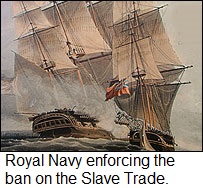
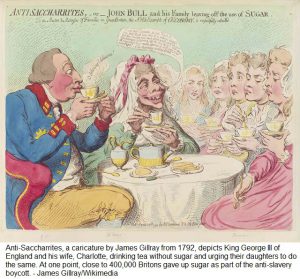
Jesser Reid was also an anti-slavery activist and she attended the Anti-Slavery Convention in 1840 and was a member of the Garrisonian London Emancipation Committee. A green plaque has been placed at her former home, 48 Bedford Square, London WC1B 3DR to commemorate Reid and the first site of the college.

While living at 48 Bedford Square, Reid entertained Harriet Beecher Stowe in 1853. She also shared her house with the African American abolitionist Sarah Parker Remond whilst she studied at the College between 1859 and 1861.

Sarah Parker Remond

Born in Salem, Massachusetts, Sarah Parker Remond (from 1826 to 1894) came from a family that was deeply involved in the abolitionist campaign in the United States. Her brother Charles Lenox Remond was the first black lecturer in the American Anti-Slavery Society.

Parker Remond was such an impressive speaker and fund-raiser for the abolitionist movement that she was invited to take the anti-slavery message to Britain. Soon after arriving here in 1859 she embarked upon a nationwide lecture tour. In 1866 she left London to study medicine in Italy. She practised as a doctor in Florence, where she settled.

—————————

Related Posts

Listen to our podcasts about women’s involvement in the abolition movement:

Source: Retrieved April 13, 2018 from: https://historicengland.org.uk/research/inclusive-heritage/the-slave-trade-and-abolition/sites-of-memory/ending-slavery/

Women applied pressure to all aspects of society – the engines of economics, security and governance – for the end of the Slave Trade; then they continued the pressure for the Abolition of Slavery itself. The Nurturing worked! It was not immediate, but eventual and evolutionary:

  • They impacted the economic cycles – boycotts & embargos. See the notes on the Anti-Saccharrittes in Appendix A.
  • They compelled the Security engines – The Royal Navy was engaged to enforce the ban on the Slave Trade after 1807. (Between 1808 and 1860, the West Africa Squadron captured 1,600 slave ships and freed 150,000 Africans.[5]) See Appendix B below.
  • They engaged the related governance by entreating the political supporters, every year, to introduce and re-introduce the Abolition Bill.

Though the abolition of Slavery went against the Nature of the New World, these women and their Nurturing did not stop.  They persisted! This commentary concludes the 4-part series on Nature or Nurture for community ethos. This entry is 4 of 4 in this series from the movement behind the book Go Lean … Caribbean in consideration of the Nurturing by the mothers (women) of England who finally forge change in the British Empire.. The other commentaries in the series are cataloged as follows:

  1. Nature or Nurture: Black Marchers see gun violence differently
  2. Nature or Nurture: Cop-on-Black Shootings – Embedded in America’s DNA; Whites Yawn
  3. Nature or Nurture: UK City of Bristol still paying off Slavery Debt
  4. Nature or Nurture: Nurturing came from women to impact Abolition of Slavery

In the first submission to this series, the history of the Psychological battle between Nature and Nurture was introduced, which quoted:

One of the oldest arguments in the history of psychology is the Nature vs Nurture debate. Each of these sides have good points that it’s really hard to decide whether a person’s development is predisposed in his DNA, or a majority of it is influenced by this life experiences and his environment. – https://explorable.com/nature-vs-nurture-debate

All of these commentaries relate to “how” the stewards – including empowered women – for a new Caribbean can assuage societal defects despite the default Nature. Here-in, this example from England is a great role model for the Caribbean region. We too, need our women!

How about the Caribbean today? What bad Nature can women help to Nurture out of Caribbean society?

There are many!

The Lord giveth the word: The women that publish the tidings are a great host. – Psalms 68:11 American Standard Version

Our region is riddled with societal defects. In fact, the subject of societal defects is a familiar theme for this commentary, from the movement behind the book Go Lean…Caribbean. The book asserts that the British colonial masters for the Caribbean – 18 of the 30 member-states share this legacy – did not endow this region with the organizational dynamics (attitudes or structures) that would lead to societal success. The former slave populations became the majority in all these lands; when majority rule was compelled on the New World – post-World War II restructuring – the people were not ready. Looking at the dispositions in the region today, these are nearing Failed-State status – it is that bad!

The theme of Failing States has been detailed in previous blog-commentaries by the movement behind the Go Lean book. Consider this sample previous blogs:

https://goleancaribbean.com/blog/?p=13749 Failure to Launch – Governance: Assembling the Region’s Organizations
https://goleancaribbean.com/blog/?p=13746 Failure to Launch – Security: Caribbean Basin Security Dreams
https://goleancaribbean.com/blog/?p=13744 Failure to Launch – Economics: The Quest for a ‘Single Currency’
https://goleancaribbean.com/blog/?p=13391 After Maria, Puerto Rico Failed-State: Destruction and Defection
https://goleancaribbean.com/blog/?p=12996 After Irma, Many Caribbean Failed-States: Destruction and Defection
https://goleancaribbean.com/blog/?p=12098 Inaction: A Recipe for ‘Failed-State’ Status
https://goleancaribbean.com/blog/?p=10657 Outreach to the Diaspora – Doubling-down on Failure
https://goleancaribbean.com/blog/?p=2547 Miami’s Success versus Caribbean Failure

There is the need for the Caribbean member-states to reform and transform. We have some bad community ethos; we need “all hands on deck” to mitigate and remediate them. The book Go Lean…Caribbean – available to download for free – serves as a roadmap for the introduction and implementation of the technocratic Caribbean Union Trade Federation (CU), for the elevation of Caribbean society – for all 30 member-states. This CU/Go Lean roadmap has these 3 prime directives for effecting change in our society:

  • Optimization of the economic engines in order to grow the regional economy to $800 Billion and create 2.2 million new jobs.
  • Establishment of a security apparatus to ensure public safety and protect the resultant economic engines.
  • Improve Caribbean governance to support these engines, including a separation-of-powers between the member-states and CU federal agencies.

The same as the British Empire needed a “large host” of women to Nurture societal values, priorities, practices and laws to supplant the bad Nature of the British Slave economy, a “large host” of women will be needed to forge change in the British Caribbean and the full Caribbean – American, Dutch, French and Spanish legacies. This subject too, has been a consistent theme from the movement behind the Go Lean book. Consider this sample from these previous blog-commentaries:

https://goleancaribbean.com/blog/?p=14541 One Woman Made a Difference – Role Model: Viola Desmond
https://goleancaribbean.com/blog/?p=14482 International Women’s Day – Protecting Rural Women
https://goleancaribbean.com/blog/?p=13063 Getting Gender Equity without a ‘Battle of the Sexes’
https://goleancaribbean.com/blog/?p=12035 Lean-in for ‘Wonder Woman Day’
https://goleancaribbean.com/blog/?p=10124 The ‘Hidden Figures’ of Women Building-up Society – Art Imitating Life
https://goleancaribbean.com/blog/?p=8306 Women Get Ready for New “Lean-In” Campaign
https://goleancaribbean.com/blog/?p=6937 Women in Politics – Yes, They Can!
https://goleancaribbean.com/blog/?p=6836 Role Model – #FatGirlsCan
https://goleancaribbean.com/blog/?p=5648 One Woman – Taylor Swift – Changing Streaming Music Industry
https://goleancaribbean.com/blog/?p=3490 One Woman Entrepreneur Rallied and Change Her Whole Community

The Go Lean book provides 370-pages of turn-by-turn instructions on “how” to Nurture a better Caribbean society. It details the new community ethos that needs to be adopted so as to reboot, reform and transform the societal engines of Caribbean society – economics, security and governance. We want the women to help empower Caribbean society and so we want to empower women. In fact, the book (Page 226) details the bad community ethos that permeated the “Imperial” world during the times of Caribbean colonization. The advocacy entitled 10 Ways to Empower Women presented this encyclopedic reference on the Natural Law philosophy as follows:

The Bottom Line on Natural Law and Women’s Rights

17th century natural law philosophers in Britain and America, such as Thomas Hobbes, Jean-Jacques Rousseau and John Locke, developed the theory of natural rights in reference to ancient philosophers such as Aristotle and the Christian theologist Aquinas. Like the ancient philosophers, 17th century natural law philosophers defended slavery and an inferior status of women in law.

Relying on ancient Greek philosophers, natural law philosophers argued that natural rights where not derived from god, but were “universal, self-evident, and intuitive”, a law that could be found in nature. They believed that natural rights were self-evident to “civilized man” who lives “in the highest form of society”. Natural rights derived from human nature, a concept first established by the ancient Greek philosopher Zeno of Citium in Concerning Human Nature.

Zenon argued that each rational and civilized male Greek citizen had a “divine spark” or “soul” within him that existed independent of the body. Zeno founded the Stoic philosophy and the idea of a human nature was adopted by other Greek philosophers, and later natural law philosophers and western humanists. Aristotle developed the widely adopted idea of rationality, arguing that man was a “rational animal” and as such a natural power of reason.

Concepts of human nature in ancient Greece depended on gender, ethnic, and other qualifications and 17th century natural law philosophers came to regard women along with children, slaves and non-whites, as neither “rational” nor “civilized”. Natural law philosophers claimed the inferior status of women was “common sense” and a matter of “nature”. They believed that women could not be treated as equal due to their “inner nature”. The views of 17th century natural law philosophers were opposed in the 18th and 19th century by Evangelical natural theology philosophers such as William Wilberforce and Charles Spurgeon, who argued for the abolition of slavery and advocated for women to have rights equal to that of men. Modern natural law theorists, and advocates of natural rights, claimed that all people have a human nature, regardless of gender, ethnicity or other qualifications; therefore all people have natural rights.

These thoughts on Natural Law and Women’s Rights persist to this day, despite how archaic they may seem.

This flawed Natural Law philosophy accounts for the Nature of the Caribbean – this was inherited from the Imperial Europe (1600’s) – and never fully uprooted. This was the heavy-lifting that the foregoing women helped to Nurture out of Europe, and what we need continued help for today’s women to uproot.

In addition to the ethos discussion, the book presents the strategies, tactics, implementations and advocacies to execute change in the Caribbean region. This is how to Nurture a bad community (ethos) into a good community (ethos).

Yes, we can elevate our societal engines. We can do more than just study impactful women from the past, we can foster our own brand of impactful women. We need them!

We need all hands on deck to make our Caribbean homeland a better place to live, work and play. 🙂

Download the free e-Book of Go Lean … Caribbean – now!

Sign the petition to lean-in for this roadmap for the Caribbean Union Trade Federation.

————

Appendix A – Anti-Saccharrittes … in England


In 1791, … the abolitionist William Fox published his anti-sugar pamphlet, which called for a boycott of sugar grown by slaves working in inhuman conditions in the British-governed West Indies. “In every pound of sugar used, we may be considered as consuming two ounces of human flesh,” wrote Fox. So powerful was his appeal that close to 400,000 Britons gave up sugar.

The sugar boycott squarely affected that most beloved of English rituals: afternoon tea. As The Salt [Magazine] has reported, sugar was an integral reason why tea became an engrained habit of the British in the 1700s. But with the sugar boycott, offering or not offering sugar with tea became a highly political act.

Soon, grocers stopped selling West Indies sugar and began to sell “East Indies sugar” from India. Those who bought this sugar were careful to broadcast their virtue by serving it in bowls imprinted with the words “not made by slave labor,” in much the same way that coffee today is advertised as fair-trade, or eggs as free-range.

Source: Posted August 4, 2015; retrieved April 14, 2018 from: https://www.npr.org/sections/thesalt/2015/08/04/429363868/how-percy-shelley-stirred-his-politics-into-his-tea-cup

————

Appendix B – Rare ‘slave freeing’ photos on show

A set of rare photographs showing African slaves being freed by the Royal Navy have gone on show for the first time. They are part of an exhibition marking the bicentenary of the abolition of the slave trade.

A set of rare photographs showing African slaves being freed by the Royal Navy have gone on show for the first time.
Published April 28, 2007.
The photographs, on display at the Royal Naval Museum, Portsmouth, Hants, show a sailor removing the manacle from a newly-freed slave as well as the ship’s marines escorting captured slavers.

———-

East African slaves aboard the HMS Daphne, a British Royal Navy vessel involved in anti-slave trade activities in the Indian Ocean,

Samuel Chidwick, 74, has donated the photographs taken by his father Able Seaman Joseph Chidwick, born in 1881, on board HMS Sphinx off the East African coast in about 1907.

The photographs, on display at the Royal Naval Museum, Portsmouth, Hants, show a sailor removing the manacle from a newly-freed slave as well as the ship’s marines escorting captured slavers.

Mr Chidwick, of Dover, Kent, said: “The pictures were taken by my father who was serving aboard HMS Sphinx while on armed patrol off the Zanzibar and Mozambique coast.

“They caught quite a few slavers and those particular slaves that are in the pictures happened while he was on watch. “That night a dhow sailed by and the slaves were all chained together. He raised the alarm and they got them on to the ship and got the chains knocked off them.

“They then questioned them and sent a party of marines ashore to try to track the slave traders down.

“They caught two of them and I believe they were of Arabic origin.

“My father thought the slave trade was a despicable thing that was going on, the slaves were treated very badly so when they got the slavers they didn’t give them a very nice time.”

Jacquie Shaw, spokeswoman for the Royal Naval Museum, said: “The museum and the Royal Navy are delighted to announce the donation of a nationally important collection of unique photographs taken by Able Seaman Joseph John Chidwick during his service on the Persian Gulf Station where the crew of HMS Sphinx were engaged in subduing the slave trade.

“The collection comprises a fascinating and important snapshot of life on anti-slavery duties off the coast of Africa.”

The exhibition, ‘Chasing Freedom -The Royal Navy and the suppression of the Transatlantic Slave Trade’, is being held until January next year to mark the 200th anniversary of the abolition of the slave trade.

The House of Commons passed a bill in 1805 making it unlawful for any British subject to capture and transport slaves but the measure was blocked by the House of Lords and did not come into force until March 25, 1807.

Mrs Shaw said that since the exhibition opened, members of the public had brought forward several historically-important items. She said: “As well as these amazing images, members of the public have brought many other unheard stories of the Royal Navy and the trade in enslaved Africans to the museum’s attention including the original ship’s log of the famed HMS Black Joke of the West Coast of Africa Station.”

Source: Posted 29 Apr 2007; retrieved April 14, 2018 from: http://metro.co.uk/2007/04/29/rare-slave-freeing-photos-on-show-331626/

————

Appendix C VIDEO – Abolition to Suffrage – https://youtu.be/WbLVp27cqZ8

Share this post:
, , ,
[Top]

Nature or Nurture: UK City Still Paying Slavery Debt

Go Lean Commentary

Here’s a deep religious question for you:

Does God punish children for the sins of the Father?

The sense of justice we have – our basis for right and wrong – may dictate to us that we only be punished for our own crimes, not that of our parents. Considering that the laws of the land – throughout the New World – are based on Judeo-Christian principles, what does the Bible say?

“Fathers shall not be put to death because of their children, nor shall children be put to death because of their fathers. Each one shall be put to death for his own sin.” – The Bible ESV Deuteronomy 24:16

In contrast, the Bible also states – here – that there is a legacy price that children will pay for their forefathers’ actions-misdeeds:

Keeping steadfast love for thousands, forgiving iniquity and transgression and sin, but [God] who will by no means clear the guilty, visiting the iniquity of the fathers on the children and the children’s children, to the third and the fourth generation.” – Exodus 34:7 ESV or English Standard Version

Despite the opening religious question, this is NOT a religious discussion, but rather presented from a societal reform perspective. In summary, communities may be plagued to suffer punishment for generations due to the misdeeds of their forefathers.

Indeed, this is true of the British city of Bristol, England. Until recently (2015), it was still paying off debts for the city’s prominent role in the African Slave Trade … that ended in 1807; the Abolition bill passed in Parliament in 1833 – requiring the need for a huge capital outlay, £20 million (US$28 million); Slavery ended in the British Empire in 1834. That’s 182 years later and sounds eerily familiar. It sounds like when a person pays only the monthly minimum on a credit card account. See more here:

A $2,000 credit balance with an 18% annual rate, with a minimum payment of 2% of the balance, or $10, whichever is greater, would take 370 months or just over 30 years to pay off . – MarketWatch.com

See the encyclopedic details on the Slave Trade activities by the City of Bristol in the Appendix below.

The Slave Trade did end, as a First Step to abolishing Slavery entirely. This was not easy and not automatic; it took strenuous effort on the part of advocates and activists, like William Wilberforce. See his portrayal in the Appendix VIDEO below.

See the news-commentary relating the continued Slavery Debt here:

Title: Slave owner compensation was still being paid off by British taxpayers in 2015

Bristol taxpayers in 2015 were still paying off debt borrowed by the government to “compensate” slave owners in 1833, the Treasury has revealed.

The revelations show that the £20 million (US$28 million) the government spent to reimburse the owners of slaves – who themselves were some of Britain’s richest businessmen – took the taxpayer 182 years to pay off. The descendants of slaves were never compensated, but it appears some would have been paying to compensation slave owners.

The information was revealed by the Treasury under a Freedom of Information (FoI) request, the Bristol Post reports. The Treasury tweeted: “Here’s today’s surprising #FridayFact. Millions of you helped end slave trade through your taxes.”

It added an infographic which said: “Did you know? In 1833, Britain used £20 million, 40 percent of its national budget, to buy freedom for all slaves in the Empire.

“The amount of money borrowed for the Slavery Abolition Act was so large that it wasn’t paid off until 2015. Which means living British citizens helped pay to end the slave trade.”

The tweet was quickly deleted after it sparked a backlash.

Historian David Olusoga, who has written about Bristol’s role in the slave trade, was one of several experts who questioned the tone of the Treasury’s tweet.

“The real question is why anyone thought this was ok?” he said, according to the newspaper. “I really do think we’re getting better at accepting the UK’s role in slavery and the slave trade, but things like this make me question my optimism.

“Also, just to compound the general level of ignorance, when HM Treasury reduce the complex story of the abolition of slavery to one of their fun ‘Friday Facts’ they use an irrelevant image of the slave trade – which was abolished three decades earlier.”

Bristol City councilor Cleo Lake said she was outraged. “I want my money back,” she tweeted. “I’m outraged. This messaging is so loaded.”

When the UK government abolished slavery and banned people from owning slaves in Britain and on Britain’s colonies anywhere in the world, those slave owners received compensation. Bristol had the highest concentration of people in Britain who owned slaves in 1833 outside of London.

The slaves themselves received nothing, and had to continue working for their masters for a number of years before they could consider being free.

Source: Posted February 15, 2018; retrieved April 10, 2018 from: https://www.rt.com/uk/418814-slave-compensation-bristol-taxpayer/

Imagine the outrage when city finances are strained – economic cycles of recessions and expansions are inevitable – and necessary expenditures – for example, public safety and education – have to be curtailed due to principal-and-interest payments for 200 year old debts. This seems to go against Nature. This commentary continues the 4-part series on Nature or Nurture for community ethos. This entry is 3 of 4 in this series from the movement behind the book Go Lean … Caribbean in consideration of root causes of some societal defects – specific examples in the US and UK – and how to overcome them. The other commentaries in the series are cataloged as follows:

  1. Nature or Nurture: Black Marchers see gun violence differently
  2. Nature or Nurture: Cop-on-Black Shootings – Embedded in America’s DNA; Whites Yawn
  3. Nature or Nurture: UK City of Bristol still paying off Slavery Debt
  4. Nature or Nurture: Nurturing comes from women; “they” impacted the Abolition of Slavery

In the first submission to this series, the history of Psychology was introduced, which quoted:

One of the oldest arguments in the history of psychology is the Nature vs Nurture debate. Each of these sides have good points that it’s really hard to decide whether a person’s development is predisposed in his DNA, or a majority of it is influenced by this life experiences and his environment. – https://explorable.com/nature-vs-nurture-debate

All of these commentaries relate to “why” communities – including the Caribbean – may have lingering societal defects and “how” the stewards for a new Caribbean can assuage these defects and the resultant failing dispositions. The term “lingering societal defects” have been addressed in the Go Lean book; there it is deemed “community ethos”; with this definition:

… the fundamental character or spirit of a culture; the underlying sentiment that informs the beliefs, customs, or practices of a group or society; dominant assumptions of a people or period. – Page 20

The UK County/City of Bristol had a bad community ethos. Obviously, a disregard for human rights was embedded in that community’s DNA. What’s more, the county-city-people had to pay for their forefathers’ bad community ethos … for 182 years. Sad!

How about the Caribbean? Are we paying for the sins of our fathers today?

Indeed, we have defects in our societal DNA, a bad Nature; and then we foster unbecoming traits by Nurturing unbecoming habits and practices.

The subject of societal defects is a familiar theme for this commentary, from the movement behind the book Go Lean…Caribbean – available to download for free. The book asserts that the colonial masters for the Caribbean did not endow this region with the organizational dynamics (attitudes or structures) that would lead to success. This society was built for leisure, pleasure and good times. Traits like industriousness, ingenuity and innovation was never encouraged nor fostered. As a result the vocations for the region always lean towards the illicit and the shadows – think: piracy, tax shelters, offshore banking, etc. –  as opposed to honest work for honest pay.

Regrettably, we are now paying for the sins of our fathers, as we have defects in all societal engines of our community.

We do not have the Nature to compete in the global marketplace! But change can be Nurtured.

The book Go Lean…Caribbean – available to download for free – serves as a roadmap for the introduction and implementation of the technocratic Caribbean Union Trade Federation (CU), for the elevation of Caribbean society – for all 30 member-states. This CU/Go Lean roadmap has these 3 prime directives for effecting change in our society:

  • Optimization of the economic engines in order to grow the regional economy to $800 Billion and create 2.2 million new jobs.
  • Establishment of a security apparatus to ensure public safety and protect the resultant economic engines.
  • Improve Caribbean governance to support these engines, including a separation-of-powers between the member-states and CU federal agencies.

The Go Lean book stresses that reforming and transforming the Caribbean societal engines must be a regional pursuit. This was an early motivation for the roadmap, as pronounced in the opening Declaration of Interdependence (Pages 12 – 13):

xi. Whereas all men are entitled to the benefits of good governance in a free society, “new guards” must be enacted to dissuade the emergence of incompetence, corruption, nepotism and cronyism at the peril of the people’s best interest. The Federation must guarantee the executions of a social contract between government and the governed.

xvi. Whereas security of our homeland is inextricably linked to prosperity of the homeland, the economic and security interest of the region needs to be aligned under the same governance. Since economic crimes … can imperil the functioning of the wheels of commerce for all the citizenry, the accedence of this Federation must equip the security apparatus with the tools and techniques for predictive and proactive interdictions.

xxiv. Whereas a free market economy can be induced and spurred for continuous progress, the Federation must install the controls to better manage aspects of the economy: jobs, inflation, savings rate, investments and other economic principles. Thereby attracting direct foreign investment because of the stability and vibrancy of our economy.

The Go Lean book provides 370-pages of turn-by-turn instructions on “how” to Nurture a new, better Caribbean society. It details the new community ethos that needs to be adopted, plus the strategies, tactics, implementations and advocacies to execute so as to reboot, reform and transform the societal engines of Caribbean society – economics, security and governance. In fact, the book (Page 131) provides one specific advocacy entitled 10 Ways to Make the Caribbean Better. This advocacy depicts the specific steps to Nurture the actions to better live, work and play.

Here are some samples, based on some previous blog-commentaries that doubled-down on this assertion that these societal engines – economics, security and governance – need redress:

Economics

The biggest Caribbean deficiency in this area is the lack of jobs, entrepreneurial opportunities and an industrial footprint. This sample of previous blog-commentaries asserted these points:

https://goleancaribbean.com/blog/?p=14242 Leading with Money Matters – Follow the Jobs
https://goleancaribbean.com/blog/?p=14191 The Dynamics of the ‘Gig Economy’ for New Job Options
https://goleancaribbean.com/blog/?p=13420 A Financing Model for Industrial Endeavors
https://goleancaribbean.com/blog/?p=13184 A Series on Rebooting the Industrial Landscape
https://goleancaribbean.com/blog/?p=8602 Big Infrastructure Projects Transforms Economic Engines
https://goleancaribbean.com/blog/?p=7977 Transformations: Perfecting Our Core Competence
https://goleancaribbean.com/blog/?p=6089 Where the Jobs Are – Greater than Minimum Wage
https://goleancaribbean.com/blog/?p=4037 Fostering the environment for Direct Foreign Investors
https://goleancaribbean.com/blog/?p=3152 Making a Great Place to Work®

Security

Security and economics must be inextricably linked to elevate prosperity in the homeland. People must be assured public safety and the economic engines must be protected. This theme was conveyed in this sample of previous blog-commentaries:

https://goleancaribbean.com/blog/?p=14556 Common Sense Policies with Guns
https://goleancaribbean.com/blog/?p=14211 Providing a safer environment for tourists and event participants
https://goleancaribbean.com/blog/?p=13746 Manifesting Caribbean Basin Security Dreams
https://goleancaribbean.com/blog/?p=13476 Policing the Police
https://goleancaribbean.com/blog/?p=12930 Managing Natural & Man-Made ‘Clear and Present Dangers’
https://goleancaribbean.com/blog/?p=12400 Acceding a Caribbean Regional Arrest Treaty
https://goleancaribbean.com/blog/?p=9072 Securing the Homeland – A Series
https://goleancaribbean.com/blog/?p=7896 The Logistics of Disaster Relief
https://goleancaribbean.com/blog/?p=7327 Preparing for Epidemics …Like Zika.
https://goleancaribbean.com/blog/?p=7119 Role Model for a Caribbean Regional Security Force

Governance

The colonial beginnings of the Caribbean have not been supplanted with more advanced systems of governance. This is the plan within the Go Lean roadmap. This plan was expanded in this sample of previous blog-commentaries:

https://goleancaribbean.com/blog/?p=14001 Transforming Mail Eco-System, Transforms Government & Society
https://goleancaribbean.com/blog/?p=13997 One Integration Effort – CariCom – Defective One-Man-One-Vote
https://goleancaribbean.com/blog/?p=13995 American Governing Defects – No Vote; No Voice in Congress
https://goleancaribbean.com/blog/?p=13993 Lessons Learned from the ‘Dignified and Efficient’ British Model
https://goleancaribbean.com/blog/?p=13749 Integrating Federal Governance: Assembling Regional Organizations
https://goleancaribbean.com/blog/?p=13744 The Quest for a ‘Single Currency’
https://goleancaribbean.com/blog/?p=13736 Failure to Launch: Past Failures for Caribbean Integration
https://goleancaribbean.com/blog/?p=13321 Making a ‘Pluralistic Democracy’ – Multilingual Realities

In summary, the Nature of the Caribbean – inherited from the Europeans – is not defaulted for governing efficiency. But, the regional governing entities can be Nurtured for an optimized delivery.

Yes, we can elevate our societal engines. We do not have to suffer and reap the whirlwind of the sins of our legacy members; we do not have to wait for punishment on the children for the sins of their Father. This quest is conceivable, believable and achievable. We can make our homeland a better place to live, work and play. 🙂

Download the free e-Book of Go Lean … Caribbean – now!

Sign the petition to lean-in for this roadmap for the Caribbean Union Trade Federation.

———–

Appendix – Bristol Slave Trade

Bristol is a city in the South West of England, on the River Avon which flows into the Severn Estuary. Because of Bristol’s position on the River Avon, it has been an important location for marine trade for centuries.[1] The city’s involvement with the slave trade peaked between 1730 and 1745, when it became the leading slaving port.[2]

Bristol used its position on the Avon to trade all types of goods. Bristol’s port was the second largest in England after London. Countries that Bristol traded with included France, Spain, Ireland, Portugal, and North Africa’s Barbary Coast. Bristol’s main export was woollen cloth. Other exports included coal, lead, and animal hides. Imports into Bristol included wine, grain, slate, timber, and olive oil. Trading with the various colonies in the Caribbean and North America began to flourish during the Interregnum of Oliver Cromwell (1649–1660).

The Royal African Company, a London-based trading company, had control over all trade between countries in Britain and Africa before the year 1698[3] At this time, only ships owned by the Royal African Company could trade for anything, including slaves. Slaves were increasingly an important commodity at the time, since the British colonization in the Caribbean and the Americas in the 17th century. The Society of Merchant Venturers, an organization of elite merchants in Bristol [and synonymous with the government of Bristol], wanted to commence participation in the African slave trade, and after much pressure from them and other interested parties in and around Britain, the Royal African Company’s control over the slave trade was broken in 1698.

As soon as the monopoly was broken, what is thought to have been the first “legitimate” Bristol slave ship, the Beginning, owned by Stephen Barker, purchased a cargo of enslaved Africans and delivered them to the Caribbean. Some average slave prices were £20, £50, or £100. In her will of 1693, Jane Bridges, Widow of Leigh Upon Mendip bequeathes her interest of £130 in this very ship to her grandson Thomas Bridges and indicates that the vessel was owned by the City of Bristol. Business boomed; however, due to the over-crowding and harsh conditions on the ships, it is estimated that approximately half of each cargo of slaves did not survive the trip across the Atlantic.[4]

The triangular trade was a route taken by slave merchants during the years 1697 and 1807. The areas covered by the triangular trade was England, North West Africa and finally The Caribbean. Profits of 50-100% were made during the 18th century. Estimates vary about how many slaves were sold and transported by companies registered in Bristol. Over 3.4 million slaves were brought into slavery by these ships, representing one-fifth of the British slave trade during this time.[5][6] However, estimates of over 500,000 slaves were brought into slavery by these ships.[7][8]

Source: Retrieved April 10, 2018 from https://en.wikipedia.org/wiki/Bristol_slave_trade

———–

Appendix VIDEO – William Wilberforce & the End of the African Slave Trade – https://youtu.be/eLU182rj0pA


Rose Publishing

Published on Jul 26, 2012 – Learn how a young member of British Parliament followed his conviction to bring about the abolition of the African slave trade.

In this 12 Session DVD-based study, Dr. Timothy Paul Jones takes you through the most important events in Christian history from the time of the apostles to today. Click here to read more about this amazing Christian History Bible study series: https://www.hendricksonrose.com/chris…

To learn more about this DVD study visit www.christianhistorymadeeasy.com

  • Category: Education
  • License: Standard YouTube License
Share this post:
, ,
[Top]

Nature or Nurture: Cop-on-Black Shootings – Embedded in America’s DNA

Go Lean Commentary

It happens so often, it rarely gets attention anymore; Police-on-Black shootings that is!

It seems to be a constant feature of American life. See the latest high profile one – Stephon Clark – in the Appendix below.

What’s worse, when it happens, the White people in America, just yawns. Sad, but true!

Is this phenomenon the Nature of the United States of America, or is it Nurture?

The answer is complicated; the answer is both!

This commentary continues the 4-part series on Nature or Nurture for community ethos. This entry is 2 of 4 in this series from the movement behind the book Go Lean … Caribbean in consideration of root causes of some societal defects – specific examples in the US and UK – and how to overcome them. The other commentaries in the series are cataloged as follows:

  1. Nature or Nurture: Black Marchers see gun violence differently
  2. Nature or Nurture: Cop-on-Black Shootings – Embedded in America’s DNA; Whites Yawn
  3. Nature or Nurture: UK City of Bristol still paying off Slavery Debt
  4. Nature or Nurture: Nurturing comes from women; “they” impacted the Abolition of Slavery

In the first submission to this series, the history of Psychology was introduced, which quoted:

One of the oldest arguments in the history of psychology is the Nature vs Nurture debate. Each of these sides have good points that it’s really hard to decide whether a person’s development is predisposed in his DNA, or a majority of it is influenced by this life experiences and his environment. – https://explorable.com/nature-vs-nurture-debate

All of these commentaries relate to “why” the New World – including the US and the Caribbean – has the societal defects that are so prominent – and so illogical – and  “how” the stewards for a new Caribbean can assuage these defects and the resultant failing dispositions among Caribbean society. Though the traits may be consistent in the hemisphere, our efforts to reform and transform is limited to the Caribbean.

The subject of Police-On-Black shootings is a familiar theme for this commentary, from the movement behind the book Go Lean…Caribbean – available to download for free. The book asserts that there is a consistent lack of respect for those in America fitting a “Poor Black” attribute. In fact these prior blog-commentaries doubled-down on this assertion:

https://goleancaribbean.com/blog/?p=13081 America’s Race Relations – Spot-on for Protest
https://goleancaribbean.com/blog/?p=8202 Lessons Learned from American Dysfunctional Minority Relations
https://goleancaribbean.com/blog/?p=8200 Climate of Hate for American Minorities
https://goleancaribbean.com/blog/?p=7221 Street naming for Martin Luther King unveils the real America
https://goleancaribbean.com/blog/?p=5527 American Defects: Racism – Is It Over?
https://goleancaribbean.com/blog/?p=4863 Video of Police Shooting: Worth a Million Words
https://goleancaribbean.com/blog/?p=546 Book Review – ‘The Divide’ – Injustice in the Age of the Wealth Gap
https://goleancaribbean.com/blog/?p=341 Hypocritical US slams Caribbean human rights practices

Say it ain’t so … it is a dangerous proposition to be Black in America. In fact one Caribbean member-states – The Bahamas, a majority Black population – had urged their young men traveling to the US to exercise extreme caution when dealing with police authorities. This advice is Spot-on!

The Nature of the US is that Black people – especially men and boys – have always had to contend with an unjust society in terms of justice and the security apparatus. Since the subject of Nature assumes that racism is predisposed in a society’s DNA, despite the fact that formal slavery ended 150 years ago, it is no surprise that Blacks in America have seen a continuous suppression, repression and oppression of any justice requirements.

After all, this is the population that suffered so much of the indignity of lynching.

Yes, we are going there …

Despite the fact that African slaves were taken to all New World territories, the country with this acute practice was only the United States of America. Surely, this had a lingering effect on the culture and society. This effect was not only on the victims, but on society in general, and the law enforcement establishment.

Imagine people gathering in their Sunday Best Clothes to watch the lynching (murder) of a Black man with no trial or due process. Imagine the effect that would instill on that community? Would that forge concern and consideration for the targeted population?

Now imagine that drama repeated again and again … 4733 times.

According to a previous Go Lean commentary, 4,733 people were documented as being lynched. That’s a huge number. To think there would be no impact on the Nature of a society is inconceivable. This theme was also conveyed in the TV news magazine 60 Minutes. See the full story here:

VIDEO – Inside the memorial to victims of lynching https://www.cbsnews.com/video/inside-the-memorial-to-victims-of-lynching/

Posted April 8, 2018 – Oprah Winfrey reports on the Alabama memorial dedicated to thousands of African-American men, women and children lynched over a 70-year period following the Civil War.

Surely this country – the America of Old – would have been no place for Caribbean people to seek refuge. The Nuturing of American society continued to develop a nonchalance to injustice for the Black people of the US. This is where the Nature has been supplanted by the Nurture. This is why stories like Stephon Clark continue to emerge and why White America “continue to yawn”. Surely this society – modern America – is no place for Black-and-Brown Caribbean people to seek refuge.

Yet, the region – all 30 member-states – continue to suffer from an abominable brain drain rate in which so many Caribbean citizens have emigrated to the US, and other countries. (One reported has rated the brain drain rate of 70 percent).

The book Go Lean…Caribbean asserts that it is easier for the Black-and-Brown populations in the Caribbean to prosper where planted in the Caribbean, rather than emigrating to foreign countries, like the United States. If only we can reform and transform our own society so as to dissuade our people from leaving to seek refuge in the US. This is the quest of the Go Lean book, to serve as a roadmap for the introduction and implementation of the technocratic Caribbean Union Trade Federation (CU). The book presents 370 pages of instructions for how to reform and transform our Caribbean member-states. It stresses the key community ethos that needs to be adopted, plus the strategies, tactics, implementations and advocacies necessary to optimize the societal engines in a community.

The CU/Go Lean roadmap has these 3 prime directives for optimizing our societal engines:

As related in this blog series on Nature or Nurture, the Caribbean has the same Nature as our American counterparts, but not the same Nurture. Our majority Black-and-Brown populations have forged different societies than the baseline US. And we are not wanting to be like America …

we want to be better.

This is not just a dream; this is a roadmap that is conceivable, believable and achievable. Yes, we can … reform and transform our society. We can make our homeland a better place to live, work and play. 🙂

Download the free e-Book of Go Lean … Caribbean – now!

Sign the petition to lean-in for this roadmap for the Caribbean Union Trade Federation.

————

Appendix – Shooting of Stephon Clark

Stephon Clark was shot and killed on the evening of March 18, 2018, by two officers of the Sacramento Police Department in SacramentoCalifornia, United States. The officers were looking for a suspect who was breaking windows in the Meadowview neighborhood, and confronted Clark, an unarmed 22-year-old African-American man whom they found in the yard of his grandmother’s house, where he resided. Clark ran from the police in an encounter that was filmed by police video cameras. The officers stated that they shot Clark, firing 20 rounds, believing that he had pointed a gun at them. After the shooting, police reported that he was carrying only a cell phone. According to an independent autopsy, Clark was shot eight times including six times in the back.

The shooting caused large protests in Sacramento, and Clark’s family members have rejected the initial police description of the events leading to Clark’s death. The Sacramento Police Department placed the officers on paid administrative leave and opened a use of force investigation. Police have stated they are confident that Clark was the person responsible for breaking windows in the area prior to the encounter.

Shooting

The Sacramento Police Department stated that on Sunday, March 18 at 9:18 p.m., two officers were responding to a call that someone was breaking car windows.[3] In a media release after the shooting, police stated that they had been looking for a suspect hiding in a backyard. They said the suspect was a thin black man, 6 feet 1 inch (185 cm) in height, wearing darkly colored pants and a black hooded sweatshirt.[3] A sheriff’s helicopter spotted a man at 9:25 p.m. in a nearby backyard and told officers on the ground that he had shattered a window using a tool bar, run to the front of that house, and then looked in an adjacent car.[3]

Officers on the ground entered the front yard of Clark’s grandmother’s home, and saw Clark next to the home.[10][3] Vance Chandler, the Sacramento Police Department spokesman, said that Clark was the same man who had been breaking windows, and was tracked by police in helicopters.[3] Chandler said that when Clark was confronted and ordered to stop and show his hands, Clark fled to the back of the property.[3]

Police body camera footage from both of the officers who shot Clark recorded the incident, though the footage is dark and shaky.[10][11] In the videos, officers spot Clark in his grandmother’s driveway and shout “Hey, show me your hands. Stop. Stop.”[10] The video shows that the officers chased Clark into the backyard and an officer yells, “Show me your hands! Gun!” About three seconds elapse and then the officer yells, “Show me your hands! Gun, gun, gun”, before shooting Clark.[10][11]

According to the police, before being shot Clark turned and held an object that he “extended in front of him” while he moved towards the officers.[3] The officers said they believed that Clark was pointing a gun at them.[6] The police stated that the officers feared for their safety, and at 9:26 p.m., fired 20 rounds, hitting Clark multiple times.[6][3] According to an independent autopsy, Clark was shot eight times, including six times in the back.[1] The report found that one of the bullets to strike Clark from the front was likely fired while he was already on the ground.[1]

Body-cam footage shows that after shooting him, the officers continued to yell at him as one shined a flashlight at him and they kept their guns aimed at him. One officer stated in one of the body-cam videos, “He had something in hands, looked like a gun from our perspective.” Three minutes after the shooting, a female officer called to him and said “We need to know if you’re OK. We need to get you medics, so we can’t go over and get you help until we know you don’t have a weapon.”[12] They waited five minutes after shooting Clark before approaching and then handcuffing him.[13] Clark was found to have a white iPhone, and was unarmed.[6][4] Clark’s girlfriend later said the phone belonged to her.[14]

After more officers arrived, one officer said “Hey, mute”, and audio recording from the body camera was turned off.[10]

The Police Department stated on March 19, one day after the shooting, that Clark had been seen with a “tool bar”. On the evening of that day, police revised their statement to say that Clark was carrying a cell phone, and not a tool bar, when he was shot.[3] Police added that Clark might have used either a concrete block or an aluminum gutter railing to break a sliding glass door at the house next door to where he was shot, and that they believed Clark had broken windows from at least three vehicles in the area.[3]

Responses

Elected officials and political activists

Sacramento Mayor Darrell Steinberg, initially said he would not second-guess decisions made by officers on the ground. After a backlash, he said the videos of Clark’s shooting made him feel “really sick” and that the shooting was “wrong” but declined to comment whether the officers should be charged.[30] House Minority Leader Nancy Pelosi stated that Clark “should be alive today”.[31] [Civil Rights Activist] Reverend Al Sharpton stated that he was alarmed by the story, which he said had not received enough media attention.[32]

On March 26, White House spokesman Raj Shah stated that he was unaware of any comments from President Donald Trump regarding the incident.[31] Two days later, White House Press Secretary Sarah Huckabee Sanders stated that Trump is “very supportive of law enforcement” and that the incident was a “local matter” that should be dealt with by the local authorities.[33]

Clark family

Civil rights attorney Benjamin Crump, who represents the Clark family, stated that the autopsy finding was inconsistent with the official narrative that Clark was charging toward the police officers when they fired.[1] Clark’s family expressed skepticism of the police version of events. Clark’s brother, Stevante Clark, said of police statements: “They said he had a gun. Then they said he had a crowbar. Then they said he had a toolbar … If you lie to me once, I know you’ll lie to me again.”[10] Clark’s aunt Saquoia Durham said that police gave Clark no time to respond to their commands before shooting him.[34] According to Crump the officers did not identify themselves as police when they encountered Clark.[22] The police have stated that the officers who confronted Clark were wearing their uniforms at that time.[35]

Policing experts

University of South Carolina criminology professor Geoffrey Alpert stated that it might be hard for officers to justify their conclusion that Clark was armed, since they had been told he was carrying a toolbar.[36] Peter Moskos, assistant professor of Law and Police Science at John Jay College, said that the officers appeared to think they had been fired upon following the shooting.[37] Alpert, Clark’s family, and protesters questioned officers’ decisions to mute their microphones.[10][38] Police Chief Daniel Hahn said he was unable to explain the muting. Cedric Alexander, former police chief in Rochester, New York, and former president of the National Organization of Black Law Enforcement Executives, said that the muting did not appear to violate any policy, but looks bad. He also stated that it is not unusual for police to mute their body cams and that attorneys advise the police to mute conversations to prevent recording any comments that could be used in administrative or criminal proceedings. Many body cams are made with a mute button on them.[38]

Source: Wikipedia; retrieved April 9, 2018 from: https://en.wikipedia.org/wiki/Shooting_of_Stephon_Clark


Share this post:
, , ,
[Top]