Category: Locations

After Maria, Failed-State Indicators: Destruction and Defection for Puerto Rico

Go Lean Commentary

Independence, Statehood or the Status Quo?

These are the choices for Puerto Rico today. There is no doubt that the Status Quo is unbecoming! It is time for a change! But change to what?

Statehood; becoming  the 51st American State is an option. But, this commentary asserts that maybe the problem is the American affiliation in the first place; it may be more of the same.

Remember this advice from a loving parent:

Never beg someone to love you!

If you’re successful, it is not love that you will get; its pity.

Where is your pride Puerto Rico? “Have you no sense of decency?” You are not being loved right now; you are being pitied. No wait, even the pity is gone – compassion exhaustion after the prior hurricanes of Harvey and Irma; plus forest fires in California. This is what the American affinity has gotten you:

You “cannot win; cannot break-even and cannot get out of the game”.

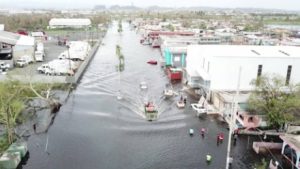
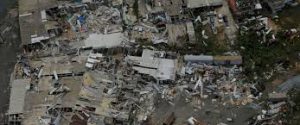
See Photos here of destruction from Hurricane Maria:
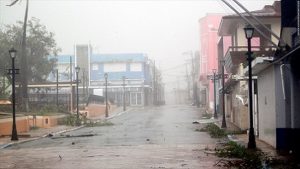
This is a familiar cry from the movement behind the book Go Lean…Caribbean. Just last month (September) we published a series of blog-commentaries assailing the inadequate response to Hurricane Irma. Those submissions were entitled:

After Irma, Failed-State Indicators: Destruction and Defection 

After Irma, the Science of ‘Power Restoration’ 

After Irma, Barbuda Becomes a ‘Ghost Town’ 

After Irma, America Should Scrap the ‘Jones Act’

It would be so easy to just publish Encore‘s at this time and change the name from Irma to Maria. But no, as so much more has transpired in these past weeks. Puerto Rico is now at the cross roads; things will get worse before it gets worse! That previous blogs warned that the outcome for Puerto Rico, and other Caribbean islands, would be defection – “forced uprooting-displacement of large communities”. Truly, this is what has happened.

See this sad manifestation here, reported by a local news broadcast in Tampa, Florida from Tuesday October 24:

VIDEO 1 – Nearly 70,000 Puerto Ricans relocated to Florida after Hurricane Maria – http://www.wtsp.com/news/local/almost-70-thousand-have-arrived-in-fl-from-puerto-rico-after-mara/485479136

Posted October 24, 2017 – WTSP TV, Tampa, Fla. – Anxious relatives stand around switching between staring at their phones and the shuttle drop off at Tampa International Airport.

Some have watery eyes out of nervousness and anticipation.

The tears streamed once they embraced their loved ones arriving from Puerto Rico.

This scene plays out at least once a day after a flight from San Juan lands in Tampa. …

ALERT! We estimate now that Puerto Rico (PR) will lose over 500,000 people directly and indirectly because of Hurricane Maria. So it is time now for a reboot! It is time for PR to change its status, away from US Territory; perhaps to consider an American Divorce, or Independence, yet stilled aligned as an American Protectorate.

In a previous Go Lean blog-commentary, we warned that there is no guarantee that Caribbean communities – like PR – will survive their current crises, that Failed-State status is imminent. See this excerpt here:

What happens after a community is devastated by a catastrophic hurricane? Many things; mostly all bad:

This is not just theoretical; this is the current disposition in the Caribbean after the recent Category 5 Hurricane Irma; [make that Hurricane Maria]. These descriptors are all indicative of a Failed State status. This is a familiar theme for this movement behind the 2013 book Go Lean…Caribbean (and the subsequent blog-commentaries). The book opens (Page 3) with this introduction to the subject of failure in the Caribbean:

    Failure is just too familiar. Already we have member-states …  on the verge of a ‘Failed-State’ status… . These states are not contending with the challenges of modern life: changing weather patterns, ever-pervasive technology, and the “flat world” of globalization. To reverse the fortunes of these failing states, and guide others in the opposite direction to a destination of prosperity, the Caribbean must re-boot the regional economy and systems of commerce.

Hurricanes are tied to failure and Failed-State Indicators. The consequences of hurricanes are more than just natural, there is also the preponderance for people to leave their homelands afterwards – to defect. …

In Failed-State formal-speak, the Go Lean book (Page 271) details 2 indicators or indices: Mounting Demographic Pressures (DP) and Massive Movement of Refugees (REF). These downward movements are indicators of Failed-State status – a bad report on the Fail-State index is simply a reflection of a miserable existence in society:

  • Mounting Demographic Pressures
    Pressures on the population such as disease and natural disasters make it difficult for the government to protect its citizens or demonstrate a lack of capacity or will. This indicator include pressures and measures related to: Natural Disaster, Disease, Environment, Pollution, Food Scarcity, Malnutrition, Water Scarcity, Population Growth, Youth or Age Bulge, and Mortality
  • Massive Movement of Refugees or IDPs
    Forced uprooting of large communities as a result of random or targeted violence and/or repression, causing food shortages, disease, lack of clean water, land competition, and turmoil that can spiral into larger humanitarian and security problems, both within and between countries. This indicator refers to refugees leaving or entering a country. This indicator include pressures and measures related to: Displacement, Refugee Camps, IDP (Internally Displaced Persons) Camps, Disease Related to Displacement, Refugees per capita, and IDPs per capita.

So rather than an American affinity, this commentary asserts that maybe the subject of “Puerto Rico Independence” should be re-visited. How about this twist: an independent Puerto Rico with a Caribbean interdependence.

The book Go Lean…Caribbean – available to download for free – serves as a roadmap for the introduction and implementation of the technocratic Caribbean Union Trade Federation (CU), for the elevation of Caribbean society – for all 30 member-states, Puerto Rico included. This CU/Go Lean roadmap has these 3 prime directives for regional integration:

  • Optimization of the economic engines in order to grow the regional economy to $800 Billion and create 2.2 million new jobs. Puerto Ricans have been defecting for decades looking for jobs.
  • Establishment of a security apparatus to ensure public safety and protect the resultant economic engines. This security pact encompasses an emergency planning/response apparatus to deal with the reality of natural disasters. The CU mandate is to protect against any Failed-State encroachments.
  • Improve Caribbean governance to support these engines, including a separation-of-powers between the member-states and CU federal agencies.

The Go Lean book stresses that reforming and transforming the Caribbean societal engines must be a regional pursuit. This was an early motivation for the roadmap, as pronounced in the opening Declaration of Interdependence (Pages 12 – 13):

xi. Whereas all men are entitled to the benefits of good governance in a free society, “new guards” must be enacted to dissuade the emergence of incompetence, corruption, nepotism and cronyism at the peril of the people’s best interest. The Federation must guarantee the executions of a social contract between government and the governed.

xii. Whereas the legacy in recent times in individual states may be that of ineffectual governance with no redress to higher authority, the accedence of this Federation will ensure accountability and escalation of the human and civil rights of the people for good governance, justice assurances, due process and the rule of law. As such, any threats of a “failed state” status for any member state must enact emergency measures on behalf of the Federation to protect the human, civil and property rights of the citizens, residents, allies, trading partners, and visitors of the affected member state and the Federation as a whole.

xvi. Whereas security of our homeland is inextricably linked to prosperity of the homeland, the economic and security interest of the region needs to be aligned under the same governance. Since economic crimes … can imperil the functioning of the wheels of commerce for all the citizenry, the accedence of this Federation must equip the security apparatus with the tools and techniques for predictive and proactive interdictions.

The Go Lean book provides 370-pages of turn-by-turn instructions on “how” to adopt new community ethos, plus the strategies, tactics, implementations and advocacies to execute so as to assuage the miserable existence; to reboot, reform and transform the societal engines of Caribbean society, to reverse the trending towards Failed-State status (Page 134).

The Caribbean must foster a better disaster preparation and response apparatus than the Puerto Rico Status Quo. That island seems to be counting on the kindness of strangers – the American Super Power. They are looking to Washington as the cure.

The Way Forward for Puerto Rico must be more and better than their previous stance. Perhaps, the American colonial status is the problem … and not the cure.

This is not our opinion alone!

Many others – including the United Nations, who have declared PR technically “a colony” – feel that the Puerto Rico-Washington relationship is dysfunctional, that there should be a friendly divorce.

See this VIDEO here, showcasing the blatant Crony-Capitalism of this storm recovery:

VIDEO 2 – Tiny Trump-Linked Company Gets $300 Million Puerto Rico Contract – https://youtu.be/kUbyWrfg22g

Published on Oct 25, 2017 – The Trump administration awards a $300 million contract intended to get power back on in Puerto Rico to Whitefish Energy, a small Montana company located in Interior Secretary Ryan Zinke’s hometown that had only two full-time employees the day Hurricane Maria hit Puerto Rico.

Subscribe to The David Pakman Show for more: http://www.youtube.com/subscription_c… Timely news is important! We upload new clips every day, 6-8 stories! Make sure to subscribe! Broadcast on October 25, 2017.

Here are some related facts about US-PR dysfunctions, that have been detailed in previous blog-commentaries:

Puerto Rico can do “bad” all by itself; it does not need to be America’s Failed-State!

They do not need the American Hegemony to create an unbearable situation for them. This is NOT an assessment based on the fact that Donald Trump is in the White House now, no rather, this is an summary-analysis based on 120 years of US-PR history. Like many abusive marriages, the US has reserved its most abusive behavior for its own family member, the island territory of PR. This, despite the President or the administration. (See “American ColonyVIDEO in the Appendix below).

No one should be expected to tolerate 2nd Class Citizenship status … for 120 years!

So what’s next? This recommendation:

PR should wipe-out the previous debt and start anew as an independent country / American Protectorate. The island should apply this strategy … based on lessons learned from Detroit. They should expect the defection of 500,000 people and downsize accordingly. Who ever wants to leave, let them leave; build a new society with the remainders.

PR should do this, in order to be better, here in the Caribbean, to make this homeland a better place to live, work and play. 🙂

Download the free e-book of Go Lean … Caribbean – now!

Sign the petition to lean-in for this roadmap for the Caribbean Union Trade Federation. 

———-

Appendix – WTSP-TV Transcript Excerpt … and Beyond

Sub-title: Influx of evacuees 

Nearly 70,000 people have arrived in Florida from Puerto Rico since Hurricane Maria, according to state officials.

Hillsborough county schools have enrolled at least 50 students from Puerto Rico. And local agencies are getting calls every day with questions about affordable housing and jobs.

“I’m hoping I will find a job quickly,” García said with a sigh.

Her husband will also need a job when he arrives, but they don’t know when he will reunite with them.

“We’re a team and after this we’re more united than before so it’s going to be hard,” she said. “It’s going to be really hard but we’re going to make it. After everything we still feel blessed.”

Those seeking information on assistance for Puerto Ricans following Hurricane María can call the State of Florida information line at 1-800-342-3557 or visit the Disaster Recovery Center at The Regent, 6437 Watson Rd., Riverview. The center is open daily from 8 a.m. to 8 p.m. Appointments are not necessary.

More than a dozen agencies are providing resources at the center, including:

  • Federal Emergency Management Administration
  • U.S. Small Business Administration (SBA)
  • Florida Department of Children and Families
  • Florida Department of Health
  • Hillsborough County Aging Services
  • Hillsborough County Affordable Housing Services
  • Hillsborough County Health Care Services
  • Hillsborough County Homeless Services
  • Hillsborough County Social Services
  • American Red Cross
  • Career Source Tampa Bay
  • Central Florida Behavioral Health Network
  • Senior Connection from Area Agency on Aging

© 2017 WTSP-TV

———-

Appendix VIDEO – Satirical Government Ad: “PR – An American Colony” – https://youtu.be/g-GYqakwHdg

Published on Jul 3, 2017 – thejuicemedia

 

Share this post:
, ,

Making a ‘Pluralistic Democracy’ – Freedom of Movement

Go Lean Commentary

I have a personal confession!

At one point, recently, I had a California address, Michigan Drivers License and Florida car registration; all at the same time. This is demonstrative of a country – United States of America – where stakeholders have ‘Freedom of Movement’. This is a feature of a Single Market.
Live here … work there … play everywhere …

There are planners for a new Caribbean that wants a Single Market economy, where citizens have ‘Freedom of Movement’ from one member-state to another. This would be part-and-parcel of a “Pluralistic Democracy”, which means a society where the many different ethnic groups (or national origins) have respect, equal rights, equal privileges and equal protections under the law; where there are no superior rights to any majority and no special deprivations to any minority, despite the border or language consideration. This is pure Pluralism, whose legal definition of the political philosophy is as follows:

… the recognition and affirmation of diversity within a political body, which permits the peaceful coexistence of different interests, convictions and lifestyles.[1] While not all political pluralists advocate for a pluralist democracy, this is most common as democracy is often viewed as the most fair and effective way to moderate between the discrete values.[2]Wikipedia

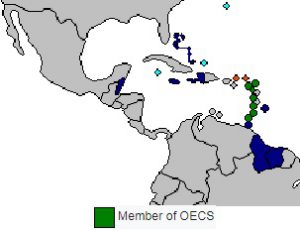
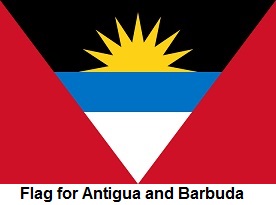
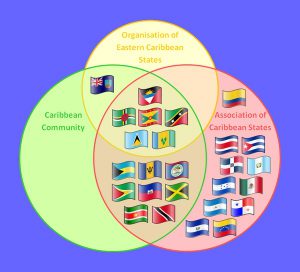
This vision of a Caribbean “Pluralistic Democracy” should be more than words, but action too. This need has manifested in recent days with the devastation of two Category 5 Hurricanes in the region: Irma and Maria. Consider the news article here depicting the post-hurricane ‘Freedom of Movement’ among the 6 OECS countries (Organization of Eastern Caribbean States: Antigua and Barbuda, Dominica, Grenada, St Kitts and Nevis, St Lucia, and St Vincent and the Grenadines):

Title – Antigua prepares for influx of Dominicans
Barbados Today – Antigua says it is anticipating an influx of Dominicans in the wake of catastrophic Hurricane Maria which has decimated that country.

Acting Prime Minister, Attorney General Steadroy Benjamin, on Saturday convened a meeting of the sub-committee of Cabinet responsible for managing the planning for natural disasters and their aftermath.


Government Chief of Staff Lionel Hurst described the meeting as “a proactive drive, intended to manage efficiently the anticipated flow of people from Dominica”.

Also in attendance where Ministers Molwyn Joseph, Asot Michael, Minister Melford Nicholas, Arthur Nibbs, the chief immigration officer and her deputy, law enforcement authorities, representative of the airlines association including LIAT, the head of the Red Cross, and officials from the ministry of social transformation.

The Acting Prime Minister directed the group to present a fixed set of policies that would apply to all those who are leaving Dominica for Antigua, and to plan the reception of those OECS/Dominican citizens who may choose Antigua.

It was agreed that there will be only two legitimate ports of entry – the V.C. Bird International Airport and the Montserrat Ferry Dock at Heritage Quay.

“The Coast Guard is to ensure that no vessel entering Antigua’s waters discharges its passengers at any other dock. Since no vegetables or other food items will be shipped from Dominica in the foreseeable future, all vessels must proceed to Heritage Quay,” Hurst said.

Citizens of Dominica have a right of entry into Antigua and other OECS countries and an automatic six-month stay and must present their passport, driver’s license or voter’s identification card to allow entry.

“A database of the Dominicans entering will be developed. Those citizens of Dominica who do not have any of the agreed identification will be permitted to enter Antigua, after completing a form which the Antigua and Barbuda Immigration Department has constructed specifically to meet the needs of those who have lost their documents in the hurricane. Those persons leaving Dominica who are not Dominican citizens must have onward tickets, or be prepared to purchase tickets for onward travel to their own countries,” Hurst said.

He added that the police and the ONDCP are to work closely to determine if any of the persons leaving Dominica are law-breakers. In this regard, the Dominica Police Force will also be asked to assist.

All Dominican citizens who enter Antigua will also be asked to provide certain health information so that continuing services can be provided or secured, in order to protect their health and the population’s.

“It is anticipated that women and children, the elderly of both genders and the infirm, are likely to be among the first wave of Dominican citizens to arrive [in] Antigua. It is also believed that many will choose to stay with family and friends, especially since a supportive group has already been formed. The entrants will be asked to provide names, addresses, telephone numbers and other contact information to the immigration authorities at both ports,” Hurst said.
He said consideration has been given to preparing shelters at various sites should the flow exceed the provision of housing by family and friends of the Dominicans who live on Antigua.

Hurst noted that the other four OECS countries – St Kitts and Nevis, St Lucia, St Vincent and the Grenadines and Grenada – are also likely to welcome Dominican citizens to their shores during this crisis.

Source: Posted September 24, 2017; retrieved October 22, 2017 from: https://stluciatimes.com/2017/09/24/antigua-prepares-influx-dominicans 

Normality is disrupted in Dominica  – due to Hurricane Maria – so the people, societal engines and systems of commerce have to transfer over to Antigua. While this is not good for Dominica’s economy, it is better than losing the population permanently to some foreign location – the Diaspora. The Dominican people going to Antigua for hurricane recovery is not the “One Way” societal abandonment, it is just ‘Freedom of Movement’.

The movement behind the book Go Lean…Caribbean has repeatedly related that there is a need for new stewardship of the Caribbean societal engines (economics, security and governance). The world has changed; the “World is Flat“! The Go Lean book considers these Agents of Change (Page 57) that have dynamically affected the Caribbean economic eco-systems:

  • Technology
  • Globalization
  • Aging Diaspora
  • Climate Change

The Agent of Change of Globalization implies that people can easily move from place-to-place to live, work or play; everywhere is “virtually” next door. Ours, in the Caribbean, is not the first region to contend with this ‘Freedom of Movement’ option. In fact, this practice for the OECS is modeled after the European Schengen Area – ‘Freedom of Movement’ of people, goods, services and capital across 26 European borders, not the USA. See more in the VIDEO here:

VIDEO – Schengen Area: History, Facts and Benefits – https://youtu.be/xffvPWmoWsQ

Europe Guide

Published on Apr 13, 2016 – Today, Schengen Area signifies a zone where the free movement of people, goods, services and capital between 26 European countries is not just a concept any longer. Watch this very interesting video about the chronological history of Schengen Area to learn about how the dream for a borderless Europe came true, leaving the opportunity for more than 400 million citizens to travel freely inside the Europe without any border check control.

Website: http://www.schengenvisainfo.com

Follow us on Facebook: http://smarturl.it/SchengenVisaInfoFCB

Subscribe to our YouTube channel: http://smarturl.it/EuropeGuideChannel

Imagine this Caribbean-wide version of the Schengen Area, for all 30 member-states, not just the 6 OECS countries. Imagine a Caribbean-wide Single Market. Imagine how beneficial before, during and after a natural disaster … like Maria.

The book Go Lean…Caribbean – available to download for free – serves as a roadmap for the introduction and implementation of the technocratic Caribbean Union Trade Federation (CU), for the elevation of Caribbean society in good times and bad – for all 30 member-states. This CU/Go Lean roadmap has these 3 prime directives:

  • Optimization of the economic engines in order to grow the regional economy to $800 Billion and create 2.2 million new jobs.
  • Establishment of a security apparatus to ensure public safety and protect the resultant economic engines.
  • Improve Caribbean governance to support these engines, including a separation-of-powers between the member-states and CU federal agencies.

The book stresses that reforming and transforming the Caribbean societal engines must be a regional pursuit, “all for one and one for all” member-state-wise. This was an early motivation for the roadmap, as pronounced in the opening Declaration of Interdependence (Pages 12 – 13):

xi. Whereas all men are entitled to the benefits of good governance in a free society, “new guards” must be enacted to dissuade the emergence of incompetence, corruption, nepotism and cronyism at the peril of the people’s best interest. The Federation must guarantee the executions of a social contract between government and the governed.

xvi. Whereas security of our homeland is inextricably linked to prosperity of the homeland, the economic and security interest of the region needs to be aligned under the same governance. Since economic crimes … can imperil the functioning of the wheels of commerce for all the citizenry, the accedence of this Federation must equip the security apparatus with the tools and techniques for predictive and proactive interdictions.

xxi. Whereas the preparation of our labor force can foster opportunities and dictate economic progress for current and future generations, the Federation must ensure that educational and job training opportunities are fully optimized for all residents of all member-states, with no partiality towards any gender or ethnic group. The Federation must recognize and facilitate excellence in many different fields of endeavor, including sciences, languages, arts, music and sports. This responsibility should be executed without incurring the risks of further human flight, as has been the past history.

xxiv. Whereas a free market economy can be induced and spurred for continuous progress, the Federation must install the controls to better manage aspects of the economy: jobs, inflation, savings rate, investments and other economic principles. Thereby attracting direct foreign investment because of the stability and vibrancy of our economy.

The Go Lean book provides 370-pages of turn-by-turn instructions on “how” to adopt new community ethos, plus the strategies, tactics, implementations and advocacies to execute so as to reboot, reform and transform the societal engines of Caribbean society. There is a lot of consideration in the book for the free movement of people, goods, services and capital in the Caribbean region. In fact, the organizational structure of the CU includes a “federal” Department of Labor with the charter to coordinate regional labor dimensions. Since one of the prime directives of the CU is the economic empowerment of the member-states – jobs – there are a lot of angles and views about delivering jobs that needs to be coordinated on a regional level. As such, there are proactive and reactive measures that this department will shepherd.

As related in the book (Page 89), this federal department also coordinates the activities for Labor Certifications in the region. This effort will be collaborated and in cooperation with the many member-state Labor Relations agencies. The CU‘s focus will be towards interstate activities and enterprises, as opposed to an intra-state focus. This Labor Certification is an important role for this agency as it requires monitoring the labor needs of the region to ascertain where skills are needed and where and who can supply the skills. The certification role involves rating the level of expertise needed for job and rating workers skill sets. (Consider a 10-point grading system for positions and personnel, where “apprentice” level ranges from 1 – 3, “journeyman” level ranges from 4 – 6, and “master” ranges from 7 – 10).

This certification role is vital to the strategy of preserving Caribbean human capital in the region, even if this involves some movement among the member-states. Notice these treatments from the book:

  • 10 Ways to Improve Interstate Commerce (Page 129)
    #8 – Labor Markets – Freedom of Movement
    The CU seeks to improve the transparency and mobility in the Caribbean labor markets to contend with the challenges of scarcity of skilled labor (openings can be staffed by any CU resident), innovation deficits (solutions come from a large educated market), and financial risks in social pension systems (need more young workers). The CU strives to offer an alternative Caribbean state to residents looking for a new address/dream. This will assuage risks of brain/capital drains.
  • 10 Ways to Model the EU (Page 130)
    #9 – Labor Issues
    The EU seeks to improve the transparency and mobility in European labor markets to contend with the challenges of an aging population, scarcity of skilled labor, innovation deficits, and financial risks in social security systems. The CU will have to contend with many of the same challenges plus the goal of repatriation. The EU model provides great lessons [for the Caribbean].
  • 10 Ways to Mitigate Black Markets (Page 165)
    #4 – Caribbean Dollar Realities
    The [CU] Federation plan … allows for mobility of labor from one Caribbean state to another. The CU will ensure protections for the work force (unemployment and health insurance benefits) thereby nullifying “black markets” for labor.
  • 10 Ways to Foster Empowering Immigration (Page 174)
    #1 – Lean-in for the Caribbean Single Market & Economy Initiative
    The Single Market structure allows for the controlled movement of labor from state to state, and the opportunity to correct actuarial imbalances. … The skills needed for today’s global economy may not be plentiful in the Caribbean and thus the need to invite empowering immigrants.
  • 10 Ways to Promote Contact Centers (Page 212)
    #6 – Capitalize on Multi-lingual Society
    With Dutch, English, French and Spanish speakers proliferating in the region, the CU will catalog bilingual (or multilingual) skills as an asset in the labor market. This will create more of a demand for this talent base as supply systems are implemented to showcase their skills. In macro-economics, the readiness of the labor market is called “capital”, and an offer (or fulfillment) of tele-services to foreign markets like Holland, France, Quebec (Canada), (Border States) and other former Dutch/French colonies will lead to growth of the industry and the CU’s GDP.
  • 10 Ways to Re-boot Haiti (Page 238)
    #8 – Labor, Immigration and Movement of People
    The recovery plan for Haiti would discourage the emigration of the population. Haiti has a population base (10 million) that can imperil other islands if too many Haitians relocate within the Caribbean. As a result, the CU will expend the resources and facilitate the campaign to dissuade relocation for the first 10 years of the ascension of the CU. During these first 10 years, Haitians visiting other CU member states, with Visa’s, with careful monitoring to ensure compliance.
  • 10 Ways to Impact The Guianas (Page 241)
    # 6 – Emigration Circuit Breaker
    Some chronic problems related to economic progress has been the shortage of skilled labor and a deficient infrastructure. The CU seeks to offer an alternative to citizens abandoning the region for EU or US shores. A diverse, well-managed economy of 42 million people, rather than the minimal 200,000 of Guyana alone and 160,000 of Suriname, offer more options to assuage pressures for Guianian talent fleeing. The whole CU can provide solutions to contend with the scarcity of skilled labor, innovation deficits, and financial risks in social pension systems.

The Go Lean…Caribbean roadmap presents the advocacy for Benefiting from Globalization (Page 119). Globalization has been exacerbated thanks to Free Trade Agreements – the CU Trade Federation is a Free Trade Agreement – so the goal is to master the art-and-science of Free Trade and the Free Movement of people, goods and capital. So these subjects are part-and-parcel of this comprehensive roadmap to elevate Caribbean society to be a better place to live, work and play..

Yes, this Go Lean roadmap considers the heavy-lifting of structuring Caribbean society to benefit more from Globalization. As individual member-states, there is no chance for success, but together, as a unified region, there is so much to leverage. The Go Lean roadmap seeks to unite the people of the entire Caribbean region (leveraging all 42 million people), diversify the regional economy (to create new 2.2 million jobs) and reverse the trend for our people to seek refuge in foreign lands. Let’s do better here at home. Let’s allow our citizens to prosper where planted here in the Caribbean.

Live here … work there … play everywhere …

Now is the time for all stakeholders in the Caribbean – governments and citizens – to lean-in to this Go Lean roadmap. We can do better and be better. This is part of our quest for a ‘Pluralistic Democracy’; this is Part 2 of a 3-Part series. The full collection is as follows:

  1. Making a ‘Pluralistic Democracy’ – Respect for Diwali
  2. Making a ‘Pluralistic Democracy’ – Freedom of Movement
  3. Making a ‘Pluralistic Democracy’ – Multilingual Realities

This ‘Pluralistic Democracy’ vision is a BIG deal, yet this is conceivable, believable and achievable. 🙂

Download the free e-book of Go Lean … Caribbean – now!

Sign the petition to lean-in for the roadmap for the Caribbean Union Trade Federation.

Share this post:
, , , ,
[Top]

Making a ‘Pluralistic Democracy’ – Respecting Diwali

Go Lean Commentary

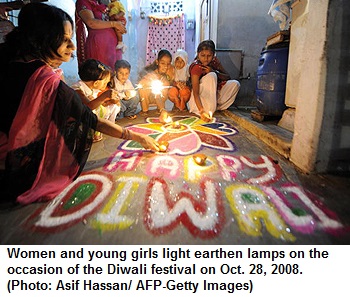
CU Blog - Respecting Diwali - Making a Pluralistic Democracy - Photo 3What is the ethnic composition of the Caribbean?

Not a singularity!

Our quest now is to make the Caribbean a Single Market and a “Pluralistic Democracy”. This means a society where the many different ethnic groups (and religions) have respect, equal rights, equal privileges and equal protections under the law; where there are no superior rights to any majority and no special deprivations to any minority. The expectation is for anyone person to be treated like everyone else. The legal definition of Pluralism as a political philosophy is as follows …

… the recognition and affirmation of diversity within a political body, which permits the peaceful coexistence of different interests, convictions and lifestyles.[1] While not all political pluralists advocate for a pluralist democracy, this is most common as democracy is often viewed as the most fair and effective way to moderate between the discrete values.[2]Wikipedia

This vision of a Caribbean “Pluralistic Democracy” should be more than words; it must be action too!

Yet we fail so miserably in respecting non-standard traditions. The truth of the matter is that while religious toleration appears to be high in the Caribbean, this is really only true of European-styled Christian faiths. Other non-White religious traditions (let’s consider Hindu) are often ignored or even ridiculed in open Caribbean society, despite the large number of adherents. Of the 30 member-states to comprise the Caribbean Single Market, 3 of them have a large Indian-Hindu ethnicity. As a result, in these communities, though lowly promoted, one of the biggest annual celebrations for those communities is Diwali or Divali:

Diwali (or Deepavali) is the Hindu festival of lights celebrated every year in autumn in the northern hemisphere (spring in southern hemisphere).[4][5] It is an official holiday in Fiji, Guyana, India,[6] Malaysia, Mauritius, Myanmar, Nepal, Singapore, Sri Lanka, Suriname, Trinidad and Tobago. One of the most popular festivals of Hinduism, it spiritually signifies the victory of light over darkness, good over evil, knowledge over ignorance, and hope over despair.[7][8][9] Its celebration includes millions of lights shining on housetops, outside doors and windows, around temples and other buildings in the communities and countries where it is observed.[10] The festival preparations and rituals typically extend over a five-day period, but the main festival night of Diwali coincides with the dark night of the Hindu Lunisolar month Kartika in Bikram Sambat calendar (the month of Aippasi in Tamil Calendar), on the 15th of the month. In the Gregorian calendar, Diwali night falls between mid-October and mid-November.[11]

Before Diwali night, people clean, renovate, and decorate their homes and offices.[12] On Diwali night, people dress up in new clothes or their best outfits, light up diyas (lamps and candles) inside and outside their home, participate in family puja (prayers) typically to Lakshmi – the goddess of fertility and prosperity. After puja, fireworks follow,[13] then a family feast including mithai (sweets), and an exchange of gifts between family members and close friends. Deepavali also marks a major shopping period in nations where it is celebrated.[14]

The name of festive days as well as the rituals of Diwali vary significantly among Hindus, based on the region of India. – Wikipedia.

See the VIDEO’s in the Appendix below.

While Diwali is a religious celebration, many aspects of this culture spills-over to general society; see the detailed plans of a previous year (2009) in Appendix A below. This celebration, in many ways, is similar to Christmas spilling-over to non-Christian people in Christian countries. So the festivities carry a heavy civic-cultural “feel” as opposed to religious Hindu adherence. Plus, these values here are positive community ethos that any stewards in any society would want to promote:

“the victory of light over darkness, good over evil, knowledge over ignorance, and hope over despair”.

This year Diwali is celebrated between October 18 – 22, 2017. It is a public holiday only for Wednesday October 18 in Trinidad and Guyana; plus on Thursday October 19 in Suriname.

This celebration of Diwali is only MEDIUM in these 3 Caribbean member-states; but with the proper fostering it could be BIG; it could be an impactful event! Imagine Event Tourism targeted to the 1.2 Billion people of the emerging economy of India; plus the 35 million people in the Indian Diaspora world-wide.

The book Go Lean…Caribbean presents the advocacy of Event Tourism (Page 191). This is fundamental to elevating Caribbean society to be a better place to live, work and play; (or live, work and pray). The Go Lean book – available to download for free – serves as a roadmap for the introduction and implementation of the technocratic Caribbean Union Trade Federation (CU), for the elevation of Caribbean society – for all 30 member-states – to foster a “Pluralistic Democracy”. This CU/Go Lean roadmap has these 3 prime directives:

  • Optimization of the economic engines in order to grow the regional economy to $800 Billion and create 2.2 million new jobs.
  • Establishment of a security apparatus to ensure public safety and protect the resultant economic engines.
  • Improve Caribbean governance to support these engines, including a separation-of-powers between the member-states and CU federal agencies.

The Go Lean roadmap posits that events can be fostered so as to better impact the economic, security and governing engines of society. This was this declaration from a previous blog-commentary, that touristic events could be so much more lucrative, if only there was a whole-souled commitment by the full community – everyone show respect. Think of the success in Sturgis, South Dakota where a small town of 10,000 hosts up to 600,000 visitors (Page 288). Imagine the economic impact!

The movement behind the Go Lean book has repeatedly related that there is a need for new stewardship of the Caribbean tourism apparatus. The world has changed; our target markets have changed. We cannot just advertise to the Northeast corner of North America for the peak winter season (January & February) anymore. No we must now look to alternate markets and target alternate calendar days so as to expand our product offering.

Imagine the prospect of marketing Diwali – see VIDEO’s below – usually in the tourist-slow month of October.

Beautiful Sky Lantern

This is what is needed to expand the region economically. There is no longer the need for tourism stewards to just “rub shoulders” with travel agents, but rather, there is the need for e-Commerce strategies and tactics (think: Search Engines Optimization) and for efficient execution of events. Welcome to Technocracy 101.

A previous blog-commentary (from September 15, 2015) regarding Tourism Stewardship related these details:

The book Go Lean…Caribbean calls for the elevation of Caribbean society, to re-focus, re-boot, and optimize all the engines of commerce so as to make the Caribbean a better place to live, work and play.  The category of “play” covers the full scope of tourism, which is the primary economic driver for our Caribbean region; the book estimates 80 million visitors among the region. (Since that number includes cruise passengers that may visit multiple Caribbean islands on one itinerary, each port is counted separately; without cruise passengers, a figure of 68 – 69 million is perhaps more accurate).

This commentary is a consideration of tourism, not travel. Tourism is a subset of the travel eco-system, so any Agent of Change in the world of travel must be carefully considered on tourism, on Caribbean tourism. …

The Go Lean book considers these Agents of Change (Page 57) that have dynamically affected the Caribbean economic eco-systems:

  • Technology
  • Globalization
  • Aging Diaspora
  • Climate Change

Technology, the Internet-Communications-Technology (ICT) in particular has furnished alternative and better options for travel enterprises to find passengers-guests-travelers-tourists…. Travel agents are now inconsequential. ….

The book Go Lean…Caribbean and the underlying movement seeks to re-boot the strategies and tactics of tourism marketing for the entire Caribbean region. The book asserts Caribbean member-states must expand and optimize their tourism outreach but that the requisite investment of the resources (time, talent, treasuries) for this goal may be too big for any one Caribbean member-state … alone. Rather, shifting the responsibility to a region-wide, professionally-managed, deputized technocracy will result in greater production and greater accountability. This deputized agency is the Caribbean Union Trade Federation (CU). The book thereafter introduces the CU and provides a roadmap for its implementation into a Single Market for the Caribbean economy … and tourism marketing.

The goal of the CU is to bring the proper tools and techniques to the Caribbean region to optimize the stewardship of the economic, security and governing engines.  The book posits that the economy can be induced and spurred for continuous progress, with technocratic management and stewardship better than the status quo. While the goal of the roadmap is to pursue a diversification strategy, the reality is that tourism will continue to be the primary economic driver in the region for the foreseeable future. The publisher of the book Go Lean…Caribbean convenes the talents and skill-sets of movers-and-shakers in electronic commerce [and project management] so as to forge the best tools and techniques for this new ICT-based marketing.

Lessons need to be learned from the execution of events in these Hindu-populated Caribbean countries. Can the Caribbean flare of a dynamic Hindu culture be exploited further for global marketing and appeal? The Hindu Diaspora is huge, comprising sizeable populations in many countries, including BIG numbers (millions) here:

Australia Nepal
Canada Saudi Arabia
Fiji Singapore
India South Africa
Ireland Sri Lanka
Malaysia United Arab Emirates
Mauritius United Kingdom
Myanmar United States

This is the charter of the Go Lean roadmap, to deploy the technocratic administration to optimize Caribbean Event Tourism. The Go Lean book specifically details the community ethos Caribbean communities need to adopt to be successful in Event Tourism; plus the strategies, tactics, implementations and advocacies to ensure successful deployments; see a sample here:

Community Ethos – Deferred Gratification Page 21
Community Ethos – Governing Principles – Lean Operations Page 24
Community Ethos – Governing Principles – Cooperatives Page 25
Community Ethos – Ways to Promote Intellectual Property Page 29
Community Ethos – Ways to Bridge the Digital Divide Page 31
Community Ethos – Ways to Impact Turn-Arounds Page 33
Community Ethos – Ways to Promote Happiness Page 36
Community Ethos – Ways to Impact the Greater Good Page 37
Strategy – Vision – Confederate 30 Member-States Page 45
Strategy – Mission – Celebrate the Music, Sports, Art and Culture of the Caribbean Page 46
Tactical – Fostering a Technocracy Page 64
Tactical – Separation-of-Powers – CU Federal Agencies versus Member-State Governments Page 71
Implementation – Ways to Deliver Page 109
Planning – 10 Big Ideas for the Caribbean Region Page 127
Planning – Ways to Make the Caribbean Better Page 131
Planning – Lessons from Omaha – College World Series Model Page 138
Advocacy – Ways to Enhance Tourism Page 190
Advocacy – Ways to Impact Events Page 191
Advocacy – Ways to Promote Fairgrounds Page 192
Advocacy – Ways to Preserve Caribbean Heritage Page 218
Advocacy – Ways to Improve the Arts Page 230
Advocacy – Ways to Promote Music Page 231
Appendix – Case Study of “The Rally” in Sturgis, South Dakota Page 288

In summary, the Caribbean is in good position to show respect to the Indian-Hindu community and their Festival of Lights – Diwali. In doing so, we double-down on our quest to be a “Pluralistic Democracy” and optimize our economic engines for Event Tourism.

 “Make happy those who are near, and those are far will come” – Chinese Proverb.
gonna-change-photo-2

What a contrast this is to the Climate of Hate that is so prevalent in so many Caribbean communities, towards people who are different or hold alternative viewpoints.

Yes, the Go Lean roadmap is different … and better.

It seeks to unite the people of the entire Caribbean region, diversify the regional economy (to create new 2.2 million jobs) and make our communities better places to live, work and play. This is why we have a quest for a “Pluralistic Democracy”. This is Part 1 of 3 in the series on this topic; the full collection is as follows:

  1. Making a “Pluralistic Democracy” – Respect for Diwali
  2. Making a “Pluralistic Democracy” – Freedom of Movement
  3. Making a “Pluralistic Democracy” – Multilingual Realities

Now is the time for all stakeholders in the Caribbean – governments, residents, religious devotee (Hindus, Christians, etc.), event planners, participants and tourists – to lean-in to this Go Lean roadmap. We can do better and be better. This quest for a “Pluralistic Democracy” is conceivable, believable and achievable. 🙂

Download the free e-book of Go Lean … Caribbean – now!

Sign the petition to lean-in for the roadmap for the Caribbean Union Trade Federation.

————

Appendix A – Divali Festival in Trinidad and Tobago

By: Dr. Kumar Mahabir

Pakistani Hindu women light earthen lampTrinidad and Tobago is the land of Carnival, steel band, tassa, calypso and chutney. It is the same country that gives the world its unique brand of Divali. Indeed, the Hindu Festival of Lights has become Trinidad’s second largest national open-air festival after Carnival. Divali is a welcomed alternative to the rambunctious indulgence in meat, alcohol, party and “wine,” and is arguably the largest vegetarian alcohol-free festival in the Caribbean, if not the western hemisphere. Divali is an event that the Ministry of Tourism can market as a major attraction in the fastest-growing worldwide trend of spiritual tourism.

Divali is the defining event that marks Trinidad as a multi-religious, multi-ethnic society with Hindus comprising the second largest religious group (24 percent) after Roman Catholics in the twin-island population of 1.3 million people. While Divali is essentially a Hindu festival, people of all faiths actively join in celebrating the triumph of light over darkness, knowledge over ignorance, and good over evil. Non-Hindu adherents are attracted to the festival’s universal message as well as to the extravaganza that is not only unique but also provides a clean environment for the cultivation of a healthy body, mind and soul.

Nowhere else in the world do non-Hindus and non-Indians actively take part in the lighting of over 10 million deyas on a single night in the year. These tiny clay lamps are lit in homes, yards, streets, offices, public parks and playing fields. It is perhaps only in Trinidad that one can find split bamboo tubes transformed into magnificent works of art on which the deyas are placed. The split bamboo strips reach out toward neighboring houses, streets and communities to symbolize the popular local mantra “all ah we is one.”

The eagerness to decorate is everywhere, and payment is the pride of the finished product. Streamers of all colors and patterns are made with kite paper and plastic and strung from jhandi [flag] poles. Brightly colored fabric, balloons and bulbs decorate homes, offices and stages. Indeed, it is Divali that heralds the joy of the end-of-year celebrations. Strings of twinkling lights—clear and colored—are strung high on buildings, trees, and even across streets. Effigies of Mother Lakshmi are made from bamboo tubes and large cardboard cutouts. Calligraphy on signs and banners glitters with decorative paint. The starry designs of deyas and bulbs transform simple houses into magical kingdoms.

The nights are filled with free public performances in public parks and playing fields. Divali provides the perfect forum for showcasing the talent of both foreign and local performers in Indian song, music, dance and drama. Fashion shows are the highlight of all celebrations. Indeed, no celebration is considered complete or magnificent without a fashion show that is always eagerly anticipated by all. Indians in the Caribbean keep the tradition of Indian fashion alive by wearing dhotis, kurtas, Nehru jackets, saris, shalwars, nose-pins, necklaces, bangles, anklets, eyeliners, mehendi markings and forehead tikkas/bindis. Most Divali celebrations end with a competition for women in the crowd who vie to be the best-dressed fashion finalist. A Divali Queen is not only bestowed with a crown, but she is also showered with gifts and prizes.

Divali also boasts of Ram Leela/Lila, which is perhaps the oldest living form of outdoor folk theatre in the Caribbean. The worship of Rama takes many forms, but community devotion [Ramayana yagna] outside the temple has the most public impact. During Divali, tons of sweetmeats like parsad, kurma, burfi, pera, ladoo, jalebi, gulab jamoon and kheer [sweet rice] are made and distributed free.

Indian trade fairs during Divali have become the shopping hotspots for women who flock to the sites in thousands to buy mainly clothes and accessories. A kind of dizzy euphoria can also be seen in any one of the Indian apparel stores in the countdown to Divali. It is all part of the excitement that hums through the air during this pre-Christmas celebration as women try to dress their best and stores try to outsell one another. More than men, women dress in their finest traditional Indian wear with matching jewelry, as models of grace and elegance.

The hub of all Divali celebrations in the island is Divali Nagar in central Trinidad. Indeed, the Nagar is the most frequented entertainment center in the country during Divali, second only to the Grand Stand in the Queen’s Park Savannah during Carnival. The grand display of fireworks in the air at the entertainment park resonates with the thunder of bamboo cannons, the explosions of firecrackers, and the sparkle of “star-lights” in villages across the country. On Divali night, thousands of people take to the streets on foot and in vehicles to behold houses and communities that look like an illuminated fairyland.

Divali will be celebrated as a national holiday in Trinidad and Tobago on Saturday, October 17 [2009].

Dr. Kumar Mahabir is the chairman of the Indo-Caribbean Cultural Council and assistant professor at the University of Trinidad and Tobago.

Source: Posted October 14, 2009; retrieved October 19, 2017 from: http://www.worldpress.org/Americas/3437.cfm

————

Appendix B VIDEO – Diwali – Festival of Lights | National Geographic – https://youtu.be/HrrW3rO51ak


Published on May 19, 2010 – In India, one of the most significant festivals is Diwali, or the Festival of Lights. It’s a five day celebration that includes good food, fireworks, colored sand, and special candles and lamps.
Diwali – Festival of Lights | National Geographic https://youtu.be/HrrW3rO51ak

National Geographic https://www.youtube.com/natgeo

————

Appendix C VIDEO – Diwali – The Festival of Lights – https://youtu.be/mPwmXRws7FA


WildFilmsIndia

Published on May 30, 2013 – Diwali is certainly one of the biggest, brightest and most important festivals of India. While Diwali is popularly known as the “festival of lights”. The celebration of Diwali as the “victory of good over evil” refers to the light of higher knowledge dispelling all ignorance. While the story behind Diwali and the manner of celebration of the festival differ greatly depending on the region, the essence of the festival remains the same – the celebration of life, its enjoyment and goodness. …

  • Category: Travel & Events
  • License: Standard YouTube License
Share this post:
, , ,
[Top]

Dominica Diaspora – Not the Panacea

Go Lean Commentary

If only it was that simple!

You love your homeland, but you live abroad. You simply create a not-for-profit organization, execute a development plan to relieve, restore, recover, rebuild and boom: Instant success … back in the homeland.

If only?! It doesn’t work that way.

CU Blog - Dominica Diaspora - Not the Panacea - Photo 2Yet still, this is what is transpiring on behalf of the Caribbean island of Dominica; see the profile of one such organization here (and more on the island nation in the Appendix below):

Rebuild Dominica, Inc. is a registered 501(c)(3) non-profit relief organisation based in the Washington, D.C. metro area. We were founded by humanitarians determined to help rebuild Dominica in the wake of the devastation wrought by Tropical Storm Erika. This effort continues in support of disaster relief post-Hurricane Maria — the most horrendous assault Dominica has ever experienced.
URL: https://rebuilddominica.org/

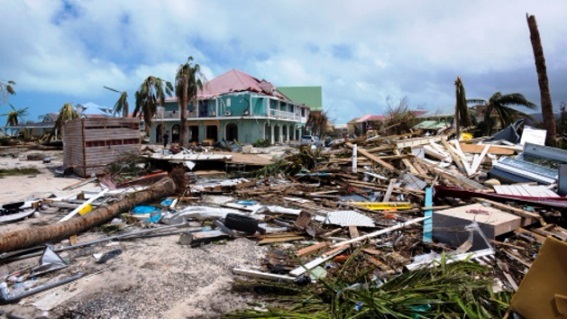
Make no mistake; Dominica needs all the help it can get, especially right now after the near total devastation from Category 5 Hurricane Maria; they must relieve, restore, recover and rebuild. See this reality manifested in this VIDEO here:

VIDEO – Small island of Dominica hit hardest by Hurricane Maria – https://youtu.be/FWbzgn3nHaU

Al Jazeera English

Published on Sep 25, 2017 – Hurricane Maria has killed at least 33 people so far, with the bulk of those deaths happening on the tiny island of Dominica. At least 80 percent of the buildings there have been damaged and most communication lines cut. Al Jazeera’s Gabriel Elizondo reports from Dominica.

– Subscribe to our channel: http://aje.io/AJSubscribe
– Follow us on Twitter: https://twitter.com/AJEnglish
– Find us on Facebook: https://www.facebook.com/aljazeera
– Check our website: http://www.aljazeera.com/

Thank you Diaspora, for this fine start; yet still, the problems that Dominica have – with this storm recovery here and even larger issues above and beyond – can not be fixed by this island’s Diaspora alone. No, there is the need for a more comprehensive solution.

Above and Beyond – Yes, looking at the horizon and longing for a solution from above and beyond is the concern of this commentary. In fact, this is the theme of a series of commentaries from the movement behind the book Go Lean … Caribbean. It has been consistent in urging the stakeholders (governments and citizen groups) of the Caribbean member-states to NOT put their hope and faith in their Diaspora to look back to their homelands and be the panacea – cure-all solution – that their societies need. There is preponderance for governments to pursue this strategy. Just recently we published commentaries on this Caribbean pre-occupation, with these entries relating these homelands:

The premise for the criticism of this Diaspora strategy is that the ones that have fled the region have done so for a reason; they have been “pushed” or “pulled” away from their homeland. They may still love their country, but can only do so much from abroad. While one person can change their community, it is near impossible for that one person if they are not in the community; there may be trust, accountability and transparency issues. Thusly, the Diaspora is less inclined to invest back in their country; and the historicity is that they have not! Thusly, all efforts to outreach the Diaspora are usually futile. All of these prior commentaries relate this basic truth about catering to the Diaspora:

The subtle [Diaspora outreach] message to the Caribbean population is that they need to leave their homeland, go get success and then please remember to invest in us afterwards.

… It is so unfortunate that the people in the Caribbean are beating down the doors to get out of their Caribbean homeland, to seek refuge in these places like the US, Canada and Western Europe. … As a result, we have such a sad state of affairs for our Caribbean eco-system as we are suffering from a bad record of societal abandonment.

Yes, the problem of this Diaspora-outreach strategy is that it double-downs on the failure of why the Diaspora left in the first place. When we look at Dominica and see the many failures of that country, we realize that the Dominicans on the island and the Dominicans in the Diaspora cannot, single-handedly or collectively, solve the problems on that homeland. No, something bigger and better is needed.

They are trying now, for that something better …

They are engaging help and support of different not-for-profits, foundations and non-government organization (NGO). See a related news article here:

Title: Rebuild Dominica Partners with Project C.U.R.E. & Other Global Allies Post-Hurricane Maria
Sub-title: Washington, D.C. Based Nonprofit Collaborates To Deliver Hurricane Relief Supplies to the Island Of Dominica
By: The Caribbean Current

CU Blog - Dominica Diaspora - Not the Panacea - Photo 3Bowie, MD (October 8, 2017) – Since its inception in August of 2015, in direct response to Tropical Erika devastating The Commonwealth of Dominica, Rebuild Dominica holds steadfast to its mission of forming and sustaining long-term partnerships to address the unmet needs of communities in Dominica.

Dr. Sam Christian, Rebuild Dominica’s Coordinator of Medical Operations on-island, submitted reports to pronounce the discovery of three residents of Pointe Michel — whom he respectively met dead in a ravine, on the beach, and under debris of a porch. Hours after Hurricane Maria, Dr. Christian, a former U.S. Army Major, and combat surgeon was the only surgeon working with police and a search and rescue team in the south of Dominica. This continued for days, during the difficult hours post-Maria, before outside help came to the area of Point Michel and Soufriere.

These reports were used to secure medical supplies valued at approximately $400,000 USD as donated by Project C.U.R.E.: the largest provider of donated medical supplies and equipment to developing countries around the world. The relief supplies will ship this week to Dominica, while Dr. Sam Christian continues to provide free medical treatment in anticipation of the delivery.

The cost of shipment of the medical supplies was funded under the direction of Rebuild Dominica and the nonprofit’s global supporters. A primary donation of $10,000 USD was received from Ethiopian financier and Advisor to Ethiopian Crown Council, Mel Tewahade. Additional assistance totaling $5,000 USD was pledged by from Saad Wakas and Omar Fisher: Rebuild Dominica allies based in Dubai. The President of Rebuild Dominica, Mr. Gabriel Christian, donated an additional $10,000 underwritten by his law firm in Maryland. The combined mobilization for the Project C.U.R.E. shipment is $20,000 – the sum directed to Project C.U.R.E. on behalf of Rebuild Dominica.

Founding member of Rebuild Dominica, Pastor St. Clair Mitchell of Evangel Assembly, along with Pastor Bell convened with the nonprofit on the evening of September 19, 2017, to mobilize the D.C. community. Carib Nation TV Director, Larry Sindass, and host Derrice Deane brought the Rebuild Dominica relief appeal to a global audience.

John Green, Delvin Walters, John Riviere, Colonel Koreen Parry, Captain Delvin Walters, Loema Sealey, Loughton Sargeant and Monique Joseph — all leaders of the Caribbean Disaster Relief and Recovery Alliance (CDRRA) — rushed to aid Rebuild Dominica; an early member of the CDRRA Diaspora disaster response collaborative. Caribbean Cargo DC again proved itself a solid community ally by reducing its shipping rates and donating storage space for relief supplies.

While facilitating the arrival and news coverage in Dominica by Al Jazeera TV and the Israeli Search and Rescue Team, Rebuild Dominica communicated with Dominica’s Prime Minister, Roosevelt Skerrit. A national medical services assessment, with guidance from Dr. Dale Dangleben and Dr. Sam Christian, is currently in progress for additional donations in the medical sphere.

Another shipment totaling three tons of food and medicine await shipment from Caribbean CargoDC and ATAS Roofing USA has committed to assist with supplies for roofing needs in Dominica. Greek-Ethiopian, Captain Demetrius Apokremiotis, has secured a short-term donation of a Convair 340 cargo plane on behalf of Rebuild Dominica to airlift 7,000 pounds of aid supplies from Miami to Dominica.

As of as of September 25, Rebuild Dominica is an official PayPal nonprofit partner. This status puts the nonprofit on par with all major US nonprofits dedicated to disaster relief.

A fundraiser is currently underway to secure monies needed to fuel and deliver the aid that awaits the displaced and starving citizens of Dominica. To that end, Rebuild Dominica has partnered with CDRRA for the upcoming ‘One Caribbean Hurricane Relief Concert’ slated for Sunday, October 8, 2017, in Bowie, Maryland. Proceeds will benefit the Caribbean islands devastated by Hurricane Irma and Hurricane Maria.

To volunteer, share resources, or make a financial contribution to this nonprofit, please visit www.RebuildDominica.org.

Source: Posted October 11, 2017 from: https://www.thecaribbeancurrent.com/rebuild-dominica-partners-project-c-u-r-e-global-allies-post-hurricane-maria/

To relieve, restore, recover and rebuild Dominica after Hurricane Maria, we need these NGO’s, and the Diaspora, and the island’s government; and … something more …

… enter the Caribbean Union Trade Federation (CU). This is presented as the organizational solution for Dominica; this is the panacea that Dominica and the rest of the Caribbean needs. But first, we need people to stay in their Caribbean homelands, not flee. We need them to prosper where planted here at home. Democratic governments – of the people; by the people; for the people – cannot expect to promote the best of their people, if the best people keep leaving – and joining the Diaspora.

The book Go Lean…Caribbean – available to download for free – serves as a roadmap for the introduction and implementation of the technocratic CU, for the elevation of Caribbean societal engines – economic, security and governance for all member-states. The book asserts that the region must work together – in a formal regional integration – to hold on to its populations – especially the highly educated ones – not see them leave for foreign shores. To accomplish this objective, this CU/Go Lean roadmap presents these 3 prime directives:

The Go Lean book – and many previous blog-commentaries – asserts that while conditions may be bad for Caribbean residents (i.e. Dominican) in their homeland, Black-and-Brown immigrants to far-away countries (think: North America and Western Europe) often have to contend with less than welcoming conditions in those countries. It is only with the Second Generation that prosperity is achieved, but by then, the children of the Caribbean Diaspora are not considered “Caribbean” anymore; they assume their residential citizenship. As conveyed in the foregoing VIDEO, it is not these Second Generation types – legacies – that are overcoming the obstacles to venture back to their ancestral homeland in the wake of hurricanes.

So it is the summation that it is better for Dominican people, and people of all the Caribbean for that matter, to work to remediate and mitigate the risks of Failed-State status in their homeland, but such work is heavy-lifting. It requires a reboot of the entire Dominican eco-system. The Go Lean roadmap calls for a technocratic reboot, to reform and transform regional society. Many people may argue – and they would be correct – that the reformation and transformation of Caribbean communities should come from Caribbean people first. But with such a high societal abandonment rate, the population of many Caribbean member-states – as in Dominica – is approaching a distribution where half of the citizens live on the islands and the other half live abroad – in the Diaspora. For some other countries, it is a vast majority of the educated populations that have fled; one report presents that abandonment rate of 70 percent. See the data references here:

According to the preliminary 2011 census results Dominica has a population of 71,293.[1] The population growth rate is very low, due primarily to emigration to more prosperous Caribbean Islands, the United Kingdom, the United States, and Canada. The estimated mid-year population of 2016 is 73,543 (the 2017 revision of the World Population Prospects[2]).- Wikipedia.

CU Blog - Dominica Diaspora - Not the Panacea - Photo 0

When Caribbean people in general, and Dominicans in particular, emigrate and become aliens in a foreign land, life is not necessarily better in those countries. As related in a previous blog-commentary, those who live in the Diaspora know “both sides of the coin”, as most of them have lived in the ancestral lands at one point. But on the other half, those who still live in the homeland may have never lived abroad.

They do not know what they do not know!

Being a visitor to some North American or European city is different than being a resident, as visitors do not have the interactions of applying for jobs, housing, government benefits, paying taxes, co-existing with neighbors, etc.. These ones in the homeland may naturally assume that the “grass is greener on the other side”. Here’s the truth:

    It is not! (The grass in the northern cities may not even be green at all; it may be covered with autumn foliage or snow).

The Go Lean roadmap is not for the Diaspora to come to the rescue, but rather a Caribbean confederacy, constituted by all 30 member-states. This position leverages the Caribbean as a Single Market (42 million people); it asserts that this is better than just catering to the Diaspora of just one country. This is to be the panacea that Caribbean needs to assuage its defects and dysfunctions. Plus, it also includes the Diaspora, but for all the Caribbean nations combined – estimated at 10 to 25 million. This is a plan for interdependence! This was the motivation for the CU/Go Lean roadmap, as pronounced in the opening Declaration of Interdependence (Pages 12 – 13) of the book:

xi. Whereas all men are entitled to the benefits of good governance in a free society, “new guards” must be enacted to dissuade the emergence of incompetence, corruption, nepotism and cronyism at the peril of the people’s best interest. The Federation must guarantee the executions of a social contract between government and the governed.

xix. Whereas our legacy in recent times is one of societal abandonment, it is imperative that incentives and encouragement be put in place to first dissuade the human flight, and then entice and welcome the return of our Diaspora back to our shores. This repatriation should be effected with the appropriate guards so as not to imperil the lives and securities of the repatriated citizens or the communities they inhabit. The right of repatriation is to be extended to any natural born citizens despite any previous naturalization to foreign sovereignties.

xx.  Whereas the results of our decades of migration created a vibrant Diaspora in foreign lands, the Federation must organize interactions with this population into structured markets. Thus allowing foreign consumption of domestic  products, services and media, which is a positive trade impact. These economic activities must not be exploited by others’ profiteering but rather harnessed by Federation resources for efficient repatriations.

xxiv.  Whereas a free market economy can be induced and spurred for continuous progress, the Federation must install the controls to better manage aspects of the economy: jobs, inflation, savings rate, investments and other economic principles. Thereby attracting direct foreign investment because of the stability and vibrancy of our economy.

The goal of the Go Lean roadmap is for Caribbean people to prosper where planted; the book therefore provides 370-pages of turn-by-turn instructions on “how” to adopt new community ethos, plus the strategies, tactics, implementations and advocacies to execute so as to reboot the region’s societal engines, for Dominica and other member-states. One advocacy for a Way Forward is the plan to optimize the roles and responsibilities of non-government organizations (Page 219):

10 Ways to Impact Foundations

1

Lean-in for the Caribbean Single Market
This treaty allows for the unification of the region into one market, thereby expanding to an economy of 30 countries, 42 million people and GDP of over $800 Billion (circa 2010). With the scale of this Single Market, the CU serves as a proxy to facilitate the economic engines, regional security initiatives and emergency management needs of the Caribbean. While the CU is not an advocacy for human rights or civil rights, there are many social causes that the CU will impact in a tangential manner (women, disabled, poverty, middle class, others). The CU allows for the regional oversight and promotion of Not-For-Profit foundations to execute their campaigns to impact the socio-economic causes of the region.

2

NGOs to Deliver CU Social AgendaThe CU will facilitate the eco-system for not-for-profit foundations and non-government organizations. The CU’s Department of State will not just facilitate incorporations on the regional level, no need to repeat in every member-state, but also provide much of the NGO administration and oversight to satisfy the local governments and other stakeholders.

3

Domestic ChartersOne of the missions of the CU is for the Diaspora to repatriate their time, talents and treasuries to make the Caribbean a better place to live, work and play. The CU will encourage the creation of micro-focused foundations and not-for-profit NGOs. This is a natural way for others to give back. Those desiring to contribute (and incentivized) can enable their causes and passions through local foundations, or petition the CU to discern new gaps needing fulfillment.

4

“One Percent” AlignmentThere is a new spirit of philanthropy imbrued in the population of the world’s billionaires and millionaires (One Percent), many of them have signed a Giving Pledge to donate half of their estate to global charitable causes. Many of this group – see Appendix N on Page 292 – facilitates charitable contributions by means of their personal or otherwise aligned foundations.

5

Foreign ChartersFoundations incorporated in foreign lands will find a “welcome mat” in the Caribbean. The CU will identify opportunities for these foundations to engage within this region. The CU will maintain a Special Interest Group to liaison with the “One Percent” of the world’s richest people. The CU will therefore solicit them for philanthropic manifestations in the CU.

6

CU Reporting

7

e-Delivery

8

Education via e-Learning

9

Intelligence Gathering and Big-Data AnalysisThe CU Intelligence Gathering and Analysis mechanism will track the progress of their activities, plus mitigate threats and risks for foundations and NGOs. The CU’s satellite and terrestrial surveillance systems, and predictive modeling/Big Data Analysis will help guide the focus of foundations – this way their investments and roles will be greatly enhanced.

10

Failed-State Status – Monitoring and MitigationsThere are a few social factors (refugee, family reunification, brain drain) that are so pivotal that they are considered indicators for Failed-State status. The CU’s mission to improve these indices can be dovetailed with the foundations.

There have been a number of blog-commentaries by the Go Lean promoters that have detailed the functionalities of NGO’s and foundations as part of the Way-Forward – the best hope for a new eco-system for Dominica, and the whole Caribbean. See a sample list here:

https://goleancaribbean.com/blog/?p=12949 Charity Management for the Caribbean – Grow Up Already
https://goleancaribbean.com/blog/?p=11598 Plea to Philanthropists: Give us your Time, Talent and Treasuries
https://goleancaribbean.com/blog/?p=8243 Zuckerberg’s Philanthropy Project Makes First Major Investment
https://goleancaribbean.com/blog/?p=5462 Charity Dysfunction: The Red Cross’ $500 Million In Haiti Relief
https://goleancaribbean.com/blog/?p=1763 Gates Foundation: Changing the World

Confederating a regional response is by all means the best-practice for Dominica and other Caribbean hurricane victims. Good results are evident from the limited multilateral efforts that have been exerted thus far. See here:

… the response shows that in a region separated by language and geography, culture remains a strong tie.

“Caribbean culture understands that when a cousin or godson is hurting down the street, everyone puts in their little bit to make a pot of food,” said Marlon Hill, a Jamaican-born Miami attorney, who with the help of The Miami Foundation, is spearheading the U.S. Caribbean Strong Relief Fund with other South Florida Caribbean leaders. “Today it’s Dominica, but tomorrow it can be Saint Lucia, next week it can be Barbados and next year it can be Grenada.”

… whether the new spirit of cooperation will lead to deeper integration among Caribbean nations remains to be seen.

Anthony Bryan, a Caribbean expert now with the Washington-based Center for Strategic and International Studies said that while the recent hurricanes represent a “common disaster” that has pulled nations together, he isn’t optimistic that it will lead to anything beyond the current functional cooperation among many countries on matters such as a common high school exit exam or health initiatives.

    “I think we tend to come together when there are either disaster responses or security measures and to coordinate foreign policies,” Bryan said. “Regional integration has been the hope for many years, but it takes political will. … Functional cooperation has always existed. But to carry it further to political integration? Not in my lifetime.”

Still, [Ronald] Jackson, the head of the regional disaster response – [Caribbean Disaster Emergency Management] – Agency, remains hopeful.

    “We have shown that it is possible,” he said.

Source: Posted September 26, 2017 by the Miami Herald

In summary, regional integration: Good; societal abandonment: Bad!

Any country growing their Diaspora is bad for that country and bad for the Diaspora members. Dominica – and every other country – needs its sons and daughters right now; actually this island needs “all hands on deck” for the Way-Forward. Any official policy to encourage emigration and living-working-abroad – on a permanent basis – is a flawed policy. Rather, it is better to have our citizens in the homeland. They can better help to relieve, restore, recover and rebuild the country.

So any policy that double-downs on the Diaspora is actually doubling-down on failure. We should never want people to have to leave then hope they remember us in our times of distress. No, we want and need them here at home at all times: good, bad and hurricane. We want and need them to “plant” … and prosper where planted.

We strongly urge every stakeholder of Dominica and all of the Caribbean to lean-in to this roadmap to make our homeland, Dominica and the remaining of the 30 member-states, better places to live, work and play. 🙂

Download the free e-book of Go Lean … Caribbean – now!

Sign the petition to lean-in for this roadmap for the Caribbean Union Trade Federation.

———–

Appendix – Dominica Today

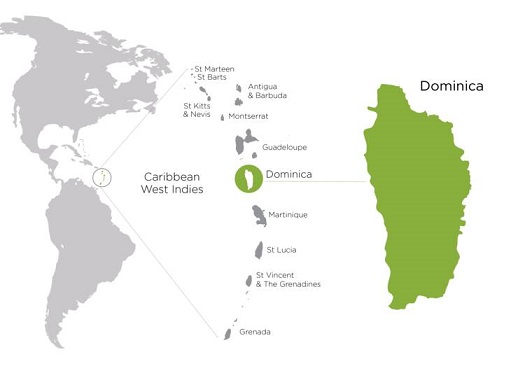
Dominica, officially the Commonwealth of Dominica, is a sovereign island country.[8] The capital, Roseau, is located on the leeward side of the island. It is part of the Windward Islands in the Lesser Antilles archipelago in the Caribbean Sea. The island lies south-southeast of Guadeloupe and northwest of Martinique. Its area is 750 km2 (290 sq mi), and the highest point is Morne Diablotins, at 1,447 m (4,747 ft) in elevation. The population was 71,293 at the 2011 census.[5]

Source: Retrieved October 17, 2017 from: https://en.wikipedia.org/wiki/Dominica

CU Blog - Dominica Diaspora - Not the Panacea - Photo 1

——–

Dominica is a member-state in the Organization of Eastern Caribbean States (OECS), along with the sovereign territories of: Antigua and Barbuda, St Kitts and Nevis, St Lucia, St Vincent and the Grenadines and Grenada. (These British Overseas Territories are also associate members of OECS: Anguilla, Montserrat, and the British Virgin Islands).

All of these countries are opening their borders to welcome Dominican citizens to their shores during this hurricane recovery crisis.

“Citizens of Dominica have a right of entry into Antigua and other OECS countries and an automatic six-month stay and must present their passport, driver’s license or voter’s identification card to allow entry”. – St Lucia Times

——–

Dominica is also a member-state of CariCom or the Caribbean Community, in concert with the other 12 Anglophone sovereign countries, plus Haiti and Suriname.

Many of these countries – in a pledge of regional brotherhood – are opening their borders to welcome Dominican citizens to their shores during this hurricane recovery crisis.

Share this post:
, ,
[Top]

Fixing Haiti – Can the Diaspora be the Answer?

Go Lean Commentary

Make no mistake; Haiti needs all the help it can get. At this moment, there are many initiatives hoping to impact this country:

CU Blog - Haitian Diaspora - Not the Panacea - Photo 1Despite all of these efforts, Haiti continues to be the poorest country in the Western Hemisphere. They boast bad dysfunction!

Many people may argue – and they would be correct – that the reformation and transformation of Haiti should come from Haiti and Haitians first.

Do what you have always done; get what you have always got.

But can Haiti’s Diaspora be their “panacea” – the cure-all for all its societal ills?

Haiti’s problems have been too tumultuous for Haitians on the island to assuage on their own. Consider the news article in  Appendix A below; as a poor country with a far-flung Diaspora, there is some hope for Diaspora financing. So the people within this community continue to hope that their panacea – solution, cure-all for their ills – may come from their Diaspora.

Here we go again. We have seen how one Caribbean country after another put their hope and faith in their young people that they send off to the “mainland”. This precept was communicated brilliantly in the Broadway musical “Hamilton“ with this featured Hip-Hop song What’s Your Name? Alexander Hamilton; consider these lyrics:

When the word got around, they said “this kid is insane, man”
Took up a collection just to send “him” to the mainland
“Get your education, don’t forget from whence you came”
And the world gonna know your name …
———-
VIDEO – Lin-Manuel Miranda Performs at the White House Poetry Jam – https://youtu.be/WNFf7nMIGnE

The Obama White House
Published on Nov 2, 2009Writer and star of the Broadway musical In the Heights, Lin-Manuel Miranda performs “The Hamilton Mixtape” at the White House Evening of Poetry, Music, and the Spoken Word on May 12, 2009. Accompanied by Alex Lacamoire. (public domain)

This song/VIDEO is relevant to this discussion. Alexander Hamilton was born and raised among the Caribbean islands of Nevis and St. Croix; then he emigrated to colonial New York and became a “Founding Father” of the United States of America, along-side George Washington et al. But one legacy of Hamilton is that he never returned his attention to the Caribbean.

When will “our” Caribbean people learn? A trip (relocation) from the Caribbean to the mainland, tends to be One-Way.

In many of the Caribbean homelands, there is such a high societal abandonment rate that the population of the citizenry is approaching a distribution where half of the citizens live in the homeland and the other half live abroad – in the Diaspora. When this is not the case – as in Haiti – then a majority of the educated population have fled. One report presents that abandonment rate of 70 percent.

As related in a previous blog-commentary, those who live in the Diaspora know “both sides of the coin”, as most of them have lived in the ancestral lands at one point. But the other half, those who still live in the homeland may have never lived abroad.

They do not know what they do not know!

Being a visitor to some North American or European city is different than being a resident, as visitors do not have the interactions of applying for jobs, housing, government benefits, paying taxes, co-existing with neighbors, etc.. These ones in the homeland may naturally assume that the “grass is greener on the other side”. Here’s the truth:

    It is not! (The grass in the northern cities may not even be green at all; it may be covered with autumn foliage or snow).

The movement behind the book Go Lean … Caribbean has been consistent in urging the governments of the Caribbean member-states to NOT put their hope and faith in their Diaspora to look back to their homelands and be the panacea that their societies need. There is preponderance for one government administrations after another to pursue this strategy. This movement has been consistent in this theme. Just recently we published commentaries on this Caribbean pre-occupation, with these entries relating these homelands:

The premise for the criticism of this Diaspora strategy is that these ones have fled the region for a reason; they have been “pushed” or “pulled” away from their homeland. They would be less inclined to invest back in their country; and the historicity is that they have not! All of these previous commentaries relate this basic message about catering to the Diaspora:

The subtle message to the Caribbean population is that they need to leave their homeland, go get success and then please remember to invest in us afterwards.

… It is so unfortunate that the people in the Caribbean are beating down the doors to get out of their Caribbean homeland, to seek refuge in these places like the US, Canada and Western Europe. And yet it seems like the Chief Executive of this Caribbean country is encouraging more of it – there is a similar sentiment in the rest of the Caribbean member-states. As a result, we have such a sad state of affairs for our Caribbean eco-system as we are suffering from a bad record of societal abandonment.

Yes, the problem of this Diaspora-outreach strategy is that it double-downs on the failure of why the Diaspora left in the first place. When we look at Haiti and see the many failures of that country, we realize that the Haitians on the island and the Haitians in the Diaspora cannot, single-handedly or collectively, solve the problems on that homeland. No, something bigger and better is needed.

Enter the Caribbean Union Trade Federation (CU). This is presented as the organizational solution for Haiti; this is the panacea. We need people to stay in their Caribbean homelands, not flee. We need them to prosper where planted. Governments cannot expect to derive revenues from the emigrated Diaspora; this is equivalent to demanding alimony after a divorce. This is unrealistic and impractical as a government policy. There needs to be a better system of governance.

The book Go Lean…Caribbean – available to download for free – serves as a roadmap for the introduction and implementation of the technocratic CU, for the elevation of Caribbean societal engines – economic, security and governance for all member-states. The book asserts that the region must work to hold on to its populations – especially the professional classes – not see them leave for foreign shores. To accomplish this objective, this CU/Go Lean roadmap presents these 3 prime directives:

  • Optimization of the economic engines in order to grow the regional economy to $800 Billion and create 2.2 million new jobs.
  • Establishment of a security apparatus to ensure public safety and protect the resultant economic engines.
  • Improvement of Caribbean governance to support these engines, including a separation-of-powers between the member-states and CU federal agencies. Improved governance allows for better revenue options for member-states; in fact there are the options for Two Pies – revenues for the federal government – see Appendix B – and revenues for the member-states.

The Go Lean book – and many previous blog-commentary – asserts that while conditions may be bad for Caribbean (i.e. Haitian) residents in their homeland, Black-and-Brown immigrants to other countries often have to contend with less than welcoming conditions in those countries. It is only with the second generation that prosperity is achieved, but by then, the children of the Caribbean Diaspora is not considered Caribbean anymore; they assume their residential citizenship. (Previously we related how Afro-Caribbean people in the UK preferred to be identified as “Black British“).

It would be better for Haitian people, and people of all the Caribbean for that matter, to work to remediate the problems in their homeland, rather than emigrate and become aliens in a foreign land. But there is no doubt that such work would be heavy-lifting; it requires a reboot of the entire Haitian eco-system. The Go Lean roadmap calls for a technocratic reboot, to do things differently.

This roadmap is not for the Diaspora to come to the rescue, but rather a Caribbean confederacy, constituted by all 30 member-states. This position leverages the Caribbean as a Single Market (42 million people); it asserts that this is better than catering to the Diaspora of just one country; (Haiti’s Diaspora is estimated at 1 million). This is the panacea that the Caribbean needs to assuage its defects and dysfunction. Plus, it also includes the Diaspora, but of all the Caribbean nations combined – estimated at 10 to 25 million. This is a plan for interdependence! This was the motivation for the CU/Go Lean roadmap, as pronounced in the opening Declaration of Interdependence (Pages 12 – 13) of the book:

xi. Whereas all men are entitled to the benefits of good governance in a free society, “new guards” must be enacted to dissuade the emergence of incompetence, corruption, nepotism and cronyism at the peril of the people’s best interest. The Federation must guarantee the executions of a social contract between government and the governed.

xix. Whereas our legacy in recent times is one of societal abandonment, it is imperative that incentives and encouragement be put in place to first dissuade the human flight, and then entice and welcome the return of our Diaspora back to our shores. This repatriation should be effected with the appropriate guards so as not to imperil the lives and securities of the repatriated citizens or the communities they inhabit. The right of repatriation is to be extended to any natural born citizens despite any previous naturalization to foreign sovereignties.

xx.  Whereas the results of our decades of migration created a vibrant Diaspora in foreign lands, the Federation must organize interactions with this population into structured markets. Thus allowing foreign consumption of domestic  products, services and media, which is a positive trade impact. These economic activities must not be exploited by others’ profiteering but rather harnessed by Federation resources for efficient repatriations.

xxiv. Whereas a free market economy can be induced and spurred for continuous progress, the Federation must install the controls to better manage aspects of the economy: jobs, inflation, savings rate, investments and other economic principles. Thereby attracting direct foreign investment because of the stability and vibrancy of our economy.

The goal of the Go Lean roadmap is for Caribbean people to prosper where planted; the book therefore provides 370-pages of turn-by-turn instructions on “how” to adopt new community ethos, plus the strategies, tactics, implementations and advocacies to execute so as to reboot Haiti (and the rest of the Caribbean). One advocacy for a Way Forward is the plan to optimize government revenues collections (Page 172): 10 Revenues Sources for Caribbean Administration; see Appendix B below.

In addition, there is a specific plan in the roadmap to impact Haiti. Consider the Chapter excerpts and headlines here from this sample on Page 238 entitled: 10 Ways to Reboot Haiti. But first, understand the concept of the Marshall Plan:

The Bottom Line on the Marshall Plan
By the end of World War II much of Europe was devastated. The Marshall Plan, (officially the European Recovery Program, ERP), named after the then Secretary of State and retired general George Marshall, was the American program to aid Europe where the United States gave monetary support to help rebuild European economies after the end of the war. During the four years (1948 – 1952) that the plan was operational, US $13 billion in economic and technical assistance was given to help the recovery of the European countries. The plan looked to the future, and did not focus on the destruction caused by the war. Much more important were efforts to modernize European industrial and business practices using high-efficiency American models, reduce artificial trade barriers, and instill a sense of hope and self-reliance.By 1952 as the funding ended, the economy of every participant state had surpassed pre-war levels; for all Marshall Plan recipients, output in 1951 was at least 35% higher than in 1938. Over the next two decades, Western Europe enjoyed unprecedented growth and prosperity. Generally, economists agree that the Marshall Plan was one of the first elements of European integration, as it erased trade barriers and set up institutions to coordinate the economy on a continental level – that is, it stimulated the total political reconstruction of Western Europe. Today, the European Union, the latest successor of the integration effort, is the world largest integrated economy.

CU Blog - A Lesson in History - Haiti 1804 - Photo 3

10 Ways to Reboot Haiti

1

Lean-in for the Caribbean Single Market
This regional re-boot will allow for the unification of the region into one market, thereby creating a single economy of 30 member-states, 42 million people and a GDP of over $800 Billion. Following the model of  European integration, the CU will be the representative and negotiating body for Haiti and the entire region for all trade and security issues.

2

Marshall Plan for Haiti
Haiti is the poorest nation in the Western Hemisphere. But what they have is impassioned human capital as opposed to financial capital or valuable minerals. The CU is a total economic reboot for this country, one that involves developing internally and not thru emigration. To reboot Haiti will require a mini-Marshall Plan. The infrastructure, for the most part, is archaic compared to modern societies. The engines of the CU will enable a rapid upgrade of the infra-structure and some “low hanging fruit” for returns on the investment.

3

Leap Frog Philosophy
There is no need to move Haiti’s technology infrastructure baseline from the 1960’s, then to the 1970’s, and so on. Rather, the CU’s vision is to move Haiti to where technology is going, not coming from. This includes advanced urban planning concepts like electrified light-rail, prefab house constructions, alternative energies and e-delivery of governmental services and payment systems.

4

Repatriation and Reconciliation of the Haitian Diaspora
The goal will be to extend the “Welcome Mat” to people that may have left Haiti over the decades and want to return. The return the CU advocates is for the Diaspora’s time, talents and treasuries. In terms of time, the encouragement will be to have ex-patriots at least have a vacation home on the island. The CU will provide the re-patriots with special status to assuage any victimization. In addition, the CU will convene a Truth and Reconciliation Commission to bring resolution to many issues from previous coup d’état, coup attempts and the Duvalier dictatorship days.

5

Access to Capital Markets
Rebooting Haiti will require access to capital. The CU capital markets will allow for municipal and corporate financial options. The Caribbean Central Bank will manage Haiti’s monetary affairs with the global currency of Caribbean dollars.

6

National Historic Places

7

World Heritage Sites

8

Labor, Immigration and Movement of People
The recovery plan for Haiti would discourage the emigration of the population. Haiti has a population base (10 million) that can imperil other islands if too many Haitians relocate within the Caribbean. As a result, the CU will expend the resources and facilitate the campaign to dissuade relocation for the first 10 years of the ascension of the CU. During these first 10 years, Haitians visiting other CU member states, with Visa’s, will careful monitoring to ensure compliance.

9

Educational Mandates
Whereas the CU educational facilitation is satisfied at the secondary level, there will be a greater need for Adult Education in Haiti. Because of the decades of poverty, illiteracy is more dire in Haiti than in other CU state. There will be no age limitation for the educational opportunities. The macro-economic principle is “every year of education raises a country’s GDP”; this will allow for easy pickings of the economic “low hanging fruit”.

10

Language Neutrality of the Union

There have been a number of blog-commentaries by the Go Lean promoters that have detailed Haiti’s historicity and the Way-Forward – the best hope for a new eco-system for Haiti. See a sample list here:

https://goleancaribbean.com/blog/?p=10336 A Lesson in History: Haiti’s Reasonable Doubt
https://goleancaribbean.com/blog/?p=8767 A Lesson in History – Haiti 1804
https://goleancaribbean.com/blog/?p=8508 Support sought for kids left behind by UN troops in Haiti
https://goleancaribbean.com/blog/?p=7896 Lesson Learned from Haiti’s Disaster: The Logistics of Relief
https://goleancaribbean.com/blog/?p=5462 Charity Dysfunction: The Red Cross’ $500 Million In Haiti Relief
https://goleancaribbean.com/blog/?p=3473 Way Forward: Expansion of CaracolIndustrial Park

In summary, growing Haiti’s Diaspora is bad for Haiti and bad for their Diaspora. Haiti needs more revenue sources and the Go Lean roadmap details the Way-Forward for state finances. Any official policy to extract revenue from people who have fled a homeland is a flawed policy. There is no divorce clause in the citizenship arrangement. There can be no expectations of any kind of “alimony payments” from expatriates.

It is better to have citizens in the homeland. They can help to build up the country and they can be taxed.

So any policy that double-downs on the Diaspora, double-downs on failure. We should never want people to have to leave then hope they remember us so that our communities can have some chance of success. No, we want and need opportunities for success right at home. We need to be able to prosper where planted.

We strongly urge everyone to lean-in to this roadmap to make our homeland – Haiti et al – a better place to live, work and play. 🙂

Download the free e-book of Go Lean … Caribbean – now!

Sign the petition to lean-in for this roadmap for the Caribbean Union Trade Federation.

————

Appendix A Title: Haiti denies reports of plans to tax returning nationals

Government minister says reports are false

Haiti has denied reports that it intends to impose a tax on nationals returning to the country.

On Tuesday, Minister of Haitians Living Abroad (MHAVE), Stéphanie Auguste, told reporters there was no truth to the reports circulating in the diaspora that all Haitians abroad would be required to pay US$86 and a flat-rate income tax of 10,000 gourdes.

Auguste also dismissed suggestions that the new fiscal measures were included in the draft budget for 2017-2018.

Speaking in the presence of Economy and Finance Minister, Jude Alix Patrick, Auguste said “there is no question of paying $86  on arrival in Haiti, neither to the Consulates nor to the Embassies of Haiti for the request of a public service.

“The question of the income tax does not refer particularly to the diaspora, it concerns all Haitian or any national of other countries undertaking transactions in Haiti that involve income, importing goods, selling land, buying / selling a vehicle, or claiming the issuance of a passport…”

The authorities said that citizens whose annual income is less than 60,000 gourdes are not subjected to the payment of the tax.

However, they said it is necessary to present the certificate of filing of final declaration to conclude certain transactions.

They warned that any citizen not in a position to present it, at the time of a transaction or a public service which requires this document, will have to pay the lump sum of 10,000 gourdes, as provided for in the draft budget for 2017-2018.

“It would, therefore, be in the interest of citizens to make their final tax return annually at the prescribed time,” the minister said.

Source: Posted August 31, 2017 and retrieved September 28, 2017 from: https://www.caribbeannationalweekly.com/news/caribbean-news/haiti-news/haiti-denies-reports-plans-tax-returning-nationals/

————

Appendix B Title: 10 Revenue Sources … for Caribbean Administration

1.   CU Services and Infrastructural Returns – Think toll roads, tunnels and bridges

2.   e-Payment Settlements

3.   e-Government Services

4.   Property Tax Surcharges

5.   Income / Sales Tax Add-Ons

6.   Industry Licensing

7.   Regional Services i.e. Radio Spectrum Auctions

8.   Prison Industrial Complex

9.   Natural Disaster Insurance Fund

10. Capital Markets for Treasury Bonds

Source: Book: Go Lean … Caribbean Page 172

Share this post:
, ,
[Top]

After Irma, America Should Scrap the ‘Jones Act’

Go Lean Commentary

The Caribbean has just been devastated by Hurricane Irma – the longest Category 5 storm recorded in modern times – it wreaked catastrophic havoc in BarbudaSaint BarthélemySaint MartinAnguilla, Puerto Rico and the Virgin Islands as a Category 5 hurricane[4][5] .

CU Blog - After Irma, America Should Scrap the Jones Act - Photo 2

There is the need for relief, recovery and rebuilding!

This title, “After Irma, America Should Scrap the Jones Act” – in the news article in the below Appendix referring to the temporary waiver of the law – is also a familiar advocacy from this commentary, from the movement behind the book Go Lean…Caribbean – available to download for free. A previous blog-commentary declared:

Stupidity of the Jones Act
The Jones Act mandates that for a ship to go from one US port to another US port it must be American-made and American flagged. Also, for foreign ships to trade in US Territories, they must first journey to a foreign port before they could journey to another American port to transport goods. This seems “stupid”; but the adherence to this law keeps American maritime commerce options afloat; this means someone is getting paid; … a distortion in the reality of Puerto Rico-[Virgin Islands]-to-US Mainland trade.

The Go Lean movement asserts that the US Territories in the Caribbean deserve better; they deserve the full exercise of the free market, not just now for the hurricane relief-recovery-rebuilding but all the time. This is why we call the ‘Jones Act’ stupid and strongly urge for its repeal. These US Territories – make that colonies – are pressed between a rock and a hard place, their best hope for survival and prosperity is to grow-up from their American neo-colonial status.

What? How? When? Where? All these questions and more are answered in the Go Lean book. The book serves as a roadmap for the introduction and implementation of the technocratic Caribbean Union Trade Federation (CU), for the elevation of Caribbean society – for all member-states. This CU/Go Lean roadmap has these 3 prime directives:

  • Optimization of the economic engines in order to grow the regional economy to $800 Billion and create 2.2 million new jobs.
  • Establishment of a security apparatus to ensure public safety and protect the resultant economic engines.
  • Improve Caribbean governance to support these engines, including a separation-of-powers between the member-states and CU federal agencies.

The Go Lean book posits that devastating hurricanes – like Irma – will now be the norm. This problem is too big for any one Caribbean member-state alone to contend with. The book therefore stresses that reforming and transforming the Caribbean societal engines must be a regional pursuit. This was an early motivation for the roadmap, as pronounced in the opening Declaration of Interdependence (Pages 12 – 13):

i. Whereas the earth’s climate has undeniably changed resulting in more severe tropical weather storms, it is necessary to prepare to insure the safety and security of life, property and systems of commerce in our geographical region. As nature recognizes no borders in the target of its destruction, we also must set aside border considerations in the preparation and response to these weather challenges.

xi. Whereas all men are entitled to the benefits of good governance in a free society, “new guards” must be enacted to dissuade the emergence of incompetence, corruption, nepotism and cronyism at the peril of the people’s best interest. The Federation must guarantee the executions of a social contract between government and the governed.

xvi. Whereas security of our homeland is inextricably linked to prosperity of the homeland, the economic and security interest of the region needs to be aligned under the same governance. Since economic crimes … can imperil the functioning of the wheels of commerce for all the citizenry, the accedence of this Federation must equip the security apparatus with the tools and techniques for predictive and proactive interdictions.

xxiii. Whereas many countries in our region are dependent OverseasTerritory of imperial powers, the systems of governance can be instituted on a regional and local basis, rather than requiring oversight or accountability from distant masters far removed from their subjects of administration. The Federation must facilitate success in autonomous rule by sharing tools, systems and teamwork within the geographical region.

xxiv. Whereas a free market economy can be induced and spurred for continuous progress, the Federation must install the controls to better manage aspects of the economy: jobs, inflation, savings rate, investments and other economic principles. Thereby attracting direct foreign investment because of the stability and vibrancy of our economy.

The Go Lean book provides 370-pages of turn-by-turn instructions on “how” to adopt new community ethos, plus the strategies, tactics, implementations and advocacies to execute so as to reboot, reform and transform the societal engines of the American Caribbean Territories and all of Caribbean society. Puerto Rico and the USVI had problems before Irma; their daily life is filled with troubles and strife. While they need the ‘Jones Act’ to be waived for this hurricane relief-recovery-rebuilding effort, even more they need the ‘Jones Act’ repealed for everyday life.

This is not just our opinion alone, as attested by the Editorial – in the Appendix below – from Bloomberg News. This media organization is not just criticizing from afar; they truly care about the Greater Good of the US Territories; see Appendix VIDEO below.

This commentary commences a 4-part series on the Aftermath of Hurricane Irma. This storm was devastating to the Atlantic tropical region, the Caribbean and US State of Florida. There are a lot of mitigation and remediation efforts that can be done to lessen the impact of storms. There are lessons that we must consider; there are changes we must make; there are problems we must solve. The full list of the 4 entries in this series are detailed as follows:

  1. Aftermath of Hurricane Irma – America Should Scrap the ‘Jones Act’
  2. Aftermath of Hurricane Irma – Barbuda Becomes a ‘Ghost Town’
  3. Aftermath of Hurricane Irma – The Science of Power Restoration
  4. Aftermath of Hurricane Irma – Failed State Indicators: Destruction and Defection

Yes, we can do better in the future, even after devastating hurricanes; we can make all of the Caribbean homeland better places to live, work and play. 🙂

Download the free e-book of Go Lean … Caribbean – now!

Sign the petition to lean-in for this roadmap for the Caribbean Union Trade Federation. 

———–

Appendix – Title: After Irma, America Should Scrap the Jones Act
Sub-Title: The century-old law restricting trade between U.S. ports is a costly failure.

CU Blog - After Irma, America Should Scrap the Jones Act - Photo 1Another big hurricane, another temporary waiver of the Jones Act — the 1920 law mandating that goods and passengers shipped between U.S. ports be carried in U.S.-flagged ships, constructed primarily in the U.S., owned by U.S. citizens, and crewed by them or by U.S. legal permanent residents.

Circumstances did indeed demand a new stay on this dumb law — but it would be better to get rid of it altogether, as Senator John McCain and others have argued.

The Jones Act was meant to ensure that the U.S. has a reliable merchant marine during times of national emergency. It has devolved into a classic protectionist racket that benefits a handful of shipbuilders and a dwindling number of U.S. mariners. It causes higher shipping costs that percolate throughout the economy, especially penalizing the people of Alaska, Guam, Hawaii and Puerto Rico.

Despite the law, the U.S. merchant fleet has continued to shrink. Today there are only about 100 large ships that meet its requirements — and many of them are past their best. In part because of the high cost of using Jones Act vessels, coastal shipping has steadily declined, even though it would otherwise be more efficient in many cases than trucks and railroads. The act distorts trade flows, giving imports carried by foreign ships an edge over goods shipped from within the U.S. Proposed extensions of the law could threaten the development of offshore energy resources as well as exports of U.S. oil and natural gas.

Defenders of the law say its effects are uncertain because there’s too little data. The Federal Reserve Bank of New York suggests a way to put that right: Give a five-year Jones Act waiver to Puerto Rico. That would provide data for a more rigorous analysis while giving the island’s battered economy a lift. Short of outright repeal, Congress could also revisit the law’s ancient, burdensome rules on crew sizes and much else. If the law remains, its focus should be on restoring the vibrancy of coastal maritime commerce, not on counting ships and sailors.

Economics aside, one might ask, isn’t the Jones Act vital for national security? Hardly. Much of the U.S. Ready Reserve Fleet is foreign-built. Very few Jones Act ships are the roll-on, roll-off kind that the military wants. To be sure, the U.S. has sound strategic reasons for maintaining some shipbuilding capability — but smarter support narrowly directed to that purpose would be cheaper and fairer than a trade law that does so much pointless collateral harm.

The latest waiver is slated to expire this week. Modernizing the law would be a step forward. But the best thing to do with the Jones Act is scrap it.

To contact the senior editor responsible for Bloomberg View’s editorials: David Shipley at davidshipley@bloomberg.net .

Source: Posted September 13, 2017 from Bloomberg News Service; retrieved September 14, 2017 from: https://www.bloomberg.com/view/articles/2017-09-13/after-irma-america-should-scrap-the-jones-act

———–

Appendix VIDEO – After Irma, Bloomberg Helps With Recovery In U.S. Virgin Islands http://www.msnbc.com/mtp-daily/watch/after-irma-bloomberg-helps-with-recovery-in-u-s-virgin-islands-1047755843759

Posted September 15, 2017 – Chuck Todd traveled to the U.S. Virgin Islands to interview Fmr. New York City Mayor Michael Bloomberg and NBA All-Star Tim Duncan, who are both helping with the recovery effort after Hurricane Irma.

Share this post:
, , , , ,
[Top]

State of the Union – Annexation: French Guiana

Go Lean Commentary

CU Blog - State of the Union - Annexation - French Guiana - Photo 0

There is the Big Dogthe Alpha – and then there are the other dogs. While this is just nature, it also applies to the societal developments. In the Caribbean region, for example, there is the Big Dog of the United States of America dominating the region? Who is next? The British and …

The French.

This does not refer to just these French Caribbean islands, but rather the whole Republic of France, in which these Caribbean member-states are considered Overseas Departments (administrative sub-sets of the national government); see census numbers here:

Member –State Land Area (Mile2) Population GDP Millions GDP Per Capita
Guadeloupe 1,628 405,000 $6,169 $21,780
Martinique 1,128 402,000 $9,610 $24.118
Saint Barthélemy 21 8,938 $255 $37,000
Saint Martin 53 35,925 $599 $20,600
French Guiana 32,253 250,109 $4,900 $20,000
Republic of France 248,573 66,991,000 $2,833,000 $43,652

There is one French territory in this region that is NOT included in the roadmap for Caribbean confederation, as described in the book Go Lean … Caribbean. This refers to French Guiana, the territory on the mainland of South America, adjacent to Suriname; see photo above.

While the US is Number 1 in the world for Single Market economies, the French is shortly behind; (UK #9; France #10; The Netherlands #28). In the Caribbean, the French structure calls for the administrative designation of an overseas departments that have identical powers to those of the regions of metropolitan France. (This is different than overseas collectivities which is the particular status of Saint Barthélemy and Saint Martin). As integral parts of the French Republic, an overseas department is represented in the National AssemblySenate and Economic and Social Council, elect a Member of the European Parliament (MEP), and use the Euro as their currency.

So nowadays, Guiana is fully integrated in the French central state; they are even a part of the European Union, and its official currency is the Euro. The region is the most prosperous territory in all of South America with the highest GDP per capita.[2] A large part of Guiana’s economy derives from the presence of the Guiana Space Centre, now the European Space Agency‘s primary launch site near the equator. As elsewhere in France, the official language is French, but each ethnic community has its own language, of which Guianan Creole is the most widely spoken.

French Guiana and the European Space Agency were prominently featured in the Go Lean book – Page 105; see Appendix below – as a model for Self-Governing Entities (SGE). The hope – as expressed in the book – was that this territory would someday join the regional neighborhood.

French Guiana is complete administratively, but still features a lot of societal defects – not colonial de jure; but colonial de facto. It is the opinion of this Go Lean commentary, that this homeland needs … its neighbors: regional integration, which is the best strategy for anti-colonialism. See this VIDEO and news article here, highlighting the blatant discord there in that territory:

VIDEO – French Guiana Marches Against Colonialism – https://videosenglish.telesurtv.net/player/653436/french-guiana-marches-against-colonialism/?aspectratio=auto

General Strike and National Protest on March 28, 2017

———-

Opinion Article – How Racism Hampers Health Care in French Guiana
By: Estelle Carde

Limited access to health care is exacerbated by everyday discrimination based on ethnicity and national origin.
Oft-overlooked French Guiana, one of France’s five overseas departments, has suddenly captured international media attention. And the news from this small South American territory is not good.

Crime, overcrowding in schools and hospitals, unemployment, the cost of living and slums have reached alarming levels.

Citizen discontent led to a massive demonstration this March, the most intense such strike since 2009. Demonstrators are asking for a $US2.7 billion emergency aid package from the French government to assist in the territory’s social and economical crisis.

CU Blog - State of the Union - Annexation - French Guiana - Photo 2

Health care is a particular concern in the former penal colony of 276,000 people. Hospitals are under-staffed and technical facilities are lacking. In some areas, the nearest hospital is a two-day canoe trip away.

CU Blog - State of the Union - Annexation - French Guiana - Photo 1

The recent deaths of five premature babies from infection at Cayenne hospital, in the capital, have heightened concerns.

But there’s one critical health care-related issue that almost no one is talking about: racism. In a diverse territory comprised of people of European, African, Asian and Indigenous descent and a growing immigrant population, limited access to health care is exacerbated by everyday discrimination based on ethnicity and national origin.

Too many foreigners?
Foreign-born residents of French Guiana are among those impacted by discrimination in the health-care system.

Though socioeconomically the territory lags severely behind the rest of France, French Guiana constitutes a regional haven of wealth whose attractiveness has grown since the 1960s. Today, more than one in three inhabitants is born abroad. People from Suriname, Brazil and Haiti represent the largest immigrant groups.

This “tidal wave” of immigration is often cited as the main cause of French Guiana’s current socioeconomic crisis, even in some French political circles. The discriminatory behaviours that sometimes result from such widespread immigrant-blaming may be only thinly veiled.

State health office assistants might apply stricter conditions than legally necessary to those seeking medical benefits. Some, for instance might ask the foreign-born applicants to give proof of longer residency than required by law, thinking that it will discourage them from settling in the territory.

The same arguments are, in fact, used to justify similar discriminatory practices against immigrants in mainland France, too. But in Guiana they are more openly displayed.

Ethnic categorizations
Immigrants are not the only group that experiences discrimination in accessing health care in French Guiana. Members of minority populations, whether they are French or not, can also be affected.

This is partly because in French Guiana, people commonly use ethnicity to identify themselves and others. Creole, Maroon, Amerindian, Hmong, Chinese or French Métropolitains (mainlanders) are frequently invoked categories.

Under French law, the government cannot collect data or use it based on ethnicity. But in Guiana such usage goes back to the territory’s early times as a slave colony.

And, of course, each grouping comes with its stock of stereotypes: “Maroons are child-like”, for instance, or “Hmongs are disciplined” and “Amerindians drink their dole money”.

But these assumptions are not set in stone. Because they serve to justify power relations between groups, they tend to change with the ethnic identity of the speaker. This social dynamic plays out in French Guiana’s health-care system.

In Saint-Laurent-du-Maroni, French Guiana’s second largest city, Maroons – the descendants of escaped former slaves – are the majority population and therefore the largest group of health-care users. Health-care professionals, on the other hand, are primarily Creoles or French mainlanders.

CU Blog - State of the Union - Annexation - French Guiana - Photo 3

These professionals often point to the Maroon people’s history to explain certain patient behaviours. In the 18th and 19th centuries, slaves who escaped from plantations would hide in the forest, creating communities that remained more or less isolated from coastal Guianese society for almost 200 years.

In 1969, the large territory they still occupy – mainly tropical forests in the country’s interior – was finally integrated into the Department of Guiana. At that point, they began to gain access to French citizenship and public services such as education and health.

Doctors, nurses and other health professionals readily highlight these facts to explain Maroons’ difficulties in accessing treatment, inferring that they are not yet used to doing things “the Western way.”

‘Them’ and ‘us’
Such references to historical facts are charged with connotations. Some Creole professionals suggest that Maroon people are undeserving of care because they only had to “leave their forest” to access to such services. Contrasting that status with their own position as “Guianese taxpayers” who fund these services, some may use this as justification to refuse Maroon people help in accessing treatment.

This attitude can be better understood considering the Creole people’s own history in French Guiana. Their process of accessing civil rights was slow and gradual. Social empowerment came only at the tail end of a gradual Westernisation process that began with slavery in the 17th century.

After emancipation and the granting of French citizenship in 1848, this population slowly rose to local economic and political power, spurred along by Guiana’s transformation into a French department (1946) and a national policy of decentralisation (1982).

Now hard-won Creole dominance is threatened by Maroon people, who recently obtained the same civil rights as them, and whose numbers have surpassed their own numbers in the Western part of Guiana.

Health professionals from the French mainland, for their part, tend to emphasise the “cultural differences” of these “new citizens”. They cite, for example, the “traditional” way in which Maroons transmit information (watching without asking questions) and their way of “living in the moment” to explain their apparent inability to request health coverage prior to needing treatment.

This tendency to highlight cultural differences can also end up amounting to discrimination because it overshadows systemic failures that do impact access to health care, such as the lack of health coverage offices in the country’s rural inland regions. This tendency is more present among professionals who have been in Guiana for just a few months and who readily admit to being allured by the very different culture of this “exotic” overseas corner of France.

Discriminatory behaviours among health professionals therefore exacerbate the failures of the ailing health-care system now under protest by Guianese demonstrators. Foreigners and Maroon people are the first victims of administrative failures due to their vulnerable socioeconomic status. They are also worst hit by geographical obstacles because they represent a majority of inhabitants in the territory’s remote rural areas.

But this accumulation of racist, economic and geographical inequalities is no accident. It is the result of centuries of history of Guianese society.

Source: TeleSur Media Network – Published April 13, 2017; retrieved July 26, 2017 from: http://www.telesurtv.net/english/opinion/How-Racism-Hampers-Health-Care-in-French-Guiana-20170413-0007.html

——-

Translated from the French by Alice Heathwood for Fast for Word.

Estelle Carde is a professor of Sociology of Health at Université de Montréal.

This article was originally published on The Conversation. Read the original article.

RELATED:
Guiana Workers ‘Toughen Up’ Mobilizations Against French State 

This theme – “All is not well in the Caribbean” – aligns with the movement behind the book Go Lean … Caribbean, where the assertion is that the problems facing the Caribbean region are too big for any one member-state alone. There needs to be a regional solution. The book posits that shifting the help-seeking responsibility to a region-wide, professionally-managed, deputized technocracy will result in greater production and greater accountability. This deputized agency is the Caribbean Union Trade Federation (CU). The Go Lean book serves as a roadmap for the introduction and implementation of the CU.

This commentary is a follow-up to the 5-part series on the subject of the State of the Caribbean Union. Our Caribbean region is unique in that there are 4 different languages and 5 colonial legacies, spread across 30 member-states and 42 million people. The goal is to execute the 5-year plan of the roadmap and then add a 31st member: French Guiana. Based on the dispositions in the foregoing VIDEO and news-opinion article, French Guiana can use the Go Lean empowerments NOW! That land is suffering from many of the same dysfunctions that plague the rest of the Caribbean and the neighboring states of Suriname and Guyana. There might be the need to act NOW to seek refuge and relief.

The other 5 entries in the series are as follows:

Just the phraseology “Caribbean Union” assumes a collective collaboration of all the territories that identify with Caribbean culture; there is the need for better local stewardship. This Go Lean effort is a confederation of sovereign and non-sovereign territories, as is the case for French Guiana. There is no need for independence, as the authority of these territories can still be deputized into the CU as an umbrella intergovernmental organization. In total, the Go Lean/CU roadmap will employ strategies, tactics and implementations to impact its prime directives; identified with the following 3 statements:

  • Optimization of the economic engines in order to grow the regional economy to $800 Billion & create 2.2 million new jobs.
  • Improvement of Caribbean governance to support these engines, including a “Separation-of-Powers between CU federal agencies and Caribbean member-state governments”; so the limitations of national laws in a member-state does not have to override the CU. A CU constitution would apply to the installation – and continuation – of Exclusive Economic Zones (EEZ) and Self-Governing Entities (SGE) that operate in controlled bordered territories like campuses, industrial parks, research labs and industrial plants.

The Go Lean/CU roadmap always anticipated the French Caribbean territories. This theme was detailed in previous Go Lean blog-commentaries; consider this sample:

https://goleancaribbean.com/blog/?p=12466 Managing Volcanoes in the French Caribbean – Martinique and Guadeloupe
https://goleancaribbean.com/blog/?p=10554 Welcoming the French in Formal Integration Efforts
https://goleancaribbean.com/blog/?p=10043 Caribbean Integration Plan for Greater Prosperity
https://goleancaribbean.com/blog/?p=7834 French Caribbean ready for the Martinique Surf Pro
https://goleancaribbean.com/blog/?p=382 Guadeloupe, Martinique, St Maarten Join the Association of Caribbean States

Now the status of the French Caribbean is indistinguishable from colonial status. All authority still rest in Paris. But there is an opportunity for more (and better) autonomous governance in the region. As depicted in these previous commentaries, this opportunity is extended for the French Caribbean to align with the rest of the Caribbean region to adopt strategies, tactics and implementations to assuage the societal dysfunctions … together.

This quest of optimizing the entire Caribbean economic-security-governance eco-system is more than just a dream; this was the motivation for the origins of the Go Lean movement. This vision is defined early in the book (Pages 12 & 13) in the following pronouncements in the Declaration of Interdependence:

ix. Whereas the realities of healthcare and an aging population cannot be ignored and cannot be afforded without some advanced mitigation, the Federation must arrange for health plans to consolidate premiums of both healthy and sickly people across the wider base of the entire Caribbean population. The mitigation should extend further to disease management, wellness, mental health, obesity and smoking cessation programs. …

xi. Whereas all men are entitled to the benefits of good governance in a free society, “new guards” must be enacted to dissuade the emergence of incompetence, corruption, nepotism and cronyism at the peril of the people’s best interest. The Federation must guarantee the executions of a social contract between government and the governed.

xii. Whereas the legacy in recent times in individual states may be that of ineffectual governance with no redress to higher authority, the accedence of this Federation will ensure accountability and escalation of the human and civil rights of the people for good governance, justice assurances, due process and the rule of law. As such, any threats of a “failed state” status for any member state must enact emergency measures on behalf of the Federation to protect the human, civil and property rights of the citizens, residents, allies, trading partners, and visitors of the affected member state and the Federation as a whole.

xxii. Whereas the heritage of our lands share the distinction of cultural tutelage from European and American imperialists that forged their tongues upon our consciousness, it is imperative to form a society that is neutral and tolerant of the mother tongue influences of our people to foster efficient and effective communications among our citizens.

xxiii. Whereas many countries in our region are dependent Overseas Territory of imperial powers, the systems of governance can be instituted on a regional and local basis, rather than requiring oversight or accountability from distant masters far removed from their subjects of administration. The Federation must facilitate success in autonomous rule by sharing tools, systems and teamwork within the geographical region.

xxiv. Whereas a free market economy can be induced and spurred for continuous progress, the Federation must install the controls to better manage aspects of the economy: jobs, inflation, savings rate, investments and other economic principles. Thereby attracting direct foreign investment because of the stability and vibrancy of our economy.

The Go Lean book posits that the inefficient Caribbean communities – French Guiana included – can be reformed and transformed if they adopt the community ethos, strategies, tactics, implementations and advocacies as depicted in the Go Lean roadmap. The book provides 370-pages of turn-by-turn instructions on “how” so as to reboot, reform and transform the societal engines of Caribbean society. For one, the strategy calls for the implementation of Self-Governing Entities like the European Space Agencies and many more industrial sites – i.e. 10 Steps to Implement Self-Governing Entities on Page 105 of the book.

The effort of the Go Lean roadmap is not “stuck” on Caribbean geography; rather we are committed to Caribbean culture. As such we confederate with territories not only in the Caribbean Sea but also those in the Atlantic Ocean (Bahamas, Bermuda and the Turks & Caicos Islands), on the Central American mainland (Belize) and the South American mainland (Guyana, Suriname and now French Guiana). All of this constitutes the Caribbean homeland.

Together, Caribbean stakeholders can succeed in efforts to improve; to end the parasite status with European capitals (and Washington) and instead exert our autonomy as mature democracies. We can be protégés instead of parasites.

Yes, we can … reform and transform our homeland to make it a better place to live, work and play. 🙂

Download the book Go Lean … Caribbean – now!

Sign the petition to lean-in for this roadmap for the Caribbean Union Trade Federation.

———–

Appendix – The Bottom Line on the French Guiana Space Center

The European Space Agency (ESA) is an intergovernmental organization of 20 member states, dedicated to the exploration of space. Established in 1975 and headquartered in Paris, France, ESA has a staff of more than 2,000 with an annual budget of about US$5.51 billion (2013). ESA’s space flight program includes human spaceflight, mainly with the International Space Station program, the launch and operations of unmanned exploration missions to other planets and the Moon, Earth observation, science, telecommunication as well as maintaining a major spaceport, the Guiana Space Center (CSG) at Kourou, French Guiana, and designing launch vehicles. The main European launch vehicle, Ariane 5 is operated through Arianespace with ESA sharing in the costs and further developing this launch vehicle.

The CSG has been operational since 1968; it is particularly suitable as a location for a spaceport as it fulfills the two major geographical requirements:

• it is quite close to the equator, so that the spinning earth can impart some extra velocity to the rockets for free when launched eastward, and

• it has uninhabited territory (in this case, open sea) to the east, so that lower stages of rockets and debris from launch failures cannot fall on human habitations.

CSG is the spaceport used by the ESA to send supplies to the International Space Station using the Automated Transfer Vehicle. Commercial launches are bought also by non-European companies. ESA pays two thirds of the spaceport’s annual budget and has also financed the upgrades made during the development of the Ariane launchers.

Source: Go Lean … Caribbean book (Page 105).

Share this post:
, , , ,
[Top]

State of the Union: Self-Interest of ‘Americana’

Go Lean Commentary

CU Blog - State of the Union - Americana - Photo 0

Question: “Where does an 800-pound gorilla sleep? Answer: Anywhere he wants!”

The United States of America is the “800-pound gorilla” or the BIG DOG of the Western Hemisphere; (in fact, the US is the last Super Power in the world).

  • There are two US Territories in our Caribbean: Puerto Rico and the Virgin Islands.
  • The US is the Number 1 Single Market economy in the world
  • The US is the Number 1 military (in terms of troop size, armament and defense spending).
  • The US is also the Number 1 destination for the Caribbean Diaspora.

We cannot avoid the influence of the American system – Americana – on our Caribbean region…

“Resistance is futile!”

As the 800-pound gorilla, the US can “sleep wherever it wants” and take whatever it wants. They can … and do. Despite the appearance of benevolence and the “rule of law”, the US does at times emerge as a “Bad Actor”. They may at times use their influence and domination of the hemisphere to effectuate policies not always in the Caribbean’s best interest. The influence of Americana affects different aspects of Caribbean society; it affects our …

  • Economics – with the domination of US dollar
  • Security dynamics – with the reality of Pax Americana
  • Governance – the President of the US is considered the Leader of the Free World.

This theme aligns with the movement behind the book Go Lean … Caribbean, where the assertion is that while America is dominant in the hemisphere, we must fight-resist to not be parasites of this BIG DOG American host; rather we must strive to be protégés. The Go Lean book serves as a roadmap for the introduction and implementation of the technocratic Caribbean Union Trade Federation (CU). As a protégé, our quest is not to be America; our goal is to be better!

How?

First we start by recognizing our status quo-disposition and then to recognize American motivation and influences. This – completing our assessment – is an important first step in reforming and transforming our regional society. This is commentary 5 of 5 from the movement behind the Go Lean book on the subject of the State of the Caribbean Union. Our dire disposition has been assessed in the Go Lean book and many technocratic solutions provided there-in. The full entries of all the blog-commentaries in this series is as follows:

The Caribbean has a universal problem with every member-state throughout the region; there is a propensity for our people – especially the youth – to leave the Caribbean homeland; they abandon their ancestral countries and flee to foreign shores; the Number 1 destination is the US.  As related in the first submission in this blog-commentary series, the young people in the region need the vision of “something better” or Hope and Change in order to be inspired to participate in the future of their homeland. We cannot have a future without these young people, so these solutions – strategies, tactics and implementations – are not optional.

These commentaries draw reference to the Go Lean book, as it details the quest to transform the Caribbean; it features a how-to guide and roadmap for elevating the region to be an American protégé rather than a parasite; so as to optimize our societal engines for economics, security and governance. But there are stakeholders in the Caribbean that would like to be more independent and agnostic of the American influence – consider the current Venezuela crisis and the response of the St. Vincent Prime Minister wanting full autonomy separate from the US. This is wishful … and ignorant of history – “those who refuse to learn from history are doomed to repeat it”. This was the case of …

Despite the passage of time, the US will not compromise on being the only BIG DOG-Alpha Male in this hemisphere. This is referred to as the Monroe Doctrine. See more here:

Reference Title – Monroe Doctrine
CU Blog - State of the Union - Americana - Photo 1
The Monroe Doctrine was a United States policy of opposing European colonialism in The Americas beginning in 1823. It stated that further efforts by European nations to take control of any independent state in North or South America would be viewed as “the manifestation of an unfriendly disposition toward the United States.”[1] At the same time, the doctrine noted that the U.S. would recognize and not interfere with existing European colonies nor meddle in the internal concerns of European countries. The Doctrine was issued in 1823 at a time when nearly all Latin American colonies of Spain and Portugal had achieved or were at the point of gaining independence from the Portuguese and Spanish Empires.

President James Monroe first stated the doctrine during his seventh annual State of the Union Address to Congress. The term “Monroe Doctrine” itself was coined in 1850.[2] By the end of the 19th century, Monroe’s declaration was seen as a defining moment in the foreign policy of the United States and one of its longest-standing tenets. It would be invoked by many U.S. statesmen and several U.S. presidents, including Ulysses S. GrantTheodore RooseveltJohn F. Kennedy, and Ronald Reagan. The intent and impact of the Monroe Doctrine persisted with only minor variations for more than a century. Its stated objective was to free the newly independent colonies of Latin America from European intervention and avoid situations which could make the New World a battleground for the Old World powers, so that the U.S. could exert its own influence undisturbed. The doctrine asserted that the New World and the Old World were to remain distinctly separate spheres of influence, for they were composed of entirely separate and independent nations.[3]

After 1898, Latin American lawyers and intellectuals reinterpreted the Monroe doctrine in terms of multilateralism and non-intervention. In 1933, under President Franklin D. Roosevelt, the U.S. went along with the new reinterpretation, especially in terms of the Organization of American States.[4]

Source: Retrieved July 19, 2017 from: https://en.wikipedia.org/wiki/Monroe_Doctrine

——

Reference Title Organization of American States
The Organization of American States (SpanishOrganización de los Estados AmericanosPortugueseOrganização dos Estados AmericanosFrenchOrganisation des États américains), or the OAS or OEA, is a continental organization founded on 30 April 1948, for the purposes of regional solidarity and cooperation among its member states. Headquartered in the US Capital of] Washington, D.C.,[1] the OAS’s members are the 35 independent states of the Americas.

CU Blog - State of the Union - Americana - Photo 2

CU Blog - State of the Union - Americana - Photo 3

As of 26 May 2015, the Secretary General of OAS is Luis Almagro.[2]

The member-states are as follows:

Antigua Argentina Bahamas Barbados Belize
Bolivia Brazil Canada Chile Colombia
Costa Rica Cuba (Suspended) Dominica Dominican Republic Ecuador
El Salvador Grenada Guatemala Guyana Haiti
Honduras Jamaica Mexico Nicaragua Panama
Paraguay Peru St. Kitts St. Lucia St. Vincent
Suriname Trinidad United States Uruguay Venezuela (Withdrew)

Source: Retrieved July 19, 2017 from: https://en.wikipedia.org/wiki/Organization_of_American_States

As depicted in the foregoing, the Monroe Doctrine is alive and well. Today, it is expressed through the American tutelage for the modern expression of multilateralism with the “Organization of the American States” (OAS). Since the purpose of the OAS is regional solidarity and cooperation, it automatically assumes a defensive posture. There is no active cross-border war in the Americas at this time; (there was only a Civil War / Domestic Terrorism campaign in Colombia). The US is using its BIG DOG status to force international peace in this hemisphere. This exercise of the American security mandates is casually referred to as “Pax Americana”.

But, the reality of living in the shadows of America means that we have to be aware of American self-interest and what it means to our hemispheric community – Resistance is Futile. Scanning the landscape of the region’s economic, security and governing engines, we see these obvious expressions of American self-interest … conveyed in previous blog-commentaries:

Economics

According to the Go Lean book, the CU is designed to be a technocratic intergovernmental entity that shepherds the Caribbean region’s economic interest. As the “800-pound gorilla” in the hemisphere, the evidence of American self-interest cannot be ignored. Notice the samples-examples in these scenarios:

Security

Depending on Pax Americana means ignoring many security best practices in the region. The US works to ensure security on their homeland, while ignoring the Caribbean. See how this thesis is presented in these sample blog-commentaries here:

Governance

There are a lot of expressions of American governance that is evident that American self-interest overrides common sense and the Greater Good. Consider these samples-examples:

———-

The movement behind the Go Lean book wants to help reform and transform the Caribbean. But we recognize that there will be no chance for success in the Caribbean region if our efforts go against American economic/security/foreign-policy interest.

The Go Lean/CU roadmap employs a tactic of a “Separation-of-Powers between CU federal agencies and Caribbean member-state governments”; so the limitations of national laws in a member-state does not have to override the CU. The CU constitution would apply to the installation of Exclusive Economic Zones (EEZ) and Self-Governing Entities (SGE) that operate in controlled bordered territories like campuses, industrial parks, research labs and industrial plants. Lastly, there is the power of “peer pressure” where progress by one Caribbean state would incline others to follow suit. In total, the Go Lean/CU roadmap will employ strategies, tactics and implementations to impact its prime directives; identified with the following 3 statements:

The Go Lean roadmap seeks to prepare the Caribbean region to be a protégé of Americana, not a parasite. While this is easier said than done, it is conceivable, believable and achievable. This quest, optimizing the entire Caribbean economic/security/governance eco-system, was the motivation of the Go Lean movement. This vision is defined early in the book (Page 12) in the following pronouncements in the Declaration of Interdependence:

x. Whereas we are surrounded and allied to nations of larger proportions in land mass, populations, and treasuries, elements in their societies may have ill-intent in their pursuits, at the expense of the safety and security of our citizens. We must therefore appoint “new guards” to ensure our public safety and threats against our society, both domestic and foreign. The Federation must employ the latest advances and best practices of criminology and penology to assuage continuous threats against public safety. …

xi. Whereas all men are entitled to the benefits of good governance in a free society, “new guards” must be enacted to dissuade the emergence of incompetence, corruption, nepotism and cronyism at the peril of the people’s best interest. The Federation must guarantee the executions of a social contract between government and the governed.

xii. Whereas the legacy in recent times in individual states may be that of ineffectual governance with no redress to higher authority, the accedence of this Federation will ensure accountability and escalation of the human and civil rights of the people for good governance, justice assurances, due process and the rule of law. As such, any threats of a “failed state” status for any member state must enact emergency measures on behalf of the Federation to protect the human, civil and property rights of the citizens, residents, allies, trading partners, and visitors of the affected member state and the Federation as a whole.

The Go Lean book posits that dysfunctional Caribbean communities can be reformed and transformed if they adopt the community ethos, strategies, tactics, implementations and advocacies as depicted in the Go Lean roadmap. The book provides 370-pages of turn-by-turn instructions on “how” so as to turnaround the societal engines of Caribbean society. For one, the recommendation is to reform and transform Caribbean foreign-policy – i.e. 10 Foreign Policy Initiatives at Start-up on Page 102 of the book. – from parasite to protégé.

The Caribbean can succeed in our efforts to improve our dependence of Americana. Consider this sample of previous blog-commentaries that delve into aspects of transforming the Caribbean region to a protégé status, away from a parasite status:

https://goleancaribbean.com/blog/?p=11759 Understand the Market, Plan the … Change
https://goleancaribbean.com/blog/?p=10216 Waging A Successful War Against Societal Defects – A Series
https://goleancaribbean.com/blog/?p=10043 Integration Plan for Greater Caribbean Prosperity
https://goleancaribbean.com/blog/?p=9595 Vision and Values for a ‘New’ Caribbean
https://goleancaribbean.com/blog/?p=7646 Going from ‘Good to Great’
https://goleancaribbean.com/blog/?p=7628 ‘A Change Is Gonna Come’
https://goleancaribbean.com/blog/?p=6993 Forging Change: ‘Something to Lose’
https://goleancaribbean.com/blog/?p=1596 Transforming to where we can ‘Prosper where Planted’

This commentary completes the 5-part series on the subject of the State of the Caribbean Union, (notwithstanding future sequels). Our region is really hurting! We are near-Failed-State status now. Our societal defects abound, whether we are among the big islands (Cuba, D.R. and/or P.R.) with the big populations, or whether we are among the small volcano islands, waiting for the next eruption. All in all, the Caribbean status quo is not successful and what little societal cohesion we have cannot be sustained, alone … for long. We must act now and seek refuge, but that refuge is not Americana, as our Caribbean interest is not American interest. 🙁

The reality of Americana is that “there will always be winners and losers” … in their society.

This sounds so familiar! This was the lyrics of the Rock-n-Roll song – Pink Houses  – by John Cougar Mellancamp, where he scorched the hypocrisy of the American eco-system – see VIDEO and Song Lyrics in the Appendices below; with this sample here:

And there’s winners and there’s losers
But they ain’t no big deal
‘Cause the simple man, baby
Pays for thrills
The bills the pills that kill

American self-interest dictates making the winners from some American special interest groups, at the expense of the Greater Good. It is hard for the winners to be foreigners, or the Black-and-Brown of the Caribbean. No, the American “game is rigged”; the winners represent the Crony-Capitalists in American society. In the Caribbean, we can … and must do better. We urge all Caribbean stakeholders – governments, citizens, residents and Diaspora – and all those who love the Caribbean region to lean-in to this vision described within this Go Lean roadmap.

The vision for a new Caribbean is one that is not a parasite of the US; but rather a protégé!

Yes, we can … stand tall and make our homeland a better place to live, work and play. 🙂

Download the free e-Book of Go Lean … Caribbean – now!

Sign the petition to lean-in for this roadmap for the Caribbean Union Trade Federation.

————-

Appendix VIDEO  – John Mellencamp – Pink Houses – https://youtu.be/qOfkpu6749w

Published on Oct 5, 2009 – Music video by John Mellencamp performing Pink Houses. (C) 1983 John Mellencamp under exclusive license to the Island Def Jam Music Group.

  • Category: Music
  • License: Standard YouTube License

————-

Appendix – John Mellencamp – “Pink Houses” Lyrics

There’s a black man with a black cat
Livin’ in a black neighborhood
He’s got an interstate
Runnin’ through his front yard
You know he thinks that he’s got it so good
And there’s a woman in the kitchen
Cleanin’ up the evenin’ slop
And he looks at her and says, hey darlin’
I can remember when you could stop a clock

CHORUS:
Oh, but ain’t that America
For you and me
Ain’t that America
Something to see, baby
Ain’t that America
Home of the free, yeah
Little pink houses
For you and me
Oooh, yeah
For you and me

Well, there’s a young man in a t-shirt
Listenin’ to a rockin’ rollin’ station
He’s got greasy hair, greasy smile
He says, Lord this must be my destination
‘Cause they told me when I was younger
Said boy, you’re gonna be president
But just like everything else
Those old crazy dreams
Just kinda came and went

[CHORUS]

[Instrumental Interlude]

Well, there’s people and more people
What do they know, know, know
Go to work in some high rise
And vacation down at the Gulf of Mexico
Ooh, yeah
And there’s winners and there’s losers
But they ain’t no big deal
‘Cause the simple man, baby
Pays for thrills
The bills the pills that kill

[CHORUS]
Ooooh, yeah…

Source: Retrieved July 19, 2019 from: http://www.azlyrics.com/lyrics/johnmellencamp/pinkhouses.html

Share this post:
, , ,
[Top]

State of the Union: Unstable ‘Volcano States’

Go Lean Commentary

Picture this …

… a duck swimming on a tranquil pond; calm and peaceful on the surface, but underneath the duck is paddling ferociously. Tranquility above; eruption below.

This visual also describes life in many Caribbean member-states – stable above; unstable below. Among the Lesser Antillean islands, the natural beauty is idyllic, while under the surface there are bubbling volcanoes, that periodically result in raging eruptions – see Appendix below.

CU Blog - State of the Union - Volcano States - Photo 1
These Lesser Antilles are the group of islands edging the Caribbean Sea. Most form a long, partly volcanic island arc between the Greater Antilles to the north-west and the continent of South America.[1] The islands form the eastern boundary of the Caribbean Sea with the Atlantic Ocean. Together, the Lesser Antilles and the Greater Antilles compose the Antilles (or the Caribbean in its narrowest definition). 

The Lesser Antilles region is a volcano zone – this is not just academic theory; this is a fact – most of the islands are of volcanic origins with extremely rich soil; this is the good history of the region’s volcanic past. There is bad history too; there have been devastating volcanic eruptions in the past – in modern times – and some volcanoes are active … now; think Montserrat where 2/3 of the island is now an Exclusion Zone.

There are volcanic activities on other islands as well; some are dormant; some are active, in particular on Martinique and St. Vincent. Will they erupt in the next few …?

The surety of an imminent volcano eruption is not known; but it is among the seismic threats – volcanoes, earthquakes and tsunamis – that must be accounted for. Economic engines can be disrupted with these seismic activities; even the threat of volcano can compromise economic security. This is the unstable reality; this is the State of the Union, for the following Caribbean islands; (click on any name for encyclopedic details of that island):

CU Blog - State of the Union - Volcano States - Photo 2

Dominica Guadeloupe Jamaica Martinique Montserrat Nevis
Providencia Saba St. Eustatius St. Kitts St. Lucia St. Vincent

This discussion aligns with the book Go Lean…Caribbean. The book presents a roadmap to optimize the region’s security apparatus in conjunction with economic and governmental empowerments. This assertion – that regional stakeholders must be ready for any emergency – is introduced in the Go Lean book as follows under the title of “Crap Happens” (Page 23):

Economic security is tied to the community quest to reboot the Caribbean region to ensure a better place to live, work and play. To ensure economic security, the economic engines must be protected to ensure their continuous operations despite natural or man-made deterrents. Bad things do happen to good people, so we cannot be caught unprepared. We must institute the process and provisions to respond, react, restore and recover. Any and everyone may need to dial “911”.

The Caribbean community ethos is to consider the facts and realities:

  1. climate change cannot be dismissed – tropical storms are now more common and more ferocious;
  2. there are two geologic fault-lines that run through the Caribbean region;
  3. there is an active volcano on Montserrat.

It is not a matter of “if” but “when” emergencies will strike. The security principle therefore is to be prepared for all incidents, big and small, that involve all aspects of society: islands, institutions, companies, families and individuals.

The subject of emergency management is analyzed in the Go Lean book; this is presented as a required function of a technocratic governmental administration. This book – available to download for free – serves as a roadmap for the introduction and implementation of the technocratic Caribbean Union Trade Federation (CU), for the elevation of Caribbean society – for all member-states. This CU/Go Lean roadmap endorses a system of better stewardship, with these 3 prime directives:

  • Optimization of economic engines in order to grow the regional economy to $800 Billion and create 2.2 million new jobs.
  • Establishment of a security-disaster apparatus to ensure public safety and protect the resultant economic engines.
  • Improve Caribbean governance to support these engines, including a true separation-of-powers between the member-states and CU federal agencies. This dictates a regional response for natural disaster emergencies.

The book stresses that reforming and transforming the Caribbean societal engines must be a regional pursuit. This was an early motivation for the roadmap, as pronounced in the opening Declaration of Interdependence (Pages 11 – 13):

ii. Whereas the natural formation of the landmass for our lands constitutes some extreme seismic activity, it is our responsibility and ours alone to provide, protect and promote our society to coexist, prepare and recover from the realities of nature’s occurrences.

xi. Whereas all men are entitled to the benefits of good governance in a free society, “new guards” must be enacted to dissuade the emergence of incompetence, corruption, nepotism and cronyism at the peril of the people’s best interest. The Federation must guarantee the executions of a social contract between government and the governed.

xvi. Whereas security of our homeland is inextricably linked to prosperity of the homeland, the economic and security interest of the region needs to be aligned under the same governance. Since economic crimes … can imperil the functioning of the wheels of commerce for all the citizenry, the accedence of this Federation must equip the security apparatus with the tools and techniques for predictive and proactive interdictions.

xxiv. Whereas a free market economy can be induced and spurred for continuous progress, the Federation must install the controls to better manage aspects of the economy: jobs, inflation, savings rate, investments and other economic principles. Thereby attracting direct foreign investment because of the stability and vibrancy of our economy.

This commentary is 4 of 5 in an occasional series on the State of the Caribbean Union. Surely, a volcano subduction zone throughout the Lesser Antilles must have a common sense of urgency. This threat has been assessed in the Go Lean book and the technocratic solutions provided there-in. The full entries of all the blog-commentaries in this series is as follows:

  1. State of the Caribbean Union – Lacking Hope and Change
  2. State of the Caribbean Union – Dysfunctional Spanish Caribbean
  3. State of the Caribbean Union – Deficient Westminster States
  4. State of the Caribbean Union – Unstable Volcano States
  5. State of the Caribbean Union – Self-Interest of Americana

As related in the first submission in this series, the young people in the region need the vision of “something better” or Hope and Change in order to be inspired to participate in the future of this homeland. We cannot have a future without these young people, so these solutions – strategies, tactics and implementations – are not optional.

Remember Montserrat? It is hard to have “hope for the future” if you live there; (2/3 of the island is now an Exclusion Zone). The reality of threatening conditions is a consistent theme from the Go Lean movement. Consider these previous blog-commentaries chronicling the pain and suffering of natural disasters in the region:

https://goleancaribbean.com/blog/?p=7449 ‘Crap Happens’ – So What Now?
https://goleancaribbean.com/blog/?p=6189 A Lesson in History – ‘Hurricane Katrina’ is helping today’s crises
https://goleancaribbean.com/blog/?p=5002 Managing a ‘Clear and Present Danger’
https://goleancaribbean.com/blog/?p=4360 Dreading the Inadequate ‘Caribbean Basin Security Initiative’
https://goleancaribbean.com/blog/?p=4185 Montserrat – A Post Volcano Ghost Town
https://goleancaribbean.com/blog/?p=2614 The ‘Great ShakeOut’ Earthquake Drill / Planning / Preparations
https://goleancaribbean.com/blog/?p=87 6.5M Earthquake Shakes Eastern Caribbean

The Go Lean book provides 370-pages of turn-by-turn instructions on “how” to adopt new community ethos, plus the strategies, tactics, implementations and advocacies to execute so as to reboot, reform and transform the societal engines of Caribbean society. For one, the recommendation is to reform and transform Caribbean governance, to better manage disaster-emergency situations – i.e. 10 Ways to Improve Emergency Management on Page 196 of the book.

Yes, there is the Caribbean Disaster Emergency Management Agency (CDEMA) already established in the region, and this organization represents a “good start” for a collaborative effort to monitor, mitigate and manage disaster situations. But CDEMA is undermanned, underfunded and under-appreciated. Embedding a security-disaster apparatus into a regional empowerment roadmap along with economic efforts allows the right people, right tools and right techniques for mitigating the threats of volcanoes … and earthquakes.

Many times, the same geological phenomena that fosters earthquakes – a constant threat in the Caribbean – also drives volcanoes. Considering  that “art imitates life”, see the fictionalized account of volcanoes and emergency management response in this Movie Trailer, in this related VIDEO:

VIDEO – Movie: Volcano – “The Coast is Toast” (1997) – https://youtu.be/QhS9X8H51A8  

CU Blog - State of the Union - Volcano States - Photo 3Published on Mar 8, 2008 – When a massive earthquake rocks the city of Los Angeles, Emergency Management department head Mike Roark (Tommy Lee Jones) returns from his vacation to help with the city’s response. After geologist Dr. Amy Barnes (Anne Heche) warns that a volcano may be forming in sewer tunnels, another severe earthquake unleashes the lava flowing underfoot, threatening to destroy the whole city. As the fiery molten rock runs through the streets, Roark and Barnes must figure out how to divert it.

Release dateApril 25, 1997 (USA)
DirectorMick Jackson
Budget90 million USD
Box office122.8 million USD

In the Appendix below, within the encyclopedia “scientific” data, it was asserted that …

“… typically the islanders [of these volcanic member-states] do not have access to scientific journals and international meetings. The data included here is of value to them in understanding their islands and the volcanic hazards present on them.”

This assertion is true … and sad! The Go Lean movement declares “Enough already!” No more immature administration of our homeland! It is time; actually it is past time to grow-up and optimize the stewardship of these unstable islands.

For the Caribbean’s future, we must do better! Our youth deserves every opportunity to live at home in a technocratic society, in communities where we monitor, mitigate and manage the risks of known threats. We encourage all regional stakeholders to lean-in to this Go Lean roadmap – the strategies, tactics and implementation – to make the Caribbean homeland, even the Volcano States, better places to live, work and play. 🙂

Download the free e-Book of Go Lean … Caribbean – now!

Sign the petition to lean-in for this roadmap for the Caribbean Union Trade Federation.

—————

Appendix – A [Scientific] Study of the Volcanoes of the Caribbean

Radar TopographyIn [the year] 2000 radar data was acquired by the space shuttle which enabled virtually complete mapping of the Earth’s topography to be achieved between latitudes 56 o S to 60 o N. A nominal 30 m grid was obtained at an absolute accuracy of 16m, although in flat non-vegetated areas the vertical accuracy may approach 3 m. While data at the full resolution is available in some regions, such as North America , elsewhere the Shuttle Radar Topography Mission (SRTM) data is only provided on an approximately 90m grid, obtained by averaging the 30 m grid data. The new data is a vast improvement in resolution and accuracy over previous global topographic models, such as ETOPO30, and provides a significant new amount of information of use in geological and other studies.

For the Caribbean islands the SRTM data which is available on a geographic grid at a nominal 90-m cell size was converted to a UTM grid in Zone 20, using the WGS84 spheroid. A grid interval of 50 m was used to retain as much detail as possible, and minor gaps in the data were filled in using special routines. The data were fenced using coastline data obtained from NOAA, and it should be noted that the coastline data set for each island was displaced by up to a kilometre from its location relative to the SRTM grid. This is a reflection on the accuracy of the original geographic information and resulting data sets rather than that of the SRTM data, which is extremely accurately located. Hence the coastline for each island was bulk shifted until it appeared to fit the SRTM data, and was then used to create the final outline shown in these plots. The positions of the coastlines are probably accurate to within about 100 m. The SRTM grids are shown as raster images, with artificial shading by illumination from the northeast, and both UTM and geographic coordinates are included. Non-linear colour scales are used for optimum colour stretch, where low values are purple and high values are red.

Green Volcanoes – Green tropical jungle-covered volcanoes standing out of warm blue seas in balmy Trade Winds, surrounded by palm-lined white coral sand beaches and reefs may be the ideal of the tourist trade and the eco-tourist seeking unspoiled tropical rain forest, but they can be a headache for the geologist looking for rocks. In a review of the geology and hazards of the Commonwealth of Dominica, in the center of the Lesser Antilles volcanic arc we encountered this problem. The two volcanoes that make up the northern end of the island – Morne aux Diables in the far north, and to its south Morne Diablotins (1421m the highest point on the island) – are both very green. Exposures in the sea cliffs and along the coastal roads show that both volcanoes are made up of older foundations (3.7 to 1.8 million years for Morne Diablotins and 2.0 to 1.7 million years for Morne aux Diables) that have been deeply dissected by erosion. Both are capped by very young deposits that were probably erupted in the past 100,000 years, which overlie the older deposits on the coasts. …

About Caribbean Volcanoes This website on Caribbean volcanoes represents the cooperative work of the two authors over thirty years, [John Roobol and Alan Smith, two geologists both from South Wales in the UK who following Ph.D. studies at the Universities of London and California met on Mt. Pelee, Martinique in 1971 and have since worked together on most Caribbean volcanoes]. The views expressed and almost all of the photographs are those of the authors and do not necessarily agree with the views of other scientists. The site is aimed foremost at the populations and administrations of the volcanic islands. Typically the islanders do not have access to scientific journals and international meetings. The data included here is of value to them in understanding their islands and the volcanic hazards present on them. …

CU Blog - State of the Union - Volcano States - Photo 4

(Click to Enlarge)

Source: Retrieved July 18, 2017 from: http://caribbeanvolcanoes.com/

———

Additional Scientific VIDEO:

VIDEO – NatGeo Wild: A Volcanic Surprise | Caribbean’s Deadly Underworld  – https://youtu.be/5yuBSb7wPQE


Share this post:
, , , ,
[Top]

State of the Union: Deficient ‘Westminster System’

Go Lean Commentary

CU Blog - State of the Union - Westminster States - Photo 4

The issue of governance is very important to understanding the State of the Caribbean Union. In many countries, governance is just one of the factors that dictate success or failure for homeland’s societal engines. But in the Caribbean, it is “#1 … with a Bullet”. The government is normally the largest employer, largest educator, largest infrastructure builder and the only security option.

  • Good governance = Good societal progress
  • Poor governance = Failed-State

The most common form of governance in all of the Caribbean is the Westminster System. This is due to the many British legacies among the member-states (18 of 30 feature a British constitutional heritage, only Guyana has reformed). See details of Westminster here:

Title: Westminster System

The Westminster system is a parliamentary system of government modelled after that which developed in the United Kingdom. This term comes from the Palace of Westminster, the seat of the British parliament. The system is a series of procedures for operating a legislature. It is used, or was once used, in the national legislatures and subnational legislatures of most former British Empire colonies upon gaining responsible government,[1][2] beginning with the first of the Canadian provinces in 1848 and the six Australian colonies between 1855 and 1890.[3][4][5] However, some former colonies have since adopted either the presidential system (Nigeria for example) or a hybrid system (like South Africa) as their form of government.

CU Blog - State of the Union - Westminster States - Photo 1

CU Blog - State of the Union - Westminster States - Photo 2

CU Blog - State of the Union - Westminster States - Photo 3

Characteristics
A Westminster system of government may include some of the following features:

  • sovereign or head of state who functions as the nominal or legal and constitutional holder of executive power, and holds numerous reserve powers, but whose daily duties mainly consist of performing ceremonial functions. Examples include Queen Elizabeth II, the governors-general in Commonwealth realms, or the presidents of many countries, and state or provincial governors in federal systems. Exceptions to this are Ireland and Israel, whose presidents are de jure and de facto ceremonial, and the latter possesses no reserve powers whatsoever.
  • head of government (or head of the executive), known as the prime minister (PM), premier, or first minister. While the head of state appoints the head of government, constitutional convention suggests that a majority of elected Members of Parliament must support the person appointed.[6] If more than half of elected parliamentarians belong to the same political party, then the parliamentary leader of that party typically is appointed.[6] An exception to this was Israel, in which direct prime-ministerial elections were made in 19961999 and 2001.
  • An executive branch led by the head of government usually made up of members of the legislature with the senior members of the executive in a cabinet adhering to the principle of cabinet collective responsibility; such members execute executive authority on behalf of the nominal or theoretical executive authority.
  • An independent, non-partisan civil service which advises on, and implements, decisions of those ministers. Civil servants hold permanent appointments and can expect merit-based selection processes and continuity of employment when governments change.[7]
  • parliamentary opposition (in a multi-party system) with an official Leader of the Opposition.
  • A legislature, often bicameral, with at least one elected house – although unicameral systems also exist; legislative members are usually elected by district in first-past-the-post elections (as opposed to country-wide proportional representation). Exceptions to this include New Zealand, which changed in 1993 to use mixed-member proportional representationIsrael, which has always used country wide proportional representation; and Australia, which uses preferential voting.
  • lower house of parliament with an ability to dismiss a government by “withholding (or blocking) Supply” (rejecting a budget), passing a motion of no confidence, or defeating a confidence motion. The Westminster system enables a government to be defeated or forced into a general election independently.
  • A parliament which can be dissolved and snap elections called at any time.
  • Parliamentary privilege, which allows the legislature to discuss any issue it deems relevant, without fear of consequences stemming from defamatory statements or records thereof
  • Minutes of meetings, often known as Hansard, including an ability for the legislature to strike discussion from these minutes
  • The ability of courts to address silence or ambiguity in the parliament’s statutory law through the development of common law. Another parallel system of legal principles also exists known as equity. Exceptions to this include India, Quebec in Canada, and Scotland in the UK amongst others which mix common law with other legal systems.

Most of the procedures of the Westminster system originated with the conventions, practices, and precedents of the Parliament of the United Kingdom, which form a part of what is known as the Constitution of the United Kingdom. Unlike the uncodified British constitution, most countries that use the Westminster system have codified the system, at least in part, in a written constitution.

However, uncodified conventions, practices, and precedents continue to play a significant role in most countries, as many constitutions do not specify important elements of procedure: for example, some older constitutions using the Westminster system do not mention the existence of the cabinet or the prime minister, because these offices were taken for granted by the authors of these constitutions. Sometimes these conventions, reserve powers, and other influences collide in times of crisis and in such times the weaknesses of the unwritten aspects of the Westminster system, as well as the strengths of the Westminster system’s flexibility, are put to the test. As an illustrative example, in the Australian constitutional crises of 1975 the Governor-General of Australia, Sir John Kerr, dismissed Prime Minister Gough Whitlam on his own reserve-power authority and replaced him with opposition leader Malcolm Fraser.

Operation
The pattern of executive functions within a Westminster System is quite complex. In essence, the head of state, usually a monarch or president, is a ceremonial figurehead who is the theoretical, nominal or de jure source of executive power within the system. In practice, such a figure does not actively exercise executive powers, even though executive authority may be exercised in their name.

The head of government, usually called the Prime minister or Premier, will ideally have the support of a majority in the responsible house, and must in any case be able to ensure the existence of no absolute majority against the government. If the parliament passes a resolution of no confidence, or refuses to pass an important bill such as the budget, then the government must either resign so that a different government can be appointed or seek a parliamentary dissolution so that new general elections may be held in order to re-confirm or deny the government’s mandate.

Executive authority within a Westminster System is essentially exercised by the Cabinet, along with more junior ministers, although the head of government usually has the dominant role within the ministry. In the United Kingdom, the sovereign theoretically holds executive authority, even though the Prime Minister of the United Kingdom and the Cabinet effectively implement executive powers. In a parliamentary republic like India, the President is the de jure executive, even though executive powers are essentially instituted by the Prime Minister of India and the Council of Ministers. In Israel, however, executive power is vested de jure and de facto in the cabinet, and the President of Israel is de jure and de facto a ceremonial figurehead.

As an example, the Prime Minister and Cabinet (as the de facto executive body in the system) generally must seek the permission of the head of state when carrying out executive functions. If, for instance the British Prime Minister wished to dissolve parliament in order for a general election to take place, the Prime Minister is constitutionally bound to request permission from the sovereign in order to attain such a wish. This power (along with others such as appointing ministers in the government, appointing diplomats, declaring war, and signing treaties, for example) is known as the Royal Prerogative, which in modern times is exercised by the sovereign solely on the advice of the Prime Minister. Since the British sovereign is a constitutional monarch, he or she abides by the advice of his or her ministers, except when executing reserve powers in times of crisis.

This custom also occurs in other Westminster Systems in the world, in consequence from the influence of British colonial rule. In Commonwealth realms such as Canada, Australia and New Zealand, the Prime Minister is obligated to seek permission from the Governor-General when implementing executive decisions, in a manner similar to the British practice. An analogous scenario also exists in Commonwealth republics, such as India or Trinidad and Tobago, where there is a President, though not in Israel or Japan, where the respective prime ministers have the full legal power to implement executive decisions, and presidential (in Israel) or imperial (in Japan) approval is not required.

The head of state will often hold meetings with the head of government and cabinet, as a means of keeping abreast of governmental policy and as a means of advising, consulting and warning ministers in their actions. Such a practice takes place in the United Kingdom and India. In the UK, the sovereign holds confidential weekly meetings with the Prime Minister to discuss governmental policy and to offer her opinions and advice on issues of the day. In India, the Prime Minister is constitutionally bound to hold regular sessions with the President, in a similar manner to the aforementioned British practice. In essence, the head of state, as the theoretical executive authority, “reigns but does not rule”. This phrase means that the head of state’s role in government is generally ceremonial and as a result does not directly institute executive powers. The reserve powers of the head of state are sufficient to ensure compliance with some of their wishes. However, the extent of such powers varies from one country to another and is often a matter of controversy.

Such an executive arrangement first emerged in the United Kingdom. Historically, the British sovereign held and directly exercised all executive authority. George I of Great Britain (reigned 1714 to 1727) was the first British monarch to delegate some executive powers to a Prime Minister and a cabinet of the ministers, largely because he was also the monarch of Hanover in Germany and did not speak English fluently. Over time, arrangement continued to exercise executive authority on the sovereign’s behalf. Such a concept was reinforced in The English Constitution (1876) by Walter Bagehot, who emphasised the “dignified” and “efficient” aspects of government. In this sense Bagehot was stating that the sovereign should be a focal point for the nation, while the PM and cabinet actually undertook executive decisions.

There are important rules and responsibilities associated with the “Role of the head of state”

Source: Retrieved July 14, 2017 from Wikipedia Online Encyclopedia: https://en.wikipedia.org/wiki/Westminster_system  

Westminster is good … sometimes, but Westminster is mostly bad!

Westminster does not allow for the needed responsiveness; it does not feature a direct election of the Head of Government by the general population; but rather, it includes electing Members of Parliament (MP) from individual districts, and then the MP’s elect their leader. The party leader with the majority in Parliament is appointed Prime Minister, Premier, First or Chief Minister – First Among Equals; see Appendix A. This means less accountability and responsiveness to the citizens not in the constituency of the MP that is selected as Prime Minister.

Under this Westminster scheme, since this Head of Government is NOT elected by the majority of population, this one can be susceptible to a minority group – his/her constituents – over the Greater Good. Plus, this Head of Government can also reign in more than one branch of government. This one is the leader of the party with the majority of seats in Parliament, so this means that he/she leads the legislature; he/she forms the Cabinet, so he leads the Executive Branch. This leader holds sway on the candidates for the party and the selections of the elected ministers to the Cabinet. Lastly, this one appoints the Judges, so he/she wields power over the judiciary as well. The ideal separation-of-powers between government branches is deficient, defective and thus embeds failure on the countries societal engines.

Absolute power …

It is the assessment for the movement behind the book Go Lean…Caribbean that Westminster is dysfunctional … for the accountability and responsiveness for administering the Caribbean homeland. As a result of the deficiencies of Westminster, many countries have evolved and reformed their governance; they have abandoned Westminster; see list in Appendix B.

On the other hand, it is the assessment of this movement that since the Westminster System allows the concentration of power to only one person, the Prime Minister, it is easier to reform and transform a country. There is only the need to reach (influence, lobby and persuade) that one person. It is therefore easier for change and empowerment to take place, but still we recommend the member-states of the Caribbean region reform, transform and conform … to a new standard of governance.

This subject of governing systems is analyzed in the book Go Lean…Caribbean. This book provides an assessment of the Caribbean today, drawing reference to its historic past. From the origins of colonialism, the region traversed the historic curves of social revolution and evolution. The Go Lean book – available to download for free – serves as a roadmap for the introduction and implementation of the technocratic Caribbean Union Trade Federation (CU), for the elevation of Caribbean society – for all member-states. This CU/Go Lean roadmap endorses a system of better governance, with these 3 prime directives:

  • Optimization of the economic engines in order to grow the regional economy to $800 Billion and create 2.2 million new jobs.
  • Establishment of a security apparatus to ensure public safety and protect the resultant economic engines.
  • Improve Caribbean governance to support these engines, including a true separation-of-powers between the member-states and CU federal agencies.

The book stresses that reforming and transforming the Caribbean societal engines must be a regional pursuit. This was an early motivation for the roadmap, as pronounced in the opening Declaration of Interdependence (Pages 12 – 13):

xi. Whereas all men are entitled to the benefits of good governance in a free society, “new guards” must be enacted to dissuade the emergence of incompetence, corruption, nepotism and cronyism at the peril of the people’s best interest. The Federation must guarantee the executions of a social contract between government and the governed.

xvi. Whereas security of our homeland is inextricably linked to prosperity of the homeland, the economic and security interest of the region needs to be aligned under the same governance. Since economic crimes … can imperil the functioning of the wheels of commerce for all the citizenry, the accedence of this Federation must equip the security apparatus with the tools and techniques for predictive and proactive interdictions.

xxiv. Whereas a free market economy can be induced and spurred for continuous progress, the Federation must install the controls to better manage aspects of the economy: jobs, inflation, savings rate, investments and other economic principles. Thereby attracting direct foreign investment because of the stability and vibrancy of our economy.

This commentary is 3 of 5 in an occasional series on the State of the Caribbean Union. Surely, a malfunctioning state of governance throughout the entire region must have some common traits. These have been assessed in the Go Lean book and the technocratic solutions provided there-in. The full entries of all the blog-commentaries in this series are as follows:

  1. State of the Caribbean Union – Lacking Hope and Change
  2. State of the Caribbean Union – Dysfunctional Spanish Caribbean
  3. State of the Caribbean Union – Deficient Westminster System
  4. State of the Caribbean Union – Unstable Volcano States
  5. State of the Caribbean Union – Self-Interest of Americana

As related in the first submission in this series, the young people in the region need the vision of “something better” or Hope and Change in order to be inspired to participate in the future of this homeland. We cannot have a future without these young people, so these solutions – strategies, tactics and implementations – are not optional.

Hope for the future! This is a consistent theme from the Go Lean movement. Consider these previous blog-commentaries:

https://goleancaribbean.com/blog/?p=11759 Understand the Market, Plan the …
https://goleancaribbean.com/blog/?p=10629 Stay Home! A Series on Why and How to Keep Our Youth Home
https://goleancaribbean.com/blog/?p=10554 State of French Caribbean
https://goleancaribbean.com/blog/?p=7198 State of the Caribbean Union
https://goleancaribbean.com/blog/?p=4263 State of Aruba and Dutch Caribbean’s Economy
https://goleancaribbean.com/blog/?p=1634 Chasing Youth Culture and Getting It Right

The Go Lean book provides 370-pages of turn-by-turn instructions on “how” to adopt new community ethos, plus the strategies, tactics, implementations and advocacies to execute so as to reboot, reform and transform the societal engines of Caribbean society. For one, the recommendation is to reform and transform Caribbean governance, to evolve from the dysfunctions of Westminster and adapt a more enlightened Strong Executive (Presidential) structure (Page 72).

See the contrast portrayed here in this related VIDEO:

VIDEO – Parliamentary vs. Presidential Democracy Explained – https://youtu.be/4quK60FUvkY

Published on May 7, 2015 – The two main systems of democratic government, Presidential vs. Parliamentary, explained.
Free audiobook: http://www.audibletrial.com/TheDailyC…
Subscribe to The Daily Conversation: https://www.youtube.com/TheDailyConve…

At one point, the US used a version of Westminster – during the bad old days of the United States of America under the Articles of Confederation (1781–1789) – but this country evolved … and now feature one of the most responsive and accountable forms on government on the planet. In addition to the US, there are many other countries – consider Appendix B – that have evolved; some have rebooted and some have adapted a hybrid system of Westminster and the Presidential system.

In the Caribbean, we can do better! We do not have to be America; we can be better!

There is an aspect of the Westminster System that is embedded in the Go Lean roadmap, where the separation-of-powers provision parallels to the “Reserve Powers” of Westminster. These “Reserve Powers” ensure compliance with the tenants of state constitutions and treaties. These powers allow the CU to serve as a deputized entity for member-state governance; consider the justice scenarios requiring Commissions of Inquiries.

Yes, it is possible to reform and transform the Caribbean member-states that employ the deficient Westminster System. We can do better; we can make our homeland a better place to live, work and play. 🙂

Download the free e-Book of Go Lean … Caribbean – now!

Sign the petition to lean-in for this roadmap for the Caribbean Union Trade Federation.

———–

Appendix A – First Among Equals

The status of the Prime Minister has been described as primus inter pares: Latin for “first among equals.” This concept defines not only the prime minister’s relationship with Cabinet, but also, in a sense, his or her relationship with the public in our modern democratic society. Drawing on a wide variety of documents and artifacts, this site explores five main themes (see the menu at left) relating to Canada’s prime ministers. The site examines our leaders’ political careers as well as their private lives. It also sheds light on Canadians’ perceptions of our prime ministers.

From Macdonald to Harper, our political leaders are twenty-two individuals who have made a difference, shaping Canada’s identity, sometimes in profound ways.

Source: Retrieved July 15, 2017 from: https://www.collectionscanada.gc.ca/primeministers/index-e.html

———–

Appendix B – Countries That Abandoned Westminster

The Westminster system was adopted by a number of countries which subsequently evolved or reformed their system of government departing from the original model. In some cases, certain aspects of the Westminster system were retained or codified in their constitutions. For instance South Africa and Botswana, unlike Commonwealth realms or parliamentary republics such as India, have a combined head of state and head of government but the President remains responsible to the lower house of parliament; it elects the President at the beginning of a new Parliament, or when there is a vacancy in the office, or when the sitting President is defeated on a vote of confidence. If the Parliament cannot elect a new President within a short period of time (a week to a month) the lower house is dissolved and new elections are called.

  • The Union of South Africa between 1910 and 1961, and the Republic of South Africa between 1961 and 1984. The 1983 constitution abolished the Westminster system in South Africa.
  • Newfoundland gave up self-government in 1934 and reverted to direct rule from London. Use of the Westminster system resumed in 1949 when Newfoundlandbecame a province of Canada.
  • Rhodesia between 1965 and 1979, and Zimbabwe between 1980 and 1987. The 1987 constitution abolished the Westminster system.
  • Nigeria following the end of British colonial rule in 1960, which resulted in the appointment of a Governor-General and then a President, Nnamdi Azikiwe. The system ended with the military coup of 1966.
  • Ceylon between 1948 and 1972, and Sri Lanka from 1972 until 1978 when the constitution was remodelled into an Executive presidential system.
  • Burma following independence in 1948 until the 1962 military coup d’état.
  • Ghana between 1957 and 1960.
  • Tanganyika between 1961 and 1962.
  • Sierra Leone between 1961 and 1971.
  • Uganda between 1962 and 1963.
  • Kenya between 1963 and 1964.
  • Malawi between 1964 and 1966.
  • The Gambia between 1965 and 1970.
  • Guyana between 1966 and 1980.
  • Fiji between 1970 and 1987.
  • Japan between 1890 and 1947, under the Meiji Constitution the Diet of Japan was a bicameral legislature modelled after both the German Reichstag and the Westminster system.[11] Influence from the Westminster system remained in Japan’s Postwar Constitution.[12][13][14]

Source: Retrieved July 14, 2017 from: https://en.wikipedia.org/wiki/Westminster_system#Former_countries

Share this post:
, , , ,
[Top]