Category: Planning

MetroCard – Model for the Caribbean Dollar

Go Lean Commentary

CU Blog - MetroCard - Model for CCB - Photo 1The MetroCard, the New York City Metropolitan Transportation Authority’s (MTA) payment system is the subject of the referenced source appendix below. But this subject is about more than just simple bus/subway tokens, instead this subject refers to a whole eco-system that constitutes an electronic payment scheme. This system generates $4 billion (2012) and services the transit needs of 15.1 million people. The MTA drives the NYC regional economy, the largest in the US, facilitating the connection for many to traverse from home to work; then after work, the MTA network enables the NYC metropolitan area (New York, New Jersey, and Connecticut) to get to a host of leisure activities: music, theater, cultural events, sports, and shopping. MetroCard is therefore a de facto currency for this region to live, work and play.

MetroCard is a digital currency and not “hard money”, so there are not paper stock or coinage issues to be managed with this approach. (MetroCard replaced the previous ubiquitous tokens in 2003). This attribute relates to the effort to re-boot and optimize the Caribbean regional economy and society. The book Go Lean…Caribbean points to NYC as a model and source of many lessons that the Caribbean can learn and apply, especially related to the adoption of the regional currency, the Caribbean Dollar (C$).

The book Go Lean…Caribbean serves as a roadmap for the introduction and implementation of the Caribbean Union Trade Federation (CU) and the Caribbean Central Bank (CCB). This Go Lean roadmap has 3 prime directives:

  • Optimization of the economic engines in order to grow the regional economy to $800 Billion & create 2.2 million new jobs.
  • Establishment of a security apparatus to protect the resultant economic engines.
  • Improve Caribbean governance to support these engines.

The Caribbean Central Bank has the role of heavy-lifting in the facilitation of the electronic payments modes of the Caribbean Dollar. While the traditional central banking role of currency/coinage distribution do not come into play, with the e-Payment schemes, there are still many responsibilities and benefits for central bank command-and-control. This refers to the subject of M1 monetary supply. M1 refers to the measurement of the total of currency/money in circulation (M0) plus overnight bank deposits (like demand deposits, travelers’ checks & other checkable deposits). So when digit currencies, as MetroCard, are factored in, there is no M0, but an increase in M1. As M1 values increase, there is a dynamic in the regional banking system that creates money “from thin-air”; this is referred to as the money multiplier. The more M1 money in the system, the more liquidity for investment and development opportunities.

The Caribbean needs this increase in development capital/liquidity.

This subject of electronic payment systems has been previously covered in Go Lean blogs, highlighted here in the following samples:

https://goleancaribbean.com/blog/?p=1350 PayPal expands payment services to 10 markets
https://goleancaribbean.com/blog/?p=906 Bitcoin needs regulatory framework to change ‘risky’ image
https://goleancaribbean.com/blog/?p=528 Facebook plans to provide mobile payment services
https://goleancaribbean.com/blog/?p=360 How to Create Money from Thin Air

This Go Lean/CU/CCB roadmap looks to employ electronic payments / virtual money schemes to impact the growth of the regional economy. There are two CU schemes that relate to this MetroCard structure:

  • Cruise Passenger Smartcards – The Go Lean roadmap posits that the cruise industry needs the Caribbean more than the Caribbean needs the industry. But the cruise lines have embedded rules/regulations designed to maximize their revenues at the expense of the port-side establishments. The CU solution is to deploy a scheme for smartcards that function on the ships and at the port cities (Page 193).
  • e-Commerce Facilitation – The Go Lean roadmap defines that the Caribbean Dollar (C$) will be mostly cashless, an accounting currency. So the Caribbean Central Bank (CCB) will settle all C$ electronic transactions (MasterCard-Visa style or ACH style) and charge interchange/clearance fees (Page 198). This scheme allows for the emergence of full-throttle e-Commerce activities.

Overall, stewardship of the single market economy and single regional currency was envisioned and pronounced early in the Go Lean roadmap with this Verse XXIV (Page 13) of the Declaration of Interdependence, with these words:

Whereas a free market economy can be induced and spurred for continuous progress, the Federation must install the controls to better manage aspects of the economy: jobs, inflation, savings rate, investments and other economic principles…

New York City is a great model for this Caribbean empowerment effort to look, listen, and learn. The same as tourism is the primary economic driver in the Caribbean (80 million visitors), NYC also plays host to 25 million visitors annually. Many NYC tourists ride the MTA public transportation modes and have to acquire a MetroCard – many times, they leave unspent balances  to just sit there. What becomes of those monies? See this news article here:

Unspent MetroCard Money Means Millions for M.T.A.

(http://www.nyctransitforums.com/forums/topic/43954-unspent-metrocard-money-means-millions-for-mta/)

Think of it as New York’s biggest sock drawer, except that instead of nickels, dimes and quarters, what is squirreled away in its dark recesses are millions of lapsed yellow-and-blue MetroCards with digital loose change still dangling from their magnetic strips.

In the decade ending in 2010, nearly $500 million worth of unspent balances on expired bus and subway MetroCards accumulated, and that money can no longer be redeemed.

Cards that are bought, never used but still valid are counted for bookkeeping purposes as a liability, because they might eventually be used. Outdated cards with pending balances become an asset after they expire, about two years from the date of sale. The balances are listed as revenue under the category of “fare media liability.”

Tens of millions of dollars a year may not seem like much out of $4 billion in annual MetroCard revenue for New York City Transit, but there is no stream of cash that the agency scoffs at.

Kevin Ortiz, a spokesman for the Metropolitan Transportation Authority, which includes the transit agency, said: “Expired card value does benefit the M.T.A. It gets counted as fare box revenue.”

The peak year for replenishing New York City Transit’s fare media liability account was 2012, when $95 million was credited. That followed a surge in purchases in 2010, before a fare increase. Those cards, many presumably with outstanding balances, have expired.

Considering the governance for the MetroCard, the MTA has been described with some adjectives of efficiency and effectiveness. Their website described their charter as follows:

While nearly 85 percent of the nation’s workers need automobiles to get to their jobs, four of every five rush-hour commuters to New York City’s central business districts avoid traffic congestion by taking transit service – most of it operated by the MTA. MTA customers travel on America’s largest bus fleet and on more subway and rail cars than all the rest of the country’s subways and commuter railroads combined.

This mobility helps ensure New York’s place as a world center of finance, commerce, culture, and entertainment, and New York ranks near the top among the nation’s best cities for business, Fortune magazine has written, because it has “what every city desires. A workable mass transit system.”

MTA mass transit helps New Yorkers avoid about 17 million metric tons of pollutants while emitting only 2 million metric tons, making it perhaps the single biggest source of greenhouse gas (GHG) avoidance in the United   States. The people living in our service area lead carbon-efficient lives, making New   York the most carbon-efficient state in the nation.

Over the past two decades, the MTA has committed some $72 billion to restore and improve the network so that today it runs at unprecedented levels of efficiency. Our employees at all of our agencies work diligently to maintain high service and safety standards.

(Source: Retrieved August 19, 2014 from: http://web.mta.info//mta/network.htm)

The governance for the MetroCard may be in good hands, a technocratic reflection. Creating a technocratic CU/CCB governance is “Step One, Day One” in the Go Lean roadmap. Implementing this allows for rock-solid monetary integrity for local financial systems, providing the foundation so the regional society can be elevated, economically and governmentally. In this vein, we examine specific lessons & applications in consideration of the MetroCard business model in the Appendix below:

MetroCard Facts Go Lean book considerations/reflections (actual Page Numbers)
MetroCard History Roadmap with Project Delivery Obligations (Page 109); Fostering a Technocracy (Page 64)
Multiple Jurisdictions Confederation of 30 Member-States (Page 45); Fostering Interstate Commerce (Page 129)
Pricing/Cost Increases Unified Command & Control on Inflation (Page 153)
Technology Foster Technology (Page 197); e-Commerce (Page 198); Bridging Digital Divide (Page 31)
Transfers People respond to economic incentives (Page 21)
Card type consideration –   Pay-Per-Ride cards Improve M1 by encouraging stored balances (Page 198)
Card type consideration – Student cards Facilitation Education (Page 159) and Transportation (Page 205)
Card type consideration –   Disabled/Senior Citizens Improve Elder-Care (Page 225) and Impact Persons with Disabilities (Page 228)
Purchase Options – Subway Station   Booths Manage Federal Civil Servants (Page 173)
Purchase Options – Vending   Machines Foster Technology (Page 197); e-Commerce (Page 198); Bridging Digital Divide (Page 31)
Purchase Options – Neighborhood   Merchants Help Entrepreneurship (Page 28); Impact Main Street (Page 201);
Future Impact the Future (Page 26)
Bad Actors: Fraud/Scams Bad Actors Emerge – Reduce Crime (Page 178); Impact the Greater Good (Page 37)

The Go Lean book details additional community ethos, strategies, tactics, implementations and advocacies to foster electronic payment systems, and the unified command & control necessary for its success:

Community Ethos – Money Multiplier Principle Page 22
Community Ethos – Lean Operations Page 24
Community Ethos – Cooperatives Page 25
Tactical – Separation of Powers – Central Banking Page 73
Implementation – Assemble Central Bank Cooperative Page 96
Planning – Lessons Learned from New York City Page 137
Anecdote – Caribbean Currencies Page 149
Advocacy – Ways to Mitigate Black Markets Page 165
Advocacy – Ways to Impact Public Works Page 175
Advocacy – Ways to Foster Cooperatives Page 176
Advocacy – Reforms for Banking Regulations Page 199
Advocacy – Ways to Impact Urban Living Page 234
Appendix – New York City Economy Details Page 277

Now is the time for all of the Caribbean, the people and governing institutions, to lean-in for the empowerments described in the book Go Lean … Caribbean. We can all benefit by studying and modeling the successes of New York City!

Any visitor to the city quickly realizes how unique this jurisdiction is compared to other urban areas in the US, or the world for that matter. Millions of people (31,483,000 according to 2010 census) live in a limited congested area that is the Greater Tri-State area, yet there is a recognizable level of efficiency – some technocratic deliveries. For example, NYC does not have the proliferation of yellow school buses that dot the landscape of most American communities. Most students in the city rely on the MTA, funded by their MetroCard, to get back and forth for school. So in effect, MetroCard services the full community needs to live, work, learn and play.

MetroCard is truly a model for the Caribbean … Dollar.

Download the book Go Lean … Caribbean – now!

————————————————————————-

Appendix – Reference Source:

MetroCard – New   York Metropolitan Transportation Authority’s Payment System

The MetroCard is the payment method for the New York City Subway rapid transit system; New York City Transit buses, including routes operated by Atlantic Express under contract to the Metropolitan Transportation Authority (MTA); MTA Bus, and Nassau Inter-County Express systems; the PATH subway system (an entity of the Port Authority of New York & New Jersey); the Roosevelt Island Tram; AirTrain JFK; and Westchester County’s Bee-Line Bus System.

The MetroCard is a thin, plastic card on which the customer electronically loads fares. It was introduced to enhance the technology of the transit system and eliminate the burden of carrying and collecting tokens. The MTA discontinued the use of tokens in the subway on May 3, 2003, and on buses on December 31, 2003. The MetroCard is managed by a division of the MTA known as MetroCard Operations and manufactured by Cubic Transportation Systems, Inc.

History

01Jun1993 MTA distributes 3,000 MetroCards in the first major test of the technology for the entire subway system and the entire bus system.
06Jan1994 MetroCard live testing with compatible turnstiles at select lines and stations.
15May1997 The last MetroCard turnstiles were installed by this date, and the entire bus and subway system accepted MetroCards
04Jul1997 First free transfers available between bus and subway at any location with MetroCard.
01Jan1998 Bonus free rides (10% of the purchase amount) were given for purchases of $15 or more.
04Jul1998 Unlimited Ride MetroCards introduced, at $17 for 7 days, $63 for 30 days, Express Bus Plus for $120.
01Jan1999 1-Day Fun Pass was introduced: unlimited use for one day for $4.
25Jan1999 The first MetroCard Vending Machines installed.
13Apr2003 Tokens/coins no longer sold.
04May2003 Tokens only accepted as a $1.50 credit towards the $2 MetroCard ride.
02Mar2008 A new 14-day unlimited-ride was introduced for $47
30Dec2010 1-Day Fun Pass and the 14-Day Unlimited Ride MetroCards discontinued.
20Feb2013 Cards can now be refilled with both time and value.
03Mar2013 A $1 fee is imposed on new card purchases in-system

Pricing/Cost increases – since the complete cut-over in 2003

Date

Daily

Weekly

Monthly

04May2003

$2

$21

$70

27Feb2005

$2

$24

$76

02Mar2008

$2

$25

$81

28Jun2009

$2.25

$27

$89

30Dec2010

$2.25

$29

$104

19Dec2012

$2.50

$30

$104

Technology

During a swipe, the MetroCard is read, re-written to, then check-read to verify correct encoding.

Each MetroCard stored value card is assigned a unique, permanent ten-digit serial number when it is manufactured. The value is stored magnetically on the card itself, while the card’s transaction history is held centrally in the Automated Fare Collection (AFC) Database.

When a card is purchased and fares are loaded onto it, the MetroCard Vending Machine or station agent’s computer stores the amount of the purchase onto the card and updates the database, identifying the card by its serial number. Whenever the card is swiped at a turnstile, the value of the card is read, the new value is written, the customer is let through, and then the central database is updated with the new transaction as soon as possible. Cards are not validated in real time against the database when swiped to pay the fare. The AFC Database is necessary to maintain transaction records to track a card if needed. It has actually been used to acquit criminal suspects by placing them away from the scene of a crime. The database also stores a list of MetroCards that have been invalidated for various reasons (such as lost or stolen student or unlimited monthly cards), and it distributes the list to turnstiles in order to deny access to a revoked card.

MetroCard keeps track of the number of swipes at a location in order to allow those same number of people to transfer at a subsequent location, if applicable. The MetroCard system was designed to ensure backward compatibility, which allowed a smooth transition from the old (blue) format to the (gold) format.

Cubic later on used the proprietary MetroCard platform to create the Chicago Card, which is physically identical to the MetroCard except for the labeling.

Transfers

MetroCards allows for transfers (within two hours of initial entry) among the many transportation modes – incentivizing a preferred behavior. (Pricing rules are built into the system for upgrades like Express Buses, PATH, and JFK Airport AirTrain).

One free transfer from:

  • subway to local bus
  • bus to subway
  • bus to local bus
  • express bus to express bus
  • bus or subway to Staten Island Railway
  • subway to subway

Card type – consideration – Pay-Per-Ride MetroCards

  • $5 – $80 initial value in any increment (though vending machines only  sell values in multiples of 5 cents).
  • Card purchases or refills equal to or greater than $5 receive a 5% bonus (ex. $50 buys 21 rides).
  • Cards can be refilled up to $80 in one transaction and up to a total value of $100.
  • Though cards expire, the balance may be transferred to a new cards.

Card type – consideration – Student MetroCards: NYC does not have the propensity of yellow school business as other communities, therefore a partnership is forged between school districts and MTA.

  • MetroCards are issued to some New York City public and private school students allowing discounted access to the NYC Transit buses and trains, depending on the distance traveled between their school and their home. The card program is managed by the NYC-DOE Office of Pupil Transportation.
  • In Nassau County, Student MetroCards are issued by individual schools which have pre-paid for the cards.

Card type – consideration – Disabled/Senior Citizen Reduced-Fare MetroCards

  • Given to senior citizens and the disabled as a combination photo ID and MetroCard.
  • Allows half-fare within the MTA system. (Express Bus during off-peak hours only)
  • Half fare is also available on the 7-day and 30-day Unlimited MetroCards.
  • Card back is color-coded to match gender of card holder.
  • Card face is marked as “Photo ID Pass”

Purchase options

All new MetroCard purchases are charged a $1 fee, except reduced fare customers and those exchanging damaged / expired cards.

Subway Station Booths

Booths are located in all subway stations and are staffed by station agents. Every type of MetroCard can be purchased at a booth with the exception of the SingleRide ticket, and MetroCards specific to other transit systems (PATH, JFK Airtrain). All transactions must be in cash.

MetroCard Vending Machines
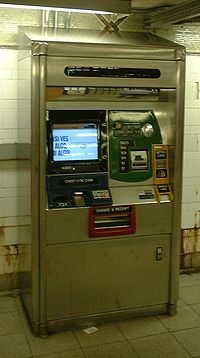
CU Blog - MetroCard - Model for CCB - Photo 2MetroCard Vending Machines (MVMs) are machines located in all subway stations and transit centers. They debuted on January 25, 1999 and are now found in two models. Standard MVMs are large vending machines that accept cash, credit cards, and debit cards and are in every subway station. Cash transactions are required for purchases of less than $1, and they can return up to $8 in coin change. There are also smaller versions of these machines that only accept credit and ATM/debit cards. Both machines allow a customer to purchase any type of MetroCard through a touch screen. The MVM can also refill to previously issued cards. PATH fare vending machines can also dispense MetroCards.

The machines are compliant with the Americans with Disabilities Act of 1990 through use of braille and a headset jack.

Neighborhood MetroCard Merchants

MetroCards can be sold by retail merchants not affiliated with MTA. Vendors can apply to sell MTA fare media at their businesses. Only presealed, prevalued cards are available, and no fee is charged.

Future

In 2006 the MTA and Port Authority of NY/NJ announced plans to replace the magnetic strip with smart cards.

On July 1, 2006, MTA launched a six-month pilot program to test the new “contact-less” smart card fare collection system, initially ending on December 31, 2006 but extended until May 31, 2007. This program was tested at all stations on the IRT Lexington Avenue Line and at four stations in the Bronx, Brooklyn and Queens. The testing system utilized Citibank MasterCard’s PayPass keytags. This smart card system is intended to ease congestion near the fare control area by reducing time spent at paying for fare. MTA and other transportation authorities in the region say they will eventually implement system-wide.

Beginning October 7, 2012, MetroCard vending machines scattered throughout Manhattan dispensed something other than the classic blue and gold MetroCard. The MTA has begun to sell advertisement space on the front and back of the card to raise additional revenue. The 2012 ad appearing on the cards was purchased by The Gap [retail stores] and reads: “Be Bright NYC” with multicolored letters on a navy blue background. It encourages New Yorkers to visit Gap’s newly remodeled flagship store at 34th   Street and Broadway starting October 10, 2012. Customers who present the MetroCard at any Gap store were entitled to a 20% discount on merchandise purchases through November 18, 2012. The MTA has been running advertisements on the back of MetroCards since its inception, earning advertiser fees along with expired card value (accruing when purchased fares wind up not being used on a card deemed a collectible by fans). Deals were arranged as early as 1997. However, this Gap deal is the first time the front of the cards have changed in over 10 years. Approximately 10% of the MetroCards sold throughout the system in a typical month will carry the Gap advertising. Future MetroCard advertising campaigns will include the word “MetroCard” on the back of the card, flush right in the white space above the zone available for advertising.

Bad Actors: Fraud and Scams

The MetroCard system is susceptible to various types of frauds, perpetrated by con artists. Usually these frauds involve the con artist preventing or dissuading the commuter from using his or her own MetroCard, and then charging the commuter for entry to the system (entry is gained by a method that costs the con artist nothing).

Also, MetroCard Vending Machines are programmed to disable the bill or coin acceptor after a series of rejected bills or coins, which can result in a row of MVMs all saying “No Bills” or “No Coins”.

If a con artist is not using a stolen or broken card, he or she can use an array of unlimited cards. Multiple cards are needed because of the 18-minute delay between each swipe at the same station. Using unlimited cards, a con artist is able to sell rides for $1 instead of $2.

A report from New York State Senator Martin J. Golden claims this scam is costing the MTA $260,000 a year, and some con artists are making up to $800 a day executing it. All aspects of this scam have been recently prohibited by MTA policy and a New York State law.

CU Blog - MetroCard - Model for CCB - Photo 3The introduction of MetroCards did eliminate one class of criminals. When the NYC subway still used tokens, token suckers would steal tokens by jamming turnstile coin slots, waiting for unsuspecting passengers to deposit tokens (only to discover that the turnstile did not work), then returning to suck out the token. The retirement of tokens in 2003 put the token suckers out of commission.

The MetroCard does have a magnetic stripe, but both the track offsets and the encoding differ from standard Magstripe cards. It is a proprietary format developed by the contractor Cubic. Off-the-shelf reader/writers for the standard cards are useless, and even hypothetically could work only with both physical and software modification. Some have had partial success decoding it using audio tape recorder heads, laptop sound cards, and custom Linux software.
Source: Wikipedia Online – encyclopedic source; retrieved 08/18/2014 from: http://en.wikipedia.org/wiki/MetroCard_(New_York_City)
Share this post:
, , ,

Britain’s Neglected Diaspora

Go Lean Commentary

Oh, how the mighty has fallen!

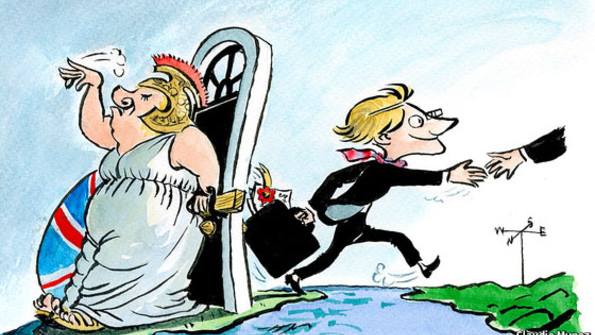
It is not only the Third World that struggles with brain drain. According to the foregoing news article, Great Britain, one of the world’s richest economies, also has a problem keeping their highly skilled workers as home. Accordingly, the article reports that there are over 5 million British expatriates living abroad.

Title: Message to the British Diaspora: “… and don’t come back”

CU Blog - Britain's neglected diaspora - Photo 1

Sub-title: Some 5 million Britons live abroad. The country could do far more to exploit its high-flying expats

When British politicians talk about winning the “global economic race” (as they often do) they have athletes like Gregor Wilson in mind. Mr. Wilson taught himself to code as a child. He started and built his first company while at university and sold it on graduating. His second venture, a software firm, is booming and will soon be ready to take on more staff. He is also preparing to leave Britain for good.

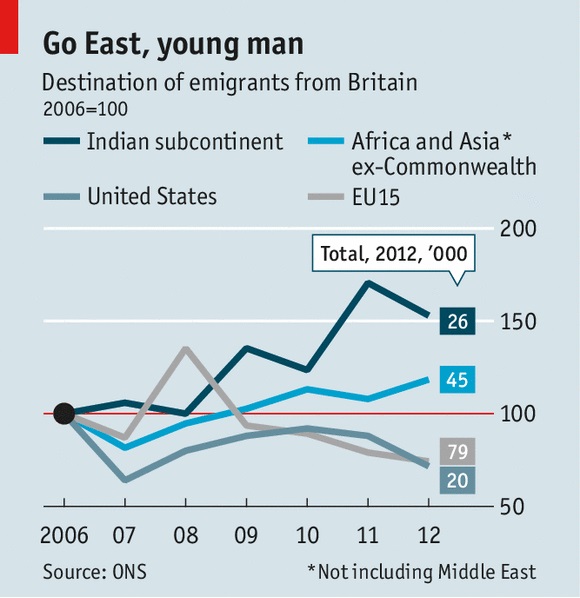
In the popular imagination, British expats are leathery retirees in the Mediterranean. But from 2006 onwards the weak pound, the bursting of Spain’s property bubble and rising taxes in France made the costas less attractive. The number of old Britons emigrating annually has more than halved since then. Dean Blackburn, head of HSBC Expat, part of the high-street bank, says that a different breed of emigrant is now on the march: the ambitious graduate bound for North America or Asia.

CU Blog - Britain's neglected diaspora - Photo 2The sharpest rise has been among those moving to the glittering East (see chart). Mr Wilson will build his business in Hong Kong. The web, along with the reach of the English language and the cachet of a British degree, gives young people like him opportunities undreamed-of by their parents’ generation. They are also un-tethered for longer: on average, they buy a house and form a family later in life than did previous generations. Figures from the Office for National Statistics show that, since the eve of the economic crisis, emigration is down by 19% overall but up by 8% among 15- to 24-year-olds.

High housing costs help to drive young folk abroad. For the monthly rent on a rabbit hutch anywhere near central London, graduates live grandly elsewhere. “We can afford to travel around Australia, rent an apartment with a sea view and save some money,” explains Emma, a publisher and recent Oxford graduate who moved to Melbourne last year. Those with advanced degrees are especially likely to leave for countries where pay and research facilities are better.

This is regrettable. Britain’s productivity rate is puny; firms and factories badly need such skilled employees. But it is also an opportunity—which the country is squandering.

According to the World Bank, the British diaspora (at nearly 5m people, roughly the size of Scotland) is the largest of any rich country and the eighth biggest overall. Britain’s many expats could strengthen its trading links, channel investment into its economy and generally burnish the national brand. But Britain’s government seems to have “no coherent strategy” for engaging with them, says Alan Gamlen of the Oxford Diasporas Programme, a research unit at OxfordUniversity.

Of 193 UN member states, 110 have formal programmes to build links with citizens abroad. Britain is not one of them. The Foreign and Commonwealth Office’s database of Britons abroad is patchy. Of all the high-flying expats with British passports your correspondent asks, only one—Danny Sriskandarajah, a migration expert based in South Africa—has had any contact with local embassies or with UKTI, Britain’s trade-promotion body. And his Indian friend has received much more attention from his consulate.

Indeed, India is a trailblazer in this field. It has an entire ministry for its emigrants. Mr. Gamlen says it partly has this to thank for the success of its IT industry, built by Indians lured home from Silicon Valley and Europe. Other countries are similarly welcoming. Italy and France even reserve parliamentary seats for their diasporas.

The British government would probably have to work harder than most to sustain ties with the country’s expats. Britons are relatively good at melting into other countries without trace. They are a individualistic bunch, have Commonwealth links and a native language that often makes it easy to integrate.

Kiwi seeds
New Zealand offers a good model for Britain’s hands-off diplomats to emulate. Wellington has spent 30 years encouraging firms and philanthropists to root out Kiwis abroad. Its proudest achievement is the Kiwi Expat Association, a public-private partnership that supports and connects overseas New Zealanders through social media and networking events, and helps them return home if they so wish. Britain might also make it easier to bring spouses into the country. Expats who want to move back with their non-British partners often collide with their home country’s ever-tougher immigration regime.

If Britain does not want its talented globetrotters, others do. Germany actively recruits Britons to take apprenticeships there. Middle Eastern governments tour British universities doling out visas. Mr. Wilson was contacted out of the blue by the Chinese authorities, who invited him to relocate his firm and offered to pay for his flight. “America and China seem really keen to attract us,” he says. “Britain just doesn’t seem that interested.”
The Economist Magazine – (Posted 08/09/2014) –
http://www.economist.com/news/britain/21611102-some-5m-britons-live-abroad-country-could-do-far-more-exploit-its-high-flying-expats-and?fsrc=nlw

The analysis is straight forward, this is Globalization 101. In a global economy, the economic rules of supply and demand are magnified globally. Highly skilled individuals are a commodity that is in demand, customers for that commodity emerged from all corners of the earth.

For the Caribbean, the lessons are very pointed, the exacerbated brain drain, estimated at 70%, with one country Guyana registering a 81% ratio, will not go away on its own. There must be a concerted effort of mitigations and solutions to remediate the problem. The book Go Lean…Caribbean is the concerted mitigation effort on behalf of the Caribbean region. The book Go Lean…Caribbean serves as a roadmap for the introduction and implementation of the technocratic Caribbean Union Trade Federation (CU).

This roadmap is for the elevation of Caribbean society, including the Diaspora. There is no laissez-faire attitude toward this population, there are specific missions to impact the Diaspora into the effort to empower the Caribbean. In fact, the prime directives of the CU are presented as the following 3 statements:

  • Optimization of the economic engines in order to grow the regional economy to $800 Billion & create 2.2 million new jobs.
  • Establishment of a security apparatus to protect the resultant economic engines.
  • Improve Caribbean governance to support these engines.

The book posits that, just like Great Britain in the foregoing article, the Caribbean is in crisis with this brain drain problem. This point is stressed early in the book (Page 13) in the following pronouncements in the Declaration of Interdependence:

 xix.   Whereas our legacy in recent times is one of societal abandonment, it is imperative that incentives and encouragement be put in place to first dissuade the human flight, and then entice and welcome the return of our Diaspora back to our shores. This repatriation should be effected with the appropriate guards so as not to imperil the lives and securities of the repatriated citizens or the communities they inhabit. The right of repatriation is to be extended to any natural born citizens despite any previous naturalization to foreign sovereignties.

xx.   Whereas the results of our decades of migration created a vibrant Diaspora in foreign lands, the Federation must organize interactions with this population into structured markets. Thus allowing foreign consumption of domestic products, services and media, which is a positive trade impact. These economic activities must not be exploited by others’ profiteering but rather harnessed by Federation resources for efficient repatriations.

This commentary previously related details of the vibrant Caribbean Diaspora, such as the causes of emigration, efforts to reduce the “push-and-pull” factors and the region’s continuous interaction with the “exile community”, in these earlier Go Lean blogs:

https://goleancaribbean.com/blog/?p=1896 American “Pull” Factors – Crisis in Black Homeownership
https://goleancaribbean.com/blog/?p=1698 American “Pull” Factors – STEM Jobs Are Filling Slowly
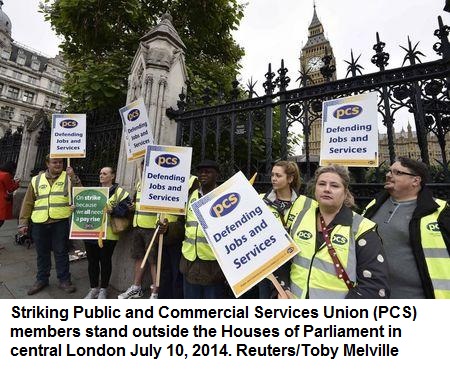
https://goleancaribbean.com/blog/?p=1683 British public sector workers strike over ‘poverty pay’
https://goleancaribbean.com/blog/?p=1596 Book Review: ‘Prosper Where You Are Planted’
https://goleancaribbean.com/blog/?p=1433 Caribbean loses more than 70 percent of tertiary educated to brain drain
https://goleancaribbean.com/blog/?p=1350 PayPal expands payment services to 10 markets
https://goleancaribbean.com/blog/?p=1296 Remittances to Caribbean Increased By 3 Percent in 2013
https://goleancaribbean.com/blog/?p=1256 Traditional 4-year College Degree are Terrible Investments for the Caribbean Region
https://goleancaribbean.com/blog/?p=841 Having Less Babies is Bad for the   Economy
https://goleancaribbean.com/blog/?p=740 Trade/Foreign Mission Offices – Why not … a profit center?

Losing a portion of  any population is bad for any economy. But losing large portions of a skilled population, is worst still as it creates a debilitating brain drain.

So how do we, in the Caribbean, find success when even John Bull (metonym referring to England) has failed? The foregoing article identifies a best practice: Diaspora outreach. This plan requires capturing a database of all Caribbean Diaspora and their legacies, a natural feature of the myCaribbean.gov social media site.

The Go Lean roadmap spells out the full details of the plan to engage the Diaspora residing, working, and studying in foreign lands. (Many students study abroad and never return “home”). The goal is to expand trade and absolutely-positively encourage a repatriation to their Caribbean homelands.

The CU will surely not abandon their Caribbean expatriates, even though these ones may have abandoned the Caribbean.

In line with the foregoing article, the Go Lean book details a series of community ethos, strategies, tactics, implementations and advocacies to foster the best practices in Diaspora outreach, thus furthering interaction with far-flung Caribbean stakeholders:

Community Ethos – Deferred Gratification Page 21
Community Ethos – People Respond to Incentives Page 21
Community Ethos – Economic Systems Influences Choices & Incentives Page 21
Community Ethos – The Consequences of Choice Lie in the Future Page 21
Community Ethos – Job Multiplier Page 22
Community Ethos – Lean Operations Page 24
Community Ethos – Return on Investments Page 24
Community Ethos – Ways to Impact the Future Page 26
Community Ethos – Ways to Help Entrepreneurship Page 28
Community Ethos – Ways to Impact Research & Development Page 30
Community Ethos – Ways to Manage Reconciliations Page 34
Community Ethos – Ways to Impact the Greater Good Page 37
Strategy – Mission – Repatriate Diaspora Page 46
Strategy – Customers – Diaspora Page 47
Tactical – Separation of Powers – Department of State – Foreign Affairs Page 80
Implementation – Year 1 / Assemble Phase Page 96
Implementation – Year 4 / Repatriate Phase Page 98
Implementation – Improve Mail Services – e-Mail for Diaspora Page 108
Implementation – Ways to Deliver Page 109
Implementation – Ways to Impact Social Media Page 111
Implementation – Trade Mission   Objectives Page 117
Implementation – Reasons to Repatriate Page 118
Implementation – Ways to Benefit from Globalization Page 119
Planning – Ways to Improve Trade Page 128
Advocacy – Ways to Grow the Economy Page 151
Advocacy – Ways to Create Jobs Page 152
Advocacy – Ways to Improve Education Page 159
Advocacy – Ways to Foster Technology Page 197
Advocacy – Ways to Impact the Diaspora Page 217
Advocacy – Ways to Impact British Territories Page 245
Appendix – Analysis of Caribbean Diaspora by Country of Residence Page 267
Appendix – Analysis of Caribbean Remittances Page 268
Appendix – Analysis of Caribbean Emigration Page 269
Appendix – Alternative Remittance Modes Page 270
Appendix – Puerto Rican Diaspora Population in the US Page 304

This roadmap focuses on the Caribbean, arguably the world’s best address, not Great Britain, a less than tropical, less than paradisiacal land . Now is the time for all of the Caribbean, the people and governing institutions, to lean-in for the changes in this Go Lean … Caribbean roadmap.

This is a big deal for the region. This roadmap is not just a plan, its a prescription for what ails the region; it advocates for the CU to serve as a delivery vehicle to carry the hopes and dreams of generations of Caribbean residents…and Diaspora.

The region needs this delivery; the region needs this cure. The region needs this roadmap to be a better place to live, work and play.

Download the book Go Lean … Caribbean – now!


Share this post:
, , , ,
[Top]

Climate Change May Bring More Kidney Stones

Go Lean Commentary:

CU Blog - Climate Change May Bring More Kidney Stones - PhotoThe subject in the foregoing news article just cannot be ignored: Climate Change and personal health.

While this report was published by undisputed technocratic professionals, the Children’s Hospital of Philadelphia (CHOP), the publishers of the book Go Lean…Caribbean had engaged a similar analysis methodology: assessments based on hard evidence – number crunching (Big Data) and anecdotes – to reach their conclusions in the book that the Caribbean is in a state of crisis.

Both analyses are now aligned!

This subject of damaging health effects deriving from Climate Change aligns with Go Lean … Caribbean, as it posits that there are agents of change, including Climate Change, that the region is struggling to contend with, and that the negative consequences are already manifesting themselves in everyday Caribbean life, but the region as a whole and individual member-states, are not able, willing or equipped to mitigate the associated risks. The book portrays that the appropriate response requires heavy-lifting, and therefore proposes the Caribbean Union Trade Federation (CU) as a technocratic solution. The book serves as a roadmap for the introduction and implementation of the CU. This Go Lean roadmap describes the CU as the best solution for a concerted Caribbean response.

The CHOP research is published as follows:

CHOP-Led Research Finds Link between Hotter Days, Kidney Stones in U.S. Adults and Children
Contact: Ashley Moore, The Children’s Hospital of Philadelphia, 267-426-6071 or MooreA1@email.chop.edu

As daily temperatures increase, so does the number of patients seeking treatment for kidney stones. In a study that may both reflect and foretell a warming planet’s impact on human health, a research team found a link between hot days and kidney stones in 60,000 patients in several U.S. cities with varying climates.

“We found that as daily temperatures rise, there is a rapid increase in the probability of patients presenting over the next 20 days with kidney stones,” said study leader Gregory E. Tasian, MD, MSc, MSCE, a pediatric urologist and epidemiologist at The Children’s Hospital of Philadelphia (CHOP), who is on the staff of the Hospital’s Kidney Stone Crenter as well as the Hospital’s Center for Pediatric Clinical Effectiveness (CPCE).

Tasian, senior author Ron Keren, MD, MPH, also of CHOP and CPCE, and colleagues from other centers published their results today in Environmental Health Perspectives, the journal of the National Institute of Environmental Health Sciences. The Urologic Diseases in America Project, supported by the National Institute of Diabetes and Digestive and Kidney Diseases, sponsored the study.

The study team analyzed medical records of more than 60,000 adults and children with kidney stones between 2005 and 2011 in Atlanta, Chicago, Dallas, Los Angeles and Philadelphia, in connection with weather data. Tasian and colleagues described the risk of stone presentation for the full range of temperatures in each city. As mean daily temperatures rose above 50 F (10 C), the risk of kidney stone presentation increased in all the cities except Los Angeles. The delay between high daily temperatures and kidney stone presentation was short, peaking within three days of exposure to hot days.

Link between kidney stones and high temperatures
“These findings point to potential public health effects associated with global climate change,” said Tasian. “However,” cautions Tasian, “although 11 percent of the U.S. population has had kidney stones, most people have not. It is likely that higher temperatures increase the risk of kidney stones in those people predisposed to stone formation.” Higher temperatures contribute to dehydration, which leads to a higher concentration of calcium and other minerals in the urine that promote the growth of kidney stones.

A painful condition that brings half a million patients a year to U.S. emergency rooms, kidney stones have increased markedly over the world in the past three decades. While stones remain more common in adults, the numbers of children developing kidney stones have climbed at a dramatically high rate over the last 25 years. The factors causing the increase in kidney stones are currently unknown, but may be influenced by changes in diet and fluid intake. When stones do not pass on their own, surgery may be necessary.

The study team also found that very low outdoor temperatures increased the risk of kidney stones in three cities: Atlanta, Chicago and Philadelphia. The authors suggest that as frigid weather keeps people indoors more, higher indoor temperatures, changes in diet and decreased physical activity may raise their risk of kidney stones.

The researchers argue that the number of hot days in a given year may better predict kidney stone risk than the mean annual temperature. Atlanta and Los Angeles share the same annual temperature (63 F, or 17 C), but Atlanta has far more hot days than Los Angeles, along with nearly twice the prevalence of kidney stones.

Tasian added that while the five U.S. cities have climates representative of those found throughout the world, future studies should explore how generalizable the current findings are. Other studies should analyze how risk patterns vary in different populations, including among children, represented by a small sample size in the current study.

Global warming trend and kidney stone prevalence
The study’s broader context is in patterns of global warming. The authors note that other scientists have reported that overall global temperatures between 2000 and 2009 were higher than 82 percent of temperatures over the past 11,300 years. Furthermore, increases in greenhouse gas emissions are projected to raise earth’s average temperatures by 2 to 8 F (1 to 4.5 C) by 2100. “Kidney stone prevalence has already been on the rise over the last 30 years, and we can expect this trend to continue, both in greater numbers and over a broader geographic area, as daily temperatures increase,” concluded Tasian. “With some experts predicting that extreme temperatures will become the norm in 30 years, children will bear the brunt of climate change.”

More information:
Funds from the National Institutes of Health (grants HD060550 and DK70003), supported this study, along with a research fellowship from the Medical Research Council, U.K. In addition to their CHOP titles, Tasian and Keren are on the faculty of the Perelman School of Medicine at the University of Pennsylvania.

Co-authors of the study are Christopher Saigal, MD, MPH, of UCLA who is a co-principal investigator of the Urologic Diseases in America Project; Antonio Gasparrini, PhD, of the London School of Hygiene and Tropical Medicine; Benjamin Horton, PhD, of Rutgers University; Rodger Madison, MA, of the RAND Corporation; and Jose Pulido, MD, and J. Richard Landis, PhD, both of the University of Pennsylvania.

Taisan GE et al, “Daily Mean Temperature and Clinical Kidney Stone Presentation in Five U.S. Metropolitan Areas: A Time Series Analysis,” Environmental Health Perspectives, published July 10, 2014.
Children’s Hospital of Philadelphia Web Site – Retrieved 07-28-2014
http://www.chop.edu/news/climate-change-may-bring-more-kidney-stones.html

Considering the evidence published in the foregoing article, this is the immediate response that comes to mind:

It is what it is!

While there continues to be deniers and detractors of Climate Change, these first responders treating the ailments in hospitals do not have the luxury of “burying their head in the sand”, especially when a suffering patient (many times a child) is begging for relief. They must simply provide care and count the tally later. The foregoing article is that tally.

Debate over!

The same applies to the Caribbean. The region is arguably the best address on the planet, but there are constant climate-driven threats, especially during the annual hurricane seasons. After each storm’s landfall, there are repercussions and consequences in which commerce systems get disrupted and economic engines are curtailed. The end result, after consistent periods of “famine”, many residents seek to flee because of these challenging economic conditions.

Something is clearly wrong climate-wise and must be addressed. According to the foregoing article, patients (including children) in the United States are not spared from Climate Change. The Caribbean is not spared either. While the Caribbean itself cannot unilaterally fix the problems of Climate Change, we can better prepare for the negative consequences:

Respond
Rebuild
Recover

The Go Lean roadmap specifies where we are as a region (losing 70% brain drain among the college educated; no preparation for spikes in health crises like kidney stones), where we want to go (elevation of Caribbean society in the homeland for all citizens to dissuade migration and provide public health mitigations) and how we plan to get there – confederating as a Single Market entity. While the Go Lean book strategizes a roadmap for economic empowerment, it clearly relates that healthcare and disaster management are germane to the Caribbean quest for health, wealth and happiness. At the outset of the Go Lean book, in the Declaration of Interdependence (Page 11), these points are pronounced:

i.     Whereas the earth’s climate has undeniably changed resulting in more severe tropical weather storms, it is necessary to prepare to insure the safety and security of life, property and systems of commerce in our geographical region. As nature recognizes no borders in the target of its destruction, we also must set aside border considerations in the preparation and response to these weather challenges.

ix.      Whereas the realities of healthcare and an aging population cannot be ignored and cannot be afforded without some advanced mitigation, the Federation must arrange for health plans to consolidate premiums of both healthy and sickly people across the wider base of the entire Caribbean population. The mitigation should extend further to disease management, wellness, obesity and smoking cessation programs. The Federation must proactively anticipate the demand and supply of organ transplantation as developing countries are often exploited by richer neighbors for illicit organ trade.

The Caribbean Union Trade Federation has the prime directive of optimizing the economic, security and governing engines of the region. The foregoing article/VIDEO depicts the Big Data analysis that needs to be performed on behalf of Caribbean society. The roadmap specifies both a Commerce Department (Econometrics) and a Health Department in the Separation-of-Power dictum.

There is also the priority on Research & Development (R&D) placed in the foregoing article. The roadmap describes this focus as a community ethos. Then it goes on to stress that the CU must promote the community ethos that R&D is valuable and must be incentivized for adoption. The following list details additional ethos, strategies, tactics, implementations and advocacies to optimize the region’s health deliveries:

Community   Ethos – Economic Systems Influence Individual Choices Page 21
Community   Ethos – The Consequences of Choices Lie in the Future Page 21
Community   Ethos – “Crap” Happens Page 23
Community   Ethos – Cooperatives Page 25
Community   Ethos – Non-Government Organizations Page 25
Community   Ethos – Ways to Impact Research & Development (R&D) Page 30
Community   Ethos – 10 Ways to Promote Happiness Page 36
Community   Ethos – Ways to Impact the Greater Good Page 37
Strategy – Integrate   and unify region in a Single Market Page 45
Strategy – Agents of   Change – Climate Change Page 57
Tactical – Fostering a   Technocracy Page 64
Tactical – Separation   of Powers – Commerce Department – Econometrics Page 79
Tactical – Separation   of Powers – Health Department Page 86
Implementation   – Ways to Pay for Change Page 101
Implementation   – Ways to Implement   Self-Government Entities – R&D Page 105
Implementation   – Ways to Deliver Page 109
Planning –    Ways to Make the Caribbean Better Page 131
Advocacy –   Ways to Improve Healthcare Page 156
Advocacy –   Ways to Better Manage the Social Contract Page 170
Advocacy –   Ways Foster Cooperatives Page 176
Advocacy –   Ways to Improve for Natural Disasters Page 184
Advocacy –   Ways to Improve Emergency Management Page 196
Advocacy –   Ways to Impact Foundations Page 219
Advocacy –   Ways to Improve Elder-Care Page 225
Advocacy –   Ways to Impact Youth – Healthcare Page 227
Advocacy –   Ways to Impact Persons with Disabilities Page 228
Appendix – Emergency Management – Trauma Centers Page 336

In fact, the foregoing news/VIDEO story depicted analysis administered by the Children’s Hospital of Philadelphia (CHOP).  This institution has undisputed credentials and credibility, being ranked, by US News & World Report magazine, as the #1 Children’s Hospital in the country [a]. This recognition means that they, CHOP, must be doing things right!

This is a great model for Caribbean society – we too, must do things right.

Technocratic = doing things right!

The Go Lean roadmap posits that more analysis will emerge as a direct result of the CU prioritization on science, technology, engineering and medical (STEM) activities on Caribbean R&D campuses and educational institutions.

This is the heavy-lifting that the CU is designed to bear. Anyone can be afflicted with kidney stones – a painful disorder. Now, obviously, with indisputable Climate Change, these afflictions are becoming more commonplace; the CU, and all Caribbean institutions, must now do things right. This is the Greater Good.

Download the book Go Lean … Caribbean – now!

——————————————————————————————————————————–

Appendix a – Citation References:

Ranked #1 in the United   States – U.S. News & World Report

An important measure of the quality of children’s hospitals in the U.S. is the yearly rankings provided by a magazine called U.S. News & World Report. For the 2014-15 rankings, the magazine surveyed 183 pediatric centers for data about 10 specialties and asked 150 pediatric specialists in each specialty where they would send the sickest children.

The Children’s Hospital of Philadelphia (CHOP) shared the number one spot on the U.S. News Honor Roll, and ranked in the top four in the nation for every pediatric specialty evaluated.

CHOP was recognized for excellence in the following specialties:

Cancer
Cardiology and Heart Surgery
Diabetes and Endocrinology
Gastroenterology
Orthopedics
Neonatology
Nephrology and Kidney Diseases
Neurology and Neurosurgery
Pulmonology
Urology

Source: The Children’s Hospital of Philadelphia – About Us. Retrieved from http://www.chop.edu/service/international-medicine/international-patient-services/about-chop/home.html


Share this post:
, ,
[Top]

Many drug inmates who get break under new plan to be deported

Go Lean Commentary

A crisis is coming!

Due to changes in US drug policy – 2 States have de-criminalized Marijuana and the new national ethos is that drug users are victims more so than villains (See VIDEO below) – incarcerated drug felons will have their sentences reduced. For those that are non-citizens, the likelihood is that they will be immediately deported to their homelands. Notice the trend, the US federal government will not want to pay billions of dollars to maintain these prisoners in the system or out of the system. So they would rather send them “home” and make them someone else’s problem. For the inmates with Caribbean heritage, that “someone else” would be the Caribbean member-states.

By: Liz Goodwin, Yahoo News

Many drug inmates who get break under new plan to be deported.

Thousands to land back in Mexico after early release.

US Drug Inmates PhotoThousands of federal prisoners set to be released early thanks to a change in drug rules will most likely be quickly deported to their home countries next year.

The U.S. Sentencing Commission, a group that controls advisory sentencing guidelines for federal judges, voted last week to shave an average of two years off the sentences of up to 46,000 inmates jailed for drug crimes. The first ones will be released on Nov. 1, 2015.

The group has begun to reverse older policies that sent people away for decades for nonviolent drug crimes, part of a larger criminal justice reform push that has attracted bipartisan support. In 2007, the group lightened sentences for crack offenders. Inmates will have to apply for the sentence reductions with the help of public defenders, and federal judges will have a year to decide who qualifies for early release.

But many of the people who will benefit from the change in policy will likely be deported as soon as they qualify for the sentence reduction. A quarter of all the qualifying inmates are not U.S. citizens, according to the group’s analysis, complicating the picture many have of drug offenders as gang-affiliated young men in run-down, poor urban neighborhoods. Many of the offenders, in fact, were caught with drugs in their vehicles as they tried to cross the border and were prosecuted in Texas. The Lone Star state has nearly 21 percent of all the prisoners who will benefit from the early release. Of those 10,296 prisoners in Texas, up to a third will be deported once released.

The hefty noncitizen portion of offenders could cut the state a break, since the criminal justice system does not have enough probation officers and halfway homes to handle the influx that’s expected when the first releases begin in November 2015.

“There wouldn’t have been enough facilities to absorb the number of people who would be released,” said Maureen Franco, public defender in the Western District of Texas, which covers much of the state’s border with Mexico.

Giving the judges a year to consider the early release petitions will also allow Immigration and Customs Enforcement time to make sure it has enough beds for the prisoners while they await their deportation.

Franco said her immigrant clients are just as eager for early release as those who are citizens, despite the deportation that awaits them. She’s already heard from some of them who are emailing her and asking when they can get out.

This might be in part because immigrants living illegally in the U.S. are not eligible for many programs in federal prison — they also can’t live in lower-security facilities. “It’s a much harsher sentence,” said Marjorie Meyers, federal public defender in the Southern District of Texas.

Ricardo Hinojosa, a vice chair of the Sentencing Commission and a federal judge in Laredo, brought up concerns before the group’s vote that the offenders who are sent back to Mexico will not be rigorously supervised by that country’s probation system. “Many of them will be tempted to come back, and maybe quicker, because of the fact that many of them have families on this side of the border,” Hinojosa said.

Those who are caught trying to come back over the border face up to 10 years in federal prison. They might fear the violence in Mexico, particularly if they were involved in drugs, more than detention in America, where at least they are safe.

Prisoners who had legal immigration status but were not citizens can try to fight their deportation, but it’s a long shot. “It’s very hard to fight,” Meyers said.
Yahoo News Online Source (Retrieved 07/22/2014) –
http://news.yahoo.com/many-drug-inmates-who-get-break-under-new-plan-to-be-deported-134758280.html
Photo Credit (Above): Andrew Burton – Getty Images

Video Credit (Below): White House National Drug Control Strategy:  http://www.whitehouse.gov/ondcp/drugpolicyreform

Ready or not, here they come!

For the Caribbean, the answer most likely is “Not Ready”!

This is a crisis that is looming. The book Go Lean…Caribbean declares that a crisis is a terrible thing to waste and that we should not waste this opportunity to elevate our own security engines in the region. If we do it right, we can even profit from the crisis as well. The overriding theme of the foregoing news article is the need for a prison industrial complex – the field of “penology”. With this coming crisis – November 2015 – the publishers of the book Go Lean…Caribbean see opportunities for commerce.

The Go Lean book serves as a roadmap for the introduction and implementation of the technocratic Caribbean Union Trade Federation (CU). With 2 American territories in the Caribbean (Puerto Rico & the US Virgin Islands), an immediate plan to host US federal prisoners is not so radical. Plus, this could mean billions of dollars for the Caribbean.

The Go Lean book goes further and posits that the region must prepare its own security apparatus for its own security needs. But while we are building facilities (prisons, jails, and detention centers) for our own needs, we can employ the strategy of over-building and insourcing for other jurisdictions. Had we been ready now, with this Go Lean roadmap, we would have been able to embrace the opportunities presented by the US Drug Policy Change. These unwanted “inmates” could have been guests in Caribbean facilities now – for a fee; a lower fee than the US federal government currently incurs, but more revenues than the Caribbean currently generates.

So then what happens when these US drug inmates are released?

“Mejor el diablo sabe que el diablo no tiene” – Spanish expression. The English translation is “Better the Devil you know than the Devil you don’t know”.

The Go Lean roadmap asserts that it is better to structure crime intelligence analysis around a population that we know is a “risk” than to watch/monitor everybody. At some point the Caribbean Diaspora in US Federal prisons will be sent home. We want to be prepared for them. If not only to offer them new chances of productive citizenship, then at least to closely guard against their post-incarceration activities. We already know these ones have a preponderance to engage in illicit activities, so it is prudent to “watch” them.

This point is pronounced early in the book with the Declaration of Interdependence (Page 12) that claims:

x. Whereas we are surrounded and allied to nations of larger proportions in land mass, populations, and treasuries, elements in their societies may have ill-intent in their pursuits, at the expense of the safety and security of our citizens. We must therefore appoint “new guards” to ensure our public safety and threats against our society, both domestic and foreign. The Federation must employ the latest advances and best practices of criminology and penology to assuage continuous threats against public safety. The Federation must allow for facilitations of detention for convicted felons of federal crimes, and should over-build prisons to house trustees from other jurisdictions.

xvi. Whereas security of our homeland is inextricably linked to prosperity of the homeland, the economic and security interest of the region needs to be aligned under the same governance. Since economic crimes … can imperil the functioning of the wheels of commerce for all the citizenry, the accedence of this Federation must equip the security apparatus with the tools and techniques for predictive and proactive interdictions.

The goal of Go Lean…Caribbean, roadmap is to confederate under a unified entity made up of all 30 Caribbean member-states. Then provide homeland security for our neighborhood, contending with man-made and natural threats. The CU security goal is not for world dominance, or promotion of idealistic concepts. No, it is simply for public safety! The CU is set to optimize Caribbean society through a number of missions. The Go Lean roadmap has 3 prime directives:

  • Optimization of the economic engines in order to grow the regional economy to $800 Billion & create 2.2 million new jobs.
  • Establishment of a security apparatus to protect the resultant economic engines.
  • Improve Caribbean governance to support these engines.

This Go Lean roadmap calls for the establishment of professional penology arts and sciences, a Caribbean prison industrial complex. This will include the prison/jail/detention facilities and the rest of the eco-system: bail enforcement, witness protection, probation/parole, anti-recidivism, intelligence gathering, job training/placement and in-prison labor options. There are lots of lessons (from global examples) to learn and apply in perfecting the Caribbean model. For one, we do not want the profit motive – the book speaks of learning from “Peonage Past and Ensuring Corporate Governance” (Page 211); rather we want to be motivated by the Greater Good. The CU security directive should always be in support of growing Caribbean society, not leading the charge – no police state – but rather supporting the lead or “bringing up the rear”.

In recent blog submissions, this commentary highlighted the security provisions that must be enacted to improve homeland security, as soon as possible:

https://goleancaribbean.com/blog/?p=1674 Obama’s Plans for $3.7 Billion Immigration Crisis Funds
https://goleancaribbean.com/blog/?p=1554 Status of Forces Agreement = Security Pact
https://goleancaribbean.com/blog/?p=1386 Marijuana De-criminalization – In Jamaica, a Puff Peace
https://goleancaribbean.com/blog/?p=1076 References to the Caribbean Regional Security System
https://goleancaribbean.com/blog/?p=392 Jamaica to receive World Bank funds to   help in crime fight

Look seriously at the issues in the foregoing news article.

These inmates in Federal prisons are persona non-grata in the US. So they will have no choice but to come home…eventually. Whereas these are not the type of new residents we may want in the Caribbean, ready or not, they are coming. It is better to be prepared. What’s worse, these ones may now have even better-tuned-skills and abilities for operating in the illicit world – many criminals learn how to be better criminals in prison.

The Go Lean book details a series of community ethos, strategies, tactics, implementations and advocacies to provide increased public safety & security in the Caribbean region:

Economic Principle – People Respond to Incentives in Predictable Ways Page 21
Economic Principle – Economic Systems Influence Choices & Incentives Page 21
Economic Principle – Consequences of Choices Lie in Future Page 21
Community Ethos – Privacy –vs- Public Protection Page 23
Community Ethos – Intelligence Gathering Page 23
Community Ethos – Witness Security & Protection Page 23
Community Ethos – Light Up the Dark Places Page 23
Community Ethos – “Crap” Happens Page 23
Community Ethos – Lean Operations Page 24
Community Ethos – Ways to Improve Sharing Page 35
Community Ethos – Ways to Impact the Greater Good Page 37
Tactical – Confederating a non-sovereign union Page 63
Tactical – Separation of Powers – Homeland Security Page 75
Tactical – Separation of Powers – Justice Department Page 77
Implementation – Ways to Pay for Change Page 101
Implementation – Start-up Foreign Policy Initiatives Page 102
Implementation – Start-up Security Initiatives Page 103
Planning – Ways to Make the Caribbean Better Page 131
Planning – Ways to Improve Failed-State Indices Page 134
Advocacy – Ways to Grow the Economy Page 151
Advocacy – Ways to Mitigate Black Markets Page 165
Advocacy – Ways to Improve Governance Page 168
Advocacy – Ways to Better Manage the Social Contract Page 170
Advocacy – Ways to Impact Justice Page 177
Advocacy – Ways to Reduce Crime Page 178
Advocacy – Ways to Improve Homeland Security Page 180
Advocacy – Ways to Mitigate Terrorism Page 181
Advocacy – Ways to Improve Intelligence Gathering and Analysis Page 182
Advocacy – Ways to Improve for Natural Disasters Page 184
Advocacy – Ways to Impact the Prison Industrial Complex Page 211
Advocacy – Ways to Protect Human Rights Page 220
Appendix – Prison Industrial Complex Model: Nauru Detention Center Page 290

We console with the communities that have to deal with this impending crisis – a lot of the inmates are identified as Mexican; while this is not in scope for the CU, there are a lot of lessons that the Caribbean can learn from this country’s dysfunction in dealing with its public safety, especially along the US border. This region is near Failed-State status.

The Go Lean roadmap is the Caribbean’s aspiration to mitigate against Failed-State indices. This is underlying to the prime directive of the CU, to elevate the economics, security and governing engines of the Caribbean. This is not an easy task; this is heavy-lifting, and thus the book features the turn-by-turn directions to implement the appropriate provisions. This is a sensible roadmap to make the Caribbean homeland a better place to live, work and play.

Download the book Go Lean … Caribbean – now!

Share this post:
,
[Top]

Caribbean grapples with intense new cycles of flooding & drought

Go Lean Commentary

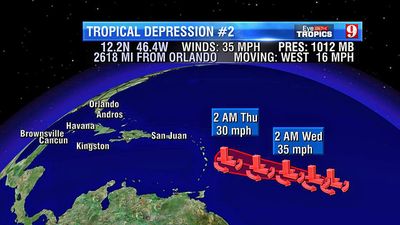
CU Blog - Caribbean grapples with new intense cycles of flooding and drought - Photo 2As of this moment, there is a tropical storm system that originated off the coast of Africa, building up in the Atlantic Ocean; it may or may not be a threat to the Caribbean. See photo to the right, and/or news feed video here: WFTV Eye on the Tropics.

This is the reality of Caribbean life – we have to contend with disasters, not of our making.

Climate Change is also not of our making, and yet we must contend with it as well. It is what it is!

In the past, our region has not done well managing “agents-of-change”. But we do not have the luxury of “sticking our head in the sand” and pretending that these problems will simply go away. The region has been devastated with this dysfunction and mis-management. Some 70% of Caribbean college-educated citizens have already fled their homelands in an undisputed brain drain. It’s time now to manage change differently than the Caribbean has done as of late. It’s time now to “Go Lean”.

The foregoing news article presents the story that there are new cycles of flooding and drought in the Caribbean. This too, is Climate Change 101. If only, there could be some equalizing between “the feast and the famine” with water. Yes there is. Caribbean stakeholders can proactively consider the benefits of one possible solution: Pipelines.

Since water is only free in our society when it is raining, there are costs associated at all other times, like storage and distribution; so the economic principles of pipelines are sound.

According to the book Go Lean … Caribbean, pipelines can be strategic, tactical and operationally efficient. They can mitigate challenges of Mother Nature, create jobs, secure the homeland and grow the economy at the same time.

The Go Lean book identifies that there are “agents-of-change” that our world have to now contend with. Proactively managing the cause-and-effect of these agents can yield great benefits and alleviate much suffering. The agents-of-change for the Caribbean are identified as follows:

Technology
Aging Diaspora
Globalization
Climate Change

The Go Lean book posits that we can manage all of these agents, but this last one, climate change is outside of our control and wreaking havoc on Caribbean life. Consider this news article here, that aligns this point:

By: Desmond Brown

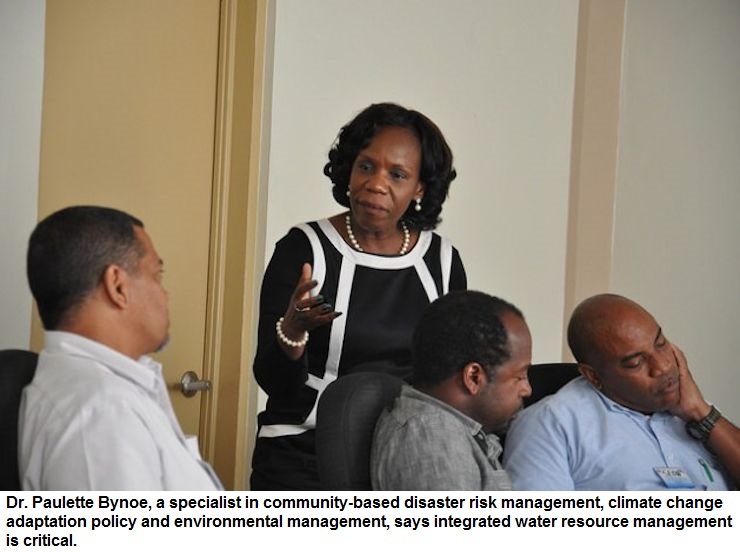
CASTRIES, St. Lucia, Monday July 21, 2014, IPS – As unpredictable weather patterns impact water availability and quality in St. Lucia, the Caribbean island is moving to build resilience to climate-related stresses in its water sector. Dr. Paulette Bynoe, a specialist in community-based disaster risk management, climate change adaptation policy and environmental management, says integrated water resource management is critical.CU Blog - Caribbean grapples with new intense cycles of flooding and drought - Photo

“We have been making progress…making professionals and other important stakeholders aware of the issue. That is the first step,” she told IPS.

“So in other sectors we can also look at coordination whether we talk about agriculture or tourism. It’s important that we think outside of the box and we stop having turfs and really work together,” she added.

Earlier this month, Bynoe facilitated a three-day workshop on Hydro-Climatic Disasters in Integrated Water Resource Management (IWRM) in St. Lucia. The workshop was held as part of the Organisation of Eastern Caribbean States-Reducing the Risks to Human and Natural Assets Resulting from Climate Change (OECS-RRACC) project.

Participants were exposed to the key principles of IWRM and Disaster Risk Reduction (DRR); the implications of climate change and variability for water resources management; policy legislation and institutional requirements needed at the community level to facilitate DRR in IWRM; the economics of disasters; and emergency response issues.

Rupert Lay, a water resources specialist with the RRACC Project, said the training is consistent with the overall goals of the climate change demonstration project in GIS technology currently being implemented by the OECS Secretariat.

“What we need to do now in the region and even further afield is to directly correlate the effects, the financial impacts of these adverse weather conditions as it relates to water resources,” he told IPS.

“We need to make that link strongly so that all of us can appreciate the extent to which and the importance of building resilience and adapting to these stresses.”

On Jul. 9, the St. Lucia Water and Sewage Company (WASCO) placed the entire island under a water emergency schedule as the drought worsened. The government has described the current situation as a “water crisis”.

The crisis, initially declared for the north of the island, has expanded to the entire country.

Managing director of WASCO Vincent Hippolyte said that there had not been sufficient rainfall to meet the demands of consumers. At the most recent assessment, the dam’s water level was at 322 feet, while normal overflow levels are 333 feet.

“Despite the rains and the greenery, drought conditions exist because the rivers are not moving. They do not have the volume of water that will enable WASCO to extract sufficient water to meet demand,” he said.

“We are in the early stages in the drought situation. It is not as severe as the later stages, but we are still in drought conditions.”

The government said that experts predicted the drought would persist through the month of August.

Bynoe said what’s happening in St. Lucia and elsewhere in the Caribbean is consistent with the projections of the Inter-Governmental Panel on Climate Change (IPCC) and the Climate Modeling Group from the University of the West Indies.

She said both bodies had given possible future scenarios of climate change as it relates to the SmallIslandDevelopingStates, and how climate change and climate variability could affect water resources.

“I think generally the issue is that in the region there is a high likelihood that we can have a shortage of water so we can experience droughts; and perhaps at the same time when we do have precipitation it can be very intense,” Bynoe, who is also Director of the School of Earth and Environmental Sciences at the University of Guyana, said.

She noted that the models are saying there can either be too little water or too much water, either of which could create serious problems for the Caribbean.

“With too much water now you can have run off, sedimentation, water pollution and water contamination which means in countries where we depend on surface water the treatment of water become critical and this will then bring cost implications because water treatment is very costly,” Bynoe explained.

“But also, if you are going to treat water you have to use a lot of energy and energy is one of the sectors that contribute to greenhouse gasses. So you can see where the impact of climate change is affecting water but with water treatment you can also contribute to climate change.”

For St. Lucia and its neighbours, Bynoe said lack of financial resources tops the list of challenges when it comes to disaster mitigation and adapting new measures in reference to hydro-climatic disasters.

She also pointed to the importance of human capital, citing the need to have persons trained in specific areas as specialists to help with modeling, “because in preparation we first have to know what’s the issue, we have to know what’s the probability of occurrence, we have to know what are the specific paths that we can take which could bring the best benefits to us.”

She used her home country Guyana, which suffers from a high level of migration, as one example of how sustainable development could be negatively affected by capital flight.

“But you also need human capital because first of all governments must work together within the region and lessons learnt in one country can be translated to other countries so that we can replicate the good experiences so that we don’t fall prey to the same sort of issues,” Bynoe said.

“But also social capital within the country in which we try to ensure that all stakeholders are involved, a very democratic process because it’s not only about policymakers; every person, every household must play a role to the whole issue of adaptation, it starts with the man or woman in the mirror,” she added.

In October 2010, Hurricane Tomas passed very near St. Lucia killing 14 people and leaving millions of dollars in monetary losses. The island was one of three Eastern Caribbean countries on which a slow-moving, low-level trough on Dec 24, 2013 dumped hundreds of millimetres of rain, killing 13 people.
Caribbean360 Online Community  (Retrieved 07-21-2014) –
http://www.caribbean360.com/news/caribbean-grapples-intense-new-cycles-flooding-drought

The book, Go Lean…Caribbean, purports that a new technology-enhanced industrial revolution is emerging, in which there is more efficiency gleaned from installing, monitoring and maintaining pipelines. Caribbean society must participate, not just consume the developments in this revolution. This point is pronounced early in the book with this Declaration of Interdependence (Page 11 &14), with the opening and subsequent statements:

i.        Whereas the earth’s climate has undeniably changed resulting in more severe tropical weather storms, it is necessary to prepare to insure the safety and security of life, property and systems of commerce in our geographical region. As nature recognizes no borders in the target of its destruction, we also must set aside border considerations in the preparation and response to these weather challenges.

xxvi.          Whereas the Caribbean region must have new jobs to empower the engines of the economy and create the income sources for prosperity, and encourage the next generation to forge their dreams right at home, the Federation must therefore foster the development of new industries, like that of … pipelines …

xxvii.     Whereas the region has endured a spectator status during the Industrial Revolution, we cannot stand on the sidelines of this new economy, the Information Revolution. Rather, the Federation must embrace all the tenets of Internet Communications Technology (ICT) to serve as an equalizing element in competition with the rest of the world. The Federation must bridge the digital divide and promote the community ethos that research/development is valuable and must be promoted and incentivized for adoption.

This Go Lean book serves as a roadmap for the introduction and implementation of a technocratic Caribbean Union Trade Federation (CU) to elevate society of the 30 Caribbean member-states. The foregoing news article draws reference to the efforts by the 9 member-states of the Organization of Eastern Caribbean States, all defined as Small Island Developing States. The CU effort on the other hand, is a confederation that includes coastal states like Guyana, Suriname and Belize. There are more territories and more water resources to leverage solutions for one member-state versus another.

In addition, the CU will assume jurisdiction for the Caribbean Sea, the 1,063,000 square-mile international waters under an UN-approved structure referred to as an Exclusive Economic Zone. This approach allows for cooperation and equalization, so as to mitigate the feast-and-famine water conditions in the region.

With this Go Lean roadmap, pipelines become viable under this administration. This becomes a real solution to a real problem! In fact the CU/Go Lean roadmap has these 3 prime directives:

  • Optimization of the economic engines in order to grow the regional economy to $800 Billion and create 2.2 million new jobs.
  • Establishment of a security apparatus to protect the resultant economic engines.
  • Improve Caribbean governance to support these engines.

The Go Lean book details the economic principles and community ethos to adopt, plus the executions of strategies, tactics, implementations and advocacies to forge solutions, like pipelines, in Caribbean communities. But this is not “your grandfather’s 1920 pipeline solution”, but rather a cutting-edge (circa 2020) solution featuring options like robotics and satellite-monitoring. Consider this list as follows:

Economic Principles – People Choose because Resources are   Limited Page 21
Economic Principles – All Choices Involve Costs Page 21
Economic Principles – People Respond to Incentives Page 21
Economic Principles – Economic Systems Influence   Individual Choices Page 21
Economic Principles – Consequences of Choices Lie in the   Future Page 21
Community Ethos – Job   Multiplier Page 22
Community Ethos – “Crap” Happens Page 23
Community Ethos – Lean Operations Page 24
Community Ethos – Return on Investments (ROI) Page 24
Community Ethos – Ways to Impact the Future Page 26
Community Ethos – Ways to Help Entrepreneurship Page 28
Community Ethos – Ways to Improve Sharing Page 35
Community Ethos – Impact the Greater Good Page 37
Anecdote – Pipeline Transport – Strategies, Tactics &   Implementations Page 43
Strategy – Vision – Confederating 30 Member-states in a Union Page 45
Strategy – Agents of Change – Technology Page 57
Strategy – Agents of Change – Globalization Page 57
Strategy – Agents of Change – Climate Change Page 57
Tactical – Fostering a Technocracy Page 64
Tactical – Growing Economy – New High Multiplier   Industries Page 68
Separation of Powers – Interstate Commerce Administration Page 79
Separation of Powers – Interior Department – Exclusive   Economic Zone Page 82
Implementation – Assemble – Pipeline as a Focused  Activity Page 96
Implementation – Benefits from the Exclusive Economic Zone Page 104
Implementation – Ways to Develop a Pipeline Industry Page 107
Implementation – Ways to Deliver Page 109
Planning – 10 Big Ideas – Pipeline Projects Page 127
Advocacy – Ways to Grow the Economy Page 151
Advocacy – Ways to Create Jobs Page 152
Advocacy – Ways to Better Manage the Social Contract –   Infrastructure Page 170
Advocacy – Ways to Ways to Impact Public Works – Ideal for   Pipelines Page 175
Advocacy – Ways to Better Manage Natural Resources – Water   Resources Page 183
Advocacy – Ways to Impact Extractions – Pipeline Strategy Alignment Page 195
Advocacy – Ways to Improve Emergency Management Page 196
Advocacy – Ways to Foster Technology Page 197
Advocacy – Ways to Ways to Improve Monopolies – Foster   Cooperatives Page 202
Advocacy – Ways to Improve Transportation – Pipeline   Options Page 205
Advocacy – Ways to Impact Rural Living – Minimize Irrigation     Downsides Page 235
Appendix – Pipeline Maintenance Robots Page 283

This commentary previously featured subjects related to counteracting the effects of Climate Change and natural disasters in the region:

https://goleancaribbean.com/blog/?p=1656 Water Conservation Industries – Blue is the New Green
https://goleancaribbean.com/blog/?p=1516 Floods in Minnesota, Drought in California – Why Not Share?
https://goleancaribbean.com/blog/?p=1433 Caribbean loses more than 70 percent of tertiary educated to brain drain
https://goleancaribbean.com/blog/?p=926 Conservative heavyweights have “Green”/solar industry in their sights
https://goleancaribbean.com/blog/?p=915 Go ‘Green’ … Caribbean
https://goleancaribbean.com/blog/?p=87 Earthquakes & Hurricanes Shake Eastern Caribbean Region

This is a new day for the Caribbean! It’s time now for change in our response to (climate) change. The elevations that are identified, qualified and proposed in the book Go Lean…Caribbean are not just reactive, but also proactive. It’s time for the Caribbean to lean-in for these elevations.

Download the book Go Lean … Caribbean – now!

Share this post:
,
[Top]

New Hope in the Fight against Alzheimer’s Disease

 Go Lean Commentary

Be careful what you pray for. You just might be blessed with it.

This is the scenario to consider when campaigning to repatriate the Caribbean Diaspora. We just might succeed! And when we do, then we have to contend with the challenges of those blessings: the good, bad and ugly of the aging Diaspora.

Alzheimer’s disease is described as a “long goodbye”. It is one of those “challenges of blessings” that comes with an aging population.

Considering the attributes of life, liberty and the pursuit of happiness, this disease robs all three. But now, there is new hope, and some measurements for positive progress.

An eye exam that looks to detect plaque buildup in the brain is one of two new developments in the field of Alzheimer’s research.

These constitute New Hope. See VIDEO here:

NBC News Online Video – Retrieved 07-15-2014
http://www.nbcnews.com/nightly-news/new-hope-fight-against-alzheimers-disease-n155841

CU Blog - New Hope in the Fight Against Alzheimer's Disease - Photo 1Alzheimer’s disease (AD) is the most common form of dementia. There is no cure for the disease, which worsens as it progresses, and eventually leads to death. It was first described by German psychiatrist and neuro-pathologist Alois Alzheimer in 1906 and was named after him.[a]Most often, AD is diagnosed in people over 65 years of age,[b]although the less-prevalent early-onset Alzheimer’s can occur much earlier. In 2006, there were 26.6 million people worldwide with AD. Alzheimer’s is predicted to affect 1 in 85 people globally by 2050.[c][d]

This subject matter aligns with the publication Go Lean … Caribbean, which serves as a roadmap for the introduction and implementation of the Caribbean Union Trade Federation (CU). The Go Lean roadmap posits that expatriating to foreign lands should only ever be considered as a temporary measure. The book quotes (Page 144) the Bible examples of Jacob/Joseph emigrating to Egypt for refuge from the sever famine in their Promised Land of Canaan. Eventually the famine abated, and the Promised Land was “flowing with milk and honey” again. It was time to go home.

This situation parallels the Caribbean today. The region is arguable the best address on the planet. But so many of its citizens seek to flee because of the lack of economic opportunities. Something is clearly wrong, broken and must be fixed. The Go Lean roadmap specifies where we are as a region (with 70% brain drain among the college educated), where we want to go (elevation of Caribbean society in the homeland for all citizens to return and enjoy) and how we plan to get there. While the Go Lean book strategizes a roadmap for economic empowerment, it clearly relates that healthcare, disease management, and medicines are germane to the Caribbean quest for health, wealth and happiness. At the outset of the Go Lean book, in the Declaration of Interdependence (Page 10 & 11 respectively), these points are pronounced:

Preamble: And while our rights to exercise good governance and promote a more perfect society are the natural assumptions among the powers of the earth, no one other than ourselves can be held accountable for our failure to succeed if we do not try to promote the opportunities that a democratic society fosters.

ix.     Whereas the realities of healthcare and an aging population cannot be ignored and cannot be afforded without some advanced mitigation, the Federation must arrange for health plans to consolidate premiums of both healthy and sickly people across the wider base of the entire Caribbean population. The mitigation should extend further to disease management, wellness, obesity and smoking cessation programs. The Federation must proactively anticipate the demand and supply of organ transplantation as developing countries are often exploited by richer neighbors for illicit organ trade.

Alzheimer is pandemic, with the projections of 1 in 85 people globally by 2050. This scourge was not the motivation for composing the book Go Lean … Caribbean, but rather the bigger goal of elevating Caribbean society. The Caribbean Union Trade Federation has the prime directive of optimizing the economic, security and governing engines of the region. The foregoing article/VIDEO depicts the benefits that can emerge as a result of innovation in science, technology, engineering and medicine (STEM).

Under the Go Lean roadmap, these types of developments will also emerge from the Caribbean. The following list details the strategies, tactics, implementations and advocacies to optimize the region’s health deliveries:

Community Ethos – Cooperatives Page 25
Community Ethos – Non-Government Organizations Page 25
Community Ethos – Ways to Impact Research & Development (R&D) Page 30
Community Ethos – Ways to Impact the Greater Good Page 37
Separation of Powers – Patent, Standards & Copyrights Office Page 78
Separation of Powers – Health Department Page 86
Separation of Powers – Drug Administration Page 87
Implementation – Ways to Pay for Change Page 101
Implementation – Ways to Implement Self-Government Entities Page 105
Implementation – Ways to Deliver Page 109
Implementation – Trade Mission Objectives – Diaspora Outreach Page 116
Implementation –  Reasons to Repatriate Page 118
Implementation –  Ways to   Benefit from Globalization Page 119
Advocacy – Ways to Improve Healthcare Page 156
Advocacy – Ways to Impact Cancer Page 157
Advocacy – Ways to Impact Entitlements Page 158
Advocacy – Ways to Better Manage the Social   Contract Page 170
Advocacy – Ways Foster Cooperatives Page 176
Advocacy – Ways to Impact Foundations Page 219
Advocacy – Ways to Improve Elder-Care Page 225
Advocacy – Ways to Impact Persons with Disabilities Page 228
Appendix – Healthways Model – Disease Management Page 300

While dementia has been a constant among the elderly from the dawn of time, it does appear to be that Alzheimer’s disease is more prevalent today. Some studies have shown an increased risk of developing AD with environmental factors such as the intake of metals, particularly aluminum. [e] The quality of some of these studies has been criticized [f] and other studies have concluded that there is no relationship between these environmental factors and the development of AD. [g] Other studies suggest that extremely low frequency electromagnetic fields may also increase the risk for AD [h], but reviewers found that further epidemiological and laboratory investigations of this hypothesis are needed. [i] Smoking is undoubtedly a significant AD risk factor.[j] Lastly, systemic markers of the innate immune system are identified as risk factors for late-onset AD.

These questions/statements demonstrate that there is a need for more R&D on Alzheimer’s disease. Progress can emerge from anywhere around the world. In fact, the reports in the foregoing VIDEO depicted medical innovations fostered in the country of Finland. These innovations could easily have come from the Caribbean as well – for example, Cuba currently performs a lot of R&D into cancer, diabetes and other ailments. The Go Lean roadmap posits that more innovations will emerge as a direct result of the CU prioritization on science, technology, engineering and medical activities on Caribbean R&D campuses and educational institutions.

CU Blog - New Hope in the Fight Against Alzheimer's Disease - Photo 2This is the heavy-lifting that the CU is designed to bear, with investments made in R&D. Such investments are designed to benefit those who suffer from AD and the many caregivers who love them. This then is serving the Greater Good.

Download the book Go Lean … Caribbean – now!

——————————————————————————————————————————

Photo Credit: The Alzheimer’s Association … for care, support and research – http://www.alz.org/

References:

a.     Berchtold NC, Cotman CW. Evolution in the Conceptualization of Dementia and Alzheimer’s Disease: Greco-Roman Period to the 1960s. Neurobiology of Aging. 1998; Volume 19 Number 3; Pages 173–89.

b.     Brookmeyer R, Gray S, Kawas C. Projections of Alzheimer’s Disease in the United States and the Public Health Impact of Delaying Disease Onset. American Journal of Public Health. (1998) Volume 88 Number 9. Pages 1337–42. Retrieved from: http://www.ncbi.nlm.nih.gov/pmc/articles/PMC1509089/

c.     Brookmeyer R, Johnson E, Ziegler-Graham K, Arrighi HM. Forecasting the global burden of Alzheimer’s disease. Alzheimer’s & Dementia. 2007 Volume 3 Number 3; Pages186 – 91. Retrieved 18 June 2008 from: http://works.bepress.com/cgi/viewcontent.cgi?article=1022&context=rbrookmeyer

d.     2007 Report retrieved 27 August 2008 from: http://un.org/esa/population/publications/wpp2006/WPP2006_Highlights_rev.pdf.

e.     Shcherbatykh I, Carpenter DO. The Role of Metals in the Etiology of Alzheimer’s Disease. Journal of Alzheimer’s Disease. 2007;11(2):191–205. PMID 17522444.

f.      Santibáñez M, Bolumar F, García AM. Occupational Risk Factors in Alzheimer’s Disease: A Review Assessing the Quality of Published Epidemiological Studies. Occupational and Environmental Medicine. 2007;64(11):723–732. doi:10.1136/oem.2006.028209. PMID 17525096.

g.     Rondeau V. A Review of Epidemiologic Studies on Aluminum and Silica in Relation to Alzheimer’s Disease and Associated Disorders. Reviews on Environmental Health. 2002;17(2):107–21. doi:10.1515/REVEH.2002.17.2.107. PMID 12222737.

h.     Kheifets L, Bowman JD, Checkoway H, Feychting M, Harrington JM, Kavet R, Marsh G, Mezei G, Renew DC, van Wijngaarden E. Future needs of occupational epidemiology of extremely low frequency electric and magnetic fields: review and recommendations. Occupational and Environmental Medicine. February 2009. Volume 66 Number 2. Pages 72–80.

i.      Scientific Committee on Emerging and Newly Identified Health Risks (SCENIHR). Health Effects of Exposure to EMF. January 2009 Retrieved 27 April 2010 (Page 4–5) from: http://ec.europa.eu/health/ph_risk/committees/04_scenihr/docs/scenihr_o_022.pdf

j.      Cataldo JK, Prochaska JJ, Glantz SA. Cigarette smoking is a risk factor for Alzheimer’s disease: An analysis controlling for tobacco industry affiliation. Journal of Alzheimer’s Disease. 2010; Volume 19 Number 2: Pages 465–80.

Share this post:
, , , ,
[Top]

Role Model Warren Buffet – An Ode to Omaha

Go Lean Commentary

This book Go Lean…Caribbean was written in Omaha, Nebraska. The timeframe of being in this Mid-Western American city has now come to an end.

The Great Recession is now over… from the experience of enduring the crisis. It is now only the paperwork that needs to be completed. The paperwork is the Go Lean book: a composition of lessons learned and a roadmap to effectuate change based on the lessons.

What is so special about Omaha?

Well, one thing: The Oracle of Omaha…

… Warren Buffet.

The foregoing article/photo highlights the adoration that the community has for Mr. Buffett.

CU Blog - Ode to Omaha - Photo 1By: Lance Ulanoff

Title: Nebraska Kid Takes Selfie With Paul McCartney and Warren Buffett

Sixteen-year-old Tom White of Omaha, Nebraska, stumbled upon a scene that could only happen in the movies or a New Yorker cartoon: Paul McCartney and Billionaire Warren Buffett sitting on a bench. He did what comes naturally to his generation: took a selfie.

McCartney, who recently recovered from a hospital stay is back on the road, with a touring stop in Lincoln, Nebraska on July 14. The photo was taken on the evening of July 13.

Buffett lives in Omaha, and the bench break apparently came as part of a lengthy evening of dinner and ice cream, according to Omaha.com. In fact, White’s photo is just one of many captured by Omaha locals as McCartney and Buffett did an eatery crawl through the Dundee section of Omaha.
Mashable.com Social Media Site (Retrieved 07/15/2014) – http://mashable.com/2014/07/14/nebraska-selfie-warren-buffet-paul-mccartney/?utm_cid=mash-prod-email-topstories&utm_emailalert=daily&utm_content=buffer75200&utm_medium=social&utm_source=twitter.com&utm_campaign=buffer

Why is Warren Buffett such a great role model for consideration, especially for the Caribbean to emulate?

His entrepreneurship. His commitment to community. His concern for the Greater Good.

Warren Buffet is a good example/sample of someone who prospered where he is planted.

He was born in Omaha, Nebraska (1930), raised and educated there, attending the University of Nebraska. Now as one of the richest men in the world, (# 1 on the Forbes List for 2008 and # 3 since 2011), he has the resources to live anywhere in world. But he chooses to prosper right here in Omaha, where he is planted.  Mr. Buffet is widely considered the most successful investor of the 20th century. He is called the “Wizard of Omaha”, “Oracle of Omaha”, or the “Sage of Omaha” and is noted for his adherence to the “value investing”[a] philosophy and for his personal frugality despite his immense wealth (See photo of his home). Mr. Buffett is also a notable philanthropist, having pledged to give away 99 percent of his fortune to philanthropic causes, primarily via the Gates Foundation.

ICU Blog - Ode to Omaha - Photo 2n 2012, American magazine Time named Mr. Buffett one of the most influential people in the world.

On April 11, 2012, he was diagnosed with prostate cancer, for which he successfully completed treatment in September 2012.

Despite his great wealth, power, and influence, Mr. Buffett is very much human, and humane. His capacity for charity is as compelling as his wealth generating prowess.

Many of the lessons/insights from the role model Warren Buffet and the community of Omaha align with the book Go Lean… Caribbean. The primary focus of this book is the introduction and implementation of the technocratic Caribbean Union Trade Federation (CU). The following 3 prime directives of the CU are explored in full details:

  • Optimization of the economic engines in order to grow the regional economy to $800 Billion & create 2.2 million new jobs.
  • Establishment of a security apparatus to protect the resultant economic engines.
  • Improve Caribbean governance to support these engines.

While the Great Recession may be over in Omaha in specific and the US in general, the effects continue to linger in the Caribbean. The Go Lean book serves as a roadmap for the CU. This commences with the assessment that the Caribbean is still very much in crisis, and that this “crisis would be a terrible thing to waste”. As a planning tool, the book goes on to detail lessons learned from the 2008 Crisis (Page 136) and the City of Omaha (Page 138). This roadmap accepts that the problems of the Caribbean are too big for any one member-state to effect change alone, but rather there should be an interdependent solution. This point is detailed in the  Declaration of Interdependence at the outset of the book, pronouncing this need for regional solutions (Page 10):

When, in the course of human events, it becomes necessary for one people to unite with others so as to connect them together to collaborate, confederate and champion the challenges that face them, we the people of Caribbean democracies find it necessary to accede and form a confederated Union, the Caribbean Union Trade Federation, with our geographic neighbors of common interest.

The Go Lean strategy is to confederate all the 30 member-states of the Caribbean (Page 44), despite their language and legacy, into an integrated “single market”. Tactically, this will allow a separation-of-powers (Page 71) between the member-states governments and federal agencies, allowing for efficient economies-of-scale for delivering the benefits of a technocracy to the region.

This is the example of Omaha, personified!

It was practical, providential and inspirational to write this book in this city; see VIDEO here:

The metropolitan area of Omaha had been prominently featured in previous blog considerations:

https://goleancaribbean.com/blog/?p=1341 Blog Number 100: College World Series Time
https://goleancaribbean.com/blog/?p=740 Foreign Mission Offices – Why not … a profit center?
https://goleancaribbean.com/blog/?p=273 10 Things We Want from the US and 10 Things We Don’t Want from the US

Now is the time for all of the Caribbean to lean-in for the empowerments described in the book Go Lean…Caribbean. There are benefits for all to consider in reviewing all aspects of the metropolitan area of Omaha: people, students, patients, governance, institutions and community organizations. These are all a part of the eco-systems of society. So from Omaha’s society, it is time now to apply the benefits in Caribbean society.

The methodology of this assignment was to look, listen, learn, lend-a-hand, and then finally: lead!

The Omaha assignment is now complete! Now the publishers are moving on, back to the Caribbean.

Time to lead!

Download the free e-Book of Go Lean … Caribbean – now!

——————————————————————————————————————————

Referenced Citation:

a.   Value investing is an investment paradigm that derives from the ideas on investment that Ben Graham and David Dodd began teaching at Columbia Business School in 1928 and subsequently developed in their 1934 text Security Analysis. Although value investing has taken many forms since its inception, it generally involves buying securities that appear under-priced by some form of fundamental analysis. As examples, such securities may be stock in public companies that trade at discounts to book value or tangible book value, have high dividend yields, have low price-to-earnings multiples or have low price-to-book ratios.

High-profile proponents of value investing, including Berkshire Hathaway chairman Warren Buffett, have argued that the essence of value investing is buying stocks at less than their intrinsic value. The discount of the market price to the intrinsic value is what Benjamin Graham called the “margin of safety”. The intrinsic value is the discounted value of all future distributions. However, the future distributions and the appropriate discount rate can only be assumptions. (Graham never recommended using future numbers, only past ones). For the last 25 years, Warren Buffett has taken the value investing concept even further with a focus on “finding an outstanding company at a sensible price” rather than generic companies at a bargain price.

Source: Retrieved July 15, 2014 from; http://en.wikipedia.org/wiki/Value_investing


Share this post:
, , ,
[Top]

British public sector workers strike over ‘poverty pay’

Go Lean Commentary

The grass is not greener on the other side.

Go from being a big fish in small pond, to small fish in big pond.

These expressions are relevant in considering the fate of so many Caribbean Diaspora that had fled their Caribbean homelands over the past decades to take residence in Great Britain. Many of them sought refuge as career civil servants; (one reason [a] was the acute racism and intolerance encountered in private enterprises). These ones are faced with the harsh reality that pay scales in the public sector have not kept pace with inflation; they are now at poverty level. See the news article here:

By: Tess Little (Editing by Stephen Addison)

British strike 1LONDON (Reuters) – Hundreds of thousands of public sector workers including teachers, council workers and firefighters staged a 24-hour pay strike on Thursday in a stoppage that has prompted Prime Minister David Cameron to pledge a crackdown on union powers.

Protesters marched through the streets of many of Britain’s main cities in one of the biggest co-ordinated labour stoppages for three years.

Denouncing what they called “poverty pay,” they demanded an end to restrictions on wage rises that have been imposed by the government over the past four years in an effort to help reduce Britain’s huge budget deficit.

In London, demonstrators marched towards Trafalgar Square at midday, chanting “Low pay, no way, no slave labour” to the beat of a drum. A giant pair of inflatable scissors, carried by members of the National Union of Teachers (NUT), read “Education cuts never heal.”

Firefighter Simon Amos, 47, marched wearing his uniform behind a flashing fire engine parading members of the Fire Brigades Union (FBU). “The government [is] making us pay more for our pension for it to be worth the same, and making us work longer,” he said.

British strike 2The biggest public sector union involved, Unison, said early reports showed the strike had led to 3,225 school closures with more than 1,000 others partially closed.

Refuse collectors, school support staff, cleaners, street sweepers, care workers, nursery assistants and social workers were joining the strike, it added.

Hot spots, it said, included the North East, Wales and East Midlands where most council offices had closed, while more than 60 picket lines have closed most services in Newcastle.

“It is a massive decision by local government and school support workers to sacrifice a day’s pay by going on strike, but today they are saying enough is enough,” said Unison General Secretary, Dave Prentis in a statement.

Britain’s coalition government has enforced a policy of pay restraint for public sector workers since coming to power in 2010, imposing a pay freeze until 2012 and then a one percent pay rise cap, resulting in a fall in income in real terms [compared to inflation].

The Cabinet Office played down the impact of the strike, saying that most schools in England and Wales were open and that fire services were operating throughout the country.

British strike 3On Wednesday, Cameron told parliament he planned to limit unions’ powers to call strikes.

“How can it possibly be right for our children’s education to be disrupted by trade unions acting in this way” he said.

Tough new laws would be proposed in the Conservative manifesto for next year’s general election, he added.

These would include the introduction of a minimum threshold in the number of union members who need to take part in a strike ballot for it to be legal.

The manifesto could also back the introduction of a time limit on how long a vote in favour of industrial action would remain valid.

The NUT mandate for Thursday’s strike, for example, came from a 2012 strike ballot based on a turnout of just 27 percent, Cameron said.

The issue of minimum voting thresholds last arose three months ago when a strike by London Underground train drivers caused huge disruption in the capital, prompting Mayor Boris Johnson to demand that at least half of a union’s members should vote in favour for a strike to go ahead.
Source: Reuters News Service; retrieved 07/10/2014 from: http://news.yahoo.com/public-sector-workers-strike-over-poverty-pay-105040672.html

Frankly, the Caribbean Diaspora employed in the British public sector can now do better at home … in the Caribbean.

This is the assertion of the book Go Lean…Caribbean. That once the proposed empowerments are put in place, the Caribbean Diaspora should consider repatriating to their ancestral homelands.

Unfortunately for the Caribbean, this societal abandonment has continued, since the early days of the “Windrush Generation”[a] right up to now. In a recent blog post, this commentary related analysis by the Inter-American Development Bank that the Caribbean endures a brain drain of 70% among the college educated population; (https://goleancaribbean.com/blog/?p=1433).

Change has now come to the Caribbean.

The book Go Lean…Caribbean serves as a roadmap for the introduction and implementation of the technocratic Caribbean Union Trade Federation (CU). This roadmap will spearhead the elevation of Caribbean society. The prime directives of the CU are presented as the following 3 statements:

  • Optimization of the economic engines in order to grow the regional economy & create 2.2 million new jobs at home.
  • Establishment of a security apparatus to protect the resultant economic engines.
  • Improve Caribbean governance to support these engines.

The book posits that the improved conditions projected over the 5 years of the roadmap will neutralize the impetus for Caribbean citizens to flee, identified as “push and pull” factors. This point is stressed early in the book (Page 13) in the following pronouncements in the opening Declaration of Interdependence:

xix.   Whereas our legacy in recent times is one of societal abandonment, it is imperative that incentives and encouragement be put in place to first dissuade the human flight, and then entice and welcome the return of our Diaspora back to our shores. This repatriation should be effected with the appropriate guards so as not to imperil the lives and securities of the repatriated citizens or the communities they inhabit. The right of repatriation is to be extended to any natural born citizens despite any previous naturalization to foreign sovereignties.

xx.   Whereas the results of our decades of migration created a vibrant Diaspora in foreign lands, the Federation must organize interactions with this population into structured markets. Thus allowing foreign consumption of domestic products, services and media, which is a positive trade impact. These economic activities must not be exploited by others’ profiteering but rather harnessed by Federation resources for efficient repatriations.

This foregoing article highlights other issues that have been prominently addressed in the Go Lean book, namely that of the Civil Service and Labor Relations. There is the need for a professional staff in the Federal Civil Service. They require marketable benefits and compensation. There is also a role for Labor Unions to play in the elevation of Caribbean society. The Go Lean roadmap envisions an inclusionary attitude towards unions. The Go Lean community ethos is that of being partners with unions, not competitors. The book features specific tools and techniques that can enhance management-labor relationships.

These issues constitute heavy-lifting for the regional administration of the Caribbean:

  • fostering best practices for federal civil service and labor unions,
  • minimizing the brain drain, and
  • facilitating repatriation to the homeland.

These issues cannot be glossed over or handled lightly; this is why the Go Lean book contains 370 pages of finite details for managing change in the region. The book contains the following sample of community ethos, strategies, tactics, implementations and advocacies to impact the Caribbean homeland:

Community Ethos – Economic Systems Influence Choices & Incentives Page 21
Community Ethos – The Consequences of Choices Lie in the Future Page 21
Community Ethos – Job Multiplier Page 22
Community Ethos – Lean Operations Page 24
Community Ethos – Return on Investments Page 24
Community Ethos – Ways to Impact the Future Page 26
Community Ethos – Ways to Improve Negotiations Page 32
Strategy – Competition – Remain home   –vs- Emigrate Page 49
Strategy – Agents of Change – Aging Diaspora Page 57
Tactical – Separation of Powers – Versus Member-States Governments Page 71
Implementation – Year 1 / Assemble Phase – Establish Civil Service Page 96
Implementation – Ways to Deliver Page 109
Implementation – Trade Mission Objectives Page 116
Implementation – Reasons to Repatriate Page 118
Anecdote – Experiences of a Repatriated Resident Page 126
Planning  – 10 Big Ideas for the Caribbean Region Page 127
Advocacy – Ways to Create Jobs Page 152
Advocacy – Ways to Impact Labor Unions Page 164
Advocacy – Ways to Manage Federal Civil Service Page 173
Anecdote – Experiences of Diaspora Member Living Abroad Page 216
Advocacy – Ways to Impact the Diaspora Page 217

The Go Lean roadmap has simple motives: fix the problems in the homeland to make the Caribbean a better place to live, work, learn and play. There should be no need to go abroad and try to foster an existence in a foreign land. So for those of Caribbean heritage working in the British Civil Service, we hear your pleas. Our response: Come home; come in from the cold.

Now is the time for all of the Caribbean, the people residing in the homeland and those of the Diaspora, to lean-in for the empowerments described in the book Go Lean … Caribbean. This Big Idea for the region is a dramatic change; one that is overdue. The policies & practices of the past have failed Caribbean society. Too many people left, yet have little to show for it.

Caribbean music icon Bob Marley advocated this same charter for the Caribbean Diaspora. He sang to “come in from the cold” in the opening song of his last album Uprisings in 1980. How “spot-on’ were his words in the following music/video:

Download the free e-Book of Go Lean … Caribbean – now!

———————

Appendix – Cited Reference
a: “There was plenty of work in post-war Britain and industries such as British Rail, the National Health Service and public transport recruited almost exclusively from Jamaica and Barbados”. Retrieved July 10, 2014 from: http://en.wikipedia.org/wiki/British_African-Caribbean_people#The_.22Windrush_generation.22

Share this post:
, , ,
[Top]

Book Review: ‘Chasing Youth Culture and Getting It Right’

Go Lean Commentary

One mission of the book Go Lean…Caribbean is to sell the youth of the region on future prospects in the Caribbean.

The publishers of this book therefore must assume the role of Marketing Brand Managers.

Why is this important?

  • 65% of Caribbean population is under the age of 30[b][c]; 30% under the age of 15.[c]
  • 70% percent of Caribbean tertiary educated abandon their homeland and migrate to foreign shores.[d]

The job description for the publishers of the Go Lean book therefore become part-Marketer, part-Demographer, part-Drum Major; much like theCU Blog - Book Review - Chasing Youth Culture and Getting It Right - Photo 1 resource in this article here, Tina Wells, a writer, blogger and marketing firm founder:

By Alfred Edmond, Jr.

Black Enterprise Magazine – Book Review – April 19, 2011; Retrieved 07-06-2014 – http://www.blackenterprise.com/small-business/book-review-chasing-youth-culture-and-getting-it-right/

Subject: Buzz Marketing Group CEO Tina Wells urges you to market to teens, tweens and young adults not by age alone, but by tribe

In her new book Chasing Youth Culture and Getting It Right: How Your Business Can Profit by Tapping Today’s Most Powerful Trendsetters and Tastemakers, Buzz Marketing Group (Wiley, $16). Buzz Marketing CEO Tina Wells urges you to market to teens, tweens and young adults not by age alone, but by “tribe.” Citing her company’s research, as well as the success and failures of company’s marketing their goods and services to young consumers, Wells identifies four primary tribes:

  • The Wired Techie, driven by the need to be the first to discover, use and recommend new tech devices and gadgets.
  • The Conformist Yet Somewhat Paradoxical Preppy, traditional yet trendy buyers who are driven to want to fit in and belong.
  • The Always Mellow Alternative, who deviate from mainstream buying habits in order to pursue and support causes they believe in.
  • The Cutting Edge Independent, who deviate from the mainstream just for the sake of it.

While it’s difficult to accept that Wells’ tribes truly represent the totality of the thinking of tweens, teens and young adults, her book underscores an important reality of sales and marketing in the age of The Long Tail: Why The Future of Business is Selling Less of More ($10, Hyperion)–Chris Anderson’s must-read book about the changing nature of consumer choice and tastes in a largely digital marketplace: targeting consumers by age, race, gender and other traditional demographic markers alone is no longer enough for a business to be effective and, ultimately, profitable.

When it comes to marketing to youth, [Tina Wells] comes with unimpeachable bona fides. Already a 15-year veteran in the marketing business, she started Buzz Marketing as an 18-year-old, quickly carving out a niche and establishing a knack for understanding the trends, tastes and influences driving young consumers. Eventually graduating with honors with a B.A. in communication art from Hood College in 2002, and currently earning a marketing management degree at the Wharton School of Business, Wells creates marketing strategies for clients in the beauty, entertainment, fashion, financial and lifestyle sectors. Her clients have ranged from Sesame Street Workshop and PBS to American Eagle Outfitters and SonyBMG. Today, Wells, an expert contributor on entrepreneurship to BlackEnterprise.com, is well established as one of America’s most honored and celebrated young entrepreneurs.

So it’s no surprise that Wells brings and authoritative voice to Chasing Youth Culture and Getting It Right, confidently explaining the diverse world views of young consumers while smartly taking into account parents, as both their primary financial resource and the people with the most influence on their values. Wells also breezily illustrates, using vignettes of real young people who were subjects of her company’s survey, the impact of social media, globalization and the Great Recession on the “new millennials”. She also courageously weighs in on how young consumers feel about everything from environmentalism and corporate America to hypersexual content and America’s two-party political system.

In fact, sometimes Wells is over confident, making bold, sweeping overstatements about this or that aspect of the way young people think. For example, her description of “Global Mobiles” —young people who “live in a world without geographic or cultural boundaries” —is a stretch, conveniently overlooking the millions of young people, particularly low-income rural and urban Americans, who are hardly conscious of how people live on the other side of the tracks, much less the other side of the world. (Think Shawn Carter in the Brooklyn’s Marcy Projects before he became Jay-Z, the mogul and global citizen). While global mobiles absolutely exist, it’s too early to categorize them as a dominant factor in marketing.

The other major weakness of the book is [the] many examples of companies’ failed and/or successful efforts to market to youth culture; Wells ends up quickly glossing over most of them, causing them to lose some of their illustrative impact. I wish she’d used fewer examples, which would have allowed her to more effectively use those that remained as more enlightening and instructive case studies.

That said, if you’re a marketer or entrepreneur who wants to tap into the spending power of the generations of consumers who will drive the national and global economies over the next several decades (and come on, who doesn’t?), then you cannot afford to not read Chasing Youth Culture and Getting It Right. The book is both confirmation of Well’s formidable track record as an expert on the trends and tastes of young people, and powerful evidence of her prowess at using her immersion in her chosen area of expertise to peer around the corner into a future consumer marketplace, one that is evolving as unpredictably as it is quickly. Chasing Youth Culture and Getting It Right does solve all of the mysteries of marketing to young consumers, but it most certainly provides the most necessary, fascinating and useful clues.

——

Tina Wells is CEO of Buzz Marketing Group and is a columnist for BlackEnterprise.com [and Huffington Post]. Follow her on Twitter at @tinacwells and check out her new book, Chasing Youth Culture and Getting It Right, available now on amazon.com. (See Photo here).
CU Blog - Book Review - Chasing Youth Culture and Getting It Right - Photo 2
——

About the Review Author:

Alfred Edmond Jr. is SVP/Editor-at-large of BLACK ENTERPRISE. He is a content leader, brand representative and expert resource for all media platforms under the BLACK ENTERPRISE brand, including the magazine, television shows, web site, social media and live networking events. From 2008 through 2010, Edmond was SVP/Editor-in-chief of BlackEnterprise.com, helping to lead the transition of BLACK ENTERPRISE from single-magazine publisher to digital-first multimedia company. From 1995 through 2008, Edmond was chief editor of BLACK ENTERPRISE magazine. He also hosts The Urban Business Roundtable on WVON-AM in Chicago and Money Matters, a syndicated radio feature of American Urban Radio Networks.

Follow him on Twitter: alfrededmondjr; Facebook: http://facebook.com/alfrededmondjr; BE Insider: http://beinsider.ning.com/profile/Alfred

VIDEO: Inc. Magazine Entrepreneurial Reference Source  – http://videos.inc.com/index.php/kwidget/wid/1_5jek9891/uiconf_id/22577421

The book  Go Lean…Caribbean, parallels Chasing Youth Culture as it serves as a roadmap for the introduction and implementation of the Caribbean Union Trade Federation (CU) to elevate Caribbean society and culture. The idea of the CU must be marketed and sold to Caribbean stakeholders, young and old. The CU has 3 prime directives:

  • Optimization of the economic engines in order to grow the regional economy to $800 Billion and create 2.2 million new jobs.
  • Establishment of a security apparatus to protect the resultant economic engines.
  • Improve Caribbean governance to support these engines.

The Go Lean/CU effort is that of the legendary “Piped Piper”, in reverse to lead the children back home.

From the outset of the book, in the Introduction, the Go Lean roadmap (Page 10) posits that a target for the CU’s empowerments is Caribbean youth:

Our youth, the next generation, may not be inspired to participate in the future workings of their country; they may measure success only by their exodus from their Caribbean homelands.

Thusly, the CU must channel its inner “Tina Wells” to reach, engage, and sell to this youthful market.

There are other pronouncements that bear a direct reference to this foregoing article and source book, included here on Pages 11 & 13 of the Declaration of Interdependence:

vii. Whereas our landmass is finite and therefore limited as to population growth potential, it is imperative that prudent growth management be practiced so as to protect our legacy and still foster future opportunities for the hopes and fulfillment of a prosperous future for our children.

xix. Whereas our legacy in recent times is one of societal abandonment, it is imperative that incentives and encouragement be put in place to first dissuade the human flight, and then entice and welcome the return of our Diaspora back to our shores…

xxi. Whereas the preparation of our labor force can foster opportunities and dictate economic progress for current and future generations, the Federation must ensure that educational and job training opportunities are fully optimized for all residents of all member-states, with no partiality towards any gender or ethnic group. The Federation must recognize and facilitate excellence in many different fields of endeavor, including sciences, languages, arts, music and sports. This responsibility should be executed without incurring the risks of further human flight, as has been the past history.

The source book, Chasing Youth Culture and Getting It Right identifies the target demographic of millennials. This subset of youth population is identified as those born between the decades of the 1980’s and 2000’s[a]. Why so special? While every age group has always contended with a generation gap (Depression-era, Baby Boomers, Generation X), this current millennial generation is at the frontline of the current Caribbean battles, of which the region is sorely losing. The issues/crises dumbfounding Caribbean governance include: the impact of social media, globalization and the Great Recession.

Go Lean…Caribbean trumpets a call to the world of technology to impact Caribbean life. In addition to economic and security empowerments, this roadmap advocates the launch of a social media site – www.myCaribbean.gov – for all Caribbean stakeholders (residents, Diaspora, young students, business entities, and even visitors). This can create a universe of over 160 million unique profiles. The Go Lean roadmap is to deliver many government services via electronic modes, including public safety fulfillments, like Reverse 911 and Emergency Alert messaging.

The following lists details from the book Go Lean…Caribbean that parallels the advocacies of the source book Chasing Youth Culture and Getting It Right:

Community Ethos – Lean Operations Page 24
Community Ethos – Cooperatives Page 25
Community Ethos – Ways to Impact the Future Page 26
Community Ethos – Ways to Bridge the Digital Divide Page 31
Community Ethos – Impact the Greater Good Page 37
Strategy – Customers – Member-State Governments Page 51
Strategy – Agents of Change – Technology Page 57
Strategy – Agents of Change – Globalization Page 57
Strategy – Agents of Change – Aging Diaspora Page 57
Tactical – Fostering a Technocracy Page 64
Tactical – Separation of Powers – Postal Union Page 78
Anecdote – Turning Around the CARICOM governance Page 92
Anecdote – “Lean” in Government Page 93
Implementation – Ways to Pay for Change Page 101
Implementation – Ways to Deliver Page 109
Implementation – Ways to Impact Social   Media Page 111
Implementation – Reasons to Repatriate Page 118
Advocacy – Ways to Improve Governance Page 168
Advocacy – Ways to Better Manage the Social Contract Page 170
Advocacy – Ways to Foster Technology Page 197
Advocacy – Ways to Foster e-Commerce Page 198
Advocacy – Ways to Impact the Diaspora Page 217

The source book Chasing Youth Culture and Getting It Right is a great guidebook for developing participatory, agile institutions, enabled by advanced technology – a recipe for the CU. The Go Lean roadmap is also a great guidebook!

Now is the time for all of the Caribbean, the people (teenagers, adults & senior citizens) and governing institutions, to lean-in for the empowerments described in the book Go Lean…Caribbean. We cannot expect the youth to take their own lead; they must be led, but they will only respond to a certain style of leadership. Understanding that dynamic is the heavy-lifting involved in impacting change in the Caribbean region.

This is an art and a science!

There will be costs to incur for this advocacy, yes, but there are a lot of benefits too. The benefits are far too alluring to ignore: dawn of a new economy and new opportunities to preserve Caribbean culture for the Caribbean youth … and future generations.

🙂

Download the free e-Book of Go Lean … Caribbean – now!

———————

Appendix – Cited References:
a. Millennials (also known as the Millennial Generation or Generation Y) are the demographic cohort following Generation X. There are no precise dates when the generation starts and ends. Researchers and commentators use birth years ranging from the early 1980s to the early 2000s.
b. Example of Haiti; retrieved from http://populationaction.org/wp-content/uploads/2011/12/Haiti_Summary.pdf
c. Latin America & Caribbean Population 2005 retrieved from: http://www.eclac.cl/celade/noticias/documentosdetrabajo/6/48786/ Demographic_Trends_in_LAC_PAULO_SAAD_ED_12_7_09.pdf
d. Inter-American Bank report featured in CU Blog; retrieved from: https://goleancaribbean.com/blog/?p=1433


Share this post:
, , , , , ,
[Top]

Cuba mulls economy in Parliament session

Go Lean Commentary

Cuba is the largest population base in the Caribbean, with 11,236,444 people as of 2010. So any empowerment effort for the region cannot ignore this big landmass in the middle of the Caribbean and not this many people; (more than 26% of the region’s 42 million).

The book Go Lean…Caribbean does not ignore the island, but rather declares an interdependence with Cuba.

The book serves as a roadmap for the introduction and implementation of the Caribbean Union Trade Federation (CU), a technocratic federal government to administer and optimize the economic/security/ governing engines of the region’s 30 member-states – including Cuba. The premise for this inclusion is the pronouncement as reported here, in the foregoing article, of Cuba’s desire to be included in the international community:

Castro and other officials say they are not embracing capitalism but rather updating Cuba’s socialist model to survive in the 21st century global economy.

The entire article is listed as follows:

Cuba's President Raul Castro greets members of Parliament at the opening of the third regular session of the eighth legislature, at the National Assembly in Havana, Cuba, Saturday, July 5, 2014. (AP Photo/Ismael Francisco, Cubadebate)

Cuba’s President Raul Castro greets members of Parliament at the opening of the third regular session of the eighth legislature, at the National Assembly in Havana, Cuba, Saturday, July 5, 2014. (AP Photo/Ismael Francisco, Cubadebate)

HAVANA (AP)annual sessions, with the country’s limping economy and the 2014 budget foremost on the agenda.Government-run website Cubadebate published pictures of President Raul Castro presiding over the assembly with Vice President Miguel Diaz-Canel at his side.
Foreign journalists were not allowed access to the gathering at a convention center in western Havana.
Cuba recently downgraded its 2014 economic growth forecast to 1.4 percent, nearly a point lower than previous projections of 2.2 percent.
The government reported 2.7 GDP expansion the previous year.
Castro’s government is in the middle of a package of reforms that officials hope will improve economic performance.
Cuba has decentralized state-owned enterprises, legalized home and used car sales, and let hundreds of thousands of people open or work for small businesses in the private sector.
Castro and other officials say they are not embracing capitalism but rather updating Cuba’s socialist model to survive in the 21st century global economy.
Parliament was also expected to consider a report from the comptroller’s office on its attempts to root out corruption.
Lawmakers met earlier this week in committee to discuss matters including the biotechnology and agriculture.
Official media reported that Agriculture Minister Gustavo Rodriguez said Cuba’s food imports have reached $2 billion a year, but the country believes it could produce 60 percent of that domestically.
Associated Press Online News Source (Posted 07-05.2014) – http://news.yahoo.com/cuba-mulls-economy-graft-parliament-session-150935232.html

Go Lean…Caribbean is not a dream; it clearly recognizes the historicity of Cuba in the North American lexicon. There is a current trade embargo with the US and there are US$ 6 Billion of unsettled civil judgments against the Cuban government. The book posits that confederating with Cuba is a “Big Idea” for the Caribbean. This roadmap therefore, is a detailed, turn-by-turn plan for reconciling the 55 year-old rift in US-Cuban relations.

Cuban President Raul Castro has announced that he will retire in 2017 and now there is this declared intent above for Cuba to compete in the global economy, so now is the time to execute this Go Lean plan.

This commentary previously featured articles on the subjects of Cuba’s eventual integration into the Caribbean brotherhood, as sampled here:

https://goleancaribbean.com/blog/?p=789 America’s War on the Caribbean
https://goleancaribbean.com/blog/?p=554 Cuban cancer medication registered in 28 countries
https://goleancaribbean.com/blog/?p=436 Cuba Approves New “Law on Foreign Investment”

At the outset, the Go Lean roadmap recognizes the value of significance of Cuban reconciliation into any Caribbean integration with this statement in the Declaration of Interdependence (Page 12):

xiii. Whereas the legacy of dissensions in many member-states (for example: Haiti and Cuba) will require a concerted effort to integrate the exile community’s repatriation, the Federation must arrange for Reconciliation Commissions to satiate a demand for justice.

The Go Lean roadmap is not all “give” with no “take” for Cuba. There is heavy-lifting on their part in submitting to regional authority in matters of the CU scope: economic engines, security apparatus and governing support. This intent was also pronounced early in the same Declaration of Interdependence (Page 12):

xii. Whereas the legacy in recent times in individual states may be that of ineffectual governance with no redress to higher authority, the accedence of this Federation will ensure accountability and escalation of the human and civil rights of the people for good governance, justice assurances, due process and the rule of law. As such, any threats of a “failed state” status for any member state must enact emergency measures on behalf of the Federation to protect the human, civil and property rights of the citizens, residents, allies, trading partners, and visitors of the affected member state and the Federation as a whole.

It is commonly accepted that just the presence of anyone named “Castro” in administering Cuba would be a guaranteed deterrent for success in confederating Cuba with the rest of the Caribbean. But 2017 is not far away. So the planning must start now. The Caribbean is hereby urged to lean-in to the following community ethos, strategies, tactics, implementations and advocacies to re-boot Cuba; as detailed in the book Go Lean…Caribbean sampled here:

Community Ethos – Economic Systems Influence Individual Choices & Incentives Page 21
Community Ethos – Voluntary Trade Creates Wealth Page 21
Community Ethos – Lean Operations Page 24
Community Ethos – Return on Investments Page 24
Community Ethos – Ways to Manage Reconciliations Page 34
Community Ethos – Ways to Impact the Greater Good Page 37
Strategic – Vision – Integrating Region in to a Single Market Page 45
Strategic – Core Competence – Specialty Agriculture Page 58
Tactical – Fostering a Technocracy Page 64
Tactical – Separation of Powers – Office of Trade Negotiations Page 80
Tactical – Separation of Powers – Federal Courts – Truth & Reconciliation Commissions Page 90
Implementation – Assemble & Create Super-Regional Organs to represent all Caribbean Page 96
Implementation – Ways to Pay for Change Page 101
Implementation – Foreign Policy Initiatives at Start-up Page 102
Implementation – Ways to Deliver Page 109
Implementation – Ways to Benefit from Globalization Page 119
Planning – 10 Big Ideas for the Caribbean – Cuba Page 127
Advocacy – Ways to Grow the Economy Page 151
Advocacy – Ways to Re-boot Cuba Page 236

The foregoing article addresses the issue of economic expansion strategies, tactics and implementations, but the book focuses on much more than just money issues; it features the more important issue of societal elevation. The Go Lean roadmap addresses cultural issues such as music, sports, art, education, repatriation and heritage. The book declares how unfortunate that most of Cuba’s history has been neutralized due to the 1959 revolution, expansion of communism, trade embargo and 50 years of isolation.

But this is a new day! It’s time now for change; not just change for change sake, but the elevations that were identified, qualified and proposed in the book Go Lean…Caribbean.

Cuba será libre!

Cuba can … and must become a better place to live, work and play.

Download the free e-Book Go Lean … Caribbean – now!

Share this post:
, ,
[Top]