Category: Government

Failure to Launch – Security: Caribbean Basin Security Dreams

Go Lean Commentary

There is a vision of a shield protecting the people and property of the Caribbean region. Is that a vision of something real, or is it a mirage?
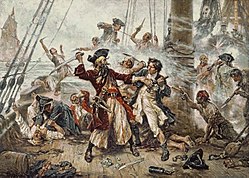
The Caribbean region has an eclectic history when it comes to security, think the bad actors of the Pirates of the Caribbean. Yet, those Pirates have since all been extinguished, thanks to a multilateral effort among European (and now American) imperial powers. Credit goes to the British, French and the Dutch military/naval powers of the past.

That was a BIG accomplishment in terms of regional security. Can we get that again? Can these championing national powers – and their descendants – come together and provide a modern day shield so as to project Caribbean homeland security anew?

This has been a goal for Caribbean stewards for a long time, but to no avail, there has been a Failure to Launch.

The historicity of military conflicts (think: World War I and World War II) in the 20th Century has resulted in the emergence of just one Super Power, the United States of America, providing security assurances for the Western Hemisphere. The foregoing vision therefore is one of an American shield; this country boasts that they are keeping us safe in the Caribbean.

The perception of security – much like the perception of beauty – is in the eye of the beholder.

My job is to keep the ‘pink elephants‘ away.

Do you see any pink elephants? Well then, I am doing my job!

This seems to describe the efforts of the American hegemony with their formal efforts for Caribbean Basin security – see ‘Pax Americana’ in Appendix A below. Their job is just to keep the pink elephants away:

  • Weapons of Mass Destruction – WMD’s – i.e. nuclear, chemical, biological, etc.
  • Terrorism

Truthfully, we do not have the manifestation of these threats in the Caribbean region. But do we feel safe?

No!

The American-sponsored Caribbean Basin Security pact is only a Dream for us in the Caribbean; there is no feeling of security in this basin! Despite all the promise of a strong defense, we have serious deficiencies in our peace-and-security offerings … due to:

  • Narco-Terrorism
  • Organized Crime / Gang Activity
  • Human Trafficking
  • Border Intrusions
  • Environmental Protection
  • Disaster Response

This theme was also posited in a previous blog-commentary from 2015 regarding American homeland security solutions for the Caribbean region. While they use the term Caribbean Basin as a political catalogue, for us this is more than politics, this is home for 42 million people! That blog stated:

The United States of America is proud of its security commitment to their Caribbean neighbors, but the amount they devote is such a piddling – they prioritize 0.1968% of the total security budget towards the region – that the Caribbean should not be lulled into complacency. We need our own security solutions!

The start of the Troop Surge in 2007; to quell the insurgency.

The US is the only remaining super power; it devotes massive amounts of finances to its [Department of Defense ($526.6 billion for 2014) and Homeland Security ($59.9 billion)], far exceeding all other countries. The US also asserts that it will provide frontline protection for its neighboring countries, in this case the Caribbean Basin. Just how do we quantify that commitment? Budget percentage.

The US has committed $263 million in funding since 2010; … that’s 5 years combined. For easy arithmetic, divide that figure by 5 to yield $52.6 million a year in commitment. $52.6 million [over $526.6 billion plus $59.9 billion] … is just a “drop in the bucket”; [less that 2/10 of 1 percent].

Unfortunately, Caribbean people do not feel as if their homeland is secured. Among the “push and pull” reasons why people have fled away from the region, personal security has been listed as a high rationale. As communicated, our concern for homeland security is not WMD’s or terrorism – as is the case for our American neighbors – but rather it is the risks and threats of crime and the dread of emergencies.

Our societal abandonment rate is atrocious – one report stated that the professional classes have fled at a 70 percent rate, and recent hurricanes have resulted in more Failed-States and Ghost Towns. Remediation and mitigation for these concerns should be the primary focus of any security initiative for the Caribbean homeland.

This consideration is in harmony with the book Go Lean…Caribbean. The book serves as a roadmap for change in the region, affecting the economics, security and governing engines. It presents new measures and new empowerments as it introduces the Caribbean Union Trade Federation (CU) and an aligning Status of Forces Agreement for the 30 Caribbean member-states to benefit from an integrated security pact. This commentary is the 3rd of 4 parts in a series on the Caribbean’s Failure to Launch integrated solutions to elevate the region’s societal engines. The full series is catalogued as follows:

Where are the European Masters – British, French and the Dutch – now for contributing to the security of the Caribbean region?

British

Could the solution for Caribbean security needs be fulfilled by the British, who is a stakeholder in this region with 6 Overseas Territories and 12 members of the British Commonwealth?

Frankly, security needs are glaring for current and former UK Territories. Under this Commonwealth scheme, the UK is supposed to be “front and center” in a “mutual defence” for the Anglophone Caribbean’s security threats. But alas, the UK is not doing enough for the security of their Caribbean responsibilities – this is the assessment of British stakeholders themselves. In fact, the UK itself now depends on interdependence with others – North Atlantic Treaty Organization or NATO – to fulfill their own security needs.

Britain itself is now just one part of the NATO military alliance in which the Commonwealth had no role apart from Canada. The ANZUS treaty of 1955 linked Australia, New Zealand, and the United States in a defensive alliance, with Britain and the Commonwealth left out. – Wikipedia

This is all that remains of the once-great British military in the Caribbean region, notwithstanding visiting naval vessels:

Location Details
Belize British Army Training and Support Unit Belize: Used primarily for jungle warfare training, with access to 5,000 sq mi of jungle terrain. Although British facilities were mothballed in the 2010 SDSR, BATSUB is still seeing increased usage.
Bermuda The Royal Bermuda Regiment : Formed in 1965. Official website: www.bermudaregiment.bm
Montserrat Royal Montserrat Defence Force: Raised in 1899.

French

Could the solution for the Caribbean security needs be fulfilled by France, who is a stakeholder in this region with 2 Departments (governmental sub-sets like provinces) – Guadeloupe and Martinique – and 2 Overseas Territories – St Barthélemy and half of St. Martin? They do possess a military presence in the region, with these bases:

Territory Garrison No. of personnel
French Guiana Les forces armées en Guyane (FAG) 2,100
Martinique Les forces armées aux Antilles (FAA) 1,000

Dutch

Could the solution for the Caribbean security needs be fulfilled by the Kingdom of the Netherlands, who is a stakeholder in this region with 3 Constituent nations within the Kingdom – Aruba,  Curaçao and Sint Maarten – and 3 Overseas Territories – Bonaire, Saba and St Eustatius? They too possess a military presence in the region:

The Netherlands is responsible for the implementation of the Defence tasks of the Kingdom of the Netherlands in the Caribbean.

Military tasks in the Caribbean

Over 500 armed forces personnel in the Caribbean are tasked with:

  • protecting the borders of the Caribbean part of the Kingdom of the Netherlands;
  • supporting civil authorities;
  • maintaining the (inter)national rule of law  in the context of, for example:
    1. the international drug trade. Because of the location of its islands, the Caribbean is vulnerable to drug trafficking by sea. The navy is part of Joint Inter Agency Task Force South, an international organisation that conducts operations to counter drug trafficking.
    2. military assistance. The navy’s military units provide humanitarian assistance or maintain public order following disasters or accidents caused by the passage of hurricanes, for example. Each year, the navy is on standby from 1 June to 1 December to perform these tasks.
    3. illegal fishing and environmental offences. The navy supports the Dutch Caribbean Coastguard in conducting surveillance and taking action against illegal fishing and environmental offences. The navy also assists in search and rescue missions in Caribbean

Source: Retrieved December 13, 2017 from: https://english.defensie.nl/topics/caribbean/defence-tasks

The Dutch security solution for the Caribbean is organized under the Royal Marechaussee, a military Police with broad homeland security functionalities. See more of this perfect role model – this is our dream –  for Caribbean success in this VIDEO here:

VIDEO – Marechaussee in the Caribbean – https://youtu.be/m7ea2ZmV4oE

Published on Dec 14, 2017 – This VIDEO is the property of the Defense Ministry of the Kingdom of the Netherlands; all Rights Reserved to this property owner. Retrieved from https://english.defensie.nl/topics/caribbean/defence-tasks

American

Could the solution for the Caribbean security needs be fulfilled entirely by American defense apparatus? Yes, indeed; if this was their priority.

It is not!

They should have a motivation; they are a stakeholder in this region with 2 sovereign territories (Puerto Rico and the US Virgin Islands). Plus, they have signed treaties with neighboring countries, as in the Caribbean Basin treaty and NATO accords identified earlier. This is demonstrative of the militaristic society the US has become. They are the largest operators of military bases abroad, with 38 “named bases” having active-duty, national guard, reserve, or civilian personnel (as of September 30, 2014). According to sources, the American military Caribbean footprint include:

Bahamas: Naval Undersea Warfare Center, Detachment AUTEC

Cuba: Guantanamo Bay Naval Base

Puerto Rico: There are only two remaining military installations in Puerto Rico: the U.S. Army’s small Ft. Buchanan (supporting local veterans and reserve units) and the PRANG (Puerto Rico Air National Guard) Muñiz Air Base (the C-130 Fleet).

The American security efforts are coordinated with laser-focused precision by professionals in their Southern Command, based in Greater Miami; see reference in Appendix B below.

The Americans “talk the talk, but do not walk the walk”. So the vision of an American shield protecting the Caribbean region is just a dream. We need a realistic solution.

Way Forward

American, British, French, Dutch … not enough! Let’s try a reboot, something different: all of these efforts … together.

As related in a previous Go Lean commentary

… the book Go Lean…Caribbean prescribes a detailed, complex plan for effecting change in our society. The goal is to confederate under a unified entity made up of the region’s stakeholders to empower the economics and optimize Homeland Security. But Homeland Security for the Caribbean has a different meaning than for our North American or European counterparts. Though we too must be on defense against military intrusions like terrorism & piracy, we mostly have to contend with threats that may imperil the region’s economic engines, like our tourism products. This includes concerns like narco-terrorism and enterprise corruption, plus natural and man-made disasters like hurricanes, earthquakes, oil/chemical spills, etc..

So the Go Lean security goal is mostly for public safety!

We do not have the public safety assurances that would be expected of an advanced democracy. The book Go Lean…Caribbean posits that the region must therefore prepare its own security apparatus for its own security needs. So the request is that all Caribbean member-states confederate to execute a limited scope on their sovereign territories. This ideal solution is for an integrated, unified regional entity – a confederation. This solution is conceivable, believable and achievable for the Caribbean. What we need is a Status of Forces Agreement (SOFA) to be embedded in the treaty for the Caribbean Union Trade Federation among the 30 member-states. Under international law, this approach allows for a military presence in a homeland without the view of an occupation force – SOFA allows for mutual consent between both the host and engaging powers. There after allowing us to:

This security goal is detailed in the Go Lean book as it serves as a roadmap for the introduction and implementation of the technocratic CU Trade Federation. The roadmap ensures that security dynamics of the region are inextricably linked with the economics and governing engines of the region. Therefore the Go Lean roadmap has 3 prime directives:

The book contends that bad actors will always emerge just as a result of economic successes in the region. This point is pronounced early in the book with the Declaration of Interdependence (Page 12) that claims:

x. Whereas we are surrounded and allied to nations of larger proportions in land mass, populations, and treasuries, elements in their societies may have ill-intent in their pursuits, at the expense of the safety and security of our citizens. We must therefore appoint “new guards” to ensure our public safety and threats against our society, both domestic and foreign. The Federation must employ the latest advances and best practices … to assuage continuous threats against public safety.

xvi. Whereas security of our homeland is inextricably linked to prosperity of the homeland, the economic and security interest of the region needs to be aligned under the same governance. Since economic crimes, including piracy and other forms of terrorism, can imperil the functioning of the wheels of commerce for all the citizenry, the accedence of this Federation must equip the security apparatus with the tools and techniques for predictive and proactive interdictions.

The Caribbean appointing “new guards”, or a security pact to ensure public safety is not so new an endeavor. Different strategies have been deployed in the past, but have Failed to Launch a successful solution. Consider these:

  • West Indies Regiment within the West Indies Federation
    In the previous submission of this blog series – Part 1 of 4 – the history of the failed West Indies Federation (1958 to 1962) was detailed. This effort only related to the Anglophone countries (United Kingdom) and among its many initiatives was the West Indies Regiment. The Go Lean book provided more details (Page 302):This infantry unit of the British Army recruited from and normally stationed in the British colonies of the Caribbean between 1795 and 1927. Throughout its history, the regiment was involved in a number of campaigns in the West Indies and Africa, and also took part in the First World War, where it served in the Middle East and East Africa. In 1958 the regiment was revived with the West Indies Federation with the establishment of three battalions; however it was disbanded in 1962 when its personnel were used to establish other units in Jamaica and Trinidad & Tobago.Though the West Indies Federation was aborted, the need for security among the overseas territories of the United Kingdom remains.
  • Regional Security System (RSS)
    There is currently a security pact; shared by 5 Eastern Caribbean member-states that was first consummated in 1982 – this was discussed in full depth in a previous commentary regarding the Regional Security System:This RSS is an international agreement for the defence and security of the eastern Caribbean region; [it] was created in 1982 to counter threats to the stability of the region in the late 1970s and early 1980s. On 29 October four members of the Organisation of Eastern Caribbean States—namely, Antigua and Barbuda, Dominica, St. Lucia, and St. Vincent and the Grenadines—signed a memorandum of understanding (MOU) with Barbados to provide for “mutual assistance on request”. The signatories agreed to prepare contingency plans and assist one another, on request, in national emergencies, prevention of smuggling, search and rescue, immigration control, fishery protection, customs and excise control, maritime policing duties, protection of off-shore installations, pollution control, national and other disasters and threats to national security.[1] Saint Kitts and Nevis joined following independence in 1983, and Grenada followed two years later.
  • Caribbean Disaster Emergency Management Agency (CDEMA)
    The Caribbean Disaster Emergency Management Agency was established in 1991 as CDERA (Caribbean Disaster Emergency Response Agency) with primary responsibility for the coordination of emergency response and relief efforts to Participating States that require such assistance. It transitioned to CDEMA in 2009 to fully embrace the principles and practice of Comprehensive Disaster Management (CDM).(CDM) is an integrated and proactive approach to disaster management and seeks to reduce the risk and loss associated with natural and technological hazards and the effects of climate change to enhance regional sustainable development.This CDEMA agency was detailed in a previous commentary lamenting the fact that the region is often faced with a “Clear and Present Danger”. Though there is a regional agency to attempt to prepare and respond, it is far inadequate. For example, the accompanying Catastrophe Risk Insurance Facility associated with CDEMA – also detailed in a previous blog – only pays out “pennies on the dollar” that the member-states need to re-pair-recover-rebuild after a natural disaster in the region.

All of these prior instances of regional integration have been deficient to meeting the needs of Caribbean stakeholders. Though they have made a good faith effort, they have Failed to Launch adequate solutions to satisfy any Social Contract – the implication that citizens surrender some of their freedoms and submit to the authority of the State in exchange for protection of remaining natural and legal rights.

The Go Lean roadmap however calls for a permanent professional security forces that complements and supplement existing Police and Defense Forces; there will be opportunity for Defense Force assimilation later in the Go Lean roadmap. The CU Trade Federation will lead, fund and facilitate the security forces, encapsulating (full-time or part-time) all the existing armed forces in the region. This CU Homeland Security Force would get its legal authorization from the Status of Forces Agreement vested with the ascension of the CU treaty.

This SOFA is “Step One, Day One” in the Go Lean roadmap. The Go Lean book provides a full 370-pages of turn-by-turn instructions on “how” to adopt new community ethos, plus the strategies, tactics, implementations and advocacies to execute so as to reboot, reform and transform the societal-security engines of Caribbean society. There is a lot of consideration in the book for optimizing the currency and monetary eco-systems.

Other subjects related to security and governing empowerments for the region have been blogged in other Go Lean…Caribbean commentary, as sampled here:

https://goleancaribbean.com/blog/?p=13476 Plan for ‘Policing the Police’
https://goleancaribbean.com/blog/?p=12466 State of the Union: Unstable ‘Volcano States’
https://goleancaribbean.com/blog/?p=12400 Accede the Caribbean Arrest Treaty
https://goleancaribbean.com/blog/?p=11905 Want Better Security? ’Must Love Dogs’
https://goleancaribbean.com/blog/?p=10566 Funding the Caribbean Security Pact
https://goleancaribbean.com/blog/?p=7345 ISIS reaches the Caribbean Region
https://goleancaribbean.com/blog/?p=7119 Security Role Model for the Caribbean: African Standby Force
https://goleancaribbean.com/blog/?p=6247 Tragic images show refugee crisis at a tipping point in Europe
https://goleancaribbean.com/blog/?p=1531 A Lesson in History: 100 Years Ago – World War I
https://goleancaribbean.com/blog/?p=1487 Here come the Drones … and the Concerns
https://goleancaribbean.com/blog/?p=1076 Trinidad Muslims travel to Venezuela for jihadist training
https://goleancaribbean.com/blog/?p=789 America’s War on the Caribbean
https://goleancaribbean.com/blog/?p=535 Remembering and learning from Boston
https://goleancaribbean.com/blog/?p=392 Jamaica to receive World Bank funds to help in crime fight
https://goleancaribbean.com/blog/?p=341 US slams Caribbean human rights practices
https://goleancaribbean.com/blog/?p=273 10 Things We Want from the US and 10 Things We Don’t Want – Pax Americana

Underlying to the prime directive of elevating the economics, security and governing engines of the Caribbean, is the desire to make the Caribbean homeland, a better place to live, work and play.

  • There will always be “bad actors” to disrupt the peace of society. We need to be ready for them.
  • There will always be natural disasters. We must be ready for them too.
  • Bad things will happen to good people!

We must no longer Fail to Launch … workable security solutions. We know exactly what we want to be and do in the Caribbean; we want to deploy a regional-federal security force to ensure homeland protections, much like the Dutch Marechaussee – see the above VIDEO – we only want it for the full region. All Caribbean stakeholders are therefore urged to lean-in to this Go Lean roadmap. 🙂
Download the free e-book of Go Lean … Caribbean – now!

Sign the petition to lean-in for this roadmap for the Caribbean Union Trade Federation.

———-

Appendix A – The Bottom Line on Pax Americana

Pax Americana refers to the historical concept of the relative peace in the Western Hemisphere and later the Western world resulting from the preponderance of power of the military establishment of the USA. The term is primarily used in its modern connotations to refer to the peace established after the end of World War II in 1945. Since then, it has come to indicate the military and economic position of the United States in relation to other nations. The USA is the only remaining super power and as such they exert a vigorous defense for their version of capitalistic democracy in the region. The focus on the Western Hemisphere is still guided by the principles of the Monroe Doctrine, which stated that efforts by European nations to colonize land or interfere with states in North/South America would be viewed as acts of aggression, requiring US intervention. Pax Americana is the underlying policy that led to escalations (with Russia) during the 1962 Cuban Missile crisis. – Go Lean book Page 180.

———-

Appendix B – United States Southern Command 
The United States Southern Command (USSOUTHCOM), located in Doral, Florida in Greater Miami, is one of nine Unified Combatant Commands (CCMDs) in the United States Department of Defense. It is responsible for providing contingency planning, operations, and security cooperation for Central and South America, the Caribbean (except US commonwealths, territories, and possessions), their territorial waters, and for the force protection of US military resources at these locations. USSOUTHCOM is also responsible for ensuring the defense of the Panama Canal and the canal area. As explained below, USSOUTHCOM has been under scrutiny due to several human rights and rule of law controversies in which it has been embroiled for nearly a decade.
Under the leadership of a four-star Commander, USSOUTHCOM is organized into a headquarters with six main directorates, component commands and military groups that represent SOUTHCOM in the region. The current commander is Admiral Kurt W. Tidd, USN.

USSOUTHCOM is a joint command[1] of more than 1,201 military and civilian personnel representing the United States Army, Navy, Air Force, Marine Corps, Coast Guard, and several other federal agencies. Civilians working at USSOUTHCOM are, for the most part, civilian employees of the Army, as the Army is USSOUTHCOM’s Combatant Command Support Agent. The Services provide USSOUTHCOM with component commands which, along with their Joint Special Operations component, two Joint Task Forces, one Joint Interagency Task Force, and Security Cooperation Offices, perform USSOUTHCOM missions and security cooperation activities. USSOUTHCOM exercises its authority through the commanders of its components, Joint Task Forces/Joint Interagency Task Force, and Security Cooperation Organizations.

Source: Retrieved December 14, 2017 from: https://en.wikipedia.org/wiki/United_States_Southern_Command

———-

Appendix C – The U.S. Military’s Presence in the Greater Caribbean Basin: More a Matter of Trade Strategy and Ideology than Drugs

Washington’s initiative to have access to at least seven Colombian military facilities …

… would [help the] fulfillment of U.S. policy goals in the region. Two of the facilities soon to be available to the U.S. are located in the Caribbean region – the military port in Cartagena and the air base in Malambo – and will serve the needs of the U.S. Navy.
The new Caribbean coast facilities will join an array of existing U.S. military establishments in the region dating back to 1903. Up to now, the official raison d’etre for a U.S. presence in the Caribbean was to combat drug trafficking. However, the proliferation of security threats, in particular developments possibly against the interests of Chávez’s Venezuela, has led some to argue that no matter how much Washington’s officials deny it, an unspoken reason for the U.S. deployment to Colombia is to keep Chavez under check. With the Washington-Bogotá decision, it is necessary to discuss the relationship between masking antinarcotics efforts as a cover for a variety of U.S. security concerns and aspirations throughout Latin America, especially in the coming trade war over commodities.

Read the full story … posted September 23, 2009; retrieved December 14, 2017 from: http://www.coha.org/the-u-s-militarys-presence-in-the-greater-caribbean-basin-more-a-matter-of-trade-strategy-and-ideology-than-drugs/

Share this post:
,

Failure to Launch – Economics: The Quest for a ‘Single Currency’

Go Lean Commentary

Money is more important in society than people are willing to accept. Though some critics say that love, family, faith, country and other principles are more important. But an obscure Murphy’s Law states (and is quoted in the book Go Lean…Caribbean at Page 32) this ironic truth:
“When people claim that it’s the principle, and not the money, chances are, it’s the money”.

There are indeed more important things in life than money, but somehow all these things can be bought/sold … for money. The strategy in this Go Lean book is to optimize money issues: consolidate monetary reserves for the region into a Single Currency, the Caribbean Dollar (C$), managed by the technocratic Caribbean Central Bank (CCB). The C$ will be based on a mixed-basket of foreign reserves (US dollars, Euros, British pounds & Yens).

This is a simple but effective plan – a best practice: introduce the Caribbean Central Bank (CCB) and Caribbean Dollar as a Single Currency for the region’s 30 member-states.

Huge benefits abound! And so this economic initiative is important for Caribbean elevation. The rationale is that this strategy “enables economies to be more resilient to exogenous shocks”.

exogenous shocks – In economics, a shock is an unexpected or unpredictable event that affects an economy, either positively or negatively. Technically, it refers to an unpredictable change in exogenous factors — that is, factors unexplained by economics — which may influence endogenous economic variables. – Wikipedia.

This benefit is so obvious that others have thought of this before …

Yet there has consistently been a Failure to Launch this economic initiative; or to do so successfully. Consider the historicity of the CariCom Multilateral Clearing Facility (CMCF) in Appendix A below – a normal functionality of regional Central Banks.

Currently, the Caribbean has no regional Central Bank, so safety-net, no shock absorption, and no integration. This is the quest of the book Go Lean…Caribbean; it urges the introduction and implementation of the Caribbean Union Trade Federation (CU) and the Caribbean Central Bank (CCB). The book serves as a roadmap for this goal, with turn-by-turn directions to integrate the 30 member-states of the region and forge an $800 Billion economy.

We have the great models of the United States and Europe to consider how a Single Currency can positively impact a consolidated regional economy; see VIDEOs in the Appendices below. We do not have to invent innovative solutions on our own; we can simply model the best-practices of these other communities. This is the familiar advocacy for the movement behind the book Go Lean…Caribbean. In a previous blog-commentary from May 10, 2014 the merits of Single Market and Single Currency economic integrations were related as follows:

Europe has the safety net of the economies-of-scale of 508 million people and a GDP of $15 Trillion in 28 member-states in the EU; (the Eurozone subset is 18 states, 333 million people and $13.1 Trillion GDP). The US has 50 states and 320 million people. Shocks and dips can therefore be absorbed and leveraged across the entire region .The EU is still the #1 economy in the world; the US is #2. – [See related VIDEO here: https://youtu.be/vRzFAvgBhU0.]

The Go Lean roadmap signals change for the region. It introduces new measures, new opportunities and new recoveries. Exogenous shocks are a reality. Economies will rise and fall; the recovery is key. Prices will inflate and deflate; there are very effective measures – at the regional level – for managing all these indices. The Go Lean book serves as a roadmap for the establishment of the Caribbean Union Trade Federation (CU), and the allied Caribbean Central Bank (CCB) to manage the monetary-currency affairs of this region. The book describes the breath-and-width of the CCB and the Caribbean Dollar Single Currency.

The book Go Lean…Caribbean also detailed previous (inadequate) attempts to integrate Caribbean currencies …

… this commentary is the 2nd of 4 parts in a series on the Caribbean’s Failure to Launch solutions to elevate the region’s societal engines. The full series is catalogued as follows:

  1. Failure to Launch Past Failures for Integration
  2. Failure to Launch – Economics: Caribbean Central Banks and the Quest for a Single Currency
  3. Failure to Launch Security: Caribbean Basin Security Dreams
  4. Failure to Launch Governance: Assembling the Regional Alphabet Organizations

In the previous submission – Part 1 of 4 – the history of the failed West Indies Federation was detailed. This effort only related to the Anglophone countries but among its many initiatives was the plan to introduce a consolidated currency. This excerpt is derived from the Go Lean book’s Anecdote on Caribbean currencies relating English-speaking and other language groups:

Anecdote # 16 – Caribbean Currencies (Page 149)

Anglophone

In 1946, a West Indian Currency Conference saw Barbados, British Guiana, the Leeward Islands, Trinidad & Tobago and the Windward Islands agree to establish a unified decimal currency system based on a new West Indian dollar to replace the current arrangement of having three different Boards of Commissioners of Currency (for Barbados, British Guiana and Trinidad) manage monetary issues in the Eastern Caribbean. In 1949, the British government formalized the dollar system of accounts in British Guiana and the Eastern Caribbean territories by introducing the British West Indies dollar (BWI$) at the already existing conversion rate of $4.80 per pound sterling (or $1 = 4 shillings 2 pence). It was one of the many experimental political and economic ventures tested by the British government to form a uniform system within their British West Indies territories. The symbol “BWI$” was frequently used and the currency was known verbally as the “Beewee” (slang for British West Indies) dollar. Shortly thereafter in 1950, the British Caribbean Currency Board (BCCB) was set up in Trinidad with the sole right to issue notes and coins of the new unified currency and given the mandate of keeping full foreign exchange cover to ensure convertibility at $4.80 per pound sterling. In 1951, the British Virgin Islands joined the arrangement, but this led to discontent because that territory was more naturally drawn to the currency of the neighboring US Virgin Islands. In 1961, the British Virgin Islands withdrew from the arrangement and adopted the US dollar.

Until 1955, the BWI$ existed only as banknotes in conjunction with sterling fractional coinage. Decimal coins replaced the sterling coins in 1955. These decimal coins were denominated in cents, with each cent being worth one halfpenny in sterling.

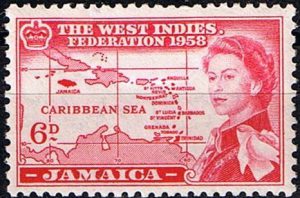
In 1958, the West Indies Federation was established and the BWI$ was its currency. However, although Jamaica (including the Cayman Islands and the Turks and Caicos Islands) was part of the West Indies Federation, it retained the Jamaican pound, despite adopting the BWI$ as legal tender from 1954. Jamaica, the Cayman Islands, and the Turks and Caicos Islands were already long established users of the sterling accounts system of pounds, shillings, and pence.

In 1964 Jamaica ended their legal tender status of the BWI$ and Trinidad & Tobago withdrew from the currency union (adopting “dollars” representing their national currency: Jamaican and T&T Dollar – see Appendix ZB [on Page 316]). This forced the movement of the headquarters of the BCCB to Barbados and soon the “BWI$” dollar lost its regional support.

In 1965, the BWI dollar of the now defunct West Indies Federation was replaced at par by the East Caribbean dollar and the BCCB was replaced by the Eastern Caribbean Currency Authority or ECCA. Guyana withdrew from the currency union in 1966. Grenada rejoined the common currency arrangement in 1968 having utilized the Trinidad & Tobago dollar from 1964. Barbados withdrew from the currency union in 1972, following which the ECCA headquarters were moved to St. Kitts.

Between 1965 and 1983, the Eastern Caribbean Currency Authority issued the EC$, with banknotes from 1965 and coins from 1981. The EC$ is now issued by the Eastern Caribbean Central Bank, (Basseterre, Saint Kitts), established July 1983.

The exchange rate of $4.80 = £1 sterling (equivalent to the old $1 = 4s 2d) continued right into up until July 7, 1976 for the new Eastern Caribbean dollar, until it was pegged to the US dollar, at the exchange rate of US$1 = EC$2.70.

Today, the East Caribbean dollar (EC$) is the currency for eight of nine members of the Organization of Eastern Caribbean States (OECS), the one exception being the British Virgin Islands, which uses the United States dollar exclusively; so too does non-OECS member-state Turks and Caicos Islands.

Francophone

The French franc was the former currency of France until the Euro was adopted in 1999 (by law, 2002 de facto). The name is said to derive from the Latin inscription francorum rex (“King of the Franks”) on early French coins, or from the French franc, meaning “free” (and “frank”). The franc was also used within the French Empire’s colonies, including the French West Indies or French Antilles, referring to the territories currently under French sovereignty in the Antilles islands of the Caribbean:

    Guadeloupe, Martinique, Saint Martin, Saint Barthélemy; plus in islands of strong French heritage such as Dominica & Saint Lucia. Haiti, though, because of its early independence (1793) employs the Gourde currency, initially pegged to the Franc.

Dutch / Netherlands

The Dutch guilder was the national currency of the Netherlands until it was replaced by the Euro on 1 January 2002. The Netherlands Antillean guilder is currently the only guilder in use, which after the dissolution of the Netherlands Antilles remained the currency of the new countries Curaçao and Sint Maarten and (until 1 January 2011) the Caribbean Netherlands.

The Caribbean guilder is the proposed currency of the Caribbean islands of Curaçao and Sint Maarten, which formed after the dissolution of the Netherlands Antilles in October 2010. The Netherlands Antillean guilder (NAg) is expected to continue to circulate until 2013 as the currency was not finalized in time for the islands’ separate autonomous status. The currency will be abbreviated CMg (for Curacao, Sint Maarten guilder) and will be pegged to the US dollar at the same exchange rate as the Netherlands Antillean Guilder (1 USD = 1.79 NAg = 1.79 CMg). Since, the islands of Bonaire, Sint Eustatius and Saba adopted the US dollar directly on 1 January 2011, the introduction of the CMg will mean the end of the circulation of NAg.

The diverse colonial Caribbean also had Spanish (Cuba, Dominican Republic and Puerto Rico) islands and Danish territories, as in today’s US Virgin Islands.

There would be many benefits if multiple countries come together and finally form a Single Market-Single Currency economy. This is the quest for the CU/Go Lean roadmap: to form a Single Market-Single Currency of the Caribbean Dollar (C$).

This CU/CCB/C$/Go Lean roadmap therefore urges this Single Market / Single Currency effort with these 3 prime directives:

  • Optimization of the economic-banking engines in order to grow the regional economy and create 2.2 million new jobs.
  • Establishment of a security apparatus to ensure public safety and protect the resultant economic engines.
  • Improvement of Caribbean governance to support these engines, including a separation-of-powers between the member-states and CU federal agencies.

Central Banks are required to …

  1. facilitate monetary and currency policies,
  2. oversee bank regulations, and
  3. execute inter-bank financial transactions (like payment settlements described in the Appendix A below regarding the previous CMCF).

Presently, the Caribbean region has no integrated Central Bank, nor have we ever had one in the past. There has always been a Failure to Launch this needed solution. Even the Anglo-Caribbean’s previous offering of the CMCF only addressed one of these 3 central banking functionalities: payments. Unfortunately, we need them all! We need to launch a fitting solution to assuage all Caribbean’s monetary-currency deficiencies.

(Puerto Rico and the US Virgin Islands monetary needs are managed as a subset of the Federal Reserve Bank of New York; 2600 miles away from their territorial markets).

A Single Currency in the Caribbean – for the Caribbean – is a BIG idea for reforming and transforming the economic engines of the 42 million people among the 30 member-states (including Puerto Rico and the US Virgin Islands). The Go Lean book stresses that our effort must be a regional pursuit, and it must also optimize our currency landscape. This was an early motivation for the roadmap, as pronounced in the opening Declaration of Interdependence (Pages 12 – 13):

xi. Whereas all men are entitled to the benefits of good governance in a free society, “new guards” must be enacted to dissuade the emergence of incompetence, corruption, nepotism and cronyism at the peril of the people’s best interest. The Federation must guarantee the executions of a social contract between government and the governed.

xxiv. Whereas a free market economy can be induced and spurred for continuous progress, the Federation must install the controls to better manage aspects of the economy: jobs, inflation, savings rate, investments and other economic principles. Thereby attracting direct foreign investment because of the stability and vibrancy of our economy.

The Go Lean book provides 370-pages of turn-by-turn instructions on “how” to adopt new community ethos, plus the strategies, tactics, implementations and advocacies to execute so as to reboot, reform and transform the societal engines of Caribbean society. There is a lot of consideration in the book for establishing the CCB and the Single Currency in the region. The Caribbean’s Failure to Launch this in the past is … inexcusable.

There have been a number of previous blog-commentaries by the Go Lean movement that have highlighted the eco-system of monetary, central banking and currency best practices. See a sample list here:

https://goleancaribbean.com/blog/?p=13365 Case Study from West Africa: Single Currency for 8 Diverse Countries
https://goleancaribbean.com/blog/?p=10513 Case Study from India: Transforming Money Countrywide
https://goleancaribbean.com/blog/?p=8381 Case Study on Central Banking for Puerto Rico
https://goleancaribbean.com/blog/?p=7140 Case Study from Azerbaijan: Setting its currency on free float
https://goleancaribbean.com/blog/?p=6800 Case Study from Venezuela: Suing Black Market currency website
https://goleancaribbean.com/blog/?p=4166 Case Study from Panama: History of the Balboa Currency
https://goleancaribbean.com/blog/?p=3858 Case Study from ECB: Unveiling 1 trillion Euro stimulus program
https://goleancaribbean.com/blog/?p=3814 Case Study from Switzerland: Unpegging the franc
https://goleancaribbean.com/blog/?p=360 Case Study on Central Banks: Creating Money from ‘Thin Air’
https://goleancaribbean.com/blog/?p=833 Case Study from the Euro: One Currency, Diverse Economies

In summary, shepherding the economy is no simple task; the regional economy, even harder still – described as heavy-lifting. It requires the best practices of skilled technocrats. But the benefits of the heavy-lifting are too alluring to ignore: growing the monetary supply, expanding the availability of investment capital and leveraging across a larger base to absorb the shocks naturally associated with a Free Market Economy.

We are past the time of needing this Caribbean Dollar Single Currency reform. We needed it 60 years ago, and even more now. We must not fail to launch

We urge all Caribbean stakeholders – government officials, bankers and ordinary citizens – to lean-in for the innovations  and empowerments detailed in this CU/CCB/Go Lean roadmap. It is so obvious; these are among the best practices of America and Europe! The successful delivery of this banking-economic-currency solution can make our homeland a better place to live, work and play. 🙂

Download the free e-book of Go Lean … Caribbean – now!

Sign the petition to lean-in for this roadmap for the Caribbean Union Trade Federation.

————

Appendix A – Caricom Multilateral Clearing Facility: A Brief Note

Payments clearing and settlement in the Caribbean has historically been a battleground of discontent. There have been many attempts since the Colonial period to structure the payments landscape but none of these efforts have been successful. This blog will briefly outline one such effort — the Caricom Multilateral Clearing Facility.

The Caricom [Caribbean Community]Multilateral Clearing Facility (1977–1983) introduced a centralized accounting system for all eligible payments institutions within the region. The original agreement establishing the CMCF was signed by the Central Bank of Barbados, the Monetary Authority of Belize, the East Caribbean Currency Authority, the Bank of Guyana, the Bank of Jamaica, and the Central Bank of Trinidad and Tobago.
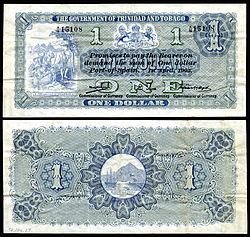
The Central Bank of Trinidad and Tobago (CBTT) acted as the agent bank for the CMCF. That is, the CBTT carried out the secretariat functions as well as being responsible for the accounting records and distribution of cash settlements.
The main objectives of the CMCF were to:

  1. facilitate settlement on a multilateral basis of eligible transactions between participating countries;
  2. promote the use of currencies of members in settling eligible transactions between the individual countries, thereby economizing on the use of foreign exchange; and,
  3. promote monetary co-operation among the participants, thereby contributing to the expansion of trade and economic activity within Caricom.

Advantages of multilateral clearing to regional banks:

  1. reduction of correspondent deposits in foreign exchange
  2. longer time for investment of deposits where drawn cheques are in circulation within the region

Disadvantages of multilateral clearing to regional banks:

  1. legal implications arising from fact that the CMCF was not established as a separate legal entity
  2. lack of formal enforcement mechanism in the event of debtor default
  3. need for an independent regulatory body
  4. technical and administrative complexities

The failure of the CMCF was caused by its abusive usage by some member countries. Instead of being used for its primary purpose of simply minimizing the foreign exchange requirement for intra-regional trade, some members saw it as a balance of payments support facility to allow them to continue purchasing goods which they otherwise would not have been able to. Thus the closing of the CMCF was only inevitable because of the overuse of its informal credit facility.

After the closing of the CMCF the region regressed to a costly nexus of bilateral agreements which offer far less efficiency than multilateral systems.

The demise of the CMCF was unfortunate because it was a clever device for effecting small but significant economies in the use of foreign exchange. In fact, the CMCF might have formed an institutional base for a federal system of Caricom central banks.

Source: CMCF and Caricom Trade. Ginne Lea Miller, 1993

Source: Retrieved December 11, 2017 from https://medium.com/@RJGriffith/caricom-multilateral-clearing-facility-a-brief-note-ab5085a9c8d1

————

Appendix B VIDEO – The U.S. Federal Reserve Bank – How it Works, and What it Does – Money, Dollars, & Currency – https://youtu.be/y1OJlJ9COg0


Bright Enlightenment

Published on Dec 25, 2012 – The U.S. Federal Reserve Bank – How it Works & What it Does – Money, Currency, & the Dollar
– SUBSCRIBE to Bright Enlightenment: http://www.youtube.com/BrightEnlighte…
– LIKE our page on Facebook: http://www.Facebook.com/BrightEnlight…
– TWITTER: http://www.twitter.com/BrightEnlight
– WEBSITE: http://www.BrightEnlightenment.com/

  • Category: Education 
  • License: Standard YouTube License

————

Appendix C VIDEO – ECB and the Eurosystem explained in 3 min. – https://youtu.be/TAlcFwGIQBg


European Central Bank

Published on Sep 26, 2013 – Who takes care of the “euro”? What is inflation ? Why is price stability important for you? Find the answers to these questions and more in this three-minute introduction to the ECB and the Eurosystem’s role and tasks. To discover more about the ECB, please visit http://www.ecb.europa.eu/ecb

Share this post:
,
[Top]

Failure to Launch: Past Failures for Integration

Go Lean Commentary

“3 Generations of imbeciles are enough” – Justice of US Supreme Court Oliver Wendell Holmes (1927)

“3 Generations of imbecilic governance is enough” – Summary from 2013 Go Lean…Caribbean Book (Page 3)

It has been that long!

According to Dictionary.com, a generation is “the term of years, roughly 30 among human beings, accepted as the average period between the birth of parents and the birth of their offspring”. Integration is so important, yet there have been 3 generations of failure for integration-optimization efforts – explored herewith – in the Caribbean region:

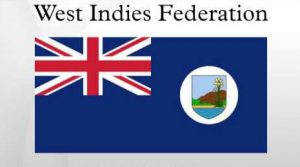
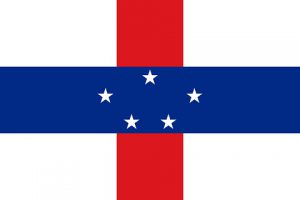
  1. West Indies Federation / Netherlands Antilles – 1950’s – Failed
  2. CariCom – 1970’s – Failing
  3. Caribbean Single Market & Economy – 2000’s – Failed

Enough failing already! Though no efforts have been made to integrate the Spanish-speaking nor French-speaking territories; historically these lands were governed as “overseas” territories with foreign masters (for planning and control).

The book Go Lean…Caribbean – available to download for free – serves as a roadmap for a Single Market, the introduction and implementation of a technocratic inter-government agency to shepherd the elevation of the region’s societal engines: economics, security and governance. This agency is the Caribbean Union Trade Federation (CU), and is designed to benefit all 30 member-states for all 4 language groups. This Go Lean/CU roadmap is intended to be a deviation from the past record of failures. The book states (Page 3):

There have been some efforts at regional integration, but only for [2] individual language groups.

The Caribbean Union is the next evolution from the structured economic integration that became the Caribbean Community [(CariCom)], but now for all neighbors. The globally accepted 7 degrees of economic integration, which spurned CariCom, are defined as:

  1. Preferential trading area
  2. Free trade area, Monetary union
  3. Customs union, Common market
  4. Economic union, Customs and monetary union
  5. Economic and monetary union
  6. Fiscal union
  7. Complete economic integration

CariCom was enacted in 1973 as Stage 3; but Stage 4 was ratified in 2001 and branded the Caribbean Single Market & Economy. This effort sputtered – see Anecdote # 1 [on Page 15]. The CU is a new manifestation of Stage 4; a graduation for CariCom.

This Go Lean/CU roadmap seeks to end the pattern of failure from these integration mis-steps of the past. This commentary opens a series on the Caribbean’s Failure to Launch workable solutions for the defects and deficiencies in our regional society; this is Part 1 of 4 on this subject. The full series is catalogued as follows:

  1. Failure to Launch – Past Failures for Integration
  2. Failure to Launch Economics: Caribbean Central Bank and the Quest for a Single Currency
  3. Failure to Launch Security: Caribbean Basin Security Dreams
  4. Failure to Launch Governance: Assembling the Regional Alphabet Organizations

The Go Lean book defines failure in many different dimensions of relativity. It identifies the extreme of Failing-States, all the way down to the simple assessment: “All is not well”. But in general, there is the consensus that the Caribbean region is in crisis (Page 8) and declares that this “crisis would be a terrible thing to waste”.

The roadmap therefore has these 3 prime directives to assuage this crisis status:

The Go Lean book provides 370-pages of turn-by-turn instructions on “how” to adopt new community ethos, plus the strategies, tactics, implementations and advocacies to execute so as to forge a better future by learning lessons from past failures in regional integration movements. One advocacy embedded in the book is the specific lessons-learned from the previous Anglophone West Indies Federation. Consider the Appendix VIDEO below and these excerpts-headlines from Page 135 with this title, (which gleans analysis based on the history in the Appendix S and Appendix S1, starting on Page 301):

10 Lessons Learned from the West Indies Federation

1 WI Federation Quest for Independence replaced with CU Quest for Interdependence

After 50 years of reflection (see Appendix S1 #1 thru #10), it is conclusive that the West Indies (WI) Federation strived more for independence than for governmental efficiency. It is also obvious that the instincts of the British Federation planners were right, that the common territories needed to integrate to deploy common solutions (Appendix S). As such, the CU advocates for “interdependence” for the Caribbean countries – the challenges of the region transcends any alignment to the European legacies, so the CU advocates that the former British colonies need to confederate with Dutch, French and Spanish former colonies and current American Territories. The CU will represent a population base of 42 million, with the largest population centers concentrated in the Spanish and French states, not Jamaica and Trinidad. However, the CU aggregation of $800 Billion in GDP (based on 2010 figures) represents a larger contribution (GDP per capita) from the English speaking countries.

2 Federal Government versus Provincial Governments

The CU advocates a separation of powers between Federal Departments and the member-states administrations. The CU will avail itself of the “economies of scale” by deploying systems across the entire region designed for efficient and effective governance. Consider for example, implementing revenue systems for property assessments/collections. The CU will in-source the costs for the systems & people, while maximizing the return to State treasuries – Appendix S1 #2. The CU will also generate its own revenue streams, from regional-wide deployments (broadcast rights, lotteries, etc).

3 Jamaican Dynamic

Among the Caribbean nations, Haiti is highest on the 2012 Failed State Index (#7), Jamaica is among the next set of Caribbean countries at #119, just slightly behind South Africa (#115) and Albania (#118). Obviously, the nation-building

needs of Jamaica has been truncated, plus the country’s brain drain is worst in the region with almost a matching population living abroad in a Diaspora as opposed to residing in and contributing to the local economy. The CU will ensure better representation of larger populated states by employing a bicameral legislative branch: while the Senate is “one-man-one-vote” (2 Senators per state), the lower house has balanced representation based on population. Geographically, Jamaica is not the furthest west (Belize), nor south (Aruba) in the region. The Capitol for the CU is slated for a Federal District on the border of Haiti and the Dominican Republic – See Appendix S1 # 3.

4 Trinidad Dynamic

Trinidad and Tobago has thrived, somewhat, as an independent nation, they have one of the highest per-capita GDP in the region and have just recently been upgraded from “developing” status. (They are the only oil-producing country in the region; but their oil reserves are due to be depleted in the next decade). Yet, the country has a huge gulf between the “haves-and-have-nots”, to the point that emigration continues to be a major deterrent to their nation-building efforts. Trinidad is #122 on the Failed State Index – See Appendix S1 # 4.

5 Lack of Local Popular Support (See Parallel at Appendix S1 #5)

The CU empowers the economic engines, societal institutions and cultural provisions of the region to promote growth and development in the member-states. These efforts will be complemented with the invitation to repatriate for the Caribbean Diaspora. So the local markets will be the target of promotional campaigns and public media outreach.

6 Smaller Countries

The smaller countries get the greatest benefit of the CU initiative as they get to leverage the size of the Caribbean Single Market to their advantage. They will enjoy the strength of the currency union, access to capital markets and the deployment of economic engines in the local market. The CU will assimilate the Eastern Caribbean Federation and Monetary Union into the governmental delivery structure – See Appendix S1 # 6.

7 Location of the Capitol

Even though the CU will embrace e-Government delivery methods (data centers, call centers and web sites), the Trade Federation will still institute physical edifices (Post Offices, Administrative Centers, Libraries, Museums). There will be an actual Capitol. The CU capital is slated for a Federal District on the border of Haiti and the Dominican Republic. This is a center-“ish” site considering north: Bermuda & Bahamas; west: Belize & Cuba; south: Guyana & Suriname).

8 University of the West Indies
9 West Indies Regiment

The CU is also a security pact that will empower a Homeland Security Department. The State Militia and Naval Operations, derivatives of the West Indies Regiment, will enter a new phase of existence with the facilitation of an  ultra-modern defense unit with drones, attack helicopters, underwater submersibles and intelligence gathering and analysis.

10 Relationship with Canada

The West Indies Federation was an Anglophone effort only! Though it sought the goal of “Step 7 – Complete Economic Integration“, as specified in the foregoing introduction, it failed miserably here. (This is the disposition of the United States of America, but unfortunately, due to societal defects of territorial status, this is not the disposition of Puerto Rico and the US Virgin Islands.)

So these developments refer to the English and American territories; this is not the full Caribbean. There are other legacies …

The Go Lean book also details effort in the Dutch Caribbean, or the Netherland Antilles. This excerpt – on Integration and Secessions – is derived from Page 16 of the book:

Anecdote # 2: Dutch Caribbean – Integration & Secessions 

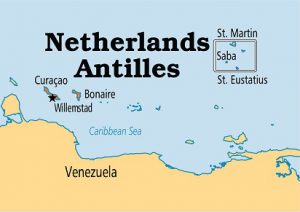
This Dutch Caribbean has had a varied history of integration and secession events. The Netherlands Antilles also referred to informally as the Dutch Antilles, was an autonomous Caribbean country within the Kingdom of the Netherlands.

Although the country has now been dissolved, all of its constituent islands remain part of the kingdom under a different legal status and the term is still used to refer to these Dutch Caribbean islands [a].

The Netherlands Antilles consisted of two island groups. The ABC Islands of Aruba, Bonaire, and Curaçao are located just off the Venezuelan coast. The SSS islands of Sint Maarten, Saba, and Sint Eustatius are in the Leeward Islands southeast of the Virgin Islands near the northern end of the Lesser Antilles. The Dutch colonized these islands in the 17th century, (at one point, Anguilla, Tobago, the British Virgin Islands, and St. Croix of the US Virgin Islands had also been Dutch), and united them in the new constituent state of the Netherlands Antilles in December 1954. Wanting to shed the appearance of any colonial shackles, the Netherlands Antilles, Suriname, and the Netherlands acceded as equal member-countries of the Kingdom of the Netherlands. With this move, the United Nations deemed decolonization of the Dutch Caribbean territory complete and removed it from the UN’s official List of Non-Self-Governing Territories.

Suriname sought and was granted independence in 1975, but continued their quest for regional integration. Today, they are a member of CariCom and are considered a Caribbean country with their trade and cultural links with the Caribbean nations.

The arrangement of the integrated Netherlands Antilles proved to be an unhappy one. The idea never enjoyed the full support of all islands, and political relations between islands were often strained. Geographically, the ABC Islands and the Leeward (SSS) Islands lie almost 1,000 kilometers apart. Culturally, the ABC Islands have deep connections with the South American mainland, especially Venezuela, and its population speaks a Portuguese-Dutch Creole language called Papiamento; the Leeward SSS islands, on the other hand, are part of the English-speaking Caribbean.

When the new constitutional relationship between the Netherlands and its Caribbean colonies was enshrined in the Kingdom Charter of 1954, the colonial administrative division of the Netherlands Antilles grouped all six Caribbean islands together under one administration. Despite the fact that Aruba calls for secession from the Netherlands Antilles originated as far back as the 1930s [b], the governments of the Netherlands and the Netherlands Antilles did everything in their power to keep the six islands together.

First, Aruba became a separate state within the Kingdom of the Netherlands in 1986. Then between June 2000 and April 2005, each remaining island of the Netherlands Antilles had a new referendum on its future status. The four options that could be voted on were the following:

• closer ties with the Netherlands

• remaining within the Netherlands Antilles

• autonomy as a country within the Kingdom of the Netherlands (status aparte)

• independence

Of the five islands, Sint Maarten and Curaçao voted for status aparte, Saba and Bonaire voted for closer ties to the Netherlands, and Sint Eustatius voted to stay within the Netherlands Antilles.

In November 2005, a negotiation began between the governments of the Netherlands, Aruba, the Netherlands Antilles, and each island in the Netherlands Antilles. The end results were autonomy status for Curaçao and Sint Maarten, as previously enacted by Aruba, plus a new status for Bonaire, Sint Eustatius, and Saba (BES) making these islands special municipalities.

In November 2006, Curaçao and Sint Maarten were granted an agreement for the autonomy they sought. After some political maneuvering and a subsequent referendum, the acts of parliament integrating the “BES” islands into the Kingdom of the Netherlands were given royal assent in May 2010. After ratification by the Netherlands, the Netherlands Antilles, and Aruba, this Kingdom act amending the Charter for the Kingdom of the Netherlands with regard to the dissolution of the Netherlands Antilles was signed off by the three countries (Netherlands, Aruba, the Netherlands Antilles) in September 2010.

The book stresses that reforming and transforming the Caribbean societal engines must be a regional pursuit for interdependence, not autonomy – some problems are just too big for any one member-state to tackle alone. This was an early motivation for the roadmap, as pronounced in the opening Declaration of Interdependence (Pages 12 – 13):

xi. Whereas all men are entitled to the benefits of good governance in a free society, “new guards” must be enacted to dissuade the emergence of incompetence, corruption, nepotism and cronyism at the peril of the people’s best interest. The Federation must guarantee the executions of a social contract between government and the governed.

xvi. Whereas security of our homeland is inextricably linked to prosperity of the homeland, the economic and security interest of the region needs to be aligned under the same governance. Since economic crimes … can imperil the functioning of the wheels of commerce for all the citizenry, the accedence of this Federation must equip the security apparatus with the tools and techniques for predictive and proactive interdictions.

xxiii.  Whereas many countries in our region are dependent Overseas Territory of imperial powers, the systems of governance can be instituted on a regional and local basis, rather than requiring oversight or accountability from distant masters far removed from their subjects of administration. The Federation must facilitate success in autonomous rule by sharing tools, systems and teamwork within the geographical region.

xxiv. Whereas a free market economy can be induced and spurred for continuous progress, the Federation must install the controls to better manage aspects of the economy: jobs, inflation, savings rate, investments and other economic principles. Thereby attracting direct foreign investment because of the stability and vibrancy of our economy.

In the past, the optimization of regional integration has been so elusive for Caribbean people. Our Failure to Launch has been a sad reality, despite the accepted wisdom that …

only when a people come together to address issues that affect them collectively can they ever hope to resolve their problems. – Go Lean book Page 135.

Too bad … all our past efforts – despite limited to just one language – have failed. Integration is still a good idea, a Big Idea!

The CU is a big idea for the Caribbean … allowing for the unification of the region into one [a Single] Market of 42 million people [from all 30 countries & territories]. This creates the world’s 29th largest economy, based on 2010 figures. … After 10 years the CU’s GDP should double and rank among the Top 20 or G20 nations. – Page 127.

Let’s do this! The benefits from this Go Lean roadmap are too alluring to ignore. We can learn from failure; we can forge success. We can make our homeland a better place to live, work and play. 🙂

Sign the petition to lean-in for this roadmap for the Caribbean Union Trade Federation.

————-

Appendix VIDEO – West Indies Federation – https://youtu.be/wfoWBqUMAls


Audiopedia
Published on Jan 6, 2016 – The West Indies Federation, also known as the Federation of the West Indies, was a short-lived political union that existed from 3 January 1958 to 31 May 1962. Various islands in the Caribbean that were colonies of the United Kingdom, including Trinidad and Tobago, Barbados, Jamaica, and those on the Leeward and Windward Islands, came together to form the Federation, with its capital in Port of Spain, Trinidad and Tobago. The expressed intention of the Federation was to create a political unit that would become independent from Britain as a single state—possibly similar to the Canadian Confederation, Australian Commonwealth, or Central African Federation; however, before that could happen, the Federation collapsed due to internal political conflicts.

The territories of the federation eventually became the nine contemporary sovereign states of Antigua and Barbuda, Barbados, Dominica, Grenada, Jamaica, Saint Kitts and Nevis, Saint Lucia, Saint Vincent and the Grenadines, and Trinidad and Tobago; with Anguilla, Montserrat, the Cayman Islands, and Turks and Caicos Islands becoming British overseas territories. British Guiana and British Honduras held observer status within the West Indies Federation.

This video is targeted to blind users.

  • Category: Education 
  • License: Standard YouTube License
Share this post:
,
[Top]

Economics of ‘South Beach’

Go Lean Commentary

The US has an economy; the 30 Caribbean member-states have economies. The US does it better!

For example, the entire Caribbean region enjoys 80 million visitors a year; (though this figure includes 12 million cruise passengers visiting multiple Caribbean destinations on one cruise); just the US city of Orlando has one destination – Walt Disney World – that enjoys 57 million visitors-a-year alone. Further down the list of high traffic resort cities is the destination of Miami Beach, Florida; each year Miami Beach hotels host over 35% of the ten (10) million tourists who visit Greater Miami.
Yes, the US cities do tourism better than our Caribbean counterparts; and their economies are more diversified.

If only we, in the Caribbean, could be more like … the American city of Miami (Beach).

It is a fitting comparison:

  • Global City in the tropical zone – a snowbird haven-refuge from cold northern cities.
  • Home away from home for many Caribbean people.
  • Primary economic engine of tourism (leisure and medical), travel (air and cruises), financial services and trade. See Miami’s largest employers in the Appendix below.

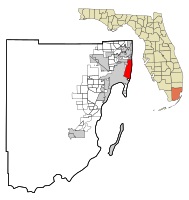
The movement behind the book Go Lean … Caribbean seeks to reboot the economic engines of the Caribbean member-states – so we can perform better. The book studies models and lessons from other communities (cities and countries): i.e. New York City (Page 137), Detroit (Page 140) and Omaha (Page 138). In fact, this movement had previously detailed how the Greater Miami metropolitan area has become so successful a community mainly because of the failures of Caribbean communities. Rather than the entire metropolitan area of Greater Miami, we are hereby exploring just the economic landscape of Miami Beach, and more exactly the neighborhood of South Beach. This commentary, however, relates that there are lessons from ‘South Beach’ and all of Greater Miami that we can apply in the Caribbean.

Miami Beach is a coastal resort city in Miami-Dade County…. It was incorporated on March 26, 1915.[7] The municipality is located on natural and man-made barrier islands between the Atlantic Ocean and Biscayne Bay, the latter of which separates “the Beach” from the City of Miami. The neighborhood of South Beach, comprising the southernmost 2.5 square miles of Miami Beach, along with downtown Miami and the Port of Miami, collectively form the commercial center of South Florida[8] [(Miami-Fort Lauderdale-West Palm Beach metropolitan statistical area)]. As of the [latest] 2010 census, Miami Beach had a total population of 87,779.[9] It has been one of America’s pre-eminent beach resorts since the early 20th century. – Wikipedia.
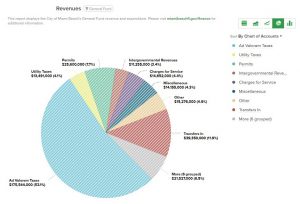
 

South Beach is a classic beach resort town – see the Wikipedia definition here – except that there are two de facto seasons: good (Summer and Early Autumn) and great (Late Autumn, Winter and Spring):

resort town, often called a resort city or resort destination, is an urban area where tourism or vacationing is the primary component of the local culture and economy. A typical resort town has one or more actual resorts in the surrounding area. Sometimes the term resort town is used simply for a locale popular among tourists. The term can also refer to either an incorporated or unincorporated contiguous area where the ratio of transient rooms, measured in bed units, is greater than 60% of the permanent population.[1]

Generally, tourism is the main export in a resort town economy, with most residents of the area working in the tourism or resort industry. Shops and luxury boutiques selling locally themed souvenirs, motels, and unique restaurants often proliferate the downtown areas of a resort town.

Resort Town Economy
If the resorts or tourist attractions are seasonal in nature, resort towns typically experience an on-season where the town is bustling with tourists and workers, and an off-season where the town is populated only by a small amount of local year-round residents.

In addition, resort towns are often popular with wealthy retirees and people wishing to purchase vacation homes, which typically drives up property values and the cost of living in the region. Sometimes, resort towns can become boomtowns due to the quick development of retirement and vacation-based residences.[3]

However, most of the employment available in resort towns is typically low paying and it can be difficult for workers to afford to live the area in which they are employed.[4] Many resort towns have spawned nearby bedroom communities where the majority of the resort workforce lives.

Resorts towns sometimes struggle with problems regarding sustainable growth, due to the seasonal nature of the economy, the dependence on a single industry, and the difficulties in retaining a stable workforce.[5]

Economic impact of tourism
Local residents are generally receptive of the economic impacts of tourism. Resort towns tend to enjoy lower unemployment rates, improved infrastructure, more advanced telecommunication and transportation capabilities, and higher standards of living and greater income in relation to those who live outside this area.[6] Increased economic activity in resort towns can also have positive effects on the country’s overall economic growth and development. In addition, business generated by resort towns have been credited with supporting the local economy through times of national market failure and depression, as in the case of San Marcos, California during the cotton market bust in the early 1920s and Great Depression of 1929.[2]

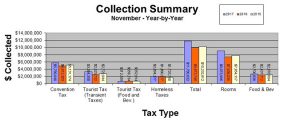
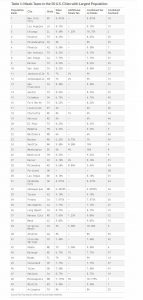
Click Photo to Expand – Lots of communities charge supplemental taxes for community revenues

Tourism, more exactly Resort Tourism, is the Number One economic driver in the Caribbean. Yet, our region has so many societal defects. We must do a better job at our primary job. What can we learn from Greater Miami, Miami Beach and South Beach?

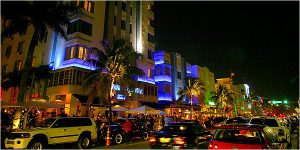
This small peninsula of South Beach is Hot, Hot, Hot … as a party and tourist destination, thereby creating a scarcity of real estate. The dining, night-clubbing, shopping and entertainment options in this District are in high demand, all year long. Not all patrons to this District stay at area hotels, as many are locals in addition to the constant flow of visitors. Most night clubs, and even some restaurant-bars, apply a Cover Charge, typically $20 per person. These patrons should also expect to pay $40 just for valet parking, and similarly above-average prices for self-parking. Hotel rates are consistently above average, even during the off-season (consider $300 per night). During the peak-season, rates are traditionally in excess of $500. Hotel guests with rental cars face the same $40 per night parking charges.


The party continues every night until 5am; (one of the latest alcohol-serving policies in the nation).  Just like any other community, Miami Beach has to contend with Agents of Change. There is a conservative movement to dampen the hot nightlife in South Beach. These proponents raised the issue as a public referendum on November 7, 2017 with a measure, to limit liquor sales to 2am. This direct democratic action failed at a 64% to 35% ratio. The economic forces of South Beach won again!

These economic realities transcend many dimensions of Miami Beach life; consider governance. The City collects an add-on to the state’s usual Sales Tax revenues. What add-ons?

Transient Lodging Rental Taxes for Short Term Rentals Summary Chart
3% Convention Development Tax 2% Tourist Development Tax 1% Sports Franchise Tax
Food & Beverage Tax Summary Chart
2% Tourist Development Surtax 1% Homeless and Spouse Abuse Tax

Source: Retrieved December 5, 2017 from: http://www.miamidade.gov/taxcollector/tourist-taxes.asp

See this sample/example here of a typical night out at a local South Beach restaurant recently:

This movement, behind the Go Lean book, seeks to reform and transform the economic engines of Caribbean society by being technocratic in applying best practices from the field of Economics. South Beach and Miami Beach offers a lot of lessons: good, bad and ugly.

One bad lesson is the practice of guaranteed gratuity. In a previous blog-commentary, this policy was ridiculed as unbecoming as a community ethos; it fosters a spirit of entitlement. In fact, the practice is well-chronicled in the field of Economics as “rent-seeking”; consider this sample:

This is distinguished in economic theory as separate from profit-seeking, in which entities seek to extract value by engaging in mutually beneficial transactions.[6] While profit-seeking fosters the creation of wealth, rent-seeking is the use of social institutions such as the power of government to redistribute wealth among different groups without creating any new wealth.[7]

Note: For the restaurant receipt in the above-photo, the credit card bill, still contained a line item for additional tip, even though 20-percent was already added as a gratuity-service charge.

There it is: rent-seeking.

(Rent-seeking practices are quite common in the Caribbean; even codified as law in some places).

The Go Lean book serves as a roadmap for the introduction and implementation of the Caribbean Union Trade Federation (CU). The CU is designed to be a technocratic intergovernmental entity that shepherds economic growth for the Caribbean region. The goal is to reboot and optimize the region’s economic, security and governing engines. The Go Lean/CU roadmap employs wise strategies, like the “Separation-of-Powers between CU federal agencies and Caribbean member-state governments”; so the limitations of national laws in a member-state would not override the CU. The CU‘s technocratic practices would directly apply to the installation of Exclusive Economic Zones (EEZ) and Self-Governing Entities (SGE); these operate in controlled bordered territories like campuses, industrial parks, research labs, industrial plants and Entertainment Zones.

Notice the presence here of one such zone, already existing in Jamaica.

Title: Jamaica’s first entertainment zone named

Jamaica’s Entertainment Minister Olivia “Babsy” Grange, has named Fort Rocky in Port Royal as Jamaica’s first entertainment zone.

The minister made the announcement at the recent launch of Carnival in Jamaica 2018.

Drives cultural and economic value
Minister Grange said the new entertainment zone has been endorsed by the National Environment and Planning Agency (NEPA), along with the Town and Country Planning Authority.

“We are working with (NEPA) and the Ministry’s agencies, including the National Heritage Trust, to ensure that our cultural sites are preserved and utilized in a manner that drives cultural and economic value to us as a nation,” she noted.

Historical value
Entertainment zones like Fort Rocky are areas in which any legal entertainment and sports activity can be staged any time of day or night unhindered, as long as the organizers are mindful of the historical value of such sites.

While fueling the entertainment industry, these entertainment zones are expected to neutralize the problem of noise nuisance.

The Entertainment and Culture Minister has also called on private business operators to take advantage of the opportunity to use these zones. She provided information that two other entertainment zones will be declared outside of the Corporate Area in the near future.

Source: Retrieved December 6, 2017 from: https://www.caribbeannationalweekly.com/news/caribbean-news/jamaica-entertainment-zone/

The Go Lean/CU roadmap will optimize this strategy for deployment of Self-Governing Entities throughout the region.

Imagine restaurant-bars-nightclubs open until 5am.

This is the Economics of ‘South Beach’ … and a good learned-lesson.

Miami’s South Beach is a hot night-spot right now. What emboldens its success is the embrace of Caribbean culture. Think:

The concept of Miami Sound … is Caribbean musical fusion.

The name Miami Sound Machine also refers to the Grammy Award winning musical group led by Cuban-Americans Gloria and Emelio Estefan. They are also proprietors of one of the biggest night clubs on South Beach: Mango’s. See the VIDEO here:

VIDEO – Mangos Tropical Cafe in South Beach, Miami [4K] – https://youtu.be/D1TcBkaRyL4

Published on Nov 30, 2016 – A glimpse inside Mango’s Tropical Café in South Beach, Miami. Watch in 4K resolution.

Miami is Hot, Hot, Hot ordinarily.

Then in the winter peak-season, it is Hotter still …

… and then for Art Basel – the annual Arts in Miami pageant peaking this year December 6 to 11 – it is the Hottest destination in the country. See more here:

Title: It’s not only rich people who should care about Art Basel. Here’s why.

When flocks of serious — and seriously loaded — art gatherers descend on South Florida for the annual Art Basel in Miami Beach pageant, they’re coming to snag some of the best contemporary work money can buy from the 268 galleries from across the globe conveniently gathered at the city’s convention center.

But that’s not the sole reason they make their way to Miami Beach and Miami.

Many also come to see art they cannot buy — the increasingly rich side feast served up by the cities’ expanding range of museums and private art collections that are open to all.

Yes, there’s the warm weather, the nice hotels and restaurants (staffed by local workers) — not to mention the two dozen satellite fairs and myriad events that make up the annual December frenzy known as Miami Art Week. …

See the full story here:  http://www.miamiherald.com/news/local/community/miami-dade/article187161868.html

Source: Miami Herald posted December 2, 2017; retrieved December 6, 2017.

Caribbean people have done it in Miami; we can also do it in the Caribbean. This is the vision of a new Caribbean; a better place to live, work and play right here at home, without having to flee the region.

In total, the Go Lean/CU roadmap will employ strategies, tactics and implementations to impact its prime directives; identified with the following 3 statements:

  • Optimization of the economic engines in order to grow the regional economy to $800 Billion & create 2.2 million new jobs.
  • Establishment of a security apparatus to ensure public safety assurances and protect the region’s economic engines.
  • Improvement of Caribbean governance to support these engines.

The Go Lean book presents a 370-page roadmap on how to optimize the economic engines … and how to avoid bad practices, like rent-seeking. The book stresses key community ethos, strategies, tactics, implementations and advocacies necessary to transform and turn-around the eco-systems of Caribbean society. These points are detailed in the book as follows:

Community Ethos – Deferred Gratification Page 21
Community Ethos – Return on Investments Page 24
Community Ethos – Ways to Impact the Future Page 26
Community Ethos – Ways to Impact the Greater Good Page 37
Strategy – Vision – Confederate all 30 member-states/ 4 languages into a Single Market Page 45
Tactical – Separation-of-Powers – CU Federal Government versus Member-State Governance Page 71
Implementation – Ways to Pay for Change – Award exploratory rights in exclusive territories Page 101
Implementation – Start-up Benefits from the Exclusive Economic Zone (EEZ) Page 104
Implementation – Steps to Implement Self-Governing Entities (SGE) Page 105
Planning – 10 Big Ideas – #3: Proactive Anti-crime Measures Page 127
Planning – Ways to Improve Trade Page 128
Advocacy – Ways to Grow the Economy – Protect Property Rights Page 151
Advocacy – Ways to Create Jobs Page 152
Advocacy – Ways to Improve Governance Page 168
Advocacy – Ways to Better Manage the Social Contract Page 170
Advocacy – Ways to Enhance Tourism Page 190
Advocacy – Ways to Impact Events Page 191
Advocacy – Ways to Promote Fairgrounds Page 192
Advocacy – Ways to Impact Main Street Page 201

To accomplish this goal of elevating Caribbean society, we must learn lessons from far-away places and nearby lands (like Miami), foster good economic habits … and abandon bad ones. This is how to grow the economy: create jobs; create businesses; retain people; foster new opportunities, learn from past mistakes and accomplishments.

All Caribbean stakeholders – residents, Diaspora and visitors – are urged to lean-in to this Go Lean roadmap for change … and empowerment. This plan, though a Big Idea, is conceivable, believable and achievable. 🙂

Download the book Go Lean … Caribbean – now!

Sign the petition to lean-in for this roadmap for the Caribbean Union Trade Federation.

—————–

Appendix – Miami Top Employers

According to Miami’s Beacon Council – the local Economic Development agency – the top private employers in 2014 in Miami-Dade were:[64]

# Employer # of employees
1 University of Miami and Health System 12,818
2 Baptist Health South Florida 11,353
3 American Airlines 11,031
4 Carnival Cruise Lines 3,500
5 Miami Children’s Hospital 3,500
6 Mount Sinai Medical Center 3,321
7 Florida Power and Light Co. 3,011
8 Royal Caribbean International 2,989
9 Wells Fargo 2,050
10 Bank of America 2,000

According to Miami’s Beacon Council, the top Government employers in 2014 in Miami-Dade were:[64]

# Employer # of employees
1 Miami-Dade County Public Schools 33,477
2 Miami-Dade County 25,502
3 Federal Government 19,200
4 Florida State Government 17,100
5 Jackson Health System 9,800

Source: Retrieved December 5, 2017 from: https://en.wikipedia.org/wiki/Miami-Dade_County,_Florida#Economy

Share this post:
, , , ,
[Top]

Future Focused – e-Government Portal 101

Go Lean Commentary

It is really important to transform the Caribbean for the future. It will require rebooting all societal engines: economics, security and governance.

In the course of this series of blog-commentaries on the Caribbean Future, we have addressed the economic issues, particularly related to education; we have addressed homeland security and we have addressed media (radio). This final submission is Part 5 of 5 in this series and it contemplates a preview of the future of government engagement. The full series is catalogued as follows:
  1. Future FocusedPersonal Development and the Internet
  2. Future FocusedCollege, Caribbean Style
  3. Future FocusedRadio is Dead
  4. Future FocusedPolicing the Police
  5. Future Focused – e-Government Portal 101

The Caribbean status quo is dire. But our future can be so much better. This is the power of hope!

The subject of hope has been a consistent subject for this movement behind the book Go Lean…Caribbean – available to download for free. In a previous commentary, it was related that “Hope and Change” is vital to engage the young people in society. Without change, young people will demand it! This is because a vital ingredient of youth is hope, if they see no hope, then they will just disengage and abandon their community. That blog included  this excerpt:

There are some protest movements – around the world  – in recent times where young people have engaged to get attention, to foment their prospects for Hope and Change:

  • Arab Spring – Young people in one Arab & North African country after another stood-up in protest of their status quo.
  • Occupy Wall Street – Young people in the US complained in enduring street protests outside Wall Street.

The book Go Lean…Caribbean … chronicled the rise of these protest movements. It showed how people at the grass-roots level are able to effect change on the policies and priorities of their country. This is the bottoms-up strategy for forging change; there is also the top-down strategy: getting the political leaders to propose new legislation. Both approaches could be effective in the quest to elevate the 30 member-states in the Caribbean region. The State of our Caribbean Union is that we are in need; we must reform and transform our region; it is not optional; it must be done in order to offer “Hope and Change” to the young people of the Caribbean. [Otherwise,] the book states in the opening (Page 3):

    Our youth, the next generation, may not be inspired to participate in the future workings of their country; they may measure success only by their exodus from their Caribbean homeland.

So without hope, we have no children – they will leave; without children, we have no future!

This is an important discussion. We must forge change in Caribbean society to dissuade our young people from leaving. This is what the Go Lean book presents, a workable roadmap to effect change in all societal engines. In fact, the roadmap features these 3 Future Focused prime directives:

  • Optimization of the economic engines in order to grow the regional economy to $800 Billion & create 2.2 million new jobs.
  • Establishment of a security apparatus to ensure public safety and protect the resultant economic engines.
  • Improve Caribbean governance to support these engines, including a separation-of-powers between the member-states and CU federal agencies.

In each Caribbean member-state, the government is the largest employer! So we must engage governing processes in order to foster change. How can we improve Caribbean governance so as to bring change to our society?

Among the strategies, tactics and implementations in the Go Lean roadmap, is the deployment of e-Government services, systems and solutions. The Go Lean book explains how this implementation can streamline operations – lean, no heavy bureaucracy – for every level of government: municipal, state and the CU federal level. A type of computing implementation can leverage productivity against a very small level of staffing. See how a lean structure is portrayed in the book (Page 51):

A lot of office automation and data processing can be provided in-house by [for] member-state governments by [the CU] simply installing / supporting computer mainframe/midrange systems, servers, and client workstations; plus supplementing infrastructural needs like power and mobile communications. The CU’s delivery of ICT [(Internet & Communications Technologies)] systems, e-Government, contact center and in-source services (i.e. property tax systems [and www.myCaribbean.gov]) can put the burden on systems continuity at the federal level and not the member-states. (This is the model of Canada with the federal delivery of provincial systems and services – some Provincial / Territorial presence / governance is completely “virtual”).

The Go Lean book presents the plan to deploy many e-Government provisions so as to deliver on the ICT promise. This is what it means to be Lean – maximize value while minimizing waste. The book references the roles and responsibilities of these e-Government models in many iterations; this shows the Future Focus of the Go Lean roadmap; see a sample here:

  • 10 Ways to Close the Digital Divide (Page 31)
    #9 – Smart Phones & Mobile Apps
    There are business drivers for the further development of mobile applications. With the proliferation of smart-phones, consumers have a computer in their pocket that is more powerful than mainframe computers from the 1970’s. Mobile applications allow for the coordination of “time and place” to convert internet browsing to real-time purchasing. The CU will capitalize on this growth and even deploy mobile apps of our own (i.e. appointments processing, bar codes) for myCaribbean.gov portal and e-government deliveries.
  • 10 Ways to Improve Sharing (Page 35)
    #2 – Data / Social Network
    The CU will deploy a MyCaribbean.gov web portal (including mobile) to allow every citizen access to e-Delivery of government services. The CU … will thereafter spearhead the effort to capture as much raw data as possible from the portal and other e-Government data repositories throughout the region. This will allow the sharing of economic, census, trade, consumption, macro performance and sociological data.
  • Separation of Powers (Page 74)
    A3 – Treasury Department: Union Revenue Administration
    The CU deployment of e-Government services for federal and member-state government functionality will allow economies of scale for all stakeholders. This is envisioned for property records-tax assessment-collections, income taxes, auto registrations, vital records, human resources-payroll, back-office (accounting), and regulatory-compliance-audit functionality. In addition, a lot of government services will be delivered electronically: email, cash disbursements on a card-based benefits card, ACH and electronic funds transfer measure for expenditures and revenue collections.
  • 10 Ways to Improve Mail Service (Page 108)
    #10 – Post Office Buildings with e-Government Kiosks
    Post Office (PO) facilities will have kiosks and access booths so that citizens can interact with different CU and State governmental agencies. (Similar to processing passports at US Post Offices). Time slots will have to be reserved or rationed. All CU e-Government interactions can be delivered via the web (e-Delivery) or at PO …
  • 10 Ways to Deliver (Page 109)
    #9 – Big Data Analysis
    The CU’s embrace of e-Government and e-Delivery models allows for a lot of data to be collected and analyzed so as to measure many aspects of Caribbean life, including: trade, economic, consumption, societal values and macro-performance, and media consumption. This way, “course adjustments” can be made to strategic and tactical pursuits.
  • 10 Ways to Impact Social Media (Page 111)
    #6 – Contact Center for e-Government Services
    The CU will deliver government services with the embrace of Internet & Communication Technologies (ICT). Caribbean stakeholders can interact with CU government (plus CU-enabled member-states) via web, social media and phone portals. When in-personal attention is needed, video conferencing options (Skype, Google+) will be a supplemental tool.
  • 10 Ways to Impact Elections (Page 116)
    #6 – e-Government – Registration
    The CU will allow for economies-of-scale with local government by deploying e-Government services. This is envisioned for voter registration and vital records system processing. While the CU does not have responsibility for local elections, the member-states can in-source the processing to the CU to enjoy the cost savings, & service optimizations.
  • 10 Big Ideas (Page 127)
    #8 – Cyber Caribbean
    Forge electronic commerce industries so that the internet communications technology (ICT) can be a great equalizer in economic battles of global trade. This includes e-Government (outsourcing and in-sourcing for member-states systems) and e-Delivery, Postal Electronic Last Leg mail, e-Learning and wireline/wireless/satellite initiatives.
  • 10 Ways to Measure Progress (Page 146)
    #7 – myCaribbean.gov Portal
    The www.myCaribbean.gov web/mobile portal will allow every citizen access to e-Delivery of government services. The Commerce Department will thereafter spearhead the effort to capture as much raw data as possible from the portal and other e-Government data repositories throughout the region. This allows for more consumption and sociological data.

The future – with the deployments of electronic government systems – is now! See the sample example of the US State of Florida here; most interactions with that government can be consumed via their http://www.myflorida.com/ portal:

< Click to Enlarge >

The technology is ready and the need is acute, so Caribbean people must get ready and deploy e-Government now.

It is easier than one may think – see a sample VIDEO demonstration here; instead of software, imagine this Perceptive Customer Portal for Government Services:

VIDEO – A Guide to Using the New Perceptive Software Customer Portal – https://youtu.be/40WDRhoQ6fY

Lexmark Enterprise Software

Published on Feb 16, 2015 – The new Perceptive Software Customer Portal is a single sign-on, one-stop shop for the Community, Cases, Knowledgebase, Product Documentation, Technical Overviews and more. This handy demo demonstrates how to navigate the new portal and its features to maximize your Perceptive experience and investment.

There would be no need to engage advanced computer programmers to launch the www.myCaribbean.gov portal. Complete software packages can be bought “off the shelf”; see an article on software package options in the Appendix below.

e-Government had been discussed in previous blog-commentaries, depicting the Future Focus of the CU/Go Lean roadmap:

https://goleancaribbean.com/blog/?p=13321 ICT Model: Making a Pluralistic Democracy and Multilingual Society
https://goleancaribbean.com/blog/?p=7991 Transformations: Caribbean Postal Union – Delivering the Future
https://goleancaribbean.com/blog/?p=888 How to Re-invent Government in a Digital Image – Book Review

Let’s do this; this e-Governmental transformation! Let’s do all of these Future Focused activities detailed in this 5-part series:

  1. Future FocusedPersonal Development and the Internet
  2. Future FocusedCollege, Caribbean Style
  3. Future FocusedRadio is Dead
  4. Future FocusedPolicing the Police
  5. Future Focused – e-Government Portal 101

This is the kind of Future Focused efforts that are needed to reform and transform Caribbean governments and society in general. We must transform our governments, and create the new CU Trade Federation – a federal government – now. We urge all stakeholders to lean-in to this CU/Go Lean roadmap to make the Caribbean a better place to live, work and play. 🙂

Download the free e-Book of Go Lean … Caribbean – now!

Sign the petition to lean-in for this roadmap for the Caribbean Union Trade Federation.

————-

Appendix – What is Portal Software?
By: Cathy Reisenwitz in IT Management

Y’all know what a portal looks like.

A portal provides selective access to information and people. It features, at a minimum, built-in content management functionality including document management and search.

Here are some things you might want to put behind your portal:

  • E-mail
  • Customer relationship management (CRM) tools
  • Company/organization information/news
  • Workgroups
  • Electronic bulletin boards
  • Group chat
  • Calendars

Here is an overview of what portal software is, what it does, where it’s going, and what to ask your vendors.

Portal software vs alternative kinds of software
Some people use intranet software for portal functionality. But portal software often offers more options, automation functionality, organization help, and interactivity, according to SearchCIO.

Many IT departments are looking accomplish their portal goals without using traditional portal software.  Similarly, vendors are abandoning the “portal” terminology. “The term ‘portal’ is outdated and holds negative associations for the many organizations where the portal initiatives have failed, or grown old or stale,” according to Gartner researchers Jim Murphy and Gene Phifer, writing in Elevate Your Horizontal Portal to a Digital Experience Platform.

“In addition, ‘portal’ lacks any appeal to an increasingly business- (versus IT-)savvy audience.” In Build an Enduring Portal Strategy for a Wave of Change on the Web Murphy points out that a “portal” doesn’t offer any inherent business value itself. Plus, many vendors don’t want to compete with established portal players.

More and more portal software vendors are using qualitative terms such as “experience” and “engagement” to describe their products, according to Murphy and Phifer.

Some organizations use web content management systems (WCMs), social platforms, and e-commerce platforms to create portals. “A WCM product is often a better choice as the anchor technology for an enterprise portal,” Murphy and Phifer write. Others use and extend other software, including ERP or CRM. The rest build their portal platforms using a multiple open-source tools and components. Murphy and Phifer recommend a digital experience platform.

Gartner no longer includes portal software in its Hype Cycles. The Hype Cycle for Human-Machine Interface, 2016 includes digital experience platform (DXP) frameworks, which evolved from portals and WCM. The change from portal to DXP began in 2009, when software vendors began to offer platforms for creating the digital experience because “traditional approaches for creating web, portal and mobile assets were not meeting end-user or IT needs.”

Whatever you want to call it, there’s still demand for an easy, reliable, authoritative, and accessible way to store and access relevant information to support decisions and activities.

Who’s buying portal software?
Many “digital experience” and “engagement” vendors are reaching out to chief marketing officers, heavily promoting the marketing use case because digital marketing is making the investments in digital experience.

The two types of portal software
Gartner categorizes portal software into “lean” and “robust.”

Murphy and Phifer contrast lean portals with comprehensive, robust suites. Lean portals can often pay for themselves with increased efficiencies faster than portal products from larger, more-established vendors. “While organizations adopting traditional, heavyweight portals or emerging UXPs may take years to avail themselves of even 20% of the full range of capabilities, organizations adopting lean portals employ 80% of the functionality they need within months,” Murphy and Phifer write.

However, if you’ve got complex, legacy systems in place that must integrate with your portal, you may not be able to go lean.

Popular portal software vendors

According to SearchCIO, Corechange, Epicentric, Hummingbird, and Plumtree are leading portal softwares.

The Hype Cycle for Human-Machine Interface, 2016 lists Adobe, Backbase, IBM, Liferay, Microsoft, Oracle, Oxcyon, Salesforce, SAP, and Sitecore as sample vendors in the DXP space.

Source: Posted December 14, 2016; retrieved November 14, 2017 from: https://blog.capterra.com/what-is-portal-software/

Share this post:
, , ,
[Top]

Future Focused – Policing the Police

Go Lean Commentary

It’s the economy, Stupid!
Quotation from Presidential Candidate Bill Clinton’s 1992 response to a question on voters’ primary issue.

Actually, there are other issues too, when considering why people flee from their Caribbean homeland and pursue life as a foreigner in the Diaspora – for some countries, according to a World Bank report, the vast majority of the college-educated population (60 to 81 percent) have fled. As was related in the Clinton quote, the primary reason is economic, but there are security concerns as well.

This commentary is about optimizing the police and security apparatus in the Caribbean region. If the region is to transform from its dysfunctional past to a brighter future, we must address regional security as strenuously as we address regional economics.

This discussion aligns with a motivation of the movement behind the book Go Lean…Caribbean – available to download for free – to dissuade Caribbean citizens from abandoning their homelands and invite the Diaspora to return, to repatriate. The movement describes the “Push” and “Pull” reasons why people leave in the first place, as follows:

  • “Push” refers to people who feel compelled to leave, to seek refuge in a foreign land. “Refuge” is an appropriate word; because of societal defects, many from the Caribbean must leave as refugees – think Crime Victims, Domestic-abuseLGBTDisabilityMedically-challenged– for their life, liberty and pursuit of happiness. For these people, it is like “they are on fire” and need to stop-drop-and-roll.
  • “Pull”, on the other hand refers to the lure of a more prosperous life abroad; this is mostly economic in nature as people are emigrating on the false perception that they can have a better “home” abroad.

Yes, while deficient economics – the primary reason – may affect the wallet, security deficiencies may affect life-and-death. Deficiencies – not enough – are not the only problem with Caribbean security measures; sometimes the problem is too much, as in “abuses”. All in all, there is the need to Police the Police – see the definitions of the noun and the verb in Appendix B – to give help and support, yes, but accountability too. Why the checks-and-balances? “No justice, no peace”. (See the depiction of unrestrained police abuse in the Appendix VIDEO below).

The Go Lean book therefore focuses on the future and how we can assuage both economics and security inequities. At the outset, this Future Focused book states (Page 3) that the economy of the Caribbean is inextricably linked to the security of the region. Therefore any economic action plan must also include a security pact to implement the mechanisms to ensure greater homeland protections. These efforts must monitor and mitigate against power abuses, economic crimes, systemic threats and also facilitate natural disaster planning and response agencies.

Every Caribbean member-state has a police/security entity, and yet there are so many security inadequacies. The future must therefore include better solutions and better deliveries. The Go Lean book provides a 370-page turn-by-turn guide for forging a new future; it details “how” to adopt new community ethos, plus the strategies, tactics, implementations and advocacies so as to formulate change, to deviate from the current path and foster a brighter-better-safer future. This would mean reforming and transforming the police and security apparatus. This Go Lean book serves as a roadmap for the introduction and implementation of the technocratic Caribbean Union Trade Federation (CU) to elevate the societal engines, including the optimization of the regional security apparatus and justice institutions.

There is currently a regional security apparatus, but it is very deficient! Consider the news article in Appendix A below, depicting the IMPACS investigation of Police excessive force/extra judicial killings (12) in St. Lucia. IMPACS is the formal name for the CARICOM agency with the anti-crime scope. IMPACS = Implementation Agency for Crime and Security.

Improving or elevating the regional security apparatus, is a mandate of this Future Focused roadmap; the plan is to Police the Police.

This commentary continues this series on the Caribbean Future; this is Part 4 of 5 on this subject. The full series is catalogued as follows:
  1. Future FocusedPersonal Development and the Internet
  2. Future FocusedCollege, Caribbean Style
  3. Future FocusedRadio is Dead
  4. Future Focused – Policing the Police
  5. Future Focusede-Government Portal 101

We accept that all is not well in the Caribbean – in fact the region is in crisis – but it can get better … in the future. We have challenges and opportunities. The Future Focus allows us to work to assuage the challenges. This is what the Go Lean book presents, a workable roadmap to effect change in all societal engines. In fact, the roadmap features these 3 Future Focused prime directives:

  • Optimization of the economic engines in order to grow the regional economy to $800 Billion & create 2.2 million new jobs.
  • Establishment of a security apparatus to ensure public safety and protect the resultant economic engines.
  • Improve Caribbean governance to support these engines, including a separation-of-powers between the member-states and CU federal agencies.

The Go Lean book features this excerpt-summary (Page 23) of Security Principles:

This roadmap for Caribbean integration declares that peace, security and public safety is tantamount to economic prosperity. This is why an advocacy for the Greater Good must be championed as a community ethos. A prime precept is that it is “better to know than to not know” – this implies that privacy is secondary to security. A secondary precept is that bad things will happen to good people and so the community needs to be prepared to contend with the risks that can imperil the homeland.
  1. Privacy versus Public Protection 
  2. Whistleblower Protection 
  3. Witness Security & Protection 
  4. Anti-Bullying and Mitigation 
  5. Intelligence Gathering 
  6. Light Up the Dark Places 
  7. Crap” Happens

Rampant crime and security inadequacies can drive good people away from their beloved homelands … to settle in as refugees in foreign lands, where their prospects for life is only one of marginalization, until the next generation. We must do a better job of protecting our people here at home; and we must protect the protectors; and protect the people from the protectors. These are the challenges – heavy-lifting – of shepherding society in a pluralistic democracy.

This point had been further detailed in previous blog-commentaries, depicting the Future Focus of the CU/Go Lean roadmap:

  • Mitigating the Eventual ‘Abuse of Power’
    Since “power corrupts and absolute power corrupts absolutely”, there is the need to monitor, mitigate and manage the risks of bad behavior among law enforcement and security personnel. The CU/Go Lean roadmap is designed with the needed protections in mind to ensure a safer community.
  • Ten Puerto Rico Police Accused of Criminal Network
    A news article reports on corruption by 10 police officials that have undermined Puerto Rico’s justice institutions. This is not so surprising, as the Go Lean book relates that “bad actors” will always emerge to exploit the community. Despite the American territorial status, this threat is still ever-present in Puerto Rico. They need the full protection of a technocratic Caribbean Union Trade Federation.
  • Support sought for kids left behind by UN troops in Haiti
    The United Nations Security/Peacekeeping Forces in Haiti did some good … and some bad. Their personnel needed to be held to account for their impropriety. There is a greater need for a local/regional security solution, for the protections and accountability – there is a Military Justice eco-system embedded in the CU/Go Lean roadmap.
  • Grenada Diaspora Bails-out National Police with Protective Gear
    Who do national Police Forces call now when they have a problem bigger than they can handle with their resources? The answers are limited. This demonstrates the need for a better regional security apparatus – this is the CU/Go Lean roadmap – to support the local police institutions – to step in, step up and help out.
  • Securing the Homeland – On the Ground
    The CU/Go Lean roadmap calls for the acquisition and deployment of advanced security systems (hardware and software). Many of the cutting-edge solutions allow the security forces to do more with less.
  • Waging a Successful War on ‘Terrorism’
    The threat of terrorism is just too big for community policing. The solutions require a bigger effort than what any one Caribbean member-state can muster alone. The CU/Go Lean roadmap provides a technocratic regional option.
  • Prisoners for Profit – Abuses in the Prison Industrial Complex
    The human rights of prisoners are easily abused and their labors exploited without the proper stewardship in the security apparatus. The CU/Go Lean security roadmap considers lessons learned from the ugly US history.
  • Justice Strategy: Special Prosecutors / Commissions of Inquiries … et al
    Security engines are complicated to implement in society; they require a political process, consensus-building and compromise. But abuses abound! So there must be checks-and-balances and escalation for conflict resolutions. The CU/Go Lean roadmap calls for optimized justice institutions based on best practices from other societies.

The effort, as detailed in this commentary: to better secure the homeland and optimize justice institutions, is designed to lower the “push-pull” factors that lead to the current atrocious Caribbean brain-drain rate.

In addition, “power” is often associated with abuse, so there is the plan to “check” those with power, and the security institutions.

Can we improve community policing in the Caribbean homeland? Can we better protect those protecting society? Can we provide checks-and-balances on those who wield the power?

Yes, we can!

Though this is not easy – heavy-lifting – it is conceivable, believable and achievable.

This is the kind of Future Focused efforts that are needed to reform and transform Caribbean society – we must Police the Police – to make our homelands better- safer places to live, work and play. 🙂

Download the free e-Book of Go Lean … Caribbean – now!

Sign the petition to lean-in for this roadmap for the Caribbean Union Trade Federation.

————

Appendix A – National Security Minister cautions against identifying officers in IMPACS investigation

The National Security Minister [of St. Lucia] has advised journalists against exposing the identity of the police officers currently being questioned as part of the IMPACS investigation. [(CARICOM Implementation Agency for Crime and Security)].

Hermangild Francis says the officers have not been charged and could become targets in their communities.

“To go around showing persons pictures who have not even been charged or anything like that is unfair and a very dangerous precedent that is being set. So I want to make an appeal to the press that they refrain from showing the photographs of anybody that the DPP [(Director of Public Prosecutions)] will speak to,” Francis said.

Three officers have been brought in for questioning as the Officer of the Director of Public Prosecutions seeks to bring an end to the IMPACS case amid mounting pressure from the United States and the European Union.

Former Prime Minister Dr Kenny Anthony had in 2013 commissioned an investigation by the Caribbean Community IMPACS agency into alleged extra judicial killings by members of the Royal Saint Lucia Police Force (RSLPF).

The killings occurred under a special police operation dubbed “operation Restore Confidence” instituted during a period of heightened criminal activity.

In an address to the nation on March 8, 2015 on certain aspects contained in the report, Anthony said, among other things, that the police staged fake encounters and planted evidence in the 12 fatal shootings that took place.

In August 2013, the United States suspended all forms of assistance to the RSLPF, citing allegations of serious human rights violations.

Francis is concerned that publishing images of the officers being questioned in the matter could place their lives in jeopardy.

“A lot of persons are going to be brought in for questioning; some persons who were involved and some people who were not involved. And by showing the photographs of everybody who goes to the DPP is jeopardizing the lives and the safety of the majority of these officers,” he added.
Source: Posted September 22, 2017; retrieved November 13, 2017 from: https://stluciatimes.com/2017/09/22/national-security-minister-cautions-identifying-officers-impacs-investigation

————

Appendix B – Definitions: Police

Noun

  1. Also called police force. an organized civil force for maintaining order, preventing and detecting crime, and enforcing the laws.
  2. (used with a plural verb) members of such a force:
    Several police are patrolling the neighborhood.
  3. the regulation and control of a community, especially for the maintenance of public order, safety, health, morals, etc.
  4. the department of the government concerned with this, especially with the maintenance of order.
  5. any body of people officially maintained or employed to keep order, enforce regulations, etc.
  6. people who seek to regulate a specified activity, practice, etc.:
    the language police.
  7. a.  the cleaning and keeping clean of a camp, post, station, etc.
    b.  the condition of a camp, post, station, etc., with reference to cleanliness.

Verb (used with object), policed, policing.

  1. to regulate, control, or keep in order by or as if by means of police.
  2. to clean and keep clean (a camp, post, etc.)

Source: Retrieved November 14, 2017 from: http://www.dictionary.com/browse/police?s=t

————

Appendix VIDEO – KAMAU – PohLease [Official video] – https://youtu.be/nhMxQXTX2ak

BrotherKAMAU

Published on Aug 31, 2016 – “Who Police the Police … when they get out of line”.

“PohLease” – off of our debut EP “A Gorgeous Fortune”

The Socials: https://www.facebook.com/KAMAUothm; https://twitter.com/brotherKAMAU; https://www.instagram.com/brotherkamau/; https://soundcloud.com/brotherKAMAU

Available Now: http://smarturl.it/AGorgeousFortune ; Stream – http://smarturl.it/StreamAGF

Share this post:
, ,
[Top]

Future Focused – College, Caribbean Style

Go Lean Commentary

College is good!

College is bad!

This has been the conclusion of the movement behind the book Go Lean…Caribbean – available to download for free – from the beginning of our campaign to elevate Caribbean society. According to the book (Page 258), this bitter-sweet assessment is due to the fact that tertiary education in the Caribbean is:

  • Good for the individual (micro) – every additional year of schooling they increase their earnings by about 10%.
  • Good for the community (macro) – evidence of higher GDP growth in countries where the population has completed more years of schooling.
  • Bad for Brain Drain – if a person emigrates, all the micro and macro benefits transfer to the new country.

In the Caribbean status quo, our people do emigrate

… far too often. Of the 30 member-states that constitute the Caribbean region, some lands are suffering from an abandonment rate where the population is approaching a distribution where half of the citizens live in the homeland while the others live abroad – in the Diaspora. For some other countries, according to a World Bank report, the vast majority of the college-educated population – 70 to 81 percent – have fled.

This is the present; surely the future must be different, better. Surely “the pupil can become the master”.

The Go Lean book provides a 370-page turn-by-turn guide for forging a new future; it details “how” to adopt new community ethos, plus the strategies, tactics, implementations and advocacies so as to formulate change, to deviate from the current path and foster a new future. This would mean reforming and transforming the societal engines (education = economics) of Caribbean society. This Go Lean book serves as a roadmap for the introduction and implementation of the technocratic Caribbean Union Trade Federation (CU) for the elevation of Caribbean economic engines. This is a Future Focused roadmap.

This commentary continues this series on the Caribbean Future; this is Part 2 of 5 on this subject. The full series flows as:

  1. Future FocusedPersonal Development and the Internet
  2. Future Focused – College, Caribbean Style
  3. Future FocusedRadio is Dead
  4. Future FocusedPolicing the Police
  5. Future Focusede-Government Portal 101

As initiated in the previous commentary, a focus on the future mandates that we focus on young people and their educational and developmental needs. That consideration asserted that a new era of Internet and Communications Technologies (ICT) has transformed the delivery of Kindergarten to 12th Grade (K-to-12) offerings – Primary and Secondary. There are simple solutions in this sphere. But now we focus on the tertiary-level: College.

All of a sudden, it is not so simple anymore. This is because …

  • Primary-Secondary education is compulsory and mandated to be delivered by the government; college education is a privilege … and expensive.
  • State governments may fund an Education budget – for Primary-Secondary – with averages in the $4,000 range per student per year, while college tuition may average $4,000 per class per semester.
  • Student loans may be necessary and could burden students (and their families) for decades afterwards.
  • Peripheral activities forge their own industrial landscape, think textbooks and college athletics.
  • K-12 education caters to children, while college education caters to adults, therefore romantic entanglements can arise.
  • K-12 facilities may be around the corner, while college campuses may be around the world, thusly requiring visas, other travel authorization/documentation and relocations.

Can tertiary education be delivered better for the Caribbean without the travel/relocation?

Absolutely! We can study in the region, lowering the risks of abandoning the homeland.

This is not our opinion alone; see the recent news article/Press Relese here relating the new emphasis for regional college matriculation, by the facilitation of Intra-Caribbean College Fairs:

Title: St. Lucia College Fair 2017

PRESS RELEASE: The Department of Education, Innovation and Gender Relations will be staging the annual Saint Lucia College Fair at The Finance Administrative Centre, Pointe Seraphine, Castries on Wednesday 1st November from 10:00 a.m. to 6:00 p.m. and Thursday 2nd November from 9:00 a.m. to 6:00 p.m.

Participating in this year’s College Fair will be representatives from local educational institutions and institutions from the Caribbean Region.  The theme of this year’s College Fair is: “Empowering a Nation Through Education”.

The objectives of the Fair are to:

  • help prospective students and their parents make informed decisions about further education;
  • provide interested Saint Lucians with an opportunity to discover the diversity of higher education in the Caribbean;
  • provide interested participants with career guidance counseling which will be conducted through structured interviews that assesses the participants’ interests, skills, values, career decisions and lifestyle preferences;
  • limit the amount of time and money spent when applying to tertiary institutions; and
  • provide regional institutions with a unique opportunity to diversify their student population by recruiting a high calibre of students from St. [Lucia].

The public is was invited to attend the fair on the date and time specified to meet with the recruiters and advisors from the participating institutions. 

For further information please contact the Human Resource Development Unit of the Department of Education, Innovation and Gender Relations, 4th Floor, Francis Compton Building, Waterfront, Castries or at Telephone Numbers 468-5229/5434/5430/5431/.
Source: Posted October 20, 2017; retrieved November 9 from: https://stluciatimes.com/2017/10/20/st-lucia-college-fair-2017

The Go Lean book – published in November 2013 – also detailed the strategy of College Fairs, to showcase the local/ region offerings and also to introduce/highlight electronic learning (e-Learning) options. The book states (Page 85) this excerpt:

This Department in the Executive Branch [of the CU] coordinates the region’s educational initiatives across the member states. Education has been a losing proposition for the region in the past – many students studied abroad and never returned. Now, the CU posits that e-Learning initiatives are primed for ubiquitous deployment in the region. The CU will sponsor College Fairs for domestic and foreign colleges that deliver online education options. The CU’s focus will be to facilitate learning – without leaving.

In 2017, a focus on the future for college education must also consider “cyber reality” and/or the Internet. This consideration is embedded in the Go Lean roadmap. In fact, the book presents the good stewardship so that Internet & Communications Technologies (ICT) can be a great equalizing element for leveling the playing field in competition with the rest of the world.

Can tertiary education be delivered over the internet?

Absolutely! We can study here, without leaving; the future is now!

There are many offerings and options. See here, for an encyclopedic reference for “College Fairs”-like for Online Schools:

Quick Guide

Bottom of Form

Online colleges and online education are really just “distance learning” with a computer and wifi. And distance learning is now nearly 300 years old. The simple fact is that people have, for a very long time, needed to learn without being able to “go to school.”

Students needing to learn “offsite” and go “online” have included pioneers in far flung lands, persecuted minorities barred from conventional instruction for religious and other reasons, and ordinary folks like us with full-time responsibilities such as a day job and family.

Online colleges and universities make learning possible where otherwise it would be impossible: from the skills people need to advance in a job, to the subjects required for a college degree, to ideas that enrich their understanding of the world.

Using three different technologies—mail, TV, and telephone—allowed distance learning courses to meet all kinds of learning needs, but the hope existed that some newer technology would come along that could recreate the classroom experience.

A huge step in making that happen occurred with the development of the personal computer and the Internet. It took a while for modem technology to gain use in distance learning, but once it did, online educational platforms started popping up all over the place, first by connecting private computers directly, but later on the Internet. Add in the benefits of updated teleconferencing technologies, and it’s no wonder that six million postsecondary students take at least one fully online class every year.

Related:

Source: Retrieved November 9, 2017 from: https://thebestschools.org/online-colleges/guide-online-colleges/

This CU/Go Lean roadmap details many aspects of the economic eco-system, not just education alone. In fact, the roadmap features these 3 prime directives – all Future Focused:

  • Optimization of the economic engines in order to grow the regional economy to $800 Billion and create 2.2 million new jobs.
  • Establishment of a security apparatus to ensure public safety and protect the resultant economic engines.
  • Improve Caribbean governance to support these engines, including a separation-of-powers between the member-states and CU federal agencies.

The Go Lean book stresses that transforming Caribbean education “engines” must be a regional pursuit. This was an early motivation for the roadmap, as pronounced in the opening Declaration of Interdependence (Pages 12 – 13):

xi. Whereas all men are entitled to the benefits of good governance in a free society, “new guards” must be enacted to dissuade the emergence of incompetence, corruption, nepotism and cronyism at the peril of the people’s best interest. The Federation must guarantee the executions of a social contract between government and the governed.

xxi. Whereas the preparation of our labor force can foster opportunities and dictate economic progress for current and future generations, the Federation must ensure that educational and job training opportunities are fully optimized for all residents of all member-states, with no partiality towards any gender or ethnic group. The Federation must recognize and facilitate excellence in many different fields of endeavor, including sciences, languages, arts, music and sports. This responsibility should be executed without incurring the risks of further human flight, as has been the past history.

xxvii. Whereas the region has endured a spectator status during the Industrial Revolution, we cannot stand on the sidelines of this new economy, the Information Revolution. Rather, the Federation must embrace all the tenets of Internet Communications Technology (ICT) to serve as an equalizing element in competition with the rest of the world. The Federation must bridge the digital divide and promote the community ethos that research/development is valuable and must be promoted and incentivized for adoption.

The Go Lean book presents a detail plan for elevating existing tertiary education options and adding new ones. This federal government – CU Trade Federation – will NOT be academicians, but it will facilitate new and better education options. The motivation of this charter is the recognition that college education has failed the Caribbean region. We need to double-down on the intra-Caribbean strategy – promoting the many universities among the 30 member-states – and e-Learning options.

This Caribbean-style is Future Focused.

See the many considerations of this strategy in these previous blog-commentaries from the Go Lean movement:

https://goleancaribbean.com/blog/?p=12645 Back to the Future: Textbooks or Tablets in School?
https://goleancaribbean.com/blog/?p=11520 Managing the ‘Strong versus the Weak’ – Lower Ed.
https://goleancaribbean.com/blog/?p=10845 Need Collegiate Sports in the Caribbean: Model of March Madness
https://goleancaribbean.com/blog/?p=9724 Bahamas Welcomes the New University; Hoping to Meet Local Needs
https://goleancaribbean.com/blog/?p=8373 A Lesson in Economic Fallacies – Student Loans As Investments
https://goleancaribbean.com/blog/?p=4487 FAMU is No. 3 for Facilitating Economic Opportunity
https://goleancaribbean.com/blog/?p=1256 Is Traditional 4-year Degrees Terrible Investments for the Caribbean?

This effort, as detailed in this commentary, is not the first time Caribbean-style college education has been presented to the world. No, there are a number of Medical Schools in the Caribbean that invite foreign students from around the world to come and study – matriculate here; see VIDEO in the Appendix below. The “pupil has become the master”. We are saying:

Be our guest!

Now we want to expand that invitation to the Caribbean world.

We will open our arms … and our offering … and our quality … and our delivery (e-Learning).

Can we improve college education in the Caribbean? Yes, we can! This is not easy; it is heavy-lifting; but it is conceivable, believable and achievable.

We can also be the guests of colleges and universities abroad, with e-Learning! This is the kind of Future Focused efforts that are needed to reform and transform Caribbean society, to make our homelands better places to live, work, learn and play. 🙂

Download the free e-Book of Go Lean … Caribbean – now!

Sign the petition to lean-in for this roadmap for the Caribbean Union Trade Federation.

————-

Appendix VIDEO – Which Caribbean Med School Should You Go To? – https://youtu.be/1cza2RUkrmg

Buck Parker, M.D.

Published on Jul 25, 2017 – Which Caribbean Med School Should You Go To? What are the best med schools in the Caribbean that will help you get residency in the United States as an international medical graduate? SUBSCRIBE: https://www.youtube.com/user/JHSurgery

Dr. Buck tells his experience as an IMG and gives you advice on what medical schools in the Caribbean are the best for gaining a residency in the United States as a doctor, surgeon, nurse, etc. Where should you go to become and international medical graduate that plans on working in America? Dr. Buck Parker, MD is a Board Certified General Surgeon …

  • Category: Education 
  • License: Standard YouTube License
Share this post:
, , ,
[Top]

Future Focused – Personal Development and the Internet

Go Lean Commentary

A true fact of the past is that “we cannot change it”.
All we can do is learn from the past and change the future.

This quest has propelled the movement behind the book Go Lean…Caribbean – available to download for free. The book provides a 370-page turn-by-turn guide on “how” to adopt new community ethos, plus the strategies, tactics, implementations and advocacies so as to learn from Lessons in History then reform and transform the societal engines of Caribbean society for the future. In addition, there have been 31 previous blog-commentaries with the specific theme: Lessons in History; see the full list – to date – in the Appendix below.

The Go Lean book opened with this charter, to focus on the future (Page 3):

Our youth, the next generation, may not be inspired to participate in the future workings of their country; they may measure success only by their exodus from their Caribbean homeland.

We cannot ignore the past, as it defines who we are, but we do not wish to be shackled to the past either, for then, we miss the future. So we must learn from the past, our experiences and that of other states in similar situations, mount our feet solidly to the ground and then lean-in in, to reach for new heights; forward, upward and onward. This is what is advocated in this book: to Go Lean … Caribbean!

This Go Lean book serves as a roadmap for the introduction and implementation of the technocratic Caribbean Union Trade Federation (CU), for the elevation of Caribbean society – for all member-states. This CU/Go Lean roadmap has these 3 prime directives – all Future Focused:

  • Optimization of the economic engines in order to grow the regional economy to $800 Billion and create 2.2 million new jobs.
  • Establishment of a security apparatus to ensure public safety and protect the resultant economic engines.
  • Improve Caribbean governance to support these engines, including a separation-of-powers between the member-states and CU federal agencies.

This commentary introduces a series on the Caribbean Future; this is Part 1 of 5 on this subject. The full series is as follows:

  1. Future Focused – Personal Development and the Internet
  2. Future FocusedCollege, Caribbean Style 
  3. Future FocusedRadio is Dead
  4. Future FocusedPolicing the Police
  5. Future Focusede-Government Portal 101 – Available 11/15/2017

‘Focusing on the future’ mandates that the stewards of the Caribbean focus on our young people:

“I believe that children are the future; teach them well and let them lead the way” – See VIDEO in the Appendix below.

That is just a song; but this is life.

  • What is the hope for the Caribbean youth to be transformed in their development compared to past generations?
  • What transformations are transpiring in the region that shows willingness for the people and institutions to embrace the needed change?

In 2017, a focus on the future for young people must also consider “cyber reality” and/or the Internet. This consideration is embedded in the Go Lean roadmap. In fact, the book presents the good stewardship so that Internet & Communications Technologies (ICT) can be a great equalizing element for leveling the playing field in competition with the rest of the world.

See how these news articles (2) here have described certain ICT trends in the region, related to education and personal development:

Title #1: Flow and Ave Maria Mark World Internet Day
PRESS RELEASE: Castries, Saint Lucia, November 3rd, 2017 – On Wednesday November 1st 2017, the leading girls primary school in Saint Lucia celebrated International Internet Day with the nation’s and the Caribbean’s number one telecommunications service provider, Flow. Ave Maria Primary School hosted a number of activities for students, including encouraging them to come to school with internet-capable devices, which were powered with a free 100mMBps wireless internet connection.

The young ladies, guided by their teachers, were delighted to be able to do research online, including learning more about internet etiquette, online safety, the history, positives and negatives of the internet. Adriana Mitchel-Gideon, Flow’s product manager for broadband and TV, also met with Grade Six students to have an open and frank discussion about the internet, and to field their many questions.

The day has been celebrated worldwide on October 29th since 2005, to commemorate the first electronic message ever transferred from one computer to another, way back in 1969, in California, in the USA. International Internet Day is a reminder to all of us that this amazing invention started out with just two machines, long before we ever were able to login to trillions of websites put up by billions of users.

As part of its 2017 Christmas promotion, Flow is offering excellent kid-friendly deals on smartphones, TV and internet packages to delight any family.

Source: Posted November 3, 2017; retrieved November 8, 2017 from: https://stluciatimes.com/2017/11/03/flow-ave-maria-mark-world-internet-day 

———–

Title #2: Internet Week Guyana Advances Caribbean Technology Development Agenda
PRESS RELEASE: Around the world, the operations of cyber criminals far outstrip the sophistication of national legislative frameworks. Governments are facing constant pressure to assess global cyber threats and formulate appropriate local cyber security strategies.

Across the Caribbean, governments are building strategic partnerships with regional actors like the Caribbean Network Operators Group (CaribNOG) and the Caribbean Telecommunications Union (CTU). CaribNOG is the region’s largest volunteer-based community of network engineers, computer security experts and tech aficionados.

Recently, CaribNOG and the CTU were among the organisers of Internet Week Guyana, a five-day tech conference hosted by Guyana’s Ministry of Public Telecommunications, in collaboration with international bodies such as the Internet Society, the Internet Corporation for Assigned Names and Numbers (ICANN), the American Registry for Internet Numbers (ARIN), and the Latin America and Caribbean Internet Addresses Registry (LACNIC).

Catherine Hughes, Guyana’s first Minister of Public Telecommunications, said that the five-day event was part of the national agenda to build the country’s technology capacity in cybersecurity and other key areas.

“We encourage Caribbean governments to develop legislative agendas and increase intra-regional cooperation, in order to strengthen the region’s overall cyber security capability,” said Kevon Swift, Head of Strategic Relations and Integration at LACNIC.

“As law makers, governments play an important role in the regional response to cyber security challenges. But they cannot do their work alone,” said Bevil Wooding, Caribbean Outreach Manager at the American Registry for Internet Numbers (ARIN), and one of the founders of CaribNOG.

“The private sector, law enforcement, judiciary and civil society also have a responsibility to ensure that the region’s citizens and businesses are safer and more secure.”

Throughout the week, representatives from participating organisations also demonstrated practical ways in which stakeholders could work together to strengthen and secure Caribbean networks.

Stephen Lee, another CaribNOG founder, translated global cybersecurity issues into Caribbean priorities, outlining some of the challenges and opportunities of special relevance to the region.

Albert Daniels, Senior Manager for Stakeholder Engagement in the Caribbean at ICANN, outlined that organisation’s work in supporting secure network deployments around the world.

Shernon Osepa, Manager, Regional Affairs for Latin America and the Caribbean at the Internet Society, was on hand to formally launch the Internet Society Guyana Chapter, with Nancy Quiros, Manager of Chapter Development in Latin America and the Caribbean at the Internet Society, and Lance Hinds, Special Advisor to the Minister, who served as the chapter’s Interim President.

But it was a gathering of young people, hosted by the CTU on the conference’s closing day, that put the virtual exclamation mark on a highly impactful week. About 400 students from several secondary schools took part in the all-day agenda, which was packed with videos, interactive presentations and Q&A sessions, all designed to highlight the tangible dangers of unsafe online behaviour.

“The CTU continues to support the development of the Information and Communication Technologies (ICT) sector in the region including an emphasis on harnessing the potential of the youth. There’s a concerted effort to get the youth more involved in and make them aware of ICT issues which affect them, to cultivate a mindset of innovation and entrepreneurship, and to educate them on how to effectively use the power of technology that lies in their hands,” said Michelle Garcia, Communications Specialist at the CTU.

The day’s success was most evident in its aftermath. Even after the formal close, a tangible buzz lingered in the meeting room, with dozens of students staying back to introduce themselves to the expert panelists, many taking the opportunity to accost them with follow-up inquiries on the sidelines.

By all reports, this Internet Week will boost Guyana’s efforts to deliver on the promise locked up in that generation of future regional leaders. Now the real work must continue, in order to convert Caribbean potential into Caribbean reality.

Source: Posted October 17, 2017; retrieved November 8, 2017 from: https://stluciatimes.com/2017/10/17/internet-week-guyana-advances-caribbean-technology-development-agenda

The Go Lean book stresses that transforming Caribbean educational “engines” must be a regional pursuit. This was an early motivation for the roadmap, as pronounced in the opening Declaration of Interdependence (Pages 12 – 13):

xi. Whereas all men are entitled to the benefits of good governance in a free society, “new guards” must be enacted to dissuade the emergence of incompetence, corruption, nepotism and cronyism at the peril of the people’s best interest. The Federation must guarantee the executions of a social contract between government and the governed.

xxi. Whereas the preparation of our labor force can foster opportunities and dictate economic progress for current and future generations, the Federation must ensure that educational and job training opportunities are fully optimized for all residents of all member-states, with no partiality towards any gender or ethnic group. The Federation must recognize and facilitate excellence in many different fields of endeavor, including sciences, languages, arts, music and sports. This responsibility should be executed without incurring the risks of further human flight, as has been the past history.

xxiv. Whereas a free market economy can be induced and spurred for continuous progress, the Federation must install the controls to better manage aspects of the economy: jobs, inflation, savings rate, investments and other economic principles. Thereby attracting direct foreign investment because of the stability and vibrancy of our economy.

xxvi. Whereas the Caribbean region must have new jobs to empower the engines of the economy and create the income sources for prosperity, and encourage the next generation to forge their dreams right at home, the Federation must therefore foster the development of new industries … [and] invigorate the enterprises related to existing industries … impacting the region with more jobs.

xxvii. Whereas the region has endured a spectator status during the Industrial Revolution, we cannot stand on the sidelines of this new economy, the Information Revolution. Rather, the Federation must embrace all the tenets of Internet Communications Technology (ICT) to serve as an equalizing element in competition with the rest of the world. The Federation must bridge the digital divide and promote the community ethos that research/development is valuable and must be promoted and incentivized for adoption.

The Go Lean book presents the plan to deploy many e-Learning provisions so as to deliver on the ICT promise in educating our Caribbean youth. The book references the roles and responsibilities of e-Learning in many iterations; this shows the Future Focus of the Go Lean roadmap; see sample here:

  • 10 Ways to Foster Genius (Page 27)
    #2 – Starting Early – “HeadStart”
    One researcher that tried to provide a more complete view of intelligence is Psychologist Howard Gardner; his theory of Multiple Intelligences (MI), identified eight types of intelligence or abilities: musical – rhythmic, visual – spatial, verbal – linguistic, logical – mathematical, bodily – kinesthetic, interpersonal, intrapersonal and naturalistic. … Many parents and educators feel that these categories more accurately express the strengths of different children, for which the CU will implement HeadStart-like programs (academies, camps, e-Learning schemes and mentorships) to foster the early development of participants.
  • 10 Ways to Help Entrepreneurship (Page 28)
    #10 – e-Learning & Coaching – S.C.O.R.E.
    The CU advocates e-Learning schemes for tertiary (college), professional development and continuing education solutions. The CU will license/regulate these online programs at the regional level so as to certify and audit the practice. …
  • 10 Ways to Impact Research and Development (Page 30)
    #4 – STEM Education Facilitation
    The quest to excel in science, technology, engineering and mathematics will start at K-12 Magnate & charter schools. At the tertiary level, the CU will give grants, scholarships & loans (forgive-able), especially focusing on e-learning schemes.
  • 10 Ways to Close the Digital Divide (Page 31)
    #2 –
    Libraries & e-Learning
    The CU will facilitate the construction and refurbishing of community libraries, with the emphasis on delivering computer access. The CU’s Millennium Library (see Appendix OA on Page 293) design features a good quantity of computer workstations, conference rooms, video conferencing, and e-Whiteboards. These tools are required for e-Learning facilitations. So citizens can enroll in online classes even if they do not have computer access, as the libraries will fill the void.
  • 10 Tactics to Forge an $800 Billion Economy (Page 70)
    #10 – Education
    Basic economic principles, identified as early as with Adam Smith’s Wealth of Nation landmark literary publication [in 1776], dictate that every year of education raises a country’s GDP by a measurable amount. For the Caribbean, the benefits have been elusive in the past because of the unfortunate pattern of a brain drain, with students matriculating abroad and never returning – all of the investment but none of the return. – See Appendix C2 on Page 258.
    The CU’s new leanings of e-Learning will fulfill the education investment objectives without the risk of a brain drain. The end result: the educated work place will impact near-mid-long term benefits for the CU region, estimated in the 3% range for annual growth.
  • 10 Reasons to Repatriate to the Caribbean (Page 118)
    #9 – Educational Inducements in the Region
    The CU will facilitate e-Learning schemes for institutions in the US, Canada and the EU. The repatriates will have an array of educational choices for themselves and their offspring (legacies). This will counter the previous bad experience of students emigrating for advanced educational opportunities and then never returning, resulting in a brain drain.
  • 10 Ways to Create Jobs (Page 152)
    #6 – Steer More People to S.T.E.M. Education and Careers
    Education does not have to be matriculated abroad, as e-learning industries abound, lessening brain drain, online classes emerge for even the highest degrees. Standards, certifications & accreditations would dictate public-private investment in start-up ventures for educating science (including health & medical), technology, engineering and mathematics fields.
  • 10 Ways to Improve Education (Page 159)
    #2 – Promote Industries for e-Learning
    For 50 years the Caribbean has tolerated studying abroad; unfortunately many students never returned home. The CU’s focus will now be on facilitating learning without leaving. There have emerged many successful models for remote learning use electronic delivery or ICT. The CU will foster online/home school programs, for secondary education, to be licensed at the CU level so as to sanction, certify, and oversee the practice, especially for rural areas/islands. At the tertiary level, the CU will sponsor College Fairs for domestic and foreign colleges that deliver online education options.

The future – of electronic learning systems – is now! The technology is ready and the Caribbean youth is ready. We only need to deploy the delivery models to allow our students to matriculate online. See the profile of this American company that is currently available in many communities in the US:

http://www.k12.com/

We can do this ourselves … here and now.  We can use the internet to foster personal development for students, young and old. The foregoing news article related this quotation from the Caribbean Telecommunications Union (CTU):

“The CTU continues to support the development of the Information and Communication Technologies (ICT) sector in the region including an emphasis on harnessing the potential of the youth. There’s a concerted effort to get the youth more involved in and make them aware of ICT issues which affect them, to cultivate a mindset of innovation and entrepreneurship, and to educate them on how to effectively use the power of technology that lies in their hands,” said Michelle Garcia, Communications Specialist at the CTU.

This is the kind of Future Focused  effort that is needed to reform and transform Caribbean society. This is not easy – heavy-lifting – but it is necessary to make our homelands better places to live, work, learn and play. 🙂

Download the free e-Book of Go Lean … Caribbean – now!

Sign the petition to lean-in for this roadmap for the Caribbean Union Trade Federation.

———–

Appendix VIDEO – The Greatest Love Of All (lyrics) – Whitney Houston, A Tribute – https://youtu.be/hRX4ip6PVoo

TheMusic1022

Published on Feb 15, 2012

Whitney Elizabeth Houston (August 9, 1963 — February 11, 2012) was an American recording artist, actress, producer, and model. In 2009, the Guinness World Records cited her as the most-awarded female act of all time. Her awards include two Emmy Awards, six Grammy Awards, 30 Billboard Music Awards, and 22 American Music Awards, among a total of 415 career awards in her lifetime. Houston was also one of the world’s best-selling music artists, having sold over 170 million albums, singles and videos worldwide. … RIP Whitney, you and your wonderful music will always be in our hearts.

———–

Appendix – Lessons from History / Previous Blog-Commentaries

https://goleancaribbean.com/blog/?p=13420 A Lesson in History – Whaling Expeditions
https://goleancaribbean.com/blog/?p=12726 A Lesson in History – Colorado Black Ghost Towns
https://goleancaribbean.com/blog/?p=12722 A Lesson in History – ‘How the West Was Won’
https://goleancaribbean.com/blog/?p=12380 A Lesson in History – ‘4th of July’ and Slavery
https://goleancaribbean.com/blog/?p=10494 A Lesson in History – Ending the Military Draft
https://goleancaribbean.com/blog/?p=10336 A Lesson in History – Haiti’s Reasonable Doubt
https://goleancaribbean.com/blog/?p=9974 A Lesson in History – Pearl Harbor Realities
https://goleancaribbean.com/blog/?p=8767 A Lesson in History – Haiti 1804
https://goleancaribbean.com/blog/?p=7738 A Lesson in History – Buffalo Soldiers
https://goleancaribbean.com/blog/?p=7490 A Lesson in the History of Interpersonal Violence – Domestic
https://goleancaribbean.com/blog/?p=7485 A Lesson in the History of Interpersonal Violence – Street Crimes
https://goleancaribbean.com/blog/?p=7462 A Lesson in the History of Interpersonal Violence – Duels
https://goleancaribbean.com/blog/?p=6722 A Lesson in History – After the Civil War
https://goleancaribbean.com/blog/?p=6720 A Lesson in History – During the Civil War
https://goleancaribbean.com/blog/?p=6718 A Lesson in History – Before the Civil War
https://goleancaribbean.com/blog/?p=6531 A Lesson in History – Book Review of the ‘Exigency of 2008’
https://goleancaribbean.com/blog/?p=6189 A Lesson in History – ‘Katrina’ is Helping Today’s Crises
https://goleancaribbean.com/blog/?p=5183 A Lesson in History – Cinco De Mayo
https://goleancaribbean.com/blog/?p=5123 A Lesson in History – Royal Charter: Zimbabwe –vs- South Africa
https://goleancaribbean.com/blog/?p=5055 A Lesson in History – Royal Charter: Empowering Families
https://goleancaribbean.com/blog/?p=4971 A Lesson in History – Royal Charter: Truth & Consequence
https://goleancaribbean.com/blog/?p=4935 A Lesson in History – The ‘Grand Old Party’
https://goleancaribbean.com/blog/?p=4720 A Lesson in History – SARS in Hong Kong
https://goleancaribbean.com/blog/?p=4166 A Lesson in History – Panamanian Balboa
https://goleancaribbean.com/blog/?p=2809 A Lesson in History – Economics of East Berlin
https://goleancaribbean.com/blog/?p=2670 A Lesson in History – Rockefeller’s Pipeline
https://goleancaribbean.com/blog/?p=2585 A Lesson in History – Concorde SST
https://goleancaribbean.com/blog/?p=2480 A Lesson in History – Community Ethos of WW II
https://goleancaribbean.com/blog/?p=2297 A Lesson in History – Booker T –vs- Du Bois
https://goleancaribbean.com/blog/?p=1531 A Lesson in History – 100 Years Ago Today: World War I
https://goleancaribbean.com/blog/?p=789 A Lesson in History – America’s War on the Caribbean
Share this post:
, , ,
[Top]

Grenada Diaspora – Not the Panacea

Go Lean Commentary

Who you gonna call?

This question can be asked throughout the Caribbean. There is an emergency, a threat to life and property, who do you call? The answer should be the Police.

But who would the Police call when they have a problem?
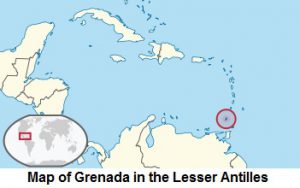
It is hoped that there would be some regional entity that steps in, steps up and helps out.

There is such a need!

This was the scenario in Grenada, just recently. They had a security need above and beyond the local provisioning, and the Royal Grenada Police Force turned to the Grenada Diaspora.

This is perplexing! Let’s examine this further. See the full news article here:

Title: NYPD officers with Caribbean roots reach out to aid the region

(NY Daily) The NYPD-RGPF Officers’ Association — a group of NYPD officers with roots in Grenada — is bringing new meaning to the phrase “long arm of the law” by reaching out to help Grenada law enforcement officials and aiding other causes in the region.

This month, the association collected much-needed relief supplies — including food, soap and shoes — for survivors of Hurricane Maria on storm-ravaged Dominica. Association members were scheduled to gather in Brooklyn yesterday to pack donated supplies bound for Dominica.

The NYPD-RGPF association was founded in the wake of tragedy and its members are, professionally and personally, well suited to respond to crisis.

According to NYPD-RGPF spokesman Michael Bascombe, the association — which uses the Royal Grenada Police Force acronym RGPF in its name — was founded after RGPF Corporal Daniel Edgar was fatally shot in the line of duty in Grenada in April 2016.

Through fund-raising efforts and personal financial support from NYPD officers, the association’s first act was a financial contribution to Edgar’s family — and donating 100 bullet-proof vests, helmets, traffic enforcement equipment and other gear to the Grenada Police Force in September.

The association has started discussions with the RGPF on possible future partnerships, he said.

Source: Posted October 30, 2017; retrieved November 2, 2017 from: https://stluciatimes.com/2017/10/30/nypd-officers-caribbean-roots-reach-aid-region

Make no mistake; Grenada needs all the help it can get. All of these Caribbean member-states need whatever help they can get. The region is reeling from the near total devastation from Category 5 storms: Hurricane Maria and Hurricane Irma; Dominica is in disarray! Barbuda is wiped out and declared a Ghost Town as a result. These places must relieve, restore, recover and rebuild.

Who they gonna call?

The urging here is to NOT look to the Diaspora as some panacea, cure-all solution. This is definitely what is happening in Grenada, as this foregoing news article related:

The NYPD-RGPF association was founded in the wake of tragedy and its members are, professionally and personally, well suited to respond to crisis.

This is a troubling point here: we cannot look to people who have left here to turn around and fix what is broken here. They – the Diaspora – are gone! Yet, this is the preponderance for governments (and citizenry alike) to pursue this strategy in the region. Just recently we published commentaries on this Caribbean pre-occupation, with these entries relating these homelands:

The premise for the criticism of this Diaspora strategy is that the ones that have fled the region have done so for a reason; they have been “pushed” or “pulled” away from their homeland. They may still love their “past” country, but can only do so much from abroad. Plus, history documents that they are less inclined to invest back in their country; they are burdened with the concerns of today and the future, that it is illogical to think that they are concerned about their yesterdays. Thusly, all efforts to outreach the Diaspora are usually futile. All of these prior commentaries relate this basic truth about catering to the Diaspora:

The subtle [Diaspora outreach] message to the Caribbean population is that they need to leave their homeland, go get success and then please remember to invest in us afterwards.

… It is so unfortunate that the people in the Caribbean are beating down the doors to get out of their Caribbean homeland, to seek refuge in these places like the US, Canada and Western Europe. … As a result, we have such a sad state of affairs for our Caribbean eco-system as we are suffering from a bad record of societal abandonment.

Thank you, all Diaspora members that have looked back and lent a hand, but the heavy-lifting of reforming and transforming our society must really come from the people who are in the homeland and in the region. For starters, we must try to dissuade people from leaving in the first place and help them to prosper where planted. The record shows that those who do leave, tends to be the ones that we can least afford to lose. These include the professional classes and highly educated ones; one report presents an abandonment rate of 70 percent of the college-educated populations.

Picture a family with limited food supply, serving dinner and “making extra plates” for family members who have left or passed. This would be illogical. We need to be more pragmatic and work a different strategy to assuage our crisis. We need a strategy that embraces those who are still here, not those that “used to be”.

So the problem of a Diaspora-outreach strategy is that it double-downs on the failure of why the Diaspora left in the first place. We need to employ new strategies for the underlying failures. When we look at our Caribbean homeland and see the many failures, we realize that the people on some islands – like Grenada – and the people in their Diaspora cannot solve the problems in the homeland … alone. No, something bigger and better is needed.

We need a Way Forward. This is where and why we have introduced that something BIGGER … and better …

… enter the Caribbean Union Trade Federation (CU). This is presented as the organizational solution for the economic, security and governing needs of all 30 Caribbean member-states, including Grenada; this is the panacea the region needs.

The foregoing article addressed security issues and law-and-order. The book Go Lean…Caribbean – available to download for free – serves as a roadmap for the introduction and implementation of the technocratic CU, for the elevation of Caribbean societal engines – including economic, security and governance for all member-states. The book asserts that the region can do better with security solutions. We can make our region better and safer to live, work and play. But the requirement is that we must work together – in a formal regional integration – to establish the economy-of-scale to employ the many strategies, tactics and implementation to remediate and mitigate crime in the homeland.

In fact, the CU/Go Lean roadmap presents these 3 prime directives:

The goal of the Go Lean roadmap is for Caribbean people to prosper where planted; the book therefore provides 370-pages of turn-by-turn instructions on “how” to adopt new community ethos, plus the strategies, tactics, implementations and advocacies to execute so as to reboot the region’s societal engines, for Grenada and other member-states. One advocacy for a Way Forward is the plan to optimize community policing (Page 178); see the headlines and excerpts from that page here:

10 Ways to Remediate and Mitigate Crime

1 Lean-in for the Caribbean Single Market
This will allow for the unification of the region into one market of 42 million people across 30 member-states, thereby creating an economic zone to promote and protect the interest of the member-states. (The GDP of the region will amount to $800 Billion according to 2010 figures). In addition, the treaty calls for a collective security agreement of the Caribbean nations so as to implement provisions to serve and protect the citizenry against systemic threats. The CU’s law enforcement agencies will enforce, investigate and prosecute economic crimes, including Racketeering, and Organized Crime Enterprises (RECO), plus any cross border gang activity. In addition, the CU will also provide funding, grants, training, technical consultancy, and support services for member-states law enforcement, including crime labs.
2 Deploy the Caribbean Police (CariPol)

The CU Treaty will compel local police to have accountability and respect for the jurisdiction of the Caribbean Police. CariPol will be modeled after Interpol and the US FBI, with Inspectors for investigations and Marshalls for protection and interdiction. When the local Police call for escalation, CariPol responds. CariPol also “polices” the Police, with audit and compliance oversight for “use of force” reviews and Internal Affairs. The appeal to engage CariPol does not have to come from local police, but rather any constitutional institution (i.e. state governments, courts, or legislative bodies).

3 Regional Security Intelligence Bureau

The CU law enforcement apparatus will deploy sophisticated intelligence gathering and analysis systems, processes and personnel. This includes terrestrial and satellite surveillance (CATV, ankle monitoring) systems, eavesdropping, data mining and predictive modeling. Local and regional Police institutions would have access to these findings and results.

The CU’s intelligence agency will also monitor police actions for public integrity assurance (corruption threats).

4 Prison Industrial Complex
5 Equip local police with advanced technologies

The CU will provide grants to equip local police with advanced technologies, including video (dashboard cameras) and audio transmission, GPS tracking, and mobile computing systems to optimize community policing. The advanced systems also include anklet monitoring systems for non-violent offenders and suspects out on bail.

6 Witness Protection
7 Enable the Private Industry of First Responders and Bounty Hunters
8 Hate Crime Qualifiers
9 Youth Crime Awareness and Prevention
10 Death Penalty Reform

Bullet Proof vests are necessary equipment for community policing. The foregoing news article, and VIDEO in the Appendix below, related that the Diaspora group, the NYPD-RGPF, “donated 100 bullet-proof vests, helmets, traffic enforcement equipment and other gear to the Grenada Police Force in September”. Frankly, this is a local government responsibility. The fact that there is the need for this gift in Grenada is reflective of the security deficiencies in that country and in the region. If the community stakeholders cannot protect their own Peace Officers, how much more so can they protect the citizenry. See this sage commentary:

Intentionally murdering a police officer is an especially heinous crime. When the agents of the state who protect the public are themselves targeted, it is a threat to public order and an attack on the authority of the state. Such crimes ought to be penalized more harshly throughout the entire country. – National Review Magazine.

The Caribbean has mourned the death of a Police Office in Grenada. The Caribbean is not the only region that have experienced violent crime … against law enforcement officers and other citizens. In fact, in the US, the rate of death from gun violence far exceeds all other advanced democracy countries. Yet, our Caribbean Diaspora – from New York City – has stepped in to help Grenada.
Thank you …

… but we are urged to lower our expectations of gifts and investments from the Diaspora in general.

The Go Lean book – and many previous blog-commentaries – asserts that while conditions may be bad for Caribbean residents (i.e. Grenadian) in their homeland, Black-and-Brown immigrants to far-away countries (think: North America and Western Europe; think New York City) often have to contend with less than welcoming conditions in those countries. It is only with the Second Generation that prosperity is achieved, but by then, the children of the Caribbean Diaspora are not considered “Caribbean” anymore; they assume their residential citizenship.

When Caribbean people in general, and Grenadians in particular, emigrate and become aliens in a foreign land, life is not necessarily better in those countries. As related in these prior blog-commentaries, those who live in the Diaspora know “both sides of the coin”, as most of them have lived in the ancestral lands at one point. But on the other half, those who still live in the homeland may have never lived abroad.

They do not know what they do not know!

Being a visitor to some North American or European city is different than being a resident, as visitors do not have the interactions of applying for jobs, housing, government benefits, paying taxes, co-existing with neighbors, etc.. These ones in the homeland may naturally assume that the “grass is greener on the other side”. Here’s the truth:

    It is not! (The grass in the northern cities may not even be green at all; it may be covered with autumn foliage or snow).

So it is the summation of this commentary and all the related ones with the theme “Diaspora – Not the Panacea” that it is better for Grenadian people, and people of all the Caribbean for that matter, to work to remediate and mitigate the risks of Failed-State status in their homeland. But many people may argue – and they would be correct – that the reformation and transformation of Caribbean communities should come from Caribbean people first. Yet with such a high societal abandonment rate, the population of many Caribbean member-states – as in Grenada – is approaching a distribution where more citizens live abroad – in the Diaspora than on the island. See the additional data references here:

Grenada, like many of the Caribbean islands is subject to a large amount of migration, with a large number of young people wanting to leave the island to seek life elsewhere. With estimated 107,317 people living in Grenada, estimates and census data suggest that there are at least that number of Grenadian-born people in other parts of the Caribbean (such as Barbados and Trinidad) and at least that number again in First World countries. Popular migration points for Grenadians further north include New York City, Toronto, the United Kingdom (in particular, London and Yorkshire; see Grenadians in the UK) and sometimes Montreal, or as far south as Australia. This means that probably [ONLY] around a third of those born in Grenada still live there.- Wikipedia.

The Go Lean roadmap is not one that advocates the Diaspora coming to the rescue, but rather a Caribbean confederacy, constituted by all 30 member-states, being the solution. This roadmap leverages the Caribbean as a Single Market (42 million people); it asserts that this is better than just catering to the Diaspora of just one country. This is to be the panacea that Caribbean needs to assuage its defects and dysfunctions. Plus, it also includes the Diaspora, but for all the Caribbean nations combined – estimated at 10 to 25 million. This is a plan for interdependence! This was the initial motivation for the CU/Go Lean roadmap, as pronounced in opening Declaration of Interdependence (Pages 12 – 13) statements of the book:

x. Whereas we are surrounded and allied to nations of larger proportions in land mass, populations, and treasuries, elements in their societies may have ill-intent in their pursuits, at the expense of the safety and security of our citizens. We must therefore appoint “new guards” to ensure our public safety and threats against our society, both domestic and foreign. The Federation must employ the latest advances and best practices of criminology and penology to assuage continuous threats against public safety. The Federation must allow for facilitations of detention for convicted felons of federal crimes, and should over-build prisons to house trustees from other jurisdictions.

xi. Whereas all men are entitled to the benefits of good governance in a free society, “new guards” must be enacted to dissuade the emergence of incompetence, corruption, nepotism and cronyism at the peril of the people’s best interest. The Federation must guarantee the executions of a social contract between government and the governed.

xvi. Whereas security of our homeland is inextricably linked to prosperity of the homeland, the economic and security interest of the region needs to be aligned under the same governance. Since economic crimes, including piracy and other forms of terrorism, can imperil the functioning of the wheels of commerce for all the citizenry, the accedence of this Federation must equip the security apparatus with the tools and techniques for predictive and proactive interdictions.

xix. Whereas our legacy in recent times is one of societal abandonment, it is imperative that incentives and encouragement be put in place to first dissuade the human flight, and then entice and welcome the return of our Diaspora back to our shores. This repatriation should be effected with the appropriate guards so as not to imperil the lives and securities of the repatriated citizens or the communities they inhabit. The right of repatriation is to be extended to any natural born citizens despite any previous naturalization to foreign sovereignties.

xx. Whereas the results of our decades of migration created a vibrant Diaspora in foreign lands, the Federation must organize interactions with this population into structured markets. Thus allowing foreign consumption of domestic products, services and media, which is a positive trade impact. These economic activities must not be exploited by others’ profiteering but rather harnessed by Federation resources for efficient repatriations.

There have been a number of blog-commentaries by the Go Lean promoters that have detailed the functionalities of the CU‘s security measures as part of the Way-Forward – the best hope for a new eco-system for Grenada, and the whole Caribbean. See a sample list here of recent submissions:

https://goleancaribbean.com/blog/?p=13138 Industrial Reboot for Better Security – Prisons 101
https://goleancaribbean.com/blog/?p=13126 The Requirement for Better Policing/Security – ‘Must Love Dogs’
https://goleancaribbean.com/blog/?p=12400 Strong Urging to Accede the Caribbean Arrest Treaty
https://goleancaribbean.com/blog/?p=11244 Gun and Violent Deaths More Common in USA Than Caribbean
https://goleancaribbean.com/blog/?p=10566 Funding the Caribbean Security Pact
https://goleancaribbean.com/blog/?p=9072 Securing the Homeland – A Series
https://goleancaribbean.com/blog/?p=7485 A Lesson in the History of Interpersonal Violence – Street Crimes
https://goleancaribbean.com/blog/?p=2684 Role Model for Justice – The Pinkertons
https://goleancaribbean.com/blog/?p=392 World Bank Funds Caribbean Country to Help in Crime Fight

Confederating a regional response is by all means the best-practice for Grenada and other Caribbean security threats. Good results are evident from the limited multilateral efforts that have been exerted thus far. In fact, the current Caribbean Community – CARICOM – includes this regional anti-crime organization IMPACS. The formal name is actually CARICOM Implementation Agency for Crime and Security.

See the “Fact Sheet” in the Appendix below.

This IMPACS organization tries …

… but trying alone is not enough. There is the need for solutions: hardware (tools, equipment and devices) and software (techniques, best-practices, training and systems).

In summary, regional integration: Good; societal abandonment: Bad!

Any country growing their Diaspora is bad for that country and bad for the Diaspora members. Grenada – and every other country – needs its sons and daughters right now; actually this island needs “all hands on deck” for the Way-Forward. Any official policy to encourage emigration and living-working-abroad – on a permanent basis – is a flawed policy. Rather, it is better to have our citizens in the homeland. They can better help to better protect the community.

So any policy that double-downs on the Diaspora is actually doubling-down on failure. We should never want people to have to leave then hope they remember us in our times of distress. No, we want and need them here at home at all times: good, bad and “ugly”.

We strongly urge every stakeholder of Grenada and all of the Caribbean to lean-in to this roadmap to make our homeland, Grenada and the remaining of the 30 member-states, better/safer places to live, work and play. 🙂

Sign the petition to lean-in for this roadmap for the Caribbean Union Trade Federation.

———-

Appendix VIDEO – RGPF Receives Safety Gear From NYPD – https://youtu.be/QBB3mMP802s

Grenada Broadcasting Network

Published on Sep 8, 2017 – Police officers have been given a security boost.

Approximately one hundred bullet proof vests and other items were handed over, from Grenadian officers of the New York Police Department.

  • Category: News & Politics
  • License: Standard YouTube License

———-

Appendix – IMPACS Fact Sheet

The Agency is the nerve centre of the Region’s new multilateral Crime and Security management architecture, specifically designed to administer a collective response to the Crime and Security priorities of Member States. Under the directives of, and with reporting responsibility to the Council of Ministers of National Security and Law Enforcement. IMPACS core functions include -:

  • The implementation of actions agreed by the Council relating to crime and security;
  • The development and implementation of projects in furtherance of the Agency’s objectives;
  • The initiation and development of proposals for consideration and determination by the Council;
  • Advising the Council on appropriate regional responses to Crime and Security arrangements on the basis of research and analysis;
  • The execution of regional projects relating to matters of crime and security;
  • Providing a clearing house for relevant information in matters relating to crime and security;
  • Mobilizing resources in support of the regional Crime and Security agenda and negotiation of technical assistance;
  • Contributing to the development and implementation of strategies for effective representation of CARICOM on a regional and international level on matters relating to crime and security;
  • The dissemination of information to Contracting Parties with respect to evolving regional and international trends in crime and security;
  • The collaboration and co-ordination with national and international crime prevention and control agencies to determine trends, methodologies and strategies for crime prevention and enhancing security for the Community; and
  • Developing, in collaboration with the CARICOM Secretariat, roles, functions and Rules of Procedure for such Committees as may be established in furtherance of the regional Crime and Security agenda.

Source: Retrieved November 3, 2017 from: http://www.caricom.org/about-caricom/who-we-are/institutions1/caricom-implementing-agency-for-crime-and-security-impacs

Share this post:
, , ,
[Top]

West African Case Study: ECOWAS to Launch ‘Single Currency’

Go Lean Commentary

The Caribbean has the poorest country in the Western Hemisphere: Haiti. But even that is not the poorest (least developed) country in the world; that distinction belongs to 34 countries in Africa; see the full list in the Appendix below.

Yet still, there are lessons that some countries in Africa can teach us here in the Caribbean. One such lesson – Case Study – is the Economic Community of West African States (ECOWAS); see the full news article here of the endeavor for a Single Currency:

Title: ECOWAS leaders agree on single currency by 2020
The 4th meeting of the Presidential Taskforce on a common currency for the West African Monetary Zone (WAMZ) has taken place in Niamey, the capital of Niger, with the firm commitment towards the acceleration of the processes leading to the use of the single currency by 2020.

The meeting was attended by the members of the Presidential Taskforce, namely the President of Ghana, Nana Addo Dankwa Akufo-Addo; the President of the Federal Republic of Nigeria, Muhammadu Buhari; the President of Cote d’Ivoire, Alassane Ouattara; and the host, Mahamadou Issoufou, President of Niger.
Chairperson of the Economic Community of West African States (ECOWAS), Faure Essozimna Gnassingbé, President of the Togolese Republic, was also present, and took part in the proceedings.

In a communiqué issued at the end of the 1-day meeting, on Tuesday, 24th October, 2017, the members of the Taskforce took note of the report of the Ministerial Committee meeting held earlier, and acknowledged the quality of the conclusions as well as the relevance of the recommendations made, whose substantive parts relate to the measures for the acceleration of the ECOWAS single currency programme.

The Taskforce appreciated the progress made by all ECOWAS institutions involved in the conduct of ECOWAS Single Currency Roadmap activities, and reaffirmed its commitment to the pursuit and the acceleration of the economic, financial and monetary integration agenda of ECOWAS.

In endorsing the main recommendations of the Ministerial Committee, the Taskforce urged Member States to pursue the structural reforms of their respective economies, to help them deal with fluctuations in the prices of raw materials, and enable their economies to be more resilient to exogenous shocks.

Additionally, the Taskforce urged Member States to take the necessary measures, including the attainment of the convergence criteria, necessary for the creation of the ECOWAS single currency by 2020.

The Communiqué noted that the Taskforce has “instructed the Ministerial committee to meet within three months to propose a new roadmap to accelerate the creation of the single currency by 2020. In this framework, a gradual approach can be undertaken, where a few countries, which are ready, can start the monetary union, whilst the other countries join later.”

The Presidential Task Force will hold their next meeting in Accra, in February 2018.

Background
It will be recalled that at the Extraordinary Summit of Heads of State and Government on 25th October, 2013, the Presidents of Ghana and Niger were appointed to oversee the creation of the single currency in a timely manner.

The two Presidents constituted a Task Force, whose membership included representatives of the President of Ghana and Niger; Ministers of Finance of Ghana and Niger; Governors of the eight Central Banks of ECOWAS member States; ECOWAS and UEMOA Commissions; West African Monetary Agency (WAMA) and the West African Monetary Institute, to advise them periodically on the monetary integration programme.

The membership of the taskforce was reviewed in 2015 to include the Presidents of Cote d’Ivoire and Nigeria, as well as the Ministers of Finance of the two countries.

The inaugural meeting of the Presidential Taskforce was held on 20th and 21st February, 2014 in Niamey. Subsequently, two other meetings were held in Accra on 7th and 8th July, 2014, with the last meeting held in Niamey from 4th to 6th February, 2015.

The main objectives of the third meeting were to examine the revised roadmap on the realisation of the ECOWAS single currency by 2020; a proposal from the ECOWAS Commission on the creation of an ECOWAS monetary Institute by 2018; and the concern raised by the WAMZ Convergence Council on the revised macroeconomic criteria adopted by the 45th Ordinary Summit of the Heads of State and Government held in Accra on 10th July, 2014.

After the third meeting, it was agreed, amongst others, that the Central Bank financing criterion be reclassified as a primary criterion because of its strategic importance to monetary and price stability. The revised roadmap on the realisation of the ECOWAS single currency by 2020 was to be costed, and sources of funding identified.
Source: Posted & retrieved on October 24, 2017 from: http://3news.com/ecowas-leaders-agree-single-currency-2020/

While ECOWAS has 15 member states, eight of these are French-speaking, five are English-speaking and two Portuguese-speaking – as of February 2017, not all are participating in this Single Currency endeavor … yet. (See Appendix VIDEO below on ECOWAS). The member-states that have pledged to launch this Single Currency in time for 2020 are as follows:

  • Ghana
  • Nigeria
  • Cote d’Ivoire
  • Togo

Why is this endeavor important and how can it guide the Caribbean? The foregoing article cited the rationale with this one quotation:

“enable their economies to be more resilient to exogenous shocks”.

This is a familiar advocacy for the movement behind the book Go Lean…Caribbean. In a previous blog-commentary from May 9, 2014 the merits of Single Market economic integration were related as follows:

Europe has the safety net of the economies-of-scale of 508 million people and a GDP of $15 Trillion in 28 member-states in the EU; (the Eurozone subset is 18 states, 333 million people and $13.1 Trillion GDP). The US has 50 states and 320 million people. Shocks and dips can therefore be absorbed and leveraged across the entire region .The EU is still the #1 economy in the world; the US is #2.

The Caribbean has no safety-net, no shock absorption, and no integration. This is the quest of the book Go Lean…Caribbean; it urges the introduction and implementation of the Caribbean Union Trade Federation (CU). The book serves as a roadmap for this goal, with turn-by-turn directions to integrate the 30 member-states of the region and forge an $800 Billion economy.

The Go Lean roadmap signals change for the region. It introduces new measures, new opportunities and new recoveries. Economies will rise and fall; the recovery is key. Prices will inflate and deflate; as depicted in the foregoing article, there are curative measures to manage these indices. The roadmap calls for the establishment of the allied Caribbean Central Bank (CCB) to manage the monetary affairs of this region. The book describes the breath-and-width of the CCB.

There are many benefits when multiple countries come together and form a Single Market economy. This is also the quest for the CU/Go Lean roadmap: to form a Single Market and make the Caribbean’s member-states “Pluralistic Democracies”. Pluralism – recognition and affirmation of diversity within a political body – applies in this West African Community as well; as these countries have a diverse mix of tribal affiliation, colonial legacy and language prioritization. These African developments are therefore fitting for a Case Study for the Caribbean to consider.

This CU/Go Lean roadmap therefore urges the same Single Market effort with these 3 prime directives:

  • Optimization of the economic engines in order to grow the regional economy and create 2.2 million new jobs.
  • Establishment of a security apparatus to ensure public safety and protect the resultant economic engines.
  • Improvement of Caribbean governance to support these engines, including a separation-of-powers between the member-states and CU federal agencies.

A Single Currency in West Africa – eventually: Eco – is not so unfamiliar. There are two current currencies that fit the mold:

The West Africa Monetary Zone – identified in the foregoing news article – attempts to establish a strong stable currency to rival the CFA franc, whose exchange rate is tied to that of the Euro and is guaranteed by the French Treasury. The eventual goal is for the CFA franc and “Eco” to merge, giving all of West and Central Africa a single, stable currency. The launch of the new currency – with a target date of 2020 – is being developed by the West African Monetary Institute based in Accra, Ghana.

Wow, for the BIG ideas… to elevate the economic engines for 155 million people in West Africa.

The Go Lean book also presents a BIG idea for reforming and transforming the economic engines of the 42 million people in our 30 Caribbean member-states; the book stresses that our effort must likewise be a regional pursuit, and it must also optimize our currency landscape. This was an early motivation for the roadmap, as pronounced in the opening Declaration of Interdependence (Pages 12 – 13):

xi. Whereas all men are entitled to the benefits of good governance in a free society, “new guards” must be enacted to dissuade the emergence of incompetence, corruption, nepotism and cronyism at the peril of the people’s best interest. The Federation must guarantee the executions of a social contract between government and the governed.

xvi. Whereas security of our homeland is inextricably linked to prosperity of the homeland, the economic and security interest of the region needs to be aligned under the same governance. Since economic crimes … can imperil the functioning of the wheels of commerce for all the citizenry, the accedence of this Federation must equip the security apparatus with the tools and techniques for predictive and proactive interdictions.

xxiv. Whereas a free market economy can be induced and spurred for continuous progress, the Federation must install the controls to better manage aspects of the economy: jobs, inflation, savings rate, investments and other economic principles. Thereby attracting direct foreign investment because of the stability and vibrancy of our economy.

The Go Lean book provides 370-pages of turn-by-turn instructions on “how” to adopt new community ethos, plus the strategies, tactics, implementations and advocacies to execute so as to reboot, reform and transform the societal engines of Caribbean society. There is a lot of consideration in the book for optimizing the currency and monetary eco-systems. Consider this excerpt detailing the Money Multiplier concept; from Page 22:

b-1. Money Multiplier

In monetary macroeconomics and banking, the money multiplier measures how much the money supply increases in response to a change in the monetary base. The multiplier may vary across countries, and will also vary depending on what measures of money are considered. For example, consider M1 as a measure of the U.S. money supply, and M0 as a measure of the U.S. monetary base. If a $1 increase in M0 by the Federal Reserve causes M1 to increase by $10, then the money multiplier is 10.

A money multiplier is one of various closely related ratios of commercial bank money to central bank money under a fractional-reserve banking system. Most often, it measures the maximum amount of commercial bank money that can be created by a given unit of central bank money. That is, in a fractional-reserve banking system, the total amount of loans that commercial banks are allowed to extend (the commercial bank money that they can legally create) is a multiple of reserves; this multiple is the reciprocal of the reserve ratio, and it is an economic multiplier.

Banks are allowed to lend out the monies on deposit up to some regulated maximum. If banks lend out close to that maximum allowed by their reserves, then the inequality becomes an approximate equality, and commercial bank money is central bank money times the multiplier. If banks instead lend less than the maximum, accumulating excess reserves, then commercial bank money will be less than central bank money times the theoretical multiplier.

As a formula and legal quantity, the money multiplier is neither complicated nor controversial – it is simply the maximum that commercial banks are allowed to lend out. However, there are various theories/tools/techniques concerning the mechanism of money creation in a fractional-reserve banking system, and they all have implications on monetary policy. As such this sphere of concern is normally managed by the professionals, classically-trained technocrats.

The conclusion of this consideration is straight forward – there is a multiplier associated with the currency in the money supply. Therefore it goes without saying that if the Caribbean member-states trade in US dollars, then the multiplier effect is extended to the United States of America. By contrast, if the Caribbean member-states trade in Euros, then the multiplier effect goes to the stakeholders of the European Central Bank – no Caribbean state. Therefore the communities of the Caribbean must embrace, as an ethos, its own currency, the Caribbean Dollar (managed by a technocratic Caribbean Central Bank), thereby bringing local benefits from local multipliers.

There have been a number of previous blog-commentaries by the Go Lean movement that have highlighted Case Studies on monetary and currency best practices. See a sample list here:

https://goleancaribbean.com/blog/?p=10513 Case Study from India: Transforming Money Countrywide
https://goleancaribbean.com/blog/?p=7140 Case Study from Azerbaijan: Setting its currency on free float
https://goleancaribbean.com/blog/?p=6800 Case Study from Venezuela: Suing Black Market currency website
https://goleancaribbean.com/blog/?p=4166 Case Study from Panama: History of the Balboa Currency
https://goleancaribbean.com/blog/?p=3858 Case Study from ECB: Unveiling 1 trillion Euro stimulus program
https://goleancaribbean.com/blog/?p=3814 Case Study from Switzerland: Unpegging the franc
https://goleancaribbean.com/blog/?p=360 Case Study on Central Banks: Creating Money from ‘Thin Air’
https://goleancaribbean.com/blog/?p=833 Case Study from the Euro: One Currency, Diverse Economies

In summary, shepherding the economy is no simple task. It requires the best practices of skilled technocrats. Hopefully these West African States will thrive with this new Single Currency effort as they embrace monetary best-practices.

We will be watching!

Hopefully too, the Single Currency efforts in our region – Caribbean Dollar – will manifest before 2020. The benefits are too alluring to ignore: growing the monetary supply, expanding the availability of investment capital and leveraging across a larger base to absorb the shocks naturally associated with a Free Market Economy. Wow; let’s get started.

We are past the time of needing Central Banking reform. We now need to Catch-Up and transform our own society to derive some of these benefits and innovations.

We urge all Caribbean stakeholders – government officials, bankers and ordinary citizens – to lean-in for the empowerments detailed in this Go Lean roadmap. These are best practices! These can make our homeland a better place to live, work and play. 🙂

Download the free e-book of Go Lean … Caribbean – now!

Sign the petition to lean-in for this roadmap for the Caribbean Union Trade Federation.

———–

Appendix – Current Least Developed Countries

Click on Photo to Enlarge

Source: Retrieved Wikipedia Online Encyclopedia October 25, 2017 from: https://en.wikipedia.org/wiki/Least_Developed_Countries#Africa_.2834_countries.29  

———–

Appendix VIDEO – About ECOWAS – https://youtu.be/f2m2UCuEYAs

Published on Jan 29, 2016 – MULTI-MEDIA ECOWAS.COMMUNICATION

  • Category: Comedy
  • License: Standard YouTube License
Share this post:
, , ,
[Top]