Category: Industries

Location Matters, Even in a Virtual World

Go Lean Commentary 

CU Blog - Location Still Matters in a Virtual World - Photo 1Location, location, location …

Despite the direct references to the physical world, it turns out that ‘location’ is equally important in the virtual world.

The consideration of location is the most important factor in the Art-and-Science of Marketing. That field has these 4 charters, considered the 4 P’s, but location rises to the front of the priorities:

  • Place – Location, location, location… (See Appendix below).
    Can also refer to distribution; the destination and activities that make the product available to consumers.
  • Product – The goods and/or services offered by a company to its customers.
  • Price – The amount of money paid by customers to purchase the product
  • Promotion – The activities that communicate the product’s features and benefits and persuade customers to purchase the product.
    Source: Marketing Online Journal

But for the virtual world – or electronic commerce – the discussion of location considers “community” more so than buildings. “Community” as in community ethos; this is defined as the fundamental character of a culture, that informs the beliefs, customs, or practices of a group or society.

So where – which community – an e-Commerce company is located in really matters … for access to the right ethos, skilled talent, support services and capital. Is the Caribbean a good location for electronic commerce? No, we are not!

Can we be a good location for electronic commerce? Yes, we can!

We must simply adopt the appropriate community ethos; then execute the proper strategies, tactics and implementations to foster the industrial policies, entrepreneurial opportunities and jobs.

There is a model for us to follow:

Ann Arbor, Michigan.

In a previous blog-commentary on April 16, 2015 by the movement behind the book Go Lean … Caribbean, the college-town of Ann Arbor was examined as part of a year-long tour of the economic anatomy of City of Detroit and surrounding Michigan cities. The book identified the Detroit metropolitan area (Page 140) as a Failed-City that parallels many Caribbean communities. Yet still, out of the “ashes of decay”, a few positive innovations were observed-and-reported on, such as the impactful community of Ann Arbor. That previous blog quoted the following:

The idea of impactful cities aligns with the book Go Lean…Caribbean in stressing the elevation of the societal engines through entrepreneurial endeavors. The book asserts that Caribbean society can be elevated by improving the eco-system to live, work, learn and play. This is the example of Ann Arbor.

The Go Lean roadmap accepts that change has come to the global marketplace, due mostly to the convergence of Internet & Communications Technology (ICT). The book posits that size no longer matters, that from any location – like Ann Arbor … – innovative solutions can be developed and promoted to an appreciative audience. What matters most is the innovation, not the location; so any Caribbean member-state, large or small can be impactful. The first requirement is the community ethos of valuing intellectual property. This ethos would be new for the Caribbean market; it is therefore a mission of the CU to forge.

The Go Lean roadmap asserts that one individual or community can make a difference in the quest to elevate Caribbean society – the promoters of Go Lean have come to Ann Arbor to observe and report on their progress. We want the same outcomes by fostering genius qualifiers in our region; we therefore need impactful college-towns in the Caribbean.

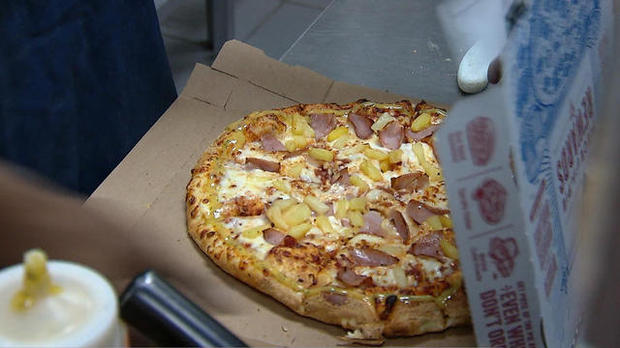
Consider this example of a world renowned company, based in Ann Arbor, that embraced that city’s spirit and most-assuredly rebooted their company, culture and fortunes. That company is Domino’s Pizza. Yes, a pizza company with more staff in Information Technology than any other department in the corporate headquarters. They place a huge emphasis on developing- deploying technology-based solutions, while also improving their underlying product, Pizza. This story is portrayed in this VIDEO here:

VIDEOBehind Domino’s Pizza’s recipe for successhttp://www.cbsnews.com/videos/dominos-pizzas-recipe-for-success

Published on Mar 25, 2017 – Domino’s Pizza is hotter than ever.
One big reason has to do with marketing seven years ago that helped save the day when the flat-bread company was flatlining… .
“In 2009, we decided that technology was going to be a big deal,” CEO Patrick Doyle said. Domino’s has more people working in IT than anywhere else in the company, at its Ann Arbor, Michigan, headquarters. CBS News correspondent Michelle Miller reports.
(Read the full transcript here: http://www.cbsnews.com/videos/dominos-pizzas-recipe-for-success)

CU Blog - Location Still Matters in a Virtual World - Photo 2

See a related VIDEO here: Domino’s® Pizza Turnaround by Domino’s Pizza on YouTube
The book Go Lean…Caribbean strategizes technology as well; in fact that Internet & Communications Technologies (ICT) – e-Commerce is one such economic activity – is presented as a great equalizer for Small Country-States versus Big States on the world stage. The book stresses this point early (on Page 14) in the opening Declaration of Interdependence:

xxvii. Whereas the region has endured a spectator status during the Industrial Revolution, we cannot stand on the sidelines of this new economy, the Information Revolution. Rather, the Federation must embrace all the tenets of Internet Communications Technology (ICT) to serve as an equalizing element in competition with the rest of the world. The Federation must bridge the digital divide and promote the community ethos that research/development is valuable and must be promoted and incentivized for adoption.

The Go Lean book details technology and other strategies, tactics, implementations and advocacies to forge a cyber-friendly community ethos in the Caribbean. The book presents one such advocacy on Page 127, entitled:

10 Big Ideas … in the Caribbean Region

8 Cyber Caribbean
Forge electronic commerce industries so that the internet communications technology (ICT) can be a great equalizer in economic battles of global trade. This includes e-Government (outsourcing and in-sourcing for member-states systems) and e-Delivery, Postal Electronic Last Leg mail, e-Learning and wireline/wireless/satellite initiatives.

The opening Declaration of Interdependence also stressed the need for entrepreneurship and job creation. The book relates that the right community ethos can be – must be – forged, especially if we want to create jobs … in this new economy; (we want those jobs). See that pronouncement here also in the opening Declaration of Interdependence on Page 14:

xxvi. Whereas the Caribbean region must have new jobs to empower the engines of the economy and create the income sources for prosperity, and encourage the next generation to forge their dreams right at home, the Federation must therefore foster the development of new industries, like … frozen foods …. In addition, the Federation must invigorate the enterprises related to existing industries like tourism… – impacting the region with more jobs.

The Go Lean book serves as a roadmap for the introduction and implementation of the technocratic Caribbean Union Trade Federation (CU), for the elevation of all 30 member-states of the Caribbean. This CU/Go Lean roadmap has these 3 prime directives:

  • Optimization of the economic engines in order to grow the regional economy to $800 Billion and create 2.2 million new jobs.
  • Establishment of a security apparatus to protect the resultant economic engines.
  • Improve Caribbean governance to support these engines.

This commentary examined many other companies and many other cities, detailing their successes and failures in transforming their communities. Consider this sample of earlier blogs:

https://goleancaribbean.com/blog/?p=10449 Model of an ‘empowering’ family/company empowering a city: Detroit
https://goleancaribbean.com/blog/?p=10140 Lessons Learned from Detroit demolishing thousands of structures
https://goleancaribbean.com/blog/?p=8982 GraceKennedy: Profile of a Caribbean Transnational Corporation
https://goleancaribbean.com/blog/?p=8669 Detroit makes Community College free
https://goleancaribbean.com/blog/?p=7586 Company Blink Health: The Cure for High Drug Prices
https://goleancaribbean.com/blog/?p=7235 Flint, Michigan – A Cautionary Tale
https://goleancaribbean.com/blog/?p=5155 Tesla unveils super-battery to power homes
https://goleancaribbean.com/blog/?p=4587 Burlington, Vermont: First city to be powered 100% by renewables
https://goleancaribbean.com/blog/?p=3152 Making a Great Place to Work®
https://goleancaribbean.com/blog/?p=3490 How One Entrepreneur Can Rally a Whole Community
https://goleancaribbean.com/blog/?p=2488 Role Model Jack Ma brings Alibaba to America
https://goleancaribbean.com/blog/?p=1416 Role Model Amazon’s new FIRE Smartphone

The Go Lean book and these accompanying blogs posit that the economic failure in the Caribbean in the past in general is the result of the lack of diversity in our industrial development. The region depends too heavily on tourism. We need to be prepared for the new economy – with the tenants of ICT. While location does not matter online, when it comes to e-Commerce, location does matter for having a community that fosters the right attitudes and achievements.

The Go Lean book asserts that the Caribbean nations must do better! We must look for these ICT opportunities for economic expansion; consider “10 Ways to Foster e-Commerce” (Page 198).

The requisite investment of the resources (time, talent, treasuries) for this goal may be too big for any one Caribbean member-state alone, so shifting the responsibility to a region-wide, professionally-managed, deputized technocracy will result in greater production and greater accountability.

The Go Lean roadmap is designed to facilitate economic growth and job creation, by modeling companies like Domino’s and cities like Ann Arbor. We want to be their protégés … and definitely not their parasites.

Now is the time for all of the Caribbean, the people, entrepreneurs, business establishments and even the governing institutions, to lean-in to this Go Lean roadmap to make the Caribbean homeland a better place to live, work and play. 🙂

Download the free e-book of Go Lean … Caribbean – now!

Sign the petition to lean-in for the roadmap for the Caribbean Union Trade Federation.

———-

Appendix Title: Who coined the phrase ‘location, location, location’?

Language expert William Safire searches for who came up with the phrase “location, location, location” in the Times Magazine this weekend after a colleague working on a wedding announcement said the phrase was attributed to a British real estate tycoon named Lord Harold Samuel. Lord Samuel’s 1987 obituary names him as the phrase coiner, but the editor of the “Yale Book of Quotations” found the phrase used in a real estate classified ad in the Chicago Tribune in 1926.

Lord Samuel was 14 years old at the time. Safire said the context of the 1926 ad suggests it was already a familiar phrase in Chicago and phrasal etymologists are not yet finished with this challenge.
Source: The Real Deal – South Florida Real Estate News – Posted June 9, 2009; retrieved April 24, 2017 from: http://bit.ly/2jyEzbD

 

Share this post:
, , , ,

Retail Apocalypse – Preparing for the Inevitable

Go Lean Commentary

Remember the dream … of 7 Fat Cows and 7 Skinny Cows?

The articulation of the dream was that the 7 Fat Cows represented 7 prosperous years while the 7 Skinny Cows represented 7 years of famine with poverty and distress. – The Bible; Genesis Chapter 41.
CU Blog - Retail Apocalypse - Preparing for the Inevitable - Photo 0

In that Bible drama of Joseph in ancient Egypt, those circumstances were more than just in a dream; it was a prophecy of prosperity and famine. It came true!

Joseph was able to use the foresight to prepare that kingdom for adversity, after first exploiting the opportunities.

Here it comes again.

There is feast and famine “in the cards” as related to the retail eco-system. On one end of the spectrum , there will be prosperity for electronic commerce stakeholders, but on the other end, for brick-and-mortar establishments, there will be a Retail Apocalypse.

Will be? Actually, the threat has already manifested!

This is the assertion in this news article by the financial-economic magazine Business Insider:

CU Blog - Retail Apocalypse - Preparing for the Inevitable - Photo 1

Title: The retail apocalypse has officially descended on America
By: Hayley Peterson

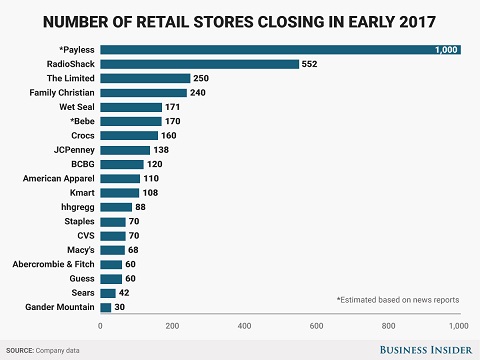
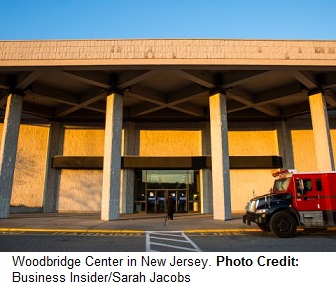
Thousands of mall-based stores are shutting down in what’s fast becoming one of the biggest waves of retail closures in decades.

More than 3,500 stores are expected to close in the next couple of months.

Department stores like JCPenney, Macy’s, Sears, and Kmart are among the companies shutting down stores, along with middle-of-the-mall chains like Crocs, BCBG, Abercrombie & Fitch, and Guess.

CU Blog - Retail Apocalypse - Preparing for the Inevitable - Photo 2

Some retailers are exiting the brick-and-mortar business altogether and trying to shift to an all-online model.

For example, Bebe is closing all its stores — about 170 — to focus on increasing its online sales, according to a Bloomberg report.

Some are going out of business altogether, like The Limited which recently shut down all 250 of its stores.

Others, such as Sears and JCPenney, are aggressively paring down their store counts to unload unprofitable locations and try to stanch losses.

CU Blog - Retail Apocalypse - Preparing for the Inevitable - Photo 3Sears is shutting down about 10% of its Sears and Kmart locations, or 150 stores, and JCPenney is shutting down about 14% of its locations, or 138 stores.

According to many analysts, the retail apocalypse has been a long time coming in the US, where stores per capita far outnumber that of any other country.

The US has 23.5 square feet of retail space per person, compared with 16.4 square feet in Canada and 11.1 square feet in Australia, the next two countries with the most retail space per capita, according to a Morningstar Credit Ratings report from October.

Visits to shopping malls have been declining for years with the rise of e-commerce and titanic shifts in how shoppers spend their money. Visits declined by 50% between 2010 and 2013, according to the real-estate research firm Cushman & Wakefield.

And people are now devoting bigger shares of their wallets to restaurants, travel, and technology than ever before, while spending less on apparel and accessories.

As stores close, many shopping malls will be forced to shut down as well.

When an anchor store like Sears or Macy’s closes, it often triggers a downward spiral in performance for shopping malls.

Not only do the malls lose the income and shopper traffic from that store’s business, but the closure often triggers “co-tenancy clauses” that allow the other mall tenants to terminate their leases or renegotiate the terms, typically with a period of lower rents, until another retailer moves into the anchor space.

To reduce losses, malls must quickly find a replacement tenant for the massive retail space that the anchor store occupied, which is difficult — especially in malls that are already financially strapped — when major department stores are reducing their retail footprints.

That can have grave consequences for shopping malls, especially in markets where it’s harder to transform vacant mall space into non-retail space like apartments, according to analysts.

The nation’s worst-performing malls — those classified in the industry as C- and D-rated — will be hit the hardest by the store closures.

The real-estate research firm Green Street Advisors estimates that about 30% of all malls fall under those classifications. That means that nearly a third of shopping malls are at risk of dying off as a result of store closures.
Source: Business Insider e-Zine. Posted 03/21/2017; retrieved 04/17/2017 from: http://www.businessinsider.com/the-retail-apocalypse-has-officially-descended-on-america-2017-3

CU Blog - Retail Apocalypse - Preparing for the Inevitable - Photo 4

Related:

1. Monday Market Mayhem – The Retail Apocalypse – Look out Wall Street

2. Dollar General is defying the retail apocalypse and opening 1,000 stores

See the related AUDIO Podcast below here:

———–

AUDIO Podcast – Wal-Mart battles Amazon with discounts for online ordering and store pickup – https://www.marketplace.org/2017/04/14/business/its-battle-amazon-walmart-offers-discounts-ordering-online-and-picking-store

Published April 14, 2017 – Big Box giant Wal-Mart battling e-Commerce giant Amazon for New Economy fulfillment.

As noted in the foregoing, the Retail Apocalypse is affecting the news in the United States. It’s only the news today, tomorrow will be jobs, the next day the finance apparatus holding the debt (mortgages and security instruments on Wall Street) for the many shopping malls and then soon, the rest of the economy will be impacted.

This is so familiar. Remember the housing-real estate bubble in 2003 to 2010. This previous blog-commentary identified the following 5 steps of a bubble:

1.   Displacement

2.   Boom

3.   Euphoria

4.   Profit Taking

5.   Panic

Here we go again! Sounds like a crisis is imminent.

The book Go Lean…Caribbean serves as a roadmap for the introduction and implementation of the technocratic Caribbean Union Trade Federation (CU) and Caribbean Central Bank (CCB); it declares that a crisis is a terrible thing to waste – quoting famed American Economist Paul Romer. Though the impending crisis is slated for the US, the actuality of economic contagions mean that the Caribbean member-states will be affected as well.

Where do the tourists come from that drive the Caribbean region’s primary economic driver?

The question is rhetorical; the answer is obvious!

The Go Lean book seeks to prepare the Caribbean region for the change dynamics impacting the world. The “Agents of Change” at play in the foregoing news source are as follows:

  • Technology
  • Globalization

The underlying issue with the Retail Apocalypse is not the demand for retail products, it is the supply. Consumers are still demanding and consuming fashion and commodities, just not at shopping malls; e-Commerce is “all the rage”.

Consider the experience of this commentator:

I went to buy 3 pairs of slacks.

I was only able to find one – with the brand, make, size and color – at a Big Box retail store. So then I went home and matched the brand, model, size with the e-Commerce merchant Amazon.com and acquired the same pants in 2 divergent colors that the Big Box retailer did not have in inventory. 3 days later, the whole shopping expedition was over; I acquired 3 pairs of slacks, primarily from the online merchant and delivered by the shipping company United Parcel Service (UPS).

The quest of the Go Lean/CU roadmap is to elevate the Caribbean’s societal engines – not the US – starting first with economics (jobs, commercial developments and entrepreneurial opportunities). In fact, the following 3 statements are identified as the prime directives of the CU:

  • Optimization of the economic engines in order to grow the regional economy to $800 Billion & create 2.2 million new jobs.
  • Establishment of a security apparatus to protect the resultant economic engines.
  • Improve Caribbean governance – as e-Commerce alters sales & border taxes – to support these engines.

The changes taking place in the US with the Retail Apocalypse will eventually traverse the Caribbean member-states as well. This is the parallel with the opening Bible Drama. A crisis is coming and we have the opportunity to exploit the prosperous years and prepare for the famine. The Caribbean region – all 30 member-states – needs to better exploit e-Commerce. There are so missing ingredients, fully detailed in the Go Lean book; see  this sample advocacy on Page 198:

10 Ways to Foster e-Commerce

1 Leverage the full population – 42 million people in all 30 member-states to deploy the CU and the CCB.
2 Regional Currency (Caribbean Dollar or C$)
3 Card Culture
The CU will seek to foster the eco-system for e-payments beyond government activity. To assimilate this change, a card culture, on Main Street, will entail utilizing debit/credit cards, benefits pay cards, and even smart cards on cruise ships.
The CU will collectively bargain with the cruise lines to deploy C$ electronic “purses” to facilitate port-side and onboard retail commerce. All of these changes will garner a better monetary multiplier on the CU economy, by expanding M1.
4 CU Social Media
The CU web portal www.myCaribbean.gov will grant free access, email, IM, and profile pages for CU stakeholders, even normalizing communications thru social media sites. This will facilitate internet commerce activities in the region, as the CU will have hot data on profiles, habits and previous activities, thereby creating opportunities for measured marketing.
5 A Market for the Downloads of Intellectual Properties
6 Remittance Methods (Card & Email)
7 Mobile Apps – Hi-Density Wi-Fi
8 Regional Postal Services – CPU
The CU will assume the responsibility for mail services in the region; (all member-state postal employees will become federal civil servants). The embrace of the Caribbean Postal Union allows for parcel mail to be optimally shipped and delivered throughout the region, with Customs considerations in place. The CPU will therefore ensure the fulfillment side of e-commerce, even allowing for computer applications for printing electronic stamps/barcodes for value savings.
9 Turnpike Logistics
10 Customs and Import Optimizations

The missing ingredients for this new marketplace – electronic commerce – are not just banking-related, the full eco-system must be enabled: electronic (technology), commerce (trade) and fulfillment (logistics). The implementation of these provisions will constitute a New Day for the region. Overall, the Go Lean book stresses the community ethos, strategies, tactics, implementations and advocacies to reboot, reform and transform the economic engines of Caribbean society, so as to benefit from changes coming due to the Retail Apocalypse, this New Day.

Though not directly mentioned in the Go Lean book, this Retail Apocalypse is planned for in the roadmap. A comprehensive view of  the technocratic stewardship for the region’s economic engines, including the banking eco-system, is presented early in the book with these opening pronouncements in the Declaration of Interdependence (Page 13 and 14):

xxiv. Whereas a free market economy can be induced and spurred for continuous progress, the Federation must install the controls to better manage aspects of the economy: jobs, inflation, savings rate, investments and other economic principles. Thereby attracting direct foreign investment because of the stability and vibrancy of our economy.

xxvii. Whereas the region has endured a spectator status during the Industrial Revolution, we cannot stand on the sidelines of this new economy, the Information Revolution. Rather, the Federation must embrace all the tenets of Internet Communications Technology (ICT) to serve as an equalizing element in competition with the rest of the world. The Federation must bridge the digital divide and promote the community ethos that research/development is valuable and must be promoted and incentivized for adoption.

The points of effective, technocratic banking and retail stewardship were further elaborated upon in previous blog/commentaries. Consider this sample:

https://goleancaribbean.com/blog/?p=11184 Big Bank investing $Billion on ‘Fintech’ for e-Commerce positioning
https://goleancaribbean.com/blog/?p=8823 Lessons from China – WeChat: Model for Caribbean Social Media
https://goleancaribbean.com/blog/?p=8704 Lesson from MetroCard
https://goleancaribbean.com/blog/?p=7991 Transformations: Caribbean Postal Union – Delivering the Future
https://goleancaribbean.com/blog/?p=7034 The Future of Money
https://goleancaribbean.com/blog/?p=6635 New Security Chip in Credit Cards Unveiled
https://goleancaribbean.com/blog/?p=5668 Move over Mastercard/Visa – Time for Local Banking Cards
https://goleancaribbean.com/blog/?p=4425 Cash, Credit or iPhone …
https://goleancaribbean.com/blog/?p=3889 Royal Bank of Canada’s EZPay – Ready for Change
https://goleancaribbean.com/blog/?p=3881 The Need for Regional Cooperation for Cyber-Security & e-Security
https://goleancaribbean.com/blog/?p=3858 Model of Central Banking Technocracy: ECB 1 trillion Euro stimulus
https://goleancaribbean.com/blog/?p=2488 Model of an E-Commerce Fulfillment Company: Alibaba
https://goleancaribbean.com/blog/?p=1416 Model of an E-Commerce Fulfillment Company: Amazon
https://goleancaribbean.com/blog/?p=1350 PayPal’s model to pay for e-Commerce
https://goleancaribbean.com/blog/?p=906 Bitcoin model to pay for e-Commerce
https://goleancaribbean.com/blog/?p=528 Facebook to pay for e-Commerce

Warning to all retail stakeholders – buyers, sellers and governments: Change is coming!

This is a familiar stance – preparing for the inevitable – for the Go Lean movement; there have been previous warnings of disruptive changes; see this sample here:

https://goleancaribbean.com/blog/?p=7847 To the Personal Computer industry: Cloud Computing, Smartphones and Tablets are making actual laptop and desktop computers inconsequential.
https://goleancaribbean.com/blog/?p=6151 To the regional government’s Revenue Officials: 3-D Printing is coming and will change fabrication to local rather than import. This will disrupt border taxes revenue expectations.
https://goleancaribbean.com/blog/?p=6016 To the Infrastructure Planners: Climate Change is making Caribbean summers hot-hot-hot and northern winters milder; there must be cooperative refrigeration to provide relief, otherwise people will leave for northern destinations.
https://goleancaribbean.com/blog/?p=5784 To Jamaica’s Public Safety Officials: Human Rights protections must be extended to people who identify as LGBT. Whether you agree or not, the international community will force you to respect their rights for life, liberty and the pursuit of happiness.
https://goleancaribbean.com/blog/?p=5210 To the Cruise Line industry: The Caribbean region’s collective bargaining will extract greater benefits and protections for port city commerce.
https://goleancaribbean.com/blog/?p=5155 To the Caribbean Power Grip: Home-based batteries will allow for successful deployments of solar/wind power generation and require less power from the grid.
https://goleancaribbean.com/blog/?p=4767 To the regional government’s Revenue Officials: Under the WTO regime, customs duties must eventually be eliminated; same too with conditional property taxes. VAT or Sales Taxes are OK.

As for the Retail Apocalypse, now is the time for all stakeholders of Caribbean banking, retail and governments to lean-in for the empowerments for e-Commerce described here-in and in the book Go Lean … Caribbean. This is where the marketplace is going, not just tomorrow, but already here today. We can do this; we can elevate our communities and our retail eco-systems. We can be a better place to live, work and play. 🙂

Download the free e-book of Go Lean … Caribbean – now!

Sign the petition to lean-in for the roadmap for the Caribbean Union Trade Federation.


Share this post:
, , , , ,
[Top]

Forging Change: Home Addiction

Go Lean Commentary

CU Blog - Forging Change - Home Addiction - Photo 1

If only we can get people addicted to ‘home’ then they would want to stay ‘here’ or come back home.

We can! We can tease, tempt and program people to become addicted to being ‘home’, and homesick whenever they are away from home.

This would be similar to getting people addicted to …

drugs, sex, Rock-n-Roll, games, alcohol, cigarettes, gambling and other vices.

This refers to a scientific process involving brain chemistry. The brain chemistry is dopamine. It is possible to make people addicted to different elements, whether they be physical and conceptual. See the details in the encyclopedic Appendix below.

This is an important issue. The movement behind the book Go Lean … Caribbean – wants to forge change in the Caribbean. We want to dissuade the bad trend of our people abandoning their homeland – fleeing – and pursuing life in the Diaspora abroad. We need our people at home. We need them to be addicted to their homeland and love it, and to miss it when separated. This describes …

Homesickness
… the distress or impairment caused by an actual or anticipated separation from home.[1] Its cognitive hallmark is preoccupying thoughts of home and attachment objects.[2] Sufferers typically report a combination of depressive and anxious symptoms, withdrawn behavior and difficulty focusing on topics unrelated to home.[3][4][5]

Homesickness is defined so similarly to withdrawal symptoms! And the reward-motivated behavior is powerfully addictive; think of a slot-machine in a casino.

Drug abuse = Bad! Casino gambling = Bad! Homesickness = Good.

The Go Lean book describes the effort of dissuading Caribbean residents from societal abandonment as heavy-lifting. The book explains that there are 2 reasons why people leave their beloved homelands – “Push” and “Pull” factors:

  • “Push” refers to people who feel compelled to leave, to seek refuge in a foreign land. “Refuge” is an appropriate word; because of societal defects, many from the Caribbean must leave as refugees – think LGBTDisabilityDomestic-abuseMedically-challenged – for their life, liberty and pursuit of happiness. For these people, it is like “they are on fire” and need to stop-drop-and-roll.
  • “Pull”, on the other hand refers to the lure of a more prosperous life abroad; many times our people are emigrating on the false perception that they can have a better “home” abroad. They have a deficient longing for their homeland.

In order to neutralize the “Push and Pull” factors, the heavy-lift of reforming and transforming Caribbean society must be done. This movement has identified many previous strategies, tactics and implementations (8 in total) for forging change in the region. These require technocratic deliveries and best-practices. The Go Lean book details the efforts to change the minds (head), hearts and hands (actions) of Caribbean people. This commentary describes one way to forge change, getting the people addicted to their homeland.

Yes, this is possible; it is scientific, and not science fiction. This approach is at work right now in the smart-phone industry; they employ strategies, tactics and operational efficiency to compel people to engage their devices … continuously. They make people addicted.

CU Blog - Forging Change - Home Addiction - Photo 2

How can we introduce this addiction in our homeland, to forge change? Fortunately, the devices are already there; we only need to brain hack, to customize the content, for addiction.

See this Art-and-Science portrayed in this news story VIDEO here, from 60 Minutes:

VIDEO – Brain Hacking – http://www.cbsnews.com/videos/brain-hacking

Published April 9, 2017 – Why can’t we stop looking at our smartphones? And are the designers of the apps and content on them using brain science to keep us hooked? Anderson Cooper reports.

Various strategies, tactics and implementations for forging change have been identified in a series of previous Go Lean blog-commentaries over the past 2 & 1/2 years, this is the ninth submission. These were presented as follows, in reverse chronological order:

  1.      Forging Change – Addicted to Home (Today)
  2.      Forging Change – Arts & Artists (December 1, 2016)
  3.      Forging Change – Panem et Circenses (November 15, 2016)
  4.      Forging Change – Herd Mentality (October 11, 2016)
  5.      Forging Change – ‘Something To Lose’ (November 18, 2015)
  6.      Forging Change – ‘Food’ for Thought (April 29, 2015)
  7.      Forging Change – Music Moves People (December 30, 2014)
  8.      Forging Change – The Sales Process (December 22, 2014)
  9.      Forging Change – The Fun Theory (September 9, 2014)

This commentary is urging Caribbean stakeholders to customize the content on smart-phones and media (social website www.myCaribbean.gov) to forge addiction for the people that live, work and play there.

There is an art-and-science to this quest:

#addictionbydesign
CU Blog - Forging Change - Home Addiction - Photo 4

The stakeholders in the smart-phone and social media industries have a proven track record. According to the foregoing VIDEO, whether they want to or not, these ones are “shaping the thoughts, feelings and actions of people [consuming their products]; they are programming people”.

We – the Go Lean movement – want to shape the “thoughts, feelings and actions” of Caribbean people. Understanding the science of Dopamine, allows us to structure the appeal and messaging to create an addiction – home-sickness – among Caribbean residents.

This quest will require a genius application of Art-and-Science to make this effort successful. The Go Lean book (Page 27) describes the process of starting early to identify Caribbean youth with genius qualifiers for the Arts and Science – we need them now. We need them to compete like “Drug Dealers” to get people in the community hooked on the content of Caribbean life: expressions of arts, music, dance, stories, drama, news, information, films, movies, TV shows and other media portrayals. While the actual content creators and curators may only be a handful of professionals, those with genius qualifiers, the impact, the addiction, can be felt on the whole community. This is an expression of the Greater Good. This is defined in the Go Lean book (Page 37) as:

“The greatest good to the greatest number of people which is the measure of right and wrong”. – Jeremy Bentham (1748-1832, a British philosopher, jurist, and social reformer.

This is why the Go Lean book, while commencing as an economic empowerment plan, devotes so many pages to the arts, music, media, social media, technology and communications.

The Go Lean book serves as a roadmap for the introduction and implementation of the technocratic Caribbean Union Trade Federation (CU). The CU is set to optimize Caribbean society through economic, security and governing empowerments. Therefore the Go Lean roadmap has 3 prime directives:

  • Optimization of the economic engines in order to grow the regional economy to $800 Billion & create 2.2 million new jobs.
  • Establishment of a security apparatus to ensure public safety and protect the economic engines.
  • Improve Caribbean governance to support these engines.

The Go Lean/CU roadmap asserts that forging change in the Caribbean will be a hard, heavy-lift task and many alternate strategies – the 9 from above – may have to be engaged. Any one person – artists or technologists – can make a difference and positively impact society; such a person can be a champion for our Caribbean cause . We can all work to make our homeland a better place to live, work and play. This is why fostering the genius ability in Caribbean citizens is presented in the book (Page 27) as a community ethos.

The Go Lean book presents this and other (new) community ethos for the region to adopt, plus new strategies, tactics, implementation and advocacies to execute to forge change in the region. The following is a sample of these specific details from the book:

Community Ethos – Deferred Gratification Page 21
Community Ethos – Economic Principles – People Choose Page 21
Community Ethos – Economic Principles – People Respond to Incentives in Predictable Ways Page 21
Community Ethos – Economic Principles – Economic Systems Influence Individual Choices Page 21
Community Ethos – Economic Principles – The Consequences of Choices Lie in the Future Page 21
Community Ethos – Governing Principles – Lean Operations Page 24
Community Ethos – Governing Principles – Cooperatives Page 25
Community Ethos – Ways to Foster Genius Page 27
Community Ethos – Ways to Help Entrepreneurship – Case Study of Incubators Page 28
Community Ethos – Ways to Promote Intellectual Property Page 29
Community Ethos – Ways to Impact Research and Development Page 30
Community Ethos – Ways to Close the Digital Divide Page 31
Community Ethos – Ways to Impact the Greater Good Page 37
Strategy – Vision – Confederate 30 Member-States Page 45
Strategy – Mission – Celebrate the Music, Sports, Art and Culture of the Caribbean Page 46
Tactical – Confederating a Permanent Union Page 63
Tactical – Fostering a Technocracy Page 64
Tactical – Separation-of-Powers – Communications and Media Authority Page 79
Implementation – Year 1 / Assemble Phase – Establish CPU Page 96
Implementation – Ways to Pay for Change – Spectrum Auctions for Mobile Deployments Page 101
Implementation – Ways to Optimize Mail Service & myCaribbean.gov Marketplace Page 108
Implementation – Ways to Deliver Page 109
Implementation – Ways to Impact Social Media Page 111
Planning – 10 Big Ideas for the Caribbean Region Page 127
Planning – Ways to Make the Caribbean Better Page 131
Planning – Reasons Why the CU Will Succeed Page 132
Advocacy – Ways to Grow the Economy Page 151
Advocacy – Ways to Create Jobs Page 152
Advocacy – Ways to Improve Homeland Security Page 180
Advocacy – Ways to Improve Communications – Community Messaging Page 186
Advocacy – Ways to Foster Technology Page 197
Advocacy – Ways to Foster e-Commerce Page 198
Advocacy – Ways to Preserve Caribbean Heritage Page 218
Advocacy – Ways to Improve the Arts Page 230
Advocacy – Ways to Promote Music Page 231
Appendix – Various Genres of Caribbean Music Page 347

The Go Lean roadmap offers the technocratic execution of these deliverables. Imagine identifying and fostering the genius abilities of technologists (programmers, coders, designers, project managers and behaviorists) and artists (singers, actors, dancers, musicians, performers, etc.). The end-product of their genius may be Caribbean residents longing to stay home and foreign-based residents (Diaspora) being/becoming homesick. From the outset, the Go Lean book recognized the significance of our Diaspora and successful careers in these cutting-edge fields, with these statements in the opening Declaration of Interdependence (Page 13 & 14):

xix. Whereas our legacy in recent times is one of societal abandonment, it is imperative that incentives and encouragement be put in place to first dissuade the human flight, and then entice and welcome the return of our Diaspora back to our shores. This repatriation should be effected with the appropriate guards so as not to imperil the lives and securities of the repatriated citizens or the communities they inhabit. The right of repatriation is to be extended to any natural born citizens despite any previous naturalization to foreign sovereignties.

xx. Whereas the results of our decades of migration created a vibrant Diaspora in foreign lands, the Federation must organize interactions with this population into structured markets. Thus allowing foreign consumption of domestic products, services and media, which is a positive trade impact. These economic activities must not be exploited by others’ profiteering but rather harnessed by Federation resources for efficient repatriations.

xxi.  Whereas the preparation of our labor force can foster opportunities and dictate economic progress for current and future generations, the Federation must ensure that educational and job training opportunities are fully optimized for all residents of all member-states, with no partiality towards any gender or ethnic group. The Federation must recognize and facilitate excellence in many different fields of endeavor, including sciences, languages, arts, music and sports. This responsibility should be executed without incurring the risks of further human flight, as has been the past history.

xxxii. Whereas the cultural arts and music of the region are germane to the quality of Caribbean life, and the international appreciation of Caribbean life, the Federation must implement the support systems to teach, encourage, incentivize, monetize and promote the related industries for arts and music in domestic and foreign markets. These endeavors will make the Caribbean a better place to live, work and play.

The Go Lean roadmap seeks to foster the eco-system for developing and deploying smart-phone arts-and-sciences. There is a lot of progress to be garnered from this field. The more lucrative the industry, the more participation from technologists and artists, the more impactful the content addiction can have on our society. We simply need to foster the regional industry and participation.

This quest – fostering the economic opportunities from smart-phones/social media – has been addressed in many previous Go Lean commentaries; see sample here:

https://goleancaribbean.com/blog/?p=11184 Banks spending $Billions on ‘Financial Technologies’ for Smart-phones
https://goleancaribbean.com/blog/?p=10750 Smart-phones causing more People to abandon Newspapers
https://goleancaribbean.com/blog/?p=9751 Where the Jobs Are – Animation and Game Design
https://goleancaribbean.com/blog/?p=8823 Lessons from China – WeChat: Model for Caribbean Social Media
https://goleancaribbean.com/blog/?p=8817 Lessons from China – Mobile Game Apps: The New Playground
https://goleancaribbean.com/blog/?p=8328 Case Study: Caribbean-bred YouTube Millionaire: ‘Tipsy Bartender’
https://goleancaribbean.com/blog/?p=7991 Transformations: www.myCaribbean.com – Delivering the Future
https://goleancaribbean.com/blog/?p=7920 eMerge Miami’s conference aims to jump-start tech hub for the Caribbean
https://goleancaribbean.com/blog/?p=7806 Skipping School to become Tech Giants
https://goleancaribbean.com/blog/?p=7034 The Future of Electronic Money – Mobile Phones are Key
https://goleancaribbean.com/blog/?p=6921 A Rewards Program for the Caribbean
https://goleancaribbean.com/blog/?p=6341 Tourism Stewardship — In the Information Age
https://goleancaribbean.com/blog/?p=5034 Patents: The Guardians of Innovation
https://goleancaribbean.com/blog/?p=3974 Google and Mobile Phones – Here comes Change
https://goleancaribbean.com/blog/?p=2953 Funding Caribbean Entrepreneurs – The Online ‘Crowdfunding’ Way
https://goleancaribbean.com/blog/?p=2126 Where the Jobs Are – Computers Reshaping Global Job Market
https://goleancaribbean.com/blog/?p=1416 Amazon’s new FIRE Smartphone Eco-system
https://goleancaribbean.com/blog/?p=486 Venture Capital Firm backs Taxi-Cab booking app for Smart-phones
https://goleancaribbean.com/blog/?p=476 New Urgings on ICT for CARICOM

This Go Lean roadmap is committed to optimizing Caribbean societal engines – economic, security and governance – by means of initiatives in the industry for Internet & Communications Technologies (ICT) – including smart-phones and social media applications. But this roadmap is bigger than just smart-phones; its a concerted effort to elevate life in Caribbean communities – to make our society worthy of homesickness.

The Caribbean needs to be successful in keeping their citizens at home; we need our people to want to stay home or to long to come back. We can do this; we can make people homesick – by lowering the “push-and-pull” factors. We must forge change here. And we can; this quest is conceivable, believable and achievable. We can make the Caribbean a better place to live, work and play. 🙂 

Download the book Go Lean … Caribbean – now!

Sign the petition to lean-in for the roadmap for the Caribbean Union Trade Federation.

—————

Appendix Reference – Dopamine

Dopamine (DA, contracted from 3,4-dihydroxyphenethylamine) is an organic chemical of the catecholamine and phenethylamine families that plays several important roles in the brain and body. It is an amine synthesized by removing a carboxyl group from a molecule of its precursor chemical L-DOPA, which is synthesized in the brain and kidneys. Dopamine is also synthesized in plants and most multicellular animals.

Brain

In the brain, dopamine functions as a neurotransmitter—a chemical released by neurons (nerve cells) to send signals to other nerve cells. The brain includes several distinct dopamine pathways, one of which plays a major role in reward-motivated behavior. Most types of rewards increase the level of dopamine in the brain, and many addictive drugs increase dopamine neuronal activity. Other brain dopamine pathways are involved in motor control and in controlling the release of various hormones. These pathways and cell groups form a dopamine system which is neuromodulatory.

Outside the central nervous system, dopamine functions primarily as a local chemical messenger. In blood vessels, it inhibits norepinephrine release and acts as a vasodilator (at normal concentrations); in the kidneys, it increases sodium excretion and urine output; in the pancreas, it reduces insulin production; in the digestive system, it reduces gastrointestinal motility and protects intestinal mucosa; and in the immune system, it reduces the activity of lymphocytes. With the exception of the blood vessels, dopamine in each of these peripheral systems is synthesized locally and exerts its effects near the cells that release it.

Cocainesubstituted amphetamines (including methamphetamine), Adderall, methylphenidate (marketed as Ritalin or Concerta), MDMA (ecstasy) and other psychostimulants exert their effects primarily or partly by increasing dopamine levels in the brain by a variety of mechanisms.[84] Cocaine and methylphenidate are dopamine transporter blockers or reuptake inhibitors; they non-competitively inhibit dopamine reuptake, resulting in increased dopamine concentrations in the synaptic cleft.[85][86]:54–58 Like cocaine, substituted amphetamines and amphetamine also increase the concentration of dopamine in the synaptic cleft, but by different mechanisms.[24][86]

The effects of psychostimulants include increases in heart rate, body temperature, and sweating; improvements in alertness, attention, and endurance; increases in pleasure produced by rewarding events; but at higher doses agitation, anxiety, or even loss of contact with reality.[84] Drugs in this group can have a high addiction potential, due to their activating effects on the dopamine-mediated reward system in the brain.[84]

Source: Retrieved April 14, 2017 from: https://en.wikipedia.org/wiki/Dopamine


Share this post:
, ,
[Top]

ENCORE: Creating a Legacy in Pro-Surfing

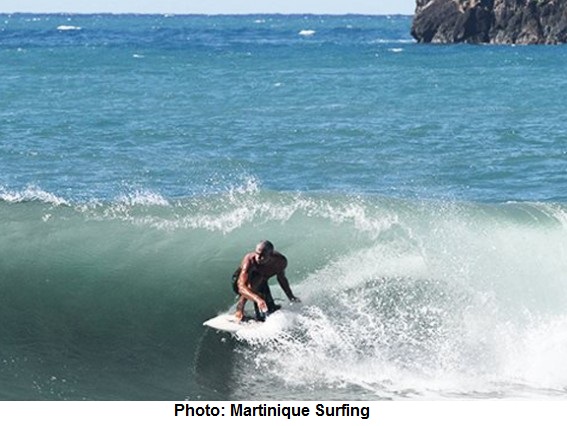
CU Blog - Surfing Legacy - Photo 1Time marches on, while the legacy of pro-surfing in the French Caribbean continues to grow.

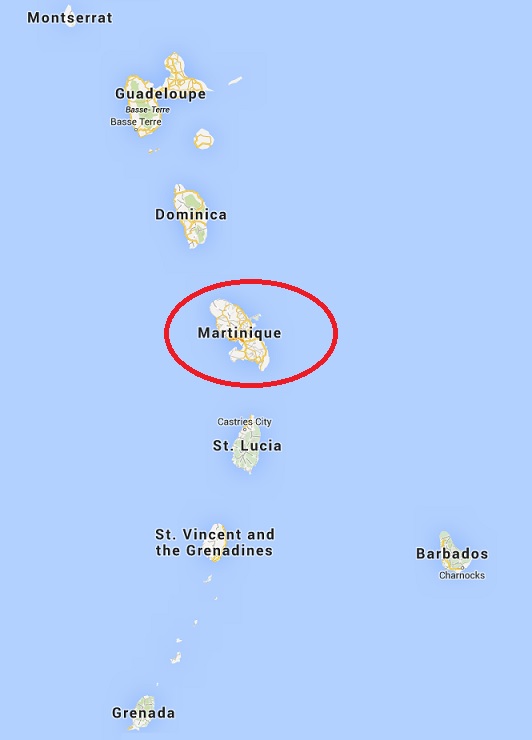
Welcome to Martinique, and some of the best surfing on the planet.

This original Go Lean blog-commentary from April 14, 2015 is re-distributed on this occasion of the Third Annual Martinique Surf Pro, which just transpired April 1 through April 8, 2017. And the winner is:

Title: Ricardo Christie conquered the 2017 Martinique Surf Pro, at Basse-Pointe, in Martinique.

Christie proved he’s ready to return to the Dream Tour by putting out a competent performance at the righthand pointbreak. And he needed six rides to clinch the tasty trophy.

“When the waves are like that you can forget everything and just go out there and surf. I feel like I’ve improved a lot,” explained Ricardo Christie, who failed to requalify at the end of his rookie season on the Championship Tour.

“I’ve just been working really hard, and I learned a lot when I was on tour. It doesn’t feel like it’s over; it’s just the beginning of the year, so I just have to keep doing my thing.”

With this victory in Martinique, Ricardo Christie jumped 91 places to number 10 on the QS rankings.

Source: Posted April 10, 2017; retrieved April 12, 2017 from: http://www.surfertoday.com/surfing/13558-ricardo-christie-wins-the-2017-martinique-surf-pro

Consider the VIDEO highlights from this year’s event.

This event – part sports; part culture; is all tourism. It is building momentum! We need more events like this. See the Encore below describing how the movement behind the book Go Lean…Caribbean will strategize for sports tourism; this means more and more events … in different sports.

————–

Go Lean Commentary – Title: Is Martinique the Next Caribbean Surfing Capital?


Sports could be big business; culture is big business. Every now-and-then there is the opportunity to merge sports and culture into a single economic activity. One such expression is the sports/culture of surfing. This focus is a priority for the movement to elevate the Caribbean society, stemming from the book Go Lean…Caribbean.

The book serves as a roadmap for the introduction and implementation of the technocratic Caribbean Union Trade Federation (CU). While the CU is not intended as a sports promotion entity, it does promote the important role of sports in the quest to make the Caribbean a better place to live, work and play.

Though surfing activities originated with Polynesian culture (see Appendix below), the sport has assimilated well in other societies – the Caribbean included.

In terms of cultural expressions of surfing in the United States, the most iconic portrayal is the Rock-n-Roll group the Beach Boys; see VIDEO in the Appendix below of a milestone performance in Tokyo, Japan.

Yes surfing is global in its participation and appreciation.

Now a Caribbean community, the French-domain of Martinique is exploring the surfing sub-culture for sport, tourism and sports-tourism.

Cowabonga* Dude!

By: The Caribbean Journal staff

Long an under-the-radar surfing spot, the French Caribbean island will get its place in the spotlight when the surfing world gathers on the island later this month for the first-ever Martinique Surf Pro.

From April 21-26, the Caribbean’s only World Surf League Qualification Series event this year will take place along the shores of Basse-Pointe in Martinique.

The event, which is being organized by Martinique Surfing in partnership with the World Surf League, will bring together 100 world-class surfers from the United States, Japan, Europe, Brazil and the Caribbean.

“Martinique has been among the best-kept secrets in Caribbean surfing for some time now,” said Muriel Wiltord, director of the Americas for the Martinique Promotion Bureau. “Such a high-profile event as this cements the island’s position as a prime surfing destination. As one the top watersports competitions being held in the Caribbean in 2015, Martinique Surf Pro also shines a spotlight on the wide range of additional watersports options that Martinique has to offer.”

Martinique’s surfing season typically lasts between November and May along its northern and northeastern Atlantic coasts.

Source retrieved April 13, 2015: http://www.caribjournal.com/2015/04/13/is-martinique-the-next-caribbean-surfing-capital/

CU Blog - Is Martinique the next big Caribbean surfing capital - Photo 2

CU Blog - Is Martinique the next big Caribbean surfing capital - Photo 3

CU Blog - Is Martinique the next big Caribbean surfing capital - Photo 1

Not every coastline is ideal for surfing; thusly many Caribbean residents do not surf; it is not an indigenous activity to this region. But the past-time – and culture for that matter – is adaptable. Why is this? While the Caribbean has been blessed with many natural gifts, the physical conditions for surfing are not everywhere; (based on factual information retrieved from Wikipedia).

There must be a consistent swell. A swell is generated when wind blows consistently over a large area of open water, called the wind’s fetch. The size of a swell is determined by the strength of the wind and the length of its fetch and duration. Because of this, surf tends to be larger and more prevalent on coastlines exposed to large expanses of ocean traversed by intense low pressure systems.

Local wind conditions affect wave quality, since the surface of a wave can become choppy in blustery conditions. Ideal conditions include a light to moderate “offshore” wind, because it blows into the front of the wave, making it a “barrel” or “tube” wave. Waves are Left handed and Right Handed depending upon the breaking formation of the wave.

Waves are generally recognized by the surfaces over which they break.[7] For example, there are Beach breaks, Reef breaks and Point breaks.

The most important influence on wave shape is the topography of the seabed directly behind and immediately beneath the breaking wave. The contours of the reef or bar front becomes stretched by diffraction. Each break is different, since each location’s underwater topography is unique. At beach breaks, sandbanks change shape from week to week. Surf forecasting is aided by advances in information technology. Mathematical modeling graphically depicts the size and direction of swells around the globe.

So mastering the sport of surfing is now an art and a science.

Despite the fun and joy of surfing, there are a lot of dangers with this activity:

This activity is not for the faint of heart.

Not every market, especially in the Caribbean, can support the demands of surfing as a sport and as a cultural event. As depicted in the foregoing article, Martinique uniquely qualifies. This year’s professional tournament is the inaugural event. This Caribbean island makes a very short-list of all locations where this activity is practical. The following is a sample of the competitive/major surfing locations (Surf Cities) around the globe:

1. In Australia

2. In Asia

3. In the South Pacific

4. In South Africa

5. In North America

6. In Central America

7. In South America

8. In the USA

9. In Europe

The Martinique effort and initiative to satiate the thirst … and fascination of surfing aligns with the objects of the CU/Go Lean roadmap; especially the mission “to forge industries and economic drivers around the individual and group activities of sports and culture” (Page 81).

The Go Lean vision is a confederation of the 30 member-states of the Caribbean forming the CU as a proxy organization to do the heavy-lighting of building, funding, maintaining and promoting sports venues. The strategy is for the CU to be the landlord, and super-regional regulatory agency, for sports leagues, federations and associations (amateur, collegiate, and professional). The embrace and promotion of the sport and culture of surfing can contribute to the Greater Good for the Caribbean. This aligns with the prime directives of the CU/Go Lean roadmap; summarized in the book with these 3 statements:

  • Optimization of the economic engines in order to grow the regional economy to $800 Billion & create 2.2 million new jobs.
  • Establishment of a security apparatus to protect the resultant economic engines and the participants in activities like surfing.
  • Improvement of Caribbean governance to support these engines.

This roadmap commences with the recognition that genius qualifiers can be found in many fields of endeavor, including sports. The roadmap pronounces the need for the region to confederate in order to invest in elevation of the Caribbean eco-systems in which such athletic geniuses can soar. These pronouncements are made in the opening Declaration of Interdependence, (Pages 13 & 14) as follows:

xxi. Whereas the preparation of our labor force can foster opportunities and dictate economic progress for current and future generations, the Federation must ensure that educational and job training opportunities are fully optimized for all residents of all member-states, with no partiality towards any gender or ethnic group. The Federation must recognize and facilitate excellence in many different fields of endeavor, including sciences, languages, arts, music and sports. This responsibility should be executed without incurring the risks of further human flight, as has been the past history.

xxii. Whereas sports have been a source of great pride for the Caribbean region, the economic returns from these ventures have not been evenly distributed as in other societies. The Federation must therefore facilitate the eco-systems and vertical industries of sports as a business, recreation, national pastime and even sports tourism – modeling the Olympics.

The Go Lean book and accompanying blogs declare that the Caribbean needs to learn lessons from Surf City communities and other sporting venues/administrations. So thusly this subject of the “business of sports” is a familiar topic for Go Lean blogs. This cause was detailed in these previous blogs:

https://goleancaribbean.com/blog/?p=6464 NEW: WWE Network – Model for Caribbean
https://goleancaribbean.com/blog/?p=4019 Melding of Sports & Technology; the Business of the Super Bowl
https://goleancaribbean.com/blog/?p=3414 Levi’s® Stadium: A Team Effort
https://goleancaribbean.com/blog/?p=3244 Sports Role Model – espnW
https://goleancaribbean.com/blog/?p=2222 Sports Role Model – Playing For Pride … And More
https://goleancaribbean.com/blog/?p=2171 Sports Role Model – Turn On the SEC Network
https://goleancaribbean.com/blog/?p=2152 Sports Role Model – US versus the World
https://goleancaribbean.com/blog/?p=1715 Lebronomy – Economic Impact of the Return of the NBA Great
https://goleancaribbean.com/blog/?p=1446 Caribbean Players in the 2014 World Cup
https://goleancaribbean.com/blog/?p=1341 College World Series Time – Lessons from Omaha
https://goleancaribbean.com/blog/?p=1214 Landlord of Temporary Stadiums
https://goleancaribbean.com/blog/?p=1148 Sports Bubble – Franchise values in basketball
https://goleancaribbean.com/blog/?p=1020 Sports Revolutionary: Advocate Jeffrey Webb
https://goleancaribbean.com/blog/?p=498 Book Review: ‘The Sports Gene’
https://goleancaribbean.com/blog/?p=318 Collegiate Sports in the Caribbean
https://goleancaribbean.com/blog/?p=60 Could the Caribbean Host the Olympic Games?

This Go Lean roadmap is committed to availing the economic opportunities of all the Caribbean sports eco-system to respond to the world’s thirst for surfing. The book details the series of community ethos, strategies, tactics, implementations and advocacies to deliver the regional solutions to better harness economic benefits from sports and sports-tourism activities:

Community Ethos – People Respond to Incentives in Predictable Ways Page 21
Community Ethos – Consequences of Choices Lie in the Future Page 21
Community Ethos – Lean Operations Page 24
Community Ethos – Return on Investments Page 25
Community Ethos – Ways to Foster Genius Page 27
Community Ethos – Ways to Impact the Greater Good Page 37
Strategic – Staffing – Sporting Events at Fairgrounds Page 55
Tactical – Fostering a Technocracy Page 64
Tactical – Separation of Powers – Sports & Culture Administration Page 81
Tactical – Separation of Powers – Fairgrounds Administration Page 83
Implementation – Steps to Implement Self-Governing Entities Page 105
Implementation – Ways to Deliver Page 109
Planning – Ways to Make the Caribbean Better Page 131
Advocacy – Ways to Grow the Economy Page 151
Advocacy – Ways to Create Jobs Page 152
Advocacy – Ways to Improve Local Government – Parks & Recreation Page 169
Advocacy – Ways to Impact Public Works Page 175
Advocacy – Ways to Impact Events Page 191
Advocacy – Ways to Promote Fairgrounds as Sporting Venues Page 192
Advocacy – Ways to Preserve Caribbean Heritage Page 218
Advocacy – Ways to Improve Sports Page 229
Advocacy – Ways to Impact Urban Living – Sports Leagues Page 234

What could be the end result for the Go Lean roadmap’s venture into the sport of surfing and the business of sports? Economic growth and “jobs”. The Go Lean roadmap anticipates 21,000 direct jobs at sports enterprises throughout the region.

But surfing is also a leisure amenity, a “play” activity within the Go Lean roadmap. Many participate in this activity with no competitive motives. So the promotion of surfing in the Caribbean region can appeal to many enthusiasts far-and-wide to come visit and enjoy our Caribbean hospitality. This subject therefore relates back to the primary regional economic activity of tourism. This fits into the appeal of the Caribbean sun, sand and surf.

Overall, with these executions, the Caribbean region can be a better place to live, work and play. There is a lot of economic activity in the “play” aspects of society. Everyone, surfers, athletes and spectators alike, are hereby urged to lean-in to this Go Lean roadmap.

Cowabonga Dudes!

Download the free e-book of Go Lean … Caribbean – now!

Sign the petition to lean-in for the roadmap for the Caribbean Union Trade Federation.

———-

Appendix – *Cowabunga: (slang) an expression of surprise or amazement, often followed by “dude”. Popular among California surfers.

———-

Appendix – Encyclopedia of Surfing:

For centuries, surfing was a central part of ancient Polynesian culture. This activity was first observed by Europeans at Tahiti in 1767 by Samuel Wallis and the crew members of the Dolphin; they were the first Europeans to visit the island in June of that year.

Surfing is a surface water sport in which the wave rider, referred to as a surfer, rides on the forward or deep face of a moving wave, which is usually carrying the surfer toward the shore. Waves suitable for surfing are primarily found in the ocean, but can also be found in lakes or in rivers in the form of a standing wave or tidal bore. However, surfers can also utilize artificial waves such as those from boat wakes and the waves created in artificial wave pools.

The term surfing refers to the act of riding a wave, regardless of whether the wave is ridden with a board or without a board, and regardless of the stance used. The native peoples of the Pacific, for instance, surfed waves on alaia, paipo, and other such craft, and did so on their belly and knees. The modern-day definition of surfing, however, most often refers to a surfer riding a wave standing up on a surfboard; this is also referred to as stand-up surfing.

George Freeth (8 November 1883 – 7 April 1919) is often credited as being the “Father of Modern Surfing”.

In 1907, the eclectic interests of the land baron Henry Huntington (of whom the City of Huntington Beach is named after) brought the ancient art of surfing to the California coast. While on vacation, Huntington had seen Hawaiian boys surfing the island waves. Looking for a way to entice visitors to the area of Redondo Beach, where he had heavily invested in real estate, he hired the young Hawaiian George Freeth to come to California and ride surfboards to the delight of visitors; Mr. Freeth exhibited his surfing skills twice a day in front of the Hotel Redondo.

In 1975, professional contests started.[6]

Today, the Surfing Hall of Fame is located in the city of Huntington Beach, California. The city brands itself as Surf City USA.

(Source retrieved April 14 from: http://en.wikipedia.org/wiki/Surfing)

———-

AppendixVIDEO – The Beach Boys: Surfin’ Safari~Surf City~Surfin’ U.S.A – https://youtu.be/qpSwdQMn8xs

Uploaded on Jul 29, 2011 – Live at Budokan in Japan November 2, 1991

Share this post:
, , , , ,
[Top]

Managing the ‘Strong versus the Weak’ – An American Sickness

Go Lean Commentary

“There is a special ‘place in hell’ …”
“… for someone that would steal your wallet after you collapse/faint due to a health crisis; (think heart-attack, epileptic seizure, etc.)”.

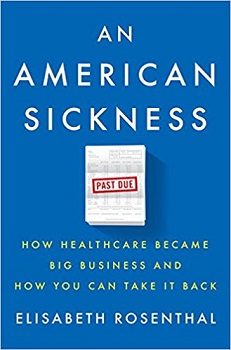
Sickness 1Imagine this scenario at the country level; how inconceivable for an advanced society. And yet, this is the actual situation in the United States. This is according to the new book – An American Sickness: How Healthcare Became Big Business and How You Can Take It Back – by Dr. Elisabeth Rosenthal, a former E.R. doctor and current journalist for medical issues.

This commentary asserts that there is a need for the Caribbean communities to reform and transform our healthcare deliveries, yet still, we do NOT want to model the American system. This point aligns with the book Go Lean…Caribbean, which seeks to reboot the 30 member-states of the Caribbean region, to ensure better stewardship of the Social Contract for all citizens in our homelands, strong and weak. The Go Lean book petitions the Caribbean region to do better! It describes the necessary empowerments to optimize the economic, security and governing engines of Caribbean society to ensure a better adherence to the principle of the Greater Good.

In a 4-part series of blog-commentaries on the “Strong versus the Weak”, the pattern from the Code of Hammurabi was detailed and presented as an Old World model that was ignored in the formation of the New World. The Americans got it bad! If that ancient King Hammurabi was around in present day, he would have a harsh judgment for the American healthcare system. It is figuratively like “stealing the wallet when a person collapses”, as many of the financial abuses in American hospitals occur when the patient is unconscious or only concerned about seeking relief from pain and/or discomforts.

This commentary is an spin-off from that series; though it was originally presented as a 4-parter, we are hereby adding this 5th entry. The full series is now as follows:

  1. Managing the Strong versus the Weak – Model of Hammurabi
  2. Managing the Strong versus the Weak – Mental Disabilities
  3. Managing the Strong versus the Weak – Bullying in Schools
  4. Managing the Strong versus the Weak – Book Review: Sold-Out!
  5. Managing the Strong versus the Weak – An American Sickness

The need for this 5th entry arose with the release of this new book today – April 11, 2017. It is ‘spot-on’ for the criticism of the pattern of abuse of the ‘Weak’ in American society. See the review-synopsis of Dr. Rosenthal’s book here:

Book Review: An American Sickness: How Healthcare Became Big Business and How You Can Take It Back
By: Elisabeth Rosenthal (Author)

At a moment of drastic political upheaval, a shocking investigation into the dangerous, expensive, and dysfunctional American healthcare system, as well as solutions to its myriad of problems

Sickness 2

In these troubled times, perhaps no institution has unraveled more quickly and more completely than American medicine. In only a few decades, the medical system has been overrun by organizations seeking to exploit for profit the trust that vulnerable and sick Americans place in their healthcare. Our politicians have proven themselves either unwilling or incapable of reining in the increasingly outrageous costs faced by patients, and market-based solutions only seem to funnel larger and larger sums of our money into the hands of corporations. Impossibly high insurance premiums and inexplicably large bills have become facts of life; fatalism has set in. Very quickly Americans have been made to accept paying more for less. How did things get so bad so fast?

Breaking down this monolithic business into the individual industries—the hospitals, doctors, insurance companies, and drug manufacturers—that together constitute our healthcare system, Rosenthal exposes the recent evolution of American medicine as never before. How did healthcare, the caring endeavor, become healthcare, the highly profitable industry? Hospital systems, which are managed by business executives, behave like predatory lenders, hounding patients and seizing their homes. Research charities are in bed with big pharmaceutical companies, which surreptitiously profit from the donations made by working people. Patients receive bills in code, from entrepreneurial doctors they never even saw.

The system is in tatters, but we can fight back. Dr. Elisabeth Rosenthal doesn’t just explain the symptoms, she diagnoses and treats the disease itself. In clear and practical terms, she spells out exactly how to decode medical doublespeak, avoid the pitfalls of the pharmaceuticals racket, and get the care you and your family deserve. She takes you inside the doctor-patient relationship and to hospital C-suites, explaining step-by-step the workings of a system badly lacking transparency. This is about what we can do, as individual patients, both to navigate the maze that is American healthcare and also to demand far-reaching reform. An American Sickness is the frontline defense against a healthcare system that no longer has our well-being at heart.

Source: Posted and Retrieved 04-11-2017 from: https://www.amazon.com/American-Sickness-Healthcare-Became-Business/dp/1594206759/ref=sr_1_1?ie=UTF8&qid=1491928851&sr=8-1&keywords=Book+American+Sickness

—————

AUDIO Podcast – Terry Gross interviews Elisabeth Rosenthal – Heard on Fresh Air

Mental Photo 4April 10, 2017 – Health care is a trillion-dollar industry in America, but are we getting what we pay for? Dr. Elisabeth Rosenthal, a medical journalist who formerly worked as a medical doctor, warns that the existing system too often focuses on financial incentives over health or science.

“We’ve trusted a lot of our health care to for-profit businesses and it’s their job, frankly, to make profit,” Rosenthal says. “You can’t expect them to act like Mother Teresas.”

Rosenthal’s new book, An American Sickness, examines the deeply rooted problems of the existing health-care system and also offers suggestions for a way forward. She notes that under the current system, it’s far more lucrative to provide a lifetime of treatments than a cure.

“One expert in the book joked to me … that if we relied on the current medical market to deal with polio, we would never have a polio vaccine,” Rosenthal says. “Instead we would have iron lungs in seven colors with iPhone apps.”

Notice this small sample of the book’s revelations and disclosures, symptomatic of Crony-Capitalism:

  • Healthcare economics do not align with normal economic laws: “Usual & Customary” versus supply-and-demand
  • Hospital systems behave like predatory lenders
  • Consumers cannot decide, as prices may be unknown at the time of delivery
  • Lifetime of treatment preferable for service-providers rather than a cure.
  • Doctors owning Surgical Centers, therefore dictating procedures that they can accommodate at their facilities
  • Unknown and unauthorized “Drive-by Doctors” adding to hospital bills.

This commentary and the previous 4 commentaries in this series all relate to nation-building, stressing the community ethos necessary to forge a society where all the people are protected all the time. While we are analyzing the American system, we clearly recognize that the Caribbean eco-system is equally – or perhaps even more – in a crisis and in need of reform. The premise in the Go Lean book and subsequent blog-commentaries is that “a crisis is a terrible thing to waste”. We can use the acknowledgement of our crisis to optimize our healthcare deliveries once and for all. We must assuredly look beyond the American model. According to the foregoing book and AUDIO Podcast, many more successful models exist.

Dr. Rosenthal’s book asserts that there may be better models in Europe than there is in the US. This is already a familiar thesis for the Go Lean movement – a roadmap for the introduction and implementation of the Caribbean Union Trade Federation (CU) – as the Go Lean book advocates studying all dimensions of the EU:

10 Ways to Model the EU – Page 130.
The CU will emulate the European Union by unifying and integrating the Caribbean region into one market, thereby creating a single economy of 30 member-states, 42 million people and a GDP of over $800 Billion (per 2010). The EU is 28 member-states, 507.89 million people and $16.6 Trillion GDP (per 2012). Though the CU is only a fraction the size of the EU, there is the similarity of divergent peoples (24 languages) putting aside their differences in a quest to confederate. The EU region has quite an ignoble history of contending with differences, spurning 2 World Wars in the last century. Yet they came together to unite and integrate to make Europe a better place to live, work and play. Just like the EU, the CU will not possess sovereignty; this feature remains with each member-state.

Still, there was a previous attempt to reform the American healthcare delivery eco-system. There is wisdom to glean from that development. The Go Lean book provides this excerpt (Page 156):

The Bottom Line on Obama Care
The Patient Protection and Affordable Care Act (PPACA), commonly called Obama Care is a US federal statute signed into law by President Barack Obama on March 23, 2010. It represents the most significant government expansion and regulatory overhaul of the U.S. healthcare system since the passage of Medicare and Medicaid in 1965. The PPACA is aimed at increasing the rate of health insurance coverage for Americans and reducing the overall costs of health care. It provides a number of mechanisms—including mandates, subsidies, and tax credits — to employers and individuals to increase the coverage rate.Additional reforms aim to improve healthcare outcomes and streamline the delivery of health care. The PPACA requires insurance companies to cover all applicants and offer the same rates regardless of pre-existing conditions or sex. The Congressional Budget Office projected that the PPACA will lower both future deficits and Medicare spending. On June 28, 2012, the United States Supreme Court upheld the constitutionality of most of the Obama Care.

The US, despite its advanced democracy status, has definite societal defects in the healthcare arena. Overcoming the defects – particularly Crony-Capitalism or exploiting public resources for private gains – make solving healthcare challenging.

It is truly heavy-lifting!

This was recently discovered by the new US president, Donald Trump.

After campaigning for the 2016 election on the promise of “repealing and replacing Obama Care”, the administration’s first healthcare legislation attempt flopped. The president’s exclamation:

President Trump: ‘Nobody Knew Health Care Could Be So Complicated’

The truth of the matter Mr. President, everybody – engaged in the process of transforming society – knew!

Transforming the Caribbean healthcare will also be equally complicated. It will engage all 3 societal engines: economic, security and governance. In fact, the prime directives of the Go Lean/CU roadmap includes the following 3 statements:

  • Optimization of the economic engines in order to grow the regional economy to $800 Billion & create 2.2 million new jobs.
  • Establishment of a security apparatus – including emergency management – to ensure public safety and protect the resultant economic engines.
  • Improve Caribbean governance for all people – with empowerments for healthcare – to support these engines.

This comprehensive view – economics, security and governance – is the charge of the Go Lean roadmap, opening with these pronouncements in the Declaration of Interdependence (Page 11):

viii. Whereas the population size is too small to foster good negotiations for products and commodities from international vendors, the Federation must allow the unification of the region as one purchasing agent, thereby garnering better terms and discounts.

ix. Whereas the realities of healthcare and an aging population cannot be ignored and cannot be afforded without some advanced mitigation, the Federation must arrange for health plans to consolidate premiums of both healthy and sickly people across the wider base of the entire Caribbean population. The mitigation should extend further to disease management, wellness, mental health, obesity and smoking cessation programs. The Federation must proactively anticipate the demand and supply of organ transplantation as developing countries are often exploited by richer neighbors for illicit organ trade.

Overall, the Go Lean book stresses the community ethos, strategies, tactics, implementations and advocacies to reboot, reform and transform healthcare delivery in the Caribbean; see this expressed in this one advocacy here:

10 Ways to Improve Healthcare – Page 156

1 Embrace the advent of the CU Single Market to leverage across the 42 million people in the 30 member-states.
2 Organ Procurement Authority
3 Deploy Disease Management Models
4 Universal Health Insurance Care
Much like with auto insurance, there is a need to mandate health insurance coverage for most Caribbeans. The coverage does not have to be $0 deductible and 100% coverage, rather it could be less attractive – low-end terms – like $6000 deductible and 60% coverage. The US model, Obama Care has plans branded Bronze (low end), Silver, Gold and Platinum. The goal for the CU is simply to ensure that catastrophic illnesses or injuries do not imperil the financial viability of individual, families or communities. The coverage risk is minimized with insurance carriers having a larger premium base (42 million) to calculate their actuarial formulas. To maximize savings, individual states may choose to combine their health insurance marketplaces with other states or go at it alone.
5 Wellness, Nutrition, Fitness and Smoking Cessations Programs
6 Medical Tourism
7 Repatriate MediCare Beneficiaries
8 Caribbeans with Disabilities
9 Medical Education Outreach
10 Public Health Extension
Due to the systemic threat, epidemic response and disease control will be coordinated at the federal level. Also, the acquisition of public-bound pharmaceuticals (vaccinations, etc.) can be negotiated at the regional level, using the Group Purchasing Organizations (GPO) envisioned in this roadmap. This will lead to a better supply and pricing dynamics.

The points of effective, technocratic stewardship of healthcare were further elaborated upon in previous blog/commentaries. Consider this sample:

https://goleancaribbean.com/blog/?p=7822 Cancer: Doing More
https://goleancaribbean.com/blog/?p=7586 Blink Health: The Cure for High Drug Prices
https://goleancaribbean.com/blog/?p=7430 Brazilian Shrunken Head Babies: Zika or Tdap?
https://goleancaribbean.com/blog/?p=6580 Capitalism of Drug Patents
https://goleancaribbean.com/blog/?p=3276 Role Model Shaking Up the World of Cancer
https://goleancaribbean.com/blog/?p=2522 The Cost of Cancer Drugs
https://goleancaribbean.com/blog/?p=2105 Recessions and Public Health
https://goleancaribbean.com/blog/?p=1751 New Hope in the Fight against Alzheimer’s Disease
https://goleancaribbean.com/blog/?p=1003 Painful and rapid spread of new virus in Caribbean
https://goleancaribbean.com/blog/?p=554 Cuban cancer medication registered in 28 countries
https://goleancaribbean.com/blog/?p=286 PR’s Comprehensive Cancer Center Project Breaks Ground
https://goleancaribbean.com/blog/?p=278 Tim Armstrong, the CEO of AOL – Health-care Concerns

The opening imagery:

“There is a special ‘place in hell’ …”

… is just an metaphorical reference. There is no assumption of a literal burning abyss of torment. But this does convey the abomination of the “strong abusing the weak”. So many times in the past this abuse has proliferated, for those weaker physically, mentally, economically and sadly, medically.

The movement behind the Go Lean/CU roadmap wants us, in the Caribbean, to do better. Yes, healthcare is not easy, but it is possible to reform and transform. There are so many good examples and models to learn from:

The underlying book reviewed here – An American Sickness: How Healthcare Became Big Business and How You Can Take It Back – considers Switzerland.

We want to “weed out” any bad practices of Crony-Capitalism in our health delivery system. Instead, we want to pursue the Greater Good (greatest good to the greatest number of people which is the measure of right and wrong). Most importantly, we want to proclaim the truth of American life. So many of our Caribbean citizens “beat down their doors to get out” and emigrate to the US. We want to “dull the lights on any American Welcome signs” – considering the reality of American Crony-Capitalism, the “grass is not necessarily greener on the other side”.

Now is the time to lean-in to this Go Lean roadmap to reboot, reform and transform Caribbean healthcare. If we do this, we will make the Caribbean a better place to live, work, heal and play. 🙂

Sign the petition to lean-in for the roadmap for the Caribbean Union Trade Federation.

Download the free e-book of Go Lean … Caribbean – now!

Share this post:
, , , ,
[Top]

‘Loose Lips Sink Ships’ – Leaders Undermine Tourism

Go Lean Commentary 

Loose Lips - Photo 2Loose lips sink ships …

… this is an American-English idiom meaning “beware of unguarded talk”. The phrase originated on propaganda posters during World War II.[4]  There are similar expressions in other cultures:

The British equivalent used “Careless Talk Costs Lives“, and variations on the phrase “Keep mum“,[5] while in neutral Sweden the State Information Board promoted the wordplay “en svensk tiger” (the Swedish word “tiger” means both “tiger” and “keeping silent”), and Germany used “Schäm Dich, Schwätzer!” (English: “Shame on you, blabbermouth!”).[6]
Source: Retrieved 04-07-2017 from: https://en.wikipedia.org/wiki/Loose_lips_sink_ships

Despite the land or the language, the thought is the same: Inappropriate talk can undermine societal engines.

Today, there is no war in the Caribbean, but we do have battles. We have trade wars and economic struggles to try and maintain our way of life and to improve it. For so many of our countries, tourism is the primary economic driver – our regional ship – we have to be on guard and aware of any kind of disparaging talk that can undermine the appeal of our destinations.

The United States is suffering the dire consequence of “loose lips sinking ships” right now. The new President – Donald Trump – has made disparaging remarks about certain foreign groups, and then introduced policies that reinforce his disdain for these foreigners.

As a result, more and more foreigners are refusing to come to the US for leisure travel. See the full article here:

Loose Lips - Photo 1

Title: NYC Expects fewer tourists, blames Trump

NYC & Company, New York’s tourism marketing organization, revised its 2017 travel forecast, stating that it expects 300,000 fewer international visitors than last year “in light of the recent travel ban and related rhetoric.”

“These updated figures take into account changing attitudes about travel and access to the U.S. since the previous forecast was announced in October 2016, prior to the new administration,” NYC & Company said in a statement issued on Tuesday. “This is the first drop in visitation since the start of the recession in 2008.”

The city anticipates that domestic visitation will remain strong, projected to increase to 49.3 million visitors this year, which would actually result in an overall visitor increase, from 60.7 million to 61.7 million.

“But, it’s important to note that it takes the spending power of four domestic visitors to equal what a single international visitor spends,” NYC & Company stated.

With the updated forecast, NYC & Company announced a new international communications and marketing campaign titled “New York City — Welcoming the World.” Beginning in March, the campaign will feature outdoor media valued at nearly $3 million targeting international source markets the United Kingdom, Mexico, Germany, and Spain, with more markets pending. International partners, including tour operators and airlines, are expected to help further the effort through their own channels and assets.

“The goal of the campaign is to reassure international travelers who may feel deterred about traveling to the U.S. and ensure them that New York City’s experiences and values remain the same and all are welcome,” the destination marketing organization stated.

The revised 2017 travel forecast was produced by the organization’s longtime data provider, Tourism Economics, an Oxford Economics Company.

USA
Interest in travel to the US has “fallen off a cliff” since Donald Trump’s election, according to travel companies who have reported a significant drop in flight searches and bookings since his inauguration and controversial travel ban.

Data released this week by travel search engine Kayak reported a 58% decline in searches for flights to Tampa and Orlando from the UK, and a 52% decline in searches for Miami. Searches for San Diego were also down 43%, Las Vegas by 36% and Los Angeles 32%.

Though flight prices are holding firm (they usually take weeks rather than days to adjust to consumer trends), Kayak has identified a knock-on effect on average hotel prices. It found prices in Las Vegas are down by 39% and New York City by 32%.
Source: Travel Trade Outbound Scandinavia; posted 03/05/2017; retrieved 04/07/2017 from: http://www.ttoscandinavia.com/expects-fewer-tourists-blames-trump/

————

See the related VIDEO in the Appendix below.

Nobody wants to spend their money in a place where they are not welcomed.

This lesson must be learned in the Caribbean. We have the same threats afoot. Unlike the US, who has the leverage and surety of “richest Single Market economy in the world” to absorb the fall, the Caribbean member-states are mostly Third World and failing. This movement has previous detailed how societal deficiency has resulted in a Brain Drain among the educated classes in the Caribbean homeland – all due to “push and pull” reasons. Yet, some leaders – Christian pastors in this case – have proclaimed, in a signed petition to this new American President, a heightened level of disdain for certain American tourists. They are protesting the US Human Rights agenda to seek relief for Caribbean populations with affinity for persons ascribing to the Lesbian, Gay, Bisexual and Trans-Gender (LGBT) lifestyles.

Rather than love and leisure … in the Caribbean, these community leaders are projecting “a climate of hate”.

So sad!

See the details on the signed petition in the Appendix below; advocating against liberal LGBT policies.

In general, neutralizing the anti-LGBT attitudes has been an ongoing theme for the movement behind the book Go Lean … Caribbean. The book presents the Caribbean region a roadmap to elevate all societal engines, including economics, homeland security and governance. In fact, the prime directives of the roadmap includes the following 3 statements:

  • Optimization of the economic engines in order to grow the regional economy to $800 Billion & create 2.2 million new jobs.
  • Establishment of a security apparatus to ensure public safety for all and protect the resultant economic engines.
  • Improve Caribbean governance for all people, even minority groups, to support these economic and security engines.

The Go Lean book introduces the Caribbean Union Trade Federation (CU) as an intergovernmental agency for 30 regional member-states, to provide a better – technocratic – stewardship for the regional economy.

But we need all community stakeholders to “not sink ships” with their unbridled hatred and disdain for people who may look, act and speak differently than them.

This is the hallmark of hospitality! See the full definition of “hospitality” here:

Etymology
Derives from the Latin hospes,[5] meaning “host”, “guest”, or “stranger”. Hospes is formed from hostis, which means “stranger” or “enemy” (the latter being where terms like “hostile” derive). By metonymy the Latin word ‘Hospital’ means a guest-chamber, guest’s lodging, an inn.[6] Hospes is thus the root for the English words “host” (where the p was dropped for convenience of pronunciation), hospitality, hospice, hostel and hotel.

Historical practice
In ancient cultures hospitality involved welcoming the stranger and offering him food, shelter, and safety.[7]
Source: Retrieved April 7, 2017 from https://en.wikipedia.org/wiki/Hospitality.

The Art and Science of Tourism – especially for American visitors – is very important to Caribbean communities. The related industrial activities bind all societal engines together. The Go Lean book explains (Page 190) that many enhancements are to be implemented under this roadmap:

10 Ways to Improve Tourism – Page 190

1 Lean-in for the CU to leverage a regional footprint for tourism promotion and infrastructure. The full scale of 30 member-states and 42 million people allows for expanded trade treaties with other countries and regional blocs to target markets and languages.
2 Special Festival Events
3 Fairgrounds/Amusement Parks Empowerment Zones
4 Dynamic Sea-lifts / Air lifts
5 Excess Inventory Auction
6 Medical Tourism
7 Eco-Tourism Promotions Board
8 Sports Tourism
9 Cruise Line Passenger Smart Card Currency
10 Tourist Hate Crime Sentence ExtenderAny crime against a tourist gets a “hate” crime designation that results in extended sentences. These types of crimes (petty misdemeanors to felonies like kidnapping) come under the category of economic crimes that are marshaled by the CU. (The 2005 Aruba case of Natalee Holloway shows the need for heightened attention. The investigation escalated to the Dutch National Police and the US FBI, but only after devastating effects on tourism bookings, for subsequent years).

Overall, the Go Lean book stresses the community ethos, strategies, tactics, implementations and advocacies to reboot, reform and transform the economic engines of Caribbean society.

There are a lot of new jobs that are at stake with the successful implementation of this Go Lean/CU roadmap. How many are projected?

In general the roadmap projects 2.2 million new jobs across the 30 Caribbean member states. But for the Tourism-related industries, the plan calls for:

Tourism – New markets, opening new opportunities and new traffic; sharing  –  30,000

Cruise Tourism – Jobs from increased functionality of e-Payments of cruise passengers  –  800

Events Tourism – Festivals and other event staff at CU Fairgrounds – 9,000

Fairgrounds – Direct & in-direct maintenance/support jobs at CU Fairgrounds – 10,000

World Heritage Sites/Eco-Tourism – Direct and indirect jobs for managing, promoting UNESCO sites   – 1,000

In total, the projection is for 50,800 new tourism-related jobs. This constitutes the “ship” that community leaders can “sink” with their “loose lips”.

The Go Lean book asserts that to thrive in the new global marketplace there must be an agile technocratic administration for the region’s tourism eco-systems; it will affect all aspects of Caribbean life. This comprehensive view – economics, security and governance – is the charge of the Go Lean roadmap, opening with these pronouncements in the Declaration of Interdependence (Page 11 – 13):

iv. Whereas the natural formation of the landmass is in a tropical region, the flora and fauna allows for an inherent beauty that is enviable to peoples near and far. The structures must be strenuously guarded to protect and promote sustainable systems of commerce paramount to this reality.

xii. Whereas the legacy in recent times in individual states may be that of ineffectual governance with no redress to higher authority, the accedence of this Federation will ensure accountability and escalation of the human and civil rights of the people for good governance, justice assurances, due process and the rule of law. As such, any threats of a “failed state” status for any member state must enact emergency measures on behalf of the Federation to protect the human, civil and property rights of the citizens, residents, allies, trading partners, and visitors of the affected member state and the Federation as a whole.

xxiv. Whereas a free market economy can be induced and spurred for continuous progress, the Federation must install the controls to better manage aspects of the economy: jobs, inflation, savings rate, investments and other economic principles. Thereby attracting direct foreign investment because of the stability and vibrancy of our economy.

The points of effective, technocratic stewardship of tourism were further elaborated upon in previous blog/commentaries. Consider this sample:

https://goleancaribbean.com/blog/?p=11208 Bahamas flawed model for Event Tourism – Junkanoo Carnival
https://goleancaribbean.com/blog/?p=11033 Dominican Republic’s flawed model for Medical Tourism
https://goleancaribbean.com/blog/?p=10585 Two Pies: Economic Plan for a New Caribbean
https://goleancaribbean.com/blog/?p=7977 Transformations: Perfecting Our Core Competence
https://goleancaribbean.com/blog/?p=7834 Martinique: Model for Sports Tourism
https://goleancaribbean.com/blog/?p=7628 ‘Make happy those who are near, and those who are far will come’
https://goleancaribbean.com/blog/?p=7327 Zika – A 4-Letter Word for Caribbean Tourism
https://goleancaribbean.com/blog/?p=7082 The Art and Science of ‘Play’
https://goleancaribbean.com/blog/?p=7034 The Future of Money for Tourism Commerce
https://goleancaribbean.com/blog/?p=6385 Wi-Fi Hot Spots Run By Hackers Are Targeting Tourists
https://goleancaribbean.com/blog/?p=6341 Tourism Commerce Administration and Coordination
https://goleancaribbean.com/blog/?p=5307 Crime Warnings for a Tourists to a Caribbean Member-State
https://goleancaribbean.com/blog/?p=5210 Cruise Ship Commerce – Getting Ready for Change
https://goleancaribbean.com/blog/?p=4145 Model of Monument and Eco-Tourism
https://goleancaribbean.com/blog/?p=4058 Bad Image in New York Times Hurts Caribbean Tourism
https://goleancaribbean.com/blog/?p=3225 Caribbean less competitive due to increasing aviation taxes
https://goleancaribbean.com/blog/?p=1984 Casinos Changing/Failing Business Model
https://goleancaribbean.com/blog/?p=235 Tourism’s changing profile

In a previous blog-commentary, the dynamic of Christian leadership in the Caribbean was fully explored:

Religious orthodoxy is responsible for a lot of harm in the world, and in the Caribbean. The Go Lean movement (book and blogs) have identified the foregoing defects, many bad values, attitudes and community ethos. The Caribbean region needs to desist and make amends of these practices. We need to pursue an alternative ethos, the Greater Good. The book defines this (Page 37) as follows:

    “It is the greatest good to the greatest number of people which is the measure of right and wrong”. –  Jeremy Bentham (1748-1832)

The Go Lean book (Page 20) and movement advocates the community ethos of the Greater Good for all of the Caribbean. The movement wants to help reform and transform the Caribbean. We see the defects; we recognize that status quo, including the root causes and orthodoxy of many of our influences; we perceive the harmful effects. Still, we don’t want to ban religion; we simply want a clear ‘Separation of Church and State’, because … we must not favor any one religion.

A “Separation of Church and State” is the standard in the advanced democracies; this is now embedded in the implied Social Contract. The Go Lean book defines (Page 170) the Social Contract as follows:

    “Citizens surrender some of their freedoms and submit to the authority of the State in exchange for protection of remaining natural and legal rights”.

The movement behind the Go Lean book hereby makes this urging to the Caribbean Pastors who signed the below petition to President Trump:

We urge you to follow the mandates of your founder and leader, Jesus Christ, when he urged the Apostle Simon-Peter:

  • Jesus asked a second time, “Simon son of John, do you love Me?” “Yes, Lord,” he answered, “You know I love You.” Jesus told him, “Shepherd My sheep”. – June 21:16 Berean Study Bible 

You are hereby admonished to support your flock that is in your care … and leave Foreign Policy alone. Your “going beyond the things that are written” actually hurts your flock by undermining their economic interests. Please, please “stay in your lane”.

Learn lessons from the  bad example of Donald Trump and American tourism … in the foregoing.

Now is the time for all of the Caribbean – the people and leaders – to lean-in for the empowerments described here-in and in the book Go Lean … Caribbean. This is about jobs and community welfare today and more so tomorrow; we need better engines to make our region more prosperous. We can elevate our communities and our tourism!

It is conceivable, believable and achievable to make the Caribbean a better place to live, work and play. 🙂

Sign the petition to lean-in for the roadmap for the Caribbean Union Trade Federation.

Download the free e-book of Go Lean … Caribbean – now!

———–

Appendix – Petition Letter to President Trump

Loose Lips - Photo 3

Click on the Photo to Enlarge

The full letter and petition signatures can be viewed here:

https://world.wng.org/sites/default/files/assets/Caribbean%20church%20leaders%20letter%20to%20President%20Trump.pdf

———–

Appendix VIDEO – Tourists Avoiding USA Because Of Donald Trump, Costing Us Billions – https://youtu.be/kHD73jSM5Rs

Published on Apr 3, 2017 – Experts had predicted that Trump’s Muslim Ban would cost the United States tons of money in declining tourism, but what they didn’t count on were the number of people who refuse to travel to the U.S. just because Trump is the new president.  As it turns out, nobody wants to visit a country that is ruled by a hatemonger, and analysts are now referring to the decline in travel to the U.S. as the “Trump Slump.” Ring of Fire’s Farron Cousins discusses this.

Link – https://www.salon.com/2017/03/31/trum…

Spread the word! LIKE and SHARE this video or leave a comment to help direct attention to the stories that matter. And SUBSCRIBE to stay connected with Ring of Fire’s video content!

Watch America’s Lawyer featuring Mike Papantonio on RT: https://www.rt.com/shows/americas-law…

Order Mike Papantonio’s novel Law and Disorder today: https://www.amazon.com/Law-Disorder-M…

Follow more of our stories at http://www.TROFIRE.com

Subscribe to our podcast: http://www.ROFPodcast.com

Support Ring of Fire by subscribing to our YouTube channel: https://www.youtube.com/user/golefttv…

Be sociable! Follow us on:
Facebook: http://www.facebook.com/RingofFireRadio
Twitter: http://www.twitter.com/RingofFireRadio
Google+: http://plus.google.com/11841583157319…
Instagram: https://www.instagram.com/ringoffiren…

Share this post:
, ,
[Top]

JPMorganChase spent $10 billion on ‘Fintech’ for 1 year

Go Lean Commentary

Looking for a job? Where are the jobs to be created for the 21 Century?

JPMorgan - Photo 2Try banking! Financial/Banking technology to be exact. This sub-industry sector is referred to as ‘Fintech’; see the definition in the Appendix below.

So rather than the individual, if a community wants to foster job creation, ‘Fintech’ offers attractive options.

What’s more, according to this news article, one New York-based bank, JPMorganChase, spent almost $10 Billion on Fintech … last year alone. The CEO, Jaime Dimon, announced that there will be even more investment in this vital area. See the full story here:

Title: Jamie Dimon – JPMorgan spent nearly $10 billion on tech last year
By: Ari Levy

JPMorgan CEO Jamie Dimon said the bank spent $9.5 billion on technology in 2016 and has plans this year to introduce products for digital banking, online investment advice and electronic trading.

JPMorgan - Photo 1In his annual letter to shareholders on Tuesday, Dimon said the bank is also “collaborating with some excellent fintech companies to dramatically improve our digital and other customer offerings.”

Among the leading bank executives, Dimon has established himself as the biggest presence in San Francisco and Silicon Valley, making regular trips West to meet with tech executives and venture capitalists. He made headlines in his shareholder letter two years ago, warning investors that “Silicon Valley is coming.”

Rather than view potential banking disruption as a threat to JPMorgan, Dimon has embraced new technologies. About $3 billion, or almost one-third, of last year’s investment went to “new initiatives,” including $600 million on fintech solutions and projects.

Dimon highlighted partnerships with emerging tech companies like Zelle for consumer payments, Roostify for online mortgages, TrueCar for auto finance and On Deck Capital, which provides loans to small businesses.

The JPMorgan CEO also took a swipe at the U.S. immigration system and how it hurts this country’s ability to compete globally. Dimon said that about 40 percent of people receiving advanced degrees in science, technology engineering and math at American universities are from other countries. Yet they have no legal way to stay when they’re finished with school.

“We are forcing great talent overseas by not allowing these young people to build their dreams here,” Dimon wrote.

Source: CNBC – Business & Finance TV Channel; posted 04/04/2017; retrieved 04/05/2017) from: http://www.cnbc.com/2017/04/04/jamie-dimon-letter-jpmorgan-spent-9-5b-on-tech-last-year.html

So where are the jobs to be found? According to the foregoing, this industry – Fintech – is one of the options.

In general, this has been a frequent question for the movement behind the book Go Lean … Caribbean. The book presents the Caribbean region a roadmap to elevate its societal engines, starting first with economics (jobs, industrial development and entrepreneurial opportunities). In fact, the prime directives of the roadmap includes the following 3 statements:

  • Optimization of the economic engines in order to grow the regional economy to $800 Billion & create 2.2 million new jobs.
  • Establishment of a security apparatus to protect the resultant economic.
  • Improve Caribbean governance to support these engines.

The Go Lean book introduces the Caribbean Union Trade Federation (CU) as a federal government for 30 regional member-states, plus the Caribbean Central Bank (CCB) as a cooperative for the existing Central Banks. Together, these new entities will provide stewardship for the region’s banks.

Banking is very familiar to the Caribbean. This industry has proven to be the secondary industrial driver for many Caribbean communities, trailing only tourism. The Go Lean book explains (Page 58):

Core Competence – What are we best at doing?
There are features of Caribbean life that work very well now. We are currently the “best address” in the world. If one has the resources, there is no better place to call home – imagine a lottery winner relocating to a Caribbean paradise. Further, if someone has the resources for only a short time-frame, there is no better place to vacation. And thus, as a regional community, the Caribbean is best at servicing:

  • Tourism
  • Cruise Operations
  • Offshore Banking – The Caribbean colonial heritage created the ideal climate for offshore banking. Many of the European expatriates administering the colonies didn’t want to burden themselves with aggressive tax policies or strenuous financial compliance, and so inadvertently created a climate for tax sheltering and avoidance. Though the industry is professionally managed today, with best-of-class oversight and compliance requirements, the reputations and image is still deep-rooted based on this history. Consider Bermuda, Cayman Islands and Nassau’s proliferation with hundreds of offshore banks. When a celebrity in North America or Europe is labeled with “deposits in the Caymans or Bermuda”, there is an immediate public’s reaction. This was the case for US Presidential Candidate Mitt Romney in the 2012 Presidential election.
  • Specialty Agriculture.

Overall, the Go Lean book stresses the community ethos, strategies, tactics, implementations and advocacies to reboot, reform and transform the economic engines of Caribbean society.

How many jobs are to be impacted?

In general the roadmap projects 2.2 million new jobs across the 30 Caribbean member states. But for the Financial/Banking industry, the plan calls for:

Banking – New jobs from Banking reform, and adoption of e-payments, & card products  –  6,000

The Caribbean technology industry projects even more new jobs to be created in the region; the count was published at:

Technology – Direct:    Products and services for IT architecture, application and administration  –  20,000

Technology – Indirect: Service jobs for technology support and logistics  –  44,000

In total, the projection is for 70,000 new jobs.

Considering the experience of JPMorganChase Bank in the foregoing article – spending $10 Billion – and the projections in the Go Lean roadmap, it must be concluded that Fintech is one area “where the jobs are”.

The Go Lean book asserts that to thrive in the new global marketplace there must be an agile technocratic administration for the region’s banking; it will affect all aspects of Caribbean life. This comprehensive view – economics, security and governance – is the charge of the Go Lean roadmap, opening with these pronouncements in the Declaration of Interdependence (Page 13 and 14):

xxiv. Whereas a free market economy can be induced and spurred for continuous progress, the Federation must install the controls to better manage aspects of the economy: jobs, inflation, savings rate, investments and other economic principles. Thereby attracting direct foreign investment because of the stability and vibrancy of our economy.

xxvii. Whereas the region has endured a spectator status during the Industrial Revolution, we cannot stand on the sidelines of this new economy, the Information Revolution. Rather, the Federation must embrace all the tenets of Internet Communications Technology (ICT) to serve as an equalizing element in competition with the rest of the world. The Federation must bridge the digital divide and promote the community ethos that research/development is valuable and must be promoted and incentivized for adoption.

The points of effective, technocratic banking stewardship were further elaborated upon in previous blog/commentaries. Consider this sample:

https://goleancaribbean.com/blog/?p=10585 Two Pies: Economic Plan for a New Caribbean
https://goleancaribbean.com/blog/?p=10513 Transforming ‘Money’ Countrywide – Model of India
https://goleancaribbean.com/blog/?p=7140 Central Bank of Azerbaijan sets its currency on free float
https://goleancaribbean.com/blog/?p=7034 The Future of Money
https://goleancaribbean.com/blog/?p=6800 Venezuela sues black market currency website in US
https://goleancaribbean.com/blog/?p=6635 New Security Chip in Credit Cards Unveiled
https://goleancaribbean.com/blog/?p=5668 Move over Mastercard/Visa – Time for Local Banking Cards
https://goleancaribbean.com/blog/?p=4425 Cash, Credit or iPhone …
https://goleancaribbean.com/blog/?p=3889 Royal Bank of Canada’s EZPay – Ready for Change
https://goleancaribbean.com/blog/?p=3881 The Need for Regional Cooperation for Cyber-Security & e-Security
https://goleancaribbean.com/blog/?p=3858 Model of Central Banking Technocracy: ECB 1 trillion Euro stimulus
https://goleancaribbean.com/blog/?p=3582 For Canadian Banks: Caribbean is a ‘Bad Bet’
https://goleancaribbean.com/blog/?p=1350 PayPal’s Fintech model: Expand payment services to 10 markets
https://goleancaribbean.com/blog/?p=906 Bitcoin virtual currency needs regulatory framework to change image
https://goleancaribbean.com/blog/?p=528 Facebook plans to provide Fintech – Mobile payment services
https://goleancaribbean.com/blog/?p=467 Barbados Central Bank records $3.7m loss in 2013

In a previous blog-commentary, the question was asked:

Who will win the [Fintech] “space race” between all the big Information Technology companies (like Facebook, Google, Apple, Paypal, etc.)? It is not known yet! But for the Caribbean, we must not be spectators only in this “space race”. Not this time!

————-

VIDEO – What is a ‘Robo-Advisor’ – http://www.investopedia.com/terms/r/roboadvisor-roboadviser.asp

playbutton-300x300

Now is the time for all stakeholders of Caribbean banking to lean-in for the empowerments described here-in and in the book Go Lean … Caribbean. This is where the jobs are, today and tomorrow. We can elevate our communities and our banking eco-systems. We can be a better place to live, work and play. 🙂

Sign the petition to lean-in for the roadmap for the Caribbean Union Trade Federation.

Download the free e-book of Go Lean … Caribbean – now!

———

Appendix – What is ‘Fintech’

CU Blog - Transforming Money Countrywide - Photo 2Fintech is a portmanteau – a word derived from a blending of two or more distinct forms as smog from smoke and fog) – of financial technology that describes an emerging financial services sector in the 21st century. Originally, the term applied to technology applied to the back-end of established consumer and trade financial institutions. Since the end of the first decade of the 21st century, the term has expanded to include any technological innovation in the financial sector, including innovations in financial literacy and education, retail banking, investment and even crypto-currencies like bitcoin.

BREAKING DOWN ‘Fintech’
The term financial technology can apply to any innovation in how people transact business, from the invention of money to double-entry bookkeeping. Since the internet revolution and the mobile internet revolution, however, financial technology has grown explosively, and fintech, which originally referred to computer technology applied to the back office of banks or trading firms, now describes a broad variety of technological interventions into personal and commercial finance.

Fintech’s Expanding Horizons
Already technological innovation has up-ended 20th century ways of trading and banking. The mobile-only stock trading app Robinhood charges no fees for trades, and peer-to-peer lending sites like Prosper and Lending Club promise to reduce rates by opening up competition for loans to broad market forces. Technologies being designed that should reach fruition by 2020 include mobile banking, mobile trading on commodities exchanges, digital wallets (like Apple (AAPL) and Google’s (GOOG) developing mobile wallet systems), financial advisory and robo-advisor sites like LearnVest and Betterment, and all-in-one money management tools like Mint and Level.

New Tech in Fintech
In the olden days, individuals and institutions used the invisible hand of the market – represented by the signaling function of price – to make financial decisions. New technologies, like machine learning, predictive behavioral analytics and data-driven marketing, will take the guess work and hocus pocus out of financial decisions. “Learning” apps will not only learn the habits of users, often hidden to themselves, but will engage users in learning games to make their automatic, unconscious spending and saving decisions better. On the back end, improved data analytics will help institutional clients further refine their investment decisions and open new opportunities for financial innovation.

Fintech Users
Who uses fintech? There are four broad categories: 1) B2B for banks and 2) their business clients; and 3) B2C for small businesses and 4) consumers. Trends toward mobile banking, increased information, data and more accurate analytics and decentralization of access will create opportunities for all four groups to interact in heretofore unprecedented ways.

Source: Retrieved 04-05-2017 from: http://www.investopedia.com/terms/f/fintech.asp

————-

VIDEO – What is ‘FinTech’ – http://www.investopedia.com/terms/f/fintech.asp

playbutton-300x300

Share this post:
, , ,
[Top]

ENCORE: US Warnings on Low-cost Dominican Surgeries

UPDATE – Go Lean Commentary

The warning was sounded 3 years ago, today. What is the status now? Have the warnings been heeded?

Surely, we have paid attention and we have put in the risk mitigations so as to preserve life-and-limb in the activities of cosmetic surgeries in the Dominican Republic.

Sad to report, but the answer is “No”.

The risks continue; the disfigurements continue; the deaths continue.

Say it ain’t so!

See the news article in the Appendix relating the details of a fresh warning from the US Center for Disease Control and Prevention (CDC).

In this previous Go Lean blog-commentary – being ENCORED below – the prospects of Medical Tourism were heralded, with the caution for proper regulatory control. The appeal was made for the new Caribbean Union Trade Federation (CU) to serve as that regulator, under the guise of a Self-Governing Entity. That appeal is echoed again here-now. There is too much …

… money at stake.

… jobs at stake.

… lives at stake.

But while this original blog-commentary below published on April 1, 2014 related the death of Beverly Brignoni (28), there have been other deaths; as with these women:

See the related October 3, 2016 story: Pretty Hurts – Dishing on the dangers of Plastic Surgery 

CU Blog - US Warnings on Low-cost Dominican Surgeries - Photo 2
———–

ENCORE Title: Low-cost Dominican surgeries spark warnings by US

CU Blog - Low-cost Dominican surgeries spark warnings by US - PhotoTo the family of Beverly Brignoni, according to the foregoing news article, the publishers of the book Go Lean … Caribbean, SFE Foundation, extend condolences for the loss of their dearly departed loved one. This article – as follows – shows the down-side of medical tourism, an accidental death from an apparent lax oversight in a cosmetic surgery clinic.

By: Ben Fox and Ezequiel Abiu Lopez
Beverly Brignoni was a young New Yorker seeking a less expensive way to enhance her appearance and she did what many other people are now doing: travel to the Dominican Republic for cosmetic surgery; (see undated “selfie” photo posted to her Instagram account, courtesy of the Brignoni family).

It went horribly wrong. The 28-year-old died Feb. 20 from what the doctor told her family was a massive pulmonary embolism while getting a tummy tuck and liposuction at a clinic in the Dominican capital recommended by friends. Family members want local authorities to investigate.

“We want to know exactly what happened,” said Bernadette Lamboy, Brignoni’s godmother. “We want to know if there was negligence.”

The district attorney’s office for Santo Domingo says it has not yet begun an investigation because it has not received a formal complaint from Brignoni’s relatives. Family members say they plan to make one.

Shortly after Brignoni’s death, the Health Ministry inspected the Vista del Jardin Medical Center where she was treated and ordered the operating room temporarily closed, citing the presence of bacteria and violations of bio-sanitary regulations. The doctor who performed the procedure and the clinic have not responded to requests for comment.

Brignoni’s death is unusual, but it is not isolated. Concerns about the booming cosmetic surgery business in the Dominican Republic are enough of an issue that the State Department has posted a warning on its page for travel to that country, noting that in several cases U.S. citizens have suffered serious complications or died.

The U.S. Centers for Disease Control issued an alert March 7 after health authorities in the United States reported that at least 19 women in five states had developed serious mycobacterial wound infections over the previous 12 months following cosmetic procedures in the Dominican Republic such as liposuction, tummy tucks and breast implants.

There were no reported deaths in those cases, but treatment for these types of infections, which have been caused in the past by contaminated medical equipment, tend to involve long courses of antibiotics and can require new surgery to remove infected tissue and drain fluid, said Dr. Douglas Esposito, a CDC medical officer.

“Some of these patients end up going through one or more surgeries and various travels through the medical system,” Esposito said. “They take a long time typically to get better.”

The Dominican Republic, like countries such as Mexico, Costa Rica and Thailand, has promoted itself as a destination for medical tourism, so-called because people will often tack on a few days at a resort after undergoing surgery. The main allure is much lower costs along with the promise that conditions will be on par with what a patient

would encounter at home.

In 2013, there were more than 1,000 cosmetic procedures performed in the Dominican Republic, 60 percent of them on foreigners, according to the country’s Plastic Surgery Society.

The Internet is flooded with advertisements and testimonials from people who say they have had successful procedures in the Dominican Republic, and an industry of “recovery houses” has sprung up to serve clients, along with promoters who canvass for clients in the United States. The price is often about a third of the cost in the United States.

Dr. Braun Graham, a plastic surgeon in Sarasota, Florida, says he done corrective surgery on people for what he says were inferior procedures abroad. He warns that even if a foreign doctor is talented, nurses and support staff may lack adequate training.

“Clearly, the cost savings is certainly not worth the increased risk of a fatal complication,” said Graham, past president for Florida Society of Plastic Surgeons.

Brignoni was referred to the Vista del Jardin Medical Center by several acquaintances in the New York borough of the Bronx where she lived, said Lamboy and Lenny Ulloa, the father of the 4-year-old daughter she left behind.

“Supposedly, it was a high-end clinic, one of the best in the city,” Ulloa said.

The doctor who performed Brignoni’s procedure, Guillermo Lorenzo, is certified by the Plastic Surgery Society, but there

are at least 300 surgeons performing cosmetic procedures who are not, said Dr. Severo Mercedes, the organization’s director. He said the government knows about the problem but has not taken any action. “We complain but we can’t go after anyone because we’re not law enforcement,” Mercedes said.

The number of people pursuing treatment in the Dominican Republic doesn’t seem to have been affected by negative reports, including a previous CDC warning about a cluster of 12 infections in 2003-04.

In one recent case, the Dominican government in February closed a widely advertised clinic known as “Efecto Brush,” for operating without a license. Prosecutors opened a criminal case after at least six women accused the clinic of fraud and negligence. The director, Franklin Polanco, is free while awaiting trial. He denies wrongdoing.

There was also the case of Dr. Hector Cabral. New York prosecutors accused him of conducting examinations of women in health spas and beauty parlors in that state in 2006-09 without a license, then operating on them in the Dominican Republic, leaving some disfigured. Cabral pleaded guilty to one count of unauthorized practice of medicine in October 2011 and returned to the Dominican Republic, where he still practices.

In 2009, Dominican authorities charged Dr. Johan Tapia Bueno with illegally practicing plastic surgery at his apartment after several women, including a local television personality, accused him of malpractice that left them with infections. Awaiting trial, he has pleaded innocent to charges that include fraud.

Juan Linares, a lawyer hired by Brignoni’s boyfriend, said he is still awaiting an autopsy report.

Because she arrived in the country late at night on a delayed flight and was on the operating table early the next morning, a main concern is whether she received an adequate medical evaluation before the procedure. Graham, the Florida surgeon, said sitting on a plane for several hours can cause blood to stagnate in the legs and increase the risk of an embolism.

Brignoni paid the Dominican clinic $6,300 for a combination of liposuction, tummy tuck and breast surgery. Lamboy said she had decided not to have the work done on her breasts and was expecting a partial refund. The woman, who worked as a property manager, had lost about 80 pounds about a year earlier after gastric bypass surgery.

Brignoni was clearly excited about the procedure. Her final post on Facebook was a photo she took of her hands holding her passport and boarding pass for the flight from New York to Santo Domingo.

“She wanted it so bad,” her godmother said. “It felt like she was going to have a better outlook on life, getting this done.”

Associated Press writer Ben Fox reported this story from Miami and Ezequiel Abiu Lopez reported in Santo Domingo.

Source: Associated Press (AP); retrieved 03/31/2014 from: http://news.yahoo.com/low-cost-dominican-surgeries-spark-warnings-us-042418398.html

This is a very important issue for the planning and execution of the new inter-governmental agency: Caribbean Union Trade Federation (CU). First of all, someone died – life is too precious to skim over this issue with indifference. The Go Lean book serves as a roadmap to introduce and implement the CU, so as to re-boot the region’s economic engines, including avenues of medical tourism.

There are also peripheral issues associated with this news story, many of which are examined, as missions, in great details in the Go Lean book. The issues/missions are:

  • Image: Confidence in the competence of service providers is sometimes based on reputation and branding. This is para-mount in medical fields. While the Caribbean is home to many excellent medical schools, facilities and practitioners, there is no regional “sentinel” role-player. The CU mandate is to zealously protect and promote the image and branding for industrial developments. So now when the media portrays “negative” depiction of Caribbean life, culture and people, there is no formal response mechanism. But with the CU’s implementation, there will be an entity to effectuate an anti-defamation response and better manage the region’s image.
  • Health Administration: The Go Lean roadmap recognizes healthcare as a basic need for the people of the Caribbean. As such, there is the acknowledgement that health delivery systems generate excessive costs and risks for a community. As a planning tool, the roadmap commences with a Declaration of Interdependence, pronouncing regional integration (Page 11) as the strategy for optimized benefits:
      IX.   Whereas the realities of healthcare and an aging population cannot be ignored and cannot be afforded without some advanced mitigation, the Federation must arrange for health plans to consolidate premiums of both healthy and sickly people across the wider base of the entire Caribbean population. The mitigation should extend further to disease management, wellness, obesity and smoking cessation programs. The Federation must proactively anticipate the demand and supply of organ transplantation as developing countries are often exploited by richer neighbors for illicit organ trade.
  • Self-Government Entities: The foregoing news story involves a clinic regulated by a Caribbean member-state, the Dominican Republic. The Go Lean roadmap institutes an arrangement for medical/research campuses as SGE’s (Self-Governing Entities) that are only regulated by the CU federal authorities. Had this tragedy occurred on such a facility, the response would have been immediate and comprehensive, employing best-practices of trauma medicine arts and sciences, thusly requiring a post-mortem lessons-learned process that would be fully transparent and accountable.
  • Lean Government: The Go Lean roadmap also extends optimizations to the member-states governments, requiring a separation-of-powers dictum to transfer oversight and administration of certain state functions to federal authorities. This includes standards, licensing and administration of healthcare facilities. The application of best-practices would most assuredly minimize the risk of medical negligence.
  • US Exceptionalism: The Go Lean roadmap maintains that other countries have their own version of the American Dream. The quest for life, liberty and the pursuit of happiness is not exclusively American. Whereas there are millions of negligent deaths in the US hospitals/clinics every year, one American dying in a Caribbean facility does not constitute an exceptional event; bad things do happen to good people … everywhere, in the US, in the Caribbean and in the Dominican Republic. Having a tourism-based regional economy means we always want to extend hospitality to our American guests, but embarking on medical tourism, also means assuming some degree of risks, for the facilities, the doctors and most importantly the patients.

The foregoing article crystalizes the need for the CU Trade Federation, a super-national administration to regulate, protect, promote and foster quality delivery of the most vital public services. The publishers of the Go Lean roadmap will hereby “sit back”, observe-and-report on the manifestations of this case, hoping for the quest for justice and accountability to be fulfilled. And remembering the unconscionable loss of the beautiful 28-year-old woman, Beverly Brignoni; RIP.

Download the book Go Lean … Caribbean – now!

Sign the petition to lean-in for the roadmap for the Caribbean Union Trade Federation.

———–

Appendix – CDC warns of dangers of plastic surgery in Dominican Republic

(HealthDay) — U.S. health officials are warning about the dangers of “medical tourism” after at least 18 women from the East Coast became infected with a disfiguring bacteria following plastic surgery procedures they had in the Dominican Republic.

The infections, caused by a type of germ called mycobacteria, can be difficult to treat. At least several of the women had to be hospitalized, undergo surgery to treat the infection and take antibiotics for months, according to the report from the U.S. Centers for Disease Control and Prevention.

One expert said the effects can be devastating.

“It’s a very mutilating infection. They’re going for cosmetic surgery, and they will be scarred. It’s a terrible scenario for people to go down there, get surgery and come back worse than they imagined they could be,” said Dr. Charles Daley. He is a Denver infectious disease physician whose clinic has seen patients infected after undergoing these kinds of procedures in the Dominican Republic.

According to the CDC, 21 women from six Northeast and Mid-Atlantic states appear to have been affected by mycobacterial infections after visiting five plastic surgery clinics in the Dominican Republic, a nation in the Caribbean. (Eighteen of the cases are confirmed, and three are considered probable.)

Mycobacteria, which are found worldwide in the environment, “usually infect the skin or lungs, and are responsible for chronic and recurrent infections that are notoriously resistant to antibiotics and difficult to treat,” said report co-author Dr. Douglas Esposito. He is a medical officer and epidemiologist with the CDC’s Travelers’ Health Branch.

More than 80 percent of the infected women reported swelling, pain and scarring. Daley, who works at the National Jewish Health respiratory hospital in Denver, said infected people often need to undergo reconstructive surgery.

It’s not clear how the women were infected, although Daley said it’s possible the bacteria entered their plastic surgery wounds through tap water or instruments used in surgery. Most underwent liposuction and at least one other surgery, such as procedures to expand the size of the breasts and buttocks, or breast reduction.

Daley said his clinic has seen two patients infected after plastic surgery and consulted on a third case. It’s not clear how many, if any, are among those in the CDC report.

The risk of this kind of infection is higher in countries like the Dominican Republic and Brazil, he noted, but patients have become infected in the United States, too. “We are definitely seeing more of these postoperative infections, particularly ones that are related to cosmetic surgery,” Daley said.

The CDC report warns about the risks of medical tourism, a term that describes leaving the United States for medical procedures to save money. According to the report, many of the women—most of whom were born in the Dominican Republic—said they went to the country for plastic surgery to save money.

People who have undergone plastic surgery in the Dominican Republic should talk to their doctor about getting tested, Daley suggested. And, people who plan to go there for a procedure should ask the clinic whether they’ve had infections, he added.

“I would never go to one of those places,” he said. “I know too many stories about what’s happened to people. It has ruined people’s lives.”

The study was published online July 13 in Emerging Infectious Diseases.

Reporting by: Randy Dotinga, Healthday Reporter

Source: Posted July 14, 2016; retrieved March 30, 2017 from: https://medicalxpress.com/news/2016-07-cdc-dangers-plastic-surgery-dominican.html#jCp

Share this post:
, , , ,
[Top]

Funding the Russell Family Memorial – RIP

Go Lean Commentary

A family of 5 die in a horrific car crash on an American highway.

CU Blog - Funding the Russell Family Memorial - RIP - Photo 1

There is no other way to look at this drama – it is sad. The Bible says “Death rules as King” (Romans 5:17).

The Caribbean Diaspora community in South Florida is now mourning this sad tragedy. We send condolences to all the surviving family and loved-ones of the Russell family, reported in this news story here:

Title: Entire family killed in crash on Florida highway
By: Alex Harris, Miami Herald Staff Reporter

After more than 12 hours in the hospital, a 10-year-old boy succumbed to his injuries, leaving an entire family dead after a horrific car wreck in North Florida on Sunday [March 19].

The Russell family, of Hollywood, was loaded into their 2016 Chrysler 200 and headed home from a trip to Georgia, according to a memorial fundraiser. They were driving south on Interstate 75 when the sedan swerved off the road and into a tractor-trailer stopped on the side of the highway.

Nathan Russell, 37; his 35-year-old wife, Lynda; his 15-year-old daughter, La’Nyah; and one of his twins, 10-year-old Natayah, were killed in the crash. The other twin, 10-year-old Nathan Russell Jr. died hours later at ShandsHospital, according to a Florida Highway Patrol report.

Relatives are raising money for five funerals on GoFundMe and mourning on social media.

Nicole Narae, who said she is Nathan Russell’s cousin, wrote on Facebook that “tomorrow is not promised to anyone.”

“This one hurts. From the Bahamas to Haiti to South Florida…our hearts are broken,” she wrote. “It’s too much for anyone who know them and their household. So unreal to me right now.”

A vigil is was planned at the family’s Coral Springs home, at 9040 Royal Palm Blvd, at 7:30 p.m. on Friday.

CU Blog - Funding the Russell Family Memorial - RIP - Photo 3

———————–

VIDEO – 5 from Hollywood killed in I-75 crash near Gainesville – http://launch.newsinc.com/share.html?trackingGroup=90045&siteSection=90045_pp&videoId=32152391

CU Blog - Funding the Russell Family Memorial - RIP - Photo 2What is a community to do? In this case, what is the Caribbean community to do? (The father is of Bahamian descent and the mother is of Bahamian-Haitian descent).

We cannot bring back the dead, but we can console, support and remember. This is the exact experience for the Caribbean community in South Florida today; they have “come together” and covered this family with love, prayers and the necessary financial support. Advocates for the family created a GoFundMe account for crowd-sourcing to raise $50,000. The end-result: $70,020 was raised … over 4 days.

CU Blog - Funding the Russell Family Memorial - RIP - Photo 4

This shows the power and effectiveness of crowd-funding.

This is not the first tragedy to befall the Caribbean community; and I guarantee you this will not be the last. But notice the alternative fundraising response. Instead of a ‘Bake Sale’ or ‘Car Wash’, advocates for the family conducted a Social Media outreach and raised $70,020 on a crowd-sourcing site.

This fact right here could be a great legacy that comes from this tragic story. The embrace of Internet & Communications Technologies so as to foster the Greater Good.

This objective aligns with the movement behind the book Go Lean… Caribbean. The book and a previous blog-commentary have identified crowd-sourcing as an effective strategy for funding Caribbean projects, especially addressing the Diaspora of the Caribbean communities. These ones have been identified as a potential resources for their time, talent and treasuries. There is only the need for a good delivery system.

The Go Lean book details that delivery. The book serves as a roadmap for the introduction and implementation of the technocratic Caribbean Union Trade Federation (CU) with the charter to facilitate optimization of the region’s societal engines. Imagine not just funding the charitable causes for assuaging family tragedies – like the foregoing news article – but facilitating investment and entrepreneurship as well. Imagine the job-creation!

Early in the Go Lean book, the responsibility to attract investments (funding) and create jobs was identified as an important function for the CU with these pronouncements in the opening Declaration of Interdependence (Pages 14):

xxiv.  Whereas a free market economy can be induced and spurred for continuous progress, the Federation must install the controls to better manage aspects of the economy: jobs, inflation, savings rate, investments and other economic principles. Thereby attracting direct foreign investment because of the stability and vibrancy of our economy.

xxvi.  Whereas the Caribbean region must have new jobs to empower the engines of the economy and create the income sources for prosperity, and encourage the next generation to forge their dreams right at home, the Federation must therefore foster the development of new industries… In addition, the Federation must invigorate the enterprises related to existing industries … – impacting the region with more jobs.

xxvii. Whereas the region has endured a spectator status during the Industrial Revolution, we cannot stand on the sidelines of this new economy, the Information Revolution. Rather, the Federation must embrace all the tenets of Internet Communications Technology (ICT) to serve as an equalizing element in competition with the rest of the world. The Federation must bridge the digital divide and promote the community ethos that research/development is valuable and must be promoted and incentivized for adoption.

The book Go Lean…Caribbean posits that the Caribbean region needs unconventional thinking to overcome the obstacles – the societal defects – that befall our communities. We have an atrocious rate of human flight (reported at 70 percent of the professional classes); so many of our people have left their island homes to now live (and die) in the big-bad United States (and other countries, like Canada and Western Europe). Our citizens leave and we have to accept whatever unforeseen occurrences that befall them.

Crowd-funding is an unconventional funding method – see Appendix – there are benefits for thinking unconventionally and we need to start thinking unconventionally to impact all aspects of Caribbean society – all the engines. This is the charter for the Go Lean book, to effectuate change in the region’s societal engines, allowing for these 3 prime directives:

  • Optimization of the economic engines in order to grow the regional economy to $800 Billion GDP and create 2.2 million new jobs.
  • Establishment of a security apparatus to protect the resultant economic engines.
  • Improve Caribbean governance/administration/oversight to support these engines.

The Go Lean book/roadmap subscribes to crowd-funding and crowd-sourcing as “unconventional thinking” to attract unconventional funding for Caribbean philanthropy and empowerment causes (think entrepreneurial endeavors):

  • The book advocates for cooperatives…
  • The book advocates for incubators… helping/coaching entrepreneurs …
  • The book advocates for the full exploration and exploitation of social media, identifying www.myCarribbean.gov  …

Beyond crowd-funding, there is another compelling lesson to glean from the sad drama in the foregoing news article. As a result of attending the “Vigil” on Friday (March 24), it was disclosed that the cause of the car crash was due to driver fatigue or human error: the father – Nathan Russell – fell asleep behind the wheel.

So now we see that this tragedy was also preventable.

TM BlogMany automakers have now committed to providing technical solutions to transcend human error; they have introduced Self-Driving cars (fully autonomous) and have rolled-out Driver-Assist features, such as lane violation detection. These advancements would have been life-saving for this family of 5. Consider this list of features that help drivers avoid or mitigate collisions:

Title: Cars With Advanced Safety Systems

Key active safety systems include:

  • Automatic emergency braking (AEB) – Brakes are automatically applied to prevent a collision or reduce collision speed.
  • Forward-collision warning (FCW) – Visual and/or audible warning intended alert the driver and prevent a collision.
  • Blind-spot warning (BSW) – Visual and/or audible notification of vehicle in blind spot. The system may provide an additional warning if you use your turn signal when there is a car next to you in another lane.
  • Rear cross-traffic warning – Visual, audible, or haptic notification of object or vehicle out of rear camera range, but could be moving into it.
  • Rear Automatic Emergency Braking (Rear AEB) – Brakes are automatically applied to prevent backing into something behind the vehicle. This could be triggered by the rear cross-traffic system, or other sensors on the vehicle.
  • Lane-departure warning (LDW) – Visual, audible, or haptic warning to alert the driver when they are crossing lane markings.
  • Lane-keeping assist (LKA) – Automatic corrective steering input or braking provided by the vehicle when crossing lane markings.
  • Lane Centering Assist – Continuous active steering to stay in between lanes (active steer, autosteer, etc.)
  • Adaptive Cruise Control – Adaptive cruise uses lasers, radar, cameras, or a combination of these systems to keep a constant distance between you and the car ahead, automatically maintaining a safe following distance. If highway traffic slows, some systems will bring the car to a complete stop and automatically come back to speed when traffic gets going again, allowing the driver to do little more than pay attention and steer.

Source: Posted March 08, 2017; retrieved March 28, 2017 from: http://www.consumerreports.org/car-safety/cars-with-advanced-safety-systems/

The proper motivation and inspiration from this car crash in the foregoing – and the lost of life of the Russell Family – should be a commitment for Research-and-Development of these and other highway safety automation initiatives, and then their deployment in the Caribbean.

This is the commitment of the Go Lean movement.

Previously, these innovations were detailed as being impactful to this roadmap to elevate the Caribbean. See this sample list of previous blog-commentaries that delved into the details and the resultant issues:

https://goleancaribbean.com/blog/?p=10869 Bill Gates: ‘Tax the Robots’
https://goleancaribbean.com/blog/?p=8650 Now it’s Detroit’s turn to rescue Silicon Valley
https://goleancaribbean.com/blog/?p=8294 ‘Olli’ – The Self-Driving Public Transit Vehicle
https://goleancaribbean.com/blog/?p=3384 Plea to Detroit: Less Tech, Please
https://goleancaribbean.com/blog/?p=1277 The need for highway safety innovations – here comes Google
https://goleancaribbean.com/blog/?p=673 Ghost ships – Autonomous cargo vessels without a crew

Martyrs

No one wanted to lose a family like this. This is just an unforeseen occurrence that proves that “bad things happen to good people”; (this point coincides with the Bible’s edict at Ecclesiastes 9:11) But can we use this tragedy as inspiration to power the Caribbean community for progress.

Indeed we can!

The Go Lean book asserts that “a crisis is a terrible thing to waste” (Page 8).

We can memorialize this family, and their tragedy, as stimuli to double-down on the Research-and-Development community ethos, to innovate collision avoidance systems as described above. The Go Lean book defines community ethos as …

… “the fundamental character or spirit of a culture; the underlying sentiment that informs the beliefs, customs, or practices of a group or society; dominant assumptions of a people or period practices of a group or society; dominant assumptions of a people or period”.

The book proceeds to identify a number of community ethos (and related strategies) that the Caribbean region needs to adopt. Consider this sample list:

  • Impact Research & Development (Page 30)
  • Promote Intellectual Property (Page 29)
  • Bridge the Digital Divide (Page 31)
  • Impact Social Media ((Page 111)
  • Foster Technology (Page 197)
  • Improve Transportation (Page 205)
  • Develop a Caribbean Auto Industry (Page 206)

The Russell Family can be “martyrs” for progress … and innovation!

Rest in Peace Nathan, Lynda, La’Nyah, Natayah, and Nathan Jr.. You will not be forgotten!

🙁

Download the free e-Book Go Lean … Caribbean – now!

Sign the petition to lean-in for the roadmap for the Caribbean Union Trade Federation.

——————–

Appendix – Crowdfunding

Crowdfunding is the practice of funding a project or venture by raising monetary contributions from a large number of people. Crowdfunding is a form of crowdsourcing and of alternative finance. In 2015, it was estimated that worldwide over US$34 billion was raised this way.[1][2]

Although the concept can also be executed through mail-order subscriptions, benefit events, and other methods, it is now often performed via Internet-mediated registries.[3] This modern crowdfunding model is generally based on three types of actors: the project initiator who proposes the idea and/or project to be funded, individuals or groups who support the idea, and a moderating organization (the “platform”) that brings the parties together to launch the idea.[4]

Crowdfunding has been used to fund a wide range for-profit entrepreneurial ventures such as artistic and creative projects, medical expenses, travel, or community-oriented social entrepreneurship projects.[5]
Source: Retrieved March 28, 2017 from: https://en.wikipedia.org/wiki/Crowdfunding


Share this post:
, , , , , ,
[Top]

March Madness 2017 – ENCORE

Go Lean Commentary

March Madness is not about the month of March; nor is it about Madness. It is about basketball, college basketball to be exact.

CU Blog - March Madness 2017 - Photo 2

This is the time for the NCAA Division I Basketball Tournament. This is where 68 teams come together in a single-elimination tournament to determine who would be the National Champion. It is one team playing against each other until the winner is crowned. The number 68 is deceptive; it is really a tournament of 64, with 60 secured teams and 8 teams having to compete in “play-in” games to determine the last 4.

Then it is simple math:

64 => 32 => Sweet 16 => Elite 8 => Final 4 => 2 Finalists => 1 Champion

This simple math is indicative of the simple sport of basketball; it is just 5 players on each side playing against each other with one ball and 2 baskets. The expense of fielding a basketball team is so low that in many places, there is organized play even at the Middle School level.

And yet … the eco-system for College Basketball in the Caribbean is … non-existent.

Too sad!

The book Go Lean…Caribbean – and accompanying blog-commentaries – posits that the eco-system of sports is deficient in the Caribbean region. There is so much more that can be done. This subject was divulged in full details in a previous blog on March 20, 2014. That submission is encored here below.

But first, enjoy the NCAA’s March Madness 2017. Submit your own bracket; mine is shown here.

CU Blog - March Madness 2017 - Photo 1

Also view a VIDEO here of a preview of this year’s tournament by legendary College Basketball Analyst Dick Vitale, “Dickie Baby”:

VIDEO – Dickie V breaks down March Madness – USA Today

Posted March 14, 2017 – Legendary broadcaster Dick Vitale was in our studios breaking down all the NCAA tournament story lines.

=================
CampionExcelsiorK20120911IA

ENCORE Title: Collegiate Sports in the Caribbean

Sports play a big role in Caribbean culture. Education plays a big role in the empowerment of communities. There is a junction between sports and academics; this is the sphere of college athletics.

Cuba has 37 universities…alone. In total, the Caribbean has 42 million people (2010 figures) in all 30 member-states. So surely there is enough of a student population to field sports teams.

More so, there is a fan base in the communities to complete the eco-system of sports spectators and community pride. Yet, there is very little college sports being facilitated in the region right now. Despite the breadth and talent base to form leagues and rivalries among the established universities within the Caribbean. Any system for college athletics is noticeably lacking.

This is the mission of the Caribbean Union Trade Federation (CU); to function as a Caribbean version of the National Collegiate Athletic Association (NCAA) in the US. We have much to learn from this organization’s history, successes & failures.

“The NCAA was founded in 1906 to protect young people from the dangerous and exploitive athletics practices of the time,” so states the NCAA on its official website.[a]

According to Dan Treadway, Associate Blog Editor for the Huffington Post online news magazine[b]:

The NCAA often likes to harp on tradition and the sanctity of the term “student-athlete,” but it fails to recognize its true roots.

The association in fact got its start because, at the time of its creation, football was in danger of being abolished as a result of being deemed too dangerous a sport. During the 1905 season alone, 18 college and amateur players died during games. In response to public outcry, Theodore Roosevelt, an unabashed fan of the sport, gathered 13 football representatives at the White House for two meetings at which those in attendance agreed on reforms to improve safety. What would later become known as the NCAA was formed shortly after on the heels of this unifying safety agreement.

Collegiate Sports is now big money; an economic eco-system onto itself. How much money does the NCAA make?

For the 2010-11 fiscal year, the NCAA revenue was $845.9 million, (not including College Football). Total rights (broadcast & licensing) payment for 2010-11 was $687 million, of all NCAA revenue. The remaining revenues are mostly event ticket sales.

How did the NCAA go from being an agreement to promote safety standards so as to prevent death on the playing field, to a multi-million dollar enterprise? Chalk that up to 100 years of social evolution.

The book Go Lean … Caribbean serves as a roadmap to advance to the end of the evolutionary process and establish the economic engines to empower the Caribbean region, even in areas like sports and culture.

So how to build sports franchises anew? How will colleges & universities create success from collegiate athletics? It’s a complex “art and science”, but first, it starts with facilities – the CU’s Fairground administration will fund, build and manage sports venues. The CU will be the landlord; the academic institutions, the tenants.

The Go Lean roadmap navigates the changed landscape of globalization and pronounces that change has come to the Caribbean but the region is not prepared. Despite the great appreciation for sports, and the excellent talent of its athletes, there is no business model for the consumption of Caribbean collegiate athletics.

Now, for much of the Caribbean, the population tunes in and pays for cable/satellite TV service to consume American collegiate athletic programming. But how many people in the region are watching Caribbean college sporting activities? None. Though there is a demand, undoubtedly, there is no supply process in place.

In the adjoining table in the Appendix, 36 schools are identified that are capable of fielding credible sports teams, if the appropriate facilitations were in place.

There is the demand. What’s missing is the organized market for consumption. The implementation of this Go Lean roadmap fills this void. This completes the supply!

Applying the model of the NCAA, much can be learned. We can copy their success, and learn from their pitfalls. The NCAA credits tremendous revenues for itself, but not necessarily for all of their members. Under NCAA supervision, the majority of athletic programs, in fact, lose money and are subsidized by funds from their respective university. While the NCAA is needed for academic integrity in college sports, many times, it fails at this responsibility. They lack the CU’s lean execution ethos.

After 100 years later, does the world still need the NCAA? Absolutely! For more than the collective bargaining/negotiations role for the business side of college athletics. They are also the governing body for college athletics, ensuring fairness and good sportsmanship. For the Caribbean Union, this role is to be assumed by the CU Sports Administration, to provide technocratic efficiencies. The resultant eco-system facilitates the CU mandate, to make the region a better place to live, work and play.

Download the book Go Lean … Caribbean – now!

Sign the petition to lean-in for the roadmap for the Caribbean Union Trade Federation.

———————-

APPENDIX A – References:
ahttp://www.ncaa.org/wps/wcm/connect/public/NCAA/About+the+NCAA/History
b – http://www.huffingtonpost.com/ daniel-treadway/johnny-manziel-ncaa-eligibility_b_3020985.html

———————-

APPENDIX B – Caribbean Regional Colleges & Universities

Member-state

Legacy

Name

Antigua and Barbuda

British

Antigua State College
Aruba

Dutch

University of Aruba
Bahamas

British

College of the Bahamas
Barbados

British

University of the West Indies – Cave Hill, American University
Belize

British

University of Belize
Galen University
Bermuda

British

Bermuda College (Community College)
Cuba

Spanish

University of Havana Universidad de Oriente, Polytechnic University José Antonio Echeverría
Dominican Republic

Spanish

Universidad Autónoma de Santo Domingo (UASD) – (English: Autonomous University of Santo Domingo)
French Caribbean

French

University of the French West Indies and Guiana Guadeloupe Campus, Martinique Campus, French Guiana Campus
Guyana

British

University of Guyana
Haiti

French

Caribbean University / Université Caraïbe, Université d’Haiti
Jamaica

British

University of the West Indies – Mona, University of Technology (U-Tech), Mico University College, Northern Caribbean University (NCU), University College of the Caribbean (UCC), International University of the Caribbean (IUC)
Netherlands Antilles

Dutch

University of Curaçao
Curaçao
Sint Maarten University of St. Martin
Puerto Rico

USA/

Spanish

Caribbean University, Metropolitan University, University of Puerto Rico, University of Turabo
Suriname

Dutch

University of Suriname Anton de Kom Universiteit van Suriname
Trinidad and Tobago

British

University of the West Indies – Saint Augustine University of Southern Caribbean (USC) University of Trinidad and Tobago (UTT)
US Virgin Islands

USA

University of the Virgin Islands

Share this post:
, ,
[Top]