Tag: Civil Rights

Repairing the Breach: Image Impacts Economics

Go Lean Commentary

Here is an American experience that the Caribbean region can learn from and take to heart:
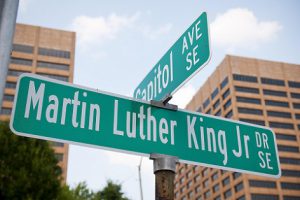
  • Martin Luther King was a great man – No Doubt!
  • When a community names a street “Martin Luther King Street/Drive/Boulevard”, the property values … go down!

Wait, What?!

This is a matter of image … impacting economics. This point was highlighted in a previous blog-commentary:

“In many instances (but not all), public opposition has led King’s name to be socially and geographically marginalized within cities, which has worked to stigmatize these streets and create public anxiety about renaming more prominent streets”.

See more in Appendix A below.

This is not about justice; this is about the economic reality.

According to a White Paper by a Caribbean academician, Dr. Donald McCartney of the Bahamas, the Black men and boys of the Caribbean region is a dysfunctional population sub-group. Their outworking on the general society is one of crime, violence and image degradation.  They are victims and villains and have experienced a breach in good citizenship in our society – “hurt people hurt people”. The White Paper addresses the question: “How to repair this breach?”. It also identifies some viable solutions for the region to consider. See that full White Paper here, and an Excerpt as follows:

White Paper Title: Repairing the Breach in the Caribbean – EXCERPT
By: Dr. Donald McCartney

 Questions, regarding Black men and boys, are being raised … these questions are being revived because many, too many Black men and boys are not a part of the economic structure or the body politic. Upon close examination, it becomes clear that many of them are not in community with their ethnic group.

For the most part, Black men and boys live in isolation, better yet, they are marginalized. They find it difficult to connect with society in general and the significant persons in their lives in particular.

The spiraling  murder rate and other acts of violence (particularly against young men and the elderly), makes it clear, that many Black men and boys in the Caribbean, pose a serious and critical problem of interpersonal violence in every corridor and thoroughfare that Caribbean peoples and residents must cross. Consequently, Black men and boys in the Caribbean are feared, demonized and vilified.

Even though [this] question goes far beyond Black men and boys, it is directly related to our young men in particular and their inability to participate and develop within the body politic and the economic structure of the Caribbean:

… How do we expect to engage Black men and boys in constructive dialogue and participation within Caribbean society while, at the same time, refurbishing the image that has now been unfairly placed upon the entire population of Black men and boys?

… In order to accomplish the goal of creating a better society for all stakeholders, there must be an integrated plan of action.

See the full White Paper here: https://goleancaribbean.com/blog/?p=14392

This commentary completes the 4-part series on Repairing the Breach; using the foregoing White Paper by Dr. McCartney as the premise. This entry is 4 of 4 in this series from the movement behind the book Go Lean … Caribbean in consideration of solutions – Way Forward – to assuage the plight of Black men and boys. The other commentaries in the series are cataloged as follows:

  1. Repairing the Breach: Hurt People Hurt People
  2. Repairing the Breach: Crime – Need, Greed, Justice & Honor
  3. Repairing the Breach: One Option – National Youth Service
  4. Repairing the Breach: Image Impacts Economics; Get on board!

While all of these commentaries relate to “how” the stewards for a new Caribbean can assuage the failing dispositions of the Caribbean among our Black men and boys, this final submission highlights the economic consequence of having a substantial segment of the population in a dysfunctional state: it depresses the economic value on the whole community.

Economics is an important consideration for this discussion. There is an “elastic” relationship – see Appendix B – between community economics and community dysfunction. When there are failures in the economic engines, then the good people in the community leave and abandon the homeland. This causes a spiral to a worse disposition in that the number of dysfunctional men and boys increase compared to the overall population. With a majority Black population in 29 of the 30 Caribbean member-states, the focus of this series of commentary has been on the problematic population of Black men and boys.

The opening role model referred to Rev Dr. Martin Luther King, Jr.. His Civil Rights advocacy helped elevate the image of the African American population; his life course made a huge impact. Just before his death (assassination) in 1968, he waged another campaign addressing issues of economic justice; one historic report related:

King traveled the country to assemble “a multiracial army of the poor” that would march on Washington to engage in nonviolent civil disobedience at the Capitol until Congress created an “economic bill of rights” for poor Americans.[156][157]

… The campaign culminated in a march on Washington, D.C., demanding economic aid to the poorest communities of the United States.

King and the SCLC (Southern Christian Leadership Council) called on the government to invest in rebuilding America’s cities. He felt that Congress had shown “hostility to the poor” by spending “military funds with alacrity and generosity.” He contrasted this with the situation faced by poor Americans, claiming that Congress had merely provided “poverty funds with miserliness.”[157] His vision was for change that was more revolutionary than mere reform: he cited systematic flaws of “racism, poverty, militarism and materialism”, and argued that “reconstruction of society itself is the real issue to be faced.”[161]

The Poor People’s Campaign was controversial … [and] its demands were unrealized… .

———

VIDEO – MLK, Poor People’s Campaign, and Economic Justice – https://youtu.be/DNR_28RberA

Published on Jan 20, 2015  

The “baton” for a Poor People’s Campaign has been passed on to a new generation: the Repairers of the Breach, founded in 2015 by the Rev. Dr. William J. Barber, II. This is a nonpartisan not-for-profit organization that seeks to build a moral agenda rooted in a framework that uplifts the deepest moral and constitutional values to redeem the heart and soul of the country (America). They declare that the moral public concerns of faith traditions should be how society treats the poor, women, LGBTQ people, children, workers, immigrants, communities of color, and the sick. The name of this modern Poor People’s Campaign is derived from the same scriptural premise as the foregoing White Paper by Dr. McCartney: Isaiah 58:9-12, to …

“raise up the foundations of many generations and … be called the repairer of the breach, the restorer of streets to dwell in”.

See the portrayal here of the new the Poor People’s Campaign/Repairers of the Breach in this VIDEO:

VIDEORevival: Time for a Moral Revolution of Values https://youtu.be/7UYxPoDxPnU

Repairers of the Breach

Published on Aug 30, 2016 – An overview of the powerful 2016 Revival tour being led by Rev. Dr. William J. Barber, II, Rev. Dr. James A Forbes, Jr., Rev. Traci Blackmon and Sister Simone Campbell.

This discussion is relevant for the movement behind the Go Lean book – there is an advocacy to “Battle Against Poverty“ (Page 222). It delves into strategies, tactics and implementations to mitigate economic chaos in the Caribbean region. In fact, the prime directives of the roadmap strewn from the book is described as follows:

These role players – Rev. Dr. Martin Luther King, Jr. and Rev. Dr. William J. Barber, II – are American role models with a scope of impacting America. There is the need for our own Caribbean effort. This is the quest of the Go Lean book. It serves as a roadmap for the introduction and implementation of the technocratic Caribbean Union Trade Federation (CU). The goal of the roadmap is to elevate Caribbean societal engines, to Repair the Breach for all the population in the region, but especially too, Black men and boys.

The reality of the Black men and boys in the Caribbean is even worse than the disposition of African-Americans in the US (or other Diasporic countries). We are considered “Less Than“, even among the population of “Less Than” North Americans and Europeans. This has been a consistent subject in previous Go Lean blog-commentaries; consider this sample:

https://goleancaribbean.com/blog/?p=11420 ‘Black British’ and ‘Less Than’
https://goleancaribbean.com/blog/?p=8099 Caribbean Image: ‘Less Than’?
https://goleancaribbean.com/blog/?p=5088 Immigrants account for 1 in 11 Blacks in USA
https://goleancaribbean.com/blog/?p=4613 The Image of Ireland and the Irish – A Diasporic People
https://goleancaribbean.com/blog/?p=2547 Image of Miami’s Success Due to Caribbean Failure
https://goleancaribbean.com/blog/?p=2251 The Image and Reality of Ethnic Names
https://goleancaribbean.com/blog/?p=2025 Image of the Caribbean Diaspora – Butt of the Joke
https://goleancaribbean.com/blog/?p=857 Lesser Image of Caribbean “Dreadlock hairstyles”

This is real talk about the Caribbean Black men and boys.

We will not assuage the Caribbean Less Than image until we Repair the Breach. Thank you “Dr. McCartney” for your White Paper, showing us a Way-Forward for effecting change.

This is also the goal of the Go Lean/CU roadmap, to reform and transform our region’s societal engines so that all of our people, including Black men and boys, can prosper where planted here in our Caribbean homeland. We must fix our identified societal defects!

“Fixing our defects” is a point that is pronounced early in the Go Lean book with the Declaration of Interdependence (Pages 12 & 13) with many statements that demonstrate the need to remediate Caribbean communities and elevate the disposition of our young men and women:

xi. Whereas all men are entitled to the benefits of good governance in a free society, “new guards” must be enacted to dissuade the emergence of incompetence, corruption, nepotism and cronyism at the peril of the people’s best interest. The Federation must guarantee the executions of a social contract between government and the governed.

xii. Whereas the legacy in recent times in individual states may be that of ineffectual governance with no redress to higher authority, the accedence of this Federation will ensure accountability and escalation of the human and civil rights of the people for good governance, justice assurances, due process and the rule of law. As such, any threats of a “failed state” status for any member state must enact emergency measures on behalf of the Federation to protect the human, civil and property rights of the citizens, residents, allies, trading partners, and visitors of the affected member state and the Federation as a whole.

xix. Whereas the preparation of our labor force can foster opportunities and dictate economic progress for current and future generations, the Federation must ensure that educational and job training opportunities are fully optimized for all residents of all member-states, with no partiality towards any gender or ethnic group. The Federation must recognize and facilitate excellence in many different fields of endeavor, including sciences, languages, arts, music and sports. This responsibility should be executed without incurring the risks of further human flight, as has been the past history.

xxiv. Whereas the Caribbean region must have new jobs to empower the engines of the economy and create the income sources for prosperity, and encourage the next generation to forge their dreams right at home, the Federation must therefore foster the development of new industries, like that of ship-building, automobile manufacturing, pre-fabricated housing, frozen foods, pipelines, call centers, and the prison industrial complex. In addition, the Federation must invigorate the enterprises related to existing industries like tourism, fisheries and lotteries – impacting the region with more jobs.

The American role models of Rev. Dr. Martin Luther King, Jr. and Rev. Dr. William J. Barber, II does not mean that the US is the desired model for the Caribbean to emulate. While Black men and boys amount to only 6.5 percent of the US population – they are minorities there – but they are the majority population group in their Caribbean homelands – that makes a difference. The majority status allows for race – and other matters outside of an individual’s control – to not be a reason for continuous oppression.  Repairing the Breach is the opposite of oppression.

Repairing the Breach in our societal eco-system for our Caribbean youth would also mean success for our Caribbean image, local and abroad.

The only image we seek is the worldwide recognition as the greatest place on the planet to live, work and play. 🙂

Download the free e-Book of Go Lean … Caribbean – now!

Sign the petition to lean-in for this roadmap for the Caribbean Union Trade Federation.

———–

Appendix A – Additional References on MLK Street Naming Economics

———–

Appendix B – Economic Elasticity

Elasticity is a measure of a variable’s sensitivity to a change in another variable. In business and economics, elasticity refers the degree to which individuals, consumers or producers change their demand or the amount supplied in response to price or income changes.

Source: Investopedia definition for “Elasticity”; retrieved March 7, 2018 from: https://www.investopedia.com/terms/e/elasticity.asp
Share this post:
, ,

Repairing the Breach: ‘Hurt People Hurt People’

Go Lean Commentary

Black men and boys” …

… this is a special group in the population of the New World, the Americas. This group has been victims and villains. To the point that academicians and clinicians alike can conclude that “hurt people hurt people”.

Societal defects within this group are higher than normal, compared to other populations groups. This includes violence, delinquencies, incarceration, repression and hopelessness.
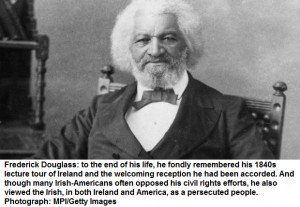
It is hard to be a “Black man or boy” … in the Americas.

This statement could have been echoed from the 1600’s all the way up to today.

One of the greatest advocates for Black causes, abolitionist Frederick Douglass (1818 – 1895), was right when he said:

“If there is no struggle, there is no progress.”

However, we say:

“For there to be victory, there must be a struggle; for there to be victory, there must be losers.”

The New World experience for people of African descent is one of struggle; but our people have made a lot of progress over the last 2 centuries especially; that means we have “ruffled a lot of feathers” along the way. Caribbean music icon Bob Marley worded it perfectly in a song that was released posthumously: “Buffalo Soldier”. The lyrics say:

Fighting on arrival; fighting for survival.

That fight though, was not always successful.

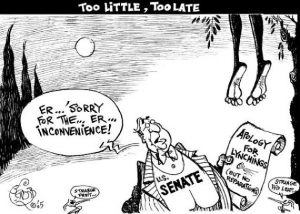
The experience of the Black men and boys in the New World is that these ones have often been hurt. Consider just the US experience with Lynchings in the Appendix A and Appendix VIDEO below, where “a total of 4,733 persons had died by lynching since 1882”; (Black men and boys were almost always the victims, with a few sprinkling of women here and there).

There is no excusing, rationalizing or minimizing this injustice. This “hurt” was state-action, state-sponsored and extra-judicial via mob-violence. (Other countries in the Americas also had lynchings, not just the Southern States of the US).

With this above introduction, is there any wonder that the crime rate is higher for Black men and boys than any other sub-group in the population? This is the accepted premise that “hurt people hurt people” – see Appendix C below.

This fact causes  breach in society. How do “we” repair this breach in societal dynamics?

This question was posed by an academician, Dr. Donald McCartney of the Bahamas. He composed a White Paper to address this question of “How to repair this breach?” and identified some viable solutions, not just for the Bahamas, but for all the Caribbean. Considering that 29 of the 30 countries that caucus with the political Caribbean possess a majority Black (or non-White) population, this is an apropos discussion for this movement behind the book Go Lean…Caribbean. See that full White Paper here, and an Excerpt as follows:

White Paper Title: Repairing the Breach in the Caribbean – EXCERPT
By: Dr. Donald McCartney

As we approach the 200th anniversary of the abolition of slavery in the British Empire, the same questions, regarding Black men and boys, are being raised again.

These questions are being revived because many, too many Black men and boys are not a part of the economic structure or the body politic. Upon close examination, it becomes clear that many of them are not in community with their ethnic group.

For the most part, Black men and boys live in isolation, better yet, they are marginalized. They find it difficult to connect with society in general and the significant persons in their lives in particular.

The spiraling  murder rate and other acts of violence (particularly against young men and the elderly), makes it clear, that many Black men and boys in the Caribbean, pose a serious and critical problem of interpersonal violence in every corridor and thoroughfare that Caribbean peoples and residents must cross. Consequently, Black men and boys in the Caribbean are feared, demonized and vilified.

See the full White Paper here: https://goleancaribbean.com/blog/?p=14392

The Caribbean has some work to do. The Go Lean book serves as a roadmap for effecting change in the Caribbean; it introduces the technocratic Caribbean Union Trade Federation (CU) as a vehicle to bring about the desired change in the region’s societal engines (economics, security and governing).

Our situation is bad, a crisis even! Some of our communities can even be categorized as Failed-States. But the Go Lean book asserts that a “crisis is a terrible thing to waste”. Thusly, this movement has formulated a roadmap to elevate the societal engines in the Caribbean. The book confesses that “this” is a Big Deal – heavy-lifting – but lays out the Way Forward with best-practices, strategies, tactics, implementations and advocacies, so as to conclude:

Yes, we can!

The first step in Repairing the Breach must be the recognition that “hurt people hurt people”. Rather than throwing these people away, we need to work to reconcile them into Caribbean society. This is the modus operandi of the foregoing White Paper by Dr, McCartney.

But throw away, run away, flee away and outright abandonment is exactly what has been happening; this is the current disposition of Caribbean youth. Too many people leave, and their absence damages the fabric of Caribbean society. The region is suffering a debilitating brain-drain rate estimated at 70% with some countries reporting up to 81%. This alarming abandonment rate is due to “push-and-pull” factors.

  • “Push” refers to the overbearing deficiencies in the homeland that forces people to seek refuge.
  • “Pull” refers to the lure that the “grass is greener on the other side” in foreign lands like the US, Canada and EU countries.

The next step to Repair the Breach therefore is to work to keep our people here at home. The quest of the Go Lean roadmap in lowering these “push-and-pull” factors is therefore paramount.

This Go Lean/CU roadmap is designed to provide better stewardship (governance), to ensure that the failures of the past, in the Caribbean and other regions – like the US – do not re-occur here in the Caribbean homeland. The book posits that the United States should not be the model for us to follow in the Caribbean – consider the atrocities in Appendix A; that country has racism embedded in its DNA and it still re-surfaces. No, we must NOT fashion ourselves as parasites of the US, but rather pursue a status as a protégé, benefiting from their lessons-learned but molding our own better society.

It is what it is! We cannot go backwards and change the past; no, all we can do is change-improve the future.

Therefore, the Go Lean movement advocates for Black Caribbean people to stay in the Caribbean, positing that it is easier – after the required reformation and transformation – to “prosper where planted here” than to emigrate to foreign shores.

The book Go Lean … Caribbean posits that America is plagued with institutional racism and Crony-Capitalism. It is therefore not the eco-system for the Caribbean to model. Rather the roadmap designs more empowerments for all of Caribbean society.

In general, the CU will employ better strategies, tactics and implementations to impact its prime directives; identified with the following 3 statements:

  • Optimization of the economic engines in order to grow the regional economy to $800 Billion & create 2.2 million new jobs.
  • Establishment of a security apparatus to protect the resultant economic engines and mitigate internal and external threats.
  • Improvement of Caribbean governance to support these engines.

Early in the Go Lean book, this need for careful technocratic stewardship of the regional Caribbean economy was pronounced (Declaration of Interdependence – Page 12 – 13) with these acknowledgements and statements:

xi. Whereas all men are entitled to the benefits of good governance in a free society, “new guards” must be enacted to dissuade the emergence of incompetence, corruption, nepotism and cronyism at the peril of the people’s best interest. The Federation must guarantee the executions of a social contract between government and the governed.

xii.   Whereas the legacy in recent times in individual states may be that of ineffectual governance with no redress to higher authority, the accedence of this Federation will ensure accountability and escalation of the human and civil rights of the people for good governance, justice assurances, due process and the rule of law. As such, any threats of a “failed state” status for any member state must enact emergency measures on behalf of the Federation to protect the human, civil and property rights of the citizens, residents, allies, trading partners, and visitors of the affected member state and the Federation as a whole.

xxiv. Whereas a free market economy can be induced and spurred for continuous progress, the Federation must install the controls to better manage aspects of the economy: jobs, inflation, savings rate, investments and other economic principles. Thereby attracting direct foreign investment because of the stability and vibrancy of our economy.

The Go Lean book presents 370 pages of instructions for how to reform and transform the Caribbean member-states. It stresses the key community ethos, strategies, tactics, implementations and advocacies necessary to shepherd a better society.

This commentary commences a 4-part series on Repairing the Breach; using the foregoing White Paper by Dr. McCartney as the premise. This entry is 1 of 4 in this series from the movement behind the book Go Lean … Caribbean in consideration of solutions to assuage the plight of Black men and boys. The other commentaries in the series are cataloged as follows:

  1.  Repairing the Breach: ‘Hurt People Hurt People’
  2.  Repairing the Breach: Crime – Need, Greed, Justice & Honor
  3.  Repairing the Breach: One Option – National Youth Service
  4.  Repairing the Breach: Image Impacts Economics

All of these commentaries relate to “how” the stewards for a new Caribbean can assuage the Caribbean failing dispositions among our Black Men and boys. We recognize that something is wrong … today, as has been the case ever since Black men and boys were first brought to the New World. Yes, this problem dates back to slavery and the original Slave Trade.

The Go Lean roadmap declares that “enough is enough” with the Failed-State statuses and societal abandonment in the Caribbean region. Why should our people leave for an uncertain future, when it could be easier for the average person to remediate and mitigate defects in the Caribbean homeland? This is better than submitting to institutional racism of a foreign land, i.e. USA. That is equivalent to “jumping from the frying pan to the fire”.

It is time for the proper empowerments in the Caribbean! It is time to build a better society. The strategies, tactics and implementations proposed in the book Go Lean…Caribbean are conceivable, believable and achievable. We can do these! We can be better.

Everyone in the Caribbean are hereby urged to lean-in for this Go Lean roadmap. 🙂

Download the free e-book of Go Lean … Caribbean – now!

Sign the petition to lean-in for this roadmap for the Caribbean Union Trade Federation. 

———–

Appendix A: Lynchings in the US

Statistics for lynchings have traditionally come from three sources primarily, none of which covered the entire historical time period of lynching in the United States. Before 1882, no reliable statistics are assembled on a national level. In 1882, the Chicago Tribune began to systematically tabulate lynchings. In 1908, the Tuskegee Institute began a systematic collection of lynching reports under the direction of Monroe Work at its Department of Records, drawn primarily from newspaper reports. Monroe Work published his first independent tabulations in 1910, although his report also went back to the starting year 1882.[109] Finally, in 1912, the National Association for the Advancement of Colored People started an independent record of lynchings. The numbers of lynchings from each source vary slightly, with the Tuskegee Institute’s figures being considered “conservative” by some historians.[57]

Tuskegee Institute, now Tuskegee University, defined conditions that constituted a recognized lynching, a definition which became generally accepted by other compilers of the era:

“There must be legal evidence that a person was killed. That person must have met death illegally. A group of three or more persons must have participated in the killing. The group must have acted under the pretext of service to Justice, Race, or Tradition.”

The records of Tuskegee Institute remain the single most complete source of statistics and records on this crime since 1882 for all states, although modern research has illuminated new incidents in studies focused on specific states in isolation.[110] As of 1959, which was the last time that Tuskegee Institute’s annual report was published, a total of 4,733 persons had died by lynching since 1882. To quote the report,

“Except for 1955, when three lynchings were reported in Mississippi, none has been recorded at Tuskegee since 1951. In 1945, 1947, and 1951, only one case per year was reported. The most recent case reported by the institute as a lynching was that of Emmett Till, 14, a Negro who was beaten, shot to death, and thrown into a river at Greenwood, Mississippi on August 28, 1955…For a period of 65 years ending in 1947, at least one lynching was reported each year. The most for any year was 231 in 1892. From 1882 to 1901, lynchings averaged more than 150 a year. Since 1924, lynchings have been in a marked decline, never more than 30 cases, which occurred in 1926…”[111]

The Equal Justice Initiative in Montgomery, Alabama reported 3,959 American victims of “racial terror lynchings” in 12 Southern states from 1877 to 1950.

Most, but not all lynchings ceased during the 1960s.[21][31] The murder of Michael Donald in Alabama in 1981 was the last recorded lynching in the United States. [Though many Hate Crimes have been recorder and/or prosecuted since then].

Source: Wikipedia Online Encyclopedia – retrieved March 1, 2018 from: https://en.wikipedia.org/wiki/Lynching_in_the_United_States#Statistics


———–

Appendix B VIDEO – The Origins of Lynching Culture in the United States – https://youtu.be/hPdh46k7b38

Published on Apr 7, 2015 – How did the practice of lynching begin and evolve in American history? How did Ida B. Wells, a black female investigative journalist, start to challenge some of the entrenched practices of the South? Watch Paula Giddings, professor of Afro-American Studies at Smith College, explore one of the most challenging topics in U.S. history: the history and origins of lynching. Find out more: https://www.facinghistory.org/mocking…

———–

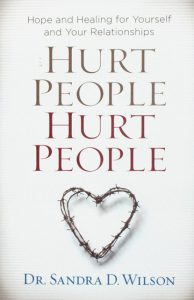
Appendix C – Book: Hurt People Hurt People: Hope and Healing for Yourself and Your Relationships

By: Dr. Sandra D. Wilson (Author)

Summary:

“Hurt people hurt people” is more than a clever phrase. Hurt people hurt others because they themselves have been hurt. And each one of us has been hurt to one degree or another. As that damage causes us to become defensive and self-protective, we may lash out at others. Hurting becomes a vicious cycle.

Review:

“Dr. Sandy Wilson knows why people hurt, where they hurt, and how to heal those hurts. She gets right to the heart of these matters in her very insightful and provocative book. It is a must read for anyone who wants to break free from the bondage of unhealed personal hurts.”     -Dr. Chris Thurman, author of The Lies We Believe

Source: Posted September 21, 2015; retrieved March 2, 2018 from: https://www.amazon.com/Hurt-People-Healing-Yourself-Relationships/dp/1627074848

Share this post:
, , , ,
[Top]

White Paper: Repairing the Breach in the Caribbean

Repairing the Breach in the Caribbean

By: Donald M. McCartney, D.M., MPA, MSc.Ed. (Hons.), B.A., T.C.

On 16 April 1889, while speaking on the occasion of the 27th anniversary of the abolition of slavery, Frederick Douglass attempted to harness and clarify the defining questions that were of importance, at the time, with respect to Black men and boys.

“….Mark, if you please, the fact, for it is a fact, an ominous fact, that at no time in the history of conflict between slavery and freedom in this country has the character of the negro as a man been made the subject of a fiercer and more serious discussion in all the avenues of debate than during the past and present year. Against him have been marshaled the whole artillery of science, philosophy, and history; we are not controlled by open foes, but we are assailed in the guise of sympathy and friendship and presented as objects of pity.” – Frederick Douglass

As we approach the 200th anniversary of the abolition of slavery in the British Empire, the same questions, regarding Black men and boys, are being raised again.

These questions are being revived because many, too many Black men and boys are not a part of the economic structure or the body politic. Upon close examination, it becomes clear that many of them are not in community with their ethnic group.

For the most part, Black men and boys live in isolation, better yet, they are marginalized. They find it difficult to connect with society in general and the significant persons in their lives in particular.

The spiraling  murder rate and other acts of violence (particularly against young men and the elderly), makes it clear, that many Black men and boys in the Caribbean, pose a serious and critical problem of interpersonal violence in every corridor and thoroughfare that Caribbean peoples and residents must cross. Consequently, Black men and boys in the Caribbean are feared, demonized and vilified.

When Frederick Douglass spoke in the late 19th Century, he raised the following crucial and defining questions:

  1. How does one protect a group from public dissection as if it existed as a mere aberration in the society?
  2. How does one create for that group a group concept so that it is able to sustain itself as a self-respecting group within (the Caribbean) a society, which views it as an aberration?

The answers to these questions must be sought as we search for a way out of the morass in which we, as a people, find ourselves.

The answers to these questions must be found; so that we can save our Black men and boys.

The answers to these questions must be found; so that we can free those Black men and boys who have become slaves to violence and crime. We must come to the realization that, that which impacts Black men and boys impacts all Caribbean people and those who reside among us.

The answers to these questions must be found as we continue to approach the 200th anniversary of the abolition of slavery.

Unless and until the answers to these questions are found, we will continue to be a people in a quandary.

There is a breach within the fabric of Caribbean society, which has led to a breach in the lives of Black Caribbean males. A serious attempt must be made to repair this breach at all cost.

All Caribbean people, who are concerned about the state of the Caribbean in general and the fate of the Black Caribbean male in particular, need to ponder, take to heart, and act upon Isaiah, chapter 58:9-12.

“Then you shall call and the Lord shall answer; you shall cry, and He will say, ‘Here I am.’ If you take away from the midst of you the yoke, the pointing of the finger, and speaking wickedness, If you pour yourself out for the hungry and satisfy the desire of the afflicted, then shall your light rise in darkness, and your gloom shall be as noon day. The Lord will continually guide you and satisfy your desire with good things. You shall be like a watered garden, like a spring of water whose waters fail not, and your ancient ruins shall be rebuilt. You shall raise up the foundations of many generations and you shall be called the repairer of the breach, the restorer of streets to dwell in.”

The message from Isaiah is powerful. It tells us that the only way to create a genuine community is to become repairers of the breach, restorers of safe streets in which to dwell.

Becoming repairers of the breach and restorers of the streets are the foundations for assisting Black men and boys who are in trouble to move from trouble, to engage their families and ultimately build solid citizens.

In this regard, all Caribbean people must become repairers of the breach and restorers of the streets. Our future depends upon it! It is the imperative of now!

There must be a regional response with respect to the issues confronting Black men and boys in the Caribbean. This is no time for throwing up our hands as a gesture of capitulation, (posing the useless question: “What is wrong with these young men?) and rolling our eyes. It is time for action…serious sustained, positive action!

Those who become engaged in this regional response must be individuals who are prepared to make a difference in the issues of Black men and boys in their communities. To this end, the Caribbean must move towards the establishment of a Regional Task Force on the State of Black Men and Boys in the Caribbean. This is the advocacy here-in. This Task Force is hereby branded the Thurston Foundation in honor of Charles Thurston (1910-1980), an influential community figure in the Bahamas and in the life of the author. He demonstrated the most effective and efficient training for “raising a boy in the way he must go” (Proverbs 22:6). According to scripture, “give men of that sort, double honor” – 1 Timothy 5:17

The work of the Thurston Foundation, as an NGO (Non-Government Organization), should and must be a joint venture between governments of Caribbean member-states and Corporate Caribbean.

The Thurston Foundation must be appointed post haste and without reference to political affiliation.

The Thurston Foundation must come from a broad spectrum of concerned citizens and residents from the public and private sectors.

While these persons should be qualified for the task at hand, the Thurston Foundation must be comprised of men, women and young persons who are committed to the task of repairing the breach and restoring the streets.

The purpose of the Thurston Foundation will be to provide ideas that Government, organizations and individuals in the Caribbean can use to change the lives of Black men and boys, change communities, and by extension change their nations.

The primary aim will be to create a long-term structure of sustained intervention for Black men and boys who find themselves in trouble. The emphasis of the Thurston Foundation will be on systemic change that will bring together a multiplicity of ideas in an effort to reduce violence and crime, thus making the Caribbean’ social life whole again.

The Thurston Foundation must not shape itself around the issue of violence. Violence, in the Caribbean, has been painted with a broad brush because Black men and boys are looked upon as the face of the violence.  This violence appears to have immobilized law abiding citizens into a state of panic and fear.

It must be understood by the Thurston Foundation that simplistic approaches and stereotypes are not the way forward in rendering assistance to men in general and boys in particular.

The Thurston Foundation must be mindful that there are other forms of violence that are the precursors of the violence that is perpetrated by some Black men and boys.  Among these forms of violence are violence of the heart, violence of the tongue, political violence, religious violence and racial violence. These forms of violence have created in some of our Black men and boys the culture of violence that the Caribbean is experiencing today.

The Thurston Foundation must understand that violence is a symptom of a deeper and pervasive problem. The members of the Thurston Foundation must understand that finding a cure or attempting to cure violence does not of itself cure anything.

Even though the question goes far beyond Black men and boys, it is directly related to our young men in particular and their inability to participate and develop within the body politic and the economic structure of the Caribbean.

Mindful of these broad concerns, the Thurston Foundation must seek answers to the following questions.

  • First: How do we bring relief and assistance to communities and families that are experiencing the great hurt and harm of violent behaviour?
  • Secondly: How do we find a way to reestablish community and make inroads into violent behaviour, the major social problem of the day? 
  • Thirdly: How do we expect to engage Black men and boys in constructive dialogue and participation within Caribbean society while, at the same time, refurbishing the image that has now been unfairly placed upon the entire population of Black men and boys?

These men and boys suffer as a consequence of media and political short-sightedness, stereotyping and the actions of those who commit violent acts without regard for society.  

The Thurston Foundation must endeavour to frame a public response to the Caribbean’s difficult policy issues regarding Black men and boys, while at the same time laying the groundwork for sustained approaches to put these issues to rest.

This could be accomplished by repairing the many breached relationships in our nation, communities and families. Members of the Thurston Foundation must acknowledge the fact that all of us have a role to play in the process of repairing the breach and restoring the streets.  By this inclusiveness, Black men and boys will be restored to their rightful places in the Caribbean.

The Thurston Foundation must give consideration to three broad areas, which can assist in the transformation of the Caribbean, and by extension Black men and boys.

  • The first of these is the human condition and human development. Consideration of the human condition and human development will give clarity to the common good as a working principle and establish a connection with one human to another.
    The idea of the human condition and human development embrace the concept of fair play, expanded opportunities and the necessity for each person to be able to contribute to development of the Caribbean.
  • Secondly, the ancient concept of polis states that members of a society have to honour their rights and responsibilities. One cannot have rights without responsibilities.
  • Thirdly, the concept of public works or the important contribution everyday people can make to the commonwealth, which is best exemplified (illustrated) by telling stories of common work, and celebrating our common life and heritage and our efforts in creating citizenship.

The concepts of the human condition and human development, polis and public works will provide the basic framework for the report of the Thurston Foundation.

The human condition and human development, polis and public work are the keys to strengthening families, restoring our streets to safety, and rebuilding civil societies in our communities.  These concepts must be embraced by communities, expanded upon, and put into practice in order to create safe havens for our children, the elderly, Caribbean people and residents generally.

The themes that should be detailed in the report of the Thurston Foundation should include polis, the common good, civic storytelling, grassroots civic leadership and restoring community institutions.

The concepts of the human condition and human development, polis and public work can be accomplished if civic, social, religious and professional organizations, as well as business, government and the philanthropic sector work together.

The Thurston Foundation should appeal to individuals and organizations to join in the effort to rescue the Caribbean and preserve it for all of its citizens and generations yet unborn.

The Thurston Foundation must see the need for wide ranging Regional Conversation and Dialogue if solutions are to be found.

As a part of this exercise, a Regional Conversation and Dialogue on Race, Ethnicity and Nationality must be a central part of the agenda. This is a major tool for assisting Black men and boys since public opinion is most vital when advocating change. Caribbean people can engage each other by learning to talk to each other and finding common cause.

This Conversation and Dialogue should take place over a period of several years. These facilitated discussions will begin with the Thurston Foundation members talking to neighbours, friends, peers and others in their homes, town halls, schools, churches and workplaces.

Boys and men in trouble or headed toward trouble have to decide for themselves that they wish to change. After all you can take a horse to water, but you cannot make it drink.

Men and boys must assume personal responsibility and be held accountable for their actions. Parents must be prepared to parent so as to give young men a chance to succeed.

This is the light in which the Thurston Foundation ought to frame its recommendations and responses. It is anticipated that this new way of looking at how to bring violence under control, to be repairers of the breach and restorers of the streets, brings with it a spiritual, a practical, a pragmatic and political element. All of these elements must work together if we are to create a better society for these men and boys and their families as well as for all Caribbean people.

In order to accomplish the goal of creating a better society for all stakeholders, there must be an integrated plan of action. For example, the loss of a social centre in some neighbourhoods, settlements and cities requires that all civic, social, religious and cultural organizations act with a sense of urgency to plan from the local to the regional levels, to study their individual areas jointly, to combine their efforts in programming, and to cooperate in long-range planning; so that damaged or lost infrastructure can be repaired or replaced. A coordinated approach to these activities will develop a sense of organized companionship toward the goal of restoring our social and economic future.

A general discussion of the goals, missions and aspirations of those affected will determine agenda building and planning. Our civic, social, religious, and cultural organizations must develop themselves into a working network. This would give impetus to a new Regional Dialogue, thus adding voices to existing organizations.  This new dialogue will focus on the bridges that must be built based on study and a sense of community mission.

The Thurston Foundation will have a life of eighteen (18) to twenty-four (24) months after which it will be expected to make its final report. There will be interim reports every six months.

The Thurston Foundation will be expected to make a number of recommendations in its interim and final reports.  These reports will be designed to keep the Government and people of the Caribbean abreast of its findings.

The information gathering meetings, of the Thurston Foundation, will be open to the general public, while its deliberative meeting will be held in private.

The recommendations of the Thurston Foundation will form the core of a ten (10) to twenty (20) year plan which will enable the Government and Corporate Caribbean to begin to assess and ameliorate the problems faced by Black men and boys in the Caribbean.

Discussion, of the issues laid out in this presentation, will go a long way in introducing the concept of polis, a comprehensive idea with respect to values, manners, morals, and etiquette that are required for structuring public life on both the social and political levels.

These areas present a broader and tougher vision of community.  The term community, as it is presently used, is indeed overused and has little meaning. It does not have the kind of force of intent that is now needed to rectify and restore our homes, communities and nation.

This concept, of repairing the breach and restoring the street, will give Black men and boys much more room to determine how they will participate actively in the social and political life of the Caribbean. They must not be alienated from a society that their parents, grandparents, and great grandparents helped to build and develop.

There is allowance made for a discussion about how one becomes a whole individual and citizen participating in Caribbean society under the rubric of both polis and community, and the dependent social contract that polis implies.

In order to commence addressing the many issues facing and surrounding Black men and boys in the Caribbean in the 21st Century and beyond, public policy and activity must become aligned with the work of the repairers of the breach and restorers of the streets.

🙂

———-
About the Author
Dr. Donald M. McCartney is a life-long educator and specialist in “Management and Organizational Leadership”. Though he is well-respected in his home country of The Bahamas – with success track records at every level of the education spectrum: K-12, Post-Secondary, Graduate and Post-Graduate – he has executed his professional vision throughout the Americas. He currently serves as an Adjunct Professor at Barry University in Miami Shores, Florida and Jose Maria Vargas University in Pembroke Pines, Florida.

Share this post:
, , ,
[Top]

Forging Change: Soft Power – Clean-up or ‘Adios Amazon’

Go Lean Commentary

Speak softly and carry a Big Stick – West African Proverb pronounced by the 26th US President, Theodore Roosevelt

Speak softly and carry a Big Payroll – Modern New Twist 

Welcome to the concept of “soft power” … 2018 style.

There are a number of ways to forge change on a society; military power or hard power is perhaps the most effective. “Leading by the sword” is not in dispute. Anyone willing to protect their life, family and property will comply. But leading by Money Matters is also extremely effective. The prospect of acquiring money or losing money can be a great motivation. This “soft power” is now emerging as the preferred way to forge change on society. We are seeing clear choices presented to different communities:

Clean-up your societal defects or else … face the loss of some economic bonanza.

This is the situation right now in Atlanta, in the US State of Georgia. The issues are so blatant that it is bordering on a “soft power” reality.

Soft power is the ability to attract and co-opt, rather than by coercion (hard power), which is using force or giving money as a means of persuasion. Soft power is the ability to shape the preferences of others through appeal and attraction. A defining feature of soft power is that it is non-coercive; the currency of soft power is culture, political values, and foreign policies. – Source

“Hard power” = involuntary; “soft power” = voluntary.

See the full article here, wherein the Big Tech firm Amazon is weighing Atlanta’s values and community ethos to attract or repel Amazon to consider that location for their Second Headquarters and 50,000 high-paying jobs. See the story here:

Title: ‘Adios Amazon:’ Tech giant sparks Georgia Capitol debate
By:
 Ben Nadler, Associated Press

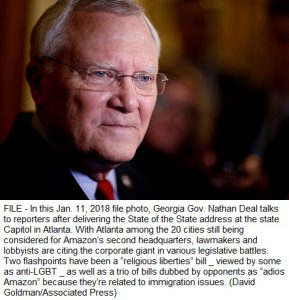
ATLANTA (AP) — With Atlanta among the 20 cities on the short list to become the home of Amazon’s second headquarters, the corporate giant’s name has become a contentious rallying cry inside the conservative Georgia Capitol.

Lawmakers and lobbyists in Georgia are viewing various pieces of legislation through the lens of how they will affect the city’s chances of winning Amazon’s business — and the estimated 50,000 jobs expected to be generated by the new headquarters.

Two flashpoints have been a “religious liberties” bill — viewed by some as anti-LGBT — as well as a trio of bills that opponents have dubbed “adios Amazon” because they’re related to immigration issues.

“It’s putting a target on our back,” Democratic Rep. Bee Nguyen said of the immigration-related bills, which she said would draw unnecessary scrutiny from the Amazon selection committee.

Amazon has yet to publicly release specific criteria it will use to judge the 20 finalist cities, but its initial call for proposals lists “Cultural Community Fit” as a priority, noting it requires a community with a “diverse population.” Amazon founder and CEO Jeff Bezos is a big-time donor to pro-LGBT causes and has given large amounts of money to fund scholarships for young immigrants.

The potential cost of legislation perceived to be discriminatory can be huge. North Carolina faced months of scrutiny and criticism after the passage of its “bathroom bill,” which effectively blocked the city of Charlotte from allowing transgender people to use restrooms aligned with their gender identity. An Associated Press analysis revealed backlash to the law would cost the state an estimated $3.76 billion over 12 years in business lost from Paypal, the NBA, Adidas, Deutsche Bank and other companies and organizations scuttling planned projects and events in the state.

But some lawmakers are skeptical that state legislation would have any effect on Amazon’s selection.

“It is a smart tactic to create this boogeyman of, ‘Oh, we are going to lose out on economic development,'” Republican Sen. Josh McKoon said. He said there was “zero evidence” that conservative policies make a state less likely to attract employers like Amazon and that state legislators should not be swayed by out-of-state companies that may not share the same values as the people of Georgia.

“Perhaps we should just have their board of directors come down and sit in our seats in the House and Senate,” McKoon said sarcastically.

McKoon is a sponsor of a resolution that would prevent the state government from issuing written driving tests and other official documents in any language other than English. That is one of three measures that opponents have dubbed “adios Amazon” legislation. The other two measures would require a special driver’s license for non-U.S. citizens and would tax out-of-state wire transfers, which are widely used by immigrants.

McKoon is also a supporter of another piece of controversial legislation that some people worry could derail Atlanta’s bid: a “religious liberties” bill that opponents say would allow individuals to deny services to LGBT people based on their religious convictions.

Republican Gov. Nathan Deal vetoed a similar measure in 2016 after pressure from corporate giants including Coca-Cola, a major employer based in Atlanta. But conservative legislators are pushing the measure forward again this year.

The veto highlights another important aspect of the Amazon debate: It’s not just Republican vs. Democrat.

In the run-up to November’s elections, conservative Republican legislators are pushing hot-button social issues that can win votes in rural parts of the state. But the party’s more centrist, business-friendly arm is worried that could turn off Amazon by seeming to be anti-immigrant or anti-LGBT.

Republican Sen. Michael Williams, who is running for governor, said in a statement to The Associated Press that he supported the “religious liberties” bill because his constituents support the measure. “I’ve made it clear that I’m not beholden to the establishment, Party leadership or big corporate,” Williams said.

But Republican House Speaker David Ralston told WABE Radio that he was interested in “growing economic opportunity for every part of Georgia” and that legislation such as the “religious liberties” bill didn’t fit into that plan.

“To the extent that any debate … creates headwinds for that, then I don’t have any interest in doing that, frankly,” he said.

William Hatcher, associate professor in the Department of Social Sciences at Augusta University, said that many of the bills being introduced will appeal to conservative voters, even if they don’t have much chance of becoming law. “There is a lot of symbolic politics going on,” Hatcher said.

“It really represents the conflict you have in the Republican party nationwide, but especially in a number of Southern states … between more economic conservatives and more social-religious conservatives,” he said.

Copyright 2018 The Associated Press. All rights reserved. This material may not be published, broadcast, rewritten or redistributed.

Source: US News & World Report – Posted February 13, 2018; Retrieved February 21, 2018 from: https://www.usnews.com/news/best-states/georgia/articles/2018-02-13/adios-amazon-tech-giant-sparks-georgia-capitol-debate

As related in the foregoing, Amazon HQ2 and the accompanying 50,000 high-paying jobs is the prize. Want it? Well, it will cost you! You have to … be nice.

You have to live … and let live.

This heavy-lifting burden is the price of the ticket … for consideration. Amazon has announced that their Selection Committee will be looking at cities with a “‘Cultural Community Fit’ as a priority, noting it requires a community with a ‘diverse population’.”

Wow, what an expensive price to pay. People in cities like Atlanta actually have to clean-up their societal engines; they have to try and get along or Amazon will not consider them. Plus, Amazon is only considering 1 city, so if a community double-downs on the effort to forge a pluralistic democracy – fair treatment to all despite diverse backgrounds and lifestyles – and they are not selected by Amazon, then they would have loved their neighbors … for nothing.

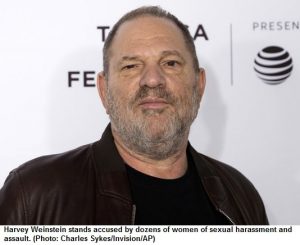
How sad! This satirical comment is the height of sarcasm, but true!

Companies prefer to inhabit a peaceful, prosperous community and they are willing to “put their money where their mouth is” to forge such communities. The business axiom is fully established: “Happy home life; happy work life”.

So as demonstrated here, the people of Atlanta are being urged to clean-up their society of all past bias, discriminatory practices and abusive behavior – towards minority groups – and there might be a BIG cash pay-out in the end. This is the premise of this recent series of blog-commentaries – from the movement behind the book Go Lean … Caribbean – considering the momentum that Money Matters can have on forging change in the 3 societal engines of a community – economics, security and governance. The conclusion was that it is so much easier to lead and get people to voluntarily follow – to lean-in – through economic means rather than by any security and governing directives. Atlanta – a major Southern city with the de jure segregation past and a de facto segregation present – had been under pressure to widen out its inclusion. (See Appendix VIDEO below). Now with the stakes of 50,000, jobs they are now more willing to capitulate.

This commentary follows up from the 5-part series in consideration of these Money Matters. The other commentaries in the series were cataloged as follows:

  1. Leading with Money Matters: Follow the Jobs
  2. Leading with Money Matters: Competing for New Industries
  3. Leading with Money Matters: Almighty Dollar
  4. Leading with Money Matters: As Goes Housing, Goes the Market
  5. Leading with Money Matters: Lottery Hopes and Dream

All of these previous commentaries related “how” to persuade the Caribbean region’s stakeholders to follow an empowerment roadmap. It is logical to conclude that if we “dangle money in front of our subjects”, we will get their attention; they will buy-in and lean-in because Money Matters.

There is no greater motivation than a crying baby – when hunger sets in and there is no economic solution for food, parents are willing to put aside their prejudices; they would do so willingly. Is it the desperation or is it a learning curve? We have seen the desperation, time and again. We have seen people risk their lives, and that of their children, to seek refuge; think Haiti, Cuba, etc..

The book Go Lean…Caribbean – available to download for free – declares that Caribbean society is in such dire straits, we are flirting with Failed-State status; we are at the precipice.

If people are money motivated – and they are – then economic incentives should work.

The book serves as a roadmap for the introduction and implementation of the technocratic Caribbean Union Trade Federation (CU), for the elevation of Caribbean society – for all member-states. This CU/Go Lean roadmap has these 3 prime directives:

  • Optimization of the economic engines in order to grow the regional economy to $800 Billion and create 2.2 million new jobs.
  • Establishment of a security apparatus to ensure public safety and protect the resultant economic engines.
  • Improve Caribbean governance to support these engines, including a separation-of-powers between the member-states and CU federal agencies.

Is the situation in Atlanta political or economic? (See Appendix VIDEO below). Politically in Georgia, the state is normally considered a RED state – social-religious conservatives – a Republican stronghold; but Republicans are normally also pro-business. Thusly, this conflict exists … in the Republican party nationwide, but especially in many Southern states … between more economic conservatives and more social-religious conservatives.

“Can’t we all just get along?” – Rodney King 1994

We can all get along … when 50,000 jobs hang in the balance.

The Go Lean book stresses this point; that reforming and transforming the Caribbean societal engines is easier when economic benefits are the result. To be successful in our region, we must leverage our regional economy and collaborate on regional solutions. See this portrayal early in the book, as pronounced in the opening Declaration of Interdependence (Pages 12 – 13):

xi. Whereas all men are entitled to the benefits of good governance in a free society, “new guards” must be enacted to dissuade the emergence of incompetence, corruption, nepotism and cronyism at the peril of the people’s best interest. The Federation must guarantee the executions of a social contract between government and the governed.

xvi. Whereas security of our homeland is inextricably linked to prosperity of the homeland, the economic and security interest of the region needs to be aligned under the same governance. Since economic crimes … can imperil the functioning of the wheels of commerce for all the citizenry, the accedence of this Federation must equip the security apparatus with the tools and techniques for predictive and proactive interdictions.

xxiv. Whereas a free market economy can be induced and spurred for continuous progress, the Federation must install the controls to better manage aspects of the economy: jobs, inflation, savings rate, investments and other economic principles. Thereby attracting direct foreign investment because of the stability and vibrancy of our economy.

The Go Lean book provides 370-pages of turn-by-turn instructions on “how” to adopt new community ethos, plus the strategies, tactics, implementations and advocacies to execute so as to reboot, reform and transform the societal engines of Caribbean society.

So religious conservatives are less tolerant of diversity…

The only thing to transcend it – forge change – is The Almighty Dollar

This thought of ‘forging change’ is a common theme by this Go Lean movement. See the full catalog here of this one, plus the previous 10 blog-commentaries that detailed approaches for forging change, in reverse chronological order:

  1. Forging Change – Soft Power (Today: February 21, 2018)
  2. Forging Change – Collective Bargaining (April 27, 2017)
  3. Forging Change – Addicted to Home (April 14, 2017)
  4. Forging Change – Arts & Artists (December 1, 2016)
  5. Forging Change – Panem et Circenses (November 15, 2016)
  6. Forging Change – Herd Mentality (October 11, 2016)
  7. Forging Change – ‘Something To Lose’ (November 18, 2015)
  8. Forging Change – ‘Food’ for Thought (April 29, 2015)
  9. Forging Change – Music Moves People (December 30, 2014)
  10. Forging Change – The Sales Process (December 22, 2014)
  11. Forging Change – The Fun Theory (September 9, 2014)

As related in these commentaries, forging change is how the Go Lean roadmap will make our Caribbean homeland a better place to live, work and play. Change will come! One way or another, so we urge every Caribbean stakeholder to lean-in and embrace the change … as envisioned in this roadmap to elevate the societal engines of the region. 🙂

Download the free e-book of Go Lean … Caribbean – now!

Sign the petition to lean-in for this roadmap for the Caribbean Union Trade Federation.

————

Appendix VIDEO – Atlanta: a segregated city – https://youtu.be/oeIntCp8EgQ

Vivien Morgan
Published on Apr 19, 2017 – The suburbs of Atlanta stretch for miles around the city centre. The affluent black middle classes have chosen residential segregation. It is a strange phenomenon in the city known for its black consciousness roots, birthplace of Martin Luther King and the civil rights movement.


Share this post:
, , , ,
[Top]

High Profile Sexual Harassment Accusers – Finally Believed? – ENCORE

3 years ago, we were commenting on why the dozens of accusers against Bill Cosby were not believed, now we see that there has been a floodgate of women successfully getting their reckoning from powerful men (in media and politics) who had “taken liberties” with them.
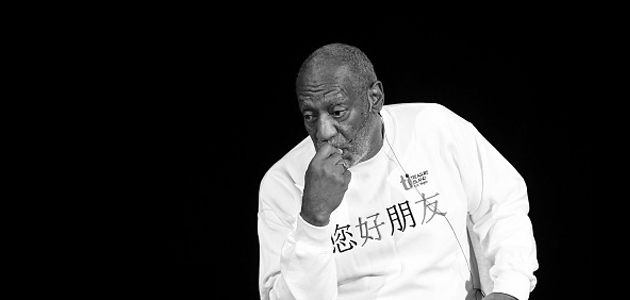

Good for the women! (They are being believed … more and more).

Still the same question can be posed about women accusers in general: Why were they not believed?

In summary, “celebrities should not be glorified as all good, all the time” …
… for nation-building, women must be able to seek refuge in the Criminal Justice systems in their communities.

VIDEO – Matt Lauer Fired from TODAY – https://usat.ly/2Bv3zGi

See the ENCORE of this previous blog-commentary below, from November 26, 2014 on Bill Cosby’s Accusers: Why They Weren’t Believed.

Which men are being reckoned with now? See the full alphabetical list from USA Today national newspaper – to date as of December 4, 2017 – here:

Ben Afleck, Actor-Director Gavin Baker, Hedge Fund Manager John Besh, Celebrity Chef
David Blaine, Magician George H.W. Bush, Former President Louis C.K., Actor-Comedian
Nick Carter, Singer John Conyers, Congressman Andy Dick, Actor
Richard Dreyfuss Hamilton Fish, Magazine Publisher Al Franken, Ex-Actor-now-Senator
Alex Gilady, Olympics Organizer Gary Goddard, Writer-Producer David Guillod, Movie Producer
Mark Halperin, Political Analyst Dustin Hoffman, Actor Danny Jordaan, FIFA Organizer
Steve Jurvetson, Hedge Fund Manager Ethan Kath, Music Producer Garrison Keillor, Radio Host
Andrew Kreisberg, TV Producer John Lasseter, Movie Producer Matt Lauer, TV Host
Benny Medina, Talent Agent Murray Miller, Screenwriter Roy Moore, US Senate Candidate
Michael Oreskes, NPR Vice-President Jeremy Piven, Actor Roy Price, Movie Studio Executive
Brett Ratner, Producer-Director Twiggy Ramirez, Musician-Rock Star Terry Richardson, Photographer
Charlie Rose, TV Host Gilbert Rozon, Comedy Organizer Chris Savino, Animator-Writer
Mark Schwahn, Screenwriter Robert Scoble, Technology Blogger Steven Seagal, Actor-Producer
Russell Simmons, Music Mogul Tom Sizemore, Actor Kevin Spacey, Actor-Producer
Sylvester Stallone, Actor-Producer George Takei, Actor-Activist Jeffrey Tambor, Actor
Glenn Thrush, Newspaper Reporter James Toback, Director-Screenwriter Bob Weinstein, Movie Producer
Harvey Weinstein, Movie Producer Matthew Weiner, TV Producer Ed Westwick, Actor
Leon Wieseltier, Magazine Editor

Source: https://www.usatoday.com/story/news/2017/11/22/weinstein-aftermath-all-men-accused-sexual-misconduct/884778001/

————

Go Lean Commentary – Bill Cosby’s Accusers: Why They Weren’t Believed.

It is hard to reconcile the accusations floating against Bill Cosby with his television characters: Dr. Huxtable, Jell-O Pudding Pitch-Man and the voice/persona of the animated do-gooder Fat Albert (and the Cosby Kids ; see Appendix below*). Or is it?

… that it’s easy to categorize personalities as good versus bad. “We don’t think good and evil can co-exist in the same person” – Psychologist David Adams.

The following article posits that those who do horrible things may still be talented in their gifts and notoriously good to people in their lives, like family members. While it maybe difficult to understand the complexities of personalities, it is very much necessary that society be receptive to the possibility of good people doing bad things. The entire article is presented here:

By: NO MORE Staff

Bill Cosby Photo 1America’s Dad is having a very bad week. A few days ago, Barbara Bowman wrote a personal essay in The Washington Post chronicling how Bill Cosby drugged and raped her 30 years ago.

The story went viral and inspired several others to echo her experiences.

Not so when the teenager spoke out soon after the alleged attacks: When she went to a lawyer after the assaults, she was accused of lying. Her agent did nothing, either. Eventually, she moved on. Years later, Andrea Constand accused Cosby of rape and Bowman was asked to speak in court, but the case was quietly settled.

At this writing, a grand total of 15 women have accused Cosby of assault, dating from the late 1960s. (Here’s a timeline of the accusations.) Despite all this, Cosby’s career had coasted along—in fact, he was awarded the Mark Twain Prize for American Humor not long ago and was planning a new TV show.

But things are changing.

Finally, the accusers’ stories are getting traction. Why now? Last month, comedian Hannibal Buress called Cosby a rapist in his stand-up routine, which went viral. The Twitter-verse responded in kind: Last week, Cosby’s tone-deaf invitation to “meme me!” resulted in people superimposing assault accusations over his photo. #Cosbymeme did not go according to plan, and things only got worse: Last weekend, NPR interviewed him about his African American art collection and then asked him to respond to the Post story. He went silent. Eventually, his lawyer issued a statement firmly denying the allegations and refusing to comment further.

But the damage has been done: New stories about Cosby’s behavior continue to surface, Netflix has put his upcoming comedy special on hold, and NBC has abandoned plans to develop a new sitcom with him.

Why Accusations About Celebrities Aren’t Believed

Cosby isn’t the first icon to be accused of sexual assault or domestic violence, and yet the question persists: Why aren’t these accusers heard or given any credence—not just Cosby’s alleged victims, but the countless other people who have dared to challenge a celebrity?

The answer lies in the American conflation of celebrity and security, says Ulester Douglas, executive director of Men Stopping Violence. “We are a celebrity culture. Seeing someone we idolize, revere, and idealize being accused of horrific crimes makes us wonder: Who are we? It makes us realize that our own families could be capable of it, too,” he says. It’s unsettling and even terrifying to associate an idol with evil, particularly because there are so many celebrities who are good people, capable of powerful, positive influence.

Dissonance Perpetuates Silence

David Adams is a psychologist and co-director of Emerge, a Boston-based abusers’ intervention and counseling program. He sees a difference in how we respond to a stereotypical criminal and a celebrity accused of bad behavior due to our preconceptions about abusers. “We tend to think of an abuser as someone who is easily detectable: someone who is crude, sexist, and boorish. A quarter of men who abuse women do fit this stereotype, and since that’s a substantial subgroup, we tend to spot those guys and not the ones who are more likable. If we don’t know what to do with bad information about someone we adore, it creates dissonance, and we sometimes choose to disbelieve or to ignore it,” he says.

“When we see someone likable accused of a crime, we have a choice to believe something bad about them or to discount it because it doesn’t fit our experience. In some ways it’s easier to do that than to think, oh God, the world really is unknowable—I might as well give up on knowing people,” he says. “If we don’t know what to do with information about someone we worship, we put it aside.”

Why Celebrities Feel Immune

Of course, Cosby is hardly the first famous person to be accused of rape or assault. When we think about any celebrity facing serious allegations, though, it’s difficult to believe that an image-conscious idol could be willing to engage in hugely risky behavior, throwing away the very image they need. What’s going through their mind?

“Any consequence is overridden by the high of the conquest,” Douglas says. And, on a purely logistical level, “They do it because they can. They truly think they can get away with it, based on the very fact that they have a certain image. They will be believed; the accusers will be laughed out of the room.”

Absorbing The Narcissism Factor

In many celebrity cases, narcissism also plays a starring role. “A hallmark of narcissism is exceptionality. You literally think you will not get caught. This personality takes chances, acts reckless, and even associates the behavior with success, because they’ve always been rewarded,” Adams says.

“We think narcissists are people nobody would like. But, in fact, they’re quite charismatic, with good social and image-maintenance skills”— which often allow them to get away with bad behavior, even more so when there’s a PR team on call. Narcissists are also skilled at compartmentalization, Adams says, and they choose to focus on the “part of their life that everybody adores. They don’t focus on other parts of their lives, and if they do something wrong, they think, ‘Gee, everybody loves me. What’s the problem?’” he says. “It’s a lack of character development.”

“Narcissists can engage in all sorts of psychological gymnastics not to feel empathy,” says Douglas.

The Changing Tide

Adams says that it’s easy to categorize personalities as good versus bad. “We don’t think good and evil can co-exist in the same person,” he says. “But look at the Mafia—these guys who do horrible things but are notoriously good to their mothers. And along comes a show like The Sopranos to paint them in a more nuanced light. There’s now less focus on ‘good guys’ and ‘bad guys,’” he says. Understanding the complexities of personalities—refusing to glorify a celebrity as all good, all the time—could help to close the dissonance gap.

“We can also go a long way toward preventing male sexual and domestic violence against women by stopping the pervasive and pernicious victim-blaming,” Douglas says. “The media, for example, should quit asking the toxic, ‘Why did you go back to your abuser?’ and ‘Why didn’t you leave?’ A reporter could say instead, ‘As you know, there are some who question your credibility because of some of the choices you made. What, if anything, would you want to say to them?’ That is respectful journalism. The [accuser] should never be made to feel like she has to justify the choices she made or makes.”

Finally, in his own work with Men Stopping Violence, Douglas sees firsthand the power of healing through sharing. “I see survivors who are finding peace through coming forward and telling their stories. One of the most powerful things that survivors can do is tell their own stories, on their own terms,” he says.
The NO MORE Project – Posted November 19, 2014; retrieved November 26, 2014–
http://nomore.org/why-cosby-victims-werent-believed/

The subject matter in the foregoing article relates to the attitudes that communities must foster so as to mitigate the toleration of domestic violence, rape and stalking. These points are being brought into focus in a consideration of the book Go Lean … Caribbean. The book serves as a roadmap for the introduction and implementation of the technocratic Caribbean Union Trade Federation (CU), for the economic optimization in the region.

The focus of the Go Lean book is Economics, not domestic violence, rape or stalking! And yet this commentary relates that there is an alignment of objectives. The Go Lean roadmap posits that the economy of the Caribbean is inextricably linked to the security (public safety) of the Caribbean.

This CU/Go Lean roadmap has 3 prime directives:

  • Optimization of the economic engines in order to grow the regional economy and create 2.2 million new jobs.
  • Establishment of a security apparatus to protect the resultant economic engines and their relevant stakeholders.
  • Improve Caribbean governance (Executive facilitations, Legislative oversight and Judicial prudence) to support these economic/security engines.

Among the objectives to accomplish the economic elevation is the mission to retain Caribbean citizens in their homelands and repatriate the far-flung Diaspora back to the region. Since many people may have fled the region to mitigate abuse, attitudes of victim-blaming or complacency among public safety authorities must be “weeded out”.

The subject of Celebrity Culture is also germane for the Caribbean empowerment effort (Pages 203 & 224). The Go Lean roadmap consolidates the region’s 30 member-states into a Single Market, media market included – with the caveat of multi-language “simul-casting”. Celebrities will surely emerge. From a governance perspective, the CU will oversee the jurisdiction of monitoring and metering (ratings, rankings, service levels, etc) local public safety institutions to ensure their delivery of the Social Contract. for all regardless of gender or race.

Change has now come to the Caribbean. As the foregoing article depicts, there is a changing tide. It is no longer acceptable to dismiss accusers, even against celebrities. The article relates that “we can go a long way toward preventing male sexual and domestic violence against women by stopping the pervasive and pernicious victim-blaming”. This is part of a new community ethos – the value of women is not undermined! Many related issues/ points were elaborated in previous blogs, sampled here:

Justice Strategy: Special Prosecutors … et al
Caribbean Study: 58% Of Boys Agree to Female ‘Discipline’
Sex Crimes Mitigations – Students developing nail polish to detect date rape drugs
Aereo Founder on the future of TV; Caribbean included
Bob Marley: The legend of a Caribbean Celebrity lives on!
Muslim officials condemn abductions of Nigerian girls
Caribbean/Latin countries still view women as lesser
Book Review: ‘The Divide’ – Differences in US Justice for Rich versus Poor
Jamaica to receive World Bank funds to help in crime fight

The above commentaries examined global developments in crime mitigations and gender based attitudes, then relate their synchronicity with the principles in the Go Lean book. There are a number of touch points that relate to domestic violence, rape and stalking; these blogs also cite the community attitude to dissuade such behavior. Most importantly, the Go Lean book depicts solutions. These are presented as community ethos, strategies, tactics, implementations and advocates; detailed as follows:

Community Ethos – Privacy –vs- Public Protection Page 23
Community Ethos – Whistleblower Protection Page 23
Community Ethos – Witness Security Page 23
Community Ethos – Anti Bullying & Mitigations Page 23
Community Ethos – Light Up the Dark Places Page 23
Community Ethos – “Crap” Happens Page 23
Community Ethos – Minority Equalization Page 24
Community Ethos – Lean Operations Page 24
Community Ethos – NGO’s Page 25
Community Ethos – Reconciliations Page 34
Strategy – Rule of Law –vs- Vigilantism Page 49
Tactical – Separation of Powers – CariPol Page 77
Implementation – Reasons to Repatriate Page 118
Planning – Ways to Improve Failed-State Indices Page 134
Advocacy – Ways to Improve Governance Page 168
Advocacy – Ways to Better Manage the Social Contract Page 170
Advocacy – Ways to Impact Justice Page 177
Advocacy – Ways to Remediate and Mitigate Crime Page 178
Advocacy – Ways to Improve Gun Control – Restraining Orders Automatic Restrictions Page 179
Advocacy – Ways to Improve Intelligence Gathering Page 182
Advocacy – Ways to Improve Communications – Messaging Page 186
Advocacy – Ways to Impact Hollywood Page 203
Advocacy – Ways to Impact the Prison Industrial Complex – Reduce Recidivism Page 211
Advocacy – Ways to Impact Foundations Page 219
Advocacy – Ways to Protect Human Rights Page 220
Advocacy – Ways to Impact the One Percent –    Balancing Justice Provisions for Celebrities Page 224
Advocacy – Ways to Empower Women Page 226
Advocacy – Ways to Impact Persons with Disabilities – including Mental Challenges Page 228

The book Go Lean…Caribbean was written by resources from an organized movement, by people (residents and Diaspora) with passion to change/elevate the Caribbean’s economic, security and governing engines. One principal within this Go Lean movement has a direct job function to dissuade crimes against women.

While there is always the need to give the accused the benefit of the doubt, as in the current case against Bill Cosby, we do not want 30 years of inaction on reported sex crimes by celebrities. The CU roadmap’s goal is to optimize “Justice” institutions in the region. Why? All members of society (celebrities and regular citizens alike) need to be protected, and not dismissed or ignored, especially related to serious allegations like sexually inappropriate behavior. Any “misfeasance, malfeasance or nonfeasance” in this regards reflects negatively on the region’s hospitality – think of the unsolved disappearance of Natalee Holloway in Aruba in 2005; (see Page 190).

Though this topic may be a security issue, community wealth is undoubtedly linked, affecting push-and-pull factors for citizens to flee their homelands. This is lose-lose for all concerned. To the contrast, the goal of the Go Lean effort is to make the Caribbean a better place to live work and play; with justice for all. Since the region failed in the past, the new messaging is simple: “No More“!

The foregoing article is sourced by the Not-For-Profit organization, the “No More” Project. Their goal is to neutralize public attitudes that had previously tolerated and thusly promoted domestic violence, rape and stalking. This is a great role model for the Caribbean to emulate, as attitude adjustment is among the heavy-lifting tasks that regional administrators must undertake to bring positive change to the Caribbean.

Download the book Go Lean … Caribbean – now!

————

* Appendix – Video – Fat Albert And The Cosby Kidshttp://youtu.be/ga7gflAUGCc

It’s Bill Cosby coming at you with music and fun, and if you’re not careful, you might learn something before its done.


Share this post:
, , , ,
[Top]

Future Focused – Policing the Police

Go Lean Commentary

It’s the economy, Stupid!
Quotation from Presidential Candidate Bill Clinton’s 1992 response to a question on voters’ primary issue.

Actually, there are other issues too, when considering why people flee from their Caribbean homeland and pursue life as a foreigner in the Diaspora – for some countries, according to a World Bank report, the vast majority of the college-educated population (60 to 81 percent) have fled. As was related in the Clinton quote, the primary reason is economic, but there are security concerns as well.

This commentary is about optimizing the police and security apparatus in the Caribbean region. If the region is to transform from its dysfunctional past to a brighter future, we must address regional security as strenuously as we address regional economics.

This discussion aligns with a motivation of the movement behind the book Go Lean…Caribbean – available to download for free – to dissuade Caribbean citizens from abandoning their homelands and invite the Diaspora to return, to repatriate. The movement describes the “Push” and “Pull” reasons why people leave in the first place, as follows:

  • “Push” refers to people who feel compelled to leave, to seek refuge in a foreign land. “Refuge” is an appropriate word; because of societal defects, many from the Caribbean must leave as refugees – think Crime Victims, Domestic-abuseLGBTDisabilityMedically-challenged– for their life, liberty and pursuit of happiness. For these people, it is like “they are on fire” and need to stop-drop-and-roll.
  • “Pull”, on the other hand refers to the lure of a more prosperous life abroad; this is mostly economic in nature as people are emigrating on the false perception that they can have a better “home” abroad.

Yes, while deficient economics – the primary reason – may affect the wallet, security deficiencies may affect life-and-death. Deficiencies – not enough – are not the only problem with Caribbean security measures; sometimes the problem is too much, as in “abuses”. All in all, there is the need to Police the Police – see the definitions of the noun and the verb in Appendix B – to give help and support, yes, but accountability too. Why the checks-and-balances? “No justice, no peace”. (See the depiction of unrestrained police abuse in the Appendix VIDEO below).

The Go Lean book therefore focuses on the future and how we can assuage both economics and security inequities. At the outset, this Future Focused book states (Page 3) that the economy of the Caribbean is inextricably linked to the security of the region. Therefore any economic action plan must also include a security pact to implement the mechanisms to ensure greater homeland protections. These efforts must monitor and mitigate against power abuses, economic crimes, systemic threats and also facilitate natural disaster planning and response agencies.

Every Caribbean member-state has a police/security entity, and yet there are so many security inadequacies. The future must therefore include better solutions and better deliveries. The Go Lean book provides a 370-page turn-by-turn guide for forging a new future; it details “how” to adopt new community ethos, plus the strategies, tactics, implementations and advocacies so as to formulate change, to deviate from the current path and foster a brighter-better-safer future. This would mean reforming and transforming the police and security apparatus. This Go Lean book serves as a roadmap for the introduction and implementation of the technocratic Caribbean Union Trade Federation (CU) to elevate the societal engines, including the optimization of the regional security apparatus and justice institutions.

There is currently a regional security apparatus, but it is very deficient! Consider the news article in Appendix A below, depicting the IMPACS investigation of Police excessive force/extra judicial killings (12) in St. Lucia. IMPACS is the formal name for the CARICOM agency with the anti-crime scope. IMPACS = Implementation Agency for Crime and Security.

Improving or elevating the regional security apparatus, is a mandate of this Future Focused roadmap; the plan is to Police the Police.

This commentary continues this series on the Caribbean Future; this is Part 4 of 5 on this subject. The full series is catalogued as follows:

  1. Future FocusedPersonal Development and the Internet
  2. Future FocusedCollege, Caribbean Style
  3. Future FocusedRadio is Dead
  4. Future Focused – Policing the Police
  5. Future Focusede-Government Portal 101

We accept that all is not well in the Caribbean – in fact the region is in crisis – but it can get better … in the future. We have challenges and opportunities. The Future Focus allows us to work to assuage the challenges. This is what the Go Lean book presents, a workable roadmap to effect change in all societal engines. In fact, the roadmap features these 3 Future Focused prime directives:

  • Optimization of the economic engines in order to grow the regional economy to $800 Billion & create 2.2 million new jobs.
  • Establishment of a security apparatus to ensure public safety and protect the resultant economic engines.
  • Improve Caribbean governance to support these engines, including a separation-of-powers between the member-states and CU federal agencies.

The Go Lean book features this excerpt-summary (Page 23) of Security Principles:

This roadmap for Caribbean integration declares that peace, security and public safety is tantamount to economic prosperity. This is why an advocacy for the Greater Good must be championed as a community ethos. A prime precept is that it is “better to know than to not know” – this implies that privacy is secondary to security. A secondary precept is that bad things will happen to good people and so the community needs to be prepared to contend with the risks that can imperil the homeland.

  1. Privacy versus Public Protection 
  2. Whistleblower Protection 
  3. Witness Security & Protection 
  4. Anti-Bullying and Mitigation 
  5. Intelligence Gathering 
  6. Light Up the Dark Places 
  7. Crap” Happens

Rampant crime and security inadequacies can drive good people away from their beloved homelands … to settle in as refugees in foreign lands, where their prospects for life is only one of marginalization, until the next generation. We must do a better job of protecting our people here at home; and we must protect the protectors; and protect the people from the protectors. These are the challenges – heavy-lifting – of shepherding society in a pluralistic democracy.

This point had been further detailed in previous blog-commentaries, depicting the Future Focus of the CU/Go Lean roadmap:

  • Mitigating the Eventual ‘Abuse of Power’
    Since “power corrupts and absolute power corrupts absolutely”, there is the need to monitor, mitigate and manage the risks of bad behavior among law enforcement and security personnel. The CU/Go Lean roadmap is designed with the needed protections in mind to ensure a safer community.
  • Ten Puerto Rico Police Accused of Criminal Network
    A news article reports on corruption by 10 police officials that have undermined Puerto Rico’s justice institutions. This is not so surprising, as the Go Lean book relates that “bad actors” will always emerge to exploit the community. Despite the American territorial status, this threat is still ever-present in Puerto Rico. They need the full protection of a technocratic Caribbean Union Trade Federation.
  • Support sought for kids left behind by UN troops in Haiti
    The United Nations Security/Peacekeeping Forces in Haiti did some good … and some bad. Their personnel needed to be held to account for their impropriety. There is a greater need for a local/regional security solution, for the protections and accountability – there is a Military Justice eco-system embedded in the CU/Go Lean roadmap.
  • Grenada Diaspora Bails-out National Police with Protective Gear
    Who do national Police Forces call now when they have a problem bigger than they can handle with their resources? The answers are limited. This demonstrates the need for a better regional security apparatus – this is the CU/Go Lean roadmap – to support the local police institutions – to step in, step up and help out.
  • Securing the Homeland – On the Ground
    The CU/Go Lean roadmap calls for the acquisition and deployment of advanced security systems (hardware and software). Many of the cutting-edge solutions allow the security forces to do more with less.
  • Waging a Successful War on ‘Terrorism’
    The threat of terrorism is just too big for community policing. The solutions require a bigger effort than what any one Caribbean member-state can muster alone. The CU/Go Lean roadmap provides a technocratic regional option.
  • Prisoners for Profit – Abuses in the Prison Industrial Complex
    The human rights of prisoners are easily abused and their labors exploited without the proper stewardship in the security apparatus. The CU/Go Lean security roadmap considers lessons learned from the ugly US history.
  • Justice Strategy: Special Prosecutors / Commissions of Inquiries … et al
    Security engines are complicated to implement in society; they require a political process, consensus-building and compromise. But abuses abound! So there must be checks-and-balances and escalation for conflict resolutions. The CU/Go Lean roadmap calls for optimized justice institutions based on best practices from other societies.

The effort, as detailed in this commentary: to better secure the homeland and optimize justice institutions, is designed to lower the “push-pull” factors that lead to the current atrocious Caribbean brain-drain rate.

In addition, “power” is often associated with abuse, so there is the plan to “check” those with power, and the security institutions.

Can we improve community policing in the Caribbean homeland? Can we better protect those protecting society? Can we provide checks-and-balances on those who wield the power?

Yes, we can!

Though this is not easy – heavy-lifting – it is conceivable, believable and achievable.

This is the kind of Future Focused efforts that are needed to reform and transform Caribbean society – we must Police the Police – to make our homelands better- safer places to live, work and play. 🙂

Download the free e-Book of Go Lean … Caribbean – now!

Sign the petition to lean-in for this roadmap for the Caribbean Union Trade Federation.

————

Appendix A – National Security Minister cautions against identifying officers in IMPACS investigation

The National Security Minister [of St. Lucia] has advised journalists against exposing the identity of the police officers currently being questioned as part of the IMPACS investigation. [(CARICOM Implementation Agency for Crime and Security)].

Hermangild Francis says the officers have not been charged and could become targets in their communities.
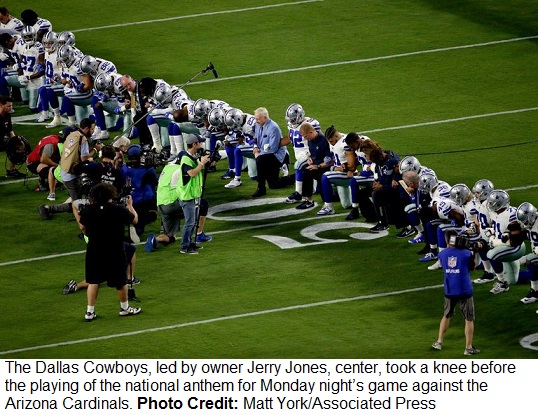
“To go around showing persons pictures who have not even been charged or anything like that is unfair and a very dangerous precedent that is being set. So I want to make an appeal to the press that they refrain from showing the photographs of anybody that the DPP [(Director of Public Prosecutions)] will speak to,” Francis said.

Three officers have been brought in for questioning as the Officer of the Director of Public Prosecutions seeks to bring an end to the IMPACS case amid mounting pressure from the United States and the European Union.

Former Prime Minister Dr Kenny Anthony had in 2013 commissioned an investigation by the Caribbean Community IMPACS agency into alleged extra judicial killings by members of the Royal Saint Lucia Police Force (RSLPF).

The killings occurred under a special police operation dubbed “operation Restore Confidence” instituted during a period of heightened criminal activity.

In an address to the nation on March 8, 2015 on certain aspects contained in the report, Anthony said, among other things, that the police staged fake encounters and planted evidence in the 12 fatal shootings that took place.

In August 2013, the United States suspended all forms of assistance to the RSLPF, citing allegations of serious human rights violations.

Francis is concerned that publishing images of the officers being questioned in the matter could place their lives in jeopardy.

“A lot of persons are going to be brought in for questioning; some persons who were involved and some people who were not involved. And by showing the photographs of everybody who goes to the DPP is jeopardizing the lives and the safety of the majority of these officers,” he added.
Source: Posted September 22, 2017; retrieved November 13, 2017 from: https://stluciatimes.com/2017/09/22/national-security-minister-cautions-identifying-officers-impacs-investigation

————

Appendix B – Definitions: Police

Noun

  1. Also called police force. an organized civil force for maintaining order, preventing and detecting crime, and enforcing the laws.
  2. (used with a plural verb) members of such a force:
    Several police are patrolling the neighborhood.
  3. the regulation and control of a community, especially for the maintenance of public order, safety, health, morals, etc.
  4. the department of the government concerned with this, especially with the maintenance of order.
  5. any body of people officially maintained or employed to keep order, enforce regulations, etc.
  6. people who seek to regulate a specified activity, practice, etc.:
    the language police.
  7. a.  the cleaning and keeping clean of a camp, post, station, etc.
    b.  the condition of a camp, post, station, etc., with reference to cleanliness.

Verb (used with object), policed, policing.

  1. to regulate, control, or keep in order by or as if by means of police.
  2. to clean and keep clean (a camp, post, etc.)

Source: Retrieved November 14, 2017 from: http://www.dictionary.com/browse/police?s=t

————

Appendix VIDEO – KAMAU – PohLease [Official video] – https://youtu.be/nhMxQXTX2ak

BrotherKAMAU

Published on Aug 31, 2016 – “Who Police the Police … when they get out of line”.

“PohLease” – off of our debut EP “A Gorgeous Fortune”

The Socials: https://www.facebook.com/KAMAUothm; https://twitter.com/brotherKAMAU; https://www.instagram.com/brotherkamau/; https://soundcloud.com/brotherKAMAU

Available Now: http://smarturl.it/AGorgeousFortune ; Stream – http://smarturl.it/StreamAGF

Share this post:
, ,
[Top]

ENCORE: America’s Race Relations – Spot-on for Protest

The protest action of “Kneeling during the National Anthem” has become huge.

CU Blog - ENCORE - Spot on for Protest - Photo 1

See the full news article here: https://www.nytimes.com/2017/09/25/sports/football/cowboys-cardinals-anthem-protest.html?mcubz=3

This issue was also huge this day last year – with the below blog-commentary – when NFL quarterback Colin Kaepernick began this protest. What is different now? A lot! Starting with the President of the United States, Donald J. Trump. He seems to want to take America backwards by asserting that NFL players who take a knee should be fired.

CU Blog - ENCORE - Spot on for Protest - Photo 2 CU Blog - ENCORE - Spot on for Protest - Photo 3

Well, now whole teams are taking the knee and the league is universally blasting the President.

The President? This is the Leader of the Free World?

This commentary asserted then on September 26, 2016 and is presented here as an ENCORE now, “It is Time To Go! America is not home for Caribbean people”. See here:

——–

Go Lean Commentary – Time To Go – Spot-on for Protest

Here’s an interesting little-known tidbit about Abraham Lincoln – the liberator and emancipator of the American slaves:

Initially, he felt that the freed slaves needed to leave America. He felt that they would never be treated as equals in the land that had previously held them as slaves for 250 years. He advocated for places like the Caribbean (Haiti & British colonies), Central America (Belize & Panama), South America (Guyana) or Africa (Liberia).
Source Book: Colonization After Emancipation: Lincoln and the Movement for Black Resettlement.
CU Blog - A Lesson in History - Before the Civil War - Human Right Not Compromise - Photo 3

Now, 150 years later, perhaps his thinking was “spot-on”.

These 150 years since the formal emancipation has seen a continuous suppression, repression and oppression of the Black race in America. Could they have had a better disposition in the Caribbean, with its Black majority rule?

This commentary asserts that it is easier for the Black-and-Brown populations in the Caribbean to prosper where planted in the Caribbean, rather than emigrating to foreign countries, like the United States.

We agree with Abraham Lincoln’s gut instinct; he was “spot on”.

This point aligns with the book Go Lean…Caribbean, which states that while the blatant racist attitudes and actions may now be considered politically incorrect, the foundations of institutional racism in the US have become even more entrenched. The book supports the notion that the Caribbean can be an even better place to live for the Caribbean’s Black-and-Brown populations, once we make the homeland a better place to live, work and play.

There is the need to optimize the economic, security and governing engines in the Caribbean region. This commentary is 1 of 3 from the movement behind the book Go Lean … Caribbean, in consideration of the rhymes-and-reasons to repatriate back to the Caribbean homeland. The other commentaries detailed in this series are as follows:

  1.   Time to Go – Spot-on for Protest
  2.   Time to Go – No respect for our Hair
  3.   Time to Go – Logic of Senior Emigration

All of these commentaries relate to the Caribbean image and disposition as a majority Black region. No racial supremacy is advocated in this book nor by this movement. The motivation is simply for the Greater Good. This is defined as …

the greatest good to the greatest number of people which is the measure of right and wrong.” – Jeremy Bentham (1748-1832).

The Go Lean book and movement serves as a roadmap for the introduction of the technocratic Caribbean Union Trade Federation (CU). The CU is set to optimize Caribbean society through economic empowerment, yes, but there are security and governing dynamics as well. Therefore the Go Lean roadmap has 3 prime directives:

  • Optimization of the economic engines in order to grow the regional economy to $800 Billion & create 2.2 million new jobs.
  • Establishment of a security apparatus to ensure public safety, justice assurances and protect the economic engines.
  • Improve Caribbean governance to support these engines.

The Go Lean roadmap posits that the Caribbean region is in crisis now, and so many are quick to flee for refuge in foreign countries. But the “grass is not necessarily greener on the other side”; life in the US, for example, is definitely not optimized for the Caribbean’s Black-and-Brown. It is “spot-on” that there is need for protest, anguish and outright fear for the interactions of Black men and the American police/law enforcement establishment.

The Go Lean book asserts that every community has bad actors. The Caribbean has bad actors; and the US has bad actors. But because of the obvious need for reform and to transform the region, it may be easier to effect change at home, than in the foreign country of the US.

Besides, many (non-Black) people in the US, don’t even think they need to change anything. They think there is no problem – everything is fine – notwithstanding the proliferation of Cop-On-Black killings. See a related news article here regarding legendary NFL Head Coach Mike Ditka; (despite these developments, Mr. Ditka continues to be honored and esteemed in the Caribbean):

Title: Mike Ditka to Colin Kaepernick: ‘Get the hell out’ if you don’t like America
By: Bryan Armen Graham
Sub-title: Mike Ditka spared no criticism of Colin Kaepernick’s national anthem protest.

cu-blog-time-to-go-spot-on-for-protest-photo-1

Hall of Fame coach Mike Ditka has leveled blistering criticism at Colin Kaepernick’s decision to kneel during the national anthem, saying he has “no respect” for the San Francisco 49ers quarterback whose protest has sparked a national discussion over racial injustice, inspired dozens of NFL players to follow suit and landed him on the cover of Time magazine.

“I think it’s a problem, anybody who disrespects this country and the flag,” the longtime NFL coach said in a radio interview on KRLD-FM in Dallas. “If they don’t like the country, if they don’t like our flag, get the hell out. That’s what I think.

“I have no respect for Colin Kaepernick. He probably has no respect for me, that’s his choice. My choice is that I like this country, I respect our flag, and I don’t see all the atrocities going on in this country that people say are going on.

“I see opportunities if people want to look for opportunity. Now if they don’t want to look for them, then you can find problems with anything, but this is the land of opportunity because you can be anything you want to be if you work. Now if you don’t work, that’s a different problem.”

The 76-year-old Ditka, who was inducted into the Pro Football Hall of Fame in 1988, is one of two people in NFL history to win a league title as a player, an assistant coach and a head coach. He graduated from local hero to Chicago icon during an 11-year coaching stint with the Bears that included the team’s only Super Bowl win during the 1985 season, then retired permanently after a failed comeback with the New Orleans Saints in 1999.

A well-known conservative, Ditka publicly flirted with running against Democratic candidate Barack Obama, then a state senator, for the open seat in the US Senate vacated by Illinois senator Peter Fitzgerald in 2004. No one then could have imagined how the election would ultimately propel Obama to the presidency in four years’ time.

“Biggest mistake I’ve ever made,” he told the Dickinson Press in 2013. “Not that I would have won, but I probably would have and he wouldn’t be in the White House.”

In March, Ditka called Obama “the worst president we’ve ever had”.

“Barack Obama is a fine man,” he added. “He’s pleasant, he’d be great to play golf with. He’s not a leader.”
Source: The Guardian Daily Newspaper Online Site; Posted September 23, 2016; retrieved September 25, 2016:
https://www.theguardian.com/sport/2016/sep/23/mike-ditka-colin-kaepernick-get-the-hell-out-anthem-protest
cu-blog-time-to-go-spot-on-for-protest-photo-2

Photograph: Jordan Strauss/Invision/AP

The protagonist in this drama is NFL Quarterback Colin Kaepernick; he has started a protest against the treatment of African-Americans in the US. He asserts that too many unarmed Black Men has died, as of recent, by the hands of White Police Officers. While others share this view, including the African-American President of the US Barack Obama, Mr. Kaepernick is voicing his protest by refusing to stand during the singing of the national anthem at the start of his NFL football games. This protest has fostered a lot of attention … and discord to this issue.

The underlying injustice of Cop-on-Black killings is acute. There is a need for community outrage; it is “spot-on” that anyone would protest. Kudos to Colin Kaepernick! Since he started his protest stance on August 26, 2016, at least 15 more “Black men have been killed by law enforcement officers” as of September 20, 2016; (but there has been 2 more highly publicized killings since this posting: Keith Lamont Scott in Charlotte, North Carolina, and Terence Crutcher in Tulsa, Oklahoma).

The foregoing article gives the instruction for people to leave who do not agree with the American status quo. But can they really? Could the liberated slaves in Lincoln’s day leave for elsewhere? How about the countless cries over the centuries and decades for Black American Nationalism; (as in Marcus Garvey)? Was there an alternative homeland for their consideration? This reminds us of the movie dialogue from the 1982 movie An Officer and a Gentlemen. Remember this exchange:

Foley: You can forget it! You’re out!

Mayo: Don’t you do it! Don’t! You… I got nowhere else to go! I got nowhere else to g… I got nothin’ else.

Seriously, for the majority of Black America, they have no where else to go. The Caribbean Diaspora who represent 1 in 11 Blacks in the US, on the other hand, have the option of repatriating home.

We welcome them! We declare that it is “Time to Go“. We are hereby preparing for their return – fixing our defects – monitoring our “bad actors”.

We have to consider that police officers can also be “bad actors”. The book contends that the Caribbean must better prepare for bad actors, that we will see more of them. With the plan for economic success, comes the eventuality of even more bad actors, just as a result of economic success. This point is pronounced early in the book with the Declaration of Interdependence (Page 12) that claims:

x.   Whereas we are surrounded and allied to nations of larger proportions in land mass, populations, and treasuries, elements in their societies may have ill-intent in their pursuits, at the expense of the safety and security of our citizens. We must therefore appoint “new guards” to ensure our public safety and threats against our society, both domestic and foreign. The Federation must employ the latest advances and best practices of criminology and penology to assuage continuous threats against public safety. The Federation must allow for facilitations of detention for [domestic and foreign] convicted felons of federal crimes, and should over-build prisons to house trustees from other jurisdictions.

xvi. Whereas security of our homeland is inextricably linked to prosperity of the homeland, the economic and security interest of the region needs to be aligned under the same governance. Since economic crimes, including piracy and other forms of terrorism, can imperil the functioning of the wheels of commerce for all the citizenry, the accedence of this Federation must equip the security apparatus with the tools and techniques for predictive and proactive interdictions.

The Caribbean appointing “new guards”, or a security pact to ensure public safety and justice assurance is a comprehensive endeavor, that will encapsulate the needs of all Caribbean stakeholders: governments, institutions and residents.

An important mission of the Go Lean roadmap is to dissuade the high emigration rates of Caribbean citizens to the American homeland. Secondly, there is a mission to encourage the repatriation of the Caribbean Diaspora back to their ancestral homeland.

This means being conscious of why people flee – “push” and “pull” reasons – and monitoring the societal engines to ensure improvement – optimization. (“Push” refers to the societal defects in the Caribbean that moves people to want to get way; and “pull” factors refer to the impressions and perceptions that America is better).

An increased perception that “one would be shoot by a White police officer” should lower the “pull” factor. We would think …
See VIDEO here:

VIDEO – I Am Afraid I Will Be Killed By Police – https://youtu.be/9DD64urEx28

Published on Jul 7, 2016 by Kevin OnStage. See more from this commentator here:
http://kevonstage.com/store
http://kevonstage.com/booking

The Go Lean book details a series of community ethos, strategies, tactics, implementations and advocacies to better optimize our Caribbean life (economic and security concerns):

Community Ethos – Consequences of Choices Lie in Future Page 21
Community Ethos – Economic Principle – Consequences of Choices Lie in Future Page 21
Community Ethos – Whistleblower Protection Page 23
Community Ethos – Anti-Bullying and Mitigation Page 23
Community Ethos – Minority Equalization Page 24
Community Ethos – Return on Investments Page 24
Community Ethos – Cooperatives Page 25
Community Ethos – Ways to Manage Reconciliations Page 34
Community Ethos – Ways to Improve Sharing Page 35
Community Ethos – Ways to Impact the Greater Good Page 37
Tactical – Confederating a non-sovereign union Page 63
Tactical – Fostering a Technocracy Page 64
Tactical – Separation of Powers – CU Federal Agencies -vs- Member-states Page 75
Implementation – Ways to Pay for Change Page 101
Implementation – Start-up Foreign Policy Initiatives Page 102
Implementation – Start-up Security Initiatives Page 103
Implementation – Reasons to Repatriate Page 118
Planning – Big Ideas – Regional Single Market Page 127
Planning – Ways to Make the Caribbean Better Page 131
Planning – Ways to Better Manage the Caribbean Image Page 133
Advocacy – Ways to Grow the Economy Page 151
Advocacy – Ways to Create Jobs Page 152
Advocacy – Ways to Improve Governance Page 168
Advocacy – Ways to Better Manage the Social Contract Page 170
Advocacy – Ways to Improve Leadership Page 171
Advocacy – Ways to Impact Justice Page 177
Advocacy – Ways to Reduce Crime Page 178
Advocacy – Ways to Improve Homeland Security Page 180
Advocacy – Ways to Improve Intelligence Gathering/Analysis Page 182
Advocacy – Ways to Improve for Natural Disasters – Many flee after disasters Page 184
Advocacy – Ways to Impact the Diaspora Page 217
Advocacy – Ways to Preserve Caribbean Heritage Page 218
Advocacy – Ways to Protect Human Rights Page 220
Advocacy – Ways to Impact Urban Living Page 234
Advocacy – Ways to Impact US Territories Page 244

This subject of “push and pull” has been frequently blogged on in other Go Lean commentaries; as sampled here with these entries relating American “pull” factors:

https://goleancaribbean.com/blog/?p=8431 Bahamas Issued US Travel Advisory Citing Police Violence
https://goleancaribbean.com/blog/?p=8202 Respect for Minorities: Lessons Learned from American Dysfunction
https://goleancaribbean.com/blog/?p=8200 Respect for Minorities: Climate of Hate
https://goleancaribbean.com/blog/?p=8099 Caribbean Image: ‘Less Than’?
https://goleancaribbean.com/blog/?p=7221 Street naming for Martin Luther King unveils the real America
https://goleancaribbean.com/blog/?p=7204 ‘The Covenant with Black America’ – Ten Years Later
https://goleancaribbean.com/blog/?p=6189 A Lesson in History – Hurricane ‘Katrina’ exposed a “Climate of Hate”
https://goleancaribbean.com/blog/?p=5733 Better than America? Yes, We Can!
https://goleancaribbean.com/blog/?p=5527 American Defects: Racism – Is It Over?
https://goleancaribbean.com/blog/?p=5333 Racial Legacies: Cause and Effect
https://goleancaribbean.com/blog/?p=1020 Also a European Sports Problem
https://goleancaribbean.com/blog/?p=546 American Model: Book Review – ‘The Divide’ – … Injustice in the Age of the Wealth Gap
https://goleancaribbean.com/blog/?p=341 Hypocritical US slams Caribbean human rights practices
https://goleancaribbean.com/blog/?p=273 10 Things We Don’t Want from the US: Racism against minorities

Underlying to the Go Lean/CU prime directive of elevating the economics, security and governing engines of the Caribbean, is the desire to make the Caribbean homeland, a better place to live, work and play. We know “bad actors” will emerge – even as law enforcement officers – so we need to be “on guard”.

We want proactive and reactive mitigations for abuse of power. We want to ensure our Caribbean communities are safe for our stakeholders (residents and visitors). We entreat the American forces to work towards remediating their own defects. But fixing the US is not within our scope; fixing the Caribbean is our only mission.

Saying that it is “Time to Go“, must mean that we are ready to receive our oft-scattered Caribbean Diaspora. Are we ready, now?

Frankly, no …

… but were are ready, willing and able to start the change process, to reform and transform. This was the intent of the book Go Lean … Caribbean. The book contends that the Caribbean must prepare for the return of all of our people, back to these shores. This means people in a good disposition and bad (sick, aged, unemployed, destitute, imprisoned, etc.). This point is pronounced early in the book with the Declaration of Interdependence (Pages 12 & 13) that claims:

xiii. Whereas the legacy of dissensions in many member-states … will require a concerted effort to integrate the exile community’s repatriation, the Federation must arrange for Reconciliation Commissions to satiate a demand for justice.

xviii. Whereas all citizens in the Federation member-states may not have the same physical abilities, reasonable accommodations must be made so that individuals with physical and mental disabilities can still access public and governmental services so as to foster a satisfactory pursuit of life’s liberties and opportunities for happiness.

xix. Whereas our legacy in recent times is one of societal abandonment, it is imperative that incentives and encouragement be put in place to first dissuade the human flight, and then entice and welcome the return of our Diaspora back to our shores. This repatriation should be effected with the appropriate guards so as not to imperil the lives and securities of the repatriated citizens or the communities they inhabit. The right of repatriation is to be extended to any natural born citizens despite any previous naturalization to foreign sovereignties.

xxvi. Whereas the Caribbean region must have new jobs to empower the engines of the economy and create the income sources for prosperity, and encourage the next generation to forge their dreams right at home, the Federation must therefore foster the development of new industries, like that of ship-building, automobile manufacturing, prefabricated housing, frozen foods, pipelines, call centers, and the prison industrial complex. In addition, the Federation must invigorate the enterprises related to existing industries like tourism, fisheries and lotteries – impacting the region with more jobs.

The book details the needed security provisions that need to be put in place to optimize Caribbean life. See this quotation here (Page 118):

“New Guards” for Public Safety
The CU implements the anti-crime measures and provides special protections for classes of repatriates and retirees. Crimes against these special classes are marshaled by the CU, superseding local police. Since the CU will also install a penal system, with probation and parole, the region can institute prisoner exchange programs and in-source detention for foreign governments, especially for detainees of Caribbean heritage.

This subject of improving the conditions for successful Caribbean repatriation has been blogged in previous Go Lean commentaries; as sampled here:

https://goleancaribbean.com/blog/?p=5304 Mitigating the Eventual Abuse of Power
https://goleancaribbean.com/blog/?p=5002 Managing a ‘Clear and Present Danger’
https://goleancaribbean.com/blog/?p=4360 Dreading the American: ‘CaribbeanBasin Security Initiative’
https://goleancaribbean.com/blog/?p=4308 911 – Emergency Response: System in Crisis

The Go Lean roadmap was composed with the community ethos of the Greater Good foremost; for all peoples – Black, Brown, White, Yellow, Red. We advocate for a color-blind society …

… and justice for all.

This is an American concept … in words only. In practice, America has always fallen short in its delivery of justice and opportunities for its Black-and-Brown populations. There is so much that America does right, that we want to model; there is so much that America does poorly, that we want to mitigate. The “grass is not greener on the other side”. Effort is needed anywhere, everywhere, to improve society. But for the Black-and-Brown of the Caribbean, more success from less effort can be expected in the Caribbean than in the US; the underlying foundation of racism in America may be just too hard to unseat.

All Caribbean stakeholders are hereby urged to lean-in to this Go Lean/CU roadmap to elevate the Caribbean; to make our homeland a better place to live, work and play. 🙂

Download the free e-Book of Go Lean … Caribbean – now!

Share this post:
, , ,
[Top]

Gender Equity without a ‘Battle of the Sexes’

Go Lean Commentary

CU Blog - Gender Equity without a 'Battle of the Sexes' - Photo 1A lot of societal reforms – human and civil rights – only come about as a result of advocates fighting for change.

Some battles are so important that they must be fought, even if the proponents were to lose. These proponents must not tire in these battles; but they must accept that change will only come as a result of a struggle.

This commentary has previously asserted that despite the fact that his advocacy was 150 years ago, African-American Abolitionist Frederick Douglass is a role model for the Caribbean today; he is quoted as saying:

“Those who profess to favor freedom, yet deprecate agitation, are men who want crops without plowing up the ground. They want rain without thunder and lightening. They want the ocean without the awful roar of its many waters. This struggle may be a moral one; or it may be a physical one; or it may be both moral and physical; but it must be a struggle. Power concedes nothing without a demand. It never did and it never will.”

So “change is gonna come“; it would be wiser for opponents to just concede that fact. This is a lesson for the Caribbean to learn from military strategies: if combatants know that the end result of a fight would be imminent defeat, they should not fight; rather they should just concede and negotiate favorable terms of surrender.

Let’s consider gender equality …

… there have actually been real ‘Battles of the Sexes’, where the end results have benefited women – to the victor goes the spoils. Consider these American experiences:

  • World War I waged between 1918 and 1918, bringing monumental change to society. Women pressed hard in this era and secured the right to vote, starting in 1920, but most women’s careers still only revolved around the home and family.
  • World War II waged between 1939 and 1945 bringing even more changes to society; as men went off to war, many jobs were assumed by women. After this war, they did not relinquish those advances. More opportunities were forged in the industrial and educational arena.
  • Title IX, the 1972 landmark federal gender legislation that emerged after the 1960’s Civil Rights era force educational institutions that receive federal monies to mandate equal opportunities for women. The law states (in part) that:
      “No person in the United States shall, on the basis of sex, be excluded from participation in, be denied the benefits of, or be subjected to discrimination under any education program or activity receiving Federal financial assistance.”

Ah, the 1970’s; in addition, there was another ‘Battle of the Sexes’ that dominated American consciousness. This was the media spectacle of the tennis match featuring female star – and Wimbledon Champion – Billie Jean King versus male star – and Wimbledon Champion – Bobby Riggs. This is a big week for the memories of that 1973 ‘Battle of the Sexes’ tennis match as a new movie is being released on Friday (September 29, 2017) to chronicle the drama of those events. See this Profile VIDEO here:

VIDEO Billie Jean King’s victories, on and off the courthttps://youtu.be/MgcfWTGcnNY

“If you’re old enough to remember it, in 1973, you probably watched it: Billie Jean King vs. Bobby Riggs — man vs. woman — a spectacle that captivated the nation.
More than 30,000 attended the match held in the Houston Astrodome. …”

Lee Cowan catches up with the tennis legend and advocate for gender equality, whose 1973 exhibition match against Bobby Riggs was promoted as the “Battle of the Sexes” (and is now dramatized in a new movie starring Emma Stone and Steve Carell).

See the full transcript of the VIDEO here: https://www.cbsnews.com/news/billie-jean-king-battle-of-the-sexes/

Billie Jean King, Bobby RiggsAlso see the Movie Trailer in the Appendix below.

As related in the movie, this 1973 event in Houston, Texas USA sparked a global conversation on gender equality, spurring on the feminist movement. As the USA goes, so does the rest of the world … eventually. The American Hegemony – the political, economic, or military predominance or control of one state over others – is real for its impact on Caribbean life. Each one of these advances in Women’s Rights in the US had a parallel effect on Caribbean member-states … eventually. In a previous Go Lean commentary, the Caribbean’s journey in Gender Equality was detailed and presented as a needed advocacy to reform and transform our society.

Yes, in the Caribbean, we can have Gender Equity without a ‘Battle of the Sexes’. Notice, we want equity, more so than equality! We recognize that there is and will always be differences between men and women – think maternity. Each gender have different needs, the solution is not the “same” for everyone, but rather the relevant empowerments, so that everyone can “be all they can be”.

CU Blog - Gender Equity without a 'Battle of the Sexes' - Photo 3Since the Caribbean needs … all the help we can get, we need more women in government, local administration and regional stewardship. That previous blog-commentary related …

… this is not just a case for feminism. The issues relate to policy-making participation and optimization, more than they relate to feminism. This story is being brought into focus in a consideration of the book Go Lean … Caribbean. The book serves as a roadmap for the introduction and implementation of the technocratic Caribbean Union Trade Federation (CU), for the societal elevation in the region. This roadmap calls for a fuller participation from women as stakeholders. …

With 50% of the population, there is the need for 50% of the representation; (this is the target). …

Among the crises that the region contends with is human flight, the brain drain or abandonment of the highly educated citizenry. Why do they leave? For “push-and-pull” reasons!

“Push” refers to deficient conditions at home that makes people want to flee. “Pull” refers to better conditions abroad that appeals to Caribbean residents. They want that better life.

[So] an underlying mission of the CU is to dissuade this human flight.

The title ‘Battle of the Sexes’ refers to a movie, yes, but an advocacy as well. (Any discussion about Billie Jean King must also consider her advocacy for LGBT rights; we need those empowerments in the Caribbean too; we need our local opposition to concede – without a battle – that they cannot win in abusing others). This is why we need movies; as an art form, they can be a powerful source of messaging to impress new theories, doctrines and practices on the masses of people. This is what is meant by “life imitating art”. In a previous blog-commentary regarding Caribbean Diaspora member and Hollywood great, Sidney Poitier, it was declared that …

“Movies are an amazing business model. People give money to spend a couple of hours watching someone else’s creation and then leave the theater with nothing to show for the investment; except perhaps a different perspective”.

This is the assertion of the book Go Lean … Caribbean, that different artistic endeavors can be used for effective messaging to forge change – elevate the community – in the Caribbean’s societal engines. The book – available to download for free –presents the prime directives of the Go Lean roadmap:

The Caribbean region needs to include more women in leadership roles in business, government and all security institutions. We need to do this without a Battle.

You Caribbean men, just concede:

We need the full participation of all able-bodied women for the successful outworking of our communities.

This theme was pronounced early in the Go Lean book with this Declaration of Interdependence (Pages 12 – 14), with these opening statements:

xi. Whereas all men are entitled to the benefits of good governance in a free society, “new guards” must be enacted to dissuade the emergence of incompetence, corruption, nepotism and cronyism at the peril of the people’s best interest. The Federation must guarantee the executions of a social contract between government and the governed.

xxi. Whereas the preparation of our labor force can foster opportunities and dictate economic progress for current and future generations, the Federation must ensure that educational and job training opportunities are fully optimized for all residents of all member-states, with no partiality towards any gender or ethnic group. The Federation must recognize and facilitate excellence in many different fields of endeavor, including sciences, languages, arts, music and sports. This responsibility should be executed without incurring the risks of further human flight, as has been the past history.

xxvi. Whereas the Caribbean region must have new jobs to empower the engines of the economy and create the income sources for prosperity, and encourage the next generation to forge their dreams right at home, the Federation must therefore foster the development of new industries …

The subject of fostering gender equity, equal access and equal protections for women have been directly addressed and further elaborated upon in previous blog/commentaries; consider this sample:

https://goleancaribbean.com/blog/?p=12035 Lean-in for ‘Wonder Woman Day’
https://goleancaribbean.com/blog/?p=8306 Women Get Ready for New Lean-In Campaign
https://goleancaribbean.com/blog/?p=8155 Bahamas Referendum Outcome: Impact on the ‘Brain Drain’
https://goleancaribbean.com/blog/?p=7490 Push Factor: Interpersonal Violence / Domestic
https://goleancaribbean.com/blog/?p=6937 Women in Politics – Yes, They Can!
https://goleancaribbean.com/blog/?p=6836 Role Model – #FatGirlsCan – Empowering Women
https://goleancaribbean.com/blog/?p=6434 ‘Good Hair’ and the Strong Black Woman
https://goleancaribbean.com/blog/?p=6422 Getting More Women Interested in Science/Technology Careers
https://goleancaribbean.com/blog/?p=2709 Caribbean Study: 58% Of Boys Agree to Female ‘Discipline’
https://goleancaribbean.com/blog/?p=2201 Students developing nail polish to detect date rape drugs
https://goleancaribbean.com/blog/?p=809 Muslim officials condemn abductions of Nigerian girls
https://goleancaribbean.com/blog/?p=695 Help for Abused Women Depicts Societal Defects

The Go Lean book posits that every woman has a right to work towards making her community a better place to live, work and play. This should be the default thinking, without a battle … especially here in the Caribbean where we need their participation. So the book provides 370-pages of turn-by-turn instructions on “how” to adopt new community ethos, plus the strategies, tactics, implementations and advocacies to execute so as to help women to impact the homeland.

This quest to elevate our regional society requires heavy-lifting! It is a battle. But this quest, this goal is conceivable, believable and achievable. With the right commitment of time, talent and treasuries from women – and the men that support them – we can succeed in making the Caribbean region a better place to live, work and play. 🙂

Download the free e-Book of Go Lean … Caribbean – now!

Sign the petition to lean-in for this roadmap for the Caribbean Union Trade Federation.

———

Appendix VIDEO – Battle of the Sexes I Official Trailer – https://youtu.be/o5ykcuAS1F4

The electrifying 1973 tennis match between World number one Billie Jean King (Emma Stone) and ex-champ and serial hustler Bobby Riggs (Steve Carell) was billed as THE BATTLE OF THE SEXES and became one of the most watched televised sports events of all time. The match caught the zeitgeist and sparked a global conversation on gender equality, spurring on the feminist movement. Trapped in the media glare, King and Riggs were on opposite sides of a binary argument, but off-court each was fighting more personal and complex battles. With a supportive husband urging her to fight the Establishment for equal pay, the fiercely private King was also struggling to come to terms with her own sexuality, while Riggs gambled his legacy and reputation in a bid to relive the glories of his past. Together, Billie and Bobby served up a cultural spectacle that resonated far beyond the tennis courts and animated the discussions between men and women in bedrooms and boardrooms around the world.

Visit THE BATTLE OF THE SEXES on our WEBSITE: www.battleofthesexes-movie.com

Like THE BATTLE OF THE SEXES on FACEBOOK: https://www.facebook.com/BattleoftheS…

Follow THE BATTLE OF THE SEXES on TWITTER: https://twitter.com/billievsbobby

Follow THE BATTLE OF THE SEXES on INSTAGRAM:

https://www.instagram.com/battleofthe… #BattleoftheSexes

Connect with Fox Searchlight Online

Visit the Fox Searchlight WEBSITE: http://foxsearchlight.com/

Like Fox Searchlight on FACEBOOK: https://www.facebook.com/foxsearchlight

Follow Fox Searchlight on TWITTER: https://twitter.com/foxsearchlight

FOX Searchlight https://www.youtube.com/user/FoxSearc…

Share this post:
, ,
[Top]

Lessons from Colorado: Black Ghost Towns – “Booker T. turning in his grave”

Go Lean Commentary

CU Blog - Lessons from Colorado - Black Ghost Towns - Photo 0This precept is straight-forward, natural and moral:

Whatever a man sows, that he will also reap. – The Bible – Galatians 6:7

Or stated otherwise:

If you sow wheat, you will reap wheat … during the harvest.

Barring any extra-natural intervention, a roadmap that is based on this natural law should indeed experience success. And yet, Booker T. Washington – one of the most influential African-American leaders in the history of the country – is probably “turning in his grave”, when considering the actuality of so many Black townships that were formed in his wake.

The book Go Lean…Caribbean makes an important point about the African experience in the US; it is one of deferred gratification, not to expect an immediate return, result and consequence; the reap-what-you-sow mantra had been irrelevant.

There is a Lesson in History that Caribbean communities must consider. One commentator, activist and comedian summarized it as the “home court advantage”:

The world is mourning the passing of this comedian, Dick Gregory at age 84 (October 12, 1932 – August 19, 2017). Among the many accomplishments in his full life was this one declaration – quoted in a previous Go Lean commentary – on November 27, 1963 when President Lyndon Johnson announced at a Joint-Session of Congress that he would continue with the recently assassinated John Kennedy’s Civil Rights agenda:

“Twenty million American Negroes unpacked”.

He thereby acknowledged that until that moment – in the 1960’s – the United States of America was really not home for the minority African-American populations. No, White America had the “home-court advantage”.

This “home-court advantage” is in contrast with the straight-forward, natural and moral precept … mentioned at the outset. That precept was vocalized by Booker T. Washington. He advocated an economic empowerment plan to “prosper where planted”. This was sound, if not for the actuality of White Supremacy in early 20th Century America.

The details of Booker T.’s advocacy was fully detailed in a previous Go Lean blog-commentary:

A Lesson in History – Booker T versus Du Bois

Booker T. Washington and W.E.B. Du Bois … were [both] very important in the history of civil rights for African-Americans. They both wanted the same elevation of their community – [the “Way Forward”] – in American society, but they both had different strategies, tactics and implementations.

CU Blog - A Lesson in History - Booker T versus DuBois - Photo Combined

Washington’s biggest legacy is the Tuskegee University (Tuskegee Institute in his day). Du Bois’s legacy stems from his co-founding the NAACP (National Association for the Advancement of Colored People).

The conclusion … is that the journey for full citizenship for African-Americans took 100 years from the time of the Washington / Du Bois chasm. No matter the detailed approach, 100 years is still 100 years.

From the point of view of the Caribbean and the publishers of Go Lean…Caribbean, we side with both civil rights leaders in aspirations, but lean towards Booker T. Washington in strategies. Underlying to Mr. Washington’s advocacy, was for the Black Man to remain in the South, find a way to reconcile with his White neighbors and to prosper where he was planted.

The point from a Caribbean perspective is “the more things change, the more they remain the same”. We have problems in the Caribbean to contend with, many of which we are failing miserably. But our biggest crisis stems from the fact that so many of our citizens have fled their Caribbean homelands for foreign (including American) shores.

The purpose of this commentary is not to fix America, it is to fix the Caribbean. But the push-and-pull factors are too strong coming from the US. We must lower the glimmering light, the “pull factors”, that so many Caribbean residents perceive of the “Welcome” sign hanging at American ports-of-entry. A consideration of this commentary helps us to understand the DNA of American society: un-reconciled race relations in which Black-and-Brown are still not respected.

The logical conclusion: stay home in the Caribbean and work toward improving the homeland. The US should not be the panacea of Caribbean hopes and dreams.

Booker T. Washington advocated this strategy: prosper where you’re planted.

After 100 years, and despite an African-American President, we must say to Mr. Booker T. Washington: We concur!

The history and legacy of one of the Booker T’s inspired Black townships – Dearfield, Colorado – is commemorated in the Black American West Museum and Heritage Center in Denver, Colorado. This historicity – see encyclopedic details here – is one of the lessons learned from developments in Denver and the State of Colorado. This is the theme of this series of commentaries on lessons that have been learned by Caribbean stakeholders visiting, observing and reporting on this US State of Colorado.

Reference – Dearfield, Colorado

CU Blog - Lessons from Colorado - Black Ghost Towns - Photo 1

Dearfield is a “ghost town” and a historically black majority settlement in Weld County, Colorado, United States. It is 30 miles (48 km) east of Greeley. The town was formed by Oliver T. Jackson who desired to create a colony for African Americans; [he was inspired by the ideals set forth in Booker T. Washington’s book “Up from Slavery”; see Appendix below]. In 1910, Jackson, a successful businessman from Boulder, filed on the homestead that later became the town and began to advertise for “colonists.” The name Dearfield was suggested by one of the town’s citizens, Dr. J.H.P. Westbrook who was from Denver. The word dear was chosen as the foundation for the town’s name due to the precious value of the land and community to the town’s settlers.[2]

The first settlers of Dearfield had great difficulty farming the surrounding pasture and endured several harsh seasons. However, by 1921, 700 people lived in Dearfield. The town’s net worth was appraised at $1,075,000. After several prosperous years, the Great Depression arrived and the town’s agricultural success significantly declined. Settlers began to leave Dearfield in order to find better opportunities. By 1940, the town population had decreased to 12, only 2% of the town’s 1921 population. Jackson desperately attempted to spur interest in the town, even offering it for sale. However, there was little interest in Dearfield. Jackson died on February 18, 1948.

CU Blog - Lessons from Colorado - Black Ghost Towns - Photo 2

CU Blog - Lessons from Colorado - Black Ghost Towns - Photo 2b

CU Blog - Lessons from Colorado - Black Ghost Towns - Photo 2c

A few deserted buildings remain in Dearfield: a gas station, a diner, and the founder’s home. In 1998, the Black American West Museum in Denver began to make attempts to preserve the town’s site. It is a Colorado Registered Historic Landmark. A 2010 monument next to one of the remaining buildings contains information about the history of the site.

A 2001 state historical marker [3] at U.S. Route 85 mile marker 264 near Evans, Colorado, includes a panel with the history of Dearfield.
Source: Retrieved August 20, 2017 from: https://en.wikipedia.org/wiki/Dearfield,_Colorado

There were other Black townships as well; consider: Allensworth, California, Boley, Oklahoma, and Nicodemus, Kansas.

What befell these towns?

Agents of Change

This is a strong point of contention in the Go Lean book (Page 45). It asserts that the modern world does NOT stand-still; change is ever-present. The Agents of Change that befell the Black townships of that era were mostly:

  • Geo-political – An early round of globalization where focus, investments and jobs  shifted away from the farms to the factories in the cities.
  • Technology – Agricultural science and methods changed; i.e. fertilizers, seeds, etc.
  • Climate Change – In the early 1930’s, a pervasive drought afflicted the High Plains of the Mid-West United States, creating the Dust Bowl; this was exacerbated by bad farming practices, that cause the disaster to linger longer than best-practices dictated.
    CU Blog - Lessons from Colorado - Black Ghost Towns - Photo 3
  • Racism and White Supremacy could have been considered among these Agents of Change, though this societal defect remained unresolved and un-reconciled in American society, no matter the location, North-South or Urban-Rural. Whenever Black townships made progress, malicious acts from the White Majority curtailed any advances. See here:
    VIDEO – How Black Communities Were Destroyed | Sincere History – https://youtu.be/jRZ6o0W_pHI
    Published on Dec 21, 2015 – A hundred years ago, in communities across the U.S., white residents forced thousands of black families to flee their homes. Even a century later, these towns remain almost entirely white. BANISHED tells the story of three of these communities and their black descendants, who return to learn their shocking histories.”
    Reason TV: Urban Renewal – https://www.youtube.com/watch?v=mWGws…
    For more, go to http://sincereignorance.com/2014/08/0…
    Sincere Ignorance Social Media
    Facebook: https://www.facebook.com/sincereignor…
    Twitter: https://twitter.com/sincereignorant

In the Caribbean, we have so much in common and so much in contrast with this community of Dearfield, and the other towns who suffered the same Ghost Town fate. For starters, we have our own Ghost Towns. We also have Agents of Change (Globalization, Technology, Climate Change and the Aging Diaspora) to contend with. So we have to build-up our Caribbean homeland so that our people can “prosper where planted”. But we do have a home-court advantage that Dearfield et al never enjoyed; we have a majority Black population.

This commentary completes the 5-part series on the subject of Lessons from Colorado. There are so many lessons that we have considered from this land-locked US State; good ones and bad ones. In fact, the full list of 5 entries are detailed as follows:

  1. Lessons from Colorado – Common Sense of Eco-Tourism
  2. Lessons from Colorado – Legalized Marijuana: Heavy-lifting!
  3. Lessons from Colorado – How the West Was Won
  4. Lessons from Colorado – Water Management Art and Science
  5. Lessons from Colorado – Black Ghost Towns

This book Go Lean… Caribbean, serves as a roadmap for the introduction and implementation of the Caribbean Union Trade Federation (CU), which represents change for the region. The CU/Go Lean roadmap has 3 prime directives:

  • Optimization of the economic engines in order to grow the regional economy and create 2.2 million new jobs.
  • Establishment of a security apparatus to ensure public safety and protect the resultant economic engines.
  • Improve Caribbean governance – including best practices in town planning and agricultture – to support these engines.

The Go Lean roadmap provides turn-by-turn directions on how to forge this change in the region for a reboot of the Caribbean societal engines: economy, security and governance. This roadmap is presented as a planning tool, pronouncing this point early in the Declaration of Interdependence with these statements: (Pages 12 – 13):

xi. Whereas all men are entitled to the benefits of good governance in a free society, “new guards” must be enacted to dissuade the emergence of incompetence, corruption, nepotism and cronyism at the peril of the people’s best interest. The Federation must guarantee the executions of a social contract between government and the governed.

xvi. Whereas security of our homeland is inextricably linked to prosperity of the homeland, the economic and security interest of the region needs to be aligned under the same governance. Since economic crimes … can imperil the functioning of the wheels of commerce for all the citizenry, the accedence of this Federation must equip the security apparatus with the tools and techniques for predictive and proactive interdictions.

xxiv.  Whereas a free market economy can be induced and spurred for continuous progress, the Federation must install the controls to better manage aspects of the economy: jobs, inflation, savings rate, investments and other economic principles. Thereby attracting direct foreign investment because of the stability and vibrancy of our economy.

The Go Lean book calls for the elevation of Caribbean society, to re-focus, re-boot, and optimize all the societal engines so as to make the 30 member-states of the Caribbean a better place to live, work and play.  Thank you Colorado for these lessons from your past, present and future on how we can better shepherd our society.

Your land is a great place to visit, but it is not our home. But still, you have shown us that nation-building is heavy-lifting and that we need good role models to follow.

There have been other Go Lean blog-commentaries that presented good role models for nation-building, especially in the light of societal defects; see this sample here:

https://goleancaribbean.com/blog/?p=12369 Happy Canada Day 150 to a Pluralistic Democracy
https://goleancaribbean.com/blog/?p=11386 Building Better Cities
https://goleancaribbean.com/blog/?p=10513 Transforming ‘Money’ Countrywide
https://goleancaribbean.com/blog/?p=6563 Lessons from Iceland – Model of Recovery

If we do not learn from history, we are forced to repeat it.

This also applies to other people’s history. There are so many lessons that the Caribbean can learn from other communities: best practices and bad practices. Let’s pay more than the usual attention to these lessons.

We need all the help we can get. The bad old days of Caribbean dysfunction must end. We must work to do better, to be better.

These lands are our home! (Unlike our African-American brothers and sisters of olden times, we have the home-court advantage):

This is my island in the sun
Where my people have toiled since time begun
I may sail on many a sea
Her shores will always be home to me

Song: Island in the Sun by Harry Belafonte

Yes, we can! We can make our homelands better places to live, work and play. 🙂

… and RIP Dick Gregory.

Download the book Go Lean … Caribbean – now!

Sign the petition to lean-in for this roadmap for the Caribbean Union Trade Federation.

———–

Book Review: Up from Slavery 

CU Blog - Lessons from Colorado - Black Ghost Towns - Photo 4Up from Slavery is the 1901 autobiography of Booker T. Washington sharing his personal experience of having to work to rise up from the position of a slave child during the Civil War, to the difficulties and obstacles he overcame to get an education at the new Hampton Institute, to his work establishing vocational schools—most notably the Tuskegee Institute in Alabama—to help black people and other disadvantaged minorities learn useful, marketable skills and work to pull themselves, as a race, up by the bootstraps. He reflects on the generosity of both teachers and philanthropists who helped in educating blacks and Native Americans. He describes his efforts to instill manners, breeding, health and a feeling of dignity to students. His educational philosophy stresses combining academic subjects with learning a trade (something which is reminiscent of the educational theories of John Ruskin). Washington explained that the integration of practical subjects is partly designed to reassure the white community as to the usefulness of educating black people.

This book was first released as a serialized work in 1900 through The Outlook, a Christian newspaper of New York. This work was serialized because this meant that during the writing process, Washington was able to hear critiques and requests from his audience and could more easily adapt his paper to his diverse audience.[1]

Washington was a controversial figure in his own lifetime, and W. E. B. Du Bois, among others, criticized some of his views. The book was, however, a best-seller, and remained the most popular African American autobiography until that of Malcolm X.[2] In 1998, the Modern Librarylisted the book at No. 3 on its list of the 100 best nonfiction books of the 20th century, and in 1999 it was also listed by the conservative Intercollegiate Review as one of the “50 Best Books of the Twentieth Century”.[3]

Plot summary

Up from Slavery chronicles more than forty years of Washington’s life: from slave to schoolmaster to the face of southern race relations. In this text, Washington climbs the social ladder through hard, manual labor, a decent education, and relationships with great people. Throughout the text, he stresses the importance of education for the black population as a reasonable tactic to ease race relations in the South (particularly in the context of Reconstruction).

Source: Retrieved August 21, 2017 from: https://en.wikipedia.org/wiki/Up_from_Slavery

Share this post:
, , , , ,
[Top]

Lessons from Colorado: How the West Was Won

Go Lean Commentary

CU Blog - Lesson from Colorado - How the West Was Won - Photo 0

America – a large country that spans from sea to shiny sea –  is the richest, most powerful country in the world. That is today; but this was not always the case. In fact, when the country started in 1776, it only featured 13 colonies (States today) on the mid-coast of the Atlantic Ocean, from Georgia up to New Hampshire. There were no territories on the coast of the Gulf of Mexico nor near the western extremities of the Pacific Ocean.

Question: How and why did the expansion happen from East to West?

Answer: Its complicated!

It was a philosophy embedded in all societal engines of early America (economics, security and governance), branded Manifest Destiny – see the encyclopedic definition in the Appendix below.

The book Go Lean…Caribbean makes an important point about US history and its quest to expand across the North American continent. The book asserts that there are lessons for the Caribbean to glean and learn about nation-building. This is how the subject is addressed in the book: How the West Was Won. This declarative statement is presented as a question and an answer (Page 142) under this title:

10 Lessons from the American West

The Bottom Line on How the West Was Won

The concept of Cowboys (and Indians), riding off in the sunset is embedded into every American child’s DNA. The Old West has been a constant feature and inspiration in American literature, film and TV shows; the concept is enamored by readers and movie-goers around the world. In 1997 the film: How the West Was Won (1962) was selected for preservation in the US National Film Registry by the Library of Congress as being “culturally, historically, or aesthetically significant”. In addition to the film, this title is featured in a number of American media productions:

  • How the West Was Won (TV series), a 1970s television series loosely based on the film
  • How the West Was Won (Bing Crosby album) (1959)
  • How the West Was Won (Led Zeppelin album), a 2003 live album featuring the band live in 1972
  • How the West Was Won, a 2002 album by rapper Luni Coleone
  • How the West Was Won, a song by Laibach on the 1987 album Opus Dei

Despite the projected image, the America of Old was always a pluralistic democracy; there were Africans (slaves and their descendants), Native Americans, Asians (Chinese, Japanese, Pacific Islanders, etc.) and Eastern Europeans. Those that worked so hard to build America were men, women and children of many races and ethnicities. So the “concept of Cowboys riding off in the sunset [that] is embedded into every American child’s DNA” was inaccurately portrayed as only those of White Anglo-Saxon Protestant (WASP) persuasion.

Question: How the West Was Won?

Answer: With the contributions of many different people. See VIDEO here:

VIDEO: African-American Cowboy – PART 1https://youtu.be/JAr2UzErToA

Published on Jun 9, 2010 – Documentary: “African-American Cowboy: The Forgotten Man of the West”. Had to break it into two parts due to YouTube requirements at the time. You can find the complete 14-minute documentary at https://www.youtube.com/watch?v=5jwlM….

PART II: https://youtu.be/kvgh7Pr8s-E

  • Category: Education
  • License: Standard YouTube License

Yes, there were Black Cowboys … the image and brand of those who “Won the West” needs to be pluralistic, not just WASP.

… this is the charter of the Black American West Museum and Heritage Center in Denver, Colorado. This site “preserves the history and culture of those African American men and women who helped settle and develop the American West. Located in the former home of Dr. Justina Ford, the first Black woman doctor in Denver. Exhibits on African American cowboys including Bill Pickett“.

CU Blog - Lesson from Colorado - How the West Was Won - Photo 3a

CU Blog - Lesson from Colorado - How the West Was Won - Photo 3b

African-American cowboys made up approximately 25% of the 35,000 cowboys in the Western Frontier during the 1870s and 1880s.

This is truly How the West Was Won.

This museum presents a unique collection of artifacts and profiles of people, things and equipment of Black Cowboys and their stories of contributions to the great American Western experience.

The emphasis of the museum’s collection is the contribution of black cowboys, ranchers, farmers, miners and buffalo soldiers on the development of the West . The artifacts are available to scholars with advance reservation.

CU Blog - Lesson from Colorado - How the West Was Won - Photo 1a

CU Blog - Lesson from Colorado - How the West Was Won - Photo 2

CU Blog - Lesson from Colorado - How the West Was Won - Photo 1b

Field Trips and Guided Tours
The museum offers students an educational and entertaining experience through guided tours or a self-directed outing. The museum tour meets the Colorado Model Content Standards and can be customized to your students’ educational needs.  – Source: BAWMHC.org

There are many lessons that Caribbean stakeholders can learn from developments in Denver and the State of Colorado. This is the theme of this series of commentaries on lessons that have been learned by Caribbean stakeholders visiting, observing and reporting on the US State of Colorado. (All non-encyclopedic photos in this commentary were snapped in Colorado by Bahamian student Camille Lorraine).

We have so much in common with this community. We have also built our Caribbean homelands with the blood, sweat and tears of many different contributors. In particular, Caribbean member-states have demographic compositions of Africans (29 of 30 territories have this majority), European, Amerindians and Asians (Indian, Chinese, etc.).

This commentary continues the 5-part series – this is entry 3 of 5 – on the subject of Lessons from Colorado. There are so many lessons that we must consider from this land-locked US State; good ones and bad ones. In fact, the full list of 5 entries are detailed as follows:

  1. Lessons from Colorado – Common Sense of Eco-Tourism
  2. Lessons from Colorado – Legalized Marijuana: Heavy-lifting!
  3. Lessons from Colorado – How the West Was Won
  4. Lessons from Colorado – Water Management Art & Science
  5. Lessons from Colorado – Black Ghost Towns – “Booker T. turning in his grave”

The book Go Lean…Caribbean calls for the elevation of Caribbean society, to re-focus, re-boot, and optimize all the societal engines so as to make the 30 member-states of the Caribbean a better place to live, work and play.  Thank you Colorado for this lesson from the past on how museums can play a vital role in disseminating truth and fostering reconciliation; these are necessary ingredients for nation-building of a multicultural society.

In a previous blog-commentary commemorating the opening of the new museum in Washington, DC – National Museum of African American History and Culture – it was highlighted how America featured some dark episodes in its history, but that the historic sacrifices of the African sons and daughters contributed greatly to the great society that America became:

This discussion of museums and reconciliations align with the objections of the book Go Lean…Caribbean, in that it serves as a roadmap for the introduction and implementation of the technocratic Caribbean Union Trade Federation (CU). The purpose of this roadmap is to elevate the economy in our Caribbean region, while harnessing the individual genius abilities – as in the arts. This Go Lean/CU roadmap employs strategies, tactics and implementations to impact its prime directives; identified with the following 3 statements:

  • Optimization of the economic engines in order to grow the regional economy to $800 Billion & create 2.2 million new jobs.
  • Establishment of a security apparatus to protect the resultant economic engines.
  • Improve Caribbean governance to support these engines.

While the Go Lean book is primarily an economic elevation roadmap for the Caribbean, it also details the eco-systems surrounding the business of the arts; there is consideration for jobs and entrepreneurship. The book declares (Page 230) that “art can be a business enabler, [while also serving as an] expression for civic pride and national identity”.

There is even a plan to foster museums that commemorate Caribbean history and culture in a new Caribbean Capital District. (The roadmap calls for a neutral location, among the 30 member-states, to host leaders of the Federation’s Executive, Legislative and Judicial branches of government). See the quotation here from the book (Page 230):

      CU Administered Museums
      Modeled after the Smithsonian, the CU “mother” (first-tier) museums will be placed in the Capital District. There will also be “child” museums scattered through out the regions with touring exhibitions.

The Go Lean book identified this vision of reconciliations-museums-art early in the book (Page 10 – 14), as implied in the following pronouncements in the opening Declaration of Interdependence:

      Preamble: As the history of our region and the oppression, suppression and repression of its indigenous people is duly documented, there is no one alive who can be held accountable for the prior actions, and so we must put aside the shackles of systems of repression to instead formulate efficient and effective systems to steer our own destiny.
      As the colonial history of our region was initiated to create economic expansion opportunities for our previous imperial masters, the structures of government instituted in their wake have not fostered the best systems for prosperity of the indigenous people.
      xxxii. Whereas the cultural arts and music of the region are germane  to the quality of Caribbean life, and the international appreciation of Caribbean life, the Federation must implement the support systems to teach, encourage, incentivize, monetize and promote the related industries for arts and music in domestic and foreign markets. These endeavors will make the Caribbean a better place to live, work and play.

In addition, there were other commentaries that also addressed the wisdom of museums-monuments and the business of the arts; see this sample here:

https://goleancaribbean.com/blog/?p=9897 Wynward’s Art Walk – The Energy of the Arts
https://goleancaribbean.com/blog/?p=4145 The African Monument in Dakar, Senegal, Africa
https://goleancaribbean.com/blog/?p=3292 Art Basel Miami – a Testament to the Spread of Art & Culture

There are lessons that the Caribbean today can learn from Colorado’s past. There are economic benefits – imagine art and monument tourism – to many stakeholders; the Go Lean roadmap calls for a federal museum in the CU‘s Capital District.

Most importantly, there are benefits from reconciling the past with the present; to tell the truth of How the West Was Won:

The Good Old Days weren’t always good and tomorrow isn’t as bad as it seems – Song Lyrics: “Keeping the Faith” by Billie Joel.

Now is the time for all of the Caribbean, the people (Cowboys & Indians) and societal leaders (business, security and government), to lean-in to this Go Lean roadmap. Caribbean causes can also be won! We can all work to make our homelands better places to live, work and play. 🙂

Download the book Go Lean … Caribbean – now!

Sign the petition to lean-in for this roadmap for the Caribbean Union Trade Federation.

————

Appendix – Manifest Destiny

CU Blog - Lesson from Colorado - How the West Was Won - Photo 4

In the 19th century, manifest destiny was a widely held belief in the United States that its settlers were destined to expand across North America. There are three basic themes to manifest destiny:

  • The special virtues of the American people and their institutions
  • The mission of the United States to redeem and remake the west in the image of agrarian America
  • An irresistible destiny to accomplish this essential duty[3]

Historian Frederick Merk says this concept was born out of “a sense of mission to redeem the Old World by high example … generated by the potentialities of a new earth for building a new heaven”.[4]

Historians have emphasized that “manifest destiny” was a contested concept—pre-civil war Democrats endorsed the idea but many prominent Americans (such as Abraham Lincoln, Ulysses S. Grant, and most Whigs) rejected it. Historian Daniel Walker Howe writes, “American imperialism did not represent an American consensus; it provoked bitter dissent within the national polity … Whigs saw America’s moral mission as one of democratic example rather than one of conquest.”[5]

Newspaper editor John O’Sullivan is generally credited with coining the term manifest destiny in 1845 to describe the essence of this mindset, which was a rhetorical tone;[6] however, the unsigned editorial titled “Annexation” in which it first appeared was arguably written by journalist and annexation advocate Jane Cazneau.[7] The term was used by Democrats in the 1840s to justify the war with Mexico and it was also used to divide half of Oregon with the United Kingdom. But manifest destiny always limped along because of its internal limitations and the issue of slavery, says Merk. It never became a national priority. By 1843 John Quincy Adams, originally a major supporter of the concept underlying manifest destiny, had changed his mind and repudiated expansionism because it meant the expansion of slavery in Texas.[8]

Merk concluded:

From the outset Manifest Destiny—vast in program, in its sense of continentalism—was slight in support. It lacked national, sectional, or party following commensurate with its magnitude. The reason was it did not reflect the national spirit. The thesis that it embodied nationalism, found in much historical writing, is backed by little real supporting evidence.[9]

The day before finalizing the wording of the Declaration of Independence, John Adams wrote to his wife, Abigail “I am apt to believe that [Independence Day] will be celebrated, by succeeding Generations, as the great anniversary Festival. It ought to be commemorated, as the Day of Deliverance by solemn Acts of Devotion to God Almighty. It ought to be solemnized with Pomp and Parade, with shews, Games, Sports, Guns, Bells, Bonfires and Illuminations from one End of this Continent to the other from this Time forward forever more.”[10]

Source: Retrieved August 19, 2017 from: https://en.wikipedia.org/wiki/Manifest_destiny

Share this post:
, ,
[Top]