Tag: Civil Rights

ENCORE: The Movie ‘Hidden Figures’ – Art Imitating Life

Go Lean Commentary

The movie is now released … to ‘select’ theaters in the USA; (the wide release date is January 6, 2017).

Go see this movie! It is a work of art that depicts the life that 3 Black American women lived while impacting the American community – in the arena of rocket science and space exploration:

  • Katherine Johnson
  • Dorothy Vaughn
  • Mary Jackson

They fully defined “role models”, as depicted in this original blog-commentary on August 16, 2016:

=================

** August 26, 2016 **

This day is the 98th birthday for “Katherine Johnson”.

CU Blog - 'Hidden Figures' - Art Imitating Life - Photo 2

Who is Katherine Johnson? And why is she important in the discussion of Caribbean empowerment?

Katherine Johnson (1918 – ) was a rocket scientist, physicist, and mathematician before there were rocket scientists. Why is this important? It is as 19th century Essayist Oscar Wilde dubbed it:

“Life imitates Art far more than Art imitates Life”.

The focus here is on the “Art imitating Life”; no, even further than “art” is the “science”. The “art” in this case is the movie “Hidden Figures”. The “science” is the mathematics associated with rockets and trajectory: Rocket Science.

The movie HIDDEN FIGURES is the incredible untold story of Katherine Johnson (Taraji P. Henson), Dorothy Vaughn (Octavia Spencer) and Mary Jackson (Janelle Monáe)—brilliant African-American women working at NASA, who served as the brains behind one of the greatest operations in history: the launch of astronaut John Glenn into orbit, a stunning achievement that restored the nation’s confidence, turned around the Space Race, and galvanized the world. The visionary trio crossed all gender and race lines to inspire generations to dream big. – 20 Century Fox Studio

This is the power associated with film. It’s an art that can promote a science. This is in harmony with a previous blog/commentary – by the Go Lean … Caribbean movement – regarding Caribbean Diaspora member and Hollywood great, Sidney Poitier, it was declared that …

… “Movies are an amazing business model. People give money to spend a couple of hours watching someone else’s creation and then leave the theater with nothing to show for the investment; except perhaps a different perspective”.

The untold story of Katherine Johnson is not so “unfamiliar” to the African-American experience. There has been millions of similar tales, where those with genius-qualifying abilities had to languish in a world where they were considered “less than“. (See the Appendix VIDEO below).

Oh, how wrong that world was!

Today, we tell the tale of Katherine Johnson. We celebrate her for her accomplishments and inspiration she provides to future generations of scientists, mathematicians, African-descendents and women. She is the definition of “Shero”; she is all of that! See how this is portrayed in the new film here, opening in January 2017:

VIDEO: Movie Trailer ‘Hidden Figures’ – https://youtu.be/RK8xHq6dfAo

Published on August 14, 2016 – Watch the new trailer for [the movie] #HiddenFigures, based on the incredible untold true story. Starring Taraji P. Henson, Octavia Spencer & Janelle Monáe. In theaters this January [2017].

Why is this discussion of Katherine Johnson important in the discussion of Caribbean empowerment?

R_1980-L-00022 001This is a story of one person making a difference! Her accomplishments required a resolve, determination and conviction to not buckle under the acute pressure to maintain the status quo. Her efforts and life’s pursuits helped to forge change in her homeland for her and all others that followed. The book Go Lean … Caribbean identified subjects like this as advocates; relating that their successful completion of their advocacy tend to benefit more than just them but the whole world (Page 122).

The story of Katherine Johnson is now being told as a movie. Movies can be effective for the goal of displaying a better view of people … and the community failings they have had to overcome. Previous Go Lean commentaries presented details of other movies that had the potential of reflecting and effecting change in society. See this sample here:

‘Concussion’ – The Movie; The Cause
Lesson from ‘Star Wars’ – ‘Heroes can return’
The Movie ‘Good Hair’ and the Strong Black Woman
Movie ‘Tomorrowland’ – Feed the Right Wolf
Documentary Movie: ‘Merchants of Doubt’ – Scary Proposition
Movie Lesson: ‘Only at the precipice, do they change’

The heroism of Katherine Johnson is against the backdrop of America’s segregation past. There is no way to justify America’s days of racial separation and oppression. Good riddance!

Surely, today our communities reflect a more inclusive environment. Surely?

Unfortunately, no!

America, still, and the Caribbean more, is plagued with a “climate of hate” in too many places. Far too often, in our own backyards, a class of people is oppressed, repressed and suppressed just because …

… the reasons do not even matter. It is just plain wrong and unwise and unproductive for our mission to retain our local geniuses.

Our community needs all hands on deck, with everybody contributing: all races, all genders, all ages, all classes of people. This point has also been conveyed in previous Go Lean commentaries; consider this sample here:

Respect for Minorities: Climate of Hate
Gender Equality Referendum Outcome: Impact on the ‘Brain Drain’
The Plea for Women in Politics
A Lesson in Civil War History – Compromising Human Rights
Socio-Economic Change: The Demographic Theory of Elderly Suicide
LGBT & Buggery in Jamaica – ‘Say It Ain’t So’!
The ‘Luck of the Irish’ – Past, Present and Future Lessons
10 Things We Don’t Want from the US: #7 Discrimination of Immigrants

The book Go Lean…Caribbean (and subsequent blog/commentaries) relates that we must do better than the American history. We have a problem now with societal abandonment for “push and pull” reasons. In order to encourage people to stay home and impact their homeland, we need to protect and promote those with genius qualifiers. There is a lot at stake.

This Go Lean book serves as a roadmap for the introduction and implementation of the technocratic Caribbean Union Trade Federation (CU). Fostering genius is very important to this movement. The book states (Page 27):

The CU assumes a mission of working with educational and youth agencies to identify and foster “genius” in our society, as early as possible. Geniuses are different from everyone else, although they maybe fairly easy to spot, defining exactly what makes one person a genius is a little trickier. Some researchers & theorists argue that the concept of genius is too limiting and doesn’t really give a full view of intelligence; they feel that intelligence is a combination of many factors; thereby concluding that genius can be found in many different  abilities and endeavors. The CU posits that any one person can make a difference and positively impact their society; so the community ethos of investment in this specially identified group, geniuses, would always be a worthwhile endeavor.

Fostering STEM (Science, Technology, Engineering and Mathematics) careers is integral to the Go Lean/CU roadmap. The goal is to identify students early with high aptitude in STEM areas, then develop them through academies and science fairs. The CU will even fund free tuition for these ones at local colleges/universities or forgive-able loans for those wishing to matriculate abroad. This is a matter of community ethos, defined as in the book as the fundamental spirit of a culture that drives the beliefs, customs and practices of a society. The book refers to this spirit motivating our Focus on the Future. This spirit would be embedded in every aspect of the Go Lean/CU roadmap. See here how the prime directives reflects this:

  • Optimization the economic engines of the Caribbean to elevate the regional economy to grow to $800 Billion and create 2.2 million new (direct & indirect) jobs, including STEM-related industries with a projection of 40,000 Research & Development direct jobs and 20,000 Technology direct jobs.
  • Establishment of a security apparatus to protect the people and economic engines.
  • Improvement of Caribbean governance to support these economic and security engines.

The Go Lean roadmap provides turn-by-turn directions on how to reform Caribbean STEM education initiatives – also the economic and governance aspects as a whole. The roadmap opens with a Declaration of Interdependence, pronouncing the approach of regional integration (Page 13 & 14) as a viable solution to elevate the region’s educational opportunities:

xix.  Whereas our legacy in recent times is one of societal abandonment, it is imperative that incentives and encouragement be put in place to first dissuade the human flight, and then entice and welcome the return of our Diaspora back to our shores …

xxi.  Whereas the preparation of our labor force can foster opportunities and dictate economic progress for current and future generations, the Federation must ensure that educational and job training opportunities are fully optimized for all residents of all member-states, with no partiality towards any gender or ethnic group. The Federation must recognize and facilitate excellence in many different fields of endeavor, including sciences, languages, arts, music and sports. This responsibility should be executed without incurring the risks of further human flight, as has been the past history.

xxvii. Whereas the region has endured a spectator status during the Industrial Revolution, we cannot stand on the sidelines of this new economy, the Information Revolution. Rather, the Federation must embrace all the tenets of Internet Communications Technology (ICT) to serve as an equalizing element in competition with the rest of the world. The Federation must bridge the digital divide and promote the community ethos that research/development is valuable and must be promoted and incentivized for adoption.

The Go Lean book envisions the CU – a confederation of the 30 member-states of the Caribbean chartered to do the heavy-lifting of empowering and elevating the Caribbean economy. The mission is to mitigate further brain drain of Caribbean citizens with STEM abilities.  The book details the economic principles and community ethos to adopt, plus the executions of strategies, tactics, implementations and advocacies to optimize STEM initiatives in the Caribbean region:

Community Ethos – Deferred Gratification Page 21
Community Ethos – Economic Systems Influence Choices & Incentives Page 21
Community Ethos – Job Multiplier – Indirect Jobs from Direct Ones Page 22
Community Ethos – Anti-Bullying and Mitigation Page 23
Community Ethos – Minority Equalization Page 24
Community Ethos – Return on Investments Page 24
Community Ethos – Ways to Impact the Future – Foster a Future Focus Page 27
Community Ethos – Ways to Foster Genius – For STEM & other fields Page 26
Community Ethos – Ways to Help Entrepreneurship Page 28
Community Ethos – Promote Intellectual Property Page 29
Community Ethos – Ways to Impact Research & Development Page 30
Community Ethos – Ways to Close the Digital Divide Page 31
Community Ethos – Ways to Impact the Greater Good Page 37
Anecdote – Valedictorian and Caribbean Diaspora Member Page 38
Strategy – Customers – Citizens, Business Community & Diaspora Page 47
Strategy – Meeting Region’s Needs Today, Preparing For Future Page 58
Tactical – Separation of Powers – Patent, Standards, & Copyrights Page 78
Tactical – Separation of Powers – Education Department Page 85
Implementation – Assemble all Super-Regional Governing Entities Page 96
Implementation – Trends in Implementing Data Centers Page 106
Implementation – Ways to Deliver Page 109
Implementation – Better Manage Debt – Better Student Loans Dynamics Page 114
Planning – Ways to Improve Trade Page 128
Planning – Ways to Make the Caribbean Better Page 131
Advocacy – Ways to Grow the Economy Page 151
Advocacy – Ways to Create Jobs Page 152
Advocacy – Ways to Improve Education Page 159
Advocacy – Ways to Impact Student Loans – Forgivable Provisions Page 160
Advocacy – Ways to Foster Empowering Immigration – STEM Professionals Page 174
Advocacy – Ways to Foster Technology Page 197
Advocacy – Ways to Impact the Diaspora Page 217

Katherine Johnson Receives Presidential Medal of FreedomThe Go Lean movement celebrates Katherine Johnson today as a role model in STEM. (Though she is an African-American with no Caribbean connection). She is recognized worldwide – just wait until the movie is released – as a woman of accomplishment – in 2015 she was awarded the Presidential Medal of Freedom:

“So if you think your job is pressure-packed, hers meant that forgetting to carry the one might send somebody floating off into the solar system.” – US President Barack Obama said in honoring Katherine Johnson on November 24, 2015.

This day – August 26 – is also Women’s Equality Day – commemorating women being granted the right to vote in the US on August 26, 1920.

So we celebrate all women that strive to achieve; there are those that do a lot; there are also women that choose to do little, or nothing. We celebrate them too. That is their equal right!

Yes, we can all do better than the past experiences from our communities. The Caribbean can be better!

Now is the time for all of the Caribbean, women and men, to lean-in for the empowerments described in the book Go Lean … Caribbean. This roadmap will result in more positive socio-economic changes throughout the region; it will make the Caribbean a better place to live, work and play. 🙂

Download the book Go Lean … Caribbean – now!

——-

Appendix VIDEO: Celebrating Katherine Johnson’s Great Mind – Human Computerhttps://youtu.be/Bdr9QBRcPEk

Published on Sep 1, 2015 – In the early days of spaceflight, if NASA needed to plot a rocket’s path or confirm a computer’s calculations, they knew who to ask: Katherine Johnson.
Share this post:
, , , ,

Caribbean Roots: Esther Rolle of ‘Good Times’

Go Lean Commentary

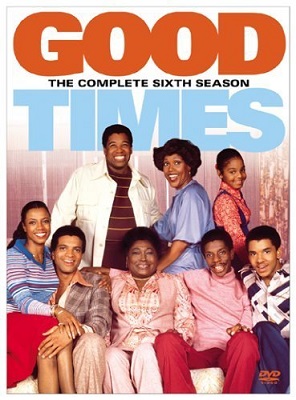
The movement behind the book Go Lean … Caribbean recognizes the significance of the TV Show “Good Times”, 1974 – 1979.

cu-blog-esther-rolle-caribbean-roots-photo-3The show – the first episode titled Too Old Blues aired on February 8, 1974 – was a situation comedy about the African-American Evans Family; led by father James, mother Florida or “Flo”, sons J.J. and Michael and daughter Thelma. There were other supporting characters as well, like Willona Woods and her adopted daughter Penny. (Penny was the first acting role for music superstar Janet Jackson, the youngest sister of Michael Jackson of the Jackson 5 fame).

The show was produced by legendary TV producer Norman Lear and recorded on a “sound stage” in Hollywood, California. (There was no “live studio audience”).

What made “Good Times” notable was the ensemble cast of African American actors. But what kept viewers tuning in was the recognition of themselves in the faces on the screen. During the tough economic struggles of the seventies, many families struggled like the Evans family to put food on the table and a roof over their heads. While the subject matter was often bleak, the family had a way of making viewers forget their own troubles for at least 30 minutes.

Despite the canned laugh tracks, we fell in love with the characters. More importantly, we fell in love with the actors and actresses who brought the show to life. Forty years after the show ended, we are just as interested in the actors as we were when the show was on the air. Chances are good that another 40 years can pass and the show will still hold interest. The actors who brought the show to life may leave this world but their characters will live in our memories and on our television screens for decades to come. It is rare for a show to last longer than a few seasons; [this show lasted 6 seasons]. It is rarer still for a show to generate new fans decades after it went off the air. For whatever reason, “Good Times” accomplished that rare feat, and the actors who starred in the show will always have us wondering -where are they now? – Depost.com Ad-supported Website

The focus of this show for the Go Lean movement is the composition of its cast, and the Caribbean roots of one of the main characters, Esther Rolle. The full cast is as follows:

BernNadette Stanis  Thelma Evans / … (133 episodes, 1974-1979)
Jimmie Walker  James ‘J.J.’ Evans, Jr. (133 episodes, 1974-1979)
Ralph Carter  Michael Evans (132 episodes, 1974-1979)
Ja’net DuBois  Willona Woods (124 episodes, 1974-1979)
Esther Rolle  Florida Evans (108 episodes, 1974-1979)
John Amos  James Evans, Sr. (59 episodes, 1974-1976)
Johnny Brown  Nathan Bookman (57 episodes, 1975-1979)

The  Go Lean book identifies that film, television, theater and the arts can greatly impact society; in addition to the entertainment value, there is also image and impression. People can override many false precepts with excellent deliveries and contributions of great role models. This show, “Good Times”, was frequently recognized for a positive Black image.

So this great American TV show also had a great Caribbean contributor, Bahamas-bred Esther Rolle. Wow!

Esther Rolle became the first woman to receive the NAACP Chairman’s Civil Rights Leadership Award.

See the encyclopedic details here:

Title: Esther Rolle as Florida Evans in “Good Times”

cu-blog-esther-rolle-caribbean-roots-photo-1

You may remember Esther Rolle for her portrayal as the loving but strict mother of three children in the hit television show “Good Times.” Rolle was born 10th in a family of 18 children whom all dreamed of becoming actors and actresses. She began her career as a dancer and played many of her earliest roles on stage. Fans of the hit television show “Maude” may remember her introduction as Findlay’s housekeeper, which is how the popular spin-off show “Good Times” was introduced.

As the show progressed, Rolle became unhappy with the writer’s creative direction and felt that Jimmie Walker’s character was frivolous. Fans of the show might remember her heartbreaking performance as Florida Evans when she received news that her husband had died in a tragic car accident. The series went on with Rolle as a single mother struggling to make ends meet without his income, insurance, or support.

After her contract had ended, Rolle quit the show, and moved on to win an Emmy for her performance as a maid in the 1979 television movie “Summer of My German Soldier.” Her successful return to the stage also included a role in “A Raisin in the Sun,” and “Down in the Delta,” which was directed by Maya Angelou. She gained notoriety once again for another Maya Angelou classic, “I Know Why the Caged Bird Sings.”

Esther Rolle’s later works included film work in “Driving Miss Daisy,” in 1990, and “Rosewood” in 1997.  She was recognized as the first woman to receive the NAACP Civil Rights Leadership Award for raising the image of African Americans through her work on stage, television, and film. The same year, Rolle fell ill and was placed on kidney dialysis. She passed away, on November 17, 1998, shortly after her 78th birthday, from complications of diabetes. Rolle was married once but had no children.
Source: Retrieved December 30, 2016 from: http://deposts.com/cast-good-times-now/3/

———–

Early Life Biography:
Esther Rolle was born in Pompano Beach, Florida, to Bahamian immigrants Jonathan Rolle (1883–1953),[2] a farmer, and Elizabeth Iris Rolle (née Dames; 1893–1981).[3] Her parents were both born and raised in Nassau, New Providence, The Bahamas[4][5][6] and moved to Florida some time after their marriage. She was the tenth of 18 children (children who included siblings and fellow actresses Estelle Evans and Rosanna Carter).[7] Rolle graduated from Blanche Ely High School in Pompano Beach, Florida.[8] She initially studied at Spelman College in Atlanta, but she moved to New York City.[8] While in New York, she attended Hunter College. Rolle transferred to The New School and, finally, Yale University in New Haven, Connecticut.”[9] For many years, Rolle worked in a traditional day job in New York City’s garment district.[10]
Source: Retrieved December 30, 2016 from: https://en.wikipedia.org/wiki/Esther_Rolle#Early_life

Though she died over 18 years ago, on November 17, 1998, we still feel her impact. She proved to be an iconic TV character for 20th Century America; she fomented and fostered a great image not just for Americans or Bahamians or Caribbean people, but for the entire African-descended race, for their entertainers. For this reason, she received the first ever NAACP Civil Rights Leadership Award given to a woman.

Caribbean Girls rock!

As specified in a recent blog-commentary and in the Go Lean book, the American Civil Rights agency, the National Association for the Advancement for Colored People (NAACP), was established in 1915 and immediately campaigned to elevate the status and image of Black people in America and beyond.  This “image” precept is also an important factor in the roadmap to elevate Caribbean society. So the Go Lean book details a plan to monitor defamations against the Caribbean image; this includes recognition and appreciation for Caribbean achievement as well. As  follows, this excerpt (Page 133) from Go Lean book highlights this “Image Quest”:

The majority of the Caribbean population descends from an African ancestry – a legacy of slavery from previous centuries. Despite the differences in nationality, culture and language, the image of the African Diaspora is all linked hand-in-hand. And thus, when Martin Luther King, Malcolm X, Nelson Mandela, Muhammad Ali and Bob Marley impacted the world with their contributions, the reverberations were felt globally, not just in their homelands. It is hard for one segment of the black world to advance when other segments have a negative global image. This is exemplified with the election of Barack Obama as US President; his election was viewed as an ascent for the entire Black race.

Over 100 years ago, the NAACP came to understand the power and influence of the then new medium of film and added the mandate to their charter to confront the misuse of media to influence negative public attitudes toward race. … Today, the NAACP Hollywood Bureau continues to monitor the industry for offensive and defamatory images in film and television. It also sponsors the Image Awards Show to honor outstanding people of color in film, television, music, and literature, as well as those individuals or groups who promote social justice through their creative endeavors.

The book Go Lean…Caribbean serves as a roadmap for the introduction and implementation of the Caribbean Union Trade Federation (CU). This CU strives to advance Caribbean image and culture with these 3 prime directives:

  • Optimization of the economic engines in order to grow the regional economy.
  • Establishment of a security apparatus to protect the resultant economic engines.
  • Improve Caribbean governance.

This roadmap recognizes that a prerequisite for advancing society is a change in the Caribbean community ethos. Early in the book, the contributions that culture (music, film, theater, dance and artistic expressions) can make is pronounced as an ethos for the entire region to embrace, (opening Declaration of Interdependence – DOI – Pages 15) with these statements:

xxxii. Whereas the cultural arts and music of the region are germane to the quality of Caribbean life, and the international appreciation of Caribbean life, the Federation must implement the support systems to teach, encourage, incentivize, monetize and promote the related industries for arts and music in domestic and foreign markets. These endeavors will make the Caribbean a better place to live, work and play.

Esther Rolle – an American of Caribbean descent – was the embodiment of all of these above values. She impacted the image and culture of African Americans in her country, and thusly  impacted the Black image to the rest of the world. Like another Caribbean musical icon, Bob Marley, Esther Rolle set a pathway for success for other generations of talented, inspirational and influential artists to follow. Other artists of Caribbean heritage are sure to emerge and “impact the world”. We are preparing for it, as specified in the same DOI – Page 13:

xxi. Whereas the preparation of our labor force can foster opportunities and dictate economic progress for current and future generations, the Federation must ensure that educational and job training opportunities are fully optimized for all residents of all member-states, with no partiality towards any gender or ethnic group. The Federation must recognize and facilitate excellence in many different fields of endeavor, including sciences, languages, arts, music and sports. This responsibility should be executed without incurring the risks of further human flight, as has been the past history.

The CU represents the change that has come to the Caribbean. The people, institutions and governance of the region are all urged to “lean-in” to this roadmap for change. We know it is important to highlight the positive contributions of Caribbean people, even their descendants and legacies.

We salute those ones from our past, people like Esther Rolle whose parents left their Bahamas home for job opportunities in the agricultural fields of Florida. We know there are “new” Esther Rolle-types throughout Caribbean member-states, waiting to be fostered. We salute them as our future and pledge to create the local-domestic opportunities … without leaving home.

The following list details the community ethos, strategies, tactics, implementations and advocacies to foster future entertainers in the Caribbean:

Community Ethos – Ways to Foster Genius Page 27
Community Ethos – Promote Intellectual Property Page 29
Community Ethos – Ways to Promote Happiness Page 36
Community Ethos – Impact the Greater Good Page 37
Strategy – Caribbean Vision Page 45
Tactical – Separation of Powers – Patents & Copyrights Page 78
Tactical – Separation of Powers – Culture Administration Page 81
Implementation – Ways to Impact Social Media Page 111
Advocacy – Ways to Make the Caribbean Better Page 131
Advocacy – Ways to Impact Hollywood Page 203
Advocacy – Ways to Improve the Arts Page 230
Advocacy – Ways to Promote Music Page 231

Esther Rolle also impacted the world as a role model for Senior Citizens. In her last movie, Down in the Delta, she played the role of an aging wife-mother who suffered from Alzheimer’s Dementia. She played that role with dignity; she showcased to the world the challenge  and honor associated with families fulfilling their obligations to their aging parents and spouses. This movie was written and directed by famed African-American poet Maya Angelou; (also a familiar role model for the Caribbean). See the highlights of the movie here:

VIDEO – Down in the Delta TRAILER – https://youtu.be/IOij6VZrBWE

Published on Jul 19, 2013 – Sometimes The Best Place To Be…Is The Place You Least Expected. Down In The Delta brings together an outstanding cast of stars in an uplifting story of family, community and friendship! In a desperate attempt to change her life, Loretta a troubled single mother from a tough Chicago neighborhood – is sent to spend a summer at her family’s ancestral home in rural Mississippi. In The Delta, with the support and wisdom of her hardworking uncle Earl, Loretta finally begins to see a way to provide for her young children and reverse the downward slide of her life!

Esther Rolle also provided a fine example of retirement and estate planning:

cu-blog-esther-rolle-caribbean-roots-photo-2

When she died in 1998 – at age 78 – she left an estate valued in excess of $1.7 million including $200,000 in cash a $400,000 home, $1,072,000 in treasuries. In addition, she owned 1,000 shares of Bethdames Corporation, several Mutual Funds, and 2% interest in El Toro (Restaurants), Ltd.. – Source: IMDB.com.

Esther Rolle came, saw and conquered! The same was said of Sammy Davis Jr. in the previous blog. See an interview in the Appendix below between Davis and Rolle. They both fit the definition of role models – as defined here by Booker T Washington – where they overcame obstacles and made an impact to benefit more than just themselves.

“I have learned that success is to be measured not so much by the position that one has reached in life as by the obstacles which he has had to overcome while trying to succeed.”[B].

Previously, this blog-commentary identified other role models in these obituary submissions:

https://goleancaribbean.com/blog/?p=10015 E. R. Braithwaite, Author of ‘To Sir, With Love’ – RIP
https://goleancaribbean.com/blog/?p=9948 Role Model and Caribbean Roots of Sammy Davis, Jr.
https://goleancaribbean.com/blog/?p=8724 Remembering Marcus Garvey: A Role Model; Still Relevant Today
https://goleancaribbean.com/blog/?p=7682 Frederick Douglass: Role Model for a Single Cause
https://goleancaribbean.com/blog/?p=6593 Dr. Mobley – Role Model as a BusinessSchool Dean
https://goleancaribbean.com/blog/?p=2726 Caribbean Role Model – Oscar De La Renta – RIP
https://goleancaribbean.com/blog/?p=2297 Role Models in Contrast: Booker T Washington -vs- W.E.B. Du Bois
https://goleancaribbean.com/blog/?p=1037 Role Model and Humanities Advocate – Maya Angelou – R.I.P.
https://goleancaribbean.com/blog/?p=866 Caribbean Musical Icon and Role Model: Bob Marley

The world is a better place because of Esther Rolle. Her contribution were on the stage and the screen; as an actress she was known for her dramatic roles and stage presence; but she had great “comedic chops” as well. Her days were truly “Good Times”, as her TV show portrayed.

She died 18 years ago; that’s a long time as celebrities die every year – 2016 has been an especially bad year; see list here – and yet we are remembering this one from 1998; this is because of her Caribbean roots. She helped to elevate the Caribbean image; to reinforce the message that we are just as good as anyone else; or maybe even better with our diverse passions. We carry on without her but we are better off for her role model; and forever impacted by her legacy. We urged all Caribbean stakeholders to lean-in to the Go Lean … Caribbean roadmap and the fine role model-example of Esther Rolle. 🙂

Download the book Go Lean … Caribbean – now!

———-

Appendix VIDEO – Sammy Davis Jr. Interviews Esther Rolle – https://youtu.be/npHzc6CBGp8

Uploaded November 4, 2010 – Clip from the 1970’s Variety-Talk Show: “Sammy & Company”

Share this post:
, , , , ,
[Top]

Lessons Learned from Pearl Harbor

Go Lean Commentary

What would you do if backed into a corner and there’s a threat on your life?

For many people their natural impulse is to come out fighting. They say that this is not aggression, rather just a survival instinct.

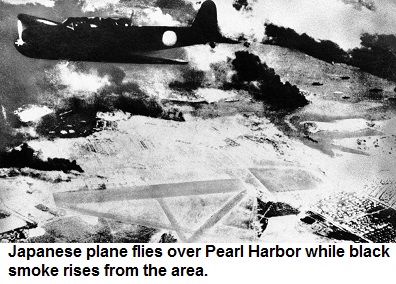
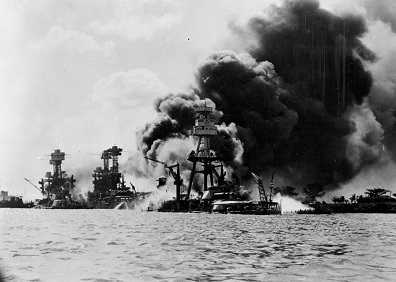
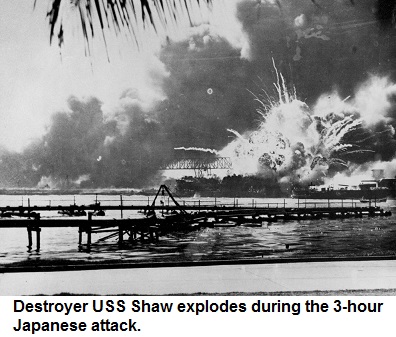
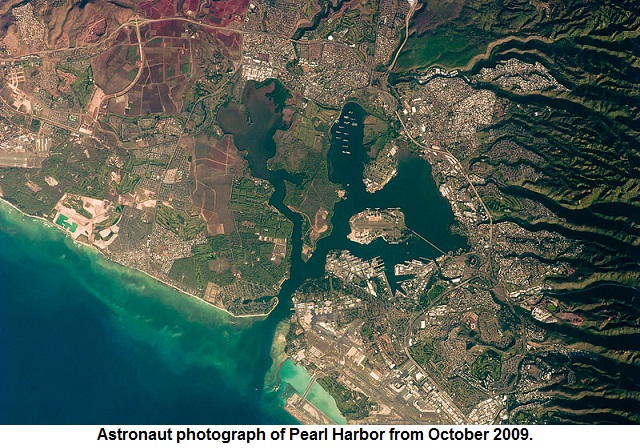
Believe it or not, this depiction describes one of the biggest attacks in American history: the Japanese Attack on Pearl Harbor. See VIDEO here:

VIDEO – World War II History: Attack on Pearl Harbor – http://www.history.com/topics/world-war-ii/world-war-ii-history/videos/attack-pearl-harbor

Retrieved December 7, 2016 from History.com – On December 7, 1941, Japan launches a surprise attack on American soil at Pearl Harbor.

cu-blog-lessons-learned-from-pearl-harbor-photo-2

cu-blog-lessons-learned-from-pearl-harbor-photo-3

cu-blog-lessons-learned-from-pearl-harbor-photo-4

This is the 75th Anniversary of that attack – a few days ago: December 7. That’s a lot of years and a lot of lessons. Still, 75 is a pretty round number, like 25, 50 and 100. This commentary has been reserved for now, a few days late on purpose because of the best-practice to “not speak ill of the dead” at a funeral or memorial service. But a “lessons learned analysis” is still an important exercise for benefiting from catastrophic efforts. After 75 years since the Pearl Harbor Attack on December 7, 1941, this post-mortem analysis is just as shocking as it was on this “day of infamy”.

Consider the details of this maligning article here (and the Appendices below); notice that it assumes a conspiracy:

Title: How U.S. Economic Warfare Provoked Japan’s Attack on Pearl Harbor
By: Robert Higgs

cu-blog-lessons-learned-from-pearl-harbor-photo-1Ask a typical American how the United States got into World War II, and he will almost certainly tell you that the Japanese attacked Pearl Harbor and the Americans fought back. Ask him why the Japanese attacked Pearl Harbor, and he will probably need some time to gather his thoughts. He might say that the Japanese were aggressive militarists who wanted to take over the world, or at least the Asia-Pacific part of it. Ask him what the United States did to provoke the Japanese, and he will probably say that the Americans did nothing: we were just minding our own business when the crazy Japanese, completely without justification, mounted a sneak attack on us, catching us totally by surprise in Hawaii on December 7, 1941.

You can’t blame him much. For more than 60 years such beliefs have constituted the generally accepted view among Americans, the one taught in schools and depicted in movies—what “every schoolboy knows.” Unfortunately, this orthodox view is a tissue of misconceptions. Don’t bother to ask the typical American what U.S. economic warfare had to do with provoking the Japanese to mount their attack, because he won’t know. Indeed, he will have no idea what you are talking about.

In the late nineteenth century, Japan’s economy began to grow and to industrialize rapidly. Because Japan has few natural resources, many of the burgeoning industries had to rely on imported raw materials, such as coal, iron ore or steel scrap, tin, copper, bauxite, rubber, and petroleum. Without access to such imports, many of which came from the United States or from European colonies in southeast Asia, Japan’s industrial economy would have ground to a halt. By engaging in international trade, however, the Japanese had built a moderately advanced industrial economy by 1941.

At the same time, they also built a military-industrial complex to support an increasingly powerful army and navy. These armed forces allowed Japan to project its power into various places in the Pacific and east Asia, including Korea and northern China, much as the United States used its growing industrial might to equip armed forces that projected U.S. power into the Caribbean and Latin America, and even as far away as the Philippine Islands.

When Franklin D. Roosevelt became president in 1933, the U.S. government fell under the control of a man who disliked the Japanese and harbored a romantic affection for the Chinese because, some writers have speculated, Roosevelt’s ancestors had made money in the China trade.[1] Roosevelt also disliked the Germans (and of course Adolf Hitler), and he tended to favor the British in his personal relations and in world affairs. He did not pay much attention to foreign policy, however, until his New Deal began to peter out in 1937. Afterward, he relied heavily on foreign policy to fulfill his political ambitions, including his desire for reelection to an unprecedented third term.

When Germany began to rearm and to seek Lebensraum aggressively in the late 1930s, the Roosevelt administration cooperated closely with the British and the French in measures to oppose German expansion. After World War II commenced in 1939, this U.S. assistance grew ever greater and included such measures as the so-called destroyer deal and the deceptively named Lend-Lease program. In anticipation of U.S. entry into the war, British and U.S. military staffs secretly formulated plans for joint operations. U.S. forces sought to create a war-justifying incident by cooperating with the British navy in attacks on German U-boats in the north Atlantic, but Hitler refused to take the bait, thus denying Roosevelt the pretext he craved for making the United States a full-fledged, declared belligerent—an end that the great majority of Americans opposed.

In June 1940, Henry L. Stimson, who had been secretary of war under Taft and secretary of state under Hoover, became secretary of war again. Stimson was a lion of the Anglophile, northeastern upper crust and no friend of the Japanese. In support of the so-called Open Door Policy for China, Stimson favored the use of economic sanctions to obstruct Japan’s advance in Asia. Treasury Secretary Henry Morgenthau and Interior Secretary Harold Ickes vigorously endorsed this policy. Roosevelt hoped that such sanctions would goad the Japanese into making a rash mistake by launching a war against the United States, which would bring in Germany because Japan and Germany were allied.

Accordingly, the Roosevelt administration, while curtly dismissing Japanese diplomatic overtures to harmonize relations, imposed a series of increasingly stringent economic sanctions on Japan. In 1939 the United States terminated the 1911 commercial treaty with Japan. “On July 2, 1940, Roosevelt signed the Export Control Act, authorizing the President to license or prohibit the export of essential defense materials.” Under this authority, “[o]n July 31, exports of aviation motor fuels and lubricants and No. 1 heavy melting iron and steel scrap were restricted.” Next, in a move aimed at Japan, Roosevelt slapped an embargo, effective October 16, “on all exports of scrap iron and steel to destinations other than Britain and the nations of the Western Hemisphere.” Finally, on July 26, 1941, Roosevelt “froze Japanese assets in the United States, thus bringing commercial relations between the nations to an effective end. One week later Roosevelt embargoed the export of such grades of oil as still were in commercial flow to Japan.”[2] The British and the Dutch followed suit, embargoing exports to Japan from their colonies in southeast Asia.

An Untenable Position
cu-blog-lessons-learned-from-pearl-harbor-photo-6
Roosevelt and his subordinates knew they were putting Japan in an untenable position and that the Japanese government might well try to escape the stranglehold by going to war. Having broken the Japanese diplomatic code, the Americans knew, among many other things, what Foreign Minister Teijiro Toyoda had communicated to Ambassador Kichisaburo Nomura on July 31: “Commercial and economic relations between Japan and third countries, led by England and the United States, are gradually becoming so horribly strained that we cannot endure it much longer. Consequently, our Empire, to save its very life, must take measures to secure the raw materials of the South Seas.”[3]

Because American cryptographers had also broken the Japanese naval code, the leaders in Washington knew as well that Japan’s “measures” would include an attack on Pearl Harbor.[4] Yet they withheld this critical information from the commanders in Hawaii, who might have headed off the attack or prepared themselves to defend against it. That Roosevelt and his chieftains did not ring the tocsin makes perfect sense: after all, the impending attack constituted precisely what they had been seeking for a long time. As Stimson confided to his diary after a meeting of the war cabinet on November 25, “The question was how we should maneuver them [the Japanese] into firing the first shot without allowing too much danger to ourselves.”[5] After the attack, Stimson confessed that “my first feeling was of relief … that a crisis had come in a way which would unite all our people.[6]

Source: The Independent Institute – Online Community – Posted: May 1, 2006; retrieved December 7, 2016 from: http://www.independent.org/newsroom/article.asp?id=1930
——–
See Appendices below for cited references and profiles of the Author and the Organization.

So this establishes why the Japanese may have been motivated to attack Pearl Harbor in the first place. The motivation seems more complicated than initially reported.

The Bible declares that:

“For there is nothing hidden that will not become manifest” – Luke 8:17

cu-blog-lessons-learned-from-pearl-harbor-photo-7

cu-blog-lessons-learned-from-pearl-harbor-photo-5

After 75 years, the before-during-after facts associated with the Pearl Harbor Attack should be available for full disclosure. What are the lessons here for the Caribbean and today’s effort to secure the Caribbean homeland while expanding the regional economy? We truly want to consider these main points, these lessons; (the hyperlinks refer to previous Go Lean commentaries):

Lessons

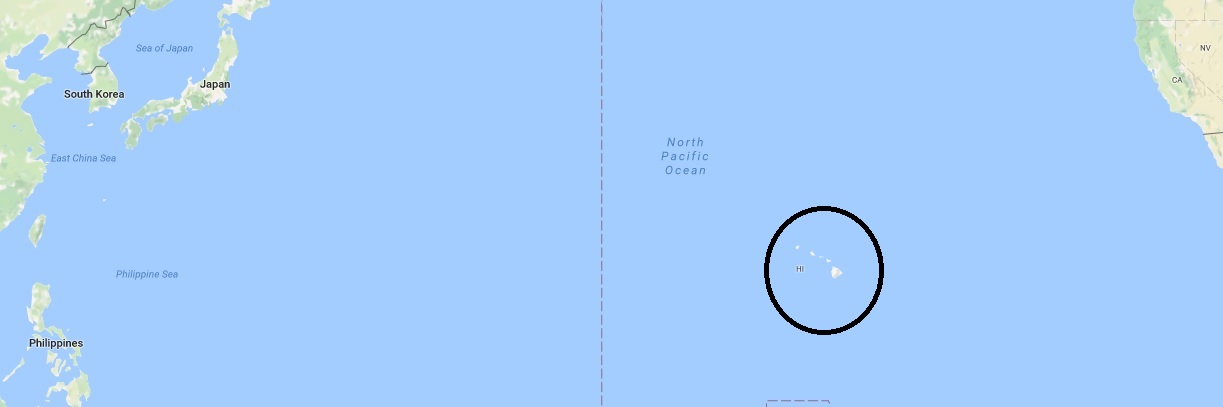
Territories have a status of disregard Hawaii (Pearl Harbor) and Philippines were attacked by the Japanese. These were both US Territories at the same. The levels of protection and preparedness for territories are sub-standard compared to the American mainland. As a result there was no meaningful plan for the air defense of Hawaii.
Colonialism is/was really bad Japan protested the sub-standard reality of the native Asians under the European colonial schemes. A people oppressed, suppressed and repressed would not remain docile forever; “that a downtrodden people would not stay down, that they would rise and revolt, that they would risk their lives and that of their children to pursue freedom.” – Go Lean book Page 251.
White Supremacy is/was a really bad construct The US Territories (Hawaii and Philippines) were not the first targets for Japan. They targeted all European colonies (British, French and Dutch) territories. Their campaign was to rail against White Supremacy.
Bullies only respond to a superior force Japan avail themselves of expansion opportunities in Far-East Asia as the European powers became distracted in the time period during and after World War I. (Manchuria in China was occupied by Japan starting in 1931). Only a superior force, the US, was able to assuage their aggression.
Economic Warfare can back a Government into a corner When the supply of basic needs (food, clothing, shelter and energy) are curtailed, a crisis ensues. When people are in crisis, they consider “fight or flight” options. Japan chose to fight; Caribbean people choose flight.
Societies can double-down on a bad Community Ethos Japan’s aggression was a direct result of their community ethos that honored Samurai warrior and battle culture. Men would walk the streets with their swords, ready for a challenge. On the other hand, the US (and Western Europe) community ethos of racism was so ingrained that the natural response in the US, post-Pearl Harbor, was to intern Japanese Americans in camps.
All of these bad community ethos were weeded out with post-WWII Human Rights reconciliations. – Go Lean book Page 220.
Double Standards are hard to ignore Japan felt justified in their Pacific aggression because of the US’s regional aggression in the Americas. Before Pearl Harbor, they withdrew from the League of Nations in protest of double standards.
Even after WWII, this double standard continues with countries with Veto power on the UN Security Council.
People have short memories There are movements to re-ignite many of the same developments that led to the devastation of WWII: right wing initiatives in Japan and Germany; Human Rights disregard for large minority groups (Muslims, etc.).
The more things change, the more they remain the same.

This discussion is analyzing the concept of “fight or flight”. According to Anthropologists, individuals and societies facing a crisis have to contend with these two options for survival. The very concept of refugees indicate that most people choose to flee; they choose internal displacement or refuge status in foreign countries. This point is consistent with the theme in the book Go Lean … Caribbean that this region is in crisis and as a result people have fled from their beloved homelands to foreign destinations in North America and Europe. How bad? According to one report, we have lost 70 percent of our tertiary-educated population.

Enough said! Our indictment is valid. Rather than flee, we now want the region to fight. This is not advocating a change to a militaristic state, but rather this commentary, and the underlying Go Lean book, advocates devoting “blood, sweat and tears” to empowering change in the Caribbean region. The book states this in its introduction (Page 3):

We cannot ignore the past, as it defines who we are, but we do not wish to be shackled to the past either, for then, we miss the future. So we must learn from the past, our experiences and that of other states in similar situations, mount our feet solidly to the ground and then lean-in, to reach for new heights; forward, upward and onward. This is what is advocated in this book: to Go Lean … Caribbean!

The Go Lean book serves as a roadmap for the introduction and implementation of the Caribbean Union Trade Federation (CU). One mission of this roadmap is to reduce the “push and pull” factors that contributes to the high emigration rates. For the most part the “push and pull” factors relate to the societal defects among the economic, security and governing engines. Another mission is to incentivize the far-flung Diaspora to consider a return to the region. Overall, the Go Lean roadmap asserts that the economy of the Caribbean is inextricably linked to the security of the Caribbean. The roadmap therefore proposes an accompanying Security Pact to accompany the CU treaty’s economic empowerment efforts. The plan is to cooperate, collaborate and confer with all regional counterparts so as to provide an optimized Caribbean defense, against all threats, foreign and domestic. This includes the American Caribbean territories (just like Pearl Harbor was on the American territory of Hawaii) of Puerto Rico and the US Virgin Islands. These American protectorates are included in this CU regional plan.

This CU/Go Lean regional plan strives to advance all of Caribbean society with these 3 prime directives:

  • Optimization of the economic engines in order to grow the regional economy to a $800 Billion Single Market by creating 2.2 million new jobs.
  • Establishment of a security apparatus to protect the resultant economic engines.
  • Improvement of Caribbean governance in support of these endeavors.

The Go Lean book stresses the effectiveness and efficiency of protecting life and property of all Caribbean stakeholders: residents, trading partners, visitors, etc.. This is why the book posits that some deployments are too big for any one member-state to manage alone – especially with such close proximities of one island nation to another – there are times when there must be a cross-border multi-lateral coordination – a regional partnership. This is the vision that is defined in the book (Pages 12 – 14), starting with these statements in the opening Declaration of Interdependence:

x. Whereas we are surrounded and allied to nations of larger proportions in land mass, populations, and treasuries, elements in their societies may have ill-intent in their pursuits, at the expense of the safety and security of our citizens. We must therefore appoint “new guards” to ensure our public safety and threats against our society, both domestic and foreign.

xii. Whereas the legacy in recent times in individual states may be that of ineffectual governance with no redress to higher authority, the accedence of this Federation will ensure accountability and escalation of the human and civil rights of the people for good governance, justice assurances, due process and the rule of law. As such, any threats of a “failed state” status for any member state must enact emergency measures on behalf of the Federation to protect the human, civil and property rights of the citizens, residents, allies, trading partners, and visitors of the affected member state and the Federation as a whole.

xvi. Whereas security of our homeland is inextricably linked to prosperity of the homeland, the economic and security interest of the region needs to be aligned under the same governance.

The Go Lean roadmap is not a call for a revolt against the governments, agencies or institutions of the Caribbean region, but rather a petition for a peaceful transition and optimization of the economic, security and governing engines in the region. To establish the security optimization, the Go Lean book presents a series of community ethos that must be adapted to forge this change. In addition, there are these specific strategies, tactics, implementation and advocacies to apply:

Community Ethos – new Economic Principles Page 21
Community Ethos – new Security Principles Page 22
Community Ethos – Minority Equalization Page 24
Community Ethos – Impacting the Greater Good Page 34
Strategy – Mission – Enact a Defense Pact to defend the homeland Page 45
Tactical – Fostering a Technocracy Page 64
Tactical – Homeland Security – Naval Operations Page 75
Tactical – Homeland Security – Militias Page 75
Implementation – Assemble – US Overseas Territory into CU Page 96
Implementation – Foreign Policy Initiatives at Start-up Page 102
Implementation – Security Initiatives at Start-up Page 103
Implementation – Ways to Promote Independence Page 120
Planning – Ways to Model the EU – Constructs after WW II Page 130
Advocacy – Ways to Better Manage the Social Contract Page 170
Advocacy – Ways to Improve Homeland Security Page 180
Advocacy – Ways to Mitigate Terrorism Page 181
Advocacy – Ways to Improve Intelligence Gathering Page 182
Advocacy – Ways to Enhance Tourism – Mitigate Risky Image Page 190
Advocacy – Ways to Improve Emergency Management Page 196
Advocacy – Ways to Preserve Caribbean Heritage Page 218
Advocacy – Ways to Impact US Territories Page 244

Now is the time to lean-in to this roadmap and “fight” for Caribbean change, as depicted in the book Go Lean…Caribbean. At this time, there are no State Actor adversaries – like Imperial Japan – seeking to cause harm to our homeland, but that status quo can change very quickly. Some Caribbean member-states are still de facto “colonies”, so enemies of our colonial masters – France, Netherlands, US, UK – can quickly “pop up”. We must be ready and on guard to any possible threats and security risks.

The movement behind the Go Lean … Caribbean book seeks to make this homeland a better place to live, work and play. Since the Caribbean is arguably the best address of the planet, tourism is a primary concern. So security here in our homeland must take on a different priority. Tourists do not visit war zones – civil wars, genocides, active terrorism, Failed-States and rampant crime. Already our societal defects (economics) have created such crises that our people have chosen to flee as opposed to “fight”. We do not need security threats as well; we do not need Failed-States. We are now preparing to “fight” (exert great efforts), not flee, to wage economic war to elevate our  communities.

This will not be easy; this is heavy-lifting, but success is possible. The strategies, tactics and implementations in the Go Lean roadmap are conceivable, believable and achievable. 🙂

Download the book Go Lean … Caribbean – now!

———–

Appendix A – Reference Notes:
1.  Harry Elmer Barnes, “Summary and Conclusions,” in Perpetual War for Perpetual Peace:A Critical Examination of the Foreign Policy of Franklin Delano Roosevelt and Its Aftermath (Caldwell, Id.: Caxton Printers, 1953), pp. 682–83.
2.  All quotations in this paragraph from George Morgenstern, “The Actual Road to Pearl Harbor,” in Perpetual War for Perpetual Peace, pp. 322–23, 327–28.
3.  Quoted ibid., p. 329.
4.  Robert B. Stinnett, Day of Deceit: The Truth about FDR and Pearl Harbor (NewYork: Free Press, 2000).
5.  Stimson quoted in Morgenstern, p. 343.
6.  Stimson quoted ibid., p. 384.

 ——-

Appendix B – About the Author:

Robert Higgs is a Senior Fellow in Political Economy at the Independent Institute and Editor at Large of the Institute’s quarterly journal The Independent Review. He received his Ph.D. in economics from JohnsHopkinsUniversity, and he has taught at the University of Washington, LafayetteCollege, SeattleUniversity, the University of Economics, Prague, and GeorgeMasonUniversity.

——-

Appendix C – About the Independent Institute:

The Independent Institute is a non-profit, non-partisan, scholarly research and educational organization that sponsors in-depth studies of critical social and economic issues.

The mission of the Independent Institute is to boldly advance peaceful, prosperous, and free societies grounded in a commitment to human worth and dignity.

Today, the influence of partisan interests is so pervasive that public-policy debate has become too politicized and is largely confined to a narrow reconsideration of existing policies. In order to fully understand the nature of public issues and possible solutions, the Institute’s program adheres to the highest standards of independent scholarly inquiry.
Source: http://www.independent.org/aboutus/


Share this post:
, , , ,
[Top]

Caribbean Roots: Sammy Davis, Jr.

Go Lean Commentary

cu-blog-sammy-davis-jr-caribbean-roots-photo-1The movement behind the book Go Lean … Caribbean recognizes the significance of this day, December 8th as the 91st birthday of the late great American entertainer Sammy Davis, Jr..

The Go Lean book identifies that music and the arts can greatly impact society; in addition to the entertainment value, there is also image, impression and advocacy – music can move people to change. People can override many false precepts with excellent deliveries and contributions of great role models, despite any handicaps.

“Talk about handicap. I’m a one-eyed Negro Jew.” – Sammy Davis Jr. Quote

Here’s a little known Black History fact:

The mother of Sammy Davis Jr., Elvera Sanchez, was an Afro-Cuban tap dancer.[A]

So this great American entertainer actually had Caribbean roots. Wow! See the encyclopedic details here:

Title: Elvera Sanchez
Elvera Sanchez (September 1, 1905 – September 2, 2000) was an American dancer and the mother of Sammy Davis Jr..

During his lifetime, Davis Jr. stated that his mother was Puerto Rican and born in San Juan; however, in the 2003 biography In Black and White, author Wil Haygood wrote that Davis’ mother was born in New York City, of Afro-Cuban descent, and that Davis claimed she was Puerto Rican because he feared anti-Cuban backlash would hurt his record sales.
———-
Title: Sammy Davis Jr.
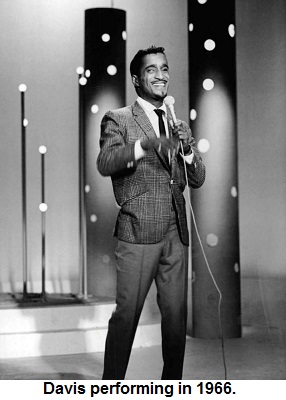
Samuel George “Sammy” Davis Jr. (December 8, 1925 – May 16, 1990) was an American entertainer. Primarily a dancer and singer, he was also an actor of stage and screen, comedian, musician, and impressionist, noted for his impersonations of actors, musicians and other celebrities. At the age of 3, Davis began his career in vaudeville with his father and Will Mastin as the Will Mastin Trio, which toured nationally. After military service, Davis returned to the trio. Davis became an overnight sensation following a nightclub performance at Ciro’s (in West Hollywood) after the 1951 Academy Awards. With the trio, he became a recording artist. In 1954, he lost his left eye in a car accident, and several years later, he converted to Judaism.

Davis’s film career began as a child in 1933. In 1960, he appeared in the Rat Pack film Ocean’s 11. After a starring role on Broadway in 1956’s Mr Wonderful, he returned to the stage in 1964’s Golden Boy. In 1966 he had his own TV variety show, titled The Sammy Davis Jr. Show. Davis’s career slowed in the late 1960s, but he had a hit record with “The Candy Man” in 1972 and became a star in Las Vegas, earning him the nickname “Mister Show Business”.

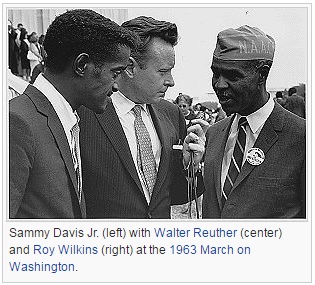
Davis was a victim of racism throughout his life, particularly during the pre-Civil Rights era, and was a large financial supporter of the Civil Rights movement. Davis had a complex relationship with the black community, and drew criticism after physically embracing President Richard Nixon in 1972. One day on a golf course with Jack Benny, he was asked what his handicap was. “Handicap?” he asked. “Talk about handicap. I’m a one-eyed Negro Jew.” This was to become a signature comment, recounted in his autobiography, and in countless articles.

After reuniting with Sinatra and Dean Martin in 1987, Davis toured with them and Liza Minnelli internationally, before he died of throat cancer in 1990. He died in debt to the Internal Revenue Service,[9] and his estate was the subject of legal battles.

Davis was awarded the Spingarn Medal by the NAACP and was nominated for a Golden Globe Award and an Emmy Award for his television performances. He was the recipient of the Kennedy Center Honors in 1987, and in 2001, he was posthumously awarded the Grammy Lifetime Achievement Award.
Source: Wikipedia Online Encyclopedia – Retrieved December 6, 2016 from: https://en.wikipedia.org/wiki/Sammy_Davis_Jr.

cu-blog-sammy-davis-jr-caribbean-roots-photo-3Though he died over 26 years ago, we still feel his impact. Sammy Davis Jr. was one of the most iconic characters in the American 20th Century. But his shadow spread across the entire African-descended world, not just America. He fomented and fostered a great image for African-descended entertainers. For this reason, the annual Soul Train Award for Best Entertainer of the Year has been renamed the Sammy Davis Jr. Award. (Soul Train refers to the weekly 1-hour TV program showcasing African-American Musicians and Dancers).

Since its inception in 1915, the American Civil Rights agency, the National Association for the Advancement for Colored People (NAACP), campaigned to elevate the status and image of Black people in America and beyond.  This “image” precept is also an important factor in the roadmap to elevate Caribbean society. So the Go Lean book details a plan to monitor for defamations against the Caribbean image; this includes recognition and appreciation for Caribbean achievement as well. As  follows, this excerpt (Page 133) from Go Lean book highlights this “Image Quest”:

The majority of the Caribbean population descends from an African ancestry – a legacy of slavery from previous centuries. Despite the differences in nationality, culture and language, the image of the African Diaspora is all linked hand-in-hand. And thus, when Martin Luther King, Malcolm X, Nelson Mandela, Muhammad Ali and Bob Marley impacted the world with their contributions, the reverberations were felt globally, not just in their homelands. It is hard for one segment of the black world to advance when other segments have a negative global image. This is exemplified with the election of Barack Obama as US President; his election was viewed as an ascent for the entire Black race.

Over 100 years ago, the NAACP came to understand the power and influence of the then new medium of film and added the mandate to their charter to confront the misuse of media to influence negative public attitudes toward race. … Today, the NAACP Hollywood Bureau continues to monitor the industry for offensive and defamatory images in film and television. It also sponsors the Image Awards Show to honor outstanding people of color in film, television, music, and literature, as well as those individuals or groups who promote social justice through their creative endeavors.

Sammy Davis, Jr. was awarded the NAACP Image Award in 1989.

The book Go Lean…Caribbean serves as a roadmap for the introduction and implementation of the Caribbean Union Trade Federation (CU). This CU strives to advance Caribbean image and culture with these 3 prime directives:

  • Optimization of the economic engines in order to grow the regional economy.
  • Establishment of a security apparatus to protect the resultant economic engines.
  • Improve Caribbean governance.

This roadmap recognizes that a prerequisite for advancing society is a change in the Caribbean community ethos. Early in the book, the contributions that culture (music, film, theater, dance and artistic expressions) can make is pronounced as an ethos for the entire region to embrace, (opening Declaration of Interdependence – DOI – Pages 15) with these statements:

xxxii. Whereas the cultural arts and music of the region are germane to the quality of Caribbean life, and the international appreciation of Caribbean life, the Federation must implement the support systems to teach, encourage, incentivize, monetize and promote the related industries for arts and music in domestic and foreign markets. These endeavors will make the Caribbean a better place to live, work and play.

Sammy Davis Jr. – an American of Caribbean descent – was the embodiment of all of these above values. He impacted the music, culture and image of African American in his country, and thusly impacted the Black image for the rest of the world. Like Caribbean musical icon, Bob Marley, Sammy Davis Jr. set a pathway for success for other generations of talented, inspirational and influential artists to follow. Other artists of Caribbean heritage are sure to emerge and “impact the world”. We are preparing for it, as specified in the same DOI – Page 13:

xxi. Whereas the preparation of our labor force can foster opportunities and dictate economic progress for current and future generations, the Federation must ensure that educational and job training opportunities are fully optimized for all residents of all member-states, with no partiality towards any gender or ethnic group. The Federation must recognize and facilitate excellence in many different fields of endeavor, including sciences, languages, arts, music and sports. This responsibility should be executed without incurring the risks of further human flight, as has been the past history.

The CU represents the change that has come to the Caribbean. The people, institutions and governance of region are all urged to “lean-in” to this roadmap for change. We know it is important to highlight the positive contributions of Caribbean people, even their descendants and legacies.

We salute those ones from our past, people like Elvera Sanchez who left Cuba as a youth for opportunities in the world of entertainment. We know there are “new” Elvera Sanchez-types and “new” Sammy Davis-types throughout Caribbean member-states, waiting to be fostered. We salute them as our future.

The following list details the community ethos, strategies, tactics, implementations and advocacies to foster future entertainers in the Caribbean:

Community Ethos – Ways to Foster Genius Page 27
Community Ethos – Promote Intellectual Property Page 29
Community Ethos – Ways to Promote Happiness Page 36
Community Ethos – Impact the Greater Good Page 37
Strategy – Caribbean Vision Page 45
Tactical – Separation of Powers – Patents & Copyrights Page 78
Tactical – Separation of Powers – Culture Administration Page 81
Implementation – Ways to Impact Social Media Page 111
Advocacy – Ways to Make the Caribbean Better Page 131
Advocacy – Ways to Better Manage Image Page 133
Advocacy – Ways to Impact Hollywood Page 203
Advocacy – Ways to Improve the Arts Page 230
Advocacy – Ways to Promote Music Page 231

Sammy Davis, Jr. also impacted the world of politics and civil rights. See here:

cu-blog-sammy-davis-jr-caribbean-roots-photo-2

Davis was a registered Democrat – [as most African Americans] – and supported John F. Kennedy’s 1960 election campaign as well as Robert F. Kennedy’s 1968 campaign.[43]

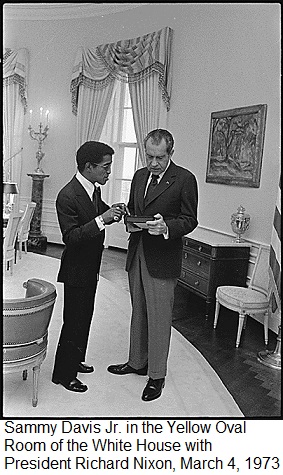
However, he became a close friend to President Richard Nixon and publicly endorsed him at the 1972 Republican National Convention.[43] Davis also made a USO tour to South Vietnam – during the Vietnam War – at Nixon’s request. Previously, Davis had won Nixon’s respect with his participation in the Civil Rights Movement. Nixon invited Davis and his wife, Altovise, to sleep in the White House in 1973, the first time African Americans were invited to do so. The Davises spent the night in the Queens’ Bedroom.[44]

Davis was a long-time donor to the Reverend Jesse Jackson‘s Operation PUSH organization. Jackson also performed Davis’s wedding.[45]

cu-blog-sammy-davis-jr-caribbean-roots-photo-4

Sammy Davis Jr. came, saw and conquered! He fit the definition of a role model, where he overcame obstacles and made an impact to benefit more than just himself.

“I have learned that success is to be measured not so much by the position that one has reached in life as by the obstacles which he has had to overcome while trying to succeed.”[B]Booker T Washington.

Previously, this blog-commentary identified other role models in these submissions:

https://goleancaribbean.com/blog/?p=8724 Remembering Marcus Garvey: A Role Model; Still Relevant Today
https://goleancaribbean.com/blog/?p=8495 NBA Greatness and Caribbean Roots: Tim Duncan Retires
https://goleancaribbean.com/blog/?p=8328 YouTube Role Model with Caribbean Roots: ‘Tipsy Bartender’
https://goleancaribbean.com/blog/?p=7682 Frederick Douglass: Role Model for a Single Cause
https://goleancaribbean.com/blog/?p=6593 Dr. Mobley – Role Model as a Business School Dean
https://goleancaribbean.com/blog/?p=2726 Caribbean Role Model – Oscar De La Renta – RIP
https://goleancaribbean.com/blog/?p=2297 Role Models in Contrast: Booker T Washington versus W.E.B. Du Bois
https://goleancaribbean.com/blog/?p=1037 Role Model and Humanities Advocate – Maya Angelou – R.I.P.
https://goleancaribbean.com/blog/?p=866 Caribbean Musical Icon and Role Model: Bob Marley

The world is a better place because of Sammy Davis Jr.  being born on this day in 1925. Thank you “Candy Man” for all the love you showed for your craft, your country and your people. See the VIDEO here of his 1987 Kennedy Center Induction:

VIDEO – Sammy Davis, JR. “Honoree” – 10th Kennedy Center Honors, 1987 – https://youtu.be/ii3XpjCOlXo

Published on Jan 20, 2015 – LUCILLE BALL introduces honoree SAMMY DAVIS, JR. Excellent performances for Sammy by RAY CHARLES “Birth Of The Blues” & tap dancers, in order of appearance onto stage: 1 & 2) The NICOLAS BROTHERS (HAROLD & FAYARD), 3) CHUCK GREEN, 4) JIMMY SLYDE, and 5) ‘SANDMAN’ SIMS.

We carry on without Sammy Davis Jr., but we are better off for his role model and forever impacted by his legacy. 🙂

Download the book Go Lean … Caribbean – now!

————-

Appendix Reference A

“Elvera Sanchez Davis, obituary, September 8, 2000”The New York Times. September 8, 2000. Retrieved September 18, 2009.

————-

Appendix Reference B

Harlan, Louis R (1972), Booker T. Washington: volume 1: The Making of a Black Leader, 1856–1901. The major scholarly biography.

Share this post:
, , , , ,
[Top]

Rwanda’s Catholic bishops apologize for genocide

Go Lean Commentary

Is mainstream religion a force for moral good in modern society … in the Caribbean? In Africa? Anywhere?

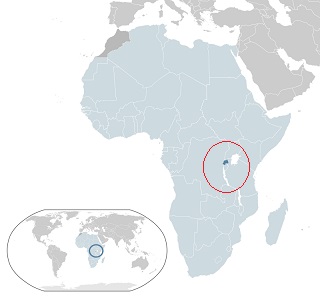
cu-blog-rwandas-catholic-bishops-apologize-for-genocide-photo-3This is a timely discussion right now as there are a lot of threats and dissension in the world, mostly spurred on by religious extremism; think: Islamic terrorists, Shia – Shiite conflicts, Hindu-India versus Muslim Pakistan, Anglicanism versus Catholicism in Northern Ireland. Many samples and examples abound. The case in point for this consideration is the religious-fueled genocide in Rwanda in 1994; see the country’s flag here.

The religious institutions have a tarnished record; not always being a force for moral good in society. They have betrayed the vows and values they are supposed to be committed to. Instead, they have become “drunk with the blood of so many innocent people”.

This reality and cautionary tale from Rwanda provides us a deep lesson, though of a religious nature. See this core scripture:

A mysterious name was written on her forehead: “Babylon the Great, Mother of All Prostitutes and Obscenities in the World.”
I could see that she was drunk–drunk with the blood of God’s holy people who were witnesses for Jesus. I stared at her in complete amazement. – Revelation 17:5 – 6; New Living Translation

Who/What is Babylon the Great? (See Appendix A below).

For one religious group founded in the Caribbean – Rastafarians – they assign the identity to the country of the United States of America. But most religious scholars assign the identity to the world’s orthodox religions.

Some theologians make a narrow accusation and declare that “there can be only one conclusion: The Vatican [(Roman Catholic Headquarters)] is the Mystery Babylon of Revelation; they relate that this false religious system that has deceived the people of the world that will be destroyed at the time of Armageddon”.

Whatever your faith, being associated with Babylon the Great is not a good thing. “She” has a vengeful reckoning in store.

As depicted in a previous blog-commentary, the religions of Christendom have a sullied past! Unfortunately that “past” is not only centuries ago, as chronicled in the recent experiences in 1994 with the Rwandan Ethnic Cleansing. This sad drama is in the news again, as the Roman Catholic Church has now just issued a formal apology for its actions and in-actions in those atrocities.

Considering the real history, they are guilty as charged; see the news story here:

Title: Rwanda: Catholic bishops apologize for role in genocide
By: Ignatius Ssuuna
KIGALI, Rwanda (AP) — The Catholic Church in Rwanda apologized on Sunday for the church’s role in the 1994 genocide, saying it regretted the actions of those who participated in the massacres.

cu-blog-rwandas-catholic-bishops-apologize-for-genocide-photo-2“We apologize for all the wrongs the church committed. We apologize on behalf of all Christians for all forms of wrongs we committed. We regret that church members violated (their) oath of allegiance to God’s commandments,” said the statement by the Conference of Catholic Bishops, which was read out in parishes across the country.

The statement acknowledged that church members planned, aided and executed the genocide, in which over 800,000 ethnic Tutsis and moderate Hutus were killed by Hutu extremists.

In the years since the genocide — which was sparked by a contentious plane crash that killed the then-president, a Hutu — the local church had resisted efforts by the government and groups of survivors to acknowledge the church’s complicity in mass murder, saying those church officials who committed crimes acted individually.

Many of the victims died at the hands of priests, clergymen and nuns, according to some accounts by survivors, and the Rwandan government says many died in the churches where they had sought refuge.

The bishops’ statement is seen as a positive development in Rwanda’s efforts at reconciliation.

“Forgive us for the crime of hate in the country to the extent of also hating our colleagues because of their ethnicity. We didn’t show that we are one family but instead killed each other,” the statement said.

The statement was timed to coincide with the formal end Sunday of the Holy Year of Mercy declared by Pope Francis to encourage greater reconciliation and forgiveness in his church and in the world, said Bishop Phillipe Rukamba, spokesman for the Catholic Church in Rwanda.

Tom Ndahiro, a Rwandan genocide researcher, said he hoped the church’s statement will encourage unity among Rwandans.

“I am also happy to learn that in their statement, bishops apologize for not having been able to avert the genocide,” he said.

========

cu-blog-rwandas-catholic-bishops-apologize-for-genocide-photo-1

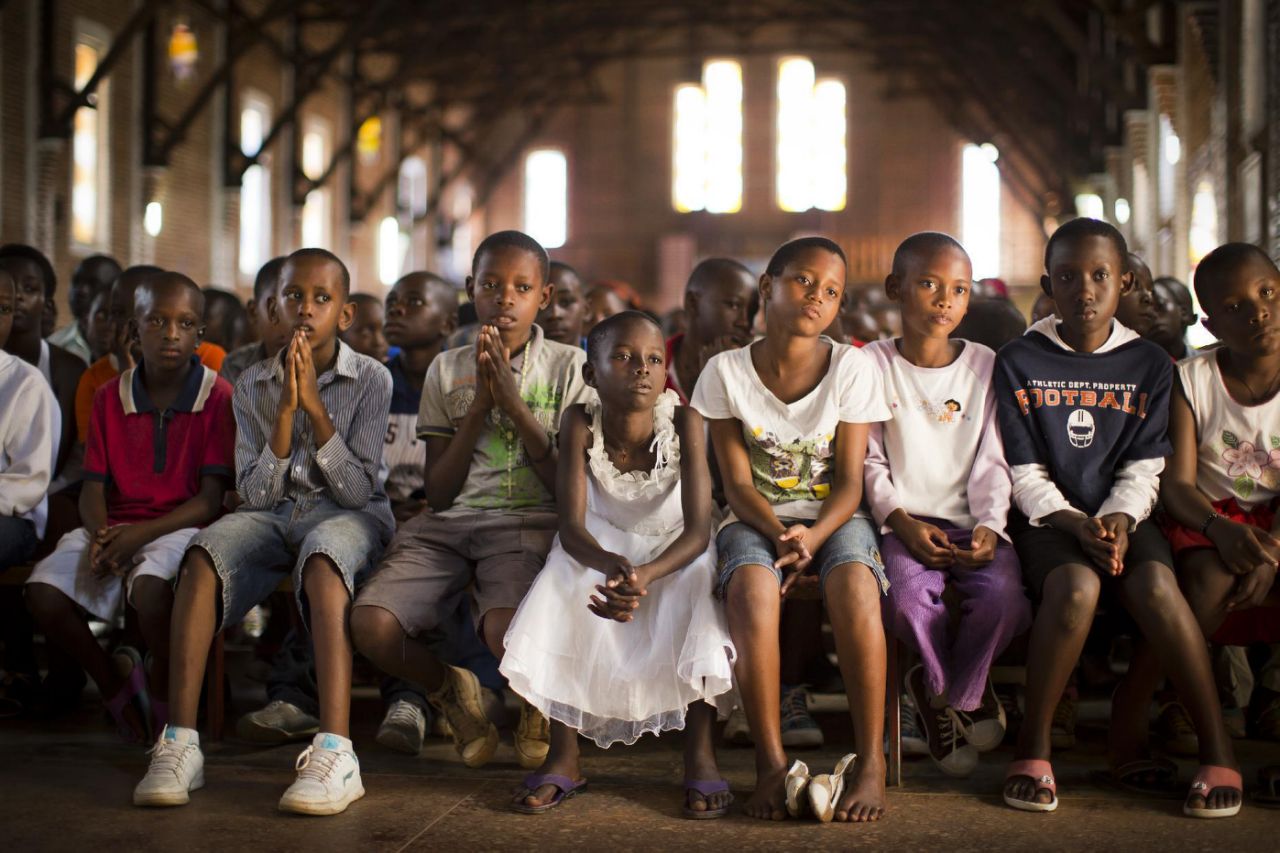
Photo Caption – In this Sunday, April 6, 2014 file photo, Rwandan children listen and pray during a Sunday morning service at the Saint-Famille Catholic church, the scene of many killings during the 1994 genocide, in the capital Kigali, Rwanda. The Catholic Church in Rwanda apologized on Sunday, Nov. 20, 2016, for the church’s role in the 1994 genocide, saying it regretted the actions of those who participated in the massacres. (AP Photo/Ben Curtis, File)

The recap: “800,000 ethnic Tutsis and moderate Hutus were killed by Hutu extremists” during the Rwanda Holocaust in 1994. (This history was dramatized in the movie Hotel Rwanda; see Appendix B VIDEO below).

How does a community – like Rwanda in the foregoing – repent, forgive and reconcile from such a bad legacy?

“Confession is good for the soul”!

This commentary is part-and-parcel of the effort to reform and transform the Caribbean. We too, have some atrocities to reconcile. Plus we have many recent bad actions to reckon with. Think:

  • Haiti
  • Cuba
  • Guyana
  • Belize

The book Go Lean…Caribbean posits that any success in reforming and transforming the Caribbean must include a unified region – we need to be a Single Market – despite the 30 different member-states, 5 different colonial legacies and 4 different languages. We have a lot of differences – just like the differences of Hutus and Tutsis in Rwanda – and a history of dysfunction. We must consider the ancient and modern conflicts some member-states have had with others.

The book serves as a roadmap for the introduction and implementation of the Caribbean Union Trade Federation (CU). A mission of the roadmap is to reverse the prior “human flight” and invite the Diaspora back to the homeland. Accepting that many people fled the Caribbean seeking refuge, means that we must mitigate these causes of prior distress; and reconcile them. “Old parties” returning to their communities can open a lot of “old wounds” – Rwanda never reconciled their Hutu-Tutsi conflicts before 1994. Therefore an additional mission is to facilitate formal reconciliations, much like the model in South Africa with the Truth & Reconciliation Commissions (TRC). This mission will assuage these Failed-State indicators and threats (Page 272):

  • “Revenge seeking” groups
  • Group Grievances

The foregoing article depicts a bad episode in history of Rwanda and the Catholic Church’s complexities. The best-practice is to repent, forgive and reconcile. Repentance would include desisting in the bad behavior, confession and making amends. Religious orthodoxy is responsible for a lot of harm in the world. To finally answer the opening question: Is mainstream religion a force for moral good in modern society … in the Caribbean?

The answer is: No!

The Go Lean movement (book and blogs) have identified many bad community ethos – fundamental character or spirit of a culture; the underlying sentiment that informs the beliefs, customs, or practices of a group or society; the dominant assumptions of a people or period – that the Caribbean region needs to desist, confess and make amends. Many of these are based on religious orthodoxy; consider:

The Go Lean movement (book and blogs) also details good-positive community ethos that the people of the region need to adopt. The motivating ethos underlying the Go Lean roadmap is the Greater Good. This is defined as “the greatest good to the greatest number of people which is the measure of right and wrong” – Jeremy Bentham (1748-1832), a British philosopher, jurist, and social reformer. What is ironic is the fact that the Greater Good ethos aligns with the true values of most of the orthodox religions identified above; such as this scripture:

Pure and genuine religion in the sight of God the Father means caring for orphans and widows in their distress and refusing to let the world corrupt you. – James 1:27; New Living Translation

This CU/Go Lean mission is to elevate society for Caribbean people in the Caribbean. There is the need to monitor the enforcement of human rights and stand “on guard” against movements towards Failed-State status. The Go Lean roadmap calls for the CU to assume that role. Using cutting edge delivery of best practices, the CU will employ strategies, tactics and implementations to impact its prime directives; identified with the following 3 statements:

  • Optimization of the economic engines in order to grow the regional economy to $800 Billion & create 2.2 million new jobs.
  • Establishment of a security apparatus to ensure public safety assurances and protect the region’s economic engines.
  • Improvement of Caribbean governance to support these engines.

The Go Lean book speaks of the Caribbean as in crisis and posits that this crisis can be averted, that it is a “terrible thing to waste”. The Go Lean roadmap seeks to optimize the entire Caribbean economic/security/governance eco-system. This vision is defined early in the book (Page 12) in the following pronouncements in the Declaration of Interdependence:

xi. Whereas all men are entitled to the benefits of good governance in a free society, “new guards” must be enacted to dissuade the emergence of incompetence, corruption, nepotism and cronyism at the peril of the people’s best interest. The Federation must guarantee the executions of a social contract between government and the governed.

xii. Whereas the legacy in recent times in individual states may be that of ineffectual governance with no redress to higher authority, the accedence of this Federation will ensure accountability and escalation of the human and civil rights of the people for good governance, justice assurances, due process and the rule of law. As such, any threats of a “failed state” status for any member state must enact emergency measures on behalf of the Federation to protect the human, civil and property rights of the citizens, residents, allies, trading partners, and visitors of the affected member state and the Federation as a whole.

xiii. Whereas the legacy of dissensions in many member-states (for example: Haiti and Cuba) will require a concerted effort to integrate the exile community’s repatriation, the Federation must arrange for Reconciliation Commissions to satiate a demand for justice.

The Go Lean book details a lot more, a series of assessments, community ethos, strategies, tactics, implementations and advocacies to ensure a safe and just society in the Caribbean region:

Community Ethos – Economic Systems Influence Choices & Incentives Page 21
Community Ethos – People Respond to Incentives Page 21
Community Ethos – Consequences of Choices Lie in the Future Page 21
Community Ethos – Ways to Impact Turn-Arounds Page 33
Community Ethos – Ways to Manage Reconciliations Page 34
Community Ethos – Ways to Promote Happiness Page 36
Community Ethos – Ways to Impact the Greater Good Page 37
Strategy – Vision – Confederating a Non-Sovereign Union of 30 Member-states Page 45
Strategy – Mission – Keep the next generation at home; Repatriate Diaspora Page 46
Tactical – Separation of Powers – Truth & Reconciliation Courts Page 78
Implementation – Ways to Deliver Page 109
Implementation – Reasons to Repatriate Page 118
Anatomy of Advocacies Page 122
Planning – Ways to Improve Image Page 133
Planning – Improve Failed-State Indices Page 134
Advocacy – Ways to Grow the Economy Page 151
Advocacy – Ways to Better Manage the Social Contract Page 170
Advocacy – Ways to Impact Justice – Truth & Reconciliation Commissions Page 177
Advocacy – Ways to Preserve Caribbean Heritage Page 218
Appendix – Failed State Indicators & Definitions Page 271
Appendix – Dominican Republic’s Trujillo Regime – Ethnic Cleansing Page 306

The foregoing article conveys that the country of Rwanda is making efforts to come to grips with their atrocious past. This was not a Black-White conflict, but rather a Black-on-Black drama. This drama therefore relates to the Caribbean as we have majority Black populations in almost every Caribbean member-state. Now is the time for all of the Caribbean, the people and governing institutions, to lean-in for the empowerments described in the book Go Lean … Caribbean. There is reason to believe that we too can reform and transform our bad community ethos, as causes, advocacies and campaigns have shown success in previous societies. The Go Lean roadmap relates the experiences of how these single causes/advocacies have been forged throughout the world (Page 122 – Anatomy of Advocacies):

Frederick Douglass Abolition of African-American Slavery
Mohandas Gandhi Indian Independence
Dr. Martin Luther King African-American Civil Rights Movement
Nelson Mandela South Africa’s Anti-Apartheid
Cesar Chavez Migrant Farm Workers in the US
Candice Lightner Mothers Against Drunk Driving (MADD)

The Caribbean can succeed too, in our efforts to improve the Caribbean community ethos. Consider this sample of previous blog-commentaries that delve into aspects of forging change in the Caribbean community ethos:

https://goleancaribbean.com/blog/?p=9428 Forging Change: Herd Mentality
https://goleancaribbean.com/blog/?p=9017 Proclaim ‘International Caribbean Day’
https://goleancaribbean.com/blog/?p=8200 Respect for Minorities: Climate of Hate
https://goleancaribbean.com/blog/?p=7628 ‘A Change Is Gonna Come’
https://goleancaribbean.com/blog/?p=5695 Repenting, Forgiving and Reconciling the Past
https://goleancaribbean.com/blog/?p=4971 A Lesson in History – Royal Charter: Truth & Consequence
https://goleancaribbean.com/blog/?p=3929 Success Recipe: Add Bacon to Eggs
https://goleancaribbean.com/blog/?p=3915 ‘Change the way you see the world; you change the world you see’
https://goleancaribbean.com/blog/?p=3780 Forging a ‘National Sacrifice‘ Ethos
https://goleancaribbean.com/blog/?p=623 ‘Only at the precipice, do they change’

The Go Lean movement wants to help reform and transform the Caribbean. We see the crisis; we recognize that status quo, including the root causes and influences. We perceive the harmful effects of the religious orthodoxy. Yet we do not want to ban religion! Just the opposite, we know that religion can be a force for moral good in society, when practiced right. But we also know that religion can give birth to extremist passions and foster the worst sentiments in the human psyche. This too is presented in the Bible:

1 “I have told you these things so that you won’t abandon your faith. 2 For you will be expelled from the synagogues, and the time is coming when those who kill you will think they are doing a holy service for God3 This is because they have never known the Father or me. 4 Yes, I’m telling you these things now, so that when they happen, you will remember my warning…

A “Separation of Church and State” is the standard in the advanced democracies; this is now embedded in the implied Social Contract. Unfortunately this is not the norm in the Caribbean. Just consider these continued practices that demonstrate a highly charged religiosity in the region:

The Go Lean book defines the Social Contract as follows:

“Citizens surrender some of their freedoms and submit to the authority of the State in exchange for protection of remaining natural and legal rights” – Page 170.

The Caribbean Social Contract specifies that governments must protect their citizens, those in Christendom or not. Human rights assume a religious neutrality; even those who are “Spiritual But Not Religious” – see Appendix C below – must be respected and protected.

The vision for a new religiously neutral Caribbean specifies new community ethos for the homeland, one being the practice of reconciling conflicts from the past; to make an accounting (lay bare), repent, forgive and then hopefully forget the long history of human rights abuses. All of this heavy-lifting will contribute towards the effort to make the region a better homeland to live, work and play. We urge all to lean-in to this roadmap.

Closing exhortation about Babylon the Great:

Then I heard another voice calling from heaven, “Come away from her, my people. Do not take part in her sins, or you will be punished with her. – Revelation 18:4 – New Living Translation

Let him with ears, hear…

Download the book Go Lean … Caribbean – now!

———-

Appendix A – Cultural importance of “Babylon”

Due to Babylon’s historical significance as well as references to it in the Bible, the word “Babylon” in various languages has acquired a generic meaning of a large, bustling diverse city. Examples include:

  • Babilonas (Lithuanian name for “Babylon”)—a real estate development in Lithuania.
  • Babylon is used in reggae music as a concept in the Rastafari belief system, denoting the materialistic capitalist world.
  • Babylon 5—a science fiction series about a multi-racial futuristic space station.
  • Babylon A.D. takes place in New York City, decades in the future.

———-

Appendix B VIDEO – Hotel Rwanda (2004) – Official Movie Trailer – https://youtu.be/qZzfxL90100

Uploaded on Jun 18, 2011
Director: Terry George
Starring: Don Cheadle, Sophie Okonedo, Nick Nolte and Joaquin Phoenix.

———-

Appendix C AUDIO Podcast – Spiritual But Not Religious – http://www.humanmedia.org/catalog/excerpts/141_spiritual_not_religious.mp3


Share this post:
, , , ,
[Top]

‘Time to Go’ – Public Schools for Black-and-Brown

Go Lean Commentary

Let’s understand the expectation:

“You emigrate from the Caribbean to the US – to New York City – to give your children – the next generation – a better opportunity for life, liberty and the pursuit of happiness; you automatically assume that the public schools will be excellent, above-average or at least acceptable”. – Book: Go Lean … CaribbeanPage 126.

Sorry to burst your bubble. But the reality is far different than the expectation.

cu-blog-time-to-go-public-schools-for-blacks-and-hispanics-photo-1

This is the conclusion of the below article, that immigrant students are imperiled more than ordinary in the New York City’s schools. The prospects for the next generation may not be as bright as “you” had hoped. This undermines the whole premise of the “push and pull” for emigration in the first place. (“Push” refers to the societal defects in the Caribbean that moves people to want to get way; and “pull” factors refer to the impressions and perceptions that America is better).

That “pull” expectation was from before – 1970’s and 1980’s; see Anecdote in the Appendix below – but today the disposition in New York City’s schools is just dire. See the news article here:

Title: City finds most poverty-stricken or homeless public school students are Black, Hispanic
By: Ben Chapman and Lisa Colangelo
Black and Hispanic kids are more likely to face a variety of challenges in public classrooms, according to data the city Education Department released Tuesday.

The majority of students who were homeless or live in poverty are black or Hispanic, according to the report, which is mandated by the City Council.

About 24% of city students in kindergarten through eighth grade who were eligible for free or reduced-price lunches in the 2015-2016 school year were African-American and 46% were Hispanic.

Additionally, about 33% of the K-8 students who live in temporary housing — which includes homeless shelters and those doubled up with friends and relatives — are black and 54% are Hispanic.

City Education Department officials said they have started a number of initiatives to make schools more diverse, including support for LGBT students, helping more black and Hispanic students apply to the city’s elite specialized high schools and encouraging high-performing schools to admit more low-income students.

But Mona Davids of the NYC Parents Union said the city is “skirting the issue of desegregating the city school system.”

“Encouraging schools isn’t enough,” she said. “There needs to be a top-down mandate.”
Source: New York Daily News; Posted November 2, 2016′ retrieved November 13, 2016 from: http://www.nydailynews.com/new-york/education/city-finds-black-hispanic-public-school-kids-hardships-article-1.2854566

This – the foregoing – is not the expectation that Caribbean immigrants had, but it is what it is! While this article relates to New York, the anecdotal experience is the same in urban communities across the US.

The majority population in the Caribbean member-states is Black and Hispanic, or more typically classified as Black-and-Brown. So this foregoing article is really referring to “us”, the Caribbean Diaspora living in the US. This strategy – emigrate for education sake – employed by previous Caribbean immigrants now needs a reality check.

The purpose of this commentary is to relate two strong points of contention:

  • Dissuade the high emigration rates of Caribbean citizens to the American homeland.
  • Encourage the Caribbean Diaspora to repatriate back to their ancestral homeland.

According to the foregoing article, emigrating to New York City (NYC) may be one step forward, two steps backwards. So this commentary asserts that it is easier for the Black-and-Brown populations in the Caribbean to prosper where planted in the Caribbean, rather than emigrating to foreign countries, like the United States, to foreign cities like NYC. This disposition applies to Caribbean students, yes, but to teachers as well; see the Appendix VIDEO below relating a consistent drama for imported-Caribbean teachers in NYC.

This commentary is the completion of the series from the movement behind the book Go Lean … Caribbean, in consideration of reasons why the Diaspora should repatriate back to the Caribbean homeland. There was an original 3-part series, with these submissions:

  1.     Time to Go: Spot-on for Protest
  2.     Time to Go: No Respect for our Hair
  3.     Time to Go: Logic of Senior Immigration

Now, this new extension to the series considers the additional topics as detailed in this series as follows:

  1.     Time to Go: Marginalizing Our Vote
  2.     Time to Go: American Vices; Don’t Follow
  3.     Time to Go: Public Schools for Black-and-Brown

All of these commentaries relate to the Caribbean disposition in the United States. The Go Lean book (and movement) serves as a roadmap for the introduction of the technocratic Caribbean Union Trade Federation (CU). The CU is set to optimize Caribbean society through economic, security and governing optimizations. Therefore the Go Lean roadmap has 3 prime directives:

  • Optimization of the economic engines in order to grow the regional economy to $800 Billion & create 2.2 million new jobs.
  • Establishment of a security apparatus to ensure public safety and protect the economic engines.
  • Improve Caribbean governance – including empowerments for education – to support these engines.

The “push and pull” factors do imperil Caribbean life. We push our citizens out. Then the resultant effect is a brain drain and even more endangerment to our society: less skilled workers, less entrepreneurs, less law-abiding citizens, less capable public servants – we lose our best and leave the communities with the rest. This create a crisis.

cu-blog-vision-and-values-for-a-new-caribbean-photo-2The Go Lean roadmap posits that the entire Caribbean is in crisis now; so many of our citizens have fled for refuge in the US and other foreign countries, but the refuge is a mirage. The “grass is not necessarily greener on the other side”. Life in the US, in New York City for example, is definitely not optimized for the Caribbean’s Black-and-Brown. There is a challenge to reform and transform the community in the US; and there is a challenge to reform and transform the community in the Caribbean. It is easier to fix the Caribbean than to fix the American eco-system. It is Time to Go! Our Caribbean people can better prosper where planted in the Caribbean.

Rich, poor, middle-class …

The Go Lean book asserts that every community has poor people. The Caribbean has poverty; and the US has poverty. With the empowerments in the Go Lean roadmap, it will be easier to elevate from poverty in the Caribbean. Education is one such empowerment. The US still has some societal defects – racism for example – that are so imbrued that they are tied to the country’s DNA. As alluded to in the foregoing news article, segregation, de jure or de facto, is a deterrence to optimized educational opportunities. This is why the Go Lean movement posits that it is easier to effect change at home in the Caribbean, than in the foreign country of the US.

Education is key … in the Go Lean roadmap. We cannot effect an elevation from poverty to middle-class without education. Research by Economists have established that every additional year of schooling an individual increases their earnings by about 10%. This is a very impressive rate of return. The Go Lean book quotes these proven economic studies, showing the impact that additional years of education have had on individuals’ earning power (Page 258).  If the Caribbean Diaspora, the Black-and-Brown in New York City cannot get fair educational opportunities in New York, then we declare that it is “Time to Go“. We are hereby preparing for their return – fixing our defects – rebooting our education eco-system.

The Go Lean book posits that Caribbean stakeholders made many flawed education decisions in the past, both individually and community-wise. (Consider the example of Government grants, loans and scholarships for students that ended up never returning “home”). The vision of the CU is a confederation of the 30 member-states of the Caribbean to do the heavy-lifting of championing better educational policies. There is the structure of a separation-of-powers between CU agencies and the individual member-states.

The Go Lean roadmap provides turn-by-turn directions on how to reform the Caribbean education systems, economy, governance and Caribbean society as a whole. This roadmap admits that because the Caribbean is in crisis, this “crisis would be a terrible thing to waste”. As a planning tool, the roadmap commences with a Declaration of Interdependence, pronouncing the approach of regional integration (Page 12 & 14) as a viable solution to elevate the region’s educational opportunities:

xix. Whereas our legacy in recent times is one of societal abandonment, it is imperative that incentives and encouragement be put in place to first dissuade the human flight, and then entice and welcome the return of our Diaspora back to our shores

xxi. Whereas the preparation of our labor force can foster opportunities and dictate economic progress for current and future generations, the Federation must ensure that educational and job training opportunities are fully optimized for all residents of all member-states, with no partiality towards any gender or ethnic group. The Federation must recognize and facilitate excellence in many different fields of endeavor, including sciences, languages, arts, music and sports. This responsibility should be executed without incurring the risks of further human flight, as has been the past history.

xxvii. Whereas the region has endured a spectator status during the Industrial Revolution, we cannot stand on the sidelines of this new economy, the Information Revolution. Rather, the Federation must embrace all the tenets of Internet Communications Technology (ICT) to serve as an equalizing element in competition with the rest of the world. The Federation must bridge the digital divide and promote the community ethos that research/development is valuable and must be promoted and incentivized for adoption.

Change has now come. The driver of this change is technology and globalization. Under the tenants of globalization, the Caribbean labor pool is a commodity; their talents are subject to the economic realities of supply-and-demand. The Go Lean book posits therefore that the governmental administrations of the region should invest in better education options, and as much technological education advances (like e-Learning) as possible, for its citizens. The bottom-line motive should be the Greater Good – “the greatest good for the greatest number of people which is the measure of right and wrong – not profit nor emigration.

How exactly do we accomplish this goal? The book details those policies; and other ethos to adopt, plus the executions of the following strategies, tactics, implementations and advocacies to impact the education eco-system in the Caribbean region:

Foreword – Lean On Me Film – Inspiration for Educational Reform Page 5
Community Ethos – Deferred Gratification Page 21
Community Ethos – People Respond to Incentives Page 21
Community Ethos – Job Multiplier Page 22
Community Ethos – Lean Operations Page 24
Community Ethos – Return on Investments (ROI) Page 24
Community Ethos – Ways to Impact the Future Page 26
Community Ethos – Ways to Foster Genius Page 27
Community Ethos – Ways to Help Entrepreneurship – Incubator Training Page 28
Community Ethos – Ways to Impact the Greater Good Page 37
Tactical – Separation of Powers – Education Department Page 85
Tactical – Separation of Powers – Labor Department – On-the-Job-Training Oversight Page 89
Planning – Lessons from New York City Page 137
Advocacy – Ways to Grow the Economy Page 151
Advocacy – Ways to Create Jobs Page 152
Advocacy – Ways to Improve Education Page 159
Advocacy – Ways to Improve Governance Page 169
Advocacy – Ways to Improve Libraries Page 187
Advocacy – Ways to Foster Technology Page 197
Appendix – Education and Economic Growth Page 258
Appendix – Measuring Education with Standardized Testing Page 266

The subject of “pull” (from the “push and pull” dynamics) has been frequently blogged on in other Go Lean commentaries; as sampled here with these entries relating American “pull” factors:

https://goleancaribbean.com/blog/?p=8431 Bahamas Issued US Travel Advisory Citing Police Violence
https://goleancaribbean.com/blog/?p=8202 Respect for Minorities: Lessons Learned from American Dysfunction
https://goleancaribbean.com/blog/?p=8099 Caribbean Image: ‘Less Than’?
https://goleancaribbean.com/blog/?p=7221 Street naming for Martin Luther King unveils the real America
https://goleancaribbean.com/blog/?p=7204 ‘The Covenant with Black America’ – Ten Years Later
https://goleancaribbean.com/blog/?p=6189 A Lesson in History – Hurricane ‘Katrina’ exposed a “Climate of Hate”
https://goleancaribbean.com/blog/?p=5733 Better than America? Yes, We Can!
https://goleancaribbean.com/blog/?p=5527 American Defects: Racism – Is It Over?
https://goleancaribbean.com/blog/?p=5333 Racial Legacies: Cause and Effect
https://goleancaribbean.com/blog/?p=546 American Model: Book Review – ‘The Divide’ – … Injustice in the Age of the Wealth Gap
https://goleancaribbean.com/blog/?p=273 10 Things We Don’t Want from the US: Racism against minorities

Underlying to the Go Lean/CU prime directive of elevating the economics, security and governing engines of the Caribbean, is the desire to make the Caribbean homeland, a better place to live, work and play. Saying that it is “Time to Go“, must mean that we are ready to receive our Caribbean Diaspora from New York City and other destinations. Are we ready, now?

As related previously: frankly, no …

… but we are ready, willing and able to start the change process, to reform and transform the Caribbean. This is the intent of the book Go Lean … Caribbean. This subject of improving the conditions for successful Caribbean repatriation has been blogged in previous Go Lean commentaries; as sampled here:

https://goleancaribbean.com/blog/?p=8530 Tired Waiting? Time to Reform & Transform the Caribbean
https://goleancaribbean.com/blog/?p=7151 The Caribbean is Looking for Heroes … ‘to Return’
https://goleancaribbean.com/blog/?p=5304 Mitigating the Eventual Abuse of Power

The Go Lean/CU roadmap asserts that America should not be presented as the panacea for all of the Caribbean ills – we must reform and transform our own society. While America does so many things right, the country acts poorly towards its Black-and-Brown citizens. Our people, the Black-and-Brown of the Caribbean, can expect more success from less effort in the Caribbean region than in the US, especially education-wise.

It is Time to Go … back home.

Now is the time for all of the Caribbean, the people and governing institutions, to lean-in for the empowerments described in the book Go Lean … Caribbean. This is the roadmap to elevate the Caribbean; to make our homeland a better place to live, work, learn and play. 🙂

Download the book Go Lean … Caribbean – now!

———

Appendix – Anecdote # 15 – Repatriated Resident: Pearline Anglin (Page 126)

Bold = Author

Pearline Anglin has returned to Jamaica after living abroad (New York City, United States) for over 35 years. Why leave NYC and go to Jamaica, when so many Jamaicans would rather emigrate to New York? Simple, she never envisioned spending her “golden” years in America. She is now retired and has to contend with all the challenges of growing old. In her mind there are challenges everywhere; she would rather face her challenges at “home” rather than be a constant “alien’ in a foreign land. At home, her accent does not set her apart; her preference for food and drink is common among all her neighbors and is consumed by everyone else. Most importantly, she has no unbearable winters to contend with.

So why leave when you have such an obvious love for your country/culture? Ms. Anglin intimated that her decision to emigrate was based on the need to give her children a better life, a better future. (She has 7 children, all of whom live in the US; plus an additional son that died as an infant). The children needed opportunities for education; such as would not require a large investment for private schools. She knew that the public education systems in the US were better than the public education  system in Jamaica. And then there were the economic realities. Ms. Anglin first emigrated to Canada, as it was easier to expatriate there. Then she returned to Jamaica for a short period. Her mother, now deceased, had US residency at this point and was able to sponsor Pearline, and then later Pearline sponsored her children. (The time apart from the children required that she remit monies back home, at least monthly, for their care).This started the flow of all the family “abandoning” their homeland. (Ms. Anglin has 2 siblings who also emigrated to the NYC area). To this day, her 7 children and 19 grand and great-grandchildren all live abroad.

How would you feel if your children or grandchildren decide to return to their Caribbean roots? Ms. Anglin revealed that while she feels “good” about a decision like that, there must be more to such a plan. They must prepare for such a return thoroughly, and responsibly; they would have to consider all aspects of life and living in the islands. She is not holding her breath.

How do you feel about Caribbean Security? Most disappointed – considering what life used to be like in Jamaica, she is troubled at the pervasive crime in or near the cities, like Montego Bay. As an older woman she has to live very cautiously, she does not go out at night and takes many other precautions. This is a beloved vision for her, where security would be more assured for Caribbean people. Other areas of concern for the future would include better health care facilities nearby so that she does not have to venture so far from her Black River area home (St. Elizabeth Parrish) to seek professional medical attention.

How do you feel about Caribbean Economy? Same as the economy in New York – recessions and economic downturns affect everyone. There are problems in Jamaica, there are problems too in the US. One cannot run away from economic challenges, rather one must equip themselves with the tools to compete, wherever they are.

Do you long for life back in the US? She really loved New York; but do not consider it an ideal lifestyle for the elderly. The hustle-and-bustle is perhaps too great!

Where do you consider to be the best place to live? For her considerations, there is no place like home, Jamaica.

———

Appendix VIDEO – Caribbean Teachers Treated Like ‘Indentured Servants’ by NYC Board of Education – https://youtu.be/kPmVuoH1xsQ

Uploaded on Apr 18, 2011 – Judith Hall, who heads the Association of International Educators and also teaches at Marie Curie High School in the Bronx, and Bertha Lewis from the Black Institute, an advocacy organization, voiced concerns on Monday’s “Inside City Hall” about what they call false promises by the Department of Education to Caribbean teachers.

Share this post:
, ,
[Top]

‘Time to Go’ – American Vices. Don’t Follow!

Go Lean Commentary

Sex, …
Drugs …
… and Rock-n-Roll.

America has taken the lead in the fostering of these vices for the rest of the world. 🙁

For the Caribbean looking to American leadership, the stern advice here is to not follow these American vices:

Sex

cu-blog-time-to-go-american-vices-dont-follow-photo-2While natural and normal, there is a distortion in America with the promotion of pornography. Comedian Bill Maher joked “that America invented the internet, then filled it with porn”; see Pornhub profile here and “List of Websites By Traffic” in the Appendix below:

Pornhub, part of the Pornhub NETWORK campaign, is a pornographic video sharing website and the largest pornography site on the Internet.[4][5] Pornhub was launched in Montreal, providing professional and amateur photography since 2007. Pornhub also has offices and servers in San Francisco, Houston, New Orleans and London. In March 2010, Pornhub was bought by Manwin (now known as MindGeek), which owns numerous other porn websites.As of 2009, three of the largest porn sites “RedTube, YouPorn and PornHub -collectively make up 100 million unique visitors”.[12]
Malvertising – Researcher Conrad Longmore claims that advertisements displayed by the sites were found to contain malware programs, which install harmful files on users’ machines without their permission. Longmore told the BBC that two popular sites – XHamster and PornHub – pose the greatest threat.[28]Source: https://en.wikipedia.org/wiki/Pornhub retrieved November 12, 2016.
[On the List of Websites By Traffic in the Appendix below, pornographic sites are # 57, 60, 67, 78, 139 and 190]

Drugs

cu-blog-time-to-go-american-vices-dont-followMarijuana legalization is now the norm for 40 percent of the American population. (A previous blog-commentary details the challenges of decriminalizing drugs in the Caribbean region). See the story here:
Title: A Bunch of States Just Legalized Weed, Which Is Great Because We All Need It Now
California’s referendum to legalize marijuana in the world’s sixth-largest economy passed Tuesday night. So did voter measures in Massachusetts and Nevada. Maine’s referendum was still being counted early Wednesday morning, and Arizona’s was poised to lose. Three other states passed medical marijuana reforms, and a fourth appeared likely to do so. This means that in eight states (plus Washington, D.C.) weed will be legal for recreational purposes, and in sum, 28 will have some kind of legalization on the books.

It’s a good thing that a large chunk of America will soon be able toke up at their leisure, because for the next four years, we are really going to need it.

The conventional wisdom about the 2016 ballot measures was that their approval would make federal legalization truly inevitable — millions of Americans are already using marijuana within the letter of state law. This has created a $6 billion industry, and those figures are only likely to continue to multiply. While the Obama administration has continued to go after some growers and sellers, it has largely allowed state legalization to take its course. The state policies certainly aren’t perfect, but they’re ultimately good and just: Currently, there are hundreds of thousands of marijuana-possession arrests every year, and they disproportionately affect (read: ruin the lives of) poor minorities. Treating marijuana more like alcohol and less like heroin changes that.

Of course, now all that could go up in smoke. If it wanted to, a Trump administration could undo the progress marijuana regulation has made in an instant. As one reform advocate told the Washington Post: “The prospect of Rudy Giuliani or Chris Christie as attorney general does not bode well.” Sure doesn’t! But what policy implication of a Trump presidency does?

Someone pass me some of the strong stuff.
By: Jonathan L. Fischer, Slate senior editor.
Source: Slate Online Magazine; Posted November 9, 2016 from: http://www.slate.com/blogs/the_slatest/2016/11/09/a_bunch_of_states_just_legalized_weed_good_we_all_need_it.html

————

VIDEO – Big Pot: The Commercial Takeover – http://www.cbsnews.com/videos/big-pot-the-commercial-takeover

November 7, 2016 – CBSN Originals explores the rapidly changing landscape of legal marijuana, traveling to five states and Canada to interview key figures on all sides of the issue.

Rock-n-Roll

cu-blog-time-to-go-american-vices-dont-follow-photo-3America gave birth to this musical art-form; but is now leading the music industry into a downward spiral of dissolution, dissension and dysfunction. The sad state of the music industry is a frequent topic for this commentary and the underlying book Go Lean…Caribbean. This subject was exhausted in a “Lessons Learned Case Study” regarding Music Piracy: See Appendix ZT – To Catch A Thief –  Page 351. Many previous blog-commentaries have detailed the sad state of the music industry:

The vice associated with Rock-n-Roll is that of cultural nullification. The Go Lean book details this debate as deliberated in France: cultural preservation versus cultural nullification from American Rock-n-Roll. France held its ground … and today, the city of Paris enjoys 30 million tourists and $25 Billion in culture/tourism spending …annually.

This commentary asserts that it is easier for Caribbean people to prosper where planted in the Caribbean, rather than emigrating to foreign countries, like the United States.

But, globalization being what it is, means that left unchecked, we will see all of these American vices in our communities, whether we want them or not.

This commentary declares: We do not want them.

This point aligns with the book Go Lean…Caribbean, which states that American leadership is not always focused on the best interest of America, but rather the best interest of special interest groups. We cannot submit, yield and follow their lead in fostering our own society. The book supports the notion that the Caribbean can be an even better place compared to America for Caribbean people if we adhere to the community ethos of the Greater Good, “the greatest good for the greatest number of people which is the measure of right and wrong.” – Page 37.

If we succeed at adopting this community ethos – underlying sentiment that informs the beliefs, customs, or practices of our society – then we can make our homeland a better place to live, work and play. There is the need to optimize the economic, security and governing engines in the Caribbean region to pursue these goals, not American values.

This is a continuation from the previous 3-part series from the movement behind the book Go Lean … Caribbean, in consideration of reasons why the Diaspora should repatriate back to the Caribbean homeland. The previous commentaries detailed:

  1.     Time to Go: Spot-on for Protest
  2.     Time to Go: No Respect for our Hair
  3.     Time to Go: Logic of Senior Immigration

Now, this new extension to the series considers the additional topics as detailed in this series as follows:

  1.     Time to Go: Marginalizing Our Vote
  2.     Time to Go: American Vices; Don’t Follow
  3.     Time to Go: Public Schools for Black-and-Brown

All of these commentaries relate to the Caribbean disposition in the United States. The Go Lean book and movement serves as a roadmap for the introduction of the technocratic Caribbean Union Trade Federation (CU). The CU is set to optimize Caribbean society through economic, security and governing optimizations. Therefore the Go Lean roadmap has 3 prime directives:

  • Optimization of the economic engines in order to grow the regional economy to $800 Billion & create 2.2 million new jobs.
  • Establishment of a security apparatus to ensure public safety and protect the economic engines.
  • Improve Caribbean governance to support these engines.

The Go Lean roadmap posits that the Caribbean region is in crisis now, and so many are quick to flee for refuge in foreign countries. But the “grass is not necessarily greener on the other side”. Considering the actual vices in American society – which will only get worse with time – life there is definitely not optimized for Caribbean people. As mentioned in the foregoing, the Black-and-Brown of America are the ones that have been imperiled the most because of the drug eco-system. The Go Lean book asserts that because every community has bad actors – the Caribbean has bad actors and the US has bad actors – there is the obvious need to reform and transform the region, security-wise. This point is pronounced early in the book with the Declaration of Interdependence (Page 12) that claims:

x.  Whereas we are surrounded and allied to nations of larger proportions in land mass, populations, and treasuries, elements in their societies may have ill-intent in their pursuits, at the expense of the safety and security of our citizens. We must therefore appoint “new guards” to ensure our public safety and threats against our society, both domestic and foreign. The Federation must employ the latest advances and best practices of criminology and penology to assuage continuous threats against public safety. The Federation must allow for facilitations of detention for [domestic and foreign] convicted felons of federal crimes, and should over-build prisons to house trustees from other jurisdictions.

xvi. Whereas security of our homeland is inextricably linked to prosperity of the homeland, the economic and security interest of the region needs to be aligned under the same governance. Since economic crimes, including piracy and other forms of terrorism, can imperil the functioning of the wheels of commerce for all the citizenry, the accedence of this Federation must equip the security apparatus with the tools and techniques for predictive and proactive interdictions.

The Caribbean appointing “new guards” or a security apparatus to ensure public safety and justice assurance is a comprehensive endeavor, that will encapsulate the needs of all Caribbean stakeholders: governments, institutions and citizens (residents and Diaspora).

An important mission of the Go Lean roadmap is to dissuade the high emigration rates of Caribbean citizens to the American homeland. This means being conscious of why people flee – “push” and “pull” reasons – and monitoring the societal engines to ensure improvement – optimization. (“Push” refers to the societal defects in the Caribbean that moves people to want to get way; and “pull” factors refer to the impressions and perceptions that America is better). A second mission is to encourage the repatriation of the Caribbean Diaspora back to their ancestral homeland, where the dangers associated with these vices are less intense.

There is risk to security and justice assurance on all sides of the issue of vices – this is heavy-lifting. The book details this complexity, with a focus on the community ethos, strategies, tactics, implementations and advocacies to monitor, manage and mitigate the security risks to Caribbean society. The following is a sample list:

Community Ethos – Deferred Gratification Page 21
Community Ethos – Job Multiplier Page 22
Community Ethos – Privacy versus Public Protection Page 23
Community Ethos – Light Up the Dark Places Page 23
Community Ethos – Ways to Impact Research & Development Page 30
Community Ethos – Ways to Impact the Greater Good Page 37
Strategy – Vision – Integration of Single Market Economy Page 45
Strategy – Agents of Change – Globalization Page 57
Tactical – Fostering a Technocracy Page 64
Tactical – Separation of Powers – Homeland Security Page 75
Tactical – Separation of Powers – Justice Department Page 77
Implementation – Security Initiatives at Start-up Page 103
Advocacy – Ways to Grow the Economy Page 151
Advocacy – Ways to Ways to Mitigate Black Markets Page 165
Advocacy – Ways to Improve Governance Page 168
Advocacy – Ways to Better Manage the Social Contract Page 170
Advocacy – Ways to Impact Justice Page 177
Advocacy – Ways to Remediate and Mitigate Crime Page 178
Advocacy – Ways to Improve Homeland Security Page 180
Advocacy – Ways to Impact the Prison Industrial Complex – Parole Eco-System Page 211
Advocacy – Ways to Preserve Caribbean Heritage Page 218
Appendix – Mediating as French Culture and Economics Collide Page 311

Now is the time for all of the Caribbean, the people and governing institutions, to lean-in for the empowerments described in the book Go Lean … Caribbean.

For a long time these vices that are now being unleashed on American soil were heavily regulated by other societies; the governments and leaders were protecting the people from destructive behavior. These vices are still destructive despite any American Stamp of Approval. This is not the lead we want to follow.

“Disregard them! They are blind guides. If a blind man leads a blind man, both will fall into a pit.”. – Matthew 15:14 Berean Study Bible.

America has lost its moral high ground. It is Time to Go!

As reported in previous commentaries, justice – for its Black-and-Brown populations – is already a fallacy in the US. Now personal virtue is also becoming frivolous in their society. The country is so duplicitous: there is so much that America does right, but there is so much that America does poorly – and people that they do not respect – that we want to mitigate those influences in our homeland.

It is the conclusion of this Go Lean movement that the “grass is not greener on the American side”. We can do better. We can make our homeland a better place to live, work and play. All Caribbean stakeholders are hereby urged to lean-in to this Go Lean/CU roadmap to elevate the Caribbean. 🙂

Download the book Go Lean … Caribbean – now!

———-

Appendix – List of Websites By Traffic

Site

Domain

Alexa top 100 websites
(As of September 4, 2016)[3]

Type

Principal country

Google google.com 1 Internet services and products  U.S.
YouTube youtube.com 2 Video sharing  U.S.
Facebook facebook.com 3 Social network  U.S.
Baidu baidu.com 4 Search engine  China
Yahoo! yahoo.com 5 Portal and media  U.S.
Amazon amazon.com 6 E-commerce and cloud computing  U.S.
Wikipedia wikipedia.org 7 Encyclopedia  U.S.
Tencent QQ qq.com 8 Portal  China
Google India google.co.in 9 Search engine  India
Twitter twitter.com 10 Social network  U.S.
Windows Live live.com 11 Emailweb services and software suite  U.S.
Taobao taobao.com 12 Online shopping  China
Google Japan google.co.jp 13 Search engine  Japan
Bing bing.com 14 Search engine  U.S.
Instagram instagram.com 15 Photo sharing and social media  U.S.
Sina Weibo weibo.com 16 Social network  China
Sina Corp sina.com.cn 17 Portal and instant messaging  China
LinkedIn linkedin.com 18 Professional Social network  U.S.
Yahoo! Japan yahoo.co.jp 19 Portal  Japan
MSN msn.com 20 Portal  U.S.
VK vk.com 21 Social network  Russia
Google Germany google.de 22 Search engine  Germany
Yandex yandex.ru 23 Search engine  Russia
Hao123 hao123.com 24 Web directories  China
Google UK google.co.uk 25 Search engine  UK
Reddit reddit.com 26 social news networking, entertainment  U.S.
eBay ebay.com 27 Online auctions and shopping  U.S.
Google France google.fr 28 Search engine  France
t.co t.co 29 URL shortening for links on Twitter  U.S.
Tmall tmall.com 30 Retail  China
Google Brazil google.com.br 31 Search engine  Brazil
360 Safeguard 360.cn 32 Internet security and anti-trojan software  China
Sohu sohu.com 33 Portal  China
Amazon Japan amazon.co.jp 34 E-commerce  Japan
Pinterest pinterest.com 35 Social media  U.S.
Mail.ru mail.ru 36 Portal  Russia
Onclickads onclickads.net 37 Online advertising network  U.S.
Netflix netflix.com 38 Streaming TV and movies  U.S.
Google Italy google.it 39 Search engine  Italy
Google Russia google.ru 40 Search engine  Russia
Microsoft microsoft.com 41 Software and technology  U.S.
Google Spain google.es 42 Search engine  Spain
WordPress.com wordpress.com 43 Blogging and social media  U.S.
Guangming Daily gmw.cn 44 Newspaper  China
Tumblr tumblr.com 45 Social media  U.S.
PayPal PayPal.com 46 Payment system  U.S.
Blogspot blogspot.com 47 Blogging  U.S.
Imgur imgur.com 48 Image sharing  U.S.
Stack Overflow stackoverflow.com 49 Question and answer site  U.S.
AliExpress aliexpress.com 50 Online shopping  China
Naver Naver.com 51 Portal  Korea
Odnoklassniki ok.ru 52 Social Networking  Russia
Apple Inc. apple.com 53 Technology and software  U.S.
GitHub github.com 54 Source code hosting service  U.S.
Google Mexico google.com.mx 55 Search Engine  Mexico
China Daily chinadaily.com.cn 56 Newspaper  China
XVideos xvideos.com 57 Pornography  U.S.
IMDb imdb.com 58 FilmTV show, and video game database  U.S.
Google Korea google.co.kr 59 Search Engine  Korea
Pornhub pornhub.com 60 Pornography  Canada
FC2 Portal fc2.com 61 Portal  Japan
Jingdong Mall jd.com 62 E-commerce  China
Blogger blogger.com 63 Blogging  U.S.
NetEase 163.com 64 Portal  China
Google Canada google.ca 65 Search engine  Canada
Google Hong Kong google.com.hk 66 Search engine  Hong Kong
xHamster xhamster.com 67 Pornography  Cyprus
WhatsApp whatsapp.com 68 Instant Messaging  U.S.
Amazon India amazon.in 69 E-commerce  India
Microsoft Office office.com 70 Online Office Suite  U.S.
Google Turkey google.com.tr 71 Search engine  Turkey
Tianya Club tianya.cn 72 Internet forum  China
Google Indonesia google.co.id 73 Search engine  Indonesia
Youku youku.com 74 Video sharing  China
Rakuten rakuten.co.jp 75 E-commerce  Japan
Craigslist craigslist.org 76 Classified advertising  U.S.
Amazon Germany amazon.de 77 E-commerce  Germany
Bonga Cams bongacams.com 78 Pornography  U.S.
Nicovideo nicovideo.jp 79 Video sharing  Japan
Google Poland google.pl 80 Search engine  Poland
Soso.com soso.com 81 Search engine  China
Bilibili bilibili.com 82 Video sharing  China
Dropbox dropbox.com 83 File hosting service  U.S.
Xinhua News Agency xinhuanet.com 84 News  China
Outbrain outbrain.com 85 Content marketing  U.S.
Pixnet pixnet.net 86 Social networkphoto sharingblogging  Taiwan
Alibaba Group alibaba.com 87 E-commerce and portal  China
Alipay alipay.com 88 Payment system  China
Microsoft Online microsoftonline.com 89 Software as a service  U.S.
Google Taiwan google.com.tw 90 Search engine  Taiwan
Booking.com booking.com 91 Booking engine  Netherlands
Google file storage googleusercontent.com 92 File hosting service  U.S.
Google Australia google.com.au 93 Search Engine  Australia
PopAds popads.net 94 Pop-up advertising  Costa Rica
CNTV cntv.cn 95 Television  China
Zhihu zhihu.com 96 Question and answer site  China
Amazon UK amazon.co.uk 97 E-commerce  UK
Diply diply.com 98 Entertainment  Canada
Cốc Cốc coccoc.com 99 Search engine and web browser  Vietnam
CNN cnn.com 100 News  U.S.
BBC bbc.co.uk 101 News  U.K.
Twitch twitch.tv 102 Livestreams  U.S.
Wikia wikia.com 103 Wikis  U.S.
Google Thailand google.co.th 111 Search engine  Thailand
Google Argentina google.com.ar 112 Search engine  Argentina
Go.com go.com 118 Disney portal  U.S.
Google Netherlands google.nl 119 Search engine  Netherlands
eBay UK ebay.co.uk 127 E-commerce  U.K.
KickassTorrents kat.cr 137 Torrents  Costa Rica
XNXX xnxx.com 139 Pornography  Poland[5]
Grupo Globo globo.com 155 Search engine  Brazil
Google Ukraine google.com.ua 163 Search engine  Ukraine
Universo Online uol.com.br 167 Portal  Brazil
Avito avito.ru 170 E-commerce  Russia
Google Colombia google.com.co 182 Search engine  Colombia
RedTube redtube.com 190 Pornography  U.S.
Google Vietnam google.com.vn 209 Search engine  Vietnam
Google Philippines google.com.ph 214 Search engine  Philippines
DoubleClick doubleclick.net 234 Ad serving  U.S.
Onet.pl onet.pl 261 Web portal  Poland
Google Ad Services googleadservices.com 1319 Advertising  U.S.
AccuWeather accuweather.com 331 Weather forecasting  U.S.
Google Web Light googleweblight.com 30447 Webpage transcoder for slow connections  U.S.
Yahoo Answers answers.yahoo.com N/A[notes 2] Question and answer site  U.S.

 Source: https://en.wikipedia.org/wiki/List_of_most_popular_websites retrieved November 12, 2016


Share this post:
, ,
[Top]

‘Time to Go’ – Marginalizing Our Vote

Go Lean Commentary

cu-blog-time-to-go-marginalizing-our-vote-photo-5The US Election is now over.

Yippee! Now, the country – the world for that matter – can get back to business as usual.

The business as usual in the United States is the business of the United States, not necessarily the business of the rest of the world, and definitely not the business of the Caribbean. This commentary has always maintained that the Caribbean needs to take its own lead, rather than depend on American leadership; we do not want to be parasites – anymore – rather, we want to be a protégé. Parasites are people, not policies, so the Caribbean political leadership must be concerned about Caribbean people, not just policies.

It is parasitic of the Caribbean to have the affinity to abandon our homeland so readily. For those that go to the US – as reported in a recent blog-commentary: the estimate of the number of Caribbean Diaspora living in the US is projected up to 22 million – the refuge they seek in America may be elusive or non-existent, especially politically. Why is this the case?

The answer is that the destination, the United States, does not value Black-and-Brown people en masse. Sure, one or a few persons can find success and respect, but in general, this people is marginalized.

Is this a fair judgment?

Yes, indeed. This manifestation is so bad that the United States should not be considered a refuge for the Caribbean Diaspora. What’s more, those of the Diaspora in the US should seriously consider that its “Time To Go“.

This marginalization of the Black-and-Brown population is evident in how the country’s allows them to vote. The Black Vote is monolithic. 90+% of the Black population belong to one partisan alignment, the Democratic Party.

All Blacks are Democrats and the Democratic Party caters to Blacks. Why and how did this come about? See the full story here:

AUDIO PODCAST – http://www.npr.org/sections/codeswitch/2014/07/14/331298996/why-did-black-voters-flee-the-republican-party-in-the-1960s


———
Title: Why Did Black Voters Flee The Republican Party In The 1960s?
By: Karen Grigsby Bates

If you’d walked into a gathering of older black folks 100 years ago, you’d have found that most of them would have been Republican.

Wait… what?

Yep. Republican. Party of Lincoln. Party of the Emancipation. Party that pushed not only Black Votes but black politicians during that post-bellum period known as Reconstruction.

Today, it’s almost the exact opposite. That migration of Black Voters away from the GOP reached its last phase 50 years ago this week.

Walking through the Farmer’s Market at 18th Street and La Cienega Boulevard in Los Angeles, a mixture of Angelenos strolled the asphalt parking lot, surveying rows of leafy produce and ripe stone fruit. Virtually all the people I approached who were registered voters were registered to one party.

“I’m affiliated with the Democratic party, of course!” laughs Arthur Little, a thin man in shorts and electric turquoise-framed sun glasses.

“Why ‘of course’?” I asked.

“Because I think of it as the party that is at least officially interested in putting people’s rights before corporate rights,” Little shakes his head. “I don’t even know why a black person even would be a Republican,” he muses, as he walks off with his teenaged son.
Darlene Lee-Bolgen, eyeballing fresh fingerlings and young onions, said she was worried about income inequality, and she didn’t believe that was a Republican concern. “It doesn’t seem like they’re for the regular people, for civil rights… they’re not doing anything to help the people. They’re all for themselves.”

Black Voters began supporting the Democratic party in greater numbers almost a century ago. But the events of 1964 marked a dramatic shift in voting patterns that’s still with us today.

ap6410010461

A More Even Distribution
Vincent Hutchings, a political scientist who studies voter patterns at the University of Michigan, says the first major shift in black party affiliation away from the Republican Party happened during the Depression. Franklin Roosevelt’s second administration — led by the New Deal — made the Democrats a beacon for black Americans deeply affected by the crushing poverty that was plaguing the country.

But many Black Voters stuck with the party of Lincoln.
“The data suggests that even as late as 1960, only about two-thirds of African-Americans were identified with the Democratic Party,” he says. “Now, two-thirds is a pretty big number. But when you compare it to today, that number hovers at about 90 percent.”
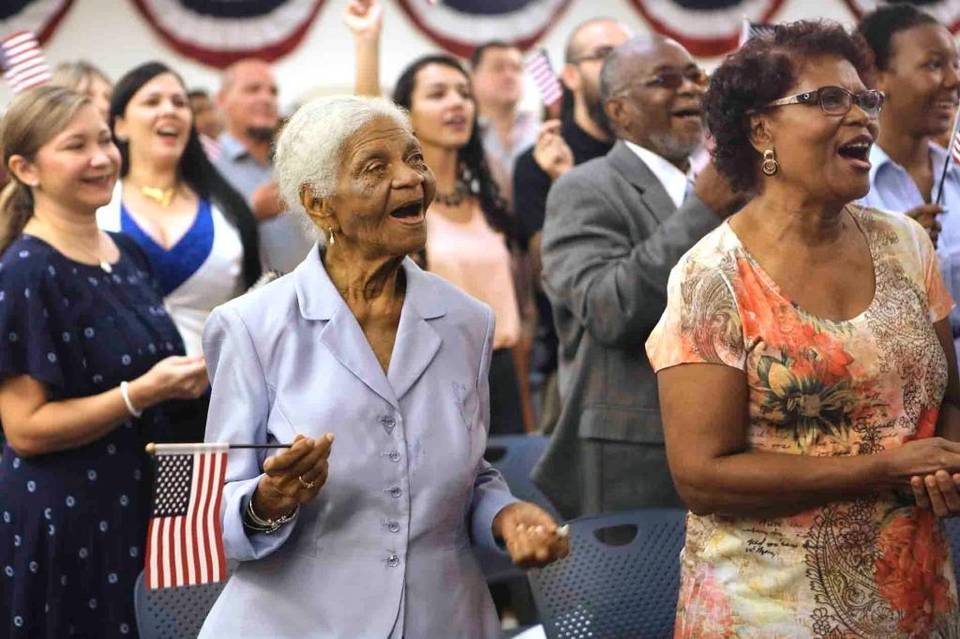
Ninety percent. So what happened?

Well, according to Hutchings and to TuftsUniversity historian Peniel Joseph, Barry Goldwater happened.

“Barry Goldwater, for Republicans, becomes a metaphor for the Republican response for this revolution that’s happening in the United States,” Joseph says.

The “revolution” was Freedom Summer, the period 50 years ago when hundreds of college students, most of them white, had journeyed to Mississippi to help black Mississippians become registered voters. The state’s response to that integrated movement had been swift — and violent. Less than a month before the GOP met for its national convention in San Francisco, organizers Andrew Goodman, James Chaney (who was African-American and Mississippi-born) and Michael Schwerner had been kidnapped on a dark back road in NeshobaCounty. The only hint that they’d existed was Schwerner’s charred Ford station wagon.

The media attention that followed the men’s disappearance roiled the entire South. (Their bodies would be found in early August, buried in the shallow earthen works of a dam.)

Then, two weeks after the men’s disappearance and mere days before the GOP convention opened, Lyndon Johnson signed the Civil Rights Act into law, making discrimination in public venues illegal.

Peniel Joseph says the events outside the GOP’s convention hall affected what went on under its roof. Supporters of the presumed front-runner, liberal New York Gov. Nelson Rockefeller, were blindsided by the party’s well-organized conservative wing, which nominated Arizona’s Sen. Barry Goldwater. His nickname was “Mr. Conservative.”

Goldwater can be seen as the godfather (or maybe the midwife) of the current Tea Party. He wanted the federal government out of the states’ business. He believed the Civil Rights Act was unconstitutional — although he said that once it had been enacted into law, it would be obeyed. But states, he said, should implement the law in their own time. Many white southerners, especially segregationists, felt reassured by Goldwater’s words. Black Americans, says Vince Hutchings, felt anything but:

“African-Americans heard the message that was intended to be heard. Which was that Goldwater and the Goldwater wing of the Republican party were opposed not only to the Civil Rights Act, but to the civil rights movement, in large part, as well.”

An Abrupt Exit From The GOP
When Goldwater, in his acceptance speech, famously told the ecstatic convention “extremism in the defense of liberty is no vice,” he was speaking of “a very specific notion of liberty,” says Peniel Joseph: “Small government, a government that doesn’t give out handouts to black people. A government that doesn’t have laws that interfere with states’ rights. A government that is not conducting a war on poverty.”

It was a signal both sides heard loud and clear. Goldwater attracted the white Southern votes his advisers thought were essential, paving the way for the “Southern Strategy” that Richard Nixon and Ronald Reagan would use successfully in later years. And the third of black Republican voters remaining speedily exited the party.

“It was an abrupt shift,” says Hutchings. “For [the] relatively few — but still not trivial — fraction of blacks, they moved aggressively, and almost unanimously, into the Democratic Party.”

And Black Voters have stayed there, in increasing numbers, ever since. Not that all of them want to be.

Back at the farmer’s market, Jasmine Patton-Grant, in a flower-patterned sundress, sells lavender soap and lotions to passers-by. She says she grew up in a family of Democrats, going into the voting booth with her father when she was a toddler and voting in elections — national and local — since she was legally able to vote. She considers voting a privilege and her civic obligation. And she says she’s sick of the choices she sees before her.

“I’m a Democrat only because I’ve inherited that from my family,” she explains. “It’s not as if I’d ever be a Republican, but I’m completely dissatisfied with both parties.”

Which suggests if an alternative comes along that Patton-Gant and others find attractive, the Black Voter party affiliation percentages might change yet again.
Source: National Public Radio (NPR); Published July 14, 2014; retrieved November 4, 2016: http://www.npr.org/sections/codeswitch/2014/07/14/331298996/why-did-black-voters-flee-the-republican-party-in-the-1960s

If Blacks do vote, they are expected to vote Democrat. This monolith allows any opposition to neutralize their vote by the simple strategies of Redistricting & Malapportionment; see Appendix A below.

The 2016 Election is now over and the winner for President is the Republican’s Donald Trump. He won the Electoral College vote, despite his opponent Hillary Clinton winning the popular vote. This is the fact, despite Mr. Trump exhibiting blatant racist, misogynist and abusive behavior. Very few Black people voted for him. But the marginalization of the Black Vote, allows the Republican Party to completely disenfranchise the entire Black participation in the political process. The Democrats have the majority registration of the US population, yet the Republicans have won the Presidency and the Congress (with majorities in both chambers: House of Representatives and the Senate).

This commentary asserts that it is easier for the Black-and-Brown populations in the Caribbean to prosper where planted in the Caribbean, rather than emigrating to the United States. It would be better too, for this population to repatriate to their Caribbean homelands. Based on the 2016 Presidential campaign, no doubt it is “Time to Go“.

This point aligns with the book Go Lean…Caribbean, which states that while the blatant racist attitudes and actions may now be considered politically incorrect and the presence of a Black President, the foundations of institutional racism in the US have become even more entrenched. The book supports the notion that the Caribbean can be an even better place to live for the Caribbean people, once we make the homeland a better place to live, work and play. At least out votes count and matter.

This is a continuation from the previous 3-part series from the movement behind the book Go Lean … Caribbean, in consideration of reasons why the Diaspora should repatriate back to the Caribbean homeland. The previous commentaries detailed:

  1.     Time to Go: Spot-on for Protest
  2.     Time to Go: No Respect for our Hair
  3.     Time to Go: Logic of Senior Immigration

Now, this new extension to the series considers the additional topics as detailed in this series as follows:

  1.     Time to Go: Marginalizing Our Vote
  2.     Time to Go: American Vices; Don’t Follow
  3.     Time to Go: Public Schools for Black-and-Brown

All of these commentaries relate to the Caribbean image and disposition as minorities in the United States, while being a majority in the Caribbean region. The quest is to reform and transform the Caribbean member-states so that they can be better societies to live, work and play. Then, only then, can the trend of emigrating to the US end. The US should not be a land of refuge for Caribbean people; we need to find refuge at home.

The Go Lean book and movement serves as a roadmap for the introduction of the technocratic Caribbean Union Trade Federation (CU). The CU is set to optimize Caribbean society through economic empowerment, security and governing optimizations. The Go Lean roadmap thusly has these 3 prime directives:

  • Optimization of the economic engines in order to grow the regional economy to $800 Billion & create 2.2 million new jobs.
  • Establishment of a security apparatus to ensure public safety and protect the economic engines.
  • Improve Caribbean governance to support these engines.

The Go Lean roadmap posits that the “grass is not necessarily greener on the other side”; life in the US, is definitely not optimized for the Caribbean’s Black-and-Brown people.

The Go Lean book asserts that every community has bad actors and the Caribbean region needs to prepare, to remediate and mitigate for bad actors. But the problem of marginalization of the Black Vote,  is not just a factor of “bad actors”, it is a bad foundation in the American DNA.

Let’s consider one example – in the Appendix B below – in the city of Houston, Texas. First, these are the demographic facts:

Racial composition 2010[94] 1990[25] 1970[25]
White 50.5% 52.7% 73.4%
Black or African American 23.7% 28.1% 25.7%,[96]
Hispanic or Latino 43.7% 27.6% 11.3%[95]
Asian 6.0% 4.1% 0.4%

Source: Retrieved November 11, 2016 from: https://en.wikipedia.org/wiki/Houston#Demographics

cu-blog-time-to-go-marginalizing-our-vote-photo-3b

With these numbers, the normal expectation is that half of the Congressmen representing the Greater Houston area would be Black-or-Brown, 4 of the 8 seats, but instead the actual number is 2, or 25 percent of the actual seats; see photos in Appendix B below. Why? “Gerrymandering” to link together all the Black neighborhoods – despite their location – so that they can all be represented by only a few Democratic congressional seats, and then all the other seats would go to the White Republicans.

This practice is obvious and unapologetic in Texas.

cu-blog-time-to-go-marginalizing-our-vote-photo-2Unfortunately other American cities – North and South, East and West – feature this same practice. This portrays a deficiency in democratic justice – the precept of one man one vote.

This fact supports the Go Lean assertion: It is “Time To Go“. We can and must do better in promoting justice for Caribbean people than the Americans do. This point is pronounced early in the book with the Declaration of Interdependence (Page 12) that claims:

x.   Whereas we are surrounded and allied to nations of larger proportions in land mass, populations, and treasuries, elements in their societies may have ill-intent in their pursuits, at the expense of the safety and security of our citizens. We must therefore appoint “new guards” to ensure our public safety and threats against our society, both domestic and foreign. The Federation must employ the latest … to assuage continuous threats against public safety.

The Caribbean appointing “new guards” to ensure justice assurance is a comprehensive endeavor, that will encapsulate the needs of all Caribbean stakeholders: governments, institutions and citizens (residents and Diaspora alike).

An important mission of the Go Lean roadmap is to dissuade the high emigration rates of Caribbean citizens to the American homeland. This means being conscious of why people flee – “push” and “pull” reasons – and monitoring the societal engines to ensure improvement – optimization. (“Push” refers to the societal defects in the Caribbean that moves people to want to get way; and “pull” factors refer to the impressions and perceptions that America is better). There is the need for good messaging that the Black Vote is only marginalized in the US. In addition to this messaging, there is also a mission to encourage the repatriation of the Caribbean Diaspora back to their ancestral homeland.

To attract our Diaspora for repatriation, we must be better in the Caribbean, than in the past. How do we accomplish that? The Go Lean book details how; with a series of community ethos, strategies, tactics, implementations and advocacies to better optimize our Caribbean life (economic and security concerns):

Community Ethos – Consequences of Choices Lie in Future Page 21
Community Ethos – Economic Principle – Consequences of Choices Lie in Future Page 21
Community Ethos – Minority Equalization Page 24
Community Ethos – Ways to Impact the Greater Good Page 37
Tactical – Confederating a non-sovereign union Page 63
Tactical – Fostering a Technocracy Page 64
Tactical – Separation of Powers – CU Federal Agencies -vs- Member-states Page 75
Implementation – Ways to Pay for Change Page 101
Implementation – Ways to Impact Elections Page 116
Implementation – Reasons to Repatriate Page 118
Planning – Big Ideas – Regional Single Market Page 127
Planning – Ways to Make the Caribbean Better Page 131
Planning – Ways to Better Manage the Caribbean Image Page 133
Advocacy – Ways to Grow the Economy Page 151
Advocacy – Ways to Create Jobs Page 152
Advocacy – Ways to Improve Governance Page 168
Advocacy – Ways to Better Manage the Social Contract Page 170
Advocacy – Ways to Improve Leadership Page 171
Advocacy – Ways to Impact Justice Page 177
Advocacy – Ways to Reduce Crime Page 178
Advocacy – Ways to Improve Homeland Security Page 180
Advocacy – Ways to Impact the Diaspora Page 217

This subject of lowering American “pull” has been frequently blogged on in other Go Lean commentaries; as sampled here with these entries relating American “pull” factors:

https://goleancaribbean.com/blog/?p=8431 Bahamas Issued US Travel Advisory to the US Citing Police Violence
https://goleancaribbean.com/blog/?p=8202 Respect for Minorities: Lessons Learned from American Dysfunction
https://goleancaribbean.com/blog/?p=8200 Respect for Minorities: Climate of Hate
https://goleancaribbean.com/blog/?p=8099 Caribbean Image: ‘Less Than’?
https://goleancaribbean.com/blog/?p=7749 Lessons from Regional Elections
https://goleancaribbean.com/blog/?p=7221 Street naming for Martin Luther King unveils the real America
https://goleancaribbean.com/blog/?p=6189 A Lesson in History – Hurricane ‘Katrina’ exposed Black America’s Disenfranchisement
https://goleancaribbean.com/blog/?p=5733 Better than America? Yes, We Can!
https://goleancaribbean.com/blog/?p=5527 American Defects: Racism – Is It Over?
https://goleancaribbean.com/blog/?p=5333 Racial Legacies: Cause and Effect
https://goleancaribbean.com/blog/?p=273 10 Things We Don’t Want from the US: Racial institutions against minorities

Underlying to the Go Lean/CU prime directive of elevating the economics, security and governing engines of the Caribbean, is the desire to make the Caribbean homeland, a better place to live, work and play for all. We do not want to marginalize any segment of our populations. For this, we must remain “on guard”.

The Go Lean roadmap seeks to remediate and mitigate any abuse of power of any majority group against a minority segment. We want to ensure our Caribbean communities are more appealing than the American counterparts; we do not want American defects here. While we entreat American leaders to work towards remediating their own defects, fixing the US is not within our scope; fixing the Caribbean is our only charter.

Once we have our reformations in place, then it is “Time to Go“.

The intent of the book Go Lean … Caribbean is to prepare the region for the return of all of our people, back to these shores. This point is also pronounced early in the book with the Declaration of Interdependence (Pages 13 & 14), as stated:

xix.    Whereas our legacy in recent times is one of societal abandonment, it is imperative that incentives and encouragement be put in place to first dissuade the human flight, and then entice and welcome the return of our Diaspora back to our shores. This repatriation should be effected with the appropriate guards so as not to imperil the lives and securities of the repatriated citizens or the communities they inhabit. The right of repatriation is to be extended to any natural born citizens despite any previous naturalization to foreign sovereignties.

xxxiii.   Whereas lessons can be learned and applied from the study of the recent history of other societies, the Federation must formalize statutes and organizational dimensions to avoid the pitfalls of [such] communities …

The Go Lean book was composed with the community ethos in mind of the Greater Good, “the greatest good for the greatest number of people” – Page 37. This is NOT the based community ethos for the United States – too bad! We can and must do better!

The disenfranchisement of the Caribbean’s Black-and-Brown in this week’s federal election, is a reminder that “grass is not greener on the American side”. While an earnest effort is needed everywhere to improve society, such efforts will be more successful in the Caribbean than in the US for the Caribbean Diaspora. The underlying legacy of racism in America may still be too hard to assuage.

All Caribbean stakeholders are hereby urged to lean-in to this Go Lean/CU roadmap to elevate the Caribbean; to make our homeland a better place to live, work and play. 🙂

Download the book Go Lean … Caribbean – now!

———

Appendix A – Redistricting & Malapportionment

Each state determines its own district boundaries, either through legislation or through non-partisan panels. “Malapportionment” is unconstitutional and districts must be approximately equal in population (see Wesberry v. Sanders). Additionally, Section 2 of the Voting Rights Act of 1965 prohibits redistricting plans that are intended to, or have the effect of, discriminating against racial or language minority voters.[11] Aside from malapportionment and discrimination against racial or language minorities, federal courts have allowed state legislatures to engage in gerrymandering for the benefit of political parties or incumbents.[12][13] In a 1984 case, Davis v. Bandemer, the Supreme Court held that gerrymandered districts could be struck down on the basis of the Equal Protection Clause, but the Court did not articulate a standard for when districts are impermissibly gerrymandered. However, the court overruled Davis in 2004 in Vieth v. Jubelirer,and Court precedent currently holds gerrymandering to be a political question. According to calculations made by Burt Neuborne using criteria set forth by the American Political Science Association, about 40 seats, less than 10% of the House membership, is chosen through a genuinely contested electoral process, given bipartisan gerrymandering.[14][15]

———

Appendix B – Houston’s Congressional Districts

cu-blog-time-to-go-marginalizing-our-vote-photo-3

cu-blog-time-to-go-marginalizing-our-vote-photo-3a

Texas is the second largest state in the United States by both area (after Alaska) and population (after California). While California has 53 Congressional seats, Texas has 36. Houston is its largest city, within city limit dimensions; (see the table below). But the Greater Metropolitan Area of Houston–The Woodlands–Sugar Land is the country’s 5th largest urban-suburban area; (behind New York, Chicago, Los Angeles and the Greater Dallas-Fort Worth Metroplex). The recorded population is 6,490,180 as of the 2010 U.S. Census. There are 8 representatives for this area in the US Congress, 2 of them are Black.

The City of Houston has historically voted Democratic except for its affluent western and west-central portions, including the River OaksWestchaseMemorial, and Uptown areas, as well as the Kingwood and Clear Lake City master-planned communities on Houston’s far northeast and southeast sides, respectively. All these areas, populated mostly by wealthy WASPS (White Anglo-Saxon Protestants), favor and are almost entirely represented both in Congress and in the Texas Legislature by Republicans. Democrats’ strongest areas are within Loop 610, and in the largely poor and minority northern, eastern, and southern portions of Houston. Most of these areas have sizable Hispanic populations, though some northern and southern parts of the city have mostly notable African American communities. Democrats are also stronger in the more liberal Neartown area, which is home to a large artist and LGBT community, and Alief, which houses a sizable Asian American population.] In 2008, almost every county in the region voted for Republican John McCain; only Harris County [(Houston)] was won by Democratic candidate Barack Obama, by a small margin (51%–49%).[59] Galveston has long been a staunch Democratic stronghold, with the most active Democratic county establishment in the state.[60]

cu-blog-time-to-go-marginalizing-our-vote-photo-4a

cu-blog-time-to-go-marginalizing-our-vote-photo-4b

cu-blog-time-to-go-marginalizing-our-vote-photo-4c

cu-blog-time-to-go-marginalizing-our-vote-photo-4d

cu-blog-time-to-go-marginalizing-our-vote-photo-4e

cu-blog-time-to-go-marginalizing-our-vote-photo-4f

cu-blog-time-to-go-marginalizing-our-vote-photo-4g

cu-blog-time-to-go-marginalizing-our-vote-photo-4h

Texas Top 10 Cities – By Official Population

Rank Place name 2015 population 2010 Census
1 Houston 2,296,224 2,100,389 9.34%
2 San Antonio 1,469,845 1,327,407 10.73%
3 Dallas 1,300,092 1,197,816 8.53%
4 Austin 931,820 790,390 17.89%
5 Fort Worth 833,319 741,206 12.42%
6 El Paso 681,124 649,121 4.93%
7 Arlington 388,125 365,438 6.20%
8 Corpus Christi 324,074 305,215 6.17%
9 Plano 283,558 259,841 9.12%
10 Laredo 255,473 236,091 8.20%

https://en.wikipedia.org/wiki/United_States_congressional_delegations_from_Texas

https://en.wikipedia.org/wiki/Greater_Houston

Share this post:
, ,
[Top]

Blog # 500 – Vision and Values for a ‘New’ Caribbean

Go Lean Commentary

“Do what you have always done…get what you always got”.

This Old Adage is consistent with so many other wise proverbs:

“A fool does the same thing over again and again expecting a different result”.

“One cannot get blood out of  stone”.

“Whatever one sows, that will he also reap.” – Galatians 6:7

“Whoever sows sparingly will also reap sparingly, and whoever sows bountifully will also reap bountifully.” – 2 Corinthians 9:6

Those last two are from the Bible. That reference source should give these proverbs, and this line of reasoning some validity and a claim to authority.

Book CoverThe book Go Lean … Caribbean – available to download for free – asserts a similar position, that the Caribbean is in crisis, due to a continuation of the same bad values, practices and vision. It is high time now for a new vision and new values.

“A crisis is a terrible thing to waste” – Go Lean book Page 8.

This crisis can be used to reform and transform the region.

This commentary in support of the Go Lean book is a milestone; this is blog-commentary # 500.

All of these previous commentaries and the underlying book posits that the Caribbean is in crisis; that the region of 42 million people in the 30 member-states is dysfunctional … to the point of flirting with Failed-State status. There is a need for reform.

Failed-States? How do we measure failure?

For one, our region has an atrocious societal abandonment rate, one of the worst in the world, according to the World Bank. Our failing brain drain rate is reported as 70 percent of our tertiary-educated citizens having fled the homeland for foreign shores; some lands report as high as 89%.

70% … this is no way to nation-build. Why did they leave? For “push and pull” reasons. This has been communicated to the governments and leaders of the region and yet still, the problem persists. They have not taken action to curb the problem. There is thusly, the need for a new vision…

VISION

cu-blog-vision-and-values-for-a-new-caribbean-photo-1The Go Lean book serves as a roadmap for the technocratic Caribbean Union Trade Federation (CU). The CU constitutes a new vision for the Caribbean; a confederation of the 30 member-states into a Single Market. This technocratic structure allows for the execution of the following prime directive:

  • Optimization of the economic engines in order to grow the regional economy to $800 Billion & create 2.2 million new jobs.
  • Establishment of a security apparatus to ensure public safety and protect the resultant economic engines.
  • Improvement of Caribbean governance to support these engines.

This is a different vision than anything the Caribbean region has seen manifested before. But there was a previous dream of an integrated Caribbean entity, the ill-fated West Indies Federation of 1958 – 1962. That previous plan only considered the British colonies at that time. This new vision, the CU, is a roadmap for all regional neighbors, despite their colonial legacies. So the 30 member-states include all British, French, Dutch and American territories, plus the independent states (including Spanish-speaking.

The previous 499 blogs identified, qualified and proposed details of this new vision; see a sample as follows:

https://goleancaribbean.com/blog/?p=9480 Benefiting from the Destinations of our Diaspora – A Series
https://goleancaribbean.com/blog/?p=9455 Fixing Climate Change
https://goleancaribbean.com/blog/?p=9068 Securing the Homeland – A Series
https://goleancaribbean.com/blog/?p=9038 A New Vision for Charity Management
https://goleancaribbean.com/blog/?p=8669 A New Vision for College Education
https://goleancaribbean.com/blog/?p=8590 Building Caribbean Infrastructure – A Series
https://goleancaribbean.com/blog/?p=8379 Fostering Centers of Economic Activity
https://goleancaribbean.com/blog/?p=8045 How Local Economies Benefit From Small Businesses
https://goleancaribbean.com/blog/?p=7977 Economic Transformations: A Series
https://goleancaribbean.com/blog/?p=7963 Being a Good Neighbor for Puerto Rico
https://goleancaribbean.com/blog/?p=7920 How to Jump-start Technology Hubs
https://goleancaribbean.com/blog/?p=7866 A New Vision for a Profitable Sports Eco-System
https://goleancaribbean.com/blog/?p=7646 Going from ‘Good to Great’
https://goleancaribbean.com/blog/?p=7449 ‘Crap Happens’ – A Vision of Planning and Response
https://goleancaribbean.com/blog/?p=7412 Restoring Cuba
https://goleancaribbean.com/blog/?p=6867 A Viable Plan to Address High Consumer Prices
https://goleancaribbean.com/blog/?p=6341 A New Vision for Tourism Stewardship
https://goleancaribbean.com/blog/?p=6089 Where the Jobs Are – Beyond Minimum Wage
https://goleancaribbean.com/blog/?p=833 A New Currency Regime

Why will this new vision succeed while the old plans failed? For one…

VALUES

… new values in particular.

These new values are presented in the Go Lean book as community ethos. This is defined as …

… the fundamental spirit of a culture; the underlying sentiment that informs the beliefs, customs, or practices of a society.

Unfortunately, the old community ethos were part-and-parcel of the societal defects in the Caribbean. Many members of the Diaspora left the region because they were “pushed” by the bad values. Now after assimilating the culture and values of the more advanced economy countries, they see the need to reform and transform their original homeland. Consider this example:

In a recent Facebook (FB) Survey, this one question was asked of the Diaspora and FB Friends in different Caribbean countries:

If an undocumented women is a victim of domestic violence, should she be offered protective services from the police and courts? Capturing 100 responses, the Yes/No answers were as follows:

  • Diaspora: 100% Yes
  • Bahamas: 60% Yes
  • Jamaica: 85% Yes
  • Barbados: 90% Yes
  • Turks and Caicos Islands: 92% Yes

Consider this reality, civil and human rights should not be conditional on immigration status; right is right. The woman is a victim, in need of protection; this is the tenants of any “Social Contract“; defined as the implied covenant where citizens surrender some of their freedoms and submit to the authority of the State in exchange for protection of remaining natural and legal rights. – Go Lean book, Page 170.

This above drama depicts the need for new community ethos.

The previous 499 blogs identified, qualified and proposed details of new values the region needs to adapt; see a sample here:

https://goleancaribbean.com/blog/?p=8815 Harvesting Organs: Being Prepared with the Right Values
https://goleancaribbean.com/blog/?p=8200 Respect for Minorities: Climate of Hate – A Series
https://goleancaribbean.com/blog/?p=8155 Gender Inequality => ‘Brain Drain’
https://goleancaribbean.com/blog/?p=6937 Women in Politics – Yes, They Can!
https://goleancaribbean.com/blog/?p=6836 Role Model – #FatGirlsCan
https://goleancaribbean.com/blog/?p=6718 Lessons on Values from the US Civil War – A Series
https://goleancaribbean.com/blog/?p=6434 Strong Black Women – Weak Values on Hair
https://goleancaribbean.com/blog/?p=5901 Mitigating Elderly Suicide
https://goleancaribbean.com/blog/?p=5784 Proper View of LGBT Rights
https://goleancaribbean.com/blog/?p=5733 Better than America? Yes, We Can!
https://goleancaribbean.com/blog/?p=5720 Disability Advocacy: Reasonable Accommodations
https://goleancaribbean.com/blog/?p=5529 Mitigating American Crony-Capitalism Defects
https://goleancaribbean.com/blog/?p=5304 Mitigating the Eventual ‘Abuse of Power’
https://goleancaribbean.com/blog/?p=5287 Making the Right Decision Between Life -vs- Profit
https://goleancaribbean.com/blog/?p=7490 Mitigating Interpersonal Violence – A Series
https://goleancaribbean.com/blog/?p=3078 Mitigating Sexual Assaults; Protecting the Victims
https://goleancaribbean.com/blog/?p=2522 The Cost of Life-or-Death Cancer Drugs
https://goleancaribbean.com/blog/?p=1020 No Toleration of Racism in Sports
https://goleancaribbean.com/blog/?p=789 Why Take Our Own Lead? America’s War on the Caribbean

The Go Lean…Caribbean book is a 370-page publication that presents the solutions for all of the Caribbean region, all the 4 language groups (Dutch, English, French and Spanish) by describing 144 different missions to elevate the economic, security and governing engines of the region. This is a serious answer to a serious crisis.

cu-blog-vision-and-values-for-a-new-caribbean-photo-2This book is published by a community development foundation made up of mostly Caribbean Diaspora. These ones left their beloved homeland, but didn’t leave their love for the homeland. They long to return! But not to the same lands they left; but rather they want the Caribbean to reform and transform.

For this goal, they are willing to devote their time, talents and treasuries. But they need help; they cannot do it all themselves. They need the other stakeholders (residents, governments, tourists and trading partners) to wake up and join this movement, this quest to elevate the Caribbean to a better place to live, work and play.

Wake Up … all you people.

Sounds familiar?

This was a familiar cry in the 1975 song – embedded here; (see the lyrics in the Appendix below). This song promotes a new vision and new values for society. See the AUDIO-VIDEO here:

AUDIO-VIDEOWake Up Everybody – Original Version (Teddy Pendergrass, Harold Melvin & the Blue Notes) – https://youtu.be/-TDfPgd3Kyc

Uploaded on Sep 23, 2011 – The original full-length song recorded in 1975. It’s a classic.

The Caribbean Diaspora – living abroad in the US, Canada, the UK and Western Europe – were always taught that the Caribbean is the greatest address on the planet, and yet it was essential that they leave to forge their existence elsewhere. They left for “push and pull” reasons.

“Push and pull” is tied to vision and values.

Many of this Diaspora have endured, flourished and thrived in these foreign lands, but it is not home; they are still only alien residents.  They need, want and deserve their homeland, but as a better destination, as a “New” Caribbean.

The Go Lean book assert that this quest – to make the Caribbean a better place to live, work and play – is conceivable, believable and achievable; providing that we bring the new vision and new values.

Wake Up …. everybody!

🙂

Download the book Go Lean … Caribbean – now!

————-

Appendix – Lyrics: Wake Up Everybody” by Harold Melvin & the Blue Notes

Wake up everybody no more sleepin’ in bed
No more backward thinkin’ time for thinkin’ ahead
The world has changed so very much
From what it used to be
There is so much hatred war an’ poverty
Wake up all the teachers time to teach a new way
Maybe then they’ll listen to whatcha have to say
‘Cause they’re the ones who’s coming up and the world is in their hands
When you teach the children teach em the very best you can

The world won’t get no better if we just let it be
The world won’t get no better we gotta change it yeah, just you and me

Wake up all the doctors make the ol’ people well
They’re the ones who suffer an’ who catch all the hell
But they don’t have so very long before the Judgment Day
So won’t cha make them happy before they pass away
Wake up all the builders time to build a new land
I know we can do it if we all lend a hand
The only thing we have to do is put it in our mind
Surely things will work out they do it every time

The world won’t get no better if we just let it be
The world won’t get no better we gotta change it yeah, just you and me

Change it yeah, change it yeah, just you and me
Change it yeah, change it yeah
Can’t do it alone, need some help y’all
Can’t do it alone
Can’t do it alone yeah, yeah
Wake up everybody, wake up everybody
Need a little help y’all
Need a little help
Need some help y’all

Change the world
What it used to be
Can’t do it alone, need some help
Wake up everybody
Get up , get up, get up, get up
Wake up, come on, come on
Wake up everybody

Songwriters: Jonathan Howsman Davis, James Christian Shaffer, David Randall Silveria, Reginald Arvizu, Brian Welch
Source: Retrieved November 2, 2016 from: http://www.metrolyrics.com/wake-up-everybody-lyrics-harold-melvin-the-blue-notes.html


Share this post:
, , ,
[Top]

‘Time to Go’ – Logic of Senior Emigration

Go Lean Commentary

“Twenty million American Negroes unpacked.” – Comedian and Activist Dick Gregory, on November 27, 1963 when President Lyndon Johnson announced at a Joint-Session of Congress that he would continue with the recently assassinated John Kennedy’s Civil Rights agenda.

This was 1963, 100 years after President’s Abraham Lincoln’s Emancipation Proclamation, and the subsequent Civil War. Finally after 350 years of the African Slave Trade, African-American people could start to think of America as “home”. Wow, they could unpack. There was no need to consider any other destination.

It didn’t end there!

This was also the start of other African-ethnic people – in Africa and in the Americas – to start the thinking that America may be OK to emigrate to. They started to pack, while African-Americans unpacked.

One step forward for American civilization, but two steps backwards for Caribbean society.

Our brain-drain and societal abandonment to the US began there-then, and continued unabated down to this day.

Where we are now is a shame-and-a-disgrace – 70 percent of out tertiary-educated – gone! Now we have the report of a 104-year old woman who just naturalized to become a US citizen. Just as much as this is a good story for her and America, this is an indictment for us – the Caribbean – and our failures as individual states.

See the news story here:

Title: Woman at 104 proves it’s never too late to become an American citizen
By: David J. Neal

cu-blog-time-to-go-logic-of-senior-emigration-photo-1
May Garcia, 104, center, sings “America the Beautiful” after she took the Oath of Allegiance and was sworn in as a U.S. citizen on Friday, Aug. 26, 2016. Garcia attended the ceremony with her daughter, Faye Rochester, right, and son-in-law Denis Rochester. Garcia lives with them in Lauderhill. She passed her citizenship exam early Friday, then was sworn in as a United States citizen at the USCIS Oakland Park Field Office in Oakland Park. Garcia was born on July 15, 1912 in Kingston, Jamaica. She moved to the U.S. in 1993 to be closer to her family and take care of her grandchildren. Garcia has four children, 12 grandchildren, 18 great-grandchildren and eight great-great-grandchildren.
Photo Credit: Marsha Halper.

Jamaica-born May Garcia decided to become a U.S. citizen after 23 years in this country and 104 years on this Earth for the most bedrock element of democracy.

“She had been watching the election coverage and said, ‘I’d love to vote,’ ” Garcia’s daughter Fay Rochester said.

So Garcia, born in Kingston in 1912, 50 years before Jamaica’s independence from Great Britain, started the naturalization process. That path ended Friday for Garcia and more than 100 others from 36 nations who took their oath of citizenship at a naturalization ceremony at the U.S. Citizenship and Immigration Services building in west Broward.

Afterward, she waved her arm back and forth in celebration as Pharrell’s “Happy” played in the Ceremony Room. Several other new U.S. citizens or their relatives stopped by Garcia’s chair to shake her hand.

Garcia, who lives in Lauderhill with Rochester and son-in-law Denis Rochester, said she had no problem with studying for the citizenship exam or taking the exam itself. Then again, activity keeps the mind sharp and as Garcia said, “I’m a busy person. I’m not a lazy one.”

She raised her four children in Jamaica by doing others’ laundry by hand. She came to the U.S. in 1993 at 81 to help take care of some of her 12 grandchildren (who gave her 18 great grandchildren, who gave her eight great-great grandchildren). Now, with her family spread all around the United States, she spends her days at the Sadkin Senior Community Center, where she does Zumba classes.

Saturday, she still does laundry by hand.

“We’re so happy and proud of her,” Rochester said. “At her age, she’s still going strong. She does everything for herself.”

Asked how she has extended her life so long, Garcia said, “I wasn’t a wild person. I like everything that’s nice. I don’t do things that aren’t right. I don’t like anything that’s out of the way.”
Source: Posted August 23, 2016; retrieved September 26, 2016 from: http://www.miamiherald.com/news/local/community/broward/article98197142.html

cu-blog-time-to-go-logic-of-senior-emigration-photo-2

Congratulations May Garcia! May you have all that you desire.

This commentary is 3 of 3 from the movement behind the book Go Lean … Caribbean, in consideration of the reasons to consider repatriation back to the Caribbean homeland. The other commentaries detailed in this series are as follows:

  1.   Time to Go: Spot-on for Protest
  2.   Time to Go: No Respect for our Hair
  3.   Time to Go: Logic of Senior Emigration

The Go Lean book was composed with people like May Garcia in mind. In its epilogue, the book makes valedictions to people like Ms. Garcia, on Page 252:

To the Caribbean Resident: Count your blessings, while you work for improvement.
To the Caribbean Diaspora: Come in from the cold.

To the Caribbean Senior Citizen: Thank you for your service. We’ll take it from here.

No one expects a 104-year woman to contribute to her society, to be a mover-and-a-shaker, to forge change in her community and set the path for new advocacies, technologies or systems of commerce. But Ms. Garcia is an inspiration. She plainly demonstrates to the planners of a new Caribbean how acute our failures are. This celebration should have been in her Caribbean homeland, Jamaica. This is our quest!

She should have been like a tree …

… planted by streams of water, which yields its fruit in season and whose leaf does not wither – whatever they do prospers. – The Bible; Psalms 1:3 – New International Version

A “planted tree” analogy relates that she would be firmly established … and others – her children and grandchildren – would come to her.

This scenario paints the picture of “prospering where planted“. This is the underlying vision of the Go Lean book. Emotionally, this is in direct contrast to the psychological trauma of “Longing for Home“. This is a real problem for people in exile communities; normally this scarring bears on a subject’s emotional and physical well-being. The experiences of the subject in the foregoing article is very unique, Ms. Garcia seems to have all of her 4 children, 12 grandchildren, 18 great-grandchildren and 8 great-great grandchildren all in the same country. Assuredly, in most other cases, some of the offspring are in the home country and some are in the exile country. There tends to be two moving targets, itinerant children with an iterant parent. This is the opposite of planted.

This lack of planting can create a sense of urgency to reform and transform. Many Diaspora find that urgency expressed in the statement:

Time to Go … home”.

To satisfy the wishes of a special person like Ms. Garcia could be motivation enough to forge change in the Caribbean, to allow these seniors the opportunity to prosper where they were planted all their lives. This is the quest of the Go Lean book.

The Go Lean book and movement serves as a roadmap for the introduction of the technocratic Caribbean Union Trade Federation (CU). The CU is set to optimize Caribbean society through economic elevation, security empowerment and governing engagements. Therefore the Go Lean roadmap has these 3 prime directives:

  • Optimization of the economic engines in order to grow the regional economy to $800 Billion & create 2.2 million new jobs.
  • Establishment of a security apparatus to ensure public safety and protect the economic engines.
  • Improve Caribbean governance to support these engines.

The Go Lean book presents a plan of hope for the senior citizens of the Caribbean.

But this is not just an altruistic dream; it accepts the reality that the economic, security and governing optimizations must be enabled, not just hoped for. It is Time to Go; our aging parents and grandparents are waiting on us to execute; they may not have as much time to wait, to see this quest fulfilled.  The book (Page 225) described the urgent commitment to the Caribbean Seniors as follows in this advocacy: 10 Ways to Improve Elder-Care:

1. Lean-in for the Caribbean Single Market & Economy (CSME) initiative: Caribbean Union Trade Federation. The Caribbean Union Trade Federation (CU) will allow for the unification of the region into one market, thereby creating an entity (42 million) big and consequential enough to negotiate Treaties with the US, Canada, and Europe for more consideration for the needs of the Caribbean’s baby boomers in the Diaspora. In addition, while the US enjoyed its Baby Boom during the 2nd half of the 20th century, the Caribbean region kept pace. So now there will be an enlarged single market needing CU elder-care and support services, plus public-private initiatives as the pool of contributors/benefactors will now be maximized. The end result is a reversing of the “brain and capital drain” that plagued the Caribbean recently. There are no labor issues for this age group, as they are in retirement and not competing for jobs in the local market.
2. Tax Benefit of Dependents in Family Trusts Many Caribbean ex-patriots emigrate to earn more money to send back for their aging parents. Yet the foreign taxing authorities (i.e. IRS) do not give dependent tax credit if the dependents are still in the Caribbean. Therefore, many Caribbean ex-patriots try to relocate their aging parents back to their new home – this further exacerbates the “brain and capital drain”. The CU will lobby to grant a dependent care credit for up to 4 living parents per couple with a Tax ID Number in an organized Family Trust “vehicle”. The CU will disclose all death certificates back to the Sourcing Countries, much like the Social Security Administration does in the US today.
3. Repatriate Retirement Benefits The CU wants their former citizens to return “home” and many senior “baby boomer” ex-patriots want to spend their golden years “back home”. The CU Banking system will allow for (free) direct deposit of retirement and pension benefit payments to the repatriated Caribbean residents. Social Workers will be trained to advocate and engage the “Source Countries” bureaucracies to remediate disputes and optimize services on behalf of the participants.
4. Repatriate MediCare Benefits The decision to return/repatriate “home” is more complicated for those with health issues as they fear the lost of medical benefits from their National Health plans in their emigrated countries. With licensed and accredited Caribbean doctors and facilities meeting the standards of the Sourcing Countries, repatriated Caribbean [seniors] will have access to their medical benefits even though they are abroad. This will increase the revenue base of the medical establishments and advance the standard of care for all.
5. Medical Training, Accreditation, Advocacy and Quality Assurance of Gerontology Support Services Promote and incentivize medical careers for doctors, nurses, therapists and CNA’s (Certified Nurse Assistants) with scholarships, grants and forgive-able student loans. Plus the CU will license, accredit and facilitate the Continuous Education requirement for the industry participants. For ongoing operations, patient advocacy, Quality Assurance programs and mediation/ arbitration/dispute resolution will facilitate world-class service delivery.
6. Deploy Disease Management Programs for Gerontology Afflictions Disease management programs can be implemented specifically for gerontology ailments like Alzheimer’s, Parkinson’s, Degenerative Eye Diseases and other chronic afflictions. The goal is to identify, educate, and treat patients with ailments that tend to have no cure, but the afflicted could prosper with proper management.
7. Caribbeans with Disabilities Many times seniors become challenged in their mobility or disabled requiring aid and transportation services. Most Caribbean public buses (Jitney) do not allow for wheelchair/scooter access. The CU will overseer the Taxi Commissions, to include Para-transit services for non-ambulance transport. The Caribbean [persons] with Disabilities Act, modeled after Americans with Disability Act, will allow CU residents (and seniors) with physical and mental disabilities to have equal access rights/provisions of “reasonable accommodations” by CU institutions and establishments.
8. Public Health Extension The CU will prioritize vaccinations (flu shots) for seniors, and regulate easy access at clinics, and pharmacies. One strategy is to grant credits and discounts for senior participants.
The data associated with flu shots and vaccinations will be collected and mined, then aggregately published by the CU.
9. Wellness, Nutrition, and Fitness Programs A successful deployment of a Government Wellness program calls for a reboot of cultural habits in terms of nutrition, physical therapies and exercise in Senior Centers, Rehabilitation facilities and Nursing Homes. Programs like “Silver Sneakers” (walking clubs) and bicycle paths to encourage more exercise will be implemented at the CU level. Where air-conditioned shopping malls may be minimal, the ideal island climate allow for tree-lined walking paths to be identified, developed, maintained and policed-enforced by CU institutions.
10. First Responders Regulated by the CU Emergency Management operations will factor in the needs of Seniors during Disaster Response (Hurricanes) and normal day-to-day operations. Hurricane Shelters will prioritize seniors first. Medical Alert Notifications via bracelets or home monitoring equipment require a monitoring industry on the “other end of the line” and physical First Responders.

Fixing the Caribbean eco-system has always been a mission of the Go Lean/CU roadmap, to dissuade the propensity for so many Caribbean people who flee from their Caribbean homelands to foreign destinations like the US. In addition, there is a mission to invite many Diaspora members to repatriate, to declare that it is Time to Go . The book contends that the Caribbean must prepare for the eventual return of these native sons and daughters back to our shores. This point is pronounced early in the book with the Declaration of Interdependence (Pages 12 & 13) that claims:

xi.   Whereas all men are entitled to the benefits of good governance in a free society, “new guards” must be enacted to dissuade the emergence of incompetence, corruption, nepotism and cronyism at the peril of the people’s best interest. The Federation must guarantee the executions of a social contract between government and the governed.

xiii. Whereas the legacy of dissensions in many member-states … will require a concerted effort to integrate the exile community’s repatriation, the Federation must arrange for Reconciliation Commissions to satiate a demand for justice.

xviii.  Whereas all citizens in the Federation member-states may not have the same physical abilities, reasonable accommodations must be made so that individuals with physical and mental disabilities can still access public and governmental services so as to foster a satisfactory pursuit of life’s liberties and opportunities for happiness.

xix. Whereas our legacy in recent times is one of societal abandonment, it is imperative that incentives and encouragement be put in place to first dissuade the human flight, and then entice and welcome the return of our Diaspora back to our shores. This repatriation should be effected with the appropriate guards so as not to imperil the lives and securities of the repatriated citizens or the communities they inhabit. The right of repatriation is to be extended to any natural born citizens despite any previous naturalization to foreign sovereignties.

xx.  Whereas the results of our decades of migration created a vibrant Diaspora in foreign lands, the Federation must organize interactions with this population into structured markets. Thus allowing foreign consumption of domestic products, services and media, which is a positive trade impact. These economic activities must not be exploited by others’ profiteering but rather harnessed by Federation resources for efficient repatriations.

Preparing the Caribbean region for the return of the aging Diaspora, means fixing the regional defects to make our homeland a better place to live, work and play for everyone. This quest must first be in our hearts – the seats of motivation. The book explains (Page 20):

… the approach to forge change for an individual is defined as “starting in the head (thoughts, visions), penetrating the heart (feelings, motivations) and then finally manifesting in the hands (actions). This same body analogy is what is purported in this [Go Lean] book for how the Caribbean is to embrace change – following this systematic flow:

Head – Plans, models and constitutions
o  Heart – Community Ethos
o  Hands – Actions, Reboots, and Turn-arounds

The book details that first, there must be the adoption of new community ethos – fundamental spirit of a culture; the underlying sentiment that informs the beliefs, customs, or practices of a society. In addition to these new ethos below, the executions of the following strategies, tactics, implementations and advocacies are needed to impact the region’s elevation hopes:

Community Ethos – Deferred Gratification Page 21
Community Ethos – Economics Influence Choices Page 21
Community Ethos – Privacy versus Public Protection Page 23
Community Ethos – “Crap” Happens Page 23
Community Ethos – Lean Operations Page 24
Community Ethos – Cooperatives Page 24
Community Ethos – Non-Government Organizations Page 25
Community Ethos – Ways to Impact Turn-Arounds Page 33
Community Ethos – Ways to Improve Sharing Page 35
Community Ethos – Ways to Promote Happiness Page 36
Community Ethos – Impact the Greater Good Page 37
Strategy – Vision – Confederate 30 Member-States Page 45
Strategy – Mission – Reform our Health Care Response Page 47
Strategy – Agents of Change – Aging Diaspora Page 57
Tactical – Fostering a Technocracy Page 64
Separation of Powers – Department of Health Page 86
Implementation – Ways to Deliver Page 109
Planning – Ways to Model the EU Page 130
Planning – Ways to Make the Caribbean Better Page 131
Planning – Ways to Measure Progress Page 148
Advocacy – Ways to Grow the Economy Page 151
Advocacy – Ways to Improve Healthcare Page 156
Advocacy – Ways to Impact Cancer Page 157
Advocacy – Ways to Better Manage the Social Contract Page 170
Advocacy – Ways to Foster Cooperatives Page 176
Advocacy – Ways to Improve Emergency Management Page 196
Advocacy – Ways to Preserve Caribbean Heritage Page 218
Advocacy – Ways to Improve Elder-Care Page 225
Advocacy – Ways to Empower Women – Aging Population Page 226

This Go Lean book asserts that family dynamics will always be placed ahead of any nationalistic objectives. It is simply the fact that people’s priorities are consistent: self, family, and then community. Any societal elevation plan, must consider this reality. This viewpoint – re-uniting the family with a return of the aging Diaspora – has been previously detailed in Go Lean blog/commentaries, as sampled here:

https://goleancaribbean.com/blog/?p=7659 Pre-Fab Housing and Elder-Care Conjunction
https://goleancaribbean.com/blog/?p=6175 Lesson from Japan: Aging Populations
https://goleancaribbean.com/blog/?p=5901 Socio-Economic Change: The Demographic Theory of Elderly Suicide
https://goleancaribbean.com/blog/?p=4278 Businesses Try to Stave-off Brain Drain as Boomers Retire
https://goleancaribbean.com/blog/?p=4222 Getting Rich Slowly … in the Caribbean
https://goleancaribbean.com/blog/?p=2830 Jamaica’s Public Pension Under-funded
https://goleancaribbean.com/blog/?p=2522 Public Health Economics – The Cost of Cancer Drugs
https://goleancaribbean.com/blog/?p=2105 Recessions and Public Health in the Caribbean Region
https://goleancaribbean.com/blog/?p=949 Managing Inflation for the “Golden Years” of Retirement
https://goleancaribbean.com/blog/?p=273 10 Things We Don’t Want from the US – #8 Family Abandonment

The Caribbean has a lot to work with now! It is arguably the best address on the planet. So we are NOT discussing repatriating to places like the Middle-Eastern desert (Syria, Iraq, Afghanistan, etc) or Siberia. We have the best terrain, fauna & flora; just think of our beaches. Culturally, we have the best cuisine, rums, cigars and festivals (think Carnival, Junkanoo, Crop-Over, etc.). We also have the best in hospitality, just think of our luxurious hotel-resorts and cruise ships. Longing for any these features of Caribbean life is perfectly healthy. It is Time to Go.

But we are defective and deficient … in economics (high costs of living, investments, jobs and entrepreneurial opportunities); in security (crime and emergency preparation & response); and in governance (education, healthcare and government financing). We need to reform and transform. So underlying to the Go Lean/CU prime directive of elevating the economics, security and governing engines of the Caribbean, is the desire to make the Caribbean homeland, a better place to live, work and play for all, young and old.

Without a doubt, there is value to keeping senior citizens in their communities for these “golden years”; their “grey hair” – poetic for wisdom – is greatly valued for the next generations. There is value for the community and value for the senior citizens. And as related in the introduction, their time-urgency can be an inspiration for change.

We need to spend time with our aging parents and they need to spend time with their children and grandchildren. Fulfilling this simple mission should not be location agnostic, it should be at home, in the Caribbean. As related in the old Calypso song by Harry Belafonte – Island in the Sun:

Oh, island in the sun
Willed to me by my father’s hand
All my days I will sing in praise
Of your forest, waters,
Your shining sand …

This theme synchronizes with the Bible’s precept – Psalms 137: 1 – 4 – of refugees longing for their homeland while in exile:

1 By the rivers of Babylon, There we sat down and wept, When we remembered Zion.
2 Upon the willows in the midst of it We hung our harps.
3 For there our captors demanded of us songs, And our tormentors mirth, saying, “Sing us one of the songs of Zion.”
4 How can we sing the LORD’S song In a foreign land?

This Bible verse is better appreciated as a song. See the VIDEO in the Appendix below.

This commentary posits that it is a psychological torture for elderly people to “ride out” their days in exile. They will constantly long for their homeland; there is the old adage:

When a man longs for the town of his boyhood, it is not the town alone that he longs for; it’s also his boyhood.

Yet still, the longing for home – homesickness – is reason enough to declare: It’s Time to Go.

For this reason, all Caribbean stakeholders – governmental leaders, citizens, residents and Diaspora – are hereby urged to lean-in to this Go Lean/CU roadmap to elevate the Caribbean to dissuade emigration and encourage repatriation. Our senior Caribbean citizens have suffered enough; let’s make their golden years … golden. 🙂

Download the free e-Book of Go Lean … Caribbean – now!

———

Appendix VIDEO – By the Rivers of Babylon ( with lyrics) – https://youtu.be/vYK9iCRb7S4

Published on Jul 27, 2012 – By the rivers of Babylon by Boney M.

Share this post:
, , , ,
[Top]