Tag: Power

Righting a Wrong: Puerto Rico’s Bankruptcy

Go Lean Commentary

How do you measure success … or failure?

In school, there is a simple measurement: there is the perfect “A”; everything else – B, C and D – was less desirable. But the actual grade “F” means you fail.

How can we measure success and failure for our community’s societal engines: economics, security and governance? There are so many approaches, but just like in school, there is a definitive “F” grade, a Failed-State status. In the case of a municipal entity, there is no doubt that a Bankruptcy filing is an “F”, a failure!

This is Puerto Rico today.
CU Blog - Righting a Wrong - Puerto Rico Bankruptcy - Photo 0

Their Governor, Ricky Rossellójust announced (May 3, 2017) that the US territory will invoke the bankruptcy-like powers that were extended to them by Congress last year. This was designed to bring an end to their intractable crisis, despite the assurances that they had given to investors that bankruptcy-style “haircuts” could not be considered. There are so many issues afoot with this move:

Can other American states/territories push lawmakers (Congress) for this same legal recourse – Chapter III of the Bankruptcy Code, the Promesa Provision – that has been ceded to Puerto Rico if they are ever at the end of their financial ropes?

(Chapter 9 Bankruptcies are allowed for municipalities, but not state governments).

This is a slippery slope!

“If Puerto Rico can achieve this level of debt relief through Promesa as the initial plan suggested, it will only make sense for Virgin Islands to attempt the same” – Wall Street Analyst

This commentary is 2 of 4 in a series considering how to “Right a Wrong”. Surely, reneging on a pledge to repay debts is a “Wrong”. This type of move could affect every other community seeking to raise funds on the capital markets (bonds). So there are lessons that we need to glean from the “Righting of these Wrongs”. The full series is as follows:

  1. Righting a Wrong: 2008 Housing Crisis
  2. Righting a Wrong: Puerto Rico’s Bankruptcy
  3. Righting a Wrong: Volkswagen Emissions Crisis
  4. Righting a Wrong: Takata Air-Bags

As related in the first submission in this series, these “Wrongs” relate to bad actions and inaction by different actors. The image and reputations of stakeholders “take a hit” while these issues are fresh. This is definitely the case for Puerto Rico right now. “Righting the Wrong” can override the bad image and the “comeback” or recovery could be the lasting legacy.

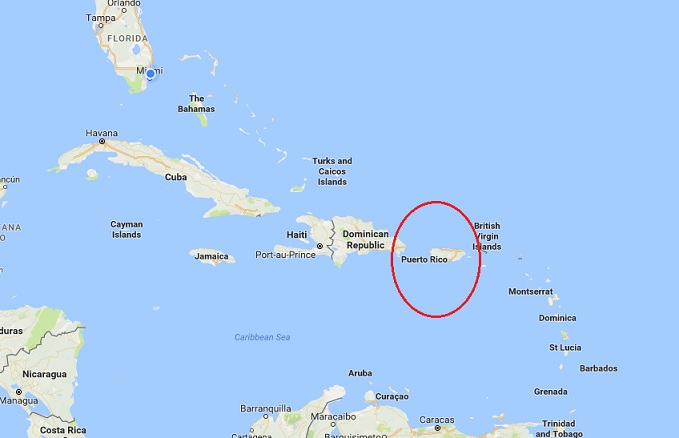
The book Go Lean…Caribbean addressed Puerto Rico from the beginning; starting with the opening assessment of the State of the Caribbean region. The book identified Puerto Rico on Page 18 as:

The Greece of the Caribbean
Puerto Rico’s population is declining. Faced with a deteriorating economy, increased poverty and a swelling crime rate, many citizens are fleeing the island for the U.S. mainland. …

Puerto Rico has been through austerity and made tough decisions: It has cut government jobs, privatized a couple of highways, and is in the process of privatizing the international airport. But unlike the case of Greece, the economic mess is on America’s hands. For U.S. citizens on the mainland who have a 401(k) account or pension for retirement, it’s possible that they have money invested in Puerto Rican bonds, which are now no longer worth much. So citizens in the states could feel the pain if Puerto Rico’s economy collapses.

This book was published in November 2013, projecting verbiage like “if Puerto Rico’s economy collapses”. According to the latest developments and this news article here (and VIDEO), that collapse is now a reality:

Title: Puerto Rico Declares a Form of Bankruptcy
By: Mary Williams Walsh

CU Blog - Righting a Wrong - Puerto Rico Bankruptcy - Photo 1

With its creditors at its heels and its coffers depleted, Puerto Rico sought what is essentially bankruptcy relief in federal court on Wednesday, the first time in history that an American state or territory had taken the extraordinary measure.

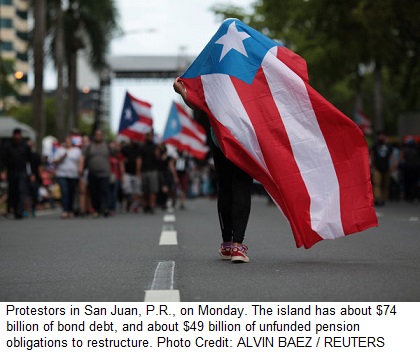
The action sent Puerto Rico, whose approximately $123 billion in debt and pension obligations far exceeds the $18 billion bankruptcy filed by Detroit in 2013, to uncharted ground.

While the court proceedings could eventually make the island solvent for the first time in decades, the more immediate repercussions will likely be grim: Government workers will forgo pension money, public health and infrastructure projects will go wanting, and the “brain drain” the island has been suffering as professionals move to the mainland could intensify.

Puerto Rico is “unable to provide its citizens effective services” because of the crushing weight of its debt, according to a filing on Wednesday by the federal board that has supervised the island’s financial affairs since last year.

The total includes about $74 billion in bond debt and $49 million in unfunded pension obligations.

While many of Puerto Rico’s circumstances are unique, its case is also a warning sign for many American states and municipalities — such as Illinois and Philadelphia — that are facing some of the same strains, including rising pension costs, crumbling infrastructure, departing taxpayers and credit downgrades that make it more expensive to raise money. Historically, Puerto Rico was barred from declaring bankruptcy. In the end, however, financial reality trumped the statutes, and Congress enacted a law last year allowing bankruptcy-like proceedings.

Puerto Rico has been in a painful recession since 2006, and previous governments dug it deeper into debt by borrowing to pay operating expenses, year after year. For the last two years, officials have been seeking assistance from Washington, testifying before stern congressional committees and even making fast-track oral arguments before the United States Supreme Court.

At the same time, Puerto Rico’s efforts to coax its creditors to agree to concessions have gone nowhere. Now the coming court proceedings will give Puerto Rico extraordinary powers to impose losses on holdout creditors unilaterally.

The island’s many creditors — whose lawsuits filed against Puerto Rico on Tuesday prompted the island’s request for court relief on Wednesday — are likely to receive far less of their money back than they want. Their predicament may turn out to be a cautionary tale for bond holders of other troubled states and cities. Puerto Rico’s case could show public workers and retirees that seemingly inviolate pension systems can be changed, too.

The next step is for the Supreme Court — specifically, Chief Justice John G. Roberts Jr. — to designate a bankruptcy judge to handle the case.

The island’s lawyers may view some bankruptcy courts as more likely to be favorable to them than others. Some creditors fear Puerto Rico will seek to have the case handled in the Southern District of New York.

Puerto Rico’s governor, Ricardo Rosselló, issued a statement Wednesday aiming to offer some reassurance, even as he sought the federal court’s protection. “We remain committed to holding good-faith negotiations to reach agreements with our creditors,” he said, adding that he hoped the court proceedings would “accelerate the process.” He appeared to be referring to the extraordinary power Puerto Rico will now have in court to unilaterally impose big losses on creditors.

Some of those creditors are furious.

“The Commonwealth’s proposal is not a credible starting point for negotiations,” Andrew Rosenberg of Paul, Weiss, Rifkind, Wharton and Garrison, an adviser to the Ad Hoc Group of Puerto Rico General Obligation Bondholders, said in a statement. He said that moving the proceedings to bankruptcy court would put the situation in “free-fall.”

The creditors got a shock this year when Mr. Rosselló issued a five-year fiscal plan that allowed only about $800 million a year to pay principal and interest on Puerto Rico’s bond debt, far less than the roughly $3.5 billion a year it would cost to make those payments on time. The prospect of losses on that scale prompted some creditors to argue that most of the $800 million was rightfully theirs.

“That things are starting out in such a highly adversarial way strongly suggests this will be a long and contentious journey for Puerto Rico,” said Matt Fabian, a partner at Municipal Market Analytics who closely tracks activity in the municipal bond market.

Puerto Rico’s case will be the first ever heard under a federal law for insolvent territories, called Promesa, which was enacted last summer; the Obama administration had warned that a “humanitarian crisis” would ensue if Puerto Rico were not given extraordinary powers to abrogate debt. There is no existing body of court precedent for Promesa, but the island’s creditors — who range from hedge fund managers to mom-and-pop investors — are bracing for a titanic battle.

Despite the depth of the island’s troubles, many Republicans in Congress have opposed debt relief, saying that the island has long received big federal subsidies for its health system, public housing and other works. They said Puerto Rico should explain what it had done with that money before it got any more help.

Last week President Trump suddenly added fuel to those fires, saying on Twitter that there should be no “bailout” for Puerto Rico.

On the island, Washington is not seen as a helper but as an unsympathetic colonial overlord. The step toward bankruptcy-like proceedings, under a federal judge, intensified complaints that Puerto Rico has lost all control of its own future.

But at the same time, some Puerto Ricans say quietly that if the court proceedings really do allow their government to cancel debt, their island may finally get the fresh start it needs.

The coming court proceedings will not be formally called a bankruptcy, since Puerto Rico remains legally barred from using Chapter 9, the bankruptcy route normally taken by insolvent local governments. Instead, Mr. Rosselló petitioned for relief under Title III of the Promesa law, which contains certain Chapter 9 bankruptcy provisions but also recognizes that, unlike the cities and counties that use Chapter 9, Puerto Rico is not part of any state and must in some ways be treated as a sovereign.

Bankruptcy lawyers and public finance experts are watching Puerto Rico’s case closely, to see if it shows a path that financially distressed states like Illinois might also one day take. States, like United States territories, currently cannot declare bankruptcy.

The only creditors who reached an agreement with Puerto Rico were the holders of a class of bonds, about $9 billion worth, that were sold to raise money for the island’s public power utility. Those creditors gave concessions that the governor pointed to Wednesday as a good example for other creditors to follow.

The governor’s fiscal plan also calls for shifting all current government workers from pensions into 401(k)-style retirement plans. Current retirees will continue to receive their traditional monthly pensions, but the amounts are to be reduced by about 10 percent on average.

The governor’s hand was forced by the expiration on Monday, at midnight, of a court stay that had been keeping Puerto Rico’s creditors from suing. On Tuesday, as soon as the stay expired, bondholder groups and at least one bond insurer sued. Wednesday’s actions by the governor and the federal supervisory board effectively blocked the lawsuits from proceeding.
Source: Posted May 3, 2017; retrieved May 4, 2017 from: https://mobile.nytimes.com/2017/05/03/business/dealbook/puerto-rico-debt.html

————-

VIDEOMiller Buckfire MD Says Title III Will Help Puerto Ricohttps://www.bloomberg.com/news/videos/2017-05-04/miller-buckfire-md-title-iii-will-help-puerto-rico-video


Published on May 3, 2017 – Puerto Rico made the decision to use a U.S. court to escape from its debts. This casts a few ripples in the state and local bond market. But this action — once inconceivable for a territory that didn’t have authority to file for bankruptcy — sets a precedent that could resonate with struggling states in the decades ahead. See the full article here: https://www.bloomberg.com/news/articles/2017-05-04/puerto-rico-collapse-shows-debts-seen-as-iron-clad-may-not-be-so
What will Puerto Rico do now?

The recommendation of the movement behind the Go Lean book is to pay the debt … eventually. (Though bankruptcy filings usually involve “haircuts” where creditors will get “pennies on the dollar”).

CU Blog - Righting a Wrong - Puerto Rico Bankruptcy - Photo 2

This is the purpose of the book Go Lean…Caribbean, to help reform and transform the societal engines in the 30 member-states of the Caribbean region. The book serves as a roadmap for the introduction and implementation of the Caribbean Union Trade Federation (CU) and the Caribbean Central Bank (CCB). The Go Lean/CU/CCB roadmap applies best-practices for community empowerment and features these 3 prime directives, proclaimed as follows:

  • Optimization of the economic engines to grow the regional economy to $800 Billion & create 2.2 million new jobs.
  • Establishment of a security apparatus to protect public safety and ensure the economic engines of the region.
  • Improvement of Caribbean governance to support these engines.

Had the CU/CCB been in force now, we would not look to Washington for answers!

The Go Lean movement asserts that Caribbean communities need to resolve their challenges together. One Go Lean mission describes the process of consolidating legacy debt and refinancing them to ease the burden on local governmental finances. Imagine a personal household that just incurred a BIG BILL for repair – think a new roof. The best strategy is to refinance and add it to the 30-year mortgage, therefore only enduring “bite-size” payments for now. The book relates this:

10 Ways to Better Manage Debt  – Page 114

1 Lean-in for the Caribbean Single Market, Caribbean Dollar & Caribbean Central Bank.
This treaty allows for the unification of the region into one market, thereby creating a single economy of 30 member-states, 42 million people and a GDP of over $800 Billion, according to 2010 figures. The CU will reboot the economic engines of the region with investments in infra-structure and business inducements.Many times these projects require up-front capital but the returns will be garnered slowly over time. These projects therefore require debt, from the capital or lending markets. The issue of debt not only concerns governments, but individuals as well. The CU will impact this dynamic by mastering credit ratings and offering to buy back foreign debt for local C$ financing and CCB controls. This tactic lets the CCB function as a local IMF, fostering a new regime for the economy.
2 M1 & The Interest Economy
The CU seeks to consolidate the currency of each member-state around the Caribbean Dollar (C$); then by inducing more electronic transactions as opposed to paper currency, there will be more lendable funds in the money supply (M1). Plus having viable capital markets will allow governments, institutions and businesses to get the capital they need, and investors/lenders can garner interest income for the use of their funds. Most Pension funds depend on this model.
3 Public Financing
Every independent country in the Caribbean is a member of the IMF, only the OverseasTerritories are not engaged in this arrangement. Why not? Their host countries (US, UK, France and the Netherlands) provide the capital access that the island territories need. The CU quest is to shift this dependency to a Caribbean source, not European or American.
4 Bonds & Add-on’s (Warrants)
Rather than international loans, the CU strategizes bond issues in C$ capital markets for government financing. There are a number of ways to make bonds more attractive to investors, like adding warrants as “sweeteners” (premiums on sale price, leverage, expirations and exercise restrictions). Warrants are often detachable and tradable in markets.
5 CU Federal Bankruptcies
6 Credit Reporting – Sharpening the Tool
7 Retail Credit Reboot and New Engines
8 Student Loans Sensible Dynamics
9 Mortgage Loan Sensible Dynamics
10 Crowd Sourcing – Community Capital Sharing Mitigates Debt

The points of effective, technocratic stewardship of Public Debt have been elaborated upon in previous blog/commentaries. Consider this sample:

https://goleancaribbean.com/blog/?p=7989 Transformations: Money Matters – ‘Getting over’ with ‘free money’
https://goleancaribbean.com/blog/?p=7601 Beware of Vulture Capitalists
https://goleancaribbean.com/blog/?p=7268 Detroit’s ‘debt reality’ giving schools their ‘Worst Shot’
https://goleancaribbean.com/blog/?p=7235 Flint, Michigan – A Cautionary Tale for bad debt management
https://goleancaribbean.com/blog/?p=6563 Lessons from Iceland – Model of Recovery
https://goleancaribbean.com/blog/?p=5818 Greece: From Bad to Worse
https://goleancaribbean.com/blog/?p=5759 Pressed by Debt Crisis, Doctors Leave Greece in Droves
https://goleancaribbean.com/blog/?p=3582 For Canadian Banks: Caribbean is a ‘Bad Bet’
https://goleancaribbean.com/blog/?p=3311 Detroit’s Municipal Bankruptcy – Lessons Learned

Overall, the Go Lean book stresses the community ethos, strategies, tactics, implementations and advocacies to reform and transform the economic, security and governing engines of Caribbean society. This effort will be technocratic! It will make “sure all ends meet”. We must properly administer the finances of our communities. This vision was anticipated from the beginning of the Go Lean book, opening with these pronouncements in the Declaration of Interdependence (Page 12):

xi. Whereas all men are entitled to the benefits of good governance in a free society, “new guards” must be enacted to dissuade the emergence of incompetence, corruption, nepotism and cronyism at the peril of the people’s best interest.  The Federation must guarantee the executions of a social contract between government and the governed.

xii. Whereas the legacy in recent times in individual states may be that of ineffectual governance with no redress to higher authority, the accedence of this Federation will ensure accountability and escalation of the human and civil rights of the people for good governance, justice assurances, due process and the rule of law. As such, any threats of a “failed state” status for any member state must enact emergency measures on behalf of the Federation to protect the human, civil and property rights of the citizens, residents, allies, trading partners, and visitors of the affected member state and the Federation as a whole.

xiv. Whereas government services cannot be delivered without the appropriate funding mechanisms, “new guards” must be incorporated to assess, accrue, calculate and collect revenues, fees and other income sources for the Federation and member-states. The Federation can spur government revenues directly through cross-border services and indirectly by fostering industries and economic activities not possible without this Union.

xix. Whereas our legacy in recent times is one of societal abandonment, it is imperative that incentives and encouragement be put in place to first dissuade the human flight, and then entice and welcome the return of our Diaspora back to our shores. This repatriation should be effected with the appropriate guards so as not to imperil the lives and securities of the repatriated citizens or the communities they inhabit. The right of repatriation is to be extended to any natural born citizens despite any previous naturalization to foreign sovereignties.

xxiv. Whereas a free market economy can be induced and spurred for continuous progress, the Federation must install the controls to better manage aspects of the economy: jobs, inflation, savings rate, investments and other economic principles. Thereby attracting direct foreign investment because of the stability and vibrancy of our economy.

xxv. Whereas the legacy of international democracies had been imperiled due to a global financial crisis, the structure of the Federation must allow for financial stability and assurance of the Federation’s institutions. To mandate the economic vibrancy of the region, monetary and fiscal controls and policies must be incorporated as proactive and reactive measures. These measures must address threats against the financial integrity of the Federation and of the member-states.

Yes, the purpose of this commentary is to project the better plan for reforming and transforming Caribbean municipal financing. But it is also about reforming and transforming Puerto Rico. An agenda for Puerto Rico has always been a priority for the Go Lean roadmap. This island is just sitting there in the middle of the Caribbean region. No effort to reboot the Caribbean neighborhood could reasonably ignore this island.

“But they are an American Territory, a subset of the richest, most powerful nation on the planet”.

And yet … they are a Failed-State!

In a previous blog-commentary from the Go Lean movement, it was declared that “Puerto Rico needs the strategies, tactics, implementations and advocacies of the CU. [And] the CU needs Puerto Rico!” This is true now more than ever!

Now is the time for all stakeholders – state and municipal governments and their citizens – in the Caribbean to lean-in for the empowerments described here-in and in the book Go Lean … Caribbean. We must do better with public finance than our predecessors. They tried to “go for it alone” – this is why Puerto Rico always failed – let try this different approach of “going for it together”. This is guaranteed to make Puerto Rico and all of the Caribbean a better place to live, work and play. 🙂

Download the free e-Book of Go Lean … Caribbean – now!

Sign the petition to lean-in for the roadmap for the Caribbean Union Trade Federation.

Share this post:
, , , ,

Managing the ‘Strong versus the Weak’ – Lower Ed.

Go Lean Commentary

“A fool and his money are soon parted” – Ancient British proverb that gleans inspiration from The Bible book of Proverbs 26:1-11, with the meaning of:
1.   It is easy to get money from foolish people.
2.  It is difficult or unlikely that foolish people maintain their hold on acquired wealth.

Lower Ed - Photo 4

What’s ironic is there are similar colloquial expressions that are even more shocking for the prevalence of financial abuse of the unwise. Consider:

So who is more abominable? The fool who loses out on his new found fortune or the shrewd person that schemes to take advantage of that fool? (It should be noted in this case that the fortune is only rights and credits; every American citizen qualify for a need-based Student Loan from the federal government – that loan is non-dischargeable).

One commentator pushes this thesis even further, positing that:

“The ‘fools’ I think of are all rather harmless creatures, basically well-intentioned and innocent. All of them evoke a certain sense of pity, mixed with amusement.”

So imagine that one who exploits the “fool”! Imagine, if instead of an individual, it is a “system”, a government program, that does the exploiting. This is the actuality of Student Loan financing for Private, For-Profit Schools and Colleges in the US.

This is truly abominable; and yet this is the United States of America.

Say it ain’t so!

In a previous blog-commentary, the “abominable” judgment was even more direct:

The ‘Evil Empire‘ – For-Profit Educational firms and institutions – is finally facing resistance from governmental authorities. Companies in this industry have come under fire for their bad practices and abuse of their customers: young students.

… and now, today, ITT Educational Services, one of the largest operators of for-profit technical schools, ended operations at all of its ITT Technical Institutes.
Source: For-Profit Education – ‘Another one bites the dust’; posted September 6, 2016; retrieved April 26, 2017.

Lower Ed - Photo 3This commentary asserts that there is a need for the Caribbean communities to reform and transform our education deliveries, yet still, we do NOT want to model the American system. This point aligns with the book Go Lean…Caribbean, which seeks to reboot the 30 member-states of the Caribbean region, to ensure better stewardship of the Social Contract for all citizens in our homelands, strong and weak. The Go Lean book petitions the Caribbean region to do better! It describes the necessary empowerments to optimize the economic, security and governing engines of Caribbean society to ensure a better adherence to the principle of the Greater Good.

In a previous 5-part series of blog-commentaries on the “Strong versus the Weak”, the pattern from the Code of Hammurabi was detailed and presented as an Old World model that is being ignored in the US. The one place we would expect to find mitigations for foolishness – to turn the foolish one wise – would be the education arena. Yet this is where we are finding a consistent pattern of the “Strong abusing the Weak”.

This commentary is an addition submission to that already completed series; we are adding this 6th entry. The full series is now as follows:

  1.  Managing the Strong versus the Weak – Model of Hammurabi
  2.  Managing the Strong versus the Weak – Mental Disabilities
  3.  Managing the Strong versus the Weak – Bullying in Schools
  4.  Managing the Strong versus the Weak – Book Review: Sold-Out!
  5.  Managing the Strong versus the Weak – An American Sickness
  6.  Managing the Strong versus the Weak – Book Review: Lower Ed!

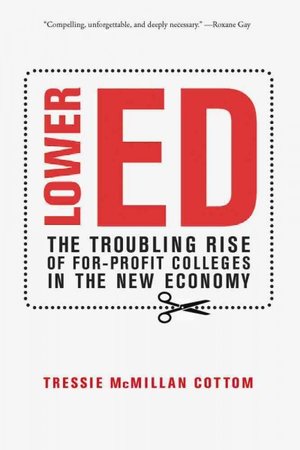
Lower Ed - Photo 1The need for this 6h entry was spurred by the release of this new book on February 28, 2017 entitled: Lower Ed – The Troubling Rise of For-Profit Colleges in the New Economy by Dr. Tressie McMillan Cottom (Ph.D. Sociology who teaches at Virginia Commonwealth University). It is ‘spot-on’ for the judgment of the pattern of abuse of the ‘Weak’ in American society who are innocently looking for “pull themselves up by the boot strap”. See the review-synopsis of this book here following by an PODCAST-interview with the Author:

Book Review: Lower Ed: The Troubling Rise of For-Profit Colleges in the New Economy
“With great compassion and analytical rigor, Cottom questions the fundamental narrative of American education policy, that a postsecondary degree always guarantees a better life.” – The New York Times Book Review

More than two million students are enrolled in for-profit colleges, from the small family-run operations to the behemoths brandished on billboards, subway ads, and late-night commercials. These schools have been around just as long as their bucolic not-for-profit counterparts, yet shockingly little is known about why they have expanded so rapidly in recent years —during the so-called Wall Street era of for-profit colleges.

In Lower Ed Tressie McMillan Cottom — a bold and rising public scholar, herself once a recruiter at two for-profit colleges—expertly parses the fraught dynamics of this big-money industry to show precisely how it is part and parcel of the growing inequality plaguing the country today. McMillan Cottom discloses the shrewd recruitment and marketing strategies that these schools deploy and explains how, despite the well-documented predatory practices of some and the campus closings of others, ending for-profit colleges won’t end the vulnerabilities that made them the fastest growing sector of higher education at the turn of the twenty-first century. And she doesn’t stop there.

With sharp insight and deliberate acumen, McMillan Cottom delivers a comprehensive view of post-secondary for-profit education by illuminating the experiences of the everyday people behind the shareholder earnings, congressional battles, and student debt disasters. The relatable human stories in Lower Ed—from mothers struggling to pay for beauty school to working class guys seeking “good jobs” to accomplished professionals pursuing doctoral degrees—illustrate that the growth of for-profit colleges is inextricably linked to larger questions of race, gender, work, and the promise of opportunity in America.

Drawing on more than one hundred interviews with students, employees, executives, and activists, Lower Ed tells the story of the benefits, pitfalls, and real costs of a for-profit education. It is a story about broken social contracts; about education transforming from a public interest to a private gain; and about all Americans and the challenges we face in our divided, unequal society.

Source: Posted and Retrieved 04-26-2017 from: https://www.amazon.com/Lower-Ed-Troubling-Profit-Colleges/dp/1620970600/

Lower Ed - Photo 2

————-

AUDIO Podcast – Terry Gross with Tressie McMillan Cottom – Heard on Fresh Air

Mental Photo 4March 27, 2017 – For-profit colleges have faced federal and state investigations in recent years for their aggressive recruiting tactics — accusations that come as no surprise to author Tressie McMillan Cottom.
Cottom worked as an enrollment officer at two different for-profit colleges, but quit because she felt uncomfortable selling students an education they couldn’t afford. Her new book, Lower Ed, argues that for-profit colleges exploit racial, gender and economic inequality.
Cottom tells Fresh Air’s Terry Gross that for-profit institutions tend to focus their recruiting on students who qualify for the maximum amount of student aid. “That happens to be the poorest among us,” she says. “And because of how our society is set up, the poorest among us tend to be women and people of color.”

Notice this small sample of the book’s revelations and disclosures, symptomatic of Crony-Capitalism:

  • A peer-reviewed analysis, with over 100 interviews – with students, employees, executives, and activists – the story is consistently reflective of a sad, abusive American eco-system.
  • Big-money industry using shrewd recruitment and marketing strategies to tempt the most vulnerable in society.
  • Despite well-documented predatory practices and some well-publicized campus closings, ending for-profit colleges won’t end the vulnerabilities that made them the fastest growing sector of higher education.
  • The weakest in American society – single mothers, systematically poor, underserved and under-privilege – are the ones targeted, exploited and abused – again and again.
  • The growth of for-profit colleges is inextricably linked to larger questions of race, gender, work, and the promise of opportunity in America.

This commentary and the previous 5 commentaries in this series all relate to nation-building, stressing the community ethos necessary to forge a society where all the people are protected all the time. Who really is the fool in these scenarios? The person being abused by the American eco-system or the ones abandoning home to join that society. The premise in the Go Lean book and subsequent blog-commentaries is that the people of the Caribbean can more easily “proper where planted” in their homeland than to emigrate to the American foreign shores for relief. It is foolish to think that America cares about “us”, when they undoubtedly do not care about the “weak” in their own society.

We need more education in our region; because we need economic growth. Economists have established the relationship between economic growth and education:

“For individuals this means that for every additional year of schooling they increase their earnings by about 10%. This is a very impressive rate of return.” (Go Lean book Page 258).

A lot of Caribbean students do matriculate in American colleges and universities. But this commentary is hereby declaring that we must assuredly look beyond the American model to fulfill our educational needs. According to the foregoing book and AUDIO Podcast, only a fool would invest in American For-Profit private educational institutions.

The word “invest” seems so misplaced. No wonder we have such a poor “Return on our Investment” from our Caribbean students studying abroad. (So many times, they do not even return “home”.)

This is already a familiar thesis for the Go Lean movement – a roadmap for the introduction and implementation of the Caribbean Union Trade Federation (CU) – as the Go Lean book advocates establishing local educational options mostly in response to the failings of the “study abroad model”. We have problems with the American quality education in the For-Profit institutions and we have problems with the threat of further brain-drain. See more details from the book here:

10 Ways to Improve Education – Page 159.
# 2 – Promote Industries for e-Learning
For 50 years the Caribbean has tolerated studying abroad; unfortunately many students never returned home. The CU’s focus will now be on facilitating learning without leaving. There have emerged many successful models for remote learning using electronic delivery or ICT. The CU will foster online/home school programs, for secondary education, to be licensed at the CU level so as to sanction, certify, and oversee the practice, especially for rural areas/islands. At  the tertiary level, the CU will sponsor College Fairs for domestic and foreign colleges that deliver online education options.

We need more e-Learning options in our Caribbean homeland, for all education levels: K-12 and college. There are many successful models and best practices to adopt. We are in position to pick, choose and refuse products and services from all our foreign trading partners, including from the US. (We must assuredly avoid their societal defects).

One successful model is “iReady” – see more in the Appendix below.

The US, despite its advanced democracy status, has definite societal defects in the education arena. Overcoming the defects – particularly Crony-Capitalism or exploiting public resources for private gains – make depending on American solutions, foolish.

The Go Lean roadmap seeks to transform the Caribbean education deliveries There are so many successful role models to emulate. Yet still, this will be hard. So many in our society hold the default view:

White is Right

Therefore these one may rather spend their education monies abroad in the US than to engage in a local empowerment plan. That is so foolish!

So yes, the transformation will be hard, heavy-lifting, but not foolish! It will engage all 3 societal engines: economic, security and governance. In fact, the prime directives of the Go Lean/CU roadmap includes the following 3 statements:

  • Optimization of the economic engines in order to grow the regional economy to $800 Billion & create 2.2 million new jobs.
  • Establishment of a security apparatus – including emergency management – to ensure public safety and protect the resultant economic.
  • Improve Caribbean governance for all people – with empowerments like education – to support these engines.

This comprehensive view – economics, security and governance – is the charge of the Go Lean roadmap, opening with these pro-education pronouncements in the Declaration of Interdependence (Page 13):

xix. Whereas our legacy in recent times is one of societal abandonment, it is imperative that incentives and encouragement be put in place to first dissuade the human flight, and then entice and welcome the return of our Diaspora back to our shores …

xxi. Whereas the preparation of our labor force can foster opportunities and dictate economic progress for current and future generations, the Federation must ensure that educational and job training opportunities are fully optimized for all residents of all member-states, with no partiality towards any gender or ethnic group… This responsibility should be executed without incurring the risks of further human flight, as has been the past history.

So any tertiary education plan for the Caribbean must address the preponderance to exacerbate the brain drain. Going to an American For-Profit institution would just be foolish. We, as a community, would be spending good money, but getting bad returns. What’s worst, imaging getting student loans to finance that education? How likely would there be a “Return on Investment”?

Overall, the Go Lean book stresses the community ethos, strategies, tactics, implementations and advocacies to reboot, reform and transform tertiary education delivery in the Caribbean; see this expressed in this one advocacy here:

10 Ways to Impact Student Loans – Page 160

1 Embrace the advent of the CU Single Market to leverage across the 42 million people in the 30 member-states.
2 Buy Existing Loans
3 Loan Forgiveness
4 Deferments / Postponements
5 Non-Dischargeable with Bankruptcy
6 Forgivable with Death and Organ Transplantation Dynamics
7 Diaspora Eligibility for CU Institutions
8 Grace Periods
9 Public – Private servicers
10 Lessons from Occupy Wall Street (OWS) The OWS protest movement highlighted some legitimate issues with the student loan industry. The US Federal government provides guarantees on student loans (direct and indirect), and the loans are non-dischargeable in any Bankruptcy process, so private loan issuers were assured a profit. The issuers would therefore drive the industry to lend more and more to less capable students at high interest rates. As a result of the protest, the Obama Administration eliminated the indirect channel for student loan, taking the profit motive out of the process; (See more in Appendix IH of the Go Lean book on Page 286). The CU [model] will only direct lend.

The points of effective, technocratic stewardship of tertiary education and student loans were further elaborated upon in previous blog/commentaries. Consider this sample:

https://goleancaribbean.com/blog/?p=9724 “Why”, “How”  and “When” to Transform Caribbean Universities
https://goleancaribbean.com/blog/?p=8669 A Model from Failing Detroit – Make Community Colleges free
https://goleancaribbean.com/blog/?p=8373 A Lesson in Economic Fallacies – Student Loans As Investments
https://goleancaribbean.com/blog/?p=5482 For-Profit Education: Plenty of Profit; Little Education
https://goleancaribbean.com/blog/?p=4487 FAMU – Finally, A Model for Facilitating Economic Opportunity
https://goleancaribbean.com/blog/?p=1256 Is a Traditional 4-year Degree a Terrible Investment?
https://goleancaribbean.com/blog/?p=709 Student debt holds back many would-be home buyers

There is an absolute abomination of the “strong abusing the weak” in the American eco-system. We must avoid this American pattern; it may even be necessary to avoid America when it comes to our tertiary education needs.

“We can do bad all by ourselves”.

We have so many options elsewhere. The Go Lean plan is to create the better options here in the Caribbean; if not in your homeland, then perhaps in the next one, to the left or to the right.

It is not hard to do better than the American For-Profit model. Since many times in the past American abuse has proliferated, for those weaker physically, mentally and economically. The movement behind the Go Lean/CU roadmap wants us, in the Caribbean, to do better. Yes, let’s be wise!

Education can be so beneficial to our communities. But let’s not be the fool! Let’s keep “it” here at home and let’s “weed out” any bad practices of Crony-Capitalism in our tertiary education delivery system. Let’s pursue the Greater Good (greatest good to the greatest number of people which is the measure of right and wrong).

Now is the time to lean-in to this Go Lean roadmap to reboot, reform and transform Caribbean education. If we do this, we will make the Caribbean a better place to live, work, learn and play. 🙂

Download the free e-book of Go Lean … Caribbean – now!

Sign the petition to lean-in for the roadmap for the Caribbean Union Trade Federation.

———–

Appendix VIDEO – Intro to/Login for iReady – https://youtu.be/rhNO2-DQMCU


Published December 15, 2016 – iReady Teacher providing instructions for logging on.
See Video recording of a sample lesson here: https://youtu.be/_xoxdLaudDY


Share this post:
, , , ,
[Top]

Managing the ‘Strong versus the Weak’ – An American Sickness

Go Lean Commentary

“There is a special ‘place in hell’ …”
“… for someone that would steal your wallet after you collapse/faint due to a health crisis; (think heart-attack, epileptic seizure, etc.)”.

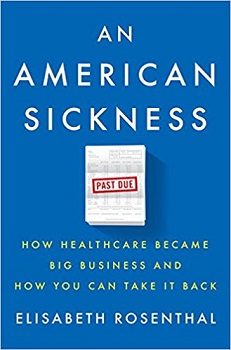
Sickness 1Imagine this scenario at the country level; how inconceivable for an advanced society. And yet, this is the actual situation in the United States. This is according to the new book – An American Sickness: How Healthcare Became Big Business and How You Can Take It Back – by Dr. Elisabeth Rosenthal, a former E.R. doctor and current journalist for medical issues.

This commentary asserts that there is a need for the Caribbean communities to reform and transform our healthcare deliveries, yet still, we do NOT want to model the American system. This point aligns with the book Go Lean…Caribbean, which seeks to reboot the 30 member-states of the Caribbean region, to ensure better stewardship of the Social Contract for all citizens in our homelands, strong and weak. The Go Lean book petitions the Caribbean region to do better! It describes the necessary empowerments to optimize the economic, security and governing engines of Caribbean society to ensure a better adherence to the principle of the Greater Good.

In a 4-part series of blog-commentaries on the “Strong versus the Weak”, the pattern from the Code of Hammurabi was detailed and presented as an Old World model that was ignored in the formation of the New World. The Americans got it bad! If that ancient King Hammurabi was around in present day, he would have a harsh judgment for the American healthcare system. It is figuratively like “stealing the wallet when a person collapses”, as many of the financial abuses in American hospitals occur when the patient is unconscious or only concerned about seeking relief from pain and/or discomforts.

This commentary is an spin-off from that series; though it was originally presented as a 4-parter, we are hereby adding this 5th entry. The full series is now as follows:

  1. Managing the Strong versus the Weak – Model of Hammurabi
  2. Managing the Strong versus the Weak – Mental Disabilities
  3. Managing the Strong versus the Weak – Bullying in Schools
  4. Managing the Strong versus the Weak – Book Review: Sold-Out!
  5. Managing the Strong versus the Weak – An American Sickness

The need for this 5th entry arose with the release of this new book today – April 11, 2017. It is ‘spot-on’ for the criticism of the pattern of abuse of the ‘Weak’ in American society. See the review-synopsis of Dr. Rosenthal’s book here:

Book Review: An American Sickness: How Healthcare Became Big Business and How You Can Take It Back
By: Elisabeth Rosenthal (Author)

At a moment of drastic political upheaval, a shocking investigation into the dangerous, expensive, and dysfunctional American healthcare system, as well as solutions to its myriad of problems

Sickness 2

In these troubled times, perhaps no institution has unraveled more quickly and more completely than American medicine. In only a few decades, the medical system has been overrun by organizations seeking to exploit for profit the trust that vulnerable and sick Americans place in their healthcare. Our politicians have proven themselves either unwilling or incapable of reining in the increasingly outrageous costs faced by patients, and market-based solutions only seem to funnel larger and larger sums of our money into the hands of corporations. Impossibly high insurance premiums and inexplicably large bills have become facts of life; fatalism has set in. Very quickly Americans have been made to accept paying more for less. How did things get so bad so fast?

Breaking down this monolithic business into the individual industries—the hospitals, doctors, insurance companies, and drug manufacturers—that together constitute our healthcare system, Rosenthal exposes the recent evolution of American medicine as never before. How did healthcare, the caring endeavor, become healthcare, the highly profitable industry? Hospital systems, which are managed by business executives, behave like predatory lenders, hounding patients and seizing their homes. Research charities are in bed with big pharmaceutical companies, which surreptitiously profit from the donations made by working people. Patients receive bills in code, from entrepreneurial doctors they never even saw.

The system is in tatters, but we can fight back. Dr. Elisabeth Rosenthal doesn’t just explain the symptoms, she diagnoses and treats the disease itself. In clear and practical terms, she spells out exactly how to decode medical doublespeak, avoid the pitfalls of the pharmaceuticals racket, and get the care you and your family deserve. She takes you inside the doctor-patient relationship and to hospital C-suites, explaining step-by-step the workings of a system badly lacking transparency. This is about what we can do, as individual patients, both to navigate the maze that is American healthcare and also to demand far-reaching reform. An American Sickness is the frontline defense against a healthcare system that no longer has our well-being at heart.

Source: Posted and Retrieved 04-11-2017 from: https://www.amazon.com/American-Sickness-Healthcare-Became-Business/dp/1594206759/ref=sr_1_1?ie=UTF8&qid=1491928851&sr=8-1&keywords=Book+American+Sickness

—————

AUDIO Podcast – Terry Gross interviews Elisabeth Rosenthal – Heard on Fresh Air

Mental Photo 4April 10, 2017 – Health care is a trillion-dollar industry in America, but are we getting what we pay for? Dr. Elisabeth Rosenthal, a medical journalist who formerly worked as a medical doctor, warns that the existing system too often focuses on financial incentives over health or science.

“We’ve trusted a lot of our health care to for-profit businesses and it’s their job, frankly, to make profit,” Rosenthal says. “You can’t expect them to act like Mother Teresas.”

Rosenthal’s new book, An American Sickness, examines the deeply rooted problems of the existing health-care system and also offers suggestions for a way forward. She notes that under the current system, it’s far more lucrative to provide a lifetime of treatments than a cure.

“One expert in the book joked to me … that if we relied on the current medical market to deal with polio, we would never have a polio vaccine,” Rosenthal says. “Instead we would have iron lungs in seven colors with iPhone apps.”

Notice this small sample of the book’s revelations and disclosures, symptomatic of Crony-Capitalism:

  • Healthcare economics do not align with normal economic laws: “Usual & Customary” versus supply-and-demand
  • Hospital systems behave like predatory lenders
  • Consumers cannot decide, as prices may be unknown at the time of delivery
  • Lifetime of treatment preferable for service-providers rather than a cure.
  • Doctors owning Surgical Centers, therefore dictating procedures that they can accommodate at their facilities
  • Unknown and unauthorized “Drive-by Doctors” adding to hospital bills.

This commentary and the previous 4 commentaries in this series all relate to nation-building, stressing the community ethos necessary to forge a society where all the people are protected all the time. While we are analyzing the American system, we clearly recognize that the Caribbean eco-system is equally – or perhaps even more – in a crisis and in need of reform. The premise in the Go Lean book and subsequent blog-commentaries is that “a crisis is a terrible thing to waste”. We can use the acknowledgement of our crisis to optimize our healthcare deliveries once and for all. We must assuredly look beyond the American model. According to the foregoing book and AUDIO Podcast, many more successful models exist.

Dr. Rosenthal’s book asserts that there may be better models in Europe than there is in the US. This is already a familiar thesis for the Go Lean movement – a roadmap for the introduction and implementation of the Caribbean Union Trade Federation (CU) – as the Go Lean book advocates studying all dimensions of the EU:

10 Ways to Model the EU – Page 130.
The CU will emulate the European Union by unifying and integrating the Caribbean region into one market, thereby creating a single economy of 30 member-states, 42 million people and a GDP of over $800 Billion (per 2010). The EU is 28 member-states, 507.89 million people and $16.6 Trillion GDP (per 2012). Though the CU is only a fraction the size of the EU, there is the similarity of divergent peoples (24 languages) putting aside their differences in a quest to confederate. The EU region has quite an ignoble history of contending with differences, spurning 2 World Wars in the last century. Yet they came together to unite and integrate to make Europe a better place to live, work and play. Just like the EU, the CU will not possess sovereignty; this feature remains with each member-state.

Still, there was a previous attempt to reform the American healthcare delivery eco-system. There is wisdom to glean from that development. The Go Lean book provides this excerpt (Page 156):

The Bottom Line on Obama Care
The Patient Protection and Affordable Care Act (PPACA), commonly called Obama Care is a US federal statute signed into law by President Barack Obama on March 23, 2010. It represents the most significant government expansion and regulatory overhaul of the U.S. healthcare system since the passage of Medicare and Medicaid in 1965. The PPACA is aimed at increasing the rate of health insurance coverage for Americans and reducing the overall costs of health care. It provides a number of mechanisms—including mandates, subsidies, and tax credits — to employers and individuals to increase the coverage rate.Additional reforms aim to improve healthcare outcomes and streamline the delivery of health care. The PPACA requires insurance companies to cover all applicants and offer the same rates regardless of pre-existing conditions or sex. The Congressional Budget Office projected that the PPACA will lower both future deficits and Medicare spending. On June 28, 2012, the United States Supreme Court upheld the constitutionality of most of the Obama Care.

The US, despite its advanced democracy status, has definite societal defects in the healthcare arena. Overcoming the defects – particularly Crony-Capitalism or exploiting public resources for private gains – make solving healthcare challenging.

It is truly heavy-lifting!

This was recently discovered by the new US president, Donald Trump.

After campaigning for the 2016 election on the promise of “repealing and replacing Obama Care”, the administration’s first healthcare legislation attempt flopped. The president’s exclamation:

President Trump: ‘Nobody Knew Health Care Could Be So Complicated’

The truth of the matter Mr. President, everybody – engaged in the process of transforming society – knew!

Transforming the Caribbean healthcare will also be equally complicated. It will engage all 3 societal engines: economic, security and governance. In fact, the prime directives of the Go Lean/CU roadmap includes the following 3 statements:

  • Optimization of the economic engines in order to grow the regional economy to $800 Billion & create 2.2 million new jobs.
  • Establishment of a security apparatus – including emergency management – to ensure public safety and protect the resultant economic engines.
  • Improve Caribbean governance for all people – with empowerments for healthcare – to support these engines.

This comprehensive view – economics, security and governance – is the charge of the Go Lean roadmap, opening with these pronouncements in the Declaration of Interdependence (Page 11):

viii. Whereas the population size is too small to foster good negotiations for products and commodities from international vendors, the Federation must allow the unification of the region as one purchasing agent, thereby garnering better terms and discounts.

ix. Whereas the realities of healthcare and an aging population cannot be ignored and cannot be afforded without some advanced mitigation, the Federation must arrange for health plans to consolidate premiums of both healthy and sickly people across the wider base of the entire Caribbean population. The mitigation should extend further to disease management, wellness, mental health, obesity and smoking cessation programs. The Federation must proactively anticipate the demand and supply of organ transplantation as developing countries are often exploited by richer neighbors for illicit organ trade.

Overall, the Go Lean book stresses the community ethos, strategies, tactics, implementations and advocacies to reboot, reform and transform healthcare delivery in the Caribbean; see this expressed in this one advocacy here:

10 Ways to Improve Healthcare – Page 156

1 Embrace the advent of the CU Single Market to leverage across the 42 million people in the 30 member-states.
2 Organ Procurement Authority
3 Deploy Disease Management Models
4 Universal Health Insurance Care
Much like with auto insurance, there is a need to mandate health insurance coverage for most Caribbeans. The coverage does not have to be $0 deductible and 100% coverage, rather it could be less attractive – low-end terms – like $6000 deductible and 60% coverage. The US model, Obama Care has plans branded Bronze (low end), Silver, Gold and Platinum. The goal for the CU is simply to ensure that catastrophic illnesses or injuries do not imperil the financial viability of individual, families or communities. The coverage risk is minimized with insurance carriers having a larger premium base (42 million) to calculate their actuarial formulas. To maximize savings, individual states may choose to combine their health insurance marketplaces with other states or go at it alone.
5 Wellness, Nutrition, Fitness and Smoking Cessations Programs
6 Medical Tourism
7 Repatriate MediCare Beneficiaries
8 Caribbeans with Disabilities
9 Medical Education Outreach
10 Public Health Extension
Due to the systemic threat, epidemic response and disease control will be coordinated at the federal level. Also, the acquisition of public-bound pharmaceuticals (vaccinations, etc.) can be negotiated at the regional level, using the Group Purchasing Organizations (GPO) envisioned in this roadmap. This will lead to a better supply and pricing dynamics.

The points of effective, technocratic stewardship of healthcare were further elaborated upon in previous blog/commentaries. Consider this sample:

https://goleancaribbean.com/blog/?p=7822 Cancer: Doing More
https://goleancaribbean.com/blog/?p=7586 Blink Health: The Cure for High Drug Prices
https://goleancaribbean.com/blog/?p=7430 Brazilian Shrunken Head Babies: Zika or Tdap?
https://goleancaribbean.com/blog/?p=6580 Capitalism of Drug Patents
https://goleancaribbean.com/blog/?p=3276 Role Model Shaking Up the World of Cancer
https://goleancaribbean.com/blog/?p=2522 The Cost of Cancer Drugs
https://goleancaribbean.com/blog/?p=2105 Recessions and Public Health
https://goleancaribbean.com/blog/?p=1751 New Hope in the Fight against Alzheimer’s Disease
https://goleancaribbean.com/blog/?p=1003 Painful and rapid spread of new virus in Caribbean
https://goleancaribbean.com/blog/?p=554 Cuban cancer medication registered in 28 countries
https://goleancaribbean.com/blog/?p=286 PR’s Comprehensive Cancer Center Project Breaks Ground
https://goleancaribbean.com/blog/?p=278 Tim Armstrong, the CEO of AOL – Health-care Concerns

The opening imagery:

“There is a special ‘place in hell’ …”

… is just an metaphorical reference. There is no assumption of a literal burning abyss of torment. But this does convey the abomination of the “strong abusing the weak”. So many times in the past this abuse has proliferated, for those weaker physically, mentally, economically and sadly, medically.

The movement behind the Go Lean/CU roadmap wants us, in the Caribbean, to do better. Yes, healthcare is not easy, but it is possible to reform and transform. There are so many good examples and models to learn from:

The underlying book reviewed here – An American Sickness: How Healthcare Became Big Business and How You Can Take It Back – considers Switzerland.

We want to “weed out” any bad practices of Crony-Capitalism in our health delivery system. Instead, we want to pursue the Greater Good (greatest good to the greatest number of people which is the measure of right and wrong). Most importantly, we want to proclaim the truth of American life. So many of our Caribbean citizens “beat down their doors to get out” and emigrate to the US. We want to “dull the lights on any American Welcome signs” – considering the reality of American Crony-Capitalism, the “grass is not necessarily greener on the other side”.

Now is the time to lean-in to this Go Lean roadmap to reboot, reform and transform Caribbean healthcare. If we do this, we will make the Caribbean a better place to live, work, heal and play. 🙂

Sign the petition to lean-in for the roadmap for the Caribbean Union Trade Federation.

Download the free e-book of Go Lean … Caribbean – now!

Share this post:
, , , ,
[Top]

White is Right – Not!

Go Lean Commentary

White Supremacy has been “weighed in the balance and found to be wanting“, invalid and fallacious.

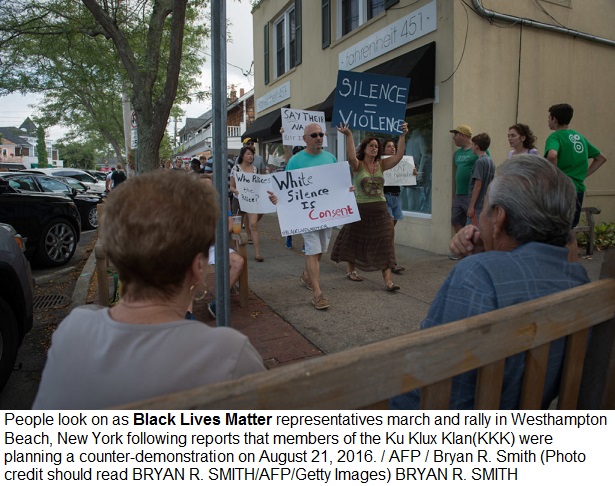
US-RACE-PROTEST

Yet still, in many circles around the world in general and the Caribbean in particular, there is the impression that “White is Right“.

Why does this fallacy proliferate and how can we dispel this false notion?

The origins are tied to a religious orthodoxy. In a previous blog-commentary, it was related that the Universal Catholic Church …

… permitted trade with Barbary merchants, in which foodstuffs would be given in exchange for slaves who could then be converted to Christianity.[11] This was the de jure authorization of the Slave Trade.

From this origin, the foundation of the New World was established.

All stakeholders have now renounced this history. It is accepted that “Whiteness” is only a social construct, a product of a bad history in social development;  (see the AUDIO-PODCAST in the Appendix below). Though it is a different world today, some things still linger; think Colorism where “White is Right” on one end of the spectrum, while all things non-White is … “Less Than“.

One more lingering item is language. The 5 major languages in the New World are English, Dutch, French, Portuguese and Spanish – all from previous European colonizers. One other language not listed above but that held sway over the New World was the “dead language” of Latin. This was the ancient language of the Roman Empire, as described here:

Undoubtedly, Latin is the language that has the most longevity in the Roman Liturgy: It has been in use for over sixteen centuries, that is to say, from the time when the official liturgical language of the Church went from Greek to Latin – a change completed under Pope Damasus (+384). The official liturgical books of the Roman Rite are still published in Latin today (editio typica). – Vatican Office of Liturgical Celebrations
CU Blog - White is Right - Not! - Photo 1

So “White is Right” was a natural extension from all the religious activities that transpired in the dead language of a European culture, White Romans. To the simple mind, this logic flowed:

Language is White

God is White

White must be Right

This orthodoxy or liturgy continued, with Latin as the only language of the Roman Catholic Church … until 1963.

What happened then and why is it deemed that this change actually changed the world? See the full article here on the Second Vatican Council, informally known as “Vatican II”; this addressed relations between the Catholic Church and the modern world[3]:

Title: Vatican II Changed The Catholic Church — And The World
By: John Pope, Religion News Service

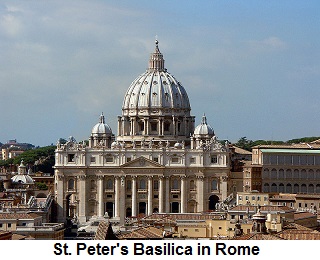
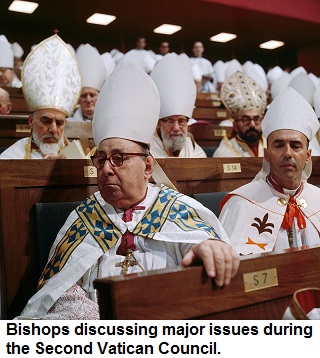
CU Blog - White is Right - Not! - Photo 3Fifty years ago on Thursday (Oct. 11), hundreds of elaborately robed leaders strode into St. Peter’s Basilica in a massive display of solemn ecclesiastical pomp. It signaled the start of a historic three-year assembly that would change the way members of the world’s largest Christian denomination viewed themselves, their church and the rest of the world.

It was the first day of the Second Vatican Council, more popularly known as Vatican II, which was designed to assess the church’s role in a rapidly changing world. Leading the prelates was Pope John XXIII, who said frequently that he convened the council because he thought it was time to open the windows and let in some fresh air.

For many Catholics, the air came in at gale force.

As a result of Vatican II, priests started celebrating Mass in the language of the countries in which they lived, and they faced the congregation, not only to be heard and seen but also to signal to worshippers that they were being included because they were a vital component of the service.

“It called for people not to have passive participation but active participation,” said New Orleans Archbishop Gregory Aymond, who chairs the Committee on Divine Worship for the U.S. Conference of Catholic Bishops. “Prayer is not supposed to be a performance. We’re supposed to be actively participating.”

CU Blog - White is Right - Not! - Photo 2The changes didn’t stop when Mass ended. As time went by, many nuns shucked their voluminous habits in favor of clothes similar to those worn by the people they served. And men and women in religious orders started taking on causes, even risking arrest, when they spoke out in favor of civil rights and workers’ rights and against the war in Vietnam.

Such changes represented an about-face from the church’s defensive approach to the world before Vatican II, said Christopher Baglow, a theology professor at Notre Dame Seminary in New Orleans.

“It wasn’t that the church wasn’t committed to human dignity before Vatican II,” he said. “With Vatican II, the church began to look closely at the ways with which modern thinkers tended to promote human dignity and showed how they and the Gospels are complementary.”

With Vatican II, the Catholic Church sent out the message that it was part of the modern world, said Thomas Ryan, director of the Loyola Institute for Ministry. “Not against, not above, not apart, but in the modern world,” he said. “The church sought to engage, not condemn.”

The council documents say there must be a conversation between the church and the world, Aymond said.

    “The church, by its teaching and by its discipleship, has something to say to the world. At the same time, the world is saying something to the church.”
    “We can’t just say we’re not going to be involved in these conversations,” he said. “As the church, we have to be in conversation with others who agree and disagree with us.”

This shift included the Catholic Church’s attitude toward other religions. Before Vatican II, Catholics weren’t supposed to visit other denominations’ houses of worship. “Catholics looked down on other religions and thought of them as condemned to hell,” Ryan said.

But one document from the council acknowledged that these disparate faiths had a common belief in God, said Ryan, who described it as nothing less than “a revolutionary approach.”

Perhaps the biggest of these changes came in the church’s approach to Judaism. Before Vatican II, Jews were stigmatized as the people who killed Jesus Christ. That changed with the council, when the Catholic Church acknowledged its Jewish roots and Jews’ covenant with God, Ryan said.

    “It had the effect that the sun has when it comes up and interrupts the night,” said Rabbi Edward Cohn of New Orleans’ TempleSinai, whose best friend as a child had to get permission from the archbishop to attend Cohn’s bar mitzvah. “It was no less dramatic than that. It provided an entirely new day. It changed everything.”

Not all the changes brought about by Vatican II have been welcomed, and many would say there haven’t been enough changes regarding the status of women. This spring, the Vatican orthodoxy watchdog launched a full-scale overhaul of the largest umbrella group of American nuns, accusing the group of taking positions that undermine church teaching and promoting several “radical feminist themes” that are incompatible with Catholic teachings.

Although Vatican II was a catalyst for a great deal of change, it didn’t happen in a bubble, Aymond said. The 1960s was a decade of change, with protests against racism, war, sexual behavior, the status quo and authority in general.

    “If that’s going on in the world and in society, that’s bound to affect the church because we’re both a divine and a human institution,” Aymond said.
    “Vatican II isn’t about replacing what the church is,” said Baglow, the theologian at Notre Dame Seminary. “It’s about helping it be more vitally what God intended it to be in the first place.”

(John Pope writes for The Times-Picayune in New Orleans.)

Source: HuntingtonPost Posted Oct 12, 2012; retrieved March 19, 2017 from: http://www.huffingtonpost.com/2012/10/11/vatican-ii-catholic-church-changes_n_1956641.html

Accordingly, it took something drastic to force this change on Christian (Catholic) society. Such an entrenched society would need a revolution to change.

As detailed in the book Go  Lean…Caribbean (Page 241Bottom Line on European Colonialism) the revolutionary event was World War II – upheaval of the European continent (mostly Christian nations), plus 55 million deaths. That global war was a watershed event that led to revolutionary change amongst the European powers – and their overseas territories – including their religious institutions. The changes included:

  • Decolonization
  • Human Rights Empowerments
  • Religious Orthodoxy Neutralization

These changes brought implementation challenges; many of which we are still contending with. These efforts belie Caribbean society. Our focus in this commentary is the historicity of the Second Vatican Council and its effect on the “White is Right” fallacy. See this excerpt here from Wikipedia:

The Vatican II formally opened under the pontificate of Pope John XXIII on 11 October 1962 and closed under Pope Paul VI on the Feast of the Immaculate Conception on 8 December 1965.

CU Blog - White is Right - Not! - Photo 4 the most important and essential message of the council is “the Paschal Mystery as the center of what it is to be Christian and therefore of the Christian life, the Christian year, the Christian seasons”.[5] Other changes which followed the council included the widespread use of vernacular languages in the Mass instead of Latin, the subtle disuse of ornate clerical regalia, the revision of Eucharistic prayers, the abbreviation of the liturgical calendar, the ability to celebrate the Mass versus populum (with the officiant facing the congregation), as well as ad orientem (facing the “East” and the Crucifix), and modern aesthetic changes encompassing contemporary Catholic liturgical music and artwork. Many of these changes remain divisive among the Catholic faithful.[6]

Of those who took part in the council’s opening session, four have become popes: Giovanni Battista Cardinal Montini, who on succeeding John XXIII took the name Pope Paul VI; Bishop Albino Luciani, the future John Paul I; Bishop Karol Wojtyła, who became John Paul II; and Joseph Ratzinger, present as a theological consultant, who became Benedict XVI.[7][8][9]

The consequences from Vatican II were impactful!

Consider this one quotation regarding the Second Vatican Council recommendation henceforth related to the horrors of war:

In addition to general spiritual guidance, the Second Vatican Council produced very specific recommendations, such as in the document Gaudiem et Spes: “Any act of war aimed indiscriminately at the destruction of entire cities of extensive areas along with their population is a crime against God and man himself. It merits unequivocal and unhesitating condemnation.”[48]

The concept or fallacy of “White is Right” was never an agenda item of Vatican II. The same as White Supremacy was never an official doctrine of the Church, only a bad community ethos among its adherents. The Go Lean book defines “community ethos” as …

… the fundamental character or spirit of a culture; the underlying sentiment that informs the beliefs, customs, or practices of a group or society; the dominant assumptions of a people or period.

It is possible to “weed out” bad community ethos and debunk societal fallacies. Notice here, how these previous blog-commentaries have detailed how to “weed out” some identified bad community ethos:

https://goleancaribbean.com/blog/?p=10629 Learning from the Bad Ethos of McCarthyism
https://goleancaribbean.com/blog/?p=10532 Learning from Bad Stereotypes
https://goleancaribbean.com/blog/?p=10222 Waging a Successful War on ‘Terrorism’
https://goleancaribbean.com/blog/?p=10220 Waging a Successful War on Rent
https://goleancaribbean.com/blog/?p=10218 Waging a Successful War on Stupidity
https://goleancaribbean.com/blog/?p=10216 Waging a Successful War on Orthodoxy
https://goleancaribbean.com/blog/?p=5529 American Defects: Inventory of Crony-Capitalism
https://goleancaribbean.com/blog/?p=5527 American Defects: Racism – Not Over!
https://goleancaribbean.com/blog/?p=3780 No Sacrifice; No Victory

Debunking fallacies has also been a frequent past-time for the Go Lean movement; consider these previous blog-commentaries depicting this theme:

https://goleancaribbean.com/blog/?p=8381 Economic Fallacy – Casino Currency – US Dollars?
https://goleancaribbean.com/blog/?p=8379 Economic Fallacy – Self-regulation of the Centers of Economic Activity
https://goleancaribbean.com/blog/?p=8377 Economic Fallacy – Phillips Curve: Fallacy of Minimum Wage
https://goleancaribbean.com/blog/?p=8373 Economic Fallacy – Student Loans As Investments
https://goleancaribbean.com/blog/?p=8370 Economic Fallacy – Austerity: Dangerous Idea?
https://goleancaribbean.com/blog/?p=8351 Economic Fallacy – Independence: Hype or Hope

There are a lot of manifestations from the bad “White is Right” ethos.

Two momentous expressions are presented here: 1. Housing Discrimination and 2. White Flight.

  • Housing Discrimination – Many urban communities suffered from a legacy of racial segregation; as those patterns started to breakdown after World War II and minorities integrated previous White neighborhoods, there were many upheavals and protests. See this sample blog-commentary highlighting the bad trend in American northern cities. In addition, the experience was the same for many Caribbean immigrants to European cities; see a previous blog-commentary here with that theme.
  • White Flight – Decolonization meant a lot of countries that were previously ruled by White minorities came suddenly under a Black-or-Brown majority rule. Many dysfunctions ensued. See this sample blog-commentary highlighting the lessons-learned from Zimbabwe and South Africa. Zimbabwe ascended to majority-rule in 1980; there was an immediate movement of nationalization – forfeiting and seizing commercial farms and mines. This turned out disastrously for this country. Next door in South Africa, the strategy, tactics and implementation was different. This latter country ascended to majority rule in 1994; the first President there, Nelson Mandela saw the futility of this nationalization strategy amongst the precedent African nations that sought independence, so he pursued an alternate approach to assuage White Flight and keep the capital and skilled labor in the country. But the continuation of the status quo of the White minority permeated the White is Right ethos. This sample blog-commentary depicted how majority rule therefore brought no revolutionary change for the average man there in South Africa.

Considering these case studies, we see lessons from history; we get a new appreciation for best-practices in “weeding out” bad community ethos … in the Caribbean region. This is the quest of the Go Lean book, to serve as a roadmap for the introduction and implementation of the technocratic Caribbean Union Trade Federation (CU); to spearhead the elevation of Caribbean society. The book seeks to reboot the region’s economic, security and governing engines, hypothesizing that the European colonial stewards did not have societal efficiency in mind when they structure administrations of the individual “overseas territories” in this region; (many times, their attitudes reflected the defective White Supremacy fallacy).

In general, the Go Lean/CU will employ better strategies, tactics and implementations to impact its prime directives; identified with the following 3 statements:

  • Optimization of the economic engines in order to grow the regional economy to $800 Billion & create 2.2 million new jobs.
  • Establishment of a security apparatus to protect the resultant economic engines and mitigate internal and external threats.
  • Improve Caribbean governance to support these engines.

The Go Lean book, all 370 pages, stresses key community ethos, strategies, tactics, implementations and advocacies necessary to transform and turn-around the eco-systems of Caribbean society. Imagine the messaging campaigns.

The Go Lean roadmap seeks to empower and elevate Caribbean societal engines. It is out-of-scope to impact the Vatican and the religious orthodoxy of Europe; our focus is only here at home in the Caribbean. Already we are advocating for the Greater Good ethos as opposed to orthodoxy. Our former European colonial masters now realize the futility of the actions of their ancestors and predecessors who advocated for White Supremacy and White is Right; They are now battling to try and weed-out the last vestiges of racism and ethnic supremacy in their society.

In conclusion, “White is NOT Right“. There is good and bad in every ethnicity.

The quest of the Go Lean movement is just to move forward, not to prosecute any “bad actors” from previous generations. We cannot go back in time, so we do not want to be shackled to the past. Instead, we want to move forward. Our 21st century quest is to do the heavy-lifting to “weed out” the bad, and bring on the good – the Greater Good – to make our Caribbean region a better place to live, work and play.  We urged everyone in the Caribbean to lean-in to this roadmap for change. 🙂

Download the book Go Lean … Caribbean – now!

Sign the petition to lean-in for the roadmap for the Caribbean Union Trade Federation.
————-

Appendix AUDIO-VIDEO – What Is Whiteness? –  https://the1a.org/segments/2017-02-27-what-is-whiteness/

 What Is Whiteness?

Posted Feb 27 2017 – Biological races do not exist. So why do we continue to rely on race as a key defining factor in our society? A new crop of scholars and artists have turned their attention to examinations of those who identify as white. We talk with some of them about what “whiteness” is — and isn’t — and what the dangers are in the context of a renewed call for white supremacy in America.

Guests

  • Sandra Kim founder of Everyday Feminism and Compassionate Activism.
  • Tim Wise anti-racism activist; author, “Dear White America: Letter to a New Minority” and “White Like Me: Reflections on Race from a Privileged Son.”
  • Mat Johnson associate professor of English at the University of Houston; author of “Pym” and “Loving Day.”
  • Carol Anderson professor of African-American Studies at Emory University; author of “White Rage: The Unspoken Truth of Our Nation’s Divide.”
  • LeRonn P. Brooks Assistant Professor of Africana Studies at Lehman College and Curator for Claudia Rankine’s The Racial Imaginary Institute.
Share this post:
, , ,
[Top]

Trump’s Vision of the Caribbean: Yawn

Go Lean Commentary

Advice: When people tell you who they are, listen to them.

CU Blog - Trump's Vision of the Caribbean - Photo 1The new American President, Donald Trump, has announced, proclaimed and repeated that he is “for America First”. Yet the rest of the world seems to be surprised when he promotes policies that ignores, disregards and denigrates foreign people and countries; i.e. banning travel from 7 Muslim countries.

Come on people, the man said who he was and what is important to him. Why are we now surprised with stories like this, it is like he “yawns” at previous American empowerments that affected us in the Caribbean and Latin America – see the following article:

Title: Trump’s Big F-U To The Caribbean, Latin American
By:NAN Editorial Team

News Americas, NEW YORK, NY, Fri. Mar. 17, 2017: Donald Trump released his first “budget blueprint” Thursday morning, providing the clearest glimpse yet at his administration’s war on the so-called “administrative state.” He once again proved his administration cares nothing about the Americas – Latin America or the Caribbean – or the world for that matter. Here are a few big F-U’s from Trump that will see drastic cuts if this budget ever gets green lighted.

1: Cuts to fighting drug trafficking in Latin America & the Caribbean

The administration’s budget proposal calls for some US $1.3 billion in cuts to the US Coast Guard to eliminate its top counter-terrorism unit, the Maritime Security Response Team, and all of its regional Maritime Safety and Security Teams. This means fewer assets to interdict all suspected smuggling boats and to disrupt drug trafficking at sea in the Caribbean, especially.

2: The Inter-American Foundation

Donald Trump has sliced away US $22 million from The Inter-American Foundation which funds grass-roots groups and nongovernmental organizations (NGOs) in Latin America and the Caribbean.

3: The U.S. Trade and Development Agency

Some $60 million is being cut from the U.S. Trade and Development Agency, which works atpromoting U.S. exports in the Americas and the world and works to do things such as improve transportation infrastructure and otherwise facilitate trade in dozens of countries.

4: The Overseas Private Investment Corporation

The Overseas Private Investment Corporation promotes U.S. economic investment in the Americas and other developing nations by working with private partners but its budget of $83 million has been swiped away.

5: The Global Climate Change Initiative

The Global Climate Change Initiative that was aimed at supporting climate change fight globally per the Paris climate agreement has been wiped away.

6: The Emergency Refugee and Migration Assistance Fund

Gone in the wind will be the US $70 million that allows the US President to “provide humanitarian assistance for unexpected and urgent refugee and migration needs worldwide.”

7: Cuts To The State Department’s Bureau of International Organization Affairs

There is a 50 percent cut to the U.S. funding for the State Department’s Bureau of International Organization Affairs, which pays U.S. dues to the United Nations, the OAS and other international and regional groups, according to news reports disclosed by Foreign Policy magazine. The United States currently contributes $50 million a year to the OAS budget which will now mean a drastic cut to that organization’s budget.

Source: News America Now – posted-retrieved March 17, 2017 from: http://www.newsamericasnow.com/trumps-big-f-u-to-the-caribbean-latin-american/

———

About News America Now

News Americas Now is a daily newswire covering the Americas  – the Caribbean and Latin America and its Diasporas – whose content is syndicated across 21 plus news sites including on the Caribbean Today in Florida and on Irie Jam radio in New York City – the media company’s headquarters.

It is owned by Hard Beat Communications, a global media company with over a decade of experience on the Caribbean, Caribbean Diaspora and Latin American markets.

News Americas Now  and its 20 affiliated sites is the largest dedicated Caribbean news network covering the Caribbean, Caribbean Diaspora and Latin America news, business, travel, politics and executive interviews.

So Donald Trump’s America has it’s own priorities, and its not the Caribbean.

Charity begins at home – Old Adage

The policies of Donald Trump is consistent in being nonchalant towards other causes, not just Caribbean issues. He “yawns” at more than just our priorities. Consider this headline:

Trump To Planet: Drop Dead – see excerpt in the Appendix below.
CU Blog - Trump's Vision of the Caribbean - Photo 2

The days of a Good Neighbor policy emanating from Washington towards Latin America and the Caribbean appears to be over, at least for this administration.

This foregoing article relates to the ongoing theme from the publishers of the book Go Lean…Caribbean, that of America’s War on the Caribbean. Our goal and aspiration is for Caribbean people to take the lead ourselves for Caribbean elevation.

America has problems and challenges. It is only understandable that political leaders may be focusing on empowerments to help the American homeland first. This commentary had previously detailed some of the societal  threats; see this list that corresponds with Donald Trump’s 2016 campaign platform:

Jobs Loss of Jobs-Taxes to ‘Robots’ and Automation
Trade An Ode to Detroit – Good Luck on Trade!
Making America Great Going from ‘Good to Great’
Incomes Mitigating Income Inequality
ISIS Americans arrested for aiding ISIS
Climate Denial Capitalism -vs- the Climate
Winning Again The Erosion of the Middle Class

In addition, the Go Lean movement has previously detailed the American societal defects – institutional racism and Crony-Capitalism. Donald Trump, had previously been known to instigate racial hatred and business-wise, to be an abusive capitalist himself.

Therefore his first budget proposal, laying out his priorities, should be no surprise.

Expecting a liberal immigration policy for Caribbean people into the US?

Don’t count on it!

Really don’t! The US should not be the panacea for Caribbean ills. We have our own issues, problems and challenges that we need to deal with. This has been a consistent theme for the Go Lean book, which posits that one of the greatest threats to Caribbean society is the atrocious emigration rates. We have a high abandonment rate of our citizens to countries in North America (US & Canada) and Western Europe – especially among our professional classes.

Unfortunately, the leanings of Caribbean people to emigrate is still acute. The reasons why our people leave are identified as “Push” and “Pull”; they are fleeing from “home” and seeking “refuge” in countries like the US. “Refuge” is a good word; because of the many societal defects – the issues, problems and challenges referred above – many in the Caribbean must leave as refugees – think LGBTDisabilityDomestic-abuseMedically-challenged – for their life, liberty and pursuit of happiness. On the other hand, the lure of a more prosperous life in foreign countries, drive the “pull” side of the equation; these ones “pulled” are to be considered economic refugees.

See the VIDEO in the Appendix below regarding Caribbean expectations for immigration to the American mainland.

What parasites we are in the Caribbean!

The book Go Lean…Caribbean aspires to economic principles that dictate that “consequences of choices lie in the future”. America has to deal with the consequences of its electoral choice; and we in the Caribbean have to deal with ours – we must have our own vision … and values. This book serves as a roadmap for the introduction and implementation of the technocratic Caribbean Union Trade Federation (CU). The goal is to confederate the 30 member-states in the region to form a federal government and effect a turn-around in our  region. We should not leave it up to our colonial masters – or the American Super Power – to assuage our problems. We need our own expression of governance, to “formulate efficient and effective systems to steer our own destiny” (Page 10).

The Go Lean roadmap seeks to optimize the Caribbean governance. This vision is defined early in the book (Page 12) in the following pronouncements in the Declaration of Interdependence:

xi. Whereas all men are entitled to the benefits of good governance in a free society, “new guards” must be enacted to dissuade the emergence of incompetence, corruption, nepotism and cronyism at the peril of the people’s best interest.  The Federation must guarantee the executions of a social contract between government and the governed.

xii. Whereas the legacy in recent times in individual states may be that of ineffectual governance with no redress to higher authority, the accedence of this Federation will ensure accountability and escalation of the human and civil rights of the people for good governance, justice assurances, due process and the rule of law. As such, any threats of a “failed state” status for any member state must enact emergency measures on behalf of the Federation to protect the human, civil and property rights of the citizens, residents, allies, trading partners, and visitors of the affected member state and the Federation as a whole.

The purpose of the Go Lean roadmap is to turn-around the Caribbean in general; we have our own threats and societal defects. The CU thusly has these 3 prime directives, proclaimed as follows:

  • Optimization of the economic engines in order to grow the regional economy to $800 Billion & create 2.2 million new jobs.
  • Establishment of a security apparatus to ensure public safety and protect the resultant economic engines.
  • Improve Caribbean governance to support these engines.

Yes, empowerments in the security and governing spheres are equally important as economic ones. This focus is wise in the era of Donald Trump as he has expressed – and so far followed through on – an intent to deport our emigrants more readily that run afoul of “the law”. We now have to be prepared “for some bad hombres” coming back home involuntarily.

We repeat the opening “Advice”: When people tell you who they are, listen to them. Prepare accordingly!

The Go Lean book details the community ethos to adopt, plus the strategies, tactics, implementations and advocacies to execute to empower all the factions in the Caribbean region. Consider this sample:

Community Ethos – Ways to Impact the Future Page 26
Community Ethos – Ways to Impact the Greater Good Page 37
Strategy – Vision –  Integrate region for Economics & Security Page 45
Implementation – Security Initiatives at Start-up Page 103
Implementation – Ways to Deliver Page 109
Implementation – Ways to Promote Independence Page 120
Planning – Ways to Make the Caribbean Better Page 131
Advocacy – Ways to Mitigate Terrorism Page 181
Advocacy – Ways to Preserve Caribbean Heritage Page 218

Caribbean people do not have a voice nor a vote in Washington. We are only spectators!

The Go Lean/CU goal is to reform and transform our own society, not America. We no longer want to be considered parasites of the American eco-system, we want to be protégés. In fact, we want to be better than America. Yes, we can.

We hereby urge everyone in the Caribbean – people, institutions and governments – to lean-in to this Go Lean roadmap. It is time now to reboot our society. We must do the heavy-lifting ourselves, and not leave it up to any American decision-maker. This is what we all want: a new Caribbean that is a better homeland to live, work and play. 🙂

Download the book Go Lean … Caribbean – now!

Sign the petition to lean-in for the roadmap for the Caribbean Union Trade Federation.
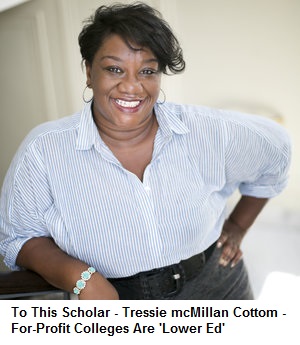
——————

Appendix – Climate Schmimate – Trump To Planet: Drop Dead 😀

By: Doktor Zoom –  November 10, 2016

Donald Trump has big plans for America. He’s going to make all of us who are already rich even richer and more prosperous, and the only price we have to pay is four to eight more years of delay in doing something about global warming, which isn’t merely a Chinese plot to keep America from competing, but is also a complete hoax perpetrated by scientists for nefarious motives. What, you never heard of evil scientists who want to rule the world? There’s one bit of good news in all this: The rest of the nations who have signed on to the Paris Climate Agreement still plan to go ahead with reducing their carbon outputs, even as the nation that supposedly leads the world in science turns itself over to leadership by a party that doesn’t believe in science anymore — at least, not in science that you can’t drop from fighter jets on some “ay-rabs”.

Read more at https://wonkette.com/608451/trump-to-planet-drop-dead-d#rXqky6KLulRg7UiG.99

——————

Appendix VIDEO – In-Depth Trump and Caribbean Immigration – https://youtu.be/tKvfVQFkY30

Published on Jan 31, 2017 – CEEN Caribbean News discusses with Immigration Attorney, Wayne Golding on US President Donald’s Trumps Policy and its impact on Caribbean Immigration


Share this post:
, ,
[Top]

Stay Home! Remembering ‘High Noon’ and its Back-Story

Go Lean Commentary

When there is a ‘Climate of Hate’, conditions in society can easily go from bad to worse. We have a lot of lessons from history that supplant this assertion. Consider this lesson from America in the 1950’s.

CU Blog - Remembering 'High Noon' and its Back Story - Photo 2

A revealing new book High Noon: The Hollywood Blacklist and the Making of an American Classic uncovers the back-story of the classic Western movie ‘High Noon’; it details the grim time in American history, when a bad community ethos permeated, McCarthyism and the resultant blacklist. “These events from the 1950’s have a special resonance today.”

The movement behind the book Go Lean … Caribbean has consistently related that the United States function as a Great Society but it has two societal defects: Institutional Racism and Crony-Capitalism. These societal defects can easily create a ‘Climate of Hate‘ and in the 1950’s, the US had it bad … with their stereotyping and “witch hunts” of McCarthyism.

McCarthyism include the speeches, investigations, and hearings of Wisconsin Senator Joseph McCarthy (in office 1947 –1957); the Hollywood blacklist, associated with hearings conducted by the House Un-American Activities Committee (HUAC); and the various anti-communist activities of the Federal Bureau of Investigation (FBI) under Director J. Edgar Hoover. McCarthyism was a widespread social and cultural phenomenon that affected all levels of society and was the source of a great deal of debate and conflict in the United States.

CU Blog - Remembering 'High Noon' and its Back Story - Photo 3McCarthyism was the practice of making accusations of subversion or treason without proper regard for evidence.[1] It also means “the practice of making unfair allegations or using unfair investigative techniques, especially in order to restrict dissent or political criticism.”[2] The term has its origins in the period in the United States known as the Second Red Scare, lasting roughly from 1947 to 1956 and characterized by heightened political repression as well as a campaign spreading fear of influence on American institutions and of espionage by Soviet agents.

McCarthyism soon took on a broader meaning, describing the excesses of similar efforts. The term is also now used more generally to describe reckless, unsubstantiated accusations, as well as demagogic attacks on the character or patriotism of political adversaries. During the McCarthy era, thousands of Americans were accused of being communists or communist sympathizers and became the subject of aggressive investigations and questioning before government or private-industry panels, committees and agencies. The primary targets of such suspicions were government employees, those in the entertainment industry, educators and union activists. Suspicions were often given credence despite inconclusive or questionable evidence, and the level of threat posed by a person’s real or supposed leftist associations or beliefs was often greatly exaggerated. Many people suffered loss of employment and/or destruction of their careers; some even suffered imprisonment. Most of these punishments came about through trial verdicts later overturned,[4] laws that were later declared unconstitutional,[5] dismissals for reasons later declared illegal[6] or actionable,[7] or extra-legal procedures that would come into general disrepute.
Source: Wikipedia Online Encyclopedia; retrieved February 26, 2017 from: https://en.wikipedia.org/wiki/McCarthyism

As related in the foregoing, “many people suffered loss of employment and/or destruction of their careers”; this was definitely the case in Hollywood. Consider the experience of the screenwriter Carl Foreman, best known for the film classic Western ‘High Noon’. See the Book Review and related AUDIO-Podcast here:

Book Title: High Noon: The Hollywood Blacklist and the Making of an American Classic
By:  Glenn Frankel
From the New York Times-bestselling author of The Searchers, the revelatory story behind the classic movie High Noon and the toxic political climate in which it was created.

CU Blog - Remembering 'High Noon' and its Back Story - Photo 1It’s one of the most revered movies of Hollywood’s golden era. Starring screen legend Gary Cooper and Grace Kelly in her first significant film role, High Noon was shot on a lean budget over just thirty-two days but achieved instant box-office and critical success. It won four Academy Awards in 1953, including a best actor win for Cooper. And it became a cultural touchstone, often cited by politicians as a favorite film, celebrating moral fortitude.

Yet what has been often overlooked is that High Noon was made during the height of the Hollywood blacklist, a time of political inquisition and personal betrayal. In the middle of the film shoot, screenwriter Carl Foreman was forced to testify before the House Committee on Un-American Activities about his former membership in the Communist Party. Refusing to name names, he was eventually blacklisted and fled the United States. (His co-authored screenplay for another classic, The Bridge on the River Kwai, went uncredited in 1957.) Examined in light of Foreman’s testimony, High Noon‘s emphasis on courage and loyalty takes on deeper meaning and importance.

In this book, Pulitzer Prize-winning journalist Glenn Frankel tells the story of the making of a great American Western, exploring how Carl Foreman’s concept of High Noon evolved from idea to first draft to final script, taking on allegorical weight. Both the classic film and its turbulent political times emerge newly illuminated.

———

AUDIO-PODCASTWhat A Classic ’50s Western Can Teach Us About The Hollywood Blacklist – http://www.npr.org/2017/02/21/516427212/what-a-classic-50s-western-can-teach-us-about-the-hollywood-blacklist

Posted on February 21, 2017 – Author Glenn Frankel tells Fresh Air‘s Terry Gross that the government was “looking to see or to prove that there had been communist infiltration in Hollywood, that this was part of a mass plot engineered by Moscow to take over our cultural institutions.”

Many who appeared before the House Un-American Activities Committee were put on a blacklist that made it impossible for them to work in show business. Among the blacklisted was screenwriter Carl Foreman, whose 1952 classic western High Noon is seen as a parable about the toxic political climate of the time.

This history highlights the bad consequence of societal defects; they can easily be exploited and society further hijacked with blatant malice (bad motives, bad messages and bad actions). This aligns with the Go Lean book’s definition of “community ethos”:

the underlying attitude/spirit/sentiment that informs the beliefs, customs, or practices of a group or society.

The bad ethos of McCarthyism became a “widespread social and cultural phenomenon that affected all levels of America”. The US would not have been a welcoming society for those on the wrong side of this targeting. This truly demonstrates how a ‘Climate of Hate’ exacerbates societal defects, conditions easily go from bad to worse.

America is not much different today … in 2017 compared to the 1950’s. Yes, the laws of the land has been updated, but the attitudes of the people are still intact towards a ‘Climate of Hate’. There is the continuous need for vigilance and truth. The truth of the matter is that America has a lot of work to do to be the Great Society they project to the world. This country should not be the panacea of Caribbean ills. This commentary has consistently asserted that it is easier for the Caribbean member-states to reform and transform its own society than to flee to find refuge in America.

According to the foregoing, the American government turned on some of its most talented and productive citizens during the bad days of McCarthyism. This turned out to be just another extension of the country’s ‘Climate of Hate’. This commentary maintains that hate is in the American DNA.

Too strong?!

Just consider the experience of the nation’s Black-and-Brown populations. This has been duly documented and lamented.

Too old?!

If it is the contention that this is an indictment of the America of old, then consider the fresh experience of Muslim immigrants.

And yet … the people in the Caribbean – mostly Black-and-Brown – are beating down the doors to get out of their Caribbean homeland, to seek refuge in places like the US; (a smaller faction emigrate to Canada and Western Europe). This really conveys the sad state of affairs for the Caribbean eco-system. While things are bad for minorities in America (Black-and-Brown, Muslim, etc.), more Black people want to come in, instead of working to remediate the problems in their own homeland.

This is the reality of the Caribbean disposition: the region suffers from a bad record of societal abandonment. The reasons why people leave have been identified as “push and pull”:

“Push” refers to people who feel compelled to leave, to seek refuge in a foreign land. “Refuge” is an appropriate word; because of societal defects, many from the Caribbean must leave as refugees – think LGBTDisabilityDomestic-abuseMedically-challenged – for their life, liberty and pursuit of happiness.

“Pull”, on the other hand refers to the lure of a more prosperous life in the US (and other destinations); many times our people are emigrating for economics solely.

If only we can mitigate these “push and pull” factors, then we can dissuade our people from leaving in the first place. We CAN go from ‘good to great‘ here in the homeland. This is no easy task; and despite being necessary, it is hereby defined as heavy-lifting. This is the purpose of this commentary; this is part 1 of 3 in a series on “Why Caribbean people need to Stay Home“, positing that the “grass is not greener on the other side”. The complete series is as follows:

  1.  Stay Home! Remembering ‘High Noon’ and its Back-Story
  2.  Stay Home! Immigration Realities in the US
  3.  Stay Home! Outreach to the Diaspora – Doubling-down on Failure

The book Go Lean … Caribbean seeks to optimize the societal engines of Caribbean life; it serves as a roadmap for the introduction and implementation of the technocratic Caribbean Union Trade Federation (CU). The CU must employ better strategies, tactics and implementations to impact its prime directives; identified with the following 3 statements:

  • Optimization of the economic engines in order to grow the regional economy to $800 Billion & create 2.2 million new jobs.
  • Establishment of a security apparatus to protect the resultant economic engines and mitigate internal and external threats.
  • Improvement of Caribbean governance to support these above engines, including a separation-of-powers between member-state governments and CU federal agencies.

Early in the Go Lean book, this need for careful technocratic stewardship of the region’s societal engines was pronounced (Declaration of Interdependence – Page 12 – 13) with these acknowledgements and statements:

xi.   Whereas all men are entitled to the benefits of good governance in a free society, “new guards” must be enacted to dissuade the emergence of incompetence, corruption, nepotism and cronyism at the peril of the people’s best interest. The Federation must guarantee the executions of a social contract between government and the governed.

xii.  Whereas the legacy in recent times in individual states may be that of ineffectual governance with no redress to higher authority, the accedence of this Federation will ensure accountability and escalation of the human and civil rights of the people for good governance, justice assurances, due process and the rule of law. As such, any threats of a “failed state” status for any member state must enact emergency measures on behalf of the Federation to protect the human, civil and property rights of the citizens, residents, allies, trading partners, and visitors of the affected member state and the Federation as a whole.

xxiv. Whereas a free market economy can be induced and spurred for continuous progress, the Federation must install the controls to better manage aspects of the economy: jobs, inflation, savings rate, investments and other economic principles. Thereby attracting direct foreign investment because of the stability and vibrancy of our economy.

This is movie season … and movies are an art form that imitates life, while life also imitates movies.

… The 89th Academy Awards ceremony, presented by the Academy of Motion Picture Arts and Sciences, honored the best films of 2016, and took place on February 26, 2017, at the Dolby Theatre in Hollywood, Los Angeles, 5:30 p.m. PST. – Wikipedia

The lesson we learn from the back-story of the movie ‘High Noon’ and the foregoing Book Review, is that we have to ‘stand our ground’ to reform and transform our communities in the Caribbean; we have our own ‘Climate of Hate’. So the Go Lean book therefore details this series of community ethos to adopt, plus the strategies, tactics, implementations and advocacies to execute to forge a permanent transformation in the homeland:

Community Ethos – Economic Systems Influence Choices & Incentives Page 21
Community Ethos – Consequences of Choices Lie in the Future Page 21
Community Ethos – Anti-Bullying and Mitigation Page 23
Community Ethos – Minority Equalization Page 24
Community Ethos – Ways to Impact the Future Page 26
Community Ethos – Ways to Manage Reconciliations Page 34
Community Ethos – Ways to Impact the Greater Good Page 37
Strategy – Vision –  Integrate region into a Single Market Economy Page 45
Strategy – Agents of Change – Globalization Page 57
Tactical – Separation of Powers – Department of Homeland Security Page 75
Implementation – Ways to Foster International Aid Page 115
Planning – 10 Big Ideas … in the Caribbean Region – Haiti & Cuba Page 127
Planning – Ways to Improve Failed-State Indices Page 134
Planning – Lessons from East Germany – European Post-War Rebuilding – Attitudes Page 139
Planning – Lessons from the US Constitution – Progressive &  Evolutionary Page 145
Advocacy – Ways to Grow the Economy Page 151
Advocacy – Ways to Create Jobs Page 152
Advocacy – Ways to Foster Empowering Immigration – Case Study of Indian Migrants Page 174
Advocacy – Ways to Impact Justice Page 177
Advocacy – Ways to Remediate and Mitigate Crime Page 178
Advocacy – Ways to Improve Gun Control Page 179
Advocacy – Ways to Improve Homeland Security Page 180
Advocacy – Ways to Mitigate Terrorism – and Bullying Page 181
Advocacy – Ways to Improve Intelligence Gathering & Analysis Page 182
Advocacy – Ways to Protect Human Rights Page 220
Advocacy – Ways to Help Women – Mitigate Gender-based Violence Page 226
Advocacy – Ways to Impact Youth – Message new Community Ethos – Inclusion Page 227
Advocacy – Ways to Impact Hollywood – Power of Film Page 203
Advocacy – Ways to Impact the Dominican Republic – Reconciling Neighboring Hate Page 237
Advocacy – Ways to Re-boot Haiti – Regional Climate of Hate against Haiti Page 238
Advocacy – Ways to Impact Trinidad & Tobago – Indo versus Afro Climate Page 240
Advocacy – Ways to Impact Guyana – Indo versus Afro Climate Page 241
Advocacy – Ways to Impact Belize – Cross Border Climate with Guatemala Page 242
Advocacy – Ways to Impact US Territories – Interracial Climate Page 244

Underlying the back-story in the foregoing Book Review is the classic Western film: High Noon. See the Appendix VIDEO.

That was a great movie about a man when faced with the choice of ‘fight or flight’, chose to stay and fight rather than fleeing for his own refuge. This film was thought-provoking and impactful … and celebrated. In fact, the film …

… was nominated for seven Academy Awards, and won four (Actor, Editing, Music-Score, and Music-Song)[3] as well as four Golden Globe Awards (Actor, Supporting Actress, Score, and Cinematography-Black and White).[4] In 1989, this movie was selected for preservation in the United States National Film Registry by the Library of Congress as “culturally, historically, or aesthetically significant”. – Wikipedia.

CU Blog - Remembering 'High Noon' and its Back Story - Photo 4

Movies are important in the roadmap to impact the Caribbean; a previous blog/commentary regarding Caribbean Diaspora member and Hollywood great, Sidney Poitier, declared that …

… “movies are an amazing business model. People give money to spend a couple of hours watching someone else’s creation and then leave the theater with nothing to show for the investment; except perhaps a different perspective”.

The contention is that we can do better in the Caribbean. This is based on one premise: it is easier to reform and transform the Caribbean that it is to reform and transform America. Yes, we can …

The points of effective, technocratic stewardship of the Caribbean have been detailed in these previous blog/commentaries:

https://goleancaribbean.com/blog/?p=10532 Learning from Stereotypes – Good and Bad
https://goleancaribbean.com/blog/?p=9595 Vision and Values for a ‘New’ Caribbean
https://goleancaribbean.com/blog/?p=9214 Time To Go: A 6-part series for the Diaspora in the US
https://goleancaribbean.com/blog/?p=8200 Respect for Minorities: Climate of Hate
https://goleancaribbean.com/blog/?p=7646 Going from ‘Good to Great’
https://goleancaribbean.com/blog/?p=7221 Street naming for Martin Luther King unveils a ‘Climate of Hate’
https://goleancaribbean.com/blog/?p=5733 Better than America? Yes, We Can!
https://goleancaribbean.com/blog/?p=5527 American Defects: Racism – Is It Over?
https://goleancaribbean.com/blog/?p=1596 ‘Prosper where Planted’ in the Caribbean

The issues addressed in this commentary are not related to America alone. We have our own ‘Climate of Hate’ in the Caribbean. While we can learn lessons from the American past and present, we still must do the required heavy-lifting ourselves.

The Go Lean book reports that the Caribbean is in crisis. Too many people leave … due to “push and pull” reasons. Thusly, the region is suffering a debilitating brain-drain estimated at 70% with some countries reporting up to 81%.

The Go Lean roadmap declares that we must, and can, do better. Truth be told, it is easier for the average person to remediate and mitigate defects in the Caribbean homeland than to prosper in foreign lands like the US. This message , while repeated here, must be loudly proclaimed and echoed throughout our Caribbean region.

Every stakeholder, everyone who live, work and play in the Caribbean are urged to lean-in to this Go Lean roadmap to turn-around the region. The strategies, tactics and implementations proposed in the Go Lean book are conceivable, believable and achievable. 🙂

————-

Appendix VIDEO – High Noon (1952) Official Trailer – https://youtu.be/g9CR_tib0CA

Uploaded on Dec 12, 2011 – Classic Western movie starring Gary Cooper and Grace Kelly.

Share this post:
, , , , ,
[Top]

Learning from Stereotypes – Good and Bad

Go Lean Commentary

“Tell them about the dream Martin” – Prompting by Gospel Singer Mahalia Jackson.

“I have a dream that one day … children will be judged by the contents of their character and not the color of their skin.” – Martin Luther King (MLK) @ March on Washington August 28, 1963.

The movement behind the book Go Lean … Caribbean has asserted that the country of the United States had a long way to go to reform their societal defects – racism proliferated every aspect of society. In a previous blog-commentary about lessons learned from 75 years ago with Japanese-American relations (Pearl Harbor) it was explained how America double-downed on their bad community ethos (the underlying attitude/spirit/sentiment that informs the beliefs, customs, or practices):

Japan’s aggression was a direct result of their community ethos that honored Samurai warrior and battle culture. Men would walk the streets with their swords, ready for a challenge. On the other hand, the US (and Western Europe) community ethos of racism was so ingrained that the natural response in the US, post-Pearl Harbor, was to intern Japanese Americans in camps.
All of these bad community ethos were weeded out with post-WWII Human Rights reconciliations. – Go Lean book Page 220.

This day – February 19 – is special; this is the Day of Remembrance of the bad episode of American stereotyping their own citizens, Japanese-Americans following the Pearl Harbor attacks. This is the 75th anniversary of then President Franklin D. Roosevelt’s (FDR) executive order that allowed this open discrimination against Japanese-Americans. This was just 2 and a half months after the Pearl Harbor attack and the American response was to stereotype all Japanese. See this portrayal in the historic account here:

CU Blog - Learning from Stereotypes - Good and Bad - Photo 1

The internment of Japanese Americans in the United States during World War II was the forced relocation and incarceration in camps in the interior of the country of between 110,000 and 120,000[4] people of Japanese ancestry who lived on the Pacific coast. Sixty-two percent of the internees were United States citizens.[5][6] These actions were ordered by President Franklin D. Roosevelt shortly after Imperial Japan’s attack on Pearl Harbor.[7]

Japanese Americans were incarcerated based on local population concentrations and regional politics. More than 110,000 Japanese Americans, who mostly lived on the West Coast, were forced into interior camps, but in Hawaii, where the 150,000-plus Japanese Americans composed over one-third of the population, 1,200 to 1,800 were interned.[8] The internment is considered to have resulted more from racism than from any security risk posed by Japanese Americans,[9][10] as those who were as little as 1/16 Japanese[11] and orphaned infants with “one drop of Japanese blood” could be placed in internment camps.[12]Source: Wikipedia.

CU Blog - Learning from Stereotypes - Good and Bad - Photo 2

In effect, the America of 1942 was declaring that if one Japanese person could attack America then all Japanese people could attack America. They were judging the Japanese people based on the “color of their skin” (and slant of their eyes) rather than the “content of their character”. This is so obviously wrong.

Did America learn from this 1942 experience?

Unfortunately, the experience continued as “more of the same”. Martin Luther King echoed his dream 21 years later after lamenting the continuous bad experience of blatant racism against Black people. Even today, prominent Japanese-Americans are decrying the “more of the same” parallel that America is demonstrating; see George Takei’s comments here:

Every year, on February 19, we Japanese-Americans honor this day as Remembrance Day, and we renew our pledge to make sure what happened to us never happens again in America. I am always amazed, and saddened, that despite our decades long efforts, so many young people today are not even aware that such a tragedy and miscarriage of justice took place here.

And I grow increasingly concerned that we are careening toward a future where such a thing would again be possible.

A few months into his campaign, Donald Trump refused to outright reject the policies and fears that underlay the internment. Instead, he suggested that it was a tough call, and that he “would have had to be there” in order to know whether it was the wrong one.

CU Blog - Learning from Stereotypes - Good and Bad - Photo 3Trump ignored the inconvenient fact that not a single case of espionage or sabotage was ever proven against any internee, and that the military itself admitted that there was never any evidence to support their sweeping policy. A few months later, a top Trump surrogate went on television and suggested that the internment might actually serve as a “precedent” for another Trump policy — the registration of Muslim-Americans in a database.

I cannot help but hear in these words terrible echoes from the past. The internment happened because of three things: fear, prejudice and a failure of political leadership. When the administration targets groups today, whether for exclusion from travel here on the basis of religion and national origin, or for deportation based on their undocumented status, I know from personal experience that these are not done, as they claim, truly in the name of national security.

Source: Posted and retrieved February 19, 2017 from: http://www.cnn.com/2017/02/18/opinions/george-takei-japanese-american-internment-day-of-remembrance/index.html

Despite the 75 years since FDR’s racist decree and 54 years since MLK’s lamentation of blatant American racism, we find “more of the same” in this society, though now it is considered politically incorrect to be blatantly racist. Under the tenants of the law, this type of behavior – 1942 internment – is now fully recognized as being unconstitutional. The Civil Liberties Act of 1988 officially acknowledged the “fundamental violations of the basic civil liberties and constitutional rights” of the internment.[7] Many Japanese-Americans consider the term internment camp a euphemism and prefer to refer to their forced relocation as imprisonment in concentration camps.[8]

The movement behind the Go Lean book asserts that despite the legalities, the foundations of institutional racism in America have become even more entrenched. This movement campaigns that it is folly for the Black-and-Brown populations to leave the Caribbean for American shores. Racism is in this country’s DNA as the Naturalization Act of 1790 restricted naturalized US citizenship to “free white persons”.

Considering the reality of the Caribbean demographics (Black-and-Brown), it is no wonder that the American world consider Caribbean people and society as “Less Than“.

This is the problem with stereotypes. There is an art-and-science associated with the subject of stereotypes.

Consider the photos here and this AUDIO Podcast:

CU Blog - Learning from Stereotypes - Good and Bad - Photo 5

CU Blog - Learning from Stereotypes - Good and Bad - Photo 6

Full Podcast – Playing With Perceptions – http://www.npr.org/programs/ted-radio-hour/358360814/playing-with-perceptions

AUDIO – Why Do We Create Stereotypes?

Posted February 14, 2017 – Where do stereotypes come from? Why do some perceptions persist, and is there any truth or value to the assumptions we make? In this hour, TED speakers examine the consequences of stereotypes.

CU Blog - Learning from Stereotypes - Good and Bad - Photo 4

The planners of Caribbean empowerment, the Go Lean movement assess that America is a “frienemy” for us! We are trading partners; we are aligned; we are allies; many of our Diaspora live in America; studied in America; but we have to compete to dissuade our young people from setting their sights on American shores as a refuge and destination of their hopes and dreams. So the Go Lean book challenges Caribbean society, positing that “we” cannot prosper with a high abandonment rate – reported at 70% for educated classes. Therefore we must battle” against the “push-and-pull” factors that draw so many Caribbean citizens away from their homeland to places like the US.

This is the quest of Go Lean…Caribbean. The book and accompanying blog/commentaries advocate learning lessons from other societies, from history and the present. Examples are provided from as far back as the patriarchal Bible times, to best-practices today employed by communities around the world that have successfully turned-around their societies, such as post-World War II Germany and Japan; and post-Apartheid South Africa. The Go Lean book serves as a roadmap for the introduction and implementation of the technocratic Caribbean Union Trade Federation (CU). This roadmap seeks to reboot the region’s economic, security and governing engines; to employ best practices to impact our prime directives; identified with the following 3 statements:

  • Optimization of the economic engines in order to grow the regional economy to $800 Billion & create 2.2 million new jobs.
  • Establishment of a security apparatus to protect the resultant economic engines and mitigate challenges/threats to regional Justice Institutions.
  • Improvement of Caribbean governance to support these engines.

The Go Lean book relates that 29 of the 30 Caribbean member-states (“St. Barths” is the only exception) have a majority Black population. So the roadmap pushes further on this subject of racism, positing that it is easier for Caribbean citizens to stay home and effect change in their homelands than to go to America – and other countries – to try to remediate other societies. This consideration is one of technocratic stewardship of the regional Caribbean societal engines, not ignoring the realities and historicities of race relations in the New World. This point was pronounced in the opening Declaration of Interdependence (Pages 10 – 14) with these acknowledgements and statements:
Preamble:  As the history of our region and the oppression, suppression and repression of its indigenous people is duly documented, there is no one alive who can be held accountable for the prior actions, and so we must put aside the shackles of systems of repression to instead formulate efficient and effective systems to steer our own destiny.

xi.   Whereas all men are entitled to the benefits of good governance in a free society, “new guards” must be enacted to dissuade the emergence of incompetence, corruption, nepotism and cronyism at the peril of the people’s best interest. The Federation must guarantee the executions of a social contract between government and the governed.

xii. Whereas the legacy in recent times in individual states may be that of ineffectual governance with no redress to higher authority, the accedence of this Federation will ensure accountability and escalation of the human and civil rights of the people for good governance, justice assurances, due process and the rule of law. As such, any threats of a “failed state” status for any member state must enact emergency measures on behalf of the Federation to protect the human, civil and property rights of the citizens, residents, allies, trading partners, and visitors of the affected member state and the Federation as a whole.

xxxiii. Whereas lessons can be learned and applied from the study of the recent history of other societies, the Federation must formalize statutes and organizational dimensions to avoid the pitfalls of [other] communities.

The Go Lean book stresses the key community ethos that need to be adopted and the societal defects that need to be “weed out”; plus strategies, tactics, implementations and advocacies necessary to transform and turn-around the eco-systems of Caribbean society. These points are detailed in the book as follows:

Community Ethos – Deferred Gratification – African American Experience Page 21
Economic Principles – Economic Systems Influence Individual Choices Page 21
Community Ethos – Economic Principles – Consequences of Choices Lie in the Future Page 21
Community Ethos – Governing Principles – Lean Operations Page 24
Community Ethos – Ways to Manage Reconciliations – South Africa’s Model Page 34
Community Ethos – Ways to Impact the Greater Good Page 37
Strategy – Vision – Confederate all 30 member-states/ 4 languages into a Single Market Page 45
Strategy – Mission – Build and foster local economic engines Page 45
Tactical – Ways to Foster a Technocracy Page 64
Tactical – Growing the Economy – Post WW II European Marshall Plan Model Page 68
Tactical – Growing the Economy – Post WW II Japan’s Turn-around Model Page 68
Tactical – Separation-of-Powers – CU Federal Government versus Member-State Governance Page 71
Implementation – Assemble All Regionally-focus Organizations of All Caribbean Communities Page 96
Implementation – Ways to Better Manage Debt Page 114
Anatomy of Advocacies – One Person can make a difference! Page 122
Planning – 10 Big Ideas – Single Market / Currency Union Page 127
Planning – Ways to Make the Caribbean Better Page 131
Planning – Ways to Better Manage Caribbean Image Page 133
Planning – Ways to Improve Failed-State Indices – Minority and Human Rights Page 134
Planning – Lessons Learned from the previous West Indies Federation Page 135
Planning – Lessons Learned New York City – Managing as a “Frienemy” Page 137
Planning – Lessons Learned from East Germany – Bad Examples for Trade & Security Page 139
Planning – Lessons Learned from Detroit – Turn-around from Failure Page 140
Planning – Lessons Learned from Indian Reservations – Pattern of Ethnic Oppression Page 141
Advocacy – Ways to Grow the Economy Page 151
Advocacy – Ways to Create Jobs Page 152
Advocacy – Ways to Improve Governance Page 168
Advocacy – Ways to Better Manage the Social Contract Page 170
Advocacy – Ways to Impact Justice Page 177
Advocacy – Ways to Improve Homeland Security Page 180
Advocacy – Ways to Preserve Caribbean Heritage Page 218

There are other lessons for the Caribbean to learn from considering the history of race/ethnic relations and the effects on stereotypes; see the following sample blog/commentaries:

https://goleancaribbean.com/blog/?p=10216 Waging a Successful War on Orthodoxy
https://goleancaribbean.com/blog/?p=10170 Obama was a ‘Reconstruction’; Trump is the resulting ‘Redemption’
https://goleancaribbean.com/blog/?p=9214 US Race Relations: Spot-on for Protest
https://goleancaribbean.com/blog/?p=8724 US versus Marcus Garvey: A Typical Case of Racism
https://goleancaribbean.com/blog/?p=8200 Respect for Minorities: Climate of Hate
https://goleancaribbean.com/blog/?p=7221 Street Naming for Martin Luther King Unveils the Real America
https://goleancaribbean.com/blog/?p=5527 American Defects: Racism – Is It Over?
https://goleancaribbean.com/blog/?p=2809 A Lesson in History: Economics of East Berlin
https://goleancaribbean.com/blog/?p=2480 A Lesson in History: Community Ethos of WW II
https://goleancaribbean.com/blog/?p=2297 A Lesson in History: Booker T versus Du Bois
https://goleancaribbean.com/blog/?p=1020 Europe Desperately Battling to Weed-out Last of Racism
https://goleancaribbean.com/blog/?p=789 A Lesson in History: America’s War on the Caribbean

The Go Lean roadmap does not seek to reform or transform America; it is out-of-scope for our efforts; our focus is only here in our Caribbean homeland.

The stereotypes in America are based on a false premise: White Supremacy. The everyday consequence of this bad foundation is White Privilege. This is why it is better for Caribbean people to stay in the Caribbean, to prosper where planted here at home. But we have defects too. However it is easier to reform our defects in the Caribbean than to try and fix the American eco-system.

We urge everyone in the Caribbean to lean-in to this Go Lean roadmap. It is the heavy-lifting we need to effect change in our region’s societal engines.

Yes we can … make the Caribbean region a better place to live, work and play. 🙂

Download the book Go Lean … Caribbean – now!


Share this post:
, , , ,
[Top]

ENCORE: Patriarch of an ’empowering’ family – Mike Ilitch dies; RIP

This is an ENCORE of the original blog-commentary from April 28, 2015 regarding empowering families in failing communities. The City of Detroit was cited, in comparison to select families in the Caribbean.

Mike Ilitch Dies - PhotoThat Detroit family, Mike Ilitch et al, now has to endure the loss of the family patriarch. This is a big loss for the family and a big loss for the Detroit community; see the full story here:

http://www.freep.com/story/money/business/columnists/2017/02/10/ilitch-detroit-pizza-red-wings-tigers-hockey-forbes/91475642/

The movement behind the book Go Lean…Caribbean have observed-and-reported on the turn-around of the once-great City of Detroit. We learned to value and respect the Ilitch family as role models for the Caribbean to emulate. This loss is huge!

RIP Mike Ilitch.

See the original blog-commentary here:

==================

A Lesson in History – Empowering Families

Go Lean Commentary

How do you eat an elephant? One bite at a time. – Source unknown

This familiar expression is not intended to give culinary instructions regarding “elephant” meat, but rather it relates a formula for taking on big goals. The answer is to attack the big goal with one small task at a time; taking one step after another in a journey towards a destination. The book Go Lean…Caribbean seeks to engage a big goal, that of elevating the Caribbean region through economic, security and governing empowerments.
This book declares this “elephant-size” goal is heavy-lifting; thusly the above advice applies. The book serves as a roadmap for the introduction and implementation of the technocratic Caribbean Union Trade Federation (CU) to provide better stewardship for the Caribbean homeland. The book posits that we can do this. We can look internally for solutions, rather than expecting some external “actor” to come in and provide answers. No, we must not fashion ourselves as parasites, but rather protégés of those communities that have already completed these heavy-lifting tasks.

Here is where we benefit from the lessons in history from other communities, families and individuals that have demonstrated unity-of-purpose. We are taught that “bite-size morsels” of the regional “elephant” can be well-handled by strong families; therefore the need exists to strengthen and empower families to optimize their societal contributions.

This strategy of family empowerment is very critical, and has a successful track record. In a previous blog/commentary, the issue of the origin of powerful families was detailed at full length. A direct quote relates:

From the origins of slavery, the region traversed the historic curves of social revolution and evolution. In the 1500, the Protestant movement took hold. As other European powers deviated from Catholicism, Papal Bulls [- which awarded territories in this New World -] carried no significance to them and compliance was ignored. England and Holland established their own Protestant Churches with their own monarchs as head of Church and State; Papal decrees were replaced with Royal Decrees and Charters. The intent and end-result was still the same: territories and lands awarded (colonized) with the stroke of a pen by one European power after another. The Royal Decrees and Charters were then reinforced with a strong military presence and many battles…
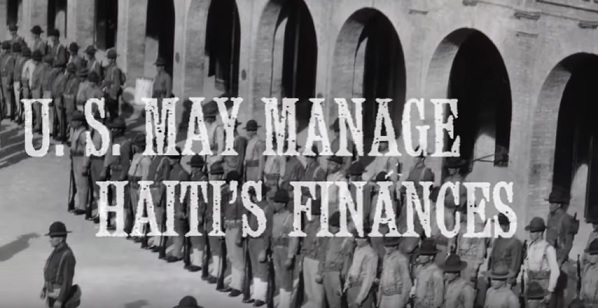
[The resultant] “oligarchy” … power effectively rested with a small number of people. These people could be distinguished by royalty, wealth, family ties, education, corporate, religious or military affiliation.
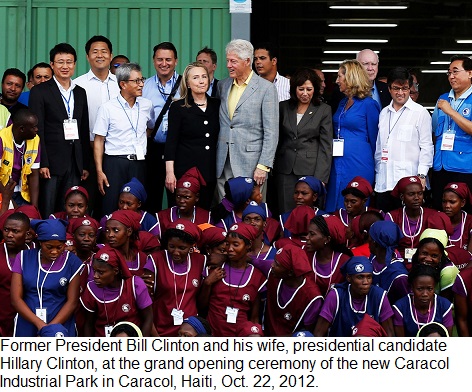
In this discussion of oligarchy, focus is given to powerful families. There are encyclopedic references that relate that oligarchy structures are often controlled by a few prominent families, who typically pass their influence/wealth from one generation to the next, even though inheritance alone is not a necessary condition for oligarchies to prevail.

The islands of the Caribbean fit the story-line in the [Caribbean-Calypso] song lyrics: “Islands in the sun; willed to me by my father’s hand”.

This is the challenge that belies Caribbean society. Most of the property and indigenous wealth of the Caribbean region is concentrated amongst the rich, powerful and yet small elite; an oligarchy. Many times these families received their property, corporate rights and/or monopolies by Royal Charter from the European monarchs of ancient times. These charters thus lingered in legacy from one generation to another … until …

The Go Lean book pushes further and deeper on this subject of family empowerment, stressing that success can still be derived in the Caribbean, even without the legacy of 500 years of entitlement. The book therefore stresses certain best-practices to apply to the regional strategies, tactics and implementations.

The book and subsequent Go Lean blogs prescribed new empowerments like investments in intellectual properties, controlled mineral exploration & extraction, strategic ship-building and outsourced security services. The book/blogs also call for best practices to optimize the current business models of tourism, financial services and specialty agriculture/fisheries.

The lesson of best practices comes from another community, of which we can be a protégé. This is the City of Detroit, Michigan USA. This community is notorious for its urban failures, even filing Bankruptcy in 2013. But from these ashes we have the following example of the pivotal and empowering Ilitch Family. Their Ilitch Holdings, Inc. operates as a holding company for restaurants, sports clubs, real estate, and entertainment businesses. With 17,000 direct employees and annual revenues of $1.8 billion (estimated in 2007; privately held companies are not required to disclose), this family enterprise truly impacts and empowers its community. (Detroit is voted #1 Sports City in the USA). The family operates and franchises the Little Caesars Pizza global chain plus this entertainment company branded Olympia Entertainment:

CU Blog - A Lesson in History - Empowering Families - Photo 1In 1982, Michael and Marian Ilitch purchased the Olympia Stadium Corporation, the management company for Olympia Stadium and renamed it Olympia Arenas, Inc. (In 1927, the Olympia Sports Arena was built in downtown Detroit to accommodate Detroit’s NHL franchise, and serve as the premier venue for a variety of entertainment). The newly purchased business was responsible for managing events at Joe Louis Arena (which had been completed in 1979 as the home of the Detroit Red Wings), Cobo Arena and the Glens FallsCivicCenter. That same year, Mr. and Mrs. Ilitch purchased the Detroit Red Wings.

In 1987, the Ilitches purchased Detroit’s iconic Fox Theatre (built in 1928) and renovated the 4,800+ seat venue, saving 80% of the original surfaces. In 1988, the Ilitches re-opened the Fox as the hub of the Foxtown Entertainment District and the building now houses the offices of Olympia Entertainment and Little Caesars Pizza. In 1989, the National Parks Service designated the Fox Theatre as a National Landmark.

The Olympia Stadium Corporation was renamed Olympia Entertainment in 1996 to reflect the management company’s expanded operations and venues.

In April 2000, Comerica Park, the new home of the Detroit Tigers hosted Opening Day and ushered in a new era of MLB baseball in Detroit. The 41,000+ seat ballpark is owned by the Detroit-Wayne County Stadium Authority, and Olympia Entertainment operates Comerica Park.
(Source: http://www.olympiaentertainment.com/about-olympia-entertainment/company-history)

Why consider the Ilitch Family as a model? They are impactful in business, sports, entertainment and philanthropy. This applies to the patriarch (Michael, Sr.) and the next generation; thus forging a family legacy. The family enterprises plus the Olympic Entertainment are detailed in the Appendix below. This is truly a family endeavor; in addition to parents Michael and Marian Ilitch, they have seven children: Christopher Ilitch (current CEO and President of Ilitch Holdings, Inc.); daughter Denise Ilitch, an attorney; Ron; Michael, Jr.; Lisa Ilitch Murray; Atanas; and Carole (Ilitch) Trepeck.

Needless to say, the City of Detroit had/has to engage, cooperate and collaborate with this family to induce their investment in the community. This is an example of impacting the Greater Good.

The Go Lean roadmap calls for engaging families in the Caribbean that are committed to elevating the Caribbean. There are truly Ilitch-like families here as well. Just consider this simple list of the most influential families in just one Caribbean member-state, Jamaica; as published by the highly regarded regional online publication, Pan-American World:


Title: 8 Wealthiest and Most Influential People From Jamaica
Pan-American World Online Magazine  – Retrieved 04/21/2015 from:
http://www.panamericanworld.com/en/article/8-wealthiest-and-most-influential-people-jamaica

1. Joseph M. Matalon
CU Blog - A Lesson in History - Empowering Families - MatalonMatalon is among the foremost leaders in Jamaica business, part of a family with a legacy of successful business practices for decades. He is the chairman of the ICD Group, a Jamaican investment holding company. For more than 20 years, his knowledge and expertise have been utilized in the areas of transactional finance, investments and banking in various institutions. He is the chairman of British Caribbean Insurance Co., the Development Bank of Jamaica and president of the Private Sector Organization of Jamaica (PSOJ). He also is a director of the Gleaner Co. and Commodity Service Co. and a former director of the Bank of Nova Scotia (Jamaica Limited). In addition, he has been involved with a number of special committees to advise the government on financial and economic matters.

2. Michael Lee-Chin
CU Blog - A Lesson in History - Empowering Families - Michael Lee-ChinHe is a self-made billionaire who started his career as a road engineer for the Jamaican government and gradually built his way up to chairman and founder of Portland Holdings, a thriving, privately held investment company in Jamaica. Additionally, Lee-Chin is executive chairman of AIC Limited and National Commercial Bank. Born in Port Antonio in the Portland Parish, the Jamaican-Canadian Lee-Chin also owns stakes in National Commercial Bank Jamaica and Total Finance in Trinidad and Tobago. His personal real estate portfolio includes 250 acres of beachfront property in Ocho Rios, Jamaica, and homes in Canada and Florida, according to Forbes. He has been off the magazine’s billionaire list for the last four years, topping out at a net worth of $2.5 billion in 2005.

3. Chris Blackwell
CU Blog - A Lesson in History - Empowering Families - BlackwellHe belongs to an affluent family that acquired its wealth through sugar and Appleton Rum. He established himself as a music mogul more than 50 years ago. His rise included introducing the world to reggae. He produced music for artists like Ike and Tina Turner, Bob Marley and the Wailers, Burning Spear and Black Uhuru, among others. He is also the founder of Palm Pictures and creator of the Golden Eye Film Festival that honors Jamaicans who excel in the arts and music. He was awarded the Order of Jamaica for his exemplary work in the entertainment industry in 2004. The Blackwell family name has been the inspiration for “Blackwell Fine Jamaican Rum.” Blackwell currently runs Island Outpost, which is a conglomerate set up to run a group of resorts in Jamaica and the Bahamas. He has an estimated net worth of $180 million, according to celebritynetworth.com.

4. Paula Kerr-Jarrett
CU Blog - A Lesson in History - Empowering Families - JarrettShe is an attorney, philanthropist and influential presence in the Jamaican society circle. She and her husband, Mark, are working to bolster Montego Bay tourism. They announced two months ago a multibillion-dollar partnership project to construct 1,200 homes, a 48-acre tech park with enormous space for information technology that would bring 30,000 jobs and a new University of the West Indies that would accommodate up to 10,000 students. They estimate the investment value of this project to be $500 million. Her great-grandmother, Marion Louise Reece Bovell, was the first woman in Jamaica to run in the general elections of 1944 as an independent candidate. Kerr-Jarrett is connected by marriage to the prominent Jarrett family.

5. Dr. Blossom O’Meally-Nelson
CU Blog - A Lesson in History - Empowering Families - NelsonO’Meally-Nelson is Jamaica’s first female postmaster general. She is the former pro-chancellor and chairman of Council for the University of Technology (UTECH). Against the background of her outstanding achievements in public service, O’Meally-Nelson is making inroads in the private sector with a family-owned logistics company, Aeromar Group.

6. Joseph John Issa
CU Blog - A Lesson in History - Empowering Families - IssaKnown mostly as Joe Issa, he is the founder of Cool Group, a multibillion-dollar entity that is made up of more than 50 companies; the chairman of the SuperClubs all-inclusive resort chain, and vice chairman of the Gleaner Co. Issa is credited with introducing the all-inclusive concept into Jamaica more than 30 years ago. He introduced the concept during the tourism slump in the 1970s when many hotels were struggling to break even. It was and remains a booming success. He also maintains a commitment to helping the community, especially children from underprivileged areas in education. He said, ”Born into a rich family, I cannot imagine what it would be like going to school without lunch or books.”

7. Gordon ‘Butch’ Stewart
CU Blog - A Lesson in History - Empowering Families - StewartStewart reigns as the chairman of Sandals Resorts International, The Jamaica Observer and more than 20 other companies that fall under the Appliance Traders empire, one of the largest private-sector conglomerates in the Caribbean. He has a net worth of $1 billion. His working life began at the age of 12, when he borrowed his father’s fishing boat and began selling his catch of the day and ferrying the rich and famous between their anchored yachts and the harbor front. It was during those times he said he learned the elements of success.

8. Wayne Chen
CU Blog - A Lesson in History - Empowering Families - Wayne ChenWayne Chen, the chief executive officer of Super Plus Food Stores, is also the man behind a massive expansion in the local supermarket business in Jamaica. Super Plus is a large supermarket chain with at least 30 stores across the island. He wears other hats, too: chairman of NCB Insurance Co. Limited and West Indies Trust Co. Limited. He is also a director of NCB (Cayman) Limited, AIC (Barbados) Limited and the Christiana Town Centre Limited. He is also a younger brother of billionaire Michael Lee-Chin.

So the consideration of the Go Lean book, as related to this subject is one of governance and economic empowerment. The book posits that empowerment does not only need to emanate from government, but rather individuals and empowering families can have a positive impact. These points were pronounced in the opening Declaration of Interdependence (Page 12) with these acknowledgements and statements:

xi.   Whereas all men are entitled to the benefits of good governance in a free society, “new guards” must be enacted to dissuade the emergence of incompetence, corruption, nepotism and cronyism at the peril of the people’s best interest. The Federation must guarantee the executions of a social contract between government and the governed.

xii. Whereas the legacy in recent times in individual states may be that of ineffectual governance with no redress to higher authority, the accedence of this Federation will ensure accountability and escalation of the human and civil rights of the people for good governance, justice assurances, due process and the rule of law. As such, any threats of a “failed state” status for any member state must enact emergency measures on behalf of the Federation to protect the human, civil and property rights of the citizens, residents, allies, trading partners, and visitors of the affected member state and the Federation as a whole.

xxiv.  Whereas a free market economy can be induced and spurred for continuous progress, the Federation must install the controls to better manage aspects of the economy: jobs, inflation, savings rate, investments and other economic principles. Thereby attracting direct foreign investment because of the stability and vibrancy of our economy.

xxxiii. Whereas lessons can be learned and applied from the study of the recent history of other societies, the Federation must formalize statutes and organizational dimensions to avoid the pitfalls of communities like … Detroit…

The same as empowering families ruled in colonial times, based on special favor granted to their forebears by Royal Decree, the family dynamic can help the region again; this time for the Greater Good. While collaboration is so much harder on a societal level – there is the need for buy-in, compromise and consensus – families are already attuned to instinctively trust each other, work together and foster unity-of-purpose. Lastly, families often invest with a deferred gratification ethos, expecting many times that only the next generation will reap the returns on these investment. This eco-system is the microcosm of societal progress.

This Go Lean roadmap calls for incentivizing and engaging many empowering families; and to do so on a regional basis.

In general, the CU/Go Lean roadmap will employ strategies, tactics and implementations to impact its prime directives; identified with the following 3 statements:

  • Optimization of the economic engines in order to grow the regional economy to $800 Billion & create 2.2 million new jobs.
  • Establishment of a security apparatus to protect the resultant economic engines and mitigate internal and external threats.
  • Improve Caribbean governance to support these engines.

In much the same way the Ilitch Family seeks to transform Detroit, the Go Lean book stresses key community ethos, strategies, tactics, implementations and advocacies necessary to transform and turn-around the eco-systems of Caribbean society. These points are detailed in the book; the following is a sample:

Community Ethos – Economic Principles – Deferred Gratification Page 21
Community Ethos – Economic Principles – People Choose Page 21
Community Ethos – Economic Principles – Choices Involve Costs Page 21
Community Ethos – Economic Principles – Economic Systems Influence Individual Choices Page 21
Community Ethos – Economic Principles – Consequences of Choices Lie in the Future Page 21
Community Ethos – Governing Principles – Minority Equalization Page 24
Community Ethos – Governing Principles – Return on Investments Page 24
Community Ethos – Governing Principles – Cooperatives Page 25
Community Ethos – Ways to Impact the Future Page 26
Community Ethos – Ways to Help Entrepreneurship Page 28
Community Ethos – Ways to Impact Turn-Arounds – Learning from Detroit Page 33
Community Ethos – Ways to Impact the Greater Good Page 37
Strategy – Vision – Confederate all 30 member-states/ 4 languages into a Single Market Page 45
Strategy – Mission – Build   and foster local & regional economic engines Page 45
Tactical – Ways to Foster a Technocracy Page 64
Tactical – Growing the Economy – Repatriate & Reunite Families Page 70
Tactical – Separation-of-Powers – CU Federal Government versus Member-State Governance Page 71
Implementation – Ways to Pay for Change Page 101
Implementation – Reasons to Repatriate Page 118
Planning – Anatomy of Advocacies – One person can make a difference Page 122
Planning – Ways to Make the Caribbean Better Page 131
Planning – Lessons Learned from Detroit – Turn-around from Failure Page 140
Advocacy – Ways to Grow the Economy Page 151
Advocacy – Ways to Create Jobs Page 152
Advocacy – Ways to Improve Governance Page 168
Advocacy – Ways to Better Manage the Social Contract Page 170
Anecdote – Caribbean Industrialist – Butch Stewart Page 189
Advocacy – Ways to Preserve Caribbean Heritage Page 218
Advocacy – Ways to Impact Retirement Page 221
Advocacy – Ways to Impact the One Percent Page 224
Advocacy – Ways to Improve Elder-Care Page 225
Advocacy – Ways to Empower Women – Focus on Families Page 226
Advocacy – Ways to Impact Youth Page 227
Advocacy – Ways to Re-boot Jamaica Page 239

There are other lessons for the Caribbean to learn from considering the historicity of empowering families, those in the past, present and future. Whether these families prospered due to their own business acumen and hard work, or were entitled by some Royal Decree, we must all be judged on what we do with the gifts we are blessed with.

Our region has experienced a lot of abandonment over the decades; this status quo cannot persist. We have suffered the same as many other failing communities – like Detroit.  But the families depicted in this commentary, in Detroit and in the Caribbean, prove that despite hardships, if there is some unity-of-purpose, success can still be fostered even in the most trial-some conditions. Looking and learning at these communities, we glean that we can confer, convene and collaborate with empowering families to positively impact our communities.

Let’s get started! Let’s make our Caribbean homeland – and our individual communities – better places to live, work and play. 🙂

Download the book Go Lean … Caribbean – now!

———–

Appendix – Ilitch Family Holdings and Olympia Entertainment Group

Fox Theatre Opened: September 21, 1928 Re-opened: November 19, 1988 after Michael and Marian Ilitch bought and restored the theatre to its original splendor; saving 80 percent of the original surfaces.Features: The Fox Theatre was the crown jewel of Detroit’s theater district during the first quarter of the 20th Century playing host to some of the biggest names in show business and showing first-runs of some of the greatest films in history. The Fox Theatre has played host to some of the greatest names in entertainment including Louis Armstrong, Cab Calloway, Frank Sinatra, Sammy Davis Jr., Stevie Wonder and Diana Ross. Designated a National Landmark in 1989, the Fox is the second largest surviving theatre (over 4,800 seats) in the nation and has the second largest functioning Wurlitzer organ.
Joe Louis Arena Opened: In December 1979. Joe Louis Arena (The Joe or JLA) became the home-ice of the Detroit Red Wings NHL hockey franchise, replacing Olympia Stadium, the former home of Detroit’s NHL team for 72 years.Features: The 20,058-seat arena is Detroit’s largest indoor venue and has hosted a wide variety of events in its 30-year existence including the NHL All-Star Game (February 5, 1980), the Republican National Convention (July 14-18, 1980) and six Stanley Cup Finals. The arena is named after boxing legend and long-time Detroit resident, Joe Louis. First event: December 23, 1979 — University of Detroit vs. University of Michigan basketball; First Red Wings Game: December 29, 1979
Comerica Park Opened: April 11, 2000 Features: The 45,010 seat, open-air ballpark is home to the Detroit Tigers Major League Baseball franchise. The ballpark has hosted more than 850 ball games as well as concerts with more than 80,000 fans. Comerica Park has hosted Bon Jovi, Sheryl Crow, Bruce Springsteen, Aerosmith, KISS, Eminem, Jay-Z, The Rolling Stones and Kid Rock.First Event: Detroit Tigers vs. Seattle Mariners on April 11, 2000First Concert: The Dave Matthews Band on July 5, 2000
City Theatre Opened: September 15, 1993 as the Second City-DetroitReopened: October 6, 2004 as renamed City TheatreFeatures: An intimate, 472-seat theatre with the atmosphere of a Broadway house.
Affiliates
Little Caesars Pizza Little Caesars Pizza founders Michael and Marian Ilitch opened their first restaurant in Garden City, Michigan, in 1959. Little Caesars, the fastest growing pizza chain, built more stores in the   world in 2009 than any other pizza brand and today is the largest carry-out   chain globally with restaurants on five continents. Little Caesars is growing in prime markets across the country, and is offering strong franchisee candidates an opportunity for independence with a proven system. For the third year in a row, Little Caesars was named “Best Value in America”* of all quick-serve restaurant chains. In addition, Little Caesars offers strong brand awareness with one of the most recognized and appealing characters in   the country, Little Caesar.
“Highest-Rated Chain – Value for the Money” based on a nationwide survey of quick-service restaurant consumers conducted by Sandelman & Associates, 2009
Detroit Red Wings One of the Original Six franchises in the National Hockey League, the Detroit Red Wings have won more Stanley Cup Championships than any other American franchise. Purchased in 1982 by Mike and Marian Ilitch, the Red Wings have stood as one of professional sports’ premier franchises with the most recent Cup victories in 1997, 1998,   2002 and 2008. The Red Wings play in front of sellout crowds of 20,000-plus fans at Joe Louis Arena in downtown Detroit. Visit us at http://www.detroitredwings.com.
Detroit Tigers In 1992, Mike Ilitch purchased the Detroit Tigers, Detroit’s major league baseball team, which plays in Comerica Park. The ballpark is located directly across the street from the Fox Theatre. ComericaPark opened in 2000 to rave reviews. Sports Illustrated called Comerica Park a “brilliant ballpark”, among the top two or three in the country.
In 2005, the Detroit Tigers hosted the 76th All-Star game at Comerica Park. All-Star Week in Detroit produced the highest grossing revenue in the history of the All-Star Game. Comerica Park has also hosted numerous concerts and the 2006 World Series. Visit the Detroit Tigers website at www.detroittigers.com
Little Caesars Pizza Kits Since its introduction in the Detroit area in 1997, Pizza Kits has become the “Hottest Fundraiser in America” for all types of   nonprofit organizations. Pizza Kits contain all the ingredients to make delicious pizza at home. The Pizza Kit Program now offers a variety of family favorites: 9 Pizza Kits, 3 Breads, and 3 Specialty Items.
In Fall 2003, the Little Caesars Cookie Dough Program was launched with 8 great tasting varieties including: Chocolate Chip, White Chocolate Macadamia Nut, Peanut Butter and Oatmeal Raisin.
Today, Little Caesars Fundraising Programs proudly helps raise millions of dollars for thousands of schools, churches, sports teams and nonprofit organizations throughout the continental United States. Visit us at www.pizzakit.com or call us toll free at 1-888-4-LC-KITS.
Olympia Development Olympia Development, L.L.C. was established by the Ilitch organization in 1996 to cultivate and attract   development in downtown Detroit. The company was instrumental in negotiating the side-by-side Detroit Tigers and Detroit Lions stadiums. As a result, the 76th All-Star Game played at Comerica Park in 2005 and the XL Super Bowl that played at Ford Field in 2006. Olympia Development is dedicated to supporting further growth with the new Foxtown sports and entertainment district in downtown Detroit; see VIDEO below.
Uptown Entertainment Uptown Entertainment includes two of Detroit’s finest movie theatres – the historic Birmingham 8 and Ren Cen 4. In addition to featuring first-run movies, Uptown   Entertainment offers unparalleled event services in a variety of unique settings. Uptown is dedicated to faithfully providing our guests with the ultimate in theatre projection, sight, sound, and service. Special features of Uptown Entertainment theatres include stadium seating, digital surround sound, wall-to-wall curved screens and full bar service is available for any private theatre reservations.
In 2010, the Birmingham 8 theatre was one of the first in the area to offer Sony Digital Cinema 4K projection and RealD 3D, which provides the highest resolution projection   available, 3D capability and a superior viewing experience for guests. The technology also allows for a variety of alternative content such as live concerts, sporting events, operas and more! Visit UptownEntertainment.com. The Destination for an Exceptional Entertainment Experience.
Hockeytown Cafe Voted the No. 2 sports bar in the country week after week by ESPN2’s Cold Pizza,   Hockeytown Cafe is the hottest place to take part in the action before, during and after both Red Wings and Tigers games with live bands, great food and drink and the best view of Comerica Park in the MotorCity! Visit us at www.hockeytowncafe.com.
Blue Line Foodservice Distribution Blue Line Foodservice Distribution was established in 1971 in Farmington Hills, Michigan as a premier foodservice distribution company. With 14 distribution centers in North America and satellite locations within the U.S., the company distributes food and equipment to Little Caesars® stores as well as many other customers throughout the world. Through its West Coast centers, Blue Line provides exporting services to the Australia, New Zealand, the Pacific Rim and other territories; through its East Coast centers support is provided to the Caribbean, Europe, the Middle East and South America. Blue Line, with 700 employees, offers a single point of contact for product purchasing, replenishment, equipment, customer service and logistics. Learn more about Blue Line Foodservice Distribution at www.bluelinedist.com.
Champion Foods Champion Foods is a premier manufacturer of top quality private label and branded food products. Its specialty products are high quality packaged retail pizzas and   breadsticks, par-baked pizza crusts and premium cookie dough. Champion Foods services many customers including major grocery retailers, food service distributors, restaurant chains and industrial toppers. Its experienced and professional staff makes dozens of products, any of which can be customized to specific customer needs at their state-of-the-art manufacturing research center located in Metro Detroit. Champion Food offers an expansive distribution network to ship throughout North America.   www.championfoods.com
The Little Caesars Amateur Hockey League Little Caesars Amateur Hockey League (LCAHL) is the nation’s largest amateur youth   hockey league, involving teams from all over America’s Midwest — Michigan, Ohio and Indiana including Nashville, Tennessee — with more than 700 Travel and House Teams and over 11,000 players in 45 affiliated Associations.
Little Caesars AAA Hockey Little Caesars AAA Hockey is one of the most recognized and respected organizations in amateur travel hockey. A cornerstone of the Midwest Elite Hockey League   since 1968, the program has captured numerous state championships and   tournament titles over its 30-plus year history. Mike and Marian Ilitch, owners of the Little Caesars Pizza chain, have been sponsoring amateur hockey teams since 1968 and are a major reason for the club’s success. Visit us at www.littlecaesarshockey.com.
Little Foxes Fine Gifts Little   Foxes Fine Gifts, located in Downtown Detroit’s Fox Theatre Building, offers Metro   Detroiters unique gifts for every occasion. You’ll find one-of-a-kind gifts from around the world including pottery, fine crystal, art, jewelry and home furnishings. Established by Marian Ilitch in 1992, Little Foxes is the premiere downtown location for all your gift giving needs! Free Parking is available. Visit us at www.littlefoxes.com.
MotorCity Casino Hotel Motor City Casino Hotel has 400 rooms and suites. Dining options include Iridescence, Detroit’s only AAA Four Diamond Award-winning restaurant, Grand River Deli, and Assembly Line Buffet. With live entertainment nightly at Chromatics, Detroit’s only Radio Bar, Spectators sports bar to watch the game, and Amnesia, Detroit’s only ultra lounge, there’s something for everyone. For more information please visit www.motorcitycasino.com. Due to Sports league ownership rules, the casino is directly owned by Marian Ilitch.
Coming Development
The District Detroit (See VIDEO below) Ilitch Organization Achieves Zoning Approval for New Detroit Events CenterOur Vision for Affordable Housing and Plan for Renovation of Eddystone Hote. lDetroit Businesses Win Majority of Contract Awards for New Detroit Events Center. The District Detroit: Six Job Fairs in 60 Days

(Source: http://www.olympiaentertainment.com/about-olympia-entertainment/company-history)

VIDEO – Ilitch Organization unveils sports and entertainment district plans – https://youtu.be/3fSVcsNWhjk

Published on Jul 21, 2014

Share this post:
, , , , , ,
[Top]

A Lesson in History: Haiti’s Reasonable Doubt

Go Lean Commentary

There are important lessons to learn from history … regarding the ongoing theme of America’s War on the Caribbean.

Consider Haiti … again. America has a long and abusive history with Haiti, its oldest and poorest neighbor.

In 1915, more than a century after having eradicated slavery from their country, the people of Haiti suddenly find themselves the victims of a brutal American occupation, reigniting an all too familiar past for the proud, independent nation. – Documentary Synopsis

CU Blog - A Lesson in History - Haiti's Reasonable Doubt - Photo 1

There is a very important point of consideration: Haiti and the Haitian people have a legitimate case of reasonable doubt for expecting regional leadership from the US. This commentary is also within the consistent theme for the movement behind the book Go Lean…Caribbean, whose goal and aspiration is for Caribbean people to take their own lead for Caribbean elevation. This applies doubly for Haiti.

Consider the full article here:

Title: The Forgotten Occupation
The Forgotten Occupation recounts the 19-year period during which the United States of America subjugated Haiti to a brutal occupation. From 1915 to 1934, the Haitian people found themselves under the rule of a system that was in large part influenced and pushed for by the National City Bank of New York (now Citibank), and that initially found support amongst many Haitians in the country.

The Forgotten Occupation is about Jim Crow, which was imported to Haiti by way of the American marines, whose perceptions of the Haitians they were occupying were rooted in the racist consciousness of the United States South from which most of them came. It is that consciousness that made it easy for the occupiers to kidnap innumerable men, take them away from their homes, and constrain them to forced labor. This process eventually ignited a mass rebellion.

The Forgotten Occupation is about those who resisted and paid for that resistance with their lives. It is about Charlemagne Peralte, the leader of the Cacos (the rebel group formed mainly of Haitian peasants) who, despite being outgunned, outmanned, and having little to no chance of a significant retaliation against the unstoppable force who now claimed their land, fought on as best as they could.

The Forgotten Occupation is about those who were displaced from their land, which was forcibly seized and handed over to corporations, including the Haitian-American Sugar Company and Dole: the American Pineapple Company.

The Forgotten Occupation is also about the rebirth of Haiti. For, due to the rabid racism it suffered under the US presence, Haiti was forced to reevaluate its identity as an extension of French culture and began to develop a deep appreciation for its African roots.

There are a large number of people, including many Haitians, who know nothing of these 19 years. The Forgotten Occupation seeks to shed a light on this significant chapter of Haiti’s history, which has long since faded from the collective mind, but still affects the country to this day.
Source: Retrieved February 4, 2017 from: http://www.theforgottenoccupation.com/

———-

VIDEO – The Forgotten Occupation (Trailer) https://youtu.be/n7HjC8n_PsM

Published on Jun 18, 2015 – In 1915, more than a century after having eradicated slavery from their country, the people of Haiti suddenly find themselves the victims of a brutal American occupation, reigniting an all too familiar past for the proud, independent nation.

  • Category: Film & Animation
  • License: Standard YouTube License

The reasonable doubt the Haitian people may have toward America is not just 100 years old. It was also relevant 100 days ago; just a few months ago, during the Presidential Election in the US, in the race between Republican Donald Trump and Democrat Hillary Clinton. Universally in the US, the African-American population supported Hillary Clinton, but there was exception with the Haitian Intelligentsia … and the Haitian right-wing wealthy elite.

Yes, there is a Haitian Intelligentsia!

They have a low regard for Bill and Hillary Clinton … after their Clinton Foundation development initiatives. This regard was shared – make that exploited – by Donald Trump and his camp during the campaign. See here:

CU Blog - A Lesson in History - Haiti's Reasonable Doubt - Photo 2Trump’s team glommed onto the possibility that Haitian Americans—generally black, generally Democratic-leaning voters who make up roughly 2 percent of the population of Florida, where Trump and Hillary Clinton are separated by less than a point—might be persuaded to vote against the former Secretary of State (Hillary). The irony of a nativist pandering to thousands of immigrants and refugees aside, there was a logic to this. Many people rightly identify Clinton with failures of humanitarianism and development in Haiti. The Trump team has folded that perception into a half-true narrative in which Haiti—like Whitewater and Benghazi before it—becomes a synecdoche for all the ills, real and imagined, of the Clintons themselves.

There are good reasons the world’s first black Republic has been an island-sized headache for Clinton as she seeks the presidency. Haiti is a place where some of the darkest suppositions that lurk on the left and right about her and her husband take form. Here is an island country of 10 million people where America’s ultimate power couple invested considerable time and reputation. Here is a fragile state where each took turns implementing destructive policies whose highlights include overthrowing a presidential election. Bill Clinton in particular mixed personal relationships, business, and unaccountable power in ways that, if never exactly criminal, arouse the kind of suspicion that erodes public trust. No two individuals, including Haiti’s own leaders, enjoyed more power and influence than the Clintons in the morass of the failed reconstruction following the deadly Jan. 12, 2010, earthquake, when a troubled country managed to go from catastrophe to worse.

The reality is a lot more complicated (and interesting) than that, [the conspiracy theory that the Clinton stole billions of dollars from Haiti’s post-earthquake relief funds]. The United States and Haiti were the first two independent republics in the Americas, and our often blood-soaked relationship goes back a lot further than the meeting of a silky Arkansan and an ambitious Illinoisan at YaleLawSchool.

… wealthy Haitians openly loathe Bill Clinton, who ordered the U.S. invasion that put down the [right-wing military] junta and restored Aristide to power [in the 1990’s].

Source: Posted September 22, 2016; retrieved February 4, 2017 from: http://www.slate.com/articles/news_and_politics/politics/2016/09/the_truth_about_the_clintons_and_haiti.html

Haiti has had to endure American dysfunction for a long time. The Go Lean movement has previously detailed the American societal defects – institutional racism and Crony-Capitalism – and how Caribbean communities have been impacted. There is cause-and-effect of these American dysfunctions in the Caribbean region in general and Haiti in particular. Reflect back on the 1915 Occupation:

“The reason it’s critical to understand the US Occupation is because many of the problems that Haiti has today, are actually of much more recent origin, they’re 20th century problems” – Laurent Dubois

See  Appendix B below for more on Citibank – the instigator for American action – and their abusive behavior towards Haiti.

The review of these historic events are more than just an academic discussion, the book Go Lean…Caribbean aspires to economic principles that dictate that “consequences of choices lie in the future”. The book serves as a roadmap for the introduction and implementation of the technocratic Caribbean Union Trade Federation (CU). Haiti – the poorest country in the Western Hemisphere – is one of the 30 member-states for this Caribbean confederacy. This poor status is a direct result of American and European (French) dysfunction over 300 years. Yet, the book asserts that we should not leave it up to these colonial masters to assuage our problems. We need our own expression of governance.

The Go Lean roadmap seeks to optimize the Caribbean governance. This vision is defined early in the book (Pages 10 – 12) in the following pronouncements in the Declaration of Interdependence:

Preamble: As the history of our region and the oppression, suppression and repression of its indigenous people is duly documented, there is no one alive who can be held accountable for the prior actions, and so we must put aside the shackles of systems of repression to instead formulate efficient and effective systems to steer our own destiny.

xi. Whereas all men are entitled to the benefits of good governance in a free society, “new guards” must be enacted to dissuade the emergence of incompetence, corruption, nepotism and cronyism at the peril of the people’s best interest.  The Federation must guarantee the executions of a social contract between government and the governed.

xii. Whereas the legacy in recent times in individual states may be that of ineffectual governance with no redress to higher authority, the accedence of this Federation will ensure accountability and escalation of the human and civil rights of the people for good governance, justice assurances, due process and the rule of law. As such, any threats of a “failed state” status for any member state must enact emergency measures on behalf of the Federation to protect the human, civil and property rights of the citizens, residents, allies, trading partners, and visitors of the affected member state and the Federation as a whole.

The purpose of the Go Lean roadmap is to turn-around the downward trends for the Caribbean in general – Haiti included – to reverse course and finally elevate Caribbean society. The CU, applying lessons from the last 100 years, has prime directives proclaimed as follows:

  • Optimization of the economic engines in order to grow the regional economy to $800 Billion & create 2.2 million new jobs.
  • Establishment of a security apparatus to ensure public safety and protect the resultant economic engines.
  • Improve Caribbean governance to support these engines.

All of the focus on Haiti is not just history, there is currency as well; consider these developments that are en vogue right now:

CU Blog - A Lesson in History - Haiti's Reasonable Doubt - Photo 3

The Go Lean/CU book and accompanying blog-commentaries all present a new vision and new values for Haiti’s future.

The Go Lean book details a series of assessments, community ethos, strategies, tactics, implementations and advocacies to optimize the societal engines for Haiti … and other locales in the Caribbean region:

Community Ethos – Deferred Gratification Page 21
Community Ethos – Economic Systems Influence Choices & Incentives Page 21
Community Ethos – Consequences of Choices Lie in the Future Page 21
Community Ethos – “Crap” Happens Page 23
Community Ethos – Minority Equalization Page 24
Community Ethos – Ways to Impact the Future Page 26
Community Ethos – Ways to Manage Reconciliations Page 34
Community Ethos – Ways to Improve Sharing Page 35
Community Ethos – Ways to Impact the Greater Good Page 37
Strategy – Vision –  Integrate region for Economics & Security Page 45
Tactical – Separation of Powers – Department of Homeland Security Page 75
Tactical – Separation of Powers – Department of Justice Page 77
Implementation – Assemble Existing Super-national Institutions Page 96
Implementation – Ways to Pay for Change Page 101
Implementation – Foreign Policy Initiatives at Start-up Page 102
Implementation – Security Initiatives at Start-up Page 103
Implementation – Ways to Deliver Page 109
Implementation – Ways to Foster International Aid – Case Study: Haiti’s Earthquakes Page 115
Implementation – Ways to Impact [Regional] Elections Page 116
Implementation – Ways to Promote Independence Page 120
Planning – Ways to Make the Caribbean Better Page 131
Planning – Ways to Improve Failed-State Indices Page 134
Advocacy – Ways to Grow the Economy Page 151
Advocacy – Ways to Create Jobs Page 152
Advocacy – Ways to Improve Governance Page 168
Advocacy – Ways to Better Manage the Social Contract Page 170
Advocacy – Ways to Impact Justice Page 177
Advocacy – Ways to Improve Homeland Security Page 180
Advocacy – Battles in the War on Poverty Page 222
Advocacy – Ways to Re-boot Haiti Page 238

There have been a number of blog-commentaries by the Go Lean promoters that have developed related topics of lessons from history of race relations. See a sample list here:

https://goleancaribbean.com/blog/?p=8767 A Lesson in History – Haiti 1804
https://goleancaribbean.com/blog/?p=7738 A Lesson in History – Buffalo Soldiers
https://goleancaribbean.com/blog/?p=5183 A Lesson in History – France and Mexico’s Dysfunctional Past
https://goleancaribbean.com/blog/?p=5695 A Lesson in History – Repenting, Forgiving and Reconciling the Past
https://goleancaribbean.com/blog/?p=5123 A Lesson in History – Royal Charters: Zimbabwe -vs- South Africa
https://goleancaribbean.com/blog/?p=4971 A Lesson in History – Royal Charters: Truth & Consequence
https://goleancaribbean.com/blog/?p=451 CariCom position on Slavery/Colonization Reparations

Let’s learn from this history of Haiti’s past; and from the repercussions and consequences from those events. See a full related documentary in the Appendix A below. In many ways, Haiti has not moved. Also, America has not moved.

Our goal is to reform and transform Haiti and the Caribbean, not America. We hereby urge everyone in the Caribbean – people, institutions and governments – to lean-in to this Go Lean roadmap. It is time now to reboot Haiti. We must do the heavy-lifting ourselves, and not leave it up to any American elites – like the Clintons. We have reason for reasonable doubt for their aid and others’ aid.

This is what we all want: Caribbean facilitating a new Caribbean that is a better homeland to live, work and play. 🙂

Download the book Go Lean … Caribbean – now!

———

Appendix A – Documenting the U.S. Occupation of Haitihttps://youtu.be/nhPNU8aR2Co

Published on Feb 22, 2016 – A discussion with historian and archivist J. Michael Miller about the rich sources housed in the Marine Corps Library at Quantico surrounding the U.S. Occupation of Haiti from 1915-1934. Miller recently made possible the donation of a remarkable and rare text, the Monograph of Haiti, to Duke Libraries, and speaks about this and other sources he has found through his research.

More info: https://fsp.trinity.duke.edu/projects/documenting-us-occupation-haiti

Category: Education

License: Standard YouTube License

———-

Appendix B – Where Does Haiti Fit in Citigroup’s Corporate History?

Citigroup’s history in Haiti is remembered as both among the most spectacular episodes of U.S. dollar diplomacy in the Caribbean and as an egregious example of officials in Washington working at the behest of Wall Street. It’s also a story marked by military intervention, violations of national sovereignty and the deaths of thousands.

In the early 20th century, the National City Bank of New York, as Citigroup was then called, embarked on an ambitious and pioneering era of overseas expansion. Haiti emerged as one of National City’s first international projects. …

Source: Posted June 12, 2012; retrieved February 4, 2017 from: https://www.bloomberg.com/view/articles/2012-06-13/on-citigroup-s-anniversary-don-t-forget-its-brutal-past


Share this post:
, , , ,
[Top]

California Secession? W.T.H.!!

Go Lean Commentary

What the Hell!?!? Are they for real?!

CU Blog - California Secession - W.T.H. - Photo 1

This is the disgust. The rule of the majority is not absolute. That would be Fascist! Pure majority rule declares that “we can win any vote, so we can do whatever we want”.

The contrast is a Constitutional Democracy. This is where constitutional protections (rights, privileges, entitlements, etc.) are guaranteed, despite majority or minority status. This is the governmental attribute of the United States and many countries in the Caribbean. So what is a minority to do if they are persecuted by the majority in the US?

  • Lawsuits – for court orders to enforce rights
  • Lobbying Legislatures – to enact statures that reflect constitutional rights
  • Protests – to demand rights

… and …

  • Secession

Secession? What the Hell (WTH)!?

That is a different option.

So is this real? Unfortunately, yes. See the full news article here:

Title: Backers of California Seceding From the U.S. Get a Go-Ahead
Sub-title: Group, energized by Donald Trump’s election, can start collecting signatures, but a ‘Calexit’ would require amending the nation’s Constitution

CU Blog - California Secession - W.T.H. - Photo 2

Demonstrators protest against President Donald Trump’s crackdown on ‘sanctuary cities’ outside the City Hall in Los Angeles on Jan. 25. Photo: Ringo Chiu/Zuma Press

By Alejandro Lazo

Jan. 28, 2017 12:58 p.m. ET

CU Blog - California Secession - W.T.H. - Photo 3SAN FRANCISCO—California secession dreamers can begin collecting signatures to place a  nationhood proposal on the November 2018 ballot, after language for the measure was approved this week by the state’s attorney general.

The notion of a “Calexit”—a highly improbable idea that would require an amendment to the U.S. Constitution—gained popularity on social media following President Donald Trump’s unexpected victory in November, mostly as a humorous expression of opposition to the new president, whose policies are at odds with the liberal state.

The measure would strike a line from the state Constitution describing California as “an inseparable part of the United States of America” and set up an election, on March 5, 2019, asking the question, “Should California become a free, sovereign and independent country?”

Proponents of the measure, a group called “Yes California“, have until July 25 to gather 585,407 signatures for the measure. Even if they manage that feat, which is usually accomplished by hiring an army of signature-gatherers, the effort faces larger hurdles.

A number of states have had individual secession movements in recent years, including Texas and Hawaii, but the Supreme Court has ruled the U.S. Constitution doesn’t have a process for states to exit from the union.

But that history hasn’t dissuaded some Californians from toying with the notion. The “Yes California” effort began in 2014 and the idea was discussed more widely on social media under the hashtag #Calexit following November’s election. The state voted overwhelmingly for Democrat Hillary Clinton against Mr. Trump.

“This idea was born a couple of years ago—it hasn’t been a response to Donald Trump, though we have found new support as a result of his election,” said “Yes California” cofounder Louis Marinelli, in a telephone interview from Yekaterinburg, Russia, where he lives and works teaching English as a second language. “We are really excited about the idea that this is starting to catch on.”

Mr. Marinelli was once a social conservative and activist with the anti-gay marriage group National Organization for Marriage, but said he had a change of heart, turning liberal. Mr. Marinelli said he voted for Mr. Trump in November because he felt a Trump victory would galvanize voters in the state and advance the cause for California independence.

Supporters such as Mr. Marinelli talk up the state’s large economy and independent political culture. The state has already set itself up as an adversary to Mr. Trump. State leaders have vowed to defend California’s policies on immigration, climate change and health care, often citing California’s powerful economy and status as the nation’s most populous state.

California had a gross domestic product of $2.5 trillion in 2015, which would make it the world’s sixth-largest economy if it were its own country, according to figures released last year by the California Department of Finance’s Economic Research Unit. Studies have found that California receives less in federal funding than it sends to the federal government in tax revenue, mostly because of its sizable population of high-income earners.

Even if Californians were to vote for independence, the effort would face enormous obstacles. Congress would have to approve a constitutional amendment, which requires a two-thirds vote by each chamber of Congress, or a vote by two-thirds of the states to call a constitutional convention, and then ratification by three-quarters of the states.

An analysis of the measure by California’s independent legislative analyst also found that the fiscal impact of the measure could be large. “Assuming that California actually became an independent nation, the state and its local governments would experience major, but unknown, budgetary impacts,” according to the analysis.

A separate California group that began in 2015 is seeking to register enough voters under the “California National Party” so that it can begin running candidates in local races who are supportive of a withdrawal. That group hopes to build support for secession over time, through elected leaders, and it isn’t supporting the ballot measure.

But leaders of both secession movements say their efforts are serious, and not simply a political statement. “It is a lot likelier than people think,” said Jay Rooney, a spokesman for the National party. “It’s certainly as likely as Donald Trump becoming president.”

Write to Alejandro Lazo at alejandro.lazo@wsj.com
Source: Wall Street Journal January 28, 2017 from: http://www.wsj.com/amp/articles/backers-of-california-seceding-from-the-u-s-get-a-go-ahead-1485626281

See the related story here:

Trump’s Threat to Take Federal Funding Away From Sanctuary Cities May Have Started Fight He Can’t Win
Posted January 27, 2017, By CNN WIRE
Source: http://ktla.com/2017/01/27/trumps-threat-to-take-federal-funding-away-from-sanctuary-cities-may-have-started-fight-he-cant-win/

Secession as a dissent strategy has not been deployed successfully since 1861, when the dissension over slavery was so polarizing that there was no hope for peaceful reconciliation.

The most significant and notable events related to secession of states, and the initiation of the American Civil War occurred between November 6, 1860 and April 15, 1861. On November 6, 1860, Abraham Lincoln wins the 1860 presidential election to become the 16th President on a platform that includes the prohibition of slavery in new states and territories.[233] Lincoln won all of the electoral votes in all of the free states (except in New Jersey where he won 4 votes and Stephen A. Douglas won 3). By the time Lincoln was inaugurated on March 4, 1861, 7 southern states had already seceded and the President of the Confederate States of America was already inaugurated. – Sourced from Wikipedia.

Can secession be used again to protest the mandates of the majority – California -vs- the full United States. If this is earnestly pursued in California, it will definitely get the attention of the rest of the country and also the world. (If constituted a separate country, California would be the 6th largest economy in the world – by GDP, just ahead of France).

All in all, it is apparent that the 45th President, Donald Trump, has to preside over a divided nation. The 16th President did not want a division in his day, so he  bargained, cajoled and proposed compromises to his opposition. Trump may have to ‘take a page out of that book’ from Lincoln.

This is perhaps what California is hoping for with the secession talk-action! See the VIDEO here debating the viability of this CalExit move:

VIDEO – Can California Actually Secede From The U.S.?https://youtu.be/gBWbfudLwtE

Published on Nov 18, 2016 – With the election of Donald Trump, calls for California to secede have grown strong. So how realistic is a Calexit?

Learn More:
CNN: What history says about ‘Calexit’
http://www.cnn.com/2016/11/11/opinion…

Yes California: The 2019 #Calexit Independence Referendum
http://www.yescalifornia.org/

New York Times: California Today: Secessionist Groups Seize the Moment
http://www.nytimes.com/2016/11/10/us/…

This is an American drama … worth watching in the next days, weeks, months and years. But reforming or transforming California or America is out of scope for the movement behind the book Go Lean…Caribbean; our focus is the Caribbean only.

The Go Lean book serves as a roadmap for the introduction and implementation of the Caribbean Union Trade Federation (CU), a technocratic federal government to administer and optimize the economic, security, and governing engines of the 30 Caribbean member-states. In fact the prime directives of the roadmap is identified with the following 3 statements:

  • Optimization of the economic engines in order to grow the regional economy to $800 Billion & create 2.2 million new jobs.
  • Establishment of a security apparatus to protect the resultant economic engines.
  • Improve Caribbean governance to support these engines.

The book asserts that many of the Caribbean member-states are dysfunctional and as a result many citizens have fled their homelands – this is a secession of sorts. Consider Puerto Rico, the island’s population as of 2010 was 3,725,789, while the Diaspora population across the US totaled 4,623,716. That an entire nation in absentia.

In general, the Caribbean population is 42 million, with a large Diaspora (estimated up to 25 million); many who have pledged not to return (for permanent residency) until their homeland breaks from the legacy of ineffectual governing systems, failing economic engines and inadequate security provisions.

These failing member-states is the focus of the Go Lean book, but there is mention of one city, Freeport/Lucaya, the 2nd City in the Bahamas. This town is the epitome of a dysfunctional community . They can benefit from a parallel secession strategy as that of California in the foregoing. This was the recommendation to Freeport in a previous blog-commentary, to consider a public referendum to weigh different secession options from the national government in Nassau. Freeport needs more autonomy for any chance of success.

The Go Lean recommendation is the secession option of incorporating a municipal city – with an autonomous parliament – and then become a Self-Governing Entity (SGE) of the CU.

By petitioning for autonomy, California in the US and Freeport in the Bahamas gets more audience for its grievances.

This is how a minority group can get a bigger-better addressing of issues in a country, “leave”, threaten to leave or negotiate to avert leaving. Sometimes, leaving involves secession.

This was also the experience for Scotland in the United Kingdom, as related in a previous blog-commentary.

There are a lot of lessons – from the worldwide struggle – to reform and transform communities. The underlying spirit behind a secession movement should be to make life better for a minority group who do not have the votes to effect change through the election process. This is one way to “appoint new guards” for governance. This was specified in the opening Declaration of Interdependence at the outset of the Go Lean book (Page 12):

xi. Whereas all men are entitled to the benefits of good governance in a free society, “new guards” must be enacted to dissuade the emergence of incompetence, corruption, nepotism and cronyism at the peril of the people’s best interest. The Federation must guarantee the executions of a social contract between government and the governed.

xxxiii. Whereas lessons can be learned and applied from the study of the recent history of other societies, the Federation must formalize statutes and organizational dimensions to avoid the pitfalls of [failing] communities … On the other hand, the Federation must also implement the good examples learned from [successful] developments/communities …

Thank you for the lesson California … and Scotland.

The Go Lean roadmap posits that the challenges in the US may yield a lot more lessons for our Caribbean region. We will be watching. We will “observe and report” on their strengths and weaknesses. Then apply the models effectively here at home. This is the quest of the Go Lean roadmap: to make our Caribbean homeland a better place to live, work and play. 🙂

Share this post:
, , ,
[Top]