Tag: Power

Waging a Successful War on ‘Terrorism’

Go Lean Commentary

“The first casualty when war comes is truth” – US Senator Hiram Warren Johnson (1918).

In the United States, the War on ‘Terrorism’ was declared after the World Trade Center Attacks in September 2001. The war is still waging … some 16 years later. This is the third Commander-in-Chief (President) to lead the American effort; (George W. Bush, Barack Obama and Donald Trump). Now, the lines are starting to blur in terms of who are the enemies and who are the allies.

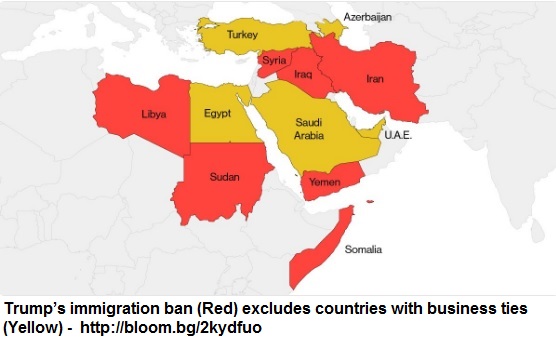
During the first week of the new Trump administration, the new President issued an Executive Order – fulfilling a campaign promise – banning all immigrants from certain Muslim-majority countries. This is purportedly in conjunction with the ongoing War on ‘Terror’. The problem is that the cited countries have not been the source of the terrorist activities that have attacked the US. The targeting seem arbitrary. We must consider the truth; see the news article and photo/map of this story here:

Title: These Countries with Business Links to Trump Aren’t Part of His Immigration Ban
By: Joseph Hincks

CU Blog - War on 'Terrorism' - Photo 1

A little over a year ago, then-Republican presidential candidate Donald Trump called for a “total and complete shutdown of Muslims entering the United States,” until the country’s leadership could “figure out what is going on.”

Along the campaign trail, he modified this blanket ban to a suspension of “immigration from terror-prone regions, where vetting cannot safely occur,” which he promised to enact during his first 100 days in office.

And now, a week into Trump’s presidency, he has tried to make good on that promise—or, at least, partly so. A draft proposal of an executive order obtained by Bloomberg News reportedly shows that Trump is poised to suspend all entry to the U.S. from seven Muslim-majority countries.

Notably missing from the blacklist, however, are several Muslim-majority countries where Trump has business dealings, according to Bloomberg.

The news organization has put together a map of the proposed suspensions, with the Muslim-majority countries where Trump has business interests—Egypt, Saudi Arabia, Turkey, and Azerbaijan—rendered in yellow.

While Muslim-majority countries such as Oman, Qatar, Kuwait, and others are not included on the list, the omission of Turkey and Egypt may be argued as being seen at odds with Trump’s definition. Both Turkey and Egypt endured high-profile terror attacks in 2016.

The President has positions in two companies that may be related to business in Egypt, and has previously praised the country’s autocratic leader, Abdel Fattah al-Sisi. In Turkey, Trump has a licensing deal to use his name on two luxury towers in Istanbul.

Source: Fortune Magazine Online Site; posted January 27, 2017; retrieved January 29, 2017 from: http://fortune.com/2017/01/27/donald-trump-muslim-immigration-ban-conflict/
Such a bold move – based on mis-truths – elicits response, feedback and uproar from opposition and pundits alike. In one such salvo on Saturday January 28th, a Security Analyst (with TV News Network MSNBC), Malcolm Nance, identified that terrorists are sourced in many countries around the world, not just the banned 7 and including places like the Caribbean.

Wait, what?!?! Such a scandalous accusation!

This brings to mind a previous blog-commentary by the promoters of the book Go Lean … Caribbean, describing the reality of the terrorism-threat in the Caribbean:

ISIS reaches the Caribbean Region

The Caribbean member-states are all atwitter about such associations. The region’s governments asserts that they are partners in the ‘War on Terror’ and not accessories to any Bad Actors. Consider the formal response from the Bahamas in the Appendix A below.

But truth be told, the US – and other advanced democracy countries – are very alarmed with their Caribbean partners; we have so many societal defects that exacerbate the global attempts to mitigate terrorism. Consider this list of security-based societal defects:

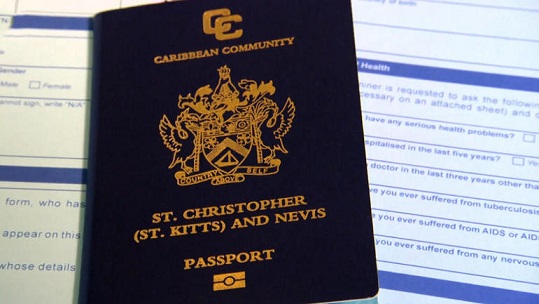
1.  Indiscriminant Citizenship By Investment Program – see the CBS 60 Minutes story about Passports for Sale even to Terror Suspects featured in this previous blog. Can terrorists hide their identity with a passport from a Caribbean member-state? Can we do better going forward?CU Blog - War on Rent - Photo 3
CU Blog - War on 'Terrorism' - Photo 22.  US PATRIOT Act – Managing ‘the Need and the Greed’ with this law. The measure allowed US authorities to have purview on foreign bank accounts in cooperative countries. This is where the Caribbean member-states were given the opportunity to demonstrate that they were willing to mitigate terrorism. Cooperation with these measures – see Appendix B below – jeopardized the Offshore Banking industry in the region. Can terrorists use our “banking in the shadows” to facilitate their malice? The historicity of the Offshore Banking Regulatory changes were detailed in the Go Lean book (Pages 321 – 326). Consider this sample from Page 321:

“In 2001 the development of standards in the fight against terrorism financing was added to the mission of the FATF [(Financial Action Task Force … on Money Laundering)]. In October 2001 the FATF issued the Eight Special Recommendations to deal with the issue of terrorism financing. The continued evolution of money laundering techniques led the FATF to revise the FATF standards comprehensively in June 2003. In October 2004 the FATF published a Ninth Special Recommendations, further strengthening the agreed international standards for combating money laundering and terrorism financing”.

3.  Aversion to Digital Dragnets – The cutting edge technologies to capture meta-data or actual cell phone contents have been frowned on in the Caribbean; in a 2011 WikiLeaks dissemination, whistleblower Edward Snowden revealed that the Bahamas cooperates with US official and records all cell phone calls. This disclosure was assailed as an Abuse of Power. But we must admit, this is an abuse of American power on the Caribbean homeland. Issues abound that need to be addressed and settled. The societal defect is that we are expecting others (the US in this case) to take the lead for our own security. Can we better prepare our own security apparatus for our own security needs? See VIDEO here relating the Privacy Concerns of dragnets.
VIDEO – USA Today: Digital Dragnet – Police Scoop Up Cell Phone Data – https://www.occupycorporatism.com/digital-dragnet-dhs-police-stingray-trackers/

Posted December 9, 2013 – Systems like the “Stingray” allow law enforcement entities to “tap into cellphone data in real time . . . capturing information about thousands of cellphone users at a time, whether they are targets of an investigation or not”.
4.  Monitoring for threats (Weapons of Mass Destruction) – like Nuclear weapons. In the Caribbean, the “Sum of our Greatest Fear” is a terrorist detonating a dirty (nuclear) bomb in an unsecured island community. This is not just something we can complain about, no, we must prepare. There is an international accord that affords a solution, through the US. This is addressed in the discussion of the NEST program (Nuclear Emergency Support Team) in Appendix C below. We can facilitate our own arrangement, with US cooperation. We can mount sensors and monitoring equipment; we can grant access and enable the NEST inspectors in our domain.

CU Blog - War on 'Terrorism' - Photo 3

How we receive, perceive and retrieve security mitigations indicates the impact of our societal defects. Without firing one shot, the Caribbean is able to help or hurt the War Against ‘Terrorism’ with our societal defects. This is commentary 4 of 4 from the movement behind the Go Lean book on the subject of Caribbean societal defects. So how do we move our communities from the deficient-defective status quo to our targeted destination: “a better (safer) place to live, work and play”? By waging war on our defects. All of these commentaries detail that effort, for the following defects:

  1. Waging a Successful War on Orthodoxy
  2. Waging a Successful War on Stupidity
  3. Waging a Successful War on Rent
  4. Waging a Successful War on ‘Terrorism’

These commentaries draw reference to the Go Lean book, as it details the quest to reform and transform the Caribbean; it features a how-to guide and roadmap for elevating the region’s societal engines for (1.) economics, (2.) security and (3.) governance. Strategies, tactics and implementations for the War Against Terrorism have relevance for all these three spheres of society.

The book Go Lean … Caribbean serves as a roadmap for the introduction and implementation of the Caribbean Union Trade Federation (CU) to elevate the region’s societal engines of economics, security and governance. With a brand name like Trade Federation, obviously the primary focus is on economics, but the book asserts (Page 23) that peace, security and public safety must be tantamount to economic prosperity; that bad things will happen to good people and so the community needs to be prepared to contend with the risks that can imperil the homeland. The Go Lean book therefore serves as a roadmap for full Caribbean integration, with the motivation for Greater Good. In all, the Go Lean roadmap has these 3 prime directives:

  • Optimization of the economic engines in order to grow the regional economy and create new jobs.
  • Establishment of a homeland security apparatus to ensure public safety and to protect the resultant economic engines of the Caribbean region.
  • Improvement of Caribbean governance to support these engines.

The priority on homeland security was pronounced early in the Go Lean book with the opening Declaration of Interdependence (Page 12) that claims:

x. Whereas we are surrounded and allied to nations of larger proportions in land mass, populations, and treasuries, elements in their societies may have ill-intent in their pursuits, at the expense of the safety and security of our citizens. We must therefore appoint “new guards” to ensure our public safety and threats against our society, both domestic and foreign. The Federation must employ the latest advances and best practices … to assuage continuous threats against public safety.

xi. Whereas all men are entitled to the benefits of good governance in a free society, “new guards” must be enacted to dissuade the emergence of incompetence, corruption, nepotism and cronyism at the peril of the people’s best interest. The Federation must guarantee the executions of a social contract between government and the governed.

xii. Whereas the legacy in recent times in individual states may be that of ineffectual governance with no redress to higher authority, the accedence of this Federation will ensure accountability and escalation of the human and civil rights of the people for good governance, justice assurances, due process and the rule of law. As such, any threats of a “failed state” status for any member state must enact emergency measures on behalf of the Federation to protect the human, civil and property rights of the citizens, residents, allies, trading partners, and visitors of the affected member state and the Federation as a whole.

xvi. Whereas security of our homeland is inextricably linked to prosperity of the homeland, the economic and security interest of the region needs to be aligned under the same governance. Since economic crimes, including … forms of terrorism, can imperil the functioning of the wheels of commerce for all the citizenry, the accedence of this Federation must equip the security apparatus with the tools and techniques for predictive and proactive interdictions.

The Caribbean appointing these “new guards” will include many strategies, tactics and implementations considered “best-practices” in the War Against Terror.

The CU would be established by the sovereign powers of the 30 Caribbean member-states to empower the region with economic, security and governing tools and techniques. This includes a Security / Defense Pact (Armed Forces) with a fully-empowered Naval Force and Expeditionary Marine (ground) Forces. The Security Pact is about action, not attitude; but the right societal attitude (weeding out societal defects) is important, critical even.

Societal defects are destructive and self-defeating for the interior of our communities. But in the case of security gaps, far-away communities can be imperiled as well. The War on Terrorism is fought by many stakeholders on many different ‘battlefields’.  Consider airport screening; once every passenger has been screened for weapons and explosives, the plane is considered “sanitized” and can then enter any airspace with a presumed label of “safe-and-secured”. Poor security executions in the Caribbean can therefore impact the public safety of far-away places. So our defects can result in bad cause-and-effect for other (innocent) people.

This is the attitude – community ethos – that we must adopt, that our battles in the War Against Terror can help/hurt the rest of the world. “Community Ethos” is defined here as:

“… the fundamental character or spirit of a culture; the underlying sentiment that informs the beliefs, customs, or practices of a group or society; dominant assumptions of a people or period practices of a group or society; dominant assumptions of a people or period”.

The Go Lean book details the series of community ethos, strategies, tactics, implementations and advocacies to wage a successful ‘War on Terrorism’; this includes proactive and reactive public safety/security measures in the Caribbean region:

Community Ethos – Economic Systems Influence Individual Choices Page 21
Community Ethos – Consequences of Choices Lie in Future Page 21
Community Ethos – Privacy –vs- Public Protection Page 23
Community Ethos – Intelligence Gathering Page 23
Community Ethos – Whistleblower Protection Page 23
Community Ethos – “Crap” Happens Page 23
Community Ethos – Cooperatives Page 25
Community Ethos – Ways to Manage Reconciliations Page 34
Community Ethos – Ways to Improve Sharing Page 35
Community Ethos – Ways to Promote Happiness Page 36
Community Ethos – Ways to Impact the Greater Good Page 37
Strategy – Vision – Confederating a non-sovereign permanent union Page 45
Tactical – Fostering a Technocracy Page 64
Tactical – Separation of Powers – Coast Guard & Naval Authorities Page 75
Tactical – Separation of Powers – Ground Militia Forces Page 75
Tactical – Separation of Powers – Emergency Management Agency Page 76
Tactical – Separation of Powers – CariPol: Marshals & Investigations Page 75
Implementation – Ways to Pay for Change Page 101
Implementation – Start-up Foreign Policy Initiatives Page 102
Implementation – Start-up Security Initiatives Page 103
Implementation – Ways to Foster International Aid Page 115
Planning – 10 Big Ideas – #3: Consolidated Homeland Security Pact Page 130
Planning – Ways to Make the Caribbean Better Page 131
Planning – Ways to Improve Failed-State Indices – Escalation Role Page 134
Planning – Lessons from the American West – Needed Law & Order Page 142
Planning – Lessons from Egypt – Law & Order for Tourism Page 143
Advocacy – Ways to Grow the Economy – Quick Disaster Recovery Page 151
Advocacy – Ways to Improve Governance Page 168
Advocacy – Ways to Better Manage the Social Contract Page 170
Advocacy – Ways to Impact Justice – Policing/Supporting the Police Page 177
Advocacy – Ways to Reduce Crime – Regional Security Intelligence Page 178
Advocacy – Ways to Improve Homeland Security Page 180
Advocacy – Ways to Mitigate Terrorism Page 181
Advocacy – Ways to Improve Intelligence Gathering & Analysis Page 182
Advocacy – Reforms for Banking Regulations – Offshore Banking Reforms Page 199
Advocacy – Ways to Impact Wall Street – Downplay Lawless Impressions Page 200
Advocacy – Ways to Impact Main Street Page 201
Advocacy – Ways to Protect Human Rights – Watchful World Page 220
Appendix ZD – Offshore Tax & Financial Services Industry Developments Page 321
Appendix ZE – Offshore Tax & Financial Services Industry – Bahamas Example Page 322

Other subjects related to security and governing empowerments for the region’s defense have been blogged in other Go Lean…Caribbean commentaries, as sampled here:

https://goleancaribbean.com/blog/?p=9974 Lessons Learned from Pearl Harbor
https://goleancaribbean.com/blog/?p=9072 Securing the Homeland – On the Ground
https://goleancaribbean.com/blog/?p=9070 Securing the Homeland – From the Seas
https://goleancaribbean.com/blog/?p=9068 Securing the Homeland – From the Air
https://goleancaribbean.com/blog/?p=7119 Security Role Model for the Caribbean: African Standby Force
https://goleancaribbean.com/blog/?p=6720 A Lesson in History – During the Civil War: Fighting for Our Own Cause
https://goleancaribbean.com/blog/?p=6103 Sum of All Fears – ‘On Guard’ Against Deadly Threats
https://goleancaribbean.com/blog/?p=5183 A Lesson in History – Cinco De Mayo and Mexico’s Security Lapses
https://goleancaribbean.com/blog/?p=5002 Managing a ‘Clear and Present Danger’
https://goleancaribbean.com/blog/?p=4809 Americans arrest 2 would-be terrorists – a Clear and Present Danger
https://goleancaribbean.com/blog/?p=4360 Dreading the ‘Caribbean  Basin Security Initiative’
https://goleancaribbean.com/blog/?p=3881 Intelligence Agencies to Up Cyber Security Cooperation
https://goleancaribbean.com/blog/?p=1965 America’s Navy – 100 Percent – Model for Caribbean
https://goleancaribbean.com/blog/?p=1554 Status of Forces Agreement = Security Pact
https://goleancaribbean.com/blog/?p=1076 Trinidad Muslims travel to Venezuela for Jihadist training
https://goleancaribbean.com/blog/?p=809 Muslim officials condemn abductions of Nigerian girls
https://goleancaribbean.com/blog/?p=535 Remembering and learning from Boston
https://goleancaribbean.com/blog/?p=273 10 Things We Want from the US – #4: Pax Americana

An effort to provide better security solutions in the Caribbean should be welcomed here.

The new Caribbean must foster good security habits … and ‘War against Bad Ones’ – societal defects. This is how to secure our homeland: monitor for threats, gather intelligence, investigate incidences, police communities, arm a defense apparatus and prepare for the worst.

This level of response is new … for our region; we normally sit back and let someone else do the heavy-lifting for security. But it is time now to grow up and secure our own communities and our economic engines.

All Caribbean stakeholders are therefore urged to lean-in to this roadmap, to this conceivable, believable and achievable plan to make the Caribbean a better place to live, work and play. 🙂

Download the book Go Lean … Caribbean – now!

———–

Appendix A – Statement By The Bahamas Ministry of Foreign Affairs

On Reported ‘Terrorism Threat From The Bahamas’

28 January 2017

For Immediate Release

Today on MSNBC Cable News, on a show hosted by Joy-Ann Reid, a guest Malcolm Nance, a reported expert in security and terrorism, made the following statement:

” We [ the United States] have not banned terrorists from Brazil. ISIS has dozens of members from Brazil or Trinidad or The Bahamas who have more terrorists members than any of those other countries.”

In today’s atmosphere, the video clip is being spread around at a clipped pace.

Upon hearing the report, the Minister of Foreign Affairs Fred Mitchell spoke with the Prime Minister, the National Security Minister, the Head of SIB in the Royal Bahamas Police Force. all of whom are responsible for the country’s national security and they have no knowledge of any such terrorists or group of terrorists or any individual terrorist that is related to ISIS or any other terrorist organization in The Bahamas.

In speaking with ZNS TV news this evening, the Minister said the report is rubbish.

He indicated that the U S Mission in the United States has been asked to reach out to US counterparts, to MSNBC and the Mr. Nance himself to find out what the source of the allegation is. The Mission has been asked to ask for a retraction forthwith.

Source: Retrieved January 29, 2017 from: http://www.thebahamasweekly.com/publish/bis-news-updates/Bahamas_Gov_t_responds_to_MSNBC_regarding_reported_terrorism_threat_from_The_Bahamas52287.shtml

———–

Appendix B – USA Patriot Act

The USA PATRIOT Act is an Act of Congress that was signed into law by President George W. Bush on October 26, 2001.[1] With its ten-letter abbreviation (USA PATRIOT) expanded, the full title is “Uniting and Strengthening America by Providing Appropriate Tools Required to Intercept and Obstruct Terrorism Act of 2001”.[2]

On May 26, 2011, President Barack Obama signed the PATRIOT Sunsets Extension Act of 2011, a four-year extension of three key provisions in the USA PATRIOT Act:[3] roving wiretapssearches of business records, and conducting surveillance of “lone wolves”—individuals suspected of terrorist-related activities not linked to terrorist groups.[4]

Following a lack of Congressional approval, parts of the Patriot Act expired on June 1, 2015.[5] With the passage of the USA Freedom Act on June 2, 2015, the expired parts were restored and renewed through 2019.[6] However, Section 215 of the law was amended to stop the National Security Agency (NSA) from continuing its mass phone data collection program.[6] Instead, phone companies will retain the data and the NSA can obtain information about targeted individuals with permission from a federal court.[6]

From broad concern felt among Americans from both the September 11 attacks and the 2001 anthrax attacks, Congress rushed to pass legislation to strengthen security controls.

Acts amended Electronic Communications Privacy Act
Computer Fraud and Abuse Act
Foreign Intelligence Surveillance Act
Family Educational Rights and Privacy Act
Money Laundering Control Act
Bank Secrecy Act
Right to Financial Privacy Act
Fair Credit Reporting Act
Immigration and Nationality Act of 1952
Victims of Crime Act of 1984
Telemarketing and Consumer Fraud and Abuse Prevention Act

Title III: Anti-money-laundering to prevent terrorism

Title III of the Act, titled “International Money Laundering Abatement and Financial Anti-Terrorism Act of 2001,” is intended to facilitate the prevention, detection and prosecution of international money laundering and the financing of terrorism. It primarily amends portions of the Money Laundering Control Act of 1986 (MLCA) and the Bank Secrecy Act of 1970 (BSA). It was divided into three subtitles, with the first dealing primarily with strengthening banking rules against money laundering, especially on the international stage. The second attempts to improve communication between law enforcement agencies and financial institutions, as well as expanding record keeping and reporting requirements. The third subtitle deals with currency smuggling and counterfeiting, including quadrupling the maximum penalty for counterfeiting foreign currency.

Restrictions were placed on accounts and foreign banks. It prohibited shell banks that are not an affiliate of a bank that has a physical presence in the U.S. or that are not subject to supervision by a banking authority in a non-U.S. country. It also prohibits or restricts the use of certain accounts held at financial institutions.[47] Financial institutions must now undertake steps to identify the owners of any privately owned bank outside the U.S. who have a correspondent account with them, along with the interests of each of the owners in the bank. It is expected that additional scrutiny will be applied by the U.S. institution to such banks to make sure they are not engaging in money laundering. Banks must identify all the nominal and beneficial owners of any private bank account opened and maintained in the U.S. by non-U.S. citizens. There is also an expectation that they must undertake enhanced scrutiny of the account if it is owned by, or is being maintained on behalf of, any senior political figure where there is reasonable suspicion of corruption.[48]Any deposits made from within the U.S. into foreign banks are now deemed to have been deposited into any interbank account the foreign bank may have in the U.S. Thus any restraining order, seizure warrant or arrest warrant may be made against the funds in the interbank account held at a U.S. financial institution, up to the amount deposited in the account at the foreign bank.[49]

Source: Retrieved January 29, 2017 from: https://en.wikipedia.org/wiki/Patriot_Act

———–

Appendix C – Nuclear Emergency Support Team

The Nuclear Emergency Support Team (NEST) (formerly known as the Nuclear Emergency Search Team) is a team of scientists, technicians, and engineers operating under the United States Department of Energy‘s National Nuclear Security Administration (NNSA). Their task is to be “prepared to respond immediately to any type of radiological accident or incident anywhere in the world”.[1]

History

Concerns over scenarios involving nuclear accidents or incidents on American soil are not recent. As early as the 1960s, officials were concerned that a nuclear weapon might be smuggled into the country, or that an airplane carrying a nuclear weapon might crash and contaminate surrounding areas.[2] In late 1974, President Gerald Ford was warned that the FBI received a communication from an extortionist wanting $200,000 (equivalent to $971,000 in 2016) after claiming that a nuclear weapon had been placed somewhere in Boston. A team of experts rushed in from the United States Atomic Energy Commission but their radiation detection gear arrived at a different airport. Federal officials then rented a fleet of vans to carry concealed radiation detectors around the city but forgot to bring the tools they needed to install the equipment. The incident was later found to be a hoax. However, the government’s response made clear the need for an agency capable of effectively responding to such threats in the future. Later that year, President Ford created the Nuclear Emergency Search Team (NEST), which under the Atomic Energy Act is tasked with investigating the “illegal use of nuclear materials within the United States, including terrorist threats involving the use of special nuclear materials”.[1]

One of its first responses was in Spokane, Washington on November 23, 1976. An unknown group called the “Days of Omega” had mailed an extortion threat claiming they would explode radioactive containers of water all over the city unless paid $500,000 (equivalent to $2,104,000 in 2016). Presumably, the radioactive containers had been stolen from the Hanford Site, less than 150 miles (240 km) to the southwest. Immediately, NEST flew in a support aircraft from Las Vegas and began searching for non-natural radiation, but found nothing. No one ever responded, despite the elaborate instructions given, or made any attempt to claim the (fake) money, which was kept under surveillance. Within days, the incident was deemed a hoax, though the case was never solved. To avoid panic, the public was not notified until a few years later.[3][4]

Today

According to the Bulletin of the Atomic Scientists, NEST has the ability to deploy as many as 600 people to the scene of a radiological incident, though deployments do not usually exceed 45 people.[5] NEST has a variety of equipment (weighing up to 150 tons) and has the support of a small fleet of aircraft which includes four helicopters and three airplanes, all outfitted with detection equipment.

When an airborne response to an incident is underway, the Federal Aviation Administration grants NEST flights a higher control priority within the United States National Airspace System, designated with the callsign “FLYNET”.

Since 1975, NEST has been warned of 125 nuclear terror threats and has responded to 30. All have been false alarms.

Source: Retrieved January 29, 2017 from: https://en.wikipedia.org/wiki/Nuclear_Emergency_Support_Team
 

Share this post:
, , ,

Waging a Successful War on Rent

Go Lean Commentary

‘Rent’ is a 4-letter word …

… in the field of Economics.

This is not referring to the positive action of paying for the monthly expense for a house or an apartment, but rather the bad practice of extracting uncompensated value from others without making any contribution – getting something for nothing.

With such a simple definition, the assumption would be that ‘rent’ is unwelcomed and marginalized in society. And yet, for the Caribbean, this bad practice proliferates.

“Say it ain’t so…”

Unfortunately, there is plenty “rent-seeking” in the Caribbean. If we want to reform and transform our society – we do – there is a need to “Wage War” against this bad practice of rent-seeking.

CU Blog - War on Rent - Photo 1

The movement behind the book Go Lean … Caribbean describes rent-seeking as a societal defect … in the Caribbean, and most other societies. It is destructive and self-defeating. In a previous blog-commentary, this defective practice was fully dissected, detailed and dismissed as behavior we want to weed out of Caribbean society.

How?

First we start by recognizing that there is a problem:

“There is rent-seeking in our communities”.

Now we can arm ourselves for battle in this War Against Rent. This is an important first step in reforming and transforming our regional society. This is commentary 3 of 4 from the movement behind the Go Lean book on the subject of Caribbean societal defects. So how do we move our communities from the deficient-defective status quo to our targeted destination: “a better place to live, work and play”? By waging war on our defects. All of these commentaries detail that effort, for the following defects:

  1. Waging a Successful War on Orthodoxy
  2. Waging a Successful War on Stupidity
  3. Waging a Successful War on Rent
  4. Waging a Successful War on ‘Terrorism’

These commentaries draw reference to the Go Lean book, as it details the quest to transform the Caribbean; it features a how-to guide and roadmap for elevating the region’s societal engines for economics, security and governance. Rent-seeking can, and have, penetrated all these three spheres of society.

In the previous commentary on ‘Stupidity’, it was established that when stupid policies-practices persist in a society, it is usually because “someone is profiting” in the shadows. Rent-seeking on the other hand, tends to be “out in the open”, i.e. guaranteed gratuities at a restaurant/bar. Both stupidity and rent-seeking are therefore tied to Crony-Capitalism: the abuse of public funds for private gain.

Consider these details of rent-seeking in the economics, security and governing societal engines:

Economics
Gratuity              . 18 percent guaranteed
Sharing Economy AirBnB and Uber examples
Security
Bribery/Graff   . An obvious crime
Traffic Cameras Electronic surveillance used to auto-generate traffic tickets
Governance
Citizenship For Sale $100,000 fees for … doing nothing – See VIDEO in the Appendix.
Disclosures           . Follow the money‘; many politicians enter public service with modest incomes, but become wealthy while in office, despite only moderate government paychecks.
Fuel Taxes             . Dissuade Green Alternatives and e-Cars. “Invention, the Mother of Necessity” is discouraged because the government wants it’s guaranteed revenues.

The movement behind the Go Lean book seeks to reform and transform the economic engines of the Caribbean by being technocratic in applying best practices from the field of Economics. Rent-seeking is distinguished in economic theory from profit-seeking, in which entities seek to extract value by engaging in mutually beneficial transactions.[6] Profit-seeking in this sense is the creation of wealth, while rent-seeking is the use of social institutions such as the power of government to redistribute wealth among different groups without creating new wealth.[7] For the Caribbean elevation quest, we see the defects; we see the destructive rent-seeking practices; and we now know how to supplant them. This intent is declared at the outset of the book with this Declaration of Interdependence (Page 10) for the region to work in unison to remediate the broken systems of commerce:

Preamble: As the colonial history of our region was initiated to create economic expansion opportunities for our previous imperial masters, the structures of government instituted in their wake have not fostered the best systems for prosperity of the indigenous people. Despite this past, we thrust our energies only to the future, in adapting the best practices and successes of the societies of these previous imperial masters and recognizing the positive spirit of their intent and vow to learn from their past accomplishments and mistakes so as to optimize the opportunities for our own citizenry to create a more perfect bond of union.

So how exactly do we supplant rent-seeking practices in the Caribbean? Foster best practices for economics and governance.

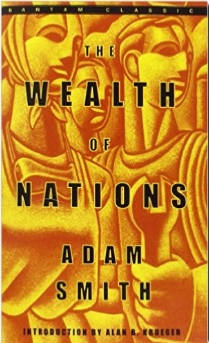
There is an implied Social Contract in every expression of governance everywhere, where “citizens surrender some of their freedoms and submit to the authority of the State in exchange for protection of remaining rights” (Page 170). In modern societies, there is a role for governments and a role for commercial entities. This was the assertion of the father of modern economists, Adam Smith, that the “division of functions” between governments and commerce should be carefully regulated to keep free enterprise operating “freely”; governments should limit their deliveries in commerce. The Go Lean book relates this (Page 67) as follows:

CU Blog - War on Rent - Photo 2Adam Smith, the 18th century Scottish political economics pioneer, is best known for his classic work: An Inquiry into the Nature and Causes of the Wealth of Nations (1776), usually abbreviated as The Wealth of Nations. This book is considered the first modern work of economics, and he is thusly cited as the “father of modern economics”, even today, and among the most influential thinkers in the field of economics. Through reflection over the economics at the beginning of the Industrial Revolution the [Wealth of Nations] book touches upon broad topics as the division of labor, productivity and free markets.

Smith attacked most forms of government interference in the economic process, including tariffs, arguing that these create inefficiency and high prices in the long run. It is believed that this theory, laissez-faire economic philosophy, influenced government legislation in later years.

Smith advocated a government that was active in sectors other than the economy. He advocated public education for poor adults, a judiciary, and a standing army—institutional systems not directly profitable for private industries.

So according to a scholar in economics from 240 years ago, the cause of Caribbean rent-seeking is governmental interference and the solution is a governmental “pull back”.

This is how to wage war against ‘rent’.

Look back at the foregoing list of Caribbean rent-seeking activities; and consider here how we can mitigate:

  • How much tips/gratuity should waiters/waitresses receive when they serve tables? The experience is that they always receive more that government-mandated 18% when the service is good. The incentive to provide good service is lost when the gratuity is guaranteed by government policy.
  • In other markets, the “Sharing Economy” has spurred the economy in creative ways: 1. AirBnB has created opportunities for festivals to absorb bigger crowds than hotel capacity; 2. the presence of Uber has forced taxicabs to become more efficient with smartphone apps and have created prospects for any restaurant to now offer delivery.
  • Fuel tax dependency in the Caribbean keeps electricity costs high; the average is US$0.35/kWh, one of the highest in the world. Green Energy alternatives have been avoided, even discouraged, despite an abundance of sun and wind resources; with these mitigations, the cost for electricity can be lowered to US$0.088/kWh.
  • Traffic Light Cameras will be a new deployment in the region. When these are implemented, they must be regulated at the government level. The government should never be the service provider but rather the escalation authority. It would be rent-seeking to just sit back and collect traffic fines … uncontested. Everything at a traffic light is not always “black-and-white or red-and-green”; there are scenarios with breakdowns and pedestrians that must be accounted with allowances.
  • Passports For Sale – This is indefensible; to tarnish the Caribbean Image for “30 Pieces of Silver”, sorry, make that $100,000. See VIDEO in the Appendix below.
  • CU Blog - War on Rent - Photo 3

The Go Lean book serves as a roadmap for the introduction and implementation of the Caribbean Union Trade Federation (CU). The CU is designed to be a technocratic intergovernmental entity that shepherds the Caribbean region. The goal is to reboot and optimize the region’s economic, security and governing engines. Optimization would entail weeding out any rent-seeking practice.

As previously detailed:

“Rent-seeking can prove costly to economic growth; high rent-seeking activity makes more rent-seeking attractive because of the natural and growing returns that one sees as a result of rent-seeking. Thus organizations value rent-seeking over productivity. In this case there are very high levels of rent-seeking with very low levels of output. Rent-seeking may grow at the cost of economic growth because rent-seeking by the state can easily hurt innovation. Ultimately, public rent-seeking hurts the economy the most because innovation drives economic growth.”[19]

“Government agents may initiate rent-seeking – such agents soliciting bribes or other favors from the individuals or firms that stand to gain from having special economic privileges, which opens up the possibility of exploitation of the consumer.[20] It has been shown that rent-seeking by a bureaucracy can push up the cost of production of public goods.[21] It has also been shown that rent-seeking by tax officials may cause loss in revenue to the public [treasury].”[8]

The Go Lean/CU roadmap employs some counter-tactics; consider the “Separation-of-Powers between CU federal agencies and Caribbean member-state governments”; so the limitations of national laws in a member-state would not override the CU. The CU‘s technocratic practices would directly apply to the installation of Exclusive Economic Zones (EEZ) and Self-Governing Entities (SGE); these operate in controlled bordered territories like campuses, industrial parks, research labs and industrial plants. Lastly, there is the power of “peer pressure” to reform the member-states. When progress is made by one Caribbean state, this would incline the others to follow suit. In total, the Go Lean/CU roadmap will employ strategies, tactics and implementations to impact its prime directives; identified with the following 3 statements:

  • Optimization of the economic engines in order to grow the regional economy to $800 Billion & create 2.2 million new jobs.
  • Establishment of a security apparatus to ensure public safety assurances and protect the region’s economic engines.
  • Improvement of Caribbean governance to support these engines.

The Go Lean roadmap seeks to “Wage War against Rent” by optimizing the entire Caribbean economic eco-system with the adoption of best practices for commerce and governance. This vision is defined early in the book (Page 12) in the following pronouncements in the Declaration of Interdependence:

xi. Whereas all men are entitled to the benefits of good governance in a free society, “new guards” must be enacted to dissuade the emergence of incompetence, corruption, nepotism and cronyism at the peril of the people’s best interest. The Federation must guarantee the executions of a social contract between government and the governed.

xii. Whereas the legacy in recent times in individual states may be that of ineffectual governance with no redress to higher authority, the accedence of this Federation will ensure accountability and escalation of the human and civil rights of the people for good governance, justice assurances, due process and the rule of law. As such, any threats of a “failed state” status for any member state must enact emergency measures on behalf of the Federation to protect the human, civil and property rights of the citizens, residents, allies, trading partners, and visitors of the affected member state and the Federation as a whole.

In order to make the Caribbean a better place to live, work and play the people of the region must change their attitudes about elements of their society – elements that are in place and elements missing. This is referred to as “Community Ethos”, defined as:

“the fundamental character or spirit of a culture; the underlying sentiment that informs the beliefs, customs, or practices of a group or society; dominant assumptions of a people or period practices of a group or society; dominant assumptions of a people or period”.

Rent-seeking is one of the negative community ethos – societal defects – that must be weeded out of the Caribbean. This ethos stems from an attitude of entitlement; to get something … for almost nothing. The Caribbean was colonized originally with this type of community ethos; a previous blog/commentary related this:

Most of the property and indigenous wealth of the Caribbean region is concentrated amongst the rich, powerful and yet small elite; an oligarchy. Many times these families received their property, corporate rights and/or monopolies by Royal Charter from the European monarchs of ancient times. These charters thus lingered in legacy from one generation to another … until …

The Go Lean book presents a roadmap on how to optimize the economic engines without continuing rent-seeking practices. The book stresses key community ethos, strategies, tactics, implementations and advocacies necessary to transform and turn-around the eco-systems of Caribbean society. These points are detailed in the book as follows:

Community Ethos – Deferred Gratification Page 21
Community Ethos – Return on Investments Page 24
Community Ethos – Ways to Impact the Future Page 26
Community Ethos – Ways to Impact the Greater Good Page 37
Strategy – Vision – Confederate all 30 member-states/ 4 languages into a Single Market Page 45
Tactical – Separation-of-Powers – CU Federal Government versus Member-State Governance Page 71
Implementation – Ways to Pay for Change – Award exploratory rights in exclusive territories Page 101
Implementation – Start-up Benefits from the Exclusive Economic Zone (EEZ) Page 104
Planning – 10 Big Ideas – #3: Proactive Anti-crime Measures Page 127
Planning – Ways to Improve Trade Page 128
Advocacy – Ways to Grow the Economy – Protect Property Rights Page 151
Advocacy – Ways to Create Jobs Page 152
Advocacy – Ways to Improve Governance Page 168
Advocacy – Ways to Better Manage the Social Contract Page 170
Advocacy – Ways to Impact Main Street Page 201

In considering this economic history, the CU/Go Lean roadmap distinguishes rent-seeking from profit-seeking:

  • Profit is Good!
  • Rent is Bad!

The new Caribbean must foster good economic habits … and abandon bad ones. This is how to grow the economy: create jobs; create businesses; retain people; foster new opportunities, learn from past mistakes and accomplishments.

This is new …

All Caribbean stakeholders are urged to lean-in to this roadmap/plan for change … and empowerment. This plan is conceivable, believable and achievable. 🙂

Download the book Go Lean … Caribbean – now!

———–

Appendix VIDEO – CBS 60 Minutes: Passports For Sale – http://www.cbsnews.com/videos/passports-for-sale/

Posted January 1, 2017 – Steve Kroft reports on how cash-starved countries [in the Caribbean] offer citizenship for a price, creating ways to ease travel for foreigners, including those running from the law.

Share this post:
, ,
[Top]

Waging a Successful War on Stupidity

Go Lean Commentary

“Stupid is as stupid does…”

CU Blog - War on Stupidity - Photo 1

CU Blog - War on Stupidity - Photo 1b

Nobody likes to be called stupid!

It has a “stinging” feel to its indictment. It is different than being called “crazy” as insanity may be linked to a physical disability from brain chemistry. No, “stupid” is different. Stupid says that the person is perfectly sane and intentionally chooses an action that they know to yield an undesirable result – “… stupid does …”.

A person knowing they have a balance of $6.00 in their checking account, but newly writing a check for $7, knowing that their bank may charge them a $35 fee and the check recipient may charge another fee ($20 – $50 range). That one $7 transaction may cost up to $75 in fees.

Surely this is stupid! Yet this happens in society again … and again. In fact there is a whole industry based on this reality in the United States: Check Cashing / Pay-Day Loans. This entire industry has been weighed and measured and found to be  “wanting” or stupid.

So, knowing that there is some degree of intentionality associated with this question, why do people do the “stupid” things that they do?

Answer: It’s complicated!

Perhaps there’s more to “stupid” than what meets the eye. See/hear the AUDIO Podcast here of a related interview based on a new book:

CU Blog - War on Stupidity - Photo 2

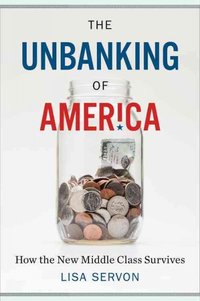
AUDIO Podcast – What Is Driving The ‘Unbanking Of America’? – http://www.npr.org/2017/01/10/509126878/what-is-driving-the-unbanking-of-america

Published on January 10, 2017 – Author Lisa Servon says a growing number of Americans are giving up on traditional banks and relying instead on alternatives, including prepaid debit cards, check-cashing centers and payday lenders.
“… increasing numbers of working Americans are using those services and turning their backs on traditional banking because banks don’t meet their needs and whack them with fees and charges they aren’t expecting. In 2011, she notes, Americans paid $38 billion just in overdraft fees.”

There is no doubt that there is “stupidity” in society and there is a need to “Wage War” against it. We first need to understand the roots and origins; many times the “rhyme and reason” why stupid policies-practices persist, is because “someone is profiting”. So stupidity may be tied to Crony-Capitalism: the abuse of public funds for private gain.

The movement behind the book Go Lean … Caribbean describes this stupidity as a societal defect … in America … and the Caribbean. This previous blog-commentary has identified “Crony-Capitalism” as a serious societal defect in the US. The goal is for the Caribbean to do better!

How?

First we start by recognizing that there is a problem: “there is stupidity in our society”. Now we can arm ourselves for battle in this ‘War Against Stupidity’. This is an important first step in reforming and transforming our regional society. This is commentary 2 of 4 from the movement behind the Go Lean book on the subject of Caribbean societal defects. So how do we move our communities from the deficient-defective status quo to our targeted destination: “a better place to live, work and play”? By waging war on our defects. All of these commentaries detail that effort, for the following defects:

  1. Waging a Successful War on Orthodoxy
  2. Waging a Successful War on Stupidity
  3. Waging a Successful War on Rent
  4. Waging a Successful War on ‘Terrorism’

These commentaries draw reference to the Go Lean book, as it details the quest to transform the Caribbean; it features a how-to guide and roadmap for elevating the region’s societal engines for economics, security and governance. Stupidity can be found in all these three spheres of society. Consider these details:

Economics

The Go Lean book serves as a roadmap for the introduction and implementation of the Caribbean Union Trade Federation (CU). The CU is designed to be a technocratic – opposite of stupid – intergovernmental entity that shepherds the Caribbean region. The goal is to reboot and optimize the region’s economic, security and governing engines.  We have some stupidity that we need to weed out. Our economy currently serve as a parasite of other – more mature – economies, consider the US, Canada and Western Europe. We must not be parasites, we should be protégés. These role model countries have their own stupidity to weed out, consider the recent adventures with NINJA loans.

In a recent blog-commentary, the problem of these NINJA loans were fully dissected. Imagine giving a $100,000 mortgage to someone with No Income, No Job and no Assets. How about $200,000, or $300,000 or worse $400,000 to $600,000? The problem was that bad during the bad old days of the Great Recession of 2008. Many of the heightened financial controls – common sense mandates – that we implemented during the aftermath of the crisis, are now at risk of being dismantled with the new Donald Trump administration in the US.

This is stupidity; this is not the role model, we want to emulate in the Caribbean. But we, in the Caribbean, have our own stupid economic policies to contend with; consider this sample list:

Security

Stupidity can be found in other areas of society as well; take “crime and punishment” for example. Comedians (and other entertainers) often amuse us with stories about “Stupid Criminals” who commit atrocious acts, many times caught on camera. In fact, a proliferation of security and traffic cameras has proven to be a great investigation tool. See this phenomena portrayed in these sample VIDEOs:

VIDEO 1 – 10 Stupid Criminals You Won’t Believe – https://youtu.be/YOivkJxx2_0


Published on Nov 2, 2016 – Top 10 dumbest criminals in the world
Subscribe to our channel: http://goo.gl/9CwQhg
———–
VIDEO 2 – GEICO Commercial – Objection: Great Answer – https://youtu.be/zj_RHi1klRU


Published on Dec 4, 2016 – The savings you get from switching to GEICO make it a great answer for car insurance. But that leads some people to think that GEICO is a great answer to other tough questions. Watch this defendant use GEICO to defend his innocence. *** PARODY ***

CU Blog - War on Stupidity - Photo 3For the Caribbean to wage a successful war against stupidity, communities should make “Stupid Criminals” videos available to the media for full dissemination; these can be a great crime deterrence.

But videos from where? Consider:

Governance

There is a lot of stupidity in the governing arena.

Consider the US, the most advanced democracy on the planet. The assumption is “one man one vote” and yet in the 2016 general election, one candidate for President had 3 million more votes than the other opponent, and yet lost.  By some measures, the Electoral College is considered “stupid”.

In the Caribbean, we have a lot of stupid rules and stupid iterations in our governance; consider this sample list:

——–

The movement behind the Go Lean book wants to help reform and transform the Caribbean. We see the defects; we see the stupidity. We know how to overcome the stupidity. There is an implied Social Contract in every expression of governance everywhere. Technocratic efficiency is embedded in the implied CU Social Contract. The Go Lean book defines (Page 170) the Social Contract as follows:

“Citizens surrender some of their freedoms and submit to the authority of the State in exchange for protection of remaining natural and legal rights”.

The CU Social Contract, as specified in the Go Lean book, specifies that governments should serve the people as efficiently as possible. So then, how can we employ more efficiencies?

The Go Lean/CU roadmap seeks to deploy the technocratic efficiency by embracing the latest project management methodologies and best practices. In fact, the roadmap calls for the establishment of a Project Management Office in every Cabinet Office for the CU Trade Federation.

Further, the Go Lean/CU roadmap employs a tactic of a “Separation-of-Powers between CU federal agencies and Caribbean member-state governments”; so the limitations of national laws in a member-state does not have to override the CU. The CU constitution would apply to the installation of Exclusive Economic Zones (EEZ) and Self-Governing Entities (SGE) that operate in controlled bordered territories like campuses, industrial parks, research labs and industrial plants. Lastly, there is the power of “peer pressure” where progress by one CU member-state would incline others to follow suit. In total, the Go Lean/CU roadmap will employ strategies, tactics and implementations to impact its prime directives; identified with the following 3 statements:

  • Optimization of the economic engines in order to grow the regional economy to $800 Billion & create 2.2 million new jobs.
  • Establishment of a security apparatus to ensure public safety assurances and protect the region’s economic engines.
  • Improvement of Caribbean governance to support these engines.

The Go Lean roadmap seeks to “Wage War against Stupidity” by optimizing the entire Caribbean economic/security/governance eco-system with the adoption of best practices. This vision is defined early in the book (Page 12) in the following pronouncements in the Declaration of Interdependence:

xi. Whereas all men are entitled to the benefits of good governance in a free society, “new guards” must be enacted to dissuade the emergence of incompetence, corruption, nepotism and cronyism at the peril of the people’s best interest. The Federation must guarantee the executions of a social contract between government and the governed.

xii. Whereas the legacy in recent times in individual states may be that of ineffectual governance with no redress to higher authority, the accedence of this Federation will ensure accountability and escalation of the human and civil rights of the people for good governance, justice assurances, due process and the rule of law. As such, any threats of a “failed state” status for any member state must enact emergency measures on behalf of the Federation to protect the human, civil and property rights of the citizens, residents, allies, trading partners, and visitors of the affected member state and the Federation as a whole.

The Go Lean book posits that inefficient Caribbean communities can be reformed and transformed if they adopt the community ethos, strategies, tactics, implementations and advocacies as depicted in the Go Lean book; consider this sample:

Community Ethos – Economic Systems Influence Choices & Incentives Page 21
Community Ethos – People Respond to Incentives Page 21
Community Ethos – Lean Operations Page 24
Community Ethos – Ways to Impact Turn-Around Page 33
Strategy – Mission – Foster Local Economic Engines to Diversify the Economy Page 45
Tactical – Fostering a Technocracy Page 64
Tactical – Separation of Powers – Self-Governing Entities Page 80
Implementation – Steps to Implement Self-Governing Entities Page 105
Implementation – Ways to Deliver – Case Study on Project Management Offices (PMO) Page 109
Planning – Ways to Make the Caribbean Better Page 131
Advocacy – Ways to Measure Progress – Case Study on Six Sigma Methodology Page 147
Advocacy – Ways to Grow the Economy Page 151
Advocacy – Ways to Create Jobs Page 152
Advocacy – Ways to Better Manage the Social Contract Page 170
Advocacy – Ways to Improve Communications Page 186
Advocacy – Ways to Impact Urban Living Page 234
Advocacy – Ways to Impact Rural Living Page 235

The Caribbean can succeed in our efforts to improve our regional efficiencies. Consider this sample of previous blog-commentaries that delve into aspects of transformation in the Caribbean region:

https://goleancaribbean.com/blog/?p=10043 Integration Plan for Greater Caribbean Prosperity
https://goleancaribbean.com/blog/?p=9595 Vision and Values for a ‘New’ Caribbean
https://goleancaribbean.com/blog/?p=7989 Transformations: Money Matters – ‘Getting over’ with ‘free money’
https://goleancaribbean.com/blog/?p=7646 Going from ‘Good to Great’
https://goleancaribbean.com/blog/?p=7628 ‘A Change Is Gonna Come’
https://goleancaribbean.com/blog/?p=6993 Forging Change: ‘Something to Lose’
https://goleancaribbean.com/blog/?p=3915 ‘Change the way you see the world; you change the world you see’
https://goleancaribbean.com/blog/?p=1596 Transforming to where we can “Prosper where Planted”
https://goleancaribbean.com/blog/?p=623 ‘Only at the precipice, do they change’

The vision for a new Caribbean is one that has successfully ‘waged the war on stupidity’. This is easier said than done, but we have seen it (and done it) in other societies with measurable success, and we are ready, willing and able to succeed here at home.

Deploying a technocracy is how the Go Lean/CU roadmap wages a successful war on stupidity. Technocratic executions include the “arts and sciences” of project management and Quality Assurance (QA) deliveries. As related in the Go Lean book (Page 147):

… one QA methodology – Six Sigma follows a methodology, aimed at improving existing business processes – uses a set of quality management methods, including statistical methods, and creates a special infrastructure of people within the organization (Champions, Black Belts, Green Belts, Orange Belts, etc.) who are experts in these very complex methods. With Six Sigma the maturity of a delivery process can be described by a sigma rating indicating its yield or the percentage of defect-free deliveries it creates. A six sigma process is one in which 99.9999998% of products manufactured/services delivered are statistically expected to be free of defects (3.4 defects per million).

This is heavy-lifting, but ‘Yes, we can … do better‘.

We can work towards making our region a better homeland to live, work and play. We urge everyone in the Caribbean to lean-in to this roadmap for change and optimization. We do not have to do as stupid does. 🙂

Download the book Go Lean … Caribbean – now!


Share this post:
, ,
[Top]

Waging a Successful War on Orthodoxy

Go Lean Commentary

What is the formula for having/being a great society?

There is no doubt the societal engines of economics, security and governance must be optimized. But history has proven that these don’t just happen; there must be a concerted effort by stakeholders in society to make their community great. Yes, it takes “blood, sweat and tears”, but we find that there must be something else first, the right community attitude. The book Go Lean … Caribbean describes this attitude as community ethos …

… the fundamental character or spirit of a culture; the underlying sentiment that informs the beliefs, customs, or practices of a group or society; the dominant assumptions of a people or period.

There are good ethos and bad ethos (defects). The Caribbean member-states are not known as great societies, despite having the greatest “address on the planet” in terms of terrain, fauna/flora, hospitality, festivities, food, rum and cigars. This is because our community attitudes or ethos … suck!

We all know people that are beautiful on the outside, but ugly on the inside. See a sample in this VIDEO clip here from a recent movie.

VIDEO – Shallow Hal (1/5) Movie CLIP – Dancing With the Nasties (2001) – https://youtu.be/K4j25DUQLgE

Published on Sep 8, 2015 – Movie: Shallow Hal, a feature about “Inner Beauty”/”Inner Ugly”. See more movie clips: http://j.mp/1POlWqm
Following the advice of his dying father, Hal dates only women who are physically beautiful. One day, however, he runs into self-help guru Tony Robbins, who hypnotizes him into recognizing only the inner beauty of women. Hal thereafter meets Rosemary, a grossly obese woman whom only he can see as a vision of loveliness. But will their relationship survive when Hal’s equally shallow friend undoes the hypnosis? Written by “Anonymous”

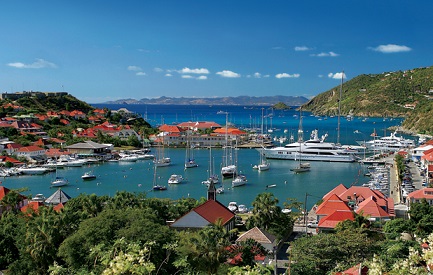
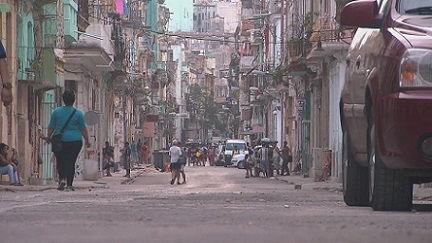
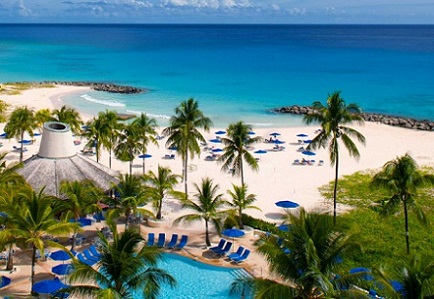
The Caribbean has “outer beauty” and  “inner ugly”. See Photos here:

CU Blog - War on Orthodoxy - Photo 1CU Blog - War on Orthodoxy - Photo 1b

CU Blog - War on Orthodoxy - Photo 2CU Blog - War on Orthodoxy - Photo 2b

CU Blog - War on Orthodoxy - Photo 3CU Blog - War on Orthodoxy - Photo 3b

Identifying the Caribbean ugly – societal defects – is an important step in reforming and transforming the regional society. There are a number of defects to consider; this is commentary 1 of 4 from the movement behind the Go Lean book on the subject of Caribbean defects. So how do we move our region from the deficient-defective status quo to our targeted destination: the undisputed “greatest address on the planet”? By waging war on our defects. All of these commentaries detail that effort, for the following defects:

  1.   Waging a Successful War on Orthodoxy
  2.   Waging a Successful War on Stupidity
  3.   Waging a Successful War on Rent
  4.   Waging a Successful War on ‘Terrorism’

These  commentaries draw reference to the Go Lean book, as it details the quest to transform the Caribbean; it features a how-to guide and roadmap for elevating the region’s societal engines (economic, security and governance).

What is ‘Orthodoxy’ and why is it important to “War” against it?

The simple definition is: a belief or a way of thinking that is accepted as true or correct. The more formal definition is defined as follows:

or·tho·dox·y
(noun)

1. authorized or generally accepted theory, doctrine, or practice.

synonyms: doctrine, belief, conviction, creed, dogma, credo, theory, tenet, teaching
“Christian orthodoxies”

2. the whole community of Orthodox Jews or Orthodox Christians.

In everyday-speak, “do what you have always done; get what you always got”.

Is orthodoxy a force for good in modern society … in the Caribbean? Despite the above definitions relating to religion and doctrine, the unfortunate observation is:

“No, orthodoxy is not a force for moral good”.

The reference to Caribbean orthodoxy is not limited to religion; there are other defects as well; for example, there is the whole case study of colonialism:

Colonialism refers to the establishment of a colony in one territory by a political power from another territory; [particularly from Europe], and the subsequent maintenance, expansion, and exploitation of that colony. The term is also used to describe a set of unequal relationships between the European colonial power (British, Denmark, Dutch, French, Portugal and Spain) and the colony and often between the colonists and the indigenous peoples. The European colonies in the Caribbean also featured the practice of slavery of an imported African population.

The European colonial period was the era from the 16th century to the mid-20th century when several European powers established colonies in Asia, Africa, and the Americas. At first the countries followed a policy of mercantilism, designed to strengthen the home economy at the expense of rivals, so the colonies were usually allowed to trade only with the mother country. By the mid-19th century, however, many empires gave up mercantilism and trade restrictions and introduced the principle of free trade, with few restrictions or tariffs.

The book Go Lean…Caribbean details (Page 307) a lot of the history of the European colonial movement in the Caribbean. Some territories changed hands from one European power to another (again and again); consider the island of Trinidad got their independence from the British, but the Spanish name of “Trinidad” (English equivalent of Trinity), extols the Spanish legacy. (The US Virgin Islands have a city named Christiansted, reflecting its Danish legacy). In fact, the 30 different member-states in Caribbean region feature 5 different European colonial legacies and 4 different languages. (18 Caribbean member-states are part of the British Commonwealth).

The Go Lean book serves as a roadmap for the introduction and implementation of the Caribbean Union Trade Federation (CU). The CU is designed to be a technocratic intergovernmental entity that sheds the orthodoxy of European colonialism. The goal is to reboot and optimize the region’s economic, security and governing engines.

How much of this European orthodoxy remain?

Plenty…

… this despite the fact that many of the former European powers have discontinued much of their orthodox practices. Consider these following examples in the Caribbean region:

  • Patriarchy – Men “must” lead … at the peril of women; assigning more status and privileges to men; this effectuates repression of women and girls.
  • Homosexual Persecution – Regulating the private affairs against homosexuality – i.e. British Buggery – has now been defined as a human rights violation.
  • Domestic violence toleration
  • Racial Prejudice & Dissension – The justification of African Slave Trade in the New World was religious expansionism.
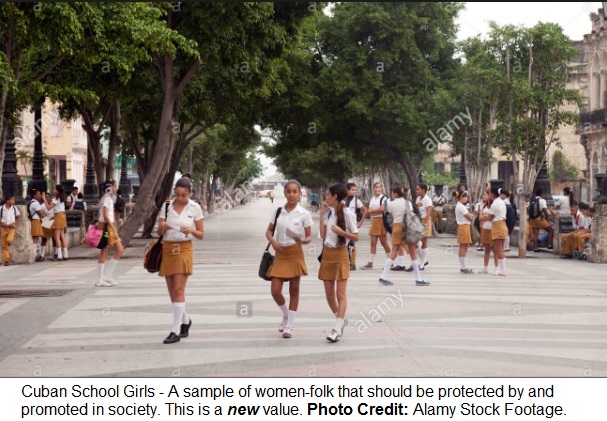
  • School uniforms for youth classification; girls must wear skits or dresses
  • Nurses in clinics/hospitals must wear formal dresses and stockings
  • Lawyers/Judges must wear wigs
  • Supreme Court (highest) authority remaining in Europe
  • Upper Chamber of Legislature a body of entitlement only
  • Titles – Right Honorable, Lord, Your Eminence…
  • Mercantilism –  all trade must go through colonial masters; services (i.e. postal mail) and telecommunications continue this routing.
  • Carnival festivities banned for Sundays

The results of this orthodoxy on our society is dire and desperate: we are near Failed-State status!

Too much?!?!  Too radical an assessment? Think again, we have such a high societal abandonment rate that it is plausible to assign any descriptor synonymous with “failing”.

A mission of the Go Lean/CU roadmap is to mitigate Failed-State indices, and reverse the propensity for “human flight”. The book accepts the premise that many people flee the Caribbean region in search of refuge from the region’s strict orthodoxy. The book explains that there are two reasons why people flee their beloved homelands: “Push” and “Pull” factors. These factors highlight reasons that people want to flee “home” and seek “refuge” in foreign countries. “Refuge” is an appropriate word; because of societal defects, or orthodoxy; many from the Caribbean must leave as refugees – think LGBTDisabilityDomestic-abuseMedically-challenged – for their life, liberty and pursuit of happiness. On the other hand, the lure of a more prosperous life in foreign countries, (US, Canada and Europe) drive the “pull” side of the equation; these ones “pulled” are to be considered economic refugees.

What alternative is there to orthodoxy?

Secularism!

This commentary is NOT an attack on Christianity. A Christian character is preferred for the individual; but a “Christian nation”, not so much. This harmonizes with the Bible’s decree itself. Jesus Christ said:

“My kingdom is no part of the world”. – John 18:36

To answer the earlier question: why is it important to “Wage War” against orthodoxy? Religious orthodoxy is responsible for a lot of harm in the world, and in the Caribbean. The Go Lean movement (book and blogs) have identified the foregoing defects, many bad values, attitudes and community ethos. The Caribbean region needs to desist and make amends of these practices. We need to pursue an alternative ethos, the Greater Good. The book defines this (Page 37) as follows:

“It is the greatest good to the greatest number of people which is the measure of right and wrong”. –  Jeremy Bentham (1748-1832)

The Go Lean book (Page 20) and movement advocates the community ethos of the Greater Good for all of the Caribbean. The movement wants to help reform and transform the Caribbean. We see the defects; we recognize that status quo, including the root causes and orthodoxy of many of our influences; we perceive the harmful effects. Still, we do not want to ban religion; we simply want a clear “Separation of Church and State”, because we have so many churches and so many States in the Caribbean. We must not favor one over another.

A “Separation of Church and State” is the standard in the advanced democracies; this is now embedded in the implied Social Contract. The Go Lean book defines (Page 170) the Social Contract as follows:

“Citizens surrender some of their freedoms and submit to the authority of the State in exchange for protection of remaining natural and legal rights”.

According to the foregoing orthodoxy list, this Social Contract is not the norm in the Caribbean. The Caribbean Social Contract should specify that governments must protect their citizens; that human rights are assumed and that there is a religious neutrality.

The Go Lean/CU roadmap employs a tactic of a “Separation-of-Powers between CU federal agencies and Caribbean member-state governments”; so the limitations of national laws in a member-state does not have to override the CU. The CU constitution would apply to the installations of Exclusive Economic Zones (EEZ) and Self-Governing Entities (SGE) that operate in controlled bordered territories like campuses, industrial parks, research labs and industrial plants. There is also the power of “peer pressure”; one Caribbean state making positive progress, inclines the others to follow suit.

This CU/Go Lean mission is to elevate society for Caribbean people in the Caribbean. There is the need to monitor the enforcement of human rights and stand “on guard” against movements towards Failed-State status. The Go Lean roadmap calls for the CU to assume that role. Using cutting edge delivery of best practices, the CU will employ strategies, tactics and implementations to impact its prime directives; identified with the following 3 statements:

  • Optimization of the economic engines in order to grow the regional economy to $800 Billion & create 2.2 million new jobs.
  • Establishment of a security apparatus to ensure public safety assurances and protect the region’s economic engines.
  • Improvement of Caribbean governance to support these engines.

The Go Lean roadmap seeks to optimize the entire Caribbean economic/security/governance eco-system. This vision is defined early in the book (Page 12) in the following pronouncements in the Declaration of Interdependence:

xi. Whereas all men are entitled to the benefits of good governance in a free society, “new guards” must be enacted to dissuade the emergence of incompetence, corruption, nepotism and cronyism at the peril of the people’s best interest. The Federation must guarantee the executions of a social contract between government and the governed.

xii. Whereas the legacy in recent times in individual states may be that of ineffectual governance with no redress to higher authority, the accedence of this Federation will ensure accountability and escalation of the human and civil rights of the people for good governance, justice assurances, due process and the rule of law. As such, any threats of a “failed state” status for any member state must enact emergency measures on behalf of the Federation to protect the human, civil and property rights of the citizens, residents, allies, trading partners, and visitors of the affected member state and the Federation as a whole.

The Go Lean book posits that failing Caribbean communities can be rescued, that if “we do what we have always done, we get what we have always got”. Therefore Caribbean communities must adopt different community ethos, plus the executions of key strategies, tactics, implementations and advocacies to bring about change, empowerment and turn-around . The following is a sample from the Go Lean book:

Community Ethos – Economic Principle – Economic Systems Influence Choices & Incentives Page 21
Community Ethos – Economic Principle – Voluntary Trade Creates Wealth Page 21
Community Ethos – Economic Systems Influence Choices & Incentives Page 21
Community Ethos – People Respond to Incentives Page 21
Community Ethos – Consequences of Choices Lie in the Future Page 21
Community Ethos – Ways to Help Entrepreneurship Page 28
Community Ethos – Ways to Impact Turn-Around Page 33
Community Ethos – Ways to Manage Reconciliations Page 34
Community Ethos – Ways to Promote Happiness Page 36
Community Ethos – Ways to Impact the Greater Good Page 37
Strategy – Mission – Foster Local Economic Engines to Diversify the Economy Page 45
Strategy – Mission – Keep the next generation at home; Repatriate Diaspora Page 46
Tactical – Fostering a Technocracy Page 64
Tactical – Tactics to Forge an $800 Billion Economy – High Multiplier Industries Page 70
Tactical – Separation of Powers – Meteorological and Geological Service Page 79
Tactical – Separation of Powers – Self-Governing Entities Page 80
Implementation – Start-up Benefits from the EEZ Page 104
Implementation – Steps to Implement Self-Governing Entities Page 105
Planning – Big Ideas – Virtual “Turnpike” Operations to Ensure Continued Relevance Page 127
Planning – Ways to Make the Caribbean Better Page 131
Planning – Ways to Improve Image Page 133
Planning – Ways to Improve Failed-State Indices Page 134
Advocacy – Ways to Grow the Economy Page 151
Advocacy – Ways to Create Jobs Page 152
Advocacy – Ways to Better Manage the Social Contract Page 170
Advocacy – Ways to Impact Justice Page 177
Advocacy – Ways to Improve Communications Page 186
Advocacy – Ways to Impact Hollywood – Convey Messaging Page 203
Advocacy – Ways to Preserve Caribbean Heritage Page 218
Appendix – Failed State Indicators & Definitions Page 271

The Caribbean can succeed in our efforts to improve our community ethos. Consider this sample of previous blog-commentaries that delve into aspects of forging change in the Caribbean community ethos:

https://goleancaribbean.com/blog/?p=10043 Integration Plan for Greater Caribbean Prosperity
https://goleancaribbean.com/blog/?p=9595 Vision and Values for a ‘New’ Caribbean
https://goleancaribbean.com/blog/?p=9428 Forging Change: Herd Mentality
https://goleancaribbean.com/blog/?p=8186 Respect for Minorities: ‘All for One’
https://goleancaribbean.com/blog/?p=7646 Going from ‘Good to Great’
https://goleancaribbean.com/blog/?p=7628 ‘A Change Is Gonna Come’
https://goleancaribbean.com/blog/?p=7056 ‘Necessity is the Mother of Invention’
https://goleancaribbean.com/blog/?p=5695 Repenting, Forgiving and Reconciling the Past
https://goleancaribbean.com/blog/?p=3915 ‘Change the way you see the world; you change the world you see’
https://goleancaribbean.com/blog/?p=3780 Forging an Ethos of ‘Blood, Sweat and Tears’
https://goleancaribbean.com/blog/?p=623 ‘Only at the precipice, do they change’

The vision for a new Caribbean is one that has successfully ‘waged the war on orthodoxy’. This means a religiously neutral society that respects and protects the human rights for all stakeholders. This is easy to say, hard to do, but we have seen it successfully deployed in other societies, as in the same European communities that once colonized our Caribbean region. We need to follow their lead … again. We need to adjust our community ethos to reflect 2017, not 1867.

Yes, we can … do this heavy-lifting. We can work towards making our region a better homeland to live, work and play. We urge everyone in the Caribbean to lean-in to this roadmap for change and optimization. We do not have to “always do what we have always done”. We can do … and be better. 🙂

Download the book Go Lean … Caribbean – now!


Share this post:
, ,
[Top]

Day of Reckoning for NINJA Loans

Go Lean Commentary

Be not deceived … whatsoever a man soweth, that shall he also reap. – King James Version – The Bible

It is time for the Day of Reckoning for one of the players in the recent housing bubble and financial crisis, referred to as the Great Recession of 2008. Industry stakeholders had been “skimming of the public coffers for mortgage guarantees and giving unwise mortgages to people who had what was considered NINJA qualification:

  • No Income
  • No Job & Assets

LB 1Such activities in the retail mortgage industry, plus bad practices in the wholesale lending, credit ratings and mortgage-back securities industries had congealed to form a “perfect storm” for disaster in the financial markets (Wall Street, et al) in the US and around the world.

Many innocent people lost fortune and faith in the American eco-system. There had to be an accounting of the “sins and sinister plots”; there had to be a Day of Reckoning. That day came for one Michigan-based (Detroit area) company, United Shore Financial Services. See the full story here:

Title: United Shore Agrees to $48M Settlement with DOJ
By: Jacob Passy

CU Blog - Day of Reckoning for NINJA Loans - Photo 1United Shore Financial Services, a Troy, Mich.-based lender, has agreed to pay $48 million to settle allegations that it violated the False Claims Act.

The Department of Justice alleged that USFS did not comply with certain origination, underwriting and quality control requirements while participating in the Federal Housing Administration’s direct endorsement lender program. Consequently, the Department of Housing and Urban Development insured hundreds of loans that UnitedShore approved that should not have been eligible for FHA coverage, subsequently taking losses due to claims on those loans.

“USFS acknowledged that it failed to comply with FHA underwriting and quality control requirements, resulting in improperly originated mortgages,” John Vaudreuil, a U.S. attorney for the Western District of Wisconsin said in a news release. “While USFS deserves credit for acknowledging and resolving its conduct, that conduct not only resulted in substantial losses of public funds, but also put Wisconsin homeowners at risk of losing their homes or ruining their credit.”

United Shore, which is both a retail lender and the parent of United Wholesale Mortgage, did not immediately respond to a request for comment.

In particular, the DOJ said that UnitedShore admitted to pressuring underwriters to approve FHA mortgages under a compensation plan that tied pay to the percentage of loans approved. United Shore also falsely certified that direct endorsement underwriters reviewed appraisal reports prior to mortgages being approved for FHA insurance; under the DEL program, the FHA does not review that lenders are complying with the agency’s requirements.

The DOJ also identified other issues with UnitedShore’s compliance practices. The lender allegedly did not provide senior management with “meaningful information” regarding quality control findings. Additionally, UnitedShore did not meet HUD’s self-reporting requirements, only self-reporting three loans to the department despite quality control reviews finding hundreds of FHA-insured loans that were materially deficient at issuance.

The alleged activities occurred between from 2006 through 2011. The DOJ also said that United Shore “made certain discretionary distributions to a shareholder in the company” after the federal government began investigating the company in January 2014.
Source: National Mortgage News – Industry Trade Journal; posted 12/28/2016; retrieved 01/18/2017 from: http://www.nationalmortgagenews.com/news/compliance-regulation/united-shore-agrees-to-48m-settlement-with-doj-1093769-1.html

This story aligns with the book Go Lean…Caribbean; it serves as a roadmap to introduce and implement the technocratic Caribbean Union Trade Federation (CU) and Caribbean Central Bank (CCB) for better stewardship of the Caribbean banking eco-system, to ensure the economic failures of the past do not re-occur in the Caribbean. The book was inspired by the events of 2008, by people engaged in the mortgage-housing-investments industries. These ones engaged in the post-mortem analysis – dissection of the crisis – of all the bad community ethos, strategies, tactics and implementations leading up to 2008 and saw the need for this Day of Reckoning.

The goal of this roadmap is to apply the lessons-learned from 2008 in the stewardship of the economic engines in the Caribbean region. It turns out that we were affected by 2008 as well; we were devastated by the elasticity in the global markets.

Welcome to the Caribbean’s Day of Reckoning!

The Caribbean economy is a parasite of the US and so when the American market “catches a cold, we sneeze”. (This is referred to as “financial contagions”). We can – we must – do better and guide our own economy away from American dependence to a regional interdependence.

We are on the way…

With the proposal for the CARICOM Single Market & Economy (CSME), a more integrated region is expected to emerge with greater linkages among the member-states of the economic union. Issues of financial contagions will now have to be a constant concern for a regional sentinel. The Go Lean roadmap calls for the deployment of the Caribbean Central Bank as that sentinel, to proactively and reactively shepherd the financial institutional processes (wholesale and retail). We do not want to “get caught with our pants down” in our region. We do not want government loan guarantees for mortgagors that have NINJA qualifiers. (That money would be better placed in more substantial investments in Caribbean people and processes). The lesson from 2008 is to follow the money and discern those who profited from this bad behavior; see the VIDEO in the Appendix below.

Mortgages with a government-guarantee stamp of approval are readily sold in the secondary markets. Bad actors are able to glean quick profits from loan origination fees and then “wash their hands” of any inherent risk from deficient payment collection. (See the VIDEO in the Appendix below). This was the direct charge against United Shore Financial Services in the forgoing article: “[funding] hundreds of FHA-insured loans that were materially deficient at issuance”.

Bad actors … profiting from existing supplies of capital!?!?

This is so familiar! The Go Lean book details (Page 23):

… history teaches that with the emergence of new economic engines, “bad actors” will also emerge thereafter to exploit the opportunities, with good, bad and evil intent. A Bible verse declares: “What has been will be again, what has been done will be done again; there is nothing new under the sun” – Ecclesiastes 1:9 New International Version.

This roadmap for Caribbean integration declares that peace, security and public safety is tantamount to economic prosperity. This is why an advocacy for the Greater Good must be championed as a community ethos. A prime precept is that it is “better to know than to not know” – this implies that privacy is secondary to security. A secondary precept is that bad things will happen to good people and so the community needs to be prepared to contend with the risks that can imperil the homeland.

The prime directive of the Go Lean/CU/CCB roadmap is to optimize economic, security and governing engines to impact the Caribbean’s Greater Good, for all stakeholders: residents, visitors, bank depositors and mortgage-holders. This need was pronounced early in the Go Lean book, in the Declaration of Interdependence – (Page 13):

xxv.  Whereas the legacy of international democracies had been imperiled due to a global financial crisis, the structure of the Federation must allow for financial stability and assurance of the Federation’s institutions. To mandate the economic vibrancy of the region, monetary and fiscal controls and policies must be incorporated as proactive and reactive measures. These measures must address threats against the financial integrity of the CU and of the member-states.

The foregoing news article shows the type of functions executed by technocratic financial regulators: monitoring risks, policing the industry stakeholders, and reckoning bad practices. The “bad actor” in the article – United Shore Financial Services – had their Day of Reckoning.

The related subjects of banking oversight and optimizing financial governance have been a frequent topic for blogging by the Go Lean promoters, as sampled here:

For Canadian Banks: Caribbean is a ‘Bad Bet’
Christmas presents (2015) for American Banks
Bad Actors profiting from a supply of capital in private education
Too Big To Fail – Caribbean Version
5 Steps of a Bubble – Learning to make a resilient economy
Canadian Imperial Bank of Commerce failing investment in FirstCaribbean Bank
Bitcoin needs regulatory framework to change ‘risky’ image
Open the Time Capsule: The Great Recession of 2008
What Usain Bolt can teach banks about financial risk
Barbados Central Bank records $3.7m loss in 2013
US Federal Reserve Releases Transcripts from 2008 Meetings
Dominica raises EC$20 million on regional securities market
Fractional Banking System – How to Create Money from Thin Air
Book Review: ‘Wrong – Nine Economic Policy Disasters and What We Can Learn…’
10 Things We Want from the US – # 2: American Capital
The Erosion of the Middle Class

All the Caribbean has experienced economic dysfunction due to the 2008 Global Financial Crisis. In line with the foregoing news article, the Go Lean roadmap seeks to mitigate bad behavior from bad actors like United Shore Financial Services in our local region. The book details the many infrastructural enhancements/advocacies to the region’s financial eco-system; to facilitate efficient management of the economy, and policing of this important financial/banking industry-sector:

Ethos-Strategy-Tactics-Implementation-Advocacy

Page

Anecdote – Caribbean Single Market & Economy

15

Anecdote – Puerto Rico – “The Greece of the Caribbean”

18

Confederating Non-Sovereignty Inter-Governmental Entity

45

Facilitate Currency Union/Co-op of Caribbean Dollar

45

Fostering a Technocracy

64

Caribbean Central Bank

73

Deposit Insurance Regulations

73

Securities Regulatory Authority

74

Modeling the European Union / Central Bank

130

Lessons from 2008

136

Anecdote – Caribbean Currencies

149

Growing the Economy

151

Better Manage Foreign Exchange

154

Improve Credit Ratings

155

Improve Housing – Mortgage Standards Enforcement

161

Foster Cooperatives

176

Banking Reforms

199

Wall Street – Capital/Securities Market

200

Impact the Diaspora

219

Impact Retirement – Need for Savings

221

Help the Middle Class

223

Appendix – Credit Reporting and Ratings Good Governance

276

There is no doubt that there has been previous corruption of the American financial eco-system. They have “made themselves sick; given themselves colds”, and yet we, in the Caribbean, “have had to sneeze”. We hope that the new oversight methodology in the US is more effective for managing their stakeholders. But management of the US is out-of-scope for the movement behind the Go Lean book; our focus is limited strictly to the Caribbean economy. So now is the time for change to a new regulatory regime here in our region; now is the time for new stewards of the Caribbean economy, security and governing engines. It’s time for the CU/CCB. We must prove that we have learned from the bad American past. A lot is at stake: our financial security; our future.

We urge all stakeholders – residents, mortgage-holders, mortgage lenders, banks – to lean-in to this Go Lean roadmap to elevate Caribbean society. The destination is common and desired for all Caribbean men, women and children: a better place to live, work and play. 🙂

Download the book Go Lean … Caribbean – now!

———

Appendix VIDEO – NINJA Loans: The Big Shorthttps://youtu.be/os1Etuv_gDE

Published on Apr 27, 2016 – Clip from Academy Award Winning Best Picture “The Big Short”.

  • Category: People & Blogs
  • License: Standard YouTube License


Share this post:
, , ,
[Top]

Fake News? Welcome to America

Go Lean Commentary

American media lives in a land of fantasy.

Consider these Fake News instances:

cu-blog-fake-news-welcome-to-america-photo-1

cu-blog-fake-news-welcome-to-america-photo-2

This is probably true of their news output because so many of the corporate structures that own non-fiction news operations also own fiction-based media operations. Consider these examples of same ownership:

Fox News 21st Century Fox Movie Studio
NBC News / CNBC / MSNBC Universal Pictures
CBS News Simon-Shuster Book Publishing
ABC News Disney Studios; Pixar; Marvel Studios; LucasFilms;
Touchstone Pictures
Cable News Network (CNN) Warner Brothers Movie Studio

No doubt, this fact – knowing where the bread is buttered – contributes to the duality and duplicity of these corporate citizens.

Now there is a new phenomenon in the world of media duality and duplicity: Fake News.

This is more malicious than initial appearances. See/hear the full story here in this Podcast and the subsequent VIDEO:

Title: How Fake News Spreads & Why People Believe It

Published December 14, 2016 – Buzzfeed News’ media editor, Craig Silverman, dissects how false stories during the presidential campaign were spread on Facebook and monetized by Google Ad Sense. Also, critic at-large John Powers shares six things he loved this year that he didn’t get around to reviewing.

—————

VIDEO – The onslaught of fake news – http://www.cbsnews.com/videos/the-onslaught-of-fake-news/

Posted December 18, 2016 (9:53 minutes) – In these partisan, high-tech times, are the news stories we Americans read, see, and hear fact or fiction? Senior correspondent Ted Koppel examines the landscape of lies and slander disguised as news stories, spread via social media, that bear little relation to facts. (VIDEO plays best in Internet Explorer).

Fake News appear to just be another example of American Crony-Capitalism where they exploit the public good for private gain. Media has frequently been  used to exploit the people. This commentary previously detailed the focus on fantasy as opposed to the vital facts of weather reporting.

Weather information is vital in different situations; think hurricanes. But news and information is vital everyday, rain or shine. So a situation where Fake News may thrive would be counterproductive to society. Many Americans — 62 percent to be exact — get some news from social media, according to the Pew Research Center. Of that group, 18 percent say they do so “often”.

This consideration aligns with the book Go Lean…Caribbean; this book serves as a roadmap for the introduction and implementation of the technocratic Caribbean Union Trade Federation (CU). This empowerment effort represents a change for the region, calling on all 30 member-states in the region to confederate and provide their own solutions in the areas of economics, security and governance. News and information relates to all three areas. The CU/Go Lean roadmap has these prime directives:

  • Optimization of the economic engines in order to grow the regional economy to $800 Billion GDP and create 2.2 million new jobs.
  • Establishment of a security apparatus to enhance public safety and protect the resultant economic engines against “bad actors”.
  • Improvement of Caribbean governance to support these engines.

The new emergence of Fake News seems apropos for the American eco-system, where fame seems more important than facts and style more important than substance:

Fame or infamy, either one is preferable to being forgotten – Hollywood Actress Lauren Bacall – Go Lean book Page 194.

This is a time when the American eco-system appears to be dysfunctional and filled with bad intent. No wonder the American eco-system is transforming from industrial to consumer, with trade deficits with all the industrial giants in the world; think Germany, Japan, South Korea and China.

The Caribbean is looking, listening and learning from the American model. We do NOT want to follow suit!

Yes, we want to develop our own social media – site: www.myCaribbean.gov – but with better rules for minimizing Fake News compared to the current American examples. Notice the mitigation now been deployed by Facebook & Google in the link here:

http://www.nbcnews.com/tech/tech-news/facebook-google-crack-down-fake-news-advertising-n684101

cu-blog-fake-news-welcome-to-america-photo-3The book Go Lean…Caribbean asserts that the Caribbean region must not allow the US to take the lead for our own nation-building, that American capitalistic interest tends to highjack policies intended for the Greater Good. This assessment is logical considering that the 2016 Presidential Election may have been a victim of this systemic disinformation. This is an issue of security.

This broken system in America does not have to be modeled in the Caribbean. Change has now come. The driver of this change is technology and globalization. The Go Lean roadmap provides turn-by-turn directions on how to forge this change in the region for a reboot of these Caribbean societal systems, including media institutions. This roadmap is thusly viewed as more than just a planning tool, pronouncing this point early in the Declaration of Interdependence (Page 13) with this statement:

xvi.    Whereas security of our homeland is inextricably linked to prosperity of the homeland, the economic and security interest of the region needs to be aligned under the same governance. Since economic crimes…can imperil the functioning of the wheels of commerce for all the citizenry, the accedence of this Federation must equip the security apparatus with the tools and techniques for predictive and proactive interdictions.

The Go Lean book purports that the Caribbean can – and must – do better. The vision of the CU is a confederation of the 30 member-states of the Caribbean to do the heavy-lifting of optimizing economic-security-governing engines. The  Go Lean book details the policies and other community ethos to adopt, plus the executions of the following strategies, tactics, implementations and advocacies to elevate Caribbean society, and mandate a society based on truth:

Community Ethos – Deferred Gratification Page 21
Community Ethos – Consequences of Choices Lie in the Future Page 21
Community Ethos – Privacy versus Public Protection Page 23
Community Ethos – Whistleblower Protection Page 23
Community Ethos – Light Up the Dark Places Page 23
Community Ethos – Anti-Bullying and Mitigation Page 23
Community Ethos – Intelligence Gathering Page 23
Community Ethos – Lean Operations Page 24
Community Ethos – Ways to Improve Sharing Page 35
Community Ethos – Ways to Impact the Greater Good Page 37
Strategy – Agents of Change – Technology Page 57
Strategy – Agents of Change – Globalization Page 57
Tactical – Separation of Powers – Emergency Management – Notifications Page 75
Tactical – Separation of Powers – Communications and Media Authority Page 79
Implementation – Security Initiatives at Start-up Page 103
Implementation – Ways to Impact Social Media Page 111
Implementation – Ways to Impact Elections Page 116
Implementation – Ways to Benefit from Globalization Page 119
Planning – Lessons Learned from 2008 – Lax Regulations Page 136
Advocacy – Ways to Grow the Economy Page 151
Advocacy – Ways to Create Jobs Page 152
Advocacy – Ways to Improve Governance Page 169
Advocacy – Ways to Better Manage the Social Contract Page 171
Advocacy – Ways to Impact Justice Page 177
Advocacy – Ways to Improve Homeland Security Page 180
Advocacy – Ways to Improve Intelligence Gathering & Analysis Page 182
Advocacy – Ways to Improve Communications Page 186
Advocacy – Ways to Foster Technology Page 197
Advocacy – Ways to Foster e-Commerce Page 198
Advocacy – Ways to Impact Main Street Page 201
Advocacy – Ways to Impact Hollywood – Media Industrial Complex Page 220

The foregoing Audio-Podcast and VIDEO relate the serious concern for Caribbean planners. While the US is the world’s largest Single Market economy, we want to only model some of the American example. We would rather foster a business climate to benefit the Greater Good, not just some special interest group.

There are many Go Lean blog commentaries that have echoed this point, addressing the subject of the Caribbean avoiding American consequences. See sample here:

https://goleancaribbean.com/blog/?p=9648 Bad American Model – Public Schools for Black-and-Brown
https://goleancaribbean.com/blog/?p=9646 Bad American Model – American Vices. Don’t Follow!
https://goleancaribbean.com/blog/?p=9626 Bad American Model – Marginalizing Our Vote
https://goleancaribbean.com/blog/?p=9038 Charity Management: The Need for Self-Rule
https://goleancaribbean.com/blog/?p=6893 American Meteorologists Views On Climate Change
https://goleancaribbean.com/blog/?p=5482 American For-Profit Education: Plenty of Profit; Little Education
https://goleancaribbean.com/blog/?p=4076 American Media Fantasies -vs- Weather Realities
https://goleancaribbean.com/blog/?p=2338 How Caribbean can Mitigate the Dreaded ‘Plutocracy’
https://goleancaribbean.com/blog/?p=2259 The Criminalization of American Business
https://goleancaribbean.com/blog/?p=1143 Health-care fraud in America; Criminals take $272 billion a year
https://goleancaribbean.com/blog/?p=273 10 Things We Don’t Want from the US – American Self-Interest Policies

The book Go Lean…Caribbean posits that many problems of the region are too big for any one member-state to solve alone, but that we do not need American leadership, rather instead, we need the technocracy of the CU Trade Federation. The purpose this roadmap is to make our Caribbean homeland a better place to live, work, and play. Fake News does not fit into that vision, though it is inevitable if we allow online media to be molded by the American example. We do not want to be America; we want to be better.

We also do not want China’s internet policing models; this is too restrictive and too little regard for the freedom of the press. We want the provisions and benefits as described in the Go Lean book. This posits that to succeed as a society, and to succeed in our regional deployment of social media, the Caribbean must not only consume, but must also create, produce, and distribute intellectual property products and services. We need to be motivated for the Greater Good.

We do need regional oversight and regulation … for our airwaves and broadband networks, but not too heavy and not too light.

May this bad history of Fake News in America in 2016 be a cautionary tale for the Caribbean. A tale of how not to proceed.

Lesson learned! 🙂

Download the book Go Lean … Caribbean – now!


Share this post:
, , , ,
[Top]

Lessons Learned from Pearl Harbor

Go Lean Commentary

What would you do if backed into a corner and there’s a threat on your life?

For many people their natural impulse is to come out fighting. They say that this is not aggression, rather just a survival instinct.

Believe it or not, this depiction describes one of the biggest attacks in American history: the Japanese Attack on Pearl Harbor. See VIDEO here:

VIDEO – World War II History: Attack on Pearl Harbor – http://www.history.com/topics/world-war-ii/world-war-ii-history/videos/attack-pearl-harbor

Retrieved December 7, 2016 from History.com – On December 7, 1941, Japan launches a surprise attack on American soil at Pearl Harbor.

cu-blog-lessons-learned-from-pearl-harbor-photo-2

cu-blog-lessons-learned-from-pearl-harbor-photo-3

cu-blog-lessons-learned-from-pearl-harbor-photo-4

This is the 75th Anniversary of that attack – a few days ago: December 7. That’s a lot of years and a lot of lessons. Still, 75 is a pretty round number, like 25, 50 and 100. This commentary has been reserved for now, a few days late on purpose because of the best-practice to “not speak ill of the dead” at a funeral or memorial service. But a “lessons learned analysis” is still an important exercise for benefiting from catastrophic efforts. After 75 years since the Pearl Harbor Attack on December 7, 1941, this post-mortem analysis is just as shocking as it was on this “day of infamy”.

Consider the details of this maligning article here (and the Appendices below); notice that it assumes a conspiracy:

Title: How U.S. Economic Warfare Provoked Japan’s Attack on Pearl Harbor
By: Robert Higgs

cu-blog-lessons-learned-from-pearl-harbor-photo-1Ask a typical American how the United States got into World War II, and he will almost certainly tell you that the Japanese attacked Pearl Harbor and the Americans fought back. Ask him why the Japanese attacked Pearl Harbor, and he will probably need some time to gather his thoughts. He might say that the Japanese were aggressive militarists who wanted to take over the world, or at least the Asia-Pacific part of it. Ask him what the United States did to provoke the Japanese, and he will probably say that the Americans did nothing: we were just minding our own business when the crazy Japanese, completely without justification, mounted a sneak attack on us, catching us totally by surprise in Hawaii on December 7, 1941.

You can’t blame him much. For more than 60 years such beliefs have constituted the generally accepted view among Americans, the one taught in schools and depicted in movies—what “every schoolboy knows.” Unfortunately, this orthodox view is a tissue of misconceptions. Don’t bother to ask the typical American what U.S. economic warfare had to do with provoking the Japanese to mount their attack, because he won’t know. Indeed, he will have no idea what you are talking about.

In the late nineteenth century, Japan’s economy began to grow and to industrialize rapidly. Because Japan has few natural resources, many of the burgeoning industries had to rely on imported raw materials, such as coal, iron ore or steel scrap, tin, copper, bauxite, rubber, and petroleum. Without access to such imports, many of which came from the United States or from European colonies in southeast Asia, Japan’s industrial economy would have ground to a halt. By engaging in international trade, however, the Japanese had built a moderately advanced industrial economy by 1941.

At the same time, they also built a military-industrial complex to support an increasingly powerful army and navy. These armed forces allowed Japan to project its power into various places in the Pacific and east Asia, including Korea and northern China, much as the United States used its growing industrial might to equip armed forces that projected U.S. power into the Caribbean and Latin America, and even as far away as the Philippine Islands.

When Franklin D. Roosevelt became president in 1933, the U.S. government fell under the control of a man who disliked the Japanese and harbored a romantic affection for the Chinese because, some writers have speculated, Roosevelt’s ancestors had made money in the China trade.[1] Roosevelt also disliked the Germans (and of course Adolf Hitler), and he tended to favor the British in his personal relations and in world affairs. He did not pay much attention to foreign policy, however, until his New Deal began to peter out in 1937. Afterward, he relied heavily on foreign policy to fulfill his political ambitions, including his desire for reelection to an unprecedented third term.

When Germany began to rearm and to seek Lebensraum aggressively in the late 1930s, the Roosevelt administration cooperated closely with the British and the French in measures to oppose German expansion. After World War II commenced in 1939, this U.S. assistance grew ever greater and included such measures as the so-called destroyer deal and the deceptively named Lend-Lease program. In anticipation of U.S. entry into the war, British and U.S. military staffs secretly formulated plans for joint operations. U.S. forces sought to create a war-justifying incident by cooperating with the British navy in attacks on German U-boats in the north Atlantic, but Hitler refused to take the bait, thus denying Roosevelt the pretext he craved for making the United States a full-fledged, declared belligerent—an end that the great majority of Americans opposed.

In June 1940, Henry L. Stimson, who had been secretary of war under Taft and secretary of state under Hoover, became secretary of war again. Stimson was a lion of the Anglophile, northeastern upper crust and no friend of the Japanese. In support of the so-called Open Door Policy for China, Stimson favored the use of economic sanctions to obstruct Japan’s advance in Asia. Treasury Secretary Henry Morgenthau and Interior Secretary Harold Ickes vigorously endorsed this policy. Roosevelt hoped that such sanctions would goad the Japanese into making a rash mistake by launching a war against the United States, which would bring in Germany because Japan and Germany were allied.

Accordingly, the Roosevelt administration, while curtly dismissing Japanese diplomatic overtures to harmonize relations, imposed a series of increasingly stringent economic sanctions on Japan. In 1939 the United States terminated the 1911 commercial treaty with Japan. “On July 2, 1940, Roosevelt signed the Export Control Act, authorizing the President to license or prohibit the export of essential defense materials.” Under this authority, “[o]n July 31, exports of aviation motor fuels and lubricants and No. 1 heavy melting iron and steel scrap were restricted.” Next, in a move aimed at Japan, Roosevelt slapped an embargo, effective October 16, “on all exports of scrap iron and steel to destinations other than Britain and the nations of the Western Hemisphere.” Finally, on July 26, 1941, Roosevelt “froze Japanese assets in the United States, thus bringing commercial relations between the nations to an effective end. One week later Roosevelt embargoed the export of such grades of oil as still were in commercial flow to Japan.”[2] The British and the Dutch followed suit, embargoing exports to Japan from their colonies in southeast Asia.

An Untenable Position
cu-blog-lessons-learned-from-pearl-harbor-photo-6
Roosevelt and his subordinates knew they were putting Japan in an untenable position and that the Japanese government might well try to escape the stranglehold by going to war. Having broken the Japanese diplomatic code, the Americans knew, among many other things, what Foreign Minister Teijiro Toyoda had communicated to Ambassador Kichisaburo Nomura on July 31: “Commercial and economic relations between Japan and third countries, led by England and the United States, are gradually becoming so horribly strained that we cannot endure it much longer. Consequently, our Empire, to save its very life, must take measures to secure the raw materials of the South Seas.”[3]

Because American cryptographers had also broken the Japanese naval code, the leaders in Washington knew as well that Japan’s “measures” would include an attack on Pearl Harbor.[4] Yet they withheld this critical information from the commanders in Hawaii, who might have headed off the attack or prepared themselves to defend against it. That Roosevelt and his chieftains did not ring the tocsin makes perfect sense: after all, the impending attack constituted precisely what they had been seeking for a long time. As Stimson confided to his diary after a meeting of the war cabinet on November 25, “The question was how we should maneuver them [the Japanese] into firing the first shot without allowing too much danger to ourselves.”[5] After the attack, Stimson confessed that “my first feeling was of relief … that a crisis had come in a way which would unite all our people.[6]

Source: The Independent Institute – Online Community – Posted: May 1, 2006; retrieved December 7, 2016 from: http://www.independent.org/newsroom/article.asp?id=1930
——–
See Appendices below for cited references and profiles of the Author and the Organization.

So this establishes why the Japanese may have been motivated to attack Pearl Harbor in the first place. The motivation seems more complicated than initially reported.

The Bible declares that:

“For there is nothing hidden that will not become manifest” – Luke 8:17

cu-blog-lessons-learned-from-pearl-harbor-photo-7

cu-blog-lessons-learned-from-pearl-harbor-photo-5

After 75 years, the before-during-after facts associated with the Pearl Harbor Attack should be available for full disclosure. What are the lessons here for the Caribbean and today’s effort to secure the Caribbean homeland while expanding the regional economy? We truly want to consider these main points, these lessons; (the hyperlinks refer to previous Go Lean commentaries):

Lessons

Territories have a status of disregard Hawaii (Pearl Harbor) and Philippines were attacked by the Japanese. These were both US Territories at the same. The levels of protection and preparedness for territories are sub-standard compared to the American mainland. As a result there was no meaningful plan for the air defense of Hawaii.
Colonialism is/was really bad Japan protested the sub-standard reality of the native Asians under the European colonial schemes. A people oppressed, suppressed and repressed would not remain docile forever; “that a downtrodden people would not stay down, that they would rise and revolt, that they would risk their lives and that of their children to pursue freedom.” – Go Lean book Page 251.
White Supremacy is/was a really bad construct The US Territories (Hawaii and Philippines) were not the first targets for Japan. They targeted all European colonies (British, French and Dutch) territories. Their campaign was to rail against White Supremacy.
Bullies only respond to a superior force Japan avail themselves of expansion opportunities in Far-East Asia as the European powers became distracted in the time period during and after World War I. (Manchuria in China was occupied by Japan starting in 1931). Only a superior force, the US, was able to assuage their aggression.
Economic Warfare can back a Government into a corner When the supply of basic needs (food, clothing, shelter and energy) are curtailed, a crisis ensues. When people are in crisis, they consider “fight or flight” options. Japan chose to fight; Caribbean people choose flight.
Societies can double-down on a bad Community Ethos Japan’s aggression was a direct result of their community ethos that honored Samurai warrior and battle culture. Men would walk the streets with their swords, ready for a challenge. On the other hand, the US (and Western Europe) community ethos of racism was so ingrained that the natural response in the US, post-Pearl Harbor, was to intern Japanese Americans in camps.
All of these bad community ethos were weeded out with post-WWII Human Rights reconciliations. – Go Lean book Page 220.
Double Standards are hard to ignore Japan felt justified in their Pacific aggression because of the US’s regional aggression in the Americas. Before Pearl Harbor, they withdrew from the League of Nations in protest of double standards.
Even after WWII, this double standard continues with countries with Veto power on the UN Security Council.
People have short memories There are movements to re-ignite many of the same developments that led to the devastation of WWII: right wing initiatives in Japan and Germany; Human Rights disregard for large minority groups (Muslims, etc.).
The more things change, the more they remain the same.

This discussion is analyzing the concept of “fight or flight”. According to Anthropologists, individuals and societies facing a crisis have to contend with these two options for survival. The very concept of refugees indicate that most people choose to flee; they choose internal displacement or refuge status in foreign countries. This point is consistent with the theme in the book Go Lean … Caribbean that this region is in crisis and as a result people have fled from their beloved homelands to foreign destinations in North America and Europe. How bad? According to one report, we have lost 70 percent of our tertiary-educated population.

Enough said! Our indictment is valid. Rather than flee, we now want the region to fight. This is not advocating a change to a militaristic state, but rather this commentary, and the underlying Go Lean book, advocates devoting “blood, sweat and tears” to empowering change in the Caribbean region. The book states this in its introduction (Page 3):

We cannot ignore the past, as it defines who we are, but we do not wish to be shackled to the past either, for then, we miss the future. So we must learn from the past, our experiences and that of other states in similar situations, mount our feet solidly to the ground and then lean-in, to reach for new heights; forward, upward and onward. This is what is advocated in this book: to Go Lean … Caribbean!

The Go Lean book serves as a roadmap for the introduction and implementation of the Caribbean Union Trade Federation (CU). One mission of this roadmap is to reduce the “push and pull” factors that contributes to the high emigration rates. For the most part the “push and pull” factors relate to the societal defects among the economic, security and governing engines. Another mission is to incentivize the far-flung Diaspora to consider a return to the region. Overall, the Go Lean roadmap asserts that the economy of the Caribbean is inextricably linked to the security of the Caribbean. The roadmap therefore proposes an accompanying Security Pact to accompany the CU treaty’s economic empowerment efforts. The plan is to cooperate, collaborate and confer with all regional counterparts so as to provide an optimized Caribbean defense, against all threats, foreign and domestic. This includes the American Caribbean territories (just like Pearl Harbor was on the American territory of Hawaii) of Puerto Rico and the US Virgin Islands. These American protectorates are included in this CU regional plan.

This CU/Go Lean regional plan strives to advance all of Caribbean society with these 3 prime directives:

  • Optimization of the economic engines in order to grow the regional economy to a $800 Billion Single Market by creating 2.2 million new jobs.
  • Establishment of a security apparatus to protect the resultant economic engines.
  • Improvement of Caribbean governance in support of these endeavors.

The Go Lean book stresses the effectiveness and efficiency of protecting life and property of all Caribbean stakeholders: residents, trading partners, visitors, etc.. This is why the book posits that some deployments are too big for any one member-state to manage alone – especially with such close proximities of one island nation to another – there are times when there must be a cross-border multi-lateral coordination – a regional partnership. This is the vision that is defined in the book (Pages 12 – 14), starting with these statements in the opening Declaration of Interdependence:

x. Whereas we are surrounded and allied to nations of larger proportions in land mass, populations, and treasuries, elements in their societies may have ill-intent in their pursuits, at the expense of the safety and security of our citizens. We must therefore appoint “new guards” to ensure our public safety and threats against our society, both domestic and foreign.

xii. Whereas the legacy in recent times in individual states may be that of ineffectual governance with no redress to higher authority, the accedence of this Federation will ensure accountability and escalation of the human and civil rights of the people for good governance, justice assurances, due process and the rule of law. As such, any threats of a “failed state” status for any member state must enact emergency measures on behalf of the Federation to protect the human, civil and property rights of the citizens, residents, allies, trading partners, and visitors of the affected member state and the Federation as a whole.

xvi. Whereas security of our homeland is inextricably linked to prosperity of the homeland, the economic and security interest of the region needs to be aligned under the same governance.

The Go Lean roadmap is not a call for a revolt against the governments, agencies or institutions of the Caribbean region, but rather a petition for a peaceful transition and optimization of the economic, security and governing engines in the region. To establish the security optimization, the Go Lean book presents a series of community ethos that must be adapted to forge this change. In addition, there are these specific strategies, tactics, implementation and advocacies to apply:

Community Ethos – new Economic Principles Page 21
Community Ethos – new Security Principles Page 22
Community Ethos – Minority Equalization Page 24
Community Ethos – Impacting the Greater Good Page 34
Strategy – Mission – Enact a Defense Pact to defend the homeland Page 45
Tactical – Fostering a Technocracy Page 64
Tactical – Homeland Security – Naval Operations Page 75
Tactical – Homeland Security – Militias Page 75
Implementation – Assemble – US Overseas Territory into CU Page 96
Implementation – Foreign Policy Initiatives at Start-up Page 102
Implementation – Security Initiatives at Start-up Page 103
Implementation – Ways to Promote Independence Page 120
Planning – Ways to Model the EU – Constructs after WW II Page 130
Advocacy – Ways to Better Manage the Social Contract Page 170
Advocacy – Ways to Improve Homeland Security Page 180
Advocacy – Ways to Mitigate Terrorism Page 181
Advocacy – Ways to Improve Intelligence Gathering Page 182
Advocacy – Ways to Enhance Tourism – Mitigate Risky Image Page 190
Advocacy – Ways to Improve Emergency Management Page 196
Advocacy – Ways to Preserve Caribbean Heritage Page 218
Advocacy – Ways to Impact US Territories Page 244

Now is the time to lean-in to this roadmap and “fight” for Caribbean change, as depicted in the book Go Lean…Caribbean. At this time, there are no State Actor adversaries – like Imperial Japan – seeking to cause harm to our homeland, but that status quo can change very quickly. Some Caribbean member-states are still de facto “colonies”, so enemies of our colonial masters – France, Netherlands, US, UK – can quickly “pop up”. We must be ready and on guard to any possible threats and security risks.

The movement behind the Go Lean … Caribbean book seeks to make this homeland a better place to live, work and play. Since the Caribbean is arguably the best address of the planet, tourism is a primary concern. So security here in our homeland must take on a different priority. Tourists do not visit war zones – civil wars, genocides, active terrorism, Failed-States and rampant crime. Already our societal defects (economics) have created such crises that our people have chosen to flee as opposed to “fight”. We do not need security threats as well; we do not need Failed-States. We are now preparing to “fight” (exert great efforts), not flee, to wage economic war to elevate our  communities.

This will not be easy; this is heavy-lifting, but success is possible. The strategies, tactics and implementations in the Go Lean roadmap are conceivable, believable and achievable. 🙂

Download the book Go Lean … Caribbean – now!

———–

Appendix A – Reference Notes:
1.  Harry Elmer Barnes, “Summary and Conclusions,” in Perpetual War for Perpetual Peace:A Critical Examination of the Foreign Policy of Franklin Delano Roosevelt and Its Aftermath (Caldwell, Id.: Caxton Printers, 1953), pp. 682–83.
2.  All quotations in this paragraph from George Morgenstern, “The Actual Road to Pearl Harbor,” in Perpetual War for Perpetual Peace, pp. 322–23, 327–28.
3.  Quoted ibid., p. 329.
4.  Robert B. Stinnett, Day of Deceit: The Truth about FDR and Pearl Harbor (NewYork: Free Press, 2000).
5.  Stimson quoted in Morgenstern, p. 343.
6.  Stimson quoted ibid., p. 384.

 ——-

Appendix B – About the Author:

Robert Higgs is a Senior Fellow in Political Economy at the Independent Institute and Editor at Large of the Institute’s quarterly journal The Independent Review. He received his Ph.D. in economics from JohnsHopkinsUniversity, and he has taught at the University of Washington, LafayetteCollege, SeattleUniversity, the University of Economics, Prague, and GeorgeMasonUniversity.

——-

Appendix C – About the Independent Institute:

The Independent Institute is a non-profit, non-partisan, scholarly research and educational organization that sponsors in-depth studies of critical social and economic issues.

The mission of the Independent Institute is to boldly advance peaceful, prosperous, and free societies grounded in a commitment to human worth and dignity.

Today, the influence of partisan interests is so pervasive that public-policy debate has become too politicized and is largely confined to a narrow reconsideration of existing policies. In order to fully understand the nature of public issues and possible solutions, the Institute’s program adheres to the highest standards of independent scholarly inquiry.
Source: http://www.independent.org/aboutus/


Share this post:
, , , ,
[Top]

Fidel Castro Is Dead; Now What? – ENCORE

The news is out; Fidel Castro died on Friday November 25, 2016 at age 90. This former Revolutionary Leader and President of Cuba was monumental and impactful. He made friends and enemies at home, in the region and around the world.

He accomplished some good; guaranteeing education – one of the highest literacy rates in the world – and advanced healthcare to all of his people.

He made many enemies; persecuting and executing his political enemies

… the United States imposed a Trade Embargo for his entire reign, up until now.

Now that he is dead, what future holds for his beloved country?

First, Fidel Castro turned over the presidency to his younger brother Raul in 2008; so oversight of the country’s affairs has been the direct concern of President Raul Castro. That is expected to continue. So the answer is more of the same.

Same?

This “same” was defined in an earlier blog-commentary on February 4, 2016. It is being encored here on the occasion of Fidel’s passing.

==============

Go Lean CommentaryThe Road to Restoring Cuba

CU Blog - The Road to Restoring Cuba - Photo 3In a visit to Jamaica and CariCom leaders in April 2015,  US President Barack Obama concluded that 55 years of indifference towards Cuba was long-enough and that as of December 17, 2014 he had “set the machinery in motion” to normalize relations with Cuba. This descriptor paints the picture of a journey, a marathon and not just a “100-yard dash”.

What is the status of that journey now?

Where are we in the process? How are the issues being addressed?

It turns out this is a weighty task (heavy-lifting), and while many of the issues are minor (i.e. Postal Mail), some are life-and-death (i.e. Human Trafficking).

Firstly, the current restoration of Cuban and American relations is strictly an act of Executive Orders – directives by the US President (currently of the Democratic Party) and not supported by his Republican legislature, the Congress. There is a definitive divide among these Democrats and Republicans in this regard. Here are some updates of those Executive Orders, since the December 2014 baseline:

People watch a friendly match between the La Habana juvenile baseball team and the Matanzas team in Havana

People watch a friendly match between the La Habana juvenile baseball team and the Matanzas team in Havana

Cuba needs to have the American Trade Embargo officially lifted! This is a Congressional action and cannot be accomplished by Executive Orders alone.

The book Go Lean…Caribbean was designed with the intent of the eventual integration of Cuba in a Caribbean Single Market. This would allow for technocratic stewardship and oversight of the region’s economic, security and governing engines for all 30 Caribbean member-states. The book therefore serves as a roadmap for the introduction and implementation of the Caribbean Union Trade Federation (CU).

There is no minimizing of the risks and responsibility of Cuba in the Go Lean book. It is clearly recognized that integrating and restoring Cuba is a BIG deal; with heavy-lifting; and other reconciliation descriptors used to depict this monumental effort. See the relevant statement here from the opening Declaration of Interdependence (Page 12):

xiii. Whereas the legacy of dissensions in many member-states (for example: Haiti and Cuba) will require a concerted effort to integrate the exile community’s repatriation, the Federation must arrange for Reconciliation Commissions to satiate a demand for justice.

Though World War II was not directly waged in the Caribbean, the Go Lean/CU roadmap still prescribes a Marshall Plan strategy – a reference to the post-WWII European Rebuilding Plan – for re-building Cuba (and Haiti).

In truth, Cuba is the biggest market in the Caribbean. This one island has the largest landmass among the islands; (notwithstanding the landmasses of South America-situated CU member-states of Guyana and Suriname). They also have the largest population of 11,236,444 people (circa 2010) and the most agricultural output. Cuba needs the Caribbean; and the Caribbean needs Cuba. The entire region needs to act in unison as the challenges the region face are too big for any one country to tackle alone.

All in all, the book and accompanying blogs declare despite an absence of trade embargo in the other Caribbean member-states, that these countries have still failed to deliver to their citizens the standards assumed in any Social Contract. Some member-states are even flirting with Failed-State statuses. People in each Caribbean country are prone to flee the region, at every opportunity. The people of the region deserve better!

There is the need to re-boot … the entire region. This re-boot roadmap commences with the recognition that all the Caribbean is in crisis, and in the “same boat” despite the colonial heritage or language. All 30 geographical member-states need to confederate, collaborate, and convene for solutions. This is the purpose of the Go Lean/CU roadmap, as featured in this declaration of the Go Lean/CU prime directives:

  • Optimization of the economic engines in order to grow the regional economy to $800 Billion & create 2.2 million new jobs.
  • Establishment of a security apparatus to protect the resultant economic engines.
  • Improve Caribbean governance to support these engines.

Consider the start of the ill-fated Cuban-Communism Revolution in 1959, Cuba has lost 57 years in its maturation process. The Go Lean book’s opening Declaration of Interdependence (Page 11) also included this pronouncement that it is beyond time now for Caribbean success stories, rather than the continued Caribbean Failed-State stories:

While our rights to exercise good governance and promote a more perfect society are the natural assumptions among the powers of the earth, no one other than ourselves can be held accountable for our failure to succeed if we do not try to promote the opportunities that a democratic society fosters.

The Go Lean book therefore details the series of community ethos, strategies, tactics, implementations and advocacies to facilitate a re-boot in the region and to final manifest a quality delivery of a regional Social Contract:

Anecdote – Caribbean Single Market & Economy Page 15
Community Ethos – new Economic Principles Page 21
Community Ethos – new Security Principles Page 22
Community Ethos – new Governing Principles Page 24
Community Ethos – Ways to Impact the Future Page 26
Community Ethos – Ways to Manage Reconciliations – TRC Cuba Page 34
Community Ethos – Ways to Impact the Greater Good Page 37
Strategic – Vision – Integrated Region in a Single Market Page 45
Strategic – Vision – Core Competence – Specialty Agriculture Page 58
Tactical – Confederating a Non-sovereign Union Page 63
Tactical – Fostering a Technocracy Page 64
Tactical – CU Member-States   Facts & Figures Page 66
Tactical – Growing to $800 Billion Regional Economy – Marshall Plan Models Page 67
Tactical – Separation of Powers Page 71
Implementation – Ways to Pay for Change Page 101
Implementation – Foreign Policy Initiatives at Start-up Page 102
Implementation – Security Initiatives at Start-up Page 103
Implementation – Ways to Deliver Page 109
Implementation – Reasons to Repatriate Page 118
Planning – Big Ideas for the Caribbean Region – Marshall Plan for Cuba Page 127
Planning – Reasons Why the CU Will Succeed – Lessons from Unifying Germany Page 132
Planning – Ways to Improve Failed-State Indices Page 134
Planning – Lessons from East Germany – Post-Communism Integration Page 139
Planning – Ways to Model the EU – Immediate Integration after WWII Crisis Page 130
Advocacy – Ways to Grow the Economy Page 151
Advocacy – Ways to Improve Governance Page 168
Advocacy – Ways to Better Manage the Social Contract Page 176
Advocacy – Ways to Re-boot Cuba Page 236

The issue of Cuba’s eventual integration into the Caribbean brotherhood has previously been addressed in the following Go Lean commentary-blog entries:

https://goleancaribbean.com/blog/?p=6664 Cuba to Expand Internet Access
https://goleancaribbean.com/blog/?p=4506 Colorism in Cuba … and Beyond
https://goleancaribbean.com/blog/?p=3455 Restoration of Diplomatic Relations with Cuba
https://goleancaribbean.com/blog/?p=3354 CariCom Chairman calls for an end to US Embargo on Cuba
https://goleancaribbean.com/blog/?p=2330 ‘Raul Castro reforms not enough’, Cuba’s bishops say
https://goleancaribbean.com/blog/?p=1609 Cuba mulls economy in Parliament session
https://goleancaribbean.com/blog/?p=554 Cuban cancer medication registered in 28 countries
https://goleancaribbean.com/blog/?p=436 Cuba Approves New “Law on Foreign Investment”

For a long time people have hoped for a restored Cuba. This hope was shared by Cuban people on the island and in the Diaspora abroad. The hope is also shared by neighbors, tourists, trading-partners, and international stakeholders, alike. Maybe, just maybe with President Barack Obama’s Executive Orders, the journey down this road to restoration will be irreversible. (A new President of the US will be sworn-in on January 20, 2017; this one can reverse Obama’s Executive Orders).

The Go Lean roadmap for the CU strives to put the Command-and-Control of Caribbean affairs in the hands of Caribbean people. The book and accompanying blogs declare the desire for the Caribbean to no longer be a parasite of the US, but rather a protégé. This parasite status stems all the way back to the year 1898 – to the start of the Spanish – American War for Cuban Independence.

Enough already! Surely we have grown since 1898 or even since 1959.

The Go Lean…Caribbean movement turns the corner, and instead of an American dependence, or a nationalistic independence, it leads the region in a new direction: neighborly interdependence. The Go Lean…Caribbean book is a turn-by-turn guide (370 pages) for the region to dive deeper in an integrated Single Market.

Now is the time for all of the Caribbean, the people – residents and Diaspora – and governing institutions, to lean-in for this Caribbean and Cuban re-boot. Now is the time to make this region – all 30 countries – a better place to live, work and play.  🙂

Download the book Go Lean … Caribbean – now!

————

Appendix A VIDEO – US-Cuba direct mail services to resume – http://news.yahoo.com/video/us-cuba-direct-mail-services-155808360.html

Posted Dec 12, 2015 – Cuba and the United States are to resume direct postal services after half a century of having to send mail via a third country. Paul Chapman reports.

————

Appendix B – News Article: As MLB seeks legal entry to Cuba, Obama considers playing ball

By: Daniel Trotta, Reuters

HAVANA (Reuters) – Major League Baseball is asking the U.S. government for special permission to sign players in Cuba, handing the administration of U.S. President Barack Obama the opportunity to try some baseball diplomacy while dealing a setback to human traffickers.

The U.S. trade embargo generally bars MLB from any agreement directing money to the Cuban government, but the White House says baseball is one area where it can advance U.S. goals and the Treasury Department’s Office of Foreign Assets Control (OFAC) has authority to allow a deal.

MLB and Cuba are closer than at any time since the 1959 revolution, as evidenced by a goodwill tour last week in which big leaguers, including Cuban defectors, gave clinics to Cuban youth.

“Indeed, baseball has a unique cultural significance to both the United States and Cuba. It is therefore an area where we can further our goals of charting a new course in our relations with Cuba and further engaging and empowering the Cuban people,” a senior administration official told Reuters.

Since Obama and Cuban President Raul Castro broke with Cold War history and announced detente a year ago, Obama has asked Congress to repeal the embargo, but the Republican majority has resisted. Instead the administration has used other means to promote exchanges.

If MLB were able to sign players in Cuba, where baseball is the most popular sport, it could end a wave of defections in which Cuban ballplayers put themselves in the hands of human traffickers and risk their lives on illegal journeys at sea.

Some 130 ballplayers have defected this past year, according to Cuban journalists.

But the best players on the island remain off limits, and the Cuban government stops them from leaving without permission, leading those with big-league dreams to turn to smugglers. In some cases, organized crime rackets force players to sign over huge cuts of future earnings, threatening players and their families.

“It’s not an uncommon story,” said Paul Minoff, a lawyer who represents Leonys Martin, an outfielder now with the Seattle Mariners who earned $15.5 million over the past five seasons with the Texas Rangers.

After defecting, Martin was held by armed men in Mexico for months, and under duress agreed to pay his captors 35 percent of his salary, Minoff said. When Martin reached America, he fought back. The smugglers sued Martin but the suit was dismissed after U.S. prosecutors brought criminal charges against them.

Cuban players have mostly stuck to a code of silence about their defections, but some details emerge through court cases.

When Yasiel Puig of the Los Angeles Dodgers left Cuba in 2012, he soon found himself entangled with Mexico’s notorious Zetas crime organization, which threatened to chop off his arm if it failed to receive a promised $250,000 fee.

While Puig signed a $42 million contract, others are abandoned in foreign countries, never to hit paydirt.

SOLUTION SOUGHT

To normalize the transfer of players, Major League Baseball has asked the Treasury’s OFAC for a specific license. The office has wide latitude to grant such licenses and can issue regulations to approve activity otherwise proscribed by the embargo.

OFAC Acting Director John E. Smith said he could not comment on the baseball case, but in general his office “acts in consultation with the State Department and other relevant U.S. government agencies in determining whether (authorizing transactions) would be consistent with current policy.”

MLB applied for its OFAC license in early June, MLB Chief Legal Officer Dan Halem told Reuters. Halem declined to detail the request except to say it included signing players in Cuba, stressing that baseball’s priority was to provide a safe and legal path for Cuban players.

“There’s a willingness on the part of our government to end the trafficking. The White House has been very sympathetic to helping us end some of the abusive practices,” Halem said.

Legally, experts say, there is no impediment to granting MLB’s request. Politically, it may be tricky to explain a deal that provides revenue for the Cuban government while favoring MLB, a $10 billion industry. The administration’s stated preference is to support Cuba’s private sector.

RETURN OF THE DEFECTORS

Cuba made a significant gesture when it permitted once-shunned defectors to return for the goodwill tour, including Puig and Jose Abreu, who has a $68 million contract with the Chicago White Sox.

When they left Cuba, Puig and Abreu had little hope of returning soon. The trip allowed Abreu to reunite with his 5-year-old son and Puig with a half-brother.

“This demonstrates that Cuba is open to the world, that we are not closed, not even with our players who are playing in MLB,” Higinio Velez, president of the Cuban Baseball Federation, told Reuters.

Attempting to slow the defections, Cuba has increased pay and allowed more players to sign in Japan, Mexico and elsewhere. Those leagues pay Cuba a fee equivalent to 10 percent of the player’s salary, but Cuba is believed to want more from MLB.

“This is a vulnerable time. It’s a reality that the exodus has harmed the level of our baseball,” Heriberto Suarez, Cuba’s National Baseball Commissioner, told Reuters.

With an MLB deal, Cuba could regulate the egress of players and protect its professional league, the country’s greatest sporting attraction. Sixteen teams are the pride of each province, the games infused with a conga beat celebration.

Should legally emigrated stars begin playing in the United States, they would pay taxes to Cuba, which is also likely to seek compensation for player rights. Both measures would require OFAC permission and help preserve the Cuban league.

(Additional reporting by Jeff Mason in Washington)
Source: http://news.yahoo.com/mlb-seeks-legal-entry-cuba-obama-considers-playing-191751615–mlb.html; posted December 23, 2015; retrieved February 4, 2016.

Share this post:
, , , , ,
[Top]

Rwanda’s Catholic bishops apologize for genocide

Go Lean Commentary

Is mainstream religion a force for moral good in modern society … in the Caribbean? In Africa? Anywhere?

cu-blog-rwandas-catholic-bishops-apologize-for-genocide-photo-3This is a timely discussion right now as there are a lot of threats and dissension in the world, mostly spurred on by religious extremism; think: Islamic terrorists, Shia – Shiite conflicts, Hindu-India versus Muslim Pakistan, Anglicanism versus Catholicism in Northern Ireland. Many samples and examples abound. The case in point for this consideration is the religious-fueled genocide in Rwanda in 1994; see the country’s flag here.

The religious institutions have a tarnished record; not always being a force for moral good in society. They have betrayed the vows and values they are supposed to be committed to. Instead, they have become “drunk with the blood of so many innocent people”.

This reality and cautionary tale from Rwanda provides us a deep lesson, though of a religious nature. See this core scripture:

A mysterious name was written on her forehead: “Babylon the Great, Mother of All Prostitutes and Obscenities in the World.”
I could see that she was drunk–drunk with the blood of God’s holy people who were witnesses for Jesus. I stared at her in complete amazement. – Revelation 17:5 – 6; New Living Translation

Who/What is Babylon the Great? (See Appendix A below).

For one religious group founded in the Caribbean – Rastafarians – they assign the identity to the country of the United States of America. But most religious scholars assign the identity to the world’s orthodox religions.

Some theologians make a narrow accusation and declare that “there can be only one conclusion: The Vatican [(Roman Catholic Headquarters)] is the Mystery Babylon of Revelation; they relate that this false religious system that has deceived the people of the world that will be destroyed at the time of Armageddon”.

Whatever your faith, being associated with Babylon the Great is not a good thing. “She” has a vengeful reckoning in store.

As depicted in a previous blog-commentary, the religions of Christendom have a sullied past! Unfortunately that “past” is not only centuries ago, as chronicled in the recent experiences in 1994 with the Rwandan Ethnic Cleansing. This sad drama is in the news again, as the Roman Catholic Church has now just issued a formal apology for its actions and in-actions in those atrocities.

Considering the real history, they are guilty as charged; see the news story here:

Title: Rwanda: Catholic bishops apologize for role in genocide
By: Ignatius Ssuuna
KIGALI, Rwanda (AP) — The Catholic Church in Rwanda apologized on Sunday for the church’s role in the 1994 genocide, saying it regretted the actions of those who participated in the massacres.

cu-blog-rwandas-catholic-bishops-apologize-for-genocide-photo-2“We apologize for all the wrongs the church committed. We apologize on behalf of all Christians for all forms of wrongs we committed. We regret that church members violated (their) oath of allegiance to God’s commandments,” said the statement by the Conference of Catholic Bishops, which was read out in parishes across the country.

The statement acknowledged that church members planned, aided and executed the genocide, in which over 800,000 ethnic Tutsis and moderate Hutus were killed by Hutu extremists.

In the years since the genocide — which was sparked by a contentious plane crash that killed the then-president, a Hutu — the local church had resisted efforts by the government and groups of survivors to acknowledge the church’s complicity in mass murder, saying those church officials who committed crimes acted individually.

Many of the victims died at the hands of priests, clergymen and nuns, according to some accounts by survivors, and the Rwandan government says many died in the churches where they had sought refuge.

The bishops’ statement is seen as a positive development in Rwanda’s efforts at reconciliation.

“Forgive us for the crime of hate in the country to the extent of also hating our colleagues because of their ethnicity. We didn’t show that we are one family but instead killed each other,” the statement said.

The statement was timed to coincide with the formal end Sunday of the Holy Year of Mercy declared by Pope Francis to encourage greater reconciliation and forgiveness in his church and in the world, said Bishop Phillipe Rukamba, spokesman for the Catholic Church in Rwanda.

Tom Ndahiro, a Rwandan genocide researcher, said he hoped the church’s statement will encourage unity among Rwandans.

“I am also happy to learn that in their statement, bishops apologize for not having been able to avert the genocide,” he said.

========

cu-blog-rwandas-catholic-bishops-apologize-for-genocide-photo-1

Photo Caption – In this Sunday, April 6, 2014 file photo, Rwandan children listen and pray during a Sunday morning service at the Saint-Famille Catholic church, the scene of many killings during the 1994 genocide, in the capital Kigali, Rwanda. The Catholic Church in Rwanda apologized on Sunday, Nov. 20, 2016, for the church’s role in the 1994 genocide, saying it regretted the actions of those who participated in the massacres. (AP Photo/Ben Curtis, File)

The recap: “800,000 ethnic Tutsis and moderate Hutus were killed by Hutu extremists” during the Rwanda Holocaust in 1994. (This history was dramatized in the movie Hotel Rwanda; see Appendix B VIDEO below).

How does a community – like Rwanda in the foregoing – repent, forgive and reconcile from such a bad legacy?

“Confession is good for the soul”!

This commentary is part-and-parcel of the effort to reform and transform the Caribbean. We too, have some atrocities to reconcile. Plus we have many recent bad actions to reckon with. Think:

  • Haiti
  • Cuba
  • Guyana
  • Belize

The book Go Lean…Caribbean posits that any success in reforming and transforming the Caribbean must include a unified region – we need to be a Single Market – despite the 30 different member-states, 5 different colonial legacies and 4 different languages. We have a lot of differences – just like the differences of Hutus and Tutsis in Rwanda – and a history of dysfunction. We must consider the ancient and modern conflicts some member-states have had with others.

The book serves as a roadmap for the introduction and implementation of the Caribbean Union Trade Federation (CU). A mission of the roadmap is to reverse the prior “human flight” and invite the Diaspora back to the homeland. Accepting that many people fled the Caribbean seeking refuge, means that we must mitigate these causes of prior distress; and reconcile them. “Old parties” returning to their communities can open a lot of “old wounds” – Rwanda never reconciled their Hutu-Tutsi conflicts before 1994. Therefore an additional mission is to facilitate formal reconciliations, much like the model in South Africa with the Truth & Reconciliation Commissions (TRC). This mission will assuage these Failed-State indicators and threats (Page 272):

  • “Revenge seeking” groups
  • Group Grievances

The foregoing article depicts a bad episode in history of Rwanda and the Catholic Church’s complexities. The best-practice is to repent, forgive and reconcile. Repentance would include desisting in the bad behavior, confession and making amends. Religious orthodoxy is responsible for a lot of harm in the world. To finally answer the opening question: Is mainstream religion a force for moral good in modern society … in the Caribbean?

The answer is: No!

The Go Lean movement (book and blogs) have identified many bad community ethos – fundamental character or spirit of a culture; the underlying sentiment that informs the beliefs, customs, or practices of a group or society; the dominant assumptions of a people or period – that the Caribbean region needs to desist, confess and make amends. Many of these are based on religious orthodoxy; consider:

The Go Lean movement (book and blogs) also details good-positive community ethos that the people of the region need to adopt. The motivating ethos underlying the Go Lean roadmap is the Greater Good. This is defined as “the greatest good to the greatest number of people which is the measure of right and wrong” – Jeremy Bentham (1748-1832), a British philosopher, jurist, and social reformer. What is ironic is the fact that the Greater Good ethos aligns with the true values of most of the orthodox religions identified above; such as this scripture:

Pure and genuine religion in the sight of God the Father means caring for orphans and widows in their distress and refusing to let the world corrupt you. – James 1:27; New Living Translation

This CU/Go Lean mission is to elevate society for Caribbean people in the Caribbean. There is the need to monitor the enforcement of human rights and stand “on guard” against movements towards Failed-State status. The Go Lean roadmap calls for the CU to assume that role. Using cutting edge delivery of best practices, the CU will employ strategies, tactics and implementations to impact its prime directives; identified with the following 3 statements:

  • Optimization of the economic engines in order to grow the regional economy to $800 Billion & create 2.2 million new jobs.
  • Establishment of a security apparatus to ensure public safety assurances and protect the region’s economic engines.
  • Improvement of Caribbean governance to support these engines.

The Go Lean book speaks of the Caribbean as in crisis and posits that this crisis can be averted, that it is a “terrible thing to waste”. The Go Lean roadmap seeks to optimize the entire Caribbean economic/security/governance eco-system. This vision is defined early in the book (Page 12) in the following pronouncements in the Declaration of Interdependence:

xi. Whereas all men are entitled to the benefits of good governance in a free society, “new guards” must be enacted to dissuade the emergence of incompetence, corruption, nepotism and cronyism at the peril of the people’s best interest. The Federation must guarantee the executions of a social contract between government and the governed.

xii. Whereas the legacy in recent times in individual states may be that of ineffectual governance with no redress to higher authority, the accedence of this Federation will ensure accountability and escalation of the human and civil rights of the people for good governance, justice assurances, due process and the rule of law. As such, any threats of a “failed state” status for any member state must enact emergency measures on behalf of the Federation to protect the human, civil and property rights of the citizens, residents, allies, trading partners, and visitors of the affected member state and the Federation as a whole.

xiii. Whereas the legacy of dissensions in many member-states (for example: Haiti and Cuba) will require a concerted effort to integrate the exile community’s repatriation, the Federation must arrange for Reconciliation Commissions to satiate a demand for justice.

The Go Lean book details a lot more, a series of assessments, community ethos, strategies, tactics, implementations and advocacies to ensure a safe and just society in the Caribbean region:

Community Ethos – Economic Systems Influence Choices & Incentives Page 21
Community Ethos – People Respond to Incentives Page 21
Community Ethos – Consequences of Choices Lie in the Future Page 21
Community Ethos – Ways to Impact Turn-Arounds Page 33
Community Ethos – Ways to Manage Reconciliations Page 34
Community Ethos – Ways to Promote Happiness Page 36
Community Ethos – Ways to Impact the Greater Good Page 37
Strategy – Vision – Confederating a Non-Sovereign Union of 30 Member-states Page 45
Strategy – Mission – Keep the next generation at home; Repatriate Diaspora Page 46
Tactical – Separation of Powers – Truth & Reconciliation Courts Page 78
Implementation – Ways to Deliver Page 109
Implementation – Reasons to Repatriate Page 118
Anatomy of Advocacies Page 122
Planning – Ways to Improve Image Page 133
Planning – Improve Failed-State Indices Page 134
Advocacy – Ways to Grow the Economy Page 151
Advocacy – Ways to Better Manage the Social Contract Page 170
Advocacy – Ways to Impact Justice – Truth & Reconciliation Commissions Page 177
Advocacy – Ways to Preserve Caribbean Heritage Page 218
Appendix – Failed State Indicators & Definitions Page 271
Appendix – Dominican Republic’s Trujillo Regime – Ethnic Cleansing Page 306

The foregoing article conveys that the country of Rwanda is making efforts to come to grips with their atrocious past. This was not a Black-White conflict, but rather a Black-on-Black drama. This drama therefore relates to the Caribbean as we have majority Black populations in almost every Caribbean member-state. Now is the time for all of the Caribbean, the people and governing institutions, to lean-in for the empowerments described in the book Go Lean … Caribbean. There is reason to believe that we too can reform and transform our bad community ethos, as causes, advocacies and campaigns have shown success in previous societies. The Go Lean roadmap relates the experiences of how these single causes/advocacies have been forged throughout the world (Page 122 – Anatomy of Advocacies):

Frederick Douglass Abolition of African-American Slavery
Mohandas Gandhi Indian Independence
Dr. Martin Luther King African-American Civil Rights Movement
Nelson Mandela South Africa’s Anti-Apartheid
Cesar Chavez Migrant Farm Workers in the US
Candice Lightner Mothers Against Drunk Driving (MADD)

The Caribbean can succeed too, in our efforts to improve the Caribbean community ethos. Consider this sample of previous blog-commentaries that delve into aspects of forging change in the Caribbean community ethos:

https://goleancaribbean.com/blog/?p=9428 Forging Change: Herd Mentality
https://goleancaribbean.com/blog/?p=9017 Proclaim ‘International Caribbean Day’
https://goleancaribbean.com/blog/?p=8200 Respect for Minorities: Climate of Hate
https://goleancaribbean.com/blog/?p=7628 ‘A Change Is Gonna Come’
https://goleancaribbean.com/blog/?p=5695 Repenting, Forgiving and Reconciling the Past
https://goleancaribbean.com/blog/?p=4971 A Lesson in History – Royal Charter: Truth & Consequence
https://goleancaribbean.com/blog/?p=3929 Success Recipe: Add Bacon to Eggs
https://goleancaribbean.com/blog/?p=3915 ‘Change the way you see the world; you change the world you see’
https://goleancaribbean.com/blog/?p=3780 Forging a ‘National Sacrifice‘ Ethos
https://goleancaribbean.com/blog/?p=623 ‘Only at the precipice, do they change’

The Go Lean movement wants to help reform and transform the Caribbean. We see the crisis; we recognize that status quo, including the root causes and influences. We perceive the harmful effects of the religious orthodoxy. Yet we do not want to ban religion! Just the opposite, we know that religion can be a force for moral good in society, when practiced right. But we also know that religion can give birth to extremist passions and foster the worst sentiments in the human psyche. This too is presented in the Bible:

1 “I have told you these things so that you won’t abandon your faith. 2 For you will be expelled from the synagogues, and the time is coming when those who kill you will think they are doing a holy service for God3 This is because they have never known the Father or me. 4 Yes, I’m telling you these things now, so that when they happen, you will remember my warning…

A “Separation of Church and State” is the standard in the advanced democracies; this is now embedded in the implied Social Contract. Unfortunately this is not the norm in the Caribbean. Just consider these continued practices that demonstrate a highly charged religiosity in the region:

The Go Lean book defines the Social Contract as follows:

“Citizens surrender some of their freedoms and submit to the authority of the State in exchange for protection of remaining natural and legal rights” – Page 170.

The Caribbean Social Contract specifies that governments must protect their citizens, those in Christendom or not. Human rights assume a religious neutrality; even those who are “Spiritual But Not Religious” – see Appendix C below – must be respected and protected.

The vision for a new religiously neutral Caribbean specifies new community ethos for the homeland, one being the practice of reconciling conflicts from the past; to make an accounting (lay bare), repent, forgive and then hopefully forget the long history of human rights abuses. All of this heavy-lifting will contribute towards the effort to make the region a better homeland to live, work and play. We urge all to lean-in to this roadmap.

Closing exhortation about Babylon the Great:

Then I heard another voice calling from heaven, “Come away from her, my people. Do not take part in her sins, or you will be punished with her. – Revelation 18:4 – New Living Translation

Let him with ears, hear…

Download the book Go Lean … Caribbean – now!

———-

Appendix A – Cultural importance of “Babylon”

Due to Babylon’s historical significance as well as references to it in the Bible, the word “Babylon” in various languages has acquired a generic meaning of a large, bustling diverse city. Examples include:

  • Babilonas (Lithuanian name for “Babylon”)—a real estate development in Lithuania.
  • Babylon is used in reggae music as a concept in the Rastafari belief system, denoting the materialistic capitalist world.
  • Babylon 5—a science fiction series about a multi-racial futuristic space station.
  • Babylon A.D. takes place in New York City, decades in the future.

———-

Appendix B VIDEO – Hotel Rwanda (2004) – Official Movie Trailer – https://youtu.be/qZzfxL90100

Uploaded on Jun 18, 2011
Director: Terry George
Starring: Don Cheadle, Sophie Okonedo, Nick Nolte and Joaquin Phoenix.

———-

Appendix C AUDIO Podcast – Spiritual But Not Religious – http://www.humanmedia.org/catalog/excerpts/141_spiritual_not_religious.mp3


Share this post:
, , , ,
[Top]

‘Time to Go’ – Public Schools for Black-and-Brown

Go Lean Commentary

Let’s understand the expectation:

“You emigrate from the Caribbean to the US – to New York City – to give your children – the next generation – a better opportunity for life, liberty and the pursuit of happiness; you automatically assume that the public schools will be excellent, above-average or at least acceptable”. – Book: Go Lean … CaribbeanPage 126.

Sorry to burst your bubble. But the reality is far different than the expectation.

cu-blog-time-to-go-public-schools-for-blacks-and-hispanics-photo-1

This is the conclusion of the below article, that immigrant students are imperiled more than ordinary in the New York City’s schools. The prospects for the next generation may not be as bright as “you” had hoped. This undermines the whole premise of the “push and pull” for emigration in the first place. (“Push” refers to the societal defects in the Caribbean that moves people to want to get way; and “pull” factors refer to the impressions and perceptions that America is better).

That “pull” expectation was from before – 1970’s and 1980’s; see Anecdote in the Appendix below – but today the disposition in New York City’s schools is just dire. See the news article here:

Title: City finds most poverty-stricken or homeless public school students are Black, Hispanic
By: Ben Chapman and Lisa Colangelo
Black and Hispanic kids are more likely to face a variety of challenges in public classrooms, according to data the city Education Department released Tuesday.

The majority of students who were homeless or live in poverty are black or Hispanic, according to the report, which is mandated by the City Council.

About 24% of city students in kindergarten through eighth grade who were eligible for free or reduced-price lunches in the 2015-2016 school year were African-American and 46% were Hispanic.

Additionally, about 33% of the K-8 students who live in temporary housing — which includes homeless shelters and those doubled up with friends and relatives — are black and 54% are Hispanic.

City Education Department officials said they have started a number of initiatives to make schools more diverse, including support for LGBT students, helping more black and Hispanic students apply to the city’s elite specialized high schools and encouraging high-performing schools to admit more low-income students.

But Mona Davids of the NYC Parents Union said the city is “skirting the issue of desegregating the city school system.”

“Encouraging schools isn’t enough,” she said. “There needs to be a top-down mandate.”
Source: New York Daily News; Posted November 2, 2016′ retrieved November 13, 2016 from: http://www.nydailynews.com/new-york/education/city-finds-black-hispanic-public-school-kids-hardships-article-1.2854566

This – the foregoing – is not the expectation that Caribbean immigrants had, but it is what it is! While this article relates to New York, the anecdotal experience is the same in urban communities across the US.

The majority population in the Caribbean member-states is Black and Hispanic, or more typically classified as Black-and-Brown. So this foregoing article is really referring to “us”, the Caribbean Diaspora living in the US. This strategy – emigrate for education sake – employed by previous Caribbean immigrants now needs a reality check.

The purpose of this commentary is to relate two strong points of contention:

  • Dissuade the high emigration rates of Caribbean citizens to the American homeland.
  • Encourage the Caribbean Diaspora to repatriate back to their ancestral homeland.

According to the foregoing article, emigrating to New York City (NYC) may be one step forward, two steps backwards. So this commentary asserts that it is easier for the Black-and-Brown populations in the Caribbean to prosper where planted in the Caribbean, rather than emigrating to foreign countries, like the United States, to foreign cities like NYC. This disposition applies to Caribbean students, yes, but to teachers as well; see the Appendix VIDEO below relating a consistent drama for imported-Caribbean teachers in NYC.

This commentary is the completion of the series from the movement behind the book Go Lean … Caribbean, in consideration of reasons why the Diaspora should repatriate back to the Caribbean homeland. There was an original 3-part series, with these submissions:

  1.     Time to Go: Spot-on for Protest
  2.     Time to Go: No Respect for our Hair
  3.     Time to Go: Logic of Senior Immigration

Now, this new extension to the series considers the additional topics as detailed in this series as follows:

  1.     Time to Go: Marginalizing Our Vote
  2.     Time to Go: American Vices; Don’t Follow
  3.     Time to Go: Public Schools for Black-and-Brown

All of these commentaries relate to the Caribbean disposition in the United States. The Go Lean book (and movement) serves as a roadmap for the introduction of the technocratic Caribbean Union Trade Federation (CU). The CU is set to optimize Caribbean society through economic, security and governing optimizations. Therefore the Go Lean roadmap has 3 prime directives:

  • Optimization of the economic engines in order to grow the regional economy to $800 Billion & create 2.2 million new jobs.
  • Establishment of a security apparatus to ensure public safety and protect the economic engines.
  • Improve Caribbean governance – including empowerments for education – to support these engines.

The “push and pull” factors do imperil Caribbean life. We push our citizens out. Then the resultant effect is a brain drain and even more endangerment to our society: less skilled workers, less entrepreneurs, less law-abiding citizens, less capable public servants – we lose our best and leave the communities with the rest. This create a crisis.

cu-blog-vision-and-values-for-a-new-caribbean-photo-2The Go Lean roadmap posits that the entire Caribbean is in crisis now; so many of our citizens have fled for refuge in the US and other foreign countries, but the refuge is a mirage. The “grass is not necessarily greener on the other side”. Life in the US, in New York City for example, is definitely not optimized for the Caribbean’s Black-and-Brown. There is a challenge to reform and transform the community in the US; and there is a challenge to reform and transform the community in the Caribbean. It is easier to fix the Caribbean than to fix the American eco-system. It is Time to Go! Our Caribbean people can better prosper where planted in the Caribbean.

Rich, poor, middle-class …

The Go Lean book asserts that every community has poor people. The Caribbean has poverty; and the US has poverty. With the empowerments in the Go Lean roadmap, it will be easier to elevate from poverty in the Caribbean. Education is one such empowerment. The US still has some societal defects – racism for example – that are so imbrued that they are tied to the country’s DNA. As alluded to in the foregoing news article, segregation, de jure or de facto, is a deterrence to optimized educational opportunities. This is why the Go Lean movement posits that it is easier to effect change at home in the Caribbean, than in the foreign country of the US.

Education is key … in the Go Lean roadmap. We cannot effect an elevation from poverty to middle-class without education. Research by Economists have established that every additional year of schooling an individual increases their earnings by about 10%. This is a very impressive rate of return. The Go Lean book quotes these proven economic studies, showing the impact that additional years of education have had on individuals’ earning power (Page 258).  If the Caribbean Diaspora, the Black-and-Brown in New York City cannot get fair educational opportunities in New York, then we declare that it is “Time to Go“. We are hereby preparing for their return – fixing our defects – rebooting our education eco-system.

The Go Lean book posits that Caribbean stakeholders made many flawed education decisions in the past, both individually and community-wise. (Consider the example of Government grants, loans and scholarships for students that ended up never returning “home”). The vision of the CU is a confederation of the 30 member-states of the Caribbean to do the heavy-lifting of championing better educational policies. There is the structure of a separation-of-powers between CU agencies and the individual member-states.

The Go Lean roadmap provides turn-by-turn directions on how to reform the Caribbean education systems, economy, governance and Caribbean society as a whole. This roadmap admits that because the Caribbean is in crisis, this “crisis would be a terrible thing to waste”. As a planning tool, the roadmap commences with a Declaration of Interdependence, pronouncing the approach of regional integration (Page 12 & 14) as a viable solution to elevate the region’s educational opportunities:

xix. Whereas our legacy in recent times is one of societal abandonment, it is imperative that incentives and encouragement be put in place to first dissuade the human flight, and then entice and welcome the return of our Diaspora back to our shores

xxi. Whereas the preparation of our labor force can foster opportunities and dictate economic progress for current and future generations, the Federation must ensure that educational and job training opportunities are fully optimized for all residents of all member-states, with no partiality towards any gender or ethnic group. The Federation must recognize and facilitate excellence in many different fields of endeavor, including sciences, languages, arts, music and sports. This responsibility should be executed without incurring the risks of further human flight, as has been the past history.

xxvii. Whereas the region has endured a spectator status during the Industrial Revolution, we cannot stand on the sidelines of this new economy, the Information Revolution. Rather, the Federation must embrace all the tenets of Internet Communications Technology (ICT) to serve as an equalizing element in competition with the rest of the world. The Federation must bridge the digital divide and promote the community ethos that research/development is valuable and must be promoted and incentivized for adoption.

Change has now come. The driver of this change is technology and globalization. Under the tenants of globalization, the Caribbean labor pool is a commodity; their talents are subject to the economic realities of supply-and-demand. The Go Lean book posits therefore that the governmental administrations of the region should invest in better education options, and as much technological education advances (like e-Learning) as possible, for its citizens. The bottom-line motive should be the Greater Good – “the greatest good for the greatest number of people which is the measure of right and wrong – not profit nor emigration.

How exactly do we accomplish this goal? The book details those policies; and other ethos to adopt, plus the executions of the following strategies, tactics, implementations and advocacies to impact the education eco-system in the Caribbean region:

Foreword – Lean On Me Film – Inspiration for Educational Reform Page 5
Community Ethos – Deferred Gratification Page 21
Community Ethos – People Respond to Incentives Page 21
Community Ethos – Job Multiplier Page 22
Community Ethos – Lean Operations Page 24
Community Ethos – Return on Investments (ROI) Page 24
Community Ethos – Ways to Impact the Future Page 26
Community Ethos – Ways to Foster Genius Page 27
Community Ethos – Ways to Help Entrepreneurship – Incubator Training Page 28
Community Ethos – Ways to Impact the Greater Good Page 37
Tactical – Separation of Powers – Education Department Page 85
Tactical – Separation of Powers – Labor Department – On-the-Job-Training Oversight Page 89
Planning – Lessons from New York City Page 137
Advocacy – Ways to Grow the Economy Page 151
Advocacy – Ways to Create Jobs Page 152
Advocacy – Ways to Improve Education Page 159
Advocacy – Ways to Improve Governance Page 169
Advocacy – Ways to Improve Libraries Page 187
Advocacy – Ways to Foster Technology Page 197
Appendix – Education and Economic Growth Page 258
Appendix – Measuring Education with Standardized Testing Page 266

The subject of “pull” (from the “push and pull” dynamics) has been frequently blogged on in other Go Lean commentaries; as sampled here with these entries relating American “pull” factors:

https://goleancaribbean.com/blog/?p=8431 Bahamas Issued US Travel Advisory Citing Police Violence
https://goleancaribbean.com/blog/?p=8202 Respect for Minorities: Lessons Learned from American Dysfunction
https://goleancaribbean.com/blog/?p=8099 Caribbean Image: ‘Less Than’?
https://goleancaribbean.com/blog/?p=7221 Street naming for Martin Luther King unveils the real America
https://goleancaribbean.com/blog/?p=7204 ‘The Covenant with Black America’ – Ten Years Later
https://goleancaribbean.com/blog/?p=6189 A Lesson in History – Hurricane ‘Katrina’ exposed a “Climate of Hate”
https://goleancaribbean.com/blog/?p=5733 Better than America? Yes, We Can!
https://goleancaribbean.com/blog/?p=5527 American Defects: Racism – Is It Over?
https://goleancaribbean.com/blog/?p=5333 Racial Legacies: Cause and Effect
https://goleancaribbean.com/blog/?p=546 American Model: Book Review – ‘The Divide’ – … Injustice in the Age of the Wealth Gap
https://goleancaribbean.com/blog/?p=273 10 Things We Don’t Want from the US: Racism against minorities

Underlying to the Go Lean/CU prime directive of elevating the economics, security and governing engines of the Caribbean, is the desire to make the Caribbean homeland, a better place to live, work and play. Saying that it is “Time to Go“, must mean that we are ready to receive our Caribbean Diaspora from New York City and other destinations. Are we ready, now?

As related previously: frankly, no …

… but we are ready, willing and able to start the change process, to reform and transform the Caribbean. This is the intent of the book Go Lean … Caribbean. This subject of improving the conditions for successful Caribbean repatriation has been blogged in previous Go Lean commentaries; as sampled here:

https://goleancaribbean.com/blog/?p=8530 Tired Waiting? Time to Reform & Transform the Caribbean
https://goleancaribbean.com/blog/?p=7151 The Caribbean is Looking for Heroes … ‘to Return’
https://goleancaribbean.com/blog/?p=5304 Mitigating the Eventual Abuse of Power

The Go Lean/CU roadmap asserts that America should not be presented as the panacea for all of the Caribbean ills – we must reform and transform our own society. While America does so many things right, the country acts poorly towards its Black-and-Brown citizens. Our people, the Black-and-Brown of the Caribbean, can expect more success from less effort in the Caribbean region than in the US, especially education-wise.

It is Time to Go … back home.

Now is the time for all of the Caribbean, the people and governing institutions, to lean-in for the empowerments described in the book Go Lean … Caribbean. This is the roadmap to elevate the Caribbean; to make our homeland a better place to live, work, learn and play. 🙂

Download the book Go Lean … Caribbean – now!

———

Appendix – Anecdote # 15 – Repatriated Resident: Pearline Anglin (Page 126)

Bold = Author

Pearline Anglin has returned to Jamaica after living abroad (New York City, United States) for over 35 years. Why leave NYC and go to Jamaica, when so many Jamaicans would rather emigrate to New York? Simple, she never envisioned spending her “golden” years in America. She is now retired and has to contend with all the challenges of growing old. In her mind there are challenges everywhere; she would rather face her challenges at “home” rather than be a constant “alien’ in a foreign land. At home, her accent does not set her apart; her preference for food and drink is common among all her neighbors and is consumed by everyone else. Most importantly, she has no unbearable winters to contend with.

So why leave when you have such an obvious love for your country/culture? Ms. Anglin intimated that her decision to emigrate was based on the need to give her children a better life, a better future. (She has 7 children, all of whom live in the US; plus an additional son that died as an infant). The children needed opportunities for education; such as would not require a large investment for private schools. She knew that the public education systems in the US were better than the public education  system in Jamaica. And then there were the economic realities. Ms. Anglin first emigrated to Canada, as it was easier to expatriate there. Then she returned to Jamaica for a short period. Her mother, now deceased, had US residency at this point and was able to sponsor Pearline, and then later Pearline sponsored her children. (The time apart from the children required that she remit monies back home, at least monthly, for their care).This started the flow of all the family “abandoning” their homeland. (Ms. Anglin has 2 siblings who also emigrated to the NYC area). To this day, her 7 children and 19 grand and great-grandchildren all live abroad.

How would you feel if your children or grandchildren decide to return to their Caribbean roots? Ms. Anglin revealed that while she feels “good” about a decision like that, there must be more to such a plan. They must prepare for such a return thoroughly, and responsibly; they would have to consider all aspects of life and living in the islands. She is not holding her breath.

How do you feel about Caribbean Security? Most disappointed – considering what life used to be like in Jamaica, she is troubled at the pervasive crime in or near the cities, like Montego Bay. As an older woman she has to live very cautiously, she does not go out at night and takes many other precautions. This is a beloved vision for her, where security would be more assured for Caribbean people. Other areas of concern for the future would include better health care facilities nearby so that she does not have to venture so far from her Black River area home (St. Elizabeth Parrish) to seek professional medical attention.

How do you feel about Caribbean Economy? Same as the economy in New York – recessions and economic downturns affect everyone. There are problems in Jamaica, there are problems too in the US. One cannot run away from economic challenges, rather one must equip themselves with the tools to compete, wherever they are.

Do you long for life back in the US? She really loved New York; but do not consider it an ideal lifestyle for the elderly. The hustle-and-bustle is perhaps too great!

Where do you consider to be the best place to live? For her considerations, there is no place like home, Jamaica.

———

Appendix VIDEO – Caribbean Teachers Treated Like ‘Indentured Servants’ by NYC Board of Education – https://youtu.be/kPmVuoH1xsQ

Uploaded on Apr 18, 2011 – Judith Hall, who heads the Association of International Educators and also teaches at Marie Curie High School in the Bronx, and Bertha Lewis from the Black Institute, an advocacy organization, voiced concerns on Monday’s “Inside City Hall” about what they call false promises by the Department of Education to Caribbean teachers.

Share this post:
, ,
[Top]