Tag: Power

Lessons from China – South China Seas: Exclusive Economic Zones

Go Lean Commentary

There is a risk for war, right now, on the other side of the Earth. Have you been paying attention? Do you understand the issues?

Understanding the geo-political issues affecting China means understanding the United Nations Convention on the Law of the Sea (UNCLOS).
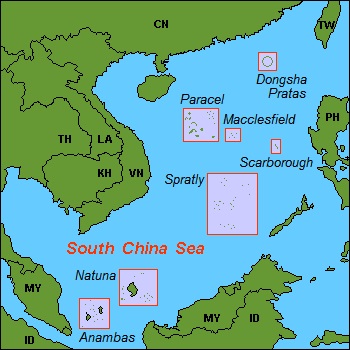
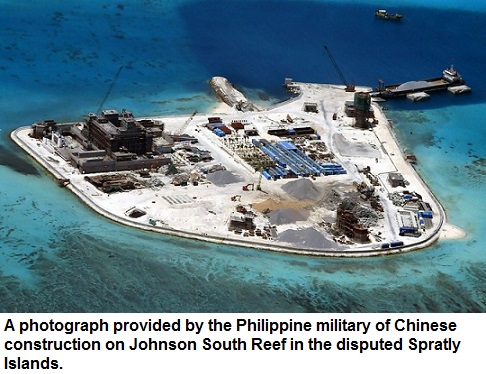
CU Blog - Lessons from China - South China Seas - Exclusive Economic Zone - Photo 1This is an old international maritime law that dates from the days of piracy all the way down to today with modern updates and trends. This is the international convention that governs the 200-mile Exclusive Economic Zone along the coastline of a country. There is a hot issue in the South China Seas region right now involving China and its neighbors.

This issue is so urgent and emergent that many analysts believe dysfunctions in this regards can lead to war.

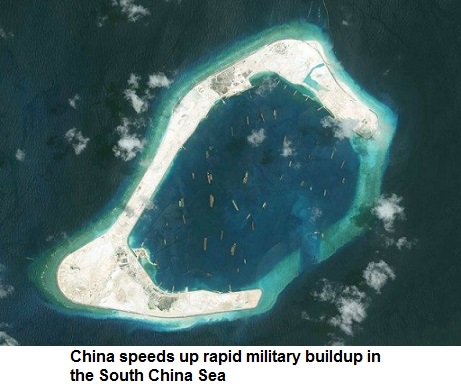
See photos in Appendix B below.

There has now been an update in this case. This update is furnished by the Hague Tribunal for the UNCLOS.

This news story here speaks of the ruling in the Hague about the disposition of China’s claims regarding their Exclusive Economic Zone in the South China Seas. See story here:

VIDEOSouth China Sea Ruling: 5 Things to Know https://youtu.be/qOeEMsdYzm4

Published on Jul 15, 2016 – China’s South China Sea ambitions have been denied! The ruling by a United Nations Convention on the Law of the Sea tribunal in the Hague said China’s claims to the South China Sea have “no legal basis.” Is this a victory for the Philippines? The United States? Or will this lead to war? Find out on this episode of China Uncensored!

MORE EPISODES:

Indonesia “Attacks” China in South China Sea
https://www.youtube.com/watch?v=WS5qi…

China Defends South China Sea from Japanese Aggression
https://www.youtube.com/watch?v=pg7BM…

US Sends Destroyers to South China Sea — Is War Next?
https://www.youtube.com/watch?v=nC8wR…

Will China Provoke War in South China Sea
https://www.youtube.com/watch?v=MxU6w…

Why is this discussion about conflicts in the South China Seas – see Appendix A – important to us in the Caribbean region?

The focus is on the concept of an Exclusive Economic Zone (EEZ); see Appendix C. This is an applicable reference for the Caribbean as we have a similar quest, to extend oversight for the Caribbean Sea. This point had been detailed in a previous blog-commentary regarding the Association of Caribbean States (ACS); an excerpt follows:

One agenda adopted by the ACS has been an attempt to secure the designation of the Caribbean Sea as a special zone in the context of sustainable development; it is pushing for the UN to consider the Caribbean Sea as an invaluable asset that is worth protecting and treasuring. The organization has sought to form a coalition among member states to devise a United Nations General Assembly resolution to ban the transshipment of nuclear materials through the Caribbean Sea and the Panama Canal. The Go Lean roadmap aligns with this agenda with the implementation plan of an Exclusive Economic Zone for these seas.

This commentary is part of a series on China. This is commentary 5 of 6 in consideration of the good and bad lessons from China. The other commentaries detailed in this series are as follows:

  1. History of China Trade: Too Big to Ignore
  2. Why China will soon be Hollywood’s largest market
  3. Organ Transplantation: Facts and Fiction
  4. Mobile Game Apps: The new Playground
  5. South China Seas: Exclusive Economic Zones
  6. WeChat: Model for Caribbean Social Media – www.MyCaribbean.gov

All of these commentaries relate to nation-building, stressing the community investments required to facilitate the short-term, mid-term and long-term needs of our communities. But this one commentary identifies China as a “bully” in the neighborhood of the South China Seas. So the lesson for the Caribbean is how to deal with a bully.

What empowers China as a bully in this conflict? Their size! China, with its 1.3 billion people, is the largest country bordering on the South China Seas. Truth be told, China is the largest country in the world. That 1.3 billion population is … 1.3 billion. It is hard for those observing-and-reporting from North America to comprehend the perspective. The US has 320 million people; the Caribbean, as a consolidated region is 42 million. Size does matter!

This is the guidance from the book Go Lean … Caribbean. It serves as a roadmap – turn by turn directions – for the introduction and implementation of the Caribbean Union Trade Federation (CU). This confederation treaty is designed to leverage the 30 member-states of the Caribbean so as to get some economy-of-scale. The book asserts that some problems in the region are too big for anyone member-state to contend with alone. An integrated Single Market of all 42 million people across the 30 member-states allows us to stand-up more forthrightly to bullies in our region. And we do have bullies.

This is the strategy for the Caribbean region to elevate its society. In fact, the roadmap has these 3 prime directives:

  • Optimization of the economic engines in order to grow the regional economy to $800 Billion & create 2.2 million new jobs.
  • Establishment of a security apparatus – with oversight of the EEZ – to provide public safety and protect the resultant economic engines of the Caribbean homeland.
  • Improvement of Caribbean governance – with oversight of the EEZ – to support these engines.

The implementation of the CU allows for the designation of more Exclusive Economic Zones, the consolidation existing EEZ’s and the deployment of a security apparatus to ensure protections in these zones.

Where does an 800 pound sleep? Anywhere he wants” – Old Wives Tale

Injustice anywhere is a threat to justice everywhere.” – Quotation from Martin Luther King, Jr.

“The only thing necessary for the triumph of evil is for good men to do nothing” – Edmund Burke; 1729 – 1797

It is important to remember from this commentary, the primary lesson from China is the undeniable size of their market, population and military. Without even trying, China can be a bully!

The Caribbean does not need to stand-up to China – but we stand up on the side of justice. We are not a world Super-Power, nor do we aspire to be. We leave that role to our allies in NATO (the North American Treaty Organization including the US and Western European states). Nonetheless, our region will be stronger with the 42 million; while no billions as in China, our consolidated size will allow us to stand-up to regional threats: border encroachments, narco-terrorism and piracy. This need for  security strength was pronounced in the opening of the Go Lean book, with these statements in the Declaration of Interdependence (Pages 11 – 13):

v.  Whereas the natural formation of our landmass and coastlines entail a large portion of waterscapes, the reality of management of our interior calls for extended oversight of the waterways between the islands. The internationally accepted 12-mile limits for national borders must be extended by International Tribunals to encompass the areas in between islands. The individual states must maintain their 12-mile borders while the sovereignty of this expanded  area, the Exclusive Economic Zone, must be vested in the accedence of this Federation.

x.   Whereas we are surrounded and allied to nations of larger proportions in land mass, populations, and treasuries, elements in their societies may have ill-intent in their pursuits, at the expense of the safety and security of our citizens. We must therefore appoint “new guards” to ensure our public safety and threats against our society, both domestic and foreign.

xi.  Whereas all men are entitled to the benefits of good governance in a free society, “new guards” must be enacted to dissuade the emergence of incompetence, corruption, nepotism and cronyism at the peril of the people’s best interest. The Federation must guarantee the executions of a social contract between government and the governed.

xii. Whereas the legacy in recent times in individual states may be that of ineffectual governance with no redress to higher authority, the accedence of this Federation will ensure accountability and escalation of the human and civil rights of the people for good governance, justice assurances, due process and the rule of law. As such, any threats of a “failed state” status for any member state must enact emergency measures on behalf of the Federation to protect the human, civil and property rights of the citizens, residents, allies, trading partners, and visitors of the affected member state and the Federation as a whole.

xvi. Whereas security of our homeland is inextricably linked to prosperity of the homeland, the economic and security interest of the region needs to be aligned under the same governance. Since economic crimes, including piracy and other forms of terrorism, can imperil the functioning of the wheels of commerce for all the citizenry, the accedence of this Federation must equip the security apparatus with the tools and techniques for predictive and proactive interdictions.

The Go Lean book, and previous blog/commentaries, stressed the key community ethos, strategies, tactics, implementations and advocacies necessary to provide better homeland security to the Caribbean region, and to foster development, administration and protections in the Caribbean EEZ. These points are detailed in the book as follows:

Community Ethos – Deferred Gratification Page 21
Community Ethos – Economic Principles – All Choices Involve Costs Page 21
Community Ethos – Economic Principles – Economic Systems Influence Individual Choices Page 21
Community Ethos – Economic Principles – Voluntary Trade Creates Wealth Page 21
Community Ethos – Economic Principles – Consequences of Choices Lie in the Future Page 21
Community Ethos – Security Principles – Anti-Bullying and Mitigations Page 22
Community Ethos – Security Principles – Intelligence Gathering Page 23
Community Ethos – Security Principles – “Crap” Happens Page 23
Community Ethos – Governing Principles – Lean Operations Page 24
Community Ethos – Governing Principles – Return on Investments Page 24
Community Ethos – Governing Principles – Cooperatives Page 25
Strategy – Agents of Change – Globalization Page 57
Tactical – Fostering a Technocracy Page 64
Tactical – Separation of Powers – Homeland Security Department Page 75
Tactical – Separation of Powers – Coast Guard and Naval Authority Page 75
Tactical – Separation of Powers – Militia Page 75
Implementation – Ways to Pay for Change – EEZ Exploration Rights Page 101
Implementation – Security Initiatives at Start-up Page 103
Implementation – Start-up Benefits from the EEZ Page 104
Advocacy – Ways to Grow the Economy – Enterprise Zones & Empowerment Zones Page 151
Advocacy – Ways to Improve Governance Page 168
Advocacy – Ways to Improve Homeland Security Page 180
Advocacy – Ways to Mitigate Terrorism – Piracy Page 181
Advocacy – Ways to Better Manage Natural Resources Page 183
Advocacy – Ways to Improve Emergency Management Page 196
Advocacy – Ways to Improve Fisheries – Model of Alaska EEZ Page 210
Appendix – Cape Cod Wind Farm – Model for Caribbean EEZ Page 335

Other subjects related to security, anti-bullying and justice empowerments for the region have been blogged in previous Go Lean…Caribbean commentaries, as sampled here:

https://goleancaribbean.com/blog/?p=7896 The Need for Local Administration: The Logistics of Disaster Relief
https://goleancaribbean.com/blog/?p=7449 ‘Crap Happens’ – Planning and Execution
https://goleancaribbean.com/blog/?p=7345 ISIS reaches the Caribbean Region
https://goleancaribbean.com/blog/?p=7119 Role Model for the Caribbean: African Standby Force
https://goleancaribbean.com/blog/?p=6247 Tragic images show Mediterranean Sea Refugee Crisis
https://goleancaribbean.com/blog/?p=6103 Sum of All Fears – ‘On Guard’ Against Deadly Threats
https://goleancaribbean.com/blog/?p=5462 Case of American NGO Bullying: Red Cross’ Missing $500 Million In Haiti Relief
https://goleancaribbean.com/blog/?p=5183 A Lesson in History – Cinco De Mayo and Mexico’s Security Lapses
https://goleancaribbean.com/blog/?p=5002 Managing a ‘Clear and Present Danger’
https://goleancaribbean.com/blog/?p=4360 Dreading the ‘CaribbeanBasin Security Initiative’
https://goleancaribbean.com/blog/?p=1965 America’s Navy – 100 Percent – Model for Caribbean
https://goleancaribbean.com/blog/?p=1554 Status of Forces Agreement = Security Pact
https://goleancaribbean.com/blog/?p=1076 Regional Threat: Trinidad Muslims travel for Jihadist training
https://goleancaribbean.com/blog/?p=809 Muslim officials condemn bullying and abductions of Nigerian girls
https://goleancaribbean.com/blog/?p=535 Remembering and learning from Boston’s Terror Attack
https://goleancaribbean.com/blog/?p=273 10 Things We Want from the US – #4: Pax Americana

The Caribbean sorely needs the empowerments in this roadmap to mitigate threats and ensure protections on our seaways and waterscapes. The key is the Exclusive Economic Zone designation.

This is an important lesson being learned from consideration of China. EEZ dimensions should not be left up to vague interpretations. There is need for surety! In fact, the Go Lean book (Page 101) asserts that this surety will subsequently have long-ranging economic implications:

EEZ Exploration Rights
Representing the member-states, the CU will petition the UN for an Exclusive Economic Zone (EEZ) for the areas between the islands. All economic activity in these non-state areas (underwater cables, oil/gas drilling, mines, etc.) will be awarded & regulated by the CU.
Exploratory rights are awarded for license fees upfront.

We have this and other important lessons from China. Their large population makes them a venerable threat to all their smaller neighboring countries. There is the need for security and justice mitigations in their region.

There is the need for security and justice mitigations in our region, too. Justice takes a constant effort – a sentinel. This is the role envisioned for the CU and its security apparatus.

“On guard” … for threats against justice.

Now is the time for all of the Caribbean – the people, institutions and governments – to lean-in for these justice assurances described in the book Go Lean … Caribbean. This effort will make the Caribbean homeland a better, safer, place to live, work and play. 🙂

Download the free e-Book of Go Lean … Caribbean – now!

————-

Appendix A – South China Sea

The South China Sea is a marginal sea that is part of the Pacific Ocean, encompassing an area from the Karimata and Malacca Straits to the Strait of Taiwan of around 3,500,000 square kilometres (1,400,000 sq mi). The area’s importance largely results from one-third of the world’s shipping sailing through its waters and that it is believed to hold huge oil and gas reserves beneath its seabed.[2]

It is located[3]:

The minute South China Sea Islands, collectively an archipelago, number in the hundreds. The sea and its mostly uninhabited islands are subject to competing claims of sovereignty by several countries. These claims are also reflected in the variety of names used for the islands and the sea.

Geography

States and territories with borders on the sea (clockwise from north) include: the People’s Republic of China (including Macau and Hong Kong), the Republic of China (Taiwan), the Philippines, Malaysia, Brunei, Indonesia, Singapore, and Vietnam.

Major rivers that flow into the South China Sea include the PearlMinJiulongRedMekongRajangPahangPampanga, and Pasig Rivers.
Source: Retrieved August 30 from: https://en.wikipedia.org/wiki/South_China_Sea

————-

Appendix B – Photos of Military Escalations

CU Blog - Lessons from China - South China Seas - Exclusive Economic Zone - Photo 2


CU Blog - Lessons from China - South China Seas - Exclusive Economic Zone - Photo 5


CU Blog - Lessons from China - South China Seas - Exclusive Economic Zone - Photo 4

CU Blog - Lessons from China - South China Seas - Exclusive Economic Zone - Photo 3

————-

Appendix C – Exclusive Economic Zone

An Exclusive Economic Zone (EEZ) is a sea zone prescribed by the United Nations Convention on the Law of the Sea over which a state has special rights regarding the exploration and use of marine resources, including energy production from water and wind.[1] It stretches from the baseline out to 200 nautical miles (nmi) from its coast. In colloquial usage, the term may include the continental shelf. The term does not include either the territorial sea or the continental shelf beyond the 200 nmi limit. The difference between the territorial sea and the exclusive economic zone is that the first confers full sovereignty over the waters, whereas the second is merely a “sovereign right” which refers to the coastal state’s rights below the surface of the sea. The surface waters, as can be seen in the map, are international waters.[2]

Generally, a state’s EEZ extends to a distance of 200 nautical miles (370 km) out from its coastal baseline. The exception to this rule occurs when EEZs would overlap; that is, state coastal baselines are less than 400 nautical miles (740 km) apart. When an overlap occurs, it is up to the states to delineate the actual maritime boundary.[3] Generally, any point within an overlapping area defaults to the nearest state.[4]

A state’s Exclusive Economic Zone starts at the landward edge of its territorial sea and extends outward to a distance of 200 nautical miles (370.4 km) from the baseline. The Exclusive Economic Zone stretches much further into sea than the territorial waters, which end at 12 nmi (22 km) from the coastal baseline (if following the rules set out in the UN Convention on the Law of the Sea).[5] Thus, the EEZ includes the contiguous zone. States also have rights to the seabed of what is called the continental shelf up to 350 nautical miles (648 km) from the coastal baseline, beyond the EEZ, but such areas are not part of their EEZ. The legal definition of the continental shelf does not directly correspond to the geological meaning of the term, as it also includes the continental rise and slope, and the entire seabed within the EEZ.

The following is a list of the largest Exclusive Economic Zones; by country with a few noticeable deviations:

Country EEZ Kilometers2 Additional Details
United States 11,351,000 The American EEZ – the world’s largest – includes the Caribbean overseas territories of Puerto Rico and the US Virgin Islands.
France 11,035,000 The French EEZ includes the Caribbean overseas territories of Guadeloupe, Martinique, Saint Martin, Saint Barthélemy and French Guiana.
Australia 8,505,348 Australia has the third largest exclusive economic zone, behind the United States and France, with the total area actually exceeding that of its land territory. Per the UN convention, Australia’s EEZ generally extends 200 nautical miles (370 km) from the coastline of Australia and its external territories, except where a maritime delimitation agreement exists with another state.[15]The United Nations Commission on the Limits of the Continental Shelf confirmed, in April 2008, Australia’s rights over an additional 2.5 million square kilometres of seabed beyond the limits of Australia’s EEZ.[16][17] Australia also claimed, in its submission to the UN Commission on the Limits of the Continental Shelf, additional Continental Shelf past its EEZ from the Australian Antarctic Territory,[18] but these claims were deferred on Australia’s request. However, Australia’s EEZ from its Antarctic Territory is approximately 2 million square kilometres.[17]
Russia 7,566,673
United Kingdom 6,805,586 The UK includes the Caribbean territories of Anguilla, Bermuda, Cayman Islands, Montserrat, Turks & Caicos and the British Virgin Islands.
Indonesia 6,159,032
Canada 5,599,077 Canada is unusual in that its EEZ, covering 2,755,564 km2, is slightly smaller than its territorial waters.[20] The latter generally extend only 12 nautical miles from the shore, but also include inland marine waters such as Hudson Bay (about 300 nautical miles (560 km; 350 mi) across), the Gulf of Saint Lawrence and the internal waters of the Arctic archipelago.
Japan 4,479,388 In addition to Japan’s recognized EEZ, it also has a joint regime with Republic of (South) Korea and has disputes over other territories it claims but are in dispute with all its Asian neighbors (Russia, Republic of Korea and China).
New Zealand 4,083,744
Chile 3,681,989
Brazil 3,660,955 In 2004, the country submitted its claims to the United Nations Commission on the Limits of the Continental Shelf (CLCS) to extend its maritime continental margin.[19]
Mexico 3,269,386 Mexico’s EEZ comprises half of the Gulf of Mexico, with the other half claimed by the US.[32]
Micronesia 2,996,419 The Federated States of Micronesia comprise around 607 islands (a combined land area of approximately 702 km2 or 271 sq mi) that cover a longitudinal distance of almost 2,700 km (1,678 mi) just north of the equator. They lie northeast of New Guinea, south of Guam and the Marianas, west of Nauru and the Marshall Islands, east of Palau and the Philippines, about 2,900 km (1,802 mi) north of eastern Australia and some 4,000 km (2,485 mi) southwest of the main islands of Hawaii. While the FSM’s total land area is quite small, its EEZ occupies more than 2,900,000 km2 (1,000,000 sq mi) of the Pacific Ocean.
Denmark 2,551,238 The Kingdom of Denmark includes the autonomous province of Greenland and the self-governing province of the Faroe Islands. The EEZs of the latter two do not form part of the EEZ of the European Union.
Papua New Guinea 2,402,288
China 2,287,969
Marshall Islands 1,990,530 The Republic of the Marshall Islands is an island country located near the equator in the Pacific Ocean, slightly west of the International Date Line. Geographically, the country is part of the larger island group of Micronesia. The country’s population of 68,480 people is spread out over 24 coral atolls, comprising 1,156 individual islands and islets. The land mass amounts to 181 km2 (70 sq mi) but the EEZ is 1,990,000 km2, one of the world’s largest.
Portugal 1,727,408 Portugal has the 10th largest EEZ in the world. Presently, it is divided in three non-contiguous sub-zones:

Portugal submitted a claim to extend its jurisdiction over additional 2.15 million square kilometers of the neighboring continental shelf in May 2009,[44] resulting in an area with a total of more than 3,877,408 km2. The submission, as well as a detailed map, can be found in the Task Group for the extension of the Continental Shelf website.

Spain disputes the EEZ’s southern border, maintaining that it should be drawn halfway between Madeira and the Canary Islands. But Portugal exercises sovereignty over the SavageIslands, a small archipelago north of the Canaries, claiming an EEZ border further south. Spain objects, arguing that the SavageIslands do not have a separate continental shelf,[45] citing article 121 of the United Nations Convention on the Law of the Sea.[46]

Philippines 1,590,780 The Philippines’ EEZ covers 2,265,684 (135,783) km2[41].
Solomon Islands 1,589,477
South Africa 1,535,538
Fiji 1,282,978 Fiji is an archipelago of more than 332 islands, of which 110 are permanently inhabited, and more than 500 islets, amounting to a total land area of about 18,300 square kilometres (7,100 sq mi).
Argentina 1,159,063
Spain 1,039,233
Bahamas 654,715
Cuba 350,751
Jamaica 258,137
Dominican Republic 255,898
Barbados 186,898
Netherlands 154,011 The Kingdom of the Netherlands include the Antilles islands of Aruba. Bonaire, Curacao, Saba, Sint Maarten and Sint Eustatius
Guyana 137,765
Suriname 127,772
Haiti 126,760
Antigua and Barbuda 110,089
Trinidad and Tobago 74,199
St Vincent and the Grenadines 36,302
Belize 35,351
Dominica 28,985
Grenada 27,426
Saint Lucia 15,617
Saint Kitts and Nevis 9,974

(Source: http://en.wikipedia.org/wiki/Exclusive_economic_zone)
 

Share this post:
, , ,

Lessons from China – Harvesting Organs: Facts & Fiction

Go Lean Commentary

There are so many lessons from China.

There are so many …

… everything in China.

The country has 1.3 billion people. That’s a lot of people. That’s a lot of lessons, good and bad. This commentary is 3 of 6 in consideration the good and bad lessons from China. The other commentaries detailed in this series are as follows:

  1. History of China Trade: Too Big to Ignore
  2. Why China will soon be Hollywood’s largest market
  3. Organ Transplantation: Facts and Fiction
  4. Mobile Games Apps: The new Playground
  5. South China Seas: Exclusive Economic Zones
  6. WeChat: Model for Caribbean Social Media – www.MyCaribbean.gov

All of these commentaries relate to nation-building, stressing the community investments required to facilitate the short-term, mid-term and long-term needs of our communities.

CU Blog - Lessons from China - Harvesting Organs - Photo 1With 1.3 billion people, a country will have all dispositions and statuses: young, old, strong, weak, healthy, and sick. There will always be the need for a range of health care: from preventative all the way up to advanced trauma. Therefore, the need for organ transplantation will arise, maybe even more often than in smaller-populated countries. We can learn a lot by considering China’s vision and values in this dramatic area of modern life.

China has a lot of mileage in the medical history of organ transplantation and the impact on social values. This is a recent history anywhere, as the medical capability only became viable since the 1970’s.

This commentary is in consideration of the book Go Lean…Caribbean; it serves as a roadmap for the introduction and implementation of the technocratic Caribbean Union Trade Federation (CU) to provide better stewardship for the region’s economic and healthcare eco-systems. The book actually conveys that healthcare is an economic consideration. It is a matter of life-and-death that requires community investments even when the issue itself is NOT life or death.

There are a lot of preventative health care decisions that community leaders have to make, for example: vaccinations, hospital availability, nursing standards and trauma center logistics. There is a certain level of delivery for Third World countries – the Caribbean member-states are mostly all Third Word. The goal of this Go Lean roadmap is to elevate the region from this status quo. How does the Third World handle advanced healthcare issues like organ transplantation?

Answer: Not well.

The Go Lean book details the sad reality of abuse and exploitation traditionally experienced in Third World cases involving organ transplantations. The book relates (Page 214):

The Bottom Line on Organ Trade
Organ trade is the trade involving inner organs (heart, liver, kidneys, cornea, etc.) of a human for transplantation. In the 1970s pharmaceuticals that prevent organ rejection were introduced. This along with a lack of medical regulation helped foster the organ market. The problem of organ trafficking is widespread, although data on the exact scale of the organ market is difficult to obtain. (Most organ trade involves kidney or liver transplants). There is a worldwide shortage of organs available for transplantation, yet trade in human organs is illegal in all countries, except Iran.

Many countries had a program for legal transplant exchange, but have all universally abandoned the practice.

Most countries now allow donors to give organs if they are related or emotionally close to the recipient. But in China, there is a program for organs to be procured from executed prisoners. According to the World Health Organization (WHO), international organ trade amounted to 66,000 kidney transplants, 21,000 liver transplants, and 6000 heart transplants in 2005, but WHO estimated that 5% of all those procedures where engaged in commercial transactions.

WHO states that, “Payment for…organs is likely to take unfair advantage of the poorest and most vulnerable groups, undermining altruistic donation and leads to profiteering and human trafficking.”

Imagine China; just recently elevating from Third World status; and only in the urban communities. They have billions of people living in the rural areas. It would not be inconceivable that some “bad actors” may view the masses as prime harvesting grounds for organ transplantation. (The Go Lean book posits that “bad actors” are inevitable in every society; the Caribbean history is littered with stories of the emergence of “bad actors”).

Inconceivable? Not according to this news article and VIDEO here:

Title: Angry Claims and Furious Denials Over Organ Transplants in China

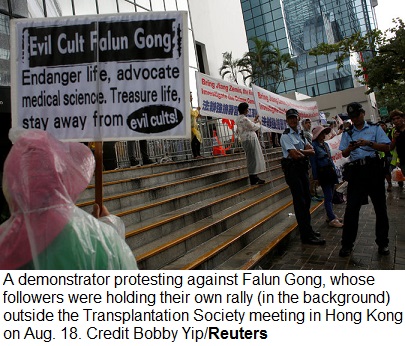
CU Blog - Lessons from China - Harvesting Organs - Photo 2HONG KONG — Eyes flashing, lips curled in operatic scorn, a middle-aged woman holding a placard reading “Evil Cult Falun Gong!” ordered me off the sidewalk outside Hong Kong’s convention center, where organ transplant specialists from around the world were gathered.

“Go away!” she shouted. “You’re no good!”

My crime? After interviewing her as she stood with a group called the Anti-Cult Association, she had spotted me interviewing a woman at a competing demonstration of practitioners of Falun Gong, a meditation and exercise-based spiritual practice that the Chinese government outlawed as a cult in 1999, jailing many practitioners. The Anti-Cult Association says it is a civil society organization, but its aims closely reflect the Chinese government’s.

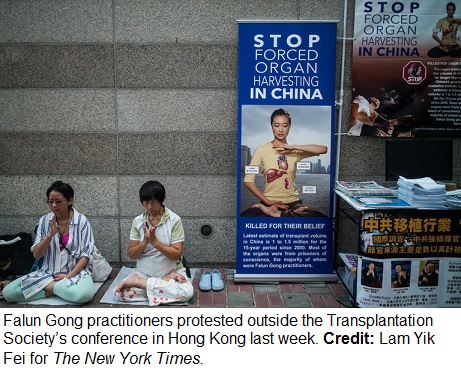
Falun Gong adherents say that after the movement was banned, many were blood-typed in detention, and thousands became a secret source of organs for human transplants. The Chinese government and the Anti-Cult Association, which, according to its website, promotes “Confucian thinking and science,” deny this.

The searing debate over forced organ extraction is not new. For about 15 years it has raged, between the Chinese government and its supporters and Falun Gong practitioners and investigators. But as hundreds of the world’s leading transplant surgeons, including from China, gathered at the Transplantation Society’s biennial meeting in Hong Kong this week and last, the issue seemed more explosive than ever — perhaps because the meeting was on Chinese soil for the first time, bringing the debate closer to home.

The accusations of forced organ extraction were “ridiculous,” Huang Jiefu, a former deputy health minister who is in charge of overhauling China’s organ donation system, said in a speech. The Chinese government says that it switched from a system dependent on executed prisoners to one based on voluntary, nonprisoner donations on Jan. 1, 2015.

“I’m in stress,” Dr. Huang said of the accusations. “I couldn’t sleep well enough at night.”

“There is wild speculation” of “100,000 transplants per year from executed prisoners in China,” he added, possibly conflating the issues of using organs from prisoners convicted of capital crimes and organs from prisoners of conscience.

Some investigators and Falun Gong adherents say that their compiled data from individual hospitals shows at least 60,000 organ transplants a year, about six times the official total of about 10,000 last year, and that the difference is made up by forced organ extractions from prisoners of conscience.

In a cafe at the convention center, David Matas and David Kilgour, who first published a report on the issue in 2006, said they were familiar with the widespread skepticism, even hostility, not just from the Chinese government but from many outside China, including the news media. (An update to their book, “Bloody Harvest,” this time with Ethan Gutmann, author of “The Slaughter,” came out this year.)

The statistics cited by investigators and Falun Gong practitioners are overwhelming, they agreed. And, by definition, the victims are dead, and cannot speak.

“Nameless, voiceless,” said Mr. Kilgour, a former member of the Canadian Parliament.

Many Falun Gong adherents have also alienated people with claims tinged with hysteria, a byproduct of the urgency of the topic and an “in-your-face” propagandistic style widespread in China, they said.

“The Falun Gong community, they don’t read the reports” of human rights organizations, said Mr. Matas, a rights lawyer. “They don’t talk the human rights language, and they’re disorganized. Everybody does what they want,” undercutting their credibility, he said.

What if, one day, the allegations were proved to be true, as accusations of Nazi genocide against the Jews were? How would the Chinese government deal with it then?

“Probably they would say this is an aberration, the responsibility of a few people,” Mr. Matas said.

———

Related:

Chinese Claim That World Accepts Its Organ Transplant System Is Rebutted –  AUG. 19, 2016

Debate Flares on China’s Use of Prisoners’ Organs as Experts Meet in Hong Kong – AUG. 17, 2016

Doctor’s Plan for Full-Body Transplants Raises Doubts Even in Daring China – JUNE 11, 2016

China Bends Vow on Using Prisoners’ Organs for Transplants – NOV. 16, 2015

———

VIDEO – China’s Shocking Military Secret REVEALED – https://youtu.be/bIxE5kZXjsY

Published on Jul 6, 2016 – For more than 15 years, Chinese military hospitals across China have kept a closely guarded secret. Doctors at private hospitals know about it, and even participate. But no one dares reveal it to the public.

Say it ain’t so…

… that “bad actors” in China may exploit a class of people to harvest their organs. The experience of exploiting a class of people is something familiar to the Caribbean. From the history journals, we are reminded of local examples; our region played host to the ethnic cleansing of indigenous people, African Slave Trade & Slavery, and Piracy. The book Go Lean…Caribbean asserts that the vision and values of a community must be conditioned for a society to endure such exploitation. The book describes this “vision and value” factor as the term “community ethos”:

“… the fundamental character or spirit of a culture; the underlying sentiment that informs the beliefs, customs, or practices of a group or society; dominant assumptions of a people or period; practices of a group or society; dominant assumptions of a people or period” Page 20.

What is the community ethos of China?

… such that the claims of forced harvesting of organs would gain such notoriety?

This question requires an onsite inspection and investigation. The promoters of the Go Lean movement conducted a structured interview with a Caribbean (Bahamas) Exchange Student who matriculated in China; she made the following contributions to this discussion on China’s vision and values. So as to protect her identity, she is being referred to here as “Bahama Mama“. Consider these responses related to her China experiences:

Give us details of your China experience:

Bahama Mama: I participated in a Exchange Program between the College of the Bahamas and Nanjing University of Information Science and Technology in Nanjing, Jiangsu Province, in the Peoples Republic of China. That city, while the largest in Jiangsu with its 8,187,828 residents, is not the largest in China, not even close.

Is China a country that you would consider emigrating to?

Bahama Mama: No. They have a lot more jobs in China, but it is not home. I felt foreign and would probably always feel like a foreigner there.

What were you most impressed with while in China?

Bahama Mama: Their infrastructure to accommodate so many people.

Did you perceive that the voluminous population created a sense of worthlessness among the Chinese people?

Bahama Mama: No. The culture in the country created a sense of value for Chinese people among Chinese people. But the perception is different for foreigners among them; their community sense of worth for foreigners is lower.

The Go Lean book conveys that community ethos can be remediated, that new ethos can be adopted. It is not easy but possible. The book likens the process to “the effort to quit smoking”. This roadmap calls on the CU Trade Federation to take the lead in forging the needed changes to the region’s community ethos as it relates to nation-building. This is Step One in rebooting the economic-security-governing engines. The premise is simple: while we are a different culture than China, people are “the same” everywhere, with good and bad tendencies. Classes of people have also been exploited in our region, while not harvesting for organs, we must be “on guard” for this potential threat.

The Go Lean book details an advocacy for organ transplantation in the Caribbean region, with a focus to be “on guard” for exploitation. The book relates (Page 214) how organ transplantation is to be introduced to the region:

Lean-in for the Caribbean Union Trade Federation (CU)
This [confederation] treaty allows for the unification of the region into one market, thereby expanding to an economy of 30 member-states, 42 million people and a GDP of over $800 Billion (circa 2010). In addition to empowering the economic engines, this treaty calls for a collective security pact for the member-states so as to assuage systemic threats, security risks and organized crime. One CU mission is to eliminate any “black market” viability by installing a regional/federal administration for Organ Donor Registration, Procurement and Distribution for the Caribbean. The CU advocates the policy of presumed consent, (successful in Brazil, US and many EU nations), but different in that “opt-in” is the default setting. Citizens can easily “opt-out” (Drivers License, Medical Directives, Last Will and Testament, witnessed statements to family/friends) or next-of-kin can override [the decision] on-demand.

The challenge for managing an organ transplantation eco-system may be too big for any one Caribbean member-state alone; there is the need for this regional technocracy. The population is far too small in some of our member-states. The whole region is better, while no billions as in China, the 42 million of the entire region is adequate for effective matching. The stewardship for this effort was pronounced in the opening of the Go Lean book, with these statements in the Declaration of Interdependence (Pages 11 – 13):

ix.   Whereas the realities of healthcare and an aging population cannot be ignored and cannot be afforded without some advanced mitigation, the Federation must arrange for … disease management, wellness, mental health, obesity and smoking cessation programs. The Federation must [also] proactively anticipate the demand and supply of organ transplantation as developing countries are often exploited by richer neighbors for illicit organ trade.

xi.   Whereas all men are entitled to the benefits of good governance in a free society, “new guards” must be enacted to dissuade the emergence of incompetence, corruption, nepotism and cronyism at the peril of the people’s best interest. The Federation must guarantee the executions of a social contract between government and the governed.

xii.  Whereas the legacy in recent times in individual states may be that of ineffectual governance with no redress to higher authority, the accedence of this Federation will ensure accountability and escalation of the human and civil rights of the people for good governance, justice assurances, due process and the rule of law. As such, any threats of a “failed state” status for any member state must enact emergency measures on behalf of the Federation to protect the human, civil and property rights of the citizens, residents, allies, trading partners, and visitors of the affected member state and the Federation as a whole.

xvi. Whereas security of our homeland is inextricably linked to prosperity of the homeland, the economic and security interest of the region needs to be aligned under the same governance. Since economic crimes, including piracy and other forms of terrorism, can imperil the functioning of the wheels of commerce for all the citizenry, the accedence of this Federation must equip the security apparatus with the tools and techniques for predictive and proactive interdictions.

The Go Lean book, and previous blog/commentaries, stressed the key community ethos, strategies, tactics, implementations and advocacies necessary to provide better stewardship to the Caribbean medical eco-system for an eventual organ transplantation offering. These points are detailed in the book as follows:

Community Ethos – Deferred Gratification Page 21
Community Ethos – Economic Principles – All Choices Involve Costs Page 21
Community Ethos – Economic Principles – Consequences of Choices Lie in the Future Page 21
Community Ethos – Security Principles – Whistleblower Protection Page 23
Community Ethos – Security Principles – Anti-Bullying and Mitigation Page 23
Community Ethos – Security Principles – “Crap” Happens Page 23
Community Ethos – Governing Principles – Minority Equalization Page 24
Community Ethos – Governing Principles – Lean Operations Page 24
Community Ethos – Governing Principles – Cooperatives Page 25
Community Ethos – Governing Principles – Non-Government Organizations (NGO) Page 25
Community Ethos – Ways to Impact the Future – Count on the Greedy to be Greedy Page 26
Community Ethos – Ways to Impact Research & Development Page 30
Community Ethos – Ways to Improve Sharing Page 35
Community Ethos – Ways to Impact the Greater Good Page 37
Strategy – Mission – Reform our Health Care Industries Page 46
Strategy – Mission – Provide for Organ Procurement Page 46
Strategy – Agents of Change – Aging Diaspora Page 57
Strategy – Agents of Change – Globalization Page 57
Tactical – Confederating a Permanent Union of 30 Member-States Page 63
Tactical – Separation-of-Powers – Health Department Page 86
Implementation – Assemble Caribbean Organ Procurement Authority Page 96
Implementation – Ways to Deliver – Quality Assurance Page 109
Planning – 10 Big Ideas – Creating a Single Market Page 127
Advocacy – Ways to Improve Healthcare Page 156
Advocacy – Ways to Improve Governance Page 168
Advocacy – Ways to Better Manage the Social Contract Page 170
Advocacy – Ways to Foster Cooperatives Page 176
Advocacy – Ways to Impact Justice – Regional Sentinel Page 177
Advocacy – Ways to Improve Communications – Foster new ethos Page 186
Advocacy – Ways to Improve Organ Transplantation Page 214
Appendix – Lied Transplant Center – Omaha, Nebraska, USA Page 339
Appendix – Organ Transplants from Animals: Examining the Possibilities Page 341

There is a lot to learn from the analysis of medical stewardship of other communities. The lessons of successes and failures of other communities’ medical practices and policies were further elaborated upon in these previous blog-commentaries:

https://goleancaribbean.com/blog/?p=7822 Cancer: Doing More
https://goleancaribbean.com/blog/?p=7586 Blink Health: The Cure for High Drug Prices
https://goleancaribbean.com/blog/?p=7327 Zika – A 4-Letter Word
https://goleancaribbean.com/blog/?p=6580 Capitalism of Drug Patents
https://goleancaribbean.com/blog/?p=2522 The Cost of Cancer Drugs
https://goleancaribbean.com/blog/?p=1143 Health-care fraud in America; criminals take $272 billion a year

China has a large population: 1.3 billion people. Many of its cities have large numbers. As previously mentioned, the City of Nanjing has 8,187,828 residents. Other Chinese cities feature even larger populations:

Source: Retrieved August 27, 2016 from: https://en.wikipedia.org/wiki/List_of_cities_proper_by_population

Notice the reality for Chinese urban life in the VIDEO here:

VIDEO – Beijing Subway, Line 13, morning rush hour – just a little crowded – https://youtu.be/xG-meaGqg-M

Published on Jul 22, 2013 – July 18, 7:30 am, likely the Xierqi subway station on Line 13. http://beijingcream.com/2013/07/beiji…
Source: http://v.youku.com/v_show/id_XNTg0Nzc…

Bullying and class oppression is not so inconceivable with numbers like this.

The Go Lean book relates that this situation is manifested time and again, all over the world. The Go Lean book provides the roadmap to anticipate class oppression, to monitor and mitigate it. The book declares (Page 23):

… “bad actors” will also emerge thereafter to exploit the opportunities, with good, bad and evil intent. A Bible verse declares: “What has been will be again, what has been done will be done again; there is nothing new under the sun” – Ecclesiastes 1:9 New International Version.

We have so many lessons to learn from China. The large population calls for extra mitigations in the area of organ transplantation. The quest for survival by those that are sick (and rich) will cause them to entertain options … at the expense of others… of the lower classes.

That is not justice.

The lesson learned from China is that we must be “on guard” for threats against justice. There must be a justice sentinel for the Caribbean region.

The Caribbean is hereby urged to lean-in to this Go Lean confederation roadmap. Everyone – people, institutions and governments – can benefit from the consideration of this roadmap to make the Caribbean a better place to live, work, heal and play. 🙂

Download the book Go Lean … Caribbean – now!

Share this post:
, , ,
[Top]

Support sought for kids left behind by UN troops in Haiti

Go Lean Commentary

The United Nations – bless their heart – they mean well, but they are a complete failure.

You see, there is intent …

… and then there is delivery. The UN is a failure in delivery. In addition to failures of the UN to provide peace and security in the world – the prime directive of their charter – there is also direct, immediate repercussions of the presence of their Peacekeepers. These are human beings who bring human frailties with them – think love and romance.

So a word to the wise in the Caribbean: “Do not count on the UN nor their Peacekeeping Forces to provide positive solutions for the Caribbean region”.

Who are the Peacekeepers and what do they do? See VIDEO here:

VIDEO – What Exactly Do UN Peacekeepers Do?  – https://youtu.be/Ns37jHVUilE

Published on Feb 3, 2016 – How Does The UN Work? http://testu.be/1QUyy2f
Subscribe! http://bitly.com/1iLOHml

So rather than depend on the UN or any foreign Peacekeepers, we need our own local and/or regional solution.

The book Go Lean…Caribbean posits that the region needs to prepare its own security apparatus for its own security needs. We need to not depend on UN peacekeeping nor foreign peacekeeping. The request is that all Caribbean member-states confederate and empower a security force to execute a limited scope on our sovereign territories.

This will help us to avoid some peripheral problems like this one here in the following news report:

By: David McFadden
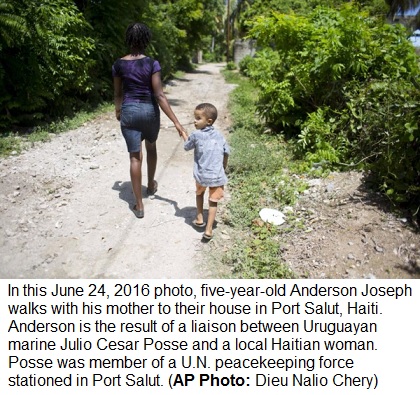
PORT SALUT, Haiti (AP) — The first time Rosa Mina Joseph met Julio Cesar Posse he was hanging out in civilian clothes on the beach in her hometown in southern Haiti, where he was stationed as a member of a U.N. peacekeeping force.

CU Blog - Support sought for kids left behind by UN troops in Haiti - Photo 1

Within weeks, she says, the Uruguayan marine was showing up every weekend at her family’s shack, pledging his love in Spanish and broken Haitian Creole.

But about a year later when his rotation ended, Posse quietly returned home. He left behind Joseph, a broken-hearted 17-year-old with an infant and no way to support the child without depending on struggling relatives.

“He promised me he’d marry me and would take care of me,” Joseph, now 22, tearfully said in a recent interview at her mother’s house in Port Salut, a town along the southwestern tip of Haiti.

After years of mounting frustration, she and several other women with children fathered by peacekeepers say they will now pursue claims for child support against the absentee fathers and the U.N.

Haitian human rights attorney Mario Joseph said he will file civil suits in Haiti this month. Joseph’s law firm also is involved in a high-profile claim on behalf of 5,000 cholera victims who blame the U.N. for introducing the disease. A U.S. federal appeals panel in New York is weighing whether the lawsuit can proceed or if the United Nations is entitled to immunity.

The peacekeeping force was sent to Haiti in 2004 to keep order following a violent rebellion that toppled President Jean-Bertrand Aristide.

Since then, some peacekeepers have been accused of rape and other abuse, of using excessive force and of inadvertently introducing cholera because of inadequate sanitation at a base used by troops from Nepal.

U.N. troops have been accused of sexual exploitation elsewhere as well, most recently in the Central African Republic, and “peacekeeper babies,” have long been a legacy of their deployments, as they have for other military forces throughout history.

Rosa Mina Joseph, whose son was born in 2011, said she received an envelope with $300 in cash from the U.N. two years ago when it established paternity. She had to drop out of school to care for the son and her dreams of becoming a nurse have all but vanished.

Posse sent her $100 once from Uruguay, she said, but has not sent anything more.

While Joseph was a minor at the time she gave birth, potential criminal charges against the marine would confront a difficult legal challenge: U.N. peacekeepers can’t be prosecuted in the countries in which they serve under international agreements.

The Associated Press does not typically identify sexual assault victims, but Joseph gave permission as long as a photo of her face was not published.

“I want him to take responsibility to care for his son because I don’t have the means by myself,” she said in the yard where she spends her days doing laundry and cooking.

The U.N. force in Haiti currently includes 4,899 uniformed personnel, a combination of military and civilian police, from more than a dozen countries. That’s down from over 13,000 peacekeepers following Haiti’s devastating 2010 earthquake.

Ghandi Shukry, head of a Conduct and Discipline Unit in the U.N. mission, which is known by its French acronym MINUSTAH, said 29 claims for paternity have been submitted to the U.N. in Haiti. He said 18 of the claimants have been classified as “victims” by the world body because they were receiving some kind of support.

“We are not facing a current wave of paternity claims. They are all kind of old cases,” said Shukry, stressing that any kind of sexual relations by peacekeepers and locals is prohibited.

The U.N. official confirmed that Joseph and three other Port Salut women represented by the attorney did have paternity established in 2014 after DNA swabs from the mothers, children and peacekeepers were analyzed. He declined to discuss any of the cases in detail.

He said that two members of his unit maintain regular contact with the Port Salut women. MINUSTAH also put the women in touch with a Uruguayan military representative, he said, since the U.N. allows troop-contributing countries to investigate allegations and decide how to pursue paternity claims.

The Port Salut women, however, say contact with U.N. staffers or Uruguay’s military representative is rare and generally bewildering.

A 2015 U.N. report by Secretary-General Ban Ki-moon acknowledged that there were “numerous obstacles to having paternity recognized and to obtaining support for children of United Nations personnel, whether they were born as a result of sexual exploitation and abuse or not.”

MINUSTAH’s uniformed personnel are now barred from leaving bases alone or when wearing civilian clothing and mission rules have changed in recent years to prohibit any fraternization. “Not only sexual relations are prohibited; even having normal relations with the local population is prohibited,” Shukry said.

Uruguay’s Navy spokesman, Capt. Gaston Jaunsolo, acknowledged there have been a small number of paternity cases and said service members found guilty are sanctioned and barred from peacekeeping missions.

He confirmed that Posse continued in the Navy and said service members are forbidden to speak the press without permission. A listed phone number for Posse was out of service. His profile on a social networking site says he’s looking for a young woman between 18 and 25 to start a family with.

The Uruguayan Army issued a statement to AP saying it’s sent roughly 3,000 troops to Haiti since 2011 and four paternity allegations were made against that military branch. There’s been one positive DNA test, the statement said, and no complaints have been made since 2014. It said the soldier who tested positive was punished but not discharged.

Meanwhile, the women struggling to raise their kids in Port Salut are eking out a living with the help of their families. Their children are sometimes teased by other kids who call them “MINUSTAH babies” or mockingly ask where their daddies are.

“When he’s older I’ll find a way to explain things. For now, the only thing I can say is that his father’s not here,” Joseph said as she held a snapshot showing her and Posse together at her 17th birthday party, a heart drawn on the back of it reading “Osemina y Julio.”

___

AP writer Leonardo Haberkorn contributed from Montevideo, Uruguay.

Source: https://www.yahoo.com/news/support-sought-kids-left-behind-un-troops-haiti-040556442.html?ref=gs Posted July 14, 2016; retrieved July 20, 2016.

There is a need for a local Caribbean security solution. The book Go Lean … Caribbean promotes the plan to confederate under a unified entity made up of the Caribbean to provide homeland security to the Caribbean. But homeland security for the Caribbean has a different meaning than some other regions and countries. Though we must be on defense against military intrusions like terrorism & piracy, we mostly have to contend with threats that may imperil the region’s economic engines, and crime remediation and mitigation. The CU security goal is for public safety! This goal is detailed in the book as it serves as a roadmap for the introduction of the technocratic Caribbean Union Trade Federation (CU). The CU is set to optimize Caribbean society through economic empowerment and also security implementations. The book describes that these two dynamics are inextricably linked in the same societal elevation endeavor. In fact, the Go Lean roadmap presents the following 3 prime directives:

  • Optimization of the economic engines in order to grow the regional economy to $800 Billion & create 2.2 million new jobs.
  • Establishment of a security apparatus to protect the resultant economic engines.
  • Improve Caribbean governance to support these engines.

The Go Lean book contends that bad actors will emerge just as a result of economic successes in the region. This point is pronounced early in the book with the Declaration of Interdependence (Page 12) that claims:

x.   Whereas we are surrounded and allied to nations of larger proportions in land mass, populations, and treasuries, elements in their societies may have ill-intent in their pursuits, at the expense of the safety and security of our citizens. We must therefore appoint “new guards” to ensure our public safety and threats against our society, both domestic and foreign. The Federation must employ the latest advances and best practices … to assuage continuous threats against public safety.

xvi. Whereas security of our homeland is inextricably linked to prosperity of the homeland, the economic and security interest of the region needs to be aligned under the same governance. Since economic crimes, including piracy and other forms of terrorism, can imperil the functioning of the wheels of commerce for all the citizenry, the accedence of this Federation must equip the security apparatus with the tools and techniques for predictive and proactive interdictions.

The Caribbean appointing “new guards”, or a security pact to ensure public safety is not so new an endeavor on the world scene; security threats have been a constant in the modern world. Since World War II, the UN, by means of its Security Council have tried to be the “new guard” for mitigating threats around the world. And yet, skirmishes, revolts and uprisings are a constant on the world scene. Yes, the UN has failed on the delivery execution of this charter.

There continues to be the need for intervention around the world. The decisioning of UN Peacekeeping Forces comes from this Security Council. The Council, following a mandate for the maintenance of international peace and security, assigns the Peacekeepers for a wide-variety of engagements. Consider the details of these current engagements in Appendix B below.

During the entire existence of the UN, there has not been a need for Peacekeepers in North America (US, Canada or Mexico) among these NAFTA members. There also has not been a need for Peacekeepers in the 27 member-states that now constitute the European Union – once they joined the EU. The truth is that integrated communities can more effectively provide their own security solutions, as an extension of the economic cooperation. This, an integrated community, is the quest of the CU/Go Lean roadmap, and to model the EU structure in our economic and security implementations.

So the Caribbean appointing “new guards”, or a security pact to ensure justice institutions and public safety in this region is not so revolutionary as a concept on the world scene. It is just what the mature democracies do. The Go Lean roadmap calls for a permanent professional security apparatus with naval and ground (Marine) forces, plus its own Military Justice establishment. This security pact would be sanctioned by all 30 CU member-states. The CU Trade Federation will lead, fund and facilitate this security force, encapsulating all the (full-time or part-time) existing armed forces in the region. This CU Homeland Security Force would get its legal authorization from a legal Status of Forces Agreement signed with the CU treaty enhancements.

This implementation will result in lesser social repercussions, because it will be Caribbean people protecting the Caribbean. So the ramifications as depicted in the foregoing news article, and in the Appendix A below, will be lessened.

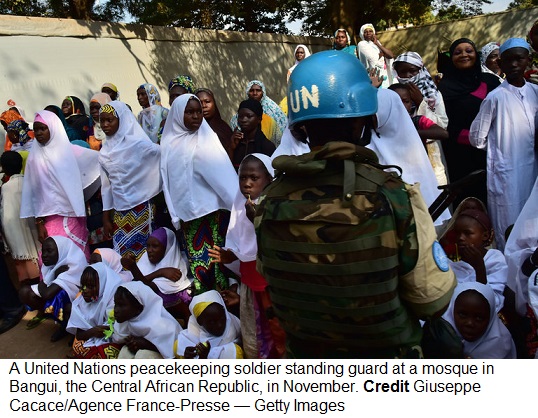
CU Blog - Support sought for kids left behind by UN troops in Haiti - Photo 2This problem detailed in the foregoing news article, has not only been a problem for Haiti and the Caribbean. In recent months, revelations have come forth of inappropriate and unprofessional actions of UN Peacekeeping forces in Africa. There had been accusations and convictions of soldiers abusing women and girls in that and other regions.

The truth is: Power abuses; and absolute power abuses absolutely. So this is not just a Pan-African problem, this is a human rights problem, for even those entities bringing relief, as was the intention in Haiti, can cause distress. Accountability and transparency must therefore be present and evident in all justice initiatives. This is the Go Lean plan for the military establishment; as detailed in the book (Page 177):

Military Justice – The CU will carefully monitor the activities of all military units (Marines, Navy & Coast Guard) – this accountability will be the by-product of increased CU funding. The CU will assume Judge Advocate General (JAG) role for military justice affairs.

This CU Security Apparatus is “Step One, Day One” in the Go Lean roadmap, covering the approach for adequate accountability and control. The Go Lean book details a series of community ethos, strategies, tactics, implementations and advocacies to provide increased public safety & security in the Caribbean region:

Economic Principle – Consequences of Choices Lie in Future Page 21
Community Ethos – Privacy –vs- Public Protection Page 23
Community Ethos – Anti-Bullying and Mitigation Page 23
Community Ethos – “Crap” Happens Page 23
Community Ethos – Minority Equalization Page 24
Community Ethos – Cooperatives Page 25
Community Ethos – Ways to Impact the Greater Good Page 37
Tactical – Confederating a non-sovereign union Page 63
Tactical – Fostering a Technocracy Page 64
Tactical – Separation of Powers – Homeland Security Page 75
Implementation – Start-up Security Initiatives Page 103
Implementation – Ways to Foster International Aid Page 115
Implementation – Reasons to Repatriate Page 118
Planning – Ways to Model the EU Page 130
Planning – Ways to Make the Caribbean Better Page 131
Planning – Ways to Improve Failed-State Indices Page 134
Planning – Lessons Learned from the West Indies Federation Page 135
Planning – Lessons from East Germany Page 139
Planning – Lessons from the American West Page 142
Planning – Lessons from Egypt Page 143
Advocacy – Ways to Grow the Economy Page 151
Advocacy – Ways to Improve Governance Page 168
Advocacy – Ways to Better Manage the Social Contract Page 170
Advocacy – Ways to Improve Leadership Page 171
Advocacy – Ways to Impact Justice – Military Prosecutions Page 177
Advocacy – Ways to Reduce Crime Page 178
Advocacy – Ways to Improve Homeland Security Page 180
Advocacy – Ways to Mitigate Terrorism Page 181
Advocacy – Ways to Improve for Natural Disasters Page 184
Advocacy – Ways to Impact Extractions Page 196
Advocacy – Ways to Improve Fisheries Page 210
Advocacy – Ways to Protect Human Rights Page 220
Advocacy – Ways to Re-boot Haiti Page 238

Other subjects related to security and justice empowerments for the region have been blogged in previous Go Lean…Caribbean commentaries, as sampled here:

https://goleancaribbean.com/blog/?p=7896 The Need for Local Administration: The Logistics of Disaster Relief
https://goleancaribbean.com/blog/?p=7345 ISIS reaches the Caribbean Region
https://goleancaribbean.com/blog/?p=7119 Role Model for the Caribbean: African Standby Force
https://goleancaribbean.com/blog/?p=6247 Tragic images show refugee crisis at a tipping point in Europe
https://goleancaribbean.com/blog/?p=6103 Sum of All Fears – ‘On Guard’ Against Deadly Threats
https://goleancaribbean.com/blog/?p=5462 The Need for Local Administration: The Red Cross’ Missing $500 Million In Haiti Relief
https://goleancaribbean.com/blog/?p=5304 Mitigating the Eventual ‘Abuse of Power’
https://goleancaribbean.com/blog/?p=5183 A Lesson in History – Cinco De Mayo and Mexico’s Security Lapses
https://goleancaribbean.com/blog/?p=5002 Managing a ‘Clear and Present Danger’
https://goleancaribbean.com/blog/?p=4360 Dreading the ‘CaribbeanBasin Security Initiative’
https://goleancaribbean.com/blog/?p=1965 America’s Navy – 100 Percent – Model for Caribbean
https://goleancaribbean.com/blog/?p=1554 Status of Forces Agreement = Security Pact
https://goleancaribbean.com/blog/?p=1531 A Lesson in History: 100 Years Ago – Root Causes of World War I
https://goleancaribbean.com/blog/?p=1076 Trinidad Muslims travel to Venezuela for Jihadist training
https://goleancaribbean.com/blog/?p=809 Muslim officials condemn abductions of Nigerian girls
https://goleancaribbean.com/blog/?p=535 Remembering and learning from Boston
https://goleancaribbean.com/blog/?p=273 10 Things We Want from the US – #4: Pax Americana

The narrative in the foregoing news article is a “tale as old as time”:

Boy meets girl…
Boy protects girl.
Girl likes boy.
Boy seduces girl and leaves her with a baby … with no regard for future support.

This narrative, though sad, is not uniquely Caribbean nor United Nations. It is just a human (rights) story.

Better command of human rights and security in the Caribbean will lead to mitigation of these sad scenarios.

Charity … (and security) begins at home.

We know that “bad actors” will always emerge; we do not want a few “bad actors” – as in the violent rebellion that toppled Haiti’s President Jean-Bertrand Aristide in 2004 – disrupting the peace of our 42 million Caribbean residents, or the 80 million visitors.

We know too that “wolves, sometimes dressed in “sheep’s clothing”, will always come to prey on the sheep”. This means you: UN Peacekeeper Julio Cesar Posse, who deflowered the innocent 17 year-old girl; and this means you of the UN Peacekeepers who were agitators – though not intentional – of the cholera disease resulting in 5,000 victims in Haiti.

The quest of the CU/Go Lean roadmap is better security and better justice executions for the people of the Caribbean region. Underlying to the prime directive of elevating the Caribbean societal engines – economics, security and governing – is the desire to simply make the Caribbean homeland, a better place to live, work and play.

Let’s do “this” … ourselves. 🙂

Download the book Go Lean … Caribbean – now!

————–

Appendix A Peacekeeping, human trafficking, and forced prostitution

Reporters witnessed a rapid increase in prostitution in Cambodia and Mozambique after UN peacekeeping forces moved in. In the 1996 U.N. study “The Impact of Armed Conflict on Children”, former first lady of Mozambique Graça Machel documented: “In 6 out of 12 country studies on sexual exploitation of children in situations of armed conflict prepared for the present report, the arrival of peacekeeping troops has been associated with a rapid rise in child prostitution.”[17]

Gita Sahgal spoke out in 2004 with regard to the fact that prostitution and sex abuse crops up wherever humanitarian intervention efforts are set up. She observed: “The issue with the UN is that peacekeeping operations unfortunately seem to be doing the same thing that other militaries do. Even the guardians have to be guarded.”[18]

Source: Retrieved July 14, 2016 from: https://en.wikipedia.org/wiki/Child_sexual_abuse_by_UN_peacekeepers

—————

Appendix B – Current Deployment (16)

Source: https://en.wikipedia.org/wiki/List_of_United_Nations_peacekeeping_missions

Africa

Start of operation Name of Operation Location Conflict Website
1991 United Nations Mission for the Referendum in Western Sahara (MINURSO) Western Sahara Western Sahara conflict [56]
2003 United Nations Mission in Liberia (UNMIL) Liberia Second Liberian Civil War [57]
2004 United Nations Operation in Côte d’Ivoire (UNOCI) Côte d’Ivoire Civil war in Côte d’Ivoire [58]
2007 United Nations/African Union Mission in Darfur (UNAMID) Sudan War in Darfur [59]
2010 United Nations Organisation Stabilisation Mission in the Democratic Republic of the Congo (MONUSCO) Congo Kivu conflict [60]
2011 United Nations Interim Security Force for Abyei (UNISFA) Sudan Abyei conflict [61]
2011 United Nations Mission in the Republic of South Sudan (UNMISS) South Sudan Ethnic violence in South Sudan
South Sudanese Civil War
[62]
1 July 2013 Multidimensional Integrated Stabilisation Mission in Mali (MINUSMA) Mali Northern Mali conflict [63]
2014 United Nations Multidimensional Integrated Stabilisation Mission in the Central African Republic (MINUSCA) Central African Republic Central African Republic conflict [64]

Americas

Start of operation Name of Operation Location Conflict Website
2004 United Nations Stabilisation Mission in Haiti (MINUSTAH) Haiti 2004 Haiti rebellion [65]

Asia

Start of operation Name of Operation Location Conflict Website
1949 United Nations Military Observer Group in India and Pakistan (UNMOGIP) Kashmir Kashmir conflict [66]

Europe

Start of operation Name of Operation Location Conflict Website
1964 United Nations Peacekeeping Force in Cyprus (UNFICYP) Cyprus1 Cyprus dispute [67]
1999 United Nations Interim Administration Mission in Kosovo (UNMIK) Kosovo2 Kosovo War [68]

Middle East

Start of operation Name of Operation Location Conflict Website
1948 United Nations Truce Supervision Organisation (UNTSO) Middle East (Monitors the various ceasefires and assists UNDOF and UNIFIL) [69]
1974 United Nations Disengagement Observer Force (UNDOF) Golan Heights Agreed withdrawal by Syrian and Israeliforces following the Yom Kippur War. [70]
1978 United Nations Interim Force in Lebanon (UNIFIL) Lebanon Israeli invasion of Lebanon and 2006 Israel-Lebanon conflict [71]


Share this post:
, ,
[Top]

Bahamas Issued US Travel Advisory Citing Police Violence

Go Lean Commentary

The news in the below article is common … the other way around.

The United States government frequently post Travel Advisories for tourists to foreign countries, even the Caribbean in general and the Bahamas – the country of focus – in particular. But this time, the tables are turned. See the Travel Alert preceded by a related news article here:

Title: The Bahamas Just Issued A Travel Advisory For The U.S., Citing Police Violence
By:Salvador Hernandez, BuzzFeed News Reporter

CU Blog - Bahamas Issued US Travel Advisory Citing Police Violence - Photo 1

Sub-title: “Young males are asked to exercise extreme caution in affected cities in their interactions with the police. Do not be confrontational.”

The Bahamas on Friday issued a travel advisory [as follows] for citizens planning to go to the United States, warning them about the tensions in some cities over the shooting of young black men.

“Do not get involved in political or other demonstrations under any circumstances and avoid crowds,” the government warned.

The Ministry of Foreign Affairs and Immigration specifically warned young males to be aware of how they interact with U.S. police officers, telling them to “exercise extreme caution.”

“In particular, young males are asked to exercise extreme caution in affected cities in their interactions with the police,” the advisory states. “Do not be confrontational and cooperate.”

The advisory comes after five officers in Dallas were shot and killed Thursday by a sniper targeting police. Seven other officers were injured in the attack.

About 800 protesters were marching in the Dallas after police killings of black men in Louisiana and Minnesota. On Friday, protests against police violence against black men also occurred in Atlanta, New York, and Phoenix.

The warning from the Ministry of of Foreign Affairs was also posted on the government’s Ministry of Environment and Housing Facebook page, and Consulate General’s New York website, and its own Facebook page.

The U.S. issues similar advisories when violence has broken out in other countries. For example, the State Department issued travel advisories for France after the terror attacks in Paris, in Bangladesh after 20 hostages were killed, and Mexico during a wave of drug cartel violence.

While some countries have warned its citizens about crime in foreign cities, a warning about possible unrest in the U.S. is uncommon.

An official with the U.S. Department of State declined to comment on the warning issued by the Bahamas.

———–

Alert!

Ministry of Foreign Affairs and Immigration Issues Travel Advisory for Bahamians traveling to United States of America

CU Blog - Bahamas Issued US Travel Advisory Citing Police Violence - Photo 2

For Immediate Release

8 July 2016

The Ministry of Foreign Affairs and Immigration has taken a note of the recent tensions in some American cities over shootings of young black males by police officers.

At the commencement of the Independence holiday weekend, many Bahamians will no doubt use the opportunity to travel, in particular to destinations in the United States.

We wish to advise all Bahamians traveling to the US but especially to the affected cities to exercise appropriate caution generally. In particular young males are asked to exercise extreme caution in affected cities in their interactions with the police. Do not be confrontational and cooperate.

If there is any issue please allow consular offices for The Bahamas to deal with the issues. Do not get involved in political or other demonstrations under any circumstances and avoid crowds.

The Bahamas has consular offices in New York, Washington, Miami and Atlanta and honorary consuls in Los Angeles, Denver, Chicago and Houston.

Their addresses are on the Ministry’s website – mofa.gov.bs

Pay attention to the public notices and news announcements in the city that you are visiting.

Be safe, enjoy the holiday weekend and be sensible.

Source: Posted July 8, 2016 from: http://mofa.gov.bs/ministry-of-foreign-affairs-and-immigration-issues-travel-advisory-for-bahamians-traveling-to-united-states-of-america/

——————-

VIDEO – Officer lashes out at ‘racist’ cops in viral video – http://www.cnn.com/videos/us/2016/07/09/officer-lashes-out-racist-cops-viral-video-newday.cnn

Cleveland police officer Nakia Jones posted a video on Facebook strongly criticizing “racist” police officers. Source: CNN

This is not a “cry wolf” scenario; there have been some real tragic episodes impacting the American social order… especially this week. Consider this recap:

  • A Facebook video vent viral showing white police officers killing a black man, Alton Sterling, in Baton Rouge, Louisiana on Tuesday.
  • A Facebook video vent viral showing a white police officer killing a black man, Philando Castile, in Minneapolis, Minnesota on Wednesday.
  • On Thursday, a sniper – Micah Johnson, a Black man – opened fire on white police officers protecting a protest rally in Dallas, Texas by the Black Lives Matter movement, killing 5 officers and injuring 7 others, claiming to be enraged by the Cop-on-Black killings above.

Yes, there is the need for this unprecedented* advisory.

According to the book Go Lean…Caribbean, advisories of this sort need to be permanent, not just temporary. This is due to the many societal distresses incurred by Bahamians and Caribbean citizens traveling to the US for permanent residency; these ones should be warned. This book posits that it is easier for the Black-and-Brown populations of the Caribbean to prosper where planted in the Caribbean rather than fleeing to the US for refuge.

Neither societies are perfect! But the Go Lean book asserts that the societal engines in the Caribbean are easier to optimize than the societal defects in the American homeland.

The Go Lean book and movement serves as a roadmap for the introduction of the technocratic Caribbean Union Trade Federation (CU). With the word ‘Trade‘ in the CU‘s branding, obviously the CU is set to optimize Caribbean society through economic empowerment; but the truth of the matter is that the security dynamics of the region are inextricably linked to this economic endeavor. Therefore the Go Lean roadmap has 3 prime directives:

  • Optimization of the economic engines in order to grow the regional economy to $800 Billion & create 2.2 million new jobs.
  • Establishment of a security apparatus to ensure public safety and protect the economic engines.
  • Improve Caribbean governance to support these engines.

The Go Lean roadmap posits that the Caribbean region must work to optimize its society. So the request is that all Caribbean member-states form and empower a federal government to execute a limited scope on Caribbean nations and territories.  The goal is to confederate under a unified entity for both economic and security causes. The Caribbean’s public safety must be holistic!

The Go Lean roadmap puts the focus on the Greater Good. This is defined as “the greatest good to the greatest number of people which is the measure of right and wrong.” – Jeremy Bentham (1748-1832).

The US has bad actors.

The Caribbean has bad actors.

The Bahamas has bad actors.

The book contends that bad actors emerges just as a result of economic success. This point is pronounced early in the book with the Declaration of Interdependence (Page 12) that claims:

x.   Whereas we are surrounded and allied to nations of larger proportions in land mass, populations, and treasuries, elements in their societies may have ill-intent in their pursuits, at the expense of the safety and security of our citizens. We must therefore appoint “new guards” to ensure our public safety and threats against our society, both domestic and foreign. The Federation must employ the latest advances and best practices … to assuage continuous threats against public safety.

xvi. Whereas security of our homeland is inextricably linked to prosperity of the homeland, the economic and security interest of the region needs to be aligned under the same governance. Since economic crimes, including piracy and other forms of terrorism, can imperil the functioning of the wheels of commerce for all the citizenry, the accedence of this Federation must equip the security apparatus with the tools and techniques for predictive and proactive interdictions.

The Caribbean appointing “new guards”, or a security pact to ensure public safety is a comprehensive endeavor, encapsulating the needs of all Caribbean stakeholders: governments, institutions and residents.

As the Bahamas Ministry of Foreign Affairs give a travel advisory to Black Bahamians (90% of population) traveling to the US to avoid danger in interacting with the US police establishment, the planners for an elevated Caribbean society, the Go Lean movement, give warning that the presence and practices of our American neighbors are not always benevolent for us in the Caribbean.

This is a mission of the Go Lean roadmap, to dissuade the high emigration rates of Caribbean citizens to the American homeland.

Why do they flee?

“Push” and “pull” reasons.

Where as “push” refers to the societal defects in the Caribbean that moves people to want to get away, “pull” factors, on the other hand, refer to the impressions and perceptions that America is better.

These travel advisories now say to Caribbean people: America could be harmful to your health and welfare!

Touché

Let’s hope these advisories lower the “pull” factors.

The Go Lean book details a series of community ethos, strategies, tactics, implementations and advocacies to provide better optimized Caribbean life (economic and security concerns):

Community Ethos – Consequences of Choices Lie in Future Page 21
Community Ethos – Economic Principle – Consequences of Choices Lie in Future Page 21
Community Ethos – Privacy –vs- Public Protection Page 23
Community Ethos – Intelligence Gathering Page 23
Community Ethos – “Crap” Happens Page 23
Community Ethos – Minority Equalization Page 24
Community Ethos – Cooperatives Page 25
Community Ethos – Ways to Manage Reconciliations Page 34
Community Ethos – Ways to Improve Sharing Page 35
Community Ethos – Ways to Impact the Greater Good Page 37
Tactical – Confederating a non-sovereign union Page 63
Tactical – Fostering a Technocracy Page 64
Tactical – Separation of Powers – CU Federal Agencies -vs- Member-states Page 75
Implementation – Ways to Pay for Change Page 101
Implementation – Start-up Foreign Policy Initiatives Page 102
Implementation – Start-up Security Initiatives Page 103
Implementation – Reasons to Repatriate Page 118
Planning – Big Ideas – Regional Single Market Page 127
Planning – Ways to Make the Caribbean Better Page 131
Planning – Ways to Better Manage the Caribbean Image Page 133
Advocacy – Ways to Grow the Economy Page 151
Advocacy – Ways to Create Jobs Page 152
Advocacy – Ways to Improve Governance Page 168
Advocacy – Ways to Better Manage the Social Contract Page 170
Advocacy – Ways to Improve Leadership Page 171
Advocacy – Ways to Impact Justice Page 177
Advocacy – Ways to Reduce Crime Page 178
Advocacy – Ways to Improve Homeland Security Page 180
Advocacy – Ways to Improve Intelligence Gathering/Analysis Page 182
Advocacy – Ways to Improve for Natural Disasters – Many flee after disasters Page 184
Advocacy – Ways to Impact the Diaspora Page 217
Advocacy – Ways to Preserve Caribbean Heritage Page 218
Advocacy – Ways to Protect Human Rights Page 220
Advocacy – Ways to Impact Urban Living Page 234
Advocacy – Ways to Impact US Territories Page 244

If only we had Caribbean member-states giving travel advisories to Caribbean citizens in the past; with warnings like:

Caution: Abandoning  your homeland is bad for you … and your homeland.

… or …

Caution: The grass is not greener on the other side.

This subject of “push and pull” has been frequently blogged on in other Go Lean commentaries; as sampled here with these entries muting American “pull” factors:

https://goleancaribbean.com/blog/?p=8202 Respect for Minorities: Lessons Learned from American Dysfunction
https://goleancaribbean.com/blog/?p=8200 Respect for Minorities: Climate of Hate
https://goleancaribbean.com/blog/?p=8099 Caribbean Image: ‘Less Than’?
https://goleancaribbean.com/blog/?p=7221 Street naming for Martin Luther King unveils the real America
https://goleancaribbean.com/blog/?p=7204 ‘The Covenant with Black America’ – Ten Years Later
https://goleancaribbean.com/blog/?p=6189 A Lesson in History – Hurricane ‘Katrina’ exposed a “Climate of Hate”
https://goleancaribbean.com/blog/?p=5733 Better than America? Yes, We Can!
https://goleancaribbean.com/blog/?p=5527 American Defects: Racism – Is It Over?
https://goleancaribbean.com/blog/?p=5333 Racial Legacies: Cause and Effect
https://goleancaribbean.com/blog/?p=5304 Mitigating the Eventual Abuse of Power
https://goleancaribbean.com/blog/?p=4863 Video Evidence of American Injustice
https://goleancaribbean.com/blog/?p=4360 Dreading the American: ‘Caribbean Basin Security Initiative’
https://goleancaribbean.com/blog/?p=1020 A European Sport’s Problem with Blatant Racism – Also Relevant
https://goleancaribbean.com/blog/?p=546 American Model: Book Review – ‘The Divide’ – … Injustice in the Age of the Wealth Gap
https://goleancaribbean.com/blog/?p=341 Hypocritical US slams Caribbean human rights practices
https://goleancaribbean.com/blog/?p=273 10 Things We Don’t Want from the US: Racism against immigrants

Underlying to the prime directive of elevating the economics, security and governing engines of the Caribbean, is the desire to make the Caribbean homeland, a better place to live, work and play. We know “bad actors” will emerge – they always do – so travel advisories will continue to be issued on both sides: Caribbean  and American. We want proactive and reactive mitigations to ensure our Caribbean communities are safe for our stakeholders (residents and visitors). We entreat the American forces to work towards ensuring safety for our Caribbean citizens when they are visiting or studying in the US. We do not want “bad actors” in either homeland disrupting the peace.

The Go Lean roadmap was composed with the community ethos of the Greater Good foremost; “the needs of the many outweighing the needs of the few” (Page 37). All Caribbean stakeholders are hereby urged to lean-in to this roadmap. 🙂

Download the book Go Lean … Caribbean – now!

—————

* Appendix – Unusual Advisories on Travel to the United States

News Article Title: 25 Unusual Foreign Travel Warnings for Visiting the U.S. By: Shaunacy Ferro

What do foreign tourists worry about when they visit the U.S.? Expensive emergency healthcare, overly sensitive attitudes towards nude sunbathing, and gross tap water, apparently. That’s according to travel warnings for potential U.S. tourists from around the world. These government-issued advisories can seem like common sense for Americans, but they also reveal significant cultural differences between the U.S. and other countries.

Most countries warn their citizens of America’s high rates of both firearm possession and crime. Don’t anger Americans, several countries subtly hint, lest they have a gun. Many warn visitors to get travel insurance since, unlike at home, they won’t be covered by a national healthcare system should they get injured. Others provide even more specific advice to avoid certain neighborhoods and businesses. Here are 25 unexpected travel warnings from around the world aimed at those visiting the U.S. [(Click here for the actual details of each of these headlines)]:

1.  DON’T GET RIPPED OFF AT AN ORLANDO GAS STATION (UK)

2. TAKE CARE OF THE FLOWERS (CHINA

3. DO NOT USE HOTMAIL OR GMAIL (AUSTRALIA)

4. DO NOT STALK ANYONE (GERMANY)

5. WATCH OUT FOR GUNS AT NIGHTTIME (CANADA)

6. STAY AWAY FROM THE EAST COAST (CHINA

7. REALLY, WATCH OUT FOR GUNS (GERMANY)

8. DOORS MIGHT BE CLOSED (RUSSIA

9. DO NOT INSPIRE ROAD RAGE (CHINA

10. DO NOT TALK TO PROSTITUTES (GERMANY)

11. DON’T PEE IN THE STREET (SWITZERLAND

12. DON’T JOKE ABOUT BOMBS (UK)

13. TRY TO AVOID BEING NAKED (GERMANY

14. FEEL FREE TO SHACK UP (AUSTRIA)

15. DON’T CUT IN LINE (CHINA

16. DON’T EXPECT AIR TRAVEL TO BE SAFE (CANADA)

17. VACCINES DON’T CAUSE AUTISM (MEXICO)

18. THE TAP WATER TASTES GROSS (AUSTRIA

19. THE AMERICAN DREAM ISN’T REAL (RUSSIA

20. EXPECT HARASSMENT IN ARIZONA (MEXICO) 

21. YOU MIGHT GET EXTRADITED (RUSSIA

22. WATCH OUT FOR EXPENSIVE DOCTOR VISITS (AUSTRALIA)

23. DON’T LEAVE TRASH IN YOUR CAR (CANADA)

24. TAXI DRIVERS KNOW NOTHING (RUSSIA

25. PAY YOUR TRAFFIC TICKETS (GERMANY)

Source: Retrieved July 9, 2016 from: http://mentalfloss.com/article/68276/25-unusual-foreign-travel-warnings-visiting-us


Share this post:
, , , ,
[Top]

A Lesson in Economic Fallacies – Casino Currency – US Dollars?

Go Lean Commentary

CU Blog - Casino Currency - US Dollars Not The Only Option - Photo 1If you go to a casino and win in their games of chance, what do you win?

If you go to a casino and lose in their games of chance, what do you lose?

In both cases the answer is money.

This is still true even though the gamer may cash-in the common currency of a country at the start of the session for tokens, chips or e-Cards. The tokens or chips become a nominal or fiat currency themselves; their value is set by the issuer to be any denomination they want – they may choose to make $100 chips Blue, $1000 chips Green and $10,000 chips Red or any combination. The only thing that matters is the cash-out process: when the gamers wants to receive real world currency value for any chips in hand.

Yes, this is the business model of casinos, but it is based on the principles of economics. The quest to reform and transform Caribbean economy could be based on this model; this is the case with the book Go Lean … Caribbean. The book details the mission to elevate the Caribbean societal engines starting with economics, or more simply: money. This brings so many questions to the fore:

What is money and how do we define it? Why must we define it? Aren’t we all familiar with the dynamics of the money or currency in our wallets and purses? How does the common currency fit into this discussion?

First the definition is important so as to dispel the concern about currency as opposed to money; money is not just currency and currency is not just money. Currency relates to a national designation (US dollar, British pounds, Chinese Yuan) or a regional designation like the Euro or the Eastern Caribbean/EC dollar. Money, on the other hand is a matter of four (4) functions [22]:

A Medium – When money is used to intermediate the exchange of goods and services, it is performing a function as a medium of exchange. Money’s most important usage is as a method for comparing the values of dissimilar objects.

A Measure – A unit of account is a standard numerical monetary unit of measurement of the market value of goods, services, and other transactions. Also known as a “measure” or “standard” of relative worth and deferred payment, a unit of account is a necessary prerequisite for the formulation of commercial agreements that involve debt. Money acts as a standard measure and common denomination of trade. It is thus a basis for quoting and bargaining of prices.

A Standard – A “standard of deferred payment” is an accepted way to settle a debt – a unit in which debts are denominated, and the status of money as legal tender, that may function for the discharge of debts. When debts are denominated in money, the real value of debts may change due to inflation and deflation.

A Store – Money acts as a store of value; it must be able to be reliably saved, stored, and retrieved – and be predictably usable as a medium of exchange when it is retrieved. The value of the money must also remain stable over time. Some have argued that inflation, by reducing the value of money, diminishes the ability of money to function as a store of value.
Source: Retrieved July 10 from: https://en.wikipedia.org/wiki/Money#Functions

CU Blog - Casino Currency - US Dollars Not The Only Option - Photo 1bCasino currencies (tokens, chips and e-Cards) perform all these 4 functions; and more – see the Appendix VIDEO below. The common currency for casino operations can be any currency the operators designate; so why do Caribbean operators always designate US dollars?

This question exposes an Economic Fallacy in the Caribbean region, that significant financial transactions must be in US dollars ($), even in Caribbean casinos. While this must be addressed and remediated, obviously the issues at hand are bigger than just Casino gaming. No, the issues in this commentary address technocratic management for currencies in general.

This commentary is the 6 of 6 from the Go Lean movement on the subject of Economic Fallacies. As related in the previous submissions in this series, the situation in the Caribbean region is likened to the imagery of an animal foraging for food, but then gets distracted and “chases a squirrel up a tree”. The squirrel in the tree will never be a meal; it is just a waste of time and energy for the animal. This analogy conveys the waste of time associated with a frivolous and fallacious pursuit. The other commentaries detailed in this series are as follows:

  1. Independence – Hype of Hope
  2. Austerity – Book Review: Mark Blyth’s “History of a Dangerous Idea”
  3. Education & Student Loans – Not a good Return on Investment
  4. Phillips Curve – Fallacy of Minimum Wage
  5. Self-regulation of the Centers of Economic Activity
  6. Casino Currency – US Dollars?

All of these commentaries are economic in nature. They refer to rules for managing the valuable resources of time, talents and treasuries. There are rules for winning and common mistakes that results in losing. Normally these fallacies are easily discernible after the fact, more so than before hand. So history and good-bad lessons on currency management can be extremely helpful to our Caribbean quest. This is a mission of the Go Lean book, to fortify a strong monetary foundation to ensure forward progress in currency matters in the region.

This book Go Lean…Caribbean serves as a roadmap to introduce and implement the technocratic Caribbean Union Trade Federation (CU) and the Caribbean Central Bank or CCB (a cooperative of central banks), to serve as a regional/super-national entity to shepherd the economic, security and governing engines of the 30 Caribbean member-states. Being technocratic includes studying and applying best-practices, while avoiding fallacies in government oversight. This mission was pronounced in the Go Lean book with this quotation (Page 45):

Fortify the stability of our mediums of exchange, by facilitating our monetary needs through a Currency Union, the Caribbean Dollar (C$), and establishing a Caribbean Central Bank.

There are economic challenges facing the Caribbean, including within the banking community. There is the need for some comprehensive solutions for all of the 30 member-states in the Caribbean. Many of the countries are independent states (16); the remainder are overseas territories of major powers: 6 British, 3 Dutch/Netherlands, 3 French and the 2 American: US Virgin Islands (USVI) and Puerto Rico (PR).

According to the Go Lean book (Page 150), many non-American Caribbean territories – British overseas Territory of the Turks & Caicos Islands, plus the Dutch territories of Bonaire, Sint Eustatius, Saba – use the US dollar as their primary currency.

The historicity of central banking in Puerto Rico helps us to understand how the concepts of fiat currencies can be structured to elevate the regional economy. See the encyclopedic reference here regarding this subject:

Title: Puerto Rico and Central Banking
Central Banking was established in Puerto Rico during its Spanish colonial days. The island began producing banknotes in 1766,  becoming the first colony in the Spanish Empire to print 8-real banknotes with the Spanish government’s approval. After the dissolution of Spain’s New World Empire with the independence of the mainland countries (Mexico, Central and South America, etc), the colonial government in Puerto Rico ordered the issue of provincial banknotes, creating the Puerto Rican peso. However, printing of these banknotes ceased after 1815. During the following decades, foreign coins became the widespread currency. In the 1860s and 1870s, banknotes re-emerged. On February 1, 1890, the Spanish Bank of Puerto Rico (Banco Español de Puerto Rico) was inaugurated and began issuing banknotes, followed 5 year later with peso coins.

On August 13, 1898, the Spanish–American War ended with Spain ceding Puerto Rico to the United States. The Banco Español de Puerto Rico was renamed Bank of Porto Rico and issued bills equivalent to the United States dollar, creating the Puerto Rican dollar. In 1902, the First National Bank of Porto Rico issued banknotes in a parallel manner. Two more series were issued until 1913. After Puerto Rico’s economy and monetary system was fully integrated into the United States’ economic and monetary system, the Puerto Rican dollars were redeemed for those issued by the United States Treasury.

Today, Central Banking in the Commonwealth of Puerto Rico is expressed through 2 governmental entities, one local and one at the US Federal level. The local entity is the Government Development Bank (GDB) of Puerto Rico. The GDB, established in 1942, is the government bond issuer, intragovernmental bankfiscal agent, and financial advisor of the government of Puerto Rico.[1][2] The bank, along with its subsidiaries and affiliates, serves as the principal entity through which Puerto Rico channels its issuance of bonds. As an overview from Wikipedia.com, the different executive agencies of the government of Puerto Rico and its government-owned corporations either issue bonds with the bank as a proxy, or owe debt to the bank itself (as the bank is a government-owned corporation as well).

CU Blog - Casino Currency - US Dollars Not The Only Option - Photo 2On the US federal basis, Puerto Rico is part of the Second District, Federal Reserve Bank of New York (popularly known as the New York Fed), in its representation before the US Federal Reserve System.

The Federal Reserve Bank of New York is one of the 12 Federal Reserve Banks of the United States. It is located at 33 Liberty Street, New York, NY. It is responsible for the Second District of the Federal Reserve System, which encompasses New York State, the 12 northern counties of New Jersey, Fairfield County in Connecticut, Puerto Rico, and the U.S. Virgin Islands. Working within the Federal Reserve System, the New York Federal Reserve Bank implements monetary policy, supervises and regulates financial institutions[1] and helps maintain the nation’s payment systems.[2] See Appendix below for more details on the “New York Fed”.
Source: Retrieved July 10, 2016 from: https://en.wikipedia.org/wiki/Currencies_of_Puerto_Rico

Puerto Rico is indicative of the dysfunction in the Caribbean region – this Commonwealth is in crisis – despite almost 4 million people on the island, monetary decisions are made in New York City. The Go Lean movement (book and blogs) has consistently maintained that Caribbean problems need Caribbean solutions. The monetary policies for Puerto Rico are being made by the same stakeholders making monetary decisions for the United States. The New York Fed handles 65% of the total Federal Reserve Fedwire transactions; neither PR nor USVI register high on their priorities.

As previously related, the US Territories may have a voice in Washington, but they have no vote. Considering the downward spiral of PR’s economy  in recent years, they should not look to others for their long-term solutions. It is a fallacy to think that Caribbean people will be prioritized by foreign masters, thousands of miles away.

Caribbean people – all 30 member-states – need to come to our own aid. The Go Lean book quotes the lyrics from this song:

If there is a load you have to bear
That you can’t carry
I’m right up the road
I’ll share your load
If you just call me
—- Song: Lean On Me; Songwriters: Bill Withers

With the Go Lean roadmap, change will come to the island of Puerto Rico and all the Caribbean. The changes will include a single currency for a Caribbean Single Market, the Caribbean Dollar (C$). There are economic benefits galore. One such benefit is the money multiplier; the Go Lean book (Page 22) defines it as:

In monetary macroeconomics and banking, the money multiplier measures how much the money supply increases in response to a change in the monetary base…. there is a multiplier associated with the currency in the money supply. Therefore it goes without saying that if the Caribbean member-states trade in US dollars, then the multiplier effect is extended to the United States of America. By contrast, if the Caribbean member-states trade in Euros, then the multiplier effect goes to the stakeholders of the European Central Bank – no Caribbean state. Therefore the communities of the Caribbean must embrace, as an ethos, its own currency, the Caribbean Dollar (managed by a technocratic Caribbean Central Bank), thereby bringing local benefits from local multipliers.

Desisting from economic fallacies, there is a dose of reality in the Go Lean roadmap: the US will not allow its territories to wean off the US dollar as the currency base. But there is no controversy if the Caribbean dollar is an electronic currency for PR and USVI.

This is the plan!

The CCB, a cooperative of the existing central banks, will consolidate all reserves for the member central banks. The reserves will be a basket of currencies from the world’s most impactful currencies. Yes, that includes the US, but other currencies too. The roadmap calls for the following basket currencies to constitute Caribbean reserves:

  • US dollar
  • British pounds
  • Euros
  • Japanese Yen or Chinese Yuans

CU Blog - Casino Currency - US Dollars Not The Only Option - Photo 4There is the opportunity for the C$ deployed by the CCB to be an all electronic card/payment system; see photo here. Just like in the foregoing casino scenario, there is only the need to deliver the reserve currency, at cash-out time when an individual or company has to remit the funds in any basket currency outside the Caribbean region.

An all-electronic card would mean local transactions conducted electronically. With the onset of credit cards, debit cards and payment cards in the region as the preferred payment method, this scheme becomes more viable. Electronic settlements also allow for the easy calculation and collection of State Sale Taxes and VAT. Other benefits include:

  • Free Foreign Exchange to convert back to basket currencies – then cardholders will be more inclined to leave stored value balance on the card.
  • Free Foreign North-South Remittances: Free for these basket currencies transactions, so as to accumulate balances in the CCB “our” account.

Since casino operations can transact in any fiat currency, the Go Lean roadmap calls for modeling casinos and launching the C$ as a fiat, accounting-value-only currency at first and then eventually to graduate to banknotes and coins. This is the exact model of the Euro currency during its launch.  The EU/Euro case study provide lessons – foreign currency, inflation, sovereign defaults – that must be applied in the technocratic administration of the CU/CCB/C$. Since the Go Lean roadmap calls for the CCB to be a cooperative entity of the existing central banks in the region, this will foster interdependence among the Caribbean neighboring member-states. This need for regional stewardship of Caribbean currencies was pronounced early in the book, in the opening Declaration of Interdependence (Page 13) with these statements:

xxiv. Whereas a free market economy can be induced and spurred for continuous progress, the Federation must install the controls to better manage aspects of the economy: jobs, inflation, savings rate, investments and other economic principles. Thereby attracting direct foreign investment because of the stability and vibrancy of our economy.

xxv. Whereas the legacy of international democracies had been imperiled due to a global financial crisis, the structure of the Federation must allow for financial stability and assurance of the Federation’s institutions. To mandate the economic vibrancy of the region, monetary and fiscal controls and policies must be incorporated as proactive and reactive measures. These measures must address threats against the financial integrity of the Federation and member-states.

The planners of this new Caribbean monetary regime has documented hard-learned lessons on the issue of currency in the Caribbean region and elsewhere; (many CU member-states endured painful currency fluctuations over the past decades – on more than one occasion). So we accept that any attempt to reboot the Caribbean economic landscape must first start with a strenuous oversight of the proposed regional C$ currency.

The Go Lean book, and previous blog/commentaries, stressed the key community ethos, strategies, tactics, implementations and advocacies necessary to establish a strong Caribbean financial eco-systems and a strong currency. These points are detailed in the book; see this sample from the book as follows:

Community Ethos – Economic Principles – Economic Systems Influence Individual Choices Page 21
Community Ethos – Economic Principles – Voluntary Trade Creates Wealth Page 21
Community Ethos – Economic Principles – Consequences of Choices Lie in the Future Page 21
Community Ethos – Economic Principles – Money Multiplier Page 22
Community Ethos – Governing Principles – Lean Operations Page 24
Community Ethos – Governing Principles – Return on Investments Page 24
Community Ethos – Ways to Impact the Future – Count on the Greedy to be Greedy Page 26
Community Ethos – Ways to Impact the Greater Good Page 37
Strategy – Mission – Fortify the Stability of the Securities Markets Page 45
Strategy – Provide Proper Oversight and Support for the Depository Institutions Page 46
Strategy – e-Payments and Card-based Transactions Page 49
Tactical – Growing the Economy – Minimizing Bubbles Page 69
Tactical – Separation-of-Powers – Depository Insurance & Regulatory Agency Page 73
Anecdote – Turning Around CARICOM – Effects of 2008 Financial Crisis Page 92
Implementation – Assemble Caribbean Central Bank as a Cooperative Page 96
Implementation – Ways to Better Manage Debt – Optimizing Wall Street Role Page 114
Planning – 10 Big Ideas – Single Market / Currency Union Page 127
Planning – Lessons Learned from 2008 – Managing Economic Crises Page 136
Planning – Lessons Learned from New York City – Metro Card Payment Regime Page 137
Planning – Ways to Measure Progress Page 147
Anecdote – Caribbean Currencies Page 149
Advocacy – Ways to Grow the Economy Page 151
Advocacy – Ways to Control Inflation Page 153
Advocacy – Ways to Better Manage Foreign Exchange (fx) Page 154
Advocacy – Reforms for Banking Regulations Page 199
Advocacy – Ways to Impact Wall Street Page 200
Appendix – New York City Economy Details Page 277
Appendix – Tool-kits for Capital Controls Page 315
Appendix – Lessons Learned from Floating the Trinidad & Tobago Dollar Page 316
Appendix – Controlling Inflation – Technical Details Page 318
Appendix – e-Government and e-Payments Example: EBT Page 353

The points of effective, technocratic currency/monetary stewardship, were further elaborated upon in these previous blog/commentaries:

https://goleancaribbean.com/blog/?p=7140 Azerbaijan sets its currency on free float
https://goleancaribbean.com/blog/?p=7034 The Future of Money
https://goleancaribbean.com/blog/?p=6800 Venezuela sues black market currency website in US
https://goleancaribbean.com/blog/?p=5668 Move over Mastercard/Visa
https://goleancaribbean.com/blog/?p=4166 A Lesson in History – Panamanian Balboa
https://goleancaribbean.com/blog/?p=3858 European Central Banks unveils 1 trillion stimulus program
https://goleancaribbean.com/blog/?p=3814 Lessons from the Swiss unpegging the franc
https://goleancaribbean.com/blog/?p=2074 MetroCard – Model for the Caribbean Dollar
https://goleancaribbean.com/blog/?p=833 One currency, divergent economies
https://goleancaribbean.com/blog/?p=518 Analyzing the Data – What Banks learn about financial risks
https://goleancaribbean.com/blog/?p=360 How to Create Money from Thin Air

The quest of the Go Lean roadmap is to elevate Caribbean society and economic engines from the dysfunctional past. Reliance on the US dollar is a fallacy if we want to grow our economy; transacting in their currency will only expand their economy. We want to be a protégé of the technocratic New York Fed (see the Appendix) – for efficient monetary management – not a parasite! We want to master the process of currency management … and maximize our money supply and available credit. This is heavy-lifting, but “Yes, we can!” We can conceive, believe and achieve workable solutions.

This is the end of the series on Economic Fallacies; this case study of casino currencies is only the latest submission. There have been so many lessons to glean wisdom from in the previous submissions: independence hype, austerity, student loans, minimum wage, centers of economic activities. Let’s pay more than the usual attention to debunking these fallacies in this study of “Advanced Economics”.

All the stakeholders in the Caribbean – people, governments and institutions – are urged to lean-in to this Go Lean roadmap for the CU, CCB and the C$. The roadmap serves as turn-by-turn directions to move the region to its new destination: a better homeland to live, work and play. 🙂

Download the book Go Lean … Caribbean – now!

———–

Appendix – Federal Reserve Bank of New York

Since the founding of the Federal Reserve banking system [in 1913], the Federal Reserve Bank of New York in Manhattan’s Financial District has been the place where monetary policy in the United States is implemented, although policy is decided in Washington, D.C. by the Federal Reserve Board of Governors. The New York Fed is the largest in terms of assets of the twelve regional banks. Operating in the financial capital of the U.S., the New York Fed is responsible for conducting open market operations, the buying and selling of outstanding U.S. Treasury securities.

CU Blog - Casino Currency - US Dollars Not The Only Option - Photo 3

The Trading Desk is the office at the Federal Reserve Bank of New York that manages the FOMC Directive to sell or buy bonds.[6] Note that the responsibility for issuing new U.S. Treasury securities lies with the Bureau of the Public Debt. In 2003, Fedwire, the Federal Reserve’s system for transferring balances between it and other banks, transferred $1.8 trillion a day in funds, of which about $1.1 trillion originated in the Second District. It transferred an additional $1.3 trillion a day in securities, of which $1.2 trillion originated in the Second District. The New York Fed is also responsible for carrying out exchange rate policy by buying and selling dollars at the discretion of the United States Treasury Department. The New York Federal Reserve is the only regional bank with a permanent vote on the Federal Open Market Committee and its president is traditionally selected as the Committee’s vice chairman.

Source: Retrieved July 10, 2016 from: https://en.wikipedia.org/wiki/Federal_Reserve_Bank_of_New_York.

———–

Appendix VIDEO – The Grid from Ladbrokes – https://youtu.be/tCQ0fWV4gpg

Published on Apr 14, 2015

Australian Online Gaming Payment Card

Category – Entertainment


Share this post:
, , , ,
[Top]

ENCORE: Celebrating ‘Cinco De Mayo’

This Go Lean blog-commentary from May 5, 2015 is re-distributed on this occasion of Cinco De Mayo 2016. As always, this year’s commemoration is a celebration of Mexican culture, more so than Mexican history.

CU Blog - Celebrating Mexican Culture - Photo 1

Bienvenido Amigos …

————–

Go Lean Commentary

Today (May 5) is Cinco De Mayo – celebrating this is a move of solidarity with Mexico; its people and culture – Enjoy the festivities!

Enjoy the Mexican food, spirits, music and culture. The country and people of Mexico have so much to offer the world – see VIDEO below – this includes the Caribbean.

One thing more that they can offer us in our region: A Lesson in History!

The summary of this celebration is simple on the surface: Mexican forces commanded by General Ignacio Zaragoza defeated the French army in the Battle of Puebla on 5 May 1862. 4 days later, on 9 May 1862, The then-President Benito Juárez declared that the anniversary of the Battle of Puebla would be a national holiday,[14][15][16][17][18] regarded as “Battle of Puebla Day” or “Battle of Cinco de Mayo”. Although today it is recognized in some countries as a day of Mexican heritage celebration, it is not a federal holiday in Mexico.[19]

Considering the real history of Cinco De Mayo is a really big deal. For starters, while Mexico was not the aggressor in this war, they were not exactly blameless.

The 1858 – 1860 Mexican civil war known as The Reform War had caused distress throughout Mexico’s economy. When taking office as the newly-elected president of the Republic in 1861, Juárez was forced to suspend payments of interest on foreign debts for a period of two years. At the end of October 1861 diplomats from Spain, France, and Britain met in London to form the Tripartite Alliance, with the main purpose of launching an allied invasion of Mexico, taking control of Veracruz, its major port, and forcing the Mexican government to negotiate terms for repaying its debts and for reparations for alleged harm to foreign citizens in Mexico. In December 1861, Spanish troops landed in Veracruz; British and French followed in early January. The allied forces occupied Veracruz and advanced to Orizaba. However, the Tripartite Alliance fell apart by early April 1862, when it became clear the French wanted to impose harsh demands on the Juarez government and provoke a war. The British and Spanish withdrew, leaving the French to march alone on Mexico City. French Emperor-President Napoleon III – the first democratically elected French President – wanted to set up a puppet regime, the Mexican Empire.

Thus started this French Intervention in Mexico. The effects of these 5 years were far-reaching, even to this day – consider the similarities in flags for these countries.

CU Blog - A Lesson in History - Cinco De Mayo - Photo 1Title: French Intervention in Mexico 1862 – 1867
Emperor Napoleon III of France was the instigator, justifying military intervention by claiming a broad foreign policy of commitment to free trade. For him, a friendly government in Mexico would ensure European access to Latin American markets. Napoleon also wanted the silver that could be mined in Mexico to finance his empire. Napoleon built a coalition with Spain and Britain while the U.S. was deeply engaged in its own civil war from 1861 to 1865.

Here is the main timeline of this French Intervention period:

1. 1862: Arrival of the French
After the initial victory by the Mexicans at the Battle of Puebla, the war continued in a different direction. The pursuing Mexican army was contained by the French at Orizaba, Veracruz, on 14 June. More British troops arrived on 21 September, and General Bazaine arrived with French reinforcements on 16 October. The French occupied the port of Tamaulipas on 23 October, and unopposed by Mexican forces took control of Xalapa, Veracruz on 12 December.

2. 1863: The French take the capital
CU Blog - A Lesson in History - Cinco De Mayo - Photo 2The French army of General François Achille Bazaine defeated the Mexican army led by General Comonfort in its campaign to relieve the siege of Puebla, at San Lorenzo, to the south of Puebla. Puebla surrendered to the French shortly afterward, on 17 May. On 31 May, President Juárez fled the capital city (Mexico City) with his cabinet, retreating northward to Paso del Norte and later to Chihuahua. Having taken the treasure of the state with them, the government-in-exile remained in Chihuahua until 1867.

French troops under Bazaine entered Mexico City on 7 June 1863. The main army entered the city three days later, led by General Forey. General Almonte was appointed the provisional President of Mexico on 16 June, by the Superior Junta (which had been appointed by Forey). The Superior Junta with its 35 members met on 21 June, and proclaimed a Catholic Empire on 10 July. The crown was offered to Austrian Prince Archduke Ferdinand Maximilian, following pressures by Napoleon. Maximilian accepted the crown on 3 October.

3. 1864: Arrival of Maximilian
Further decisive French victories continued with the fall of Guadalajara, Zacatecas, Acapulco, Durango by 3 July, and the defeat of republicans in the states of Sinaloa and Jalisco in November.

Maximilian formally accepted the crown on 10 April, signing the Treaty of Miramar (between France and Mexico), and landed at Veracruz on 28 May. He was enthroned as Maximilian I, Emperor of Mexico, [under French occupation].

4. 1865: Beginning of Republican victories
CU Blog - A Lesson in History - Cinco De Mayo - Photo 3After many more French victories, finally on 11 April, republicans defeated Imperial forces at Tacámbaro in Michoacán. In April and May the republicans had many forces in the states of Sinaloa and Chihuahua. Most towns along the Rio Grande, [(the border with the US),] were also occupied by republicans.

The decree known as the “Black Decree” was issued by Maximilian on 3 October, which threatened any Mexican captured in the war with immediate execution.

5. 1859-1867: U.S. Diplomacy and Involvement
The United States did not condone the French occupation of Mexico but it had to use its resources for the American Civil War, which lasted 1861 to 1865. Then-President Abraham Lincoln expressed his sympathy to Latin American republics against any European attempt to establish a monarchy; and the Congress passed a resolution in disgust of these French actions. In 1865, The US supported the sale of Mexican bonds by Mexican agents in the US to fund the Juarez Administration, raising up to $18-million dollars for the purchase of American war material.[16] By 1867, American policy shifted from thinly veiled sympathy to the republican government of Juarez to open threat of war to induce a French withdrawal, invoking the Monroe Doctrine, a policy to thwart any aggression by European powers in the Americas.

6. 1866: French withdrawal and Republican victories
Choosing Franco-American relations over his Mexican monarchy ambitions, Napoleon III announced the withdrawal of French forces beginning 31 May. Taking advantage of the end of French military support to the Imperial troops, the Republicans won a series of crippling victories in Chihuahua on 25 March, Guadalajara, Matamoros, Tampico and Acapulco in July. Napoleon III urged Maximilian to abandon Mexico and evacuate with the French troops; [but he persisted]. The French evacuated Monterrey on 26 July, Saltillo on 5 August, and the whole state of Sonora in September. Maximilian’s French cabinet members resigned on 18 September. The Republicans defeated imperial troops in Oaxaca in October, occupying the whole of Oaxaca in November, as well as parts of Zacatecas, San Luis Potosí and Guanajuato.

7. 1867: Republicans take the capital
The Republicans occupied the rest of the states of Zacatecas, San Luis Potosí and Guanajuato in January. The French evacuated the capital on 5 February.

On 13 February 1867, Maximilian withdrew to Querétaro. The Republicans began a siege of the city on 9 March, and Mexico City on 12 April. On 11 May, Maximilian finally resolved to try to escape through the enemy lines. He was intercepted on 15 May. Following a court-martial, he was sentenced to death and executed on 19 June.
Source: http://en.wikipedia.org/wiki/French intervention_in_Mexico  

This subject has relevance for the Caribbean. Mexico is a stakeholder in Caribbean affairs. They have a vast coastline (Yucatan Peninsula) on the Caribbean Sea, plus a few Caribbean islands (Cozumel, Isla Mujeres, Isla Contoy, and Isla Blanca). This country is also a member of the ACS – Association of Caribbean States – one of the relevant entities that must be assembled for this regional integration movement championed in the book Go Lean…Caribbean.

The underlying theme of this Lesson in Mexican History is the lack of effective security for the people and societal engines of Mexico. Now, after 150 years, this historic pattern has continued; Mexico proceeded to endure one revolution-rebellion-overthrow-coup d’etat after another until recent times.

The Caribbean cannot afford this same disposition: the dread and damage endured from decades of dysfunction.

Today, Mexico is known as a lawless society in many pockets, especially along the US border. Considering the art and science of security, it is sad that they never got it right! They resemble a Failed-State in so many perspectives. This is where their history, especially those 5 years of the Franco-Mexican War, provides lessons for the Caribbean people and institutions. But this Go Lean movement does not seek to remediate Mexico; this is out of scope. Rather the focus is strictly on the 30 Caribbean member-states: islands of the Caribbean plus the Central & South American states that caucus with the Caribbean Community (Belize, Guyana and Suriname).

This effort to elevate Caribbean society fully recognizes that security mitigations must be prioritized equally with economic and governing remediation. This is an underlying theme of the book Go Lean…Caribbean. The book declares that the region is in crisis, at the precipice of Failed-State status. This is the assertion of the Go Lean book, that the region must prepare its own security apparatus for its own security needs.

This book serves as a roadmap for the introduction and implementation of the technocratic Caribbean Union Trade Federation (CU). So while the CU is set to optimize Caribbean society through economic empowerment, the security dynamics will be inextricably linked to this same endeavor. Therefore the Go Lean roadmap has 3 prime directives:

  • Optimization of the economic engines in order to grow the regional economy to $800 Billion & create 2.2 million new jobs.
  • Establishment of a security apparatus to protect the resultant economic engines.
  • Improvement of Caribbean governance to support these engines.

The book contends, just as the French proved to be a “bad actor” to Mexico in 1862, that new “bad actors” will emerge for the Caribbean to contend with. This will be as a by-product of new economic successes in the region. This point is pronounced early in the book with the Declaration of Interdependence (Page 12) that claims:

x.   Whereas we are surrounded and allied to nations of larger proportions in land mass, populations, and treasuries, elements in their societies may have ill-intent in their pursuits, at the expense of the safety and security of our citizens. We must therefore appoint “new guards” to ensure our public safety and threats against our society, both domestic and foreign. The Federation must employ the latest advances and best practices … to assuage continuous threats against public safety.

xvi. Whereas security of our homeland is inextricably linked to prosperity of the homeland, the economic and security interest of the region needs to be aligned under the same governance. Since economic crimes, including piracy and other forms of terrorism, can imperil the functioning of the wheels of commerce for all the citizenry, the accedence of this Federation must equip the security apparatus with the tools and techniques for predictive and proactive interdictions.

The need for the Caribbean to appoint “new guards” or a security pact to mitigate foreign and domestic threats in the region is the primary lesson to glean from the foregoing encyclopedic article – a consideration of the history of Cinco De Mayo. This security pact is to be legally constituted by a Status of Forces Agreement which would be enacted as a complement to the CU confederation treaty. The Go Lean roadmap provides 370-pages of turn-by-turn directions on how to deploy cutting-edge strategies, tactics and implementations to succeed in this goal.

In addition, there are other lessons – secondary – that we learn from this consideration of the history of Cinco De Mayo:

The Go Lean book details a roadmap with turn-by-turn directions for transforming the Caribbean homeland. The following is a sample of the community ethos, strategies, tactics, implementations and advocacies to impact the Caribbean region for this turnaround:

Community Ethos – Economic Principle – Economic Systems Influence Choices Page 21
Community Ethos – Economic Principle – Consequences of Choices Lie in the Future Page 21
Community Ethos – Anti-Bullying and Mitigation Page 23
Community Ethos – Minority Equalization Page 24
Community Ethos – Cooperatives Page 25
Community Ethos – Ways to Improve Sharing Page 35
Strategy – Vision – Confederating a Non-Sovereign Union Page 45
Strategy – Mission – Protect Economic Engines from threats Page 45
Tactical – Fostering a Technocracy Page 64
Tactical – Separation of Powers Page 71
Implementation – Start-up Foreign Policy Initiatives Page 102
Implementation – Security Initiatives at Start-up Page 103
Implementation – Ways to Deliver Page 109
Implementation – Ways to Better Manage Debt Page 118
Implementation – Ways to Promote Independence – Interdependence Page 120
Planning – 10 Big Ideas – Defense / Homeland Security Pact Page 127
Planning – Ways to Make the Caribbean Better Page 131
Planning – Ways to Better Manage Image Page 133
Planning – Ways to Improve Failed-State Indices Page 134
Planning – Lessons from the American West Page 142
Advocacy – Ways to Grow the Economy Page 151
Advocacy – Ways to Create Jobs Page 152
Advocacy – Ways to Improve Governance Page 168
Advocacy – Ways to Better Manage the Social Contract Page 170
Advocacy – Ways to Impact Justice Page 177
Advocacy – Ways to Improve Homeland Security Page 180
Advocacy – Ways to Mitigate Terrorism Page 181
Advocacy – Ways to Protect Human Rights Page 220

Mexico is a beautiful country, with a beautifully diverse population plus a lot of natural resources. They experience a vibrant tourism product where millions visit annually for Mexican hospitality – they are a fit competitor of Caribbean tourism, even for cruises. See VIDEO here:

VIDEO: Mexico: Live It to Believe It – Cultural Diversity 2015 – https://youtu.be/jciVmLL_UgY

Published on Feb 27, 2014 – A production of the Mexico Department of Tourism; commissioned for the Central American and Caribbean Games in Veracruz from November 14 to 30, 2014.

Many people visit Mexico, but few would consider moving there permanently. In fact just the opposite occurs, the societal abandonment problem in Mexico is very pronounced. Their northern neighbor, the United States, has constant security issues of illegal Mexican migrants. Mexico has been dysfunctional for their entire history as a Republic. They must do better! While this quest is out-of-scope for the CU/Go Lean roadmap, we can learn lessons from their actions and inactions.

The Go Lean book posits (Page 3) that the Caribbean islands are among the greatest addresses in the world. But like Mexico, instead of the world “beating a path” to our doors, the people of the Caribbean have “beat down their doors” to get out; despite the absence of any war or revolution … like our Mexican neighbors. Our abandonment is inexcusable.

May we learn from this history of Mexico! Mexican culture is great! Enjoy the festivities: their people, food, drink, music and dance. But let’s do better … than they have done. Let’s make the Caribbean even better, where our citizens can prosper where they are planted; let’s make our homeland better places to live, work and play.  🙂

Download the free e-Book of Go Lean … Caribbean – now!

Share this post:
, , , , , ,
[Top]

ENCORE: In honor of “International Women’s Day” – #OneDayIWill!

This Go Lean blog-commentary from November 14, 2015 is re-distributed on this occasion of International Women’s Day – originally called International Working Women’s Day. This is celebrated on March 8 every year. (See more details at Wikipedia). Google gave it a great honor this year, with this VIDEO here – https://youtu.be/ztMIb6nEeyg:

See the original blog here …

———-

Go Lean Commentary

CU Blog - Women in Politics - Yes, They Can - Photo 4

The Caribbean member-states, despite their differences, (4 languages, 5 colonial legacies, terrain: mountains -vs- limestone islands), have a lot in common. Some similarities include:

  • Lack of equality for women compared to men.
  • The government is the largest employer.

So the reality of Caribbean life is that while the governmental administrations are not fully representative of the populations, they are responsible for all societal engines: economy, security and governance.

This is bad and this is good! Bad, because all the “eggs are in the same basket”. Good, because there is only one entity to reform, reboot and re-focus.

So how do we seriously consider reforming government in the Caribbean?

  • Start anew.
  • Start with politics and policy-makers.
  • Start with the people who submit for politics, to be policy-makers.
  • Start with people who participate in the process.

Considering the status-quo of the region – in crisis – there is this need to start again. But this time we need more women.

Consider Canada!

(The City of Detroit is across the river from Windsor, Ontario, Canada. The publishers of the book Go Lean…Caribbean are here to “observe and report” the turn-around and rebirth of the once-great-but-now-distressed City of Detroit and its metropolitan area. This proximity also allows us to observe-and-report on Detroit’s neighbor: Canada).

The Canadian political landscape can serve as a great role model for the Caribbean; (its a fitting role model for Detroit too). Consider these articles on Canada’s recent national elections:

News Article #1 Title: 50% population, 25% representation. Why the parliamentary gender gap?

CU Blog - Women in Politics - Yes, They Can - Photo 1A record 88 women were elected in the 2015 federal election, up from 76 in 2011. The increase represents a modest gain in terms of representation, with women now accounting for 26 per cent of the seats in the House. The following feature — which was initially published before the election — examines the gender imbalance in Canadian politics.

Canadian women held just one-quarter of the seats in the House of Commons when the writ dropped back in August. This figure places us 50th in a recent international ranking of women in parliaments.

The 41st Canadian Parliament featured 77 women MPs, with a record 12 female ministers in Prime Minister Stephen Harper’s cabinet.

The NDP’s success in Quebec during the 2011 federal election largely triggered the uptick in the number of women in Parliament, with the proportion rising to 25 per cent from 22 per cent in the 2008 election.

In spite of this, a large gender gap persists after decades of relative stagnation in Canada’s House of Commons. Women comprise just 33 per cent of the candidates from the five leading parties in this election.

“There is no doubt that in the old democracies, including Canada, there is stagnation,” said Drude Dahlerup, a political scientist from the University of Stockholm who has consulted in countries such as Tunisia and Sierra Leone on gender equality in parliament.

“We have this perception that gender equality should come naturally. Our research shows that is not necessarily a fact.”

Old democracies don’t favour ‘gender shocks’
There is significant growth in women representatives in what Dahlerup calls “fast-track” countries — places that have experienced recent conflict or are a new democracy.

In fact, some of the countries outpacing Canada in terms of parliamentary gender equality include Rwanda, Bolivia, Iraq and Kazakhstan.

Newer democracies like Bolivia can experience a gender shock as it did in an October 2014 election, rising from 22 per cent to 53 per cent women in the lower house.

Older democracies take the incremental approach, which is slower and involves grappling with the conventions of older institutions.

Does the electorate share some of the blame?
Despite what some term as a patronizing treatment in the public sphere it appears that gender is not a chief concern for voters.

Sylvia Bashevkin, a political scientist from the University of Toronto, looked at the negative effects of underrepresentation for women in her 2009 book Women, Power, Politics: The Hidden Story of Canada’s Unfinished Democracy and found a persistent marginalization of women’s contributions to politics in the media and public sphere.

“There’s a certain stream of gender stereotyping that still colours our discussions of public leadership that often tends to trivialize the contributions of women by paying particular attention to things like their appearance, speaking style or their personal lives rather than positions on policy.”

According to a recent poll, party loyalty factors far outweigh individual factors such as gender. In fact, respondents said women often tend to represent leadership qualities the voting public admires. The online Abacus survey was conducted in December 2014 and included a sample size of 1,438 Canadians.

“The argument is that [women] tend to be more community focused… and that they tend on average to be more honest and trustworthy than male politicians,” said Bashevkin.

The core of the issue comes back to the political parties and their nominations processes, says Melanee Thomas, a political scientist from the University of Calgary.

“We can find no evidence that voters discriminate against women candidates. We did find considerable evidence that party [nomination committees] were more likely to discriminate against women candidates,” said Thomas.

Thomas’s 2013 research with Marc André Bodet of LavalUniversity looked at district competitiveness. They found that women were more likely to be chosen as nominees in areas considered strongholds for other parties.

Where women are involved in the party nomination process, Thomas also said, more women are recruited to run for that nomination. Former MP and deputy prime minister Sheila Copps agrees.

“People try to replicate themselves and their social circle is usually very like-minded. I probably recruited more women in my time because it’s human nature,” said Copps.

Copps played a role in pitching the concept of a gender target of 25 per cent to former prime minister Jean Chrétien in 1993.

The target concept relies on the ability of the party leader to appoint women nominees required to meet the target.

Former prime minister Paul Martin opted to not have a target for women in the federal Liberal Party for 2004 while Stéphane Dion increased the target to 30 per cent in 2008.

Liberal Leader Justin Trudeau is running with an open nomination policy for the upcoming election, although this has caused some recent controversies. Ultimately, women comprised 31 per cent of the Liberal candidates.

The NDP has internal mechanisms to attempt to foster diversity. They say they have “parity policies,” that aim for gender diversity in the party structure, leadership and delegates.” It also insists that ridings must provide documentation of efforts to search for a woman or minority candidate before selecting a white male. When the final candidate list was released, the NDP touted a record proportion of 43 per cent women candidates.

Under the leadership of Prime Minister Stephen Harper, the Conservative Party holds that the matter should be left up to the local riding associations to determine. After running only 38 women candidates in 2006 the party’s figure spiked quickly in 2008 to 63 candidates. In 2015, 66 women, representing 20 per cent of the Conservatives roster of candidates, are in the running.

Read the whole story here: CBC News Site retrieved 11/13/2013 from: http://www.cbc.ca/news2/interactives/women-politics/

VIDEO 1 – Canada’s First Woman MP Agnes Macphail – https://youtu.be/0ALgilFMkug

Published on Sep 11, 2014 – Canada’s first female MP takes up the cause of Canadian penal system reform (1935).

————-

VIDEO 2 – MacPhail’s Successors – https://youtu.be/fyK7C6DA9lI

Published on Oct 21, 2015 – Political Scientist Sylvia Bashevkin reviews Canada’s gender facts: 50% population, 25% representation Why the parliamentary gender gap?

————

News Article #2 Title: New PM unveils cabinet that looks ‘like Canada’
Sub-title: Justin Trudeau’s younger, more diverse team comprises old-guard Liberal politicians and newcomers, half of them women.

CU Blog - Women in Politics - Yes, They Can - Photo 2

Justin Trudeau has been sworn in as Canada’s new prime minister, appointing a cabinet that he says looks “like Canada”.

The 43-year-old Liberal party leader, who swept to power in a general election two weeks ago to end nearly a decade of Conservative rule, took the oath on Wednesday and promised big changes as he introduced a younger, more diverse cabinet.

Most of the new ministers are between the ages of 35 and 50, while half of them are women – in line with Trudeau’s campaign pledge.

Asked why gender balance was important, Trudeau’s response was: “Because it’s 2015.

“Canadians from all across this country sent a message that it is time for real change, and I am deeply honoured by the faith they have placed in my team and me.”

The new cabinet includes a mix of old-guard Liberal politicians with many newcomers.

Among them is Indian-born Harjit Sajjan, a former Canadian soldier and Afghanistan war veteran who was named as Canada’s new defence minister.

He was Canada’s first Sikh commanding officer and received a number of recognitions for his service, having been deployed to Kandahar, Afghanistan, and Bosnia-Herzegovina.

Sajjan, a lieutenant-colonel in Canada’s armed forces, will oversee an anticipated change in Canada’s military involvement in the battle against the Islamic State of Iraq and the Levant (ISIL) fighters in Syria and Iraq.

Read the whole story here: http://www.aljazeera.com/news/2015/11/canada-pm-trudeau-diverse-women-cabinet-151105062433796.html posted November 5, 2015 by Al Jazerra News Service; retrieved November 13, 2015

This is not just a case for feminism. The issues in the foregoing news articles relate to policy-making participation and optimization, more than they relate to feminism. This story is being brought into focus in a consideration of the book Go Lean … Caribbean. The book serves as a roadmap for the introduction and implementation of the technocratic Caribbean Union Trade Federation (CU), for the societal elevation in the region. This roadmap calls for a fuller participation from women as stakeholders.

How do the foregoing stories relate to the Caribbean? The book relates that Canada (Page 146) has always provided a great role model for the Caribbean to consider for empowerment and elevation of our society. That country is a “friend” of the Caribbean; but it is also a competitor; a “frienemy” of sorts. How are we competing? What is our rate of participation of women in politics? See CHART here:

CHART – Caribbean Women Political Participation

Member-states

Women Eligible To Vote*

Women Eligible for Office*

Number of Legislators#

Number of Women Legislators#

Percentage

Anguilla

1951

1951

11

2

18.18%

Antigua and Barbuda

1951

1951

19

3

15.79%

Aruba

1949

1949

21

7

33.33%

Bahamas

1961

1961

38

5

13.16%

Barbados

1950

1950

30

5

16.67%

Belize

1954

1954

31

1

3.23%

Bermuda

1943

1943

36

8

22.22%

British Virgin Islands

1951

1951

15

3

20.00%

Cayman Islands

1959

1959

18

2

11.11%

Cuba

1934

1934

612

299

48.86%

Dominica

1951

1951

22

3

13.64%

Dominican Republic

1942

1942

183

38

20.77%

Grenada

1951

1951

16

5

31.25%

Guadeloupe (Fr)

1945

1945

41

11

26.83%

Guyana

1953

1945

65

18

27.69%

Haiti

1950

1950

95

4

4.21%

Jamaica

1944

1944

63

7

11.11%

Martinique (Fr)

1945

1945

41

14

34.15%

Montserrat

1951

1951

9

2

22.22%

Netherlands Antilles (Ne)^

1949

1949

150

56

37.33%

Puerto Rico

1920

1920

51

6

11.76%

Saint Barthélemy (Fr)

1945

1945

19

5

26.32%

Saint Kitts and Nevis

1951

1951

15

2

13.33%

Saint Lucia

1924

1924

18

3

16.67%

Saint Martin (Fr)

1945

1945

23

7

30.43%

Saint Vincent

1951

1951

23

3

13.04%

Suriname

1948

1948

51

13

25.49%

Trinidad and Tobago

1946

1946

42

12

28.57%

Turks and Caicos Islands

1951

1951

15

5

33.33%

US Virgin Islands

1920

1920

15

5

33.33%

TOTAL

1788

554

30.98%

^ Includes: Bonaire, Curaçao, Saba, Sint Eustatius, Sint Maarten
* – The Women Suffrage Timeline: http://womensuffrage.org/?page_id=69
# – Women in National Parliaments (2015) retrieved October 29, 2015 from: http://www.ipu.org/wmn-e/classif.htm

The Go Lean book advocates for more women in position of authority and decision-making in the new Caribbean.

CU Blog - Women in Politics - Yes, They Can - Photo 5

Why is this necessary?

Simple: With 50% of the population, there is the need for 50% of the representation; (this is the target). The foregoing CHART, however shows a different reality. These facts align with the Go Lean book’s quest to elevate Caribbean society.

Among the crises that the region contends with is human flight, the brain drain or abandonment of the highly educated citizenry. Why do they leave? For “push-and-pull” reasons!

“Push” refers to deficient conditions at home that makes people want to flee. “Pull” refers to better conditions abroad that appeals to Caribbean residents. They want that better life.

An underlying mission of the CU is to dissuade this human flight (and incentivize repatriation of the far-flung Diaspora). Canada is one of those refuge countries; a large number of Caribbean Diaspora live there. This country does a better job of facilitating participation from women in the political process. In competition of the Caribbean versus Canada, the Caribbean needs to do better.

For this lofty goal, of which we are failing, we can learn from Canada – our competitor – and follow their lead!

Change has come to the Caribbean. As the roadmap depicts, there is the need to foster more collaboration and optimization in the region’s governing eco-system. This involves including all ready, willing and abled stakeholders, men or women. In the Summer 2015 Blockbuster Movie Tomorrowland, the main character Frank Walker – played by George Clooney – advised the audience hoping to impact their communities for change:

“Find the ones who haven’t given up. They are the future”.

Women participating more readily in the political process can help a community.

CU Blog - Women in Politics - Yes, They Can - Photo 3

This has been proven true. Consider the example of Rwanda. (The country first on the above list). This country has endured a lot (Genocide in the 1990’s between Hutu and Tutsi tribes). Now, despite being a poorer African country, they have healed a lot of social issues. They now have many women in policy-making roles; and they have  transformed their society and now feature a great turn-around story. See details here:

Since 2000 Rwanda’s economy,[51] tourist numbers,[52] and Human Development Index have grown rapidly;[53] between 2006 and 2011 the poverty rate reduced from 57% to 45%,[54] while life expectancy rose from 46.6 years in 2000[55] to 59.7 years in 2015.[56] 

Following the 2013 election, there are 51 female deputies,[78] up from 45 in 2008;[79] as of 2015, Rwanda is one of only two countries with a female majority in the national parliament.[80]
(Source: https://en.wikipedia.org/wiki/Rwanda#CITEREFCJCR2003 retrieved November 13, 2015.)

The Go Lean roadmap posits that every woman has a right to work towards making their homeland a better place to live, work and play. The book details the following community ethos, strategies, tactics, implementations and advocates to impact our homeland:

Community Ethos – Deferred Gratification Page 21
Community Ethos – Economic Systems Influence Individual Choices Page 21
Community Ethos – Consequences of Choices Lie in the Future Page 21
Community Ethos – Minority Equalizations Page 24
Strategy – Fix the broken systems of governance Page 46
Tactical – Separation of Powers – Member-states versus CU Federal Government Page 71
Implementation – Reason to Repatriate Page 118
Planning – Lessons Learned from the previous West Indies Federation – Canada’s Support Page 135
Planning – Lessons from Canada’s   History Page 146
Advocacy – Ways to Better Manage the Social Contract Page 170
Advocacy – Ways to Impact the Diaspora – Page 218
Advocacy – Ways to Impact Foundations – NGO’s for Women Causes Page 219
Advocacy – Ways to Protect Human Rights – Women’s Rights Page 220
Advocacy – Ways to Improve Elder-Care – Needs of Widows Page 225
Advocacy – Ways to Empower Women Page 226
Advocacy – Ways to Impact Youth – Steering Young Girls to STEM Careers Page 227
Advocacy – Ways to Impact Persons with Disabilities Page 228

There are serious issues impacting the Caribbean; these must be addressed . Since many of these issues affect women, it is better to have women as stakeholders, as policy-makers and as politicians.

Many of these issues have been addressed in previous Go Lean blog/commentaries, as sampled here:

https://goleancaribbean.com/blog/?p=6836 Empowering Role Model – #FatGirlsCan
https://goleancaribbean.com/blog/?p=6722 A Lesson in History on Birthright Mandates from the US Civil War
https://goleancaribbean.com/blog/?p=6434 ‘Good Hair’ and the Strong Black Woman
https://goleancaribbean.com/blog/?p=5720 Role Model and Disability Advocate: Reasonable Accommodations
https://goleancaribbean.com/blog/?p=5648 Role Model Taylor Swift – Wielding Power in the Music Industry
https://goleancaribbean.com/blog/?p=3490 One Woman – Role Model Rallying a Whole Community
https://goleancaribbean.com/blog/?p=3244 Sports Role Model – espnW – Network for Women
https://goleancaribbean.com/blog/?p=3078 Honoring Women Victims – Bill Cosby Accusers’ Case Study
https://goleancaribbean.com/blog/?p=1918 Philadelphia Spirit Empowered Women and Other Causes
https://goleancaribbean.com/blog/?p=1037 Role Model & Humanities Advocate – Maya Angelou – R.I.P.
https://goleancaribbean.com/blog/?p=809 Case Study: Bad Treatment of Women – Abductions of Nigerian girls
https://goleancaribbean.com/blog/?p=695 Case Study: Abused wives find help by going to ‘Dona Carmen’

Politics represent the power of the people. Women represent 50% of the population; to engage the population, we must engage women. But, we need the women to engage as well, to lean-in, to this roadmap to elevate their societal engines (economy, security and governance). The goal of the Go Lean roadmap is to make the Caribbean a better place to live work and play; for all, regardless of gender.

This is not politics. This is not feminism. This is simply a quest for “better”. 🙂

Download the book Go Lean … Caribbean – now!

Share this post:
, , , , ,
[Top]

Beware of Vulture Capitalists

Go Lean Commentary

We repeat the strong caution …

… just say “No” to debt!

CU Blog - Beware of Vulture Capitalists - Photo 5Many bad things happen when people, institutions and countries depend on debt. A “slippery slope” can emerge … from dependence, to reliance, to requirement, to a “vital” status, to … debt slavery. Emancipation from debt slavery is not so easy, as many times its a voluntary slavery. The ransom to redeem from slavery is all about money, finance and/or economics. This is why the sage advice from a Subject Matter Expert in Economics is: The further one stays away from debt, the better!

It’s a lesson learned, as chronicled in the book Go Lean … Caribbean, from Detroit; not only does debt impact the past, but the future as well. Debt can be so bad that at times the providers … and collectors of debt may be derisively called “vultures”, as follows:

The term “vulture fund” is a metaphor, which can be considered a pejorative term,[9] used to compare hedge funds to the behavior of vulture birds “preying” on debtors in financial distress by purchasing the now-cheap credit on a secondary market to make a large monetary gain, in many cases leaving the debtor in a worse state. The term is often used to criticize the fund for strategically profiting off of debtors that are in financial distress, and thus is frequently considered derogatory.[10][11][12] However financiers dealing with vulture funds argue that “their lawsuits force accountability for national borrowing, without which credit markets would shrivel, and that their pursuit of unpaid commercial debt uncovers public corruption.”[13] A related term is “vulture investing”, where certain stocks in near bankrupt companies are purchased upon anticipation of asset divestiture or successful reorganization.[14]

The term has gained wide acceptance from governments, newspapers, academics and international organizations such as the World Bank, Group of 77, Organization of American States and Council on Foreign Relations, among others.[15][16][17][18][19]
Source: https://en.wikipedia.org/wiki/Vulture_fund retrieved February 24, 2016.

This dire disposition of debt is not exclusive nor limited to Detroit. This applies to many other communities, in North America, Europe (think Greece), Latin America and even in the Caribbean.

See the news article here – plus the accompany encyclopedic reference and VIDEO regarding Vulture Capitalists – conveying the harsh economic and governing realities in Argentina:

News Article: New Argentine govt resumes talks with ‘vulture’ creditors

By: Mariano Andrade, AFP

New York (AFP) – The new Argentine government reopened talks with bondholders in New York that for years have blocked the struggling country’s access to global capital markets.

CU Blog - Beware of Vulture Capitalists - Photo 2Officials said they plan to submit a proposal later this month, which they hope will finally provide a resolution to the long-running financial crisis.

Talks between bondholders and representatives of the new government of President Mauricio Macri, who has pledged to reform and revitalize the Argentine economy, opened in Manhattan under the guidance of the court-appointed mediator Daniel Pollack.

“We’ll be presenting Argentina’s proposal during the week of Monday, January 25 to Pollack and to the holdout firms” Luis Caputo, an official representing Buenos Aires said at the close of five hours of negotiations on the first day of talks.

The previous administration of Cristina Kirchner had refused to compromise with the creditors, mainly hedge funds it branded “vultures,” after a US court ordered the country to pay the full value of bonds that Buenos Aires defaulted on some 15 years ago.

The leaders of the so-called “holdout” group, the hedge funds NML Capital and Aurelius Capital Management, bought up Argentine debt cheaply around the time of the default and over the next decade refused to join 93 percent of bondholders in restructuring the debt.

Speaking in Buenos Aires on Wednesday, Argentine Economy Minister Alfonso Prat-Gay said the South American country would negotiate “with toughness” but was committed to finding an agreement.

On Tuesday, Macri said he hoped for a “reasonable agreement” with the creditors, who have demanded 100 percent payment of their bonds even though most of the creditors in the country’s $100 billion default in 2001 accepted sharp losses in a negotiated debt restructuring.

“We will tell the mediator that there has been a change, another vision for our debts and how to stop being a defaulter and to resolve the pending issues,” Macri said.

CU Blog - Beware of Vulture Capitalists - Photo 1To the great dismay of Argentina and its restructured bondholders, NML and Aurelius won a New York court judgment in 2012 that ordered Argentina to repay the full value of their bonds.

The decision roiled the sovereign bond world.

The court said, moreover, that Buenos Aires could not make payments on the restructured bonds without first paying off in full the two hedge funds. And it forbade banks from handling any other bond payments before the hedge funds were paid.

Kirchner’s government refused, and talks on an ostensible compromise went nowhere.

– Heavy price tag –
The two hedge funds hold about $1.3 billion worth of bonds, whose accrued value is now about $1.7 billion.

Last October, the New York court further ruled that 49 other holdouts were covered by the 2012 ruling and also had to be paid first, adding another $6.1 billion to the sum Argentina is ordered to pay. Pollack has said the total amount owed to holdouts is around $10 billion.

The Argentine economy minister said the US court ruling gave the creditors lavish interest payments — up to 95 cents out of every dollar Buenos Aires has been ordered to pay, in the case of certain bonds.

“That is what we want to discuss quickly and resolve the problem,” he said.

CU Blog - Beware of Vulture Capitalists - Photo 3But he blamed the Kirchner administration for the heavy price tag.

“This is the cost of washing our hands of the problem for more than 10 years,” he said.

With foreign reserves believed to be at less than $30 billion, Kirchner’s government said it could not afford to pay, and Macri’s government will face the same challenge.

The conservative new president has launched into a program of difficult structural reforms for the economy that includes a more than 30 percent devaluation of the peso.

He has indicated he wants to resolve the problem with the bond holdouts quickly, as it impedes the country’s access to global capital markets.

Within days of assuming office on December 10, Macri sent representatives to let Pollack know the country was ready to negotiate in earnest.
(Source: http://news.yahoo.com/argentine-govt-resumes-talks-vulture-creditors-180051669.html posted January 13, 2016; posted February 23, 2016).

Related Stories

  1. Argentina resolves a bond debt claim for over $110 million – Associated Press
  2. US judge tentatively backs Argentina on debt payments – AFP

———-

Reference Title: Vulture Capitalists

Vulture capitalists are investors that acquire distressed firms in the hopes of making them more profitable and selling them for a profit.[1] Due to how vulture capitalist make firms more profitable, and their aggressive investing nature, vulture capitalists are often criticized.[2]

Venture vs. vulture capitalist

A venture capitalist is an investor who provides funding for start-ups, early stage firms and companies with growth potential.[1] These types of firms seek out venture capitalists, as they are too small or too new to have credit profiles, making them ineligible for bank loans and other forms of raising capital.[3]

Although risky, venture capitalists invest in firms as there are very lucrative returns on their investments when the company they are investing in is successful.[1][4] Furthermore, venture capitalists will often invest in a range of firms rather than just one or two, in order to mitigate risks if the investments are unsuccessful.[5]

On the other hand, vulture capitalists are a type of venture capitalist, which provide a final attempt at gaining funding.[4] Whereas venture capitalists seek firms with growth potential,[1] vulture capitalists seek firms where costs can be cut in order to increase profits. Most often, these firms are distressed and on the brink of bankruptcy.[4] Due to this reason, vulture capitalists are able to buy these firms for very low prices.[4]

Once the firm is acquired, vulture capitalists cut-down costs wherever possible, which often means firing workers and cutting benefits. With reduced costs, the firm becomes more profitable, raising share price, giving investors profit. Lastly, the vulture capitalists sell any equity they own, allowing for more profit to be made.[6]

Criticism

Vulture capitalists receive a lot of criticism as they often go for firms that are in very poor shape,[4] meaning these firms are unable to secure capital from banks or even venture capitalists as they are too risky of an investment.[3] Due to this, vulture capitalists are able to acquire the firms for prices that are way below the actual market value price.[4]

Once vulture capitalists acquire a firm, they often fire workers to reduce costs,[6] in order to raise profitability for their own gain. Vulture capitalists are criticized for this as the newly unemployed people put pressure on the social system through needing unemployment benefits, which comes from taxpayers’ money.[6] Meanwhile, vulture capitalists pay only 15% tax[6] on their profits. In other words, while vulture capitalists reap in the rewards, they put more pressure on the social system.

Due to these reasons, venture capitalists can be accused of being a vulture capitalist, or vulture for short, depending on how they conduct their business.[7] In this sense, vulture capitalist is used as a derogatory word for venture capitalists, as the vulture capitalists are considered to be preying on firms in distress for their own profit.[2]
———-

VIDEO – Argentina – Vulture Capitalism Takes Another Step – https://youtu.be/NhGhrRZ8NJg

Published on Aug 14, 2015 – Greg Palast, Billionaires & Ballot Bandits/Vultures and Vote Rustlers, joins Thom. A dispute between the country of Argentina and a block of New York hedge funds led by Paul Singer’s “Elliot Management” just entered a new chapter.

Argentina, according to the foregoing article, definitely has a crisis. But according to the book Go Lean … Caribbean, “a crisis is a terrible thing to waste”. Argentina – and all of Latin America and the Caribbean – needs to use crises to re-boot their debt-finance-economic eco-system. Though Argentina and Latin America is out-of-scope for the focus of the Go Lean book.

The focus is strictly on the Caribbean. The Go Lean book – with the simple pretext that only at the precipice do people change – serves as a roadmap for the introduction and implementation of the technocratic Caribbean Union Trade Federation (CU) to provide new oversight for the Caribbean region’s economic, security and governing engines. The book was conceived in the wake the 2008 Global Recession, heightened with the collapse of Investment Bank Lehman Brothers, by stakeholders intimate with the anatomy of that crisis – worked for Lehman – and composed a prescription for a Caribbean turn-around from all crises.

The publishers of the Go Lean book, used the insights and experiences of good, bad and ugly examples of debt servitude in the modern world. The book considered Egypt (1800s), Greece and Detroit to forge the roadmap for effecting change in the Caribbean without “Vulture” debt.  The book also stresses the art and science of better Credit Ratings.

CU Blog - Beware of Vulture Capitalists - Photo 4

The better the Credit Rating – see Jamaica’s example in the Photo here; an Appendix from the Go Lean book (Page 274) – the less of a chance to be limited to Vulture Capitalists. Many lessons on debt (sovereign, municipal and personal), finance and economics have been detailed in previous blogs/commentaries. Consider this sample here:

https://goleancaribbean.com/blog/?p=7268 Detroit’s ‘debt reality’ giving schools their ‘Worst Shot’
https://goleancaribbean.com/blog/?p=7235 Flint, Michigan – A Cautionary Tale for bad debt management
https://goleancaribbean.com/blog/?p=7140 Azerbaijan sets its currency on free float
https://goleancaribbean.com/blog/?p=6800 Venezuela sues Black Market currency website in US
https://goleancaribbean.com/blog/?p=6563 Lessons from Iceland – Model of Recovery
https://goleancaribbean.com/blog/?p=6531 A Lesson in History – Book Review on the 2008 Crisis
https://goleancaribbean.com/blog/?p=5818 Greece: From Bad to Worse
https://goleancaribbean.com/blog/?p=5759 Pressed by Debt Crisis, Doctors Leave Greece in Droves
https://goleancaribbean.com/blog/?p=5183 A Lesson in History – Troubles from Mexico’s Unpaid Debt
https://goleancaribbean.com/blog/?p=3814 Lessons from the Swiss un-pegging the franc
https://goleancaribbean.com/blog/?p=3582 For Canadian Banks: Caribbean is a ‘Bad Bet’
https://goleancaribbean.com/blog/?p=3311 Detroit to exit historic bankruptcy
https://goleancaribbean.com/blog/?p=709 Student debt holds back many would-be home buyers
https://goleancaribbean.com/blog/?p=372 Dominica raises EC$20 million on regional securities market
https://goleancaribbean.com/blog/?p=273 10 Things We Want from the US – # 3 American Capital

The Go Lean/CU roadmap proposes debt, finance and economic solutions designed to avoid the tragedy of Argentina, Greece, Detroit and other communities that have succumbed to debt slavery. In summary, the strategy is to model the American capital markets, not with the same liquidity (initially on a per capita basis), but with similar accessibility and universal participation. With the success of this roadmap, Caribbean member-states and municipalities will be able to tap regional capital markets for bond financing in Caribbean Dollars (C$). This means repaying in C$, not US Dollars as related in the foregoing news article about Argentina. This means no foreign currency risks for repayment, and no foreign oversight on sovereignty.

The CU is designed to do the heavy-lifting of organizing Caribbean society to benefit from the lessons from sovereign, municipal and personal debt crises from other communities. The Go Lean book details the community ethos to adopt, plus the executions of the following strategies, tactics, implementations and advocacies to impact the economic turn-around of Caribbean communities:

Community Ethos – Economic Principles – Economic Systems Influence Individual Choices Page 21
Community Ethos – Economic Principles – Voluntary Trade Creates Wealth Page 21
Community Ethos – Economic Principles – Consequences of   Choices Lie in the Future Page 21
Community Ethos – Economic Principles – Money Multiplier Page 23
Community Ethos – Governing Principles – Lean Operations Page 24
Community Ethos – Governing Principles – Return on Investments Page 24
Community Ethos – Ways to Impact the Future – Count on the Greedy to be Greedy Page 26
Community Ethos – Ways to Impact the Greater Good Page 37
Strategy – Mission – Fortify the Stability of the Securities Markets Page 45
Strategy – Provide Proper Oversight and Support for the Depository Institutions Page 46
Tactical – Growing the Economy – Minimizing Bubbles Page 69
Tactical – Separation-of-Powers – Depository Insurance & Regulatory Agency Page 73
Implementation – Assemble Caribbean Central Bank as a Cooperative Page 96
Implementation – Ways to Better Manage Debt – Optimizing Wall Street Role Page 114
Implementation – Ways to Foster International Aid – Technical Assistance Page 115
Planning – 10 Big Ideas – Single Market / Currency Union Page 127
Planning – Lessons Learned from 2008 Page 136
Planning – Lessons Learned from New York City – Wall Street Page 137
Planning – Lessons Learned from Detroit Page 140
Planning – Ways to Measure Progress – Allow strategy of Plan, Do & Review Page 147
Anecdote – Caribbean Currencies Page 149
Advocacy – Ways to Grow the Economy Page 151
Advocacy – Ways to Create Jobs Page 152
Advocacy – Ways to Control Inflation Page 153
Advocacy – Ways to Better Manage Foreign Exchange (fx) – Strong regional currency Page 154
Advocacy – Reforms for Banking Regulations Page 199
Advocacy – Ways to Impact Wall Street Page 200
Advocacy – Ways to Impact Main Street Page 201
Appendix GA – Caribbean Member-States Credit Ratings – December 2012 Page 274
Appendix – Tool-kits for Capital Controls Page 315
Appendix – Lessons Learned from Floating the Trinidad & Tobago Dollar Page 316
Appendix – Controlling Inflation – Technical Details Page 318

The Go Lean roadmap posits that change is coming to the Caribbean so that we can divorce ourselves from the dependence of Vulture Capitalists; see sample Vulture Capitalist in this commentary. Many Go Lean blog-commentaries have reported that change is now afoot to reboot public finances. Though Argentina is out-of-scope for the Go Lean roadmap, we can observe-and-report on the progress and regression of that country and other  Latin America’s economies.

The Go Lean book declares: “A crisis is a terrible thing to waste” – quoting noted Economist Paul Romer. The opportunity exists now to forge change in the economic, security and governing engines of the Caribbean. The region’s economic engines can be better optimized with the Single Market integration of the 42 million people in the 30 member-states; together we can do much more – and effect more turn-around – than anyone member-state can accomplish alone.

The roadmap calls for a confederation of the 30 Caribbean member-states; thereby creating the larger Single Market that can absorb economic shocks and downward trends. The Go Lean book provides the details of this vision; in fact the following pronouncements are embedded in the opening Declaration of Interdependence (Page 13 & 14):

xxiv. Whereas a free market economy can be induced and spurred for continuous progress, the Federation must install the controls to better manage aspects of the economy: jobs, inflation, savings rate, investments and other economic principles. Thereby attracting direct foreign investment because of the stability and vibrancy of our economy.

xxv.  Whereas the legacy of international democracies had been imperiled due to a global financial crisis, the structure of the Federation must allow for financial stability and assurance of the Federation’s institutions. To mandate the economic vibrancy of the region, monetary and fiscal controls and policies must be incorporated as proactive and reactive measures. These measures must address threats against the financial integrity of the Federation and of the member-states.

xxxiii. Whereas lessons can be learned and applied from the study of the recent history of other societies, the Federation must formalize statutes and organizational dimensions to avoid the pitfalls of communities like East Germany, Detroit, Indian (Native American) Reservations, [and] Egypt …

According to the foregoing news article, Argentina is trying to recover from faulty decisions regarding debt repayment. They are attempting to turn the corner and turn-around to a better community ethos: other people’s money is important to them and needs to be repaid. Other communities have successfully applied a turn-around strategy, consider Iceland.

The Caribbean must also reboot and “bounce back”; to “step back from the precipice”. The effort is not easy; the Go Lean book describes it as heavy-lifting. We need to burn-off old debris and build new eco-systems. The returns – new Caribbean structures – will be worth the investment and sacrifice. This is true for Detroit … and the Caribbean.

The quest of the Go Lean roadmap is to elevate Caribbean society and economic engines from the parasite role we currently assume, where we were dependent on Vulture Capitalists (Wall Street Hedge Funds) for funding, to a new world where we garner funding from our own regional sources: the people and institutions of the Caribbean. We want to be a protégé of Wall Street, not a parasite! We want to master the credit rating metrics so that our member-states are considered safe investments, not prone to default. Despite the previous realities of credit unworthiness, the roadmap seeks to optimize the regional economics with advanced empowerments, “Economics 901”. Yes, we can!

All the stakeholders in the Caribbean – people, governments and institutions – are urged to lean-in to this Go Lean roadmap for the CU and the C$. We have so many lessons to learn from this case study from Argentina – past, present and future. We mostly learn that concept of a successful “Turnaround” is conceivable, believable and achievable.  🙂

Download the book Go Lean … Caribbean – now!


Share this post:
, , ,
[Top]

The Road to Restoring Cuba

Go Lean Commentary

CU Blog - The Road to Restoring Cuba - Photo 3In a visit to Jamaica and CariCom leaders in April 2015,  US President Barack Obama concluded that 55 years of indifference towards Cuba was long-enough and that as of December 17, 2014 he had “set the machinery in motion” to normalize relations with Cuba. This descriptor paints the picture of a journey, a marathon and not just a “100-yard dash”.

What is the status of that journey now?

Where are we in the process? How are the issues being addressed?

It turns out this is a weighty task (heavy-lifting), and while many of the issues are minor (i.e. Postal Mail), some are life-and-death (i.e. Human Trafficking).

Firstly, the current restoration of Cuban and American relations is strictly an act of Executive Orders – directives by the US President (currently of the Democratic Party) and not supported by his Republican legislature, the Congress. There is a definitive divide among these Democrats and Republicans in this regard. Here are some updates of those Executive Orders, since the December 2014 baseline:

People watch a friendly match between the La Habana juvenile baseball team and the Matanzas team in Havana

People watch a friendly match between the La Habana juvenile baseball team and the Matanzas team in Havana

Cuba needs to have the American Trade Embargo officially lifted! This is a Congressional action and cannot be accomplished by Executive Orders alone.

The book Go Lean…Caribbean was designed with the intent of the eventual integration of Cuba in a Caribbean Single Market. This would allow for technocratic stewardship and oversight of the region’s economic, security and governing engines for all 30 Caribbean member-states. The book therefore serves as a roadmap for the introduction and implementation of the Caribbean Union Trade Federation (CU).

There is no minimizing of the risks and responsibility of Cuba in the Go Lean book. It is clearly recognized that integrating and restoring Cuba is a BIG deal; with heavy-lifting; and other reconciliation descriptors used to depict this monumental effort. See the relevant statement here from the opening Declaration of Interdependence (Page 12):

xiii. Whereas the legacy of dissensions in many member-states (for example: Haiti and Cuba) will require a concerted effort to integrate the exile community’s repatriation, the Federation must arrange for Reconciliation Commissions to satiate a demand for justice.

Though World War II was not directly waged in the Caribbean, the Go Lean/CU roadmap still prescribes a Marshall Plan strategy – a reference to the post-WWII European Rebuilding Plan – for re-building Cuba (and Haiti).

In truth, Cuba is the biggest market in the Caribbean. This one island has the largest landmass among the islands; (notwithstanding the landmasses of South America-situated CU member-states of Guyana and Suriname). They also have the largest population of 11,236,444 people (circa 2010) and the most agricultural output. Cuba needs the Caribbean; and the Caribbean needs Cuba. The entire region needs to act in unison as the challenges the region face are too big for any one country to tackle alone.

All in all, the book and accompanying blogs declare despite an absence of trade embargo in the other Caribbean member-states, that these countries have still failed to deliver to their citizens the standards assumed in any Social Contract. Some member-states are even flirting with Failed-State statuses. People in each Caribbean country are prone to flee the region, at every opportunity. The people of the region deserve better!

There is the need to re-boot … the entire region. This re-boot roadmap commences with the recognition that all the Caribbean is in crisis, and in the “same boat” despite the colonial heritage or language. All 30 geographical member-states need to confederate, collaborate, and convene for solutions. This is the purpose of the Go Lean/CU roadmap, as featured in this declaration of the Go Lean/CU prime directives:

  • Optimization of the economic engines in order to grow the regional economy to $800 Billion & create 2.2 million new jobs.
  • Establishment of a security apparatus to protect the resultant economic engines.
  • Improve Caribbean governance to support these engines.

Consider the start of the ill-fated Cuban-Communism Revolution in 1959, Cuba has lost 57 years in its maturation process. The Go Lean book’s opening Declaration of Interdependence (Page 11) also included this pronouncement that it is beyond time now for Caribbean success stories, rather than the continued Caribbean Failed-State stories:

While our rights to exercise good governance and promote a more perfect society are the natural assumptions among the powers of the earth, no one other than ourselves can be held accountable for our failure to succeed if we do not try to promote the opportunities that a democratic society fosters.

The Go Lean book therefore details the series of community ethos, strategies, tactics, implementations and advocacies to facilitate a re-boot in the region and to final manifest a quality delivery of a regional Social Contract:

Anecdote – Caribbean Single Market & Economy Page 15
Community Ethos – new Economic Principles Page 21
Community Ethos – new Security Principles Page 22
Community Ethos – new Governing Principles Page 24
Community Ethos – Ways to Impact the Future Page 26
Community Ethos – Ways to Manage Reconciliations – TRC Cuba Page 34
Community Ethos – Ways to Impact the Greater Good Page 37
Strategic – Vision – Integrated Region in a Single Market Page 45
Strategic – Vision – Core Competence – Specialty Agriculture Page 58
Tactical – Confederating a Non-sovereign Union Page 63
Tactical – Fostering a Technocracy Page 64
Tactical – CU Member-States   Facts & Figures Page 66
Tactical – Growing to $800 Billion Regional Economy – Marshall Plan Models Page 67
Tactical – Separation of Powers Page 71
Implementation – Ways to Pay for Change Page 101
Implementation – Foreign Policy Initiatives at Start-up Page 102
Implementation – Security Initiatives at Start-up Page 103
Implementation – Ways to Deliver Page 109
Implementation – Reasons to Repatriate Page 118
Planning – Big Ideas for the Caribbean Region – Marshall Plan for Cuba Page 127
Planning – Reasons Why the CU Will Succeed – Lessons from Unifying Germany Page 132
Planning – Ways to Improve Failed-State Indices Page 134
Planning – Lessons from East Germany – Post-Communism Integration Page 139
Planning – Ways to Model the EU – Immediate Integration after WWII Crisis Page 130
Advocacy – Ways to Grow the Economy Page 151
Advocacy – Ways to Improve Governance Page 168
Advocacy – Ways to Better Manage the Social Contract Page 176
Advocacy – Ways to Re-boot Cuba Page 236

The issue of Cuba’s eventual integration into the Caribbean brotherhood has previously been addressed in the following Go Lean commentary-blog entries:

https://goleancaribbean.com/blog/?p=6664 Cuba to Expand Internet Access
https://goleancaribbean.com/blog/?p=4506 Colorism in Cuba … and Beyond
https://goleancaribbean.com/blog/?p=3455 Restoration of Diplomatic Relations with Cuba
https://goleancaribbean.com/blog/?p=3354 CariCom Chairman calls for an end to US Embargo on Cuba
https://goleancaribbean.com/blog/?p=2330 ‘Raul Castro reforms not enough’, Cuba’s bishops say
https://goleancaribbean.com/blog/?p=1609 Cuba mulls economy in Parliament session
https://goleancaribbean.com/blog/?p=554 Cuban cancer medication registered in 28 countries
https://goleancaribbean.com/blog/?p=436 Cuba Approves New “Law on Foreign Investment”

For a long time people have hoped for a restored Cuba. This hope was shared by Cuban people on the island and in the Diaspora abroad. The hope is also shared by neighbors, tourists, trading-partners, and international stakeholders, alike. Maybe, just maybe with President Barack Obama’s Executive Orders, the journey down this road to restoration will be irreversible. (A new President of the US will be sworn-in on January 20, 2017; this one can reverse Obama’s Executive Orders).

The Go Lean roadmap for the CU strives to put the Command-and-Control of Caribbean affairs in the hands of Caribbean people. The book and accompanying blogs declare the desire for the Caribbean to no longer be a parasite of the US, but rather a protégé. This parasite status stems all the way back to the year 1898 – to the start of the Spanish – American War for Cuban Independence.

Enough already! Surely we have grown since 1898 or even since 1959.

The Go Lean…Caribbean movement turns the corner, and instead of an American dependence, or a nationalistic independence, it leads the region in a new direction: neighborly interdependence. The Go Lean…Caribbean book is a turn-by-turn guide (370 pages) for the region to dive deeper in an integrated Single Market.

Now is the time for all of the Caribbean, the people – residents and Diaspora – and governing institutions, to lean-in for this Caribbean and Cuban re-boot. Now is the time to make this region – all 30 countries – a better place to live, work and play.  🙂

Download the book Go Lean … Caribbean – now!

————

Appendix A VIDEO – US-Cuba direct mail services to resume – http://news.yahoo.com/video/us-cuba-direct-mail-services-155808360.html

Posted Dec 12, 2015 – Cuba and the United States are to resume direct postal services after half a century of having to send mail via a third country. Paul Chapman reports.

————

Appendix B – News Article: As MLB seeks legal entry to Cuba, Obama considers playing ball

By: Daniel Trotta, Reuters

HAVANA (Reuters) – Major League Baseball is asking the U.S. government for special permission to sign players in Cuba, handing the administration of U.S. President Barack Obama the opportunity to try some baseball diplomacy while dealing a setback to human traffickers.

The U.S. trade embargo generally bars MLB from any agreement directing money to the Cuban government, but the White House says baseball is one area where it can advance U.S. goals and the Treasury Department’s Office of Foreign Assets Control (OFAC) has authority to allow a deal.

MLB and Cuba are closer than at any time since the 1959 revolution, as evidenced by a goodwill tour last week in which big leaguers, including Cuban defectors, gave clinics to Cuban youth.

“Indeed, baseball has a unique cultural significance to both the United States and Cuba. It is therefore an area where we can further our goals of charting a new course in our relations with Cuba and further engaging and empowering the Cuban people,” a senior administration official told Reuters.

Since Obama and Cuban President Raul Castro broke with Cold War history and announced detente a year ago, Obama has asked Congress to repeal the embargo, but the Republican majority has resisted. Instead the administration has used other means to promote exchanges.

If MLB were able to sign players in Cuba, where baseball is the most popular sport, it could end a wave of defections in which Cuban ballplayers put themselves in the hands of human traffickers and risk their lives on illegal journeys at sea.

Some 130 ballplayers have defected this past year, according to Cuban journalists.

But the best players on the island remain off limits, and the Cuban government stops them from leaving without permission, leading those with big-league dreams to turn to smugglers. In some cases, organized crime rackets force players to sign over huge cuts of future earnings, threatening players and their families.

“It’s not an uncommon story,” said Paul Minoff, a lawyer who represents Leonys Martin, an outfielder now with the Seattle Mariners who earned $15.5 million over the past five seasons with the Texas Rangers.

After defecting, Martin was held by armed men in Mexico for months, and under duress agreed to pay his captors 35 percent of his salary, Minoff said. When Martin reached America, he fought back. The smugglers sued Martin but the suit was dismissed after U.S. prosecutors brought criminal charges against them.

Cuban players have mostly stuck to a code of silence about their defections, but some details emerge through court cases.

When Yasiel Puig of the Los Angeles Dodgers left Cuba in 2012, he soon found himself entangled with Mexico’s notorious Zetas crime organization, which threatened to chop off his arm if it failed to receive a promised $250,000 fee.

While Puig signed a $42 million contract, others are abandoned in foreign countries, never to hit paydirt.

SOLUTION SOUGHT

To normalize the transfer of players, Major League Baseball has asked the Treasury’s OFAC for a specific license. The office has wide latitude to grant such licenses and can issue regulations to approve activity otherwise proscribed by the embargo.

OFAC Acting Director John E. Smith said he could not comment on the baseball case, but in general his office “acts in consultation with the State Department and other relevant U.S. government agencies in determining whether (authorizing transactions) would be consistent with current policy.”

MLB applied for its OFAC license in early June, MLB Chief Legal Officer Dan Halem told Reuters. Halem declined to detail the request except to say it included signing players in Cuba, stressing that baseball’s priority was to provide a safe and legal path for Cuban players.

“There’s a willingness on the part of our government to end the trafficking. The White House has been very sympathetic to helping us end some of the abusive practices,” Halem said.

Legally, experts say, there is no impediment to granting MLB’s request. Politically, it may be tricky to explain a deal that provides revenue for the Cuban government while favoring MLB, a $10 billion industry. The administration’s stated preference is to support Cuba’s private sector.

RETURN OF THE DEFECTORS

Cuba made a significant gesture when it permitted once-shunned defectors to return for the goodwill tour, including Puig and Jose Abreu, who has a $68 million contract with the Chicago White Sox.

When they left Cuba, Puig and Abreu had little hope of returning soon. The trip allowed Abreu to reunite with his 5-year-old son and Puig with a half-brother.

“This demonstrates that Cuba is open to the world, that we are not closed, not even with our players who are playing in MLB,” Higinio Velez, president of the Cuban Baseball Federation, told Reuters.

Attempting to slow the defections, Cuba has increased pay and allowed more players to sign in Japan, Mexico and elsewhere. Those leagues pay Cuba a fee equivalent to 10 percent of the player’s salary, but Cuba is believed to want more from MLB.

“This is a vulnerable time. It’s a reality that the exodus has harmed the level of our baseball,” Heriberto Suarez, Cuba’s National Baseball Commissioner, told Reuters.

With an MLB deal, Cuba could regulate the egress of players and protect its professional league, the country’s greatest sporting attraction. Sixteen teams are the pride of each province, the games infused with a conga beat celebration.

Should legally emigrated stars begin playing in the United States, they would pay taxes to Cuba, which is also likely to seek compensation for player rights. Both measures would require OFAC permission and help preserve the Cuban league.

(Additional reporting by Jeff Mason in Washington)
Source: http://news.yahoo.com/mlb-seeks-legal-entry-cuba-obama-considers-playing-191751615–mlb.html; posted December 23, 2015; retrieved February 4, 2016.

Share this post:
, , , ,
[Top]

ENCORE: Media Fantasies versus Weather Realities

Howell, Michigan@ Tuesday, February 2, 2016: Woody The Woodchuck dominates these parts while Punxsutawney Phil reigns supreme in Pennsylvania to the south. Different locales, different animals; same result: Media Fantasy! For 2016, Woody predicts a longer winter while Phil predicts a shortened winter.

LOL … These prognosticating rodents only boast a 39% success rate.

This ENCORE is re-distributed on the occasion of Groundhog Day 2016. Despite all the news of relevance and significance regarding the societal engines of economics, security and governance, the media outlets continue to prioritize their Breaking News declaring “Early Spring” and “Later Spring”. But we’ll see …

Go Lean Commentary

Dateline Monday, February 2, 2015: It’s Groundhog Day again…and again…and again…*

CU Blog - Media Fantasies Versus Weather Realities - Photo 3

The media swarms around this hibernating animal for prognosticating signs of what to expect for the rest of the winter weather season. This is a fantasy; an American media fantasy. On the other hand, there are many effective meteorological models that do an effective job of forecasting the weather, but many people think these are ignored in place of media hype; case in point: a Groundhog.

VIDEO – Punxsutawney Phil See His Shadow and Predicts 6 More Weeks of Winter – http://wapo.st/1BU7s23

A Groundhog?

Groundhogs, whistlepigs, woodchucks, all names for the same animal. Depending on where you live, you might have heard all three of these names; however, woodchuck is the scientifically accepted common name for the species, Marmota monax. As the first word suggests, the woodchuck is a marmot, a genus comprised of 15 species of medium-sized, ground-dwelling squirrels. Although woodchucks are generally solitary and live in lowland areas, most marmot species live in social groups in mountainous parts of Europe, Asia, and North America. (Source: http://blog.oup.com/2015/02/groundhog-day-urban-wildlife-institute/#sthash.c41AKDvb.dpuf)

The concept of weather forecasting requires hardware and software, not rodent animals. The Europeans have provided a good example for the Caribbean to model. Their hardware: satellites, are collaborative efforts to deploy, maintain and support, referred to as the European Organization for the Exploitation of Meteorological Satellites or EUMETSAT; see Appendix below.

The software for weather forecasting is the application of science and technology to predict the state of the atmosphere for a given location. These forecasts are made by collecting quantitative data about the current state of the atmosphere at a given place and using scientific understanding of atmospheric processes to project how the atmosphere will change. The chaotic nature of the atmosphere, the massive computational power required to solve the equations that describe the atmosphere, error involved in measuring the initial conditions, and an incomplete understanding of atmospheric processes mean that forecasts become less accurate as the time range of the forecast increases. The use of ensembles and model consensus help narrow the error and pick the most likely outcome.

A major part of modern weather forecasting is the severe weather alerts and advisories which a governmental weather service may issue when severe or hazardous weather is expected. This is done to protect life and property.[75] Some of the most commonly known severe weather advisories are the severe thunderstorm, tornado warnings, as well as the severe tornado watches. Other forms of these advisories include those for winter weather, high wind, flood, tropical hurricanes, and fog.[76] Severe weather advisories and alerts are broadcasted through the media, including radio, using emergency systems as the Emergency Alert System which break into regular TV and radio programming.[77]

Among the notable models for Caribbean consideration are:

  1. American Model: National Oceanic and Atmospheric Administration (NOAA)
  2. European Model: European Centre for Medium-Range Weather Forecasts (ECMRWF).

The scope of the American Model is weather affecting the American mainland and aligned territories. The European Model, on the other hand, has a similar scope for Europe, but starts their focus earlier with weather patterns in the Americas and Caribbean. (The “Jet Stream” brings weather from West to East across the US and then continues across the Atlantic on to the European continent).

The American and European models assume different strategies. The American model runs a short, mid and long range forecast. The European model considers mid-range only, running out only 10 to 15 days into the future.

This consideration aligns with the book Go Lean…Caribbean; this book serves as a roadmap for the introduction and implementation of the technocratic Caribbean Union Trade Federation (CU). This empowerment effort represents a change for the region, calling on all 30 member-states in the region to confederate and provide their own solutions in the areas of economics, security and governance. Weather, as depicted in the foregoing VIDEOS, relates to all three areas. The CU/Go Lean roadmap has these prime directives:

  • Optimization of the economic engines in order to grow the regional economy.
  • Establishment of a security apparatus to protect the resultant economic engines against “bad actors” and natural disasters.
  • Improve Caribbean governance to support these engines, with a separation-of-powers between federal and state agencies.

The purpose of this commentary is to draw reference to the European Model, ECMWF, at a time when the American eco-system appears to be dysfunctional and filled with bad intent.

ECMRWF is renowned worldwide as providing the most accurate medium-range global weather forecasts to 15 days and seasonal forecasts to 12 months.[2] Its products are provided to the European National Weather Services, as a complement to the national short-range and climatological activities. The National Meteorological Services of member-states use ECMWF’s products for their own national duties, in particular to give early warning of potentially damaging severe weather.

While many things the US do are good, there is also “bad intent” in the American eco-system, often associated with crony-capitalism. Many believe that media hype over weather forecasts spurs retail spending (surplus food, gasoline, generators, and firewood) to benefit the same companies that contract media purchases (advertising) with the media outlets. Consider the “blown out of proportion” sense in the following article:

About Juno: The how and why of a blown forecast http://www.mcall.com/news/breaking/mc-juno-snow-dud-lehigh-valley-20150127-story.html

January 27, 2015 – Those Lehigh Valley commuters dusting the powder off their windshields Tuesday morning undoubtedly cast their thoughts back a day and concluded something had gone amiss in all the weather laboratories.

Wasn’t it supposed to snow 14 inches? Or was it six? Or two to four? They said something about a European model…

Well, off to work.

The storm that might have been is now the storm that wasn’t and no one will mention it again, at least until the next big miss by the weather services.

CU Blog - Media Fantasies Versus Weather Realities - Photo 2“Mother nature humbled us,” the Eastern PA Weather Authority wrote in a mea culpa Facebook post after its final call of 9 to 14 inches fell roughly 9 to 14 inches short.

What happened? As always, forecasters looked at a variety of models — the European model, famed for its precise forecasting of Superstorm Sandy, and many domestic models — and made predictions based on the data.

Mitchell Gaines, a meteorologist with the National Weather Service in Mount Holly, N.J., said there are about 10 commonly used models that make use of weather observations gathered around the world from satellites, balloons, ground stations and ships.

“We blew the call, and everyone blew it,” the Eastern PA Weather Authority post said. “(A)mending or lowering your original call is not nailing it either. No one got this right, plain and simple.”

Not quite no one. Adam Joseph, a meteorologist at the ABC station in Philadelphia, had predicted an underwhelming storm for the Philadelphia# region from early on, saying on Sunday it had “high bust potential.”

New York Mayor Bill DeBlasio spent a couple of days making pronouncements so foreboding that he was parodied as an end-times prophet by [humor magazine] The Onion.

But instead of three feet of snow and blizzard winds, the city got about 8 inches of snow in Central Park. “Snore-easter,” the Daily News called it.

“This is an imprecise science,” New York# Governor Andrew Cuomo said at a news briefing early Tuesday when asked about the forecast. He noted that last November, a storm that officials had not expected to be severe dropped seven feet of snow on Buffalo, in the western part of the state.

In New Jersey#, Governor Chris Christie said it was better to err on the side of caution: “I was being told as late as 9 o’clock (Monday) night that we were looking at 20-inch accumulations in parts of New Jersey,” he said. “We were acting based on what we were being told.”

There was, too, something of a New York-centric slant in the media coverage. The storm was declared a “dud” because it largely spared Manhattan. But it slammed New England as advertised, with wind gusts approaching hurricane strength and smothering snow.

VIDEO MONSTER BLIZZARD OF 2015 | New York Snow Storm Juno Forecast was an EPIC FAILhttps://youtu.be/Je6zr_K966A

Published on Jan 28, 2015 – Jan. 27, 2015 will go down in the annals of history as the day New Jersey came to a standstill for a blizzard in another state. Blizzard warnings have been lifted in the Garden State, projected snow totals more than cut in half and forecasters have apologized for what they’re describing as “big forecast miss.”

Conspiracy, anyone?

The book Go Lean…Caribbean asserts that the Caribbean region must not allow the US to take the lead for our own nation-building, that American Crony-Capitalistic interest tends to hijack policies intended for the Greater Good. This assessment is logical considering that despite the reality of the 2008 Great Recession and the Wall Street complexity, no one has gone to jail! This despite the blatant “lying, cheating and stealing”, the millions of victims and $11 Trillion in economic setbacks.

Be kind, rewind …

In the fall of 2012, Super Storm Sandy devastated the Northeast American coast despite warnings and accurate forecasts from the European Model.

US vs. European hurricane model: Which is better?
By:
Tamara Lush; posted May 29, 2013; retrieved February 3, 2015 from:
http://news.yahoo.com/us-vs-european-hurricane-model-better-164750199.html

When forecasters from the National Weather Service track a hurricane, they use models from several different supercomputers located around the world to create their predictions.

Some of those models are more accurate than others. During Hurricane Sandy last October, for instance, the model from the EuropeanCenter for Medium-range Weather Forecasting in the United Kingdom predicted eight days before landfall that the large storm would hit the East Coast, while the American supercomputer model showed Sandy drifting out to sea.

The American model eventually predicted Sandy’s landfall four days before the storm hit — plenty of time for preparation — but revealed a potential weakness in the American computer compared to the European system. It left some meteorologists fuming.

“Let me be blunt: the state of operational U.S. numerical weather prediction is an embarrassment to the nation and it does not have to be this way,” wrote Cliff Maas, a professor of atmospheric sciences at the University of Washington.

Experts also say the quality of a nation’s computer capability [for modeling] is emblematic of its underlying commitment to research, science and innovation.

Many felt that “the powers that be” did not want to overly alarm American citizens and affect the turnout for the Presidential Elections days later.

The foregoing articles/VIDEOs look at the repetition of Weather Forecast Dysfunction in 2012 with Super Storm Sandy and again, just last week with Winter Storm Juno. Compare this to the over-blown media hype of a Groundhog in Punxsutawney, Pennsylvania…for weather prognostication.

Something is wrong with this portrayal. This is American crony-capitalism all over again. Like the Groundhog Day movie, the same patterns are repeating again, and again …

The Caribbean must do better!

This issue on weather is not the first instance of a “Big Bad American Bully” in the business world. This is just another reflection of American Crony Capitalism – where public policy is set to benefit private parties. Consider this chart from a previous blog:

Big Oil While lobbying for continuous tax subsidies, the industry have colluded to artificially keep prices high and garner rocket profits ($38+ Billion every quarter).
Big Box Retail chains impoverish small merchants on Main Street with Antitrust-like tactics, thusly impacting community jobs.
Big Pharma Chemo-therapy cost $20,000+/month; and the War against Cancer is imperiled due to industry profit insistence.
Big Tobacco Cigarettes are not natural tobacco but rather latent with chemicals to spruce addiction.
Big Agra Agribusiness concerns bully family farmers and crowd out the market; plus fight common sense food labeling efforts.
Big Data Brokers for internet and demographic data clearly have no regards to privacy confines
Big Media Hollywood insists on big tax breaks/ subsidies for on-location shooting; cable companies conspire to keep rates high; textbook publishers practice price gouging.
Big Banks Wall Street’s damage to housing and student loans are incontrovertible.
NEW ENTRY
Big Weather Overblown hype of “Weather Forecasts” to dictate commercial transactions.

The Go Lean book, and accompanying blog commentaries, go even deeper and hypothesize that beyond weather alerts, the American economic models are dysfunctional for the Caribbean perspective. The American wheels of commerce portray the Caribbean in a “parasite” role; imperiling regional industrialization even further. The US foreign policy for the Caribbean is to incentivize consumption of American products and media, and to ensure that no other European powers exert undue influence in the region – Monroe Doctrine and Pax Americana (Page 180).

The disposition of a “parasite” is not the only choice, for despite American pressure, countries like Japan and South Korea, despite being small population-size, have trade surpluses with the US. They are protégés, not parasites, and thusly provide a model for the Caribbean to emulate.

This broken system in America does not have to be modeled in the Caribbean. Change has now come. The driver of this change is technology and globalization. The Go Lean book posits that the governmental administrations must be open to full disclosure and accountability. The ubiquity of the internet has allowed whistleblowers to expose “shady” practices to the general public; think WikiLeaks.

The Go Lean roadmap provides turn-by-turn directions on how to forge this change in the region for a reboot of these Caribbean societal systems, including justice institutions. This roadmap is thusly viewed as more than just a planning tool, pronouncing this point early in the Declaration of Interdependence (Page 13) with these statements:

xvi. Whereas security [(Emergency/Disaster Management)] of our homeland is inextricably linked to prosperity of the homeland, the economic and security interest of the region needs to be aligned under the same governance. Since economic crimes…can imperil the functioning of the wheels of commerce for all the citizenry, the accedence of this Federation must equip the security apparatus with the tools and techniques for predictive and proactive interdictions.

The Go Lean book purports that the Caribbean can – and must – do better than our American counterparts. The vision of the CU is a confederation of the 30 member-states of the Caribbean to do the heavy-lifting of optimizing economic-security-governing engines. The book thusly details the policies and other community ethos to adopt, plus the executions of the following strategies, tactics, implementations and advocacies to protect Caribbean society with prudent weather forecasting:

Community Ethos – Deferred Gratification Page 21
Community Ethos – Consequences of Choices Lie in the Future Page 21
Community Ethos – Privacy versus Public Protection Page 23
Community Ethos – Whistleblower Protection Page 23
Community Ethos – Anti-Bullying and Mitigation Page 23
Community Ethos – Intelligence Gathering Page 23
Community Ethos – Lean Operations Page 24
Community Ethos – Ways to Impact the Greater Good Page 37
Strategy – Agents of Change – Technology Page 57
Strategy – Agents of Change – Globalization Page 57
Tactical – Separation of Powers – Emergency Management Page 76
Tactical – Separation of Powers – Meteorological and Geological Services Page 79
Implementation – Security Initiatives at Start-up Page 103
Implementation – Ways to Benefit from Globalization Page 119
Planning – Big Ideas – Integrating to a Single Market Page 127
Planning – Lessons Learned from 2008 Page 136
Advocacy – Ways to Grow the Economy Page 151
Advocacy – Ways to Create Jobs Page 152
Advocacy – Ways to Improve Governance Page 169
Advocacy – Ways to Better Manage the Social Contract Page 171
Advocacy – Ways to Improve Homeland Security Page 180
Advocacy – Ways to Improve Intelligence Gathering & Analysis Page 182
Advocacy – Ways to Improve for Natural Disasters Page 184
Advocacy – Ways to Improve Emergency Management Page 196

The foregoing article/VIDEO relates to topics that are of serious concern for Caribbean planners. While the US is the world’s largest Single Market economy, we want to only model some of the American example. We would rather foster a business climate to benefit the Greater Good, not just some special interest group.

The world is not fooled! “Tamarind, Sour Sap and Green Dilly, you musse think we silly” – Bahamian Folk Song

There are many Go Lean blog commentaries that have echoed this point, addressing the subject of the Caribbean avoiding American consequences. See sample here:

https://goleancaribbean.com/blog/?p=3397 A Christmas Present for the Banks from the Omnibus Bill
https://goleancaribbean.com/blog/?p=3326 Detroit’s M-1 Rail – Finally avoiding Plutocratic Auto Industry Solutions
https://goleancaribbean.com/blog/?p=2887 Caribbean must work together to address rum subsidies
https://goleancaribbean.com/blog/?p=2522 The Cost of Cancer Drugs
https://goleancaribbean.com/blog/?p=2465 Book Review: ‘This Changes Everything: Capitalism vs. the Climate’
https://goleancaribbean.com/blog/?p=2435 Korea’s Model – A dream for Latin America and the Caribbean
https://goleancaribbean.com/blog/?p=2338 How Caribbean can Mitigate the Dreaded ‘Plutocracy’
https://goleancaribbean.com/blog/?p=2259 The Criminalization of American Business
https://goleancaribbean.com/blog/?p=2183 A Textbook Case of Industry Price-gouging
https://goleancaribbean.com/blog/?p=1309 5 Steps to a Bubble
https://goleancaribbean.com/blog/?p=1256 Traditional 4-year Colleges – Terrible Investment for Region and Jobs
https://goleancaribbean.com/blog/?p=1143 Health-care fraud in America; Criminals take $272 billion a year
https://goleancaribbean.com/blog/?p=798 Lessons Learned from the American Airlines merger
https://goleancaribbean.com/blog/?p=789 America’s War on the Caribbean
https://goleancaribbean.com/blog/?p=782 Open the Time Capsule: The Great Recession of 2008
https://goleancaribbean.com/blog/?p=709 Student debt holds back many would-be home buyers
https://goleancaribbean.com/blog/?p=658 Indian Reservation Advocates Push for Junk-Food Tax
https://goleancaribbean.com/blog/?p=623 Book Review: “The Divide – American Injustice in the Age of the Wealth Gap”
https://goleancaribbean.com/blog/?p=353 Book Review: ‘Wrong – Nine Economic Policy Disasters and What We Can Learn…’
https://goleancaribbean.com/blog/?p=273 10 Things We Don’t Want from the US – #1: American Self-Interest Policies

The book Go Lean…Caribbean posits that many problems of the region are too big for any one member-state to solve alone, that there is the need for the technocracy of the Caribbean Union Trade Federation. The purpose of this Go Lean/CU roadmap is to make the Caribbean homeland, a better place to live, work, learn and play. This effort is more than academic; this involves many practical mitigations and heavy-lifting. While this charter is not easy, it is worth all effort.

Climate change is a reality … for the Caribbean; (despite many in denial, especially in the US).

In the Caribbean we need accurate weather forecasting and alerts. We need the public to respect these alerts and not question some commercial-profit ulterior motive. We need the European Model more so than the American one.

The Go Lean roadmap calls for some integration of the regional member-states, a strategy of confederation with a tactic of separating powers between CU federal agencies and member-states’ governments. The roadmap calls for the regional integration of all meteorological and geological professional services. The separation-of-powers tactic also calls for assumption of Emergency Management Agencies for the member-states. There is the need for weather and disaster preparation/response under the same umbrella, with a direct line of reporting. The roadmap posits that to succeed as a society, the Caribbean region must not only consume, (in this case weather forecasts), but also create, produce, and distribute intellectual products and services (property) to the rest of the world. We need our own Caribbean weather/forecast models, algorithms, calculations and formulas!

Now is the time for all of the Caribbean, the people and governing institutions, to lean-in for the changes and empowerments described in the book Go Lean … Caribbean.

🙂

Download the book Go Lean … Caribbean – now!

—————-

AppendixEUMETSAT: European Organization for the Exploitation of Meteorological Satellites

CU Blog - Media Fantasies versus Weather Realities - Photo 1EUMETSAT is an intergovernmental organization created through an international convention agreed by a current total of 30 European Member States: Austria, Belgium, Bulgaria, Croatia, the Czech Republic, Denmark, Estonia, Finland, France, Germany, Greece, Hungary, Ireland, Iceland, Italy, Latvia, Lithuania, Luxembourg, the Netherlands, Norway, Poland, Portugal, Romania, Slovakia, Slovenia, Spain, Serbia, Sweden, Switzerland, Turkey, and the United Kingdom. These States fund the EUMETSAT programs and are the principal users of the systems. The convention establishing EUMETSAT was opened for signature in 1983 and entered into force in 19 June 1986.

EUMETSAT’s primary objective is to establish, maintain and exploit European systems of operational meteorological satellites. EUMETSAT is responsible for the launch and operation of the satellites and for delivering satellite data to end-users as well as contributing to the operational monitoring of climate and the detection of global climate changes.

The activities of EUMETSAT contribute to a global meteorological satellite observing system coordinated with other space-faring nations.

Satellite observations are an essential input to numerical weather prediction systems and also assist the human forecaster in the diagnosis of potentially hazardous weather developments. Of growing importance is the capacity of weather satellites to gather long-term measurements from space in support of climate change studies.

EUMETSAT is not part of the European Union, but became a signatory to the International Charter on Space and Major Disasters in 2012, thus providing for the global charitable use of its space assets.[1]
Source Reference: 1. http://www.disasterscharter.org/c/document_library/get_file?p_l_id=23109&folderId=172718&name=DLFE-4704.pdf

—————-

Appendix – # Winter Storm Juno Overblown Preparations: http://youtu.be/ivK6jtWfX-U

Blizzard 2015 !!! Winter Storm Juno Forecast “Northeast Snowstorm Ramping Up ” !!! Amazing Video

Published on Jan 27, 2015 – More than 35 million people along the Philadelphia-to-Boston corridor rushed to get home and settle in Monday as a fearsome storm swirled in with the potential for hurricane-force winds and 1 to 3 feet of snow that could paralyze the Northeast for days.

—————-

Appendix – * Movie Reference: 1993 Movie Groundhog Day

http://www.imdb.com/title/tt0107048/?ref_=nv_sr_2

A weatherman finds himself living the same day over and over again.

Trailer: http://www.imdb.com/video/imdb/vi1957600025?ref_=tt_ov_vi

—————-

Appendix – @ Howell, Michigan

Howell is a city in the U.S. state of Michigan. As of the 2010 census, the city had a total population of 9,489. The city is 55 miles northwest of Detroit, at Exit 137 on Interstate 96.

Howell is home to many festivals celebrated through the year. Most notable for Februry, the Winter – Spring Forecast from “Woody The Woodchuck”.

Share this post:
, , , , ,
[Top]