Tag: Civil Rights

Muslim officials condemn abductions of Nigerian girls

Go Lean Commentary

Nigerian Girls

Abducting little girls from a boarding school in the middle of the night is just criminal! There is nothing religious or political about this action.

This is not just terrorism – in the classic sense – this is simply felonious behavior. This is evidenced further by the fact that the perpetrators have promised to sell the girls into slavery. The word “sell” has the connotation of obtaining money for this action. This is criminal and should therefore be condemned by every civilized society in the world.

Failure to marshal against these crimes is just failure – indicative of a Failed-State. Nigeria has a bad image of deceitful practices. So it is only appropriate to ask: is this truly a case of abduction, or could it all be one big Nigerian scam? Despite the obvious “cry wolf” reference, we must side with the innocent victims here. But, as is cited to in the foregoing news article, there are many people who feel that Nigeria hasn’t done enough for these girls. Only now that other countries have stepped up to assist/oversee has the government become more accountable.

Another group of victims in this drama are the peace-loving Islamic adherents. The actions of Boko Haram are casting dispersions on the whole religion. This terrorist group is not practicing the true teachings of Islam; in fact these actions are condemned as criminal even in the Muslim world.

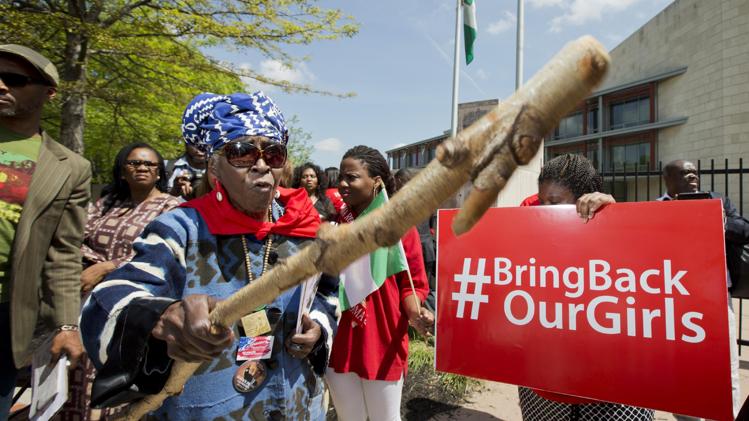
AP*; Photo by: Manuel Balce Ceneta

The abduction three weeks ago of hundreds of schoolgirls in Nigeria by the Muslim extremist group Boko Haram is now generating worldwide attention and condemnation. Muslim leaders in various countries have criticized Boko Haram’s leader for using Islamic teachings as his justification for threatening to sell the girls into slavery. Others have focused on what they view as a slow response by Nigeria’s government to the crisis. The British and French governments announced Wednesday that they would send teams of experts to complement the U.S. team heading to Nigeria to help with the search for the girls, and Nigeria’s president said China has also offered assistance.

Some of the reactions to the crisis:

— EGYPT: Muslim religious officials strongly condemned Boko Haram. Religious Endowments Minister Mohammed Mohktar Gomaa said “the actions by Boko Haram are pure terrorism, with no relation to Islam, especially the kidnapping of the girls. These are criminal, terrorist acts.” According to the state news agency MENA, he said “these disasters come from cloaking political issues in the robes of religion and from peddling religion for secular interests, something we warn incessantly against.”

The sheik of the Cairo-based Al-Azhar, one of Sunni Islam’s most prestigious institutions, demanded the group release the girls, saying it “bears responsibility for any harm suffered by these girls.” The group’s actions “completely contradict Islam and its principles of tolerance,” Sheik Ahmed el-Tayeb said.

— PAKISTAN: Dawn, an English language newspaper in Pakistan, published an opinion piece that takes Nigeria to task for not moving against Boko Haram. “The popular upsurge in Nigeria in the wake of the latest unspeakable atrocity provides some scope for hoping that the state will finally act decisively to obliterate the growing menace,” wrote columnist Mahir Ali. “Naturally, the lives and welfare of the abducted girls must be an absolute priority. Looking back a few years hence, it would also provide a degree of satisfaction to be able to pinpoint the moment when Boko Haram sealed its own fate by going much too far.”

— INDONESIA: In the world’s most populous Muslim-majority country, the Jakarta Post published an editorial Wednesday condemning the Boko Haram leader for “wrongly” citing Islamic teaching as his excuse for selling the abducted girls into slavery. Recalling the Taliban’s shooting of 15-year-old Pakistani girl Malala Yousafzai in 2012 because of her outspokenness in defense of girls’ right to an education, the editorial said: “Malala’s message needs to be conveyed to all people who use their power to block children’s access to education. It is saddening that religion is misused to terrorize people and to kill the future leaders of the world.”

The newspaper also criticized Nigerian President Goodluck Jonathan, noting that “only after international condemnation and street demonstrations poured in did President Jonathan tell his nation that he would take all necessary actions to return the young women to their parents and schools, while also acknowledging that the whereabouts of the abductees remained unknown.”

— SWEDEN: In an editorial posted on the left-wing news website politism.se, blogger Nikita Feiz criticized the international community for its slow response and asked why the situation hadn’t triggered as loud a reaction as when Malala was shot in Pakistan. “Looking at the situation in Nigeria, Malala appears like a false promise from the West that it would stand up for girls’ rights to attend school without fear of being subjected to sexual exploitation and abuse,” she said. “It is difficult not to draw the conclusion that the West’s assurance to act for girls’ rights suddenly isn’t as natural when it comes to girls’ rights in a country in Africa.”

A Swedish women’s network called StreetGaris is planning a demonstration outside the Foreign Ministry on Friday to demand more action from the international community. Participants are encouraged to wear a head wrap or red clothes in solidarity with the girls and their relatives.

— UNITED STATES: The U.S. government is sending to Nigeria a team of technical experts, including American military and law enforcement personnel skilled in intelligence, investigations, hostage negotiating, information sharing and victim assistance, as well as officials with expertise in other areas — but not U.S. armed forces.

“In the short term our goal is obviously is to help the international community, and the Nigerian government, as a team to do everything we can to recover these young ladies,” President Barack Obama told NBC on Tuesday. “But we’re also going to have to deal with the broader problem of organizations like this that … can cause such havoc in people’s day-to-day lives.”

In an editorial, The New York Times faulted the Nigerian government for not aggressively responding to the abductions. “Mr. Jonathan, who leads a corrupt government that has little credibility, initially played down the group’s threat and claimed security forces were in control,” the newspaper said. “It wasn’t until Sunday, more than two weeks after the kidnappings, that he called a meeting of government officials, including the leader of the girls’ school, to discuss the incident.”

— BRITAIN: Prime Minister David Cameron’s office said Britain will send a small team of experts to complement the U.S. team being sent by Obama. The announcement was made Wednesday after Cameron spoke to the Nigerian president. The team will be sent as soon as possible and will include specialists from several departments. Experts have said special forces may be sent to the region. The issue has heated up in recent days with protests over the weekend outside the Nigerian Embassy in London and an increasing number of newspaper editorials calling for action to rescue the girls.

— FRANCE: Foreign Minister Laurent Fabius told lawmakers on Wednesday that France is ready to send a “specialized team … to help with the search and rescue” of the kidnapped girls. “In the face of such an appalling act, France, like other democratic nations, must react,” Fabius said. “This crime will not go unpunished.” Fabius gave no details of the team, except to say it’s among those already in the region. France has soldiers in Niger, Cameroon and Mali, where it is fighting Islamic insurgents, as well as in Central African Republic.

— CHINA: Chinese Premier Li Keqiang, arriving Wednesday in Nigeria for a state visit, did not specifically mention the abductions in a transcript of a joint press conference with Nigeria’s president, instead making only a general reference to the “need to work together to oppose and fight terrorism.” In his remarks, Jonathan said China “promised to assist Nigeria in our fight against terror especially in our commitment and effort to rescue the girls that were taken away from a secondary school.” He did not offer specifics.

— BRAZIL: The foreign ministry issued a statement Tuesday condemning the abductions. “In conveying the feelings of solidarity to the families of the victims and to the people and the Government of Nigeria, the Brazilian Government reiterates its strong condemnation of all acts of terrorism,” the statement said.

—-

* Associated Press correspondents Lee Keath in Cairo, Michelle Faul in Lagos, Nigeria, Gregory Katz in London, Malin Rising in Stockholm, Masha Macpherson in Paris and Stan Lehman in Sao Paulo, Brazil contributed to this report.

Associated Press – Online News – May 7, 2014 http://news.yahoo.com/muslim-officials-condemn-abductions-girls-160020053.html

This book Go Lean … Caribbean is a roadmap for the introduction and implementation of the Caribbean Union Trade Federation (CU), so as to elevate the delivery of economic and security solutions in the Caribbean. One specific mission is to manage against encroachments of the Failed-State index.

At the outset, the roadmap identified an urgent need to mitigate against organized crime & terrorism, and to ensure human rights protection. This is pronounced in this clause in the opening Declaration of Interdependence (Page 12)

xxi.   Whereas the legacy in recent times in individual states may be that of ineffectual governance with no redress to higher authority, the accedence of this Federation will ensure accountability and escalation of the human and civil rights of the people for good governance, justice assurances, due process and the rule of law. As such, any threats of a “failed state” status for any member state must enact emergency measures on behalf of the Federation to protect the human, civil and property rights of the citizens, residents, allies, trading partners, and visitors of the affected member state and the Federation as a whole.

The Go Lean roadmap projects that the CU will facilitate monitoring and accountability of regional law enforcement and homeland security institutions. This type of behavior will not be tolerated in the Caribbean. This CU effort will be coordinated in conjunction with and on behalf of the Caribbean member-states.

On that note, the Caribbean Union Trade Federation, if it was already in existence, would vociferously condemn the abduction of the Nigerian girls. Hence the CU would be added to the long list of condemnations in the foregoing article. But these would not be hollow words, but would be accompanied by the required actions to ensure that such a disposition could not thrive in the CU region. This commitment is detailed as these community ethos, strategies, tactics, implementations and advocates:

Community Ethos – Public Protection over Privacy Page 23
Community Ethos – Anti-Bullying and Mitigation Page 23
Community Ethos – Intelligence Gathering Page 23
Community Ethos – Minority Equalization Page 24
Community Ethos – Impact the Greater Good Page 37
Strategy – Placate & Pacify International Monitors Page 48
Separation of Powers – Homeland Security Page 75
Separation of Powers – Justice Department Page 77
Implementation –  Security Initiatives at Start-up Page 103
Planning – Ways to Improve Failed-State Indices Page 134
Advocacy – Manage the Social Contract Page 170
Advocacy – Ways to Impact Justice Page 177
Advocacy – Ways to Reduce Crime Page 178
Advocacy – Ways to Improve Homeland Security Page 180
Advocacy – Ways to Mitigate Terrorism Page 181
Advocacy –  Ways to Protect Human Rights Page 220
Advocacy –  Ways to Empower Women Page 226
Advocacy –  Ways to Impact Youth Page 227

In contrast with the events in Nigeria, local crimes against women, young or old will not be tolerated in the CU. Everyone, regardless of gender, will be guaranteed the right to life, liberty and the pursuit of happiness (and education for that matter). This will be standard, whether the world is watching or not.

However, we want the world to watch. We want to show how we feverishly protect our people, with assurance that the Caribbean is the world’s best address to live, work, learn and play.

Download the free e-Book of Go Lean … Caribbean – now!
 

Share this post:
, , ,

A Lesson in History – America’s War on the Caribbean

Go Lean Commentary
War on Caribbean 1

“Never kill yourself for someone who is willing to watch you die” – Inspired Expression.

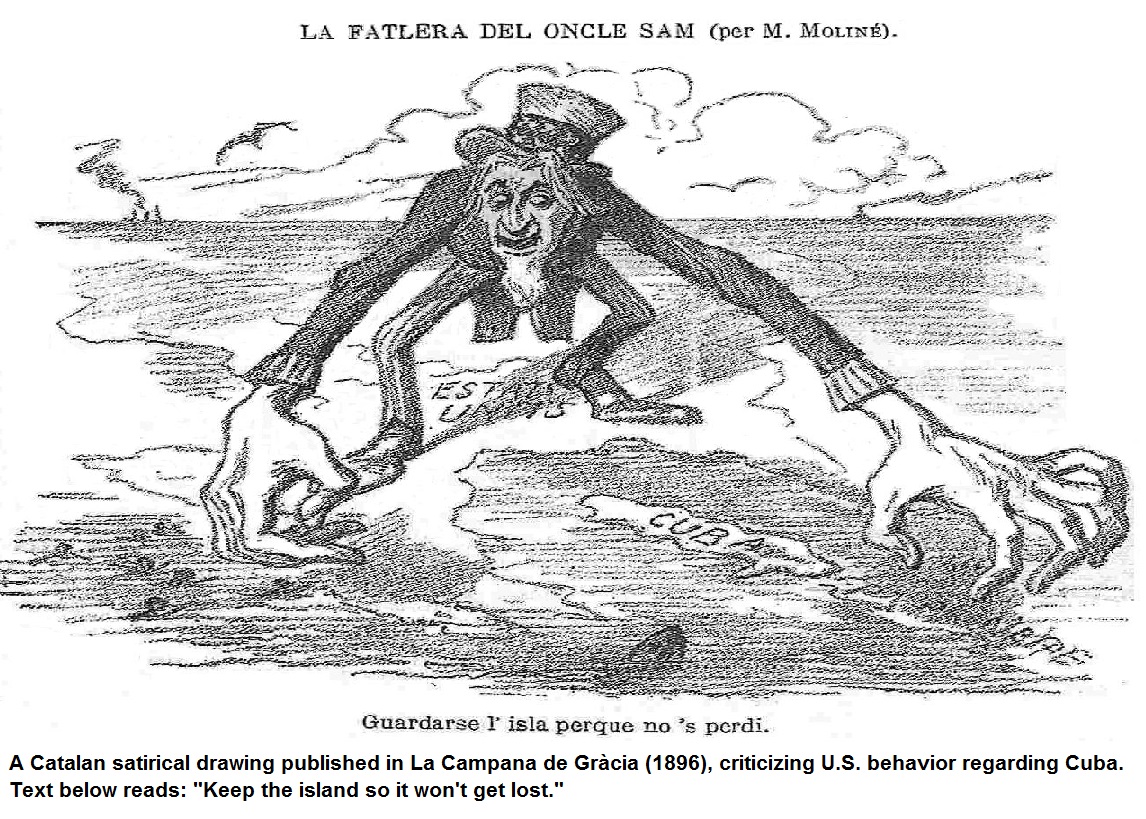
The United States of America fought an actual war, for 10 weeks, in the Caribbean theater in 1898. This was the war against the Spanish Empire, or more commonly known as the Spanish American War.

This is a lesson from an actual history:

These events transpired during the decline of the Spanish Empire. After centuries of vast colonial expansion, at this point, only a few of its vast territories remained. Revolts against Spanish rule had occurred for some years, in the Caribbean territories (Cuba, Dominican Republic and Puerto Rico), especially in Cuba. There had been war scares before. But in the late 1890s, American public opinion became agitated by an anti-Spanish propaganda; led by influential journalists such as Joseph Pulitzer and William Randolph Hearst, who used yellow journalism to criticize Spanish administration of Cuba.

Then there was the mysterious sinking of the American battleship USS Maine in Havana harbor on February 15, 1898, which was believed to be and reported as a sabotage attack by Spanish forces. This created political pressure, from Congress and certain industrialists, to push the administration of Republican President William McKinley into a war he had hoped to avoid.[a]

The US Constitution (Article 1 Section 8) forbids that the country can NOT go to war unless provoked. With the sinking of the USS Maine, the government had its constitutional provocation.

Compromise was sought by Spain, but rejected by the United States which sent an ultimatum to Spain demanding it surrender control of Cuba. Consequently war was formally declared, first by Madrid, then by Washington on April 25, 1898.[a]

The ten-week war was fought in both the Caribbean and the Pacific, but the main issue that emerged was that of Cuban independence. American naval power proved decisive, allowing US expeditionary forces to disembark in Cuba against a Spanish garrison already brought to its knees by nationwide Cuban insurgent attacks and further wasted by yellow fever. With two obsolete Spanish squadrons sunk in Santiago de Cuba and Manila Bay and a third, more modern fleet recalled home to protect Spain’s coasts, Madrid sued for peace.[b] As a result, today, Cuba and the Dominican Republic enjoy independence, and Puerto Rico is an American territory, by choice – after many public referendums on the question of independence.

What was the motivation for this war?

Earlier, in 1823, US President James Monroe enunciated the Monroe Doctrine, which stated that the United States would not tolerate further efforts by European governments to colonize land or interfere with states in the Americas; however, Spain’s colony in Cuba was exempted. Before the Civil War Southern interests attempted to have the US purchase Cuba and make it new slave territory. The proposal failed, and subsequently the national attention shifted to the build-up towards the Civil War.[c]

But the “dye had been cast”. Cuba attracted America’s attention; little note was made of the Philippines, Guam, or Puerto Rico. The Spanish Government regarded Cuba as a province of Spain rather than a colony, and depended on it for prestige and trade. It would only be extracted with a war.

In 1976, the US Navy’s own historian (Admiral Hyman G. Rickover’s published book How the Battleship Maine Was Destroyed) declared that the sinking of the USS Maine — the justification for America’s entry into the Spanish-American War — was probably caused by an internal explosion of coal, rather than an attack by Spanish forces.[d]
Sources: See Citations in the Appendix below.

What is the lesson here for the Caribbean and today’s effort to integrate and unify the Caribbean economy? First, there are these principles, that should not be ignored, if we truly want progress/success:

  • In 1918 US Senator Hiram Warren Johnson is purported to have said: “The first casualty when war comes is truth”.
  • “War is a racket” – Smedley Butler, one of the most highly-decorated military men of all time, and the man who prevented a coup against Franklin D. Roosevelt.
  • The Bible declares that: “For there is nothing hidden that will not become manifest” – Luke 8:17

War on Caribbean 2There will be no chance for success in the Caribbean region if this effort goes against American security/foreign policy interest. This is a consistent theme in the book Go Lean … Caribbean, it serves as a roadmap for the introduction and implementation of the Caribbean Union Trade Federation (CU); it asserts that the economy of the Caribbean is inextricably linked to the security of the Caribbean. The roadmap therefore proposes an accompanying Security Pact to accompany the CU treaty’s economic empowerment efforts. The plan is to cooperate, collaborate and confer with American counterparts, not oppose them. In fact, two American territories (Puerto Rico and the US Virgin Islands) are included in this CU roadmap.

To establish a better American-Caribbean partnership, the Go Lean book presents a series of community ethos that must be adapted to forge this change. In addition, there are these specific strategies, tactics, implementation and advocacies to apply:

Community Ethos – new Economic Principles Page 21
Community Ethos – new Security Principles Page 22
Community Ethos – Minority Equalization Page 24
Community Ethos – Lean Operations Page 24
Community Ethos – Cooperatives Page 25
Community Ethos – Manage Reconciliations Page 25
Community Ethos – Impacting the Greater Good Page 34
Strategy – Customers – Public and Governments Page 47
Tactical – Fostering a Technocracy Page 64
Tactical – Homeland Security – Naval Operations Page 75
Tactical – Homeland Security – Militias Page 75
Implementation – Assemble – US Overseas Territory Page 96
Implementation – Foreign Policy Initiatives at Start-up Page 102
Implementation – Security Initiatives at Start-up Page 103
Implementation – Ways to Improve Mail Service Page 108
Implementation – Trade Mission Objectives Page 116
Implementation – Ways to Promote Independence Page 120
Planning – Ways to Model the EU Page 130
Planning – Lessons Learned from the W.I. Federation Page 135
Planning – Lessons from the US Constitution Page 145
Advocacy – Ways to Better Manage the Social Contract Page 170
Advocacy – Ways to Foster Cooperatives Page 176
Advocacy – Ways to Improve Homeland Security Page 180
Advocacy – Ways to Improve Intelligence Gathering Page 182
Advocacy – Ways to Enhance Tourism Page 190
Advocacy – Ways to Market Southern California Page 194
Advocacy – Ways to Preserve Caribbean Heritage Page 218
Advocacy – Ways to Re-boot Cuba Page 236
Advocacy – Ways to Impact the Dominican Republic Page 237
Advocacy – Ways to Impact US Territories Page 244

After this consideration, the conclusions are straight forward:

  • The Caribbean should take the lead for our best self-determination. We must do the heavy-lifting. We can always count on America to pursue what’s in America’s best interest, and this may not always align with Caribbean objectives. So we must take our own lead for our own self-interest.
  • American priorities change with presidential administrations.

Now is the time to lean-in to this roadmap for Caribbean change, as depicted in the book Go Lean…Caribbean. At this time, there is no American agenda or contrarian policy that may dissuade us – but that’s only today. We need to act fast before a new American crisis emerges, (or one is created artificially).

Download the book Go Lean … Caribbean – now!

————-

Appendix References

a. Beede, Benjamin R., ed. (1994), The War of 1898 and U.S. Interventions, 1898–1934, Taylor & Francis, ISBN 978-0-8240-5624-7. An encyclopedia. Pages 120; 148.

b. Dyal, Donald H; Carpenter, Brian B.; Thomas, Mark A. (1996), Historical Dictionary of the Spanish American War, Greenwood Press, ISBN 0-313-28852-6. Pages 108 – 109.

c. Wikipedia treatment on the Spanish American Way. Retrieved May 5, 2014 from: http://en.wikipedia.org/wiki/Spanish_American_War

d. “The Destruction of USS Maine”. Department of the Navy — Naval History and Heritage Command. Retrieved May 5, 2014 from: http://www.history.navy.mil/faqs/faq71-1.htm

Share this post:
, , , , ,
[Top]

Grenada accountant defeats PM in BK court motion

Go Lean Commentary

Grenada BK 2“He who does nothing makes no mistakes” – Old Adage.

The contrast of this “Old Adage” is also true: “No risk, no reward”. So “he who does a lot, risks a lot”. These truisms bear to ask the questions:

• When the risky endeavors fail, who is it that pays?

• Who should be held accountable?

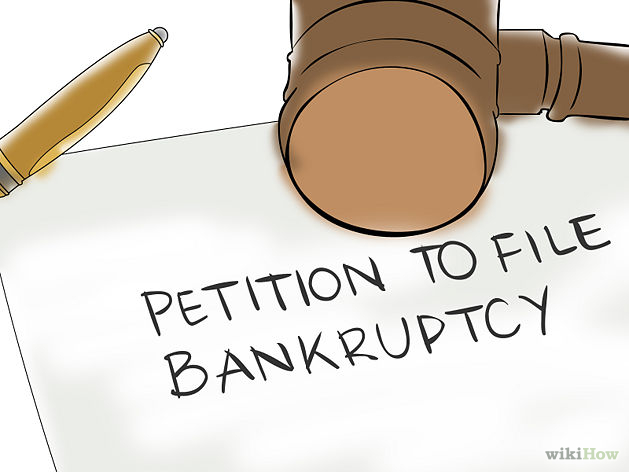
The answers to these questions align with the foregoing news article; this is the subject matter of bankruptcy (BK).

The book Go Lean … Caribbean delves deep into the matter of bankruptcy processing for the Caribbean region. This book is a roadmap for the introduction and implementation of the Caribbean Union Trade Federation (CU), for the economic optimization of the 30 member-states constituting the Caribbean region. The CU is proffered as a super-national administration, a federal government for these states. Strategically there are 3 prime directives of the CU:

1. Optimize the economic engines so as to grow the regional economy to $800 Billion and create 2.2 million new jobs.

2. Establish a security apparatus (including emergency management) around the economic engines so as to mitigate the eventual emergence of “bad actors”.

3. Improve Caribbean governance.

The tactical plan for this roadmap is a separation-of-powers for this federal government versus the governmental administrations of the member-states. Based on anecdotes similar to the foregoing news story, there should be little objection to elevating bankruptcy processing away from local control. It is obvious that locally, there is too much temptation for favoritism, cronyism and corruption.

(We are not levelling any accusation of corruption towards Grenada’s Prime Minister Dr. Keith Mitchell. This is just an acknowledgement that bankruptcy processing exposes different vantage points and priorities).

By: Caribbean News Now contributor

ST GEORGE’S, Grenada — Prime minister of Grenada Dr. Keith Mitchell has lost his bid before the High Court in Grenada to have local chartered certified accountant Garvey Louison removed as liquidator of the Grenada Today newspaper.

Mitchell had argued before that court that Louison had failed to comply with his duties, failed to indicate the location of assets, lost interest in the matter, and had caused undue delay in bringing the matter to a close.

In his defence, Louison argued that Mitchell had no evidence to support his claim, that Mitchell hid behind the frock of a legal secretary at a law firm to bring his allegations before the court, that the legal secretary had no standing before the court and that he had complied with the duties set out in the liquidation order and that of the Companies Act.

Justice Mohammed held that to remove the liquidator the applicant must have good standing, good grounds, and provide sufficient evidence to move to court.

The judge questioned the legal standing of the secretary, one Uthlyn George, to make the accusations that she filed by way of affidavit. The law is clear regarding the production of an affidavit. An affidavit is supposed to contain facts that are within the deponent’s own knowledge and belief and where it is not, it must set out the source of the information and belief or it would be hearsay.

The deponent failed to set out who informed her or what was the source of her information and belief in making allegations that were not in her direct knowledge. In particular regarding the allegations of delay, she failed to set out the details of such delay.

In addition, Mitchell did not provide a reason why he could not file the affidavit himself and had to use Uthlyn George.

It was held that, whereas the court can remove a liquidator in the circumstances where it was satisfied that the liquidator was inefficient, lacked vigour or was biased in the discharge of his duties, there was no evidence in this case to support the removal of the liquidator.

Local observers had claimed that, at some point, Mitchell was expected to move against Louison based on several articles the business consultant and former Auditor General, Accountant General and Permanent Secretary, Finance [Ministry] had been writing in the media.

Grenada Today was put into liquidation in 2009 as a result of two charges of criminal libel brought against the managing editor, George Worme, in connection with a letter published by the newspaper accusing Mitchell of bribing voters in the 1999 general election.

Caribbean News Now – Online News Source – April 19, 2014 –http://www.caribbeannewsnow.com/topstory-Grenada-accountant-defeats-prime-minister-in-court-20784.html

Grenada BK 1The foregoing news article relates that the issue of receivership of the insolvent Grenada Today Newspaper is a “touchy” subject, requiring checks-and-balances. In this case, the Grenada High Court became involved to adjudicate the matter.

While there is already a process for bankruptcy in all Caribbean member-states, the need to elevate this processing to a federal level is undeniable; to bring balance/fairness to creditors and avoid abuse by debtors. This is alluded to in the foregoing article.

The Go Lean roadmap envisions federal bankruptcy courts, with branches throughout the region, having exclusive jurisdiction.

These CU entities will manage bankruptcies for individuals, firms (for profit & not-for-profits), election campaigns and even governmental agencies (municipalities, public-private consortiums and central/national governments).

The CU will be the relief of last resort, the bail-out provider. Also, the first responder for encroachments of Failed-State indicators.

The CU mandate for bankruptcies is to lean towards reorganization, rather than outright dismissal of legitimate debt. Creditors may have to take a “hair-cut” (minor loss). The federal courts will then appoint direct receivership to Trustees (usually accountants and/or lawyers) to facilitate the processing of the bankruptcy obligations.

An efficient process for bankruptcy is vital to attract Foreign Direct Investments (FDI) – these stakeholders require protection and accountability. The definition of FDI is risk. With risky efforts come success … and failure. This requirement is pronounced early in the book’s Declaration of Interdependence (Page 13) with these statements:

xxi. Whereas the legacy in recent times in individual states may be that of ineffectual governance with no redress to higher authority, the accedence of this Federation will ensure accountability and escalation … to protect the human, civil and property rights of the citizens, residents, allies, trading partners, and visitors of the affected member state and the Federation as a whole.

xxiii. Whereas many countries in our region are dependent Overseas Territory of imperial powers, the systems of governance can be instituted on a regional and local basis, rather than requiring oversight or accountability from distant masters far removed from their subjects of administration. The Federation must facilitate success in autonomous rule … within the geographical region.

The goal of the CU is to elevate Caribbean life, culture and economy. This requires a new community ethos: investment in our people, by our people. There will be hits-and-misses, successes and failures. The CU roadmap is to hope (and build) for the best, but also plan for the worst. We will provide support services (incubators, shared systems, “cooperatives”, angel investors) to aid the entrepreneurial hopes and dreams. But we must facilitate the failures as well. We must methodically “wine down” failed enterprises and failed endeavors, so as to dissuade any fear of failure, rather to promote the “audacity of hope”.

So the subject matter of bankruptcy affects economics, security and governance. The solutions to effect change in the region are detailed in this book Go Lean … Caribbean as community ethos, strategies, tactics, implementations and advocates; as follows:

Community Ethos – Lean Operations Page 24
Community Ethos – Return on Investments Page 24
Community Ethos – Ways to Help Entrepreneurship Page 28
Community Ethos – Ways to Impact Turn-arounds Page 33
Strategy – Inviting Foreign Direct Investments Page 48
Tactical – Fostering a Technocracy Page 64
Separation of Powers – Federal Bankruptcy Courts Page 90
Implementation – Ways to Better Manage Debt Page 114
Implementation – Ways to Impact Elections Page 117
Implementation – Ways to Promote Independence Page 120
Planning – Ways to Improve Failed-State Indices Page 134
Planning – Lessons Learned from 2008 Page 136
Planning – Lessons from Detroit Page 140
Advocacy – Ways to Improve Credit Ratings Page 155
Advocacy – Ways to Impact Student Loans Page 160
Advocacy – Ways to Improve Governance Page 168
Advocacy – Reforms for Banking Regulations Page 199
Advocacy – Ways to Preserve Caribbean Heritage Page 218
Advocacy – Ways to ImpactBritishTerritories Page 245
Advocacy – Ways to ImpactDutchTerritories Page 246
Advocacy – Ways to ImpactFrenchTerritories Page 247

The Go Lean roadmap will make the Caribbean a better place to live work, and play. Caribbean stakeholders will make mistakes; but when we fall down, we will not stay down. We will get up, turn-around, reboot and recover. Our people deserve this continuous effort.

Download the Book- Go Lean…Caribbean Now!!!

Share this post:
, ,
[Top]

Student debt holds back many would-be home buyers

Go Lean Commentary

Diploma 1This point from the foregoing news article is most poignant: “Of the many factors holding back young home buyers … none looms larger than the recent explosion of college debt”.

The book Go Lean … Caribbean serves as a roadmap for the introduction and implementation of the Caribbean Union Trade Federation (CU), for the economic optimization in the region. If the target of the book is the Caribbean, why does this article about American student loans weigh so heavy in a consideration of Caribbean economics?

There are lessons to be learned here! Not just for student loans, but also regarding education policy. This issue is pivotal to the economics of the Caribbean region. This point is made early in the book’s Declaration of Interdependence (Page 13):

xxi. Whereas the preparation of our labor force can foster opportunities and dictate economic progress for current and future generations, the Federation must ensure that educational and job training opportunities are fully optimized for all residents of all member-states, with no partiality towards any gender or ethnic group. The Federation must recognize and facilitate excellence in many different fields of endeavor, including sciences, languages, arts, music and sports. This responsibility should be executed without incurring the risks of further human flight, as has been the past history.

Classic economic policy promotes that education has a direct effect on a community’s economy and the standard-of-living, quantified as each increased-grade-level, raises GDP by 3 percent (Appendix C2Page 258). But, the Go Lean roadmap posits that this rule is not true for the Caribbean, because of the debilitating emigration rate, the brain drain in which our educated population flees for foreign shores, or worse, students that do not return after matriculating – despite using funding from their Caribbean homeland. These are all investments with no return. In short, the economy of the Caribbean can be impacted by the activity of this recent-student population, when they repatriate; but when they emigrate, they hurt the economy.

By: Tim Logan
LOS ANGELES – Sarah Luna wants to buy a home in up-and-coming northeast Los Angeles before it’s too late.

At 31, she has a master’s degree and earns more than $70,000 as a court reporter and freelance editor. She daydreams about trading the Glendale apartment she shares for a little condo, maybe in Echo Park or Highland Park….

Just one thing holds her back: The $700 she’s paid every month since 2008, after she graduated from the University of Southern California — with $75,000 in student debt. With about half that total left to pay, buying that condo seems a long way off.

“Honestly, I don’t know if it’ll ever happen,” she said. “Barring some sort of awesome miracle, a down payment is hard to wrap my head around right now.”

Of the many factors holding back young home buyers — rising prices, tougher lending standards, a still-shaky job market — none looms larger than the recent explosion of college debt.

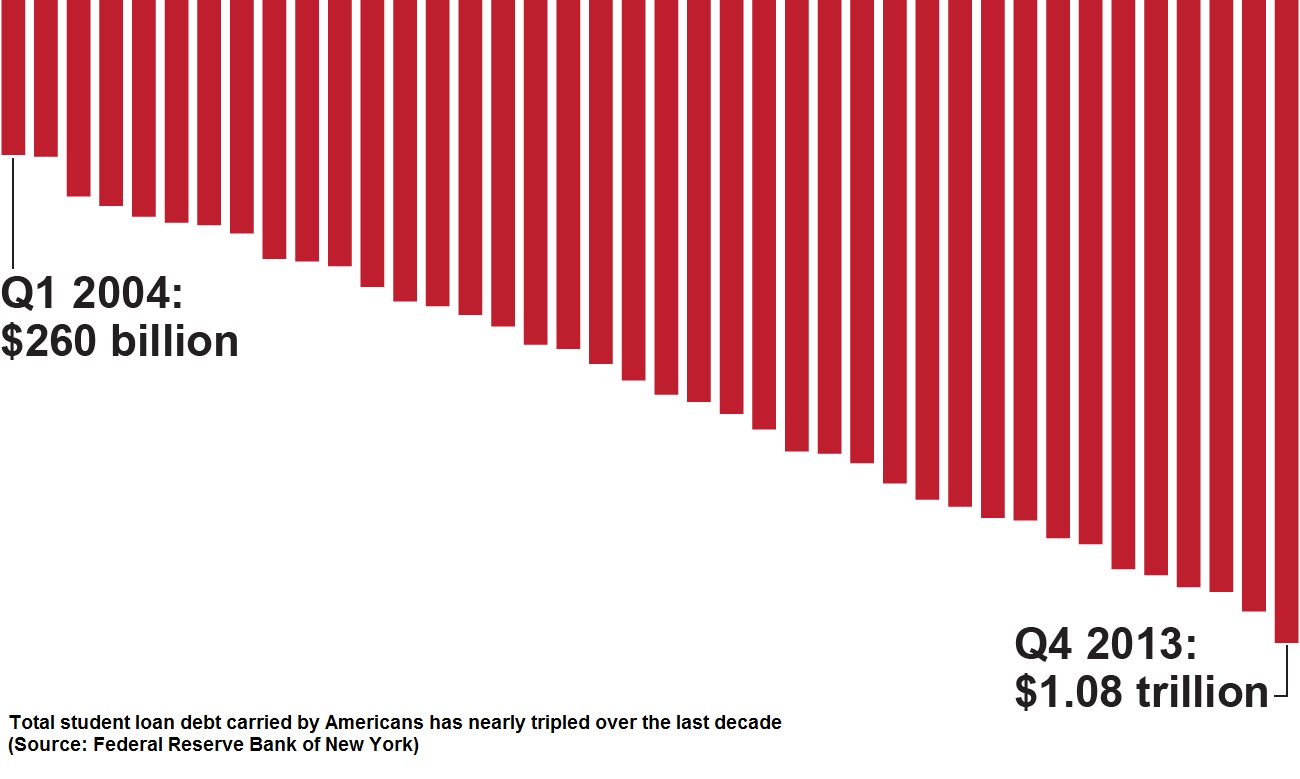
The amount owed on student loans has tripled in a decade, to nearly $1.1 trillion, according to the Federal Reserve Bank of New York. People in their 20s and 30s — often the best-educated and highest-earning among them — owe most of that tab. That is keeping a crucial segment of home buyers on the sidelines, deferring one of the traditional markers of adult success.

The National Assn. of Realtors recently identified student debt as a key factor in soft demand for home-buying this spring. A recent study by the trade group identified student loans as the top reason many home buyers delayed their purchase. Many more didn’t buy at all.

Surveys show today’s adults value homeownership just as much as their parents did. But the shaky job market, higher debt loads, and the roller-coaster market of recent years is keeping many from pulling the trigger, said Selma Hepp, senior economist with the California Assn. of Realtors.

“They’re just postponing,” she said. “It’s the economy and the recession and what that generation has gone through.”

The share of buyers who are first-timers has dropped well below historical averages — 28% of California buyers last year, compared with 38% typically, according to CAR surveys. The absence of a new generation of customers could become a long-term problem for the industry, said Dustin Hobbs, spokesman for the California Mortgage Bankers Assn.

“You have to have that swath of first-time buyers who will eventually be your move-up buyers,” he said. “When you take that out, it damages the whole chain.”

Traditionally, student borrowers were more likely than most people to buy a house, experts say, because college graduates tend to earn more. But that’s flipped since 2008, according to researchers at the New York Fed. Today, the share of 30-year-old homeowners who have student debt is lower than that of 30-year-old homeowners without it.

It’s a sign that skilled, educated workers are getting pushed out of the housing market.

“When people have less money to commit to housing, they don’t buy a house,” Hobbs said.

Jay Stewart Samilin sees that all the time. He’s an agent at Rodeo Realty in Beverly Hills and runs a tax preparation business on the side. Many of his younger clients are skipping the house until they pay down their debt.

“They’re maxed out on student loans, and there’s nothing else they want to think about until they pay that down,” he said.

Some who do start shopping quickly realize they can’t afford as much house as their income suggests. The more they pay each month on student loans, the less the bank will lend them to buy a house, said Natalie Lohrenz, director of counseling at Consumer Credit Counseling Services of Orange County. In a pricey market such as Southern California, that can severely limit a buyer’s options.

“You have to think about your quality of life after you purchase this home,” she said. “It’s OK to rent for awhile.”

That’s not to say some people don’t make it work.

Marco Manansala is starting to shop for a house, maybe a two-bedroom in Long Beach or on the Eastside, close to a freeway. When he began to think about it, the 28-year-old got preapproved for a loan — but only for $180,000.

“That gets you a shack,” he said. “I asked, how do I get more? They said I need to pay down debt.”

So he started aggressively paying off his car, and he’s worked his student loan balance down to $6,000, from $10,000. With a good job as a creative director for a Venice marketing agency, he has cut his spending to save up for a down payment. He’s getting close.

“I have a goal of buying something by June,” Manansala said. “I’m gearing up for it.”

But many others, like Luna, are forced to take a much longer view.

She graduated into the worst job market in decades. Although she eventually found work that enabled her to keep up with loan payments, it’s been hard to save much. In six years, she’s paid down nearly half of her original tab. When she borrowed the money for a master’s in professional writing, Luna acknowledges, she was an “idealistic” 22-year-old, and the numbers didn’t seem real.

Now the reality of a $700-a-month student loan payment makes it hard to get ahead, house or no house, even with a good salary. And she’s worried she’ll get priced out of the city she loves.

“It’s frustrating,” she said. “I think by the time I get a chance to get together that money and find a house, it’ll be unattainable.”

Source: Los Angeles Times – Online News Source – April 19, 2014 –http://www.latimes.com/business/realestate/la-fi-0420-student-debt-house-2-20140420,0,7975649.story#ixzz30Iw7x8Hz

Diploma 2The foregoing news article relates that education funding policies adversely affect major areas of the economy, in this case home-buying. The cause-and-effect paradigm is direct, within 5 to 10 years after graduation; a former student should be planning to buy a house. Apparently the macro economy is dependent on this relationship. According to the foregoing article, the National Association of Realtors (NAR) identified student debt as a key factor in soft demand for home-buying this spring (2014).

The Go Lean roadmap also identified that the 2008 financial crisis still deeply impacts the Caribbean economy; that it was not just the housing finance dysfunction alone that contributed to the crisis, but educational loans as well. This point is declared in Appendix IH on Page 286. This foregoing news article pronounces that the US economy continues to be impacted by a defective and dysfunctional student loan policy.

In the Caribbean, we do not want to follow this American model.

The economic solutions to effect change in the region are detailed in this book Go Lean … Caribbean as community ethos, strategies, tactics, implementations and advocates; as follows:

Community Ethos – Foster Genius Page 27
Community Ethos – Impact R & D Page 30
Community Ethos – Valedictorian è Diaspora Page 38
Strategy – Study: At home –vs- Abroad Page 50
Tactical – Education for a $800 Billion Economy Page 70
Separation of Powers – Education Department Page 85
Separation of Powers – Labor Training Oversight Page 89
Ways to Better Manage Debt Page 114
Reasons to Repatriate – Educational Inducements Page 118
Lessons Learned from 2008 Page 136
Ways to Improve Education Page 159
Ways to Impact Student Loans Page 160
Improve Local Government – Education Reforms Page 169
Better Manage the Social Contract: e-Learning Page 170
Federal Civil Service: Education Payback Schemes Page 173
Foster Cooperatives: Mutual Education Alternative Page 176
Ways to Improve Libraries Page 187
Ways to Impact the Diaspora – Education Reform Page 217
Ways to Impact Foundations – e-Learning Focus Page 219
Battles in the War on Poverty – e-Learning Solution Page 222
Help the Middle Class – Educational Stimuli Page 223
Ways to Impact Youth – Education Dynamics Page 227
Appendix C2 – Education and Economic Growth Page 258

The goal of the Go Lean roadmap is to make the Caribbean a better place to live work, learn and play. To elevate our economy, we must continue to place a high priority on education, thus the roadmap features our own student loan solution (Page 160) and numerous reforms and optimizations. But we need to be prepared for many of the same pitfalls that have befallen the US. We especially want to learn from these American mistakes:

It’s not the cost of the loan that’s the problem; it’s the principal – the appallingly high tuition costs that have been soaring at two to three times the rate of inflation, an irrational upward trajectory eerily reminiscent of skyrocketing housing prices in the years before 2008. – Ripping Off Young America: The College – Loan Scandal By Matt Taibbi, Rolling Stones Magazine; August 15, 2013. (Appendix IH – Page 286).

For the past 40 – 50 years, we have pushed too hard on college education, just for the sake of the “best practice” in economic elevation. We have suffered as a result, with a brain drain and excessive debt.

As a region, we cannot risk losing any more of our young adults and their contribution to their communities. Plus, we do not want to saddle them with overbearing student loans; this “paints them in a corner” where they must flee to earn enough money to repay the loans; (but so often, they have simply defaulted – which imperils the next generation).

We want to learn from our past mistakes!

We want to learn from America’s mistakes!

So we must deliver quality affordable education at home, without predatory lending habits. For the Caribbean, we do not want to be America. We want to be better!

Download the free e-book of Go Lean … Caribbean – now!

Share this post:
, , , , ,
[Top]

Abused wives find help by going to ‘Dona Carmen’

Go Lean Commentary

AbuseThe issue in the below news article is related more to human rights, than to feminism. This story is being brought into focus in a consideration of the book Go Lean … Caribbean. The book serves as a roadmap for the introduction and implementation of the Caribbean Union Trade Federation (CU), for the economic optimization in the region.

How does this story relate?

The roadmap posits that the economy of the Caribbean is inextricably linked to the security of the Caribbean. While the security scope of the CU is mostly focused on the “bad actors” that might emerge to exploit the new Caribbean economic engines and successes, the book is not quiet on what may be considered traditional crime-and-punishment issues. While the subject of domestic violence falls on the member-state side of the separation-of-powers divide, the CU will entail a jurisdiction of monitoring and metering (ratings, rankings, service levels, etc) local governments and their delivery of the Social Contract. For this reason, there is a 3rd focus of the CU prime directive, to optimize the region’s governing engines.

An underlying mission of the CU is to dissuade further human flight and incentivize repatriation of the far-flung Diaspora. Many who had fled previously obtained refugee status due to the abuse and persecution from domestic perpetrators. These issues must be addressed and targeted for solutions and reconciliations.

In fact, the foregoing article refers to the new enforcements introduced in Brazil in a 2006 law. That’s was just 8 years ago. (A similar Domestic Violence law was enacted in the Bahamas in 2008). A survey of other Latin American countries unveils even more new laws recently enacted in the Caribbean, Central and South America. Change has finally come.

Change has come to the Caribbean, but as the roadmap depicts, the problem of domestic violence (a human rights abuse) had persisted long before, and is thusly rooted in a community ethos. An ethos that must be uprooted and replaced with a new, progressive spirit, even within the public service entities, whose job it is to “serve & protect”. This is the new lean Caribbean!

This is reflected in the foregoing article with the principal character Dona Carmen, which is not even her real name, but more of an elevated title for her respected role in the community.

Title: Abused wives find help by going to ‘Dona Carmen’
By: Dom Phillips

CAMPINAS, Brazil — With her husband out of earshot, Queze Vicente told the story of the night he came at her with two knives in his hand.

“He was drinking,” she said outside their one-room shack in a roadside slum near an airport here. “We fought. And I had to go to Dona Carmen.”

Everyone in their community knows who Dona Carmen is and her method for getting abusive husbands in line. They call it “the discipline,” and it includes a sex strike.

For 15 days, husbands who hit their wives are also banned from drinking in the local bar and playing soccer on the local field. And any man who helps an offender violate the rules is also subject to the sex strike.

Abused by her husband and saddened by the abuse all around her, Dona Carmen talked 12 local women into adopting the punishment routine. Two years later, the women and most of the men say it works.

“Everyone thinks it is good,” said Vicente’s husband, Renato. “There are no more fights.”

The abuse in this community, a corner of the slum called Menino Chorão, or Crybaby Boy, was not unlike what many Brazilian women experience. In a survey conducted by the Patrícia Galvão Institute, which works on women’s rights and communication issues, 54 percent of Brazilians said they knew a woman who had been attacked by a partner and 70 percent said they believed Brazilian women suffered more violence at home than in public spaces.

But change is slowly coming to this most macho of societies as activists such as Dona Carmen try to help women find new ways to combat domestic abuse.

“This is a theme that permeates the whole of society,” said Julio Neto, a professor at Campinas State University whose department recently sponsored a forum at which Dona Carmen spoke. “Every Brazilian knows cases of violence against women.”

Neto said the women in the group were forced to act because the state was not protecting them. “If they call the police, the police don’t go.” He said he did not condone cases in which some women had beaten up male offenders but that he supported “the discipline.”

“It is very original. I think in this sense, it is marvelous,” he said.

Dona Carmen, whose real name is Maria de Sousa, commands respect within her group: the fact that she is addressed as “Dona” — roughly equivalent to “madame” — is evidence of that.

Like most of her neighbors, she is from Brazil’s poorer, more traditional northeast. For 13 years, she was married to a man who beat her persistently. One attack when she was five months pregnant caused her to miscarry twins. “My whole body had purple bruises from the beating he gave me,” she said.

She arrived in the southeastern city of Campinas from her native Fortaleza eight years ago when a woman she had met tricked her with a promise of work and a place to live. As a result, she said, she spent 40 days in a brothel but escaped and did not have to work as a prostitute.

“I was desperate to get a job,” said de Sousa, who has four children and now works in a kitchen at an advertising agency.

‘Still a lot to do’

Before Brazil introduced a domestic violence law in 2006, some offenders were able to get off with fines or even by donating food baskets.

The law is named for Maria da Penha, a biochemist whose husband shot her while she was asleep in 1983, leaving her paraplegic, and then tried to electrocute her. After almost two decades of legal maneuvering, he was finally jailed in 2002 and served 16 months in closed prison and three more years in semi-open prison.

Da Penha fought hard for his imprisonment and campaigned for the law. “I was revolted with the sexism of the Brazilian judiciary,” she said, talking by phone from Fortaleza, where she runs an educational institute.

The law set up special courts and police departments to deal with crimes against women, and stricter punishments. A special hotline was also set up to deal with cases of domestic abuse.

Da Penha, 67, said there has been major progress, but that these resources are still lacking in smaller towns and cities.

“Women who are victims of violence are slowly losing the shame they had to talk about this,” she said. “Sexual equality is being conquered little by little, but there is still a lot to do.”

Despite the tougher punishments for offenders, rates of violence against women remain high. In the first six months of 2013 alone, the hotline received 306,201 calls, of which 12.3 percent were reports of violence

Between 2009 and 2011, 16,900 women were murdered in Brazil because of “gender conflict” — a rate of 5.8 per 100,000 women, according to government statistics. In the United States in 2011, that rate was 1.17 per 100,000, according to the Violence Policy Center, based in Washington.

Brazilian women suffer inequality in other areas as well. In the World Economic Forum’s 2013 Global Gender Gap report, Brazil placed 62nd in a list of 136 countries. In terms of wage equality, it came in 117th.

Lieli Loures, 35, an activist in São Paulo, said the Maria da Penha law was a watershed moment for Brazil, and that a grass-roots feminist movement is growing. “I perceive a change,” she said. “Feminism is only beginning to be known.”

Ongoing debate
In Crybaby Boy, the debate continued in the front yard of the small brick house where Maria Santos, 34 — one of women in Dona Carmen’s group — lives with her husband, Adelmo, 31.

“We joke that the women are in charge here,” she said.

“We have to respect the rights of women,” he said. “But in the same way, we have to respect the rights of men.”

Then he lowered his voice to a whisper: “The women here want to be the man. They can’t.”

But Geraldo da Cruz, 62, said most men back the scheme. “Everything organized is better, right? Important.”

Source: Washington Post – Online News Source – April 25, 2014 –http://www.washingtonpost.com/world/the_americas/in-the-corner-of-a-brazilian-slum-abused-wives-find-help-by-going-to-dona-carmen/2014/04/25/afbb7d1a-c68d-11e3-8b9a-8e0977a24aeb_story.html

The Go Lean roadmap posits that every woman has a right to a violence-free existence, in the family and in society; it is reprehensible that in so many Caribbean/Latin countries women are still viewed as lesser beings that can be abused at the whim of men, as was evident in the foregoing news article. This type of thinking is still prevalent; not just in Brazil; (notice this related Bahamas story)

What should be done to mitigate these bad practices? How does the Go Lean roadmap address this issue?

There are strategic, tactical and operational advocacies presented in the Go Lean roadmap so as to ensure victims are protected and perpetrators are held accountable for their actions:

• The CU will therefore work with governmental and non-governmental organizations (NGO’s) to fulfill their charters to aid victims and legislate for changes.

• The CU will also fund the full vertical eco-system so that law enforcement (and/or social work) agencies can institute Special Victims Units and counseling services. The roadmap posits that even one person, an advocate, can make a difference (Page 122) in forging change in society.

• Facilitate community messaging to instill/persuade an enlightened value system for men and women; helping men curb aggressive behavior (like anger management training) and empowering women to live successful lives and seek recourse against abusers if needed.

• Oversee the internal affairs/military justice of security agencies to ensure the integrity of the justice institutions. (Deficiency in this area is a Failed–State Indicator).

While the CU does not have sovereignty (a deputized agency only), it can still provide support services to ensure compliance. In addition to monitoring and metering, the CU can also provide ratings, funding, training, intelligence gathering, and cross border (fugitive) law enforcement.

The solutions to effect change in the region are detailed in this book Go Lean … Caribbean as community ethos, strategies, tactics, implementations and advocates; as follows:

Community Ethos – Privacy –vs- Public Protection Page 23
Community Ethos – Whistleblower Protection Page 23
Community Ethos – Witness Security Page 23
Community Ethos – Anti Bullying & Mitigations Page 23
Community Ethos – Light Up the Dark Places Page 23
Community Ethos – Minority Equalizations Page 24
Community Ethos – Reconciliations Page 34
Strategy – Rule of Law –vs- Vigilantism Page 49
Separation of Powers – CariPol Page 77
Implementation – Reason to Repatriate Page 118
Ways to Improve Failed-State Indices Page 134
Ways to Better Manage the Social Contract Page 170
Ways to Impact Justice Page 177
Ways to Remediate and Mitigate Crime Page 178
Ways to Improve Gun Control Page 179
Ways to Improve Intelligence Gathering Page 182
Ways to Improve Communications Page 186
Ways to Impact the Prison Industrial Complex Page 211
Ways to Impact Foundations Page 219
Ways to Protect Human Rights Page 220
Ways to Empower Women Page 226
Ways to Impact Youth Page 227
Ways to Impact Persons with Disabilities Page 228

The goal is to make the Caribbean a better place to live work and play; with justice for all, regardless of gender. This is not politics; not feminism versus traditional family values. This is just right!

Share this post:
, , ,
[Top]

Advocates push for junk-food tax

Go Lean Commentary

Junk FoodThe forgoing article focuses on an important issue for the Caribbean. Diabetes is a scourge to the region; it is among the leading causes of death. Though death is the final destination of all humans, quality of life is a fitting goal for optimization. Diabetes is a degenerative disease; it grievously affects the quality of life; over time, its sufferers are afflicted with ailments like kidney failures, amputations and blindness. In addition to the personal discomforts, these treatments exact a huge toll on a community’s economics. For this matter, this subject is in scope for the Caribbean Union Trade Federation (CU).

The book, Go Lean … Caribbean, serves as a roadmap for the introduction and implementation of the CU. This technocratic agency will assume oversight to optimize the region’s:

(1) economy,

(2) security apparatus, and

(3) governing engines.

The subject of diabetes disease management is in scope for all 3 of these prime directives. The importance and linkage of the topics for diabetes, healthcare and economics are undeniable. But there are security threats as well, as advanced diabetes dispositions increase the need for organ transplantations, inducing many to venture into the illegal organ trade markets. Finally, the strain on governments to service this population and develop mitigation plans is a constant priority – or should be.

By: FELICIA FONSECA

Flagstaff, Arizona — Facing a high prevalence of diabetes, many American Indian tribes are returning to their roots with community and home gardens, cooking classes that incorporate traditional foods, and running programs to encourage healthy lifestyles.

The latest effort on the Navajo Nation, the country’s largest reservation, is to use the tax system to push people to ditch junk food.

Navajo President Ben Shelly earlier this year vetoed measures to enact a 2 percent sales tax on tax on chips, cookies and sodas, and to eliminate the tax on fresh fruit and vegetables. This week, tribal lawmakers have a chance to resurrect the proposals, and supporters are optimistic they’ll be among the first in the country to succeed.

Elected officials across the U.S. have taken aim at sugary drinks with proposed bans, size limits, tax hikes and warning labels, though their efforts have not gained widespread traction. In Mexico, lawmakers approved a junk food tax and a tax on soft drinks last year as part of that government’s campaign to fight obesity.

Shelly said he supports the intent of the proposals on the Navajo Nation but questioned how the higher tax on snacks high in fat, sugar and salt would be enacted and regulated. Supporters of the tax say it is another tool in their fight for the health of the people.

“If we can encourage our people to make healthier choices and work on the prevention side, we increase the life span of our children, we improve their quality of life,” said professional golfer Notah Begay III, who is among supporters.

American Indians and Alaska Natives as a whole have the highest age-adjusted prevalence of diabetes among U.S. racial and ethnic groups, according to the American Diabetes Association. They are more than twice as likely as non-Hispanic whites to have the disease that was the fourth leading cause of death in the Navajo area from 2003 to 2005, according to the Indian Health Service.

Native children ages 10 to 19 are nine times as likely to be diagnosed with Type 2 diabetes, the IHS said.

The proposed Navajo Nation tax wouldn’t add significantly to the price of junk food, but buying food on the reservation presents obstacles that don’t exist in most of urban America. The reservation is a vast 27,000 square miles with few grocery stores and a population with an unemployment rate of around 50 percent. Thousands of people live without electricity and have no way of storing perishable food items for too long.

“They have a tendency to purchase what’s available, and it’s not always the best food,” said Leslie Wheelock, director of tribal relations for the U.S. Department of Agriculture.

Wheelock said the diabetes issue in tribal communities is one that has been overlooked in the past or not taken as seriously as it could be. It has roots in the federal government taking over American Indian lands and introducing food that tribal members weren’t used to, she said.

To help remedy that, the USDA runs a program that distributes nutritional food to 276 tribes. Grants from the agency have gone toward gardening lessons for children within the Seneca Nation of Indians in New York, culturally relevant exercise programs for the Spirit Lake Tribe in North Dakota and food demonstrations using fresh fruit and vegetables on the Zuni reservations in New Mexico.

The Dine Community Advocacy Alliance, which has been pushing for the Navajo Nation junk food tax, estimates it will result in at least $1 million a year in revenue that could go toward wellness centers, community parks, walking trails and picnic grounds in tribal communities in Utah, New Mexico and Arizona. It would expire at the end of 2018.

Tribal lawmakers will vote this week on overturning Shelly’s vetoes. Regardless of whether that legislation passes, “we have to keep stepping up to the plate,” alliance member Gloria Begay said.

No other sales tax on the Navajo Nation specifically targets the spending habits of consumers. Alcohol is sold in a few places on the reservation but isn’t taxed. Retailers and distributors pay a tobacco tax.

Opponents of the junk food tax argue it would burden customers and drive revenue off the reservation. Mike Gardner, executive director of the Arizona Beverage Association, said the lack of specifics in the legislation as to what exactly will be taxed could mean fruit juice and nutritional shakes would be lumped in the same category as sodas.

“I don’t think they mean that, but that’s what will happen,” Gardner said. “It’s a little loose, a little vague. It’s going to create problems for retailers and … it doesn’t solve the problem.”

a. By the numbers:

Total population of Navajo Nation: 250,000

Unemployment rate: 44%

Families living in poverty: 30.5%

People living with diabetes: 55,000

Source: Partners In Health (PIH), a 501(c)(3) nonprofit corporation headquartered in Boston, Massachusetts. (http://www.pih.org/country/navajo-nation/about)

Associated Press (AP) News Wire Service (Retrieved 04/22/2014) –
http://news.yahoo.com/advocates-push-junk-food-tax-navajo-nation-155642994.html

The roadmap commences with a Declaration of Interdependence. In Verse IX (Page 11) it pronounces:

Whereas the realities of healthcare and an aging population cannot be ignored and cannot be afforded without some advanced mitigation, the Federation must arrange for health plans to consolidate premiums of both healthy and sickly people across the wider base of the entire Caribbean population. The mitigation should extend further to disease management, wellness, obesity and smoking cessation programs. The Federation must proactively anticipate the demand and supply of organ transplantation as developing countries are often exploited by richer neighbors for illicit organ trade.

The foregoing article highlights diabetes disease management in the controlled population of the Native American Reservation for the Navajo Nation in Arizona [a]. In fact, Go Lean posits that the Caribbean can benefit greatly from a consideration of the examples, samples and lessons from Native American tribes and their experiences. This is included in the book as “10 Lessons from Indian Reservations” (Page 141). As for this issue, Go Lean also recognizes that food choices and the preponderance of junk food could imperil community wellness; (Page 162). We must therefore take heed to these lessons.

The CU mission is to implement the complete eco-system to re-boot health delivery in the region. Applying strategies to win the battles of globalization, the Go Lean roadmap urges the Caribbean region to not only consume; we must create and contribute as well. In that vein, there are many tactics, implementations and advocacies to facilitate the vision for R&D, incubation, entrepreneurship and many other areas related to medical tourism. These are detailed here:

Community Ethos – Deferred Gratification Page 21
Community Ethos – Intelligence Gathering Page 23
Community Ethos – “Bad Things” Happen Page 23
Community Ethos – Lean Operations Page 24
Community Ethos – Return on Investments Page 24
Community Ethos – Non-Government Org’s. Page 25
Help Entrepreneurship Page 28
Impact Research and Development Page 30
Promote Happiness Page 36
Impact the Greater Good Page 37
Separation of Powers – Health Department Page 86
Steps to Implement Self-Governing Entities Page 105
Ways to Benefit from Globalization Page 119
Improve Healthcare Page 155
Impact Entitlements Page 158
Better Manage Food Consumption Page 162
Better Manage the Social Contract Page 170
Foster Cooperatives Page 176
Ways to Improve Organ Transplantations Page 214
Impact Foundations Page 219
Improve Elder-Care Page 225
Impact Persons with Disabilities Page 228

The roadmap addresses the obstacles for full implementation of the CU objectives. Like most communities, there are cost constraints, as the foregoing article reports on a special tax to fund junk food mitigations. How will the CU pay for its strategic and tactical initiatives?

The book addresses this issue in full detail in these advocacies:

Ways to Pay for Change Page 101
10 Revenue Sources for Administration Page 172

Change has come to the Caribbean. Both the people and institutions of the region are urged to “lean-in” for this change. As described in the book Go Lean … Caribbean, the benefits of this roadmap are too important; improving health deliveries is not just economic, more important, it’s about saving lives.

Download the Book- Go Lean…Caribbean Now!!!

Share this post:
, , , , ,
[Top]

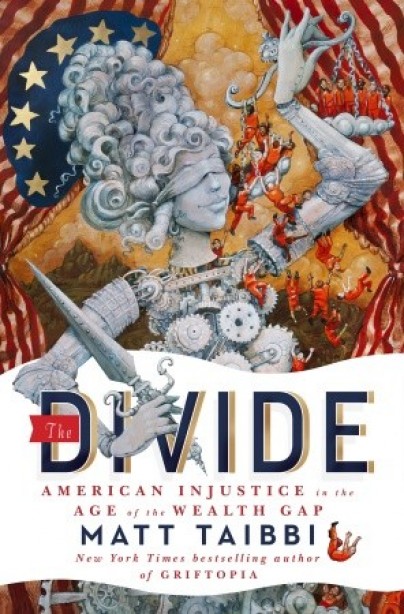
Book Review: ‘The Divide’

Go Lean Commentary

Book Review - The Divide - PhotoSo many Caribbean citizens would love the opportunity to immigrate to the United States. However, the old adage could apply here: “All that glitters is not gold”.

The publishers of the book Go Lean … Caribbean, align with the source book in this review, The Divide by Matt Taibbi. In the Caribbean, we hope to minimize the “push-and-pull” factors that draw our Caribbean youth away. This verse from Matt Taibbi’s book depicts that the US is not the “Promised Land” that many Caribbean expatriates envision:

Violent crime has fallen by 44 percent in America over the past two decades, but during that same period the prison population has more than doubled, skewing heavily black and poor. In essence, poverty itself is being criminalized.

This subject matter aligns with the Go Lean … Caribbean publication, which serves as a roadmap for the introduction and implementation of the Caribbean Union Trade Federation (CU). The Go Lean roadmap calls for the optimization of the Caribbean economic, security and governing engines. We want a society based on justice, but not the “American Justice” we see meted out, as described in the source book.

This Go Lean roadmap first assesses that the Caribbean is in crisis, that we are not able to retain our young people. Many member-states (St Vincent, Puerto Rico, US Virgin Islands, etc.) have lost more than half of their populations to foreign shores. This plight of human flight makes the task of building a functioning society difficult for the remainder, as often our brightest and best talents are the ones that leave. We “fatten frogs for snakes”, as the Jamaican expression depicts.

Many times, the destination of choice is the United States. The goal of Go Lean movement is to forge a better society, to make the Caribbean a better place to live, work and play. While the source book in the foregoing article is indicting the American Justice system, we, in the Caribbean, need to ensure that we are doing even better ourselves in our Caribbean homeland.

Book Review: By Timothy Noah; contributing writer New York Times, April 10, 2014

THE DIVIDE (Spiegel & Grau Publishers)

American Injustice in the Age of the Wealth Gap

By Matt Taibbi

“Low-class people do low-class things.” What’s notable in this reflexive dismissal of those with modest means are not the words themselves. Rather, please turn your attention to the person whom Matt Taibbi, in his ambitious new book documenting America’s unequal administration of justice to rich and poor, quotes saying them: a private attorney hired by New York State to defend low-income people in criminal court. We never learn his name, but Taibbi calls him Waldorf because he resembles the grouchy old balcony heckler on “The Muppet Show.”

Waldorf’s casual contempt for his defendants (and tacit approval of the sloppy policing dragnet that puts them at his mercy) is voiced at the conclusion of a grimly comic vignette worthy of Joseph Heller — one of many deeply reported, highly compelling mini-narratives of dysfunction within the criminal justice system that make “The Divide: American Injustice in the Age of the Wealth Gap” as infuriating as it is impossible to put down.

A 35-year-old black man named Andrew Brown is arrested for “obstructing pedestrian traffic” in Bedford-Stuyvesant. Brown, having been similarly harassed by the cops countless times before, refuses to provide ID and accept a summons, and is consequently brought into court. Once there, Brown explains to Waldorf that he was talking to a friend outside his own apartment building after getting off work, and that, given the lateness of the hour (shortly before 1 a.m.), there wouldn’t have been any pedestrian traffic on Myrtle Avenue to obstruct.

None of this seems to register with Waldorf. “What are you arguing?” he asks. He wonders aloud whether Brown was “being a wise guy” with the cops, and expresses surprise that a person such as Brown would have a job. He advises his client to pay the $25 fine.

Brown refuses and explains it all over again to the judge. The judge turns to Waldorf and asks whether Brown will pay the $25 fine. Waldorf explains, for the second time, that Brown won’t pay, his manner suggesting that for the life of him he can’t figure out why not.

Only then does the judge bestir himself to ask the arresting officer whether he saw any other people on the sidewalk that night. No? “O.K., then,” the judge sighs. “Not guilty.” Out in the hallway, Taibbi asks Waldorf why white people never get arrested for obstructing pedestrian traffic. Oblivious to the lesson that has just played out, and puzzled as to why Taibbi would want to include any of this in a book, Waldorf replies, “Low-class people do low-class things.”

Taibbi wrote “The Divide” to demonstrate that unequal wealth is producing grotesquely unequal outcomes in criminal justice. You might say that’s an old story, but Taibbi believes that, just as income disparities are growing ever wider, so, too, are disparities in who attracts the attention of cops and prosecutors and who doesn’t. Violent crime has fallen by 44 percent in America over the past two decades, but during that same period the prison population has more than doubled, skewing heavily black and poor. In essence, poverty itself is being criminalized. Meanwhile, at the other end of the income distribution, an epidemic of white-collar crime has overtaken the financial sector, indicated, for instance, by a proliferation of record-breaking civil settlements. But partly because of an embarrassing succession of botched Justice Department prosecutions, and partly because of a growing worry (first enunciated by Attorney General Eric Holder when he was Bill Clinton’s deputy attorney general) that any aggressive prosecution of big banks could destabilize the economy, Wall Street has come, under President Obama, to enjoy near-total immunity from criminal prosecution. It had more to fear, ironically, when George W. Bush was president.

The argument isn’t laid out in a particularly rigorous or nuanced manner, but it seems plausible enough. Taibbi, a longtime Rolling Stone writer who is currently developing a publication about political and financial corruption for First Look Media, has in the past written in a blustery style that put me off, but here the gonzo affectation is kept largely in check. What I failed to notice previously — or perhaps what Taibbi shows off to especially good effect here — is what a meticulous reporter he can be, with a facility for rendering complex financial skulduggery intelligible. Especially noteworthy are Taibbi’s detailed accounts of self-­dealing amid the dismantlement of Lehman Brothers — which involved, among other things, hoodwinking Lehman’s bankruptcy judge — and of a vicious harassment campaign waged by hedge fund managers against the employees of a Canadian insurance company whose stock they’d shorted. In both instances, one is struck that, however tricky the standard of proof may be for the white-collar criminal class, the evidence available nowadays in the form of compromising email communications would make Eliot Ness weep with gratitude. And yet the gangsters got away.

Taibbi is similarly skillful at explaining how bureaucratic imperatives in the criminal justice system can spin scarily out of control. In New York City, you start with a “broken windows” theory that says cracking down on petty crime can prevent little criminals from becoming big criminals. Possibly because that’s right, violent crime goes down. But paradoxically, that makes a cop’s life more difficult rather than less, because criminals are getting harder to find even as new computer systems are enabling the police commissioner to keep track of which precincts are making the most arrests. The solution turns out to be aggressive use of a stop-and-frisk policy that gives cops a blank check to “search virtually anyone at any time.” The police start behaving “like commercial fishermen, throwing nets over whole city blocks.” Some of the fish get prosecuted or ticketed for ever-pettier offenses; 20,000 summonses, for instance, are handed out annually for riding a bicycle on the sidewalk. But most fish aren’t guilty of anything and must grow accustomed to being routinely cuffed and ridden around in a police van before they are tossed back into the water. These fish are, of course, typically black and poor. Anecdotal evidence suggests that throwing a similar fishnet over entire Wall Street firms would produce a criminal yield at least as high as any random ghetto block. But innocent Wall Street fish would have a much bigger megaphone with which to proclaim their constitutional rights, and guilty Wall Street fish would have much better lawyers.

One theme implicit in Taibbi’s reporting is the extent to which the justice system’s newer kinds of inequalities are driven by technology. Computers encourage both the government and the banks to operate on a scale at which consideration of

individual circumstance isn’t really possible. The result is unstoppable error by government (say, the frequent miscalculations that leave welfare recipients at constant risk of being wrongly accused of fraud) and unstoppable fraud by banks (say, ­robo-signing endlessly repackaged and resold mortgages and credit card debt). For both government and banks, such scaling up inevitably creates injustices for certain individuals, but so long as the victims are powerless there won’t be much of a legal or political reckoning. The person tossed into jail for welfare fraud he didn’t commit or tossed out of his house because he was mistakenly judged not to be paying his mortgage may or may not get it all sorted out in the end, but even if he does the feedback loop won’t impose too much pain.

We may be approaching a day when any kind of personal attention from a large institution that wields substantial control over your life becomes a luxury available only to the few, like a bespoke suit or designer gown.

New York Times Online –Book Review – “The Justice Gap” – Retrieved 04-15-2014 –http://www.nytimes.com/2014/04/13/books/review/the-divide-by-matt-taibbi.html?_r=0http://www.nytimes.com/2014/04/13/books/review/the-divide-by-matt-taibbi.html_r=0

Even though the Go Lean book is presented as a roadmap for economic empowerment, it immediately recognizes that there must be an effort for justice among Caribbean institutions or rather, people will continue to flee. At the outset of the Go Lean book, in the Declaration of Interdependence (Page 12), this point is pronounced:

xxi. Whereas the legacy in recent times in individual states may be that of ineffectual governance with no redress to higher authority, the accedence of this Federation will ensure accountability and escalation of the human and civil rights of the people for good governance, justice assurances, due process and the rule of law. As such, any threats of a “failed state” status for any member state must enact emergency measures on behalf of the Federation to protect the human, civil and property rights of the citizens, residents, allies, trading partners, and visitors of the affected member state and the Federation as a whole.

How should the Caribbean be different than the United States in the pursuit of justice?

The book Go Lean … Caribbean details strategies, tactic, implementations and advocacies to elevate Caribbean society. Some of the specific features include:

Community Ethos – Juvenile Justice Page 23
10 Ways to Manage Reconciliations Page 34
10 Ways to Impact the Greater Good Page 37
Separation of Powers–Justice Department Page 77
Separation of Powers–Judicial Branch Page 90
10 Ways to Better Manage Image Page 133
10 Ways to Improve Failed-State Indices Page 134
10 Ways to Impact Justice Page 177
10 Ways to Reduce Crime Page 178
10 Ways to Improve Intelligence Page 182
10 Ways to Impact Wall Street Page 200
10 Ways to Impact Prison-Industrial Complex Page 211
10 Ways to Protect Human Rights Page 220
10 Ways to Impact Youth Page 227

The roadmap also cautions that we do not want to repeat America’s mistakes. If we do not learn from history …

In truth, the Caribbean is still reeling from the effects of the Global Financial Crisis of 2008.

What is worse, the US has “hardly” marshaled any persecutions against the culprits and perpetrators of the mortgage fraud that de-stabilized the American securities markets and the world economy. Matt Taibbi further reports:

In a speech last year that chilled Wall Street, New York Federal Reserve President William Dudley said he feared that the tax dodging, money laundering, mortgage fraud and trampling on homeowners by America’s big banks might reflect not just a few bad actors but ethical flaws deep in the fabric of Wall Street.

In 2010, Attorney General Eric Holder Jr. warned that “mortgage-fraud crimes have reached crisis proportions.” He vowed bravely to fight back, but the Justice Department’s inspector general recently reported that, in fact, Holder’s department has made Wall Street crime its lowest priority and that, since 2009, the FBI has closed 747 mortgage-fraud cases with little or no investigation.

800px-Statue_of_Liberty,_NYThere it is, the United States, where there seems to be a Great Divide in justice, one set of standards for the rich, another set for the poor.

The grass is not greener on that (American) side!

The reasons for emigration are “push-and-pull”. This source book identifies and qualifies a “pull” factor, the issue of justice in America. The book informs the reader that America should not be considered alluring from a justice perspective, especially if the reader/audience is poor and of a minority ethnicity.

This leaves the “push” factors. The Caribbean must address its issues, as to why its population is so inclined to emigrate. This is the purpose of the Go Lean roadmap. It features the assessments, strategies, tactics and implementations to make the Caribbean a better place to live, work and play.

Now is the time for the Caribbean region to lean-in for the changes described in the book Go Lean … Caribbean. The benefits of this roadmap are too alluring to ignore: emergence of our own $800 Billion economy, 2.2 million new jobs, new industries, services and optimized justice institutions.

Download the free e-Book of Go Lean … Caribbean – now!
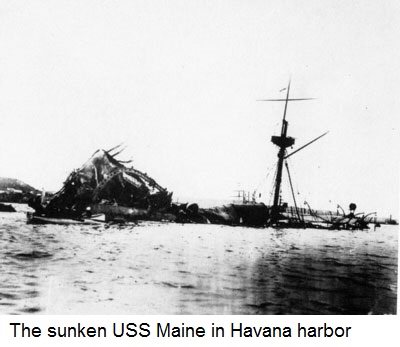


Share this post:
, , , , ,
[Top]

Cuba Approves New “Law on Foreign Investment”

Go Lean Commentary

Cuba FlagCuba sera libre!

This has been the “war chant” for many lovers of Cuban heritage, culture and homeland. It’s a reminder that Cuba currently lacks many of the same freedoms so many of its neighbors enjoy. It is a mission of the book Go Lean … Caribbean, to bring change to the Caribbean in general and Cuba in particular, with the implementation of the Caribbean Union Trade Federation (CU). See the relevance in the following news article here:

Title: Cuba Approves New “Law on Foreign Investment”
By: Caribbean Journal Online Magazine

Cuba’s National Assembly has approved a new “Law on Foreign Investment,” the government said Saturday.
In a statement, the government said it would be an “essential instrument in the interest of Cuba to consolidate its economic model and build a prosperous and sustainable socialism.”

The law included a mix of mostly tax incentives, and it could be the latest move in what has been a gradual shift toward liberalizing the country’s economy, although it has come at a decidedly slow pace.

That nominal push kicked off last year, when Raul Castro, announcing plans to retire from politics in 2018, said Cuba needed to update its economic model to achieve a “sustainable and prosperous socialist society, a society less egalitarian, but more fair.”

The vote came at a special meeting convened by Cuba’s state council to discuss regulation; the meeting focused on “the need to attract foreign capital to the sectors of interest to the country,” according to a statement.

Marino Murillo Jorge, vice president of Cuba’s Council of Ministers, said that well-done foreign investment “does not mean giving away the country.”

He said the new model would focus on ensuring not just economic growth but development, with a target growth rate of between five and seven percent.

Retrieved 04/01/2014 from: http://www.caribjournal.com/2014/03/30/cubas-national-assembly-approves-new-law-on-foreign-investment/

Cuba Blog GDPThe Go Lean roadmap recognizes that Cuba is very significant in the geographic and cultural anatomy of the Caribbean. As of 2010, Cuba possessed 26% of the region’s population (11.2 million out of 42.2 million) and 29% of the gross GDP, with their assumed $111 Billion output. But this is a far cry from where Cuba was 60 years ago, with one study placing Cuba as the #3 economy in Latin America and the Caribbean[a]. Though the “mighty has fallen”, this book posits that the “sleeping giant”, that is the Cuban economy, will awaken. The Go Loan roadmap is the preparation of Cuba’s re-emergence to the world’s economic consciousness. The realities and possibilities of Cuba’s past and future are identified early in the book, embedded in the Declaration of Interdependence, pronouncing a need for reconciliation efforts (Page 11):

xiii. Whereas the legacy of dissensions in many member-states (for example: Haiti and Cuba) will require a concerted effort to integrate the exile community’s repatriation, the Federation must arrange for Reconciliation Commissions to satiate a demand for justice.

The foregoing article confirms that change is on the way! The Cuban Communist regime recognizes that they need foreign investment, a “rightward” shift towards socialism; less egalitarianism and more free market accomplishments. The CU will expedite this process even more for/with Cuba. Where they declare “open arms” for foreign investments, we declare a regional embrace of Caribbean participation (Page 13):

xxiv. Whereas a free market economy can be induced and spurred for continuous progress, the Federation must install the controls to better manage aspects of the economy: jobs, inflation, savings rate, investments and other economic principles. Thereby attracting direct foreign investment because of the stability and vibrancy of our economy.

To the population of Cubans living on the island, we embrace you; “Help” is on the way! We entreat you to lean-in to this plan for confederation with your Caribbean neighbors.

To the Cuban Diaspora living abroad, we embrace you. There is a role for your inclusion in the future of Cuba. We entreat you to also lean-in to this roadmap for change and economic optimization for your beloved Cuba.

To the Cuban legacies, those descendants of Cuba’s past, we encourage you to tune-in and observe how the passions of your heritage will succeed in this new world.

Cuba sera libre!

Download the Book- Go Lean…Caribbean Now!!!

———–

Appendix – Reference:

a. United Nations Development Program, Human Development Report, Various issues, 1990, 1992, New York: Oxford University Press, 1991, 1993.


Share this post:
, , , , , ,
[Top]

Book Review: ‘How Numbers Rule the World: The Use & Abuse of Statistics in Politics’

Go Lean Commentary

How Numbers Rule the WorldThe below news article is a Review of the above-cited book; it highlights many of the same approaches being used in the publication Go Lean … Caribbean for the introduction and implementation of the Caribbean Union Trade Federation (CU). This book embraces the concepts of agile or lean methodologies to measure and manage progress in the region. Thus the name Go Lean. The Federation will lean-in to best-practices for capturing, computing, and measuring good economic and consumption data.

The source book by Lorenzo Fioramonti focuses on the use and abuse of statistics in the field of economic measurements, or econometrics. He asserts that the aggregate numbers are so critical that they “rule the world”. Due to this power, there is a basis for abuse, and far too often bad numbers have been used to exploit good intentions. The Go Lean book serves as a roadmap for the 5-year implementation of the CU. This requires exact econometric measurements from the outset, and thusly organizational structures will be embedded with the capabilities to facilitate this mandate. See the review here:

Book: How Numbers Rule the World: The Use and Abuse of Statistics in Global Politics. Lorenzo Fioramonti. Zed Books

Review by: Stuart Astill

GDP drives our economies. Stock market indices flood our media and national debates. Statistical calculations define how we deal with climate change, poverty and sustainability. But what is behind these numbers? In this book, Lorenzo Fioramonti sets out to show how numbers have been used as a means to reinforce the grip of markets on our social and political life, curtailing public participation and rational debate. Stuart Astill finds it to be a well written book, blending together knowledge from different fields into a coherent and readable whole. Of interest to economists, statisticians and especially those studying all aspects of power and politics.

During my time as a government statistician I had literally no idea that I was not, as many people thought, an oxymoron, but rather I was a tautology. I have discovered amongst many other things, thanks to Lorenzo Fioramonti‘s book, that statistics were originally created for the express purpose of governing and reforming the state, hence the ‘stat’ part of the name.

However, the title of the book, “How numbers rule the world”, is much closer to describing the content than is the subtitle, “the use and abuse of statistics in global politics”. Fioramonti’s main concerns are economists and, perhaps even more, the people who ask questions of economists and statisticians. He intelligently explains how he despairs of people who abuse their technical

knowledge or their advantageous position to turn the world to their own ends rather than the common good. This is not surprising: the author holds a Chair in Governance at the University of Pretoria and applies governance thinking through his work on topics around development, alternative economies and social progress measurement.

This book is consequently largely about power, rather than numbers: it illustrates a subset of abuses of power that have numbers at their heart. It is in some ways a psychopath’s guide to bullying the world by numbers – pretending that everything is ‘rational’, ‘independent’ and ‘objective’ and building fortresses of power around these intentional misrepresentations. In a provocative and fascinating first introductory chapter Fioramonti outlines his take on the world of ‘official’ numbers – perhaps best summed up where he says “Experts who use numbers have become the guardians of [this] social trust… citizens, elected representatives and other stakeholders… are held hostage by experts…”

The main chapters are quite specific techno-politico-historical investigations into four areas; ‘New global rulers: the untameable power of credit rating’, ‘Fiddling while the planet burns: the marketization of climate change’,

‘Measuring the unmeasurable: the financialization of nature’ and ‘Numbers for good? The quest for aid effectiveness and social impact’. He concludes with ‘Rethinking numbers, rethinking governance’. The whole is well written, blending together knowledge from different fields into a coherent and readable flow with a good number of ‘light bulb’ moments.

As a slight criticism from a purist, Fioramonti occasionally blurs the undeniable neutrality of mathematics and the more qualitative issues that necessarily sit around it. Economics and, to a slightly lesser extent, applied statistics consist of assumptions first and foremost, plus mathematics. I would have preferred to have seen clearer isolation of elements that are unquestionably objective and true – there is only one way for a statistician to calculate where the 90th percentile lies and only one way for an economist to carry out a simple linear regression. What Fioramonti is discussing is not just mathematics, but numbers in the real political world that sit as the filling in a sandwich. On either side of the pure mathematical filling is the sometimes rotten bread. In statistics we have on one side the definition of the statistics under consideration and the selection of the methodology that will be used – on the other side a slice of presentation and selective highlighting (or subtle downplaying). In economics, even more crucially, the fundamental assumptions that define the model (the most famous of which is the General Equilibrium, or ‘free market’ model) make one slice of the bread, while the presentation and choice of weighting empirical evidence with pure theory form the other.

Mathematics is the neutral servant of the assumptions but the assumptions can and should be stated and debated independently. I have always argued that the crucial step in analysis is to come back to our clearly stated assumptions and test them in view of our results against the real world. We must embrace a qualitative depth even in the most apparently quantitative pursuits. Professor Fioramonti has shown in a passionate and convincing way the global importance of this aspiration. His unarguable clarion call is for clarity, transparency and widespread, gentle and constructive skepticism.

I would add that we must make a great push for wider numeracy and understanding of scientific philosophy. In our world it is possible for a senior public servant to say “I don’t do numbers”, despite ‘analysis and use of evidence’ being one of their core competencies. As long as the public and the politerati do not have the skills to engage with (note, not in) quantitative analysis we cannot escape the traps that are so vividly described by this book.

Another lesson illustrated clearly by Fioramonti in this book is to embrace ambiguity. From a practitioner’s point of view it is crucial to consider how integrity can go hand in hand with progressing the use of numbers in a beneficial way. I was particularly taken by the chapter ‘Numbers for good? The quest for aid effectiveness and social impact’ which illustrates Fioramonti’s theme particularly well, showing how the undeniable power of numbers to reduce the inconceivable reality of the world to manageable proportions can lead to dangers, especially when exercised in the realm of human behaviour. The sharpness of his argument is summed up when he says that “the complexity of social relations is lost through the cracks of mathematical algorithms”.

His dismay at models being ignorantly lifted from the world of business and planted in non-profit development sectors is clear and well evidenced. There is a wonderfully familiar feeling to a quote in the chapter on aid effectiveness where the author is commissioned by his development-sector client to “improve their impact assessment tools”. Fioramonti offers them a coherent and balanced strategy with a methodology that is sensitive to the needs of the client and, hopefully, inclusive and beneficial to those in the developing countries. The CEO of the commissioning organisation listens and then baldly states: “Dr Fioramonti, there must have been a misunderstanding… we want you to develop one number which can tell us if what we do works or doesn’t. As simple as that.”

To have integrity, practitioners must recognise the right of commissioners of work to voice such a demand, whilst to the best of their capability working to a conclusion that, at worst, does no harm. At best the practitioner’s conclusion improves the world, moves forward the client’s understanding and improves the shared body of knowledge. Not easy when there are practitioners out there with less integrity, ready to take money in exchange for work that may do harm.

The author shows us in the historical section of this chapter the devastating scale of the misguidedness (my polite phrase!) that can occur when poorly defined economic growth becomes the key measure of development; natural resources are over-exploited, countries grow, but fail to adequately develop democratically, in human capital terms or in the most basic health, poverty and human rights areas. Even when/if aid makes it to the correct destinations it may well merely be used to prove someone’s (flawed) economic theory. Philanthropic ventures, the author argues, are often backed by the kind of people (technocrats, those from the business world), who like their money to be spent according to simple methodologies with hard numbers that ought to be seen as widely discredited given the events of the last financial crisis.

However deep the numbers can take us they cannot take us to the true problem, which is also the heart of the solution: power. In the end it seems that most of the problems in this book come down to something simple and very human: desperation for certainty combined with a need for simplicity in a confusing world. The challenge then is to move forward constructively and honestly while responding to and understanding that impossible desire.

In the Go Lean book, there is an advocacy “10 Ways to Measure Progress” (Page 147), detailing how the CU will manage the mission to make the Caribbean a better place to live, work, and play. The roadmap posits that this effort is a journey, not just one act. Therefore this effort is to be optimized with advanced process management methodologies to ensure CU goals are being accomplished; the stakeholders must therefore measure the progress. The key to this effort will be the federal structure of a Commerce Department with the primary role of harvesting demographic and econometric data. The roadmap adopts a Trade philosophy branded as SHIELD (Strategic, Harvest, Interdiction, Enforcement, Logistics and Delivery). The CU will install Project Management Offices in every Executive Branch Department to ensure a lean culture of quality delivery and accountability. This mission is highlighted at the outset of the Go Lean book, in a Declaration of Interdependence, with the following statement:

xxiv. Whereas a free market economy can be induced and spurred for continuous progress, the Federation must install the controls to better manage aspects of the economy: jobs, inflation, savings rate, investments and other economic principles. Thereby attracting direct foreign investment because of the stability and vibrancy of our economy.

There are other numbers that are important in the management of the Caribbean regional economy, numbers that measure the capabilities of the economic engines and the quality of Caribbean life. In particular, these are the numbers that are compiled and evaluated by credit reporting agencies and “failed-state” assessors. The Go Lean roadmap details action plans to improve these metrics: “10 Ways to Improve Credit Ratings” (Page 155) and “10 Ways to Improve Failed-State Indices” (Page 134).

Now is the time for the Caribbean region to lean-in for the changes described in the book Go Lean … Caribbean. The benefits of this roadmap are very alluring, that with the measured progress, and appropriate course correction, the Caribbean region can emerge to a $800 Billion economy (up from $278 Billion based on 2010 figures). These are just numbers, yes, but as Lorenzo Fioramonti pointed in in the foregoing reviewed book, these ”… Numbers Rule the World …”

Download the book now Go Lean … Caribbean.

Share this post:
, , , ,
[Top]

Book Review: ‘Wrong – Nine Economic Policy Disasters and What We Can Learn…’

Go Lean Commentary

CU Blog-WrongThe forgoing news article is a Review of the above-cited book; it highlights many of the same approaches being used in the publication Go Lean … Caribbean for the introduction and implementation of the Caribbean Union Trade Federation (CU). This book declares that a “crisis is a terrible thing to waste” and that Caribbean member-states are still reeling from the crisis of the 2008 Economic Downturn. What’s more, the Go Lean … Caribbean book, serving as a roadmap, provides solutions to optimize the region’s economy and security apparatus.

The source book by Richard Grossman is not focused on the Caribbean; but the many economic policies do have direct effect on the region, especially with the reliance on tourism from North America and Europe as the primary economic drivers. This status makes the Caribbean a “parasite” economy; as parasites go, the health of the host directly affects the health of the symbiot. So we are very much affected by the economic policies implemented in the US, Canada, Europe, Japan, China and other countries. What is worse is the fact that we, as the Caribbean, have no voice into the policies of these host countries, (nothwithstanding the Dutch & French Caribbean countries having some small representation in European Parlianment and Puerto Rico/USVI having non-voting representation in the US Congress). So rather than drive these countries’ economic policies, the Go Lean strategy is to mitigate the negative consequences from “wrong” economic policies.

Book Review: Wrong: Nine Economic Policy Disasters and What We Can Learn from Them by Richard S. Grossman

By: Anna Grodecka

In recent years, the world has been rocked by major economic crises, most notably the collapse of Lehman Brothers, the largest bankruptcy in American history, which triggered the breathtakingly destructive sub-prime disaster. What sparks these vast economic calamities? Why do our economic policy makers fail to protect us from such upheavals? Anna Grodecka reviews Richard S. Grossman’s contribution to the literature, and finds this an insightful and accessible read, especially recommended for economics students.

“We should be (…) wary of accepting common opinions; we should judge them by the ways of reason not by popular vote.” These words of the French Renaissance writer and philosopher Michel de Montaigne could be a good summary of Richard Grossman’s newest book Wrong: Nine Economic Policy Disasters and What We Can Learn from Them. Grossman, a professor of economics at Wesleyan University, describes nine economic policy failures from the past (both distant and more recent) and concludes that the main sin of the policymakers is the commitment to outdated economic ideologies and so-called conventional wisdoms.

Although it tackles a serious issue, the book is an enjoyable read. Starting with a quote from famous economists, politicians, and even Shakespeare, each chapter focuses on one economic policy mistake. The historical outlook prevails, although the last two chapters are devoted to the description of the sub-prime and the euro/sovereign default crisis. Grossman is aware of the fact that his book suffers from the lack of counter-factual analysis. The problem is that observing that a given policy had certain consequence does not mean that in the absence of the policy the consequences would not have occurred. We cannot apply laws of logics and sentence negation to reality, especially complex political and economic reality depending not only on rational analysis but also on the animal instincts of human beings, because causal relationships are very difficult to establish. Conducting counter-factual analysis is even harder. This of course does not mean that we should give up analysing past policies widely known as mistaken.

Grossman first describes the British Navigation Acts fueled by the ideology of mercantilism that speeded up the process of revolution in the North American colonies. Then he discusses the history of the first two ‘central’ banks in the United States, whose charters were not renewed due to partisan divisions in the country which could have an impact on the evolution of several banking crises.

There is also a chapter on the Great Famine in Ireland at the end of the 19th century, and the impact of policies and British Corn Laws on it. Grossman covers the well-documented mistake on the amount of war reparations imposed by the Allies on Germany after the First World War, as well as the return to the Gold Standard at the pre-war (too high) parity by Britain in the inter-war period. Another example of wrong economic policy that is described in the book is the Smooth-Hawley Tariff, which was a protectionist measure applied by the US in 1930. Lastly, before turning to the most recent policy mistakes, the author devotes one chapter to the infamous Japanese Lost Decade. What sounds like an enumeration of well-known policy mistakes already described in other books turns out in fact to be a fascinating collection of accounts providing interesting details and new insights into the subject. This is a well-written book that puts the events into historical and economic context. It certainly has a chance at becoming a best-seller and not solely a publication read by experts.

As an example, we can take a closer look at the chapter on the Irish Famine, which took place from 1845-1852. Grossman not only describes what happened, but puts it into the perspective of other famines, starting from the BCE period. In terms of absolute numbers, the Great Hunger in Ireland was not the worst famine recorded but it did tragically lead to the death of twelve per cent of Irish population, forcing many others to emigrate. The author details how the potato – which originated in the Americas – arrived to a fertile Ireland, and that the poorest third of the Irish population consumed up to twelve pounds of potatoes per day (per capita). Only after this introduction the economic policy is mentioned. Grossman compares the responses of two Prime Ministers of the United Kingdom to the famine: Sir Robert Peel and Lord John Russell. Russell was so committed to the limited government intervention that he refused to buy food for the starving masses in order not to disturb the free formation of prices in the market. Similarly, he refused to increase the scale of public works that would give job to Irish workers so as not to disturb the free labour market. The paradox is that when the Great Famine occurred, Ireland was not a poor country. The Famine would not have been so ‘great’ if it were not for the free market ideology followed by the policymakers at that time. As it turns out, leaving things to the invisible hand of market is not always an optimal solution.

Another interesting chapter is devoted to the Lost Decade in Japan. Entitled Why Didn’t Anyone Pull the Andon Cord? The chapter begins with an explanation of the method of solving problems applied in the Toyota production system: when some potential problem is discovered, a worker may pull the andon cord that activates a signboard and starts the process of solving the problem. If the problem is not resolved within a specific time, the whole production is stopped until the issue is cleared. So, unlike the Toyota employees, Japanese authorities in the 1990’s did not pull the andon cord and continued “production” despite obvious economic problems in the country. Grossman focuses on the relationships between the Japanese Ministry of Finance and the banks’ personnel. Each bank had a clerk – mofutan – who stayed in daily contact with one employee of the ministry. Very often ex- ministry employees found work in the banks they were supervising before, once their ministerial duties were over. This sort of opaque relationship between the supervisory authority and banks in the end led to an inaccurate response to the crisis. Japanese officials did everything to maintain the status quo, refusing to introduce necessary changes or restructure the banking system for almost a decade. This chapter will be a treasure for economics students.

Of course, not all stories presented in Wrong are equally captivating. The two last chapters on the recent economic crisis seem to be the weakest, as they do not provide any new information from the perspective of a person that followed the news and other publications on the subject. But all in all, Grossman does an excellent job in picking up the most severe economic policy mistakes, providing a thorough description and analysis of them, and giving us anecdotes linked to the described events. Wrong is a very eloquently written book that leaves the reader with many new insights.

London School of Economics – Social Science Book Reviews – Retrieved 03-19-2014 –
http://blogs.lse.ac.uk/lsereviewofbooks/2014/03/18/book-review-wrong-nine-economic-policy-disasters/

The authors of this Go Lean publication represent stakeholders[d] who have been in key policy positions in those “host” countries, so the recommendations in the book, reflect sound economic policies and best-practices. This expertise is highlighted at the outset of the Go Lean book, in the Declaration of Interdependence, as follows:

xxi. Whereas the legacy of international democracies had been imperiled due to a global financial crisis, the structure of the Federation must allow for financial stability and assurance of the Federation’s institutions. To mandate the economic vibrancy of the region, monetary & fiscal controls and policies must be incorporated as proactive and reactive measures. These measures must address threats against the financial integrity of the Federation and of the member-states.

Similar to the publication by Richard Grossman, the Go Lean book highlights lessons that are learned from failed economic policies[a] and applies strategies, tactics and implementation to mitigate the wrong policies and set the region straight.[b][c]

Now is the time for the Caribbean region to lean-in for the changes described in the book Go Lean … Caribbean. The benefits of this roadmap are too alluring to ignore: emergence of an $800 Billion economy, 2.2. million new jobs, new industries, services and opportunities for the youth of the Caribbean and even an invitation to the Diaspora to repatriate from those North American and European countries that have been on the wrong side of the history featured in Richard Grossman’s book ”Wrong: Nine Economic Policy Disasters and What We Can Learn from Them”.

Anna Grodecka is a PhD student in macroeconomics at Bonn Graduate School of Economics and a visiting researcher at the LSE. She obtained her Master’s Degree in Finance from Warsaw School of Economics and Johannes Gutenberg University in Mainz. In her research, she focuses mainly on monetary policy, the financial and housing markets, and their role in the recent crisis.

Go Lean References

Page Number
[a] 10 Lessons Learned from 2008

136

[b] 10 Ways to Impact Wall Street

200

[c] 10 Reforms for Banking Regulations

199

[d] SFE Foundation

8

Download the Book- Go Lean…Caribbean Now!!!


Share this post:
, , , , , ,
[Top]