Tag: Gender

A Lesson in the History of Interpersonal Violence – Domestic

Go Lean Commentary

This is a simple fact: countries are comprised of communities; communities are comprised of families; families are comprised of individuals. So if there are defects in individuals, then there could be consequences to families. In turn, a debilitated state of the family can imperil the state of the community. There’s no doubt, Failed-States are comprised of failing communities.

What defect among individuals and families, therefore, should “we” be alarmed with? Domestic Violence!
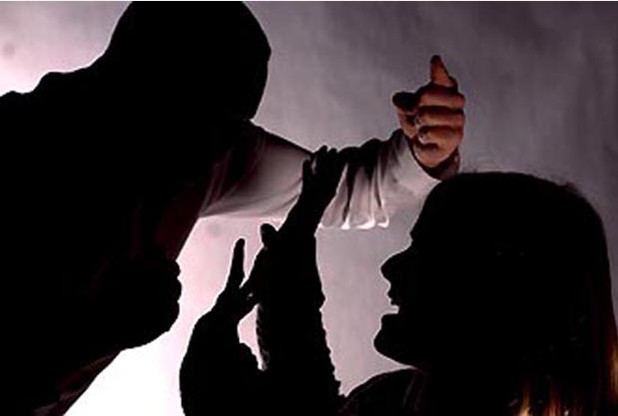
CU Blog - A Lesson in the History of Interpersonal Violence - Domestic Violence - Photo 1There is no way to justify domestic violence. (This is not referring to corporal discipline of children, but rather wife-battering). Believe it or not, people still try to rationalize, excuse and shift the blame relating to domestic violence.

No more!

There are certain ethnic groups where domestic violence is more prominent than others. Sadly, our community – Latin America and the Caribbean – needs to be more “on guard”. Many times, men in our society feel that it is their honor to discipline their wives … as they see fit. This is a continuation of the series on the history of interpersonal violence; this is commentary 3 of 3. It relates to the Caribbean homeland and to the Caribbean Diaspora in the North America today. The historic issues addressed in this series are:

  1. Duels
  2. Street Violence
  3. Domestic Violence

While we all want to live in a society free of crime, we are more concerned about being free of violence; no one’s honor should come at the expense of peace. This is innately assumed in the Social Contract between governments and their citizens. We all consider the curtailing of violence in society as a measurement of good civilization. It is one way in which we may judge societal success: simply, less interpersonal violence = success; more violence = Failed-State.

There is an evolutionary survival instinct: we all want to be physically safe, but many times, we are slow to apply this instinct to women in our lives; many times we feel that they must simply endure. No more! See Appendix VIDEO below.
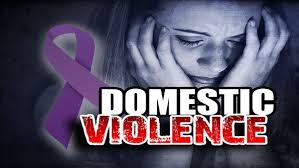
CU Blog - A Lesson in the History of Interpersonal Violence - Domestic Violence - Photo 2It has been a long, hard road, overcoming these attitudinal defects. This attitude has been ingrained in many societies for a long time. However, the effort to reform and transform these bad practices have made some traction. The World Conference on Human Rights, held in Vienna, Austria, in 1993, and the Declaration on the Elimination of Violence Against Women in the same year, concluded that civil society and governments must acknowledge that domestic violence is a public health policy and human rights concern. The US responded accordingly…

The Violence Against Women Act – see Appendix Reference below – was developed and passed as a result of extensive grassroots efforts in the late 1980s and early 1990s, with advocates and professionals from the battered women’s movement, sexual assault advocates, victim services field, law enforcement agencies, prosecutors’ offices, the courts, and the private bar urging Congress to adopt significant legislation to address domestic and sexual violence.

It has been a long, hard road, overcoming these domestic violence attitudes in the Caribbean. But overcome, we must! The Caribbean must catch up with the rest of the modern world in this regards; otherwise we lose … all around. We will continue to suffer societal abandonment due to “push and pull” factors. Domestic violence is a “push” factor; messaging of the transforming attitudes towards domestic and gender-based violence in North America is a “pull” factor. Many victims may want to flee their Caribbean homelands for refuge.

This commentary is 3 of 3 in this series considering the subject of interpersonal violence. The previous commentaries addressed issues of importance for mitigating interpersonal violence in our homeland. (This is not a consideration of military or terrorist violence; these are separate and distinct discussions). This commentary is a discussion about assuring public safety, so it must therefore address domestic violence abatement as it considers reducing other criminal activities.

Remediating and mitigating crime is a study in the “Art” and “Science” of violence. This academic study of the subject of interpersonal violence can be very practical. It can help to relieve pain for many of those suffering. It identifies reasons for violence: Need, Greed, Power, Justice and Honor; and how to re-program a community’s attitudes and expectations. The history of changes in community attitudes about domestic violence is well-documented. There are role models and advocates who have worked tirelessly to reform and transform their society. We appreciate their efforts and successes, and seek to emulate them here in the Caribbean. Consider the case of one American organization in the State of Georgia and its founder Julia Perilla:

Organization Profile: Caminar Latino
Organization Profile – Mission
The mission of Caminar Latino is to create possibilities for Latino families affected by violence to transform their lives and their communities.

Organization Profile – Core Values
1. Safety for Latinas and their families
2. Community-Driven Solutions
3. Individual and Community Transformation
4. Organizational Excellence

Caminar Latino or “Latino Journey” carries out its mission by creating safe spaces for each family member to begin their journey towards non-violence. Caminar Latino is Georgia’s first and only comprehensive domestic-violence intervention program for Latino families.

Organization Profile – Our Founder, Julia Perilla
CU Blog - A Lesson in the History of Interpersonal Violence - Domestic Violence - Photo 5Dr. Julia Perilla, our founder, has received scores of awards and is considered a leader in her field but if you ask her, her life, her work rests on a simple philosophy: listen. In 1990 she listened when a Catholic sister talked to her about the problem of domestic violence in her community. That year she started Caminar Latino. Perilla didn’t have a background in dealing with these issues, a fact that gave her pause but she realized that the women would tell her what she needed to know. That’s why in 1993 Perilla and Caminar Latino started a children’s program. And why in 1995 they began programming for men.

”The women were the ones who told us what was needed.” Perilla says. They asked Perilla for help with their children and they asked Caminar Latino to not neglect the men. Perilla listened when the women said “you have to make sure the men are getting all the information that we are.”

In describing her work, Perilla uses words like “collective” and “collaborative.” She’s quick to smile and insists, she’s no expert, she just listens. Her insight and wisdom has led Perilla to help countless of families in turmoil and along with the work, she’s also picked up some impressive accolades.

Perilla has consulted with the Centers for Disease Control, The National Council of Juvenile and Family Court Judges. She’s advised Georgia’s Commission on Family Violence and the National Resource Center on Domestic Violence, to name just a few. Her work has appeared in dozens of journals and garnered awards from her peers.

In 2005, just ten years after she obtained her doctorate in Psychology, Perilla was honored by the Georgia Psychological Association as their Woman of the Year. More recently, she was invited by Vice President [Joe] Biden to a dinner commemorating the Violence Against Women Act; [see Appendix Reference below].

In addition to writing and conducting research, Perilla also teaches. As faculty member in the Department of Psychology at Georgia State University, Perilla relishes her role teaching classes on the ethics of psychology. She also heads up the National Latino Research Center on Family and Social Change. On campus her door is always open to students and she routinely mentors Goizueta Scholars. In 2011 her work was recognized with the Carl V. Patton President’s Award for Community Service and Social Action Outstanding Faculty Award. 

In all facets, Perilla manages to work with a smile because as she puts it “I never work alone.” Whether it’s sharing a laugh with her colleagues or accompanying one of Caminar Latino’s young people to speak at a conference, Perilla says she always learns as much as she teaches. Her life, her work, is “a dream come true.” She is now keeping busy mentoring the next generation of Latina/o scholars who can continue to work from a human rights and social justice perspective.
Source: Caminar Latino – Organizational Website for Civic Organization – retrieved February 17, 2016 from: http://caminarlatino.org/profile-founder-julia-perilla/

CU Blog - A Lesson in the History of Interpersonal Violence - Domestic Violence - Photo 3

The book Go Lean … Caribbean asserts that to elevate Caribbean society there must be a focus on the region’s economic, security and governing engines. While the book primarily targets economic empowerments (jobs, investments, education, entrepreneurship, etc.), it posits that security concerns – threats to public safety – must also be front-and-center along with these economic efforts. While the subject of domestic violence falls on the member-state side of the separation-of-powers divide, the Go Lean book details a jurisdiction of monitoring and metering (ratings, rankings, service levels, etc.) local governments and their delivery of the Social Contract, (i.e. Best Places in the Caribbean To Live …). This too, is within scope of optimizing the region’s governing engines.

The Go Lean book serves as a roadmap for the introduction and implementation of the technocratic Caribbean Union Trade Federation (CU) to elevate the region’s economic, security and governing engines; these are the 3 prime directives:

  • Optimization of the economic engines in order to grow the regional economy and create 2.2 million new jobs.
  • Establishment of a security apparatus to better ensure public safety and protect the resultant economic engines.
  • Improve Caribbean governance, with a separation-of-powers between member-state administrations and the CU federal government (Executive facilitations, Legislative oversight and judicial prudence) to support these economic/security engines.

The Go Lean/CU roadmap is specifically designed (Page 23) to address the societal defects that harm and endanger people in Caribbean society with interpersonal violence, using these security mandates:

  • Adapting the Community Ethos: Public Protection over Privacy
  • Whistleblower Protection
  • Witness Security & Protection
  • Anti-Bullying and Mitigation
  • Intelligence Gathering – Video Surveillance
  • Light Up the Dark Places – Eliminate the figurative and literal “shadows”.

The quest of the Go Lean movement is to elevate Caribbean society above our dysfunctional past. Surely, we can message to the community that our wives, daughters and mothers need protection too. So many other communities have done so in the past; we can do it as well in the Caribbean.

Right now, we are failing … miserably!

It is a reality that many from the Caribbean have emigrated to US cities. One particular frontier city that has benefited from Caribbean homeland abandonment is Miami, Florida. But the experiences there is that many of the defective attitudes towards interpersonal and domestic violence have immigrated with the subjects. See a Reference Source here:

Florida’s Domestic Violence Statistics
In 2014, 106,882 crimes of domestic violence were reported to Florida law enforcement agencies resulting in 64,460 arrests. During fiscal year 2014-2015, Florida’s certified domestic violence centers provided 546,658 nights of emergency shelter to 15,397 survivors of domestic violence and their children. Advocates created 109,045 tailored safety plans, provided a total of 297,669 hours of advocacy and counseling services, and received 130,776 domestic violence hotline calls from individuals seeking emergency services, information, and safety planning assistance.

Many more survivors of domestic violence are not reporting their abusers to the police or accessing services at domestic violence services due to reasons such as shame, fear, or being prevented from doing so by their abusers. For this reason, we may never know the true extent of abuse in our country and in our state.

See here, the exact number of domestic violence services provided in just Miami-Dade County for the last fiscal year numbers are available for, 2010 – 2011; notice the Black-and-Brown distributions in this community:

Residential

Non-Residential

White, non-Hispanic

30

30

Black, non-Hispanic

235

623

Hispanic

312

530

Asian American

1

1

Native American

0

1

Middle Eastern

4

3

Haitian

39

19

Other

7

11

TOTAL

628

1,218

Summary Source: http://www.fcadv.org/floridas-domestic-violence-statistics retrieved February 17, 2016.
Table data: http://www.dcf.state.fl.us/programs/domesticviolence/publications/docs/DVData2010_2011.pdf

This above reference/data brings to mind a familiar (and sad) Caribbean expression:

You can take the man out of the island, but you cannot take the island out of the man.

The goal of this Go Lean/CU roadmap is to confederate all of the Caribbean – all 30 member-states – under a unified entity to provide societal solutions for the local region. We must abate the practice of domestic violence; no “ifs”, “ands” or “buts”. We must help the abused … and the abusers. The CU security goal is for public safety, to optimize the societal engines to ensure peace and security for all regional stakeholders.

The successful execution of this roadmap should result in the creation of millions of jobs and the growth of the regional economy. New funding would allow for grants to the member-states and their local communities to provide more remediation to these abused ones and the cooperative abusers in their neighborhoods. Communities can reform and transform; this is an accepted fact, aligning with the economic principle quoted in the Go Lean book (Page 21), that “Economic Systems Influence Individual Choices and Incentives”.

This roadmap fully envisions the integration of shepherding – leadership – for the Caribbean region’s economic, security and governing initiatives under the same organization: the Caribbean Union Trade Federation. These points are pronounced early in the Go Lean book (Page 12) with these opening Declaration of Interdependence statements:

x.   Whereas we are surrounded and allied to nations of larger proportions in land mass, populations, and treasuries, elements in their societies may have ill-intent in their pursuits, at the expense of the safety and security of our citizens. We must therefore appoint “new guards” to ensure our public safety and threats against our society, both domestic and foreign. The Federation must employ the latest advances and best practices of criminology and penology to assuage continuous threats against public safety.

xi.   Whereas all men are entitled to the benefits of good governance in a free society, “new guards” must be enacted to dissuade the emergence of incompetence, corruption, nepotism and cronyism at the peril of the people’s best interest. The Federation must guarantee the executions of a social contract between government and the governed.

xii.  Whereas the legacy in recent times in individual states may be that of ineffectual governance with no redress to higher authority, the accedence of this Federation will ensure accountability and escalation of the human and civil rights of the people for good governance, justice assurances, due process and the rule of law. As such, any threats of a “failed state” status for any member state must enact emergency measures on behalf of the Federation to protect the human, civil and property rights of the citizens, residents, allies, trading partners, and visitors of the affected member state …

xiii. Whereas the legacy of dissensions in many member-states …  will require a concerted effort to integrate the exile community’s repatriation, the Federation must arrange for Reconciliation Commissions to satiate a demand for justice.

xvi. Whereas security of our homeland is inextricably linked to prosperity of the homeland, the economic and security interest of the region needs to be aligned under the same governance. Since economic crimes, including piracy and other forms of terrorism, can imperil the functioning of the wheels of commerce for all the citizenry, the accedence of this Federation must equip the security apparatus with the tools and techniques for predictive and proactive interdictions.

The Caribbean appointing “new guards”, or a security pact to ensure justice and public safety will include many new community ethos, strategies, tactics, implementations and advocacies. Consider the sample list here:

Community Ethos – Economic Systems Influence Individual Choices Page 21
Community Ethos – Consequences of Choices Lie in Future Page 21
Community Ethos – Security Principles Page 22
Community Ethos – Ways to Manage Reconciliations Page 34
Community Ethos – Ways to Impact the Greater Good Page 37
Tactical – Vision – Forge a Single Market economy Page 45
Tactical – Confederating a non-sovereign union Page 63
Tactical – Fostering a Technocracy Page 64
Tactical – Separation of Powers – Homeland Security Page 75
Tactical – Separation of Powers – Justice Department Page 77
Tactical – Separation of Powers – CariPol: Marshals & Investigations Page 77
Tactical – Separation of Powers – Witness Protection Page 77
Implementation –   Start-up Security Initiatives Page 103
Implementation – Ways to Foster International Aid – Security Assistance Page 115
Implementation – Reasons to Repatriate – Security Optimization Page 118
Planning – Ways to Make the Caribbean Better Page 131
Planning – Ways to Improve Failed-State Indices – No Unchecked Violence Page 134
Planning – Lessons from the American West – Law & Order Lessons Page 142
Planning – Lessons from Egypt – Lackluster Law & Order affects Economy Page 143
Advocacy – Ways to Grow the Economy Page 151
Advocacy – Ways to Improve Governance Page 168
Advocacy – Ways to Better Manage the Social Contract Page 170
Advocacy – Ways to Improve Leadership Page 171
Advocacy – Ways to Impact Justice Page 177
Advocacy – Ways to Reduce Crime Page 178
Advocacy – Ways to Improve for Gun Control – Suspend Rights for Domestic Abusers Page 179
Advocacy – Ways to Improve Homeland Security Page 180
Advocacy – Ways to Mitigate Terrorism – Include a focus on bullying Page 181
Advocacy – Ways to Improve Intelligence Gathering and Analysis Page 182
Advocacy – Ways to Impact the Prison Industrial Complex Page 211
Advocacy – Ways to Protect Human Rights Page 220

The movement behind the book Go Lean … Caribbean have monitored the activities throughout the Caribbean neighborhood, and commented accordingly. Other subjects related to domestic-related crimes and security empowerments for the region have been blogged in other commentaries, as sampled here:

https://goleancaribbean.com/blog/?p=7179 SME Declaration: ‘Change Leaders in Crime Fight’ for better outcomes
https://goleancaribbean.com/blog/?p=5307 8th Violent Crime Warning to Bahamas Tourists – The Need for Better
https://goleancaribbean.com/blog/?p=5304 Mitigating the Eventual ‘Abuse of Power’
https://goleancaribbean.com/blog/?p=5238 #ManifestJustice – Lessons for the Prison Eco-System
https://goleancaribbean.com/blog/?p=4863 A Picture is worth a thousand words; video, a million to expose corruption
https://goleancaribbean.com/blog/?p=4308 911 – Emergency Response: System in Crisis
https://goleancaribbean.com/blog/?p=2994 Justice Strategy: Special Prosecutors and Commissions of Inquiry
https://goleancaribbean.com/blog/?p=2709 Caribbean Study: 58% Of Boys Agree to Female ‘Discipline’
https://goleancaribbean.com/blog/?p=2684 Role Model for Justice, Anti-Crime & Security: The Pinkertons
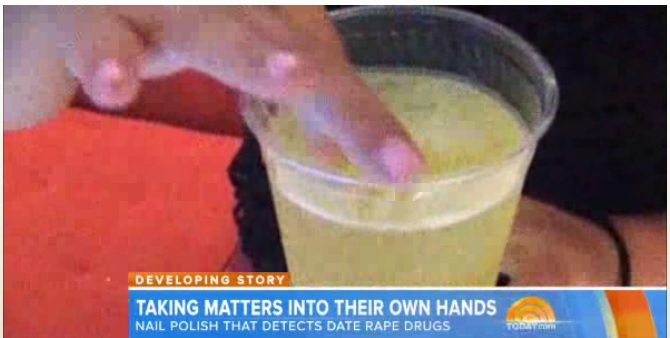
https://goleancaribbean.com/blog/?p=2201 Students developing nail polish to detect date rape drugs
https://goleancaribbean.com/blog/?p=809 Muslim officials condemn abductions of Nigerian girls
https://goleancaribbean.com/blog/?p=695 Abused wives find help by going to ‘Dona Carmen’
https://goleancaribbean.com/blog/?p=392 Jamaica to receive World Bank funds to help in crime fight
https://goleancaribbean.com/blog/?p=273 10 Things We Want from the US – #6: Crime Watch Initiatives

The vision of the Go Lean roadmap is to make the Caribbean homeland, a better place to live, work and play. This means measurable reductions mitigating and remediation) of interpersonal violence in the region. The Go Lean book is presented as a regional solution to remediate and mitigate all crime – White Collar, street and domestic – in the Caribbean.

The book’s premise is that “bad actors” will always emerge, from internal and external origins to exploit the opportunities, with good, bad and evil intent. This is a historical fact, and is bound to repeat. We must therefore be prepared and on-guard to defend our homeland against all threats, foreign and domestic, including crimes of interpersonal and domestic violence.

We must do better. Otherwise, our homeland will continue to be abandoned. These “push” factors will continue to cause our citizens to flee their homeland for foreign (North American and European) shores, just to find refuge from the victimization.

So all stakeholders in the Caribbean – people and institutions – are urged to lean-in to this Go Lean roadmap for the elevation of the Caribbean’s societal engines: economy, security and governance. We can do better; we can better impact the Greater Good for peace & security.  🙂

Download the book Go Lean … Caribbean – now!

————

Appendix Reference – Title: Violence Against Women Act

CU Blog - A Lesson in the History of Interpersonal Violence - Domestic Violence - Photo 4The Violence Against Women Act of 1994 (VAWA) is a United States federal law (Title IV, sec. 40001-40703 of the Violent Crime Control and Law Enforcement Act of 1994) signed [in to law] by President Bill Clinton on September 13, 1994 … The Act provides $1.6 billion toward investigation and prosecution of violent crimes against women, imposes automatic and mandatory restitution on those convicted, and allows civil redress in cases prosecutors chose to leave un-prosecuted. The Act also establishes the Office on Violence Against Women within the Department of Justice.

VAWA was drafted by the office of Senator Joe Biden (D-DE), with support from a broad coalition of advocacy groups.[1] The Act passed through Congress with bipartisan support in 1994, clearing the United States House of Representatives by a vote of 235–195 and the Senate by a vote of 61–38, although the following year House Republicans attempted to cut the Act’s funding.[2] In the 2000 Supreme Court case United States v. Morrison, a sharply divided Court struck down the VAWA provision allowing women the right to sue their attackers in federal court. By a 5–4 majority, the Court’s conservative wing overturned the provision as exceeding the federal government’s powers under the Commerce Clause.[3][4]

VAWA was reauthorized by bipartisan majorities in Congress in 2000, and again in December 2005, and signed by President George W. Bush.[5] The Act’s 2012 renewal was opposed by conservative Republicans, who objected to extending the Act’s protections to same-sex couples and to provisions allowing battered undocumented immigrants to claim temporary visas.[6] Ultimately, VAWA was again reauthorized in 2013, after a long legislative battle throughout 2012–2013.[7]

Source: https://en.wikipedia.org/wiki/Violence_Against_Women_Act retrieved February 17, 2016.

————

Appendix VIDEONO MORE’s Official Super Bowl Adhttps://youtu.be/tJaSj_qipic

Published on Feb 1, 2015 – Watch the official Super Bowl NO MORE ad (the first-ever Super Bowl commercial addressing domestic violence and sexual assault) and pledge to say NO MORE at http://nomore.org. The 30 second NO MORE PSA will air live during the first break after second quarter of NFL Super Bowl XLIX on February 1, 2015. Watch & share the NO MORE Public Service Announcement (PSA)!


Share this post:
, , ,

Women in Politics – Yes, They Can!

Go Lean Commentary

CU Blog - Women in Politics - Yes, They Can - Photo 4

The Caribbean member-states, despite their differences, (4 languages, 5 colonial legacies, terrain: mountains -vs- limestone islands), have a lot in common. Some similarities include:

  • Lack of equality for women compared to men.
  • The government is the largest employer.

So the reality of Caribbean life is that while the governmental administrations are not fully representative of the populations, they are responsible for all societal engines: economy, security and governance.

This is bad and this is good! Bad, because all the “eggs are in the same basket”. Good, because there is only one entity to reform, reboot and re-focus.

So how do we seriously consider reforming government in the Caribbean?

  • Start anew.
  • Start with politics and policy-makers.
  • Start with the people who submit for politics, to be policy-makers.
  • Start with people who participate in the process.

Considering the status-quo of the region – in crisis – there is this need to start again. But this time we need more women.

Consider Canada!

(The City of Detroit is across the river from Windsor, Ontario, Canada. The publishers of the book Go Lean…Caribbean are here to “observe and report” the turn-around and rebirth of the once-great-but-now-distressed City of Detroit and its metropolitan area. This proximity also allows us to observe-and-report on Detroit’s neighbor: Canada).

The Canadian political landscape can serve as a great role model for the Caribbean; (its a fitting role model for Detroit too). Consider these articles on Canada’s recent national elections:

News Article #1 Title: 50% population, 25% representation. Why the parliamentary gender gap?

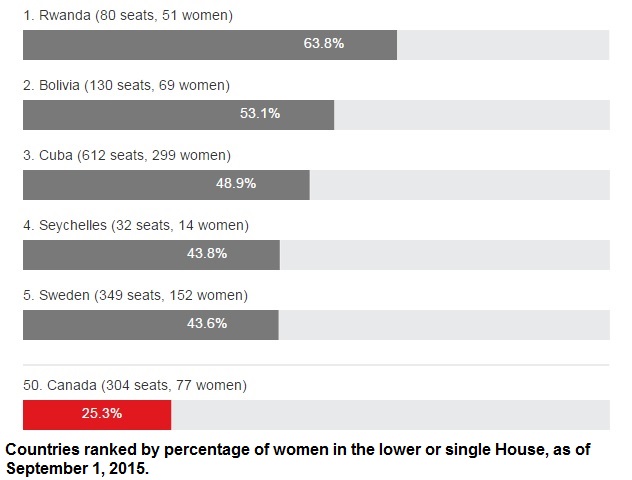
CU Blog - Women in Politics - Yes, They Can - Photo 1A record 88 women were elected in the 2015 federal election, up from 76 in 2011. The increase represents a modest gain in terms of representation, with women now accounting for 26 per cent of the seats in the House. The following feature — which was initially published before the election — examines the gender imbalance in Canadian politics.

Canadian women held just one-quarter of the seats in the House of Commons when the writ dropped back in August. This figure places us 50th in a recent international ranking of women in parliaments.

The 41st Canadian Parliament featured 77 women MPs, with a record 12 female ministers in Prime Minister Stephen Harper’s cabinet.

The NDP’s success in Quebec during the 2011 federal election largely triggered the uptick in the number of women in Parliament, with the proportion rising to 25 per cent from 22 per cent in the 2008 election.

In spite of this, a large gender gap persists after decades of relative stagnation in Canada’s House of Commons. Women comprise just 33 per cent of the candidates from the five leading parties in this election.

“There is no doubt that in the old democracies, including Canada, there is stagnation,” said Drude Dahlerup, a political scientist from the University of Stockholm who has consulted in countries such as Tunisia and Sierra Leone on gender equality in parliament.

“We have this perception that gender equality should come naturally. Our research shows that is not necessarily a fact.”

Old democracies don’t favour ‘gender shocks’
There is significant growth in women representatives in what Dahlerup calls “fast-track” countries — places that have experienced recent conflict or are a new democracy.

In fact, some of the countries outpacing Canada in terms of parliamentary gender equality include Rwanda, Bolivia, Iraq and Kazakhstan.

Newer democracies like Bolivia can experience a gender shock as it did in an October 2014 election, rising from 22 per cent to 53 per cent women in the lower house.

Older democracies take the incremental approach, which is slower and involves grappling with the conventions of older institutions.

Does the electorate share some of the blame?
Despite what some term as a patronizing treatment in the public sphere it appears that gender is not a chief concern for voters.

Sylvia Bashevkin, a political scientist from the University of Toronto, looked at the negative effects of underrepresentation for women in her 2009 book Women, Power, Politics: The Hidden Story of Canada’s Unfinished Democracy and found a persistent marginalization of women’s contributions to politics in the media and public sphere.

“There’s a certain stream of gender stereotyping that still colours our discussions of public leadership that often tends to trivialize the contributions of women by paying particular attention to things like their appearance, speaking style or their personal lives rather than positions on policy.”

According to a recent poll, party loyalty factors far outweigh individual factors such as gender. In fact, respondents said women often tend to represent leadership qualities the voting public admires. The online Abacus survey was conducted in December 2014 and included a sample size of 1,438 Canadians.

“The argument is that [women] tend to be more community focused… and that they tend on average to be more honest and trustworthy than male politicians,” said Bashevkin.

The core of the issue comes back to the political parties and their nominations processes, says Melanee Thomas, a political scientist from the University of Calgary.

“We can find no evidence that voters discriminate against women candidates. We did find considerable evidence that party [nomination committees] were more likely to discriminate against women candidates,” said Thomas.

Thomas’s 2013 research with Marc André Bodet of LavalUniversity looked at district competitiveness. They found that women were more likely to be chosen as nominees in areas considered strongholds for other parties.

Where women are involved in the party nomination process, Thomas also said, more women are recruited to run for that nomination. Former MP and deputy prime minister Sheila Copps agrees.

“People try to replicate themselves and their social circle is usually very like-minded. I probably recruited more women in my time because it’s human nature,” said Copps.

Copps played a role in pitching the concept of a gender target of 25 per cent to former prime minister Jean Chrétien in 1993.

The target concept relies on the ability of the party leader to appoint women nominees required to meet the target.

Former prime minister Paul Martin opted to not have a target for women in the federal Liberal Party for 2004 while Stéphane Dion increased the target to 30 per cent in 2008.

Liberal Leader Justin Trudeau is running with an open nomination policy for the upcoming election, although this has caused some recent controversies. Ultimately, women comprised 31 per cent of the Liberal candidates.

The NDP has internal mechanisms to attempt to foster diversity. They say they have “parity policies,” that aim for gender diversity in the party structure, leadership and delegates.” It also insists that ridings must provide documentation of efforts to search for a woman or minority candidate before selecting a white male. When the final candidate list was released, the NDP touted a record proportion of 43 per cent women candidates.

Under the leadership of Prime Minister Stephen Harper, the Conservative Party holds that the matter should be left up to the local riding associations to determine. After running only 38 women candidates in 2006 the party’s figure spiked quickly in 2008 to 63 candidates. In 2015, 66 women, representing 20 per cent of the Conservatives roster of candidates, are in the running.

Read the whole story here: CBC News Site retrieved 11/13/2013 from: http://www.cbc.ca/news2/interactives/women-politics/

VIDEO 1 – Canada’s First Woman MP Agnes Macphail – https://youtu.be/0ALgilFMkug

Published on Sep 11, 2014 – Canada’s first female MP takes up the cause of Canadian penal system reform (1935).

————-

VIDEO 2 – MacPhail’s Successors – https://youtu.be/fyK7C6DA9lI

Published on Oct 21, 2015 – Political Scientist Sylvia Bashevkin reviews Canada’s gender facts: 50% population, 25% representation Why the parliamentary gender gap?

————

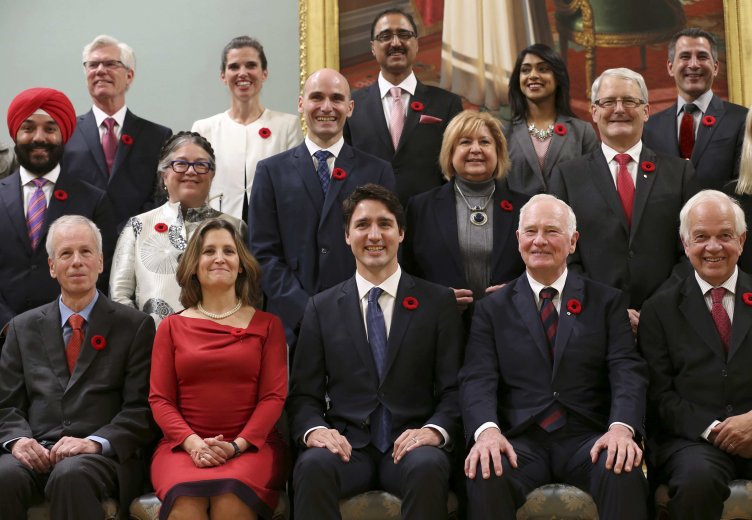
News Article #2 Title: New PM unveils cabinet that looks ‘like Canada’
Sub-title: Justin Trudeau’s younger, more diverse team comprises old-guard Liberal politicians and newcomers, half of them women.

CU Blog - Women in Politics - Yes, They Can - Photo 2

Justin Trudeau has been sworn in as Canada’s new prime minister, appointing a cabinet that he says looks “like Canada”.

The 43-year-old Liberal party leader, who swept to power in a general election two weeks ago to end nearly a decade of Conservative rule, took the oath on Wednesday and promised big changes as he introduced a younger, more diverse cabinet.

Most of the new ministers are between the ages of 35 and 50, while half of them are women – in line with Trudeau’s campaign pledge.

Asked why gender balance was important, Trudeau’s response was: “Because it’s 2015.

“Canadians from all across this country sent a message that it is time for real change, and I am deeply honoured by the faith they have placed in my team and me.”

The new cabinet includes a mix of old-guard Liberal politicians with many newcomers.

Among them is Indian-born Harjit Sajjan, a former Canadian soldier and Afghanistan war veteran who was named as Canada’s new defence minister.

He was Canada’s first Sikh commanding officer and received a number of recognitions for his service, having been deployed to Kandahar, Afghanistan, and Bosnia-Herzegovina.

Sajjan, a lieutenant-colonel in Canada’s armed forces, will oversee an anticipated change in Canada’s military involvement in the battle against the Islamic State of Iraq and the Levant (ISIL) fighters in Syria and Iraq.

Read the whole story here: http://www.aljazeera.com/news/2015/11/canada-pm-trudeau-diverse-women-cabinet-151105062433796.html posted November 5, 2015 by Al Jazerra News Service; retrieved November 13, 2015

This is not just a case for feminism. The issues in the foregoing news articles relate to policy-making participation and optimization, more than they relate to feminism. This story is being brought into focus in a consideration of the book Go Lean … Caribbean. The book serves as a roadmap for the introduction and implementation of the technocratic Caribbean Union Trade Federation (CU), for the societal elevation in the region. This roadmap calls for a fuller participation from women as stakeholders.

How do the foregoing stories relate to the Caribbean? The book relates that Canada (Page 146) has always provided a great role model for the Caribbean to consider for empowerment and elevation of our society. That country is a “friend” of the Caribbean; but it is also a competitor; a “frienemy” of sorts. How are we competing? What is our rate of participation of women in politics? See CHART here:

—————

CHART – Caribbean Women Political Participation

Member-states

Women Eligible To Vote*

Women Eligible for Office*

Number of Legislators#

Number of Women Legislators#

Percentage

Anguilla

1951

1951

11

2

18.18%

Antigua and Barbuda

1951

1951

19

3

15.79%

Aruba

1949

1949

21

7

33.33%

Bahamas

1961

1961

38

5

13.16%

Barbados

1950

1950

30

5

16.67%

Belize

1954

1954

31

1

3.23%

Bermuda

1943

1943

36

8

22.22%

British Virgin Islands

1951

1951

15

3

20.00%

Cayman Islands

1959

1959

18

2

11.11%

Cuba

1934

1934

612

299

48.86%

Dominica

1951

1951

22

3

13.64%

Dominican Republic

1942

1942

183

38

20.77%

Grenada

1951

1951

16

5

31.25%

Guadeloupe (Fr)

1945

1945

41

11

26.83%

Guyana

1953

1945

65

18

27.69%

Haiti

1950

1950

95

4

4.21%

Jamaica

1944

1944

63

7

11.11%

Martinique (Fr)

1945

1945

41

14

34.15%

Montserrat

1951

1951

9

2

22.22%

Netherlands Antilles (Ne)^

1949

1949

150

56

37.33%

Puerto Rico

1920

1920

51

6

11.76%

Saint Barthélemy (Fr)

1945

1945

19

5

26.32%

Saint Kitts and Nevis

1951

1951

15

2

13.33%

Saint Lucia

1924

1924

18

3

16.67%

Saint Martin (Fr)

1945

1945

23

7

30.43%

Saint Vincent

1951

1951

23

3

13.04%

Suriname

1948

1948

51

13

25.49%

Trinidad and Tobago

1946

1946

42

12

28.57%

Turks and Caicos Islands

1951

1951

15

5

33.33%

US Virgin Islands

1920

1920

15

5

33.33%

TOTAL

.

.

1788

554

30.98%

^ – Includes: Bonaire, Curaçao, Saba, Sint Eustatius, Sint Maarten
* – The Women Suffrage Timeline: http://womensuffrage.org/?page_id=69
# – Women in National Parliaments (2015) retrieved Oct. 29, 2015 from: http://www.ipu.org/wmn-e/classif.htm

—————

The Go Lean book advocates for more women in position of authority and decision-making in the new Caribbean.

CU Blog - Women in Politics - Yes, They Can - Photo 5

Why is this necessary?

Simple: With 50% of the population, there is the need for 50% of the representation; (this is the target). The foregoing CHART, however shows a different reality. These facts align with the Go Lean book’s quest to elevate Caribbean society.

Among the crises that the region contends with is human flight, the brain drain or abandonment of the highly educated citizenry. Why do they leave? For “push-and-pull” reasons!

“Push” refers to deficient conditions at home that makes people want to flee. “Pull” refers to better conditions abroad that appeals to Caribbean residents. They want that better life.

An underlying mission of the CU is to dissuade this human flight (and incentivize repatriation of the far-flung Diaspora). Canada is one of those refuge countries; a large number of Caribbean Diaspora live there. This country does a better job of facilitating participation from women in the political process. In competition of the Caribbean versus Canada, the Caribbean needs to do better.

For this lofty goal, of which we are failing, we can learn from Canada – our competitor – and follow their lead!

Change has come to the Caribbean. As the roadmap depicts, there is the need to foster more collaboration and optimization in the region’s governing eco-system. This involves including all ready, willing and abled stakeholders, men or women. In the Summer 2015 Blockbuster Movie Tomorrowland, the main character Frank Walker – played by George Clooney – advised the audience hoping to impact their communities for change:

“Find the ones who haven’t given up. They are the future”.

Women participating more readily in the political process can help a community.

CU Blog - Women in Politics - Yes, They Can - Photo 3

This has been proven true. Consider the example of Rwanda. (The country first on the above list). This country has endured a lot (Genocide in the 1990’s between Hutu and Tutsi tribes). Now, despite being a poorer African country, they have healed a lot of social issues. They now have many women in policy-making roles; and they have  transformed their society and now feature a great turn-around story. See details here:

Since 2000 Rwanda’s economy,[51] tourist numbers,[52] and Human Development Index have grown rapidly;[53] between 2006 and 2011 the poverty rate reduced from 57% to 45%,[54] while life expectancy rose from 46.6 years in 2000[55] to 59.7 years in 2015.[56] 

Following the 2013 election, there are 51 female deputies,[78] up from 45 in 2008;[79] as of 2015, Rwanda is one of only two countries with a female majority in the national parliament.[80]
(Source: https://en.wikipedia.org/wiki/Rwanda#CITEREFCJCR2003 retrieved November 13, 2015.)

The Go Lean roadmap posits that every woman has a right to work towards making their homeland a better place to live, work and play. The book details the following community ethos, strategies, tactics, implementations and advocates to impact our homeland:

Community Ethos – Deferred Gratification Page 21
Community Ethos – Economic Systems Influence Individual Choices Page 21
Community Ethos – Consequences of Choices Lie in the Future Page 21
Community Ethos – Minority Equalizations Page 24
Strategy – Fix the broken systems of governance Page 46
Tactical – Separation of Powers – Member-states versus CU Federal Government Page 71
Implementation – Reason to Repatriate Page 118
Planning – Lessons Learned from the previous West Indies Federation – Canada’s Support Page 135
Planning – Lessons from Canada’s   History Page 146
Advocacy – Ways to Better Manage the Social Contract Page 170
Advocacy – Ways to Impact the Diaspora – Page 218
Advocacy – Ways to Impact Foundations – NGO’s for Women Causes Page 219
Advocacy – Ways to Protect Human Rights – Women’s Rights Page 220
Advocacy – Ways to Improve Elder-Care – Needs of Widows Page 225
Advocacy – Ways to Empower Women Page 226
Advocacy – Ways to Impact Youth – Steering Young Girls to STEM Careers Page 227
Advocacy – Ways to Impact Persons with Disabilities Page 228

There are serious issues impacting the Caribbean; these must be addressed . Since many of these issues affect women, it is better to have women as stakeholders, as policy-makers and as politicians.

Many of these issues have been addressed in previous Go Lean blog/commentaries, as sampled here:

https://goleancaribbean.com/blog/?p=6836 Empowering Role Model – #FatGirlsCan
https://goleancaribbean.com/blog/?p=6722 A Lesson in History on Birthright Mandates from the US Civil War
https://goleancaribbean.com/blog/?p=6434 ‘Good Hair’ and the Strong Black Woman
https://goleancaribbean.com/blog/?p=5720 Role Model and Disability Advocate: Reasonable Accommodations
https://goleancaribbean.com/blog/?p=5648 Role Model Taylor Swift – Wielding Power in the Music Industry
https://goleancaribbean.com/blog/?p=3490 One Woman – Role Model Rallying a Whole Community
https://goleancaribbean.com/blog/?p=3244 Sports Role Model – espnW – Network for Women
https://goleancaribbean.com/blog/?p=3078 Honoring Women Victims – Bill Cosby Accusers’ Case Study
https://goleancaribbean.com/blog/?p=1918 Philadelphia Spirit Empowered Women and Other Causes
https://goleancaribbean.com/blog/?p=1037 Role Model & Humanities Advocate – Maya Angelou – R.I.P.
https://goleancaribbean.com/blog/?p=809 Case Study: Bad Treatment of Women – Abductions of Nigerian girls
https://goleancaribbean.com/blog/?p=695 Case Study: Abused wives find help by going to ‘Dona Carmen’

Politics represent the power of the people. Women represent 50% of the population; to engage the population, we must engage women. But, we need the women to engage as well, to lean-in, to this roadmap to elevate their societal engines (economy, security and governance). The goal of the Go Lean roadmap is to make the Caribbean a better place to live work and play; for all, regardless of gender.

This is not politics. This is not feminism. This is simply a quest for “better”. 🙂

Download the book Go Lean … Caribbean – now!

Share this post:
, , , , ,
[Top]

Role Model – #FatGirlsCan

Go Lean Commentary

So let’s test your political correctness (PC):

Is it proper to refer to individuals as “disabled people”?

… or as “persons with disabilities”?

Get it!?!? The PC is to recognize the whole person and then acknowledge the physical challenge.

But even now this is outdated … it’s so 2014. Now, the proper labeling is “differently-abled”.

Being PC is hard-work! This is the America of 2015. But consider the alternative, the America of yesteryear, where it was the greatest country in the world … if you were: White, Anglo-Saxon, Rich, Male, Straight, and “Right-sized”.

Anything/anyone else and … it was “God help you”.

This commentary aligns with the book Go Lean…Caribbean, which campaigns for a reasonable accommodation so that persons in the Caribbean that are differently-abled can live a full and engaging life … and help to elevate their communities and make their homelands better places to live, work and play.

This difference also includes “fat”.

This is a sober issue because many persons that are overweight, fat or obese are faced with serious challenges (scorn, discrimination, glares, prejudice, body-shaming and outright animosity) in society. And many times their challenge starts “in the mirror”. There is a lot that can be done and a lot that needs to be done for overweight, fat or obese persons, but it must start with self-advocacy and then, the whole society can be urged to change.

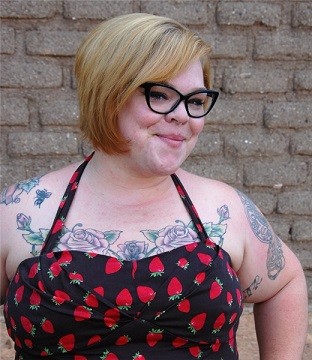
This is the cause of one advocate Jes Baker; she is a mastermind, author, blogger, champion and Militant Baker. Those of us that are looking, listening, learning, lending-a-hand and leading can greatly benefit by considering her as a Role Model.

Consider this account (Book Review, article and VIDEO) of her story:

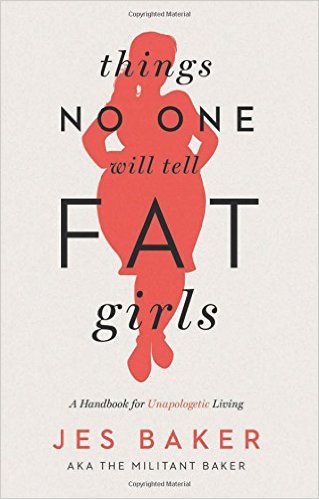
Book Review:  Things No One Will Tell Fat Girls: A Handbook for Unapologetic Living  … By Jes Baker

CU Blog - Book Review - #FatGirlsCan - Photo 3“Things No One Will Tell Fat Girls” is a manifesto and call to arms for people of all sizes and ages. With her trademark wit, veteran blogger and advocate Jes Baker calls people everywhere to embrace a body-positive worldview, changing perceptions about weight, and making mental health a priority.

Alongside notable guest essayists, Jes shares personal experiences paired with in-depth research in a way that is approachable, digestible, and empowering. “Things No One Will Tell Fat Girls” is an invitation to reject fat prejudice, fight body-shaming at the hands of the media, and join this life-changing movement with one step: change the world by loving your body.

Among the many “Things No One Will Tell Fat Girls” that you don’t want to miss:

1. It’s Possible to Love Your Body (Today. Now.)
2. You Can Train Your Brain to Play Nice
3. Your Weight Is Not a Reflection Of Your Worth
4. Changing Your Tumblr Feed Will Change Your Life
5. Salad Will Not Get You to Heaven
6. Cheesecake Will Not Send You to Hell

If you’re a person with a body, this book is for you.

Source: http://www.amazon.com/Things-One-Will-Tell-Girls/dp/1580055826/ retrieved October 28, 2015

———-

First Person Anecdote: #FatGirlsCan blogger urges ‘girls of all sizes’ to love their bodies
By: Jes Baker

(Source: http://www.today.com/health/fatgirlscan-blogger-urges-girls-all-sizes-love-their-bodies-t52581)

CU Blog - Book Review - #FatGirlsCan - Photo 1A little more than two years, I was struggling after a horrible breakup and feeling quite low. I believed that I would never find a partner who loved me and loved my body.

I thought that someone would simply put up with how I looked. I also felt like only certain people could love a fat girl; there were just some people I could never date. I channeled those feelings into a blog post and began feeling more empowered.

Over the years as I continued blogging and speaking all over the country about body image, I realized the flaws behind my thinking—and I realized that societal norms inspired many of these thoughts. That idea that fat girls remain unlovable is just a lie.

Everyone deserves to be love and accepted.

And, fat girls can have authentic, sexy, enduring love.

The idea behind that blog eventually became part of an idea for my book, Things No One Will Tell Fat Girls. It’s full of things I wish I had learned a lot earlier in life and info I hope will help other women.

While it is a book about fat girls from a fat girl’s perspective I believe the message remains basic — and it’s one I hope that resonates with everyone.

We need to accept ourselves in our bodies.

CU Blog - Book Review - #FatGirlsCan - Photo 2There are so many bodies and so many people struggling with how they look in those bodies. I want fat girls to accept that fat is just an unbiased word to describe how a person looks. But I also want skinny girls to feel good about how they look, too, no matter how many times someone sneers at them to eat a hamburger.

As part of the social media campaign associated with the book, we developed a hashtag #FatGirlsCan and a trailer to accompany it. The hashtag encourages women to show visually what fat girls can do. There are fat girls whitewater rafting, rock climbing, practicing yoga, running marathons, wearing horizontal stripes, and so many other things. This was really incredible. I was never expecting to feel so inspired by seeing women doing things some of which I’m afraid to do. I know I can swim, dance, and ride a bike, but I don’t trust my body enough to rock climb or whitewater rafting.

Loads and loads of women have sent in pictures of themselves in love — all types of partners and all types of love. That feels like really powerful imagery.

Loving our bodies can really change the world.

When we liberate ourselves from our physical oppression then we are free to live our incredible lives. We become kinder to ourselves and to others. This book is for fat girls because that is who I am.

But it’s also for girls of all sizes told that they cannot do something because of how they look. Acceptance remains incredibly important and with that we can do so much more.

We can change society.

Related Article: ‘Just go for it’: 4 tips about self-acceptance from ‘Big Gal Yoga’
Tips:

    1. Don’t put your life on hold until you have the ‘perfect’ body
    2. Really look at your body
    3. Don’t let negative comments get to you
    4. Try New Things

———-

VIDEO– NBC Today Show – Chew the “Fat” – http://on.today.com/1HaBzDq

Published on October 28, 2015 – Jes Baker is blogger and mastermind behind the Militant Baker. She is a body image advocate, a fat model, and author of the new book, “Things No One Will Tell Fat Girls.” Jes shares her inspiration for why we all need to accept ourselves in our bodies.

That last sentence from the foregoing article is paramount: “We can change society”.

Yes, we can! All of us …

The Go Lean book posits that one person, despite their field of endeavor/advocacy, can make a difference in the Caribbean, and its impact on the world; that there are many opportunities where one champion can elevate society. In this light, the book features 144 different advocacies, one specifically for Persons with Disabilities (Page 228). We need advocates, vanguards and sentinels to ensure equal opportunities for all these relevant stakeholders. We even welcome those champions that may be overweight! #FatGirlsCan … and we welcome “Fat Men” too.

Make no mistake, obesity is unhealthy. But the individual must still be valued. They have human rights!

The Go Lean book serves as a roadmap for the introduction and implementation of the technocratic Caribbean Union Trade Federation (CU). The CU is designed to elevate the region’s economic, security and governing societal engines. This includes healthcare. We recognize the societal threats of obesity; we are not condoning bad eating habits nor bad diets. Just the opposite, this Go Lean/CU movement and underlying book, addresses the ailments tied to obesity and seeks to assuage it, including the psychological dimensions. But the roadmap starts first with this “frank and earnest” assessment of reality:

It is what it is.

There are “fat” people in the Caribbean and we need them too, to be involved in the empowerment plan to elevate our society. We need them to work to lower their perceived health risk and improve their wellness. We cannot impact their lives without their motivation and participation. They are different, yes, but differently-abled!

The CU/Go Lean roadmap has a singular directive, a prime directive: to make the Caribbean a better place to live, work and play for all stakeholders, including persons with physical disabilities and those differently-abled. The declarative statements of this prime directive are as follows:

  • Optimization of the economic engines in order to grow the regional economy to $800 Billion GDP and create 2.2 million new jobs.
  • Establishment of a security apparatus to prepare and protect stakeholders for natural, man-made and incidental emergencies.
  • Improvement of Caribbean governance to support these engines.

The Go Lean book relates a common crisis; that the whole region must integrate to streamline delivery systems for improved healthcare and wellness. There is the need to encourage healthy eating, assuage obesity, optimize the food supply and promote better self-esteem. But many of these mitigations are too big for any one member-state alone. From the outset, the book reported this requirement as a pronouncement in the opening Declaration of Interdependence (Page 11):

ix. Whereas the realities of healthcare and an aging population cannot be ignored and cannot be afforded without some advanced mitigation, the Federation must arrange for health plans to consolidate premiums of both healthy and sickly people across the wider base of the entire Caribbean population. The mitigation should extend further to disease management, wellness, mental health, obesity and smoking cessation programs. The Federation must proactively anticipate the demand and supply of organ transplantation as developing countries are often exploited by richer neighbors for illicit organ trade.

The pressing need to optimize facilitations for all population groups – abled and challenged – was also pronounced in the Declaration of Interdependence (Pages 13), with this statement:

xviii. Whereas all citizens in the Federation member-states may not have the same physical abilities, reasonable accommodations must be made so that individuals with physical and mental disabilities can still access public and governmental services so as to foster a satisfactory pursuit of life’s liberties and opportunities for happiness.

The Go Lean roadmap specifically encourages the region, to lean-in to elevate society for all stakeholders – abled and challenged – with these specific community ethos, strategies, tactics, implementations and advocacies:

Community Ethos – Economic Principles – Economic Systems Influence Individual Choices Page 21
Community Ethos – Governing Principles – Minority Equalization Page 24
Community Ethos – Governing Principles – Lean Operations Page 24
Community Ethos – Governing Principles – Return on Investments Page 24
Community Ethos – Ways to Promote Happiness – Minority Rights Page 36
Community Ethos – Ways to Impact the Greater Good Page 37
Strategy – Vision – Confederate all 30 Member-states Page 45
Strategy – Mission – Repatriate the Diaspora, young and old …even those disabled Page 46
Anatomy of Advocacies – Examples of Individuals Who Made Impact Page 122
Planning – 10 Big Ideas – Homeland Security Pact Page 127
Planning – Ways to Improve Failed-State Indices – Minority and Human Rights Page 134
Planning – Lessons from US Constitution – Equal Protection for all Minorities Page 139
Advocacy – Ways to Improve Governance – For All Citizens Page 168
Advocacy – Ways to Better Manage the Social Contract – Medical / Heath Endeavors Page 170
Advocacy – Ways to Impact Justice – Ensure Rights for   the Disabled Classes Page 177
Advocacy – Ways to Remediate and Mitigate Crime – Protect Minority Classes Page 178
Advocacy – Ways to Impact Homeland Security – Emergency Management Page 180
Advocacy – Ways to Foster Technology – e-Government Interfaces & Services Page 197
Advocacy – Ways to Protect Human Rights – Caribbean [Persons] with Disabilities Page 220
Advocacy – Ways to Improve Elder-Care – Caribbean [Persons] with Disabilities Page 225
Advocacy – Ways to Empower Women Page 226
Advocacy – Ways to Impact Youth Page 227
Advocacy – Ways to Impact Persons with Disabilities – Americans with Disabilities Act Model Page 228

The Caribbean region wants a more optimized society … for all citizens. We want to mitigate human rights and civil rights abuses, and empower all for a better life, liberty and the pursuit of happiness. This quest, for differently-abled persons, is not easy, it requires strenuous effort, heavy-lifting. These persons may not be able to contribute as much to Caribbean society as they draw from public resources. But they can engage more fully, and contribute more with the proper support systems. The mission to “help them help us” is only reasonable; it can generate a Return on Investment (ROI); as conveyed in the foregoing book review/article/VIDEO. Plus everyone needs the encouragement and confidence portrayed by that Role Model and Advocate Jes Baker.

Go Girl!

Many related subjects have been blogged in previous Go Lean…Caribbean commentaries; they are sampled here:

https://goleancaribbean.com/blog/?p=6819 The … Downside of the ‘Western’ Diet
https://goleancaribbean.com/blog/?p=5720 Role Model and Disability Advocate: Reasonable Accommodations
https://goleancaribbean.com/blog/?p=5098 Forging Change – ‘Food’ for Thought
https://goleancaribbean.com/blog/?p=2105 Recessions and Physical/Mental Public Health
https://goleancaribbean.com/blog/?p=278 Regional Health-care Concerns: The need for a “larger pool” of partakers

The CU/Go Lean roadmap is designed to empower and enhance the economic engines for the full participation and benefit of all Caribbean people, including the differently-abled ones. The CU’s vision is that this population group represents a critical talent pool that is underserved and underutilized. There is therefore a call for a Caribbean [Persons] with Disabilities (CDA) provision to be embedded in the CU confederation treaties; modeled after the Americans with Disabilities Act (ADA).

This roadmap is a fully comprehensive plan with consideration to all aspects of Caribbean life for all stakeholders: citizens, businesses, and institutions. All are hereby urged to lean-in to this roadmap. Yes, with all “hands on deck”, including the differently-abled, the Caribbean can truly become a better place to live, work and play.  🙂

Download the free e-book of Go Lean … Caribbean – now!

Share this post:
, , , , ,
[Top]

Microsoft Pledges $75 million for Kids in Computer Science

Go Lean Commentary

CU Blog - Microsoft pledges $75 million for kids in computer science - Photo 2Microsoft pledges support to young children learning the science of computers … $75 million worth.

… on behalf of a grateful region, we accept.

While $75 million is not a lot for a global program, consider the source of the benefactor – Microsoft – and it is the spirit that counts. We will take it Microsoft; we want your time, talents and treasuries.

These three resources, are what the book Go Lean…Caribbean asks for from the philanthropic community in terms of gifts to the Caribbean. This is so important, that the book prepares a comprehensive plan for organizing the interactions with charitable foundations and gift-giving organizations. We need and want all the help we can garner!

The Go Lean book serves as a roadmap for the introduction and implementation of the Caribbean Union Trade Federation (CU) to elevate Caribbean society. This movement asserts that to effect change in the region, all Caribbean stakeholders (residents, institutions, students, Diaspora) have to devote a measure of time, talents and treasuries.

The Go Lean book strategizes a roadmap to elevate the economic, security, and governing engines. It clearly relates that these prime directives do not cover every social aspect of Caribbean life. We need the resultant void to be filled by Non-Government Organizations (NGO’s). The following news article/Press Release relates the community empowering and philanthropic efforts from one such entity, computer software giant Microsoft:

Title: Microsoft expands global YouthSpark initiative to focus on computer science
Sub-Title: Microsoft invests $75 million in community programs to increase access to computer science education for all youth and build greater diversity into the tech talent pipeline.

CU Blog - Microsoft pledges $75 million for kids in computer science - Photo 1

SAN FRANCISCO, Sept. 16, 2015 /PRNewswire/ — Microsoft Corp. announced on Wednesday a new commitment of $75 million in community investments over the next three years to increase access to computer science education for all youth, and especially for those from under-represented backgrounds. Through the company’s global YouthSpark initiative, scores of nonprofit organizations around the world will receive cash donations and other resources to provide computer science education to diverse populations of young people in their communities and prepare them with the computational-thinking and problem-solving skills necessary for success in an increasingly digital world.

“If we are going to solve tomorrow’s global challenges, we must come together today to inspire young people everywhere with the promise of technology,” said Microsoft CEO Satya Nadella. “We can’t leave anyone out. We’re proud to make this $75 million investment in computer science education to create new opportunities for students across the spectrum of diverse youth and help build a tech talent pipeline that will spark new innovations for the future.”

Over the next three years, Microsoft will deliver on this commitment through cash grants and nonprofit partnerships as well as unique program and content offerings to increase access to computer science education and build computational thinking skills for diverse populations of youth. One of the flagship programs is Technology Education and Literacy in Schools (TEALS), which pairs tech professionals from across the industry with classroom educators to team-teach computer science in U.S. high schools. TEALS aims to grow fivefold in the next three years, with the goal of working with 2,000 tech industry volunteers to reach 30,000 students in nearly 700 schools across 33 states. A key objective of TEALS is to support classroom educators as they learn the computer science coursework, preparing them to teach computer science independently after two years of team-teaching.

Nadella reinforced the company’s commitment to computer science education today during the annual Dreamforce conference hosted by Salesforce where he called upon thousands of tech professionals to serve as TEALS volunteers and help broaden the opportunity for students of all backgrounds to learn computer science in high school.

“Computer science is a foundational subject — like algebra, chemistry or physics — for learning how the world works, yet it’s offered in less than 25 percent of American high schools,” said Microsoft President Brad Smith. “We need to increase access to computer science and computational thinking for all students, especially those from diverse populations, by partnering across the industry and with teachers and schools to turn this situation around and change the paradigm for developing a more diverse tech talent pipeline.”

There are three additional key elements of Microsoft’s global commitment to increasing access for all youth to the full range of computing skills, from digital literacy to computer science.

  • Global philanthropic investments with nonprofits in 80 countries, including the Center for Digital Inclusion in Latin America, Silatech in the Middle East and Africa, CoderDojo Foundation in Europe, YCAB Foundation in Asia, and many others, will deliver a range of computing skills from digital literacy to computer science education to youth in local communities around the world.
  • Microsoft Imagine connects students with the tools, resources and experiences they need to turn their innovative ideas into reality. Whether it’s building a game or designing an app, Microsoft Imagine makes learning to code easy and accessible for students and educators, no matter their age or skill level and at no cost. Whether it’s free cloud services like Azure, online competitions via Imagine Cup that educators can incorporate into their curriculum, or fun self-serve learning tutorials, Microsoft Imagine helps bring a student’s technology passion to life through computer science.
  • YouthSpark Hub resources are designed to inspire youth about the full spectrum of computing skills, ranging from digital literacy to computer science engineering. In addition to providing access to the Microsoft Imagine tools, the YouthSpark Hub brings together opportunities to participate in activities such as DigiGirlz and YouthSpark Live, attend free YouthSpark Camps at the Microsoft Stores, and access training through nonprofit organizations supported by Microsoft around the world.

Since 2012, Microsoft YouthSpark has created new opportunities for more than 300 million youth around the world, offering technology skills training and connections to employment, entrepreneurship, and continued education or training.

More information about YouthSpark and access to tools and resources can be found at http://YouthSparkHub.com and http://imagine.microsoft.com.

Those wanting more information on the TEALS program and to learn more about how they can get involved should visit http://TEALSK12.org.

Microsoft (Nasdaq “MSFT” @microsoft) is the leading platform and productivity company for the mobile-first, cloud-first world, and its mission is to empower every person and every organization on the planet to achieve more.
Source: PR Newswire Service; retrieved September 17, 2015 from: http://www.prnewswire.com/news-releases/microsoft-expands-global-youthspark-initiative-to-focus-on-computer-science-300144592.html

——
VIDEO – Microsoft YouthSpark: Opportunity for Youth – https://youtu.be/ZRKYTQ6_UEs

Published by Microsoft – http://www.microsoft.eu
YOUTH INFOGRAPHIC: http://www.microsoft.eu/Portals/0/Doc

There’s $75,000,000 and then there’s $75,000,000 from Microsoft.

A $75,000,000 charitable gift from Microsoft is more than just money; it’s an invitation to explore the future: the future of Information Technology.

This is BIG! As it also builds a technology talent pipeline, especially for the under-represented female population; so future jobs are at stake.

Microsoft founder and largest shareholder, Bill Gates, is now retired from the CEO’s office. (Though he continues as non-executive Chairman of the Board of Directors). He is a certifiable billionaire – a member of the One Percent – in which his riches came from this company. He is a great role model for all the youth of the Caribbean.

A great role model for the adults, too!

This innovator’s latest effort is the Bill & Melinda Gates Foundation, which sets out to make a permanent impact on the world. According to a previous blog detailing this foundation’s efforts, his belief is that every life has equal value. So his Foundation works to help all people lead healthy, productive lives. Now we see his hallmark company following this lead so as to also promote hi-technology values among the more disadvantaged youth populations in the world.

We absolutely appreciate those leading and following in this path.

The book Go Lean…Caribbean champions the cause of building and optimizing the Caribbean eco-system. There are a lot of expectations for technology in the region, to aid and assist with all aspects of the Go Lean prime directives, defined as follows:

  • Optimization of the economic engines in order to grow the regional economy to $800 Billion & create 2.2 million new jobs.
  • Establishment of a security apparatus to protect the resultant economic engines.
  • Improve Caribbean governance to support these engines.

The CU/Go Lean roadmap clearly recognizes that the love and curiosity for technology must be ingrained as early as possible. Since the Caribbean does not only want to be on the consuming end of technological developments, we want to create, produce and contribute to the world of innovations. So we need to foster genius qualifiers in our Caribbean youth for careers and occupations – at home – involving Science, Technology, Engineering and Mathematics (STEM).

This point was pronounced at the outset of the Go Lean book with these opening Foreword (Page 3) and the subsequent Declaration of Interdependence (Page 12 & 14) with these statements:

Foreword:  Our youth, the next generation, may not be inspired to participate in the future workings of their country; they may measure success only by their exodus from their Caribbean homeland.

xiii.     Whereas the preparation of our labor force can foster opportunities and dictate economic progress for current and future generations, the Federation must ensure that educational and job training opportunities are fully optimized for all residents of all member-states, with no partiality towards any gender or ethnic group. The Federation must recognize and facilitate excellence in many different fields of endeavor, including sciences, languages, arts, music and sports. This responsibility should be executed without incurring the risks of further human flight, as has been the past history.

xxvi.   Whereas the Caribbean region must have new jobs to empower the engines of the economy and create the income sources for prosperity, and encourage the next generation to forge their dreams right at home, the Federation must therefore foster the development of new industries, like that of ship-building, automobile manufacturing, prefabricated housing, frozen foods, pipelines, call centers, and the prison industrial complex. In addition, the Federation must invigorate the enterprises related to existing industries like tourism, fisheries and lotteries – impacting the region with more jobs.

xxvii.  Whereas the region has endured a spectator status during the Industrial Revolution, we cannot stand on the sidelines of this new economy, the Information Revolution. Rather, the Federation must embrace all the tenets of Internet Communications Technology (ICT) to serve as an equalizing element in competition with the rest of the world. The Federation must bridge the digital divide and promote the community ethos that research/development is valuable and must be promoted and incentivized for adoption.

xxx.    Whereas the effects of globalization can be felt in every aspect of Caribbean life, from the acquisition of food and clothing, to the ubiquity of ICT, the region cannot only consume, it is imperative that our lands also produce and add to the international community, even if doing so requires some sacrifice and subsidy.

The Go Lean book seeks a quest to create 64,000 new direct and indirect technology/software jobs in the Caribbean marketplace. It will be a good start to use the grants and support of Microsoft, The Bill & Melinda Gates Foundation and other philanthropic groups and NGO’s to foster this campaign.

The Go Lean roadmap was constructed with the community ethos in mind to forge the needed change to adopt technology. Plus with the execution of these related strategies, tactics, implementations and advocacies it will help build up our communities. The following is a sample of these specific details from the book:

Community Ethos – Deferred Gratification Page   21
Community Ethos – Economic Principles – People Choose Page   21
Community Ethos – Economic Principles – People Respond to Incentives in Predictable Ways Page   21
Community Ethos – Economic Principles – The Consequences of Choices Lie in the   Future Page   21
Community Ethos – Economic Principles – Job Multiplier Page   22
Community Ethos – Governing Principles – Lean Operations Page   24
Community Ethos – Governing Principles – Cooperatives Page   25
Community Ethos – Governing Principles – Non-Government Organizations Page   25
Community Ethos – Ways to Impact the Future Page   26
Community Ethos – Ways to Foster Genius – Anti-Bullying Campaigns Page   27
Community Ethos – Ways to Promote Intellectual Property Page   29
Community Ethos – Ways to Impact Research & Development Page   30
Community Ethos – Ways to Bridge the Digital Divide Page   31
Community Ethos – Ways to Impact Turn-Around Page   33
Community Ethos – Ways to Promote Happiness Page   36
Community Ethos – Ways to Impact the Greater Good Page   37
Strategy – Vision – Confederate 30 Member-States Page   45
Strategy – Vision – Prepare the Youth with the skills to compete in the modern world Page   46
Strategy – Mission – Exploit the benefits and opportunities of globalization Page   46
Tactical – Confederating a Permanent Union Page   63
Tactical – Fostering a Technocracy Page   64
Tactical – Separation of Powers – State Department – Registrar/Liaison of NGO’s Page   80
Implementation – Ways to Pay for Change Page   101
Implementation – Trends in Implementing Data Centers – Creating the ‘Cloud’ Page   106
Implementation – Ways to Deliver Page   109
Implementation – Ways to Impact Social Media – Caribbean Cloud Page   111
Implementation – Ways to Foster International Aid Page   115
Planning – 10 Big Ideas for the Caribbean Region – Cyber-Caribbean Page   127
Planning – Ways to Make the Caribbean Better Page   136
Advocacy – Ways to Grow the Economy Page   151
Advocacy – Ways to Create Jobs Page   152
Advocacy – Ways to Improve Education – STEM Promotion Page   159
Advocacy – Ways to Improve Governance – e-Government & e-Delivery Page   168
Advocacy – Ways to Better Manage the Social Contract Page   170
Advocacy – Ways to Foster Cooperatives Page 176
Advocacy – Ways to Improve Communications Page   186
Advocacy – Ways to Improve Libraries Page 187
Advocacy – Ways to Enhance Tourism – Internet Marketing Page   190
Advocacy – Ways to Foster Technology Page   197
Advocacy – Ways to Foster e-Commerce Page   198
Advocacy – Ways to Impact Main Street Page   201
Advocacy – Ways to Impact Foundations Page 219
Advocacy – Ways to Impact the One-Percent Page   224
Advocacy – Ways to Impact Youth Page   227
Advocacy – Ways to Improve the Arts Page   230
Appendix – CU Job Creations Page   257
Appendix – Giving Pledge Signatories – 113 Super Rich – One Percent – Benefactors Page   292

This Go Lean roadmap calls for the heavy-lifting to build-up Caribbean communities, to shepherd important aspects of Caribbean life, so as to better prepare for the future, dissuade emigration and optimize the ICT eco-systems here at home.

These goals were previously featured in Go Lean blogs/commentaries, as sampled here:

https://goleancaribbean.com/blog/?p=6341 Tourism Digital Marketing & Stewardship — What’s Next?
https://goleancaribbean.com/blog/?p=6269 Education & Economics: Lessons from Detroit
https://goleancaribbean.com/blog/?p=6151 3D Printing: Here Comes Change
https://goleancaribbean.com/blog/?p=3974 Google and Mobile Phones – Here comes Change
https://goleancaribbean.com/blog/?p=3915 ‘Change the way you see the world; you change the world you see’
https://goleancaribbean.com/blog/?p=3490 How One Internet Entrepreneur Can Rally a Whole Community
https://goleancaribbean.com/blog/?p=2126 Where the Jobs Are – Computers Reshaping Global Job Market
https://goleancaribbean.com/blog/?p=1698 STEM Jobs Are Filling Slowly
https://goleancaribbean.com/blog/?p=1416 Amazon – A Role Model for Caribbean Logistics
https://goleancaribbean.com/blog/?p=1277 The need for highway safety innovations – here comes Google
https://goleancaribbean.com/blog/?p=476 CARICOM Urged on ICT
https://goleancaribbean.com/blog/?p=308 CARCIP Urges Greater Innovation

The Go Lean book focuses primarily on economic issues, and it recognizes that computer technology is the future direction for industrial developments. (See the foregoing VIDEO). This is where the jobs are to be found. The Go Lean roadmap describes the heavy-lifting for people, organizations and governments to forge these innovations here at home in the Caribbean. Clearly philanthropic organizations, Not-For-Profit charities, foundations and NGO’s are also stakeholders for the effort to make the Caribbean better.

So the Go Lean roadmap invites NGO’s to impact the Caribbean – to plant seeds – according to their charters. We are open to ask for their help. But we assure these benefactors that their help is really an investment. Our young people have the will, passion and integrity to grow the seeds into fine fruit.

We want more … such organizations. We will be pursuing other NGO’s … especially for the under-represented female population, such as:

Black Girls Code –  Their Vision: To increase the number of women of color in the digital space by empowering girls of color ages 7 to 17 to become innovators in STEM fields, leaders in their communities, and builders of their own futures through exposure to computer science and technology.

Women in Technology – A premier professional association for women in the technology industry, we understand the unique challenges you face. No matter where you are in your professional development, or what technology-related field you’re in, our community offers a broad range of support, programs and resources to advance women in technology from the classroom to the boardroom.

Women in STEM – The Office of Science and Technology Policy, in collaboration with the White House Council on Women and Girls, is dedicated to increasing the participation of women and girls — as well as other underrepresented groups — in the fields of science, technology, engineering, and mathematics by increasing the engagement of girls with STEM subjects in formal and informal environments, encouraging mentoring to support women throughout their academic and professional experiences, and supporting efforts to retain women in the STEM workforce.

This is an invitation to the world to help us help ourselves. It is not just a dream. This is a conceivable, believable and achievable business plan. With the right commitment of time, talent and treasuries from domestic and foreign sources, we can succeed in making the region a better place to live, work, learn and play.  🙂

Download the book Go Lean … Caribbean – now!

Share this post:
, , , , , , , ,
[Top]

Buggery in Jamaica – ‘Say It Ain’t So’!

Go Lean Commentary

This commentary has asserted that the Caribbean region can be a better society than the United States of America. Yes, we can!

But to  even start the discussion, we must first:

Live and let live!

t So - Photo 3The topic of intolerance has been acute in the news as of late. We have the extreme example of the Islamic State in Iraq and Syria (ISIS) beheading non-Muslims because… well, just because. And the example of the US legalizing Gay Marriage may be considered too tolerant for some people’s good taste.

Where does the Caribbean fit in this discussion?

If ISIS is one end of a scale and Gay Marriage in America is another end, then one Caribbean member-state, Jamaica, would be closer to …

ISIS!

Yes, it is that bad. Say it ain’t so.

See Appendix-VIDEO’s below …

While this commentary directly targets Jamaica, the majority of the countries and overseas territories of the former British Empire, still criminalize sexual acts between consenting adults of the same sex and other forms of sexual orientation, gender identity and expression. This has been described as being the result of “the major historical influence” or legacy of the British Empire. In most cases, it was former colonial administrators that established anti-gay legislation or sodomy acts during the 19th century; see Appendix below. The majority of countries then retained these laws following independence.[1][2].

There is an effort now to transform society in Jamaica (and other countries) in this regards. There are Gay Pride Activities being planned for this Summer of 2015. See the relevant news article here:

Title: J-FLAG Is Planning Gay Pride Activities, But No Parade For August – Exec
Source: Jamaica Gleaner Daily Newspaper Online Site; posted June 30, 2015; retrieved from: http://jamaica-gleaner.com/article/news/20150630/j-flag-planning-gay-pride-activities-no-parade-august-exec  

Local gay lobby, J-FLAG, is refuting reports that it will host a road parade in August when the group plans to have a series of gay pride activities.

Social media has been abuzz since yesterday following a report that the group would host a parade, similar to what is done in the United   States and other countries.

However, executive director of J-FLAG, Dane Lewis, says the report is wrong, adding that Jamaica is not ready for such an event.

Meanwhile, he says the group is planning a week-long series of activities starting on Emancipation Day, August 1, to mark growing tolerance for members of the lesbian, gay, bisexual, and transgender (LGBT) community.

Some years ago, an attempt to host a gay parade was thwarted after anti-gay supporters reportedly planned attacks against marchers.

Jamaica is accused of being one of the most homophobic places on earth.

Last week, the US government released a report noting that anti-gay laws and the dancehall culture are responsible for perpetuating homophobia in Jamaica.
Additional reference sources: http://jflag.org/

t So - Photo 1
———–

VIDEO: Executive Director of JFLAG, Dane Lewis: “We Are Jamaicans” – https://youtu.be/sJ-17R5DCoI


Published on Jan 17, 2013 – “We Are Jamaicans” is funded with the kind support of the Caribbean Vulnerable Communities Coalition (CVC) through its Global Fund Vulnerablised Project.

Building a diverse society is not easy. The book Go Lean … Caribbean describes the challenge as heavy-lifting. Though the US had failed at this challenge, it proudly boasts that it got better with every generation. The Caribbean on the other hand, leaves much to be desired in terms of the willingness to change and keep pace with progressive societies. (Now the US, Canada, Ireland and other countries have legalized Gay Marriage).

In a previous blog-commentaries, this defect – Homosexual Intolerance – was listed among the blatant human rights abuses in the region.

This is an important consideration for the planners of Caribbean empowerment. The Caribbean, a region where unfortunately, we have NOT … tried to be as tolerant as may be required, expected and just plain moral.

We must do better!

The book Go Lean … Caribbean asserts that Caribbean society’s prosperity has been hindered with a high abandonment rate – reported at 70% for educated classes region-wide, but an even higher 85% in Jamaica. The primary mission of the Go Lean book is to “battle” against the “push-and-pull” factors that draw so many of our Caribbean citizens away from their homelands to go to more progressive countries.

The Go Lean book campaigns to lower the “push” factors!

The purpose of the Go Lean book is to fix the Caribbean; to be better. The Go Lean book serves as a roadmap for the introduction and implementation of the technocratic Caribbean Union Trade Federation (CU) to pursue the quest to elevate the Caribbean region through empowerments in economics, security and governance. It is the assertion that Caribbean citizens can stay home and effect change in their homelands more effectively than going to some foreign countries to find opportunities for life, liberty and the pursuit of happiness. The book therefore asserts that the region can turn-around from failing assessments by applying best-practices, and forging new societal institutions to impact the Greater Good for all the Caribbean. This point was pronounced in the opening Declaration of Interdependence (Pages 10 – 14) with these acknowledgements and statements:

xi.   Whereas all men are entitled to the benefits of good governance in a free society, “new guards” must be enacted to dissuade the emergence of incompetence, corruption, nepotism and cronyism at the peril of the people’s best interest. The Federation must guarantee the executions of a social contract between government and the governed.

xii. Whereas the legacy in recent times in individual states may be that of ineffectual governance with no redress to higher authority, the accedence of this Federation will ensure accountability and escalation of the human and civil rights of the people for good governance, justice assurances, due process and the rule of law. As such, any threats of a “failed state” status for any member state must enact emergency measures on behalf of the Federation to protect the human, civil and property rights of the citizens, residents, allies, trading partners, and visitors of the affected member state and the Federation as a whole.

xxxiii. Whereas lessons can be learned and applied from the study of the recent history of other societies, the Federation must formalize statutes and organizational dimensions to avoid the pitfalls of communities like … Egypt. On the other hand, the Federation must also implement the good examples learned from developments/ communities like New York City, … Canada, … and tenants of the US Constitution.

The CU/Go Lean vision to elevate Caribbean society must also consider the issue of image. There is the need for a sentinel role for Caribbean image, as there are a lot of times that Caribbean life and people are denigrated in the media: news, film, TV, books, magazines. It’s unfortunate when we are guilty of scathing allegations. The Go Lean roadmap calls for the CU to assume a role of protecting and projecting positive Caribbean images. The plan is to use cutting edge delivery of best practices; the applicable CU agencies will employ strategies, tactics and implementations to impact the Go Lean prime directives; identified with the following 3 statements:

  • Optimization of the economic engines in order to grow the regional economy to $800 Billion & create 2.2 million new jobs.
  • Establishment of a security apparatus to protect the resultant economic engines and mitigate challenges/threats to public safety for all citizens… LGBT or straight.
  • Improvement of Caribbean governance to support these engines.

Jamaica has a failing economy.

Jamaica’s primary economic driver is tourism. So …

t So - Photo 2

Is the Caribbean ready for this economic activity? A bridge too far, too soon?

t So - Photo 4Jamaica has a long way to go; the country has been described by some Human Rights groups as the most homophobic place on Earth because of the high level of violent crime directed at LGBT people; (Padgett, Tim: “The Most Homophobic Place on Earth?”Time Magazine posted 12 April 2006). The United States Department of State said that in 2012, “homophobia was [unacceptably] widespread in the country” (2012 Country Reports on Human Rights Practices: Jamaica, Bureau of Democracy, Human Rights and Labor, U.S. Department of State, pages 20-22). As depicted in the VIDEO below, even President Obama indicted the island on a recent official State Visit.

Why is this country’s homophobia so acute compared to other countries? For one, they have held on emphatically to the British Laws on Buggery – see Appendix below – from their colonial days; even though the host country of England has already abandoned the laws (in 1967).

Jamaica is partying like it’s 1899!

This is therefore a matter of community ethos. The Go Lean book defines community ethos as the fundamental character or spirit of a culture; the underlying sentiment that informs the beliefs, customs, or practices of a group or society; the dominant assumptions of a people or period. This tropical paradise of Jamaica, as defined in the foregoing news article and VIDEO continues to spur bad attitudes, bad ideas, bad speech and bad actions towards the LGBT community. This is unbecoming of a progressive society in 2015.

Alas, this is a crisis…for victims and their loved ones. The Go Lean book posits that this crisis can be averted, that the crisis is a “terrible thing to waste”. The Go Lean roadmap seeks to optimize the eco-systems for Jamaica and the entire Caribbean. The book stresses new community ethos, strategies, tactics, implementations and advocacies necessary to transform and turn-around the eco-systems of the regional society. These points are detailed in the book as follows:

Who We Are – SFE Foundation – Comprised of Caribbean Diaspora Page 8
Community Ethos – Economic Principles – Economic Systems Influence Individual Choices Page 21
Community Ethos – Economic Principles – Consequences of Choices Lie in the Future Page 21
Community Ethos – Governing Principles – Lean Operations Page 24
Community Ethos – Ways to Impact the Future Page 26
Community Ethos – Ways to Promote Happiness Page 36
Community Ethos – Ways to Impact the Greater Good Page 37
Strategy – Vision – Confederate all 30 member-states into a Single Market Page 45
Strategy – Mission – Build and foster local economic engines Page 45
Strategy – Mission – Repatriate the Diaspora, even Minorities like those of the LGBT community Page 46
Tactical – Ways to Foster a Technocracy Page 64
Tactical – Growing the Economy to $800 Billion GDP Page 68
Tactical – Separation-of-Powers – CU Federal Government versus Member-State Governance Page 71
Anatomy of Advocacies – Examples of Individuals Who Made Impact Page 122
Planning – 10 Big Ideas – Homeland Security Pact Page 127
Planning – Ways to Make the Caribbean Better Page 131
Planning – Ways to Improve Failed-State Indices – Minority and Human Rights Page 134
Planning – Lessons Learned from US Constitution – Equal Protection for all Minorities Page 145
Advocacy – Ways to Grow the Economy Page 151
Advocacy – Ways to Create Jobs Page 152
Advocacy – Ways to Improve Governance – For All Citizens Page 168
Advocacy – Ways to Better Manage the Social Contract – Security against “Bad Actors” Page 170
Advocacy – Ways to Impact Justice – Internal Affairs Reporting Line Page 177
Advocacy – Ways to Remediate and Mitigate Crime – Hate Crime Qualifiers Page 178
Advocacy – Ways to Improve Homeland Security Page 180
Advocacy – Ways to Mitigate Terrorism – Consider Bullying as Junior Terrorism Page 181
Advocacy – Ways to Impact Youth – Collaborating with Foundations Page 218
Advocacy – Ways to Re-boot Jamaica Page 239
Advocacy – Ways to Impact British Territories Page 245

Looking at the disposition of the island nation of Jamaica’s, we see that its societal engines are failing.

Could the investment in the diversity of its people be at the root of the problem?

The failing indices and metrics of Jamaica have been considered in previous blog/commentaries; see sample here:

https://goleancaribbean.com/blog/?p=4840 Jamaican Poll: ‘Bring back the British!’
https://goleancaribbean.com/blog/?p=3694 Looking for a job in Jamaica, go to Canada
https://goleancaribbean.com/blog/?p=2830 Jamaica’s Public Pension Under-funded
https://goleancaribbean.com/blog/?p=392 Jamaica to receive World Bank funds to help in crime fight
https://goleancaribbean.com/blog/?p=313 What’s Holding Back Jamaica’s Reforms

The Go Lean roadmap seeks to empower and elevate Caribbean societal engines to make Jamaica, and the rest of the Caribbean, better places to live, work and play … for all citizens, including the LGBT communities.

Most of the Jamaican Diaspora that has abandoned the island now lives in the US, Canada or the UK. Their new home-communities are more tolerant societies of their LGBT neighbors.

Perhaps, there is some correlation.

This commentary is not urging the abandonment of the Judeo-Christian moral code; Jesus Christ instructed to “let them be” at Luke 22:51 (The Message Translation). Rather this commentary urges tolerance and moderation: Live and let live!

Fight the hate!

Yes, we can … do this. Yes, we must do this. 🙂

Download the book Go Lean … Caribbean – now!
———–

Appendix VIDEO: US President Obama’s LGBT comments at Youth Leaders Town Hall – https://youtu.be/636mgw1THpc?t=5m1s


Published on Apr 9, 2015 – President Obama delivers remarks and answers questions at a town hall with Young Leaders of the Americas at University of the West Indies in Kingston, Jamaica. April 9, 2015.
———–

Appendix VIDEO: Gay rights in Jamaica – https://youtu.be/_nSgMGoBAmU

playbutton-300x300

———–

Appendix – Encyclopedic Reference: Buggery in English Common Law

The British English term buggery is very close in meaning to the term sodomy, often used interchangeably in law and popular speech. It may also be a specific common law offenceencompassing both sodomy and bestiality.

In English law “buggery” was first used in the Buggery Act 1533, while Section 61 of the Offences against the Person Act 1861, entitled “Sodomy and Bestiality”, defined punishments for “the abominable Crime of Buggery, committed either with Mankind or with any Animal”. The definition of “buggery” was not specified in these or any statute, but rather established by judicial precedent.[1] Over the years the courts have defined buggery as including either [of these]:

  1. anal intercourse or oral intercourse by a man with a man or woman[2] or
  2. vaginal intercourse by either a man or a woman with an animal,[3]

But [no other] form of “unnatural intercourse”[4] [was defined], the implication being that anal sex with an animal would not constitute buggery. Such a case has not, to date, come before the courts of a common law jurisdiction in any reported decision. However, it seems highly improbable that a person would be exculpated of a crime associated with sex with animals only by reason of the fact that penetration involved the anus rather than the vagina. In the 1817 case of Rex v. Jacobs, the Crown Court ruled that oral intercourse, even with an underage and/or non-consenting person, did not constitute buggery or sodomy.[4]

At common law consent was not a defence[5] nor was the fact that the parties were married.[6] In the UK, the punishment for buggery was reduced from hanging to life imprisonment by the Offences against the Person Act 1861. As with the crime of rape, buggery required that penetration must have occurred, but ejaculation is not necessary.[7]

Most common law jurisdictions have now modified the law to permit anal sex between consenting adults.[8] Hong Kong did so retroactively in 1990, barring prosecution for “crimes against nature” committed before the Crimes (Amendment) Ordinance 1990 entered into force except those that would still have constituted a crime if they had been done thereafter. In England and Wales, homosexual buggery was decriminalised in 1967 with an age of consent at 21 years, whereas all heterosexual intercourse had an age of consent at 16 years. The Sexual Offences Act 2003 did not fully remove buggery as a concept in United Kingdom law, as the previous law is retained for complainants (consensual or “pseudo-consensual”) under the age of 16, or 18 with regards to an adult perceived to be in a “position of trust”. As the law stands, buggery is still charged, exclusively regarding “pseudo-consensual” anal intercourse with those under 16/18, because children cannot legally consent to buggery although they may appear to do so. Rape is charged when the penetration is clearly not consensual. Buggery with an animal is still unlawful under Section 69 of the Sexual Offences Act 2003.

In the Republic of Ireland, the Criminal Law (Sexual Offences) Act 1993 abolished the offence of “buggery between persons”.[9] For some years prior to 1993, criminal prosecution had not been made for buggery between consenting adults. The 1993 Act created an offence of “buggery with a person under the age of 17 years”,[10] penalised similar to statutory rape, which also had 17 years as the age of consent. The Criminal Law (Sexual Offences) Act 2006 replaced this offence with “defilement of a child”, encompassing both “sexual intercourse” and “buggery”.[11] Buggery with an animal is still unlawful under Section 69 of the Sexual Offences Act 2003. In 2012 a man was convicted of this offence for supplying a dog in 2008 to a woman who had intercourse with it and died.[12]

Etymology – The word bugger and buggery are still commonly used in modern English as a mild exclamation. “Buggery” is also synonymous with anal sex.

The word “bugger” was derived, via the French bougre, from Bulgar, that is, “Bulgarian”, meaning the medieval Bulgarian heretical sect of the Bogomils, which spread into Western Europe and was claimed by the established church to be devoted to the practice of sodomy.[13] “Buggery” first appears in English in 1330, though “bugger” in a sexual sense is not recorded until 1555.[14]

(Source: https://en.wikipedia.org/wiki/Buggery)

Share this post:
, , , , , ,
[Top]

Role Model Iris Adderley – Disability Advocate: Reasonable Accommodations

Go Lean Commentary/Interview

Travel away from your children for an extended time period and you would notice something amazing: Change.

It turns out that change is constant; children grow. But you have to take a step back to notice the difference.

CU Blog - Anecdote - Iris Adderley - Photo 1This is the experience of Disability Advocate Iris Adderley. She is a proud Bahamian – oldest child with 10 siblings who mostly all still live in the Bahamas – who served her country well; especially during the early days of nation-building (independence status was obtained in 1973). In a job assignment with the Bahamas Ministry of Tourism, Ms. Adderley spent many years abroad (Coral Gables, FL and Dallas, TX) promoting the Bahamas around the world as a tourist and convention destination. She was continuously called upon to sell a vision of the Bahamas that she discovered later to be out-dated, and irrelevant. The country had changed … and even declined, it seemed, in her absence.

Ms. Adderley returned to the Bahamas in the year 2000, but not to the homeland she had left behind, rather to this newly changed community. The changes were not all good. To complicate matters, she was now returning as a quadriplegic, a permanent disability.

Ms. Adderley endured a life-threatening car accident in Metropolitan Dallas in 1982, where she lived and worked for her Ministry of Tourism assignment. But she does not consider her injury as a national sacrifice. It was just “time and unforeseen occurrence” befalling her; (see Bible reference of Ecclesiastes 9:11 in the Appendix below). This taught her a very important lesson that everybody is  vulnerable to injury and illness and can be rendered disabled. This new reality became her new advocacy, a quest to make sure people with disabilities have equal rights and opportunities to contribute to society. (This quest also applies as a population ages, the prevalence of disabilities increases proportionally; think Diabetes amputations, Hip replacements, etc.).

This conclusion aligns with the book Go Lean…Caribbean, that with just a reasonable accommodation, persons with disabilities can live a full and engaging life … and help to elevate their communities and make “home” better places to live, work and play.

What reasonable accommodations?

For starters, Ms. Adderley expressed that if her injury had occurred in her Caribbean homeland that she would now be dead!

The world is better … that she has survived.

The Go Lean book serves as a roadmap for the introduction and implementation of the technocratic Caribbean Union Trade Federation (CU). The CU is designed to elevate the region’s economic, security and governing societal engines. This includes healthcare. The CU roadmap calls for improvements to the region’s emergency management apparatus. There is a plan to deploy a network of 6 cutting-edge Trauma Centers throughout the Caribbean. With this mitigation and remediation, the region can more competently respond to trauma emergencies, like life-threatening auto accidents.

It is only reasonable to expect that Caribbean society would have caught up to finally being able this deliver on the social contract at this level, considering that Ms. Adderley trauma transpired 33 years ago.

Unfortunately, the experiences of so many in the Bahamas, specifically and the Caribbean as a whole, is that these countries are structured only for the lowest common denominator (LCD); anyone one with needs above-and-beyond this LCD level is just “out-of-luck”.

This is unacceptable … and unreasonable for Caribbean contributors like Iris Adderley. This is also unacceptable … and unreasonable for the planners of the new Caribbean. We must deliver better on the social contract, the implied covenant where citizens surrender some of their freedoms and submit to the authority of the State in exchange for protection of remaining natural and legal rights. Blatant failures on the delivery of this social contract lead to an undesirable destination: abandonment!

Ms. Adderley lived in the most advanced country in the world, in the US State of Texas. She would have been excused if she wanted to remain there for her sustained existence, considering her health disposition. But she showed a national sacrifice ethos and repatriated back to her Caribbean homeland. This is heroic!

In a structured interview, Iris Adderley made the following contributions to this discussion of the roadmap to elevate her community:

CU Blog - Anecdote - Iris Adderley - Photo 2

Bold = Author

What are the details of your advocacy?

There should be a stronger manifestation of “Human” and “Woman’s” rights in the Bahamas. It is deplorable that the country is so deficient in these offerings. Earlier in my career, I took the assignment in Dallas so as to leave the Coral Gables Office of the Ministry of Tourism because the spirit of gender discrimination was just so acute. I felt I could make a bigger impact in a more reasonable environment. I was proven correct and did indeed have a greater impact professionally there. Returning to the Bahamas in 2000 I wanted to nurture that same advocacy at home, but this time with a supplemental agenda for persons with disabilities.

What are your responsibilities now?

I serve as a Consultant at the Disability Affairs Division of the Ministry of Social Services and Community Development. I help to guide public policy to benefit those with disabilities in the country, even blending my prior role as a Tourism promoter by trying to create a great environment for persons with disabilities to come visit our shores and enjoy our hospitality.

What would you do if your project had 50% more funding?

Create rehabilitation centers, if not throughout the whole country, then at least in the capital city of Nassau. Persons with disabilities need help and support to get back to the point where they can contribute to society. Increased funding would allow more cultural education to message that persons with disabilities have the same rights in any society, to be more inclusive of the day-to-day affairs.

What do you want to see in The Bahamas in … 5 years?

More fulfilment of Sir Lynden’s Vision; (the first and longest-serving Prime Minister after majority rule, Sir Lynden O. Pindling). The young people need to know who we are as a people, where we came from and that we were a nation of beautiful, strong black people.

I want to see Bahamians own more of the Bahamas. This means diversifying from the main industries of tourism and financial services; all we’re doing there is servicing other people’s assets; we are not really owning or creating anything.

What do you want to see in The Bahamas in … 20 years?

The Bahamas needs a National Strategic Plan. This needs to reflect the values and best-practices that have been honed from experiences from around the world. The Bahamas has a global Diaspora – mostly of an elderly disposition now – their participation should be invited.

What features of North America/Europe would you like to see here?

The social safety nets (health, schools, food for the poor) are to be admired, especially in many European countries. Those communities extend themselves to care for their elderly, poor, sick and disabled citizens.

How would you feel if your children emigrate?

Though I don’t have any children directly, I’m blessed with many nieces, nephews and loving family members. So many of them are bright young all-stars and go-getters, studying abroad in colleges and universities. Unfortunately, far too often, these ones are not setting their sight on a return home to the Bahamas. Some would even rather go to a Latin American country than to come back here to the Bahamas. This is sad, as it does not reflect the great sacrifices that so many in the previous generations made to forge opportunities for this next generation.

Where do you consider to be the best place to live?

At one point, my answer would have been the Bahamas; but I’ve gotten to see the real country as it exists today; this is not what we sold to tourists in promotions and advertisements. The country has changed … downward. Instead of our next generation offering reassurance and hope, I am more troubled at their lack of proper training. We cannot expect greatness from the status quo of most of this generation today..

What areas are you most disappointed in when considering the last 20 years?

The lack of discernment is especially disappointing. Many times the wise course is presented to Bahamians, but they seem to like to ignore wisdom and instead proceed down a destructive path. I guess the proverb is true: “A prophet is not accepted at home”.

Your wisdom is discerned here Ms. Adderley!

The points from this Disability Advocate align with the CU/Go Lean roadmap. Our directive is similar: to elevate Caribbean society, including those persons with physical disabilities. The declarative statements of the prime directive are as follows:

  • Optimization of the economic engines in order to grow the regional economy.
  • Establishment of a security apparatus to prepare and protect stakeholders for natural, man-made and incidental emergencies.
  • Improvement of Caribbean governance to support these engines.

The book posits that one person, despite their field of endeavor, can make a difference in the Caribbean, and its impact on the world; that there are many opportunities where one champion, one advocate, can elevate society. In this light, the book features 144 different advocacies, one specifically for Persons with Disabilities (Page 228). We need advocates, vanguards and sentinels like Iris Adderley to ensure equal opportunities for all these relevant stakeholders.

The Go Lean roadmap specifically encourages the region, to lean-in to elevate society with these specific community ethos, strategies, tactics, implementations and advocacies:

Community Ethos – Economic Principles – Economic Systems Influence   Individual Choices Page 21
Community Ethos – Governing Principles – Minority Equalization Page 24
Community Ethos – Governing Principles – Lean Operations Page 24
Community Ethos – Governing Principles – Return on Investments Page 24
Community Ethos – Ways to Promote Happiness – Gerontology/Aging Factors Page 36
Community Ethos – Ways to Impact the Greater Good Page 37
Strategy – Vision – Confederate all 30 Member-states Page 45
Strategy – Mission – Repatriate the Diaspora,   young and old …even those disabled Page 46
Anatomy of Advocacies – Examples   of Individuals Who Made Impact Page 122
Planning – 10 Big Ideas – Homeland Security Pact Page 127
Planning – Ways to Improve Failed-State Indices – Minority and Human Rights Page 134
Planning – Lessons from US Constitution – Equal Protection for all Minorities Page 139
Advocacy – Ways to Improve Healthcare – Caribbean [Persons] with Disabilities Page 156
Advocacy – Ways to Improve Governance – For All Citizens Page 168
Advocacy – Ways to Better Manage the Social Contract – Medical / Heath Endeavors Page 170
Advocacy – Ways to Impact Justice – Ensure Rights for the Disabled Classes Page 177
Advocacy – Ways to Remediate and Mitigate Crime – Hate Crime Qualifiers Page 178
Advocacy – Ways to Impact Homeland Security – Emergency Management Page 180
Advocacy – Ways to Improve Emergency Management – Trauma Art & Science Page 182
Advocacy – Ways to Foster Technology – e-Government Interfaces & Services Page 197
Advocacy – Ways to Protect Human Rights – Caribbean [Persons] with Disabilities Page 220
Advocacy – Ways to Improve Elder-Care – Caribbean [Persons] with Disabilities Page 225
Advocacy – Ways to Empower Women Page 226
Advocacy – Ways to Impact Persons with Disabilities – ‘Americans with Disabilities Act’ Model Page 228
Appendix – Trauma Center Definitions Page 336

The Caribbean region wants a more optimized society … for all citizens. We want to mitigate human rights and civil rights abuses, and empower all for a better life, liberty and the pursuit of happiness.

The Go Lean book posits that economic measures and security measures must be in tandem for any societal empowerment effort. According to the foregoing interview/profile, after 30 years, our region is still behind with regards to servicing the needs of one specific minority group: persons with disabilities. We must do better!

Early in the book, the pressing need to optimize facilitations for this population group was pronounced in the Declaration of Interdependence (Pages 11 – 13), with these opening statements:

ix. Whereas the realities of healthcare and an aging population cannot be ignored and cannot be afforded without some advanced mitigation, the Federation must arrange for health plans

xi. Whereas all men are entitled to the benefits of good governance in a free society, “new guards” must be enacted to dissuade the emergence of incompetence, corruption, nepotism and cronyism at the peril of the people’s best interest. The Federation must guarantee the executions of a social contract between government and the governed.

xvi. Whereas security of our homeland is inextricably linked to prosperity of the homeland, the economic and security interest of the region needs to be aligned under the same governance.  the accedence of this Federation must equip the security apparatus with the tools and techniques for predictive and proactive interdictions.

xviii. Whereas all citizens in the Federation member-states may not have the same physical abilities, reasonable accommodations must be made so that individuals with physical and mental disabilities can still access public and governmental services so as to foster a satisfactory pursuit of life’s liberties and opportunities for happiness.

The Go Lean book explicitly acknowledges that optimizing the needs of persons with disabilities is not easy; this requires strenuous effort, heavy-lifting. These persons with disabilities normally are not able to contribute as much to Caribbean society as they draw on the public resources. This is unfortunate! Other societies have provided great models and amenities for facilitating fuller lives for those with disabilities: motorized wheelchairs, cars equipped with hand controls, Braille and TeleType (TTY and/or TDD) devices. This is the quest of the CU/Go Lean roadmap to engage more people – even those persons with disabilities – into this effort to optimize Caribbean society. More innovations are forthcoming; see VIDEOs in the Appendix. This vision is only reasonable, but prudent, as this population can generate a positive Return on Investment (ROI); as demonstrated by Iris Adderley in the foregoing interview.

Many subjects related to this profile of role model Iris Adderley have been blogged in previous Go Lean…Caribbean commentary; they are sampled here:

https://goleancaribbean.com/blog/?p=5002 Managing a ‘Clear and Present Danger’
https://goleancaribbean.com/blog/?p=4308 911 – Emergency Response Empowerments for the Caribbean
https://goleancaribbean.com/blog/?p=4278 Businesses Try to Stave-off Brain Drain as Boomers Age, Retire
https://goleancaribbean.com/blog/?p=3780 National Sacrifice – The Missing Ingredient
https://goleancaribbean.com/blog/?p=341 American Human Rights Leaders Slams Caribbean Poor Record

The CU/Go Lean roadmap is designed to empower and enhance the economic engines for the full participation and benefit of all Caribbean people. This includes the number of citizens that may have some physical challenges (deaf, blind, lame/mobility, etc.) or mental challenges. The CU’s vision is that this population group represents a critical talent pool that is under-served and underutilized; they are therefore included in the Go Lean roadmap. Tactically there is the call for a Caribbean [Persons] with Disabilities (CDA) provision to be embedded in the Caribbean Union confederation treaty; the request is to have the edict of reasonable accommodations legally embedded in statures.

In addition to the economic missions, the CU treaty would also address security needs, with the mission to fortify homeland security and to mitigate societal threats and risks, including a solution for emergency management and medical trauma arts and sciences.

Lastly, the CU treaty addresses remediation for regional governance. The local governments are thusly spurred to adapt and enforce access standards for all public edifices and private structures providing commerce to the general public. This reasonable accommodations mandate is modeled after the Americans with Disabilities Act (ADA) feature in US federal law.

This roadmap is a fully comprehensive plan with consideration to all aspects of Caribbean life. All stakeholders – citizens, businesses, and institutions – are hereby urged to lean-in to this roadmap.

Yes, with all “hands on deck”, persons with disabilities as well, the Caribbean can truly become a better place to live, work and play. 🙂

Download the book Go Lean … Caribbean – now!

———–

Appendices

1. Additional information on Iris Adderley: http://www.tribune242.com/news/2013/oct/22/iris-adderley-tireless-advocate-people-disabilitie/

2. Bible Reference – Ecclesiastes 9:11:
“I have seen something further under the sun, that the swift do not always win the race, nor do the mighty win the battle, nor do the wise always have the food, nor do the intelligent always have the riches, nor do those with knowledge always have success, because time and unexpected events overtake them all.” — New World Translation

3. VIDEO – Hugh Herr: The new bionics that let us run, climb and dancehttps://youtu.be/CDsNZJTWw0w

Published on Mar 28, 2014 – Hugh Herr is building the next generation of bionic limbs, robotic prosthetics inspired by nature’s own designs. Herr lost both legs in a climbing accident 30 years ago; now, as the head of the MIT Media Lab’s Biomechatronics group, he shows his incredible technology in a talk that’s both technical and deeply personal — with the help of ballroom dancer Adrianne Haslet-Davis, who lost her left leg in the 2013 Boston Marathon bombing, and performs again for the first time on the TED stage.

4. VIDEO‘Terminator’ arm is world’s most advanced prosthetic limbhttps://youtu.be/_qUPnnROxvY

Published on Nov 5, 2012 – A father who lost his arm in an accident six years ago has been given a new lease of life by a hi-tech bionic hand which is so precise he can type again. Nigel Ackland, 53, has been fitted with the Terminator-like carbon fibre mechanical hand which he can control with movements in his upper arm. The new bebionic3 myoelectric hand, which is also made from aluminium and alloy knuckles, moves like a real human limb by responding to Nigel’s muscle twitches. Incredibly, the robotic arm is so sensitive it means the father-of-one can touch type on a computer keyboard, peel vegetables, and even dress himself for the first time in six years.
More info about this amazing prosthetic can be found here http://bebionic.com

5. VIDEO – Berkeley Bionics: Introducing eLEGS – https://youtu.be/WcM0ruq28dc

Published on October 13, 2011 – Berkeley Bionics has rebranded. The company is now known as Ekso Bionics and eLEGS has become Ekso. To clarify, the device is an exoskeleton and the brand of the exoskeleton is Ekso, by Ekso Bionics.

Share this post:
, , , , , , ,
[Top]

8th Violent Crime Warning to Bahamas Tourists

Go Lean Commentary

An 8-ounce glass with 4 ounces of water is …

… half full.
… half empty.

It all depends on the perspective.

For an ambulance-chasing lawyer, that perspective needs to be “half empty”.

The foregoing article, a blog submission by Miami-based Maritime Lawyer Jim Walker – see Appendix – is not chasing ambulances, but rather cruise ships. So any assessment from him should be taken with a “grain of salt”. He has an agenda! He attempts to drum up business from cruise ship passengers that may have been hurt or abused in their experience venturing into the cruise industry – on the ship and/or on shore in the port cities.

Yet, in the middle of his “cry wolf” scenarios, there might just be some truth in his advocacy against the cruise lines.

For the stewards of new Caribbean economic eco-systems, we need to pay more than the usual attention to this “town crier”. His claims in this article here, must be fully vetted:

Title: 8th Violent Crime Warning for the Bahamas in 16 Months
By: Jim Walker
Cruise Law News Blog-Site – Posted May 15, 2015; Retrieved from: http://www.cruiselawnews.com/2015/05/articles/crime/8th-violent-crime-warning-for-the-bahamas-in-16-months/

CU Blog - 8th Violent Crime Warning to Bahamas Tourists - Photo 1The U.K.’s  Foreign and Commonwealth Office has issued “foreign travel advice” for travelers to the Bahamas. The U.K. crime warning says:

“There have been incidents of violent crime including robbery, which is often armed and sometimes fatal, in residential and tourist areas of New Providence, Grand Bahama and Freeport. The number of break-ins and robbery incidents reported to the High Commission has increased. There are police patrols in the main tourist areas.

Be vigilant at all times and don’t walk alone away from the main hotels, tourist areas, beaches and downtown Nassau, particularly after dark. Take care if travelling on local bus services after dusk on routes away from the main tourist areas. Do not carry large amounts of cash or jewellery. Robbers may be armed.”

I first learned of the crime warning from Travel Weekly.

Incredibly, this is the eighth crime warning for the Bahamas in the last 16 months.

In 2014, Bahamas was the subject of four critical crime warnings to U.S. citizens (one from the U.S. State Department and three from the U.S. Embassy) and one warning from Canada. There have been 2 prior crime warnings from the U.S. for the Bahamas this year. With this latest U.K. warning, that’s a total of 8 warnings.

I have never heard any country being the recipient of 8 crime warnings in such a short time period. The U.S. warnings are much more specific, mentioning that U.S. tourists have been raped and robbed at gunpoint.

We last wrote about the sorry state of affairs in the Bahamas earlier this month. We received a number of interesting comments to the article which you can read here. Many people avoid a cruise itinerary which includes the Bahamas, or they stay on the cruise ship when it reaches Nassau.

I picked Nassau as the most dangerous cruise destination in the world last year.

Have a thought? Please leave a comment below or join the discussion on our Facebook page.

According to the foregoing article, one Caribbean member-state, the Bahamas, needs to mitigate and remediate its crime activity.

From the publishers of the book Go Lean…Caribbean, our immediate response to Esquire Walker: Message received; warning heeded.

The Go Lean book and movement serves as a roadmap for the introduction of the technocratic Caribbean Union Trade Federation (CU). With the word ‘Trade‘ in the CU‘s branding, obviously the CU is set to optimize Caribbean society through economic empowerment; but the truth of the matter is that the security dynamics of the region are inextricably linked to this economic endeavor. Therefore the Go Lean roadmap has 3 prime directives:

  • Optimization of the economic engines in order to grow the regional economy to $800 Billion & create 2.2 million new jobs.
  • Establishment of a security apparatus to protect the resultant economic engines.
  • Improve Caribbean governance to support these engines.

The Go Lean roadmap posits that the Caribbean region must prepare its own security apparatus for its own security needs. So the request is that all Caribbean member-states form and empower a security force to execute a limited scope on their sovereign territories.  The goal is to confederate under a unified entity made up of the Caribbean to provide homeland security to the Caribbean. Homeland Security for the Caribbean has a different meaning than for our American counterparts. Though we must be on defense against military intrusions like terrorism & piracy, we mostly have to contend with threats that may imperil the region’s economic engines, and crime remediation and mitigation. Yes, The CU security goal is for public safety!

So in particular cruise passengers will benefit from new layers of security measures (Page 193) that are both up-front and also behind-the scenes. These will be administered by CU security agencies, and not limited to the authority of the member-states.

The book contends that bad actors will emerge just as a result of economic successes in the region. This point is pronounced early in the book with the Declaration of Interdependence (Page 12) that claims:

x.   Whereas we are surrounded and allied to nations of larger proportions in land mass, populations, and treasuries, elements in their societies may have ill-intent in their pursuits, at the expense of the safety and security of our citizens. We must therefore appoint “new guards” to ensure our public safety and threats against our society, both domestic and foreign. The Federation must employ the latest advances and best practices … to assuage continuous threats against public safety.

xvi. Whereas security of our homeland is inextricably linked to prosperity of the homeland, the economic and security interest of the region needs to be aligned under the same governance. Since economic crimes, including piracy and other forms of terrorism, can imperil the functioning of the wheels of commerce for all the citizenry, the accedence of this Federation must equip the security apparatus with the tools and techniques for predictive and proactive interdictions.

The Caribbean appointing “new guards”, or a security pact to ensure public safety is comprehensive endeavor, encapsulating the needs of all Caribbean stakeholders: residents and visitors alike.

We would like to direct Esquire Walker to a new line of work; or perhaps just a new target for his legal practice.

The Go Lean roadmap calls for a permanent professional force with naval forces, plus an Intelligence agency. The CU Trade Federation will lead, fund and facilitate the security force, encapsulating all the existing armed forces in the region plus exercising some regional oversight over law enforcement. This CU Homeland Security Force would get its legal authorization from a legal Status of Forces Agreement plus an Interstate Compact for US Territories signed at the CU treaty initiation; this means “Step One, Day One” in the Go Lean roadmap.

Covering all the complaints in the foregoing article about government corruption, the Go Lean roadmap “polices the Police” to ensure the optimization of justice institutions.

We are heeding your warnings Esquire Walker!

The Go Lean book details a series of community ethos, strategies, tactics, implementations and advocacies to provide increased public safety & security in the Caribbean region:

Economic Principle – Consequences of Choices Lie in Future Page 21
Community Ethos – Privacy –vs- Public Protection Page 23
Community Ethos – Intelligence Gathering Page 23
Community Ethos – “Crap” Happens Page 23
Community Ethos – Minority Equalization Page 24
Community Ethos – Cooperatives Page 25
Community Ethos – Ways to Manage Reconciliations Page 34
Community Ethos – Ways to Improve Sharing Page 35
Community Ethos – Ways to Impact the Greater Good Page 37
Tactical – Confederating a non-sovereign union Page 63
Tactical – Fostering a Technocracy Page 64
Tactical – Separation of Powers – Central Bank – Cruise e-Payment Cards Page 73
Tactical – Separation of Powers – Homeland Security Page 75
Implementation – Ways to Pay for Change Page 101
Implementation – Start-up Foreign Policy Initiatives Page 102
Implementation – Start-up Security Initiatives Page 103
Planning – Big Ideas – Regional Single Market Page 127
Planning – Ways to Make the Caribbean Better Page 131
Planning – Ways to Improve Failed-State Indices Page 134
Planning – Lessons Learned from the West Indies Federation Page 135
Planning – Lessons from New York – Port Authority Police Page 139
Planning – Lessons from the American West – Law & Order
Page 142
Planning – Lessons from Egypt – Keep Tourism Functional Page 143
Advocacy – Ways to Grow the Economy Page 151
Advocacy – Ways to Improve Governance Page 168
Advocacy – Ways to Better Manage the Social Contract Page 170
Advocacy – Ways to Improve Leadership Page 171
Advocacy – Ways to Impact Justice Page 177
Advocacy – Ways to Reduce Crime Page 178
Advocacy – Ways to Improve Homeland Security Page 180
Advocacy – Ways to Mitigate Terrorism Page 181
Advocacy – Ways to Improve Intelligence Gathering/Analysis Page 182
Advocacy – Ways to Improve for Natural Disasters Page 184
Advocacy – Ways to Enhance Tourism – Example: Natalee Holloway Page 190
Advocacy – Ways to Impact Event Tourism Page 191
Advocacy – Ways to Improve Cruise Tourism Page 193
Advocacy – Ways to Protect Human Rights Page 220
Advocacy – Ways to Impact Urban Living Page 234

Our region must do better to serve-and-protect visitors to our shores; tourism is still reeling from the failure to prosecute the crime against Spring Break Tourist Natalee Holloway in Aruba in 2005. – See Appendix VIDEO below.

Other subjects related to security and governing empowerments for the region have been blogged in other Go Lean commentary, as sampled here:

https://goleancaribbean.com/blog/?p=5304 Mitigating the Eventual Abuse of Power
https://goleancaribbean.com/blog/?p=5210 Cruise Ship Commerce – Getting Ready for Change
https://goleancaribbean.com/blog/?p=4639 Tobago: A Model for Cruise Tourism and a Plan to Optimize the Industry
https://goleancaribbean.com/blog/?p=4425 Cruise Payment Model: Electronic Cards and Smart Phones
https://goleancaribbean.com/blog/?p=4360 Dreading the American: ‘Caribbean Basin Security Initiative’
https://goleancaribbean.com/blog/?p=3889 Cruise Payment Model: RBC EZPay – Ready for Change
https://goleancaribbean.com/blog/?p=2782 Intelligence Model: Red Light Traffic Cameras Could Impact Millions
https://goleancaribbean.com/blog/?p=1487 Intelligence Model: Here come the Drones … and the Concerns
https://goleancaribbean.com/blog/?p=960 Intelligence Model: NSA records all phone calls in Bahamas – Model
https://goleancaribbean.com/blog/?p=599 Ailing Puerto Rico open to radical economic fixes
https://goleancaribbean.com/blog/?p=546 Bad Model: Book Review – ‘The   Divide’ – … Injustice in the Age of the Wealth Gap
https://goleancaribbean.com/blog/?p=535 Event Security: Remembering and learning from Boston
https://goleancaribbean.com/blog/?p=392 Jamaica to receive World Bank funds to help in crime fight
https://goleancaribbean.com/blog/?p=273 10 Things We Don’t Want from the US: # 6 Organized Crime

Underlying to the prime directive of elevating the economics, security and governing engines of the Caribbean, is the desire to make the Caribbean homeland, a better place to live, work and play for visitors and residents alike. We know “bad actors” will emerge – they always do! But we do not need these “bad actors” disrupting the peace of all Caribbean residents (42 million people), or the 10 million Diaspora as they frequent their tropical homeland or especially not the 80 million tourists that visit the region annually (including the 10 million cruise passengers).

The Go Lean roadmap was composed with the community ethos of the Greater Good foremost. The related quotation applies: “the needs of the many outweigh the needs of the few” (Page 37). All of the Caribbean are hereby urged to lean-in to this roadmap.

🙂

Download the book Go Lean … Caribbean – now!

=========

Appendix: About the Author: Jim Walker

CU Blog - 8th Violent Crime Warning to Bahamas Tourists - Photo 2Everything the cruise lines don’t want you to know” is the motto of this award winning maritime law blog authored by Miami lawyer Jim Walker.

The New York Times describes Jim as “a maritime lawyer in Miami who has attended more than half a dozen Congressional hearings about cruise ship crime and passenger safety.” Jim has been involved in maritime litigation since 1983.  Based in Miami, Florida, Jim represents passengers and crew members injured or assaulted on cruise ships around the world.

==========

Appendix: Jim Walker Blog Site Visitor Commentaries:

Selected Comments:

Mary – May 16, 2015 4:39 PM

I love the Bahamas! Sadly to say my family rented a house Dec 2014 into the New year and were robbed New Years Eve. Thankfully we were out at Junkanoo. I was very upset and frightened but will always go back to Nassau.

—————

Srgt. Thomas – May 16, 2015 6:13 PM

This morning 5/16/15, a fashion designer was murdered in his home and his house set on fire. And also four gang members battled it out in the streets with the police killing one gang member, injuring two, and one still out on the loose. Tourist, expats, workers, investors should leave ASAP, this country is on the verge of a civil uprising according to U.S. intelligence. Our government wants to thank you so much Mr. Jim Walker, you are helping us get the word out. You are a true American, and hope the rest of your Nation realizes this too.

—————

Michelle Farrington – May 16, 2015 6:58 PM

You never cease to amaze me. While you think nothing of writing about my beautiful country.

Ok so you say we have been cited 8 times for most dangerous. Well, the last time I checked the United States the land of the so called free… yet Americans have no privacy and the IRS continues to rob the hard working class of people.

Oh and what do you, Jim Walker have to say about the police continually killing black people, calling it self defense? oh and what about all these shootings in killings in schools and universities.

Let me remind you that when a country rapes and steals another countries resources in the name of bringing PEACE BY MEANS OF WARS, there are repercussions. How many families have been destroyed or ripped a part because the U.S.A. doesn’t care how many men/soldiers lives are sacrificed. These persons are someone’s father, husband, wife, son or daughter.

While there are murders and violence in Nassau, we don’t live in fear and don’t go out at night.. if this paranoia exist, then they are a small minority. These types of crimes are basically revenge, or domestic related. So you say, the USA does not have these types of crime? Really????? I don’t think so!

You need to get a life and leave us alone!

Go write on all the crime throughout your country!

I have been rushed, knocked to the ground and robbed in the parking lot of a hotel..yes, in the U.S. of A.
To this day Car Rentals are targeted and many Bahamians have been victim to this type of crime in your country.

So what say you?

Michelle D. Farrington

—————

Willa Kingsley – May 16, 2015 7:11 PM

My family and I are that the Atlantis hotel right now, I’m writing this comment with my IPhone as I speak. This morning at around 3-4 I believe we were awaken to gun fire in the distance, it sounded like a war. We just found out from the hotel’s lobby desk police had a confrontation with a group of gang members in the street. It’s still unclear if anyone was killed, but you should have heard the sounds, WOW! We are seriously thinking of leaving earlier than we hoped for, my kids are scared to death in leaving our room; this is nuts!

—————

Jim WalkerMay 16, 2015 9:09 PM

Michelle:

Thanks for your comments.

You make several good points.

Our U.S. Federal government over-reaches all of the time. The IRS, Homeland Security & FBI regularly violate the rights of U.S. citizens.

Our police (white and black) execute black men in the streets. It angers me greatly. It is a national disgrace. Travon Martin, Michael Brown and Freddy Grey are the martyrs of our going civil rights movement.

You’re wrong about the men and women in our military. They don’t “rape and steal” as you claim. The Bahamas would be under the thumb of the Nazi’s but for the U.S. military. We have protected the world for decades. I see you could care less aboout that and are filled with hate. But the Bahamas couldn’t protect itself much less other countries if a troop of girl scouts attacked.

The fact remains that Nassau is out-of-control dangerous. Your crime is widespread and increasing. Your government is corrupt. Your legal system is a joke. Your police are ineffective and corrupt. The Bahamas is dependant on tourism, primarily from the U.S., but you can’t stop from selling drugs to the cruise passengers or preying on them.

My blog is read by mostly cruise passengers and crew members. It is intended to warn them of the danger on cruises ships and ports of call that they may not be aware of. Over a million people read over 6 millions pages a year.

Most U.S. citizens think stepping off a cruise ship from Miami to the Bahamas is safe. It’s not. We report issues about the Bahamas which you and other delusioanal Bahamains try and keep secret. We have sent the messahge wide and far.

If you want to warn people about dangers in the U.S., by all means do so. We wish you the same success in warning travelers that we have achieved.

—————

Finely Tuned And Polished – May 16, 2015 9:41 PM

The reason quite simple: The Bahamians are deathly afraid of the Government, so they take out their frustrations of feeling like they are on a tight leash with the tourist.I have many Bahamian friends who are quite friendly and hard working Bahamians and church goers. Its a small group who honestly believe by staying together, between the drug lords and cons they will become rich in a short period of time. 50% go fishing.. and never return!!! Wake up !!!

==========

Appendix VIDEO: – Natalee Holloway Witness Comes Forward: ‘I Knew She Was Dead’ – http://bcove.me/ky8bglp1

Dave Holloway – the father of Natalee Holloway – is back in Aruba exclusively with INSIDE EDITION searching for answers in the disappearance of his 18-year-old daughter, Natalee. The main suspect in Natalee’s disappearance is the notorious Joran van der Sloot – now serving a life sentence for a different murder in Peru. They first met at the Holiday Inn Casino where he gambled regularly and she was staying with her high school classmates on their senior trip. A decade later the trail has gone cold, perhaps until now. A new witness emerges, Jurrien de Jong, a citizen of the Netherlands who lives in Amsterdam, says he was one of the last people to see Natalee alive. He claims to have seen the suspect, Joran, chasing Natalee, and later stash her body in the crawl space on a construction site.

Share this post:
, , , , ,
[Top]

Bill Cosby’s Accusers – Why They Weren’t Believed

Go Lean Commentary

It is hard to reconcile the accusations floating against Bill Cosby with his television characters: Dr. Huxtable, Jell-O Pudding Pitch-Man and the voice/persona of the animated do-gooder Fat Albert (and the Cosby Kids ; see Appendix below*). Or is it?

… that it’s easy to categorize personalities as good versus bad. “We don’t think good and evil can co-exist in the same person” – Psychologist David Adams.

The following article posits that those who do horrible things may still be talented in their gifts and notoriously good to people in their lives, like family members. While it maybe difficult to understand the complexities of personalities, it is very much necessary that society be receptive to the possibility of good people doing bad things. The entire article is presented here:

By: NO MORE Staff

Bill Cosby Photo 1America’s Dad is having a very bad week. A few days ago, Barbara Bowman wrote a personal essay in The Washington Post chronicling how Bill Cosby drugged and raped her 30 years ago.

The story went viral and inspired several others to echo her experiences.

Not so when the teenager spoke out soon after the alleged attacks: When she went to a lawyer after the assaults, she was accused of lying. Her agent did nothing, either. Eventually, she moved on. Years later, Andrea Constand accused Cosby of rape and Bowman was asked to speak in court, but the case was quietly settled.

At this writing, a grand total of 15 women have accused Cosby of assault, dating from the late 1960s. (Here’s a timeline of the accusations.) Despite all this, Cosby’s career had coasted along—in fact, he was awarded the Mark Twain Prize for American Humor not long ago and was planning a new TV show.

But things are changing.

Finally, the accusers’ stories are getting traction. Why now? Last month, comedian Hannibal Buress called Cosby a rapist in his stand-up routine, which went viral. The Twitter-verse responded in kind: Last week, Cosby’s tone-deaf invitation to “meme me!” resulted in people superimposing assault accusations over his photo. #Cosbymeme did not go according to plan, and things only got worse: Last weekend, NPR interviewed him about his African American art collection and then asked him to respond to the Post story. He went silent. Eventually, his lawyer issued a statement firmly denying the allegations and refusing to comment further.

But the damage has been done: New stories about Cosby’s behavior continue to surface, Netflix has put his upcoming comedy special on hold, and NBC has abandoned plans to develop a new sitcom with him.

Why Accusations About Celebrities Aren’t Believed

Cosby isn’t the first icon to be accused of sexual assault or domestic violence, and yet the question persists: Why aren’t these accusers heard or given any credence—not just Cosby’s alleged victims, but the countless other people who have dared to challenge a celebrity?

The answer lies in the American conflation of celebrity and security, says Ulester Douglas, executive director of Men Stopping Violence. “We are a celebrity culture. Seeing someone we idolize, revere, and idealize being accused of horrific crimes makes us wonder: Who are we? It makes us realize that our own families could be capable of it, too,” he says. It’s unsettling and even terrifying to associate an idol with evil, particularly because there are so many celebrities who are good people, capable of powerful, positive influence.

Dissonance Perpetuates Silence

David Adams is a psychologist and co-director of Emerge, a Boston-based abusers’ intervention and counseling program. He sees a difference in how we respond to a stereotypical criminal and a celebrity accused of bad behavior due to our preconceptions about abusers. “We tend to think of an abuser as someone who is easily detectable: someone who is crude, sexist, and boorish. A quarter of men who abuse women do fit this stereotype, and since that’s a substantial subgroup, we tend to spot those guys and not the ones who are more likable. If we don’t know what to do with bad information about someone we adore, it creates dissonance, and we sometimes choose to disbelieve or to ignore it,” he says.

“When we see someone likable accused of a crime, we have a choice to believe something bad about them or to discount it because it doesn’t fit our experience. In some ways it’s easier to do that than to think, oh God, the world really is unknowable—I might as well give up on knowing people,” he says. “If we don’t know what to do with information about someone we worship, we put it aside.”

Why Celebrities Feel Immune

Of course, Cosby is hardly the first famous person to be accused of rape or assault. When we think about any celebrity facing serious allegations, though, it’s difficult to believe that an image-conscious idol could be willing to engage in hugely risky behavior, throwing away the very image they need. What’s going through their mind?

“Any consequence is overridden by the high of the conquest,” Douglas says. And, on a purely logistical level, “They do it because they can. They truly think they can get away with it, based on the very fact that they have a certain image. They will be believed; the accusers will be laughed out of the room.”

Absorbing The Narcissism Factor

In many celebrity cases, narcissism also plays a starring role. “A hallmark of narcissism is exceptionality. You literally think you will not get caught. This personality takes chances, acts reckless, and even associates the behavior with success, because they’ve always been rewarded,” Adams says.

“We think narcissists are people nobody would like. But, in fact, they’re quite charismatic, with good social and image-maintenance skills”— which often allow them to get away with bad behavior, even more so when there’s a PR team on call. Narcissists are also skilled at compartmentalization, Adams says, and they choose to focus on the “part of their life that everybody adores. They don’t focus on other parts of their lives, and if they do something wrong, they think, ‘Gee, everybody loves me. What’s the problem?’” he says. “It’s a lack of character development.”

“Narcissists can engage in all sorts of psychological gymnastics not to feel empathy,” says Douglas.

The Changing Tide

Adams says that it’s easy to categorize personalities as good versus bad. “We don’t think good and evil can co-exist in the same person,” he says. “But look at the Mafia—these guys who do horrible things but are notoriously good to their mothers. And along comes a show like The Sopranos to paint them in a more nuanced light. There’s now less focus on ‘good guys’ and ‘bad guys,’” he says. Understanding the complexities of personalities—refusing to glorify a celebrity as all good, all the time—could help to close the dissonance gap.

“We can also go a long way toward preventing male sexual and domestic violence against women by stopping the pervasive and pernicious victim-blaming,” Douglas says. “The media, for example, should quit asking the toxic, ‘Why did you go back to your abuser?’ and ‘Why didn’t you leave?’ A reporter could say instead, ‘As you know, there are some who question your credibility because of some of the choices you made. What, if anything, would you want to say to them?’ That is respectful journalism. The [accuser] should never be made to feel like she has to justify the choices she made or makes.”

Finally, in his own work with Men Stopping Violence, Douglas sees firsthand the power of healing through sharing. “I see survivors who are finding peace through coming forward and telling their stories. One of the most powerful things that survivors can do is tell their own stories, on their own terms,” he says.
The NO MORE Project – Posted November 19, 2014; retrieved November 26, 2014–
http://nomore.org/why-cosby-victims-werent-believed/

The subject matter in the foregoing article relates to the attitudes that communities must foster so as to mitigate the toleration of domestic violence, rape and stalking. These points are being brought into focus in a consideration of the book Go Lean … Caribbean. The book serves as a roadmap for the introduction and implementation of the technocratic Caribbean Union Trade Federation (CU), for the economic optimization in the region.

The focus of the Go Lean book is Economics, not domestic violence, rape or stalking! And yet this commentary relates that there is an alignment of objectives. The Go Lean roadmap posits that the economy of the Caribbean is inextricably linked to the security (public safety) of the Caribbean.

This CU/Go Lean roadmap has 3 prime directives:

  • Optimization of the economic engines in order to grow the regional economy and create 2.2 million new jobs.
  • Establishment of a security apparatus to protect the resultant economic engines and their relevant stakeholders.
  • Improve Caribbean governance (Executive facilitations, Legislative oversight and Judicial prudence) to support these economic/security engines.

Among the objectives to accomplish the economic elevation is the mission to retain Caribbean citizens in their homelands and repatriate the far-flung Diaspora back to the region. Since many people may have fled the region to mitigate abuse, attitudes of victim-blaming or complacency among public safety authorities must be “weeded out”.

The subject of Celebrity Culture is also germane for the Caribbean empowerment effort (Pages 203 & 224). The Go Lean roadmap consolidates the region’s 30 member-states into a Single Market, media market included – with the caveat of multi-language “simul-casting”. Celebrities will surely emerge. From a governance perspective, the CU will oversee the jurisdiction of monitoring and metering (ratings, rankings, service levels, etc) local public safety institutions to ensure their delivery of the Social Contract. for all regardless of gender or race.

Change has now come to the Caribbean. As the foregoing article depicts, there is a changing tide. It is no longer acceptable to dismiss accusers, even against celebrities. The article relates that “we can go a long way toward preventing male sexual and domestic violence against women by stopping the pervasive and pernicious victim-blaming”. This is part of a new community ethos – the value of women is not undermined! Many related issues/ points were elaborated in previous blogs, sampled here:

Justice Strategy: Special Prosecutors … et al
Caribbean Study: 58% Of Boys Agree to Female ‘Discipline’
Sex Crimes Mitigations – Students developing nail polish to detect date rape drugs
Aereo Founder on the future of TV; Caribbean included
Bob Marley: The legend of a Caribbean Celebrity lives on!
Muslim officials condemn abductions of Nigerian girls
Caribbean/Latin countries still view women as lesser
Book Review: ‘The Divide’ – Differences in US Justice for Rich versus Poor
Jamaica to receive World Bank funds to help in crime fight

The above commentaries examined global developments in crime mitigations and gender based attitudes, then relate their synchronicity with the principles in the Go Lean book. There are a number of touch points that relate to domestic violence, rape and stalking; these blogs also cite the community attitude to dissuade such behavior. Most importantly, the Go Lean book depicts solutions. These are presented as community ethos, strategies, tactics, implementations and advocates; detailed as follows:

Community Ethos – Privacy –vs- Public Protection Page 23
Community Ethos – Whistleblower Protection Page 23
Community Ethos – Witness Security Page 23
Community Ethos – Anti Bullying & Mitigations Page 23
Community Ethos – Light Up the Dark Places Page 23
Community Ethos – “Crap” Happens Page 23
Community Ethos – Minority Equalization Page 24
Community Ethos – Lean Operations Page 24
Community Ethos – NGO’s Page 25
Community Ethos – Reconciliations Page 34
Strategy – Rule of Law –vs- Vigilantism Page 49
Tactical – Separation of Powers – CariPol Page 77
Implementation – Reasons to Repatriate Page 118
Planning – Ways to Improve Failed-State Indices Page 134
Advocacy – Ways to Improve Governance Page 168
Advocacy – Ways to Better Manage the Social Contract Page 170
Advocacy – Ways to Impact Justice Page 177
Advocacy – Ways to Remediate and Mitigate Crime Page 178
Advocacy – Ways to Improve Gun Control – Restraining Orders Automatic Restrictions Page 179
Advocacy – Ways to Improve Intelligence Gathering Page 182
Advocacy – Ways to Improve Communications – Messaging Page 186
Advocacy – Ways to Impact Hollywood Page 203
Advocacy – Ways to Impact the Prison Industrial Complex – Reduce Recidivism Page 211
Advocacy – Ways to Impact Foundations Page 219
Advocacy – Ways to Protect Human Rights Page 220
Advocacy – Ways to Impact the One Percent –    Balancing Justice Provisions for Celebrities Page 224
Advocacy – Ways to Empower Women Page 226
Advocacy – Ways to Impact Persons with Disabilities – including Mental Challenges Page 228

The book Go Lean…Caribbean was written by resources from an organized movement, by people (residents and Diaspora) with passion to change/elevate the Caribbean’s economic, security and governing engines. One principal within this Go Lean movement has a direct job function to dissuade crimes against women.

While there is always the need to give the accused the benefit of the doubt, as in the current case against Bill Cosby, we do not want 30 years of inaction on reported sex crimes by celebrities. The CU roadmap’s goal is to optimize “Justice” institutions in the region. Why? All members of society (celebrities and regular citizens alike) need to be protected, and not dismissed or ignored, especially related to serious allegations like sexually inappropriate behavior. Any “misfeasance, malfeasance or nonfeasance” in this regards reflects negatively on the region’s hospitality – think of the unsolved disappearance of Natalee Holloway in Aruba in 2005; (see Page 190).

Though this topic may be a security issue, community wealth is undoubtedly linked, affecting push-and-pull factors for citizens to flee their homelands. This is lose-lose for all concerned. To the contrast, the goal of the Go Lean effort is to make the Caribbean a better place to live work and play; with justice for all. Since the region failed in the past, the new messaging is simple: “No More“!

The foregoing article is sourced by the Not-For-Profit organization, the “No More” Project. Their goal is to neutralize public attitudes that had previously tolerated and thusly promoted domestic violence, rape and stalking. This is a great role model for the Caribbean to emulate, as attitude adjustment is among the heavy-lifting tasks that regional administrators must undertake to bring positive change to the Caribbean.

Download the book Go Lean … Caribbean – now!

————

* Appendix – Video – Fat Albert And The Cosby Kidshttp://youtu.be/ga7gflAUGCc

It’s Bill Cosby coming at you with music and fun, and if you’re not careful, you might learn something before its done.


Share this post:
, , , ,
[Top]

Caribbean Study: 58% Of Boys Agree to Female ‘Discipline’

Go Lean Commentary

The issue in the subsequent news article relates to the guidance we give our young people. The words we say and the things we do have an impact on their standards of right and wrong. The research in this article relates to the attitudes that lead to domestic violence, and why the rest of the community may standby and tolerate it.

This point is being brought into focus in a consideration of the book Go Lean … Caribbean. The book serves as a roadmap for the introduction and implementation of the technocratic Caribbean Union Trade Federation (CU), for the economic optimization in the region.

The focus of the book is “Economics“, not domestic violence! And yet this commentary relates that there is an alignment of objectives. The Go Lean roadmap posits that the economy of the Caribbean is inextricably linked to the security (public safety) of the Caribbean.

Among the objectives to accomplish the economic elevation is the mission to retain Caribbean citizens in their homelands and repatriate the far-flung Diaspora back to the region.

Many times people flee the region to mitigate abusive situations; even more troubling, as victims they may have encountered an attitude of complacency and indifference among public safety authorities. The following article posits that this attitude is deeply entrenched in society, even among the next (younger) generation.

Title: COB Study: 58% Of Boys Believe Men Should Discipline Their Female Partners
By: Rashad Rolle, Staff Reporter
The Tribune – Bahamas Daily Newspaper – October 21, 2014

Caribbean Study 1

FIFTY-eight per cent of high school boys and 37 per cent of high school girls participating in a recent academic survey believe men should discipline their female partners, according to a new College of the Bahamas study.

The study also found that 49 per cent of boys believe women should ask permission from their male partners if they wanted to go out while 17 per cent of girls supported this view.

Of the students surveyed, 46 per cent of boys believed wives must have sex when her husband wants to, compared to 16 per cent of girls. This, according to researchers, has possible implications on debates on marital rape.

According to the study, most of the teens from both sexes believed men should be the head of their households and that both husbands and wives should submit to one another and remain committed, reflecting the country’s religious values.

The research was conducted by members of the Bahamas Crisis Centre (BCC) and COB’s academic community. Its findings appear in the latest edition of the International Journal of Bahamian Studies. The study investigated teen perspectives on relationships between the sexes and the prevalence of violence within teen relationships.

It concluded that efforts must be made to ensure adolescents adjust their behaviour before becoming adults in order to push back against a culture of violence.

It also concluded that girls are more likely than boys to use aggressive behaviour in teen relationships, such as restricting access to friends of the opposite sex.

Based on the gathered data, the study concludes that “there is a clear need for children to be taught how to respect one another from an early age.”

One thousand students from grade 10 to 12 from eight schools, including one private school, participated in the study.

According to the study, “over 80 per cent of respondents had been on a date and so had a relationship of some sort with the opposite sex,” a figure noted as higher than the 61 per cent reported in a similar study of teens in the United   States.

The study is titled Attitudes of High School Students Regarding Intimate Relationships and Gender Norms in New Providence, The Bahamas.

“The responses show that on a number of issues regarding relationships, boys and girls have different attitudes and behaviours,” the researchers wrote. “It can also be seen that large numbers of teens can be expected to be victims of controlling behaviours. The use of threats and physical force may be learnt behaviours due to the presence of violence in homes in The Bahamas.”

“Overall, it is apparent that the breakdown in adult relationships, which is considered to play an important role in the violence observed in Bahamian society, may be the consequence of adolescents not adjusting their teen behaviours when they become adults. Therefore, modifying the attitudes of children with regard to interpersonal relationships may be important in reducing long-term violence in the country. Boys and girls had different attitudes on many aspects of relationships with current or future partners, but their endorsement of stereotypes of sex-related roles and their participation in certain behaviours could be a cause for concern. Underpinning these attitudes may be issues associated with what it means to be a woman or a man in The Bahamas, and related gender norms.” http://www.tribune242.com/news/2014/oct/21/cob-study-58-boys-believe-men-should-discipline-th/
———–
The actual Research Report: ‘Attitudes of High School Students Regarding Intimate Relationships and Gender Norms in New Providence, The Bahamas’ can be found here:
http://journals.sfu.ca/cob/index.php/files/article/view/225

This CU/Go Lean roadmap has 3 prime directives:

  • Optimization of the economic engines in order to grow the regional economy and create 2.2 million new jobs.
  • Establishment of a security apparatus to protect the resultant economic engines and their relevant stakeholders.
  • Improve Caribbean governance, with a separation-of-powers between member-state administrations and the CU federal government (Executive facilitations, Legislative oversight and Judicial prudence) to support these economic/security engines.

While the subject of the Caribbean adolescent culture of violence falls on the member-state side of the separation-of-power / governance divide, the CU will entail a jurisdiction of monitoring and metering (ratings, rankings, service levels, etc) local governance and their delivery of the Social Contract.

Change has now come to the Caribbean. As the foregoing article depicts the problem of domestic violence is tied to a community ethos. This ‘negative’ ethos must be uprooted and replaced with a new, progressive spirit, starting at the adolescent level, when attitudes are pliable and sensitive to strategic messaging; see VIDEO below.

Many related issues/points were elaborated in previous blogs, sampled here:

Students developing nail polish to detect date rape drugs
Book Review: ‘Chasing Youth Culture and Getting It Right’
Muslim officials condemn abductions of Nigerian girls
Caribbean/Latin countries still view women as ‘lesser
Jamaica to receive World Bank funds to help in crime fight

The above commentaries examined global developments and related their synchronicity with the principles in the Go Lean book. There are a number of touch points that relate to domestic violence and the community attitude to dissuade such behavior. Most importantly, the Go Lean book depicts solutions. These are presented as community ethos, strategies, tactics, implementations and advocates; a sample is detailed as follows:

Community Ethos – Privacy –vs- Public Protection Page 23
Community Ethos – Whistleblower Protection Page 23
Community Ethos – Witness Security Page 23
Community Ethos – Anti Bullying & Mitigations Page 23
Community Ethos – Light Up the Dark Places Page 23
Community Ethos – Ways to Manage Reconciliations Page 34
Community Ethos – Ways to Impact the Greater Good Page 37
Strategy – Rule of Law –vs- Vigilantism Page 49
Tactical – Separation of Powers – CariPol Page 77
Implementation – Reasons to Repatriate Page 118
Planning – Ways to Improve Failed-State Indices – Law Enforcement Oversight Page 134
Advocacy – Ways to Better Manage the Social Contract Page 170
Advocacy – Ways to Impact Justice – Police Internal Affairs Auditing Page 177
Advocacy – Ways to Remediate and Mitigate Crime – Youth Crime Awareness Page 178
Advocacy – Ways to Improve Gun Control – Suspend Gun Rights during Domestic Discord Page 179
Advocacy – Ways to Improve Intelligence Gathering – Electronic Surveillance of Suspects Page 182
Advocacy – Ways to Improve Communications – Public Messaging Page 186
Advocacy – Ways to Impact the Prison Industrial Complex – Reduce Recidivism Page 211
Advocacy – Ways to Impact Foundations – Crisis Centers and Support Groups Page 219
Advocacy – Ways to Protect Human Rights – Women & Youth Focus Page 220
Advocacy – Ways to Empower Women Page 226
Advocacy – Ways to Impact Youth Page 227
Advocacy – Ways to Impact Persons with Disabilities Page 228
Appendix – Failed-State Definitions – Index for Human Rights Uneven Protection Page 273

The book Go Lean…Caribbean was written by resources from an organized movement, by people (residents and Diaspora) with passion to change/elevate their Caribbean homeland. This is personal! One of those people devoted to this Go Lean goal, Camille Russell-Smith, is a co-author of the underlying research in the foregoing news article. This research is a product of her collaboration with the Bahamas Crisis Centre (Donna Nicolls) and her role at the College of the Bahamas as a Counselor, Instructor and Workshop Facilitator for incoming freshmen students entitled “Violence in Interpersonal Relationships”.

Good job Donna Nicolls, Camille Russell-Smith and your research team; thank you for your service. Congratulations on this timely research effort.

The goal is to make the Caribbean a better place to live work and play; with justice for all, regardless of gender. This is the right thing to do! But this is not easy. This takes heavy-lifting on the part of everyone: the educators, public safety officials, community leaders and parents. The message must be strong and clear:

No More!

No More‘ is the theme of a campaign in the US to minimize the public attitudes that tolerate domestic violence. This is a great role model for the Caribbean to emulate. See the VIDEO here of the Public Service Announcement (PSA)/TV Commercial:

Video Title -‘ No More‘ PSA Campaign – https://www.youtube.com/watch?v=j70ha1PUlqk:

Download the book Go Lean … Caribbean – now!

Share this post:
, , , , ,
[Top]

Students developing nail polish to detect date rape drugs

Go Lean Commentary

CU Blog - Students developing nail polish to detect date rape drugs - Photo

It’s back to school time! For K-12 and colleges. At the tertiary level, it’s time again for all the good, bad and ugly of the college experience.

The issue in the foregoing news article/VIDEO relates more to the ugly side of the college experience, especially for young girls on and near college campuses – sexual violence. But this issue is bigger than just college, date-rape, and university mitigations, this is about human rights.

By: NBC News – The Today Show
A group of male students at North Carolina State University is taking on a problem on campus, developing a nail polish that changes color to indicate the presence of date-rape drugs. NBC’s Gabe Gutierrez reports, as follows:


NBC News – The Today Show – August 26, 2014 –
http://www.today.com/video/today/55935260#55935260

This story is being brought into focus in a consideration of the book Go Lean … Caribbean. The book serves as a roadmap for the introduction and implementation of the technocratic Caribbean Union Trade Federation (CU), for the economic optimization in the region. How does this story relate?

Education
College Campuses
Justice Systems – Bad Actors
Women Rights
The Greater Good

This CU/Go Lean roadmap has 3 prime directives:

  • Optimization of the economic engines in order to grow the regional economy.
  • Establishment of a security apparatus to protect the resultant economic engines.
  • Improve Caribbean governance to support these engines.

The roadmap posits that the economy of the Caribbean is inextricably linked to the security of the Caribbean. The security scope of the CU is mostly focused on the “bad actors” that might emerge to exploit the new Caribbean economic engines. The book also focuses on traditional crime-and-punishment issues. The subject of date rape and sexual violence falls on the member-state side of the separation-of-powers divide, the CU does retain jurisdiction on Self-Governing Entities (SGE’s). A growth strategy of the roadmap is to invite, foster and incubate academic institutions to the region under the SGE scheme. The CU will also feature a jurisdiction of monitoring and metering (ratings, rankings, service levels, etc) the delivery of local governments in their execution of the Social Contract. For these reason, 3-prong focus of the CU prime directive is apropos: economic, security and governing engines.

Change has come to the Caribbean, but as the roadmap depicts, the problem of sexual violence (a human rights abuse) had persisted long before, so there is the need to mitigate recidivism in the region. Who are those most at risk for this behavior, and their victims? What efforts can be implemented to mitigate and protect our citizens, especially young innocent girls, venturing into the brave new world to foster their education and impact their communites.

Remember Natalee Holloway? (See the consideration on Page 190 of the Go Lean book).

“Serve and protect”. This is the new lean Caribbean!

The Go Lean roadmap posits that every woman has a right to a violence-free existence, on campus, in the family and in society; it is reprehensible that in so many Caribbean/Latin countries women are still viewed as lesser beings that can be abused at the whim of men.

What should be done to mitigate these bad practices? How does the Go Lean roadmap address this issue?

The solution in the foregoing VIDEO is “a good start”.

We made this issue personal, and interviewed a College Counselor for Freshman Women in one tertiary school in the Bahamas. (See Appendix).

There needs to be more research and development of more solutions.

This is the charge of the Go Lean…Caribbean roadmap: embrace R&D as a community ethos so as not to accept the status quo – keep moving forward. There are more ethos, strategies, tactics and operational advocacies presented in the Go Lean roadmap as well, so as to ensure that those vulnerable are protected and perpetrators are held accountable for their actions. The following are samples (with page numbers) from the book:

Community Ethos – Privacy –vs- Public Protection Page 23
Community Ethos – Whistleblower Protection Page 23
Community Ethos – Intelligence Gathering Page 23
Community Ethos – Witness Security Page 23
Community Ethos – Anti Bullying & Mitigations Page 23
Community Ethos – Light Up the Dark Places Page 23
Community Ethos – Minority Equalizations Page 24
Community Ethos – Impacting the Greater   Good Page 34
Strategy – Rule of Law –vs- Vigilantism Page 49
Separation of Powers – CariPol Page 77
Implementation – Ways to Pay for Change Page 101
Implementation – Steps to Implement SGE’s Page 105
Ways to Improve Education Page 159
Ways to Better Manage the Social Contract Page 170
Ways to Impact Justice Page 177
Ways to Remediate and Mitigate Crime Page 178
Ways to Improve Gun Control Page 179
Ways to Improve Intelligence Gathering Page 182
Ways to Improve Communications Page 186
Ways to Enhance Tourism – Mitigate Economic Crimes Page 190
Ways to Impact the Prison Industrial Complex – Recidivism Page 211
Ways to Impact Foundations Page 219
Ways to Protect Human Rights Page 220
Ways to Empower Women Page 226
Ways to Impact Youth Page 227
Ways to Impact Persons with Disabilities Page 228

In addition, many related issues/points were elaborated in previous blogs, sampled here:

https://goleancaribbean.com/blog/?p=1634 Book Review: ‘Chasing Youth Culture and Getting It Right’
https://goleancaribbean.com/blog/?p=809 Muslim officials condemn abductions of Nigerian girls
https://goleancaribbean.com/blog/?p=695 Brazil’s abused wives find help by going to ‘Dona Carmen’
https://goleancaribbean.com/blog/?p=392 Jamaica to receive World Bank funds to help in crime fight

For the CU’s deployment of SGE’s, we are front-and center in monitoring, managing and mitigating the issues in this foregoing article/VIDEO. For the Caribbean member-states in general, while the CU does not have sovereignty (its a deputized agency only), it can still provide support services to ensure compliance, accountability and service-level assurances. Yes, in addition to monitoring and metering, the CU can also provide ratings, funding, training, intelligence gathering, and cross border (fugitive) law enforcement.

The goal is simply to make the Caribbean a better place to live work, learn and play; with justice for all, regardless of gender. Simple goal, but heavy-lifting in the execution.

To the Caribbean communities, we say: “Bring it!”

This is not politics or feminism; this is law-and-order. This is just right!

Download the book Go Lean … Caribbean – now!

——————————————————————

Appendix – Interview

Camille Russell-Smith (CRS) is employed at the College of the Bahamas as a Counselor in the Counseling and Health Services Department. She pays it forward. One task among her duties that grabbed our attention is the “Violence in Interpersonal Relationships” workshops she conducts each semester for incoming freshmen.

Here is the interview with the Go Lean…Caribbean publishers (GLC):

GLC: In this day and age, do you find that it is difficult to reach young men and young women on proper behavior with regards to date-acquaintance-rape threats and risks?

CRS: Definitely a challenge exists in getting young people to realize proper attitudes they must have towards each other in order to foster healthy relationships It is important to raise their awareness of how they can easily abuse the rights of others. Further it is important to remind all students, particularly women, of the need to be ever vigilant, not to assume that a friend-date-acquaintance will respect their rights and not take advantage of any vulnerabilities.

GLC: Is there an ongoing problem on your campus with date- acquaintance rape?

CRS: There have been some related incidents between students of the College, though not necessarily on campus. However, I continue to counsel young women on the fallout and consequences of what happens when they go out at night. What I worry about the most is the fact that so many women believe that the rape may be their fault, for example if they went to a bar, but told their family/friends that they were going somewhere benign, like the library. However, the penalty for lying is definitely not being raped.

GLC: How do you hope to mitigate these threats?

CRS: Education, awareness, advocacies. But it is hard. I am going against a “tidal wave” in the other direction. The music, videos, images in the media, makes many young men feel as if they have some sense of entitlement. Then many women feel as if they can only be accepted if they allow, tolerate sexually abusive behavior without “making waves”.

GLC: How do you feel about the innovations in this foregoing VIDEO?

CRS: This innovation of a chemical that can detect the presence of a date-rape drug is a good start. We need more such innovations. The special glass, as mentioned in the foregoing article, sounds like another good innovation. I can imagine that other such developments will come soon.

GLC: What hope do you see for the future in our communities regarding these kinds of attitudes that can lead to unhealthy relationships?

CRS: We need to get our communities to the point that it is commonly accepted that “no means no”. Also, that those prosecuted for sex crimes would not be cuddled or excused and most importantly that women that report crimes would not be shunned. We can be successful. The acceptance in the community has changed regarding domestic violence and I believe that acceptance of date-acquaintance-rape will change also.

GLC: Thank you for your insights. Any final words?

CRS: We must do this. We must try to change our country and the Caribbean region as a whole. There are far too many “old views, old habits, and old philosophies” in our communities where some men think they can ignore the rights of women. Let’s please fix this…once and for all.

Share this post:
, , , , ,
[Top]