Tag: Transform

Dr. Sybil Mobley – FAMU’s Business School Dean – RIP

Go Lean Commentary

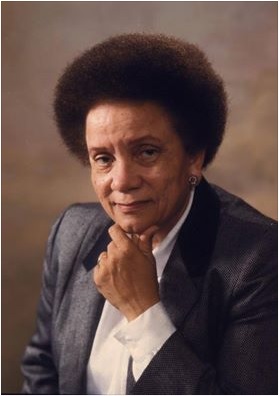
CU Blog - Dr Sybil Mobley - FAMU Business School Dean - RIP - Photo 1The FAMU world mourns the passing of Dr. Sybil Mobley (1925 – 2015; age 90), the much-accomplished and celebrated Dean Emerita of the School of Business and Industry (SBI).

This Go Lean … Caribbean movement – book and accompanying blog-commentaries – stress the fact that one man or one woman can make a difference in their community. Dr. Mobley’s impact was societal elevation with her mission to embed Black Americans in the conference rooms and board rooms of major corporations. She molded, prepared, energized and guided the best-of-the-best of Black America (many of Caribbean heritage as well; this writer included) and sent them off to impact the corporate world.

She sowed the seeds …

… the entire Black community now reap from this harvest.

Dr. Mobley was born in Jim-Crow America in Shreveport, Louisiana. She came to Tallahassee, Florida – the home campus of Florida A&M University – in 1963, still in the era and location of the Deep South. Despite that debilitating environment for a Black woman, she thrived and got her disciples to thrive, as depicted in the following news-media obituary and VIDEO:

Title: FAMU’s Dr. Mobley Passes Away
By: Lanetra Bennett

TALLAHASSEE, Fla. – September 29, 2015 — Dr. Sybil C. Mobley passed away today. She’s the founder of the world renowned School of Business and Industry at FAMU.

Her students and those who knew her say she was much more.

Dr. Mobley’s family confirms she died early Tuesday morning after a brief illness.

Former students say they’re known as, “Sybil’s babies”. They marvel how she balanced power in the boardroom, with compassion for students.

Tallahassee businessman Clinton Byrd keeps a medallion on his desk with Dr. Sybil Mobley’s face on it.

He says, “The phone rings and you’re just hoping that it’s not that news. But, we knew that one day it would come.”

The news came Tuesday that Dr. Mobley had died. “It’s a sad day for us.” Byrd said.

Dr. Mobley started the School of Business and Industry at FAMU in 1974.

Byrd was one of her students. He said, “One day I was giving a presentation on Accounting Theory and the bright lights came on. I just lost it. When I got through, she said, boy that was fantastic. I said, doc, I can’t even remember what I said or what I did. She was always encouraging. She kept a paper that I wrote in 1967. She still has it about impact.”

Mobley had an impact on countless people in Tallahassee and beyond.

The Shreveport, Louisiana native started her career at FAMU in 1963, and is said to have put S.B.I. on the map alongside Yale, University of Chicago, and University of North Carolina. “People used to come here from all over the world to meet her, to spend time with her.” Said, Byrd.

Precious Tankard is a current sophomore. She said, “It’s a lot to say I am a business administration student or an S.B.I. period, in SBI. When we say we’re SBI, they know that greatness lies ahead.”

The current dean, Shawnta Friday-Stroud, is also a former student. She said, “I hope that I have done and that I continue to do her proud. It’s because of what she taught so many of us that I’m even standing in this position as dean today.”

Byrd said, “Some way, somehow we just all have to carry on.”

S.B.I. recently celebrated its 40th anniversary. Dr. Mobley was the founding dean until she retired in 2003. That’s when those special medallions that Byrd has were issued.
Source: Local CBS TV Affiliate WCTV  (Retrieved September 29, 2015) – http://www.wctv.tv/home/headlines/Dr-Sybil-Mobley-Former-FAMU-Business-School-Dean-Dies-329934011.html

CU Blog - Dr Sybil Mobley - FAMU Business School Dean - RIP - Photo 2

VIDEO – Rep. Gwen Graham Honors FAMU Leader Dr. Sybil Mobley – https://youtu.be/QCCk19vnKPU

Published on Oct 7, 2015 – “Today I rise to honor the life of Dr. Sybil Mobley, the founding dean of Florida A&M University’s School of Business and Industry.

“Dr. Mobley first worked at Florida A&M as a secretary in 1945 – she then went on to study at the Wharton School of Finance and earned her doctorate from the University of Illinois.

After graduating, Dr. Mobley returned to Florida A&M, and in 1974 she became the founding dean of the University’s School of Business and Industry.

“She held that position for 29 years, during which time she worked tirelessly to build the business school into a nationally recognized institution.

“Her rise from working as a secretary to sitting on the board of Fortune 500 companies and leading a business school serves as an inspiration for all of us.

“Today, we mourn Dr. Mobley’s passing – and celebrate her life. She was a treasure to FAMU, Tallahassee, the state of Florida and our nation.”

  • Category: People & Blogs
  • License: Standard YouTube License

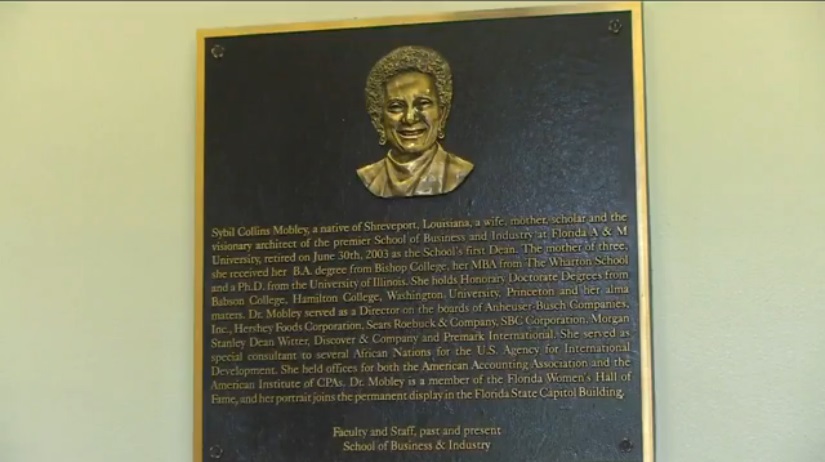
Dr. Sybil Mobley impacted the business world, not just the world of college education. She served on many corporate boards and received many awards and honors from around the world; (see plaque in photo above). While she was not of Caribbean heritage, she impacted many students who are; see the Facebook testimony here of two, one Jamaican-American and one Bahamian-American FAMU-SBI alumni:

Michelle Graham Day, SBI Class of 2008
Oh no, ‪#‎LEGEND! No matter how powerful a force to be reckoned with, you could walk in her office as an unknown freshman and get a one on one without an appointment! I remember feeling inspired because like me she had also graduated high school and started college at 16, and I remember her making clear that she was here to get us to play in the majors and said “when people say [why isn’t she using an HBCU business school to funnel students into] minority business what they [the critics, not the official definition!] really mean is minor business” meaning they were doubting her SBI students could hang in the big leagues. She pointed out that no company makes it onto the wall of plaques outside the main entrance without having invested $100k? (correct me if am off) in her vision…

I took 3 long internships that were real work not coffee fetching, one a year long, and graduated way off cycle, but my first big league company out the gate was IBM out west in Colorado (I was always willing to go anywhere while many were not even applying cause it wasn’t somewhere sexy to black people like New York or Miami) and even in the recession when on campus offers froze up, it is those 3 positions with Fortune 500 companies that led to my career which evolved from logistics/supply chain into data analysis into business intelligence and IT. It’s those 3-part PD questions with your premises and non-yes-or-no-answer follow-up question that had me stumping interviewers with my never-cliche questions and already-solid work experience standing out among other candidates even at internship stage. To this day I get compliments on the quality of my questions. The ability to multitask and speedread through 18 credit hours a semester (which I have also pulled off that load in SUMMER when full time is 6 credit hours), the logic picked up by being forced to take Physics I & II as our required sciences with much grumbling on our part, it all served me oh so well in skeleton crew workplaces where you wear many hats and the workload is intense as everyone is required to do more with less post-recession, and in learning how to experiment with the data and record different observations during data analysis and data mining/modeling, just like in the physics labs. She evolved with the needs of corporate and I’m constantly having to evolve to stay ahead of the demands of my field. I went on to work for some of the most established, storied corporations on earth and moved into Fortune 100 and it is all thanks in major part to applying what was learned in Dean Mobley’s program. Her passing is the passing of an era, she will be missed! ‪#‎RIP.‪#‎FAMU‪#‎SBI‪#‎visionary

Clifton H. Rodriguez, CPA, SBI Class of 1985
Probably [she] was the most influential woman in my life. I can still remember her teachings, and the lasting motto: “No effort is adequate until it is effective”. I remember in 1981 when she served on the Board of Anheuser Busch Companies, and had a meeting in St. Louis, Mo. She left her meeting with those important people, including August Busch, III to seek Anthony Glover and myself out to advise us about [a] murder that occurred on campus…. She did not have to do that, but deemed us that important to seek us out and advise us. She treated all of her students in that manner. She was not only our dean, but our nurturing mother, who cared deeply about her precious children.

These foregoing testimonies are such good reflections of Dr. Mobley’s character and quest: she wanted her students “playing in the ‘Major’ leagues” of Big Corporate businesses. She recognized that while minority business ownership is important in America today and for the recent past, minority businesses are just minor businesses.

The publishers of the book Go Lean…Caribbean recognize the life contributions of Dr. Sybil Mobley as an educator, industrialist and advocate for many causes that align with our quest for empowerment and elevation of Caribbean commerce and life. Her vision was for more self-determination for the role that business and economics play in the lives of Black America. This means participating, not just spectating, in the business processes of BIG business. There are now more African-Americans (and those of African-Caribbean heritage) engaged in the business processes with corporate America because of the efforts of Dr. Mobley.

Mission accomplished!

“You have fought the good fight, you have finished the race, and you have remained faithful”. – 2 Timothy 4:7 (The Bible New Living Translation).

Like Dr. Sybil Mobley, the prime directive of the Go Lean book is also to elevate society, but instead of impacting America, the roadmap focus is the Caribbean first. The book serves as a roadmap for the introduction and implementation of the Caribbean Union Trade Federation (CU). The CU seeks to empower the people of the Caribbean to lead more impactful lives in which they are better able to meet their needs and plan for a productive future. The Go Lean roadmap seeks to put Caribbean people in a place of better command-and-control of their circumstances, to develop the community ethos of fostering genius, innovation and entrepreneurship. In fact, the prime directive declarative statements in the Go Lean book are as follows:

  • Optimization of the economic engines in order to grow the regional economy to $800 Billion & create 2.2 million new jobs.
  • Establishment of a security apparatus to protect the resultant economic engines.
  • Improvement of Caribbean governance to support these engines.

Dr. Sybil Mobley is hereby recognized as a role model that the rest of the Caribbean can emulate. She provided a successful track record of forging change, overcoming incredible odds, managing crises to successful conclusions and paying forward to benefit the next generation. The Go Lean book posits that the economic, security and governing engines are all important for the sustenance of Caribbean life, so Dr. Mobley’s life course stands as a vanguard for many of these pursuits.

The book posits that one person, despite their field of endeavor, can make a difference in the Caribbean, and its impact on the world; that there are many opportunities where one champion, one advocate, can elevate society. In this light, the book features 144 different advocacies, so there is inspiration for the “next” Dr. Sybil Mobley to emerge, establish and excel right here at home in the Caribbean.

The roadmap specifically encourages the region, to lean-in and foster this “next” generation of Dr. Sybil Mobley’s with these specific community ethos, strategies, tactics, implementations and advocacies:

Community Ethos – Economic Systems Influence Individual Choices Page 21
Community Ethos – Consequences of Choices Lie in the Future Page 21
Community Ethos – Minority Equalization Page 24
Community Ethos – Ways to Impact the Future Page 26
Community Ethos – Ways to Foster Genius Page 27
Community Ethos – Ways to Help Entrepreneurship Page 30
Community Ethos – Ways to Bridge the Digital Divide Page 33
Community Ethos – Ways to Impact Turn-Arounds Page 35
Community Ethos – Ways to Impact the Greater Good Page 37
Strategy – Build and foster local economic engines Page 45
Strategy – Educate our children with the wisdom and knowledge to succeed Page 46
Tactical – Grow the Economy to $800 Billion – Elevate economy through Education Page 70
Tactical – Separation-of-Power – Federal Department of Education Page 85
Anatomy of Advocacies Page 122
Planning – Ways to Make the Caribbean Better Page 131
Advocacy – Ways to Grow the Economy Page 151
Advocacy – Ways to Create Jobs Page 152
Advocacy – Ways to Improve Education Page 159
Advocacy – Ways to Better Provide Clothing Page 163
Advocacy – Ways to Impact Wall Street Page 200
Advocacy – Ways to Impact Main Street Page 201
Advocacy – Ways to Preserve Caribbean Heritage Page 218
Appendix – Education and Economic Growth Page 258

Education is a priority in the Go Lean roadmap. Previously, this commentary has highlighted many other lessons that the region needs to apply to elevate the societal engines for education. See a sample list here:

https://goleancaribbean.com/blog/?p=6269 Education & Economics: Welcome Mr. President
https://goleancaribbean.com/blog/?p=5482 For-Profit American Education: Plenty of Profit; Little Education
https://goleancaribbean.com/blog/?p=4572 Role Model: Innovative Educator Ron Clark
https://goleancaribbean.com/blog/?p=4487 FAMU is No. 3 for Facilitating Economic Opportunity
https://goleancaribbean.com/blog/?p=1256 Is a Traditional 4-year Degree a Terrible Investment?

We need impactful role models like Dr. Sybil Mobley at home in the Caribbean. The formula of sending our “best-of-the-best” to North America and Europe has failed us – they rarely come back home; see sample testimonies above, both individuals currently live in the US. The quest of the Go Lean roadmap is to change that formula – we now want to educate our “best-of-the-best” right here in the Caribbean region, thereby increasing the likelihood that they will remain after their matriculation. This change will require a lot of contributions from a lot of different people. This quest is pronounced early in the roadmap in the Declaration of Interdependence at the outset of the book, declaring a need for regional solutions (Pages 13 & 14) with these statements:

xix. Whereas our legacy in recent times is one of societal abandonment, it is imperative that incentives and encouragement be put in place to first dissuade the human flight, and then entice and welcome the return of our Diaspora back to our shores

xxi. Whereas the preparation of our labor force can foster opportunities and dictate economic progress for current and future generations, the Federation must ensure that educational and job training opportunities are fully optimized for all residents of all member-states, with no partiality towards any gender or ethnic group. The Federation must recognize and facilitate excellence in many different fields of endeavor, including sciences, languages, arts, music and sports. This responsibility should be executed without incurring the risks of further human flight, as has been the past history.

xxx. Whereas the effects of globalization can be felt in every aspect of Caribbean life, from the acquisition of food and clothing, to the ubiquity of ICT, the region cannot only consume, it is imperative that our lands also produce and add to the international community, even if doing so requires some sacrifice and subsidy.

With the participation of many advocates on many different paths for progress, the Caribbean can truly become a better place to live, work, learn  and play.

Thank you for preparing us for this challenge, Dr. Mobley. Thank you for your service, commitment, nurturing and love. Now take your rest. Rest in Peace!

Download the free e-Book of Go Lean … Caribbean – now!

Share this post:
, , , , ,

Lessons from Iceland – Model of Recovery

Go Lean Commentary

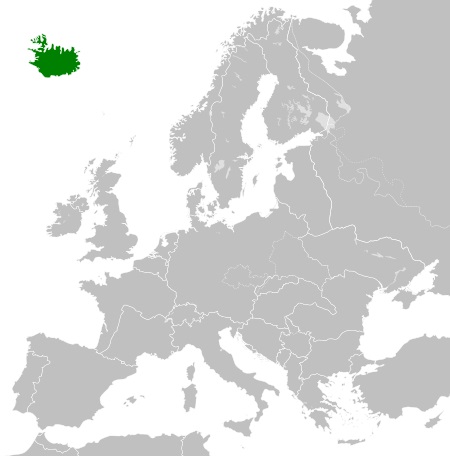
There are so many lessons the Caribbean region can learn from the island Republic of Iceland.

CU Blog - Lessons from Iceland - Model of Recovery - Photo 1First, it’s an island, Duh!!!

Just like with the Caribbean, logistics of trade is more difficult as it must be based on naval and aeronautical solutions.

They have natural disasters … volcanoes as opposed to hurricanes or earthquakes.

The population is 320,000 … the range of many Caribbean countries; (i.e. Bahamas, Barbados, Belize, Guadeloupe (Fr.), Martinique (Fr.) and Suriname). Yet, it is not grouped with the formal Small Island Developing States (SIDS) as is all the sovereign Caribbean territories. The following defines the common traits:

Small Island Developing States are low-lying coastal [sovereign] countries that tend to share similar sustainable development challenges, including small but growing populations, limited resources, remoteness, susceptibility to natural disasters, vulnerability to external shocks, excessive dependence on international trade, and fragile environments. Their growth and development is also held back by high communication, energy and transportation costs, irregular international transport volumes, disproportionately expensive public administration and infrastructure due to their small size, and little to no opportunity to create economies-of-scale. – Source: https://en.wikipedia.org/wiki/Small_Island_Developing_States

Iceland has done many things well so that everyone in the Caribbean, all SIDS countries for that matter, need to take notice.

During the bad days of the Great Recession – at the precipice of disaster – the country deviated from other troubled regions …

Iceland let its banks fail in 2008 because they proved too big to save.

How does it relate to the Caribbean? The Caribbean is at the precipice … now; many of the member-states are near Failed-State status, while others are still hoping to recover from the devastating Great Recession of 2008. Turn-around should not take this long – 7 years. Strategies, tactics and implementations of best-practices to effect a turn-around must be pursued now.

Iceland has now recovered, and complaining about a 2% unemployment rate. What did they do that was so radically different than other locations? For one, they changed course regarding economics, security and governing policies. An ultra-capitalist movement had taken hold of the country and business communities; they pursued an aggressive “boom-or-bust” strategy, that ultimately “busted”, rather than continue on that road, the country – all aspects of society – altered course and returned to a path of sound fundamentals.

They rebooted and turned-around! Iceland embraced all aspects of turn-around strategies, mandating bankruptcies and “wind-downs” so that the economy – and society in general – could start anew.

This article is in consideration of the book Go Lean…Caribbean; it serves as a roadmap for the introduction and implementation of the technocratic Caribbean Union Trade Federation (CU) and Caribbean Central Bank (CCB) to provide better stewardship, to ensure that the economic/currency failures of the past, in the Caribbean and other regions, do not re-occur here in the homeland.

We can learn so much from this episode in Icelandic history, the good, the bad and the ugly. See the encyclopedic details here:

Reference Title: Iceland’s Economy and Recovery
CU Blog - Lessons from Iceland - Model of Recovery - Photo 2In 2007, Iceland was the seventh most productive country in the world per capita (US$54,858), and the fifth most productive by GDP at purchasing power parity ($40,112). About 85 percent of total primary energy supply in Iceland is derived from domestically produced renewable energy sources.[93] Utilization of abundant hydroelectric and geothermal power has made Iceland the world’s largest electricity producer per capita.[94] … Historically, Iceland’s economy depended heavily on fishing, which still provides 40% of export earnings and employs 7% of the work force.[49] The economy is vulnerable to declining fish stocks and drops in world prices for its main material exports: fish and fish products, aluminum, and ferrosilicon.

Iceland had been hit especially hard by the Great Recession that began in December 2007, because of the failure of its banking system and a subsequent economic crisis. Before the crash of the country’s three largest banks, Glitnir, Landsbanki and Kaupthing, their combined debt exceeded approximately six times the nation’s gross domestic product of €14 billion ($19 billion).[116][117] In October 2008, the Icelandic parliament passed emergency legislation to minimize the impact of the Financial crisis. The Financial Supervisory Authority of Iceland used permission granted by the emergency legislation to take over the domestic operations of the three largest banks.[118] Icelandic officials, including central bank governor Davíð Oddsson, stated that the state did not intend to take over any of the banks’ foreign debts or assets. Instead, new banks were established to take on the domestic operations of the banks, and the old banks will be run into bankruptcy.

On 28 October 2008, the Icelandic government raised interest rates to 18% (as of August 2010, it was 7%), a move which was forced in part by the terms of acquiring a loan from International Monetary Fund (IMF). After the rate hike, trading on the Icelandic króna finally resumed on the open market, with valuation at around 250 ISK per Euro, less than one-third the value of the 1:70 exchange rate during most of 2008, and a significant drop from the 1:150 exchange ratio of the week before.

CU Blog - Lessons from Iceland - Model of Recovery - Photo 3On 20 November 2008, in an effort to stabilize the situation, the Icelandic government stated that all domestic deposits in Icelandic banks would be guaranteed, imposed strict capital controls to stabilize the value of the Icelandic króna, and secured a US$5.1bn sovereign debt package from the IMF and the Nordic countries – Denmark, Finland, Norway, and Sweden agreed to lend $2.5 billion. [119] – in order to finance a budget deficit and the restoration of the banking system. (The international bailout support program led by IMF officially ended on August 31, 2011, while the capital controls which were imposed in November 2008 are still in place only recently ended in the last few weeks).

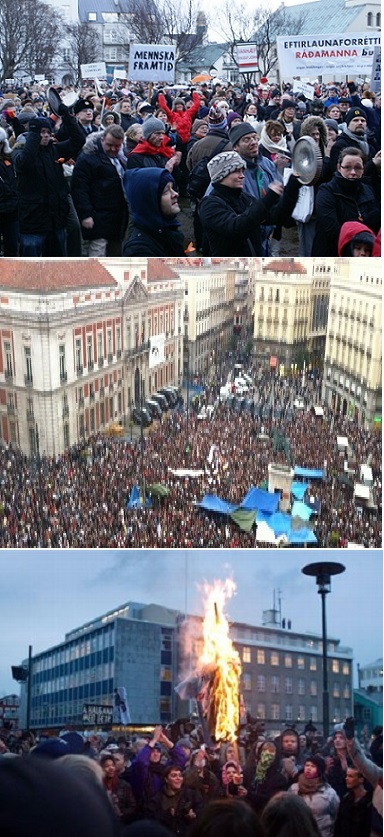
On 26 January 2009, the coalition government collapsed due to the public dissent over the handling of the financial crisis. A new left-wing government was formed a week later and immediately set about removing Central Bank governor Davíð Oddsson and his aides from the bank through changes in law. Davíð was removed on 26 February 2009 in the wake of protests outside the Central Bank.[120]

The financial crisis had a serious negative impact on the Icelandic economy. The national currency fell sharply in value, foreign currency transactions were virtually suspended for weeks, and the market capitalization of the Icelandic stock exchange fell by more than 90%. As a result of the crisis, Iceland underwent a severe economic depression; the country’s gross domestic product dropped by 10% in real terms between the third quarter of 2007 and the third quarter of 2010.[6] A new era with positive GDP growth started in 2011, and has helped foster a gradually declining trend for the unemployment rate. The government budget deficit has declined from 9.7% of GDP in 2009 and 2010 to 0.2% of GDP in 2014;[7] the central government gross debt-to-GDP ratio is expected to decline to less than 60% in 2018 from a maximum of 85% in 2011.[8]

[A post-mortem analysis helped to put the blame for Iceland’s crisis on a bad community ethos that had encapsulated the whole country related to debt]:

[Disregarding their] small domestic market, Iceland’s banks had financed their expansion with loans on the interbank lending market and, more recently, by deposits from outside Iceland (which are also a form of external debt). Households also took on a large amount of debt, equivalent to 213% of disposable income, which led to inflation.[117] This inflation was exacerbated by the practice of the Central Bank of Iceland issuing liquidity loans to banks on the basis of newly issued, uncovered bonds[118] – effectively, printing money on demand.

[Then the turn-around took hold …]

By mid-2012 Iceland was regarded as one of Europe’s recovery success stories. It has had two years of economic growth. Unemployment was down to 6.3% and Iceland was attracting immigrants to fill jobs. Currency devaluation effectively reduced wages by 50% making exports more competitive and imports more expensive. Ten-year government bonds were issued below 6%, lower than some of the PIIGS nations in the EU (Portugal, Italy, Ireland, Greece, and Spain). Tryggvi Thor Herbertsson, a member of parliament, noted that adjustments via currency devaluations are less painful than government labor policies and negotiations.

By June 2012, Landsbanki managed to repay about half of the Icesave debt.[124]

According to Bloomberg, Iceland was on the trajectory of 2% unemployment as a result of crisis-management decisions made back in 2008, including allowing the banks to fail.[125]. [Here are the highlighted bullets of this story posted January 27, 2014:]

    Iceland let its banks fail in 2008 because they proved too big to save.
    Now, the island is finding crisis-management decisions made half a decade ago have put it on a trajectory that’s turned 2 percent unemployment into a realistic goal.
    While the Euro area grapples with record joblessness, led by more than 25 percent in Greece and Spain …

[Iceland is NOT a member of the EU], nevertheless, while EU fervor has cooled [due to the crisis] the government continues to pursue membership.[246]
Source: Wikipedia Online Encyclopedia – Retrieved 09/23/2015 from: https://en.wikipedia.org/wiki/2008%E2%80%9311_Icelandic_financial_crisis

—–

VIDEO – What Can Greece (and the Caribbean) Learn From Iceland? – http://www.bloomberg.com/news/videos/2015-08-28/what-can-greece-learn-from-iceland-

Published on Aug 28, 2015 – Central Bank of Iceland Governor Mar Gudmundsson talks with Brendan Greeley about Iceland’s capital controls and what Greece can learn from Iceland in handling its credit crisis. He speaks on “Bloomberg Markets.”

The lessons from Iceland really magnify in reflection of the Caribbean considering the community ethos or attitudes regarding “debt”. The book described community ethos as:

“the fundamental character or spirit of a culture; the underlying sentiment that informs the beliefs, customs, or practices of a group or society; dominant assumptions of a people or period; practices of a group or society; dominant assumptions of a people or period” – Go Lean…Caribbean Page 20.

While Iceland featured a negative community ethos in this case, their model demonstrates that the spirit-beliefs-customs-practices of a community can be altered.

Yes, Iceland fixed their heart … first; then the recovery of the community’s economic, security and governing engines took root. It is very important that the Caribbean learn this lesson and apply the corrections to our community ethos, and then to our systems of commerce and governance. The Go Lean book opened with this pronouncement (Page 10), gleaning insight from the US Declaration of Independence:

We hold these truths to be self-evident, that all men are created equal, that they are endowed by their Creator with certain unalienable rights, that among these are life, liberty and the pursuit of happiness; that to secure these rights, governments are instituted among men, deriving their just powers from the consent of the governed. That whenever any form of government becomes destructive to these ends, it is the right of the people to alter or to abolish it, and to institute new government, laying its foundation on such principles and organizing its powers in such form, as to them shall seem most likely to effect their safety and happiness.

The Go Lean roadmap calls for instituting the CU Trade Federation and the Caribbean Central Bank (CCB) to take the lead in forging the needed changes to the region’s economic and financial eco-systems. Firstly, there is the need to foster the best practices in the region regarding debt. The roadmap calls for a cooperative among Central Banks to form the CCB to foster interdependence, sharing, economies-of-scale and collaboration across the region despite the divergent politics, culture and languages. The premise is simple: while we are all different, we are all “in the same boat”. So the underlying principle of this motivation is the regional Greater Good.

The realities of the Great Recession, and Iceland’s troubles in the foregoing reference source, prove the interconnectivity of the financial systems; bank/currency troubles in one country easily become trouble for another country. A larger Single Market (42 million people in 30 member-states) for the Caribbean would provide less elasticity and more shock-absorption here from eruptions in the global financial markets. The Caribbean is never spared; in fact we are directly affected as tourism – our primary economic driver – depends on the disposable income from our trading partners, mostly North American and Western European countries. This is why our region was so devastated with the events, repercussions and consequences of 2008.

Considering the past, the Caribbean has had to learn hard lessons on economic booms … and busts. Any attempt to reboot Caribbean economic landscape must first start with a strenuous oversight of regional currencies. Thusly, the strategy is to integrate to the single currency, the Caribbean Dollar (C$). The tactical approach is to provide technocratic oversight with the CCB pursuing only the Greater Good, and no special group’s special interest.

Also in the opening of the Go Lean book, this need for regional stewardship of Caribbean currencies was pronounced in the Declaration of Interdependence (Page 12 & 13) with these statements:

xi.    Whereas all men are entitled to the benefits of good governance in a free society, “new guards” must be enacted to dissuade the emergence of incompetence, corruption, nepotism and cronyism at the peril of the people’s best interest. The Federation must guarantee the executions of a social contract between government and the governed.

xii.   Whereas the legacy in recent times in individual states may be that of ineffectual governance with no redress to higher authority, the accedence of this Federation will ensure accountability and escalation of the human and civil rights of the people for good governance, justice assurances, due process and the rule of law. As such, any threats of a “failed state” status for any member state must enact emergency measures on behalf of the Federation to protect the human, civil and property rights of the citizens, residents, allies, trading partners, and visitors of the affected member state and the Federation as a whole.

xxiv.    Whereas a free market economy can be induced and spurred for continuous progress, the Federation must install the controls to better manage aspects of the economy: jobs, inflation, savings rate, investments and other economic principles. Thereby attracting direct foreign investment because of the stability and vibrancy of our economy.

xxv.    Whereas the legacy of international democracies had been imperiled due to a global financial crisis, the structure of the Federation must allow for financial stability and assurance of the Federation’s institutions. To mandate the economic vibrancy of the region, monetary and fiscal controls and policies must be incorporated as proactive and reactive measures. These measures must address threats against the financial integrity of the Federation and of the member-states.

The Go Lean book, and previous blog/commentaries, stressed the key community ethos, strategies, tactics, implementations and advocacies necessary to appoint new stewards for the regional financial eco-system. These points are detailed in the book as follows:

Community Assessment – Puerto – The Greece of the Caribbean Page 18
Community Ethos – Economic Principles – All Choices Involve Costs Page 21
Community Ethos – Economic Principles – Economic Systems Influence Individual Choices Page 21
Community Ethos – Economic Principles – Consequences of Choices Lie in the Future Page 21
Community Ethos – Economic Principles – Money Multiplier Page 23
Community Ethos – Governing Principles – Lean Operations Page 24
Community Ethos – Governing Principles – Return on Investments Page 24
Community Ethos – Governing Principles – Cooperatives Page 25
Community Ethos – Ways to Impact the Future – Count on the Greedy to be Greedy Page 26
Community Ethos – Ways to Impact Turn-Arounds – Bankruptcy Processing Page 33
Community Ethos – Ways to Improve Sharing Page 35
Community Ethos – Ways to Impact the Greater Good Page 37
Strategy – Vision – Confederate the region into a Single Market Page 45
Strategy – Mission – Fortify the Stability of the Securities Markets Page 45
Strategy – Provide Proper Oversight and Support for the Depository Institutions Page 46
Strategy – e-Payments and Card-based Transactions Page 49
Tactical – Confederating a Permanent Union Page 63
Tactical – Growing the Economy – Minimizing Bubbles Page 69
Tactical – Separation-of-Powers – Depository Insurance & Regulatory Agency Page 73
Anecdote – Turning Around CARICOM – Effects of 2008 Financial Crisis Page 92
Implementation – Assemble Caribbean Central Bank as a Cooperative Page 96
Implementation – Ways to Better Manage Debt Page 114
Planning – 10 Big Ideas – Single Market / Currency Union Page 127
Planning – Lessons Learned from 2008 Page 136
Planning – Lessons Learned from New York City – Wall Street Page 137
Planning – Ways to Measure Progress Page 147
Anecdote – Caribbean Currencies Page 149
Advocacy – Ways to Grow the Economy Page 151
Advocacy – Ways to Control Inflation Page 153
Advocacy – Ways to Better Manage Foreign Exchange Page 154
Advocacy – Ways to Improve Governance Page 168
Advocacy – Ways to Better Manage the Social Contract Page 170
Advocacy – Ways to Foster Cooperatives Page 176
Advocacy – Ways to Foster Electronic Commerce Page 198
Advocacy – Reforms for Banking Regulations Page 199
Advocacy – Ways to Impact Wall Street Page 200
Advocacy – Ways to Impact Main Street Page 201
Appendix – Tool-kits for Capital Controls Page 315

There is a lot to learn from the analysis of economic stewardship of other communities. The successes and failures of banking/economic stewardship were further elaborated upon in these previous blog-commentaries:

https://goleancaribbean.com/blog/?p=6531 A Lesson in History – Book Review of the ‘Exigency of 2008’
https://goleancaribbean.com/blog/?p=5818 Greece: From Bad to Worse
https://goleancaribbean.com/blog/?p=4166 A Lesson in History – Panamanian Balboa
https://goleancaribbean.com/blog/?p=3858 ECB unveils 1 trillion Euro stimulus program
https://goleancaribbean.com/blog/?p=3814 Lessons from the Swiss unpegging the franc
https://goleancaribbean.com/blog/?p=3582 For Canadian Banks: Caribbean is a ‘Bad Bet’
https://goleancaribbean.com/blog/?p=3397 A Christmas Present for the Banks from the Omnibus Bill
https://goleancaribbean.com/blog/?p=3090 Lessons Learned – Europe Sovereign Debt Crisis of 2009
https://goleancaribbean.com/blog/?p=3028 Why India is doing better than most emerging markets
https://goleancaribbean.com/blog/?p=2930 ‘Too Big To Fail’ – Caribbean Version
https://goleancaribbean.com/blog/?p=2090 The Depth & Breadth of Remediating 2008
https://goleancaribbean.com/blog/?p=1014 Canadian View: All is not well in the sunny Caribbean
https://goleancaribbean.com/blog/?p=833 One currency, divergent economies
https://goleancaribbean.com/blog/?p=518 Analyzing the Data – What Banks learn about financial risks

According to the foregoing article, and VIDEO, the origin of Iceland’s crisis was greed; the banks assuming more risk, to garner more profit, and consumers borrowing more credit so as to … consume more.

Greed – it is what it is.

The Go Lean book declares to “count on greedy people to be greedy” (Page 26). This situation is manifested time and again, all over the world. The Go Lean book provides the roadmap to anticipate greed, monitor and mitigate it. The book declares (Page 23):

… “bad actors” will also emerge thereafter to exploit the opportunities, with good, bad and evil intent. A Bible verse declares: “What has been will be again, what has been done will be done again; there is nothing new under the sun” – Ecclesiastes 1:9 New International Version.

We have so many lessons to learn from the Great Recession, and the disposition of Iceland.

Only at the precipice do they change!

Lesson learned!

The Caribbean is hereby urged to lean-in to this Go Lean confederation roadmap. Everyone – people, businesses, banks and governments – can benefit from the consideration of this roadmap. As this roadmap is the “turn-by-turn directions”, the heavy-lifting, to move the region to its new destination: a better homeland to live, work and play.  🙂

Download the book Go Lean … Caribbean – now!

Share this post:
, , , , , , ,
[Top]

Private Airplanes For All

Go Lean Commentary

Private Airplanes 1The airplane is not a new invention. It goes back to the days of the Wright Brothers of Dayton, Ohio – Orville and Wilbur – and their Kitty Hawk, North Carolina test flight on December 17, 1903. Yet, after 112 years, there is still room for a lot of invention and innovation in the field of aerospace. As the old adage relates “Necessity, is the ‘mother’ of invention”.

This commentary asserts that while the United States of America was front-and-center with the initial developments in man-flights, the Caribbean region now needs to be more prominent with the innovations of flight for this new century in aviation. Why?

Necessity, is STILL the ‘mother’ of invention.

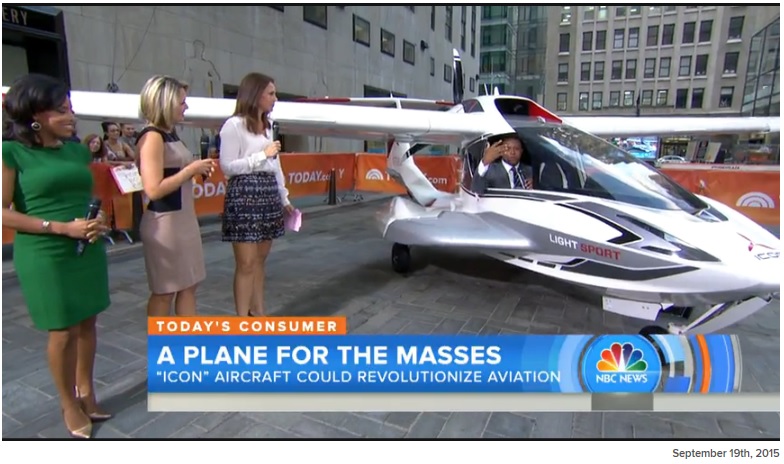
There is the need for a lot more innovative airplane transportation solutions for any region featuring an archipelago – a chain of islands. This new product here – the ICON A5* – is perhaps an ideal solution for Caribbean deployment, as it can better reach the masses and become ubiquitous for private owners-operators; see the following VIDEO:

VIDEO Title: Private airplanes for all? One company hopes so

Private planes have long been the domain of the very rich, but now one company wants to change that. ICON wants to do for air travel what Apple did for computers – demystify and make them approachable. They see a future where lots of people like me and you are soaring through the sky in a plane like this. TODAY’s Craig Melvin reports.

Private Airplanes 2This vision of ubiquitous owners-operators of amphibious airplanes – that can touchdown on land or water – portray a more efficient aviation environment for island-hoping; these vehicles would make island living more appealing to live, work and play. This commentary asserted that “our region must participate in these developments, not just spectate on them”. This aligns with the mandate for a more nimble environment to develop, test and deploy cutting-edge transportation solutions. This is the benefit of lean governmental coordination, to be able to launch initiatives like this as portrayed in the foregoing VIDEO.

Canada is a good model for the Caribbean to emulate in this regards. They have vast rural territories, not easily accessible by roads. In these far-out territories, seaplanes, floatplanes and bush planes proliferate. In addition, this ubiquity in Canada is not necessarily affiliated with the wealthy, but rather ordinary citizens; sometimes, these transportation options even become a small business opportunity.

Needless to say, a proliferation of small aircrafts raises a lot of security issues; think September 11, 2011 Terror Attacks on New York City. The aircraft in the above VIDEO, also feature the additional safety mitigation of a built-in parachute, to allow for an easy landing of any aircraft that may go into distress. (This safety feature is ingenious!).

The book, Go Lean … Caribbean, extols the principle that R&D (research and development) activities are necessary to profit from advantages in technology. We want to do R&D here in the Caribbean; manufacturing/assembly too. Since we have the demand; we should facilitate supply as well!  This is a mandate for the Caribbean Union Trade Federation (CU). This book serves as a roadmap for the introduction and implementation of the CU. This technocracy will assume oversight to optimize the region in the areas of:

      (1) economics
      (2) security
      (3) lean government

This ethos of adapting to change has now come to the Caribbean.

The status quo of the Caribbean’s transportation eco-systems is badly flawed. The region boasts transportation and fuel costs (including taxes) that are among the highest in the world.

Private Airplanes 4The Go Lean strategy is to confederate the 30 member-states of the Caribbean region to form the technocratic CU Trade Federation. Tactically, the roadmap calls for a separation-of-powers, allowing the Caribbean member-states to deputize authority of the Caribbean airspace to the one unified CU agency. Operationally, there is the need to regulate these aircrafts and the owners-operators, for their monitoring, training, licensing, maintenance compliance, search-and-rescue, incident management and everyday functionality. (Consider the risk mitigation example in the Appendix VIDEO below).

Things will go wrong! Bad things do happen to good people.

This blog-commentary touches on many related issues and subjects that affect planning for Caribbean empowerment in the aviation and  transportation industry-spaces. Many of these issues were elaborated upon in these previous blog-commentaries:

https://goleancaribbean.com/blog/?p=5376 Drones to be used for Insurance Damage Claims
https://goleancaribbean.com/blog/?p=3533 No Fear of Failure – Case Study: Bahamasair
https://goleancaribbean.com/blog/?p=3326 M-1 Rail: Alternative Motion in the Motor City
https://goleancaribbean.com/blog/?p=3225 Caribbean less competitive due to increasing aviation taxes
https://goleancaribbean.com/blog/?p=2769 DC Streetcars/Rail – Model For Caribbean Re-development
https://goleancaribbean.com/blog/?p=798 Lessons Learned from the American Airlines merger
https://goleancaribbean.com/blog/?p=673 Ghost ships – Autonomous cargo vessels without a crew
https://goleancaribbean.com/blog/?p=254 Air Antilles Launches St. Maarten Service

Though not written with this particular initiative in mind, the Go Lean roadmap anticipates the foregoing VIDEO‘s opportunities and challenges, as pronounced in the Declaration of Interdependence, (Pages 12 & 14):

xvi.    Whereas security of our homeland is inextricably linked to prosperity of the homeland, the economic and security interest of the region needs to be aligned under the same governance. Since economic crimes … can imperil the functioning of the wheels of commerce for all the citizenry, the accedence of this Federation must equip the security apparatus with the tools and techniques for predictive and proactive interdictions.

xxvii. Whereas the region has endured a spectator status during the Industrial Revolution, we cannot stand on the sidelines of this new economy, the Information Revolution. Rather, the Federation must embrace all the tenets of Internet Communications Technology (ICT) to serve as an equalizing element in competition with the rest of the world. The Federation must bridge the digital divide and promote the community ethos that research/development is valuable and must be promoted and incentivized for adoption.

xxx.   Whereas the effects of globalization can be felt in every aspect of Caribbean life, from the acquisition of food and clothing, to the ubiquity of ICT, the region cannot only consume, it is imperative that our lands also produce and add to the international community, even if doing so requires some sacrifice and subsidy.

The Go Lean book was written with the future of the Caribbean in mind. There was a certain anticipated future – with a proliferation of private aircraft owners-operators – that hasn’t really materialized … yet. But maybe now, finally, that future view is coming into focus. This is the direct quotation from the book (Page 26):

The Bottom Line on the Millennium
In the words of Yogi Berra – iconic American Baseball Hall-of-Famer: “The future ain’t what it used to be”.

This is according to a 2007 news analysis by Michael Fitzpatrick, Science Writer for The Guardian (UK) newspaper:

    No flying cars, no dinners in a pill, and certainly no cool rocketing off to space cities in the required outfit of the future. We seem to have failed the expectations of the most wild-eyed seers from the past – futurologists who were for the most part in love with a supercharged, technologically sexy future where science would free us from the daily grind, for holidays on the moon or underseas. But here we remain, plodding along … in a familiar world that is neither utopia nor dystopia. What the futurologists did get right were some of the more prosaic details such as mobile phones and digital technologies.

Private Airplanes 3The aircraft depicted in the foregoing VIDEO (see Appendix below),  feature functionality where every single-family home could have a plane in their garage – this is the ubiquity in the earlier references. North American society could now be that close to this future view. Better still, the Caribbean should be that close to this reality:

… planes being towed from home garages to boat ramps to launch flight. Then while in flight the aircraft cruises below 15,000 feet and operate at good speed, but slower than 150 miles an hour.

The CU mission is to implement the complete eco-system to deliver on market opportunities for these ubiquitous aircraft owners-operators. There are many strategies, tactics, implementations and advocacies in the book that will facilitate this readiness; a sample is detailed here:

Economic Principles – Economic Systems Influence Individual Choices Page 21
Economic Principles – People Choose because Resources are Limited Page 21
Economic Principles – All Choices Involve Costs Page 21
Economic Principles – People Respond to Incentives Page 21
Economic Principles – Economic Systems Influence Individual Choices Page 21
Economic Principles – Consequences of Choices Lie in the Future Page 21
Community Ethos – Money Multiplier Page 22
Community Ethos – Job Multiplier Page 22
Community Ethos – Lean Operations Page 24
Community Ethos – Return on Investments Page 24
Community Ethos – Ways to Impact the   Future Page 26
Community Ethos – Ways to Help   Entrepreneurship Page 28
Community Ethos – Ways to Promote   Intellectual Property Page 29
Community Ethos – Ways to Impact Research   and Development Page 30
Community Ethos – Ways to Ways to Improve   Negotiations Page 32
Tactical – Separation of Powers – Emergency Management Page 76
Tactical – Separation of Powers – Department of Transportation – Aviation Regulator Page 84
Implementation – Security Initiatives at   Start-up – Command-and-Control Page 103
Implementation – Start-up Benefits from the EEZ Page 104
Implementation – Steps to Implement Self-Governing Entities Page 105
Implementation – Ways to Improve Energy Usage – Electrified Buses/Trains Page 113
Implementation – Ways to Benefit from Globalization Page 119
Planning – Ways to Improve Trade Page 128
Planning – Lessons Learned from Canada’s History Page 146
Advocacy – Ways to Grow the Economy Page 151
Advocacy – Ways to Create Jobs Page 152
Advocacy – Ways to Improve Governance Page 168
Advocacy – Ways to Better Manage the Social Contract – Technology and Efficiency Page 170
Advocacy – Ways to Foster Empowering Immigration Page 174
Advocacy – Ways to Improve Homeland Security Page 180
Advocacy – Ways to Mitigate Terrorism Page 181
Advocacy – Ways to Foster Technology Page 197
Advocacy – Ways to Improve Transportation Page 205
Advocacy – Ways to Impact Urban Living – Transit Options Page 234
Advocacy – Ways to Impact Rural Living – Optimizing Transportation Options Page 235

As described in the Go Lean book, change is imminent, for the world and for the Caribbean. The world is preparing for the change for more efficient transit options and also to deploy more autonomous systems to help owner-operators auto-pilot and navigate around the Caribbean region. This commentary calls for a new ethos … to prepare for change. This ethos has now come to the Caribbean, among the Go Lean/CU planners. The people of the region are urged to also “lean-in” to this empowerment. The benefits of this roadmap are very alluring: emergence of an $800 Billion single market economy and 2.2 million new jobs.

These developments are taking place … elsewhere. We need “in” on this.

We need this here, these types of innovative products, systems, companies and specialists to help us in our quest to make the Caribbean a better place to live, work and play.  🙂

————

Appendix * ICON A5

ICON Aircraft is a privately held American aircraft design and production company.[2] It is currently working on the production of the ICON A5, an amphibious light sport aircraft[3] that began customer deliveries in July 2015.[4][5] The company was founded in response to the 2004 Federal Aviation Administration establishment of the light-sport aircraft (LSA) class of aircraft and Sport Pilot certificate class of pilot.[6][7][8]

This first ICON Aircraft’s  model, the ICON A5, is an amphibious two-seat, light-sport aircraft to be priced at approximately $189,000. Its folding wings facilitate transportation and storage,[8] and it will have a range of approximately 300 nautical miles (560 km) and a top speed of 105 knots (120 mph).[18]

ICON Aircraft positions the A5 with a recreational focus, stating that the aircraft competes with powersports vehicles such as ATVs, motorcycles, watercraft, and snowmobiles, rather than other airplanes.

The company’s headquarters are located in Vacaville, California where all manufacturing, engineering, design, training, sales, and service functions are consolidated.[21]
Source:
https://en.wikipedia.org/wiki/ICON_Aircraft; retrieved September 21, 2015.

————

Appendix – VIDEO – Sea Plane Takes Off from Truck Trailer –  https://youtu.be/-JDogTLtels

Title: Creative Sea Plane Pilot Displays Incredible Take Off Technique From a Moving Truck Trailer – Published on May 8, 2013 – For licensing/usage please contact: licensing@liveleak.com.
Though not as widely used as they once were, seaplanes still serve a few key purposes today including providing access to roadless areas. But the downside of a seaplane is that it can’t land or take off on solid ground. Or can it? This video proves that only one of those disadvantages holds true (landing). As you will see in the video, with a truck moving fast enough, a seaplane can actually take off from an attached trailer.

Share this post:
, , , ,
[Top]

Sports Role Model – ‘WWE Network’

Go Lean Commentary

The revolution will be televised.*

The book Go Lean … Caribbean advocates change for the Caribbean region that is so radical that it might be considered revolutionary!

So be it! The book clearly posits that the region is in crisis, and radical change must now be implemented, but it clearly asserts non-violent, non-military change; see quotation here (Page 8):

… this is not a call for a revolt against the governments, agencies or institutions of the Caribbean region, but rather a petition for a peaceful transition and optimization of the economic, security and governing engines in the region.

This revolution to elevate the Caribbean eco-systems will be executed in the open, with full transparency and accountability. Television cameras are welcome … and encouraged!

The phrase – ‘revolution will not be televised’ – was coined at a time (1970) when television was the dominant visual medium. Today, there is the ubiquity of the internet, with its many video streaming services.

So the new catch-phrase can be: “the revolution will be televised, mobilized and streamed”.

WWE Network - Photo 1This is better! (Every mobile/smart-phone owner walks around with an advanced digital video camera in their pocket). We are now able to have a network without the “network”. Many models abound on the world-wide-web. Previously, this commentary identified one such network (ESPN-W); now the focus is on another, the WWE Network, associated with the World Wrestling Entertainment, Inc. This network is delivered via the internet-streaming only (and On-Demand with limited Cable TV systems). See details here, considering the “World” reference in the “WWE” branding:

WWE Network is a subscription-based video streaming service owned by WWE, using the infrastructure of Major League Baseball Advanced Media.[2] The concept was originally announced in 2011. On January 8, 2014, WWE announced the network would launch on February 24 in the United States. The company stated on July 31 that the service was expected to go live in Australia, Canada, New Zealand, Hong Kong, Singapore, Mexico, Spain, Turkey and the Nordics [countries (Denmark, Finland, Iceland, Norway, and Sweden)], among other countries starting on August 17.[3] It was unexpectedly made available in the UK and Ireland a week earlier than planned, on January 13, 2015, after a delay from the previous October,[4] and is also expected to arrive in Italy, the United Arab Emirates, Germany, Japan, India, China, Thailand, Philippines, and Malaysia at a future date.[5] The WWE Network consists of both a 24-hour linear streaming channel and on-demand programming from WWE’s library.
(Source: https://en.wikipedia.org/wiki/WWE_Network retrieved September 20, 2014).

WWE Network - Photo 2

———

After months of anticipation, WWE Network finally launched today at precisely 9 a.m. ET, becoming the first-ever 24/7 live streaming network. As a part of this historic offering, WWE fans will now have access to all live pay-per-view events, including WrestleMania, as well as groundbreaking original programming, reality shows, documentaries, classic matches and more than 1,500 hours of video on demand. And for a limited time, our fans can get a one-week free trial of this fully immersive WWE experience.

WWE Network is delivered directly to fans through over-the-top digital distribution, and will be available on desktops and laptops, as well as through the WWE App on: Amazon’s Kindle Fire devices; Android devices such as Samsung Galaxy; iOS devices such as Apple iPad and iPhone; Apple TV; Roku streaming devices; Sony PlayStation® 3 and Sony PlayStation® 4; and Xbox 360 and Xbox One.

“Today is a historic day for WWE as we transform and reimagine how we deliver our premium live content and 24/7 programming directly to our fans around the world,” said Vince McMahon, WWE Chairman & Chief Executive Officer. “WWE Network will provide transformative growth for our company and unprecedented value for our fans.”

WWE Network will also offer fans a revolutionary second screen experience for all original programming and live events via the WWE App, similar to the interactive fan experience currently available for flagship TV programs Raw and SmackDown. Tune in tonight at 7:30 p.m. ET to experience the all-new second screen during the first-ever Raw Pre-Show and RawBackstagePass, following Raw.

Live outside the U.S.? WWE Network is scheduled to launch in the United Kingdom, Canada, Australia, New Zealand, Singapore, Hong Kong and the Nordics by the end of 2014/early 2015.
Source: WWE Network – Official Website; posted February 24, 2014; retrieved September 20, 2015 from http://www.wwe.com/inside/wwe-network-launches

Wow, the lesser sports-entertainment activity of wrestling is bigger and more magnanimous than initial appearances. In North America, the major sports are Football, Baseball, Basketball, Soccer and Hockey. Other sport-entertainment higher in profile than wrestling include Auto-Racing (NASCAR & IndyCar), Golf and Tennis. Wrestling is grouped with the these other minor sporting activities: Boxing, Mixed Martial Arts, Olympic Sports (Track & Field, Gymnastics, Figure-skating, Swimming, etc.), Rodeo, Bowling, and others.

These five major team sports are popular with fans and widely watched on television, have a fully professional league, are played by millions of Americans, enjoy varsity status at many Division 1 colleges, and are played in high schools throughout the country. See chart here from https://en.wikipedia.org/wiki/Sports_in_the_United_States#Overview:

Sport Favorite Sport[5] TV viewing
record (mil)
(since 2000)1
Professional League Participants[6] Professional Average
Attendance
American football 38.8% 111.5m National Football League 8.9 million 67,604
Basketball 15.3% 39.1m National Basketball Association 24.4 million 17,347
Baseball/Softball 14.8% 35.9m Major League Baseball 23.3 million 30,451
Soccer 8.2% 27.3m Major League Soccer 13.6 million 19,148
Ice Hockey 3.8% 27.6m National Hockey League 3.1 million 17,720
  1. TV viewing record measures the game with the most TV viewers in the U.S. since 2000.[7][8][9][10][11]

In truth, professional wrestling enjoys widespread popularity as a spectator sport (even more so back in the 1990s). However, it is a scripted and choreographed show, wholly unrelated to the amateur competitive sport. So there are a lot of lessons from this WWE Network model for us in the Caribbean; these lessons demonstrate how we can elevate our eco-systems of ICT (Internet & Communications Technology), sports, entertainment, television, and economics .

This role model examination is a big deal for the Caribbean, as the region does not currently have an eco-system for sports business for Caribbean participants in the Caribbean – a lot of infrastructure is missing. There is no viable sporting enterprises – other than baseball development/winter leagues in Puerto Rico, Dominican Republic and Communist Cuba, where the hope is to be scouted and signed for Major League Baseball in the US. There is absolutely no intercollegiate athletics arrangements. Only amateur athletics abound in the region.

This commentary asserts that the Caribbean region can emulate this WWE model, and “simply” launch as a streaming option.

According to the foregoing article, “simply” isn’t so simple; there was a lot of heavy-lifting for this innovative move for WWE to launch this endeavor. That fact too, is a lesson for the Caribbean; there is heavy-lifting required to transform society, in general and specifically for sport enterprises.

While so much of the sports business infrastructure is missing in the region, the Caribbean is awash in the underlying assets: the athletes. The Caribbean supplies the world with the best-of-the-best in the sports genres of basketball, track-and-field, soccer-FIFA-football and other endeavors. This athletic supply applies equally to men and women.

The book Go Lean…Caribbean book serves as a roadmap for the introduction and implementation of the Caribbean Union Trade Federation (CU), a technocratic federal government to administer and optimize the economic/security/governing engines of the region’s 30 member-states. The roadmap recognizes and fosters the genius qualifiers of many Caribbean athletes. The goal now is foster the local eco-system in the homeland so that those with talent would not have to flee the region to garner the business returns on their athletic investments.

This Go Lean economic empowerment roadmap strategizes to create a Single Media Market to leverage the value of broadcast rights for the entire region, utilizing all the advantages of cutting edge ICT offerings. The result: an audience of 42 million people across 30 member-states and 4 languages. The WWE Network therefore provides a great role model for the CU‘s execution, facilitating television, cable, satellite and internet streaming wherever economically viable.

At the outset, the roadmap recognizes the value of sports in the roadmap with these statements in the Declaration of Interdependence (Page 13 & 14):

xxvi. Whereas the preparation of our labor force can foster opportunities and dictate economic progress for current and future generations, the Federation must ensure that educational and job training opportunities are fully optimized for all residents of all member-states, with no partiality towards any gender or ethnic group. The Federation must recognize and facilitate excellence in many different fields of endeavor, including sciences, languages, arts, music and sports. This responsibility should be executed without incurring the risks of further human flight, as has been the past history.

xxvii. Whereas the region has endured a spectator status during the Industrial Revolution, we cannot stand on the sidelines of this new economy, the Information Revolution. Rather, the Federation must embrace all the tenets of Internet Communications Technology (ICT) to serve as an equalizing element in competition with the rest of the world. The Federation must bridge the digital divide and promote the community ethos that research/development is valuable and must be promoted and incentivized for adoption.

xxviii. Whereas intellectual property can easily traverse national borders, the rights and privileges of intellectual property must be respected at home and abroad. The Federation must install protections to ensure that no abuse of these rights go with impunity, and to ensure that foreign authorities enforce the rights of the intellectual property registered in our region.

xxxi. Whereas sports have been a source of great pride for the Caribbean region, the economic returns from these ventures have not been evenly distributed as in other societies. The Federation must therefore facilitate the eco-systems and vertical industries of sports as a business, recreation, national pastime and even sports tourism – modeling the Olympics.

In the Go Lean book and previous blogs, the Go Lean movement asserted that the market organizations and community investments to garner economic benefits of sports is within reach, with the proper technocracy. The biggest contribution the CU will make is the facilitation of sports venues: arenas and stadia. Sports will then be a big business for the athletes, promoters, vendors and landlords. Still, even fans get great benefits: image, national pride, and entertainment. (Again, the E in WWE means Entertainment – see Appendix VIDEO below). The eco-system of sports is therefore inclusive in the roadmap’s quest to make the Caribbean region a better place to live, work and play.

Now is the time for all of the Caribbean to lean-in to the following community ethos, strategies, tactics, implementations and advocacies detailed in the book Go Lean…Caribbean to deliver the solutions to elevate the Caribbean region through sports:

Community Ethos – People Respond to Incentives in Predictable Ways Page 21
Community Ethos – Return on Investments Page 24
Community Ethos – Ways to Foster Genius Page 27
Community Ethos – Promote Intellectual Property Page 29
Community Ethos – Ways to Promote Happiness Page 36
Community Ethos – Ways to Impact the Greater Good Page 37
Strategic – Vision – Consolidating the Region in to a Single Market Page 45
Strategic – Staffing – Sporting Events at Fairgrounds Page 55
Tactical – Fostering a Technocracy Page 64
Tactical – Separation of Powers – Sports & Culture Administration Page 81
Tactical – Separation of Powers – Fairgrounds Administration Page 83
Implementation – Steps to Implement Self-Governing Entities (Fairgrounds) Page 105
Implementation – Ways to Deliver Page 109
Planning – 10 Big Ideas – #5 Four Languages in Unison / #8 Cyber Caribbean Page 127
Planning – Ways to Make the Caribbean Better Page 131
Advocacy – Ways to Grow the Economy Page 151
Advocacy – Ways to Create Jobs Page 152
Advocacy – Ways to Improve Education – Reduce Brain Drain Page 159
Advocacy – Ways to Improve Local Government – Parks & Recreation Page 169
Advocacy – Ways to Impact Events Page 191
Advocacy – Ways to Promote Fairgrounds Page 192
Advocacy – Ways to Foster Technology – Intellectual Property Protections Page 197
Advocacy – Ways to Empower Women Page 226
Advocacy – Ways to Impact Youth Page 227
Advocacy – Ways to Improve Sports Page 229
Advocacy – Ways to Impact Urban Living – Sports Leagues Page 234

The Go Lean book asserts that the region can be a better place to live, work and play; that the economy can be grown methodically by embracing progressive strategies in sports and sports broadcasting/streaming at all levels: professional, amateur and intercollegiate. This point was further detailed in these previous blogs:

This cause was detailed in these previous blogs:

https://goleancaribbean.com/blog/?p=5921 Socio-Economic Impact of Sports Arenas & Stadia
https://goleancaribbean.com/blog/?p=4019 Melding of Sports & Technology; the Business of the Super Bowl
https://goleancaribbean.com/blog/?p=3414 Levi’s® Stadium: A Team Effort
https://goleancaribbean.com/blog/?p=3244 Sports Role Model – espnW.
https://goleancaribbean.com/blog/?p=2222 Sports Role Model – Playing For Pride … And More
https://goleancaribbean.com/blog/?p=2171 Sports Role Model – Turn On the SEC Network
https://goleancaribbean.com/blog/?p=2152 Sports Role Model – US versus the World
https://goleancaribbean.com/blog/?p=1715 Lebronomy – Economic Impact of the Return of the NBA Great
https://goleancaribbean.com/blog/?p=1446 Caribbean Players in the 2014 World Cup
https://goleancaribbean.com/blog/?p=1341 College World Series Time – Lessons from Omaha
https://goleancaribbean.com/blog/?p=1214 Landlord of Temporary Stadiums
https://goleancaribbean.com/blog/?p=1148 Sports Bubble – Franchise values in basketball
https://goleancaribbean.com/blog/?p=498 Book Review: ‘The Sports Gene’
https://goleancaribbean.com/blog/?p=318 Collegiate Sports in the Caribbean
https://goleancaribbean.com/blog/?p=60 Could the Caribbean Host the Olympic Games?

This Go Lean roadmap is committed to availing the economic opportunities of sports but the roadmap is bigger than just sports; its a concerted effort to elevate all of Caribbean society. The CU is the vehicle for this goal, this is detailed by the following 3 prime directives:

  • Optimization of the economic engines in order to grow the regional economy to $800 Billion & create 2.2 million new jobs (21,000 direct jobs at fairgrounds and sport venues).
  • Establishment of a security apparatus to protect the resultant economic engines.
  • Improvement of Caribbean governance to support these engines.

This roadmap adheres to economic principles and related best-practices; therefore the laws of supply-and-demand are duly respected. Similar to the foregoing WWE Network article, the roadmap looks for the opportunities to foster interest that may exists in specific endeavors, and then explore the business opportunities around servicing that demand. (This roadmap is not specifically advocating wrestling activities for Caribbean stakeholders but rather the business modeling of the WWE).

This is heavy-lifting. This is the quest of Go Lean/CU, to do the heavy-lifting for the Caribbean region, above and beyond what individual member-states maybe able to accomplish on their own. All the stakeholders in the region – athletes, participants, spectators, coaches, promoters, and officials – are hereby urged to lean-in to this roadmap.

We need to just do it! 🙂

Download the book Go Lean … Caribbean – now!

———–

Appendix* – The Revolution Will Not Be Televised

This phrase in pop culture originated as a  a poem and song by Gil Scott-Heron. Scott-Heron first recorded it for his 1970 album Small Talk at 125th and Lenox, on which he recited the lyrics, accompanied by congas and bongo drums. Heron (1949 –2011) was an American soul and jazz poet, musician, and author, known primarily for his work as a spoken word performer in the 1970s and 1980s.

Source: https://en.wikipedia.org/wiki/The_Revolution_Will_Not_Be_Televised

AUDIO: The Revolution Will Not Be Televised – https://youtu.be/QnJFhuOWgXg

This is a sound sample from a song, that is currently copyrighted. The copyright for it may be owned by the author or his designate (heirs, company, etc.).

————

Appendix VIDEO – WWE Network Promo http://youtu.be/MyeZ16IOz90

The insane leaping ability of Rob Van Dam, Eddie Guerrero and other Superstars and Legends is on display in this spring-loaded edition of WWE Fury. More ACTION on the WWE NETWORK.

Share this post:
, , , , , ,
[Top]

‘Good Hair’ and the Strong Black Woman

Go Lean Commentary

“[A] comedian and daytime talk-show host apologized for suggesting that kinky hair was worthless.”

Those words were not perceived as funny; they were hurtful…but very much en vogue; (this was back in 2013). The overall consensus in the African-American community is that “Black Hair” is … not preferred.

Nappy head, kinky head, picky head, peasy head…

For a non-Black person to refer to a Black person as such, it is a curse word, beyond an insult.

Enough already …

“Say it loud, I’m Black and I’m proud” – James Brown song 1968

This scenario depicts a dichotomy in the Black community, especially among women. The ethnic group prides itself on it proud heritage of Strong Black Women, and yet there is this unspoken rejection of Black Hair. This is sad!

Yet, it is what it is!

The book Go Lean … Caribbean makes an assessment of the economic, security and government issues of the Caribbean, then presents strategies, tactics and implementations to elevate these engines. But one might argue:

“The issue of hair styles and hair texture is not economics”.

Or is it? See this quotation here:

“The Black Hair business is a $9 Billion business” – Movie Good Hair (2009) – see Appendix VIDEO below.

The issue of Black Hair is an issue of image. The Go Lean book depicts that image is very impactful in the management of Caribbean economic and cultural affairs (Page 133). (29 of the 30 Caribbean member-states have a majority non-White population – Saint Barthélemy is the sole exception).

Caribbean image is in crisis! Already, Go Lean blog-commentary have addressed the image issues related to the Dreadlocks hairstyle and the default assumption of a person sporting this hairstyle is that they are from the Caribbean, and of a “lesser statue”.

The issues raised in this news article about Sheryl Underwood shows that Black Hair, in general and in specific is an “open festering wound” that needs to be assuaged in all the African New World Diaspora. See the article here (from the site Root.com*):

Title: Sheryl Underwood on Her Natural-Hair Comments: I Understand Why I Was Called an Uncle Tom
Sub-title: The comedian and daytime talk-show host apologized for suggesting that kinky hair was worthless.
By: Diana Ozemebhoya Eromosele

CU Blog - Hair and the Strong Black Woman - Photo 1Posted September 17 2015 – It’s not often that someone says she completely understands why she was called an Uncle Tom and a coon. People usually try to flip the script and suggest that African Americans—the ones usually lobbing those insults—are playing the race card and being hypersensitive about issues.

Comedian Sheryl Underwood did no such thing on Monday’s episode of the talk show The Talk, where she is a co-host. Back in 2013, she made a joke about how she didn’t understand why Heidi Klum saved her biracial children’s hair. Underwood was suggesting that kinky hair was bad, had no value and wouldn’t be of any use—so why save it?

“Why would you save Afro hair? You can’t weave in Afro hair!” Underwood joked. She got dragged through these Internet streets—badly.

On Monday’s episode, she debuted her own kinky hair—a short, curly Afro—and apologized profusely for her earlier comments.

“I made some statements that were not only wrong, but they hurt our community […] black people are very sensitive about a discussion about our hair,” Underwood said. She said she felt especially bad because she identifies as a “very proud black woman.”

“The way the joke came out offended my people and my community, which was not my intent,” she continued.

Underwood went on to describe the reaction she got from black people about her comments: “There was a lot of backlash. A lot of people said that I was an Uncle Tom […] I was a coon. I could understand that kind of language being used because people were hurt.”

Underwood explained that she’s very aware of how insensitive her comments were, given the negative stereotypes about kinky hair and the fact that black women are not encouraged to rock their natural coils.

“There is a responsibility to being on TV. There’s a cultural responsibility. The way we got images out there—there’s no need for me to do something that causes more damage to us,” she said.

The entire ordeal compelled Underwood to go on a journey of self-discovery for a year. “I cut my hair off. I cut the perm out. I still wear wigs because I like variety, but what I really wanted to do was engage women,” she said. Underwood said she also reached out to natural-hair bloggers to continue the conversations that the incident sparked.

Diana Ozemebhoya Eromosele is a staff writer at The Root and the founder and executive producer of Lectures to Beats, a Web series that features video interviews with scarily insightful people. Follow Lectures to Beats on Facebook and Twitter.
Source: The Root* – Online Site for African-American News, Opinion and Culture – Retrieved 09-18-2015 from: http://www.theroot.com/blogs/the_grapevine/2015/09/watch_sheryl_underwood_on_her_natural_hair_comments_i_understand_why_i_was.html

VIDEO – Sheryl Underwood Apologizes For Black Hair Remarks – https://youtu.be/lcZklCaWDd4

Published on Sep 18, 2015 – The Talk co-host explains why she feels ready to display her real hair, as well as her need to apologize to her community and to viewers.

The book Go Lean … Caribbean recognizes that image is an important intangible factor that must be managed to optimize value of Caribbean contributions – Black and Brown. As such the book is submitted as a complete roadmap to advance the Caribbean economy and culture with the introduction and implementation of the Caribbean Union Trade Federation (CU). The CU will be the sentinel for Caribbean “Image”. While the African-American community is out-of-scope for Go Lean planners, we accept that the US is home to a vast majority of our own Diaspora. And despite the history of North-South pressure on styles-taste-trends, the Caribbean has been successful to forge style-taste-trends in a South-North manner. Just consider the life work of these Caribbean role models:

The CU strives to improve the community ethos of the Caribbean people. This is described as:

“the fundamental character or spirit of a culture; the underlying sentiment that informs the beliefs, customs, or practices of a group or society; dominant assumptions of a people or period; practices of a group or society; dominant assumptions of a people or period” – Go Lean…Caribbean Page 20.

Natural Black Hair - GirlA discounted view of Black Hair is a bad ethos – plain and simple! This should not be tolerated, especially coming from the Black community itself. Look at this photo here; there is no way this is not beautiful!

Alas, the Go Lean book presents role models, samples and examples of single issue advocacies and advocates. This roadmap (Page 122) shows that one person and/or one cause can be impactful and change society.

In the Black community, the issue of Black Hair has transformed society before. Remember the Afro, Black Power, Afrocentrism? All of these values were ubiquitous at one point (1970’s) and then slowly, the style-taste-trend shifted. Perhaps its time now to shift it again. We have strong reasons to do so:

$9 Billion!

That is the “why”. As for the “how” …

The CU/Go Lean roadmap strives to improve image & impressions that the world gets of Caribbean life/people. The roadmap has a heavy focus on media. The plan calls for consolidating the 42 million residents of the region, despite the 4 languages, into a Single Market. This size allows for some leverage and economies-of-scale, fostering a professional media industry, and allowing the CU to electronically send our culture (and values) to the rest of the world. Our target first would be the 10 million-strong Caribbean Diaspora; then eventually the rest of the world. We must control the image and impressions that the world gets of Caribbean life and people.

The Go Lean … Caribbean book introduces the CU to assume the Sentinel role, to take oversight of much of the Caribbean economic, security and governing functionality. This roadmap will definitely promote the Caribbean as a better place to live, work and play. As a result, the opinions of the world towards Caribbean hair – dreadlocks, Afro hair, nappy head, kinky head, picky head, peasy head – will heightened.

In the end, this is about more than image, as jobs and trade are at stake; jobs in the Caribbean homeland, jobs in the foreign locations for the Diaspora, and trade of hard-earned currency for vanity products like fake hair and styling-products.

Change has come to the Caribbean. The people, institutions and governance of region are all urged to “lean-in” to this roadmap for change. We need to educate and persuade people – everywhere –that there is excellence among Caribbean people, despite their hairstyle.

The art-and-science of image management is among the community ethos, strategy, implementations and advocacies the the CU must master to elevate the Caribbean community. These individual roles-and-responsibilities are detailed in the book; see this sample listing here:

Community Ethos – Ways to Impact the Future Page 26
Community Ethos – Ways to Foster Genius Page 27
Community Ethos – Ways to Impact Turn-Arounds Page 33
Community Ethos – Ways to Manage Reconciliations Page 34
Community Ethos – Impact the Greater Good Page 37
Strategy – Caribbean Core Competence Page 58
Tactical – Forging an $800 Billion Economy – Trade and Globalization Page 70
Tactical – Separation of Powers – Tourism and Film Promotion Page 78
Tactical – Separation of Powers – Communications and Media Page 79
Tactical – Separation of Powers – Truth & Reconciliation   Commissions Page 90
Implementation – Ways to Impact Social Media – Managing Image Online Page 111
Implementation – Trade Mission Objectives – World Outreach Page 116
Implementation – Ways to Benefit from Globalization – Exporting Media Productions Page 119
Anatomy of Advocacies – Models of Individuals Making an Impact to their Community Page 122
Advocacy – Ways to Better Manage Image Page 133
Advocacy – Improve Failed-State Indices – Assuaging the Negatives Page 134
Advocacy – Ways to Grow the Economy Page 151
Advocacy – Ways to Improve Leadership Page 171
Advocacy – Ways to Improve Communications Page 186
Advocacy – Ways to Enhance Tourism – Creating a Demand, Not Dread of Caribbean Culture Page 190
Advocacy – Ways to Market Southern California – A Critical Market for Image Page 194
Advocacy – Ways to Impact Hollywood Page 203
Advocacy – Ways to Preserve Caribbean Heritage Page 218
Advocacy – Ways to Ways to Protect Human Rights – Weeding-out Prejudices Page 220
Advocacy – Ways to Improve the Arts – Humanities Affect the Heart Page 230

These previous blog/commentaries drilled deeper on this quest to forge change in a community … through image and media; consider these cases:

https://goleancaribbean.com/blog/?p=6202 ‘Concussions’ – The Movie; The Cause
https://goleancaribbean.com/blog/?p=5964 Movie Review: ‘Tomorrowland’ – ‘Feed the right wolf’
https://goleancaribbean.com/blog/?p=5733 Better than America? Yes, We Can!
https://goleancaribbean.com/blog/?p=5098 Forging Change – ‘Food’ for Thought
https://goleancaribbean.com/blog/?p=4506 Colorism in Cuba, the Caribbean … and Beyond
https://goleancaribbean.com/blog/?p=3999 Sir Sidney Poitier – ‘Breaking New Ground’
https://goleancaribbean.com/blog/?p=3568 Forging Change: Music Moves People
https://goleancaribbean.com/blog/?p=3512 Forging Change: The Sales Process
https://goleancaribbean.com/blog/?p=2726 Caribbean Role Model for the Arts/Fashion – Oscar De La Renta: RIP
https://goleancaribbean.com/blog/?p=2291 Forging Change: The Fun Theory
https://goleancaribbean.com/blog/?p=1909 Role Model Berry Gordy – Changing more than just “Motown”
https://goleancaribbean.com/blog/?p=1037 Humanities Advocate – Maya Angelou – Reaching the Heart
https://goleancaribbean.com/blog/?p=866 Caribbean Music Man: Bob Marley – The legend lives on!
https://goleancaribbean.com/blog/?p=857 Considering the Image Issues of the Dreadlocks Hairstyle

The beauty of the Strong Black Woman should be their strength, and their femininity, and their blackness. There is no need to be ashamed or to mask this. Afro is not bad. Afro is just a diverse option among a diverse people.

The “Afro” is not the quest and the cause of the CU/Go Lean roadmap. But if/when we succeed at our quest – whose prime directives are listed here – all social-cultural dictates will be easier to institute. The directives are summarized as follows:

  • Optimization of the economic engines in order to grow the regional economy to $800 Billion & create 2.2 million new jobs.
  • Establishment of a security apparatus to protect the resultant economic engines.
  • Improvement of Caribbean governance to support these engines.

Once “we” fix home, then we can reach out to fix the world. There is the need to change the image of “Black Hair” on the world stage; not the change of hairstyles, but rather changes to the world’s impression of the hairstyle. It is Good Hair.

There is reason to believe that these empowerment efforts can be successful. The Go Lean roadmap conveys how single causes/advocacies have successfully been forged throughout the world (Page 122). We, in the Caribbean, can do the same; we can succeed in improving the Caribbean image and the image of Black Hair. 🙂

Download the book Go Lean … Caribbean – now!

———

P.S.  Full Disclosure: This blogger has two daughters with Black Hair.

———

Appendix – * The Root.com

“The Root” is the premier news, opinion and culture site for African-American influencers. Founded in 2008, under the leadership of Dr. Henry Louis Gates Jr., The Root provides smart, timely coverage of breaking news, thought-provoking commentary and gives voice to a changing, more diverse America. Visit us at www.theroot.com, on Twitter @TheRoot247 and on Facebook.

See other references to other works by Dr. Henry Louis Gates in Appendix B of this commentary: https://goleancaribbean.com/blog/?p=2907

———

Appendix VIDEO – Movie Trailer Good Hairhttp://www.imdb.com/video/imdb/vi3611230745/?ref_=tt_ov_vi

Comedian Chris Rock explores the wonders of African-American hairstyles.
“Chris Rock, a man with two daughters, asks about good hair, as defined by Black Americans, mostly Black women. He visits Bronner Brothers’ annual hair convention in Atlanta. He tells us about sodium hydroxide, a toxin used to relax hair. He looks at weaves, and he travels to India where tonsure ceremonies produce much of the hair sold in America. A weave is expensive: he asks who makes the money. We visit salons and barbershops, central to the Black community. Rock asks men if they can touch their mates’ hair – no, it’s decoration. Various talking heads (many of them women with good hair) comment. It’s about self-image. Maya Angelou and Tracie Thoms provide perspective”. – Written by <jhailey@hotmail.com>

Share this post:
, , , , ,
[Top]

Microsoft Pledges $75 million for Kids in Computer Science

Go Lean Commentary

CU Blog - Microsoft pledges $75 million for kids in computer science - Photo 2Microsoft pledges support to young children learning the science of computers … $75 million worth.

… on behalf of a grateful region, we accept.

While $75 million is not a lot for a global program, consider the source of the benefactor – Microsoft – and it is the spirit that counts. We will take it Microsoft; we want your time, talents and treasuries.

These three resources, are what the book Go Lean…Caribbean asks for from the philanthropic community in terms of gifts to the Caribbean. This is so important, that the book prepares a comprehensive plan for organizing the interactions with charitable foundations and gift-giving organizations. We need and want all the help we can garner!

The Go Lean book serves as a roadmap for the introduction and implementation of the Caribbean Union Trade Federation (CU) to elevate Caribbean society. This movement asserts that to effect change in the region, all Caribbean stakeholders (residents, institutions, students, Diaspora) have to devote a measure of time, talents and treasuries.

The Go Lean book strategizes a roadmap to elevate the economic, security, and governing engines. It clearly relates that these prime directives do not cover every social aspect of Caribbean life. We need the resultant void to be filled by Non-Government Organizations (NGO’s). The following news article/Press Release relates the community empowering and philanthropic efforts from one such entity, computer software giant Microsoft:

Title: Microsoft expands global YouthSpark initiative to focus on computer science
Sub-Title: Microsoft invests $75 million in community programs to increase access to computer science education for all youth and build greater diversity into the tech talent pipeline.

CU Blog - Microsoft pledges $75 million for kids in computer science - Photo 1

SAN FRANCISCO, Sept. 16, 2015 /PRNewswire/ — Microsoft Corp. announced on Wednesday a new commitment of $75 million in community investments over the next three years to increase access to computer science education for all youth, and especially for those from under-represented backgrounds. Through the company’s global YouthSpark initiative, scores of nonprofit organizations around the world will receive cash donations and other resources to provide computer science education to diverse populations of young people in their communities and prepare them with the computational-thinking and problem-solving skills necessary for success in an increasingly digital world.

“If we are going to solve tomorrow’s global challenges, we must come together today to inspire young people everywhere with the promise of technology,” said Microsoft CEO Satya Nadella. “We can’t leave anyone out. We’re proud to make this $75 million investment in computer science education to create new opportunities for students across the spectrum of diverse youth and help build a tech talent pipeline that will spark new innovations for the future.”

Over the next three years, Microsoft will deliver on this commitment through cash grants and nonprofit partnerships as well as unique program and content offerings to increase access to computer science education and build computational thinking skills for diverse populations of youth. One of the flagship programs is Technology Education and Literacy in Schools (TEALS), which pairs tech professionals from across the industry with classroom educators to team-teach computer science in U.S. high schools. TEALS aims to grow fivefold in the next three years, with the goal of working with 2,000 tech industry volunteers to reach 30,000 students in nearly 700 schools across 33 states. A key objective of TEALS is to support classroom educators as they learn the computer science coursework, preparing them to teach computer science independently after two years of team-teaching.

Nadella reinforced the company’s commitment to computer science education today during the annual Dreamforce conference hosted by Salesforce where he called upon thousands of tech professionals to serve as TEALS volunteers and help broaden the opportunity for students of all backgrounds to learn computer science in high school.

“Computer science is a foundational subject — like algebra, chemistry or physics — for learning how the world works, yet it’s offered in less than 25 percent of American high schools,” said Microsoft President Brad Smith. “We need to increase access to computer science and computational thinking for all students, especially those from diverse populations, by partnering across the industry and with teachers and schools to turn this situation around and change the paradigm for developing a more diverse tech talent pipeline.”

There are three additional key elements of Microsoft’s global commitment to increasing access for all youth to the full range of computing skills, from digital literacy to computer science.

  • Global philanthropic investments with nonprofits in 80 countries, including the Center for Digital Inclusion in Latin America, Silatech in the Middle East and Africa, CoderDojo Foundation in Europe, YCAB Foundation in Asia, and many others, will deliver a range of computing skills from digital literacy to computer science education to youth in local communities around the world.
  • Microsoft Imagine connects students with the tools, resources and experiences they need to turn their innovative ideas into reality. Whether it’s building a game or designing an app, Microsoft Imagine makes learning to code easy and accessible for students and educators, no matter their age or skill level and at no cost. Whether it’s free cloud services like Azure, online competitions via Imagine Cup that educators can incorporate into their curriculum, or fun self-serve learning tutorials, Microsoft Imagine helps bring a student’s technology passion to life through computer science.
  • YouthSpark Hub resources are designed to inspire youth about the full spectrum of computing skills, ranging from digital literacy to computer science engineering. In addition to providing access to the Microsoft Imagine tools, the YouthSpark Hub brings together opportunities to participate in activities such as DigiGirlz and YouthSpark Live, attend free YouthSpark Camps at the Microsoft Stores, and access training through nonprofit organizations supported by Microsoft around the world.

Since 2012, Microsoft YouthSpark has created new opportunities for more than 300 million youth around the world, offering technology skills training and connections to employment, entrepreneurship, and continued education or training.

More information about YouthSpark and access to tools and resources can be found at http://YouthSparkHub.com and http://imagine.microsoft.com.

Those wanting more information on the TEALS program and to learn more about how they can get involved should visit http://TEALSK12.org.

Microsoft (Nasdaq “MSFT” @microsoft) is the leading platform and productivity company for the mobile-first, cloud-first world, and its mission is to empower every person and every organization on the planet to achieve more.
Source: PR Newswire Service; retrieved September 17, 2015 from: http://www.prnewswire.com/news-releases/microsoft-expands-global-youthspark-initiative-to-focus-on-computer-science-300144592.html

——
VIDEO – Microsoft YouthSpark: Opportunity for Youth – https://youtu.be/ZRKYTQ6_UEs

Published by Microsoft – http://www.microsoft.eu
YOUTH INFOGRAPHIC: http://www.microsoft.eu/Portals/0/Doc

There’s $75,000,000 and then there’s $75,000,000 from Microsoft.

A $75,000,000 charitable gift from Microsoft is more than just money; it’s an invitation to explore the future: the future of Information Technology.

This is BIG! As it also builds a technology talent pipeline, especially for the under-represented female population; so future jobs are at stake.

Microsoft founder and largest shareholder, Bill Gates, is now retired from the CEO’s office. (Though he continues as non-executive Chairman of the Board of Directors). He is a certifiable billionaire – a member of the One Percent – in which his riches came from this company. He is a great role model for all the youth of the Caribbean.

A great role model for the adults, too!

This innovator’s latest effort is the Bill & Melinda Gates Foundation, which sets out to make a permanent impact on the world. According to a previous blog detailing this foundation’s efforts, his belief is that every life has equal value. So his Foundation works to help all people lead healthy, productive lives. Now we see his hallmark company following this lead so as to also promote hi-technology values among the more disadvantaged youth populations in the world.

We absolutely appreciate those leading and following in this path.

The book Go Lean…Caribbean champions the cause of building and optimizing the Caribbean eco-system. There are a lot of expectations for technology in the region, to aid and assist with all aspects of the Go Lean prime directives, defined as follows:

  • Optimization of the economic engines in order to grow the regional economy to $800 Billion & create 2.2 million new jobs.
  • Establishment of a security apparatus to protect the resultant economic engines.
  • Improve Caribbean governance to support these engines.

The CU/Go Lean roadmap clearly recognizes that the love and curiosity for technology must be ingrained as early as possible. Since the Caribbean does not only want to be on the consuming end of technological developments, we want to create, produce and contribute to the world of innovations. So we need to foster genius qualifiers in our Caribbean youth for careers and occupations – at home – involving Science, Technology, Engineering and Mathematics (STEM).

This point was pronounced at the outset of the Go Lean book with these opening Foreword (Page 3) and the subsequent Declaration of Interdependence (Page 12 & 14) with these statements:

Foreword:  Our youth, the next generation, may not be inspired to participate in the future workings of their country; they may measure success only by their exodus from their Caribbean homeland.

xiii.     Whereas the preparation of our labor force can foster opportunities and dictate economic progress for current and future generations, the Federation must ensure that educational and job training opportunities are fully optimized for all residents of all member-states, with no partiality towards any gender or ethnic group. The Federation must recognize and facilitate excellence in many different fields of endeavor, including sciences, languages, arts, music and sports. This responsibility should be executed without incurring the risks of further human flight, as has been the past history.

xxvi.   Whereas the Caribbean region must have new jobs to empower the engines of the economy and create the income sources for prosperity, and encourage the next generation to forge their dreams right at home, the Federation must therefore foster the development of new industries, like that of ship-building, automobile manufacturing, prefabricated housing, frozen foods, pipelines, call centers, and the prison industrial complex. In addition, the Federation must invigorate the enterprises related to existing industries like tourism, fisheries and lotteries – impacting the region with more jobs.

xxvii.  Whereas the region has endured a spectator status during the Industrial Revolution, we cannot stand on the sidelines of this new economy, the Information Revolution. Rather, the Federation must embrace all the tenets of Internet Communications Technology (ICT) to serve as an equalizing element in competition with the rest of the world. The Federation must bridge the digital divide and promote the community ethos that research/development is valuable and must be promoted and incentivized for adoption.

xxx.    Whereas the effects of globalization can be felt in every aspect of Caribbean life, from the acquisition of food and clothing, to the ubiquity of ICT, the region cannot only consume, it is imperative that our lands also produce and add to the international community, even if doing so requires some sacrifice and subsidy.

The Go Lean book seeks a quest to create 64,000 new direct and indirect technology/software jobs in the Caribbean marketplace. It will be a good start to use the grants and support of Microsoft, The Bill & Melinda Gates Foundation and other philanthropic groups and NGO’s to foster this campaign.

The Go Lean roadmap was constructed with the community ethos in mind to forge the needed change to adopt technology. Plus with the execution of these related strategies, tactics, implementations and advocacies it will help build up our communities. The following is a sample of these specific details from the book:

Community Ethos – Deferred Gratification Page   21
Community Ethos – Economic Principles – People Choose Page   21
Community Ethos – Economic Principles – People Respond to Incentives in Predictable Ways Page   21
Community Ethos – Economic Principles – The Consequences of Choices Lie in the   Future Page   21
Community Ethos – Economic Principles – Job Multiplier Page   22
Community Ethos – Governing Principles – Lean Operations Page   24
Community Ethos – Governing Principles – Cooperatives Page   25
Community Ethos – Governing Principles – Non-Government Organizations Page   25
Community Ethos – Ways to Impact the Future Page   26
Community Ethos – Ways to Foster Genius – Anti-Bullying Campaigns Page   27
Community Ethos – Ways to Promote Intellectual Property Page   29
Community Ethos – Ways to Impact Research & Development Page   30
Community Ethos – Ways to Bridge the Digital Divide Page   31
Community Ethos – Ways to Impact Turn-Around Page   33
Community Ethos – Ways to Promote Happiness Page   36
Community Ethos – Ways to Impact the Greater Good Page   37
Strategy – Vision – Confederate 30 Member-States Page   45
Strategy – Vision – Prepare the Youth with the skills to compete in the modern world Page   46
Strategy – Mission – Exploit the benefits and opportunities of globalization Page   46
Tactical – Confederating a Permanent Union Page   63
Tactical – Fostering a Technocracy Page   64
Tactical – Separation of Powers – State Department – Registrar/Liaison of NGO’s Page   80
Implementation – Ways to Pay for Change Page   101
Implementation – Trends in Implementing Data Centers – Creating the ‘Cloud’ Page   106
Implementation – Ways to Deliver Page   109
Implementation – Ways to Impact Social Media – Caribbean Cloud Page   111
Implementation – Ways to Foster International Aid Page   115
Planning – 10 Big Ideas for the Caribbean Region – Cyber-Caribbean Page   127
Planning – Ways to Make the Caribbean Better Page   136
Advocacy – Ways to Grow the Economy Page   151
Advocacy – Ways to Create Jobs Page   152
Advocacy – Ways to Improve Education – STEM Promotion Page   159
Advocacy – Ways to Improve Governance – e-Government & e-Delivery Page   168
Advocacy – Ways to Better Manage the Social Contract Page   170
Advocacy – Ways to Foster Cooperatives Page 176
Advocacy – Ways to Improve Communications Page   186
Advocacy – Ways to Improve Libraries Page 187
Advocacy – Ways to Enhance Tourism – Internet Marketing Page   190
Advocacy – Ways to Foster Technology Page   197
Advocacy – Ways to Foster e-Commerce Page   198
Advocacy – Ways to Impact Main Street Page   201
Advocacy – Ways to Impact Foundations Page 219
Advocacy – Ways to Impact the One-Percent Page   224
Advocacy – Ways to Impact Youth Page   227
Advocacy – Ways to Improve the Arts Page   230
Appendix – CU Job Creations Page   257
Appendix – Giving Pledge Signatories – 113 Super Rich – One Percent – Benefactors Page   292

This Go Lean roadmap calls for the heavy-lifting to build-up Caribbean communities, to shepherd important aspects of Caribbean life, so as to better prepare for the future, dissuade emigration and optimize the ICT eco-systems here at home.

These goals were previously featured in Go Lean blogs/commentaries, as sampled here:

https://goleancaribbean.com/blog/?p=6341 Tourism Digital Marketing & Stewardship — What’s Next?
https://goleancaribbean.com/blog/?p=6269 Education & Economics: Lessons from Detroit
https://goleancaribbean.com/blog/?p=6151 3D Printing: Here Comes Change
https://goleancaribbean.com/blog/?p=3974 Google and Mobile Phones – Here comes Change
https://goleancaribbean.com/blog/?p=3915 ‘Change the way you see the world; you change the world you see’
https://goleancaribbean.com/blog/?p=3490 How One Internet Entrepreneur Can Rally a Whole Community
https://goleancaribbean.com/blog/?p=2126 Where the Jobs Are – Computers Reshaping Global Job Market
https://goleancaribbean.com/blog/?p=1698 STEM Jobs Are Filling Slowly
https://goleancaribbean.com/blog/?p=1416 Amazon – A Role Model for Caribbean Logistics
https://goleancaribbean.com/blog/?p=1277 The need for highway safety innovations – here comes Google
https://goleancaribbean.com/blog/?p=476 CARICOM Urged on ICT
https://goleancaribbean.com/blog/?p=308 CARCIP Urges Greater Innovation

The Go Lean book focuses primarily on economic issues, and it recognizes that computer technology is the future direction for industrial developments. (See the foregoing VIDEO). This is where the jobs are to be found. The Go Lean roadmap describes the heavy-lifting for people, organizations and governments to forge these innovations here at home in the Caribbean. Clearly philanthropic organizations, Not-For-Profit charities, foundations and NGO’s are also stakeholders for the effort to make the Caribbean better.

So the Go Lean roadmap invites NGO’s to impact the Caribbean – to plant seeds – according to their charters. We are open to ask for their help. But we assure these benefactors that their help is really an investment. Our young people have the will, passion and integrity to grow the seeds into fine fruit.

We want more … such organizations. We will be pursuing other NGO’s … especially for the under-represented female population, such as:

Black Girls Code –  Their Vision: To increase the number of women of color in the digital space by empowering girls of color ages 7 to 17 to become innovators in STEM fields, leaders in their communities, and builders of their own futures through exposure to computer science and technology.

Women in Technology – A premier professional association for women in the technology industry, we understand the unique challenges you face. No matter where you are in your professional development, or what technology-related field you’re in, our community offers a broad range of support, programs and resources to advance women in technology from the classroom to the boardroom.

Women in STEM – The Office of Science and Technology Policy, in collaboration with the White House Council on Women and Girls, is dedicated to increasing the participation of women and girls — as well as other underrepresented groups — in the fields of science, technology, engineering, and mathematics by increasing the engagement of girls with STEM subjects in formal and informal environments, encouraging mentoring to support women throughout their academic and professional experiences, and supporting efforts to retain women in the STEM workforce.

This is an invitation to the world to help us help ourselves. It is not just a dream. This is a conceivable, believable and achievable business plan. With the right commitment of time, talent and treasuries from domestic and foreign sources, we can succeed in making the region a better place to live, work, learn and play.  🙂

Download the book Go Lean … Caribbean – now!

Share this post:
, , , , , , , ,
[Top]

Book Review on ‘Mitigating Income Inequality’

Go Lean Commentary

Income Inequality = the rich becoming richer while the middle classes shrink.

CU Blog - Mitigating Income Inequity - Photo 1

A phrase like Income Inequality, on the surface, would appear to be just about economics. But truthfully this is more a subject about governance, but yes, in alignment with economic and security concerns.

The book Go Lean…Caribbean and accompanying blogs constantly focus on economics, security and governance in the Caribbean region. The book serves as a roadmap for the introduction and implementation of the technocratic Caribbean Union Trade Federation (CU). If this effort is successful then it could result in some abatement of Income Inequality.

The subject of Income Inequality has been influx more and more as of late, especially after the Great Recession of 2008 – a frequent topic for the Go Lean book and accompanying blogs. The desire to eliminate or reduce Income Inequality is a practical argument for social cohesion and to reduce social unrest; as such eruptions can weaken society. Income Inequality has a slippery slope that can lead to down to Failed-State status. Now after waging global conflicts of World War I, World War II plus countless regional conflicts and sectarian violence, it is important for societies to be “on guard” for encroachments in this regard.

Thusly, Income Inequality is a “hot topic” … in many countries.

A 2011 OECD study investigated economic inequality in Argentina, Brazil, China, India, Indonesia, Russia and South Africa. It concluded that key sources of inequality in these countries include “a large, persistent informal sector (Black Markets), widespread regional divides (e.g. urban-rural), gaps in access to education, and barriers to employment and career progression for women.”[12] Here are some poignant tidbits on this subject from varied countries around the world (Wikipedia Online Encyclopedia; retrieved 09/16/2015 from: https://en.wikipedia.org/wiki/Economic_inequality):

Russia
A report by Credit Suisse in 2013 states that: Russia has the highest level of wealth inequality in the world, apart from small Caribbean nations with resident billionaires. Worldwide, there is one billionaire for every US$170 billion in household wealth; Russia has one for every US$11 billion. Worldwide, billionaires collectively account for 1–2% of total household wealth; in Russia today 110 billionaires own 35% of all wealth.[9]

Western Europe
A previous blog-commentary detailed how royal charters formal documents issued by monarch as letters patent, granting a right or power to individuals or corporate bodies – contributed to much of the Income Inequity legacy in Western European lands, and their former colonies. Among the past and present groups formed by royal charter are the British East India Company (1600), the Hudson’s Bay Company, Standard Chartered, the Peninsular and Oriental Steam Navigation Company (P&O), the British South Africa Company, and some of the former British colonies on the North American mainland, City livery companies, the Bank of England and the British Broadcasting Corporation (BBC).[2] Principals of these chartered companies became instant oligarchs; and their heirs inherited this wealth and status over the decades and centuries. In recent times however, more egalitarianism emerged, mostly because of an embrace of Neo-Socialism governmental policies and strong unions.

United States
Bernie Sanders (I-VT) opined in a 2010 The Nation article that an “upper-crust of extremely wealthy families are hell-bent on destroying the democratic vision of a strong middle-class which has made the United   States the envy of the world. In its place they are determined to create an oligarchy in which a small number of families control the economic and political life of our country.”[14] The top 1% in 2007 had a larger share of total income than at any time since 1928.[15] In 2011, according to PolitiFact and others, the top 400 wealthiest Americans “have more wealth than half of all Americans combined.”[16][17][18][19]

Economic researchers John Schmitt and Ben Zipperer (2006) of the CEPR (Center for Economic and Policy Research) point to economic liberalism and the reduction of business regulation along with the decline of union membership as one of the causes of economic inequality. In an analysis of the effects of intensive Anglo-American liberal policies in comparison to continental European liberalism, where unions have remained strong, they concluded “The U.S. economic and social model is associated with substantial levels of social exclusion, including high levels of income inequality, high relative and absolute poverty rates, poor and unequal educational outcomes, poor health outcomes, and high rates of crime and incarceration. At the same time, the available evidence provides little support for the view that U.S.-style labor-market flexibility dramatically improves labor-market outcomes. Despite popular prejudices to the contrary, the U.S. economy consistently affords a lower level of economic mobility than all the continental European countries for which data is available.”[68]

This lesson in economic history is presented in a consideration of the book Go Lean…Caribbean. In addition to the CU, the roadmap introduces the implementation of the technocratic Caribbean Central Bank (CCB). These two entities are designed to provide better economic stewardship (governance), to ensure that the economic failures of the past, in the Caribbean and other regions, do not re-occur here in the Caribbean homeland. The book posits that we must NOT fashion ourselves as parasites of these cited countries/regions, (US, Europe or Russia) but rather pursue a status as a protégé of these powers; benefiting from their lessons-learned but molding a better society.

Consider further the US model …

The Go Lean book cites the example of the Occupy Wall Street protests of 2011, with this quotation:

Ways to Impact Wall Street – Learn from Occupy Wall Street Protest MovementPage 200
This protest movement began on September 17, 2011, in Zuccotti Park, located in New York City’s Wall Street financial district. The main issues raised by the protests were social and economic inequality, greed, corruption and the perceived undue influence of financial service firms on the Federal government. The slogan, “We are the 99%”, referred to income inequality and wealth distribution in the U.S. between the wealthiest 1% and the rest of the population. In hindsight and as a lesson for the CU, these underlying concerns were legitimate as the 2008 Great Recession had its root causes tied to the many issues of Wall Street abuses against Main Street.

Ways to Impact Student Loans – Lessons from Occupy Wall Street (OWS)Page 160
The OWS protest movement highlighted some legitimate issues with the student loan industry. The US Federal government provides guarantees on student loans (direct and indirect), and the loans are non-dischargeable in any BK process, so private loan issuers were assured a profit. The issuers would therefore drive the industry to lend more and more to less capable students at high interest rates. As a result of the protest, the Obama Administration eliminated the indirect channel for student loan, taking the profit motive out of the process. The CU will [apply this lesson and] only direct lend.

For the most part, the people of the United States are good-natured and mean well. But there is a Shadow Influence in the US financial eco-system that undermines a lot of policies for the Greater Good. One theoretical framework of the field of Economics – neoclassical – has fully defined this. Neoclassical economics views inequalities in the distribution of income as arising from differences in value added by labor, capital and land. Within labor income distribution is due to differences in value added by different classifications of workers. In this perspective, wages and profits are determined by the marginal value added of each economic actor (worker, capitalist/business owner, landlord).[47] Thus rising inequalities are merely a reflection of the productivity gap between highly-paid professions and lower-paid professions.[48]

A prominent Neoclassical Economist, Cambridge University Professor Dr. Ha-Joon Chang, has emerged in recent years; he published this book 23 Things They Don’t Tell You About Capitalism. This publication addresses the width-and-breath of the subject of Income Inequality. Consider the related VIDEO and Book Reviews here:

VIDEO – “The Real News Network / TRNN” Interview with Ha-Joon Chang Part 1 – https://youtu.be/J7m9wfFnH6o

Posted April 4, 2011Part 1: Introducing the book 23 Things They Don’t Tell You About Capitalism with a summary of the first chapter/”Thing”: “There is no such thing as a free market”.

Part 2: https://youtu.be/4x3cS3F-SDM
Part 3: https://youtu.be/x_iLg00PuyU
Part 4: https://youtu.be/szoimtsFQEg
Part 5: https://youtu.be/RQ4Xzv9LsZs 
Part 6: https://youtu.be/EhjKVo-f6Zw
Part 7: https://youtu.be/f74NPSPFTjw 
Part 8: https://youtu.be/3bgcUPRnMls  

————-

Book Review: 23 Things They Don’t Tell You About Capitalism

Amazon Summary:

CU Blog - Mitigating Income Inequity - Photo 2

The acclaimed Ha-Joon Chang is a voice of sanity―and wit―in this lighthearted audiobook with a serious purpose: to question the assumptions behind the dogma and sheer hype that the dominant school of neoliberal economists have spun since the Age of Reagan. 23 Things They Don’t Tell You about Capitalism uses twenty-three short essays (a few great examples: “There Is No Such Thing as a Free Market,” “The Washing Machine Has Changed the World More than the Internet Has”) to equip listeners with an understanding of how global capitalism works, and doesn’t, while offering a vision of how we can shape capitalism to humane ends, instead of becoming slaves of the market.

Praise for the book 23 Things They Don’t Tell You about Capitalism:

“A lively, accessible and provocative book.” ―Sunday Times (UK)

“Chang, befitting his position as an economics professor at Cambridge University, is engagingly thoughtful and opinionated at a much lower decibel level. ‘The “truths” peddled by free-market ideologues are based on lazy assumptions and blinkered visions,’ he charges.” ―Time

Editorial Reviews
From Publishers Weekly
Chang (Bad Samaritans) takes on the “free-market ideologues,” the stentorian voices in economic thought and, in his analysis, the engineers of the recent financial catastrophe. Free market orthodoxy has inserted its tenterhooks into almost every economy in the world–over the past three decades, most countries have privatized state-owned industrial and financial firms, deregulated finance and industry, liberalized international trade and investments, and reduced income taxes and welfare payments. But these policies have unleashed bubbles and ever increasing income disparity. How can we dig ourselves out? By examining the many myths in the narrative of free-market liberalism, crucially that the name is itself a misnomer: there is nothing “free” about a market where wages are largely politically determined; that greater macroeconomic stability has not made the world economy more stable; and a more educated population itself won’t make a country richer. An advocate of big, active government and capitalism as distinct from a free market, Chang presents an enlightening précis of modern economic thought–and all the places it’s gone wrong, urging us to act in order to completely rebuild the world economy: “This will some readers uncomfortable… it is time to get uncomfortable.” (Jan.) (c)
Copyright © Reed Business Information, a division of Reed Elsevier Inc. All rights reserved. –This text refers to the Hardcover edition.

Review
Leading economist [Ha-Joon Chang] has likened the nation’s acceptance of free-market capitalism to that of the brainwashed characters in the film The Matrix, unwitting pawns in a fake reality. [Chang] debunks received wisdom on everything — Rachel Shields Independent A masterful debunking of some of the myths of capitalism … Witty, iconoclastic and uncommonly commonsensical … this book will be invaluable — John Gray Observer Lively and provocative book … Read this book — David Smith Sunday Times Incisive and entertaining … scathing about the conventional wisdom’ — Robert Skidelsky New Statesman Important .. persuasive … [an] engaging case for a more cautious and caring era of globalisation — James Crabtree Financial Times Myth-busting and nicely-written … the best economists are those who look around at our man-made world and ask themselves “why?”. Chang is one — Sean O’Grady Independent –This text refers to an out of print or unavailable edition of this title.

Sample Customer Review
By: William Podmore on November 2, 2010
Format: Kindle Edition

Ha-Joon Chang, Reader in the Political Economy of Development at Cambridge University, has written a fascinating book on capitalism’s failings. He also wrote the brilliant Bad Samaritans. Martin Wolf of the Financial Times says he is `probably the world’s most effective critic of globalisation’.

Chang takes on the free-marketers’ dogmas and proposes ideas like – there is no such thing as a free market; the washing machine has changed the world more than the internet has; we do not live in a post-industrial age; globalisation isn’t making the world richer; governments can pick winners; some rules are good for business; US (and British) CEOs are overpaid; more education does not make a country richer; and equality of opportunity, on its own, is unfair.

He notes that the USA does not have the world’s highest living standard. Norway, Luxemburg, Switzerland, Denmark, Iceland, Ireland, Sweden and the USA, in that order, had the highest incomes per head. On income per hours worked, the USA comes eighth, after Luxemburg, Norway, France, Ireland, Belgium, Austria and the Netherlands. Japan, Switzerland, Singapore, Finland and Sweden have the highest industrial output per person.

Free-market politicians, economists and media have pushed policies of de-regulation and pursuit of short-term profits, causing less growth, more inequality, more job insecurity and more frequent crises. Britain’s growth rate in income per person per year was 2.4 per cent in the 1960s-70s and 1.7 per cent 1990-2009. Rich countries grew by 3 per cent in the 1960s-70s and 1.4 per cent 1980-2009. Developing countries grew by 3 per cent in the 1960s-70s and 2.6 per cent 1980-2009. Latin America grew by 3.1 per cent in the 1960s-70s and 1.1 per cent 1980-2009, and Sub-Saharan Africa by 1.6 per cent in the 1960s-70s and 0.2 per cent 1990-2009. The world economy grew by 3.2 per cent in the 1960s-70s and 1.4 per cent 1990-2009.
So, across the world, countries did far better before Thatcher and Reagan’s `free-market revolution’. Making the rich richer made the rest of us poorer, cutting economies’ growth rates, and investment as a share of national output, in all the G7 countries.

Chang shows how free trade is not the way to grow and points out that the USA was the world’s most protectionist country during its phase of ascendancy, from the 1830s to the 1940s, and that Britain was one of world’s the most protectionist countries during its rise, from the 1720s to the 1850s.

He shows how immigration controls keep First World wages up; they determine wages more than any other factor. Weakening those controls, as the EU demands, lowers wages.

He challenges the conventional wisdom that we must cut spending to cut the deficit. Instead, we need controls capital, on mergers and acquisitions, and on financial products. We need the welfare state, industrial policy, and huge investment in industry, infrastructure, worker training and R&D.

As Chang points out, “Even though financial investments can drive growth for a while, such growth cannot be sustained, as those investments have to be ultimately backed up by viable long-term investments in real sector activities, as so vividly shown by the 2008 financial crisis.”

This book is a common-sense, evidence-based approach to economic life, which we should urge all our friends and colleagues to read.

Source: http://www.amazon.com/Things-They-Dont-About-Capitalism/dp/1501266306

So how do we mitigate Income Inequality?

After presenting 23 bold statements about Things They Didn’t Tell Us About Capitalism, Professor Ha-Joon Chang, provides one more chapter, a conclusion, answering this exact question. Everyone is urged to buy his book and consume his solutions.

CU Blog - Mitigating Income Inequity - Photo 3CU Blog - Mitigating Income Inequity - Photo 4

The book Go Lean … Caribbean, also answers a similar question: how do we mitigate Income Inequality in the Caribbean?

In summary, the Go Lean movement discourages the region from modeling the American brand of Free Market capitalism. The movement posits that America is plagued with Crony-Capitalism and institutional racism. It is therefore not the eco-system for the Caribbean to model.

On the other hand, we must give more priority to the Middle Class – as in creating 2.2 million new jobs – and less to the Rich – One Percent. (Though there is no plan to penalize their success or to forcibly redistribute any wealth).

In general, the CU will employ better strategies, tactics and implementations to impact its prime directives; identified with the following 3 statements:

  • Optimization of the economic engines in order to grow the regional economy to $800 Billion & create 2.2 million new jobs.
  • Establishment of a security apparatus to protect the resultant economic engines and mitigate internal and external threats.
  • Improvement of Caribbean governance to support these engines.

Early in the Go Lean book, this need for careful technocratic stewardship of the regional Caribbean economy was pronounced (Declaration of Interdependence – Page 12 – 13) with these acknowledgements and statements:

xi.   Whereas all men are entitled to the benefits of good governance in a free society, “new guards” must be enacted to dissuade the emergence of incompetence, corruption, nepotism and cronyism at the peril of the people’s best interest. The Federation must guarantee the executions of a social contract between government and the governed.

xii.   Whereas the legacy in recent times in individual states may be that of ineffectual governance with no redress to higher authority, the accedence of this Federation will ensure accountability and escalation of the human and civil rights of the people for good governance, justice assurances, due process and the rule of law. As such, any threats of a “failed state” status for any member state must enact emergency measures on behalf of the Federation to protect the human, civil and property rights of the citizens, residents, allies, trading partners, and visitors of the affected member state and the Federation as a whole.

xxiv.    Whereas a free market economy can be induced and spurred for continuous progress, the Federation must install the controls to better manage aspects of the economy: jobs, inflation, savings rate, investments and other economic principles. Thereby attracting direct foreign investment because of the stability and vibrancy of our economy.

xxv.    Whereas the legacy of international democracies had been imperiled due to a global financial crisis, the structure of the Federation must allow for financial stability and assurance of the Federation’s institutions. To mandate the economic vibrancy of the region, monetary and fiscal controls and policies must be incorporated as proactive and reactive measures. These measures must address threats against the financial integrity of the Federation and of the member-states.

The Go Lean book stressed the key community ethos, strategies, tactics, implementations and advocacies necessary to regulate and manage the regional economy and mitigate Income Inequality in the Caribbean. These points are detailed in the book, as in this sample list:

Community Ethos – Economic Principles – People Respond to Incentives Page 21
Community Ethos – Economic Principles – Economic Systems Influence Individual Choices Page 21
Community Ethos – Economic Principles – Voluntary Trade Creates Wealth Page 21
Community Ethos – Economic Principles – Consequences of Choices Lie in the Future Page 21
Community Ethos – Economic Principles – Money Multiplier Page 23
Community Ethos – Governing Principles – Lean Operations Page 24
Community Ethos – Ways to Impact the Future Page 26
Community Ethos – Ways to Impact the Greater Good Page 37
Strategy – Mission – Fortify the Stability of the Banking Institutions Page 45
Strategy – Provide Proper Oversight and Support for the Depository Institutions Page 46
Tactical – Ways to Foster a Technocracy Page 64
Tactical – Growing the Economy – Minimizing Bubbles Page 69
Tactical – Separation-of-Powers – Caribbean Central Bank Page 73
Tactical – Separation-of-Powers – Depository Institutions Regulatory Agency Page 73
Anecdote – Turning Around CARICOM – Effects of 2008 Financial Crisis Page 92
Implementation – Assemble Caribbean Central Bank as a Cooperative Page 96
Implementation – Ways to Better Manage Debt Page 114
Planning – 10 Big Ideas – Single Market / Currency Union Page 127
Planning – Ways to Improve Failed-State Indices Page 134
Planning – Lessons Learned from 2008 Page 136
Planning – Ways to Measure Progress Page 147
Anecdote – Caribbean Currencies Page 149
Advocacy – Ways to Grow the Economy Page 151
Advocacy – Ways to Create Jobs Page 152
Advocacy – Ways to Control Inflation Page 153
Advocacy – Ways to Mitigate Black Markets Page 165
Advocacy – Reforms for Banking Regulations Page 199
Advocacy – Ways to Impact Wall Street – Lessons from the “Occupy Wall Street” Protests Page 200
Advocacy – Ways to Impact Main Street Page 201
Advocacy – Battles in the War on Poverty Page 222
Advocacy – Ways to Help the Middle Class Page 223
Advocacy – Ways to Impact the One Percent Page 224
Appendix – Controlling Inflation – Technical Details Page 318

The points of effective, technocratic economic stewardship of the Caribbean have been detailed in these previous blog/commentaries:

https://goleancaribbean.com/blog/?p=6286 Managing the ‘Invisible Hand of the Market’
https://goleancaribbean.com/blog/?p=5733 Better than America? Yes, We Can!
https://goleancaribbean.com/blog/?p=5597 Economic Principle: Market Forces -vs- Collective Bargaining
https://goleancaribbean.com/blog/?p=3858 ECB unveils 1 trillion Euro stimulus program
https://goleancaribbean.com/blog/?p=3582 For Canadian Banks: Caribbean is a ‘Bad Bet’
https://goleancaribbean.com/blog/?p=3090 Introduction to Europe – All Grown Up
https://goleancaribbean.com/blog/?p=2930 ‘Too Big To Fail’ – Caribbean Version
https://goleancaribbean.com/blog/?p=1731 Role Model Warren Buffet
https://goleancaribbean.com/blog/?p=1309 5 Steps of a Bubble
https://goleancaribbean.com/blog/?p=1014 All is not well in the sunny Caribbean
https://goleancaribbean.com/blog/?p=782 Open the Time Capsule: The Great Recession of 2008
https://goleancaribbean.com/blog/?p=353 Book Review: ‘Wrong – Nine Economic Policy Disasters and What We Can Learn…’

The Go Lean book reports that the Caribbean is in crisis. There are movements on that “slippery slope”. Already the region is suffering a debilitating brain-drain estimated at 70% with some countries reporting up to 81%. This disposition is symptomatic of a Failed-State status. This roadmap attempts to reboot the Caribbean eco-systems, because we have this bad track record to contend with. The status quo must be assuaged.

It is time for change in the Caribbean! It is time to build a better society, for all: rich, poor and middle classes. Finally, the region is presented with a functional roadmap – the book Go Lean…Caribbean – where the strategies, tactics and implementations are conceivable, believable and achievable. Yes, we can make our homeland a better place to live, work and play.

Everyone in the Caribbean, the people, institutions and governments, are hereby urged to lean-in for this Go Lean roadmap.  🙂

Download the book Go Lean … Caribbean – now!

Share this post:
, , , , ,
[Top]

Wi-Fi Hot Spots Run By Hackers Are Targeting Tourists

Go Lean Commentary

CU Blog - Wi-Fi Hot Spots Run By Hackers Are Targeting Tourists - Photo 1BFor all the good that the internet brings to the world, there is a lot of bad too. The W.W.W in a web address does not mean Wild Wild West. But it feels like that; the bad old days of outlaws and gunslingers. (The actual WWW initials mean World Wide Web). Let the buyer beware!

The need for a Sentinel in Caribbean electronic commerce has been fully established by this commentary. Someone needs to be “watching the store in the Caribbean”. Electronic commerce now means internet and mobile transactions, encompassing smartphones, tablets and other mobile devices.

While the Caribbean member-states are not as advanced as other North American locations (US & Canada) or many Western European countries, we have fully embraced the internet via broadband, Wi-Fi and mobile communication utilities. The assertion in the book Go Lean…Caribbean, is that any plan to reboot Caribbean economics, security and governance must include promotion and regulation of technological initiatives as well. This Go Lean book serves as a roadmap for the introduction and implementation of the technocratic Caribbean Union Trade Federation (CU) to facilitate the growth, stewardship and oversight of electronic commerce in a regional Single Market.

There is therefore the need to be “on guard” for “bad actors” that will surely emerge to exploit Caribbean stakeholders, including residents, businesses and visitors – possibly up to 150 million people, including 80 million tourists. This news VIDEO here reports on a new threat:

VIDEO: Caution: Wi-Fi hot spots run by hackers are targeting tourists – http://www.today.com/video/caution-wi-fi-hot-spots-run-by-hackers-are-targeting-tourists-526433347646

September 16, 2015 – The “Hacking of America” series continues with a new warning: Before you log on to free public Wi-Fi hot spots at popular tourist destinations like New York City’s Times Square, be aware that they could be traps for hackers to steal your identity. One warning sign: The word “free.” NBC’s Tom Costello shares tips to protect your online security with TODAY.

CU Blog - Wi-Fi Hot Spots Run By Hackers Are Targeting Tourists - Photo 1AImagine a Caribbean tourist, disembarking a cruise ship, turning on a smartphone and being enticed with “FREE Wi-Fi”.

The Go Lean book relates regional oversight for the Caribbean Single Market – a lean technocracy – for cross-border electronic media, governance of the Information Technology Arts and Sciences and Grievance mediation. These activities are part –and-parcel of the missions of Go Lean roadmap, whose prime directives are identified with the following 3 statements:

  • Optimization of the economic engines in order to grow the regional economy to $800 Billion & create 2.2 million new jobs.
  • Establishment of a security apparatus to protect the people and processes (economic engines) of the region from threats and attacks (physical and electronic) that may originate from foreign or domestic sources.
  • Improvement of Caribbean governance to support these engines, including consolidation of all Postal operations. The Caribbean Postal Union will deploy a Caribbean Cloud, a Social Media / Electronic Commerce offering for all Caribbean member-states, branded www.myCaribbean.gov.

These prime directives will elevate Caribbean society. With this success comes the emergence of “bad actors”. The foregoing VIDEO relates one such instance. The goal of preparing the appropriate security apparatus – to protect the people and processes – was envisioned in the Go Lean roadmap from the beginning; this was defined early in the book (Page 12 & 14) in the following pronouncements in the Declaration of Interdependence:

x.  Whereas we are surrounded and allied to nations of larger proportions in land mass, populations, and treasuries, elements in their societies may have ill-intent in their pursuits, at the expense of the safety and security of our citizens. We must therefore appoint “new guards” to ensure our public safety and threats against our society, both domestic and foreign. The Federation must employ the latest advances and best practices … to assuage continuous threats against public safety.

xv. Whereas the business of the Federation and the commercial interest in the region cannot prosper without an efficient facilitation of postal services, the Caribbean Union must allow for the integration of the existing mail operations of the governments of the member-states into a consolidated Caribbean Postal Union, allowing for the adoption of best practices and technical advances to deliver foreign/domestic mail in the region.

xvi. Whereas security of our homeland is inextricably linked to prosperity of the homeland, the economic and security interest of the region needs to be aligned under the same governance. Since economic crimes, including piracy and other forms of terrorism, can imperil the functioning of the wheels of commerce for all the citizenry, the accedence of this Federation must equip the security apparatus with the tools and techniques for predictive and proactive interdictions.

xxvii. Whereas the region has endured a spectator status during the Industrial Revolution, we cannot stand on the sidelines of this new economy, the Information Revolution. Rather, the Federation must embrace all the tenets of Internet Communications Technology (ICT) to serve as an equalizing element in competition with the rest of the world. The Federation must bridge the digital divide and promote the community ethos that research/development is valuable and must be promoted and incentivized for adoption.

According to the foregoing VIDEO, the threat for cyber-crimes is now exposed to mobile users and those innocently partaking of FREE Wi-Fi services. This should not be so endangering. Wi-Fi communications should be a benign utility. There is the natural expectation that the governmental authorities would protect the innocent and interdict all villainous parties. This “natural expectation” is part-and-parcel of the Social Contract between citizens and their governments. For the 80 million visitors enjoying Caribbean hospitality, this presumed protection should automatically extend to them.

This is the assumption. The region must therefore anticipate these “bad actors” and deploy the counter-measures to monitor, mitigate and manage all identified risks associated with this cyber-threat. All cyber-crimes and threats to electronic commerce must be a constant focus for the “new guards” being proposed for implementation in the Caribbean with this Go Lean/CU roadmap.

CU Blog - Wi-Fi Hot Spots Run By Hackers Are Targeting Tourists - Photo 2

The book posits that these are among the issues that are too big for any one Caribbean member-state to manage alone; that there are times when there must be a cross-border, multilateral coordination. So confederating all 30 Caribbean member-states and appointing the CU as a deputized agency to oversee this cyber activity is a wise course of action. In addition, the technical competence for the “guardians” of this new Caribbean economy must be “cutting edge”. Can we truly expect this from the current bureaucratic structures of these small member-states? Hardly.

In a previous blog, the “cutting-edge” readiness of one member-state (Bahamas) was likened to 1985, as opposed to 2015; the blog stated that “they are not reaching for the stars but rather reaching for the lamp-post”. Other blog-commentaries on this subject have detailed the full width-and-breath of preparing Caribbean society for the diverse economic, security and governing issues of managing ICT in this new century. See sample blogs here:

https://goleancaribbean.com/blog/?p=6341 The Need for Online Tourism Marketing Stewardship
https://goleancaribbean.com/blog/?p=5435 China Internet Policing – Model for Caribbean
https://goleancaribbean.com/blog/?p=5353 US Presidential Politics and the Internet
https://goleancaribbean.com/blog/?p=4793 Online reviews – like Yelp and Angie’s List – can wield great power for services marketed, solicited and contracted online.
https://goleancaribbean.com/blog/?p=4381 Net Neutrality – The need for Caribbean Administration of the Issue.
https://goleancaribbean.com/blog/?p=4337 Crony-Capitalism Among the Online Real Estate Markets
https://goleancaribbean.com/blog/?p=3881 European and North American Intelligence Agencies to Ramp-up Cyber Security Cooperation
https://goleancaribbean.com/blog/?p=906 Bitcoin e-Payments needs regulatory framework to manage ‘risky’ image
https://goleancaribbean.com/blog/?p=308 Caribbean Communications Infrastructure Program (CARCIP) and the Caribbean Telecommunications Union (CTU) urges greater innovation and protection.

These commentaries demonstrate that there is the need for a technocratic governing body to better oversee and police Caribbean electronic commerce. This structure will assuage cyber-crimes and illicit activities for the Caribbean neighborhood in the online world.

We have so much more than Wi-Fi decoys to consider – as conveyed in the foregoing VIDEO. Successful execution of the Go Lean roadmap can expect a surge in internet/online activity and transactions; as there is the plan to deploy schemes to facilitate more e-Commerce: Central Bank adoption of Electronic Payment schemes and Postal Integration/Optimization, the Caribbean Cloud portal for www.myCaribbean.gov. So many more challenges – and lawlessness – will emerge.

The Go Lean book therefore presents the series of community ethos, strategies, tactics, implementations and advocacies that must be adopted and executed to elevate this region to be competent with the Worldwide Web. See the following sample here:

Community Ethos – Deferred Gratification Page 21
Community Ethos – People Choose Page 21
Community Ethos – People Respond to Incentives Page 21
Community Ethos – Economic Systems Influence Individual Choices Page 21
Community Ethos – Job Multiplier Page 22
Community Ethos – Privacy versus Public Protection Page 23
Community Ethos – Whistleblower Protection Page 23
Community Ethos – Lean Operations Page 24
Community Ethos – Ways to Help Entrepreneurship Page 28
Community Ethos – Promote Intellectual Property Page 29
Community Ethos – Ways to Bridge the Digital Divide – Allow for FREE Wi-Fi Page 31
Community Ethos – Ways to Improve Sharing Page 35
Community Ethos – Ways to Impact the Greater Good Page 37
Strategy – Vision – Integrate a Single Market of entire region Page 45
Tactical – Fostering a Technocracy Page 64
Tactical – Separation of Powers – Caribbean Postal Union Page 78
Tactical – Separation of Powers – Interstate Commerce Administration Page 79
Tactical – Separation of Powers – Communications and Media Authority Page 79
Implementation – Year 1 / Assemble Phase – Establish CPU Page 96
Anecdote – Implementation Plan – Mail Services – US Dilemma Page 99
Implementation – Improve Mail Services – Electronic Supplements Page 108
Implementation – Ways to Deliver Page 109
Implementation – Ways to Impact Social   Media – For Residents, Visitors & Diaspora Page 111
Planning – 10 Big Ideas for the Caribbean Region – Cyber Caribbean Page 127
Advocacy – Ways to Improve Interstate Commerce Page 129
Advocacy – Ways to Grow the Economy Page 151
Advocacy – Ways to Create Jobs Page 152
Advocacy –Ways to Improve Governance Page 168
Advocacy –Ways to Better Manage the Social Contract Page 170
Advocacy – Ways to Improve Libraries – Hi-Density Wi-Fi Page 187
Advocacy – Ways to Impact Events – Hi-Density Wi-Fi & Mobile Apps Page 191
Advocacy – Ways to Foster Technology – Public Access Wi-Fi Page 197
Advocacy – Ways to Foster e-Commerce – Mobile Apps & Hi-Density Wi-Fi Page 198
Advocacy – Ways to Impact Main Street – Downtown Wi-Fi Page 201
Advocacy – Ways to Impact Urban Living Page 234

The Go Lean book creates some Great Expectations for the internet. It posits that online facilitations can serve as an equalizing element for the Caribbean to better compete with the rest of the world. So we must elevate the region’s core competence with all-things-cyber, including the security dynamics.

“Bad actors will always emerge to exploit economic opportunities” – Go Lean (Page 23).

So to keep pace with the latest and greatest cyber-criminals, we must do the heavy-lifting of “serving and protecting” the Caribbean online populations.  The region needs this technocracy of the CU Trade Federation. Everyone is therefore encouraged to lean-in to this Go Lean roadmap.  🙂

Download the free e-Book of Go Lean … Caribbean – now!

Share this post:
, , , ,
[Top]

Tourism Stewardship — What’s Next?

Go Lean Commentary

Let’s learn from history…

The industry of travel agencies did not always exist … in modern times. It emerged as transportation options standardized (rail, steamships, and airplanes) and became more convenient. The transportation companies did not need travel agencies; they only acquiesced to the industry stakeholders as a matter of convenience. According to the short history of travel agency pioneer Thomas Cook in Appendix A

[they] agreed to make a permanent arrangement with him provided he found the passengers.

The book Go Lean…Caribbean calls for the elevation of Caribbean society, to re-focus, re-boot, and optimize all the engines of commerce so as to make the Caribbean a better place to live, work and play.  The category of “play” covers the full scope of tourism, which is the primary economic driver for our Caribbean region; the book estimates 80 million visitors among the region. (Since that number includes cruise passengers that may visit multiple Caribbean islands on one itinerary, each port is counted separately; without cruise passengers, a figure of 68 – 69 million is perhaps more accurate).

Stewardship 6This commentary is a consideration of tourism, not travel. Tourism is a subset of the travel eco-system, so any Agent of Change in the world of travel must be carefully considered on tourism, on Caribbean tourism.

The World Tourism Organization defines tourists or tourism as people “traveling to and staying in places outside their usual environment for not more than one consecutive year for leisure, business and other purposes”.[1]

Tourism is now a popular global leisure activity. Tourism can be domestic or international, and international tourism has both incoming and outgoing implications on a country’s balance of payments. Today, tourism is a major source of income for many countries, and affects the economy of both the source and host countries, in some cases being of vital importance.

Tourism suffered as a result of a strong economic slowdown of the late-2000s recession, between the second half of 2008 and the end of 2009, and the outbreak of the H1N1 influenza virus,[2][3] but slowly recovered. International tourism receipts (the travel item in the balance of payments) grew to US$1.03 trillion in 2011, corresponding to an increase in real terms of 3.8% from 2010.[4] International tourist arrivals surpassed the milestone of 1 billion tourists globally for the first time in 2012,[5] the same year in which China became the largest spender in international tourism globally with US$102 billion, surpassing Germany and United States. China and emerging markets such as Russia and Brazil had significantly increased their spending over the previous decade.[6]
Source: https://en.wikipedia.org/wiki/Tourism

The Go Lean book considers these Agents of Change (Page 57) that have dynamically affected the Caribbean economic eco-systems:

  • Technology
  • Globalization
  • Aging Diaspora
  • Climate Change

This first one, technology, has had a most shocking effect on this travel/tourism industry. We can conclude that the days of Thomas Cook are over. It is no longer convenient for tourism industry stakeholders (transportation lines, resort properties, etc.) to acquiesce to travel agents; they are no longer needed to find passengers-guests-travelers-tourists.

(The industry for travel agents have effectively disappeared).

Technology, the Internet-Communications-Technology (ICT) in particular has furnished alternative and better options for travel enterprises to find passengers-guests-travelers-tourists; see sample website, Booking.com, in the VIDEO in the Appendix C below. (These websites also provide better options/prices for consumers). Travel agents are now inconsequential.

The same too with politicians leading the Tourism stewardship!

The national stewards of Caribbean tourism must now transform for this Agent of Change. Instead of “schmoozing” travel agents to incentivize bookings, it is necessary to master Search Engine Optimizations (SEO), website design, social media outreach, etc..

The Caribbean member-states do not need “Ministers/Secretaries of Tourism” or Ambassadors of governments, they need Computer Programmers! More exactly, the region needs multi-lingual computer programmers, as the foregoing World Tourism Organization quote relates that much of the growth in tourism numbers are from the emerging markets of China, Russia, Brazil, etc. (In Economics, these countries are grouped B.R.I.C.S. for Brazil, Russia, India, China & South Africa).

Technology and Globalization! The stewardship of Caribbean tourism must truly adapt, evolve and transform to keep pace.

How is the Caribbean tourism industry doing in this regard? There is the case-in-point of Aruba. See the news article here:

Title: Why Aruba Tourism is Booming — And What’s Next
Sub-title: The Dutch Caribbean’s tourism hub is growing. Quickly.
By: Caribbean Journal staff

Stewardship 1Plainly, tourism in Aruba is booming. The island saw a 16.2 percent increase in stayover visitor arrivals in the first half of 2015, making it the Caribbean’s fastest-growing destination in the first half of 2015, according to data from the Caribbean Tourism Organization. So what’s next for the island? To learn more, CJ caught up with Ronella Ronella Tjin Asjoe, CEO of the Aruba Tourism Authority.

What is the outlook for Aruba tourism and the forecast for the high season?

With each passing year, Aruba continues to see an increase in the number of stay-over visitors and visitor on-island spending. After receiving a record number of annual visitors in 2014 (1.07 million), ATA set an aggressive goal for an 11.5 percent increase in 2015, as well as a 4 percent increase in tourism receipts, and is on track to surpass those goals. The overall ADR is projected to grow by 5-10 percent in 2015, and RevPar is projected to grow by a similar rate. With increased airlift, island-wide hotel renovations and new projects in the works, coupled with ATA’s innovative digital marketing strategies, Aruba’s tourism product improves annually — resulting in improved performance results year over year.

What new initiatives are there for Aruba Tourism Authority?

Aruba Tourism Authority (ATA) has launched a new interactive experience allowing visitors to share their perfect Aruba vacation before ever stepping foot on our popular Caribbean island. The Happiness Builder is a content-rich planning experience where travelers can explore nearly 100 videos featuring adventure, relaxation, romance and cultural activities in Aruba. This dynamic and fully-immersive planning process — from choosing the video clips to picking an accompanying music track and personal message — results in a customized “Shortcut to Happiness” video that is easily sharable. As Aruba continues to evolve from both a product and marketing perspective, new and innovative tools like the Happiness Builder remain crucial to Aruba’s success as one of the most popular tourist destinations.

What are the largest challenges facing Aruba as a tourist destination?

Stewardship 2The World Tourism Council (WTTC) reports Aruba’s GDP is more reliant on travel and tourism than any other nation, relative to size, in the world. Tourism currently accounts for 88 percent of the nation’s GDP and only continues to increase. As such, Aruba must remain creative and digital-savvy to inspire consumers to visit and fully experience our island. Our target audience visits more than 20 websites before booking their vacation, so it is essential for us to maintain a presence throughout that process with a timely, persuasive message at each stage. By engaging the best strategists and leveraging targeted technologies, we can ensure our marketing dollars are spent effectively against desired consumers in-market for vacation travel.

What sort of new investments are being made in the public sector of Aruba as it relates to tourism?

As part of Aruba’s ongoing, $1 billion+ island revitalization and beautification project, the destination recently invested more than $100 million in significant hotel updates to enhance visitors’ experiences, with an additional $50 million planned for next year. The Aruba Airport Authority also fully renovated the Reina Beatrix International Airport, introducing new amenities and services true to the One happy island brand. This includes an airport wide Wi-Fi upgrade, installation of APC and ABC Kiosks, three new F&B concepts and an additional 150 seats, and an update to the airport arrival hall and VIP lounges. Airport investments between $100-150 million are planned in the upcoming years, as traffic continues to reach new heights

Are there large renovations, new projects or new hotels are on the horizon?

In addition to the island-wide resort renovations, Aruba has new hotels in the works. The city of San Nicolas continues to be a large focus for ATA and the government, as it continues to evolve as a cultural center, with new museums slated in the coming years.

Tell us a little about upcoming Aruba events and festivals. Which of these can you recommend?

Fall is one of Aruba’s most eventful times of year, with countless culinary, cultural and musical festivals. Upcoming events include the Aruba International Film Festival, Caribbean Sea Jazz Festival and highly-anticipated, first annual Restaurant Week, Sept. 28-Oct. 9. Boasting 60 participating restaurants, Aruba is increasingly revered as the “Ultimate Sand Bar Island,” with 25+ bars/restaurants conveniently located on the water. Options range from casual decks overlooking the Caribbean sea to fine dining toes-in-the-sand establishments. Aruba’s new restaurant week offers food critics, wine connoisseurs, foodies and everyone in between the opportunity to explore Aruba’s culinary heritage.
Source: Caribbean Journal – Regional – News Site (Published September 13, 2015) – http://caribjournal.com/2015/09/13/why-aruba-tourism-is-booming-and-whats-next/

According to the foregoing news story/interview, the Tourism stewards in Aruba understand the significance of the technology/digital strategy for elevating this economic engine. Is this the case for the rest of the region? Hardly!

Stewardship 3Even still, it is obvious that the expertise and reach of the officials in Aruba is still limited; see previous blog-commentary here on the State of Aruban society. The book Go Lean…Caribbean and the underlying movement seeks to re-boot the strategies and tactics of tourism marketing for the entire Caribbean region. The book asserts Caribbean member-states must expand and optimize their tourism outreach but that the requisite investment of the resources (time, talent, treasuries) for this goal may be too big for any one Caribbean member-state (like Aruba) alone. Rather, shifting the responsibility to a region-wide, professionally-managed, deputized technocracy will result in greater production and greater accountability. This deputized agency is the Caribbean Union Trade Federation (CU). The book thereafter introduces the CU and provides a roadmap for its implementation into a Single Market for the Caribbean economy … and tourism marketing.

The goal of the CU is to bring the proper tools and techniques to the Caribbean region to optimize the stewardship of the economic, security and governing engines.  The book posits that the economy can be induced and spurred for continuous progress, with technocratic management and stewardship better than the status quo. While the goal of the roadmap is to pursue a diversification strategy, the reality is that tourism will continue to be the primary economic driver in the region for the foreseeable future. The publisher of the book Go Lean…Caribbean convenes the talents and skillsets of movers-and-shakers in electronic commerce so as to forge the best tools and techniques for this new ICT-based marketing.

According to the below Appendix B – Priceline and Appendix C – VIDEO, the world is operating under a different business model than previously familiar in the Caribbean. Truly the region needs programmers not politicians to shepherd tourism in the homeland.

Change has come to the travel industry. Just how do we optimize the marketing and management of our new products and services to elevate our economies?

This book Go Lean… Caribbean provides the needed details. Early in the book, the optimization and best-practices of regional tourism was highlighted as a reason the Caribbean region needed to unite, integrate and confederate. These pronouncements were included in the opening Declaration of Interdependence (Pages 11 – 14):

iv.  Whereas the natural formation of the landmass is in a tropical region, the flora and fauna allows for an inherent beauty that is enviable to peoples near and far. The structures must be strenuously guarded to protect and promote sustainable systems of commerce paramount to this reality.

vi.  Whereas the finite nature of the landmass of our lands limits the populations and markets of commerce, by extending the bonds of brotherhood to our geographic neighbors allows for extended opportunities and better execution of the kinetics of our economies through trade. This regional focus must foster and promote diverse economic stimuli.

viii.  Whereas the population size is too small to foster good negotiations for products and commodities from international vendors, the Federation must allow the unification of the region as one purchasing agent, thereby garnering better terms and discounts.

xxiv.  Whereas a free market economy can be induced and spurred for continuous progress, the Federation must install the controls to better manage aspects of the economy: jobs, inflation, savings rate, investments and other economic principles. Thereby attracting direct foreign investment because of the stability and vibrancy of our economy.

xxvi.  Whereas the Caribbean region must have new jobs to empower the engines of the economy and create the income sources for prosperity, and encourage the next generation to forge their dreams right at home, the Federation must therefore foster the development of new industries… In addition, the Federation must invigorate the enterprises related to existing industries like tourism… – impacting the region with more jobs.

xxvii. Whereas the region has endured a spectator status during the Industrial Revolution, we cannot stand on the sidelines of this new economy, the Information Revolution. Rather, the Federation must embrace all the tenets of Internet Communications Technology (ICT) to serve as an equalizing element in competition with the rest of the world. The Federation must bridge the digital divide and promote the community ethos that research/development is valuable and must be promoted and incentivized for adoption.

The Go Lean… Caribbean book wisely details the community ethos to adopt to proactively facilitate the digital campaigns for the changed landscape of tourism marketing; plus the executions of the following strategies, tactics, implementations and advocacies:

Community Ethos – Deferred Gratification Page 21
Community Ethos – Economic Principle – People Respond to Incentives Page 21
Community Ethos – Economic Principle – Consequences of Choices Lie in the Future Page 21
Community Ethos – Job Multiplier Page 22
Community Ethos – Lean Operations Page 24
Community Ethos – Return on Investments (ROI) Page 24
Community Ethos – Ways to Impact the Future Page 26
Community Ethos – Ways to Foster Genius – Literary, Art and Music in Graphic Design Page 27
Community Ethos – Impact Research & Development – Including ICT Page 30
Community Ethos – Ways to Improve Sharing – Data / Social Network Page 35
Community Ethos – Ways to Impact the Greater Good Page 37
Strategy – Vision – Integrate Region in a Single Market Page 45
Strategy – Mission – Build and Foster Local Economic Engines Page 45
Strategy – Mission – Exploit the Benefits of Globalization in Trade-Tourism Page 46
Strategy – Agents of Change – Technology Page 57
Strategy – Agents of Change – Globalization Page 57
Tactical – Fostering a Technocracy Page 64
Tactical – Growing the Economy to $800 Billion – Trade and Globalization Page 70
Tactical – Website www.myCaribbean.gov for Caribbean stakeholders – Tourists Page 74
Tactical – Separation of Powers – Tourism Promotions and Administration Page 78
Implementation – Integrate All Caribbean Websites to www.myCaribbean.gov Portal Page 97
Implementation – Ways to Pay for Change Page 101
Implementation – Ways to Deliver Page 109
Implementation – Ways to Impact Social Media – www.myCaribbean.gov Portal Page 111
Planning – 10 Big Ideas – Cyber Caribbean Page 127
Planning – Ways to Make the Caribbean   Better Page 131
Planning – Ways to Better Manage Image – Digital Media Presence Page 133
Planning – Lessons Learned from 2008 – Tourism & Economy Went Bust Page 136
Planning – Lessons Learned from Egypt – Lack of Tourism Stewardship Page 143
Advocacy – Ways to Measure Progress – Mining www.myCaribbean.gov Portal Data Page 147
Advocacy – Ways to Grow the Economy Page 151
Advocacy – Ways to Create Jobs Page 152
Advocacy – Ways to Foster Cooperatives Page 176
Advocacy – Ways to Improve Communications – Internet & Social Media Marketing Page 186
Advocacy – Ways to Enhance Tourism – Excess Inventory Marketing Page 190
Advocacy – Ways to Impact Events – Sharing Economy Page 191
Advocacy – Ways to Market Southern California Page 194
Advocacy – Ways to Foster Technology Page 197
Advocacy – Ways to Foster e-Commerce Page 198
Advocacy – Ways to Preserve Caribbean Heritage – Cyber-Caribbean Image/Media Page 218

The CU seeks to foster internet-communications-technologies to aid-and-abet tourism. This includes all supporting functions before, during and after visitors come to our shores. In fact the Go Lean roadmap considers the tourist, a stakeholder in this empowerment plan. These prime directives apply to them as well:

  • Optimization of the economic engines in order to grow the regional economy to $800 Billion and create 2.2 million new jobs.
  • Establishment of a security apparatus to protect the resultant economic engines, ensure public safety for stakeholders and marshal against economic crimes.
  • Improvement of Caribbean governance to support these engines.

Examine here how a technocratic effort can enhance the Caribbean tourism outreach online. See this How-To article:

Title: Template For Success: 5 Keys to Creating A Winning Social Media Plan

By: Stuart Leung, Guest Columnist from Salesforce.com

Stewardship 4With social networks becoming more and more ingrained in everyday business communication and gaining widespread acceptance as a marketing channel, your company needs to know how to connect with your consumer base.

So, do you have a plan around social media?

With dozens of social networks that each offer unique benefits, the natural inclination is to jump on every platform, but unless you have multiple social media managers, the most effective way to communicate is to prioritize and create a business plan around social. With a strategy, you can target your time and effort to not only show up to the social party, but build real relationships with your connections.

There is a difference between using social media, utilizing it correctly, and leveraging it for the needs and goals of your business. Studies indicate that 33% of consumers use social networks as a way they discover new brands, products or services, and if you’re not doing social media the right way, it’s really easy for a consumer to be put off and move on.

Perhaps your business has a Facebook page, but it isn’t engaging with your fans. There’s the corporate Twitter account, but it’s produced only 14 tweets in the last year. And does it make sense for your small business to be invested in Pinterest if the account has been dormant? Businesses jumping in without a plan happens more often than not because it’s simple to register with an email, choose a handle, and go through the motions.

Successful social media players have more than just a presence. They’ve not only developed a strong social media plan, but they also allot real resources to engage and grow their user base on each network.

With Facebook, Twitter, LinkedIn, Google+, SlideShare, Pinterest, YouTube, Tumblr, and more, how do you choose which networks to plan around? It’s a common dilemma that faces thousands of business owners everyday.

Here are five important factors that will help not only develop a social media presence, but hopefully will open up new opportunities for business as well:

  1. Realistic Metrics for Social Media Success

In order to achieve success, you first need to define what success will look like on social media.

Take a critical look at how you use social media now. Has it been working for you? Are you able to see any growth as a result? Do you know how to measure that growth?

Now, ask yourself what it is that you want to accomplish. Common social media goals can be enhancing customer awareness, promoting staff accomplishments, and sharing information about your company. Whatever your end goals may be, try to break them down into easily definable and measurable objectives. Be specific when you do this, so that you’ll be able to see definitively what is moving you towards completing these objectives.

As you get more of a feel for what social marketing can achieve, and what you need it to do for you, you’ll be able to refine your goals and make them more realistic. Also, this is a great time to review your overall marketing plan as you look for ways to increase your social media presence.

  1. Active and Nurtured Community

Who is reaching out to you on social and is already, organically engaging with your brand? How can you nurture and grow that community in an authentic way that also supports your team’s overall marketing efforts?

What other methods could you use to connect with your audience, and how could you link your efforts to make them more effective? Define these personas and remember that they will determine your success or failure, so make sure that you know who they are, and how to best connect with them.

  1. Content and Promotion

The Internet is a dynamic and evolving creature, which means that the content that you create for your social media has to be dynamic as well.

A common pitfall among many organizations is not having enough fresh and interesting content for social media. Strive for content that is relevant, current, and genuinely applicable to your audience today.

Plan ahead and dedicate resources for your social media efforts. It’s critical to have a content calendar to organize when you’re going to generate content and manage when the content will be pushed out.

Will you have employees who will write it, or do you plan to use freelancers? Decide who will be creating the assignments and monitoring the quality of the work, and ensure that your social media plan not only allows for regular updates and posts, but speaks the language of that particular social network.

  1. Social Networks Relevant to Your Business

Focus on specific social media networks that will most help you attract and engage your audience.

This goes hand in hand with factor #2 above—the community you will be nurturing. How does your company want to connect with current and prospective customers. Is your brand voice personal or professional? Do you have resources for a two-way conversation, or will your strategy focus on broadcasting?

The demographics of your base are also important here. How old are they? What is their gender? Further defining your audience will greatly help you choose the social network that works best for your audience.

  1. Open and Transparent Communication

The open-forum format of social media means your company will benefit from direct communication with your customers. In all interactions with customers on social, authenticity and transparency is key.

Allow customers to use social media to share their feedback—show appreciation for positive feedback with positive responses, and address negative feedback head-on. Don’t make the mistake of deleting negative posts. Instead, show your customers that they’ve been heard, apologize and accept responsibility, and when possible, use feedback to improve how you do business.

Make sure that whomever is in charge of social media knows how to respond, and is working closely with your internal PR team to manage these inevitable situations.

Stewardship 5

Source: Forbes Magazine – National Business Weekly (Published September 3, 2014; retrieved September 15, 2015) –  http://www.forbes.com/sites/salesforce/2014/09/03/creating-winning-social-media-plan/

This foregoing article describes the heavy-lifting involved in optimizing the digital marketing efforts for the Caribbean touristic enterprises. This hard-work is worth the effort. The Returns-on-Investment is assured!

In previous Go Lean blogs, related points of the Agents of Change affecting tourism have been detailed; see sample here:

https://goleancaribbean.com/blog/?p=5210 Cruise Ship Commerce – Getting Ready for Change
https://goleancaribbean.com/blog/?p=4639 Tobago: A Model for Cruise Tourism
https://goleancaribbean.com/blog/?p=3225 The need to optimize Caribbean aviation policies
https://goleancaribbean.com/blog/?p=2571 Internet Commerce meets Sharing Economy: Airbnb
https://goleancaribbean.com/blog/?p=1984 Casinos Failing Business Model within Tourism
https://goleancaribbean.com/blog/?p=1943 The Future of Golf; Vital for Tourism
https://goleancaribbean.com/blog/?p=273 10 Things We Want from the US – # 2: Tourists
https://goleancaribbean.com/blog/?p=254 The need to enhance Tourism with “Air Lifts”
https://goleancaribbean.com/blog/?p=235 Tourism’s changing profile

This commentary has related the world of Thomas Cook the person, and reported that the business model he established has now passed on into history, just like him. The new players include entities like the Priceline Group and their series of companies – see Appendix – Priceline below. The stewardship of the past just simply no longer applies today.

It is what it is!

The Caribbean must lean-in to this new tourism business model; we must embrace the future present. With the empowerments and elevations in the Go Lean roadmap we can succeed in making the Caribbean region a better place to live, work and play, for citizens and tourists alike. 🙂

Download the book Go Lean … Caribbean – now!

——-

Appendix A – Thomas Cook

A pioneer of the [leisure] travel agency business, Thomas Cook‘s idea to offer excursions came to him while waiting for the stagecoach on the London Road at Kibworth [England]. With the opening of the extended Midland Counties Railway, he arranged to take a group of 540 temperance campaigners from Leicester Campbell Street station to a rally in Loughborough, eleven miles away. On 5 July 1841, Thomas Cook arranged for the rail company to charge one “shilling” per person that included rail tickets and food for this train journey. Cook was paid a share of the fares actually charged to the passengers, as the railway tickets, being legal contracts between company and passenger, could not have been issued at his own price. This was the first privately chartered excursion train to be advertised to the general public; Cook himself acknowledging that there had been previous, unadvertised, private excursion trains.[34] During the following three summers he planned and conducted outings for temperance societies and Sunday-school children. In 1844 the Midland Counties Railway Company agreed to make a permanent arrangement with him provided he found the passengers. This success led him to start his own business running rail excursions for pleasure, taking a percentage of the railway tickets.

Four years later, he planned his first excursion abroad, when he took a group from Leicester to Calais [Northern France] to coincide with the Paris Exhibition in 1848. The following year he started his ‘grand circular tours’ of Europe. During the 1860s he took parties to Switzerland, Italy, Egypt and the United States. Cook established ‘inclusive independent travel’, whereby the traveller went independently but his agency charged for travel, food and accommodation for a fixed period over any chosen route. Such was his success that the Scottish railway companies withdrew their support between 1862 and 1863 to try the excursion business for themselves.

Source: https://en.wikipedia.org/wiki/Tourism#Emergence_of_leisure_travel

Book Thomas Cook Travel and Leisure Services directly at: https://www.thomascook.com/

——-

Appendix B – Priceline Group – A Giant in Electronic Travel Commerce

The Priceline Group [NASDAQ: PCLN], is a provider of online travel & related services to consumers and local partners in over 200 countries through six primary brands:

Booking.com – Hotel booking source, originating in Europe but now boasting 700,000 properties and 900,000 room nights/year.

Priceline.com – Online travel agency for Air, Hotel and Car Rentals products; originating in North America

Agoda.com – An Asian-based online hotel retailer.[5]

KAYAK – Meta travel search company; originating in North America

Rentalcars.com – A multinational rental car service

OpenTable – Online restaurant-reservation service for about 31,000 global restaurants, sitting 15 million diners a month.[2]

Collectively The Priceline Group operates in over 200 countries and territories in Europe, North America, South America, the Asia-Pacific region, the Middle East and Africa in over 40 languages.

Formerly known as Priceline.com LLC, the company was officially renamed in April 2014 to better to reflect its evolution as a company with multiple independently-operated brands.[1] In 2014, Darren Huston was named Chief Executive Officer of The Priceline Group, a role previously held by Jeff Boyd.[2]

——-

Appendix C – VIDEO – Booking.com TV Commercial – https://youtu.be/VG6Lt7_8uEw

Published on Jan 15, 2014 – What’s your hotel niche? Footwear? Eggs? Electric wind? If you’re into it, Booking.com knows where to “booking” find it. / “Planet Earth’s #1 Accommodation Site”.


Share this post:
, , , , ,
[Top]

Farewell to ‘Sábado Gigante’

Go Lean Commentary

All good things come to an end!

- Photo 2As for the long-running Variety Show, ‘Sábado Gigante’, on the Spanish-language TV-network Univision, it is not “all good things”, its “Gigante” things.

Yes, the 53-year run is finally coming to an end.

This milestone deserves our consideration, as the Agents of Change for this iconic television show are the same factors identified as Agents of Change for Caribbean life in the book, Go Lean…Caribbean. They are identified as follows:

  • Technology
  • Globalization
  • Aging Diaspora

The Go Lean book serves as a roadmap for the introduction and implementation of the technocratic Caribbean Union Trade Federation (CU). While this roadmap’s quest is economic empowerment, it clearly recognizes that music, dance and culture can play a key role in the elevation of any community. The Spanish-speaking Caribbean constitutes 59% of the population of the Caribbean region (see Appendix), and this community has loved ‘Sábado Gigante’, so this consideration is “muy importante”!

See the story here of the upcoming final broadcast of this Latin television mainstay:

Title: Farewell to “Sábado Gigante”
Miami, FL – September 14, 2015 – “Sábado Gigante” is a Spanish language TV phenomenon that has entertained audiences for decades, both in Latin America and here in the United States. This morning, Mo Rocca will show us:

If you like acrobats, animal acts, beautiful dancing girls, Zumba exhibitions, game show contests, talk show tears, and pretty much anything else under sun, “Sábado Gigante” is the show for you. It’s a variety show on steroids

“Sábado Gigante” (Spanish for Gigantic Saturday) airs every Saturday for three hours, and is watched by millions of people in the U.S. and in 40 countries around the world.

Fans wait in lines for hours in the Miami heat to be in the audience of this legendary broadcast. One woman drove four hours to attend. Big fan? “Yeah, we’ve been watching it since we were in diapers!” she laughed.

And the main reason for its gigante success? Don Francisco, the impresario, pitchman and ringleader of the “Sábado” circus. He’s been hosting the show for 53 years (that’s a world record).

In all that time, he’s missed only one Saturday, when his mother died in 1974. There’s never even been a rerun.

Rocca asked, “Who taught you to work so hard?”

- Photo 1“Maybe my father,” said Don Francisco, whose real name is Mario Luis Kreutzberger. He’s a 74-year-old Chilean-born son of refugees from Germany.

“They were German Jews,” he said. “And they fled during the Second World War, during the Holocaust, to Chile. Not because they choose Chile. That was the only option that they had.

“I was a kid in the middle of the war — even in my country, in Chile, half of the population, they were with the Germans. It was not easy to grow up in an environment like this.”

To make friends he’d have to be more like, well, a TV host. “I found an opportunity making jokes, doing shows for the school. And I was soon accepted by the majority.”

But after high school, he was sent by his father, a tailor, to New York City to learn the family trade. “I came in 1959. I was 19 years old. And I had only maybe 20 words in English.”

But it wasn’t the New York fashions that turned his head; it was that new-fangled contraption in his hotel room: The television. “When I put it on, I was amazed. That was a radio that you [were] able to see and to listen at the same time. That was my first contact with television. I said to myself, ‘My father’s wrong; I’m learning something that is before yesterday; this will be the future.'”

He returned to Chile determined, and in 1962 convinced a reluctant station manager to give him one hour of airtime on a Saturday. “Sábado Gigante” ran from 7:00 to 8:00. “Then he gave me from 6:00 to 8:00, 5:00 to 8:00, 4:00 to 8:00, 3:00 to 8:00, 2:00 to 8:00, 1:00 to 9:00. Eight hours, live, during 22 years,” Francisco said.

So, Rocca asked, “When did you go to the bathroom?”

“During the commercials. I was fast at that time, when I went to the bathroom!”

- Photo 3In 1986 Univision, the network that airs “Sábado Gigante,” moved the show’s production to Miami, the gateway to Latin America. And the show itself became a gateway to a mass Latin audience for future superstars like Shakira, Enrique Iglesias, even U.S. presidents — all of them courting an audience that’s muy importante.

This son of German immigrants may be the most recognizable face in all of Latin America. Just take a walk with Don Francisco through Miami’s Bayside Market, where he is mobbed by fans from many countries, and you’ll get a sense of how far his reach extends.

One woman from Cuba asked Francisco why he was leaving “Sábado Gigante.” He replied, “I’m getting old.”

“You are not old!” she retorted. “Don’t leave the program!”

“Sábado Gigante” is ending its run next Saturday. Over the last few seasons the show’s ratings with younger viewers have fallen precipitously.

Still, as Rocca found out as a recent guest on the program, it’s hard not to get caught up in the excitement of the loud, brash, flamboyant “Sábado Gigante”:

Rocca: “¡Cincuenta y tres años! Más que David Letterman. Más que Johnny Carson. Más que Jack Paar. ¡Usted es el rey de entretenimiento!”

Others have been called the King of Entertainment, but none has matched the reign of Don Francisco.

Source: Sunday Morning – CBS News Sunday Magazine; retrieved 09-14-2015 from: http://www.cbsnews.com/news/farewell-to-sabado-gigante/

———

Video Link: http://www.cbsnews.com/videos/the-historic-run-of-sabado-gigante-comes-to-an-end

(VIDEO plays best in Internet Explorer).

This show has never been a paid-program; it has always been on free broadcast TV; (notwithstanding cable/satellite subscribers paying for the utility). It has always been paid for by the advertisers.

But show-business has changed. Television has changed…

… most TV shows are available online; plus there is now time-shifted viewing (DVR) and on-demand platforms offering an alphabetical menu of shows.

This Internet-Communications-Technology (ICT) driven Agent of Change is what impacts ‘Sábado Gigante’, and what impacts the Caribbean. The changing TV landscape affects the Caribbean region as well, or at least it should. The CU roadmap has 3 prime directives:

  • Optimization of economic engines in order to grow the regional economy to $800 Billion and create 2.2 million new jobs.
  • Establishment of a security apparatus to protect the resultant economic engines and marshal against economic crimes.
  • Improvement of Caribbean governance to support these engines.

The ‘Sábado Gigante’ show has only had one host during its 53-year run. Don Francisco (Mario Luis Kreutzberger) is now 74 years old. Much of his audience has aged with him. This refers to the populations in Latin America and the Diaspora population residing in the US. The foregoing article refers to a definite declining youth dynamics of the show. The host has aged; the audience has aged; and there are less of them.

This is a bad formula for ad-supported television. The end has come, as advertisers seek a younger audience.

The CU/Go Lean roadmap recognizes the gravity of Latin music/entertainment to this region; and the dynamics of an emerging youth population. These demographics cannot be ignored by the planners of a new integrated Caribbean; (see Appendix).

The Go Lean book posits that while economics, security and governance are all important for the sustenance of Caribbean life, pursuits like art, culture, music, dance, and beauty are the reasons we want to live. “Work” is important in this roadmap, but so is “Play”. As we say farewell to ‘Sábado Gigante’, we also say farewell to Don Francisco. We salute him for a job – and life course – well done! We recognize him as a promoter of the arts, entrepreneur, industrialist and advocate for Latin culture. Don Francisco is hereby applauded as a role model that the rest of Latin America, the Caribbean, and the Diaspora community can emulate. He has provided a successful track record of forging change, overcoming incredible odds, managing crises to successful conclusions and paying forward to benefit the next generation.

In terms of the future, the Go Lean book asserts that there is plenty of talent in the Caribbean. The genius qualifiers of many Caribbean men and women are already heightened; and there is a built-in audience to consume the appreciation of this talent. The goal now is foster the local eco-system in the homeland so as to optimize the media industries ourselves; for us and by us. If we continue to fail at this endeavor, we would continue to be faced with this harsh reality: those with talent would have to flee the region to garner the business returns on their artistic investments. Thusly, this Go Lean economic empowerment roadmap strategizes to create a Single Media Market to leverage the value of broadcast rights for the entire region, utilizing all the advantages of cutting edge ICT offerings. The result: an audience of 42 million people across 30 member-states and 4 languages, facilitating television, cable, satellite and internet streaming wherever economically viable.

Early in the book, the benefits of media and technology empowerment is pronounced in the Declaration of Interdependence (Page 13 & 14), with these opening statements:

xiii.  Whereas the preparation of our labor force can foster opportunities and dictate economic progress for current and future generations, the Federation must ensure that educational and job training opportunities are fully optimized for all residents of all member-states, with no partiality towards any gender or ethnic group. The Federation must recognize and facilitate excellence in many different fields of endeavor, including sciences, languages, arts, music and sports. This responsibility should be executed without incurring the risks of further human flight, as has been the past history.

xiv.  Whereas the region has endured a spectator status during the Industrial Revolution, we cannot stand on the sidelines of this new economy, the Information Revolution. Rather, the Federation must embrace all the tenets of Internet Communications Technology (ICT) to serve as an equalizing element in competition with the rest of the world. The Federation must bridge the digital divide and promote the community ethos that research/development is valuable and must be promoted and incentivized for adoption.

xv.  Whereas intellectual property can easily traverse national borders, the rights and privileges of intellectual property must be respected at home and abroad. The Federation must install protections to ensure that no abuse of these rights go with impunity, and to ensure that foreign authorities enforce the rights of the intellectual property registered in our region.

xxii. Whereas the heritage of our lands share the distinction of cultural tutelage from European and American imperialists that forged their tongues upon our consciousness, it is imperative to form a society that is neutral and tolerant of the mother tongue influences of our people to foster efficient and effective communications among our citizens.

xxxii. Whereas the cultural arts and music of the region are germane to the quality of Caribbean life, and the international appreciation of Caribbean life, the Federation must implement the support systems to teach, encourage, incentivize, monetize and promote the related industries for arts and music in domestic and foreign markets. These endeavors will make the Caribbean a better place to live, work and play.

The region has the eco-system of free broadcast television, and the infrastructure for internet streaming. So the issues being considered regarding the ‘Sábado Gigante’ finale have bearing in the execution of this roadmap.

The Go Lean roadmap was constructed with the community ethos in mind to forge change and build up the communities around the music/entertainment industry, plus the execution of related strategies, tactics, implementations and advocacies to make the change permanent. The following is a sample of these specific details from the book:

Community Ethos – People Respond to Incentives in Predictable Ways Page 21
Community Ethos – Return on Investments Page 24
Community Ethos – Ways to Foster Genius – Abundance of Talent Page 27
Community Ethos – Promote Intellectual Property Page 29
Community Ethos – Ways to Promote Happiness – Appreciation of the Arts Page 36
Community Ethos – Ways to Impact the Greater Good Page 37
Strategic – Vision – Consolidating All Caribbean Region in to a Single Market Page 45
Strategic – Staffing – Music/Sporting Events at Fairgrounds Page 55
Strategy – Agents of Change – Technology Page 57
Strategy – Agents of Change – Globalization Page 57
Strategy – Agents of Change – Aging Diaspora Page 57
Tactical – Fostering a Technocracy Page 64
Tactical – Separation of Powers – Culture & Sports Administration Page 81
Tactical – Separation of Powers – Fairgrounds Administration Page 83
Implementation – Steps to Implement Self-Governing Entities (Fairgrounds) Page 105
Implementation – Ways to Deliver Page 109
Planning – 10 Big Ideas – #5 Four Languages in Unison / #8 Cyber   Caribbean Page 127
Planning – Ways to Make the Caribbean Better Page 131
Advocacy – Ways to Grow the Economy Page 151
Advocacy – Ways to Create Jobs Page 152
Advocacy – Ways to Impact Events Page 191
Advocacy – Ways to Promote Fairgrounds Page 192
Advocacy – Ways to Foster Technology – Intellectual   Property Protections Page 197
Advocacy – Ways to Impact Hollywood – And the Media Industries Page 203
Advocacy – Ways to Impact the Diaspora – Media Consumption Page 217
Advocacy – Ways to Preserve Caribbean Heritage – Media Priorities Page 218
Advocacy – Ways to Improve the Arts – Respect for Intellectual   Property Page 230
Advocacy – Ways to Promote Music Page 231
Appendix – Caribbean Musical Genres – 169 in the 30 Member-States Page 347

This commentary previously featured subjects related to developing the eco-systems of the music/entertainment business, as sampled here:

https://goleancaribbean.com/blog/?p=6022 Music Role Model ‘Ya Tafari’ – Celebrating in the Diaspora
https://goleancaribbean.com/blog/?p=5648 Music Role Model Taylor Swift Wields Benevolent Influence
https://goleancaribbean.com/blog/?p=4019 Watch the Super Bowl … Commercials
https://goleancaribbean.com/blog/?p=3999 Breaking New Ground in the Changing Show-business Eco-System
https://goleancaribbean.com/blog/?p=3641 ‘We Built This City on ‘ …Show-business
https://goleancaribbean.com/blog/?p=3568 Forging Change: Music Moves People
https://goleancaribbean.com/blog/?p=3244 Media Role Model – Broadcasting/Internet Streaming: espnW.
https://goleancaribbean.com/blog/?p=2171 Sports/Entertainment Role Model – Turn On the SEC Network
https://goleancaribbean.com/blog/?p=1092 Aereo – Model for the Future of TV Blending with the Internet
https://goleancaribbean.com/blog/?p=273 10 Things We Want from the US – # 9: Optimized Media Arts

Saturday September 19 will be the final broadcast of the show. ‘Sábado Gigante’ will be “Muy Mas Gigante”. According to the Music/Entertainment industry iconic magazine/e-Zine “Billboard”, major Latin music stars are confirmed for participation:

Title: ‘Sabado Gigante’ Final Episode: Shakira, Enrique Iglesias, Paulina Rubio, Daddy Yankee & More Stars Confirmed
The network confirmed to Billboard and The Hollywood Reporter exclusively that the lineup of talent for the finale includes global superstar Shakira, Spanish heartthrob Enrique Iglesias, Colombian rocker Juanes, Mexican pop diva Paulina Rubio, Italian pop singer Laura Pausini, Latin urban king Daddy Yankee, salsa icon Marc Anthony, regional Mexican acts Espinoza Paz and Intocable, pop balladeer Luis Fonsi, bachata idol Prince Royce and the original crossover queen, Gloria Estefan. Their participation will be a mix of live performances and other surprises, the details of which will be revealed by Univision in the coming days.

The Go Lean book focuses primarily on economic issues, but it recognizes that music, dance and culture (indicative of a Variety Show) can build up a community, nation and region. So the quest to re-build, re-boot and re-tool the Caribbean must include dance, music and variety entertainment. This is remindful of the following movie quotation from V for Vendetta (2005).

Hero Character named “V”: Would you… dance with me?
Evey Hammond (Female Lead Character): Now? On the eve of your revolution?
V: A revolution without dancing is a revolution not worth having!
(Source: V for Vendata 1 of 126 notable quotations).

The Go Lean roadmap describes the heavy-lifting activities for the many people, organizations and governments to accomplish this goal of elevating the Caribbean … through economics … and song-and-dance.

This goal is conceivable, believable and achievable. Yes, we can make the region a better place to live, work and play.  🙂

Download the book Go Lean … Caribbean – now!

——-

Appendix Population of the Spanish-speaking Caribbean

Cuba*

11,236,444

Dominican Republic

9,523,209

Puerto Rico

3,994,259

Total Spanish Caribbean

24,753,912

All Caribbean Region

42,198,874

Percentile

58.66%

* While broadcast to Cuba may be blocked at present, the status quo of US-Cuban relations is changing daily.


Share this post:
, , , , , ,
[Top]