Tag: Transform

Movie Review: ‘Tomorrowland’ – ‘Feed the right wolf’

Go Lean Commentary

We are now mid-way through the 2015 Summer Movie Season. There have been some BIG ONES. The following is the highest Box Office performance of summer movies thus far in the US alone:

CU Blog - Feed the Right Wolf - Photo 2

Movie Opening Weekend US
Jurassic World $209 million
Avengers: Age of Ultron $191 million
Furious Seven $147 million
Minions $116 million
Inside Out $90 million
Pitch Perfect 2 $69 million
Ant-Man $57 million
Mission: Impossible – Rogue Nation $56 million
San Andreas $54 million
Insurgent $52 million
Mad Max: Fury Road $45 million
Ted 2 $34 million
Tomorrowland $33 million
Spy $29 million
Terminator Genisys $27 million
Fantastic Four $26 million
Magic Mike XXL $13 million
Entourage $10 million

Movies play a unique role in our lives.

In a previous blog/commentary regarding Caribbean Diaspora member and Hollywood great, Sidney Poitier, it was declared that …

“Movies are an amazing business model. People give money to spend a couple of hours watching someone else’s creation and then leave the theater with nothing to show for the investment; except perhaps a different perspective”.

This foregoing statement sets the foundation for appreciation of one movie in particular from the foregoing list, Disney’s Tomorrowland: A World Beyond which admonishes us to:

Feed the right wolf.
There are two wolves. One bright and hopeful and one dark and cynical. Which wolf wins? Whichever one you feed.

This quotation from the movie aligns with the reality of the Caribbean – art imitating life. The region is in crisis due to calamities and socio-economic changes in the region … and globally. The region has not even kept pace with the “push-and-pull” factors drawing many Caribbean citizens to flee…and abandon their beloved homelands. Already that brain drain among the college-educated population is up to a 70% rate among the entire region, with some communities experiencing alarmingly higher rates: Jamaica 85%; Guyana 89%.

The region is now at the cross-roads: maintain the status quo and watch the societal abandonment and decline continue (dark and cynical) … or … foster change and grant the Caribbean region a new (bright and hopeful) future.

Which wolf/future will win?

The book Go Lean … Caribbean asserts the option of fostering a bright and hopeful future. It provides turn-by-turn directions on how to arrest the societal abandonment and elevate the region’s economic, security and governing engines.

The book describes how/when/why to feed the right wolf!

This book serves as a roadmap for the introduction and implementation of the Caribbean Union Trade Federation (CU), a technocratic agency seen as the Caribbean’s best hope to avert the current path of disaster, human flight and brain drain, and grant the Caribbean a meaningful future for its youth.

This roadmap aligns with the movie plotlines:

Title: “Feed the right wolf.” Disney’s Tomorrowland (2015 film)
Reel Roy Reviews – Movie Review Site; posted May 23, 2015; retrieved 08-21-2015 from:
http://reelroyreviews.com/2015/05/23/feed-the-right-wolf-disneys-tomorrowland-2015-film/ 

CU Blog - Feed the Right Wolf - Photo 1

“Find the ones who haven’t given up. They are the future.” So says George Clooney at the end of Brad Bird’s latest Disney offering Tomorrowland, inspired as much by Disney’s ubiquitous theme parks (from which it derives its inspiration) as it does Ray Bradbury’s Fahrenheit 451, Jules Verne’s 20,000 Leagues Under the Sea, and … Al Gore’s An Inconvenient Truth.

In fact, this may be the first children’s film that directly addresses – so darkly, so interestingly, so strangely – global warming among other mankind-created global calamities. I can’t recall the last kiddie flick that depicted so darn many mushroom clouds, or had such a nihilistic sentiment at its gooey center. Good for Brad Bird.

Clearly a passion project for the director, the film suffers, alas, from a narrative lumpiness. It is composed almost like a junior novella, with very abrupt chapter breaks, and an unclear sense of the overall purpose until the crackerjack final act.

Regardless, the journey is an entertaining and worthwhile one, at least philosophically. As I find myself personally at a crossroads in life – looking back at what erroneously seemed an idyllic small-town, all-American way-of-life and now dreaming of a much-needed present/future state when we all can embrace empathy, kindness, and love, regardless our geographically defined boundaries – the film hit a raw nerve for me.

Ostensibly, the film is about Britt Robertson’s Casey Newton, a young, overeager space-loving kid horrified that America has given up on all dreams of galactic exploration. Casey discovers a magic pin that gives her glimpses of a sparkling utopia where we all live hand-in-hand, driving electric cars, zipping to-and-fro in bullet shaped sky-trains, and all wearing flowing garb designed in collaboration between Vera Wang and Judy Jetson (?). (Oh, and everybody in the future is fit. No fast food, no gluten, and, yeah, I bet vegan. Go figure.)

In truth? The film is really about George Clooney’s Frank Walker, a bright-eyed young boy born of nuclear optimism now a middle-aged sot calcified by millennial atrophy. He sees a world that he hoped would be (pushed to be), its limitless potential now squandered by petty greed and intentional hate. The classic baby boomer dilemma.

Casey sparks a reluctant optimism in Frank, as they meet cute, amidst a gaggle of murderous robots blowing up Frank’s steampunk farmhouse. They travel to Tomorrowland in hopes of preventing global catastrophe. Tomorrowland, you see, is an alternate dimension designed as a free-thinking societal construct, intended to gather humanity’s best and brightest in order to effect great change, but now turned to seed. Hugh Laurie, all glowering smarm, is its chief magistrate.

Robertson, who unfortunately has the acting range of a peanut, mugs and screams shamelessly, but Clooney with his oily charm is the perfect antidote. It takes quite a bit of screen time for him to finally emerge, but when he does the film starts firing on all cylinders.

Tomorrowland (the place … in the film) is a marvel of design, taking many cues from but never limited by the aesthetic of Disney’s theme park Tomorrowland(s) as well as the original designs for EPCOT – all swooping spirals, glittering towers, and burnished concrete.

As I understand it, Walt Disney and Ray Bradbury were pals, and they and their creative legacies share a similar take on the “future,” a concept as nebulous as it is thrilling. For these mid-century marvels, the future is a pearly veneer with a toxic venom ever curdling underneath. Both men telegraphed a healthy agnosticism and distrust of humanity – see Bambi, for one – with a deep desire to see us collectively rise above our own insularity and self-absorption … once and for all. Fat chance.

Brad Bird does a fine job capturing and forwarding this idea in Tomorrowland. The film is not perfect, a bit tedious at times, but it is a worthwhile summer blockbuster exercise in challenging how stunted we have become. At one point Casey says something to this effect: “There are two wolves. One bright and hopeful and one dark and cynical. Which wolf wins? Whichever one you feed. Feed the right wolf.”

Feed the right wolf.

————-

VIDEO – Trailer for Movie: Tomorrowland – http://www.imdb.com/video/imdb/vi4284068121/

The Go Lean roadmap synchronizes with the theme of the movie Tomorrowland. On Page 21, Go Lean presents a series of community ethos – the fundamental spirit that informs the beliefs, customs, or practices of a society – that must be adapted to forge change in the Caribbean; listed as follows:

  • Impact the Future (Page 26)
  • Impact the Greater Good (Page 37)

Life imitating art; art imitating life.

This is what movies help us to appreciate; many times, they allow us to look at ourselves and take a retrospective view. Which wolf are we feeding?

The CU/Go Lean roadmap seeks to forge change on Caribbean society with a new level of collaboration to contend with global/regional threats and to fix the defective societal engines. In fact, the prime directives of the CU/Go Lean roadmap are pronounced as these declarative statements:

  • Optimization of the economic engines in order to grow the economy to $800 Billion & create 2.2 million new jobs.
  • Establishment of a security apparatus to protect the resultant economic engines.
  • Improvement of Caribbean governance to support these engines.

The Go Lean book opens with a quest for regional integration, with the Declaration of Interdependence (Pages 11 – 14), including these pronouncements:

i. Whereas the earth’s climate has undeniably changed resulting in more severe tropical weather storms, it is necessary to prepare to insure the safety and security of life, property and systems of commerce in our geographical region. As nature recognizes no borders in the target of its destruction, we also must set aside border considerations in the preparation and response to these weather challenges.

xi. Whereas all men are entitled to the benefits of good governance in a free society, “new guards” must be enacted to dissuade the emergence of incompetence, corruption, nepotism and cronyism at the peril of the people’s best interest. The Federation must guarantee the executions of a social contract between government and the governed.

xii. Whereas the legacy in recent times in individual states may be that of ineffectual governance with no redress to higher authority, the accedence of this Federation will ensure accountability and escalation of the human and civil rights of the people for good governance, justice assurances, due process and the rule of law. As such, any threats of a “failed state” status for any member state must enact emergency measures on behalf of the Federation to protect the human, civil and property rights of the citizens, residents, allies, trading partners, and visitors of the affected member state and the Federation as a whole.

xxiv. Whereas a free market economy can be induced and spurred for continuous progress, the Federation must install the controls to better manage aspects of the economy: jobs, inflation, savings rate, investments and other economic principles. Thereby attracting direct foreign investment because of the stability and vibrancy of our economy.

xxvii. Whereas the region has endured a spectator status during the Industrial Revolution, we cannot stand on the sidelines of this new economy, the Information Revolution. Rather, the Federation must embrace all the tenets of Internet Communications Technology (ICT) to serve as an equalizing element in competition with the rest of the world. The Federation must bridge the digital divide and promote the community ethos that research/development is valuable and must be promoted and incentivized for adoption.

The Go Lean book accepts the premise that a crisis is a terrible thing to waste (Page 8), that these challenging circumstances allow people of goodwill – as conveyed in the foregoing movie review/article: “the ones who haven’t given up … they are the future”  – to emerge and forge the necessary improvements in society. These previous blog/commentaries have also drilled deeper on this vision and opportunity for change now. See the list here:

https://goleancaribbean.com/blog/?p=5733 Better than America? Yes, We Can!
https://goleancaribbean.com/blog/?p=5098 Forging Change – ‘Food’ for Thought
https://goleancaribbean.com/blog/?p=3956 Art and Science of Collaboration
https://goleancaribbean.com/blog/?p=3490 How One Entrepreneur Can Rally a Whole Community
https://goleancaribbean.com/blog/?p=1817 Caribbean grapples with intense new cycles of flooding & drought
https://goleancaribbean.com/blog/?p=1634 Book Review: ‘Chasing Youth Culture and Getting It Right’
https://goleancaribbean.com/blog/?p=1596 Book Review: ‘Prosper Where You Are Planted’
https://goleancaribbean.com/blog/?p=1014 All is not well in the sunny Caribbean
https://goleancaribbean.com/blog/?p=623 Only at the precipice, do they change
https://goleancaribbean.com/blog/?p=599 Ailing Caribbean island open to radical economic fixes

The Go Lean roadmap asserts that change must come to the Caribbean. But the book posits that this burden is too big for any one Caribbean member-state alone, and thus the collaboration efforts of the CU is necessary, as the strategy is to confederate all the 30 member-states of the Caribbean into an integrated “Single Market” – this is the only viable solution.

This is how we “feed the wolf” that is representing a bright and hopeful future.

The following list details the community ethos, strategies, tactics, implementations and advocacies to “feed the right wolf”:

Community Ethos – Forging Change Page 20
Community Ethos – Lean Operations Page 24
Community Ethos – Return on Investments Page 24
Strategy – Strategy – Caribbean Vision Page 45
Strategy – Agents of Change – Globalization Page 57
Tactical – Growing the Caribbean Economy to $800 Billion Page 67
Tactical – Separation of Powers – CU Agencies versus Member-States Page 71
Planning – 10 Big Ideas for the Caribbean Region Page 127
Planning – Ways to Make the Caribbean Better Page 131
Advocacy – Ways to Grow the Economy Page 151
Advocacy – Ways to Create Jobs Page 152
Advocacy – Was to Improve Governance Page 168
Advocacy – Ways to Impact Hollywood – Global Box Office – Imitating Life Page 203
Advocacy – Ways to Preserve Caribbean Heritage Page 218
Appendix – Hollywood Box Office Model Page 345

Considering the review of the movie in the foregoing article, we see that Caribbean “life can imitate art” of that movie. The moral of that story can be an inspiration for us all in the region. This vision is conceivable, believable and achievable!

The Go Lean roadmap has a simple motive: enable the Caribbean to be a better place to live, work and play. If not now then for the future, for our Tomorrowland.  🙂

Download the book Go Lean … Caribbean – now!

—————

Appendix VIDEO – Featurette: The Making of Tomorrowlandhttp://www.imdb.com/video/imdb/vi1390981145/
Share this post:
, , , , ,

Socio-Economic Change: Impact Analysis of SGE’s

Go Lean Commentary

This purpose of the book Go Lean … Caribbean is the elevation of the economic engines in the region. The book serves as a 5 year roadmap to foster new developments and empowerments in the region. If successful – this is the likelihood as past performance is the best indicator of future success – there will definitely be socio-economic changes.

Click on photo to download Report!

Click on photo to download Report!

Mastering socio-economic changes require strenuous effort – it is heavy-lifting. This submission completes the series – 3 of 3 – on this subject; previously, this commentary considered …

1. the manifestation of changes in everyday life – values, habits and nuances, looking across a timeline from the 1960’s versus today;

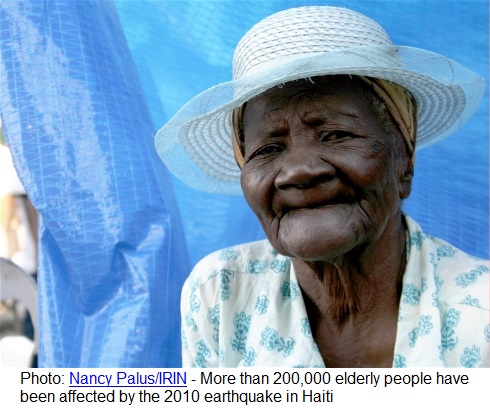
2. the high suicide rate among the elderly frustrated with acute changes.

This commentary considers that under the Go Lean roadmap, there will be many community investment endeavors; therefore many times there will be the need for “impact analyses”. The roadmap calls for the installation of Self-Governing Entities (SGE) as job-creating engines in many communities; these sites are ideal for technology laboratories, medical campuses, corporate parks, industrial sites, educational facilities and other forms of establishments situated inside bordered facilitates. These types of installations will thrive under the strategies and tactics of the Go Lean roadmap. They allow for an efficient process to launch and manage projects and physical installations in the region, but the SGE concept does require governmental concurrence and maybe even public approvals, as in referendums, at the initiation.

SGE’s are part-and parcel of the prime directives of the Go Lean roadmap, defined by these 3 statements:

  • Optimization of the economic engines in order to grow the regional economy to $800 Billion in GDP and create 2.2 million new jobs.
  • Establishment of a security apparatus to protect the resultant economic engines.
  • Improvement of Caribbean governance to support these engines.

How are the impact analyses to be conducted in the region? What is the art and science of this socio-economic field of study? Consider the headlines and abstract of this academic study from the University of Wisconsin:

Title: Socio-Economic Impact Analysis
University of Wisconsin – Community Guide to Development Impact Analysis. Posted 05/2/2011; retrieved 07-17-2015
By: Mary Edwards

As Wisconsin communities continue to grow, local officials and community members are constantly challenged by the need to balance fiscal, social, economic, and environmental goals. One aspect of this challenge is deciding how much and what types of new development the community can accommodate without compromising the day-to-day quality of life for residents. Socio-economic impact assessment is designed to assist communities in making decisions that promote long-term sustain-ability, including economic prosperity, a healthy community, and social well-being.

Assessing socio-economic impacts requires both quantitative and qualitative measurements of the impact of a proposed development. For example, a proposed development may increase employment in the community and create demand for more affordable housing. Both effects are easily quantifiable. Also of importance, however, are the perceptions of community members about whether the proposed development is consistent with a commitment to preserving the rural character of the community. Assessing community perceptions about development requires the use of methods capable of revealing often complex and unpredictable community values.

This chapter provides an overview of socio-economic impact assessment, including what it is, why it is important and guidance on how to conduct a socio-economic impact assessment.

WHAT IS SOCIO-ECONOMIC IMPACT ASSESSMENT?

A socio-economic impact assessment examines how a proposed development will change the lives of current and future residents of a community. The indicators used to measure the potential socio-economic impacts of a development include the following:

• Changes in community demographics;
• Results of retail/service and housing  market analyses;
• Demand for  public services;
• Changes in  employment and  income levels; and
• Changes in the aesthetic quality of the community.

Quantitative measurement of such factors is an important component of the socio-economic impact assessment. At the same time, the perceptions of community members about how a proposed development will affect their lives is a critical part of the assessment and should contribute to any decision to move ahead with a project. In fact, gaining an understanding of community values and concerns is an important first step in conducting a socio-economic impact assessment.

The socio-economic impacts of a proposed development on a community may actually begin the day the project is proposed. Changes in social structure and inter-actions among community members may occur once the new development is pro-posed to the community. In addition, real, measurable and often significant effects on the human environment can begin to take place as soon as there are changes in social or economic conditions. From the time of the earliest announcement of a pending policy change or development project, attitudes toward the project are formed, interest groups and other coalitions prepare strategies, speculators may lock up potentially important properties, and politicians can maneuver for position.

WHO SHOULD BE INVOLVED IN THE PROCESS?

Because socio-economic impact assessment is designed to estimate the effects of a proposed development on a community’s social and economic welfare, the process should rely heavily on involving community members who may be affected by the development. Others who should be involved in the process include community leaders and others who represent diverse interests in the community such as community service organizations, development and real estate interests, minority and low income groups, and local environmental groups. In addition, local agencies or officials should provide input into the process of assessing changes in the social environment that may occur as a result of the proposed development (e.g., providing estimates and information demographics, employment and service needs).

WHY CONDUCT A SOCIO-ECONOMIC IMPACT ASSESSMENT?

Conducting a social impact assessment is important for several reasons. In general, it is used to alert the community, including residents and local officials, of the impact and magnitude of the proposed development on the community’s social and economic well-being. The assessment can help communities avoid creating inequities among community groups as well as encourage the positive impacts associated with the development.

HOW TO CONDUCT A SOCIO-ECONOMIC IMPACT ASSESSMENT

The following section provides a two-step process for conducting a socio-economic impact analysis. The process is designed to establish a framework for evaluating cur-rent and future proposed developments in a community.

TWO PHASES OF SOCIO-ECONOMIC IMPACT ASSESSMENT

1. Defining the scope of the Socio-Economic Impact Assessment

2. Identifying and Evaluating Development Impacts

  A. Quantitative Changes
     A.1 DEMOGRAPHIC IMPACTS
     A.2 DATA SOURCES
     A.3 HOUSING MARKET IMPACTS
     A.4 RETAIL MARKET IMPACTS
     A.5 EMPLOYMENT AND INCOME
     A.6 PUBLIC SERVICES
     A.7 AESTHETIC IMPACTS
  B. Community Perceptions
     B.1 QUALITY OF LIFE

This is just the headlines; find the full White Paper at: http://www.lic.wisc.edu/shapingdane/facilitation/all_resources/impacts/analysis_socio.htm

i.e.  Sample Economic Impact Study

Click on photo to download Report!

Click on photo to download Report!

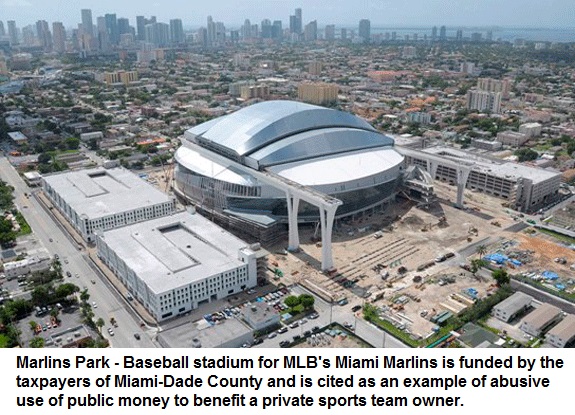
The Go Lean roadmap does not ignore the controversies associated with impact analyses. Many times these studies are abused to justify spending public money to benefit private interests. This is another example of Crony-Capitalism; consider the VIDEO here of how public financing of sports stadiums have been abused in the US:

Appendix VIDEO – Last Week Tonight with John Oliver: Stadiums (HBO) – https://youtu.be/xcwJt4bcnXs

Published on July 12, 2015 – Cities spend massive amounts of public money on privately-owned stadiums. Cities issue tax-exempt municipal bonds that — wait, don’t fall asleep!
Content warning: Some profanity!

According to this VIDEO, there is an obvious potential for socio-economic studies to be abused. The goal of a socio-economic study is generally to bring about socio-economic development, usually by improvements in metrics such as GDP, life expectancy, literacy, levels of employment, etc.

SGE Impact Photo 3SGE Impact Photo 4SGE Impact Photo 5

The Go Lean roadmap embraces the practice of socio-economic studies – done right – it provides turn-by-turn directions on how to elevate the Caribbean economy while mitigating any pattern of abuse. As a planning tool, the roadmap commences with a Declaration of Interdependence, pronouncing the need for regional integration (Page 11 & 13) to foster the foundation to forge a better future. The declarative statements are as follows:

xi.  Whereas all men are entitled to the benefits of good governance in a free society, “new guards” must be enacted to dissuade the emergence of incompetence, corruption, nepotism and cronyism at the peril of the people’s best interest. The Federation must guarantee the executions of a social contract between government and the governed.

xxi. Whereas the preparation of our labor force can foster opportunities and dictate economic progress for current and future generations, the Federation must ensure that educational and job training opportunities are fully optimized for all residents of all member-states, with no partiality towards any gender or ethnic group. The Federation must recognize and facilitate excellence in many different fields of endeavor, including sciences, languages, arts, music and sports. This responsibility should be executed without incurring the risks of further human flight, as has been the past history.

xxvi. Whereas the Caribbean region must have new jobs to empower the engines of the economy and create the income sources for prosperity, and encourage the next generation to forge their dreams right at home, the Federation must therefore foster the development of new industries… In addition, the Federation must invigorate the enterprises related to existing industries … – impacting the region with more jobs.

Change has now come to the Caribbean. The driver of this change is technology and globalization. The Caribbean region cannot only consume the innovations being developed around the world; we must develop and innovate ourselves. The structure of SGE’s are perfectly designed for this endeavor; innovators and developers can create their “own world” so as to foster the best practices for Research & Development (R&D) with no intrusion from municipal authorities. This is a win-win! The bottom-line for the developers may be their “bottom-line”, but for the community, it would be the Greater Good.

The subject of SGE’s has been directly addressed and further elaborated upon in these previous blog/commentaries:

https://goleancaribbean.com/blog/?p=4037 How to Train Your ‘Dragon’ – Case Study for Foreign Investments and SGE’s
https://goleancaribbean.com/blog/?p=3473 Haiti to Receive $70 Million Grant to Expand SGE-like ‘Caracol Industrial Park’
https://goleancaribbean.com/blog/?p=3276 A Role Model – Ideal for SGE’s – Shaking Up the World of Cancer
https://goleancaribbean.com/blog/?p=2800 The Geography of Joblessness – The need for SGE’s
https://goleancaribbean.com/blog/?p=2750 Disney World – Role Model for Self Governing Entities
https://goleancaribbean.com/blog/?p=2003 Where the Jobs Are – Ship-breaking under SGE Structure
https://goleancaribbean.com/blog/?p=1214 Fairgrounds as SGE and Landlords for Sports Leagues
https://goleancaribbean.com/blog/?p=286 Puerto Rico’s Comprehensive Cancer Center – Model of Medical SGE

Sports is also pivotal to the Go Lean roadmap. This was demonstrated in our prior consideration of the economic impact analysis of basketball great LeBron James returning to Cleveland after a 4-year stint in Miami. That consideration summarized that his absence was worth $50 million a season for that metropolitan area.

So thusly this subject of the “business of sports” is a familiar topic for Go Lean blogs as these previous blogs have detailed:

https://goleancaribbean.com/blog/?p=4019 The Business of the Super Bowl … and Commercials
https://goleancaribbean.com/blog/?p=3414 Levi’s® Stadium: A Team Effort … for the San Francisco Bay
https://goleancaribbean.com/blog/?p=3244 Sports Role Model – espnW.
https://goleancaribbean.com/blog/?p=2222 Sports Role Model – Playing For Pride … And More
https://goleancaribbean.com/blog/?p=2171 Sports Role Model – Turn On the SEC Network
https://goleancaribbean.com/blog/?p=2152 Sports Role Model – US versus the World
https://goleancaribbean.com/blog/?p=1446 Caribbean Players in the 2014 World Cup
https://goleancaribbean.com/blog/?p=1341 College World Series Time – Lessons from Omaha
https://goleancaribbean.com/blog/?p=1214 The Art & Science of Temporary Stadiums – No White Elephants
https://goleancaribbean.com/blog/?p=1148 Sports Bubble – Franchise values in basketball
https://goleancaribbean.com/blog/?p=1020 Sports Revolutionary: Advocate Jeffrey Webb
https://goleancaribbean.com/blog/?p=498 Book Review: ‘The Sports Gene’
https://goleancaribbean.com/blog/?p=334 Bahamians Make Presence Felt In Libyan League
https://goleancaribbean.com/blog/?p=318 Collegiate Sports in the Caribbean
https://goleancaribbean.com/blog/?p=60 Could the Caribbean Host the Olympic Games?

This Go Lean roadmap seeks to implement the technocratic Caribbean Union Trade Federation (CU). While the CU/Go Lean effort is to harness the individual abilities of athletes to elevate their performance, the real focus is harnessing the economic impact for the relevant communities. Modern sports engagements cannot be analyzed without considering the impact on “dollars and cents” for the community. The Go Lean book calls for solid business plans to develop sports stadia and arenas at CU-owned Fairgrounds This intent was also pronounced early in the opening Declaration of Interdependence (Page 14):

xxxi. Whereas sports have been a source of great pride for the Caribbean region, the economic returns from these ventures have not been evenly distributed as in other societies. The Federation must therefore facilitate the eco-systems and vertical industries of sports as a business, recreation, national pastime and even sports tourism …

The Go Lean book envisions the CU – a confederation of the 30 member-states of the Caribbean chartered to do the heavy-lifting of empowering and elevating the Caribbean economy – as the landlord of many sports facilities within the SGE design. The book details the economic principles and community ethos to adopt, plus the executions of strategies, tactics, implementations and advocacies to forge Self-Governing Entities and sports enterprises in the Caribbean:

Economic Principles – Deferred Gratification Page 21
Economic Principles – People Respond to Incentives in Predictable Ways Page 21
Economic Principles – Consequences of Choices Lie in the Future Page 21
Economic Principles – Job   Multiplier Page 22
Community Ethos – Lean Operations Page 24
Community Ethos – Return on Investments (ROI) Page 24
Community Ethos – Ways to Impact the Future Page 26
Community Ethos – Ways to Foster Genius Page 27
Community Ethos – Ways to Impact Research & Development Page 30
Community Ethos – Ways to Impact the Greater Good Page 37
Strategy – Agents of Change – Technology Page 48
Strategic – Staffing – Sporting Events at Fairgrounds Page 55
Tactical – Confederating a Non-Sovereign Union Page 63
Tactical – Fostering a Technocracy Page 64
Tactical – Growing Economy – New High Multiplier Industries Page 68
Tactical – Separation of Powers – Self-Governing Entities – i.e. ESA Page 80
Tactical – Separation of Powers – Sports & Culture Administration Page 81
Tactical – Separation of Powers – Fairgrounds Administration Page 83
Tactical – Separation of Powers – Education Department Page 85
Implementation – Steps to Implement Self-Governing Entities Page 105
Implementation – Ways to Deliver – Embrace of Project Management Arts & Sciences Page 109
Planning – 10 Big Ideas Page 127
Advocacy – Ways to Grow the Economy Page 151
Advocacy – Ways to Create Jobs Page 152
Advocacy – Ways to Improve Local Government – Parks & Recreation Page 169
Advocacy – Ways to Impact Public Works Page 169
Advocacy – Ways to Promote Fairgrounds Page 192
Advocacy – Ways to Foster Technology Page 197
Advocacy – Ways to Improve Sports Page 229
Advocacy – Ways to Impact Urban Living – Sports Leagues Page 234

The Go Lean book and accompanying blogs declare that the Caribbean needs to learn lessons from other communities, especially when socio-economic studies have been used (or abused) to justify community investments in infrastructure.

The design of Self-Governing Entities allow for greater protections from Crony-Capitalistic abuses. While this roadmap is committed to availing the economic opportunities of sports and accompanying infrastructure, as demonstrated in the foregoing VIDEO, sport teams and owners can be plutocratic “animals” in their greed. We must learn to mitigate any plutocratic abuses; see the Appendix – Additional Reporting below.

Now is the time for all of the Caribbean, the people and governing institutions, to lean-in for the empowerments described in the book Go Lean … Caribbean. This roadmap will result in positive socio-economic changes throughout the region. Just consider the Fairgrounds SGE model; the end result for these ventures into the business of sports is projected as 21,000 direct jobs at Fairgrounds and sports enterprises.

Overall, with these executions, the Caribbean region can be a better place to live, work and play. As demonstrated by this discussion on sports stadia, there is a lot of economic activity in the “play” element; the same applies even greater with “live and work” elements. The practice of socio-economic studies must therefore be earnestly engaged in the Caribbean region, especially for projects involving community investments. This is not easy; this is part of the process to elevate the Caribbean region. This heavy-lifting – ensuring that investments get the proper return for the applicable stakeholders – is worth the effort; this ensures the Greater Good.  🙂

Download the book Go Lean…Caribbean now!

————-

Appendix – Additional Reporting: http://www.miaminewtimes.com/news/six-lies-about-the-marlins-stadium-6380692

Title: Six lies about the Marlins stadium

By: Miami New Times Community Newspaper; posted May 5, 2011; Retrieved July 20, 2015

Share this post:
, , , , , , ,
[Top]

Socio-Economic Change: The Demographic Theory of Elderly Suicide

Go Lean Commentary

CU Blog - Socio-Economic Change and Demographic Theory of Elderly Suicide - Photo 2This purpose of the book Go Lean … Caribbean is to elevate the economic engines in the region. However, these commentaries have focused, numerous times on social and socio-economic issues; in this case, focus is given to the threat of suicides.

This seems out-of-scope!

The book and accompanying blogs posit that socio- economic factors must be accounted for in the roadmap to optimize and improve this society. In fact, the book lists 144 missions for the imminent Caribbean Union Trade Federation (CU), but one of them is an advocacy against suicides. This is identified on Page 36 under the title:

10 Ways to Promote Happiness … in the Caribbean Region

On the surface, it would appear as if promoting happiness would be so easy to do in the region of the world that is arguably “the greatest address on the planet”. Yet, the country with the highest suicide rate has been identified as Caribbean member-state Guyana.

This does not compute! Such a crisis amidst such beauty! The conclusion in the book is that the deficiency – contributing to suicides – is economic, jobs in particular. As the book declares that a man/woman needs three things to be happy:

  1. something to do,
  2. someone to love, and
  3. something to hope for.

The Go Lean roadmap does feature – in its scope – the societal deficiencies that could propel an increase in suicides. This is highlighted by the CU’s prime directives, as described by these statements:

  • Optimization of the economic engines in order to grow the regional economy to $800 Billion & create 2.2 million new jobs.
  • Establishment of a security apparatus to protect the resultant economic engines and mitigate challenges/threats to ensure public safety for the region’s stakeholders.
  • Improvement of Caribbean governance, including a separation-of-powers with member-states, to support these engines.

This commentary is not a re-harsh of the same suicide-driving issues as previously addressed, but rather an exploration of the socio-economic issues associated with the elderly in society. This commentary is the 2nd in a 3-part series on the art-and-science of analyzing socio-economic changes; other commentaries depict …

1. the manifestation of socio-economic changes in everyday life – values, habits and nuances, looking across a timeline from the 1960’s versus today and also …

3. the use-and-abuse of economic impact analyses on community investments.

Within this series, the field of socio-economics is defined as the social science that studies how economic activity affects and is shaped by social processes. In general it analyzes how societies progress, stagnate, or regress because of the local, regional or global economy. This commentary though, considers an academic study that examined the demographic population of the elderly and summarized that the logical conclusions of the root causes of suicide are different for this population. Consider the Abstract, here, of the Research Paper from the University of Nairobi (Kenya):

Title: Towards a Socio-Economic and Demographic Theory of Elderly Suicide: A Comparison of 49 Countries at various stages of development
By: Kiemo, Karatu
(Source: University of Nairobi (Kenya) Academic Research; Posted (2004; Retrieved 10-15-2014 from: http://erepository.uonbi.ac.ke/handle/11295/55260)

Abstract: D. Cowgill found out that the role and status of the elderly declined with modernization, but in contradiction G. Hammarström found out that what actually affected the role and status of the elderly during modernization was the rate at which modernization occurred.

From current studies, it can be insinuated that the transformation from socialist to market economies has too affected the role and status of the elderly adversely. In all, the social condition following on the above changes in productive, organizational and demographic structures connects with what E. Durkheim found to cause imbalance in social integration, and therefore could aggravate elders’ rate of suicide.

Using data from 49 developing and developed countries for the period around 1995, elderly suicide rates and elderly/non-elderly suicide ratio are examined in light of the extent and direction of socio-economic development; and in light of the extent of demographic transition and elderly population’s gender structure. Results show that the direction of socioeconomic change impacts differentially on elderly suicide rates, the rates in regressing economies being appreciably higher than in progressing economies. However, the impact of socio-economic trends on the elderly/non-elderly suicide ratio was not clear-cut.

The extent of socio-economic change impacts differentially on elderly suicide rates, the distribution being curvilinear (inverted-U functional) rather than Cowgill’s linear hypothesis. The extent of socioeconomic change also impacts differentially on elderly/non-elderly suicide ratio in an inverse correlation rather than Cowgill’s hypothesized positive correlation. Whereas the results failed to conform to the structuration of Cowgill’s modernisation theory, the theory is deemed substantively relevant especially in explaining the extent to which the status of being elderly aggravates suicide in the context of contemporary developing countries.

In this regard, Riley’s concept of age-integration seems more appropriate than Durkheim’s social integration in explaining how older age aggravates suicide in an especial manner. The thesis in this study is that elderly suicide is a function of age-related role and status and regulated by dynamics of socio-economic and demographic structures. Culture too seems to play some role that is yet to be determined.

———

Full Study: http://erepository.uonbi.ac.ke:8080/xmlui/handle/123456789/55260

CU Blog - Socio-Economic Change and Demographic Theory of Elderly Suicide - Photo 1The Go Lean roadmap does not ignore the needs of the elderly, nor any mental health needs of the Caribbean community. Rather, the roadmap calls for the establishment of a regional sentinel, a federal Health Department, to monitor, manage and mitigate public health issues in the region, including mental health with the same prioritization (cancer, trauma, virus, immunizations).

The University of Nairobi study hypothesizes that the elderly tend to be more affected when society experiences rapid change! This is an acute alarm for the CU/Go Lean planners, as the roadmap does call for near-hyper-growth in a short period of 5 years. Therefore, this foregoing article calls for the region to double-down on its efforts to ensure the health mitigations are in place for this vulnerable group. The need for this awareness was identified early in the Go Lean book, in the opening pronouncement in the Declaration of Interdependence (Page 11), as follows:

ix.  Whereas the realities of healthcare and an aging population cannot be ignored and cannot be afforded without some advanced mitigation, the Federation must arrange for health plans to consolidate premiums of both healthy and sickly people across the wider base of the entire Caribbean population. The mitigation should extend further to disease management, wellness, mental health, obesity and smoking cessation programs.

The University of Nairobi study is a classic exercise in this field of socio-economics. The goal of a socio-economic study is generally to bring about socio-economic development, usually by improvements in metrics such as GDP, life expectancy, literacy, levels of employment, etc.  In many cases, socio-economists focus on the social impact of some sort of economic change. Examples of causes of socio-economic impacts include new technologies such as cars or mobile phones, changes in laws, changes in the physical environment (such as increasing crowding within cities), and ecological changes (such as prolonged drought or declining fish stocks). These may affect patterns of consumption, the distribution of incomes and wealth, the way in which people behave (both in terms of purchase decisions and the way in which they choose to spend their time), and their overall quality of life.

The Go Lean … Caribbean roadmap constitutes a change for the region, a plan to consolidate 30 member-states into a Trade Federation with the tools/techniques to bring immediate change to the region to benefit one and all member-states. The roadmap calls for the coordination of the region’s (mental) healthcare needs at a CU federal agency. Though there is a separation-of-powers mandate between the member-states and federal agencies, the CU can still wield influence in this area due to funding accountabilities, (strings attached). The Go Lean roadmap details a monitoring and metering responsibility between the CU and the member-states; so there will be some federal compliance and regulatory oversight. This empowerment would also allow for better coordination with international stakeholders – like the World Health Organization (WHO) – and non-governmental organizations (NGOs) – there are many that cater to the needs of the elderly, just consider the VIDEO in the Appendix below.

For the Caribbean, we will not want our elderly population “checking out” from society! We love them too much and they have endured far more that they should have; see VIDEO below. The “happiness mandate” identified at the start, is presented in the book as a “community ethos” (Page 20), the definition of which follows here:

… the fundamental character or spirit of a culture; the underlying sentiment that informs the beliefs, customs, or practices of a group or society; the dominant assumptions of a people or period.

The book details that there must first be adoption of such a community ethos plus the executions of the following strategies, tactics, implementations and advocacies to impact the region’s public health:

Community Ethos – Deferred Gratification Page 21
Community Ethos – Economics Influence Choices Page 21
Community Ethos – Privacy versus Public Protection Page 23
Community Ethos – “Crap” Happens Page 23
Community Ethos – Lean Operations Page 24
Community Ethos – Cooperatives Page 24
Community Ethos – Non-Government Organizations Page 25
Community Ethos – Ways to Improve Sharing Page 35
Community Ethos – Ways to Promote Happiness Page 36
Community Ethos – Impact the Greater Good Page 37
Strategy – Vision – Confederate 30 Member-States Page 45
Strategy – Mission – Reform our Health Care Response Page 47
Strategy – Agents of Change – Aging Diaspora Page 57
Tactical – Fostering a Technocracy Page 64
Separation of Powers – Department of Health Page 86
Implementation – Ways to Deliver Page 109
Planning – Ways to Model the EU Page 130
Planning – Ways to Make the Caribbean Better Page 131
Planning – Ways to Measure Progress Page 148
Advocacy – Ways to Grow the Economy Page 151
Advocacy – Ways to Improve Healthcare Page 156
Advocacy – Ways to Impact Cancer Page 157
Advocacy – Ways to Better Manage the Social Contract Page 170
Advocacy – Ways to Foster Cooperatives Page 176
Advocacy – Ways to Improve Emergency Management Page 196
Advocacy – Ways to Improve Elder-Care Page 225
Appendix – Disease Management – Healthways Model Page 300
Appendix – Trauma Center Definitions Page 336

This Go Lean book asserts that there is a direct correlation of physical/mental health issue with the economy. This viewpoint has been previously detailed in Go Lean blog/commentaries, as sampled here:

Book Review: ‘The Protest Psychosis’
Guyana and Suriname Wrestle With High Rates of Suicides
Public Health Economics – The Cost of Cancer Drugs
Antibiotics Misuse Associated With Obesity Risk
Recessions and Public Health in the Caribbean Region
New Hope in the Fight Against Alzheimer’s Disease

There is a place in the new Caribbean for the elderly populations. Granted, they may not be candidates for the highly-sought, high-multiplier STEM (Science, Technology, Engineering and Mathematics) jobs, but nonetheless they are stakeholders in the Go Lean mission. Love of neighbor – the Greater Good – is why we do what we do!

This issue of suicide among the elderly, as discussed in the foregoing article is indicative of the need for better stewardship of the economy, security and governing engines in the Caribbean. This makes the region a better place to live, work, and play – for all: young and old.

🙂

Download the book Go Lean … Caribbean – now!

————-

Appendix VIDEO – “Honor the Elderly” (The Forgotten Ones)  – https://youtu.be/PZvnJv4CZQ8

Uploaded on Nov 5, 2009 – We must honor the elderly! We must treat the elderly with dignity, love and respect. How we treat the elderly is a reflection of who we are. We should treat them the way we would want to be treated when we grow old and feeble. Many elderly are full of wisdom and we can learn valuable lessons from them.
Music:  “On The Other Side Of Jordan” by Rabbit Easter Band (Google PlayeMusicAmazonMP3)

Share this post:
, , , , , ,
[Top]

Socio-Economic Change: Illustrations That Perfectly Show How Society Has Changed

Go Lean Commentary

Be careful what you wish for; it just might come true. – Old Adage

This statement is a reporting of facts. In fact, this statement can be defined as a law. The law of the socio-economic dynamic. The definition of socio-economics (or social economics) is the social science that studies how economic activity affects and is shaped by social processes. In general it analyzes how societies progress, stagnate, or regress because of the local, regional or global economy.

This commentary is the 1st of a 3-part series; the other considerations relate to …

2. the high suicide rate among the elderly, and …

3. the economic impact studies to justify public financing of private enterprises.

Over the past half century, the economic structures of many North American and Western European countries have changed dramatically, a mostly upward trajectory (growth) with occasional dips (recessions). During this same past half century, the economics of many Caribbean countries have also changed dramatically, but mostly towards poor or regressive conditions. This fact has forced a brain drain among many of the member-states’ professional classes.

This [brain drain] reality is a socio-economic dynamic; it was the motivation for the publishing of the book Go Lean…Caribbean in the first place. It describes the current assessments of the region and then communicates a vision to elevate the Caribbean’s 30 member-states and 42 million people into a Single Market economy. The goal is to create 2.2 million new jobs and grow the region to $800 Billion GDP. This vision is embedded in the following statements in the opening Declaration of Interdependence (Page 13) for these member-states:

xix. Whereas our legacy in recent times is one of societal abandonment, it is imperative that incentives and encouragement be put in place to first dissuade the human flight, and then entice and welcome the return of our Diaspora back to our shores. This repatriation should be effected with the appropriate guards so as not to imperil the lives and securities of the repatriated citizens or the communities they inhabit. The right of repatriation is to be extended to any natural born citizens despite any previous naturalization to foreign sovereignties.

xx. Whereas the results of our decades of migration created a vibrant Diaspora in foreign lands, the Federation must organize interactions with this population into structured markets. Thus allowing foreign consumption of domestic products, services and media, which is a positive trade impact. These economic activities must not be exploited by others’ profiteering but rather harnessed by Federation resources for efficient repatriations.

xxi. Whereas the preparation of our labor force can foster opportunities and dictate economic progress for current and future generations, the Federation must ensure that educational and job training opportunities are fully optimized for all residents of all member-states, with no partiality towards any gender or ethnic group. The Federation must recognize and facilitate excellence in many different fields of endeavor, including sciences, languages, arts, music and sports. This responsibility should be executed without incurring the risks of further human flight, as has been the past history.

xxiv.  Whereas a free market economy can be induced and spurred for continuous progress, the Federation must install the controls to better manage aspects of the economy: jobs, inflation, savings rate, investments and other economic principles. Thereby attracting direct foreign investment because of the stability and vibrancy of our economy.

xxv.  Whereas the legacy of international democracies had been imperiled due to a global financial crisis, the structure of the Federation must allow for financial stability and assurance of the Federation’s institutions. To mandate the economic vibrancy of the region, monetary and fiscal controls and policies must be incorporated as proactive and reactive measures. These measures must address threats against the financial integrity of the Federation and of the member-states.

Another dynamic has been the advancement and assimilation of technology. This acknowledgement was also pronounced in the opening Declaration of Interdependence (Page 14):

xxvii. Whereas the region has endured a spectator status during the Industrial Revolution, we cannot stand on the sidelines of this new economy, the Information Revolution. Rather, the Federation must embrace all the tenets of Internet Communications Technology (ICT) to serve as an equalizing element in competition with the rest of the world. The Federation must bridge the digital divide and promote the community ethos that research/development is valuable and must be promoted and incentivized for adoption.

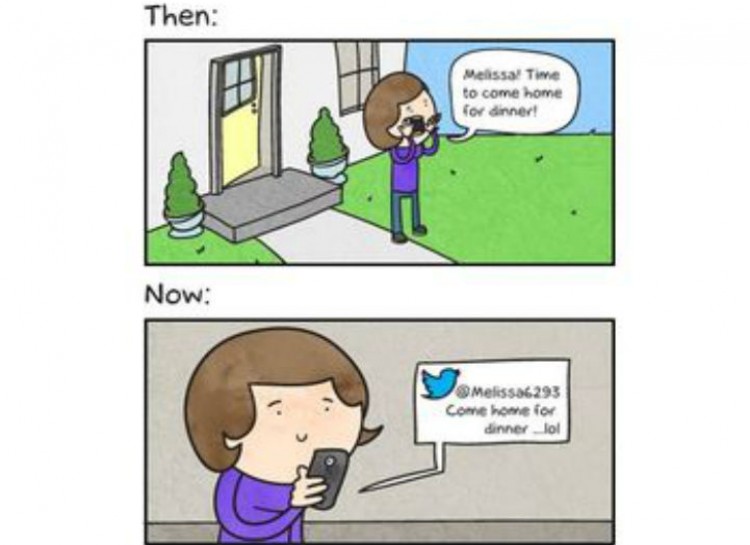
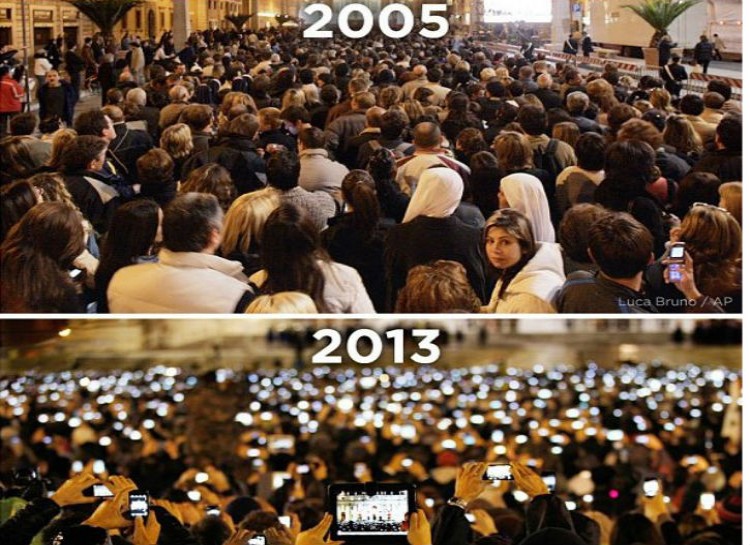
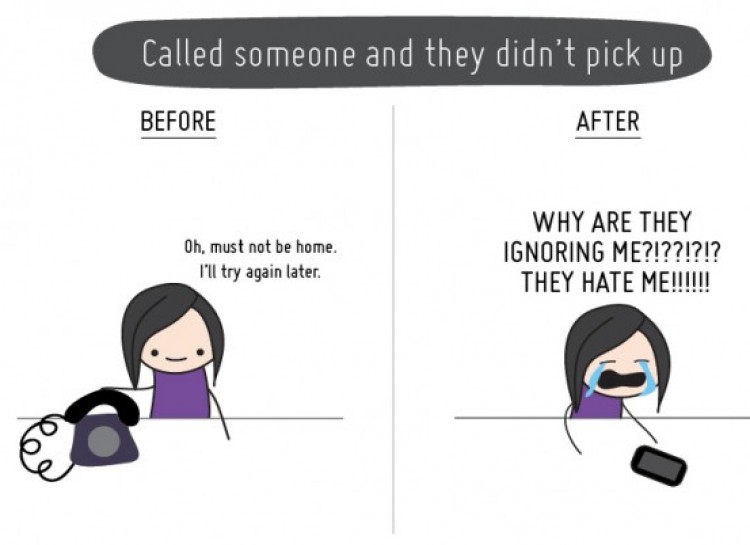
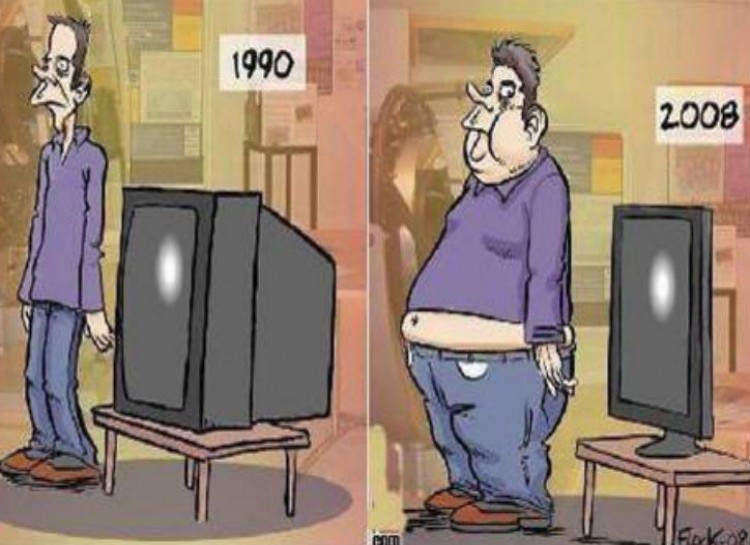
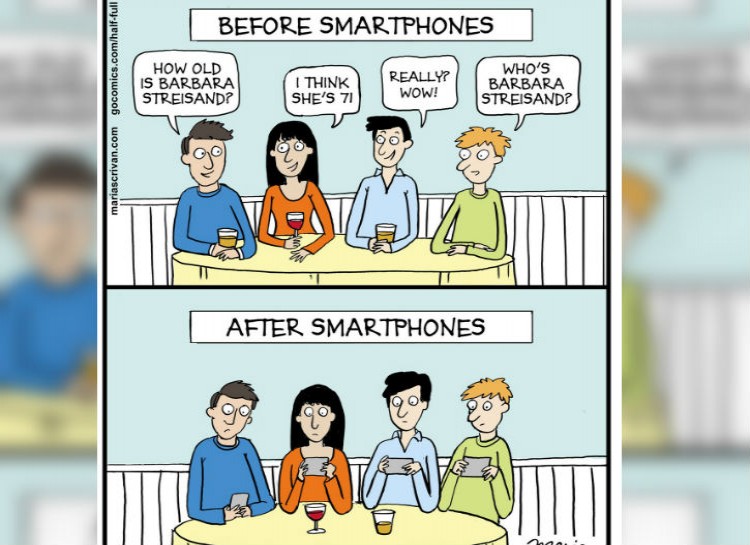
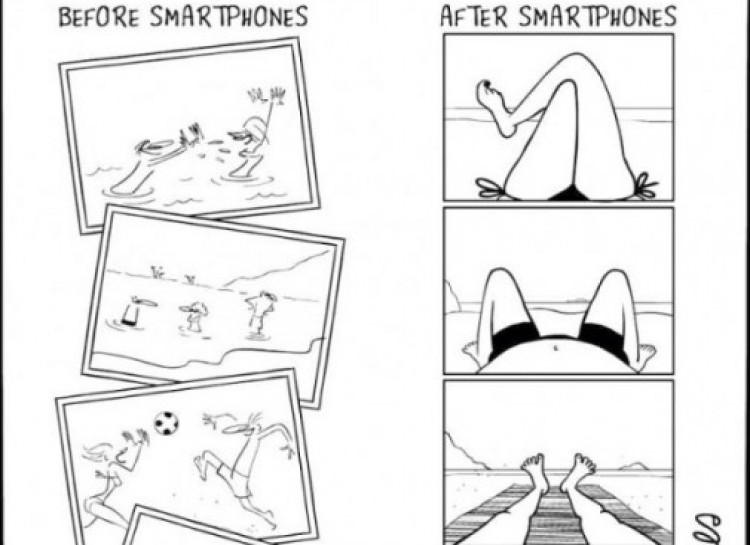
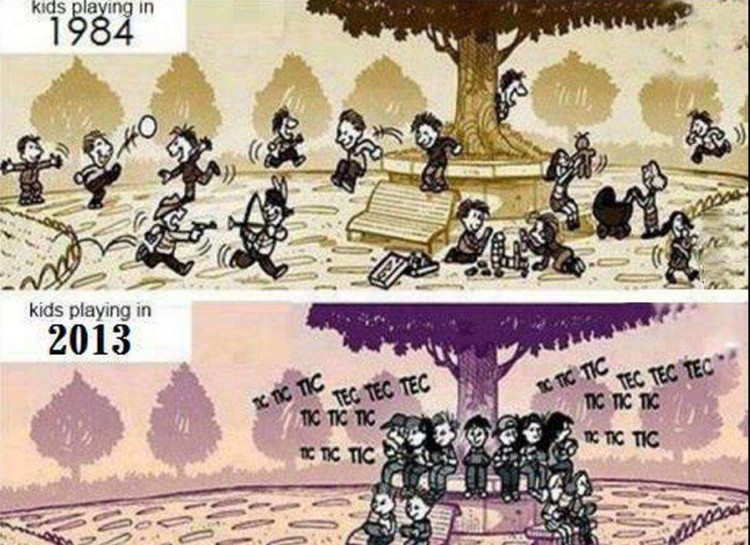
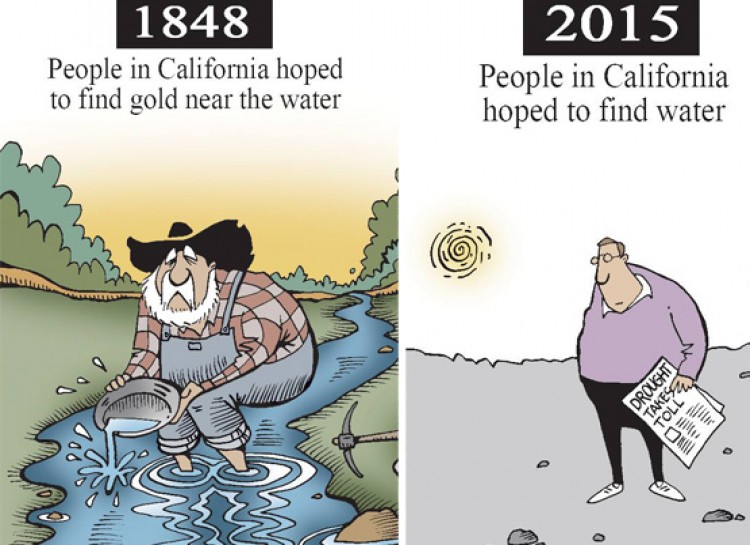
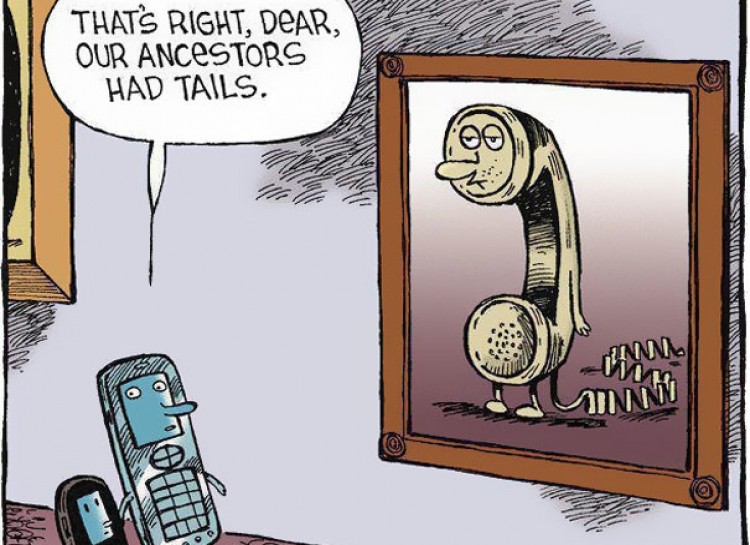
As these changes took hold of society, the social effects on people, families, traditions, habits and values have been drastic; a lot has changed over the past decades. How can this be conveyed graphically? The following – funny and enlightening illustrations – give an accurate depiction of society’s changes – then and now.

16 Illustrations That Perfectly Show How Society Has Changed

CU Blog - Socio-Economic Change - Illustrations That Perfectly Show How Society Has Changed - Photo 1
CU Blog - Socio-Economic Change - Illustrations That Perfectly Show How Society Has Changed - Photo 2
CU Blog - Socio-Economic Change - Illustrations That Perfectly Show How Society Has Changed - Photo 3
CU Blog - Socio-Economic Change - Illustrations That Perfectly Show How Society Has Changed - Photo 4
CU Blog - Socio-Economic Change - Illustrations That Perfectly Show How Society Has Changed - Photo 5
CU Blog - Socio-Economic Change - Illustrations That Perfectly Show How Society Has Changed - Photo 6
CU Blog - Socio-Economic Change - Illustrations That Perfectly Show How Society Has Changed - Photo 7
CU Blog - Socio-Economic Change - Illustrations That Perfectly Show How Society Has Changed - Photo 8
CU Blog - Socio-Economic Change - Illustrations That Perfectly Show How Society Has Changed - Photo 9
CU Blog - Socio-Economic Change - Illustrations That Perfectly Show How Society Has Changed - Photo 10
Illustrations 11
CU Blog - Socio-Economic Change - Illustrations That Perfectly Show How Society Has Changed - Photo 12
CU Blog - Socio-Economic Change - Illustrations That Perfectly Show How Society Has Changed - Photo 13
CU Blog - Socio-Economic Change - Illustrations That Perfectly Show How Society Has Changed - Photo 14
CU Blog - Socio-Economic Change - Illustrations That Perfectly Show How Society Has Changed - Photo 15
CU Blog - Socio-Economic Change - Illustrations That Perfectly Show How Society Has Changed - Photo 16
(Source: Brain Jet Daily Cerebral Stream – Ad-supported Online Site – Retrieved July 15, 2015 from: http://www.brainjet.com/random/19913/then-and-now-16-illustrations-that-perfectly-show-how-society-has-changed#slide/1)

Change is afoot!

Among the changes – to people, families, traditions, habits and values – is the socio-economic effects of the Caribbean brain drain, estimated at 70%. This is a crisis!

This is a consistent theme in the Go Lean book; it describes “push and pull” of societal change; it posits that life in North American and Western European countries serve as a “pull” factor for many Caribbean communities. Plus, the failing economic conditions further “push” many citizens away. To alleviate this crisis, there is the need to counter-defend with purposeful change of our own for the region. The Go Lean book serves as a roadmap to elevate the economics of the region; and it clearly describes the impact on other societal engines: security and governance. Everyone feels the change; it is like a moving locomotive, “you can’t stop the beat; you can’t stop the motion of the ocean”. This is also the moving imagery depicted in the VIDEO below.

The Go Lean roadmap is a planning tool for the strategic, tactical, and operational empowerments that needs to be implemented to keep pace with the world’s Agents of Change: Technology, Aging Diaspora, Globalization and “Climate Change”. The purpose of the book therefore is to position the region at the corner of preparation and opportunity, so as to benefit from change. We have many needs – economic, security and governance – to avert this societal abandonment trend. The book / roadmap is for the introduction and implementation of the Caribbean Union Trade Federation (CU), a super-national institution with federal powers to forge change in the Caribbean community. One mission is to dissuade further human flight/brain drain. (An additional mission is to incentivize the repatriation of the Caribbean Diaspora).

The following details from the book Go Lean … Caribbean are the assessments, community ethos, strategies, tactics, implementations and advocacies prescribed to manifest the elevation of Caribbean economy, society and life:

Assessments of Caribbean Communities – English, French, Dutch, and Spanish states Page 15
Community Ethos – Security Principles Page 23
Community Ethos – Economic Principles Page 21
Community Ethos – Governing Principles Page 24
Community Ethos – Ways to Impact the Future Page 26
Community Ethos – Ways to Impact Turn-Arounds Page 33
Community Ethos – Ways to Impact the Greater Good Page 37
Strategy – Vision – Confederate all 30 Member-States into a Single Market Page 45
Strategy – Mission – Repatriating Caribbean Diaspora Page 46
Strategy – Mission – Dissuade further Brain Drain Page 46
Tactical – Fostering a Technocracy Page 64
Tactical – Separation of Powers with Caribbean Member-states Page 71
Implementation – Assemble all Member-States Page 96
Implementation – Ways   to Pay for Change Page 101
Implementation –Reasons to Repatriate Page 118
Planning – Ways to Make the Caribbean   Better Page 131
Planning – Ways to Better Manage Image Page 133
Advocacy – Ways to Grow the Economy Page 151
Advocacy – Ways to Create Jobs Page 152
Advocacy – Better Manage the Social Contract Page 170
Advocacy – Ways to Foster Technology Page 197
Advocacy – Impact the Diaspora Page 217
Advocacy – Ways to Preserve Caribbean Heritage Page 218
Advocacy – Ways to Protect Human Rights Page 220

Many Caribbean citizens love their homeland but the realities of flawed economics will always cause a brain drain. This flight-abandonment creates the need for a societal reboot in the economics, security and governing engines. This is the quest of the Go Lean…Caribbean roadmap, to reboot these societal engines; employing best-practices and better strategies, tactics and implementations to impact its prime directives; identified with the following 3 statements:

  • Optimization of the economic engines in order to grow the regional economy to $800 Billion & create 2.2 million new jobs.
  • Establishment of a security apparatus to protect the resultant economic engines and mitigate challenges/threats to ensure public safety for the region’s stakeholders.
  • Improvement of Caribbean governance, including a separation-of-powers with member-states, to support these engines.

The same as the foregoing illustrations, there are many Go Lean blog commentaries that have detailed the anatomy of change in the Caribbean. Our changes – to systems, people and institutions – have not always been positive, or beneficial. Here is a sample of related commentaries, grouped by the recognizable categories in the illustrations:

  • Transforming Change
  • Internet & Communications Technology
  • Toleration of Minority Classes

Transforming Change

https://goleancaribbean.com/blog/?p=5695 Repenting, Forgiving and Reconciling the Past
https://goleancaribbean.com/blog/?p=5088 Immigrants account for 1 in 11 Blacks in USA
https://goleancaribbean.com/blog/?p=5123 A Lesson in History – Royal Charter: Zimbabwe -vs- South Africa
https://goleancaribbean.com/blog/?p=5098 Forging Change – ‘Food’ for Thought
https://goleancaribbean.com/blog/?p=4840 Jamaican Poll: ‘Bring back the British!’
https://goleancaribbean.com/blog/?p=3834 State of the Caribbean Union
https://goleancaribbean.com/blog/?p=3568 Forging Change: Music Moves People
https://goleancaribbean.com/blog/?p=3512 Forging Change: The Sales Process
https://goleancaribbean.com/blog/?p=3455 Restoration of Diplomatic Relations with Cuba
https://goleancaribbean.com/blog/?p=2291 Forging Change: The Fun Theory
https://goleancaribbean.com/blog/?p=1433 Caribbean loses more than 70 percent of tertiary educated to brain drain
https://goleancaribbean.com/blog/?p=1309 5 Steps of a Bubble
https://goleancaribbean.com/blog/?p=248 Is “Print” dead? Maybe soon! The Transforming Change in Media

Internet & Communications Technology

https://goleancaribbean.com/blog/?p=5840 Computer Glitches Disrupt Business As Usual
https://goleancaribbean.com/blog/?p=5668 Move over Mastercard/Visa – New Payment Systems in the Caribbean
https://goleancaribbean.com/blog/?p=5648 Changes in Music Retailing – Online and Mobile
https://goleancaribbean.com/blog/?p=5435 China Internet Policing – Model for Caribbean
https://goleancaribbean.com/blog/?p=4381 Net Neutrality: It Matters Here …
https://goleancaribbean.com/blog/?p=3974 Google and Mobile Phones – Here comes Change
https://goleancaribbean.com/blog/?p=3915 ‘Change the way you see the world; you change the world you see’
https://goleancaribbean.com/blog/?p=1416 The Amazon Model for Caribbean Empowerment
https://goleancaribbean.com/blog/?p=1092 The Aereo Case Study and the future of TV
https://goleancaribbean.com/blog/?p=308 CARCIP – Regional Initiatives to Urge Greater Caribbean Innovation

Toleration of Minority Classes

https://goleancaribbean.com/blog/?p=5784 Buggery in Jamaica – ‘Say It Ain’t So’!
https://goleancaribbean.com/blog/?p=5720 Disability Advocacy: Reasonable Accommodations
https://goleancaribbean.com/blog/?p=5527 American Defects: Racism – Is It Over?
https://goleancaribbean.com/blog/?p=5333 Racial Legacies: Cause and Effect
https://goleancaribbean.com/blog/?p=5183 A Lesson in History – Cinco De Mayo and the Mexican Model
https://goleancaribbean.com/blog/?p=4613 A Lesson in History – The ‘Luck of the Irish’; Past, Present & Future
https://goleancaribbean.com/blog/?p=4551 US Territories – Between a ‘rock and a hard place’
https://goleancaribbean.com/blog/?p=2633 Book Review: ‘The Protest Psychosis’
https://goleancaribbean.com/blog/?p=2547 Miami’s Success versus Caribbean Failure
https://goleancaribbean.com/blog/?p=809 Muslim officials condemn abductions of Nigerian girls
https://goleancaribbean.com/blog/?p=789 America’s War on the Caribbean
https://goleancaribbean.com/blog/?p=546 Book Review: ‘The Divide’
https://goleancaribbean.com/blog/?p=341 US slams Caribbean Human Rights practices
https://goleancaribbean.com/blog/?p=209 Case Study: Muhammad Ali –vs- the United States

There are many societal defects in the Caribbean region; we need effective strategies, tactics and implementation to effect turn-around.

The needs of Caribbean community cannot be casually dismissed. As crises ensue, people respond; they make choices: fight or flight.

We must do better than our prior track record. We can “rock with the changes” in society. Though this effort is not easy, rather heavy-lifting, the adoption and application of best-practices can yield beneficial results – the returns are worth the investment.

“You can’t stop a locomotive as it comes speeding down the track; yesterday is history and it’s never coming back. But tomorrow is a brand new day and it doesn’t know White or Black” – see VIDEO in the Appendix below.

This is the goal of the Go Lean roadmap: to help make the Caribbean a better place to live, work and play. 🙂

Download the free e-Book of Go Lean … Caribbean – now!

————-

Appendix VIDEO – You Can’t Stop The Beat! – https://youtu.be/ovLKUoMqPSg

A VIDEO of the finale of the movie Hairspray (2007) … ENJOY Edna & Tracy Turnblad, Link Larkin, Penny Pingleton, Velma & Amber Von Tussle, Motormouth Maybelle, Corny Collins and other characters, as they drive home the important moral lesson of accepting change.

Share this post:
, , , ,
[Top]

Buggery in Jamaica – ‘Say It Ain’t So’!

Go Lean Commentary

This commentary has asserted that the Caribbean region can be a better society than the United States of America. Yes, we can!

But to  even start the discussion, we must first:

Live and let live!

t So - Photo 3The topic of intolerance has been acute in the news as of late. We have the extreme example of the Islamic State in Iraq and Syria (ISIS) beheading non-Muslims because… well, just because. And the example of the US legalizing Gay Marriage may be considered too tolerant for some people’s good taste.

Where does the Caribbean fit in this discussion?

If ISIS is one end of a scale and Gay Marriage in America is another end, then one Caribbean member-state, Jamaica, would be closer to …

ISIS!

Yes, it is that bad. Say it ain’t so.

See Appendix-VIDEO’s below …

While this commentary directly targets Jamaica, the majority of the countries and overseas territories of the former British Empire, still criminalize sexual acts between consenting adults of the same sex and other forms of sexual orientation, gender identity and expression. This has been described as being the result of “the major historical influence” or legacy of the British Empire. In most cases, it was former colonial administrators that established anti-gay legislation or sodomy acts during the 19th century; see Appendix below. The majority of countries then retained these laws following independence.[1][2].

There is an effort now to transform society in Jamaica (and other countries) in this regards. There are Gay Pride Activities being planned for this Summer of 2015. See the relevant news article here:

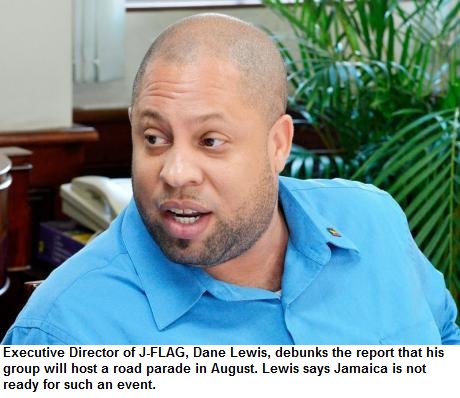
Title: J-FLAG Is Planning Gay Pride Activities, But No Parade For August – Exec
Source: Jamaica Gleaner Daily Newspaper Online Site; posted June 30, 2015; retrieved from: http://jamaica-gleaner.com/article/news/20150630/j-flag-planning-gay-pride-activities-no-parade-august-exec  

Local gay lobby, J-FLAG, is refuting reports that it will host a road parade in August when the group plans to have a series of gay pride activities.

Social media has been abuzz since yesterday following a report that the group would host a parade, similar to what is done in the United   States and other countries.

However, executive director of J-FLAG, Dane Lewis, says the report is wrong, adding that Jamaica is not ready for such an event.

Meanwhile, he says the group is planning a week-long series of activities starting on Emancipation Day, August 1, to mark growing tolerance for members of the lesbian, gay, bisexual, and transgender (LGBT) community.

Some years ago, an attempt to host a gay parade was thwarted after anti-gay supporters reportedly planned attacks against marchers.

Jamaica is accused of being one of the most homophobic places on earth.

Last week, the US government released a report noting that anti-gay laws and the dancehall culture are responsible for perpetuating homophobia in Jamaica.
Additional reference sources: http://jflag.org/

t So - Photo 1
———–

VIDEO: Executive Director of JFLAG, Dane Lewis: “We Are Jamaicans” – https://youtu.be/sJ-17R5DCoI


Published on Jan 17, 2013 – “We Are Jamaicans” is funded with the kind support of the Caribbean Vulnerable Communities Coalition (CVC) through its Global Fund Vulnerablised Project.

Building a diverse society is not easy. The book Go Lean … Caribbean describes the challenge as heavy-lifting. Though the US had failed at this challenge, it proudly boasts that it got better with every generation. The Caribbean on the other hand, leaves much to be desired in terms of the willingness to change and keep pace with progressive societies. (Now the US, Canada, Ireland and other countries have legalized Gay Marriage).

In a previous blog-commentaries, this defect – Homosexual Intolerance – was listed among the blatant human rights abuses in the region.

This is an important consideration for the planners of Caribbean empowerment. The Caribbean, a region where unfortunately, we have NOT … tried to be as tolerant as may be required, expected and just plain moral.

We must do better!

The book Go Lean … Caribbean asserts that Caribbean society’s prosperity has been hindered with a high abandonment rate – reported at 70% for educated classes region-wide, but an even higher 85% in Jamaica. The primary mission of the Go Lean book is to “battle” against the “push-and-pull” factors that draw so many of our Caribbean citizens away from their homelands to go to more progressive countries.

The Go Lean book campaigns to lower the “push” factors!

The purpose of the Go Lean book is to fix the Caribbean; to be better. The Go Lean book serves as a roadmap for the introduction and implementation of the technocratic Caribbean Union Trade Federation (CU) to pursue the quest to elevate the Caribbean region through empowerments in economics, security and governance. It is the assertion that Caribbean citizens can stay home and effect change in their homelands more effectively than going to some foreign countries to find opportunities for life, liberty and the pursuit of happiness. The book therefore asserts that the region can turn-around from failing assessments by applying best-practices, and forging new societal institutions to impact the Greater Good for all the Caribbean. This point was pronounced in the opening Declaration of Interdependence (Pages 10 – 14) with these acknowledgements and statements:

xi.   Whereas all men are entitled to the benefits of good governance in a free society, “new guards” must be enacted to dissuade the emergence of incompetence, corruption, nepotism and cronyism at the peril of the people’s best interest. The Federation must guarantee the executions of a social contract between government and the governed.

xii. Whereas the legacy in recent times in individual states may be that of ineffectual governance with no redress to higher authority, the accedence of this Federation will ensure accountability and escalation of the human and civil rights of the people for good governance, justice assurances, due process and the rule of law. As such, any threats of a “failed state” status for any member state must enact emergency measures on behalf of the Federation to protect the human, civil and property rights of the citizens, residents, allies, trading partners, and visitors of the affected member state and the Federation as a whole.

xxxiii. Whereas lessons can be learned and applied from the study of the recent history of other societies, the Federation must formalize statutes and organizational dimensions to avoid the pitfalls of communities like … Egypt. On the other hand, the Federation must also implement the good examples learned from developments/ communities like New York City, … Canada, … and tenants of the US Constitution.

The CU/Go Lean vision to elevate Caribbean society must also consider the issue of image. There is the need for a sentinel role for Caribbean image, as there are a lot of times that Caribbean life and people are denigrated in the media: news, film, TV, books, magazines. It’s unfortunate when we are guilty of scathing allegations. The Go Lean roadmap calls for the CU to assume a role of protecting and projecting positive Caribbean images. The plan is to use cutting edge delivery of best practices; the applicable CU agencies will employ strategies, tactics and implementations to impact the Go Lean prime directives; identified with the following 3 statements:

  • Optimization of the economic engines in order to grow the regional economy to $800 Billion & create 2.2 million new jobs.
  • Establishment of a security apparatus to protect the resultant economic engines and mitigate challenges/threats to public safety for all citizens… LGBT or straight.
  • Improvement of Caribbean governance to support these engines.

Jamaica has a failing economy.

Jamaica’s primary economic driver is tourism. So …

t So - Photo 2

Is the Caribbean ready for this economic activity? A bridge too far, too soon?

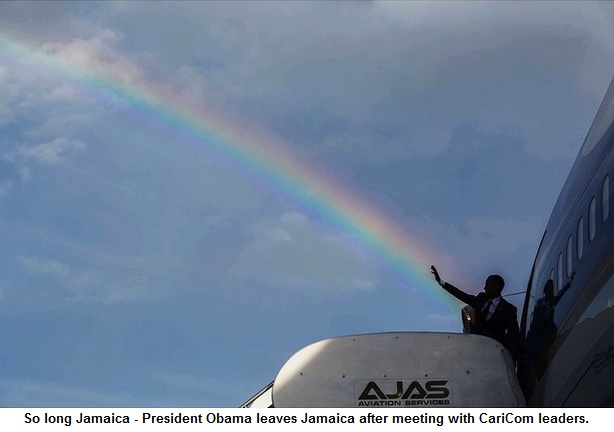
t So - Photo 4Jamaica has a long way to go; the country has been described by some Human Rights groups as the most homophobic place on Earth because of the high level of violent crime directed at LGBT people; (Padgett, Tim: “The Most Homophobic Place on Earth?”Time Magazine posted 12 April 2006). The United States Department of State said that in 2012, “homophobia was [unacceptably] widespread in the country” (2012 Country Reports on Human Rights Practices: Jamaica, Bureau of Democracy, Human Rights and Labor, U.S. Department of State, pages 20-22). As depicted in the VIDEO below, even President Obama indicted the island on a recent official State Visit.

Why is this country’s homophobia so acute compared to other countries? For one, they have held on emphatically to the British Laws on Buggery – see Appendix below – from their colonial days; even though the host country of England has already abandoned the laws (in 1967).

Jamaica is partying like it’s 1899!

This is therefore a matter of community ethos. The Go Lean book defines community ethos as the fundamental character or spirit of a culture; the underlying sentiment that informs the beliefs, customs, or practices of a group or society; the dominant assumptions of a people or period. This tropical paradise of Jamaica, as defined in the foregoing news article and VIDEO continues to spur bad attitudes, bad ideas, bad speech and bad actions towards the LGBT community. This is unbecoming of a progressive society in 2015.

Alas, this is a crisis…for victims and their loved ones. The Go Lean book posits that this crisis can be averted, that the crisis is a “terrible thing to waste”. The Go Lean roadmap seeks to optimize the eco-systems for Jamaica and the entire Caribbean. The book stresses new community ethos, strategies, tactics, implementations and advocacies necessary to transform and turn-around the eco-systems of the regional society. These points are detailed in the book as follows:

Who We Are – SFE Foundation – Comprised of Caribbean Diaspora Page 8
Community Ethos – Economic Principles – Economic Systems Influence Individual Choices Page 21
Community Ethos – Economic Principles – Consequences of Choices Lie in the Future Page 21
Community Ethos – Governing Principles – Lean Operations Page 24
Community Ethos – Ways to Impact the Future Page 26
Community Ethos – Ways to Promote Happiness Page 36
Community Ethos – Ways to Impact the Greater Good Page 37
Strategy – Vision – Confederate all 30 member-states into a Single Market Page 45
Strategy – Mission – Build and foster local economic engines Page 45
Strategy – Mission – Repatriate the Diaspora, even Minorities like those of the LGBT community Page 46
Tactical – Ways to Foster a Technocracy Page 64
Tactical – Growing the Economy to $800 Billion GDP Page 68
Tactical – Separation-of-Powers – CU Federal Government versus Member-State Governance Page 71
Anatomy of Advocacies – Examples of Individuals Who Made Impact Page 122
Planning – 10 Big Ideas – Homeland Security Pact Page 127
Planning – Ways to Make the Caribbean Better Page 131
Planning – Ways to Improve Failed-State Indices – Minority and Human Rights Page 134
Planning – Lessons Learned from US Constitution – Equal Protection for all Minorities Page 145
Advocacy – Ways to Grow the Economy Page 151
Advocacy – Ways to Create Jobs Page 152
Advocacy – Ways to Improve Governance – For All Citizens Page 168
Advocacy – Ways to Better Manage the Social Contract – Security against “Bad Actors” Page 170
Advocacy – Ways to Impact Justice – Internal Affairs Reporting Line Page 177
Advocacy – Ways to Remediate and Mitigate Crime – Hate Crime Qualifiers Page 178
Advocacy – Ways to Improve Homeland Security Page 180
Advocacy – Ways to Mitigate Terrorism – Consider Bullying as Junior Terrorism Page 181
Advocacy – Ways to Impact Youth – Collaborating with Foundations Page 218
Advocacy – Ways to Re-boot Jamaica Page 239
Advocacy – Ways to Impact British Territories Page 245

Looking at the disposition of the island nation of Jamaica’s, we see that its societal engines are failing.

Could the investment in the diversity of its people be at the root of the problem?

The failing indices and metrics of Jamaica have been considered in previous blog/commentaries; see sample here:

https://goleancaribbean.com/blog/?p=4840 Jamaican Poll: ‘Bring back the British!’
https://goleancaribbean.com/blog/?p=3694 Looking for a job in Jamaica, go to Canada
https://goleancaribbean.com/blog/?p=2830 Jamaica’s Public Pension Under-funded
https://goleancaribbean.com/blog/?p=392 Jamaica to receive World Bank funds to help in crime fight
https://goleancaribbean.com/blog/?p=313 What’s Holding Back Jamaica’s Reforms

The Go Lean roadmap seeks to empower and elevate Caribbean societal engines to make Jamaica, and the rest of the Caribbean, better places to live, work and play … for all citizens, including the LGBT communities.

Most of the Jamaican Diaspora that has abandoned the island now lives in the US, Canada or the UK. Their new home-communities are more tolerant societies of their LGBT neighbors.

Perhaps, there is some correlation.

This commentary is not urging the abandonment of the Judeo-Christian moral code; Jesus Christ instructed to “let them be” at Luke 22:51 (The Message Translation). Rather this commentary urges tolerance and moderation: Live and let live!

Fight the hate!

Yes, we can … do this. Yes, we must do this. 🙂

Download the book Go Lean … Caribbean – now!
———–

Appendix VIDEO: US President Obama’s LGBT comments at Youth Leaders Town Hall – https://youtu.be/636mgw1THpc?t=5m1s


Published on Apr 9, 2015 – President Obama delivers remarks and answers questions at a town hall with Young Leaders of the Americas at University of the West Indies in Kingston, Jamaica. April 9, 2015.
———–

Appendix VIDEO: Gay rights in Jamaica – https://youtu.be/_nSgMGoBAmU

playbutton-300x300

———–

Appendix – Encyclopedic Reference: Buggery in English Common Law

The British English term buggery is very close in meaning to the term sodomy, often used interchangeably in law and popular speech. It may also be a specific common law offenceencompassing both sodomy and bestiality.

In English law “buggery” was first used in the Buggery Act 1533, while Section 61 of the Offences against the Person Act 1861, entitled “Sodomy and Bestiality”, defined punishments for “the abominable Crime of Buggery, committed either with Mankind or with any Animal”. The definition of “buggery” was not specified in these or any statute, but rather established by judicial precedent.[1] Over the years the courts have defined buggery as including either [of these]:

  1. anal intercourse or oral intercourse by a man with a man or woman[2] or
  2. vaginal intercourse by either a man or a woman with an animal,[3]

But [no other] form of “unnatural intercourse”[4] [was defined], the implication being that anal sex with an animal would not constitute buggery. Such a case has not, to date, come before the courts of a common law jurisdiction in any reported decision. However, it seems highly improbable that a person would be exculpated of a crime associated with sex with animals only by reason of the fact that penetration involved the anus rather than the vagina. In the 1817 case of Rex v. Jacobs, the Crown Court ruled that oral intercourse, even with an underage and/or non-consenting person, did not constitute buggery or sodomy.[4]

At common law consent was not a defence[5] nor was the fact that the parties were married.[6] In the UK, the punishment for buggery was reduced from hanging to life imprisonment by the Offences against the Person Act 1861. As with the crime of rape, buggery required that penetration must have occurred, but ejaculation is not necessary.[7]

Most common law jurisdictions have now modified the law to permit anal sex between consenting adults.[8] Hong Kong did so retroactively in 1990, barring prosecution for “crimes against nature” committed before the Crimes (Amendment) Ordinance 1990 entered into force except those that would still have constituted a crime if they had been done thereafter. In England and Wales, homosexual buggery was decriminalised in 1967 with an age of consent at 21 years, whereas all heterosexual intercourse had an age of consent at 16 years. The Sexual Offences Act 2003 did not fully remove buggery as a concept in United Kingdom law, as the previous law is retained for complainants (consensual or “pseudo-consensual”) under the age of 16, or 18 with regards to an adult perceived to be in a “position of trust”. As the law stands, buggery is still charged, exclusively regarding “pseudo-consensual” anal intercourse with those under 16/18, because children cannot legally consent to buggery although they may appear to do so. Rape is charged when the penetration is clearly not consensual. Buggery with an animal is still unlawful under Section 69 of the Sexual Offences Act 2003.

In the Republic of Ireland, the Criminal Law (Sexual Offences) Act 1993 abolished the offence of “buggery between persons”.[9] For some years prior to 1993, criminal prosecution had not been made for buggery between consenting adults. The 1993 Act created an offence of “buggery with a person under the age of 17 years”,[10] penalised similar to statutory rape, which also had 17 years as the age of consent. The Criminal Law (Sexual Offences) Act 2006 replaced this offence with “defilement of a child”, encompassing both “sexual intercourse” and “buggery”.[11] Buggery with an animal is still unlawful under Section 69 of the Sexual Offences Act 2003. In 2012 a man was convicted of this offence for supplying a dog in 2008 to a woman who had intercourse with it and died.[12]

Etymology – The word bugger and buggery are still commonly used in modern English as a mild exclamation. “Buggery” is also synonymous with anal sex.

The word “bugger” was derived, via the French bougre, from Bulgar, that is, “Bulgarian”, meaning the medieval Bulgarian heretical sect of the Bogomils, which spread into Western Europe and was claimed by the established church to be devoted to the practice of sodomy.[13] “Buggery” first appears in English in 1330, though “bugger” in a sexual sense is not recorded until 1555.[14]

(Source: https://en.wikipedia.org/wiki/Buggery)

Share this post:
, , , , , ,
[Top]

Better than America? Yes, We Can!

Go Lean Commentary

Is America the “Greatest Country in the World”?

Perhaps this was arguable in the past? Today? Hardly … see VIDEO here; (excuse the profanity):

VIDEO: America, the Greatest? –


Published on Oct 21, 2012 – Jeff Daniels, who portrays news anchor Will McAvoy in the HBO Series “The Newsroom”, delivered a stunning, hard-hitting, accurate, and intelligent monologue/response when asked why America is the greatest country in the world. A sobering outlook on the state of the USA. (CAUTION ON THE ADULT LANGUAGE).

Even in the past when the “Greatest” label was arguable, it didn’t apply to everyone! America was the Greatest Country, maybe, if you were:

White, Anglo-Saxon, Rich, Male and Straight

But if you were any of the following, then God help you:

Black
Brown – Hispanic
Native American
Jewish
Catholic
Woman
Gay
Persons with Disabilities (Physical or Mental)
Slavic – Eastern European
Muslim
Communists
Atheist
Poor

CU Blog - Better than America - Yes We Can - Photo 2Yes, building a multi-cultural society is not easy. The book Go Lean … Caribbean describes the challenge as heavy-lifting. America has failed at this challenge, hands-down. In previous blog- commentaries, many defects of American life were detailed, (including the propensity for Crony-Capitalism). See the list of defects here: Housing, education, job hunting, prisons, drug crime prosecutions, and racial profiling.

But despite this list and the reality of this subject, America tries …

This is an important consideration for the planners of Caribbean empowerment. The Caribbean, a region where unfortunately, we have NOT … tried.

The social science of Anthropology teaches that communities have two choices when confronted with endangering crises: fight or flight. The unfortunate reality is that we have chosen the option of flight; (we have no ethos for fighting for our homeland).

The book Go Lean … Caribbean asserts that no society can prosper with a high abandonment rate – reported at 70% for educated classes. The primary mission of the Go Lean book is to “battle” against the “push-and-pull” factors that draw so many of our Caribbean citizens away from their homelands to go to the US. While we cannot change/fix America, we can…

Lower the “push” factors!

The purpose of the Go Lean book is to fix the Caribbean, to be better than America. The Go Lean book serves as a roadmap for the introduction and implementation of the technocratic Caribbean Union Trade Federation (CU) to pursue the quest to elevate the Caribbean region through empowerments in economics, security and governance. It is the assertion that Caribbean citizens can stay home and effect change in their homelands more effectively than going to America to find the “Greatest Country in the World”. The book therefore asserts that the region can turn-around from failing assessments by applying best-practices, and forging new societal institutions to impact the Greater Good for all the Caribbean. This point was pronounced in the opening Declaration of Interdependence (Pages 10 – 14) with these acknowledgements and statements:

xi.   Whereas all men are entitled to the benefits of good governance in a free society, “new guards” must be enacted to dissuade the emergence of incompetence, corruption, nepotism and cronyism at the peril of the people’s best interest. The Federation must guarantee the executions of a social contract between government and the governed.

xii. Whereas the legacy in recent times in individual states may be that of ineffectual governance with no redress to higher authority, the accedence of this Federation will ensure accountability and escalation of the human and civil rights of the people for good governance, justice assurances, due process and the rule of law. As such, any threats of a “failed state” status for any member state must enact emergency measures on behalf of the Federation to protect the human, civil and property rights of the citizens, residents, allies, trading partners, and visitors of the affected member state and the Federation as a whole.

xxxiii. Whereas lessons can be learned and applied from the study of the recent history of other societies, the Federation must formalize statutes and organizational dimensions to avoid the pitfalls of communities like … Detroit, Indian (Native American) Reservations… On the other hand, the Federation must also implement the good examples learned from developments/ communities like New York City, … Canada, the old American West and tenants of the US Constitution.

This is the quest of Go Lean…Caribbean roadmap, to reboot the region’s societal engines; employing best-practices and better strategies, tactics and implementations to impact its prime directives; identified with the following 3 statements:

  • Optimization of the economic engines in order to grow the regional economy to $800 Billion & create 2.2 million new jobs.
  • Establishment of a security apparatus to protect the resultant economic engines and mitigate challenges/threats to the region’s public safety.
  • Improvement of Caribbean governance to support these engines.

The Go Lean book stresses key community ethos, strategies, tactics, implementations and advocacies necessary to transform and turn-around the eco-systems of Caribbean society. These points are detailed in the book as follows:

Community Ethos – Economic Principles – Economic Systems Influence Individual Choices Page 21
Community Ethos – Economic Principles – Consequences of Choices Lie in the Future Page 21
Community Ethos – Governing Principles – Lean Operations Page 24
Community Ethos – Ways to Impact the Future Page 26
Community Ethos – Ways to Promote Happiness Page 36
Community Ethos – Ways to Impact the Greater Good Page 37
Strategy – Vision – Confederate all 30 member-states/ 4 languages into a Single Market Page 45
Strategy – Mission – Build and foster local economic engines Page 45
Tactical – Ways to Foster a Technocracy Page 64
Tactical – Growing the Economy to $800 Billion GDP Page 68
Tactical – Separation-of-Powers – CU Federal Government versus Member-State Governance Page 71
Implementation – Assemble All Regionally-focus Organizations of All Caribbean Communities Page 96
Planning – 10 Big Ideas – American Model: Kennedy’s Quest for the Moon Page 127
Planning – Ways to Make the Caribbean Better Page 131
Planning – Lessons Learned New York City – Managing as a “Frienemy” Page 137
Planning – Lessons Learned from Detroit – Turn-around from Failure Page 140
Planning – Lessons Learned from Indian Reservations – Pattern of Ethnic Oppression Page 141
Planning – Lessons Learned from the American West – How to Win the Peace Page 142
Planning – Lessons Learned from the US Constitution – America Tries – Each Generation Improves Page 145
Advocacy – Ways to Grow the Economy Page 151
Advocacy – Ways to Create Jobs Page 152
Advocacy – Ways to Improve Governance Page 168
Advocacy – Ways to Better Manage the Social Contract Page 170
Advocacy – Ways to Impact Justice Page 177
Advocacy – Ways to Improve Homeland Security Page 180
Advocacy – Ways to Preserve Caribbean Heritage Page 218

The threats of the repressive American past have not always been domestic; there have been times when American dysfunction have reached across borders, including Caribbean countries, and disrupted the peace and progress. This is an important lessons for the Caribbean to learn from considering the history of “American Greatness”; the following previous blog/commentaries apply:

https://goleancaribbean.com/blog/?p=5506 Edward Snowden Case Study: One Person Making a Difference
https://goleancaribbean.com/blog/?p=4166 A Lesson in History: Panamanian Balboa
https://goleancaribbean.com/blog/?p=789 A Lesson in History: America’s War on the Caribbean

The Go Lean roadmap seeks to empower and elevate Caribbean societal engines to make us better than the American eco-system. Tall order?

Yes, we can!

According to the foregoing VIDEO (and the Appendix below), other communities have done it. Consider Europe, all grown up now.

We can apply these models and lessons from these societies to obtain success. This vision is conceivable, believable and achievable!

Yes we can … make the Caribbean region a better place to live, work and play.  🙂

Download the free e-Book of Go Lean … Caribbean – now!

———

Appendix VIDEO – Comedic Commentary – Bill Maher: America Isn’t #1 – https://youtu.be/T8UqdPKbpWM

Uploaded on Jul 11, 2009 – Bill Maher rants on America letting people know we need to reclaim that title and to quit replying on old adages.
Share this post:
, , , , , ,
[Top]

Role Model Iris Adderley – Disability Advocate: Reasonable Accommodations

Go Lean Commentary/Interview

Travel away from your children for an extended time period and you would notice something amazing: Change.

It turns out that change is constant; children grow. But you have to take a step back to notice the difference.

CU Blog - Anecdote - Iris Adderley - Photo 1This is the experience of Disability Advocate Iris Adderley. She is a proud Bahamian – oldest child with 10 siblings who mostly all still live in the Bahamas – who served her country well; especially during the early days of nation-building (independence status was obtained in 1973). In a job assignment with the Bahamas Ministry of Tourism, Ms. Adderley spent many years abroad (Coral Gables, FL and Dallas, TX) promoting the Bahamas around the world as a tourist and convention destination. She was continuously called upon to sell a vision of the Bahamas that she discovered later to be out-dated, and irrelevant. The country had changed … and even declined, it seemed, in her absence.

Ms. Adderley returned to the Bahamas in the year 2000, but not to the homeland she had left behind, rather to this newly changed community. The changes were not all good. To complicate matters, she was now returning as a quadriplegic, a permanent disability.

Ms. Adderley endured a life-threatening car accident in Metropolitan Dallas in 1982, where she lived and worked for her Ministry of Tourism assignment. But she does not consider her injury as a national sacrifice. It was just “time and unforeseen occurrence” befalling her; (see Bible reference of Ecclesiastes 9:11 in the Appendix below). This taught her a very important lesson that everybody is  vulnerable to injury and illness and can be rendered disabled. This new reality became her new advocacy, a quest to make sure people with disabilities have equal rights and opportunities to contribute to society. (This quest also applies as a population ages, the prevalence of disabilities increases proportionally; think Diabetes amputations, Hip replacements, etc.).

This conclusion aligns with the book Go Lean…Caribbean, that with just a reasonable accommodation, persons with disabilities can live a full and engaging life … and help to elevate their communities and make “home” better places to live, work and play.

What reasonable accommodations?

For starters, Ms. Adderley expressed that if her injury had occurred in her Caribbean homeland that she would now be dead!

The world is better … that she has survived.

The Go Lean book serves as a roadmap for the introduction and implementation of the technocratic Caribbean Union Trade Federation (CU). The CU is designed to elevate the region’s economic, security and governing societal engines. This includes healthcare. The CU roadmap calls for improvements to the region’s emergency management apparatus. There is a plan to deploy a network of 6 cutting-edge Trauma Centers throughout the Caribbean. With this mitigation and remediation, the region can more competently respond to trauma emergencies, like life-threatening auto accidents.

It is only reasonable to expect that Caribbean society would have caught up to finally being able this deliver on the social contract at this level, considering that Ms. Adderley trauma transpired 33 years ago.

Unfortunately, the experiences of so many in the Bahamas, specifically and the Caribbean as a whole, is that these countries are structured only for the lowest common denominator (LCD); anyone one with needs above-and-beyond this LCD level is just “out-of-luck”.

This is unacceptable … and unreasonable for Caribbean contributors like Iris Adderley. This is also unacceptable … and unreasonable for the planners of the new Caribbean. We must deliver better on the social contract, the implied covenant where citizens surrender some of their freedoms and submit to the authority of the State in exchange for protection of remaining natural and legal rights. Blatant failures on the delivery of this social contract lead to an undesirable destination: abandonment!

Ms. Adderley lived in the most advanced country in the world, in the US State of Texas. She would have been excused if she wanted to remain there for her sustained existence, considering her health disposition. But she showed a national sacrifice ethos and repatriated back to her Caribbean homeland. This is heroic!

In a structured interview, Iris Adderley made the following contributions to this discussion of the roadmap to elevate her community:

CU Blog - Anecdote - Iris Adderley - Photo 2

Bold = Author

What are the details of your advocacy?

There should be a stronger manifestation of “Human” and “Woman’s” rights in the Bahamas. It is deplorable that the country is so deficient in these offerings. Earlier in my career, I took the assignment in Dallas so as to leave the Coral Gables Office of the Ministry of Tourism because the spirit of gender discrimination was just so acute. I felt I could make a bigger impact in a more reasonable environment. I was proven correct and did indeed have a greater impact professionally there. Returning to the Bahamas in 2000 I wanted to nurture that same advocacy at home, but this time with a supplemental agenda for persons with disabilities.

What are your responsibilities now?

I serve as a Consultant at the Disability Affairs Division of the Ministry of Social Services and Community Development. I help to guide public policy to benefit those with disabilities in the country, even blending my prior role as a Tourism promoter by trying to create a great environment for persons with disabilities to come visit our shores and enjoy our hospitality.

What would you do if your project had 50% more funding?

Create rehabilitation centers, if not throughout the whole country, then at least in the capital city of Nassau. Persons with disabilities need help and support to get back to the point where they can contribute to society. Increased funding would allow more cultural education to message that persons with disabilities have the same rights in any society, to be more inclusive of the day-to-day affairs.

What do you want to see in The Bahamas in … 5 years?

More fulfilment of Sir Lynden’s Vision; (the first and longest-serving Prime Minister after majority rule, Sir Lynden O. Pindling). The young people need to know who we are as a people, where we came from and that we were a nation of beautiful, strong black people.

I want to see Bahamians own more of the Bahamas. This means diversifying from the main industries of tourism and financial services; all we’re doing there is servicing other people’s assets; we are not really owning or creating anything.

What do you want to see in The Bahamas in … 20 years?

The Bahamas needs a National Strategic Plan. This needs to reflect the values and best-practices that have been honed from experiences from around the world. The Bahamas has a global Diaspora – mostly of an elderly disposition now – their participation should be invited.

What features of North America/Europe would you like to see here?

The social safety nets (health, schools, food for the poor) are to be admired, especially in many European countries. Those communities extend themselves to care for their elderly, poor, sick and disabled citizens.

How would you feel if your children emigrate?

Though I don’t have any children directly, I’m blessed with many nieces, nephews and loving family members. So many of them are bright young all-stars and go-getters, studying abroad in colleges and universities. Unfortunately, far too often, these ones are not setting their sight on a return home to the Bahamas. Some would even rather go to a Latin American country than to come back here to the Bahamas. This is sad, as it does not reflect the great sacrifices that so many in the previous generations made to forge opportunities for this next generation.

Where do you consider to be the best place to live?

At one point, my answer would have been the Bahamas; but I’ve gotten to see the real country as it exists today; this is not what we sold to tourists in promotions and advertisements. The country has changed … downward. Instead of our next generation offering reassurance and hope, I am more troubled at their lack of proper training. We cannot expect greatness from the status quo of most of this generation today..

What areas are you most disappointed in when considering the last 20 years?

The lack of discernment is especially disappointing. Many times the wise course is presented to Bahamians, but they seem to like to ignore wisdom and instead proceed down a destructive path. I guess the proverb is true: “A prophet is not accepted at home”.

Your wisdom is discerned here Ms. Adderley!

The points from this Disability Advocate align with the CU/Go Lean roadmap. Our directive is similar: to elevate Caribbean society, including those persons with physical disabilities. The declarative statements of the prime directive are as follows:

  • Optimization of the economic engines in order to grow the regional economy.
  • Establishment of a security apparatus to prepare and protect stakeholders for natural, man-made and incidental emergencies.
  • Improvement of Caribbean governance to support these engines.

The book posits that one person, despite their field of endeavor, can make a difference in the Caribbean, and its impact on the world; that there are many opportunities where one champion, one advocate, can elevate society. In this light, the book features 144 different advocacies, one specifically for Persons with Disabilities (Page 228). We need advocates, vanguards and sentinels like Iris Adderley to ensure equal opportunities for all these relevant stakeholders.

The Go Lean roadmap specifically encourages the region, to lean-in to elevate society with these specific community ethos, strategies, tactics, implementations and advocacies:

Community Ethos – Economic Principles – Economic Systems Influence   Individual Choices Page 21
Community Ethos – Governing Principles – Minority Equalization Page 24
Community Ethos – Governing Principles – Lean Operations Page 24
Community Ethos – Governing Principles – Return on Investments Page 24
Community Ethos – Ways to Promote Happiness – Gerontology/Aging Factors Page 36
Community Ethos – Ways to Impact the Greater Good Page 37
Strategy – Vision – Confederate all 30 Member-states Page 45
Strategy – Mission – Repatriate the Diaspora,   young and old …even those disabled Page 46
Anatomy of Advocacies – Examples   of Individuals Who Made Impact Page 122
Planning – 10 Big Ideas – Homeland Security Pact Page 127
Planning – Ways to Improve Failed-State Indices – Minority and Human Rights Page 134
Planning – Lessons from US Constitution – Equal Protection for all Minorities Page 139
Advocacy – Ways to Improve Healthcare – Caribbean [Persons] with Disabilities Page 156
Advocacy – Ways to Improve Governance – For All Citizens Page 168
Advocacy – Ways to Better Manage the Social Contract – Medical / Heath Endeavors Page 170
Advocacy – Ways to Impact Justice – Ensure Rights for the Disabled Classes Page 177
Advocacy – Ways to Remediate and Mitigate Crime – Hate Crime Qualifiers Page 178
Advocacy – Ways to Impact Homeland Security – Emergency Management Page 180
Advocacy – Ways to Improve Emergency Management – Trauma Art & Science Page 182
Advocacy – Ways to Foster Technology – e-Government Interfaces & Services Page 197
Advocacy – Ways to Protect Human Rights – Caribbean [Persons] with Disabilities Page 220
Advocacy – Ways to Improve Elder-Care – Caribbean [Persons] with Disabilities Page 225
Advocacy – Ways to Empower Women Page 226
Advocacy – Ways to Impact Persons with Disabilities – ‘Americans with Disabilities Act’ Model Page 228
Appendix – Trauma Center Definitions Page 336

The Caribbean region wants a more optimized society … for all citizens. We want to mitigate human rights and civil rights abuses, and empower all for a better life, liberty and the pursuit of happiness.

The Go Lean book posits that economic measures and security measures must be in tandem for any societal empowerment effort. According to the foregoing interview/profile, after 30 years, our region is still behind with regards to servicing the needs of one specific minority group: persons with disabilities. We must do better!

Early in the book, the pressing need to optimize facilitations for this population group was pronounced in the Declaration of Interdependence (Pages 11 – 13), with these opening statements:

ix. Whereas the realities of healthcare and an aging population cannot be ignored and cannot be afforded without some advanced mitigation, the Federation must arrange for health plans

xi. Whereas all men are entitled to the benefits of good governance in a free society, “new guards” must be enacted to dissuade the emergence of incompetence, corruption, nepotism and cronyism at the peril of the people’s best interest. The Federation must guarantee the executions of a social contract between government and the governed.

xvi. Whereas security of our homeland is inextricably linked to prosperity of the homeland, the economic and security interest of the region needs to be aligned under the same governance.  the accedence of this Federation must equip the security apparatus with the tools and techniques for predictive and proactive interdictions.

xviii. Whereas all citizens in the Federation member-states may not have the same physical abilities, reasonable accommodations must be made so that individuals with physical and mental disabilities can still access public and governmental services so as to foster a satisfactory pursuit of life’s liberties and opportunities for happiness.

The Go Lean book explicitly acknowledges that optimizing the needs of persons with disabilities is not easy; this requires strenuous effort, heavy-lifting. These persons with disabilities normally are not able to contribute as much to Caribbean society as they draw on the public resources. This is unfortunate! Other societies have provided great models and amenities for facilitating fuller lives for those with disabilities: motorized wheelchairs, cars equipped with hand controls, Braille and TeleType (TTY and/or TDD) devices. This is the quest of the CU/Go Lean roadmap to engage more people – even those persons with disabilities – into this effort to optimize Caribbean society. More innovations are forthcoming; see VIDEOs in the Appendix. This vision is only reasonable, but prudent, as this population can generate a positive Return on Investment (ROI); as demonstrated by Iris Adderley in the foregoing interview.

Many subjects related to this profile of role model Iris Adderley have been blogged in previous Go Lean…Caribbean commentary; they are sampled here:

https://goleancaribbean.com/blog/?p=5002 Managing a ‘Clear and Present Danger’
https://goleancaribbean.com/blog/?p=4308 911 – Emergency Response Empowerments for the Caribbean
https://goleancaribbean.com/blog/?p=4278 Businesses Try to Stave-off Brain Drain as Boomers Age, Retire
https://goleancaribbean.com/blog/?p=3780 National Sacrifice – The Missing Ingredient
https://goleancaribbean.com/blog/?p=341 American Human Rights Leaders Slams Caribbean Poor Record

The CU/Go Lean roadmap is designed to empower and enhance the economic engines for the full participation and benefit of all Caribbean people. This includes the number of citizens that may have some physical challenges (deaf, blind, lame/mobility, etc.) or mental challenges. The CU’s vision is that this population group represents a critical talent pool that is under-served and underutilized; they are therefore included in the Go Lean roadmap. Tactically there is the call for a Caribbean [Persons] with Disabilities (CDA) provision to be embedded in the Caribbean Union confederation treaty; the request is to have the edict of reasonable accommodations legally embedded in statures.

In addition to the economic missions, the CU treaty would also address security needs, with the mission to fortify homeland security and to mitigate societal threats and risks, including a solution for emergency management and medical trauma arts and sciences.

Lastly, the CU treaty addresses remediation for regional governance. The local governments are thusly spurred to adapt and enforce access standards for all public edifices and private structures providing commerce to the general public. This reasonable accommodations mandate is modeled after the Americans with Disabilities Act (ADA) feature in US federal law.

This roadmap is a fully comprehensive plan with consideration to all aspects of Caribbean life. All stakeholders – citizens, businesses, and institutions – are hereby urged to lean-in to this roadmap.

Yes, with all “hands on deck”, persons with disabilities as well, the Caribbean can truly become a better place to live, work and play. 🙂

Download the book Go Lean … Caribbean – now!

———–

Appendices

1. Additional information on Iris Adderley: http://www.tribune242.com/news/2013/oct/22/iris-adderley-tireless-advocate-people-disabilitie/

2. Bible Reference – Ecclesiastes 9:11:
“I have seen something further under the sun, that the swift do not always win the race, nor do the mighty win the battle, nor do the wise always have the food, nor do the intelligent always have the riches, nor do those with knowledge always have success, because time and unexpected events overtake them all.” — New World Translation

3. VIDEO – Hugh Herr: The new bionics that let us run, climb and dancehttps://youtu.be/CDsNZJTWw0w

Published on Mar 28, 2014 – Hugh Herr is building the next generation of bionic limbs, robotic prosthetics inspired by nature’s own designs. Herr lost both legs in a climbing accident 30 years ago; now, as the head of the MIT Media Lab’s Biomechatronics group, he shows his incredible technology in a talk that’s both technical and deeply personal — with the help of ballroom dancer Adrianne Haslet-Davis, who lost her left leg in the 2013 Boston Marathon bombing, and performs again for the first time on the TED stage.

4. VIDEO‘Terminator’ arm is world’s most advanced prosthetic limbhttps://youtu.be/_qUPnnROxvY

Published on Nov 5, 2012 – A father who lost his arm in an accident six years ago has been given a new lease of life by a hi-tech bionic hand which is so precise he can type again. Nigel Ackland, 53, has been fitted with the Terminator-like carbon fibre mechanical hand which he can control with movements in his upper arm. The new bebionic3 myoelectric hand, which is also made from aluminium and alloy knuckles, moves like a real human limb by responding to Nigel’s muscle twitches. Incredibly, the robotic arm is so sensitive it means the father-of-one can touch type on a computer keyboard, peel vegetables, and even dress himself for the first time in six years.
More info about this amazing prosthetic can be found here http://bebionic.com

5. VIDEO – Berkeley Bionics: Introducing eLEGS – https://youtu.be/WcM0ruq28dc

Published on October 13, 2011 – Berkeley Bionics has rebranded. The company is now known as Ekso Bionics and eLEGS has become Ekso. To clarify, the device is an exoskeleton and the brand of the exoskeleton is Ekso, by Ekso Bionics.

Share this post:
, , , , , , ,
[Top]

Repenting, Forgiving and Reconciling the Past

Go Lean Commentary

CU Blog - Repenting, Forgiving and Reconciling the Past - Photo 2Christendom has a sullied past!

This is well represented in the historicity of the Spanish Inquisition (see Appendix * below), the campaign by the Roman Catholic Church to weed out the Jews and Muslims in Spain! This bad history of ethnic cleansing was at its worst in the 15th Century. See the tongue-in-cheek comedy VIDEO in the Appendix.

How does a community repent, forgive and reconcile from such a bad legacy?

Easier said than done!

For starters, do not proceed as if the events never happened. This is the lesson now being learned in modern day Spain. See the news article here:

Title: Ancient Spanish Village Is No Longer Named ‘Kill Jews’
(Source: Huffington Post – Online News Site; posted: 06/22/2015; retrieved 06/27/2015 from: http://www.huffingtonpost.com/2015/06/22/castrillo-matajudios-name-change_n_7636368.html)

SPAIN-RELIGION-HISTORY-JUDAISM

MADRID (AP) — The tiny Spanish village of Castrillo Matajudios — which means “Camp Kill Jews” — on Monday officially changed its name back to Castrillo Mota de Judios (“Jews’ Hill Camp”) following a referendum and regional government approval.

The village, with about 50 inhabitants, voted to change the name in 2014 after the mayor argued that the term was offensive and that the village should honor its Jewish origins.

Documents show the villages’ original name was “Jews’ Hill Camp” and that the “Kill Jews” name dates from 1627, after a 1492 Spanish edict ordering Jews to become Catholics or flee the country. Those who remained faced the Spanish inquisition, with many burned at the stake.

The name change was approved by the regional government of Castilla y Leon and published in the region’s official gazette.

Although Jews were killed in the area, researchers believe the village got its recent name from Jewish residents who converted to Catholicism and wanted to reinforce their repudiation of Judaism to convince Spanish authorities of their loyalty.

Others suspect the change may have come from a slip of the pen.

Although no Jews live in the village today, many residents have ancient Jewish roots and the town’s official shield includes the Star of David.

Spain’s lower house of parliament this month approved a law setting a citizenship path for the descendants of Jews who were forced to flee the country centuries ago.

Spain also has an ancient southeastern town called Valle de Matamoros, which translate as “Kill Muslims Valley.” The town has said it has no plans to change its name. Matamoros is also a surname in Spain.

There is a need to reconcile a lot of bad episodes in Caribbean history. Think:

  • Haiti
  • Cuba
  • Guyana’s border with Venezuela
  • Belize’s border with Guatemala

The book Go Lean…Caribbean posits that any attempt at unification of the Caribbean 30 member-states region must consider the ancient and modern conflicts some member-states have with others. The book serves as a roadmap for the introduction and implementation of the Caribbean Union Trade Federation (CU). A mission of the roadmap is to reverse the societal abandonment and invite the repatriation of the Diaspora by flashing the “Welcome Home” signs. But “old parties” returning can also open “old wounds”. Therefore an additional mission is to facilitate formal reconciliations, much like the model in South Africa with their Truth & Reconciliation Commissions (TRC). This mission will assuage these Failed-State indicators and threats (Page 272):

  • “Revenge seeking” groups
  • Group Grievances

The foregoing article depicts a bad episode in history and the best-practices to repent, forgive and reconcile.

The approach is simple, correct the bad “community ethos” from the past. The Go Lean  book defines “Community Ethos” as the fundamental character or spirit of a culture; the underlying sentiment that informs the beliefs, customs, or practices of a group or society; the dominant assumptions of a people or period. The Spanish town in the foregoing article continued to laud the bad actions of “killing Jews” by the continued use of that name. Though none of the villains or victims are alive today, it is just a bad spirit to imbrue from one generation to another. This town name “Camp Kill Jews” is such a bad image to uphold.

The CU/Go Lean vision to elevate Caribbean society must consider the issue of image. There is the need for a sentinel role for Caribbean image, as there are a lot of times that Caribbean life and people are denigrated in works of media arts: film, TV, books, magazines. The Go Lean roadmap calls for the CU to assume that role. Using cutting edge delivery of best practices, the CU will employ strategies, tactics and implementations to impact its prime directives; identified with the following 3 statements:

  • Optimization of the economic engines in order to grow the regional economy to $800 Billion & create 2.2 million new jobs.
  • Establishment of a security apparatus to protect the resultant economic engines.
  • Improvement of Caribbean governance to support these engines.

The Go Lean book speaks of the Caribbean as in crisis and posits that this crisis can be averted, that it is a “terrible thing to waste”. The Go Lean roadmap seeks to optimize the entire Caribbean economic/security/governance eco-system. This vision is defined early in the book (Page 12) in the following pronouncements in the Declaration of Interdependence:

xi. Whereas all men are entitled to the benefits of good governance in a free society, “new guards” must be enacted to dissuade the emergence of incompetence, corruption, nepotism and cronyism at the peril of the people’s best interest. The Federation must guarantee the executions of a social contract between government and the governed.

xii. Whereas the legacy in recent times in individual states may be that of ineffectual governance with no redress to higher authority, the accedence of this Federation will ensure accountability and escalation of the human and civil rights of the people for good governance, justice assurances, due process and the rule of law. As such, any threats of a “failed state” status for any member state must enact emergency measures on behalf of the Federation to protect the human, civil and property rights of the citizens, residents, allies, trading partners, and visitors of the affected member state and the Federation as a whole.

xiii. Whereas the legacy of dissensions in many member-states (for example: Haiti and Cuba) will require a concerted effort to integrate the exile community’s repatriation, the Federation must arrange for Reconciliation Commissions to satiate a demand for justice.

The Go Lean book details a lot more, a series of assessments, community ethos, strategies, tactics, implementations and advocacies to optimize the image of the Caribbean region:

Community Assessment – Dutch Caribbean – Integration & Secessions Page 16
Community Assessment – French Caribbean – Organization & Discord Page 17
Community Ethos – Economic Systems Influence Choices & Incentives Page 21
Community Ethos – People Respond to Incentives Page 21
Community Ethos – Consequences of Choices Lie in the Future Page 21
Community Ethos – Ways to Impact Turn-Arounds Page 33
Community Ethos – Ways to Manage Reconciliations Page 34
Community Ethos – Ways to Promote Happiness Page 36
Community Ethos – Ways to Impact the Greater Good Page 37
Strategy – Vision – Confederating a Non-Sovereign Union of 30 Member-states Page 45
Strategy – Mission – Keep the next generation at home; Repatriate Diaspora Page 46
Tactical – Separation of Powers – State Department – Economic & Diplomatic Relations Page 80
Tactical – Separation of Powers – Judiciary – Truth & Reconciliation Courts Page 90
Implementation – Foreign Policy Initiatives at Start-up – Relationships with South & Central American Neighbors Page 102
Implementation – Ways to Deliver Page 109
Implementation – Reasons to Repatriate Page 118
Anatomy of Advocacies Page 122
Planning – Ways to Improve Image Page 133
Planning – Improve Failed-State Indices Page 134
Advocacy – Ways to Grow the Economy Page 151
Advocacy – Ways to Better Manage the Social Contract Page 170
Advocacy – Ways to Impact Justice – Truth & Reconciliation Commissions Page 177
Advocacy – Ways to Impact Hollywood – Controlling Image Page 203
Advocacy – Ways to Preserve Caribbean Heritage Page 218
Advocacy – Ways to Protect Human Rights – Reconciliations Page 220
Advocacy – Ways to Re-boot Cuba – Reconciliations Page 236
Advocacy – Ways to Re-boot Haiti – Reconciliations Page 238
Advocacy – Ways to Impact The Guianas – Venezuelan Foreign Policy Synchronizations Page 241
Advocacy – Ways to Impact Belize – Guatemala Grand Bargain Page 242
Appendix – Failed State Indicators & Definitions Page 271
Appendix – Dominican Republic’s Trujillo Regime – Ethnic Cleansing Page 306

The foregoing news article conveys that many Spanish/European communities had not come to grips with their discriminatory past.  So there is the need for outreach. This relates to anti-Semitism and the historic abuses cast on the Jewish people. For the African Diaspora, the majority population of 29 of the Caribbean member-states, the experience is even more egregious.  (French territory St. Barthélemy is the sole demographic exception).

Now is the time for all of the Caribbean, the people and governing institutions, to lean-in for the empowerments described in the book Go Lean … Caribbean. There is reason to believe that these empowerment efforts can be successful. The Go Lean roadmap conveys how single causes/advocacies have successfully been forged throughout the world (Page 122 – Anatomy of Advocacies). We can succeed here as well.

(This movement does not campaign for reparations from slavery nor colonization).

The CU will address past, present and future challenges of human rights abuses and defamation to the Caribbean image.

The Caribbean can succeed in the advocacy to improve the Caribbean image in the region and around the world. There are previous blog commentaries that delve into aspects of Caribbean image:

https://goleancaribbean.com/blog/?p=4971 A Lesson in History – Royal Charter: Truth & Consequence
https://goleancaribbean.com/blog/?p=4058 Bad Image: New York Times Maledictions on The Bahamas
https://goleancaribbean.com/blog/?p=2547 Image: Miami’s Success versus Caribbean Failure
https://goleancaribbean.com/blog/?p=2025 Caribbean Jobs – Attitudes & Images of the Diaspora
https://goleancaribbean.com/blog/?p=1847 Good Image – Declared “Among the best in the world”
https://goleancaribbean.com/blog/?p=1568 Bad Image/Bad Tweet: Dutch airline angers Mexico soccer fans
https://goleancaribbean.com/blog/?p=857 Caribbean Image: Dreadlocks

The foregoing consideration helps us to appreciate that reconciliation is possible only when the persons doing the wrong accept the forgiveness being offered and repents for what they have done. We applaud the tiny Spanish village of Castrillo Matajudios for showing the world their “Mea Culpa”; this is the best-practice for reconciliation.

This is now a new ethos for the Caribbean, to reconcile conflicts from the past; to repent, forgive and hopefully forget the long history of human rights abuses from the past. All of this effort, heavy-lifting, will make the region a better place to live, work and play. We urge all to lean-in to this roadmap.

Download the book Go Lean … Caribbean – now!

————–

Appendix * – Spanish Inquisition

The Tribunal of the Holy Office of the Inquisition (Spanish: Tribunal del Santo Oficio de la Inquisición), commonly known as the Spanish Inquisition (Inquisición española), was established in 1478 by Catholic Monarchs Ferdinand II of Aragon and Isabella I of Castile. It was intended to maintain Catholic orthodoxy in their kingdoms and to replace the Medieval Inquisition, which was under Papal control. It became the most substantive of the three different manifestations of the wider Christian Inquisition along with the Roman Inquisition and Portuguese Inquisition.

The Inquisition was originally intended in large part to ensure the orthodoxy of those who converted from Judaism and Islam. This regulation of the faith of the newly converted was intensified after the royal decrees issued in 1492 and 1501 ordering Jews and Muslims to convert or leave Spain.

Various motives have been proposed for the monarchs’ decision to found the Inquisition such as increasing political authority, weakening opposition, suppressing conversos, profiting from confiscation of the property of convicted heretics, reducing social tensions, and protecting the kingdom from the danger of a fifth column (clandestine activities involving acts of sabotage, disinformation, or espionage executed within defense lines by secret sympathizers of an external force).

The body was under the direct control of the Spanish monarchy. It was not definitively abolished until 1834, during the reign of Isabella II, after a period of declining influence in the previous century.

The Spanish Inquisition is often cited in literature and history as an example of Catholic intolerance and repression. Modern historians have tended to question earlier and possibly exaggerated accounts concerning the severity of the Inquisition. Although records are incomplete, estimates of the number of persons charged with crimes by the Inquisition range up to 150,000, with 2,000 to 5,000 people executed.

(Source: https://en.wikipedia.org/wiki/Spanish_Inquisition)

————–

Appendix VIDEO – Movie: History of the World Part 1 Inquisition Scenehttps://youtu.be/5ZegQYgygdw

Published on Dec 8, 2012 – From Mel Brooks’ “History of the World Part 1”. This is a comedic parody, with song-and-dance!
Category: Entertainment; License: Standard YouTube License

Share this post:
, , , , , , , ,
[Top]

Move over Mastercard/Visa

Go Lean Commentary

CU Blog - Move over Mastercard-Visa - Photo 3The book Go Lean…Caribbean describes a new regime for Caribbean economic circles: a world where most payments are conducted via electronic means. While this may be the future for the Caribbean, frankly it is already the reality for North America and Western Europe!

In the Caribbean, we are behind the times; we party like its 1969!

Electronic Payments schemes are no longer optional. These must be deployed, as soon as possible, to forge the change necessary to elevate Caribbean society. The trend has started; see the news article here of a card payment scheme deployed recently in the Bahamas:

Title: More Than 4,000 Residents Now Using Social Services Debit Card
By: Ricardo Wells, Staff Reporter, The Tribune – Bahamas Daily Newspaper – Posted 05/19/2015; retrieved 06/24/2015 from:  http://www.tribune242.com/news/2015/may/19/more-4000-residents-now-using-social-services-debi/

MORE than 4,000 residents of New Providence are now part of the Department of Social Services’ modernised food assistance programme.

Officials announced yesterday the approval of an extra 1,501 clients from the Horseshoe Drive Centre to the programme, joining 780 clients registered at the Wulff Road Centre, 874 at the Fox Hill Centre and 1,660 at the Robinson Road Centre, bringing the total to 4,365 in possession of the new pre-paid debit card.

Social Services Minister Melanie Griffin said that although the new pre-paid cards do not resolve all of the issues and problems that exist in the department’s food programme, they allow “clients that are truly in need the ability to shop and purchase needed food items with ease and comfort”.

Mrs Griffin explained that the cards provide users with the ability to not only to limit their contact with centres, but gives them more freedom by allowing them to determine how much they spend in one location and the ability to shop at different establishments in one payment period.

According to the Yamacraw representative, all three are features not allowed by the previous voucher system operated by the department.

“It was a long, hard road getting to this point but with the addition of each centre, we gained more experience and improved the processes involved,” said Mrs Griffin.

She added: “We now turn our efforts to the introduction of the card in Grand Bahama and the FamilyIslands as we intend for this payment method to be utilised throughout the Bahamas.”

Officials from the department indicated that the implementation process is already under way in Grand Bahama with people registered for assistance now being reassessed.

The department suggested that the new cards would first be issued at the Eight Mile Rock Centre and then throughout Freeport.

In November, officials introduced the new debit card in conjunction with Bank of The Bahamas (BOB).

It is designed to curb abuse of the food coupon system, and is seen as a key reform to how the government distributes aid to poor Bahamians.

CU Blog - Move over Mastercard-Visa - Photo 2Mrs Griffin said last year that the card was one feature of wide-ranging upgrades to the Bahamas’ social safety net, a programme being financed with $7.5m from the Inter-American Development Bank (IDB).

In January, the government had approved a five per cent increase in the Department of Social Services’ food assistance budget to counteract the impact of VAT on the poor.

Last June, the Department of Statistics said that since 2001, poverty levels in The Bahamas have risen by 3.5 per cent, while more than 40,000 people in the country live below the poverty line – defined as an annual income of less than $5,000 a year.

Other examples abound. The Go Lean book (Page 353) identifies the system deployed in American states and territories (including Puerto Rico and the US Virgin Islands) branded EBT (Electronic Benefits Technology).

We must therefore examine models used around the world to facilitate these payment systems. The Go Lean book specifically draws attention to the model of the Mastercard/Visa Interchange and Clearinghouse; (Page 172). The book serves as a roadmap for the introduction and implementation of the Caribbean Union Trade Federation (CU) and the Caribbean Central Bank (CCB). This Go Lean roadmap has 3 prime directives:

  • Optimization of the economic engines in order to grow the regional economy to $800 Billion & create 2.2 million new jobs.
  • Establishment of a security apparatus to protect the resultant economic engines.
  • Improvement of Caribbean governance to support these engines.

This Go Lean/CU/CCB roadmap defines that despite coins and notes, the regional currency, the Caribbean Dollar (C$), will be heavily-targeted as a cashless currency. So the CCB will settle all C$ electronic transactions in the style of the MasterCard-Visa Interchange & Clearinghouse. See the definition in the Appendix below. The book relates (Page 172) how this activity would be a fundamental revenue source for Caribbean governance; as the Mastercard/Visa model now enjoys interchange and clearance fees in excess of 1% – 2% of transaction amounts; (pricing is based on different transaction/industry/card types + flat fees).  The Appendix summarizes total revenue for a recent year at $30 Billion for US operations alone. Yes, the pennies add up!

(The latest Visa Bankcard Acquiring fees, effective 16 April 2015, are detailed here on their website: http://usa.visa.com/download/merchants/Visa-USA-Interchange-Reimbursement-Fees-2015-April-18.pdf)

According to the foregoing news article, why would the Bahamas government pay interchange fees to the American entity that is the Mastercard/Visa clearinghouse. The money on deposit originates in the Bahamas, the currency is Bahamian Dollars and the merchants are Bahamian. Why is there a need to share the transaction revenue outside the border with an American entity?

This reeks of Crony-Capitalism!

This subject and application vividly depicts the need for a local Caribbean solution of the technology and processing for card transaction interchange. This is the quest of the Go Lean…Caribbean roadmap.

However, this issue is about more than just technology, it relates to economics as well. A previous blog/commentary related how electronic payments provide the impetus for M1, the economic measurement of currency/money in circulation (M0) plus overnight bank deposits. A mission of Go Lean is to increase M1 values, thereby facilitating the dynamic called the “money multiplier” – creating money “from thin-air”. This is a BIG deal!

The Go Lean/CU/CCB movement declares: “Move Over Mastercard/Visa!”

We must model the Mastercard/Visa clearinghouse and learn lessons from their good, bad and ugly history.

It is argued that this interchange is classic Crony-Capitalism, the use of the public trust for the pursuit of private profits. This is evident with their monopolistic integration of bankcard processing despite being two separate for-profit entities (association/ cooperative of banks). This is a familiar charge against this clearinghouse; they have been constantly accused of these abusive practices:

Price-fixing
Regulators in several countries have questioned the collective determination of interchange rates and fees as potential examples of price-fixing. Merchant groups in particular, including the U.S.-based Merchants Payments Coalition and Merchant Bill of Rights, also claim that interchange fees are much higher than necessary,[14] pointing to the fact that even though technology and efficiency have improved, interchange fees have more than doubled in the last 10 years. Issuing banks argue that reduced interchange fees would result in increased costs for cardholders, and reduce their ability to satisfy rewards on cards already issued.

Consumer welfare
A 2010 public policy study conducted by the Federal Reserve concluded the reward program aspect of interchange fees results in a non-trivial monetary transfer from low-income to high-income households. Reducing merchant fees and card rewards would likely increase consumer welfare.[15]
The Merchants Payments Coalition is fighting for a more competitive and transparent card fee system that better serves American consumers and merchants alike. Because swipe fees are hidden, consumers are unable to weigh the benefits and costs associated with choosing a particular form of payment. Eliminating hidden swipe fees is advocated as a means to realize an open market system for electronic payments.[16]

Creating the optimized CU/CCB governance is “Step One, Day One” in the Go Lean roadmap. The strategy is to implement the CCB and C$ currency with a regulatory framework fortified by best-practices, technology and infrastructure, to facilitate the electronic payments needs of the Caribbean community.

The roadmap posits that to adapt and thrive in the new global marketplace there must be more strenuous management, technocratic optimizations, of the region’s governance … and payment systems. This is the charge of Go Lean roadmap, opening with the Declaration of Interdependence (Page 12 – 13) and these pronouncements:

xi. Whereas all men are entitled to the benefits of good governance in a free society, “new guards” must be enacted to dissuade the emergence of incompetence, corruption, nepotism and cronyism at the peril of the people’s best interest. The Federation must guarantee the executions of a social contract between government and the governed.

xii.  Whereas the legacy in recent times in individual states may be that of ineffectual governance with no redress to higher authority, the accedence of this Federation will ensure accountability and escalation of the human and civil rights of the people for good governance, justice assurances, due process and the rule of law…

xxiv.   Whereas a free market economy can be induced and spurred for continuous progress, the Federation must install the controls to better manage aspects of the economy: jobs, inflation, savings rate, investments and other economic principles. Thereby attracting direct foreign investment because of the stability and vibrancy of our economy.

xxv.   Whereas the legacy of international democracies had been imperiled due to a global financial crisis, the structure of the Federation must allow for financial stability and assurance of the Federation’s institutions. To mandate the economic vibrancy of the region, monetary and fiscal controls and policies must be incorporated as proactive and reactive measures. These measures must address threats against the financial integrity of the Federation and of the member-states.

The foregoing article, demonstrates that this region is ready for a local payment-card clearinghouse solution. The Go Lean book details a series of community ethos, strategies, tactics, implementations and advocacies to foster the proper controls for electronic payments/virtual money in the Caribbean region:

Community Ethos – Economic Principles Page 21
Community Ethos – Money Multiplier Principle Page 22
Community Ethos – “Light Up the Dark Places” Page 23
Community Ethos – Lean Operations Page 24
Community Ethos – Cooperatives Page 25
Community Ethos – Ways to Impact the Future Page 26
Community Ethos – Promote Intellectual Property Page 29
Community Ethos – Ways to Bridge the Digital Divide Page 31
Tactical – Separation of Powers – Central Banking Page 73
Implementation – Assemble Central Bank Cooperative Page 96
Implementation – Ways to Deliver Page 109
Implementation – Ways to Impact Social Media Page 111
Planning – 10 Big Ideas – Currency Union / Single Currency Page 127
Planning – Ways to Improve Interstate Commerce Page 129
Anecdote – Caribbean Currencies Page 149
Advocacy – Ways to Mitigate Black Markets – e-Payments Page 165
Advocacy – Government Revenue Options – Interchange Fees Page 172
Advocacy – Ways to Foster Cooperatives – Cooperative Banking Page 176
Advocacy – Ways to Impact Cruise Tourism – Smartcard scheme Page 193
Advocacy – Ways to Foster Technology – e-Government Services Page 197
Advocacy – Ways to Foster e-Commerce – Card Culture Page 198
Advocacy – Reforms for Banking Regulations – Credit Card Banking Page 199
Appendix – Alternative Remittance Modes – Prepaid Card Option Page 270
Appendix – Electronic Benefits Transfers in the Caribbean Region Page 353

The points of effective, technocratic payment system stewardship, were further elaborated upon in these previous blog/commentaries:

https://goleancaribbean.com/blog/?p=5542 Economic Principle: Bad Ethos of Rent-Seeking – Something for nothing
https://goleancaribbean.com/blog/?p=4425 Cash, Credit or iPhone …
https://goleancaribbean.com/blog/?p=3889 RBC EZPay – Ready for Change
https://goleancaribbean.com/blog/?p=3617 Bahamas roll-out of VAT leading more to Black Markets
https://goleancaribbean.com/blog/?p=2074 MetroCard – Model for the Caribbean Dollar
https://goleancaribbean.com/blog/?p=1350 PayPal expands payment services to 10 markets
https://goleancaribbean.com/blog/?p=906 Bitcoin virtual currency needs regulatory framework to change image
https://goleancaribbean.com/blog/?p=833 One currency, divergent economies

Now is the time for all of the Caribbean, the people, the banking establishments and governing institutions, to lean-in for the empowerments described in the book Go Lean … Caribbean. We must “protect our own house” and work towards our own future. We do not need Mastercard/Visa clearinghouse to do what we can do ourselves; see the VIDEO here.

VIDEO – Toy Story 3 Visa Debit Card Commercial https://youtu.be/VbVa0cPAJ1g

Uploaded on May 18, 2010 – Visa Bankcard TV Commercial demonstrating the substitution for cash, depicting characters from the Disney-PIXAR movie, TOY STORY 3: Woody and the gang tries to save Buzz.

The responsibility to transform the Caribbean’s payment systems should be that of Caribbean stakeholders; our duty and accountability alone. This is the attitude that leads to the ultimate goal: to make the Caribbean a better place to live, work and play.  🙂

Download the free e-Book of Go Lean … Caribbean – now!

————

Appendix – Mastercard/Visa Interchange Fees
(Source: https://en.wikipedia.org/wiki/Interchange_fee)

Interchange fee is a term used in the payment card industry to describe a fee paid between banks for the acceptance of card based transactions. Usually it is a fee that a merchant’s bank (the “acquiring bank”) pays a customer’s bank (the “issuing bank”) however there are instances where the interchange fee is paid from the issuer to acquirer, often called reverse interchange.

In a credit card or debit card transaction, [(like Mastercard and Visa)], the card-issuing bank in a payment transaction deducts the interchange fee from the amount it pays the acquiring bank that handles a credit or debit card transaction for a merchant. The acquiring bank then pays the merchant the amount of the transaction minus both the interchange fee and an additional, usually smaller, fee for the acquiring bank or independent sales organization (ISO), which is often referred to as a discount rate, an add-on rate, or passthru. For cash withdrawal transactions at ATMs, however, the fees are paid by the card-issuing bank to the acquiring bank (for the maintenance of the machine).

These fees are set by the credit card networks,[1] and are the largest component of the various fees that most merchants pay for the privilege of accepting credit cards, representing 70% to 90% of these fees by some estimates, although larger merchants typically pay less as a percentage. Interchange fees have a complex pricing structure, which is based on the card brand, regions or jurisdictions, the type of credit or debit card, the type and size of the accepting merchant, and the type of transaction (e.g. online, in-store, phone order, whether the card is present for the transaction, etc.). Further complicating the rate schedules, interchange fees are typically a flat fee plus a percentage of the total purchase price (including taxes). In the United States, the fee averages approximately 2% of transaction value.[2]

CU Blog - Move over Mastercard-Visa - Photo 1In recent years, interchange fees have become a controversial issue, the subject of regulatory and antitrust investigations. Many large merchants such as Wal-Mart have the ability to negotiate fee prices,[3] and while some merchants prefer cash or PIN-based debit cards, most believe they cannot realistically refuse to accept the major card network-branded cards. This holds true even when their interchange-driven fees exceed their profit margins.[4] Some countries, such as Australia, have established significantly lower interchange fees, although according to a U.S. Government Accountability study, the savings enjoyed by merchants were not passed along to consumers.[5] The fees are also the subject of several ongoing lawsuits in the United States.

Interchange fees are set by the payment networks such as Visa and MasterCard.

In the US Card issuers now make over $30 billion annually from interchange fees. Interchange fees collected by Visa[6] and MasterCard[7] totaled $26 billion in 2004. In 2005 the number was $30.7 billion, and the increase totals 85 percent compared to 2001.

Share this post:
, , , , ,
[Top]

Taylor Swift withholds Album from Apple Music

Go Lean Commentary

The music business is first and foremost a business – Unknown Author

Caribbean people love music. The promoters of the roadmap for a new Caribbean, based on the book Go Lean…Caribbean, love music. The book identifies 169 genres of music pervasive in the Caribbean region, think Reggae, Merengue, Soca, Compas (Haiti). But the book and the news article/VIDEO below relate that the challenge in the music business is the business functionalities itself. Consider these additional quotations from musical greats about this current and historic dilemma:

Music is spiritual. The music business is not. – Van Morrison

Music and the music business are two different things. – Erykah Badu

I happened to come along in the music business when there was no trend. – Elvis Presley

The desire to hit a big home run is dominating the music business. – Billy Corgan

At the end of the day, there’s only a few major stars in the music business, and then there’s all these people that are aspiring to be that. – John Legend

CU Blog - Taylor Swift Withholds Album From Apple Music - Photo 1One of the stars of contemporary music, Taylor Swift (see Appendix below), has now reached-out and reached-in to impact this industry, the music business. She has used her financial wherewithal, immerse popularity, huge influence and massive following to force change in this industry. Despite the historical abuse, this one person is making a difference … here and now!

This aligns with the book Go Lean…Caribbean which posits that one person can advocate in a community and transform it for change. The book serves as a roadmap for the introduction and implementation of the Caribbean Union Trade Federation (CU). The CU seeks to empower the economic engines of the region, including the music and performing arts industry. The book vividly depicts how Caribbean music is great, but the Caribbean music industry is in shambles. It is difficult for artists and stakeholders to make a living in this industry in this region. This assessment is not due to any lack of music consumption or music appreciation, but rather due to the lack of a music retailing eco-system.

As depicted in the following VIDEO, most music consumption now take place via the electronic media (internet downloads, streaming, mobile devices, etc.). This is a trend that has been undermining the music industry for 2 decades now, and yet the industry stakeholders have been slow to adapt to this transforming world. This is a parallel reality for Caribbean life in general: Agents of Change (Technology, Globalization) have “rocked” the societal engines, and yet the region has still not adapted adequately. The same as one person, Taylor Swift, is hereby making an impact; this commentary asserts that a similar transformation can occur here at home, in many different arenas in society. See this source news article and VIDEO here:

Title: Taylor Swift Withholds Album From Apple Music
By Blogger: Barbara Chai
Source: Wall Street Journal Online Blogs; posted June 21, 2015; retrieved from: http://blogs.wsj.com/speakeasy/2015/06/21/taylor-swift-writes-open-letter-to-apple-we-dont-ask-you-for-free-iphones/

Update 12:00 a.m. Monday: A tweet posted late Sunday on the account belonging to Eddy Cue, Apple’s senior vice president who oversees Internet services and software, said: “#AppleMusic will pay artist for streaming, even during customer’s free trial period.” An Apple spokesman confirmed that the company has changed course.

Taylor Swift announced she won’t allow her latest album, “1989,” to be included in the new streaming service, Apple Music, because she says Apple won’t pay artists during the initial three-month trial period.

In an open letter to Apple posted on Tumblr, Swift wrote:

I’m sure you are aware that Apple Music will be offering a free 3 month trial to anyone who signs up for the service. I’m not sure you know that Apple Music will not be paying writers, producers, or artists for those three months. I find it to be shocking, disappointing, and completely unlike this historically progressive and generous company.

Last fall, Swift pulled her entire catalog from Spotify after a dispute over “1989.” She later joined musicians such as Jack White and Madonna in allowing her music — except for the latest album — to be played on Jay Z’s streaming service Tidal.

In an article in The Wall Street Journal last year, Swift wrote that she remained optimistic about the music industry, saying “In my opinion, the value of an album is, and will continue to be, based on the amount of heart and soul an artist has bled into a body of work, and the financial value that artists (and their labels) place on their music when it goes out into the marketplace.”

In Sunday’s message to Apple, the pop-culture superstar said she is speaking for “every artist, writer and producer in my social circles who are afraid to speak up publicly because we admire and respect Apple so much.” She wrote:

I realize that Apple is working towards a goal of paid streaming. I think that is beautiful progress. We know how astronomically successful Apple has been and we know that this incredible company has the money to pay artists, writers and producers for the 3 month trial period… even if it is free for the fans trying it out.

Swift, who has been photographed in the past while listening to her music on an Apple device, closed with: “We don’t ask you for free iPhones. Please don’t ask us to provide you with our music for no compensation.”

Swift’s label, Big Machine Records, confirmed she wrote the letter and that she is withholding the album from Apple Music.

Read the full letter here.

VIDEO – http://www.nbcnews.com/tech/apple/apple-pay-artists-after-taylor-swift-shames-company-letter-n379476

The issue of Internet & Communications Technologies (ICT) and its effects on community commerce has been exhaustingly considered by the Go Lean movement (book and blog/commentaries). The old business models simply do not work anymore. There is the need to employ leading edge technologies to facilitate a better model for this new world of electronic commerce. This point has been of sharp debate in public forums. Consider a sample of the comments here from many on this Wall Street Journal article; across the board, they are both pro-and-con:

11:40 am June 21, 2015 – Dan wrote:
These “artists” are paid entirely too much already. Produce a product once, and get paid every time it’s used.

11:42 am June 21, 2015Kevin wrote:
Taylor got paid more than every CEO except 3 last year. Where’s the outrage from the left demanding she charges less for her albums to reduce inequity?

11:48 am June 21, 2015 – Fair is fair! wrote:
Apple is marketing their sight. No reason the artists should pay Apples marketing.
Good for you Taylor to stand up for your fellow artists!

11:54 am June 21, 2015 – Steve wrote:
I love Apple in many ways, but believe they should pay the artists during the free trial period. It doesn’t matter if the artist is already the highest paid or not. It is the principal, this progressive company which revolutionized the way we listen to music a decade ago, should adhere to. It should be a win / win situation for all involved.

12:24 pm June 21, 2015 – Michael Ball wrote:
Apple is sitting on one of the biggest war chests on the planet. There is no reason that any artist should be forced into underwriting Apple’s R&D.

This is just bad behavior. Good on Taylor for calling them out. Takes a big voice to take down a big bully.

And to “Dan” above: that’s also the economic model of the software business… Do you take issue with that, as well?

12:35 pm June 21, 2015 – Johnny Nevo wrote:
GREAT!!! I always loved her, but THIS is the best.. Screw Apple. Apple is attempting to CONTROL the music business… like in the old days of Payola. Without even hearing it I will buy this CD. I remember a great anecdote from a Bob Dylan . Club owner says to Bob, “you got a great sound, but you have to play here for FREE, to get some experience.”

The music industry, in the US and here at home, needs reform and to transform. The first step is to recognize that intellectual property is property. Far too often, people think that unless they can touch-and-feel, that the value appreciation is not the same. This is how our society values chattel goods. It is what it is!

The required change calls for a new “community ethos”:

“that fundamental character or spirit of a culture; the underlying sentiment that informs the beliefs, customs, or practices of a group or society; dominant assumptions of a people or period” – Go Lean … Caribbean Page 20.

Early in the book, the contribution that intellectual property (music, film, electronic games, art exhibition, literature, etc.) can make to a society is pronounced as an ethos for the entire region to embrace. This is featured in the opening Declaration of Interdependence (Pages 15) with these statements:

xxxii. Whereas the cultural arts and music of the region are germane to the quality of Caribbean life, and the international appreciation of Caribbean life, the Federation must implement the support systems to teach, encourage, incentivize, monetize and promote the related industries for arts and music in domestic and foreign markets. These endeavors will make the Caribbean a better place to live, work and play.

Like Taylor Swift, the Caribbean has also featured transformative musical artist; (think Bob Marley, he impacted the music, culture and economics of the region). It would be sad if such intellectual property was not properly compensated in the world of commerce. This must be fixed, for the success of future generations of talented, inspirational and influential artists – musical geniuses – to follow. But it is only justice that past artists get due compensation for their talents and hard work as well. The music business dictates income, jobs and economic opportunities for its stakeholders. The opening Declaration of Interdependence addressed these concerns explicitly, (Page 13):

xxi. Whereas the preparation of our labor force can foster opportunities and dictate economic progress for current and future generations, the Federation must ensure that educational and job training opportunities are fully optimized for all residents of all member-states, with no partiality towards any gender or ethnic group. The Federation must recognize and facilitate excellence in many different fields of endeavor, including sciences, languages, arts, music and sports. This responsibility should be executed without incurring the risks of further human flight, as has been the past history.

The Go Lean/CU roadmap asserts that change has come to the Caribbean. The people, institutions and governance of the region are all urged to “lean-in” to this roadmap for change. We know there are musical talents in the Caribbean, a “new” Taylor Swift or a “new” Bob Marley; these ones are waiting to be fostered. But these ones need the eco-system of a music industry that is effective and efficient! Not the Crony-Capitalism of the past; (or according to the foregoing article, the crony practices that were proposed by Apple)!

One woman, in this case … made a difference! Her advocacy reminds us of the famous quotation:

“The only thing necessary for the triumph of evil is for good men to do nothing” – Edmund Burke.

“Kudos” to Taylor Swift!

The prime directive of the book Go Lean…Caribbean is to elevate the regional society, but instead of impacting America, the roadmap focus is the Caribbean first. In fact, the declarative statements are as follows:

  • Optimization of the economic engines in order to grow the regional economy and create 2.2 million new jobs, many in the arts and encompassing intellectual property.
  • Establishment of a security apparatus to protect the resultant societal engines against economic crimes, like digital piracy.
  • Improvement of Caribbean governance – with appropriate checks-and-balances – to support these engines.

The roadmap specifically encourages the region, to lean-in to open advocacy with these specific community ethos, strategies, tactics, implementations and advocacies:

Community Ethos – Economic Principles – Economic Systems Influence Individual Choices Page 23
Community Ethos – Security Principles – Anti-Bullying and Mitigation Page 23
Community Ethos – Security Principles – Intelligence Gathering Page 23
Community Ethos – Governing Principles – Lean Operations Page 24
Community Ethos – Ways to Foster Genius Page 27
Community Ethos – Ways to Promote Intellectual Property Page 29
Community Ethos – Ways to Close the Digital Divide Page 31
Community Ethos – Ways to Promote Happiness – Appreciation of the Arts Page 36
Community Ethos – Ways to Impact the Greater Good – Needs of the many outweigh the few Page 37
Strategy – Vision – Single Market of 30 Member-States with optimized economic engines Page 45
Strategy – Mission – Foster Currency System to allow for Electronic Payments Page 45
Strategy – Mission – Enact a Security Apparatus Against Economic   Crimes & Threats Page 45
Strategy – Agents of Change – Technology Page 57
Strategy – Agents of Change – Globalization Page 57
Tactical – Separation-of-Powers – Department of Commerce – Communications & Media Authority Page 79
Tactical – Separation-of-Powers – Department of Commerce – Performance Rights Organization Page 81
Anatomy of Advocacies – Examples of Individuals Who Made Impact Page 122
Planning – 10 Big Ideas – Cyber Caribbean Page 127
Advocacy – Ways to Improve the Economy Page 151
Advocacy – Ways to Create Jobs Page 152
Advocacy – Ways to Improve Leadership – Individual Contributions Page 171
Advocacy – Ways to Remediate and Mitigate Crime – Federal Jurisdiction for Economic Crimes Page 178
Advocacy – Ways to Improve Intelligence Gathering & Analysis – Policing the Internet Page 182
Advocacy – Ways to Foster Technology Page 197
Advocacy – Ways to Foster e-Commerce Page 198
Advocacy – Reforms for Banking Regulations – e-Purse and Internet Commerce Page 199
Advocacy – Ways to Impact Hollywood – And the Media Industries Page 203
Advocacy – Ways to Improve the Arts – Respect for Intellectual Property Page 230
Advocacy – Ways to Promote Music – Payment   Eco-System Page 231
Appendix – Trade S.H.I.EL.D. – For Interdictions in Digital Piracy Page 264
Appendix – Caribbean Musical Genres – 169 in the 30 Member-States Page 347
Appendix – Copyright Infringement – Catching a Thief in Music Page 351

The Caribbean region wants a more optimized economic and security apparatus, to protect citizens, their property and institutions; including the owners of intellectual property. This includes, among others, software developers, artists and musicians.

The music industry has often been victimized by Crony-Capitalism and the eventual “abuse of power”. We must do more now; we must do better. This Go Lean book posits that “bad actors” – even music company executives – will emerge to exploit inefficient economic, security and governing models.

The Go Lean book explicitly acknowledges that optimizing the needs for artists and their art is not an easy feat; this requires strenuous effort; heavy-lifting. This is the quest of the CU/Go Lean roadmap: an optimized technocracy with better oversight for the regional industrial footprint, including the music/art-related industries.

Other subjects related to art, music and intellectual property for the region have been blogged in other Go Lean…Caribbean commentary, as sampled here: commentaries:

https://goleancaribbean.com/blog/?p=5423 Extracurricular Music Programs Boost Students As Artists
https://goleancaribbean.com/blog/?p=5251 Bahamas Attempts to Transform Society with Inaugural Carnival
https://goleancaribbean.com/blog/?p=3641 Building a City on ‘Rock and Roll’
https://goleancaribbean.com/blog/?p=3568 Forging Change: Music Moves People
https://goleancaribbean.com/blog/?p=2415 How ‘The Lion King’ Music/Play roared into history
https://goleancaribbean.com/blog/?p=2291 Forging Change: The Fun Theory
https://goleancaribbean.com/blog/?p=1909 Music Role Model Berry Gordy: Transformed America
https://goleancaribbean.com/blog/?p=866 Music Role Model Bob Marley: Legend Transformed the World
https://goleancaribbean.com/blog/?p=273 10 Things We Do Not Want From the US – #9: Cultural Neutralizations

Caribbean music is great! Caribbean music business…not so much!

This is not just a Caribbean issue. Yet, we can show the world a better model. But our goal is not to change the world; only change the Caribbean; to make our homelands better places to live, work and play. 🙂

Download the book Go Lean … Caribbean – now!

———–

Appendix – Taylor Swift

Taylor Alison Swift (born December 13, 1989; age 25) is an American singer-songwriter and actress. Raised in Wyomissing, Pennsylvania, Swift moved to Nashville, Tennessee, at the age of 14 to pursue a career in country music. She signed with the independent label “Big Machine Records” and became the youngest songwriter ever hired by the Sony/ATV Music publishing house. The release of Swift’s self-titled debut album in 2006 established her as a country music star. Her third single, “Our Song,” made her the youngest person to single-handedly write and perform a number-one song on the “Hot Country Songs” chart. She received a Best New Artist nomination at the 2008 Grammy Awards. In 2015, Taylor Swift has become the youngest woman ever to be included on Forbes most powerful women list. She made number 65 on the Forbes annual list of the most powerful women in the world.

Swift’s second album, Fearless, was released in 2008. Buoyed by the pop crossover success of the singles “Love Story” and “You Belong with Me,” Fearless became the best-selling album of 2009 in the United States. The album won four Grammy Awards, making Swift the youngest ever Album of the Year winner. Swift’s third and fourth albums, 2010’s Speak Now and 2012’s Red, both sold more than one million copies within the first week of their U.S release. Speak Now’s song “Mean” won two Grammy Awards, while Red’s singles “We Are Never Ever Getting Back Together” and “I Knew You Were Trouble” were worldwide hits. Swift’s fifth album, the pop-focused 1989, was released in 2014. It sold more copies in its opening week than any album in the previous 12 years, and made Swift the first and only act to have three albums sell more than one million copies in the opening release week. The singles “Shake It Off”, “Blank Space”, and “Bad Blood” have all reached number one on the Billboard Hot 100.

Swift is known for narrative songs about her personal experiences. As a songwriter, she has been honored by the Nashville Songwriters Association and the Songwriters Hall of Fame. Swift’s other achievements include seven Grammy Awards, twelve Billboard Music Awards, 11 Country Music Association Awards, eight Academy of Country Music Awards, and one Brit Award. She is one of the best-selling artists of all time, having sold more than 40 million albums—including 27.1 million in the U.S.—and 100 million single downloads. Swift has also had supporting roles in feature films including Valentine’s Day (2010) and The Giver (2014).

As of March 2011, it was reported that Swift had 5.7 million followers. That figure is now posted at 59,300,000. See here:

CU Blog - Taylor Swift Withholds Album From Apple Music - Photo 2


Share this post:
, , , , , ,
[Top]