Tag: Transform

Rare Earths: The new ‘Rush’

Go Lean Commentary

There’s “Gold in dem there hills” – Legendary exclamation of the discovery of gold in 1848/49 California – the “Forty-niners”.

Thus started the California Gold Rush. Now there is a new rush … or quest; this time for alternative minerals to be extracted from the earth – all over the planet – that are considered even more valuable than gold: Rare Earth.

CU Blog - Rare Earths - The new Rush - Photo 1

This class of minerals was recently depicted in an exposé  by the CBS News Magazine 60 Minutes:

Video Title: http://www.cbsnews.com/videos/modern-lifes-devices-under-chinas-grip – Modern life’s devices under China’s grip?


From smartphones to cars and defense missiles, modern U.S. life depends on rare earth elements but China dominates the industry. (VIDEO plays best in Internet Explorer).

The summary of the VIDEO portrays that the United States initially had the lead in this field of Rare Earth extraction and sourcing; but the US de-prioritized this substance, while China transcended it and now exploits the market to near-complete domination.

The urgency of Rare Earth is not so unfamiliar to this commentary. This point was declared emphatically in the book Go Lean … Caribbean in numerous references:

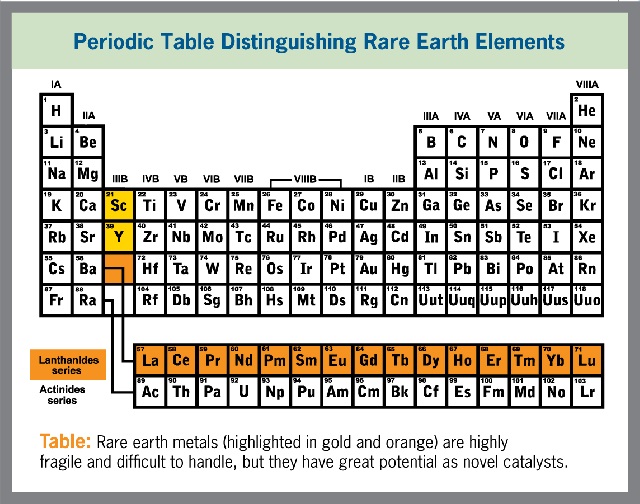
CU Blog - Rare Earths - The new Rush - Photo 2o Ways to Impact Extractions (Page 195) – There is a “rush”/quest to harvest rare earth elements. [159] These include lanthanide elements (fifteen metallic chemical elements with atomic numbers 57 through 71, from lanthanum through lutetium) for metals that are ferromagnetic, this means their magnetism only appear at low temperatures. Rare earth magnets are made from these compounds and are ideal in many high-tech products. The CU will foster the regional exploration and extraction of these pricey materials.

o Start-up Benefits from the EEZ (Page 104) – The new Exclusive Economic Zone (EEZ) powers allows for the administration of mineral extraction (mines) and oil/natural gas. Risk management and disaster mitigation plan must therefore be embedded into every drilling permit/license, as a CU mandate is to protect tourism product – a “bird in hand is better than two in the bush”. In addition, there is the harvest possibility of rare earth elements, like lanthanide and lutetium. Recently (2010), these minerals were priced even higher than gold at $2,200/kg.

o Reference footnote # 159 (Page 361) – The Economist Magazine. “The Difference Engine: More precious than gold”. Posted September 17, 2010; retrieved for the book in September 2013 from: http://www.economist.com/blogs/babbage/2010/09/rare-earth_metals. This news article stressed this point:

The foregoing VIDEO depicts the need for technocratic management of the extraction process for Rare Earths. There is now a great demand for these minerals; but the supply source is rather limited. Yet they are not so rare; they may even be found in the Caribbean region. Thus the need to explore these opportunities. The Go Lean book serves as a roadmap for the introduction and implementation of the technocratic Caribbean Union Trade Federation (CU), for the elevation of Caribbean society. This CU/Go Lean roadmap has these 3 prime directives:

  • Optimization of the economic engines in order to grow the regional economy to $800 Billion and create 2.2 million new jobs.
  • Establishment of a security apparatus to protect the resultant economic engines and the environment.
  • Improvement of Caribbean governance – including oversight of Self-Governing Entities and the Exclusive Economic Zone – to support these engines.

The Go Lean roadmap seeks to promote and oversee the effort for the exploration and extraction of these minerals, recognizing that modern life needs the efficiency that comes from science. The “brick-and-mortar” of a lot of today’s electronic equipment and computer components depend on the magnetic properties associated with Rare Earth minerals. The progress that the CU envisions in the fields of Science, Technology, Engineering and Medicine (STEM) will require engagements with the metallurgy of electronics. We need full exploration of the Caribbean homelands and waters for natural sources of these minerals. Plus with “prices higher than gold”, there is the economic incentive to push forth investments in this industry space.

Early in the book, the need is stressed to be on-the-look-out for opportunities to optimize the region’s economic-security-governing engines. These pronouncements are stated in the Declaration of Interdependence (Pages 11 & 13):

iv. Whereas the natural formation of the landmass is in a tropical region, the flora and fauna allows for an inherent beauty that is enviable to peoples near and far. The structures must be strenuously guarded to protect and promote sustainable systems of commerce paramount to this reality.

v. Whereas the natural formation of our landmass and coastlines entail a large portion of waterscapes, the reality of management of our interior calls for extended oversight of the waterways between the islands. The internationally accepted 12-mile limits for national borders must be extended by International Tribunals to encompass the areas in between islands. The individual states must maintain their 12-mile borders while the sovereignty of this expanded area, the Exclusive Economic Zone, must be vested in the accedence of this Federation.

xi. Whereas all men are entitled to the benefits of good governance in a free society, “new guards” must be enacted to dissuade the emergence of incompetence, corruption, nepotism and cronyism at the peril of the people’s best interest. The Federation must guarantee the executions of a social contract between government and the governed.

xxvii. Whereas the region has endured a spectator status during the Industrial Revolution, we cannot stand on the sidelines of this new economy, the Information Revolution. Rather, the Federation must embrace all the tenets of Internet Communications Technology (ICT) to serve as an equalizing element in competition with the rest of the world. The Federation must bridge the digital divide and promote the community ethos that research/development is valuable and must be promoted and incentivized for adoption.

This commentary previously discussed details of mineral/oil extractions in the Caribbean region. Here is a sample of earlier blogs:

https://goleancaribbean.com/blog/?p=4476 Lessons Learned from Big Salt mining
https://goleancaribbean.com/blog/?p=3743 Caribbean Oil Producer – Trinidad – cuts 2015 budget as oil prices tumble
https://goleancaribbean.com/blog/?p=3213 Gas Prices Drop Below $2 due to global extraction policy
https://goleancaribbean.com/blog/?p=2857 Recycling Rare Earths materials – Entrepreneurism in Junk

The Go Lean roadmap details a series of community ethos, strategies, tactics, implementations and advocacies to foster the progress in the wide fields of extractions for mining, materials and drilling administration. The following list applies:

Community Ethos – Lean Operations Page 24
Community Ethos – Return on Investments Page 24
Community Ethos – Cooperatives Page 25
Community Ethos – Ways to Impact the Future Page 26
Community Ethos – Ways to Improve Negotiations Page 32
Anecdote – Pipeline Transport – Strategies, Tactics & Implementations for minerals Page 43
Strategy – Mission – Regulatory powers mineral/oil exploration and extraction in the EEZ Page 45
Strategy – Competitive Analysis – Businesses – Emergency Planning –vs- Litigation Page 52
Tactical – Fostering a Technocracy Page 64
Tactical – Growing the Economy to $800 Billion – Industrial Extractions Driver Page 68
Tactical – Separation of Powers – Environmental Control & Regulatory Commission Page 83
Tactical – Separation of Powers – Extractions (Mining, Materials, Drilling) Administration Page 83
Tactical – Separation of Powers – Transportation – Turnpike Operations – Pipelines Page 84
Anecdote – “Lean” in Government Permitting Page 93
Anecdote – Caribbean Energy Grid Implementation Page 100
Implementation – Ways to Pay for Change Page 101
Implementation – Start-up Benefits from the EEZ Page 104
Implementation – Steps to Implement Self-Governing Entities – Ideal for mines Page 105
Implementation – Ways to Develop Pipeline Industry – For Rare Earth Transport Page 107
Advocacy – Ways to Impact Public Works Page 175
Advocacy – Ways to Foster Cooperatives Page 176
Advocacy – Ways to Impact Monopolies – Environmental concerns, systemic threats Page 202
Advocacy – Ways to Improve   Extractions – Mining, Materials, Drilling Optimization Page 205
Advocacy – Ways to Develop the Auto Industry Page 206
Appendix – North Dakota Extractions – Economic-Societal Effects of a Boom Page 334

This commentary asserts that the need is undeniable for mineral exploration and extraction. This can help to build-up the economy and command more respect in the world’s industrial landscape. Shepherding the Caribbean economy – for Rare Earths extractions – is the job for technocrats, trained and accomplished from the battles of globalization and trade wars.

Industrial policy is among the heavy-lifting tasks for the lean, agile operations of the CU technocracy. Everyone, the people, businesses and institutions are hereby urged to lean-in to this roadmap to make the Caribbean a better place to live, work and play. 🙂

Download the book Go Lean … Caribbean – now!

Share this post:
, , ,

Tobago: A Model for Cruise Tourism

Go Lean Commentary

The Caribbean is composed of 30 member-states: countries, territories, and commonwealths. There are a lot of differences (5 colonial legacies, 4 different languages – even more dialects), and yet just one economy…primarily. The economic driver for most of the region is focused first on tourism.

This is good!

  • Non-renewal resources are not exhausted, exploited or consumed.

This is bad!

  • The mono-industrial reality overly depends on the prosperity of foreign countries.

It is what it is!

The book Go Lean…Caribbean addresses the economic needs of all the Caribbean, including the dimensions of the tourism sector. There are two options for visiting the Caribbean: stay-overs and cruises.

CU Blog - Tobago - A Model for Cruise Tourism - Photo 2

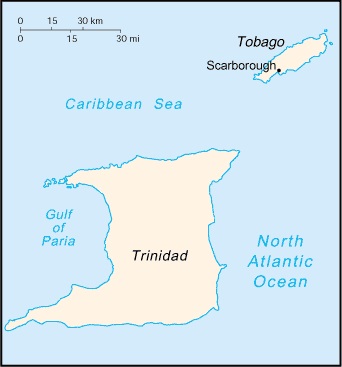
Scarborough, Tobago

CU Blog - Tobago - A Model for Cruise Tourism - Photo 1

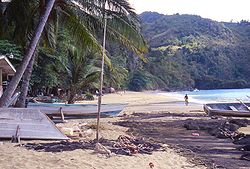
Beach scene on Tobago

From a strictly economic consideration, stay-overs are preferred. The visitors consume more of the local culture and spend more monies on amenities like hotels, taxis, restaurants, shopping and excursions. On the other hand, cruise passengers consume most of these amenities onboard the ships, with just spin-off revenues to the local port cities.

CU Blog - Tobago - A Model for Cruise Tourism - Photo 3The experience of tourism in the Caribbean is that there has been a sea-change since 2008; the crisis of the Great Recession deeply impacted the region as prosperity in the foreign countries – source markets – became spurious. Yes, the high-end tourist resorts have flourished since the Great Recession, but properties catering to the general middle class have floundered. The one exception being the emergence of the cruise industry as a viable vacation option for the general American population. The CU therefore plans to empower the industry directly, and to elevate the cruise industry’s impact on Caribbean society.

Plus, cruise lines are an effective way to introduce and grow a tourism product “from scratch”. This is the model for the island of Tobago, the secondary island (population of 62,000) in the federated Republic of Trinidad and Tobago. Tobago’s main economy is based on tourism, fishing, and government spending, with government spending being the largest; (the local governing body – the Tobago House of Assembly – employs 62% of the labor force). Tourism is still a fledgling industry on the island and needs to be further developed. There are no casinos, just two golf courses, and perhaps just one hotel classified among the Caribbean resort-variety; but the island boast great eco-tourism opportunities.

See this article here referring to the pending expansion of cruise operations to Tobago:

1. Title: More on Carnival’s Tobago Plans
By: The Caribbean Journal staff; retrieved from: http://www.caribjournal.com/2015/03/16/more-on-carnivals-tobago-plans/  

Carnival Cruise Lines has already announced its plans to visit Tobago next year, and now the company has revealed more information on its schedule.

The cruise line began visiting Tobago in February 2015, part of a longer itinerary that includes St Maarten, Dominica, Barbados, Scarborough, Grenada, Martinique, St Kitts and St Thomas.

“Based on feedback from our guests and travel agent partners, we’re delighted to offer these longer length voyages which provide vacationers an opportunity to visit some of the world’s most breathtaking destinations while enjoying all the wonderful on-board innovations and features found aboard Carnival’s ships,” said Terry Thornton, senior vice president of itinerary planning at Carnival.

The cruise line’s arrival will bring an estimated 10,642 Carnival passengers to the island next year.

VIDEO: Top 5 Beaches of Tobago – https://youtu.be/lpIg_6kzW0Q

Published on Dec 22, 2014 – Check out Tobago’s Top 5 Beaches as listed in the 2014 Tobago International Cycling Classic show which aired on ESPN in November. Tobago is one of the most beautiful islands in the Caribbean and it’s many beaches is one of the reasons.

The Go Lean book posits that this strategy is not enough; it is deficient to support a growing economy; to state better: an economy that should be growing. In general, the Caribbean economy is in crisis. Communities that are too dependent on tourism have suffered since 2008, directly and indirectly. Directly, the communities are deriving fewer returns from the tourism investments, especially where cruise operations are concerned. Indirectly, the crisis has driven many young ones to flee the region, setting their sights on foreign shores as the destination for their dreams and aspirations.

While Tobago is looking to expand its cruise traffic, as a way to springboard its nascent tourist industry, other communities are looking at ways to expand the yield from the existing cruise tourist traffic.

Consider this second news article here relating the efforts in Jamaica (and elsewhere) to increase the per-passenger average “spend” amounts:

2. Title: Jamaica unhappy with cruise pax spending
By: Gay Nagle Myers; Travel Weekly Magazine – Industry Periodical – Posted September 25, 2012; retrieved 03/18/2015 – http://www.travelweekly.com/Cruise-Travel/Jamaica-unhappy-with-spending-levels-of-cruise-passengers/

Jamaica’s cruise numbers saw solid growth last year, but tourism authorities there are not pleased with the level of per-passenger spending, which trails most other major cruise destinations in the Caribbean.

CU Blog - Tobago - A Model for Cruise Tourism - Photo 4Data about Jamaica’s cruise industry are contained in the recently released Annual Travel Statistics 2011, a hefty document published by the Jamaica Tourist Board that examines all facets of visitor arrivals, hotel occupancy by room size category and visitor expenditure.

Tourism data were compiled from embarkation/disembarkation cards filled out by visitors arriving by air and by exit surveys at the airports and at cruise ship piers.

Data on cruise ship arrivals were obtained from the ships’ manifests.

In many instances, the current figures are compared to figures for the years since 2007 to illustrate how well or poorly certain tourism segments are faring.

Jamaica had solid cruise growth in 2011, welcoming more than 1.1 million passengers, a jump of 23.7% over 2010.

The main contributing factor to the turnaround in passenger arrivals was the opening of the Falmouth pier in Trelawny in February 2011.

In the 11 months that followed, the port of Falmouth hosted 110 cruise ship calls and was the entry point for 456,442 cruise ship passengers, or 40.6% of all passengers arriving in Jamaica. That included 21 calls by Royal Caribbean International’s Oasis of the Seas, accounting for 125,023 passengers.

The port of Ocho Rios, which in the past provided the largest share of Jamaica’s cruise arrivals, accounted for 417,520 of total cruise passengers in 2011, or 37.1%.

The port of Montego Bay accounted for 250,491 passengers, or 22.3%. The problem lies in how much those passengers spent in their ports of arrival. Overall gross visitor expenditure in 2011 was estimated at just over $2 billion, an increase of just 0.4% over 2010.

Foreign visitors arriving by air spent $1.85 billion, while cruise passenger spend totaled $80 million, and nonresident Jamaicans visiting friends and family contributed $76 million.

This means that the average tourist on holiday spent $115.74 per person per night, while cruise passengers strolling the streets of Falmouth or the vendor stalls in Montego Bay spent just $71.27.

The level of cruise passenger spend is not sitting well with tourism officials. It represents a drop of 20%, or $16 per passenger, the lowest in 10 years, according to the JTB annual report.

This is a disappointing payback following the opening of the much-touted Falmouth pier.

William Tatham, vice president of the Port Authority of Jamaica, said tourism officials would like to see a 70% jump in the cruise spend per passenger, to $120 per person, in the coming cruise season.

That goal could be realized with the opening of Margaritaville Falmouth at the cruise pier later this year.

The planned $7 million, 17,000-square-foot attraction will include a pirate ship with a pool and water slide, a zipline and a Jacuzzi right on the dock, according to Ian Dear, CEO of Island Entertainment Brands, which operates 27 Margaritaville venues, four of them in Jamaica.

Even if Jamaica should reach its goal of passengers spending $120 a day, the island still will trail the Bahamas and the U.S. Virgin Islands, the Caribbean’s two top-volume cruise ports, when it comes to per-passenger spend.

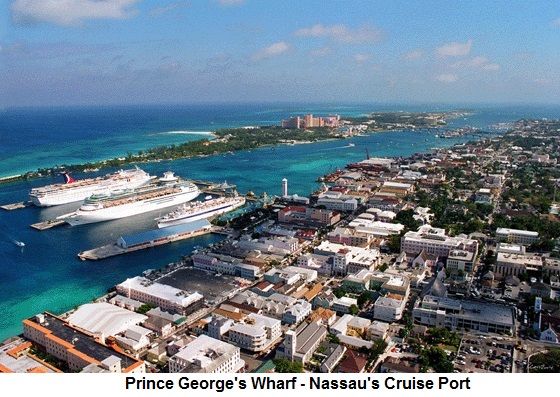
CU Blog - Tobago - A Model for Cruise Tourism - Photo 5The Bahamas welcomed 4.1 million cruise passengers in 2011, up 9.4% from the 3.8 million it welcomed in 2010.

The average spend of a Bahamas cruise passenger in 2012 is $111, up from $73 in 2011, according to Carla Stuart, director of cruise development for the Ministry of Tourism.

“The Bahamas remains the leader in the cruise industry in the region,” Stuart said. “For the first quarter of 2012, we saw more than an 11% increase in cruise arrivals compared to the same period in 2011. We expect this growth will continue throughout the year, bringing in significant revenue to small businesses and individuals employed directly and indirectly in the tourism sector.”

The USVI cruise numbers stood at 2 million in 2011, up 8.1% from 1.8 million in 2010, putting it third in cruise volume in the Caribbean region. (If Cozumel, Mexico, an island port in the Western Caribbean off Mexico’s Riviera Maya region, is factored into the Caribbean cruise data, it actually outranks the USVI with 2.8 million cruise arrivals in 2011, down 1.4% from the 2.9 million in 2010.)

Passengers disembarking in St. Thomas and St. Croix outspent those in Nassau and Freeport, Bahamas last year, dropping $156 per person on duty-free items, island tours, banana daiquiris at Mountaintop in St. Thomas or Buck Island snorkeling tours in St. Croix.

However, the 2011 figure fell from the 2010 figure of an average spend of $167 per cruise passenger, according to the Department of Tourism.

Projected cruise passenger spend for the U.S. Virgin Islands during the 2012-2013 cruise season is $165 per person.

The Caribbean region needs to focus on growing the economy and creating jobs. The Go Lean book asserts that this effort is too big a task for any one Caribbean member-state alone, that Jamaica, Tobago and other port cities need to convene, confederate and collaborate with the other regional member-states. As such, the Go Lean book serves as a roadmap for the introduction and implementation of the technocratic Caribbean Union Trade Federation (CU), for the elevation of Caribbean society – for all member-states including Tobago. This CU/Go Lean roadmap has these 3 prime directives:

  • Optimization of the economic engines in order to grow the regional economy to $800 Billion and create 2.2 million new jobs.
  • Establishment of a security apparatus to protect the resultant economic engines.
  • Improvement of Caribbean governance – including local government – to support these engines.

The Go Lean book (Page 193 – 10 Ways to Impact Cruise Tourism) makes this simple assertion that the unification of the region into a Single Market will allow for collective bargaining with the cruise industry; no one nation-state would have the clout of a unified market. The industry needs the Caribbean more than the Caribbean needs the industry. The ports-of-calls need to be able to generate more revenue from the visiting passengers, but the cruise line have embedded rules/regulations designed to maximize their revenues at the expense of the port-side establishments. There is a better way!

Yet still, the strategies and tactics of the Go Lean roadmap are not to be contrarian for the region’s business stakeholders, but rather to promote and facilitate more business options, even for the cruise lines – we are cheerleaders. The cruise lines will have a partner in this Trade Federation for facilitating the best Caribbean experience for their passengers. We want to make the Caribbean better … to live, work and play for visitors and residents alike. And when something goes awry, the CU’s Emergency protocols will be engaged to facilitate a quick recovery.

A win-win…

The book stresses (early at Page 11 & 14) the need to be on-guard for opportunities to expand cruise industry performance in these pronouncements in the Declaration of Interdependence:

iv.  Whereas the natural formation of the landmass is in a tropical region, the flora and fauna allows for an inherent beauty that is enviable to peoples near and far. The structures must be strenuously guarded to protect and promote sustainable systems of commerce paramount to this reality.

xxvi.  Whereas the Caribbean region must have new jobs to empower the engines of the economy and create the income sources for prosperity, and encourage the next generation to forge their dreams right at home, the Federation must therefore foster the development of new industries, like that of ship-building, automobile manufacturing, prefabricated housing, frozen foods, pipelines, call centers, and the prison industrial complex. In addition, the Federation must invigorate the enterprises related to existing industries like tourism, fisheries and lotteries – impacting the region with more jobs.

This commentary previously related details of Caribbean tourism dynamics and the region’s own job-creation efforts. Here is a sample of earlier blogs:

https://goleancaribbean.com/blog/?p=4263 State of Aruba’s Mono-Industrial Economy
https://goleancaribbean.com/blog/?p=4145 The African Renaissance  Monument – Model for Art Tourism
https://goleancaribbean.com/blog/?p=4058 The Bahamas missed tourism marketing in New York due to the New York Times focus on immigration dysfunction.
https://goleancaribbean.com/blog/?p=3743 Trinidad cuts budget as oil prices tumble – Perils of a mono-industrial economy.
https://goleancaribbean.com/blog/?p=2750 Disney World – Role Model for Touristic Self-Governing Entities
https://goleancaribbean.com/blog/?p=2571 More Business Travelers Flock to Airbnb
https://goleancaribbean.com/blog/?p=2207 Bad Model – Hotels making billions from Resort Fees
https://goleancaribbean.com/blog/?p=1984 Casinos Changing/Failing Business Model for Tourism activities
https://goleancaribbean.com/blog/?p=1943 The Future of Golf; Vital for Tourism, but failing badly
https://goleancaribbean.com/blog/?p=510 Florida’s Snowbirds Chilly Welcome – Bad Model for managing a great demographic and market potential.
https://goleancaribbean.com/blog/?p=273 10 Things We Want from the US – #2: Tourists
https://goleancaribbean.com/blog/?p=242 The Erosion of the Middle Class
https://goleancaribbean.com/blog/?p=235 Tourism’s changing profile

The Go Lean book and accompanying blogs posit that for the Caribbean tourism is undergoing change due to … a changing world:

“If we do what we have always done, we will no longer get what we always got”.

The world is now considered flat, because it is digital and connected. The region must explore all the marketing opportunities there-in. This is the charge of the Go Lean…Caribbean roadmap, to do the heavy-lifting, to implement the organizational dynamics to optimize Caribbean tourism here and now. The following are the community ethos, strategies, tactics, implementations and operational advocacies to effectuate this goal:

Community Ethos – People Respond to Incentives Page 21
Community Ethos – Economic Systems Influences Choices & Incentives Page 21
Community Ethos – Job Multiplier Page 22
Community Ethos – Lean Operations Page 24
Community Ethos – Ways to Improve Negotiations – Cruise Collective Bargaining Page 32
Community Ethos – Ways to Impact the Greater Good Page 37
Strategy – Vision – Make the Caribbean the Best Address on Planet Page 45
Strategy – Mission – Facilitate transportation options for passengers and cargo Page 46
Strategy – Agents of Change – Technology Page 57
Strategy – Agents of Change – Globalization Page 57
Anecdote – Carnival Corporation Strategy Report Page 61
Tactical – Separation of Powers – Tourism Promotion and Administration Page 78
Implementation – Assemble Regional Organs Page 95
Implementation – Ways to Deliver Page 109
Implementation – Ways to Impact Social Media – Tourism Outreach Page 111
Implementation – Ways to Benefit from Globalization Page 119
Implementation – Ways to Promote Independence Page 120
Planning – 10 Big Ideas for the Caribbean – Confederate to Single Market Page 127
Planning – Ways to Improve Trade Page 128
Planning – Lessons Learned from 2008 Page 136
Advocacy – Ways to Grow the Economy Page 151
Advocacy – Ways to Create Jobs Page 152
Advocacy – Ways to Improve Governance Page 168
Advocacy – Ways to Improve Local Governance – Help communities like Tobago Page 169
Advocacy – Ways to Reduce & Mitigate Crime – Against Tourist Protected Class Page 178
Advocacy – Ways to Enhance Tourism – Regional promotion and facilitation Page 190
Advocacy – Ways to Impact Cruise Tourism – 10 specific steps/actions for improvement Page 193
Advocacy – Ways to Improve Transportation – More efficiency in moving people Page 205
Advocacy – Ways to Preserve Caribbean Heritage … and Culture Page 218
Advocacy – Ways to Impact Trinidad & Tobago – More can be done Page 240
Appendix – Lessons Learned – Trinidad & Tobago – Floating the T&T Dollar Page 316

Cruising in the Caribbean is a great experience; we must grow this business. Staying-over in the Caribbean is even better, allowing more time to enjoy sun, sand, sea, surf, savor, salsa and smoke; (savor as in foods; salsa as in dance and smoke as in cigars). We can definitely grow this business with more technocratic deliveries. The Go Lean book provides 370 pages of turn-by-turn directions on how to accomplish this grandiose goal.

Now is the time for all of the Caribbean – the people, business and governing institutions – to lean-in to this Go Lean … Caribbean roadmap. This plan is conceivable, believable and achievable to make the region better places to live work and play. 🙂

Download the book Go Lean … Caribbean – now!

Share this post:
, , , , ,
[Top]

Burlington, Vermont: First city to be powered 100% by renewables

Go Lean Commentary

The idea of transforming to 100% renewable energy has been a dream for the Caribbean. It would accomplish 2 important objectives: environmental protection and economic efficiency.

Instead of dreaming, the following VIDEO demonstrates that it is no dream, but rather …

… energy based on 100% renewables sources is being done … now!

Title: Running on renewable energy, Burlington, Vermont powers green movement forward – http://video.pbs.org/viralplayer/2365415796

“Burlington, Vermont, the state’s largest city, recently became the first in the country to use 100 percent renewable energy for its residents’ electricity needs. In a state known for socially conscious policies, the feat represents a milestone in the growing green energy movement. NewsHour’s William Brangham reports on the implications for the country’s green movement.”

This is the energy-mix summary from this VIDEO:

  •  35% – from Bio Mass – Burning renewable wood pulp
  • 20% – Wind
  • 5% – Solar
  • 40% – Hydro-electric … from dams on 2 area rivers

Burlington - Photo 1

No doubt, these renewables bring many benefits in arresting “Climate Change”, but the economic benefits cannot be ignored. The City of Burlington, Vermont is expected to save $20 million over the next few years. But the biggest economic benefit is on the household level: no power price increases since 2009.

The environmental focus may be considered the primary focus of the Green movement. So be it!

This Green movement is a concept, a commitment and a cause that needs some assimilation in the Caribbean. The abundance of carbon dioxide in the earth’s atmosphere has been attributed to the devastating effects of Climate Change. The book Go Lean…Caribbean initiates with the pronouncement that our region is in crisis, one reason being Climate Change. The pressing need to be aware of this phenomena is pronounced early in the book in the Declaration of Interdependence (Page 11), with these words, (the first of many “causes of complaints”):

i.    Whereas the earth’s climate has undeniably changed resulting in more severe tropical weather storms, it is necessary to prepare to insure the safety and security of life, property and systems of commerce in our geographical region. As nature recognizes no borders in the target of its destruction, we also must set aside border considerations in the preparation and response to these weather challenges.

The motivation behind the Go Lean book is to serve as a roadmap for the introduction and implementation of the technocratic Caribbean Union Trade Federation (CU). This Go Lean roadmap has 3 prime directives that are above and beyond combating Climate Change. They are defined as follows:

  • Optimization of the economic engines in order to grow the regional economy.
  • Establishment of a security apparatus, including energy security, to protect the resultant economic engines.
  • Improvement of Caribbean governance to support these engines.

This is where the ‘Lean’ comes into play for this roadmap. According to the foregoing VIDEO, the strategy for renewables improves all the other societal engines: economic, [energy] security and governance. For the purpose of this Caribbean empowerment effort, ‘lean’ is more than just a description, it’s a noun, a verb, an adjective and an adverb. It is also a concept, commitment and cause in which the entire Caribbean region is urged to embrace and ‘lean in’.

The Caribbean is struggling with the costs and reality of energy. The Go Lean book relates (Page 100) that this region pays one of the highest rates in the world; averaging US$0.35 /kWh. The motivation of the Go Lean energy is to optimize energy options. The book posits that the average energy costs can come down to US$0.088/kWh with just a better mix of fossil-fuels and renewables.

The member-states in the Caribbean are not the only communities envisioning a 100% renewable strategy; consider Denmark here. This is en vogue right now, despite the different geographies.

Imagine 100% renewable; as it has happened in this US City of Burlington.

Burlington - Photo 2

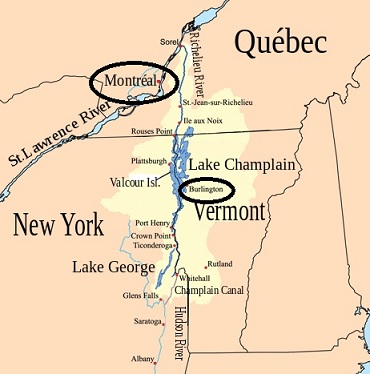
Burlington - Photo 4There is so much to benefit from a consideration of Burlington. Demographics-wise, it is so similar to many Caribbean towns. It is the largest city in the State of Vermont. It is international and regional, situated on the eastern shore of Lake Champlain, north of Shelburne Bay. It lies 45 miles south of the U.S.-Canadian (Vermont-Quebec) border and 94 miles south of Montreal. The City has a direct population of 42,417 (2010), but as the hub of the metropolitan area, consisting of the three northwestern Vermont counties has an effectual population of 213,701, approximately one third of Vermont’s total.[7]

If this city can get to 100% renewables, despite harsh winters for 3 months every year, imagine how much more so the Caribbean communities can with their near-365 days of sunshine. The mix for the Caribbean renewables will actually be different than Burlington, (or Denmark). Instead of wood pulp and hydro-electric, the Caribbean can consider tidal and geothermal (“Geyser”) steam-turbine energy (see Appendix below), in addition to the classic renewables of solar and wind.

These initiatives will take some strenuous effort on the part of Caribbean communities and governmental institutions. This heavy-lifting is part-and-parcel of the Go Lean roadmap. The roadmap details a series of community ethos, strategies, tactics, implementations and advocacies to foster the progress in the pursuits of green energy generation. The following list applies:

Community Ethos – Economic Systems Influence Individual Choices Page 21
Community Ethos – The Consequences of Choices Lie in the Future Page 21
Community Ethos – Lean Operations Page 24
Community Ethos – Return on Investments Page 24
Community Ethos – Cooperatives Page 25
Community Ethos – Regional Taxi Commissions – to push renewables Page 25
Community Ethos – Non-Government Organizations Page 25
Community Ethos – Ways to Impact the Future Page 26
Community Ethos – Ways to Improve Negotiations Page 32
Anecdote – Pipeline Transport – Strategies, Tactics & Implementations Page 43
Strategy – Harness the power of the sun/winds/tides Page 46
Tactical – Fostering a Technocracy Page 82
Tactical – Separation of Powers – Energy Commission Page 82
Anecdote – “Lean” in Government – Energy Permits Page 93
Anecdote – Caribbean Energy Grid Implementation Page 100
Implementation – Ways to Develop Pipeline Industry Page 107
Implementation – Ways to Improve Energy Usage Page 113
Advocacy – Ways to Impact Public Works Page 175
Advocacy – Ways to Foster Cooperatives Page 176
Advocacy – Ways to Impact Monopolies Page 202

The Caribbean energy needs are undeniable. The effects of fossil-fueled-driven Climate Change are undeniable. The Caribbean energy options are vast. There is simply the need for the commitment. The Go Lean roadmap shows that commitment. It is the quest to make this region a better place to live, work and play. This has been a constant theme of many other Go Lean commentaries; see this sample:

https://goleancaribbean.com/blog/?p=4294 The US trying to lead the Caribbean to energy security and energy independence; but rather their self-interest is pronounced.
https://goleancaribbean.com/blog/?p=3743 The need for Trinidad to diversify from an oil-based mono-industrial economy; change is coming.
https://goleancaribbean.com/blog/?p=3326 M-1 Rail: Alternative Green Motion in the Motor City
https://goleancaribbean.com/blog/?p=3213 Gas prices drop below $2.00 – The world tire of gasoline price cycles
https://goleancaribbean.com/blog/?p=2769 DC Streetcars – Green Manifestation and Model For Caribbean Re-development
https://goleancaribbean.com/blog/?p=2585 A Lesson in History: Concorde SST inefficient fuel reality doomed innovative project
https://goleancaribbean.com/blog/?p=2465 Book Review: ‘This Changes Everything: Capitalism vs. the Climate’
https://goleancaribbean.com/blog/?p=2276 The need for renewable – Climate Change may affect food supply within a decade
https://goleancaribbean.com/blog/?p=2119 Cooling Effect – Oceans and the Climate
https://goleancaribbean.com/blog/?p=1883 Climate Change May Bring More Kidney Stones
https://goleancaribbean.com/blog/?p=1817 Caribbean grapples with intense new cycles of flooding & drought
https://goleancaribbean.com/blog/?p=926 Conservative heavyweights have solar industry in their sights
https://goleancaribbean.com/blog/?p=915 Go Green Caribbean – Renewable energy pursuits in the region
https://goleancaribbean.com/blog/?p=623 Only at the precipice, do they change

The Go Lean book opened (Page 3) with the job description for the CU technocracy to make better provisions for the region’s basic needs (food, clothing, energy and shelter), and then be in position to supply the rest of the world. There are energy (oil) exporting countries in the Caribbean (Trinidad & Tobago, Belize). Despite this reality, petroleum (gasoline and diesel) is very expensive in the region. Plus with the world’s fixation to graduate from fossil fuels – green movement – there is the need now to fully embrace renewable energy options, maybe even for 100%.

Now is the time for all of the Caribbean, the people, businesses, institutions and governments, to lean-in for the optimizations and opportunities described in the book Go Lean … Caribbean.

This is now more than just a dream. 🙂

Download the free e-Book of Go Lean … Caribbean – now!

————

APPENDIX – The Geysers – 50 Year Anniversary – https://player.vimeo.com/video/58388803

The Special Properties of Geothermal Sites – Drill deep enough and the earth is hot everywhere, but converting that heat to power is a challenge. Sites such as The Geysers in Northern California USA, where the heat is close to the surface and deep rock layers are fractured to allow water to percolate through, are quite rare.

Share this post:
, ,
[Top]

Role Model: Innovative Educator Ron Clark

Go Lean Commentary

There are many empowerment plans to elevate communities; these have many different strategies, tactics, and implementations. But one thing is always consistent: Education. More education always benefits individuals and communities; it brings social mobility and facilitates new economic opportunities.

The book Go Lean…Caribbean asserts that education must be transformed and reformed to glean the full benefits for the Caribbean region. The region has often failed at education; and education has often failed the region. There is the need for new education systems and role models, for primary, secondary and tertiary institutions.

We have to rise above the failures and garner some success. We need the upward mobility that education can generate.

While there is a consideration for adult, vocational and on-the-job education in the Go Lean book, the focus of this commentary is directed more towards young people.

CU Blog - Role Model - Innovative Educator Ron Clark - Photo 1

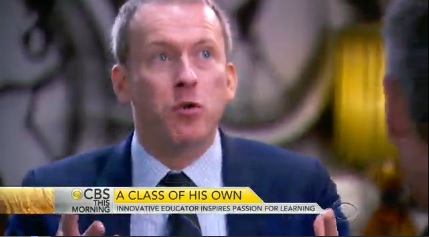
We now have the privilege to study other role models; this time an innovative educator Ron Clark of Atlanta; see Appendix A below and VIDEO here:

VIDEO: Innovative educator Ron Clark inspires passion for learning – http://www.cbsnews.com/videos/innovative-educator-ron-clark-inspires-passion-for-learning/

March 13, 2015 – Math and history are just some of the subjects at the Ron Clark Academy. The Atlanta middle school teaches everything from eye contact to the value of friendly competition. It’s a method that makes kids want to attend class. Mark Strassmann reports on how the founder maintains the fun under a cloud of 55 strict rules. (VIDEO plays best in Internet Explorer).

From a strictly micro, or individual perspective, education is great for the individual. Research by Economists have established that with every additional year of schooling, an individual increases their earnings by about 10%. This is a very impressive rate of return. The Go Lean book quotes these proven economic studies, showing the impact that these additional years of college education have on individuals’ earning power (Page 258). But from the macro perspective – the community – the experience is different for the Caribbean; rather than gains, the Caribbean has experienced losses because of an incontrovertible brain drain. Previous blogs/commentaries on education subjects relate to this theme of empowering education; see sample list here:

https://goleancaribbean.com/blog/?p=4263 Aruba’s economy and education brain drain to the Netherlands
https://goleancaribbean.com/blog/?p=4240 Immigration policy exacerbates further the worker productivity crisis due to education deficiencies
https://goleancaribbean.com/blog/?p=2183 Bad American Model: Education Textbooks – Case of price-gouging
https://goleancaribbean.com/blog/?p=1698 The need for more specialized education – STEM jobs are filling slowly
https://goleancaribbean.com/blog/?p=1634 Book Review: ‘Chasing Youth Culture and Getting It Right’
https://goleancaribbean.com/blog/?p=1433 Caribbean loses more than 70 percent of tertiary educated to brain drain
https://goleancaribbean.com/blog/?p=1112 Bad Model: Zuckerberg’s $100 Million for Newark’s schools wasted
https://goleancaribbean.com/blog/?p=459 Caribbean Examination Council and an UK education publisher hosting workshops in Barbados
https://goleancaribbean.com/blog/?p=228 Egalitarianism versus Anarchism – The latter is best for Education

The foregoing VIDEO is not a focus on college/tertiary education, but rather primary-secondary education (middle school) and how the embrace of advanced teaching “arts & sciences” can level the playing field for those enabled or disadvantaged for societal progress. The VIDEO relates this anecdote of just one role model. This aligns with the Go Lean book’s assertion (Page 122) that one motivated person can make a difference in society. We truly need many advocates, many more “Ron Clarks”.

This book Go Lean… Caribbean, serves as a roadmap for the introduction and implementation of the Caribbean Union Trade Federation (CU). While education policy is a direct responsibility of individual member-state/territory governments, the CU will make an impact as it represents change/empowerment for the region’s societal engines, corresponding with the prime directives, as follows:

  • Optimization of the economic engines in order to grow the regional economy.
  • Establishment of a security apparatus to protect the resultant economic engines.
  • Improvement of Caribbean governance, including member-states educational administrations, to support these engines.

The Go Lean book posits that education is a vital consideration for Caribbean economic empowerment, but there have been a lot of flawed decision-making in the past, both individually and community-wise. (Consider one example of Government grants and scholarships for students that never return “home”). The vision of the CU is a confederation of the 30 member-states of the Caribbean to do the heavy-lifting of championing better educational policies. There is the structure of a separation-of-powers between CU agencies and the individual member-states.

The Go Lean roadmap provides turn-by-turn directions on how to reform the Caribbean education systems, economy, governance and Caribbean society as a whole. This roadmap asserts that the Caribbean is in crisis, and that this “crisis would be a terrible thing to waste”. As a planning tool, the roadmap commences with a Declaration of Interdependence, pronouncing the approach of regional integration (Page 12 & 14) as a viable solution to elevate the region’s educational opportunities:

xix.      Whereas our legacy in recent times is one of societal abandonment, it is imperative that incentives and encouragement be put in place to first dissuade the human flight, and then entice and welcome the return of our Diaspora back to our shores

xxi.      Whereas the preparation of our labor force can foster opportunities and dictate economic progress for current and future generations, the Federation must ensure that educational and job training (O.J.T.) opportunities are fully optimized for all residents of all member-states, with no partiality towards any gender or ethnic group. The Federation must recognize and facilitate excellence in many different fields of endeavor, including sciences, languages, arts, music and sports. This responsibility should be executed without incurring the risks of further human flight, as has been the past history.

xxvii.      Whereas the region has endured a spectator status during the Industrial Revolution, we cannot stand on the sidelines of this new economy, the Information Revolution. Rather, the Federation must embrace all the tenets of Internet Communications Technology (ICT) to serve as an equalizing element in competition with the rest of the world. The Federation must bridge the digital divide and promote the community ethos that research/development is valuable and must be promoted and incentivized for adoption.

Ron Clark, in the foregoing VIDEO, is a role model for the Caribbean to emulate. While we cannot duplicate him personally, we can duplicate his creation and the passion of his academy; defined as follows, retrieved from http://en.wikipedia.org/wiki/Ron_Clark_(teacher):

Ron Clark Academy

History
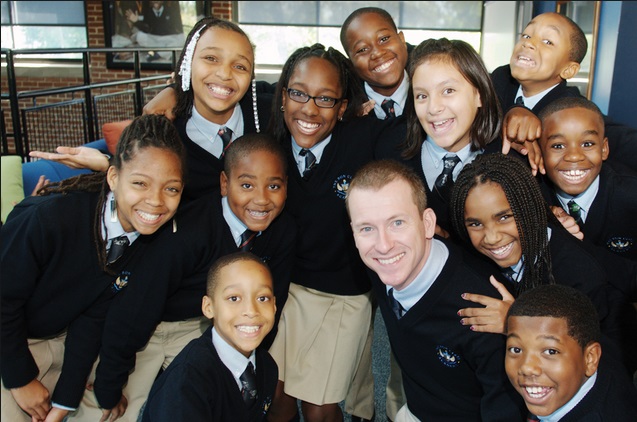
CU Blog - Role Model - Innovative Educator Ron Clark - Photo 2The Ron Clark Academy is a non-profit middle school, housed in a renovated red brick warehouse[5] and is located in southeast Atlanta, Georgia, and accommodates fifth through eighth grade students. Students are from low wealth to high wealth families. Clark had planned to build the school for ten years before construction began. Along with the proceeds of his two books The Essential 55 and The Excellent 11, Clark raised additional funding for the project which eventually cost over $3.5 million. Clark then went on an interviewing rampage for students and faculty and established his team and the academy was established on June 25, 2007. Classes began for students on September 4, 2007. The Ron Clark Academy hosts a Model United Nations conference in Atlanta, called the Ron Clark Model UN. The conference does not accept pre-written resolutions, instead requires position papers. Ron Clark gave a speech during the opening ceremonies about how he and his students raised $12,000 for an ad in USA Today, and then how he raised the money for bus fares to Washington. “The Academy has received both national and international recognition for its success in educating students with academic rigor, passion, and creativity balanced by a strict code of discipline”.[6] The mission of the academy is “to deliver the highest quality educational experience where global citizens are born through advanced rigor, engaging teaching methods, and a passionate climate and culture”.[6]

A collection of business professionals make up the Board of Trustees.[7] The Coca Cola Foundation is among its “Founding Sponsors” and The Atlanta Hawks is one of its “Head of the Class” donors.[8]

Atmosphere
The overall atmosphere of the academy is fun, electrified, and blissful. All the students are very welcoming with greetings of hugs and smiles. There is music playing all throughout the school; kids and teachers are all dancing and jumping on a trampoline. The walls are painted with bright colors and there’s a huge slide right in front of the door going from the second floor to the first floor, welcoming the children, which is “a reminder to the kids that anyone can learn in their own way”.[9]

Test scores
Ron Clark is best known for raising test scores, his improvements of scores are as followed. In 2013, the students at the academy had a high percentage of growth in their test scores in all subjects. This helped students receive scholarships for high schools in Georgia. “In Reading, the test scores went up by 19%, in Math they went up by 29%, Language Arts was increased by 15%, Science 15% and Social Studies 20%”.[6] Ron was able to raise his students test scores by encouraging everyone to try harder. Ron Clark also always had faith in the kids and tried to build them up and not put them down. The fun learning atmosphere also helped the growth of test scores.

Teaching styles
All the teachers at the academy have their own way of teaching, including Clark, but all the teachers share the passion of what they do. The educators not only teach the students the necessary subjects, they also teach them manners and how to be a better person. The whole school just has a great atmosphere which carries on into the classroom and makes the students excited to learn. The kids and the teachers are always up dancing and always moving. Boring moments are one thing that do not exist at the academy. The students are very involved and are very uplifting to each other, for example, when a kid gets a question right all the other students applaud.

Technology and facilities
Each classroom provides students with technology such as notebook computers, interactive whiteboards, digital cameras, projectors, and audio-video equipment. In addition to the technologically-equipped classrooms, the school provides students with accessible amenities such as a recording studio, a darkroom, a two-story vaulted ceiling library, a gymnasium, and a dance studio.

The Ron Clark Academy uses donated computers in all classrooms and offices.[10] As a result, students will be able to study photography, music production, and business leadership.

Student population
The students that attend The Ron Clark Academy come from a range of backgrounds, including students from high wealth families. Students must go through an application process in order to be accepted into the school. Only 50 students were accepted out of 350 applications the first school year. Students must be nominated for the school and then must apply. Students’ applications are then reviewed by Ron Clark and other teachers and students are selected to be interviewed by the school. If accepted, students’ parents must sign a Contract of Obligation in which parents agree to volunteer 40 hours of their time each quarter. They also will have to allow their child to go on mandatory field trips essential to the curriculum.[11]

Media attention
Students in debate class at Ron Clark Academy created a song about the 2008 U.S. presidential election, “Vote However You Like”, to the same beat and melody of “Whatever You Like” by [Hip Hop Artist] T.I. A performance of the song by 6th and 7th graders was posted on the internet and drew national attention. The video had now been viewed over 2 million times.[12] T.I., himself, paid a surprise visit to the Academy after learning of their remake of his song to watch them perform it in person.[13] On October 31, 2008, the “Students of Ron Clark Academy” were named the ABC Person of the Week by ABC World News Tonight.[14] They were also invited to perform at the 2009 Inauguration.[15] [Subsequently, the Academy repeated this effort for the 2012 Presidential election, see the VIDEO in Appendix B].

In December 2008, Oprah Winfrey donated $365,000 to Ron Clark, for the Ron Clark Academy, for his profound dedication to teaching.

There is much for the Caribbean to glean considering this model of Ron Clark and his Academy. For starters, the Go Lean roadmap details a plan for Charter Schools. This allows for Public-Private-Partnerships in the education arena. This would force a new regime on the region’s educational landscape.

Change has now come. The driver of this change is technology and globalization. Under the tenants of globalization, the Caribbean labor pool is a commodity; their talents are subject to the economic realities of supply-and-demand. The Go Lean book posits therefore that the governmental administrations of the region should invest in better education options, and as much technological educational advances (e-Learning) as possible, for its citizens. The bottom-line motive should be the Greater Good not profit or emigration.

How exactly do we accomplish this goal? The book details new education policies; and other community ethos to adopt, plus the executions of the following strategies, tactics, implementations and advocacies to impact the education arena in the region:

Foreword – Lean On Me Film – Inspiration for Educational Reform Page 5
Community Ethos – Deferred Gratification Page 21
Community Ethos – People Respond to Incentives Page 21
Community Ethos – Job Multiplier Page 22
Community Ethos – Lean Operations Page 24
Community Ethos – Return on Investments (ROI) Page 24
Community Ethos – Ways to Impact the Future Page 26
Community Ethos – Ways to Foster Genius Page 27
Community Ethos – Ways to Help Entrepreneurship – Incubator Training Page 28
Tactical – Separation of Powers – Education Department Page 85
Tactical – Separation of Powers – Labor Department – O.J.T. Oversight Page 89
Advocacy – Ways to Grow the Economy Page 151
Advocacy – Ways to Create Jobs Page 152
Advocacy – Ways to Improve Education Page 159
Advocacy – Ways to Impact Student Loans – Forgive-able for incentives Page 160
Advocacy – Ways to Improve Governance Page 169
Advocacy – Ways to Improve Libraries Page 187
Appendix – Education and Economic Growth Page 258
Appendix – Measuring Education with Standardized Testing Page 266

Now is the time for all of the Caribbean, the people and governing institutions, to lean-in for the empowerments described in the book Go Lean … Caribbean. We welcome role models like Ron Clark and others with a desire to empower young people in their communities, especially disadvantaged minorities. Except that we would want this empowerment done in the Caribbean so as to benefit the Caribbean. No more societal abandonment; no more brain drain!

This is the quest of the Go Lean/CU effort. The roadmap contains the complete solution to elevate the Caribbean through education. This will  thusly help the region to be better place to live, work, learn and play. 🙂

Download the book Go Lean … Caribbean – now!

———

Appendix A – Ron Clark Profile:

Ron L. Clark, Jr. (born 1972)[1][2] is an American educator – currently teaching in Atlanta, Georgia – who has worked with disadvantaged students in rural North Carolina and Harlem, New York City. He is best known for his ability to raise test scores and his books on teaching children in middle schools. Clark is a New York Times bestselling author and has been interviewed by many TV personalities including Oprah Winfrey. He is also a speaker who goes from school to school talking to educators about all of his thoughts and opinions on inspiring his educators.

Background
Clark was educated at East Carolina University through the North Carolina Teaching Fellows program. After graduation he got a job and saved up enough money to buy a plane ticket to London. When he arrived in London he got a job at a restaurant where he was a singing and dancing waiter. He then started traveling from country-to-country.[3] He then flew home to North Carolina and accepted a job in Aurora, North Carolina. Four years later he departed for Harlem to take a job teaching elementary school in an inner-city setting. Clark’s latest project is the Ron Clark Academy, a private non-profit school in Atlanta, Georgia where students follow a unique curriculum. The school also gives students opportunities for international travel and offers training workshops for teachers to learn more about Clark’s teaching methods.

Accolades
Clark is known for his ability to raise test scores by using unique methods that incorporate innovation, creativity and 55 classroom rules. He has appeared on many national TV shows, including two appearances on The Oprah Winfrey Show, where Ms. Winfrey named him as her first “Phenomenal Man.”

Clark received the 2000 Disney Teacher of the Year award[4] from Disney, which owns Hyperion Books.

Clark’s first year spent in Harlem was the focus of a 2006 made-for-TV movie, The Ron Clark Story, starring Matthew Perry, which garnered an Emmy nomination for Executive Producers Howard Burkons, Adam Gilad and Brenda Friend. See the trailer/VIDEO in Appendix C.

Source: http://en.wikipedia.org/wiki/Ron_Clark_(teacher); retrieved March 14, 2015.

———

Appendix B – VIDEO: “Vote Like That” 2012 Election Song – The Ron Clark Academy – https://youtu.be/9hqme4X1b7E

Published on Oct 25, 2012 – The students of the Ron Clark Academy perform “Vote Like That”, a parody of Cher Lloyd’s “Want U Back” designed to encourage everyone to vote.

———

Appendix C – VIDEO: Ron Clark Story Music Video – https://youtu.be/E-oSgrEaVd0

Uploaded on Dec 30, 2006 – This made-for-TV movie starring Matthew Perry is truly inspiring movie. This music video previews the film. The entire film (90 minutes) is available here: https://youtu.be/xVsld1Wls10


Share this post:
, ,
[Top]

Colorism in Cuba … and Beyond

Go Lean Commentary

Image is a problem for Cuba. Most people in the Western Hemisphere may only know of one Cuban, perhaps Fidel Castro. What’s more, most people only knew of one Cuban before the Castro era, that was “Rickie Ricardo” of I Love Lucy fame. Unfortunately this demographic is not fully representative of Cuba’s population. Cuba has always had a large Black population; (though as a minority group during the Rickie Ricardo era). After the Cuban Communist Revolution, and the wholesale abandonment of most of the White community, today, Cuba is a majority Black nation … by far.

… and yet Majority Rule has eluded them.
… economic power has also eluded this population.

Change is now afoot!

This subject of managing change has been a familiar theme in the book Go Lean…Caribbean. Also the theme of preparing for and rebooting Cuba has been frequently detailed in previous blog commentaries. Now, the consideration is the unavoidable clashes regarding race that will surely take place in a post-Castro Cuba.

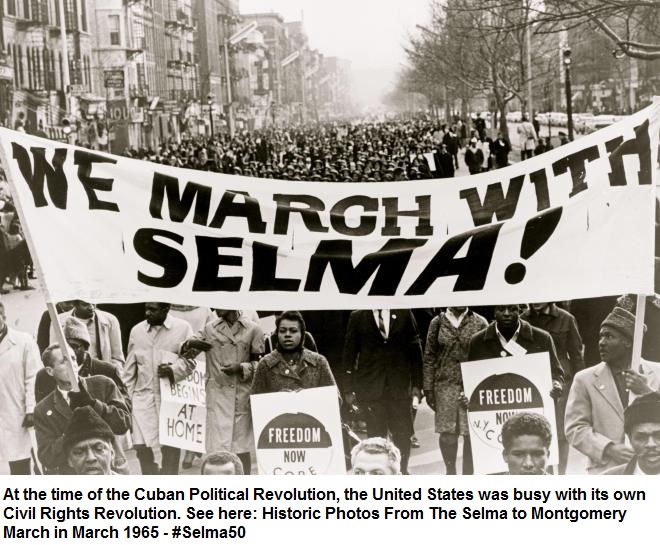
Many other societies have had these clashes. Whether violent or just political; change in the area of race has been hard-fought. Consider the upheavals for the US during the 1960’s. (See Photo below). Cuba did not benefit from this American civil rights movement; they did not sow, so they have not reaped. They were fresh into their own political revolution with the embrace of communism, alienation of American society and mass exodus of so many citizens.

This is the assertion of a prominent Cuban-American politician in Miami, Florida – a strong-bed for the Cuban Diaspora and Cuban-American communities. See his editorial here:

Title: Blacks in Cuba are poised to make gains
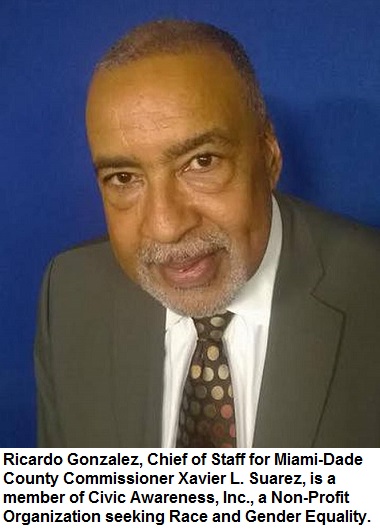
By: Ricardo Gonzalez

CU Blog - Colorism in Cuba ... and Beyond - Photo 1For the first time in more than a century, black Cubans might have a real opportunity to gain the enfranchisement and equality for which our ancestors fought so hard — and were on the verge of winning — only to see their hopes and aspirations frustrated when a U.S. naval ship was blown to pieces in the port of Havana in 1898.

The blood and sweat of our forefathers in the overwhelmingly Black Mambi army was shed for naught as our nation and the 20th century were born. Since Cuba’s inception in 1902, its black citizens never truly gained equal footing in that troubled country. Despite their decisive role in the struggle for independence from colonialism, blacks were almost totally excluded from all levels of power and denied full participation in the everyday life in the fledgling nation.

Unhappy with their exclusion and seeking a better compact, black Cubans were once again prevented from gaining the equality they thought they had earned in the battlefield when their nascent racial movement seeking social justice was violently decapitated — literally, in some cases — a decade later. What followed was a long, hard procession of years of drudgery — sprinkled with a few, incremental gains — under the suffocating hardships of Cuba’s tropical version of Jim Crow.

In 1959, the Cuban Revolution artfully gained control of every aspect of Cuban life and promised to eradicate all vestiges of racial injustice in the island. Shortly thereafter, la Revolución, loudly, proudly and unilaterally, proclaimed victory in its self-declared fight against racism and promptly proceeded to label anyone who dared bring up the topic of racial inequality as a counter-revolutionary and applied “revolutionary” punishment and penalties to those who dared to transgress.

More than half a century later, however, whether by government intent or simply as a result of misguided policies, black Cuba is immersed in its most difficult juncture; at a disadvantage economically (reduced access to foreign currencies), politically (little to no representation in government) and sociologically (i.e., marginalized, racially profiled, disproportionally incarcerated, etc.).

Truth be told, throughout its history, Cuba has never been kind to its darker citizens, regardless of who has been in power or his political ideology. It is time for that elephant in the room to be both acknowledged and dealt with.

Now the catastrophic dynasty that has afflicted our nation for almost 60 years finally appears to be near its end — Father Time and biology proving to be our only true and reliable friends. Add the surprising announcement of an attempt to normalize relations between Cuba and United States, and Cubans — black, mulatto and white — might soon have the opportunity to “reboot,” to recreate a new, more inclusive nation; a nation “with all and for the wellbeing of all,” as dreamed by Jose Marti.

Skeptics will say that nothing will change, that the Castro clan will never relinquish power, or that the generals and/or other parasites will cling to their perquisites by any means necessary. But the fact is that in the not-too-distant future, we can envision both brothers leaving the scene, either in a pine box or to convalesce at a well-appointed home for retired dictators.

With those two out of the picture, and with whatever new relationship that evolves from the recent rapprochement with the United   States, there is little doubt that our nation is headed to a new dawn, a different way of doing business.

Black Cubans, who by all measurable accounts have borne the brunt of the damage wreaked by the regime, are well positioned to finally savor their rightful — and so far elusive — share. By essentially heaping misery and squalor on the entire population and thus somewhat “leveling the playing field,” the Cuban Revolution has given Cubans of color, for the first time, the ability to compete academically, culturally and socially with their white compatriots. It is not an accident that a good percentage of the most prominent dissidents in the island are people of color.

And let us not forget that, contrary to the Cuban government’s official numbers, Afro-Cubans are no longer the minority. Malcolm X once said: “The future belongs to those who prepare for it today.” I will simply follow the advice of an old wise man who once said to me; “Stick always with the optimists, because life is hard even if they are right.”
Miami Herald Editorial – South Florida Daily Newspaper – Posted 03/07/2015; retrieved 03/10/2015:
http://www.miamiherald.com/opinion/op-ed/article12875840.html

We march with Selma!The Cuban revolution occurred in 1959 and the political intrigue (Cold War, Missile Crisis, Bay of Pigs, Embargo, Pedro Pan Exodus, etc.) was heightened all during the 1960’s. While the US and many other Western countries confronted their racial past and effected change accordingly, Cuba was on the sidelines. So now that Cuba may soon be graduating from alienation to participation in the world’s economic order, a lot of the changes that their society would have to assimilate are really questions at this time:

  • Did Cuban society formally end their pre-revolution segregation policies voluntarily or were they forced into compliance by the Communists Military Might?
  • Will Cuba immediately accept the new human/civil rights standards for race and gender equality that is the best-practice in Western society (North America and Europe)?
  • Will the Cuban Diaspora still long for the days of a Cuba segregated by the races or has the transformation of Western society really taken root?
  • Will the still-present US practice of colorism (see below) in the Black community – very much prominent in the Latin world – be even more heightened in a new Cuba?

These are valid and appropriate questions. Everywhere else when Communism fell, sectarian divisions and violence erupted; many times fueled by the same prejudices that predated the Communist revolutions; (think ethnic cleansing in the former Yugoslavia: Slovenia, Serbia, Croatia, Kosovo, Bosnia-Herzegovina, and Macedonia). There will truly be a need for earnest reconciliation in Cuba.

CU Blog - Colorism in Cuba ... and Beyond - Photo 3

The issues of race reconciliation and Cuban reconciliation collide in this commentary. These have been frequently detailed in these Go Lean blogs. Consider these previous entries:

https://goleancaribbean.com/blog/?p=4487 Historical Black College most effective with Social Mobility
https://goleancaribbean.com/blog/?p=4447 Probe of Ferguson-Missouri finds bias from cops, courts
https://goleancaribbean.com/blog/?p=3662 Migrant flow into US from Caribbean (i.e. Cuba) spikes
https://goleancaribbean.com/blog/?p=3455 Restoration of Diplomatic Relations with Cuba
https://goleancaribbean.com/blog/?p=3354 CARICOM Chair calls for an end to US embargo on Cuba
https://goleancaribbean.com/blog/?p=2547 Miami’s Success versus Caribbean Failure
https://goleancaribbean.com/blog/?p=1609 Cuba mulls economy in Parliament session
https://goleancaribbean.com/blog/?p=2222 Sports Role Model – Playing For Racial Pride … And More
https://goleancaribbean.com/blog/?p=1918 Philadelphia Freedom – Community Model for Forging Change
https://goleancaribbean.com/blog/?p=1773 Miami’s Caribbean Marketplace Re-opens as a Welcome Mat
https://goleancaribbean.com/blog/?p=1531 A Lesson in History: 100 Years Ago Today – World War I
https://goleancaribbean.com/blog/?p=1020 Sports Revolutionary Issues Re: Racism against Black Athletes
https://goleancaribbean.com/blog/?p=789 America’s War on the Caribbean

The book Go Lean…Caribbean serves as a roadmap for the introduction and implementation of the Caribbean Union Trade Federation (CU); an initiative to bring change and empowerment to the Caribbean region, including Cuba. Since Cuba is the largest country – land-wide and population – in the Caribbean region, any changes there will have an impact on the rest of the region. The goal of this roadmap is to anticipate the change, forge the change and guide the changes in our society for positive outcomes. We want to make the Caribbean region a better homeland to live, work and play for every island, every language group; just everyone. There is some degree of urgency and imminence to this cause as Cuba’s current President, Raul Castro has announced that he will retire in 2017. At that point, there will be no more “Castros” at the helm of Cuba.

To accomplish this audacious goal, this Go Lean roadmap has the following 3 prime directives:

  • Optimization of the economic engines in order to grow the regional economy to $800 Billion & create 2.2 million new jobs.
  • Establishment of a security apparatus to protect the resultant economic engines.
  • Improve Caribbean governance to support these engines.

The book describes the CU as a technocratic administration with many missions to elevate the Caribbean homeland. The underlying goal is stated early in the book with this pronouncement in the opening Declaration of Interdependence (Page 12):

xii. Whereas the legacy in recent times in individual states may be that of ineffectual governance with no redress to higher authority, the accedence of this Federation will ensure accountability and escalation of the human and civil rights of the people for good governance, justice assurances, due process and the rule of law…

xiii.  Whereas the legacy of dissensions in many member-states (for example: Haiti and Cuba) will require a concerted effort to integrate the exile community’s repatriation, the Federation must arrange for Reconciliation Commissions to satiate a demand for justice.

Change has come to the Caribbean. But as depicted in the subsequent VIDEO, this same change came to the US, and yet strong feelings about skin color persist. The Go Lean book declares that permanent change is possible, but to foster success, a community must first adopt new ethos, the national spirit that drives the character and identity of its people. The community ethos of sharing, tolerance, equality and the Greater Good were missing from pre-revolution Cuba. It is a mission of the Go Lean movement to ensure these inclusions for the new Cuba. The Go Lean roadmap was constructed with these community ethos in mind, plus the execution of strategies, tactics, implementation and advocacies to forge the identified permanent change in the region. The following is a sample of these specific details from the book:

Community Ethos – Deferred Gratification Page 21
Community Ethos – Economic Principles – People Choose Page 21
Community Ethos – Economic Principles – All Choices Involve Costs Page 21
Community Ethos – Economic Principles – People Respond to Incentives in Predictable Ways Page 21
Community Ethos – Economic Principles – Economic Systems Influence Individual Choices Page 21
Community Ethos – Economic Principles – The Consequences of Choices Lie in the Future Page 21
Community Ethos – Security Principles – Anti-Bullying and Mitigation Page 23
Community Ethos – Governing   Principles – Minority Equalization Page 24
Community Ethos – Governing   Principles – Lean Operations Page 24
Community Ethos –   Ways to Impact the Future Page 26
Community Ethos – Ways to Manage Reconciliations Page 34
Community Ethos – Ways to Improve Sharing Page 35
Community Ethos – Ways to Promote Happiness Page 36
Community Ethos – Ways to Impact the Greater Good Page 37
Anecdote – LCD versus an Entrepreneurial Ethos Page 39
Strategy – Vision – Confederation of the 30 Caribbean   Member-States into a Single Market Page 45
Strategy – Mission – Celebrate the Music, Sports, Art, People and Culture of the Caribbean Page 46
Tactical –   Confederating a Permanent Union Page 63
Tactical – Fostering a Technocracy Page 64
Tactical –  Separation of Powers: Federal Administration versus Member-States Governance Page 71
Implementation – Ways to Pay for Change Page 101
Implementation – Ways to Deliver Page 109
Planning – 10 Big Ideas for the Caribbean Region Page 127
Planning – Ways to Make the Caribbean Better Page 131
Planning – Ways to Better Manage Image – On guard against defamations Page 133
Advocacy – Ways to Grow the Economy Page 151
Advocacy – Ways to Create Jobs Page 152
Advocacy – Ways to Improve Education Page 159
Advocacy – Ways to Improve Governance in the Caribbean Region Page 168
Advocacy – Ways to Better Manage the Social Contract Page 170
Advocacy – Ways to Mitigate Terrorism Page 181
Advocacy – Ways to Improve Communications – To message for change Page 186
Advocacy – Ways Impact the Diaspora Page 217
Advocacy – Ways to Preserve Caribbean Heritage Page 218
Advocacy – Ways to Re-boot Cuba Page 236

The lessons in race relations and colorism are not perfected in the rest of the Caribbean. In fact, there are many human rights and civil rights abuses in the region. There is not one regional sentinel to be on guard against bad developments in race relations and work towards mitigating the effects. This is the charge of the CU. Nor, can the Caribbean region expect the US to lead in words or action for this serious issue. This VIDEO demonstrates many negative traits that still exist in the American homeland, and by extension, the rest of the Western Hemisphere:

VIDEO: Colorism – https://youtu.be/xD2WYJTG8ig


BlkGrlOnline
December 11, 2011 – I know you all have heard of the whole “Light Skin vs. Dark Skin” debate. Tyra Banks has discussed this and associated topics on her talk show, The Tyra Show. What do you think about this subject? And more importantly, why is this still an issue TODAY?
Note: I do not own or claim rights to the featured material.

There is still clash-and-conflict in the African-American communities, dating back to the days of Booker T Washington versus the W.E.B. Du Bois. Some modern labeling may be “Old-School versus Nu School”, “Hip-Hop versus Bourgeois”, even “Thugs versus ‘Acting White'”; the underlying conflict often times is a reflection of colorism in the Black Community. While these are all informal divisions, the formal (legal) institutions in America also have hardened lines involving Black-White race relations. Despite the presence of the country’s first Black President, Barack Obama, there is hardened opposition of any efforts he tries to make; consider the reality of the Tea Party opposition to Obama’s initiatives (like his signature ObamaCare Universal Health Program) just because they are his originations. Many times, this opposition is willing to sacrifice the Greater Good with the Federal Budget and Foreign Policy just to be contrarian.

Many question whether in the deep trenches of their hearts if many Americans have not really matured from the racial mindsets of the America of 1908, or 1958 (the era before Cuba’s revolution). We have our own problems in the Caribbean to contend with, many which we are failing at. But our biggest crisis stem from the fact that so many of our citizens have fled their Caribbean homelands for foreign (including American) shores. Therefore the quest for change must come from us in the Caribbean, by us and for us. We are inconsequential to the American decision-makers, so the US should not be the panacea of Caribbean hopes and dreams.

The Go Lean movement seeks to be better than even our American counterparts. We must be vigilant. We have seen post-Communist evolution before. It’s a “familiar movie”, we know how it ends.

We welcome the imminent change in Cuba, but we are on guard for emergence of new negative community ethos … or a return to old ones. 🙂

Download the book Go Lean … Caribbean – now!

Share this post:
, , ,
[Top]

FAMU is No. 3 for Facilitating Economic Opportunity

Go Lean Commentary

This commentary is a big proponent of a college education for Caribbean citizens.

This commentary is a big opponent of a college education for Caribbean citizens in American colleges and universities. The reason for the ambivalence on college education is consistent: the benefit of social mobility; facilitating new economic opportunities. We need this upward mobility for Caribbean citizens but in the Caribbean.

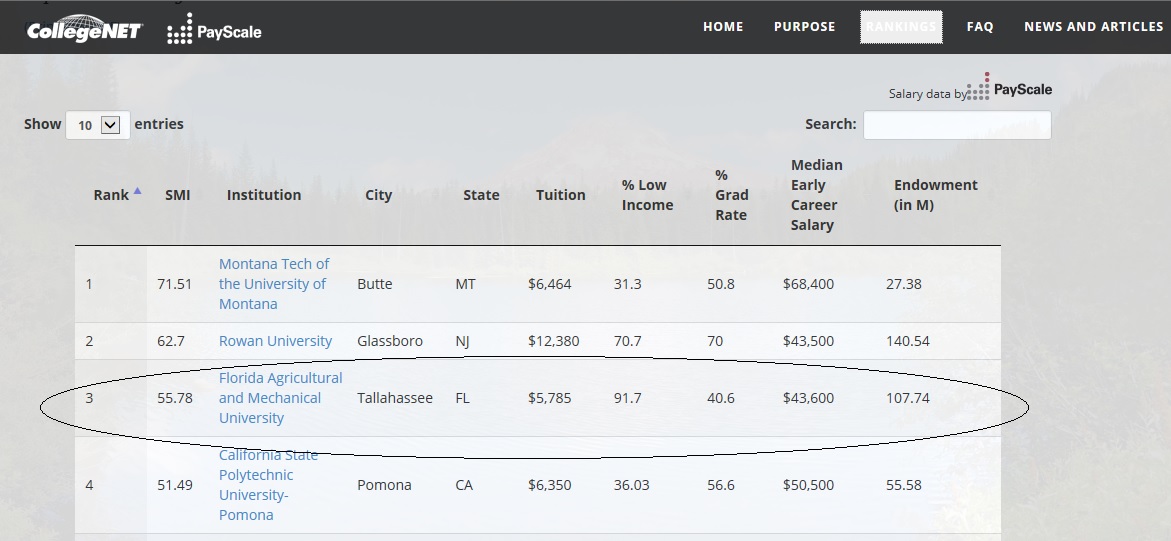
CU Blog - FAMU is No. 3 for Facilitating Economic Opportunity - Photo 1Some institutions are better at facilitating social mobility than others. On the National List of institutions, Florida Agriculture and Mechanical University (FAMU) stands out. It is #3 on the list.

In the interest of full disclosure, this writer is a Rattler, an alumnus of FAMU. (The mascot for FAMU athletics is ‘Rattlers’).

The chief goal of the Social Mobility Index (SMI), according to their website, is to stimulate policy changes within US higher education to help arrest the dangerous and growing economic divergence between rich and poor in the country. The gap in the US between rich and poor grew since the Great Recession, reaching proportions not seen since the period leading to and contributing to the onset of the Great Depression and two world wars. The common attributes include crumbling infrastructure, destroying asset values, and forcing high taxation to pay for war efforts.

If we learned anything from the global fallout of the Great Recession (in 2008 and beyond), it was that getting economic policy right in the US may be necessary for long-term world stability. So while the much publicized student debt overhang, now in excess of $1 trillion, imposes distress and financial burden on millions of students and families, it is a symptom of the much greater problem of economic and social divergence in the country. The good news is that colleges and universities carry great potential to powerfully address this problem.

Economist Thomas Piketty stated: “the principal force for convergence [reduction of inequality] – the diffusion of knowledge – …depends in large part on educational policies, access to training and to the acquisition of appropriate skills, and associated institutions.” – Capital in the 21st Century, pp. 21-2. The SMI asserts that if colleges can begin aggressively shifting policy towards increasing access to higher education, particularly for economically disadvantaged students and families, they will establish themselves as a key force for economic and social convergence.

FAMU has accomplished this feat; placing #3 on a ranking of universities pursuing this endeavor.

The full article of the recognition of FAMU’s SMI  is provided here:

Title: Social Mobility Index Ranks FAMU as No. 3 Institution in the Nation for Facilitating Economic Opportunity for Underserved Students
(Source: FAMU News and Events Site – Official Communications – Posted 11-01-2014; retrieved 03-05-2015 from http://www.famunews.com/?p=2153)
CU Blog - FAMU is No. 3 for Facilitating Economic Opportunity - Photo 3TALLAHASSEE, Fla. – The Social Mobility Index (SMI) has ranked Florida Agricultural and Mechanical University (FAMU) the No. 3 institution in the nation for facilitating economic opportunity for underserved students. The University outpaced the nation’s leading Ivy League institutions such as Princeton, Harvard and Yale, which placed 360th, 438th and 440th, respectively, on the rankings list.

The SMI is a new, data-driven ranking system, focused on the problem of economic mobility in the United   States. Rankings are based upon an institution’s tuition rate, student economic profile, graduation rate, average early career salary, and endowment.

According to SMI data analyses, FAMU ranks high in its contributions toward narrowing  socio-economic gaps by admitting and graduating more low-income students at lower tuition rates, yet with better economic outcomes following graduation. The University is noted on the SMI as having one of the lowest annual tuition rates in the nation.

“We are excited about the SMI recognition,” said President Elmira Mangum, Ph.D. “This new ranking speaks to FAMU’s 127-year legacy of providing access and opportunity to low-wealth citizens across the nation.”

“This ranking also speaks to our strong and unwavering commitment to economic empowerment. Many of our students come to FAMU with the odds stacked against them; however, they leave our institution with a high-quality education, a promising future, and the ability to be effective contributors to society, and, more specifically, to their families,” Dr. Mangum added.

Nearly 92 percent of FAMU students are considered low-income, according to SMI data. However, graduates are leaving the University earning an average salary of nearly $45,000 a year.

CU Blog - FAMU is No. 3 for Facilitating Economic Opportunity - Photo 2

For more information on the SMI ranking, visit: www.socialmobilityindex.org.

The book Go Lean…Caribbean posits, along with most economists, that education elevates individuals and entire communities. The book quotes that every year of additional community education raises GDP by 1 percent. Go Lean stakes the claim further that traditional college educated career paths have been disastrous policies for the Caribbean in whole, and for each specific country in particular, for the primary reason that so many students do not return home; or expatriate after returning for a short period. In fact, the World Bank has reported that the Caribbean has a 70% abandonment rate.

In line with the SMI ranking, the Go Lean book promotes education among the strategies to elevate Caribbean society. But this commentary previously asserted that college education has been a bad investment for the Caribbean.

From a strictly micro perspective, college education is great for the individual. The Go Lean book quotes proven economic studies showing the impact that every year of college education improves an individual’s earning power (Page 258). But from the macro perspective – the community – is different for the Caribbean; the region loses out because of an incontrovertible brain drain. Previously, the proverb was introduced of “fattening frogs for snake” referring to the preponderance for Caribbean college educated citizens to abandon their tropical homelands for foreign shores in the US, Canada and Europe, and take their Caribbean-funded education and skill-sets with them.

Change has now come. The driver of this change is technology and globalization. Under the tenants of globalization, institutions like FAMU are competing globally, and can rightly provide e-Learning and Distant Learning schemes. This ties to the other agent of change of technology. The internet allows for deliveries of education services anywhere around the world. The Go Lean book posits that small institutions and big institutions can complete equally on a global basis. If the regional education administrations could invest in more technological deliveries, it would be a win-win for all stakeholders. This type of impact would be more for the Greater Good.

The Go Lean roadmap provides turn-by-turn directions on how to reform the Caribbean tertiary education systems, economy, governance and Caribbean society as a whole. The roadmap commences with a Declaration of Interdependence, pronouncing the approach of regional integration (Page 12 & 14) as a viable solution to elevate the region’s educational opportunities:

xix. Whereas our legacy in recent times is one of societal abandonment, it is imperative that incentives and encouragement be put in place to first dissuade the human flight, and then entice and welcome the return of our Diaspora back to our shores

xxi. Whereas the preparation of our labor force can foster opportunities and dictate economic progress for current and future generations, the Federation must ensure that educational and job training opportunities are fully optimized for all residents of all member-states, with no partiality towards any gender or ethnic group. The Federation must recognize and facilitate excellence in many different fields of endeavor, including sciences, languages, arts, music and sports. This responsibility should be executed without incurring the risks of further human flight, as has been the past history.

xxvii. Whereas the region has endured a spectator status during the Industrial Revolution, we cannot stand on the sidelines of this new economy, the Information Revolution. Rather, the Federation must embrace all the tenets of Internet Communications Technology (ICT) to serve as an equalizing element in competition with the rest of the world. The Federation must bridge the digital divide and promote the community ethos that research/development is valuable and must be promoted and incentivized for adoption.

This book Go Lean… Caribbean, serves as a roadmap for the introduction and implementation of the Caribbean Union Trade Federation (CU). This represents change for the region. The CU/Go Lean roadmap has 3 prime directives:

  • Optimization of the economic engines in order to grow the regional economy.
  • Establishment of a security apparatus to protect the resultant economic engines.
  • Improve Caribbean governance to support these engines.

The Go Lean book details how education is a vital consideration for Caribbean economic empowerment, but with lessons-learned from all the flawed decision-making in the past, both individually and community-wise. The vision of the CU is a confederation of the 30 member-states of the Caribbean to do the heavy-lifting of championing better educational policies. No more government scholarships; forgive-able loans only from now on. The book details the policies; and other ethos to adopt, plus the executions of the following strategies, tactics, implementations and advocacies to deploy online education in the region:

Community Ethos – Deferred Gratification Page 21
Community Ethos – People Respond to Incentives Page 21
Community Ethos – Job Multiplier Page 22
Community Ethos – Lean Operations Page 24
Community Ethos – Return on Investments (ROI) Page 24
Community Ethos – Ways to Impact the Future Page 26
Community Ethos – Ways to Foster Genius Page 27
Community Ethos – Ways to Help Entrepreneurship Page 28
Strategy – Mission –   Facilitate Education without Risk of Abandonment Page 45
Tactical – Separation of Powers – Education Department Page 85
Tactical – Separation of Powers – Labor Department – Job   Training Page 89
Planning – Lessons Learned from 2008 Page 136
Advocacy – Ways to Grow the Economy Page 151
Advocacy – Ways to Create Jobs Page 152
Advocacy – Ways to Improve Education Page 159
Advocacy – Ways to Impact Student Loans Page 160
Advocacy – Ways to Improve Governance Page 168
Advocacy – Ways to Better Managed the Social Contract – Education Optimizations Page 170
Advocacy – Ways to Improve Libraries Page 187
Appendix – Education and Economic Growth Page 258
Appendix – Measuring Education Page 266
Appendix – Student Loan Crisis – Ripping Off America Page 286

FAMU is a model for the Caribbean tertiary educational endeavors.

FAMU has quite a reputation for other accomplishments as well – they are a great destination to live, work, learn and play. Their world famous band, the Marching 100 has been recognized as the “playingest band in the land”. They even shared the field with Prince as the Halftime performance for Super Bowl XLI in 2007 in Miami, Florida. See NewsVIDEO of their renown here; and also their 2011 Florida Classic Football Game Halftime Show in Orlando, Florida in the Appendix below.

VIDEOFAMU 2008 Segment on “CBS Evening News” – https://youtu.be/XqGvUg_rLNs


Posted November 27, 2008 – 2008 edition of the Marching 100… interview on Thanksgiving Night 2008 on CBS News… 11/27/08

Now is the time for all of the Caribbean, the people and governing institutions, to lean-in for the changes described in the book Go Lean … Caribbean. We welcome universities like FAMU in their desire to empower minorities in society; we only want that to be done in the Caribbean so as to mitigate societal abandonment. Suggestion: FAMU should develop a global campus presence, with satellite campuses and online matriculations.

Go Rattlers!!!

With the tune set by the Marching 100 band: “I’m so glad, I’m from FAMU”.

This is the win-win the Go Lean roadmap campaigns for. But it’s more than just talk; this is action too. The body part to focus on is not just the mouth; it is the heart – the seat of motivation. Without a doubt, the complete delivery for the Caribbean educational options would help to make the homeland a better place to live, work, learn and play. 🙂

Download the book Go Lean … Caribbean – now!

Appendix VIDEO – FAMU Marching 100 Halftime Show @ Florida Classic 2011 – http://youtu.be/FrviGJ1Dvvk

Uploaded on Nov 21, 2011 – The FAMU Marching 100 Halftime Performance at The 2011 Florida Classic. Definitely the best band in the land.

Share this post:
, ,
[Top]

Study: Homes Marketed via the MLS Sell for More

Go Lean Commentary

Change has come to the world of real estate. According to many sources, the real estate brokerage industry will be one of the next industries to become obsolete due to the ubiquity of the internet. If you doubt this statement, just think of travel agents, record stores, book retailers, video rental, etc. Enough said…

CU Blog - Aereo Founder and CEO Chet Kanojia on the future of TV - Photo 1

This subject is pivotal in the roadmap for elevation of the Caribbean economy, which maintains that internet/electronic commerce business models are critical in creating jobs and growing the region’s GDP. The publishers of the book Go Lean…Caribbean project that 2.2 million new jobs hang in the balance.

This commentary is also about managing change!

CU Blog - Study - Homes Marketed via the MLS Sell for More - Photo 3At the heart of a real estate transaction is a buyer and a seller, looking for each other. This is a perfect application for social media networks; think online dating. But instead of social media, the industry has MLS or Multiple Listing Services (see Appendix* below). Now come the internet and all the application developers. Here’s the problem, for the MLS world: the buyer or seller is not the end consumer, but rather the buyer’s agent and the seller’s agent. The commission money involved, normally 6% of selling price, is split between the two agents. This applies on small transactions (think: $50,000) and large $million transactions. Yet now, the internet allows buyers and sellers to get together without the brokerage agents; one major player in this online race is Zillow (see Appendix# below); an online real estate database that was founded in 2005 by former Microsoft executives.

Change is afoot…
If the internet option continues to gain more and more market share, this will neutralize the role of agents, and their industry-exclusive MLS options. Zillow reported more than 24 million unique visitors in September 2011, representing year-over-year growth of 103 percent.[23][24] (Zillow has data on 110 million homes across the United States, not just those homes currently for sale).

VIDEO – Zillow: “Lake House” Commercial – http://youtu.be/WZk__l8yCHo

Published on February 20, 2015 – “Lake House” is Zillow’s fifth TV spot, the latest in the company’s highly successful first-ever national advertising campaign, “Find Your Way Home.” The spot was produced by Deutsch LA and features the single “Atlas Hands” by Benjamin Francis Leftwich. See all of Zillow’s TV spots at http://www.zillow.com/tv/.

Most MLS systems restrict membership and access to real estate brokers (and their agents) who are appropriately licensed by the state/province, and are members of industry association (e.g., NAR or CREA). But access is becoming more open as Internet sites offer the public the ability to view portions of MLS listings. (There still remains some limitation to access to information within MLS’s; generally, only agents who are compensated proportional to the value of the sale have uninhibited access to the MLS database). Many public Web forums have a limited ability in terms of reviewing comparable properties, past sales prices or monthly supply statistics.

A person selling his/her own property – acting as a For Sale By Owner (or FSBO) seller – cannot generally put a listing for the home directly into an MLS. (An example of an exception to this general practice is the national MLS for Spain, AMLASpain, where FSBO listings are allowed.[3] Similarly, a licensed broker who chooses to neither join the trade association nor operate a business within the association’s rules, cannot join most MLS’s.) However, there are brokers and many online services which offer FSBO sellers the option of listing their property in their local MLS database by paying a flat fee or another non-traditional compensation method.[4]

In Canada, CREA has come under scrutiny and investigation by the Competition Bureau and litigation by former CREA member and real estate brokerage Realtysellers (Ontario) Ltd., for the organization’s control over the Canadian MLS system.[5] In 2001, Realtysellers (Ontario) Ltd., a discount real-estate firm was launched that reduced the role of agents and the commissions they collect from home buyers and sellers. The brokerage later shut down and launched a $100 million lawsuit against CREA and TREB, alleging that they breached an earlier out-of-court settlement that the parties entered into in 2003.

The Empire Strikes Back…
In January (2015), Zillow and ListHub, a subsidiary of Move, Inc. the operator of Realtor.com, ended their agreement for Zillow to receive listings through ListHub. This will take effect on April 6, 2015. Earlier this month (February 16), Zillow closed on its acquisition of Trulia, forming the new Zillow Group. As a result, ListHub announced that it ended its relationship with Trulia; giving a 5 day transition period before it stops sending listings to Trulia.

The actions and conflicts between the online real estate portals and MLS’s are continuing to escalate. One of the major industry players TREND, the exclusive MLS for the Greater Philadelphia-area (Pennsylvania) sent out a communications to their broker clients on February 20, openingly acknowledging the jockeying taking place; with their commitment to stay engaged:

TREND has been in discussions to determine how we can best help our members protect their interests and easily distribute their listings to portals they choose. We plan to continue these discussions.

The issues presented in this commentary is the cornerstone of several ongoing arguments about the current health of the real-estate market, which are centered on free and open information being necessary for both the buying and selling parties to ensure fair prices are negotiated during closing, ultimately allowing a stable and less volatile market.

No doubt, there is some collusion between MLS’s and the brokerage industry to maintain the status quo. But the industry claims to still bring added-value. According to this article, the MLS systems hold sway over the industry, impacting its customers (real estate brokers and agents) with optimized sales and profits; they claim that the homes they market sell for more money. See story here:

Title: Study Finds Homes Marketed via the Cooperative Brokerage Community on the MLS Sell for More
Posted: December 5, 2014, Philadelphia, Pennsylvania; retrieved February 24, 2015 from: http://www.trendmls.com/Guest/News/ShowDoc.aspx?id=7425#.VoybLp0o673

CU Blog - Study - Homes Marketed via the MLS Sell for More - Photo 1Earlier this year, TREND, the Multiple Listing Service (MLS) for the Philadelphia Metropolitan Area, studied the percent of sales marketed on the MLS. The study found that in the last 3 years more than 80% of sales were marketed on the MLS, and that properties marketed on the MLS had a higher median sold price compared to properties that were marketed off the MLS.

To perform this study, TREND examined 13 years of MLS and Public Records data, comparing each Public Records sale record to MLS sale records to determine which sales were marketed on the MLS.

“Our goal with this study was to see how many sales that would typically involve a real estate professional were listed on the MLS. Knowing there are various ways and reasons real estate is transacted in the market, we wanted to focus the study on the ‘bread and butter’ market segment of the brokerage community. To do this we honed in on residential, single-family resale properties over 50 thousand dollars,” Vice President of Product Management, Ken Schneider said.

Due to the quantity of data accessible, as an MLS and Public Records provider, TREND was able to determine that the percent of sales marketed on the MLS across the Philadelphia Metropolitan Area has grown over the last 13 years. It also remains strong, with an average of 82% of sales in 2013 marketed on the MLS, and many communities posting even higher numbers.

CU Blog - Study - Homes Marketed via the MLS Sell for More - Photo 2The study also uncovered a quantifiable benefit to marketing a property on the MLS: higher sold prices. For example, in 2013, properties marketed on the MLS had a 21% higher median sold price compared to properties marketed off the MLS.

“These numbers showed that over the years and through various market conditions, it is in a consumer’s best interest to work with a real estate professional that will expose their property to the cooperative brokerage community,” Vice President of Product Management, Ken Schneider said.

Ultimately, the study showed when properties are advertised in a competitive marketplace to the cooperative brokerage community on the MLS, they command the highest prices.

“The results of this study are a testament to the historical and ongoing integrity, commitment, cooperation and collaboration of the brokers and brokerages in the Philadelphia Metropolitan Area, which ultimately benefits their clients”, Vice President of Product Management, Ken Schneider said.

For more information on this study, view the complete report. View the Full Report.

About TREND
The TREND community encompasses approximately 27,000 real estate brokers and agents in Delaware, New Jersey and Pennsylvania. As partners in the business of real estate information and technology, TREND members guide the evolution of our MLS and Public Records systems, and contribute to the MLS database of approximately 2.9 million listings. TREND also provides member access to public records for over 5.1 million properties, appointment management tools, valuable industry and market information, and personalized customer service. Together, the TREND community facilitates the sale of more than 70,000 properties a year at a value of over 18 billion dollars. For more information, visit www.trendmls.com.

The issues of MLS versus online portals affect the Caribbean as well. The book Go Lean… Caribbean, serves as a roadmap for the introduction and implementation of the Caribbean Union Trade Federation (CU). The CU/Go Lean roadmap has 3 prime directives:

  • Optimization of the economic engines to grow the regional economy to $800 Billion GDP & create 2.2 million new jobs.
  • Establishment of a security apparatus to protect the resultant economic engines and marshal against economic crimes.
  • Improvement of Caribbean governance to support these engines.

The roadmap envisions a robust social media network, www.myCaribbean.gov, and e-Government insourcing of property registrations in the region. Early in the book, the benefits of technology empowerment is pronounced in the Declaration of Interdependence (Page 14), with these opening statements:

xxvi.     Whereas the Caribbean region must have new jobs to empower the engines of the economy and create the income sources for prosperity, and encourage the next generation to forge their dreams right at home, the Federation must therefore foster the development of new industries… In addition, the Federation must invigorate the enterprises related to existing industries … impacting the region with more jobs.

xxvii.   Whereas the region has endured a spectator status during the Industrial Revolution, we cannot stand on the sidelines of this new economy, the Information Revolution. Rather, the Federation must embrace all the tenets of Internet Communications Technology (ICT) to serve as an equalizing element in competition with the rest of the world. The Federation must bridge the digital divide and promote the community ethos that research/development is valuable and must be promoted and incentivized for adoption.

xxviii.  Whereas intellectual property can easily traverse national borders, the rights and privileges of intellectual property must be respected at home and abroad. The Federation must install protections to ensure that no abuse of these rights go with impunity, and to ensure that foreign authorities enforce the rights of the intellectual property registered in our region.

CU Blog - Study - Homes Marketed via the MLS Sell for More - Photo 4The Caribbean has the eco-system of Multiple Listing Services, and real estate brokers and agents. But where there are buyers and sellers, the marketplace will always find a way to complete transactions. In the US, change has come, the stakeholders will simply adapt. With Zillow’s 24 million unique website visitors, individual brokerage firms will have to negotiate direct feeds to Zillow – a trend already started – and agents will simply upload their listings directly. The status quo now is for selling-agents to promote properties on up to 160 different websites. The photo here and foregoing VIDEO of Zillow Advertising – designed to generate even more consumer traffic to designated web site – demonstrate the changing landscape for the real estate brokerage industry.

There is much for the Caribbean to glean from observing the developments of this American industry. The Go Lean book already details best-practices for the full embrace of Internet Communications Technologies (ICT). Imagine the www.myCaribbean.gov site with 150 million unique profiles (residents, visitors, Diaspora, businesses, trading partners, etc.). Then add new profiles, a single property site with property address as the URL, for every house that is “For Sale”.

Electronic introduction: buyers meet sellers; sellers meet buyers. That opening “prophecy” manifested: real estate brokerage – a next industry to become obsolete due to the ubiquity of the internet.

The book details the community ethos to adapt to the changed ICT landscape, plus the executions of the following strategies, tactics, implementations and advocacies to forge best practices:

Community Ethos – Economic Principle – People Respond to Incentives Page 21
Community Ethos – Job   Multiplier Page 22
Community Ethos – Lean Operations Page 24
Community Ethos – Return on Investments (ROI) Page 24
Community Ethos – Ways to Impact the Future Page 26
Community Ethos – Ways to Help Entrepreneurship Page 28
Community Ethos – Promote Intellectual Property Page 29
Community Ethos – Impact Research & Development Page 30
Community Ethos – Bridge the Digital Divide Page 31
Strategy – Integrate Region in a Single Market Page 45
Strategy – Agents of Change – Technology Page 57
Tactical – Fostering a Technocracy Page 64
Tactical – Minimizing Bubble – Countering 2008 Housing Crisis Page 69
Tactical – Growing to $800 Billion Economy – New High Multiplier Industries Page 70
Separation of Powers – Patent, Standards, and Copyrights Office Page 78
Separation of Powers – Communications and Media Authority Page 79
Separation of Powers –Housing and Urban   Authority Page 83
Implementation – Integrate – Deploy www.myCaribbean.gov Portal Page 97
Implementation – Ways to Deliver Page 109
Implementation – Ways to Impact Social Media Page 111
Planning – 10 Big Ideas – #8: Caribbean Cloud Page 127
Planning – Lessons Learned from 2008 – Housing-born Crisis; Lax Oversight Page 136
Advocacy – Ways to Grow the Economy Page 151
Advocacy – Ways to Create Jobs Page 152
Advocacy – Ways to Improve Housing – e-Government for Registrations Page 161
Advocacy – Ways to Improve Communications Page 186
Advocacy – Ways to Foster Technology Page 197
Advocacy – Ways to Foster e-Commerce Page 198
Advocacy – Ways to Impact Main Street Page 201
Advocacy – Ways to Develop a Pre-Fab Housing Industry & eco-System Page 207
Advocacy – Ways to Impact Urban Living Page 234

This subject of managing the changing ICT landscape has been detailed in previous Go Lean blogs/commentaries, as sampled here:

https://goleancaribbean.com/blog/?p=3974 Google and Mobile Phones – Here comes Change
https://goleancaribbean.com/blog/?p=3915 ‘Change the way you see the world; you change the world you see’
https://goleancaribbean.com/blog/?p=3490 How One Internet Entrepreneur Can Rally a Whole Community
https://goleancaribbean.com/blog/?p=2953 Funding Caribbean Entrepreneurs – The ‘Crowdfunding’ Way
https://goleancaribbean.com/blog/?p=1634 ICT Book Review: ‘Chasing Youth Culture and Getting It Right’
https://goleancaribbean.com/blog/?p=1416 Amazon’s new FIRE Smartphone – Transforming e-Commerce
https://goleancaribbean.com/blog/?p=528 Social Media Model – Facebook planning to provide mobile payments
https://goleancaribbean.com/blog/?p=308 CARCIP Urges Greater ICT Innovation

The CU implementation is necessary to regulate and oversee many of the developments that are occurring because of our changing world. The world will continue to change whether we want it to or not. The smart move is to exploit the changes. The Go Lean book concludes in exhortation to the region:

Get moving … now is the time. Opportunities abound; even if there is only little commerce to exploit now, there is opportunity enough in the preparation for the coming change. So act now! Get moving to that place, the “corner” of preparation and opportunity.

Now is the time to lean-in for the changes and empowerments in the Go Lean roadmap. Now is the time to make the Caribbean a better homeland to live, work and play.  🙂
———–

APPENDIX * – MLS or Multiple Listing Service/System

A MLS is a suite of services that enables real estate brokers to establish contractual offers of compensation (among brokers), facilitates cooperation with other broker participants, accumulates and disseminates information to enable appraisals, and is a facility for the orderly correlation and dissemination of listing information to better serve broker’s clients, customers and the public. A multiple listing service’s database and software is used by real estate brokers in real estate, representing sellers under a listing contract to widely share information about properties with other brokers who may represent potential buyers or wish to cooperate with a seller’s broker in finding a buyer for the property or asset. The listing data stored in a multiple listing service’s database is the proprietary information of the broker who has obtained a listing agreement with a property’s seller. (Source: http://en.wikipedia.org/wiki/Multiple_listing_service)

———–

APPENDIX #: Additional “home” work – July 28, 2014 News Report: Zillow Buying Trulia

Video Direct Link: http://abcnews.go.com/Business/video/zillow-buying-trulia-35-billion-24748326


Share this post:
, , , , , ,
[Top]

Ambassadors to Caribbean discuss PetroCaribe-Energy, Security

Go Lean Commentary

The problem with different independent nations coming together to build consensus is that each party may have its own self-interest. Independence and consensus-building are inherently opposed to each other.

The subsequent news article highlights this point, as it relates how 5 US ambassadors to Caribbean member-states had convened stakeholders to promote an agenda of American leadership in energy security.

Something about this initiative seems conflicting!

A lack of American leadership in the past has resulted in solutions originating elsewhere, from one neighbor in particular: Venezuela. That country’s PetroCaribe initiative had been valued by many Caribbean member-states as it was a vital lifeline throughout the global financial crisis, which had combined with cripplingly high oil and gas prices in 2008. But Venezuela-PetroCaribe is in enmity with US policy.

This brings to the fore a previous lesson in American foreign-policy history, from 25 years ago: Nelson Mandela’s unconditional support of enemies of the US that were unconditional supporters of the anti-Apartheid movement. Mr. Mandela’s direct comment was as follows:

“One mistake that some political analysts make is to think that their enemies should be our enemies. That [is something] we cannot and should never do. We have our own struggle that we are conducting. We are grateful to the world for supporting our struggle…but independence means we get to choose our friends and choose our enemies” – Nelson Mandela; June 21, 1990. (See Appendix A below).

The foregoing article speaks of the US Caribbean foreign policy initiative in campaigning against PetroCaribe et al:

Title: Ambassadors to Caribbean countries discuss energy, security
By: Jennifer Kay
MIAMI (AP) — Five U.S. ambassadors to the Caribbean on Thursday reinforced the U.S. government’s commitment to helping the cash-strapped region to reduce its dependence on Venezuelan oil while addressing multiple security issues.

The panel at Florida International University followed last month’s Caribbean Energy Security Summit in Washington, where Vice President Joe Biden said the U.S. was poised to help Caribbean countries that could address corruption and make needed regulatory changes.

CU Blog - Ambassadors to Caribbean Discuss PetroCaribe-Energy and Security - Photo 1

The U.S. ambassadors to Haiti, the Dominican Republic, Jamaica, Suriname and Barbados and the eastern Caribbean participated in the panel hosted by FIU’s Latin American and CaribbeanCenter.

The U.S. wants to encourage more American investment in Caribbean energy projects, such as a new wind farm in Jamaica, “but we need to have and provide a safe and secure environment,” said Luis Moreno, the ambassador to Jamaica.

With falling oil prices shaking Venezuela’s economy, the Caribbean is interested in finding alternatives to Petrocaribe, a decade-old trade program created by the late President Hugo Chavez that requires member countries to pay only a small portion of the up-front costs for oil, allowing them to finance the rest under long-term debt agreements.

The ambassadors derided the program, though they acknowledged it wasn’t likely to end soon even as they push Caribbean countries to consider shifting to natural gas or other energy alternatives.

“We want to encourage individuality. We want to get these countries to sit up for themselves,” said Moreno, who called Petrocaribe “a blunt political instrument.”

Aside from Venezuela’s influence, the Caribbean faces a number of challenges that concern the U.S, such as border security, rising Chinese influence in the region, human rights, weak infrastructure, a lack of regional coordination and vulnerability to climate change and natural disasters.

There’s also been a rise in drug, arms and human trafficking in some eastern Caribbean islands as authorities put pressure on traffickers in South America, and some countries have begun essentially offering citizenship and easing travel for people who buy land or make other investments in the islands, said Larry Palmer, ambassador to Barbados and the eastern Caribbean.

Another problem is political instability in Haiti, in spite of strides the country has made in recovering from a 2010 earthquake. Long-delayed elections are scheduled later this year, but “it’s always rocky in Haiti,” said Pamela White, ambassador to Haiti.

“Let’s just pray we can get through those two days (of scheduled voting) this year so the Haitian people have the right, the democratic right, to vote in people they think will represent them,” she said.
Source: Associated Press News Wire Service (Retrieved 02/18/2015) – http://www.washingtontimes.com/news/2015/feb/12/ambassadors-to-caribbean-countries-discuss-energy-/ 

Night Earth. Bermuda Triangle Area

VIDEO – St Lucia Clip from Caribbean Energy Security Summit – http://youtu.be/0Ho_PmQThTQ

Published on Jan 29, 2015 – Dr. James Fletcher – Minister of Public Service & Energy – who attended the US Summit on Energy Security says the meeting was a precursor to the energy and climate partnership of the America’s meeting which will take place in March 2015.

What is PetroCaribe and how does it relate to the Caribbean economic empowerment effort? (See Appendix B below). Previously, this commentary detailed a discussion on PetroCaribe-ALBA-SUCRE, identifying these economic integration initiatives started by the late Venezuelan President Hugo Chavez (1954-2013). His advocacy of socialism often brought him at odds with the US. But still, there were benefits and benevolence in his actions.

The book Go Lean…Caribbean pursues an apolitical agenda; the only motive is the elevation of Caribbean society by optimizing the economic, security and governance engines. This serves as a roadmap for the introduction and implementation of the Caribbean Union Trade Federation (CU). Further, the book, and accompanying blog commentaries, posit that American leadership may not always have the Caribbean best interest in mind, even for US Territories. Societies do better in their American interactions when they relate as protégés, not parasites. This is a reality that we must accept. The Go Lean roadmap features 144 missions to accomplish this feat of elevating Caribbean society to protégé status.

The Go Lean roadmap does align with many of the objectives of these US ambassadors; it is important for the Caribbean to pursue energy independence. As such there is a focus on alternative energy options that can be easily deployed in the region: solar, wind turbines, tidal and yes, the natural gas option as the US advocates. The cause to combat climate change and mitigate natural disasters is welcomed from the US, as our Caribbean islands are on the front lines of this battle. But the Go Lean roadmap is not 100% concurring with the US policy; we also align with some objectives of PetroCaribe, especially negotiating group discounts and delivery terms for the Caribbean member-states. Early in the book, these pressing needs were pronounced in the Declaration of Interdependence (Page 11), with these statements:

i.      Whereas the earth’s climate has undeniably changed resulting in more severe tropical weather storms, it is necessary to prepare to insure the safety and security of life, property and systems of commerce in our geographical region. As nature recognizes no borders in the target of its destruction, we also must set aside border considerations in the preparation and response to these weather challenges.

vi.      Whereas the finite nature of the landmass of our lands limits the populations and markets of commerce, by extending the bonds of brotherhood to our geographic neighbors allows for extended opportunities and better execution of the kinetics of our economies through trade. This regional focus must foster and promote diverse economic stimuli.

viii.      Whereas the population size is too small to foster good negotiations for products and commodities from international vendors, the Federation must allow the unification of the region as one purchasing agent, thereby garnering better terms and discounts.

The Go Lean roadmap details a series of community ethos, strategies, tactics, implementations and advocacies to foster the progress in the wide fields of energy alternatives and group purchasing. The following list applies:

Community Ethos – Economic Systems Influence Individual Choices Page 21
Community Ethos – Lean Operations – Group Purchase Organizations Page 24
Community Ethos – Cooperatives Page 25
Community Ethos – Regional Taxi Commissions Page 25
Community Ethos – Ways to Improve Negotiations Page 32
Community Ethos – Ways to Impact the Greater Good Page 37
Strategy – Harness alternative power: Sun, Wind, and Natural Gas Page 46
Tactical – Fostering a Technocracy Page 82
Tactical – Separation of Powers – Energy Commission Page 82
Anecdote – “Lean” in Government – Energy Permits Page 93
Anecdote – Caribbean Energy Grid Implementation Page 100
Implementation – Foreign Policy Initiatives at Start-up Page 102
Implementation – Ways to Develop Pipeline Industry – Underwater Power Lines Page 107
Implementation – Ways to Improve Energy Usage Page 113
Implementation – Ways to Promote Independence Page 120
Planning – Lessons Learned from 2008 Page 136
Advocacy – Ways to Impact Public Works Page 175
Advocacy – Ways to Foster Cooperatives Page 176
Advocacy – Ways to Impact Monopolies Page 202
Advocacy – Ways to Impact US Territories Page 244

The planners of a new elevated Caribbean hereby thank the US foreign policy-makers for their dedication towards the Caribbean. This is friendly! But as matured independent nations, we accept the responsibility to “choose our own friends and our own enemies”.

We accept that in this case, the US may have altruistic motives, especially with declining oil prices possibly affecting Venezuela. But for far too often, American leadership has been motivated by crony-capitalistic intentions. The points of mitigating the risks of American Big Business were further elaborated upon in these previous blog/commentaries:

https://goleancaribbean.com/blog/?p=4076 US Big Media Fantasies versus Weather Realities
https://goleancaribbean.com/blog/?p=3397 A Christmas Present for the Banks from the Omnibus Bill
https://goleancaribbean.com/blog/?p=3326 Detroit’s M-1 Rail – Finally avoiding Plutocratic Auto Industry influence
https://goleancaribbean.com/blog/?p=2887 Caribbean must work together to address rum subsidies
https://goleancaribbean.com/blog/?p=2522 The Cost of Cancer Drugs
https://goleancaribbean.com/blog/?p=2465 Book Review: ‘This Changes Everything: Capitalism vs. the Climate’
https://goleancaribbean.com/blog/?p=2435 Korea’s Protégé Model – A Dream for Latin America / Caribbean
https://goleancaribbean.com/blog/?p=2338 Lesson Learned – How Best to Welcome the Dreaded ‘Plutocracy’
https://goleancaribbean.com/blog/?p=2259 The Criminalization of American Business – Big Banks Let Loose
https://goleancaribbean.com/blog/?p=2251 US Black-and-Brown populations are still institutionally disadvantaged
https://goleancaribbean.com/blog/?p=2183 A Textbook Case of Industry Price-gouging
https://goleancaribbean.com/blog/?p=1143 Health-care fraud in America; Criminals take $272 billion a year
https://goleancaribbean.com/blog/?p=789 America’s War on the Caribbean
https://goleancaribbean.com/blog/?p=709 Post 2008 Great Recession – Student debt holds back home buyers
https://goleancaribbean.com/blog/?p=242 Post 2008 Great Recession – The Erosion of the Middle Class
https://goleancaribbean.com/blog/?p=273 10 Things We Don’t Want from the US – #1: American Self-Interest

The Go Lean roadmap calls for integration of the regional member-states, a strategy of confederation with a tactic of separating powers between CU federal agencies and member-states’ governments. The roadmap calls for the regional integration of energy generation and energy distribution services – a regional grid. The separation-of-powers tactic also calls for assumption of Emergency Management agencies for the member-states. This allows for the regional mitigation and remediation of the affects of climate change. The roadmap posits that to succeed as a society, the Caribbean region must integrate and consolidate into a Single Market of 42 million people, so as to be able to compete with the rest of the world, and to facilitate better negotiations.

It is time to choose our own friends … and enemies.

Now is the time for all of the Caribbean, the people, business, institutions and governments, to lean-in for the optimizations and opportunities described in the book Go Lean … Caribbean. 🙂

————

Appendix A: Nelson Mandela’s Friends

The relationship between the United States and the anti-apartheid movement Mandela led was duplicitous. Some of his most fervent international supporters were leaders of countries sharply at odds with America.

The US Government criticized Nelson Mandela for going to Libya to visit Muammar Gaddafi, and in a speech that he gave Nelson Mandela said that “they could go and jump into a pool”. He said that he was not going to turn his back on the people that was there for him in his darkest hour.

Nelson Mandela was 100% man; he didn’t allow other people to tell him what to do, and he didn’t allow people to pick his friends [or his enemies]. [Many times,] America’s enemies were Mandela’s friends.
(Source: http://s1.zetaboards.com/Express_Yourself/topic/5312294/1/).

These “friends” referred to:

  • Fidel Castro of Cuba
  • Minister Louis Farrakhan of the Nation of Islam
  • Yasser Arafat of the Palestine Liberation Organization (PLO)
  • Ayatollah Khomeini of Iran

—–

Additional research: Mandela Town Hall Meeting, New   York City, June 21, 1990:
http://youtu.be/q6eE9BIUfBg  – 1990 video of Town Hall meeting with Nelson Mandela of South Africa anchored by Ted Koppel on ABC Nightline in New York.

————

Appendix B: PetroCaribe / ALBA / SUCRE

PetroCaribe is an oil alliance with Venezuela which allows the purchase of oil on conditions of preferential payment. The alliance was launched on 29 June 2005 in Puerto La Cruz, Venezuela. In 2013 PetroCaribe agreed to links with the Bolivarian Alliance for the Americas (ALBA), and to go beyond oil and promote economic cooperation. It is now considered an “economic zone”.

There are a total of 17 members, plus Venezuela; 12 of the members are from the 15 member CariCom (excluding, Barbados, Montserrat and Trinidad and Tobago). At the first summit, 14 countries joined the alliance. These were: Antigua and Barbuda, the Bahamas, Belize, Cuba, Dominica, Dominican Republic, Grenada, Guyana, Haití, Honduras, Jamaica, Nicaragua, St Lucia, St Kitts and Nevis, Saint Vincent and the Grenadines, Suriname and Venezuela.

ALBA – The Bolivarian Alliance for the Americas is an intergovernmental organization associated with socialist and social democratic governments wishing to consolidate regional economic integration based on a vision of social welfare, bartering and mutual economic aid. ALBA nations may conduct trade using a virtual regional currency known as the SUCRE.

SUCRE – A regional currency to be used in commercial exchanges between members of the regional ALBA trade bloc. It is intended to replace the US dollar as a medium of exchange in order to decrease US control of Latin American economies. The acronym is in Spanish, as: Sistema Único de Compensación Regional. In English, this means: Unified System for Regional Compensation. The plan is for the SUCRE to become a hard currency.

Venezuela Oil

Share this post:
, , , ,
[Top]

Businesses Try to Stave-off Brain Drain as Boomers Retire

Go Lean Commentary

A consistent theme in the book Go Lean…Caribbean is that communities need their economic engines optimized, otherwise their citizens would simply leave. The book, and subsequent blog/commentaries, posit that the reality of the recent global financial crisis has resulted in an even higher abandonment rate among Caribbean communities. Another dynamic have now become prominent: families are having less babies.

This means, from a strictly supply-and-demand basis, older workers will be pressured to retire later and stay on with their employers longer.

This point was highlighted in the Go Lean book with the acknowledgement that the Aging Diaspora is a new Agent-of-Change for the Caribbean to contend with (Page 57). The book specifically identified that the demographics of the Caribbean was altered in the decades following World War II. Many members of the Caribbean Diaspora availed themselves of opportunities in Europe and North America during the rebuilding efforts for those nations. So those that emigrated in the 1950’s, 1960’s and 1970’s now comprise an aging Diaspora – with the strong desire to return to their native homelands for their “golden years”. They should be welcomed back and incentivized to repatriate, and Caribbean communities should prepare – and profit – from this eventuality. The Go Lean book describes the effort as a figurative “Welcome Mat” that must be administered, with details like: health care, security, disability support, elder-care, entitlements, etc.

There are economic concerns … and benefits from this execution.

But now, according to this story and AUDIO podcast, there may be more pressure for these ones to remain in the work place longer:

Podcast from National Public Radio (NPR) – January 15, 2015
By: Yuki Noguchi

AUDIO Podcast: – http://www.npr.org/2015/01/15/377201540/businesses-try-to-stave-off-brain-drain-as-boomers-retire

(See transcript in Appendix below)

These same issues, though presented from the perspective of the US, have the same application in the Caribbean. Our population is trending older as more and more young people abandon Caribbean communities for Diaspora life in foreign lands. We must also stave-off brain drain in the Caribbean region.

The Go Lean book serves as a roadmap for the introduction and implementation of the technocratic Caribbean Union Trade Federation (CU). This CU is proffered to provide economic, security and economic security solutions for the 30 member-states and their 42 million people. It is our quest to be prepared for this changing landscape. This mandate is pronounced early on in the book’s Declaration of Interdependence with the following statements (Page 11 – 13):

ix.    Whereas the realities of healthcare and an aging population cannot be ignored and cannot be afforded without some advanced mitigation, the Federation must arrange for health plans to consolidate premiums of both healthy and sickly people across the wider base of the entire Caribbean population. The mitigation should extend further to disease management, wellness, mental health, obesity and smoking cessation programs. The Federation must proactively anticipate the demand and supply of organ transplantation as developing countries are often exploited by richer neighbors for illicit organ trade.

xix.    Whereas our legacy in recent times is one of societal abandonment, it is imperative that incentives and encouragement be put in place to first dissuade the human flight, and then entice and welcome the return of our Diaspora back to our shores. This repatriation should be effected with the appropriate guards so as not to imperil the lives and securities of the repatriated citizens or the communities they inhabit. The right of repatriation is to be extended to any natural born citizens despite any previous naturalization to foreign sovereignties.

xxiv.    Whereas a free market economy can be induced and spurred for continuous progress, the Federation must install the controls to better manage aspects of the economy: jobs, inflation, savings rate, investments and other economic principles. Thereby attracting direct foreign investment because of the stability and vibrancy of our economy.

xxv.    Whereas the legacy of international democracies had been imperiled due to a global financial crisis, the structure of the Federation must allow for financial stability and assurance of the Federation’s institutions. To mandate the economic vibrancy of the region, monetary and fiscal controls and policies must be incorporated as proactive and reactive measures. These measures must address threats against the financial integrity of the Federation and of the member-states.

Modern societies are based on the assumption that there will always be more young people in a community than the older population; this is a basic principle in “actuarial science”. There are many social safety nets that depend on this actuarial fact: the Caribbean needs population growth not population contraction. Already the repercussions of so many people abandoning their communities have created devastating consequences. For example, retirement plans-funds are strained in many Caribbean countries. Yes, the Caribbean, as a region, is at the precipice of failed-state status.

The Go Lean book posits that this is a “crisis, but that this crisis is a terrible thing to waste”; (Page 8). As such the roadmap structures the CU to impact the region with the execution of the prime directives defined as these 3 goals:

  • Optimization of economic engines in order to grow the regional economy to $800 Billion and create 2.2 million new jobs.
  • Establishment of a security apparatus to protect the resultant economic.
  • Improvement of Caribbean governance to support these engines.

According to the foregoing article, America needs to keep their older workers working longer; they cannot afford the brain drain. But this fact is conflicting for Caribbean pursuits. We need our aging Diaspora to come back home, sooner, rather than later…and to bring their wealth, benefits and entitlements with them; Go Lean describes it as their “time, talent and treasuries”. This creates a seller’s market for the foreign workers with demand in the US and also in the homeland. It is hoped that “love for the Caribbean homeland” would be the primary motivator.

It is hoped!

Though the needs of the Caribbean youth are identified as priority for the Go Lean movement (book and blogs), the needs of the elderly population are not ignored. In fact, the Go Lean roadmap details missions like retirement planning, increased retirement age, pension re-financing, heightened public safety and optimized healthcare. The following details from the book Go Lean … Caribbean are the community ethos, strategies, tactics, implementations and advocates prescribed to manifest the commitment to the Caribbean elderly populations:

Community Ethos – Deferred Gratification Page 21
Community Ethos – Ways to Impact the Future Page 26
Community Ethos – Ways to Promote Happiness Page 36
Community Ethos – Ways to Impact the Greater Good Page 37
Strategy – Repatriating Caribbean Diaspora Page 47
Strategy – Non-Government Organizations – Senior Aid Groups Page 48
Strategy – Agents of Change – Aging Diaspora Page 57
Tactical – Confederating a Permanent Union Page 63
Tactical – Fostering a Technocracy Page 64
Implementation – Assemble all Member-States Page 96
Implementation – Ways to Pay for Change Page 101
Implementation – Ways to Better Manage Debt – Re-work Pensions Page 114
Implementation – Reasons to Repatriate Page 118
Planning – 10 Big Ideas … in the Caribbean Region Page 127
Planning – Lessons Learned from 2008 Page 136
Advocacy – Ways to Grow the Economy Page 151
Advocacy – Ways to Create Jobs Page 152
Advocacy – Better Manage the Social Contract Page 170
Advocacy – Reforms for Banking Regulations – Central Bank Page 199
Advocacy – Ways to Impact Wall Street Page 200
Advocacy – Impact the Diaspora Page 217
Advocacy – Ways to Preserve Caribbean   Heritage Page 218
Advocacy – Ways to Impact Retirement Page 221
Advocacy – Ways to Help the Middle Class Page 223
Advocacy – Ways to Improve Elder-Care Page 225

The Baby Boom generation has come full circle now as senior citizens. This large population group (born between years 1946 and 1964) is bringing a boon to the industries that cater to their care and preferences. There is an estimated 78.3 million Americans who were born during this demographic period, encompassing a quarter of the US population.

The Caribbean cannot be far behind. Unfortunately though, many of these Caribbean boomers live in foreign countries like the US, Canada, UK, France, the Netherlands and other European countries.  This is a “Big Idea” to incentivize these ones to make a return to their Caribbean ancestral homelands. The Go Lean book describes this big effort as heavy-lifting, a task too big for any one member-state alone. But rather, there is the need for the technocracy of the Caribbean Union Trade Federation. The purpose of this Go Lean/CU roadmap is to deliver, to do the heavy-lifting to make the Caribbean homeland a better place to live, work and play.

Now is the time for all of the Caribbean, the people and governing institutions, to lean-in for the changes/empowerments described in the book Go Lean … Caribbean. 🙂

Download the book Go Lean … Caribbean – now!

———

APPENDIX – Podcast Transcript: Businesses Try to Stave Off Brain Drain as Boomers Retire

In the U.S., roughly 10,000 people reach retirement age every day. And though not everyone who turns 62 or 65 retires right away, enough do that some companies are trying to head off the problem.

CU Blog - Businesses Try To Stave Off Brain Drain As Boomers Retire - Photo 1Dave Tobelmann, who for 33 years developed new products for General Mills, retired five years ago at age 57 — around the same time as a number of other colleagues. “Yeah, I went to a lot of retirement parties,” Tobelmann says.

Losing veteran workers is a challenge, even for big companies like General Mills.

“Let’s say you have 30 people retire in a year and the average years of experience is 30 years. So you just had 1,000 years walk away. That’s hard to lose,” Tobelmann says.

The need is not across the board; not all retirees are in demand. But the older-worker brain drain is a big concern for industries like mining and health care. They are trying to retain older employees because demand is increasing and fewer younger workers are rising through the ranks.

In a survey out this week, the Society for Human Resource Management reports that a third of employers expect staffing problems in coming years.

“When you have large numbers that are leaving and a pipeline that is not entirely as wide as the exit pipeline, you will have temporary gaps,” says Mark Schmit, executive director of the association’s foundation.

Take, for example, the insurance business.

“The average age is in the late 50s in this industry,” says Sharon Emek, who sold an insurance business five years ago after three of the four partners reached retirement age. She then started Work at Home Vintage Employees, a company that contracts insurance-industry retirees.

“It’s a big crisis within the industry where they’re trying to recruit young talent and keep young talent, and the industry is constantly writing about the problem,” Emek says.

Employers are trying to hang onto older talent by offering flexible work hours, more attractive health care benefits or having retirees return to mentor younger workers. And more people are, in fact, working later — either because they want to, or they have to. According to AARP, nearly 19 percent of workers over age 65 work (about 1 in 5), compared with about 11 percent (1 in 10) three decades ago.

Soon after retiring, Tobelmann returned to General Mills. He works through YourEncore, a staffing firm specializing in retiree placement. Procter & Gamble, Boeing and other companies started YourEncore to prepare for baby boomers retiring. Tobelmann says the benefits for the company are obvious.

“I already know how to speak the language, I know how the company operates, I know how the businesses operate, I know how they make money, I know how projects proceed, I know all the processes,” he says.

At Michelin North America, more than 40 percent of the workforce is approaching retirement age. Retirees have, on average, 2 1/2 decades of experience. Dave Stafford, who heads human resources for the company, says last year, it had to plan around losing most of a lab team made up entirely of older workers.

“If we’re doing our job well, we’ll know that there’s risk; we’ll start to staff to compensate for the fact that that risk may come to fruition,” he says.

Michelin encourages retirees to stick around part-time, especially those in technical maintenance, where talent is chronically scarce. But it’s not always easy to accommodate.

“Sometimes they have a very limited number of hours that they want to work, and to try to work around their schedule sometimes can be a bit of a challenge,” says Dale Sweere of Stanley Consultants, an engineering consulting firm based in Muscatine, Iowa.

But Sweere says the company has always offered phased retirement because experienced workers have relationships with clients that are valuable to hang onto. “It’s kind of a running joke around here that we have their retirement party on a Friday and they show up for work again on Monday,” Sweere says.

Share this post:
, , , , , , ,
[Top]

Getting Rich Slowly … in the Caribbean

Go Lean Commentary

The old practice was for couples to have a lot of children so that there would be assurances for their old age; the many children would be able to leverage caregiving roles among themselves. With a high infant-mortality rate, there was the need to hedge the risk with a few more children – an “heir and a spare” many times over.

(This writer is the youngest of 6 children).

Then “the road turned”… change came.

After World War II, modern medicine improved (i.e. childhood vaccines), more family planning options were introduced, governments adopted social safety-net strategies (Social Security, National Insurance and other pensions) and a consumer culture took hold. It was no longer necessary, in the First World (North American and Western Europe), to have so many children. Couples in these countries, during the decades of the 1970’s to 1990’s, averaged only 2.1 children; today that figure is down to 1.8.

(This writer has 3 children).

This standard is now universal, even in the Third World Caribbean.

Here is where the “rubber meets the road”; without those old-world family planning strategies, care for aging parents now becomes an issue, a cause and an advocacy.

Not everyone is prepared for change.

The book Go Lean … Caribbean addresses this issue head-on. It first declares that the Caribbean is in crisis, that most Caribbean citizens, residents in the homeland or the Diaspora, are not prepared for retirement and their “golden years”. Then with the propensity for societal abandonment, so many Caribbean citizens live abroad, away from their aging parents, so there is no practicality normally associated with a close proximity; (children cannot just simply cohabitate with their parents). To make matters worse, many Caribbean member-state governments have failing economic structures, so fulfilling their Social Contract responsibilities have been strained; consider currency devaluations, unchecked inflation, dependency on foreign imports and higher taxation with import Customs duties.

Alas, the book also declares that “a crisis is a terrible thing to waste”.

The Go Lean book serves as a roadmap for the introduction and implementation of the technocratic Caribbean Union Trade Federation (CU). This CU is proffered to provide economic, security and economic security solutions for the 30 member Caribbean states and their 42 million people. It is our quest to be prepared for the changed landscape. This mandate is detailed early on in the book’s Declaration of Interdependence with the following statements (Page 11 – 13):

viii.    Whereas the population size is too small to foster good negotiations for products and commodities from international vendors, the Federation must allow the unification of the region as one purchasing agent, thereby garnering better terms and discounts.

ix.    Whereas the realities of healthcare and an aging population cannot be ignored and cannot be afforded without some advanced mitigation, the Federation must arrange for health plans to consolidate premiums of both healthy and sickly people across the wider base of the entire Caribbean population. The mitigation should extend further to disease management, wellness, mental health, obesity and smoking cessation programs. The Federation must proactively anticipate the demand and supply of organ transplantation as developing countries are often exploited by richer neighbors for illicit organ trade.

xxiv.    Whereas a free market economy can be induced and spurred for continuous progress, the Federation must install the controls to better manage aspects of the economy: jobs, inflation, savings rate, investments and other economic principles. Thereby attracting direct foreign investment because of the stability and vibrancy of our economy.

While the Caribbean may be in crisis today, conditions would get even worse tomorrow (near future) if left unchecked; if there is no remediation and mitigation for retirement. The Go Lean roadmap posits that retirement is a community issue, and that the mandate for the CU is to manage economic security issues – strong messages and incentives – to encompass retirement planning as well.

It should be duly noted that this issue is not one that the US shows leadership with. Far too many American citizens have not fully developed solutions for their retirement, despite the myriad of financial products available in that advanced economy. This is not a community choice issue; this is a community ethos issue. The Go Lean book (Page 21) defines community ethos as the “fundamental character or spirit of a culture; the underlying sentiment that informs the beliefs, customs, or practices of a group or society”. The ethos associated with retirement planning is that of “deferred gratification”, setting aside immediate benefits for more long-term benefits.

“A good person leaves an inheritance for their children’s children, but a sinner’s wealth is stored up for the righteous”. – The Bible; Proverbs 13:22 – New International Version

While Americans need to adopt this ethos – Social Security benefits alone are grossly insufficient to satisfy retirees’ needs – Caribbean citizens need to “double-down” on this spirit all the more so. In either case, there must be supplemental retirement income. With a patient, future-focused attitude, the stage is set for individuals to glean the benefits of the time value of money. This concept is fundamental in finance – it allows for greater future rewards of monies invested today. The very approach for retirement is to glean returns tomorrow (after a person retires) on the investments made today (while the person is still working).

Compliance in this regards, does not require intellectual genius, just financial discipline. Consider here, the example of a simple man, a “blue-collar” worker in the US State of Vermont. He is a role model for us all for “how to get rich slowly”:

Title: Janitor bequeaths millions to library, hospital
(Retrieved from CNBC.com – Consumer News & Business Channel site – http://www.cnbc.com/id/102404530)

CU Blog - Getting Rich Slowly in the Caribbean - Photo 2Reuters; Friday, 6 Feb 2015 – Perhaps the only clue that Ronald Read, a Vermont gas station attendant and janitor who died last year at age 92, had been quietly amassing an $8 million fortune was his habit of reading the Wall Street Journal, his friends and family say.

It was not until last week that the residents of Brattleboro would discover Read’s little secret. That’s when the local library and hospital received the bulk of his estate, built up over the years with savvy stock picks. “Investing and cutting wood, he was good at both of them,” his lawyer Laurie Rowell said on Wednesday, noting that he read the Journal every day.

Most of those who knew Read, described as a frugal and extremely private person, were aware that he could handle an axe. But next to no one knew how well he was handling his financial portfolio.

Read, the first person in his family to graduate from high school, dressed in worn flannel shirts and spent his free time scavenging for fallen branches for his home wood stove. He drove a second-hand Toyota Yaris.

“You’d never know the man was a millionaire,” Rowell said. “The last time he came here, he parked far away in a spot where there were no meters so he could save the coins.”

CU Blog - Getting Rich Slowly in the Caribbean - Photo 1Read graduated from Brattleboro High School in 1940 and during World War II served in North Africa, Italy and the Pacific theater. Returning home, he worked at Haviland’s service station and then as a janitor at a JCPenney store, marrying a woman with two children.

Before his death on June 2, 2014, Read’s only indulgence was eating breakfast at the local coffee shop, where he once tried to pay his bill only to find that someone had already covered it under the assumption he did not have the means, Rowell said.

Last week, Brooks Memorial Library and Brattleboro Memorial Hospital each received their largest bequests ever. Read left $1.2 million to the library, founded in 1886, and $4.8 million to the hospital, founded in 1904.

“It was a thunderbolt from the sky,” said the library’s executive director, Jerry Carbone. While a surprise, he said the gift made sense once he learned more about the quiet, shy library patron appropriately named Read.

“Being a self-made man with his investments, he recognized the transformative nature of a library, what it can do for people,” Carbone said.

Read’s stepchildren survive him but were not immediately available for comment.

VIDEO 1: – Investing like Vermont’s secret millionaire stock-picker – http://video.cnbc.com/gallery/?video=3000353159

VIDEO 2: – Janitor’s $8 million fortune – http://video.cnbc.com/gallery/?video=3000353167

In a previous blog/commentary, it was reported that the US does not make a good role model for its administration of the elderly. The American standard is to delegate elderly family care to professionals, rather than to family, and that this is not an example we want in our region; the referenced quotation was entitled 10 Things We Do Not Want from the US:

# 7: Family Abandonment – Senior Living Facilities are a big industry in the US. This is due to the family habit of abandoning elderly parents to the care of professional strangers. The Caribbean way traditionally is to house their Senior Citizens with families, whether the economics apply or not.

On the other hand, we do admire the US capital markets, as the Go Lean book reports that Wall Street is the most liquid in the world (Page 200). So among the 10 Things We Want from the US, American capital is prominent:

# 3: Capital – There are many Financial Centers around the world (London, Zurich, Hong Kong, etc.) but none with the liquidity like Wall Street. They have the capital the Caribbean needs for Direct Foreign Investments. After the 2008 Financial Crisis, the US Federal Reserve Banks have maintained a policy of flooding the money supply to keep the cost of capital (borrowing) low.

The roadmap uses the model of Wall Street to structure more robust investment vehicles in the regional Caribbean securities markets – the book identifies 9 exchanges. Imagine this one great US product that a Caribbean Diaspora member, a CPA, Clifton Rodriquez, strongly campaigns for: Dividend Re-Investment Plans or DRIPs. His blog entry is attached in the Appendix with his strong urging.

The Go Lean book describes this heavy-lifting to empower Caribbean society to prepare for change and challenges that confront modern financial management, for the macro (national economy) and the micro (individuals and families). There is no “get rich quick” scheme in the roadmap, but rather a comprehensive plan for all Caribbean stakeholders to “get rich slowly” and ensure economic success at home, “prospering where they are planted”. The book describes the turn-by-turn directions for all the community stakeholders to follow to reach the 3 goals defined as the CU/Go Lean prime directives:

  • Optimization of economic engines in order to grow the regional economy to $800 Billion and create 2.2 million new jobs.
  • Establishment of a security apparatus to protect the resultant economic.
  • Improvement of Caribbean governance to support these engines.

The Go Lean roadmap calls for the emergence of the Caribbean Dollar (C$) managed by a regional technocratic Caribbean Central Bank. This structure allows for more liquidity in the existing stock exchanges in the regions. Products like DRIPs can be successfully promoted and regulated under the Go Lean’s vision for a more robust regional capital/securities market using Caribbean Dollars (C$).

The CU also embarks on a mission to encourage repatriation of the Diaspora back to the Caribbean homeland and assuage societal abandonment. The book asserts that, senior citizens should avoid the cold climates of North American and EU, especially in the winter months:

“Come in from the cold” – Song title of Caribbean Music Icon Bob Marley from 1980 Album Uprising.

The Go Lean/CU roadmap portrays the need for public messaging to encourage savings/investments, describing deferred gratification as a community ethos that is required to forge permanent change in the Caribbean homeland. In addition, these additional ethos, strategies, tactics and advocacies are trumpeted in the book to optimize financial/retirement planning:

Ethos – Deferred Gratification Page 21
Ethos – People Respond to Incentives in Predictable Ways Page 21
Ethos – Consequences of Choices Lie in the Future Page 21
Ways to Impact the Future Page 26
Ways to Better Manage Debt Page 114
Reasons to Repatriate Page 118
Ways to Control Inflation Page 153
Lessons from New York City – Wall Street Power Page 137
Ways to Improve Communications – Messaging Page 186
Reforms for Banking Regulations – Central Banking Page 199
Ways to Impact Wall Street Page 200
Ways to Impact Retirement Page 231
Ways to Improve Elder-Care Page 225

There are many Go Lean blog commentaries that previously stressed the dynamics of technocratic management of regional finances, at the micro level and at the macro level for the Greater Good of Caribbean communities. See sample here:

https://goleancaribbean.com/blog/?p=2930 ‘Too Big To Fail’ – Caribbean Version
https://goleancaribbean.com/blog/?p=2830 Jamaica’s Public Pension Under-funded
https://goleancaribbean.com/blog/?p=1433 Caribbean loses more than 70 percent of tertiary educated to brain drain
https://goleancaribbean.com/blog/?p=949 Inflation Matters
https://goleancaribbean.com/blog/?p=665 Great Investment Vehicle – Real Estate Investment Trusts explained
https://goleancaribbean.com/blog/?p=510 Canadian Retirees – Florida’s Snowbirds Chilly Welcome
https://goleancaribbean.com/blog/?p=467 Barbados Central Bank records $3.7m loss in 2013
https://goleancaribbean.com/blog/?p=372 Dominica Government raises EC$20 million on regional capital market
https://goleancaribbean.com/blog/?p=364 Time Value of Money – The basis for retirement planning
https://goleancaribbean.com/blog/?p=360 How to Create Money from Thin Air
https://goleancaribbean.com/blog/?p=273 10 Things We Want from the US: #3 – American Investment Options

The book Go Lean…Caribbean posits that many problems of the region are too big for any one member-state to solve alone, that there is the need for the technocracy of the Caribbean Union Trade Federation. The purpose of this Go Lean/CU roadmap is to make the Caribbean homeland, a better place to live, work, learn and play. This effort is more than academic; this involves many practical mitigations and heavy-lifting. While this charter is not easy, it is worth all effort.

The roadmap posits that to succeed as a society, the Caribbean region must arrange for economic, security and governance solutions. Any failure in this regard results in immediate abandonment – people leave – this undermines any empowerment efforts. We need to keep our people at home: the older retirees and the younger workers; they are all important for pension plans and actuarial tables.

Now is the time for all of the Caribbean, the people and governing institutions, to lean-in for the changes/empowerments described in the book Go Lean … Caribbean. We must all be able to prosper where we are planted at home.

Download the book Go Lean … Caribbean – now!

———-

APPENDIX – Successful Retirement Investment in the Caribbean – DRIPs

Title: Drip-a Proven Approach to Wealth Building
(Retrieved from: http://cliftonhrodriquez.hubpages.com/hub/DRIP-A-PROVEN-APPROACH-TO-WEALTH-BUILDING)
By: Clifton H. Rodriquez

What Are DRIPS?
Direct stock and dividend reinvestment plans, or to use the acronym, DRIP’s have been around for some eighty (80) years. As the name suggests, they permit investors to directly invest in any a significant number of public companies without going through a stock broker. Investors are able to buy stocks directly from the companies, or via a transfer agent. In general, the purchase would entail a modest down payment coupled with automatic monthly payments. The term “IRM 72’s” is also used to describe DRIPs. The two names are one in the same and should not be viewed as different investment vehicles.

CU Blog - Getting Rich Slowly in the Caribbean - Photo 3

WEALTH BUILDING OVER TIME
As aforementioned, DRIP’s maybe referred to as IRM 72’s as well. They are an efficient and effective mechanism for building substantial financial nest-eggs over time. They are efficient investment vehicles because they allow investors to pay a small investment fee, usually for administrative purposes, while investing substantially more of their money in a particular stock. In some cases, a number of companies will cover some of the administrative fees, especially ones involving reinvestment of dividends, associated with DRIP investing. It is a fact that even discount brokers cannot match the low costs associated with DRIP investing. Furthermore, greater efficiency is realized with DRIPs due to “dollar cost average” associated with purchasing risk assets (stocks) over time. In a nutshell, investors are able to acquire more of a particular stock when the market price declines, but less when the price increases. However, over the extended period of time, the actual costs averages out.

It is an effective mechanism because unlike investing lump sums of money and taking greater risk, DRIPs allow for gradual investing over time and investors tend not to feel the pain of the volatility that often arises from time to time in the market. Thus, DRIP investors are less likely to panic and pull money out of their DRIP portfolios whenever bad news hits the market and causes chaos and panic (i.e., the root cause of volatility in the stock market). DRIP investors tend to appreciate market dips because they view them as opportunities to pick up their stocks at bargained prices. Picking up the stocks at these bargained prices tend to add to DRIP investors capital appreciation whenever other investors return to the stock market and chase stocks to higher prices. This is merely one way in which DRIP investors make money on their investments, and the other way is in effect “icing on the cake”.

DRIP investors experience icing on their investment cakes from the high dividend yields that they get from their investments. It is not inconceivable for DRIP stocks to give dividend yields as high sixteen (16%) percent. The yield is determined by taking the annual dividend and dividing it by current market price. Of course the higher the annual dividend, and the lower the current stock price, the greater the dividend yield. The opposite also is true. Most DRIP stock pay quarterly dividends, but several also pay monthly dividends which provide a higher effective yield to investors. Even if a DRIP stock does not increase in market price, if it has a high single or double digit yield that maybe enough for investors to maintain their positions in the stocks. Thus, it is a rarity to see many of these stocks decline in value. Investors tend to chase them for their dividend yields.

Investors chase these stocks for their dividend yields because these yields tend to fuel geometric growth in DRIP accounts, especially when an investor re-invests their dividends (i.e., use their dividends to buy additional shares of stocks). The re-investment of the dividends coupled with automatic monthly investment tend to bring about a profound compounding effect in the DRIP accounts. This effect can only be described as geometric in nature, and the value of the account tend to quickly double in most cases over a short period of time. Thus, the dividend yield of any DRIP stock is very important. The higher the yield the less time it takes for the DRIP account to grow geometrically.

DRIPs are the only investment vehicle that can create a greater wealth effect. No other investment (i.e., real estate or anything else) is more effective at creating wealth than investing in stocks. However, only forty nine (49%) of Americans are actively trading stocks (December 2014 Issue of “DRIP Investor”). Thus, 51% of Americans have their money tied up in other investment vehicles like real estate, or in most cases, institutions (i.e., banks or insurance companies). Thus, the wealth gap will continue to widen as long as a minority of Americans is invested in the stock market. Why? Again, the US Stock Market creates more millionaires and billionaires than any other investment institution. The stock market, in effect, provides an effective way in which US and other investors can not only stay abreast of inflation, but soundly beat inflation.

Unfortunately, the majority of Americans will not beat inflation. They will continue to receive negative real returns on their investments because many of them simply do not understand “time value of money”. They are convinced that banks and insurance companies are the safest places for their money, despite the fact that banks in general pay as little as a 1/2 of one percent return on passbook savings, while insurance companies will pay about two point five (2.5) percent on their best financial vehicles (annuities). Treasury bonds yields are somewhere in between what a bank will pay on its passbook savings and certificate of deposit (COD) account. The dividend yield pickings are slight to none whenever investors look at alternative investments to the stock market. According to time value of money (future value of a lump sum and future value of an annuity), money will not grow well whenever simple interest is paid. Thus, banks and insurance companies are simply middlemen which must be cut out of the equation if an investor wants to realize geometric growth (compounding effect).

In most cases, the banks and insurance companies simply take the very dollars that investors entrust to them, and lend them out to other customers (in form of secured loans) at much higher rates. The banks in particular cannot directly invest depositors dollars into the US Stock Market, and they do have to maintain certain reserve balances in accordance with the Feds’ guidelines and regulations. Nevertheless, these banks and insurance companies, collectively known as institutional investors, do move the Markets with the huge amount of dollars that they invest in stocks. They realize tremendous returns, but continue to pay nominal returns on their passbook savings and CODs. They get away with it because 51% of American investors fear investing their money in the stock market. They believe that their money is “safe” in a bank because the banks will claim that they are “FDIC” insured up to $250,000.00 per bank account. This insurance actually comes from the American Taxpayer who ultimately foots the bill for any failed commercial depository, or savings and loans. This was the case in 1989-1991 when the U.S. taxpayers bailed out the savings and loans industry. What the banks do not tell their customers is that they are actually getting negative real returns on their passbook savings and COD accounts. Why is that? If inflation is running at 2.5% in the U.S.,and the banks are merely paying a half (1/2) of one (1) percent, then it stands to reasons that most investors are losing purchasing power by keeping their money in a passbook savings or COD account.

A bank customer will not experience any degree of wealth by simply putting money in a passbook savings or COD account. As a matter of fact, given time value of money concepts, it would be better for a bank customer to keep their money under their mattress, given the negative returns that they experience by putting it in a passbook saving or COD account. The only real way to build any meaningful wealth over time is by investing directly into stocks. Stocks are risk assets, but given the fact that the US Stock Market is down roughly 20% to 25% of the time and up 75% to 80% of the time, it is a “no-brainer” for investors to stay in the stock market, especially if their investment time horizon is long-term (1-30 years). It is a fact that substantial wealth in the stock market can be built over time with consistent investing and reinvesting of dividends and capital gains. Unfortunately for the 51% of Americans who look to bank and insurance companies, the stock market is the only profitable game in town.

Anyone, even workers on minimum wages, can invest in the stock market via DRIP investing. This author started a DRIP portfolio back on November 1, 2012 with four stocks, AGNC, COP, COST, and TM (see below for details). The initial investment over the one year period amounted to $6,500.00. As of October 31, 2013, the DRIP Portfolio grew by five (5) additional stocks and had an accumulated market value of $13,078. The estimated return during the first year of investment was roughly 52.6%, most of the return came from the performance of Toyota Motor Corporation (TM), ConocoPhillips Corporation (COP) and JP Morgan Chase Bank (JPM) Over the next one year period that it grew to 15 stocks (AFLAC is not clearly shown in the depiction). Additional capital investment totaled $15,000, but most of the growth resulted from re-investment of dividends and capital gains. As of the close of the stock market on December 19th, 2014 the value of the author’s DRIP Portfolio is $50,700 plus. By this time next year (i.e., December 20, 2015), the projected value of the Portfolio will be around $80,000 to $85,000, given that the same investment strategy will be maintained, and additional capital investment of $15,000 to 20,000 will be made in American Capital Agency Corporation (AGNC), which has an effective dividend yield of 11.5%, a net book value of $25.25.

Investing in the U.S. Stock Market, or any of the capital markets entails considerable risk. Any potential investor exposing their capital to these markets need to do their homework prior to buying risk assets. This homework may entail in depth consultation with financial and investment advisers prior to any funds being committed to risk assets. An investor should never under any circumstances expose capital to the markets if they cannot afford to lose said capital. A potential investor should never rely solely upon anything that is written in this article, or any other article as the only source of prudent investment advice and basis for any decision making. Again, a proper research and consultation coupled with professional investment advice from reliable source should govern any investment decisions, regardless of the amount of capital involved, or the investment strategy employed.

My DRIP Portfolio

CU Blog - Getting Rich Slowly in the Caribbean - Photo 4

Share this post:
, , , , ,
[Top]