Tag: Tourism

Before and After Photos Showing Detroit’s Riverfront Transformation

Go Lean Commentary

“Even a broken clock is right twice a day” – Old Adage.

This is the experience in Detroit today. This city has endured the worst-of-the-worst in urban dysfunction and yet, there are still a few things that they are doing right, that we in the Caribbean can benefit by studying their model, both the failures and  successes.

The publishers of the book Go Lean…Caribbean are here to “observe and report” the turn-around and rebirth of the once-great but now distressed City of Detroit. The book posits that the Caribbean can learn a lot from the strategies, tactics and implementations to mitigate this community’s “failed-state” status. In the Caribbean region, we have a number of “failed-states”, real and presumed.

In a previous blog/commentary the unifying powers of art and culture were related; referring to Miami and the events associated with Art Basel. A direct quotation was:

“the community rallies around art creating a unique energy. And art ‘dynamises’ the community, in a very unique way”.

The book Go Lean…Caribbean stated the quest to make the Caribbean region a better place to live, work and play. It identified areas of paramount importance like economics, security and governance; then it drilled deeper to assert that pursuits like the arts (fine, visual, performing, music, sculptures, structures, etc.) and beauty can have a unifying effect on communities; see VIDEO below.

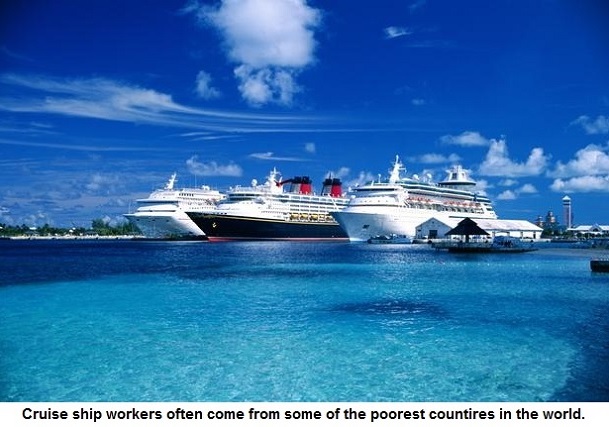
The book relates that the arts and beautification can have a positive influence on any community, including the Caribbean. It is no doubt that the tourism product in the region thrives because of the beauty of the islands; not just the natural or pristine beauty, but also the developments (resort hotels) and cultural icons. This is best demonstrated with the cruise industry, the ports-of-call in highest demand are the ones with the most culture to showcase passengers.

This is a parallel lesson being gleaned from Detroit.

The City of Detroit is revitalizing its downtown riverfront, and the downtown riverfront is revitalizing Detroit. See the article and photos here:

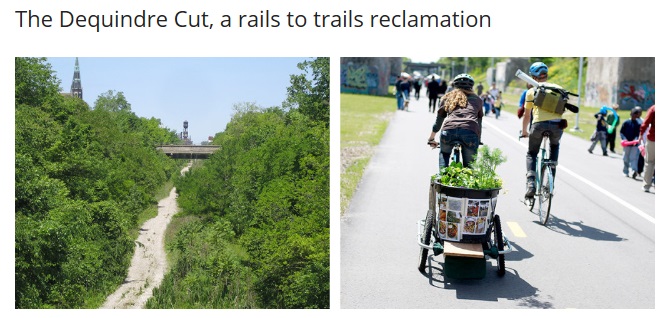
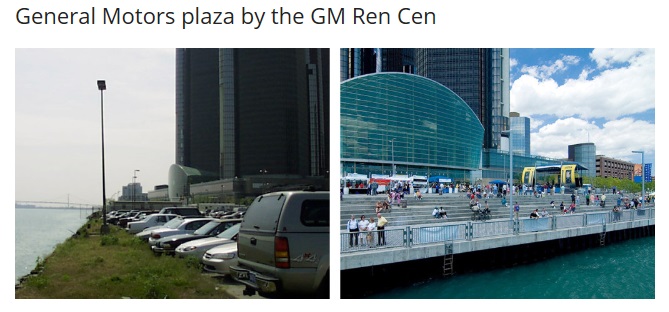
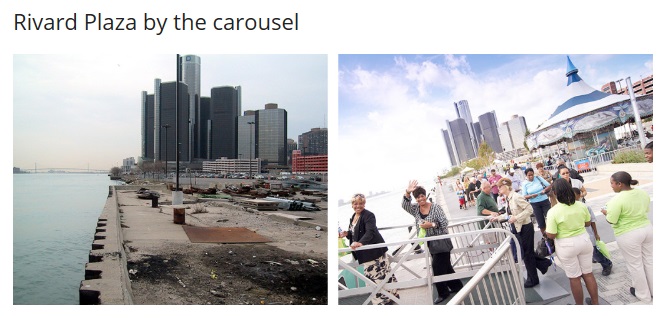
Title: 6 Before And After Photos Show You Just How Far The Detroit Riverfront Has Come

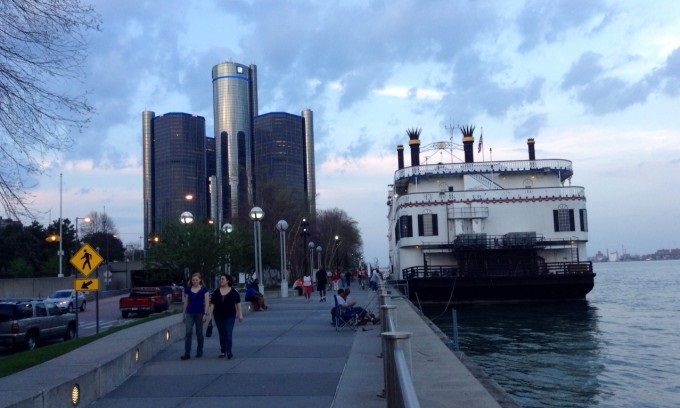
s Riverfront Transformation - Photo 1

We’re big fans of the Detroit RiverWalk. Whether it is walking our dogs, enjoying the boats or talking with the people, the Detroit riverfront is a gem that has been reclaimed from heavy industry that blocked access to one of the city’s greatest attractions, the river.

They’re taking the initiative west to Rosa Parks, and near these photos private development is picking up. It’s great to see so much green that everyone will be able to use in the city. Below are photos of what they have already done that gets us excited about the future, courtesy of the Detroit Riverfront Conservatory, and above and the last photo were views we took.

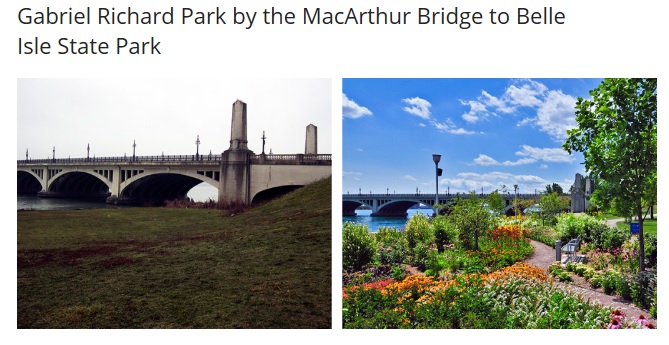
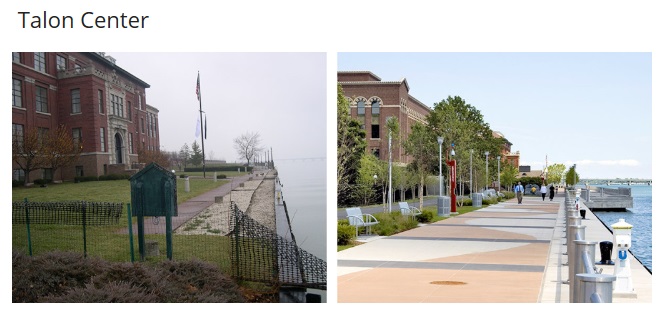
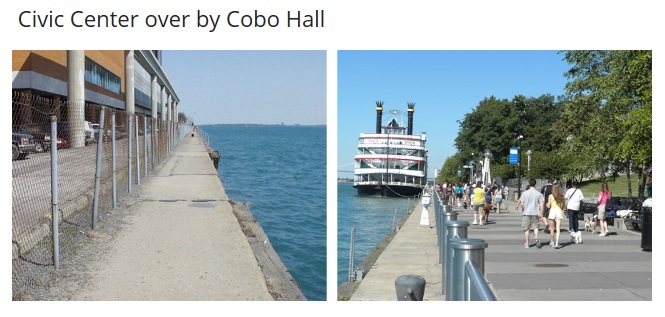
s Riverfront Transformation - Photo 2s Riverfront Transformation - Photo 3s Riverfront Transformation - Photo 4s Riverfront Transformation - Photo 5s Riverfront Transformation - Photo 6s Riverfront Transformation - Photo 7

Also, The West RiverWalk is now open! It spans west of the Central Business District from near the Riverfront Apartments to Rosa Parks Boulevard. See here:

There’s still more work to do, obviously. Detroit is a city with a myriad of challenges that all of us are slogging through together. But sometimes it’s good to have perspective and remember just how far we’ve come.

s Riverfront Transformation - Photo 8
Source: Daily Detroit Online Magazine – (Posted October 3, 2014; retrieved October 1, 2015) – http://www.dailydetroit.com/2014/10/03/these-6-before-after-photos-show-you-just-how-far-the-detroit-riverfront-has-come/

——

Consider sample comments on this website about this photo spread:

Dan Pustulka Oct 3, 2014 at 2:31 pm

Nobody has seen a greater community with such drive and determination. It (Detroit) has never been as bad as people always said. I’ve been downriver my whole life. I never gave up, as so many before, and hopefully, after me. The Motor City is a part of me, living proof that when rock bottom comes, we pull out. We survive. That little flower growing in the sidewalk crack, that many of our nation has forgotten years ago, has turned into a field, of hope, dreams, and prosperity. It’s been accomplished through us, of People, who stand today, and have stood together and pushed, pulled, fought and lost, but together as a community, we have told the world we are NOT gone, and do not plan on leaving anytime soon.

Jeff Oct 4, 2014 at 7:58 am

Meh, does planting flowers stop violent crimes? I’ll pass.

In response to “Jeff” above, the following Replies were posted:

Matt Oct 5, 2014 at 8:15 am  It does. Done in the right way, it does.

tracey Oct 5, 2014 at 10:05 am  Yes, I think planting flowers does, eventually, lead to ending violent crimes. It’s a start to bring more people, business, jobs, activity to the area. It’s a move in a positive direction, and people who have no hope or vision for Detroit should “pass”. Thanks for realizing that. Take your negativity elsewhere.

mckillio Oct 5, 2014 at 7:23 pm   Actually, I bet there is a strong correlation.

Jeremy Dec 31, 2014 at 10:19 am  Its called the Broken Windows Theory. It states that maintaining the upkeep and appearance of an urban setting, and curtailing small crimes such as vandalism creates an atmosphere of order lawfulness that can discourage larger crimes from taking place. Basically, when things look like shit people treat them that way. But when things look like somebody cares about them, people are less likely to commit crimes in that place, because they believe that their wrongdoings are more likely to be noticed and confronted.

Jessica Jan 16, 2015 at 3:40 pm  Actually the violent crime was down 15% in 2014 according to an annual national study shown on Channel 4 news. I live in the heart of the city. It’s changed dramatically just in the past few years.

——

VIDEO – “City Of Design” Is A Visual Feast Of Detroit’s Best Beats & Imageryhttps://vimeo.com/140651533

The City of Detroit is making progress, in one district at least. But the entire city is still in crisis, despite emerging from Bankruptcy on December 10, 2014, a process that started in July 2013. The city became the largest U.S. municipality to seek bankruptcy protection in the Federal Courts. The city’s financial dysfunction is equally matched with physical dysfunction as there is an abundance of urban blight and decay. The Go Lean book cited the example of this city as an exercise in futility – crying out for turn-around – with all the abandoned buildings. A direct quotation (Page 33) from the related chapter in the book stated:

The Bottom Line on Detroit Urban Decay
For Detroit, a steady population collapse over 5 decades has resulted in large numbers of abandoned homes and commercial buildings, and areas of the city that has been hit hard by urban decay. In a New York Times Magazine article, published on November 9, 2012 it was disclosed that there were 70,000 abandoned buildings. Much of the recent attention being showered upon Detroit comes, in no small measure, is due to the city’s blight. For example, the Michigan Central Station is perhaps the best-known Detroit ruin — a towering 18-story Beaux-Arts train station with a lavish waiting room of terrazzo floors and 50-foot ceilings, built in 1913 by the same architectural firms that designed New York’s Grand Central — modeled after the Baths of Caracalla (Rome, Italy). After the station closed in 1988, a developer talked about turning the building into a casino; the current owner, proposed selling the station to the city in a plan to turn the place into police headquarters and police museum. Mostly, though, the owner has allowed the station to molder, sitting some 1.5 miles from the high-rises of downtown, Michigan Central looms like a Gothic castle over its humbler neighbors on Michigan Avenue. It’s hard not to think of it as an epic-scale  disaster that seems engineered to illustrate man’s folly — as if the Titanic, after sinking, had washed ashore and been beached as a warning.

This urban dysfunction is just one of the reasons a study of Detroit is so cautionary for the Caribbean. We have many communities within the Caribbean’s 30 member-states with similar urban blight, societal abandonment and acute hopelessness. We must now echo this same retort:
‘Only at the precipice, do they change’

Detroit Photo 9

According to the foregoing news article & photos, the limited area of Detroit’s Riverfront is crawling back from the precipice.

Hooray! (This appeals to tourists to the area; see VIDEO above).

This story aligns with the book Go Lean…Caribbean in stressing the economic benefits of employing a turn-around strategy.

“Out with the old; in with the new”

A renewed commitment to beautification and public art (structures, sculpture, etc.) can dynamise a community, even if just for a limited area.

The book Go Lean…Caribbean serves as a roadmap for the introduction and implementation of the technocratic Caribbean Union Trade Federation (CU). A mission of this Go Lean/CU roadmap is to promote a turn-around in many Caribbean communities. There should be a stark difference in comparing the Caribbean “before” and “after”.

How?

There is a lot involved in this quest. The book describes it as “heavy-lifting”. It involves rebooting the 3 main engines of Caribbean society; this is declared in the book as prime directives, detailed as follows:

  • Optimization of the economic engines in order to grow the regional economy to $800 Billion & create 2.2 million new jobs.
  • Establishment of a security apparatus to protect the resultant economic engines.
  • Improvement of Caribbean governance to support these engines.

These missions are pronounced early in the book as the necessary rationale for integrating the 30 member-states in the region into a Single Market. This need has been echoed throughout the Caribbean region. It is fully accepted that the member-states cannot endured the harsh challenges of nation-building alone. They need help! The Go Lean book asserts that the region needs to get the help from each other, pronouncing this Declaration of Interdependence (Page 10 – 14):

Preamble: While the laws of nature and of nature’s God entitle us to form a society and a brotherhood to foster manifestations of our hopes and aspirations and to forge solutions to the challenges that imperil us … no one other than ourselves can be held accountable for our failure to succeed if we do not try to promote the opportunities that a democratic society fosters.

xi. Whereas all men are entitled to the benefits of good governance in a free society, “new guards” must be enacted to dissuade the emergence of incompetence, corruption, nepotism and cronyism at the peril of the people’s best interest. The Federation must guarantee the executions of a social contract between government and the governed.

xii. Whereas the legacy in recent times in individual states may be that of ineffectual governance with no redress to higher authority, the accedence of this Federation will ensure accountability and escalation of the human and civil rights of the people for good governance, justice assurances, due process and the rule of law. As such, any threats of a “failed state” status for any member state must enact emergency measures on behalf of the Federation to protect the human, civil and property rights of the citizens, residents, allies, trading partners, and visitors of the affected member state and the Federation as a whole.

xxi. Whereas the preparation of our labor force can foster opportunities and dictate economic progress for current and future generations, the Federation must ensure that educational and job training opportunities are fully optimized for all residents of all member-states, with no partiality towards any gender or ethnic group. The Federation must recognize and facilitate excellence in many different fields of endeavor, including sciences, languages, arts, music and sports. This responsibility should be executed without incurring the risks of further human flight, as has been the past history.

xxxii. Whereas the cultural arts and music of the region are germane to the quality of Caribbean life, and the international appreciation of Caribbean life, the Federation must implement the support systems to teach, encourage, incentivize, monetize and promote the related industries for arts and music in domestic and foreign markets. These endeavors will make the Caribbean a better place to live, work and play.

xxxiii. Whereas lessons can be learned and applied from the study of the recent history of other societies, the Federation must formalize statutes and organizational dimensions to avoid the pitfalls of communities like … Detroit…

The promoters of the Go Lean book (and movement) have come to Detroit to observe-and-report on the progress of this metropolitan area. We want to learn from this city and enable better outcomes in the Caribbean. This point have been frequently conveyed in previous blogs/commentaries. Consider this sample here:

https://goleancaribbean.com/blog/?p=6269 Education & Economics: Welcome to Detroit, Mr. President
https://goleancaribbean.com/blog/?p=6022 Caribbean Diaspora in Detroit … Celebrating Heritage
https://goleancaribbean.com/blog/?p=5597 The Dire Straits of the Unions and Collective Bargaining
https://goleancaribbean.com/blog/?p=5055 A Lesson from an Empowering Family of Detroit
https://goleancaribbean.com/blog/?p=4913 Ann Arbor: Model for ‘Start-up’ Cities
https://goleancaribbean.com/blog/?p=4476 De-icing Detroit’s Winter Roads: Impetuous and Short-sighted
https://goleancaribbean.com/blog/?p=3713 NEXUS: Facilitating Detroit-Windsor Cross-Border Commerce
https://goleancaribbean.com/blog/?p=3326 M-1 Rail: Alternative Motion in the Motor City
https://goleancaribbean.com/blog/?p=3311 Detroit to exit historic bankruptcy
https://goleancaribbean.com/blog/?p=3164 Michigan Unemployment – Then and Now
https://goleancaribbean.com/blog/?p=2480 A Lesson in History: Community Ethos of WW II
https://goleancaribbean.com/blog/?p=1909 Role Model Berry Gordy – No Town Like Motown
https://goleancaribbean.com/blog/?p=1656 Blue is the New Green – Managing Detroit’s Water Resources
https://goleancaribbean.com/blog/?p=970 JPMorganChase’s $100 million Detroit investment is not just for Press/PR

The CU is designed to do the heavy-lifting of organizing Caribbean society to benefit from the lessons from Detroit. The Go Lean book details the community ethos to adopt, plus the executions of the following strategies, tactics, implementations and advocacies to impact the rebirths, reboots and turn-around of Caribbean communities:

Community Ethos – Deferred Gratification Page 21
Community Ethos – People Respond to Incentives Page 21
Community Ethos – Job Multiplier Page 22
Community Ethos – Light Up the Dark Places Page 23
Community Ethos – “Crap” Happens Page 23
Community Ethos – Lean Operations Page 24
Community Ethos – Return on Investments (ROI) Page 24
Community Ethos – Ways to Impact the Future Page 26
Community Ethos – Ways to Help Entrepreneurship Page 28
Community Ethos – Ways to Impact a Turn-Around Page 33
Community Ethos – Impact the Greater Good Page 37
Strategy – Customers – Foreign Direct Investors Page 48
Tactical – Fostering a Technocracy Page 64
Tactical – Modeling Post WW II Germany – Marshall Plan Page 68
Tactical – Modeling Post WW II Japan – with no Marshall Plan Page 69
Separation of Powers – Public Works & Infrastructure Page 82
Separation of Powers – Housing and Urban Authority Page 83
Implementation – Ways to Pay for Change Page 101
Implementation – Ways to Re-boot Freeport – A Sample Caribbean city needing turn-around Page 112
Planning – Ways to Improve Failed-State Indices Page 132
Planning – Lessons Learned from 2008 Page 136
Planning – Lessons Learned from Detroit Page 140
Advocacy – Ways to Grow the Economy Page 151
Advocacy – Ways to Create Jobs Page 152
Advocacy – Ways to Improve Local Government Page 169
Advocacy – Ways to Better Manage the Social Contract Page 170
Advocacy – Ways to Better Manage Natural Resources Page 183
Advocacy – Ways to Enhance Tourism Page 190
Advocacy – Ways to Impact the Diaspora Page 217
Advocacy –Ways to Preserve Caribbean Heritage Page 218
Advocacy – Ways to Impact Urban Living Page 234

This commentary posits that change will come to Detroit, (many previous Go Lean blog-commentaries have reported that the change is now afoot) and also that changes need to come to the Caribbean. We need to observe-and-report on Detroit; we can apply the lessons – the good, bad and ugly – for optimization in our Caribbean homeland, especially under the scheme of a Single Market. With the integration of 42 million people (10 million Diaspora and 80 million visitors) in the 30 member-states we will be able to do so much more than Detroit has ever accomplished.

Plus, our natural beauty is incomparable – “the best address on the planet”.

Let’s do this! Let’s make our homeland a better place to live, work and play.

Everyone in the region is urged – the people, institutions and governance – to “lean-in” to this roadmap for change.  🙂

Download the free e-Book of Go Lean … Caribbean – now!

Share this post:
, , ,

Wi-Fi Hot Spots Run By Hackers Are Targeting Tourists

Go Lean Commentary

CU Blog - Wi-Fi Hot Spots Run By Hackers Are Targeting Tourists - Photo 1BFor all the good that the internet brings to the world, there is a lot of bad too. The W.W.W in a web address does not mean Wild Wild West. But it feels like that; the bad old days of outlaws and gunslingers. (The actual WWW initials mean World Wide Web). Let the buyer beware!

The need for a Sentinel in Caribbean electronic commerce has been fully established by this commentary. Someone needs to be “watching the store in the Caribbean”. Electronic commerce now means internet and mobile transactions, encompassing smartphones, tablets and other mobile devices.

While the Caribbean member-states are not as advanced as other North American locations (US & Canada) or many Western European countries, we have fully embraced the internet via broadband, Wi-Fi and mobile communication utilities. The assertion in the book Go Lean…Caribbean, is that any plan to reboot Caribbean economics, security and governance must include promotion and regulation of technological initiatives as well. This Go Lean book serves as a roadmap for the introduction and implementation of the technocratic Caribbean Union Trade Federation (CU) to facilitate the growth, stewardship and oversight of electronic commerce in a regional Single Market.

There is therefore the need to be “on guard” for “bad actors” that will surely emerge to exploit Caribbean stakeholders, including residents, businesses and visitors – possibly up to 150 million people, including 80 million tourists. This news VIDEO here reports on a new threat:

VIDEO: Caution: Wi-Fi hot spots run by hackers are targeting tourists – http://www.today.com/video/caution-wi-fi-hot-spots-run-by-hackers-are-targeting-tourists-526433347646

September 16, 2015 – The “Hacking of America” series continues with a new warning: Before you log on to free public Wi-Fi hot spots at popular tourist destinations like New York City’s Times Square, be aware that they could be traps for hackers to steal your identity. One warning sign: The word “free.” NBC’s Tom Costello shares tips to protect your online security with TODAY.

CU Blog - Wi-Fi Hot Spots Run By Hackers Are Targeting Tourists - Photo 1AImagine a Caribbean tourist, disembarking a cruise ship, turning on a smartphone and being enticed with “FREE Wi-Fi”.

The Go Lean book relates regional oversight for the Caribbean Single Market – a lean technocracy – for cross-border electronic media, governance of the Information Technology Arts and Sciences and Grievance mediation. These activities are part –and-parcel of the missions of Go Lean roadmap, whose prime directives are identified with the following 3 statements:

  • Optimization of the economic engines in order to grow the regional economy to $800 Billion & create 2.2 million new jobs.
  • Establishment of a security apparatus to protect the people and processes (economic engines) of the region from threats and attacks (physical and electronic) that may originate from foreign or domestic sources.
  • Improvement of Caribbean governance to support these engines, including consolidation of all Postal operations. The Caribbean Postal Union will deploy a Caribbean Cloud, a Social Media / Electronic Commerce offering for all Caribbean member-states, branded www.myCaribbean.gov.

These prime directives will elevate Caribbean society. With this success comes the emergence of “bad actors”. The foregoing VIDEO relates one such instance. The goal of preparing the appropriate security apparatus – to protect the people and processes – was envisioned in the Go Lean roadmap from the beginning; this was defined early in the book (Page 12 & 14) in the following pronouncements in the Declaration of Interdependence:

x.  Whereas we are surrounded and allied to nations of larger proportions in land mass, populations, and treasuries, elements in their societies may have ill-intent in their pursuits, at the expense of the safety and security of our citizens. We must therefore appoint “new guards” to ensure our public safety and threats against our society, both domestic and foreign. The Federation must employ the latest advances and best practices … to assuage continuous threats against public safety.

xv. Whereas the business of the Federation and the commercial interest in the region cannot prosper without an efficient facilitation of postal services, the Caribbean Union must allow for the integration of the existing mail operations of the governments of the member-states into a consolidated Caribbean Postal Union, allowing for the adoption of best practices and technical advances to deliver foreign/domestic mail in the region.

xvi. Whereas security of our homeland is inextricably linked to prosperity of the homeland, the economic and security interest of the region needs to be aligned under the same governance. Since economic crimes, including piracy and other forms of terrorism, can imperil the functioning of the wheels of commerce for all the citizenry, the accedence of this Federation must equip the security apparatus with the tools and techniques for predictive and proactive interdictions.

xxvii. Whereas the region has endured a spectator status during the Industrial Revolution, we cannot stand on the sidelines of this new economy, the Information Revolution. Rather, the Federation must embrace all the tenets of Internet Communications Technology (ICT) to serve as an equalizing element in competition with the rest of the world. The Federation must bridge the digital divide and promote the community ethos that research/development is valuable and must be promoted and incentivized for adoption.

According to the foregoing VIDEO, the threat for cyber-crimes is now exposed to mobile users and those innocently partaking of FREE Wi-Fi services. This should not be so endangering. Wi-Fi communications should be a benign utility. There is the natural expectation that the governmental authorities would protect the innocent and interdict all villainous parties. This “natural expectation” is part-and-parcel of the Social Contract between citizens and their governments. For the 80 million visitors enjoying Caribbean hospitality, this presumed protection should automatically extend to them.

This is the assumption. The region must therefore anticipate these “bad actors” and deploy the counter-measures to monitor, mitigate and manage all identified risks associated with this cyber-threat. All cyber-crimes and threats to electronic commerce must be a constant focus for the “new guards” being proposed for implementation in the Caribbean with this Go Lean/CU roadmap.

CU Blog - Wi-Fi Hot Spots Run By Hackers Are Targeting Tourists - Photo 2

The book posits that these are among the issues that are too big for any one Caribbean member-state to manage alone; that there are times when there must be a cross-border, multilateral coordination. So confederating all 30 Caribbean member-states and appointing the CU as a deputized agency to oversee this cyber activity is a wise course of action. In addition, the technical competence for the “guardians” of this new Caribbean economy must be “cutting edge”. Can we truly expect this from the current bureaucratic structures of these small member-states? Hardly.

In a previous blog, the “cutting-edge” readiness of one member-state (Bahamas) was likened to 1985, as opposed to 2015; the blog stated that “they are not reaching for the stars but rather reaching for the lamp-post”. Other blog-commentaries on this subject have detailed the full width-and-breath of preparing Caribbean society for the diverse economic, security and governing issues of managing ICT in this new century. See sample blogs here:

https://goleancaribbean.com/blog/?p=6341 The Need for Online Tourism Marketing Stewardship
https://goleancaribbean.com/blog/?p=5435 China Internet Policing – Model for Caribbean
https://goleancaribbean.com/blog/?p=5353 US Presidential Politics and the Internet
https://goleancaribbean.com/blog/?p=4793 Online reviews – like Yelp and Angie’s List – can wield great power for services marketed, solicited and contracted online.
https://goleancaribbean.com/blog/?p=4381 Net Neutrality – The need for Caribbean Administration of the Issue.
https://goleancaribbean.com/blog/?p=4337 Crony-Capitalism Among the Online Real Estate Markets
https://goleancaribbean.com/blog/?p=3881 European and North American Intelligence Agencies to Ramp-up Cyber Security Cooperation
https://goleancaribbean.com/blog/?p=906 Bitcoin e-Payments needs regulatory framework to manage ‘risky’ image
https://goleancaribbean.com/blog/?p=308 Caribbean Communications Infrastructure Program (CARCIP) and the Caribbean Telecommunications Union (CTU) urges greater innovation and protection.

These commentaries demonstrate that there is the need for a technocratic governing body to better oversee and police Caribbean electronic commerce. This structure will assuage cyber-crimes and illicit activities for the Caribbean neighborhood in the online world.

We have so much more than Wi-Fi decoys to consider – as conveyed in the foregoing VIDEO. Successful execution of the Go Lean roadmap can expect a surge in internet/online activity and transactions; as there is the plan to deploy schemes to facilitate more e-Commerce: Central Bank adoption of Electronic Payment schemes and Postal Integration/Optimization, the Caribbean Cloud portal for www.myCaribbean.gov. So many more challenges – and lawlessness – will emerge.

The Go Lean book therefore presents the series of community ethos, strategies, tactics, implementations and advocacies that must be adopted and executed to elevate this region to be competent with the Worldwide Web. See the following sample here:

Community Ethos – Deferred Gratification Page 21
Community Ethos – People Choose Page 21
Community Ethos – People Respond to Incentives Page 21
Community Ethos – Economic Systems Influence Individual Choices Page 21
Community Ethos – Job Multiplier Page 22
Community Ethos – Privacy versus Public Protection Page 23
Community Ethos – Whistleblower Protection Page 23
Community Ethos – Lean Operations Page 24
Community Ethos – Ways to Help Entrepreneurship Page 28
Community Ethos – Promote Intellectual Property Page 29
Community Ethos – Ways to Bridge the Digital Divide – Allow for FREE Wi-Fi Page 31
Community Ethos – Ways to Improve Sharing Page 35
Community Ethos – Ways to Impact the Greater Good Page 37
Strategy – Vision – Integrate a Single Market of entire region Page 45
Tactical – Fostering a Technocracy Page 64
Tactical – Separation of Powers – Caribbean Postal Union Page 78
Tactical – Separation of Powers – Interstate Commerce Administration Page 79
Tactical – Separation of Powers – Communications and Media Authority Page 79
Implementation – Year 1 / Assemble Phase – Establish CPU Page 96
Anecdote – Implementation Plan – Mail Services – US Dilemma Page 99
Implementation – Improve Mail Services – Electronic Supplements Page 108
Implementation – Ways to Deliver Page 109
Implementation – Ways to Impact Social   Media – For Residents, Visitors & Diaspora Page 111
Planning – 10 Big Ideas for the Caribbean Region – Cyber Caribbean Page 127
Advocacy – Ways to Improve Interstate Commerce Page 129
Advocacy – Ways to Grow the Economy Page 151
Advocacy – Ways to Create Jobs Page 152
Advocacy –Ways to Improve Governance Page 168
Advocacy –Ways to Better Manage the Social Contract Page 170
Advocacy – Ways to Improve Libraries – Hi-Density Wi-Fi Page 187
Advocacy – Ways to Impact Events – Hi-Density Wi-Fi & Mobile Apps Page 191
Advocacy – Ways to Foster Technology – Public Access Wi-Fi Page 197
Advocacy – Ways to Foster e-Commerce – Mobile Apps & Hi-Density Wi-Fi Page 198
Advocacy – Ways to Impact Main Street – Downtown Wi-Fi Page 201
Advocacy – Ways to Impact Urban Living Page 234

The Go Lean book creates some Great Expectations for the internet. It posits that online facilitations can serve as an equalizing element for the Caribbean to better compete with the rest of the world. So we must elevate the region’s core competence with all-things-cyber, including the security dynamics.

“Bad actors will always emerge to exploit economic opportunities” – Go Lean (Page 23).

So to keep pace with the latest and greatest cyber-criminals, we must do the heavy-lifting of “serving and protecting” the Caribbean online populations.  The region needs this technocracy of the CU Trade Federation. Everyone is therefore encouraged to lean-in to this Go Lean roadmap.  🙂

Download the free e-Book of Go Lean … Caribbean – now!

Share this post:
, , , ,
[Top]

Tourism Stewardship — What’s Next?

Go Lean Commentary

Let’s learn from history…

The industry of travel agencies did not always exist … in modern times. It emerged as transportation options standardized (rail, steamships, and airplanes) and became more convenient. The transportation companies did not need travel agencies; they only acquiesced to the industry stakeholders as a matter of convenience. According to the short history of travel agency pioneer Thomas Cook in Appendix A

[they] agreed to make a permanent arrangement with him provided he found the passengers.

The book Go Lean…Caribbean calls for the elevation of Caribbean society, to re-focus, re-boot, and optimize all the engines of commerce so as to make the Caribbean a better place to live, work and play.  The category of “play” covers the full scope of tourism, which is the primary economic driver for our Caribbean region; the book estimates 80 million visitors among the region. (Since that number includes cruise passengers that may visit multiple Caribbean islands on one itinerary, each port is counted separately; without cruise passengers, a figure of 68 – 69 million is perhaps more accurate).

Stewardship 6This commentary is a consideration of tourism, not travel. Tourism is a subset of the travel eco-system, so any Agent of Change in the world of travel must be carefully considered on tourism, on Caribbean tourism.

The World Tourism Organization defines tourists or tourism as people “traveling to and staying in places outside their usual environment for not more than one consecutive year for leisure, business and other purposes”.[1]

Tourism is now a popular global leisure activity. Tourism can be domestic or international, and international tourism has both incoming and outgoing implications on a country’s balance of payments. Today, tourism is a major source of income for many countries, and affects the economy of both the source and host countries, in some cases being of vital importance.

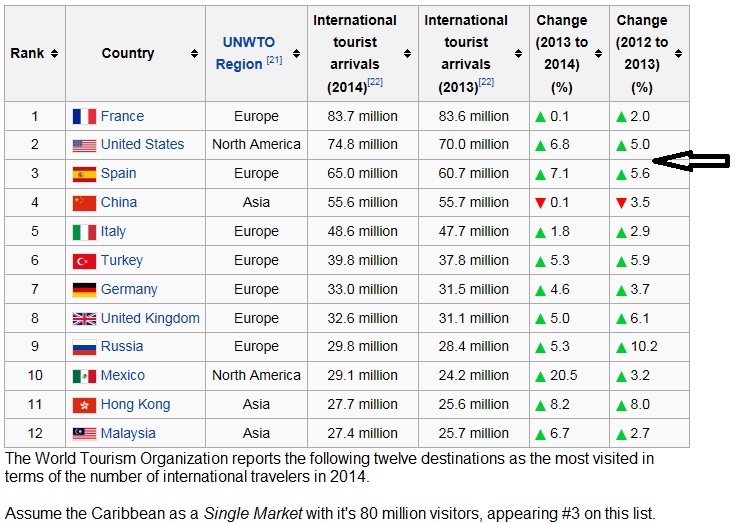
Tourism suffered as a result of a strong economic slowdown of the late-2000s recession, between the second half of 2008 and the end of 2009, and the outbreak of the H1N1 influenza virus,[2][3] but slowly recovered. International tourism receipts (the travel item in the balance of payments) grew to US$1.03 trillion in 2011, corresponding to an increase in real terms of 3.8% from 2010.[4] International tourist arrivals surpassed the milestone of 1 billion tourists globally for the first time in 2012,[5] the same year in which China became the largest spender in international tourism globally with US$102 billion, surpassing Germany and United States. China and emerging markets such as Russia and Brazil had significantly increased their spending over the previous decade.[6]
Source: https://en.wikipedia.org/wiki/Tourism

The Go Lean book considers these Agents of Change (Page 57) that have dynamically affected the Caribbean economic eco-systems:

  • Technology
  • Globalization
  • Aging Diaspora
  • Climate Change

This first one, technology, has had a most shocking effect on this travel/tourism industry. We can conclude that the days of Thomas Cook are over. It is no longer convenient for tourism industry stakeholders (transportation lines, resort properties, etc.) to acquiesce to travel agents; they are no longer needed to find passengers-guests-travelers-tourists.

(The industry for travel agents have effectively disappeared).

Technology, the Internet-Communications-Technology (ICT) in particular has furnished alternative and better options for travel enterprises to find passengers-guests-travelers-tourists; see sample website, Booking.com, in the VIDEO in the Appendix C below. (These websites also provide better options/prices for consumers). Travel agents are now inconsequential.

The same too with politicians leading the Tourism stewardship!

The national stewards of Caribbean tourism must now transform for this Agent of Change. Instead of “schmoozing” travel agents to incentivize bookings, it is necessary to master Search Engine Optimizations (SEO), website design, social media outreach, etc..

The Caribbean member-states do not need “Ministers/Secretaries of Tourism” or Ambassadors of governments, they need Computer Programmers! More exactly, the region needs multi-lingual computer programmers, as the foregoing World Tourism Organization quote relates that much of the growth in tourism numbers are from the emerging markets of China, Russia, Brazil, etc. (In Economics, these countries are grouped B.R.I.C.S. for Brazil, Russia, India, China & South Africa).

Technology and Globalization! The stewardship of Caribbean tourism must truly adapt, evolve and transform to keep pace.

How is the Caribbean tourism industry doing in this regard? There is the case-in-point of Aruba. See the news article here:

Title: Why Aruba Tourism is Booming — And What’s Next
Sub-title: The Dutch Caribbean’s tourism hub is growing. Quickly.
By: Caribbean Journal staff

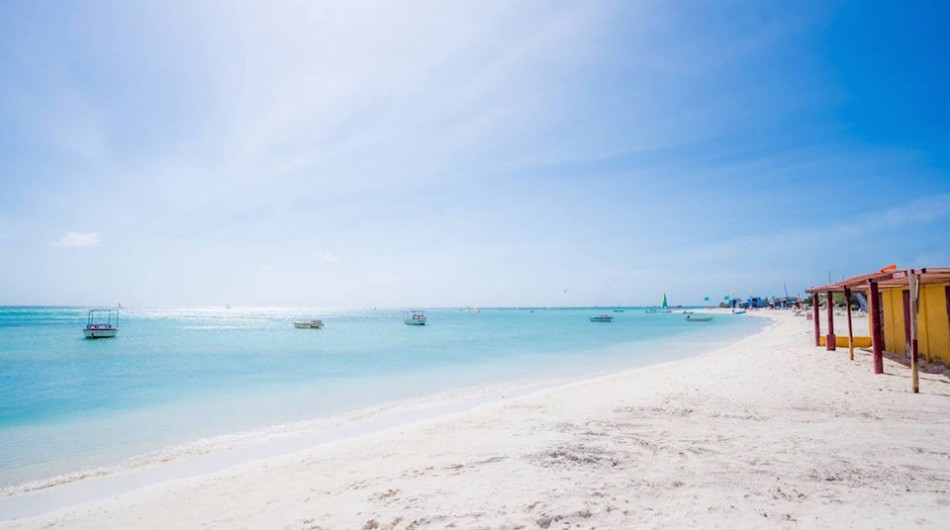
Stewardship 1Plainly, tourism in Aruba is booming. The island saw a 16.2 percent increase in stayover visitor arrivals in the first half of 2015, making it the Caribbean’s fastest-growing destination in the first half of 2015, according to data from the Caribbean Tourism Organization. So what’s next for the island? To learn more, CJ caught up with Ronella Ronella Tjin Asjoe, CEO of the Aruba Tourism Authority.

What is the outlook for Aruba tourism and the forecast for the high season?

With each passing year, Aruba continues to see an increase in the number of stay-over visitors and visitor on-island spending. After receiving a record number of annual visitors in 2014 (1.07 million), ATA set an aggressive goal for an 11.5 percent increase in 2015, as well as a 4 percent increase in tourism receipts, and is on track to surpass those goals. The overall ADR is projected to grow by 5-10 percent in 2015, and RevPar is projected to grow by a similar rate. With increased airlift, island-wide hotel renovations and new projects in the works, coupled with ATA’s innovative digital marketing strategies, Aruba’s tourism product improves annually — resulting in improved performance results year over year.

What new initiatives are there for Aruba Tourism Authority?

Aruba Tourism Authority (ATA) has launched a new interactive experience allowing visitors to share their perfect Aruba vacation before ever stepping foot on our popular Caribbean island. The Happiness Builder is a content-rich planning experience where travelers can explore nearly 100 videos featuring adventure, relaxation, romance and cultural activities in Aruba. This dynamic and fully-immersive planning process — from choosing the video clips to picking an accompanying music track and personal message — results in a customized “Shortcut to Happiness” video that is easily sharable. As Aruba continues to evolve from both a product and marketing perspective, new and innovative tools like the Happiness Builder remain crucial to Aruba’s success as one of the most popular tourist destinations.

What are the largest challenges facing Aruba as a tourist destination?

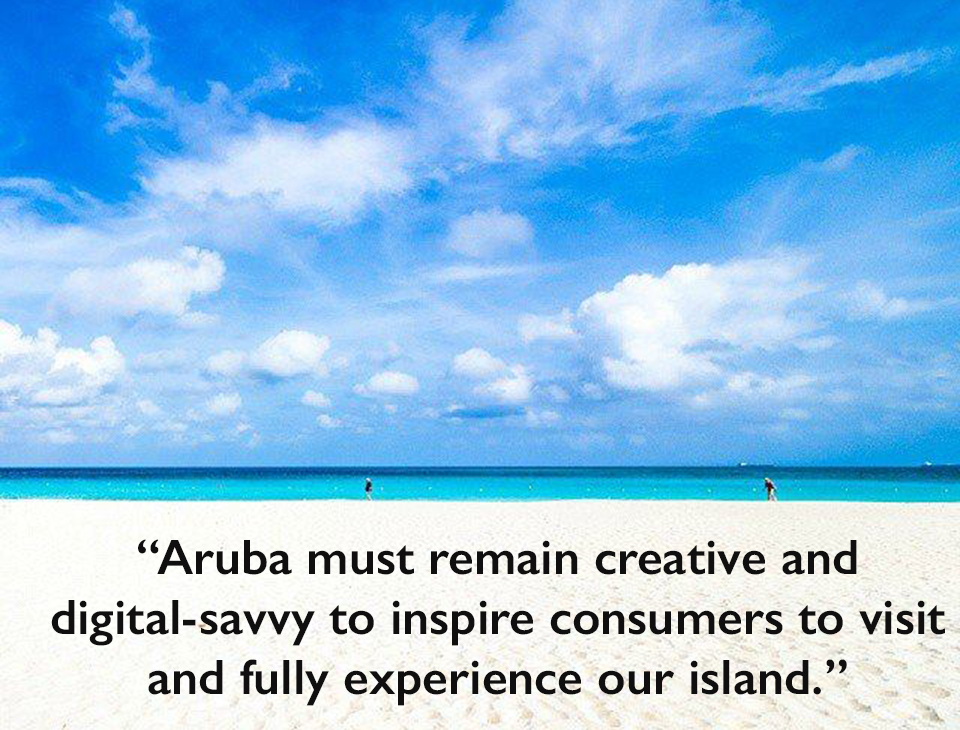
Stewardship 2The World Tourism Council (WTTC) reports Aruba’s GDP is more reliant on travel and tourism than any other nation, relative to size, in the world. Tourism currently accounts for 88 percent of the nation’s GDP and only continues to increase. As such, Aruba must remain creative and digital-savvy to inspire consumers to visit and fully experience our island. Our target audience visits more than 20 websites before booking their vacation, so it is essential for us to maintain a presence throughout that process with a timely, persuasive message at each stage. By engaging the best strategists and leveraging targeted technologies, we can ensure our marketing dollars are spent effectively against desired consumers in-market for vacation travel.

What sort of new investments are being made in the public sector of Aruba as it relates to tourism?

As part of Aruba’s ongoing, $1 billion+ island revitalization and beautification project, the destination recently invested more than $100 million in significant hotel updates to enhance visitors’ experiences, with an additional $50 million planned for next year. The Aruba Airport Authority also fully renovated the Reina Beatrix International Airport, introducing new amenities and services true to the One happy island brand. This includes an airport wide Wi-Fi upgrade, installation of APC and ABC Kiosks, three new F&B concepts and an additional 150 seats, and an update to the airport arrival hall and VIP lounges. Airport investments between $100-150 million are planned in the upcoming years, as traffic continues to reach new heights

Are there large renovations, new projects or new hotels are on the horizon?

In addition to the island-wide resort renovations, Aruba has new hotels in the works. The city of San Nicolas continues to be a large focus for ATA and the government, as it continues to evolve as a cultural center, with new museums slated in the coming years.

Tell us a little about upcoming Aruba events and festivals. Which of these can you recommend?

Fall is one of Aruba’s most eventful times of year, with countless culinary, cultural and musical festivals. Upcoming events include the Aruba International Film Festival, Caribbean Sea Jazz Festival and highly-anticipated, first annual Restaurant Week, Sept. 28-Oct. 9. Boasting 60 participating restaurants, Aruba is increasingly revered as the “Ultimate Sand Bar Island,” with 25+ bars/restaurants conveniently located on the water. Options range from casual decks overlooking the Caribbean sea to fine dining toes-in-the-sand establishments. Aruba’s new restaurant week offers food critics, wine connoisseurs, foodies and everyone in between the opportunity to explore Aruba’s culinary heritage.
Source: Caribbean Journal – Regional – News Site (Published September 13, 2015) – http://caribjournal.com/2015/09/13/why-aruba-tourism-is-booming-and-whats-next/

According to the foregoing news story/interview, the Tourism stewards in Aruba understand the significance of the technology/digital strategy for elevating this economic engine. Is this the case for the rest of the region? Hardly!

Stewardship 3Even still, it is obvious that the expertise and reach of the officials in Aruba is still limited; see previous blog-commentary here on the State of Aruban society. The book Go Lean…Caribbean and the underlying movement seeks to re-boot the strategies and tactics of tourism marketing for the entire Caribbean region. The book asserts Caribbean member-states must expand and optimize their tourism outreach but that the requisite investment of the resources (time, talent, treasuries) for this goal may be too big for any one Caribbean member-state (like Aruba) alone. Rather, shifting the responsibility to a region-wide, professionally-managed, deputized technocracy will result in greater production and greater accountability. This deputized agency is the Caribbean Union Trade Federation (CU). The book thereafter introduces the CU and provides a roadmap for its implementation into a Single Market for the Caribbean economy … and tourism marketing.

The goal of the CU is to bring the proper tools and techniques to the Caribbean region to optimize the stewardship of the economic, security and governing engines.  The book posits that the economy can be induced and spurred for continuous progress, with technocratic management and stewardship better than the status quo. While the goal of the roadmap is to pursue a diversification strategy, the reality is that tourism will continue to be the primary economic driver in the region for the foreseeable future. The publisher of the book Go Lean…Caribbean convenes the talents and skillsets of movers-and-shakers in electronic commerce so as to forge the best tools and techniques for this new ICT-based marketing.

According to the below Appendix B – Priceline and Appendix C – VIDEO, the world is operating under a different business model than previously familiar in the Caribbean. Truly the region needs programmers not politicians to shepherd tourism in the homeland.

Change has come to the travel industry. Just how do we optimize the marketing and management of our new products and services to elevate our economies?

This book Go Lean… Caribbean provides the needed details. Early in the book, the optimization and best-practices of regional tourism was highlighted as a reason the Caribbean region needed to unite, integrate and confederate. These pronouncements were included in the opening Declaration of Interdependence (Pages 11 – 14):

iv.  Whereas the natural formation of the landmass is in a tropical region, the flora and fauna allows for an inherent beauty that is enviable to peoples near and far. The structures must be strenuously guarded to protect and promote sustainable systems of commerce paramount to this reality.

vi.  Whereas the finite nature of the landmass of our lands limits the populations and markets of commerce, by extending the bonds of brotherhood to our geographic neighbors allows for extended opportunities and better execution of the kinetics of our economies through trade. This regional focus must foster and promote diverse economic stimuli.

viii.  Whereas the population size is too small to foster good negotiations for products and commodities from international vendors, the Federation must allow the unification of the region as one purchasing agent, thereby garnering better terms and discounts.

xxiv.  Whereas a free market economy can be induced and spurred for continuous progress, the Federation must install the controls to better manage aspects of the economy: jobs, inflation, savings rate, investments and other economic principles. Thereby attracting direct foreign investment because of the stability and vibrancy of our economy.

xxvi.  Whereas the Caribbean region must have new jobs to empower the engines of the economy and create the income sources for prosperity, and encourage the next generation to forge their dreams right at home, the Federation must therefore foster the development of new industries… In addition, the Federation must invigorate the enterprises related to existing industries like tourism… – impacting the region with more jobs.

xxvii. Whereas the region has endured a spectator status during the Industrial Revolution, we cannot stand on the sidelines of this new economy, the Information Revolution. Rather, the Federation must embrace all the tenets of Internet Communications Technology (ICT) to serve as an equalizing element in competition with the rest of the world. The Federation must bridge the digital divide and promote the community ethos that research/development is valuable and must be promoted and incentivized for adoption.

The Go Lean… Caribbean book wisely details the community ethos to adopt to proactively facilitate the digital campaigns for the changed landscape of tourism marketing; plus the executions of the following strategies, tactics, implementations and advocacies:

Community Ethos – Deferred Gratification Page 21
Community Ethos – Economic Principle – People Respond to Incentives Page 21
Community Ethos – Economic Principle – Consequences of Choices Lie in the Future Page 21
Community Ethos – Job Multiplier Page 22
Community Ethos – Lean Operations Page 24
Community Ethos – Return on Investments (ROI) Page 24
Community Ethos – Ways to Impact the Future Page 26
Community Ethos – Ways to Foster Genius – Literary, Art and Music in Graphic Design Page 27
Community Ethos – Impact Research & Development – Including ICT Page 30
Community Ethos – Ways to Improve Sharing – Data / Social Network Page 35
Community Ethos – Ways to Impact the Greater Good Page 37
Strategy – Vision – Integrate Region in a Single Market Page 45
Strategy – Mission – Build and Foster Local Economic Engines Page 45
Strategy – Mission – Exploit the Benefits of Globalization in Trade-Tourism Page 46
Strategy – Agents of Change – Technology Page 57
Strategy – Agents of Change – Globalization Page 57
Tactical – Fostering a Technocracy Page 64
Tactical – Growing the Economy to $800 Billion – Trade and Globalization Page 70
Tactical – Website www.myCaribbean.gov for Caribbean stakeholders – Tourists Page 74
Tactical – Separation of Powers – Tourism Promotions and Administration Page 78
Implementation – Integrate All Caribbean Websites to www.myCaribbean.gov Portal Page 97
Implementation – Ways to Pay for Change Page 101
Implementation – Ways to Deliver Page 109
Implementation – Ways to Impact Social Media – www.myCaribbean.gov Portal Page 111
Planning – 10 Big Ideas – Cyber Caribbean Page 127
Planning – Ways to Make the Caribbean   Better Page 131
Planning – Ways to Better Manage Image – Digital Media Presence Page 133
Planning – Lessons Learned from 2008 – Tourism & Economy Went Bust Page 136
Planning – Lessons Learned from Egypt – Lack of Tourism Stewardship Page 143
Advocacy – Ways to Measure Progress – Mining www.myCaribbean.gov Portal Data Page 147
Advocacy – Ways to Grow the Economy Page 151
Advocacy – Ways to Create Jobs Page 152
Advocacy – Ways to Foster Cooperatives Page 176
Advocacy – Ways to Improve Communications – Internet & Social Media Marketing Page 186
Advocacy – Ways to Enhance Tourism – Excess Inventory Marketing Page 190
Advocacy – Ways to Impact Events – Sharing Economy Page 191
Advocacy – Ways to Market Southern California Page 194
Advocacy – Ways to Foster Technology Page 197
Advocacy – Ways to Foster e-Commerce Page 198
Advocacy – Ways to Preserve Caribbean Heritage – Cyber-Caribbean Image/Media Page 218

The CU seeks to foster internet-communications-technologies to aid-and-abet tourism. This includes all supporting functions before, during and after visitors come to our shores. In fact the Go Lean roadmap considers the tourist, a stakeholder in this empowerment plan. These prime directives apply to them as well:

  • Optimization of the economic engines in order to grow the regional economy to $800 Billion and create 2.2 million new jobs.
  • Establishment of a security apparatus to protect the resultant economic engines, ensure public safety for stakeholders and marshal against economic crimes.
  • Improvement of Caribbean governance to support these engines.

Examine here how a technocratic effort can enhance the Caribbean tourism outreach online. See this How-To article:

Title: Template For Success: 5 Keys to Creating A Winning Social Media Plan

By: Stuart Leung, Guest Columnist from Salesforce.com

Stewardship 4With social networks becoming more and more ingrained in everyday business communication and gaining widespread acceptance as a marketing channel, your company needs to know how to connect with your consumer base.

So, do you have a plan around social media?

With dozens of social networks that each offer unique benefits, the natural inclination is to jump on every platform, but unless you have multiple social media managers, the most effective way to communicate is to prioritize and create a business plan around social. With a strategy, you can target your time and effort to not only show up to the social party, but build real relationships with your connections.

There is a difference between using social media, utilizing it correctly, and leveraging it for the needs and goals of your business. Studies indicate that 33% of consumers use social networks as a way they discover new brands, products or services, and if you’re not doing social media the right way, it’s really easy for a consumer to be put off and move on.

Perhaps your business has a Facebook page, but it isn’t engaging with your fans. There’s the corporate Twitter account, but it’s produced only 14 tweets in the last year. And does it make sense for your small business to be invested in Pinterest if the account has been dormant? Businesses jumping in without a plan happens more often than not because it’s simple to register with an email, choose a handle, and go through the motions.

Successful social media players have more than just a presence. They’ve not only developed a strong social media plan, but they also allot real resources to engage and grow their user base on each network.

With Facebook, Twitter, LinkedIn, Google+, SlideShare, Pinterest, YouTube, Tumblr, and more, how do you choose which networks to plan around? It’s a common dilemma that faces thousands of business owners everyday.

Here are five important factors that will help not only develop a social media presence, but hopefully will open up new opportunities for business as well:

  1. Realistic Metrics for Social Media Success

In order to achieve success, you first need to define what success will look like on social media.

Take a critical look at how you use social media now. Has it been working for you? Are you able to see any growth as a result? Do you know how to measure that growth?

Now, ask yourself what it is that you want to accomplish. Common social media goals can be enhancing customer awareness, promoting staff accomplishments, and sharing information about your company. Whatever your end goals may be, try to break them down into easily definable and measurable objectives. Be specific when you do this, so that you’ll be able to see definitively what is moving you towards completing these objectives.

As you get more of a feel for what social marketing can achieve, and what you need it to do for you, you’ll be able to refine your goals and make them more realistic. Also, this is a great time to review your overall marketing plan as you look for ways to increase your social media presence.

  1. Active and Nurtured Community

Who is reaching out to you on social and is already, organically engaging with your brand? How can you nurture and grow that community in an authentic way that also supports your team’s overall marketing efforts?

What other methods could you use to connect with your audience, and how could you link your efforts to make them more effective? Define these personas and remember that they will determine your success or failure, so make sure that you know who they are, and how to best connect with them.

  1. Content and Promotion

The Internet is a dynamic and evolving creature, which means that the content that you create for your social media has to be dynamic as well.

A common pitfall among many organizations is not having enough fresh and interesting content for social media. Strive for content that is relevant, current, and genuinely applicable to your audience today.

Plan ahead and dedicate resources for your social media efforts. It’s critical to have a content calendar to organize when you’re going to generate content and manage when the content will be pushed out.

Will you have employees who will write it, or do you plan to use freelancers? Decide who will be creating the assignments and monitoring the quality of the work, and ensure that your social media plan not only allows for regular updates and posts, but speaks the language of that particular social network.

  1. Social Networks Relevant to Your Business

Focus on specific social media networks that will most help you attract and engage your audience.

This goes hand in hand with factor #2 above—the community you will be nurturing. How does your company want to connect with current and prospective customers. Is your brand voice personal or professional? Do you have resources for a two-way conversation, or will your strategy focus on broadcasting?

The demographics of your base are also important here. How old are they? What is their gender? Further defining your audience will greatly help you choose the social network that works best for your audience.

  1. Open and Transparent Communication

The open-forum format of social media means your company will benefit from direct communication with your customers. In all interactions with customers on social, authenticity and transparency is key.

Allow customers to use social media to share their feedback—show appreciation for positive feedback with positive responses, and address negative feedback head-on. Don’t make the mistake of deleting negative posts. Instead, show your customers that they’ve been heard, apologize and accept responsibility, and when possible, use feedback to improve how you do business.

Make sure that whomever is in charge of social media knows how to respond, and is working closely with your internal PR team to manage these inevitable situations.

Stewardship 5

Source: Forbes Magazine – National Business Weekly (Published September 3, 2014; retrieved September 15, 2015) –  http://www.forbes.com/sites/salesforce/2014/09/03/creating-winning-social-media-plan/

This foregoing article describes the heavy-lifting involved in optimizing the digital marketing efforts for the Caribbean touristic enterprises. This hard-work is worth the effort. The Returns-on-Investment is assured!

In previous Go Lean blogs, related points of the Agents of Change affecting tourism have been detailed; see sample here:

https://goleancaribbean.com/blog/?p=5210 Cruise Ship Commerce – Getting Ready for Change
https://goleancaribbean.com/blog/?p=4639 Tobago: A Model for Cruise Tourism
https://goleancaribbean.com/blog/?p=3225 The need to optimize Caribbean aviation policies
https://goleancaribbean.com/blog/?p=2571 Internet Commerce meets Sharing Economy: Airbnb
https://goleancaribbean.com/blog/?p=1984 Casinos Failing Business Model within Tourism
https://goleancaribbean.com/blog/?p=1943 The Future of Golf; Vital for Tourism
https://goleancaribbean.com/blog/?p=273 10 Things We Want from the US – # 2: Tourists
https://goleancaribbean.com/blog/?p=254 The need to enhance Tourism with “Air Lifts”
https://goleancaribbean.com/blog/?p=235 Tourism’s changing profile

This commentary has related the world of Thomas Cook the person, and reported that the business model he established has now passed on into history, just like him. The new players include entities like the Priceline Group and their series of companies – see Appendix – Priceline below. The stewardship of the past just simply no longer applies today.

It is what it is!

The Caribbean must lean-in to this new tourism business model; we must embrace the future present. With the empowerments and elevations in the Go Lean roadmap we can succeed in making the Caribbean region a better place to live, work and play, for citizens and tourists alike. 🙂
Download the book Go Lean … Caribbean – now!

——-

Appendix A – Thomas Cook

A pioneer of the [leisure] travel agency business, Thomas Cook‘s idea to offer excursions came to him while waiting for the stagecoach on the London Road at Kibworth [England]. With the opening of the extended Midland Counties Railway, he arranged to take a group of 540 temperance campaigners from Leicester Campbell Street station to a rally in Loughborough, eleven miles away. On 5 July 1841, Thomas Cook arranged for the rail company to charge one “shilling” per person that included rail tickets and food for this train journey. Cook was paid a share of the fares actually charged to the passengers, as the railway tickets, being legal contracts between company and passenger, could not have been issued at his own price. This was the first privately chartered excursion train to be advertised to the general public; Cook himself acknowledging that there had been previous, unadvertised, private excursion trains.[34] During the following three summers he planned and conducted outings for temperance societies and Sunday-school children. In 1844 the Midland Counties Railway Company agreed to make a permanent arrangement with him provided he found the passengers. This success led him to start his own business running rail excursions for pleasure, taking a percentage of the railway tickets.

Four years later, he planned his first excursion abroad, when he took a group from Leicester to Calais [Northern France] to coincide with the Paris Exhibition in 1848. The following year he started his ‘grand circular tours’ of Europe. During the 1860s he took parties to Switzerland, Italy, Egypt and the United States. Cook established ‘inclusive independent travel’, whereby the traveller went independently but his agency charged for travel, food and accommodation for a fixed period over any chosen route. Such was his success that the Scottish railway companies withdrew their support between 1862 and 1863 to try the excursion business for themselves.

Source: https://en.wikipedia.org/wiki/Tourism#Emergence_of_leisure_travel

Book Thomas Cook Travel and Leisure Services directly at: https://www.thomascook.com/

——-

Appendix B – Priceline Group – A Giant in Electronic Travel Commerce

The Priceline Group [NASDAQ: PCLN], is a provider of online travel & related services to consumers and local partners in over 200 countries through six primary brands:

Booking.com – Hotel booking source, originating in Europe but now boasting 700,000 properties and 900,000 room nights/year.

Priceline.com – Online travel agency for Air, Hotel and Car Rentals products; originating in North America

Agoda.com – An Asian-based online hotel retailer.[5]

KAYAK – Meta travel search company; originating in North America

Rentalcars.com – A multinational rental car service

OpenTable – Online restaurant-reservation service for about 31,000 global restaurants, sitting 15 million diners a month.[2]

Collectively The Priceline Group operates in over 200 countries and territories in Europe, North America, South America, the Asia-Pacific region, the Middle East and Africa in over 40 languages.

Formerly known as Priceline.com LLC, the company was officially renamed in April 2014 to better to reflect its evolution as a company with multiple independently-operated brands.[1] In 2014, Darren Huston was named Chief Executive Officer of The Priceline Group, a role previously held by Jeff Boyd.[2]

——-

Appendix C – VIDEO – Booking.com TV Commercial – https://youtu.be/VG6Lt7_8uEw

Published on Jan 15, 2014 – What’s your hotel niche? Footwear? Eggs? Electric wind? If you’re into it, Booking.com knows where to “booking” find it. / “Planet Earth’s #1 Accommodation Site”.


Share this post:
, , , , ,
[Top]

Carnival to ban carry-on bottled beverages

Go Lean Commentary

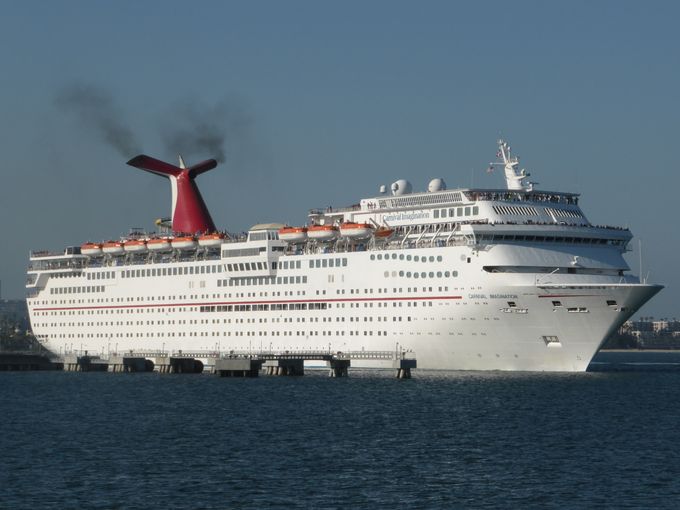
CU Blog - Carnival to ban carry-on bottled beverages - Photo 1According to the news article below, Carnival Cruise Lines is now banning carry-on bottled beverages on their ships. They claim that this move “is not intended to raise beverage revenues”.

Does anybody believe that?

Hardly!

This is the consistent theme in the book Go Lean…Caribbean; it posits that cruise lines have progressively tighten their practices and policies to ensure more revenues for them and less for the port cities (Page 32).

Scratch a liar, catch a thief!

Why so harsh a criticism? Simple: the dynamics of the Crony-Capitalistic cruise industry in the past, present and future.

The cruise line industry was not always as reflective of this Crony-Capitalism … as they are today. There was a time when passenger shipping companies submitted to the laws of the land – the home countries of the ship owners, i.e. US, England, Netherlands, Greece. This compliance dictated that the shipping lines conformed to labor, anti-trust and competition laws. Then the Crony-Capitalistic influence was embedded and the shipping lines started seeking ship-registry third-party countries that are agnostic to community best-practices (Liberia, etc.).

Today the Caribbean cruise industry is dominated by 3 cruise companies (with large percentages of the passenger traffic; Carnival alone had 52% global market share in early 2012), and the fast-growing Disney Cruise Line. These companies are now all publicly-traded on Wall Street – see stock-symbols listing as follows – so they now answer to new bosses, whose goal is singular: increase shareholder value:

Symbol Name

Price Today

CCL Carnival Corporation

51.87

RCL Royal Caribbean Cruise Line

83.20

NCLH Norwegian Cruise Line

59.81

DIS Disney (Cruise Line)

118.80

The “modus operandi” is no longer a matter of extending hospitality to their guests, but rather the business ethos – fundamental spirit that informs the beliefs, customs, or practices of an enterprise – is simply to maximize profits. This means increasing revenues while simultaneously lowering costs. (In a previous blog/commentary the full extent of the industries’ labor practices were detailed).

This is not a good trend!

The Go Lean book serves as a roadmap for the introduction and implementation of the technocratic Caribbean Union Trade Federation (CU). The CU is a confederation of 30 Caribbean member-states with the mission to form a unified negotiating front in bargaining with the cruise line industry. The CU goal is simple: integrate the region into a Single Market.

Why a Single Market?

The Go Lean book posits (Page 3) that the problems of the Caribbean, cruise industry manifestations included, are too big for any one member-state to tackle alone. Even though some cruise destinations, (like the Bahamas, Jamaica, Cayman Islands and St Martin) have demonstrated some success with this business model, the trend is for the opposite direction. (Wall Street firms try to improve profits more and more for each passing fiscal quarter). As demonstrated in the following news article, the trending is for this cruise industry to extract more and more passenger spending, not share. See the news article here:

Title: Carnival to ban carry-on bottled beverages
By: KDSK Reporting

Carnival Cruise Line is trying to put a stop to alcohol being smuggled aboard its ships disguised as bottled water.

Beginning July 9, Carnival will effectively ban beverages in bottles from being brought onboard at embarkation. The only exception is a single bottle of fine wine or champagne.

Otherwise, beverages must [be] packaged in unopened cans or cartons, including water, sodas and juices, with a maximum number of 12 packed in carry-on luggage.

CU Blog - Carnival to ban carry-on bottled beverages - Photo 2The change means passengers can no longer tag beverages for embarkation as checked luggage. In addition, Carnival will restrict the size of coolers brought aboard to those measuring 12x12x12 or less.

In a letter being sent to passengers, Carnival said bottled beverages have become a prime means of bringing unauthorized alcohol on cruises. The line claims inspecting a growing number of bottles was bogging down embarkation, and that episodes of bad behavior on ships often trace back to smuggled alcohol. The letter also explained that cruise personnel cannot effectively monitor consumption of alcohol that isn’t sold on the ships, it said.

“We sincerely apologize for any disappointment these changes may cause,” said the letter, signed by Arlene Marichal, senior director, solutions and special services. “However, we firmly believe this will result in a safer environment while also improving the embarkation process and the overall guest experience.”

Concurrent with the policy change, Carnival has lowered the price of bottled water to $2.99 for a 12-pack of 500 ML bottles, if purchased in advance of the cruise, or $4.99 onboard. Carnival said the move is not intended to raise beverage revenues.
Source: KSDK NewsChannel 5 – St. Louis, Missouri Local NBC Affiliate – Posted June 9, 2015; retrieved July 22, 2015 from: http://www.ksdk.com/story/news/nation-now/2015/06/09/carnival-to-ban-carry-on-bottled-beverages/28744127/

The goal of the Go Lean roadmap is the Greater Good. This includes applying strategies and tactics to incite more spending at Caribbean ports-of-call.

Singlehandedly, these port cities-member states cannot effect change on this cruise line industry. But together, as one unified front, the chances for success improve exponentially.

The cruise lines “ply their trade” in the Caribbean region (waters and ports-of-call); this is our marketplace so it would be expected that we would have some jurisdiction. After all, the Caribbean is the attraction for Caribbean cruises.

The confederacy goal of the CU entails accepting that there is interdependence among the Caribbean member-states. The Go Lean book initiates with this quest for regional integration with an opening Declaration of Interdependence (Pages 11 – 13); consider these pronouncements:

v. Whereas the natural formation of our landmass and coastlines entail a large portion of waterscapes, the reality of management of our interior calls for extended oversight of the waterways between the islands. The internationally accepted 12-mile limits for national borders must be extended by International Tribunals to encompass the areas in between islands. The individual states must maintain their 12-mile borders while the sovereignty of this expanded area, the Exclusive Economic Zone, must be vested in the accedence of this Federation.

vi. Whereas the finite nature of the landmass of our lands limits the populations and markets of commerce, by extending the bonds of brotherhood to our geographic neighbors allows for extended opportunities and better execution of the kinetics of our economies through trade. This regional focus must foster and promote diverse economic stimuli.

viii. Whereas the population size is too small to foster good negotiations for products and commodities from international vendors, the Federation must allow the unification of the region as one purchasing [or bargaining] agent, thereby garnering better terms and discounts.

x. Whereas we are surrounded and allied to nations of larger proportions in land mass, populations, and treasuries, elements in their societies may have ill-intent in their pursuits, at the expense of the safety and security of our citizens. We must therefore appoint “new guards” to ensure our public safety and threats against our society, both domestic and foreign. The Federation must employ the latest advances and best practices … to assuage continuous threats

xi. Whereas all men are entitled to the benefits of good governance in a free society, “new guards” must be enacted to dissuade the emergence of incompetence, corruption, nepotism and cronyism at the peril of the people’s best interest. The Federation must guarantee the executions of a social contract between government and the governed.

xii. Whereas the legacy in recent times in individual states may be that of ineffectual governance with no redress to higher authority, the accedence of this Federation will ensure accountability and escalation of the human and civil rights of the people for good governance, justice assurances, due process and the rule of law

xxiv. Whereas a free market economy can be induced and spurred for continuous progress, the Federation must install the controls to better manage aspects of the economy: jobs, inflation, savings rate, investments and other economic principles. Thereby attracting direct foreign investment because of the stability and vibrancy of our economy.

xxv. Whereas the legacy of international democracies had been imperiled due to a global financial crisis, the structure of the Federation must allow for financial stability and assurance of the Federation’s institutions. To mandate the economic vibrancy of the region, monetary and fiscal controls and policies must be incorporated as proactive and reactive measures.

This Go Lean roadmap represents change for the Caribbean and all of our stakeholders, including sailing/cruising and flying visitors. But our quest in the CU to elevate Caribbean society is not designed to antagonize cruise line operators. Just the opposite; we set out to be their able-bodied trading partners, not adversarial opponents. We seek the Greater Good for their interest as well, a win-win.

The CU/Go Lean prime directive is identified with the following 3 statements:

  • Optimization of the economic engines in order to grow the regional economy to $800 Billion & create 2.2 million new jobs.
  • Establishment of a security apparatus to protect the resultant economic engines, including maritime activities on the Caribbean Sea.
  • Improvement of Caribbean governance to support these engines.

Collective bargaining is the key.

The Go Lean book promotes collective bargaining as a community ethos, so as to mitigate the perils of “going at it alone”. The book details the applicable community ethos, strategies, tactics, implementation and advocacies to elevate the benefits of regional cruise line industry in the region:

Community Ethos – People Respond to Incentives in Predictable Ways Page 21
Community Ethos – Economic Systems Influence Individual Choices & Incentives Page 21
Community Ethos – Consequences of Choices Lie in the Future Page 21
Community Ethos – Governing Principles – Lean Operations Page 24
Community Ethos – Governing Principles – Return on Investments (ROI) Page 24
Community Ethos – Governing Principles – Cooperatives Page 25
Community Ethos – Ways to Improve Negotiations Page 32
Community Ethos – Ways to Improve Sharing Page 35
Community Ethos – Ways to Impact the Greater Good Page 37
Strategy – Confederate 30 Caribbean Member-States Page 45
Strategy – Customers / Stakeholders – Governments, Businesses, and Citizens Page 47
Strategy – Customers / Stakeholders – Cruise Passengers Page 48
Strategy – Competitors – Choices for Cruise Passengers: Pacific Coast, Mediterranean, etc. Page 55
Strategy – Agents of Change – Technology Page 57
Strategy – Agents of Change – Climate Change – More Intense Tropical Storms Disrupting Cruises Page 57
Anecdote – Carnival Cruise Lines Strategy Report Page 61
Tactical – Foster a Technocracy Page 64
Tactical – Separation of Powers – Shared Portal: www.myCaribbean.gov for Cruise Marketing Page 74
Tactical – Separation of Powers – Regional Tourism Coordination Page 7?
Implementation – Year 1 / Assemble Phase – Consolidate Organs into CU Page 96
Implementation – Foreign Policy Mandates at Start-up – Collective Bargain with other Cruise Destinations Page 105
Implementation – Security Provisions at Start-up Page 106
Planning – 10 Big Ideas – Shared/Single Currency – Cooperative Central Bank & Cruise Line Pay cards Page 127
Advocacy – Ways to Grow the Economy Page 151
Advocacy – Ways to Create Jobs Page 152
Advocacy – Ways to Improve Governance Page 168
Advocacy – Ways to Better Manage the Social Contract – Ensure level playing field Page 170
Advocacy – Ways to Foster Cooperatives Page 176
Advocacy – Improve Homeland Security – Emergency Management Readiness Page 180
Advocacy – Ways to Improve Tourism – Cruise Passenger Pay Card/Currency Page 190
Advocacy – Ways to Improve Cruise Tourism – Fostering more Port-side Commerce Page 194
Advocacy – Ways to Improve Emergency Management – Cruise Ship Incidence Readiness Page 198
Advocacy – Reforms for Bank Regulations – Cruise Passenger Pay cards Page 199
Advocacy – Ways to Develop Ship-Building – Cruise Ship Dry-Dock Maintenance – Deal-making Page 209

The issues raised in the foregoing article weigh heavy on a lot of Caribbean commerce. For example, we have a thriving rum industry in the region, with products deemed the best in the world. An objective of rum producers is to market their wares to the 10-million-plus cruise visitors. An unchallenged cruise line policy, dissuading onshore beverage purchases, would undermine this rum industry goal.

The cruise lines have invested heavily in new amenities and duty-free shopping options on board their newer ships. See photos and VIDEO here:

CU Blog - Carnival to ban carry-on bottled beverages - Photo 3OLYMPUS DIGITAL CAMERACU Blog - Carnival to ban carry-on bottled beverages - Photo 6CU Blog - Carnival to ban carry-on bottled beverages - Photo 5


VIDEO – Disney Fantasy Shopping Areas on the Disney Cruise Line – https://youtu.be/OvjxlzoetrY

Published on Apr 22, 2012 – A look at shopping on the Disney Fantasy including Sea Treasures, Mickey’s Mainsail, Bibbidi Bobbidi Boutique, and White Caps. Visit http://www.wdwinfo.com for more information on Disney Cruise Line.

While these onboard retailers may be in direct competition with port-cities, it is the Go Lean assertion that there is market enough for all these stakeholders; onboard and onshore. There is no need for anti-trust practices.

Consider these previous blog/commentaries that drilled deep on the Go Lean vision and opportunities for the cruise industry:

https://goleancaribbean.com/blog/?p=5210 Cruise Ship Commerce – Getting Ready for Change
https://goleancaribbean.com/blog/?p=4639 Tobago: A Model for Cruise Tourism
https://goleancaribbean.com/blog/?p=3956 Art and Science of Collaboration
https://goleancaribbean.com/blog/?p=5307 8th Violent Crime Warning to Bahamas Tourists (including Cruises)
https://goleancaribbean.com/blog/?p=3889 RBC EZPay – Ready for Change and Cruise Industry Pay Cards

Issues Creating New Cruise Industry Opportunities

https://goleancaribbean.com/blog/?p=3225 Caribbean less competitive due to increasing aviation taxes
https://goleancaribbean.com/blog/?p=2207 Hotels are making billions from added fees
https://goleancaribbean.com/blog/?p=242 The Erosion of the Middle Class

The Caribbean region and the cruise line industry must do better … and work together to grow this industry.

In the end, these changes will be for the better; for the Greater Good and to promote a better partnership for all cruise industry stakeholders.

We welcome the 10 million cruise visitors and the many cruise ship operators. Let’s work together … to make the Caribbean destination a better place to live, work and play.  🙂

Download the book Go Lean … Caribbean – now!

Share this post:
, , , , ,
[Top]

Buggery in Jamaica – ‘Say It Ain’t So’!

Go Lean Commentary

This commentary has asserted that the Caribbean region can be a better society than the United States of America. Yes, we can!

But to  even start the discussion, we must first:

Live and let live!

t So - Photo 3The topic of intolerance has been acute in the news as of late. We have the extreme example of the Islamic State in Iraq and Syria (ISIS) beheading non-Muslims because… well, just because. And the example of the US legalizing Gay Marriage may be considered too tolerant for some people’s good taste.

Where does the Caribbean fit in this discussion?

If ISIS is one end of a scale and Gay Marriage in America is another end, then one Caribbean member-state, Jamaica, would be closer to …

ISIS!

Yes, it is that bad. Say it ain’t so.

See Appendix-VIDEO’s below …

While this commentary directly targets Jamaica, the majority of the countries and overseas territories of the former British Empire, still criminalize sexual acts between consenting adults of the same sex and other forms of sexual orientation, gender identity and expression. This has been described as being the result of “the major historical influence” or legacy of the British Empire. In most cases, it was former colonial administrators that established anti-gay legislation or sodomy acts during the 19th century; see Appendix below. The majority of countries then retained these laws following independence.[1][2].

There is an effort now to transform society in Jamaica (and other countries) in this regards. There are Gay Pride Activities being planned for this Summer of 2015. See the relevant news article here:

Title: J-FLAG Is Planning Gay Pride Activities, But No Parade For August – Exec
Source: Jamaica Gleaner Daily Newspaper Online Site; posted June 30, 2015; retrieved from: http://jamaica-gleaner.com/article/news/20150630/j-flag-planning-gay-pride-activities-no-parade-august-exec  

Local gay lobby, J-FLAG, is refuting reports that it will host a road parade in August when the group plans to have a series of gay pride activities.

Social media has been abuzz since yesterday following a report that the group would host a parade, similar to what is done in the United   States and other countries.

However, executive director of J-FLAG, Dane Lewis, says the report is wrong, adding that Jamaica is not ready for such an event.

Meanwhile, he says the group is planning a week-long series of activities starting on Emancipation Day, August 1, to mark growing tolerance for members of the lesbian, gay, bisexual, and transgender (LGBT) community.

Some years ago, an attempt to host a gay parade was thwarted after anti-gay supporters reportedly planned attacks against marchers.

Jamaica is accused of being one of the most homophobic places on earth.

Last week, the US government released a report noting that anti-gay laws and the dancehall culture are responsible for perpetuating homophobia in Jamaica.
Additional reference sources: http://jflag.org/

t So - Photo 1
———–

VIDEO: Executive Director of JFLAG, Dane Lewis: “We Are Jamaicans” – https://youtu.be/sJ-17R5DCoI


Published on Jan 17, 2013 – “We Are Jamaicans” is funded with the kind support of the Caribbean Vulnerable Communities Coalition (CVC) through its Global Fund Vulnerablised Project.

Building a diverse society is not easy. The book Go Lean … Caribbean describes the challenge as heavy-lifting. Though the US had failed at this challenge, it proudly boasts that it got better with every generation. The Caribbean on the other hand, leaves much to be desired in terms of the willingness to change and keep pace with progressive societies. (Now the US, Canada, Ireland and other countries have legalized Gay Marriage).

In a previous blog-commentaries, this defect – Homosexual Intolerance – was listed among the blatant human rights abuses in the region.

This is an important consideration for the planners of Caribbean empowerment. The Caribbean, a region where unfortunately, we have NOT … tried to be as tolerant as may be required, expected and just plain moral.

We must do better!

The book Go Lean … Caribbean asserts that Caribbean society’s prosperity has been hindered with a high abandonment rate – reported at 70% for educated classes region-wide, but an even higher 85% in Jamaica. The primary mission of the Go Lean book is to “battle” against the “push-and-pull” factors that draw so many of our Caribbean citizens away from their homelands to go to more progressive countries.

The Go Lean book campaigns to lower the “push” factors!

The purpose of the Go Lean book is to fix the Caribbean; to be better. The Go Lean book serves as a roadmap for the introduction and implementation of the technocratic Caribbean Union Trade Federation (CU) to pursue the quest to elevate the Caribbean region through empowerments in economics, security and governance. It is the assertion that Caribbean citizens can stay home and effect change in their homelands more effectively than going to some foreign countries to find opportunities for life, liberty and the pursuit of happiness. The book therefore asserts that the region can turn-around from failing assessments by applying best-practices, and forging new societal institutions to impact the Greater Good for all the Caribbean. This point was pronounced in the opening Declaration of Interdependence (Pages 10 – 14) with these acknowledgements and statements:

xi.   Whereas all men are entitled to the benefits of good governance in a free society, “new guards” must be enacted to dissuade the emergence of incompetence, corruption, nepotism and cronyism at the peril of the people’s best interest. The Federation must guarantee the executions of a social contract between government and the governed.

xii. Whereas the legacy in recent times in individual states may be that of ineffectual governance with no redress to higher authority, the accedence of this Federation will ensure accountability and escalation of the human and civil rights of the people for good governance, justice assurances, due process and the rule of law. As such, any threats of a “failed state” status for any member state must enact emergency measures on behalf of the Federation to protect the human, civil and property rights of the citizens, residents, allies, trading partners, and visitors of the affected member state and the Federation as a whole.

xxxiii. Whereas lessons can be learned and applied from the study of the recent history of other societies, the Federation must formalize statutes and organizational dimensions to avoid the pitfalls of communities like … Egypt. On the other hand, the Federation must also implement the good examples learned from developments/ communities like New York City, … Canada, … and tenants of the US Constitution.

The CU/Go Lean vision to elevate Caribbean society must also consider the issue of image. There is the need for a sentinel role for Caribbean image, as there are a lot of times that Caribbean life and people are denigrated in the media: news, film, TV, books, magazines. It’s unfortunate when we are guilty of scathing allegations. The Go Lean roadmap calls for the CU to assume a role of protecting and projecting positive Caribbean images. The plan is to use cutting edge delivery of best practices; the applicable CU agencies will employ strategies, tactics and implementations to impact the Go Lean prime directives; identified with the following 3 statements:

  • Optimization of the economic engines in order to grow the regional economy to $800 Billion & create 2.2 million new jobs.
  • Establishment of a security apparatus to protect the resultant economic engines and mitigate challenges/threats to public safety for all citizens… LGBT or straight.
  • Improvement of Caribbean governance to support these engines.

Jamaica has a failing economy.

Jamaica’s primary economic driver is tourism. So …

t So - Photo 2

Is the Caribbean ready for this economic activity? A bridge too far, too soon?

t So - Photo 4Jamaica has a long way to go; the country has been described by some Human Rights groups as the most homophobic place on Earth because of the high level of violent crime directed at LGBT people; (Padgett, Tim: “The Most Homophobic Place on Earth?”Time Magazine posted 12 April 2006). The United States Department of State said that in 2012, “homophobia was [unacceptably] widespread in the country” (2012 Country Reports on Human Rights Practices: Jamaica, Bureau of Democracy, Human Rights and Labor, U.S. Department of State, pages 20-22). As depicted in the VIDEO below, even President Obama indicted the island on a recent official State Visit.

Why is this country’s homophobia so acute compared to other countries? For one, they have held on emphatically to the British Laws on Buggery – see Appendix below – from their colonial days; even though the host country of England has already abandoned the laws (in 1967).

Jamaica is partying like it’s 1899!

This is therefore a matter of community ethos. The Go Lean book defines community ethos as the fundamental character or spirit of a culture; the underlying sentiment that informs the beliefs, customs, or practices of a group or society; the dominant assumptions of a people or period. This tropical paradise of Jamaica, as defined in the foregoing news article and VIDEO continues to spur bad attitudes, bad ideas, bad speech and bad actions towards the LGBT community. This is unbecoming of a progressive society in 2015.

Alas, this is a crisis…for victims and their loved ones. The Go Lean book posits that this crisis can be averted, that the crisis is a “terrible thing to waste”. The Go Lean roadmap seeks to optimize the eco-systems for Jamaica and the entire Caribbean. The book stresses new community ethos, strategies, tactics, implementations and advocacies necessary to transform and turn-around the eco-systems of the regional society. These points are detailed in the book as follows:

Who We Are – SFE Foundation – Comprised of Caribbean Diaspora Page 8
Community Ethos – Economic Principles – Economic Systems Influence Individual Choices Page 21
Community Ethos – Economic Principles – Consequences of Choices Lie in the Future Page 21
Community Ethos – Governing Principles – Lean Operations Page 24
Community Ethos – Ways to Impact the Future Page 26
Community Ethos – Ways to Promote Happiness Page 36
Community Ethos – Ways to Impact the Greater Good Page 37
Strategy – Vision – Confederate all 30 member-states into a Single Market Page 45
Strategy – Mission – Build and foster local economic engines Page 45
Strategy – Mission – Repatriate the Diaspora, even Minorities like those of the LGBT community Page 46
Tactical – Ways to Foster a Technocracy Page 64
Tactical – Growing the Economy to $800 Billion GDP Page 68
Tactical – Separation-of-Powers – CU Federal Government versus Member-State Governance Page 71
Anatomy of Advocacies – Examples of Individuals Who Made Impact Page 122
Planning – 10 Big Ideas – Homeland Security Pact Page 127
Planning – Ways to Make the Caribbean Better Page 131
Planning – Ways to Improve Failed-State Indices – Minority and Human Rights Page 134
Planning – Lessons Learned from US Constitution – Equal Protection for all Minorities Page 145
Advocacy – Ways to Grow the Economy Page 151
Advocacy – Ways to Create Jobs Page 152
Advocacy – Ways to Improve Governance – For All Citizens Page 168
Advocacy – Ways to Better Manage the Social Contract – Security against “Bad Actors” Page 170
Advocacy – Ways to Impact Justice – Internal Affairs Reporting Line Page 177
Advocacy – Ways to Remediate and Mitigate Crime – Hate Crime Qualifiers Page 178
Advocacy – Ways to Improve Homeland Security Page 180
Advocacy – Ways to Mitigate Terrorism – Consider Bullying as Junior Terrorism Page 181
Advocacy – Ways to Impact Youth – Collaborating with Foundations Page 218
Advocacy – Ways to Re-boot Jamaica Page 239
Advocacy – Ways to Impact British Territories Page 245

Looking at the disposition of the island nation of Jamaica’s, we see that its societal engines are failing.

Could the investment in the diversity of its people be at the root of the problem?

The failing indices and metrics of Jamaica have been considered in previous blog/commentaries; see sample here:

https://goleancaribbean.com/blog/?p=4840 Jamaican Poll: ‘Bring back the British!’
https://goleancaribbean.com/blog/?p=3694 Looking for a job in Jamaica, go to Canada
https://goleancaribbean.com/blog/?p=2830 Jamaica’s Public Pension Under-funded
https://goleancaribbean.com/blog/?p=392 Jamaica to receive World Bank funds to help in crime fight
https://goleancaribbean.com/blog/?p=313 What’s Holding Back Jamaica’s Reforms

The Go Lean roadmap seeks to empower and elevate Caribbean societal engines to make Jamaica, and the rest of the Caribbean, better places to live, work and play … for all citizens, including the LGBT communities.

Most of the Jamaican Diaspora that has abandoned the island now lives in the US, Canada or the UK. Their new home-communities are more tolerant societies of their LGBT neighbors.

Perhaps, there is some correlation.

This commentary is not urging the abandonment of the Judeo-Christian moral code; Jesus Christ instructed to “let them be” at Luke 22:51 (The Message Translation). Rather this commentary urges tolerance and moderation: Live and let live!

Fight the hate!

Yes, we can … do this. Yes, we must do this. 🙂

Download the book Go Lean … Caribbean – now!
———–

Appendix VIDEO: US President Obama’s LGBT comments at Youth Leaders Town Hall – https://youtu.be/636mgw1THpc?t=5m1s


Published on Apr 9, 2015 – President Obama delivers remarks and answers questions at a town hall with Young Leaders of the Americas at University of the West Indies in Kingston, Jamaica. April 9, 2015.
———–

Appendix VIDEO: Gay rights in Jamaica – https://youtu.be/_nSgMGoBAmU

playbutton-300x300

———–

Appendix – Encyclopedic Reference: Buggery in English Common Law

The British English term buggery is very close in meaning to the term sodomy, often used interchangeably in law and popular speech. It may also be a specific common law offenceencompassing both sodomy and bestiality.

In English law “buggery” was first used in the Buggery Act 1533, while Section 61 of the Offences against the Person Act 1861, entitled “Sodomy and Bestiality”, defined punishments for “the abominable Crime of Buggery, committed either with Mankind or with any Animal”. The definition of “buggery” was not specified in these or any statute, but rather established by judicial precedent.[1] Over the years the courts have defined buggery as including either [of these]:

  1. anal intercourse or oral intercourse by a man with a man or woman[2] or
  2. vaginal intercourse by either a man or a woman with an animal,[3]

But [no other] form of “unnatural intercourse”[4] [was defined], the implication being that anal sex with an animal would not constitute buggery. Such a case has not, to date, come before the courts of a common law jurisdiction in any reported decision. However, it seems highly improbable that a person would be exculpated of a crime associated with sex with animals only by reason of the fact that penetration involved the anus rather than the vagina. In the 1817 case of Rex v. Jacobs, the Crown Court ruled that oral intercourse, even with an underage and/or non-consenting person, did not constitute buggery or sodomy.[4]

At common law consent was not a defence[5] nor was the fact that the parties were married.[6] In the UK, the punishment for buggery was reduced from hanging to life imprisonment by the Offences against the Person Act 1861. As with the crime of rape, buggery required that penetration must have occurred, but ejaculation is not necessary.[7]

Most common law jurisdictions have now modified the law to permit anal sex between consenting adults.[8] Hong Kong did so retroactively in 1990, barring prosecution for “crimes against nature” committed before the Crimes (Amendment) Ordinance 1990 entered into force except those that would still have constituted a crime if they had been done thereafter. In England and Wales, homosexual buggery was decriminalised in 1967 with an age of consent at 21 years, whereas all heterosexual intercourse had an age of consent at 16 years. The Sexual Offences Act 2003 did not fully remove buggery as a concept in United Kingdom law, as the previous law is retained for complainants (consensual or “pseudo-consensual”) under the age of 16, or 18 with regards to an adult perceived to be in a “position of trust”. As the law stands, buggery is still charged, exclusively regarding “pseudo-consensual” anal intercourse with those under 16/18, because children cannot legally consent to buggery although they may appear to do so. Rape is charged when the penetration is clearly not consensual. Buggery with an animal is still unlawful under Section 69 of the Sexual Offences Act 2003.

In the Republic of Ireland, the Criminal Law (Sexual Offences) Act 1993 abolished the offence of “buggery between persons”.[9] For some years prior to 1993, criminal prosecution had not been made for buggery between consenting adults. The 1993 Act created an offence of “buggery with a person under the age of 17 years”,[10] penalised similar to statutory rape, which also had 17 years as the age of consent. The Criminal Law (Sexual Offences) Act 2006 replaced this offence with “defilement of a child”, encompassing both “sexual intercourse” and “buggery”.[11] Buggery with an animal is still unlawful under Section 69 of the Sexual Offences Act 2003. In 2012 a man was convicted of this offence for supplying a dog in 2008 to a woman who had intercourse with it and died.[12]

Etymology – The word bugger and buggery are still commonly used in modern English as a mild exclamation. “Buggery” is also synonymous with anal sex.

The word “bugger” was derived, via the French bougre, from Bulgar, that is, “Bulgarian”, meaning the medieval Bulgarian heretical sect of the Bogomils, which spread into Western Europe and was claimed by the established church to be devoted to the practice of sodomy.[13] “Buggery” first appears in English in 1330, though “bugger” in a sexual sense is not recorded until 1555.[14]

(Source: https://en.wikipedia.org/wiki/Buggery)

Share this post:
, , , , , ,
[Top]

Role Model Iris Adderley – Disability Advocate: Reasonable Accommodations

Go Lean Commentary/Interview

Travel away from your children for an extended time period and you would notice something amazing: Change.

It turns out that change is constant; children grow. But you have to take a step back to notice the difference.

CU Blog - Anecdote - Iris Adderley - Photo 1This is the experience of Disability Advocate Iris Adderley. She is a proud Bahamian – oldest child with 10 siblings who mostly all still live in the Bahamas – who served her country well; especially during the early days of nation-building (independence status was obtained in 1973). In a job assignment with the Bahamas Ministry of Tourism, Ms. Adderley spent many years abroad (Coral Gables, FL and Dallas, TX) promoting the Bahamas around the world as a tourist and convention destination. She was continuously called upon to sell a vision of the Bahamas that she discovered later to be out-dated, and irrelevant. The country had changed … and even declined, it seemed, in her absence.

Ms. Adderley returned to the Bahamas in the year 2000, but not to the homeland she had left behind, rather to this newly changed community. The changes were not all good. To complicate matters, she was now returning as a quadriplegic, a permanent disability.

Ms. Adderley endured a life-threatening car accident in Metropolitan Dallas in 1982, where she lived and worked for her Ministry of Tourism assignment. But she does not consider her injury as a national sacrifice. It was just “time and unforeseen occurrence” befalling her; (see Bible reference of Ecclesiastes 9:11 in the Appendix below). This taught her a very important lesson that everybody is  vulnerable to injury and illness and can be rendered disabled. This new reality became her new advocacy, a quest to make sure people with disabilities have equal rights and opportunities to contribute to society. (This quest also applies as a population ages, the prevalence of disabilities increases proportionally; think Diabetes amputations, Hip replacements, etc.).

This conclusion aligns with the book Go Lean…Caribbean, that with just a reasonable accommodation, persons with disabilities can live a full and engaging life … and help to elevate their communities and make “home” better places to live, work and play.

What reasonable accommodations?

For starters, Ms. Adderley expressed that if her injury had occurred in her Caribbean homeland that she would now be dead!

The world is better … that she has survived.

The Go Lean book serves as a roadmap for the introduction and implementation of the technocratic Caribbean Union Trade Federation (CU). The CU is designed to elevate the region’s economic, security and governing societal engines. This includes healthcare. The CU roadmap calls for improvements to the region’s emergency management apparatus. There is a plan to deploy a network of 6 cutting-edge Trauma Centers throughout the Caribbean. With this mitigation and remediation, the region can more competently respond to trauma emergencies, like life-threatening auto accidents.

It is only reasonable to expect that Caribbean society would have caught up to finally being able this deliver on the social contract at this level, considering that Ms. Adderley trauma transpired 33 years ago.

Unfortunately, the experiences of so many in the Bahamas, specifically and the Caribbean as a whole, is that these countries are structured only for the lowest common denominator (LCD); anyone one with needs above-and-beyond this LCD level is just “out-of-luck”.

This is unacceptable … and unreasonable for Caribbean contributors like Iris Adderley. This is also unacceptable … and unreasonable for the planners of the new Caribbean. We must deliver better on the social contract, the implied covenant where citizens surrender some of their freedoms and submit to the authority of the State in exchange for protection of remaining natural and legal rights. Blatant failures on the delivery of this social contract lead to an undesirable destination: abandonment!

Ms. Adderley lived in the most advanced country in the world, in the US State of Texas. She would have been excused if she wanted to remain there for her sustained existence, considering her health disposition. But she showed a national sacrifice ethos and repatriated back to her Caribbean homeland. This is heroic!

In a structured interview, Iris Adderley made the following contributions to this discussion of the roadmap to elevate her community:

CU Blog - Anecdote - Iris Adderley - Photo 2

Bold = Author

What are the details of your advocacy?

There should be a stronger manifestation of “Human” and “Woman’s” rights in the Bahamas. It is deplorable that the country is so deficient in these offerings. Earlier in my career, I took the assignment in Dallas so as to leave the Coral Gables Office of the Ministry of Tourism because the spirit of gender discrimination was just so acute. I felt I could make a bigger impact in a more reasonable environment. I was proven correct and did indeed have a greater impact professionally there. Returning to the Bahamas in 2000 I wanted to nurture that same advocacy at home, but this time with a supplemental agenda for persons with disabilities.

What are your responsibilities now?

I serve as a Consultant at the Disability Affairs Division of the Ministry of Social Services and Community Development. I help to guide public policy to benefit those with disabilities in the country, even blending my prior role as a Tourism promoter by trying to create a great environment for persons with disabilities to come visit our shores and enjoy our hospitality.

What would you do if your project had 50% more funding?

Create rehabilitation centers, if not throughout the whole country, then at least in the capital city of Nassau. Persons with disabilities need help and support to get back to the point where they can contribute to society. Increased funding would allow more cultural education to message that persons with disabilities have the same rights in any society, to be more inclusive of the day-to-day affairs.

What do you want to see in The Bahamas in … 5 years?

More fulfilment of Sir Lynden’s Vision; (the first and longest-serving Prime Minister after majority rule, Sir Lynden O. Pindling). The young people need to know who we are as a people, where we came from and that we were a nation of beautiful, strong black people.

I want to see Bahamians own more of the Bahamas. This means diversifying from the main industries of tourism and financial services; all we’re doing there is servicing other people’s assets; we are not really owning or creating anything.

What do you want to see in The Bahamas in … 20 years?

The Bahamas needs a National Strategic Plan. This needs to reflect the values and best-practices that have been honed from experiences from around the world. The Bahamas has a global Diaspora – mostly of an elderly disposition now – their participation should be invited.

What features of North America/Europe would you like to see here?

The social safety nets (health, schools, food for the poor) are to be admired, especially in many European countries. Those communities extend themselves to care for their elderly, poor, sick and disabled citizens.

How would you feel if your children emigrate?

Though I don’t have any children directly, I’m blessed with many nieces, nephews and loving family members. So many of them are bright young all-stars and go-getters, studying abroad in colleges and universities. Unfortunately, far too often, these ones are not setting their sight on a return home to the Bahamas. Some would even rather go to a Latin American country than to come back here to the Bahamas. This is sad, as it does not reflect the great sacrifices that so many in the previous generations made to forge opportunities for this next generation.

Where do you consider to be the best place to live?

At one point, my answer would have been the Bahamas; but I’ve gotten to see the real country as it exists today; this is not what we sold to tourists in promotions and advertisements. The country has changed … downward. Instead of our next generation offering reassurance and hope, I am more troubled at their lack of proper training. We cannot expect greatness from the status quo of most of this generation today..

What areas are you most disappointed in when considering the last 20 years?

The lack of discernment is especially disappointing. Many times the wise course is presented to Bahamians, but they seem to like to ignore wisdom and instead proceed down a destructive path. I guess the proverb is true: “A prophet is not accepted at home”.

Your wisdom is discerned here Ms. Adderley!

The points from this Disability Advocate align with the CU/Go Lean roadmap. Our directive is similar: to elevate Caribbean society, including those persons with physical disabilities. The declarative statements of the prime directive are as follows:

  • Optimization of the economic engines in order to grow the regional economy.
  • Establishment of a security apparatus to prepare and protect stakeholders for natural, man-made and incidental emergencies.
  • Improvement of Caribbean governance to support these engines.

The book posits that one person, despite their field of endeavor, can make a difference in the Caribbean, and its impact on the world; that there are many opportunities where one champion, one advocate, can elevate society. In this light, the book features 144 different advocacies, one specifically for Persons with Disabilities (Page 228). We need advocates, vanguards and sentinels like Iris Adderley to ensure equal opportunities for all these relevant stakeholders.

The Go Lean roadmap specifically encourages the region, to lean-in to elevate society with these specific community ethos, strategies, tactics, implementations and advocacies:

Community Ethos – Economic Principles – Economic Systems Influence   Individual Choices Page 21
Community Ethos – Governing Principles – Minority Equalization Page 24
Community Ethos – Governing Principles – Lean Operations Page 24
Community Ethos – Governing Principles – Return on Investments Page 24
Community Ethos – Ways to Promote Happiness – Gerontology/Aging Factors Page 36
Community Ethos – Ways to Impact the Greater Good Page 37
Strategy – Vision – Confederate all 30 Member-states Page 45
Strategy – Mission – Repatriate the Diaspora,   young and old …even those disabled Page 46
Anatomy of Advocacies – Examples   of Individuals Who Made Impact Page 122
Planning – 10 Big Ideas – Homeland Security Pact Page 127
Planning – Ways to Improve Failed-State Indices – Minority and Human Rights Page 134
Planning – Lessons from US Constitution – Equal Protection for all Minorities Page 139
Advocacy – Ways to Improve Healthcare – Caribbean [Persons] with Disabilities Page 156
Advocacy – Ways to Improve Governance – For All Citizens Page 168
Advocacy – Ways to Better Manage the Social Contract – Medical / Heath Endeavors Page 170
Advocacy – Ways to Impact Justice – Ensure Rights for the Disabled Classes Page 177
Advocacy – Ways to Remediate and Mitigate Crime – Hate Crime Qualifiers Page 178
Advocacy – Ways to Impact Homeland Security – Emergency Management Page 180
Advocacy – Ways to Improve Emergency Management – Trauma Art & Science Page 182
Advocacy – Ways to Foster Technology – e-Government Interfaces & Services Page 197
Advocacy – Ways to Protect Human Rights – Caribbean [Persons] with Disabilities Page 220
Advocacy – Ways to Improve Elder-Care – Caribbean [Persons] with Disabilities Page 225
Advocacy – Ways to Empower Women Page 226
Advocacy – Ways to Impact Persons with Disabilities – ‘Americans with Disabilities Act’ Model Page 228
Appendix – Trauma Center Definitions Page 336

The Caribbean region wants a more optimized society … for all citizens. We want to mitigate human rights and civil rights abuses, and empower all for a better life, liberty and the pursuit of happiness.

The Go Lean book posits that economic measures and security measures must be in tandem for any societal empowerment effort. According to the foregoing interview/profile, after 30 years, our region is still behind with regards to servicing the needs of one specific minority group: persons with disabilities. We must do better!

Early in the book, the pressing need to optimize facilitations for this population group was pronounced in the Declaration of Interdependence (Pages 11 – 13), with these opening statements:

ix. Whereas the realities of healthcare and an aging population cannot be ignored and cannot be afforded without some advanced mitigation, the Federation must arrange for health plans

xi. Whereas all men are entitled to the benefits of good governance in a free society, “new guards” must be enacted to dissuade the emergence of incompetence, corruption, nepotism and cronyism at the peril of the people’s best interest. The Federation must guarantee the executions of a social contract between government and the governed.

xvi. Whereas security of our homeland is inextricably linked to prosperity of the homeland, the economic and security interest of the region needs to be aligned under the same governance.  the accedence of this Federation must equip the security apparatus with the tools and techniques for predictive and proactive interdictions.

xviii. Whereas all citizens in the Federation member-states may not have the same physical abilities, reasonable accommodations must be made so that individuals with physical and mental disabilities can still access public and governmental services so as to foster a satisfactory pursuit of life’s liberties and opportunities for happiness.

The Go Lean book explicitly acknowledges that optimizing the needs of persons with disabilities is not easy; this requires strenuous effort, heavy-lifting. These persons with disabilities normally are not able to contribute as much to Caribbean society as they draw on the public resources. This is unfortunate! Other societies have provided great models and amenities for facilitating fuller lives for those with disabilities: motorized wheelchairs, cars equipped with hand controls, Braille and TeleType (TTY and/or TDD) devices. This is the quest of the CU/Go Lean roadmap to engage more people – even those persons with disabilities – into this effort to optimize Caribbean society. More innovations are forthcoming; see VIDEOs in the Appendix. This vision is only reasonable, but prudent, as this population can generate a positive Return on Investment (ROI); as demonstrated by Iris Adderley in the foregoing interview.

Many subjects related to this profile of role model Iris Adderley have been blogged in previous Go Lean…Caribbean commentary; they are sampled here:

https://goleancaribbean.com/blog/?p=5002 Managing a ‘Clear and Present Danger’
https://goleancaribbean.com/blog/?p=4308 911 – Emergency Response Empowerments for the Caribbean
https://goleancaribbean.com/blog/?p=4278 Businesses Try to Stave-off Brain Drain as Boomers Age, Retire
https://goleancaribbean.com/blog/?p=3780 National Sacrifice – The Missing Ingredient
https://goleancaribbean.com/blog/?p=341 American Human Rights Leaders Slams Caribbean Poor Record

The CU/Go Lean roadmap is designed to empower and enhance the economic engines for the full participation and benefit of all Caribbean people. This includes the number of citizens that may have some physical challenges (deaf, blind, lame/mobility, etc.) or mental challenges. The CU’s vision is that this population group represents a critical talent pool that is under-served and underutilized; they are therefore included in the Go Lean roadmap. Tactically there is the call for a Caribbean [Persons] with Disabilities (CDA) provision to be embedded in the Caribbean Union confederation treaty; the request is to have the edict of reasonable accommodations legally embedded in statures.

In addition to the economic missions, the CU treaty would also address security needs, with the mission to fortify homeland security and to mitigate societal threats and risks, including a solution for emergency management and medical trauma arts and sciences.

Lastly, the CU treaty addresses remediation for regional governance. The local governments are thusly spurred to adapt and enforce access standards for all public edifices and private structures providing commerce to the general public. This reasonable accommodations mandate is modeled after the Americans with Disabilities Act (ADA) feature in US federal law.

This roadmap is a fully comprehensive plan with consideration to all aspects of Caribbean life. All stakeholders – citizens, businesses, and institutions – are hereby urged to lean-in to this roadmap.

Yes, with all “hands on deck”, persons with disabilities as well, the Caribbean can truly become a better place to live, work and play. 🙂

Download the book Go Lean … Caribbean – now!

———–

Appendices

1. Additional information on Iris Adderley: http://www.tribune242.com/news/2013/oct/22/iris-adderley-tireless-advocate-people-disabilitie/

2. Bible Reference – Ecclesiastes 9:11:
“I have seen something further under the sun, that the swift do not always win the race, nor do the mighty win the battle, nor do the wise always have the food, nor do the intelligent always have the riches, nor do those with knowledge always have success, because time and unexpected events overtake them all.” — New World Translation

3. VIDEO – Hugh Herr: The new bionics that let us run, climb and dancehttps://youtu.be/CDsNZJTWw0w

Published on Mar 28, 2014 – Hugh Herr is building the next generation of bionic limbs, robotic prosthetics inspired by nature’s own designs. Herr lost both legs in a climbing accident 30 years ago; now, as the head of the MIT Media Lab’s Biomechatronics group, he shows his incredible technology in a talk that’s both technical and deeply personal — with the help of ballroom dancer Adrianne Haslet-Davis, who lost her left leg in the 2013 Boston Marathon bombing, and performs again for the first time on the TED stage.

4. VIDEO‘Terminator’ arm is world’s most advanced prosthetic limbhttps://youtu.be/_qUPnnROxvY

Published on Nov 5, 2012 – A father who lost his arm in an accident six years ago has been given a new lease of life by a hi-tech bionic hand which is so precise he can type again. Nigel Ackland, 53, has been fitted with the Terminator-like carbon fibre mechanical hand which he can control with movements in his upper arm. The new bebionic3 myoelectric hand, which is also made from aluminium and alloy knuckles, moves like a real human limb by responding to Nigel’s muscle twitches. Incredibly, the robotic arm is so sensitive it means the father-of-one can touch type on a computer keyboard, peel vegetables, and even dress himself for the first time in six years.
More info about this amazing prosthetic can be found here http://bebionic.com

5. VIDEO – Berkeley Bionics: Introducing eLEGS – https://youtu.be/WcM0ruq28dc

Published on October 13, 2011 – Berkeley Bionics has rebranded. The company is now known as Ekso Bionics and eLEGS has become Ekso. To clarify, the device is an exoskeleton and the brand of the exoskeleton is Ekso, by Ekso Bionics.

Share this post:
, , , , , , ,
[Top]

8th Violent Crime Warning to Bahamas Tourists

Go Lean Commentary

An 8-ounce glass with 4 ounces of water is …

… half full.
… half empty.

It all depends on the perspective.

For an ambulance-chasing lawyer, that perspective needs to be “half empty”.

The foregoing article, a blog submission by Miami-based Maritime Lawyer Jim Walker – see Appendix – is not chasing ambulances, but rather cruise ships. So any assessment from him should be taken with a “grain of salt”. He has an agenda! He attempts to drum up business from cruise ship passengers that may have been hurt or abused in their experience venturing into the cruise industry – on the ship and/or on shore in the port cities.

Yet, in the middle of his “cry wolf” scenarios, there might just be some truth in his advocacy against the cruise lines.

For the stewards of new Caribbean economic eco-systems, we need to pay more than the usual attention to this “town crier”. His claims in this article here, must be fully vetted:

Title: 8th Violent Crime Warning for the Bahamas in 16 Months
By: Jim Walker
Cruise Law News Blog-Site – Posted May 15, 2015; Retrieved from: http://www.cruiselawnews.com/2015/05/articles/crime/8th-violent-crime-warning-for-the-bahamas-in-16-months/

CU Blog - 8th Violent Crime Warning to Bahamas Tourists - Photo 1The U.K.’s  Foreign and Commonwealth Office has issued “foreign travel advice” for travelers to the Bahamas. The U.K. crime warning says:

“There have been incidents of violent crime including robbery, which is often armed and sometimes fatal, in residential and tourist areas of New Providence, Grand Bahama and Freeport. The number of break-ins and robbery incidents reported to the High Commission has increased. There are police patrols in the main tourist areas.

Be vigilant at all times and don’t walk alone away from the main hotels, tourist areas, beaches and downtown Nassau, particularly after dark. Take care if travelling on local bus services after dusk on routes away from the main tourist areas. Do not carry large amounts of cash or jewellery. Robbers may be armed.”

I first learned of the crime warning from Travel Weekly.

Incredibly, this is the eighth crime warning for the Bahamas in the last 16 months.

In 2014, Bahamas was the subject of four critical crime warnings to U.S. citizens (one from the U.S. State Department and three from the U.S. Embassy) and one warning from Canada. There have been 2 prior crime warnings from the U.S. for the Bahamas this year. With this latest U.K. warning, that’s a total of 8 warnings.

I have never heard any country being the recipient of 8 crime warnings in such a short time period. The U.S. warnings are much more specific, mentioning that U.S. tourists have been raped and robbed at gunpoint.

We last wrote about the sorry state of affairs in the Bahamas earlier this month. We received a number of interesting comments to the article which you can read here. Many people avoid a cruise itinerary which includes the Bahamas, or they stay on the cruise ship when it reaches Nassau.

I picked Nassau as the most dangerous cruise destination in the world last year.

Have a thought? Please leave a comment below or join the discussion on our Facebook page.

According to the foregoing article, one Caribbean member-state, the Bahamas, needs to mitigate and remediate its crime activity.

From the publishers of the book Go Lean…Caribbean, our immediate response to Esquire Walker: Message received; warning heeded.

The Go Lean book and movement serves as a roadmap for the introduction of the technocratic Caribbean Union Trade Federation (CU). With the word ‘Trade‘ in the CU‘s branding, obviously the CU is set to optimize Caribbean society through economic empowerment; but the truth of the matter is that the security dynamics of the region are inextricably linked to this economic endeavor. Therefore the Go Lean roadmap has 3 prime directives:

  • Optimization of the economic engines in order to grow the regional economy to $800 Billion & create 2.2 million new jobs.
  • Establishment of a security apparatus to protect the resultant economic engines.
  • Improve Caribbean governance to support these engines.

The Go Lean roadmap posits that the Caribbean region must prepare its own security apparatus for its own security needs. So the request is that all Caribbean member-states form and empower a security force to execute a limited scope on their sovereign territories.  The goal is to confederate under a unified entity made up of the Caribbean to provide homeland security to the Caribbean. Homeland Security for the Caribbean has a different meaning than for our American counterparts. Though we must be on defense against military intrusions like terrorism & piracy, we mostly have to contend with threats that may imperil the region’s economic engines, and crime remediation and mitigation. Yes, The CU security goal is for public safety!

So in particular cruise passengers will benefit from new layers of security measures (Page 193) that are both up-front and also behind-the scenes. These will be administered by CU security agencies, and not limited to the authority of the member-states.

The book contends that bad actors will emerge just as a result of economic successes in the region. This point is pronounced early in the book with the Declaration of Interdependence (Page 12) that claims:

x.   Whereas we are surrounded and allied to nations of larger proportions in land mass, populations, and treasuries, elements in their societies may have ill-intent in their pursuits, at the expense of the safety and security of our citizens. We must therefore appoint “new guards” to ensure our public safety and threats against our society, both domestic and foreign. The Federation must employ the latest advances and best practices … to assuage continuous threats against public safety.

xvi. Whereas security of our homeland is inextricably linked to prosperity of the homeland, the economic and security interest of the region needs to be aligned under the same governance. Since economic crimes, including piracy and other forms of terrorism, can imperil the functioning of the wheels of commerce for all the citizenry, the accedence of this Federation must equip the security apparatus with the tools and techniques for predictive and proactive interdictions.

The Caribbean appointing “new guards”, or a security pact to ensure public safety is comprehensive endeavor, encapsulating the needs of all Caribbean stakeholders: residents and visitors alike.

We would like to direct Esquire Walker to a new line of work; or perhaps just a new target for his legal practice.

The Go Lean roadmap calls for a permanent professional force with naval forces, plus an Intelligence agency. The CU Trade Federation will lead, fund and facilitate the security force, encapsulating all the existing armed forces in the region plus exercising some regional oversight over law enforcement. This CU Homeland Security Force would get its legal authorization from a legal Status of Forces Agreement plus an Interstate Compact for US Territories signed at the CU treaty initiation; this means “Step One, Day One” in the Go Lean roadmap.

Covering all the complaints in the foregoing article about government corruption, the Go Lean roadmap “polices the Police” to ensure the optimization of justice institutions.

We are heeding your warnings Esquire Walker!

The Go Lean book details a series of community ethos, strategies, tactics, implementations and advocacies to provide increased public safety & security in the Caribbean region:

Economic Principle – Consequences of Choices Lie in Future Page 21
Community Ethos – Privacy –vs- Public Protection Page 23
Community Ethos – Intelligence Gathering Page 23
Community Ethos – “Crap” Happens Page 23
Community Ethos – Minority Equalization Page 24
Community Ethos – Cooperatives Page 25
Community Ethos – Ways to Manage Reconciliations Page 34
Community Ethos – Ways to Improve Sharing Page 35
Community Ethos – Ways to Impact the Greater Good Page 37
Tactical – Confederating a non-sovereign union Page 63
Tactical – Fostering a Technocracy Page 64
Tactical – Separation of Powers – Central Bank – Cruise e-Payment Cards Page 73
Tactical – Separation of Powers – Homeland Security Page 75
Implementation – Ways to Pay for Change Page 101
Implementation – Start-up Foreign Policy Initiatives Page 102
Implementation – Start-up Security Initiatives Page 103
Planning – Big Ideas – Regional Single Market Page 127
Planning – Ways to Make the Caribbean Better Page 131
Planning – Ways to Improve Failed-State Indices Page 134
Planning – Lessons Learned from the West Indies Federation Page 135
Planning – Lessons from New York – Port Authority Police Page 139
Planning – Lessons from the American West – Law & Order
Page 142
Planning – Lessons from Egypt – Keep Tourism Functional Page 143
Advocacy – Ways to Grow the Economy Page 151
Advocacy – Ways to Improve Governance Page 168
Advocacy – Ways to Better Manage the Social Contract Page 170
Advocacy – Ways to Improve Leadership Page 171
Advocacy – Ways to Impact Justice Page 177
Advocacy – Ways to Reduce Crime Page 178
Advocacy – Ways to Improve Homeland Security Page 180
Advocacy – Ways to Mitigate Terrorism Page 181
Advocacy – Ways to Improve Intelligence Gathering/Analysis Page 182
Advocacy – Ways to Improve for Natural Disasters Page 184
Advocacy – Ways to Enhance Tourism – Example: Natalee Holloway Page 190
Advocacy – Ways to Impact Event Tourism Page 191
Advocacy – Ways to Improve Cruise Tourism Page 193
Advocacy – Ways to Protect Human Rights Page 220
Advocacy – Ways to Impact Urban Living Page 234

Our region must do better to serve-and-protect visitors to our shores; tourism is still reeling from the failure to prosecute the crime against Spring Break Tourist Natalee Holloway in Aruba in 2005. – See Appendix VIDEO below.

Other subjects related to security and governing empowerments for the region have been blogged in other Go Lean commentary, as sampled here:

https://goleancaribbean.com/blog/?p=5304 Mitigating the Eventual Abuse of Power
https://goleancaribbean.com/blog/?p=5210 Cruise Ship Commerce – Getting Ready for Change
https://goleancaribbean.com/blog/?p=4639 Tobago: A Model for Cruise Tourism and a Plan to Optimize the Industry
https://goleancaribbean.com/blog/?p=4425 Cruise Payment Model: Electronic Cards and Smart Phones
https://goleancaribbean.com/blog/?p=4360 Dreading the American: ‘Caribbean Basin Security Initiative’
https://goleancaribbean.com/blog/?p=3889 Cruise Payment Model: RBC EZPay – Ready for Change
https://goleancaribbean.com/blog/?p=2782 Intelligence Model: Red Light Traffic Cameras Could Impact Millions
https://goleancaribbean.com/blog/?p=1487 Intelligence Model: Here come the Drones … and the Concerns
https://goleancaribbean.com/blog/?p=960 Intelligence Model: NSA records all phone calls in Bahamas – Model
https://goleancaribbean.com/blog/?p=599 Ailing Puerto Rico open to radical economic fixes
https://goleancaribbean.com/blog/?p=546 Bad Model: Book Review – ‘The   Divide’ – … Injustice in the Age of the Wealth Gap
https://goleancaribbean.com/blog/?p=535 Event Security: Remembering and learning from Boston
https://goleancaribbean.com/blog/?p=392 Jamaica to receive World Bank funds to help in crime fight
https://goleancaribbean.com/blog/?p=273 10 Things We Don’t Want from the US: # 6 Organized Crime

Underlying to the prime directive of elevating the economics, security and governing engines of the Caribbean, is the desire to make the Caribbean homeland, a better place to live, work and play for visitors and residents alike. We know “bad actors” will emerge – they always do! But we do not need these “bad actors” disrupting the peace of all Caribbean residents (42 million people), or the 10 million Diaspora as they frequent their tropical homeland or especially not the 80 million tourists that visit the region annually (including the 10 million cruise passengers).

The Go Lean roadmap was composed with the community ethos of the Greater Good foremost. The related quotation applies: “the needs of the many outweigh the needs of the few” (Page 37). All of the Caribbean are hereby urged to lean-in to this roadmap.

🙂

Download the book Go Lean … Caribbean – now!

=========

Appendix: About the Author: Jim Walker

CU Blog - 8th Violent Crime Warning to Bahamas Tourists - Photo 2Everything the cruise lines don’t want you to know” is the motto of this award winning maritime law blog authored by Miami lawyer Jim Walker.

The New York Times describes Jim as “a maritime lawyer in Miami who has attended more than half a dozen Congressional hearings about cruise ship crime and passenger safety.” Jim has been involved in maritime litigation since 1983.  Based in Miami, Florida, Jim represents passengers and crew members injured or assaulted on cruise ships around the world.

==========

Appendix: Jim Walker Blog Site Visitor Commentaries:

Selected Comments:

Mary – May 16, 2015 4:39 PM

I love the Bahamas! Sadly to say my family rented a house Dec 2014 into the New year and were robbed New Years Eve. Thankfully we were out at Junkanoo. I was very upset and frightened but will always go back to Nassau.

—————

Srgt. Thomas – May 16, 2015 6:13 PM

This morning 5/16/15, a fashion designer was murdered in his home and his house set on fire. And also four gang members battled it out in the streets with the police killing one gang member, injuring two, and one still out on the loose. Tourist, expats, workers, investors should leave ASAP, this country is on the verge of a civil uprising according to U.S. intelligence. Our government wants to thank you so much Mr. Jim Walker, you are helping us get the word out. You are a true American, and hope the rest of your Nation realizes this too.

—————

Michelle Farrington – May 16, 2015 6:58 PM

You never cease to amaze me. While you think nothing of writing about my beautiful country.

Ok so you say we have been cited 8 times for most dangerous. Well, the last time I checked the United States the land of the so called free… yet Americans have no privacy and the IRS continues to rob the hard working class of people.

Oh and what do you, Jim Walker have to say about the police continually killing black people, calling it self defense? oh and what about all these shootings in killings in schools and universities.

Let me remind you that when a country rapes and steals another countries resources in the name of bringing PEACE BY MEANS OF WARS, there are repercussions. How many families have been destroyed or ripped a part because the U.S.A. doesn’t care how many men/soldiers lives are sacrificed. These persons are someone’s father, husband, wife, son or daughter.

While there are murders and violence in Nassau, we don’t live in fear and don’t go out at night.. if this paranoia exist, then they are a small minority. These types of crimes are basically revenge, or domestic related. So you say, the USA does not have these types of crime? Really????? I don’t think so!

You need to get a life and leave us alone!

Go write on all the crime throughout your country!

I have been rushed, knocked to the ground and robbed in the parking lot of a hotel..yes, in the U.S. of A.
To this day Car Rentals are targeted and many Bahamians have been victim to this type of crime in your country.

So what say you?

Michelle D. Farrington

—————

Willa Kingsley – May 16, 2015 7:11 PM

My family and I are that the Atlantis hotel right now, I’m writing this comment with my IPhone as I speak. This morning at around 3-4 I believe we were awaken to gun fire in the distance, it sounded like a war. We just found out from the hotel’s lobby desk police had a confrontation with a group of gang members in the street. It’s still unclear if anyone was killed, but you should have heard the sounds, WOW! We are seriously thinking of leaving earlier than we hoped for, my kids are scared to death in leaving our room; this is nuts!

—————

Jim WalkerMay 16, 2015 9:09 PM

Michelle:

Thanks for your comments.

You make several good points.

Our U.S. Federal government over-reaches all of the time. The IRS, Homeland Security & FBI regularly violate the rights of U.S. citizens.

Our police (white and black) execute black men in the streets. It angers me greatly. It is a national disgrace. Travon Martin, Michael Brown and Freddy Grey are the martyrs of our going civil rights movement.

You’re wrong about the men and women in our military. They don’t “rape and steal” as you claim. The Bahamas would be under the thumb of the Nazi’s but for the U.S. military. We have protected the world for decades. I see you could care less aboout that and are filled with hate. But the Bahamas couldn’t protect itself much less other countries if a troop of girl scouts attacked.

The fact remains that Nassau is out-of-control dangerous. Your crime is widespread and increasing. Your government is corrupt. Your legal system is a joke. Your police are ineffective and corrupt. The Bahamas is dependant on tourism, primarily from the U.S., but you can’t stop from selling drugs to the cruise passengers or preying on them.

My blog is read by mostly cruise passengers and crew members. It is intended to warn them of the danger on cruises ships and ports of call that they may not be aware of. Over a million people read over 6 millions pages a year.

Most U.S. citizens think stepping off a cruise ship from Miami to the Bahamas is safe. It’s not. We report issues about the Bahamas which you and other delusioanal Bahamains try and keep secret. We have sent the messahge wide and far.

If you want to warn people about dangers in the U.S., by all means do so. We wish you the same success in warning travelers that we have achieved.

—————

Finely Tuned And Polished – May 16, 2015 9:41 PM

The reason quite simple: The Bahamians are deathly afraid of the Government, so they take out their frustrations of feeling like they are on a tight leash with the tourist.I have many Bahamian friends who are quite friendly and hard working Bahamians and church goers. Its a small group who honestly believe by staying together, between the drug lords and cons they will become rich in a short period of time. 50% go fishing.. and never return!!! Wake up !!!

==========

Appendix VIDEO: – Natalee Holloway Witness Comes Forward: ‘I Knew She Was Dead’ – http://bcove.me/ky8bglp1

Dave Holloway – the father of Natalee Holloway – is back in Aruba exclusively with INSIDE EDITION searching for answers in the disappearance of his 18-year-old daughter, Natalee. The main suspect in Natalee’s disappearance is the notorious Joran van der Sloot – now serving a life sentence for a different murder in Peru. They first met at the Holiday Inn Casino where he gambled regularly and she was staying with her high school classmates on their senior trip. A decade later the trail has gone cold, perhaps until now. A new witness emerges, Jurrien de Jong, a citizen of the Netherlands who lives in Amsterdam, says he was one of the last people to see Natalee alive. He claims to have seen the suspect, Joran, chasing Natalee, and later stash her body in the crawl space on a construction site.

Share this post:
, , , , ,
[Top]

Post-Mortem of Inaugural Junkanoo Carnival

Go Lean Commentary

The Bahamas held their inaugural Junkanoo Carnival this past weekend. How did they do? How was the execution, compared to the planning? How much money was spent? How much return on investment was recouped?

Title: Carnival Fever: Organisers Hail A ‘Cultural Revolution’
By: Rashad Rolle, Tribune Staff Reporter
The Tribune – Daily Bahamian Newspaper. Posted 05/11/2015; retrieved from:
http://www.tribune242.com/news/2015/may/11/carnival-fever-organisers-hail-cultural-revolution/

CU Blog - Post-Mortem of Junkanoo Carnival - Photo 1An “unprecedented” number of people descended upon Clifford Park, the Western Esplanade and Arawak Cay to participate in the inaugural Junkanoo Carnival events between Thursday and Saturday, completing what officials say will become a permanent fixture on the Bahamian calendar that will jumpstart the country’s cultural economy.

Officials yesterday said it was too early to say exactly how many attended or participated in the event or to assess its overall economic impact.

However, it’s estimated that at the event’s peak, more than 15,000 attended Friday’s Music Masters concert – the “largest gathering of people” ever in The Bahamas, some said.

Last week, Mr Major estimated that 50,000 to 100,000 people would attend Junkanoo Carnival adding that the festival could bring in $50m to $60m.

The event – filled with food and arts and crafts – was bolstered by a well-received mixture of Bahamian and Soca music.

There were “no major (disruptive or criminal) incidents” and “no complaints” about security, Police Assistant Commissioner (ACP) Leon Bethel told The Tribune.

The event, which had faced months of criticism, “proved naysayers wrong,” Tourism Minister Obie Wilchcombe told this newspaper.

He noted that the government, the National Festival Commission and workers in the Tourism and Youth, Sports and Culture Ministries have now put on two major, successful events within the span of a week, proving that the country must add a “label of excellence” to its brand.

“Certainly by all that developed,” he said, “it proved that carnival does have a place in the Bahamas and it can be a unique festival celebrated in a traditional Bahamian way with the inclusion of Junkanoo, highlighting the many talented Bahamians, whether it’s the entertainers, the artisans who produced costumes, the vendors out there with their fine cuisine or the Royal Bahamas Police Force and the entire national security team that worked to turn the place into a spectacular village.”

“While there were those who prayed for rain, the place poured and rained with people,” Mr Wilchcombe added. “We must appreciate that for all the naysayers and those who opposed to the event, the Bahamian people spoke. No one stopped anyone from saying what they wanted to say or from criticising the event, but we stayed focused.”

“Each success, be it the IAAF World Relays or be it carnival, it tells you that collectively we know who we are as a people and what we are capable of.

“We did not let the invited guests dominate the occasion,” he said, reflecting on a prior concern that the event would not be Bahamian-centric.

Mr Wilchcombe added that he wished Bahamian singers ‘KB’, who has flip-flopped on his support for the festival, and ‘Geno D’ had been involved.

“They are two of the best musicians in the country, but in the future I think we are going to see more and more Bahamian artists coming out. What you are now going to see is that Abaco, Eleuthera, Bimini all will want to be a part of this fantastic event.”

In an interview with The Tribune, Festival Commission Chairman Paul Major also said the event exceeded his expectations.

“The spirit of the event, the number of spectators, the number of participants, it was awesome,” he said. “I think we are witnessing a cultural revolution. It’s an economic stimulus.”

Nonetheless, some critics said that while the event seemed to be a big hit among Bahamians, it did not attract the number of tourists needed to provide a major economic boost to the economy as hoped.

Mr Wilchcombe, however, disputed this and said the event will only grow following its successful launch.

Asked about this, Mr Major said: “(That claim) is not true. We were busing tourists from east and west of this venue and continued doing so throughout the event.”

Still, he conceded that the event could have been promoted more internationally. He said the fact that a headliner was not finalised until weeks before the Music Masters concert affected promotional work.

“We will start marketing for the next event as early as September of this year. We may have to look for another venue. This venue may not be big enough to host next year’s event,” Mr Major added.

As for the security of the event, ACP Bethel said the conduct of those attending was “top notch.”

“We had no resistance in terms of security measures. The security was elaborate with many layers in and around the event and we worked hand in hand with the organisers, private security, (and) the Defence Force.”

VIDEO: 2015 Bahamas Junkanoo Carnival Closes Out – https://youtu.be/IR0mGpAd47A

Published on May 10, 2015 – After three days of excitement the inaugural Bahamas Junkanoo Carnival came to an end with many already looking forward to next year. News coverage by local network ZNS TV.

It time now for a post-mortem analysis; borrowing this practice from medical science.

Medical science can teach us a lot. The purpose of the practice of medicine is to protect and promote health and wellness. But when there is a failure in this quest; when someone actually dies, another resource (medical doctor called a pathologist) adds value with a post-mortem examination (autopsy) — a highly specialized surgical procedure that consists of a thorough examination of a corpse to determine the cause and manner of death, evaluating any disease or injury.

This medical practice aligns with the process to forge change, as described in the book Go Lean … Caribbean (Page 9). The book performs a careful post-mortem analysis of the Caribbean’s eco-systems. The conclusion of that analysis was that the region is in crisis. But alas the book, serving as a roadmap for the introduction and implementation of the technocratic Caribbean Union Trade Federation (CU), declares that a crisis is a terrible thing to waste. The roadmap then provides for a turn-around, with turn-by-turn directions on how to elevate the economic, security and governing engines to make the homeland better to live, work and play.

One mission is to optimize events. The Bahamas Junkanoo Carnival is typical of the type of events that the roadmap projects to elevate the region’s societal engines. As detailed plans of this inaugural Carnival were published, this commentary applied analysis comparing the Go Lean baseline. Now that the event has transpired and Go Lean promoters were there to “observe and report”, these are now the lessons-learned; the post-mortem analysis:

  • Regionalism embraced … at lastCarnival is an international brand. One cannot expect to shove a Bahamian-first ethos into the Carnival brand; see Appendix B below. Many people in-country complained that international artists had to be brought in, and “cuddled”: Big Paychecks, amenities, etc; see Photo here of Trinidadian Soca Music Artist Marchel Montano. The Go Lean book/blogs calls for the embrace of the regional Single Market for all of the Caribbean.

CU Blog - Post-Mortem of Junkanoo Carnival - Photo 5

  • Fostering genius … at last – The Bahamas has been notorious for their policies advocating egalitarianism. The concept of Carnival requiring artists to compete for top prizes is 100% divergent from that ideal. Yet, this approach of fostering the musical genius in the country is essential for growing the regional/national economy. We must “hitch our wagons” to the strong, talented and gifted “horses”, as was the case for Bob Marley. See Photos here of the Bahamian Headliner and also of one of the Junkanoo Carnival “Music Masters” event finalist; see Appendix A – VIDEO below. Go Lean calls for formal institutions to develop and monetize musical genius in the region.

CU Blog - Post-Mortem of Junkanoo Carnival - Photo 2

CU Blog - Post-Mortem of Junkanoo Carnival - Photo 4

  • Carnival is a Stimulus (GDP) not an investment (no ROI)Gross Domestic Product is calculated as C + I + G + (X – M) or private consumption + gross investment + government spending + (exports − imports). So the Bahamas government spending $9 million to facilitate the inaugural Carnival did stimulate additional economic activity; (actual results still spending). The foregoing article quotes a $50 to $60 million impact on GDP. This is highly possible based on this formula. Go Lean plans many economic stimuli from Events.
  • Mass attendance is assured – but monetizing is the challenge – Other news reports reflect that vendors and merchants did not get the final returns they had hoped. The Go Lean roadmap calls for the embrace of fairgrounds so as to better monetize event revenues; think parking, hospitality tents, campgrounds (RV’s).
  • Main Street not fully engaged – Bigger Carnival events (Rio de Janeiro, New Orleans, etc.) are successful for their inclusion of floats and trinkets thrown to spectators. The embrace of this strategy would allow Main Street businesses or NGO’s direct participation with sponsorship, advertising and float construction. The Go Lean roadmap seeks to create 2.2 million new jobs in the region by embedding large, medium, small businesses and NGO’s in the development of trade and commerce.

CU Blog - Post-Mortem of Junkanoo Carnival - Photo 7 Sample Float from Rio De Janeiro, Brazil

CU Blog - Post-Mortem of Junkanoo Carnival - Photo 6 Bahamas Carnival’s “Road Fever” Winners

  • Carnival and religion do not make good dance partners – Carnival, by its very nature and history is not a religious event. It does not attempt to honor or worship the Christian God; therefore there should be no attempt to reconcile the two; see Photo here. The Bahamas event avoided planning Sunday activities as an acquiescence to religious leaders; thus missing out on prime weekend availability for visitors and locals alike. The Go Lean roadmap promotes a religiously neutral technocracy – better!

CU Blog - Post-Mortem of Junkanoo Carnival - Photo 3

  • Need an earlier date for Snow-birds and Spring-breakers – A typical Carnival pre-Ash Wednesday date would have been February, ideal for extensive outdoor activities in the Bahamian Heat. On the other hand, the 2nd weekend in May is virtually summer and therefore disinviting for northern visitors – the classic tourist market. The previous commentary had identified that the Bahamas does not have a Lenten ethos, so a March date would be better all-around for better weather, plus an appeal to Snow-birds and Spring-breakers. The Go Lean roadmap focuses on technocracy not religion.

The Go Lean book prescribes events/festivals as paramount in the roadmap to elevate the regional economy (Page 191). There are many ways for the lessons learned in this year’s inaugural Junkanoo Carnival to be better applied in the execution of the roadmap for the Bahamas and the rest of the Caribbean. There are dimensions of these type of events that hadn’t even been experienced by the region … as of yet, namely security. No “bad actors” have emerged to exploit the event for terroristic activities. Yet the Go Lean roadmap fully anticipates this reality. These are among the many strategies, tactics, implementation and advocacies for best-practices:

Community Ethos – People Respond to Incentives Page 23
Community Ethos – Return on Investments Page 24
Community Ethos – Cooperatives Page 25
Community Ethos – Non Government Organization Page 25
Ways to Impact the Future Page 26
Ways to Foster Genius – Performance Excellence Page 27
Ways to Improve Sharing Page 35
Ways to Promote Happiness Page 36
Ways to Impact the Greater Good Page 37
Strategy – Customers – Business Community Page 47
Strategy – Customers – Visitors / Tourists Page 47
Strategy – Competitors – Event Patrons Page 55
Separation of Powers – Emergency Mgmt. Page 76
Separation of Powers – Tourism Promotion Page 78
Separation of Powers – Sports & Culture Page 81
Separation of Powers – Fairgrounds Administration Page 83
Separation of Powers – Turnpike Operations Page 84
Steps to Implement Self-Governing Entities Page 105
Ways to Foster Cooperatives Page 176
Ways to Improve Intelligence Gathering & Analysis – Surveillance Page 182
Ways to Improve [Service] Animal Husbandry – For Event Security Page 185
Ways to Enhance Tourism Page 190
Ways to Impact Events Page 191
Ways to Promote Fairgrounds Page 192
Ways to Impact Hollywood – Media Industry Page 203
Ways to Preserve Caribbean Heritage Page 218
Ways to Improve the Arts Page 230
Ways to Promote Music Page 231
Appendix – Event Model: Sturgis 10-Day Festival Page 288

The publishers of the Go Lean roadmap applaud the current Bahamian Government officials for their commitment to fully commit to this Event Tourism strategy for future growth. This administration is hereby urged to lean-in to the Go Lean roadmap for clear directions (turn-by-turn) on how best to elevate Bahamian society to being a better place to live, work and play. In fact, the entire Caribbean region is hereby urged to lean into this roadmap.

The success of this roadmap is conceivable, believable and achievable.

Caribbean events are promotions of our unique culture to a world-wide stage; yet they can fortify economic efficiency as well.

So the world is watching…

See how the world marks the manner of our bearing – verse from Bahamas National Anthem.

🙂

Download the book Go Lean … Caribbean – now!

———–

Appendix A – VIDEO: Bahamas Carnival (Junkanoo Carnival) by Sonovia Pierre – https://youtu.be/5OyhOTBDFAA

Published on Dec 15, 2014 – Singer and songwriter Sonovia Pierre, affectionately called Novie, was destined to have an interesting musical life.  She holds a Bachelorʼs of Arts in Music Education from Florida Atlantic University. In 1990 she joined one of the most successful Bahamian bands, Visage as a lead vocalist. She has written and recorded several songs on five of the group’s albums and has collaborated with several other leading Bahamian artists. She is widely known for her hit songs including, “Still need a man” and “Man bad, woman bad”.

License: Standard YouTube License

———-

Appendix B – Caribbean Carnivals  – (Source: http://en.wikipedia.org/wiki/Caribbean_Carnival)

Approximate dates are given for the concluding festivities. Carnival season may last for over a month prior to the concluding festivities, and the exact dates vary from year to year [depending on the Judeo-Christian Passover/Easter calendar].

  • Anguilla – Anguilla Summer Festival, early August[1]
  • Antigua and Barbuda
  • Aruba – Carnival, February, Ash Wednesday[4]
  • The Bahamas – Junkanoo, late December/early January[5]; first Junkanoo Carnival inaugurated in May 2015.[63]
  • Barbados – Crop Over, early August[6]
  • Belize – Carnival, September[7]
  • Bonaire – Carnival, February Ash Wednesday[8]
  • British Virgin Islands
    • Tortola – BVI Emancipation (August) Festival, early August[9]
    • Virgin Gorda – Virgin Gorda Easter Festival Celebrations, late March/early April[10]
  • Cayman Islands – Batabano, late April/early May[11]
  • Cuba
  • Curaçao – Carnival, February, Ash Wednesday[14]
  • Dominica – Carnival, February, Ash Wednesday[15]
  • Dominican Republic – Dominican Carnival, February, Dominican Independence Day[16]
  • Grenada
    • Carriacou – Carriacou Carnival, February, Ash Wednesday[17]
    • Grenada – Spicemas, early August[18]
  • Guadeloupe – Carnaval – February, Ash Wednesday[19]
  • Guyana – Mashramani (Mash), February 23, Guyanese Republic Day[20]
  • Haiti – Kanaval, February, Ash Wednesday[21]
  • Jamaica – Bacchanal, late March/early April[22]
  • Martinique – Carnival, February, Ash Wednesday[23]
  • Montserrat – Montserrat Festival, early January, New Year’s Day[24]
  • Puerto Rico – Carnaval de Ponce, February, Ash Wednesday[25]
  • Saba – Saba Summer Festival, late July/early August[26]
  • Saint-Barthélemy – Carnival, February, Ash Wednesday[27]
  • Saint Lucia – Carnival, July[28]
  • Saint Kitts and Nevis
    • Saint Kitts – Carnival, December/January[29]
    • Nevis – Culturama, late July/early August[30]
  • Saint-Martin – Carnival, February, Ash Wednesday[31]
  • Saint Vincent and the Grenadines – Vincy Mas, late June/early July[32]
  • Saint Eustatius – Statia Carnival, late July/early August[33]
  • Sint Maarten – Carnival, late April/early May[34]
  • Trinidad and Tobago
    • Trinidad – Carnival, February, Ash Wednesday[35]
    • Tobago – Tobago Carnival, February, Ash Wednesday[36]
  • Turks and Caicos – Junkanoo, late December/early January, Three King’s Day[37]
  • United States Virgin Islands
    • Saint Croix – Crucian Festival, late December/early January Three King’s Day[38]
    • Saint John – St. John Festival, June through July 3 & 4, V.I. Emancipation Day and U.S. Independence Day[39]
    • Saint Thomas – V.I. Carnival, April through early May[40]


Share this post:
, , , ,
[Top]

Cruise Ship Commerce – Getting Ready for Change

Go Lean Commentary

According to the following news article, Royal Caribbean Cruise Line (RCL) is presenting their new corporate executive for Human Resources (HR), Senior Vice-President Paul Parker.

Congratulations Mr. Parker; welcome to Caribbean Commerce. We are glad to have you participating in our regional marketplace and hope that you are ready for change; to make change and adapt to change.

Cruise 1

Title: Royal Caribbean Names New SVP
By: Caribbean Journal Staff

Royal Caribbean Cruises, Ltd has named Paul Parker its new senior vice president and chief human resources officer, the company announced.

Parker comes to the company after more than two decades of working in the human resources field, from Deloitte & Touche to Colgate Palmolive, among other stints.

Parker will report directly to the company’s president and COO, Adam Goldstein.

“What made Paul stand out for us during the interview process was his comprehensive knowledge of state-of-the-art best practices in human resources management,” Goldstein said. “His background and skills are ideally suited for the role of leading and managing our HR organization as we strive to identify, hire, develop, motivate and retain the best employees, both shipboard and shoreside, responsible for providing our guests with extraordinary vacations.”
Caribbean Journal – Regional News Magazine Site (Posted May 2, 2015; retrieved May 6, 2015) –
http://caribjournal.com/2015/05/02/royal-caribbean-names-new-svp/

VIDEO – Royal Caribbean’s “Oasis of the Seas”: The Biggest Cruise Ship in the World – https://youtu.be/uhLbFGYNDlI

Uploaded on Aug 22, 2011 – With twenty-one swimming pools, its own version of New York’s Central Park, and room for 5,400 passengers, the Oasis of the Seas is the most massive cruise ship ever built.

Mr. Parker will be based in the company’s headquarters* in Miami, FL#. So why is it that we say Caribbean commerce?

This is due to the fact that this cruise line “plies its trade” in the Caribbean region (waters and ports-of-call); even their name confesses this fact: Royal Caribbean. While the Port of Miami accommodated 4.8 million passengers in 2014, the truth is that these ones did not buy their cruise vacation to consume Miami, but rather to consume the Caribbean. We are the attraction!

In addition, many of the jobs on the ships are maintained by Caribbean workers.

This is good …

This is bad …

This is the focus of this commentary and advocacy. There are strict divisions of labor on cruise ships – wait staff and cabin stewards are reserved for citizens from Third World countries like the Caribbean and Asia – with terrible pay scales – while the officers/leadership roles are reserved for Europeans-only – Scandinavians proliferate. We appreciate the fact they set aside jobs for people of the Caribbean, but it is unacceptable that job advancements are unattainable. The resultant discrimination is real. Cruise ships, and other maritime vessels in general, are the last bastion of segregation. Descriptors like “modern-day-slavery”, “sweatships” and “extreme poverty” are far too common. Case in point, many ship-domestic staff are “tip earners”, paid only about US$50 a month and expected to survive on the generosity of the passengers’ gratuity. Another report have detailed this, here:

“The operation of the cruise ship is segregated by gender,” says Researcher Minghua Zhao, of the ITF-funded Seafarers’ International Research Centre at Cardiff University, “All the captains are men and no woman is found in deck and engine departments. Women concentrate in hotel, catering and other ‘non-technical’ sectors of the vessel.”

Nationality is another main factor in the allocation of jobs. Women from western and developed countries are far more likely to be found in a small number of management or administrative positions. They are also likely to be employed as entertainers, beauticians, nurses, aerobics leaders and receptionists.

On the other hand women from Asian and less developed countries are almost entirely employed in the “hotel” functions of the ship in catering, waiting and cabin staff positions.
Source: http://www.itfseafarers.org/dark-side.cfm

Cruise 2

This is a human resource matter and thusly will be within the sphere of influence for the new HR executive at RCL. While many ships are only governed by maritime laws, injustice is injustice. Good shepherding of Caribbean economic eco-system requires some focus to these bad practices.

The book Go Lean…Caribbean opens with the thesis (Page 3) that the problems of the Caribbean are too big for any one member-state to tackle alone. Some of the most popular cruise destinations include the Bahamas, Jamaica, Cayman Islands and Saint Martin. Alone, these port cities/member states cannot effect change on this cruise line industry. But together, as one unified front, the chances for success improves exponentially. The unified front is the Caribbean Union Trade Federation (CU). The term Union is more than a coincidence; it was branded as such by design. The Go Lean book serves as a roadmap for the introduction and implementation of the CU.

The vision of this integration movement is for the region to function as a Single Market. The quotation from the Go Lean book continues in advocating that the Caribbean member-states (independent & dependent) lean-in to this plan for confederacy, convention and collaboration. This is Collective Bargaining 101. From the outset, the book recognized the significance of our exercising authority over the Caribbean Seas. This point was pronounced in the opening Declaration of Interdependence (Page 11):

v.  Whereas the natural formation of our landmass and coastlines entail a large portion of waterscapes, the reality of management of our interior calls for extended oversight of the waterways between the islands. The internationally accepted 12-mile limits for national borders must be extended by International Tribunals to encompass the areas in between islands. The individual states must maintain their 12-mile borders while the sovereignty of this expanded area, the Exclusive Economic Zone, must be vested in the accedence of this Federation.

The confederacy goal entails accepting that there is interdependence among the Caribbean member-states. Implementation-wise, this shifts the responsibility for cruise line negotiations to a region-wide, professionally-managed, deputized technocracy that can result in greater production and greater accountability.

An advocacy, in this case collective bargaining, on behalf of the oppressed workers in Caribbean waters is a just and honorable cause. The quest of this Go Lean movement is to make the Caribbean region better to live, work and play. Labor practices on cruise ships are therefore within scope of the CU.

This is the change … that now confronts the new RCL HR executive. But the CU quest to elevate Caribbean society should not run afoul of this or any cruise line’s modus operandii. The CU sets out to be their trading partner, not adversarial opponent. This should be win-win.

Nowhere else in the modern world is job discrimination encouraged, accepted or tolerated. The Caribbean demanding fair employment opportunities are therefore aligned with the Greater Good community ethos. Besides, these ships are conducting commerce in our neighborhood, so our community standards should apply. This is the change; consolidating the region so as to be able to leverage as one, a Single Market.

The end result? The goal of the CU is cataloged in the stated prime directives, identified with the following 3 statements:

  • Optimization of the economic engines in order to grow the regional economy to $800 Billion & create 2.2 million new jobs.
  • Establishment of a security apparatus to protect the resultant economic engines.
  • Improvement of Caribbean governance to support these engines.

The issue – cruise ship division of labor – being presented in this commentary is not the only focus of the Go Lean movement (book and blogs) relating to cruise commerce. There are so many societal defects associated with this eco-system; the corporate abuses of Big Cruises have been duly documented. Clearly this another example of crony-capitalism. Already, these previous blog/commentaries stressed different issues within the cruise industry space:

https://goleancaribbean.com/blog/?p=4639 Tobago: A Model for Cruise Tourism
https://goleancaribbean.com/blog/?p=3889 Electronic Payments– Ready for Change in Cruise Commerce
https://goleancaribbean.com/blog/?p=3225 Regional aviation dysfunction leading to more cruise traffic
https://goleancaribbean.com/blog/?p=2207 Hotels charging resort fees leading to more cruise traffic
https://goleancaribbean.com/blog/?p=1003 Epidemiology (Virus) protections for Caribbean & Cruise Tourism

The elevation of cruise commerce in the region is a mission within the Go Lean roadmap. The book details the applicable community ethos, strategies, tactics, implementation and advocacies to derive more benefits of regional cruise ship commerce and promote collective bargaining within the region:

Community Ethos – Economic Principles – People Respond to Incentives in Predictable   Ways Page 21
Community Ethos – Economic Principles – Economic Systems Influence Individual Choices Page 21
Community Ethos – Economic Principles – Consequences of Choices Lie in the Future Page 21
Community Ethos – Security Principles – Anti-Bullying and Mitigation Page 23
Community Ethos – Security Principles – Light Up the Dark Places Page 23
Community Ethos – Governing Principles – Lean Operations Page 24
Community Ethos – Governing Principles – Return on Investments (ROI) Page 24
Community Ethos – Governing Principles – Cooperatives Page 25
Community Ethos – Ways to Improve Negotiations – Cruise Line Collective Bargaining Page 32
Community Ethos – Ways to Improve Sharing Page 35
Community Ethos – Ways to Impact the Greater Good Page 37
Strategy – Vision – Confederate 30 Caribbean   Member-States Page 45
Strategy – Mission – Facilitate Transportation Efficiencies for Passengers & Ships Page 46
Strategy – Customers / Stakeholders – Business Community and Employees Page 48
Strategy – Customers / Stakeholders – Cruise Passengers Page 48
Strategy – Competitors – Visitors – Summer Caribbean Cruise -vs- Northern Vacation Page 55
Strategy – Core Competence – Cruise Tourism Page 58
Anecdote – Carnival Cruise Lines Strategies Page 61
Tactical – Foster a Technocracy Page 64
Tactical – Separation of Powers – Homeland Security – Coast Guard and Naval Authority Page 75
Tactical – Separation of Powers – Homeland Security – Emergency Management Page 76
Tactical – Separation of Powers – Commerce Department – Regional Tourism Coordination Page 78
Tactical – Separation of Powers – Labor Department – Labor Relations Board Page 89
Implementation – Start-up Benefits from the Exclusive Economic Zone of Caribbean Sea Page 104
Implementation – Ways to Deliver – Embracing a Technocratic Ethos Page 109
Planning – 10 Big Ideas – Confederation Without Sovereignty Page 127
Advocacy – Ways to Grow the Economy Page 151
Advocacy – Ways to Create Jobs Page 152
Advocacy – Ways to Impact Labor Unions – Partnerships with Labor & Management Page 164
Advocacy – Ways to Improve Governance Page 168
Advocacy – Ways to Manage Federal Civil Service – Meritocracy Labor standards Page 173
Advocacy – Ways to Foster Cooperatives Page 176
Advocacy – Improve Homeland Security – Emergency Management Readiness Page 180
Advocacy – Ways to Impact Cruise Tourism Page 193
Advocacy – Ways to Improve Emergency Management Page 196
Advocacy – Ways to Foster Ship-Building – Cruise Ship Dry-Dock Opportunities Page 209

The roadmap posits that the Caribbean must change … to adapt to a changing world; also asserting that the cruise line industry must change. This commentary specifically declares that Royal Caribbean Cruises Lines must change. This means you “Paul Parker”.

In the end, these changes will be for the better; for the Greater Good and to promote a better partnership for all cruise industry stakeholders, including the lowly wait and cabin staff who usually have no voice. Is there a danger that these CU/Go Lean demands (fair labor practices) may drive up costs of the product? Yes, absolutely!

But this has always been the argument for those resisting labor reforms: slavery, labor unions, child labor, occupational safety and minimum wage. This current industry defense seems like a “throwback” to the days of 1850 – ironic, considering that Mr. Parker was applauded for his “knowledge of state-of-the-art best practices in human resources management”. “Win-win” is still possible with Cruise Commerce; the industry suffers from staff retention due to this bad labor practices; in the end cruise ship can optimize their cost of labor acquisition and retention by following best practices. This should be self-evident!

Why has this labor status quo persisted for so long in the cruise industry? Supply and demand. The demand for Caribbean exotic cruise ports are high, while the supply of staffers from Third World countries is also high. The economic principles therefore forces downward pressure on labor prices. This is Bullying 101. Remediation of this type of conduct, like any other form of bullying, requires a superior power. In this case, it will be the Caribbean confederation and the accompanying authority for the Exclusive Economic Zone of the Caribbean Sea.

While we will weld some power, the region should consider it more of an honor to host 10 million visitors – as reported in the Go Lean book (Page 55) – who want to enjoy our hospitality … in conjunction with cruise ships from many North American points of embarkation. Our plea to these tourists is echoed in unison: Be Our Guest.

But our warning to cruise operators bent on abuse and oppression on our waters: Get Ready for Change.

Let us show the world why the Caribbean is the best destination – via cruise or otherwise – to live, work and play. 🙂

Download the free e-book of Go Lean … Caribbean – now!

————-

Appendix * – Full Disclosure: At one point, this writer worked for Royal Caribbean Cruise Lines in Miami.

————-

Appendix # – About the Port of Miami

The Port of Miami is among America’s busiest ports and recognized across the globe with the dual distinction of being the Cruise Capital of the World and the Cargo Gateway of the Americas. Port of Miami contributes more than $27 billion annually to the South Florida economy and helps generate 207,000 direct, indirect, and induced jobs. For more information please visit www.portmiami.biz.

For Fiscal Year 2015, the Port is servicing 34 ships and 15 different cruise brands, including: Aida Cruises, Azamara Club Cruises, Carnival Cruise Lines, Celebrity Cruises, Costa Cruises, Crystal Cruises, Disney Cruise Line, Hapag-Lloyd Cruises, MSC Cruises, Norwegian Cruise Line, Oceania Cruises, P&O Cruises, Regent Seven Seas Cruises, Resorts World Bimini, and Royal Caribbean International.

Share this post:
, , , , , ,
[Top]

Is Martinique the Next Caribbean Surfing Capital?

Go Lean Commentary

Sports could be big business; culture is big business. Every now-and-then there is the opportunity to merge sports and culture into a single economic activity. One such expression is the sports/culture of surfing. This focus is a priority for the movement to elevate the Caribbean society, stemming from the book Go Lean…Caribbean.

The book serves as a roadmap for the introduction and implementation of the technocratic Caribbean Union Trade Federation (CU). While the CU is not intended as a sports promotion entity, it does promote the important role of sports in the quest to make the Caribbean a better place to live, work and play.

Though surfing activities originated with Polynesian culture (see Appendix below), the sport has assimilated well in other societies – the Caribbean included.

In terms of cultural expressions of surfing in the United States, the most iconic portrayal is the Rock-n-Roll group the Beach Boys; see VIDEO in the Appendix below of a milestone performance in Tokyo, Japan.

Yes surfing is global in its participation and appreciation.

Now a Caribbean community, the French-domain of Martinique is exploring the surfing sub-culture for sport, tourism and sports-tourism.

Cowabonga* Dude!

By: The Caribbean Journal staff

Long an under-the-radar surfing spot, the French Caribbean island will get its place in the spotlight when the surfing world gathers on the island later this month for the first-ever Martinique Surf Pro.

From April 21-26, the Caribbean’s only World Surf League Qualification Series event this year will take place along the shores of Basse-Pointe in Martinique.

The event, which is being organized by Martinique Surfing in partnership with the World Surf League, will bring together 100 world-class surfers from the United States, Japan, Europe, Brazil and the Caribbean.

“Martinique has been among the best-kept secrets in Caribbean surfing for some time now,” said Muriel Wiltord, director of the Americas for the Martinique Promotion Bureau. “Such a high-profile event as this cements the island’s position as a prime surfing destination. As one the top watersports competitions being held in the Caribbean in 2015, Martinique Surf Pro also shines a spotlight on the wide range of additional watersports options that Martinique has to offer.”

Martinique’s surfing season typically lasts between November and May along its northern and northeastern Atlantic coasts.

Source retrieved April 13, 2015: http://www.caribjournal.com/2015/04/13/is-martinique-the-next-caribbean-surfing-capital/

CU Blog - Is Martinique the next big Caribbean surfing capital - Photo 2

CU Blog - Is Martinique the next big Caribbean surfing capital - Photo 3

CU Blog - Is Martinique the next big Caribbean surfing capital - Photo 1

Not every coastline is ideal for surfing; thusly many Caribbean residents do not surf; it is not an indigenous activity to this region. But the past-time – and culture for that matter – is adaptable. Why is this? While the Caribbean has been blessed with many natural gifts, the physical conditions for surfing are not everywhere; (based on factual information retrieved from Wikipedia).

There must be a consistent swell. A swell is generated when wind blows consistently over a large area of open water, called the wind’s fetch. The size of a swell is determined by the strength of the wind and the length of its fetch and duration. Because of this, surf tends to be larger and more prevalent on coastlines exposed to large expanses of ocean traversed by intense low pressure systems.

Local wind conditions affect wave quality, since the surface of a wave can become choppy in blustery conditions. Ideal conditions include a light to moderate “offshore” wind, because it blows into the front of the wave, making it a “barrel” or “tube” wave. Waves are Left handed and Right Handed depending upon the breaking formation of the wave.

Waves are generally recognized by the surfaces over which they break.[7] For example, there are Beach breaks, Reef breaks and Point breaks.

The most important influence on wave shape is the topography of the seabed directly behind and immediately beneath the breaking wave. The contours of the reef or bar front becomes stretched by diffraction. Each break is different, since each location’s underwater topography is unique. At beach breaks, sandbanks change shape from week to week. Surf forecasting is aided by advances in information technology. Mathematical modeling graphically depicts the size and direction of swells around the globe.

So mastering the sport of surfing is now an art and a science.

Despite the fun and joy of surfing, there are a lot of dangers with this activity:

This activity is not for the faint of heart.

Not every market, especially in the Caribbean, can support the demands of surfing as a sport and as a cultural event. As depicted in the foregoing article, Martinique uniquely qualifies. This year’s professional tournament is the inaugural event. This Caribbean island makes a very short-list of all locations where this activity is practical. The following is a sample of the competitive/major surfing locations (Surf Cities) around the globe:

1. In Australia

2. In Asia

3. In the South Pacific

4. In South Africa

5. In North America

6. In Central America

7. In South America

8. In the USA

9. In Europe

The Martinique effort and initiative to satiate the thirst … and fascination of surfing aligns with the objects of the CU/Go Lean roadmap; especially the mission “to forge industries and economic drivers around the individual and group activities of sports and culture” (Page 81).

The Go Lean vision is a confederation of the 30 member-states of the Caribbean forming the CU as a proxy organization to do the heavy-lighting of building, funding, maintaining and promoting sports venues. The strategy is for the CU to be the landlord, and super-regional regulatory agency, for sports leagues, federations and associations (amateur, collegiate, and professional). The embrace and promotion of the sport and culture of surfing can contribute to the Greater Good for the Caribbean. This aligns with the prime directives of the CU/Go Lean roadmap; summarized in the book with these 3 statements:

  • Optimization of the economic engines in order to grow the regional economy to $800 Billion & create 2.2 million new jobs.
  • Establishment of a security apparatus to protect the resultant economic engines and the participants in activities like surfing.
  • Improvement of Caribbean governance to support these engines.

This roadmap commences with the recognition that genius qualifiers can be found in many fields of endeavor, including sports. The roadmap pronounces the need for the region to confederate in order to invest in elevation of the Caribbean eco-systems in which such athletic geniuses can soar. These pronouncements are made in the opening Declaration of Interdependence, (Pages 13 & 14) as follows:

xxi. Whereas the preparation of our labor force can foster opportunities and dictate economic progress for current and future generations, the Federation must ensure that educational and job training opportunities are fully optimized for all residents of all member-states, with no partiality towards any gender or ethnic group. The Federation must recognize and facilitate excellence in many different fields of endeavor, including sciences, languages, arts, music and sports. This responsibility should be executed without incurring the risks of further human flight, as has been the past history.

xxii. Whereas sports have been a source of great pride for the Caribbean region, the economic returns from these ventures have not been evenly distributed as in other societies. The Federation must therefore facilitate the eco-systems and vertical industries of sports as a business, recreation, national pastime and even sports tourism – modeling the Olympics.

The Go Lean book and accompanying blogs declare that the Caribbean needs to learn lessons from Surf City communities and other sporting venues/administrations. So thusly this subject of the “business of sports” is a familiar topic for Go Lean blogs. This cause was detailed in these previous blogs:

https://goleancaribbean.com/blog/?p=4019 Melding of Sports & Technology; the Business of the Super Bowl
https://goleancaribbean.com/blog/?p=3414 Levi’s® Stadium: A Team Effort
https://goleancaribbean.com/blog/?p=3244 Sports Role Model – espnW.
https://goleancaribbean.com/blog/?p=2222 Sports Role Model – Playing For Pride … And More
https://goleancaribbean.com/blog/?p=2171 Sports Role Model – Turn On the SEC Network
https://goleancaribbean.com/blog/?p=2152 Sports Role Model – US versus the World
https://goleancaribbean.com/blog/?p=1715 Lebronomy – Economic Impact of the Return of the NBA Great
https://goleancaribbean.com/blog/?p=1446 Caribbean Players in the 2014 World Cup
https://goleancaribbean.com/blog/?p=1341 College World Series Time – Lessons from Omaha
https://goleancaribbean.com/blog/?p=1214 Landlord of Temporary Stadiums
https://goleancaribbean.com/blog/?p=1148 Sports Bubble – Franchise values in basketball
https://goleancaribbean.com/blog/?p=1020 Sports Revolutionary: Advocate Jeffrey Webb
https://goleancaribbean.com/blog/?p=498 Book Review: ‘The Sports Gene’
https://goleancaribbean.com/blog/?p=318 Collegiate Sports in the Caribbean
https://goleancaribbean.com/blog/?p=60 Could the Caribbean Host the Olympic Games?

This Go Lean roadmap is committed to availing the economic opportunities of all the Caribbean sports eco-system to respond to the world’s thirst for surfing. The book details the series of community ethos, strategies, tactics, implementations and advocacies to deliver the regional solutions to better harness economic benefits from sports and sports-tourism activities:

Community Ethos – People Respond to Incentives in Predictable Ways Page 21
Community Ethos – Consequences of Choices Lie in the Future Page 21
Community Ethos – Lean Operations Page 24
Community Ethos – Return on Investments Page 25
Community Ethos – Ways to Foster Genius Page 27
Community Ethos – Ways to Impact the Greater Good Page 37
Strategic – Staffing – Sporting Events at Fairgrounds Page 55
Tactical – Fostering a Technocracy Page 64
Tactical – Separation of Powers – Sports & Culture Administration Page 81
Tactical – Separation of Powers – Fairgrounds Administration Page 83
Implementation – Steps to Implement Self-Governing Entities Page 105
Implementation – Ways to Deliver Page 109
Planning – Ways to Make the Caribbean Better Page 131
Advocacy – Ways to Grow the Economy Page 151
Advocacy – Ways to Create Jobs Page 152
Advocacy – Ways to Improve Local Government – Parks & Recreation Page 169
Advocacy – Ways to Impact Public Works Page 175
Advocacy – Ways to Impact Events Page 191
Advocacy – Ways to Promote Fairgrounds as Sporting Venues Page 192
Advocacy – Ways to Preserve Caribbean Heritage Page 218
Advocacy – Ways to Improve Sports Page 229
Advocacy – Ways to Impact Urban Living – Sports Leagues Page 234

What could be the end result for the Go Lean roadmap’s venture into the sport of surfing and the business of sports? Economic growth and “jobs”. The Go Lean roadmap anticipates 21,000 direct jobs at sports enterprises throughout the region.

But surfing is also a leisure amenity, a “play” activity within the Go Lean roadmap. Many participate in this activity with no competitive motives. So the promotion of surfing in the Caribbean region can appeal to many enthusiasts far-and-wide to come visit and enjoy our Caribbean hospitality. This subject therefore relates back to the primary regional economic activity of tourism. This fits into the appeal of the Caribbean sun, sand and surf.

Overall, with these executions, the Caribbean region can be a better place to live, work and play. There is a lot of economic activity in the “play” aspects of society. Everyone, surfers, athletes and spectators alike, are hereby urged to lean-in to this Go Lean roadmap.

Cowabonga Dude!

Download the book Go Lean … Caribbean – now!

———-

Appendix – *Cowabunga: (slang) an expression of surprise or amazement, often followed by “dude”. Popular among California surfers.

———-

Appendix – Encyclopedia of Surfing:

For centuries, surfing was a central part of ancient Polynesian culture. This activity was first observed by Europeans at Tahiti in 1767 by Samuel Wallis and the crew members of the Dolphin; they were the first Europeans to visit the island in June of that year.

Surfing is a surface water sport in which the wave rider, referred to as a surfer, rides on the forward or deep face of a moving wave, which is usually carrying the surfer toward the shore. Waves suitable for surfing are primarily found in the ocean, but can also be found in lakes or in rivers in the form of a standing wave or tidal bore. However, surfers can also utilize artificial waves such as those from boat wakes and the waves created in artificial wave pools.

The term surfing refers to the act of riding a wave, regardless of whether the wave is ridden with a board or without a board, and regardless of the stance used. The native peoples of the Pacific, for instance, surfed waves on alaia, paipo, and other such craft, and did so on their belly and knees. The modern-day definition of surfing, however, most often refers to a surfer riding a wave standing up on a surfboard; this is also referred to as stand-up surfing.

George Freeth (8 November 1883 – 7 April 1919) is often credited as being the “Father of Modern Surfing”.

In 1907, the eclectic interests of the land baron Henry Huntington (of whom the City of Huntington Beach is named after) brought the ancient art of surfing to the California coast. While on vacation, Huntington had seen Hawaiian boys surfing the island waves. Looking for a way to entice visitors to the area of Redondo Beach, where he had heavily invested in real estate, he hired the young Hawaiian George Freeth to come to California and ride surfboards to the delight of visitors; Mr. Freeth exhibited his surfing skills twice a day in front of the Hotel Redondo.

In 1975, professional contests started.[6]

Today, the Surfing Hall of Fame is located in the city of Huntington Beach, California. The city brands itself as Surf City USA.

(Source retrieved April 14 from: http://en.wikipedia.org/wiki/Surfing)

———-

AppendixVIDEO – The Beach Boys: Surfin’ Safari~Surf City~Surfin’ U.S.A – https://youtu.be/qpSwdQMn8xs

Uploaded on Jul 29, 2011 – Live at Budokan in Japan November 2, 1991

Share this post:
, , , , ,
[Top]