Category: Social

Caribbean ‘Pride’ – “Can we all just get along” – Encore

Here is a hardball question for the Caribbean:

Can we all just get along? – Rodney King 1993; on the occasion of L.A. Riots after the acquittal of police officers who beat him.

Here’s a softball question:

Can we welcome 3 million tourists for just this one weekend?

This is the cultural and economic reality taking place this weekend. New York City (NYC) is commemorating the 50th Anniversary of the Stonewall Riots – today is the exact date. Yes, NYC went from oppression and intolerance to acceptance and celebration; even now enjoying 3 million additional visitors for this commemoration.

Title: Stonewall Riots
The Stonewall riots (also referred to as the Stonewall uprising or the Stonewall rebellion) were a series of demonstrations by members of the gay (LGBT) community against an excessive and violent police raid that began in the early morning hours of June 28, 1969, at the Stonewall Inn in the Greenwich Village neighborhood of Manhattan, New York City. They are widely considered to constitute the most important event leading to the gay liberation movement[1][2][3][4] and the modern fight for LGBT rights in the United States.[5][6]

Gay Americans in the 1950s and 1960s faced an anti-gay legal system. Early homophile groups in the U.S. sought to prove that gay people could be assimilated into society, and they favored non-confrontational education for homosexuals and heterosexuals alike. The last years of the 1960s, however, were very contentious, as many social/political movements were active, including the civil rights movement, the counterculture of the 1960s, and the anti-Vietnam War movement. These influences, along with the liberal environment of Greenwich Village, served as catalysts for the Stonewall riots.

Very few establishments welcomed openly gay people in the 1950s and 1960s. Those that did were often bars, although bar owners and managers were rarely gay. At the time, the Stonewall Inn was owned by the Mafia.[8][9][10] It catered to an assortment of patrons and was known to be popular among the poorest and most marginalized people in the gay community: drag queens, transgender people, effeminate young men, butch lesbians, male prostitutes, and homeless youth. Police raids on gay bars were routine in the 1960s, but officers quickly lost control of the situation at the Stonewall Inn. Tensions between New York City police and gay residents of Greenwich Village erupted into more protests the next evening, and again several nights later. Within weeks, Village residents quickly organized into activist groups to concentrate efforts on establishing places for gays and lesbians to be open about their sexual orientation without fear of being arrested.

After the Stonewall riots, gays and lesbians in New York City faced gender, race, class, and generational obstacles to becoming a cohesive community. Within six months, two gay activist organizations were formed in New York, concentrating on confrontational tactics, and three newspapers were established to promote rights for gays and lesbians. Within a few years, gay rights organizations were founded across the U.S. and the world. On June 28, 1970, the first gay pride marches took place in New York, Los Angeles, San Francisco,[11] and Chicago commemorating the anniversary of the riots. Similar marches were organized in other cities. Today, LGBT Pride events are held annually throughout the world toward the end of June to mark the Stonewall riots.[12] The Stonewall National Monument was established at the site in 2016.[13] 


Source:
Retrieved June 28, 2019; see the full encyclopedic reference at: https://en.wikipedia.org/wiki/Stonewall_riots
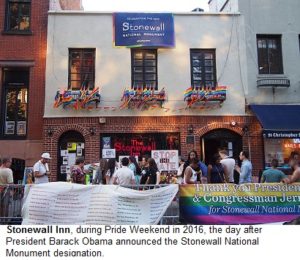
So, they learned “to get along”.

And now they are laughing “all the way to the bank” …

VIDEO – Pride, passion, progress: Inside Stonewall’s impact 50 years later – https://www.today.com/video/pride-passion-progress-inside-stonewall-s-impact-50-years-later-62866501801

Posted June 28, 2019 – As New York City preps to celebrate World Pride this weekend, NBC’s Joe Fryer goes inside The Stonewall Inn, the historic landmark that sparked the modern movement for LGBTQ rights. He hears from those who took part in the uprising 50 years ago.

There is a lesson here for us in the Caribbean.

We have a long way to go for some of our communities in the Caribbean to be a more tolerant society. But we must walk-trot-run this journey; we must reflect a more pluralistic democracy; we must learn to “live and let live”.

And if we want to double-down on tourism – we do – then we cannot invite people to enjoy our hospitality but then condemn them – in words and actions – for their lifestyle choices.

This – 50th Anniversary of Stonewall – is not our first close-examination of the toleration of the Caribbean or visiting LGBT community. In fact, now is a good time to Encore the blog-commentary from July 2, 2015 lamenting the harsh treatment in Jamaica for their LGBT citizens.

See a related news-commentary here:

Title: Stonewall 50: Don’t Forget the Black & Brown LGBTQ Struggle
Sub-title: Black queer and transgender people have always had to remind the rest of the community of [their] prominence —despite the fact that the movement was co-led by [them] since the beginning.
Source: https://www.thedailybeast.com/stonewall-50-dont-forget-the-black-and-brown-lgbtq-struggle

The world have adopted a more tolerant stance – so must we in the Caribbean. See that Encore here as follows:

————-

Go Lean CommentaryBuggery in Jamaica – ‘Say It Ain’t So’!

This commentary has asserted that the Caribbean region can be a better society than the United States of America. Yes, we can!

But to  even start the discussion, we must first:

Live and let live!
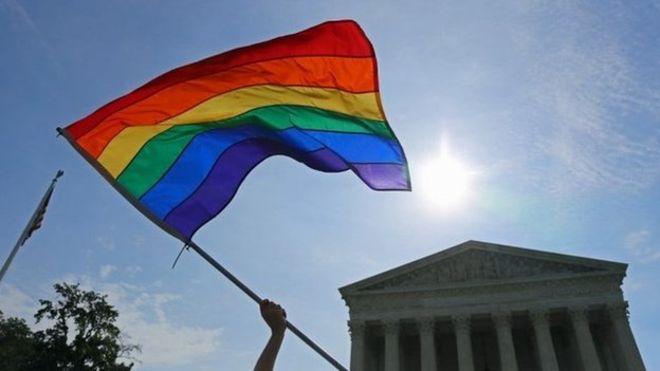
t So - Photo 3The topic of intolerance has been acute in the news as of late. We have the extreme example of the Islamic State in Iraq and Syria (ISIS) beheading non-Muslims because… well, just because. And the example of the US legalizing Gay Marriage may be considered too tolerant for some people’s good taste.

Where does the Caribbean fit in this discussion?

If ISIS is one end of a scale and Gay Marriage in America is another end, then one Caribbean member-state, Jamaica, would be closer to …

ISIS!

Yes, it is that bad. Say it ain’t so.

See Appendix-VIDEO’s below …

While this commentary directly targets Jamaica, the majority of the countries and overseas territories of the former British Empire, still criminalize sexual acts between consenting adults of the same sex and other forms of sexual orientation, gender identity and expression. This has been described as being the result of “the major historical influence” or legacy of the British Empire. In most cases, it was former colonial administrators that established anti-gay legislation or sodomy acts during the 19th century; see Appendix below. The majority of countries then retained these laws following independence.[1][2].

There is an effort now to transform society in Jamaica (and other countries) in this regards. There are Gay Pride Activities being planned for this Summer of 2015. See the relevant news article here:

Title: J-FLAG Is Planning Gay Pride Activities, But No Parade For August – Exec
Source: Jamaica Gleaner Daily Newspaper Online Site; posted June 30, 2015; retrieved from: http://jamaica-gleaner.com/article/news/20150630/j-flag-planning-gay-pride-activities-no-parade-august-exec  

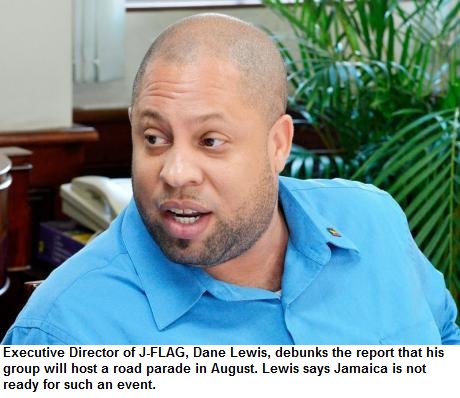
Local gay lobby, J-FLAG, is refuting reports that it will host a road parade in August when the group plans to have a series of gay pride activities.

Social media has been abuzz since yesterday following a report that the group would host a parade, similar to what is done in the United   States and other countries.

However, executive director of J-FLAG, Dane Lewis, says the report is wrong, adding that Jamaica is not ready for such an event.

Meanwhile, he says the group is planning a week-long series of activities starting on Emancipation Day, August 1, to mark growing tolerance for members of the lesbian, gay, bisexual, and transgender (LGBT) community.

Some years ago, an attempt to host a gay parade was thwarted after anti-gay supporters reportedly planned attacks against marchers.

Jamaica is accused of being one of the most homophobic places on earth.

Last week, the US government released a report noting that anti-gay laws and the dancehall culture are responsible for perpetuating homophobia in Jamaica.
Additional reference sources: http://jflag.org/

t So - Photo 1
———–

VIDEO: Executive Director of JFLAG, Dane Lewis: “We Are Jamaicans” – https://youtu.be/sJ-17R5DCoI


Published on Jan 17, 2013 – “We Are Jamaicans” is funded with the kind support of the Caribbean Vulnerable Communities Coalition (CVC) through its Global Fund Vulnerablised Project.
Building a diverse society is not easy. The book Go Lean … Caribbean describes the challenge as heavy-lifting. Though the US had failed at this challenge, it proudly boasts that it got better with every generation. The Caribbean on the other hand, leaves much to be desired in terms of the willingness to change and keep pace with progressive societies. (Now the US, Canada, Ireland and other countries have legalized Gay Marriage).

In a previous blog-commentaries, this defect – Homosexual Intolerance – was listed among the blatant human rights abuses in the region.

This is an important consideration for the planners of Caribbean empowerment. The Caribbean, a region where unfortunately, we have NOT … tried to be as tolerant as may be required, expected and just plain moral.

We must do better!

The book Go Lean … Caribbean asserts that Caribbean society’s prosperity has been hindered with a high abandonment rate – reported at 70% for educated classes region-wide, but an even higher 85% in Jamaica. The primary mission of the Go Lean book is to “battle” against the “push-and-pull” factors that draw so many of our Caribbean citizens away from their homelands to go to more progressive countries.

The Go Lean book campaigns to lower the “push” factors!

The purpose of the Go Lean book is to fix the Caribbean; to be better. The Go Lean book serves as a roadmap for the introduction and implementation of the technocratic Caribbean Union Trade Federation (CU) to pursue the quest to elevate the Caribbean region through empowerments in economics, security and governance. It is the assertion that Caribbean citizens can stay home and effect change in their homelands more effectively than going to some foreign countries to find opportunities for life, liberty and the pursuit of happiness. The book therefore asserts that the region can turn-around from failing assessments by applying best-practices, and forging new societal institutions to impact the Greater Good for all the Caribbean. This point was pronounced in the opening Declaration of Interdependence (Pages 10 – 14) with these acknowledgements and statements:

xi.   Whereas all men are entitled to the benefits of good governance in a free society, “new guards” must be enacted to dissuade the emergence of incompetence, corruption, nepotism and cronyism at the peril of the people’s best interest. The Federation must guarantee the executions of a social contract between government and the governed.

xii. Whereas the legacy in recent times in individual states may be that of ineffectual governance with no redress to higher authority, the accedence of this Federation will ensure accountability and escalation of the human and civil rights of the people for good governance, justice assurances, due process and the rule of law. As such, any threats of a “failed state” status for any member state must enact emergency measures on behalf of the Federation to protect the human, civil and property rights of the citizens, residents, allies, trading partners, and visitors of the affected member state and the Federation as a whole.

xxxiii. Whereas lessons can be learned and applied from the study of the recent history of other societies, the Federation must formalize statutes and organizational dimensions to avoid the pitfalls of communities like … Egypt. On the other hand, the Federation must also implement the good examples learned from developments/ communities like New York City, … Canada, … and tenants of the US Constitution.

The CU/Go Lean vision to elevate Caribbean society must also consider the issue of image. There is the need for a sentinel role for Caribbean image, as there are a lot of times that Caribbean life and people are denigrated in the media: news, film, TV, books, magazines. It’s unfortunate when we are guilty of scathing allegations. The Go Lean roadmap calls for the CU to assume a role of protecting and projecting positive Caribbean images. The plan is to use cutting edge delivery of best practices; the applicable CU agencies will employ strategies, tactics and implementations to impact the Go Lean prime directives; identified with the following 3 statements:

  • Optimization of the economic engines in order to grow the regional economy to $800 Billion & create 2.2 million new jobs.
  • Establishment of a security apparatus to protect the resultant economic engines and mitigate challenges/threats to public safety for all citizens… LGBT or straight.
  • Improvement of Caribbean governance to support these engines.

Jamaica has a failing economy.

Jamaica’s primary economic driver is tourism. So …

t So - Photo 2

Is the Caribbean ready for this economic activity? A bridge too far, too soon?
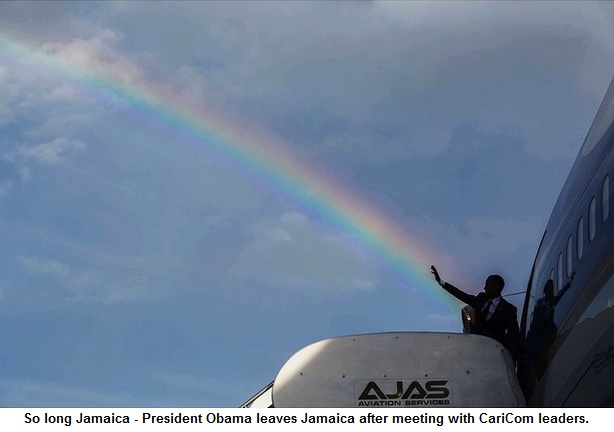
t So - Photo 4Jamaica has a long way to go; the country has been described by some Human Rights groups as the most homophobic place on Earth because of the high level of violent crime directed at LGBT people; (Padgett, Tim: “The Most Homophobic Place on Earth?”Time Magazine posted 12 April 2006). The United States Department of State said that in 2012, “homophobia was [unacceptably] widespread in the country” (2012 Country Reports on Human Rights Practices: Jamaica, Bureau of Democracy, Human Rights and Labor, U.S. Department of State, pages 20-22). As depicted in the VIDEO below, even President Obama indicted the island on a recent official State Visit.

Why is this country’s homophobia so acute compared to other countries? For one, they have held on emphatically to the British Laws on Buggery – see Appendix below – from their colonial days; even though the host country of England has already abandoned the laws (in 1967).

Jamaica is partying like it’s 1899!

This is therefore a matter of community ethos. The Go Lean book defines community ethos as the fundamental character or spirit of a culture; the underlying sentiment that informs the beliefs, customs, or practices of a group or society; the dominant assumptions of a people or period. This tropical paradise of Jamaica, as defined in the foregoing news article and VIDEO continues to spur bad attitudes, bad ideas, bad speech and bad actions towards the LGBT community. This is unbecoming of a progressive society in 2015.

Alas, this is a crisis…for victims and their loved ones. The Go Lean book posits that this crisis can be averted, that the crisis is a “terrible thing to waste”. The Go Lean roadmap seeks to optimize the eco-systems for Jamaica and the entire Caribbean. The book stresses new community ethos, strategies, tactics, implementations and advocacies necessary to transform and turn-around the eco-systems of the regional society. These points are detailed in the book as follows:

Who We Are – SFE Foundation – Comprised of Caribbean Diaspora Page 8
Community Ethos – Economic Principles – Economic Systems Influence Individual Choices Page 21
Community Ethos – Economic Principles – Consequences of Choices Lie in the Future Page 21
Community Ethos – Governing Principles – Lean Operations Page 24
Community Ethos – Ways to Impact the Future Page 26
Community Ethos – Ways to Promote Happiness Page 36
Community Ethos – Ways to Impact the Greater Good Page 37
Strategy – Vision – Confederate all 30 member-states into a Single Market Page 45
Strategy – Mission – Build and foster local economic engines Page 45
Strategy – Mission – Repatriate the Diaspora, even Minorities like those of the LGBT community Page 46
Tactical – Ways to Foster a Technocracy Page 64
Tactical – Growing the Economy to $800 Billion GDP Page 68
Tactical – Separation-of-Powers – CU Federal Government versus Member-State Governance Page 71
Anatomy of Advocacies – Examples of Individuals Who Made Impact Page 122
Planning – 10 Big Ideas – Homeland Security Pact Page 127
Planning – Ways to Make the Caribbean Better Page 131
Planning – Ways to Improve Failed-State Indices – Minority and Human Rights Page 134
Planning – Lessons Learned from US Constitution – Equal Protection for all Minorities Page 145
Advocacy – Ways to Grow the Economy Page 151
Advocacy – Ways to Create Jobs Page 152
Advocacy – Ways to Improve Governance – For All Citizens Page 168
Advocacy – Ways to Better Manage the Social Contract – Security against “Bad Actors” Page 170
Advocacy – Ways to Impact Justice – Internal Affairs Reporting Line Page 177
Advocacy – Ways to Remediate and Mitigate Crime – Hate Crime Qualifiers Page 178
Advocacy – Ways to Improve Homeland Security Page 180
Advocacy – Ways to Mitigate Terrorism – Consider Bullying as Junior Terrorism Page 181
Advocacy – Ways to Impact Youth – Collaborating with Foundations Page 218
Advocacy – Ways to Re-boot Jamaica Page 239
Advocacy – Ways to Impact British Territories Page 245

Looking at the disposition of the island nation of Jamaica’s, we see that its societal engines are failing.

Could the investment in the diversity of its people be at the root of the problem?

The failing indices and metrics of Jamaica have been considered in previous blog/commentaries; see sample here:

https://goleancaribbean.com/blog/?p=4840 Jamaican Poll: ‘Bring back the British!’
https://goleancaribbean.com/blog/?p=3694 Looking for a job in Jamaica, go to Canada
https://goleancaribbean.com/blog/?p=2830 Jamaica’s Public Pension Under-funded
https://goleancaribbean.com/blog/?p=392 Jamaica to receive World Bank funds to help in crime fight
https://goleancaribbean.com/blog/?p=313 What’s Holding Back Jamaica’s Reforms

The Go Lean roadmap seeks to empower and elevate Caribbean societal engines to make Jamaica, and the rest of the Caribbean, better places to live, work and play … for all citizens, including the LGBT communities.

Most of the Jamaican Diaspora that has abandoned the island now lives in the US, Canada or the UK. Their new home-communities are more tolerant societies of their LGBT neighbors.

Perhaps, there is some correlation.

This commentary is not urging the abandonment of the Judeo-Christian moral code; Jesus Christ instructed to “let them be” at Luke 22:51 (The Message Translation). Rather this commentary urges tolerance and moderation: Live and let live!

Fight the hate!

Yes, we can … do this. Yes, we must do this. 🙂

Download the book Go Lean … Caribbean – now!
———–

Appendix VIDEO: US President Obama’s LGBT comments at Youth Leaders Town Hall – https://youtu.be/636mgw1THpc?t=5m1s


Published on Apr 9, 2015 – President Obama delivers remarks and answers questions at a town hall with Young Leaders of the Americas at University of the West Indies in Kingston, Jamaica. April 9, 2015.
———–

Appendix VIDEO: Gay rights in Jamaica – https://youtu.be/_nSgMGoBAmU

playbutton-300x300

———–

Appendix – Encyclopedic Reference: Buggery in English Common Law

The British English term buggery is very close in meaning to the term sodomy, often used interchangeably in law and popular speech. It may also be a specific common law offenceencompassing both sodomy and bestiality.

In English law “buggery” was first used in the Buggery Act 1533, while Section 61 of the Offences against the Person Act 1861, entitled “Sodomy and Bestiality”, defined punishments for “the abominable Crime of Buggery, committed either with Mankind or with any Animal”. The definition of “buggery” was not specified in these or any statute, but rather established by judicial precedent.[1] Over the years the courts have defined buggery as including either [of these]:

  1. anal intercourse or oral intercourse by a man with a man or woman[2] or
  2. vaginal intercourse by either a man or a woman with an animal,[3]

But [no other] form of “unnatural intercourse”[4] [was defined], the implication being that anal sex with an animal would not constitute buggery. Such a case has not, to date, come before the courts of a common law jurisdiction in any reported decision. However, it seems highly improbable that a person would be exculpated of a crime associated with sex with animals only by reason of the fact that penetration involved the anus rather than the vagina. In the 1817 case of Rex v. Jacobs, the Crown Court ruled that oral intercourse, even with an underage and/or non-consenting person, did not constitute buggery or sodomy.[4]

At common law consent was not a defence[5] nor was the fact that the parties were married.[6] In the UK, the punishment for buggery was reduced from hanging to life imprisonment by the Offences against the Person Act 1861. As with the crime of rape, buggery required that penetration must have occurred, but ejaculation is not necessary.[7]

Most common law jurisdictions have now modified the law to permit anal sex between consenting adults.[8] Hong Kong did so retroactively in 1990, barring prosecution for “crimes against nature” committed before the Crimes (Amendment) Ordinance 1990 entered into force except those that would still have constituted a crime if they had been done thereafter. In England and Wales, homosexual buggery was decriminalised in 1967 with an age of consent at 21 years, whereas all heterosexual intercourse had an age of consent at 16 years. The Sexual Offences Act 2003 did not fully remove buggery as a concept in United Kingdom law, as the previous law is retained for complainants (consensual or “pseudo-consensual”) under the age of 16, or 18 with regards to an adult perceived to be in a “position of trust”. As the law stands, buggery is still charged, exclusively regarding “pseudo-consensual” anal intercourse with those under 16/18, because children cannot legally consent to buggery although they may appear to do so. Rape is charged when the penetration is clearly not consensual. Buggery with an animal is still unlawful under Section 69 of the Sexual Offences Act 2003.

In the Republic of Ireland, the Criminal Law (Sexual Offences) Act 1993 abolished the offence of “buggery between persons”.[9] For some years prior to 1993, criminal prosecution had not been made for buggery between consenting adults. The 1993 Act created an offence of “buggery with a person under the age of 17 years”,[10] penalised similar to statutory rape, which also had 17 years as the age of consent. The Criminal Law (Sexual Offences) Act 2006 replaced this offence with “defilement of a child”, encompassing both “sexual intercourse” and “buggery”.[11] Buggery with an animal is still unlawful under Section 69 of the Sexual Offences Act 2003. In 2012 a man was convicted of this offence for supplying a dog in 2008 to a woman who had intercourse with it and died.[12]

Etymology – The word bugger and buggery are still commonly used in modern English as a mild exclamation. “Buggery” is also synonymous with anal sex.

The word “bugger” was derived, via the French bougre, from Bulgar, that is, “Bulgarian”, meaning the medieval Bulgarian heretical sect of the Bogomils, which spread into Western Europe and was claimed by the established church to be devoted to the practice of sodomy.[13] “Buggery” first appears in English in 1330, though “bugger” in a sexual sense is not recorded until 1555.[14]

(Source: https://en.wikipedia.org/wiki/Buggery)
Share this post:
, , , ,

Remembering Michael Jackson – The ‘King of Pop’

Go Lean Commentary

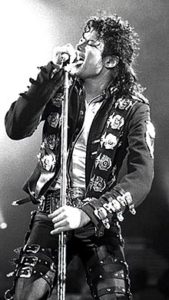
Michael Jackson – the supposed King of Pop died 10 years ago today.
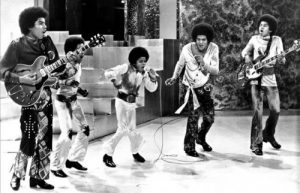

It is still shocking!

Consider, the historicity of Michael Jackson has NOTHING to do with the heavy-lifting to reform or transform the Caribbean. He was not born nor raised in or around any Caribbean country; nor does he descend from a Caribbean heritage. His death is “none of our business”.

Yet still, this movement behind the book Go Lean…Caribbean is declaring that, despite the fact that Michael Jackson is not mentioned in the 2013 publication, his art and music have influenced us and our productions. (See more info on the Go Lean book below).

We have used his music to state, illustrate and applicate (provide application) to many teaching points over the past 5+ years of conscientizing the challenges and solutions of Caribbean life. We have been able to say “it” more eloquently using his music and VIDEO‘s. See here, the list of previous blog-commentaries that have referenced Michael Jackson’s art-form:

https://goleancaribbean.com/blog/?p=14541 Viola Desmond: One Woman Made A Difference
Yes, one woman, or one man, can make a difference in society. Viola Desmond proved it! Her commitment to justice and righteous principles compelled her community to take note and make a change.“Wanna make the world a better place, take a look at yourself and make a change.” – Michael Jackson’s song: Man in the Mirror (1987).
https://goleancaribbean.com/blog/?p=14101 Wait, ‘We Are The World’
Michael Jackson led this moment, movement, momentum and music that changed the world but in 1985.
https://goleancaribbean.com/blog/?p=13604 ‘I Want You Back’: Caribbean to the Diaspora
Many Caribbean natives love their homeland, but live abroad in the Diaspora – estimated at 10 to 25 million. Over the past decades, they had moved away looking for better opportunities or safe haven. The stakeholders of the Caribbean now need to declare to these people:I Want You Back
VIDEO  of the Jackson 5 singing the song “I Want You Back” 
https://goleancaribbean.com/blog/?p=12621 ‘If it is going to be, it starts with me’

I’m starting with the man in the mirror. I’m asking him to change his ways; and no message could be any clearer: If you want to make the world a better place, take a look at yourself and make a change.

VIDEO – Michael Jackson – Man In The Mirror\

https://goleancaribbean.com/blog/?p=5287 Book Review – ‘Thimerosal: Let The Science Speak’
The King of Pop, Michael Jackson, released a song with the title: “They don’t really care about us”; he very well could have been talking about Big Pharma. In a previous blog/commentary, the pharmaceutical industry was assailed over one cancer drug, Gleevec. The commentary clearly depicted the perils of Crony-Capitalism. (https://www.youtube.com/watch?v=QNJL6nfu__Q).
https://goleancaribbean.com/blog/?p=1909 Role Model Berry Gordy – No Town Like Motown
Motown‘s greatest asset is the iconic song­book the Detroit-based record label produced; and they’ll get ample helpings of that hit parade, including songs made famous by Smokey Robinson and The Miracles (“Shop Around”), Diana Ross and The Supremes (“Stop! In the Name of Love”), Marvin Gaye (“What’s Going On”), Stevie Wonder, The Temptations, and Michael Jackson and The Jackson Five (“I Want You Back”).
https://goleancaribbean.com/blog/?p=1076 Trinidad Muslims travel to Venezuela for jihadist training
American foreign policy is determined by the US government (White House & Congress). The needs of our small Caribbean states may not factor in US policy determinations. Even the US territories (Puerto Rico & US Virgin Islands) have little voice and no vote in the formation of policy. The Caribbean finds itself in the same role as the words (sang by Michael Jackson) of the Scarecrow in the 1977 movie The Wiz:
We can’t win,
We can’t break-even, and …
We can’t get out of the game.

Thank you to M.J., the King of Pop. We give a tribute for his contributions to music.

(Personally, I saw Michael Jackson perform LIVE on two occasions – 1984 & 1981 – these are special memories for me).

Remembering Michael Jackson, means reflecting on his Good, Bad and Ugly. See here, a news article-VIDEO depicting the 360 View of his life and legacy.

VIDEO – Michael Jackson fans share new perspective 10 years after his death – https://www.today.com/video/michael-jackson-fans-share-new-perspective-10-years-after-his-death-62617669755

Posted June 25, 2019 – Ten years after Michael Jackson’s death, fans of the King of Pop open up to TODAY’s Craig Melvin about how they’re grappling with his complicated legacy and allegations that have recently resurfaced.

“Let’s dance…let’s shout …”

Let’s remember this Great Talent that was snuffed out 10 year ago today. And let’s encourage the next generation of singers, dancers and entertainers. Perhaps, someone can stand on M.J.’s shoulders and reach even greater heights in creating great musical works of art.

Wouldn’t that be wonderful … for such a superstar to come from our Caribbean homeland … again. (Remember Bob Marley). We’ve got the talent. This is conceivable, believable and achievable.  🙂

About the Book
The book Go Lean…Caribbean serves as a roadmap for the introduction and implementation of the technocratic Caribbean Union Trade Federation (CU), for the elevation of Caribbean society – for all member-states. This CU/Go Lean roadmap has these 3 prime directives:

  • Optimization of the economic engines in order to grow the regional economy to $800 Billion and create 2.2 million new jobs.
  • Establishment of a security apparatus to ensure public safety and protect the resultant economic engines.
  • Improve Caribbean governance to support these engines, including a separation-of-powers between the member-states and CU federal agencies.

The Go Lean book provides 370-pages of turn-by-turn instructions on “how” to adopt new community ethos, plus the strategies, tactics, implementations and advocacies to execute so as to reboot, reform and transform the societal engines of Caribbean society.

Download the free e-Book of Go Lean … Caribbean – now!

Who We Are
The movement behind the Go Lean book – a non-partisan, apolitical, religiously-neutral Community Development Foundation chartered for the purpose of empowering and re-booting economic engines – stresses that reforming and transforming the Caribbean societal engines must be a regional pursuit. This was an early motivation for the roadmap, as pronounced in the opening Declaration of Interdependence (Pages 12 – 13):

xi. Whereas all men are entitled to the benefits of good governance in a free society, “new guards” must be enacted to dissuade the emergence of incompetence, corruption, nepotism and cronyism at the peril of the people’s best interest. The Federation must guarantee the executions of a social contract between government and the governed.

xvi. Whereas security of our homeland is inextricably linked to prosperity of the homeland, the economic and security interest of the region needs to be aligned under the same governance. Since economic crimes … can imperil the functioning of the wheels of commerce for all the citizenry, the accedence of this Federation must equip the security apparatus with the tools and techniques for predictive and proactive interdictions.

xxiv. Whereas a free market economy can be induced and spurred for continuous progress, the Federation must install the controls to better manage aspects of the economy: jobs, inflation, savings rate, investments and other economic principles. Thereby attracting direct foreign investment because of the stability and vibrancy of our economy.

Sign the petition to lean-in for this roadmap for the Caribbean Union Trade Federation.

Share this post:
, ,
[Top]

Is the US a ‘Just’ Society? Hardly! – ENCORE

People want to live in a just society.

So many Caribbean people have fled their ancestral homelands in search of refuge in foreign lands, like the US. If our expatriates are seeking a more just society, then they will be sadly disappointed with the American experience.

Ah, the American legal system! So many courts – County, Circuit, District, Appeals and Supreme – and yet justice is so elusive. One population groups gets too much mercy and one population group gets too much punishment.

Is there any doubt as to which population group gets what treatment? White people get the privilege, while the Black-and-Brown gets the shaft.

These are not just my words alone. Consider these anecdotes.

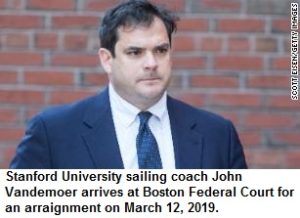
First, we have the sentencing – yesterday June 13, 2019 – of John Vandemoer, the Stanford sailing coach who confessed to racketeering charges in connection with the college entrance scam. He will serve no time in prison. He is White. See the full story here:

Title: Former Stanford sailing coach gets no prison time in the college admissions scam
By:
Mark Morales, CNN
Former Stanford sailing coach John Vandemoer will serve no time in prison in connection with the college entrance scam. He is the first among 50 people charged in connection with the scheme to be sentenced.
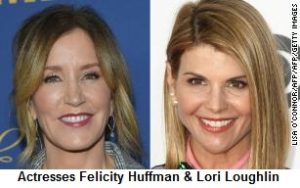
Vandemoer was sentenced to two years supervised release and a $10,000 fine. He must spend the first six months of the sentence in home detention with electronic monitoring, Massachusetts Judge Rya Zobel said.

Vandemoer pleaded guilty to conspiracy to commit racketeering for arranging bribes of $110,000 and $160,000 to the sailing program and then designating two applicants, who had no sailing experience, as sailing recruits, according to his criminal complaint.

Neither student completed the application process, university officials said.

The 50 people charged in the scam include coaches, parents, and members of mastermind William Rick Singer‘s inner circle, who were arrested in connection with the scandal in March.

“Mr Vandemoer is probably the least culpable,” Judge Zobel said during sentencing. “They (the others charged) took money for themselves. He did not do that. All the money he took went directly to the sailing program.”

Assistant US Attorney Eric Rosen had recommended a 13-month prison sentence for Vandemoer, arguing that it would help deter others in powerful university positions from similar crimes and that punishment would help restore confidence in the admission system.

“His actions not only deceived and defrauded the university that employed him, but also validated a national cynicism over college admissions by helping wealthy and unscrupulous applicants enjoy an unjust advantage over those who either lack deep pockets or are simply unwilling to cheat to get ahead,” Rosen wrote in a sentencing memorandum filed on June 7.

Vandemoer’s attorney, Robert Fisher, wrote to Judge Zobel in a memorandum on Friday that he should get probation and not a prison sentence, arguing that he didn’t pocket any of the money, didn’t take any money from the university and that this was his only instance of bad judgement.

“Mr. Vandemoer failed in one instance to live up to the high expectations he sets for himself,” Fisher wrote. “He fully accepts responsibility for his mistake. Mr. Vandemoer is determined to make amends for this mistake move on with his life and continue to provide for his family.”

Just two days before Vandemoer’s sentencing, Stanford University officials submitted a victim impact statement which details how Vandemoer, who traded his slots reserved for student-athletes for bribes, has damaged the university.

“Mr. Vandemoer’s actions in this matter are profoundly disappointing and especially so as he had a reputation of caring deeply for his student-athletes,” said Debra Zumwalt, vice president and general counsel for Stanford University in a statement.

The impact statement charged that Vandemoer and Singer not only undermined the public’s trust in the college admissions process, but also cost the university valuable time and money dealing with the fallout from the federal investigation.

Stanford fired Vandemoer the very same day he plead guilty.

“I spent my life trying to be a good, moral person and here, I made a mistake,” Vandemoer said when given a chance to address the court Wednesday.

The former coach apologized to the school, alumni, the sailing team and his family and friends.

“I deserve all of this. I caused it and for that I’m deeply ashamed.”

A third student was identified by the university as having worked with Singer and Vandemoer to get admitted into Stanford, university officials said. That student’s admission was rescinded and their credits were vacated, according to the impact statement.

Stanford officials previously said the Key Worldwide Foundation, Singer’s sham charity, contributed a total of $770,000 to the sailing program in the form of three separate gifts.

That money, Zumwalt said in the statement, was considered tainted, and university officials are working with the California Attorney General to donate that money for the public’s good.

“Stanford does not wish to benefit in any way from Mr. Vandemoer’s conduct,” Zumwalt said.

Twenty-seven letters of support for Vandemoer were sent to Judge Zobel, all pleading for leniency.

“I must say they are an extraordinary group of letters … that speak of the person they love and support,” Judge Zobel said during sentencing. “That is highly unusual in this setting.”

Vandemoer’s wife, Molly Vandemoer, wrote about how the former university sailing coach found a therapist shortly after his firing and is working toward his MBA as a way to put his life back together.

“I know he made a mistake,” Molly wrote. “I know it is extremely costly to his livelihood, to our family, etc. But I know he will never do something like this again.”

Clinton Hayes, once Vandemoer’s top assistant, became the interim head of the sailing team after the coach was fired by the university. Hayes wrote about how Vandemoer put student athletes first, letting them skip out on sailing meets for valuable internships or important trips, something he said spoke to the coach’s selflessness.

“John truly cared that everyone of our student athletes left Stanford a better person and productive member of society…” Hates wrote. “John always did what was right for each individual.”

Other letters came from former students, parents, and other family members.

———-

CNN’s Theresa Waldrop contributed to this report.
Source: Retrieved June 14, 2019 from: https://www.cnn.com/2019/06/11/us/college-admissions-scandal-john-vandemoer/index.html

Just 1 day in prison … Wow!

The defendant in this case gets 1 day in jail, time served, and a 13-month suspended sentence – a “slap on the wrist” for a crime that undermines the entire US college admissions integrity.

At the other end of the spectrum, there is the treatment of Black defendants in the court system. According to this previous blog-commentary by the movement behind the book Go Lean…Caribbean, Black people are usually sentenced for longer jail-time by judges whose political affiliation is associated with the Republican Party.

See the Encore of that full blog-commentary here:

————

Go Lean Commentary – ‘Time to Go’ – Blacks get longer sentences from ‘Republican’ Judges

“Tell me who your friends are and I will tell you who you are” – Old Adage

This Old Adage was drummed in me as a youth; I may have wanted to question its validity, but time has proven its accuracy. As humans, we are affected by the people we associate with; their values, principles, character, aspirations – or lack thereof – will have an effect on us. This statement even harmonizes with the Bible scripture at 1 Corinthians 15:33, which states:

“Bad companions ruin good character.” – Today’s English Version

This commentary highlights a disturbing trend in American jurisprudence; it turns out that among judges that associates with the conservative political parties or the liberal political parties, one group consistently sentences Black defendants to longer prison sentences. This is indicative of more than just the tolerance of criminality; this shows some hidden bias, that severely endangers the Black populations in America. These judges, despite claims of non-partisanship, are affected by their party.

Say it ain’t so!

The party with the harsher sentences is the Republican Party or GOP (for Grand Old Party).

Sometimes, we need to step back and look at the whole picture before we can notice trends and leanings. This is the common sense in the old expression: “One cannot see the forest for the trees”. This was the purpose of a study on judicial bias; it looked at a range of 500,000 cases to summarize its findings. Intelligence and wisdom can be gleaned from this data.

The numbers – and conclusions – must not be ignored. See the full story here:

Title: Black Defendants Get Longer Sentences From Republican-Appointed Judges, Study Finds
By: Adam Liptak

WASHINGTON — Judges appointed by Republican presidents gave longer sentences to black defendants and shorter ones to women than judges appointed by Democrats, according to a new study that analyzed data on more than half a million defendants.

“Republican-appointed judges sentence black defendants to three more months than similar nonblacks and female defendants to two fewer months than similar males compared with Democratic-appointed judges,” the study found, adding, “These differences cannot be explained by other judge characteristics and grow substantially larger when judges are granted more discretion.”

The study was conducted by two professors at Harvard Law School, Alma Cohen and Crystal S. Yang. They examined the sentencing practices of about 1,400 federal trial judges over more than 15 years, relying on information from the Federal Judicial Center, the United States Sentencing Commission and the Transactional Records Access Clearinghouse at Syracuse University.

Douglas A. Berman, an authority on sentencing law at Ohio State University, said the study contained “amazing new empirical research.”

“It’s an extraordinarily important contribution to our statistical understanding of sentencing decision making in federal courts over the last two decades,” he said.

It has long been known that there is an overall racial sentencing gap, with judges of all political affiliations meting out longer sentences to black offenders. The new study confirmed this, finding that black defendants are sentenced to 4.8 months more than similar offenders of other races.

It was also well known, and perhaps not terribly surprising, that Republican appointees are tougher on crime over all, imposing sentences an average of 2.4 months longer than Democratic appointees.

But the study’s findings on how judges’ partisan affiliations affected the racial and gender gaps were new and startling.

“The racial gap by political affiliation is three months, approximately 65 percent of the baseline racial sentence gap,” the authors wrote. “We also find that Republican-appointed judges give female defendants two months less in prison than similar male defendants compared to Democratic-appointed judges, 17 percent of the baseline gender sentence gap.”

The two kinds of gaps appear to have slightly different explanations. “We find evidence that gender disparities by political affiliation are largely driven by violent offenses and drug offenses,” the study said. “We also find that racial disparities by political affiliation are largely driven by drug offenses.”

The authors of the study sounded a note of caution. “The precise reasons why these disparities by political affiliation exist remain unknown and we caution that our results cannot speak to whether the sentences imposed by Republican- or Democratic-appointed judges are warranted or ‘right,’” the authors wrote. “Our results, however, do suggest that Republican- and Democratic-appointed judges treat defendants differently on the basis of their race and gender given that we observe robust disparities despite the random assignment of cases to judges within the same court.”

The study is studded with fascinating tidbits. Black judges treat male and female offenders more equally than white judges do. Black judges appointed by Republicans treat black offenders more leniently than do other Republican appointees.

More experienced judges are less apt to treat black and female defendants differently. Judges in states with higher levels of racism, as measured by popular support for laws against interracial marriage, are more likely to treat black defendants more harshly than white ones.

The Trump administration has been quite successful in stocking the federal bench with its appointees, and by some estimates the share of Republican appointees on the federal district courts could rise to 50 percent in 2020, from 34 percent in early 2017.

The study said these trends were likely to widen the sentencing gaps.

“Our estimates suggest that a 10 percentage point increase in the share of Republican-appointed judges in each court would increase the racial sentencing gap by approximately 5 percent and the gender sentencing gap by roughly 2 percent,” the authors wrote. “During an average four-year term, a Republican president has the potential to alter the partisan composition of the district courts by over 15 percentage points, potentially increasing the racial and gender sentencing gap by 7.5 and 3 percent, respectively.”

There are a couple of reasons to question that prediction. The Trump administration has been more energetic in appointing appeals court judges than trial judges. And in recent years many conservatives have started to shift positions on sentencing policy. The very scope of the study, which considered sentences imposed from 1999 to 2015, could mask trends in the later years.

Supreme Court justices like to say that partisan affiliation plays no role in judicial decision making.

“There’s no such thing as a Republican judge or a Democratic judge,” Justice Neil M. Gorsuch, President Trump’s Supreme Court appointee, said at his confirmation hearing last year. “We just have judges in this country.”

Political scientists have disagreed, finding that Republican appointees are markedly more likely to vote in a conservative direction than Democratic ones. Senate Republicans, by refusing to hold hearings for Judge Merrick B. Garland, President Barack Obama’s Supreme Court nominee, seemed to agree.

So has Mr. Trump. “We need more Republicans in 2018 and must ALWAYS hold the Supreme Court!” he tweeted in March.

But judicial ideology is one thing. The race and gender gaps identified by the new study present a different and difficult set of questions.

Professor Berman said the study should prompt both research and reflection. “It only begins a conversation,” he said, “about what sets of factors really influence judges at sentencing in modern times.”

Follow Adam Liptak on Twitter: @adamliptak.

Source: New York Times – published May 28, 2018; retrieved June 26, 2018 from: https://www.nytimes.com/2018/05/28/us/politics/black-defendants-women-prison-terms-study.html

This article alludes to a stereotype; one where women are sentenced lighter, but Blacks harsher. This stereotype transcends the entire history of the United States … right up to this day. The more things change, the more they remain the same!

This commentary continues the series on Time to Go, considering the reality for life of the Caribbean’s Black-and-Brown population in the US. This entry is Number 10 in this series from the movement behind the book Go Lean … Caribbean which started in September 2016 with the first 6 issues. Now, this revisit, this commentary, examines a disturbing trend with the sentences of federal court judges; these ones are appointed by the President of the United States. Needless to say, Presidents appoint judges that reflect and respect their values – it’s a natural expectation that they would have the same (virtual) association. So “we” can tell a lot about federal judges, just by knowing which President appointed them.

These were the 2016 submissions in this series:

  1. Time to Go: Spot-on for Protest
  2. Time to Go: No Respect for our Hair
  3. Time to Go: Logic of Senior Immigration
  4. Time to Go: Marginalizing Our Vote
  5. Time to Go: American Vices; Don’t Follow
  6. Time to Go: Public Schools for Black-and-Brown

Now, we consider these 5 new entries along that same theme:

  1. Time to Go: Windrush – 70th Anniversary
  2. Time to Go: Mandatory Guns – Say it Ain’t So
  3. Time to Go: Racist History of Loitering
  4. Time to Go: Blacks Get Longer Sentences From ‘Republican’ Judges
  5. Time to Go: States must have Population Increases

All of these commentaries relate to Caribbean people and their disposition in foreign lands – in this case in the US – and why they need to Go Back Home. Surely, it is obvious and evident that institutional racism is “Alive & Well” in the US. We can and must do better at home. The Go Lean book – available to download for free – serves as a roadmap for the technocratic Caribbean Union Trade Federation (CU) to assuage the societal defects in this region. It is “out of scope” for our movement to fix America; our efforts to reform and transform is limited to the Caribbean.

‘Republican’ Judges???

This is as opposed to Democratic Judges! Yes, this is a reference to specific political parties in the US. Yet, we are not making these assessments with any political leaning. Rather, this movement behind the Go Lean book and blogs, the SFE Foundation, is an apolitical organization with no favoritism for one political party over the other. In fact, the first 6 commentaries in this Time to Go series were published during the presidential administration of Barack Obama, a Democrat.

The subject of Optimized Criminal Justice is a failing for all previous presidential administrations – though Blacks lean more to the Democrats – see/listen to the AUDIO-Podcast in the Appendix below. This is a familiar theme for this Go Lean commentary. This movement have consistently related the lack of respect for those in America fitting the Black-and-Brown description; consider these prior submissions:

https://goleancaribbean.com/blog/?p=14627 Cop-on-Black Shootings – In America’s DNA
https://goleancaribbean.com/blog/?p=14413 Repairing the Breach: Hurt People Hurt People
https://goleancaribbean.com/blog/?p=8202 Lessons Learned from American Dysfunctional Minority Relations
https://goleancaribbean.com/blog/?p=8200 Climate of Hate for American Minorities
https://goleancaribbean.com/blog/?p=7221 Street naming for Martin Luther King unveils the real America
https://goleancaribbean.com/blog/?p=5527 American Defects: Racism – Is It Over?
https://goleancaribbean.com/blog/?p=4863 Video of Police Shooting: Worth a Million Words
https://goleancaribbean.com/blog/?p=4447 Probe of Ferguson, Missouri shows cops & court bias
https://goleancaribbean.com/blog/?p=546 Book Review – ‘The Divide’ – Injustice in the Age of the Wealth Gap
https://goleancaribbean.com/blog/?p=341 Hypocritical US slams Caribbean human rights practices

It is a dangerous proposition to be Black in America. This is why this movement consistently urges the Black-and-Brown of the Caribbean to Stay Home! In fact, The Bahamas urged its majority Black population (and the young men) to exercise extreme caution when traveling to the US and dealing with police authorities. There is no doubt that the America of Old – would have been no place for Caribbean people to seek refuge. But now we are asserting that the disposition is still the same:

  • Our Black-and-Brown Diaspora should plan to repatriate back to the Caribbean
  • While our young people, in the homeland, who plan to prosper where planted rather than setting their sights on American shores.

Despite the fact that this society – modern America – is still no place for Black-and-Brown Caribbean people to seek refuge, all 30 member-states of the region continue to suffer from an abominable brain drain rate – one report proclaims 70 percent – in which so many Caribbean citizens have emigrated to the US (and other places). We must resist this bad trend! How?!

  • Good messaging
  • Heavy-lifting to reform and transform the societal engines

The Go Lean book identifies the reasons why people abandon their homeland as “push and pull”. While the “push” refers to the societal defects that people take refuge from, the “pull” is mostly due to messaging. Our people perceive that the US is better for them, and that landing in the US is the panacea – cure-all – for all societal short-comings. Good messaging will mitigate that trend. Yet, still, we must do the hard work for fixing our society.

The Go Lean book asserts that it is easier for the Black-and-Brown populations in the Caribbean to prosper where planted in the Caribbean, rather than in the United States. Plus, we need these people’s help to reform and transform our society. We need some to lead, and some just to follow. We need some to produce, and some just to consume. We need growth! So abandonment is counter-productive.

This is the quest of the Go Lean/CU roadmap. The book presents 370 pages of instructions for how to reform and transform our Caribbean member-states. It stresses the key community ethos that needs to be adopted, plus the strategies, tactics, implementations and advocacies necessary to optimize the societal engines in a community. The CU/Go Lean roadmap has these 3 prime directives for optimizing our societal engines:

As related in this blog series, it is Time to Go! We have a better chance of optimizing our society in the Caribbean for our Black-and-Brown majority populations than the US will do for our people; we can actually be better than America. Just look, their distinguished judges are still adjudicating like its 1868, and not 2018. America has gone “2 steps forward and 1 step backwards”.

Now is the Time to Go and now is the time to lean-in to this Go Lean/CU roadmap. This quest is conceivable, believable and achievable. Yes, we can … reform and transform our society. We can make our homeland a better place to live, work and play. 🙂

Download the free e-Book of Go Lean … Caribbean – now

Sign the petition to lean-in for this roadmap for the Caribbean Union Trade Federation.

————–

AUDIO Podcast – Why Did Black Voters Flee The Republican Party In The 1960s? – https://www.npr.org/sections/codeswitch/2014/07/14/331298996/why-did-black-voters-flee-the-republican-party-in-the-1960s


Posted July 14, 2014 – If you’d walked into a gathering of older black folks 100 years ago, you’d have found that most of them would have been Republican.

Wait… what?

Yep. Republican. Party of Lincoln. Party of the Emancipation. Party that pushed not only black votes but black politicians during that post-bellum period known as Reconstruction.

Today, it’s almost the exact opposite. That migration of black voters away from the GOP reached its last phase 50 years ago this week.

Share this post:
, , , ,
[Top]

A Lesson in History – 25 years after the “OJ Murders”

Go Lean Commentary

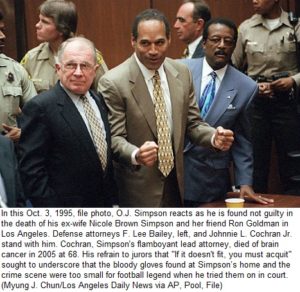
Do you remember the O.J. Simpson case; where he was accused of killing 2 people including his ex-wife? Do you realize, that was 25 years ago now?

Yep! The deaths took place on June 12, 1994.

“The arc of the moral universe is long, but it bends toward justice” – Martin Luther King, quoting Theodore Parker.

There is a lesson in history when we consider the OJ Murders from 1994: things always work itself out towards justice, fairness and freedom … eventually. Sometimes though, the milestones in the journey towards a more just society are reversed or negative; we may make 2 steps forward with 1 step back; or 1 step forward and 2 steps back.

This is just the reality of change in society.

Our lesson in history teaches us that there was a bad orthodoxy in modern society, regarding both race and gender. Many times, minorities – those of the Black-and-Brown races – and women had to endure a lot more abuse than would be any acceptable standard in a just society. Plus when it comes to women, intersectionality (race, age, religion, LGBT, etc.) also applies, so even when one group get more civil rights granted, progress for some other women’s groups  may continue to trail. Yet, still …

… You’ve have come a long way, Baby!

The book Go Lean…Caribbean addresses this history as the actuality of Natural Law. The book states (Page 226):

The Bottom Line on Natural Law and Women’s Rights

17th century natural law philosophers in Britain and America, such as Thomas Hobbes, Jean-Jacques Rousseau and John Locke, developed the theory of natural rights in reference to ancient philosophers such as Aristotle and the Christian theologist Aquinas. Like the ancient philosophers, 17th century natural law philosophers defended slavery and an inferior status of women in law.

Relying on ancient Greek philosophers, natural law philosophers argued that natural rights where not derived from god, but were “universal, self-evident, and intuitive”, a law that could be found in nature. They believed that natural rights were self-evident to “civilized man” who lives “in the highest form of society”. Natural rights derived from human nature, a concept first established by the ancient Greek philosopher Zeno of Citium in Concerning Human Nature. Zenon argued that each rational and civilized male Greek citizen had a “divine spark” or “soul” within him that existed independent of the body. Zeno founded the Stoic philosophy and the idea of a human nature was adopted by other Greek philosophers, and later natural law philosophers and western humanists. Aristotle developed the widely adopted idea of rationality, arguing that man was a “rational animal” and as such a natural power of reason.

Concepts of human nature in ancient Greece depended on gender, ethnic, and other qualifications and 17th century natural law philosophers came to regard women along with children, slaves and non-whites, as neither “rational” nor “civilized”. Natural law philosophers claimed the inferior status of women was “common sense” and a matter of “nature”. They believed that women could not be treated as equal due to their “inner nature”. The views of 17th century natural law philosophers were opposed in the 18th and 19th century by Evangelical natural theology philosophers such as William Wilberforce and Charles Spurgeon, who argued for the abolition of slavery and advocated for women to have rights equal to that of men. Modern natural law theorists, and advocates of natural rights, claimed that all people have a human nature, regardless of gender, ethnicity or other qualifications; therefore all people have natural rights [120].

These thoughts on Natural Law and Women’s Rights persist to this day, despite how archaic they may seem.

Before the OJ Murders, there was an obvious nonchalance about domestic violence in America.
“Mind your own business”

“You’re not in mortal danger”

OJ Simpson was not the first domestic abuser nor was he the last; but now, in the 25 years since, the country has been more forthright and responsive. They have listened to the outcries of victims and the needs of abusers. It is no longer acceptable for the rest of society to just “mind their own business”.

What changed?

Later that same year in 1994, Congress debated and passed the Violence Against Women Act (VAWA)- see the summarized details in Appendix B below – and many mitigations were put in place as a result.

The actuality of the infamous OJ Simpson case propelled VAWA; and though “he” still walks the street without any murder conviction – see Appendix A – the country can still credit him, for perpetrating a crisis and forcing more sensible jurisprudence over the time, with the “long arc of the moral universe bending toward justice”.

This theme – mitigating domestic violence – aligns with many previous Go Lean commentaries; see a sample here:

https://goleancaribbean.com/blog/?p=16408 Mitigating the Bad Ethos on Home Violence
https://goleancaribbean.com/blog/?p=13664 High Profile Sexual Harassment Accusers – Finally Believed
https://goleancaribbean.com/blog/?p=7490 A Lesson in the History of Interpersonal Violence – Domestic
https://goleancaribbean.com/blog/?p=695 Abused Latina wives find help by going to ‘Dona Carmen’

To this day, 25 years later – the OJ Simpson Murder Prosecution is still considered the “Trial of the Century”.

This OJ Murder drama – arrest, criminal trial acquittal; civil trial culpability – facilitated a lot of dialogue and debate on American Justice. There was always an American penchant to protect “White Women from Black Men”; this was the premise for so many extra-judicial executions (think the 4,733 recognized cases of Lynchings) in the American past. So the 1995 acquittal in the OJ Simpson Criminal case drove a wedge between “Black America versus White America”. For many in the African-American community, they recognized that the double standard of Rich White Justice versus Poor Black Justice may have finally swung favorably for a Black defendant. A previous Go Lean commentary added this observation:

There it is, the United States, where there seems to be a Great Divide in justice, one set of standards for the rich, another set for the poor.

The grass is not greener on that (American) side!

The reasons for emigration are “push-and-pull”. This source book identifies and qualifies a “pull” factor, the issue of justice in America. The book informs the reader that America should not be considered alluring from a justice perspective, especially if the reader/audience is poor and of a minority ethnicity.

This leaves the “push” factors. The Caribbean must address its issues, as to why its population is so inclined to emigrate. This is the purpose of the Go Lean roadmap. It features the assessments, strategies, tactics and implementations to make the Caribbean a better place to live, work and play.

In contrast, back in the 1990’s, White America “dug in their heels” on this OJ Murder Case that despite any reasonable doubt in the court case, this Black Man had murdered the two White victims. They therefore yearned of the “Bad Old Days” of meting out immediate justice on presumed Black offenders. The defective landscape in American justice had left “an open sore to fester“.

This open sore has still not healed; think “Make America Great Again”; see Appendix C VIDEO below.

In many previous Go Lean commentaries, the dimensions of continuous racial inequities in the US mainland had been detailed and debated; see this sample here:

https://goleancaribbean.com/blog/?p=16944 Accepting Black Women ‘As Is’ – A Case for Women Empowerment
https://goleancaribbean.com/blog/?p=16532 European Reckoning – Settlers -vs- Immigrants
https://goleancaribbean.com/blog/?p=15123 Blacks get longer prison sentences from ‘Republican’ Judges
https://goleancaribbean.com/blog/?p=14627 Nature or Nurture: Cop-on-Black Shootings embedded in America’s DNA
https://goleancaribbean.com/blog/?p=9216 ‘Time to Go’ – No Respect for our Hair
https://goleancaribbean.com/blog/?p=9214 ‘Time to Go’ – Spot-on for Protest

All in all, it remains the conclusion of this commentary:

“No Justice; No Peace”.

“The long arc of the moral universe bends toward justice”.

The OJ Murder drama demonstrated a lesson for us, that justice is not perfect in the US, and we as Caribbean immigrants cannot effect change there.

But we can effect change here in the Caribbean homeland … (one person can make a difference).

Yes, the heavy-lifting of reforming and transforming Caribbean justice institutions is conceivable, believable and achievable. We must ensure the proper response and protections for domestic violence here in our region. We must  protect the victims and prosecute the abusers. We must ensure that the Strong Never Abuse the Weak with impunity.

This is how … and why we must act now. We must step-in, step-up and step forward to ensure our homeland is a better place to live, work and play for everyone: strong and weak, men and women, rich and poor. 🙂

About the Book
The book Go Lean…Caribbean serves as a roadmap for the introduction and implementation of the technocratic Caribbean Union Trade Federation (CU), for the elevation of Caribbean society – for all member-states. This CU/Go Lean roadmap has these 3 prime directives:

  • Optimization of the economic engines in order to grow the regional economy to $800 Billion and create 2.2 million new jobs.
  • Establishment of a security apparatus to ensure public safety and protect the resultant economic engines.
  • Improve Caribbean governance to support these engines, including a separation-of-powers between the member-states and CU federal agencies.

The Go Lean book provides 370-pages of turn-by-turn instructions on “how” to adopt new community ethos, plus the strategies, tactics, implementations and advocacies to execute so as to reboot, reform and transform the societal engines of Caribbean society.

Download the free e-Book of Go Lean … Caribbean – now!

Who We Are
The movement behind the Go Lean book – a non-partisan, apolitical, religiously-neutral Community Development Foundation chartered for the purpose of empowering and re-booting economic engines – stresses that reforming and transforming the Caribbean societal engines must be a regional pursuit. This was an early motivation for the roadmap, as pronounced in the opening Declaration of Interdependence (Pages 12 – 13):

x. Whereas we are surrounded and allied to nations of larger proportions in land mass, populations, and treasuries, elements in their societies may have ill-intent in their pursuits, at the expense of the safety and security of our citizens. We must therefore appoint “new guards” to ensure our public safety and threats against our society, both domestic and foreign. The Federation must employ the latest advances and best practices of criminology and penology to assuage continuous threats against public safety. …

xi. Whereas all men are entitled to the benefits of good governance in a free society, “new guards” must be enacted to dissuade the emergence of incompetence, corruption, nepotism and cronyism at the peril of the people’s best interest. The Federation must guarantee the executions of a social contract between government and the governed.

xvi. Whereas security of our homeland is inextricably linked to prosperity of the homeland, the economic and security interest of the region needs to be aligned under the same governance. Since economic crimes … can imperil the functioning of the wheels of commerce for all the citizenry, the accedence of this Federation must equip the security apparatus with the tools and techniques for predictive and proactive interdictions.

xxiv. Whereas a free market economy can be induced and spurred for continuous progress, the Federation must install the controls to better manage aspects of the economy: jobs, inflation, savings rate, investments and other economic principles. Thereby attracting direct foreign investment because of the stability and vibrancy of our economy.

Sign the petition to lean-in for this roadmap for the Caribbean Union Trade Federation. 

————–

Appendix A –  25 years after murders, OJ says ‘Life is fine’

By: Linda Deutsch, Associated Press June 10, 2019

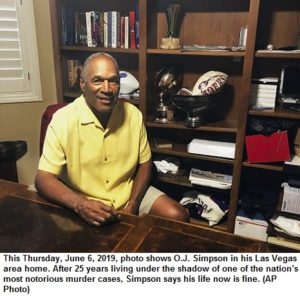
LOS ANGELES (AP) — After 25 years living under the shadow of one of the nation’s most notorious murder cases, O.J. Simpson says his life has entered a phase he calls the “no negative zone.”

In a telephone interview, the 71-year-old Simpson told The Associated Press he is healthy and happy living in Las Vegas. And neither he nor his children want to look back by talking about June 12, 1994 , when his ex-wife Nicole Brown Simpson and her friend Ronald Goldman were stabbed to death and Simpson was transformed from Hall of Fame football hero to murder suspect.

“We don’t need to go back and relive the worst day of our lives,” he said. “The subject of the moment is the subject I will never revisit again. My family and I have moved on to what we call the ‘no negative zone.’ We focus on the positives.”

But the pain has not faded for Goldman’s family.

“Closure,” said Goldman’s sister Kim, “isn’t a word that resonates with me. I don’t think it’s applicable when it comes to tragedy and trauma and loss of life.”

“I don’t suffocate in my grief,” she said. “But every milestone that my kid hits, every milestone that I hit, you know, those are just reminders of what I’m not able to share with my brother and what he is missing out on.”

Ron Goldman, then 25, was returning a pair of sunglasses that Nicole Brown Simpson’s mother had left at a restaurant where he worked when he and Simpson’s ex-wife were stabbed and slashed dozens of times.

O.J. Simpson’s televised “Trial of the Century” lasted nearly a year and became a national obsession, fraught with issues of racism, police misconduct, celebrity and domestic violence.

Represented by a legal “Dream Team” that included Johnnie Cochran Jr. and F. Lee Bailey, he was acquitted by a jury in 1995 in a verdict that seemed to split the country along racial lines, with many white Americans believing he got away with murder and many black people considering him innocent.

He has continued to declare his innocence. The murder case is officially listed as unsolved.

The victims’ families subsequently filed a civil suit against him, and in 1997 he was ordered to pay $33.5 million for the wrongful deaths of his ex-wife and Goldman. Some of his property was seized and auctioned, but most of the judgment has not been paid.

For a man who once lived for the spotlight , Simpson has generally kept a low profile since his release from prison in October 2017 after serving nine years for a robbery and kidnapping conviction in Las Vegas. He insisted his conviction and sentence for trying to steal back his own memorabilia were unfair but said: “I believe in the legal system and I honored it. I served my time.”

After his release from prison in Nevada, many expected him to return to Florida, where he had lived for several years. But friends in Las Vegas persuaded him to stay there.

“The town has been good to me,” Simpson said. “Everybody I meet seems to be apologizing for what happened to me here.”

His time in the city hasn’t been without controversy. A month after his release, an outing to a steakhouse and lounge off the Las Vegas Strip ended in a dispute. Simpson was ordered off the property and barred from returning.

No such problems have occurred since, and Simpson is among the most sought-after figures in town for selfies with those who encounter him at restaurants or athletic events he attends occasionally.

He plays golf almost every day. The knees that helped him run to football glory at the University of Southern California and with the NFL’s Buffalo Bills have been replaced, and he recently had laser surgery on his eyes.

Simpson said he remains close to his children and other relatives. His parole officer has given him permission to take short trips, including to Florida, where his two younger children, Justin and Sydney, have built careers in real estate.

His older daughter, Arnelle, lives with him much of the time but also commutes to Los Angeles.

“I’ve been to Florida two or three times to see the kids and my old buddies in Miami. I even managed to play a game of golf with them,” he said. “But I live in a town I’ve learned to love. Life is fine.”

He also visited relatives in Louisiana, he said, and spoke to a group of black judges and prosecutors in New Orleans.

The glamor of his early life is just a memory.

After his football career, Simpson became a commercial pitchman, actor and football commentator. Once a multimillionaire, he says most of his fortune was spent defending himself from the murder charges.

Simpson declined to discuss his finances other than to say he lives on pensions.

To coincide with Wednesday’s anniversary, Kim Goldman will launch a 10-week podcast, “Confronting: O.J. Simpson,” in which she will interview her brother’s friends, the detective who investigated the killings, attorneys for the defense and prosecution, and two of the 12 jurors who acquitted Simpson. She will continue to make the case that Simpson was guilty.

___

Linda Deutsch is a retired special correspondent for The Associated Press. She covered all of Simpson’s legal cases during her 48-year career as a Los Angeles-based trial reporter.
Source: Posted and retrieved June 10, 2019 from: https://news.yahoo.com/ap-exclusive-25-years-murders-045033971.html?.tsrc=notification-brknews

————–

Appendix B – Violence Against Women Act

The Violence Against Women Act of 1994 (VAWA) is a United States federal law (Title IV, sec. 40001-40703 of the Violent Crime Control and Law Enforcement ActH.R. 3355) signed as Pub.L. 103–322 by President Bill Clinton on September 13, 1994 (codified in part at 42 U.S.C. sections 13701 through 14040). The Act provided $1.6 billion toward investigation and prosecution of violent crimes against women, imposed automatic and mandatory restitution on those convicted, and allowed civil redress in cases prosecutors chose to leave un-prosecuted. The Act also established the Office on Violence Against Women within the Department of Justice.

VAWA was drafted by the office of Senator Joe Biden (D-DE) and co-written by Democrat Louise Slaughter, the Representative from New York, with support from a broad coalition of advocacy groups.[1] The Act passed through Congress with bipartisan support in 1994, clearing the United States House of Representatives by a vote of 235–195 and the Senate by a vote of 61–38, although the following year House Republicans attempted to cut the Act’s funding.[2] In the 2000 Supreme Court case United States v. Morrison, a sharply divided Court struck down the VAWA provision allowing women the right to sue their attackers in federal court. By a 5–4 majority, the Court overturned the provision as exceeding the federal government’s powers under the Commerce Clause.[3][4]

VAWA was reauthorized by bipartisan majorities in Congress in 2000 and again in December 2005. The Act’s 2012 renewal was opposed by conservative Republicans, who objected to extending the Act’s protections to same-sex couples and to provisions allowing battered undocumented immigrants to claim temporary visas, but it was reauthorized in 2013, after a long legislative battle. As a result of the United States federal government shutdown of 2018–2019, the Violence Against Women Act expired on December 21, 2018. It was temporarily reinstated via a short-term spending bill on January 25, 2019, but expired again on February 15, 2019. The House of Representatives passed a bill reauthorizing VAWA in April 2019; the bill, which includes new provisions protecting transgender victims and banning individuals convicted of domestic abuse from purchasing firearms, has yet to be considered by the Senate as of April 11[, 2019].[5]

See the full article here: https://en.wikipedia.org/wiki/Violence_Against_Women_Act retrieved June 10, 2019.

————–

Appendix C VIDEO – Is ‘make America great again’ racist? – https://youtu.be/kIQdb-1Lxso

Fox News
Published on Sep 9, 2016

‘The O’Reilly Factor’ examines Bill Clinton’s criticism of the slogan.

Share this post:
, , ,
[Top]

Blog # 900 – 2020: Where Vision is Perfected

Go Lean Commentary

Do “you” have 20/20 vision?

20/20 vision is a term used to express normal visual acuity (the clarity or sharpness of vision) measured at a distance of 20 feet. If you have 20/20 vision, you can see clearly at 20 feet what should normally be seen at that distance. If you have 20/100 vision, it means that you must be as close as 20 feet to see what a person with normal vision can see at 100 feet.

So do “you”?

I am not talking to you the reader, rather “you” the community; (with a focus on the Caribbean). Do we have clarity and sharpness in the execution of our societal deliveries? Unfortunately, for the 30 member-states of the Caribbean, the answer is an undisputed “No”. We have the greatest address on the planet and yet our societal engines (economics, security and governance) are so dysfunctional that our people are “beating down the doors” to get out. In a recent blog-commentary from the movement behind the 2013 book Go Lean…Caribbean, this historic fact was enunciated:

“The Caribbean region has exported more of its people than any other region of the world since the abolition of slavery in 1834. While the largest Caribbean immigrant sources to the U.S. are Cuba, the Dominican Republic, Jamaica and Haiti, U.S. citizen migrants also come from Puerto Rico and the U.S. Virgin Islands.”

The same as vision can be corrected with glasses and lenses, community vision or planning can also be perfected with reboots and turn-around activities. Our current vision is bad, we need correction. We cannot see (nor seem to care about) all of our citizens that are fleeing the homeland and looking for refuge elsewhere. Yes, we need to correct our vision; we need to get back to 20/20 …

… we need to see clearly. See this quest as messaged by a Caribbean musical artist in the VIDEO here:

VIDEO – Jimmy Cliff – I Can See Clearly Now (Video Version) – https://youtu.be/MrHxhQPOO2c

JimmyCliffVEVO
Published on May 3, 2014 – Watch the official music video for “I Can See Clearly Now” performed by Jimmy Cliff Music video by Jimmy Cliff performing I Can See Clearly Now. (C) 1993 Sony BMG Music Entertainment #JimmyCliff#ICanSeeClearlyNow#Vevo#Reggae#OfficialMusicVideo

  • Category: Music
  • Writers: Johnny Nash
  • Licensed to YouTube by: SME; PEDL, LatinAutor, LatinAutor – Warner Chappell, ASCAP, IMPEL, UBEM, Warner Chappell, Wixen Music Publishing, and 11 Music Rights Societies

2020 is not just a reference to vision; it is also the next year on our calendar. This intersection allows us to use the actuality of 2020 to perfect our vision for Caribbean planning. Perfecting our vision to 20/20 would mean executing better on the 3 C’s – conceiving, communicating and compelling – the plans, strategies, tactics and implementations.

We are already pursuing these activities! While we are planning for the new year – 2020 – we have already published this Go Lean book and distributed it widely in the Caribbean region for the quest of forging change-correction in the Caribbean vision. We have also promoted the book aggressively by publishing related blog-commentaries. While the book was published in November 2013, the commentaries started in February 2014. Now we are up to a new milestone:
This submission is blog-commentary # 900.

These prior entries are all categorized and tagged for different subject areas. A “Vision 2020” presentation is all associated with Planning activities. Of these 900 blogs, the number tagged with a Planning category is (as of this publication date): 125

The Go Lean movement, introducing the Caribbean Union Trade Federation (CU), is bent on planning or presenting a new Vision for the year 2020. 2020 is a milestone in a lot of ways: new decade, new generation, even a new census (from an American perspective).

Many others are thinking New Vision for 2020.

Do a quick search for “2020 Vision Plan “on Google, and you will get some amazing results; see this sample here (retrieved June 6, 2019):

https://www1.nyc.gov/site/planning/plans/vision-2020-cwp/vision-2030-cwp.page NYC Comprehensive Waterfront Plan: Vision 2020 – NYC.gov
The NYC Comprehensive Waterfront Plan aims at making New York City’s 520 miles of waterfront accessible, active, and resilient. This plan provides a vision for the city’s waterfront for the next decade and beyond. The plan will be released  by the end of 2020.
https://www.njit.edu/2020vision/plan-success/ 2020 Vision: A Plan for Success
New Jersey Institute of Technology strategic plan studies the college’s potential to achieve important goals for students, learning, & research.
https://www.charlottecentercity.org/center-city-initiatives-2/plans/2020-vision-plan/ Center City 2020 Vision Plan – Charlotte Center City Partners
Center City 2020 Vision Plan Charlotte’s Center City has undergone dramatic growth and change over the past decade. From the development of new cultural ..
http://www.buffalo.edu/ub2020.html UB 2020: University at Buffalo’s strategic plan
UB 2020 is UB’s far-reaching vision for our continued growth as a world-class public research university.
https://www.sandiegounified.org/vision-2020-and-mission-statement Vision 2020 & Mission Statement – San Diego Unified School District
A community-based school reform plan that engages all parents, staff, students and community members. It will result in a high level of confidence in public schools to develop a world-class school system for all of students. It culminates with graduation of the Class of 2020.
https://www.who.int/blindness/partnerships/vision2020/en/ VISION 2020 for World Health Organization
VISION 2020 is a global initiative that aims to eliminate avoidable blindness as a public health issue by the year 2020. VISION 2020 is a partnership that provides guidance, technical and resource support to countries that have formally adopted its agenda.

Reform and transform …

… seems to be a consistent theme among these preceding samples.

For this effort to reform and transform the Caribbean, we are in good company, for the act of planning is a noble pursuit; it is both an art and a science. See how the Go Lean book presented these 21 Advocacies under the category of Planning for a new Caribbean (Page 124):

  1. 10 Big Ideas for the Caribbean Region
  2. 10 Ways to Improve Trade
  3. 10 Ways to Improve Interstate Commerce
  4. 10 Ways to Model the EU
  5. 10 Ways to Make the Caribbean Better
  6. 10 Reasons Why the CU Will Succeed
  7. 10 Ways to Better Manage Image
  8. 10 Ways to Improve Failed-State Indices
  9. 10 Lessons Learned from the W.I. Federation
  10. 10 Lessons Learned from 2008
  11. 10 Lessons from New York City
  12. 10 Lessons from Omaha
  13. 10 Lessons from East Germany
  14. 10 Lessons from Detroit
  15. 10 Lessons from Indian Reservations
  16. 10 Lessons from the American West
  17. 10 Lessons from Egypt
  18. 10 Lessons from the Bible
  19. 10 Lessons from the US Constitution
  20. 10 Lessons from Canada’s History
  21. 10 Ways to Measure Progress

This is what planning is all about: learning from the past and preparing for the future; perfecting the vision. The Go Lean book opens the Planning section with the Biblical quotation from Proverbs 29:18:

“Where there is no vision, the people perish…”.

This theme – perfecting the planning process – aligns with many previous Go Lean commentaries; see a sample list here:

https://goleancaribbean.com/blog/?p=17358 Marshall Plan 4-Part Series – Ideal for Caribbean Application
https://goleancaribbean.com/blog/?p=17135 Way Forward 6-Part Series – Hope for Change in the Homeland
https://goleancaribbean.com/blog/?p=13952 Welcoming a Caribbean Intelligentsia for Planning the Plan
https://goleancaribbean.com/blog/?p=10043 Integration Plan for Greater Caribbean Prosperity
https://goleancaribbean.com/blog/?p=1470 COB Master Plan 2025 – Reach for the Lamp-Post

“Reach for the stars” – Old Saying reflecting a grandiose vision-plan.

Surely, planning is something that keeps us striving to be better. We want to do more for 2020.

But we do not have to wait until the Year 2020. We can do more now! We urge everyone to lean-in to this Go Lean roadmap … now.

Vision is where it begins. This depicts a journey, which is appropriate for our consideration, because the destination of our roadmap is simple: a better place to live, work and play. 🙂

About the Book
The book Go Lean…Caribbean serves as a roadmap for the introduction and implementation of the technocratic Caribbean Union Trade Federation (CU), for the elevation of Caribbean society – for all member-states. This CU/Go Lean roadmap has these 3 prime directives:

  • Optimization of the economic engines in order to grow the regional economy to $800 Billion & create 2.2 million new jobs.
  • Establishment of a security apparatus to ensure public safety and protect the resultant economic engines.
  • Improve Caribbean governance to support these engines, including a separation-of-powers between the member-states and CU federal agencies.

The Go Lean book provides 370-pages of turn-by-turn instructions on “how” to adopt new community ethos, plus the strategies, tactics, implementations and advocacies to execute so as to reboot, reform and transform the societal engines of Caribbean society.

Download the free e-Book of Go Lean … Caribbean – now!

Who We Are
The movement behind the Go Lean book – a non-partisan, apolitical, religiously-neutral Community Development Foundation chartered for the purpose of empowering and re-booting economic engines – stresses that reforming and transforming the Caribbean societal engines must be a regional pursuit. This was an early motivation for the roadmap, as pronounced in the opening Declaration of Interdependence (Pages 12 – 14):

xi. Whereas all men are entitled to the benefits of good governance in a free society, “new guards” must be enacted to dissuade the emergence of incompetence, corruption, nepotism and cronyism at the peril of the people’s best interest. The Federation must guarantee the executions of a social contract between government and the governed.

xvi. Whereas security of our homeland is inextricably linked to prosperity of the homeland, the economic and security interest of the region needs to be aligned under the same governance. Since economic crimes … can imperil the functioning of the wheels of commerce for all the citizenry, the accedence of this Federation must equip the security apparatus with the tools and techniques for predictive and proactive interdictions.

xxiv. Whereas a free market economy can be induced and spurred for continuous progress, the Federation must install the controls to better manage aspects of the economy: jobs, inflation, savings rate, investments and other economic principles. Thereby attracting direct foreign investment because of the stability and vibrancy of our economy.

xxxiii. Whereas lessons can be learned and applied from the study of the recent history of other societies, the Federation must formalize statutes and organizational dimensions to avoid the pitfalls of [bad] communities … [and to] implement the good examples learned from [good] developments/
communities … .

Sign the petition to lean-in for this roadmap for the Caribbean Union Trade Federation.

Share this post:
, ,
[Top]

Caribbean Regiment – We were ‘there’ in World War II

Go Lean Commentary

75 years ago today – June 6, 1944 – was the Big One

… the fight to end all fights.

It goes down in history as “D-Day“. See the encyclopedic details in the Appendix below, and this VIDEO here:

VIDEO – WWII veterans and world leaders gather in Normandy for D-Day anniversary – https://youtu.be/DK6-l1w6J_w

CBS This Morning
Published on Jun 5, 2019 –
Leaders from around the world are starting two days of observances to remember the 75th anniversary of D-Day. President Trump and Queen Elizabeth are part of this morning’s ceremony in Portsmouth, England, one of the main departure points for the WWII invasion of German-occupied France. German Chancellor Angela Merkel is also there, along with representatives from all 16 allied nations that took part in D-Day. Anthony Mason reports from Normandy.

History shows that this was the beginning of the end of World War II (WWII). The world has been forever changed since this war. This applies 100 percent for us in the Caribbean and we were ‘there’ in-person and “in spirit”. At the time of this war there were only 3 independent Caribbean member-states (Cuba, Haiti and the Dominican Republic). Now today, in the 75 years since, there are 16 independent states. Those 3 independent nations did NOT participate in World War II. But the other countries – at that time colonies of the European powers at conflict (Britain, France, The Netherlands, USA) – did have to submit personnel to the war effort.

submit personnel to the war effort – that’s a euphemism for risking their lives for King and Country. As related in a previous commentary, that required ethos – National Sacrifice – had normally been missing in Caribbean life. An excerpt from that commentary continues as follows:

The term National Sacrifice is defined here as the willingness to die for a greater cause; think “King/Queen and Country”. This spirit is currently missing in the recipe for “community” in the Caribbean homeland.

To be willing to die for a cause means that one is willing to live for the cause. Admittedly, “dying” is a bit extreme. The concept of “sacrifice” in general is the focus of this commentary.

The publishers of the book Go Lean…Caribbean wants to forge change in the Caribbean, we want to change the attitudes for an entire community, country and region. We have the track record of this type of commitment being exemplified in other communities. (Think: The US during WWII). Now we want to bring a National Sacrifice attitude to the Caribbean, as it is undoubtedly missing. This is evidenced by the fact the every Caribbean member-state suffers from alarming rates of societal abandonment: 70% of college educated population in the English states have left in a brain drain, while the US [dependent] territories have lost more than 50% of their populations).

So on D-Day, when all the sacrifices were spilled on those beaches in Normandy on the French coastline, Caribbean people were there, but not representing their Caribbean homeland; they represented their colonial masters. As a people, we did not have a “seat at the table”, but verily we were “on the menu”.

We need to further examine that day, D-Day; we need to look at the voluminous sacrifices of that day and take stock of where we are as a people today, still with no “seat at the table” … and still “on the menu”.

Why should we concern ourselves with this 75-year old historic sacrifice?

Because we need change and change only comes about as a result of sacrifice – someone’s sacrifice ensured that we have the changes-progress in society that we enjoy today. For most of the 42 million people in our region, the self-determination – think: majority rule, voters rights and civil rights – that is expected is a harvested by-product of the sacrifices of many people in World War II in general – 55 million people died – and on the French coastal beaches of Normandy on D-Day in particular – 19,000 people that day: 10,000 Allied troops & up to 9,000 Germans.

A previous blog-commentary with the title “‘At the Table’ or ‘On the Menu’” highlights this main point:

Change is hard! Reforming and transforming a community is heavy-lifting. A lot of societal reforms – human and civil rights – only come about as a result of advocates fighting for change … “at the top” or “from the bottom”. Changing “at the top” means conferring, convincing, consulting and cajoling leaders (political and business) to implement changes in policies and procedures; it means being “at the table”. Changing “from the bottom” means “taking to the streets” and rallying the masses to force governments and businesses – the establishment – to hear demands and make changes.

The book Go Lean…Caribbean serves as a roadmap for the introduction and implementation of the Caribbean Union Trade Federation (CU), a confederation to bring change and empowerment to the Caribbean member-states; to make the region a better place to live, work and play for all stakeholders (residents, Diaspora, visitors, businesses and institutions). This Go Lean book posits that the permanent change we seek will only take root as a result of adjustments to the community attitudes, the national spirit that drives the character and identity of its people. This is identified in the book as “community ethos” (Page 20); and that one such character, National Sacrifice is sorely missing in this region.

Why missing? Perhaps this is due to the ignorance that Caribbean people actually also gave blood, sweat and tears to the WWII war effort in 1944. The best example of our heroism and sacrifice is the historicity of the All-Volunteer Caribbean Regiment in the British Army. See some details here:

Title: Caribbean Regiment
The Caribbean Regiment (also known as the Carib Regiment) was a unit of the British Army during World War II. The regiment went overseas in July 1944 and saw service in the Middle East and Italy.

There had been resistance from the War Office to form the West Indian regiment but those who made their own way to the UK were able to enlist in the British Army. Nearly 10,000 West Indians travelled and joined the army in Britain.

Following discussion between the Colonial Office and the War Office, the Caribbean Regiment was formed in April 1944 of 1,200 volunteers. The recruits were drawn from all over the British West Indies; most were members of local Volunteer Defence Forces. A few officers and non-commissioned Officers were also drafted in from British Army units.

A detachment of 104 officers and men from the Atlantic island of Bermuda, made up of volunteers (conscription had been introduced to Bermuda shortly after the declaration of war, but those who were drafted to the Caribbean Regiment volunteered to do so) from the Bermuda Militia Artillery and Bermuda Militia Infantry, arrived on two ships, on the 13 and 23 April 1944, to form the training cadre of the new regiment at Fort Eustis, a US Army base near Williamsburg, Virginia. Under the command of Lt. Colonel H. Wilkin, OBE, MC, they prepared for the arrival of detachments from the West Indian islands, each under its own officers. Newly recruited men were tested in Virginia for fitness. With more experience, and a generally higher degree of education, many of the Bermudian men were made non-commissioned officers and distributed around the regiment.

Some of the Caribbean soldiers had already trained for deployment to the Pacific. The Bermudians had previously trained for the war in Europe. The new regiment trained in Virginia, where the regiment was the first to celebrate the King’s birthday in the U.S. since the American Revolution.

The Regiment left the USA for Oran, in North Africa, in June 1944. Oran was handed over to Free French Forces before their arrival, and the Regiment went on to Italy in July 1944, where it was employed in general duties behind the front line. In October it escorted 4000 German prisoners of war from Italy to Egypt, where it was used in mine clearance work around the Suez Canal area.

The regiment never saw front line action. This was due partly to inadequate training (with only a single battalion, it had not trained as part of a larger brigade – the smallest unit the British Army normally fielded on its own) and partly because of the anticipated political impact in the British West Indies if heavy casualties had been incurred.

In 1946 it returned to the West Indies and was disbanded.

Source: Retrieved June 5, 2019 from: https://en.wikipedia.org/wiki/Caribbean_Regiment

The world is coming together to remember, mourn and celebrate the big sacrifices of D-Day 1944. We, the people of the Caribbean, need to pay more than the usual attention to these activities.

In that previous commentary, it related the community ethos that was associated with peoples who endured the sacrifices of WWII. This was National Sacrifice, a deferred gratification and priority on being future-focused. All the D-Day Fallen Soldiers should be mourned and remembered; their sacrifices must be duly acknowledged, appreciated and honored. This is how to create that proper community spirit and value system for public service and National Sacrifice.

Take note, you Caribbean people.

The former British colonies, though they contributed to the Caribbean Regiment, still have not adopted this National Sacrifice value system. Most of the Caribbean (outside the US Territories) member-states do not even have a (work-free) holiday to honor the sacrifices of those that fought, bled or died for their country’s previous war efforts.

No appreciation, no sacrifice; no sacrifice, no victory.

And we wonder why our people in the homeland are so quick to abandon their communities. We refuse to give honor to those that died for the homeland, and verily, we refuse to live for the homeland.

Time for a change.

The 5 L’s should be considered. We need to Look, Listen, Learn as the world commemorates D-Day. Then we need to Lend-a-hand ourselves to help our community. After which we must Lead, in forging the proper ethos-spirit-attitude in our young people going forward. This is why National Sacrifice matters.

We hereby urge every stakeholders – resident and Diaspora alike – that love the Caribbean to lean-in to this Go Lean roadmap to elevate our societal engines. All the mitigations and empowerments in this roadmap require people to be in the homeland, to stay and sacrifice when it would seem so much easier to just leave, rather we need them to prosper where planted. That is courageous. We also urge those that have left to consider repatriation – returning home – that would be heroic.

Too many defects in the homeland?

We hear you; we see you! We are making the sacrifices to make the progress. We hereby pledge to devote the needed “blood, sweat and tears” – but no war – to make our homelands better places to live, work and play. 🙂

About the Book
The book Go Lean…Caribbean serves as a roadmap for the introduction and implementation of the technocratic Caribbean Union Trade Federation (CU), for the elevation of Caribbean society – for all member-states. This CU/Go Lean roadmap has these 3 prime directives:

  • Optimization of the economic engines in order to grow the regional economy to $800 Billion and create 2.2 million new jobs.
  • Establishment of a security apparatus to ensure public safety and protect the resultant economic engines.
  • Improve Caribbean governance to support these engines, including a separation-of-powers between the member-states and CU federal agencies.

The Go Lean book provides 370-pages of turn-by-turn instructions on “how” to adopt new community ethos, plus the strategies, tactics, implementations and advocacies to execute so as to reboot, reform and transform the societal engines of Caribbean society.

Download the free e-Book of Go Lean … Caribbean – now!

Who We Are
The movement behind the Go Lean book – a non-partisan, apolitical, religiously-neutral Community Development Foundation chartered for the purpose of empowering and re-booting economic engines – stresses that reforming and transforming the Caribbean societal engines must be a regional pursuit. This was an early motivation for the roadmap, as pronounced in the opening Declaration of Interdependence (Pages 12 – 13):

xi. Whereas all men are entitled to the benefits of good governance in a free society, “new guards” must be enacted to dissuade the emergence of incompetence, corruption, nepotism and cronyism at the peril of the people’s best interest. The Federation must guarantee the executions of a social contract between government and the governed.

xvi. Whereas security of our homeland is inextricably linked to prosperity of the homeland, the economic and security interest of the region needs to be aligned under the same governance. Since economic crimes … can imperil the functioning of the wheels of commerce for all the citizenry, the accedence of this Federation must equip the security apparatus with the tools and techniques for predictive and proactive interdictions.

xxiv. Whereas a free market economy can be induced and spurred for continuous progress, the Federation must install the controls to better manage aspects of the economy: jobs, inflation, savings rate, investments and other economic principles. Thereby attracting direct foreign investment because of the stability and vibrancy of our economy.

Sign the petition to lean-in for this roadmap for the Caribbean Union Trade Federation.

————-

Appendix – D-Day (Normandy landings)
The Normandy landings were the landing operations on Tuesday, 6 June 1944 of the Allied invasion of Normandy in Operation Overlord during World War II. Codenamed Operation Neptune and often referred to as D-Day, it was the largest seaborne invasion in history. The operation began the liberation of German-occupied France (and later western Europe) from Nazi control, and laid the foundations of the Allied victory on the Western Front.

Planning for the operation began in 1943. In the months leading up to the invasion, the Allies conducted a substantial military deception, codenamed Operation Bodyguard, to mislead the Germans as to the date and location of the main Allied landings. The weather on D-Day was far from ideal and the operation had to be delayed 24 hours; a further postponement would have meant a delay of at least two weeks as the invasion planners had requirements for the phase of the moon, the tides, and the time of day that meant only a few days each month were deemed suitable. Adolf Hitler placed German Field Marshal Erwin Rommel in command of German forces and of developing fortifications along the Atlantic Wall in anticipation of an Allied invasion.
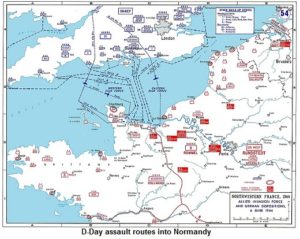
The amphibious landings were preceded by extensive aerial and naval bombardment and an airborne assault—the landing of 24,000 USBritish, and Canadian airborne troops shortly after midnight. Allied infantry and armoured divisions began landing on the coast of France at 06:30. The target 50-mile (80 km) stretch of the Normandy coast was divided into five sectors: UtahOmahaGoldJuno, and Sword. Strong winds blew the landing craft east of their intended positions, particularly at Utah and Omaha. The men landed under heavy fire from gun emplacements overlooking the beaches, and the shore was mined and covered with obstacles such as wooden stakes, metal tripods, and barbed wire, making the work of the beach-clearing teams difficult and dangerous. Casualties were heaviest at Omaha, with its high cliffs. At Gold, Juno, and Sword, several fortified towns were cleared in house-to-house fighting, and two major gun emplacements at Gold were disabled, using specialised tanks.

The Allies failed to achieve any of their goals on the first day. CarentanSt. Lô, and Bayeux remained in German hands, and Caen, a major objective, was not captured until 21 July. Only two of the beaches (Juno and Gold) were linked on the first day, and all five beachheads were not connected until 12 June; however, the operation gained a foothold which the Allies gradually expanded over the coming months. German casualties on D-Day have been estimated at 4,000 to 9,000 men. Allied casualties were at least 10,000, with 4,414 confirmed dead.

Museums, memorials, and war cemeteries in the area now host many visitors each year.

See the full Wikipedia article (retrieved June 5, 2019) here: https://en.wikipedia.org/wiki/Normandy_landings

Share this post:
, ,
[Top]

Caribbean Roots: Grand Master Flash

Go Lean Commentary

Welcome to June!

It’s Caribbean-American Heritage Month.

… unanimously adopted by the House of Representatives on June 27, 2005 in House Congressional Resolution 71, sponsored by Congresswoman Barbara Lee, recognizing the significance of Caribbean people and their descendants in the history and culture of the United States.[14]

LONDON – 1985: DJ Grandmaster Flash aka Joseph Saddler of the rap group “Grandmaster Flash & The Furious Five” performs onstage at Wembley Arena in 1985 in London, England. (Photo by David Corio/Michael Ochs Archives/Getty Images)

It is also Black Music Month.

… initiated … by President Jimmy Carter who, on June 7, 1979, decreed that June would be the month of black music.

In 2009, the commemoration was given its current name by President Barack Obama.[1] In his 2016 proclamation, Obama noted that African-American music and musicians have helped the country “to dance, to express our faith through song, to march against injustice, and to defend our country’s enduring promise of freedom and opportunity for all. “[2]

This commentary is a fusion between these 2 observances.

Most emphatically, Caribbean-American Diaspora has contributed greatly to the Great American Songbook, even for Hip-Hop music. We are referring to one of the original heroes of this all-American musical genre: Joseph Saddler aka Grand Master Flash. Yes, he was born and raised in Barbados and emigrated to the New York metropolitan area at a young age.

Original hero? We are not the only one to conclude this; (plus, see the references in the Appendices below):

Grandmaster Flash and the Furious Five were inducted into the Rock and Roll Hall of Fame in 2007, becoming the first hip hop act to be honored.[1]

VIDEO – Grandmaster Flash and the Furious Five accept and perform Rock Hall Inductions 2007 – https://youtu.be/7tuPWXPd4nI

Rock & Roll Hall of Fame
Published on Sep 23, 2011 –
Grandmaster Flash and the Furious Five accept and perform Rock Hall Inductions 2007

  • Category: Music

Unfortunately, despite our Caribbean being the greatest address on the planet, a report relates that …

“The [Caribbean] region has exported more of its people than any other region of the world since the abolition of slavery in 1834.[3] While the largest Caribbean immigrant sources to the U.S. are Cuba, the Dominican Republic, Jamaica and Haiti, U.S. citizen migrants also come from Puerto Rico and the U.S. Virgin Islands.”

Wow, we got “it” bad, societal abandonment that is!

Imagine if we did a better job of holding on to our citizens. Imagine the world-class contributions and artistic productions. They would have done all that they have done here – maybe even more and better. Talent always finds a way to “break thru”; see photo here:

This theme – the Caribbean heritage of so many movers-and-shakers – aligns with previous commentaries from the movement behind the 2013 book Go Lean…Caribbean; see a sample list here:

https://goleancaribbean.com/blog/?p=16938 Caribbean Roots: Presidential Candidate – Kamala Harris
https://goleancaribbean.com/blog/?p=11787 Caribbean Roots: Bruno Mars … and the Power of Endurance
https://goleancaribbean.com/blog/?p=11442 Caribbean Roots: Al Roker – ‘Climate Change’ Defender
https://goleancaribbean.com/blog/?p=10801 Caribbean Roots: John Carlos – The Man. The Moment. The Movement
https://goleancaribbean.com/blog/?p=10609 Caribbean Roots: Cast of ‘The Fresh Prince of Bel-Air’
https://goleancaribbean.com/blog/?p=10114 Caribbean Roots: Esther Rolle of ‘Good Times’
https://goleancaribbean.com/blog/?p=10015 Caribbean Roots: E. R. Braithwaite, Author of ‘To Sir, With Love’ – RIP
https://goleancaribbean.com/blog/?p=9948 Caribbean Roots: Sammy Davis, Jr.
https://goleancaribbean.com/blog/?p=8724 Caribbean Roots: Pan-African Leader – Marcus Garvey
https://goleancaribbean.com/blog/?p=2726 Caribbean Roots: Fashion Great – Oscar De La Renta – RIP

The Go Lean movement recognizes the Caribbean Roots and artistic contributions of artists like Joseph Saddler aka Grand Master Flash, even in non-traditional art forms like Hip-Hop.  (This makes up the sound track of this writer’s life).

Truth be told, Hip-Hop is now the Number One consumed music genre in the US. Caribbean contributions are hereby acknowledged!

CU Blog - Rock-n-Roll Dethroned by Hip-Hop - Photo 1

Yes, there is power to music; it can urge people to act … and feel … and move. Music can even “soothe the savage beast”.

Yes we can … impact our homeland and impact the world. With music, we can both reach people’s hearts and make them dance. This is one more way to forge change in society! This is why the promotion of music is vital in our quest to elevate Caribbean life and culture. This is one way that we can make our homeland a better place to live, work and play. 🙂

About the Book
The book Go Lean…Caribbean serves as a roadmap for the introduction and implementation of the technocratic Caribbean Union Trade Federation (CU), for the elevation of Caribbean society – for all member-states. This CU/Go Lean roadmap has these 3 prime directives:

  • Optimization of the economic engines in order to grow the regional economy to $800 Billion and create 2.2 million new jobs.
  • Establishment of a security apparatus to ensure public safety and protect the resultant economic engines.
  • Improve Caribbean governance to support these engines, including a separation-of-powers between the member-states and CU federal agencies.

The Go Lean book provides 370-pages of turn-by-turn instructions on “how” to adopt new community ethos, plus the strategies, tactics, implementations and advocacies to execute so as to reboot, reform and transform the societal engines of Caribbean society.

Download the free e-Book of Go Lean … Caribbean – now!

Who We Are
The movement behind the Go Lean book – a non-partisan, apolitical, religiously-neutral Community Development Foundation chartered for the purpose of empowering and re-booting economic engines – stresses that reforming and transforming the Caribbean societal engines must be a regional pursuit. This was an early motivation for the roadmap, as pronounced in the opening Declaration of Interdependence (Pages 12 – 14):

xi. Whereas all men are entitled to the benefits of good governance in a free society, “new guards” must be enacted to dissuade the emergence of incompetence, corruption, nepotism and cronyism at the peril of the people’s best interest. The Federation must guarantee the executions of a social contract between government and the governed.

xxiv. Whereas a free market economy can be induced and spurred for continuous progress, the Federation must install the controls to better manage aspects of the economy: jobs, inflation, savings rate, investments and other economic principles. Thereby attracting direct foreign investment because of the stability and vibrancy of our economy.

xxxii. Whereas the cultural arts and music of the region are germane to the quality of Caribbean life, and the international appreciation of Caribbean life, the Federation must implement the support systems to teach, encourage, incentivize, monetize and promote the related industries for arts and music in domestic and foreign markets. These endeavors will make the Caribbean a better place to live, work and play.

Sign the petition to lean-in for this roadmap for the Caribbean Union Trade Federation.  

——————

Appendix A – Joseph Saddler aka Grandmaster Flash

Joseph Saddler’s family emigrated to the United States from Barbados, in the Caribbean. He grew up in the Bronx in New York City where he attended Samuel Gompers High School, a public vocational school. There, he learned how to repair electronic equipment.[2] Saddler’s parents played an important role in his interest in music. His parents came from Barbados and his father was a big fan of Caribbean and African American records.[3]
As a child, Saddler was fascinated by his father’s record collection. In an interview, he reflected: “My father was a very heavy record collector. He still thinks that he has the strongest collection. I used to open his closets and just watch all the records he had. I used to get into trouble for touching his records, but I’d go right back and bother them.”[3] Saddler’s early interest in DJing came from this fascination with his father’s record collection as well as his mother’s desire for him to educate himself in electronics.[4] After high school, he became involved in the earliest New York DJ scene, attending parties set up by early luminaries, like DJ Kool Herc.

Source: Retrieved June 4, 2019 from: https://en.wikipedia.org/wiki/Grandmaster_Flash

——————

Appendix B – Induction: Grandmaster Flash and the Furious Five  –  2007  |  Category: Performers

Members:

  • Joseph “Grandmaster Flash” Saddler
  • Melvin “Mele Mel” Glover
  • Nathaniel “The Kidd Creole” Glover Jr.
  • Eddie “Scorpio aka Mr. Ness” Morris
  • Keith “Keef Cowboy” Wiggins
  • Guy “Rahiem” Williams

Summary:
Put simply, Grandmaster Flash and the Furious Five were innovators. Sonically, their new techniques and equipment expanded the sound of hip-hop. Lyrically, their masterpiece “The Message” [see Appendix C below] exposed the dirty underside of a landscape known for partying—and no one saw it coming.

Biography
Grandmaster Flash and the Furious Five fomented the musical revolution known as hip-hop.

Theirs was a pioneering union between one DJ and five rapping MCs. Grandmaster Flash (born Joseph Saddler) not only devised various techniques but also designed turntable and mixing equipment. Formed in the South Bronx, Grandmaster Flash and the Furious Five were one of the first rap posses, responsible for such masterpieces as “The Message,” “Grandmaster Flash on the Wheels of Steel” and “White Lines.” The combination of Grandmaster Flash’s turntable mastery and the Furious Five’s raps, which ranged from socially conscious to frivolously fun, made for a series of 12-inch records that forever altered the musical landscape.

Flash, along with DJ Kool Herc and Afrika Bambaataa, pioneered the art of break-beat deejaying—the process of remixing and thereby creating a new piece of music by playing vinyl records and turntables as if they were musical instruments. Disco-era deejays like Pete “DJ” Jones, an early influence on Grandmaster Flash, spun records so that people could dance. Turntablists took it a step further by scratching and cutting records, focusing on “breaks”—what Flash described as “the short, climactic parts of the records that really grabbed me”—as a way of heightening musical excitement and creating something new.

Flash’s days as a deejay date back to 1974, when he and other deejays who were too young to get into discos began playing at house parties and block parties in their South Bronx neighborhoods. Flash worked briefly with Kurtis Blow, but Cowboy became the first MC to officially join Grandmaster Flash in what would become the Furious Five. Cowboy’s rousing exhortations, including now-familiar calls to party, like “Throw your hands in the air and wave ‘em like you just don’t care!” became essential ingredients of the hip-hop experience.

Grandmaster’s squadron of MCs expanded to include Kidd Creole, Mele Mel, Mr. Ness (a.k.a. Scorpio) and Rahiem, in that order. Mele Mel, one of the most phonetically and rhythmically precise rappers in the genre—and the authoritatively deep voice who delivered the anti-cocaine rap “White Lines”—recalled the early days of hip-hop: “Disco was for adults, and they wouldn’t let the kids in. That forced us to go out on the streets and make our own entertainment.”

Grandmaster Flash and the Furious Five issued their first record, “Superrappin’,” on the Enjoy label in 1979. They then signed to Sylvia Robinson’s New Jersey-based Sugarhill label, where they made the R&B charts with a 12-inch single called “Freedom,” which ran for more than eight minutes. Various combinations of Grandmaster Flash, Mele Mel and the Furious Five placed ten records in the charts during a three-year span from 1980 to 1983. These included Grandmaster Flash’s dizzying turntable showcase, “Grandmaster Flash on the Wheels of Steel,” and the group’s acknowledged masterpiece, “The Message.” The latter offered a series of unflinchingly honest and discomfiting observations about life in the ghetto, with lead rapper Mele Mel returning to the same weary conclusion: “It’s like a jungle sometime, it makes me wonder how I keep from going under.”

As Rolling Stone observed, “’The Message’ was [the first record] to prove that rap could become the inner city’s voice, as well as its choice.” This slice of unvarnished social realism sold half a million copies in a month, topped numerous critics’ and magazines’ lists of best singles for 1982 and cemented Grandmaster Flash and the Furious Five’s place in hip-hop’s vanguard. “I ask myself to this day, ‘Why do people want to hear this?’” Grandmaster Flash wondered of “The Message” in 1988. “But it’s the only lyric-pictorial record that could be called ‘How Urban America Lived.’”

In 1984, disagreements over business matters, including a lawsuit with Sugarhill, caused the group to split into two factions, and their commercial momentum was lost. However, they reunited in 1987 for a charity concert hosted by Paul Simon at Madison Square Garden in New York. The result was another album, On the Strength, released in 1988. On the Strength contained another example of Grandmaster Flash’s turntable genius (“This Is Where You Got It From”) and a history lesson for those who didn’t understand hip-hop’s roots and longevity (“Back in the Old Days of Hip-Hop”). In the ensuing years, Grandmaster Flash and Mele Mel have made records under their own names, and numerous anthologies have been released, including Grandmaster Flash, Mele Mel and the Furious Five: The Definitive Groove Collection.

Inductees: Melvin Glover a.k.a. Mele Mel (vocals; born May 15, 1961), Nathaniel Glover Jr. a.k.a. Kidd Creole (vocals; born February 19, 1960), Eddie Morris a.k.a. Mr. Ness/Scorpio (vocals; born October 12, 1960), Joseph Saddler a.k.a. Grandmaster Flash (turntables; born January 1, 1958), Keith Wiggins a.k.a. Cowboy (vocals; born September 20, 1960, died September 8, 1989), Guy Williams a.k.a. Rahiem (vocals; born February 13, 1963)

Source: Rock & Roll Hall of Fame; posted September 23, 2011; retrieved June 4, 2019 from: https://www.rockhall.com/inductees/grandmaster-flash-and-furious-five
————–
Appendix C VIDEO – Grandmaster Flash & The Furious Five – The Message (Official Video) – https://youtu.be/PobrSpMwKk4


Sugarhill Records

Published on Aug 24, 2015 – 
Download The Message on iTunes – http://hyperurl.co/sgur7n
Stream The Message on Spotify – http://hyperurl.co/92hx5f
Buy The Message on Amazon – http://hyperurl.co/d1jnmy
Follow Grandmaster Flash Website: http://hyperurl.co/8bmdbs
Facebook: http://hyperurl.co/jn3yxq
Twitter: http://hyperurl.co/b31agz
Instagram: http://hyperurl.co/lzisge
Share this post:
, ,
[Top]

Dealing with Hurricane Season 2019 … and beyond

Go Lean Commentary

Welcome to Hurricane Season 2019.

I wish I could say it will be uneventful. I can’t …

Just the opposite, scientists have told us that as the earth’s atmosphere heats more and more, that Climate Change-fueled events will only worsen and worsen. So far, Spring 2019 has been proof positive. We have seen floods, tornadoes, unusual wintry weather, etc. As reported in a previous blog-commentary, the planet must prepare to “rinse and repeat“.

June 1st is the official start of the Atlantic Hurricane Season, so every year at this time we have to start dealing with the realities of hurricanes and Caribbean life. The 2013 book Go Lean…Caribbean (Page 10) declares that we need “to provide new guards for our future security”. This is not our first year planning for and dealing with Hurricane Season; nor will it be our last. “This” is our new reality. The book relates on Page 11:

Whereas the earth’s climate has undeniably changed resulting in more severe tropical weather storms, it is necessary to prepare to insure the safety and security of life, property and systems of commerce in our geographical region. As nature recognizes no borders in the target of its destruction, we also must set aside border considerations in the preparation and response to these weather challenges.

This theme – planning for and dealing with Hurricane Season – aligns with many previous Go Lean commentaries; see here, this consideration from recent years:

https://goleancaribbean.com/blog/?p=15012 Hurricane Season 2018 and Puerto Rico continued sufferings
https://goleancaribbean.com/blog/?p=12068 Hurricane Season 2017 and ‘Climate Change’ Abatement

Dealing with Hurricane Seasons must include more than just naming hurricanes or responding to the storms’ devastation; we must also mitigate the threat of Climate Change and do our share to reduce global warming. Yes, we must!

Why?

Because we are responsible for the causes of Climate Change; so says this recent report; consider the story here:

Title: 99.9999% chance humans are causing global warming, and other science-based facts on Climate Change for Earth Day
By: Doyle Rice and Elizabeth Weise

Climate change is real and increasingly a part of our daily lives. New research and studies out in just the past six months highlight the latest facts about the human-caused shift to our global weather systems and its effects on our planet.

First among them, there’s no longer any question that rising temperatures and increasingly chaotic weather are the work of humanity. There’s a 99.9999% chance that humans are the cause of global warming, a February study reported. That means we’ve reached the “gold standard” for certainty, a statistical measure typically used in particle physics.

The mechanism is well understood and has been for decades. Humans burn fossil fuels such as oil, coal and gas, which release carbon dioxide (CO2), methane and other gases into the Earth’s atmosphere and oceans. CO2 is the greenhouse gas that’s most responsible for warming.

Study lead author Benjamin Santer of the Lawrence Livermore National Laboratory in Livermore, California, told Reuters that “the narrative out there that scientists don’t know the cause of climate change is wrong.”

Hottest on record
The past five years have been the five warmest since record-keeping began in the late 1800s. The Earth has experienced 42 straight years (since 1977) with an above-average global temperature, according to the National Oceanic and Atmospheric Administration.

Based on five separate data sets that keep track of the Earth’s climate, the global average temperature for the first 10 months of 2018 was about 1.8 degrees above what it was in the late 1800s. That was when industry started to emit large amounts of greenhouse gases into the atmosphere.
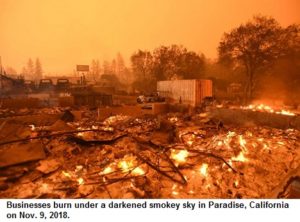
Australia experienced record summer heat in January of this year. The town of Port Augusta reached the hottest day since record-keeping began in 1962 with a temperature of 121, according to the Guardian.

The heat was so intense it caused bats to fall from trees, according to the Australian Broadcasting Corporation.

Carbon dioxide up 46%
Increasing amounts of carbon dioxide and other gases being released into the atmosphere by industry, transportation and energy production from burning fossil fuels are enhancing what’s known as the planet’s natural greenhouse effect.

Carbon dioxide is the most prevalent among all greenhouse gases produced by human activities, attributed to the burning of fossil fuels.

The atmospheric carbon dioxide level for March was 411.97 parts per million and continue to rise. It has now reached levels in the atmosphere not seen in 3 million years.

That’s an increase of 46% from just before the Industrial Revolution in the 1800s, when CO2 levels were around 280 parts per million. Levels began to rise when humans began to burn large amounts of fossil fuels to run factories and heat homes, releasing CO2 and other greenhouse gasses into the atmosphere.

Scientists say to keep a livable planet, we need to cut the level to 350 parts per million.

Rising seas
A consequence of higher temperatures is the melting of the polar ice caps, which is causing sea levels to rise. The world’s oceans have risen about an inch in the past 50 years due to melting glaciers alone, a study published this month in the journal Nature found.

The Earth’s glaciers are now losing up to 390 billion tons of ice and snow per year, the study suggests.

Global warming has caused over 3 trillion tons of ice to melt from Antarctica in the past quarter-century and tripled ice loss there in the past decade, another study, released in June, said.

More: Life after solving climate change: Not mud huts and gruel but clean air and warm homes

Source: Posted for “Earth Day 2019” on April 22, 2019; retrieved June 1, 2019 from: https://www.yahoo.com/now/earth-day-2019-high-temperatures-131301815.html

99.9999% is a special number! It is near to Six Sigma – process which 99.9999998% of products manufactured are statistically expected to be free of defects (3.4 defects per million). So this near sign of operational perfection means that it is “on us”. If we accept that us humans are the cause of Climate Change, then that means that us humans can stop the bad actions and do good ones. As reported here previously, we only have until 2030 as a fix window to try to effect change; (after that, there is no hope for a turn-around):

[A report from the] UN Intergovernmental Panel on Climate Change (IPCC) … asserts that if there are no mitigations [by 2030], then the catastrophic future that we all dread will be unavoidable. Life may continue on the planet, but the status quo would be no more. …

After [2030], there may not be any turning back from a Greenhouse planet. Once we accept this fact – the eventuality of the Climate Change Catastrophe – only then can we start to make efforts to address the truth: our “house is on fire”. …

Fixing Climate Change in the US or Canada is out-of-scope for this Go Lean movement; but we still need them to act. We also need Europe, China, India – all Big Polluters – and all countries of the world to act. We must stand on soap boxes, podiums and stages and tell the world – everyone must listen; we must make them listen. This is now everyone’s job, everyone’s responsibility. …

There is … a roadmap [for] reforming and transforming the Caribbean’s societal engines to abate Climate Change; [it] is possible; it is conceivable, believable and achievable.

The current US President, Donald Trump, is not a partner in the effort to abate Climate Change. He is a denier! He is also undermining legitimate scientific efforts – see Appendix VIDEO.

The start of Hurricane Season 2019 reminds us to recommit to the urgency to mitigate and remediate Climate Change. While we must Go Green here in the Caribbean, we must do more too. We must urge the rest of the world to Go Green. Otherwise, our small tropical islands will be the first to become extinct. It is that serious!

Let’s lean-in to this Go Lean roadmap to effect change here in the homeland and then lets urge the rest of the world to also do more. Yes, we can make a difference here in the homeland and around the world. 🙂

About the Book
The book Go Lean…Caribbean serves as a roadmap for the introduction and implementation of the technocratic Caribbean Union Trade Federation (CU), for the elevation of Caribbean society – for all member-states. This CU/Go Lean roadmap has these 3 prime directives:

  • Optimization of the economic engines in order to grow the regional economy to $800 Billion & create 2.2 million new jobs.
  • Establishment of a security apparatus to ensure public safety and protect the resultant economic engines.
  • Improve Caribbean governance to support these engines, including a separation-of-powers between the member-states and CU federal agencies.

The Go Lean book provides 370-pages of turn-by-turn instructions on “how” to adopt new community ethos, plus the strategies, tactics, implementations and advocacies to execute so as to reboot, reform and transform the societal engines of Caribbean society.

Download the free e-Book of Go Lean … Caribbean – now!

Who We Are
The movement behind the Go Lean book – a non-partisan, apolitical, religiously-neutral Community Development Foundation chartered for the purpose of empowering and re-booting economic engines – stresses that reforming and transforming the Caribbean societal engines must be a regional pursuit. This was an early motivation for the roadmap, as pronounced in the opening Declaration of Interdependence (Pages 12 – 13):

xi. Whereas all men are entitled to the benefits of good governance in a free society, “new guards” must be enacted to dissuade the emergence of incompetence, corruption, nepotism and cronyism at the peril of the people’s best interest. The Federation must guarantee the executions of a social contract between government and the governed.

xvi. Whereas security of our homeland is inextricably linked to prosperity of the homeland, the economic and security interest of the region needs to be aligned under the same governance. Since economic crimes … can imperil the functioning of the wheels of commerce for all the citizenry, the accedence of this Federation must equip the security apparatus with the tools and techniques for predictive and proactive interdictions.

xxiv. Whereas a free market economy can be induced and spurred for continuous progress, the Federation must install the controls to better manage aspects of the economy: jobs, inflation, savings rate, investments and other economic principles. Thereby attracting direct foreign investment because of the stability and vibrancy of our economy.

Sign the petition to lean-in for this roadmap for the Caribbean Union Trade Federation.

—————-

Appendix VIDEO – Climate Change: Why Trump’s panel on climate science is controversial – https://www.usatoday.com/videos/news/2019/02/27/climate-change-why-trumps-panel-climate-science-controversial/2998078002/

Posted February 26, 2019 – President Trump’s pick for leading a climate change panel is notorious for denying the science behind human-caused global warming. We dive into the counter-arguments on climate change. USA TODAY.

Share this post:
, ,
[Top]

My Brother’s Keeper

Go Lean Commentary

Despite the words as was first used by Cain in the Bible’s drama (Genesis 4:9) of “Cain and Abel”, the reality is:

I am my brother’s keeper.

This is a simple concept. It’s an extension from the premise that “no man is an island”. This truism helps us to appreciate that we, as individuals, need others in our communities. We cannot make progress alone; we all need a helping hand to get-up, step-up and stay-up. (Some people, think the youth, needs more help than others).

The 44th President of the United States, Barack Obama, is quoted to say:

“I have always believed that the single most important task we have as a nation is to make sure our young people can go as far as their dreams and hard work will take them. It is the single most important thing we can do for our country’s future. And we’ve got to do it together.”

President Obama – during his administration and after – has advocated for mentoring of youth in high-risk communities. Being the country’s first Black president, his focus was always the plight of the youth in the Black-and-Brown communities. To that end, he created the “My Brother’s Keeper Alliance” with the expressed purpose of facilitating mentorship. His rationale:
Research shows that young adults that have mentors are 52% more likely to attend school regularly and 55% more likely to attend college.

These were more than just words for President Obama; he talked the talk and walked the walk. He also put time, talent and treasuries into this pursuit. See here, the About Us page of the My Brother’s Keeper Alliance states the following:

In 2014, President Obama launched My Brother’s Keeper (MBK) and issued a powerful call to action to close opportunity gaps facing boys and young men of color. The initiative sparked candid dialogue and action around the country to help more of our young people reach their dreams, regardless of their race, gender, or socioeconomic status.

To scale and sustain this mission, My Brother’s Keeper Alliance (MBK Alliance) was launched in 2015 as an independent nonprofit organization. Since launching, a national movement has grown: Nearly 250 cities, counties, and Tribal Nations have accepted the MBK Community Challenge — President Obama’s call to action to adopt innovative approaches, strengthen support, and build ladders of opportunity for boys and young men of color — scores of new initiatives have been implemented, and there has been an exponential increase in aligned private sector commitments, all helping to reduce barriers and expand opportunity.

Today, as an initiative of the Obama Foundation, MBK Alliance leads a national call to action to build safe and supportive communities for boys and young men of color where they feel valued and have clear paths to opportunity. Alongside our partners across sectors, we will accelerate impact in targeted communities, mobilize resources, and promote what works, all with the goal of encouraging mentorship, reducing youth violence, and improving life outcomes for boys and young men of color.

OUR VISION
We believe every young person deserves equal opportunity to achieve success, regardless of their race, gender, or socioeconomic status. Our vision is to make this a reality for all of our nation’s boys and young men of color, each and every one of whom is critical to our collective success. By realizing this vision, we are creating a brighter, more promising future not just for our boys and young men of color, but for the country.

MBK Alliance is committed to leading the way to ensure success for all youth.

This is President’s Obama’s effort to help the Black Youth of America. For the movement behind the book Go Lean … Caribbean, we have our own advocacies. Among them, helping the youth in the Caribbean. (In actuality, the majority population of 29 of the 30 Caribbean member-states is Black-and-Brown). Our mission is the same.

This commentary is NOT our first effort to identify the help that our population of young men and boys in the Caribbean need. Previously we published a White Paperread it here – by the nationally-admired Bahamian Educator Dr. Donald McCartney; that composition summarizes as follows:

Title: Repairing the Breach in the Caribbean
Sub-title:
How do we can save our Black men and boys? Many Black men and boys in the Caribbean, pose a serious and critical problem … in every corridor and thoroughfare that Caribbean peoples and residents must cross. Consequently, Black men and boys in the Caribbean are feared, demonized and vilified.

The White Paper is more than just an academic exercise; it proposed tactical, practical and reasonable solutions, one of which is an organized scheme for mentoring. The White Paper introduced the formation of the Charles Thurston Foundation as an entity to execute on this mandate.

Now, we are able to present the quest for a strategic partnership between the Charles Thurston Foundation and the My Brother’s Keep Alliance (MBKA). This latter Alliance already list many strategic partnerships on the organization’s web site, including in the Caribbean. See Photo here:

This is the Way Forward … for the mentoring agenda for Caribbean youth.

We now have the plan; we must work the plan.

See the plan in action in this VIDEO here:

VIDEO – Arrive as Many. Rise as One. Experience MBK Rising! – https://youtu.be/-Gcwk8R2V6E

Obama Foundation
Published on Feb 22, 2019 –
MBK Rising! is a national convening of the My Brother’s Keeper Alliance in Oakland, California, that brought together hundreds of young men of color and leaders working to break down barriers that too often leave boys and young men of color at a disadvantage. From a town hall conversation with President Obama and Steph Curry where young men could ask questions, to a candid conversation on the interconnectedness of race, gender, and sexual orientation, to an exploration of what’s working in communities across the country working to improve the lives of boys and young men of color, MBK Rising! created moments to celebrate progress and rally people near and far to continue the work of building a bright future for each and every one of us.

You can learn more at obama.org/mbka

While the My Brother’s Keeper Alliance is a American initiative, as an organization, they are willing to consult and collaborate with their Caribbean “brothers”. This was declared by President Obama, when he visited the Caribbean, Jamaica to be exact, in April 2015. The Appendix VIDEO highlights his regional commitment.

Make no mistakes, the Go Lean movement does not seek to make Caribbean member-states to be like the United States of America. No, we want to be better. That land has a lot of societal defects that are hard to overcome; racism is in America’s DNA. Our majority Black-and-Brown population starts with that advantage. We must only do the heavy-lifting to elevate our societal engines.

Let’s get started! (Already, our failures have resulted in an abominable abandonment rate among our tertiary educated demographic – 70 percent).

We must make our homeland a better place to live, work and play. We want to keep our young people and offer hope for them to have a prosperous future. We want them to prosper where planted. 🙂

About the Book
The book Go Lean…Caribbean serves as a roadmap for the introduction and implementation of the technocratic Caribbean Union Trade Federation (CU), for the elevation of Caribbean society – for all member-states. This CU/Go Lean roadmap has these 3 prime directives:

  • Optimization of the economic engines in order to grow the regional economy to $800 Billion and create 2.2 million new jobs.
  • Establishment of a security apparatus to ensure public safety and protect the resultant economic engines.
  • Improve Caribbean governance to support these engines, including a separation-of-powers between the member-states and CU federal agencies.

The Go Lean book provides 370-pages of turn-by-turn instructions on “how” to adopt new community ethos, plus the strategies, tactics, implementations and advocacies to execute so as to reboot, reform and transform the societal engines of Caribbean society.

Download the free e-Book of Go Lean … Caribbean – now!

Who We Are
The movement behind the Go Lean book – a non-partisan, apolitical, religiously-neutral Community Development Foundation chartered for the purpose of empowering and re-booting economic engines – stresses that reforming and transforming the Caribbean societal engines must be a regional pursuit. This was an early motivation for the roadmap, as pronounced in the opening Declaration of Interdependence (Pages 12 – 13):

xi. Whereas all men are entitled to the benefits of good governance in a free society, “new guards” must be enacted to dissuade the emergence of incompetence, corruption, nepotism and cronyism at the peril of the people’s best interest. The Federation must guarantee the executions of a social contract between government and the governed.

xvi. Whereas security of our homeland is inextricably linked to prosperity of the homeland, the economic and security interest of the region needs to be aligned under the same governance. Since economic crimes … can imperil the functioning of the wheels of commerce for all the citizenry, the accedence of this Federation must equip the security apparatus with the tools and techniques for predictive and proactive interdictions.

xxiv. Whereas a free market economy can be induced and spurred for continuous progress, the Federation must install the controls to better manage aspects of the economy: jobs, inflation, savings rate, investments and other economic principles. Thereby attracting direct foreign investment because of the stability and vibrancy of our economy.

Sign the petition to lean-in for this roadmap for the Caribbean Union Trade Federation.
————-
Appendix VIDEO US President Obama Speaks at Young Leaders Town Hall – https://youtu.be/636mgw1THpc

Published on Apr 9, 2015 – President Obama delivers remarks and answers questions at a town hall with Young Leaders of the Americas at University of the West Indies in Kingston, Jamaica. April 9, 2015.

Share this post:
, ,
[Top]

Remembering Rwanda – ENCORE

What would you have done if you were around for the Spanish Inquisition, where Spain forcibly attempted to convert Jews and Muslims to Christianity … or else?

What would you have done if you were around for the Jewish Holocaust by Nazi Germany?

Would you have complained? Would you have protested in the streets with marches and with boycotts? Would you have taken up arms to stop the evil, mitigate the atrocities and to force justice?

These are valid questions! I assume you as the reader were not in position to alleviate any of those horrific events?

How about Rwanda – the Hutu-Tutsi Genocide – in 1994?
What did you do to protest those horrors? (I know you were here and conscious of the events). We must now reflect and consider … because “Inaction” is a Recipe for ‘Failed-State’ Status. Remember this famous quotation:

“The only thing necessary for the triumph of evil is for good men to do nothing” – Edmund Burke; 1729 – 1797; an Irish statesman and member of British Parliament.

Today, this week, this month is special in the history of Rwanda. These days measure the 25th anniversary of what took place during the 7 April to 15 July 1994 genocide?

The world must never forget! Yes, but most important, the world must care.

The declaration that the world did not care … is a serious charge. We did not make this declaration; no, it was a Mea Culpa of the religious stakeholders who were in Rwanda – the Church – at the time of the atrocities. We published a blog-commentary of this acknowledgement on November 22, 2016.

Now is a good time to encore that previous blog-commentary. See here:

———–

Go Lean Commentary – Rwanda’s Catholic bishops apologize for genocide

Is mainstream religion a force for moral good in modern society … in the Caribbean? In Africa? Anywhere?

cu-blog-rwandas-catholic-bishops-apologize-for-genocide-photo-3This is a timely discussion right now as there are a lot of threats and dissension in the world, mostly spurred on by religious extremism; think: Islamic terrorists, Shia – Shiite conflicts, Hindu-India versus Muslim Pakistan, Anglicanism versus Catholicism in Northern Ireland. Many samples and examples abound. The case in point for this consideration is the religious-fueled genocide in Rwanda in 1994; see the country’s flag here.

The religious institutions have a tarnished record; not always being a force for moral good in society. They have betrayed the vows and values they are supposed to be committed to. Instead, they have become “drunk with the blood of so many innocent people”.

This reality and cautionary tale from Rwanda provides us a deep lesson, though of a religious nature. See this core scripture:

A mysterious name was written on her forehead: “Babylon the Great, Mother of All Prostitutes and Obscenities in the World.”
I could see that she was drunk–drunk with the blood of God’s holy people who were witnesses for Jesus. I stared at her in complete amazement. – Revelation 17:5 – 6; New Living Translation

Who/What is Babylon the Great? (See Appendix A below).

For one religious group founded in the Caribbean – Rastafarians – they assign the identity to the country of the United States of America. But most religious scholars assign the identity to the world’s orthodox religions.

Some theologians make a narrow accusation and declare that “there can be only one conclusion: The Vatican [(Roman Catholic Headquarters)] is the Mystery Babylon of Revelation; they relate that this false religious system that has deceived the people of the world that will be destroyed at the time of Armageddon”.

Whatever your faith, being associated with Babylon the Great is not a good thing. “She” has a vengeful reckoning in store.

As depicted in a previous blog-commentary, the religions of Christendom have a sullied past! Unfortunately that “past” is not only centuries ago, as chronicled in the recent experiences in 1994 with the Rwandan Ethnic Cleansing. This sad drama is in the news again, as the Roman Catholic Church has now just issued a formal apology for its actions and in-actions in those atrocities.

Considering the real history, they are guilty as charged; see the news story here:

Title: Rwanda: Catholic bishops apologize for role in genocide
By: Ignatius Ssuuna
KIGALI, Rwanda (AP) — The Catholic Church in Rwanda apologized on Sunday for the church’s role in the 1994 genocide, saying it regretted the actions of those who participated in the massacres.

cu-blog-rwandas-catholic-bishops-apologize-for-genocide-photo-2“We apologize for all the wrongs the church committed. We apologize on behalf of all Christians for all forms of wrongs we committed. We regret that church members violated (their) oath of allegiance to God’s commandments,” said the statement by the Conference of Catholic Bishops, which was read out in parishes across the country.

The statement acknowledged that church members planned, aided and executed the genocide, in which over 800,000 ethnic Tutsis and moderate Hutus were killed by Hutu extremists.

In the years since the genocide — which was sparked by a contentious plane crash that killed the then-president, a Hutu — the local church had resisted efforts by the government and groups of survivors to acknowledge the church’s complicity in mass murder, saying those church officials who committed crimes acted individually.

Many of the victims died at the hands of priests, clergymen and nuns, according to some accounts by survivors, and the Rwandan government says many died in the churches where they had sought refuge.

The bishops’ statement is seen as a positive development in Rwanda’s efforts at reconciliation.

“Forgive us for the crime of hate in the country to the extent of also hating our colleagues because of their ethnicity. We didn’t show that we are one family but instead killed each other,” the statement said.

The statement was timed to coincide with the formal end Sunday of the Holy Year of Mercy declared by Pope Francis to encourage greater reconciliation and forgiveness in his church and in the world, said Bishop Phillipe Rukamba, spokesman for the Catholic Church in Rwanda.

Tom Ndahiro, a Rwandan genocide researcher, said he hoped the church’s statement will encourage unity among Rwandans.

“I am also happy to learn that in their statement, bishops apologize for not having been able to avert the genocide,” he said.

========

cu-blog-rwandas-catholic-bishops-apologize-for-genocide-photo-1

Photo Caption – In this Sunday, April 6, 2014 file photo, Rwandan children listen and pray during a Sunday morning service at the Saint-Famille Catholic church, the scene of many killings during the 1994 genocide, in the capital Kigali, Rwanda. The Catholic Church in Rwanda apologized on Sunday, Nov. 20, 2016, for the church’s role in the 1994 genocide, saying it regretted the actions of those who participated in the massacres. (AP Photo/Ben Curtis, File)

The recap: “800,000 ethnic Tutsis and moderate Hutus were killed by Hutu extremists” during the Rwanda Holocaust in 1994. (This history was dramatized in the movie Hotel Rwanda; see Appendix B VIDEO below).

How does a community – like Rwanda in the foregoing – repent, forgive and reconcile from such a bad legacy?

“Confession is good for the soul”!

This commentary is part-and-parcel of the effort to reform and transform the Caribbean. We too, have some atrocities to reconcile. Plus we have many recent bad actions to reckon with. Think:

  • Haiti
  • Cuba
  • Guyana
  • Belize

The book Go Lean…Caribbean posits that any success in reforming and transforming the Caribbean must include a unified region – we need to be a Single Market – despite the 30 different member-states, 5 different colonial legacies and 4 different languages. We have a lot of differences – just like the differences of Hutus and Tutsis in Rwanda – and a history of dysfunction. We must consider the ancient and modern conflicts some member-states have had with others.

The book serves as a roadmap for the introduction and implementation of the Caribbean Union Trade Federation (CU). A mission of the roadmap is to reverse the prior “human flight” and invite the Diaspora back to the homeland. Accepting that many people fled the Caribbean seeking refuge, means that we must mitigate these causes of prior distress; and reconcile them. “Old parties” returning to their communities can open a lot of “old wounds” – Rwanda never reconciled their Hutu-Tutsi conflicts before 1994. Therefore an additional mission is to facilitate formal reconciliations, much like the model in South Africa with the Truth & Reconciliation Commissions (TRC). This mission will assuage these Failed-State indicators and threats (Page 272):

  • “Revenge seeking” groups
  • Group Grievances

The foregoing article depicts a bad episode in history of Rwanda and the Catholic Church’s complexities. The best-practice is to repent, forgive and reconcile. Repentance would include desisting in the bad behavior, confession and making amends. Religious orthodoxy is responsible for a lot of harm in the world. To finally answer the opening question: Is mainstream religion a force for moral good in modern society … in the Caribbean?

The answer is: No!

The Go Lean movement (book and blogs) have identified many bad community ethos – fundamental character or spirit of a culture; the underlying sentiment that informs the beliefs, customs, or practices of a group or society; the dominant assumptions of a people or period – that the Caribbean region needs to desist, confess and make amends. Many of these are based on religious orthodoxy; consider:

The Go Lean movement (book and blogs) also details good-positive community ethos that the people of the region need to adopt. The motivating ethos underlying the Go Lean roadmap is the Greater Good. This is defined as “the greatest good to the greatest number of people which is the measure of right and wrong” – Jeremy Bentham (1748-1832), a British philosopher, jurist, and social reformer. What is ironic is the fact that the Greater Good ethos aligns with the true values of most of the orthodox religions identified above; such as this scripture:

Pure and genuine religion in the sight of God the Father means caring for orphans and widows in their distress and refusing to let the world corrupt you. – James 1:27; New Living Translation

This CU/Go Lean mission is to elevate society for Caribbean people in the Caribbean. There is the need to monitor the enforcement of human rights and stand “on guard” against movements towards Failed-State status. The Go Lean roadmap calls for the CU to assume that role. Using cutting edge delivery of best practices, the CU will employ strategies, tactics and implementations to impact its prime directives; identified with the following 3 statements:

  • Optimization of the economic engines in order to grow the regional economy to $800 Billion & create 2.2 million new jobs.
  • Establishment of a security apparatus to ensure public safety assurances and protect the region’s economic engines.
  • Improvement of Caribbean governance to support these engines.

The Go Lean book speaks of the Caribbean as in crisis and posits that this crisis can be averted, that it is a “terrible thing to waste”. The Go Lean roadmap seeks to optimize the entire Caribbean economic/security/governance eco-system. This vision is defined early in the book (Page 12) in the following pronouncements in the Declaration of Interdependence:

xi. Whereas all men are entitled to the benefits of good governance in a free society, “new guards” must be enacted to dissuade the emergence of incompetence, corruption, nepotism and cronyism at the peril of the people’s best interest. The Federation must guarantee the executions of a social contract between government and the governed.

xii. Whereas the legacy in recent times in individual states may be that of ineffectual governance with no redress to higher authority, the accedence of this Federation will ensure accountability and escalation of the human and civil rights of the people for good governance, justice assurances, due process and the rule of law. As such, any threats of a “failed state” status for any member state must enact emergency measures on behalf of the Federation to protect the human, civil and property rights of the citizens, residents, allies, trading partners, and visitors of the affected member state and the Federation as a whole.

xiii. Whereas the legacy of dissensions in many member-states (for example: Haiti and Cuba) will require a concerted effort to integrate the exile community’s repatriation, the Federation must arrange for Reconciliation Commissions to satiate a demand for justice.

The Go Lean book details a lot more, a series of assessments, community ethos, strategies, tactics, implementations and advocacies to ensure a safe and just society in the Caribbean region:

Community Ethos – Economic Systems Influence Choices & Incentives Page 21
Community Ethos – People Respond to Incentives Page 21
Community Ethos – Consequences of Choices Lie in the Future Page 21
Community Ethos – Ways to Impact Turn-Arounds Page 33
Community Ethos – Ways to Manage Reconciliations Page 34
Community Ethos – Ways to Promote Happiness Page 36
Community Ethos – Ways to Impact the Greater Good Page 37
Strategy – Vision – Confederating a Non-Sovereign Union of 30 Member-states Page 45
Strategy – Mission – Keep the next generation at home; Repatriate Diaspora Page 46
Tactical – Separation of Powers – Truth & Reconciliation Courts Page 78
Implementation – Ways to Deliver Page 109
Implementation – Reasons to Repatriate Page 118
Anatomy of Advocacies Page 122
Planning – Ways to Improve Image Page 133
Planning – Improve Failed-State Indices Page 134
Advocacy – Ways to Grow the Economy Page 151
Advocacy – Ways to Better Manage the Social Contract Page 170
Advocacy – Ways to Impact Justice – Truth & Reconciliation Commissions Page 177
Advocacy – Ways to Preserve Caribbean Heritage Page 218
Appendix – Failed State Indicators & Definitions Page 271
Appendix – Dominican Republic’s Trujillo Regime – Ethnic Cleansing Page 306

The foregoing article conveys that the country of Rwanda is making efforts to come to grips with their atrocious past. This was not a Black-White conflict, but rather a Black-on-Black drama. This drama therefore relates to the Caribbean as we have majority Black populations in almost every Caribbean member-state. Now is the time for all of the Caribbean, the people and governing institutions, to lean-in for the empowerments described in the book Go Lean … Caribbean. There is reason to believe that we too can reform and transform our bad community ethos, as causes, advocacies and campaigns have shown success in previous societies. The Go Lean roadmap relates the experiences of how these single causes/advocacies have been forged throughout the world (Page 122 – Anatomy of Advocacies):

Frederick Douglass Abolition of African-American Slavery
Mohandas Gandhi Indian Independence
Dr. Martin Luther King African-American Civil Rights Movement
Nelson Mandela South Africa’s Anti-Apartheid
Cesar Chavez Migrant Farm Workers in the US
Candice Lightner Mothers Against Drunk Driving (MADD)

The Caribbean can succeed too, in our efforts to improve the Caribbean community ethos. Consider this sample of previous blog-commentaries that delve into aspects of forging change in the Caribbean community ethos:

https://goleancaribbean.com/blog/?p=9428 Forging Change: Herd Mentality
https://goleancaribbean.com/blog/?p=9017 Proclaim ‘International Caribbean Day’
https://goleancaribbean.com/blog/?p=8200 Respect for Minorities: Climate of Hate
https://goleancaribbean.com/blog/?p=7628 ‘A Change Is Gonna Come’
https://goleancaribbean.com/blog/?p=5695 Repenting, Forgiving and Reconciling the Past
https://goleancaribbean.com/blog/?p=4971 A Lesson in History – Royal Charter: Truth & Consequence
https://goleancaribbean.com/blog/?p=3929 Success Recipe: Add Bacon to Eggs
https://goleancaribbean.com/blog/?p=3915 ‘Change the way you see the world; you change the world you see’
https://goleancaribbean.com/blog/?p=3780 Forging a ‘National Sacrifice‘ Ethos
https://goleancaribbean.com/blog/?p=623 ‘Only at the precipice, do they change’

The Go Lean movement wants to help reform and transform the Caribbean. We see the crisis; we recognize that status quo, including the root causes and influences. We perceive the harmful effects of the religious orthodoxy. Yet we do not want to ban religion! Just the opposite, we know that religion can be a force for moral good in society, when practiced right. But we also know that religion can give birth to extremist passions and foster the worst sentiments in the human psyche. This too is presented in the Bible:

1 “I have told you these things so that you won’t abandon your faith. 2 For you will be expelled from the synagogues, and the time is coming when those who kill you will think they are doing a holy service for God3 This is because they have never known the Father or me. 4 Yes, I’m telling you these things now, so that when they happen, you will remember my warning…

A “Separation of Church and State” is the standard in the advanced democracies; this is now embedded in the implied Social Contract. Unfortunately this is not the norm in the Caribbean. Just consider these continued practices that demonstrate a highly charged religiosity in the region:

The Go Lean book defines the Social Contract as follows:

“Citizens surrender some of their freedoms and submit to the authority of the State in exchange for protection of remaining natural and legal rights” – Page 170.

The Caribbean Social Contract specifies that governments must protect their citizens, those in Christendom or not. Human rights assume a religious neutrality; even those who are “Spiritual But Not Religious” – see Appendix C below – must be respected and protected.

The vision for a new religiously neutral Caribbean specifies new community ethos for the homeland, one being the practice of reconciling conflicts from the past; to make an accounting (lay bare), repent, forgive and then hopefully forget the long history of human rights abuses. All of this heavy-lifting will contribute towards the effort to make the region a better homeland to live, work and play. We urge all to lean-in to this roadmap.

Closing exhortation about Babylon the Great:

Then I heard another voice calling from heaven, “Come away from her, my people. Do not take part in her sins, or you will be punished with her. – Revelation 18:4 – New Living Translation

Let him with ears, hear…

Download the book Go Lean … Caribbean – now!

———-

Appendix A – Cultural importance of “Babylon”

Due to Babylon’s historical significance as well as references to it in the Bible, the word “Babylon” in various languages has acquired a generic meaning of a large, bustling diverse city. Examples include:

  • Babilonas (Lithuanian name for “Babylon”)—a real estate development in Lithuania.
  • Babylon is used in reggae music as a concept in the Rastafari belief system, denoting the materialistic capitalist world.
  • Babylon 5—a science fiction series about a multi-racial futuristic space station.
  • Babylon A.D. takes place in New York City, decades in the future.

———-

Appendix B VIDEO – Hotel Rwanda (2004) – Official Movie Trailer – https://youtu.be/qZzfxL90100

Uploaded on Jun 18, 2011
Director: Terry George
Starring: Don Cheadle, Sophie Okonedo, Nick Nolte and Joaquin Phoenix.

———-

Appendix C AUDIO Podcast – Spiritual But Not Religious – http://www.humanmedia.org/catalog/excerpts/141_spiritual_not_religious.mp3


Share this post:
, , , ,
[Top]