Category: Social

Farewell to ‘Sábado Gigante’

Go Lean Commentary

All good things come to an end!

- Photo 2As for the long-running Variety Show, ‘Sábado Gigante’, on the Spanish-language TV-network Univision, it is not “all good things”, its “Gigante” things.

Yes, the 53-year run is finally coming to an end.

This milestone deserves our consideration, as the Agents of Change for this iconic television show are the same factors identified as Agents of Change for Caribbean life in the book, Go Lean…Caribbean. They are identified as follows:

  • Technology
  • Globalization
  • Aging Diaspora

The Go Lean book serves as a roadmap for the introduction and implementation of the technocratic Caribbean Union Trade Federation (CU). While this roadmap’s quest is economic empowerment, it clearly recognizes that music, dance and culture can play a key role in the elevation of any community. The Spanish-speaking Caribbean constitutes 59% of the population of the Caribbean region (see Appendix), and this community has loved ‘Sábado Gigante’, so this consideration is “muy importante”!

See the story here of the upcoming final broadcast of this Latin television mainstay:

Title: Farewell to “Sábado Gigante”
Miami, FL – September 14, 2015 – “Sábado Gigante” is a Spanish language TV phenomenon that has entertained audiences for decades, both in Latin America and here in the United States. This morning, Mo Rocca will show us:

If you like acrobats, animal acts, beautiful dancing girls, Zumba exhibitions, game show contests, talk show tears, and pretty much anything else under sun, “Sábado Gigante” is the show for you. It’s a variety show on steroids

“Sábado Gigante” (Spanish for Gigantic Saturday) airs every Saturday for three hours, and is watched by millions of people in the U.S. and in 40 countries around the world.

Fans wait in lines for hours in the Miami heat to be in the audience of this legendary broadcast. One woman drove four hours to attend. Big fan? “Yeah, we’ve been watching it since we were in diapers!” she laughed.

And the main reason for its gigante success? Don Francisco, the impresario, pitchman and ringleader of the “Sábado” circus. He’s been hosting the show for 53 years (that’s a world record).

In all that time, he’s missed only one Saturday, when his mother died in 1974. There’s never even been a rerun.

Rocca asked, “Who taught you to work so hard?”

- Photo 1“Maybe my father,” said Don Francisco, whose real name is Mario Luis Kreutzberger. He’s a 74-year-old Chilean-born son of refugees from Germany.

“They were German Jews,” he said. “And they fled during the Second World War, during the Holocaust, to Chile. Not because they choose Chile. That was the only option that they had.

“I was a kid in the middle of the war — even in my country, in Chile, half of the population, they were with the Germans. It was not easy to grow up in an environment like this.”

To make friends he’d have to be more like, well, a TV host. “I found an opportunity making jokes, doing shows for the school. And I was soon accepted by the majority.”

But after high school, he was sent by his father, a tailor, to New York City to learn the family trade. “I came in 1959. I was 19 years old. And I had only maybe 20 words in English.”

But it wasn’t the New York fashions that turned his head; it was that new-fangled contraption in his hotel room: The television. “When I put it on, I was amazed. That was a radio that you [were] able to see and to listen at the same time. That was my first contact with television. I said to myself, ‘My father’s wrong; I’m learning something that is before yesterday; this will be the future.'”

He returned to Chile determined, and in 1962 convinced a reluctant station manager to give him one hour of airtime on a Saturday. “Sábado Gigante” ran from 7:00 to 8:00. “Then he gave me from 6:00 to 8:00, 5:00 to 8:00, 4:00 to 8:00, 3:00 to 8:00, 2:00 to 8:00, 1:00 to 9:00. Eight hours, live, during 22 years,” Francisco said.

So, Rocca asked, “When did you go to the bathroom?”

“During the commercials. I was fast at that time, when I went to the bathroom!”

- Photo 3In 1986 Univision, the network that airs “Sábado Gigante,” moved the show’s production to Miami, the gateway to Latin America. And the show itself became a gateway to a mass Latin audience for future superstars like Shakira, Enrique Iglesias, even U.S. presidents — all of them courting an audience that’s muy importante.

This son of German immigrants may be the most recognizable face in all of Latin America. Just take a walk with Don Francisco through Miami’s Bayside Market, where he is mobbed by fans from many countries, and you’ll get a sense of how far his reach extends.

One woman from Cuba asked Francisco why he was leaving “Sábado Gigante.” He replied, “I’m getting old.”

“You are not old!” she retorted. “Don’t leave the program!”

“Sábado Gigante” is ending its run next Saturday. Over the last few seasons the show’s ratings with younger viewers have fallen precipitously.

Still, as Rocca found out as a recent guest on the program, it’s hard not to get caught up in the excitement of the loud, brash, flamboyant “Sábado Gigante”:

Rocca: “¡Cincuenta y tres años! Más que David Letterman. Más que Johnny Carson. Más que Jack Paar. ¡Usted es el rey de entretenimiento!”

Others have been called the King of Entertainment, but none has matched the reign of Don Francisco.

Source: Sunday Morning – CBS News Sunday Magazine; retrieved 09-14-2015 from: http://www.cbsnews.com/news/farewell-to-sabado-gigante/

———

Video Link: http://www.cbsnews.com/videos/the-historic-run-of-sabado-gigante-comes-to-an-end

(VIDEO plays best in Internet Explorer).

This show has never been a paid-program; it has always been on free broadcast TV; (notwithstanding cable/satellite subscribers paying for the utility). It has always been paid for by the advertisers.

But show-business has changed. Television has changed…

… most TV shows are available online; plus there is now time-shifted viewing (DVR) and on-demand platforms offering an alphabetical menu of shows.

This Internet-Communications-Technology (ICT) driven Agent of Change is what impacts ‘Sábado Gigante’, and what impacts the Caribbean. The changing TV landscape affects the Caribbean region as well, or at least it should. The CU roadmap has 3 prime directives:

  • Optimization of economic engines in order to grow the regional economy to $800 Billion and create 2.2 million new jobs.
  • Establishment of a security apparatus to protect the resultant economic engines and marshal against economic crimes.
  • Improvement of Caribbean governance to support these engines.

The ‘Sábado Gigante’ show has only had one host during its 53-year run. Don Francisco (Mario Luis Kreutzberger) is now 74 years old. Much of his audience has aged with him. This refers to the populations in Latin America and the Diaspora population residing in the US. The foregoing article refers to a definite declining youth dynamics of the show. The host has aged; the audience has aged; and there are less of them.

This is a bad formula for ad-supported television. The end has come, as advertisers seek a younger audience.

The CU/Go Lean roadmap recognizes the gravity of Latin music/entertainment to this region; and the dynamics of an emerging youth population. These demographics cannot be ignored by the planners of a new integrated Caribbean; (see Appendix).

The Go Lean book posits that while economics, security and governance are all important for the sustenance of Caribbean life, pursuits like art, culture, music, dance, and beauty are the reasons we want to live. “Work” is important in this roadmap, but so is “Play”. As we say farewell to ‘Sábado Gigante’, we also say farewell to Don Francisco. We salute him for a job – and life course – well done! We recognize him as a promoter of the arts, entrepreneur, industrialist and advocate for Latin culture. Don Francisco is hereby applauded as a role model that the rest of Latin America, the Caribbean, and the Diaspora community can emulate. He has provided a successful track record of forging change, overcoming incredible odds, managing crises to successful conclusions and paying forward to benefit the next generation.

In terms of the future, the Go Lean book asserts that there is plenty of talent in the Caribbean. The genius qualifiers of many Caribbean men and women are already heightened; and there is a built-in audience to consume the appreciation of this talent. The goal now is foster the local eco-system in the homeland so as to optimize the media industries ourselves; for us and by us. If we continue to fail at this endeavor, we would continue to be faced with this harsh reality: those with talent would have to flee the region to garner the business returns on their artistic investments. Thusly, this Go Lean economic empowerment roadmap strategizes to create a Single Media Market to leverage the value of broadcast rights for the entire region, utilizing all the advantages of cutting edge ICT offerings. The result: an audience of 42 million people across 30 member-states and 4 languages, facilitating television, cable, satellite and internet streaming wherever economically viable.

Early in the book, the benefits of media and technology empowerment is pronounced in the Declaration of Interdependence (Page 13 & 14), with these opening statements:

xiii.  Whereas the preparation of our labor force can foster opportunities and dictate economic progress for current and future generations, the Federation must ensure that educational and job training opportunities are fully optimized for all residents of all member-states, with no partiality towards any gender or ethnic group. The Federation must recognize and facilitate excellence in many different fields of endeavor, including sciences, languages, arts, music and sports. This responsibility should be executed without incurring the risks of further human flight, as has been the past history.

xiv.  Whereas the region has endured a spectator status during the Industrial Revolution, we cannot stand on the sidelines of this new economy, the Information Revolution. Rather, the Federation must embrace all the tenets of Internet Communications Technology (ICT) to serve as an equalizing element in competition with the rest of the world. The Federation must bridge the digital divide and promote the community ethos that research/development is valuable and must be promoted and incentivized for adoption.

xv.  Whereas intellectual property can easily traverse national borders, the rights and privileges of intellectual property must be respected at home and abroad. The Federation must install protections to ensure that no abuse of these rights go with impunity, and to ensure that foreign authorities enforce the rights of the intellectual property registered in our region.

xxii. Whereas the heritage of our lands share the distinction of cultural tutelage from European and American imperialists that forged their tongues upon our consciousness, it is imperative to form a society that is neutral and tolerant of the mother tongue influences of our people to foster efficient and effective communications among our citizens.

xxxii. Whereas the cultural arts and music of the region are germane to the quality of Caribbean life, and the international appreciation of Caribbean life, the Federation must implement the support systems to teach, encourage, incentivize, monetize and promote the related industries for arts and music in domestic and foreign markets. These endeavors will make the Caribbean a better place to live, work and play.

The region has the eco-system of free broadcast television, and the infrastructure for internet streaming. So the issues being considered regarding the ‘Sábado Gigante’ finale have bearing in the execution of this roadmap.

The Go Lean roadmap was constructed with the community ethos in mind to forge change and build up the communities around the music/entertainment industry, plus the execution of related strategies, tactics, implementations and advocacies to make the change permanent. The following is a sample of these specific details from the book:

Community Ethos – People Respond to Incentives in Predictable Ways Page 21
Community Ethos – Return on Investments Page 24
Community Ethos – Ways to Foster Genius – Abundance of Talent Page 27
Community Ethos – Promote Intellectual Property Page 29
Community Ethos – Ways to Promote Happiness – Appreciation of the Arts Page 36
Community Ethos – Ways to Impact the Greater Good Page 37
Strategic – Vision – Consolidating All Caribbean Region in to a Single Market Page 45
Strategic – Staffing – Music/Sporting Events at Fairgrounds Page 55
Strategy – Agents of Change – Technology Page 57
Strategy – Agents of Change – Globalization Page 57
Strategy – Agents of Change – Aging Diaspora Page 57
Tactical – Fostering a Technocracy Page 64
Tactical – Separation of Powers – Culture & Sports Administration Page 81
Tactical – Separation of Powers – Fairgrounds Administration Page 83
Implementation – Steps to Implement Self-Governing Entities (Fairgrounds) Page 105
Implementation – Ways to Deliver Page 109
Planning – 10 Big Ideas – #5 Four Languages in Unison / #8 Cyber   Caribbean Page 127
Planning – Ways to Make the Caribbean Better Page 131
Advocacy – Ways to Grow the Economy Page 151
Advocacy – Ways to Create Jobs Page 152
Advocacy – Ways to Impact Events Page 191
Advocacy – Ways to Promote Fairgrounds Page 192
Advocacy – Ways to Foster Technology – Intellectual   Property Protections Page 197
Advocacy – Ways to Impact Hollywood – And the Media Industries Page 203
Advocacy – Ways to Impact the Diaspora – Media Consumption Page 217
Advocacy – Ways to Preserve Caribbean Heritage – Media Priorities Page 218
Advocacy – Ways to Improve the Arts – Respect for Intellectual   Property Page 230
Advocacy – Ways to Promote Music Page 231
Appendix – Caribbean Musical Genres – 169 in the 30 Member-States Page 347

This commentary previously featured subjects related to developing the eco-systems of the music/entertainment business, as sampled here:

https://goleancaribbean.com/blog/?p=6022 Music Role Model ‘Ya Tafari’ – Celebrating in the Diaspora
https://goleancaribbean.com/blog/?p=5648 Music Role Model Taylor Swift Wields Benevolent Influence
https://goleancaribbean.com/blog/?p=4019 Watch the Super Bowl … Commercials
https://goleancaribbean.com/blog/?p=3999 Breaking New Ground in the Changing Show-business Eco-System
https://goleancaribbean.com/blog/?p=3641 ‘We Built This City on ‘ …Show-business
https://goleancaribbean.com/blog/?p=3568 Forging Change: Music Moves People
https://goleancaribbean.com/blog/?p=3244 Media Role Model – Broadcasting/Internet Streaming: espnW.
https://goleancaribbean.com/blog/?p=2171 Sports/Entertainment Role Model – Turn On the SEC Network
https://goleancaribbean.com/blog/?p=1092 Aereo – Model for the Future of TV Blending with the Internet
https://goleancaribbean.com/blog/?p=273 10 Things We Want from the US – # 9: Optimized Media Arts

Saturday September 19 will be the final broadcast of the show. ‘Sábado Gigante’ will be “Muy Mas Gigante”. According to the Music/Entertainment industry iconic magazine/e-Zine “Billboard”, major Latin music stars are confirmed for participation:

Title: ‘Sabado Gigante’ Final Episode: Shakira, Enrique Iglesias, Paulina Rubio, Daddy Yankee & More Stars Confirmed
The network confirmed to Billboard and The Hollywood Reporter exclusively that the lineup of talent for the finale includes global superstar Shakira, Spanish heartthrob Enrique Iglesias, Colombian rocker Juanes, Mexican pop diva Paulina Rubio, Italian pop singer Laura Pausini, Latin urban king Daddy Yankee, salsa icon Marc Anthony, regional Mexican acts Espinoza Paz and Intocable, pop balladeer Luis Fonsi, bachata idol Prince Royce and the original crossover queen, Gloria Estefan. Their participation will be a mix of live performances and other surprises, the details of which will be revealed by Univision in the coming days.

The Go Lean book focuses primarily on economic issues, but it recognizes that music, dance and culture (indicative of a Variety Show) can build up a community, nation and region. So the quest to re-build, re-boot and re-tool the Caribbean must include dance, music and variety entertainment. This is remindful of the following movie quotation from V for Vendetta (2005).

Hero Character named “V”: Would you… dance with me?
Evey Hammond (Female Lead Character): Now? On the eve of your revolution?
V: A revolution without dancing is a revolution not worth having!
(Source: V for Vendata 1 of 126 notable quotations).

The Go Lean roadmap describes the heavy-lifting activities for the many people, organizations and governments to accomplish this goal of elevating the Caribbean … through economics … and song-and-dance.

This goal is conceivable, believable and achievable. Yes, we can make the region a better place to live, work and play.  🙂

Download the book Go Lean … Caribbean – now!

——-

Appendix Population of the Spanish-speaking Caribbean

Cuba*

11,236,444

Dominican Republic

9,523,209

Puerto Rico

3,994,259

Total Spanish Caribbean

24,753,912

All Caribbean Region

42,198,874

Percentile

58.66%

* While broadcast to Cuba may be blocked at present, the status quo of US-Cuban relations is changing daily.
 

Share this post:
, , , , , ,

Tragic images show refugee crisis at a tipping point in Europe

Go Lean Commentary

You break it, you buy it!

Though this policy is not codified in law, this seems to be the de facto standard for handling other people’s property.

But the issue in this commentary is not property, it is people.

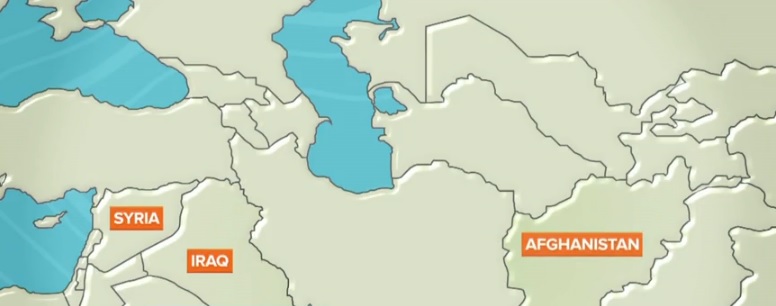
CU Blog - Tragic images show refugee crisis at a tipping point in Europe - Photo 3The people of the Failed-State countries of Syria, Iraq and Afghanistan are desperate and fleeing for their lives to get out of those war-torn countries to find relief. These ones risk their lives, and the lives of their children, to turn “sure defeat” into a fighting chance for life. It’s a bet – a gamble – and many times, these ones lose.

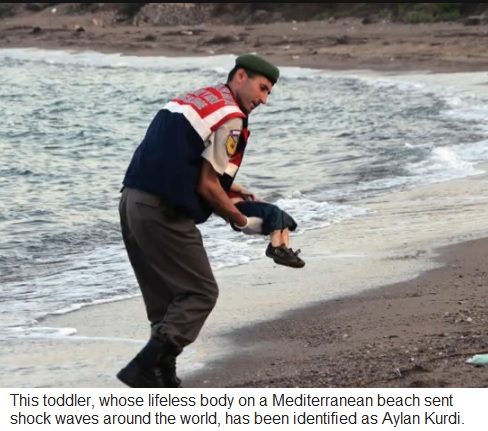
The name of a young toddler is now surfacing to give a name (and face) to his tragedy. Young Aylan Kurdi, a Syrian refugee, drowned in the waters of the Mediterranean Sea, trying to make it to shore with his parents. See the images here:

VIDEO: Tragic images show refugee crisis at a tipping point in Europe – http://www.today.com/video/tragic-images-show-refugee-crisis-at-a-tipping-point-in-europe-518578243727

Posted September 3, 2015 – Hundreds of thousands of refugees are risking their lives to reach Europe this year, 20,000 overwhelming a small Greek island in just the last week, with thousands drowning and dying in what’s become the biggest mass migration since WWII. NBC’s Bill Neely reports for TODAY.
CU Blog - Tragic images show refugee crisis at a tipping point in Europe - Photo 1

“There but for the Grace of God go I” – Old Expression

From the Caribbean perspective, we have seen this tragedy before, again and again. Just recently – in January – this commentary related the same tragedies in Caribbean member-states with refugees endangering their lives to leave places like Cuba, Haiti, Jamaica and the Dominican Republic. We understand the full breadth-and-width of Failed-States.

The toddler – Aylan Kurdi – in the foregoing photo deserves better. It is hoped that these images that were published Wednesday with his soaked red shirt, blue bottoms and tiny velcro-strap shoes that washed up on the beach in the Turkish resort of Bodrum, would ricochet across traditional and social media and be hailed as emblematic of the desperate and deadly refugee struggle to reach Europe.

These were plastered on international front pages on Thursday. This boy’s tragic life and death will not be in vain. CU Blog - Tragic images show refugee crisis at a tipping point in Europe - Photo 2The situation in these Failed-State countries (Syria, Iraq and Afghanistan) must be addressed. See Appendix below.

The book Go Lean…Caribbean serves as a roadmap for elevating the 30 member-states of the Caribbean, a few near Failed-State status. The book does not target Middle-East countries in its mitigation and remediation plans – Caribbean only – but we seek to learn lessons from the handling of this crisis.

The 5-Step leading-learning curve is normally:

1. Look, 2. Listen, 3. Learn, 4. Lend-a-hand and then 5. Lead.

We cannot lead in this case, but we can lend-a-hand, (contribute to any international relief campaign). We can also learn how to minimize Failed-State risks within our region.

So who should take the lead for fixing the Middle East Failed-State dysfunctions or the refugee crisis into Europe?

According to the opening quotation of this commentary: those who broke it. (Notice, in the foregoing VIDEO, that the refugees are targeting NATO countries).

The US and Western Europe are perhaps more directly responsible. They are the ones, in multi-national coalitions, that toppled the strong governments of Afghanistan and Iraq, then sat aside and allowed ISIS (Islamic State in Iraq and Syria) to form with the hope of overthrowing the oppressive regime of Bashar al-Assad in Syria. (So far, ISIS, has become its own “Frankenstein Monster”, to say the least, creating more distress and becoming its own threat). See Appendix below.
The Middle East is not easy!

In 2008 the newly elected US President, Barack Obama, vowed to exit US forces from Afghanistan and Iraq. He succeeded. The “laws of unintended consequences” may now have taken reign.

As for the Caribbean, we are on the periphery of this issue. Yes, we are allied to the United States and their enemies do tend to lash out at American allies. So we do have the “Sum of All Fears” that Al-Qaeda, ISIS or some other terrorist group would secure a “dirty bomb” nuclear device and detonate it in the Caribbean. But the biggest concern must be the slow creep of Failed-State status. This point was pronounced early in the Go Lean book as a motivation and a basis for confederation among Caribbean neighbors; there are the applicable statements in the opening Declaration of Interdependence (Page 12):

x.   Whereas we are surrounded and allied to nations of larger proportions in land mass, populations, and treasuries, elements in their societies may have ill-intent in their pursuits, at the expense of the safety and security of our citizens. We must therefore appoint “new guards” to ensure our public safety and threats against our society, both domestic and foreign. The Federation must employ the latest advances and best practices … to assuage continuous threats against public safety.

xi. Whereas all men are entitled to the benefits of good governance in a free society, “new guards” must be enacted to dissuade the emergence of incompetence, corruption, nepotism and cronyism at the peril of the people’s best interest. The Federation must guarantee the executions of a social contract between government and the governed.

xii. Whereas the legacy in recent times in individual states may be that of ineffectual governance with no redress to higher authority, the accedence of this Federation will ensure accountability and escalation of the human and civil rights of the people for good governance, justice assurances, due process and the rule of law. As such, any threats of a “failed-state” status for any member state must enact emergency measures on behalf of the Federation to protect the human, civil and property rights of the citizens, residents, allies, trading partners, and visitors of the affected member state and the Federation as a whole.

xiii. Whereas the legacy of dissensions in many member-states (for example: Haiti and Cuba) will require a concerted effort to integrate the exile community’s repatriation, the Federation must arrange for Reconciliation Commissions to satiate a demand for justice.

xvi. Whereas security of our homeland is inextricably linked to prosperity of the homeland, the economic and security interest of the region needs to be aligned under the same governance. Since economic crimes, including piracy and other forms of terrorism, can imperil the functioning of the wheels of commerce for all the citizenry, the accedence of this Federation must equip the security apparatus with the tools and techniques for predictive and proactive interdictions.

This Go Lean book serves as a roadmap for the introduction and implementation of the technocratic Caribbean Union Trade Federation (CU). With a branding name like Trade Federation, obviously the scope of elevating Caribbean society starts with economics. But the CU must seek to optimize the security dynamics in addition to economic empowerments. Therefore the Go Lean roadmap has these 3 prime directives:

  • Optimization of the economic engines in order to grow the regional economy and create 2.2 million new jobs.
  • Establishment of a security apparatus to protect the resultant economic engines and mitigate challenges/threats to ensure public safety for the region’s stakeholders.
  • Improvement of Caribbean governance to support these engines.

The book contends that though terrorism may not be a scourge on Caribbean life presently, new “bad actors” will eventually emerge to exploit the new economic successes envisioned in the Go Lean roadmap. The CU/Go Lean Strategy statement is quoted as follows (Page 46):

Fix the broken systems of governance in our region and deter against movements towards Failed-States, and any preying upon our people. We must protect the most vulnerable among us and guarantee the human/civil rights of our women and minorities.

The Go Lean book details a series of community ethos, strategies, tactics, implementations and advocacies to optimize the societal engines of the region, to stop any downward spiral into Failed-State status. See the lists here:

Community Ethos – Economic Systems Influence Choices & Incentives Page 21
Community Ethos – Consequences of Choices Lie in the Future Page 21
Community Ethos – Anti-Bullying and Mitigation Page 23
Community Ethos – Minority Equalization Page 24
Community Ethos – Ways to Impact the Future – Focus on Youth & Progress Page 26
Community Ethos – Ways to Manage Reconciliations Page 34
Community Ethos – Ways to Impact the Greater Good Page 37
Strategy – Vision –  Integrate region into a Single Market Economy Page 45
Strategy – Agents of Change – Globalization Page 57
Strategy – Agents of Change – Climate Change – Increase in Droughts and Floods Page 57
Tactical – Separation of Powers – Department of Homeland Security Page 75
Tactical – Separation of Powers – Federal Courts – Truth & Reconciliation Commissions Page 75
Implementation – Ways to Foster International Aid Page 115
Planning – 10 Big Ideas … in the Caribbean Region – Haiti & Cuba Page 127
Planning – Ways to Model the EU – From Worst to First Page 130
Planning – Reasons Why the CU Will Succeed – Germany Reconciliation Model Page 132
Planning – Ways to Improve Failed-State Indices – Cuba & Haiti on the List Page 134
Planning – Lessons from East Germany – European post-war rebuilding Page 139
Planning – Lessons from Egypt – Arab Spring Page 143
Planning – Lessons from the US Constitution – Gradual Optimization Page 145
Planning – Lessons from Canada’s History – Reconciliations with Indigenous Peoples Page 146
Advocacy – Ways to Grow the Economy Page 151
Advocacy – Ways to Create Jobs Page 152
Advocacy – Ways to Impact Justice Page 178
Advocacy – Ways to Impact the Diaspora Page 217
Advocacy – Ways to Protect Human Rights Page 220
Advocacy – Ways to Help Women Page 226
Advocacy – Ways to Impact Youth Page 227
Advocacy – Ways to Impact the Dominican Republic – Need for Reconciliations Page 237
Advocacy – Ways to Re-boot Haiti Page 238
Advocacy – Ways to Re-boot Jamaica – Mitigate Migrations & Brain Drain Page 239

In previous blog commentaries, the related issues of Caribbean migration and refugee-seeking were fully explored. See sample list here:

https://goleancaribbean.com/blog/?p=5759 Pressed by Debt Crisis, Doctors Leave Greece in Droves
https://goleancaribbean.com/blog/?p=4809 Americans arrested for aiding ISIS
https://goleancaribbean.com/blog/?p=3662 Migrant flow into US from Caribbean spikes
https://goleancaribbean.com/blog/?p=2907 Local Miami Haitian leaders protest Bahamian immigration policy
https://goleancaribbean.com/blog/?p=2809 A Lesson in History: Economics of East Germany
https://goleancaribbean.com/blog/?p=1531 A Lesson in History: World War I Ethnic Cleansing
https://goleancaribbean.com/blog/?p=1433 Caribbean loses over 70% of tertiary educated citizens to the   brain drain
https://goleancaribbean.com/blog/?p=623 Only at the precipice, do they change

All of the Caribbean needs to pay more-than-the-usual attention to the crisis with these Middle East Failed-States and the resultant refugee influx into Europe.

“There but for the Grace of God go I”

The remediation and mitigations in the Go Lean book are best-practices to minimize the push-pull factors for our own societal abandonment, and downward spirals into Failed-States. Now is the time for all of the Caribbean to lean-in this roadmap. Let’s show the world how to re-boot Failed-States and how to forge better conditions in a homeland. Let’s truly make the Caribbean better places to live, work, and play.  🙂

… and R.I.P. little Aylan Kurdi. We will not soon forget you. 🙁

Download the free e-Book of Go Lean … Caribbean – now!

——–

Appendix – Middle East Failed States

Afghanistan

A landlocked country, with a population of approximately 32 million people; it is located within South Asia and Central Asia between Iran and Pakistan. The recent history features a series of coups in the 1970s and was followed by a Soviet invasion and a series of civil wars that devastated much of Afghanistan.

The September 11 attacks on the United States were perpetrated by known terrorist Osama bin Laden and his al-Qaeda movement. The US demanded that the then-Taliban government hand him over.[122] After refusing to comply, the October 2001 Operation Enduring Freedom was launched by the US to topple the Taliban government. During the initial invasion, US and UK forces bombed al-Qaeda training camps. The United States began working with the Northern Alliance to remove the Taliban from power.[123] American forces remained until the official end of the war on December 28, 2014. However, thousands of US-led NATO troops have remained in the country to train and advise Afghan government forces.[138] The 2001-present war has resulted in between 185,000 and 249,000 deaths, which includes civilians, insurgents and government forces. A Taliban insurgency remains, to this day.

Iraq

This country is situated near the Arabian Peninsula and sits in between Saudi Arabia, Iran, Turkey, Jordan and Kuwait. The largest ethnic groups in Iraq are Arabs and Kurds. Other ethnic groups include Assyrians, Turkmen, Shabakis, Yazidis, Armenians, Mandeans, Circassians and Kawliya.[6] Around 95% of the country’s 36 million citizens are Shia or Sunni Muslims, with Christianity, Yarsan, Yezidism and Mandeanism also present.

Iraq was controlled by the Arab Socialist Ba’ath Party from 1968 until 2003. After an invasion by the United States and its allies in 2003, Saddam Hussein‘s Ba’ath Party was removed from power and multi-party parliamentary elections were held in 2005. The American presence in Iraq ended in 2011,[9] but the Iraqi insurgency continued and intensified as fighters from the Syrian Civil War spilled into the country. Civil strife continues to this day with conflicts among the ethnic and religious sects.

Syria

A country of 18 million people, on the coast of the Mediterranean; it is made up of fertile plains, high mountains, and deserts, it is home to diverse ethnic and religious groups, including Arabs, Greeks, Armenians, Assyrians, Kurds, Circassians,[8] Mandeans[9] and Turks. Religious groups include Sunnis, Christians, Alawites, Druze, Mandeans and Yazidis. Sunni Arabs make up the largest population group in Syria. Since March 2011, Syria has been embroiled in an uprising against Assad and the Ba’athist government as part of the Arab Spring, a crackdown which contributed to the Syrian Civil War and Syria becoming among the least peaceful countries in the world.[16]

Share this post:
, , , , ,
[Top]

‘Concussions’ – The Movie; The Cause

Go Lean Commentary

“Are you ready for some football?” – Promotional song by Hank Williams, Jr. for Monday Night Football on ABC & ESPN networks for 22 years (1989 – 2011). See Appendix below.

This iconic song (see Appendix) and catch-phrase is reflective of exactly how popular the National Football League (NFL) is in the US:

“They own an entire day of the week”.

- The Movie; The Cause - Photo 2So says the new movie ‘Concussions’, starring Will Smith, referring to the media domination of NFL Football on Sundays during the Autumn season. The movie’s script is along a line that resonates well in Hollywood’s Academy Award balloting: “David versus Goliath”; “a small man speaking truth to power”.

In the case of the NFL, it is not just about power, it is about money, prestige and protecting the status quo; the NFL is responsible for the livelihood of so many people. The book Go Lean … Caribbean recognized the importance of the NFL in the American lexicon of “live, work and play”; it featured a case study (Page 32) of the NFL and it’s collective bargaining successes (and failures) in 2011. An excerpt from the book is quoted as follows:

Football is big business in the US, $9 billion in revenue, and more than a business; emotions – civic pride, rivalries, and fanaticism – run high on both sides.

Previous Go Lean commentaries presents the socio-economic realities of much of the American football eco-system. Consider a sample here:

Socio-Economic Impact Analysis of [Football] Sports Stadiums
Watch the Super Bowl … Commercials
Levi’s® NFL Stadium: A Team Effort
Sports Role Model – College Football – Playing For Pride … And More
Sports Role Model – Turn On the SEC Network
Collegiate Sports in the Caribbean – Model of NCAA
10 Things We Want from the US: #10 – Sports Professionalism
10 Things We Don’t Want from the US: #10 – ‘Win At All Costs’ Ethos

While football plays a big role in American life, so do movies. Their role is more unique; they are able to change society. In a previous blog / commentary regarding Caribbean Diaspora member and Hollywood great, Sidney Poitier, it was declared that …

“Movies are an amazing business model. People give money to spend a couple of hours watching someone else’s creation and then leave the theater with nothing to show for the investment; except perhaps a different perspective”.

Yes, movies help us to glean a better view of ourselves … and our failings; and many times, show us a way-forward.

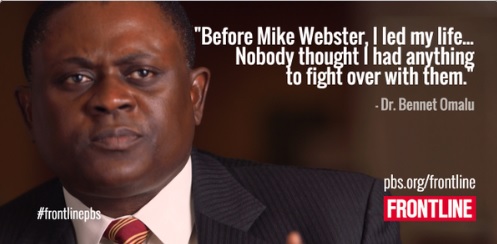
These descriptors actually describe the latest production from Hollywood icon Will Smith (the former Fresh Prince of Bel-Air). This movie, the film “Concussion”, in the following news article, relates the real life drama of one man, Dr. Bennet Omalu, a Nigerian-born medical doctor – a pathologist – who prepared autopsies of former players that suffered from football-related concussions. He did not buckle under the acute pressure to maintain the status quo, and now, he is celebrated for forging change in his adopted homeland. This one man made a difference. (The NFL is now credited for a Concussion awareness and prevention protocol so advanced that other levels of the sport – college, high schools and Youth – are being urged to emulate).

See news article here on the release of the movie:

Title: ‘Concussion’: 5 Take-a-ways From Will Smith’s New Film

Will Smith, 46, is definitely going to get a ton of Oscar buzz portraying Dr. Bennet Omalu in the new film “Concussion.” NFL columnist Peter King of Sports Illustrated got an exclusive first peek at the trailer and it has been widely shared on social media since. And it’s very chilling.

- The Movie; The Cause - Photo 1

Here are five take-aways and background you need to know before checking out the clip:

1 – It’s Based on a True Story

Omalu is the forensic pathologist and neuropathologist who discovered chronic traumatic encephalopathy in football players who got hit in the head over and over again, according to the Washington Post.

In the clip, he says repetitive “head trauma chokes the brain.”

Omalu was one of the founding members of the Brain Injury Research Institute in 2002. He conducted the autopsy of Pittsburgh Steelers center Mike Webster, played by David Morse in the film, which led to this discovery.

2 – Smith’s Version of Omalu’s Accent Is Spot On

Omalu is from Nigeria and Smith has been known to transform completely for a role. He was nominated for an Oscar for 2011’s “Ali,” playing the legendary Muhammad Ali.

For comparison, here’s Omalu’s PBS interview from 2013.

3 – Smith Is a Reluctant Hero

“If you don’t speak for them, who will,” Gugu Mbatha-Raw, who plays Prema Mutiso in the film, tells Smith’s character.

He admits he idolized America growing up and “was the wrong person to have discovered this.”

4 – Alec Baldwin and Luke Wilson

“Concussion” brought in some heavyweights for this movie. Baldwin plays Dr. Julian Bailes, who advises Omalu, and Wilson, who will reportedly play NFL Commissioner Roger Goodell, according to IMDB. There’s no official word on this. He’s seen at a podium in the trailer, but doesn’t speak.

5 – “Tell the Truth”

Smith captures Omalu’s passion to have the truth told about this injury and disease.

“I was afraid of letting Mike [Webster] down. I was afraid. I don’t know. I was afraid I was going to fail,” Omalu told PBS a couple years back.

———-

VIDEO Link: http://www.imdb.com/title/tt3322364/?ref_=nv_sr_1


Will Smith stars in the incredible true David vs. Goliath story of Dr. Bennet Omalu, the brilliant forensic neuropathologist who made the first discovery of CTE, a football-related brain trauma, in a pro player.

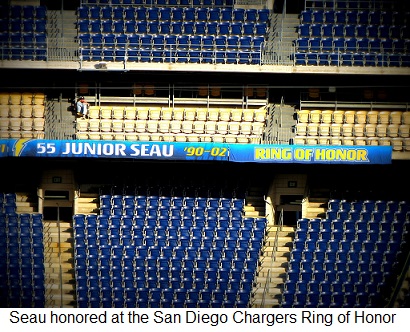
The subject of concussions is serious – life and death. Just a few weeks ago (August 8), an NFL Hall-of-Fame inductee was honored for his play on the field during his 20-year professional career, but his family, his daughter in particular, is the one that made his acceptance / induction speech. He had died, in 2012; he committed suicide after apparently suffering from a brain disorder – chronic traumatic encephalopathy (CTE), a type of chronic brain damage that has also been found in other deceased former NFL players[4] – sustained from his years of brutal head contacts in organized football in high school, college and in his NFL career. This player was Junior Seau.

- The Movie; The Cause - Photo 3a

- The Movie; The Cause - Photo 3b

Why would there be a need for “David versus Goliath”; “a small man speaking truth to power”? Is not the actuality of an acclaimed football player committing suicide in this manner – he shot himself in the chest so as to preserve his brain for research – telling enough to drive home the message for reform?

No. Hardly. As previously discussed, there is too much money at stake.

These stakes bring out the Crony-capitalism in American society.

The book Go Lean…Caribbean (and subsequent blog/commentaries) relates many examples of cronyism in the American eco-system. There is a lot of money at stake. Those who want to preserve the status quo or not invest in the required mitigations to remediate concussions will fight back against any Advocate promoting the Greater Good. The profit motive is powerful. There are doubters and those who want to spurn doubt. “Concussions in Football” is not the first issue these “actors” have promoted doubt on. The efforts to downplay concussion alarmists are from a familiar playbook, used previously by Climate Change deniers, Big Tobacco, Toxic Waste, Acid Rain, and other dangerous chemicals.

This Go Lean book serves as a roadmap for the introduction and implementation of the technocratic Caribbean Union Trade Federation (CU). Sports are integral to the Go Lean/CU roadmap. While sports can be good and promote positives in society, even economically, the safety issues must be addressed upfront. This is a matter of community security. Thusly, the prime directives of the CU are described as:

  • Optimize the economic engines of the Caribbean to elevate the regional economy to grow to $800 Billion and create 2.2 million new jobs, including sports-related industries with a projection of 21,000 direct jobs at Fairgrounds and sports enterprises.
  • Establish a security apparatus to protect the people and economic engines.
  • Improvement of Caribbean governance to support these economic and security engines.

The CU/Go Lean sports mission is to harness the individual abilities of athletes to not just elevate their performance, but also to harness the economic impact for their communities. So modern sports endeavors cannot be analyzed without considering the impact on “dollars and cents” for stakeholders. This is a fact and should never be ignored. There is therefore the need to carefully assess and be on guard for crony-capitalistic influences entering the decision-making of sports stakeholders. The Go Lean book posits that with the emergence of new economic engines, “bad actors” will also emerge thereafter to exploit the opportunities, with good, bad and evil intent”. These points were pronounced early in the opening Declaration of Interdependence (Page 12 &14):

x. Whereas we are surrounded and allied to nations of larger proportions in land mass, populations, and treasuries, elements in their societies may have ill-intent in their pursuits, at the expense of the safety and security of our citizens. We must therefore appoint “new guards” to ensure our public safety and threats against our society, both domestic and foreign. The Federation must employ the latest advances and best practices of criminology and penology to assuage continuous threats against public safety.

xi. Whereas all men are entitled to the benefits of good governance in a free society, “new guards” must be enacted to dissuade the emergence of incompetence, corruption, nepotism and cronyism at the peril of the people’s best interest. The Federation must guarantee the executions of a social contract between government and the governed.

xvi. Whereas security of our homeland is inextricably linked to prosperity of the homeland, the economic and security interests of the region needs to be aligned under the same governance. Since economic crimes … can imperil the functioning of the wheels of commerce for all the citizenry, the accedence of this Federation must equip the security apparatus with the tools and techniques for predictive and proactive interdictions.

xxxi. Whereas sports have been a source of great pride for the Caribbean region, the economic returns from these ventures have not been evenly distributed as in other societies. The Federation must therefore facilitate the eco-systems and vertical industries of sports as a business, recreation, national pastime and even sports tourism …

The Go Lean book envisions the CU – a confederation of the 30 member-states of the Caribbean chartered to do the heavy-lifting of empowering and elevating the Caribbean economy – as the landlord of many sports facilities (within the Self-Governing Entities design), and the regulator for inter-state sport federations. The book details the economic principles and community ethos to adopt, plus the executions of strategies, tactics, implementations and advocacies to optimize sports enterprises in the Caribbean:

Community Ethos – Deferred Gratification Page 21
Economic Principles – People Respond to Incentives in Predictable Ways Page 21
Economic Principles – Economic Systems Influence Individual Choices / Incentives Page 21
Economic Principles – The Consequences of Choices Lie in the Future Page 21
Economic Principles – Job Multiplier Page 22
Community Ethos – Security Principles – Whistleblower Protection Page 23
Community Ethos – Security Principles – Light-Up the Dark Places Page 23
Community Ethos – Security Principles – “Crap” Happens Page 23
Community Ethos – Governing Principles – Lean Operations Page 24
Community Ethos – Ways to Impact the Future Page 26
Community Ethos – Ways to Promote Happiness – Mitigate Suicide Threats Page 36
Community Ethos – Impact the Greater Good Page 37
Strategy – Vision – Confederating 30 Member-States into a Single Market Page 45
Strategy – Vision – Foster Local Economic Engines for Basic Needs Page 45
Strategy – Mission – Prepare for Natural Disasters Page 45
Strategic – Staffing – Sporting Events at Fairgrounds Page 55
Strategy – Agents of Change – Climate Change Page 57
Strategy – Agents of Change – Globalization Page 57
Tactical – Confederating a Permanent Union Page 63
Tactical – Fostering a Technocracy Page 64
Tactical – Separation of Powers – Sports & Culture Administration Page 81
Tactical – Separation of Powers – Fairgrounds Administration Page 83
Tactical – Separation of Powers – Health Department – Disease Management Page 86
Implementation – Assemble Regional Organs into a Single Market Economy Page 96
Implementation – Steps to Implement Self-Governing Entities – Sports Stadia Page 105
Implementation – Security Initiatives at Start-up – Unified Command & Control Page 103
Implementation – Industrial Policy for CU Self Governing Entities Page 103
Implementation – Ways to Deliver – Project Management/Accountabilities Page 109
Anatomy of Advocacies – Examples of Individuals Who Made Impact Page 122
Planning – Ways to Make the Caribbean Better Page 131
Advocacy – Ways to Grow the Economy Page 151
Advocacy – Ways to Create Jobs Page 152
Advocacy – Ways to Improve Governance Page 168
Advocacy – Ways to Better Manage the Social Contract Page 170
Advocacy – Ways to Promote Fairgrounds Page 192
Advocacy – Ways to Improve Emergency Management – Trauma Arts & Sciences Page 196
Advocacy – Ways to Improve Sports Page 229
Advocacy – Ways to Impact Urban Living – Sports Leagues Page 234

The Go Lean book and accompanying blogs declare that the Caribbean needs to learn lessons from other communities, especially when big money is involved in pursuits like sports. These activities should be beneficial to health, not detrimental. So the admonition is to be “on guard” against the “cronies”; they will always try to sacrifice public policy – the Greater Good – for private gain: profit.

Let’s do better. Yes, the Caribbean can be better than the American experiences.

The design of Self-Governing Entities allow for greater protections from Crony-Capitalistic abuses. While this roadmap is committed to availing the economic opportunities of sports and accompanying infrastructure, as demonstrated in the foregoing movie trailer, sport teams and owners can be plutocratic “animals” in their greed. We must learn to mitigate plutocratic abuses. While an optimized eco-system is good, there is always the need for an Advocate, one person to step up, blow the whistle and transform society. The Go Lean roadmap encourages these role models.

Bravo Dr. Bennet Omalu. Thank you for this example … and for being a role model for all of the Caribbean.

RIP Junior Seau.

Now is the time for all of the Caribbean, the people and governing institutions, to lean-in for the empowerments described in the book Go Lean … Caribbean. This roadmap will result in more positive socio-economic changes throughout the region; it will make the Caribbean a better place to live, work and play.   🙂

Download the free e-Book of Go Lean … Caribbean – now!

——-

Appendix VIDEO: Hank Williams Jr. – Are You Ready for Some Footballhttps://youtu.be/dKPZEMu7Mno

Uploaded on Jan 28, 2019 – Official Music Video

Share this post:
, , , , , ,
[Top]

Lesson from Japan: Aging Populations

Go Lean Commentary

The Bible says “to honor your father and mother so that your days may be long” – Exodus 20:12. This is presented in one of the 10 Commandments as a law and a promise. This is best explained at Ephesians 6: 1-3 (New International Version or NIV):

1 Children, obey your parents in the Lord, for this is right. 2 HONOR YOUR FATHER AND MOTHER (which is the first commandment with a promise), 3 SO THAT IT MAY BE WELL WITH YOU, AND THAT YOU MAY LIVE LONG ON THE EARTH …

So caring for aging parents brings honor to them and to us.  Some places do a better job of this than others. One such example is Japan.

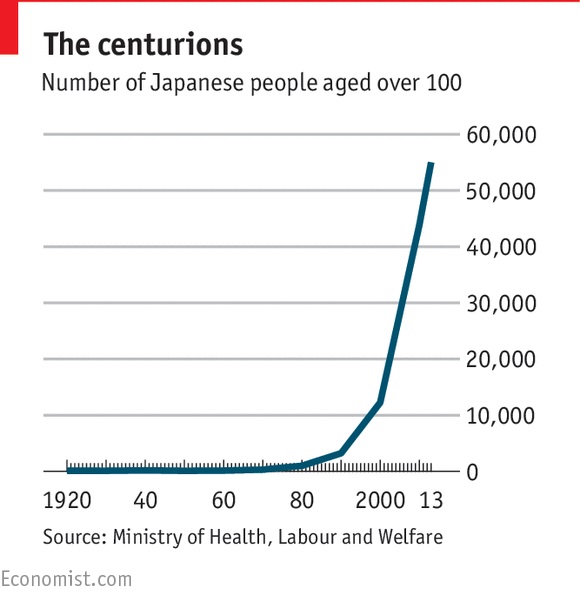
There are around 55,000 centenarians in Japan

This purpose of this commentary is to highlight the currency of this serious issue. The book Go Lean … Caribbean calls for the elevation of the economic, security and governing engines in the Caribbean region. The end-result is not just on societal engines, but also on people; in this case, the elderly. This Go Lean book is not a public health guide for gerontology, to enjoy optimum treatment towards our seniors, but rather a roadmap for impacting change in our community. This news article on the experiences in Japan is presented here; also consider a related story in the AUDIO podcast below:

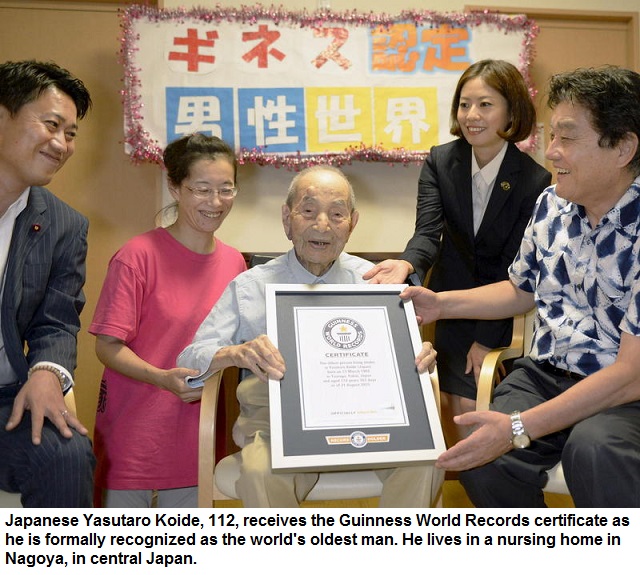
Title: Japan is home to the world’s oldest population — and the world’s oldest man
By: Daniel Gross, Audrey Adam

Koide receives the Guinness World Records certificate as he is formally recognized as the world's oldest man, at a nursing home in NagoyaThe world’s oldest man lives in the country with the world’s oldest population. Yasutaro Koide is 112 years old and was just recognized by Guiness World Records as oldest man on Earth.

Japan’s remarkable longevity is cause for celebration. But it’s also creating challenges for a government dealing with a population that keeps getting older.

According to Naoko Muramatsu, a scientist who studies Japan’s aging population at the University of Illinois, Chicago, one-quarter of the country’s residents are already above 65.

There are many costs associated with an aging population, starting with the familiar challenges of social security and health care. But there’s also the cost of an odd Japanese tradition: giving a silver sake dish to centenarians, or people who reach 100 years of age.

Thanks to a new decision by the Japanese government, that practice — which is currently government-funded — may end soon. They say the total cost of the dishes, which are about $60 each, is simply too high. There are around 55,000 centenarians in Japan, according to 2013 statistics.

Muramatsu says there are several reasons that help explain the age of Japan’s population. “Life expectancy in Japan is the highest in the world,” she points out. “People try to eat well, try to do exercise well.”

Another reason is that ever since a brief postwar baby boom, Japan’s birth rate has remained extremely low. A aging baby from that baby boom will turn 65 soon, and many haven’t had very many children, or any at all — leaving more seniors living alone or in nursing homes.

Japan has started to respond to the challenge. In 2000, Japan started long-term care insurance. “You start paying into the system at the age of 40,” says Muramatsu. “And at the age of 65, you’re entitled to receive long-term care, homecare or nursing home care.”

Muramatsu has a personal connection to the study of aging. She remembers that during her childhood, her mother looked after both the older and younger generations. But the tradition of caregiving has been transformed by Japan’s new demographics.

When Muramatsu’s father died a few years ago, she saw first-hand some of the challenges of growing old in Japan. “In Japan, cremation is the custom,” she explains. But cremation has become difficult in cities whose populations spiked in the postwar years. Many elderly people haven’t left urban areas, which means the death rate has risen. “I couldn’t reserve a cremation facility for my father, in the city that we live in.”

Those sorts of challenges may take decades to overcome. But with them come the fact that in Japan, women can expect to live almost 90 years. And Men live well past 80, on average.

And if they’re like Yasutaro Koide, they might even live to 112.

Source: “The World” by Public Radio International; posted August 21, 2015; retrieved 08-23-2015 from: http://kosu.org/post/japan-home-worlds-oldest-population-and-worlds-oldest-man#stream/0

———

AUDIO – “The Challenges Posed by an Aging Global Population” – http://n.pr/1IqdCHV

Uploaded on June 22, 2015 – One-fifth of the U.S. population will be 65 or older in 15 years. NPR’s Ina Jaffe talks with NPR’s Scott Simon about the aging of the population worldwide and the challenges it presents.

The book and previous blog/commentaries posit that socio- economic factors must be accounted for in the roadmap to optimize and improve this society. In fact, the book lists 144 missions for the imminent Caribbean Union Trade Federation (CU); one of them is an advocacy for improved Elder-Care. This is identified on Page 225 under the title:

10 Ways to Improve Elder-Care … in the Caribbean Region

The Go Lean book posits that there is a deficiency in the regional institutions for caring, supporting and planning for the elderly. How do we go about improving on the Social Contract for the senior citizens in our community? What happens if/when we are successful for elevating life for our seniors?

The Go Lean book answers the “how”; it serves as a roadmap for introducing and implementing the CU. In its scope, it features the curative measures for the exact societal deficiencies, highlighted by the CU’s prime directives, as follows:

  • Optimization of the economic engines in order to grow the regional economy to $800 Billion & create 2.2 million new jobs.
  • Establishment of a security apparatus to protect the resultant economic engines and mitigate challenges/threats to ensure public safety for the region’s stakeholders, including the elderly.
  • Improvement of Caribbean governance, including a separation-of-powers with member-states, to support these economic/security engines.

Where as the book addresses the “how”, this commentary features the “when” for succeeding in the improvement of the lives and longevity of the elderly population of the Caribbean. When people live longer, there is a dramatic effect on the socio-economics of a community. This is the lesson from Japan.
CU Blog - Lesson from Japan - Aging Populations - Photo 2

In Japan, the improvements in the societal engines (economics, security and governance) have resulted in improved livelihood and longevity for their people. This has resulted in demographic shifts: there are more senior citizens, more centenarians, compared to the rest of the population.

The problem:

Seniors do not work; nor contribute to the public “pools”; they only draw from it. Too many “takers”, compared to the “givers” is bad economics. So while we love our elderly, we must also prepare for the reality of their longevity.

From the Caribbean perspective there is another reality: societal abandonment of the younger generations – this Go Lean movement has fully defined the excessive abandonment rates in the 70% to 90% range for the college-educated populations in the region. This has the same negative effects on the public “pools”: the numbers of the “givers” shrink, while the proportion of the “takers” remains static, or worse, increase.

It is what it is!

This is a matter of heavy-lifting. Serious solutions must be sought to mitigate the risks of communities getting this challenge wrong. In a previous commentary, the socio-economic issues associated with the rising number of seniors in society were fully explored; the dread of elderly suicides was detailed.

The Go Lean roadmap does not ignore the needs of the elderly, nor the actuarial realities being contended in the region. Rather, the roadmap calls for mitigations to dissuade further emigration and also the inducements for the Caribbean Diaspora to return – back to the homeland – and bring their hard-earned entitlements with them. The CU organization structure features the establishment of regional sentinels and advocacy groups to intervene on behalf of local seniors to optimize their benefits from any foreign programs they may have previously participated in. These SME’s will work for the CU’s Special Liaison Group at the CU’s Headquarters or in Trade Mission Offices.

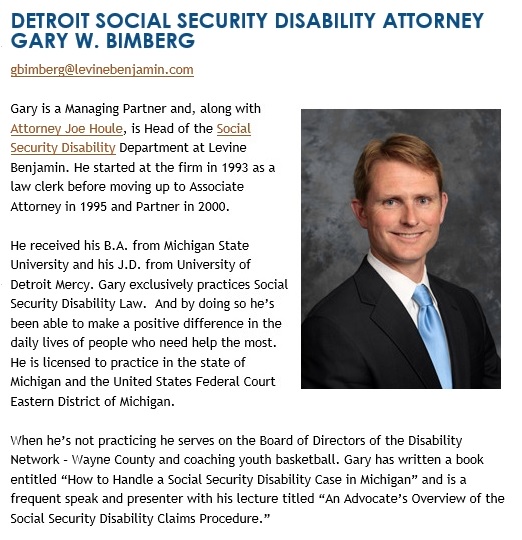
CU Blog - Lesson from Japan - Aging Populations - Photo 3This Win-Win scenario is a prominent feature in the US, with lawyers advocating for Social Security benefits for their clients, for a fee; see this sample Advertisement from a Detroit-area law firm. For stakeholders of the CU, there is no need to pay this fee – normally extracted from future benefits – as the CU Subject Matter Experts (SME) will advocate for the Aging Diaspora returning to the Caribbean. (The Go Lean roadmap calls for funding law degrees for students but binding their services for a few years to impact their communities, as in working for this advocacy).

This is a classic example of the field of socio-economics. The goal of any socio-economic study is generally to bring about socio-economic development, usually by improvements in metrics such as GDP, life expectancy, literacy, levels of employment, etc.  In many cases, socio-economists focus on the social impact of some sort of economic change. But this is about more than just numbers, this is about people.

The Go Lean … Caribbean roadmap constitutes a change for the region, a plan to consolidate 30 member-states into a Trade Federation with the tools/techniques to bring immediate change to the region to benefit many stakeholders. The book details the community ethos that must be adopted plus the executions of the following strategies, tactics, implementations and advocacies to prepare for an aging society … in the Caribbean; see a sample list here:

Community Ethos – Deferred Gratification Page 21
Community Ethos – Ways to Impact the Future Page 26
Community Ethos – Ways to Impact Turn-Arounds Page 33
Community Ethos – Ways to Promote Happiness Page 36
Community Ethos – Ways to Impact the Greater Good Page 37
Strategy – Repatriating Caribbean Diaspora & Entitlements Page 47
Strategy – Non-Government Organizations Page 48
Strategy – Agents of Change – Aging Diaspora Page 57
Tactical – Confederating a Permanent Union Page 63
Tactical – Fostering a Technocracy Page 64
Tactical – Growing the Economy – Lessons from Japan Page 69
Tactical – Separation of Powers – Department of State – Special Liaison Groups Page 80
Tactical – Separation of Powers – Department of   Health Page 86
Implementation – Assemble all Member-States Page 96
Implementation – Ways to Pay for Change Page 101
Implementation – Trade Mission Office Objectives Page 117
Implementation – Reasons to Repatriate Page 118
Planning – Lessons Learned from 2008 Page 136
Planning – Ways to Make the Caribbean Better Page 133
Advocacy – Ways to Grow the Economy Page 151
Advocacy – Ways to Create Jobs Page 152
Advocacy – Ways to Improve Healthcare Page 156
Advocacy – Ways to Impact Entitlements Page 158
Advocacy – Ways to Improve Education – Brain Drain Case Page 159
Advocacy – Ways to Improve Student Loans – Forgive-able Page 160
Advocacy – Better Manage the Social Contract Page 170
Advocacy – Ways to Foster Cooperatives Page 176
Advocacy – Impact the Diaspora Page 217
Advocacy – Ways to Preserve Caribbean Heritage Page 218
Advocacy – Ways to Impact Retirement Page 221
Advocacy – Ways to Help the Middle Class Page 223
Advocacy – Ways to Improve Elder-Care Page 225
Appendix – Disease Management – Healthways Model Page 300

This Go Lean book asserts that there is a direct correlation of population growth/contraction with the economy. This viewpoint has been previously detailed in Go Lean blog/commentaries, as sampled here:

Bad Model: Pressed by Debt Crisis, Doctors Leave Greece in Droves
Demographic Trend: Immigrants account for 1 in 11 Blacks in USA
Businesses Try to Stave-off Brain Drain as Boomers Retire
Retirement Planning – Getting Rich Slowly … in the Caribbean
Book Review: ‘Chasing Youth Culture and Getting It Right’
Having Less Babies is Bad for the Economy
10 Things We Don’t Want from the US: # 8 Senior Abandonment

As this commentary opened with a Biblical quotation, it is even more fitting to conclude with one, a Proverb, as follows:

The glory of young men is their strength, [but] gray hair [is] the splendor of the old. – Proverbs 20:29 NIV.

Without a doubt, there is value to keeping senior citizens around in our communities; their “grey hair” – poetic for wisdom – is greatly valued … and needed. As a society, we have made too many mistakes, that with some far-sighted wisdom and best-practice adherence, we could have done better and been better.

We must turn-around, reboot and prepare!

We must listen to the wisdom of the experienced/wise ones. They can help us to make our homelands better places to live, work, and play – for all: young and old.  🙂

Download the book Go Lean…Caribbean now!

Share this post:
, , , , , , ,
[Top]

Music Role Model ‘Ya Tafari’ – Happy Emancipation Day

Go Lean Commentary/Interview

Monday August 3, 2015 is Emancipation Day in all countries of the British Dominion. For the Caribbean this includes the current British Overseas Territories and current members of the (British) Commonwealth of Nations; defined as follows:

Overseas Territories Commonwealth States
Anguilla Antigua & Barbuda
Bermuda Bahamas
British Virgin Islands Barbados
Cayman Islands Belize
Montserrat Dominica
Turks & Caicos Guyana
Jamaica
Saint Kitts & Nevis
Saint Lucia
Saint Vincent
Trinidad and Tobago

All of these countries memorialize the abolition of slavery in the British Empire on August 1, 1834 with a National Holiday on the First Monday of August. (This holiday is commonly referred to as August Monday). The focus of this commemoration is not slavery, but rather a celebration of Caribbean culture – accentuating the positive.

For those in the Caribbean Diaspora (US, Canada and the United Kingdom), the holiday does not go un-recognized … nor uncelebrated.

This is the case in Metropolitan Detroit, Michigan USA. The publishers of the book Go Lean…Caribbean are here to “observe and report” the turn-around and rebirth of the once-great-but-now-distressed City of Detroit. The book posits that trade with the Caribbean Diaspora can be better organized and fostered so as to better harvest economic benefits to the homeland. This point is well-evidenced in Southfield (Detroit suburb) with the Jamaican restaurant Fenton’s Jerk Chicken:

http://fentonbrownsr.wix.com/fentonsjerkchicken
<<< See Appendix >>>

This establishment thrives in its community with a great tradition of quality food and Caribbean hospitality. But on Sunday, the eve of August Monday, this restaurant extended further with an Emancipation Day tribute/celebration for the public to consume. The main feature of this tribute was a One-Man Band, an elite and prolific Bahamian Recording Artist Ya Tafari. He is an award-winning composer and performer of Jazz, Latin, and Caribbean music. As a multi-instrumentalist and vocalist with a fan base stretching from Freeport, Bahamas to Detroit. This presentation was about music and the business of music, as it fostered an increase in sales for that one day at Fenton’s Jerk Chicken Restaurant. See VIDEO here:

VIDEO – Bahamian One-man Band Ya Tafari … at Fenton’s – https://youtu.be/rZoRKITj7d0

Performing on Sunday, August 2nd 2015 at Fenton’s Jamaican Restaurant in Southfield, Michigan

Artist Profile: YA TAFARI

Source: Online Music Retailing Website – Watchfire Music – The Trusted Destination for Inspirational Music; retrieved from: http://watchfiremusic.com/artist.php?arid=79

Ya Tafari Photo 1

Ya Tafari is an author, composer, singer- songwriter, and poet who plays piano, guitar, and Latin percussion. Born in Cincinnati, Ohio, he lived in the Bahama Islands and was “adopted” by a family there, and now claims the Bahamas as his second home.

Although Ya Tafari started as a folk singer, the genres in which he composes and performs are varied. They include traditional jazz, spiritual jazz, Latin, Caribbean, folk, tropical, and new world music. Using his keyboards, he has become renowned as a “one-man orchestra.”

Ya Tafari is fond of and influenced by other artists from around the world: Brazil – Joao Gilberto, Cuba – Tito Puente, Jamaica – Bob Marley and Harry Belafonte, the Bahamas – Ronnie Butler, Canada – Joni Mitchell, the United States – John Coltrane, Miles Davis, and Pharaoh Sanders.

His greatest love and influence is the Holy Bible , and the other Lost Books of God’s Word.

BIOGRAPHY

Yaqob Tafari Makuannen, a.k.a. YaTafari, an award-winning composer, author, and performer of Jazz, Latin, Caribbean, and Spiritual music, grew up in Cincinnati, Ohio, and settled in Detroit, Michigan.

In Detroit, he received the Spirit of Detroit Award, and earned first place in the Renaissance Center Talent Contest two years in a row. He was presented awards by Chuck Gaidica, a local celebrity.

As an adult, he traveled to the Bahamas and adopted it as his second home. There he performed for the Governor General of the Bahamas and attended the Bahamian Parliament. His first recording contract was with G.B.I. Records and Television in Freeport, Bahamas, with Frank Penn, C.E.O. Thus, he is a Bahamian recording artist.

Ya Tafari has performed throughout Metropolitan Detroit and internationally. As music consultant for the African Heritage Center of the Detroit Public Schools, he hassperformed in DPS schools to audiences from pre-school to high School, introducing students and staff to different rhythms, musical instruments, and genres from the African Diaspora.

His greatest love is reading God’s word in the Holy Bible and Lost Books. His recent projects include a book, Man Woman & Spirit, and a recording of the Psalms of David to the original music of Ya Tafari.

DISCOGRAPHY

Esoteric Jazz

Ya Tafari Photo 3

Esoteric sound is therapeutic and healing for the soul and spirit… for meditation and relaxation of body, mind, and spirit. It is a mystical transcendental mood.

Mystery Of The Sea

Ya Tafari Photo 4

No matter where you are…riding in a car, sitting in your home, walking, or laying down to sleep, “Mystery   of the Sea” will take you there and lift your spirits to another level. The sea speaks to us in its own way. Experience the mystery.

All Blue

Ya Tafari Photo 5

Why Blue? God chose the color Blue. The sky, the ocean, rage and calm, to cause people to remember to focus on right living. I thank God for blue. So, I used blue to focus on beautiful   sounds of music. All blue.

QUOTES/REVIEWS

“Ya Tafari has a smooth, soothing, CD sound that sends you on vacation.” – Kevin P., Detroit, Michigan

“The Cherry Hill Stage was ablaze with the sounds of Caribbean Jazz performed by YATAFARI & THE AFRO PERCUSSIONS.” – The Dearborn Homecoming Committee, Michael A. Guido, Mayor – Dearborn, Michigan

“…Caribbean Recording Artist YaTafari, the JunkAnoo jazz java and calypso colorful butterfly, is electrifying, exciting, and a ’must see’ entertainer from Nassau, Bahamas.” – Gracie Cross, Ragggedy Girl Publishing Group

“…Mr. Makuannen presented a program here at McKinley (Elementary School) during our Cultural History Celebration. It was outstanding!…You can’t go wrong with this program.” – J. Korenowsky, Principal, Toledo Public Schools

“…A fun festive, and captivating entertainer who will warm hearts with a kaleidoscope of sound, color, and sweet musical beats.” – Mitali Chaudhery, Website Coordinator, Schoolcraft College International Institute (SCII)

———–

Download Ya Tafari Music Now

Ya Tafari  Photo 2

In a structured interview, Ya Tafari made the following contributions to this discussion of the roadmap to elevate the Caribbean through music:

Bold = Author

You obviously love the Bahamas/Caribbean, why do you not live there?

I loved my time in Freeport (Bahamas 2nd City). I would love to settle there, but realistically the economic challenges are hard to overcome. I hope they would have a better economic reality there … in the future.

Where do you call home now?

I live here in the Greater Detroit area, in the Town of Novi. Despite not being “home” in the Bahamas, I have the assured comfort of being with my family here. I bring my love for my Bahamaland here to Detroit in my musical presentations.

What was your biggest performance ever?

I’ve had the pleasure of performing as a solo artist at the stage here in Detroit at the Eastern Market. I had a huge crowd completely captivated by my sound. They were into me, and I was into them. Good times!

What would you like to see different in the Bahamas in the next 5 years?

I would like to see that community more accepting of foreign influences, especially a fusion with Eastern/Oriental Music. I’ve incorporated a lot of the spirit of Yoga, Zen and New Age influences in my music and it serves me and my listening audience well. As the old adage goes: “Music does soothe the savage beast”.

What would you like to see different in the Bahamas in the next 10 years?

I would like to see the Bahamas open up the doors to all mankind. The society is not as tolerant of diverse people as they need to be. This is bigger than just music. If/when they do widen-out more, it will even improve their tourism product, by extending their embrace for all people.

What would you like to see different in the Bahamas in the next 20 years?

I would like to see the next generation of Bahamians not join the Diaspora. Of course, I want them to travel, and study, and engage foreign cultures and  then bring those experiences back home. That is an exciting prospect.

Where do you consider to be the best place on earth to live?

Italy! That culture is about enjoying life; they are concerned about more than just work, or making money. They strive to care for their people and lift everyone up. Despite the lack of economics though, I still find the Black communities around the world have a closer brotherhood. When a Black person sees another Black person while travelling abroad, they tend to acknowledge each others as brothers. That is inspiring. Yes, we can all do better.

————

Ya Tafari can be reached at: makuannen@mail.com

This artist profile is a manifestation of the roadmap depicted in the book Go Lean…Caribbean, that music, food and culture can be accentuated to promote change in the Caribbean and within the Caribbean Diaspora abroad. Music can help make any location a better place to live, work and play.

This Go Lean commentary previously featured subjects related to developing the eco-systems of the music/show business, as sampled here:

https://goleancaribbean.com/blog/?p=3641 ‘We Built This City …’ on Music
https://goleancaribbean.com/blog/?p=3568 Forging Change: Music Moves People
https://goleancaribbean.com/blog/?p=2415 Broadway Musical ‘The Lion King’ Roars into History With its Impact
https://goleancaribbean.com/blog/?p=1909 Music Role Model Berry Gordy – No Town Like Motown
https://goleancaribbean.com/blog/?p=866 Caribbean Music Man Bob Marley: The legend lives on!

This Go Lean roadmap calls for heavy-lifting to build up Caribbean communities, by shepherding important aspects of Caribbean life, beyond music and/or show business. In fact, the development roadmap has these 3 prime directives:

  • Optimization of the economic engines in order to grow the regional economy to $800 Billion & create 2.2 million new jobs.
  • Establishment of a security apparatus to protect the resultant economic engines.
  • Improvement of Caribbean governance to support these engines.

The Go Lean book focuses primarily on economic issues, but it recognizes that music, in its many genres can build up a nation, a city, and a community (Diaspora and local alike). Any difficult subject – like slavery, freedom and emancipation – can be more easily communicated if backed-up by a catchy melody and rhyming words. Yes, music can effect change and forge progress and elevation of society. The Go Lean book serves as a roadmap for the introduction and implementation of the technocratic Caribbean Union Trade Federation (CU). The CU is designed to elevate the region’s economic, security and governing societal engines.

The Go Lean book posits that one person, despite their field of endeavor, can make a difference in the Caribbean, and its impact on the world; that there are many opportunities where one champion, one advocate, can elevate society. In this light, the book features 144 different advocacies, one specifically to Promote Music (Page 231). We need champions like Ya Tafari to promote the joys of Caribbean life, culture and music.

The Go Lean roadmap specifically encourages the region, to lean-in to elevate society with these specific community ethos, strategies, tactics, implementations and advocacies to advance the music eco-systems:

Community Ethos – Deferred Gratification Page 21
Community Ethos – Economic Principles – People Respond to Incentives in Predictable Ways Page 21
Community Ethos – Economic Principles – The Consequences of Choices Lie in the Future Page 21
Community Ethos – Ways to Impact the Future Page 26
Community Ethos – Ways to Foster Genius – Fostering Music and the Arts Page 27
Community Ethos – Ways to Promote Intellectual Property Page 29
Community Ethos – Ways to Bridge the Digital Divide Page 31
Community Ethos – Ways to Impact Turn-Around Page 33
Community Ethos – Ways to Promote Happiness – Promotion of Domestic Culture Page 36
Community Ethos – Ways to Impact the Greater Good Page 37
Strategy – Vision – Confederate 30 Member-States Page 45
Strategy – Mission – Celebrate the Music, Sports, Art, People and Culture of the Caribbean Page 46
Tactical – Fostering a Technocracy Page 64
Tactical – Growing Economy to $800 Billion – Education Empowerments Page 70
Tactical – Separation-of-Powers – Educational Empowerment from Federation to Member-States Page 85
Implementation – Trade Mission Objectives Page 117
Planning – 10 Big Ideas for the Caribbean Region – Four Languages in   Unison Page 127
Planning – Ways to Improve Trade – Diaspora Trade Page 128
Planning – Ways to Make the Caribbean Better – Music/Media/Arts for better PLAY Page 131
Advocacy – Ways to Grow the Economy Page 151
Advocacy – Ways to Create Jobs Page 152
Advocacy – Ways to Improve Communications Page 186
Advocacy – Ways to Impact Hollywood – Media Arts of the Caribbean to the World Page 202
Advocacy – Ways to Impact the Diaspora Page 217
Advocacy – Ways to Preserve Caribbean Heritage Page 218
Advocacy – Ways to Improve the Arts Page 230
Advocacy – Ways to Promote Music Page 231
Appendix – Job Creations – Music and Art Related Jobs: 12,600 Page 257
Appendix – 169 Caribbean Musical Genres for all 30 Member States Page 347

The quest to change the Caribbean is conceivable, believable and achievable. But it is more than just playing or listening to music; it is the business of music, and music’s ability to reflect change and effect change. This helps the heavy-lifting of forging permanent change in the region. The Go Lean roadmap will make the region a better place to live, work and play. From the outset, the book recognized the significance of music in the Caribbean change/empowering plan with these statements in the opening Declaration of Interdependence (Page 12 & 14):

xxi.  Whereas the preparation of our labor force can foster opportunities and dictate economic progress for current and future generations, the Federation must ensure that educational and job training opportunities are fully optimized for all residents of all member-states, with no partiality towards any gender or ethnic group. The Federation must recognize and facilitate excellence in many different fields of endeavor, including sciences, languages, arts, music and sports. This responsibility should be executed without incurring the risks of further human flight, as has been the past history.

xxxii.  Whereas the cultural arts and music of the region are germane to the quality of Caribbean life, and the international appreciation of Caribbean life, the Federation must implement the support systems to teach, encourage, incentivize, monetize and promote the related industries for arts and music in domestic and foreign markets. These endeavors will make the Caribbean a better place to live, work and play.

The foregoing VIDEO explicitly depicted how the addition of music enhanced a Caribbean business establishment in the Detroit Diaspora community. Music can have that effect. It can make bad things good and good things better. It can be fun! While the Go Lean book describes the CU as a hallmark of a technocracy, with a commitment to efficiency and effectiveness, there is still a commitment to concepts of fun, such as music, arts, sports, film/media, heritage and culture.

This roadmap is a fully comprehensive plan with consideration to all aspects of Caribbean life. All stakeholders – residents and Diaspora – are hereby urged to lean-in to this roadmap.  🙂

Download the free e-Book of Go Lean … Caribbean – now!

—————

Appendix – Fenton’s Jamaican Jerk Chicken Restaurant – 28811 Northwestern Hwy, Southfield, Michigan, USA

Ya Tafari Photo 6

Ya Tafari Photo 7Ya Tafari Photo 8

Ya Tafari Photo 9

Share this post:
, , , , , ,
[Top]

Hotter than July – Still ‘Third World’

Go Lean Commentary

- Photo 5

(Source: http://www.accuweather.com/en/bs/nassau/30072/july-weather/30072)

In the Caribbean, this time of the year, it is “hot, hot, hot”.

While that is a hit song by “The Merrymen” of Barbados (see Appendix below), unfortunately, it is also the weather report.

“I just flew back from the Caribbean and boy are my arms tired…from fanning … for relief from the heat” – Old joke-new twist

This is not good! In fact, the hot weather, and the lack of infrastructure to mitigate and remediate the discomfort, is identified as one of the reasons for the brain drain/societal abandonment. (This commentary is an appeal for cooperative refrigeration).

The issue of Caribbean citizens abandoning their homelands is one of the more dire threats to societal life in the region. Why do they do it?

“Push and Pull” reasons!

Push
Conditions at home drive Caribbean citizens to take flight and find refuge elsewhere. Many times these conditions are economic (jobs and entrepreneurial opportunities), security and governance related, but there are other reasons too; consider discriminations due to ethnic diversity or other lifestyle choices.

Lastly, there is the new threat of Climate Change. While this is a threat for the whole world, the Caribbean is on the frontline. Though there is some debate as to the causes of climate change, there is no question as to its outcome: temperatures are rising, droughts prevail, and most devastating, hurricanes are now more threatening. A Caribbean elevation plan must address the causes of climate change and most assuredly its consequences.

Early in the book Go Lean…Caribbean, a roadmap to elevate the Caribbean region, the pressing need to be “on guard” of climate change is pronounced in the Declaration of Interdependence (Page 11), with these words, (the first of many “causes of complaints”):

i.  Whereas the earth’s climate has undeniably changed resulting in more severe tropical weather storms, it is necessary to prepare to insure the safety and security of life, property and systems of commerce in our geographical region. As nature recognizes no borders in the target of its destruction, we also must set aside border considerations in the preparation and response to these weather challenges.

The Go Lean…Caribbean book serves as a roadmap for the introduction and implementation of the Caribbean Union Trade Federation (CU). The CU must advocate for systems and schemes for a lower carbon footprint so as not to contribute further to green-house gases. Plus, the CU must implement recovery measures to respond, and react to the ever-threatening climatic conditions. While this means hurricanes at the extreme, it also includes daily factors that must be dealt with, like excessive heat and frequent power black-outs … during summer months. (The elderly are more susceptible to heat stroke and other ailments).

“Growing up in the Caribbean, summer extended from Easter Monday to Columbus Day” – Recollection of a Caribbean/Bahamas Diaspora Member.

Now, the anecdotal experience is that there is a need to mitigate excessive heat in the region for an even longer season. How do we mitigate excessive heat?

Air conditioning!

But this cure may at times be worse than the disease.

Air conditioning requires even greater energy consumption, (the Caribbean has among the highest energy costs in the Western Hemisphere); the Go Lean book posits that the average costs of energy can be decreased from an average of US$0.35/kWh to US$0.088/kWh in the course of the 5-year term of this roadmap; (Page 100).

In addition, the release of Chlorofluorocarbons (CFC’s) in the air-conditioning process is a contributor of greenhouse gases into the atmosphere.

The status quo needs remediation!

Pull
In addition to these climatic “push” factors, there are also climatic pull considerations.

These factors, as related in the Go Lean roadmap, posit that North American and European destinations have been more inviting to Caribbean citizens. Weather-wise, everywhere has “mean seasons”, but it is easier to stay warm during a wintry “mean season” in the North, than it is to stay cool in the “mean season” in the South. Plus with pronounced Climate Change effects on northern communities, the “mean seasons” in the north have been shorter and easier to endure.

This issue refers to an environment – the weather – that maybe outside of human control. But when humans do grab some control – climate control – the northern communities (US, Canada and Europe) do a better job of mitigating and remediating the new acute effects of climate change.

Consider again, the location for the composition for the Go Lean book, Omaha, Nebraska. That community in the American Midwest is notorious as a “land of 4 seasons” and all of them extreme. In May 2013, it snowed on May 1st then the temperature hit 100 degrees (Fahrenheit) on May 15th. Omaha is provided in the Go Lean book (Page 138) as a model for Caribbean communities to emulate. How does Omaha mitigate the extreme climate conditions they have to contend with?

  • Infrastructure
  • Economies-of-Scale

Consider this one example of how a cooling/heating scheme provides the needed air-conditioning for the entire Downtown District:

Company ProfileNRG Energy Center Omaha
(Source: http://www.nrg.com/business/large-business/distributed-generation/district-heating-cooling/omaha/)

- Photo 1

NRG Energy Center Omaha provides energy-efficient and environmentally sound district heating and cooling for the business district of downtown Omaha, including Woodman Tower, Creighton University, the Joslyn Art Museum, Creighton University Medical Center and more than 70 percent of all other public and commercial buildings in the downtown area.

NRG Energy Center Omaha has established a reliability history of “Six-Nines” (99.9999%) for its chilled-water service. Our steam service reliability history is equally impressive.

NRG Energy Center Omaha leverages a variety of conventional fuels, depending on which is most cost-competitive at a given time, and it has also incorporated cogeneration technology – a highly efficient combination of heat and mechanical power –to reduce the amount of energy lost up the smokestack. This kind of technology and fuel flexibility keeps costs down, preserves valuable natural resources and reduces emissions. We also provide the buildings we serve with free energy audits, budget assistance and historical use and cost data on request.

Recent developments linked to NRG Energy Center Omaha include the Hruska Federal Courthouse, First National Bank of Omaha Technology Center, Creighton University expansion, the First National Bank Office Tower, World Herald’s Freedom Center, Qwest Arena and Convention Center, the Omaha Performing Arts Center, and the Lasting Hope and MidCity Centers.

System Profile
Area served: Downtown Omaha
Services Provided: Steam heating and chilled water cooling
Total system capacity: 29,250 tons of chilled water and 735,000 lbs/hr of steam
Buildings on system: Woodman Tower, Creighton University, the Joslyn Art Museum, Creighton University Medical Center and more than 70 percent of all other public and commercial buildings in the downtown area.

- Photo 2- Photo 3- Photo 3b- Photo 4

Consider the photos above; (the building with the mural is a refrigerated warehouse). Imagine this Omaha Downtown model deployed in Caribbean communities. This “District Heating and Cooling” scheme provides economies-of-scale, efficiency and lower costs. The design is a “plant” to produce steam, hot water and/or chilled water at a central location and then pipe the steam and water underground to individual buildings within a specific district. This process is energy efficient and reliable, typically requiring less capital investment, risk and operational costs than systems where each building must maintain its own boiler or air conditioner. The destinations/buildings only need air handlers – much cheaper than full air-conditioning – to blow and control preferred temperature settings.

This is a model of a technocracy. Without these types of infrastructure the Caribbean is just … ‘Third World’.

The Go Lean/CU roadmap recognizes that modern life has expanded the definition of basic needs to now include food, clothing, shelter and energy. And thusly the book proposes many solutions for the region to optimize energy generation, distribution and consumption. There are many lessons to learn from other more-efficient communities. This is the prime directive of the Go Lean roadmap, to apply these lessons and best-practices so as to impact the Caribbean in these 3 ways:

  • Optimization of the economic engines in order to grow the regional economy to $800 Billion GDP and create 2.2 million new jobs.
  • Establishment of a security apparatus to protect the resultant economic engines.
  • Improvement of Caribbean governance, including Self-Governing Entities, to support these engines.

As for energy, the Go Lean book posits that the average costs of energy can be decreased from an average of US$0.35/kWh to US$0.088/kWh in the course of the 5-year term of this roadmap. (Page 100). This is a 75% savings!  Cooperative refrigeration allows for even more savings!

These initiatives will take some effort on the part of the community and governmental institutions. This is heavy-lifting! The Go Lean roadmap details a series of community ethos, strategies, tactics, implementations and advocacies to foster the progress in the wide fields of energy optimization and cooperative refrigeration. The following list applies:

Economic Principles – Economic Systems Influence Individual Choices/Incentives Page 21
Community Ethos – Lean Operations Page 24
Community Ethos – Return on Investments Page 24
Community Ethos – Cooperatives Page 25
Community Ethos – Model: Regional Taxi Commissions Page 25
Community Ethos – Non-Government Organizations Page 25
Community Ethos – Ways to Impact the Future Page 26
Community Ethos – Ways to Improve Negotiations Page 32
Community Ethos – Ways to Improve Sharing – Economies of Scale Page 35
Community Ethos – Ways to Impact the Greater Good Page 37
Anecdote – Pipeline Transport – Strategies, Tactics & Implementations Page 43
Strategy – Harness the power of the sun/winds Page 46
Strategy – Agents of Change – Technology Page 57
Strategy – Agents of Change – Aging Diaspora Page 57
Strategy – Agents of Change – Climate Change Page 57
Tactical – Fostering a Technocracy Page 82
Tactical – Separation of Powers – Public Works and Infrastructure Page 82
Tactical – Separation of Powers – Energy Commission Page 82
Anecdote – “Lean” in Government – Energy Permits Page 93
Anecdote – Caribbean Energy Grid Implementation Page 100
Implementation – Ways to Develop Pipeline Industry Page 107
Implementation – Ways to Improve Energy Usage Page 113
Implementation – Reasons to Repatriate to the Caribbean – Gerontology Initiatives Page 118
Planning – Lessons Learned from Omaha Page 138
Advocacy – Ways to Impact Public Works – Air Chillers Utilities Page 175
Advocacy – Ways to Foster Cooperatives – Refrigerated Warehouses Model Page 176
Advocacy – Ways to Impact Monopolies – Empower Municipal Authorities Page 202
Advocacy – Ways to Develop a Frozen Foods Industry – Need for Refrigerated Warehouses Page 208
Advocacy – Ways to Battle Poverty – Third World Realities Page 222

The phrase “Hotter than July” should only be a song, not a way of life in the Caribbean.

Energy needs are undeniable. Air-conditioning needs to be readily available and affordable during the “mean season”. This should not be open to any compromise.

Fulfilling these needs is a great target for lean, agile operations, perfect for the CU technocracy. Any failure in this regards results in heightened abandonment.

Now is the time for all of the Caribbean, the people, businesses, institutions and governments, to lean-in for the optimizations and opportunities described in the book Go Lean … Caribbean.

Stay cool people! 🙂

Download the book Go Lean … Caribbean – now!

—————

Appendix MUSIC – The Merrymen – Feeling Hot Hot Hot – https://youtu.be/rbc_LxfhSoY


Uploaded on Dec 21, 2011 – The Merrymen recorded this song in 1983 originally on thier album “No Big Ting”, however this version was recorded in 1988 on their album “Hot Hot Soca”. http://www.facebook.com/themerrymenfr…

Music: “Hot Hot Hot” by The Merrymen (Google PlayAmazonMP3eMusiciTunes)

Share this post:
, , , ,
[Top]

Movie Review: ‘Tomorrowland’ – ‘Feed the right wolf’

Go Lean Commentary

We are now mid-way through the 2015 Summer Movie Season. There have been some BIG ONES. The following is the highest Box Office performance of summer movies thus far in the US alone:

CU Blog - Feed the Right Wolf - Photo 2

Movie Opening Weekend US
Jurassic World $209 million
Avengers: Age of Ultron $191 million
Furious Seven $147 million
Minions $116 million
Inside Out $90 million
Pitch Perfect 2 $69 million
Ant-Man $57 million
Mission: Impossible – Rogue Nation $56 million
San Andreas $54 million
Insurgent $52 million
Mad Max: Fury Road $45 million
Ted 2 $34 million
Tomorrowland $33 million
Spy $29 million
Terminator Genisys $27 million
Fantastic Four $26 million
Magic Mike XXL $13 million
Entourage $10 million

Movies play a unique role in our lives.

In a previous blog/commentary regarding Caribbean Diaspora member and Hollywood great, Sidney Poitier, it was declared that …

“Movies are an amazing business model. People give money to spend a couple of hours watching someone else’s creation and then leave the theater with nothing to show for the investment; except perhaps a different perspective”.

This foregoing statement sets the foundation for appreciation of one movie in particular from the foregoing list, Disney’s Tomorrowland: A World Beyond which admonishes us to:

Feed the right wolf.
There are two wolves. One bright and hopeful and one dark and cynical. Which wolf wins? Whichever one you feed.

This quotation from the movie aligns with the reality of the Caribbean – art imitating life. The region is in crisis due to calamities and socio-economic changes in the region … and globally. The region has not even kept pace with the “push-and-pull” factors drawing many Caribbean citizens to flee…and abandon their beloved homelands. Already that brain drain among the college-educated population is up to a 70% rate among the entire region, with some communities experiencing alarmingly higher rates: Jamaica 85%; Guyana 89%.

The region is now at the cross-roads: maintain the status quo and watch the societal abandonment and decline continue (dark and cynical) … or … foster change and grant the Caribbean region a new (bright and hopeful) future.

Which wolf/future will win?

The book Go Lean … Caribbean asserts the option of fostering a bright and hopeful future. It provides turn-by-turn directions on how to arrest the societal abandonment and elevate the region’s economic, security and governing engines.

The book describes how/when/why to feed the right wolf!

This book serves as a roadmap for the introduction and implementation of the Caribbean Union Trade Federation (CU), a technocratic agency seen as the Caribbean’s best hope to avert the current path of disaster, human flight and brain drain, and grant the Caribbean a meaningful future for its youth.

This roadmap aligns with the movie plotlines:

Title: “Feed the right wolf.” Disney’s Tomorrowland (2015 film)
Reel Roy Reviews – Movie Review Site; posted May 23, 2015; retrieved 08-21-2015 from:
http://reelroyreviews.com/2015/05/23/feed-the-right-wolf-disneys-tomorrowland-2015-film/ 

CU Blog - Feed the Right Wolf - Photo 1

“Find the ones who haven’t given up. They are the future.” So says George Clooney at the end of Brad Bird’s latest Disney offering Tomorrowland, inspired as much by Disney’s ubiquitous theme parks (from which it derives its inspiration) as it does Ray Bradbury’s Fahrenheit 451, Jules Verne’s 20,000 Leagues Under the Sea, and … Al Gore’s An Inconvenient Truth.

In fact, this may be the first children’s film that directly addresses – so darkly, so interestingly, so strangely – global warming among other mankind-created global calamities. I can’t recall the last kiddie flick that depicted so darn many mushroom clouds, or had such a nihilistic sentiment at its gooey center. Good for Brad Bird.

Clearly a passion project for the director, the film suffers, alas, from a narrative lumpiness. It is composed almost like a junior novella, with very abrupt chapter breaks, and an unclear sense of the overall purpose until the crackerjack final act.

Regardless, the journey is an entertaining and worthwhile one, at least philosophically. As I find myself personally at a crossroads in life – looking back at what erroneously seemed an idyllic small-town, all-American way-of-life and now dreaming of a much-needed present/future state when we all can embrace empathy, kindness, and love, regardless our geographically defined boundaries – the film hit a raw nerve for me.

Ostensibly, the film is about Britt Robertson’s Casey Newton, a young, overeager space-loving kid horrified that America has given up on all dreams of galactic exploration. Casey discovers a magic pin that gives her glimpses of a sparkling utopia where we all live hand-in-hand, driving electric cars, zipping to-and-fro in bullet shaped sky-trains, and all wearing flowing garb designed in collaboration between Vera Wang and Judy Jetson (?). (Oh, and everybody in the future is fit. No fast food, no gluten, and, yeah, I bet vegan. Go figure.)

In truth? The film is really about George Clooney’s Frank Walker, a bright-eyed young boy born of nuclear optimism now a middle-aged sot calcified by millennial atrophy. He sees a world that he hoped would be (pushed to be), its limitless potential now squandered by petty greed and intentional hate. The classic baby boomer dilemma.

Casey sparks a reluctant optimism in Frank, as they meet cute, amidst a gaggle of murderous robots blowing up Frank’s steampunk farmhouse. They travel to Tomorrowland in hopes of preventing global catastrophe. Tomorrowland, you see, is an alternate dimension designed as a free-thinking societal construct, intended to gather humanity’s best and brightest in order to effect great change, but now turned to seed. Hugh Laurie, all glowering smarm, is its chief magistrate.

Robertson, who unfortunately has the acting range of a peanut, mugs and screams shamelessly, but Clooney with his oily charm is the perfect antidote. It takes quite a bit of screen time for him to finally emerge, but when he does the film starts firing on all cylinders.

Tomorrowland (the place … in the film) is a marvel of design, taking many cues from but never limited by the aesthetic of Disney’s theme park Tomorrowland(s) as well as the original designs for EPCOT – all swooping spirals, glittering towers, and burnished concrete.

As I understand it, Walt Disney and Ray Bradbury were pals, and they and their creative legacies share a similar take on the “future,” a concept as nebulous as it is thrilling. For these mid-century marvels, the future is a pearly veneer with a toxic venom ever curdling underneath. Both men telegraphed a healthy agnosticism and distrust of humanity – see Bambi, for one – with a deep desire to see us collectively rise above our own insularity and self-absorption … once and for all. Fat chance.

Brad Bird does a fine job capturing and forwarding this idea in Tomorrowland. The film is not perfect, a bit tedious at times, but it is a worthwhile summer blockbuster exercise in challenging how stunted we have become. At one point Casey says something to this effect: “There are two wolves. One bright and hopeful and one dark and cynical. Which wolf wins? Whichever one you feed. Feed the right wolf.”

Feed the right wolf.

————-

VIDEO – Trailer for Movie: Tomorrowland – http://www.imdb.com/video/imdb/vi4284068121/

The Go Lean roadmap synchronizes with the theme of the movie Tomorrowland. On Page 21, Go Lean presents a series of community ethos – the fundamental spirit that informs the beliefs, customs, or practices of a society – that must be adapted to forge change in the Caribbean; listed as follows:

  • Impact the Future (Page 26)
  • Impact the Greater Good (Page 37)

Life imitating art; art imitating life.

This is what movies help us to appreciate; many times, they allow us to look at ourselves and take a retrospective view. Which wolf are we feeding?

The CU/Go Lean roadmap seeks to forge change on Caribbean society with a new level of collaboration to contend with global/regional threats and to fix the defective societal engines. In fact, the prime directives of the CU/Go Lean roadmap are pronounced as these declarative statements:

  • Optimization of the economic engines in order to grow the economy to $800 Billion & create 2.2 million new jobs.
  • Establishment of a security apparatus to protect the resultant economic engines.
  • Improvement of Caribbean governance to support these engines.

The Go Lean book opens with a quest for regional integration, with the Declaration of Interdependence (Pages 11 – 14), including these pronouncements:

i. Whereas the earth’s climate has undeniably changed resulting in more severe tropical weather storms, it is necessary to prepare to insure the safety and security of life, property and systems of commerce in our geographical region. As nature recognizes no borders in the target of its destruction, we also must set aside border considerations in the preparation and response to these weather challenges.

xi. Whereas all men are entitled to the benefits of good governance in a free society, “new guards” must be enacted to dissuade the emergence of incompetence, corruption, nepotism and cronyism at the peril of the people’s best interest. The Federation must guarantee the executions of a social contract between government and the governed.

xii. Whereas the legacy in recent times in individual states may be that of ineffectual governance with no redress to higher authority, the accedence of this Federation will ensure accountability and escalation of the human and civil rights of the people for good governance, justice assurances, due process and the rule of law. As such, any threats of a “failed state” status for any member state must enact emergency measures on behalf of the Federation to protect the human, civil and property rights of the citizens, residents, allies, trading partners, and visitors of the affected member state and the Federation as a whole.

xxiv. Whereas a free market economy can be induced and spurred for continuous progress, the Federation must install the controls to better manage aspects of the economy: jobs, inflation, savings rate, investments and other economic principles. Thereby attracting direct foreign investment because of the stability and vibrancy of our economy.

xxvii. Whereas the region has endured a spectator status during the Industrial Revolution, we cannot stand on the sidelines of this new economy, the Information Revolution. Rather, the Federation must embrace all the tenets of Internet Communications Technology (ICT) to serve as an equalizing element in competition with the rest of the world. The Federation must bridge the digital divide and promote the community ethos that research/development is valuable and must be promoted and incentivized for adoption.

The Go Lean book accepts the premise that a crisis is a terrible thing to waste (Page 8), that these challenging circumstances allow people of goodwill – as conveyed in the foregoing movie review/article: “the ones who haven’t given up … they are the future”  – to emerge and forge the necessary improvements in society. These previous blog/commentaries have also drilled deeper on this vision and opportunity for change now. See the list here:

https://goleancaribbean.com/blog/?p=5733 Better than America? Yes, We Can!
https://goleancaribbean.com/blog/?p=5098 Forging Change – ‘Food’ for Thought
https://goleancaribbean.com/blog/?p=3956 Art and Science of Collaboration
https://goleancaribbean.com/blog/?p=3490 How One Entrepreneur Can Rally a Whole Community
https://goleancaribbean.com/blog/?p=1817 Caribbean grapples with intense new cycles of flooding & drought
https://goleancaribbean.com/blog/?p=1634 Book Review: ‘Chasing Youth Culture and Getting It Right’
https://goleancaribbean.com/blog/?p=1596 Book Review: ‘Prosper Where You Are Planted’
https://goleancaribbean.com/blog/?p=1014 All is not well in the sunny Caribbean
https://goleancaribbean.com/blog/?p=623 Only at the precipice, do they change
https://goleancaribbean.com/blog/?p=599 Ailing Caribbean island open to radical economic fixes

The Go Lean roadmap asserts that change must come to the Caribbean. But the book posits that this burden is too big for any one Caribbean member-state alone, and thus the collaboration efforts of the CU is necessary, as the strategy is to confederate all the 30 member-states of the Caribbean into an integrated “Single Market” – this is the only viable solution.

This is how we “feed the wolf” that is representing a bright and hopeful future.

The following list details the community ethos, strategies, tactics, implementations and advocacies to “feed the right wolf”:

Community Ethos – Forging Change Page 20
Community Ethos – Lean Operations Page 24
Community Ethos – Return on Investments Page 24
Strategy – Strategy – Caribbean Vision Page 45
Strategy – Agents of Change – Globalization Page 57
Tactical – Growing the Caribbean Economy to $800 Billion Page 67
Tactical – Separation of Powers – CU Agencies versus Member-States Page 71
Planning – 10 Big Ideas for the Caribbean Region Page 127
Planning – Ways to Make the Caribbean Better Page 131
Advocacy – Ways to Grow the Economy Page 151
Advocacy – Ways to Create Jobs Page 152
Advocacy – Was to Improve Governance Page 168
Advocacy – Ways to Impact Hollywood – Global Box Office – Imitating Life Page 203
Advocacy – Ways to Preserve Caribbean Heritage Page 218
Appendix – Hollywood Box Office Model Page 345

Considering the review of the movie in the foregoing article, we see that Caribbean “life can imitate art” of that movie. The moral of that story can be an inspiration for us all in the region. This vision is conceivable, believable and achievable!

The Go Lean roadmap has a simple motive: enable the Caribbean to be a better place to live, work and play. If not now then for the future, for our Tomorrowland.  🙂

Download the book Go Lean … Caribbean – now!

—————

Appendix VIDEO – Featurette: The Making of Tomorrowlandhttp://www.imdb.com/video/imdb/vi1390981145/

Share this post:
, , , , ,
[Top]

Socio-Economic Change: Impact Analysis of SGE’s

Go Lean Commentary

This purpose of the book Go Lean … Caribbean is the elevation of the economic engines in the region. The book serves as a 5 year roadmap to foster new developments and empowerments in the region. If successful – this is the likelihood as past performance is the best indicator of future success – there will definitely be socio-economic changes.

Click on photo to download Report!

Click on photo to download Report!

Mastering socio-economic changes require strenuous effort – it is heavy-lifting. This submission completes the series – 3 of 3 – on this subject; previously, this commentary considered …

1. the manifestation of changes in everyday life – values, habits and nuances, looking across a timeline from the 1960’s versus today;

2. the high suicide rate among the elderly frustrated with acute changes.

This commentary considers that under the Go Lean roadmap, there will be many community investment endeavors; therefore many times there will be the need for “impact analyses”. The roadmap calls for the installation of Self-Governing Entities (SGE) as job-creating engines in many communities; these sites are ideal for technology laboratories, medical campuses, corporate parks, industrial sites, educational facilities and other forms of establishments situated inside bordered facilitates. These types of installations will thrive under the strategies and tactics of the Go Lean roadmap. They allow for an efficient process to launch and manage projects and physical installations in the region, but the SGE concept does require governmental concurrence and maybe even public approvals, as in referendums, at the initiation.

SGE’s are part-and parcel of the prime directives of the Go Lean roadmap, defined by these 3 statements:

  • Optimization of the economic engines in order to grow the regional economy to $800 Billion in GDP and create 2.2 million new jobs.
  • Establishment of a security apparatus to protect the resultant economic engines.
  • Improvement of Caribbean governance to support these engines.

How are the impact analyses to be conducted in the region? What is the art and science of this socio-economic field of study? Consider the headlines and abstract of this academic study from the University of Wisconsin:

Title: Socio-Economic Impact Analysis
University of Wisconsin – Community Guide to Development Impact Analysis. Posted 05/2/2011; retrieved 07-17-2015
By: Mary Edwards

As Wisconsin communities continue to grow, local officials and community members are constantly challenged by the need to balance fiscal, social, economic, and environmental goals. One aspect of this challenge is deciding how much and what types of new development the community can accommodate without compromising the day-to-day quality of life for residents. Socio-economic impact assessment is designed to assist communities in making decisions that promote long-term sustain-ability, including economic prosperity, a healthy community, and social well-being.

Assessing socio-economic impacts requires both quantitative and qualitative measurements of the impact of a proposed development. For example, a proposed development may increase employment in the community and create demand for more affordable housing. Both effects are easily quantifiable. Also of importance, however, are the perceptions of community members about whether the proposed development is consistent with a commitment to preserving the rural character of the community. Assessing community perceptions about development requires the use of methods capable of revealing often complex and unpredictable community values.

This chapter provides an overview of socio-economic impact assessment, including what it is, why it is important and guidance on how to conduct a socio-economic impact assessment.

WHAT IS SOCIO-ECONOMIC IMPACT ASSESSMENT?

A socio-economic impact assessment examines how a proposed development will change the lives of current and future residents of a community. The indicators used to measure the potential socio-economic impacts of a development include the following:

• Changes in community demographics;
• Results of retail/service and housing  market analyses;
• Demand for  public services;
• Changes in  employment and  income levels; and
• Changes in the aesthetic quality of the community.

Quantitative measurement of such factors is an important component of the socio-economic impact assessment. At the same time, the perceptions of community members about how a proposed development will affect their lives is a critical part of the assessment and should contribute to any decision to move ahead with a project. In fact, gaining an understanding of community values and concerns is an important first step in conducting a socio-economic impact assessment.

The socio-economic impacts of a proposed development on a community may actually begin the day the project is proposed. Changes in social structure and inter-actions among community members may occur once the new development is pro-posed to the community. In addition, real, measurable and often significant effects on the human environment can begin to take place as soon as there are changes in social or economic conditions. From the time of the earliest announcement of a pending policy change or development project, attitudes toward the project are formed, interest groups and other coalitions prepare strategies, speculators may lock up potentially important properties, and politicians can maneuver for position.

WHO SHOULD BE INVOLVED IN THE PROCESS?

Because socio-economic impact assessment is designed to estimate the effects of a proposed development on a community’s social and economic welfare, the process should rely heavily on involving community members who may be affected by the development. Others who should be involved in the process include community leaders and others who represent diverse interests in the community such as community service organizations, development and real estate interests, minority and low income groups, and local environmental groups. In addition, local agencies or officials should provide input into the process of assessing changes in the social environment that may occur as a result of the proposed development (e.g., providing estimates and information demographics, employment and service needs).

WHY CONDUCT A SOCIO-ECONOMIC IMPACT ASSESSMENT?

Conducting a social impact assessment is important for several reasons. In general, it is used to alert the community, including residents and local officials, of the impact and magnitude of the proposed development on the community’s social and economic well-being. The assessment can help communities avoid creating inequities among community groups as well as encourage the positive impacts associated with the development.

HOW TO CONDUCT A SOCIO-ECONOMIC IMPACT ASSESSMENT

The following section provides a two-step process for conducting a socio-economic impact analysis. The process is designed to establish a framework for evaluating cur-rent and future proposed developments in a community.

TWO PHASES OF SOCIO-ECONOMIC IMPACT ASSESSMENT

1. Defining the scope of the Socio-Economic Impact Assessment

2. Identifying and Evaluating Development Impacts

  A. Quantitative Changes
     A.1 DEMOGRAPHIC IMPACTS
     A.2 DATA SOURCES
     A.3 HOUSING MARKET IMPACTS
     A.4 RETAIL MARKET IMPACTS
     A.5 EMPLOYMENT AND INCOME
     A.6 PUBLIC SERVICES
     A.7 AESTHETIC IMPACTS
  B. Community Perceptions
     B.1 QUALITY OF LIFE

This is just the headlines; find the full White Paper at: http://www.lic.wisc.edu/shapingdane/facilitation/all_resources/impacts/analysis_socio.htm

i.e.  Sample Economic Impact Study

Click on photo to download Report!

Click on photo to download Report!

The Go Lean roadmap does not ignore the controversies associated with impact analyses. Many times these studies are abused to justify spending public money to benefit private interests. This is another example of Crony-Capitalism; consider the VIDEO here of how public financing of sports stadiums have been abused in the US:

Appendix VIDEO – Last Week Tonight with John Oliver: Stadiums (HBO) – https://youtu.be/xcwJt4bcnXs

Published on July 12, 2015 – Cities spend massive amounts of public money on privately-owned stadiums. Cities issue tax-exempt municipal bonds that — wait, don’t fall asleep!
Content warning: Some profanity!

According to this VIDEO, there is an obvious potential for socio-economic studies to be abused. The goal of a socio-economic study is generally to bring about socio-economic development, usually by improvements in metrics such as GDP, life expectancy, literacy, levels of employment, etc.

SGE Impact Photo 3SGE Impact Photo 4SGE Impact Photo 5

The Go Lean roadmap embraces the practice of socio-economic studies – done right – it provides turn-by-turn directions on how to elevate the Caribbean economy while mitigating any pattern of abuse. As a planning tool, the roadmap commences with a Declaration of Interdependence, pronouncing the need for regional integration (Page 11 & 13) to foster the foundation to forge a better future. The declarative statements are as follows:

xi.  Whereas all men are entitled to the benefits of good governance in a free society, “new guards” must be enacted to dissuade the emergence of incompetence, corruption, nepotism and cronyism at the peril of the people’s best interest. The Federation must guarantee the executions of a social contract between government and the governed.

xxi. Whereas the preparation of our labor force can foster opportunities and dictate economic progress for current and future generations, the Federation must ensure that educational and job training opportunities are fully optimized for all residents of all member-states, with no partiality towards any gender or ethnic group. The Federation must recognize and facilitate excellence in many different fields of endeavor, including sciences, languages, arts, music and sports. This responsibility should be executed without incurring the risks of further human flight, as has been the past history.

xxvi. Whereas the Caribbean region must have new jobs to empower the engines of the economy and create the income sources for prosperity, and encourage the next generation to forge their dreams right at home, the Federation must therefore foster the development of new industries… In addition, the Federation must invigorate the enterprises related to existing industries … – impacting the region with more jobs.

Change has now come to the Caribbean. The driver of this change is technology and globalization. The Caribbean region cannot only consume the innovations being developed around the world; we must develop and innovate ourselves. The structure of SGE’s are perfectly designed for this endeavor; innovators and developers can create their “own world” so as to foster the best practices for Research & Development (R&D) with no intrusion from municipal authorities. This is a win-win! The bottom-line for the developers may be their “bottom-line”, but for the community, it would be the Greater Good.

The subject of SGE’s has been directly addressed and further elaborated upon in these previous blog/commentaries:

https://goleancaribbean.com/blog/?p=4037 How to Train Your ‘Dragon’ – Case Study for Foreign Investments and SGE’s
https://goleancaribbean.com/blog/?p=3473 Haiti to Receive $70 Million Grant to Expand SGE-like ‘Caracol Industrial Park’
https://goleancaribbean.com/blog/?p=3276 A Role Model – Ideal for SGE’s – Shaking Up the World of Cancer
https://goleancaribbean.com/blog/?p=2800 The Geography of Joblessness – The need for SGE’s
https://goleancaribbean.com/blog/?p=2750 Disney World – Role Model for Self Governing Entities
https://goleancaribbean.com/blog/?p=2003 Where the Jobs Are – Ship-breaking under SGE Structure
https://goleancaribbean.com/blog/?p=1214 Fairgrounds as SGE and Landlords for Sports Leagues
https://goleancaribbean.com/blog/?p=286 Puerto Rico’s Comprehensive Cancer Center – Model of Medical SGE

Sports is also pivotal to the Go Lean roadmap. This was demonstrated in our prior consideration of the economic impact analysis of basketball great LeBron James returning to Cleveland after a 4-year stint in Miami. That consideration summarized that his absence was worth $50 million a season for that metropolitan area.

So thusly this subject of the “business of sports” is a familiar topic for Go Lean blogs as these previous blogs have detailed:

https://goleancaribbean.com/blog/?p=4019 The Business of the Super Bowl … and Commercials
https://goleancaribbean.com/blog/?p=3414 Levi’s® Stadium: A Team Effort … for the San Francisco Bay
https://goleancaribbean.com/blog/?p=3244 Sports Role Model – espnW.
https://goleancaribbean.com/blog/?p=2222 Sports Role Model – Playing For Pride … And More
https://goleancaribbean.com/blog/?p=2171 Sports Role Model – Turn On the SEC Network
https://goleancaribbean.com/blog/?p=2152 Sports Role Model – US versus the World
https://goleancaribbean.com/blog/?p=1446 Caribbean Players in the 2014 World Cup
https://goleancaribbean.com/blog/?p=1341 College World Series Time – Lessons from Omaha
https://goleancaribbean.com/blog/?p=1214 The Art & Science of Temporary Stadiums – No White Elephants
https://goleancaribbean.com/blog/?p=1148 Sports Bubble – Franchise values in basketball
https://goleancaribbean.com/blog/?p=1020 Sports Revolutionary: Advocate Jeffrey Webb
https://goleancaribbean.com/blog/?p=498 Book Review: ‘The Sports Gene’
https://goleancaribbean.com/blog/?p=334 Bahamians Make Presence Felt In Libyan League
https://goleancaribbean.com/blog/?p=318 Collegiate Sports in the Caribbean
https://goleancaribbean.com/blog/?p=60 Could the Caribbean Host the Olympic Games?

This Go Lean roadmap seeks to implement the technocratic Caribbean Union Trade Federation (CU). While the CU/Go Lean effort is to harness the individual abilities of athletes to elevate their performance, the real focus is harnessing the economic impact for the relevant communities. Modern sports engagements cannot be analyzed without considering the impact on “dollars and cents” for the community. The Go Lean book calls for solid business plans to develop sports stadia and arenas at CU-owned Fairgrounds This intent was also pronounced early in the opening Declaration of Interdependence (Page 14):

xxxi. Whereas sports have been a source of great pride for the Caribbean region, the economic returns from these ventures have not been evenly distributed as in other societies. The Federation must therefore facilitate the eco-systems and vertical industries of sports as a business, recreation, national pastime and even sports tourism …

The Go Lean book envisions the CU – a confederation of the 30 member-states of the Caribbean chartered to do the heavy-lifting of empowering and elevating the Caribbean economy – as the landlord of many sports facilities within the SGE design. The book details the economic principles and community ethos to adopt, plus the executions of strategies, tactics, implementations and advocacies to forge Self-Governing Entities and sports enterprises in the Caribbean:

Economic Principles – Deferred Gratification Page 21
Economic Principles – People Respond to Incentives in Predictable Ways Page 21
Economic Principles – Consequences of Choices Lie in the Future Page 21
Economic Principles – Job   Multiplier Page 22
Community Ethos – Lean Operations Page 24
Community Ethos – Return on Investments (ROI) Page 24
Community Ethos – Ways to Impact the Future Page 26
Community Ethos – Ways to Foster Genius Page 27
Community Ethos – Ways to Impact Research & Development Page 30
Community Ethos – Ways to Impact the Greater Good Page 37
Strategy – Agents of Change – Technology Page 48
Strategic – Staffing – Sporting Events at Fairgrounds Page 55
Tactical – Confederating a Non-Sovereign Union Page 63
Tactical – Fostering a Technocracy Page 64
Tactical – Growing Economy – New High Multiplier Industries Page 68
Tactical – Separation of Powers – Self-Governing Entities – i.e. ESA Page 80
Tactical – Separation of Powers – Sports & Culture Administration Page 81
Tactical – Separation of Powers – Fairgrounds Administration Page 83
Tactical – Separation of Powers – Education Department Page 85
Implementation – Steps to Implement Self-Governing Entities Page 105
Implementation – Ways to Deliver – Embrace of Project Management Arts & Sciences Page 109
Planning – 10 Big Ideas Page 127
Advocacy – Ways to Grow the Economy Page 151
Advocacy – Ways to Create Jobs Page 152
Advocacy – Ways to Improve Local Government – Parks & Recreation Page 169
Advocacy – Ways to Impact Public Works Page 169
Advocacy – Ways to Promote Fairgrounds Page 192
Advocacy – Ways to Foster Technology Page 197
Advocacy – Ways to Improve Sports Page 229
Advocacy – Ways to Impact Urban Living – Sports Leagues Page 234

The Go Lean book and accompanying blogs declare that the Caribbean needs to learn lessons from other communities, especially when socio-economic studies have been used (or abused) to justify community investments in infrastructure.

The design of Self-Governing Entities allow for greater protections from Crony-Capitalistic abuses. While this roadmap is committed to availing the economic opportunities of sports and accompanying infrastructure, as demonstrated in the foregoing VIDEO, sport teams and owners can be plutocratic “animals” in their greed. We must learn to mitigate any plutocratic abuses; see the Appendix – Additional Reporting below.

Now is the time for all of the Caribbean, the people and governing institutions, to lean-in for the empowerments described in the book Go Lean … Caribbean. This roadmap will result in positive socio-economic changes throughout the region. Just consider the Fairgrounds SGE model; the end result for these ventures into the business of sports is projected as 21,000 direct jobs at Fairgrounds and sports enterprises.

Overall, with these executions, the Caribbean region can be a better place to live, work and play. As demonstrated by this discussion on sports stadia, there is a lot of economic activity in the “play” element; the same applies even greater with “live and work” elements. The practice of socio-economic studies must therefore be earnestly engaged in the Caribbean region, especially for projects involving community investments. This is not easy; this is part of the process to elevate the Caribbean region. This heavy-lifting – ensuring that investments get the proper return for the applicable stakeholders – is worth the effort; this ensures the Greater Good.  🙂

Download the book Go Lean…Caribbean now!

————-

Appendix – Additional Reporting: http://www.miaminewtimes.com/news/six-lies-about-the-marlins-stadium-6380692

Title: Six lies about the Marlins stadium

By: Miami New Times Community Newspaper; posted May 5, 2011; Retrieved July 20, 2015

Share this post:
, , , , , , ,
[Top]

Socio-Economic Change: The Demographic Theory of Elderly Suicide

Go Lean Commentary

CU Blog - Socio-Economic Change and Demographic Theory of Elderly Suicide - Photo 2This purpose of the book Go Lean … Caribbean is to elevate the economic engines in the region. However, these commentaries have focused, numerous times on social and socio-economic issues; in this case, focus is given to the threat of suicides.

This seems out-of-scope!

The book and accompanying blogs posit that socio- economic factors must be accounted for in the roadmap to optimize and improve this society. In fact, the book lists 144 missions for the imminent Caribbean Union Trade Federation (CU), but one of them is an advocacy against suicides. This is identified on Page 36 under the title:

10 Ways to Promote Happiness … in the Caribbean Region

On the surface, it would appear as if promoting happiness would be so easy to do in the region of the world that is arguably “the greatest address on the planet”. Yet, the country with the highest suicide rate has been identified as Caribbean member-state Guyana.

This does not compute! Such a crisis amidst such beauty! The conclusion in the book is that the deficiency – contributing to suicides – is economic, jobs in particular. As the book declares that a man/woman needs three things to be happy:

  1. something to do,
  2. someone to love, and
  3. something to hope for.

The Go Lean roadmap does feature – in its scope – the societal deficiencies that could propel an increase in suicides. This is highlighted by the CU’s prime directives, as described by these statements:

  • Optimization of the economic engines in order to grow the regional economy to $800 Billion & create 2.2 million new jobs.
  • Establishment of a security apparatus to protect the resultant economic engines and mitigate challenges/threats to ensure public safety for the region’s stakeholders.
  • Improvement of Caribbean governance, including a separation-of-powers with member-states, to support these engines.

This commentary is not a re-harsh of the same suicide-driving issues as previously addressed, but rather an exploration of the socio-economic issues associated with the elderly in society. This commentary is the 2nd in a 3-part series on the art-and-science of analyzing socio-economic changes; other commentaries depict …

1. the manifestation of socio-economic changes in everyday life – values, habits and nuances, looking across a timeline from the 1960’s versus today and also …

3. the use-and-abuse of economic impact analyses on community investments.

Within this series, the field of socio-economics is defined as the social science that studies how economic activity affects and is shaped by social processes. In general it analyzes how societies progress, stagnate, or regress because of the local, regional or global economy. This commentary though, considers an academic study that examined the demographic population of the elderly and summarized that the logical conclusions of the root causes of suicide are different for this population. Consider the Abstract, here, of the Research Paper from the University of Nairobi (Kenya):

Title: Towards a Socio-Economic and Demographic Theory of Elderly Suicide: A Comparison of 49 Countries at various stages of development
By: Kiemo, Karatu
(Source: University of Nairobi (Kenya) Academic Research; Posted (2004; Retrieved 10-15-2014 from: http://erepository.uonbi.ac.ke/handle/11295/55260)

Abstract: D. Cowgill found out that the role and status of the elderly declined with modernization, but in contradiction G. Hammarström found out that what actually affected the role and status of the elderly during modernization was the rate at which modernization occurred.

From current studies, it can be insinuated that the transformation from socialist to market economies has too affected the role and status of the elderly adversely. In all, the social condition following on the above changes in productive, organizational and demographic structures connects with what E. Durkheim found to cause imbalance in social integration, and therefore could aggravate elders’ rate of suicide.

Using data from 49 developing and developed countries for the period around 1995, elderly suicide rates and elderly/non-elderly suicide ratio are examined in light of the extent and direction of socio-economic development; and in light of the extent of demographic transition and elderly population’s gender structure. Results show that the direction of socioeconomic change impacts differentially on elderly suicide rates, the rates in regressing economies being appreciably higher than in progressing economies. However, the impact of socio-economic trends on the elderly/non-elderly suicide ratio was not clear-cut.

The extent of socio-economic change impacts differentially on elderly suicide rates, the distribution being curvilinear (inverted-U functional) rather than Cowgill’s linear hypothesis. The extent of socioeconomic change also impacts differentially on elderly/non-elderly suicide ratio in an inverse correlation rather than Cowgill’s hypothesized positive correlation. Whereas the results failed to conform to the structuration of Cowgill’s modernisation theory, the theory is deemed substantively relevant especially in explaining the extent to which the status of being elderly aggravates suicide in the context of contemporary developing countries.

In this regard, Riley’s concept of age-integration seems more appropriate than Durkheim’s social integration in explaining how older age aggravates suicide in an especial manner. The thesis in this study is that elderly suicide is a function of age-related role and status and regulated by dynamics of socio-economic and demographic structures. Culture too seems to play some role that is yet to be determined.

———

Full Study: http://erepository.uonbi.ac.ke:8080/xmlui/handle/123456789/55260

CU Blog - Socio-Economic Change and Demographic Theory of Elderly Suicide - Photo 1The Go Lean roadmap does not ignore the needs of the elderly, nor any mental health needs of the Caribbean community. Rather, the roadmap calls for the establishment of a regional sentinel, a federal Health Department, to monitor, manage and mitigate public health issues in the region, including mental health with the same prioritization (cancer, trauma, virus, immunizations).

The University of Nairobi study hypothesizes that the elderly tend to be more affected when society experiences rapid change! This is an acute alarm for the CU/Go Lean planners, as the roadmap does call for near-hyper-growth in a short period of 5 years. Therefore, this foregoing article calls for the region to double-down on its efforts to ensure the health mitigations are in place for this vulnerable group. The need for this awareness was identified early in the Go Lean book, in the opening pronouncement in the Declaration of Interdependence (Page 11), as follows:

ix.  Whereas the realities of healthcare and an aging population cannot be ignored and cannot be afforded without some advanced mitigation, the Federation must arrange for health plans to consolidate premiums of both healthy and sickly people across the wider base of the entire Caribbean population. The mitigation should extend further to disease management, wellness, mental health, obesity and smoking cessation programs.

The University of Nairobi study is a classic exercise in this field of socio-economics. The goal of a socio-economic study is generally to bring about socio-economic development, usually by improvements in metrics such as GDP, life expectancy, literacy, levels of employment, etc.  In many cases, socio-economists focus on the social impact of some sort of economic change. Examples of causes of socio-economic impacts include new technologies such as cars or mobile phones, changes in laws, changes in the physical environment (such as increasing crowding within cities), and ecological changes (such as prolonged drought or declining fish stocks). These may affect patterns of consumption, the distribution of incomes and wealth, the way in which people behave (both in terms of purchase decisions and the way in which they choose to spend their time), and their overall quality of life.

The Go Lean … Caribbean roadmap constitutes a change for the region, a plan to consolidate 30 member-states into a Trade Federation with the tools/techniques to bring immediate change to the region to benefit one and all member-states. The roadmap calls for the coordination of the region’s (mental) healthcare needs at a CU federal agency. Though there is a separation-of-powers mandate between the member-states and federal agencies, the CU can still wield influence in this area due to funding accountabilities, (strings attached). The Go Lean roadmap details a monitoring and metering responsibility between the CU and the member-states; so there will be some federal compliance and regulatory oversight. This empowerment would also allow for better coordination with international stakeholders – like the World Health Organization (WHO) – and non-governmental organizations (NGOs) – there are many that cater to the needs of the elderly, just consider the VIDEO in the Appendix below.

For the Caribbean, we will not want our elderly population “checking out” from society! We love them too much and they have endured far more that they should have; see VIDEO below. The “happiness mandate” identified at the start, is presented in the book as a “community ethos” (Page 20), the definition of which follows here:

… the fundamental character or spirit of a culture; the underlying sentiment that informs the beliefs, customs, or practices of a group or society; the dominant assumptions of a people or period.

The book details that there must first be adoption of such a community ethos plus the executions of the following strategies, tactics, implementations and advocacies to impact the region’s public health:

Community Ethos – Deferred Gratification Page 21
Community Ethos – Economics Influence Choices Page 21
Community Ethos – Privacy versus Public Protection Page 23
Community Ethos – “Crap” Happens Page 23
Community Ethos – Lean Operations Page 24
Community Ethos – Cooperatives Page 24
Community Ethos – Non-Government Organizations Page 25
Community Ethos – Ways to Improve Sharing Page 35
Community Ethos – Ways to Promote Happiness Page 36
Community Ethos – Impact the Greater Good Page 37
Strategy – Vision – Confederate 30 Member-States Page 45
Strategy – Mission – Reform our Health Care Response Page 47
Strategy – Agents of Change – Aging Diaspora Page 57
Tactical – Fostering a Technocracy Page 64
Separation of Powers – Department of Health Page 86
Implementation – Ways to Deliver Page 109
Planning – Ways to Model the EU Page 130
Planning – Ways to Make the Caribbean Better Page 131
Planning – Ways to Measure Progress Page 148
Advocacy – Ways to Grow the Economy Page 151
Advocacy – Ways to Improve Healthcare Page 156
Advocacy – Ways to Impact Cancer Page 157
Advocacy – Ways to Better Manage the Social Contract Page 170
Advocacy – Ways to Foster Cooperatives Page 176
Advocacy – Ways to Improve Emergency Management Page 196
Advocacy – Ways to Improve Elder-Care Page 225
Appendix – Disease Management – Healthways Model Page 300
Appendix – Trauma Center Definitions Page 336

This Go Lean book asserts that there is a direct correlation of physical/mental health issue with the economy. This viewpoint has been previously detailed in Go Lean blog/commentaries, as sampled here:

Book Review: ‘The Protest Psychosis’
Guyana and Suriname Wrestle With High Rates of Suicides
Public Health Economics – The Cost of Cancer Drugs
Antibiotics Misuse Associated With Obesity Risk
Recessions and Public Health in the Caribbean Region
New Hope in the Fight Against Alzheimer’s Disease

There is a place in the new Caribbean for the elderly populations. Granted, they may not be candidates for the highly-sought, high-multiplier STEM (Science, Technology, Engineering and Mathematics) jobs, but nonetheless they are stakeholders in the Go Lean mission. Love of neighbor – the Greater Good – is why we do what we do!

This issue of suicide among the elderly, as discussed in the foregoing article is indicative of the need for better stewardship of the economy, security and governing engines in the Caribbean. This makes the region a better place to live, work, and play – for all: young and old.

🙂

Download the book Go Lean … Caribbean – now!

————-

Appendix VIDEO – “Honor the Elderly” (The Forgotten Ones)  – https://youtu.be/PZvnJv4CZQ8

Uploaded on Nov 5, 2009 – We must honor the elderly! We must treat the elderly with dignity, love and respect. How we treat the elderly is a reflection of who we are. We should treat them the way we would want to be treated when we grow old and feeble. Many elderly are full of wisdom and we can learn valuable lessons from them.
Music:  “On The Other Side Of Jordan” by Rabbit Easter Band (Google PlayeMusicAmazonMP3)

Share this post:
, , , , , ,
[Top]

Socio-Economic Change: Illustrations That Perfectly Show How Society Has Changed

Go Lean Commentary

Be careful what you wish for; it just might come true. – Old Adage

This statement is a reporting of facts. In fact, this statement can be defined as a law. The law of the socio-economic dynamic. The definition of socio-economics (or social economics) is the social science that studies how economic activity affects and is shaped by social processes. In general it analyzes how societies progress, stagnate, or regress because of the local, regional or global economy.

This commentary is the 1st of a 3-part series; the other considerations relate to …

2. the high suicide rate among the elderly, and …

3. the economic impact studies to justify public financing of private enterprises.

Over the past half century, the economic structures of many North American and Western European countries have changed dramatically, a mostly upward trajectory (growth) with occasional dips (recessions). During this same past half century, the economics of many Caribbean countries have also changed dramatically, but mostly towards poor or regressive conditions. This fact has forced a brain drain among many of the member-states’ professional classes.

This [brain drain] reality is a socio-economic dynamic; it was the motivation for the publishing of the book Go Lean…Caribbean in the first place. It describes the current assessments of the region and then communicates a vision to elevate the Caribbean’s 30 member-states and 42 million people into a Single Market economy. The goal is to create 2.2 million new jobs and grow the region to $800 Billion GDP. This vision is embedded in the following statements in the opening Declaration of Interdependence (Page 13) for these member-states:

xix. Whereas our legacy in recent times is one of societal abandonment, it is imperative that incentives and encouragement be put in place to first dissuade the human flight, and then entice and welcome the return of our Diaspora back to our shores. This repatriation should be effected with the appropriate guards so as not to imperil the lives and securities of the repatriated citizens or the communities they inhabit. The right of repatriation is to be extended to any natural born citizens despite any previous naturalization to foreign sovereignties.

xx. Whereas the results of our decades of migration created a vibrant Diaspora in foreign lands, the Federation must organize interactions with this population into structured markets. Thus allowing foreign consumption of domestic products, services and media, which is a positive trade impact. These economic activities must not be exploited by others’ profiteering but rather harnessed by Federation resources for efficient repatriations.

xxi. Whereas the preparation of our labor force can foster opportunities and dictate economic progress for current and future generations, the Federation must ensure that educational and job training opportunities are fully optimized for all residents of all member-states, with no partiality towards any gender or ethnic group. The Federation must recognize and facilitate excellence in many different fields of endeavor, including sciences, languages, arts, music and sports. This responsibility should be executed without incurring the risks of further human flight, as has been the past history.

xxiv.  Whereas a free market economy can be induced and spurred for continuous progress, the Federation must install the controls to better manage aspects of the economy: jobs, inflation, savings rate, investments and other economic principles. Thereby attracting direct foreign investment because of the stability and vibrancy of our economy.

xxv.  Whereas the legacy of international democracies had been imperiled due to a global financial crisis, the structure of the Federation must allow for financial stability and assurance of the Federation’s institutions. To mandate the economic vibrancy of the region, monetary and fiscal controls and policies must be incorporated as proactive and reactive measures. These measures must address threats against the financial integrity of the Federation and of the member-states.

Another dynamic has been the advancement and assimilation of technology. This acknowledgement was also pronounced in the opening Declaration of Interdependence (Page 14):

xxvii. Whereas the region has endured a spectator status during the Industrial Revolution, we cannot stand on the sidelines of this new economy, the Information Revolution. Rather, the Federation must embrace all the tenets of Internet Communications Technology (ICT) to serve as an equalizing element in competition with the rest of the world. The Federation must bridge the digital divide and promote the community ethos that research/development is valuable and must be promoted and incentivized for adoption.

As these changes took hold of society, the social effects on people, families, traditions, habits and values have been drastic; a lot has changed over the past decades. How can this be conveyed graphically? The following – funny and enlightening illustrations – give an accurate depiction of society’s changes – then and now.

16 Illustrations That Perfectly Show How Society Has Changed

CU Blog - Socio-Economic Change - Illustrations That Perfectly Show How Society Has Changed - Photo 1
CU Blog - Socio-Economic Change - Illustrations That Perfectly Show How Society Has Changed - Photo 2
CU Blog - Socio-Economic Change - Illustrations That Perfectly Show How Society Has Changed - Photo 3
CU Blog - Socio-Economic Change - Illustrations That Perfectly Show How Society Has Changed - Photo 4
CU Blog - Socio-Economic Change - Illustrations That Perfectly Show How Society Has Changed - Photo 5
CU Blog - Socio-Economic Change - Illustrations That Perfectly Show How Society Has Changed - Photo 6
CU Blog - Socio-Economic Change - Illustrations That Perfectly Show How Society Has Changed - Photo 7
CU Blog - Socio-Economic Change - Illustrations That Perfectly Show How Society Has Changed - Photo 8
CU Blog - Socio-Economic Change - Illustrations That Perfectly Show How Society Has Changed - Photo 9
CU Blog - Socio-Economic Change - Illustrations That Perfectly Show How Society Has Changed - Photo 10
Illustrations 11
CU Blog - Socio-Economic Change - Illustrations That Perfectly Show How Society Has Changed - Photo 12
CU Blog - Socio-Economic Change - Illustrations That Perfectly Show How Society Has Changed - Photo 13
CU Blog - Socio-Economic Change - Illustrations That Perfectly Show How Society Has Changed - Photo 14
CU Blog - Socio-Economic Change - Illustrations That Perfectly Show How Society Has Changed - Photo 15
CU Blog - Socio-Economic Change - Illustrations That Perfectly Show How Society Has Changed - Photo 16
(Source: Brain Jet Daily Cerebral Stream – Ad-supported Online Site – Retrieved July 15, 2015 from: http://www.brainjet.com/random/19913/then-and-now-16-illustrations-that-perfectly-show-how-society-has-changed#slide/1)

Change is afoot!

Among the changes – to people, families, traditions, habits and values – is the socio-economic effects of the Caribbean brain drain, estimated at 70%. This is a crisis!

This is a consistent theme in the Go Lean book; it describes “push and pull” of societal change; it posits that life in North American and Western European countries serve as a “pull” factor for many Caribbean communities. Plus, the failing economic conditions further “push” many citizens away. To alleviate this crisis, there is the need to counter-defend with purposeful change of our own for the region. The Go Lean book serves as a roadmap to elevate the economics of the region; and it clearly describes the impact on other societal engines: security and governance. Everyone feels the change; it is like a moving locomotive, “you can’t stop the beat; you can’t stop the motion of the ocean”. This is also the moving imagery depicted in the VIDEO below.

The Go Lean roadmap is a planning tool for the strategic, tactical, and operational empowerments that needs to be implemented to keep pace with the world’s Agents of Change: Technology, Aging Diaspora, Globalization and “Climate Change”. The purpose of the book therefore is to position the region at the corner of preparation and opportunity, so as to benefit from change. We have many needs – economic, security and governance – to avert this societal abandonment trend. The book / roadmap is for the introduction and implementation of the Caribbean Union Trade Federation (CU), a super-national institution with federal powers to forge change in the Caribbean community. One mission is to dissuade further human flight/brain drain. (An additional mission is to incentivize the repatriation of the Caribbean Diaspora).

The following details from the book Go Lean … Caribbean are the assessments, community ethos, strategies, tactics, implementations and advocacies prescribed to manifest the elevation of Caribbean economy, society and life:

Assessments of Caribbean Communities – English, French, Dutch, and Spanish states Page 15
Community Ethos – Security Principles Page 23
Community Ethos – Economic Principles Page 21
Community Ethos – Governing Principles Page 24
Community Ethos – Ways to Impact the Future Page 26
Community Ethos – Ways to Impact Turn-Arounds Page 33
Community Ethos – Ways to Impact the Greater Good Page 37
Strategy – Vision – Confederate all 30 Member-States into a Single Market Page 45
Strategy – Mission – Repatriating Caribbean Diaspora Page 46
Strategy – Mission – Dissuade further Brain Drain Page 46
Tactical – Fostering a Technocracy Page 64
Tactical – Separation of Powers with Caribbean Member-states Page 71
Implementation – Assemble all Member-States Page 96
Implementation – Ways   to Pay for Change Page 101
Implementation –Reasons to Repatriate Page 118
Planning – Ways to Make the Caribbean   Better Page 131
Planning – Ways to Better Manage Image Page 133
Advocacy – Ways to Grow the Economy Page 151
Advocacy – Ways to Create Jobs Page 152
Advocacy – Better Manage the Social Contract Page 170
Advocacy – Ways to Foster Technology Page 197
Advocacy – Impact the Diaspora Page 217
Advocacy – Ways to Preserve Caribbean Heritage Page 218
Advocacy – Ways to Protect Human Rights Page 220

Many Caribbean citizens love their homeland but the realities of flawed economics will always cause a brain drain. This flight-abandonment creates the need for a societal reboot in the economics, security and governing engines. This is the quest of the Go Lean…Caribbean roadmap, to reboot these societal engines; employing best-practices and better strategies, tactics and implementations to impact its prime directives; identified with the following 3 statements:

  • Optimization of the economic engines in order to grow the regional economy to $800 Billion & create 2.2 million new jobs.
  • Establishment of a security apparatus to protect the resultant economic engines and mitigate challenges/threats to ensure public safety for the region’s stakeholders.
  • Improvement of Caribbean governance, including a separation-of-powers with member-states, to support these engines.

The same as the foregoing illustrations, there are many Go Lean blog commentaries that have detailed the anatomy of change in the Caribbean. Our changes – to systems, people and institutions – have not always been positive, or beneficial. Here is a sample of related commentaries, grouped by the recognizable categories in the illustrations:

  • Transforming Change
  • Internet & Communications Technology
  • Toleration of Minority Classes

Transforming Change

https://goleancaribbean.com/blog/?p=5695 Repenting, Forgiving and Reconciling the Past
https://goleancaribbean.com/blog/?p=5088 Immigrants account for 1 in 11 Blacks in USA
https://goleancaribbean.com/blog/?p=5123 A Lesson in History – Royal Charter: Zimbabwe -vs- South Africa
https://goleancaribbean.com/blog/?p=5098 Forging Change – ‘Food’ for Thought
https://goleancaribbean.com/blog/?p=4840 Jamaican Poll: ‘Bring back the British!’
https://goleancaribbean.com/blog/?p=3834 State of the Caribbean Union
https://goleancaribbean.com/blog/?p=3568 Forging Change: Music Moves People
https://goleancaribbean.com/blog/?p=3512 Forging Change: The Sales Process
https://goleancaribbean.com/blog/?p=3455 Restoration of Diplomatic Relations with Cuba
https://goleancaribbean.com/blog/?p=2291 Forging Change: The Fun Theory
https://goleancaribbean.com/blog/?p=1433 Caribbean loses more than 70 percent of tertiary educated to brain drain
https://goleancaribbean.com/blog/?p=1309 5 Steps of a Bubble
https://goleancaribbean.com/blog/?p=248 Is “Print” dead? Maybe soon! The Transforming Change in Media

Internet & Communications Technology

https://goleancaribbean.com/blog/?p=5840 Computer Glitches Disrupt Business As Usual
https://goleancaribbean.com/blog/?p=5668 Move over Mastercard/Visa – New Payment Systems in the Caribbean
https://goleancaribbean.com/blog/?p=5648 Changes in Music Retailing – Online and Mobile
https://goleancaribbean.com/blog/?p=5435 China Internet Policing – Model for Caribbean
https://goleancaribbean.com/blog/?p=4381 Net Neutrality: It Matters Here …
https://goleancaribbean.com/blog/?p=3974 Google and Mobile Phones – Here comes Change
https://goleancaribbean.com/blog/?p=3915 ‘Change the way you see the world; you change the world you see’
https://goleancaribbean.com/blog/?p=1416 The Amazon Model for Caribbean Empowerment
https://goleancaribbean.com/blog/?p=1092 The Aereo Case Study and the future of TV
https://goleancaribbean.com/blog/?p=308 CARCIP – Regional Initiatives to Urge Greater Caribbean Innovation

Toleration of Minority Classes

https://goleancaribbean.com/blog/?p=5784 Buggery in Jamaica – ‘Say It Ain’t So’!
https://goleancaribbean.com/blog/?p=5720 Disability Advocacy: Reasonable Accommodations
https://goleancaribbean.com/blog/?p=5527 American Defects: Racism – Is It Over?
https://goleancaribbean.com/blog/?p=5333 Racial Legacies: Cause and Effect
https://goleancaribbean.com/blog/?p=5183 A Lesson in History – Cinco De Mayo and the Mexican Model
https://goleancaribbean.com/blog/?p=4613 A Lesson in History – The ‘Luck of the Irish’; Past, Present & Future
https://goleancaribbean.com/blog/?p=4551 US Territories – Between a ‘rock and a hard place’
https://goleancaribbean.com/blog/?p=2633 Book Review: ‘The Protest Psychosis’
https://goleancaribbean.com/blog/?p=2547 Miami’s Success versus Caribbean Failure
https://goleancaribbean.com/blog/?p=809 Muslim officials condemn abductions of Nigerian girls
https://goleancaribbean.com/blog/?p=789 America’s War on the Caribbean
https://goleancaribbean.com/blog/?p=546 Book Review: ‘The Divide’
https://goleancaribbean.com/blog/?p=341 US slams Caribbean Human Rights practices
https://goleancaribbean.com/blog/?p=209 Case Study: Muhammad Ali –vs- the United States

There are many societal defects in the Caribbean region; we need effective strategies, tactics and implementation to effect turn-around.

The needs of Caribbean community cannot be casually dismissed. As crises ensue, people respond; they make choices: fight or flight.

We must do better than our prior track record. We can “rock with the changes” in society. Though this effort is not easy, rather heavy-lifting, the adoption and application of best-practices can yield beneficial results – the returns are worth the investment.

“You can’t stop a locomotive as it comes speeding down the track; yesterday is history and it’s never coming back. But tomorrow is a brand new day and it doesn’t know White or Black” – see VIDEO in the Appendix below.
This is the goal of the Go Lean roadmap: to help make the Caribbean a better place to live, work and play. 🙂
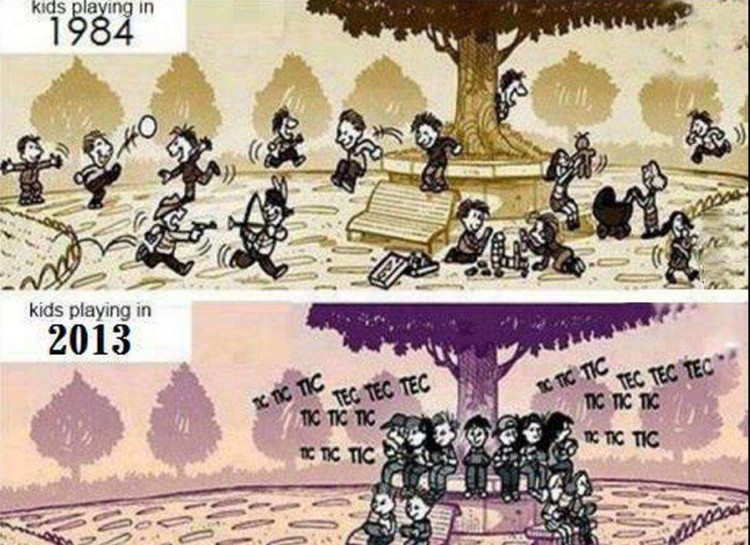
Download the free e-Book of Go Lean … Caribbean – now!

————-

Appendix VIDEO – You Can’t Stop The Beat! – https://youtu.be/ovLKUoMqPSg

A VIDEO of the finale of the movie Hairspray (2007) … ENJOY Edna & Tracy Turnblad, Link Larkin, Penny Pingleton, Velma & Amber Von Tussle, Motormouth Maybelle, Corny Collins and other characters, as they drive home the important moral lesson of accepting change.

Share this post:
, , , ,
[Top]