Category: Economics

How to address high consumer prices

Go Lean Commentary

The Caribbean is arguably the best address on the planet, but a lot is missing. There are certain aspects of Caribbean life that is hard … and expensive.

Is it only the actuality of islands that make Caribbean life so expensive or are there other dynamics? These issues apply:

  • The need to import consumer products is a constant feature of island life.
  • An island is usually more limited with landmass, (sans Australia).
  • Opportunities for agricultural exploitations may be limited.
  • Transportation cost is the biggest hurdle, everything must be flown in or shipped in. The low-cost logistics of rail or trucks are irrelevant because of the reality of being surrounded by water.

This high cost of island living is not just a Caribbean issue; the American State of Hawaii has the same issues. Consider the news article in the Appendix below – from September 2013 – describing Hawaii’s plight.

Drawing from that experience, we are able to identify the following challenges consistent with island life … everywhere in the modern world:

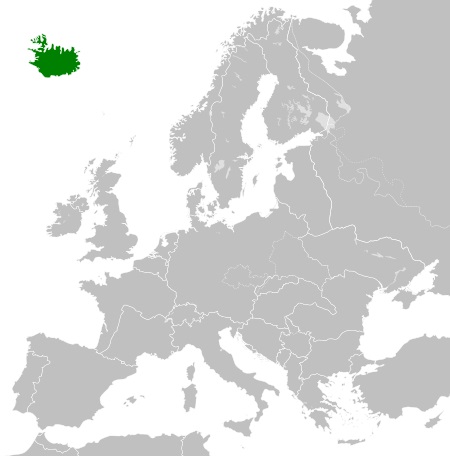
  • Energy Costs – Unless the source of energy is homegrown (think Geo-Thermal Geysers in Iceland) the logistical costs of getting energy to an island is higher than mainland options.
  • Limited Land – There is competition for the available land on small tropical islands. The laws of supply-and-demand therefore implies that the price would rise with the demand. A higher demand for real estate puts upward pressure on home prices and rentals.
  • Consumer Prices – The consumer products to satisfy the day-to-day needs of island residence tend to be more expensive due to importation and an increase in transportation costs.
  • Heightened Corrosion – Islands are surrounded by salt water. There are also consistent trade winds. This is a bad combination for metal fixtures, appliances and equipment. Cars tend to suffer more wear-and-tear on islands compared to the mainlands due to this exposure to salt water on a daily basis.
  • Healthcare Realities – Healthcare costs are higher in island locales. The infrastructure needed to minimize costs (energy, product pricing) are less optimized on islands. Plus the lower populations affect the actuarial numbers for insurance pools.

This above summary applies equally to life in … the Caribbean. 27 of the 30 Caribbean member-states are islands (sans Belize, Guyana and Suriname) and the residents there have to contend with these hard realities.

One of the Caribbean member-states is the US Virgin Islands territory. Their government officials have been monitoring the foregoing societal factors for higher-than-mainland costs, and have become enraged over one factor: the price of oil/petroleum products. The assertion in this territory is that all that “glitters may not be gold”, something is afoul in the economic equations that result in oil/petroleum pricing. There may be some other factors at play.

See the article here:

Title: USVI to address high consumer prices

CU Blog - How to address high consumer prices - Photo 1ST THOMAS, USVI — The Department of Licensing and Consumer Affairs has announced an initiative with the attorney general’s office to take action to bring relief to the consumers of the US Virgin Islands.

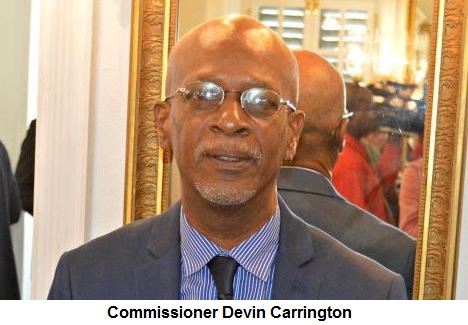
“The Department of Licensing and Consumer continues to be concerned with the high prices consumers are paying for essential commodities in the Virgin Islands, especially food and gas,” said Commissioner Devin Carrington.

The commissioner stated that this concern is exacerbated by the fact that, in the past, retailers have justified the prices charged consumers, in part, on the cost of fuel on the world market that affects shipping and transportation costs paid by importers of consumer goods.

“If this is the case, periodic surveys conducted by the department for food and gas prices reflect no appreciable change in the prices paid by consumers for these essential commodities. This is so even though the price of oil per barrel is currently at the lowest it has been in a ten-year period. If fuel costs are lower, prices at the pump and on the shelf should be lower as well,” Carrington said.

Having observed the continuing trend in prices in the US Virgin Islands, despite lower fuel costs, the department has decided to take a more aggressive posture in order to bring relief to the consumers.

“After examination of survey data that may suggest fraudulent manipulation of prices, the department made the decision to enlist the attorney general’s office to launch an investigation into the causes of high consumer prices,” Carrington noted.
Source: Caribbean News Now – Online Magazine – Posted 10/29/2015 from: http://www.caribbeannewsnow.com/topstory-USVI-to-address-high-consumer-prices-28102.html
Welcome to the Caribbean, arguably the best address on the planet; in terms of physical beauty, absolutely yes; but in terms of a home to live, work and play – not so much.

VIDEOhttps://youtu.be/q6NKdMjdzpk – Guadeloupe’s sky high prices spoil tropical paradise

playbutton-300x300

Uploaded on Feb 25, 2009 – This report was posted during the impactful 2009 general strike on the French Caribbean island Guadeloupe. One of the protester demands was more help to cope with the high cost of living. This report specifically addresses the outlying island of Marie-Galante where prices are particularly high.

The book Go Lean…Caribbean addresses the issues that makes life in the Caribbean difficult and expensive. Identifying all the challenges of island life above, the book serves as a roadmap for the introduction of the technocratic Caribbean Union Trade Federation (CU) with the strategies, tactics and implementations to optimize Caribbean life. The book details how the CU is chartered with these prime directives to elevate life in the islands:

  • Optimization of the economic engines in order to grow the regional economy to $800 Billion & create 2.2 million new jobs.
  • Establishment of a security apparatus to protect the resultant economic engines.
  • Improvement of Caribbean governance to support these engines.

So specifically, why does the US Virgin Islands suffer from higher consumer prices with gasoline? Or generally, why is the Caribbean region expected to pay higher prices?

The answer is the same for us as for Hawaii (as depicted in the below Appendix) …

… plus the added burdens of rent-seeking!

In a previous blog/commentary, this bad community ethos of rent-seeking was identified as running contrary to the goal of optimizing the economy. Unfortunately, in the Caribbean the “free market” is not always “free” nor a “market”; sometimes, there are Crony-Capitalistic and monopolistic forces at play.

The purpose of the Go Lean roadmap is not just to report on Caribbean failures, but also to project solutions. The book details these 3 initiatives which will be used to impact the high costs of living:

  • Caribbean Postal Union
  • Regional Energy Grid
  • Union Atlantic Turnpike & Pipelines

CPU
To lower the eco-systems for higher costs of living, the Go Lean roadmap introduces the Caribbean Postal Union (CPU). This vision is identified as a model for Caribbean logistics, our means for delivering the mail. But the focus of the book Go Lean…Caribbean and the CPU is not just postal mail, but rather logistics for packages and chattel goods. So the Go Lean/CU/CPU does not model other Postal operations (like the US Postal Service debunked in the book at Page 99), but rather successful enterprise in the logistics industry, like Amazon and Alibaba.

The Go Lean roadmap seeks to change the entire eco-system of Caribbean commerce and logistics, with the interaction with postal operations. Part-and-parcel to this CPU effort is the launch of the social media website www.myCaribbean.gov to bring much of the general public interactions and marketing online. Now island residents can easily order consumer goods online from any merchant (foreign and domestic) and have them delivered… via the CPU. This creates a “great equalizer” for Caribbean life; it brings downward pressure on consumer prices. This vision is defined early in the book (Pages 12 & 14) in the following pronouncements in the Declaration of Interdependence:

xv.     Whereas the business of the Federation and the commercial interest in the region cannot prosper without an efficient facilitation of postal services, the Caribbean Union must allow for the integration of the existing mail operations of the governments of the member-states into a consolidated Caribbean Postal Union, allowing for the adoption of best practices and technical advances to deliver foreign/domestic mail in the region.

xxvii. Whereas the region has endured a spectator status during the Industrial Revolution, we cannot stand on the sidelines of this new economy, the Information Revolution. Rather, the Federation must embrace all the tenets of Internet Communications Technology (ICT) to serve as an equalizing element in competition with the rest of the world. The Federation must bridge the digital divide and promote the community ethos that research/development is valuable and must be promoted and incentivized for adoption.

Regional Energy Grid
Fulfilling energy needs is a great target for lean, agile operations, perfect for the CU technocracy. A more technocratic solution would equate to lower energy costs.

This Go Lean/CU roadmap recognizes that modern life has now expanded to include food, clothing, shelter and energy as a basic need. And thusly the book proposes many solutions for the region to optimize energy …

  • generation – Green options (solar, wind turbines, tidal and natural gas)
  • distribution – Underwater cables to connect individual islands
  • consumption – efficient battery back-ups for home deployments.

No “stone is left unturned”. Go Lean posits that the average costs of energy can be decreased from an average of US$0.35/kWh to US$0.088/kWh in the course of the 5-year term of this roadmap; (Page 100). That’s a 75% savings!

Union Atlantic Turnpike & Pipelines
The “Union Atlantic” Turnpike, (modeled after the Union Pacific efforts in the US back in 1862), is a big initiative of the CU to logistically connect all CU member-states for easier transport of goods and passengers. There are many transportation arteries envisioned for the Turnpike: Pipeline, Ferry, Highways, and Railroad. (Imagine a sophisticated network of ferry boats on schedule service to every island).

The book Go Lean … Caribbean asserts that pipelines can be strategic, tactical and operationally efficient for lowering the cost of delivery in the Caribbean region, for energy communities like oil, gas and water. They can also mitigate challenges from Mother Nature, create jobs and grow the economy at the same time. The book purports that a new technology-enhanced industrial revolution is emerging, in which there is more efficiency for installing-monitoring-maintaining pipelines. Caribbean society must participate in these developments, in order to optimize its costs of living. This point is pronounced early in the book with this Declaration of Interdependence (Page 14), with these statements:

xxvi. Whereas the Caribbean region must have new jobs to empower the engines of the economy and create the income sources for prosperity, and encourage the next generation to forge their dreams right at home, the Federation must therefore foster the development of new industries, like that of … pipelines …

There are many best practices around the world for the region to study and from which to glean insight and wisdom. The successful application of this roadmap will foster such best practices to optimize living in the Caribbean and lowering the costs of doing so. The wisdom the Go Lean book gleans are presented as a series of community ethos, strategies, tactics, implementations and advocacies; a detailed sample is listed as follows:

Community Assessment – French Caribbean: Organization and Discord Page 17
Community Ethos – Deferred Gratification Page 21
Community Ethos – Economic Systems Influence Individual Choices Page 21
Community Ethos – Consequences of Choices Lie in the Future Page 22
Community Ethos – Intelligence Gathering – Pricing Analysis Page 23
Community Ethos – Lean Operations Page 24
Community Ethos – Ways to Impact the Future Page 26
Community Ethos – Ways to Help Entrepreneurship Page 28
Community Ethos – Ways to Close the Digital Divide Page 31
Community Ethos – Ways to Impact the Greater Good Page 37
Strategy – Mission – Embrace the advances of technology Page 46
Strategy – Mission – Re-boot and Optimize Postal Operations Page 46
Tactical – Fostering a Technocracy Page 64
Tactical – Separation of Powers – Postal Services Page 78
Tactical – Separation of Powers – Interstate Commerce Administration Page 79
Implementation – Year 1 / Assemble Phase – Establish CPU Page 96
Anecdote – Implementation Plan – Mail Services – US Dilemma Page 99
Implementation – Ways to Pay for Change Page 101
Implementation – Ways to Develop a Pipeline Industry Page 107
Implementation – Improve Mail Services – Electronic Supplements Page 108
Implementation – Ways to Deliver Page 109
Implementation – Ways to Improve Energy Usage Page 113
Planning – 10 Big Ideas for the Caribbean Region – Cyber Caribbean Page 127
Advocacy – Ways to Improve Interstate Commerce Page 129
Advocacy – Ways to Make the Caribbean Better Page 131
Advocacy – Ways to Grow the Economy Page 151
Advocacy – Ways to Create Jobs Page 152
Advocacy – Ways to Improve Governance Page 168
Advocacy – Ways to Better Manage the Social Contract Page 170
Advocacy – Ways to Foster Technology Page 197
Advocacy – Ways to Foster e-Commerce Page 198
Advocacy – Ways to Impact Main Street Page 201
Advocacy – Ways to Improve Transportation – Ferries & Pipelines Page 205
Appendix – Alaska Marine Highway Page 280
Appendix – Eurotunnel Model – English Channel Tunnel Page 281

This commentary therefore features the subjects of commerce, logistics and energy. Yet the Go Lean book asserts that the problems of the Caribbean are too big for any one member-state to assuage alone, that rather the requisite investment of the resources (time, talent, treasuries) will require an integrated region-wide, professionally-managed, deputized technocracy to effect greater production and greater accountability.

The Caribbean can do better, even better than the US State of Hawaii. (While Hawaii is 2500 miles from the US mainland, Trinidad is 7 miles from the South American mainland; the Bahama island of Bimini is 50 miles away from Miami, Florida). This new improved infrastructure – described above – awaits deployment. The biggest ingredient missing in the region is the “will” of the people. We hereby urge all in the region to lean-in to this Go Lean roadmap.

This is the take-away of this consideration: Ferries, pipelines, tunnels and railways functioning as “blood vessels to connect all the organs” within the region, thus allowing easier transport of goods (ordered online) and people among the islands and the mainland states (Belize, Guyana or Suriname) – at cheaper costs.

Now is the time for all of the Caribbean, the people and governing institutions, to work to make their homeland a better and more affordable place to live, work and play. 🙂

Download the free e-Book of Go Lean … Caribbean – now!

———-

Appendix: Living Hawaii – Why Is the Price of Paradise So High?

By: Kery Murakami

Source: http://www.civilbeat.com/2013/09/19815-living-hawaii-why-is-the-price-of-paradise-so-high/; posted September 4, 2013; retrieved October 30, 2015

So this is paradise. Palm trees sway in the trade winds that take the edge off the late-summer sun. Nearby, tanned bodies glisten on the sand.

Cabbie Lam Lu sits at the entrance of the parking garage at the AlaMoanaCenter shopping mall, overworked and stressed out as he awaits a fare. Lu is parked outside Foodland. Inside the supermarket, an advertisement shows two smiling girls eating hamburgers. Maybe they shouldn’t be so happy. The store’s pack of hamburger buns goes for $5.59, almost $3 more than it costs at a similar market in Washington, D.C. Do the kids want to wash it down with some milk? That’s another $3.69 per quart, which is nearly double the $1.88 it costs in the nation’s capital.

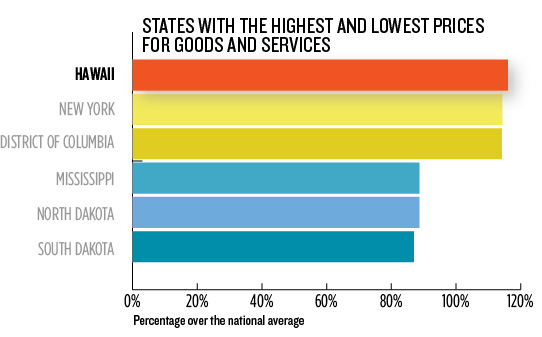
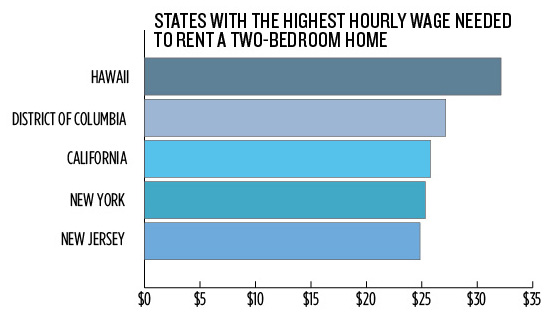
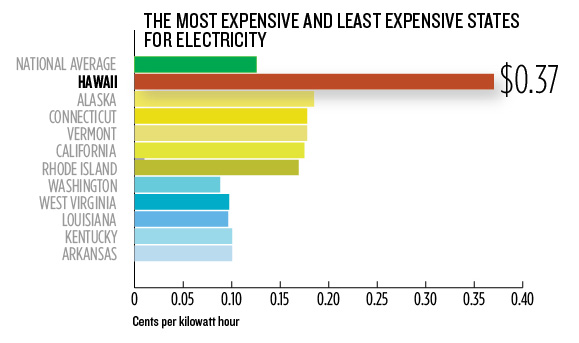
Yes, we know it is pricey here. Cars run on the most expensive gas in the nation, at $4.35 a gallon on a recent day. Our shopping centers and our homes use electricity that’s twice as expensive per kilowatt hour as the next costliest state, Alaska. We have to earn more per hour than Californians and New Yorkers to afford a two-bedroom home. Hawaii actually has the ninth highest median income in the nation, at $59,605. That sounds great to many people on the mainland, but when the cost of living is factored in, Hawaii slides down to the 21st highest median income. And we pay more for goods and services than residents of any other state.

And, as we all know, the list goes on. It is why we work so hard, skimp so much.

All of which is why Lu looks so glum. He doesn’t surf. He doesn’t hang out at the beach. To make ends meet, he drives his cab 12 hours per day, seven days a week. For every $100 he makes in fares, $15 of it goes for gas.

“No time for paradise,” he said.

Does It Have to be This Way?

In an ongoing series, Civil Beat will examine the reasons behind the high cost of living and how it affects Hawaii’s submerged middle class. How come life is so expensive here? Why is food — including our beloved Spam — so pricey? Should rentals and real estate around the islands really compare with world-class cities like San Francisco and New York City? And why do we pay so much just to sit at home with the lights on?

It all adds up to the price of paradise, the phrase coined by University of Hawaii law professor Randy Roth in two best-selling books by that name that he edited and co-authored in the early 1990s. And it affects every aspect of our lives, at every stage from childhood to parenthood and beyond, to our final days in some of the costliest nursing homes in the country.

We’ve heard the explanations. Many people accept it because we are on our archipelago in the middle of the Pacific Ocean 2,500 miles from the West Coast ports that so much of our stuff ships through. There is a set amount of real estate on the islands, and there is competition for how it is used, which puts intense pressure on farmers, home renters and buyers. Some locals blame tourist-generated inflation. Others wonder who is getting rich — and maybe profiteering — off of our vulnerabilities. Others point at unions, a lack of competition, our small consumer market, high taxes.
Goods and Services

So, what can be done to bring down the cost of living here? What are the actual costs — of shipping, of transportation, of labor, of regulation. We look forward to breaking them down.

We’ll also look at what political and economic interests are standing in the way of making Hawaii more affordable and how the islands might remake themselves politically and economically to improve residents’ quality of life.

As part of this, we want to hear from you about your experiences. What sorts of things do you question the cost of? What everyday products have inexplicably high price tags? What do you want to know about, what have you sacrificed to live here and what do you Print
In the meantime, here are some facts of life in our islands:

— Hawaii has the highest cost of living in the nation, according to a U.S. Commerce Department Bureau of Economic Analysis report in June. The cost of living is 16 percent higher than the national average. (Second place goes to New York.)

— A single person can earn as much as $54,850 and qualify for housing assistance on Oahu. For a family of four, the cut-off is $78,300, according to the Hawaii Public Housing Authority. In most of the country, those would be comfortably middle-class incomes.

— We spend more on housing. Based on U.S. Department of Housing and Urban Development data, the National Low Income Housing Coalition says the median cost of renting a two-bedroom apartment in Hawaii is $1,671 a month. That’s not just the highest nationally, it is about 71 percent more than the national average of $977.

Based on the HUD standard that families shouldn’t spend more than a third of their income on housing, the coalition calculated what hourly wage people around the country would have to earn to afford such an apartment. Hawaii again earned the dubious rank of No. 1. A resident here would have to earn the most: $32.14, compared with a national average of $25.25 per hour.
Print 

— A 2013 report by the Center for Housing Policy found that Honolulu was the fifth most expensive city for home buyers. The average income necessary to own one, according to the center, is $115,949.

— Similarly, the people of Hawaii pay the highest electricity rates at 37 cents per kilowatt hour, triple the national average of 12 cents per kilowatt hour, according to the the US. Energy Information Agency. That translates into bills that are two, three or even four times those in other states. While rates can fluctuate quickly around the country, Hawaii residents are currently spending $60 per month more than people in Alabama, the state with the next highest monthly bill (even though Alabamans pay much lower per-kilowatt rates than residents of some states).

Print

— The cost of having a car (insurance, gas, maintenance, depreciation, etc.) is the eighth highest in the nation here in Hawaii. A study last year by Edmunds.com, a car pricing website, estimated that Hawaii drivers will have to spend $52,683 on their cars over the next five years, which is about $3,000 more than the national average. Hawaii cars also depreciate the fastest in the nation, by $16,809 over a five-year period. We also pay the most interest to finance a vehicle, $4,084, and the gas bill for those five years, $15,822, is also the highest in the nation.

— Food costs more. The U.S. Department of Agriculture calculates the differences in cost around the country to determine the size of food stamp benefits, and has found that food prices in Hawaii are 70 percent more than the national average. According to the USDA’s calculations, a family of four with young children nationally should be able to eat on a “thrifty” food budget of $373 per month. In Hawaii, it would cost the same family $632 for the same meals.

— We have to work more. According to the Bureau of Labor Statistics, 6.2 percent of Hawaii workers have more than one job, compared to only 4.9 percent nationally.

Print

An Age-Old Problem

There are those who say don’t worry. Be happy. Lucky you live Hawaii. But others note there are real impacts. Even for a middle-class that manages to scrape by, the cost of paradise often catches up to us late in life.

Bruce Bottorff, spokesman for the Hawaii chapter of the AARP, says that high prices have made it hard for most people to save for the day when they need help to live. “Most adult families have mortgages and rent, transportation, food and beverage costs, health care. And when you have all these costs, it makes it difficult to set aside an additional sum of money for an eventuality down the road. People take care of their immediate needs,” he said.

As a result, the AARP’s annual survey of Hawaii residents over 50 years old last year found that three in four said they did not want to rely on families and friends to take care of them in their old age, but more than half said they had no real plan for how they’d afford elderly care when they need it. (They acknowledged that they probably would have to rely on their families and friends.)

No wonder Tony Lenzer and his family have been feeling plenty of pressure. Lenzer, 83, said he had to put his wife, Joan, in a care home this year because she suffers from a variety of health problems, including dementia. Their children had taken turns helping Tony take care of his wife at home. But they couldn’t anymore. “We couldn’t keep her safe. She’s too frail,” he said.

They were among the (relatively) lucky ones because they bought long-term care health insurance that covers most of the nearly $9,500-a-month cost, Lenzer explained.

If they hadn’t, she would not have been able to afford the care home, Lenzer said. “I think it would be a very difficult situation. We would have to rely on family members, possibly friends, possibly neighbors to help out with the care. And even then we wouldn’t have been available for her 24/7.”

Old, with dementia, and needing your neighbor to bathe you.

Paradise.

Share this post:
, , , ,

Venezuela sues black market currency website in US

Go Lean Commentary

Circa 1983*, American banks came to grips with the new reality: the old days of 3-6-9 were over, it was now a 24-7-365 world.

3-6-9 refers to the only numbers bankers were required to know: Borrow at 3%; lend at 6%; open the doors at 9am; close the doors at 3pm.

These banks were then faced with these new agents-of-change: Technology, Competition and Deregulation.

Thus started the perilous slide of banking down the path of instability. Two crisis would present themselves in the next 25 years: Savings & Loans Crisis of 1980s/1990s and the Great Recession of 2008. The world is still reeling from these events; this applies to American and International markets; Wall Street and Main Street.

(* In Winter 1983, this writer was an MBA-Commercial Bank Administration student studying the unfurling of these events).

The book Go Lean…Caribbean,  and the underlying movement by the publishers SFE Foundation, was forged as a direct result of the 2008 crisis. The purpose was to apply lessons learned from this American experience in the quest to empower the Caribbean. The book identified additional agents-of-change (i.e. Globalization, Climate Change, Aging Diaspora, etc.) and the battle plan to contend with them all.

Now comes a crisis for Venezuela, but the opportunity is still the same: apply the lessons learned.

The Central Bank of Venezuela has filed a lawsuit in US courts against Miami-based entity DolarToday, alleging that this website undermines the Venezuelan bank, currency and economy by falsifying the country’s exchange rates.

CU Blog - Venezuela sues black market currency website in US - Photo 2

This is a serious issue! See the news article here and the Appendices below for detailed definitions:

Title: Venezuela sues black market currency website in United States
By: Andrew Cawthorne

CARACAS (Reuters) – Venezuela’s Central Bank filed a lawsuit on Friday with allegations of “cyber-terrorism” against a U.S.-based website that tracks the OPEC member’s currency black market.

The DolarToday site has enraged President Nicolas Maduro’s government by publishing a rate in Venezuelan bolivars for the greenback far higher than the three official levels under Venezuela’s 12-year-long currency controls.

The rate has become an unofficial marker in the crisis-ridden economy, with some Venezuelans using it in private transactions or to fix prices of imported goods.

The lawsuit, in the U.S. District Court for the District of Delaware, named three Venezuelans in the United States as being behind the site: Gustavo Diaz, Ivan Lozada and Jose Altuve.

A representative of DolarToday could not immediately be reached by email or telephone for comment.

The Central Bank requested both an injunction and damages, accusing the three of fanning inflation in Venezuela, the world’s highest, and enriching themselves by illegal trading.

“Defendants conspired to use a form of cyber-terrorism to wreak, and in fact they have wreaked, economic and reputational harm on the Central Bank by impeding its ability to manage the Republic’s economy and foreign exchange system,” the lawsuit said.

DolarToday, which takes an aggressively anti-Maduro stance in its publications and says it calculates its rate based on trades on the Venezuela-Colombia border, quoted the dollar at 820 bolivars on Friday.

That is 130 times the strongest official rate of 6.3 bolivars and four times the government’s weakest rate of 200.

Maduro, a former bus driver and foreign minister who won election to replace Hugo Chavez in 2013, frequently lambastes DolarToday as part of an international capitalist conspiracy to sabotage the economy and undermine socialism in Venezuela.

“Arbitrarily manufacturing currency exchange rates creates further turmoil in a country that is working to overcome the obstacles it already faces,” said Adam Fox, a lawyer for U.S. law firm Squire Patton Boggs, which represents the bank.

Critics say Venezuela’s economic mess, with Gross Domestic Product shrinking and shortages widespread, is the result of hardline state policies such as currency controls.

The Central Bank estimated a million people visit the DolarToday site daily. Its Twitter account has 1.93 million followers. “Defendants have been playing ‘a cyber cat-and-mouse game’,” to circumvent government blocks, it said.

Central Bank officials in Caracas had no immediate comment.

(Additional reporting by Corina Pons in Caracas and Diane Bartz in Washington; editing by Grant McCool)
Source: Reuters News Wire – (Posted 10/23/2015; retrieved 10/26/2015) – http://news.yahoo.com/venezuela-sues-black-market-currency-website-united-states-215856233–business.html

This article is in consideration of the book Go Lean…Caribbean; it serves as a roadmap for the introduction and implementation of the technocratic Caribbean Union Trade Federation (CU) and Caribbean Central Bank (CCB) to provide better stewardship, to ensure that the economic and currency failures of the past, in the Caribbean and other regions (like Venezuela), do not re-occur here … again in the homeland.

There is now interconnectivity of the financial systems; see VIDEO in the Appendix below. Troubles for any bank or any currency in foreign countries easily become trouble for the Caribbean region. Plus, Venezuela is a trading partner with most of the Caribbean with the PetroCaribe initiative. The assumption embedded in the Go Lean roadmap is that there could be elasticity from foreign financial structures, but that the Caribbean is big enough – when integrated into a Single Market of 42 million people in the 30 member-states – and can thusly streamline its own viable currency/financial/securities market.

There are many issues (and lessons) in play with the foregoing news story:

o   Cyber-terrorism – from distant corners of the world, a “bad actor” can wreak havoc on a society’s economic engines with the aid of Information & Internet Communication Technologies (ICT). This is a serious allegation the officials of Venezuela is leveling against this website; they have used the term cyber-terrorism, so as to avail themselves of prosecutorial resources in the US and other countries who are conducting a “War on Terrorism”.

o   Capital Controls – the Go Lean book dives deeply into the discussion for Capital Controls; consider this direct quotation from Page 315 of the book:

    Capital controls are residency-based measures such as transaction taxes, other limits, or outright prohibitions that a nation’s government can use to regulate flows from capital markets into and out of the country’s capital account. Types of capital control include exchange controls that prevent or limit the buying and selling of a national currency at the market rate, caps on the allowed volume for the international sale or purchase of various financial assets, transaction taxes, minimum stay requirements, requirements for mandatory approval, or even limits on the amount of money a private citizen is allowed to remove from the country.

o   Currency Manipulations – bad actors emerges in many different scenarios. While not assigning blame nor casting judgement on the case in the foregoing article, it is fully acknowledged that currency manipulators can inflict harm on a country’s resources and perceived brand or image … for their own financial gain.

o   Black Markets – the quest for economic command-and-control runs counter to Black Markets. But electronic payment systems are effective at mitigating these Black Markets.

o   Human & Capital Flight – when a country’s currency is in distress, there is the threat that citizens may flee with their capital so as to secure the value of their savings and investments. The Caribbean has been plagued with this occurrence again and again. Even now, the region has an alarming 70% brain drain rate among the college-educated populations of Caribbean heritage.

The lessons from this consideration must be applied in the technocratic administration of the Caribbean Union Trade Federation, and the Caribbean Central Bank’s (CCB) oversight of the Caribbean Dollar (C$). The Go Lean roadmap calls for a cooperative entity of the existing Central Banks in the region; this will foster interdependence from the political entities allowing only the motivation of the regional Greater Good.

The planners of the new Caribbean sympathizes with the Central Bank of Venezuela. We have learned hard lessons on the issue of currency, as many CU member-states have had to endure painful devaluations over the past decades – on more than one occasion. So we understand that any attempt to reboot the Caribbean economic landscape must first start with a strenuous oversight of the proposed C$ currency – as a mostly electronic currency. Early in the book, this need for regional stewardship of Caribbean currencies was pronounced (Declaration of Interdependence – Page 13) with these statements:

xxiv. Whereas a free market economy can be induced and spurred for continuous progress, the Federation must install the controls to better manage aspects of the economy: jobs, inflation, savings rate, investments and other economic principles. Thereby attracting direct foreign investment because of the stability and vibrancy of our economy.

xxv.  Whereas the legacy of international democracies had been imperiled due to a global financial crisis, the structure of the Federation must allow for financial stability and assurance of the Federation’s institutions. To mandate the economic vibrancy of the region, monetary and fiscal controls and policies must be incorporated as proactive and reactive measures. These measures must address threats against the financial integrity of the Federation and of the member-states.

The Go Lean book, and previous blog/commentaries, stressed the key community ethos, strategies, tactics, implementations and advocacies necessary to establish a strong Caribbean financial eco-system and strong currency; plus mitigate Black Markets. These points are detailed in the book as follows:

Community Ethos – Economic Principles – Economic Systems Influence Individual Choices Page 21
Community Ethos – Economic Principles – Voluntary Trade Creates Wealth Page 21
Community Ethos – Economic Principles – Consequences of Choices Lie in the Future Page 21
Community Ethos – Economic Principles – Money Multiplier Page 23
Community Ethos – Governing Principles – Lean Operations Page 24
Community Ethos – Governing Principles – Return on Investments Page 24
Community Ethos – Ways to Impact the Future – Count on the Greedy to be Greedy Page 26
Community Ethos – Ways to Impact the Greater Good Page 37
Strategy – Mission – Fortify the Stability of the Currency and Securities markets Page 45
Strategy – Provide Proper Oversight and Support for the Depository Institutions Page 46
Strategy – e-Payments and Card-based Transactions Page 49
Tactical – Summary of Confederation Models Page 63
Tactical – Growing the Economy – Minimizing Bubbles Page 69
Tactical – Separation-of-Powers – Depository Insurance & Regulatory Agency Page 73
Anecdote – Turning Around CARICOM – Effects of 2008 Financial Crisis Page 92
Implementation – Assemble Caribbean Central Bank as a Cooperative Page 96
Implementation – Ways to Better Manage Debt – Optimizing Wall Street Role Page 114
Planning – 10 Big Ideas – Single Market / Currency Union Page 127
Planning – Lessons Learned from 2008 Page 136
Planning – Lessons Learned from New York City – Wall Street Page 137
Planning – Ways to Measure Progress Page 147
Anecdote – Caribbean Currencies Page 149
Advocacy – Ways to Grow the Economy Page 151
Advocacy – Ways to Control Inflation Page 153
Advocacy – Ways to Better Manage Foreign Exchange Page 154
Advocacy – Ways to Mitigate Black Markets Page 165
Advocacy – Ways to Foster Electronic Commerce Page 198
Advocacy – Reforms for Banking Regulations Page 199
Advocacy – Ways to Impact Wall Street Page 200
Advocacy – Ways to Impact Main Street Page 201
Appendix – Tool-kits for Capital Controls Page 315
Appendix – Lessons Learned from Floating the Trinidad & Tobago Dollar Page 316
Appendix – Controlling Inflation – Technical Details Page 318
Appendix – e-Government and e-Payments Example: EBT mitigates Black Markets Page 353

A careful study of national economies – a task of the Go Lean book – relates that there is an ebb-and-flow associated with economic stewardship. This stewardship constitutes the prime directives of the CU:

  • Optimization of the economic engines in order to grow the regional economy and create 2.2 million new jobs.
  • Establishment of a security apparatus to protect the resultant economic engines.
  • Improvement of Caribbean governance/administration/oversight to support these engines.

The best practice for effective stewardship of an economy’s ebb-and-flow is the recovery; managing the ability to “bounce back” quickly. The points of effective, technocratic banking/economic stewardship, were further elaborated upon in these previous blog/commentaries:

https://goleancaribbean.com/blog/?p=6635 New Security Chip in Credit Cards Unveiled to Mitigate Fraud/Abuse
https://goleancaribbean.com/blog/?p=6563 Lessons from Iceland – Model of Recovery
https://goleancaribbean.com/blog/?p=4166 A Lesson in History – Panamanian Balboa
https://goleancaribbean.com/blog/?p=3858 European Central Banks unveils 1 trillion stimulus program
https://goleancaribbean.com/blog/?p=3814 Lessons from the Swiss unpegging the franc
https://goleancaribbean.com/blog/?p=3582 For Canadian Banks: Caribbean is a ‘Bad Bet’
https://goleancaribbean.com/blog/?p=3397 A Christmas Present for the Banks from the Omnibus Bill
https://goleancaribbean.com/blog/?p=3028 Why India is doing better than most emerging markets
https://goleancaribbean.com/blog/?p=2930 ‘Too Big To Fail’ – Caribbean Version
https://goleancaribbean.com/blog/?p=2090 The Depth & Breadth of Remediating 2008
https://goleancaribbean.com/blog/?p=1014 Canadian View: All is not well in the sunny Caribbean
https://goleancaribbean.com/blog/?p=833 One currency, divergent economies
https://goleancaribbean.com/blog/?p=518 Analyzing the Data – What Banks learn about financial risks

The Go Lean quest is the coveted role of protégé to our North American, South American and European trading partners, not the parasite role we have thus far assumed. Though this is heavy-lifting, this is conceivable, believable and achievable.

We have so many lessons to learn from the Venezuelan Central Bank crisis. Let’s pay more than the usual attention to this bank’s effort to harness command-and-control of their currency and economic success. Let’s see how this lawsuit develops.

Class is now in session!

The Caribbean’s 30 member-states are urged to lean-in to this Go Lean roadmap for the CU, CCB and C$. This is the turn-by-turn directions, the heavy-lifting, to move the region to its new destination: a better homeland to live, work and play. 🙂

Download the book Go Lean … Caribbean – now!

————

Appendix A – VIDEO – Currency Exchange Rates and You – https://youtu.be/IYdt-16FoC4


Published on Apr 16, 2015 – You might not be an international banker, but you have more involvement in foreign currency exchange than you might realize. Kristen Fanarakis from the Center for Financial Policy at the University of Maryland’s Robert H. Smith School of Business explains how.

————

Appendix B – Venezuelan bolívar

The bolívar fuerte (sign: Bs.F.[3] or Bs.;[4] plural: bolívares fuertes; ISO 4217 code: VEF) has been the currency of Venezuela since 1 January 2008. It is subdivided into 100 céntimos[5] and replaced the original bolívar (sign: Bs.;[3] plural: bolívares; ISO 4217 code: VEB) at the rate of Bs.F. 1 = Bs. 1,000 because of inflation.

History
CU Blog - Venezuela sues black market currency website in US - Photo 1The bolívar was adopted by the monetary law of 1879, replacing the short-lived venezolano at a rate of five bolívares to one venezolano. Initially, the bolívar was defined on the silver standard, equal to 4.5g fine silver, following the principles of the Latin Monetary Union. The monetary law of 1887 made the gold bolívar unlimited legal tender, and the gold standard came into full operation in 1910. Venezuela went off gold in 1930, and in 1934 the bolívar exchange rate was fixed in terms of the U.S. dollar at a rate of 3.914 bolívares = 1 U.S. dollar, revalued to 3.18 bolívares = 1 U.S. dollar in 1937, a rate which lasted until 1941. Until 18 February 1983 (now called Black Friday (Viernes Negro) by many Venezuelans [6]), the bolívar had been the region’s most stable and internationally accepted currency. It then fell prey to high devaluation. Exchange controls were imposed on February 5, 2003 to limit capital flight.[7] The rate was pegged to the U.S. dollar at a fixed exchange rate of 1600 VEB to the dollar.

Bolívar fuerte
The government announced on 7 March 2007 that the bolívar would be revalued at a ratio of 1 to 1000 on 1 January 2008 and renamed the bolívar fuerte in an effort to facilitate the ease of transaction and accounting.[8] The new name is literally translated as “strong bolívar”,[9][10] but also references an old coin called the Peso fuerte worth 10 Spanish reales.[11]. (Fuerte = Spanish Strong)

The name “bolívar fuerte” was only used temporarily to distinguish it from the older currency that was being used along with the bolívar fuerte.[12]

The Central Bank of Venezuela promoted the new currency with an ad campaign and the slogan: “Una economía fuerte, un bolívar fuerte, un país fuerte” (lit. “a strong economy, a strong bolívar, a strong country”).

Some estimations suggest that the government spent more than US$320 million to introduce the new currency.

On 8 January 2010, the value was changed by the government from the fixed exchange rate of 2.15 bolívares fuertes to 2.60 bolívares for some imports (certain foods and healthcare goods) and 4.30 bolívares for other imports like cars, petrochemicals, and electronics.[13]

On 4 January 2011, the fixed exchange rate became 4.30 bolívares for 1.00 USD for both sides of the economy.

It should be noted that the official exchange rate is restricted to individuals by National Center for Foreign Commerce (CADIVI), which imposes an annual limit on the amount available for travel (up to $3000 annually depending on the location and duration of travel) and $400 for electronic purchases.

Since the government of Hugo Chavez established strict currency controls in 2003, there have been a series of five currency devaluations, disrupting the economy.[14] The last devaluation was on 13 February 2013 (to 6.30 bolivars per dollar), in an attempt to counter budget deficits.[15]

Currency black market
The black market value of the bolívar fuerte has been significantly lower than the fixed exchange rate. In November 2013, it was almost 10 times lower than the official fixed exchange rate of 6.3 bolívares per U.S. dollar.[16] In September 2014, the currency black market rate for the Bolivar Fuerte reached 100 VEF/USD;[17] on 25 February 2015, it went over 200 VEF/USD.[18] on 07 May, 2015, it was over 275 VEF/USD and on 22 September, 2015, it was over 730 VEF/USD.[19] Venezuela still had the highest inflation rate in the world, As of July 2015[update].[20]

It is illegal to publish the “parallel exchange rate” in Venezuela.[2] One company that publishes parallel exchange rates is DolarToday, which has also been critical of the Maduro government.[21]

Source: https://en.wikipedia.org/wiki/Venezuelan_bol%C3%ADvar retrieved October 26, 2015.

————

Appendix C – DolarToday

DolarToday is an American website that focuses on Latin American politics and finance. The company is more known for being an exchange rate reference to the Venezuelan bolívar, a currency which is not freely convertible;[2] it also known for the company’s focus in monitoring the Venezuelan economy.[3]

Background
DolarToday was founded on May 18, 2010. It is headquartered in Miami, Florida, United States. Prior to the election of Nicolás Maduro in 2013, DolarToday was the second most popular exchange rate reference in Venezuela, behind of Lechuga Verde. However, when a scandal had caused the demise of the Lechuga Verde,[4] DolarToday became the most popular exchange rate reference.[2]

According to BBC Mundo, DolarToday was founded as “a form of protest against a dictatorship increasingly committed to silence and intimidate the media in Venezuela.”[5] Up until today, the company’s website publishes criticisms about the Maduro administration which the founder states “are selected by the site’s writers based in Venezuela”.[2][1]

Exchange rates
Since its inception, DolarToday has provided black market exchange rates that are updated daily for Venezuelans who cannot exchange currencies with the Venezuelan government for the dwindling supply of the US dollar.[1] The company based its computed exchange rates of the Venezuelan bolívar to the United States dollar from the fees on trades in Cúcuta, Colombia, a city near the border of Venezuela.[6] Currently, with no other reliable source other than the black market exchange rates, these rates are used by Reuters, CNBC, and several media news agencies and networks.[7][8] The Economist states that the rates calculated by DolarToday are “erratic”, but that they are “more realistic than the three official rates” released by the Venezuelan government.[9] The website maintains that the rates are not manipulated in order to undercut the Venezuelan government.[2]

Today the exchange rate of Venezuelan currency, monitored and governed by the Central Bank of Venezuela, is prohibited by the Venezuelan government from being accessed by its citizens. Thus, the exchange rates posted by DolarToday are only accessible outside Venezuela.[10]

Censorship
According to DolarToday, the Venezuelan government had been attempting to censor the website since November 2013.[1] In March 2015, in a televised appearance, Maduro told the nation that he will ask United States [President] Barack Obama for the capture of the owners of the company.[13] In a press statement published in the government’s website, Maduro’s government said that it will exert all legal means against the company in response for defaming the Venezuelan economy.[14] That month, the Venezuelan government attempted to censor the website and brought down websites Amazon, Snapchat, and Pinterest in the process.[15]

Since President Maduro made such comments, DolarToday began to face blockages of their website almost every hour in Venezuela.[1] DolarToday then began using mirror sites on content distribution networks, placing cryptic links on their social media pages to such sites since foreign social media sites are difficult for the Venezuelan government to censor.[1] Each time a mirror site is blocked by the Venezuelan government, DolarToday begins to use a new one, with website engineers finding “ways to automatically create a new mirror site every 20 minutes”. [1]

Source: https://en.wikipedia.org/wiki/DolarToday retrieved October 26, 2015.

Share this post:
, , , , ,
[Top]

Vegas Casinos Place Bets on Video Games

Go Lean Commentary

Numbers don’t lie!

Especially if those numbers are the balance statements of bank accounts. Either one has the money, or they don’t.

Increasingly in the casino/gaming industries, the money is not there.

Why?

Despite the fact that the “house” always wins, the number of gamblers have declined! It is what it is!

  • 87% of Baby-Boomers gamble when visiting Las Vegas
  • 78% of Generation X-ers gamble when visiting Las Vegas
  • 63% of Millenials gamble when visiting Las Vegas

The following news article/VIDEO depicts that change is afoot. There are less and less gamblers participating in “games of chance” at casinos. These establishments can complain or change along with the demographics. This VIDEO portrays an attempt for Las Vegas casinos to change, to adapt to the indisputable societal factors. See VIDEO here:

VIDEO Title: Vegas casinos place bets on video game gambling http://www.cbsnews.com/videos/vegas-casinos-place-bets-on-video-game-gambling/

October 7, 2015 – Casino revenue on the Las Vegas strip dropped nearly 5 percent in August [2015]. That’s the third straight month of declines. This comes as Sin City tries to lure the next generation of gamblers. While slot machines are still one of the world’s best moneymakers, casinos are having a tough time getting young people to sit down at them. Ben Tracy reports on what casinos have planned to appeal to millennials. (VIDEO plays best in Internet Explorer).

Vegas Casino 1

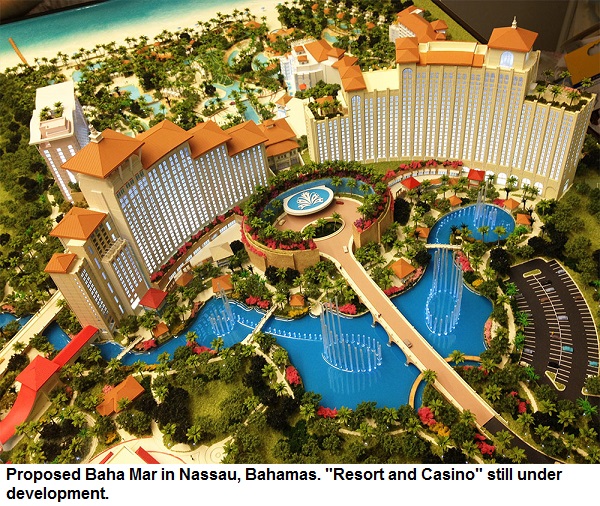
Vegas Casino 2This is a very important issue for Caribbean consideration, as casino gambling has often been associated with Caribbean resorts. Even now there are new casino projects under development. In a previous blog, this commentary posited that “doubling down” the bet on casinos was a flawed strategy for the region’s governments and business institutions.

Alas, there is the potential for a lot of money to still be made in the casino/gaming industries if only the product can evolve to keep pace with the changing demographics of the marketplace.

Enter “technology-based” games.

This article aligns with the book Go Lean…Caribbean, which calls for the elevation of Caribbean economics and an embrace of more technology. This book serves as a roadmap for the introduction and implementation of the technocratic Caribbean Union Trade Federation (CU) to better manage change and emerging technology in the Caribbean region. This is a big deal for the Caribbean, as technology (internet and communications technologies) is being pitched in the Go Lean roadmap as an equalizing element for the Caribbean region in competition with the rest of the world. This hope was identified early in the Go Lean book (Page14) in the following pronouncements in the Declaration of Interdependence:

xxvii. Whereas the region has endured a spectator status during the Industrial Revolution, we cannot stand on the sidelines of this new economy, the Information Revolution. Rather, the Federation must embrace all the tenets of Internet Communications Technology (ICT) to serve as an equalizing element in competition with the rest of the world. The Federation must bridge the digital divide and promote the community ethos that research/development is valuable and must be promoted and incentivized for adoption.

The Go Lean book posits that there is a need to re-boot and optimize the engines of commerce so as to make the Caribbean a better place to live, work and play. The tourism product, the mainstay of Caribbean economy, used to depend on certain amenities (i.e. Golf) that have now come under attack by the social and demographic changes depicted in the foregoing VIDEO. It so appears that the future for Caribbean commerce in the hospitality and gaming industries will not only depend on factors like “sun, sand, surf and smiles”, but now also on “systems”.

This is a changed world and changed marketplace. Likewise, our communities must change to keep pace … and get ahead!

The Go Lean book also addresses the realities of gambling, in that it advocates the adoption of a regional lottery for all 30 member-states of the Caribbean.

The Go Lean/CU roadmap seeks to elevate all of Caribbean society, including the “games people play” to remain competitive and consequential in the future. This is a matter of technology, education, marketing, planning, and econometrics. This is the heavy-lifting of shepherding a progressive region of 42 million people, 10 million Diaspora, 80 million tourists, and 4 language groups across 30 member-states. The CU’s charter is to effectuate progress in this region with these 3 prime directives:

  • Optimization of the economic engines in order to grow the regional economy to $800 Billion and create 2.2 million new jobs.
  • Establishment of a security apparatus to protect the resultant economic engines and marshal against economic crimes.
  • Improve Caribbean governance to support these engines.

The foregoing article-VIDEO helps us to appreciate that there will be sustained economic activity in the gambling-gaming industries; a tourism industry mainstay in the Caribbean. This means future jobs. The quest to create the jobs (and work force) for the near-future is paramount in the Go Lean roadmap. Early in the book, the responsibility to monitor, manage, and plan for new jobs were identified as an important function for the CU with this pronouncement in the same Declaration of Interdependence (Pages 13):

xxvi. Whereas the Caribbean region must have new jobs to empower the engines of the economy and create the income sources for prosperity, and encourage the next generation to forge their dreams right at home, the Federation must therefore foster the development of new industries… In addition, the Federation must invigorate the enterprises related to existing industries like tourism… – impacting the region with more jobs.

The Caribbean must contend with the challenges of demographic change. There are 3 kinds of people in the world:

  • Those who make things happen
  • Those who watch things happen
  • Those who wonder “what happened?”

Whereas, this latter description may have been our disposition in the past, we can no longer afford this status. Our situation is quite dire now, as we have lost vast numbers of our populations to societal abandonment because as a community, we have failed to keep pace of change. Our society is now in desperate need of reform and reboot to insulate from many demographic changes. On the one hand, we must diversify our economy and avail other high job-multiplier industries, away from tourism, but on the other hand, we must double down in the tourism product, as the economic principles of “supply and demand” just cannot be ignored. (During the winter months, our Caribbean destinations are the “best addresses on the planet”).

The Go Lean… Caribbean book details this quandary. It qualifies the community ethos to adopt to diversify our economy and proactively mitigate the dire effects of the changed demographic landscape; plus the executions of the following strategies, tactics, implementations and advocacies:

Community Ethos – Economic Principle – People Respond to Incentives Page 21
Community Ethos – Economic Principle – Consequences of Choices Lie in   the Future Page 21
Community Ethos – Job   Multiplier Page 22
Community Ethos – Lean Operations Page 24
Community Ethos – Return on Investments (ROI) Page 24
Community Ethos – Ways to Impact the Future Page 26
Community Ethos – Ways to Foster Genius – STEM Career Options Page 27
Community Ethos – Ways to Help Entrepreneurship – Incubators Role Page 28
Community Ethos – Ways to Promote Intellectual Property Page 29
Community Ethos – Ways to Impact Research & Development Page 30
Community Ethos – Ways to Bridge the   Digital Divide Page 31
Community Ethos – Ways to Impact the Greater Good Page 37
Strategy – Vision – Best Address on the Planet Page 45
Strategy – Vision – Integrate Region in a Single Market Page 45
Strategy – Mission – Embrace the Advances of Technology & Incentivize Participation Page 46
Tactical – Fostering a Technocracy Page 64
Tactical – Tactics to Forge an $800 Billion Economy Page 67
Tactical – Separation of Powers Page 71
Implementation – Ways to Deliver Page 109
Planning – Ways to Make the Caribbean Better Page 131
Planning – Lessons Learned from 2008 Page 136
Advocacy – Ways to Grow the Economy Page 151
Advocacy – Ways to Create Jobs Page 152
Advocacy – Ways to Enhance Tourism Page 190
Advocacy – Ways to Impact Events Page 191
Advocacy – Ways to Foster Technology Page 197
Advocacy – Ways to Foster e-Commerce Page 198
Advocacy – Ways to Impact the Lottery – Regional Caribbean Option Page 213

This commentary is not advocating betting on casino gambling, (this practice is considered a vice), but rather betting on technology.

The Go Lean/CU roadmap calls for fostering industrial developments to aid tourism, incorporating best practices and quality assurances to deliver the best experience in the world. This must also include creating technology products to make gaming more appealing for the millennial generations. The realities of technology is that these developments can be produced anywhere in the world. So why not here? We have a lot at stake already.

If we successfully incubate a gaming technology industry here at home, we would create jobs right here at home. If, on the other hand, if we incubate gaming technology and the world is not receptive to our creations, we would have still created a workforce with very marketable skills, looking for opportunities to ply their trade. This is win-win! The Caribbean “house” will only win.

This commentary has previously related details of the changing macro-economic factors that affect where and how jobs are created. The following are samples of earlier Go Lean blogs:

https://goleancaribbean.com/blog/?p=6089 Where the Jobs Are – Futility of Minimum Wage
https://goleancaribbean.com/blog/?p=4240 Immigration Policy Exacerbates Worker Productivity Crisis
https://goleancaribbean.com/blog/?p=3694 Jamaica-Canada employment program pumps millions into local economy
https://goleancaribbean.com/blog/?p=3050 Obama’s immigration tweaks leave Big Tech wanting more
https://goleancaribbean.com/blog/?p=2857 Where the Jobs Are – Entrepreneurism in Junk
https://goleancaribbean.com/blog/?p=2800 Where the Jobs Are Not – The Geography of Joblessness
https://goleancaribbean.com/blog/?p=2126 Where the Jobs Are – Computers Reshaping Global Job Market
https://goleancaribbean.com/blog/?p=2003 Where the Jobs Are – One Scenario (Shipbreaking)
https://goleancaribbean.com/blog/?p=1698 Where the Jobs Are – STEM Jobs Are Filling Slowly
https://goleancaribbean.com/blog/?p=1596 Book Review: ‘Prosper Where You Are Planted’

According to the foregoing VIDEO, there is new hope for casino gambling, based on technology. For a community, this is not a gamble; this is a sure bet; by embracing technology, the Caribbean region will surely win. This position is based on some reliable economic principles, the principles of money multipliers and job multipliers:

Casinos can create money “from thin air”, getting cash while giving nothing in return (Page 22). As for job multipliers, this principle explains how certain industries are better than others for generating multiple indirect jobs down the line for each direct job on a company’s payroll. (.i.e. The automotive manufacturing industry was a choice selection with a job-multiplier rate of 11 – Page 260).

So this advocacy to embrace gaming technology is more than a bet; it’s a sure formula for success. This is a “play” that the Caribbean must make and cannot lose. The “house” always wins.

The Caribbean can be the best destination on the planet, a better place to live, work and play. 🙂

Download the free e-book of Go Lean … Caribbean – now!

Share this post:
, , , ,
[Top]

New Security Chip in Credit Cards Unveiled

Go Lean Commentary

CU Blog - New Security Chip in Credit Cards Unveiled - Photo 1Big changes are coming to credit cards, as of today, Thursday, October 1, 2015.

The credit card industry is advancing, moving forward. The Caribbean should likewise be advancing, moving forward.

A previous blog-commentary demonstrated that the region’s banks are ready to accept electronic payment transactions, that their deployment of credit card terminals allow the introduction of the Caribbean Dollar (C$) as a regional currency. Well now, those terminals need to be upgraded …

… or the merchants will suffer the resultant risks.

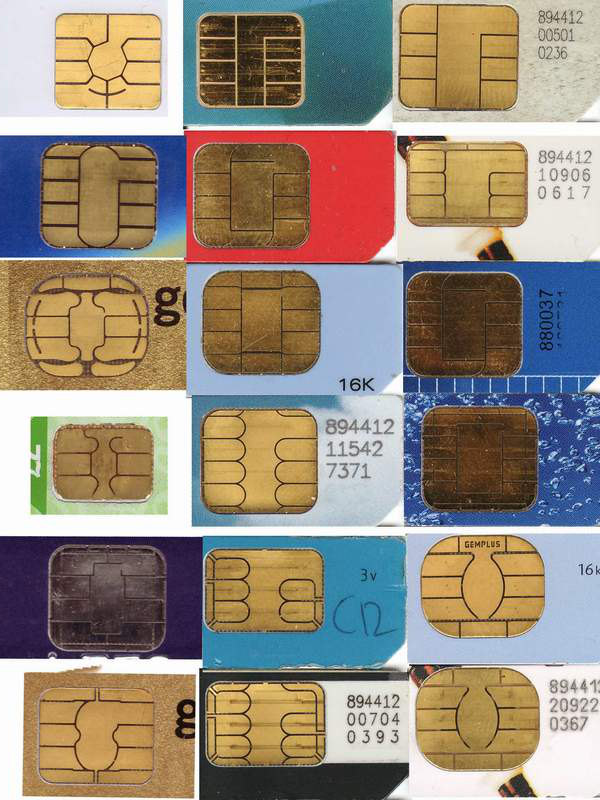
CU Blog - New Security Chip in Credit Cards Unveiled - Photo 2The world has already moved forward from the standard of magnetic stripe cards. The present is now smart cards…or no card at all; (payment apps on Google’s Android and Apple’s iPhone devices proliferate). The future of the credit, debit and payment card is more than a card, it’s a “computer science laboratory” in a pocket or purse!

Yes, payment systems in the Caribbean region must be ready for this new world of electronic commerce.

Getting the region ready was the mission of the book Go Lean … Caribbean, a roadmap for the introduction and implementation of the Caribbean Union Trade Federation (CU) and the Caribbean Central Bank (CCB). This Go Lean roadmap depicts these entities as hallmarks of technocratic efficiency; agile to not just keep pace of technology and market changes but also to drive change as well. This ability is necessary for new payment systems, new cards and new settlement schemes. The Go Lean roadmap calls for a regional currency for the Caribbean Single Market, the Caribbean Dollar (C$), to be used primarily as an electronic currency. These schemes will impact the growth of the regional economy in both the domestic and tourist markets. Consider this one CU scheme to incentivize more spending among cruise line passengers:

CU Blog - New Security Chip in Credit Cards Unveiled - Photo 3The cruise industry needs the Caribbean more than the Caribbean needs the industry. But the cruise lines have embedded rules/regulations designed to maximize their revenues at the expense of the port-side establishments. The CU solution is to deploy a scheme for smartcards (or smart-phone applications) that function on the ships and at the port cities. This scheme will also employ NFC technology – (Near Field Communications; defined fully at Page 192 – so as to glean the additional security benefits of shielding private financial data of the guest and passengers.

This is an example of an electronic payment system facilitating more commerce (e-Commerce). So the CCB will settle all C$ electronic transactions – cashless or accounting currency – in a MasterCard-Visa-style interchange / clearinghouse system.

As of October 1, 2015 bankcards must possess a smartchip, or assume the risk of fraud transactions; see VIDEO below. The CU/CCB roadmap anticipated smartchips from the outset of the Go Lean book, as this covers more than just commerce, but addresses security as well. Commerce, security and (bank) governance – these are all societal engines that must be optimized for societal progress. In  fact, the Go Lean roadmap has these 3 prime directives:

  • Optimization of the economic engines in order to grow the regional economy to $800 Billion & create 2.2 million new jobs.
  • Establishment of a security apparatus to protect the resultant economic engines.
  • Improvement of Caribbean governance to support these engines.

So the electronic payments schemes being considered by the rest of the world in the following article, are already envisioned for deployment in the Caribbean region:

VIDEO – New Security Chip in Credit Cards Unveiled – http://abcnews.go.com/WNT/video/security-chip-credit-cards-unveiled-34114798

Posted September 28, 2015 – New law required each card to be outfitted with a credit card chip that makes it harder to steal personal information.

The benefits of these technologies, as related in the foregoing VIDEO, cannot be ignored for their security features. Previously this commentary explored the issues associate with cyber-security and data breaches. With tourism as the primary economic driver, the Caribbean region cannot invite millions of visitors to our homeland and then ignore their need for protection; the kind of protection that has become standard in this new world of heightened information security.

The Go Lean roadmap calls for the CU to regulate the region’s Communications and Media affairs – federal Department of Commerce – under a separation-of-power mandate with the member-states. This authority must be super-national and have purview for cross-border environments.

With the CCB taking the lead for this deployment, the effort is not meant to be technical, but rather economic. The greatest benefit of deploying these electronic payment scheme is the acceleration of M1 in the regional economy; this is the measurement of currency/money in circulation (M0) plus overnight bank deposits. As depicted in the Go Lean book, and subsequent blog-commentaries, M1 increases allow central banks to create money “from thin-air”; referring to the money multiplier.

The Caribbean region needs this benefit. The more money in the system, the more liquidity for investment and industrial expansion opportunities. Plus, the nullifying effects on Black Market spurns more benefits.

The Go Lean book posits that to adapt and thrive in the new global marketplace there must be more strenuous management and technocratic oversight of the region’s currencies, guests-tourists-ship-passenger payment cards and cyber security. This is the charge – economics, security and governance – of the Go Lean roadmap, opening with these pronouncements; Declaration of Interdependence (Page 13 and 14):

xxiv. Whereas a free market economy can be induced and spurred for continuous progress, the Federation must install the controls to better manage aspects of the economy: jobs, inflation, savings rate, investments and other economic principles. Thereby attracting direct foreign investment because of the stability and vibrancy of our economy.

xxv.  Whereas the legacy of international democracies had been imperiled due to a global financial crisis, the structure of the Federation must allow for financial stability and assurance of the Federation’s institutions. To mandate the economic vibrancy of the region, monetary and fiscal controls and policies must be incorporated as proactive and reactive measures. These measures must address threats against the financial integrity of the Federation and of the member-states.

xxvii. Whereas the region has endured a spectator status during the Industrial Revolution, we cannot stand on the sidelines of this new economy, the Information Revolution. Rather, the Federation must embrace all the tenets of Internet Communications Technology (ICT) to serve as an equalizing element in competition with the rest of the world. The Federation must bridge the digital divide and promote the community ethos that research/development is valuable and must be promoted and incentivized for adoption.

The Go Lean book details a series of community ethos, strategies, tactics, implementations and advocacies to foster the proper controls for electronic/mobile payments in the Caribbean region:

Community Ethos – Economic Principles Page 21
Community Ethos – Money Multiplier Principle Page 22
Community Ethos – Security Principles – Privacy versus Public Protection Page 23
Community Ethos – Governing Principles – Lean Operations Page 24
Community Ethos – Governing Principles – Cooperatives Page 25
Community Ethos – Promote Intellectual Property Page 29
Community Ethos – Ways to Bridge the Digital Divide Page 31
Community Ethos – Ways to Improve Sharing Page 25
Strategy – Mission – Fortify the monetary needs through a Currency Union Page 45
Tactical – Separation of Powers – Central Banking Page 73
Tactical – Separation of Powers – Department of Commerce – Communications and Media Authority Page 79
Implementation – Assemble Central Bank Cooperative Page 96
Implementation – Assemble Caribbean Regional Regulatory Organs – like CTU Page 96
Implementation – Ways to Deliver Page 109
Planning – 10 Big Ideas – #2: Currency Union / Single Currency Page 127
Anecdote – Caribbean Currencies Page 149
Advocacy – Ways to Grow the Economy Page 151
Advocacy – Ways to Create Jobs Page 152
Advocacy – Ways to Mitigate Black Markets Page 165
Advocacy – Ways to Foster Cooperatives Page 176
Advocacy – Ways to Enhance Tourism Page 190
Advocacy – Ways to Impact Cruise Tourism – Smartcard scheme Page 193
Advocacy – Ways to Foster Technology Page 197
Advocacy – Ways to Foster e-Commerce Page 198
Advocacy – Reforms for Banking Regulations – Central Banking Efficiencies Page 199
Advocacy – Ways   to Impact Main Street – Facilitating e-Commerce Page 201
Appendix – Assembling the Caribbean Telecommunications Union (CTU) Page 256

The points of effective, technocratic banking/currency stewardship and dynamic change in the mobile communications space were further elaborated upon in these previous blog/commentaries:

https://goleancaribbean.com/blog/?p=5668 Move over Mastercard/Visa
https://goleancaribbean.com/blog/?p=4425 Cash, Credit or iPhone …
https://goleancaribbean.com/blog/?p=3889 RBC EZPay – Ready for Change
https://goleancaribbean.com/blog/?p=3881 The Need for Regional Cooperation to Up Cyber-Security
https://goleancaribbean.com/blog/?p=3617 Bahamas roll-out of VAT leading more to Black Markets
https://goleancaribbean.com/blog/?p=2074 MetroCard – Model for the Caribbean Dollar
https://goleancaribbean.com/blog/?p=1350 PayPal expands payment services to 10 markets
https://goleancaribbean.com/blog/?p=906 Bitcoin virtual currency needs regulatory framework to change image
https://goleancaribbean.com/blog/?p=476 CARICOM urged on ICT, e-Commerce and e-Payments

CU Blog - New Security Chip in Credit Cards Unveiled - Photo 4The Caribbean need to not play catch-up with this new smartchip/smartcard requirement. We need to adjust and adapt to the changing world.

This is no longer the future. This is here and now.

This is good! The benefits of this new requirements are too enticing to resist this change: incentivizing more cruise-tourism spending, fostering more e-Commerce, enhancing security, increasing regional M1, mitigating Black Markets, regional oversight of this technology, growing the economy, creating jobs and optimizing governance.

Now is the time for all stakeholders of the Caribbean, (residents, visitors, merchants, vendors, bankers, and governing institutions), to lean-in for the empowerments described in the book Go Lean … Caribbean. This change can help to make the Caribbean a better place to live, work and play. 🙂

Download the book Go Lean … Caribbean – now!

Share this post:
, , , , ,
[Top]

Dr. Sybil Mobley – FAMU’s Business School Dean – RIP

Go Lean Commentary

CU Blog - Dr Sybil Mobley - FAMU Business School Dean - RIP - Photo 1The FAMU world mourns the passing of Dr. Sybil Mobley (1925 – 2015; age 90), the much-accomplished and celebrated Dean Emerita of the School of Business and Industry (SBI).

This Go Lean … Caribbean movement – book and accompanying blog-commentaries – stress the fact that one man or one woman can make a difference in their community. Dr. Mobley’s impact was societal elevation with her mission to embed Black Americans in the conference rooms and board rooms of major corporations. She molded, prepared, energized and guided the best-of-the-best of Black America (many of Caribbean heritage as well; this writer included) and sent them off to impact the corporate world.

She sowed the seeds …

… the entire Black community now reap from this harvest.

Dr. Mobley was born in Jim-Crow America in Shreveport, Louisiana. She came to Tallahassee, Florida – the home campus of Florida A&M University – in 1963, still in the era and location of the Deep South. Despite that debilitating environment for a Black woman, she thrived and got her disciples to thrive, as depicted in the following news-media obituary and VIDEO:

Title: FAMU’s Dr. Mobley Passes Away
By: Lanetra Bennett

TALLAHASSEE, Fla. – September 29, 2015 — Dr. Sybil C. Mobley passed away today. She’s the founder of the world renowned School of Business and Industry at FAMU.

Her students and those who knew her say she was much more.

Dr. Mobley’s family confirms she died early Tuesday morning after a brief illness.

Former students say they’re known as, “Sybil’s babies”. They marvel how she balanced power in the boardroom, with compassion for students.

Tallahassee businessman Clinton Byrd keeps a medallion on his desk with Dr. Sybil Mobley’s face on it.

He says, “The phone rings and you’re just hoping that it’s not that news. But, we knew that one day it would come.”

The news came Tuesday that Dr. Mobley had died. “It’s a sad day for us.” Byrd said.

Dr. Mobley started the School of Business and Industry at FAMU in 1974.

Byrd was one of her students. He said, “One day I was giving a presentation on Accounting Theory and the bright lights came on. I just lost it. When I got through, she said, boy that was fantastic. I said, doc, I can’t even remember what I said or what I did. She was always encouraging. She kept a paper that I wrote in 1967. She still has it about impact.”

Mobley had an impact on countless people in Tallahassee and beyond.

The Shreveport, Louisiana native started her career at FAMU in 1963, and is said to have put S.B.I. on the map alongside Yale, University of Chicago, and University of North Carolina. “People used to come here from all over the world to meet her, to spend time with her.” Said, Byrd.

Precious Tankard is a current sophomore. She said, “It’s a lot to say I am a business administration student or an S.B.I. period, in SBI. When we say we’re SBI, they know that greatness lies ahead.”

The current dean, Shawnta Friday-Stroud, is also a former student. She said, “I hope that I have done and that I continue to do her proud. It’s because of what she taught so many of us that I’m even standing in this position as dean today.”

Byrd said, “Some way, somehow we just all have to carry on.”

S.B.I. recently celebrated its 40th anniversary. Dr. Mobley was the founding dean until she retired in 2003. That’s when those special medallions that Byrd has were issued.
Source: Local CBS TV Affiliate WCTV  (Retrieved September 29, 2015) – http://www.wctv.tv/home/headlines/Dr-Sybil-Mobley-Former-FAMU-Business-School-Dean-Dies-329934011.html

CU Blog - Dr Sybil Mobley - FAMU Business School Dean - RIP - Photo 2

VIDEO – Rep. Gwen Graham Honors FAMU Leader Dr. Sybil Mobley – https://youtu.be/QCCk19vnKPU

Published on Oct 7, 2015 – “Today I rise to honor the life of Dr. Sybil Mobley, the founding dean of Florida A&M University’s School of Business and Industry.

“Dr. Mobley first worked at Florida A&M as a secretary in 1945 – she then went on to study at the Wharton School of Finance and earned her doctorate from the University of Illinois.

After graduating, Dr. Mobley returned to Florida A&M, and in 1974 she became the founding dean of the University’s School of Business and Industry.

“She held that position for 29 years, during which time she worked tirelessly to build the business school into a nationally recognized institution.

“Her rise from working as a secretary to sitting on the board of Fortune 500 companies and leading a business school serves as an inspiration for all of us.

“Today, we mourn Dr. Mobley’s passing – and celebrate her life. She was a treasure to FAMU, Tallahassee, the state of Florida and our nation.”

  • Category: People & Blogs
  • License: Standard YouTube License

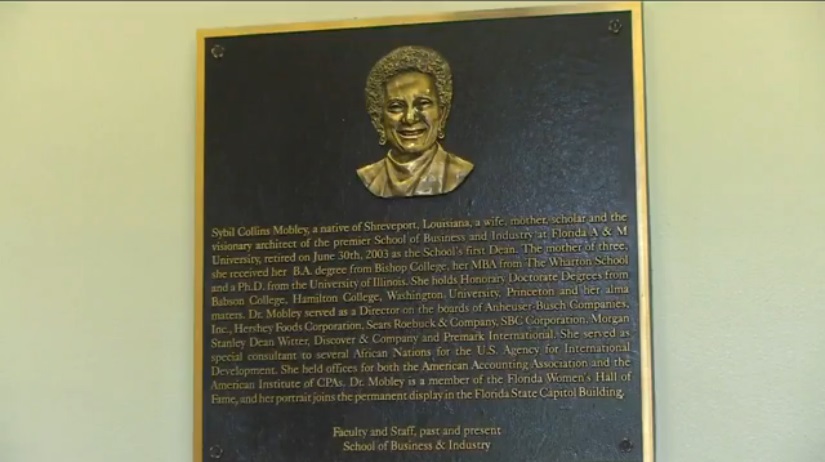
Dr. Sybil Mobley impacted the business world, not just the world of college education. She served on many corporate boards and received many awards and honors from around the world; (see plaque in photo above). While she was not of Caribbean heritage, she impacted many students who are; see the Facebook testimony here of two, one Jamaican-American and one Bahamian-American FAMU-SBI alumni:

Michelle Graham Day, SBI Class of 2008
Oh no, ‪#‎LEGEND! No matter how powerful a force to be reckoned with, you could walk in her office as an unknown freshman and get a one on one without an appointment! I remember feeling inspired because like me she had also graduated high school and started college at 16, and I remember her making clear that she was here to get us to play in the majors and said “when people say [why isn’t she using an HBCU business school to funnel students into] minority business what they [the critics, not the official definition!] really mean is minor business” meaning they were doubting her SBI students could hang in the big leagues. She pointed out that no company makes it onto the wall of plaques outside the main entrance without having invested $100k? (correct me if am off) in her vision…

I took 3 long internships that were real work not coffee fetching, one a year long, and graduated way off cycle, but my first big league company out the gate was IBM out west in Colorado (I was always willing to go anywhere while many were not even applying cause it wasn’t somewhere sexy to black people like New York or Miami) and even in the recession when on campus offers froze up, it is those 3 positions with Fortune 500 companies that led to my career which evolved from logistics/supply chain into data analysis into business intelligence and IT. It’s those 3-part PD questions with your premises and non-yes-or-no-answer follow-up question that had me stumping interviewers with my never-cliche questions and already-solid work experience standing out among other candidates even at internship stage. To this day I get compliments on the quality of my questions. The ability to multitask and speedread through 18 credit hours a semester (which I have also pulled off that load in SUMMER when full time is 6 credit hours), the logic picked up by being forced to take Physics I & II as our required sciences with much grumbling on our part, it all served me oh so well in skeleton crew workplaces where you wear many hats and the workload is intense as everyone is required to do more with less post-recession, and in learning how to experiment with the data and record different observations during data analysis and data mining/modeling, just like in the physics labs. She evolved with the needs of corporate and I’m constantly having to evolve to stay ahead of the demands of my field. I went on to work for some of the most established, storied corporations on earth and moved into Fortune 100 and it is all thanks in major part to applying what was learned in Dean Mobley’s program. Her passing is the passing of an era, she will be missed! ‪#‎RIP.‪#‎FAMU‪#‎SBI‪#‎visionary

Clifton H. Rodriguez, CPA, SBI Class of 1985
Probably [she] was the most influential woman in my life. I can still remember her teachings, and the lasting motto: “No effort is adequate until it is effective”. I remember in 1981 when she served on the Board of Anheuser Busch Companies, and had a meeting in St. Louis, Mo. She left her meeting with those important people, including August Busch, III to seek Anthony Glover and myself out to advise us about [a] murder that occurred on campus…. She did not have to do that, but deemed us that important to seek us out and advise us. She treated all of her students in that manner. She was not only our dean, but our nurturing mother, who cared deeply about her precious children.

These foregoing testimonies are such good reflections of Dr. Mobley’s character and quest: she wanted her students “playing in the ‘Major’ leagues” of Big Corporate businesses. She recognized that while minority business ownership is important in America today and for the recent past, minority businesses are just minor businesses.

The publishers of the book Go Lean…Caribbean recognize the life contributions of Dr. Sybil Mobley as an educator, industrialist and advocate for many causes that align with our quest for empowerment and elevation of Caribbean commerce and life. Her vision was for more self-determination for the role that business and economics play in the lives of Black America. This means participating, not just spectating, in the business processes of BIG business. There are now more African-Americans (and those of African-Caribbean heritage) engaged in the business processes with corporate America because of the efforts of Dr. Mobley.

Mission accomplished!

“You have fought the good fight, you have finished the race, and you have remained faithful”. – 2 Timothy 4:7 (The Bible New Living Translation).

Like Dr. Sybil Mobley, the prime directive of the Go Lean book is also to elevate society, but instead of impacting America, the roadmap focus is the Caribbean first. The book serves as a roadmap for the introduction and implementation of the Caribbean Union Trade Federation (CU). The CU seeks to empower the people of the Caribbean to lead more impactful lives in which they are better able to meet their needs and plan for a productive future. The Go Lean roadmap seeks to put Caribbean people in a place of better command-and-control of their circumstances, to develop the community ethos of fostering genius, innovation and entrepreneurship. In fact, the prime directive declarative statements in the Go Lean book are as follows:

  • Optimization of the economic engines in order to grow the regional economy to $800 Billion & create 2.2 million new jobs.
  • Establishment of a security apparatus to protect the resultant economic engines.
  • Improvement of Caribbean governance to support these engines.

Dr. Sybil Mobley is hereby recognized as a role model that the rest of the Caribbean can emulate. She provided a successful track record of forging change, overcoming incredible odds, managing crises to successful conclusions and paying forward to benefit the next generation. The Go Lean book posits that the economic, security and governing engines are all important for the sustenance of Caribbean life, so Dr. Mobley’s life course stands as a vanguard for many of these pursuits.

The book posits that one person, despite their field of endeavor, can make a difference in the Caribbean, and its impact on the world; that there are many opportunities where one champion, one advocate, can elevate society. In this light, the book features 144 different advocacies, so there is inspiration for the “next” Dr. Sybil Mobley to emerge, establish and excel right here at home in the Caribbean.

The roadmap specifically encourages the region, to lean-in and foster this “next” generation of Dr. Sybil Mobley’s with these specific community ethos, strategies, tactics, implementations and advocacies:

Community Ethos – Economic Systems Influence Individual Choices Page 21
Community Ethos – Consequences of Choices Lie in the Future Page 21
Community Ethos – Minority Equalization Page 24
Community Ethos – Ways to Impact the Future Page 26
Community Ethos – Ways to Foster Genius Page 27
Community Ethos – Ways to Help Entrepreneurship Page 30
Community Ethos – Ways to Bridge the Digital Divide Page 33
Community Ethos – Ways to Impact Turn-Arounds Page 35
Community Ethos – Ways to Impact the Greater Good Page 37
Strategy – Build and foster local economic engines Page 45
Strategy – Educate our children with the wisdom and knowledge to succeed Page 46
Tactical – Grow the Economy to $800 Billion – Elevate economy through Education Page 70
Tactical – Separation-of-Power – Federal Department of Education Page 85
Anatomy of Advocacies Page 122
Planning – Ways to Make the Caribbean Better Page 131
Advocacy – Ways to Grow the Economy Page 151
Advocacy – Ways to Create Jobs Page 152
Advocacy – Ways to Improve Education Page 159
Advocacy – Ways to Better Provide Clothing Page 163
Advocacy – Ways to Impact Wall Street Page 200
Advocacy – Ways to Impact Main Street Page 201
Advocacy – Ways to Preserve Caribbean Heritage Page 218
Appendix – Education and Economic Growth Page 258

Education is a priority in the Go Lean roadmap. Previously, this commentary has highlighted many other lessons that the region needs to apply to elevate the societal engines for education. See a sample list here:

https://goleancaribbean.com/blog/?p=6269 Education & Economics: Welcome Mr. President
https://goleancaribbean.com/blog/?p=5482 For-Profit American Education: Plenty of Profit; Little Education
https://goleancaribbean.com/blog/?p=4572 Role Model: Innovative Educator Ron Clark
https://goleancaribbean.com/blog/?p=4487 FAMU is No. 3 for Facilitating Economic Opportunity
https://goleancaribbean.com/blog/?p=1256 Is a Traditional 4-year Degree a Terrible Investment?

We need impactful role models like Dr. Sybil Mobley at home in the Caribbean. The formula of sending our “best-of-the-best” to North America and Europe has failed us – they rarely come back home; see sample testimonies above, both individuals currently live in the US. The quest of the Go Lean roadmap is to change that formula – we now want to educate our “best-of-the-best” right here in the Caribbean region, thereby increasing the likelihood that they will remain after their matriculation. This change will require a lot of contributions from a lot of different people. This quest is pronounced early in the roadmap in the Declaration of Interdependence at the outset of the book, declaring a need for regional solutions (Pages 13 & 14) with these statements:

xix. Whereas our legacy in recent times is one of societal abandonment, it is imperative that incentives and encouragement be put in place to first dissuade the human flight, and then entice and welcome the return of our Diaspora back to our shores

xxi. Whereas the preparation of our labor force can foster opportunities and dictate economic progress for current and future generations, the Federation must ensure that educational and job training opportunities are fully optimized for all residents of all member-states, with no partiality towards any gender or ethnic group. The Federation must recognize and facilitate excellence in many different fields of endeavor, including sciences, languages, arts, music and sports. This responsibility should be executed without incurring the risks of further human flight, as has been the past history.

xxx. Whereas the effects of globalization can be felt in every aspect of Caribbean life, from the acquisition of food and clothing, to the ubiquity of ICT, the region cannot only consume, it is imperative that our lands also produce and add to the international community, even if doing so requires some sacrifice and subsidy.

With the participation of many advocates on many different paths for progress, the Caribbean can truly become a better place to live, work, learn  and play.

Thank you for preparing us for this challenge, Dr. Mobley. Thank you for your service, commitment, nurturing and love. Now take your rest. Rest in Peace!

Download the free e-Book of Go Lean … Caribbean – now!

Share this post:
, , , , ,
[Top]

Capitalism of Drug Patents

Go Lean Commentary:

While “Greed maybe good” for incentivizing innovation, it “sucks” to apply massive increases to existing products because … well just because.

This appears to be the scenario in the following news article and VIDEO; a former Hedge Fund Manager buys the rights (patents) to an older drug and then increases the price … 5500 percent. See the story here:

Title: Ex-hedge funder buys rights to AIDS drug and raises price from $13.50 to $750 per pill
By: Tom Boggioni

A former hedge fund manager turned pharmaceutical businessman has purchased the rights to a 62-year-old drug used for treating life-threatening parasitic infections and raised the price overnight from $13.50 per tablet to $750.

CU Blog - Capitalism of Drug Patents - Photo 1According to the New York Times, Martin Shkreli, 32, the founder and chief executive of Turing Pharmaceuticals, purchased the rights to Daraprim for $55 million on the same day that Turing announced it had raised $90 million from Shkreli and other investors in its first round of financing.

Daraprim is used for treating toxoplasmosis — an opportunistic parasitic infection that can cause serious or even life-threatening problems in babies and for people with compromised immune systems like AIDS patients and certain cancer patients — that sold for slightly over $1 a tablet several years ago.  Prices have increased as the rights to the drug have been passed from one pharmaceutical company to the next, but nothing like the almost 5,500 percent increase since Shkreli acquired it.

Worrying that the cost of treatment could devastate some patients, Dr. Judith Aberg, the chief of the division of infectious diseases at the Icahn School of Medicine at Mount Sinai asked, “What is it that they are doing differently that has led to this dramatic increase?”

According to Shkreli, Turing will use the money it earns to develop better treatments for toxoplasmosis, with fewer side effects.

“This isn’t the greedy drug company trying to gouge patients, it is us trying to stay in business,” Shkreli explained, saying that many patients use the drug for far less than a year and that the new price is similar to other drugs used for rare diseases.

Shrkeli also defended his small pharmaceutical company saying, “It really doesn’t make sense to get any criticism for this.”

This is not the first time the fledgling pharmaceutical executive has come under scrutiny.

He started the hedge fund MSMB Capital while in his 20’s and was accused of urging the FDA to not approve certain drugs made by companies whose stock he was shorting.

In 2011, Shkreli helped form Retrophin, which also acquired old drugs and immediately raised their prices. Retrophin’s board fired Shkreli a year ago and has filed a complaint in Federal District Court, accusing him of using Retrophin as a personal fund to pay back angry investors in his hedge fund.

As for Shrkeli’s claim that he will put the excess profits back into research, doctors say that isn’t needed in this case.

“I certainly don’t think this is one of those diseases where we have been clamoring for better therapies,” said Dr. Wendy Armstrong, professor of infectious diseases at EmoryUniversity in Atlanta.

——-

VIDEO Title: Ex-hedge funder who hiked AIDS pill cost by 5,500 percent says drug ‘still underpriced’ https://youtu.be/bCIMUn_WNz0

UPDATE: ‘Pharma Bro’ backs down: Martin Shkreli will roll back outrageous Daraprim price gouge

According to the Person of Interest in the foregoing article and VIDEO, 32 year-old ex-Hedge Fund Manager Martin Shkreli, “Drugs need a profit motive to sponsor innovation”. He posits that the process of research and development for new drugs require the appeal of capitalism, where people invest hoping to get a BIG return later.

To argue with this business logic is to argue with the tenets of capitalism.

So be it! Let the argument begin!

“This is what happens when you turn over healthcare to the capitalist” – says one patient and sufferer of Multiple Sclerosis, Dionne Sarden, of Greater Detroit.

Drugs and healthcare should pursue the motives of the Greater Good, not the “greater profit”. If you do not agree with this statement, just re-visit the Hippocratic Oath, here,  that every doctor is required to vow at the start of their medical career:

I swear to fulfill, to the best of my ability and judgment, this covenant:

I will respect the hard-won scientific gains of those physicians in whose steps I walk, and gladly share such knowledge as is mine with those who are to follow.

I will apply, for the benefit of the sick, all measures which are required, avoiding those twin traps of overtreatment and therapeutic nihilism.

I will remember that there is art to medicine as well as science, and that warmth, sympathy, and understanding may outweigh the surgeon’s knife or the chemist’s drug.

I will not be ashamed to say “I know not,” nor will I fail to call in my colleagues when the skills of another are needed for a patient’s recovery.

I will respect the privacy of my patients, for their problems are not disclosed to me that the world may know. Most especially must I tread with care in matters of life and death. If it is given me to save a life, all thanks. But it may also be within my power to take a life; this awesome responsibility must be faced with great humbleness and awareness of my own frailty. Above all, I must not play at God.

I will remember that I do not treat a fever chart, a cancerous growth, but a sick human being, whose illness may affect the person’s family and economic stability. My responsibility includes these related problems, if I am to care adequately for the sick.

I will prevent disease whenever I can, for prevention is preferable to cure.

I will remember that I remain a member of society, with special obligations to all my fellow human beings, those sound of mind and body as well as the infirm.

If I do not violate this oath, may I enjoy life and art, respected while I live and remembered with affection thereafter. May I always act so as to preserve the finest traditions of my calling and may I long experience the joy of healing those who seek my help.

Written in 1964 by Louis Lasagna, Academic Dean of the School of Medicine at Tufts University, and used in many medical schools today. Source: https://en.wikipedia.org/wiki/Hippocratic_Oath retrieved September 23, 2015.

Alas, the Person of Interest in this consideration is not a medical doctor, he is a Hedge Fund Manager. Some would consider his actions to be just “par for the course” … for a Crony-Capitalist. (Consider this sample of his “immature” Twitter messages).

This consideration is in conjunction with the book Go Lean…Caribbean which asserts that Crony-Capitalism is the scorn of American life that reaches into every fabric of society; in this case the life-and-death decisions for healthcare. The book urges the Caribbean region not to follow the American example in this regard. (Previously Go Lean blogs have cited the good non-profit-motive example of Cuba. While Cuba is a Failed-State in so many other areas, in this one case, drug-pricing, they get it right; “even a broken clock is right twice a day”).

The Go Lean book is focused on economics primarily, but also considers the realities of security and governance. For the background on economics, the book relates the historicity of the father of modern macro-economics Adam Smith.

Adam Smith, the 18th century Scottish political economics pioneer, is best known for his classic work: “An Inquiry into the Nature and Causes of the Wealth of Nations (1776)“. Through reflection over the economics at the beginning of the Industrial Revolution the book touches upon broad topics as the division of labor, productivity, free markets and the division of incomes into profit, wage, and rent [4]. While Smith attacked most forms of government interference in the economic process, he advocated that government should remain active in certain sectors of society not suited for profit-seekers. These sectors included public education, mitigations for poor adults, the judiciary, a standing army, and healthcare. He posited that these institutional systems may/should never be directly profitable for private industries.

Hedge Funds and Crony-Capitalist obviously hold a dissenting view.

Beyond Adam Smith, the field of Economics features public choice theory – the application of economic thinking to political issues. This field asserts that “rent-seeking” is the more appropriate labeling for certain activities. This “rent” refers to seeking to increase one’s share of existing wealth without creating new wealth. The demonstrated  effects of these efforts are reduced economic efficiency [in the community] through poor allocation of resources, reduced actual wealth creation, lost government revenue, and increased income inequality,[1] and, potentially, national decline. (The word “rent” does not refer here to payment on a lease but refers to gaining control of land or other natural resources).

So why is the cost of drugs so high in the US? Based on these experiences, it is not just the motivation for profit, but for rent!

This theory was detailed further in a recent Go Lean blog that related that Big Pharma, the Pharmaceutical industry, dictates standards of care in the field of medicine, more so than may be a best-practice. The blog painted a picture of a familiar scene where Pharmaceutical Sales “Reps” slip in the backdoor to visit doctors to showcase their latest product lines; but relates that there are commission kick-backs, rebates and “spiffs” in these arrangements, to incentivize the doctors to order these drugs for their patients. The Go Lean book posits that the Caribbean must take its own lead in the battle for health, wellness and pharmaceuticals because this US eco-system is motivated by such a bad ethos: profit and even worst, rent.

The Go Lean book strategizes a roadmap for economic empowerment in the Caribbean region, even including the indisputable need for healthcare and pharmaceutical drugs. Clearly any quest to elevate the region must detail a comprehensive plan for healthcare. The Go Lean book proves this; it goes beyond a plan and provides a roadmap … to make the Caribbean a better place to live, work, heal and play. At the outset of the Go Lean book, in the Declaration of Interdependence (Page 11), these points are pronounced:

viii. Whereas the population size is too small to foster good negotiations for products and commodities from international vendors, the Federation must allow the unification of the region as one purchasing agent, thereby garnering better terms and discounts.

ix.  Whereas the realities of healthcare and an aging population cannot be ignored and cannot be afforded without some advanced mitigation, the Federation must arrange for health plans to consolidate premiums of both healthy and sickly people across the wider base of the entire Caribbean population. The mitigation should extend further to disease management, wellness, mental health, obesity and smoking cessation programs.

The Go Lean serves as a roadmap for the implementation and introduction of the technocratic Caribbean Union Trade Federation (CU). The CU‘s prime directives are identified with the following 3 statements:

  • Optimization of the economic engines in order to grow the regional economy to $800 Billion & create 2.2 million new jobs.
  • Establishment of a security apparatus to protect the resultant economic engines.
  • Improve Caribbean governance to support these engines.

Previous blog/commentaries addressed issues of capitalistic conflicts in American medical practices, compared to other countries, and the Caribbean. The following sample applies:

Book Review – ‘Thimerosal: Let The Science Speak’
Detroit-area Judge to Decide if Kids Need Vaccines
Good American Model – Shaking Up the World of Cancer With a Good ROI
Bad American Model – The Cost of Cancer Drugs
Racism in Medicine? Look at Ebola’s Historicity
Antibiotics Misuse Linked to Obesity in the US
CHOP Research: Climate Change May Bring More Kidney Stones
Big Pharma & Criminalization of American Business
New Research and New Hope in the Fight against Alzheimer’s Disease
Health-care fraud in America; criminals take $272 billion a year
New Cuban Cancer medication registered in 28 countries

The foregoing news article and VIDEO provides an inside glimpse of American Crony-Capitalism as it touches on vital areas like healthcare. Obviously, the innovators and developers of drugs have the right to glean the economic returns of their research. The Go Lean roadmap posits that there is a better way, a scheme in which more innovations can emerge and investors can get their Return on Investment (ROI).

The Caribbean Union Trade Federation has the prime directive of optimizing the economic, security and governing engines of the region. The foregoing VIDEO depicts that research is very important to identify and qualify best practices in health management for the public. This is the manifestation and benefits of Research & Development (R&D). The roadmap describes this focus as a community ethos to promote R&D in the areas of science, technology, engineering and medicine (STEM).

The following list details additional ethos, strategies, tactics, implementations and advocacies to optimize the region’s health deliveries and R&D investments, especially on Caribbean campuses and educational institutions:

Community Ethos – Deferred Gratification Page 21
Community Ethos – Economic Systems Influence Individual Choices and Incentives Page 21
Community Ethos – The Consequences of Choices Lie in the Future Page 21
Community Ethos – Governing Principles – Lean Operations – GPO’s; Ideal for Healthcare Page 24
Community Ethos – Governing Principles – Return on Investments (ROI) Page 24
Community Ethos – Governing Principles – Cooperatives Page 25
Community Ethos – Non-Government Organizations Page 25
Community Ethos – Ways to Impact Research & Development (R&D) Page 30
Community Ethos – 10 Ways to Promote Happiness Page 36
Community Ethos – Ways to Impact the Greater Good Page 37
Strategy – Integrate and unify region in a Single Market Page 45
Strategy – Agents of Change – Globalization Page 57
Tactical – Fostering a Technocracy Page 64
Tactical – Growing to a $800 Billion Economy – Case Study of Adam Smith Page 67
Tactical – Separation of Powers – Health Department Page 86
Tactical – Separation of Powers – Drug Administration Page 87
Implementation – Ways to Pay for Change Page 101
Implementation – Ways to Implement Self-Government Entities – R&D Campuses Page 105
Implementation – Ways to Deliver Page 109
Planning –  Ways to Improve Trade Page 128
Planning –  Ways to Make the Caribbean Better Page 131
Advocacy – Ways to Improve Healthcare Page 156
Advocacy – Ways to Better Manage the Social Contract Page 170
Advocacy – Ways Foster Cooperatives Page 176
Advocacy – Ways to Improve Emergency Management Page 196
Advocacy – Ways to Impact Foundations Page 219
Advocacy – Ways to Impact Persons with Disabilities Page 228
Appendix – Emergency Management – Medical Trauma Centers Page 336

The Go Lean roadmap does not purport to be an authority on medical or pharmaceutical research best practices. This economic-security-governance empowerment plan should not direct the course of direction for medical research and/or treatment. But something is wrong here, as portrayed in the foregoing article and VIDEO. The pharmaceutical industry cannot claim any adherence to any “better nature” in their practices.

This is not economics, which extols principles like the “law of diminishing returns”, or “competition breathes lower prices and higher quality”. No, the American pharmaceutical industry, at this juncture, is just a pure evil version of Crony Capitalism. Just … rent!

This is not the role model we want to build Caribbean society on.

Capitalism versus Socialism …
Many people feel this type of discussion in this commentary is really a clear indictment of the premise of the American Healthcare system, based on capitalism (right-leaning). Opponents of this status quo advocate for a more socialistic approach (left-leaning). Socialized medicine is the premise for Canada, the UK, and all the 27 EU countries. So the alternative to the American system is not so radical. Alas, even America’s capitalized healthcare schemes are not as far-right as in times past; with the implementation MediCare (in the 1960’s), VA hospitals, and Affordable Care Act (ObamaCare) Health Insurance mandates; these are now reflections of socialism in the US system.

CU Blog - Capitalism of Drug Patents - Photo 2How do we measure the effectiveness of success of left-leaning versus right-leaning healthcare schemes? While most “Well-being” measurements are obviously subjective, there is one exception: life expectancy. Life expectancy calculation is all binary, 1 versus 0, On versus Off, Life versus Death. The Organization of Economic Cooperation and Development maintains a Better Life Index that measures “Well-being” in the 34 OECD Countries. The following details apply:

There is more to life than the cold numbers of GDP and economic statistics – This Index allows you to compare well-being across countries, based on 11 topics the OECD has identified as essential, in the areas of material living conditions and quality of life.

One of the 11 topics measure “Health”, with considerations to the binary Life Expectancy and the subjective Self-Reported Health. On this chart related to Life Expectancy (based on when the average age for non-trauma deaths), the US appears on the list in position 27. See chart here.

The Go Lean movement asserts that the US should not be our model for healthcare. We can do better in the Caribbean; we have done better (Cuba), and must do better throughout the region. We can impact the Greater Good and still preserve economic realities. This means life-or-death. 🙂

Download the book Go Lean … Caribbean – now!

———-

Related: When blacks get equal medical care, they don’t just live longer — they live longer than whites

Share this post:
, , , ,
[Top]

Lessons from Iceland – Model of Recovery

Go Lean Commentary

There are so many lessons the Caribbean region can learn from the island Republic of Iceland.

CU Blog - Lessons from Iceland - Model of Recovery - Photo 1First, it’s an island, Duh!!!

Just like with the Caribbean, logistics of trade is more difficult as it must be based on naval and aeronautical solutions.

They have natural disasters … volcanoes as opposed to hurricanes or earthquakes.

The population is 320,000 … the range of many Caribbean countries; (i.e. Bahamas, Barbados, Belize, Guadeloupe (Fr.), Martinique (Fr.) and Suriname). Yet, it is not grouped with the formal Small Island Developing States (SIDS) as is all the sovereign Caribbean territories. The following defines the common traits:

Small Island Developing States are low-lying coastal [sovereign] countries that tend to share similar sustainable development challenges, including small but growing populations, limited resources, remoteness, susceptibility to natural disasters, vulnerability to external shocks, excessive dependence on international trade, and fragile environments. Their growth and development is also held back by high communication, energy and transportation costs, irregular international transport volumes, disproportionately expensive public administration and infrastructure due to their small size, and little to no opportunity to create economies-of-scale. – Source: https://en.wikipedia.org/wiki/Small_Island_Developing_States

Iceland has done many things well so that everyone in the Caribbean, all SIDS countries for that matter, need to take notice.

During the bad days of the Great Recession – at the precipice of disaster – the country deviated from other troubled regions …

Iceland let its banks fail in 2008 because they proved too big to save.

How does it relate to the Caribbean? The Caribbean is at the precipice … now; many of the member-states are near Failed-State status, while others are still hoping to recover from the devastating Great Recession of 2008. Turn-around should not take this long – 7 years. Strategies, tactics and implementations of best-practices to effect a turn-around must be pursued now.

Iceland has now recovered, and complaining about a 2% unemployment rate. What did they do that was so radically different than other locations? For one, they changed course regarding economics, security and governing policies. An ultra-capitalist movement had taken hold of the country and business communities; they pursued an aggressive “boom-or-bust” strategy, that ultimately “busted”, rather than continue on that road, the country – all aspects of society – altered course and returned to a path of sound fundamentals.

They rebooted and turned-around! Iceland embraced all aspects of turn-around strategies, mandating bankruptcies and “wind-downs” so that the economy – and society in general – could start anew.

This article is in consideration of the book Go Lean…Caribbean; it serves as a roadmap for the introduction and implementation of the technocratic Caribbean Union Trade Federation (CU) and Caribbean Central Bank (CCB) to provide better stewardship, to ensure that the economic/currency failures of the past, in the Caribbean and other regions, do not re-occur here in the homeland.

We can learn so much from this episode in Icelandic history, the good, the bad and the ugly. See the encyclopedic details here:

Reference Title: Iceland’s Economy and Recovery
CU Blog - Lessons from Iceland - Model of Recovery - Photo 2In 2007, Iceland was the seventh most productive country in the world per capita (US$54,858), and the fifth most productive by GDP at purchasing power parity ($40,112). About 85 percent of total primary energy supply in Iceland is derived from domestically produced renewable energy sources.[93] Utilization of abundant hydroelectric and geothermal power has made Iceland the world’s largest electricity producer per capita.[94] … Historically, Iceland’s economy depended heavily on fishing, which still provides 40% of export earnings and employs 7% of the work force.[49] The economy is vulnerable to declining fish stocks and drops in world prices for its main material exports: fish and fish products, aluminum, and ferrosilicon.

Iceland had been hit especially hard by the Great Recession that began in December 2007, because of the failure of its banking system and a subsequent economic crisis. Before the crash of the country’s three largest banks, Glitnir, Landsbanki and Kaupthing, their combined debt exceeded approximately six times the nation’s gross domestic product of €14 billion ($19 billion).[116][117] In October 2008, the Icelandic parliament passed emergency legislation to minimize the impact of the Financial crisis. The Financial Supervisory Authority of Iceland used permission granted by the emergency legislation to take over the domestic operations of the three largest banks.[118] Icelandic officials, including central bank governor Davíð Oddsson, stated that the state did not intend to take over any of the banks’ foreign debts or assets. Instead, new banks were established to take on the domestic operations of the banks, and the old banks will be run into bankruptcy.

On 28 October 2008, the Icelandic government raised interest rates to 18% (as of August 2010, it was 7%), a move which was forced in part by the terms of acquiring a loan from International Monetary Fund (IMF). After the rate hike, trading on the Icelandic króna finally resumed on the open market, with valuation at around 250 ISK per Euro, less than one-third the value of the 1:70 exchange rate during most of 2008, and a significant drop from the 1:150 exchange ratio of the week before.

CU Blog - Lessons from Iceland - Model of Recovery - Photo 3On 20 November 2008, in an effort to stabilize the situation, the Icelandic government stated that all domestic deposits in Icelandic banks would be guaranteed, imposed strict capital controls to stabilize the value of the Icelandic króna, and secured a US$5.1bn sovereign debt package from the IMF and the Nordic countries – Denmark, Finland, Norway, and Sweden agreed to lend $2.5 billion. [119] – in order to finance a budget deficit and the restoration of the banking system. (The international bailout support program led by IMF officially ended on August 31, 2011, while the capital controls which were imposed in November 2008 are still in place only recently ended in the last few weeks).

On 26 January 2009, the coalition government collapsed due to the public dissent over the handling of the financial crisis. A new left-wing government was formed a week later and immediately set about removing Central Bank governor Davíð Oddsson and his aides from the bank through changes in law. Davíð was removed on 26 February 2009 in the wake of protests outside the Central Bank.[120]

The financial crisis had a serious negative impact on the Icelandic economy. The national currency fell sharply in value, foreign currency transactions were virtually suspended for weeks, and the market capitalization of the Icelandic stock exchange fell by more than 90%. As a result of the crisis, Iceland underwent a severe economic depression; the country’s gross domestic product dropped by 10% in real terms between the third quarter of 2007 and the third quarter of 2010.[6] A new era with positive GDP growth started in 2011, and has helped foster a gradually declining trend for the unemployment rate. The government budget deficit has declined from 9.7% of GDP in 2009 and 2010 to 0.2% of GDP in 2014;[7] the central government gross debt-to-GDP ratio is expected to decline to less than 60% in 2018 from a maximum of 85% in 2011.[8]

[A post-mortem analysis helped to put the blame for Iceland’s crisis on a bad community ethos that had encapsulated the whole country related to debt]:

[Disregarding their] small domestic market, Iceland’s banks had financed their expansion with loans on the interbank lending market and, more recently, by deposits from outside Iceland (which are also a form of external debt). Households also took on a large amount of debt, equivalent to 213% of disposable income, which led to inflation.[117] This inflation was exacerbated by the practice of the Central Bank of Iceland issuing liquidity loans to banks on the basis of newly issued, uncovered bonds[118] – effectively, printing money on demand.

[Then the turn-around took hold …]

By mid-2012 Iceland was regarded as one of Europe’s recovery success stories. It has had two years of economic growth. Unemployment was down to 6.3% and Iceland was attracting immigrants to fill jobs. Currency devaluation effectively reduced wages by 50% making exports more competitive and imports more expensive. Ten-year government bonds were issued below 6%, lower than some of the PIIGS nations in the EU (Portugal, Italy, Ireland, Greece, and Spain). Tryggvi Thor Herbertsson, a member of parliament, noted that adjustments via currency devaluations are less painful than government labor policies and negotiations.

By June 2012, Landsbanki managed to repay about half of the Icesave debt.[124]

According to Bloomberg, Iceland was on the trajectory of 2% unemployment as a result of crisis-management decisions made back in 2008, including allowing the banks to fail.[125]. [Here are the highlighted bullets of this story posted January 27, 2014:]

    Iceland let its banks fail in 2008 because they proved too big to save.
    Now, the island is finding crisis-management decisions made half a decade ago have put it on a trajectory that’s turned 2 percent unemployment into a realistic goal.
    While the Euro area grapples with record joblessness, led by more than 25 percent in Greece and Spain …

[Iceland is NOT a member of the EU], nevertheless, while EU fervor has cooled [due to the crisis] the government continues to pursue membership.[246]
Source: Wikipedia Online Encyclopedia – Retrieved 09/23/2015 from: https://en.wikipedia.org/wiki/2008%E2%80%9311_Icelandic_financial_crisis

—–

VIDEO – What Can Greece (and the Caribbean) Learn From Iceland? – http://www.bloomberg.com/news/videos/2015-08-28/what-can-greece-learn-from-iceland-

Published on Aug 28, 2015 – Central Bank of Iceland Governor Mar Gudmundsson talks with Brendan Greeley about Iceland’s capital controls and what Greece can learn from Iceland in handling its credit crisis. He speaks on “Bloomberg Markets.”

The lessons from Iceland really magnify in reflection of the Caribbean considering the community ethos or attitudes regarding “debt”. The book described community ethos as:

“the fundamental character or spirit of a culture; the underlying sentiment that informs the beliefs, customs, or practices of a group or society; dominant assumptions of a people or period; practices of a group or society; dominant assumptions of a people or period” – Go Lean…Caribbean Page 20.

While Iceland featured a negative community ethos in this case, their model demonstrates that the spirit-beliefs-customs-practices of a community can be altered.

Yes, Iceland fixed their heart … first; then the recovery of the community’s economic, security and governing engines took root. It is very important that the Caribbean learn this lesson and apply the corrections to our community ethos, and then to our systems of commerce and governance. The Go Lean book opened with this pronouncement (Page 10), gleaning insight from the US Declaration of Independence:

We hold these truths to be self-evident, that all men are created equal, that they are endowed by their Creator with certain unalienable rights, that among these are life, liberty and the pursuit of happiness; that to secure these rights, governments are instituted among men, deriving their just powers from the consent of the governed. That whenever any form of government becomes destructive to these ends, it is the right of the people to alter or to abolish it, and to institute new government, laying its foundation on such principles and organizing its powers in such form, as to them shall seem most likely to effect their safety and happiness.

The Go Lean roadmap calls for instituting the CU Trade Federation and the Caribbean Central Bank (CCB) to take the lead in forging the needed changes to the region’s economic and financial eco-systems. Firstly, there is the need to foster the best practices in the region regarding debt. The roadmap calls for a cooperative among Central Banks to form the CCB to foster interdependence, sharing, economies-of-scale and collaboration across the region despite the divergent politics, culture and languages. The premise is simple: while we are all different, we are all “in the same boat”. So the underlying principle of this motivation is the regional Greater Good.

The realities of the Great Recession, and Iceland’s troubles in the foregoing reference source, prove the interconnectivity of the financial systems; bank/currency troubles in one country easily become trouble for another country. A larger Single Market (42 million people in 30 member-states) for the Caribbean would provide less elasticity and more shock-absorption here from eruptions in the global financial markets. The Caribbean is never spared; in fact we are directly affected as tourism – our primary economic driver – depends on the disposable income from our trading partners, mostly North American and Western European countries. This is why our region was so devastated with the events, repercussions and consequences of 2008.

Considering the past, the Caribbean has had to learn hard lessons on economic booms … and busts. Any attempt to reboot Caribbean economic landscape must first start with a strenuous oversight of regional currencies. Thusly, the strategy is to integrate to the single currency, the Caribbean Dollar (C$). The tactical approach is to provide technocratic oversight with the CCB pursuing only the Greater Good, and no special group’s special interest.

Also in the opening of the Go Lean book, this need for regional stewardship of Caribbean currencies was pronounced in the Declaration of Interdependence (Page 12 & 13) with these statements:

xi.    Whereas all men are entitled to the benefits of good governance in a free society, “new guards” must be enacted to dissuade the emergence of incompetence, corruption, nepotism and cronyism at the peril of the people’s best interest. The Federation must guarantee the executions of a social contract between government and the governed.

xii.   Whereas the legacy in recent times in individual states may be that of ineffectual governance with no redress to higher authority, the accedence of this Federation will ensure accountability and escalation of the human and civil rights of the people for good governance, justice assurances, due process and the rule of law. As such, any threats of a “failed state” status for any member state must enact emergency measures on behalf of the Federation to protect the human, civil and property rights of the citizens, residents, allies, trading partners, and visitors of the affected member state and the Federation as a whole.

xxiv.    Whereas a free market economy can be induced and spurred for continuous progress, the Federation must install the controls to better manage aspects of the economy: jobs, inflation, savings rate, investments and other economic principles. Thereby attracting direct foreign investment because of the stability and vibrancy of our economy.

xxv.    Whereas the legacy of international democracies had been imperiled due to a global financial crisis, the structure of the Federation must allow for financial stability and assurance of the Federation’s institutions. To mandate the economic vibrancy of the region, monetary and fiscal controls and policies must be incorporated as proactive and reactive measures. These measures must address threats against the financial integrity of the Federation and of the member-states.

The Go Lean book, and previous blog/commentaries, stressed the key community ethos, strategies, tactics, implementations and advocacies necessary to appoint new stewards for the regional financial eco-system. These points are detailed in the book as follows:

Community Assessment – Puerto – The Greece of the Caribbean Page 18
Community Ethos – Economic Principles – All Choices Involve Costs Page 21
Community Ethos – Economic Principles – Economic Systems Influence Individual Choices Page 21
Community Ethos – Economic Principles – Consequences of Choices Lie in the Future Page 21
Community Ethos – Economic Principles – Money Multiplier Page 23
Community Ethos – Governing Principles – Lean Operations Page 24
Community Ethos – Governing Principles – Return on Investments Page 24
Community Ethos – Governing Principles – Cooperatives Page 25
Community Ethos – Ways to Impact the Future – Count on the Greedy to be Greedy Page 26
Community Ethos – Ways to Impact Turn-Arounds – Bankruptcy Processing Page 33
Community Ethos – Ways to Improve Sharing Page 35
Community Ethos – Ways to Impact the Greater Good Page 37
Strategy – Vision – Confederate the region into a Single Market Page 45
Strategy – Mission – Fortify the Stability of the Securities Markets Page 45
Strategy – Provide Proper Oversight and Support for the Depository Institutions Page 46
Strategy – e-Payments and Card-based Transactions Page 49
Tactical – Confederating a Permanent Union Page 63
Tactical – Growing the Economy – Minimizing Bubbles Page 69
Tactical – Separation-of-Powers – Depository Insurance & Regulatory Agency Page 73
Anecdote – Turning Around CARICOM – Effects of 2008 Financial Crisis Page 92
Implementation – Assemble Caribbean Central Bank as a Cooperative Page 96
Implementation – Ways to Better Manage Debt Page 114
Planning – 10 Big Ideas – Single Market / Currency Union Page 127
Planning – Lessons Learned from 2008 Page 136
Planning – Lessons Learned from New York City – Wall Street Page 137
Planning – Ways to Measure Progress Page 147
Anecdote – Caribbean Currencies Page 149
Advocacy – Ways to Grow the Economy Page 151
Advocacy – Ways to Control Inflation Page 153
Advocacy – Ways to Better Manage Foreign Exchange Page 154
Advocacy – Ways to Improve Governance Page 168
Advocacy – Ways to Better Manage the Social Contract Page 170
Advocacy – Ways to Foster Cooperatives Page 176
Advocacy – Ways to Foster Electronic Commerce Page 198
Advocacy – Reforms for Banking Regulations Page 199
Advocacy – Ways to Impact Wall Street Page 200
Advocacy – Ways to Impact Main Street Page 201
Appendix – Tool-kits for Capital Controls Page 315

There is a lot to learn from the analysis of economic stewardship of other communities. The successes and failures of banking/economic stewardship were further elaborated upon in these previous blog-commentaries:

https://goleancaribbean.com/blog/?p=6531 A Lesson in History – Book Review of the ‘Exigency of 2008’
https://goleancaribbean.com/blog/?p=5818 Greece: From Bad to Worse
https://goleancaribbean.com/blog/?p=4166 A Lesson in History – Panamanian Balboa
https://goleancaribbean.com/blog/?p=3858 ECB unveils 1 trillion Euro stimulus program
https://goleancaribbean.com/blog/?p=3814 Lessons from the Swiss unpegging the franc
https://goleancaribbean.com/blog/?p=3582 For Canadian Banks: Caribbean is a ‘Bad Bet’
https://goleancaribbean.com/blog/?p=3397 A Christmas Present for the Banks from the Omnibus Bill
https://goleancaribbean.com/blog/?p=3090 Lessons Learned – Europe Sovereign Debt Crisis of 2009
https://goleancaribbean.com/blog/?p=3028 Why India is doing better than most emerging markets
https://goleancaribbean.com/blog/?p=2930 ‘Too Big To Fail’ – Caribbean Version
https://goleancaribbean.com/blog/?p=2090 The Depth & Breadth of Remediating 2008
https://goleancaribbean.com/blog/?p=1014 Canadian View: All is not well in the sunny Caribbean
https://goleancaribbean.com/blog/?p=833 One currency, divergent economies
https://goleancaribbean.com/blog/?p=518 Analyzing the Data – What Banks learn about financial risks

According to the foregoing article, and VIDEO, the origin of Iceland’s crisis was greed; the banks assuming more risk, to garner more profit, and consumers borrowing more credit so as to … consume more.

Greed – it is what it is.

The Go Lean book declares to “count on greedy people to be greedy” (Page 26). This situation is manifested time and again, all over the world. The Go Lean book provides the roadmap to anticipate greed, monitor and mitigate it. The book declares (Page 23):

… “bad actors” will also emerge thereafter to exploit the opportunities, with good, bad and evil intent. A Bible verse declares: “What has been will be again, what has been done will be done again; there is nothing new under the sun” – Ecclesiastes 1:9 New International Version.

We have so many lessons to learn from the Great Recession, and the disposition of Iceland.

Only at the precipice do they change!

Lesson learned!

The Caribbean is hereby urged to lean-in to this Go Lean confederation roadmap. Everyone – people, businesses, banks and governments – can benefit from the consideration of this roadmap. As this roadmap is the “turn-by-turn directions”, the heavy-lifting, to move the region to its new destination: a better homeland to live, work and play.  🙂

Download the book Go Lean … Caribbean – now!

Share this post:
, , , , , , ,
[Top]

Sports Role Model – ‘WWE Network’

Go Lean Commentary

The revolution will be televised.*

The book Go Lean … Caribbean advocates change for the Caribbean region that is so radical that it might be considered revolutionary!

So be it! The book clearly posits that the region is in crisis, and radical change must now be implemented, but it clearly asserts non-violent, non-military change; see quotation here (Page 8):

… this is not a call for a revolt against the governments, agencies or institutions of the Caribbean region, but rather a petition for a peaceful transition and optimization of the economic, security and governing engines in the region.

This revolution to elevate the Caribbean eco-systems will be executed in the open, with full transparency and accountability. Television cameras are welcome … and encouraged!

The phrase – ‘revolution will not be televised’ – was coined at a time (1970) when television was the dominant visual medium. Today, there is the ubiquity of the internet, with its many video streaming services.

So the new catch-phrase can be: “the revolution will be televised, mobilized and streamed”.

WWE Network - Photo 1This is better! (Every mobile/smart-phone owner walks around with an advanced digital video camera in their pocket). We are now able to have a network without the “network”. Many models abound on the world-wide-web. Previously, this commentary identified one such network (ESPN-W); now the focus is on another, the WWE Network, associated with the World Wrestling Entertainment, Inc. This network is delivered via the internet-streaming only (and On-Demand with limited Cable TV systems). See details here, considering the “World” reference in the “WWE” branding:

WWE Network is a subscription-based video streaming service owned by WWE, using the infrastructure of Major League Baseball Advanced Media.[2] The concept was originally announced in 2011. On January 8, 2014, WWE announced the network would launch on February 24 in the United States. The company stated on July 31 that the service was expected to go live in Australia, Canada, New Zealand, Hong Kong, Singapore, Mexico, Spain, Turkey and the Nordics [countries (Denmark, Finland, Iceland, Norway, and Sweden)], among other countries starting on August 17.[3] It was unexpectedly made available in the UK and Ireland a week earlier than planned, on January 13, 2015, after a delay from the previous October,[4] and is also expected to arrive in Italy, the United Arab Emirates, Germany, Japan, India, China, Thailand, Philippines, and Malaysia at a future date.[5] The WWE Network consists of both a 24-hour linear streaming channel and on-demand programming from WWE’s library.
(Source: https://en.wikipedia.org/wiki/WWE_Network retrieved September 20, 2014).

WWE Network - Photo 2

———

After months of anticipation, WWE Network finally launched today at precisely 9 a.m. ET, becoming the first-ever 24/7 live streaming network. As a part of this historic offering, WWE fans will now have access to all live pay-per-view events, including WrestleMania, as well as groundbreaking original programming, reality shows, documentaries, classic matches and more than 1,500 hours of video on demand. And for a limited time, our fans can get a one-week free trial of this fully immersive WWE experience.

WWE Network is delivered directly to fans through over-the-top digital distribution, and will be available on desktops and laptops, as well as through the WWE App on: Amazon’s Kindle Fire devices; Android devices such as Samsung Galaxy; iOS devices such as Apple iPad and iPhone; Apple TV; Roku streaming devices; Sony PlayStation® 3 and Sony PlayStation® 4; and Xbox 360 and Xbox One.

“Today is a historic day for WWE as we transform and reimagine how we deliver our premium live content and 24/7 programming directly to our fans around the world,” said Vince McMahon, WWE Chairman & Chief Executive Officer. “WWE Network will provide transformative growth for our company and unprecedented value for our fans.”

WWE Network will also offer fans a revolutionary second screen experience for all original programming and live events via the WWE App, similar to the interactive fan experience currently available for flagship TV programs Raw and SmackDown. Tune in tonight at 7:30 p.m. ET to experience the all-new second screen during the first-ever Raw Pre-Show and RawBackstagePass, following Raw.

Live outside the U.S.? WWE Network is scheduled to launch in the United Kingdom, Canada, Australia, New Zealand, Singapore, Hong Kong and the Nordics by the end of 2014/early 2015.
Source: WWE Network – Official Website; posted February 24, 2014; retrieved September 20, 2015 from http://www.wwe.com/inside/wwe-network-launches

Wow, the lesser sports-entertainment activity of wrestling is bigger and more magnanimous than initial appearances. In North America, the major sports are Football, Baseball, Basketball, Soccer and Hockey. Other sport-entertainment higher in profile than wrestling include Auto-Racing (NASCAR & IndyCar), Golf and Tennis. Wrestling is grouped with the these other minor sporting activities: Boxing, Mixed Martial Arts, Olympic Sports (Track & Field, Gymnastics, Figure-skating, Swimming, etc.), Rodeo, Bowling, and others.

These five major team sports are popular with fans and widely watched on television, have a fully professional league, are played by millions of Americans, enjoy varsity status at many Division 1 colleges, and are played in high schools throughout the country. See chart here from https://en.wikipedia.org/wiki/Sports_in_the_United_States#Overview:

Sport Favorite Sport[5] TV viewing
record (mil)
(since 2000)1
Professional League Participants[6] Professional Average
Attendance
American football 38.8% 111.5m National Football League 8.9 million 67,604
Basketball 15.3% 39.1m National Basketball Association 24.4 million 17,347
Baseball/Softball 14.8% 35.9m Major League Baseball 23.3 million 30,451
Soccer 8.2% 27.3m Major League Soccer 13.6 million 19,148
Ice Hockey 3.8% 27.6m National Hockey League 3.1 million 17,720
  1. TV viewing record measures the game with the most TV viewers in the U.S. since 2000.[7][8][9][10][11]

In truth, professional wrestling enjoys widespread popularity as a spectator sport (even more so back in the 1990s). However, it is a scripted and choreographed show, wholly unrelated to the amateur competitive sport. So there are a lot of lessons from this WWE Network model for us in the Caribbean; these lessons demonstrate how we can elevate our eco-systems of ICT (Internet & Communications Technology), sports, entertainment, television, and economics .

This role model examination is a big deal for the Caribbean, as the region does not currently have an eco-system for sports business for Caribbean participants in the Caribbean – a lot of infrastructure is missing. There is no viable sporting enterprises – other than baseball development/winter leagues in Puerto Rico, Dominican Republic and Communist Cuba, where the hope is to be scouted and signed for Major League Baseball in the US. There is absolutely no intercollegiate athletics arrangements. Only amateur athletics abound in the region.

This commentary asserts that the Caribbean region can emulate this WWE model, and “simply” launch as a streaming option.

According to the foregoing article, “simply” isn’t so simple; there was a lot of heavy-lifting for this innovative move for WWE to launch this endeavor. That fact too, is a lesson for the Caribbean; there is heavy-lifting required to transform society, in general and specifically for sport enterprises.

While so much of the sports business infrastructure is missing in the region, the Caribbean is awash in the underlying assets: the athletes. The Caribbean supplies the world with the best-of-the-best in the sports genres of basketball, track-and-field, soccer-FIFA-football and other endeavors. This athletic supply applies equally to men and women.

The book Go Lean…Caribbean book serves as a roadmap for the introduction and implementation of the Caribbean Union Trade Federation (CU), a technocratic federal government to administer and optimize the economic/security/governing engines of the region’s 30 member-states. The roadmap recognizes and fosters the genius qualifiers of many Caribbean athletes. The goal now is foster the local eco-system in the homeland so that those with talent would not have to flee the region to garner the business returns on their athletic investments.

This Go Lean economic empowerment roadmap strategizes to create a Single Media Market to leverage the value of broadcast rights for the entire region, utilizing all the advantages of cutting edge ICT offerings. The result: an audience of 42 million people across 30 member-states and 4 languages. The WWE Network therefore provides a great role model for the CU‘s execution, facilitating television, cable, satellite and internet streaming wherever economically viable.

At the outset, the roadmap recognizes the value of sports in the roadmap with these statements in the Declaration of Interdependence (Page 13 & 14):

xxvi. Whereas the preparation of our labor force can foster opportunities and dictate economic progress for current and future generations, the Federation must ensure that educational and job training opportunities are fully optimized for all residents of all member-states, with no partiality towards any gender or ethnic group. The Federation must recognize and facilitate excellence in many different fields of endeavor, including sciences, languages, arts, music and sports. This responsibility should be executed without incurring the risks of further human flight, as has been the past history.

xxvii. Whereas the region has endured a spectator status during the Industrial Revolution, we cannot stand on the sidelines of this new economy, the Information Revolution. Rather, the Federation must embrace all the tenets of Internet Communications Technology (ICT) to serve as an equalizing element in competition with the rest of the world. The Federation must bridge the digital divide and promote the community ethos that research/development is valuable and must be promoted and incentivized for adoption.

xxviii. Whereas intellectual property can easily traverse national borders, the rights and privileges of intellectual property must be respected at home and abroad. The Federation must install protections to ensure that no abuse of these rights go with impunity, and to ensure that foreign authorities enforce the rights of the intellectual property registered in our region.

xxxi. Whereas sports have been a source of great pride for the Caribbean region, the economic returns from these ventures have not been evenly distributed as in other societies. The Federation must therefore facilitate the eco-systems and vertical industries of sports as a business, recreation, national pastime and even sports tourism – modeling the Olympics.

In the Go Lean book and previous blogs, the Go Lean movement asserted that the market organizations and community investments to garner economic benefits of sports is within reach, with the proper technocracy. The biggest contribution the CU will make is the facilitation of sports venues: arenas and stadia. Sports will then be a big business for the athletes, promoters, vendors and landlords. Still, even fans get great benefits: image, national pride, and entertainment. (Again, the E in WWE means Entertainment – see Appendix VIDEO below). The eco-system of sports is therefore inclusive in the roadmap’s quest to make the Caribbean region a better place to live, work and play.

Now is the time for all of the Caribbean to lean-in to the following community ethos, strategies, tactics, implementations and advocacies detailed in the book Go Lean…Caribbean to deliver the solutions to elevate the Caribbean region through sports:

Community Ethos – People Respond to Incentives in Predictable Ways Page 21
Community Ethos – Return on Investments Page 24
Community Ethos – Ways to Foster Genius Page 27
Community Ethos – Promote Intellectual Property Page 29
Community Ethos – Ways to Promote Happiness Page 36
Community Ethos – Ways to Impact the Greater Good Page 37
Strategic – Vision – Consolidating the Region in to a Single Market Page 45
Strategic – Staffing – Sporting Events at Fairgrounds Page 55
Tactical – Fostering a Technocracy Page 64
Tactical – Separation of Powers – Sports & Culture Administration Page 81
Tactical – Separation of Powers – Fairgrounds Administration Page 83
Implementation – Steps to Implement Self-Governing Entities (Fairgrounds) Page 105
Implementation – Ways to Deliver Page 109
Planning – 10 Big Ideas – #5 Four Languages in Unison / #8 Cyber Caribbean Page 127
Planning – Ways to Make the Caribbean Better Page 131
Advocacy – Ways to Grow the Economy Page 151
Advocacy – Ways to Create Jobs Page 152
Advocacy – Ways to Improve Education – Reduce Brain Drain Page 159
Advocacy – Ways to Improve Local Government – Parks & Recreation Page 169
Advocacy – Ways to Impact Events Page 191
Advocacy – Ways to Promote Fairgrounds Page 192
Advocacy – Ways to Foster Technology – Intellectual Property Protections Page 197
Advocacy – Ways to Empower Women Page 226
Advocacy – Ways to Impact Youth Page 227
Advocacy – Ways to Improve Sports Page 229
Advocacy – Ways to Impact Urban Living – Sports Leagues Page 234

The Go Lean book asserts that the region can be a better place to live, work and play; that the economy can be grown methodically by embracing progressive strategies in sports and sports broadcasting/streaming at all levels: professional, amateur and intercollegiate. This point was further detailed in these previous blogs:

This cause was detailed in these previous blogs:

https://goleancaribbean.com/blog/?p=5921 Socio-Economic Impact of Sports Arenas & Stadia
https://goleancaribbean.com/blog/?p=4019 Melding of Sports & Technology; the Business of the Super Bowl
https://goleancaribbean.com/blog/?p=3414 Levi’s® Stadium: A Team Effort
https://goleancaribbean.com/blog/?p=3244 Sports Role Model – espnW.
https://goleancaribbean.com/blog/?p=2222 Sports Role Model – Playing For Pride … And More
https://goleancaribbean.com/blog/?p=2171 Sports Role Model – Turn On the SEC Network
https://goleancaribbean.com/blog/?p=2152 Sports Role Model – US versus the World
https://goleancaribbean.com/blog/?p=1715 Lebronomy – Economic Impact of the Return of the NBA Great
https://goleancaribbean.com/blog/?p=1446 Caribbean Players in the 2014 World Cup
https://goleancaribbean.com/blog/?p=1341 College World Series Time – Lessons from Omaha
https://goleancaribbean.com/blog/?p=1214 Landlord of Temporary Stadiums
https://goleancaribbean.com/blog/?p=1148 Sports Bubble – Franchise values in basketball
https://goleancaribbean.com/blog/?p=498 Book Review: ‘The Sports Gene’
https://goleancaribbean.com/blog/?p=318 Collegiate Sports in the Caribbean
https://goleancaribbean.com/blog/?p=60 Could the Caribbean Host the Olympic Games?

This Go Lean roadmap is committed to availing the economic opportunities of sports but the roadmap is bigger than just sports; its a concerted effort to elevate all of Caribbean society. The CU is the vehicle for this goal, this is detailed by the following 3 prime directives:

  • Optimization of the economic engines in order to grow the regional economy to $800 Billion & create 2.2 million new jobs (21,000 direct jobs at fairgrounds and sport venues).
  • Establishment of a security apparatus to protect the resultant economic engines.
  • Improvement of Caribbean governance to support these engines.

This roadmap adheres to economic principles and related best-practices; therefore the laws of supply-and-demand are duly respected. Similar to the foregoing WWE Network article, the roadmap looks for the opportunities to foster interest that may exists in specific endeavors, and then explore the business opportunities around servicing that demand. (This roadmap is not specifically advocating wrestling activities for Caribbean stakeholders but rather the business modeling of the WWE).

This is heavy-lifting. This is the quest of Go Lean/CU, to do the heavy-lifting for the Caribbean region, above and beyond what individual member-states maybe able to accomplish on their own. All the stakeholders in the region – athletes, participants, spectators, coaches, promoters, and officials – are hereby urged to lean-in to this roadmap.

We need to just do it! 🙂

Download the book Go Lean … Caribbean – now!

———–

Appendix* – The Revolution Will Not Be Televised

This phrase in pop culture originated as a  a poem and song by Gil Scott-Heron. Scott-Heron first recorded it for his 1970 album Small Talk at 125th and Lenox, on which he recited the lyrics, accompanied by congas and bongo drums. Heron (1949 –2011) was an American soul and jazz poet, musician, and author, known primarily for his work as a spoken word performer in the 1970s and 1980s.

Source: https://en.wikipedia.org/wiki/The_Revolution_Will_Not_Be_Televised

AUDIO: The Revolution Will Not Be Televised – https://youtu.be/QnJFhuOWgXg

This is a sound sample from a song, that is currently copyrighted. The copyright for it may be owned by the author or his designate (heirs, company, etc.).

————

Appendix VIDEO – WWE Network Promo http://youtu.be/MyeZ16IOz90

The insane leaping ability of Rob Van Dam, Eddie Guerrero and other Superstars and Legends is on display in this spring-loaded edition of WWE Fury. More ACTION on the WWE NETWORK.

Share this post:
, , , , , ,
[Top]

‘Good Hair’ and the Strong Black Woman

Go Lean Commentary

“[A] comedian and daytime talk-show host apologized for suggesting that kinky hair was worthless.”

Those words were not perceived as funny; they were hurtful…but very much en vogue; (this was back in 2013). The overall consensus in the African-American community is that “Black Hair” is … not preferred.

Nappy head, kinky head, picky head, peasy head…

For a non-Black person to refer to a Black person as such, it is a curse word, beyond an insult.

Enough already …

“Say it loud, I’m Black and I’m proud” – James Brown song 1968

This scenario depicts a dichotomy in the Black community, especially among women. The ethnic group prides itself on it proud heritage of Strong Black Women, and yet there is this unspoken rejection of Black Hair. This is sad!

Yet, it is what it is!

The book Go Lean … Caribbean makes an assessment of the economic, security and government issues of the Caribbean, then presents strategies, tactics and implementations to elevate these engines. But one might argue:

“The issue of hair styles and hair texture is not economics”.

Or is it? See this quotation here:

“The Black Hair business is a $9 Billion business” – Movie Good Hair (2009) – see Appendix VIDEO below.

The issue of Black Hair is an issue of image. The Go Lean book depicts that image is very impactful in the management of Caribbean economic and cultural affairs (Page 133). (29 of the 30 Caribbean member-states have a majority non-White population – Saint Barthélemy is the sole exception).

Caribbean image is in crisis! Already, Go Lean blog-commentary have addressed the image issues related to the Dreadlocks hairstyle and the default assumption of a person sporting this hairstyle is that they are from the Caribbean, and of a “lesser statue”.

The issues raised in this news article about Sheryl Underwood shows that Black Hair, in general and in specific is an “open festering wound” that needs to be assuaged in all the African New World Diaspora. See the article here (from the site Root.com*):

Title: Sheryl Underwood on Her Natural-Hair Comments: I Understand Why I Was Called an Uncle Tom
Sub-title: The comedian and daytime talk-show host apologized for suggesting that kinky hair was worthless.
By: Diana Ozemebhoya Eromosele

CU Blog - Hair and the Strong Black Woman - Photo 1Posted September 17 2015 – It’s not often that someone says she completely understands why she was called an Uncle Tom and a coon. People usually try to flip the script and suggest that African Americans—the ones usually lobbing those insults—are playing the race card and being hypersensitive about issues.

Comedian Sheryl Underwood did no such thing on Monday’s episode of the talk show The Talk, where she is a co-host. Back in 2013, she made a joke about how she didn’t understand why Heidi Klum saved her biracial children’s hair. Underwood was suggesting that kinky hair was bad, had no value and wouldn’t be of any use—so why save it?

“Why would you save Afro hair? You can’t weave in Afro hair!” Underwood joked. She got dragged through these Internet streets—badly.

On Monday’s episode, she debuted her own kinky hair—a short, curly Afro—and apologized profusely for her earlier comments.

“I made some statements that were not only wrong, but they hurt our community […] black people are very sensitive about a discussion about our hair,” Underwood said. She said she felt especially bad because she identifies as a “very proud black woman.”

“The way the joke came out offended my people and my community, which was not my intent,” she continued.

Underwood went on to describe the reaction she got from black people about her comments: “There was a lot of backlash. A lot of people said that I was an Uncle Tom […] I was a coon. I could understand that kind of language being used because people were hurt.”

Underwood explained that she’s very aware of how insensitive her comments were, given the negative stereotypes about kinky hair and the fact that black women are not encouraged to rock their natural coils.

“There is a responsibility to being on TV. There’s a cultural responsibility. The way we got images out there—there’s no need for me to do something that causes more damage to us,” she said.

The entire ordeal compelled Underwood to go on a journey of self-discovery for a year. “I cut my hair off. I cut the perm out. I still wear wigs because I like variety, but what I really wanted to do was engage women,” she said. Underwood said she also reached out to natural-hair bloggers to continue the conversations that the incident sparked.

Diana Ozemebhoya Eromosele is a staff writer at The Root and the founder and executive producer of Lectures to Beats, a Web series that features video interviews with scarily insightful people. Follow Lectures to Beats on Facebook and Twitter.
Source: The Root* – Online Site for African-American News, Opinion and Culture – Retrieved 09-18-2015 from: http://www.theroot.com/blogs/the_grapevine/2015/09/watch_sheryl_underwood_on_her_natural_hair_comments_i_understand_why_i_was.html

VIDEO – Sheryl Underwood Apologizes For Black Hair Remarks – https://youtu.be/lcZklCaWDd4

Published on Sep 18, 2015 – The Talk co-host explains why she feels ready to display her real hair, as well as her need to apologize to her community and to viewers.

The book Go Lean … Caribbean recognizes that image is an important intangible factor that must be managed to optimize value of Caribbean contributions – Black and Brown. As such the book is submitted as a complete roadmap to advance the Caribbean economy and culture with the introduction and implementation of the Caribbean Union Trade Federation (CU). The CU will be the sentinel for Caribbean “Image”. While the African-American community is out-of-scope for Go Lean planners, we accept that the US is home to a vast majority of our own Diaspora. And despite the history of North-South pressure on styles-taste-trends, the Caribbean has been successful to forge style-taste-trends in a South-North manner. Just consider the life work of these Caribbean role models:

The CU strives to improve the community ethos of the Caribbean people. This is described as:

“the fundamental character or spirit of a culture; the underlying sentiment that informs the beliefs, customs, or practices of a group or society; dominant assumptions of a people or period; practices of a group or society; dominant assumptions of a people or period” – Go Lean…Caribbean Page 20.

Natural Black Hair - GirlA discounted view of Black Hair is a bad ethos – plain and simple! This should not be tolerated, especially coming from the Black community itself. Look at this photo here; there is no way this is not beautiful!

Alas, the Go Lean book presents role models, samples and examples of single issue advocacies and advocates. This roadmap (Page 122) shows that one person and/or one cause can be impactful and change society.

In the Black community, the issue of Black Hair has transformed society before. Remember the Afro, Black Power, Afrocentrism? All of these values were ubiquitous at one point (1970’s) and then slowly, the style-taste-trend shifted. Perhaps its time now to shift it again. We have strong reasons to do so:

$9 Billion!

That is the “why”. As for the “how” …

The CU/Go Lean roadmap strives to improve image & impressions that the world gets of Caribbean life/people. The roadmap has a heavy focus on media. The plan calls for consolidating the 42 million residents of the region, despite the 4 languages, into a Single Market. This size allows for some leverage and economies-of-scale, fostering a professional media industry, and allowing the CU to electronically send our culture (and values) to the rest of the world. Our target first would be the 10 million-strong Caribbean Diaspora; then eventually the rest of the world. We must control the image and impressions that the world gets of Caribbean life and people.

The Go Lean … Caribbean book introduces the CU to assume the Sentinel role, to take oversight of much of the Caribbean economic, security and governing functionality. This roadmap will definitely promote the Caribbean as a better place to live, work and play. As a result, the opinions of the world towards Caribbean hair – dreadlocks, Afro hair, nappy head, kinky head, picky head, peasy head – will heightened.

In the end, this is about more than image, as jobs and trade are at stake; jobs in the Caribbean homeland, jobs in the foreign locations for the Diaspora, and trade of hard-earned currency for vanity products like fake hair and styling-products.

Change has come to the Caribbean. The people, institutions and governance of region are all urged to “lean-in” to this roadmap for change. We need to educate and persuade people – everywhere –that there is excellence among Caribbean people, despite their hairstyle.

The art-and-science of image management is among the community ethos, strategy, implementations and advocacies the the CU must master to elevate the Caribbean community. These individual roles-and-responsibilities are detailed in the book; see this sample listing here:

Community Ethos – Ways to Impact the Future Page 26
Community Ethos – Ways to Foster Genius Page 27
Community Ethos – Ways to Impact Turn-Arounds Page 33
Community Ethos – Ways to Manage Reconciliations Page 34
Community Ethos – Impact the Greater Good Page 37
Strategy – Caribbean Core Competence Page 58
Tactical – Forging an $800 Billion Economy – Trade and Globalization Page 70
Tactical – Separation of Powers – Tourism and Film Promotion Page 78
Tactical – Separation of Powers – Communications and Media Page 79
Tactical – Separation of Powers – Truth & Reconciliation   Commissions Page 90
Implementation – Ways to Impact Social Media – Managing Image Online Page 111
Implementation – Trade Mission Objectives – World Outreach Page 116
Implementation – Ways to Benefit from Globalization – Exporting Media Productions Page 119
Anatomy of Advocacies – Models of Individuals Making an Impact to their Community Page 122
Advocacy – Ways to Better Manage Image Page 133
Advocacy – Improve Failed-State Indices – Assuaging the Negatives Page 134
Advocacy – Ways to Grow the Economy Page 151
Advocacy – Ways to Improve Leadership Page 171
Advocacy – Ways to Improve Communications Page 186
Advocacy – Ways to Enhance Tourism – Creating a Demand, Not Dread of Caribbean Culture Page 190
Advocacy – Ways to Market Southern California – A Critical Market for Image Page 194
Advocacy – Ways to Impact Hollywood Page 203
Advocacy – Ways to Preserve Caribbean Heritage Page 218
Advocacy – Ways to Ways to Protect Human Rights – Weeding-out Prejudices Page 220
Advocacy – Ways to Improve the Arts – Humanities Affect the Heart Page 230

These previous blog/commentaries drilled deeper on this quest to forge change in a community … through image and media; consider these cases:

https://goleancaribbean.com/blog/?p=6202 ‘Concussions’ – The Movie; The Cause
https://goleancaribbean.com/blog/?p=5964 Movie Review: ‘Tomorrowland’ – ‘Feed the right wolf’
https://goleancaribbean.com/blog/?p=5733 Better than America? Yes, We Can!
https://goleancaribbean.com/blog/?p=5098 Forging Change – ‘Food’ for Thought
https://goleancaribbean.com/blog/?p=4506 Colorism in Cuba, the Caribbean … and Beyond
https://goleancaribbean.com/blog/?p=3999 Sir Sidney Poitier – ‘Breaking New Ground’
https://goleancaribbean.com/blog/?p=3568 Forging Change: Music Moves People
https://goleancaribbean.com/blog/?p=3512 Forging Change: The Sales Process
https://goleancaribbean.com/blog/?p=2726 Caribbean Role Model for the Arts/Fashion – Oscar De La Renta: RIP
https://goleancaribbean.com/blog/?p=2291 Forging Change: The Fun Theory
https://goleancaribbean.com/blog/?p=1909 Role Model Berry Gordy – Changing more than just “Motown”
https://goleancaribbean.com/blog/?p=1037 Humanities Advocate – Maya Angelou – Reaching the Heart
https://goleancaribbean.com/blog/?p=866 Caribbean Music Man: Bob Marley – The legend lives on!
https://goleancaribbean.com/blog/?p=857 Considering the Image Issues of the Dreadlocks Hairstyle

The beauty of the Strong Black Woman should be their strength, and their femininity, and their blackness. There is no need to be ashamed or to mask this. Afro is not bad. Afro is just a diverse option among a diverse people.

The “Afro” is not the quest and the cause of the CU/Go Lean roadmap. But if/when we succeed at our quest – whose prime directives are listed here – all social-cultural dictates will be easier to institute. The directives are summarized as follows:

  • Optimization of the economic engines in order to grow the regional economy to $800 Billion & create 2.2 million new jobs.
  • Establishment of a security apparatus to protect the resultant economic engines.
  • Improvement of Caribbean governance to support these engines.

Once “we” fix home, then we can reach out to fix the world. There is the need to change the image of “Black Hair” on the world stage; not the change of hairstyles, but rather changes to the world’s impression of the hairstyle. It is Good Hair.

There is reason to believe that these empowerment efforts can be successful. The Go Lean roadmap conveys how single causes/advocacies have successfully been forged throughout the world (Page 122). We, in the Caribbean, can do the same; we can succeed in improving the Caribbean image and the image of Black Hair. 🙂

Download the book Go Lean … Caribbean – now!

———

P.S.  Full Disclosure: This blogger has two daughters with Black Hair.

———

Appendix – * The Root.com

“The Root” is the premier news, opinion and culture site for African-American influencers. Founded in 2008, under the leadership of Dr. Henry Louis Gates Jr., The Root provides smart, timely coverage of breaking news, thought-provoking commentary and gives voice to a changing, more diverse America. Visit us at www.theroot.com, on Twitter @TheRoot247 and on Facebook.

See other references to other works by Dr. Henry Louis Gates in Appendix B of this commentary: https://goleancaribbean.com/blog/?p=2907

———

Appendix VIDEO – Movie Trailer Good Hairhttp://www.imdb.com/video/imdb/vi3611230745/?ref_=tt_ov_vi

Comedian Chris Rock explores the wonders of African-American hairstyles.
“Chris Rock, a man with two daughters, asks about good hair, as defined by Black Americans, mostly Black women. He visits Bronner Brothers’ annual hair convention in Atlanta. He tells us about sodium hydroxide, a toxin used to relax hair. He looks at weaves, and he travels to India where tonsure ceremonies produce much of the hair sold in America. A weave is expensive: he asks who makes the money. We visit salons and barbershops, central to the Black community. Rock asks men if they can touch their mates’ hair – no, it’s decoration. Various talking heads (many of them women with good hair) comment. It’s about self-image. Maya Angelou and Tracie Thoms provide perspective”. – Written by <jhailey@hotmail.com>

Share this post:
, , , , ,
[Top]

Microsoft Pledges $75 million for Kids in Computer Science

Go Lean Commentary

CU Blog - Microsoft pledges $75 million for kids in computer science - Photo 2Microsoft pledges support to young children learning the science of computers … $75 million worth.

… on behalf of a grateful region, we accept.

While $75 million is not a lot for a global program, consider the source of the benefactor – Microsoft – and it is the spirit that counts. We will take it Microsoft; we want your time, talents and treasuries.

These three resources, are what the book Go Lean…Caribbean asks for from the philanthropic community in terms of gifts to the Caribbean. This is so important, that the book prepares a comprehensive plan for organizing the interactions with charitable foundations and gift-giving organizations. We need and want all the help we can garner!

The Go Lean book serves as a roadmap for the introduction and implementation of the Caribbean Union Trade Federation (CU) to elevate Caribbean society. This movement asserts that to effect change in the region, all Caribbean stakeholders (residents, institutions, students, Diaspora) have to devote a measure of time, talents and treasuries.

The Go Lean book strategizes a roadmap to elevate the economic, security, and governing engines. It clearly relates that these prime directives do not cover every social aspect of Caribbean life. We need the resultant void to be filled by Non-Government Organizations (NGO’s). The following news article/Press Release relates the community empowering and philanthropic efforts from one such entity, computer software giant Microsoft:

Title: Microsoft expands global YouthSpark initiative to focus on computer science
Sub-Title: Microsoft invests $75 million in community programs to increase access to computer science education for all youth and build greater diversity into the tech talent pipeline.

CU Blog - Microsoft pledges $75 million for kids in computer science - Photo 1

SAN FRANCISCO, Sept. 16, 2015 /PRNewswire/ — Microsoft Corp. announced on Wednesday a new commitment of $75 million in community investments over the next three years to increase access to computer science education for all youth, and especially for those from under-represented backgrounds. Through the company’s global YouthSpark initiative, scores of nonprofit organizations around the world will receive cash donations and other resources to provide computer science education to diverse populations of young people in their communities and prepare them with the computational-thinking and problem-solving skills necessary for success in an increasingly digital world.

“If we are going to solve tomorrow’s global challenges, we must come together today to inspire young people everywhere with the promise of technology,” said Microsoft CEO Satya Nadella. “We can’t leave anyone out. We’re proud to make this $75 million investment in computer science education to create new opportunities for students across the spectrum of diverse youth and help build a tech talent pipeline that will spark new innovations for the future.”

Over the next three years, Microsoft will deliver on this commitment through cash grants and nonprofit partnerships as well as unique program and content offerings to increase access to computer science education and build computational thinking skills for diverse populations of youth. One of the flagship programs is Technology Education and Literacy in Schools (TEALS), which pairs tech professionals from across the industry with classroom educators to team-teach computer science in U.S. high schools. TEALS aims to grow fivefold in the next three years, with the goal of working with 2,000 tech industry volunteers to reach 30,000 students in nearly 700 schools across 33 states. A key objective of TEALS is to support classroom educators as they learn the computer science coursework, preparing them to teach computer science independently after two years of team-teaching.

Nadella reinforced the company’s commitment to computer science education today during the annual Dreamforce conference hosted by Salesforce where he called upon thousands of tech professionals to serve as TEALS volunteers and help broaden the opportunity for students of all backgrounds to learn computer science in high school.

“Computer science is a foundational subject — like algebra, chemistry or physics — for learning how the world works, yet it’s offered in less than 25 percent of American high schools,” said Microsoft President Brad Smith. “We need to increase access to computer science and computational thinking for all students, especially those from diverse populations, by partnering across the industry and with teachers and schools to turn this situation around and change the paradigm for developing a more diverse tech talent pipeline.”

There are three additional key elements of Microsoft’s global commitment to increasing access for all youth to the full range of computing skills, from digital literacy to computer science.

  • Global philanthropic investments with nonprofits in 80 countries, including the Center for Digital Inclusion in Latin America, Silatech in the Middle East and Africa, CoderDojo Foundation in Europe, YCAB Foundation in Asia, and many others, will deliver a range of computing skills from digital literacy to computer science education to youth in local communities around the world.
  • Microsoft Imagine connects students with the tools, resources and experiences they need to turn their innovative ideas into reality. Whether it’s building a game or designing an app, Microsoft Imagine makes learning to code easy and accessible for students and educators, no matter their age or skill level and at no cost. Whether it’s free cloud services like Azure, online competitions via Imagine Cup that educators can incorporate into their curriculum, or fun self-serve learning tutorials, Microsoft Imagine helps bring a student’s technology passion to life through computer science.
  • YouthSpark Hub resources are designed to inspire youth about the full spectrum of computing skills, ranging from digital literacy to computer science engineering. In addition to providing access to the Microsoft Imagine tools, the YouthSpark Hub brings together opportunities to participate in activities such as DigiGirlz and YouthSpark Live, attend free YouthSpark Camps at the Microsoft Stores, and access training through nonprofit organizations supported by Microsoft around the world.

Since 2012, Microsoft YouthSpark has created new opportunities for more than 300 million youth around the world, offering technology skills training and connections to employment, entrepreneurship, and continued education or training.

More information about YouthSpark and access to tools and resources can be found at http://YouthSparkHub.com and http://imagine.microsoft.com.

Those wanting more information on the TEALS program and to learn more about how they can get involved should visit http://TEALSK12.org.

Microsoft (Nasdaq “MSFT” @microsoft) is the leading platform and productivity company for the mobile-first, cloud-first world, and its mission is to empower every person and every organization on the planet to achieve more.
Source: PR Newswire Service; retrieved September 17, 2015 from: http://www.prnewswire.com/news-releases/microsoft-expands-global-youthspark-initiative-to-focus-on-computer-science-300144592.html

——
VIDEO – Microsoft YouthSpark: Opportunity for Youth – https://youtu.be/ZRKYTQ6_UEs

Published by Microsoft – http://www.microsoft.eu
YOUTH INFOGRAPHIC: http://www.microsoft.eu/Portals/0/Doc

There’s $75,000,000 and then there’s $75,000,000 from Microsoft.

A $75,000,000 charitable gift from Microsoft is more than just money; it’s an invitation to explore the future: the future of Information Technology.

This is BIG! As it also builds a technology talent pipeline, especially for the under-represented female population; so future jobs are at stake.

Microsoft founder and largest shareholder, Bill Gates, is now retired from the CEO’s office. (Though he continues as non-executive Chairman of the Board of Directors). He is a certifiable billionaire – a member of the One Percent – in which his riches came from this company. He is a great role model for all the youth of the Caribbean.

A great role model for the adults, too!

This innovator’s latest effort is the Bill & Melinda Gates Foundation, which sets out to make a permanent impact on the world. According to a previous blog detailing this foundation’s efforts, his belief is that every life has equal value. So his Foundation works to help all people lead healthy, productive lives. Now we see his hallmark company following this lead so as to also promote hi-technology values among the more disadvantaged youth populations in the world.

We absolutely appreciate those leading and following in this path.

The book Go Lean…Caribbean champions the cause of building and optimizing the Caribbean eco-system. There are a lot of expectations for technology in the region, to aid and assist with all aspects of the Go Lean prime directives, defined as follows:

  • Optimization of the economic engines in order to grow the regional economy to $800 Billion & create 2.2 million new jobs.
  • Establishment of a security apparatus to protect the resultant economic engines.
  • Improve Caribbean governance to support these engines.

The CU/Go Lean roadmap clearly recognizes that the love and curiosity for technology must be ingrained as early as possible. Since the Caribbean does not only want to be on the consuming end of technological developments, we want to create, produce and contribute to the world of innovations. So we need to foster genius qualifiers in our Caribbean youth for careers and occupations – at home – involving Science, Technology, Engineering and Mathematics (STEM).

This point was pronounced at the outset of the Go Lean book with these opening Foreword (Page 3) and the subsequent Declaration of Interdependence (Page 12 & 14) with these statements:

Foreword:  Our youth, the next generation, may not be inspired to participate in the future workings of their country; they may measure success only by their exodus from their Caribbean homeland.

xiii.     Whereas the preparation of our labor force can foster opportunities and dictate economic progress for current and future generations, the Federation must ensure that educational and job training opportunities are fully optimized for all residents of all member-states, with no partiality towards any gender or ethnic group. The Federation must recognize and facilitate excellence in many different fields of endeavor, including sciences, languages, arts, music and sports. This responsibility should be executed without incurring the risks of further human flight, as has been the past history.

xxvi.   Whereas the Caribbean region must have new jobs to empower the engines of the economy and create the income sources for prosperity, and encourage the next generation to forge their dreams right at home, the Federation must therefore foster the development of new industries, like that of ship-building, automobile manufacturing, prefabricated housing, frozen foods, pipelines, call centers, and the prison industrial complex. In addition, the Federation must invigorate the enterprises related to existing industries like tourism, fisheries and lotteries – impacting the region with more jobs.

xxvii.  Whereas the region has endured a spectator status during the Industrial Revolution, we cannot stand on the sidelines of this new economy, the Information Revolution. Rather, the Federation must embrace all the tenets of Internet Communications Technology (ICT) to serve as an equalizing element in competition with the rest of the world. The Federation must bridge the digital divide and promote the community ethos that research/development is valuable and must be promoted and incentivized for adoption.

xxx.    Whereas the effects of globalization can be felt in every aspect of Caribbean life, from the acquisition of food and clothing, to the ubiquity of ICT, the region cannot only consume, it is imperative that our lands also produce and add to the international community, even if doing so requires some sacrifice and subsidy.

The Go Lean book seeks a quest to create 64,000 new direct and indirect technology/software jobs in the Caribbean marketplace. It will be a good start to use the grants and support of Microsoft, The Bill & Melinda Gates Foundation and other philanthropic groups and NGO’s to foster this campaign.

The Go Lean roadmap was constructed with the community ethos in mind to forge the needed change to adopt technology. Plus with the execution of these related strategies, tactics, implementations and advocacies it will help build up our communities. The following is a sample of these specific details from the book:

Community Ethos – Deferred Gratification Page   21
Community Ethos – Economic Principles – People Choose Page   21
Community Ethos – Economic Principles – People Respond to Incentives in Predictable Ways Page   21
Community Ethos – Economic Principles – The Consequences of Choices Lie in the   Future Page   21
Community Ethos – Economic Principles – Job Multiplier Page   22
Community Ethos – Governing Principles – Lean Operations Page   24
Community Ethos – Governing Principles – Cooperatives Page   25
Community Ethos – Governing Principles – Non-Government Organizations Page   25
Community Ethos – Ways to Impact the Future Page   26
Community Ethos – Ways to Foster Genius – Anti-Bullying Campaigns Page   27
Community Ethos – Ways to Promote Intellectual Property Page   29
Community Ethos – Ways to Impact Research & Development Page   30
Community Ethos – Ways to Bridge the Digital Divide Page   31
Community Ethos – Ways to Impact Turn-Around Page   33
Community Ethos – Ways to Promote Happiness Page   36
Community Ethos – Ways to Impact the Greater Good Page   37
Strategy – Vision – Confederate 30 Member-States Page   45
Strategy – Vision – Prepare the Youth with the skills to compete in the modern world Page   46
Strategy – Mission – Exploit the benefits and opportunities of globalization Page   46
Tactical – Confederating a Permanent Union Page   63
Tactical – Fostering a Technocracy Page   64
Tactical – Separation of Powers – State Department – Registrar/Liaison of NGO’s Page   80
Implementation – Ways to Pay for Change Page   101
Implementation – Trends in Implementing Data Centers – Creating the ‘Cloud’ Page   106
Implementation – Ways to Deliver Page   109
Implementation – Ways to Impact Social Media – Caribbean Cloud Page   111
Implementation – Ways to Foster International Aid Page   115
Planning – 10 Big Ideas for the Caribbean Region – Cyber-Caribbean Page   127
Planning – Ways to Make the Caribbean Better Page   136
Advocacy – Ways to Grow the Economy Page   151
Advocacy – Ways to Create Jobs Page   152
Advocacy – Ways to Improve Education – STEM Promotion Page   159
Advocacy – Ways to Improve Governance – e-Government & e-Delivery Page   168
Advocacy – Ways to Better Manage the Social Contract Page   170
Advocacy – Ways to Foster Cooperatives Page 176
Advocacy – Ways to Improve Communications Page   186
Advocacy – Ways to Improve Libraries Page 187
Advocacy – Ways to Enhance Tourism – Internet Marketing Page   190
Advocacy – Ways to Foster Technology Page   197
Advocacy – Ways to Foster e-Commerce Page   198
Advocacy – Ways to Impact Main Street Page   201
Advocacy – Ways to Impact Foundations Page 219
Advocacy – Ways to Impact the One-Percent Page   224
Advocacy – Ways to Impact Youth Page   227
Advocacy – Ways to Improve the Arts Page   230
Appendix – CU Job Creations Page   257
Appendix – Giving Pledge Signatories – 113 Super Rich – One Percent – Benefactors Page   292

This Go Lean roadmap calls for the heavy-lifting to build-up Caribbean communities, to shepherd important aspects of Caribbean life, so as to better prepare for the future, dissuade emigration and optimize the ICT eco-systems here at home.

These goals were previously featured in Go Lean blogs/commentaries, as sampled here:

https://goleancaribbean.com/blog/?p=6341 Tourism Digital Marketing & Stewardship — What’s Next?
https://goleancaribbean.com/blog/?p=6269 Education & Economics: Lessons from Detroit
https://goleancaribbean.com/blog/?p=6151 3D Printing: Here Comes Change
https://goleancaribbean.com/blog/?p=3974 Google and Mobile Phones – Here comes Change
https://goleancaribbean.com/blog/?p=3915 ‘Change the way you see the world; you change the world you see’
https://goleancaribbean.com/blog/?p=3490 How One Internet Entrepreneur Can Rally a Whole Community
https://goleancaribbean.com/blog/?p=2126 Where the Jobs Are – Computers Reshaping Global Job Market
https://goleancaribbean.com/blog/?p=1698 STEM Jobs Are Filling Slowly
https://goleancaribbean.com/blog/?p=1416 Amazon – A Role Model for Caribbean Logistics
https://goleancaribbean.com/blog/?p=1277 The need for highway safety innovations – here comes Google
https://goleancaribbean.com/blog/?p=476 CARICOM Urged on ICT
https://goleancaribbean.com/blog/?p=308 CARCIP Urges Greater Innovation

The Go Lean book focuses primarily on economic issues, and it recognizes that computer technology is the future direction for industrial developments. (See the foregoing VIDEO). This is where the jobs are to be found. The Go Lean roadmap describes the heavy-lifting for people, organizations and governments to forge these innovations here at home in the Caribbean. Clearly philanthropic organizations, Not-For-Profit charities, foundations and NGO’s are also stakeholders for the effort to make the Caribbean better.

So the Go Lean roadmap invites NGO’s to impact the Caribbean – to plant seeds – according to their charters. We are open to ask for their help. But we assure these benefactors that their help is really an investment. Our young people have the will, passion and integrity to grow the seeds into fine fruit.

We want more … such organizations. We will be pursuing other NGO’s … especially for the under-represented female population, such as:

Black Girls Code –  Their Vision: To increase the number of women of color in the digital space by empowering girls of color ages 7 to 17 to become innovators in STEM fields, leaders in their communities, and builders of their own futures through exposure to computer science and technology.

Women in Technology – A premier professional association for women in the technology industry, we understand the unique challenges you face. No matter where you are in your professional development, or what technology-related field you’re in, our community offers a broad range of support, programs and resources to advance women in technology from the classroom to the boardroom.

Women in STEM – The Office of Science and Technology Policy, in collaboration with the White House Council on Women and Girls, is dedicated to increasing the participation of women and girls — as well as other underrepresented groups — in the fields of science, technology, engineering, and mathematics by increasing the engagement of girls with STEM subjects in formal and informal environments, encouraging mentoring to support women throughout their academic and professional experiences, and supporting efforts to retain women in the STEM workforce.

This is an invitation to the world to help us help ourselves. It is not just a dream. This is a conceivable, believable and achievable business plan. With the right commitment of time, talent and treasuries from domestic and foreign sources, we can succeed in making the region a better place to live, work, learn and play.  🙂

Download the book Go Lean … Caribbean – now!

Share this post:
, , , , , , , ,
[Top]