Tag: Civil Rights

The ‘Luck of the Irish’ – Past, Present and Future

Go Lean Commentary

Today (March 17) is Saint Patrick’s Day. Why do people wear green?

It’s a move of solidarity for Irish people and culture.

This is a big deal considering the real history.

This subject also has relevance for the Caribbean as Saint Patrick’s Day is a public holiday in the British Caribbean Territory of Montserrat, in addition to the Republic of Ireland,[10] Northern Ireland,[11] and the Canadian province of Newfoundland and Labrador. While not a holiday elsewhere, this day is venerated by the Irish Diaspora around the world, especially in Great Britain, Canada, Argentina, Australia, New Zealand and the United States. See a tribute here from an American job site:

Title: Happy St. Patrick’s Day!
Southfield, Michigan – We hope you are showing your Irish spirit by wearing green!

Here are 5 fun facts about St. Patrick’s Day:

CU Blog - The Luck of the Irish - Past, Present and Future - Photo 2

1. Of course with St. Patrick’s Day comes the massive appearance of shamrocks. Shamrocks have definitely become a central symbol for this day. In the olden days in Ireland, the shamrock was seen as sacred. The four leaves of the clover represent faith, love, hope, and of course, luck.

2. Good luck finding a four-leaf clover. The odds of finding a four-leafer on your first try are 1 in 10,000.

3. St. Patrick’s Day was traditionally a dry holiday. Irish law between 1903 and 1970 made St. Patrick’s Day a religious holiday for the entire country, which meant pubs were closed for the day. Today, St. Patrick’s Day is arguably one of the largest drinking holidays with an estimated $245 million spent on beer for March 17.

4. Green or Blue? Though green is a very popular color on St. Patrick’s Day, the original color that was very popular and often related back to St. Patrick was not green, but blue. In Irish folklore, green is known as being worn by immortals, and often signified new life and crop growth.

5. The Irish flag. The flag representing Ireland is green, white and orange. The green symbolizes the people of the south, and orange, the people of the north. White represents the peace that brings them together as a nation.

CU Blog - The Luck of the Irish - Past, Present and Future - Photo 5

Source: Credit Acceptance Internal Staff Intranet site; retrieved March 17, 2015.

This subject also provides a case study for the Caribbean, as the Irish Diaspora is one of the most pronounced in the world. This is the model of what we, in the Caribbean, do not want to become.

According to information retrieved from Wikipedia, since 1700 between 9 and 10 million people born in Ireland have emigrated, including those that went to Great Britain. This is more than the population of Ireland at its historical peak in the 1830s of 8.5 million. From 1830 to 1914, almost 5 million went to the United States alone.

After 1840, emigration from Ireland became a massive, relentless, and efficiently managed national enterprise.[1] In 1890 40% of Irish-born people were living abroad. By the 21st century, an estimated 80 million people worldwide claimed some Irish descent; which includes more than 36 million Americans who claim Irish as their primary ethnicity. [2]

CU Blog - The Luck of the Irish - Past, Present and Future - Photo 1

The city of Chicago, Illinois dyes the river green in tribute for St. Patrick’s Day

CU Blog - The Luck of the Irish - Past, Present and Future - Photo 4

The White House in full St. Patrick Day tribute mode

CU Blog - The Luck of the Irish - Past, Present and Future - Photo 3

London; on the Thames River

The Diaspora, broadly interpreted, contains all those known to have Irish ancestors, i.e., over 100 million people, which is more than fifteen times the population of the island of Ireland, which was about 6.4 million in 2011.

In July 2014, the Irish Government appointed Jimmy Deenihan as Minister of State for the Diaspora.[3]

Why this history?

In 1801 Ireland acceded to the United Kingdom (UK).

The Irish Parliament, charged with the heavy burden of directing Ireland’s destiny, was abolished in 1801 in the wake of the Republican United Irishmen Rebellion and Ireland became an integral part of a new United Kingdom of Great Britain and Ireland under the Act of Union. Without the power to direct their own affairs, the island found itself victimized by fate and bad fortune.

The Great Famine of Ireland during the 1840s saw a significant number of people flee from the island to all over the world. Between 1841 and 1851 as a result of death and mass emigration (mainly to Great Britain and North America) Ireland’s population fell by over 2 million. In the western province of Connacht alone, the population fell by almost 30%.

The Go Lean … Caribbean book relates that this is also the current disposition of so many of the Caribbean Diaspora; (10 million abroad compared to 42 million in the region). These ones love their country and culture, but live abroad; they want conditions to be different (better) in their homelands to consider any repatriation. The book details where in Puerto Rico, their on-island population in 2010 was 3,725,789, but Puerto Ricans living abroad in the US mainland was 4,623,716; (Page 303).

In a previous blog/commentary, a review of a book highlighted some strong lessons from Ireland’s past that are illustrative for the Caribbean’s future. The book is by Professor Richard S. Grossman entitled: Wrong: Nine Economic Policy Disasters and What We Can Learn from Them. The following excerpt is extracted from the book review by the London School of Economics:

As an example, we can take a closer look at the chapter on the Irish Famine, (1 of the 9 lessons), which took place from 1845-1852. Grossman not only describes what happened, but puts it into the perspective of  other famines, starting from the BCE period. In terms of absolute numbers, the Great Hunger in Ireland was not the worst famine recorded but it did tragically lead to the death of twelve per cent of Irish population, forcing many others to emigrate. The author details how the potato – which originated in the Americas – arrived to a fertile Ireland, and that the poorest third of the Irish population consumed up to twelve pounds of potatoes per day (per capita). Only after this introduction the economic policy is mentioned. Grossman compares the responses of two Prime Ministers of the United Kingdom to the famine: Sir Robert Peel and Lord John Russell. Russell was so committed to the limited government intervention that he refused to buy food for the starving masses in order not to disturb the free formation of prices in the market. Similarly, he refused to increase the scale of public works that would give jobs to Irish workers so as not to disturb the free labour market. The paradox is that when the Great Famine occurred, Ireland was not a poor country. The Famine would not have been so ‘great’ if it were not for the free market ideology followed by the policymakers at that time. As it turns out, leaving things to the invisible hand of market is not always an optimal solution.

The Go Lean book serves as a roadmap for the introduction and implementation of the Caribbean Union Trade Federation (CU), a technocratic federal government to administer and optimize the economic/security/governing engines of the 30 member Caribbean states. The quest is to provide a better direct stewardship, applying lessons-learned from case studies like Ireland in the 1800’s.

Ireland has fared better since those dire days of the potato famine, but still its people, the Diaspora, endured a lot of misery, resistance and discrimination in their foreign homes. As reported in this previous commentary, the usual path for new immigrants is one of eventual celebration, but only after a “long train of abuses”: rejection, anger, protest, bargaining, toleration and eventual acceptance. Wearing green today – or any other March 17th’s – is a statement of acceptance and celebration of the Irish; as a proud heritage for what they have endured and accomplished.

The island of Ireland today is comprised of 2 countries: the independent Republic of Ireland and the territory of Northern Ireland, a member-state in the United Kingdom, with England, Wales and Scotland; (last year Scotland conducted a referendum in consideration of seceding from the UK; the referendum failed).

The Republic of Ireland ranks among the wealthiest countries in the world in terms of GDP per capita.[11] After joining the European Union, Ireland enacted a series of liberal economic policies that resulted in rapid economic growth. The country achieved considerable prosperity from 1995 to 2007, during which it became known as the Celtic Tiger. This was halted by an unprecedented financial crisis that began in 2008, in conjunction with the concurrent global economic crash.[12][13] Today, the primary source of tourism to Ireland – a primary economic driver – is from their Diaspora; see VIDEO in the Appendix below.

There are a lot of lessons in this issue for the Caribbean. Ireland did need better societal engines, economic-security-governance; this was accomplished with their assimilation into the EU. If only that option was available in the past.

This is the exact option being proposed now by the Go Lean roadmap, to emulate and model the successes of the European Union with the establishment of the Caribbean Union. It was not independence that brought success to Ireland, but rather interdependence with their neighboring countries “in the same boat”. This is the underlying theme behind the Go Lean movement, to “appoint new guards” to make the Caribbean homeland a better place to live, work and play. This Declaration of Interdependence is pronounced at the outset of the Go Lean book (Pages 11 & 13):

xi.  Whereas all men are entitled to the benefits of good governance in a free society, “new guards” must be enacted to dissuade the emergence of incompetence, corruption, nepotism and cronyism at the peril of the people’s best interest. The Federation must guarantee the executions of a social contract between government and the governed.

xix. Whereas our legacy in recent times is one of societal abandonment, it is imperative that incentives and encouragement be put in place to first dissuade the human flight, and then entice and welcome the return of our Diaspora back to our shores. This repatriation should be effected with the appropriate guards so as not to imperil the lives and securities of the repatriated citizens or the communities they inhabit. The right of repatriation is to be extended to any natural born citizens despite any previous naturalization to foreign sovereignties.

xx. Whereas the results of our decades of migration created a vibrant Diaspora in foreign lands, the Federation must organize interactions with this population into structured markets. Thus allowing foreign consumption of domestic products, services and media, which is a positive trade impact. These economic activities must not be exploited by others’ profiteering but rather harnessed by Federation resources for efficient repatriations.

xxv. Whereas the legacy of international democracies had been imperiled due to a global financial crisis, the structure of the Federation must allow for financial stability and assurance of the Federation’s institutions. To mandate the economic vibrancy of the region, monetary and fiscal controls and policies must be incorporated as proactive and reactive measures. These measures must address threats against the financial integrity of the Federation and of the member-states.

The Go Lean movement declares solidarity with the culture and the people of Ireland.

We too have endured a lot of misery in our foreign abodes. We would rather prosper where we were planted at home in our homeland, but due to economic, security and governing dysfunctions have had to emigrate.

The Go Lean book details a roadmap with turn-by-turn directions for transforming our homeland. The following is a sample of the community ethos, strategies, tactics, implementations and advocacies to impact the Caribbean region for this turnaround:

Community Ethos – Economic Principle – Economic Systems Influence Choices & Incentives Page 21
Community Ethos – Economic Principle – Consequences of Choices Lie in the Future Page 21
Community Ethos – Job Multiplier Page 22
Community Ethos – Lean Operations Page 24
Community Ethos – Ways to Promote Happiness Page 36
Community Ethos – Ways to Impact the Greater Good Page 37
Strategy – Vision – Confederating a Non-Sovereign Union Page 45
Strategy – Mission – Keep the next generation at home Page 46
Tactical – Fostering a Technocracy Page 64
Tactical – Tactics to Forge an $800 Billion Economy Page 67
Tactical – Separation of Powers Page 71
Implementation – Ways to Pay for Change Page 101
Implementation – Ways to Deliver Page 109
Implementation – Reasons to Repatriate to the Caribbean Page 118
Implementation – Ways to Promote Independence – Interdependence Page 120
Planning – 10 Big Ideas – A Single Market in the G-20 Page 127
Planning – Ways to Make the Caribbean Better Page 131
Planning – Ways to Better Manage Image – Not as Unwanted Aliens Page 133
Advocacy – Ways to Grow the Economy Page 151
Advocacy – Ways to Create Jobs Page 152
Advocacy – Ways to Improve Governance Page 168
Advocacy – Ways to Enhance Tourism Page 190
Advocacy – Ways to Impact the Diaspora Page 217
Advocacy – Ways to Impact the British Territories Page 245

The Go Lean book posits (Page 3) that the Caribbean islands are among the greatest addresses in the world. But instead of the world “beating a path” to these doors, the people of the Caribbean have “beat down their doors” to get out; despite the absence of any famine, or war for that matter. This abandonment must stop … now!

May we learned from the history of Ireland in our quest to make our homeland a better place to live, work and play. And may we have the luck of the Irish, as conveyed in this Classic Irish Blessing:

May you always have…
Walls for the winds
A roof for the rain
Tea beside the fire
Laughter to cheer you
Those you love near you
And all your heart might desire.

Download the book Go Lean … Caribbean – now!

——–

Appendix- VIDEO: Happy St Patrick’s Day from Discover Ireland – https://youtu.be/J680_aKF5zc

Uploaded on Mar 8, 2011 – This short film is an ode to Ireland on St. Patrick’s Day (which means we used a little bit of poetic licence!). Hope you all enjoy it. Happy St Patrick’s day!
http://www.discoverireland.com/

 

Share this post:
, , , ,

US Territories – Between a ‘rock and a hard place’

Go Lean Commentary

The recipe seems so perfect for success. The US is the world’s largest Single Market economy, has the largest military establishment, and you are its sovereign territory. What could go wrong?!

Everything…

Starting first with the foundation. The premise for the acceptance of US Territories is that the people are “alien and inferior”; 98.4% are racial and ethnic minorities. With that defective reasoning how can anything turn out well?!

And thus…the US Territories find themselves between a “rock and a hard place”.

The below VIDEO/TV show is a production by Comedian-Commentator John Oliver for the HBO show Last Week Tonight. He usually comments on a lot of news events in a satirical manner. But in that satire there is a lot of truth.

VIDEO: Last Week Tonight with John Oliver (HBO): U.S. Territories – https://youtu.be/CesHr99ezWE

Published on Mar 8, 2015 – A set of Supreme Court decisions made over 100 years ago has left U.S. territories without meaningful representation. That’s weird, right?
Content warning: Some profanity!

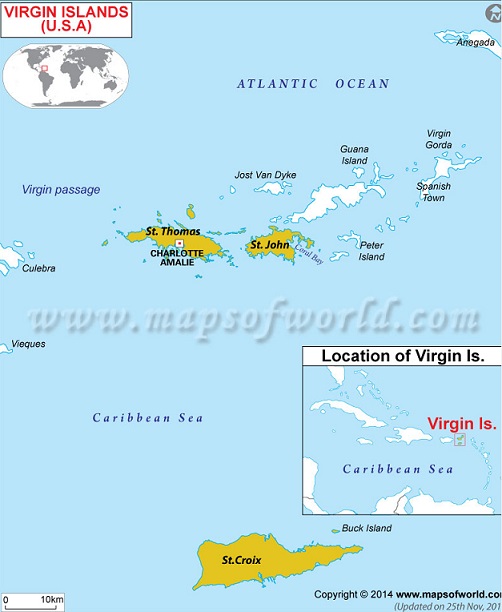
- Photo 1This VIDEO relates to the discussions in the book Go Lean…Caribbean and accompanying blog/commentaries primarily because there are 2 US Territories (Puerto Rico and the US Virgin Islands) in the center of the Caribbean. These cannot be ignored in the movement to unite and elevate the entire Caribbean region.

As depicted in the VIDEO, these territories are in crisis.

This is the purpose of the Go Lean book, as quoted from Economist Paul Romer (Page 8): “a crisis is a terrible thing to waste”. The truth is that American society stages all of the Caribbean in a “parasite” role; to serve as a playground for their leisure, consumers of their products and staffing for their Armed Forces. There is no advantage to being American, except to leave; and this is what people do, time and again. (Emigration is one of the major causes for the crisis in the Caribbean US Territories).

- Photo 2On the other hand, the goal of the Go Lean book is to serve as a roadmap for the introduction and implementation of the technocratic Caribbean Union Trade Federation (CU). So the CU would be set to optimize Caribbean society, starting with economic empowerment. In fact, the Go Lean roadmap has 3 prime directives:

  • Optimization of the economic engines in order to grow the regional economy to $800 Billion & create 2.2 million new jobs.
  • Establishment of a security apparatus to protect the resultant economic engines.
  • Improvement of Caribbean governance to support these engines.

The Go Lean movement asserts that the Caribbean region can do better; we must do better; we must not allow the US to take the lead for our own nation-building, for American self-interest (racism and capitalism) tend to hijack policies intended for the Greater Good. America thought their territories were populated with aliens, who could not be viewed as equals. Despite the 100 year old expiration of these prejudices, the policy remains. The mitigation and remediation to make territorial life successful must therefore come from another source. This is the siren call of the Go Lean movement.

(The scope of the Go Lean roadmap is limited to just the Caribbean territories, not the Pacific ones of Guam, Northern Marianas, and Samoa. Further, this commentary nor the Go Lean book advocates any political change of legal status of the territories to Statehood or Independence; rather this CU confederation alone is being promoted.)

There are more issues in consideration of this book. A compelling mission of the Go Lean book is to lower the “push and pull” factors that lead many to abandon the Caribbean homeland for American shores. The book posits that the region must create jobs so that its citizens do not have to leave to become aliens in a foreign land looking for a better life. The better life can be obtained right at home; Caribbean citizens can prosper where they are planted.

There are many Go Lean blog commentaries that have echoed this point. Here are a sample of related commentaries:

https://goleancaribbean.com/blog/?p=4531 Big Defense: Exploiting US Territories to fill the Armed Forces for their profit.
https://goleancaribbean.com/blog/?p=4360 Dreading the ‘Caribbean Basin Security Initiative’ as inadequate for PR/VI
https://goleancaribbean.com/blog/?p=2887 Caribbean must work together to address rum subsidies and promote this vital industry
https://goleancaribbean.com/blog/?p=2809 A Lesson in History: Economics of East Berlin; Failed-states can go from bad to worse.
https://goleancaribbean.com/blog/?p=2251 What’s In A Name? Latin & Caribbean people in the US still disenfranchised in American society.
https://goleancaribbean.com/blog/?p=2025 Caribbean Jobs – Attitudes & Images of the Diaspora
https://goleancaribbean.com/blog/?p=1433 Caribbean loses more than 70 percent of tertiary educated to brain drain
https://goleancaribbean.com/blog/?p=1325 Puerto Rico Governor Signs Bill on Small-Medium-Enterprises, attempts to re-boot commerce as 95% of businesses have 50 employees or less.
https://goleancaribbean.com/blog/?p=841 Having less babies (and people) is bad for the Caribbean economy
https://goleancaribbean.com/blog/?p=599 Ailing Puerto Rico open to radical economic fixes
https://goleancaribbean.com/blog/?p=286 Puerto Rico’s Comprehensive Cancer Center project breaks ground; model for future empowerment efforts.
https://goleancaribbean.com/blog/?p=273 10 Things We Don’t Want from the US – Discrimination of Immigrations

The foregoing VIDEO conveys that there is little respect in Washington, DC for the needs of the Territories. The islands having a voice, but no vote, really mean no voice at all, as they are inconsequential to all other legislators and power-brokers in Congress. Since the effort to elevate and empower the total Caribbean region cannot be pursued without these US Territories, there must be some engagement there. This effort is Day One/Step One in the Go Lean roadmap (Page 96). This approach is detailed under the American legal concept of an “Interstate Compact”; which allows the US Territories to confederate with their “foreign” Caribbean neighbors in this non-sovereign endeavor; thereby making these two island groups separate member-states of the CU.

Puerto Rico and the US Virgin Islands would have full benefits and voting privileges in the CU Trade Federation; the same for all British, Dutch and French “Overseas” Caribbean territories.

This vision is vital. The book Go Lean…Caribbean clearly hypothesizes that many problems of the region are too big for any one member-state to solve alone; that there is the need for the technocracy of the Caribbean Union Trade Federation. The Go Lean roadmap therefore calls for this strategy of confederation with a tactic of separation-of-powers between CU federal agencies and member-states’ governments. This allows for a lot of autonomy from Washington, DC for Puerto Rico and the USVI.

This change is essential for progress and growth. Despite all the advantages of American affiliation, these US Territories suffer from monumental dysfunction. As a result, these “American citizens” there are on the move, abandoning their homeland and forging near-Failed-States in their wake.

The Go Lean book posits that we need more than jokes and satire to arrest the downward spiral for PR/VI and the rest of the Caribbean; we need action too. We need this roadmap.

We do not want to be the “laughing stock” of the developed world. We want to be recognized as protégés, not parasites! This point is pronounced early in the book with the Declaration of Interdependence (Pages 12 & 14) with many statements that demonstrate the need to remediate Caribbean communities – including PR & VI – and make the homelands better places to live, work and play:

xix.    Whereas our legacy in recent times is one of societal abandonment, it is imperative that incentives and encouragement be put in place to first dissuade the human flight, and then entice and welcome the return of our Diaspora back to our shores. This repatriation should be effected with the appropriate guards so as not to imperil the lives and securities of the repatriated citizens or the communities they inhabit. The right of repatriation is to be extended to any natural born citizens despite any previous naturalization to foreign sovereignties.

xx.  Whereas the preparation of our labor force can foster opportunities and dictate economic progress for current and future generations, the Federation must ensure that educational and job training opportunities are fully optimized for all residents of all member-states, with no partiality towards any gender or ethnic group. The Federation must recognize and facilitate excellence in many different fields of endeavor, including sciences, languages, arts, music and sports. This responsibility should be executed without incurring the risks of further human flight, as has been the past history.

xxiii.  Whereas many countries in our region are dependent Overseas Territory of imperial powers, the systems of governance can be instituted on a regional and local basis, rather than requiring oversight or accountability from distant masters far removed from their subjects of administration. The Federation must facilitate success in autonomous rule by sharing tools, systems and teamwork within the geographical region.

xxiv.  Whereas a free market economy can be induced and spurred for continuous progress, the Federation must install the controls to better manage aspects of the economy: jobs, inflation, savings rate, investments and other economic principles. Thereby attracting direct foreign investment because of the stability and vibrancy of our economy.

xxv.  Whereas the Caribbean region must have new jobs to empower the engines of the economy and create the income sources for prosperity, and encourage the next generation to forge their dreams right at home, the Federation must therefore foster the development of new industries, like that of ship-building, automobile manufacturing, pre-fabricated housing, frozen foods, pipelines, call centers, and the prison industrial complex. In addition, the Federation must invigorate the enterprises related to existing industries like tourism, fisheries and lotteries – impacting the region with more jobs.

The Go Lean book also details a series of community ethos, strategies, tactics, implementations and advocacies to impact the full region, and US Territories. The following samples are excepted from the book: economic prospects:

Community Ethos – Economic Principle – Economic Systems Influence Choices   & Incentives Page 21
Community Ethos – Economic Principle – Consequences of Choices Lie in   the Future Page 21
Community Ethos – Job Multiplier Page 22
Community Ethos – Lean Operations Page 24
Community Ethos – Ways to Promote Happiness Page 36
Community Ethos – Ways to Impact the Greater Good Page 37
Strategy – Vision – Confederating a Non-Sovereign Union Page 45
Strategy – Mission – Keep the next generation at home Page 46
Tactical – Fostering a Technocracy Page 64
Tactical – Tactics to Forge an $800 Billion Economy Page 67
Tactical – Separation of Powers Page 71
Implementation – Ways to Pay for Change Page 101
Implementation – Ways to Deliver Page 109
Implementation – Trade Mission Office – Washington, DC Page 117
Implementation – Reasons to Repatriate to the Caribbean Page 118
Implementation – Ways to Promote Independence – Interdependence Page 120
Planning – 10 Big Ideas – A Single Market in the G-20 Page 127
Planning – Ways to Make the Caribbean Better Page 131
Planning – Ways to Better Manage Image – Not Inferior Aliens Page 133
Advocacy – Ways to Grow the Economy Page 151
Advocacy – Ways to Create Jobs Page 152
Advocacy – Ways to Improve Governance Page 168
Advocacy – Ways to Enhance Tourism – The world should enjoy our hospitality Page 190
Advocacy – Ways to Impact the Diaspora Page 217
Advocacy – Ways to Impact the US Territories Page 244
Appendix – Interstate Compacts Page 278
Appendix – Puerto Rican Migration to New York Page 303
Appendix – Puerto Rican Population in the US – Census 2010 Page 304
Appendix – US Virgin Islands: Economy Past, Present & Future Page 305
Appendix – Electronic Benefits Transfers – e-Government & e-Payments for PR & VI too Page 353

The Go Lean book posits (Page 3) that the Caribbean islands, including the American Territories of Puerto Rico and the US Virgin Islands, are among the greatest addresses in the world. But instead of the world “beating a path” to these doors, the people of the Caribbean have “beat down their doors” to get out; responding to “push and pull” factors. This abandonment must stop now!

While we want the rest of the world – the people of North America, Europe and beyond – enjoying our hospitality, culture, music, cuisine and produce, we most especially want to enjoy these for ourselves. We do not want to admire them from afar. We instead want to be planted and to prosper here in the Caribbean.

Considering the foregoing VIDEO, our birthright should be a privilege and the envy of the world, not the joke for the rest of the world. We want the world laughing with us, not at us!

A better future. This is our simple quest. This is easy to say, but hard to do. The heavy-lifting tasks must come from us in the Caribbean. This is the charge of the CU. We cannot expect solutions from Washington. They have no respect for any territories.

The people and governing institutions of all the Caribbean are hereby urged to lean-in to this Go Lean roadmap for Caribbean empowerment. With the successful execution of this roadmap, we can make all of the Caribbean homeland, a better place to live, work and play. 🙂

Download the book Go Lean … Caribbean – now!

Share this post:
, , , , ,
[Top]

Businesses Try to Stave-off Brain Drain as Boomers Retire

Go Lean Commentary

A consistent theme in the book Go Lean…Caribbean is that communities need their economic engines optimized, otherwise their citizens would simply leave. The book, and subsequent blog/commentaries, posit that the reality of the recent global financial crisis has resulted in an even higher abandonment rate among Caribbean communities. Another dynamic have now become prominent: families are having less babies.

This means, from a strictly supply-and-demand basis, older workers will be pressured to retire later and stay on with their employers longer.

This point was highlighted in the Go Lean book with the acknowledgement that the Aging Diaspora is a new Agent-of-Change for the Caribbean to contend with (Page 57). The book specifically identified that the demographics of the Caribbean was altered in the decades following World War II. Many members of the Caribbean Diaspora availed themselves of opportunities in Europe and North America during the rebuilding efforts for those nations. So those that emigrated in the 1950’s, 1960’s and 1970’s now comprise an aging Diaspora – with the strong desire to return to their native homelands for their “golden years”. They should be welcomed back and incentivized to repatriate, and Caribbean communities should prepare – and profit – from this eventuality. The Go Lean book describes the effort as a figurative “Welcome Mat” that must be administered, with details like: health care, security, disability support, elder-care, entitlements, etc.

There are economic concerns … and benefits from this execution.

But now, according to this story and AUDIO podcast, there may be more pressure for these ones to remain in the work place longer:

Podcast from National Public Radio (NPR) – January 15, 2015
By: Yuki Noguchi

AUDIO Podcast: – http://www.npr.org/2015/01/15/377201540/businesses-try-to-stave-off-brain-drain-as-boomers-retire

(See transcript in Appendix below)

These same issues, though presented from the perspective of the US, have the same application in the Caribbean. Our population is trending older as more and more young people abandon Caribbean communities for Diaspora life in foreign lands. We must also stave-off brain drain in the Caribbean region.

The Go Lean book serves as a roadmap for the introduction and implementation of the technocratic Caribbean Union Trade Federation (CU). This CU is proffered to provide economic, security and economic security solutions for the 30 member-states and their 42 million people. It is our quest to be prepared for this changing landscape. This mandate is pronounced early on in the book’s Declaration of Interdependence with the following statements (Page 11 – 13):

ix.    Whereas the realities of healthcare and an aging population cannot be ignored and cannot be afforded without some advanced mitigation, the Federation must arrange for health plans to consolidate premiums of both healthy and sickly people across the wider base of the entire Caribbean population. The mitigation should extend further to disease management, wellness, mental health, obesity and smoking cessation programs. The Federation must proactively anticipate the demand and supply of organ transplantation as developing countries are often exploited by richer neighbors for illicit organ trade.

xix.    Whereas our legacy in recent times is one of societal abandonment, it is imperative that incentives and encouragement be put in place to first dissuade the human flight, and then entice and welcome the return of our Diaspora back to our shores. This repatriation should be effected with the appropriate guards so as not to imperil the lives and securities of the repatriated citizens or the communities they inhabit. The right of repatriation is to be extended to any natural born citizens despite any previous naturalization to foreign sovereignties.

xxiv.    Whereas a free market economy can be induced and spurred for continuous progress, the Federation must install the controls to better manage aspects of the economy: jobs, inflation, savings rate, investments and other economic principles. Thereby attracting direct foreign investment because of the stability and vibrancy of our economy.

xxv.    Whereas the legacy of international democracies had been imperiled due to a global financial crisis, the structure of the Federation must allow for financial stability and assurance of the Federation’s institutions. To mandate the economic vibrancy of the region, monetary and fiscal controls and policies must be incorporated as proactive and reactive measures. These measures must address threats against the financial integrity of the Federation and of the member-states.

Modern societies are based on the assumption that there will always be more young people in a community than the older population; this is a basic principle in “actuarial science”. There are many social safety nets that depend on this actuarial fact: the Caribbean needs population growth not population contraction. Already the repercussions of so many people abandoning their communities have created devastating consequences. For example, retirement plans-funds are strained in many Caribbean countries. Yes, the Caribbean, as a region, is at the precipice of failed-state status.

The Go Lean book posits that this is a “crisis, but that this crisis is a terrible thing to waste”; (Page 8). As such the roadmap structures the CU to impact the region with the execution of the prime directives defined as these 3 goals:

  • Optimization of economic engines in order to grow the regional economy to $800 Billion and create 2.2 million new jobs.
  • Establishment of a security apparatus to protect the resultant economic.
  • Improvement of Caribbean governance to support these engines.

According to the foregoing article, America needs to keep their older workers working longer; they cannot afford the brain drain. But this fact is conflicting for Caribbean pursuits. We need our aging Diaspora to come back home, sooner, rather than later…and to bring their wealth, benefits and entitlements with them; Go Lean describes it as their “time, talent and treasuries”. This creates a seller’s market for the foreign workers with demand in the US and also in the homeland. It is hoped that “love for the Caribbean homeland” would be the primary motivator.

It is hoped!

Though the needs of the Caribbean youth are identified as priority for the Go Lean movement (book and blogs), the needs of the elderly population are not ignored. In fact, the Go Lean roadmap details missions like retirement planning, increased retirement age, pension re-financing, heightened public safety and optimized healthcare. The following details from the book Go Lean … Caribbean are the community ethos, strategies, tactics, implementations and advocates prescribed to manifest the commitment to the Caribbean elderly populations:

Community Ethos – Deferred Gratification Page 21
Community Ethos – Ways to Impact the Future Page 26
Community Ethos – Ways to Promote Happiness Page 36
Community Ethos – Ways to Impact the Greater Good Page 37
Strategy – Repatriating Caribbean Diaspora Page 47
Strategy – Non-Government Organizations – Senior Aid Groups Page 48
Strategy – Agents of Change – Aging Diaspora Page 57
Tactical – Confederating a Permanent Union Page 63
Tactical – Fostering a Technocracy Page 64
Implementation – Assemble all Member-States Page 96
Implementation – Ways to Pay for Change Page 101
Implementation – Ways to Better Manage Debt – Re-work Pensions Page 114
Implementation – Reasons to Repatriate Page 118
Planning – 10 Big Ideas … in the Caribbean Region Page 127
Planning – Lessons Learned from 2008 Page 136
Advocacy – Ways to Grow the Economy Page 151
Advocacy – Ways to Create Jobs Page 152
Advocacy – Better Manage the Social Contract Page 170
Advocacy – Reforms for Banking Regulations – Central Bank Page 199
Advocacy – Ways to Impact Wall Street Page 200
Advocacy – Impact the Diaspora Page 217
Advocacy – Ways to Preserve Caribbean   Heritage Page 218
Advocacy – Ways to Impact Retirement Page 221
Advocacy – Ways to Help the Middle Class Page 223
Advocacy – Ways to Improve Elder-Care Page 225

The Baby Boom generation has come full circle now as senior citizens. This large population group (born between years 1946 and 1964) is bringing a boon to the industries that cater to their care and preferences. There is an estimated 78.3 million Americans who were born during this demographic period, encompassing a quarter of the US population.

The Caribbean cannot be far behind. Unfortunately though, many of these Caribbean boomers live in foreign countries like the US, Canada, UK, France, the Netherlands and other European countries.  This is a “Big Idea” to incentivize these ones to make a return to their Caribbean ancestral homelands. The Go Lean book describes this big effort as heavy-lifting, a task too big for any one member-state alone. But rather, there is the need for the technocracy of the Caribbean Union Trade Federation. The purpose of this Go Lean/CU roadmap is to deliver, to do the heavy-lifting to make the Caribbean homeland a better place to live, work and play.

Now is the time for all of the Caribbean, the people and governing institutions, to lean-in for the changes/empowerments described in the book Go Lean … Caribbean. 🙂

Download the book Go Lean … Caribbean – now!

———

APPENDIX – Podcast Transcript: Businesses Try to Stave Off Brain Drain as Boomers Retire

In the U.S., roughly 10,000 people reach retirement age every day. And though not everyone who turns 62 or 65 retires right away, enough do that some companies are trying to head off the problem.

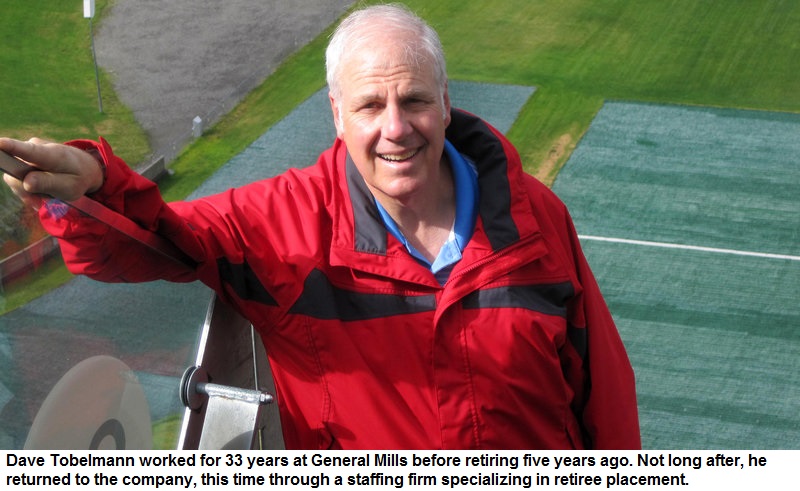
CU Blog - Businesses Try To Stave Off Brain Drain As Boomers Retire - Photo 1Dave Tobelmann, who for 33 years developed new products for General Mills, retired five years ago at age 57 — around the same time as a number of other colleagues. “Yeah, I went to a lot of retirement parties,” Tobelmann says.

Losing veteran workers is a challenge, even for big companies like General Mills.

“Let’s say you have 30 people retire in a year and the average years of experience is 30 years. So you just had 1,000 years walk away. That’s hard to lose,” Tobelmann says.

The need is not across the board; not all retirees are in demand. But the older-worker brain drain is a big concern for industries like mining and health care. They are trying to retain older employees because demand is increasing and fewer younger workers are rising through the ranks.

In a survey out this week, the Society for Human Resource Management reports that a third of employers expect staffing problems in coming years.

“When you have large numbers that are leaving and a pipeline that is not entirely as wide as the exit pipeline, you will have temporary gaps,” says Mark Schmit, executive director of the association’s foundation.

Take, for example, the insurance business.

“The average age is in the late 50s in this industry,” says Sharon Emek, who sold an insurance business five years ago after three of the four partners reached retirement age. She then started Work at Home Vintage Employees, a company that contracts insurance-industry retirees.

“It’s a big crisis within the industry where they’re trying to recruit young talent and keep young talent, and the industry is constantly writing about the problem,” Emek says.

Employers are trying to hang onto older talent by offering flexible work hours, more attractive health care benefits or having retirees return to mentor younger workers. And more people are, in fact, working later — either because they want to, or they have to. According to AARP, nearly 19 percent of workers over age 65 work (about 1 in 5), compared with about 11 percent (1 in 10) three decades ago.

Soon after retiring, Tobelmann returned to General Mills. He works through YourEncore, a staffing firm specializing in retiree placement. Procter & Gamble, Boeing and other companies started YourEncore to prepare for baby boomers retiring. Tobelmann says the benefits for the company are obvious.

“I already know how to speak the language, I know how the company operates, I know how the businesses operate, I know how they make money, I know how projects proceed, I know all the processes,” he says.

At Michelin North America, more than 40 percent of the workforce is approaching retirement age. Retirees have, on average, 2 1/2 decades of experience. Dave Stafford, who heads human resources for the company, says last year, it had to plan around losing most of a lab team made up entirely of older workers.

“If we’re doing our job well, we’ll know that there’s risk; we’ll start to staff to compensate for the fact that that risk may come to fruition,” he says.

Michelin encourages retirees to stick around part-time, especially those in technical maintenance, where talent is chronically scarce. But it’s not always easy to accommodate.

“Sometimes they have a very limited number of hours that they want to work, and to try to work around their schedule sometimes can be a bit of a challenge,” says Dale Sweere of Stanley Consultants, an engineering consulting firm based in Muscatine, Iowa.

But Sweere says the company has always offered phased retirement because experienced workers have relationships with clients that are valuable to hang onto. “It’s kind of a running joke around here that we have their retirement party on a Friday and they show up for work again on Monday,” Sweere says.

Share this post:
, , , , , , ,
[Top]

Bill Cosby’s Accusers – Why They Weren’t Believed

Go Lean Commentary

It is hard to reconcile the accusations floating against Bill Cosby with his television characters: Dr. Huxtable, Jell-O Pudding Pitch-Man and the voice/persona of the animated do-gooder Fat Albert (and the Cosby Kids ; see Appendix below*). Or is it?

… that it’s easy to categorize personalities as good versus bad. “We don’t think good and evil can co-exist in the same person” – Psychologist David Adams.

The following article posits that those who do horrible things may still be talented in their gifts and notoriously good to people in their lives, like family members. While it maybe difficult to understand the complexities of personalities, it is very much necessary that society be receptive to the possibility of good people doing bad things. The entire article is presented here:

By: NO MORE Staff

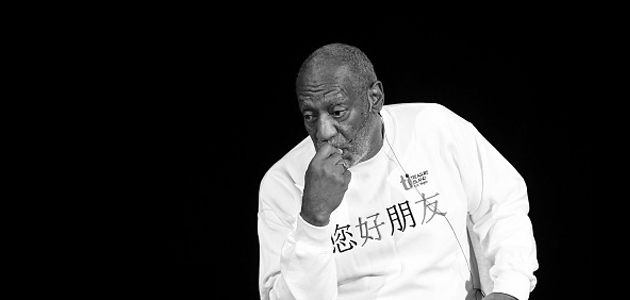
Bill Cosby Photo 1America’s Dad is having a very bad week. A few days ago, Barbara Bowman wrote a personal essay in The Washington Post chronicling how Bill Cosby drugged and raped her 30 years ago.

The story went viral and inspired several others to echo her experiences.

Not so when the teenager spoke out soon after the alleged attacks: When she went to a lawyer after the assaults, she was accused of lying. Her agent did nothing, either. Eventually, she moved on. Years later, Andrea Constand accused Cosby of rape and Bowman was asked to speak in court, but the case was quietly settled.

At this writing, a grand total of 15 women have accused Cosby of assault, dating from the late 1960s. (Here’s a timeline of the accusations.) Despite all this, Cosby’s career had coasted along—in fact, he was awarded the Mark Twain Prize for American Humor not long ago and was planning a new TV show.

But things are changing.

Finally, the accusers’ stories are getting traction. Why now? Last month, comedian Hannibal Buress called Cosby a rapist in his stand-up routine, which went viral. The Twitter-verse responded in kind: Last week, Cosby’s tone-deaf invitation to “meme me!” resulted in people superimposing assault accusations over his photo. #Cosbymeme did not go according to plan, and things only got worse: Last weekend, NPR interviewed him about his African American art collection and then asked him to respond to the Post story. He went silent. Eventually, his lawyer issued a statement firmly denying the allegations and refusing to comment further.

But the damage has been done: New stories about Cosby’s behavior continue to surface, Netflix has put his upcoming comedy special on hold, and NBC has abandoned plans to develop a new sitcom with him.

Why Accusations About Celebrities Aren’t Believed

Cosby isn’t the first icon to be accused of sexual assault or domestic violence, and yet the question persists: Why aren’t these accusers heard or given any credence—not just Cosby’s alleged victims, but the countless other people who have dared to challenge a celebrity?

The answer lies in the American conflation of celebrity and security, says Ulester Douglas, executive director of Men Stopping Violence. “We are a celebrity culture. Seeing someone we idolize, revere, and idealize being accused of horrific crimes makes us wonder: Who are we? It makes us realize that our own families could be capable of it, too,” he says. It’s unsettling and even terrifying to associate an idol with evil, particularly because there are so many celebrities who are good people, capable of powerful, positive influence.

Dissonance Perpetuates Silence

David Adams is a psychologist and co-director of Emerge, a Boston-based abusers’ intervention and counseling program. He sees a difference in how we respond to a stereotypical criminal and a celebrity accused of bad behavior due to our preconceptions about abusers. “We tend to think of an abuser as someone who is easily detectable: someone who is crude, sexist, and boorish. A quarter of men who abuse women do fit this stereotype, and since that’s a substantial subgroup, we tend to spot those guys and not the ones who are more likable. If we don’t know what to do with bad information about someone we adore, it creates dissonance, and we sometimes choose to disbelieve or to ignore it,” he says.

“When we see someone likable accused of a crime, we have a choice to believe something bad about them or to discount it because it doesn’t fit our experience. In some ways it’s easier to do that than to think, oh God, the world really is unknowable—I might as well give up on knowing people,” he says. “If we don’t know what to do with information about someone we worship, we put it aside.”

Why Celebrities Feel Immune

Of course, Cosby is hardly the first famous person to be accused of rape or assault. When we think about any celebrity facing serious allegations, though, it’s difficult to believe that an image-conscious idol could be willing to engage in hugely risky behavior, throwing away the very image they need. What’s going through their mind?

“Any consequence is overridden by the high of the conquest,” Douglas says. And, on a purely logistical level, “They do it because they can. They truly think they can get away with it, based on the very fact that they have a certain image. They will be believed; the accusers will be laughed out of the room.”

Absorbing The Narcissism Factor

In many celebrity cases, narcissism also plays a starring role. “A hallmark of narcissism is exceptionality. You literally think you will not get caught. This personality takes chances, acts reckless, and even associates the behavior with success, because they’ve always been rewarded,” Adams says.

“We think narcissists are people nobody would like. But, in fact, they’re quite charismatic, with good social and image-maintenance skills”— which often allow them to get away with bad behavior, even more so when there’s a PR team on call. Narcissists are also skilled at compartmentalization, Adams says, and they choose to focus on the “part of their life that everybody adores. They don’t focus on other parts of their lives, and if they do something wrong, they think, ‘Gee, everybody loves me. What’s the problem?’” he says. “It’s a lack of character development.”

“Narcissists can engage in all sorts of psychological gymnastics not to feel empathy,” says Douglas.

The Changing Tide

Adams says that it’s easy to categorize personalities as good versus bad. “We don’t think good and evil can co-exist in the same person,” he says. “But look at the Mafia—these guys who do horrible things but are notoriously good to their mothers. And along comes a show like The Sopranos to paint them in a more nuanced light. There’s now less focus on ‘good guys’ and ‘bad guys,’” he says. Understanding the complexities of personalities—refusing to glorify a celebrity as all good, all the time—could help to close the dissonance gap.

“We can also go a long way toward preventing male sexual and domestic violence against women by stopping the pervasive and pernicious victim-blaming,” Douglas says. “The media, for example, should quit asking the toxic, ‘Why did you go back to your abuser?’ and ‘Why didn’t you leave?’ A reporter could say instead, ‘As you know, there are some who question your credibility because of some of the choices you made. What, if anything, would you want to say to them?’ That is respectful journalism. The [accuser] should never be made to feel like she has to justify the choices she made or makes.”

Finally, in his own work with Men Stopping Violence, Douglas sees firsthand the power of healing through sharing. “I see survivors who are finding peace through coming forward and telling their stories. One of the most powerful things that survivors can do is tell their own stories, on their own terms,” he says.
The NO MORE Project – Posted November 19, 2014; retrieved November 26, 2014–
http://nomore.org/why-cosby-victims-werent-believed/

The subject matter in the foregoing article relates to the attitudes that communities must foster so as to mitigate the toleration of domestic violence, rape and stalking. These points are being brought into focus in a consideration of the book Go Lean … Caribbean. The book serves as a roadmap for the introduction and implementation of the technocratic Caribbean Union Trade Federation (CU), for the economic optimization in the region.

The focus of the Go Lean book is Economics, not domestic violence, rape or stalking! And yet this commentary relates that there is an alignment of objectives. The Go Lean roadmap posits that the economy of the Caribbean is inextricably linked to the security (public safety) of the Caribbean.

This CU/Go Lean roadmap has 3 prime directives:

  • Optimization of the economic engines in order to grow the regional economy and create 2.2 million new jobs.
  • Establishment of a security apparatus to protect the resultant economic engines and their relevant stakeholders.
  • Improve Caribbean governance (Executive facilitations, Legislative oversight and Judicial prudence) to support these economic/security engines.

Among the objectives to accomplish the economic elevation is the mission to retain Caribbean citizens in their homelands and repatriate the far-flung Diaspora back to the region. Since many people may have fled the region to mitigate abuse, attitudes of victim-blaming or complacency among public safety authorities must be “weeded out”.

The subject of Celebrity Culture is also germane for the Caribbean empowerment effort (Pages 203 & 224). The Go Lean roadmap consolidates the region’s 30 member-states into a Single Market, media market included – with the caveat of multi-language “simul-casting”. Celebrities will surely emerge. From a governance perspective, the CU will oversee the jurisdiction of monitoring and metering (ratings, rankings, service levels, etc) local public safety institutions to ensure their delivery of the Social Contract. for all regardless of gender or race.

Change has now come to the Caribbean. As the foregoing article depicts, there is a changing tide. It is no longer acceptable to dismiss accusers, even against celebrities. The article relates that “we can go a long way toward preventing male sexual and domestic violence against women by stopping the pervasive and pernicious victim-blaming”. This is part of a new community ethos – the value of women is not undermined! Many related issues/ points were elaborated in previous blogs, sampled here:

Justice Strategy: Special Prosecutors … et al
Caribbean Study: 58% Of Boys Agree to Female ‘Discipline’
Sex Crimes Mitigations – Students developing nail polish to detect date rape drugs
Aereo Founder on the future of TV; Caribbean included
Bob Marley: The legend of a Caribbean Celebrity lives on!
Muslim officials condemn abductions of Nigerian girls
Caribbean/Latin countries still view women as lesser
Book Review: ‘The Divide’ – Differences in US Justice for Rich versus Poor
Jamaica to receive World Bank funds to help in crime fight

The above commentaries examined global developments in crime mitigations and gender based attitudes, then relate their synchronicity with the principles in the Go Lean book. There are a number of touch points that relate to domestic violence, rape and stalking; these blogs also cite the community attitude to dissuade such behavior. Most importantly, the Go Lean book depicts solutions. These are presented as community ethos, strategies, tactics, implementations and advocates; detailed as follows:

Community Ethos – Privacy –vs- Public Protection Page 23
Community Ethos – Whistleblower Protection Page 23
Community Ethos – Witness Security Page 23
Community Ethos – Anti Bullying & Mitigations Page 23
Community Ethos – Light Up the Dark Places Page 23
Community Ethos – “Crap” Happens Page 23
Community Ethos – Minority Equalization Page 24
Community Ethos – Lean Operations Page 24
Community Ethos – NGO’s Page 25
Community Ethos – Reconciliations Page 34
Strategy – Rule of Law –vs- Vigilantism Page 49
Tactical – Separation of Powers – CariPol Page 77
Implementation – Reasons to Repatriate Page 118
Planning – Ways to Improve Failed-State Indices Page 134
Advocacy – Ways to Improve Governance Page 168
Advocacy – Ways to Better Manage the Social Contract Page 170
Advocacy – Ways to Impact Justice Page 177
Advocacy – Ways to Remediate and Mitigate Crime Page 178
Advocacy – Ways to Improve Gun Control – Restraining Orders Automatic Restrictions Page 179
Advocacy – Ways to Improve Intelligence Gathering Page 182
Advocacy – Ways to Improve Communications – Messaging Page 186
Advocacy – Ways to Impact Hollywood Page 203
Advocacy – Ways to Impact the Prison Industrial Complex – Reduce Recidivism Page 211
Advocacy – Ways to Impact Foundations Page 219
Advocacy – Ways to Protect Human Rights Page 220
Advocacy – Ways to Impact the One Percent –    Balancing Justice Provisions for Celebrities Page 224
Advocacy – Ways to Empower Women Page 226
Advocacy – Ways to Impact Persons with Disabilities – including Mental Challenges Page 228

The book Go Lean…Caribbean was written by resources from an organized movement, by people (residents and Diaspora) with passion to change/elevate the Caribbean’s economic, security and governing engines. One principal within this Go Lean movement has a direct job function to dissuade crimes against women.

While there is always the need to give the accused the benefit of the doubt, as in the current case against Bill Cosby, we do not want 30 years of inaction on reported sex crimes by celebrities. The CU roadmap’s goal is to optimize “Justice” institutions in the region. Why? All members of society (celebrities and regular citizens alike) need to be protected, and not dismissed or ignored, especially related to serious allegations like sexually inappropriate behavior. Any “misfeasance, malfeasance or nonfeasance” in this regards reflects negatively on the region’s hospitality – think of the unsolved disappearance of Natalee Holloway in Aruba in 2005; (see Page 190).

Though this topic may be a security issue, community wealth is undoubtedly linked, affecting push-and-pull factors for citizens to flee their homelands. This is lose-lose for all concerned. To the contrast, the goal of the Go Lean effort is to make the Caribbean a better place to live work and play; with justice for all. Since the region failed in the past, the new messaging is simple: “No More“!

The foregoing article is sourced by the Not-For-Profit organization, the “No More” Project. Their goal is to neutralize public attitudes that had previously tolerated and thusly promoted domestic violence, rape and stalking. This is a great role model for the Caribbean to emulate, as attitude adjustment is among the heavy-lifting tasks that regional administrators must undertake to bring positive change to the Caribbean.

Download the book Go Lean … Caribbean – now!

————

* Appendix – Video – Fat Albert And The Cosby Kidshttp://youtu.be/ga7gflAUGCc

It’s Bill Cosby coming at you with music and fun, and if you’re not careful, you might learn something before its done.


Share this post:
, , , ,
[Top]

Suit Over Red Light Traffic Cameras Could Impact Millions

Go Lean Commentary

Change is coming to the Caribbean … and economic prosperity will undoubtedly follow:

“Happy Days Are Here Again” – familiar feel-good song during American political conventions.

CU Blog - Suit Over Red Light Traffic Cameras Could Impact Millions - Photo 1The book Go Lean…Caribbean posits that “bad actors” will always emerge in times of economic prosperity to exploit opportunities, with bad or evil intent. The book therefore serves as a roadmap for the introduction and implementation of the technocratic Caribbean Union Trade Federation (CU) as a regional entity projected to forge security and public safety solutions for the entire Caribbean region.

The heavy-lifting activities to ensure security by this CU technocracy include deploying a wide network of closed-circuit and traffic cameras. This could be beneficial and advantageous, but it appears that there are some perils too. Considering the lessons learned from the US in this following VIDEO, there is the need to protect citizens and their “Due Process” rights:

VIDEO – NBC News TODAY Show – November 5, 2014 – A new lawsuit is challenging the popular cameras at intersections, and could lead to millions of busted drivers across the U.S. getting their money back. NBC’s Kerry Sanders reports.

http://www.today.com/video/today/56366199

The book Go Lean … Caribbean underpins the movement for traffic cameras throughout the Caribbean region, copying the model of the 3rd party company in the foregoing VIDEO, Arizona-based American Traffic Solutions, Inc. (see Appendix below). But rather than a profit motive, the CU‘s motive is the optimization of Caribbean society. Just imagine, receiving a traffic ticket “in the mail” for running a traffic light in some Caribbean member-state.

“In the mail” – This phrase in itself reflects the reform needed for the Caribbean governmental eco-system.

The CU would be set to optimize all aspects of Caribbean society through economic empowerment, and the aligning security dynamics. In fact, the Go Lean roadmap has these 3 prime directives:

  • Optimization of the economic engines in order to grow the regional economy to $800 Billion & create 2.2 million new jobs.
  • Establishment of a security apparatus to protect the resultant economic engines, including road traffic stakeholders like motorists and pedestrians.
  • Improve Caribbean governance, with a separation-of-powers between member-state administrations and the CU federal government (Executive facilitations, Legislative oversight and Judicial prudence) to support these economic/security engines.

Closed-circuit and traffic cameras are designed to impact society in the same above 3 areas: they can generate revenues/jobs, provide public safety / homeland security protections and streamline governmental processes. At the outset of the book (Page 12), these public safeguards are identified as prime directives in the Declaration of Interdependence:

x.      Whereas we are surrounded and allied to nations of larger proportions in land mass, populations, and treasuries, elements in their societies may have ill-intent in their pursuits, at the expense of the safety and security of our citizens. We must therefore appoint “new guards” to ensure our public safety and threats against our society, both domestic and foreign. The Federation must employ the latest advances and best practices of criminology and penology to assuage continuous threats against public safety.

xvi.      Whereas security of our homeland is inextricably linked to prosperity of the homeland, the economic and security interest of the region needs to be aligned under the same governance. Since economic crimes … can imperil the functioning of the wheels of commerce for all the citizenry, the accedence of this Federation must equip the security apparatus with the tools and techniques for predictive and proactive interdictions.

CU Blog - Suit Over Red Light Traffic Cameras Could Impact Millions - Photo 2Unified command-and-control is identified as a major function of the CU security / law enforcement apparatus. This includes all intelligence gathering and analysis activities for overt and covert purposes. The effectiveness of these tactics (advanced monitoring, satellite surveillance, electronic eavesdropping, closed-circuit, and traffic cameras) has been proven for crime remediation and investigations. In addition to crime, the Go Lean roadmap targets delivery of government services, identifying best practices in agile methodologies to guarantee fewer defects and more efficiency; (Pages 109 & 147). In fact, the name Go Lean refers to the commitment to lean project management methodologies in the structure of the CU (Page 4).

All of this technocratic efficiency should at least allow for direct home mail delivery. Also at the outset of the book (Page 12), the need to reboot postal operations is detailed in the Declaration of Interdependence:

xv.  Whereas the business of the Federation and the commercial interest in the region cannot prosper without an efficient facilitation of postal services, the Caribbean Union must allow for the integration of the existing mail operations of the governments of the member-states into a consolidated Caribbean Postal Union, allowing for the adoption of best practices and technical advances to deliver foreign/domestic mail in the region.

The installation of the unified command-and-control security structure would be “Step One, Day One” in the Go Lean roadmap. Secondarily, the roadmap must enhance the postal operations in the region to ensure that government mail can be efficiently delivered to citizens, car drivers and registered car owners – the roadmap proposes a Caribbean Postal Union (CPU). The Go Lean book therefore details a series of community ethos, strategies, tactics, implementations and advocacies to provide increased public safety, mail operations and government services in the Caribbean region:

Economic Principle – Consequences of Choices Lie in Future Page 21
Community Ethos – Privacy –vs- Public Protection Page 23
Community Ethos – Intelligence Gathering Page 23
Community Ethos – “Crap” Happens Page 23
Community Ethos – Cooperatives Page 25
Community Ethos – Ways to Improve Sharing Page 35
Community Ethos – Ways to Impact the Greater Good Page 37
Tactical – Confederating a Non-sovereign Union Page 63
Tactical – Fostering a Technocracy Page 64
Tactical – Separation of Powers – Homeland Security Page 75
Tactical – Separation of Powers – CariPol: Marshals and Investigations Page 77
Implementation – Assemble Regional Mail Operations into a CPU Page 96
Anecdote – Implementation Plan – US Failing Mail Services Page 99
Implementation – Ways to Pay for Change Page 101
Implementation – Start-up Security Initiatives Page 103
Implementation – Ways to Improve Mail Service Page 108
Implementation – Ways to Deliver Page 109
Planning – Ways to Make the Caribbean Better Page 131
Planning – Ways to Improve Failed-State Indices Page 134
Advocacy – Ways to Grow the Economy Page 151
Advocacy – Ways to Improve Governance Page 168
Advocacy – Ways to Better Manage the Social Contract Page 170
Advocacy – Ways to Improve Leadership Page 171
Advocacy – Ways to Impact   Justice Page 177
Advocacy – Ways to Reduce Crime Page 178
Advocacy – Ways to Improve for Gun Control Page 179
Advocacy – Ways to Improve Homeland Security Page 180
Advocacy – Ways to Mitigate Terrorism Page 181
Advocacy – Ways to Improve Intelligence Gathering/Analysis Page 182
Advocacy – Ways to Impact Events – Mitigating Security Threats Page 191
Advocacy – Ways to Impact the Prison Industrial Complex – Tracking Felons Page 211
Advocacy – Ways to Protect Human Rights Page 220
Appendix – Prison Industrial Complex – Nauru DetentionCenter Page 327

Other subjects related to public safety empowerments for the region have been blogged in other Go Lean…Caribbean commentaries, as sampled here:

https://goleancaribbean.com/blog/?p=1554 Security Pact from the Status of Forces Agreement
https://goleancaribbean.com/blog/?p=1487 Here come the Surveillance Drones … and the Concerns
https://goleancaribbean.com/blog/?p=960 NSA records all phone calls in Bahamas, according to Snowden
https://goleancaribbean.com/blog/?p=392 Jamaica to receive World Bank funds to help in crime fight

Bad actors will always emerge…

Accepting this premise means preparing the necessary counter-measures. The model of the company American Traffic Solutions gives the Caribbean a template of “how, what, when and why” for traffic cameras. Individual “Due Process” rights do not have to be trampled on in the course of this roadmap. The policing authorities in the region can simply deputize CU resources for law-and-order enforcements in member-states. This deputization strategy/process of member-states authority being vested to CU agencies is front-and-center in the Go Lean roadmap.

Public safety is necessary to make the Caribbean homeland, a better place to live, work and play. Caribbean people need these assurances.

Download the book Go Lean … Caribbean – now!

————–

Appendix – American Traffic Solutions, Inc. (ATS) – http://www.atsol.com/

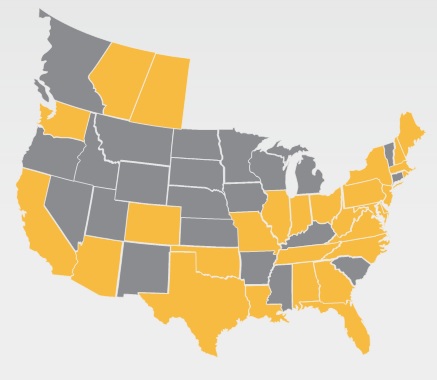
ATS is the leading provider of traffic safety, mobility and compliance solutions for state & local governments, commercial fleets and rental car companies. With nearly 300 customers and more than 3,500 Road Safety Camera Systems installed and operating throughout the United States  and Canada (yellow in the below map), ATS is the market leader for Red-Light, Speed and School Bus Stop-Arm Safety Cameras.

CU Blog - Suit Over Red Light Traffic Cameras Could Impact Millions - Photo 3

ATS is also the industry leader in toll and violation management for fleets and rental companies.  PlatePass® coverage blankets all major toll regions in North America, complying with in-vehicle transponder and license-plate (video) toll recognition systems throughout the United States and Canada.

Share this post:
, , , ,
[Top]

Caribbean Study: 58% Of Boys Agree to Female ‘Discipline’

Go Lean Commentary

The issue in the subsequent news article relates to the guidance we give our young people. The words we say and the things we do have an impact on their standards of right and wrong. The research in this article relates to the attitudes that lead to domestic violence, and why the rest of the community may standby and tolerate it.

This point is being brought into focus in a consideration of the book Go Lean … Caribbean. The book serves as a roadmap for the introduction and implementation of the technocratic Caribbean Union Trade Federation (CU), for the economic optimization in the region.

The focus of the book is “Economics“, not domestic violence! And yet this commentary relates that there is an alignment of objectives. The Go Lean roadmap posits that the economy of the Caribbean is inextricably linked to the security (public safety) of the Caribbean.

Among the objectives to accomplish the economic elevation is the mission to retain Caribbean citizens in their homelands and repatriate the far-flung Diaspora back to the region.

Many times people flee the region to mitigate abusive situations; even more troubling, as victims they may have encountered an attitude of complacency and indifference among public safety authorities. The following article posits that this attitude is deeply entrenched in society, even among the next (younger) generation.

Title: COB Study: 58% Of Boys Believe Men Should Discipline Their Female Partners
By: Rashad Rolle, Staff Reporter
The Tribune – Bahamas Daily Newspaper – October 21, 2014

Caribbean Study 1

FIFTY-eight per cent of high school boys and 37 per cent of high school girls participating in a recent academic survey believe men should discipline their female partners, according to a new College of the Bahamas study.

The study also found that 49 per cent of boys believe women should ask permission from their male partners if they wanted to go out while 17 per cent of girls supported this view.

Of the students surveyed, 46 per cent of boys believed wives must have sex when her husband wants to, compared to 16 per cent of girls. This, according to researchers, has possible implications on debates on marital rape.

According to the study, most of the teens from both sexes believed men should be the head of their households and that both husbands and wives should submit to one another and remain committed, reflecting the country’s religious values.

The research was conducted by members of the Bahamas Crisis Centre (BCC) and COB’s academic community. Its findings appear in the latest edition of the International Journal of Bahamian Studies. The study investigated teen perspectives on relationships between the sexes and the prevalence of violence within teen relationships.

It concluded that efforts must be made to ensure adolescents adjust their behaviour before becoming adults in order to push back against a culture of violence.

It also concluded that girls are more likely than boys to use aggressive behaviour in teen relationships, such as restricting access to friends of the opposite sex.

Based on the gathered data, the study concludes that “there is a clear need for children to be taught how to respect one another from an early age.”

One thousand students from grade 10 to 12 from eight schools, including one private school, participated in the study.

According to the study, “over 80 per cent of respondents had been on a date and so had a relationship of some sort with the opposite sex,” a figure noted as higher than the 61 per cent reported in a similar study of teens in the United   States.

The study is titled Attitudes of High School Students Regarding Intimate Relationships and Gender Norms in New Providence, The Bahamas.

“The responses show that on a number of issues regarding relationships, boys and girls have different attitudes and behaviours,” the researchers wrote. “It can also be seen that large numbers of teens can be expected to be victims of controlling behaviours. The use of threats and physical force may be learnt behaviours due to the presence of violence in homes in The Bahamas.”

“Overall, it is apparent that the breakdown in adult relationships, which is considered to play an important role in the violence observed in Bahamian society, may be the consequence of adolescents not adjusting their teen behaviours when they become adults. Therefore, modifying the attitudes of children with regard to interpersonal relationships may be important in reducing long-term violence in the country. Boys and girls had different attitudes on many aspects of relationships with current or future partners, but their endorsement of stereotypes of sex-related roles and their participation in certain behaviours could be a cause for concern. Underpinning these attitudes may be issues associated with what it means to be a woman or a man in The Bahamas, and related gender norms.” http://www.tribune242.com/news/2014/oct/21/cob-study-58-boys-believe-men-should-discipline-th/
———–
The actual Research Report: ‘Attitudes of High School Students Regarding Intimate Relationships and Gender Norms in New Providence, The Bahamas’ can be found here:
http://journals.sfu.ca/cob/index.php/files/article/view/225

This CU/Go Lean roadmap has 3 prime directives:

  • Optimization of the economic engines in order to grow the regional economy and create 2.2 million new jobs.
  • Establishment of a security apparatus to protect the resultant economic engines and their relevant stakeholders.
  • Improve Caribbean governance, with a separation-of-powers between member-state administrations and the CU federal government (Executive facilitations, Legislative oversight and Judicial prudence) to support these economic/security engines.

While the subject of the Caribbean adolescent culture of violence falls on the member-state side of the separation-of-power / governance divide, the CU will entail a jurisdiction of monitoring and metering (ratings, rankings, service levels, etc) local governance and their delivery of the Social Contract.

Change has now come to the Caribbean. As the foregoing article depicts the problem of domestic violence is tied to a community ethos. This ‘negative’ ethos must be uprooted and replaced with a new, progressive spirit, starting at the adolescent level, when attitudes are pliable and sensitive to strategic messaging; see VIDEO below.

Many related issues/points were elaborated in previous blogs, sampled here:

Students developing nail polish to detect date rape drugs
Book Review: ‘Chasing Youth Culture and Getting It Right’
Muslim officials condemn abductions of Nigerian girls
Caribbean/Latin countries still view women as ‘lesser
Jamaica to receive World Bank funds to help in crime fight

The above commentaries examined global developments and related their synchronicity with the principles in the Go Lean book. There are a number of touch points that relate to domestic violence and the community attitude to dissuade such behavior. Most importantly, the Go Lean book depicts solutions. These are presented as community ethos, strategies, tactics, implementations and advocates; a sample is detailed as follows:

Community Ethos – Privacy –vs- Public Protection Page 23
Community Ethos – Whistleblower Protection Page 23
Community Ethos – Witness Security Page 23
Community Ethos – Anti Bullying & Mitigations Page 23
Community Ethos – Light Up the Dark Places Page 23
Community Ethos – Ways to Manage Reconciliations Page 34
Community Ethos – Ways to Impact the Greater Good Page 37
Strategy – Rule of Law –vs- Vigilantism Page 49
Tactical – Separation of Powers – CariPol Page 77
Implementation – Reasons to Repatriate Page 118
Planning – Ways to Improve Failed-State Indices – Law Enforcement Oversight Page 134
Advocacy – Ways to Better Manage the Social Contract Page 170
Advocacy – Ways to Impact Justice – Police Internal Affairs Auditing Page 177
Advocacy – Ways to Remediate and Mitigate Crime – Youth Crime Awareness Page 178
Advocacy – Ways to Improve Gun Control – Suspend Gun Rights during Domestic Discord Page 179
Advocacy – Ways to Improve Intelligence Gathering – Electronic Surveillance of Suspects Page 182
Advocacy – Ways to Improve Communications – Public Messaging Page 186
Advocacy – Ways to Impact the Prison Industrial Complex – Reduce Recidivism Page 211
Advocacy – Ways to Impact Foundations – Crisis Centers and Support Groups Page 219
Advocacy – Ways to Protect Human Rights – Women & Youth Focus Page 220
Advocacy – Ways to Empower Women Page 226
Advocacy – Ways to Impact Youth Page 227
Advocacy – Ways to Impact Persons with Disabilities Page 228
Appendix – Failed-State Definitions – Index for Human Rights Uneven Protection Page 273

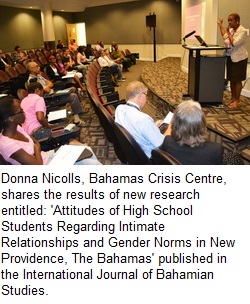
The book Go Lean…Caribbean was written by resources from an organized movement, by people (residents and Diaspora) with passion to change/elevate their Caribbean homeland. This is personal! One of those people devoted to this Go Lean goal, Camille Russell-Smith, is a co-author of the underlying research in the foregoing news article. This research is a product of her collaboration with the Bahamas Crisis Centre (Donna Nicolls) and her role at the College of the Bahamas as a Counselor, Instructor and Workshop Facilitator for incoming freshmen students entitled “Violence in Interpersonal Relationships”.

Good job Donna Nicolls, Camille Russell-Smith and your research team; thank you for your service. Congratulations on this timely research effort.

The goal is to make the Caribbean a better place to live work and play; with justice for all, regardless of gender. This is the right thing to do! But this is not easy. This takes heavy-lifting on the part of everyone: the educators, public safety officials, community leaders and parents. The message must be strong and clear:

No More!

No More‘ is the theme of a campaign in the US to minimize the public attitudes that tolerate domestic violence. This is a great role model for the Caribbean to emulate. See the VIDEO here of the Public Service Announcement (PSA)/TV Commercial:

Video Title -‘ No More‘ PSA Campaign – https://www.youtube.com/watch?v=j70ha1PUlqk:

Download the book Go Lean … Caribbean – now!

Share this post:
, , , , ,
[Top]

Book Review: ‘The Protest Psychosis’

Go Lean Commentary

Life, liberty and the pursuit of happiness…

These words are from the US Declaration of Independence,  but how many actually believe these words apply to all Americans? This important part of this very important American document is not exclusively American; it is reflected repeatedly in values from the Enlightenment Era (1650 to 1700) that became fundamental to a lot of protest movements around the world. This is also true of the movement to protest the status quo in the Caribbean region today. This movement is underpinned by the book Go Lean … Caribbean in its efforts to elevate Caribbean society.

Many times protesters have been viewed as insane by contemporaries and especially their adversaries. This oppositional practice was far too common in the US during the slavery era, and just recently during the Civil Rights Movement in the latter half of the 20th Century. This was the point of the book The Protest Psychosis: How Schizophrenia Became a Black Disease” by Professor Jonathan Metzl. This review paragraph summarizes the book:

A powerful account of how cultural anxieties about race shaped American notions of mental illness The civil rights era is largely remembered as a time of sit-ins, boycotts, and riots. But a very different civil rights history evolved at the Ionia State Hospital for the Criminally Insane in Ionia, Michigan. In “The Protest Psychosis“, psychiatrist and cultural critic Jonathan Metzl tells the shocking story of how schizophrenia became the diagnostic term overwhelmingly applied to African American protesters at Ionia–for political reasons as well as clinical ones. Expertly sifting through a vast array of cultural documents, Metzl shows how associations between schizophrenia and blackness emerged during the tumultuous decades of the 1960s and 1970s – and he provides a cautionary tale of how anxieties about race continue to impact doctor-patient interactions in our seemingly postracial America.
http://www.alibris.com/search/books/isbn/9780807001271?qwork=#search-anchor
- Photo 3

From this historic perspective, there are many lessons to consider for the Caribbean empowerment effort.

The Caribbean is not detached from the underlying narrative of The Protest Psychosis book; this region benefited greatly from the US Civil Rights Movement. Though there may not have been many sit-ins, protest marches (a la the “March on Washington”) in the Caribbean, there was a natural spin-off. All of the Caribbean have a majority Black population (except for one, the French Caribbean island of Saint Barthélemy), that were suppressed, repressed and oppressed until the Civil Rights Movement and De-colonization-Majority Rule Movements manifested. There is the need now for a new protest movement. The Caribbean status quo still reflects economic suppression, repression and oppression; the societal abandon rate is so abominable that 70 percent of college educated citizens leave, resulting in a debilitating brain drain.

  • Will the demands to change Caribbean society today require “psychotic” protests?
  • Will a conservative population or empowered governing elite emerge to halt change and demand that the status quo continue unabated?
  • Who will be the new champions of change this time?
  • Will their advocacy be so impassioned that their motives and actions will be labeled as deranged or insane?

Insanity and Schizophrenia are all serious subjects within the field of mental health, not to be taken lightly. Imagine then, the weight of authority thrust upon the diagnosis of a Clinical Psychiatrist when he or she labels some protester with these diagnoses. Imagine too, how such protests can be undermined just by tossing around these labels. This is a serious issue that requires some sober reflection.

Sober reflection is the appropriate descriptor of the following podcast, a 30-minute interview with the author of the referenced book.

The book review follows:

Book Review Podcast Presented by: Lynne Malcolm
Title: The Protest Psychosis: How Schizophrenia Became a Black Disease.
By: Professor Jonathan Metzl

Psychiatrist Jonathan Metzl treats people in the clinic whose lives are afflicted by severe psychosis. But he also documents an explosive ‘other’ history of schizophrenia, and what he sees as its transformation from a diagnosis of feminine docility or creative eccentricity, to one given to angry black men during the civil rights era. You’ll never see medicine and the mind in quite the same light again.

About the Presenter: Lynne Malcolm

- Photo 1Lynne Malcolm is passionate about people and their personal experience and when she least expected it – she discovered the power of radio to tell their stories. She is also Executive Producer of RN’s (Radio National) Science Unit.

Lynne has received a number of awards for her work in radio including Bronze & Gold Medals in the New York Radio Festivals International Awards, the Michael Daley Award for Journalism in Science, finalist status in the Eureka Awards. She has also won 2 Mental Health Services media achievement awards for All in the Mind, one in 2007 for her series on schizophrenia, and one in 2013 for 2 programs on youth mental health.

Lynne is delighted to be hosting All In the Mind because she finds the workings of the human mind and how that affects our lives endlessly fascinating.
All In The Mind – Radio National, Australia Broadcast Corporation Saturday 1 May 2010 1:00PM
http://www.abc.net.au/radionational/programs/allinthemind/the-protest-psychosis/3041652

Podcast: http://youtu.be/9zc0mI5HgF8

This consideration of such sober topics aligns with the book Go Lean… Caribbean. The book addresses many serious aspects of Caribbean life.  While the Go Lean book is not a reference source for science, mental health or psychiatry, it does glean from “social science” concepts in communicating the plan to elevate Caribbean society. The book serves as a roadmap for the introduction and implementation of the technocratic Caribbean Union Trade Federation (CU). The complete prime directives are described as:

  • Optimize the economic engines of the Caribbean to elevate and grow the regional economy to $800 Billion.
  • Establish a security apparatus to protect the resultant economic engines.
  • Improve Caribbean governance to support these engines.

The Go Lean … Caribbean roadmap constitutes a change for the region, a plan to consolidate 30 member-states into a Trade Federation with the tools/techniques to bring immediate change to the region to benefit one and all member-states. The ethos to effectuate this change in the region will require courage, advocacy and passion. It is our sincere hope that these attributes will not be considered “crazy or insane”.

This vision may seem “insane” to some.

The Go Lean roadmap immediately calls for the establishment of a federal Health Department with some oversight over the region’s mental health administrations – due to funding, ratings and rankings. The focus on mental health will be as stern as all other health concerns (cancer, trauma, virus, immunizations). This direct correlation of mental health issues with the economy has been previously detailed in Go Lean blog/commentaries, as sampled here:

Guyana Wrestles With High Rate of Suicides
Recessions and Public Health in the Caribbean Region

In addition, Big Pharmaceutical companies had some vested interest in the mis-diagnosis of psychotic drugs; this familiar malpractice has been the subject of a previous blog. (See Haldol photo/advertising above).

The Go Lean roadmap calls for the immediate coordination of the region’s healthcare needs. This point is declared early in the Go Lean book, commencing with this opening pronouncement in the Declaration of Interdependence (Page 12), as follows:

ix.  Whereas the realities of healthcare … cannot be ignored and cannot be afforded without some advanced mitigation, the Federation must arrange for health plans to consolidate premiums of both healthy and sickly people across the wider base of the entire Caribbean population. The mitigation should extend further to disease management, wellness, mental health, obesity and smoking cessation programs.

The foregoing Book Review recited a dysfunction in the US during the Civil Rights Movement of blatantly labeling everyone desirous of social change as just being schizophrenic/insane. This was an abuse of the Psychiatric profession and the Hippocratic oath (for Doctors to do no harm).  Schizophrenia is a serious disorder. This was barely understood until recently in medical science history. See the VIDEO clip (below) from the movie: “A Beautiful Mind”.

We have the need for protest movements in the Caribbean now. But we also need to be technocratic in the management of our mental health needs – no blatant assignment of labels just to “shoo” away protesters or Advocates for change. The Go Lean book details the community ethos to forge change; plus the executions of the following strategies, tactics, implementations and advocacies to impact the region’s healthcare to ensure no abuse of the mental health process:

Assessment – Caribbean Single Market & Economy Page 15
Assessment – Dutch Caribbean – Integration & Secessions Page 16
Assessment – French Caribbean – Organization & Discord Page 17
Assessment – Puerto Rico – The Greece of the Caribbean Page 18
Community Ethos – Security Principles – Privacy versus Public Protection Page 23
Community Ethos – Security Principles – Anti-Bullying and Mitigation Page 23
Community Ethos – Security Principles – “Crap” Happens Page 23
Community Ethos – Governing Principles – Lean Operations Page 24
Community Ethos – Governing Principles – Cooperatives Page 24
Community Ethos – Governing Principles – Non-Government Organizations Page 25
Community Ethos – Ways to Impact the Future Page 26
Community Ethos – Ways to Foster Genius Page 27
Community Ethos – Ways to Promote Happiness Page 36
Community Ethos – Impact the Greater Good Page 37
Strategy – Vision – Confederate 30 Member-States Page 45
Strategy – Mission – Reform   our Health Care Response Page 47
Strategy – Agents of Change – Aging Diaspora Page 57
Tactical – Fostering a Technocracy Page 64
Tactical – How to Grow the Economy to $800 Billion Page 67
Separation of Powers – Department of Health Page 86
Implementation – Ways to Deliver Page 109
Planning – Ways to Make the Caribbean Better Page 131
Planning – Ways to Improve Failed-State Indices Page 134
Planning – Lessons from Indian Reservations – Hopelessness & Mental Health Page 148
Advocacy – Ways to Grow the Economy Page 151
Advocacy – Ways to Improve Healthcare Page 156
Advocacy – Ways to Better Manage the Social Contract Page 170
Advocacy – Ways to Foster Cooperatives Page 176
Advocacy – Ways to Improve Emergency Management – Trauma Medicine Page 196
Advocacy – Ways to Impact the Prison Industrial Complex Page 211
Advocacy – Ways to Improve Elder-Care Page 225
Advocacy – Ways to Empower Women Page 226

Caribbean society is now imperiled; it is in crisis due to deficiencies in economics, security and governance. It should be considered insanity for people to just apathetically accept the status quo. Apathy should not be an option; the options should be “fight or flight”. But far too often, “flight” was selected.

Change has now come to our region; everyone should engage! There is the need for a permanent union to provide efficient stewardship for Caribbean economy, security and governing engines. The Go Lean…Caribbean posits that there are problems, agents of change, that are too big for just any one member-state to tackle alone, there must be a regional solution. This multi-state technocratic administration of the CU may be our best option.

The foregoing article/AUDIO podcast, the Book Review on The Protest Psychosis alludes that 1-out-of-every-100 persons are afflicted with Schizophrenia and related issues (depression and anxiety disorders). The commonly accepted fact is that brain chemistry changes in a lot of people (men and women) as they age, or women enduring child birth or menopause. So many people are affected – perhaps one in every family. Monitoring, managing and mitigating the issues of mental health impacts the Greater Good – the greatest good for the greatest number of people.

The people and institutions of the region are hereby urged to lean-in to this Go Lean roadmap. We can make the Caribbean a better homeland to live, work and play. 🙂

Download the free e-Book of Go Lean … Caribbean – now!

————-

Video: Selected Scenes of Schizophrenia from the movie “A Beautiful Mind”- https://www.youtube.com/watch?v=Yqj1DhUKJco

- Photo 2

Share this post:
, , , , ,
[Top]

Stopping Ebola

Go Lean Commentary

CU Blog - Stopping Ebola - Photo 1What a cute little boy in this photo…

Look at that sly look. It’s as if he just doesn’t understand why he is expected to believe the “nonsense”. He will not “drink the Kool-Aid”.

From the mouths of babes -The Bible; Matthew 21:16

The below article by the Editorial Board of the Miami Herald newspaper seems to indicate that someone has been “drinking the Kool-Aid”. Ebola is not an American problem. As of this moment the figures reported by the World Health Organization is that 2,300 people have died during this recent spread of Ebola in West Africa (Sierra Leone, Liberia, Guinea and other neighboring countries). What’s more, that number afflicted is expected to rise to 20,000 by the end of November. What’s worse, 70% of the afflicted are expected to die, if nothing is done.

There is the need for leadership.

This editorial article therefore petitions for American leadership in this Ebola threat:

By: Miami Herald Editorial Board

CU Blog - Stopping Ebola - Photo 2 Rarely has the idea of the global village and the mantra that the world is one big neighborhood seemed as real as in the frightening case of the raging Ebola epidemic in Africa.

There was a time, not so long ago, that an outbreak of disease anywhere in the Third World would have seemed far removed from the daily concerns of Americans and the nation’s foreign-policy agenda. Safely protected from foreign plagues by vast oceans, U.S. leaders would not have felt compelled to order a rapid response along the lines announced last week by President Obama as a matter of self-protection.

There might have been a tardy and symbolic response, if any at all, but certainly it would not have been treated as a priority demanding presidential action, complete with a significant military deployment.

What makes Ebola different is the realization that the world is indeed smaller, that modern modes of transportation — with busier travel patterns and habits — have lowered the barriers against infection. In places like Miami, a major port of entry for overseas visitors, the threat is very real, and Ebola is a particularly scary virus.

The disease kills between 50 percent and 90 percent of people infected with the virus, and there is as yet no specific and effective treatment available. No vaccine exists. Senior U.N. officials say cases are rising at an almost exponential level, with 5,000 reported by the end of August and many more expected.

Officials in Africa are plainly scared, and should be. Over the weekend, the government in Sierra Leone confined the country’s entire population, some 6 million people, to their homes for three days, an action that one news report called “the most sweeping lockdown against disease since the Middle Ages.”

Some experts estimate that as many as 20,000 people could become infected before the epidemic is under control. Others said the number would be several times higher by year’s end.

“We don’t know where the numbers are going,” said Dr. Bruce Aylward, assistant director general of the World Health Organization. He said the virus was spreading faster than the (belated) escalation of the response by the international community.

Indeed, the international community could have responded more quickly, and more effectively. A major outbreak was reported in Guinea in March by WHO, but it was not until last week that President Obama announced action commensurate with the nature of the threat.

He ordered a deployment of medicine, equipment and soldiers to Liberia and Senegal. A contingent of 3,000 military personnel will help build emergency treatment centers and establish what Pentagon officials call “command and control” assistance to coordinate the overall effort with other countries. According to the White House, the Centers for Disease Control and Prevention has committed more than $100 million to the fight since the outbreak started, but months were lost before the alarm was sounded outside the borders of the affected countries.

As Mr. Obama explained, as a virus multiplies, it also mutates to fight human immunology and counter-measures. That adds to the urgency of the crisis and makes it imperative for the United   States to coordinate an effort on a scale large enough to make a difference.
Miami Herald Daily Newspaper (Posted 09-21-2014) – http://www.miamiherald.com/opinion/editorials/article2180670.html

Ebola is not an American problem but when American citizens have been afflicted, the US response has been inspiringly genius, deploying a potential cure within a week. (See caption on above photo). This is not the resume of a global leader, this is the resume of a nation playing favorites.

CU Blog - Stopping Ebola - Photo 3

The book Go Lean…Caribbean posits that the Caribbean region must promote its own interest and protect its own citizens. We cannot count on the US to pursue the Greater Good for the whole world, or the Caribbean for that matter. Assuredly, we must have our own preparation and response vehicle.

This is the goal of the Go Lean…Caribbean book.

The book serves as a roadmap for the introduction and implementation of that regional sentinel, the Caribbean Union Trade Federation (CU). The complete prime directives of the CU:

  • Optimize the economic engines of the Caribbean to elevate the regional economy.
  • Establish a security apparatus to protect the resultant economic engines.
  • Improve Caribbean governance to support these engines.

This CU roadmap declares that “Crap happens” (Page 23). The Go Lean roadmap immediately calls for the establishment of a Homeland Security Department, with an agency to practice the arts and sciences of Emergency Management. The emergencies include more than natural disasters (hurricanes, earthquakes, tsunamis, volcanoes, flooding, forest fires, and droughts), they include the man-made variety (industrial accidents, oil spills, factory accidents, chemical spills, explosions, terroristic attacks, prison riots) and epidemic threats. Of course, these types of emergencies, described in the foregoing article, require professional expertise, a medical discipline. Stopping Ebola therefore would require a hybrid response of the Emergency Management agency and the CU’s Department of Health Disease Control & Management agency. This agency of Medical experts would help contend with systemic threats of epidemic illness and infectious diseases.

The Go Lean roadmap immediately calls for the coordination of security monitoring and mitigation in the Caribbean; this point is declared early in the Go Lean book with a pronouncement in the Declaration of Interdependence (Page 12), as follows:

xvi. Whereas security of our homeland is inextricably linked to prosperity of the homeland, the economic and security interest of the region needs to be aligned under the same governance. …[to ensure] the functioning of the wheels of commerce for all the citizenry, the accedence of this Federation must equip the security apparatus with the tools and techniques for predictive and proactive interdictions.

The Go Lean roadmap calls for the integration of the viral sentinel responsibility of the 30 Caribbean member-states, despite the 4 different languages and 5 colonial legacies (American, British, Dutch, French, Spanish) into a Trade Federation with the tools/techniques to bring immediate change to the region to benefit one and all member-states. This includes the monitoring and epidemiological defense of common and emerging viruses. This empowered CU agency will liaison with foreign entities with the same scope, like the World Health Organization (WHO), and the US’s Center for Disease Control (CDC). The need for this empowerment had previously been discussed in a similar blog/commentary regarding the Chikungunya virus.

Embedded YouTube Video: https://www.youtube.com/watch?v=Ui8wMZpwnp0

Since the CU roadmap leads with economic reform, the primary economic driver of the region (tourism) would be a constant concern. A lot is at stake if the Ebola threat comes to Caribbean shores. The realization, or even the unsubstantiated rumor, of viral outbreaks can imperil the tourism product. We must therefore take proactive steps to protect our economic engines. So there are heavy responsibilities for the stewardship of the Caribbean economy, security and governing engines; the goal is to impact the Greater Good of the entire Caribbean region. There is the need for a Caribbean-based agency to do the heavy-lifting of epidemiology for the region – no such entity exists today.  The emerging CU will invite this role and will promote it as a community ethos.

The book details the community ethos, plus the executions of the following strategies, tactics, implementations and advocacies to impact the region’s public health security in protection of the economy:

Community Ethos – Privacy versus Public Protection Page 23
Community Ethos – “Crap” Happens Page 23
Community Ethos – Lean Operations Page 24
Community Ethos – Cooperatives Page 24
Community Ethos – Non-Government Organizations Page 25
Community Ethos – Ways to Improve Sharing Page 35
Community Ethos – Impact the Greater Good Page 37
Strategy – Vision – Confederate a Non-Sovereign Single Market Entity Page 45
Strategy – Customers – Residents & Visitors Page 47
Strategy – Agents of Change – Globalization Page 57
Tactical – Confederating a Permanent Union Page 63
Tactical – Fostering a Technocracy Page 64
Separation of Powers – Emergency Management Page 76
Separation of Powers – Disease Control & Management Page 86
Implementation – Ways to Pay for Change Page 101
Implementation – Security Initiatives at Start-up Page 103
Implementation – Ways to Deliver Page 109
Implementation – Ways to Foster International Aid Page 115
Implementation – Ways to Benefit from Globalization Page 119
Planning – Ways to Improve Failed-State Indices Page 134
Planning – Ways to Measure Progress Page 148
Advocacy – Ways to Grow the Economy Page 151
Advocacy – Ways to Improve Healthcare Page 156
Advocacy – Ways to Improve Governance Page 168
Advocacy – Ways to Better Manage the Social Contract Page 170
Advocacy – Ways to Foster Cooperatives Page 176
Advocacy – Ways to Improve for Natural Disasters Page 184
Advocacy – Ways to Improve Emergency Management Page 196

The foregoing news editorial assumes the US will be altruistic and only pursue the Greater Good for the rest of the world.

LOL…

Recent Go Lean blogs have reported that the US is still not an equal society for its own citizens; forget those in foreign lands looking to the US for leadership. See sample list here:

https://goleancaribbean.com/blog/?p=2297 A Lesson in US Racial History – Booker T versus Du Bois
https://goleancaribbean.com/blog/?p=2259 The Criminalization of American Business
https://goleancaribbean.com/blog/?p=2251 What’s In A Name… (American Job Discrimination for Minorities)
https://goleancaribbean.com/blog/?p=2183 A Textbook Case of Price-gouging
https://goleancaribbean.com/blog/?p=1896 The Unbalanced Crisis in Black Homeownership
https://goleancaribbean.com/blog/?p=1832 Many drug inmates who get break under new plan to be deported
https://goleancaribbean.com/blog/?p=1674 Obama’s Plans for $3.7 Billion Immigration Crisis Funds
https://goleancaribbean.com/blog/?p=1143 Health-care fraud in America; criminals take $272 billion a year
https://goleancaribbean.com/blog/?p=789 America’s War on the Caribbean
https://goleancaribbean.com/blog/?p=546 Book Review: ‘The Divide’ – American Injustice in the Age of the Wealth Gap
https://goleancaribbean.com/blog/?p=341 Hypocritical US slams Caribbean human rights practices
https://goleancaribbean.com/blog/?p=273 10 Things We Don’t Want from the US: #7 – Discrimination of Immigrants

The change now being fostered by this Go Lean roadmap (and blogs) is focused on the Caribbean member-states, not on the United States of America. The US is out-of-scope; the Caribbean, on the other hand is our home. According to the old adage: “charity begins at home”.

The region is hereby urged to lean-in to this Go Lean roadmap, to fulfill the vision of making the Caribbean region a better place to live, work and play.

Share this post:
, , , , , , ,
[Top]

A Lesson in History – Booker T versus Du Bois

Go Lean Commentary

2008 was a big year …

… in the history of mankind, the United States of America and the lessons learned for application in the Caribbean. This has been a familiar theme for the publishers of the book Go Lean…Caribbean; this theme has been exhausted in the book (Page 136) and in countless blog/commentaries (see list below). 2008 was only 6 years ago; that is considered recent; how inspiring could the lessons be with just a 6-year look-back? In answering, there is the need to go back even further, not to 2008, but back to the America of 1908, even more exacting to 1901; (the year Booker T. Washington was invited to the White House).

This was the strong point made by one of the key players in American history for 2008: John McCain, the Republican Nominee for US President against the eventual winner Barack Obama. In his concession speech on November 4, 2008, he painted a (word) picture of a landscape of America transcending over the past 100 years.

See the VIDEO here, now:

Video: John McCain 2008 Concession Speech
https://www.youtube.com/watch?v=bss6lTP8BJ8


A comment on this VIDEO in February 2014 truly capsulated the significance of this speech:

“One the most gracious and powerful speeches ever made. It deserves to go into the pantheon of great orations made by the likes of Winston Churchill, Martin Luther King, Jawaharlal Nehru and others” – Ravi Rajagopalan.

CU Blog - A Lesson in History - Booker T versus DuBois - Photo CombinedThe transcript from this video gives us the platform for the deep appreciation for our lesson in history: Booker T. Washington versus W.E.B. Du Bois. (See Appendix below).

Both men were very important in the history of civil rights for African-Americans. They both wanted the same elevation of their community in American society, but they both had different strategies, tactics and implementations.

Washington’s biggest legacy is the Tuskegee University (Tuskegee Institute in his day). Du Bois’s legacy stems from his co-founding the NAACP (National Association for the Advancement of Colored People).

The conclusion from the above VIDEO, as stated by John McCain is that the journey for full citizenship for African-Americans took 100 years from the time of the Washington / Du Bois chasm. No matter the detailed approach, 100 years is still 100 years.

From the point of view of the Caribbean and the publishers of Go Lean…Caribbean, we side with both civil rights leaders in aspirations, but lean towards Booker T. Washington in strategies. Underlying to Mr. Washington’s advocacy, was for the Black Man to remain in the South, find a way to reconcile with his White neighbors and to prosper where he was planted.

The Caribbean has the same conundrum! Rather than fleeing our southern homes for northern opportunities, we advocate reconciling our conflicts, and managing the crises in our region so as to work out an effective future for all Caribbean people today, and tomorrow for our youth. (We also advocate a reconciliation of the past).

The book Go Lean…Caribbean serves as a roadmap for the introduction and implementation of the Caribbean Union Trade Federation (CU); an initiative to bring change, empowerment, to the Caribbean region; to make the region a better place to live, work and play. This Go Lean roadmap also has these 3 prime directives:

  • Optimization of the economic engines in order to grow the regional economy to $800 Billion & create 2.2 million new jobs.
  • Establishment of a security apparatus to protect the resultant economic engines.
  • Improve Caribbean governance to support these engines.

The book describes the CU as a technocratic administration with 144 different missions to elevate the Caribbean homeland. The underlying goal is stated early in the book with this pronouncement in the opening Declaration of Interdependence (Page 12):

xii. Whereas the legacy in recent times in individual states may be that of ineffectual governance with no redress to higher authority, the accedence of this Federation will ensure accountability and escalation of the human and civil rights of the people for good governance, justice assurances, due process and the rule of law…

Change has come to the Caribbean. But as depicted in the foregoing VIDEO, we will not have to wait 100 years, we will effectuate this change now. The Go Lean book declares that for permanent change to take place, there must first be an adoption of new community ethos, the national spirit that drives the character and identity of its people. This is what was missing in 1908 Black America. This point of community ethos is therefore our biggest lesson in the consideration of this history.

The Go Lean roadmap was constructed with these additional community ethos in mind, plus the execution of strategies, tactics, implementation and advocacies to forge the identified permanent change in the region. The following is a sample of these specific details from the book:

Community Ethos – Deferred Gratification Page 21
Community Ethos – Economic Principles – People Choose Page 21
Community Ethos – Economic Principles – All Choices Involve Costs Page 21
Community Ethos – Economic Principles – People Respond to Incentives in Predictable Ways Page 21
Community Ethos – Economic Principles – Economic Systems Influence Individual Choices Page 21
Community Ethos – Economic Principles – The Consequences of Choices Lie in the Future Page 21
Community Ethos – Security Principles – Anti-Bullying and Mitigation Page 23
Community Ethos – Governing Principles – Minority Equalization Page 24
Community Ethos – Governing Principles – Lean Operations Page 24
Community Ethos – Ways to Impact the Future Page 26
Community Ethos – Ways to Foster Genius Page 27
Community Ethos – Ways to Help Entrepreneurship Page 28
Community Ethos – Ways to Promote Intellectual Property Page 29
Community Ethos – Ways to Impact Research & Development Page 30
Community Ethos – Ways to Manage Reconciliations Page 34
Community Ethos – Ways to Improve Sharing Page 35
Community Ethos – Ways to Promote Happiness Page 36
Community Ethos – Ways to Impact the Greater Good Page 37
Anecdote – LCD versus an Entrepreneurial Ethos Page 39
Strategy – Vision – Confederation   of the 30 Caribbean Member-States into a Single Market Page 45
Strategy – Mission – Celebrate the Music, Sports, Art, People and Culture of the Caribbean Page 46
Tactical – Confederating a Permanent Union Page 63
Tactical – Fostering a Technocracy Page 64
Tactical – Separation of Powers: Federal Administration versus Member-States Governance Page 71
Implementation – Ways to Pay for Change Page 101
Implementation – Ways to Deliver Page 109
Planning – 10 Big Ideas for the Caribbean Region Page 127
Planning – Ways to Make the Caribbean Better Page 131
Planning – Ways to Better Manage Image Page 133
Planning – Lessons Learned from 2008 Page 136
Advocacy – Ways to Grow the Economy Page 151
Advocacy – Ways to Create Jobs Page 152
Advocacy – Ways to Improve Education Page 159
Advocacy – Ways to Improve Governance in the Caribbean Region Page 168
Advocacy – Ways to Better Manage the Social Contract Page 170
Advocacy – Ways to Mitigate Terrorism Page 181
Advocacy – Ways to Improve Communications Page 186
Advocacy – Ways Impact the Diaspora Page 217
Advocacy – Ways to Preserve Caribbean Heritage Page 218
Advocacy – Ways to Improve the Arts Page 230
Advocacy – Ways to Promote Music Page 231

There are other lessons for the Caribbean to learn from this consideration. The “clash and conflict” of the Booker T. Washington camp versus the W.E.B. Du Bois camp caused enmity in Black America since 1908 and continues even today. While some modern labeling may be “Old-School versus Nu School”, “Hip-Hop versus Bourgeois” , “Black Nationalists versus Accommodationists”, even “Thugs versus ‘Acting White'”, the underlying conflict is a  “deep divide”, a consistent reflection of two different approaches competing for dominance in the Black community.

Whereas life imitates art and art imitates life, this conflict was artfully depicted in the 1984 film A Soldier Story, directed by Norman Jewison, based upon playwright Charles Fuller’s Pulitzer Prize-winning Off-Broadway production A Soldier’s Play (1981). The movie was nominated for three Academy Awards (Best Picture, Supporting Actor – Adolph Caesar, and Best Screenplay Adaptation – Charles Fuller). See the VIDEO excerpt here:

A Solider’s Story: “The Day Of The Geechie Is Gone”
https://www.youtube.com/watch?v=CMk_16hT8Tk

A previous Go Lean blog/commentary identified this same conflict as Egalitarianism versus Anarchism.

Other blog/commentaries stressed related issues, such as learning from 2008 and the history of America’s 20th Century race relations. The following sample applies:

https://goleancaribbean.com/blog/?p=2222 Sports Role Model – Playing For Pride … And More
https://goleancaribbean.com/blog/?p=1918 Philadelphia Freedom – Some Restrictions Apply
https://goleancaribbean.com/blog/?p=1596 Book Review: ‘Prosper Where You Are Planted’
https://goleancaribbean.com/blog/?p=1531 A Lesson in History: 100 Years Ago Today – World War I
https://goleancaribbean.com/blog/?p=1037 Humanities & Civil Rights Advocate Maya Angelou – R.I.P.
https://goleancaribbean.com/blog/?p=789 America’s War on the Caribbean
https://goleancaribbean.com/blog/?p=782 Open the Time Capsule: The Great Recession of 2008
https://goleancaribbean.com/blog/?p=378 Fed Releases Transcripts from 2008 Meetings
https://goleancaribbean.com/blog/?p=341 Hypocritical US slams Caribbean human rights practices

Are the issues in this commentary strictly a historic reference? Unfortunately not! The opening VIDEO saw a conciliatory John McCain congratulating the newly elected President Barack Obama. The audience continued to “boo” time and again. This response was indicative of an continuing uneasiness in America’s race relations. This point is effectively made by another commentator, (YouTube Screen Name “eddude08”, posted January 2014) to the above John McCain YouTube VIDEO:

The crowd at John McCain’s concession speech said it all. While the noble Arizona Senator was committed to ending his campaign with grace and dignity, few knew at the time that [his Vice-Presidential Nominee] Sarah Palin had the audacity to prepare her own concession speech that night. Every time the Senator from Arizona would mention the newly elected Black President, the crowd erupted with boos. While mass media portrayed a nation wrapped in joy and celebration, anger and fear was well felt in the Heartland. John McCain, one of the greatest Senators of a generation, would be the sole man responsible for bringing a radical and unstoppable element into American politics. Sarah Palin’s nomination set the stage for political domination by a minority that had long been shunned by the mainstream.

Within Obama’s first year of presidency, the number of anti-government militias quadrupled. Within his first term, the nation witnessed the greatest number of legislative filibusters by any congress in the history of the country. 5 years into his presidency, he presided over the most ineffective Congress in American history. even with the deaths of 20 children in a mass shooting [in Newtown, Connecticut], conspiracy theories flourished and the people became distorted, millions of armed citizens convinced their weapons were needed for an inevitable clash with their government. A grassroots movement called the Tea Party became hijacked, fused with an established political party, what was a movement to stop the emerging fascism in the United States became the main force of recruitment for it. The nations budget and credit standing became fair game to advance political ideologies. America’s politics so radicalized a woman named Christine O’Donnell became a Senate nominee [in Delaware in 2010]. Even victims of hurricanes, even [in] the great states of New York and New Jersey could not be spared in the new age of American politics. Glenn Beck [(Political Commentator on cable channel FOX News)] became a national figure, and corporations were declared citizens.

A truly new America was emerging, and nothing would be able to stop what had become inevitable.

Is it the same America of 1908? Perhaps! The point from a Caribbean perspective is “the more things change, the more they remain the same”. We have problems in the Caribbean to contend with, many of which we are failing miserably. But our biggest crisis stems from the fact that so many of our citizens have fled their Caribbean homelands for foreign (including American) shores.

The purpose of this commentary is not to fix America, it is to fix the Caribbean. But the push-and-pull factors are too strong coming from the US. We must lower the glimmering light, the “pull factors”, that so many Caribbean residents perceive of the “Welcome” sign hanging at American ports-of-entry. A consideration of this commentary helps us to understand the DNA of American society: un-reconciled race relations in which Black-and-Brown are still not respected.

The logical conclusion: stay home in the Caribbean and work toward improving the homeland. The US should not be the panacea of Caribbean hopes and dreams.

Booker T. Washington advocated this strategy: prosper where you’re planted.

After 100 years, and despite an African-American President, we must say to Mr. Booker T. Washington: We concur!

Download the book Go Lean … Caribbean – now!

————————————————–

Appendix – Black America in 1908 – The Way Forward

Conditions were not good for the 4 million Black population in the Southern US after the Civil War. The blatant racism brought oppression, suppression and repression. Mob violence and injustice, even lynchings, became commonplace upon this American population. As lynchings in the South reached a peak in 1895, Booker T. Washington gave a speech in Atlanta that made him nationally famous. The speech called for black progress through education and entrepreneurship. His message was that it was not the time to challenge Jim Crow segregation and the disfranchisement of black voters in the South. Washington mobilized a nationwide coalition of middle-class blacks, church leaders, and white philanthropists and politicians, with a long-term goal of building the community’s economic strength and pride by a focus on self-help and schooling.

Washington’s 1895 Atlanta Exposition address was viewed as a “revolutionary moment”[17] by both African Americans and Whites across the country. At the time W. E. B. Du Bois supported him, but they grew apart as Du Bois sought more action to remedy disfranchisement and improve educational opportunities for Blacks. After their falling out, Du Bois and his supporters referred to Washington’s speech as the “Atlanta Compromise” to express their criticism that Mr. Washington was too accommodating to white interests.

Washington advocated a “go slow” approach to avoid a harsh white backlash.[17] The effect was that many youths in the South had to accept sacrifices of potential political power, civil rights and higher education.[18] His belief was that African Americans should “concentrate all their energies on industrial education, and accumulation of wealth, and the conciliation of the South.”[19] Washington valued the “industrial” education, as it provided critical skills for the jobs then available to the majority of African Americans at the time, as most lived in the South, which was overwhelmingly rural and agricultural. He thought these skills would lay the foundation for the creation of stability that the African-American community required in order to move forward. He believed that in the long term, “blacks would eventually gain full participation in society by showing themselves to be responsible, reliable American citizens.” His approach advocated for an initial step toward equal rights, rather than full equality under the law, gaining economic power to back up black demands for political equality in the future.[20] he believed that such achievements would prove to the deeply prejudiced white America that African Americans were not “‘naturally’ stupid and incompetent.”[21]

Well-educated blacks in the North, [of which Du Bois was most iconic], advocated a different approach, in part due to the differences they perceived in opportunities. Du Bois wanted blacks to have the same “classical” liberal arts education as upscale whites did, along with voting rights and civic equality, the latter two elements granted since 1870 by constitutional amendments after the Civil War. He believed that an elite, which he called the Talented Tenth, would advance to lead the race to a wider variety of occupations.[22] Du Bois and Washington were divided in part by differences in treatment of African Americans in the North versus the South; although both groups suffered discrimination, the mass of blacks in the South were far more constrained by legal segregation and exclusion from the political process. Many in the North rejected to being ‘led’, and authoritatively spoken for, by a Southern accommodationist strategy which they considered to have been “imposed on them [Southern blacks] primarily by Southern whites.”[23] Historian Clarence E. Walker wrote that, for white Southerners:

“Free black people were ‘matter out of place’. Their emancipation was an affront to southern white freedom. Booker T. Washington did not understand that his program was perceived as subversive of a natural order in which black people were to remain forever subordinate or unfree.”[24]

Both Washington and Du Bois sought to define the best means to improve the conditions of the post-Civil War African-American community through education.

Blacks were solidly Republican in this period, having gained emancipation and suffrage with the President Lincoln and his party. Southern states disfranchised most blacks and many poor whites from 1890–1908 through constitutional amendments and statutes that created barriers to voter registration and voting, such as poll taxes and literacy tests. By the late nineteenth century, Southern white Democrats defeated some biracial Populist-Republican coalitions and regained power in the state legislatures of the former Confederacy; they passed laws establishing racial segregation and Jim Crow. In the border states and North, blacks continued to exercise the vote; the well-established Maryland African-American community defeated attempts there to disfranchise them.

CU Blog - A Lesson in History - Booker T versus DuBois - Photo 3Washington worked and socialized with many national white politicians and industry leaders. He developed the ability to persuade wealthy whites, many of them self-made men, to donate money to black causes by appealing to values they had exercised in their rise to power. He argued that the surest way for blacks to gain equal social rights was to demonstrate “industry, thrift, intelligence and property.”[25] He believed these were key to improved conditions for African Americans in the United States. Because African Americans had only recently been emancipated and most lived in a hostile environment, Washington believed they could not expect too much at once. He said, “I have learned that success is to be measured not so much by the position that one has reached in life as by the obstacles which he has had to overcome while trying to succeed.”[15]

Along with Du Bois, Washington partly organized the “Negro exhibition” at the 1900 Exposition Universelle in Paris, where photos of Hampton Institute’s black students were displayed. These were taken by his friend Frances Benjamin Johnston.[26] The exhibition demonstrated African Americans’ positive contributions to United States’ society.[26]

Washington privately contributed substantial funds for legal challenges to segregation and disfranchisement, such as the case of Giles v. Harris, which was heard before the United States Supreme Court in 1903.[27] Even when such challenges were won at the Supreme Court, southern states quickly responded with new laws to accomplish the same ends, for instance, adding “grandfather clauses” that covered whites and not blacks.
Wikipedia Online Encyclopedia – Retrieved 09/09-2014 from:
http://en.wikipedia.org/wiki/Booker_T._Washington

Cited References:

15. Harlan, Louis R (1972), Booker T. Washington: volume 1: The Making of a Black Leader, 1856–1901 , the major scholarly biography
17.   Bauerlein, Mark (Winter 2004), The Journal of Blacks in Higher Education 46, JSTOR, p. 106.
18.   Pole, JR (Dec 1974), “Review: Of Mr. Booker T. Washington and Others; The Children of Pride”, The Historical Journal 17 (4) , p. 888.
19.   Du Bois, WEB (1903), The Souls of Black Folk, Bartleby ., pp. 41–59.
20.   Pole, JR (Dec 1974), “Review: Of Mr. Booker T. Washington and Others; The Children of Pride”, The Historical Journal 17 (4) , p. 107.
21.   Crouch, Stanley (2005).  The Artificial White Man: Essays on Authenticity, Basic Books, p. 96.
22.   Du Bois, WEB (1903), The Souls of Black Folk, Bartleby ., p. 189.
23.   Pole, JR (Dec 1974), “Review: Of Mr. Booker T. Washington and Others; The Children of Pride”, The Historical Journal 17 (4) , p. 980.
24.   Walker, Clarence E (1991), Deromanticising Black History, The University of Tennessee Press, p. 32 .
25.   Harlan, Louis R (1972), Booker T. Washington: volume 1: The Making of a Black Leader, 1856–1901 , the major scholarly biography, p. 68.
26.   Maxell, Anne (2002), “Montrer l’Autre: Franz Boas et les sœurs Gerhard”, in Bancel, Nicolas; Blanchard, Pascal; Boëtsch, Gilles; Deroo, Eric; Lemaire, Sandrine, Zoos humains. De la Vénus hottentote aux reality shows, La Découverte, pp. 331–39, in part. p. 338
27.   Harlan, Louis R (1971), “The Secret Life of Booker T. Washington”, Journal of Southern History 37 (2). Documents Booker T. Washington’s secret financing and directing of litigation against segregation and disfranchisement.


Share this post:
, , ,
[Top]

Sports Role Model – Playing For Pride … And More

Go Lean Commentary

These blog/commentaries started in March 2014. But this source article was published on November 15, 2013. It never seemed appropriate to reach back and feature this article – until now. This marks the occasion of a Black College Football Game (Classic) being staged in Nassau, Bahamas on September 13, 2014 in the new Thomas A. Robinson National Stadium.

CU Blog - Playing For Pride - Photo 3

 CU Blog - Playing For Pride - Photo 2

The foregoing article was adapted from the book by Samuel G. Freedman, Breaking the Line: The Season in Black College Football That Transformed the Sport and Changed the Course of Civil Rights. (It is available at www.samuelfreedman.com and at bookstores nationwide).

Title: Playing for Pride
By: Samuel G. Freedman

The yearly gridiron matchup known as the ORANGE BLOSSOM CLASSIC helped to even the playing field for black players, coaches and fans. But it was about so much more than football.

The calendar of Black America includes several specific holidays. Juneteenth, celebrated every June 19, honors the day the Union Army liberated slaves in Texas following the end of the Civil War. Kwanzaa, beginning on Dec. 26, is a seven-day festival of African heritage. On Dec. 31, which is called watch night, churches hold worship services to commemorate the way their forebears had stayed up all night awaiting the issuance of the ­Emancipation Proclamation on January 1, 1863.

And for a 30-year heyday beginning in the late 1940s, the Orange ­Blossom Classic football game and festival in Miami was the most important annual sporting event and the largest annual gathering of any kind for black Americans. For most of those years, more than 40,000 spectators attended the game in the Orange Bowl stadium, while tens of thousands more thronged to marching-band parades. Black tourists flocked to the hotels, restaurants and clubs of Miami’s Overtown and Liberty City neighborhoods. Pro-football scouts with binoculars, Ray-Bans and stingy-brim hats elbowed their way along the sidelines to scout prospects.

While the Orange Blossom Classic lives only in memory now — it served as the de facto black college championship until 1978 and was still played sporadically until 2004; it was ultimately the unexpected casualty of racial integration in sports and in society — its spirit persists in the dozens of “Classics” played between football teams from ­historically black colleges and universities (HBCUs). There are 37 on the schedule this season, and several of the most famous are coming up. Florida A&M University plays Bethune-Cookman University on Nov. 23 (2013) in the Florida Classic in Orlando, Fla., and Grambling State University faces Southern University and A&M College in the Bayou Classic on Nov. 30 (2013) in New Orleans. [2014 games are scheduled for the same corresponding weekends].

Football, though, is only part of a Classic. Marching bands, step shows, networking, gospel concerts and shopping excursions are all parts of the experience. These Classics continue to draw crowds as large as 70,000 for the on-field rivalry and a broader sense of affirmation.

“Historically speaking, there were not always so many opportunities for African-Americans to socialize in public,” says Todd Boyd, a University of Southern California professor who specializes in race and popular culture. “So the opportunities that did exist often took on added significance. Yet over time, the events became part of a larger tradition. I think the games now have a nostalgic feel. So it’s all about tradition and ritual once again.”

As sporting event and communal celebration, the Orange Blossom Classic rose as an answer to invisibility, the kind Ralph Ellison famously rendered in his novel, Invisible Man. In 1937, when Miami opened the Orange Bowl stadium, a public facility built with public funds, it excluded blacks from all but one section of the eastern end zone. No integrated football team was permitted onto the gridiron until the Nebraska Cornhuskers played Duke in the 1955 Orange Bowl. Blacks were barred from participating in any of the pageants and events related to the bowl game, much as they were barred from patronizing the resort hotels in Miami Beach. The black maids and janitors and cooks and bellhops who comprised the ­human infrastructure of those establishments had to obtain identification­ cards from the police. Even the black performers who drew the crowds — Sammy Davis Jr., Nat King Cole, Ella Fitzgerald — were forbidden from staying in the hotels where they entertained.

During the 1930s, Miami blacks began their own competitor to the Orange Bowl festivities, which they called the Coconut Festival. It had its own beauty queen, its own parade and its own football game, played in Dorsey Park, a segregated square block named for Miami’s first black millionaire. The Coconut Festival game, though, lacked much football pizzazz. That’s where J.R.E. Lee Jr., the son of Florida A&M University’s president, came in.

Even before Lee, black colleges had sought to create their own version of season-ending bowl games. In the 1920s, Lincoln University and Howard University began playing annually in the self-proclaimed Football Classic of the Year, and Tuskegee University met Wilberforce University yearly at Soldier Field in the Midwest Chicago Football Classic. Inspired by these ­examples, Lee conceived a “Black Rose Bowl,” naming it the Orange Blossom Classic. In the first game, in 1933, Florida A&M beat Howard by a score of 9-6 before 2,000 spectators at a blacks-only ballpark in Jacksonville, Fla. For the next 13 years, the contest migrated among the Florida cities of Jacksonville, Orlando and Tampa, becoming an itinerant attraction that gradually built its audience and reputation.

Then, in 1947, Lee linked the game’s fortunes to the Coconut Festival’s and settled it in Miami. Miami had the largest stadium in Florida. Miami also had the greatest concentration of media anywhere in the state. And Miami, as it entered the postwar boom, was beginning to shake off its rigid segregation, largely owing to the influx of Jews from the North, most of them either tacitly or actively supportive of civil rights.

The very first Classic game in Miami made racial history. For the first time, black fans were permitted to sit in the main stands of the Orange Bowl. And when a Florida A&M Rattler receiver named Nathaniel “Traz” Powell caught a 45-yard pass to break a 0-0 tie with Hampton Institute, he became the first black man to score a touchdown on the Orange Bowl’s previously whites-only gridiron. Powell had grown up in Miami as the son of a laundress and a laborer at the city’s incinerator. For years to come, blacks around the state would speak about his touchdown as if he’d been Rosa Parks refusing to surrender her seat.

The civil rights analogy was apt. Black colleges and their football teams operated in a kind of parallel universe during the segregation era. Even as they sent hundreds of players into the pros, the mainstream media rarely covered the schools. The proliferation of sports-focused talk radio and cable TV was decades away. So Jake Gaither, Florida A&M’s legendary coach, set about raising the Orange Blossom Classic to the status of a de facto black championship. Year in and year out, his Rattlers ranked near the top. And because Florida A&M hosted the Orange Blossom Classic, Gaither invited the strongest possible opponent.

As a result, the Orange Blossom Classic far outdrew the University of Miami’s football games and, later, those of the new National Football League (NFL) franchise, the Miami Dolphins. In Black America, it supplanted the Negro League All-Star game as the biggest single event. Florida A&M’s renowned “Marching 100” band pranced in two parades, one through the black neighborhoods and the other downtown, each drawing thousands upon thousands of spectators.

One year, comedian Nipsey Russell joined the Rattlers on their sideline; another time it was Sammy Davis Jr. All week long, the streets of Overtown and LibertyCity were “crowded like the state fair, music pouring out of doorways,” as one participant remembers. At the Zebra Lounge and the Hampton House, in the Harlem Square Club and the Rockland Palace and all along the stretch of Northwest Second Street called the Great Black Way, stars of jazz, soul and rhythm and blues headlined. Women spent a year’s savings on their Orange Blossom dresses, and beauty salons stayed open all night to handle the demand. When the parties ended near daybreak, people went their ways for breakfast before a sunrise snooze.

“The Classic was bigger than the Fourth of July,” says Marvin Dunn, author of the history book Black Miami in the Twentieth Century. “It was a black thing, and it was well done, and it added to the sense of pride. Even if you didn’t go to the game, you’d have all these people massed along the parade route. And the clothes — you had to get a new suit, a new dress for the Classic. There was not a seat to be had in a barber shop.”

No game brought more luster and historical significance than the 1967 matchup between Florida A&M and Grambling. They were the two greatest black college teams with the two greatest black college coaches (Jake Gaither and Eddie Robinson, respectively) and the two finest quarterbacks to play at each school (Ken Riley and James Harris, respectively). Robinson very deliberately was developing Harris to break the quarterback color line in the pros, to forever lay to rest the canard that no black man was smart enough to play that most intellectual of positions. As Leon Armbrister, the sports columnist of The Miami Times, the city’s weekly black newspaper, exalted, “The selection of Grambling adds Super Bowl status to the Classic.”

In many ways, the Orange Blossom Classic in 1967 also embodied the recent progress in race relations. The Grambling and Florida A&M teams both stayed in integrated hotels on Miami Beach. The P. Ballantine & Sons Brewing Company sponsored a tape-delayed broadcast of the game on television stations in Atlanta, Philadelphia, Washington, D.C., and New York. Buddy Young, the first black executive in the NFL’s front office, provided the on-air commentary. The local publicity for the game was handled by Julian Cole, a transplanted Jew who counted the ritziest Miami Beach hotels among his clients.

The Orange Blossom Classic’s souvenir program featured advertisements from major national companies, including Humble Oil, Prudential Insurance and RC Cola. Coca-Cola sponsored a float carrying the Grambling College queen and her court in the pregame parade. The celebrities in attendance included the first wave of black executives hired by corporations in search of black consumers. Pepsi-Cola, the leader in the field, dispatched its vice president for special markets, Charles Dryden, a bona fide war hero as one of the Tuskegee Airmen. Greyhound sent Joe Black, the former Brooklyn Dodgers pitcher, who recently had been ­appointed the bus company’s vice president of special markets. F.W. Woolworth, a company trying to repair a reputation damaged by its segregated lunch counters in Southern cities, dispatched Aubrey Lewis, a former Notre Dame football star and FBI agent it recently had hired as an executive recruiter.

The competitive tension built as the game approached. As Grambling ran through its practice session at a junior college, two busloads of Florida A&M players arrived. They jogged around the field, chanting, “It’s so hard to be a Rattler,” before haughtily driving off. Grambling’s Eddie Robinson, incensed, told his team, “The peace dove flies out the window tomorrow!” At a pregame banquet, he had to remind his players not to start jawing at the Florida A&M team, saying, “Take it out on the field.”

On the night of Dec. 2, 1967, before more than 40,000 spectators, Grambling and Florida A&M produced a classic for the Classic. The game went down to the final play, with the Tigers holding off a final drive by the Rattlers to win 28-25. Florida A&M compiled 396 yards of total offense, slightly more than Grambling’s 382. James Harris threw for 174 yards, and Ken Riley nearly matched him, with 110 yards passing and 62 more rushing.

CU Blog - Playing For Pride - Photo 1The scouts certainly noticed. Harris, then a junior, would be drafted by the NFL’s Buffalo Bills in January 1969. He went on to become the first black quarterback to regularly start in the NFL, leading the Los Angeles Rams to the conference title game twice in the mid-1970s. Every black quarterback to follow, from Doug Williams and Warren Moon to Russell Wilson and Robert Griffin III, came through the door that James Harris opened. As for Ken Riley, he was moved to cornerback in the NFL and had an illustrious 15-year career with the Cincinnati Bengals. Even now, 30 years after retiring, he ranks fifth in NFL history in career interceptions.

In the aftermath of the 1967 Orange Blossom Classic, Grambling was able to bring black college football to the nation as a whole. The following September, the Tigers played Morgan State before a sold-out crowd in Yankee Stadium in a fundraising game for the National Urban League, a prominent civil-rights organization. That example inspired the dozens of black-college classics being played today, keeping a precious thread of prideful history unbroken.
——
SAMUEL G. FREEDMAN is a professor at Columbia University’s Graduate School of Journalism and a New York Times columnist.

The foregoing article depicts reality for the Black American population for much of the 20th Century. Despite the differences in population, cultural heritage and language, much of the historical experiences were parallel in the Caribbean until majority rule and/or de-colonization came to fruition in these tropical homelands.

This foregoing article therefore relates to more than just sports, but history, culture and civil rights cause-and-effect. The foregoing therefore harmonizes with the book Go Lean…Caribbean which also stresses the need to Transform Sports and Change the Course of Civil Rights but this time for the Caribbean region. The Go Lean book studies the assessment of the 30 Caribbean member-states and posits that the region is in crisis, with the societal engines at the precipice due the an unsustainable rate of human flight. The African-American experience in the US has thusly improved over the last century, the current US President Barack Obama is of African-American descent; the dreaded co-existence (segregation) of Blacks along side Whites is no longer the status quo; their community is more color-blind. This creates strong motivation for Caribbean residents to consider an American migration. In fact 70% of the Caribbean college-educated population, some from American HBCU’s as depicted in the foregoing article, have abandoned their homeland and live abroad, mostly in the US.

The City of Miami, prominently featured in the foregoing article is largely comprised of the Caribbean Diaspora. (In the interest of full disclosure, this Go Lean blogger attended one of the schools prominently featured in this foregoing article, Florida A&M University, and separately lived in Miami for 17 years).

The underlying issue in this consideration is sports and the game of (American) football.  A compelling mission of the Go Lean book is to foster the eco-systems for sports enterprises in the region. The book posits that sports, collegiate sports included, can impact a community’s economics and surely its pride.

An important mission of this Go Lean message is to simply lower the “push and pull” factors that lead many to abandon their Caribbean homeland for American shores. The “pull” factors were miniscule in the mid-20th Century; Caribbean citizens of Black and Brown heritage may not have found the (southern) US so welcoming. But times have changed, and the minority experience in America is different; more enticing and appealing to Caribbean citizens seeking to relocate.

While the Caribbean may not have the sports business eco-system, we do have the underlying assets: athletes. The Caribbean supplies the world, including American colleges (NCAA), with the best-of-the-best in the sports genres of basketball, track-and-field, FIFA-soccer and a few football players (NCAA & NFL). The Go Lean book recognizes and fosters the genius qualifiers of many Caribbean athletes.

The Go Lean goal now is to foster the local eco-system in the homeland so that  those with talent would not have to flee the region to garner successful returns on their athletic investments.

The Go Lean book serves as a roadmap for the introduction and implementation of the Caribbean Union Trade Federation (CU), a technocratic federal government to administer and optimize the economic/security/ governing engines of the region’s 30 member-states. At the outset, the roadmap recognizes our crisis and the value of sports in the roadmap, with these statements in the Declaration of Interdependence (Page 13 & 14):

xix.    Whereas our legacy in recent times is one of societal abandonment, it is imperative that incentives and encouragement be put in place to first dissuade the human flight, and then entice and welcome the return of our Diaspora back to our shores. This repatriation should be effected with the appropriate guards so as not to imperil the lives and securities of the repatriated citizens or the communities they inhabit. The right of repatriation is to be extended to any natural born citizens despite any previous naturalization to foreign sovereignties.

xxvi. Whereas the preparation of our labor force can foster opportunities and dictate economic progress for current and future generations, the Federation must ensure that educational and job training opportunities are fully optimized for all residents of all member-states, with no partiality towards any gender or ethnic group. The Federation must recognize and facilitate excellence in many different fields of endeavor, including sciences, languages, arts, music and sports. This responsibility should be executed without incurring the risks of further human flight, as has been the past history.

xxxi. Whereas sports have been a source of great pride for the Caribbean region, the economic returns from these ventures have not been evenly distributed as in other societies. The Federation must therefore facilitate the eco-systems and vertical industries of sports as a business, recreation, national pastime and even sports tourism – modeling the Olympics.

The Go Lean roadmap calls for the market organizations to better garner the economic benefits of sports. One of the biggest contributions the CU will make is the facilitation of sports venues: arenas and stadia. Sports can be big business! But even when money is not involved, other benefits abound: educational scholarships, fitness/wellness, disciplined activities for the youth, image, and pride. No doubt an intangible yet important benefits is depicted in this Go Lean roadmap, that of less societal abandonment. A mission of the CU is to reduce the brain drain and incentivize repatriation of the Diaspora.

Another area of the Go Lean economic empowerment roadmap that relates to the foregoing article is the strategy is to create a Single (Media) Market to leverage the value of broadcast rights for the region, the resultant consolidated market would cover 30 member-states, 4 languages and 42 million people. The successful execution of this strategy will elevate the art, science and genius of sport enterprises in the region. Now is the time for all of the Caribbean to lean-in to the following community ethos, strategies, tactics, implementations and advocacies detailed in the book Go Lean … Caribbean to re-boot the delivery of the regional solutions to elevate the Caribbean region through sports:

Community Ethos – Deferred Gratification Page 21
Community Ethos – Economic Principle – Consequences of Choices Lie in the Future Page 21
Community Ethos – Return on Investments Page 24
Community Ethos – Ways to Impact the Future Page 26
Community Ethos – Ways to Foster Genius Page 27
Community Ethos – Ways to Impact the Greater Good Page 37
Strategy – Vision – Make Caribbean The Best Place to Live, Work and Play Page 46
Strategic – Staffing – Sporting Events at Fairgrounds Page 55
Tactical – Fostering a Technocracy Page 64
Tactical – Separation of Powers – Sports & Culture Administration Page 81
Tactical – Separation of Powers – Fairgrounds Administration Page 83
Implementation – Steps to Implement Self-Governing Entities (Fairgrounds) Page 105
Implementation – Ways to Deliver Page 109
Planning – Ways to Make the Caribbean Better Page 131
Planning – Ways to Better Manage Caribbean Image Page 133
Advocacy – Ways to Grow the Economy Page 151
Advocacy – Ways to Impact Hollywood Page 203
Advocacy – Ways to Impact the Diaspora Page 217
Advocacy – Ways to Improve Sports Page 229

With some measure of success, we should be able to reduce the “push and pull” factors that lead many to abandon the Caribbean region in the first place. We want our athletes to transform their sports and change our society, not some distant land.

Other subjects related to the sports world and it’s impact on society have been blogged in other Go Lean…Caribbean commentaries, as sampled here:

Date Published Blog Subject / Link
August 24 Sports Role Model – The SEC Network for College Sports Broadcasting
June 23 Caribbean Players Impact on the 2014 World Cup
June 22 Caribbean Crisis: More than 70 Percent of Tertiary- Educated Abandon Region
May 27 Sports Revolution for Advocate Jeffrey Webb
March 24 Collegiate Sports in the Caribbean
March 24 10 Things We Want from the US – #10 Sports Professionalism
March 21 Muhammad Ali and Advocate Kevin Connolly – Changing Society

The Caribbean has the capacity to be the best address on the planet, but there are certain missing features, such as intercollegiate athletics… and jobs. Why else would citizens choose to abandon their beloved homeland if not for the greater economic opportunities abroad. The foregoing article reminds us of the evolutionary nature of change, thereby aligning with this Go Lean…Caribbean roadmap. This effort is bigger than college sports; this is about Caribbean life; we must elevate our own society. The CU is the vehicle for this change, detailed here with the following 3 prime directives:

  • Optimization of the economic engines in order to grow the regional economy to $800 Billion & create 2.2 million new jobs.
  • Establishment of a security apparatus to protect the resultant economic engines.
  • Improve Caribbean governance to support these engines.

With the Go Lean roadmap, the people and institutions of the Caribbean can easily envision major sporting events like the Orange Blossom Classic of bygone days, having similar impact on society beyond the playing field. Sports can have that effect; we must therefore not ignore its significance and contributions.

The purpose of this roadmap is to make the Caribbean homeland, a better place to live, work and play. Sports falls under the “games people play” category. With the CU oversight on the economy, security and governing engines, our community can take time to play. As the Bible book of Ecclesiastes (Chapter 3 verses 1 – 8 of Young’s Literal Translation) relates, there is a right time, a season for “everything under the sun”:

  1. To everything — a season, and a time to every delight under the heavens:
  2. A time to bring forth, And a time to die. A time to plant, And a time to eradicate the planted.
  3. A time to slay, And a time to heal, A time to break down, And a time to build up.
  4. A time to weep, And a time to laugh. A time to mourn, And a time to skip [about].
  5. A time to cast away stones, And a time to heap up stones. A time to embrace, And a time to be far from embracing.
  6. A time to seek, And a time to destroy. A time to keep,  And a time to cast away.
  7. A time to rend, And a time to sew. A time to be silent, And a time to speak.
  8. A time to love, And a time to hate. A time of war, And a time of peace.

There was a time for the Orange Blossom Classic, for its impact on American society; there was also a time for the Classic to pass on, where it would no longer be required to showcase African-American athletic talent. The same applies for the Caribbean. Now is the time for all the Caribbean to lean-in for this roadmap to transform sports and changed the course of Caribbean society. Now is the season to Go Lean.

Download the free e-Book of Go Lean … Caribbean – now!

Share this post:
, , , , , ,
[Top]