Category: Strategy

Way Forward – Common ‘Solutions’ for the Bahamas – An Inadequate Plan

Go Lean Commentary

Flash back to 1958 …

The planners for stewardship of the British Caribbean conceived the West Indies Federation, and they left-off, left-out …

… the Bahamas. – (See Appendix B below).

Wow! This country was reported to have a population between 88,000 (1955) and 113,000 (1960) and yet the planners made no provision for their Way Forward. They assumed that their fate would be tied to the neighboring United States of America.

So while the instincts and wisdom of these planners were that the common lands of the British Caribbean needed to integrate to deploy common solutions, these ones felt that the poor Bahamas could just be satisfied with a Way Forward of being “parasites” of a larger more prosperous host, the USA.

The more things changed, the more they have remained the same!
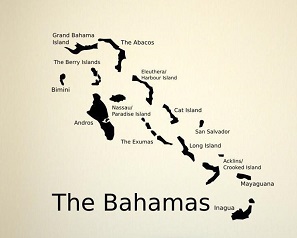
In the 60 years since, the Bahamas has made progress; sometimes 2 steps forward, 1 step back; sometimes 1 step forward, 2 steps back. All the governmental developments in those 60 years (i.e.: women’s suffrage, majority rule populist party, independence, opposition party emergence, flip-flop of power between parties, etc.) have only resulted in a realignment of the stakeholders within the same regime – like “reshuffling the decks on the Titanic”. The “parasite” status remains.

Thusly, there is the need for a Way Forward for this country, for the Bahamas. A call had gone out for such a Way Forward plan; one that finally considers integration with its neighbors and strategic alliances and partnerships.

The call has been heeded. One national commentator composed and published a White Paper to address this quest for a Way Forward. This publication identified some viable solutions, but still under the overall strategy of being tied to the American hegemony – depending on American trade and security. That White Paper – see the full publication here – is presented with these following 5 parts:

White Paper Title: A Nation in Chaos – The Solution Series – EXCERPT
By: Stephen McQueen

Part 1: Scope of The Problem

Part 2: Simple but Multifaceted

Part 3: The Re-education Process

Part 4: Self-Economic Empowerment

Part 5: The Need for Strategic Alliances

    … those that have a common enemy might well find that they also have shared interests and can therefore be of benefit to each other in a common cause. Therein lies the concept of being allies.

    For small island nations like The Bahamas, one wonders for what common cause if any should we ally ourselves with other nations? And, do we not already have allies in the Caribbean Community (CARICOM), Commonwealth Heads of Government (CHOGM), The Commonwealth, the United Nations (UN) and the Organization of American States (OAS)? Notwithstanding the fact that I am largely unaware of the benefits of being involved with the above-mentioned communities, as a lay person, it appears that we may not be deriving the kind of benefit that The Bahamas truly needs for economic protection from much larger and far more economically and otherwise powerful nations. The UN provides peace-keeping forces, CARICOM is an economic body for the Caribbean, and the Caribbean Single Market and Economy (CSME) is a regional agreement signed on by some Caribbean nations and is intended to strengthen member states’ economic power and stability. Dr. Christopher Curry of the University of The Bahamas believes that CSME will strengthen The Bahamas’ hand against the WTO. (Curry, 2019)

    Isn’t it time that we as a people look within and collectively raise ourselves to a better standing upon the world’s stage?

    The position of “First World” nations toward small island nations like The Bahamas and the Caribbean wreaks of containment – a philosophy designed and intentionally carried out to prevent the growth, development and advancement of developing nations even after we have been pillaged for hundreds of years. According to Curry, “First, Second, Third World are social constructs devised by global north states to designate other states in a subordinate role to the ‘more advanced states’.” (Curry, 2019) It is a philosophy intended to prevent our nations from becoming global leaders and masters of our own destinies by subjugating our nations to rules designed for and by “First World” nations for their greater benefit and the furtherance of their economies. For instance, and without any justification, and merely because it had the wherewithal so to do, “the Netherlands adds Bahamas to Tax Havens blacklist.” (Robards, 2019)

See the full White Paper here: https://goleancaribbean.com/blog/?p=17118

This published plan, despite the best intentions, is inadequate!

The Bahamas needs more! See the Appendix VIDEO below depicting the current economic outlook from an external viewpoint.

It turns out that the Bahamas wants more than just a “parasite” status with the US; they want to be considered protégés. After 60 years of an ever-increasing brain-drain, in which the country has sat idle and watched 61 percent of its tertiary-educated citizens abandoned the homeland for life in the Diaspora abroad – mostly to the US homeland. This country now wants to be a homeland where its citizens can prosper where planted.

Is there a Way Forward for that?!

Way Forward
This commentary continues the consideration on the Way Forward – this one just for the Bahamas – for the rest of the Caribbean region. This member-state is in dire straits, near-Failed-State status with Push-and-Pull factors pressuring the youth to seek refuge elsewhere. Yet, the movement behind the book Go Lean…Caribbean asserts that this crisis can be useful as an excuse to forge change in the Bahamian homeland. It is high time to reform and transform the Bahamas.

This is entry 3-of-3 for this April 2019 series of commentaries related to the Way Forward for Caribbean member-states. The full series is presented as follows:

  1. Way Forward: Puerto Rico learns its “status” with America
  2. Way Forward: Virgin Islands – America’s youngest colony
  3. Way Forward: “Solutions White Paper” – An Inadequate Plan for the Bahamas

While this series posits that “no man is an island”, this entry doubles down on the assertion that “no island is an island” either; that the Bahamas and all the tropical islands and coastal states of the political Caribbean need to come together, collaborate, cooperate, convene, and confederate for a better stewardship for their full homelands.

There is no longer any excusing, rationalizing or minimizing the reality of the Bahamian plight. One of their communities, the 2nd city of Freeport, has already been identified as falling into a Ghost Town status. A Way Forward for that city alone has already been published by this movement behind the Go Lean book. Consider this excerpt:

Excerpt from: Blog # 400 – A Vision of Freeport as a Self-Governing Entity

Freeport is beautiful! “It has great potential” …

… unfortunately, this has been the descriptor for over 60 years: “Great Potential”. In actuality, this town is the epitome of a failing community as it has been “rocked” by one crisis after another: hurricanesfinancial crisisabandonment by Direct Foreign Investors, abandonment by residents, and the eventual manifestation of deficient planning; bringing the age-old lesson to the fore: “when you fail to plan, you plan to fail”.

The complaint there of the everyday man, everyday, is that the oversight of the city’s affairs by the central government in Nassau is deficient, flawed and shortsighted for Freeport. The critics are demanding a referendum to consider different secession options from Nassau. But the options being considered are not “all of nothing from Nassau”, but rather, Freeport is seeking some degree of autonomy and then becoming a Self-Governing Entity (SGE) … .

There is a lot of history associated with the issues of SGE’s and Freeport.

The closest, most successful SGE is in the Orlando, Florida area: Walt Disney World Resort. This resort is administered as a SGE, empowered by the Reedy Creek Improvement District, a special government district created in 1965 that essentially gave the Walt Disney Company the standard powers and autonomy of an incorporated city. Today, the resort hosts 52.5 million visitors as the most popular vacation destination in the world. But early in the site selection process (1959), Walt Disney’s team toured Freeport for consideration for his planned resort[a]. Today tourism is the primary economic driver for Freeport, but declining, with only less than 280,000[b] annual visitors. (Freeport’s economic history has been likened to the Concorde Supersonic jet airplane; considered advanced for a time and then … the cutting-edge had an expiration date, so it became stagnant and stale in its appeal).

It is time now for empowerments like this in all of the Bahamas, and all of the Caribbean! It is time now to build a foundation on the unified society that was once envisioned for the British West Indies. But now we have the hindsight to realize that we need to go even deeper for a more sound foundation. We need and want all of the West Indies: American, British, Dutch, French and Spanish. We want such a firmer foundation. We want:

Bedrock, Baby!

Yes, we can. These strategies, tactics and implementations proposed here in the Go Lean roadmap are conceivable, believable and achievable. We must do this now! We must make our homeland a better place to live, work and play.

We encourage everyone in the Bahamas in particular and the Caribbean in general to lean-in for this Go Lean roadmap.  🙂

About the Book
The book Go Lean…Caribbean serves as a roadmap for the introduction and implementation of the technocratic Caribbean Union Trade Federation (CU), for the elevation of Caribbean society – for all member-states. This CU/Go Lean roadmap has these 3 prime directives:

  • Optimization of the economic engines in order to grow the regional economy to $800 Billion and create 2.2 million new jobs.
  • Establishment of a security apparatus to ensure public safety and protect the resultant economic engines.
  • Improve Caribbean governance to support these engines, including a separation-of-powers between the member-states and CU federal agencies.

The Go Lean book provides 370-pages of turn-by-turn instructions on “how” to adopt new community ethos, plus the strategies, tactics, implementations and advocacies to execute so as to reboot, reform and transform the societal engines of Caribbean society.

Download the free e-Book of Go Lean … Caribbean – now!

Who We Are
The movement behind the Go Lean book – a non-partisan, apolitical, religiously-neutral Community Development Foundation chartered for the purpose of empowering and re-booting economic engines – stresses that reforming and transforming the Caribbean societal engines must be a regional pursuit. This was an early motivation for the roadmap, as pronounced in the opening Declaration of Interdependence (Pages 12 – 13):

xi. Whereas all men are entitled to the benefits of good governance in a free society, “new guards” must be enacted to dissuade the emergence of incompetence, corruption, nepotism and cronyism at the peril of the people’s best interest. The Federation must guarantee the executions of a social contract between government and the governed.

xvi. Whereas security of our homeland is inextricably linked to prosperity of the homeland, the economic and security interest of the region needs to be aligned under the same governance. Since economic crimes … can imperil the functioning of the wheels of commerce for all the citizenry, the accedence of this Federation must equip the security apparatus with the tools and techniques for predictive and proactive interdictions.

xxiv. Whereas a free market economy can be induced and spurred for continuous progress, the Federation must install the controls to better manage aspects of the economy: jobs, inflation, savings rate, investments and other economic principles. Thereby attracting direct foreign investment because of the stability and vibrancy of our economy.

Sign the petition to lean-in for this roadmap for the Caribbean Union Trade Federation.

————–

Appendix A VIDEO – Discussing The Bahamian Economy – https://youtu.be/Hx0XPWYp0zQ

World Investment News
Published on Jul 19, 2016 – World Investment News Editor-in-Chief Stan Aron and Project Director Simone Goldsmith discuss the different facets and the potential of the economy of The Bahamas, published in the 2016 July and August edition of Harvard Business Review.

World Investment News Online sites:
https://twitter.com/WINNENews
https://www.facebook.com/worldinvestm… 
https://www.linkedin.com/company/worl…

———–
MORE: See an additional VIDEO here on the Bahamas economic landscape – Financial Sector:
Chapter 1: What will drive growth in the Bahamas? – https://youtu.be/do4VmKgA10c

————–

Appendix B – 10 Territories in the British West Indies – Go Lean Book (Page 301)

West Indies Federation Population Distribution as of 1958
Province Capital Population Area (km²) Pop. %
Antigua and Barbuda St. John’s 57,000 440 1.75%
Barbados Bridgetown 234,000 431 7.17%
Cayman Islands (attached to Jamaica) George Town 9,000 264 0.28%
Dominica Roseau 61,000 750 1.87%
Grenada St. George’s 91,000 344 2.79%
Jamaica Kingston 1,660,000 10,991 50.85%
Montserrat Plymouth 13,000 102 0.40%
Saint Christopher (St. Kitts) – Nevis – Anguilla Basseterre 55,600 351 1.70%
Saint Lucia Castries 95,000 616 2.91%
Saint Vincent and the Grenadines Kingstown 83,000 389 2.54%
Trinidad and Tobago Port-of-Spain 900,000 5,131 27.57%
Turks and Caicos Islands (attached to Jamaica) Cockburn Town 6,000 430 0.18%
Federation of the West Indies Chaguaramas 3,264,600 20,239 km2 100.00%
Share this post:
,

Way Forward – Virgin Islands: America’s Youngest Colony

Go Lean Commentary

The US Virgin Islands – St. Thomas, St. Croix and St. Johns – are 80 miles east of Puerto Rico. Their small population only peaks at about 110,000; they have a lot of challenges sustaining and elevating their society. If only their economy was bigger.
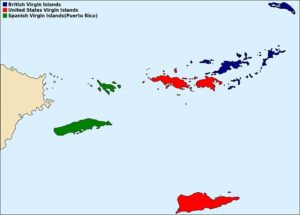
Wait, wait … next door Puerto Rico has a population of over 3 million people. Bigger economy! Bigger problems!

Obviously, size … of the economy is not the predictor for success.

Nor is age…

… the US Virgin Islands, as an entity, is in fact the youngest US Territory in North America; having been acquired from Denmark only in 1917 – see VIDEO below.

There must be something more?!

Maybe race! Maybe, if we have a population of homogeneous people who can form a brotherhood and work hand-in-hand without any concern for racial differences – “Power to the People”. Well, this land has a majority Black population – unique for any domicile (State or Territory) in the United States. It is a 76% majority! Here is the actual demographic breakdown from the last census (2010):

There are many people in America – especially in the Black community – that have theorized that if they had a “majority Black land in America” they could really be a more prosperous society.

Well, they have the US Virgin Islands, and what is the disposition? See summaries here:

U.S. Virgin Islands GDP Decreases in 2017 [by 2%]
Tourism spending declines following Hurricanes Irma and Maria
Today, the Bureau of Economic Analysis (BEA) is releasing estimates of gross domestic product (GDP) for the U.S. Virgin Islands (USVI) for 2017, in addition to estimates of GDP by industry and compensation by industry for 2016. These estimates were developed under the Statistical Improvement Program funded by the Office of Insular Affairs (OIA) of the U.S. Department of the Interior.

The U.S. Virgin Islands suffered extensive damage from two major hurricanes in September 2017. These hurricanes affected the availability of various source data used in the estimation of USVI GDP, including financial statements for the territorial government and its independent agencies.

Source: US Government Bureau of Economic Analysis – Posted December 17, 2018; retrieved April 3, 2019 from: https://www.bea.gov/news/2018/us-virgin-islands-gdp-decreases-2017

————–

Welcome to the Virgin Islands, One of the Most Indebted Places in the U.S.
The U.S. territory is running out of options as it faces rising debt and pension obligations, a declining population and tepid response to proposed new bond offerings

By: Heather Gillers

A U.S. territory famed for its white-sand beaches and azure waters is in a precarious financial position. This time, it isn’t just Puerto Rico.

The U.S. Virgin Islands shares many of the same fiscal problems as its Caribbean neighbor 80 miles to the west: high levels of debt, mounting pension obligations and a declining population.

Source: Wall Street Journal – posted January 26, 2017; retrieved April 3, 2019 from: https://www.wsj.com/articles/welcome-to-the-virgin-islands-one-of-the-most-indebted-places-in-the-u-s-1485426604

Obviously, race … of the demography is not the predictor for success. (Let this be the last word on this unnerving subject!)

The problems facing small Caribbean islands, or young Caribbean islands or Black Caribbean islands, are the same problems facing all Caribbean islands … it is failure to adapt to these undeniable Agents of Change:

It is Globalization, Climate Change, Technology and an Aging Diaspora.

These Agents of Change are devastating Caribbean life … for all people, in all the islands and coastal states. The book Go Lean…Caribbean asserts that we are “all in the same boat” and need to work together – to confederate – to seek solutions to our problems.

A crisis is a terrible thing to waste – Go Lean book (Page 8)

The Way Forward is a roadmap to actually consolidate, collaborate, and confederate the 30 member-states of the Caribbean region into a technocratic confederation. These USVI islands are among the “best addresses on the planet” …

… and yet, the residents, leaders and stakeholders cannot seem to provide proper stewardship for managing the affairs of these islands.

This theme – remediating and mitigating the failures in Caribbean island life – aligns with previous commentaries from the movement behind the book Go Lean…Caribbean; see this sample list here as it relates to the US Virgin Islands; (but truth be told, there is application for the British Virgin Islands as well):

https://goleancaribbean.com/blog/?p=13995 Island life is hard – The need for Congressional Interstate Compacts
https://goleancaribbean.com/blog/?p=12959 Island life is hard – America Should Scrap the ‘Jones Act’
https://goleancaribbean.com/blog/?p=10771 Island life is hard – The need for Logical Addresses
https://goleancaribbean.com/blog/?p=6867 Island life is hard – How to address high consumer prices
https://goleancaribbean.com/blog/?p=4551 Island life is hard – Between a ‘rock and a hard place’

The Virgin Islands, the youngest American colony, are among the most beautiful places on the planet – it is paradise. See the VIDEO here:

VIDEO – Almanac: The U.S. Virgin Islands – https://cbsn.ws/2JSVJi7

CBS News – Posted March 31, 2019 – On March 31, 1917 the U.S. took possession of St. Thomas, St. John, St. Croix and about 50 other smaller Caribbean islands, which they purchased from Denmark for $25 million. Jane Pauley reports.

But this paradise is the flora and fauna; the societal engines, on the other hand, need some work.  As related in the previous blog-commentary in this series, Puerto Rico suffers from the same fate as the Virgin Islands – “island life is hard”. So there needs to be a roadmap to reform and transform all “island life”.

Way Forward
This commentary continues the consideration on the Way Forward for Caribbean islands – for the Virgin Islands – and the rest of the Caribbean. This territory here is in dire straits, near-Failed-State status. Yet, the movement behind the Go Lean book asserts that any crisis can be useful, as an excuse to forge change. It is high time to change/elevate the societal engines of the Virgin Islands. This is entry 2-of-3 for this April 2019 series of commentaries related to the Way Forward for Caribbean member-states. The full series is presented as follows:

  1. Way Forward: Puerto Rico learns its “status” with America
  2. Way Forward: Virgin Islands – America’s youngest colony
  3. Way Forward: ‘Solutions White Paper’ – An Inadequate Plan for the Bahamas

This series posits that “no man is an island”; or that “no island is an island”; that these Caribbean island-states need to come together, collaborate, cooperate, convene, and confederate for a better stewardship for the full region.

Yes, we can…

The Go Lean movement presents the strategies, tactics and implementations to make the US Virgin Islands – as part of the full US Territories – a better homeland to live, work and play. The book identify these main points, as follows (Page 244):

10 Ways to Impact US Territories

  1. Lean-in for the Caribbean Single Market & Economy (CSME) initiative: Caribbean Union Trade Federation (CU).
  2. Trading Partners based on Nature not Politics
  3. Disaster Preparation & Response
  4. Dual Currency
  5. Emigration Circuit Breaker
  6. Homeland Security Pact – NATO style
  7. Intelligence Gathering
  8. Cruise Line Collective Bargaining
  9. Transportation / Turnpike Hub & Spokes
  10. Spanish Integration – Reversal of European Imperialistic Maneuvers

Yes, it is conceivable, believable and achievable that with the proper guidance, “blood, sweat and tears”, this island chain can in fact actualize to be one of the greatest addresses on the planet.

Enough already! This is the Way Forward! It is now past time to lean-in to this roadmap to reform and transform our homeland. 🙂

About the Book
The book Go Lean…Caribbean serves as a roadmap for the introduction and implementation of the technocratic Caribbean Union Trade Federation (CU), for the elevation of Caribbean society – for all member-states. This CU/Go Lean roadmap has these 3 prime directives:

  • Optimization of the economic engines in order to grow the regional economy to $800 Billion and create 2.2 million new jobs.
  • Establishment of a security apparatus to ensure public safety and protect the resultant economic engines.
  • Improve Caribbean governance to support these engines, including a separation-of-powers between the member-states and CU federal agencies.

The Go Lean book provides 370-pages of turn-by-turn instructions on “how” to adopt new community ethos, plus the strategies, tactics, implementations and advocacies to execute so as to reboot, reform and transform the societal engines of Caribbean society.

Download the free e-Book of Go Lean … Caribbean – now!

Who We Are
The movement behind the Go Lean book – a non-partisan, apolitical, religiously-neutral Community Development Foundation chartered for the purpose of empowering and re-booting economic engines – stresses that reforming and transforming the Caribbean societal engines must be a regional pursuit. This was an early motivation for the roadmap, as pronounced in the opening Declaration of Interdependence (Pages 12 – 13):

xi. Whereas all men are entitled to the benefits of good governance in a free society, “new guards” must be enacted to dissuade the emergence of incompetence, corruption, nepotism and cronyism at the peril of the people’s best interest. The Federation must guarantee the executions of a social contract between government and the governed.

xvi. Whereas security of our homeland is inextricably linked to prosperity of the homeland, the economic and security interest of the region needs to be aligned under the same governance. Since economic crimes … can imperil the functioning of the wheels of commerce for all the citizenry, the accedence of this Federation must equip the security apparatus with the tools and techniques for predictive and proactive interdictions.

xxiv. Whereas a free market economy can be induced and spurred for continuous progress, the Federation must install the controls to better manage aspects of the economy: jobs, inflation, savings rate, investments and other economic principles. Thereby attracting direct foreign investment because of the stability and vibrancy of our economy.

Sign the petition to lean-in for this roadmap for the Caribbean Union Trade Federation.

Share this post:
,
[Top]

Caribbean Cruise Port ‘Held Hostage’

Go Lean Commentary

So you think you’re independent?

The twin-island nation of Antigua & Barbuda was granted independence from the United Kingdom on 1 November 1981. This status allows them to govern their own country; make decisions that they feel are in the best interest for their nation.
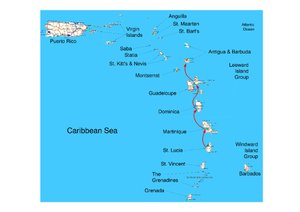
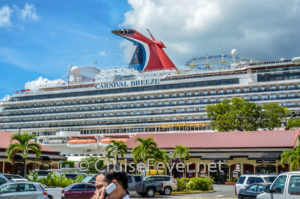
But the primary industry in this country is tourism. So this means that there is dependence on external (foreign) stakeholders to provide transportation solutions, travel agency, lodging and/or leisure cruises. So the country’s attitude should never be arrogant, haughty or uncooperative. They cannot approach any negotiation with a cruise line with this attitude:

“My way or the Highway”!

The cruise line response would resemble some rendition of this spirit:

Hold my beer!

This is what is happening in some re-negotiations between Antigua and Carnival Cruise Lines. As reported by the Antigua Daily Observer newspaper on February 26, 2019, Prime Minister Gaston Browne accuses Carnival and the entire Florida-Caribbean Cruise Association (FCCA) of “exploiting Caribbean countries for lower visitor tax rates [(head tax)]”.

The country is attempting to influence this corporation with their offering of only one port-of-call – 2 piers in St. John – while the full region is 30 member-states. Rather than single government negotiations, the 2013 book Go Lean …Caribbean asserts that the region must adopt a collective bargaining strategy among the full universe of Caribbean ports-of-call, introducing the Caribbean Union Trade Federation (CU) as a collective bargaining agent. The book states (Page 32):

Cruise Line Collective Bargaining – Setting Matters Straight
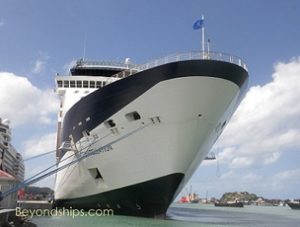

The CU will collectively bargain with operators to garner more benefits and protections. In general, port cities are not gleaning much income from ship visits. In order to reboot the industry’s economic impact, changes need to be made, rescinding some exploitive rules the ships implemented and adding some new products, like smartcard e-purse options.

Carnival Cruise Line is overmatched compared to the small island nation of Antigua. The holding company, Carnival Corporation, is identified as a significant stakeholder in the global cruise industry in general and Caribbean tourism in particular; they own/market all of these cruise line brands (10):

  • Carnival Cruise Lines
  • Holland America
  • Cunard
  • Princess
  • P&O Cruises
  • P&O Cruises Australia
  • The Yachts of Seabourn
  • Costa Cruises
  • AIDA
  • IberoCruceros

To compete, Antigua needs interdependence with their Caribbean neighbors – confederation and collective bargaining. Carnival is holding Antigua hostage. See the news article here reporting this drama, and an aligning VIDEO:

Title: More Cruise Lines Pull Out of Caribbean Port
By: Ben Souza
A few days ago, Cruise Fever reported that Carnival Cruise Line had canceled all port stops to Antigua. Now, additional cruise lines have pulled out of the Caribbean port according to the Antigua Observer.

In addition to Carnival Cruise Line, Holland America Line and luxury line Seabourn have canceled future port stops in Antigua. All three cruise lines operate under the Carnival Corporation umbrella.

These two new cruise lines that canceled port stops each had two cruise ships scheduled to visit the Caribbean port during the next Caribbean season.

Why have these three cruise lines canceled their scheduled calls to Antigua? The cruise lines have stated that government officials have made the cruise lines feel unwelcome.

These new cancelations were somewhat expected. The Prime Minister gave the following statement when Carnival Cruise Line first announced they were pulling out of the port:

    “Once Carnival has started the cancellation, unfortunately, I expect to see cancellations from all of its brands. I wouldn’t be surprised to see Princess, Holland America, Seabourn and other European Lines making cancellations going forward.”

Antigua is a popular cruise destination in the Southern Caribbean, especially during winter months.

Cruise ships that have canceled a port stop in Antigua will visit an alternative port.

Cruise Fever will have all new information about this developing situation in Antigua when it becomes available.

Source: Posted and retrieved March 17, 2019 from: https://cruisefever.net/more-cruise-lines-pull-out-of-caribbean-port/

—-

Ben Souza has written thousands of articles on cruising and currently takes between 8-10 cruises a year. His writings have appeared and been cited in various media outlets such as Yahoo News, MSN, NPR, Drudge Report, CNN, and ABC News. Ben currently resides in Cincinnati, Ohio. Visit Ben Souza on Linkedin. You may email Ben at Ben@cruisefever.net.

—————–

VIDEO – Update: Antigua Government To Meet With Carnival Over Cruise Cancellations – https://youtu.be/3CQzQb_2vUQ


Travelling with Bruce

Published on Mar 16, 2019 – Update: Antigua Government To Meet With Carnival Over Cruise Cancellations Norwegian Cruise Lines and MSC Cruises have both backed the government and have committed to sailing to the country going forward. After Prime Minister Browne contacted Carnival’s CEO the two parties have agreed to have a face to face meeting with each other to try to resolve their differences. #antigua #carnivalcruiselines #norwegiancruisenews #mscnews #globalportsholdings #antiguanews #caribbeancruise #hollandamericanews #seabournnews #cruisenews

We told you! Any Way Forward for better cruise line negotiations must include collective bargaining. This theme aligns with previous blog-commentaries from the movement behind the Go Lean book; see a sample list here:

https://goleancaribbean.com/blog/?p=16645 Bad Partners – Cruise Lines Interactions
https://goleancaribbean.com/blog/?p=15380 Industrial Reboot – Cruise Tourism 2.0
https://goleancaribbean.com/blog/?p=11544 Forging Change in the Cruise eco-system: Collective Bargaining
https://goleancaribbean.com/blog/?p=6635 Security Chip in credit cards unveiled: Now Ready for Cruise eco-system
https://goleancaribbean.com/blog/?p=5210 Cruise Ship Commerce – Getting Ready for Change

We warned, alerted and cautioned you Caribbean stakeholders that “Big Cruise Line Abuse” would happen. Carnival seems to be counting on our disunity. This is not just our thoughts alone; others have opined:

Carnival holds all of the cards in situations like this.  The notion that a sovereign country like Antigua is an equal “partner” to an 800 pound gorilla like Carnival is fanciful.  If a cruise line can make a better deal with an island next door, which charges a lower head tax, has fewer environmental restrictions, or is willing to foot the bill for a larger dock, then it’s ‘see ya later’ as far as the cruise line goes.” – Source: CruiseLawNews

The solution (Way Forward) for this type of one-sided negotiation advantage is not secretive or proprietary; rather it is the stated purpose of the Go Lean book and this resultant roadmap: “Come together“; collaborate; consensus-build and confederate.

Prime Minister Browne explained that the only way for small countries like Antigua to fight the FCCA is to form a regional port facility.

“Unless the entire Caribbean comes together and forms a regional port facility and mandate that [the Cruise Associations] pay more, we will continue to end up in problems and have to subsidise that sector …” – Source: CruiseLawNews

Yes, we can … come together and make our homeland a better place to live, work and play. 🙂

About the Book
The book Go Lean…Caribbean serves as a roadmap for the introduction and implementation of the technocratic Caribbean Union Trade Federation (CU), for the elevation of Caribbean society – for all member-states. This CU/Go Lean roadmap has these 3 prime directives:

  • Optimization of the economic engines in order to grow the regional economy to $800 Billion and create 2.2 million new jobs.
  • Establishment of a security apparatus to ensure public safety and protect the resultant economic engines.
  • Improve Caribbean governance to support these engines, including a separation-of-powers between the member-states and CU federal agencies.

The Go Lean book provides 370-pages of turn-by-turn instructions on “how” to adopt new community ethos, plus the strategies, tactics, implementations and advocacies to execute so as to reboot, reform and transform the societal engines of Caribbean society.

Download the free e-Book of Go Lean … Caribbean – now!

Who We Are
The movement behind the Go Lean book – a non-partisan, apolitical, religiously-neutral Community Development Foundation chartered for the purpose of empowering and re-booting economic engines – stresses that reforming and transforming the Caribbean societal engines must be a regional pursuit. This was an early motivation for the roadmap, as pronounced in the opening Declaration of Interdependence (Pages 11 – 13):

vi. Whereas the finite nature of the landmass of our lands limits the populations and markets of commerce, by extending the bonds of brotherhood to our geographic neighbors allows for extended opportunities and better execution of the kinetics of our economies through trade. This regional focus must foster and promote diverse economic stimuli.

viii. Whereas the population size is too small to foster good negotiations for products and commodities from international vendors, the Federation must allow the unification of the region as one purchasing [or bargaining] agent, thereby garnering better terms and discounts.

x. Whereas we are surrounded and allied to nations of larger proportions in land mass, populations, and treasuries, elements in their societies may have ill-intent in their pursuits, at the expense of the safety and security of our citizens. We must therefore appoint “new guards” to ensure our public safety and threats against our society, both domestic and foreign. The Federation must employ the latest advances and best practices … to assuage continuous threats …

xi. Whereas all men are entitled to the benefits of good governance in a free society, “new guards” must be enacted to dissuade the emergence of incompetence, corruption, nepotism and cronyism at the peril of the people’s best interest. The Federation must guarantee the executions of a social contract between government and the governed.

xvi. Whereas security of our homeland is inextricably linked to prosperity of the homeland, the economic and security interest of the region needs to be aligned under the same governance. Since economic crimes … can imperil the functioning of the wheels of commerce for all the citizenry, the accedence of this Federation must equip the security apparatus with the tools and techniques for predictive and proactive interdictions.

xxiv. Whereas a free market economy can be induced and spurred for continuous progress, the Federation must install the controls to better manage aspects of the economy: jobs, inflation, savings rate, investments and other economic principles. Thereby attracting direct foreign investment because of the stability and vibrancy of our economy.

Sign the petition to lean-in for this roadmap for the Caribbean Union Trade Federation.

Share this post:
, , , ,
[Top]

Uber: A Better ‘Mousetrap’

Go Lean Commentary

There is a popular business idiom:

Build a better mousetrap and the world will beat a path to your door.

This has been proven true time and again. Think:

  • Digital photography better than chemical photo-finishing.
  • Wireless touch-tone phones better than wired handset dial phones.

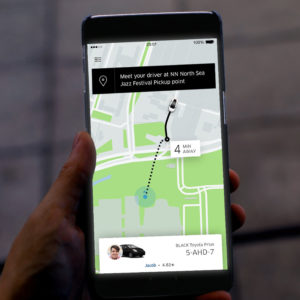
Now, we are learning that car-ride-sharing solutions – like Uber or Lyft – are actually working successfully. They are faster, better and cheaper than other transportation options, like taxi’s and rental cars.

Rental cars?

This was the test/comparison in the VIDEO below. For the sake of this exercise, a news correspondent and his producer, started at the same origin to go to the same destination; one by Uber and the other via a rental car. For every category of comparison, the Uber option out-performed the rental car: faster, better, cheaper. See the VIDEO here:

VIDEO – Ride-sharing vs. car rental: Which is best for your vacation? – https://www.today.com/video/ride-sharing-vs-car-rental-which-is-best-for-your-vacation-1456378435570

Posted March 12, 2019 – March is the month when many head out on vacation to escape to warmer climates. But here’s a question of dollars and cents: Does it make more sense to rent a car on your getaway or get around via a ride-sharing app? NBC’s Kerry Sanders investigates.

This is not some exercise in futility. For the Caribbean, we must pay more than the usual attention to this experience. The city in focus for this exercise is the tourist mecca of Orlando, Florida, home to Super Theme Parks: Disney World and Universal Studios. This exercise therefore relates to any tourist destination. This means us in the Caribbean, where tourism is our primary industry. The oft-reliable jobs of taxi drivers may soon be less reliable.

But, it might be argued that local governments can simply ban ride-sharing companies like Uber, Lyft, etc..

Alas, the “genie is out-of-the-bottle”; ICT or Internet Communications Technologies (and smartphones) make messaging and electronic commerce seamless and effortless. This is likened to holding back the tides. Resistance is futile!

The Change Agent cometh!

The book Go Lean … Caribbean identified the following 4 primary Change Agents that are devastating the Caribbean region:

The book asserts that no one Caribbean member-state can tackle any of these challenges alone; there is an urgent need – a Clear and Present Danger – to convene, collaborate, consolidate and confederate the response to these modern challenges – we need the economies-of-scale. This theme aligns with many previous Go Lean blog-commentaries; see a sample list here:

https://goleancaribbean.com/blog/?p=14191 Scheduling in the ‘Gig Economy’
https://goleancaribbean.com/blog/?p=8262 UberEverything in Africa
https://goleancaribbean.com/blog/?p=1364 Uber Demonstrations Snarl Traffic from London to Berlin
https://goleancaribbean.com/blog/?p=2571 More Business Travelers Flocking to Shared Economy and AirBnB
https://goleancaribbean.com/blog/?p=2126 Where the Jobs Are – Computers Reshaping Global Job Market
https://goleancaribbean.com/blog/?p=486 Temasek firm backs Southeast Asia cab booking app

Uber is NOT in many Caribbean member-states … yet.
“A rose by any other name would be just as sweet”.

What prevents any other company, innovator and/or entrepreneur from doing ride-sharing in the mode of Uber? Nothing! It is imminent, whether regulated or not.

Just watch!!!

Wait, instead of watching change derail our economic engines, the movement behind the Go Lean book asserts that “we” need to make change happen to enhance our economic engines. Lives and livelihoods are at stake.

Be the change we want to see in the world.

Taxi cabs and rental cars will be affected in the Shared/Gig Economy.

Don’t wait until it rains to obtain an umbrella.

The Caribbean region has been devastated from “the rain”, external factors: global economic recession, globalization and rapid technology changes. Have no fear, the Go Lean roadmap posits that this “crisis would be a terrible thing to waste“.

We can get ahead of these changes; we can innovate our economy and create new job and entrepreneurial opportunities. Being proactive and reactive to real changes in the real world will help to make our homeland a better place to live, work and play. We urged every Caribbean stakeholder to lean-in to this Go Lean roadmap.  🙂

About the Book
The book Go Lean…Caribbean serves as a roadmap for the introduction and implementation of the technocratic Caribbean Union Trade Federation (CU), for the elevation of Caribbean society – for all member-states. This CU/Go Lean roadmap has these 3 prime directives:

  • Optimization of the economic engines in order to grow the regional economy to $800 Billion and create 2.2 million new jobs.
  • Establishment of a security apparatus to ensure public safety and protect the resultant economic engines.
  • Improve Caribbean governance to support these engines, including a separation-of-powers between the member-states and CU federal agencies.

The Go Lean book provides 370-pages of turn-by-turn instructions on “how” to adopt new community ethos, plus the strategies, tactics, implementations and advocacies to execute so as to reboot, reform and transform the societal engines of Caribbean society.

Download the free e-Book of Go Lean … Caribbean – now!

Who We Are
The movement behind the Go Lean book – a non-partisan, apolitical, religiously-neutral Community Development Foundation chartered for the purpose of empowering and re-booting economic engines – stresses that reforming and transforming the Caribbean societal engines must be a regional pursuit. This was an early motivation for the roadmap, as pronounced in the opening Declaration of Interdependence (Pages 12 – 13):

xi. Whereas all men are entitled to the benefits of good governance in a free society, “new guards” must be enacted to dissuade the emergence of incompetence, corruption, nepotism and cronyism at the peril of the people’s best interest. The Federation must guarantee the executions of a social contract between government and the governed.

xvi. Whereas security of our homeland is inextricably linked to prosperity of the homeland, the economic and security interest of the region needs to be aligned under the same governance. Since economic crimes … can imperil the functioning of the wheels of commerce for all the citizenry, the accedence of this Federation must equip the security apparatus with the tools and techniques for predictive and proactive interdictions.

xxiv. Whereas a free market economy can be induced and spurred for continuous progress, the Federation must install the controls to better manage aspects of the economy: jobs, inflation, savings rate, investments and other economic principles. Thereby attracting direct foreign investment because of the stability and vibrancy of our economy.

Sign the petition to lean-in for this roadmap for the Caribbean Union Trade Federation.

Share this post:
, , ,
[Top]

‘Two Pies’ for a New Caribbean – ENCORE

Here’s a known fact of life in the USA; let’s examine:

The State of Florida does not have to pay for any of the deliverables for the people in the State of Minnesota; California does not have to worry about the needs of Vermont; Pennsylvania does not have to concern themselves with Arizona; and so on.
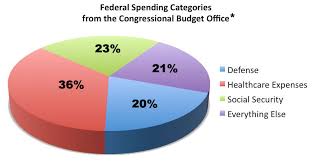
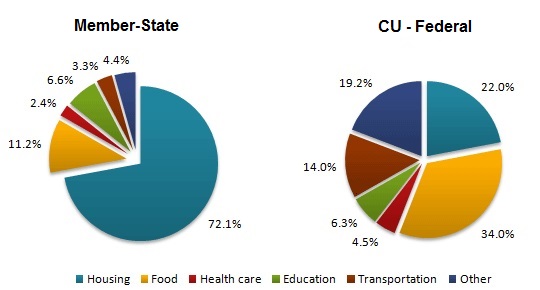
Every state only have to address and pay for the needs of the people in their state. Anything cross-border is handled by a different entity, the US federal government.

Yes, as an individual resident, a citizen would see Two Pies while in the USA; one for their State and one for the federal government.

This model is now proposed for the member-states of the Caribbean. This is the roadmap from the 2013 book Go Lean…Caribbean. The book introduces the Caribbean Union Trade Federation (CU) which will serve as a governing entity for cross-border services and deliveries. While it has always been a point of contention that any regional integration in the Caribbean would have the richer countries paying for the poorer countries. This is a fallacy! Each member-state has their own “pie” and the CU Federal entity will have its own “pie”.

This design of Two Pies have been thoroughly detailed in a previous blog-commentary from February 23, 2017; (two years ago exactly). See an Encore of that submission here-now.

————————

Go Lean Commentary Two Pies: Economic Plan for a new Caribbean

“Get your hands out of my pocket!” – Term used by another man in the room to cause a disturbance and distraction during the killing of Malcolm X in New York on February 21, 1965 – 52 years ago this week. See VIDEO in the Appendix below.
CU Blog - Two Pies - Economic Plan for a New Caribbean - Photo 4

The words above that were shouted to cause a disturbance are riot-inducing and can cause alarm for many communities. No one wants to think that someone unauthorized and unworthy may be pilfering hard-earned funds from innocent victims.

No one wants to be that victim!

CU Blog - Two Pies - Economic Plan for a New Caribbean - Photo 2This was a point of consideration in the conception of the book Go Lean…Caribbean. There was the inspiration to conceive an economic empowerment plan for all the Caribbean that would NOT take money out of one person’s pockets and give to another … unauthorized and unworthy. The solution?

Two pockets … or two pies.

… pie as in a pie-chart; this is the graphical representation of the distribution of a budget. Pie-charts are very effective in expressing one amount in comparison to another amount. So when there are two pie-charts, it undoubtedly expresses that there are two different funds, no intermingling. That is the economic plan for the new Caribbean:

Two Pies.

CU Blog - Two Pies - Economic Plan for a New Caribbean - Photo 3b

This means that there are two different funds. The Go Lean book serves as a roadmap for the introduction and implementation of the technocratic Caribbean Union Trade Federation (CU). This is a regional integration effort to benefit the 30 member-states of the Caribbean. There are a lot of money issues to contend with – but no one person’s hands are in another person’s pockets. So all the money issues for CU are exclusive to the CU. This is true of money-economics and other facets of Caribbean life: security and governance. In total, these 3 prime directives explore the full dimensions of the roadmap:

  • Optimization of the economic engines in order to grow the regional economy to $800 Billion & create 2.2 million new jobs.
  • Establishment of a security apparatus to ensure justice institutions and protect the resultant economic engines.
  • Improve Caribbean governance including a separation-of-powers between the member-states and CU federal agencies to support the economic and security engines.

In order to reboot the societal engines there must be these Two Pies. The CU Trade Federation is designed to lead, fund and facilitate regional empowerment plans. But the plan is NOT for the individual member-states to write checks to the CU so as to share one state’s treasuries with another state. Rather, the CU Trade Federation creates its own funding – from regionalized services – and then encumbers the funds for each member-state to deliver the economic, security and governing  mandates. This is analogized as Two Pies:

  • One ‘pie‘ to represent the existing budgets of the member-states and how they distribute their government funding between government services (education, healthcare, etc.), security measures (Police, Coast Guards)
  • One ‘pie‘ to represent the CU funding from exclusive activities (Spectrum Auctions, Lottery, Exploration Rights, Licenses, Foreign-Aid, etc.).

All in all, the book, and accompanying blogs, declare that the proposed CU Trade Federation is a new governmental layer, and thusly creates a new government budget. This is a confederation; designed to enhance the governmental deliveries for the 30 member-states. This necessity is expressed as a pronouncement in the opening Declaration of Interdependence, (Pages 10 – 11) with the following statement:

Preamble: While our rights to exercise good governance and promote a more perfect society are the natural assumptions among the powers of the earth, no one other than ourselves can be held accountable for our failure to succeed if we do not try to promote the opportunities that a democratic society fosters.

xi. Whereas all men are entitled to the benefits of good governance in a free society, “new guards” must be enacted to dissuade the emergence of incompetence, corruption, nepotism and cronyism at the peril of the people’s best interest. The Federation must guarantee the executions of a social contract between government and the governed.

CU Blog - Two Pies - Economic Plan for a New Caribbean - Photo 1The vision of a confederation is an integrated Single Market for the 30 member-states of the Caribbean; this means the Dutch, English, French and Spanish speaking territories. This also includes the US territories of Puerto Rico and the US Virgin Islands. Tactically, the CU allows for a separation-of-powers between the member-state governments and the new federal agencies.

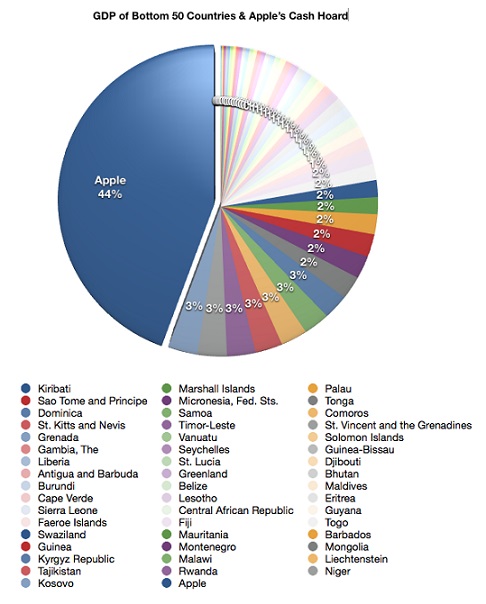
Currently the Caribbean member-states pockets are bare – these are all Third World destinations – even the US Territories of Puerto Rico and the Virgin Islands. Consider this First World comparison; consider Apple Corporation – the firm behind the iPhone, iPad, iTunes, etc. – due to their success in technology and business, they have a lot of money (cash on hand); a lot more than many Caribbean member-states … combined.

We need this CU roadmap to impact a turn-around for this region; we need the new “Pie” of the CU Single Market. The member-state’s economic engines – their “Pies” – are in crisis, but since a crisis would be a terrible thing to waste, we need to transform these economic engines for a new Caribbean by introducing the CU “Pie”, as follows:

  • Regional Capital Markets with a regional currency – Caribbean Dollar – would increase liquidity and lower the cost of capital. Rather than international debt, member-state governments and corporate institutions can avail themselves of lower financing costs, sometimes as low as 2% interest rates.
    Notice a glimpse of this vision in this previous blog-commentary:
    https://goleancaribbean.com/blog/?p=372 |  Dominica raises EC$20 million on regional securities market
  • Municipal financing – Debt by any governmental entity does not only reflect on the past, but impacts the future as well. Excessive debt can be so bad that at times the providers … and collectors of debt may be derisively called “vultures”. The CU pledges to re-purchase existing municipal debt and convert them to Caribbean Dollar instruments.
    Notice this portrayal in this previous blog-commentary:
    https://goleancaribbean.com/blog/?p=7601 |  Beware of Vulture Capitalists Commercial banking enhancements
  • Individual finance: Student Loans – Many Caribbean students obtained loans from their home countries, matriculated abroad and then never returned home. There was no return on investment and many times, no loan repayment. The CU pledges to buy outstanding loans (new, active and default) and enforce cross-border collections.
    Notice the details of this student loan crisis in this previous blog-commentary:
    https://goleancaribbean.com/blog/?p=8373 |  A Lesson in Economic Fallacies – Student Loans As Investments
  • Individual finance: Mortgages – Housing can be a great stimuli on the economy, but it is difficult for banks to recycle the capital that is tied up for 30 years without a Secondary Market. The CU pledges to deploy a Mortgage Secondary Market across the entire region (Go Lean book Page 83 and 199). This strategy will re-enforce banking within the region.
    Notice the issues associated with a dysfunctional mortgage eco-system in this previous blog-commentary:
    https://goleancaribbean.com/blog/?p=10187 |  Day of Reckoning for NINJA Loans
  • Individual finance: Retirement – Growing old in the Caribbean has become strained due to the high abandonment rate. National Pension plans depend on a macro structure where young people pay into the fund while the elderly withdraws from the fund. With so much emigration, the actuarial tables are distorted.
    Consider this previous blog-commentary that depicts a failing pension system in one member-state:
    https://goleancaribbean.com/blog/?p=2830 |  Jamaica’s Public Pension Under-funded
    … and one blog-commentary that describes how best to prosper:
    https://goleancaribbean.com/blog/?p=4222 |  Getting Rich Slowly in the Caribbean
  • Self-Governing Entities (SGE) – The Go Lean/CU roadmap features the installation of SGE’s as job-creating engines in many communities; these sites are ideal for technology laboratories, medical campuses, corporate parks, industrial sites, educational facilities and other forms of establishments situated inside bordered facilitates. They allow for an efficient process to launch and manage industrial efforts in the region. These types of installations will thrive under the strategies and tactics of the Go Lean roadmap. SGE’s do require governmental concurrence and maybe even public approvals – referendums – but only at the initiation. Beyond that, they are not a concern, or an expense, for local governments – they bring their own economic “Pie“.
    Consider this previous blog-commentary that details the dynamics of SGE’s:
    https://goleancaribbean.com/blog/?p=5921 |  Socio-Economic Change: Impact Analysis of SGE’s
  • Exclusive Economic Zones (EEZ) – The Go Lean/CU roadmap calls for the strategy of petitioning the United Nations Convention on the Law of the Sea (UNCLOS) for expanded territory in the Caribbean Sea for the CU to develop, explore, protect and exploit for the benefit to the Caribbean en-masse only. This means the CUPie” for revenues-and-expenses and not individual member-states.
    Consider this previous blog-commentary that details the dynamics of the EEZ:
    https://goleancaribbean.com/blog/?p=8819 |  Lessons from China – South China Seas: Exclusive Economic Zones

The Go Lean book details the series of community ethos, strategies, tactics, implementations and advocacies designed to create a federal “Pie” in the Caribbean region; see here:

Anecdote – Caribbean Single Market & Economy Page 15
Community Ethos – Money Multiplier Page 22
Community Ethos – Job Multiplier Page 22
Community Ethos – Lean Operations Page 24
Community Ethos – Ways to Impact the Future Page 26
Community Ethos – Ways to Impact the Greater Good Page 37
Strategic – Vision – Integrated Region in a Single Market Page 45
Strategic – Vision – Agents of Change Page 57
Tactical – Confederating a Non-sovereign Union Page 63
Tactical – Fostering a Technocracy Page 64
Tactical – Growing to $800 Billion Regional Economy Page 67
Tactical – Separation-of-Powers Page 71
Anecdote – “Lean” in Government – Optimizing Societal Engines Page 93
Implementation – Ways to Pay for Change Page 101
Implementation – Start-up Benefits from the Exclusive Economic Zone Page 104
Implementation – Steps to Implement Self-Governing Entities Page 105
Implementation – Ways to Better Manage Debt Page 114
Planning – Big Ideas for the Caribbean Region Page 127
Planning – Ways to Model the EU Page 130
Advocacy – Ways to Grow the Economy Page 151
Advocacy – Ways to Improve Governance Page 168
Advocacy – Ways to Better Manage the Social Contract Page 170
Advocacy – Reforms for Banking Regulations Page 199
Advocacy – Ways to Impact Wall Street Page 199

While the Caribbean needs its people, these people need a better Caribbean society – more prosperous. The region status quo is that “they got it bad”! Due to the many failures in the region, many people have fled to find refuge in foreign countries, resulting in a debilitating brain drain in the Caribbean, and thusly less people-less potential-less profits; so even more failure on top of failure.

The Go Lean roadmap for the CU stresses the need for this new “Pie“, the economics of a Caribbean Single Market. This theme was previously blogged on in so many previous Go Lean blog-commentaries; see sample here:

https://goleancaribbean.com/blog/?p=10043 Integration Plan for Greater Caribbean Prosperity
https://goleancaribbean.com/blog/?p=9595 Vision and Values for a ‘New’ Caribbean
https://goleancaribbean.com/blog/?p=8813 Lessons from China – Size Does Matter
https://goleancaribbean.com/blog/?p=841 Having Less Babies is Bad for the Economy
https://goleancaribbean.com/blog/?p=833 European Integration Currency Model: One Currency
https://goleancaribbean.com/blog/?p=599 Ailing Puerto Rico open to radical economic fixes
https://goleancaribbean.com/blog/?p=364 Time Value of Money
https://goleancaribbean.com/blog/?p=360 How to Create Money from Thin Air

Now is the time for all of the Caribbean – the people and governing institutions – to lean-in for the Caribbean integration re-boot, this Caribbean Union Trade Federation. We need the “Two Pies“. We need better engines to make our region more prosperous, to make it a better homeland to live, work and play. 🙂

Download the book Go Lean … Caribbean – now!

———

Appendix VIDEO – Malcolm X: Get your hand out my pocket – https://youtu.be/zHM8lAIFoU4

Uploaded on Jan 26, 2011 – Classic scene from a classic movie.


Share this post:
, ,
[Top]

Crypto-currency: Here comes ‘Trouble’

Go Lean Commentary

What materials should money be made from: Gold, Silver, Copper, Diamonds, Emeralds, Rubies and other precious stones?

How about “nothing”? Thin Air?

To insist on some orthodoxy of precious materials, would be inconsequential. Remember, the default currency now is paper. How much more precious a material is paper as opposed to Digits (1’s and 0’s). These are all close to “nothing”.

Yet, this is our economy. Yes, the medium for our currency is not the physical material, but rather: Trust.

The Trust equation is about to change, again. This time, instead of National Trust, we are looking at Corporate Trust.

Here comes the banks; here comes blockchain; here comes crypto-currency; here comes digitization.

Yes, here comes ‘trouble’. Here comes Big Wall Street Bank JPMorganChase. Here comes other players in other markets – see the news articles in the Appendices below:

  • Appendix A – JPMorganChase
  • Appendix B – Belarus
  • Appendix C – Sweden

All of these articles and news developments speak to the digitization of money and banking, highlighting that the primary ingredient in this recipe for success is Trust.

This is where this discussion comes home. In the Caribbean we need to embrace digital money and electronic payment solutions, but first we need Trust in a regional financial institution to manifest this roadmap. When we look at the reality of our Caribbean geography, we see:

American, Dutch, English, French, Spanish, Independent and Overseas Territories

Here comes trouble! We realize something very obvious: we do not trust each other!  So we may actually have to do the heavy-lifting that was always needed for our regional society to finally function as a coherent neighborhood. We have always needed to come together … in trust and unity; but never have.

Now more than ever, we must convene, collaborate and confederate banking solutions for our Caribbean homeland by committing vital resources for every Caribbean country, all 30 member-states. The basis for our trust must be, that we all have something to lose.

Then, only then, will we have no choice but to trust each other for a unified monetary and currency solution.

Trust but verify – Russian proverb Doveryai, no proveryai used by the 40th US President Ronald Reagan to emphasize “the extensive verification procedures that would enable both sides to monitor compliance with the INF Treaty of 1987 for nuclear disarmament by the US and USSR”[4].

We are urged to follow this wise “trust but verify” course of action. If it worked for bilateral cooperation between arch-enemies – USA and USSR – it can work for friendly neighbors in the Caribbean region.

The verification is key. The book Go Lean … Caribbean proposed a monetary-currency (Caribbean Dollar or C$) solution involving a cooperative of the Central Banks already in the region, dubbed the Caribbean Central Bank (CCB). Such a move should not be so unnerving. There is already currency interdependence for many member-states:

  • Eastern Caribbean Central Bank – services the monetary-currency needs of 8 countries (Antigua & Barbuda, Anguilla, Dominica, Grenada, Montserrat, St. Kitts & Nevis, St. Lucia, and St. Vincent & the Grenadines)
  • US Dollar is used as the monetary-currency solution for 4 Caribbean countries: British Virgin Islands, Puerto Rico, Turks & Caicos Islands, US Virgin Islands. (Plus used widely along with local currency in 9 countries).

With a Central Bank cooperative, we would already be half-way there! The Go Lean book (Page 73) details this CCB cooperative as follows:

The Caribbean Central Bank (CCB) is actually a cooperative among the region’s Central Banks. All the existing Central Banks, at the time of ascension, will cede their monetary powers to the CCB and continue their participation using well-established cooperative principles (Rochdale). This includes these 7 prime directives:
1). Open/voluntary membership – based on CU treaty ratification;
2). Democratic member control – the CCB cooperative is controlled by their Central Bank Governor-members, who actively participate in setting monetary policies and making tactical decisions;
3)-a. Members contribute equitably to, and democratically control, the capital of their co-operative – the C$ is the capital;
3)-b. Members are compensated for funds invested in the CCB cooperative, and decide how surpluses should be used – how much reserves to maintain and how much to return to the member-state governments;
4). Autonomous and independent – the very definition of a technocracy;
5). Provide education and training to their members and the public – the CCB champions the cause of an integrated currency to the public;
6). Co-ops cooperate with each other;
7). Work for the sustainable development of their communities through policies approved by their members – the community is the region as a whole.

Now, we can launch our own crypto-currency and electronic payments, clearing and settlements from this strong foundation. The missing ingredient, Trust, would be fulfilled. See how the underlying technology behind crypto-currencies, Blockchain, is explained in this TED Talk VIDEO here:

VIDEOHow the blockchain will radically transform the economy | Bettina Warburghttps://youtu.be/RplnSVTzvnU

TED
Published on Dec 8, 2016
– Say hello to the decentralized economy — the blockchain is about to change everything. In this lucid explainer of the complex (and confusing) technology, Bettina Warburg describes how the blockchain will eliminate the need for centralized institutions like banks or governments to facilitate trade, evolving age-old models of commerce and finance into something far more interesting: a distributed, transparent, autonomous system for exchanging value.

TEDTalks is a daily video podcast of the best talks and performances from the TED Conference, where the world’s leading thinkers and doers give the talk of their lives in 18 minutes (or less). Look for talks on Technology, Entertainment and Design — plus science, business, global issues, the arts and much more. Find closed captions and translated subtitles in many languages at http://www.ted.com/translate

Follow TED news on Twitter: http://www.twitter.com/tednews
Like TED on Facebook: https://www.facebook.com/TED
Subscribe to our channel: http://www.youtube.com/user/TEDtalksD…

A successful digital money / electronic payment scheme is very important in the strategy for elevating the Caribbean economy. The “risky” image of crypto-currency may now be nullified with all the global developments taking place.

Let’s get started!

This theme of Caribbean monetary and currency solutions have been elaborated in previous Go Lean commentaries; see a sample list here:

https://goleancaribbean.com/blog/?p=14248 Leading with Money Matters – New Almighty Caribbean Dollar
https://goleancaribbean.com/blog/?p=13744 Failure to Launch: The Quest for a Caribbean ‘Single Currency’
https://goleancaribbean.com/blog/?p=8381 Case Study on Central Banking for Puerto Rico
https://goleancaribbean.com/blog/?p=7034 The Future of Money – For the Caribbean and Beyond
https://goleancaribbean.com/blog/?p=906 Bitcoin needs regulatory framework to change ‘risky’ image
https://goleancaribbean.com/blog/?p=467 Barbados Central Bank records $3.7m loss in 2013
https://goleancaribbean.com/blog/?p=360 Central Banks Can Create Money from ‘Thin Air’ – Here’s How

The world of crypto-currency and electronic payment systems is here! But this is a good thing. The benefits of these new schemes are too enticing to ignore: fostering more e-Commerce, increasing regional money supply, mitigating Black Markets, more cruise tourism spending, growing the economy, creating jobs, enhancing security and optimizing governance.

Yep! Count us in!

Now is the time for all stakeholders of the Caribbean, (residents, visitors, merchants, vendors, bankers, and governing institutions), to lean-in for the empowerments described in the book Go Lean roadmap. These empowerments can help to make the Caribbean a better place to live, work and play. 🙂

About the Book
The book Go Lean…Caribbean serves as a roadmap for the introduction and implementation of the technocratic Caribbean Union Trade Federation (CU) and aligning Caribbean Central Bank (CCB), for the elevation of Caribbean society – for all member-states. This CU/Go Lean roadmap has these 3 prime directives:

  • Optimization of the economic engines in order to grow the regional economy to $800 Billion and create 2.2 million new jobs.
  • Establishment of a security apparatus to ensure public safety and protect the resultant economic engines.
  • Improve Caribbean governance to support these engines, including a separation-of-powers between the member-states and CU federal agencies.

The CCB provides a comprehensive role in this roadmap: facilitating and settling interbank transactions for the region, especially in light of the introduction of for new digital payment systems: new cards, telephony apps and crypto-currency. The Go Lean book provides 370-pages of turn-by-turn instructions on these solutions; and on “how” to adopt new community ethos, plus the strategies, tactics, implementations and advocacies to execute so as to reboot, reform and transform the societal engines of Caribbean society.

Download the free e-Book of Go Lean … Caribbean – now!

Who We Are
The movement behind the Go Lean book – a non-partisan, apolitical, religiously-neutral Community Development Foundation chartered for the purpose of empowering and re-booting economic engines – stresses that reforming and transforming the Caribbean societal engines must be a regional pursuit. This was an early motivation for the roadmap, as pronounced in the opening Declaration of Interdependence (Pages 12 – 13):

xi. Whereas all men are entitled to the benefits of good governance in a free society, “new guards” must be enacted to dissuade the emergence of incompetence, corruption, nepotism and cronyism at the peril of the people’s best interest. The Federation must guarantee the executions of a social contract between government and the governed.

xvi. Whereas security of our homeland is inextricably linked to prosperity of the homeland, the economic and security interest of the region needs to be aligned under the same governance. Since economic crimes … can imperil the functioning of the wheels of commerce for all the citizenry, the accedence of this Federation must equip the security apparatus with the tools and techniques for predictive and proactive interdictions.

xxiv. Whereas a free market economy can be induced and spurred for continuous progress, the Federation must install the controls to better manage aspects of the economy: jobs, inflation, savings rate, investments and other economic principles. Thereby attracting direct foreign investment because of the stability and vibrancy of our economy.

Sign the petition to lean-in for this roadmap for the Caribbean Union Trade Federation.

————-

Appendix A – JPMorgan launches ‘JPM Coin’ cryptocurrency, becomes first major bank to create its own digital coin By: Jade Scipioni

Nearly two years after JPMorgan Chase chief Jamie Dimon Opens a New Window. famously bashed bitcoin, calling it a “fraud,” the big bank announces it has created its own  cryptocurrency Opens a New Window. prototype.

Dubbed JPM Coin, the new tokens, which will be the first cryptocurrency backed by a U.S. bank, are set to be tested to instantly settle transactions, on a small portion of payments, among clients of the big bank’s wholesale payments business.

“The JPM Coin isn’t money per se. It is a digital coin representing United States Dollars held in designated accounts at JPMorganChase,” the company said in a press release.

In short, a JPM Coin will have a fixed value redeemable for one U.S. dollar. However, it won’t trade freely like bitcoin or other cryptocurrencies.

“When one client sends money to another over the blockchain, JPM Coins are transferred and instantaneously redeemed for the equivalents amount of U.S. dollars, reducing the typical settlement time,” the company added.

JPMorgan Opens a New Window. said it believes the new technology can help lower costs and risks associated with big money transfers around the world.

While the new tokens are initially designed for major ‘institutional clients’ for business-to-business transactions, not individuals, the cost-savings and efficiency benefits “would extend to the end customers of our institutional clients,” the company said.

The news does not come as a surprise either, as JPMorgan has been leading the charge in testing blockchain payments for more than two years.

As reported by FOX Business last September,Opens a New Window. more than 157 banks globally have joined a blockchain-based payment project led by JPMorgan to test how to streamline cross-border transactions.

The shared ledger called Interbank Information Network (IIN) was built by Dimon’s team in 2017 through its own blockchain platform called Quorum.

While Dimon did famously call bitcoin a “fraud” and “worse than tulip bulbs” — a reference to the 17th century economic bubble  — he and his key managers have consistently said that blockchain and regulated digital currencies do have promise.

Source: Posted February 14, 2019; retrieved February 19, 2019 from: https://www.foxbusiness.com/features/jpmorgan-set-to-roll-out-the-first-bank-backed-cryptocurrency

—— Related: Several banks (75) have now joined JPMORGAN to test Blockchain Payments

————-

Appendix B – Belarus’ Biggest Bank is ‘Working on’ Launching Its Own Cryptocurrency Exchange
By: Jimmy Aki, CCN
According to a report by local news outlet BeITA, Belarusbank, the largest bank in Belarus, is considering the launch of its very own cryptocurrency exchange platform.

The plans for the exchange were revealed by Viktor Ananich, the Chairman of Belrusbank’s board. Speaking with Belarus 1 TV channel, Ananich remarked:

“We are considering a possibility to establish a cryptocurrency exchange. We are working on it.”

For Belarusbank, Digitization is the Future
The bank is looking to intensify its focus on digitization, and it is reportedly seeking ways to expand its range of services by forming alliances with various mobile service providers. In addition to the reported cryptocurrency exchange, BeITA also stated that the bank is in the process of issuing virtual cards soon.

Source: Posted January 31, 2019; retrieved February 20, 2019 from: https://finance.yahoo.com/news/belarus-biggest-bank-working-launching-155444267.html

————-

Appendix C – Sweden Officially Backs a Cryptocurrency and Establishes It As Their Official Coin

It’s finally happened. A major worldwide government has just bestowed a huge vote of confidence and legitimacy onto the world of cryptocurrencies. Sweden, in an unprecedented move, just announced that they are officially adopting a certain cryptocurrency as Sweden’s official coin!
The Swedish government just informed us that they have chosen a preferred firm for the purchase and marketing of their new coin – Kryptonex Research Group. The sales of Sweden’s coin officially started on Friday, April 27th and currently these coins can be bought only from Kryptonex Research Group.

Industry experts weren’t surprised when Kryptonex was chosen by Sweden as their preferred firm for the release of their official coin. They had all seen for their own eyes the cutting edge insight that Kryptonex had brought to the cryptocurrency markets for their clients.

See the full article here: https://elevenews.com/2018/04/28/sweden-officially-backs-cryptocurrency-and-establishes-it-as-their-official-coin/ – posted April 28, 2018; retrieved January 20, 2018.

Share this post:
, , ,
[Top]

War on Cancer: Survivors Emerge from ‘Better Battles’

Go Lean Commentary

In 1971, there was a War Declaration … against the dreaded disease of Cancer.

We all know someone that has battled cancer. Many of us know people who fought and lost. Truly, the designation of a War on Cancer is appropriate. Here is the historical details as related in the 2013 book Go Lean … Caribbean on Page 157:

The Bottom Line on Cancer Industrial Complex
Cancer strikes nearly 1 in every 2 men and more than 1 in every 3 women. When President Richard Nixon signed the landmark measure, National Cancer Act, in 1971, he declared it as America’s War on Cancer. After 40 years, the overall incidence of cancer in the U.S. has escalated to epidemic proportions, now striking 1.8 million, and killing about 550,000 annually. The median age for the diagnosis of cancer is 67 in adults, and six in children. The war is being lost, even though it is being fought at the public’s expense (medically & financially).
.
To win the war on cancer would mean preventing cancer. Yet cancer is a multi-billion dollar business and preventing cancer would be bad for business. It is bad for the pharmaceutical and mammography businesses. These industries have intricate ties to U. S. policy makers, directing research funds to insure their continued profits in cancer diagnosis/treatment. – Cancer Prevention Coalition’s www.PreventCancer.com.
.
There are many medical practitioners and general advocates alike, that feel that cancer treatment uses “slash and burn” technology. They claim that these treatment schemes are a racket, designed to fleece the public. They point out that chemo-therapy costs $10,000 – $30,000 a month, and its success rate today is no better than 40 years ago. “It’s firstly a business; as long as health is considered to be a profit center, there is no reason for the cancer-industrial complex to cure cancer”.

The Go Lean book does not portend to be a manual on diagnosing or treating cancer. But it does strategize a roadmap for economic empowerment. It clearly relates that healthcare, disease management, cancer treatments and medicines are germane to the Caribbean quest for health, wealth and happiness. The primary author of the book was inspired to write this roadmap, after his sister died after a 32-year battle with cancer – See Dedication (Page 2). This supplemented the fact that their mother died first of breast cancer, almost 50 years ago in 1970.

This is now war …

… battles continue … there are victors and victims.

Yes, some people do survive their battles with cancer. They live to share lessons with the rest of us. These lessons are not just medical, but emotional, social and yes: economic as well.

Examine the experiences here in this news article from the American Daily Newspaper “USA Today“. The story is too important to ignore; (despite the American settings, there is application for us in the Caribbean as well):

Title: Life after cancer: More survivors living longer, facing new health challenges
Sub-title:
More cancer patients are living longer. Few are getting the help they need to stay healthy
By: Kim Painter, USA TODAY

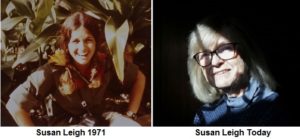
When Susan Leigh finished treatment for Hodgkin lymphoma back in 1972, she says, “no one knew what was going to happen.”

Certainly, no one knew that the Arizona woman would develop three more cancers and heart damage, all likely linked to the aggressive radiation and chemotherapy treatments that helped save her life.

Those treatments were new at the time. When Leigh finished them, apparently cancer-free, she was a pioneer.

“I remember saying to my radiation doctor, what do I do now?” recalls Leigh, 71, a retired cancer nurse. “What do I do to keep this from coming back and to recover?

“He said he really didn’t know. He said maybe I could try taking a good multivitamin pill.”

Four decades later, doctors know much more. They know that some cancer survivors are at increased risk for other cancers later, and for problems ranging from brittle bones to heart failure.

They also know more about how to help patients head off or manage those risks.

But few patients are getting that help – even 13 years after the influential Institute of Medicine warned that many survivors were “lost in transition,” and weren’t getting adequate follow-up care.

The number of cancer survivors continues to grow, yet high-quality, coordinated survivorship care is still infrequent,” experts from the National Academies of Sciences, Engineering, and Medicine said in a recent follow-up report (the nonprofit includes the former Institute of Medicine).

“Strides have been made, but there’s also been an acceleration in the demand,” says Neeraj Arora, associate director for science at the nonprofit Patient-Centered Outcomes Research Institute.

Arora, a 25-year survivor of non-Hodgkin lymphoma, helped write the report.

Even today, Leigh says, too many people “don’t get the kind of follow-up care they need.”

“Doctors say, ‘You are OK, we don’t need to see you anymore.’ ”

Numbers are growing – and so is the need
The American Cancer Society says more than 15.5 million Americans with a history of cancer were alive in 2016. By 2026, the group says, that number will rise to 20.3 million.

The population of survivors is also aging. Nearly two thirds are over age 65, meaning most face health challenges beyond those linked to their cancer.

And those over age 85 are the fastest growing segment – giving famous survivors such as Supreme Court Justice Ruth Bader Ginsburg, 85, and former President Jimmy Carter, 94, a lot of generational company.

Meanwhile, cancer patients, young and old, are living longer.

“Now, thanks to early detection and better treatment, we have a lot more people living many years beyond their initial diagnosis,” says Catherine Alfano, the cancer society’s vice president for survivorship.

The five-year survival rate for all cancers combined stands at 70 percent for whites and 63 percent for blacks, the society says. That’s up from 39 percent for whites and 27 percent for blacks in the 1960s.

People treated in 2019 might do still better. But they also might face unknown long-term risks, even from treatments meant to be less toxic and more targeted than those of the past.

Surviving cancer does not mean leaving health concerns behind.

Cancers can recur. And some survivors face an increased risk of other cancers, sometimes related to their treatment.

Some cancer treatments can damage bones, hearts and other organs in ways that might not show up for decades. Leigh and Arora can attest to that: both have been diagnosed with congestive heart failure.

Patients can leave initial treatment with ongoing symptoms. More than a quarter of patients in one study reported lingering problems such as fatigue, sleep disturbances and foggy thinking.

In another survey, 24 percent of survivors reported poor physical health and 10 percent reported poor mental health – roughly double the rates for other adults.

Psychologist Julia Rowland led the National Cancer Institute’s Office of Cancer Survivorship for 18 years.

“People are now thinking of cancer survival not just in terms of lifespan but health span,” she says. “There’s a growing recognition that it’s not just the length of life but the quality of life.”

The push for survivorship care plans
Arora, now 49, was diagnosed two decades after Leigh. But he also left treatment unprepared for his future.

“I got absolutely top-notch treatment. But when I left, after five years, my doctor said, ‘You are good.’ He said, ‘You don’t need to see anybody.’ Which today I know is not the right thing to say.  But that’s where the field was then.”

Under reforms first envisioned by the Institute of Medicine in 2006, patients are supposed to leave initial treatment with two things: A brief written summary that lists all treatments received and a survivorship care plan.

For a breast cancer survivor, the plan might prescribe regular mammograms and an exercise program. It might tell someone who took heart-toxic chemotherapy drugs to watch for cardiac symptoms. Some patients might be urged to keep seeing their cancer care team, often or occasionally; others might be told they face few cancer-related risks and can return to routine care by their regular doctors.

Ideally, advocates say, the plan starts a dialogue among providers, patients and caregivers and tells patients where to seek help with mental health, family matters, jobs and finances.

But when 53 top cancer centers were surveyed several years after the initial recommendation, fewer than half were using the plans.

The Commission on Cancer, which accredits cancer centers, started in 2015 to require them to phase in the plans. But uptake was so slow that the commission altered the standard in 2018 to allow more time for full implementation.

Costs, staffing shortages and inadequate electronic records all slow adoption, the National Academies reports.

Even where care plans have been adopted, their usefulness has not been proved.

“The data is not impressive,” Rowland says. One reason, she says, is that “people are treating this not as a conversation, but a piece of paper.”

Innovative cancer programs are now weaving survival planning into every phase of care, Alfano says. They’re also seeking better ways to use technology to track and guide patients.

But those innovations are not reaching enough patients, she says.

Progress for survivors
Leigh says much progress has been made since she became a founding member of the National Coalition for Cancer Survivorship in 1986.

“When we first started this, we were called cancer victims,” she says. “It was a way of looking a it that said you didn’t have any control.”

Today, the survivor community embraces everyone from newly diagnosed patients to the growing cadre of chronic cancer patients who stay on therapies for years.

Some, Leigh notes, reject the label “survivor,” for various reasons, including perceptions that it excludes those who will never be cancer-free. But even that debate, she says, is a sign that the movement has matured.

Another sign of progress: Most states now at least mention cancer survivors in their official cancer control plans, says Larissa Nekhlyudov, an associate professor of medicine at Harvard Medical School.

It’s not clear what impact state efforts have had, she says. But some states have launched innovative programs, often with funding from the federal Centers for Disease Control and Prevention.

In Kansas, for example, health officials worked with farmer’s markets for seniors to boost fruit and vegetable consumption among survivors. Iowa created educational materials for survivors facing sexual problems. Vermont trained survivors to counsel newly diagnosed patients as part of a program called Kindred Connections.

Volunteer David Cranmer says the program helps the volunteers almost as much as it helps those they counsel.

“We have training sessions with potluck suppers, and people get together and tell their stories,” says Cranmer, 70, of Williston, Vermont.

His own story includes a bone marrow transplant for chronic myeloid leukemia in 1999, followed by thyroid cancer. He’s now undergoing long-term chemotherapy for another condition, amyloidosis.

Despite his difficulties, he says, his story offers hope – and plants the idea that today’s cancer patients can and should plan for their futures.

“Most people aren’t thinking five or ten years from now. They are thinking about today,” he says. “But when I call up and say I’m a 20-year cancer survivor, that turns on a light that oh, there is life after cancer.”

Source: USA Today Newspaper; posted February 15, 2019; retrieved February 19, 2019 from: https://www.usatoday.com/in-depth/news/50-states/2019/02/13/life-after-cancer-survivors-oncology-survivorship-plans-long-term-health/2794121002/

————

Related: Advice for cancer patients: plan on surviving

————

VIDEO – Four-time cancer survivor pioneers recovery and advocacy – https://www.usatoday.com/videos/news/2019/02/13/four-time-cancer-survivor-pioneers-recovery-and-advocacy/2859322002/

USA TODAY – Susan Leigh has beaten multiple cancers and heart problems and now champions survivorship care plans for patients and their families.

Lessons abound – we must Battle Cancer Better:

  • We reap what we sow in this war. Hard work, smart work and better work pays off in victory.
  • Some places are better for surviving cancer than others.
  • The battle continues … even after cancer has been defeated … initially.
  • There are high-tech (advances drugs and surgical procedures) and low-tech solutions (diet, exercise, stress management, positivity, etc.).
  • The Caribbean must prepare and invest in Research & Development (R&D) and treatment deliveries for our people and visiting guests (patients) who may want to benefit from a new Caribbean commitment to Battle Cancer Better.

This theme has been elaborated upon in previous Go Lean commentaries; see a sample list here:

https://goleancaribbean.com/blog/?p=7822 Cancer: Doing More
Many Role Models want to invest their time, talent (business & entrepreneurship) and treasuries in this quest to impact the world of cancer R&D and treatment. This is good! This is better if/when we invite them to bring their operations to a Caribbean address. We have the perfect structure to Do More for cancer: Self-Governing Entities are detailed in the Go Lean roadmap.
https://goleancaribbean.com/blog/?p=3276 Role Model Shaking Up the World of Cancer
One person can make a difference in cancer R&D and treatment. We should always incentivizes innovators. In fact, the Go Lean roadmaps invites them to avail our Self-Governing Entity concepts for ful industrialization of medical research and delivery.
https://goleancaribbean.com/blog/?p=2522 The Cost of Cancer Drugs
The Americans eco-system may not be the best role model for emulating R&D and treatment for cancer. Their Crony-Capitalism is so acute  that their motives maybe profit more so than life.
https://goleancaribbean.com/blog/?p=554 Cuban cancer medication registered in 28 countries
Innovation in cancer drugs and treatment have already emerged from the Caribbean – Cuba or all places have doubled-down in their R&D ethos. Any apathy towards their politics should not deter medical progress – lives are at stake.
https://goleancaribbean.com/blog/?p=286 PR’s Comprehensive Cancer Center Project Breaks Ground
The Caribbean needs to facilitate an atmosphere for Cancer R&D and Treatment. There can be an organized industry for this quest. Jobs can be created, in addition to Battling Cancer Better.

Cancer is a crisis … everywhere. This is not just an American drama and solutions do not only emerge from America.

The Go Lean book demonstrates how developing the ethos that a “crisis is a terrible thing to waste”, could help save lives … and communities. There are winning battles in the War on Cancer, but we must do the heavy-lifting to succeed.

Let’s fight … and keep on battling!

Many of our loved ones have died trying. Let’s not allow their deaths to be in vain. Let’s work harder, smarter and better and win more battles in this War on Cancer. This is how we can make our homeland a better place to live, work, heal and play. 🙂

About the Book
The book Go Lean…Caribbean serves as a roadmap for the introduction and implementation of the technocratic Caribbean Union Trade Federation (CU), for the elevation of Caribbean society – for all member-states. This CU/Go Lean roadmap has these 3 prime directives:

  • Optimization of the economic engines in order to grow the regional economy to $800 Billion and create 2.2 million new jobs.
  • Establishment of a security apparatus to ensure public safety and protect the resultant economic engines.
  • Improve Caribbean governance to support these engines, including a separation-of-powers between the member-states and CU federal agencies.

The Go Lean book provides 370-pages of turn-by-turn instructions on “how” to adopt new community ethos, plus the strategies, tactics, implementations and advocacies to execute so as to reboot, reform and transform the societal engines of Caribbean society.

Download the free e-Book of Go Lean … Caribbean – now!

Who We Are
The movement behind the Go Lean book – a non-partisan, apolitical, religiously-neutral Community Development Foundation chartered for the purpose of empowering and re-booting economic engines – stresses that reforming and transforming the Caribbean societal engines must be a regional pursuit. This was an early motivation for the roadmap, as pronounced in the opening Declaration of Interdependence (Pages 11 – 13):

viii. Whereas the population size is too small to foster good negotiations for products and commodities from international vendors, the Federation must allow the unification of the region as one purchasing agent, thereby garnering better terms and discounts.

ix. Whereas the realities of healthcare and an aging population cannot be ignored and cannot be afforded without some advanced mitigation, the Federation must arrange for health plans to consolidate premiums of both healthy and sickly people across the wider base of the entire Caribbean population. The mitigation should extend further to disease management, wellness, obesity and smoking cessation programs.

xi. Whereas all men are entitled to the benefits of good governance in a free society, “new guards” must be enacted to dissuade the emergence of incompetence, corruption, nepotism and cronyism at the peril of the people’s best interest. The Federation must guarantee the executions of a social contract between government and the governed.

xvi. Whereas security of our homeland is inextricably linked to prosperity of the homeland, the economic and security interest of the region needs to be aligned under the same governance. Since economic crimes … can imperil the functioning of the wheels of commerce for all the citizenry, the accedence of this Federation must equip the security apparatus with the tools and techniques for predictive and proactive interdictions.

xxiv. Whereas a free market economy can be induced and spurred for continuous progress, the Federation must install the controls to better manage aspects of the economy: jobs, inflation, savings rate, investments and other economic principles. Thereby attracting direct foreign investment because of the stability and vibrancy of our economy.

Sign the petition to lean-in for this roadmap for the Caribbean Union Trade Federation.

Share this post:
, ,
[Top]

Barbados Ready for ‘Free Movement’

Go Lean Commentary

“Free Movement of People” is one aspect of the Single Market concept that is strongly urged by this commentary. Even though this view is not unanimous in its appeal – in the Caribbean especially – many advanced economies do have Free Movement:
  • US – Yes
  • European Union – Yes

These two markets are Number 1 and Number 2 accordingly in the world’s GDP rankings. There truly is merit to this strategy, as people can freely go where they are needed and job openings can be freely filled by people – from near or far.

This means neighboring communities get to share in the opportunities and challenges of any one destination.

The book Go Lean … Caribbean (Page 5) drew reference to neighborly collaboration, cooperation and confederation by detailing the lyrics of a 1972 song, as follows:

If there is a load you have to bear
That you can’t carry
I’m right up the road
I’ll share your load
If you just call me – Song: Lean On Me by Bill Withers

One country gets it …

An Economic Affairs Minister for Barbados has declared that his country needs to be more welcoming of workers from other Caribbean communities. In fact, he indicated that the demographic trends in Barbados is all bad; their population is getting older as there are now fewer and fewer young people. The “load” of rebooting the Caribbean can be shared among the region – Caribbean Community or CariCom. See the news article here relating this thesis:

Title: Barbados opening jobs to CARICOM nationals
By:
 George Alleyne

Responding to a growing demographics imbalance in which the retired and close to retirement members of the population are growing while the number of working-age nationals is dwindling, Barbados will soon open its doors to skilled labour, especially persons from the Caribbean Community.

This situation caused Minister of Home Affairs, Edmund Hinkson, to say recently, “I as minister of immigration am firmly of the view that we have too small a population for Barbados to sustain and grow this economy and we will have ‘managed migration’ into this country especially among our fellow Caribbean people who are productive, who will make a mark.”

He said that the island, however, will not be open to “those who are going to be a drain on our economy or public purse,” but will be welcoming “those who are productive, who have skills”.

“We need more young people in this country in their most productive age.”

Hinkson’s revelation of the island’s intent found support in fellow government minister, Marsha Caddle, who has said, “we’ve realised that the population base of the country is not sufficient to generate the revenue that we need to be able to contribute to the standard of living that we want to have.”

The junior economic affairs minister said that 20 to 25 years ago the population group between ages 20 and 29 was the largest, however, “that same cohort is now still the largest, but it is 50 years old. And the 20 to 29 [age group is] now is much smaller.”

With Barbados restructuring its flagging economy to make it welcoming to investors, and a number of major construction projects set to begin this year, she said, “it is not just a question of diversifying the economy and having a revenue-positive policy …but it is also a question of making sure you have the population base to support it.”

This unevenness in the island’s population was the reason that Ronald Jones, a minister in the former government, had pleaded with Barbadians to make more babies to counter the lowering birth rate, which in turn leads to a reduced workforce.

“A declining population will have an impact on what we do to support older generations and national development as a whole,” Jones had said.

But Hinkson dismissed that as the solution for Barbados’ immediate need for a larger workforce.

“We’re not going to do like what the then minister of education said two or three years ago that people must get more children because they will take 20 years plus nine months before a child might become productive if conceived today,” the home affairs minister said.

Barbados’s soon-to-be implemented programme of ‘managed migration’ should provide pointers to sister CARICOM nations on how to implement the grouping’s policy of the right of skilled nationals to work in most of the 15 countries in this body.

Source: Posted February 15, 2019 retrieved February 17, 2019 from: https://www.caribbeanlifenews.com/stories/2019/2/2019-02-15-ga-barbados-jobs-caricom-nationals-cl.html

According to this foregoing article, there is the need for Barbados to fill its job openings from CariCom countries nearby. The original plan for the now-stalled Caribbean Single Market & Economy (CSME) called for such “Free Movement of People”. Too bad, this scheme was never fully incorporated; many societal defects could have been averted.

The book Go Lean…Caribbean addressed CSME from the beginning; starting with this opening assessment of the State of Caribbean Integration. The book detailed CSME on Page 15 as follows:

What is the CSME?
The initials refer to the Caribbean Single Market & Economy, the attempted integrated development strategy envisioned at the 10th Meeting of the Conference of Heads of Government of the Caribbean Community which took place in July 1989 in Grand Anse, Grenada. The Grand Anse Declaration had three key features:
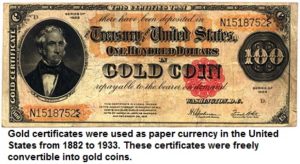
  1. Deepening economic integration by advancing beyond a common market towards a Single Market and Economy.
  2. Widening the membership and thereby expanding the economic mass of the Caribbean Community (e.g. Suriname and Haiti were admitted as full members in 1995 and 2002 respectively).
  3. Progressive insertion of the region into the global trading and economic system by strengthening trading links with non-traditional partners.

What was the hope for CSME?
Whereas CariCom started as a Common Market and Customs Union, to facilitate more intra-region trade, the CSME was intended to effect more integration of the economies of the member states. But this turned out to be mere talk, fanciful murmurings of politicians during their bi-annual Heads of Government meetings. No deployment plans ever emerged, even though up to 15 member-states signed on to the accord; (and 10 more as “Observers” only).

The recommendation of the movement behind the Go Lean book is to confederate now, as this would expand the labor pool and job market. This is the purpose of the book Go Lean…Caribbean, to help reform and transform the economic engines of the 30 member-states of the Caribbean region. The book serves as a roadmap for the introduction and implementation of the Caribbean Union Trade Federation (CU).

The Go Lean roadmap is designed to elevate the Caribbean region, to be better destinations to live, work and play. The roadmap asserts that in addition to the ease of travel and transport for touristic purposes – the primary industry in the region – Caribbean communities get to benefit from Free Movement of Labor under controlled employment rules-conditions. This is why the CU Trade Federation is a graduation from the CSME – something better. We accomplish Free Trade and Free Movement of People for Domestic (Intra-region) Tourism, but controlled Freedom of Movement for jobs … based on a Labor Certification process. Here is how the Go Lean book describes the Certification process as regulated by one of the CU agencies:

CU Labor Relations Board
This agency coordinates the activities of labor certifications, labor unions and other organizational dimensions in the region. This effort will be collaborated and in cooperation with member-state Labor Relations agencies. The CU‘s focus will be towards interstate activities and enterprises, as opposed to intra-state.

Labor Certification is an important role for this agency as it requires monitoring the labor needs of the region to ascertain where skills are needed and where and who can supply the skills. The certification role involves rating the level of expertise needed for job and rating workers skill sets. (Consider a 10-point grading system for positions and personnel, where “apprentice” level ranges from 1 – 3, “journeyman” level ranges from 4 – 6, and “master” ranges from 7 – 10). This certification role is vital to the strategy of preserving Caribbean human capital in the region, even if this involves some movement among the member-states.  [When a high skilled job becomes available, it has to be rated so that if no local talents are available, workers with qualifying ratings in other CU member-states can apply and be engaged].

Embracing the tenants of a Single Market have been elaborated upon in previous blog-commentaries. Consider this sample:

https://goleancaribbean.com/blog/?p=15245 Righting a Wrong: Re-thinking CSME
https://goleancaribbean.com/blog/?p=14954 Overseas Workers – Not the Panacea
https://goleancaribbean.com/blog/?p=13319 Making a ‘Pluralistic Democracy’ – Freedom of Movement
https://goleancaribbean.com/blog/?p=8377 Fallacy of Minimum Wage
https://goleancaribbean.com/blog/?p=8351 Brexit reality tied to Free Movement of People.

Considering Barbados’s move in the foregoing, it is a good start for embracing the concept of a Single Market. They are not the first country in the region to lean-in to this initiative – and should not be the last. Consider the VIDEO here, relating the CARICOM Skilled Nationals Act in Guyana:

VIDEOGov’t to amend CARICOM Skilled Nationals Acthttps://youtu.be/IduFS86PGpM

CapitolNewsGY
Published on Feb 5, 2014

http://www.capitolnewsonline.com | http://www.capitolnewsgy.com
Twitter: https://twitter.com/#!/wrhmnews
Facebook: https://www.facebook.com/CapitolNewsGY

Listen up you other countries: Follow suit!

All Caribbean stakeholders – leaders, citizens, businesses, employers, Union workers and professionals – need to embrace the strategy of a Single Market. The movement behind the Go Lean book invites everyone in the Caribbean to lean-in for the empowerments described here-in. We must do better than in the past; we cannot sustain our society with our current population dimensions. We must come together so that we can finally make our homelands better places to live, work and play. 🙂

About the Book
The book Go Lean…Caribbean serves as a roadmap for the introduction and implementation of the technocratic Caribbean Union Trade Federation (CU), for the elevation of Caribbean society – for all member-states. This CU/Go Lean roadmap has these 3 prime directives:

  • Optimization of the economic engines in order to grow the regional economy to $800 Billion & create 2.2 million new jobs.
  • Establishment of a security apparatus to ensure public safety and protect the resultant economic engines.
  • Improve Caribbean governance to support these engines, including a separation-of-powers between the member-states and CU federal agencies.

The Go Lean book provides 370-pages of turn-by-turn instructions on “how” to adopt new community ethos, plus the strategies, tactics, implementations and advocacies to execute so as to reboot, reform and transform the societal engines of Caribbean society.

Download the free e-Book of Go Lean … Caribbean – now!

Who We Are
The movement behind the Go Lean book – a non-partisan, apolitical, religiously-neutral Community Development Foundation chartered for the purpose of empowering and re-booting economic engines – stresses that reforming and transforming the Caribbean societal engines must be a regional pursuit. This was an early motivation for the roadmap, as pronounced in the opening Declaration of Interdependence (Pages 12 – 13):

xi. Whereas all men are entitled to the benefits of good governance in a free society, “new guards” must be enacted to dissuade the emergence of incompetence, corruption, nepotism and cronyism at the peril of the people’s best interest. The Federation must guarantee the executions of a social contract between government and the governed.

xxi. Whereas the preparation of our labor force can foster opportunities and dictate economic progress for current and future generations, the Federation must ensure that educational and job training opportunities are fully optimized for all residents of all member-states, with no partiality towards any gender or ethnic group. The Federation must recognize and facilitate excellence in many different fields of endeavor, including sciences, languages, arts, music and sports. This responsibility should be executed without incurring the risks of further human flight, as has been the past history.

xxiv. Whereas a free market economy can be induced and spurred for continuous progress, the Federation must install the controls to better manage aspects of the economy: jobs, inflation, savings rate, investments and other economic principles. Thereby attracting direct foreign investment because of the stability and vibrancy of our economy.

Sign the petition to lean-in for this roadmap for the Caribbean Union Trade Federation.

Share this post:
, ,
[Top]

European Reckoning – China seeks to de-Americanize the world’s economy

Go Lean Commentary

How did the world measure money and wealth in the past? Simple: Gold.

Then in 1971, the US changed from the Gold Standard … to a Non-Gold Standard or Fiat money. (The Gold Standard refers to the monetary system in which the standard economic unit of account is based on a fixed quantity of gold. Most nations abandoned the gold standard as the basis of their monetary systems at some point in the 20th century). Now the value of American money is measured by “American money” (declared value). But wait, wait: the rest of the world’s money is also now measured by American money – the world measures money and wealth by US Dollars! (See the Appendix VIDEO below).

Even in Europe; when the Euro currency was launched in 1999, it was pegged close to the US dollar 1-to-1.17. Today, the world’s economy is measured by US Dollars (USD) and the Euro, which continue to be the primary reserve currency of most commercial and central banks[54]. The Dollar is first and the Euro is the second most widely held international reserve currency. As of August 2018, with more than €1.2 trillion in circulation, the Euro has one of the highest combined values of banknotes and coins in circulation in the world, having surpassed the U.S. dollar.[13]
Now the rest of the world – China most definitely – wants to de-Americanize the world’s economy. The world’s population is nearly 7 billion people, while the combined populations of the US and the EU is a little less than 1 billion; (340 million + 508 million respectively). There are some Big countries and Big economies at stake: think China with their 1.3 Billion people or India with their 1.2 Billion.  It is therefore logical to contemplate de-Americanizing the world’s economy – it makes so much sense. In addition, at the time of this writing, the US is in the midst of a federal government shutdown … again.

It is therefore plausible, viable and prudent for non-American stakeholders to want to be shielded from American chaos. See this reasoning in this White Paper here; published by the Government of Canada:

Title: Chimerica – The Beginnings of a New Regional Reserve

What is it?
Chinese concerns over the ability of the U.S. to manage its debt have led to recent calls by China to “de-Americanize” the world economy and seek an alternative to the U.S. dollar as the international reserve currency.1 As far back as 2008, China proposed the need for a new international currency reserve which would limit the importance of any one national currency.2

In recent times, the U.S. economy has avoided a debt crisis by raising the debt ceiling level. Any adjustment has the potential to impact the Chinese economy, given the level of exposure to U.S. securities. The People’s Bank of China (PBOC) has amassed US$3.5 trillion in foreign reserves – largely U.S. Treasury securities. The fact that a single institution wields so much influence over global macroeconomic stability has caused considerable anxiety, with doomsayers predicting that doubts about U.S. debt sustainability will force China to sell off its holdings of U.S. debt. This would drive up interest rates in the U.S. and ultimately could trigger the dollar’s downfall.

However, selling off U.S. Treasury securities may not be in China’s interest, as it would drive up the renminbi’s (RMB) exchange rate against the U.S. dollar, diminishing the domestic value of China’s reserves and undermining the export sector’s competitiveness. Indeed, a U.S. Defense Department report last year on the national security implications of China’s holdings of U.S. debt concluded that “attempting to use U.S. Treasury securities as a coercive tool would have limited effect and likely would do more harm to China than to the [U.S.].”3

U.S. debt is only one side of the coin. Economist Robert Shiller believes that the real estate bubble is a serious problem in China.4 According to Shiller, people are buying apartments in the expectation that house prices will continue to rise. This gambling mentality is leading them to make completely irrational buying decisions. Slowing economic growth and exports has the potential to expose a serious financial bubble in the Chinese housing sector. The banking sector in China would need to be recapitalized should the Chinese housing bubble burst.

Why is it important?
The symbiotic relationship between Chinese export-led growth and U.S. consumption is such that should one economy falter the other will follow. Both of these disruptors exist against a backdrop of rising bilateral trade using national currencies and a call by the International Monetary Fund for a new global currency to replace the U.S. dollar.5

Research by AMRO-Asia, the chief economists of ASEAN+3, finds that while the U.S. remains the anchor currency in the Asian region, the U.S. dollar has “seemingly lost its dominating status.”6 At the same time, the weight of the RMB in regional currency baskets has been increasing since 2005.7  8 The rise of the RMB as the Asian regional reserve has implications for regional trade and global growth. In the long run, the success of the U.S. economic pivot to Asia is likely to be slowed by the rise of the RMB and the corresponding decline in U.S. economic power. Over the last decade, U.S. growth has been facilitated by Chinese holdings of U.S. securities. Questions remain as to whether a decoupling in the long run will have a positive outcome for China and the U.S. as well as global growth.

References

  1. Puzzanghera, J. “Upset over U.S. Fiscal Crisis, China Urges a ‘de-Americanized World’.” Los Angeles Times. October 2013. http://www.latimes.com/business/money/la-fi-mo-china-debt-limit-shutdown-de-americanized-economy-20131014,0,1990632.story#ixzz2mwhEb6II(link is external)
  2. Landler, M. “Seeing its Own Money at Risk, China Rails at U.S.” The New York Times. October 2013. http://www.nytimes.com/2013/10/16/us/politics/china-rails-over-us-fiscal-crisis-seeing-its-own-money-at-risk.html?_r=0(link is external)
  3. Morrison, W. and M. Labonte. “China’s Holdings of U.S. Securities: Implications for the U.S. Economy.” (CRS Report for Congress.) Congressional Research Service. August 2013. http://www.fas.org/sgp/crs/row/RL34314.pdf(link is external)
  4. “2013 Nobel Prize winner: China’s real estate bubble is serious.” People’s Daily Online. October 2013. http://english.people.com.cn/business/8427784.html(link is external)
  5. Snyder, M. “Shift From U.S. Dollar As World Reserve Currency Underway – What Will This Mean For America?” munKnee. http://www.munknee.com/shift-from-u-s-dollar-as-world-reserve-currency-underway-what-will-this-mean-for-america/(link is external)
  6. Chen, C., R. Siregar and M Yiu. “RMB as an Anchor Currency in ASEAN, China, Japan and Korea Region.” ASEAN+3 Macroeconomic Research Office. April 2013. https://www.cb.cityu.edu.hk/ef/doc/Conference%20on%20Renminbi%20and%20the%20Global%20Economy/papers/Chuling%20Chen.pdf(link is external)
  7. Chong, F. “Is RMB Approaching Safe Haven Status?” Asia Today International. June 2013. http://asiatoday.com.au/content/rmb-approaching-safe-haven-status(link is external)
  8. Irwin, N. “This one number explains how China is taking over the world.” Washington Post. December 2013. http://www.washingtonpost.com/blogs/wonkblog/wp/2013/12/03/this-one-number-explains-how-china-is-taking-over-the-world/

Source: Government of Canada – Posted September 28, 2018; retrieved January 17, 2019 from: http://www.horizons.gc.ca/en/content/chimerica-%E2%80%93-beginnings-new-regional-reserve

This commentary continues a 5-part series on European Reckoning. This entry is 2 of 5 in this series from the movement behind the book Go Lean … Caribbean in consideration of the past, present and future of European interactions. While the Caribbean were all settled and organized by European powers, the lack of organizational efficiency for our benefit is a glaring concern. We have 30 member-states in the Caribbean region and yet, there is no coordinated regional stewardship of the economic, fiscal and monetary affairs of our communities. The other commentaries in the series are cataloged as follows:

  1. European Reckoning: IMF Apologies
  2. European Reckoning: China seeks to de-Americanize the world’s economy
  3. European Reckoning: Settlers -vs- Immigrants
  4. European Reckoning: Christianity’s Indictment
  5. European Reckoning: Black “Greco-Roman” Wrestler victimized for his hair

In the first submission of this series, the European Great Powers were also identified as the Western Alliance. It’s comprised of only White/Christian European nations and North America (US & Canada). It is understandable therefore if Asian, African or Latin American people do not feel adequately represented in the governance of the world’s economy. Yes this status quo is flawed. The US, being the dominant currency in global trade has proven fraught with deficiencies. The aft-mentioned “shutdown” – when Congress fails to pass sufficient appropriation bills or continuing resolutions to fund federal government operations and agencies, or when the President refuses to sign such bills or resolutions into law – is not the first one. In fact, there have been these previous shutdowns in the last 40+ years:

Since 1976, when the current budget and appropriations process was enacted, there have been 22 gaps in budget funding, 10 of which led to federal employees being furloughed. – Source: Wikipedia

The world must not wait for the US to get their political house in order before we can do business. China is a strong advocate for this de-Americanizing effort. Does this mean they want to supplant the US Dollar for their own Renminbi? (This is the currency of the People’s Republic of China, the basic unit of which is the yuan). If the answer to this question is Yes, then that would be China’s prerogative to address the needs of their economy.

Our focus in the Caribbean, must be first and foremost the Caribbean.

The advocacy of the movement behind the Go Lean book is to implement the institutional solutions to do the heavy-lifting ourselves to manage our own economic, fiscal and monetary affairs.

  • Not to be a parasite of the United States of America or Europe.
  • Not to be a parasite of China.

The proposed solution is the Caribbean Central Bank (CCB); this is structured as a formal “cooperative” among the region’s existing Central Banks. The CCB is modeled upon the European Central Bank (ECB), the same as the Caribbean Union is modeled upon the European Union. This CCB institutional strategy also calls for the introduction of a regional currency, the Caribbean Dollar (C$). The CCB will therefore be the sole controlling agent of the monetary policies of this regional C$ currency.

Introducing and implementing a new currency is a Big Deal. But yes, we can succeed! We have a proven track record – the Euro – to model and learn from. This theme of technocratic monetary and currency stewardship has been detailed in many previous Go Lean commentaries; see a sample list here:

https://goleancaribbean.com/blog/?p=15923 Industrial Reboot – Payment Cards 101
https://goleancaribbean.com/blog/?p=14248 Leading with Money Matters – Almighty Dollar
https://goleancaribbean.com/blog/?p=13744 Failure to Launch – Economics: The Quest for a ‘Single Currency’
https://goleancaribbean.com/blog/?p=13365 West African Case Study: ECOWAS to Launch ‘Single Currency’
https://goleancaribbean.com/blog/?p=10585 Two Pies: Economic Plan for a New Caribbean
https://goleancaribbean.com/blog/?p=10513 Transforming ‘Money’ Countrywide – Lessons Learned from India
https://goleancaribbean.com/blog/?p=8704 Lessons Learned from NYC’s Transit Currency: MetroCard
https://goleancaribbean.com/blog/?p=8381 Caribbean Economic Fallacy: Casino Currency US Dollars Only
https://goleancaribbean.com/blog/?p=7034 The Future of our Money – C$ Currency & Mobile Payment Systems
https://goleancaribbean.com/blog/?p=4425 Caribbean Dollar Reality: Cash/Coin, Payment Cards and iPhone
https://goleancaribbean.com/blog/?p=3814 Lesson Learned from the Swiss Currency Management
https://goleancaribbean.com/blog/?p=906 Implementing a Regulatory framework to dissuade ‘risky’ currecy
https://goleancaribbean.com/blog/?p=833 One currency, divergent economies
https://goleancaribbean.com/blog/?p=360 Why need local/regional currency? To Create Money from Thin Air

Having the American Dollar regulate the world economy has not been good … for anyone but America, when “they” are operating in a Situation Normal. But today, and 22 times in the last 43 years that they have had government shutdowns, it is Situation Normal All Foul Up (SNAFU). Moving that currency functionality to the Euro may be more of the same: there is also discord in the Euro lands – think Brexit and the Greece Sovereign Debt crisis.

What about moving the “world currency” functionality to China, or India, or Japan? Again, while these moves may be good for those countries, they may not necessarily be as good for the rest of the world, or our world in the Caribbean. This is what independence should mean to us: taking care of our own economic, fiscal and monetary needs. Even better than independence would be a regional interdependence among just our Caribbean neighbors.

Now is the time for the Caribbean region to lean-in for this roadmap for the Caribbean Union Trade Federation and the Caribbean Central Bank, as described in the book Go Lean … Caribbean. The benefits of this roadmap are vast and varied, but first we stop being a parasite of these European-North American (White) World Powers; not parasites, we become protégés instead.

Yes, we can … make the Caribbean, our homeland, a better place to live, work and play. 🙂

About the Book
The book Go Lean…Caribbean serves as a roadmap for the introduction and implementation of the technocratic Caribbean Union Trade Federation (CU), for the elevation of Caribbean society – for all member-states. This CU/Go Lean roadmap has these 3 prime directives:

  • Optimization of the economic engines in order to grow the regional economy to $800 Billion and create 2.2 million new jobs.
  • Establishment of a security apparatus to ensure public safety and protect the resultant economic engines.
  • Improve Caribbean governance to support these engines, including a separation-of-powers between the member-states and CU federal agencies.

The Go Lean book provides 370-pages of turn-by-turn instructions on “how” to adopt new community ethos, plus the strategies, tactics, implementations and advocacies to execute so as to reboot, reform and transform the societal engines of Caribbean society.

Download the free e-Book of Go Lean … Caribbean – now!

Who We Are
The movement behind the Go Lean book – a non-partisan, apolitical, religiously-neutral Community Development Foundation chartered for the purpose of empowering and re-booting economic engines – stresses that reforming and transforming the Caribbean societal engines must be a regional pursuit. This was an early motivation for the roadmap, as pronounced in the opening Declaration of Interdependence (Pages 12 – 13):

xi. Whereas all men are entitled to the benefits of good governance in a free society, “new guards” must be enacted to dissuade the emergence of incompetence, corruption, nepotism and cronyism at the peril of the people’s best interest. The Federation must guarantee the executions of a social contract between government and the governed.

xii. Whereas the legacy in recent times in individual states may be that of ineffectual governance with no redress to higher authority, the accedence of this Federation will ensure accountability and escalation … for good governance, justice assurances, due process and the rule of law. As such, any threats of a “failed state” status for any member state must enact emergency measures on behalf of the Federation to protect the … member states and the Federation as a whole.

xxiii. Whereas many countries in our region are dependent Overseas Territory of imperial powers, the systems of governance can be instituted on a regional and local basis, rather than requiring oversight or accountability from distant masters far removed from their subjects of administration. The Federation must facilitate success in autonomous rule …

xxiv. Whereas a free market economy can be induced and spurred for continuous progress, the Federation must install the controls to better manage aspects of the economy: jobs, inflation, savings rate, investments and other economic principles. Thereby attracting direct foreign investment because of the stability and vibrancy of our economy.

xxv. Whereas the legacy of international democracies had been imperiled due to a global financial crisis, the structure of the Federation must allow for financial stability and assurance of the Federation’s institutions. To mandate the economic vibrancy of the region, monetary and fiscal controls and policies must be incorporated as proactive and reactive measures. These measures must address threats against the financial integrity of the Federation and member-states.

Sign the petition to lean-in for this roadmap for the Caribbean Union Trade Federation.

—————–

Appendix VIDEO – How The U.S. Dollar Shaped The World Economy – https://youtu.be/EbJk1za74kE

NBC News
Published on Dec 21, 2014 – The official currency of the United States, the Federal Reserve Note, marks 100 years since it was first printed. Matt Rivera tracks the rise of the world’s reserve currency.

» Subscribe to NBC News: http://nbcnews.to/SubscribeToNBC

» Watch more NBC video: http://bit.ly/MoreNBCNews

NBC News is a leading source of global news and information. Here you will find clips from NBC Nightly News, Meet The Press, and our original series Debunker, Flashback, Nerdwatch, and Show Me. Subscribe to our channel for news stories, technology, politics, health, entertainment, science, business, and exclusive NBC investigations.

Connect with NBC News Online! Visit NBCNews.Com: http://nbcnews.to/ReadNBC

Find NBC News on Facebook: http://nbcnews.to/LikeNBC

Follow NBC News on Twitter: http://nbcnews.to/FollowNBC

Follow NBC News on Google+: http://nbcnews.to/PlusNBC

Follow NBC News on Instagram: http://nbcnews.to/InstaNBC

Follow NBC News on Pinterest: http://nbcnews.to/PinNBC

How The U.S. Dollar Shaped The World Economy | Long Story Short | NBC News

—————–
See an alternative yet relevant VIDEO here: https://youtu.be/CQMiNu6FI4M

Share this post:
, , ,
[Top]

European Reckoning – Reconciling the IMF’s Past, Present and Future

Go Lean Commentary

If you had a benefactor – think scholarship for your college education – and your benefactor files for bankruptcy, should you be concerned, weary and/or pessimistic that future monies will continue to flow?

That would be stupid!

It is only logical that you would be expected to find another benefactor. (This is not just academic – in 1991 when the Soviet Union dissolved, the Caribbean country of Cuba was left out in the cold).

Europe, the continent, the countries and the people have been the Caribbean’s benefactor for many years in our history. It is time now to reckon with that! We must review, reflect and reconcile this past, present and our future interactions, especially when it comes to economic crises, escalations and bailouts.

When we refer to reconciling Europe’s past, we refer to the Imperial Conquests, Slave Trade, Slavery, Colonialism and Post-Colonialism.

When we refer to Europe’s present, we refer to all the recent developments in modern day Europe, as in the events of the recent economic crises; think Sovereign Debt Crisis with Greece and others.

When we refer to Europe’s future, we are referring to the tenuous status in their integration movements – think European Union (EU), IMF, and the resultant unrest on the European mainland.

This commentary opens a 5-part series on European Reckoning. This entry is 1 of 5 in this series from the movement behind the book Go Lean … Caribbean in consideration of root history of Caribbean colonialism and how modern reconciliation developments are exacerbating our communities. We are all mostly independent and sovereign countries in the Caribbean, so it is expected that we would now be mature and responsible; we must now be protégés not parasites of the European world. The other commentaries in the series are cataloged as follows:

  1. European Reckoning: IMF Apologies
  2. European Reckoning: China seeks to de-Americanize the world’s economy
  3. European Reckoning: Settlers -vs- Immigrants
  4. European Reckoning: Christianity’s Indictment
  5. European Reckoning: Black “Greco-Roman” Wrestler victimized for his hair

In this series, reference is made to the Great Powers of the Western Hemisphere, sometimes called the Western Alliance. This refers to the White/Christian European nations and North America (US & Canada). In fact, sometimes the Western Alliance is cross-labeled with the North Atlantic Treaty Organization (NATO) also called the North Atlantic Alliance; this is an intergovernmental military alliance between 29 North American and European countries.

While none of the 29 NATO members include any Caribbean independent states, 16 Caribbean Overseas Territories are thusly aligned as dependents of the American (2), British (6), Dutch (6) and French (4) imperial powers. Plus with the Caribbean Basin Security Pact, the full Caribbean – except Cuba – is aligned with NATO members: United States and Canada.
The reference to Europe in this series of commentaries is to “White Westerners”. This special sub-group had wielded absolute power on the planet. It is time now to look back at that history and “call a spade a spade”!

In this first submission of this series, the overt favoritism of economic bailouts toward White Westerners was exposed and commiserated. This reflects the need for reconciliation. For the Caribbean, considering our European history, presence and future, we need to participate in this reconciliation. See this article here addressing the flawed favoritism of the International Monetary Fund (IMF), (the intergovernmental financial institution composed of 189 countries working to foster global monetary cooperation, secure financial stability, facilitate international trade, promote high employment and sustainable economic growth, and reduce poverty around the world”[1]). It appears that the ‘International’ in the brand IMF has not been as global as they claimed. The full article is presented here:

Title: IMF admits disastrous love affair with the euro and apologises for the immolation of Greece
By:
Ambrose Evans-Pritchard
The International Monetary Fund’s top staff misled their own board, made a series of calamitous misjudgments in Greece, became euphoric cheerleaders for the euro project, ignored warning signs of impending crisis, and collectively failed to grasp an elemental concept of currency theory.

This is the lacerating verdict of the IMF’s top watchdog on the fund’s tangled political role in the eurozone debt crisis, the most damaging episode in the history of the Bretton Woods institutions.

It describes a “culture of complacency”, prone to “superficial and mechanistic” analysis, and traces a shocking breakdown in the governance of the IMF, leaving it unclear who is ultimately in charge of this extremely powerful organisation.

The report by the IMF’s Independent Evaluation Office (IEO) goes above the head of the managing director, Christine Lagarde. It answers solely to the board of executive directors, and those from Asia and Latin America are clearly incensed at the way European Union insiders used the fund to rescue their own rich currency union and banking system.

The three main bailouts for Greece, Portugal and Ireland were unprecedented in scale and character. The trio were each allowed to borrow over 2,000pc of their allocated quota – more than three times the normal limit – and accounted for 80pc of all lending by the fund between 2011 and 2014.

In an astonishing admission, the report said its own investigators were unable to obtain key records or penetrate the activities of secretive “ad-hoc task forces”. Mrs Lagarde herself is not accused of obstruction.

“Many documents were prepared outside the regular established channels; written documentation on some sensitive matters could not be located. The IEO in some instances has not been able to determine who made certain decisions or what information was available, nor has it been able to assess the relative roles of management and staff,” it said.

The report said the whole approach to the eurozone was characterised by “groupthink” and intellectual capture. They had no fall-back plans on how to tackle a systemic crisis in the eurozone – or how to deal with the politics of a multinational currency union – because they had ruled out any possibility that it could happen.

“Before the launch of the euro, the IMF’s public statements tended to emphasise the advantages of the common currency,” it said. Some staff members warned that the design of the euro was fundamentally flawed but they were overruled.

“After a heated internal debate, the view supportive of what was perceived to be Europe’s political project ultimately prevailed,” it said.

This pro-EMU bias continued to corrupt their thinking for years. “The IMF remained upbeat about the soundness of the European banking system and the quality of banking supervision in euro-area countries until after the start of the global financial crisis in mid-2007. This lapse was largely due to the IMF’s readiness to take the reassurances of national and euro area authorities at face value,” it said.

The IMF persistently played down the risks posed by ballooning current account deficits and the flood of capital pouring into the eurozone periphery, and neglected the danger of a “sudden stop” in capital flows.

“The possibility of a balance of payments crisis in a monetary union was thought to be all but non-existent,” it said. As late as mid-2007, the IMF still thought that “in view of Greece’s EMU membership, the availability of external financing is not a concern”.

At root was a failure to grasp the elemental point that currency unions with no treasury or political union to back them up are inherently vulnerable to debt crises. States facing a shock no longer have sovereign tools to defend themselves. Devaluation risk is switched into bankruptcy risk.

“In a monetary union, the basics of debt dynamics change as countries forgo monetary policy and exchange rate adjustment tools,” said the report. This would be amplified by a “vicious feedback between banks and sovereigns”, each taking the other down. That the IMF failed to anticipate any of this was a serious scientific and professional failure.

In Greece, the IMF violated its own cardinal rule by signing off on a bailout in 2010 even though it could offer no assurance that the package would bring the country’s debts under control or clear the way for recovery, and many suspected from the start that it was doomed.

The organisation got around this by slipping through a radical change in IMF rescue policy, allowing an exemption (since abolished) if there was a risk of systemic contagion. “The board was not consulted or informed,” it said. The directors discovered the bombshell “tucked into the text” of the Greek package, but by then it was a fait accompli.

The IMF was in an invidious position when it was first drawn into the Greek crisis.  The Lehman crisis was still fresh. “There were concerns that such a credit event could spread to other members of the euro area, and more widely to a fragile global economy,” said the report.

The eurozone had no firewall against contagion, and its banks were tottering. The European Central Bank had not yet stepped up to the plate as lender of last resort. It was deemed too dangerous to push for a debt restructuring in Greece.

While the fund’s actions were understandable in the white heat of the crisis, the harsh truth is that the bailout sacrificed Greece in a “holding action” to save the euro and north European banks. Greece endured the traditional IMF shock of austerity, without the offsetting IMF cure of debt relief and devaluation to restore viability.

A sub-report on the Greek saga said the country was forced to go through a staggering squeeze, equal to 11pc of GDP over the first three years. This set off a self-feeding downward spiral. The worse it became, the more Greece was forced to cut – what ex-finance minister Yanis Varoufakis called “fiscal water-boarding”.

“The automatic stabilisers were not allowed to operate, thus aggravating the pro-cyclicality of the fiscal policy, which exacerbated the contraction,” said the report.

The attempt to force through an “internal devaluation” of 20pc to 30pc by means of deflationary wage cuts was self-defeating since it necessarily shrank the economic base and sent the debt trajectory spiralling upwards. “A fundamental problem was the inconsistency between attempting to regain price competitiveness and simultaneously trying to reduce the debt to nominal GDP ratio,” it said.

The IMF thought the fiscal multiplier was 0.5 when it may in reality have been five times as high, given the fragility of the Greek system. The result is that nominal GDP ended 25pc lower than the IMF’s projections, and unemployment soared to 25pc instead of 15pc as expected. “The magnitude of Greece’s growth forecast errors looks extraordinary,” it said.

The strategy relied on forlorn hopes that the “confidence fairy” would lift Greece out of this policy-induced nose-dive. “Highly optimistic” plans to raise $50bn from privatisation sales came to little. Some assets did not even have clear legal ownership. The chronic “lack of realism” lasted until late 2011. By then the damage was done.

The injustice is that the cost of the bailouts was switched to ordinary Greek citizens  – the least able to support the burden  – and it was never acknowledged that the true motive of EU-IMF Troika policy was to protect monetary union. Indeed, the Greeks were repeatedly blamed for failures that stemmed from the policy itself. This unfairness – the root of so much bitterness in Greece – is finally recognised in the report.

“If preventing international contagion was an essential concern, the cost of its prevention should have been borne – at least in part – by the international community as the prime beneficiary,” it said.

Better late than never.

Source: Posted July, 29 2016 ; retrieved January 10, 2019 from: https://www.telegraph.co.uk/business/2016/07/28/imf-admits-disastrous-love-affair-with-euro-apologises-for-the-i/

The foregoing article highlights: “Asian and Latin American stakeholders are clearly incensed at the way European Union insiders used the [IMF] fund to rescue their own rich currency union and banking system”. Maybe just maybe, Europeans are not as egalitarian and pluralistic as they claim. Maybe just maybe, when push comes to shove they first look after their own before supporting others, even though they are contractually obligated to do so.

This is Tribalism 101

Tribalism is the state of being organized by, or advocating for, tribes or tribal lifestyles. Human evolution has primarily occurred in small groups, as opposed to mass societies, and humans naturally maintain a social network.
In popular culture, tribalism may also refer to a way of thinking or behaving in which people are loyal to their social group above all else,[1] or, derogatorily, a type of discrimination or animosity based upon group differences.[2]

This ‘Tribalism’ is the reckoning that Europe is doing right now regarding the IMF. They are reconciling their past, present and future and recognizing that they now have to build trust, anew – see the Appendix VIDEO below.

This is also the reckoning that we, in the Caribbean, must do. How should we deal with fiscal/monetary escalations – rescues of our currency and banking systems? The conclusion from this commentary is that we need to do the heavy-lifting ourselves and facilitate our own solutions for economic and fiscal management. The proposed solution: the Caribbean Central Bank (CCB) as a formal “cooperative” among the region’s Central Banks. The CCB will be the sole controlling agent of the monetary policies of a regional currency union: Caribbean Dollar. When there is economic dysfunction and a need for “receivership”. That role would be assumed by the CCB, not the IMF.

This theme of technocratic monetary stewardship aligns with previous Go Lean commentaries; see a sample list here:

https://goleancaribbean.com/blog/?p=16210 In Defense of Trade – Currency Assassins: Real Threat
https://goleancaribbean.com/blog/?p=15796 Lessons Learned from 2008: Righting The Wrong
https://goleancaribbean.com/blog/?p=15787 Lessons Learned from 2008: Too Big to Fail –vs- Too Small to Thrive
https://goleancaribbean.com/blog/?p=14248 Leading with Money Matters – Almighty Dollar
https://goleancaribbean.com/blog/?p=13744 Failure to Launch – Economics: The Quest for a ‘Single Currency’
https://goleancaribbean.com/blog/?p=6563 Lessons from Iceland – Model of Banking Recovery
https://goleancaribbean.com/blog/?p=3858 European Central Bank unveils 1 trillion Euro stimulus program
https://goleancaribbean.com/blog/?p=3814 Lesson Learned from the Swiss unpegging their currency: Franc
https://goleancaribbean.com/blog/?p=3582 For Canadian Banks: Caribbean is a ‘Bad Bet’
https://goleancaribbean.com/blog/?p=833 One currency, divergent economies
https://goleancaribbean.com/blog/?p=467 Barbados Central Bank records $3.7m loss in 2013

Now is the time for the Caribbean region to lean-in for this roadmap described here-in the book Go Lean … Caribbean. The benefits of this roadmap are too alluring to ignore: emergence of an $800 Billion economy, with solid technocratic management of a regional currency union. Finally, we will have the opportunity to stand-up as a protégé to our North American and European counterparts. We will not be looking to them to bail-us-out; we will forge our own growth and clean-up and own mess. We will be mature … finally.

Yes, we can … make the Caribbean, our homeland, a better place to live, work and play. 🙂

About the Book
The book Go Lean…Caribbean serves as a roadmap for the introduction and implementation of the technocratic Caribbean Union Trade Federation (CU) and the aligning Caribbean Central Bank (CCB), for the elevation of Caribbean society – for all member-states. This CU/Go Lean roadmap has these 3 prime directives:

  • Optimization of the economic engines in order to grow the regional economy to $800 Billion and create 2.2 million new jobs.
  • Establishment of a security apparatus to ensure public safety and protect the resultant economic engines.
  • Improve Caribbean governance to support these engines, including a separation-of-powers between the member-states and CU federal agencies.

The Go Lean book provides 370-pages of turn-by-turn instructions on “how” to adopt new community ethos, plus the strategies, tactics, implementations and advocacies to execute so as to reboot, reform and transform the societal engines of Caribbean society.

Download the free e-Book of Go Lean … Caribbean – now!

Who We Are
The movement behind the Go Lean book – a non-partisan, apolitical, religiously-neutral Community Development Foundation chartered for the purpose of empowering and re-booting economic engines – stresses that reforming and transforming the Caribbean societal engines must be a regional pursuit. This was an early motivation for the roadmap, as pronounced in the opening Declaration of Interdependence (Pages 12 – 13):

xi. Whereas all men are entitled to the benefits of good governance in a free society, “new guards” must be enacted to dissuade the emergence of incompetence, corruption, nepotism and cronyism at the peril of the people’s best interest. The Federation must guarantee the executions of a social contract between government and the governed.

xii. Whereas the legacy in recent times in individual states may be that of ineffectual governance with no redress to higher authority, the accedence of this Federation will ensure accountability and escalation … for good governance, justice assurances, due process and the rule of law. As such, any threats of a “failed state” status for any member state must enact emergency measures on behalf of the Federation to protect the … member states and the Federation as a whole.

xxiii. Whereas many countries in our region are dependent Overseas Territory of imperial powers, the systems of governance can be instituted on a regional and local basis, rather than requiring oversight or accountability from distant masters far removed from their subjects of administration. The Federation must facilitate success in autonomous rule …

xxiv.  Whereas a free market economy can be induced and spurred for continuous progress, the Federation must install the controls to better manage aspects of the economy: jobs, inflation, savings rate, investments and other economic principles. Thereby attracting direct foreign investment because of the stability and vibrancy of our economy.

xxv.   Whereas the legacy of international democracies had been imperiled due to a global financial crisis, the structure of the Federation must allow for financial stability and assurance of the Federation’s institutions. To mandate the economic vibrancy of the region, monetary and fiscal controls and policies must be incorporated as proactive and reactive measures. These measures must address threats against the financial integrity of the Federation and member-states.

Sign the petition to lean-in for this roadmap for the Caribbean Union Trade Federation.

—————–

Appendix VIDEO – IMF’s Christine Lagarde: Truth and transparency are key to rebuilding trust – https://youtu.be/0Iia6FUzVc4


CNBC International TV
Published on Apr 22, 2018 – The International Monetary Fund (IMF) welcomed calls from the U.S. that it should push for more transparency in global trade and lending, the Fund’s boss said Sunday.

IMF Managing Director Christine Lagarde said she’s “delighted” U.S. Treasury Secretary Mnuchin wants the Fund to increase transparency on trade imbalances and debt sustainability in countries like China, an effort she said is already underway. “It’s clearly a project that we have been working on, that we will continue to work on, and I’m delighted that he’s supporting us,” Lagarde said in an interview with CNBC’s Elizabeth Schulze at the IMF Spring Meetings [2018] in Washington.

—–

Subscribe to CNBC Life: http://cnb.cx/2wAkfMv

Subscribe to CNBC International: http://cnb.cx/2gft82z

Like our Facebook page https://www.facebook.com/cnbcinternat…

Follow us on Instagram https://www.instagram.com/cnbcinterna…

Follow us on Twitter https://twitter.com/cnbci

Share this post:
, , ,
[Top]