Category: Implementation

Waging a Successful War on Stupidity

Go Lean Commentary

“Stupid is as stupid does…”

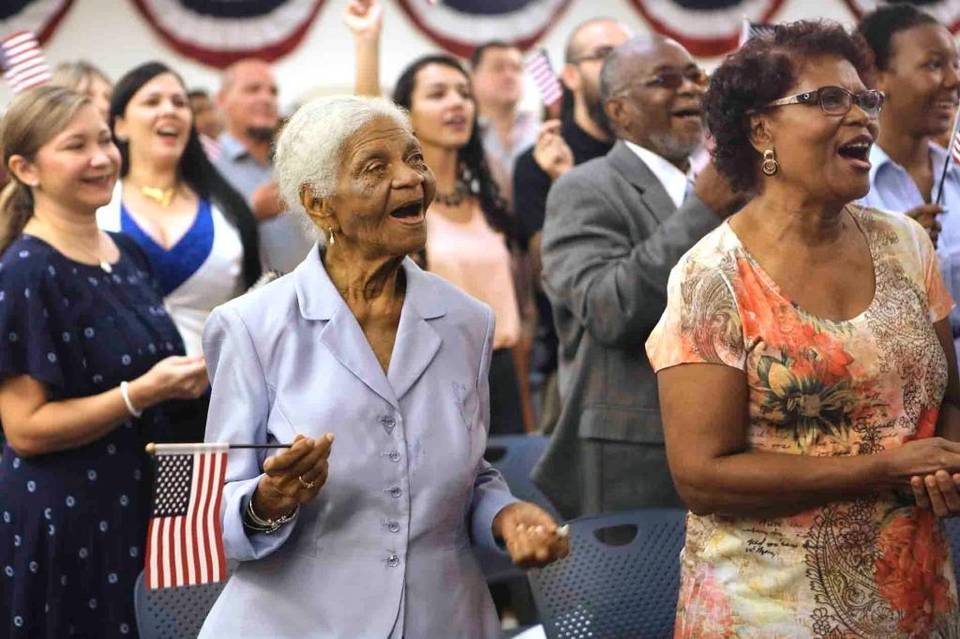
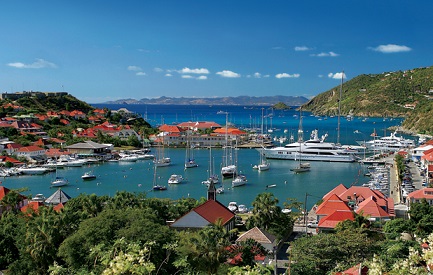
CU Blog - War on Stupidity - Photo 1

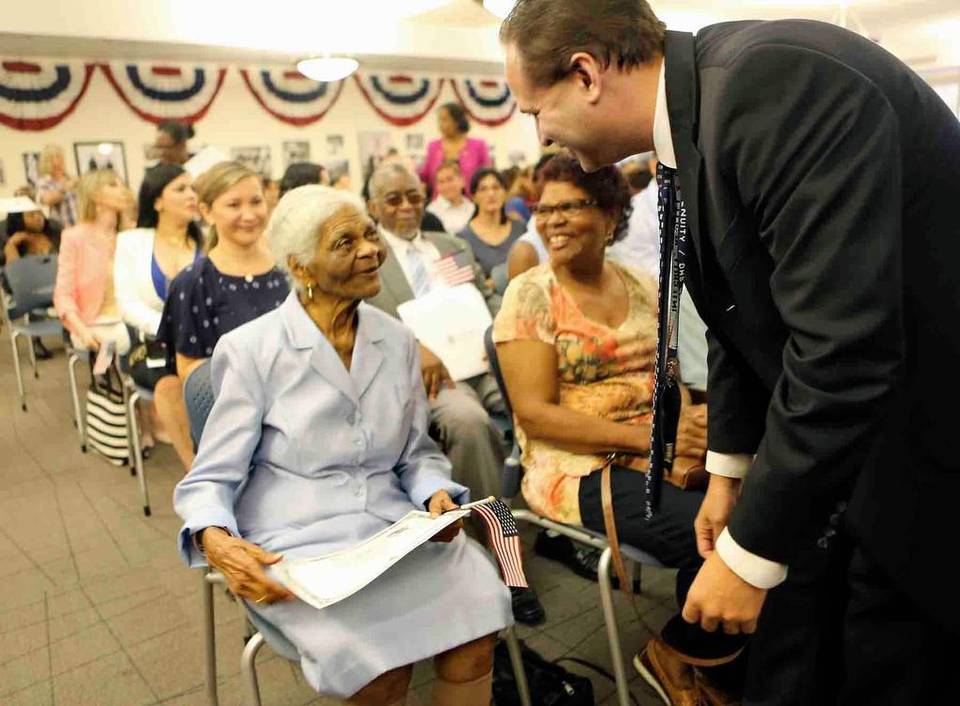
CU Blog - War on Stupidity - Photo 1b

Nobody likes to be called stupid!

It has a “stinging” feel to its indictment. It is different than being called “crazy” as insanity may be linked to a physical disability from brain chemistry. No, “stupid” is different. Stupid says that the person is perfectly sane and intentionally chooses an action that they know to yield an undesirable result – “… stupid does …”.

A person knowing they have a balance of $6.00 in their checking account, but newly writing a check for $7, knowing that their bank may charge them a $35 fee and the check recipient may charge another fee ($20 – $50 range). That one $7 transaction may cost up to $75 in fees.

Surely this is stupid! Yet this happens in society again … and again. In fact there is a whole industry based on this reality in the United States: Check Cashing / Pay-Day Loans. This entire industry has been weighed and measured and found to be  “wanting” or stupid.

So, knowing that there is some degree of intentionality associated with this question, why do people do the “stupid” things that they do?

Answer: It’s complicated!

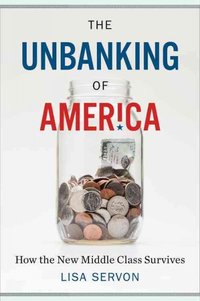
Perhaps there’s more to “stupid” than what meets the eye. See/hear the AUDIO Podcast here of a related interview based on a new book:

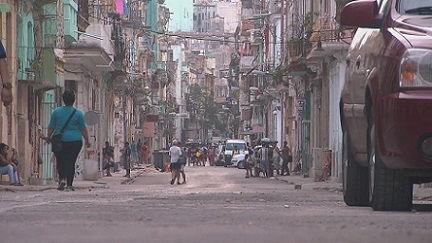
CU Blog - War on Stupidity - Photo 2

AUDIO Podcast – What Is Driving The ‘Unbanking Of America’? – http://www.npr.org/2017/01/10/509126878/what-is-driving-the-unbanking-of-america

Published on January 10, 2017 – Author Lisa Servon says a growing number of Americans are giving up on traditional banks and relying instead on alternatives, including prepaid debit cards, check-cashing centers and payday lenders.
“… increasing numbers of working Americans are using those services and turning their backs on traditional banking because banks don’t meet their needs and whack them with fees and charges they aren’t expecting. In 2011, she notes, Americans paid $38 billion just in overdraft fees.”
There is no doubt that there is “stupidity” in society and there is a need to “Wage War” against it. We first need to understand the roots and origins; many times the “rhyme and reason” why stupid policies-practices persist, is because “someone is profiting”. So stupidity may be tied to Crony-Capitalism: the abuse of public funds for private gain.

The movement behind the book Go Lean … Caribbean describes this stupidity as a societal defect … in America … and the Caribbean. This previous blog-commentary has identified “Crony-Capitalism” as a serious societal defect in the US. The goal is for the Caribbean to do better!

How?

First we start by recognizing that there is a problem: “there is stupidity in our society”. Now we can arm ourselves for battle in this ‘War Against Stupidity’. This is an important first step in reforming and transforming our regional society. This is commentary 2 of 4 from the movement behind the Go Lean book on the subject of Caribbean societal defects. So how do we move our communities from the deficient-defective status quo to our targeted destination: “a better place to live, work and play”? By waging war on our defects. All of these commentaries detail that effort, for the following defects:

  1. Waging a Successful War on Orthodoxy
  2. Waging a Successful War on Stupidity
  3. Waging a Successful War on Rent
  4. Waging a Successful War on ‘Terrorism’

These commentaries draw reference to the Go Lean book, as it details the quest to transform the Caribbean; it features a how-to guide and roadmap for elevating the region’s societal engines for economics, security and governance. Stupidity can be found in all these three spheres of society. Consider these details:

Economics

The Go Lean book serves as a roadmap for the introduction and implementation of the Caribbean Union Trade Federation (CU). The CU is designed to be a technocratic – opposite of stupid – intergovernmental entity that shepherds the Caribbean region. The goal is to reboot and optimize the region’s economic, security and governing engines.  We have some stupidity that we need to weed out. Our economy currently serve as a parasite of other – more mature – economies, consider the US, Canada and Western Europe. We must not be parasites, we should be protégés. These role model countries have their own stupidity to weed out, consider the recent adventures with NINJA loans.

In a recent blog-commentary, the problem of these NINJA loans were fully dissected. Imagine giving a $100,000 mortgage to someone with No Income, No Job and no Assets. How about $200,000, or $300,000 or worse $400,000 to $600,000? The problem was that bad during the bad old days of the Great Recession of 2008. Many of the heightened financial controls – common sense mandates – that we implemented during the aftermath of the crisis, are now at risk of being dismantled with the new Donald Trump administration in the US.

This is stupidity; this is not the role model, we want to emulate in the Caribbean. But we, in the Caribbean, have our own stupid economic policies to contend with; consider this sample list:

Security

Stupidity can be found in other areas of society as well; take “crime and punishment” for example. Comedians (and other entertainers) often amuse us with stories about “Stupid Criminals” who commit atrocious acts, many times caught on camera. In fact, a proliferation of security and traffic cameras has proven to be a great investigation tool. See this phenomena portrayed in these sample VIDEOs:

VIDEO 1 – 10 Stupid Criminals You Won’t Believe – https://youtu.be/YOivkJxx2_0


Published on Nov 2, 2016 – Top 10 dumbest criminals in the world
Subscribe to our channel: http://goo.gl/9CwQhg
———–
VIDEO 2 – GEICO Commercial – Objection: Great Answer – https://youtu.be/zj_RHi1klRU


Published on Dec 4, 2016 – The savings you get from switching to GEICO make it a great answer for car insurance. But that leads some people to think that GEICO is a great answer to other tough questions. Watch this defendant use GEICO to defend his innocence. *** PARODY ***

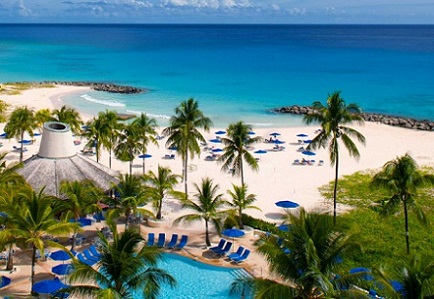
CU Blog - War on Stupidity - Photo 3For the Caribbean to wage a successful war against stupidity, communities should make “Stupid Criminals” videos available to the media for full dissemination; these can be a great crime deterrence.

But videos from where? Consider:

Governance

There is a lot of stupidity in the governing arena.

Consider the US, the most advanced democracy on the planet. The assumption is “one man one vote” and yet in the 2016 general election, one candidate for President had 3 million more votes than the other opponent, and yet lost.  By some measures, the Electoral College is considered “stupid”.

In the Caribbean, we have a lot of stupid rules and stupid iterations in our governance; consider this sample list:

——–

The movement behind the Go Lean book wants to help reform and transform the Caribbean. We see the defects; we see the stupidity. We know how to overcome the stupidity. There is an implied Social Contract in every expression of governance everywhere. Technocratic efficiency is embedded in the implied CU Social Contract. The Go Lean book defines (Page 170) the Social Contract as follows:

“Citizens surrender some of their freedoms and submit to the authority of the State in exchange for protection of remaining natural and legal rights”.

The CU Social Contract, as specified in the Go Lean book, specifies that governments should serve the people as efficiently as possible. So then, how can we employ more efficiencies?

The Go Lean/CU roadmap seeks to deploy the technocratic efficiency by embracing the latest project management methodologies and best practices. In fact, the roadmap calls for the establishment of a Project Management Office in every Cabinet Office for the CU Trade Federation.

Further, the Go Lean/CU roadmap employs a tactic of a “Separation-of-Powers between CU federal agencies and Caribbean member-state governments”; so the limitations of national laws in a member-state does not have to override the CU. The CU constitution would apply to the installation of Exclusive Economic Zones (EEZ) and Self-Governing Entities (SGE) that operate in controlled bordered territories like campuses, industrial parks, research labs and industrial plants. Lastly, there is the power of “peer pressure” where progress by one CU member-state would incline others to follow suit. In total, the Go Lean/CU roadmap will employ strategies, tactics and implementations to impact its prime directives; identified with the following 3 statements:

  • Optimization of the economic engines in order to grow the regional economy to $800 Billion & create 2.2 million new jobs.
  • Establishment of a security apparatus to ensure public safety assurances and protect the region’s economic engines.
  • Improvement of Caribbean governance to support these engines.

The Go Lean roadmap seeks to “Wage War against Stupidity” by optimizing the entire Caribbean economic/security/governance eco-system with the adoption of best practices. This vision is defined early in the book (Page 12) in the following pronouncements in the Declaration of Interdependence:

xi. Whereas all men are entitled to the benefits of good governance in a free society, “new guards” must be enacted to dissuade the emergence of incompetence, corruption, nepotism and cronyism at the peril of the people’s best interest. The Federation must guarantee the executions of a social contract between government and the governed.

xii. Whereas the legacy in recent times in individual states may be that of ineffectual governance with no redress to higher authority, the accedence of this Federation will ensure accountability and escalation of the human and civil rights of the people for good governance, justice assurances, due process and the rule of law. As such, any threats of a “failed state” status for any member state must enact emergency measures on behalf of the Federation to protect the human, civil and property rights of the citizens, residents, allies, trading partners, and visitors of the affected member state and the Federation as a whole.

The Go Lean book posits that inefficient Caribbean communities can be reformed and transformed if they adopt the community ethos, strategies, tactics, implementations and advocacies as depicted in the Go Lean book; consider this sample:

Community Ethos – Economic Systems Influence Choices & Incentives Page 21
Community Ethos – People Respond to Incentives Page 21
Community Ethos – Lean Operations Page 24
Community Ethos – Ways to Impact Turn-Around Page 33
Strategy – Mission – Foster Local Economic Engines to Diversify the Economy Page 45
Tactical – Fostering a Technocracy Page 64
Tactical – Separation of Powers – Self-Governing Entities Page 80
Implementation – Steps to Implement Self-Governing Entities Page 105
Implementation – Ways to Deliver – Case Study on Project Management Offices (PMO) Page 109
Planning – Ways to Make the Caribbean Better Page 131
Advocacy – Ways to Measure Progress – Case Study on Six Sigma Methodology Page 147
Advocacy – Ways to Grow the Economy Page 151
Advocacy – Ways to Create Jobs Page 152
Advocacy – Ways to Better Manage the Social Contract Page 170
Advocacy – Ways to Improve Communications Page 186
Advocacy – Ways to Impact Urban Living Page 234
Advocacy – Ways to Impact Rural Living Page 235

The Caribbean can succeed in our efforts to improve our regional efficiencies. Consider this sample of previous blog-commentaries that delve into aspects of transformation in the Caribbean region:

https://goleancaribbean.com/blog/?p=10043 Integration Plan for Greater Caribbean Prosperity
https://goleancaribbean.com/blog/?p=9595 Vision and Values for a ‘New’ Caribbean
https://goleancaribbean.com/blog/?p=7989 Transformations: Money Matters – ‘Getting over’ with ‘free money’
https://goleancaribbean.com/blog/?p=7646 Going from ‘Good to Great’
https://goleancaribbean.com/blog/?p=7628 ‘A Change Is Gonna Come’
https://goleancaribbean.com/blog/?p=6993 Forging Change: ‘Something to Lose’
https://goleancaribbean.com/blog/?p=3915 ‘Change the way you see the world; you change the world you see’
https://goleancaribbean.com/blog/?p=1596 Transforming to where we can “Prosper where Planted”
https://goleancaribbean.com/blog/?p=623 ‘Only at the precipice, do they change’

The vision for a new Caribbean is one that has successfully ‘waged the war on stupidity’. This is easier said than done, but we have seen it (and done it) in other societies with measurable success, and we are ready, willing and able to succeed here at home.

Deploying a technocracy is how the Go Lean/CU roadmap wages a successful war on stupidity. Technocratic executions include the “arts and sciences” of project management and Quality Assurance (QA) deliveries. As related in the Go Lean book (Page 147):

… one QA methodology – Six Sigma follows a methodology, aimed at improving existing business processes – uses a set of quality management methods, including statistical methods, and creates a special infrastructure of people within the organization (Champions, Black Belts, Green Belts, Orange Belts, etc.) who are experts in these very complex methods. With Six Sigma the maturity of a delivery process can be described by a sigma rating indicating its yield or the percentage of defect-free deliveries it creates. A six sigma process is one in which 99.9999998% of products manufactured/services delivered are statistically expected to be free of defects (3.4 defects per million).

This is heavy-lifting, but ‘Yes, we can … do better‘.

We can work towards making our region a better homeland to live, work and play. We urge everyone in the Caribbean to lean-in to this roadmap for change and optimization. We do not have to do as stupid does. 🙂

Download the book Go Lean … Caribbean – now!
 

Share this post:
, ,

Waging a Successful War on Orthodoxy

Go Lean Commentary

What is the formula for having/being a great society?

There is no doubt the societal engines of economics, security and governance must be optimized. But history has proven that these don’t just happen; there must be a concerted effort by stakeholders in society to make their community great. Yes, it takes “blood, sweat and tears”, but we find that there must be something else first, the right community attitude. The book Go Lean … Caribbean describes this attitude as community ethos …

… the fundamental character or spirit of a culture; the underlying sentiment that informs the beliefs, customs, or practices of a group or society; the dominant assumptions of a people or period.

There are good ethos and bad ethos (defects). The Caribbean member-states are not known as great societies, despite having the greatest “address on the planet” in terms of terrain, fauna/flora, hospitality, festivities, food, rum and cigars. This is because our community attitudes or ethos … suck!

We all know people that are beautiful on the outside, but ugly on the inside. See a sample in this VIDEO clip here from a recent movie.

VIDEO – Shallow Hal (1/5) Movie CLIP – Dancing With the Nasties (2001) – https://youtu.be/K4j25DUQLgE

Published on Sep 8, 2015 – Movie: Shallow Hal, a feature about “Inner Beauty”/”Inner Ugly”. See more movie clips: http://j.mp/1POlWqm
Following the advice of his dying father, Hal dates only women who are physically beautiful. One day, however, he runs into self-help guru Tony Robbins, who hypnotizes him into recognizing only the inner beauty of women. Hal thereafter meets Rosemary, a grossly obese woman whom only he can see as a vision of loveliness. But will their relationship survive when Hal’s equally shallow friend undoes the hypnosis? Written by “Anonymous”

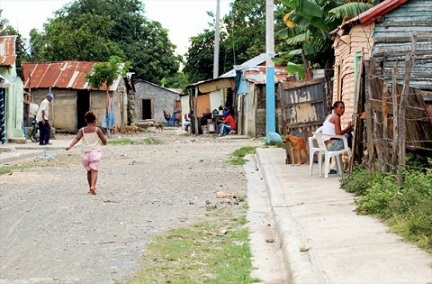
The Caribbean has “outer beauty” and  “inner ugly”. See Photos here:

CU Blog - War on Orthodoxy - Photo 1CU Blog - War on Orthodoxy - Photo 1b

CU Blog - War on Orthodoxy - Photo 2CU Blog - War on Orthodoxy - Photo 2b

CU Blog - War on Orthodoxy - Photo 3CU Blog - War on Orthodoxy - Photo 3b

Identifying the Caribbean ugly – societal defects – is an important step in reforming and transforming the regional society. There are a number of defects to consider; this is commentary 1 of 4 from the movement behind the Go Lean book on the subject of Caribbean defects. So how do we move our region from the deficient-defective status quo to our targeted destination: the undisputed “greatest address on the planet”? By waging war on our defects. All of these commentaries detail that effort, for the following defects:

  1.   Waging a Successful War on Orthodoxy
  2.   Waging a Successful War on Stupidity
  3.   Waging a Successful War on Rent
  4.   Waging a Successful War on ‘Terrorism’

These  commentaries draw reference to the Go Lean book, as it details the quest to transform the Caribbean; it features a how-to guide and roadmap for elevating the region’s societal engines (economic, security and governance).

What is ‘Orthodoxy’ and why is it important to “War” against it?

The simple definition is: a belief or a way of thinking that is accepted as true or correct. The more formal definition is defined as follows:

or·tho·dox·y
(noun)

1. authorized or generally accepted theory, doctrine, or practice.

synonyms: doctrine, belief, conviction, creed, dogma, credo, theory, tenet, teaching
“Christian orthodoxies”

2. the whole community of Orthodox Jews or Orthodox Christians.

In everyday-speak, “do what you have always done; get what you always got”.

Is orthodoxy a force for good in modern society … in the Caribbean? Despite the above definitions relating to religion and doctrine, the unfortunate observation is:

“No, orthodoxy is not a force for moral good”.

The reference to Caribbean orthodoxy is not limited to religion; there are other defects as well; for example, there is the whole case study of colonialism:

Colonialism refers to the establishment of a colony in one territory by a political power from another territory; [particularly from Europe], and the subsequent maintenance, expansion, and exploitation of that colony. The term is also used to describe a set of unequal relationships between the European colonial power (British, Denmark, Dutch, French, Portugal and Spain) and the colony and often between the colonists and the indigenous peoples. The European colonies in the Caribbean also featured the practice of slavery of an imported African population.

The European colonial period was the era from the 16th century to the mid-20th century when several European powers established colonies in Asia, Africa, and the Americas. At first the countries followed a policy of mercantilism, designed to strengthen the home economy at the expense of rivals, so the colonies were usually allowed to trade only with the mother country. By the mid-19th century, however, many empires gave up mercantilism and trade restrictions and introduced the principle of free trade, with few restrictions or tariffs.

The book Go Lean…Caribbean details (Page 307) a lot of the history of the European colonial movement in the Caribbean. Some territories changed hands from one European power to another (again and again); consider the island of Trinidad got their independence from the British, but the Spanish name of “Trinidad” (English equivalent of Trinity), extols the Spanish legacy. (The US Virgin Islands have a city named Christiansted, reflecting its Danish legacy). In fact, the 30 different member-states in Caribbean region feature 5 different European colonial legacies and 4 different languages. (18 Caribbean member-states are part of the British Commonwealth).

The Go Lean book serves as a roadmap for the introduction and implementation of the Caribbean Union Trade Federation (CU). The CU is designed to be a technocratic intergovernmental entity that sheds the orthodoxy of European colonialism. The goal is to reboot and optimize the region’s economic, security and governing engines.

How much of this European orthodoxy remain?

Plenty…

… this despite the fact that many of the former European powers have discontinued much of their orthodox practices. Consider these following examples in the Caribbean region:

  • Patriarchy – Men “must” lead … at the peril of women; assigning more status and privileges to men; this effectuates repression of women and girls.
  • Homosexual Persecution – Regulating the private affairs against homosexuality – i.e. British Buggery – has now been defined as a human rights violation.
  • Domestic violence toleration
  • Racial Prejudice & Dissension – The justification of African Slave Trade in the New World was religious expansionism.
  • School uniforms for youth classification; girls must wear skits or dresses
  • Nurses in clinics/hospitals must wear formal dresses and stockings
  • Lawyers/Judges must wear wigs
  • Supreme Court (highest) authority remaining in Europe
  • Upper Chamber of Legislature a body of entitlement only
  • Titles – Right Honorable, Lord, Your Eminence…
  • Mercantilism –  all trade must go through colonial masters; services (i.e. postal mail) and telecommunications continue this routing.
  • Carnival festivities banned for Sundays

The results of this orthodoxy on our society is dire and desperate: we are near Failed-State status!

Too much?!?!  Too radical an assessment? Think again, we have such a high societal abandonment rate that it is plausible to assign any descriptor synonymous with “failing”.

A mission of the Go Lean/CU roadmap is to mitigate Failed-State indices, and reverse the propensity for “human flight”. The book accepts the premise that many people flee the Caribbean region in search of refuge from the region’s strict orthodoxy. The book explains that there are two reasons why people flee their beloved homelands: “Push” and “Pull” factors. These factors highlight reasons that people want to flee “home” and seek “refuge” in foreign countries. “Refuge” is an appropriate word; because of societal defects, or orthodoxy; many from the Caribbean must leave as refugees – think LGBTDisabilityDomestic-abuseMedically-challenged – for their life, liberty and pursuit of happiness. On the other hand, the lure of a more prosperous life in foreign countries, (US, Canada and Europe) drive the “pull” side of the equation; these ones “pulled” are to be considered economic refugees.

What alternative is there to orthodoxy?

Secularism!

This commentary is NOT an attack on Christianity. A Christian character is preferred for the individual; but a “Christian nation”, not so much. This harmonizes with the Bible’s decree itself. Jesus Christ said:

“My kingdom is no part of the world”. – John 18:36

To answer the earlier question: why is it important to “Wage War” against orthodoxy? Religious orthodoxy is responsible for a lot of harm in the world, and in the Caribbean. The Go Lean movement (book and blogs) have identified the foregoing defects, many bad values, attitudes and community ethos. The Caribbean region needs to desist and make amends of these practices. We need to pursue an alternative ethos, the Greater Good. The book defines this (Page 37) as follows:

“It is the greatest good to the greatest number of people which is the measure of right and wrong”. –  Jeremy Bentham (1748-1832)

The Go Lean book (Page 20) and movement advocates the community ethos of the Greater Good for all of the Caribbean. The movement wants to help reform and transform the Caribbean. We see the defects; we recognize that status quo, including the root causes and orthodoxy of many of our influences; we perceive the harmful effects. Still, we do not want to ban religion; we simply want a clear “Separation of Church and State”, because we have so many churches and so many States in the Caribbean. We must not favor one over another.

A “Separation of Church and State” is the standard in the advanced democracies; this is now embedded in the implied Social Contract. The Go Lean book defines (Page 170) the Social Contract as follows:

“Citizens surrender some of their freedoms and submit to the authority of the State in exchange for protection of remaining natural and legal rights”.

According to the foregoing orthodoxy list, this Social Contract is not the norm in the Caribbean. The Caribbean Social Contract should specify that governments must protect their citizens; that human rights are assumed and that there is a religious neutrality.

The Go Lean/CU roadmap employs a tactic of a “Separation-of-Powers between CU federal agencies and Caribbean member-state governments”; so the limitations of national laws in a member-state does not have to override the CU. The CU constitution would apply to the installations of Exclusive Economic Zones (EEZ) and Self-Governing Entities (SGE) that operate in controlled bordered territories like campuses, industrial parks, research labs and industrial plants. There is also the power of “peer pressure”; one Caribbean state making positive progress, inclines the others to follow suit.

This CU/Go Lean mission is to elevate society for Caribbean people in the Caribbean. There is the need to monitor the enforcement of human rights and stand “on guard” against movements towards Failed-State status. The Go Lean roadmap calls for the CU to assume that role. Using cutting edge delivery of best practices, the CU will employ strategies, tactics and implementations to impact its prime directives; identified with the following 3 statements:

  • Optimization of the economic engines in order to grow the regional economy to $800 Billion & create 2.2 million new jobs.
  • Establishment of a security apparatus to ensure public safety assurances and protect the region’s economic engines.
  • Improvement of Caribbean governance to support these engines.

The Go Lean roadmap seeks to optimize the entire Caribbean economic/security/governance eco-system. This vision is defined early in the book (Page 12) in the following pronouncements in the Declaration of Interdependence:

xi. Whereas all men are entitled to the benefits of good governance in a free society, “new guards” must be enacted to dissuade the emergence of incompetence, corruption, nepotism and cronyism at the peril of the people’s best interest. The Federation must guarantee the executions of a social contract between government and the governed.

xii. Whereas the legacy in recent times in individual states may be that of ineffectual governance with no redress to higher authority, the accedence of this Federation will ensure accountability and escalation of the human and civil rights of the people for good governance, justice assurances, due process and the rule of law. As such, any threats of a “failed state” status for any member state must enact emergency measures on behalf of the Federation to protect the human, civil and property rights of the citizens, residents, allies, trading partners, and visitors of the affected member state and the Federation as a whole.

The Go Lean book posits that failing Caribbean communities can be rescued, that if “we do what we have always done, we get what we have always got”. Therefore Caribbean communities must adopt different community ethos, plus the executions of key strategies, tactics, implementations and advocacies to bring about change, empowerment and turn-around . The following is a sample from the Go Lean book:

Community Ethos – Economic Principle – Economic Systems Influence Choices & Incentives Page 21
Community Ethos – Economic Principle – Voluntary Trade Creates Wealth Page 21
Community Ethos – Economic Systems Influence Choices & Incentives Page 21
Community Ethos – People Respond to Incentives Page 21
Community Ethos – Consequences of Choices Lie in the Future Page 21
Community Ethos – Ways to Help Entrepreneurship Page 28
Community Ethos – Ways to Impact Turn-Around Page 33
Community Ethos – Ways to Manage Reconciliations Page 34
Community Ethos – Ways to Promote Happiness Page 36
Community Ethos – Ways to Impact the Greater Good Page 37
Strategy – Mission – Foster Local Economic Engines to Diversify the Economy Page 45
Strategy – Mission – Keep the next generation at home; Repatriate Diaspora Page 46
Tactical – Fostering a Technocracy Page 64
Tactical – Tactics to Forge an $800 Billion Economy – High Multiplier Industries Page 70
Tactical – Separation of Powers – Meteorological and Geological Service Page 79
Tactical – Separation of Powers – Self-Governing Entities Page 80
Implementation – Start-up Benefits from the EEZ Page 104
Implementation – Steps to Implement Self-Governing Entities Page 105
Planning – Big Ideas – Virtual “Turnpike” Operations to Ensure Continued Relevance Page 127
Planning – Ways to Make the Caribbean Better Page 131
Planning – Ways to Improve Image Page 133
Planning – Ways to Improve Failed-State Indices Page 134
Advocacy – Ways to Grow the Economy Page 151
Advocacy – Ways to Create Jobs Page 152
Advocacy – Ways to Better Manage the Social Contract Page 170
Advocacy – Ways to Impact Justice Page 177
Advocacy – Ways to Improve Communications Page 186
Advocacy – Ways to Impact Hollywood – Convey Messaging Page 203
Advocacy – Ways to Preserve Caribbean Heritage Page 218
Appendix – Failed State Indicators & Definitions Page 271

The Caribbean can succeed in our efforts to improve our community ethos. Consider this sample of previous blog-commentaries that delve into aspects of forging change in the Caribbean community ethos:

https://goleancaribbean.com/blog/?p=10043 Integration Plan for Greater Caribbean Prosperity
https://goleancaribbean.com/blog/?p=9595 Vision and Values for a ‘New’ Caribbean
https://goleancaribbean.com/blog/?p=9428 Forging Change: Herd Mentality
https://goleancaribbean.com/blog/?p=8186 Respect for Minorities: ‘All for One’
https://goleancaribbean.com/blog/?p=7646 Going from ‘Good to Great’
https://goleancaribbean.com/blog/?p=7628 ‘A Change Is Gonna Come’
https://goleancaribbean.com/blog/?p=7056 ‘Necessity is the Mother of Invention’
https://goleancaribbean.com/blog/?p=5695 Repenting, Forgiving and Reconciling the Past
https://goleancaribbean.com/blog/?p=3915 ‘Change the way you see the world; you change the world you see’
https://goleancaribbean.com/blog/?p=3780 Forging an Ethos of ‘Blood, Sweat and Tears’
https://goleancaribbean.com/blog/?p=623 ‘Only at the precipice, do they change’

The vision for a new Caribbean is one that has successfully ‘waged the war on orthodoxy’. This means a religiously neutral society that respects and protects the human rights for all stakeholders. This is easy to say, hard to do, but we have seen it successfully deployed in other societies, as in the same European communities that once colonized our Caribbean region. We need to follow their lead … again. We need to adjust our community ethos to reflect 2017, not 1867.

Yes, we can … do this heavy-lifting. We can work towards making our region a better homeland to live, work and play. We urge everyone in the Caribbean to lean-in to this roadmap for change and optimization. We do not have to “always do what we have always done”. We can do … and be better. 🙂

Download the book Go Lean … Caribbean – now!
 

Share this post:
, ,
[Top]

Alibaba Cloud stretches global reach with four new facilities

Go Lean Commentary

For hundreds of years, empires expanded their reach by establishing colonies on foreign shores. The book Go Lean … Caribbean chronicles (Page 307) the pushing-and-shoving between European powers in the development of the Caribbean. But in 1960, after the atrocities of World War II were inventoried – credited to the complexities of colonialism in World War I and the period between the wars, the United Nations made a declaration that colonialism needed to be disbanded:

cu-blog-alibaba-cloud-stretches-global-reach-with-four-new-facilities-photo-4The “Declaration on the Granting of Independence to Colonial Countries and Peoples” was adopted by the UN General Assembly by resolution on 14 December 1960. Though some countries had already started their independence process (i.e. Ireland, Australia, India, Pakistan, Indonesia, etc.), this resolution established the standard for all dependent countries – even small ones – to become autonomous. – Source: UN-Wikisource

This is now the 21st Century. While colonialism is not dead … entirely, there is a new brand of colonies for trade. Colonies have gone from the physical world to the virtual world, referring to cyber-space or online communities. Chinese trading market-place Alibaba is providing us a model of colonizing their digital footprint in foreign countries. See the story here of Alibaba’s deployment of 4 new data centers in a potpourri of countries:

BEIJING (Reuters) – Alibaba Cloud plans to open four new data facilities outside China, the cloud unit of Alibaba Holdings Ltd said on Monday, as it seeks to grab global market share from leading players Amazon.com Inc and Microsoft.

cu-blog-alibaba-cloud-stretches-global-reach-with-four-new-facilities-photo-1

The data facilities in Dubai, Germany, Japan and Australia will extend the reach of China’s leading cloud computing service provider to every major continent, and marks the latest step in the unit’s $1 billion infrastructure investment drive.

Also known as Aliyun, the unit has flourished domestically thanks to Beijing’s strategic emphasis on building homegrown cloud technology, while foreign firms have grappled with stringent licensing restrictions in the country.

However, it accounts for a much smaller slice of the global market for cloud computing, defined as the storage of data on remote networks rather than local servers, which is expected to reach $135 billion by 2020, according to research firm Canalys.

Alibaba Cloud is forecast to take 7.8 percent of that market, while leading players Amazon.com Inc, Microsoft, International Business Machines Corp and Alphabet Inc are expected to account for 69.1 percent.

Yu Sicheng, general manager of Alibaba Cloud’s international business, said the unit’s strength in China was a significant advantage and a lynchpin in the company’s globalization plans.

“We have the U.S., Europe plus China, which is quite difficult,” he told Reuters in an interview.

The new additions bring Alibaba Cloud’s total number of foreign cloud facilities to eight, surpassing the six within China, though the majority of the company’s data volume remains squarely within China.

It will launch the data facilities through partnerships with Vodafone in Europe, Softbank Group Corp in Japan and YVOLV in Dubai, a joint venture between Alibaba Cloud and Meraas Holdings LLC.

Yu, however, declined to comment on when the unit will likely post a profit, even as it has seen six quarters of consecutive triple-digit growth, to become Alibaba’s fastest growing business sector.

“Our focus is to keep expanding our market leadership and presence and this is our priority for now,” he said.

(Corrects title of Alibaba Cloud executive Yu Sicheng)
(Reporting by Catherine Cadell; Editing by Stephen Coates)
Source: Yahoo News Source. Posted 11-21-2016; retrieved 11-28-2016 from: https://www.yahoo.com/news/alibaba-cloud-stretches-global-reach-four-facilities-061614009–finance.html?ref=gs

This commentary takes another look at colonialism; there is the need for a cyber footprint in countries where “you” may want to conduct online business – this is a feature of globalization. In the effort to deploy the Caribbean Postal Union (CPU)  as a logistics solution for delivering modern commerce, this commentary takes another look at the Alibaba Group; a company that had previously been identified as an excellent role model for the CPU. (American company Amazon was also identified as a fitting role model).

The book Go Lean…Caribbean serves as a roadmap for the introduction and implementation of the Caribbean Union Trade Federation (CU) and the CPU. The book describes a business model for the CPU in facilitating electronic commerce in the region. But it presents this business model as heavy-lifting; there is the need for data centers to power the cyber-functions and applications for online & mobile commerce. The Go Lean roadmap describes the need for 6 data centers strategically placed across the Caribbean region; we want to colonize our own region, following a similar business model to Alibaba’s plans to deploy its colonies throughout the world – in these 4 foreign countries.

More dynamic data centers deployed in a foreign country would mean more business-to-business commerce, including features like web portals, online retail, mobile functionality, payment services, a shopping search engine and data-centric cloud computing services.

cu-blog-alibaba-cloud-stretches-global-reach-with-four-new-facilities-photo-3

cu-blog-alibaba-cloud-stretches-global-reach-with-four-new-facilities-photo-2

As detailed in the previous blog-commentary, Alibaba is not just a China focused company. They also have a Caribbean footprint. In September 2014, the company held an Initial Public Offering (IPO) in the United States on the New York Stock Exchange (NYSE) – Ticker symbol “BABA.N” – looking to raise US$25 billion. The NYSE corporate entity is actually a shell corporation based in the Cayman Islands. So Alibaba extending their global business operations is actually benefiting a Caribbean corporate citizen.

The Go Lean roadmap (Page 106) presented an advocacy that described the trends in data center design and functionality; they are needed for the Cyber-Caribbean strategy. A trend depicted in the book is the Case Study of Hydrogen Fuel Cells as a reliable back-up power-battery source. This Case Study sets the stage for understanding Data Center trends:

Case Study – Bottom Line on Hydrogen Fuel Cells: A fuel cell is a device that converts the chemical energy from a fuel into electricity thru a chemical reaction with oxygen or another oxidizing agent. Hydrogen is the most common fuel. Hydrogen is not in and of itself an energy source, because it is not naturally occurring as a fuel. It is, however widely regarded as an ideal energy storage medium, due to the ease with which electric power can convert water into its hydrogen and oxygen components through electrolysis. Hydrogen technologies relate to the production and use of hydrogen. Hydrogen technologies are applicable for many uses. Some hydrogen technologies are carbon neutral and could have a role in preventing climate change and a possible future hydrogen economy. Fuel cells are different from batteries in that they require a constant source of fuel and oxygen/air to sustain the chemical reaction, they can however produce electricity continually for as long as these inputs are supplied.

There are a handful of US data center facilities that are powered either partially or fully by hydrogen fuel cells; see Appendix IG on Page 285.

The advocacy, branded 10 Trends in Implementing Data Centers, is detailed here:

1. Lean-in for the Caribbean Single Market & Economy (CSME) initiative: Caribbean Union Trade Federation. The CU treaty unifies the Caribbean region into one single market of 42 million people across 30 member-states, thereby empowering the economic engines in and on behalf of the region. The CU embraces the cutting, “bleeding” edge concepts, systems and methodologies for data centers and computer server farms, as in high density computing, facilitating the maximum computing power with the least about of space and power. The prerequisite for any serious data center deployment is power…stable, reliable electricity, with primary, secondary and tertiary solutions. The CU roadmap calls for deployment of a regional power grid, with above ground, underground & underwater cabling. Though data centers must launch now, power costs will be expected to decline with the grid; hydrogen fuel cells will fill the void..
2. Fiber-Optics / Pipeline Optical fibers are widely used in fiber-optic communications, which permits transmission over longer distances and at higher bandwidths (data rates) than other forms of communication. Fibers are used instead of metal wires because signals travel along them with less loss and are also immune to electromagnetic interference. The transparent fiber are made of high quality extruded glass, silica or plastic. The CU as a new Federation can apply a leap-frog approach to implement communication networks without having to contend with older methods or investments. Further the CU will embrace the strategy of installing elaborate pipelines thru out the region, enabling fiber-optics to traverse the network.
3. IP Convergence Internet Protocol (IP) is now ubiquitous for data, voice, and video communications – they all operate on the same type of fiber. This indicates that data centers also function as telecom hubs – central switching offices are now bygones.
4. Cloud Computing  The CU will embrace cloud computing for many operational systems, thereby requiring optimal continuous processing. The roadmap calls for citizens to interact with their federal government via web portals, kiosks or phone contact centers.
5. High Availability (HA) HA is a system design approach (hardware, software and networking) that ensures operational performance will be met, like parallel processing or mirroring. There are systems (i.e. hospitals, banking, electrical grid) that must maximize availability and minimize downtime. Recovery time or estimated time of repair is closely related to availability, optimizing the time to recover from planned or unplanned outages. A CU mission is to facilitate quick recoveries after hurricanes.
6. Colocation Data Centers A colocation center (colo, or coloc) is a type of data center where equipment space and bandwidth are available for rental to retail customers. Colocation facilities provide space, power, cooling, and physical security for the server, storage, and networking equipment of other firms—and connect them to a variety of telecommunications and network service providers—with a minimum of cost and complexity. Colocation has become a popular option for companies as it allows the company to focus its IT staff on the actual work being done, instead of the logistical. Significant benefits of scale (large power and mechanical systems) result in large colocation facilities, typically 50,000 to 100,000 square feet.
7. Caves as Data Centers There is a growing trend of building underground data bunkers. A market leader placed a coloc data center in a huge facility 220 feet underground in a limestone cave outside Pittsburgh-Pennsylvania. There are other limestone cave installations in places like Mammoth, Kentucky and Lenexa, Kansas. The advantage is cost savings, driven by cooling dynamics of an underground facility, where cooler temperature allows for saving money on air conditioning. The CU will identify limestone caverns, plentiful in the region, appropriate to construct data centers – the region needs 6 centers.
8. Storage Solutions – No need for humans Old data center models needed people to load/unload data storage devices (tapes, disk drives). Now with the low costs of storage, the CU can implement storage libraries for primary and back-up purposes. Plus with tools/techniques like Deep Store archive systems [51], it allows for cost-efficient solutions for data/records that are rarely retrieved.
9. Security Issues Modern data centers require minimal human interaction, therefore physical security tend to be very restrictive. In some firms, even the CEO is not allowed access. The CU will implement biometric systems like fingerprints and iris scanning.
10. Unified Command & Control The data center may be void of humans, but there is still the need for many professional analysis, programmers and engineers. These are normally stationed in command centers to facilitate monitoring and cyber-security functions.

Is a discussion of data center trends appropriate for a societal elevation plan for the Caribbean? Absolutely! How the world has changed! The Go Lean book posits that this technology-tinged eco-system is a winning strategy for creating jobs here in the 21st Century. The book explains that Internet & Communications Technologies (ICT) can serve as an equalizing element in competition with the rest of the world. The roadmap projects that 64,000 new jobs – 20,000 Direct & 44,000 Indirect – can be created with this strategy. This strategy is among the keys for elevating Caribbean society. In fact the prime directives of the roadmap is identified with the following 3 statements:

  • Optimization of the economic engines in order to grow the regional economy to $800 Billion & create 2.2 million new jobs.
  • Establishment of a security apparatus to protect the resultant economic engines.
  • Improve Caribbean governance to support these engines.

The foregoing article and the quotation from the Go Lean book depicts a vision of a new Caribbean industrial landscape. This vision was defined early in the book (Page 14) in the opening Declaration of Interdependence:

xxvi. Whereas the Caribbean region must have new jobs to empower the engines of the economy and create the income sources for prosperity, and encourage the next generation to forge their dreams right at home, the Federation must therefore foster the development of new industries, like that of ship-building, automobile manufacturing, prefabricated housing, frozen foods, pipelines, call centers, and the prison industrial complex. In addition, the Federation must invigorate the enterprises related to existing industries like tourism, fisheries and lotteries – impacting the region with more jobs.

xxvii. Whereas the region has endured a spectator status during the Industrial Revolution, we cannot stand on the sidelines of this new economy, the Information Revolution. Rather, the Federation must embrace all the tenets of Internet Communications Technology (ICT) to serve as an equalizing element in competition with the rest of the world. The Federation must bridge the digital divide and promote the community ethos that research/development is valuable and must be promoted and incentivized for adoption.

Beyond data centers, “where are the new jobs for the 21st Century”? This is a familiar question for the Go Lean movement (book and blogs). This question was examined in these previous blog-commentaries:

https://goleancaribbean.com/blog/?p=9751 Where the Jobs Are – Animation and Game Design
https://goleancaribbean.com/blog/?p=9203 Where the Jobs Are – Employer Models in the United States
https://goleancaribbean.com/blog/?p=6089 Where the Jobs Are – Futility of Minimum Wage
https://goleancaribbean.com/blog/?p=2857 Where the Jobs Are – Entrepreneurism in Junk
https://goleancaribbean.com/blog/?p=2126 Where the Jobs Are – Computers Reshaping Global Job Market
https://goleancaribbean.com/blog/?p=2003 Where the Jobs Are – One Scenario: Ship-breaking
https://goleancaribbean.com/blog/?p=1698 Where the Jobs Are – STEM Jobs Are Filling Slowly

ICT is a prominent feature of the Caribbean empowerment plan; creating a Caribbean Cloud is “Step One, Day One” in the Go Lean roadmap. This will facilitate electronic commerce and allow modern day colonies – data centers –  in foreign countries.

The Go Lean book details a series of community ethos, strategies, tactics, implementations and advocacies to foster the best practices for Data Centers in the Caribbean region:

Community Ethos – Economic Principles – Voluntary Trade Creates Wealth Page 21
Community Ethos – Economic Principles – The Consequence of Choice Lie in Future Page 21
Community Ethos – Job Multiplier Page 22
Community Ethos – Lean Operations Page 24
Community Ethos – Ways to Impact the Future Page 26
Community Ethos – Ways to Help Entrepreneurship – Incubators Page 28
Community Ethos – Promote Intellectual Property Page 29
Community Ethos – Ways to Bridge the Digital Divide – e-Government Services Page 31
Community Ethos – Ways to Improve Sharing – e-Government Scheme Page 35
Strategy – Mission – Embrace the Advances of Technology Page 46
Strategy – Competitors – Governments – Shared Systems –vs- Premise-based Page 51
Tactical – Fostering a Technocracy Page 64
Tactical – How to Grow the Economy to $800 Billion – Trade and Globalization Page 70
Tactical – Separation of Powers – Union Revenue Administration – e-Government for Revenue Systems Page 74
Implementation – Year 1 / Assemble Phase – Deploy Data Centers Page 96
Implementation – 10 Trends in Implementing Data Centers Page 106
Implementation – Ways to Deliver Page 109
Implementation – Ways to Impact Social Media Page 111
Implementation – Ways to Benefit from Globalization Page 119
Planning – Ways to Improve Trade – Electronic Commerce Page 128
Advocacy – Ways to Grow the Economy Page 151
Advocacy – Ways to Create Jobs Page 152
Ways to Foster Cooperatives – Co-located Data Centers for e-Government Page 176
Advocacy – Ways to Foster Technology – Incubators Strategy Page 197
Advocacy – Ways to Foster e-Commerce Page 198
Advocacy – Ways to Impact Main Street – e-Commerce as competition for Big-Box Page 201

This VIDEO here – Google’s Data Center – demonstrates a theme from the Go Lean book, that data center trends will influence the ICT eco-system; also see the VIDEO tour for Facebook and Microsoft in the Appendix below:

VIDEO – Inside a Google data center – https://youtu.be/XZmGGAbHqa0

Published on Dec 16, 2014 – Joe Kava, VP of Google’s Data Center Operations, gives a tour inside a Google data center, and shares details about the security, sustainability and the core architecture of Google’s infrastructure.

According to the foregoing article and VIDEOs, data centers are important business infrastructure for the new economy. As demonstrated by Alibaba’s example, these data centers are colonies in the virtual world. The CU/Go Lean plan is to foster and incubate such key industrial installations for the goal of elevating the region economic engines.

Now is the time for all of the Caribbean, the people and governing institutions, to lean-in for the changes in the book Go Lean … Caribbean. This is a Big Idea for the region, that of a Cyber Caribbean effort (Page 127), in which data centers play a major role. Welcome to 21st Century colonies. This is how we build a better future: a better place to live, work and play. 🙂

Download the book Go Lean … Caribbean – now!
————-

Appendix VIDEOs:

Facebook Data Center: https://www.youtube.com/watch?v=Y8Rgje94iI0
Microsoft Data Center: https://www.youtube.com/watch?v=0uRR72b_qvc


Share this post:
, , , , ,
[Top]

Bahamas Welcomes the New University

Go Lean Commentary

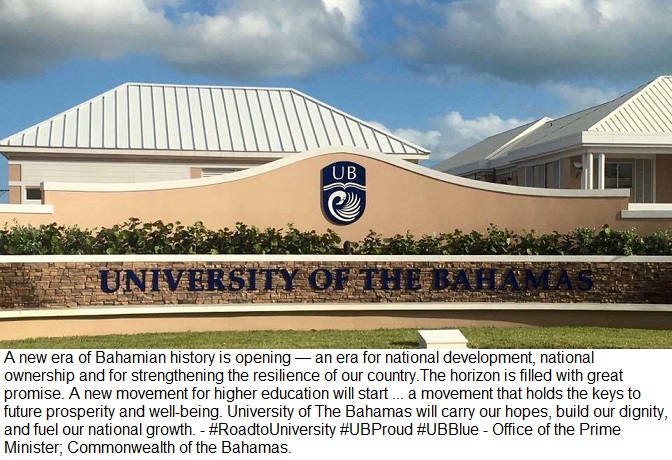
cu-blog-welcoming-the-new-university-photo-1

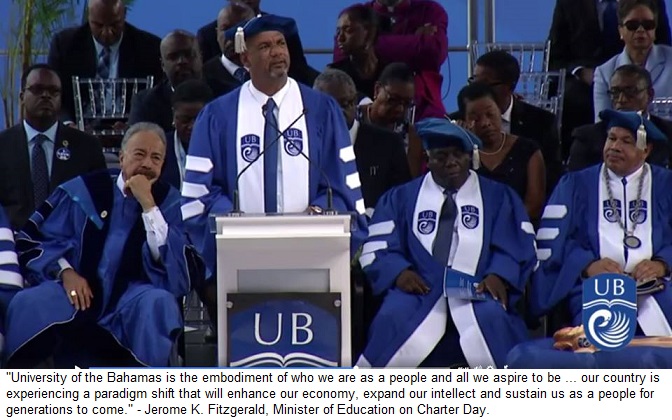
Dateline Thursday, November 10, 2016 – It’s a BIG moment for the Bahamas; its Charter Day; their College of the Bahamas (COB) has now graduated to the University of the Bahamas (UB). This is a B.H.A.G. (Big Hairy Audacious Goal)! Congratulations! We welcome this new University.

VIDEO – Bahamas Welcomes First University https://youtu.be/g7sxdmrj1bM

Published on Nov 10, 2016 – Evening Newscast from ZNS Television – Bahamas State-own TV and Radio Network – on Charter Day.

This B.H.A.G. was the plan “all the while”. In 2014 when COB published their 2025 Master Plan, this commentary chimed in. Our conclusion:

The institution was only reaching for the lamp-post. (The commentary preferred that COB “reached for the stars”).

We received feedback-criticism for that assessment. We heard specific responses like:

“Not Accurate! The Go Lean commentary ignored the real world constraints that COB must manage”.

This commentary is a response to that response.

After 2 years of reflection, it is our conclusion that the COB Master Plan 2025 was indeed a “good start”. The previous assessment was that the College-University Master Plan was deficient, that it did not “stretch” far enough to address the Agents of Change (globalization and technology) affecting the Caribbean and the educational needs of this island-nation. But now, after 2 years of “observing and reporting” on the effort to reform and transform failing communities, we have come to appreciate that some changes must be evolutionary as opposed to revolutionary. That 2014 blog was extremely insightful; it accurately described “what” was needed in the arena of tertiary education in the Bahamas (and other Caribbean member-states), but it too was deficient …

… it did not stress the “why”, “how”  and “when”. Let’s do that now; this is an update to that previous submission:

Why?

cu-blog-welcoming-the-new-university-photo-2

Answering all the questions of “why”, “how” and “when” is reflective of the comprehensiveness of the book Go Lean…Caribbean. The book serves as a roadmap for the introduction and implementation of the technocratic Caribbean Union Trade Federation (CU). This roadmap assesses that the Caribbean – Bahamas included – is in crisis.

Why a crisis?

There is a dire problem with societal abandonment. Even students are guilty of blame. Many times they leave their Caribbean homeland to matriculate abroad and never return. In general, the region’s abandonment rate among tertiary educated citizens is reported at 70%.

So there needs to be a viable alternative to studying abroad. There needs to be a good local educational institution. This is what was expected in the COB-UB Master Plan in 2014 and what is expected today. As the sole tertiary education institution in the Bahamas, it would be expected that a Master Plan would have better addressed this crisis. As this is bigger than just academics; this addresses all societal engines. The CU/Go Lean roadmap embeds concern for all these engines in its prime directives; identified with the following 3 statements:

  • Optimization of the economic engines in order to grow the regional economy to $800 Billion & create 2.2 million new jobs.
  • Establishment of a security apparatus to protect the resultant economic engines.
  • Improve Caribbean governance to support these engines.

This prime directive relates to universities as well. They can effect change in their community; see Appendix-VIDEO below. The Go Lean book posits that the Caribbean’s crisis is a “terrible thing to waste”. Therefore the roadmap seeks to change the entire eco-system of Caribbean education. This vision is defined early in the book (Page 13 & 14) in the following pronouncements in the Declaration of Interdependence:

xix. Whereas our legacy in recent times is one of societal abandonment, it is imperative that incentives and encouragement be put in place to first dissuade the human flight, and then entice and welcome the return of our Diaspora back to our shores…

xxi. Whereas the preparation of our labor force can foster opportunities and dictate economic progress for current and future generations, the Federation must ensure that educational and job training opportunities are fully optimized for all residents of all member-states, with no partiality towards any gender or ethnic group. The Federation must recognize and facilitate excellence in many different fields of endeavor, including sciences, languages, arts, music and sports. This responsibility should be executed without incurring the risks of further human flight, as has been the past history.

xxvii. Whereas the region has endured a spectator status during the Industrial Revolution, we cannot stand on the sidelines of this new economy, the Information Revolution. Rather, the Federation must embrace all the tenets of Internet Communications Technology (ICT) to serve as an equalizing element in competition with the rest of the world. The Federation must bridge the digital divide and promote the community ethos that research/development is valuable and must be promoted and incentivized for adoption.

Universities play an important role in cementing the societal fabric of their communities. In a previous blog-commentary, the American experience was detailed; the number one employers in each state were listed. In 16 of the 50 states, the largest employer was an entity within that State’s University System.  The following intelligence was gleaned:

  • The education eco-system is important for more than  just enrolled student bodies; whole communities are affected. Just consider the California example … indicative of all the other states where a University System is the largest employer: The University … system, which has campuses in Berkeley, Davis, Irvine, Los Angeles, Riverside, Merced, Santa Cruz, Santa Barbara, San Diego, and San Francisco, is the largest employer in the state. The university network also includes the UCLA Health System, which consists of 5 medical centers, and three national laboratories.
  • Jobs come from disruptive systems of commerce – Big-Box retailer Walmart has undermined the business models of the previous delivery solutions for food, clothing and shelter (home goods). They are now the largest employer in 19 states.

So … how and when?

How? – 10 Ways to Improve the University

What should have been featured in a Master Plan/roadmap for effectuating change in the tertiary education landscape for the Bahamas? The following community ethos, strategies, tactics and implementations from the Go Lean book (in the order of appearance in the book) depict how to improve a Caribbean university eco-system for the educational charter:

Ways to Impact the Future – Forward focus, not legacy; Future success is not guaranteed; must be fostered Page 26
Ways to Foster Genius – Identify them early and foster/protect them through out their development Page 27
Ways to Impact Research & Development – Size does not matter; commitment does Page 30
Steps to Implement Self-Governing Entities – Invite other universities for Healthcare and specialty Campuses Page 105
Ways to Improve Education – Manage Brain Drain as an enemy; with a comprehensive Battle Plan Page 159
Ways to Impact Student Loans –  People cannot repay if they are not around; conditionalize all grants Page 160
Ways to Empower Immigration – Import the skills (teachers and students) we do not have Page 174
Ways to Impact Public Works – Need cutting edge campuses to attract and retain stakeholders Page 175
Ways to Improve Libraries – Outreach into neighborhoods; bring the learning to the people Page 187
Ways to Foster Technology – e-Learning makes for virtual campuses; keep rural people at home Page 197

cu-blog-welcoming-the-new-university-photo-3

How? – 10 Ways the University Can Impact the Community

As conveyed in the Appendix VIDEO below, universities usually have an effect on their communities above-and-beyond academics. There is the concept of the Company town, or in this case University town, in which one or more universities may be the primary economic driver. The US has many such towns, think Gainesville-Florida, Tallahassee-Florida, Athens-Georgia, Lincoln-Nebraska, Ann Arbor-Michigan and others.

How can an education institution in the Caribbean region execute a plan to impact the economic, security and governing engine of its community?

The Go Lean book details these community ethos, strategies, tactics, implementations and advocacies to foster peripheral benefits for all who live, work and play in the Caribbean region. See sample here of peripheral-auxiliary benefits from the Go Lean book (in the order of appearance in the book):

Ways to Help Entrepreneurship – Models abound where Incubators started on University Campuses Page 28
Ways to Promote Intellectual Property – Respect for Other People’s IP must start with the Intellectuals Page 29
Ways to Bridge the Digital Divide – Campuses should lead this revolution Page 31
Ways to Impact Social Media – .EDU (Education) websites should dominate traffic Page 111
Ways to Foster International Aid – Need Visiting Faculty and Exchange Students Page 115
Ways to Benefit from Globalization – Need foreign students here, not just local students going abroad Page 187
Ways to Impact Housing – Model of Ann Arbor shows Mixed-Use Developments embedded in “Cityscape” Page 160
Ways to Improve Communications – Common strategy for Campus “Public” Radio and TV Page 185
Ways to Promote Fairgrounds – CU built Stadia/arenas; Intercollegiate Sports only missing landlords Page 194
Ways to Improve Sports – Foster an Intercollegiate Sports eco-system in the region with other colleges Page 229

How? – Models

Education initiatives are a familiar feature of the Go Lean movement. Consider the many previous blog-commentaries relating lessons-learned (good and bad) and models on education reform from other communities. See the sample here:

https://goleancaribbean.com/blog/?p=8669 Detroit makes Community College free
https://goleancaribbean.com/blog/?p=7806 Skipping School to become Tech Giants
https://goleancaribbean.com/blog/?p=6269 Education & Economics: Welcome Mr. President
https://goleancaribbean.com/blog/?p=5482 For-Profit Education: Plenty of Profit; Little Education
https://goleancaribbean.com/blog/?p=4487 FAMU – Finally, A Model for Facilitating Economic Opportunity
https://goleancaribbean.com/blog/?p=2183 Lessons Learned from Textbook Price-gouging
https://goleancaribbean.com/blog/?p=2171 Sports Role Model – Turn On the SEC Network
https://goleancaribbean.com/blog/?p=709 Student debt holds back many would-be home buyers

When?

Now is the time for all of the Caribbean, the people and governing institutions, to lean-in for the empowerments described in the book Go Lean … Caribbean. This Big Deal for the region leads first with economic empowerments, including education solutions.

Wake up all you teachers
Time to teach a new way
Maybe then they’ll listen
To what you have to say.
Song: Wake Up Everybody; performed by Harold Melvin and the Blue Notes (1975)
Source: Retrieved November 2, 2016 from: http://www.metrolyrics.com/wake-up-everybody-lyrics-harold-melvin-the-blue-notes.html

This Go Lean book is not the COB/UB Master Plan; the institution must address their own planning, but ultimately the requirements detailed in the book are what the Caribbean are relevant for the region: better education options, better jobs, better entrepreneurial opportunities, better economic growth and better prospects to live, work and play in the Caribbean. The Bahamas in particular, and the Caribbean region as a whole, needs the deliveries of this roadmap from Go Lean … Caribbean.

This roadmap is conceivable, believable and achievable. Let’s all lean-in.

Let’s all lean-in now!

Congratulations … and welcome to the new University of the Bahamas. Welcome to the fight!

🙂

Download the book Go Lean … Caribbean – now!
———-

Appendix VIDEORodney Smith – Address at the Bahamas Business Outlookhttps://vimeo.com/118522660

Rodney Smith – Address at The Bahamas Business Outlook Jan. 29th, 2015 from University of The Bahamas on Vimeo.

Jan. 29th, 2015 – University President Rodney Smith addresses the Bahamas Chamber of Commerce in preview of the new University of the Bahamas.

Share this post:
, ,
[Top]

Hurricane Categories – The Science

Go Lean Commentary

Category 5

… that term has become one of the most dreaded phases in modern times in the Western Hemisphere, and especially in the Caribbean.

A Category 5 Hurricane – with its maximum sustained winds in excess of 156 miles per hour – is the Sum of All of Our Fears and a Clear & Present Danger. (See the full list of their historicity in the Appendix below). The most powerful one on record featured 215 mph winds – Hurricane Patricia – was just recently in October 2015 off the coast of Mexico.

Hurricanes – tropical cyclones in the Atlantic Ocean and Eastern Pacific Ocean – are the exclusive brand for the Northern Hemisphere. Considering the rotation of the earth, the majority travel East to West, from Africa over to North America. That’s the majority; but the minority is nothing to ignore either.  These can start in the Caribbean Sea or the Gulf of Mexico and travel at will: north, south, east, or west.

Welcome to our Caribbean, the greatest address on the planet!

Hurricanes are our reality. A hurricane is a meteorological phenomena that cannot be ignored; its science is a marvel.

Hurricanes are scientifically measured by the Saffir–Simpson scale. This scale was developed in 1971 by civil engineer Herbert Saffir and meteorologist Robert Simpson, who at the time was director of the U.S. National Hurricane Center (NHC).[1] The scale was introduced to the general public in 1973,[2] and saw widespread use after a new Director Neil Frank replaced Mr. Simpson in 1974 at the helm of the NHC, as a tribute to Mr. Simpson.[3]

See full details on this hurricane scale here:

Title: Saffir–Simpson Scale
The Saffir–Simpson hurricane wind scale, formerly the Saffir–Simpson hurricane scale (SSHS), classifies hurricanes –Western Hemisphere tropical cyclones that exceed the intensities of tropical depressions, and tropical storms – into five categories distinguished by the intensities of their sustained winds. To be classified as a hurricane,  a tropical cyclone must have maximum sustained winds of:

  • 74–95 mph –  Category 1.

cu-blog-hurricane-categories-the-science-photo-1

  • 96–110 mph – Category 2.

cu-blog-hurricane-categories-the-science-photo-2

  • 111–129 mph – Category 3.

cu-blog-hurricane-categories-the-science-photo-3

  • 130–156 mph – Category 4.

cu-blog-hurricane-categories-the-science-photo-4

  • ≥ 157 mph – Category 5.

cu-blog-hurricane-categories-the-science-photo-5
So the highest classification in the scale, Category 5, is reserved for storms with winds exceeding 156 mph (70 m/s; 136 kn; 251 km/h). [There have been a number of these since 1924. See full list in the Appendix below].

The classifications can provide some indication of the potential damage and flooding a hurricane will cause upon landfall.

Officially, the Saffir–Simpson hurricane wind scale is used only to describe hurricanes forming in the Atlantic Ocean and northern Pacific Ocean east of the International Date Line. Other areas use different scales to label these storms, which are called “cyclones” or “typhoons“, depending on the area.

There is some criticism of the SSHS for not taking rain, storm surge, and other important factors into consideration, but SSHS defenders say that part of the goal of SSHS is to be straightforward and simple to understand.
Source: Wikipedia Online Reference – Retrieved October 7, 2016 from: https://en.wikipedia.org/wiki/Saffir%E2%80%93Simpson_scale

We are thankful to these two pioneering scientists, Mr. Saffir and Mr. Simpson; they lived full and impactful lives – R.I.P..

Mr. Simpson died on December 18, 2014 at age 102.

Mr. Saffir died on November 21, 2007 at age 90.

These scientists have given us the numbers 1 through 5 to indicate an extent of our misery. But misery is more than just a number. Misery is an experience; an unpleasant one. See here the VIDEO visually depicting damage along the Saffir-Simpson scale:

VIDEO – Why Hurricane Categories Make a Difference – https://youtu.be/lqfExHpvLRY

Published on Aug 8, 2013 – During a hurricane you usually hear meteorologists refer to its intensity by categories. If you don’t know the difference between a category 1 and a category 5 hurricane, The Weather Channel meteorologist Mark Elliot breaks it down for you.

Hurricanes are reminders that “Crap Happens“. They affect the everyday life for everyday people. This discussion is presented in conjunction with the book Go Lean … Caribbean. It addresses the challenges facing life in the Caribbean and then presents strategies, tactics and implementations for optimizing the regional community.

Hurricanes are a product of ‘Mother Nature’ – natural disasters – but communities can be more efficient and effective in mitigating the risks associated with these natural disasters (hurricanes, earthquakes, volcanoes, floods, forest fires, etc.). In addition, there are bacterial & viral pandemics. Lastly, there are industrial incidents (chemical & oil spills) and other man-made disasters: i.e. terrorism-related events.

The Go Lean book asserts that bad things (and bad actors), like hurricanes, will always emerge to disrupt the peace and harmony in communities. Crap Happens … therefore all Caribbean member-states need to be “on guard” and prepared for this possibility. The Go Lean book (Page 23) prepares the Caribbean for many modes of “bad things/actors” with proactive and reactive mitigations. This point is pronounced early in the book with the opening Declaration of Interdependence (Page 12) that claims:

i. Whereas the earth’s climate has undeniably changed resulting in more severe tropical weather storms, it is necessary to prepare to insure the safety and security of life, property and systems of commerce in our geographical region. As nature recognizes no borders in the target of its destruction, we also must set aside border considerations in the preparation and response to these weather challenges.

ii. Whereas the natural formation of the landmass for our lands constitutes some extreme seismic activity, it is our responsibility and ours alone to provide, protect and promote our society to coexist, prepare and recover from the realities of nature’s occurrences.

x. Whereas we are surrounded and allied to nations of larger proportions in land mass, populations, and treasuries, elements in their societies may have ill-intent in their pursuits, at the expense of the safety and security of our citizens. We must therefore appoint “new guards” to ensure our public safety and threats against our society, both domestic and foreign. The Federation must employ the latest advances and best practices … to assuage continuous threats against public safety.

xii. Whereas the legacy in recent times in individual states may be that of ineffectual governance with no redress to higher authority, the accedence of this Federation will ensure accountability and escalation of the human and civil rights of the people for good governance, justice assurances, due process and the rule of law. As such, any threats of a “failed state” status for any member state must enact emergency measures on behalf of the Federation to protect the human, civil and property rights of the citizens, residents, allies, trading partners, and visitors of the affected member state and the Federation as a whole.

xvi. Whereas security of our homeland is inextricably linked to prosperity of the homeland, the economic and security interest of the region needs to be aligned under the same governance. Since economic crimes, including piracy and other forms of terrorism, can imperil the functioning of the wheels of commerce for all the citizenry, the accedence of this Federation must equip the security apparatus with the tools and techniques for predictive and proactive interdictions.

So the Go Lean book relates that the Caribbean must appoint “new guards”, or a security apparatus, to ensure public safety and to include many strategies, tactics and implementations considered “best-practices” for Emergency Management (Preparation and Response). We must be on a constant vigil against these “bad actors”, man-made or natural. The Go Lean book serves as a roadmap for the introduction and implementation of the technocratic Caribbean Union Trade Federation (CU).

The Go Lean/CU roadmap has a focus of optimizing Caribbean society through economic empowerment, and homeland security. Emergency preparedness and response is paramount for this quest. In fact, the Go Lean roadmap has the following 3 prime directives:

  • Optimization of the economic engines in order to grow the regional economy to $800 Billion & create 2.2 million new jobs.
  • Establishment of a security apparatus – a new guard – to protect the resultant economic engines and the Caribbean homeland.
  • Improvement of Caribbean governance to support these engines.

The CU would serve as the “new guard“, a promoter and facilitator of all the Emergency Management agencies in the region. The strategy is to provide a Unified Command and Control for emergency operations to share, leverage and collaborate the “art and science” of this practice across the whole region.

The regional vision is that all Caribbean member-states empower a CU Homeland Security force to execute a limited scope on their sovereign territories. The legal basis for this empowerment is a Status of Forces Agreement (SOFA), embedded in the CU treaty from Step One/Day One. The CU Trade Federation would lead, fund and facilitate the Emergency Management functionality under the oversight of a regionally elected Commander-in-Chief for the CU.

As cited above, the Caribbean is the “greatest address on the planet”, but there is risk associated with living deep in a tropical zone. With the reality of Climate Change, we must not be caught unprepared.

In our immediate past, the Caribbean region has failed at the need for readiness and response. We have even failed to properly coordinate the “cry for help” and the collection of international-charitable support. We have suffered dire consequences as a result: loss of life, damage to property, disruption to economic systems, corruption … and abandonment. Many of our citizens have fled their Caribbean homeland, as a result, after each natural disaster. We have even created Ghost Towns.

We want something better, something more. We want our people to prosper where they are planted in the Caribbean. So as a community, we must provide assurances. No assurance that there will be no hurricanes, but rather the assurance that we can respond, recover, repair and rebuild:

“Yes, we can … “.

The Go Lean book details the series of community ethos, strategies, tactics, implementations and advocacies to provide the proactive and reactive public safety/security in the Caribbean region:

Community Ethos – Economic Systems Influence Individual Choices Page 21
Community Ethos – Consequences of Choices Lie in Future Page 21
Community Ethos – “Crap” Happens Page 23
Community Ethos – Cooperatives Page 25
Community Ethos – Ways to Impact the Future Page 26
Community Ethos – Ways to Improve Sharing Page 35
Community Ethos – Ways to Promote Happiness Page 36
Community Ethos – Ways to Impact the Greater Good Page 37
Strategy – Vision – Confederating a non-sovereign permanent union Page 45
Strategy – Agents of Change – Climate Change Page 57
Tactical – Fostering a Technocracy Page 64
Tactical – How to Grow the Economy – Recover from Disasters Page 70
Tactical – Separation of Powers – Homeland Security Department Page 75
Tactical – Separation of Powers – Emergency Management Agency Page 76
Tactical – Separation of Powers – Meteorological and Geological Service Page 79
Implementation – Ways to Pay for Change Page 101
Implementation – Start-up Homeland Security Initiatives Page 103
Implementation – Ways to Re-boot Freeport Page 112
Implementation – Ways to Foster International Aid Page 115
Planning – 10 Big Ideas – #3: Consolidated Homeland Security Pact Page 130
Planning – Ways to Make the Caribbean Better Page 131
Planning – Ways to Improve Failed-State Indices – Escalation Role Page 134
Advocacy – Ways to Grow the Economy – Quick Disaster Recovery Page 151
Advocacy – Ways to Improve Governance Page 168
Advocacy – Ways to Better Manage the Social Contract Page 170
Advocacy – Ways to Improve Homeland Security Page 180
Advocacy – Ways to Improve Intelligence Gathering & Analysis Page 182
Advocacy – Ways to Improve for Natural Disasters Page 184
Advocacy – Ways to Improve for Emergency Management Page 196
Advocacy – Ways to Impact Wall Street – Adopt Advanced Recovery Products Page 200

Other subjects related to Emergency Management, Homeland Security and governing empowerments for the region have been blogged in other Go Lean…Caribbean commentaries, as sampled here:

https://goleancaribbean.com/blog/?p=9070 Securing the Homeland – From the Seas
https://goleancaribbean.com/blog/?p=9038 Doing Better with Charity Management
https://goleancaribbean.com/blog/?p=7896 The Logistics of Disaster Relief
https://goleancaribbean.com/blog/?p=7449 The Art and Science of Emergency Management
https://goleancaribbean.com/blog/?p=7327 Zika – An Epidemiology Crisis – A 4-Letter Word
https://goleancaribbean.com/blog/?p=7235 Flint, Michigan – A Cautionary Tale
https://goleancaribbean.com/blog/?p=6893 A Meteorologist’s View On Climate Change
https://goleancaribbean.com/blog/?p=6563 Lessons from Iceland – Model of Recovery
https://goleancaribbean.com/blog/?p=6189 A Lesson in History – Hurricane ‘Katrina’ is helping today’s crises
https://goleancaribbean.com/blog/?p=4741 Vanuatu and Tuvalu Cyclone – Inadequate response to human suffering
https://goleancaribbean.com/blog/?p=2614 The ‘Great ShakeOut’ Earthquake Drill / Planning / Preparations
https://goleancaribbean.com/blog/?p=2397 Stopping a Clear and Present Danger: Ebola
https://goleancaribbean.com/blog/?p=1817 Caribbean grapples with intense new cycles of flooding & drought

The Caribbean is on the frontline of this battle: man versus Climate Change. While we are not the only ones, we have to be accountable and responsible for our own people and property. The book Go Lean…Caribbean posits that this “Agent of Change” is too big for just any one member-state to tackle alone, that there must be a regional solution; and presents this roadmap.

Climate Change has produced winners (consider northern cities with milder than normal winters) and losers. The Caribbean has found itself on the losing side. This means life-and-death for the people and the economic engines of the Caribbean communities.

While hurricanes are our reality, there is a science to these meteorological phenomena, and an art to our response. We can plan, monitor, alert, prepare and recover. We can do it better than in the recent past. We can provide assurances that “no stone” will be unturned in protecting people, property and systems of commerce. The watching world – our trading partners – needs this assurance!

The people and institutions of the region are therefore urged to lean-in to this Go Lean roadmap to make the Caribbean a better, safer, place to live, work and play. This plan is conceivable, believable and achievable. Yes, we can. 🙂

Download the book Go Lean … Caribbean – now!

————–

Appendix – List of Category 5 Atlantic Hurricanes

Storm
name

Season

Dates as a
Category 5

Time as a
Category 5 (hours)

Peak one-minute
sustained winds

Pressure

mph

km/h

hPa

inHg

Matthew 2016 September 30 – October 1 6 160 260

934

27.58

Felix 2007 September 3–4† 24 175 280

929

27.43

Dean 2007 August 18–21† 24 175 280

905

26.72

Wilma 2005 October 19 18 185 295

882

26.05

Rita 2005 September 21–22 24 180 285

895

26.43

Katrina 2005 August 28–29 18 175 280

902

26.64

Emily 2005 July 16 6 160 260

929

27.43

Ivan 2004 September 9–14† 60 165 270

910

26.87

Isabel 2003 September 11–14† 42 165 270

915

27.02

Mitch 1998 October 26–28 42 180 285

905

26.72

Andrew 1992 August 23–24† 16 175 280

922

27.23

Hugo 1989 September 15 6 160 260

918

27.11

Gilbert 1988 September 13–14 24 185 295

888

26.22

Allen 1980 August 5–9† 72 190 305

899

26.55

David 1979 August 30–31 42 175 280

924

27.29

Anita 1977 September 2 12 175 280

926

27.34

Edith 1971 September 9 6 160 260

943

27.85

Camille 1969 August 16–18† 30 175 280

900

26.58

Beulah 1967 September 20 18 160 260

923

27.26

Hattie 1961 October 30–31 18 160 260

920

27.17

Carla 1961 September 11 18 175 280

931

27.49

Janet 1955 September 27–28 18 175 280

914

27.0

Carol 1953 September 3 12 160 260

929

27.43

“New England” 1938 September 19–20 18 160 260

940

27.76

“Labor Day” 1935 September 3 18 185 295

892

26.34

“Tampico” 1933 September 21 12 160 260

929

27.43

“Cuba–Brownsville” 1933 August 30 12 160 260

930

27.46

“Cuba” 1932 November 5–8 78 175 280

915

27.02

“Bahamas” 1932 September 5–6 24 160 260

921

27.20

San Felipe II-“Okeechobee” 1928 September 13–14 12 160 260

929

27.43

“Cuba” 1924 October 19 12 165 270

910

26.87

Reference=[1] †= Attained Category 5 status more than once

Source: Retrieved October 7, 2016 from https://en.wikipedia.org/wiki/List_of_Category_5_Atlantic_hurricanes

Share this post:
, , , ,
[Top]

‘Time to Go’ – Logic of Senior Emigration

Go Lean Commentary

“Twenty million American Negroes unpacked.” – Comedian and Activist Dick Gregory, on November 27, 1963 when President Lyndon Johnson announced at a Joint-Session of Congress that he would continue with the recently assassinated John Kennedy’s Civil Rights agenda.

This was 1963, 100 years after President’s Abraham Lincoln’s Emancipation Proclamation, and the subsequent Civil War. Finally after 350 years of the African Slave Trade, African-American people could start to think of America as “home”. Wow, they could unpack. There was no need to consider any other destination.

It didn’t end there!

This was also the start of other African-ethnic people – in Africa and in the Americas – to start the thinking that America may be OK to emigrate to. They started to pack, while African-Americans unpacked.

One step forward for American civilization, but two steps backwards for Caribbean society.

Our brain-drain and societal abandonment to the US began there-then, and continued unabated down to this day.

Where we are now is a shame-and-a-disgrace – 70 percent of out tertiary-educated – gone! Now we have the report of a 104-year old woman who just naturalized to become a US citizen. Just as much as this is a good story for her and America, this is an indictment for us – the Caribbean – and our failures as individual states.

See the news story here:

Title: Woman at 104 proves it’s never too late to become an American citizen
By: David J. Neal

cu-blog-time-to-go-logic-of-senior-emigration-photo-1
May Garcia, 104, center, sings “America the Beautiful” after she took the Oath of Allegiance and was sworn in as a U.S. citizen on Friday, Aug. 26, 2016. Garcia attended the ceremony with her daughter, Faye Rochester, right, and son-in-law Denis Rochester. Garcia lives with them in Lauderhill. She passed her citizenship exam early Friday, then was sworn in as a United States citizen at the USCIS Oakland Park Field Office in Oakland Park. Garcia was born on July 15, 1912 in Kingston, Jamaica. She moved to the U.S. in 1993 to be closer to her family and take care of her grandchildren. Garcia has four children, 12 grandchildren, 18 great-grandchildren and eight great-great-grandchildren.
Photo Credit: Marsha Halper.

Jamaica-born May Garcia decided to become a U.S. citizen after 23 years in this country and 104 years on this Earth for the most bedrock element of democracy.

“She had been watching the election coverage and said, ‘I’d love to vote,’ ” Garcia’s daughter Fay Rochester said.

So Garcia, born in Kingston in 1912, 50 years before Jamaica’s independence from Great Britain, started the naturalization process. That path ended Friday for Garcia and more than 100 others from 36 nations who took their oath of citizenship at a naturalization ceremony at the U.S. Citizenship and Immigration Services building in west Broward.

Afterward, she waved her arm back and forth in celebration as Pharrell’s “Happy” played in the Ceremony Room. Several other new U.S. citizens or their relatives stopped by Garcia’s chair to shake her hand.

Garcia, who lives in Lauderhill with Rochester and son-in-law Denis Rochester, said she had no problem with studying for the citizenship exam or taking the exam itself. Then again, activity keeps the mind sharp and as Garcia said, “I’m a busy person. I’m not a lazy one.”

She raised her four children in Jamaica by doing others’ laundry by hand. She came to the U.S. in 1993 at 81 to help take care of some of her 12 grandchildren (who gave her 18 great grandchildren, who gave her eight great-great grandchildren). Now, with her family spread all around the United States, she spends her days at the Sadkin Senior Community Center, where she does Zumba classes.

Saturday, she still does laundry by hand.

“We’re so happy and proud of her,” Rochester said. “At her age, she’s still going strong. She does everything for herself.”

Asked how she has extended her life so long, Garcia said, “I wasn’t a wild person. I like everything that’s nice. I don’t do things that aren’t right. I don’t like anything that’s out of the way.”
Source: Posted August 23, 2016; retrieved September 26, 2016 from: http://www.miamiherald.com/news/local/community/broward/article98197142.html

cu-blog-time-to-go-logic-of-senior-emigration-photo-2

Congratulations May Garcia! May you have all that you desire.

This commentary is 3 of 3 from the movement behind the book Go Lean … Caribbean, in consideration of the reasons to consider repatriation back to the Caribbean homeland. The other commentaries detailed in this series are as follows:

  1.   Time to Go: Spot-on for Protest
  2.   Time to Go: No Respect for our Hair
  3.   Time to Go: Logic of Senior Emigration

The Go Lean book was composed with people like May Garcia in mind. In its epilogue, the book makes valedictions to people like Ms. Garcia, on Page 252:

To the Caribbean Resident: Count your blessings, while you work for improvement.
To the Caribbean Diaspora: Come in from the cold.

To the Caribbean Senior Citizen: Thank you for your service. We’ll take it from here.

No one expects a 104-year woman to contribute to her society, to be a mover-and-a-shaker, to forge change in her community and set the path for new advocacies, technologies or systems of commerce. But Ms. Garcia is an inspiration. She plainly demonstrates to the planners of a new Caribbean how acute our failures are. This celebration should have been in her Caribbean homeland, Jamaica. This is our quest!

She should have been like a tree …

… planted by streams of water, which yields its fruit in season and whose leaf does not wither – whatever they do prospers. – The Bible; Psalms 1:3 – New International Version

A “planted tree” analogy relates that she would be firmly established … and others – her children and grandchildren – would come to her.

This scenario paints the picture of “prospering where planted“. This is the underlying vision of the Go Lean book. Emotionally, this is in direct contrast to the psychological trauma of “Longing for Home“. This is a real problem for people in exile communities; normally this scarring bears on a subject’s emotional and physical well-being. The experiences of the subject in the foregoing article is very unique, Ms. Garcia seems to have all of her 4 children, 12 grandchildren, 18 great-grandchildren and 8 great-great grandchildren all in the same country. Assuredly, in most other cases, some of the offspring are in the home country and some are in the exile country. There tends to be two moving targets, itinerant children with an iterant parent. This is the opposite of planted.

This lack of planting can create a sense of urgency to reform and transform. Many Diaspora find that urgency expressed in the statement:

Time to Go … home”.

To satisfy the wishes of a special person like Ms. Garcia could be motivation enough to forge change in the Caribbean, to allow these seniors the opportunity to prosper where they were planted all their lives. This is the quest of the Go Lean book.

The Go Lean book and movement serves as a roadmap for the introduction of the technocratic Caribbean Union Trade Federation (CU). The CU is set to optimize Caribbean society through economic elevation, security empowerment and governing engagements. Therefore the Go Lean roadmap has these 3 prime directives:

  • Optimization of the economic engines in order to grow the regional economy to $800 Billion & create 2.2 million new jobs.
  • Establishment of a security apparatus to ensure public safety and protect the economic engines.
  • Improve Caribbean governance to support these engines.

The Go Lean book presents a plan of hope for the senior citizens of the Caribbean.

But this is not just an altruistic dream; it accepts the reality that the economic, security and governing optimizations must be enabled, not just hoped for. It is Time to Go; our aging parents and grandparents are waiting on us to execute; they may not have as much time to wait, to see this quest fulfilled.  The book (Page 225) described the urgent commitment to the Caribbean Seniors as follows in this advocacy: 10 Ways to Improve Elder-Care:

1. Lean-in for the Caribbean Single Market & Economy (CSME) initiative: Caribbean Union Trade Federation. The Caribbean Union Trade Federation (CU) will allow for the unification of the region into one market, thereby creating an entity (42 million) big and consequential enough to negotiate Treaties with the US, Canada, and Europe for more consideration for the needs of the Caribbean’s baby boomers in the Diaspora. In addition, while the US enjoyed its Baby Boom during the 2nd half of the 20th century, the Caribbean region kept pace. So now there will be an enlarged single market needing CU elder-care and support services, plus public-private initiatives as the pool of contributors/benefactors will now be maximized. The end result is a reversing of the “brain and capital drain” that plagued the Caribbean recently. There are no labor issues for this age group, as they are in retirement and not competing for jobs in the local market.
2. Tax Benefit of Dependents in Family Trusts Many Caribbean ex-patriots emigrate to earn more money to send back for their aging parents. Yet the foreign taxing authorities (i.e. IRS) do not give dependent tax credit if the dependents are still in the Caribbean. Therefore, many Caribbean ex-patriots try to relocate their aging parents back to their new home – this further exacerbates the “brain and capital drain”. The CU will lobby to grant a dependent care credit for up to 4 living parents per couple with a Tax ID Number in an organized Family Trust “vehicle”. The CU will disclose all death certificates back to the Sourcing Countries, much like the Social Security Administration does in the US today.
3. Repatriate Retirement Benefits The CU wants their former citizens to return “home” and many senior “baby boomer” ex-patriots want to spend their golden years “back home”. The CU Banking system will allow for (free) direct deposit of retirement and pension benefit payments to the repatriated Caribbean residents. Social Workers will be trained to advocate and engage the “Source Countries” bureaucracies to remediate disputes and optimize services on behalf of the participants.
4. Repatriate MediCare Benefits The decision to return/repatriate “home” is more complicated for those with health issues as they fear the lost of medical benefits from their National Health plans in their emigrated countries. With licensed and accredited Caribbean doctors and facilities meeting the standards of the Sourcing Countries, repatriated Caribbean [seniors] will have access to their medical benefits even though they are abroad. This will increase the revenue base of the medical establishments and advance the standard of care for all.
5. Medical Training, Accreditation, Advocacy and Quality Assurance of Gerontology Support Services Promote and incentivize medical careers for doctors, nurses, therapists and CNA’s (Certified Nurse Assistants) with scholarships, grants and forgive-able student loans. Plus the CU will license, accredit and facilitate the Continuous Education requirement for the industry participants. For ongoing operations, patient advocacy, Quality Assurance programs and mediation/ arbitration/dispute resolution will facilitate world-class service delivery.
6. Deploy Disease Management Programs for Gerontology Afflictions Disease management programs can be implemented specifically for gerontology ailments like Alzheimer’s, Parkinson’s, Degenerative Eye Diseases and other chronic afflictions. The goal is to identify, educate, and treat patients with ailments that tend to have no cure, but the afflicted could prosper with proper management.
7. Caribbeans with Disabilities Many times seniors become challenged in their mobility or disabled requiring aid and transportation services. Most Caribbean public buses (Jitney) do not allow for wheelchair/scooter access. The CU will overseer the Taxi Commissions, to include Para-transit services for non-ambulance transport. The Caribbean [persons] with Disabilities Act, modeled after Americans with Disability Act, will allow CU residents (and seniors) with physical and mental disabilities to have equal access rights/provisions of “reasonable accommodations” by CU institutions and establishments.
8. Public Health Extension The CU will prioritize vaccinations (flu shots) for seniors, and regulate easy access at clinics, and pharmacies. One strategy is to grant credits and discounts for senior participants.
The data associated with flu shots and vaccinations will be collected and mined, then aggregately published by the CU.
9. Wellness, Nutrition, and Fitness Programs A successful deployment of a Government Wellness program calls for a reboot of cultural habits in terms of nutrition, physical therapies and exercise in Senior Centers, Rehabilitation facilities and Nursing Homes. Programs like “Silver Sneakers” (walking clubs) and bicycle paths to encourage more exercise will be implemented at the CU level. Where air-conditioned shopping malls may be minimal, the ideal island climate allow for tree-lined walking paths to be identified, developed, maintained and policed-enforced by CU institutions.
10. First Responders Regulated by the CU Emergency Management operations will factor in the needs of Seniors during Disaster Response (Hurricanes) and normal day-to-day operations. Hurricane Shelters will prioritize seniors first. Medical Alert Notifications via bracelets or home monitoring equipment require a monitoring industry on the “other end of the line” and physical First Responders.

Fixing the Caribbean eco-system has always been a mission of the Go Lean/CU roadmap, to dissuade the propensity for so many Caribbean people who flee from their Caribbean homelands to foreign destinations like the US. In addition, there is a mission to invite many Diaspora members to repatriate, to declare that it is Time to Go . The book contends that the Caribbean must prepare for the eventual return of these native sons and daughters back to our shores. This point is pronounced early in the book with the Declaration of Interdependence (Pages 12 & 13) that claims:

xi.   Whereas all men are entitled to the benefits of good governance in a free society, “new guards” must be enacted to dissuade the emergence of incompetence, corruption, nepotism and cronyism at the peril of the people’s best interest. The Federation must guarantee the executions of a social contract between government and the governed.

xiii. Whereas the legacy of dissensions in many member-states … will require a concerted effort to integrate the exile community’s repatriation, the Federation must arrange for Reconciliation Commissions to satiate a demand for justice.

xviii.  Whereas all citizens in the Federation member-states may not have the same physical abilities, reasonable accommodations must be made so that individuals with physical and mental disabilities can still access public and governmental services so as to foster a satisfactory pursuit of life’s liberties and opportunities for happiness.

xix. Whereas our legacy in recent times is one of societal abandonment, it is imperative that incentives and encouragement be put in place to first dissuade the human flight, and then entice and welcome the return of our Diaspora back to our shores. This repatriation should be effected with the appropriate guards so as not to imperil the lives and securities of the repatriated citizens or the communities they inhabit. The right of repatriation is to be extended to any natural born citizens despite any previous naturalization to foreign sovereignties.

xx.  Whereas the results of our decades of migration created a vibrant Diaspora in foreign lands, the Federation must organize interactions with this population into structured markets. Thus allowing foreign consumption of domestic products, services and media, which is a positive trade impact. These economic activities must not be exploited by others’ profiteering but rather harnessed by Federation resources for efficient repatriations.

Preparing the Caribbean region for the return of the aging Diaspora, means fixing the regional defects to make our homeland a better place to live, work and play for everyone. This quest must first be in our hearts – the seats of motivation. The book explains (Page 20):

… the approach to forge change for an individual is defined as “starting in the head (thoughts, visions), penetrating the heart (feelings, motivations) and then finally manifesting in the hands (actions). This same body analogy is what is purported in this [Go Lean] book for how the Caribbean is to embrace change – following this systematic flow:

Head – Plans, models and constitutions
o  Heart – Community Ethos
o  Hands – Actions, Reboots, and Turn-arounds

The book details that first, there must be the adoption of new community ethos – fundamental spirit of a culture; the underlying sentiment that informs the beliefs, customs, or practices of a society. In addition to these new ethos below, the executions of the following strategies, tactics, implementations and advocacies are needed to impact the region’s elevation hopes:

Community Ethos – Deferred Gratification Page 21
Community Ethos – Economics Influence Choices Page 21
Community Ethos – Privacy versus Public Protection Page 23
Community Ethos – “Crap” Happens Page 23
Community Ethos – Lean Operations Page 24
Community Ethos – Cooperatives Page 24
Community Ethos – Non-Government Organizations Page 25
Community Ethos – Ways to Impact Turn-Arounds Page 33
Community Ethos – Ways to Improve Sharing Page 35
Community Ethos – Ways to Promote Happiness Page 36
Community Ethos – Impact the Greater Good Page 37
Strategy – Vision – Confederate 30 Member-States Page 45
Strategy – Mission – Reform our Health Care Response Page 47
Strategy – Agents of Change – Aging Diaspora Page 57
Tactical – Fostering a Technocracy Page 64
Separation of Powers – Department of Health Page 86
Implementation – Ways to Deliver Page 109
Planning – Ways to Model the EU Page 130
Planning – Ways to Make the Caribbean Better Page 131
Planning – Ways to Measure Progress Page 148
Advocacy – Ways to Grow the Economy Page 151
Advocacy – Ways to Improve Healthcare Page 156
Advocacy – Ways to Impact Cancer Page 157
Advocacy – Ways to Better Manage the Social Contract Page 170
Advocacy – Ways to Foster Cooperatives Page 176
Advocacy – Ways to Improve Emergency Management Page 196
Advocacy – Ways to Preserve Caribbean Heritage Page 218
Advocacy – Ways to Improve Elder-Care Page 225
Advocacy – Ways to Empower Women – Aging Population Page 226

This Go Lean book asserts that family dynamics will always be placed ahead of any nationalistic objectives. It is simply the fact that people’s priorities are consistent: self, family, and then community. Any societal elevation plan, must consider this reality. This viewpoint – re-uniting the family with a return of the aging Diaspora – has been previously detailed in Go Lean blog/commentaries, as sampled here:

https://goleancaribbean.com/blog/?p=7659 Pre-Fab Housing and Elder-Care Conjunction
https://goleancaribbean.com/blog/?p=6175 Lesson from Japan: Aging Populations
https://goleancaribbean.com/blog/?p=5901 Socio-Economic Change: The Demographic Theory of Elderly Suicide
https://goleancaribbean.com/blog/?p=4278 Businesses Try to Stave-off Brain Drain as Boomers Retire
https://goleancaribbean.com/blog/?p=4222 Getting Rich Slowly … in the Caribbean
https://goleancaribbean.com/blog/?p=2830 Jamaica’s Public Pension Under-funded
https://goleancaribbean.com/blog/?p=2522 Public Health Economics – The Cost of Cancer Drugs
https://goleancaribbean.com/blog/?p=2105 Recessions and Public Health in the Caribbean Region
https://goleancaribbean.com/blog/?p=949 Managing Inflation for the “Golden Years” of Retirement
https://goleancaribbean.com/blog/?p=273 10 Things We Don’t Want from the US – #8 Family Abandonment

The Caribbean has a lot to work with now! It is arguably the best address on the planet. So we are NOT discussing repatriating to places like the Middle-Eastern desert (Syria, Iraq, Afghanistan, etc) or Siberia. We have the best terrain, fauna & flora; just think of our beaches. Culturally, we have the best cuisine, rums, cigars and festivals (think Carnival, Junkanoo, Crop-Over, etc.). We also have the best in hospitality, just think of our luxurious hotel-resorts and cruise ships. Longing for any these features of Caribbean life is perfectly healthy. It is Time to Go.

But we are defective and deficient … in economics (high costs of living, investments, jobs and entrepreneurial opportunities); in security (crime and emergency preparation & response); and in governance (education, healthcare and government financing). We need to reform and transform. So underlying to the Go Lean/CU prime directive of elevating the economics, security and governing engines of the Caribbean, is the desire to make the Caribbean homeland, a better place to live, work and play for all, young and old.

Without a doubt, there is value to keeping senior citizens in their communities for these “golden years”; their “grey hair” – poetic for wisdom – is greatly valued for the next generations. There is value for the community and value for the senior citizens. And as related in the introduction, their time-urgency can be an inspiration for change.

We need to spend time with our aging parents and they need to spend time with their children and grandchildren. Fulfilling this simple mission should not be location agnostic, it should be at home, in the Caribbean. As related in the old Calypso song by Harry Belafonte – Island in the Sun:

Oh, island in the sun
Willed to me by my father’s hand
All my days I will sing in praise
Of your forest, waters,
Your shining sand …

This theme synchronizes with the Bible’s precept – Psalms 137: 1 – 4 – of refugees longing for their homeland while in exile:

1 By the rivers of Babylon, There we sat down and wept, When we remembered Zion.
2 Upon the willows in the midst of it We hung our harps.
3 For there our captors demanded of us songs, And our tormentors mirth, saying, “Sing us one of the songs of Zion.”
4 How can we sing the LORD’S song In a foreign land?

This Bible verse is better appreciated as a song. See the VIDEO in the Appendix below.

This commentary posits that it is a psychological torture for elderly people to “ride out” their days in exile. They will constantly long for their homeland; there is the old adage:

When a man longs for the town of his boyhood, it is not the town alone that he longs for; it’s also his boyhood.

Yet still, the longing for home – homesickness – is reason enough to declare: It’s Time to Go.

For this reason, all Caribbean stakeholders – governmental leaders, citizens, residents and Diaspora – are hereby urged to lean-in to this Go Lean/CU roadmap to elevate the Caribbean to dissuade emigration and encourage repatriation. Our senior Caribbean citizens have suffered enough; let’s make their golden years … golden. 🙂

Download the free e-Book of Go Lean … Caribbean – now!

———

Appendix VIDEO – By the Rivers of Babylon ( with lyrics) – https://youtu.be/vYK9iCRb7S4

Published on Jul 27, 2012 – By the rivers of Babylon by Boney M.

Share this post:
, , , ,
[Top]

‘Time to Go’ – No Respect for our Hair

Go Lean Commentary

“You cannot beg people to love you, if you are successful, it will not be love that you get, it will be pity; being pitied is pathetic” – Wise counsel.

Who wants to be pitied? Not so welcoming, is it?!

This commentary asserts that when you are being pitied, when that is how people tolerate you, then it is time to go home – where people love you.

This is a hot issue for the topic of hair: Black Hair, for men and women.

The truth about Black Hair is both “art and science”. Science-wise, it is different than the hair of other cultures. All these other cultures, feature natural texture that is straight; but for ethnicities descending from an African heritage, their natural texture is coarse-curly; derisively called nappy, peasy or kinky. The encyclopedic definition relates …

“Because many black people have hair that is thick with tighter and smaller curls than people of other races, unique hair styles have developed. In addition to this, many Black Hair styles have historical connections to African cultures.”

That is the science; all the rest of this discussion is the “art”; the options and choices on Black Hair, that some perceive to force assimilation and devalue culture. This is a heavy issue.

This commentary is 2 of 3 from the movement behind the book Go Lean … Caribbean, in consideration of the reasons to consider repatriation back to the Caribbean homeland. The other commentaries detailed in this series are as follows:

  1.  Time to Go: Spot-on for Protest
  2.  Time to Go: No respect for our Hair
  3.  Time to Go: Logic of Senior Emigration

cu-blog-time-to-go-no-respect-for-our-hair-photo-4All of these commentaries relate to the Caribbean image and disposition as a region with a majority Black population. The Go Lean book asserts that our demographics is what it is. There is no need to excuse, hide or assimilate to any other cultural influence. No racial supremacy is advocated – for this race or any other race – in the book or by this movement. We have a beautiful diversity, period. Despite any ethnic differences, the region has the same needs, to optimize the economic, security and economic engines in the Caribbean homeland.

The Go Lean book and movement serves as a roadmap for the introduction of the technocratic Caribbean Union Trade Federation (CU). The CU is set to optimize Caribbean society through economic elevation, security empowerment and governing engagements. Therefore the Go Lean roadmap has 3 prime directives:

  • Optimization of the economic engines in order to grow the regional economy to $800 Billion & create 2.2 million new jobs.
  • Establishment of a security apparatus to ensure public safety and protect the economic engines.
  • Improve Caribbean governance to support these engines.

The Go Lean book posits that investment and entrepreneurial opportunities can be created in the region, to the extent of creating 2.2 million new jobs. There will need to be an open, fair and level “playing field” for all these jobs. Assimilating to an alternate hairstyle, to placate some majority view will simply be irrelevant. Diversity will dominate in the business eco-system from the beginning; it will not have to be remediated or retrofitted.

This retrofit is challenging in the US right now. There have been legal challenges and court cases as to discrimination in the workplace regarding Black Hair styles. See a related news article here of a recent federal court ruling:

Title #1: Federal Court Rules It’s Legal Not to Hire Black Woman Applicant Because of Her Locs

Attractive Young Woman Sitting in a Park

Natural Black Hair styles are still seen as deviant and unprofessional in many settings,
and a recent court ruling might make it even harder to fight back against discrimination.

The 11th US Circuit Court of Appeals ruled last week that banning employees from wearing locs is not racial discrimination. In a 3-0 decision the Federal Appeals court dismissed a lawsuit brought by the Equal Employment Commission which argued that, “prohibition of dreadlocks in the workplace constitutes race discrimination because dreadlocks are a manner of wearing the hair that is physiologically and culturally associated with people of African descent.”

In 2010, Castastrophe Management Solutions, an insurance claims processing company in Mobile, Alabama offered Chastity Jones a job but told her that she would have to cut her locs before beginning work. When she refused, they withdrew the offer.

The HR managed claimed her locs violated the company’s grooming policy, which they say is race-neutral, and employees are required to keep their appearance “in a manner that projects a professional and businesslike image.” Jones was told locs “tend to get messy.”

Judge Adalberto Jordan expressed a hesitancy to expand the legal definition of racial discrimination via judicial action. He wrote in his opinion, “As far as we can tell, every court to have considered the issue has rejected the argument that Title VII protects hairstyles culturally associated with race,” he stated.”

Other related articles: http://www.theroot.com/articles/culture/2016/06/steve-perry-black-boys-hair-tweet/ posted June 15, 2016.
Summary: The notion that traditionally Black Hair styles are synonymous with being unsuccessful speaks directly to the pathologizing of blackness that this country is known to do — and our “leaders” are too often the ones elevated to do it.

So according to this foregoing news article, American companies do not have to remediate or retrofit to accept their diverse workforce; they are allowed to assimilate them, to force them to conform to a uniform vision that they conceive … or prefer.

cu-blog-time-to-go-no-respect-for-our-hair-photo-5

The Borg: Strength is irrelevant. Resistance is futile. We wish to improve ourselves. We will add your biological and technological distinctiveness to our own. Your culture will adapt to service ours. – Movie Quote: Star Trek – The Next Generation (TV Series).

When “they” force you into their mold, it is Time to Go.

The subject of Black Hair has been a frequent topic for this Go Lean movement. Previous submissions describes this topic as related to image and economics. Consider these summaries:

1. ‘Good Hair’ and the Strong Black Woman

Berlin, Erich Honecker empfängt Angela DavisBlack kinky hair is considered worthless in the global marketplace. But the market for mitigating, treating (chemicals) and covering the hair (wigs & extensions) is worth $9 Billion annually. This seems like such a dichotomy for the Black community, especially among women. This ethnic group prides itself on a proud heritage of Strong Black Women, and yet there is this unspoken rejection of natural Black Hair. This is sad!

The Go Lean book presents strategies, tactics and implementations to elevate the Caribbean’s image and the region’s economic, security and governing engines. The end-goal is so that our people do not feel “Less Than” in their home countries. But if our Diaspora are among those spending the $9 Billion to treat/cover their Black Hair, then truly it is time to consider going home, back to people that love us just the way we are, rather than putting on “false airs”.

The CU will serve as a sentinel for Caribbean “image”. The US is the military and economic Super Power in this hemisphere. Their consumerism dictates the trends in the Caribbean as well; this is the North-South pressure. But the Caribbean has been successful in forging style-taste-trends in a South-North manner. Just consider the life work of these Caribbean role models:

o  Sidney Poitier
o  Bob Marley
o  Oscar De La Renta

2. Caribbean Image: Dreadlocks

Bob MarleyDreadlocks are tied to Caribbean image; many view those with this headwear as inferior or “Less Than“. Many people in the Caribbean, though not a majority in the region, wear dreadlocks, despite their occupation. These “locs” can be an expression of deep religious or spiritual convictions, ethnic pride, a political statement, or  simply be a fashion preference. Yet, their wear can be detrimental in job placement and advancement. This was “spot-on” for the issue in the foregoing federal court ruling.

Other ethnic groups also groom their headwear in a way germane to their culture and/or religion – Sikh Indian turban, Jewish yarmulke, or an taqiyah – but their wear is not associated with a “less than” disposition. This is a matter of image. The Go Lean/CU roadmap seeks to optimize the Caribbean economy, culture and image.

The ruling from the US federal court in the foregoing news article is another indicator that it is “Time to Go“. Trying to force acceptance of Caribbean hair traditions may be likened to begging people to love us. We may only get pity.

But the alternative is not easy. This means fixing the broken systems of commerce and the societal defects in the Caribbean. The Go Lean book describes this effort as heavy-lifting. This will address the “push and pull” reasons why people leave the Caribbean in the first place. Once we can fix the defects, there will be no excuse for our people, the Diaspora, to remain in an environment where they are forced to assimilate to a look and style more comfortable for their white neighbors and co-workers.

There is no freedom in this dreaded scenario.

Fixing the Caribbean eco-system has always been a mission of the Go Lean/CU roadmap, to dissuade the propensity for so many Caribbean people who flee from their Caribbean homelands to foreign destinations like the US. In addition, there is a mission to invite many Diaspora members to repatriate. The book contends that the Caribbean must prepare for the eventual return of these native sons and daughter back to our shores. This point is pronounced early in the book with the Declaration of Interdependence (Pages 12 & 13) that claims:

xi.   Whereas all men are entitled to the benefits of good governance in a free society, “new guards” must be enacted to dissuade the emergence of incompetence, corruption, nepotism and cronyism at the peril of the people’s best interest. The Federation must guarantee the executions of a social contract between government and the governed.

xii.  Whereas the legacy in recent times in individual states may be that of ineffectual governance with no redress to higher authority, the accedence of this Federation will ensure accountability and escalation of the human and civil rights of the people for good governance, justice assurances, due process and the rule of law.

xiii. Whereas the legacy of dissensions in many member-states … will require a concerted effort to integrate the exile community’s repatriation, the Federation must arrange for Reconciliation Commissions to satiate a demand for justice.

xx.  Whereas the results of our decades of migration created a vibrant Diaspora in foreign lands, the Federation must organize interactions with this population into structured markets. Thus allowing foreign consumption of domestic products, services and media, which is a positive trade impact. These economic activities must not be exploited by others’ profiteering but rather harnessed by Federation resources for efficient repatriations.

xxi. Whereas the preparation of our labor force can foster opportunities and dictate economic progress for current and future generations, the Federation must ensure that educational and job training opportunities are fully optimized for all residents of all member-states, with no partiality towards any gender or ethnic group.

Fixing the Caribbean defects do not only prepare the region for the return of the Diaspora, it also elevates the region to just simply be a better place to live, work and play. There truly is the need. Our region is not so settled on the issue of Black Hair. We still mandate a “white assimilation” on our people. Consider the story here in the following news article:

Title #2: Prep School in Jamaica Refuses Entry to Boy Because of His Hairstyle

cu-blog-time-to-go-no-respect-for-our-hair-photo-2

According to a story in the Jamaica Observer, Hopefield Preparatory School in St Andrew has refused entry to Zavier Assam, 3, because of the way his hair is groomed.

Zavier was registered at the school, but his mother Dr. Penelope Amritt, reported that the vice-principal there decided not to admit her son for classes because she refused to cut his hair. The Observer contacted the school about the matter but received no comment. Dr. Amritt said that she submitted an application in June 2016 for her three children to attend Hopefield and included a photo of the three-year-old boy. She was then told by the vice-principal that Zavier could not come to school unless his hair was cut. After thinking about it over the summer, Dr. Amritt decided that she should not be forced into something she didn’t want to do and felt that the school was discriminating against Zavier because of his gender. She said that her five-year-old daughter Zina and her son Zavier have almost the exact, same hair length, which is just below their ears.

According the Dr. Amritt, when the vice-principal saw Zavier she said that she wanted the boy’s hair cut because it was “untidy and dirty,” a description Dr. Amritt strongly denies. The vice-principal also said that Zina’s hair should be tied back. Dr. Amritt challenged the vice-principal about requiring boys to have short hair and was given a lecture about head lice in school. When she brought Zavier for orientation, she was confronted again about the length of his hair and said it was her right to choose how her child’s hair is groomed.

Discussions between Dr. Amritt and the vice-principal have grown increasingly contentious, and ultimately, the vice-principal returned the check she had written to the school for her son’s entry and said she would not admit Zavier regardless of whether his hair is cut or not. Zavier must remain at Fundaciones, his old school, and his mother is unsure if she will pursue legal action on the basis of discrimination. Additionally, Dr. Amritt noted that Zina is having problems with the other children because of her “puffy hair” and that she no longer wants the afro style she has had her whole life because no one will play with her with her hair like that. Dr. Amritt believes the vice-principal is treating her children differently than the Caucasian children at the school.

In response to those who wonder why she would want to send her children to a school with such attitudes, Dr. Amritt said “discrimination is wrong and someone has to stand up and talk about it.”
Source:
Posted September 6, 2016; retrieved September 26, 2016 from: http://jamaicans.com/prep-school-in-jamaica-refuses-entry-to-boy-because-of-his-hairstyle/

What are the motives of the school policies in this foregoing article? Perhaps to prepare the students for work and life abroad in the Diaspora. This is not the direction of the Go Lean roadmap: we want/need our citizens to be themselves, to be home, just the way they are:

Long hair? Short hair? Straighten/treated hair? Nappy/Kinky hair?

Its all good! See VIDEO in the Appendix below. These should all be promoted for the Caribbean image.

The art-and-science of image management is among the community ethos, strategy, implementations and advocacies the CU must master to elevate the Caribbean community. These individual roles-and-responsibilities are detailed in the book; see this sample listing here:

Community Ethos – Ways to Impact the Future Page 26
Community Ethos – Ways to Foster Genius Page 27
Community Ethos – Ways to Impact Turn-Arounds Page 33
Community Ethos – Ways to Manage Reconciliations Page 34
Community Ethos – Impact the Greater Good Page 37
Strategy – Caribbean Core Competence Page 58
Tactical – Forging an $800 Billion Economy – Good leverage for Trade and Globalization Page 70
Tactical – Separation of Powers – Tourism and Film Promotion Page 78
Tactical – Separation of Powers – Communications and Media Page 79
Tactical – Separation of Powers – Truth & Reconciliation Commissions Page 90
Implementation – Ways to Impact Social Media – Managing Image Online Page 111
Implementation – Trade Mission Objectives – World Outreach for Repatriation Dialogue Page 116
Implementation – Ways to Benefit from Globalization – Exporting Media Productions Page 119
Anatomy of Advocacies – Models of Individuals Making an Impact to their Community Page 122
Advocacy – Ways to Better Manage Image Page 133
Advocacy – Improve Failed-State Indices – Assuaging the Negatives Page 134
Advocacy – Ways to Grow the Economy Page 151
Advocacy – Ways to Improve Leadership Page 171
Advocacy – Ways to Improve Communications Page 186
Advocacy – Ways to Enhance Tourism – Creating a Demand, Not Dread of Caribbean Culture Page 190
Advocacy – Ways to Market Southern California – A Critical Market for Image Page 194
Advocacy – Ways to Impact Hollywood Page 203
Advocacy – Ways to Preserve Caribbean Heritage Page 218
Advocacy – Ways to Ways to Protect Human Rights – Weeding-out Prejudices Page 220
Advocacy – Ways to Improve the Arts – Humanities Affect the Heart Page 230

This subject of image management has been frequently blogged on in other Go Lean commentaries; as sampled here with these entries relating American “push and pull” factors:

https://goleancaribbean.com/blog/?p=9038 Caribbean Charity Management: Not Viewed as Grown Up
https://goleancaribbean.com/blog/?p=9017 Improve Global Image: Proclaim August 1st as the ‘International Caribbean Day’
https://goleancaribbean.com/blog/?p=8431 Bahamas Issued US Travel Advisory Citing Police Violence
https://goleancaribbean.com/blog/?p=8099 Caribbean Image: ‘Less Than’?
https://goleancaribbean.com/blog/?p=7221 Street naming for Martin Luther King unveils the real America
https://goleancaribbean.com/blog/?p=5527 American Defects: Racism – Is It Over?
https://goleancaribbean.com/blog/?p=5333 Racial Legacies: Cause and Effect
https://goleancaribbean.com/blog/?p=2025 Caribbean Jobs – Attitudes & Images of the Diaspora

Underlying to the Go Lean/CU prime directive of elevating the economics, security and governing engines of the Caribbean, is the desire to make the Caribbean homeland, a better place to live, work and play.

When we succeed on the vision and missions of this roadmap, we must manage the image and communicate to the world, our elevated disposition. The book details how this is to be pursued. See the quotation here from the Go Lean book (Page 133):

Lean in for the Caribbean Single Market & Economy (CSME) Initiative: Caribbean Union Trade Federation (CU).
This will allow for the unification of the region into one market of 42 million people across 30 member-states, with a GDP of $800 Billion (according to 2010 figures). In addition, the treaty calls for collective bargaining with foreign countries and industry representatives for causes of significance to the Caribbean community. There are many times when the media portray a “negative” depiction of Caribbean life, culture and people. The CU will have the scale to effectuate negotiations to better manage the region’s image, and the means by which to enforce the tenets.

This is all part-and-parcel of the underlying Go Lean community ethos: Greater Good for all peoples, all hairstyles. Equal opportunity, equal employment and equal empowerment.

Black-and-Brown hairstyles? Yes, indeed!

All Caribbean stakeholders are hereby urged to lean-in to this Go Lean/CU roadmap to elevate the Caribbean; to make our homeland a better place to live, work and play. 🙂

Download the book Go Lean … Caribbean – now!
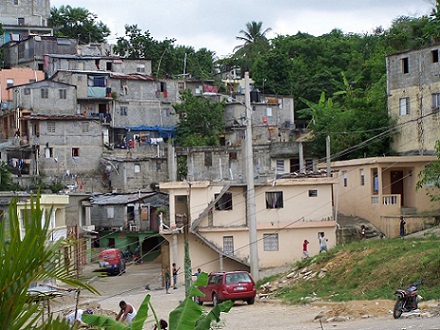
———

Appendix VIDEO – 30 Beautiful Black Hairstyles for Natural Hair 2016 – https://youtu.be/wBSL71dU-OE

Published on Oct 29, 2015 – 30 Beautiful Black Hairstyles for Natural Hair 2016


Share this post:
, , ,
[Top]

‘Time to Go’ – Spot-on for Protest

Go Lean Commentary

Here’s an interesting little-known tidbit about Abraham Lincoln – the liberator and emancipator of the American slaves:

Initially, he felt that the freed slaves needed to leave America. He felt that they would never be treated as equals in the land that had previously held them as slaves for 250 years. He advocated for places like the Caribbean (Haiti & British colonies), Central America (Belize & Panama), South America (Guyana) or Africa (Liberia).
Source Book: Colonization After Emancipation: Lincoln and the Movement for Black Resettlement.
CU Blog - A Lesson in History - Before the Civil War - Human Right Not Compromise - Photo 3

Now, 150 years later, perhaps his thinking was “spot-on”.

These 150 years since the formal emancipation has seen a continuous suppression, repression and oppression of the Black race in America. Could they have had a better disposition in the Caribbean, with its Black majority rule?

This commentary asserts that it is easier for the Black-and-Brown populations in the Caribbean to prosper where planted in the Caribbean, rather than emigrating to foreign countries, like the United States.

We agree with Abraham Lincoln’s gut instinct; he was “spot on”.

This point aligns with the book Go Lean…Caribbean, which states that while the blatant racist attitudes and actions may now be considered politically incorrect, the foundations of institutional racism in the US have become even more entrenched. The book supports the notion that the Caribbean can be an even better place to live for the Caribbean’s Black-and-Brown populations, once we make the homeland a better place to live, work and play.

There is the need to optimize the economic, security and governing engines in the Caribbean region. This commentary is 1 of 3 from the movement behind the book Go Lean … Caribbean, in consideration of the rhymes-and-reasons to repatriate back to the Caribbean homeland. The other commentaries detailed in this series are as follows:

  1.   Time to Go – Spot-on for Protest
  2.   Time to Go – No respect for our Hair
  3.   Time to Go – Logic of Senior Emigration

All of these commentaries relate to the Caribbean image and disposition as a majority Black region. No racial supremacy is advocated in this book nor by this movement. The motivation is simply for the Greater Good. This is defined as …

the greatest good to the greatest number of people which is the measure of right and wrong.” – Jeremy Bentham (1748-1832).

The Go Lean book and movement serves as a roadmap for the introduction of the technocratic Caribbean Union Trade Federation (CU). The CU is set to optimize Caribbean society through economic empowerment, yes, but there are security and governing dynamics as well. Therefore the Go Lean roadmap has 3 prime directives:

  • Optimization of the economic engines in order to grow the regional economy to $800 Billion & create 2.2 million new jobs.
  • Establishment of a security apparatus to ensure public safety, justice assurances and protect the economic engines.
  • Improve Caribbean governance to support these engines.

The Go Lean roadmap posits that the Caribbean region is in crisis now, and so many are quick to flee for refuge in foreign countries. But the “grass is not necessarily greener on the other side”; life in the US, for example, is definitely not optimized for the Caribbean’s Black-and-Brown. It is “spot-on” that there is need for protest, anguish and outright fear for the interactions of Black men and the American police/law enforcement establishment.

The Go Lean book asserts that every community has bad actors. The Caribbean has bad actors; and the US has bad actors. But because of the obvious need for reform and to transform the region, it may be easier to effect change at home, than in the foreign country of the US.

Besides, many (non-Black) people in the US, don’t even think they need to change anything. They think there is no problem – everything is fine – notwithstanding the proliferation of Cop-On-Black killings. See a related news article here regarding legendary NFL Head Coach Mike Ditka; (despite these developments, Mr. Ditka continues to be honored and esteemed in the Caribbean):

Title: Mike Ditka to Colin Kaepernick: ‘Get the hell out’ if you don’t like America
By: Bryan Armen Graham
Sub-title: Mike Ditka spared no criticism of Colin Kaepernick’s national anthem protest.

cu-blog-time-to-go-spot-on-for-protest-photo-1

Hall of Fame coach Mike Ditka has leveled blistering criticism at Colin Kaepernick’s decision to kneel during the national anthem, saying he has “no respect” for the San Francisco 49ers quarterback whose protest has sparked a national discussion over racial injustice, inspired dozens of NFL players to follow suit and landed him on the cover of Time magazine.

“I think it’s a problem, anybody who disrespects this country and the flag,” the longtime NFL coach said in a radio interview on KRLD-FM in Dallas. “If they don’t like the country, if they don’t like our flag, get the hell out. That’s what I think.

“I have no respect for Colin Kaepernick. He probably has no respect for me, that’s his choice. My choice is that I like this country, I respect our flag, and I don’t see all the atrocities going on in this country that people say are going on.

“I see opportunities if people want to look for opportunity. Now if they don’t want to look for them, then you can find problems with anything, but this is the land of opportunity because you can be anything you want to be if you work. Now if you don’t work, that’s a different problem.”

The 76-year-old Ditka, who was inducted into the Pro Football Hall of Fame in 1988, is one of two people in NFL history to win a league title as a player, an assistant coach and a head coach. He graduated from local hero to Chicago icon during an 11-year coaching stint with the Bears that included the team’s only Super Bowl win during the 1985 season, then retired permanently after a failed comeback with the New Orleans Saints in 1999.

A well-known conservative, Ditka publicly flirted with running against Democratic candidate Barack Obama, then a state senator, for the open seat in the US Senate vacated by Illinois senator Peter Fitzgerald in 2004. No one then could have imagined how the election would ultimately propel Obama to the presidency in four years’ time.

“Biggest mistake I’ve ever made,” he told the Dickinson Press in 2013. “Not that I would have won, but I probably would have and he wouldn’t be in the White House.”

In March, Ditka called Obama “the worst president we’ve ever had”.

“Barack Obama is a fine man,” he added. “He’s pleasant, he’d be great to play golf with. He’s not a leader.”
Source: The Guardian Daily Newspaper Online Site; Posted September 23, 2016; retrieved September 25, 2016:
https://www.theguardian.com/sport/2016/sep/23/mike-ditka-colin-kaepernick-get-the-hell-out-anthem-protest
cu-blog-time-to-go-spot-on-for-protest-photo-2

Photograph: Jordan Strauss/Invision/AP

The protagonist in this drama is NFL Quarterback Colin Kaepernick; he has started a protest against the treatment of African-Americans in the US. He asserts that too many unarmed Black Men has died, as of recent, by the hands of White Police Officers. While others share this view, including the African-American President of the US Barack Obama, Mr. Kaepernick is voicing his protest by refusing to stand during the singing of the national anthem at the start of his NFL football games. This protest has fostered a lot of attention … and discord to this issue.

The underlying injustice of Cop-on-Black killings is acute. There is a need for community outrage; it is “spot-on” that anyone would protest. Kudos to Colin Kaepernick! Since he started his protest stance on August 26, 2016, at least 15 more “Black men have been killed by law enforcement officers” as of September 20, 2016; (but there has been 2 more highly publicized killings since this posting: Keith Lamont Scott in Charlotte, North Carolina, and Terence Crutcher in Tulsa, Oklahoma).

The foregoing article gives the instruction for people to leave who do not agree with the American status quo. But can they really? Could the liberated slaves in Lincoln’s day leave for elsewhere? How about the countless cries over the centuries and decades for Black American Nationalism; (as in Marcus Garvey)? Was there an alternative homeland for their consideration? This reminds us of the movie dialogue from the 1982 movie An Officer and a Gentlemen. Remember this exchange:

Foley: You can forget it! You’re out!

Mayo: Don’t you do it! Don’t! You… I got nowhere else to go! I got nowhere else to g… I got nothin’ else.

Seriously, for the majority of Black America, they have no where else to go. The Caribbean Diaspora who represent 1 in 11 Blacks in the US, on the other hand, have the option of repatriating home.

We welcome them! We declare that it is “Time to Go“. We are hereby preparing for their return – fixing our defects – monitoring our “bad actors”.

We have to consider that police officers can also be “bad actors”. The book contends that the Caribbean must better prepare for bad actors, that we will see more of them. With the plan for economic success, comes the eventuality of even more bad actors, just as a result of economic success. This point is pronounced early in the book with the Declaration of Interdependence (Page 12) that claims:

x.   Whereas we are surrounded and allied to nations of larger proportions in land mass, populations, and treasuries, elements in their societies may have ill-intent in their pursuits, at the expense of the safety and security of our citizens. We must therefore appoint “new guards” to ensure our public safety and threats against our society, both domestic and foreign. The Federation must employ the latest advances and best practices of criminology and penology to assuage continuous threats against public safety. The Federation must allow for facilitations of detention for [domestic and foreign] convicted felons of federal crimes, and should over-build prisons to house trustees from other jurisdictions.

xvi. Whereas security of our homeland is inextricably linked to prosperity of the homeland, the economic and security interest of the region needs to be aligned under the same governance. Since economic crimes, including piracy and other forms of terrorism, can imperil the functioning of the wheels of commerce for all the citizenry, the accedence of this Federation must equip the security apparatus with the tools and techniques for predictive and proactive interdictions.

The Caribbean appointing “new guards”, or a security pact to ensure public safety and justice assurance is a comprehensive endeavor, that will encapsulate the needs of all Caribbean stakeholders: governments, institutions and residents.

An important mission of the Go Lean roadmap is to dissuade the high emigration rates of Caribbean citizens to the American homeland. Secondly, there is a mission to encourage the repatriation of the Caribbean Diaspora back to their ancestral homeland.

This means being conscious of why people flee – “push” and “pull” reasons – and monitoring the societal engines to ensure improvement – optimization. (“Push” refers to the societal defects in the Caribbean that moves people to want to get way; and “pull” factors refer to the impressions and perceptions that America is better).

An increased perception that “one would be shoot by a White police officer” should lower the “pull” factor. We would think …
See VIDEO here:

VIDEO – I Am Afraid I Will Be Killed By Police – https://youtu.be/9DD64urEx28

Published on Jul 7, 2016 by Kevin OnStage. See more from this commentator here:
http://kevonstage.com/store
http://kevonstage.com/booking

The Go Lean book details a series of community ethos, strategies, tactics, implementations and advocacies to better optimize our Caribbean life (economic and security concerns):

Community Ethos – Consequences of Choices Lie in Future Page 21
Community Ethos – Economic Principle – Consequences of Choices Lie in Future Page 21
Community Ethos – Whistleblower Protection Page 23
Community Ethos – Anti-Bullying and Mitigation Page 23
Community Ethos – Minority Equalization Page 24
Community Ethos – Return on Investments Page 24
Community Ethos – Cooperatives Page 25
Community Ethos – Ways to Manage Reconciliations Page 34
Community Ethos – Ways to Improve Sharing Page 35
Community Ethos – Ways to Impact the Greater Good Page 37
Tactical – Confederating a non-sovereign union Page 63
Tactical – Fostering a Technocracy Page 64
Tactical – Separation of Powers – CU Federal Agencies -vs- Member-states Page 75
Implementation – Ways to Pay for Change Page 101
Implementation – Start-up Foreign Policy Initiatives Page 102
Implementation – Start-up Security Initiatives Page 103
Implementation – Reasons to Repatriate Page 118
Planning – Big Ideas – Regional Single Market Page 127
Planning – Ways to Make the Caribbean Better Page 131
Planning – Ways to Better Manage the Caribbean Image Page 133
Advocacy – Ways to Grow the Economy Page 151
Advocacy – Ways to Create Jobs Page 152
Advocacy – Ways to Improve Governance Page 168
Advocacy – Ways to Better Manage the Social Contract Page 170
Advocacy – Ways to Improve Leadership Page 171
Advocacy – Ways to Impact Justice Page 177
Advocacy – Ways to Reduce Crime Page 178
Advocacy – Ways to Improve Homeland Security Page 180
Advocacy – Ways to Improve Intelligence Gathering/Analysis Page 182
Advocacy – Ways to Improve for Natural Disasters – Many flee after disasters Page 184
Advocacy – Ways to Impact the Diaspora Page 217
Advocacy – Ways to Preserve Caribbean Heritage Page 218
Advocacy – Ways to Protect Human Rights Page 220
Advocacy – Ways to Impact Urban Living Page 234
Advocacy – Ways to Impact US Territories Page 244

This subject of “push and pull” has been frequently blogged on in other Go Lean commentaries; as sampled here with these entries relating American “pull” factors:

https://goleancaribbean.com/blog/?p=8431 Bahamas Issued US Travel Advisory Citing Police Violence
https://goleancaribbean.com/blog/?p=8202 Respect for Minorities: Lessons Learned from American Dysfunction
https://goleancaribbean.com/blog/?p=8200 Respect for Minorities: Climate of Hate
https://goleancaribbean.com/blog/?p=8099 Caribbean Image: ‘Less Than’?
https://goleancaribbean.com/blog/?p=7221 Street naming for Martin Luther King unveils the real America
https://goleancaribbean.com/blog/?p=7204 ‘The Covenant with Black America’ – Ten Years Later
https://goleancaribbean.com/blog/?p=6189 A Lesson in History – Hurricane ‘Katrina’ exposed a “Climate of Hate”
https://goleancaribbean.com/blog/?p=5733 Better than America? Yes, We Can!
https://goleancaribbean.com/blog/?p=5527 American Defects: Racism – Is It Over?
https://goleancaribbean.com/blog/?p=5333 Racial Legacies: Cause and Effect
https://goleancaribbean.com/blog/?p=1020 Also a European Sports Problem
https://goleancaribbean.com/blog/?p=546 American Model: Book Review – ‘The Divide’ – … Injustice in the Age of the Wealth Gap
https://goleancaribbean.com/blog/?p=341 Hypocritical US slams Caribbean human rights practices
https://goleancaribbean.com/blog/?p=273 10 Things We Don’t Want from the US: Racism against minorities

Underlying to the Go Lean/CU prime directive of elevating the economics, security and governing engines of the Caribbean, is the desire to make the Caribbean homeland, a better place to live, work and play. We know “bad actors” will emerge – even as law enforcement officers – so we need to be “on guard”.

We want proactive and reactive mitigations for abuse of power. We want to ensure our Caribbean communities are safe for our stakeholders (residents and visitors). We entreat the American forces to work towards remediating their own defects. But fixing the US is not within our scope; fixing the Caribbean is our only mission.

Saying that it is “Time to Go“, must mean that we are ready to receive our oft-scattered Caribbean Diaspora. Are we ready, now?

Frankly, no …

… but were are ready, willing and able to start the change process, to reform and transform. This was the intent of the book Go Lean … Caribbean. The book contends that the Caribbean must prepare for the return of all of our people, back to these shores. This means people in a good disposition and bad (sick, aged, unemployed, destitute, imprisoned, etc.). This point is pronounced early in the book with the Declaration of Interdependence (Pages 12 & 13) that claims:

xiii. Whereas the legacy of dissensions in many member-states … will require a concerted effort to integrate the exile community’s repatriation, the Federation must arrange for Reconciliation Commissions to satiate a demand for justice.

xviii. Whereas all citizens in the Federation member-states may not have the same physical abilities, reasonable accommodations must be made so that individuals with physical and mental disabilities can still access public and governmental services so as to foster a satisfactory pursuit of life’s liberties and opportunities for happiness.

xix. Whereas our legacy in recent times is one of societal abandonment, it is imperative that incentives and encouragement be put in place to first dissuade the human flight, and then entice and welcome the return of our Diaspora back to our shores. This repatriation should be effected with the appropriate guards so as not to imperil the lives and securities of the repatriated citizens or the communities they inhabit. The right of repatriation is to be extended to any natural born citizens despite any previous naturalization to foreign sovereignties.

xxvi. Whereas the Caribbean region must have new jobs to empower the engines of the economy and create the income sources for prosperity, and encourage the next generation to forge their dreams right at home, the Federation must therefore foster the development of new industries, like that of ship-building, automobile manufacturing, prefabricated housing, frozen foods, pipelines, call centers, and the prison industrial complex. In addition, the Federation must invigorate the enterprises related to existing industries like tourism, fisheries and lotteries – impacting the region with more jobs.

The book details the needed security provisions that need to be put in place to optimize Caribbean life. See this quotation here (Page 118):

“New Guards” for Public Safety
The CU implements the anti-crime measures and provides special protections for classes of repatriates and retirees. Crimes against these special classes are marshaled by the CU, superseding local police. Since the CU will also install a penal system, with probation and parole, the region can institute prisoner exchange programs and in-source detention for foreign governments, especially for detainees of Caribbean heritage.

This subject of improving the conditions for successful Caribbean repatriation has been blogged in previous Go Lean commentaries; as sampled here:

https://goleancaribbean.com/blog/?p=5304 Mitigating the Eventual Abuse of Power
https://goleancaribbean.com/blog/?p=5002 Managing a ‘Clear and Present Danger’
https://goleancaribbean.com/blog/?p=4360 Dreading the American: ‘CaribbeanBasin Security Initiative’
https://goleancaribbean.com/blog/?p=4308 911 – Emergency Response: System in Crisis

The Go Lean roadmap was composed with the community ethos of the Greater Good foremost; for all peoples – Black, Brown, White, Yellow, Red. We advocate for a color-blind society …

… and justice for all.

This is an American concept … in words only. In practice, America has always fallen short in its delivery of justice and opportunities for its Black-and-Brown populations. There is so much that America does right, that we want to model; there is so much that America does poorly, that we want to mitigate. The “grass is not greener on the other side”. Effort is needed anywhere, everywhere, to improve society. But for the Black-and-Brown of the Caribbean, more success from less effort can be expected in the Caribbean than in the US; the underlying foundation of racism in America may be just too hard to unseat.

All Caribbean stakeholders are hereby urged to lean-in to this Go Lean/CU roadmap to elevate the Caribbean; to make our homeland a better place to live, work and play. 🙂

Download the free e-Book of Go Lean … Caribbean – now!

Share this post:
, , ,
[Top]

Lessons from China – WeChat: Model for Caribbean Social Media

Go Lean Commentary

“In one country, 90 percent of adults use mobile money to conduct commercial transactions” – previous 60 Minutes report: “M-Pesa, the Future of Money”.

That country is Kenya on the African continent. That penetration rate – 90% – was believed to be one of the highest acceptance rate in any large country.

WeChat 2And now we are learning about the business model of WeChat … in China …

… it is a Social Media SuperApp, messaging and digital assistant with an electronic payment functionality similar to M-Pesa. This is the Smartphone answer to a basic phone’s utilitarianism.

See the story in the VIDEO here and the encyclopedic reference that follows:

VIDEOHow China Is Changing Your Internet – http://nyti.ms/2bhgH5s

Posted August 9, 2016 – What was once known as the land of cheap rip-offs may now offer a glimpse of the future — and American companies are taking notice. By JONAH M. KESSEL and PAUL MOZUR. Photo by Damir Sagolj/Reuters.
———

Reference Title: WeChat

WeChat (literal translation: “micro message”) is a cross-platform instant messaging service developed by Tencent in China, first released in January 2011.[10] It is one of the largest standalone messaging apps by monthly active users.[11][12]

The app is available on Android, iPhone, BlackBerry, Windows Phone and Symbian phones. Web-based OS X[13] and Windows[14] clients also exist; these however require the user to have the app installed on a supported mobile phone for authentication, and neither message roaming nor ‘Moments’ are provided.[15] As of May 2016, WeChat has over a billion created accounts, 700 million active users;[16] with more than 70 million outside of China (as of December 2015).[17][18]

WeChat provides text messaging, hold-to-talk voice messaging, broadcast (one-to-many) messaging, video conferencing, video games, sharing of photographs and videos, and location sharing.[19][20] It can exchange contacts with people nearby via Bluetooth, as well as providing various features for contacting people at random if desired (if these are open to it), next to integration with social networking services such as those run by Facebook and Tencent QQ.[21] Photographs may also be embellished with filters and captions, and a machine translation service is available.

For work purposes, companies and business communication, a special version of WeChat called Enterprise WeChat (or Qiye Weixin) was launched in April 2016. The app is meant to help employees separate work from private life.[22] Except the usual chat features, the program lets companies and their employees keep track of annual leave days and expenses that need to be reimbursed, employees can ask for time off or even clock in to show they are at work.[22][23] Security has been upgraded and companies must register before their employees can use the service.[24][25]

Security concerns
WeChat operates from China under Chinese law, which includes strong censorship provisions and interception protocols.[51] WeChat contains the ability to access the text messages and contact books of its users and users’ locations through the GPS feature.[51] Countries and regions such as India, the United States, China and Taiwan all fear that the app poses a threat to national or regional security for various reasons.[51][52][53] In Taiwan, legislators were concerned that the potential exposure of private communications was a threat to regional security.[51] In June 2013, the Indian Intelligence Bureau flagged WeChat for security concerns. India has debated whether or not they should ban WeChat for its possibility in collecting too much personal information and data from its users.[53][54][55]
Source: Wikipedia Online Encyclopedia – Retrieved August 30, 2016 from: https://en.wikipedia.org/wiki/WeChat

WeChat 1

This push for emergence of Internet & Communications Technologies is a familiar advocacy for the movement behind the book Go Lean…Caribbean. The book identifies a possible universe of 130 million active users; this is huge from a Caribbean perspective, but actually small compared to other source countries. The book detailed the full inventory of global Social Media sites around the words with greater than 100 million active users as of November 2013. See the list here:

Rank

Name

Registered users

Active user accounts

Date of stat

Date launched

Country of origin

1

Facebook 1+ billion 1 billion October 2012 February 2004 United States

2

Tencent QQ 784+ million 712 million September 2012 2003 China

3

Skype 663+ million 280 million January 2013 August 2003 Estonia

4

Google+ 500+ million 235 million December 2012 June 2011 United States

5

Twitter 500+ million 200+ million December 2012 March 2006 United States

6

LinkedIn 200+ million 160 million January 2013 May 2003 United States

7

Tencent Qzone 597 million 150 million September 2012 2005 China

8

Sina Weibo 400+ million 100+ million February 2013 August 2009 China

9

Dropbox 100+ million 100 million November 2012 September 2008 United States

10

Windows Live 100 million 100 million December 2012 November 2005 United States

11

Instagram 100+ million 100 million February 2013 October 2010 United States

Notice that 3 of these 11 sites are based in China. (WeChat is a product from China-based Tencent; see Appendix).

This commentary completes the series on China; this is commentary 6 of 6 in consideration of the good and bad lessons from China. The other commentaries detailed in this series are as follows:

  1. History of China Trade: Too Big to Ignore
  2. Why China will soon be Hollywood’s largest market
  3. Organ Transplantation: Facts and Fiction
  4. Mobile Game Apps: The new Playground
  5. South China Seas: Exclusive Economic Zones
  6. WeChat: Model for Caribbean Social Media – www.MyCaribbean.gov

All of these commentaries relate to nation-building, stressing the community investments required to facilitate the short-term, mid-term and long-term needs of our communities. This last commentary admires how the China-based WeChat online product is all-encompassing for all daily activities, facilitating value-added experiences for its users. It brings the benefits of the virtual world to the real world.

The WeChat experience in China is unique in that access is blocked from foreign access – no inputs nor outputs; this is referred to as the Great Firewall of China. (See more details here: http://www.nytimes.com/2016/08/10/technology/china-homegrown-internet-companies-rest-of-the-world.html?smid=fb-nytimes&smtyp=cur&_r=1).

So the lesson for the Caribbean is how to regulate technology in our society. With the Great Firewall and all the security threats, we do not want to invite WeChat to the Caribbean region. Rather we want to model WeChat for our own homegrown Social Media product, identified in the Go Lean book as www.myCaribbean.gov, (but without the Great Firewall features).

The Go Lean book serves as a roadmap for the introduction and implementation of the Caribbean Union Trade Federation (CU) and the Caribbean Central Bank (CCB) as regional stewards of Cyberspace and the economy, or better stated: electronic commerce. e-Commerce will drive change in payment systems, to include options depicted in the foregoing VIDEO.

The CU oversight is to be executed in conjunction with the Caribbean Postal Union (CPU), the administrator of the www.myCaribbean.gov Social Media site and network. The purpose of the CPU charter is the efficient and effective facilitation of postal mail and messaging. To be consequential in 2016, no postal initiative can launch without an online/email solution. This implementation is embedded in the Go Lean roadmap, as detailed here in the book on Page 108:

The CU will include e-delivery of government operations so as to integrate and consolidate services that are usually a cost center. The resultant economies-of-scale will result in Postal operations (CPU) emerging as a logistics Profit Center rather than Cost Center.

Cyber Mail Assistance (First Leg & Last Leg)
E-mail is a reality that should be embraced. The CPU will coordinate and collaborate with the www.myCaribbean.gov portal to offer email to all 42 million citizens, [10 million Diaspora and 80 million visitors]. The CPU will offer products, for a fee, like “last leg” postal mail for emails that need to be delivered on paper, or “first leg” postal for paper mail that can be scanned and delivered as email.

The CU, CPU and CCB are all organs of the new Caribbean elevation initiative. The CCB will facilitate transactions settlement for the new payment eco-system. The Go Lean roadmap calls for a regional currency for the Caribbean Single Market, the Caribbean Dollar (C$), to be used primarily as an electronic currency. This scheme will impact the growth of the regional economy in both the domestic and tourist markets. Economic growth is only one of the objectives of the Go Lean/CU roadmap; in fact, the Go Lean roadmap has these 3 prime directives:

  • Optimization of the economic engines in order to grow the regional economy to $800 Billion & create 2.2 million new jobs.
  • Establishment of a security apparatus to protect the resultant economic engines.
  • Improvement of Caribbean governance to support these engines.

To be counted on the world stage, the Caribbean region must conquer Cyberspace – for our own people – to elevate the interactions among the business and consumer virtual communities. When we say interactions, we mean payment transactions as well.

The benefits are undeniable: instant access, safer transactions, expanded networks, and an expanded money supply.

This last one, expanded money supply refers to the feature in Economics of M1. Electronic payment schemes causes a shift in the measurement of M1 and M0.  M0 refers to the “cash currency” (paper notes & coins); M1 refers to the measurement of overnight bank deposits plus the “cash” in circulation (the M0). The Go Lean book explains the money multiplier effect, how M1 increases allow central banks – in this case, the CCB – to create money “from thin-air”.

A mission of the Go Lean roadmap is to prepare the Caribbean region to adapt and thrive in the new global marketplace. This goal requires strenuous currency management and technocratic oversight of the region’s technological initiatives. This need was pronounced in the opening Declaration of Interdependence (Pages 12 – 14):

xv.  Whereas the business of the Federation and the commercial interest in the region cannot prosper without an efficient facilitation of postal services, the Caribbean Union must allow for the integration of the existing mail operations of the governments of the member-states into a consolidated Caribbean Postal Union, allowing for the adoption of best practices and technical advances to deliver foreign/domestic mail in the region.

xxiv. Whereas a free market economy can be induced and spurred for continuous progress, the Federation must install the controls to better manage aspects of the economy: jobs, inflation, savings rate, investments and other economic principles. Thereby attracting direct foreign investment because of the stability and vibrancy of our economy.

xxvii. Whereas the region has endured a spectator status during the Industrial Revolution, we cannot stand on the sidelines of this new economy, the Information Revolution. Rather, the Federation must embrace all the tenets of Internet Communications Technology (ICT) to serve as an equalizing element in competition with the rest of the world. The Federation must bridge the digital divide and promote the community ethos that research/development is valuable and must be promoted and incentivized for adoption.

The Go Lean book details a series of community ethos, strategies, tactics, implementations and advocacies to foster the proper guidance for the deployment of an advanced Social Media network (and accompanying e-Payments scheme) in the Caribbean region:

Community Ethos – Economic Principles Page 21
Community Ethos – Money Multiplier Principle Page 22
Community Ethos – Security Principles – Privacy versus Public Protection Page 23
Community Ethos – Governing Principles – Lean Operations Page 24
Community Ethos – Governing Principles – Cooperatives Page 25
Community Ethos – Promote Intellectual Property Page 29
Community Ethos – Ways to Bridge the Digital Divide Page 31
Community Ethos – Ways to Improve Sharing Page 35
Community Ethos – Ways to Impact the Greater Good Page 35
Strategy – Mission – Fortify the monetary needs through a Currency Union Page 45
Strategy – Mission – Facilitate modern communications with postal enhancements Page 46
Tactical – Separation of Powers – Central Banking Page 73
Tactical – Separation of Powers – Postal Operations: CPU Page 78
Implementation – Assemble Central Bank Cooperative Page 96
Implementation – Assemble Caribbean Regional Organs – like CTU Page 96
Implementation – Ways to Improve Mail Services – CPU Deployments Page 108
Implementation – Ways to Deliver Page 109
Planning – 10 Big Ideas – #2: Currency Union / Single Currency Page 127
Anecdote – Caribbean Currencies Page 149
Advocacy – Ways to Grow the Economy Page 151
Advocacy – Ways to Create Jobs Page 152
Advocacy – Ways to Mitigate Black Markets – Benefit of e-Payments Page 165
Advocacy – Ways to Foster Cooperatives Page 176
Advocacy – Ways to Impact Cruise Tourism – e-Payment scheme Page 193
Advocacy – Ways to Foster Technology Page 197
Advocacy – Ways to Foster e-Commerce Page 198
Advocacy – Reforms for Banking Regulations – Central Banking Efficiencies Page 199
Advocacy – Ways to Impact Main Street – Downtown Wi-Fi – Time and Place Page 201
Appendix – Assembling the Caribbean Telecommunications Union – As Regulator Page 256

As depicted in the foregoing VIDEO and these previously Go Lean blog-commentaries, those involved in retail commerce – in general – must now adapt to this new electronic commerce/payment world … or perish:

https://goleancaribbean.com/blog/?p=7991 Transformations: Caribbean Postal Union – Delivering the Future
https://goleancaribbean.com/blog/?p=7297 Death of the ‘Department Store’: Exaggerated or Eventual
https://goleancaribbean.com/blog/?p=7034 The Future of Money – M-Pesa Model
https://goleancaribbean.com/blog/?p=6635 New Security Chip in Credit Cards Unveiled
https://goleancaribbean.com/blog/?p=5668 Move over Mastercard/Visa… here comes a Caribbean Solution
https://goleancaribbean.com/blog/?p=4425 Cash, Credit or iPhone …
https://goleancaribbean.com/blog/?p=3889 Caribbean banks are ready to accept electronic payments transactions
https://goleancaribbean.com/blog/?p=2488 Chinese Role Model Jack Ma brings Alibaba to America
https://goleancaribbean.com/blog/?p=2074 MetroCard – Model for the Caribbean Dollar
https://goleancaribbean.com/blog/?p=1416 Amazon – Role Model for Caribbean e-Commerce & Logistics
https://goleancaribbean.com/blog/?p=1350 PayPal expands payment services to 10 markets
https://goleancaribbean.com/blog/?p=906 Bitcoin needs regulatory framework to change ‘risky’ image of payments
https://goleancaribbean.com/blog/?p=528 Facebook plans to provide mobile payment services

The world of Social Media networking and electronic payment systems is here. China has demonstrated a successful model for us in the Caribbean to emulate.

The lesson from China is that a low-technical population can assimilate high-tech solutions, provided that solutions are real. China has a population of 1.3 billion people; WeChat has 700 million active users. All those people cannot be “Geeks”. Many are just plain folks, the sort that comprise the 42 million in the Caribbean.

And then imagine the “Geeks”; imagine the opportunities: jobs and entrepreneurship. Imagine…

The lesson from China is that the business axiom is true:

Build a better mousetrap and the world will beat a path to your door.

This gives us confidence that the Caribbean Social Media network, www.myCaribbean.gov, can be fully accepted in the marketplace.

Yes, this Go Lean roadmap is conceivable, believable and achievable. The benefits are too enticing to ignore: fostering more e-Commerce, increasing M1, growing the economy, creating jobs, enhancing security and optimizing governance. Now is the time for all stakeholders – people and businesses – of the Caribbean to lean-in to this roadmap. 🙂

Download the free e-Book of Go Lean … Caribbean – now!

————–

Appendix VIDEO – Preview WeChat for Android – https://youtu.be/y2uRA9qji_I

Published on Apr 25, 2016 – WeChat is a free messaging & calling app used by 700 million people that allows you to easily connect with family & friends across countries. It’s the all-in-one communications app for free text (SMS/MMS), voice & video calls, Moments, photo sharing, and games.

Share this post:
, , , ,
[Top]

This Day In History: Jamaican Innovation for Hip Hop

#GoLeanCommentary

CU Blog - This Day In History - Jamaican Innovation for Hip Hop - Photo 1This day – August 11 – in 1973 …

… a member of the Caribbean Diaspora – Jamaica – may have changed the world … for Hip Hop. On this day in 1973, Clive Campbell – better known to history as DJ Kool Herc – helped out his sister by “DJ-ing” her birthday party in a recreation room in The Bronx. History shows that he used his inspiration and influence from his Caribbean musical roots to innovate a music style and performance that would subsequently change the world … for good …

… or bad.

It’s music; you be the judge.

Musical taste is like “beauty” … in the “eye of the beholder”. The main thing is that the music made you listen and maybe learned something about the urban experience of America … and now the world.

See the story of Clive Campbell aka DJ Kool Herc here:

Title: This Day In History: 1973 – Hip Hop is born at a birthday party in the Bronx

Like any style of music, hip hop has roots in other forms, and its evolution was shaped by many different artists, but there’s a case to be made that it came to life precisely on this day in 1973, at a birthday party in the recreation room of an apartment building in the west Bronx, New York City. The location of that birthplace was 1520 Sedgwick Avenue, and the man who presided over that historic party was the birthday girl’s brother, Clive Campbell—better known to history as DJ Kool Herc, founding father of hip hop.

Born and raised to the age of 10 in Kingston, Jamaica, DJ Kool Herc began spinning records at parties and between sets his father’s band played while he was a teenager in the Bronx in the early 1970s. Herc often emulated the style of Jamaican “selectors” (DJs) by “toasting” (i.e., talking) over the records he spun, but his historical significance has nothing to do with rapping. Kool Herc’s contribution to hip hop was even more fundamental.

DJ Kool Herc’s signature innovation came from observing how the crowds would react to different parts of whatever record he happened to be playing: “I was noticing people used to wait for particular parts of the record to dance, maybe [to] do their specialty move.” Those moments tended to occur at the drum breaks—the moments in a record when the vocals and other instruments would drop out completely for a measure or two of pure rhythm. What Kool Herc decided to do was to use the two turntables in a typical DJ setup not as a way to make a smooth transition between two records, but as a way to switch back and forth repeatedly between two copies of the same record, extending the short drum break that the crowd most wanted to hear. He called his trick the Merry Go-Round. Today, it is known as the “break beat.” [(See Appendix VIDEO below).]

By the summer of 1973, DJ Kool Herc had been using and refining his break-beat style for the better part of a year. His sister’s party on August 11, however, put him before his biggest crowd ever and with the most powerful sound system he’d ever worked. It was the success of that party that would begin a grassroots musical revolution, fully six years before the term “hip hop” even entered the popular vocabulary.
Source: History Channel – This Day In History – Posted & Retrieved August 11, 2016 from: http://www.history.com/this-day-in-history/hip-hop-is-born-at-a-birthday-party-in-the-bronx

CU Blog - This Day In History - Jamaican Innovation for Hip Hop - Photo 2

Can we – in the Caribbean and from the Caribbean – change the world again?

Yes, we can!

This consideration is in line with the book Go Lean … Caribbean. It serves as a roadmap for the introduction and implementation of the technocratic Caribbean Union Trade Federation (CU). This CU strives to advance Caribbean culture with these 3 prime directives:

  • Optimization of the economic engines in order to grow the regional economy to $800 Billion and create 2.2 million new jobs.
  • Establishment of a security apparatus to protect the resultant economic engines.
  • Improve Caribbean governance.

This will not be the first time a Caribbean personality has changed the world through music (and hopefully not the last). Previously, this blog-commentary detailed the influence of music icon Bob Marley. Today, his name is synonymous with Reggae and socially-conscious music. RIP Bob Marley (1945 – 1981).

The Go Lean book identifies, in total, 169 different musical/national combinations of genres throughout the Caribbean. From these styles, Hip Hop has had its origins and roots. And then the transformation continued, with more inspiration back to the Caribbean sounds and more social messaging (classic of Reggae) going  back to the Hip Hop sound.

Music does not stand still; it evolves. An excellent example of this cross-meshing is the musical genre of Reggaeton:

Reggaetón is a genre of music characterized by its repetitive beat rhythm that originated in Puerto Rico. Its roots can be traced back to the “underground” music of the island during the late 90’s, when music borrowing elements of reggae, rap, and hip-hop was being performed (in Spanish) in small, unofficial venues. Bootleg recordings and word of mouth were the means of distribution for this music until 1997. In 1998 eventually that music coalesced into what today is known as Reggaeton. The music’s popularity skyrocketed in the early 2000s as it spread to North American, European, Asian, and African audiences.[1] Source: Retrieved 08/11/2016 from: https://en.wikipedia.org/wiki/Reggaeton.

See sample Reggaetón song here: https://youtu.be/uHgnebZ_jYo

The movement behind the Go Lean book asserts that “one person can make a difference”. So just like Bob Marley, Clive Campbell aka DJ Kool Herc, should be recognized for his contributions to music, culture and Caribbean identity. This one Caribbean character has made a difference while residing as an alien in a foreign land. He has forge an example and a sample of how other Caribbean stakeholders can do more in the arts and impact the world – we can build a city on “rock-and-roll”.

Too bad he made this impact after leaving his Caribbean home of Jamaica.

Alas, we now bring the quest for change to Jamaica and all of the rest of the Caribbean. And that quest includes music and the arts. Early in the Go Lean book, the contributions that music can make is pronounced as an community ethos for the entire region to embrace, (Declaration of Interdependence – Page 15) with these statements:

xxxii. Whereas the cultural arts and music of the region are germane to the quality of Caribbean life, and the international appreciation of Caribbean life, the Federation must implement the support systems to teach, encourage, incentivize, monetize and promote the related industries for arts and music in domestic and foreign markets. These endeavors will make the Caribbean a better place to live, work and play.

This Go Lean/CU roadmap recognizes that a prerequisite for advancing society is a change in the community ethos – the fundamental spirit of a culture that drives the beliefs, customs and practices – in that society. Music should be appreciated for the truth of its power; it “can soothe the savage beast”. It can communicate culture and impact the economics for a people. One person, or a group of people can do this, can make a difference.

The following list from the Go Lean book details the community ethos, strategies, tactics, implementations and advocacies to foster the next generation of artist:

Community Ethos – Ways to Foster Genius Page 27
Community Ethos – Promote Intellectual Property Page 29
Community Ethos – Ways to Promote Happiness Page 36
Community Ethos – Impact the Greater Good Page 37
Strategy – Vision – Unified CaribbeanSingle Market Page 45
Tactical – Separation of Powers – Patents & Copyrights Page 78
Tactical – Separation of Powers – Culture Administration Page 81
Implementation – Ways to Impact Social Media Page 111
Advocacy – Ways to Make the Caribbean Better Page 131
Advocacy – Ways to Impact Hollywood Page 203
Advocacy – Ways to Promote Music Page 231
Advocacy – Ways to Re-boot Jamaica Page 239

Thank you Clive Campbell aka DJ Kool Herc; see Appendix VIDEO below.

Thank you for setting the pathway for success for new generations of talented, inspirational and influential artists – musical geniuses of Caribbean heritage – who are sure to follow. These artists, too will “rock the world”.

We are hereby “banking” on it here in the Caribbean, as communicated further in that Declaration of Interdependence – Page 13:

xxi. Whereas the preparation of our labor force can foster opportunities and dictate economic progress for current and future generations, the Federation must ensure that educational and job training opportunities are fully optimized for all residents of all member-states, with no partiality towards any gender or ethnic group. The Federation must recognize and facilitate excellence in many different fields of endeavor, including sciences, languages, arts, music and sports. This responsibility should be executed without incurring the risks of further human flight, as has been the past history.

The Go Lean book posits “a change is going to come” to the Caribbean. The people, institutions and governance of region are all urged to “lean-in” to this roadmap for change and empowerment. Let’s do this … and make our homeland – all of the Caribbean – a better place to live, work and play.

🙂

Download the book Go Lean … Caribbean – now!

Sign the petition to lean-in for this roadmap for the Caribbean Union Trade Federation.

————

Appendix VIDEO – Kool DJ Herc, Merry Go Round – https://youtu.be/Hw4H2FZjfpo

Uploaded on Oct 26, 2009 – Kool DJ Herc describing how he invented the idea of playing two breakbeats together.

Share this post:
, , , , , , ,
[Top]