Tag: Power

‘Free Market’ Versus … Common Pool Resources

Go Lean Commentary

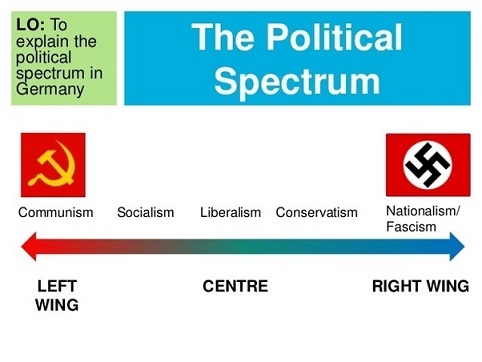
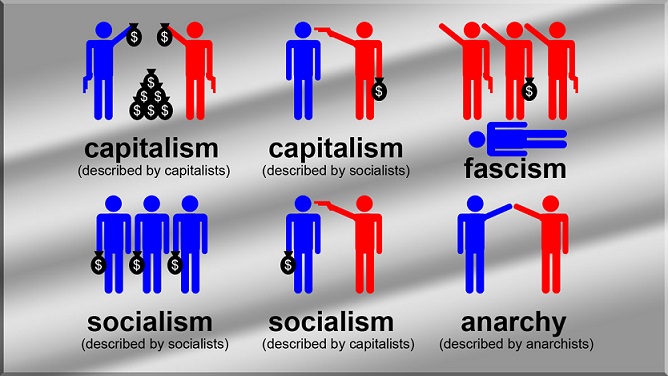
Socialism-Communism – a reference to any heavy-handed centrally controlled governance – is one way to govern the natural resources for the betterment of the people. But after 100 years of failed experimentations, the conclusion is valid that socialistic-communistic practices are defective and deficient. We do not want this – any further – in the Caribbean.

[Pure] Capitalism, on the other hand, provides a few models for managing natural resources to help the national economy; think leases, exploration rights and exclusive franchises. Ancient European powers had their track records of Papal Charters and Royal Charters. Among Republican governments, the American experience is most noted for anecdotes of the government extending exploration rights to private institutions and individuals: think mines and oil fields. (Or development rights like railroads). After hundreds of years of exploitation and abuse, Crony-Capitalistic practices have emerged as an “Enemy of the [Common] People.
What we want is simpler policies and practices intended for the Greater Good. (This ethos was defined by Jeremy Bentham, who lived 1748 – 1832, as: “the greatest good to the greatest number of people which is the measure of right and wrong”).

This was the academic challenge: devising a better way to manage a country’s natural resources. The best answer thus far:

The Commons.

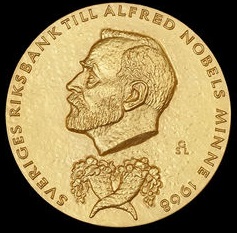
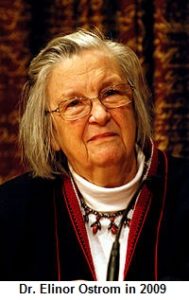
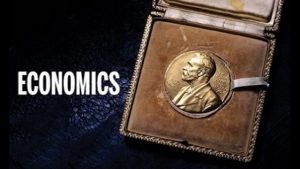
… and this turned out to be the culmination of one woman’s work; and she won the Nobel Prize for it. (To this date, she remains the only woman to ever win the Nobel Prize in Economics.[5]). See VIDEO here:

VIDEO – Elinor Ostrom on managing “Common Pool” Resources – https://youtu.be/D1xwV2UDPAg


OECD

Published on Jun 28, 2011 –
Elinor Ostrom, Nobel laureate in economic sciences, talks about managing “common pool” resources like forests or fisheries, where one person’s use means less is available for others.

Category: News & Politics

Well done, Dr. Elinor Ostrom. Her life’s work was proving to the world that there is a better way to manage Common Pool Resources without government or private control – think: no Socialism and no Crony-Capitalism. This summation was provided in the book Go Lean … Caribbean under the advocacy title “10 Ways to Better Manage Natural Resources“. The book (Page 183) first states this definition of Common Pool Resources:

The Bottom Line on Common Pool Resources

The 2009 Nobel Prize winning economist Elinor Ostrom (1933 – 2012), a Political Science Professor at Indiana University, received the award for her landmark work on the management of common pool resources. Her analysis of economic governance, especially the commons, showed how groups work together to manage common resources such as water supplies, fish and lobster stocks, and pastures through collective property rights. She showed that common pool resources can be effectively managed collectively, even without government or private control, as long as those using the resource are physically close to it and have a relationship with each other. Because outsiders and government agencies don’t understand local conditions or norms, and lack relationships with the community, they may manage common resources poorly. By contrast, insiders who are given a say in resource management will self police to insure that all participants follow the community’s rules.

——–
The Go Lean book asserts that there are best-practices that we can adopt in the Caribbean to make our homeland a better place to live, work and play.

There are a lot of Natural Resources that must be managed in the Caribbean region, consider: the 1,063,000 square miles of the Caribbean Sea, the waterways between the islands, the river borders with foreign countries, etc.. Most importantly, there is the need to manage the Fish & Seafood Stock in the region. This is one of the foremost reasons that the member-states of the region need to confederate a super-national agency in the first place. The Go Lean book introduces the technocratic Caribbean Union Trade Federation (CU) for this purpose. The problem in this region is the same problem as in most other regions of the world; this is what the academic exercises were trying to address:

It was long unanimously held among economists that natural resources that were collectively used by their users would be over-exploited and destroyed in the long-term. Elinor Ostrom disproved this idea by conducting field studies on how people in small, local communities manage shared natural resources, such as pastures, fishing waters, and forests. She showed that when natural resources are jointly used by their users, in time, rules are established for how these are to be cared for and used in a way that is both economically and ecologically sustainable.[26]

We, the Caribbean, need to double-down in our economic engines and manage Common Pool Resources better. This theme is embedded throughout the 370 pages of the Go Lean book. See the multiple references here:

Separation of Powers – F. Interior Department
This Department in the Executive Branch manages the physical terrain of the Caribbean, in  conjunction with, and on behalf of the member-states. This governance is vital in facilitating the economic interest in the region, as many people are engaged in occupations and livelihoods involving the “land, and the seas”…. This Department manages the oversight of this “common” territory. In addition, this Agency will have to work with foreign entities in the management of common pool resources, like water rights, river ecosystems in Guyana, Suriname and Belize where they are bordered by other (bigger) countries.
Page 82
Separation of Powers – J. Agriculture and Fisheries Department
This Department in the Executive Branch coordinates the region efforts in agriculture, agri-business and fisheries. These endeavors will be executed in collaboration and on behalf of the CU member-states. The CU will take the lead in facilitating the food supply and distribution systems to ensure the region can feed itself, more from local production and less from trade….Many of the member-states get 90% (or more) of their food supplies from imports; even fish from Alaska. This department will coordinate the CU‘s implementation of agri-business investments to generate more regional options for food production: common grazing lands, cooperatives (co-ops), farm credit, fisheries oversight, canaries, aqua-culture endeavors, etc.There is the need for strenuous regional management regarding natural resources like fish stock. There are breeds of seafood germane to Caribbean culture that are becoming more and more endangered every year. This includes lobster, conch, flying fish and grouper. … This motivation is one of the prime directives for petitioning the UN for the Exclusive Economic Zone of the Caribbean Sea, the space between the islands.

In many ways, this office is to be managed like a Project Management Office, coordinating one region-wide project after another. This department will also oversee the common pool resources for the region. This will include fish stock and common grazing lands.

Page 88
Advocacy – 10 Lessons from the American West

# 5 – Common Pool Resources: Water / Public Works

There were many environmental deterrents to conquering the West. There is actually a continental divide in North America in which minimal rain falls west of that divide; the western states were not sustainable for large populations.

Over the years, the US Army Corps of Engineers created canals, dams, reservoirs, irrigation, water pipelines and other measures, in multi-state compacts. The CU must also engineer multi-state public works projects to improve economies.

Page 142
Advocacy – 10 Ways to Better Manage Natural Resources

# 1 – Lean in for the Caribbean Union Trade Federation (CU) treaty.
This treaty allows for the unification of the region into one market, thereby integrating to a single economy of 30 member-states… . The region needs joint management of the common pool of natural resources, and this one of the foremost reasons for confederating the CU. First it garners international support for the UN petition for an Exclusive Economic Zone in and near the Caribbean Seas. The CU’s representation of a Single Market allows for effective negotiations with foreign parties – the islands will no longer be viewed as inconsequential. The CU’s Separation-of-powers mandate is germane for managing the local needs of the region’s common resources; it allows for closer oversight of local regulators, but with CU principles.

Page 183
Advocacy – 10 Ways to Improve Fisheries

# 3 – Common Pool Resources (Lobster, Conch, Grouper, Flying Fish)

Though the waters between the islands may be uninhabited, their resources can still be depleted. The CU will govern the common pool resources to promote the sustainability of fish stock. Fishing for lobster, conch, grouper, “flying fish” and other species must be controlled, with limited harvesting seasons, otherwise there will be none for future generations.

Page 210
Advocacy – 10 Ways to Impact Rural Living

# 3 – Common Pool Resources Oversight and Management

The CU will exercise eminent domain to buy a lot of “crown” land, and the Exclusive Economic Zone, to promote as common pool resources (farming, fishing, and mining). This ownership allows for the implementation of proper oversight rules, with local coordination, and best practices.

Page 235

——–
This vision for technocratic management for Common Pool Resources completes this series on Free Markets Versus… . There is wisdom to this strategy of managing natural resources on a local level, by people close to the target. Dr. Ostrom presented a lot of lessons in her writings and advocacies. This submission, 6-of-6 of the full series, completes this consideration; the full catalog is as follows:

  1. Free Market Versus: Communism – Can they both co-exist?
  2. Free Market Versus: China – Two systems at play in ‘Words and Actions’
  3. Free Market Versus: Socialism – Prevalent in the Caribbean
  4. Free Market Versus: Cooperatives
  5. Free Market Versus: Labor Unions – Junior Communists?
  6. Free Market Versus: Common Pool Resources – Simpler Cooperation

In this series, reference is made to the need for a comprehensive roadmap for elevating the societal engines of the Caribbean member-states. We need the intended community of communism and the Greater Good of Socialism, but with none of the trappings that come with those systems. For managing the natural resources of a country, there is an alternative way, a better way, and that is the approach and strategies of Common Pool Resources. This approach is both an art and a science.

This theme – fostering better management of natural resources – aligns with many previous Go Lean commentaries; see a sample list here:

https://goleancaribbean.com/blog/?p=16000 Good Governance for Local Economic Empowerment
https://goleancaribbean.com/blog/?p=15359 Industrial Reboot – Fisheries 101
https://goleancaribbean.com/blog/?p=12724 Lessons from Colorado: Water Management Arts & Sciences
https://goleancaribbean.com/blog/?p=12230 Commerce of the Seas – Extraction Realities
https://goleancaribbean.com/blog/?p=4700 Rare Earths: Managing for the new ‘Gold Rush’
https://goleancaribbean.com/blog/?p=3594 Lessons Learned from Queen Conch – Regional Reality

The stewards for a new Caribbean, the movement behind the Go Lean book, present many testimonies of the life work of Economists. This is just a sample list of some that we have featured in the past:

Dr. Elinor Ostrom is in this class of fame and infamy. Regrettably, she passed in 2012, after leaving a legacy for others to benefit from; we are forever grateful for her contributions to the field of Economics and Common Pool Resources. May we all pay more than the usual attention to her productions.

We urge all Caribbean stakeholders to lean-in to Dr. Ostrom work, and to the Go Lean roadmap for optimizing Caribbean economics, security and governance. We can … do better in making our homelands better places to live, work and play.  🙂

About the Book
The book Go Lean…Caribbean serves as a roadmap for the introduction and implementation of the technocratic Caribbean Union Trade Federation (CU), for the elevation of Caribbean society – for all member-states. This CU/Go Lean roadmap has these 3 prime directives:

  • Optimization of the economic engines in order to grow the regional economy to $800 Billion & create 2.2 million new jobs.
  • Establishment of a security apparatus to ensure public safety and protect the resultant economic engines.
  • Improve Caribbean governance to support these engines, including a separation-of-powers between the member-states and CU federal agencies.

The Go Lean book provides 370-pages of turn-by-turn instructions on “how” to adopt new community ethos, plus the strategies, tactics, implementations and advocacies to execute so as to reboot, reform and transform the societal engines of Caribbean society.

Download the free e-Book of Go Lean … Caribbean – now!

Who We Are
The movement behind the Go Lean book – a non-partisan, apolitical, religiously-neutral Community Development Foundation chartered for the purpose of empowering and re-booting economic engines – stresses that reforming and transforming the Caribbean societal engines must be a regional pursuit. This was an early motivation for the roadmap, as pronounced in the opening Declaration of Interdependence (Pages 11 – 13):

iv. Whereas the natural formation of the landmass is in a tropical region, the flora and fauna allows for an inherent beauty that is enviable to peoples near and far. The structures must be strenuously guarded to protect and promote sustainable systems of commerce paramount to this reality.

xi. Whereas all men are entitled to the benefits of good governance in a free society, “new guards” must be enacted to dissuade the emergence of incompetence, corruption, nepotism and cronyism at the peril of the people’s best interest. The Federation must guarantee the executions of a social contract between government and the governed.

xvi. Whereas security of our homeland is inextricably linked to prosperity of the homeland, the economic and security interest of the region needs to be aligned under the same governance. Since economic crimes … can imperil the functioning of the wheels of commerce for all the citizenry, the accedence of this Federation must equip the security apparatus with the tools and techniques for predictive and proactive interdictions.

xxiv.  Whereas a free market economy can be induced and spurred for continuous progress, the Federation must install the controls to better manage aspects of the economy: jobs, inflation, savings rate, investments and other economic principles. Thereby attracting direct foreign investment because of the stability and vibrancy of our economy.

Sign the petition to lean-in for this roadmap for the Caribbean Union Trade Federation.

Share this post:
, ,

‘Free Market’ Versus … Labor Unions – Junior Communists?

Go Lean Commentary

All Labor Unions are Communists, right?

Surely, there is no validity to this simple statement, right?

The truth is … “not so fast”! While the 1935 National Labor Relations Act (NLRA) is a landmark for modern civilizations, it only came about because of the left-leaning interests of its advocates and proponents. (‘Left-leaning’ = pseudonym for communism).

Yes, there is a long history of Labor Unions and communism. Examine these facts, considering an American perspective:

  1. International Workers’ Day

… also known as Workers’ DayLabour Day in some countries[1][2] and often referred to as May Day,[3][4]is a celebration of labourers and the working classes that is promoted by the international labour movement which occurs every year on May Day (1 May), an ancient European spring festival.[5][6]

The date was chosen by a pan-national organization of socialist and communist political parties to commemorate the Haymarket affair, which occurred in Chicago on 4 May 1886.[6] The 1904 Sixth Conference of the Second International, called on “all Social Democratic Party organisations and trade unions of all countries to demonstrate energetically on the First of May for the legal establishment of the 8-hour day, for the class demands of the proletariat, and for universal peace.”[7]  …

… some countries celebrate a Labour Day on other dates significant to them, such as the United States and Canada, which celebrate Labor Day on the first Monday of September. – Source: Wikipedia.

[These countries choose dates other that May 1 to differentiate from socialist and communist regimes].

  1. Taft–Hartley Act

The Labor Management Relations Act of 1947, better known as the Taft–Hartley Act, is a United States federal law that restricts the activities and power of labor unions. It was enacted by the 80th United States Congress over the veto of President Harry S. Truman, becoming law on June 23, 1947.

Taft-Hartley was introduced in the aftermath of a major strike wave in 1945 and 1946. Though it was enacted by the Republican-controlled 80th Congress, the law received significant support from congressional Democrats, many of whom joined with their Republican colleagues in voting to override Truman’s veto. The act continued to generate opposition after Truman left office, but it remains in effect.

The Taft–Hartley Act amended the 1935 National Labor Relations Act (NLRA), prohibiting unions from engaging in several “unfair labor practices.” Among the practices prohibited by the act are jurisdictional strikeswildcat strikes, solidarity or political strikes, secondary boycotts, secondary and mass picketingclosed shops, and monetary donations by unions to federal political campaigns. The NLRA also allowed states to pass right-to-work laws banning union shops. Enacted during the early stages of the Cold War, the law required union officers to sign non-communist affidavits with the government.

Anti-communism
The amendments required union leaders to file affidavits with the United States Department of Labor declaring that they were not supporters of the Communist Party and had no relationship with any organization seeking the “overthrow of the United States government by force or by any illegal or unconstitutional means” as a condition to participating in NLRB proceedings. Just over a year after Taft–Hartley passed, 81,000 union officers from nearly 120 unions had filed the required affidavits.[11] In 1965, the Supreme Court held that this provision was an unconstitutional bill of attainder.[16]Source: Wikipedia.

———–

This history helps us to appreciate two things:

  • Principles and proponents of communism have been embedded in the history of labor movements since the beginning of the quest to reform the workplace for more workers’ benefits.
  • The efforts to monitor and mitigate advances of pro-communists have been promoted as an opposition to labor unions themselves.

This is why this discussion is so important.

The Caribbean must examine its governing-and-economic principles. The most successful models in the history of mankind has been associated with the adoption of Free Market options. Yet, all the most successful countries employ a hybrid of Free Market and Communism-Socialism-Central-Control.

This is a complicated subject to master. But master it, we must.

Think of these line items of occupational progress:

  • 8-hour work-day
  • 40-hour work-week
  • health insurance
  • sick leave
  • workers compensation
  • tuition reimbursements
  • gender protections
  • minority empowerments.

The summary from the historic review is succinct: the progress that the labor movements have enjoyed have only emerged because of their communist advocacy.

This is the continuation of the series on Free Markets Versus… . There is wisdom to this strategy of treating workers as consequential stakeholders in the production process; they are not invisible and disposable. So we must consider these lessons. This submission is entry 5-of-6 of the full series cataloged as follows:

  1. Free Market Versus: Communism – Can they both co-exist?
  2. Free Market Versus: China – Two systems at play in ‘Words and Actions’
  3. Free Market Versus: Socialism – Prevalent in the Caribbean
  4. Free Market Versus: Cooperatives
  5. Free Market Versus: Labor Unions – Junior Communists?
  6. Free Market Versus: Common Pool Resources – Simpler Cooperation

In this series, reference is made to the need for a comprehensive roadmap for elevating the societal engines of the Caribbean member-states. It seems that the dissent to Free Market capitalism has been good in itself. Right-leaning extremes can be bad just like left-leaning extremes.

We need the perfect balance!

Labor Unions tend to be early adopters and early advocates. So there is a place for Labor Unions in the roadmap to elevate the societal engines in the Caribbean. This is the focus of this commentary, and for the 2013 book Go Lean…Caribbean, a roadmap for the Caribbean Union Trade Federation (CU). The book presents one advocacy (Page 164) specifically focused on labor relations, entitled: “10 Ways to Impact Labor Unions“. These “10 Ways” include the following highlights, headlines and excerpts:

1 Lean-in for the Caribbean Single Market
This treaty allows for the unification of the region into one market, expanding to an economy of 30 member-states of 42 million people. The CU is a reboot of the economic engines of the region resulting in the creation of 2.2 million new jobs after 5 years of accedence. Jobs mean labor unions must be part of the discussion and part of the equation. The labor unions in the region have the potential of being part of the solution, as the CU advocates a “meritocracy” rather than seniority. For unemployment, the CU envisions the Ghent System with “Union” management powered by CU systems.
2 Labor Unions and e-Government

Under the CU plan, trade/labor unions will have access to e-Government services and functionalities, (same as Foundations). Therefore, the Unions will be able to access online account management and transaction processing systems to review, request CU services on behalf of their members. They will have the tools to service their charters.

3 Expertise Certification
4 Community Ethos – Automation & Partnership

The CU’s mission is to level the playing field for global competition by fostering and deploying technology to the fullest extent possible. Technology and Labor do not also align in objectives (think: The Legend of John Henry). But there are case studies of successful adoption of Internet & Communications Technology (ICT) embedded in the quality processes to maximize the outputs of the labor force. The ethos for Caribbean labor must be partnership with management.

5 QA Adoption
6 Work-At-Home Promotion
7 Federal Civil Service
8 Self-Governing Entities (SGE)
9 Volunteers / Foundation

The CU envisions certain volunteers (Fire Departments for sparsely populated areas) and Not-For-Profit Foundations; these ones still need labor protections. The CU requirement is for Workers Compensation for anyone injured on the job.

10 Emergencies – Martial Law – Union Suspension

This theme – fostering better relations between management and workers on the job – aligns with many previous Go Lean commentaries; see a sample list here:

https://goleancaribbean.com/blog/?p=16803 Ready for ‘Free Movement’ of Labor – Starting in Barbados
https://goleancaribbean.com/blog/?p=16000 Good Governance for Local Economic Empowerment
https://goleancaribbean.com/blog/?p=14954 Overseas Workers – Not the Panacea
https://goleancaribbean.com/blog/?p=14191 New Labor Marketplace: Gig Economy
https://goleancaribbean.com/blog/?p=10869 Bill Gates Strategy for Labor versus Automation : ‘Tax the Robots’
https://goleancaribbean.com/blog/?p=5759 Lesson from Greece – Macroeconomics affects Labor Markets
https://goleancaribbean.com/blog/?p=4240 Immigration Policy Exacerbates Worker Productivity Crisis
https://goleancaribbean.com/blog/?p=5597 Wage-Seeking – Market Forces -vs- Collective Bargaining

The stewards for a new Caribbean, the movement behind the Go Lean book, presents a sober view of the history of communism.

Labor Unions = Junior Communists = Communism-Lite.

But good things did result! Instead of squishing progressive movements, many companies started a “race to the top” to be A Great Place to Work.

This quest did bring about competition, in catering towards the needs of workers. Yes, by dissenting on the absolute power of industrial giants – think plutocrats – the end-result was more people-oriented labor practices.

See the Appendix VIDEO A for further elaborations on the merits of the labor movement during the 19th & 20th centuries.

There is much we have learned from considering this history of Labor Unions in the Western World (North America and Western Europe): complaints from people on the left, is not just noise. Those should be listened too.

Most importantly, the poignant lesson as a take-away from this consideration is that companies – and industries – can accommodate the demands of labor while not cow-tailing to communism. There are benefits – and continuing challenges – to having unions today; see more in the Appendix VIDEO B.

We can all do better. This is how we make our homeland a better place to live, work and play. 🙂

About the Book
The book Go Lean…Caribbean serves as a roadmap for the introduction and implementation of the technocratic Caribbean Union Trade Federation (CU), for the elevation of Caribbean society – for all member-states. This CU/Go Lean roadmap has these 3 prime directives:

  • Optimization of the economic engines in order to grow the regional economy to $800 Billion and create 2.2 million new jobs.
  • Establishment of a security apparatus to ensure public safety and protect the resultant economic engines.
  • Improve Caribbean governance to support these engines, including a separation-of-powers between the member-states and CU federal agencies.

The Go Lean book provides 370-pages of turn-by-turn instructions on “how” to adopt new community ethos, plus the strategies, tactics, implementations and advocacies to execute so as to reboot, reform and transform the societal engines of Caribbean society.

Download the free e-Book of Go Lean … Caribbean – now!

Who We Are
The movement behind the Go Lean book – a non-partisan, apolitical, religiously-neutral Community Development Foundation chartered for the purpose of empowering and re-booting economic engines – stresses that reforming and transforming the Caribbean societal engines must be a regional pursuit. This was an early motivation for the roadmap, as pronounced in the opening Declaration of Interdependence (Pages 12 – 13):

xi. Whereas all men are entitled to the benefits of good governance in a free society, “new guards” must be enacted to dissuade the emergence of incompetence, corruption, nepotism and cronyism at the peril of the people’s best interest. The Federation must guarantee the executions of a social contract between government and the governed.

xvi. Whereas security of our homeland is inextricably linked to prosperity of the homeland, the economic and security interest of the region needs to be aligned under the same governance. Since economic crimes … can imperil the functioning of the wheels of commerce for all the citizenry, the accedence of this Federation must equip the security apparatus with the tools and techniques for predictive and proactive interdictions.

xxiv. Whereas a free market economy can be induced and spurred for continuous progress, the Federation must install the controls to better manage aspects of the economy: jobs, inflation, savings rate, investments and other economic principles. Thereby attracting direct foreign investment because of the stability and vibrancy of our economy.

Sign the petition to lean-in for this roadmap for the Caribbean Union Trade Federation.

————

Appendix VIDEO A – The Labor Movement in the United States | History – https://youtu.be/ewu-v36szlE

HISTORY
Published on Sep 26, 2017 –
Analyze the impact of the labor movement in America throughout the 19th and 20th centuries.

————

Appendix VIDEO B – The Pros and Cons of Unions Explained… – https://youtu.be/3YnhxYFmeH8


Philly D

Published on Aug 30, 2018 –
As seen first on http://DeFrancoElite.com Subscribe today!!
#LaborDay
#Unions #RightToWork

Share this post:
, , ,
[Top]

‘Free Market’ Versus … Socialism – Very Prevalent in the Caribbean – Encore

Socialism and dependency seems to go hand-in-hand.

The problem with socialism is that you eventually run out of other peoples’ money. – Margaret Thatcher 

There are 18 dependent member-states in the Caribbean region.

Then when it comes to Charity Management, we seem to not be able to grow-up and manage our own affairs.

Do you see the trend?

No self-sufficiency … and we have now ran out … of other people’s money.
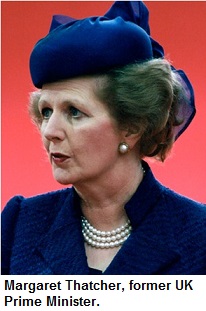
We need to talk; this is not working; we need to start seeing other people.

I know you love me, but I want, need and deserve better.

It would be such a humorous story, if this boy-meets-girl-boy-loses-girl anecdote was only fictional. But, it is real, and it is us in the Caribbean losing the love and livelihood of our Diaspora, those that have emigrated away.  🙁

So we must contemplate the economic stewardship that exists in our Caribbean region; we must look at the attributes of the competing homelands that have lured away our people and we must do better / be better. That competing attribute is not the Democratic Socialism precepts where we are counting on Other People’s Money. No, it is the full embrace of Free Market economic principles.

This is the purpose and scope of this current series for the month of June 2019; see the catalog here of our submissions:

  1. Free Market Versus: Communism – Can they both co-exist?
  2. Free Market Versus: China – Two systems at play in ‘Words and Actions’
  3. Free Market Versus: Socialism – Prevalent in the Caribbean
  4. Free Market Versus: Cooperatives
  5. Free Market Versus: Labor Unions – Junior Communists?
  6. Free Market Versus: Common Pool Resources – Simpler Cooperation

In this series, reference is made to the need for a comprehensive roadmap for elevating the societal engines of the Caribbean member-states. The book Go Lean…Caribbean – a roadmap for the implementation for the technocratic Caribbean Union Trade Federation (CU) – asserts that we must reform and transform to have any hope of retaining our young people in the region; the book states (Page 3):

Our youth, the next generation, may not be inspired to participate in the future workings of their country; they may measure success only by their exodus from their Caribbean homeland.

This is entry 3-of-6 for this academic-yet-energetic series. In the first submission, the history of Free Market versus Communism was traced. It was concluded that:

After some debate – 100 years – the judgment is that Free Market economies are more prosperous than centrally controlled economies, think Communist states. Even Russia, the former Head of the communist-bloc Union of Soviet Socialist Republics has transformed and is now a Free Market country.

We lament that so many of the 30 Caribbean member-states have married themselves to left-leaning economic-political systems or worse have not even tried to exert economic independence at all. See these details here:

Left-Leaning Socialist Extremes Colonial Dependencies
Antigua & Barbuda – does not even allow private property ownership on the island of Barbuda. British Overseas Territories (6)
Grenada – Flirted with Marxism that lead to an invasion by Eastern Caribbean & American forces to quell a military coup in 1983 Dutch Overseas Territories (6)
Guyana – doubled-down on extreme socialism to where they invited the People Temple to commune there in 1978. The resulting atrocities of over 900 deaths remain a “black-eye” on Caribbean governance. French Overseas territories (4)
Cuba – After 60 years of a failed communist revolution, the country’s infrastructure is still stuck on 1959. Half of the natural citizens have fled in that time. 2 US Territories of Puerto Rico and the US Virgin Islands

This is not our first close-examination of Caribbean socialism. In fact, now is a good time to Encore the blog-commentary from October 12, 2017 lamenting a new round of Caribbean leaders begging colonial masters for undeserved bail-outs and hand-outs. See that Encore here as follows:

====================================

Go Lean Commentary – Caribbean proposes new US-Caribbean trade initiative

The problem with socialism is that you eventually run out of other peoples’ money. – Margaret Thatcher CU Blog - Caribbean Island proposes new US-Caribbean trade initiative - Photo 1

Many Caribbean member-states feature a governmental structure of democratic socialism; (see Appendix below).

In some places, socialism is a bad word – think Venezuela – but other states feature an advanced prosperous country despite the socialism tag – think Canada. In general, socialism can be depicted as a scale with leftist communism on one end and right-wing capitalism on the other end. The observation and analysis of these varying states during good times and bad times is that the left-leaning socialism countries tend to suffer from a lot of societal abandonment, especially when things go bad, for the reason as described by Margaret Thatcher above. (Consider for example, the Caribbean island of Barbuda, before their recent disaster, there was no private land-ownership).

So many Caribbean member-states have “run out of other people’s money”, thus ensuring a crisis. Alas, this …

… crisis is a terrible thing  to waste – American Economist Paul Romer

The crisis in the Caribbean region right now is in response to Hurricanes Irma and Maria in September 2017 that have devastated many islands – think Puerto Rico, Barbuda and Dominica. It is a good time to re-think the affinity for democratic socialism. These natural disasters are forcing our region to re-think one of the hallmarks of capitalism; our policies on …

… Trade; American Trade to be exact.

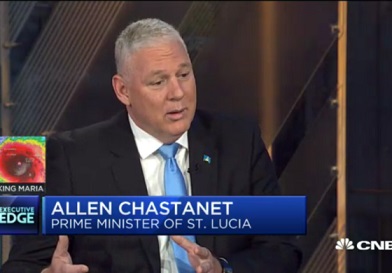
Yet still, it becomes obvious what the problem is for so many Caribbean member-states, they seem to “just” want to spend other people’s money rather than do the heavy-lifting – Big Deal – of growing their own economy/wealth. Notice this theme in the news article here from the St. Lucia Times daily newspaper regarding the urgings of their Prime Minister Allen Chastanet:

Title: Prime Minister Chastanet proposes new US-Caribbean trade initiative

CU Blog - Caribbean Island proposes new US-Caribbean trade initiative - Photo 2On the side-lines of the UN General Assembly in New York, Prime Minister Allen Chastanet has been speaking to the American business network CNBC.

Prime Minister Chastanet discussed the recent hurricanes that have devastated parts of the Caribbean, rebuilding the Caribbean and Caribbean – US relations.

He said recent events have showed that the Caribbean needs to diversify in terms of its sources of food, pointing to a shutdown of the American hub for several days.

“The support has had to come from the south because while we were going through this, you had two hurricanes heading up north. And literally Miami was on a shutdown. So unfortunately the American hub got shutdown almost for ten days out of Miami.  And so it really has shown us that we need to diversify ourselves a bit and maybe look a bit more to Panama in terms of supplies of food,” Chastanet.

Chastanet said the resilience of the Caribbean is very strong and the region will band together to recover from the disasters.

Chastanet proposed the establishment of a new private sector led initiative what would allow US companies to invest in St Lucia tax free and have their resources sent back home without facing heavy US government taxes.

He said there are great investment opportunities in the Caribbean for American companies.

“Can we not get an incentive, and that’s what we’re in discussions with the US about, that if US companies invest into the Caribbean, that those investments in our books are always tax free that the US allow those funds to be repatriated back into the US tax-free, only on those investments. So 1, it accomplishes getting the funds back into the United States of America. It creates an avenue for the private sector to participate in this growth and brings a lot of money to the table, Chastanet said.

Prime Minister Chastanet is expected to address the UN General Assembly today.

Source: Posted September 21, 2017; retrieved October 11, 2017 from: https://stluciatimes.com/2017/09/21/prime-minister-chastanet-proposes-new-us-caribbean-trade-initiative

As related, the Prime Minister of St. Lucia – also Chairman of the Organization of Eastern Caribbean States and a governing stakeholder of CariCom – wants to “count America’s money”! He is lobbying for a law – in the US – in which American investors will have tax concessions on their tax obligations to the US Treasury. (There would be no benefit to the US in this scheme).

He is the Chief Executive of a Caribbean member-state urging the US government to skip on their revenue collections so as to benefit the Caribbean; in effect he is “counting” America’s government revenues. See the full interview in the Appendix VIDEO below.

It should be noted that there is no such bill in the US Congress proposing these measures; so this is not lobbying. Rather the imagery of this whole appeal is just that of a foreign Head of Government begging for money with a sign that reads:

“Will NOT work for food”.

CU Blog - OECS diplomat has dire warning for Caribbean countries - Photo 3

No, this is not the branding or image we should want to project to the watching world. But rather, the Honorable Prime Minister’s earlier words reflect the ethos we really need to portray:

Chastanet said the resilience of the Caribbean is very strong and the region will band together to recover from the disasters.

Rather than looking to the US to solve our problems, we want to band together – an interdependence – and work for our own remediation. This is the theme of the book Go Lean…Caribbean and the accompanying blog-commentaries. “Band together” should have been the only appeal at the United Nations. These words should have been echoed in public forums and private discussions with other Caribbean leaders. The Go Lean movement describes this “banding” as a confederation of the 30 Caribbean member-states, including the 2 US Territories of Puerto Rico and the US Virgin Islands. This formation of a Single Market and accompanying Security Pact would usher in the economic empowerments and security/emergency optimization that the region needs.

The book Go Lean…Caribbean – available to download for free – serves as a roadmap for the introduction and implementation of this confederation, the technocratic Caribbean Union Trade Federation (CU). This complex organization structure is designed for the elevation of Caribbean society – for all member-states. This CU/Go Lean roadmap has these 3 prime directives:

  • Optimization of the economic engines in order to grow the regional economy to $800 Billion and create 2.2 million new jobs.
  • Establishment of a security apparatus to ensure public safety and protect the resultant economic engines.
  • Improve Caribbean governance to support these engines, including a separation-of-powers between the member-states and CU federal agencies. This includes Self-Governing Entities, bordered campuses that practice pure capitalism.

The book stresses that reforming and transforming the Caribbean societal engines can be successful, but only if it is a regional pursuit – all the member-states band together. This was an early motivation for the roadmap, as pronounced in the opening Declaration of Interdependence (Pages 12 – 13):

i.   Whereas the earth’s climate has undeniably changed resulting in more severe tropical weather storms, it is necessary to prepare to insure the safety and security of life, property and systems of commerce in our geographical region. As nature recognizes no borders in the target of its destruction, we also must set aside border considerations in the preparation and response to these weather challenges.

xi. Whereas all men are entitled to the benefits of good governance in a free society, “new guards” must be enacted to dissuade the emergence of incompetence, corruption, nepotism and cronyism at the peril of the people’s best interest. The Federation must guarantee the executions of a social contract between government and the governed.

xvi. Whereas security of our homeland is inextricably linked to prosperity of the homeland, the economic and security interest of the region needs to be aligned under the same governance. Since economic crimes … can imperil the functioning of the wheels of commerce for all the citizenry, the accedence of this Federation must equip the security apparatus with the tools and techniques for predictive and proactive interdictions.

xxiv. Whereas a free market economy can be induced and spurred for continuous progress, the Federation must install the controls to better manage aspects of the economy: jobs, inflation, savings rate, investments and other economic principles. Thereby attracting direct foreign investment because of the stability and vibrancy of our economy.

Our appeal to the PM of St. Lucia and to the leaders of all the other member-states:

This is not our first hurricane nor will it be our last. We must recover from these ones and be prepared for others, a lot more of them. “Begging” should not be our recovery plan!

On the other hand, the Go Lean book provides 370-pages of turn-by-turn instructions on “how” to adopt new community ethos, plus the strategies, tactics, implementations and advocacies to execute so as to reboot, reform and transform the societal engines of Caribbean society.

The branding of the CU is a Trade federation, so there is emphasis for optimizing trade for the Caribbean region. Yes, there is tactical plan to establish trade routes beyond Miami-to-the-Caribbean. The Go Lean roadmap posits that with the close proximity of Trinidad to the South American country of Venezuela (7 miles), there could be an elaborate network of transportation options to facilitate the shipment of goods (and passengers) into the Singe Market.

This roadmap is a Big Deal / Big Idea for the Caribbean region; in many ways, the community commitment for the Caribbean may be similar to the American commitment in the 1960’s to Go to the Moon. The Go Lean book relates this on Page 127:

The Bottom Line on Kennedy’s Quest for the Moon
On 25 May 1961, US President John F. Kennedy announced his support for the American Space program’s “Apollo” missions and redefined the ultimate goal of the Space Race in an address to a special joint session of Congress:

  • “I believe that this nation should commit itself to achieving the goal, before this decade is out, of landing a man on the moon and returning him safely to the earth”.

His justification for the Moon Race was both that it was vital to national security and that it would focus the nation’s energies in other scientific and social fields.

This quest was succeeded. At 10:56 pm EDT, on 20 July 1969, the first human (American Astronaut Neil Armstrong) ventured out of the Apollo 11 landing craft and set foot on the Moon declaring: “one small step for man, one giant leap for mankind“.

Other countries have had subsequent moon landings.

Can we get the support of the Prime Minister of St. Lucia and the other Heads of Government throughout the whole region for our “Moon Shot” equivalent, our Big Deal / Big Idea? This is the actual title of one advocacy in the Go Lean book. Consider the specific plans, excerpts and headlines here from Page 127, entitled:

10 Big Ideas … in the Caribbean Region

1

Lean-in for the Caribbean Single Market
The CU is a big idea for the Caribbean, our parallel of the American “moon quest”, allowing for the unification of theregion into one market of 42 million people. This creates the world’s 29th largest economy, based on 2010 figures.The pre-ascension GDP figures are actually less that $800 Billion, but the aggregation into a Single Market willmanifest the economic “catch-up” principle, in 5 years. Further, after 10 years the CU’s GDP should double andrank among the Top 20 or G20 nations.

2

Currency Union / Single Currency

3

Defense / Homeland Security Pact

4

Confederation Without Sovereignty

5

Four Languages in Unison

6

Self-Governing Entities (SGE)

7

Virtual “Union Atlantic Turnpike” Operations
Ferries, Causeways/Bridges, Pipelines, Tunnels, Railways and limited access highways will function as “blood vessels to connect all the organs” within the region, thus allowing easier transport of goods and people among the islands and the mainland states (Belize, Guyana or Suriname) – See Appendix IC Alaska Marine Highway [on Page 280].

8

Cyber Caribbean
Forge electronic commerce industries so that the Internet Communications Technology (ICT) can be a great equalizer in economic battles of global trade. This includes e-Government (outsourcing and in-sourcing for member-states systems) and e-Delivery, Postal Electronic Last Leg mail, e-Learning and wireline/wireless/satellite initiatives.

9

e-Learning – Versus – Studying Abroad

10

Cuba & Haiti

There have been a number of blog-commentaries by the Go Lean movement that highlighted the art and science of optimizing our eco-system for “Trade and Transport”. See a sample list here:

https://goleancaribbean.com/blog/?p=13140 Region-wide Industrial Reboot of Caribbean Pipelines
https://goleancaribbean.com/blog/?p=12322 Ferries 101 – Launch of a Region-wide Inter-Island Ferry System
https://goleancaribbean.com/blog/?p=9179 The Vision of Ferries for Snowbirds to Head South
https://goleancaribbean.com/blog/?p=4897 Plan for Natural Gas Distribution for Caribbean Consumption
https://goleancaribbean.com/blog/?p=3225 Caribbean is Less Competitive Due to Increasing Aviation Taxes
https://goleancaribbean.com/blog/?p=829 Facilitating Trade with Trucks and Trains
https://goleancaribbean.com/blog/?p=673 Future Model: Ghost Ships – Autonomous Cargo Vessels

In summary, it is only logical to expect any stewards of society to “corral” the resources, assets and people of the community to effect change, to elevate. On the other hand, it is not logical to expect others to do it for us. This is a child’s expectation for his/her parents. This is inappropriate for independent Caribbean member-states. The aforementioned Economist, Paul Romer, asserted the appropriate strategic plan:

“Economic growth occurs whenever people take resources and re-arrange them in ways that are more valuable”.

Obviously, this economist was advocating a capitalist agenda, in contrast to the democratic socialism practice in the region.

There is only a 7-mile strait between the Caribbean island Trinidad of and its southern neighbor. It is only logical to consider that trade route when the northern route – Miami – is impeded. Such a tactical plan will allow for resiliency for post-disaster scenarios. A potpourri of transportation options – Union Atlantic Turnpike – to facilitate interstate commerce among the islands and coastal states is a better plan than begging for other people’s money.

To all you Caribbean leaders: Do not be surprised when a hurricane hits. Count on it! There will be more … such scenario’s. Climate Change is undeniable! Destructive storms will manifest! Bad actors will emerge. There is a need for security empowerments along with economic empowerments. The economic solution for the Caribbean cannot be: Counting other people’s money.

Now is the time for all of the Caribbean – the leaders and the people – to lean-in for the empowerments described here in the book Go Lean…Caribbean. It is conceivable, believable and achievable to prosper ourselves where planted here in the region; to reform and transform and make our own homeland a better place to live, work and play. 🙂

Download the free e-Book of Go Lean … Caribbean – now!

Sign the petition to lean-in for this roadmap for the Caribbean Union Trade Federation.

———–

Appendix VIDEO – Saint Lucia PM Allen Chastanet: Caribbean Needs To Diversify Search For Relief | CNBC – https://youtu.be/asg87s29c4E

Published on Sep 20, 2017 – Allen Chastanet, Prime Minister of Saint Lucia, talks about rebuilding the hard-hit Caribbean after recent storms left the islands devastated. Also Prime Minister Chastanet addresses insurance coverage.

———–

Appendix – Democratic Socialism

Democratic socialism is a political ideology that advocates political democracy alongside social ownership of the means of production, often with an emphasis on democratic management of enterprises within a socialist economic system.

Democratic socialists see capitalism as inherently incompatible with the democratic values of liberty, equality and solidarity; and believe that the issues inherent to capitalism can only be solved by superseding private ownership with some form of social ownership. Ultimately, democratic socialists believe that reforms aimed at addressing the economic contradictions of capitalism will only cause more problems to emerge elsewhere in the economy, that capitalism can never be sufficiently “humanized” and that it must therefore ultimately be replaced with socialism.[1][2]

Democratic socialism is distinguished from both the Soviet model of centralized socialism and from social democracy, where “social democracy” refers to support for political democracy; the nationalization and public ownership of key industries but otherwise preserving and strongly regulating, private ownership of the means of production; regulated markets in a mixed economy; and a robust welfare state.[3] The distinction with the former is made on the basis of the authoritarian form of government and centralized economic system that emerged in the Soviet Union during the 20th century,[4] while the distinction with the latter is made on the basis that democratic socialism is committed to systemic transformation of the economy while social democracy is not.[5]

The term “democratic socialism” is sometimes used synonymously with “socialism” and the adjective “democratic” is often added to distinguish it from the LeninistStalinist and Maoist types of socialism, which are widely viewed as being non-democratic in practice.[6]

Democratic socialism is not specifically revolutionary or reformist, as many types of democratic socialism can fall into either category, with some forms overlapping with social democracy, supporting reforms within capitalism as a prelude to the establishment of socialism.[7] Some forms of democratic socialism accept social democratic reformism to gradually convert the capitalist economy to a socialist one using pre-existing democratic institutions, while other forms are revolutionary in their political orientation and advocate for the overthrow of the bourgeoisie and the transformation of the capitalist economy to a socialist economy.[8]

Relation to economics

Democratic socialists have espoused a variety of different socialist economic models. Some democratic socialists advocate forms of market socialism where socially-owned enterprises operate in competitive markets and in some cases are self-managed by their workforce. On the other hand, other democratic socialists advocate for a non-market participatory economy based on decentralized economic planning.[38]

Democratic socialism has historically been committed to a decentralized form of economic planning opposed to Stalinist-style command planning, where productive units are integrated into a single organization and organized on the basis of self-management.[39]

Contemporary proponents of market socialism have argued that the major reasons for the failure (economic shortcomings) of Soviet-type planned economies was the totalitarian nature of the political systems they were combined with, lack of democracy and their failure to create rules for the efficient operation of state enterprises.[40]

Source: Retrieved October 11, 2017 from: https://en.wikipedia.org/wiki/Democratic_socialism

CU Blog - Caribbean Island proposes new US-Caribbean trade initiative - Photo 3

CU Blog - Caribbean Island proposes new US-Caribbean trade initiative - Photo 4

Share this post:
, ,
[Top]

‘Free Market’ Versus … China – Two Systems at Play

Go Lean Commentary

China is on the verge of overtaking the US as the Number 1 Single Market economy in the world…

Wait, isn’t China a communist state?

Hasn’t communism failed to deliver on its promises to elevate societies that abide by its principles?

Yes, and yes …

But China demonstrates that there is a difference between principles and practices.

China abides by communist principles, but their practice is more aligned with Free Market concepts, especially with their doubling-down in trade, World Trade.

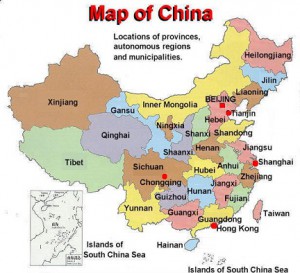
Do we truly consider Hong Kong as a communist state? Far from it; yet it is China; it is part of the “One country, two systems” practice. This means:

… a constitutional principle formulated by Deng Xiaoping, the Paramount Leader of the People’s Republic of China (PRC), for the reunification of China during the early 1980s. He suggested that there would be only one China, but distinct Chinese regions such as Hong Kong and Macau could retain their own economic and administrative systems, while the rest of the PRC (or simply “China”) uses the socialism with Chinese characteristics system. Under the principle, each of the two regions could continue to have its own governmental system, legal, economic and financial affairs, including trade relations with foreign countries. – Source: Wikipedia

This is “two systems at play”. This Hong Kong/Macau reality is the most pointed Lesson from China for a new Caribbean. We can employ the Two Systems-One Country approach so as to introduce Self-Governing Entities with their “own governmental system, legal, economic and financial affairs, including trade relations with foreign countries”.

There is wisdom to this strategy. China elevated itself from poverty to prosperity for 1.3 Billion people in just 40 years. Well done. See VIDEO here:

VIDEO – How China became the world’s second largest economy – https://youtu.be/_sV5P_F3frY

CNN Business
Published on Oct 6, 2015 – More than 500 million people have been lifted out of poverty since China’s economic reforms began in 1978.

——–

See additional VIDEO in the Appendix below.

We must do the same … for a new Caribbean.

This is the continuation of series on Free Markets Versus…; this submission is entry 2-of-6 of the full series cataloged as follows:

  1. Free Market Versus: Communism – Can they both co-exist?
  2. Free Market Versus: China – Two systems at play in ‘Words and Actions’
  3. Free Market Versus: Socialism – Prevalent in the Caribbean
  4. Free Market Versus: Cooperatives
  5. Free Market Versus: Labor Unions – Junior Communists?
  6. Free Market Versus: Common Pool Resources – Simpler Cooperation

In this series, reference is made to the need for a comprehensive roadmap for elevating the societal engines of the Caribbean member-states. We do have a role model in China, to look, listen and learn. The 2013 book Go Lean…Caribbean – a roadmap for the implementation for the technocratic Caribbean Union Trade Federation (CU) – made references (Page 64) to China with this explanation of the technocratic process:

Fostering a Technocracy
# 2 – Economists & Engineers – not Lawyers nor Politicians
The concept of a technocracy remains mostly hypothetical, though some nations have been considered as such in the sense of being governed primarily by technical experts in various fields of governmental decision-making. A technocrat has come to mean either ‘a member of a powerful technical elite’, or ‘someone who advocates the supremacy of technical experts’. Scientists, engineers, economists, and technologists, who have knowledge, expertise, or skills, would compose the governing body, instead of politicians and business people. In a technocracy, decision makers would be selected based upon how knowledgeable and skillful they are in their fields. Even the leaders of the Communist Party of China are mostly professional engineers. The Five-Year plans of the People’s Republic of China have enabled them to plan ahead in a technocratic fashion to build projects such as the National Trunk Highway System, the High-speed rail system, and the Three Gorges Dam.

China uses technocratic practices.

This is the biggest take-away in studying China.

There is so much more for us to learn by studying the Chinese reality of their brand of Free Markets and their brand of Communism, or their hybrid reality in between. In a previous blog-commentary, this lesson was detailed:

No doubt, there is the need to grow the Caribbean economy; we need jobs, entrepreneurial opportunities, better educational and healthcare options, a safer homeland and more efficient governmental services. Since trade policies (chattel goods and intellectual property) affect all of these deliveries, we need to pay more than the usual attention to these discussions. Trade has also been prominent in the news as of late, with the current American Federal government’s (under President Donald Trump) new penchant for tariffs and the UK negotiating a new trade deal as they leave the European Union (Brexit).

So there is the need for a 360 degree view of trade: the good; the bad; and the ugly. The Caribbean status quo is ugly, in terms of trade, there is the need to reform and transform, so as to reboot our society. But we are not the first, (and will not be the last). Let’s see the lessons we can learn from the trade strategies, tactics and implementations of others. We can all benefit!

Let’s start with China; there are parallels to consider. They need to provide for 1.3 Billion people, and so they are embracing market-based economics. In the Caribbean we only need to provide for 42 million, but we are like a fish in the pond; it does not matter how big the ocean is, we are limited to our pond. This is the definition of scope; our time, talents and treasuries must be designed to impact just these 30 island-nations and coastal states. Despite the size, there is the need for efficiency and effectiveness with market-based economic concepts. This is defined in the Go Lean book as technocratic/technocracy:

    The term technocracy was originally used to designate the application of the scientific method to solving social & economic problems, in counter distinction to the traditional political or philosophic approaches. – Go Lean book Page 64.

Is the “One country, two systems” truly effective for Hong Kong, Macau and China? They do have problems. There have outstanding and ongoing political discrepancies between the 2 entities. These all seem to tie to issues of culture and governance, rather than economics or security. See these encyclopedic details:

Title: Hong Kong 

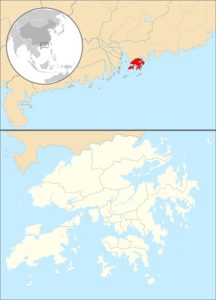
Hong Kong, officially the Hong Kong Special Administrative Region of the People’s Republic of China, is a special administrative region on the eastern side of the Pearl Riverestuary in southern China. With over 7.4 million people of various nationalities[d] in a 1,104-square-kilometre (426 sq mi) territory, Hong Kong is the world’s fourth-most densely populated region.

Hong Kong became a colony of the British Empire after Qing China ceded Hong Kong Island at the end of the First Opium War in 1842.[17] The colony expanded to the Kowloon Peninsula in 1860 after the Second Opium War, and was further extended when Britain obtained a 99-year lease of the New Territories in 1898.[18][19] The territory was transferred to China in 1997.[20] As a special administrative region, Hong Kong maintains separate governing and economic systems from that of mainland China,[21] and its people overwhelmingly identify as Hongkongers rather than Chinese.[22]

Originally a sparsely populated area of farming and fishing villages,[17] the territory has become one of the world’s most significant financial centres and commercial ports.[23] It was estimated to be the world’s tenth-largest exporter and ninth-largest importer,[24][25]and its legal tender (the Hong Kong dollar) is the world’s 13th-most traded currency.[26] Hong Kong hosts the largest concentration of ultra high-net-worth individuals of any city in the world.[27][28] Although the city has one of the highest per capita incomes in the world, there is severe income inequality.[29]

Hong Kong is classified as an alpha+ world city, indicating its influence throughout the world.[30] The city has the largest number of skyscrapers in the world, most surrounding Victoria Harbour.[31] Hong Kong consistently ranks high on the Human Development Index, and has one of the highest life expectancies in the world.[32] Over 90 per cent of its population uses public transportation.[33]Air pollution from neighbouring industrial areas of mainland China has caused a high level of atmospheric particulates in the region.[34] …

Source: Retrieved June 20, 2019 from: https://en.wikipedia.org/wiki/Hong_Kong

———

Title: Special administrative regions of China
The special administrative regions (SAR) are one type of provincial-level administrative divisions of China directly under Central People’s Government. They possess the highest degree of autonomy.
The legal basis for the establishment of SARs, unlike the administrative divisions of Mainland China, is provided for by Article 31, rather than Article 30, of the Constitution of the People’s Republic of China of 1982. Article 31 reads: “The state may establish special administrative regions when necessary. The systems to be instituted in special administrative regions shall be prescribed by law enacted by the National People’s Congress in the light of the specific conditions”.[3][4][5][6]

At present, there are two SARs established according to the Constitution, namely the Hong Kong SAR and the Macau SAR, former British and Portuguese dependencies respectively,[7] transferred to China in 1997 and 1999 respectively pursuant to the Sino-British Joint Declaration of 1984 and the Sino-Portuguese Joint Declaration of 1987. Pursuant to their Joint Declarations, which are binding inter-state treaties registered with the United Nations, and their Basic laws, the Chinese SARs “shall enjoy a high degree of autonomy“.[8] Generally, the two SARs are not considered to constitute a part of Mainland China, by both Chinese and SAR authorities.

There is additionally the Wolong Special Administrative Region in Sichuan province, which is however not established according to Article 31 of the Constitution.

The provision to establish special administrative regions appeared in the constitution in 1982, in anticipation of the talks with the United Kingdom over the question of the sovereignty over Hong Kong. It was envisioned as the model for the eventual reunificationwith Taiwan and other islands, where the Republic of China has resided since 1949. Special administrative regions should not be confused with special economic zones, which are areas in which special economic laws apply to promote trade and investments.

Under the One country, two systems principle, the two SARs continue to possess their own governmentsmulti-party legislatures, legal systemspolice forcesmonetary systemsseparate customs territoryimmigration policiesnational sports teamsofficial languagespostal systems, academic and educational systems, and substantial competence in external relations that are different or independent from the People’s Republic of China.

Special administrative regions should be distinguished from the constituent countries system in the United Kingdom or Kingdom of the Netherlands. …

Source: Retrieved June 20, 2019 from: https://en.wikipedia.org/wiki/Special_administrative_regions_of_China

———-

Title: Hong Kong–Mainland China conflict
Relations between people in Hong Kong and mainland China have been relatively tense in the early 2000s. Various factors have contributed, including different interpretations of the “One country, two systems” principle; policies of the Hong Kong and central governments to encourage mainland visitors to Hong Kong; and the changing economic environment.

These tensions are expressed as hostility toward mainlanders by radical political actors and ordinary citizens alike. More broadly, it is expressed in a sense of superiority of Hong Kongers over mainlanders, resentment toward mainland-Hong Kong convergence or assimilation, interference from the mainland in Hong Kong’s internal affairs and disappointment over Hong Kong’s declining economic influences. While some mainlanders view Hong Kongers as arrogant, ungrateful, and disloyal, Hong Kongers see mainlanders as rude, ill-mannered, poorly-educated, and dirty.[1][2]

1.0 Background

The sovereignty of Hong Kong was transferred from the United Kingdom to the People’s Republic of China in 1997. The terms agreed between the governments for the transfer included a series of guarantees for the maintenance of Hong Kong’s differing economic, political and legal systems after the transfer, and the further development of Hong Kong’s political system with a goal of democratic government. …

Hong Kong has more international cultural values from its past as a British colony and international city, and at the same time has retained many traditional Chinese cultural values, putting it in stark contrast to the culture of many parts of mainland China, where many international cultural values have never taken root and where many traditional cultural values have evolved.[8] Hong Kong is also a multi-ethnic society with different cultural values in relation to race, languages and cultures to those held by the Chinese government and many mainland residents. As a highly developed economy with a high standard of living, Hong Kong culture has different values in relation to hygiene and social propriety compared to mainland China. Hong Kong-mainland conflict is mainly attributed to the cultural differences[9] between Hong Kong people and mainlanders, such as languages,[10] as well as the significant growth in number of mainland visitors. …

2.0 Incidents

  1. Tour guide Lee Qiaozhen verbally abused mainland tourist
  2. Dolce & Gabbana controversy
  3. Kong Qingdong calling Hong Kongers “old dogs”
  4. Parallel trading in Hong Kong
  5. Anchor babies in Hong Kong
  6. Racial abuse of Hong Kong football team
  7. Siu Yau-wai case
  8. Anti-mainlandisation motion
  9. CUHK democracy wall tensions

Source: Retrieved June 20, 2019 from: https://en.wikipedia.org/wiki/Hong_Kong%E2%80%93Mainland_China_conflict

For our efforts of stewardship in the Caribbean, we look at China and declare the Lesson learned. We know we must optimize culture and governance simultaneously as we elevate the economic engines.

We do want the China kind of growth here in the Caribbean; we do want Free Market-based trade with the rest of the world; we also want a harmonious society. See how this theme – carefully directing societal defects – aligns with many previous Go Lean commentaries; see a sample list here:

https://goleancaribbean.com/blog/?p=17515 Changing the Culture & Currency of Commerce
https://goleancaribbean.com/blog/?p=17464 Bad Ethos Retarding ‘New Commerce’
https://goleancaribbean.com/blog/?p=17284 Way Forward – ‘Whatever it takes’: Life Imitating Art
https://goleancaribbean.com/blog/?p=16907 Societal Empowerment – Thoughts. Feelings. Speech. Action.
https://goleancaribbean.com/blog/?p=14718 A more Perfect Union – ‘At the Table’ Rather than ‘On the Menu’
https://goleancaribbean.com/blog/?p=10216 Waging a Successful War on Orthodoxy
https://goleancaribbean.com/blog/?p=13321 Making a ‘Pluralistic Democracy’ – Multilingual Realities
https://goleancaribbean.com/blog/?p=5695 Repenting, Forgiving and Reconciling the Past

Yes, we can … do the heavy-lifting to reform and transform.

The underlying motivation of the Go Lean book is to reform and transform the Caribbean member-states. Therefore we need to embrace market-based economics, the way China has. As stated in that previous blog-commentary:

… they [China] only shifted to a market-based economy since the 1970’s, and now they have the 2nd largest single market economy … in the world. While America – the champion of market-based economies – is the largest trading partner for Caribbean member-states, we cannot just be parasites, we must be protégées.

The growth that China has shown is remarkable and repeatable. We can model their successes here in our region; the foregoing article conveyed this:

    China, having raised hundreds of millions from poverty to middle-class status since it embraced a market-based economy.

The CU roadmap is designed to drive change among the economic, security and governing engines. The Go Lean book – see below – describes how and when a new Caribbean can emerge using Free Market economic principles and operate Self-Governing Entities along side legacy systems. This approach calls for new community ethos, strategies, tactics, implementations and advocates to grow the regional economy and make a homeland a better place to live, work and play.

Everyone in the Caribbean is urged to lean-in to this roadmap to make the Caribbean member-states can offer the prospect to our young people that “Yes, they can” prosper where planted here.  🙂

About the Book
The book Go Lean…Caribbean serves as a roadmap for the introduction and implementation of the technocratic Caribbean Union Trade Federation (CU), for the elevation of Caribbean society – for all member-states. This CU/Go Lean roadmap has these 3 prime directives:

  • Optimization of the economic engines in order to grow the regional economy to $800 Billion and create 2.2 million new jobs.
  • Establishment of a security apparatus to ensure public safety and protect the resultant economic engines.
  • Improve Caribbean governance to support these engines, including a separation-of-powers between the member-states and CU federal agencies.

The Go Lean book provides 370-pages of turn-by-turn instructions on “how” to adopt new community ethos, plus the strategies, tactics, implementations and advocacies to execute so as to reboot, reform and transform the societal engines of Caribbean society.

Download the free e-Book of Go Lean … Caribbean – now!

Who We Are
The movement behind the Go Lean book – a non-partisan, apolitical, religiously-neutral Community Development Foundation chartered for the purpose of empowering and re-booting economic engines – stresses that reforming and transforming the Caribbean societal engines must be a regional pursuit. This was an early motivation for the roadmap, as pronounced in the opening Declaration of Interdependence (Pages 12 – 13):

xi. Whereas all men are entitled to the benefits of good governance in a free society, “new guards” must be enacted to dissuade the emergence of incompetence, corruption, nepotism and cronyism at the peril of the people’s best interest. The Federation must guarantee the executions of a social contract between government and the governed.

xvi. Whereas security of our homeland is inextricably linked to prosperity of the homeland, the economic and security interest of the region needs to be aligned under the same governance. Since economic crimes … can imperil the functioning of the wheels of commerce for all the citizenry, the accedence of this Federation must equip the security apparatus with the tools and techniques for predictive and proactive interdictions.

xxiv. Whereas a free market economy can be induced and spurred for continuous progress, the Federation must install the controls to better manage aspects of the economy: jobs, inflation, savings rate, investments and other economic principles. Thereby attracting direct foreign investment because of the stability and vibrancy of our economy.

Sign the petition to lean-in for this roadmap for the Caribbean Union Trade Federation.

—————-

Appendix VIDEO – China’s Economic Miracle | The RISE of CHINA Mini-Documentary | Episode 1 – KJ Vids – https://youtu.be/MJLpGiHhr8E


KJ Vids

Published on Sep 11, 2017 –
The Rise of China Mini-Documentary | Episode 1 | China’s Economic Miracle

Two centuries ago, Napoleon warned, “Let China sleep: when she wakes, she will shake the world.”

The rise of China will undoubtedly be one of the great dramas of the twenty-first century. China’s extraordinary economic growth and active diplomacy are already transforming East Asia, and future decades will see even greater increases in Chinese power and influence. In this episode we will look only at the sheer size of China today.

We will then look at it’s threats, challenges and confrontations with America in future episodes.

Watch other episodes of our Rise of China Mini-Documentary:

Episode 2 – China’s Risks and Challenges https://youtu.be/73k3v-AxJvM

Episode 3 – What Does the Chinese President XI JINPING Want? https://youtu.be/nvm0V95yjeA

Episode 4 – The SOUTH CHINA Sea Dispute https://youtu.be/Ea_9CxpF79E

Would you like to support our channel? If you enjoyed or learnt something from this video, you may kindly support our crowdfunding campaign on www.fundmyvideo.com/kjvids

Fund My Video enables video creators to recover costs for their videos, which are much higher than any revenues they receive for most channels. Most YouTubers make videos as a hobby and spend dozens of hours editing videos for little in return. Your contributions towards this channel will significantly help us create more content with even better quality. Many thanks for your support.

For business and other enquiries please email info@kjvids.co.uk Links we want you to check out;

KJ Vids Book Store – http://kjvids.co.uk/books
Patreon Club – https://www.patreon.com/kjvids
Fund My Video Page – https://www.fundmyvideo.com/kjvids

Share this post:
, ,
[Top]

‘Free Market’ Versus … Communism – Lessons from History

Go Lean Commentary

The member-states of the Caribbean are “in a pickle”.

We are “bleeding”; we are losing our populations more and more. Our people are emigrating away in search of greater prosperity. Many times, our people leave for lands that promote Free Market economic principles, as opposed to what we are currently promoting here in our region.

Every society needs to continuously grow; so population “bleeding” is a bad thing. We need to better compete. What systems are we promoting … officially or unofficially? Let’s discuss …

First, let’s talk about Free Market as an economic principle. This is the system in which the prices for goods and services are only determined by the open market and by consumers and not forcibly determined by local governments – centrally controlled – see the encyclopedic references in the Appendices below.
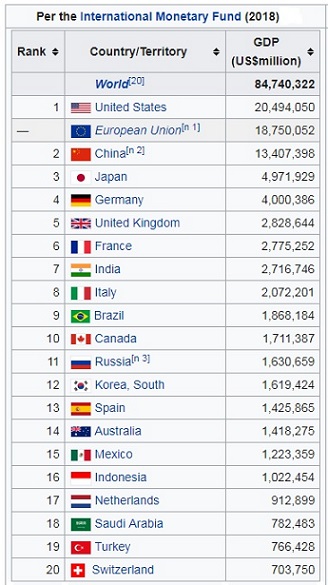
After some debate – 100 years – the judgment is that Free Market economies are more prosperous than centrally controlled economies, think Communist states. Even Russia, the former Head of the communist-bloc Union of Soviet Socialist Republics has transformed and is now a Free Market country. See the list here of “Countries by their GDP Rankings”:

In fact, few communist (pure socialist) states remain; think Laos, Vietnam, China and Cuba.

(China is a special consideration for this commentary – see below).

Cuba is not a Free Market economy, right now. But it might be soon. Cuba sera Libre!

Think back to 1959 in Cuba; truth be told, the United States of America really did not and does not care that much whether a society embraces central-controlled versus Free Market, Communism versus Capitalism. Just as long as governments do not take (nationalize) the assets that belong to Americans. (The US does huge business – Trade – with China, Vietnam and Laos; but Cuba alone remains in a trade embargo).

Truly, the problem in Cuba was the subsequent seizing of assets rather than the political – leftist – ideology. The seizing of  American businesses was in effect a de facto Act of War. (The US never engaged official warfare on Cuba because of the geo-political wrangling with the Soviet Union; the island remained a protectorate of that nuclear-armed Super Power; think Cuban Missile Crisis in 1962).
So as we contemplate the economic stewardship that exists in our Caribbean region now, this history should be front-and-center in our minds. (Cuba was not the first nor the last country to embrace leftist ideologies in the Caribbean; think Guyana, Antigua and Grenada. All these countries flirted with far extremes away from Free Market economies. Yet the US still  maintained a status quo in terms of diplomatic relations with them. (Leftist Grenada was invaded by the US in 1982 at the behest of the Organization of Eastern Caribbean States to rectify a military coup and for violating human and civil rights).

There is so much that the Caribbean can benefit from with a discussion on this history of Free Markets in this region; this is not just a dry lecture in economics, rather this is an energetic debate on the form of economic governance that the new Caribbean should be pursuing. In a recent blog-commentary regarding the American Big Box retailer Wal-Mart, the question was asked of a reader:

“Should the Caribbean economic stewards welcome Wal-Mart in the region?”.

The reader’s default answer was:

“No, they would imperil Main Street retailers”.

Such an innocent declaration is actually anti-Free Market. This scenario demonstrates why there is the need for this discussion – to better understand the economics and the history – in the following series of commentaries on the distinct differences of Free Market Versus … – see the related Music VIDEO in the Appendix below. This submission is entry 1-of-6 in a full series cataloged as follows:

  1. Free Market Versus: Communism – Can they both co-exist?
  2. Free Market Versus: China – Two systems at play in ‘Words and Actions’
  3. Free Market Versus: Socialism – Prevalent in the Caribbean
  4. Free Market Versus: Cooperatives
  5. Free Market Versus: Labor Unions – Junior Communists?
  6. Free Market Versus: Common Pool Resources – Simpler Cooperation

In this series, reference is made to the need for a comprehensive roadmap for elevating the societal engines of the Caribbean member-states. The book Go Lean…Caribbean – a roadmap for the implementation for the Caribbean Union Trade Federation (CU) – introduced a new roadmap by which Free Market exercises can exist and thrive right next door to alternative economic systems (i.e. central-controlled).

There is a lot for us to unwrap here.

This Go Lean strategy to consider is that of Self-Governing Entities (SGE). The book (Page 7) defines SGE’s as follows:

Bordered areas managed only under CU jurisdiction. These include Enterprise Zones, Industrial Parks, Technology Campuses, Medical Labs and others.

To better understand the co-existence of Self-Governing Entities, think of the military base that has been installed at Guantanamo Bay, Cuba since 1898; referred to as GITMO. Even though it is located physically in the Caribbean nation, it is 100% sovereign territory of the United States, legally established by a treaty – the 1903 Cuban–American Treaty of Relations. The Go Lean book (Page 177), in discussing the Justice requirements for a new Caribbean regime, details this background of this GITMO venue as follows:

The Bottom Line on Guantánamo Bay
Guantánamo Bay is a natural harbor, with superior attributes, south of the city of Guantánamo, in Eastern Cuba.

The harbor has been controlled by the United States as the Guantánamo Bay Naval Base since 1902, following the Platt Amendment decree. It is the site of the Guantanamo Bay detention camp. Control over the naval base was granted to the US in partial compensation for the sacrifices made by US military in obtaining Cuba’s independence from Spain, something which the Cuban people had been unable to do for themselves. The detention camp is a detainment and interrogation (with torture tactics) complex established in January 2002 by the Bush Administration to hold detainees that have been connected with opponents in the Global War on Terror. The military prison relevance is in itself controversial, as the February 1903 lease states that the US is allowed “generally to do any and all things necessary to fit the premises for use as coaling or naval stations only, and for no other purpose”. In 2007, Camp Justice was the informal name granted to the complex where Guantánamo captives would face charges before the Guantanamo military commissions.

So while one justice standard exists along-side another justice standard (US Military versus Cuba), can we truly expect a parallel structure with economics?

Absolutely! This is the very strategy of SGE’s for economic empowerment in the region.

Also, we have “it” now … already in place. (The “it” refers to alternating yet parallel economic systems).

Consider cruise ship commerce

… while food and beverage is free for cruise ship passengers, hard alcohol is a premium charge. While cruise ships are in port in the different Caribbean member-states, they are not required to abide by local alcohol sales policies and regulations: drinking age, excessive drinking guidelines, no sales tax or VAT compliance. The cruise ships, operating under Maritime Laws can operate on the ship autonomously of local governments. The cruise ship, under this scenario, is a Self-Governing Entity.

Cruise ships do service the port cities in Cuba.
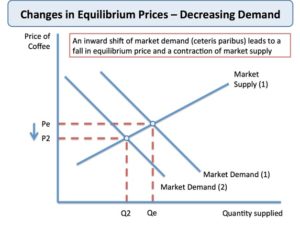
So yes, SGE’s can promote Free Market schemes, right along side communist regimes.

Are we encouraging communism? Are we tolerating societal defects and dysfunctions?

No … and No!

We simply realize that changing governing policies is not so easy and straight forward. Cuba has continued voluntarily with their communist priorities despite failures for 60 years. (It will take a Marshall Plan-type effort to reform their societal engines). The Go Lean book states (Page 4) that …

… the CU is a loose confederation, identified as a Trade Federation. There is no expectation of sovereignty with this entity, so a commitment to the goals and aspirations of this Federation must be voluntary.

Plus, if we are insinuating that communism is bad, truth be told, capitalism has a lot of defects too. For example, the crony-capitalism and institutional racism in American and Western European societies have been duly documented and lamented; (remember the derisive term: Plutocracy and references to “Foreign Investors as Dragons“).

There is no one perfect society.

The “co-exist strategy of SGE’s” may be ideal.

This theme – carefully balancing capitalism – aligns with many previous Go Lean commentaries; see a sample list here:

https://goleancaribbean.com/blog/?p=16000 Getting ‘Out of the Way’ of Local Economic Empowerment
Good Governance must reflect shepherding and oversight with an eye towards local needs, not just some distant economic controller. Growing the economy must include local economic empowerment as well, a reflection on the supply and demand of the marketplace.
https://goleancaribbean.com/blog/?p=2338 Welcoming the Dreaded ‘Plutocracy’
A mono-industrial economy creates a reality for industrial-corporate titans can have abusive effect on the societal engines in a community.
https://goleancaribbean.com/blog/?p=11057 Managing the ‘Strong versus the Weak’ – Book Review: Sold-Out!
Wealthy business interests try to control everything and make all the important decisions, so that they can get ‘more for themselves and less for everybody else’.
https://goleancaribbean.com/blog/?p=7372 Media Fantasies versus Weather Realities
There is some “bad intent” in the American media eco-system. Many believe that media hype over weather forecasts spurs retail spending (surplus food, gasoline, generators, and firewood) to benefit companies that contract media purchases (advertising) with the media outlets.
https://goleancaribbean.com/blog/?p=6819 The … Downside of ‘Western’ Diets
American food standards (Standard American Diet = SAD) is notorious for many physical-medical and mental repercussions. Many times the motivation is crony-capitalistic. We want to do better in our homeland.
https://goleancaribbean.com/blog/?p=5993 Carnival Cruise Lines to ban carry-on bottled beverages
Cruise lines rarely conform to labor, anti-trust and competition laws. Mandating bottled beverages to be exclusively delivered by the merchant ship is just one more example of their crony-capitalism.

Free Market capitalism versus …

(See Music VIDEO in the Appendix below).

The Caribbean region is urged to simply do better, to not just lean left (towards communism) or right (towards pure capitalism), but rather to pursue what is best for the Greater Good. This is defined as:

“It is the greatest good to the greatest number of people which is the measure of right and wrong”. – Jeremy Bentham (1748 – 1832)

All in all, our economic, security and political structures are defective and deficient, we must reboot and reform our society. There are role models to the left – think China – and to the right – think Iceland – where communities have succeeded in elevating their societal engines. Despite initial appearances, the “grass is not necessarily greener on the other side”, on these foreign shores; they should not be considered the panacea of our ills; nor should emigrating there be considered the destination of our hopes and dreams.

We must work on our Caribbean Dreams right here at home. We must study and observe these ‘other communities’. We can then deploy the best-practices we glean. Much is at stake; we must dissuade our young people from abandoning our beautiful homeland, as they are our most precious resource.

This is the quest of the Go Lean roadmap. We want to make our homeland a better place to live, work and play.

We hereby urge the people and governing institutions in the region to lean-in for the empowerments described here in the book Go Lean … Caribbean.  🙂

About the Book
The book Go Lean…Caribbean serves as a roadmap for the introduction and implementation of the technocratic Caribbean Union Trade Federation (CU), for the elevation of Caribbean society – for all member-states. This CU/Go Lean roadmap has these 3 prime directives:

  • Optimization of the economic engines in order to grow the regional economy to $800 Billion and create 2.2 million new jobs.
  • Establishment of a security apparatus to ensure public safety and protect the resultant economic engines.
  • Improve Caribbean governance to support these engines, including a separation-of-powers between the member-states and CU federal agencies.

The Go Lean book provides 370-pages of turn-by-turn instructions on “how” to adopt new community ethos, plus the strategies, tactics, implementations and advocacies to execute so as to reboot, reform and transform the societal engines of Caribbean society.

Download the free e-Book of Go Lean … Caribbean – now!

Who We Are
The movement behind the Go Lean book – a non-partisan, apolitical, religiously-neutral Community Development Foundation chartered for the purpose of empowering and re-booting economic engines – stresses that reforming and transforming the Caribbean societal engines must be a regional pursuit. This was an early motivation for the roadmap, as pronounced in the opening Declaration of Interdependence (Pages 12 – 13):

xi. Whereas all men are entitled to the benefits of good governance in a free society, “new guards” must be enacted to dissuade the emergence of incompetence, corruption, nepotism and cronyism at the peril of the people’s best interest. The Federation must guarantee the executions of a social contract between government and the governed.

xvi. Whereas security of our homeland is inextricably linked to prosperity of the homeland, the economic and security interest of the region needs to be aligned under the same governance. Since economic crimes … can imperil the functioning of the wheels of commerce for all the citizenry, the accedence of this Federation must equip the security apparatus with the tools and techniques for predictive and proactive interdictions.

xxiv. Whereas a free market economy can be induced and spurred for continuous progress, the Federation must install the controls to better manage aspects of the economy: jobs, inflation, savings rate, investments and other economic principles. Thereby attracting direct foreign investment because of the stability and vibrancy of our economy.

Sign the petition to lean-in for this roadmap for the Caribbean Union Trade Federation.

—————

Appendix – Reference: Free Market
In economics, a free market is a system in which the prices for goods and services are determined by the open market and by consumers. In a free market, the laws and forces of supply and demand are free from any intervention by a government or other authority and from all forms of economic privilege, monopolies and artificial scarcities.[1] Proponents of the concept of free market contrast it with a regulated market in which a government intervenes in supply and demand through various methods such as tariffs used to restrict trade and to protect the local economy. In an idealized free-market economy, prices for goods and services are set freely by the forces of supply and demand and are allowed to reach their point of equilibrium without intervention by government policy. [Consider images here of Equilibrium curves for coffee and for gasoline].

Scholars contrast the concept of a free market with the concept of a coordinated market in fields of study such as political economynew institutional economicseconomic sociology and political science. All of these fields emphasize the importance in currently existing market systems of rule-making institutions external to the simple forces of supply and demand which create space for those forces to operate to control productive output and distribution. Although free markets are commonly associated with capitalism within a market economy in contemporary usage and popular culture, free markets have also been advocated by anarchistssocialists and some proponents of cooperatives and advocates of profit sharing.[2] Criticism of the theoretical concept may regard systems with significant market powerinequality of bargaining power, or information asymmetry as less than free, with regulation being necessary to control those imbalances in order to allow markets to function more efficiently as well as produce more desirable social outcomes.

Contents

Source: Retrieved June 11, 2019 from: https://en.wikipedia.org/wiki/Free_market

—————

Appendix VIDEO – CAPITALISM VS. SOCIALISM SONG | Economics & Politics Music Video – https://youtu.be/23p1AYq8jBA

Premiered Mar 4, 2019 – Excerpts of Lyrics:

“Systems with different ideas, opposite of each other
Both argue they manage production and resources better
But most modern countries use both systems blended together
Mixed economies, mixed economies …”

Lyrics and performance by Jam Campus
Instrumental composition by: https://www.fiverr.com/napbak

Share this post:
, , , , , ,
[Top]

Is the US a ‘Just’ Society? Hardly! – ENCORE

People want to live in a just society.

So many Caribbean people have fled their ancestral homelands in search of refuge in foreign lands, like the US. If our expatriates are seeking a more just society, then they will be sadly disappointed with the American experience.

Ah, the American legal system! So many courts – County, Circuit, District, Appeals and Supreme – and yet justice is so elusive. One population groups gets too much mercy and one population group gets too much punishment.

Is there any doubt as to which population group gets what treatment? White people get the privilege, while the Black-and-Brown gets the shaft.

These are not just my words alone. Consider these anecdotes.

First, we have the sentencing – yesterday June 13, 2019 – of John Vandemoer, the Stanford sailing coach who confessed to racketeering charges in connection with the college entrance scam. He will serve no time in prison. He is White. See the full story here:

Title: Former Stanford sailing coach gets no prison time in the college admissions scam
By:
Mark Morales, CNN
Former Stanford sailing coach John Vandemoer will serve no time in prison in connection with the college entrance scam. He is the first among 50 people charged in connection with the scheme to be sentenced.

Vandemoer was sentenced to two years supervised release and a $10,000 fine. He must spend the first six months of the sentence in home detention with electronic monitoring, Massachusetts Judge Rya Zobel said.

Vandemoer pleaded guilty to conspiracy to commit racketeering for arranging bribes of $110,000 and $160,000 to the sailing program and then designating two applicants, who had no sailing experience, as sailing recruits, according to his criminal complaint.

Neither student completed the application process, university officials said.

The 50 people charged in the scam include coaches, parents, and members of mastermind William Rick Singer‘s inner circle, who were arrested in connection with the scandal in March.

“Mr Vandemoer is probably the least culpable,” Judge Zobel said during sentencing. “They (the others charged) took money for themselves. He did not do that. All the money he took went directly to the sailing program.”

Assistant US Attorney Eric Rosen had recommended a 13-month prison sentence for Vandemoer, arguing that it would help deter others in powerful university positions from similar crimes and that punishment would help restore confidence in the admission system.

“His actions not only deceived and defrauded the university that employed him, but also validated a national cynicism over college admissions by helping wealthy and unscrupulous applicants enjoy an unjust advantage over those who either lack deep pockets or are simply unwilling to cheat to get ahead,” Rosen wrote in a sentencing memorandum filed on June 7.

Vandemoer’s attorney, Robert Fisher, wrote to Judge Zobel in a memorandum on Friday that he should get probation and not a prison sentence, arguing that he didn’t pocket any of the money, didn’t take any money from the university and that this was his only instance of bad judgement.

“Mr. Vandemoer failed in one instance to live up to the high expectations he sets for himself,” Fisher wrote. “He fully accepts responsibility for his mistake. Mr. Vandemoer is determined to make amends for this mistake move on with his life and continue to provide for his family.”

Just two days before Vandemoer’s sentencing, Stanford University officials submitted a victim impact statement which details how Vandemoer, who traded his slots reserved for student-athletes for bribes, has damaged the university.

“Mr. Vandemoer’s actions in this matter are profoundly disappointing and especially so as he had a reputation of caring deeply for his student-athletes,” said Debra Zumwalt, vice president and general counsel for Stanford University in a statement.

The impact statement charged that Vandemoer and Singer not only undermined the public’s trust in the college admissions process, but also cost the university valuable time and money dealing with the fallout from the federal investigation.

Stanford fired Vandemoer the very same day he plead guilty.

“I spent my life trying to be a good, moral person and here, I made a mistake,” Vandemoer said when given a chance to address the court Wednesday.

The former coach apologized to the school, alumni, the sailing team and his family and friends.

“I deserve all of this. I caused it and for that I’m deeply ashamed.”

A third student was identified by the university as having worked with Singer and Vandemoer to get admitted into Stanford, university officials said. That student’s admission was rescinded and their credits were vacated, according to the impact statement.

Stanford officials previously said the Key Worldwide Foundation, Singer’s sham charity, contributed a total of $770,000 to the sailing program in the form of three separate gifts.

That money, Zumwalt said in the statement, was considered tainted, and university officials are working with the California Attorney General to donate that money for the public’s good.

“Stanford does not wish to benefit in any way from Mr. Vandemoer’s conduct,” Zumwalt said.

Twenty-seven letters of support for Vandemoer were sent to Judge Zobel, all pleading for leniency.

“I must say they are an extraordinary group of letters … that speak of the person they love and support,” Judge Zobel said during sentencing. “That is highly unusual in this setting.”

Vandemoer’s wife, Molly Vandemoer, wrote about how the former university sailing coach found a therapist shortly after his firing and is working toward his MBA as a way to put his life back together.

“I know he made a mistake,” Molly wrote. “I know it is extremely costly to his livelihood, to our family, etc. But I know he will never do something like this again.”

Clinton Hayes, once Vandemoer’s top assistant, became the interim head of the sailing team after the coach was fired by the university. Hayes wrote about how Vandemoer put student athletes first, letting them skip out on sailing meets for valuable internships or important trips, something he said spoke to the coach’s selflessness.

“John truly cared that everyone of our student athletes left Stanford a better person and productive member of society…” Hates wrote. “John always did what was right for each individual.”

Other letters came from former students, parents, and other family members.

———-

CNN’s Theresa Waldrop contributed to this report.
Source: Retrieved June 14, 2019 from: https://www.cnn.com/2019/06/11/us/college-admissions-scandal-john-vandemoer/index.html

Just 1 day in prison … Wow!

The defendant in this case gets 1 day in jail, time served, and a 13-month suspended sentence – a “slap on the wrist” for a crime that undermines the entire US college admissions integrity.

At the other end of the spectrum, there is the treatment of Black defendants in the court system. According to this previous blog-commentary by the movement behind the book Go Lean…Caribbean, Black people are usually sentenced for longer jail-time by judges whose political affiliation is associated with the Republican Party.

See the Encore of that full blog-commentary here:

————

Go Lean Commentary – ‘Time to Go’ – Blacks get longer sentences from ‘Republican’ Judges

“Tell me who your friends are and I will tell you who you are” – Old Adage

This Old Adage was drummed in me as a youth; I may have wanted to question its validity, but time has proven its accuracy. As humans, we are affected by the people we associate with; their values, principles, character, aspirations – or lack thereof – will have an effect on us. This statement even harmonizes with the Bible scripture at 1 Corinthians 15:33, which states:

“Bad companions ruin good character.” – Today’s English Version

This commentary highlights a disturbing trend in American jurisprudence; it turns out that among judges that associates with the conservative political parties or the liberal political parties, one group consistently sentences Black defendants to longer prison sentences. This is indicative of more than just the tolerance of criminality; this shows some hidden bias, that severely endangers the Black populations in America. These judges, despite claims of non-partisanship, are affected by their party.

Say it ain’t so!

The party with the harsher sentences is the Republican Party or GOP (for Grand Old Party).

Sometimes, we need to step back and look at the whole picture before we can notice trends and leanings. This is the common sense in the old expression: “One cannot see the forest for the trees”. This was the purpose of a study on judicial bias; it looked at a range of 500,000 cases to summarize its findings. Intelligence and wisdom can be gleaned from this data.

The numbers – and conclusions – must not be ignored. See the full story here:

Title: Black Defendants Get Longer Sentences From Republican-Appointed Judges, Study Finds
By: Adam Liptak

WASHINGTON — Judges appointed by Republican presidents gave longer sentences to black defendants and shorter ones to women than judges appointed by Democrats, according to a new study that analyzed data on more than half a million defendants.

“Republican-appointed judges sentence black defendants to three more months than similar nonblacks and female defendants to two fewer months than similar males compared with Democratic-appointed judges,” the study found, adding, “These differences cannot be explained by other judge characteristics and grow substantially larger when judges are granted more discretion.”

The study was conducted by two professors at Harvard Law School, Alma Cohen and Crystal S. Yang. They examined the sentencing practices of about 1,400 federal trial judges over more than 15 years, relying on information from the Federal Judicial Center, the United States Sentencing Commission and the Transactional Records Access Clearinghouse at Syracuse University.

Douglas A. Berman, an authority on sentencing law at Ohio State University, said the study contained “amazing new empirical research.”

“It’s an extraordinarily important contribution to our statistical understanding of sentencing decision making in federal courts over the last two decades,” he said.

It has long been known that there is an overall racial sentencing gap, with judges of all political affiliations meting out longer sentences to black offenders. The new study confirmed this, finding that black defendants are sentenced to 4.8 months more than similar offenders of other races.

It was also well known, and perhaps not terribly surprising, that Republican appointees are tougher on crime over all, imposing sentences an average of 2.4 months longer than Democratic appointees.

But the study’s findings on how judges’ partisan affiliations affected the racial and gender gaps were new and startling.

“The racial gap by political affiliation is three months, approximately 65 percent of the baseline racial sentence gap,” the authors wrote. “We also find that Republican-appointed judges give female defendants two months less in prison than similar male defendants compared to Democratic-appointed judges, 17 percent of the baseline gender sentence gap.”

The two kinds of gaps appear to have slightly different explanations. “We find evidence that gender disparities by political affiliation are largely driven by violent offenses and drug offenses,” the study said. “We also find that racial disparities by political affiliation are largely driven by drug offenses.”

The authors of the study sounded a note of caution. “The precise reasons why these disparities by political affiliation exist remain unknown and we caution that our results cannot speak to whether the sentences imposed by Republican- or Democratic-appointed judges are warranted or ‘right,’” the authors wrote. “Our results, however, do suggest that Republican- and Democratic-appointed judges treat defendants differently on the basis of their race and gender given that we observe robust disparities despite the random assignment of cases to judges within the same court.”

The study is studded with fascinating tidbits. Black judges treat male and female offenders more equally than white judges do. Black judges appointed by Republicans treat black offenders more leniently than do other Republican appointees.

More experienced judges are less apt to treat black and female defendants differently. Judges in states with higher levels of racism, as measured by popular support for laws against interracial marriage, are more likely to treat black defendants more harshly than white ones.

The Trump administration has been quite successful in stocking the federal bench with its appointees, and by some estimates the share of Republican appointees on the federal district courts could rise to 50 percent in 2020, from 34 percent in early 2017.

The study said these trends were likely to widen the sentencing gaps.

“Our estimates suggest that a 10 percentage point increase in the share of Republican-appointed judges in each court would increase the racial sentencing gap by approximately 5 percent and the gender sentencing gap by roughly 2 percent,” the authors wrote. “During an average four-year term, a Republican president has the potential to alter the partisan composition of the district courts by over 15 percentage points, potentially increasing the racial and gender sentencing gap by 7.5 and 3 percent, respectively.”

There are a couple of reasons to question that prediction. The Trump administration has been more energetic in appointing appeals court judges than trial judges. And in recent years many conservatives have started to shift positions on sentencing policy. The very scope of the study, which considered sentences imposed from 1999 to 2015, could mask trends in the later years.

Supreme Court justices like to say that partisan affiliation plays no role in judicial decision making.

“There’s no such thing as a Republican judge or a Democratic judge,” Justice Neil M. Gorsuch, President Trump’s Supreme Court appointee, said at his confirmation hearing last year. “We just have judges in this country.”

Political scientists have disagreed, finding that Republican appointees are markedly more likely to vote in a conservative direction than Democratic ones. Senate Republicans, by refusing to hold hearings for Judge Merrick B. Garland, President Barack Obama’s Supreme Court nominee, seemed to agree.

So has Mr. Trump. “We need more Republicans in 2018 and must ALWAYS hold the Supreme Court!” he tweeted in March.

But judicial ideology is one thing. The race and gender gaps identified by the new study present a different and difficult set of questions.

Professor Berman said the study should prompt both research and reflection. “It only begins a conversation,” he said, “about what sets of factors really influence judges at sentencing in modern times.”

Follow Adam Liptak on Twitter: @adamliptak.

Source: New York Times – published May 28, 2018; retrieved June 26, 2018 from: https://www.nytimes.com/2018/05/28/us/politics/black-defendants-women-prison-terms-study.html

This article alludes to a stereotype; one where women are sentenced lighter, but Blacks harsher. This stereotype transcends the entire history of the United States … right up to this day. The more things change, the more they remain the same!

This commentary continues the series on Time to Go, considering the reality for life of the Caribbean’s Black-and-Brown population in the US. This entry is Number 10 in this series from the movement behind the book Go Lean … Caribbean which started in September 2016 with the first 6 issues. Now, this revisit, this commentary, examines a disturbing trend with the sentences of federal court judges; these ones are appointed by the President of the United States. Needless to say, Presidents appoint judges that reflect and respect their values – it’s a natural expectation that they would have the same (virtual) association. So “we” can tell a lot about federal judges, just by knowing which President appointed them.

These were the 2016 submissions in this series:

  1. Time to Go: Spot-on for Protest
  2. Time to Go: No Respect for our Hair
  3. Time to Go: Logic of Senior Immigration
  4. Time to Go: Marginalizing Our Vote
  5. Time to Go: American Vices; Don’t Follow
  6. Time to Go: Public Schools for Black-and-Brown

Now, we consider these 5 new entries along that same theme:

  1. Time to Go: Windrush – 70th Anniversary
  2. Time to Go: Mandatory Guns – Say it Ain’t So
  3. Time to Go: Racist History of Loitering
  4. Time to Go: Blacks Get Longer Sentences From ‘Republican’ Judges
  5. Time to Go: States must have Population Increases

All of these commentaries relate to Caribbean people and their disposition in foreign lands – in this case in the US – and why they need to Go Back Home. Surely, it is obvious and evident that institutional racism is “Alive & Well” in the US. We can and must do better at home. The Go Lean book – available to download for free – serves as a roadmap for the technocratic Caribbean Union Trade Federation (CU) to assuage the societal defects in this region. It is “out of scope” for our movement to fix America; our efforts to reform and transform is limited to the Caribbean.

‘Republican’ Judges???

This is as opposed to Democratic Judges! Yes, this is a reference to specific political parties in the US. Yet, we are not making these assessments with any political leaning. Rather, this movement behind the Go Lean book and blogs, the SFE Foundation, is an apolitical organization with no favoritism for one political party over the other. In fact, the first 6 commentaries in this Time to Go series were published during the presidential administration of Barack Obama, a Democrat.

The subject of Optimized Criminal Justice is a failing for all previous presidential administrations – though Blacks lean more to the Democrats – see/listen to the AUDIO-Podcast in the Appendix below. This is a familiar theme for this Go Lean commentary. This movement have consistently related the lack of respect for those in America fitting the Black-and-Brown description; consider these prior submissions:

https://goleancaribbean.com/blog/?p=14627 Cop-on-Black Shootings – In America’s DNA
https://goleancaribbean.com/blog/?p=14413 Repairing the Breach: Hurt People Hurt People
https://goleancaribbean.com/blog/?p=8202 Lessons Learned from American Dysfunctional Minority Relations
https://goleancaribbean.com/blog/?p=8200 Climate of Hate for American Minorities
https://goleancaribbean.com/blog/?p=7221 Street naming for Martin Luther King unveils the real America
https://goleancaribbean.com/blog/?p=5527 American Defects: Racism – Is It Over?
https://goleancaribbean.com/blog/?p=4863 Video of Police Shooting: Worth a Million Words
https://goleancaribbean.com/blog/?p=4447 Probe of Ferguson, Missouri shows cops & court bias
https://goleancaribbean.com/blog/?p=546 Book Review – ‘The Divide’ – Injustice in the Age of the Wealth Gap
https://goleancaribbean.com/blog/?p=341 Hypocritical US slams Caribbean human rights practices

It is a dangerous proposition to be Black in America. This is why this movement consistently urges the Black-and-Brown of the Caribbean to Stay Home! In fact, The Bahamas urged its majority Black population (and the young men) to exercise extreme caution when traveling to the US and dealing with police authorities. There is no doubt that the America of Old – would have been no place for Caribbean people to seek refuge. But now we are asserting that the disposition is still the same:

  • Our Black-and-Brown Diaspora should plan to repatriate back to the Caribbean
  • While our young people, in the homeland, who plan to prosper where planted rather than setting their sights on American shores.

Despite the fact that this society – modern America – is still no place for Black-and-Brown Caribbean people to seek refuge, all 30 member-states of the region continue to suffer from an abominable brain drain rate – one report proclaims 70 percent – in which so many Caribbean citizens have emigrated to the US (and other places). We must resist this bad trend! How?!

  • Good messaging
  • Heavy-lifting to reform and transform the societal engines

The Go Lean book identifies the reasons why people abandon their homeland as “push and pull”. While the “push” refers to the societal defects that people take refuge from, the “pull” is mostly due to messaging. Our people perceive that the US is better for them, and that landing in the US is the panacea – cure-all – for all societal short-comings. Good messaging will mitigate that trend. Yet, still, we must do the hard work for fixing our society.

The Go Lean book asserts that it is easier for the Black-and-Brown populations in the Caribbean to prosper where planted in the Caribbean, rather than in the United States. Plus, we need these people’s help to reform and transform our society. We need some to lead, and some just to follow. We need some to produce, and some just to consume. We need growth! So abandonment is counter-productive.

This is the quest of the Go Lean/CU roadmap. The book presents 370 pages of instructions for how to reform and transform our Caribbean member-states. It stresses the key community ethos that needs to be adopted, plus the strategies, tactics, implementations and advocacies necessary to optimize the societal engines in a community. The CU/Go Lean roadmap has these 3 prime directives for optimizing our societal engines:

As related in this blog series, it is Time to Go! We have a better chance of optimizing our society in the Caribbean for our Black-and-Brown majority populations than the US will do for our people; we can actually be better than America. Just look, their distinguished judges are still adjudicating like its 1868, and not 2018. America has gone “2 steps forward and 1 step backwards”.

Now is the Time to Go and now is the time to lean-in to this Go Lean/CU roadmap. This quest is conceivable, believable and achievable. Yes, we can … reform and transform our society. We can make our homeland a better place to live, work and play. 🙂

Download the free e-Book of Go Lean … Caribbean – now

Sign the petition to lean-in for this roadmap for the Caribbean Union Trade Federation.

————–

AUDIO Podcast – Why Did Black Voters Flee The Republican Party In The 1960s? – https://www.npr.org/sections/codeswitch/2014/07/14/331298996/why-did-black-voters-flee-the-republican-party-in-the-1960s


Posted July 14, 2014 – If you’d walked into a gathering of older black folks 100 years ago, you’d have found that most of them would have been Republican.

Wait… what?

Yep. Republican. Party of Lincoln. Party of the Emancipation. Party that pushed not only black votes but black politicians during that post-bellum period known as Reconstruction.

Today, it’s almost the exact opposite. That migration of black voters away from the GOP reached its last phase 50 years ago this week.

Share this post:
, , , ,
[Top]

Remembering Rwanda – ENCORE

What would you have done if you were around for the Spanish Inquisition, where Spain forcibly attempted to convert Jews and Muslims to Christianity … or else?

What would you have done if you were around for the Jewish Holocaust by Nazi Germany?

Would you have complained? Would you have protested in the streets with marches and with boycotts? Would you have taken up arms to stop the evil, mitigate the atrocities and to force justice?

These are valid questions! I assume you as the reader were not in position to alleviate any of those horrific events?

How about Rwanda – the Hutu-Tutsi Genocide – in 1994?
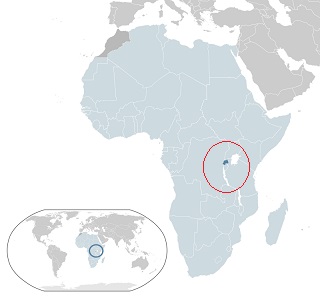
What did you do to protest those horrors? (I know you were here and conscious of the events). We must now reflect and consider … because “Inaction” is a Recipe for ‘Failed-State’ Status. Remember this famous quotation:

“The only thing necessary for the triumph of evil is for good men to do nothing” – Edmund Burke; 1729 – 1797; an Irish statesman and member of British Parliament.

Today, this week, this month is special in the history of Rwanda. These days measure the 25th anniversary of what took place during the 7 April to 15 July 1994 genocide?

The world must never forget! Yes, but most important, the world must care.

The declaration that the world did not care … is a serious charge. We did not make this declaration; no, it was a Mea Culpa of the religious stakeholders who were in Rwanda – the Church – at the time of the atrocities. We published a blog-commentary of this acknowledgement on November 22, 2016.

Now is a good time to encore that previous blog-commentary. See here:

———–

Go Lean Commentary – Rwanda’s Catholic bishops apologize for genocide

Is mainstream religion a force for moral good in modern society … in the Caribbean? In Africa? Anywhere?

cu-blog-rwandas-catholic-bishops-apologize-for-genocide-photo-3This is a timely discussion right now as there are a lot of threats and dissension in the world, mostly spurred on by religious extremism; think: Islamic terrorists, Shia – Shiite conflicts, Hindu-India versus Muslim Pakistan, Anglicanism versus Catholicism in Northern Ireland. Many samples and examples abound. The case in point for this consideration is the religious-fueled genocide in Rwanda in 1994; see the country’s flag here.

The religious institutions have a tarnished record; not always being a force for moral good in society. They have betrayed the vows and values they are supposed to be committed to. Instead, they have become “drunk with the blood of so many innocent people”.

This reality and cautionary tale from Rwanda provides us a deep lesson, though of a religious nature. See this core scripture:

A mysterious name was written on her forehead: “Babylon the Great, Mother of All Prostitutes and Obscenities in the World.”
I could see that she was drunk–drunk with the blood of God’s holy people who were witnesses for Jesus. I stared at her in complete amazement. – Revelation 17:5 – 6; New Living Translation

Who/What is Babylon the Great? (See Appendix A below).

For one religious group founded in the Caribbean – Rastafarians – they assign the identity to the country of the United States of America. But most religious scholars assign the identity to the world’s orthodox religions.

Some theologians make a narrow accusation and declare that “there can be only one conclusion: The Vatican [(Roman Catholic Headquarters)] is the Mystery Babylon of Revelation; they relate that this false religious system that has deceived the people of the world that will be destroyed at the time of Armageddon”.

Whatever your faith, being associated with Babylon the Great is not a good thing. “She” has a vengeful reckoning in store.

As depicted in a previous blog-commentary, the religions of Christendom have a sullied past! Unfortunately that “past” is not only centuries ago, as chronicled in the recent experiences in 1994 with the Rwandan Ethnic Cleansing. This sad drama is in the news again, as the Roman Catholic Church has now just issued a formal apology for its actions and in-actions in those atrocities.

Considering the real history, they are guilty as charged; see the news story here:

Title: Rwanda: Catholic bishops apologize for role in genocide
By: Ignatius Ssuuna
KIGALI, Rwanda (AP) — The Catholic Church in Rwanda apologized on Sunday for the church’s role in the 1994 genocide, saying it regretted the actions of those who participated in the massacres.

cu-blog-rwandas-catholic-bishops-apologize-for-genocide-photo-2“We apologize for all the wrongs the church committed. We apologize on behalf of all Christians for all forms of wrongs we committed. We regret that church members violated (their) oath of allegiance to God’s commandments,” said the statement by the Conference of Catholic Bishops, which was read out in parishes across the country.

The statement acknowledged that church members planned, aided and executed the genocide, in which over 800,000 ethnic Tutsis and moderate Hutus were killed by Hutu extremists.

In the years since the genocide — which was sparked by a contentious plane crash that killed the then-president, a Hutu — the local church had resisted efforts by the government and groups of survivors to acknowledge the church’s complicity in mass murder, saying those church officials who committed crimes acted individually.

Many of the victims died at the hands of priests, clergymen and nuns, according to some accounts by survivors, and the Rwandan government says many died in the churches where they had sought refuge.

The bishops’ statement is seen as a positive development in Rwanda’s efforts at reconciliation.

“Forgive us for the crime of hate in the country to the extent of also hating our colleagues because of their ethnicity. We didn’t show that we are one family but instead killed each other,” the statement said.

The statement was timed to coincide with the formal end Sunday of the Holy Year of Mercy declared by Pope Francis to encourage greater reconciliation and forgiveness in his church and in the world, said Bishop Phillipe Rukamba, spokesman for the Catholic Church in Rwanda.

Tom Ndahiro, a Rwandan genocide researcher, said he hoped the church’s statement will encourage unity among Rwandans.

“I am also happy to learn that in their statement, bishops apologize for not having been able to avert the genocide,” he said.

========

cu-blog-rwandas-catholic-bishops-apologize-for-genocide-photo-1

Photo Caption – In this Sunday, April 6, 2014 file photo, Rwandan children listen and pray during a Sunday morning service at the Saint-Famille Catholic church, the scene of many killings during the 1994 genocide, in the capital Kigali, Rwanda. The Catholic Church in Rwanda apologized on Sunday, Nov. 20, 2016, for the church’s role in the 1994 genocide, saying it regretted the actions of those who participated in the massacres. (AP Photo/Ben Curtis, File)

The recap: “800,000 ethnic Tutsis and moderate Hutus were killed by Hutu extremists” during the Rwanda Holocaust in 1994. (This history was dramatized in the movie Hotel Rwanda; see Appendix B VIDEO below).

How does a community – like Rwanda in the foregoing – repent, forgive and reconcile from such a bad legacy?

“Confession is good for the soul”!

This commentary is part-and-parcel of the effort to reform and transform the Caribbean. We too, have some atrocities to reconcile. Plus we have many recent bad actions to reckon with. Think:

  • Haiti
  • Cuba
  • Guyana
  • Belize

The book Go Lean…Caribbean posits that any success in reforming and transforming the Caribbean must include a unified region – we need to be a Single Market – despite the 30 different member-states, 5 different colonial legacies and 4 different languages. We have a lot of differences – just like the differences of Hutus and Tutsis in Rwanda – and a history of dysfunction. We must consider the ancient and modern conflicts some member-states have had with others.

The book serves as a roadmap for the introduction and implementation of the Caribbean Union Trade Federation (CU). A mission of the roadmap is to reverse the prior “human flight” and invite the Diaspora back to the homeland. Accepting that many people fled the Caribbean seeking refuge, means that we must mitigate these causes of prior distress; and reconcile them. “Old parties” returning to their communities can open a lot of “old wounds” – Rwanda never reconciled their Hutu-Tutsi conflicts before 1994. Therefore an additional mission is to facilitate formal reconciliations, much like the model in South Africa with the Truth & Reconciliation Commissions (TRC). This mission will assuage these Failed-State indicators and threats (Page 272):

  • “Revenge seeking” groups
  • Group Grievances

The foregoing article depicts a bad episode in history of Rwanda and the Catholic Church’s complexities. The best-practice is to repent, forgive and reconcile. Repentance would include desisting in the bad behavior, confession and making amends. Religious orthodoxy is responsible for a lot of harm in the world. To finally answer the opening question: Is mainstream religion a force for moral good in modern society … in the Caribbean?

The answer is: No!

The Go Lean movement (book and blogs) have identified many bad community ethos – fundamental character or spirit of a culture; the underlying sentiment that informs the beliefs, customs, or practices of a group or society; the dominant assumptions of a people or period – that the Caribbean region needs to desist, confess and make amends. Many of these are based on religious orthodoxy; consider:

The Go Lean movement (book and blogs) also details good-positive community ethos that the people of the region need to adopt. The motivating ethos underlying the Go Lean roadmap is the Greater Good. This is defined as “the greatest good to the greatest number of people which is the measure of right and wrong” – Jeremy Bentham (1748-1832), a British philosopher, jurist, and social reformer. What is ironic is the fact that the Greater Good ethos aligns with the true values of most of the orthodox religions identified above; such as this scripture:

Pure and genuine religion in the sight of God the Father means caring for orphans and widows in their distress and refusing to let the world corrupt you. – James 1:27; New Living Translation

This CU/Go Lean mission is to elevate society for Caribbean people in the Caribbean. There is the need to monitor the enforcement of human rights and stand “on guard” against movements towards Failed-State status. The Go Lean roadmap calls for the CU to assume that role. Using cutting edge delivery of best practices, the CU will employ strategies, tactics and implementations to impact its prime directives; identified with the following 3 statements:

  • Optimization of the economic engines in order to grow the regional economy to $800 Billion & create 2.2 million new jobs.
  • Establishment of a security apparatus to ensure public safety assurances and protect the region’s economic engines.
  • Improvement of Caribbean governance to support these engines.

The Go Lean book speaks of the Caribbean as in crisis and posits that this crisis can be averted, that it is a “terrible thing to waste”. The Go Lean roadmap seeks to optimize the entire Caribbean economic/security/governance eco-system. This vision is defined early in the book (Page 12) in the following pronouncements in the Declaration of Interdependence:

xi. Whereas all men are entitled to the benefits of good governance in a free society, “new guards” must be enacted to dissuade the emergence of incompetence, corruption, nepotism and cronyism at the peril of the people’s best interest. The Federation must guarantee the executions of a social contract between government and the governed.

xii. Whereas the legacy in recent times in individual states may be that of ineffectual governance with no redress to higher authority, the accedence of this Federation will ensure accountability and escalation of the human and civil rights of the people for good governance, justice assurances, due process and the rule of law. As such, any threats of a “failed state” status for any member state must enact emergency measures on behalf of the Federation to protect the human, civil and property rights of the citizens, residents, allies, trading partners, and visitors of the affected member state and the Federation as a whole.

xiii. Whereas the legacy of dissensions in many member-states (for example: Haiti and Cuba) will require a concerted effort to integrate the exile community’s repatriation, the Federation must arrange for Reconciliation Commissions to satiate a demand for justice.

The Go Lean book details a lot more, a series of assessments, community ethos, strategies, tactics, implementations and advocacies to ensure a safe and just society in the Caribbean region:

Community Ethos – Economic Systems Influence Choices & Incentives Page 21
Community Ethos – People Respond to Incentives Page 21
Community Ethos – Consequences of Choices Lie in the Future Page 21
Community Ethos – Ways to Impact Turn-Arounds Page 33
Community Ethos – Ways to Manage Reconciliations Page 34
Community Ethos – Ways to Promote Happiness Page 36
Community Ethos – Ways to Impact the Greater Good Page 37
Strategy – Vision – Confederating a Non-Sovereign Union of 30 Member-states Page 45
Strategy – Mission – Keep the next generation at home; Repatriate Diaspora Page 46
Tactical – Separation of Powers – Truth & Reconciliation Courts Page 78
Implementation – Ways to Deliver Page 109
Implementation – Reasons to Repatriate Page 118
Anatomy of Advocacies Page 122
Planning – Ways to Improve Image Page 133
Planning – Improve Failed-State Indices Page 134
Advocacy – Ways to Grow the Economy Page 151
Advocacy – Ways to Better Manage the Social Contract Page 170
Advocacy – Ways to Impact Justice – Truth & Reconciliation Commissions Page 177
Advocacy – Ways to Preserve Caribbean Heritage Page 218
Appendix – Failed State Indicators & Definitions Page 271
Appendix – Dominican Republic’s Trujillo Regime – Ethnic Cleansing Page 306

The foregoing article conveys that the country of Rwanda is making efforts to come to grips with their atrocious past. This was not a Black-White conflict, but rather a Black-on-Black drama. This drama therefore relates to the Caribbean as we have majority Black populations in almost every Caribbean member-state. Now is the time for all of the Caribbean, the people and governing institutions, to lean-in for the empowerments described in the book Go Lean … Caribbean. There is reason to believe that we too can reform and transform our bad community ethos, as causes, advocacies and campaigns have shown success in previous societies. The Go Lean roadmap relates the experiences of how these single causes/advocacies have been forged throughout the world (Page 122 – Anatomy of Advocacies):

Frederick Douglass Abolition of African-American Slavery
Mohandas Gandhi Indian Independence
Dr. Martin Luther King African-American Civil Rights Movement
Nelson Mandela South Africa’s Anti-Apartheid
Cesar Chavez Migrant Farm Workers in the US
Candice Lightner Mothers Against Drunk Driving (MADD)

The Caribbean can succeed too, in our efforts to improve the Caribbean community ethos. Consider this sample of previous blog-commentaries that delve into aspects of forging change in the Caribbean community ethos:

https://goleancaribbean.com/blog/?p=9428 Forging Change: Herd Mentality
https://goleancaribbean.com/blog/?p=9017 Proclaim ‘International Caribbean Day’
https://goleancaribbean.com/blog/?p=8200 Respect for Minorities: Climate of Hate
https://goleancaribbean.com/blog/?p=7628 ‘A Change Is Gonna Come’
https://goleancaribbean.com/blog/?p=5695 Repenting, Forgiving and Reconciling the Past
https://goleancaribbean.com/blog/?p=4971 A Lesson in History – Royal Charter: Truth & Consequence
https://goleancaribbean.com/blog/?p=3929 Success Recipe: Add Bacon to Eggs
https://goleancaribbean.com/blog/?p=3915 ‘Change the way you see the world; you change the world you see’
https://goleancaribbean.com/blog/?p=3780 Forging a ‘National Sacrifice‘ Ethos
https://goleancaribbean.com/blog/?p=623 ‘Only at the precipice, do they change’

The Go Lean movement wants to help reform and transform the Caribbean. We see the crisis; we recognize that status quo, including the root causes and influences. We perceive the harmful effects of the religious orthodoxy. Yet we do not want to ban religion! Just the opposite, we know that religion can be a force for moral good in society, when practiced right. But we also know that religion can give birth to extremist passions and foster the worst sentiments in the human psyche. This too is presented in the Bible:

1 “I have told you these things so that you won’t abandon your faith. 2 For you will be expelled from the synagogues, and the time is coming when those who kill you will think they are doing a holy service for God3 This is because they have never known the Father or me. 4 Yes, I’m telling you these things now, so that when they happen, you will remember my warning…

A “Separation of Church and State” is the standard in the advanced democracies; this is now embedded in the implied Social Contract. Unfortunately this is not the norm in the Caribbean. Just consider these continued practices that demonstrate a highly charged religiosity in the region:

The Go Lean book defines the Social Contract as follows:

“Citizens surrender some of their freedoms and submit to the authority of the State in exchange for protection of remaining natural and legal rights” – Page 170.

The Caribbean Social Contract specifies that governments must protect their citizens, those in Christendom or not. Human rights assume a religious neutrality; even those who are “Spiritual But Not Religious” – see Appendix C below – must be respected and protected.

The vision for a new religiously neutral Caribbean specifies new community ethos for the homeland, one being the practice of reconciling conflicts from the past; to make an accounting (lay bare), repent, forgive and then hopefully forget the long history of human rights abuses. All of this heavy-lifting will contribute towards the effort to make the region a better homeland to live, work and play. We urge all to lean-in to this roadmap.

Closing exhortation about Babylon the Great:

Then I heard another voice calling from heaven, “Come away from her, my people. Do not take part in her sins, or you will be punished with her. – Revelation 18:4 – New Living Translation

Let him with ears, hear…

Download the book Go Lean … Caribbean – now!

———-

Appendix A – Cultural importance of “Babylon”

Due to Babylon’s historical significance as well as references to it in the Bible, the word “Babylon” in various languages has acquired a generic meaning of a large, bustling diverse city. Examples include:

  • Babilonas (Lithuanian name for “Babylon”)—a real estate development in Lithuania.
  • Babylon is used in reggae music as a concept in the Rastafari belief system, denoting the materialistic capitalist world.
  • Babylon 5—a science fiction series about a multi-racial futuristic space station.
  • Babylon A.D. takes place in New York City, decades in the future.

———-

Appendix B VIDEO – Hotel Rwanda (2004) – Official Movie Trailer – https://youtu.be/qZzfxL90100

Uploaded on Jun 18, 2011
Director: Terry George
Starring: Don Cheadle, Sophie Okonedo, Nick Nolte and Joaquin Phoenix.

———-

Appendix C AUDIO Podcast – Spiritual But Not Religious – http://www.humanmedia.org/catalog/excerpts/141_spiritual_not_religious.mp3


Share this post:
, , , ,
[Top]

Hurricane in Africa? That’s ‘Climate Change’

Go Lean Commentary

This is the headline, in case you missed it:

“Mozambique Braces for More Floods as Cyclone Deaths Climb”. Bloomberg News Source. Posted 19 March 2019. Retrieved 21 March 2019.

Mozambique is not a Caribbean country in the typical bulls-eye for hurricanes. No, this is a country in the South African region; not normally threatened by tropical cyclones or hurricanes. This is proof-positive that something is wrong with the earth’s climate.  This is the reality of Climate Change.
We told you so …

In fact, we told you (in 2018) that climate conditions will go from bad to worse on a daily basis and that we only have 12 years, before the damage we are causing to the planet will be irreversible.

We did not give this warning about Africa; this is not our charter. But we can still learn by observing-and-reporting on developments there. See here, the consequential damage from this cyclone:

Reference: Cyclone Idai
Intense Tropical Cyclone Idai is regarded as one of the worst tropical cyclones on record to affect Africa and the Southern Hemisphere as a whole. The storm caused catastrophic damage in multiple nations, leaving more than 400 people dead and hundreds more missing.[4] Its death toll is comparable to that of south-west Indian Ocean cyclones Eline in 2000, and Gafilo in 2004.[5] The tenth named storm and record-breaking eighth intense tropical cyclone of the 2018–19 South-West Indian Ocean cyclone season, Idai originated from a tropical depression that formed off the eastern coast of Mozambique on 4 March.
The depression made landfall in the aforementioned country later in the day and remained a tropical cyclone throughout the entirety of its trek over land. On 9 March, the depression reemerged into the Mozambique Channel and was upgraded into Moderate Tropical Storm Idai next day. The system then began a stint of rapid intensification, reaching an initial peak intensity as an intense tropical cyclone with winds of 175 km/h (110 mph) on 11 March. Idai then began to weaken due to ongoing structural changes within its inner core, falling to tropical cyclone intensity. Idai’s intensity remained stagnant for about a day or so before it began to re-intensify. On 14 March, Idai reached peak intensity with maximum sustained winds of 195 km/h (120 mph) and a minimum central pressure of 940 hPa (27.76 inHg). Idai then began to weaken as it approached the coast of Mozambique due to less favorable conditions. On 15 March, Idai made landfall near Beira, Mozambique, as an intense tropical cyclone, subsequently weakening into a remnant low on 16 March.

Idai brought strong winds and caused severe flooding in Madagascar, Mozambique, Malawi, and Zimbabwe that has killed 431 people – 268 in Mozambique, 104 in Zimbabwe, 56 in Malawi, and one in Madagascar – and affected more than 2.6 million others. Catastrophic damage occurred in and around Beira in southern Mozambique. The President of Mozambique stated that more than 1,000 people may have died in the storm.[3] A major humanitarian crisis unfolded in the wake of the cyclone, with hundreds of thousands of people in urgent need of assistance across Mozambique and Zimbabwe. In the former nation, rescuers were forced to let people die in order to save others.


Source: Wikipedia – retrieved March 21, 2019 from: https://en.wikipedia.org/wiki/Cyclone_Idai

Over 1,000 dead!!! Ouch!

While Climate Change is a global crisis, our focus, our scope is limited to the Caribbean member-states.

From our Caribbean homes, we can NOT reach across the oceans and fix the climate in Africa, What we can do is mitigate the environment here at home.

Then name, blame and shame the culprit nations that are crippling our planet with more pollutants.

Due to the laws of hypocrisy, we cannot “Cry Wolf” to anyone until we conform ourselves. This theme and assertion was elaborated in these other/previous blog-commentaries from the movement behind the book Go Lean…Caribbean:

https://goleancaribbean.com/blog/?p=15511 Plastics and Styrofoam – A Mitigation Plan
https://goleancaribbean.com/blog/?p=14925 Climate Change Doubt?! Numbers Don’t Lie
https://goleancaribbean.com/blog/?p=14832 Manifesting Environmental Change
https://goleancaribbean.com/blog/?p=11858 Islands are Disappearing – The Cautionary Tale of Kiribati
https://goleancaribbean.com/blog/?p=10367 Science of Sustenance – Green Batteries for Fossil-Fuel-Free Energy
https://goleancaribbean.com/blog/?p=9455 Fix ‘Climate Change’ – Yes, We Can
https://goleancaribbean.com/blog/?p=7103 COP21 – ‘Climate Change’ Acknowledged
https://goleancaribbean.com/blog/?p=7056 Electric Cars: ‘Necessity is the Mother of Invention’
https://goleancaribbean.com/blog/?p=915 Go ‘Green’ … Caribbean

It is possible to mitigate the contributors to Climate Change. We can burn less fossil fuels; we can engage more alternative energy options (solar, wind, tidal); use electric cars and public transit. But the efforts must be executed across the whole world.

At a bare minimum, we must do our part; each individual, family, community and nation. No one can be excused. For this we must be prepared to name, blame and shame the dissenters.

This should be a national emergency. Check that! This is a global emergency!

There are still deniers of Climate Change. Those ones should not be debated; just ignored; we must proceed forward as if these ones are inconsequential. Think Flat-Earth theorists; see a related VIDEO in the Appendix below.

These ones should not even get an audience.

I assure you: No one in Mozambique is a Climate Change denier today. Can we say the same for Caribbean stakeholders … in government, security or economic leadership?

This must be a basic requirement for Caribbean leadership. If a politician dissents, we must vote them out of office. If a security/government official dissents, then we must replace them. If a business leader dissents, we must boycott their establishments. This is what is meant by name, blame and shame.

This is how we must now act to forge change in our communities. And then, the whole world. This is the quest of many young protesters around the world, today. They have indicted the older generation for mis-management; see story and VIDEO here:

Title: ‘It’s Literally Our Future.’ Here’s What Youth Climate Strikers Around the World Are Planning Next
By: Suyin Haynes 

Inside the U.K. houses of parliament, the grown-ups were at work. Outside, thousands of others — many of whom were not old enough to vote — were doing their best to make sure business was anything but usual. With their chants echoing down the streets, they were among an estimated 1.6 million students in over 120 countries who left school on March 15 in protest of adult inaction on climate change. “It shocks me how great a length we have to go to be heard,” said 16-year-old Miranda Ashby, who’d traveled more than two hours to London with roughly 50 of her classmates. “We are protesting now because if not now, when?”

The school climate strikes started with teen activist Greta Thunberg standing vigil outside Sweden’s parliament one Friday last August. “When I first started this strike, I didn’t really expect anything,” Thunberg told TIME on March 14, shortly after Norwegian lawmakers nominated her for the Nobel Peace Prize.

Thunberg’s idea has grown into a global movement; the March 15 action was its biggest yet. Extensive coverage of the strikes by media outlets and individuals on social media have helped elevate the cause in the minds of people across the world. Meanwhile, the lack of a centralized organizational hub makes it easy for teenagers to arrange actions in their own towns and cities; rallies took place in more than 2,200 towns and cities worldwide on March 15. “We’re tired of waiting for politicians to care,” says Nosrat Fareha, an organizer for the Sydney strikes, where 30,000 young people turned out — more than three times Fareha’s expected estimate.

In Uganda, where drought and desertification are already devastating, the walk-out took place despite officials blocking strikers from an intended rally location in Kampala. “I realized that my country has to change too,” 14-year-old organizer Leah Namugerwa says. And in the U.S., 17-year-old Feliquan Charlemagne, National Creative Director of the U.S. movement, believes the energy of March for Our Lives, the 2018 student-led initiative for gun control, must be harnessed for this cause too. Born in the Caribbean island of St Thomas, Charlemagne and his family have personally suffered the powerful effects of climate change, after Hurricane Irma devastated the island in September 2017. “This is not something we can play around with,” he says. “This is literally our future.”

It’s also their present. The warning of the landmark October 2018 report from the United Nations’ Intergovernmental Panel on Climate Change, that the planet was only 12 years away from catastrophe unless “far-reaching and unprecedented changes” are taken, weighs heavily on the minds of young organizers, who are quick to point out that they are the ones who have to live in that world. The deadline means there’s a lot of work to be done, and they don’t have time to wait to grow up first.

Their most pressing hope is for immediate policy measures to meet the terms of the Paris Agreement, limiting the global temperature increase to 1.5° celsius this century, as well as specific local action. In Australia, campaigners want to halt the proposed construction of a controversial coal mine. For activists across the U.S., preservation of public lands and political implementation of the Green New Deal are top priorities. And in the U.K., organizers want a fair portrayal of the climate crisis in school curricula and government information. And they’ve had some success already: youth organizers have met with members of the European Parliament and their strikes have been welcomed by leaders including Angela Merkel and U.N. Secretary General Antonio Guterres. “It really has changed the discourse,” says Sini Harkki, program manager at Greenpeace Nordic.

But at least for now, that’s all they can change; the youth that draws them to the cause is also an obstacle. Most of the movement’s participants are not just battling the obvious challenges of political inertia, powerful fossil fuel lobbies and disbelieving critics—they are also too young to play a bigger role in business or politics. And so they are determined to continue the Friday strikes. The U.K. Student Climate Network is demanding a meeting with political leaders, U.S. activists are planning a mass strike for May 3 and a pan-European organizer meeting is also in the pipeline. And Thunberg, no longer on her own, is committed to striking every Friday until Sweden reduces its carbon emissions in line with the Paris Agreement. “I know I have something to say,” Thunberg says, referring to her frank speeches in front of international leaders. “I have a message I want to get out and I want people to listen.” Students worldwide have heard her loud and clear. It’s up to the world’s politicians to act.

Source: Time Magazine Online Edition – posted March 20, 2019; retrieved March 22, 2019 from http://time.com/5554775/youth-school-climate-change-strike-action/

———-

VIDEO – Youth Climate Strike – http://time.com/5554775/youth-school-climate-change-strike-action/

Posted March 20, 2019 – ‘It Will Be Too Late for My Generation.’ Meet the Teens Who Organized a Massive Climate Change Protest

These young people get it: name, blame and shame the culprits and bad actors affecting Climate Change and the urgent mitigation that must be done. And as for Africa? We hereby present them a role model to follow.

The Public Campaign of environmentalists and activists is Spot-On: “Think Global. Act Local.” 🙂

About the Book
The book Go Lean…Caribbean serves as a roadmap for the introduction and implementation of the technocratic Caribbean Union Trade Federation (CU), for the elevation of Caribbean society – for all member-states. This CU/Go Lean roadmap has these 3 prime directives:

  • Optimization of the economic engines in order to grow the regional economy to $800 Billion and create 2.2 million new jobs.
  • Establishment of a security apparatus to ensure public safety and protect the resultant economic engines.
  • Improve Caribbean governance to support these engines, including a separation-of-powers between the member-states and CU federal agencies.

The Go Lean book provides 370-pages of turn-by-turn instructions on “how” to adopt new community ethos, plus the strategies, tactics, implementations and advocacies to execute so as to reboot, reform and transform the societal engines of Caribbean society.

Download the free e-Book of Go Lean … Caribbean – now!

Who We Are
The movement behind the Go Lean book – a non-partisan, apolitical, religiously-neutral Community Development Foundation chartered for the purpose of empowering and re-booting economic engines – stresses that reforming and transforming the Caribbean societal engines must be a regional pursuit. This was an early motivation for the roadmap, as pronounced in the opening Declaration of Interdependence (Pages 12 – 13):

i. Whereas the earth’s climate has undeniably changed resulting in more severe tropical weather storms, it is necessary to prepare to insure the safety and security of life, property and systems of commerce in our geographical region. As nature recognizes no borders in the target of its destruction, we also must set aside border considerations in the preparation and response to these weather challenges.

xi. Whereas all men are entitled to the benefits of good governance in a free society, “new guards” must be enacted to dissuade the emergence of incompetence, corruption, nepotism and cronyism at the peril of the people’s best interest. The Federation must guarantee the executions of a social contract between government and the governed.

xvi. Whereas security of our homeland is inextricably linked to prosperity of the homeland, the economic and security interest of the region needs to be aligned under the same governance. Since economic crimes … can imperil the functioning of the wheels of commerce for all the citizenry, the accedence of this Federation must equip the security apparatus with the tools and techniques for predictive and proactive interdictions.

xxiv. Whereas a free market economy can be induced and spurred for continuous progress, the Federation must install the controls to better manage aspects of the economy: jobs, inflation, savings rate, investments and other economic principles. Thereby attracting direct foreign investment because of the stability and vibrancy of our economy.

Sign the petition to lean-in for this roadmap for the Caribbean Union Trade Federation.

————

Appendix VIDEO – An Astronomer Responds To Flat Earth Theory – https://youtu.be/thxbiR-XfJo

Tech Insider
Published on Jan 9, 2018
– Business Insider UK sat down with Dr Stuart Clark, who spoke to us about a range of subjects regarding astronomy and astrophysics. We asked him what he thought of flat earth theory, a school of thought which believes that the earth is not spherical but flat.

“All our physics is constructed now, the physics of orbits of things going around the earth is all constructed with this three dimensional world. And the pictures from space show our world as a globe and yet somehow there are some people that still seem to believe the earth is flat.”

“My own pet theory is that they’re doing it for comic effect.”

Tech Insider tells you all you need to know about tech: gadgets, how-to’s, gaming, science, digital culture, and more.

Subscribe to our channel and visit us at: http://www.businessinsider.com/sai

TI on Facebook: https://www.facebook.com/techinsider

TI on Instagram: https://www.instagram.com/tech_insider/

TI on Twitter: https://twitter.com/techinsider

Share this post:
, , , ,
[Top]

Caribbean Cruise Port ‘Held Hostage’

Go Lean Commentary

So you think you’re independent?

The twin-island nation of Antigua & Barbuda was granted independence from the United Kingdom on 1 November 1981. This status allows them to govern their own country; make decisions that they feel are in the best interest for their nation.
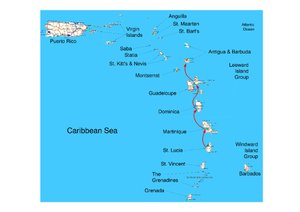
But the primary industry in this country is tourism. So this means that there is dependence on external (foreign) stakeholders to provide transportation solutions, travel agency, lodging and/or leisure cruises. So the country’s attitude should never be arrogant, haughty or uncooperative. They cannot approach any negotiation with a cruise line with this attitude:

“My way or the Highway”!

The cruise line response would resemble some rendition of this spirit:

Hold my beer!

This is what is happening in some re-negotiations between Antigua and Carnival Cruise Lines. As reported by the Antigua Daily Observer newspaper on February 26, 2019, Prime Minister Gaston Browne accuses Carnival and the entire Florida-Caribbean Cruise Association (FCCA) of “exploiting Caribbean countries for lower visitor tax rates [(head tax)]”.

The country is attempting to influence this corporation with their offering of only one port-of-call – 2 piers in St. John – while the full region is 30 member-states. Rather than single government negotiations, the 2013 book Go Lean …Caribbean asserts that the region must adopt a collective bargaining strategy among the full universe of Caribbean ports-of-call, introducing the Caribbean Union Trade Federation (CU) as a collective bargaining agent. The book states (Page 32):

Cruise Line Collective Bargaining – Setting Matters Straight
The CU will collectively bargain with operators to garner more benefits and protections. In general, port cities are not gleaning much income from ship visits. In order to reboot the industry’s economic impact, changes need to be made, rescinding some exploitive rules the ships implemented and adding some new products, like smartcard e-purse options.

Carnival Cruise Line is overmatched compared to the small island nation of Antigua. The holding company, Carnival Corporation, is identified as a significant stakeholder in the global cruise industry in general and Caribbean tourism in particular; they own/market all of these cruise line brands (10):

  • Carnival Cruise Lines
  • Holland America
  • Cunard
  • Princess
  • P&O Cruises
  • P&O Cruises Australia
  • The Yachts of Seabourn
  • Costa Cruises
  • AIDA
  • IberoCruceros

To compete, Antigua needs interdependence with their Caribbean neighbors – confederation and collective bargaining. Carnival is holding Antigua hostage. See the news article here reporting this drama, and an aligning VIDEO:

Title: More Cruise Lines Pull Out of Caribbean Port
By: Ben Souza
A few days ago, Cruise Fever reported that Carnival Cruise Line had canceled all port stops to Antigua. Now, additional cruise lines have pulled out of the Caribbean port according to the Antigua Observer.

In addition to Carnival Cruise Line, Holland America Line and luxury line Seabourn have canceled future port stops in Antigua. All three cruise lines operate under the Carnival Corporation umbrella.

These two new cruise lines that canceled port stops each had two cruise ships scheduled to visit the Caribbean port during the next Caribbean season.

Why have these three cruise lines canceled their scheduled calls to Antigua? The cruise lines have stated that government officials have made the cruise lines feel unwelcome.

These new cancelations were somewhat expected. The Prime Minister gave the following statement when Carnival Cruise Line first announced they were pulling out of the port:

    “Once Carnival has started the cancellation, unfortunately, I expect to see cancellations from all of its brands. I wouldn’t be surprised to see Princess, Holland America, Seabourn and other European Lines making cancellations going forward.”

Antigua is a popular cruise destination in the Southern Caribbean, especially during winter months.

Cruise ships that have canceled a port stop in Antigua will visit an alternative port.

Cruise Fever will have all new information about this developing situation in Antigua when it becomes available.

Source: Posted and retrieved March 17, 2019 from: https://cruisefever.net/more-cruise-lines-pull-out-of-caribbean-port/

—-

Ben Souza has written thousands of articles on cruising and currently takes between 8-10 cruises a year. His writings have appeared and been cited in various media outlets such as Yahoo News, MSN, NPR, Drudge Report, CNN, and ABC News. Ben currently resides in Cincinnati, Ohio. Visit Ben Souza on Linkedin. You may email Ben at Ben@cruisefever.net.

—————–

VIDEO – Update: Antigua Government To Meet With Carnival Over Cruise Cancellations – https://youtu.be/3CQzQb_2vUQ


Travelling with Bruce

Published on Mar 16, 2019 – Update: Antigua Government To Meet With Carnival Over Cruise Cancellations Norwegian Cruise Lines and MSC Cruises have both backed the government and have committed to sailing to the country going forward. After Prime Minister Browne contacted Carnival’s CEO the two parties have agreed to have a face to face meeting with each other to try to resolve their differences. #antigua #carnivalcruiselines #norwegiancruisenews #mscnews #globalportsholdings #antiguanews #caribbeancruise #hollandamericanews #seabournnews #cruisenews

We told you! Any Way Forward for better cruise line negotiations must include collective bargaining. This theme aligns with previous blog-commentaries from the movement behind the Go Lean book; see a sample list here:

https://goleancaribbean.com/blog/?p=16645 Bad Partners – Cruise Lines Interactions
https://goleancaribbean.com/blog/?p=15380 Industrial Reboot – Cruise Tourism 2.0
https://goleancaribbean.com/blog/?p=11544 Forging Change in the Cruise eco-system: Collective Bargaining
https://goleancaribbean.com/blog/?p=6635 Security Chip in credit cards unveiled: Now Ready for Cruise eco-system
https://goleancaribbean.com/blog/?p=5210 Cruise Ship Commerce – Getting Ready for Change

We warned, alerted and cautioned you Caribbean stakeholders that “Big Cruise Line Abuse” would happen. Carnival seems to be counting on our disunity. This is not just our thoughts alone; others have opined:

Carnival holds all of the cards in situations like this.  The notion that a sovereign country like Antigua is an equal “partner” to an 800 pound gorilla like Carnival is fanciful.  If a cruise line can make a better deal with an island next door, which charges a lower head tax, has fewer environmental restrictions, or is willing to foot the bill for a larger dock, then it’s ‘see ya later’ as far as the cruise line goes.” – Source: CruiseLawNews

The solution (Way Forward) for this type of one-sided negotiation advantage is not secretive or proprietary; rather it is the stated purpose of the Go Lean book and this resultant roadmap: “Come together“; collaborate; consensus-build and confederate.

Prime Minister Browne explained that the only way for small countries like Antigua to fight the FCCA is to form a regional port facility.

“Unless the entire Caribbean comes together and forms a regional port facility and mandate that [the Cruise Associations] pay more, we will continue to end up in problems and have to subsidise that sector …” – Source: CruiseLawNews

Yes, we can … come together and make our homeland a better place to live, work and play. 🙂

About the Book
The book Go Lean…Caribbean serves as a roadmap for the introduction and implementation of the technocratic Caribbean Union Trade Federation (CU), for the elevation of Caribbean society – for all member-states. This CU/Go Lean roadmap has these 3 prime directives:

  • Optimization of the economic engines in order to grow the regional economy to $800 Billion and create 2.2 million new jobs.
  • Establishment of a security apparatus to ensure public safety and protect the resultant economic engines.
  • Improve Caribbean governance to support these engines, including a separation-of-powers between the member-states and CU federal agencies.

The Go Lean book provides 370-pages of turn-by-turn instructions on “how” to adopt new community ethos, plus the strategies, tactics, implementations and advocacies to execute so as to reboot, reform and transform the societal engines of Caribbean society.

Download the free e-Book of Go Lean … Caribbean – now!

Who We Are
The movement behind the Go Lean book – a non-partisan, apolitical, religiously-neutral Community Development Foundation chartered for the purpose of empowering and re-booting economic engines – stresses that reforming and transforming the Caribbean societal engines must be a regional pursuit. This was an early motivation for the roadmap, as pronounced in the opening Declaration of Interdependence (Pages 11 – 13):

vi. Whereas the finite nature of the landmass of our lands limits the populations and markets of commerce, by extending the bonds of brotherhood to our geographic neighbors allows for extended opportunities and better execution of the kinetics of our economies through trade. This regional focus must foster and promote diverse economic stimuli.

viii. Whereas the population size is too small to foster good negotiations for products and commodities from international vendors, the Federation must allow the unification of the region as one purchasing [or bargaining] agent, thereby garnering better terms and discounts.

x. Whereas we are surrounded and allied to nations of larger proportions in land mass, populations, and treasuries, elements in their societies may have ill-intent in their pursuits, at the expense of the safety and security of our citizens. We must therefore appoint “new guards” to ensure our public safety and threats against our society, both domestic and foreign. The Federation must employ the latest advances and best practices … to assuage continuous threats …

xi. Whereas all men are entitled to the benefits of good governance in a free society, “new guards” must be enacted to dissuade the emergence of incompetence, corruption, nepotism and cronyism at the peril of the people’s best interest. The Federation must guarantee the executions of a social contract between government and the governed.

xvi. Whereas security of our homeland is inextricably linked to prosperity of the homeland, the economic and security interest of the region needs to be aligned under the same governance. Since economic crimes … can imperil the functioning of the wheels of commerce for all the citizenry, the accedence of this Federation must equip the security apparatus with the tools and techniques for predictive and proactive interdictions.

xxiv. Whereas a free market economy can be induced and spurred for continuous progress, the Federation must install the controls to better manage aspects of the economy: jobs, inflation, savings rate, investments and other economic principles. Thereby attracting direct foreign investment because of the stability and vibrancy of our economy.

Sign the petition to lean-in for this roadmap for the Caribbean Union Trade Federation.

Share this post:
, , , ,
[Top]

Women Empowerment – Accepting Black Women ‘As Is’

Go Lean Commentary

“Don’t go changing to try to please me … I love you just the way you are” – Song by Billy Joel
(See Appendix A VIDEO below).

There is the need to reform and transform Caribbean society. Period!

When we say society, we are referring to the community institutions, governmental agencies and … the people.

The people need to change … some more than others. One group needs a lot of help: Black Men & Boys. Another group needs to curtail their behavior and their preponderance to abuse others: White Males. Then there is also one group who needs less of the effort to change but needs to be accepted more … “just the way they are”:

Black females (women and girls).

Don’t get it twisted! Black women are not perfect.

But, they are not inferior either. (See the related news article on “Black Hair and Politics” in Appendix B below).

Yet, these Black women devote so much concern and resources to conform their natural hair to a different standard. This theme has been elaborated on by the movement behind the book Go Lean…Caribbean, in these previous Go Lean blog-commentaries:

Network Mandates for a New Caribbean
In the media industry you must look the part. So if you have facial or grooming features that are different – zag while everyone else zig – you may not be selected for promotion and production. …
Caribbean beauty should be recognized in the eyes of Caribbean beholders.
At a bare minimum …
But truth be told, if the media networks in the region are owned by foreign entities, then foreign standards are still “the rule”.

‘Good Hair’ and the Strong Black Woman
Black kinky hair is considered worthless in the global marketplace. But the market for mitigating, treating (chemicals) and covering the hair (wigs & extensions) is worth $9 Billion annually. This seems like such a dichotomy for the Black community, especially among women. This ethnic group prides itself on a proud heritage of Strong Black Women, and yet there is this unspoken rejection of natural Black Hair. This is sad!

Caribbean Image: Dreadlocks
Many people in the Caribbean, though not a majority in the region, wear dreadlocks, despite their occupation. These “locs” can be an expression of deep religious or spiritual convictions, ethnic pride, a political statement, or  simply be a fashion preference. Yet, their wear can be detrimental in job placement and advancement.

It turn out that there is one BIG compelling reason why this may be the norm – religion…

… the African experience in the New World started with the Slave Trade. This was also related in a previous blog-commentary:

European Reckoning – Christianity’s Indictment

The Church felt justified with the Slave Trade, Slavery and Colonialism because of their distorted values to make new disciples at all costs. …

Pope Innocent VIII, he permitted trade with Barbary merchants, in which foodstuffs would be given in exchange for slaves who could then be converted to Christianity. …

… reconciling the European experience, previous submissions addressed European economic leadership. This submission however asserts that the conduct of the Christian-side of White-Christian-European history has been worthy of indictment and the European institutions need to be held to account. Even though the New World and the Caribbean were established by European military power, the Church was aligned and complicit.

The Christian faith of the Europeans is based on The Bible; there is one scripture that has been wrongly interpreted to malign Black Women and their default hair styles. See here, this scripture from 1 Timothy 2:9 and notice the actual prohibition on the hair style of “braided hair” in some translations, while other translations used neutral terms like “elaborate hair” or “immodest hair“:

Biblical Reference: Scriptural “1 Timothy 2:9” Translation Comparison

  • New International Version – I also want the women to dress modestly, with decency and propriety, adorning themselves, not with elaborate hairstyles or gold or pearls or expensive clothes,
  • New Living Translation – And I want women to be modest in their appearance. They should wear decent and appropriate clothing and not draw attention to themselves by the way they fix their hair or by wearing gold or pearls or expensive clothes.
  • English Standard Version – likewise also that women should adorn themselves in respectable apparel, with modesty and self-control, not with braided hair and gold or pearls or costly attire,
  • Berean Study Bible – Likewise, I want the women to adorn themselves with respectable apparel, with modesty, and with self-control, not with braided hair or gold or pearls or expensive clothes,
  • Berean Literal Bible – Likewise also women should adorn themselves in respectable apparel, with modesty and self-control, not with braided hair or gold or pearls or costly clothing,
  • New American Standard Bible – Likewise, I want women to adorn themselves with proper clothing, modestly and discreetly, not with braided hair and gold or pearls or costly garments,
  • King James Bible – In like manner also, that women adorn themselves in modest apparel, with shamefacedness and sobriety; not with braided hair, or gold, or pearls, or costly array;
  • Christian Standard Bible – Also, the women are to dress themselves in modest clothing, with decency and good sense, not with elaborate hairstyles, gold, pearls, or expensive apparel,
  • Contemporary English Version – I would like for women to wear modest and sensible clothes. They should not have fancy hairdos, or wear expensive clothes, or put on jewelry made of gold or pearls.
  • Good News Translation – I also want the women to be modest and sensible about their clothes and to dress properly; not with fancy hair styles or with gold ornaments or pearls or expensive dresses,
  • Holman Christian Standard Bible – Also, the women are to dress themselves in modest clothing, with decency and good sense, not with elaborate hairstyles, gold, pearls, or expensive apparel,
  • International Standard Version – Women, for their part, should display their beauty by dressing modestly and decently in appropriate clothes, not with elaborate hairstyles or by wearing gold, pearls, or expensive clothes,
  • NET Bible – Likewise the women are to dress in suitable apparel, with modesty and self-control. Their adornment must not be with braided hair and gold or pearls or expensive clothing,
  • New Heart English Bible – In the same way, that women also adorn themselves in decent clothing, with modesty and propriety; not just with braided hair, gold, pearls, or expensive clothing;
  • Aramaic Bible in Plain English – Likewise also the women shall be modest in fashion of dress, their adornment shall be in bashfulness and in modesty, not in braiding with gold or with pearls or in gorgeous robes,
  • GOD’S WORD® Translation – I want women to show their beauty by dressing in appropriate clothes that are modest and respectable. Their beauty will be shown by what they do, not by their hair styles or the gold jewelry, pearls, or expensive clothes they wear.
  • New American Standard 1977 – Likewise, I wantwomen to adorn themselves with proper clothing, modestly and discreetly, not with braided hair and gold or pearls or costly garments;
  • Jubilee Bible 2000 – In like manner also that the women adorn themselves in an honest manner, with shyness and modesty, not with ostentatious hair or gold or pearls or costly clothing
  • King James 2000 Bible – In like manner also, that women adorn themselves in modest apparel, with decency and propriety; not with braided hair, or gold, or pearls, or costly array;
  • American King James Version – In like manner also, that women adorn themselves in modest apparel, with modesty and sobriety; not with braided hair, or gold, or pearls, or costly array;
  • American Standard Version – In like manner, that women adorn themselves in modest apparel, with shamefastness and sobriety; not with braided hair, and gold or pearls or costly raiment;
  • Douay-Rheims Bible – In like manner women also in decent apparel: adorning themselves with modesty and sobriety, not with plaited hair, or gold, or pearls, or costly attire,
  • Darby Bible Translation – In like manner also that the women in decent deportment and dress adorn themselves with modesty and discretion, not with plaited [hair] and gold, or pearls, or costly clothing,
  • English Revised Version – In like manner, that women adorn themselves in modest apparel, with shamefastness and sobriety; not with braided hair, and gold or pearls or costly raiment;
  • Webster’s Bible Translation – In like manner also, that women adorn themselves in decent apparel, with modesty and sobriety; not with broidered hair, or gold, or pearls, or costly array,
  • Weymouth New Testament – and I would have the women dress becomingly, with modesty and self-control, not with plaited hair or gold or pearls or costly clothes,
  • World English Bible – In the same way, that women also adorn themselves in decent clothing, with modesty and propriety; not just with braided hair, gold, pearls, or expensive clothing;
  • Young’s Literal Translation – in like manner also the women, in becoming apparel, with modesty and sobriety to adorn themselves, not in braided hair, or gold, or pearls, or garments of great price, ….

Source: Scripture 1 Timothy 2:9 – retrieved March 10, 2019 from: https://biblehub.com/1_timothy/2-9.htm

You see it, right?

Considering the full context and the diverse translations, it is self-evident that there is no Biblical prohibition on natural Black Hair, only elaborate/immodest hairstyles.

Yet, many women in the Black community never feel comfortable wearing braids (or dreadlocks) “into Church” (or before God). They would rather press and “perm” their hair, add weaves, wear a wig, and/or wear a hat.

(There is a parallel conflict in the Halls of Democracy; see the related news article on “Black Hair and Politics” in Appendix B below).

This discussion of this actuality completes this series of commentaries from the Go Lean movement. This is part 6 of 6 for Women History Month; this series addresses how women can make a difference in society; and how society can make a difference for women. This submission asserts that Black Women should not have to change anything to conform to some White/European standard, especially their hair; they are adequate, beautiful and complete “just the way they are”. Other commentaries in this series include these entries:

  1. Women History Month 2019Thoughts, Feelings, Speech and Actions
  2. Women History Month 2019Viola Desmond – The Rosa Parks of Canada
  3. Women History Month 2019Kamala Harris – Caribbean Legacy to the White House?
  4. Women History Month 2019: Captain Marvel – We need “Sheroes”
  5. Women History Month 2019Ellevest CEO: Sallie Krawcheck
  6. Women History Month 2019: Accepting Black Women ‘As Is’

In this series, references were made to a “Next Frontier” of gender relations, how women in modern society are now on the verge of breaking all “glass ceilings” in their communities; maybe even the “Leader of the Free World”. Yes, they can! To transcend to that next plateau, more is needed from the greater population; this means us all.

More?

Actually, the same is needed! The acceptance that all woman, Black women included, are good enough “just as they are”. If there is a problem – there is one – it is a defect with the societal orthodoxies, not our Black women. See this theme developed in these previous blog-commentaries.

https://goleancaribbean.com/blog/?p=16541 Black ‘Greco-Roman’ Wrestler victimized for his hair
https://goleancaribbean.com/blog/?p=16534 European Reckoning – Christianity’s Indictment
https://goleancaribbean.com/blog/?p=9216 ‘Time to Go’ – No Respect for our Hair
https://goleancaribbean.com/blog/?p=809 Muslim officials condemn “abductions” of Nigerian education-seeking school girls

It is conceivable, believable and achievable that we can live in a world with empowered women, Black women and all the other ethnic groups. There is beauty in all the races – the Caribbean is constituted with 5 different ethnicities (Amerindian, African, European, Indian and Chinese) fused and intermingled together – there must always be full acceptance of all our strengths and weakness. Keep it real!

There is beauty in each culture too; see Appendix C below. (Though, there may be a  push-back based on a bad orthodoxy, we shall overcome).

The world must accept that women are dutiful partners for elevating society. The world? Yes, but right now our focus and scope is for the Caribbean to accept that women are dutiful partners for elevating our communities. We need, want and love our women … “just the way they are”.

Yes, we can do this – partner up with our women – and make our homeland a better place to live, work and play for all. Let’s do this! Let’s get busy!  🙂

About the Book
The book Go Lean…Caribbean serves as a roadmap for the introduction and implementation of the technocratic Caribbean Union Trade Federation (CU), for the elevation of Caribbean society – for all member-states. This CU/Go Lean roadmap has these 3 prime directives:

  • Optimization of the economic engines in order to grow the regional economy to $800 Billion and create 2.2 million new jobs.
  • Establishment of a security apparatus to ensure public safety and protect the resultant economic engines.
  • Improve Caribbean governance to support these engines, including a separation-of-powers between the member-states and CU federal agencies.

The Go Lean book provides 370-pages of turn-by-turn instructions on “how” to adopt new community ethos, plus the strategies, tactics, implementations and advocacies to execute so as to reboot, reform and transform the societal engines of Caribbean society.

Download the free e-Book of Go Lean … Caribbean – now!

Who We Are
The movement behind the Go Lean book – a non-partisan, apolitical, religiously-neutral Community Development Foundation chartered for the purpose of empowering and re-booting economic engines – stresses that reforming and transforming the Caribbean societal engines must be a regional pursuit. This was an early motivation for the roadmap, as pronounced in the opening Declaration of Interdependence (Pages 12 – 13):

xi. Whereas all men are entitled to the benefits of good governance in a free society, “new guards” must be enacted to dissuade the emergence of incompetence, corruption, nepotism and cronyism at the peril of the people’s best interest. The Federation must guarantee the executions of a social contract between government and the governed.

xvi. Whereas security of our homeland is inextricably linked to prosperity of the homeland, the economic and security interest of the region needs to be aligned under the same governance. Since economic crimes … can imperil the functioning of the wheels of commerce for all the citizenry, the accedence of this Federation must equip the security apparatus with the tools and techniques for predictive and proactive interdictions.

xxiv. Whereas a free market economy can be induced and spurred for continuous progress, the Federation must install the controls to better manage aspects of the economy: jobs, inflation, savings rate, investments and other economic principles. Thereby attracting direct foreign investment because of the stability and vibrancy of our economy.

Sign the petition to lean-in for this roadmap for the Caribbean Union Trade Federation.

—————-

Appendix A VIDEO – Billy Joel – Just the Way You Are (Audio) – https://youtu.be/HaA3YZ6QdJU

Billy Joel
Published on Mar 22, 2013 – In 1977, Billy Joel released his album titled The Stranger. Listen to Billy Joel perform ‘Just the Way You Are‘:  http://smarturl.it/BJ_MOTS_YT?IQid=yt…

Lyrics:
Don’t go trying some new fashion
Don’t change the color of your hair
You always have my unspoken passion
Although I might not seem to care

I don’t want clever conversation
I never want to work that hard
I just want someone that I can talk to
I want you just the way you are.

—————-

Appendix B – News Article: Ilhan Omar will be first Muslim woman to wear hijab in Congress with Democrats set to end head covering ban

Summary: Democrats worked to change the rule banning head coverings on the House floor …

See full story here: Retrieved March 10 2019: https://www.independent.co.uk/news/world/americas/us-politics/ilhan-omar-muslim-hijab-congress-democrats-ban-head-covering-a8708696.html

—————-

Appendix C – News Article: Black Women Left Off Cosmo List Of The Most Beautiful Women In The World

Ummm, who approved this list?

See full story here: Posted March 13, 2017; retrieved March 10, 2019: https://blackamericaweb.com/2017/03/13/black-women-left-off-cosmo-list-of-the-most-beautiful-women-in-the-world/?fbclid=IwAR2oNVP5DC0HeTsZEPuiJxb8ZlNyD1Thn6Qrxhz8olYJtknoFjqQJJHwtsE

Share this post:
, , , ,
[Top]