PM Christie responds to critics of Bahamian ‘Carnival’

Go Lean Commentary

Carnival 1Head –> Heart –> Hands.

This is the physiological process to forge change, described in the book Go Lean … Caribbean (Page 20). As experienced on a daily basis by people attempting to “quit smoking”, change is near impossible without engaging those three body parts. The book, serving as a roadmap for the introduction and implementation of the Caribbean Union Trade Federation (CU) describes the linked application of those three symbolic body parts, as follows:

  • Head – Plans, Models and Strategies
  • Heart – Community Ethos
  • Hands – Actions, Implementations, Advocacies

According to the below news article, the Prime Minister of the Bahamas wants to forge change in his homeland. He wants to incorporate a new festival, based on the model of Carnival and Madri Gras, so as to glean some of the massive economic harvests around those events in the Caribbean and other Western Hemisphere destinations.

Since initiating this plan in Spring 2013, cyber-space and public commentary have been awash with feedback: some in favor; most opposed.

Albeit he is inspired by good motives, the publishers declare that something is missing in the Prime Minister’s plans: Best practices.

By: Erica Wells, Managing Editor
Prime Minister Perry Christie has assured critics of the Government’s plan to create a Bahamian Carnival or Mardi Gras that the festival will be “essentially” Bahamian and that a special committee will be appointed to prepare the country and the world for the initiative.

Addressing the MP’s in his 2013/2014 budget wrap up, Christie said many people rushed to judgement after he made the announcement last month. The week-long festival is slated for a 2015 start-up and the government will spend $1 million to help with its development, which may incorporate a cultural village, public processions and song and costume competition. The $1 million will be allocated to the festival next year and will be a joint effort between the public and private sector, he said.

The government, Christie says, sees the festival as both a major economic intervention and a cultural expansion.

“It will be essentially Bahamian but also include thousands of visitors who will be attracted by what will be an absolutely fabulous affair,” said Christie.

Anthropologist and author Dr. Nicolette Bethel, who is also a former director of culture, has been one of the biggest critics of the proposed festival.

Bethel told Guardian Arts&Culture before Christie’s communication earlier this week that she did not have a problem with the idea per se, and that it was long overdue, but the timing and title were both “awful”.

“As a result I don’t think it’s feasible,” she said. “I have no idea what consultation, if any, was done with the relevant community. It falls during the Junkanoo downtime and I do not think that the practitioners will seriously be able to prepare for it, and in fact many of the most serious (Junkanooers) are out of the country attending the real carnivals that take place all around our region at that time — New Orleans, Rio de Janeiro, and of course Port-of-Spain.”

Bethel said she did not see that it would have any real effect on the current Junkanoo parades.

She also criticized the government’s $1 million allocation to the festival.

“One million dollars according to our data is nowhere near enough money to fund something of this kind,” said Bethel. “Annual Junkanoo parades take up to $3 million of the government’s money — $2 million at least. If that money were invested in creating a Junkanoo festival at the normal Junkanoo time it would go far further, but I do not see any way that we can hope to compete with the real carnivals by introducing something fake like this. It’s a total waste of a good idea.”

Christie noted that many critics questioned why The Bahamas should copy Trinidad or Brazil, and why the country would move away from Junkanoo, which is “spectacularly Bahamian”.

“Let me say at the outset that prior to making my announcement, I consulted with several icons in the world of Junkanoo and without exception they were fully supportive of the idea and immediately confirmed their willingness to work with the committee, which will be appointed to prepare The Bahamas and the world for this new festival,” said the prime minister.

The government will shortly appoint the committee, said Christie.

Paul Major, a former banker and Junkanoo participant, has been invited to chair the committee. Robert Sands and Ed Fields, and other major figures in the cultural field — in painting, music, drama all of which are a part of this new enterprise — will also be invited to sit on the committee, he said.

“I expect the committee to hold full consultations with all of the major personalities of Junkanoo, and associates. “I will, for my part, advise the committee that I do not wish them to interfere with Junkanoo.

This is a separate and different activity,” Christie explained. He noted that the major Junkanoo groups and their leaders will be advised that the government does not propose to licence those groups, unless there is overwhelming evidence of general acceptance by the rank and file.

Prime Minister Christie said for the groups to be licensed, they would have to form themselves into a company and operate as a business.

“This is a massive undertaking which will receive very careful consideration of the government,” he said.

“This is very necessary as the corporate groups will be advertising abroad and inviting persons to purchase costumes online as well as from store fronts in a cultural village or elsewhere.”

The Prime Minister said the committee would ultimately move recommendations to the government for its consideration.

Christie also noted that he has met with Sarkis Izmirlian of Baha Mar and advised him that the festival was one of the major promotions the government was putting in place in view of his introducing 2,200 new hotel rooms in December 2014.

“He liked the idea. The committee will recommend whether there should be a preferred resort destination or leave it to the choice of visitors,” said Christie.

Carnival worldwide industry

The prime minister said carnival is part of a worldwide masquerade industry.

He said the industry has been successful in attracting costume makers, wire benders, painters, designers and performers at some of the largest festivals in the world.

“It has an export dimension. We know of major festivals in Trinidad, Brazil, Toronto, Barbados, New York, Miami and London. Carnival in the diaspora generates hundreds of millions of dollars and creates many jobs and entrepreneurial opportunities.

“It is big business and it requires business planning, management, marketing of products and organizational structure,” said Christie.

Prime Minister Christie said costumes from carnival inspired designers show up in New York, Toronto, Notting Hill, London, Miami and many other centers in the U.S.

“The committee will be briefed and have the opportunity to visit carnival enterprises in Brazil, Trinidad and even Toronto, where carnival has become arguably the largest festival in the world,” he said.
Source: The Nassau Guardian Online. Posted 06/22/2013. (Retrieved 04/24/2014) –http://www.thenassauguardian.com/index.phpoption=com_content&view=article&id=40021&Itemid=59

The Go Lean roadmap is different! It employs best practices for assessing, strategizing and implementing change. The book commences with the practice to assess current landscapes; this is what strategists call “Understand the market / Plan the business”. Page 44 presents these questions:

• Who are our customers and what exactly do they want?

• Who are our competitors; how do we stack up against them?

The book then proceeds to answer these and other strategy queries, accordingly.

carnival 2Events/festivals are paramount in the Go Lean roadmap: the optimization of existing events and the introduction of new events. This advocacy is detailed on Page 191 as being supplemental to the goal of enhancing tourism (Page 190).

What are the prospects for this new Bahamas Carnival/Lenten festival?

On the surface, it seems far-fetched, as the Bahamas does not have a Lenten ethos. All the competitive destinations (Rio De Janeiro, New Orleans and Trinidad) have elevated lent habits (Ash Wednesday to Good Friday), so that Mardi Gras/Fat Tuesday actually has significance in preparation of this hallowed Lenten season. Without this ethos, it is hard, though not impossible, to forge a new tradition, festival or business model. But the mediocre financial investment, announced in the foregoing article – $1 million as opposed to $3 million, makes the success of initiating and promoting a new event an insurmountable obstacle.

The publishers of the Go Lean roadmap wish the Prime Minister good fortune with his plans, but this execution does not appear to be lean, within “best practices”. More is needed; much more! There should be more focus on “Head, Heart & Hands” principles. As a contrast, notice the detailed strategies, tactics, actions and advocacies for new events in the Go Lean roadmap:

Community Ethos – Lean Operations Page 24
Community Ethos – Return on Investments Page 24
Community Ethos – Cooperatives Page 25
Community Ethos – Non Government Org’s. Page 25
Impact the Future Page 26
Foster Genius – Performance Excellence Page 27
Ways to Improve Sharing Page 35
Ways to Promote Happiness Page 36
Ways to Impact the Greater Good Page 37
Strategy – Customers – Business Community Page 47
Strategy – Customers – Visitors / Tourists Page 47
Strategy – Competitors – Event Patrons Page 55
Separation of Powers – Emergency Mgmt. Page 76
Separation of Powers – Tourism Promotion Page 78
Separation of Powers – Sports & Culture Page 81
Separation of Powers – Fairgrounds Admin. Page 83
Separation of Powers – Turnpike Operations Page 84
Steps to Implement Self-Governing Entities Page 105
Ways to Foster Cooperatives Page 176
Ways to Improve Intelligence Gathering Page 182
Ways to Improve [Service] Animal Husbandry Page 185
Ways to Enhance Tourism Page 190
Ways to Impact Events Page 191
Ways to Promote Fairgrounds Page 192
Ways to Improve Emergency Management Page 196
Ways to Impact Hollywood [& Media Industry] Page 203
Ways to Preserve Caribbean Heritage Page 218
Ways to Improve the Arts Page 230
Ways to Promote Music Page 231

In summary, festivals/events are important, so they require lean administration and executions. They empower economics and fortify cultural pride. In all, they make the Bahamas, by extension the entire Caribbean, a better place to live, work, and play.

Download the book Go Lean … Caribbean – now!

Share this post:
, , , , , ,

Ghost ships – Autonomous cargo vessels without a crew

Go Lean Commentary

Ghost ships - Autonomous cargo vessels without a crewLife imitates art! Art imitates life!

The forgoing article gives the impression of science fiction: The Matrix movie trilogy or The Terminator movie series. Imagine an industrial development with a heavy concentration of robotic installations. This is the future that is being planned, developed and tested now. The experience of the last 100 years is that those doing the planning, developing and testing for futuristic technologies are the ones that profit most from the economic gains. This has been true for both Japan and Silicon Valley.

The book, Go Lean … Caribbean, extolls this principle that R&D (research and development) activities are necessary to profit from advantages in technology. We want to do R&D here in the Caribbean. This is a mandate for the Caribbean Union Trade Federation (CU). This book serves as a roadmap for the introduction and implementation of the CU. This technocracy will assume oversight to optimize the region in the areas of:

(1) economics

(2) security

(3) lean government

This vision of an autonomous maritime eco-system, as depicted in the foregoing article, cannot be considered without a super-national infrastructure for these above 3 areas. The Go Lean roadmap presents the CU’s prime directives, which in total will provide comprehensive solutions for economic incentives, a security apparatus (Naval Authority and Intelligence Gathering), and lean governmental coordination to launch these initiatives.

*** Autonomous cargo vessels could set sail without a crew under the watchful eye of captains in shore-based simulators ***

Military drones already fly frequent missions and civilian operations using unmanned aircraft are coming. Driverless cars are clocking up thousands of test miles. So why not let remote-controlled ships set sail without a crew? Indeed, the maritime industry has started to think about what would be required to launch a latter-day Marie Céleste.

Ships, like aircraft and cars, are increasingly controlled by electronic systems, which makes automation easier. The bridges of some modern vessels are now more likely to contain computer screens and joysticks than engine telegraphs and a giant ship’s wheel. The latest supply ships serving the offshore oil and gas industry in the North Sea, for instance, use dynamic positioning systems which collect data from satellites, gyrocompasses, and wind and motion sensors to automatically hold their position when transferring cargo (also done by remote control) to and from platforms, even in the heaviest of swells.

However, as is also the case with pilotless aircraft and driverless cars, it is not so much a technological challenge that has to be overcome before autonomous ships can set sail, but regulatory and safety concerns. As in the air and on the road, robust control systems will be needed to conform to existing regulations.

The maritime industry is interested in crewless ships for two reasons. The first is safety. Most accidents at sea are the result of human error, just as they are in cars and planes. So, if human operators are replaced by sophisticated sensors and computer systems, autonomous vessels should, in theory, make shipping safer.

The second reason is, of course, cost. It is becoming increasingly difficult to sign up competent crew prepared to spend months away at sea. Moreover, some voyages are likely to get even longer for ships carrying non-urgent cargo. By some accounts, a 30% reduction in speed by a bulk carrier can save around 50% in fuel. This means slower steaming could provide big savings in fuel costs, but it would be at the expense of increased expenditure on crew for these longer voyages, both in wages and for the “hotel” facilities required on board. Removing the crew, though, also removes the need for their accommodation and its associated equipment, like heating and plumbing. And that provides room to carry more cargo.

Ahoy there!

The transition to unmanned ships could take place in steps, says Oskar Levander, head of engineering and technology for the marine division of Rolls-Royce. Crews would be reduced as some functions are moved onshore, such as monitoring machinery. (The engines on jet aircraft are already overseen by ground stations.) This could be followed by some watch-keeping and navigation duties. Experienced crew might be put on board when ships leave or enter port, just as pilots are to navigate. And a small maintenance crew could be kept for the voyage until remote-control systems prove themselves. A fleet of autonomous ships could also sail in convoy with a manned vessel in the lead (as illustrated above).

The onshore control rooms would keep an eye on ships thanks to live data transmitted from vessels, including video and infra-red images. Object-recognition software, combined with radar, would further automate the process. If an alarm was raised the skeleton crew on board could be alerted or the control room take charge, probably from a bridge in a simulator. Rolls-Royce already operates virtual ships’ bridges, with 360º views, for the training of officers and crew. These are realistic enough to make landlubbers feel seasick.

Using onshore control rooms and simulators a team of ten land-based captains could operate 100 or so ships, reckons Mr. Levander. The captains could commute from home for their shifts just as the pilots who fly military drones do. Passenger ships are likely to remain crewed, however. Trained personnel are needed to manage evacuation procedures, and in any case passengers are unlikely to want robots and vending machines attending to their needs.

The slower-sailing bulk carriers could be the first ships to be automated, according to the Maritime Unmanned Navigation through Intelligence in Networks (MUNIN) project, a European Union initiative backed by a number of industrial organisations. Like others, it says the ability of drone ships to detect other vessels and take avoiding action will be crucial, but possible with advanced technology and improved backup systems.

Rules of the sea

With a captain technically in command—even though he is based in an onshore control room—MUNIN thinks the legal and practical challenges of meeting maritime rules could be met. Radio messages from other ships, along with those from coastguards and port authorities, could be automatically routed to the shore captain. Something similar is being proposed for autonomous civil drones, with ground-based pilots responding to communications and air-traffic control instructions as if they were in the cockpit.

In many ways automating a ship should be a lot easier than automating aircraft, Mr. Levander believes. For a start, if something did go wrong, instead of falling out of the sky a drone ship could be set by default to cut its engines and drop anchor without harming anyone. As for piracy, with no crew to be taken hostage it would be much easier for the armed forces to intervene. Of course, more modern pirates might try to hack their way into the controls of an autonomous ship to take command. Which is why encrypted data communication is high on the maritime industry’s list of things to do before ghostly vessels ply the trade routes.

Firstly, the Caribbean Sea is 1,063,000 square miles. This landscape, except for forecasted tropical storms, allows for the perfect testing grounds. The geography of the CU’s 30 member-states thereby includes thousands of islands, (the Bahamas alone advertises 700 islands in their archipelago). The Go Lean roadmap calls for establishing an Exclusive Economic Zone (EEZ) for these seas.

Secondly, the CU has the human capital to engage this type of endeavor. There are many well-trained professionals in the maritime arts and sciences. Plus, this endeavor transmits the “siren call” to youthful aspirants, empowering immigrants and, skilled repatriates. This will grow the labor pool for this industry.

Thirdly, the CU already envisions a massive deployment of ship-building prowess with its incubation of shipyards and related industries (Page 209). Plus, with federally regulated ferry boats, part of the Union Atlantic Turnpike system, the required model (funding/investments/capital) and eco-system will be in place.

Though not written with this particular initiative in mind, the Go Lean roadmap anticipates such opportunities, as pronounced in the Declaration of Interdependence, (Pages 12 & 14):

xvi. Whereas security of our homeland is inextricably linked to prosperity of the homeland, the economic and security interest of the region needs to be aligned under the same governance. Since economic crimes, including piracy and other forms of terrorism, can imperil the functioning of the wheels of commerce for all the citizenry, the accedence of this Federation must equip the security apparatus with the tools and techniques for predictive and proactive interdictions.

xxvii. Whereas the region has endured a spectator status during the Industrial Revolution, we cannot stand on the sidelines of this new economy, the Information Revolution. Rather, the Federation must embrace all the tenets of Internet Communications Technology (ICT) to serve as an equalizing element in competition with the rest of the world. The Federation must bridge the digital divide and promote the community ethos that research/development is valuable and must be promoted and incentivized for adoption.

xxx. Whereas the effects of globalization can be felt in every aspect of Caribbean life, from the acquisition of food and clothing, to the ubiquity of ICT, the region cannot only consume, it is imperative that our lands also produce and add to the international community, even if doing so requires some sacrifice and subsidy.

The CU mission is to implement the complete eco-system to deliver on market opportunities as sampled in the foregoing article. There are many strategies, tactics, implementations and advocacies that will facilitate this readiness; detailed here:

Community Ethos – Money Multiplier Page 22
Community Ethos – Job Multiplier Page 22
Community Ethos – Lean Operations Page 24
Community Ethos – Return on Investments Page 24
Impact the Future Page 26
Help Entrepreneurship Page 28
Promote Intellectual Property Page 29
Impact Research and Development Page 30
Ways to Improve Negotiations Page 32
Separation of Powers – Naval Authority Page 75
Separation of Powers – Emergency Mgmt. Page 76
Security Initiatives at Start-up Page 103
Start-up Benefits from the EEZ Page 104
Steps to Implement Self-Governing Entities Page 105
Reasons to Repatriate to the Caribbean Page 118
Ways to Benefit from Globalization Page 119
Ways to Improve Trade Page 128
Ways to Create Jobs Page 152
Ways to Improve Governance Page 168
Foster Empowering Immigration Page 174
Foster Cooperatives Page 176
Improve Homeland Security Page 180
Ways to Mitigate Terrorism Page 181
Improve Intelligence Gathering & Analysis Page 182
Better Manage Natural Resources Page 183
Ways to Improve for Natural Disasters Page 184
Ways to Foster Technology Page 197
Ways to Improve Transportation Page 205
Ways to Develop Ship-Building Page 209

The world is preparing for the change of more autonomous systems to do the heavy-lifting of industrial engagements. A new ethos to prepare for change has now come to the Caribbean. The people of the region are urged to “lean-in” for this change. As described in the book Go Lean … Caribbean, the benefits of this roadmap are too alluring to miss out: emergence of an $800 Billion single market economy, 2.2 million new jobs and relevance on the world scene for R&D.

Download the Book- Go Lean…Caribbean Now!!!

Share this post:
, , , ,
[Top]

Real Estate Investment Trusts explained

Real Estate Investment Trusts (REITs) are one way you can invest in real estate while enjoying a level of liquidity synonymous with the stock market[a]. Learn more here, from this VIDEO:

VIDEO – Real Estate Investment Trust REIT Definition Investopedia – https://youtu.be/UnKqUKZ1K1A

The book Go Lean … Caribbean serves as a roadmap for the introduction and implementation of the Caribbean Union Trade Federation (CU) and the Caribbean Central Bank (CCB). One prime directive of the roadmap is facilitating the return of the far-flung Diaspora to their Caribbean homelands. This does not mean returning to the same houses they may have abandoned decades ago. Thusly, there is the need for new housing solutions; and new housing financing schemes. The CU is proffered to provide economic optimizations to better manage the region’s basic needs: food, clothing, energy and shelter.

REITREITs are prominent in the Go Lean roadmap to satisfy the shelter mandate for Caribbean repatriates; (Page 217).

This mandate is detailed early on in the book’s Declaration of Interdependence (DOI), as follows (Page 13):

xxiv. Whereas a free market economy can be induced and spurred for continuous progress, the Federation must install the controls to better manage aspects of the economy: jobs, inflation, savings rate, investments and other economic principles. Thereby attracting direct foreign investment because of the stability and vibrancy of our economy.

The roadmap posits that there are no capital/security markets in the Caribbean that offer the liquidity options of Wall Street – Page 200. (Wall Street is #1 globally). However the book describes an optimization of the existing financial markets that can still take place with the introduction of the Caribbean Dollar – managed by a technocratic Caribbean Central Bank – and elevation of the current 9 Stock Exchanges.

The “dominoes” thusly begin to fall. So with the liquidity of a vibrant capitals market, comes funding, with funding comes housing “starts”, followed by construction activity. All of this creates market kinetics.

So facilitating this eco-system of the CU/CCB will ultimately create … jobs. This is the rallying cry in the US for the National Association of Realtors®. They estimate that one job is generated for every two home sales. Using that ratio, 1,000 home sales generate 500 jobs [b]. So after the basic need of food, clothing, energy and shelter, the next mandate is … jobs, (DOI – Page 14).

xxvi. Whereas the Caribbean region must have new jobs to empower the engines of the economy and create the income sources for prosperity, and encourage the next generation to forge their dreams right at home, the Federation must therefore foster the development of new industries, like that of ship-building, automobile manufacturing, pre-fabricated housing, frozen foods, pipelines, call centers, and the prison industrial complex. In addition, the Federation must invigorate the enterprises related to existing industries like tourism, fisheries and lotteries – impacting the region with more jobs.

The Go Lean roadmap portrays the community ethos to encourage savings/investments. The roadmap also calls for stronger oversight from an institutional perspective, with economic principles in place to increase the money multiplier; (Page 21 & 22).

This constitutes change for the Caribbean: a new plan, new products, services, opportunities oversight. In truth, a new future!

Download the book Go Lean … Caribbean – now!

————

References

a. Investopedia – http://www.investopedia.com/video/play/real-estate-investment-trust/

b. National Association of Realtors: http://www.realtor.org/topics/home-ownership-matters/jobs-impact-of-an-existing-home-purchase


Share this post:
, , , ,
[Top]

Advocates push for junk-food tax

Go Lean Commentary

Junk FoodThe forgoing article focuses on an important issue for the Caribbean. Diabetes is a scourge to the region; it is among the leading causes of death. Though death is the final destination of all humans, quality of life is a fitting goal for optimization. Diabetes is a degenerative disease; it grievously affects the quality of life; over time, its sufferers are afflicted with ailments like kidney failures, amputations and blindness. In addition to the personal discomforts, these treatments exact a huge toll on a community’s economics. For this matter, this subject is in scope for the Caribbean Union Trade Federation (CU).

The book, Go Lean … Caribbean, serves as a roadmap for the introduction and implementation of the CU. This technocratic agency will assume oversight to optimize the region’s:

(1) economy,

(2) security apparatus, and

(3) governing engines.

The subject of diabetes disease management is in scope for all 3 of these prime directives. The importance and linkage of the topics for diabetes, healthcare and economics are undeniable. But there are security threats as well, as advanced diabetes dispositions increase the need for organ transplantations, inducing many to venture into the illegal organ trade markets. Finally, the strain on governments to service this population and develop mitigation plans is a constant priority – or should be.

By: FELICIA FONSECA

Flagstaff, Arizona — Facing a high prevalence of diabetes, many American Indian tribes are returning to their roots with community and home gardens, cooking classes that incorporate traditional foods, and running programs to encourage healthy lifestyles.

The latest effort on the Navajo Nation, the country’s largest reservation, is to use the tax system to push people to ditch junk food.

Navajo President Ben Shelly earlier this year vetoed measures to enact a 2 percent sales tax on tax on chips, cookies and sodas, and to eliminate the tax on fresh fruit and vegetables. This week, tribal lawmakers have a chance to resurrect the proposals, and supporters are optimistic they’ll be among the first in the country to succeed.

Elected officials across the U.S. have taken aim at sugary drinks with proposed bans, size limits, tax hikes and warning labels, though their efforts have not gained widespread traction. In Mexico, lawmakers approved a junk food tax and a tax on soft drinks last year as part of that government’s campaign to fight obesity.

Shelly said he supports the intent of the proposals on the Navajo Nation but questioned how the higher tax on snacks high in fat, sugar and salt would be enacted and regulated. Supporters of the tax say it is another tool in their fight for the health of the people.

“If we can encourage our people to make healthier choices and work on the prevention side, we increase the life span of our children, we improve their quality of life,” said professional golfer Notah Begay III, who is among supporters.

American Indians and Alaska Natives as a whole have the highest age-adjusted prevalence of diabetes among U.S. racial and ethnic groups, according to the American Diabetes Association. They are more than twice as likely as non-Hispanic whites to have the disease that was the fourth leading cause of death in the Navajo area from 2003 to 2005, according to the Indian Health Service.

Native children ages 10 to 19 are nine times as likely to be diagnosed with Type 2 diabetes, the IHS said.

The proposed Navajo Nation tax wouldn’t add significantly to the price of junk food, but buying food on the reservation presents obstacles that don’t exist in most of urban America. The reservation is a vast 27,000 square miles with few grocery stores and a population with an unemployment rate of around 50 percent. Thousands of people live without electricity and have no way of storing perishable food items for too long.

“They have a tendency to purchase what’s available, and it’s not always the best food,” said Leslie Wheelock, director of tribal relations for the U.S. Department of Agriculture.

Wheelock said the diabetes issue in tribal communities is one that has been overlooked in the past or not taken as seriously as it could be. It has roots in the federal government taking over American Indian lands and introducing food that tribal members weren’t used to, she said.

To help remedy that, the USDA runs a program that distributes nutritional food to 276 tribes. Grants from the agency have gone toward gardening lessons for children within the Seneca Nation of Indians in New York, culturally relevant exercise programs for the Spirit Lake Tribe in North Dakota and food demonstrations using fresh fruit and vegetables on the Zuni reservations in New Mexico.

The Dine Community Advocacy Alliance, which has been pushing for the Navajo Nation junk food tax, estimates it will result in at least $1 million a year in revenue that could go toward wellness centers, community parks, walking trails and picnic grounds in tribal communities in Utah, New Mexico and Arizona. It would expire at the end of 2018.

Tribal lawmakers will vote this week on overturning Shelly’s vetoes. Regardless of whether that legislation passes, “we have to keep stepping up to the plate,” alliance member Gloria Begay said.

No other sales tax on the Navajo Nation specifically targets the spending habits of consumers. Alcohol is sold in a few places on the reservation but isn’t taxed. Retailers and distributors pay a tobacco tax.

Opponents of the junk food tax argue it would burden customers and drive revenue off the reservation. Mike Gardner, executive director of the Arizona Beverage Association, said the lack of specifics in the legislation as to what exactly will be taxed could mean fruit juice and nutritional shakes would be lumped in the same category as sodas.

“I don’t think they mean that, but that’s what will happen,” Gardner said. “It’s a little loose, a little vague. It’s going to create problems for retailers and … it doesn’t solve the problem.”

a. By the numbers:

Total population of Navajo Nation: 250,000

Unemployment rate: 44%

Families living in poverty: 30.5%

People living with diabetes: 55,000

Source: Partners In Health (PIH), a 501(c)(3) nonprofit corporation headquartered in Boston, Massachusetts. (http://www.pih.org/country/navajo-nation/about)

Associated Press (AP) News Wire Service (Retrieved 04/22/2014) –
http://news.yahoo.com/advocates-push-junk-food-tax-navajo-nation-155642994.html

The roadmap commences with a Declaration of Interdependence. In Verse IX (Page 11) it pronounces:

Whereas the realities of healthcare and an aging population cannot be ignored and cannot be afforded without some advanced mitigation, the Federation must arrange for health plans to consolidate premiums of both healthy and sickly people across the wider base of the entire Caribbean population. The mitigation should extend further to disease management, wellness, obesity and smoking cessation programs. The Federation must proactively anticipate the demand and supply of organ transplantation as developing countries are often exploited by richer neighbors for illicit organ trade.

The foregoing article highlights diabetes disease management in the controlled population of the Native American Reservation for the Navajo Nation in Arizona [a]. In fact, Go Lean posits that the Caribbean can benefit greatly from a consideration of the examples, samples and lessons from Native American tribes and their experiences. This is included in the book as “10 Lessons from Indian Reservations” (Page 141). As for this issue, Go Lean also recognizes that food choices and the preponderance of junk food could imperil community wellness; (Page 162). We must therefore take heed to these lessons.

The CU mission is to implement the complete eco-system to re-boot health delivery in the region. Applying strategies to win the battles of globalization, the Go Lean roadmap urges the Caribbean region to not only consume; we must create and contribute as well. In that vein, there are many tactics, implementations and advocacies to facilitate the vision for R&D, incubation, entrepreneurship and many other areas related to medical tourism. These are detailed here:

Community Ethos – Deferred Gratification Page 21
Community Ethos – Intelligence Gathering Page 23
Community Ethos – “Bad Things” Happen Page 23
Community Ethos – Lean Operations Page 24
Community Ethos – Return on Investments Page 24
Community Ethos – Non-Government Org’s. Page 25
Help Entrepreneurship Page 28
Impact Research and Development Page 30
Promote Happiness Page 36
Impact the Greater Good Page 37
Separation of Powers – Health Department Page 86
Steps to Implement Self-Governing Entities Page 105
Ways to Benefit from Globalization Page 119
Improve Healthcare Page 155
Impact Entitlements Page 158
Better Manage Food Consumption Page 162
Better Manage the Social Contract Page 170
Foster Cooperatives Page 176
Ways to Improve Organ Transplantations Page 214
Impact Foundations Page 219
Improve Elder-Care Page 225
Impact Persons with Disabilities Page 228

The roadmap addresses the obstacles for full implementation of the CU objectives. Like most communities, there are cost constraints, as the foregoing article reports on a special tax to fund junk food mitigations. How will the CU pay for its strategic and tactical initiatives?

The book addresses this issue in full detail in these advocacies:

Ways to Pay for Change Page 101
10 Revenue Sources for Administration Page 172

Change has come to the Caribbean. Both the people and institutions of the region are urged to “lean-in” for this change. As described in the book Go Lean … Caribbean, the benefits of this roadmap are too important; improving health deliveries is not just economic, more important, it’s about saving lives.

Download the Book- Go Lean…Caribbean Now!!!

Share this post:
, , , , ,
[Top]

The Pope as a ‘Turnaround CEO’ – The Francis effect

Go Lean Commentary

Every Caribbean country elevates and respects the Christian celebration of Easter. On this occasion, we consider a review of the Roman Catholic leader, Pope Francis, and his management style in relation to a ‘Turnaround CEO’. (Technically, the Pope is a CEO, and a King; see VIDEO in the Appendix).

Pope Francis

The subject of religion is very important to the SFE Foundation, publishers of the book Go Lean … Caribbean. While the foundation is apolitical and religiously neutral, it does draw insight from the underlying guide that Pope Francis embraces, the Holy Bible. In fact, Go Lean features an advocacy applying the insight from the Bible on economic and governing matters:

10 Lessons from the Bible – Page 144.

As for this ‘Turnaround CEO’, Jorge Bergoglio of RC Global (RC = Roman Catholic), assumes this position at a time of crisis (of faith) for his organization, the Church. There are lessons and application here for the object of devotion for the SFE Foundation, turn-around for the Caribbean, since this region is also in crisis! (Also, a crisis of faith, in which people are quick to flee their beloved homelands for distant shores).

***About to take over a crisis-ridden company with a demoralised workforce? Turn to this Roman case study***
Business schools regularly teach their students about great “turnaround CEOs” who breathe new life into dying organisations: figures such as IBM’s Lou Gerstner, Fiat’s Sergio Marchionne and Apple’s Steve Jobs. Now Harvard Business School needs to add another case study: Jorge Bergoglio, the man who has rebranded RC Global in barely a year.

When Pope Francis celebrated his first Easter as CEO, just after being appointed, the world’s oldest multinational was in crisis. Pentecostal competitors were stealing market share in the emerging world, including in Latin America, where Francis ran the Argentine office. In its traditional markets, scandals were scaring off customers and demoralising the salesforce. Recruitment was difficult, despite the offer of lifetime employment in a tough economy. The firm’s finances were also a mess. Leaked documents revealed the Vatican bank as a vortex of corruption and incompetence. The board was divided and weak. Francis’s predecessor, Benedict XVI, was the first Pope to resign for 600 years, amid dark rumours that the founder and chairman, a rarely seen elderly bearded figure whose portrait adorns the Sistine boardroom, had intervened.

Operating Prophet
In just a year, the business has recovered a lot of its self-confidence. The CEO is popular: 85% of American Catholics—a tough audience—approve of him. Footfall in RC Global’s retail outlets is rising again. The salesforce now talks about a “Francis effect”. How has a [70 year old] Argentinian succeeded in galvanising one of the world’s stodgiest outfits? Essentially by grasping three management principles.

The first is a classic lesson in core competences. Francis has refocused his organisation on one mission: helping the poor. One of his first decisions was to forsake the papal apartments in favour of a boarding house which he shares with 50 other priests and sundry visitors. He took the name of a saint who is famous for looking after the poor and animals. He washed and kissed the feet of 12 inmates of a juvenile-detention centre. He got rid of the fur-trimmed velvet capes that Popes have worn since the Renaissance, swapped Benedict’s red shoes for plain black ones and ignored his fully loaded Mercedes in favour of a battered Ford.

This new focus has allowed the company to spend fewer resources on ancillary businesses, such as engaging in doctrinal disputes or staging elaborate ceremonies. The “poor-first strategy” is also aimed squarely at emerging markets, where the potential for growth is greatest but competition fiercest.

Along with the new strategic focus, the Pope is employing two management tools to good effect. One is a brand repositioning. He clearly continues to support traditional teaching on abortion and gay marriage, but in a less censorious way than his predecessors (“Who am I to judge?” he asked of homosexuals). The other is a restructuring. He has appointed a group of eight cardinals (“the C8”) to review the church’s organisation and brought in McKinsey and KPMG (“God’s consultants”) to look at the church’s administrative machinery and overhaul the Vatican bank.

Will it work? Established critics, notably the corporate raider Lou Siffer, maintain it is all incense-smoke and mirrors. Others insist that more sweeping change, including a bigger role for women, is needed. The chairman’s attitude is unknown. Some analysts interpret the absence of plagues of boils and frogs as approbation; others point out that He moves in mysterious ways, his wonders to perform.

The Economist Magazine – Retrieved Apr 19th 2014 from: http://www.economist.com/news/leaders/21600980-about-take-over-crisis-ridden-company-demoralised-workforce-turn-roman-case

The foregoing article identified the Pope’s 3 management principles:

  1. Re-focusing on Core Competence
  2. Brand Re-positioning
  3. Restructuring

The book Go Lean … Caribbean serves as a roadmap for change in the Caribbean, with the introduction and implementation of the Caribbean Union Trade Federation (CU). It identifies the same 3 management principles (and then more), for contending with the crises that befalls the Caribbean member-states. Specifically the above 3 principles are identified, qualified and proposed with these detailed pages from the book:

  1. Strategy – What are we best at doing? (Page 58)
  2. Ways to Better Manage Image (Page 133)
  3. Ways to Impact Turn-arounds (Page 33); Re-boot Freeport (Page 112); Re-boot Cuba (Page 236); Re-boot Haiti (Page 238); Re-boot Jamaica (Page 239)

What are the management training and influences of Pope Francis? Is he influenced by his successful accomplishment of other crisis?

In an earlier article on the accomplishments of Pope Francis, the same Economist magazine (March 8, 2014 edition) associated Pope Francis management style with Peronist philosophies:

The political landscape of Francis’s homeland, however, offers a more accurate, and nuanced, understanding of his views. For most of his life Argentina has plotted a kind of third way between Marxism and liberalism—albeit one with disastrous political and economic results. “[Francis] only knows one style of politics,” says a diplomat accredited to the Holy See. “And that is Peronism.”

The creed bequeathed by Argentina’s former dictator, General Juan Perón, with its “three flags” of social justice, economic independence and political sovereignty, has been endlessly reinterpreted since. Conservatives and revolutionaries alike have been proud to call themselves Peronist. But at its heart it is corporatist, assigning to the state the job of resolving conflicts between interest groups, including workers and employers. In that respect it resembles fascism and Nazism—and also Catholic social doctrine.

The Pope’s Peronist side shows in his use of a classic populist technique: going over the heads of the elite to the people with headline-grabbing gestures and comments. And it is visible in his view of political economy, which also has much in common with post-Marxist protest movements such as Occupy Wall Street, the Spanish indignados and Italy’s Five Star Movement.

“While the earnings of a minority are growing exponentially, so too is the gap separating the majority from the prosperity enjoyed by the happy few,” he has written. “This imbalance is the result of ideologies which defend the absolute autonomy of the marketplace and financial speculation. Consequently, they reject the right of states, charged with vigilance for the common good, to exercise any form of control.”

(http://www.economist.com/news/international/21598677-how-modest-canny-man-approaching-complex-task-leading-roman-catholic)

Conversely, consider the management influences of the architects of the Go Lean roadmap. Are they influenced by successful management of other crises?

The answer is a resounding Yes! At the outset of the book (Page 8), the publishers are identified and qualified with these statements:

The peak day of the recent global financial crisis was September 15, 2008. On this day, Wall Street giant Lehman Brothers filed for bankruptcy protection, and eventual dissolution, after succumbing to the weight of over-leverage in mortgage-backed securities. There is an old observation/expression that states that “there are 3 kinds of people in the world, those who make things happen, those who watch things happen and those who wonder ‘what happened?’“ Principals of SFE Foundation were there in 2008 … engaged with Lehman Brothers (and subsequently BearStearns and JPMorganChase); on the inside looking out, not the outside looking in. Understanding the anatomy of the modern macro economy, allows the dissection of the processes and the creation of viable solutions.

The Pope wants errant members of his flock, the Catholic Church, to return to worship in the pews and at the altars of local parishes. The same as he assumes an oversight position to turn-around “the fortunes” of RC Global – the Catholic Church, so too the CU, following the Go Lean roadmap, has to assume oversight of much of the Caribbean economic, security and governing functionality.

In summary, this plan’s execution will make the Caribbean, a better place to live, work and play.

Change has come to the Caribbean. There is a new vehicle for turning-around the region’s economic, security and governmental drivers. The people and institutions are urged to “lean-in” for this change. The benefits: emergence of an $800 Billion regional economy, 2.2 million new jobs and the lure for millions of Diaspora members to set their sights on a return to their homelands. 🙂

Download the book Go Lean … Caribbean – now!

———

Appendix – VIDEO: Vatican City Explained – https://youtu.be/OPHRIjI3hXs


Share this post:
, , ,
[Top]

‘Only at the precipice, do they change’

Go Lean Commentary

Keanu Nanu

“Life imitating Art”; “Art imitating life”.

This is more than a cliché; it is also factual for describing how people finally get the will to change.

The movie The Day the Earth Stood Still (2008) – demonstrates “Art imitating Life” – is a remake of the classic 1951 sci-fi film of the same name; see Trailer VIDEO in the Appendix below. These films are about an alien visitor and his giant robot counterpart who visit Earth.

The character Professor Jacob Barnhardt, in the 2008 version, was played by John Cleese, the English actor of some repute, known for his start with the Mighty Python players.

The counter character in this dialogue, Klaatu, was played by American mega-star Keanu Reeves.

The storyline proceeds that the character Klaatu is a spokesman that preceded the robot sent to destroy human life on earth. And thus this quotation from the Movie Dialogue:

Professor Barnhardt: There must be alternatives. You must have some technology that could solve our problem.

Klaatu: Your problem is not technology. The problem is you. You lack the will to change.

Professor Barnhardt: Then help us change.

Klaatu: I cannot change your nature. You treat the world as you treat each other.

Professor Barnhardt: But every civilization reaches a crisis point eventually.

Klaatu: Most of them don’t make it.

Professor Barnhardt: Yours did. How?

Klaatu: Our sun was dying. We had to evolve in order to survive.

Professor Barnhardt: So it was only when your world was threatened with destruction that you became what you are now.

Klaatu: Yes.

Professor Barnhardt: Well that’s where we are. You say we’re on the brink of destruction and you’re right. But it’s only on the brink that people find the will to change. Only at the precipice do we evolve. This is our moment. Don’t take it from us. We are close to an answer.

(Source: Internet Movie Database – Movie: The Day the Earth Stood Still (2008). Retrieved 04/21/2014 – http://www.imdb.com/character/ch0012790/quotes)

This foregoing dialogue from the movie The Day the Earth Stood Still (2008) is symbolic of the crisis facing the Caribbean. The problem in the Caribbean is not technology, but rather the will to change. This is a consistent theme in the book Go Lean … Caribbean, it asserts that the changes necessary to preserve Caribbean heritage, culture and economies must first be preceded by an evolution in the community ethos. This pronouncement is as follows from Page 20:

The people of the Caribbean must change their feelings about elements of their society – elements that are in place and elements missing. This is referred to as “Community Ethos”, defined as:

    “the fundamental character or spirit of a culture; the underlying sentiment that informs the beliefs, customs, or practices of a group or society; dominant assumptions of a people or period.

This book serves as a roadmap for the introduction and implementation of the Caribbean Union Trade Federation (CU), a technocratic agency seen as the Caribbean’s best hope to avert the current path of disaster, human flight and brain drain, and grant the Caribbean a meaningful future for its youth.

This movie dialogue synchronizes with the exact details of the book. On Page 21, Go Lean presents a series of community ethos that must be adapted to forge change in the Caribbean. In addition, there are specific advocacies to:

  • Impact the Future (Page 26)
  • Impact Turn-Around (Page 33)
  • Impact the Greater Good (Page 37)
  • Grow the Economy (Page 151)
  • Preserve Caribbean Heritage (Page 218)

As a roadmap, this book provides the turn-by-turn guidance to optimize the Caribbean economy, security apparatus and governing engines.

With the assessment that many Caribbean states have lost more than 50% of their population to foreign shores (Pages 18 & 303), the region is now at that “precipice”.

“It is only at the precipice, do they change!”

Now is the time to lean-in to this roadmap for change, the book Go Lean … Caribbean, and the Caribbean Union Trade Federation. Our society/civilization is at the crisis point.

Download the book Go Lean … Caribbean – now!

————-

Appendix VIDEO – The Day The Earth Stood Still 2008 Official Trailer  – https://youtu.be/rcSJ-6354-A

Published on Aug 5, 2012 – A remake of the 1951 classic sci-fi film about an alien visitor and his giant robot counterpart who visit Earth.
Keanu Reeves & Jennifer Connelly http://www.keanureeves.us/movie/the-d…
Share this post:
, , ,
[Top]

Antigua Completes Construction of New National Library

Go Lean Commentary

Antigua ConstructionThis below article is an indictment of Caribbean governments and the Caribbean Diaspora: 40 years without a library.

The charge against the past governmental administrations is obvious. For this reason, the current administration of the Government of Antigua and Barbuda is to be applauded for this accomplishment announced in the foregoing news article; they have finally restored a basic requirement of modern societies: building/supplying/maintaining a national/community library.

“Man cannot live on bread alone – Bible quotation.

But why also indict the Diaspora?

Simple, they should have known better. They abandoned their homeland and turned a “blind eye” to even the basic needs of these previously-beloved community’s education. A library does not help the government, it helps the people; it guides the youth, infusing them with a love for knowledge, learning and imagination. We all have a responsibility, a duty even, to pass that “love” onto the next generation. For this, the Diaspora had failed, for 40 years!

So to you members of the Caribbean Diaspora who claim to love your heritage, but do not even look back to ensure that your former communities at least have access to books and information. Shame on you!

See the full news story here:

By the Caribbean Journal staff:
Antigua and Barbuda has completed construction on the country’s new national public library.

The completion of the project comes four decades after the country’s public library was damaged by an earthquake.

The 20,000-square-foot project on Hails Prominard Road succeeds a temporary library which had been operating on Market Street.

“Whenever we lament the weakness in literacy over the last four decades we should look back at how culpable we are as a nation in not providing the appreciation for books, for intellectual stimulation, which is a symbol in a national public library,” said Education Minister Dr. Jacqui Quinn-Leandro. “Any Antiguan and Barbudan forty years or younger would not have known or had the benefit of a properly, well run, well-resourced national public library. And I say without equivocation this is a burning shame, a disgrace and a national travesty. However, today is a historic day”.

The government said the library would become fully operational after completing finishing touches like custom-made shelving and special furniture.

“It is a key component of our drive to develop a pluralistic participatory and inclusive knowledge based society. Libraries are key institution in the context of achieving this goal. At the core of libraries are their missions to provide information, literacy education and culture,” said Antigua and Barbuda Prime Minister Dr. Baldwin Spencer. “This structure which we dedicate and which forms part of our mandate to the people to provide the greatest good to the greatest number of people will be the watering hole for individuals which hunger for free and equitable access to information be it in written, electronic and in audio visual form.”

Caribbean Journal Online News Source (Retrieved 04/10/2014) from: http://www.caribjournal.com/2014/04/10/antigua-completes-construction-of-new-national-library/

School kidThe book Go Lean … Caribbean is published by the SFE Foundation, a community development foundation chartered to bring change back to the Caribbean. The book serves as a roadmap for the introduction and implementation for the Caribbean Union Trade Federation (CU). The foundation is comprised of Diaspora members of different Caribbean countries, who now seek penance. We have sinned in our abandonment. To those in the Caribbean homeland, we ask for your forgiveness, and consideration for the solutions now being proffered.

The Go Lean book identifies, qualifies and proposes the establishment of community libraries throughout the region (Page 187). The roadmap posits that these libraries can be a portal to the New World of Internet Communication Technologies (Page 197); a means to bridge the “Digital Divide” (Page 31) and a delivery outlet for many e-Government services (Page 168).

There are practical reasons why there was no national library in Antigua for 40 years. Primarily, the reasons are economic. So the Go Lean roadmap leads first with an optimization of the region’s economic engines. The book details how to pay for these changes (Page 101), then how to maintain a consistent well-funded governing engine (Page 172).

Now is the time for all Caribbean stakeholders (residents, Diaspora, government officials, educators, and book lovers alike) to lean-in to this regional solution for Caribbean empowerment.

We now urged everyone to lean-in to the Go Lean roadmap for the Caribbean Union Trade Federation. Let’s make the Caribbean a better place to live, work, learn and play. 🙂

Download the free e-Book of Go Lean … Caribbean – now!

Share this post:
,
[Top]

Ailing Puerto Rico open to radical economic fixes

Go Lean Commentary

The Caribbean is in crisis!

Puerto Rican FlagPuerto Rico is in crisis! According to this quote, they have lots of issues, all stemming primarily from economic dysfunctions:

Puerto Rico, in dire straits following eight years of recession, has remained receptive as it debates hundreds of ideas: ‘‘We are studying all alternatives and all possibilities.

The publishers of the book Go Lean … Caribbean humbly submit this publication as a complete roadmap to re-boot the island’s economy, security and governing engines. This roadmap differs from all the other 369 suggestions submitted to the territorial government’s committee highlighted in the foregoing news article, in that it presents a regional option, rather than just a territorial solution. The book asserts that the problems of Puerto Rico (by extension, the entire Caribbean) are too big for any one member-state to solve alone. Rather, the focus of the roadmap is the region-wide professionally-managed, deputized technocracy of the Caribbean Union Trade Federation (CU).

Puerto Rico needs the strategies, tactics, implementations and advocacies of the CU.

The CU needs Puerto Rico!

The CU requires the full participation of all 30 member-states in the region, including all 4 language group (Dutch, English, French and Spanish). With this approach, the CU benefits from the economies-of-scale of 42 million people.

The CU expects NO MONEY from Puerto Rico. This is good as the island is running a $820 million deficit. To cure a deficit a government needs more revenues and/or fewer expenses. The Go Lean roadmap features both. The roadmap is a complete re-boot: new revenue streams and a separation-of-powers, thereby delegating governing overhead to the CU.

Go Lean … Caribbean introduces the CU to take oversight of’ much of the Caribbean economic, security and governing functionality. In summary, this plan’s execution makes Puerto Rico, and the Caribbean, a better place to live, work and play.

This Go Lean roadmap first assesses the Puerto Rican human flight/brain drain crisis, where more than half of the island’s populations have fled to American shores. This plight makes the task of building a functioning society difficult, as often the brightest and best talents are the ones that leave; plus entitlement programs simply need populace retention.

By DANICA COTO – Associated Press

SAN JUAN, Puerto Rico (AP) — Slash the number of public holidays by two-thirds. Eliminate dozens of government agencies. Legalize marijuana and prostitution.

From the intriguing to the impossible, there is no shortage of ideas for fixing Puerto Rico’s ailing economy as the government tries to dig out from a whopping $70 billion in public debt and bring back economic growth.

The ideas have come from legislators, entrepreneurs and even members of the public, who have submitted ideas via a government-sponsored website. Of the 369 ideas sent in by the public, 156 have been accepted by a government committee for consideration, including the suggestions to legalize marijuana and prostitution, and to limit how long people can live in subsidized housing.

But all the ideas require further government approval, either with a legislative vote, or an administrative nod from the governor, agency or department. More dramatic ideas, such as legalization of marijuana or prostitution, would require public hearings, legislative approval and the governor’s signature.

And prospects for approval of the various suggestions are decidedly mixed.

The governor, for example, is expected to sign a bill approved by lawmakers to release certain elderly prisoners, but not a suggestion floated by a member of the public to charge inmates for their room and board.

Puerto Rico, in dire straits following eight years of recession, has remained receptive as it debates hundreds of ideas: ‘‘We are studying all alternatives and all possibilities,’’ said Sen. Maria Teresa Gonzalez, a member of the governor’s party who has come under fire for submitting a bill that would reduce the number of holidays for public employees to six.

Puerto Rico FlagThe island currently celebrates 20 holidays a year, double those observed in the U.S. Many people have bristled at the proposal to scrap some of the additional extra days off, some of which commemorate various historic Puerto Rican leaders. But Gonzalez said the excessive number of holidays costs the government about $500 million a year in lost productivity and interruptions in service, among other things.

‘‘Change always brings about inconveniences,’’ she said. ‘‘I’m convinced that before we talk about something as dramatic and disastrous as layoffs, we have to consider other ideas.’’

Many suggestions have come as Gov. Alejandro Garcia Padilla prepares to submit the first balanced budget in decades, having promised U.S. investors and credit agencies that he will eliminate an $820 million deficit. The governor has not detailed his cutbacks, prompting fears of layoffs, tax increases and cuts to public service.

Opposition legislator Rep. Ricardo Llerandi Cruz has proposed eliminating 41 government agencies, saying it would save $160 million alone in administrative costs. He said the government has many agencies performing the same functions, noting that there’s a Department of Natural Resources, which protects, develops and manages the island’s environmental resources, and an Administration of Natural Resources, a division within the department with responsibilities that include overseeing projects such as cleanup efforts.

‘‘Puerto Rico is facing the worst fiscal crisis in all of its history,’’ Cruz said. ‘‘We need to refocus or revisit governmental priorities to face these problems.’’

A bill in the legislature also would cap the salaries of mayors, but legislators have been debating the issue for a year as mayors continue to give themselves raises. The full-time mayor of the western town of Maricao, for example, oversees the island’s second-least populated municipality with some 6,200 people and currently earns $78,000 a year, nearly double of what he earned the previous year. If the bill is approved, the mayor would earn a base salary of roughly $54,000 a year.

Manuel Lugo, an attorney who lives in the coastal town of Aguadilla, is among those who submitted the highest number of ideas on the government’s website. But despite having nine of 17 ideas approved, he doesn’t believe the government will take action on any of them.

‘‘It is very difficult to change the inertia of this island,’’ said Lugo, 43, who recently closed his office because of economic problems and is contemplating a move to Texas. ‘‘There has been no economic plan for decades. What they do here is repair and patch holes. That’s not how you run a country.’’

Yanira Hernandez, a governor spokeswoman, said Garcia will detail how he plans to balance the budget in a special televised address in late April. The budget must be approved before June 30.

While many are concerned about what cuts will be made to balance the budget, economist Gustavo Velez said extreme measures won’t be necessary if the government increases revenues and consolidates state agencies. Puerto Rico could generate $300 million more a year if it increases its capture rate on tax revenues from 56 to 75 percent, he said. The government also could suspend salary increases, Velez added.

‘‘Puerto Rico cannot keep operating on recurring deficits,’’ he said, noting it is unconstitutional. ‘‘We have to return to balanced budgets as the norm. Politicians have to embrace that reality.’’

The government also has considered tapping into the island’s underground economy, estimated by some experts at $20 billion a year, representing roughly 40 percent of overall consumption.

Puerto Ricans are increasingly seeking new ways to generate money, with some opening food trucks or hunting caimans to sell the meat as shish kebabs or fried snacks.

But an estimated 450,000 people have moved to the U.S. mainland in search of new jobs and a more affordable cost of living in the past decade.

Brunilda Cintron, 56, left the island in 2001 and now lives in Kissimmee, Florida. But her daughter and mother still live in Puerto Rico, and she worries about their future.

‘‘The government has to make some drastic decisions that will adversely affect people,’’ Cintron said, adding that she thinks her family will soon join her in the U.S. mainland. ‘‘I don’t think they’re going to have a choice.’’

Boston Globe – AP Newswire – Retrieved 04-11 2014 http://www.boston.com/news/world/caribbean/2014/04/10/ailing-puerto-rico-open-radical-economic-fixes/siVW5wfiml78bERu5MuJlM/story.html

The CU will fix Puerto Rico! Look here at the solutions; (sorted by Economic/Security/Governance). The book Go Lean … Caribbean details these specific curative measures (advocacies, strategies, tactics, and implementations):

Economic:

Community Ethos – Money Multiplier Page 22
Help Entrepreneurship Page 28
Impact Turn-Around Strategies/Tactics Page 33
Tactics to Forge an $800 Billion Economy Page 67
New Ways to Pay for Change Page 101
Start-up Benefits from an EEZ Page 104
Develop/Expand a Pipeline Industry Page 107
Improve Energy Usage Page 113
Better Manage Debt Page 114
Foster International Aid Page 115
Improve Trade Page 128
Improve Interstate Commerce Page 129
New Ways to Grow the Economy Page 151
Create Jobs Page 152
Control Inflation Page 153
Improve Credit Ratings Page 155
Mitigate Black Markets Page 165
Enhance Tourism Page 190
Impact Wall Street Page 200

Security:

Separation of Powers – Homeland Security Page 75
Security Initiatives [stemming from the Start-up] Page 103
Impact Justice Page 177
Mitigate & Reduce Crime Page 178
Improve Intelligence [Gathering & Analysis] Page 182
Impact the Prison-Industrial Complex Page 211

Governance:

Community Ethos – Deferred Gratification Page 21
Improve Negotiations Page 32
Impact the Greater Good Page 37
Tactics to Foster a Technocracy Page 64
Implement Self-Governing Entities Page 105
Improve Mail Service Page 108
Strong Reasons to Repatriate Page 118
Promote Independence Page 120
Improve Healthcare Page 156
Impact Entitlements Page 158
Improve Education Page 159
New [Governmental] Revenue Sources Page 172
Impact Public Works Page 175
Better Manage Natural Resources Page 183
Improve for Natural Disasters Page 184
Improve Emergency Management Page 196
Impact Urban Living Page 234
Impact US Territories Page 244

The roadmap alerts the Caribbean stakeholders of the obstacles that this plan will encounter, and then provides guidance, turn-by-turn directions, so as to reach the destination … promptly.

Change has come to the Caribbean. The people, institutions and governance of Puerto Rico are all urged to lean-in.”

In fact, now is the time for the whole Caribbean region to lean-in for this change, described in the book Go Lean … Caribbean. The benefits of this roadmap are too alluring to ignore: emergence of an $800 Billion regional economy, 2.2 million new jobs and an end to the dysfunction. This will result in Puerto Ricans repatriating from the US, not fleeing there.

Download the free e-Book of Go Lean … Caribbean – now!

Share this post:
, , , , ,
[Top]

Cuban cancer medication registered in 28 countries

Go Lean Commentary

Medicine 2While the below news article is about great cancer and diabetes drugs developed in the Caribbean, this commentary has an underlying theme about “American Exceptionalism”.

American exceptionalism is the theory that the United States is qualitatively different from other nation states.[a] In this view, US exceptionalism stems from its emergence from a revolution, becoming what political scientist Seymour Martin Lipset called “the first new nation” and developing a uniquely American ideology, “Americanism”, based on liberty, egalitarianism, individualism, republicanism, populism and laissez-faire. This ideology itself is often referred to as “American exceptionalism.”[b]

Although the term does not necessarily imply superiority, many neoconservative and other American conservative writers have promoted its use in that sense. To them, the US is like the Biblical “City upon a Hill”[c][d]

This subject matter aligns with the publication Go Lean … Caribbean, which serves as a roadmap for the introduction and implementation of the Caribbean Union Trade Federation (CU). The Go Lean roadmap maintains that other peoples (nations) have dreams as well; the American Dream is not the only aspiration to hope for. This foregoing article presses the point about innovation in cancer and diabetes drugs – that emerged from Cuba.

Posted: March 29, 2014

HAVANA, Cuba – Nimotuzumab, a Cuban monoclonal antibody humanized to treat cancer, is registered in 28 countries, mainly in South America, Africa and Asia, in addition to Cuba.

Specialists at the Center of Molecular Immunology, an institution of the BioCubaFarma Business Group, said that the product has shown its effectiveness in various cases of malignant tumours.

Indicated for tumours in the head and neck in advanced stages, brain tumours and of the esophagus, Nimotuzumab is also used in other oncological ailments of the colon, rectum and liver, and in lung cancer among other locations.

The monoclonal antibody and its results will be the focus, on March 25-27, of the eighth global scientific meeting on Nimotuzumab – Nimomeeting 2014.

With Havana’s Convention Center as its venue, the forum will bring together over 200 experts from some 20 nations, as well as about 20 international biopharmaceutical companies interested in sharing experiences about the medication, the therapeutics of which are used in the medical specialties of oncology, oncopediatrics, radiotherapy, pediatrics and neurosurgery, among others.

Meanwhile, Cuba is trying to take its diabetic foot ulcer drug known as Heberprot-P into the European market.

Heberprot-P is a product based on human growth factor currently being administered in some 20 countries, mostly in Latin America.

According to the marketing director of the Havana-based Genetic Engineer and Biotechnology Center, Ernesto Lopez, the pre-clinical stage of the product, known in Europe as Epipropt, was carried out with good toxicological and safety results.

In Spain, with an estimate 40,000 patients needing the Cuban drug, tests were carried out with no negative toxic results. The product has been developed since 2012 for research studies in other European nations.

According to studies, amputation of lower limbs was reduced fourfold, with the surgical procedure in Europe currently costing over 50,000 Euros, and treatment of the condition some 20,000 Euros.

It is the amputation of lower limbs as a direct consequence of diabetic foot ulcer that the Cuban medication avoids with a period of treatment of only six to seven months.

Along with the therapeutic action on serious ulcers, the treatment has demonstrated a preventive nature in countries like Cuba, Venezuela, and Ecuador.

Source: Caribbean News Now Online Newspaper – Retrieved 04-13-2014 http://www.caribbeannewsnow.com/topstory-Cuban-cancer-medication-registered-in-28-countries-20429.html

While the Go Lean book strategizes a roadmap for economic empowerment, it clearly relates that healthcare, disease management, cancer treatments and medicines are germane to the Caribbean quest for health, wealth and happiness. At the outset of the Go Lean book, in the Declaration of Interdependence (Page 10 & 11 respectively), these points are pronounced:

Preamble: While our rights to exercise good governance and promote a more perfect society are the natural assumptions among the powers of the earth, no one other than ourselves can be held accountable for our failure to succeed if we do not try to promote the opportunities that a democratic society fosters.

ix. Whereas the realities of healthcare and an aging population cannot be ignored and cannot be afforded without some advanced mitigation, the Federation must arrange for health plans to consolidate premiums of both healthy and sickly people across the wider base of the entire Caribbean population. The mitigation should extend further to disease management, wellness, obesity and smoking cessation programs. The Federation must proactively anticipate the demand and supply of organ transplantation as developing countries are often exploited by richer neighbors for illicit organ trade.

Cuba is not on friendly terms with the United States. A trade embargo was implemented in 1962 as a temporary measure to dissuade the island’s socialist leanings. Now, after 52 years, the embargo continues. Generations of Cubans and generations of Americans have come and gone without witnessing a normalized relationship between Cuba and its largest neighbor, the US. Millions too have died of the scourge of cancer, estimated by one source as afflicting 1-out-of-3 Americans [e]

(Personal note: the primary author of the book Go Lean … Caribbean was inspired to write this roadmap, after his sister died after a 32-year battle with cancer – See Dedication Page 2).

MedicineThe scourge of cancer and the realities of diabetes were not the motivation for composing the book Go Lean … Caribbean. But rather, the bigger goal of elevating Caribbean society. The Caribbean Union Trade Federation has the prime directive of optimizing the economic, security and governing engines of the region. The foregoing article depicts the benefits that can emerge as a result of innovation in science, technology, engineering and medicine (STEM). Cuba will be able to trade these advance medicines globally to the markets needing their therapeutic benefits. This is a win-win!

Under the Go Lean roadmap, more such developments will emerge … from all corners of the Caribbean. There are also obvious tangential benefits to the people of the Caribbean regarding public health administration and wellness.

The following list details the strategies, tactics, implementations and advocacies to optimize the region’s health deliveries:

Community Ethos – Cooperatives Page 25
Community Ethos – Non-Government Organizations Page 25
10 Ways to Impact Research and Development Page 30
10 Ways to Impact the Greater Good Page 37
Separation of Powers – Patent, Standards, & Copyrights Office Page 78
Separation of Powers – Health Department Page 86
Separation of Powers – Drug Administration Page 87
10 Ways to Implement Self-Government Entities Page 105
10 Trade Mission Objectives Page 116
10 Ways to Benefit from Globalization Page 119
10 Ways to Improve Healthcare Page 156
10 Ways to Impact Cancer Page 157
10 Ways to Impact Entitlements Page 158
10 Ways to Better Manage the Social Contract Page 170
10 Ways Foster Cooperatives Page 176
10 Ways to Improve Organ Transplants Page 214
10 Ways to Improve Elder-Care Page 225
10 Ways to Impact Persons with Disabilities Page 228
10 Ways to Re-boot Cuba Page 236

The foregoing article establishes that many patients around the world will benefit from medical innovations fostered in the Caribbean, in Cuba. The Go Lean roadmap posits that there are a lot of benefits the Caribbean can/will make to facilitate a better life for populations throughout the world. Executing these plans, following the roadmap, will be better for the Caribbean population too.

The United States of America should take heed.

Download the book Go Lean … Caribbean – now!

———

Appendix – References

a. Winfried Fluck; Donald E. Pease; John Carlos Rowe (2011). Re-Framing the Transnational Turn in American Studies. UPNE. p. 207. Retrived 4/16/2014 from: http://books.google.com/books?id=ccz81DWudCAC&pg=PA207

b. American Exceptionalism: A Double-Edged Sword. Seymour Martin Lipset. New York, N.Y.: W.W. Norton & Co., Inc. 1996. Page 18. ISBN 0-393-03725-8.

c. Harold Koh, “America’s Jekyll-and-Hyde Exceptionalism”, in Michael Ignatieff, ed., American Exceptionalism and Human Rights, p. 112

d. A “City upon a Hill” is a phrase from the Bible parable of Salt and Light in Jesus’s Sermon on the Mount. In Matthew 5:14, he tells his listeners, “You are the light of the world. A city that is set on a hill cannot be hidden.” It has become popular with American politicians.

e. Website http://www.preventcancer.com/losing/ – Retrieved Nov. 2013 / Wikipedia.org general subject treatment for the War on Cancer – Retrieved Nov. 2013.


Share this post:
, , ,
[Top]

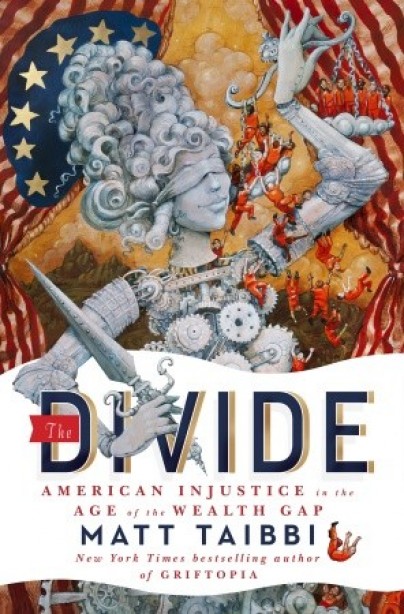
Book Review: ‘The Divide’

Go Lean Commentary

Book Review - The Divide - PhotoSo many Caribbean citizens would love the opportunity to immigrate to the United States. However, the old adage could apply here: “All that glitters is not gold”.

The publishers of the book Go Lean … Caribbean, align with the source book in this review, The Divide by Matt Taibbi. In the Caribbean, we hope to minimize the “push-and-pull” factors that draw our Caribbean youth away. This verse from Matt Taibbi’s book depicts that the US is not the “Promised Land” that many Caribbean expatriates envision:

Violent crime has fallen by 44 percent in America over the past two decades, but during that same period the prison population has more than doubled, skewing heavily black and poor. In essence, poverty itself is being criminalized.

This subject matter aligns with the Go Lean … Caribbean publication, which serves as a roadmap for the introduction and implementation of the Caribbean Union Trade Federation (CU). The Go Lean roadmap calls for the optimization of the Caribbean economic, security and governing engines. We want a society based on justice, but not the “American Justice” we see meted out, as described in the source book.

This Go Lean roadmap first assesses that the Caribbean is in crisis, that we are not able to retain our young people. Many member-states (St Vincent, Puerto Rico, US Virgin Islands, etc.) have lost more than half of their populations to foreign shores. This plight of human flight makes the task of building a functioning society difficult for the remainder, as often our brightest and best talents are the ones that leave. We “fatten frogs for snakes”, as the Jamaican expression depicts.

Many times, the destination of choice is the United States. The goal of Go Lean movement is to forge a better society, to make the Caribbean a better place to live, work and play. While the source book in the foregoing article is indicting the American Justice system, we, in the Caribbean, need to ensure that we are doing even better ourselves in our Caribbean homeland.

Book Review: By Timothy Noah; contributing writer New York Times, April 10, 2014

THE DIVIDE (Spiegel & Grau Publishers)

American Injustice in the Age of the Wealth Gap

By Matt Taibbi

“Low-class people do low-class things.” What’s notable in this reflexive dismissal of those with modest means are not the words themselves. Rather, please turn your attention to the person whom Matt Taibbi, in his ambitious new book documenting America’s unequal administration of justice to rich and poor, quotes saying them: a private attorney hired by New York State to defend low-income people in criminal court. We never learn his name, but Taibbi calls him Waldorf because he resembles the grouchy old balcony heckler on “The Muppet Show.”

Waldorf’s casual contempt for his defendants (and tacit approval of the sloppy policing dragnet that puts them at his mercy) is voiced at the conclusion of a grimly comic vignette worthy of Joseph Heller — one of many deeply reported, highly compelling mini-narratives of dysfunction within the criminal justice system that make “The Divide: American Injustice in the Age of the Wealth Gap” as infuriating as it is impossible to put down.

A 35-year-old black man named Andrew Brown is arrested for “obstructing pedestrian traffic” in Bedford-Stuyvesant. Brown, having been similarly harassed by the cops countless times before, refuses to provide ID and accept a summons, and is consequently brought into court. Once there, Brown explains to Waldorf that he was talking to a friend outside his own apartment building after getting off work, and that, given the lateness of the hour (shortly before 1 a.m.), there wouldn’t have been any pedestrian traffic on Myrtle Avenue to obstruct.

None of this seems to register with Waldorf. “What are you arguing?” he asks. He wonders aloud whether Brown was “being a wise guy” with the cops, and expresses surprise that a person such as Brown would have a job. He advises his client to pay the $25 fine.

Brown refuses and explains it all over again to the judge. The judge turns to Waldorf and asks whether Brown will pay the $25 fine. Waldorf explains, for the second time, that Brown won’t pay, his manner suggesting that for the life of him he can’t figure out why not.

Only then does the judge bestir himself to ask the arresting officer whether he saw any other people on the sidewalk that night. No? “O.K., then,” the judge sighs. “Not guilty.” Out in the hallway, Taibbi asks Waldorf why white people never get arrested for obstructing pedestrian traffic. Oblivious to the lesson that has just played out, and puzzled as to why Taibbi would want to include any of this in a book, Waldorf replies, “Low-class people do low-class things.”

Taibbi wrote “The Divide” to demonstrate that unequal wealth is producing grotesquely unequal outcomes in criminal justice. You might say that’s an old story, but Taibbi believes that, just as income disparities are growing ever wider, so, too, are disparities in who attracts the attention of cops and prosecutors and who doesn’t. Violent crime has fallen by 44 percent in America over the past two decades, but during that same period the prison population has more than doubled, skewing heavily black and poor. In essence, poverty itself is being criminalized. Meanwhile, at the other end of the income distribution, an epidemic of white-collar crime has overtaken the financial sector, indicated, for instance, by a proliferation of record-breaking civil settlements. But partly because of an embarrassing succession of botched Justice Department prosecutions, and partly because of a growing worry (first enunciated by Attorney General Eric Holder when he was Bill Clinton’s deputy attorney general) that any aggressive prosecution of big banks could destabilize the economy, Wall Street has come, under President Obama, to enjoy near-total immunity from criminal prosecution. It had more to fear, ironically, when George W. Bush was president.

The argument isn’t laid out in a particularly rigorous or nuanced manner, but it seems plausible enough. Taibbi, a longtime Rolling Stone writer who is currently developing a publication about political and financial corruption for First Look Media, has in the past written in a blustery style that put me off, but here the gonzo affectation is kept largely in check. What I failed to notice previously — or perhaps what Taibbi shows off to especially good effect here — is what a meticulous reporter he can be, with a facility for rendering complex financial skulduggery intelligible. Especially noteworthy are Taibbi’s detailed accounts of self-­dealing amid the dismantlement of Lehman Brothers — which involved, among other things, hoodwinking Lehman’s bankruptcy judge — and of a vicious harassment campaign waged by hedge fund managers against the employees of a Canadian insurance company whose stock they’d shorted. In both instances, one is struck that, however tricky the standard of proof may be for the white-collar criminal class, the evidence available nowadays in the form of compromising email communications would make Eliot Ness weep with gratitude. And yet the gangsters got away.

Taibbi is similarly skillful at explaining how bureaucratic imperatives in the criminal justice system can spin scarily out of control. In New York City, you start with a “broken windows” theory that says cracking down on petty crime can prevent little criminals from becoming big criminals. Possibly because that’s right, violent crime goes down. But paradoxically, that makes a cop’s life more difficult rather than less, because criminals are getting harder to find even as new computer systems are enabling the police commissioner to keep track of which precincts are making the most arrests. The solution turns out to be aggressive use of a stop-and-frisk policy that gives cops a blank check to “search virtually anyone at any time.” The police start behaving “like commercial fishermen, throwing nets over whole city blocks.” Some of the fish get prosecuted or ticketed for ever-pettier offenses; 20,000 summonses, for instance, are handed out annually for riding a bicycle on the sidewalk. But most fish aren’t guilty of anything and must grow accustomed to being routinely cuffed and ridden around in a police van before they are tossed back into the water. These fish are, of course, typically black and poor. Anecdotal evidence suggests that throwing a similar fishnet over entire Wall Street firms would produce a criminal yield at least as high as any random ghetto block. But innocent Wall Street fish would have a much bigger megaphone with which to proclaim their constitutional rights, and guilty Wall Street fish would have much better lawyers.

One theme implicit in Taibbi’s reporting is the extent to which the justice system’s newer kinds of inequalities are driven by technology. Computers encourage both the government and the banks to operate on a scale at which consideration of

individual circumstance isn’t really possible. The result is unstoppable error by government (say, the frequent miscalculations that leave welfare recipients at constant risk of being wrongly accused of fraud) and unstoppable fraud by banks (say, ­robo-signing endlessly repackaged and resold mortgages and credit card debt). For both government and banks, such scaling up inevitably creates injustices for certain individuals, but so long as the victims are powerless there won’t be much of a legal or political reckoning. The person tossed into jail for welfare fraud he didn’t commit or tossed out of his house because he was mistakenly judged not to be paying his mortgage may or may not get it all sorted out in the end, but even if he does the feedback loop won’t impose too much pain.

We may be approaching a day when any kind of personal attention from a large institution that wields substantial control over your life becomes a luxury available only to the few, like a bespoke suit or designer gown.

New York Times Online –Book Review – “The Justice Gap” – Retrieved 04-15-2014 –http://www.nytimes.com/2014/04/13/books/review/the-divide-by-matt-taibbi.html?_r=0http://www.nytimes.com/2014/04/13/books/review/the-divide-by-matt-taibbi.html_r=0

Even though the Go Lean book is presented as a roadmap for economic empowerment, it immediately recognizes that there must be an effort for justice among Caribbean institutions or rather, people will continue to flee. At the outset of the Go Lean book, in the Declaration of Interdependence (Page 12), this point is pronounced:

xxi. Whereas the legacy in recent times in individual states may be that of ineffectual governance with no redress to higher authority, the accedence of this Federation will ensure accountability and escalation of the human and civil rights of the people for good governance, justice assurances, due process and the rule of law. As such, any threats of a “failed state” status for any member state must enact emergency measures on behalf of the Federation to protect the human, civil and property rights of the citizens, residents, allies, trading partners, and visitors of the affected member state and the Federation as a whole.

How should the Caribbean be different than the United States in the pursuit of justice?

The book Go Lean … Caribbean details strategies, tactic, implementations and advocacies to elevate Caribbean society. Some of the specific features include:

Community Ethos – Juvenile Justice Page 23
10 Ways to Manage Reconciliations Page 34
10 Ways to Impact the Greater Good Page 37
Separation of Powers–Justice Department Page 77
Separation of Powers–Judicial Branch Page 90
10 Ways to Better Manage Image Page 133
10 Ways to Improve Failed-State Indices Page 134
10 Ways to Impact Justice Page 177
10 Ways to Reduce Crime Page 178
10 Ways to Improve Intelligence Page 182
10 Ways to Impact Wall Street Page 200
10 Ways to Impact Prison-Industrial Complex Page 211
10 Ways to Protect Human Rights Page 220
10 Ways to Impact Youth Page 227

The roadmap also cautions that we do not want to repeat America’s mistakes. If we do not learn from history …

In truth, the Caribbean is still reeling from the effects of the Global Financial Crisis of 2008.

What is worse, the US has “hardly” marshaled any persecutions against the culprits and perpetrators of the mortgage fraud that de-stabilized the American securities markets and the world economy. Matt Taibbi further reports:

In a speech last year that chilled Wall Street, New York Federal Reserve President William Dudley said he feared that the tax dodging, money laundering, mortgage fraud and trampling on homeowners by America’s big banks might reflect not just a few bad actors but ethical flaws deep in the fabric of Wall Street.

In 2010, Attorney General Eric Holder Jr. warned that “mortgage-fraud crimes have reached crisis proportions.” He vowed bravely to fight back, but the Justice Department’s inspector general recently reported that, in fact, Holder’s department has made Wall Street crime its lowest priority and that, since 2009, the FBI has closed 747 mortgage-fraud cases with little or no investigation.

800px-Statue_of_Liberty,_NYThere it is, the United States, where there seems to be a Great Divide in justice, one set of standards for the rich, another set for the poor.

The grass is not greener on that (American) side!

The reasons for emigration are “push-and-pull”. This source book identifies and qualifies a “pull” factor, the issue of justice in America. The book informs the reader that America should not be considered alluring from a justice perspective, especially if the reader/audience is poor and of a minority ethnicity.

This leaves the “push” factors. The Caribbean must address its issues, as to why its population is so inclined to emigrate. This is the purpose of the Go Lean roadmap. It features the assessments, strategies, tactics and implementations to make the Caribbean a better place to live, work and play.

Now is the time for the Caribbean region to lean-in for the changes described in the book Go Lean … Caribbean. The benefits of this roadmap are too alluring to ignore: emergence of our own $800 Billion economy, 2.2 million new jobs, new industries, services and optimized justice institutions.

Download the free e-Book of Go Lean … Caribbean – now!


Share this post:
, , , , ,
[Top]